EP3086658B1 - Method and arrangement for sterilizing edible nuts - Google Patents
Method and arrangement for sterilizing edible nuts Download PDFInfo
- Publication number
- EP3086658B1 EP3086658B1 EP14818998.8A EP14818998A EP3086658B1 EP 3086658 B1 EP3086658 B1 EP 3086658B1 EP 14818998 A EP14818998 A EP 14818998A EP 3086658 B1 EP3086658 B1 EP 3086658B1
- Authority
- EP
- European Patent Office
- Prior art keywords
- nuts
- arrangement
- sterilizing
- temperature
- heat exchangers
- Prior art date
- Legal status (The legal status is an assumption and is not a legal conclusion. Google has not performed a legal analysis and makes no representation as to the accuracy of the status listed.)
- Not-in-force
Links
Images
Classifications
-
- A—HUMAN NECESSITIES
- A23—FOODS OR FOODSTUFFS; TREATMENT THEREOF, NOT COVERED BY OTHER CLASSES
- A23B—PRESERVATION OF FOODS, FOODSTUFFS OR NON-ALCOHOLIC BEVERAGES; CHEMICAL RIPENING OF FRUIT OR VEGETABLES
- A23B7/00—Preservation of fruit or vegetables; Chemical ripening of fruit or vegetables
- A23B7/005—Preserving by heating
- A23B7/0053—Preserving by heating by direct or indirect contact with heating gases or liquids
-
- A—HUMAN NECESSITIES
- A23—FOODS OR FOODSTUFFS; TREATMENT THEREOF, NOT COVERED BY OTHER CLASSES
- A23N—MACHINES OR APPARATUS FOR TREATING HARVESTED FRUIT, VEGETABLES OR FLOWER BULBS IN BULK, NOT OTHERWISE PROVIDED FOR; PEELING VEGETABLES OR FRUIT IN BULK; APPARATUS FOR PREPARING ANIMAL FEEDING- STUFFS
- A23N12/00—Machines for cleaning, blanching, drying or roasting fruits or vegetables, e.g. coffee, cocoa, nuts
- A23N12/02—Machines for cleaning, blanching, drying or roasting fruits or vegetables, e.g. coffee, cocoa, nuts for washing or blanching
- A23N12/04—Machines for cleaning, blanching, drying or roasting fruits or vegetables, e.g. coffee, cocoa, nuts for washing or blanching for blanching
-
- A—HUMAN NECESSITIES
- A23—FOODS OR FOODSTUFFS; TREATMENT THEREOF, NOT COVERED BY OTHER CLASSES
- A23N—MACHINES OR APPARATUS FOR TREATING HARVESTED FRUIT, VEGETABLES OR FLOWER BULBS IN BULK, NOT OTHERWISE PROVIDED FOR; PEELING VEGETABLES OR FRUIT IN BULK; APPARATUS FOR PREPARING ANIMAL FEEDING- STUFFS
- A23N15/00—Machines or apparatus for other treatment of fruits or vegetables for human purposes; Machines or apparatus for topping or skinning flower bulbs
- A23N15/06—Devices for other treatment of fruit, e.g. marking, maturing, polishing
-
- A—HUMAN NECESSITIES
- A23—FOODS OR FOODSTUFFS; TREATMENT THEREOF, NOT COVERED BY OTHER CLASSES
- A23V—INDEXING SCHEME RELATING TO FOODS, FOODSTUFFS OR NON-ALCOHOLIC BEVERAGES AND LACTIC OR PROPIONIC ACID BACTERIA USED IN FOODSTUFFS OR FOOD PREPARATION
- A23V2002/00—Food compositions, function of food ingredients or processes for food or foodstuffs
Definitions
- the present invention relates to a method for sterilizing edible nuts such as e.g. hazelnuts, almonds, peanuts, or pine nuts, an arrangement for sterilizing edible nuts and a production plant comprising an arrangement for sterilizing edible nuts according to the invention.
- edible nuts such as e.g. hazelnuts, almonds, peanuts, or pine nuts
- the currently known whole-nut sterilizing processes rely mainly on batch sterilization, such as autoclave or in-can retort sterilization, basically cooking the nuts to a desired kernel temperature, thereby sterilizing the nuts.
- Batch sterilization however leads to taste changes and other undesired organoleptic problems.
- batch processes are generally characterized by an undesirable energy economy as the energy used to heat the edible nuts cannot easily be recovered after the batch treatment. Attempts to build continuous whole-nut sterilization systems have so far failed to adequately overcome the drawbacks of batch processes, in particular at ambient pressure due to an inadequate transfer of heat from the process equipment to the edible nuts.
- WO 03/043665 is described a method and system for a reduction of a bioburden, adapted to whole-nut sterilization of almonds, in a sub-atmospheric saturated steam environment, said method for reducing bioburden comprising: a) placing a material to be treated into a chamber; b) selecting a desired temperature T1, wherein said desired temperature T1 is based on the material being treated; c) determining a target pressure P1, wherein said target pressure P1 provides a saturated steam environment in said chamber at said desired temperature T1; d) creating a vacuum in said chamber, e) introducing steam into said chamber until a pressure equal to said target pressure P1 is achieved, thus indicating that said chamber has reached said target temperature T1; and f) maintaining the chamber at said temperature T1 and pressure P1 for a period time sufficient for said bioburden reduction. While whole-nut sterilization of almonds using the above method is possible, the method does neither allow for continuous operation nor for a recovery of at least a part of the energy used in the
- WO 2013171336 A1 describes a vapor phase system for pasteurizing or sterilizing low-moisture foods, such as nuts, seeds, grains wherein the foods are pre-heated, or sterilized in a gas, and cooled, characterized in that the gas pasteurizing or sterilizing the foods contains water vapor and one or more further gasses, preferably air.
- WO 2013010037 A1 discloses a batch method for surface sterilizing nuts or seeds wherein a sterilization step can be a heat step e.g. steam sterilization and further comprising a blanching process wherein the food is exposed to hot water (e.g. boiling water), removed after a brief timed interval, and finally cooled by exposure to cold water.
- US 20060093717 discloses a continuous thermal process for treating a flow comprising coarse food particles and a watery transport fluid, wherein the food particles, moving freely and with a volume percentage of 20-60% based on the total flow, are passed, by means of the transport fluid, into a heat-up section and subsequently through a hold-warm section, wherein in the heat-up section the transport fluid is heated, under turbulent flow, to a temperature T 1 of 65-150°C, after which the transport fluid in the hold-warm section is held at a temperature T2, with (T1-T2) being at most 20°C.
- WO 2013/171336 A1 relates to a method of and system for surface pasteurization or sterilization of low-moisture particulate foods, such as nuts.
- the method involves treatment of the food in humid air and in a preheating step the food is preheated to a temperature of 5°C below the condensation temperature and preferably a temperature 1 to 20°C above the compensation temperature of the water vapor in the humid air.
- the preheating step is performed to reduce desorption of water so that less foreign water needs to be absorbed during the pasteurization or sterilization process.
- the food is optionally dried, and cooled.
- the current inventors therefore have realized the need for a continuous or semi-continuous sterilization process for edible nuts which allows for whole-nut sterilization while overcoming the currently known limitations of the prior art.
- the present invention discloses a method of sterilizing whole nuts comprising pre-cooking said nuts in a pre-cooking unit (1) to a core temperature T1 at a pressure P1 for a time t1; transferring said nuts to a sterilizing line (2), said sterilizing line (2) configured to transport said nuts through a sequence of process devices, said sequence of process devices comprising a reservoir (3), at least one feed pump (4), a consecutive arrangement of heat exchangers (5,6,7), and a filling machine (8) and/or an aseptic tank (9); wherein said nuts are mixed in said reservoir (3) with a carrier liquid, said carrier liquid at least comprising water, thereby forming a pumpable, slurry-like mixture of nuts and carrier liquid; said slurry-like mixture is pumped using said at least one feed pump (4) through said consecutive arrangement of heat exchangers (5,6,7), wherein a first arrangement of heat exchangers (5) heats said carrier liquid to a sterilizing temperature T2 and, when said sterilizing temperature T2 is reached, said sterilizing
- said first (5), said second (6), and said third (7) arrangement of heat exchangers respectively comprise at least one heat exchanger chosen from between a scrape surface heat exchanger, a tubular heat exchanger, a shell and tube heat exchanger, a plate heat exchanger, a plate and shell heat exchanger, an adiabatic wheel heat exchanger, and a plate fin heat exchanger or a combination thereof.
- said first, said second, and said third arrangement of heat exchangers (5,6,7) respectively comprise at least one scrape surface heat exchanger.
- said second arrangement of heat exchangers (6) comprises at least one holding conduit, preferably a tubular holding tube.
- said second arrangement of heat exchangers (6) comprises an alternating arrangement of holding conduits (61,63), preferably tubular holding tubes, and heat exchangers (62,63), preferably scrape surface heat exchangers.
- said second arrangement of heat exchangers (6) comprises an alternating arrangement of tubular holding tubes (61,63) and scrape surface heat exchangers (62, 64).
- said core temperature T1 is in the temperature range between 55°C to 100°C, in particular between 70°C to 95°C.
- said sterilizing temperature T2 is between 100°C to 150°C, preferably between 110°C to 140°C, most preferably between 120°C to 130°C.
- said sterilization time t2 is between 1 to 10 minutes, preferably between 2 to 8 minutes, most preferably between 3 to 6 minutes.
- said sterilization temperature T2 is between 120°C to 140°C and said sterilization time t2 is between 1 to 6 minutes.
- said carrier liquid comprises water and optionally at least one further component selected from a list comprising stabilizers, starch stabilizers, sugars, salts, flavor additives, flour, and gum.
- said carrier liquid comprises water, starch stabilizers, flours, gums, salts and sugars.
- an arrangement for sterilizing whole nuts comprising a pre-cooking unit (1), and a sterilizing line (2); said pre-cooking unit (1) configured to pre-cook said nuts to a core temperature T1 at a pressure P1 for a time t1; said sterilizing line (2) configured to sterilize said nuts by transporting said nuts through a sequence of process devices, said sequence of process devices comprising in order of passage of said nuts through said sterilizing line (2), a reservoir (3), at least one feed pump (4), a consecutive arrangement of heat exchangers (5,6,7), and a filling machine (8) and/or an aseptic tank (9); said arrangement further comprising a control unit operatively connected to said pre-cooking unit (1) and said sterilizing line (2), said control unit configured to control said pre-cooking unit (1) and said sterilizing line (2) for pre-cooking said nuts in said pre-cooking unit (1) to a core temperature T1 at a pressure P1 for a time t1; and sterilizing said nuts in said sterilizing line
- a production plant comprising an arrangement according to the above disclosed embodiments.
- an energy efficient method of whole-nut sterilization of a variety of edible nuts having the added advantage of preserving the organoleptic perception by preventing taste changes to the sterilized nuts such as e.g. the nuts attaining a "cooked” taste rather than a "raw” taste. Further, by using the method of the invention a higher production capacity is achieved while retaining the capacity to sterilize the centers of the nuts characteristic of the prior art batch processes.
- the current invention relates to methods of sterilizing edible nuts and a system for sterilizing edible nuts, said method permitting continuously or semi-continuously sterilization of nuts, preferably said method permitting continuously or semi-continuously sterilization of nuts at ambient or elevated pressures.
- edible or culinary nuts is to be understood broadly and in an everyday manner. Most people perceive the term nut to cover a large range of edible fruits or seeds, which share a certain range of visual and taste characteristics.
- Biologically, edible or culinary nuts cover true, or biological, nuts (e.g. hazelnuts) which are dry, hard-shelled, uncompartmented fruit that do not split on maturity to release seeds; drupe nuts which refer to a stone, or pit, enclosed in a fleshy fruit, the stone containing a seed (e.g. almonds or coconuts); gymnosperm seeds which refer to naked seeds with no enclosure (e.g. pine nuts); or angiosperm seeds which are unenclosed seeds within a larger fruit (e.g. peanuts).
- nuts e.g. hazelnuts
- drupe nuts which refer to a stone, or pit, enclosed in a fleshy fruit, the stone containing a seed
- gymnosperm seeds which refer to naked seeds with no enclosure (e.g. pine nuts); or angio
- nut edible nut, or culinary nut are used without discriminating between true nuts, drupe nuts, gymnosperm seeds, or angiosperm seeds as long as a member of the general public would consider a particular biological specimen as falling under the general term nut, edible nut, or culinary nut.
- nut edible nut, or culinary nut
- Hazelnut including corylus avellana, corylus Americana, corylus cornuta, corylus maxima, almond (prunus dulcis), apricot seed (prunus armeniaca), peach seed (prunus persica), cashew nut (anacardium occidentale), pistachio nut (pistachio vera L.), walnut (juglans spp.), including juglans nigra, juglans cinerea, juglans regia, juglans aitlanthifolia; pine nut (Pinus spp.
- the nut of the present invention is a hazelnut, an almond, a pistachio nut, a pine nut, or a peanut. In a most preferred embodiment of the present invention the nut is a peanut.
- nut is further used without reference to the presence or absence of a shell, in particular without reference to the presence or absence of a nutshell. It shall be understood that in the current context nuts are de-shelled, and hence readily edible, and accordingly are used in the method of the current invention as de-shelled entities.
- the current invention is preferentially limited by the size of the de-shelled nuts which are to be sterilized.
- the nuts for use with the present method cannot be too large.
- nuts are mixed with a carrier liquid comprising water to form a slurry-like mixture which can be transported through the process system by pumping.
- the nuts for use in the present invention must be able to form a slurry-like mixture which is pumpable with said carrier liquid comprising water.
- coconuts e.g. by this definition are too large for inclusion into the method of the present invention and are hence considered as nuts falling outside the scope of the current disclosure.
- the nuts of the present invention have at least one characteristic length which does not exceed 3 cm, preferably does not exceed 2 cm, more preferably does not exceed 1 cm.
- Brazil nuts or para-nuts
- biologically a drupe seed are elongated in shape with a length of about 4-5 cm and a cross-sectional diameter of about 1-1.5 cm.
- Such nuts will align preferentially with the flow direction along their longest axis when mixed with carrier liquid and pumped; hence their pumping properties will preferentially be determined by the cross-sectional diameter which, in the present case of a Brazil nut, is sufficiently small to permit adequate pumping.
- the weight ratio of nut to carrier liquid is such that a slurry-like mixture of nut and carrier liquid is created, preferably such that the weight of nut constitutes at most 60% by weight, at most 50% by weight, preferably at most 40 by weight, more preferably at most 30% by weight, and most preferably at most 25% by weight of the total mass of the nut-carrier liquid mixture.
- Mixing nuts and carrier liquid in such ratios assure an improved pumping profile and an improved energy efficacy of the system executing the method of the invention.
- nut constitutes between 20-30% by weight of the total mass of said slurry-like mixture.
- edible nuts have a very high content of fat wherefore most edible nuts have a density which is lower than that of water.
- a sedimentation tank comprising a slurry-like mixture nuts and carrier liquid
- such nuts will therefore partition to the surface of the carrier liquid, when said slurry-like mixture is pumped into such a tank.
- the term slurry-like is therefore used descriptively for the pumpable mixture of nuts and carrier liquid, but cannot be construed to mean that the pumpable mixture of nuts and carrier liquid constitute a true slurry.
- a minor number of edible nuts have a density slightly higher than water and these will partition to the bottom of the carrier liquid in a sedimentation tank. Also these nuts may form a pumpable slurry-like mixture with said carrier liquid.
- nuts preferably whole nuts, are fed in a first process step to a pre-cooking unit (1) and hydrated at a pressure P1 for a period of time t1 to a pre-established core temperature T1.
- the core temperature T1 after hydration shall be in the temperature range between 55°C to 100°C, preferably 65°C to 95°C, more preferably 70°C to 90°C, most preferably 75°C to 85°C. In a particular embodiment the core temperature T1 after hydration is in the temperature range between 70°C to 95°C.
- the pressure P1 is preferably ambient pressure but in some particular cases it may be preferable to apply a pressure difference to ambient pressure during hydration. Hence P1 in its broadest embodiment can be ambient pressure ⁇ 10%. When the method of the current invention is operated continuously, P1 will always be, or be close to, ambient pressure, but in semi-continuously operation, P1 in the pre-cooking unit (1) may be adjusted within the above limits.
- the pre-cooking time t1 is variable and dependent on the particular nut to be treated. Usually the pre-cooking time t1 is between 30 minutes to 6 hours, but this is not limiting on the method of the current invention. The skilled person will know that choosing a particular pre-cooking time for a particular nut will lead to a given core temperature T1, and reversibly deciding to obtain a given core temperature T1 will determine the length of the pre-cooking time t1. In fact, while the core temperature T1 is the determining factor for the sterilization efficacy, the pre-cooking time t1 will be the preferred input for the system executing the method of the current invention when installed in a production plant.
- the pre-cooking unit (1) can be a continuous heating unit, e.g. a revolving spiral cooker, however, equally preferred is a conventional batch cooking unit.
- pre-cooking is effectuated with steam at ambient pressure.
- a preferential embodiment is pre-cooking with hot water at the desired core temperature T1, preferably at ambient pressure.
- pre-cooked nuts from the water used in the pre-cooking step, e.g. by filtering or sieving.
- the used water may then be recycled in a next pre-cooking cycle or transferred for further use at other locations inside or outside the production plant comprising the system of executing the method of the current disclosure.
- the pre-cooked nuts are transferred from the pre-cooking unit (1) into a sterilizing line (2) which operates in a continuous mode.
- the nuts are received in the sterilizing line (2) and transferred firstly into a reservoir (3), said reservoir (3) preferably comprising a balance tank or a feed tank.
- a reservoir (3) preferably comprising a balance tank or a feed tank.
- the nuts are mixed with a carrier liquid to form a pumpable, slurry-like, mixture of nuts and carrier liquid, and wherein the weight fraction of nuts to carrier liquid is as described above.
- the carrier liquid may be cold or tempered to ambient temperature upon first contact with the pre-cooked nuts, but may also have been heated prior to first contact with the nuts in the reservoir (3).
- the carrier liquid is preferably heated to a temperature at or above said core temperature T1 prior to first contact with the nuts in said reservoir (3).
- said sterilizing temperature T2 is maintained essentially constant during passage of a second arrangement of heat exchangers (6) for a predetermined sterilization time t2 while the nuts are being sterilized.
- said slurry-like mixture is transferred to a third arrangement of heat exchangers operating to cool said slurry-like mixture during passage to a storage temperature T3.
- said slurry-like mixture is transferred to a filling machine (8) or held in an aseptic tank (9) for later filling.
- filling may cover dry storage and wet storage of nuts in a variety of containers.
- the manner of operation of said filling machine (8) or said aseptic tank (9) does not form a part of the present invention, nor does the nature of the container.
- a separation unit for separating carrier liquid from nuts may be inserted into said sterilization line after said third arrangement of heat exchangers (7) but before respectively at least one of, or both of, said filling machine (8) or said aseptic tank (9), should dry filling or dry storage be desired.
- Heat exchangers suitable for use with the present invention can be scrape surface heat exchangers, tubular heat exchangers, shell and tube heat exchangers, plate heat exchangers, plate and shell heat exchangers, adiabatic wheel heat exchangers, plate fin heat exchangers.
- heat exchangers suitable for use with the present invention are scrape surface heat exchangers, tubular heat exchangers, and/or plate heat exchangers; but most preferably scrape surface heat exchangers and/or tubular heat exchangers.
- said first, said second, and said third arrangement of heat exchangers (5,6,7) respectively comprises at least one scrape surface heat exchanger.
- said second arrangement of heat exchangers (6) comprises at least one holding conduit (61,63), preferably a tubular holding tube.
- said second arrangement of heat exchangers (6) comprises an alternating arrangement of holding conduits (61,63), preferably tubular holding tubes, and heat exchangers (61,63), preferably scrape surface heat exchangers.
- said second arrangement comprises an alternating arrangement of tubular holding tubes (61,63) and scrape surface heat exchangers (62,64).
- said sterilizing line operates continuously, e.g. such that said feed pump (4) or if needed, a plurality of feed pumps (4), effectuates said transfer in a continuous manner e.g. by pumping said slurry-like mixture through a continuous conduit system permitting the passage by said slurry-like mixture through said consecutive arrangement of heat exchangers (5, 6, 7) in the consecutive order described above and into said filling machine (8) or said aseptic tank (9). If necessary, intermissions or discontinuations in the continuous process stream may be introduced under the proviso that such intermissions are short.
- the sterilizing temperature T2 is between 100°C to 150°C, preferably between 110°C to 140°C, most preferably between 120°C to 130°C.
- the sterilization time t2 is between 1 to 10 minutes, preferably between 2 to 8 minutes, most preferably between 3 to 6 minutes.
- the sterilization temperature T2 is between 120°C to 140°C and the sterilization time t2 is between 1 to 6 minutes.
- Said storage temperature T3 is preferably ambient temperature, but may range within 0°C to 50°C, but preferably within 5°C to 45°C.
- a carrier liquid useful with the method disclosed herein shall comprise water and additionally may comprise stabilizers, in particular starch stabilizers, sugars, salts, flavor additives, flour, and gum.
- the carrier liquid comprises water, starch stabilizers, flours, gums, salts and sugars.
- thickeners and gelling agents can be used thickeners and gelling agents.
- thickeners and gelling agents such as starch, gums, pectin, gelatin, polysaccharide gum, agar and carrageenan, are of interest but also other thickening agents may be used like CMC, collagen, rehan, vegetable gums, and proteins
- Typical starch stabilizers can be native, hydrolyzed or otherwise modified starch's, in particular based on maize, wheat and rice starch, but also based on acorns, arrowroot, arracacha, bananas, barley, breadfruit, buckwheat, canna, cola casia, Fecula, katakuri, kudzu, malanga, millet, oats, oca, Polynesian arrowroot, sago, sorghum, potatoes, sweet potatoes, rye, taro, chestnuts, water chestnuts, yams, and beans, such as favas, lentils, mung beans, peas, and chickpeas.
- Particular preferred are starch stabilizers comprising at least maize, wheat, or rice starch.
- Typical flours can be wheat, maize, rye, and rice flour, but also possible are acorn, almond, amaranth, atta, bean, buckwheat, cassava, chestnut, chickpea, chu ⁇ o, coconut, corn, cornstarch, glutinous rice, hemp, maida, mesquite, noodle, peasemeal, peanut, potato starch flour, sorghum, spelt, tapioca, or teff. Particular preferred are wheat, maize, rye and rice flour. Also preferred is nut flour, such as almond or peanut flour.
- Typical gums can be guar gum, locust bean gum, xanthan gum, gum anima, gum Arabic, cassia gum, dammar gum, gellan gum, glucomannan, kauri gum, myrrh gum, spruce gum, welan gum and tragacanth gums. Particular preferred are guar gum, locust bean gum, xanthan gum.
Landscapes
- Life Sciences & Earth Sciences (AREA)
- Chemical & Material Sciences (AREA)
- Engineering & Computer Science (AREA)
- Food Science & Technology (AREA)
- Polymers & Plastics (AREA)
- Chemical Kinetics & Catalysis (AREA)
- General Chemical & Material Sciences (AREA)
- Wood Science & Technology (AREA)
- Zoology (AREA)
- Food Preservation Except Freezing, Refrigeration, And Drying (AREA)
Description
- The present invention relates to a method for sterilizing edible nuts such as e.g. hazelnuts, almonds, peanuts, or pine nuts, an arrangement for sterilizing edible nuts and a production plant comprising an arrangement for sterilizing edible nuts according to the invention.
- In recent years there has, in particular in the USA, been an increased focus on the bacteriological safety of low moisture foods such as nuts. Such foods have until recently been considered safe because they do not support the growth of microorganisms. However, in some cases it has been shown that surface contamination with microorganisms such as e.g. salmonella, which is pathogenic even at low doses (M.D. Danyluket et al., J. Food Prot., 70, pp. 820-827 (2007)), can lead to bacteriological infestations in humans even at levels of surface contamination generally recognized as safe. This has led the USDA to issue requirements (September 2007) demanding the sterilization of almonds prior to sale.
- It is a general problem of the methods of sterilization currently known that such methods of sterilization, which can serve to protect the taste of edible nuts, generally may require treatment chemical reactants such as ethylene oxide or propylene oxide, both of which are recognized carcinogens, whereas heat treatment such as pasteurization may lead to changes to the taste of such edible nuts or to changes to their mouth feel, e.g. by imparting a "cooked feeling" to the nut when perceived in the mouth of a consumer, which is generally unwanted in food intended to be consumed raw or uncooked.
- For this reason many methods of heat sterilization currently known in the art have focused on low energy transfer and short treatment times to retain the organoleptic perception of such edible nuts to the largest possible extent.
- In some cases it is however desirable to sterilize the edible nuts thoroughly such that the nuts are sterilized not just on the surface but into and including its kernel.
- The currently known whole-nut sterilizing processes rely mainly on batch sterilization, such as autoclave or in-can retort sterilization, basically cooking the nuts to a desired kernel temperature, thereby sterilizing the nuts. Batch sterilization however leads to taste changes and other undesired organoleptic problems. Further, batch processes are generally characterized by an undesirable energy economy as the energy used to heat the edible nuts cannot easily be recovered after the batch treatment. Attempts to build continuous whole-nut sterilization systems have so far failed to adequately overcome the drawbacks of batch processes, in particular at ambient pressure due to an inadequate transfer of heat from the process equipment to the edible nuts.
- In
WO 03/043665 -
WO 2013171336 A1 describes a vapor phase system for pasteurizing or sterilizing low-moisture foods, such as nuts, seeds, grains wherein the foods are pre-heated, or sterilized in a gas, and cooled, characterized in that the gas pasteurizing or sterilizing the foods contains water vapor and one or more further gasses, preferably air.WO 2013010037 A1 discloses a batch method for surface sterilizing nuts or seeds wherein a sterilization step can be a heat step e.g. steam sterilization and further comprising a blanching process wherein the food is exposed to hot water (e.g. boiling water), removed after a brief timed interval, and finally cooled by exposure to cold water. -
US 20060093717 discloses a continuous thermal process for treating a flow comprising coarse food particles and a watery transport fluid, wherein the food particles, moving freely and with a volume percentage of 20-60% based on the total flow, are passed, by means of the transport fluid, into a heat-up section and subsequently through a hold-warm section, wherein in the heat-up section the transport fluid is heated, under turbulent flow, to atemperature T 1 of 65-150°C, after which the transport fluid in the hold-warm section is held at a temperature T2, with (T1-T2) being at most 20°C. -
WO 2013/171336 A1 relates to a method of and system for surface pasteurization or sterilization of low-moisture particulate foods, such as nuts. The method involves treatment of the food in humid air and in a preheating step the food is preheated to a temperature of 5°C below the condensation temperature and preferably atemperature 1 to 20°C above the compensation temperature of the water vapor in the humid air. The preheating step is performed to reduce desorption of water so that less foreign water needs to be absorbed during the pasteurization or sterilization process. Subsequently, the food is optionally dried, and cooled. - The current inventors therefore have realized the need for a continuous or semi-continuous sterilization process for edible nuts which allows for whole-nut sterilization while overcoming the currently known limitations of the prior art.
- The present invention discloses a method of sterilizing whole nuts comprising pre-cooking said nuts in a pre-cooking unit (1) to a core temperature T1 at a pressure P1 for a time t1; transferring said nuts to a sterilizing line (2), said sterilizing line (2) configured to transport said nuts through a sequence of process devices, said sequence of process devices comprising a reservoir (3), at least one feed pump (4), a consecutive arrangement of heat exchangers (5,6,7), and a filling machine (8) and/or an aseptic tank (9); wherein said nuts are mixed in said reservoir (3) with a carrier liquid, said carrier liquid at least comprising water, thereby forming a pumpable, slurry-like mixture of nuts and carrier liquid; said slurry-like mixture is pumped using said at least one feed pump (4) through said consecutive arrangement of heat exchangers (5,6,7), wherein a first arrangement of heat exchangers (5) heats said carrier liquid to a sterilizing temperature T2 and, when said sterilizing temperature T2 is reached, said sterilizing temperature T2 is maintained essentially constant by a second arrangement of heat exchangers (6) for a predetermined sterilization time t2 while said nuts are being sterilized, after which said slurry-like mixture is pumped through a third arrangement of heat exchangers (7) to cool said slurry-like mixture to a storage temperature T3; and said slurry-like mixture having said storage temperature T3 is pumped to said filling machine (8) for filling, or to said aseptic tank (9) to be held for later filling.
- In an embodiment said first (5), said second (6), and said third (7) arrangement of heat exchangers respectively comprise at least one heat exchanger chosen from between a scrape surface heat exchanger, a tubular heat exchanger, a shell and tube heat exchanger, a plate heat exchanger, a plate and shell heat exchanger, an adiabatic wheel heat exchanger, and a plate fin heat exchanger or a combination thereof.
- In a further embodiment said first, said second, and said third arrangement of heat exchangers (5,6,7) respectively comprise at least one scrape surface heat exchanger.
- In a further embodiment said second arrangement of heat exchangers (6) comprises at least one holding conduit, preferably a tubular holding tube.
- In a further embodiment said second arrangement of heat exchangers (6) comprises an alternating arrangement of holding conduits (61,63), preferably tubular holding tubes, and heat exchangers (62,63), preferably scrape surface heat exchangers.
- In a preferred embodiment said second arrangement of heat exchangers (6) comprises an alternating arrangement of tubular holding tubes (61,63) and scrape surface heat exchangers (62, 64).
- In one embodiment said core temperature T1 is in the temperature range between 55°C to 100°C, in particular between 70°C to 95°C.
- In a further embodiment said sterilizing temperature T2 is between 100°C to 150°C, preferably between 110°C to 140°C, most preferably between 120°C to 130°C.
- In a further embodiment said sterilization time t2 is between 1 to 10 minutes, preferably between 2 to 8 minutes, most preferably between 3 to 6 minutes.
- In a preferred embodiment said sterilization temperature T2 is between 120°C to 140°C and said sterilization time t2 is between 1 to 6 minutes.
- In one embodiment said carrier liquid comprises water and optionally at least one further component selected from a list comprising stabilizers, starch stabilizers, sugars, salts, flavor additives, flour, and gum.
- In a preferred embodiment said carrier liquid comprises water, starch stabilizers, flours, gums, salts and sugars.
- Further is herein disclosed an arrangement for sterilizing whole nuts comprising a pre-cooking unit (1), and a sterilizing line (2); said pre-cooking unit (1) configured to pre-cook said nuts to a core temperature T1 at a pressure P1 for a time t1; said sterilizing line (2) configured to sterilize said nuts by transporting said nuts through a sequence of process devices, said sequence of process devices comprising in order of passage of said nuts through said sterilizing line (2), a reservoir (3), at least one feed pump (4), a consecutive arrangement of heat exchangers (5,6,7), and a filling machine (8) and/or an aseptic tank (9); said arrangement further comprising a control unit operatively connected to said pre-cooking unit (1) and said sterilizing line (2), said control unit configured to control said pre-cooking unit (1) and said sterilizing line (2) for pre-cooking said nuts in said pre-cooking unit (1) to a core temperature T1 at a pressure P1 for a time t1; and sterilizing said nuts in said sterilizing line (2) by mixing said nuts in said reservoir (3) with a carrier liquid, said carrier liquid at least comprising water, thereby forming a pumpable, slurry-like mixture of nuts and carrier liquid; pumping said slurry-like mixture using said at least one feed pump (4) through said consecutive arrangement of heat exchangers (5,6,7), where in a first arrangement of heat exchangers (5) said carrier liquid is heated to a sterilizing temperature T2 and, when said sterilizing temperature T2 is reached, said sterilizing temperature T2 is maintained essentially constant by a second arrangement of heat exchangers (6) for a predetermined sterilization time t2 while said nuts are being sterilized, after which said slurry-like mixture is pumped through a third arrangement of heat exchangers (7) wherein said slurry-like mixture is cooled to a storage temperature T3; and pumping said slurry-like mixture having said storage temperature T3, to said filling machine (8) for filling, or to said aseptic tank (9) to be held for later filling.
- In a final embodiment of the invention is disclosed a production plant comprising an arrangement according to the above disclosed embodiments.
- Accordingly there is thereby provided an energy efficient method of whole-nut sterilization of a variety of edible nuts having the added advantage of preserving the organoleptic perception by preventing taste changes to the sterilized nuts such as e.g. the nuts attaining a "cooked" taste rather than a "raw" taste. Further, by using the method of the invention a higher production capacity is achieved while retaining the capacity to sterilize the centers of the nuts characteristic of the prior art batch processes.
-
-
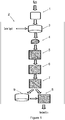
Figure 1 shows a diagrammatic representation of a process system for executing the method of the current invention. -
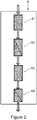
Figure 2 shows a diagrammatic representation of a sequence of holding tubes and heat exchangers advantageously used in the execution of the method of the current invention. - The current invention relates to methods of sterilizing edible nuts and a system for sterilizing edible nuts, said method permitting continuously or semi-continuously sterilization of nuts, preferably said method permitting continuously or semi-continuously sterilization of nuts at ambient or elevated pressures.
- In the context of the present invention edible or culinary nuts is to be understood broadly and in an everyday manner. Most people perceive the term nut to cover a large range of edible fruits or seeds, which share a certain range of visual and taste characteristics. Biologically, edible or culinary nuts cover true, or biological, nuts (e.g. hazelnuts) which are dry, hard-shelled, uncompartmented fruit that do not split on maturity to release seeds; drupe nuts which refer to a stone, or pit, enclosed in a fleshy fruit, the stone containing a seed (e.g. almonds or coconuts); gymnosperm seeds which refer to naked seeds with no enclosure (e.g. pine nuts); or angiosperm seeds which are unenclosed seeds within a larger fruit (e.g. peanuts). Throughout the text of the present disclosure the terms nut, edible nut, or culinary nut are used without discriminating between true nuts, drupe nuts, gymnosperm seeds, or angiosperm seeds as long as a member of the general public would consider a particular biological specimen as falling under the general term nut, edible nut, or culinary nut.
- In particular, under the terms nut, edible nut, or culinary nut, the following true nuts, drupe seeds, gymnosperm seeds, and angiosperm seeds, are to be included: Hazelnut, including corylus avellana, corylus Americana, corylus cornuta, corylus maxima, almond (prunus dulcis), apricot seed (prunus armeniaca), peach seed (prunus persica), cashew nut (anacardium occidentale), pistachio nut (pistachio vera L.), walnut (juglans spp.), including juglans nigra, juglans cinerea, juglans regia, juglans aitlanthifolia; pine nut (Pinus spp.), including pinus pinea, pinus gerardiana, pinus edulis, pinus koraiensis, pinus cembroides, pinus monophylla, Brazil nut (bertholletia excelsa), Macadamia nut (Macadamia spp.), including macadamia tetraphylla, macadamia integrifolia, peanut (arachis hypogaea), and nutmeg (Myristica spp.), including myristica fragrans, myristica argentea, myristica malabarica. In a preferred embodiment the nut of the present invention is a hazelnut, an almond, a pistachio nut, a pine nut, or a peanut. In a most preferred embodiment of the present invention the nut is a peanut.
- Throughout the present disclosure the term nut is further used without reference to the presence or absence of a shell, in particular without reference to the presence or absence of a nutshell. It shall be understood that in the current context nuts are de-shelled, and hence readily edible, and accordingly are used in the method of the current invention as de-shelled entities.
- As will be disclosed in further detail below, the current invention is preferentially limited by the size of the de-shelled nuts which are to be sterilized.
- In order for the method of the current invention to achieve its maximum potential, the nuts for use with the present method cannot be too large. In the method of the present invention nuts are mixed with a carrier liquid comprising water to form a slurry-like mixture which can be transported through the process system by pumping. Hence the nuts for use in the present invention must be able to form a slurry-like mixture which is pumpable with said carrier liquid comprising water. Coconuts e.g. by this definition are too large for inclusion into the method of the present invention and are hence considered as nuts falling outside the scope of the current disclosure.
- Preferably the nuts of the present invention have at least one characteristic length which does not exceed 3 cm, preferably does not exceed 2 cm, more preferably does not exceed 1 cm. As an example, Brazil nuts (or para-nuts), biologically a drupe seed, are elongated in shape with a length of about 4-5 cm and a cross-sectional diameter of about 1-1.5 cm. Such nuts will align preferentially with the flow direction along their longest axis when mixed with carrier liquid and pumped; hence their pumping properties will preferentially be determined by the cross-sectional diameter which, in the present case of a Brazil nut, is sufficiently small to permit adequate pumping.
- It is preferred that the weight ratio of nut to carrier liquid is such that a slurry-like mixture of nut and carrier liquid is created, preferably such that the weight of nut constitutes at most 60% by weight, at most 50% by weight, preferably at most 40 by weight, more preferably at most 30% by weight, and most preferably at most 25% by weight of the total mass of the nut-carrier liquid mixture. Mixing nuts and carrier liquid in such ratios assure an improved pumping profile and an improved energy efficacy of the system executing the method of the invention. Preferably nut constitutes between 20-30% by weight of the total mass of said slurry-like mixture.
- In general, edible nuts have a very high content of fat wherefore most edible nuts have a density which is lower than that of water. In a sedimentation tank comprising a slurry-like mixture nuts and carrier liquid, such nuts will therefore partition to the surface of the carrier liquid, when said slurry-like mixture is pumped into such a tank. The term slurry-like is therefore used descriptively for the pumpable mixture of nuts and carrier liquid, but cannot be construed to mean that the pumpable mixture of nuts and carrier liquid constitute a true slurry. A minor number of edible nuts have a density slightly higher than water and these will partition to the bottom of the carrier liquid in a sedimentation tank. Also these nuts may form a pumpable slurry-like mixture with said carrier liquid.
- Another benefit of using nuts conferring to the above definitions in the method of the current disclosure is; that the times necessary for processing and sterilizing such nuts in the system executing the method of the present invention become comparable, and hence process systems for use with the method of the invention can be standardized easily. Due however to the potential heat damage to the nuts, such as e.g. heat damage to the unsaturated fats contained in the nuts in terms of e.g. trans-isomerization or oxidation, individually adapted sterilization times will be necessary, said individually adapted sterilization times depending on the particular nut to be sterilized. However, when the nuts intended for a particular plant or process system are comparable in size, their process times will be comparable and hence plant construction will be simplified and made economically more feasible.
- The skilled person will realize that also nuts, which have been reduced to a smaller size than whole-nut, may be treated using the methods of the current invention. While such partial nut sterilization is possible, the greatest advantage of the present method is its applicability to whole nuts.
- Referring now to the
figure 1 ; nuts, preferably whole nuts, are fed in a first process step to a pre-cooking unit (1) and hydrated at a pressure P1 for a period of time t1 to a pre-established core temperature T1. - The core temperature T1 after hydration shall be in the temperature range between 55°C to 100°C, preferably 65°C to 95°C, more preferably 70°C to 90°C, most preferably 75°C to 85°C. In a particular embodiment the core temperature T1 after hydration is in the temperature range between 70°C to 95°C.
- The pressure P1 is preferably ambient pressure but in some particular cases it may be preferable to apply a pressure difference to ambient pressure during hydration. Hence P1 in its broadest embodiment can be ambient pressure ± 10%. When the method of the current invention is operated continuously, P1 will always be, or be close to, ambient pressure, but in semi-continuously operation, P1 in the pre-cooking unit (1) may be adjusted within the above limits.
- The pre-cooking time t1 is variable and dependent on the particular nut to be treated. Usually the pre-cooking time t1 is between 30 minutes to 6 hours, but this is not limiting on the method of the current invention. The skilled person will know that choosing a particular pre-cooking time for a particular nut will lead to a given core temperature T1, and reversibly deciding to obtain a given core temperature T1 will determine the length of the pre-cooking time t1. In fact, while the core temperature T1 is the determining factor for the sterilization efficacy, the pre-cooking time t1 will be the preferred input for the system executing the method of the current invention when installed in a production plant.
- The pre-cooking unit (1) can be a continuous heating unit, e.g. a revolving spiral cooker, however, equally preferred is a conventional batch cooking unit. In one embodiment pre-cooking is effectuated with steam at ambient pressure. When a batch cooking unit is used, a preferential embodiment is pre-cooking with hot water at the desired core temperature T1, preferably at ambient pressure. Usually it will be advantageous to separate pre-cooked nuts from the water used in the pre-cooking step, e.g. by filtering or sieving. The used water may then be recycled in a next pre-cooking cycle or transferred for further use at other locations inside or outside the production plant comprising the system of executing the method of the current disclosure.
- In a second process step the pre-cooked nuts are transferred from the pre-cooking unit (1) into a sterilizing line (2) which operates in a continuous mode.
- The nuts are received in the sterilizing line (2) and transferred firstly into a reservoir (3), said reservoir (3) preferably comprising a balance tank or a feed tank. In the reservoir (3) the nuts are mixed with a carrier liquid to form a pumpable, slurry-like, mixture of nuts and carrier liquid, and wherein the weight fraction of nuts to carrier liquid is as described above. The carrier liquid may be cold or tempered to ambient temperature upon first contact with the pre-cooked nuts, but may also have been heated prior to first contact with the nuts in the reservoir (3). When pre-heated the carrier liquid is preferably heated to a temperature at or above said core temperature T1 prior to first contact with the nuts in said reservoir (3).
- A feed pump (4), or if needed a plurality of feed pumps (4), now pumps said slurry-like mixture through a consecutive arrangement of heat exchangers (5,6,7); which in a first arrangement of heat exchangers (5) heats the carrier liquid to a sterilizing temperature T2. Once said sterilizing temperature T2 is reached, said sterilizing temperature T2 is maintained essentially constant during passage of a second arrangement of heat exchangers (6) for a predetermined sterilization time t2 while the nuts are being sterilized. When said sterilization time t2 has passed, said slurry-like mixture is transferred to a third arrangement of heat exchangers operating to cool said slurry-like mixture during passage to a storage temperature T3. Upon attaining said storage temperature T3, said slurry-like mixture is transferred to a filling machine (8) or held in an aseptic tank (9) for later filling.
- The skilled person will know that filling may cover dry storage and wet storage of nuts in a variety of containers. The manner of operation of said filling machine (8) or said aseptic tank (9) does not form a part of the present invention, nor does the nature of the container. A separation unit for separating carrier liquid from nuts may be inserted into said sterilization line after said third arrangement of heat exchangers (7) but before respectively at least one of, or both of, said filling machine (8) or said aseptic tank (9), should dry filling or dry storage be desired.
- Heat exchangers suitable for use with the present invention can be scrape surface heat exchangers, tubular heat exchangers, shell and tube heat exchangers, plate heat exchangers, plate and shell heat exchangers, adiabatic wheel heat exchangers, plate fin heat exchangers. Preferably heat exchangers suitable for use with the present invention are scrape surface heat exchangers, tubular heat exchangers, and/or plate heat exchangers; but most preferably scrape surface heat exchangers and/or tubular heat exchangers.
- In one embodiment, said first, said second, and said third arrangement of heat exchangers (5,6,7) respectively comprises at least one scrape surface heat exchanger.
- In a further embodiment, said second arrangement of heat exchangers (6) comprises at least one holding conduit (61,63), preferably a tubular holding tube.
- In a preferred embodiment, said second arrangement of heat exchangers (6) comprises an alternating arrangement of holding conduits (61,63), preferably tubular holding tubes, and heat exchangers (61,63), preferably scrape surface heat exchangers. In an even more preferred embodiment, said second arrangement comprises an alternating arrangement of tubular holding tubes (61,63) and scrape surface heat exchangers (62,64).
- It is preferable that said sterilizing line operates continuously, e.g. such that said feed pump (4) or if needed, a plurality of feed pumps (4), effectuates said transfer in a continuous manner e.g. by pumping said slurry-like mixture through a continuous conduit system permitting the passage by said slurry-like mixture through said consecutive arrangement of heat exchangers (5, 6, 7) in the consecutive order described above and into said filling machine (8) or said aseptic tank (9). If necessary, intermissions or discontinuations in the continuous process stream may be introduced under the proviso that such intermissions are short.
- The sterilizing temperature T2 is between 100°C to 150°C, preferably between 110°C to 140°C, most preferably between 120°C to 130°C. The sterilization time t2 is between 1 to 10 minutes, preferably between 2 to 8 minutes, most preferably between 3 to 6 minutes. In a particular embodiment of the invention, the sterilization temperature T2 is between 120°C to 140°C and the sterilization time t2 is between 1 to 6 minutes. Said storage temperature T3 is preferably ambient temperature, but may range within 0°C to 50°C, but preferably within 5°C to 45°C.
- A carrier liquid useful with the method disclosed herein shall comprise water and additionally may comprise stabilizers, in particular starch stabilizers, sugars, salts, flavor additives, flour, and gum. In a preferred embodiment the carrier liquid comprises water, starch stabilizers, flours, gums, salts and sugars.
- As stabilizers can be used thickeners and gelling agents. In particular thickeners and gelling agents such as starch, gums, pectin, gelatin, polysaccharide gum, agar and carrageenan, are of interest but also other thickening agents may be used like CMC, collagen, rehan, vegetable gums, and proteins
- Typical starch stabilizers can be native, hydrolyzed or otherwise modified starch's, in particular based on maize, wheat and rice starch, but also based on acorns, arrowroot, arracacha, bananas, barley, breadfruit, buckwheat, canna, cola casia, Fecula, katakuri, kudzu, malanga, millet, oats, oca, Polynesian arrowroot, sago, sorghum, potatoes, sweet potatoes, rye, taro, chestnuts, water chestnuts, yams, and beans, such as favas, lentils, mung beans, peas, and chickpeas. Particular preferred are starch stabilizers comprising at least maize, wheat, or rice starch.
- Typical flours can be wheat, maize, rye, and rice flour, but also possible are acorn, almond, amaranth, atta, bean, buckwheat, cassava, chestnut, chickpea, chuño, coconut, corn, cornstarch, glutinous rice, hemp, maida, mesquite, noodle, peasemeal, peanut, potato starch flour, sorghum, spelt, tapioca, or teff. Particular preferred are wheat, maize, rye and rice flour. Also preferred is nut flour, such as almond or peanut flour.
- Typical gums can be guar gum, locust bean gum, xanthan gum, gum anima, gum Arabic, cassia gum, dammar gum, gellan gum, glucomannan, kauri gum, myrrh gum, spruce gum, welan gum and tragacanth gums. Particular preferred are guar gum, locust bean gum, xanthan gum.
- Throughout the disclosure of the present invention, process elements have been mentioned in the order in which they appear along the process line of the process system of the present invention. Conduits necessary to contain and conduct the flow of said slurry-like mixture of nuts and carrier liquid have not been detailed. Such conduits however form part of any process system comprising the above described process elements and the skilled person will know to employ conduits as necessary to contain and conduct the flow of said slurry-like mixture.
- The term "comprising" as used in the claims does not exclude other elements or steps. The term "a" or "an" as used in the claims does not exclude a plurality.
- Although the present invention has been described in detail for the purpose of illustration, it is understood that such detail is solely for that purpose, and that variations can be made therein by those skilled in the art without departing from the scope of the invention.
Claims (15)
- A method of sterilizing whole nuts comprisinga. pre-cooking said nuts in a pre-cooking unit (1) to a core temperature T1 at a pressure P1 for a time t1, wherein said core temperature T1 is in the temperature range between 55°C to 100°C;b. transferring said nuts to a sterilizing line (2), said sterilizing line (2) configured to transport said nuts through a sequence of process devices, said sequence of process devices comprising a reservoir (3), at least one feed pump (4), a consecutive arrangement of heat exchangers (5,6,7), and a filling machine (8) and/or an aseptic tank (9); wherein- said nuts are mixed in said reservoir (3) with a carrier liquid, said carrier liquid at least comprising water, thereby forming a pumpable, slurry-like mixture of nuts and carrier liquid;- said slurry-like mixture is pumped using said at least one feed pump (4) through said consecutive arrangement of heat exchangers (5,6,7), wherein a first arrangement of heat exchangers (5) heats said carrier liquid to a sterilizing temperature T2 and, when said sterilizing temperature T2 is reached, said sterilizing temperature T2 is maintained essentially constant by a second arrangement of heat exchangers (6) for a predetermined sterilization time t2 while said nuts are being sterilized, after which said slurry-like mixture is pumped through a third arrangement of heat exchangers (7) to cool said slurry-like mixture to a storage temperature T3; and- said slurry-like mixture having said storage temperature T3 is pumped to said filling machine (8) for filling, or to said aseptic tank (9) to be held for later filling.
- The method according to claim 1 wherein said core temperature T1 is in the temperature range between 70°C to 95°C.
- The method according to claims 1 or 2 wherein said sterilizing temperature T2 is between 100°C to 150°C, preferably between 110°C to 140°C, most preferably between 120°C to 130°C.
- The method according to any of the claims 1 to 3 wherein said sterilization time t2 is between 1 to 10 minutes, preferably between 2 to 8 minutes, most preferably between 3 to 6 minutes.
- The method according to any of the claims 1 to 4 wherein said sterilization temperature T2 is between 120°C to 140°C and said sterilization time t2 is between 1 to 6 minutes.
- The method according to any of the claims 1 to 5 wherein said carrier liquid comprises water and optionally at least one further component selected from a list comprising stabilizers, starch stabilizers, sugars, salts, flavor additives, flour, and gum.
- The method according to any of the claims 1 to 6 wherein said carrier liquid comprises water, starch stabilizers, flours, gums, salts and sugars.
- An arrangement for sterilizing whole nuts comprising a pre-cooking unit (1), and a sterilizing line (2); said pre-cooking unit (1) configured to pre-cook said nuts to a core temperature T1 at a pressure P1 for a time t1, wherein said core temperature T1 is in the temperature range between 55°C to 100°C; said sterilizing line (2) configured to sterilize said nuts by transporting said nuts through a sequence of process devices, said sequence of process devices comprising in order of passage of said nuts through said sterilizing line (2), a reservoir (3), at least one feed pump (4), a consecutive arrangement of heat exchangers (5,6,7), and a filling machine (8) and/or an aseptic tank (9); said arrangement further comprising a control unit operatively connected to said pre-cooking unit (1) and said sterilizing line (2), said control unit configured to control said pre-cooking unit (1) and said sterilizing line (2) for:a. pre-cooking said nuts in said pre-cooking unit (1) to a core temperature T1 at a pressure P1 for a time t1, wherein said core temperature T1 is in the temperature range between 55°C to 100°C; andb. sterilizing said nuts in said sterilizing line (2) by- mixing said nuts in said reservoir (3) with a carrier liquid, said carrier liquid at least comprising water, thereby forming a pumpable, slurry-like mixture of nuts and carrier liquid;- pumping said slurry-like mixture using said at least one feed pump (4) through said consecutive arrangement of heat exchangers (5,6,7), where in a first arrangement of heat exchangers (5) said carrier liquid is heated to a sterilizing temperature T2 and, when said sterilizing temperature T2 is reached, said sterilizing temperature T2 is maintained essentially constant by a second arrangement of heat exchangers (6) for a predetermined sterilization time t2 while said nuts are being sterilized, after which said slurry-like mixture is pumped through a third arrangement of heat exchangers (7) wherein said slurry-like mixture is cooled to a storage temperature T3; and- pumping said slurry-like mixture having said storage temperature T3, to said filling machine (8) for filling, or to said aseptic tank (9) to be held for later filling.
- An arrangement according to claim 8 wherein said first (5), said second (6), and said third (7) arrangement of heat exchangers respectively comprise at least one heat exchanger chosen from between a scrape surface heat exchanger, a tubular heat exchanger, a shell and tube heat exchanger, a plate heat exchanger, a plate and shell heat exchanger, an adiabatic wheel heat exchanger, and a plate fin heat exchanger, or a combination thereof.
- An arrangement according to either claim 8 or claim 9 wherein said first, said second, and said third arrangement of heat exchangers (5,6,7) respectively comprise at least one scrape surface heat exchanger.
- An arrangement according to any of the claims 8 to 10 wherein said second arrangement of heat exchangers (6) comprises at least one holding conduit (61,63), preferably a tubular holding tube.
- An arrangement according to any of the claims 8 to 11 wherein said second arrangement of heat exchangers (6) comprises an alternating arrangement of holding conduits (61,63), preferably tubular holding tubes, and heat exchangers (62,63), preferably scrape surface heat exchangers.
- An arrangement according to any of the claims 8 to 12 wherein said core temperature T1 is in the temperature range between 70°C to 95°C.
- An arrangement according to any of the claims 8 to 13 wherein said sterilizing temperature T2 is between 100°C to 150°C, preferably between 110°C to 140°C, most preferably between 120°C to 130°C.
- An arrangement according to any of the preceding claims 8 to 14 wherein said sterilization time t2 is between 1 to 10 minutes, preferably between 2 to 8 minutes, most preferably between 3 to 6 minutes.
Applications Claiming Priority (2)
| Application Number | Priority Date | Filing Date | Title |
|---|---|---|---|
| DK201300716A DK178248B1 (en) | 2013-12-23 | 2013-12-23 | Method and Arrangement for Sterilizing Edible Nuts |
| PCT/EP2014/078966 WO2015097138A1 (en) | 2013-12-23 | 2014-12-22 | Method and arrangement for sterilizing edible nuts |
Publications (2)
| Publication Number | Publication Date |
|---|---|
| EP3086658A1 EP3086658A1 (en) | 2016-11-02 |
| EP3086658B1 true EP3086658B1 (en) | 2021-09-15 |
Family
ID=52146503
Family Applications (1)
| Application Number | Title | Priority Date | Filing Date |
|---|---|---|---|
| EP14818998.8A Not-in-force EP3086658B1 (en) | 2013-12-23 | 2014-12-22 | Method and arrangement for sterilizing edible nuts |
Country Status (6)
| Country | Link |
|---|---|
| US (1) | US20170000140A1 (en) |
| EP (1) | EP3086658B1 (en) |
| CN (1) | CN105848495A (en) |
| AU (1) | AU2014372655B2 (en) |
| DK (2) | DK178248B1 (en) |
| WO (1) | WO2015097138A1 (en) |
Families Citing this family (1)
| Publication number | Priority date | Publication date | Assignee | Title |
|---|---|---|---|---|
| CN108685078B (en) * | 2018-04-26 | 2022-03-04 | 生源(天津)生物工程有限公司 | Preparation device and preparation method of bagged nutritional nut mixture |
Family Cites Families (10)
| Publication number | Priority date | Publication date | Assignee | Title |
|---|---|---|---|---|
| GB121650A (en) * | 1918-01-10 | 1919-01-02 | James William Claude Hamilton | Improvements in Sterilizing Cereals, Nuts, Seeds, and the like. |
| GB240533A (en) * | 1924-07-01 | 1925-10-01 | Robert Arthur Smith | Improvements relating to apparatus for cooking, roasting, drying or sterilising edible nuts, oil seeds, and other granular materials |
| NL6903295A (en) * | 1968-05-10 | 1969-11-12 | ||
| FR2674100A1 (en) * | 1991-03-19 | 1992-09-25 | Femia Ind | Aseptic method of processing fresh foodstuffs and device with system for circulating water in a countercurrent direction for processing these products according to this method |
| US6066351A (en) * | 1998-03-09 | 2000-05-23 | Tabata, Inc. | Method for treating raw foods |
| NL1022693C2 (en) * | 2003-02-14 | 2004-08-17 | Tno | Continuous thermal process for treating coarse food particles and food particles that are available with the process according to the invention. |
| ES2303097T3 (en) * | 2003-07-30 | 2008-08-01 | Fmc Technologies, Inc. | ASEPTIC PROCESSING SYSTEM AND PROCEDURE. |
| IT1398985B1 (en) * | 2010-03-24 | 2013-03-28 | Turatti Srl | SYSTEM AND METHOD FOR VARIOUS TYPES OF THERMAL TREATMENT, SIMPLE OR COMPOUND, OF VEGETABLE AND SIMILAR PRODUCTS. |
| BR112014000681B1 (en) * | 2011-07-12 | 2020-03-10 | Maraxi, Inc. | CHEESE REPLICA CONTAINING PROTEINS OF VEGETABLE ORIGIN AND FATS DERIVED FROM NUTS, VEGETABLES OR SEEDS, BACTERIA, FUNGI OR SEAWEED |
| CN104378993A (en) * | 2012-05-18 | 2015-02-25 | 皇家杜伊维斯维纳有限责任公司 | Method and system for surface pasteurization or disinfection of low moisture particulate food |
-
2013
- 2013-12-23 DK DK201300716A patent/DK178248B1/en not_active IP Right Cessation
-
2014
- 2014-12-22 US US15/106,738 patent/US20170000140A1/en not_active Abandoned
- 2014-12-22 CN CN201480070780.5A patent/CN105848495A/en active Pending
- 2014-12-22 WO PCT/EP2014/078966 patent/WO2015097138A1/en not_active Ceased
- 2014-12-22 AU AU2014372655A patent/AU2014372655B2/en not_active Ceased
- 2014-12-22 DK DK14818998.8T patent/DK3086658T3/en active
- 2014-12-22 EP EP14818998.8A patent/EP3086658B1/en not_active Not-in-force
Also Published As
| Publication number | Publication date |
|---|---|
| CN105848495A (en) | 2016-08-10 |
| DK201300716A1 (en) | 2015-07-06 |
| DK3086658T3 (en) | 2021-12-20 |
| AU2014372655B2 (en) | 2018-06-14 |
| EP3086658A1 (en) | 2016-11-02 |
| WO2015097138A1 (en) | 2015-07-02 |
| DK178248B1 (en) | 2015-10-05 |
| AU2014372655A1 (en) | 2016-07-07 |
| US20170000140A1 (en) | 2017-01-05 |
Similar Documents
| Publication | Publication Date | Title |
|---|---|---|
| Bader Ul Ain et al. | Modification of barley dietary fiber through thermal treatments | |
| Kinyanjui et al. | Hydration properties and texture fingerprints of easy‐and hard‐to‐cook bean varieties | |
| TWI344823B (en) | Process for producing infant food products | |
| Yucel et al. | Evaluation of high pressure pretreatment for enhancing the drying rates of carrot, apple, and green bean | |
| Zhang et al. | Superheated steam technology: Recent developments and applications in food industries | |
| CN104431978A (en) | Pleurotus eryngii paste and preparation method thereof | |
| AU2013261737A1 (en) | Method of and system for surface pasteurization or sterilization of low-moisture particulate foods | |
| CN102325466B (en) | Cooked chestnuts packed in sealed container, method for forming maltose in chestnut, method for enhancing sweetness of cooked chestnuts and method for producing cooked chestnuts packed in sealed container | |
| US6551644B1 (en) | Method for treating various products | |
| AU2014372655B2 (en) | Method and arrangement for sterilizing edible nuts | |
| CN107439951A (en) | Rush the production technology of food type congee powder | |
| EP1496756B1 (en) | Process and apparatus for the production of short cooking time rice | |
| Shorstkii et al. | Influence of high hydrostatic pressure and pulsed electric field treatment on moisture absorption of wheat grains | |
| CN106071670A (en) | A kind of method for processing wheat germ utilizing microwave ripening technology | |
| EP3383199B1 (en) | Method for preparing a natural instant soup with low glycaemic index | |
| US20190313653A1 (en) | Bean-based flour | |
| HK1227253A1 (en) | Method and arrangement for sterilizing edible nuts | |
| US20180125106A1 (en) | Chicken products with reduced concentrations of off-flavor compounds | |
| WO2013133455A1 (en) | Method for sterilizing and preserving food material | |
| US20240196945A1 (en) | Fermentation and dehydration processes for commercial production of fermented nuts and seeds | |
| Zahorulko et al. | Improvement of the method for producing confitures | |
| CN108783300A (en) | A kind of Vegetable paper and preparation method thereof with antihypertensive healthcare effect | |
| CN107691625A (en) | One kind exempts from the Edible mushroom processing preparation technology that foams | |
| Titisină et al. | Different aspects regarding the dehydration of" yellow superior" sweet pepper cultivar, organically grown. | |
| Ķirse et al. | Shelf life extension of maple pea (Pisum sativum var. arvense L.) spread using sous vide |
Legal Events
| Date | Code | Title | Description |
|---|---|---|---|
| PUAI | Public reference made under article 153(3) epc to a published international application that has entered the european phase |
Free format text: ORIGINAL CODE: 0009012 |
|
| 17P | Request for examination filed |
Effective date: 20160725 |
|
| AK | Designated contracting states |
Kind code of ref document: A1 Designated state(s): AL AT BE BG CH CY CZ DE DK EE ES FI FR GB GR HR HU IE IS IT LI LT LU LV MC MK MT NL NO PL PT RO RS SE SI SK SM TR |
|
| AX | Request for extension of the european patent |
Extension state: BA ME |
|
| DAX | Request for extension of the european patent (deleted) | ||
| STAA | Information on the status of an ep patent application or granted ep patent |
Free format text: STATUS: EXAMINATION IS IN PROGRESS |
|
| 17Q | First examination report despatched |
Effective date: 20170727 |
|
| GRAP | Despatch of communication of intention to grant a patent |
Free format text: ORIGINAL CODE: EPIDOSNIGR1 |
|
| STAA | Information on the status of an ep patent application or granted ep patent |
Free format text: STATUS: GRANT OF PATENT IS INTENDED |
|
| INTG | Intention to grant announced |
Effective date: 20210329 |
|
| GRAS | Grant fee paid |
Free format text: ORIGINAL CODE: EPIDOSNIGR3 |
|
| GRAA | (expected) grant |
Free format text: ORIGINAL CODE: 0009210 |
|
| STAA | Information on the status of an ep patent application or granted ep patent |
Free format text: STATUS: THE PATENT HAS BEEN GRANTED |
|
| AK | Designated contracting states |
Kind code of ref document: B1 Designated state(s): AL AT BE BG CH CY CZ DE DK EE ES FI FR GB GR HR HU IE IS IT LI LT LU LV MC MK MT NL NO PL PT RO RS SE SI SK SM TR |
|
| REG | Reference to a national code |
Ref country code: CH Ref legal event code: EP Ref country code: GB Ref legal event code: FG4D |
|
| REG | Reference to a national code |
Ref country code: DE Ref legal event code: R096 Ref document number: 602014080154 Country of ref document: DE |
|
| REG | Reference to a national code |
Ref country code: IE Ref legal event code: FG4D |
|
| REG | Reference to a national code |
Ref country code: AT Ref legal event code: REF Ref document number: 1429810 Country of ref document: AT Kind code of ref document: T Effective date: 20211015 |
|
| REG | Reference to a national code |
Ref country code: DK Ref legal event code: T3 Effective date: 20211214 |
|
| REG | Reference to a national code |
Ref country code: SE Ref legal event code: TRGR |
|
| REG | Reference to a national code |
Ref country code: LT Ref legal event code: MG9D |
|
| REG | Reference to a national code |
Ref country code: NL Ref legal event code: MP Effective date: 20210915 |
|
| PG25 | Lapsed in a contracting state [announced via postgrant information from national office to epo] |
Ref country code: BG Free format text: LAPSE BECAUSE OF FAILURE TO SUBMIT A TRANSLATION OF THE DESCRIPTION OR TO PAY THE FEE WITHIN THE PRESCRIBED TIME-LIMIT Effective date: 20211215 Ref country code: LT Free format text: LAPSE BECAUSE OF FAILURE TO SUBMIT A TRANSLATION OF THE DESCRIPTION OR TO PAY THE FEE WITHIN THE PRESCRIBED TIME-LIMIT Effective date: 20210915 Ref country code: NO Free format text: LAPSE BECAUSE OF FAILURE TO SUBMIT A TRANSLATION OF THE DESCRIPTION OR TO PAY THE FEE WITHIN THE PRESCRIBED TIME-LIMIT Effective date: 20211215 Ref country code: FI Free format text: LAPSE BECAUSE OF FAILURE TO SUBMIT A TRANSLATION OF THE DESCRIPTION OR TO PAY THE FEE WITHIN THE PRESCRIBED TIME-LIMIT Effective date: 20210915 Ref country code: RS Free format text: LAPSE BECAUSE OF FAILURE TO SUBMIT A TRANSLATION OF THE DESCRIPTION OR TO PAY THE FEE WITHIN THE PRESCRIBED TIME-LIMIT Effective date: 20210915 Ref country code: HR Free format text: LAPSE BECAUSE OF FAILURE TO SUBMIT A TRANSLATION OF THE DESCRIPTION OR TO PAY THE FEE WITHIN THE PRESCRIBED TIME-LIMIT Effective date: 20210915 |
|
| REG | Reference to a national code |
Ref country code: AT Ref legal event code: MK05 Ref document number: 1429810 Country of ref document: AT Kind code of ref document: T Effective date: 20210915 |
|
| PG25 | Lapsed in a contracting state [announced via postgrant information from national office to epo] |
Ref country code: LV Free format text: LAPSE BECAUSE OF FAILURE TO SUBMIT A TRANSLATION OF THE DESCRIPTION OR TO PAY THE FEE WITHIN THE PRESCRIBED TIME-LIMIT Effective date: 20210915 Ref country code: GR Free format text: LAPSE BECAUSE OF FAILURE TO SUBMIT A TRANSLATION OF THE DESCRIPTION OR TO PAY THE FEE WITHIN THE PRESCRIBED TIME-LIMIT Effective date: 20211216 |
|
| PG25 | Lapsed in a contracting state [announced via postgrant information from national office to epo] |
Ref country code: AT Free format text: LAPSE BECAUSE OF FAILURE TO SUBMIT A TRANSLATION OF THE DESCRIPTION OR TO PAY THE FEE WITHIN THE PRESCRIBED TIME-LIMIT Effective date: 20210915 |
|
| PG25 | Lapsed in a contracting state [announced via postgrant information from national office to epo] |
Ref country code: IS Free format text: LAPSE BECAUSE OF FAILURE TO SUBMIT A TRANSLATION OF THE DESCRIPTION OR TO PAY THE FEE WITHIN THE PRESCRIBED TIME-LIMIT Effective date: 20220115 Ref country code: SM Free format text: LAPSE BECAUSE OF FAILURE TO SUBMIT A TRANSLATION OF THE DESCRIPTION OR TO PAY THE FEE WITHIN THE PRESCRIBED TIME-LIMIT Effective date: 20210915 Ref country code: SK Free format text: LAPSE BECAUSE OF FAILURE TO SUBMIT A TRANSLATION OF THE DESCRIPTION OR TO PAY THE FEE WITHIN THE PRESCRIBED TIME-LIMIT Effective date: 20210915 Ref country code: RO Free format text: LAPSE BECAUSE OF FAILURE TO SUBMIT A TRANSLATION OF THE DESCRIPTION OR TO PAY THE FEE WITHIN THE PRESCRIBED TIME-LIMIT Effective date: 20210915 Ref country code: PT Free format text: LAPSE BECAUSE OF FAILURE TO SUBMIT A TRANSLATION OF THE DESCRIPTION OR TO PAY THE FEE WITHIN THE PRESCRIBED TIME-LIMIT Effective date: 20220117 Ref country code: PL Free format text: LAPSE BECAUSE OF FAILURE TO SUBMIT A TRANSLATION OF THE DESCRIPTION OR TO PAY THE FEE WITHIN THE PRESCRIBED TIME-LIMIT Effective date: 20210915 Ref country code: NL Free format text: LAPSE BECAUSE OF FAILURE TO SUBMIT A TRANSLATION OF THE DESCRIPTION OR TO PAY THE FEE WITHIN THE PRESCRIBED TIME-LIMIT Effective date: 20210915 Ref country code: ES Free format text: LAPSE BECAUSE OF FAILURE TO SUBMIT A TRANSLATION OF THE DESCRIPTION OR TO PAY THE FEE WITHIN THE PRESCRIBED TIME-LIMIT Effective date: 20210915 Ref country code: EE Free format text: LAPSE BECAUSE OF FAILURE TO SUBMIT A TRANSLATION OF THE DESCRIPTION OR TO PAY THE FEE WITHIN THE PRESCRIBED TIME-LIMIT Effective date: 20210915 Ref country code: CZ Free format text: LAPSE BECAUSE OF FAILURE TO SUBMIT A TRANSLATION OF THE DESCRIPTION OR TO PAY THE FEE WITHIN THE PRESCRIBED TIME-LIMIT Effective date: 20210915 Ref country code: AL Free format text: LAPSE BECAUSE OF FAILURE TO SUBMIT A TRANSLATION OF THE DESCRIPTION OR TO PAY THE FEE WITHIN THE PRESCRIBED TIME-LIMIT Effective date: 20210915 |
|
| REG | Reference to a national code |
Ref country code: DE Ref legal event code: R097 Ref document number: 602014080154 Country of ref document: DE |
|
| PLBE | No opposition filed within time limit |
Free format text: ORIGINAL CODE: 0009261 |
|
| STAA | Information on the status of an ep patent application or granted ep patent |
Free format text: STATUS: NO OPPOSITION FILED WITHIN TIME LIMIT |
|
| PG25 | Lapsed in a contracting state [announced via postgrant information from national office to epo] |
Ref country code: MC Free format text: LAPSE BECAUSE OF FAILURE TO SUBMIT A TRANSLATION OF THE DESCRIPTION OR TO PAY THE FEE WITHIN THE PRESCRIBED TIME-LIMIT Effective date: 20210915 |
|
| REG | Reference to a national code |
Ref country code: CH Ref legal event code: PL |
|
| 26N | No opposition filed |
Effective date: 20220616 |
|
| GBPC | Gb: european patent ceased through non-payment of renewal fee |
Effective date: 20211222 |
|
| PG25 | Lapsed in a contracting state [announced via postgrant information from national office to epo] |
Ref country code: SI Free format text: LAPSE BECAUSE OF FAILURE TO SUBMIT A TRANSLATION OF THE DESCRIPTION OR TO PAY THE FEE WITHIN THE PRESCRIBED TIME-LIMIT Effective date: 20210915 |
|
| REG | Reference to a national code |
Ref country code: BE Ref legal event code: MM Effective date: 20211231 |
|
| PG25 | Lapsed in a contracting state [announced via postgrant information from national office to epo] |
Ref country code: LU Free format text: LAPSE BECAUSE OF NON-PAYMENT OF DUE FEES Effective date: 20211222 Ref country code: IE Free format text: LAPSE BECAUSE OF NON-PAYMENT OF DUE FEES Effective date: 20211222 Ref country code: GB Free format text: LAPSE BECAUSE OF NON-PAYMENT OF DUE FEES Effective date: 20211222 |
|
| PG25 | Lapsed in a contracting state [announced via postgrant information from national office to epo] |
Ref country code: FR Free format text: LAPSE BECAUSE OF NON-PAYMENT OF DUE FEES Effective date: 20211231 Ref country code: BE Free format text: LAPSE BECAUSE OF NON-PAYMENT OF DUE FEES Effective date: 20211231 |
|
| PG25 | Lapsed in a contracting state [announced via postgrant information from national office to epo] |
Ref country code: LI Free format text: LAPSE BECAUSE OF NON-PAYMENT OF DUE FEES Effective date: 20211231 Ref country code: CH Free format text: LAPSE BECAUSE OF NON-PAYMENT OF DUE FEES Effective date: 20211231 |
|
| PG25 | Lapsed in a contracting state [announced via postgrant information from national office to epo] |
Ref country code: IT Free format text: LAPSE BECAUSE OF FAILURE TO SUBMIT A TRANSLATION OF THE DESCRIPTION OR TO PAY THE FEE WITHIN THE PRESCRIBED TIME-LIMIT Effective date: 20210915 |
|
| PG25 | Lapsed in a contracting state [announced via postgrant information from national office to epo] |
Ref country code: HU Free format text: LAPSE BECAUSE OF FAILURE TO SUBMIT A TRANSLATION OF THE DESCRIPTION OR TO PAY THE FEE WITHIN THE PRESCRIBED TIME-LIMIT; INVALID AB INITIO Effective date: 20141222 |
|
| PG25 | Lapsed in a contracting state [announced via postgrant information from national office to epo] |
Ref country code: CY Free format text: LAPSE BECAUSE OF FAILURE TO SUBMIT A TRANSLATION OF THE DESCRIPTION OR TO PAY THE FEE WITHIN THE PRESCRIBED TIME-LIMIT Effective date: 20210915 |
|
| P01 | Opt-out of the competence of the unified patent court (upc) registered |
Effective date: 20230528 |
|
| PGFP | Annual fee paid to national office [announced via postgrant information from national office to epo] |
Ref country code: SE Payment date: 20231227 Year of fee payment: 10 Ref country code: DK Payment date: 20231229 Year of fee payment: 10 |
|
| PG25 | Lapsed in a contracting state [announced via postgrant information from national office to epo] |
Ref country code: MK Free format text: LAPSE BECAUSE OF FAILURE TO SUBMIT A TRANSLATION OF THE DESCRIPTION OR TO PAY THE FEE WITHIN THE PRESCRIBED TIME-LIMIT Effective date: 20210915 |
|
| PGFP | Annual fee paid to national office [announced via postgrant information from national office to epo] |
Ref country code: DE Payment date: 20231229 Year of fee payment: 10 |
|
| PG25 | Lapsed in a contracting state [announced via postgrant information from national office to epo] |
Ref country code: TR Free format text: LAPSE BECAUSE OF FAILURE TO SUBMIT A TRANSLATION OF THE DESCRIPTION OR TO PAY THE FEE WITHIN THE PRESCRIBED TIME-LIMIT Effective date: 20210915 |
|
| PG25 | Lapsed in a contracting state [announced via postgrant information from national office to epo] |
Ref country code: MT Free format text: LAPSE BECAUSE OF FAILURE TO SUBMIT A TRANSLATION OF THE DESCRIPTION OR TO PAY THE FEE WITHIN THE PRESCRIBED TIME-LIMIT Effective date: 20210915 |
|
| REG | Reference to a national code |
Ref country code: DE Ref legal event code: R079 Ref document number: 602014080154 Country of ref document: DE Free format text: PREVIOUS MAIN CLASS: A23L0003180000 Ipc: A23B0002420000 |
|
| REG | Reference to a national code |
Ref country code: DE Ref legal event code: R119 Ref document number: 602014080154 Country of ref document: DE |
|
| REG | Reference to a national code |
Ref country code: DK Ref legal event code: EBP Effective date: 20241231 |
|
| REG | Reference to a national code |
Ref country code: SE Ref legal event code: EUG |
|
| PG25 | Lapsed in a contracting state [announced via postgrant information from national office to epo] |
Ref country code: DE Free format text: LAPSE BECAUSE OF NON-PAYMENT OF DUE FEES Effective date: 20250701 |
|
| PG25 | Lapsed in a contracting state [announced via postgrant information from national office to epo] |
Ref country code: DK Free format text: LAPSE BECAUSE OF NON-PAYMENT OF DUE FEES Effective date: 20241231 |