EP3085064B1 - Abwehr von sicherheitsbedrohungen mit domänennamensystem - Google Patents
Abwehr von sicherheitsbedrohungen mit domänennamensystem Download PDFInfo
- Publication number
- EP3085064B1 EP3085064B1 EP14828606.5A EP14828606A EP3085064B1 EP 3085064 B1 EP3085064 B1 EP 3085064B1 EP 14828606 A EP14828606 A EP 14828606A EP 3085064 B1 EP3085064 B1 EP 3085064B1
- Authority
- EP
- European Patent Office
- Prior art keywords
- request
- client
- address
- dns server
- addresses
- Prior art date
- Legal status (The legal status is an assumption and is not a legal conclusion. Google has not performed a legal analysis and makes no representation as to the accuracy of the status listed.)
- Active
Links
Images



Classifications
-
- H—ELECTRICITY
- H04—ELECTRIC COMMUNICATION TECHNIQUE
- H04L—TRANSMISSION OF DIGITAL INFORMATION, e.g. TELEGRAPHIC COMMUNICATION
- H04L63/00—Network architectures or network communication protocols for network security
- H04L63/14—Network architectures or network communication protocols for network security for detecting or protecting against malicious traffic
- H04L63/1408—Network architectures or network communication protocols for network security for detecting or protecting against malicious traffic by monitoring network traffic
- H04L63/1416—Event detection, e.g. attack signature detection
-
- H—ELECTRICITY
- H04—ELECTRIC COMMUNICATION TECHNIQUE
- H04L—TRANSMISSION OF DIGITAL INFORMATION, e.g. TELEGRAPHIC COMMUNICATION
- H04L61/00—Network arrangements, protocols or services for addressing or naming
- H04L61/45—Network directories; Name-to-address mapping
- H04L61/4505—Network directories; Name-to-address mapping using standardised directories; using standardised directory access protocols
- H04L61/4511—Network directories; Name-to-address mapping using standardised directories; using standardised directory access protocols using domain name system [DNS]
-
- H—ELECTRICITY
- H04—ELECTRIC COMMUNICATION TECHNIQUE
- H04L—TRANSMISSION OF DIGITAL INFORMATION, e.g. TELEGRAPHIC COMMUNICATION
- H04L63/00—Network architectures or network communication protocols for network security
- H04L63/14—Network architectures or network communication protocols for network security for detecting or protecting against malicious traffic
- H04L63/1441—Countermeasures against malicious traffic
-
- H—ELECTRICITY
- H04—ELECTRIC COMMUNICATION TECHNIQUE
- H04L—TRANSMISSION OF DIGITAL INFORMATION, e.g. TELEGRAPHIC COMMUNICATION
- H04L63/00—Network architectures or network communication protocols for network security
- H04L63/02—Network architectures or network communication protocols for network security for separating internal from external traffic, e.g. firewalls
- H04L63/0209—Architectural arrangements, e.g. perimeter networks or demilitarized zones
- H04L63/0218—Distributed architectures, e.g. distributed firewalls
Definitions
- This application generally relates to distributed data processing systems, to the Internet and the domain name system (DNS), and to cyber-security and attack mitigation techniques.
- DNS domain name system
- IP addresses typically point to a machine, or set of machines, depending on network configurations.
- IPv4 protocol has been used for these addresses, but more recently, primarily due to the explosion of connected devices and the need for a larger address space, a transition to IPv6 addressing has begun.
- DNS domain name system
- DNS is a system that maps human-friendly names to IP addresses.
- DNS is a hierarchical system made up of DNS servers, also referred to as name servers, that are configured with software running on appropriate hardware to provide application layer name lookup services.
- Individual DNS servers may be managed by many different entities, public, quasi-public, or private, depending on their role and function.
- the DNS system Given a request to resolve a given hostname, such as www.foo.com, the DNS system returns a set of one or more IP addresses pointing to machines that provide resources (e.g., content from a web server or media server, services accessed through an application programming interface) associated with that domain name.
- resources e.g., content from a web server or media server, services accessed through an application programming interface
- Various intermediate steps including recursive lookups and name aliasing (e.g., canonical name or CNAME), may occur in the lookup process.
- DNS servers are recursive DNS servers, which are usually the type provided by an Internet Service Provider for its subscribers. These DNS servers typically resolve hostnames on behalf of end-user devices, such as a person's laptop, tablet, or smartphone. More recently, public or so-called 'open' DNS servers have become more popular. Such public DNS servers allow virtually anyone (not just ISP subscribers) to make requests and get DNS answers. Some DNS servers are authoritative DNS servers that are designated as authoritative for particular domains. Such DNS servers typically respond to requests from recursive DNS servers (which may then cache the response, enhancing the scalability of the system).
- RFC 1035 specifies message formats, rules, and mechanisms used in DNS.
- RFC 2671 specifies extension mechanisms to DNS.
- RFC 6891 refines those extension mechanisms.
- One such extension currently under development is called the EDNSO client subnet extension mechanism, which specifies a mechanism by which a given DNS server can include client IP address information (e.g., an IP address or a portion thereof, as defined by a netmask) about the originator of the request when it makes an upstream request to another DNS server. More information is provided in an IETF (Internet Engineering Task Force) draft titled " Client Subnet in DNS Requests" by C. Contavalli et al., July 4, 2013 .
- IETF Internet Engineering Task Force
- the domain name system Due to its central role in the operation of the Internet, the domain name system is sometimes the target of attack, or, just as maliciously, used by attackers to find machines that they wish to attack, such as those hosting a particular website or web application.
- the systems, methods, and apparatus described herein can be used to enhance the security of the domain name system and the Internet resources located using it, and provide other benefits and advantages that will become clear in light of the teachings hereof.
- US2010121979 discloses routing traffic from a malicious client to a fictitious address.
- US2012117267 discloses slowing down connections of suspicious users.
- a DNS server is modified to take into account security intelligence when determining a DNS answer to return in response to a client.
- a DNS server may consider a variety of security characteristics about the client and/or the client's request, as described more fully herein.
- Such a DNS server can react in a variety of ways based on the security assessment, preferably in a way that proactively counters or mitigates the perceived threat.
- a DNS server might respond with different IP addresses (or more specifically, different sets of one or more IP addresses) depending on the security assessment.
- the different sets of IP addresses can be used, for example, to direct the client to certain machines as a threat mitigation strategy.
- the client may be directed to machines equipped to deal with the perceived threat in a desired way, by virtue of them running particular security software, their capacity, their location, their configuration or other feature.
- the DNS server might not respond to clients that are determined to be a threat. Or the DNS server might respond with misleading, unhelpful, or delayed answers.
- a variety of countermeasures may be available; the particular countermeasures to invoke can depend on the particular security characteristics, threat level and situation, and will be described in more detail herein.
- a given DNS server leverages an IP reputation service to score a client and thereby determine a threat level based on the IP address of the requesting client. Other factors such as the location (e.g., country or network) of the requesting client, request rate history, and the like may also be incorporated into the assessment.
- the DNS server taking such countermeasures is a recursive DNS server, in which case the requesting client is generally an end-user client machine.
- the teachings hereof may also be implemented in an authoritative DNS server, in which case the authoritative DNS server can base its answer on the security characteristics of a requesting "client" DNS server, or preferably, on the security characteristics of the end-user client that originated the DNS request. This latter approach preferably leverages a mechanism allowing visibility into end-user client IP address information, such as the Enhanced DNS0 client subnet extension field.
- the subject matter described herein has a wide variety of applications in content delivery and online platform architectures.
- the teachings hereof can be used advantageously in a DNS service provided by a content delivery network (CDN), to better control and mitigate threats directed against the CDN's distributed content server platform, among other things.
- CDN content delivery network
- a conventional DNS server e.g., running name service software such as BIND
- the security characteristics of the requesting client e.g., obtained from an IP reputation service built into or otherwise available to the DNS server, are preferably used to decide whether to provide a "real" or "default” answer - that is, internet protocol (IP) addresses or aliases that will point the client to content servers providing content under the given domain name - or a "misleading” or “false” answer - for example, an answer that points to slower content servers, or servers that are equipped with additional security mechanisms, tarpits, honeypots, or the like, and which may or may not have content associated with the domain name.
- IP internet protocol
- a variety of countermeasures are possible. The particular choice of answer may depend on what is known about the client, the severity of threat assessment, and the level of confidence of the threat assessment.
- the requesting client is typically an end-user client device.
- the IP address of the end-user device is known to the DNS server since it generally receives the DNS query from the client device and the request includes a source IP address.
- the IP address of the end-user client device that originated the query may not be known, as typically the query is received from another DNS server.
- the DNS server can use the IP address of the requesting "client" DNS server.
- the DNS server obtains the end-user client device IP address, or alternatively a portion of the IP address preferably including the network and client subnet, using the EDNSO client subnet extension field, which allows a requesting DNS server to pass DNS query originator IP address information to an upstream DNS server.
- the teachings hereof apply without limitation to a DNS service provided by a content delivery network (CDN).
- CDN content delivery network
- the teachings hereof may be used by the CDN to better control and mitigate threats directed against the CDN's distributed content server platform.
- a CDN has many distributed resources and can classify these resources in terms of service and capabilities.
- clients that are deemed to be threats or potential threats can be given answers that direct the clients to particular sets of machines in the CDN (sometimes called regions or point of presence or POP) that may be designated for handling such traffic.
- Such sets of machines may be lower-performing (e.g., allowed to suffer heavier loads and/or DDOS attacks, so that the rest of the CDN may perform better) and/or may have built-in enhanced security mechanisms, such as enhanced malware detection, firewalls, reduced feature sets, tarpits, and/or enhanced logging for subsequent analysis.
- Such sets of machines may or may not store/permit access to the "normal" resources otherwise available to clients. In the context of a typical CDN with reverse proxy servers, this may mean that the servers simply do not provide the requested content, or provide alternate content. Alternatively, they may retrieve content from an origin server, but cache content with increased time-to-live (TTLs) than elsewhere in the CDN, so that heavy request load/attacks on the CDN infrastructure result in relatively fewer forward requests back to origin.
- TTLs time-to-live
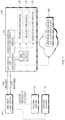
- FIG. 1 illustrates a system embodiment in which a recursive DNS server 102 receives a request resolve a domain name from an end-user client device 101 and makes a threat assessment.
- the recursive DNS server 102 may be a local DNS server managed by the end-user's ISP or wireless carrier, a public or open DNS server, or otherwise.
- the IP address(es) returned by the DNS server 102 will be used by the client device to address a content request to a content server machine.
- the DNS server 102 returns an IP address associated with content server 112
- the client device 101 can direct a request to that content server 112. But if the DNS server 102 returned the IP address for content server 114, the client device 101 would direct its request to that content server 114.
- the recursive DNS server 102 via threat assessment module 103, accesses a variety of services 104-106 to provide security intelligence and determine a threat level of the client device 101.
- IP reputation service 102 is used to look up the reputation of the requesting client device 101 based on its IP address.
- IP reputation databases are available from various vendors, including for example Symantec, CommTouch, Webroot, and others.
- open source IP reputation projects such as Honeypot and dshield.org can be leveraged.
- the reputation service may be located locally or remotely to the DNS server 102.
- the reputation service 104 typically returns a threat score and a confidence number of the given score.
- the DNS server may combine this score with other factors, such as the location of the client from location service 105 (e.g., which could be geographic location based on IP address or network location based on IP address), request history of the client known to the DNS server 102 (e.g., the rate at which that client has been sending requests in some time period), or information about the DNS request itself as determined by a request analyzer service 106 (e.g., malformed headers, or suspicious content, as may be detected by firewall rules) to arrive at an overall threat level assessment.
- location service 105 e.g., which could be geographic location based on IP address or network location based on IP address
- request history of the client known to the DNS server 102 e.g., the rate at which that client has been sending requests in some time period
- information about the DNS request itself as determined by a request analyzer service 106 e.g., malformed headers, or suspicious content, as may
- the DNS server 102 may employ any kind of security intelligence and/or services such as 104-106, independently or in combination, to make a threat assessment.
- the DNS server 102 returns an answer based on the overall threat level, and how that level compares to predefined thresholds/categories with which the DNS server 102 is configured.
- the DNS server 102 may not perform a recursive lookup within the DNS system (i.e., to authoritative DNS servers) per usual name resolution procedures, but rather perform some predefined, configured action.
- the configured action may be to return a particular IP address that represents and points to resources specifically designed to handle threats.
- an ISP operating the DNS server 102 may have particular ISP resources to handle this situation.
- the DNS server 102 may perform the recursive lookup, but use a DNS extension field to inform an upstream DNS server 108 of the threat, with a field indicating a threat score that the DNS server 102 has determined for the particular client, so that the upstream DNS server may tailor its answers accordingly. Then, the DNS server 102 can relay the answer (e.g., the IP address) that it gets from the upstream DNS server 108 (e.g., the authoritative server), which is presumed to have taken the threat characteristics into account.
- answers from upstream DNS servers 108 may be annotated according to an agreed-upon format so that the DNS server 102 can cache them appropriately.
- some answers may be marked as valid only for "no-threat” or “low-threat” clients that have a threat score below a defined threshold. (A common scoring system can be agreed upon.) Other answers can be marked as valid to return for "medium-threat” clients, "high-threat” clients, and so on.
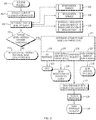
- FIG. 2 illustrates a workflow for the DNS server 102 of FIG. 1 , in one embodiment.
- the flow starts at 200 where the DNS server receives a request to resolve a particular domain name from a particular client device.
- the DNS server 102 determines the IP address of the requesting client device, e.g., by reading it from the source IP field of the incoming packets.
- the DNS server 102 determines the threat level of the client. This may involve invoking a variety of processes and/or local or remote services 206 - 210 to examine the security characteristics of the client.
- the DNS server 102 may leverage an IP reputation service 206, a geo-location service 208, and/or invoke a process that examines the request in more detail (e.g., applying firewall rules and regular expression matches, and the like) as indicated by box 210.
- the 'Request Rate' shown in box 210 may be the absolute number of requests per unit time for the given client and/or the rate of different requests that a particular client is asking. The rate of different requests is pertinent to detecting a bot or automated scraper, which is more likely to ask different name resolutions more frequently compared to a human user.
- the characteristics/score returned from the service is used to calculate a threat level score. If more than one service is used, then the various characteristics/scores returned from the services 206-210 are combined into an aggregate threat level score.
- the threat level score compared with a configured threshold below which all clients are considered "good". If the client does not trigger this threshold, then the DNS server 102 invokes normal name server processing to provide an answer to the client, as indicated by step 213.
- Step 213 may involve retrieving a record from cache or performing a recursive lookup process with other DNS servers to obtain the appropriate answer, as known in the art for DNS server operation.
- the DNS server 102 must determine what action to take.
- a variety of configurable options may be available, and the DNS server 102 may choose amongst them based on the severity of threat.
- the DNS server 102 may maintain several different threat level categories, bracketed by threat level scores, and may take a different, configurable action in response to a client falling in each category.
- FIG. 3 illustrates a system embodiment in which the recursive DNS server 302 does not make a threat assessment itself but instead passes information upstream. More specifically, in FIG. 3 , end-user client device 301 sends a request to resolve a domain name to recursive DNS server 302. Assume the DNS server 302 does not have the answer cached, and that it initiates a recursive lookup process. In this process, the DNS server 302 may contact one or more other DNS servers (including top level domain (TLD) name servers, etc.) before reaching the authoritative DNS server that can provide an IP address for the given domain name. This process is well-known in the art and illustrated generically in FIG. 3 by the dashed lines to DNS servers 308, 310.
- TLD top level domain
- DNS server 302 sends a request to DNS server 312 with a client subnet extension field specifying the subnet of client device 301 (e.g., a truncated IP address whose truncation is indicated by a netmask field).
- client subnet extension field specifying the subnet of client device 301 (e.g., a truncated IP address whose truncation is indicated by a netmask field).
- a mechanism for doing this is specified in the EDNSO client subnet extension proposal of the IETF (Internet Engineering Task Force) by C. Contavalli et al., July 4, 2013 (titled "Client Subnet in DNS Requests") which describes functionality and data fields for providing network and client subnet extension portions of a client IP address in a DNS request and in an answer (for caching purposes).
- the fully specified client IP address - without truncation - also be sent.
- authoritative DNS server 312 makes a threat determination in any manner as was described above with respect to recursive DNS server 102 in FIGS. 1-2 , leveraging security intelligence and services such as 314-316.
- the DNS server 312 leverages a client IP reputation service and uses the client IP address information provided by the downstream DNS server 302 to make a threat level assessment.
- the downstream DNS server 302 can determine a threat level score based on client device's 301 IP address and pass that assessment to the authoritative DNS server 302 with its DNS request 303. In that case, the authoritative DNS 312 determines how to proceed in light of supplied threat score, and it does not have to rely on the IP address of the requesting DNS server for scoring.
- DNS server 312 returns an answer based on the determined threat level score.
- the answer is a set of IP addresses that is denoted such that downstream DNS server 302 knows to cache the answer as valid only for requests from client IP addresses falling within the given specified subnet, or for clients falling within a certain threat score range.
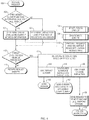
- FIG. 4 illustrates an embodiment of a workflow for the authoritative DNS server 312.
- the flow starts at 400, where the DNS server 312 receives a request to resolve a domain name from a downstream DNS server.
- the DNS server 312 checks the request to see if client IP address information is included (e.g., the EDNSO extension field value indicating network portion and client subnet portion of IP of the client that originated the request). If so, control branches to 403, where the DNS server 312 determines a threat level using the given client IP address information and leveraging various services such as an IP reputation module, geo-location module, request analyzer service, and the like. If no such information has been included, then the DNS server 312 evaluates the threat level using the IP address of the requesting DNS server, as indicated by box 404.
- client IP address information e.g., the EDNSO extension field value indicating network portion and client subnet portion of IP of the client that originated the request. If so, control branches to 403, where the DNS server 312 determines a threat level using the given client
- the determined threat level is compared to a threshold level. If the level does not exceed the configured minimum threshold, the DNS server 312 proceeds in a conventional manner to obtain an answer from its DNS records (e.g., the answer typically being a set of one or more IP addresses, or possibly a CNAME alias, or other answer according to domain name system conventions) and responds to the requesting DNS server with the answer. If the level exceeds the minimum threshold, then flow moves to box 414 where the DNS server 312 determines what alternative action to take. A variety of actions are possible. FIG.
- the DNS server 312 can (i) make note of the request, but return an answer as usual (416), (ii) invoke a configured response for the given threat level category (418) such as an alternate set of IP addresses, or (iii) ask another service or machine, such as a mapping system or threat mitigation in a CDN for the response that should be provided (420).
- a configured response for the given threat level category (418) such as an alternate set of IP addresses
- another service or machine such as a mapping system or threat mitigation in a CDN for the response that should be provided (420).
- Boxes 422-424 indicate how the DNS sever 312 may include an EDNSO client subnet extension field in its answer, so that downstream DNS servers like DNS server 302 may cache the answer and use it to answer future requests only from clients falling within the indicated subnet.
- the use of the requesting DNS server's IP address for the IP reputation service lookup indicated by box 404 is not ideal, as both low-threat and high-threat clients may be originating DNS queries to that DNS server. Therefore, the minimum thresholds for taking countermeasure action in this case may be higher than otherwise, so as to avoid false positives. Put another way, preferably this approach is used in limited circumstances, such as where the threat level score for the requesting DNS server is very high. Also, this approach might be used if it is desired to block traffic from a certain geography or certain network/ISP associated with the DNS server and/or otherwise treat such traffic in a special manner.
- the DNS server 312 does not invoke threat assessment routines but returns an answer pointing to a content server in a default manner. Since the content server will be contacted directly by the end-user client machine with a content request, and thus have the client IP address, the content server can assess the threat at that time. Assuming a threat is detected, the content server can mitigate the threat itself or respond to the client's request with a redirect (e.g., HTTP 302 redirect) sending the client to a different domain name that has been reserved for threats and that is recognized at the DNS server 312 as such (assume the DNS server 312 is also authoritative for this "red flag" domain name).
- a redirect e.g., HTTP 302 redirect
- the DNS server 312 When the client attempts to resolve this "red flag" domain name, the DNS server 312 knows that originating client of the DNS query is a threat. In other words, the DNS server 312 is configured to recognize that all name resolution requests to the red flag domain should be resolved to resources that can mitigate the threat or otherwise as set out by box 414 of FIG. 4 .
- a DNS server might take any of the following actions, in certain embodiments, upon detection of a threat:
- CDNs Content delivery networks
- the techniques described above are advantageously employed in a content delivery network.
- Content delivery networks are known the art as a kind of distributed computing system. Often a CDN is operated and managed by a service provider. The service provider typically provides the content delivery service on behalf of third parties.
- a "distributed system" of this type typically refers to a collection of autonomous computers linked by a network or networks, together with the software, systems, protocols and techniques designed to facilitate various services, such as content delivery or the support of outsourced site infrastructure.
- This infrastructure is shared by multiple tenants, typically content providers.
- the infrastructure is generally used for the storage, caching, or transmission of content - such as web pages, streaming media and applications - on behalf of such content providers.
- the platform may also provide ancillary technologies used therewith including, without limitation, DNS query handling, provisioning, data monitoring and reporting, content targeting, personalization, and business intelligence.
- the DNS service provided by a CDN may be a name service for its own managed servers or a name service productized for customer servers. In either case, it may be modified to employ the DNS security features described herein. Because a CDN typically has many resources deployed in a variety of locations, the result of the security analysis can be used in a variety of ways. For example: A "bad" client could be directed, via returned IP address, to a set of machines deployed in the CDN to handle attacks, or to a suboptimal (e.g., topologically distant) but low-load set of machines that may be able to handle the potential flood of traffic (e.g., in DDOS attack). Since the client has been found to be bad, the high-latency performance provided by the distant machines is not an issue.
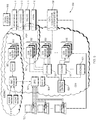
- FIG. 5 illustrates a CDN system that can be adapted in accordance with the teachings hereof.
- the content delivery network (CDN) has a set of machines distributed around the Internet.
- CDN content servers 502 located near the edge of the Internet, i.e., at or adjacent end user access networks.
- a network operations command center (NOCC) 504 may be used to administer and manage operations of the various machines in the system.
- NOCC network operations command center
- Third party sites affiliated with content providers such as web site 506, offload delivery of content (e.g., HTML or other markup language files, embedded page objects, streaming media, software downloads, and the like) to the distributed computer system 500 and, in particular, to the CDN servers 502 (which are sometimes referred to as content servers, or sometimes as "edge” servers in light of the possibility that they are near an "edge” of the Internet).
- content e.g., HTML or other markup language files, embedded page objects, streaming media, software downloads, and the like
- Such servers may be grouped together into a point of presence (POP) 507 at a particular geographic location.
- POP point of presence
- content providers offload their content delivery by aliasing (e.g., by a DNS CNAME) given content provider domains or sub-domains to domains that are managed by the service provider's authoritative domain name service.
- the service provider's domain name service directs end user client machines 522 that desire content to the distributed computer system (or more particularly, to one of the CDN servers 502 in the platform) to obtain the content more reliably and efficiently.
- the CDN servers 502 respond to the client requests, for example by fetching requested content from a local cache, from another CDN server 502, from the origin server 506 associated with the content provider, or other source.
- CDN servers 502 typically employ on a caching model that relies on setting a time-to-live (TTL) for each cacheable object. After it is fetched, the object may be stored locally at a given CDN server until the TTL expires, at which time is typically re-validated or refreshed from the origin server 506.
- TTL time-to-live
- the distributed computer system may also include other infrastructure, such as a distributed data collection system 508 that collects usage and other data from the CDN servers 502, aggregates that data across a set of CDN servers at a particular POP, and passes that data to other back-end systems 510, 512, 514 and 516 to facilitate monitoring, logging, alerts, billing, management and other operational and administrative functions.
- Distributed network agents 518 monitor the network as well as the server loads and provide network, traffic and load data to a DNS query handling mechanism 515.
- a distributed data transport mechanism 520 may be used to distribute control information (e.g., metadata to manage content, to facilitate load balancing, and the like) to the CDN servers 502 to configure them.
- a given machine 600 in the CDN platform comprises commodity hardware (e.g., a microprocessor) 602 running an operating system kernel (such as Linux® or variant) 604 that supports one or more applications 606.
- an operating system kernel such as Linux® or variant
- given machines typically run a set of applications, such as an HTTP proxy 607, a name server 608, a local monitoring process 610, a distributed data collection process 612, and the like.
- the HTTP proxy 607 typically includes a manager process for managing a cache and delivery of content from the machine.
- the machine may include one or more media servers, such as a Windows® Media Server (WMS) or Flash server, as required by the supported media formats.
- WMS Windows® Media Server
- a given CDN server 502 shown in FIG. 5 may be configured to provide one or more extended content delivery features, preferably on a domain-specific, content-provider - specific basis, preferably using configuration files that are distributed to the CDN servers using a configuration system.
- U.S. Patent Nos. 7,240,100 describe a useful infrastructure for delivering and managing CDN server content control information. More information about a CDN platform can be found in US Patent Nos. 6,108,703 and 7,596,619 .
- a content provider identifies a content provider domain or sub-domain that it desires to have served by the CDN.
- the CDN service provider associates (e.g., via a canonical name, or CNAME, or other aliasing technique) the content provider domain with a CDN hostname, and the CDN provider then provides that CDN hostname to the content provider.
- a DNS query to the content provider domain or sub-domain is received at the content provider's domain name servers, those servers respond by returning the CDN hostname. That network hostname points to the CDN, and that hostname is then resolved through the CDN name service. To that end, the CDN name service returns one or more IP addresses.
- the requesting client application e.g., browser
- the request includes a host header that includes the original content provider domain or sub-domain.
- the CDN server Upon receipt of the request with the host header, the CDN server checks its configuration file to determine whether the content domain or sub-domain requested is actually being handled by the CDN. If so, the CDN server applies its content handling rules and directives for that domain or sub-domain as specified in the configuration. These content handling rules and directives may be located within an XML-based "metadata" configuration file, as described previously.
- Software may include one or several discrete programs.
- a given function may comprise part of any given module, process, execution thread, or other such programming construct.
- each function described above may be implemented as computer code, namely, as a set of computer instructions, executable in one or more microprocessors to provide a special purpose machine.
- an entire network of machines specially suited to handle the security situations described herein may be employed, potentially as a portion of or adjunct the remainder of a content delivery network platform.
- the DNS servers, described above, may be directed to this special-purpose security network using the teachings described herein.
- the code may be executed using conventional apparatus - such as a microprocessor in a computer, digital data processing device, or other computing apparatus - as modified by the teachings hereof.
- such software may be implemented in a programming language that runs in conjunction with a proxy on a standard Intel hardware platform running an operating system such as Linux.
- the functionality may be built into the proxy code, or it may be executed as an adjunct to that code.
- FIG. 7 is a block diagram that illustrates hardware in a computer system 700 in which embodiments of the invention may be implemented.
- the computer system 700 may be embodied in a client, server, personal computer, workstation, tablet computer, wireless device, mobile device, network device, router, hub, gateway, or other device.
- Computer system 700 includes a microprocessor 704 coupled to bus 701. In some systems, multiple microprocessor and/or microprocessor cores may be employed. Computer system 700 further includes a main memory 710, such as a random access memory (RAM) or other storage device, coupled to the bus 701 for storing information and instructions to be executed by microprocessor 704. A read only memory (ROM) 708 is coupled to the bus 701 for storing information and instructions for microprocessor 704. As another form of memory, a non-volatile storage device 706, such as a magnetic disk, solid state memory (e.g., flash memory), or optical disk, is provided and coupled to bus 701 for storing information and instructions. Other application-specific integrated circuits (ASICs), field programmable gate arrays (FPGAs) or circuitry may be included in the computer system 700 to perform functions described herein.
- ASICs application-specific integrated circuits
- FPGAs field programmable gate arrays
- the system 700 may have a peripheral interface 712 communicatively couples computer system 700 to a user display 714 that displays the output of software executing on the computer system, and an input device 715 (e.g., a keyboard, mouse, trackpad, touchscreen) that communicates user input and instructions to the computer system 700.
- the peripheral interface 712 may include interface circuitry and logic for local buses such as Universal Serial Bus (USB) or other communication links.
- USB Universal Serial Bus
- Computer system 700 is coupled to a communication interface 716 that provides a link between the system bus 701 and an external communication link.
- the communication interface 716 provides a network link 718.
- the communication interface 716 may represent an Ethernet or other network interface card (NIC), a wireless interface, modem, an optical interface, or other kind of input/output interface.
- NIC network interface card
- Network link 718 provides data communication through one or more networks to other devices. Such devices include other computer systems that are part of a local area network (LAN) 726. Furthermore, the network link 718 provides a link, via an internet service provider (ISP) 720, to the Internet 722. In turn, the Internet 722 may provide a link to other computing systems such as a remote server 730 and/or a remote client 731. Network link 718 and such networks may transmit data using packet-switched, circuit-switched, or other data-transmission approaches.
- ISP internet service provider
- the computer system 700 may implement the functionality described herein as a result of the microprocessor executing program code.
- Such code may be read from or stored on a non-transitory computer-readable medium, such as memory 710, ROM 708, or storage device 706.
- a non-transitory computer-readable medium such as memory 710, ROM 708, or storage device 706.
- Other forms of non-transitory computer-readable media include disks, tapes, magnetic media, CD-ROMs, optical media, RAM, PROM, EPROM, and EEPROM. Any other non-transitory computer-readable medium may be employed.
- Executing code may also be read from network link 718 (e.g., following storage in an interface buffer, local memory, or other circuitry).
- a client device may be a conventional desktop, laptop or other Internet-accessible machine running a web browser or other rendering engine.
- a client device may also be a forward proxy, Tor node, or cloud provider edge machine.
- a client device may also be a mobile device. Any wireless client device may be utilized, e.g., a cellphone, pager, a personal digital assistant (PDA, e.g., with GPRS NIC), a mobile computer with a smartphone client, tablet or the like.
- PDA personal digital assistant
- Other mobile devices in which the technique may be practiced include any access protocol- enabled device (e.g., iOSTM-based device, an AndroidTM-based device, other mobile-OS based device, or the like) that is capable of sending and receiving data in a wireless manner using a wireless protocol.
- Typical wireless protocols include: WiFi, GSM/GPRS, CDMA or WiMax. These protocols implement the ISO/OSI Physical and Data Link layers (Layers 1 & 2) upon which a traditional networking stack is built, complete with IP, TCP, SSL/TLS and HTTP.
- the WAP wireless access protocol
- WDP wireless access protocol
- WTLS wireless network communication layers
- WTP network communication layers
- a mobile device is a cellular telephone that operates over GPRS (General Packet Radio Service), which is a data technology for GSM networks.
- GPRS General Packet Radio Service
- a mobile device as used herein is a 3G- (or next generation) compliant device that includes a subscriber identity module (SIM), which is a smart card that carries subscriber-specific information, mobile equipment (e.g., radio and associated signal processing devices), a man-machine interface (MMI), and one or more interfaces to external devices (e.g., computers, PDAs, and the like).
- SIM subscriber identity module
- MMI man-machine interface
- the techniques disclosed herein are not limited for use with a mobile device that uses a particular access protocol.
- the mobile device typically also has support for wireless local area network (WLAN) technologies, such as Wi-Fi.
- WLAN is based on IEEE 802.11 standards.
- the teachings disclosed herein are not limited to any particular mode or application layer for mobile device communications.
Landscapes
- Engineering & Computer Science (AREA)
- Computer Security & Cryptography (AREA)
- Computer Networks & Wireless Communication (AREA)
- Signal Processing (AREA)
- Computer Hardware Design (AREA)
- Computing Systems (AREA)
- General Engineering & Computer Science (AREA)
- Data Exchanges In Wide-Area Networks (AREA)
- Computer And Data Communications (AREA)
Claims (14)
- Verfahren, das in einem Domänennamensystem-(DNS)-Server (102) betrieben werden kann, wobei das Verfahren
umfasst:Empfangen einer Anfrage zum Lösen eines Domänennamens von einem Client, wobei der Client ein rekursiver DNS-Server oder ein Endnutzergerät (101, 522) ist, und die Anfrage eine Internetprotokoll-IP-Adresse enthält;Bestimmen eines Bedrohungswerts für die Anfrage, auf der Basis, mindestens teilweise, der IP-Adresse in der Anfrage;
nach einer Bestimmung, dass der Bedrohungswert einen Schwellwert nicht überschreitet, Antworten auf die Domänennamenlösungsanfrage des Clients mit einem ersten Satz einer oder mehrerer IP-Adressen, wobei der erste Satz der einen oder der mehreren IP-Adressen mit einem ersten Satz einer oder mehrerer Maschinen in einem ersten Präsenzpunkt, PP, eines Inhaltsabgabenetzwerks (500) assoziiert ist;nach Bestimmen, dass der Bedrohungswert einen Schwellwert überschreitet, Beantworten der
Domänennamenlösungsanfrage des Clients mit einem zweiten Satz einer oder mehrerer IP-Adressen, wobei der zweite Satz der einen oder der mehreren IP-Adressen mit einem topologisch entfernten zweiten Satz hoher Latenz einer oder mehrerer Maschinen in einem zweiten Präsenzpunkt, PP, des Inhaltsabgabenetzwerks (500) assoziiert ist, was dadurch dazu führt, dass dem Client eine geringere Dienstgüte bereitgestellt wird, wenn der Bedrohungswert den Schwellwert überschreitet. - Verfahren nach Anspruch 1, wobei die IP-Adresse in der Anfrage gemäß einer in der Anfrage enthaltenen Netzmaske abgeschnitten ist.
- Verfahren nach Anspruch 1, wobei der Client ein rekursiver DNS-Server ist und die IP-Adresse in der Anfrage mit dem rekursiven DNS-Server oder einem Endnutzergerät assoziiert ist, von dem die Anfrage an den rekursiven DNS-Server ausging.
- Verfahren nach Anspruch 1, wobei der Client ein Endnutzergerät (101, 522) ist und die IP-Adresse in der Anfrage mit dem Endnutzergerät assoziiert ist.
- Verfahren nach Anspruch 1, wobei das Bestimmen des Bedrohungswertes das Senden der IP-Adresse in der Anfrage an einen IP-Adressenreputationsdienst (104) und das Empfangen eines Werts von dort umfasst.
- Vorrichtung (102), umfassend: eine Netzwerkschnittstelle zur Kommunikation mit räumlich abgesetzten Maschinen,
Schaltungen, die einen oder mehrere Prozessoren formen und Speicherhalteprogrammanweisungen, wobei die Programmanweisungen, wenn sie durch den einen oder die mehreren Prozessoren der Vorrichtung ausgeführt werden, die Vorrichtung veranlassen, die folgenden Schritte auszuführen:Empfangen einer Anfrage zum Lösen eines Domänennamens von einem Client, wobei der Client ein rekursiver DNS-Server oder ein Endnutzergerät (101, 522) ist, und die Anfrage eine IP-Adresse ist;Bestimmen eines Bedrohungswerts für die Anfrage, auf der Basis, mindestens teilweise, der IP-Adresse in der Anfrage;
nach einer Bestimmung, dass der Bedrohungswert einen Schwellwert nicht überschreitet, Antworten auf die Domänennamenlösungsanfrage des Clients mit einem ersten Satz einer oder mehrerer IP-Adressen, wobei der erste Satz der einen oder der mehreren IP-Adressen mit einem ersten Satz einer oder mehrerer Maschinen in einem ersten Präsenzpunkt, PP, eines Inhaltsabgabenetzwerks (500) assoziiert ist;nach einer Bestimmung, dass der Bedrohungswert einen Schwellwert überschreitet, Antworten auf eine Domänennamenlösungsanfrage des Clients mit einem zweiten Satz einer oder mehrerer IP-Adressen, wobei der zweite Satz der einen oder der mehreren IP-Adressen mit einem topologisch entfernten zweiten Satz hoher Latenz
einer oder mehrerer Maschinen in einem zweiten Präsenzpunkt, PP, des Inhaltsabgabenetzwerks (500) assoziiert ist, was dadurch dazu führt, dass dem Client eine geringere Dienstgüte bereitgestellt wird, wenn der Bedrohungswert den Schwellwert überschreitet. - Vorrichtung nach Anspruch 6, wobei die IP-Adresse in der Anfrage gemäß einer in der Anfrage enthaltenen Netzmaske abgeschnitten ist.
- Vorrichtung nach Anspruch 6, wobei der Client ein rekursiver DNS-Server ist und die IP-Adresse in der Anfrage mit dem rekursiven DNS-Server oder einem Endnutzergerät assoziiert ist, von dem die Anfrage an den rekursiven DNS-Server ausging.
- Vorrichtung nach Anspruch 6, wobei der Client ein Endnutzergerät (101, 522) ist und die IP-Adresse in der Anfrage dem Endnutzergerät assoziiert ist.
- Vorrichtung nach Anspruch 6, wobei das Bestimmen des Bedrohungswertes das Senden der IP-Adresse in der Anfrage an einen IP-Adressenreputationsdienst (104) und das Empfangen eines Werts von dort umfasst.
- Nicht-transitorisches computerlesbares Speichermedium, das ein oder mehrere Anweisungen umfassende Programme speichert, die, wenn das eine oder die mehreren Programme durch einen oder mehrere
Prozessoren einer Computervorrichtung ausgeführt werden, die Computervorrichtung veranlassen, die folgenden Schritte auszuführen:Empfangen einer Anfrage zum Lösen eines Domänennamens von einem Client, wobei der Client ein rekursiver DNS-Server oder ein Endnutzergerät (101, 522) ist, und die Anfrage eine IP-Adresse in der Anfrage enthält;
Bestimmen eines Bedrohungswerts für die Anfrage, auf der Basis, mindestens teilweise, der IP-Adresse;
nach einer Bestimmung, dass der Bedrohungswert einen Schwellwert nicht überschreitet, Antworten auf eine Domänennamenlösungsanfrage des Clients mit einem ersten Satz einer oder mehrerer IP-Adressen, wobei der erste Satz der einen oder der mehreren IP-Adressen mit einem ersten Satz einer oder mehrerer Maschinen in einem ersten Präsenzpunkt, PP, eines Inhaltsabgabenetzwerks (500) assoziiert ist;nach Bestimmen, dass der Bedrohungswert einen Schwellwert überschreitet, Beantworten der
Domänennamenlösungsanfrage des Clients mit einem zweiten Satz der einen oder der mehreren IP-Adressen, wobei der zweite Satz der einen oder der mehreren IP-Adressen mit einem topologisch entfernten zweiten Satz hoher Latenz einer oder mehrerer Maschinen in einem zweiten Präsenzpunkt, PP, des Inhaltsabgabenetzwerks (500) assoziiert ist, was dadurch dazu führt, dass dem Client eine geringere Dienstgüte bereitgestellt wird, wenn der Bedrohungswert den Schwellwert überschreitet. - Computerlesbares Speichermedium nach Anspruch 11, wobei der Client ein rekursiver DNS-Server ist und die IP-Adresse in der Anfrage mit dem rekursiven DNS-Server oder einem Endnutzergerät assoziiert ist, von dem die Anfrage an den rekursiven DNS-Server ausging.
- Computerlesbares Speichermedium nach Anspruch 11, wobei der Client ein Endnutzergerät (101, 522) ist und die IP-Adresse in der Anfrage dem Endnutzergerät assoziiert ist.
- Computerlesbares Speichermedium nach Anspruch 11, wobei das Bestimmen des Bedrohungswertes das Senden der IP-Adresse in der Anfrage an einen IP-Adressenreputationsdienst (104) und das Empfangen eines Werts von dort umfasst.
Applications Claiming Priority (2)
| Application Number | Priority Date | Filing Date | Title |
|---|---|---|---|
| US14/138,025 US9467461B2 (en) | 2013-12-21 | 2013-12-21 | Countering security threats with the domain name system |
| PCT/US2014/070832 WO2015095311A1 (en) | 2013-12-21 | 2014-12-17 | Countering security threats with domain name system |
Publications (2)
| Publication Number | Publication Date |
|---|---|
| EP3085064A1 EP3085064A1 (de) | 2016-10-26 |
| EP3085064B1 true EP3085064B1 (de) | 2020-07-22 |
Family
ID=52394339
Family Applications (1)
| Application Number | Title | Priority Date | Filing Date |
|---|---|---|---|
| EP14828606.5A Active EP3085064B1 (de) | 2013-12-21 | 2014-12-17 | Abwehr von sicherheitsbedrohungen mit domänennamensystem |
Country Status (3)
| Country | Link |
|---|---|
| US (1) | US9467461B2 (de) |
| EP (1) | EP3085064B1 (de) |
| WO (1) | WO2015095311A1 (de) |
Families Citing this family (69)
| Publication number | Priority date | Publication date | Assignee | Title |
|---|---|---|---|---|
| US10263958B2 (en) | 2010-03-18 | 2019-04-16 | Nominum, Inc. | Internet mediation |
| US9742811B2 (en) | 2010-03-18 | 2017-08-22 | Nominum, Inc. | System for providing DNS-based control of individual devices |
| US9992234B2 (en) | 2010-03-18 | 2018-06-05 | Nominum, Inc. | System for providing DNS-based control of individual devices |
| US10742591B2 (en) | 2011-07-06 | 2020-08-11 | Akamai Technologies Inc. | System for domain reputation scoring |
| US9843601B2 (en) | 2011-07-06 | 2017-12-12 | Nominum, Inc. | Analyzing DNS requests for anomaly detection |
| US11201848B2 (en) | 2011-07-06 | 2021-12-14 | Akamai Technologies, Inc. | DNS-based ranking of domain names |
| US10270755B2 (en) | 2011-10-03 | 2019-04-23 | Verisign, Inc. | Authenticated name resolution |
| US10164989B2 (en) | 2013-03-15 | 2018-12-25 | Nominum, Inc. | Distinguishing human-driven DNS queries from machine-to-machine DNS queries |
| US9438611B2 (en) * | 2014-03-17 | 2016-09-06 | Lenovo Enterprise Solutions (Singapore) Pte. Ltd. | Managing a blocked-originator list for a messaging application |
| US20160036848A1 (en) * | 2014-07-31 | 2016-02-04 | Cisco Technology, Inc. | Intercloud security as a service |
| US9124622B1 (en) * | 2014-11-07 | 2015-09-01 | Area 1 Security, Inc. | Detecting computer security threats in electronic documents based on structure |
| US10530734B2 (en) | 2014-12-16 | 2020-01-07 | Verisign, Inc. | Balancing visibility in the domain name system |
| US9621575B1 (en) * | 2014-12-29 | 2017-04-11 | A10 Networks, Inc. | Context aware threat protection |
| US10560422B2 (en) * | 2015-06-28 | 2020-02-11 | Verisign, Inc. | Enhanced inter-network monitoring and adaptive management of DNS traffic |
| WO2017048250A1 (en) * | 2015-09-16 | 2017-03-23 | Hewlett Packard Enterprise Development Lp | Confidence levels in reputable entities |
| EP3151520B1 (de) * | 2015-10-02 | 2020-03-18 | Efficient IP SAS | Quarantäne einer internetprotokolladresse |
| US10079800B2 (en) | 2015-10-14 | 2018-09-18 | Nominum, Inc. | Client subnet efficiency by equivalence class aggregation |
| US11570209B2 (en) | 2015-10-28 | 2023-01-31 | Qomplx, Inc. | Detecting and mitigating attacks using forged authentication objects within a domain |
| US10609079B2 (en) * | 2015-10-28 | 2020-03-31 | Qomplx, Inc. | Application of advanced cybersecurity threat mitigation to rogue devices, privilege escalation, and risk-based vulnerability and patch management |
| US20220014555A1 (en) | 2015-10-28 | 2022-01-13 | Qomplx, Inc. | Distributed automated planning and execution platform for designing and running complex processes |
| US10791085B2 (en) | 2015-11-12 | 2020-09-29 | Verisign, Inc. | Techniques for directing a domain name service (DNS) resolution process |
| US10178195B2 (en) | 2015-12-04 | 2019-01-08 | Cloudflare, Inc. | Origin server protection notification |
| US9906480B2 (en) * | 2015-12-10 | 2018-02-27 | Facebook, Inc. | Techniques for ephemeral messaging with legacy clients |
| US10200330B2 (en) | 2015-12-10 | 2019-02-05 | Facebook, Inc. | Techniques for ephemeral messaging with a message queue |
| US20170365027A1 (en) * | 2016-06-16 | 2017-12-21 | Hewlett Packard Enterprise Development Lp | Considering geolocation information in a security information sharing platform |
| US10110614B2 (en) | 2016-07-28 | 2018-10-23 | Verisign, Inc. | Strengthening integrity assurances for DNS data |
| US10097568B2 (en) * | 2016-08-25 | 2018-10-09 | International Business Machines Corporation | DNS tunneling prevention |
| US10999240B1 (en) | 2016-08-31 | 2021-05-04 | Verisign, Inc. | Client controlled domain name service (DNS) resolution |
| US10505970B2 (en) | 2016-10-05 | 2019-12-10 | Cisco Technology, Inc. | Identifying and using DNS contextual flows |
| US20180139230A1 (en) * | 2016-11-15 | 2018-05-17 | Level 3 Communications, Llc | Identification and mitigation of attacks in a content delivery network (cdn) |
| US10686831B2 (en) | 2016-11-16 | 2020-06-16 | Cisco Technology, Inc. | Malware classification and attribution through server fingerprinting using server certificate data |
| US11012467B2 (en) | 2017-01-27 | 2021-05-18 | Level 3 Communications, Llc | System and method for scrubbing DNS in a telecommunications network to mitigate attacks |
| JP6734466B2 (ja) * | 2017-03-09 | 2020-08-05 | 日本電信電話株式会社 | 攻撃対策決定装置、攻撃対策決定方法及び攻撃対策決定プログラム |
| US10623425B2 (en) | 2017-06-01 | 2020-04-14 | Radware, Ltd. | Detection and mitigation of recursive domain name system attacks |
| US10904273B1 (en) * | 2017-11-22 | 2021-01-26 | Verisign, Inc. | Techniques for impeding and detecting network threats |
| US10938851B2 (en) | 2018-03-29 | 2021-03-02 | Radware, Ltd. | Techniques for defense against domain name system (DNS) cyber-attacks |
| US11050792B2 (en) * | 2018-07-05 | 2021-06-29 | Cisco Technology, Inc. | Dynamic DNS policy enforcement based on endpoint security posture |
| US10929048B2 (en) * | 2018-10-01 | 2021-02-23 | EMC IP Holding Company LLC | Dynamic multiple proxy deployment |
| US10929878B2 (en) * | 2018-10-19 | 2021-02-23 | International Business Machines Corporation | Targeted content identification and tracing |
| US11310201B2 (en) | 2018-10-23 | 2022-04-19 | Akamai Technologies, Inc. | Network security system with enhanced traffic analysis based on feedback loop |
| US10820196B2 (en) * | 2018-11-30 | 2020-10-27 | The Boeing Company | Onboard network systems for passenger aircraft and methods of operating thereof |
| US10834114B2 (en) * | 2018-12-13 | 2020-11-10 | At&T Intellectual Property I, L.P. | Multi-tiered server architecture to mitigate malicious traffic |
| US12063245B2 (en) | 2019-05-10 | 2024-08-13 | Akamai Technologies, Inc. | Using the state of a request routing mechanism to inform attack detection and mitigation |
| CN110225149A (zh) * | 2019-06-25 | 2019-09-10 | 北京天融信网络安全技术有限公司 | 一种域名解析方法及装置 |
| US11070572B2 (en) | 2019-07-09 | 2021-07-20 | Mcafee, Llc | Methods, systems, articles of manufacture and apparatus for producing generic IP reputation through cross-protocol analysis |
| US11743135B2 (en) | 2019-07-23 | 2023-08-29 | Vmware, Inc. | Presenting data regarding grouped flows |
| US11340931B2 (en) | 2019-07-23 | 2022-05-24 | Vmware, Inc. | Recommendation generation based on selection of selectable elements of visual representation |
| US11290472B2 (en) * | 2019-09-25 | 2022-03-29 | International Business Machines Corporation | Threat intelligence information access via a DNS protocol |
| US11321213B2 (en) | 2020-01-16 | 2022-05-03 | Vmware, Inc. | Correlation key used to correlate flow and con text data |
| CN111416862B (zh) * | 2020-03-20 | 2021-06-15 | 福建万物易联网络科技有限公司 | 一种基于ipv6 ipv4的cdn平台访问方法及系统 |
| CN111416885B (zh) * | 2020-03-20 | 2021-04-06 | 福建万物易联网络科技有限公司 | 一种固定长度域名的外链改写分布式系统 |
| US11546368B2 (en) * | 2020-09-28 | 2023-01-03 | T-Mobile Usa, Inc. | Network security system including a multi-dimensional domain name system to protect against cybersecurity threats |
| US11496522B2 (en) | 2020-09-28 | 2022-11-08 | T-Mobile Usa, Inc. | Digital on-demand coupons for security service of communications system |
| US11477167B2 (en) * | 2020-12-16 | 2022-10-18 | Microsoft Technology Licensing, Llc | Systems and methods for performing dynamic firewall rule evaluation |
| CN112667629A (zh) * | 2020-12-22 | 2021-04-16 | 互联网域名系统北京市工程研究中心有限公司 | 基于布隆过滤器的威胁检测方法和系统 |
| US11991187B2 (en) | 2021-01-22 | 2024-05-21 | VMware LLC | Security threat detection based on network flow analysis |
| US11785032B2 (en) | 2021-01-22 | 2023-10-10 | Vmware, Inc. | Security threat detection based on network flow analysis |
| US12107858B2 (en) | 2021-02-17 | 2024-10-01 | Target Brands, Inc. | Client-side blocking and reporting of unauthorized network transmissions |
| US11831667B2 (en) | 2021-07-09 | 2023-11-28 | Vmware, Inc. | Identification of time-ordered sets of connections to identify threats to a datacenter |
| US11997120B2 (en) | 2021-07-09 | 2024-05-28 | VMware LLC | Detecting threats to datacenter based on analysis of anomalous events |
| US12445469B2 (en) * | 2021-09-07 | 2025-10-14 | Level 3 Communications, Llc | Using a threat intelligence framework to populate a recursive DNS server cache |
| CN115826444B (zh) * | 2021-09-18 | 2025-09-19 | 上海云盾信息技术有限公司 | 基于dns解析的安全访问控制方法、系统、装置及设备 |
| US11792151B2 (en) * | 2021-10-21 | 2023-10-17 | Vmware, Inc. | Detection of threats based on responses to name resolution requests |
| US12015591B2 (en) | 2021-12-06 | 2024-06-18 | VMware LLC | Reuse of groups in security policy |
| US11552925B1 (en) | 2021-12-14 | 2023-01-10 | Bitdefender IPR Management Ltd. | Systems and methods of controlling internet access using encrypted DNS |
| US11582247B1 (en) * | 2022-04-19 | 2023-02-14 | Palo Alto Networks, Inc. | Method and system for providing DNS security using process information |
| US12432237B2 (en) * | 2023-02-22 | 2025-09-30 | HYAS Infosec Inc. | Identification and inspection of outlier domain name system requests |
| US12452285B2 (en) * | 2023-07-14 | 2025-10-21 | Omnissa, Llc | Zero trust continuous risk feedback |
| US12375351B2 (en) * | 2023-11-30 | 2025-07-29 | Adriano Monteiro Marques | Unified programmable dynamic context-aware configuration |
Family Cites Families (50)
| Publication number | Priority date | Publication date | Assignee | Title |
|---|---|---|---|---|
| US6154777A (en) | 1996-07-01 | 2000-11-28 | Sun Microsystems, Inc. | System for context-dependent name resolution |
| US6006264A (en) | 1997-08-01 | 1999-12-21 | Arrowpoint Communications, Inc. | Method and system for directing a flow between a client and a server |
| JPH11110324A (ja) | 1997-10-07 | 1999-04-23 | Hitachi Ltd | 代理サーバ選択装置および代理サーバ |
| US6185598B1 (en) | 1998-02-10 | 2001-02-06 | Digital Island, Inc. | Optimized network resource location |
| US6108703A (en) | 1998-07-14 | 2000-08-22 | Massachusetts Institute Of Technology | Global hosting system |
| US6405252B1 (en) | 1999-11-22 | 2002-06-11 | Speedera Networks, Inc. | Integrated point of presence server network |
| US6754699B2 (en) | 2000-07-19 | 2004-06-22 | Speedera Networks, Inc. | Content delivery and global traffic management network system |
| US7058706B1 (en) | 2000-03-31 | 2006-06-06 | Akamai Technologies, Inc. | Method and apparatus for determining latency between multiple servers and a client |
| US7240100B1 (en) | 2000-04-14 | 2007-07-03 | Akamai Technologies, Inc. | Content delivery network (CDN) content server request handling mechanism with metadata framework support |
| US6996616B1 (en) | 2000-04-17 | 2006-02-07 | Akamai Technologies, Inc. | HTML delivery from edge-of-network servers in a content delivery network (CDN) |
| US7814180B2 (en) | 2000-07-13 | 2010-10-12 | Infoblox, Inc. | Domain name service server |
| US8341297B2 (en) | 2000-07-19 | 2012-12-25 | Akamai Technologies, Inc. | Latencies and weightings in a domain name service (DNS) system |
| US7725602B2 (en) | 2000-07-19 | 2010-05-25 | Akamai Technologies, Inc. | Domain name resolution using a distributed DNS network |
| US7761570B1 (en) | 2003-06-26 | 2010-07-20 | Nominum, Inc. | Extensible domain name service |
| US7769826B2 (en) | 2003-06-26 | 2010-08-03 | Nominum, Inc. | Systems and methods of providing DNS services using separate answer and referral caches |
| US7680811B2 (en) | 2004-04-16 | 2010-03-16 | Infoblox Inc. | Set based data store |
| CA2564533A1 (en) | 2004-05-25 | 2005-12-08 | Postini, Inc. | Electronic message source information reputation system |
| US20060098645A1 (en) | 2004-11-09 | 2006-05-11 | Lev Walkin | System and method for providing client identifying information to a server |
| US8250030B2 (en) | 2005-09-21 | 2012-08-21 | Infoblox Inc. | Provisional authority in a distributed database |
| US8566928B2 (en) | 2005-10-27 | 2013-10-22 | Georgia Tech Research Corporation | Method and system for detecting and responding to attacking networks |
| US7843911B2 (en) | 2005-11-15 | 2010-11-30 | Nominum, Inc. | Data grouping approach to telephone number management in domain name systems |
| US7730187B2 (en) | 2006-10-05 | 2010-06-01 | Limelight Networks, Inc. | Remote domain name service |
| US8713188B2 (en) | 2007-12-13 | 2014-04-29 | Opendns, Inc. | Per-request control of DNS behavior |
| US8606926B2 (en) | 2006-06-14 | 2013-12-10 | Opendns, Inc. | Recursive DNS nameserver |
| US8484283B2 (en) | 2006-08-18 | 2013-07-09 | Akamai Technologies, Inc. | Method and system for mitigating automated agents operating across a distributed network |
| US8539329B2 (en) | 2006-11-01 | 2013-09-17 | Bloxx Limited | Methods and systems for web site categorization and filtering |
| US7694016B2 (en) | 2007-02-07 | 2010-04-06 | Nominum, Inc. | Composite DNS zones |
| US8498946B1 (en) | 2007-12-21 | 2013-07-30 | Jelli, Inc. | Social broadcasting user experience |
| DK2353259T3 (da) | 2008-09-24 | 2014-02-03 | Bloxx Ltd | Meddelelsesforarbejdning |
| US7987255B2 (en) | 2008-11-07 | 2011-07-26 | Oracle America, Inc. | Distributed denial of service congestion recovery using split horizon DNS |
| US8676989B2 (en) | 2009-04-23 | 2014-03-18 | Opendns, Inc. | Robust domain name resolution |
| US8578497B2 (en) | 2010-01-06 | 2013-11-05 | Damballa, Inc. | Method and system for detecting malware |
| US8826438B2 (en) | 2010-01-19 | 2014-09-02 | Damballa, Inc. | Method and system for network-based detecting of malware from behavioral clustering |
| US9009330B2 (en) | 2010-04-01 | 2015-04-14 | Cloudflare, Inc. | Internet-based proxy service to limit internet visitor connection speed |
| US8694642B2 (en) | 2010-10-21 | 2014-04-08 | Opendns, Inc. | Selective proxying in domain name systems |
| US8769060B2 (en) | 2011-01-28 | 2014-07-01 | Nominum, Inc. | Systems and methods for providing DNS services |
| US8631489B2 (en) | 2011-02-01 | 2014-01-14 | Damballa, Inc. | Method and system for detecting malicious domain names at an upper DNS hierarchy |
| GB2487789A (en) | 2011-02-07 | 2012-08-08 | F Secure Corp | Controlling Internet access using DNS root reputation |
| US8707429B2 (en) | 2011-03-31 | 2014-04-22 | Nominum, Inc. | DNS resolution, policies, and views for large volume systems |
| US20130290563A1 (en) | 2011-10-19 | 2013-10-31 | Xerocole, Inc. | Answer augmentation system for authoritative dns servers |
| US9432704B2 (en) | 2011-11-06 | 2016-08-30 | Akamai Technologies Inc. | Segmented parallel encoding with frame-aware, variable-size chunking |
| US9922190B2 (en) | 2012-01-25 | 2018-03-20 | Damballa, Inc. | Method and system for detecting DGA-based malware |
| WO2013116530A1 (en) | 2012-02-01 | 2013-08-08 | Xerocole, Inc. | Dns outage avoidance method for recursive dns servers |
| US8583806B2 (en) | 2012-02-06 | 2013-11-12 | Xerocole, Inc. | Data sharing method for recursive DNS servers |
| US10547674B2 (en) | 2012-08-27 | 2020-01-28 | Help/Systems, Llc | Methods and systems for network flow analysis |
| US9166994B2 (en) | 2012-08-31 | 2015-10-20 | Damballa, Inc. | Automation discovery to identify malicious activity |
| US10084806B2 (en) | 2012-08-31 | 2018-09-25 | Damballa, Inc. | Traffic simulation to identify malicious activity |
| US9894088B2 (en) | 2012-08-31 | 2018-02-13 | Damballa, Inc. | Data mining to identify malicious activity |
| US9680861B2 (en) | 2012-08-31 | 2017-06-13 | Damballa, Inc. | Historical analysis to identify malicious activity |
| US9171151B2 (en) | 2012-11-16 | 2015-10-27 | Microsoft Technology Licensing, Llc | Reputation-based in-network filtering of client event information |
-
2013
- 2013-12-21 US US14/138,025 patent/US9467461B2/en active Active
-
2014
- 2014-12-17 EP EP14828606.5A patent/EP3085064B1/de active Active
- 2014-12-17 WO PCT/US2014/070832 patent/WO2015095311A1/en not_active Ceased
Non-Patent Citations (1)
| Title |
|---|
| None * |
Also Published As
| Publication number | Publication date |
|---|---|
| US9467461B2 (en) | 2016-10-11 |
| WO2015095311A1 (en) | 2015-06-25 |
| US20150180892A1 (en) | 2015-06-25 |
| EP3085064A1 (de) | 2016-10-26 |
Similar Documents
| Publication | Publication Date | Title |
|---|---|---|
| EP3085064B1 (de) | Abwehr von sicherheitsbedrohungen mit domänennamensystem | |
| US10552417B2 (en) | System and methods for leveraging an object cache to monitor network traffic | |
| US8533780B2 (en) | Dynamic content-based routing | |
| US10594805B2 (en) | Processing service requests for digital content | |
| US10225237B2 (en) | Systems and methods for improving HTTPS security | |
| US8726338B2 (en) | Dynamic threat protection in mobile networks | |
| EP3720100B1 (de) | Verfahren und vorrichtung zur dienstanfrageverarbeitung | |
| EP2924941B1 (de) | Verfahren und vorrichtung zur vorbeugung von illegalem dienstzugriff | |
| EP2904539B1 (de) | Server mit mechanismus zur reduktion der internen ressourcen im zusammenhang mit einer bestimmten client-verbindung | |
| US20180205573A1 (en) | Network packet redirection device and method thereof | |
| US20140344417A1 (en) | Facilitating content accessibility via different communication formats | |
| CN104468865A (zh) | 域名解析控制、响应方法及相应的装置 | |
| CN111314499A (zh) | 一种域名代理方法、装置、设备及可读存储介质 | |
| US12273316B2 (en) | Selection of an egress IP address for egress traffic of a distributed cloud computing network | |
| KR101127246B1 (ko) | Ip 주소를 공유하는 단말을 검출하는 방법 및 그 장치 | |
| Wankhede | Study of network-based DoS attacks | |
| EP3967020A1 (de) | Verwendung des zustands eines anfrageroutingmechanismus zur information über angriffserkennung und abschwächung | |
| WO2023020606A1 (zh) | 一种隐藏源站的方法、系统、装置、设备及存储介质 | |
| Dolnák et al. | An overview of DNS security in V2X networks | |
| US9609017B1 (en) | Methods for preventing a distributed denial service attack and devices thereof | |
| Larose et al. | Captive portal architecture | |
| Alsmadi et al. | Network security | |
| US10565266B2 (en) | Method and system for multiple profile creation to mitigate profiling | |
| US20240223533A1 (en) | System and methods for filtering in oblivious deployments and devices thereof | |
| EP4572231A1 (de) | Cybersicherheit auf basis von domänennamensystemprotokollverarbeitung |
Legal Events
| Date | Code | Title | Description |
|---|---|---|---|
| PUAI | Public reference made under article 153(3) epc to a published international application that has entered the european phase |
Free format text: ORIGINAL CODE: 0009012 |
|
| 17P | Request for examination filed |
Effective date: 20160617 |
|
| AK | Designated contracting states |
Kind code of ref document: A1 Designated state(s): AL AT BE BG CH CY CZ DE DK EE ES FI FR GB GR HR HU IE IS IT LI LT LU LV MC MK MT NL NO PL PT RO RS SE SI SK SM TR |
|
| AX | Request for extension of the european patent |
Extension state: BA ME |
|
| DAX | Request for extension of the european patent (deleted) | ||
| GRAP | Despatch of communication of intention to grant a patent |
Free format text: ORIGINAL CODE: EPIDOSNIGR1 |
|
| STAA | Information on the status of an ep patent application or granted ep patent |
Free format text: STATUS: GRANT OF PATENT IS INTENDED |
|
| INTG | Intention to grant announced |
Effective date: 20190722 |
|
| GRAS | Grant fee paid |
Free format text: ORIGINAL CODE: EPIDOSNIGR3 |
|
| GRAJ | Information related to disapproval of communication of intention to grant by the applicant or resumption of examination proceedings by the epo deleted |
Free format text: ORIGINAL CODE: EPIDOSDIGR1 |
|
| GRAL | Information related to payment of fee for publishing/printing deleted |
Free format text: ORIGINAL CODE: EPIDOSDIGR3 |
|
| STAA | Information on the status of an ep patent application or granted ep patent |
Free format text: STATUS: REQUEST FOR EXAMINATION WAS MADE |
|
| STAA | Information on the status of an ep patent application or granted ep patent |
Free format text: STATUS: EXAMINATION IS IN PROGRESS |
|
| INTC | Intention to grant announced (deleted) | ||
| 17Q | First examination report despatched |
Effective date: 20191017 |
|
| GRAP | Despatch of communication of intention to grant a patent |
Free format text: ORIGINAL CODE: EPIDOSNIGR1 |
|
| STAA | Information on the status of an ep patent application or granted ep patent |
Free format text: STATUS: GRANT OF PATENT IS INTENDED |
|
| GRAS | Grant fee paid |
Free format text: ORIGINAL CODE: EPIDOSNIGR3 |
|
| INTG | Intention to grant announced |
Effective date: 20200515 |
|
| GRAF | Information related to payment of grant fee modified |
Free format text: ORIGINAL CODE: EPIDOSCIGR3 |
|
| GRAA | (expected) grant |
Free format text: ORIGINAL CODE: 0009210 |
|
| STAA | Information on the status of an ep patent application or granted ep patent |
Free format text: STATUS: THE PATENT HAS BEEN GRANTED |
|
| AK | Designated contracting states |
Kind code of ref document: B1 Designated state(s): AL AT BE BG CH CY CZ DE DK EE ES FI FR GB GR HR HU IE IS IT LI LT LU LV MC MK MT NL NO PL PT RO RS SE SI SK SM TR |
|
| REG | Reference to a national code |
Ref country code: GB Ref legal event code: FG4D |
|
| REG | Reference to a national code |
Ref country code: CH Ref legal event code: EP |
|
| REG | Reference to a national code |
Ref country code: DE Ref legal event code: R096 Ref document number: 602014068090 Country of ref document: DE |
|
| REG | Reference to a national code |
Ref country code: AT Ref legal event code: REF Ref document number: 1294496 Country of ref document: AT Kind code of ref document: T Effective date: 20200815 |
|
| REG | Reference to a national code |
Ref country code: IE Ref legal event code: FG4D |
|
| REG | Reference to a national code |
Ref country code: LT Ref legal event code: MG4D |
|
| REG | Reference to a national code |
Ref country code: AT Ref legal event code: MK05 Ref document number: 1294496 Country of ref document: AT Kind code of ref document: T Effective date: 20200722 |
|
| PG25 | Lapsed in a contracting state [announced via postgrant information from national office to epo] |
Ref country code: GR Free format text: LAPSE BECAUSE OF FAILURE TO SUBMIT A TRANSLATION OF THE DESCRIPTION OR TO PAY THE FEE WITHIN THE PRESCRIBED TIME-LIMIT Effective date: 20201023 Ref country code: NO Free format text: LAPSE BECAUSE OF FAILURE TO SUBMIT A TRANSLATION OF THE DESCRIPTION OR TO PAY THE FEE WITHIN THE PRESCRIBED TIME-LIMIT Effective date: 20201022 Ref country code: FI Free format text: LAPSE BECAUSE OF FAILURE TO SUBMIT A TRANSLATION OF THE DESCRIPTION OR TO PAY THE FEE WITHIN THE PRESCRIBED TIME-LIMIT Effective date: 20200722 Ref country code: ES Free format text: LAPSE BECAUSE OF FAILURE TO SUBMIT A TRANSLATION OF THE DESCRIPTION OR TO PAY THE FEE WITHIN THE PRESCRIBED TIME-LIMIT Effective date: 20200722 Ref country code: HR Free format text: LAPSE BECAUSE OF FAILURE TO SUBMIT A TRANSLATION OF THE DESCRIPTION OR TO PAY THE FEE WITHIN THE PRESCRIBED TIME-LIMIT Effective date: 20200722 Ref country code: LT Free format text: LAPSE BECAUSE OF FAILURE TO SUBMIT A TRANSLATION OF THE DESCRIPTION OR TO PAY THE FEE WITHIN THE PRESCRIBED TIME-LIMIT Effective date: 20200722 Ref country code: PT Free format text: LAPSE BECAUSE OF FAILURE TO SUBMIT A TRANSLATION OF THE DESCRIPTION OR TO PAY THE FEE WITHIN THE PRESCRIBED TIME-LIMIT Effective date: 20201123 Ref country code: AT Free format text: LAPSE BECAUSE OF FAILURE TO SUBMIT A TRANSLATION OF THE DESCRIPTION OR TO PAY THE FEE WITHIN THE PRESCRIBED TIME-LIMIT Effective date: 20200722 Ref country code: SE Free format text: LAPSE BECAUSE OF FAILURE TO SUBMIT A TRANSLATION OF THE DESCRIPTION OR TO PAY THE FEE WITHIN THE PRESCRIBED TIME-LIMIT Effective date: 20200722 Ref country code: BG Free format text: LAPSE BECAUSE OF FAILURE TO SUBMIT A TRANSLATION OF THE DESCRIPTION OR TO PAY THE FEE WITHIN THE PRESCRIBED TIME-LIMIT Effective date: 20201022 |
|
| PG25 | Lapsed in a contracting state [announced via postgrant information from national office to epo] |
Ref country code: IS Free format text: LAPSE BECAUSE OF FAILURE TO SUBMIT A TRANSLATION OF THE DESCRIPTION OR TO PAY THE FEE WITHIN THE PRESCRIBED TIME-LIMIT Effective date: 20201122 Ref country code: PL Free format text: LAPSE BECAUSE OF FAILURE TO SUBMIT A TRANSLATION OF THE DESCRIPTION OR TO PAY THE FEE WITHIN THE PRESCRIBED TIME-LIMIT Effective date: 20200722 Ref country code: RS Free format text: LAPSE BECAUSE OF FAILURE TO SUBMIT A TRANSLATION OF THE DESCRIPTION OR TO PAY THE FEE WITHIN THE PRESCRIBED TIME-LIMIT Effective date: 20200722 Ref country code: LV Free format text: LAPSE BECAUSE OF FAILURE TO SUBMIT A TRANSLATION OF THE DESCRIPTION OR TO PAY THE FEE WITHIN THE PRESCRIBED TIME-LIMIT Effective date: 20200722 |
|
| PG25 | Lapsed in a contracting state [announced via postgrant information from national office to epo] |
Ref country code: NL Free format text: LAPSE BECAUSE OF FAILURE TO SUBMIT A TRANSLATION OF THE DESCRIPTION OR TO PAY THE FEE WITHIN THE PRESCRIBED TIME-LIMIT Effective date: 20200722 |
|
| REG | Reference to a national code |
Ref country code: DE Ref legal event code: R097 Ref document number: 602014068090 Country of ref document: DE |
|
| PG25 | Lapsed in a contracting state [announced via postgrant information from national office to epo] |
Ref country code: IT Free format text: LAPSE BECAUSE OF FAILURE TO SUBMIT A TRANSLATION OF THE DESCRIPTION OR TO PAY THE FEE WITHIN THE PRESCRIBED TIME-LIMIT Effective date: 20200722 Ref country code: CZ Free format text: LAPSE BECAUSE OF FAILURE TO SUBMIT A TRANSLATION OF THE DESCRIPTION OR TO PAY THE FEE WITHIN THE PRESCRIBED TIME-LIMIT Effective date: 20200722 Ref country code: DK Free format text: LAPSE BECAUSE OF FAILURE TO SUBMIT A TRANSLATION OF THE DESCRIPTION OR TO PAY THE FEE WITHIN THE PRESCRIBED TIME-LIMIT Effective date: 20200722 Ref country code: EE Free format text: LAPSE BECAUSE OF FAILURE TO SUBMIT A TRANSLATION OF THE DESCRIPTION OR TO PAY THE FEE WITHIN THE PRESCRIBED TIME-LIMIT Effective date: 20200722 Ref country code: SM Free format text: LAPSE BECAUSE OF FAILURE TO SUBMIT A TRANSLATION OF THE DESCRIPTION OR TO PAY THE FEE WITHIN THE PRESCRIBED TIME-LIMIT Effective date: 20200722 Ref country code: RO Free format text: LAPSE BECAUSE OF FAILURE TO SUBMIT A TRANSLATION OF THE DESCRIPTION OR TO PAY THE FEE WITHIN THE PRESCRIBED TIME-LIMIT Effective date: 20200722 |
|
| PLBE | No opposition filed within time limit |
Free format text: ORIGINAL CODE: 0009261 |
|
| STAA | Information on the status of an ep patent application or granted ep patent |
Free format text: STATUS: NO OPPOSITION FILED WITHIN TIME LIMIT |
|
| PG25 | Lapsed in a contracting state [announced via postgrant information from national office to epo] |
Ref country code: AL Free format text: LAPSE BECAUSE OF FAILURE TO SUBMIT A TRANSLATION OF THE DESCRIPTION OR TO PAY THE FEE WITHIN THE PRESCRIBED TIME-LIMIT Effective date: 20200722 |
|
| 26N | No opposition filed |
Effective date: 20210423 |
|
| PG25 | Lapsed in a contracting state [announced via postgrant information from national office to epo] |
Ref country code: SK Free format text: LAPSE BECAUSE OF FAILURE TO SUBMIT A TRANSLATION OF THE DESCRIPTION OR TO PAY THE FEE WITHIN THE PRESCRIBED TIME-LIMIT Effective date: 20200722 |
|
| REG | Reference to a national code |
Ref country code: CH Ref legal event code: PL |
|
| PG25 | Lapsed in a contracting state [announced via postgrant information from national office to epo] |
Ref country code: MC Free format text: LAPSE BECAUSE OF FAILURE TO SUBMIT A TRANSLATION OF THE DESCRIPTION OR TO PAY THE FEE WITHIN THE PRESCRIBED TIME-LIMIT Effective date: 20200722 Ref country code: SI Free format text: LAPSE BECAUSE OF FAILURE TO SUBMIT A TRANSLATION OF THE DESCRIPTION OR TO PAY THE FEE WITHIN THE PRESCRIBED TIME-LIMIT Effective date: 20200722 |
|
| REG | Reference to a national code |
Ref country code: BE Ref legal event code: MM Effective date: 20201231 |
|
| REG | Reference to a national code |
Ref country code: NL Ref legal event code: MP Effective date: 20200722 |
|
| PG25 | Lapsed in a contracting state [announced via postgrant information from national office to epo] |
Ref country code: IE Free format text: LAPSE BECAUSE OF NON-PAYMENT OF DUE FEES Effective date: 20201217 Ref country code: LU Free format text: LAPSE BECAUSE OF NON-PAYMENT OF DUE FEES Effective date: 20201217 |
|
| REG | Reference to a national code |
Ref country code: DE Ref legal event code: R079 Ref document number: 602014068090 Country of ref document: DE Free format text: PREVIOUS MAIN CLASS: H04L0029120000 Ipc: H04L0067286900 |
|
| PG25 | Lapsed in a contracting state [announced via postgrant information from national office to epo] |
Ref country code: CH Free format text: LAPSE BECAUSE OF NON-PAYMENT OF DUE FEES Effective date: 20201231 Ref country code: LI Free format text: LAPSE BECAUSE OF NON-PAYMENT OF DUE FEES Effective date: 20201231 |
|
| PG25 | Lapsed in a contracting state [announced via postgrant information from national office to epo] |
Ref country code: TR Free format text: LAPSE BECAUSE OF FAILURE TO SUBMIT A TRANSLATION OF THE DESCRIPTION OR TO PAY THE FEE WITHIN THE PRESCRIBED TIME-LIMIT Effective date: 20200722 Ref country code: MT Free format text: LAPSE BECAUSE OF FAILURE TO SUBMIT A TRANSLATION OF THE DESCRIPTION OR TO PAY THE FEE WITHIN THE PRESCRIBED TIME-LIMIT Effective date: 20200722 Ref country code: CY Free format text: LAPSE BECAUSE OF FAILURE TO SUBMIT A TRANSLATION OF THE DESCRIPTION OR TO PAY THE FEE WITHIN THE PRESCRIBED TIME-LIMIT Effective date: 20200722 |
|
| PG25 | Lapsed in a contracting state [announced via postgrant information from national office to epo] |
Ref country code: MK Free format text: LAPSE BECAUSE OF FAILURE TO SUBMIT A TRANSLATION OF THE DESCRIPTION OR TO PAY THE FEE WITHIN THE PRESCRIBED TIME-LIMIT Effective date: 20200722 |
|
| PG25 | Lapsed in a contracting state [announced via postgrant information from national office to epo] |
Ref country code: BE Free format text: LAPSE BECAUSE OF NON-PAYMENT OF DUE FEES Effective date: 20201231 |
|
| P01 | Opt-out of the competence of the unified patent court (upc) registered |
Effective date: 20230505 |
|
| PGFP | Annual fee paid to national office [announced via postgrant information from national office to epo] |
Ref country code: FR Payment date: 20231009 Year of fee payment: 10 |
|
| PG25 | Lapsed in a contracting state [announced via postgrant information from national office to epo] |
Ref country code: FR Free format text: LAPSE BECAUSE OF NON-PAYMENT OF DUE FEES Effective date: 20241231 |
|
| PGFP | Annual fee paid to national office [announced via postgrant information from national office to epo] |
Ref country code: DE Payment date: 20250930 Year of fee payment: 12 |
|
| PGFP | Annual fee paid to national office [announced via postgrant information from national office to epo] |
Ref country code: GB Payment date: 20251001 Year of fee payment: 12 |