EP3084641B1 - Hash partial matching for discovery - Google Patents
Hash partial matching for discovery Download PDFInfo
- Publication number
- EP3084641B1 EP3084641B1 EP14824217.5A EP14824217A EP3084641B1 EP 3084641 B1 EP3084641 B1 EP 3084641B1 EP 14824217 A EP14824217 A EP 14824217A EP 3084641 B1 EP3084641 B1 EP 3084641B1
- Authority
- EP
- European Patent Office
- Prior art keywords
- string
- attributes
- hashed
- hashed attributes
- expression
- Prior art date
- Legal status (The legal status is an assumption and is not a legal conclusion. Google has not performed a legal analysis and makes no representation as to the accuracy of the status listed.)
- Active
Links
Images

Classifications
-
- H—ELECTRICITY
- H04—ELECTRIC COMMUNICATION TECHNIQUE
- H04L—TRANSMISSION OF DIGITAL INFORMATION, e.g. TELEGRAPHIC COMMUNICATION
- H04L67/00—Network arrangements or protocols for supporting network services or applications
- H04L67/50—Network services
- H04L67/51—Discovery or management thereof, e.g. service location protocol [SLP] or web services
-
- H—ELECTRICITY
- H04—ELECTRIC COMMUNICATION TECHNIQUE
- H04W—WIRELESS COMMUNICATION NETWORKS
- H04W48/00—Access restriction; Network selection; Access point selection
- H04W48/08—Access restriction or access information delivery, e.g. discovery data delivery
- H04W48/14—Access restriction or access information delivery, e.g. discovery data delivery using user query or user detection
-
- H—ELECTRICITY
- H04—ELECTRIC COMMUNICATION TECHNIQUE
- H04L—TRANSMISSION OF DIGITAL INFORMATION, e.g. TELEGRAPHIC COMMUNICATION
- H04L67/00—Network arrangements or protocols for supporting network services or applications
- H04L67/2866—Architectures; Arrangements
- H04L67/30—Profiles
- H04L67/303—Terminal profiles
-
- H—ELECTRICITY
- H04—ELECTRIC COMMUNICATION TECHNIQUE
- H04L—TRANSMISSION OF DIGITAL INFORMATION, e.g. TELEGRAPHIC COMMUNICATION
- H04L69/00—Network arrangements, protocols or services independent of the application payload and not provided for in the other groups of this subclass
- H04L69/04—Protocols for data compression, e.g. ROHC
-
- H—ELECTRICITY
- H04—ELECTRIC COMMUNICATION TECHNIQUE
- H04W—WIRELESS COMMUNICATION NETWORKS
- H04W4/00—Services specially adapted for wireless communication networks; Facilities therefor
- H04W4/20—Services signaling; Auxiliary data signalling, i.e. transmitting data via a non-traffic channel
- H04W4/21—Services signaling; Auxiliary data signalling, i.e. transmitting data via a non-traffic channel for social networking applications
-
- H—ELECTRICITY
- H04—ELECTRIC COMMUNICATION TECHNIQUE
- H04W—WIRELESS COMMUNICATION NETWORKS
- H04W64/00—Locating users or terminals or network equipment for network management purposes, e.g. mobility management
Definitions
- Wireless communication systems are widely deployed to provide various types of communication of services and content, including voice, video, packet data, messaging, broadcast, and so on. These systems may be multiple-access systems capable of supporting communication with multiple users by sharing the available system resources (e.g., time, frequency, and power). Examples of such multiple-access systems include code-division multiple access (CDMA) systems, time-division multiple access (TDMA) systems, frequency-division multiple access (FDMA) systems, and orthogonal frequency-division multiple access (OFDMA) systems.
- CDMA code-division multiple access
- TDMA time-division multiple access
- FDMA frequency-division multiple access
- OFDMA orthogonal frequency-division multiple access
- Wireless devices employing these or other technologies and operating in such systems may communicate with one another to convey information about a particular service.
- a device may publish information related to a particular service the device offers, for example.
- Other devices may receive the published information and attempt to utilize the device or the published service if the published service matches a particular sought-after service.
- techniques are used to limit or reduce the size of the published information. For example, the name of a particular service may be reduced for publication purposes. But existing solutions for reducing such information may not allow for devices to perform partial matching of information. Existing solutions may not allow a device to find or utilize certain published services if the published name represents only a partial match to a desired service.
- the described features generally relate to one or more methods, systems, and apparatuses that may allow for a partial matching of published services or service names.
- Various protocols such as those using reverse domain name system (DNS) style naming (e.g., com.mycompany.myservice.mydevice), may allow one device to publish a service that other devices can search for and find. In some cases, this process of finding a relevant and/or desired service is called matching.
- DNS reverse domain name system
- a search may be made for a DNS style name that includes "com.mycompany.myservice," without regard to the name of a particular device advertising such a service.
- a search employing a partial match criteria may return results for all available devices offering the service.
- the invention provides a method in a device for determining a location of a service per claim 1, a corresponding apparatus per claim 9 and non-transitory computer readable medium per claim 10. Embodiments of the invention are disclosed in the dependent claims.
- the described techniques may utilize a compression technique, such as hashing, and the partial matching techniques described herein may be referred to as hashed partial matching.
- a compression technique such as hashing
- the partial matching techniques described herein may be referred to as hashed partial matching.
- individual elements of a service name string may be compressed or hashed into fixed-size chunks (e.g., 8, 12, or 16 bits), and then the compressed elements may be concatenated to form a string of hashes.
- the word or words between each dot in the string may be separately hashed.
- the size of the hash string may be equal to the number of words in a service name string multiplied by the size of each individual hash. For example, "com.mycompany.myservice.mydevice" may have a hash string of 4*(hash_size). This may allow partial matching of the hash string in a manner similar to matching the entire service string.
- an issue may arise if the length of a published name string exceeds the size of data that can be transmitted over a particular discovery medium (e.g. , 16 bytes for LTE-Direct). Hashing the entire string, while allowing the name string to be transmitted, may not allow for partial matching. Hashing each individual element of the string, which may also be referred to as an attribute, may, however, allow for partial matching. Furthermore, the chance of a false positive match decreases as the size of the individual hashes and the number of words in the service name string increases.
- a particular discovery medium e.g. 16 bytes for LTE-Direct
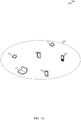
- the system 100 includes devices 115 in an area 120.
- the devices 115 may be referred to as user equipment or UE 115.
- the devices 115 may be computers, cellular phones, smartphones, tablets, laptop computers, notebook computers, netbook computers, PDAs, smartTVs, or other similar electronic devices.
- a device 115 is a WLAN or WPAN router, group owner, or access point.
- the devices 115 may broadcast, or otherwise transmit, signals representative of a particular service offered by each device 115. In some cases, the devices 115 broadcast a signal representative of a service available at a location near each device 115.
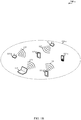
- FIG. 1B depicts a wireless communication system 100-a, in accordance with various embodiments.
- the system 100-a may be an example of the system 100.
- the system 100-a may include devices 115, which may be examples of the devices 115 described with reference to FIG. 1A .
- the devices 115 may be in an area 120-a, which may be an example of the area 120 of FIG. 1A .
- a user of a device 115-a may search for a specific service.
- the device 115-a may be a smartphone; and the user may enter a name representative of the service into a device 115-a using an application of the smartphone.
- the application may include a user interface that may prompt the user to enter details of the desired service with varying levels of specificity.
- the user enters only a general description of a desired service, such as "restaurant” or "printing.”
- a user may be much more specific, entering the specific cuisine-type, price range, and rating of a desired restaurant, for instance.
- attributes when related to a desired service, they may be called desired attributes.
- the device 115-a may accept entry of, recognize, or otherwise identify an expression consisting of one or more desired attributes. Because the desired attributes may be expressed in word form, for example, they may be referred to as uncompressed desired attributes. For instance, “casual restaurant,” “green dry cleaner,” “color printer,” and “high-definition display” are examples of uncompressed desired attributes.
- An uncompressed expression may include a number of related, uncompressed attributes. For example, an uncompressed expression may be a reverse DNS style name related to a casual Italian restaurant called Giacomo's Pizza: "restaurant.casualdining.italian.giacomospizza.”
- the device 115-a may compress each of the desired attributes-for example, with a hash algorithm. In some embodiments, a SHA-1 or MD5 hash algorithm is used. In other embodiments, multiple hash algorithms are used. Those skilled in the art will recognize that any number of hash algorithms may be employed to compress the desired attributes.
- the device 115-a may generate a compressed expression that includes one or more of the compressed desired attributes. In some embodiments, the compressed expression is a concatenated string of hashed desired attributes.
- the compressed expression may thus be a hashed version of a reverse DNS style name string for a desired service, and each of the compressed desired attributes may correspond to individual elements ( e.g. , each word between dots) of a reverse DNS style name string.
- Other devices 115 may broadcast signals 125 representing compressed expressions that include compressed advertised attributes.
- These broadcast compressed expressions may be concatenated strings of hashed advertised attributes, for example.
- the compressed (e.g. , hashed) advertised attributes may correspond to words in a service name; and the compressed expression of advertised attributes may be broadcast from a device that offers, or is associated with a particular service.
- an advertised service name may be associated with a particular business and/or with a service offered by a particular device.
- the broadcast compressed expression(s) correspond to a reverse DNS style name string for an advertised service.
- the compressed advertised attributes correspond to individual elements of one or more services names.
- the device 115-a may receive a compressed expression, which includes compressed advertised attributes.
- a compressed expression broadcast from the device 115-b may correspond to a reverse DNS style name related to a casual Mexican restaurant called Diego's Tacos: "restaurant.casualdining.mexican.diegotacos.”
- the broadcast compressed expression may be a hashed version of the reverse DNS style name.
- the device 115-a may compare the compressed desired attributes and the compressed advertised attributes. This may include comparing each of the attributes according to their representative level of specificity.
- the generated compressed expression corresponds to "restaurant.casualdining.italian.giacomospizza" and the broadcast compressed expression corresponds to "restaurant.casualdining.mexican.diegostacos," the least specific attributes of each expression correspond to "restaurant,” and the most specific attributes correspond to "giacomospizza,” and “diegostacos,” respectively.
- the device 115-a may then determine if there is a match between the compressed desired attributes and the compressed advertised attributes.
- the device 115-a may be referred to as the matching device. Whether a match exists may be a function of a specified criteria for comparing the attributes.
- the user interface of the device 115-a may allow a user to specify one or more criteria for comparing compressed desired and compressed advertised attributes. Or, a device 115-a may automatically specify such criteria.
- a partial matching criteria may be specified. For example, a user may indicate that she wishes to find a casual restaurant.
- the device 115-a may, for example, generate a compressed expression with compressed desired attributes that correspond to "restaurant.casualdining.”
- the device 115-a may receive a compressed expression with compressed advertised attributes that correspond to "restaurant.casualdining.mexican.diegostacos.”
- the device 115-a may recognize a partial match because the received compressed expression is advertising a casual restaurant-namely, a casual Mexican restaurant called Diego's Tacos.
- the device 115-a may, based on determining a partial match between the generated and the received expression, select the received expression- e.g ., in order determine additional information about the advertised service.
- comparing the received expression to a generated expression allows for greater user-specificity.
- a generated expression may represent any desired attributes of a user, limited only by a particular application.
- a look-up table or database may offer less flexibility.
- the device 115-a may use the received expression to determine a location, which may be the location of the service advertised by the received compressed expression.
- a location which may be the location of the service advertised by the received compressed expression.
- the received compressed expression may include an attribute that corresponds to a physical location.
- the device 115-a may solicit additional information (e.g. , coordinates or position information) from a device 115 associated with the advertised service.
- a compressed expression includes one or more wildcard attributes.
- a user of the device 115-c may seek a large-format, color printing service.
- the desired service may be either a function offered by a particular device or a business service- e.g ., the user may be in an office environment and looking for a printer, or she may be in a business park looking for a commercial printing business. In either scenario, the user may have no particular preference regarding printing technology and/or wait time, for example.
- the device 115-c may generate a compressed expression with one or more compressed desired attributes, which each may be hashed individual elements of the reverse DNS style name string "printing.largeformat.*.color.”
- the "*" represents a wildcard value, which may correspond to an attribute used to specify printing technology (e.g., inkjet or laserjet). The wildcard value may thus allow for more possible matches.
- the device 115-c may receive from the device 115-d ( e.g., via the broadcast signal 125) a compressed expression with one or more compressed advertised attributes.
- the compressed expression may represent the reverse DNS style name string "prinint.largeformat.lasejet.color.whileyouwait.jimsprintshop," which may be advertised attributes for while-you-wait, large-format, color, laserjet printing at a business called Jim's Print Shop.
- the device 115-c may compare the generated expression and the received expression and determine that a partial match (or a complete match) exists. Because the generated expression, in the example, employed a wildcard value for printer technology, the device 115-c may determine a complete match exists. Because the user specified a wildcard value instead of a desired print technology, any print technology (e.g. , laserjet) may constitute a match.
- compressed expressions may include additional elements and/or compressed attributes to be used by a matching device 115.
- a compressed expression may include a compression size indicator.
- the compression size indicator may be a compressed attribute or some other element that alerts a matching device 115 to a number of bits used in one or more compressed attributes, or the expression as a whole.
- a compressed expression includes- e.g ., is encoded with-a compression algorithm indicator.
- the compression algorithm indicator may be one or more bits that indicates to a matching device 115 the type(s) of algorithms used in compressing attributes of the expression and/or in creating ( e.g. , concatenating) the expression.
- a compressed expression may include an end-of-expression indicator, which may notify a matching device 115 where the end of an expression is, such that the matching device 115 can recognize that it has received a complete expression.
- the end-of-expression indicator may be, for example, one or more bits the receiving device 115 recognizes as an indication that a complete expression has been received.
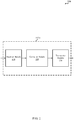
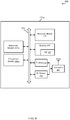
- FIG. 2 depicts a block diagram 200 of device 115-e configured to operate in a wireless communication system according to various embodiments.
- the device 115-e may be an example of, or include aspects of, one or more of the devices 115 described with reference to FIGS. 1A and/or 1B.
- the device 115-e may, for instance, be means for performing the functions described with reference to the devices 115.
- the device 115-e may include a receiver module 210, a controller module 220, and/or a transmitter module 230. Each of the modules may be in communication with one another. In some embodiments, one or more of the modules is a processor.
- the controller module 220 may be configured to identify an uncompressed expression composed of one or more uncompressed desired attributes.
- the controller module 220 may be configured to compress the desired attributes and generate a compressed expression with the compressed desired attributes.
- the controller module 220 may also compare the generated expression with another compressed expression, which may be received by the receiver module 210.
- the controller module 220 may compare the generated expression with a received expression composed of one or more compressed advertised attributes, which may correspond to a service advertised by a different device 115.
- the controller module 220 is also configured to determine if the generated and received compressed expressions include matching attributes. For example, the controller module 220 may determine whether one or more of the compressed advertised attributes matches, wholly or partially, one or more of the compressed desired attributes.
- the transmitter module 230 is configured to transmit a generated expression. For example, if the device 115-e is configured to advertise a service, the transmitter module 230 may transmit ( e.g. , broadcast) a signal representative of a compressed expression that corresponds to the advertised service.
- the components of the device 115-e may, individually or collectively, be implemented with one or more ASICs adapted to perform some or all of the applicable functions in hardware. Alternatively, the functions may be performed by one or more other processing units (or cores), on one or more integrated circuits. In other embodiments, other types of integrated circuits may be used (e.g. , Structured/Platform ASICs, FPGAs, and other Semi-Custom ICs), which may be programmed in any manner known in the art. The functions of each unit may also be implemented, in whole or in part, with instructions embodied in a memory, formatted to be executed by one or more general or application-specific processors.
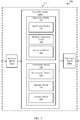
- FIG. 3 depicts a block diagram 300 of device 115-f configured to operate in a wireless communication system according to various embodiments.
- the device 115-f may be an example of, or include aspects of, one or more of the devices 115 described with reference to FIGS. 1A , 1B , and/or 2.
- the device 115-f may include means for performing the functions described with reference to the devices 115.
- the device 115-f may include a receiver module 210-a, a controller module 220-a, and/or a transmitter module 230-a, each of which may be examples of, or perform similar functions as, the corresponding devices described with reference to FIG. 2 .
- the controller module 220-a may include an expression module 305 and/or a comparison module 310.
- the expression module 305 includes an identification module 315, an attribute compression module 320, and/or a generation module 325.
- the identification module 315 may be configured to identify an uncompressed expression- e.g ., a reverse DNS style name string composed of uncompressed desired attributes.
- the attribute compression module 320 may be configured to compress the desired attribute using, for example, one or more hash algorithms.
- the generation module 325 may be configured to generate a compressed expression composed of compressed desired attributes. In some cases, the generation module 325 concatenates the compressed desired attributes to form a string of hashes. Additionally or alternatively, the generation module 325 generates a compressed expression with one or more of: a wildcard attribute, a compression size indicator, or an end-of-expression indicator.
- the comparison module 310 includes a determination module 330, a selection module 335, and/or a location module 340.
- the determination module 330 may be configured to compare a received compressed expression- e.g ., a compressed expression received by the receiver module 210-a-with a compressed expression generated by the generation module 325.
- the determination module 330 is configured to specify criteria for, or to recognize user-specified criteria for, comparing generated and received compressed expressions.
- the determination module 330 may be further configured to determine whether attributes of the received compressed expression match, wholly or partially, the generated compressed expression.
- the selection module 335 is configured to select a received compressed expression when it is determined a match ( e.g., a partial match) exists.
- the location module 340 may be configured to determine a location of an advertised service, or a location of a device advertising a service, based on the received compressed expression.
- Each of the modules of the device 115-f may be in communication with one another.
- one or more of the modules of device 115-f is a processor.
- the various components of the device 115-e may, individually or collectively, be implemented with one or more ASICs adapted to perform some or all of the applicable functions in hardware.
- the functions may be performed by one or more other processing units (or cores), on one or more integrated circuits.
- other types of integrated circuits may be used (e.g. , Structured/Platform ASICs, FPGAs, and other Semi-Custom ICs), which may be programmed in any manner known in the art.
- the functions of each unit may also be implemented, in whole or in part, with instructions embodied in a memory, formatted to be executed by one or more general or application-specific processors.
- the device 115-g may have various configurations and/or be an aspect of a larger devices, such as personal computers (e.g. , laptop computers, netbook computers, tablet computers, etc.), cellular telephones, PDAs, smartphones, digital video recorders (DVRs), internet appliances, gaming consoles, e-readers, printers, scanners, copiers, automated teller machines (ATMs), automated information kiosks, and the like.
- the device 115-g may have an internal power supply (not shown), such as a small battery, to facilitate mobile operation.
- the mobile device 115-g may be an example of, or include aspects of, the devices 115 described with reference to FIGS. 1A , 1B , 2 , and/or 3.
- the mobile device 115-g may generally include components for bi-directional voice and data communications including components for transmitting communications and components for receiving communications.
- the mobile device 115-g may include antenna(s) 405, a transmitter (e.g., modulator) module 410, a receiver (e.g., demodulator) module 415, a processor module 470, and memory 480 (including software (SW) 485), which each may communicate, directly or indirectly, with one another (e.g. , via one or more buses 490).
- the transmitter module 410 and the receiver module 415 may be embodied in a transceiver module, and may be configured to communicate bi-directionally, via the antenna(s) 405 and/or via one or more wired or wireless links, with one or more separate devices, as described above.
- the transmitter module 410 and the receiver module 415 may be or include a modem configured to modulate packets and provide the modulated packets to the antenna(s) 405 for transmission, and to demodulate packets received from the antenna(s) 405. While the device 115-g may include a single antenna 405, the mobile device 115-g may have multiple antennas 405 capable of concurrently transmitting and/or receiving multiple wireless transmissions.
- the transmitter module 410 and the receiver module 415 may also be capable of concurrently communicating with multiple devices 115.
- the memory 480 may include random access memory (RAM) and read-only memory (ROM).
- the memory 480 may store computer-readable, computer-executable software/firmware code 485 containing instructions that are configured to, when executed, cause the processor module 470 to perform various functions described herein (e.g. , evaluate signal measurements, determine whether a difference measurement exceeds a threshold, activate or adjust an override threshold, etc.).
- the software/firmware code 485 may not be directly executable by the processor module 470 but may be configured to cause a computer ( e.g. , when compiled and executed) to perform functions described herein.
- the processor module 470 may include an intelligent hardware device, e.g., a central processing unit (CPU), a microcontroller, an application-specific integrated circuit (ASIC), etc.
- CPU central processing unit
- ASIC application-specific integrated circuit
- the device 115-g may further include an expression module 305-a and/or a comparison module 310-a, which may be substantially the same as the corresponding module(s) of devices 115 of FIGS. 2 and/or 3.
- the expression module 305-a is configured to perform the functions of the identification module 315, the attribute compression module 320, and/or the generation module 325 described with reference to FIG. 3 .
- the comparison module 310-a is configured to perform the functions of one or more of the determination module 330, the selection module 335, and the location module 340.
- the expression module 305-a and the comparison module 310-a are components of the device 115-g, and they are in communication with the other components of the device 115-g ( e.g., via the bus 490).
- functionality of the expression module 305-a and the comparison module 310-a may be implemented as a component of one or more of the other modules of the device 115-g, such as the processor module 470.
- the functionality of the expression module 305-a and/or the comparison module 310-a is implemented as code stored on a non-transitory computer-readable medium.
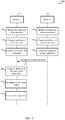
- FIG. 5 depicts a call flow diagram 500 of devices 115 operating in a wireless communication system according to various embodiments.
- the devices 115 may be examples of, or include aspects of, the devices 115 described with reference to FIGS 1A , 1B , 2 , 3 , and/or 4.
- a first device 115-h may identify 505 an uncompressed first expression, which may be composed of one or more uncompressed attributes.
- the first expression may, for example, correspond to a string of desired attributes.
- the first device 115-h may then compress 510 the attributes of the first expression and generate 515 a compressed first expression composed of those compressed attributes.
- a second device 115-i may identify 520 an uncompressed second expression, which may be composed of one or more uncompressed attributes.
- the second expression may correspond to a string of advertised attributes.
- the second device 115-i may then compress 525 the attributes of the second expression and generate 530 a compressed second expression composed of those compressed attributes.
- the second device 115-i may broadcast the compressed second expression 535.
- the first device 115-h may receive the compressed second expression 535. Then, the first device 115-h may compare 540 the attributes of the received compressed second expression with attributes of the generated compressed first expression. In some cases, based on user-specified criteria for comparison, the first device 115-h determines 545 whether there is a full or partial match between the attributes of the compressed first and second expressions. If the first device determines there is at least a partial match, it may select 550 the second expression.
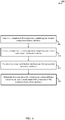
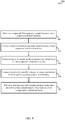
- FIG. 6 depicts a flow diagram of a method 600 of wireless communication, in accordance with various embodiments.
- the method 600 may be implemented by one or more of the devices 115 of FIGS 1A , 1B , 2 , 3 , 4 , and/or 5.
- the method may include generating a compressed first expression that includes one or more compressed desired attributes.
- the operations of block 605 are, in various embodiments, performed by the controller module 220 of FIGS. 2 and/or 3, the expression module 305 of FIGS. 3 and/or 4 , and the generation module 325 of FIG. 3 .
- the compressed first expression corresponds to a reverse DNS style name string for a desired service. Additionally or alternatively, each of the compressed desired attributes may correspond to individual elements of one or more service names.
- the compressed first expression may also include at least one wildcard attribute. In some cases, the compressed first expression further includes one or more of: a compression size indicator, a compression algorithm indicator, and an end-of-expression indicator.
- the compressed first expression may also include attributes compressed with at least two compression algorithms.
- the method may include receiving a compressed second expression that includes one or more compressed advertised attributes.
- the operations of block 610 may be performed by the receiver module 210 of FIGS. 2 and 3 and/or the antennas 405 and receiver module 415 of FIG. 4 .
- the compressed second expression corresponds to a reverse DNS style name string for an advertised service. Additionally or alternatively, each of the compressed advertised attributes correspond to individual elements of one or more services names.
- the compressed second expression may further include at least one wildcard attribute.
- the compressed second expression also includes one or more of: a compression size indicator, a compression algorithm indicator, and an end-of-expression indicator. And the compressed second expression may include attributes compressed with at least two compression algorithms.
- the method may involve comparing the compressed desired attributes and the compressed advertised attributes.
- the operations of block 615 may be performed by the controller module 220 of FIGS. 2 and/or 3, the comparison module 310 of FIGS. 3 and/or 4, and/or the determination module 330 of FIG. 3 .
- the method may include determining if at least one of the compressed desired attributes is at least a partial match with at least one of the compressed advertised attributes.
- the operations of block 620 are, in various embodiments, performed by the controller module 220 of FIGS. 2 and/or 3, the comparison module 310 of FIGS. 3 and/or 4, and/or the determination module 330 of FIG. 3 .
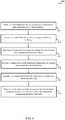
- FIG. 7 depicts a flow diagram of a method 700 of wireless communication, in accordance with various embodiments.
- the method 700 may be an example of the method 600, and it may be implemented by one or more of the devices 115 of FIGS 1A , 1B , 2 , 3 , 4 , and/or 5.
- the method may include generating a compressed first expression that includes one or more compressed desired attributes.
- the operations of block 705 are, in various embodiments, performed by the controller module 220 of FIGS. 2 and/or 3, the expression module 305 of FIGS. 3 and/or 4 , and the generation module 325 of FIG. 3 .
- the method may include receiving a compressed second expression that includes one or more compressed advertised attributes.
- the operations of block 710 may be performed by the receiver module 210 of FIGS. 2 and/or 3, and/or the antennas 405 and receiver module 415 of FIG. 4 .
- the method may involve comparing the compressed desired attributes and the compressed advertised attributes.
- the operations of block 715 may be performed by the controller module 220 of FIGS. 2 and/or 3, the comparison module 310 of FIGS. 3 and/or 4, and/or the determination module 330 of FIG. 3 .
- the method may include repeating one or more of the preceding steps. But if the compressed desired attributes and the compressed advertised attributes constitute at least a partial match, the method may include the operations of blocks 725 and 730.
- the method may include selecting the compressed second expression.
- the operations of block 725 may be performed by the controller module 220 of FIGS. 2 and/or 3, the comparison module 310 of FIGS. 3 and/or 4, and/or the selection module 335 of FIG. 3 .
- the method may further involve determining a location based at least in part on the compressed second expression.
- the operations of block 730 are, in various embodiments, performed by the controller module 220 of FIGS. 2 and/or 3, the comparison module 310 of FIGS. 3 and/or 4, and/or the location module 340 of FIG. 3 .
- determining a location includes determining a location of a service advertised by the compressed second expression.
- FIG. 8 depicts a flow diagram of a method 800 of wireless communication, in accordance with various embodiments.
- the method 800 may be an example of the methods 600 and/or 700, and it may be implemented by one or more of the devices 115 of FIGS 1A , 1B , 2 , 3 , 4 , and/or 5.
- the method may involve identifying an uncompressed first expression composed of one or more uncompressed desired attributes.
- the operations of block 805 are, in various examples, performed by the controller module 220 of FIGS. 2 and/or 3, the expression module 305 of FIGS. 3 and/or 4, and/or the identification module 315 of FIG. 3 .
- the method may include compressing each of the one or more uncompressed desired attributes.
- the operations of block 810 may be performed by the controller module 220 of FIGS. 2 and/or 3, the expression module 305 of FIGS. 3 and/or 4, and/or the attribute compression module 320 of FIG. 3 .
- the method may include generating a compressed first expression that includes one or more of the compressed desired attributes.
- the operations of block 815 are, in various embodiments, performed by the controller module 220 of FIGS. 2 and/or 3 , the expression module 305 of FIGS. 3 and/or 4 , and/or the generation module 325 of FIG. 3 .
- the method may include receiving a compressed second expression that includes one or more compressed advertised attributes.
- the operations of block 820 may be performed by the receiver module 210 of FIGS. 2 and/or 3, and/or the antennas 405 and receiver module 415 of FIG. 4 .
- the method may involve comparing the compressed desired attributes and the compressed advertised attributes.
- the operations of block 825 may be performed by the controller module 220 of FIGS. 2 and/or 3, the comparison module 310 of FIGS. 3 and/or 4, and/or the determination module 330 of FIG. 3 .
- the method may include determining if at least one of the compressed desired attributes is at least a partial match with at least one of the compressed advertised attributes.
- the operations of block 830 are, in various embodiments, performed by the controller module 220 of FIGS. 2 and/or 3, the comparison module 310 of FIGS. 3 and/or 4, and the determination module 330 of FIG. 3 .
- FIG. 9 depicts a flow diagram of a method 900 of wireless communication, in accordance with various embodiments.
- the method 900 may be an example of the methods 600, 700, and/or 800, and it may be implemented by one or more of the devices 115 of FIGS 1A , 1B , 2 , 3 , 4 , and/or 5.
- the method may include generating a compressed first expression that includes one or more compressed desired attributes.
- the operations of block 905 are, in various embodiments, performed by the controller module 220 of FIGS. 2 and/or 3, the expression module 305 of FIGS. 3 and/or 4 , and/or the generation module 325 of FIG. 3 .
- the method may include receiving a compressed second expression that includes one or more compressed advertised attributes.
- the operations of block 910 may be performed by the receiver module 210 of FIGS. 2 and/or 3, and/or the antennas 405 and receiver module 415 of FIG. 4 .
- the method may also involve specifying a criteria for comparing the compressed desired attributes and the compressed advertised attributes.
- the operations of block 915 may be performed by the controller module 220 of FIGS. 2 and/or 3, the comparison module 310 of FIGS. 3 and/or 4, and/or the determination module 330 of FIG. 3 .
- the method may involve comparing, based on the specified criteria, the compressed desired attributes and the compressed advertised attributes.
- the operations of block 920 may be performed by the controller module 220 of FIGS. 2 and/or 3, the comparison module 310 of FIGS. 3 and/or 4, and/or the determination module 330 of FIG. 3 .
- the method may include determining if at least one of the compressed desired attributes is at least a partial match with at least one of the compressed advertised attributes.
- the operations of block 925 are, in various embodiments, performed by the controller module 220 of FIGS. 2 and/or 3, the comparison module 310 of FIGS. 3 and/or 4, and the determination module 330 of FIG. 3 .
- the methods 600, 700, 800, and 900 are example implementations of the tools and techniques described herein. The methods may be performed with more or fewer steps; and they may be performed in an order other than indicated.
- a CDMA system may implement a radio technology such as CDMA2000, Universal Terrestrial Radio Access (UTRA), etc.
- CDMA2000 covers IS-2000, IS-95, and IS-856 standards.
- IS-2000 Releases 0 and A are commonly referred to as CDMA2000 IX, IX, etc.
- IS-856 (TIA-856) is commonly referred to as CDMA2000 1xEV-DO, High Rate Packet Data (HRPD), etc.
- UTRA includes Wideband CDMA (WCDMA) and other variants of CDMA.
- a TDMA system may implement a radio technology such as Global System for Mobile Communications (GSM).
- GSM Global System for Mobile Communications
- An OFDMA system may implement a radio technology such as Ultra Mobile Broadband (UMB), Evolved UTRA (E-UTRA), IEEE 802.11 (Wi-Fi), IEEE 802.16 (WiMAX), IEEE 802.20, Flash-OFDM, etc.
- UMB Ultra Mobile Broadband
- E-UTRA Evolved UTRA
- Wi-Fi Wi-Fi
- WiMAX IEEE 802.16
- IEEE 802.20 Flash-OFDM
- UTRA and E-UTRA are part of Universal Mobile Telecommunication System (UMTS).
- 3GPP Long Term Evolution (LTE) and LTE-Advanced (LTE-A) are new releases of UMTS that use E-UTRA.
- UTRA, E-UTRA, UMTS, LTE, LTE-A, and GSM are described in documents from an organization named "3rd Generation Partnership Project" (3GPP).
- the techniques described herein may be used for the systems and radio technologies mentioned above as well as other systems and radio technologies.
- the techniques may be implemented in a wireless local area network (WLAN) or Wi-Fi network, which may refer to a network that is based on the protocols described in the various IEEE 802.11 standards (e.g., IEEE 802.11a/g, 802.11n, 802.11ac, 802.11 ad, 802.11ah, etc.).
- the techniques may be employed in a wireless personal area network (WPAN), such as a Bluetooth network, a network employing the IEEE 802.15 family of standards (ZigBee), and the like.
- WPAN wireless personal area network
- Wi-Fi Direct e.g., WFDS ASP
- UPF Universal Plug and Play
- WiGig IEEE 802.11ad
- Information and signals may be represented using any of a variety of different technologies and techniques.
- data, instructions, commands, information, signals, bits, symbols, and chips that may be referenced throughout the above description may be represented by voltages, currents, electromagnetic waves, magnetic fields or particles, optical fields or particles, or any combination thereof.
- DSP digital signal processor
- ASIC application specific integrated circuit
- FPGA field programmable gate array
- a general-purpose processor may be a microprocessor, but in the alternative, the processor may be any conventional processor, controller, microcontroller, or state machine.
- a processor may also be implemented as a combination of computing devices, e.g., a combination of a DSP and a microprocessor, multiple microprocessors, one or more microprocessors in conjunction with a DSP core, or any other such configuration.
- the functions described herein may be implemented in hardware, software executed by a processor, firmware, or any combination thereof. If implemented in software executed by a processor, the functions may be stored on or transmitted over as one or more instructions or code on a computer-readable medium. Other examples and implementations are within the scope and spirit of the disclosure and appended claims. For example, due to the nature of software, functions described above can be implemented using software executed by a processor, hardware, firmware, hardwiring, or combinations of any of these. Features implementing functions may also be physically located at various positions, including being distributed such that portions of functions are implemented at different physical locations.
- Computer-readable media includes both computer storage media and communication media including any medium that facilitates transfer of a computer program from one place to another.
- a storage medium may be any available medium that can be accessed by a general purpose or special purpose computer.
- computer-readable media can comprise RAM, ROM, EEPROM, CD-ROM or other optical disk storage, magnetic disk storage or other magnetic storage devices, or any other medium that can be used to carry or store desired program code means in the form of instructions or data structures and that can be accessed by a general-purpose or special-purpose computer, or a general-purpose or special-purpose processor.
- any connection is properly termed a computer-readable medium.
- Disk and disc include compact disc (CD), laser disc, optical disc, digital versatile disc (DVD), floppy disk and blu-ray disc where disks usually reproduce data magnetically, while discs reproduce data optically with lasers. Combinations of the above are also included within the scope of computer-readable media.
Landscapes
- Engineering & Computer Science (AREA)
- Computer Networks & Wireless Communication (AREA)
- Signal Processing (AREA)
- Computer Security & Cryptography (AREA)
- Mobile Radio Communication Systems (AREA)
- Data Exchanges In Wide-Area Networks (AREA)
- Compression, Expansion, Code Conversion, And Decoders (AREA)
- Information Retrieval, Db Structures And Fs Structures Therefor (AREA)
Applications Claiming Priority (2)
| Application Number | Priority Date | Filing Date | Title |
|---|---|---|---|
| US14/133,412 US9826463B2 (en) | 2013-12-18 | 2013-12-18 | Hash partial matching for discovery |
| PCT/US2014/069048 WO2015094753A1 (en) | 2013-12-18 | 2014-12-08 | Hash partial matching for discovery |
Publications (2)
| Publication Number | Publication Date |
|---|---|
| EP3084641A1 EP3084641A1 (en) | 2016-10-26 |
| EP3084641B1 true EP3084641B1 (en) | 2020-04-29 |
Family
ID=52282892
Family Applications (1)
| Application Number | Title | Priority Date | Filing Date |
|---|---|---|---|
| EP14824217.5A Active EP3084641B1 (en) | 2013-12-18 | 2014-12-08 | Hash partial matching for discovery |
Country Status (7)
| Country | Link |
|---|---|
| US (1) | US9826463B2 (enExample) |
| EP (1) | EP3084641B1 (enExample) |
| JP (1) | JP6549127B2 (enExample) |
| KR (1) | KR101894165B1 (enExample) |
| CN (1) | CN105981007B (enExample) |
| BR (1) | BR112016014001A2 (enExample) |
| WO (1) | WO2015094753A1 (enExample) |
Families Citing this family (1)
| Publication number | Priority date | Publication date | Assignee | Title |
|---|---|---|---|---|
| US11270309B1 (en) * | 2015-12-29 | 2022-03-08 | Wells Fargo Bank, N.A. | Biometric token that functions as a universal identifier |
Family Cites Families (15)
| Publication number | Priority date | Publication date | Assignee | Title |
|---|---|---|---|---|
| US6047283A (en) | 1998-02-26 | 2000-04-04 | Sap Aktiengesellschaft | Fast string searching and indexing using a search tree having a plurality of linked nodes |
| JP2004343268A (ja) * | 2003-05-14 | 2004-12-02 | Nec Corp | 近距離無線を用いた情報交換システム、携帯端末及びそれらに用いる情報交換方法 |
| IL161874A (en) | 2004-05-07 | 2012-09-24 | Yves Villaret | System and method for searching strings of records |
| US20090083537A1 (en) * | 2005-08-10 | 2009-03-26 | Riverbed Technology, Inc. | Server configuration selection for ssl interception |
| US8478300B2 (en) * | 2005-12-20 | 2013-07-02 | Microsoft Corporation | Proximity service discovery in wireless networks |
| US7613426B2 (en) * | 2005-12-20 | 2009-11-03 | Microsoft Corporation | Proximity service discovery in wireless networks |
| US8559350B2 (en) * | 2005-12-20 | 2013-10-15 | Microsoft Corporation | Mechanism to convey discovery information in a wireless network |
| US20130246378A1 (en) | 2007-04-30 | 2013-09-19 | Stephen Owen Hearnden | Partial hash system, method, and computer program product |
| US8681691B2 (en) * | 2007-07-25 | 2014-03-25 | Microsoft Corporation | Base station initiated proximity service discovery and connection establishment |
| CN101299857B (zh) * | 2008-07-02 | 2012-09-05 | 北京搜狗科技发展有限公司 | 一种输出通讯信息的方法及装置 |
| US8407245B2 (en) | 2010-11-24 | 2013-03-26 | Microsoft Corporation | Efficient string pattern matching for large pattern sets |
| US8458796B2 (en) | 2011-03-08 | 2013-06-04 | Hewlett-Packard Development Company, L.P. | Methods and systems for full pattern matching in hardware |
| US9729669B2 (en) * | 2012-03-15 | 2017-08-08 | Alcatel Lucent | Method and system for fast and large-scale longest prefix matching |
| US20150063208A1 (en) * | 2013-08-28 | 2015-03-05 | Qualcomm Incorporated | Systems and methods for service identification in neighborhood aware networks |
| US20160323248A1 (en) * | 2013-12-31 | 2016-11-03 | Interdigital Patent Holdings Inc. | Methods, apparatus, systems and mechanisms for secure attribute based friend find and proximity discovery |
-
2013
- 2013-12-18 US US14/133,412 patent/US9826463B2/en not_active Expired - Fee Related
-
2014
- 2014-12-08 WO PCT/US2014/069048 patent/WO2015094753A1/en not_active Ceased
- 2014-12-08 BR BR112016014001A patent/BR112016014001A2/pt not_active Application Discontinuation
- 2014-12-08 EP EP14824217.5A patent/EP3084641B1/en active Active
- 2014-12-08 JP JP2016540558A patent/JP6549127B2/ja not_active Expired - Fee Related
- 2014-12-08 CN CN201480066834.0A patent/CN105981007B/zh active Active
- 2014-12-08 KR KR1020167019341A patent/KR101894165B1/ko not_active Expired - Fee Related
Non-Patent Citations (1)
| Title |
|---|
| None * |
Also Published As
| Publication number | Publication date |
|---|---|
| US20150172999A1 (en) | 2015-06-18 |
| WO2015094753A1 (en) | 2015-06-25 |
| CN105981007A (zh) | 2016-09-28 |
| BR112016014001A2 (pt) | 2017-08-08 |
| JP6549127B2 (ja) | 2019-07-24 |
| JP2017503411A (ja) | 2017-01-26 |
| EP3084641A1 (en) | 2016-10-26 |
| CN105981007B (zh) | 2020-01-07 |
| US9826463B2 (en) | 2017-11-21 |
| KR20160101084A (ko) | 2016-08-24 |
| KR101894165B1 (ko) | 2018-08-31 |
Similar Documents
| Publication | Publication Date | Title |
|---|---|---|
| US9619424B2 (en) | Supporting unrecognized protocol in wireless docking | |
| EP3200487B1 (en) | Message processing method and apparatus | |
| US8855562B2 (en) | Method and system for enabling discovery of services and automated exchange of data between bluetooth devices | |
| EP2301279B1 (en) | Methods, apparatuses and computer program products for providing temporal information | |
| CN109587252A (zh) | 运营商参数的加载方法、装置、电子设备及存储介质 | |
| US20150363182A1 (en) | Smart device, wearable device and method for pushing &receiving installation package | |
| KR101852067B1 (ko) | 벤더-특정 도킹 관리 동작들 | |
| CN111177721B (zh) | 一种文件的病毒检测方法、装置、终端及存储介质 | |
| US9509806B2 (en) | Techniques for supporting Wi-Gig bus extension and Wi-Gig display extension as peripheral function protocols in wireless docking | |
| EP2719227B1 (en) | Method and apparatus for power management of uicc | |
| US9876862B1 (en) | Service identification with reduced ambiguity | |
| TW201607344A (zh) | 整合動態公告及無線電分配驗證 | |
| WO2022007927A1 (zh) | 获取紧急服务的控制方法及装置、终端及可读存储介质 | |
| US9826463B2 (en) | Hash partial matching for discovery | |
| US20160057593A1 (en) | Method for controlling call forwarding information and electronic device thereof | |
| CN107222847B (zh) | 一种数据传输方法、装置及终端 | |
| US11178149B2 (en) | Preventing counterfeit communication devices from accessing resources | |
| US20150095980A1 (en) | Controlling sharing of content between data processing devices |
Legal Events
| Date | Code | Title | Description |
|---|---|---|---|
| PUAI | Public reference made under article 153(3) epc to a published international application that has entered the european phase |
Free format text: ORIGINAL CODE: 0009012 |
|
| 17P | Request for examination filed |
Effective date: 20160511 |
|
| AK | Designated contracting states |
Kind code of ref document: A1 Designated state(s): AL AT BE BG CH CY CZ DE DK EE ES FI FR GB GR HR HU IE IS IT LI LT LU LV MC MK MT NL NO PL PT RO RS SE SI SK SM TR |
|
| AX | Request for extension of the european patent |
Extension state: BA ME |
|
| DAX | Request for extension of the european patent (deleted) | ||
| STAA | Information on the status of an ep patent application or granted ep patent |
Free format text: STATUS: EXAMINATION IS IN PROGRESS |
|
| 17Q | First examination report despatched |
Effective date: 20171023 |
|
| REG | Reference to a national code |
Ref country code: DE Ref legal event code: R079 Ref document number: 602014064636 Country of ref document: DE Free format text: PREVIOUS MAIN CLASS: G06F0017300000 Ipc: H04L0029060000 |
|
| RIC1 | Information provided on ipc code assigned before grant |
Ipc: H04L 29/06 20060101AFI20190923BHEP |
|
| GRAP | Despatch of communication of intention to grant a patent |
Free format text: ORIGINAL CODE: EPIDOSNIGR1 |
|
| STAA | Information on the status of an ep patent application or granted ep patent |
Free format text: STATUS: GRANT OF PATENT IS INTENDED |
|
| INTG | Intention to grant announced |
Effective date: 20191114 |
|
| GRAS | Grant fee paid |
Free format text: ORIGINAL CODE: EPIDOSNIGR3 |
|
| GRAA | (expected) grant |
Free format text: ORIGINAL CODE: 0009210 |
|
| STAA | Information on the status of an ep patent application or granted ep patent |
Free format text: STATUS: THE PATENT HAS BEEN GRANTED |
|
| AK | Designated contracting states |
Kind code of ref document: B1 Designated state(s): AL AT BE BG CH CY CZ DE DK EE ES FI FR GB GR HR HU IE IS IT LI LT LU LV MC MK MT NL NO PL PT RO RS SE SI SK SM TR |
|
| REG | Reference to a national code |
Ref country code: GB Ref legal event code: FG4D |
|
| REG | Reference to a national code |
Ref country code: CH Ref legal event code: EP |
|
| REG | Reference to a national code |
Ref country code: AT Ref legal event code: REF Ref document number: 1265009 Country of ref document: AT Kind code of ref document: T Effective date: 20200515 |
|
| REG | Reference to a national code |
Ref country code: DE Ref legal event code: R096 Ref document number: 602014064636 Country of ref document: DE |
|
| REG | Reference to a national code |
Ref country code: IE Ref legal event code: FG4D |
|
| REG | Reference to a national code |
Ref country code: NL Ref legal event code: MP Effective date: 20200429 |
|
| REG | Reference to a national code |
Ref country code: LT Ref legal event code: MG4D |
|
| PG25 | Lapsed in a contracting state [announced via postgrant information from national office to epo] |
Ref country code: GR Free format text: LAPSE BECAUSE OF FAILURE TO SUBMIT A TRANSLATION OF THE DESCRIPTION OR TO PAY THE FEE WITHIN THE PRESCRIBED TIME-LIMIT Effective date: 20200730 Ref country code: LT Free format text: LAPSE BECAUSE OF FAILURE TO SUBMIT A TRANSLATION OF THE DESCRIPTION OR TO PAY THE FEE WITHIN THE PRESCRIBED TIME-LIMIT Effective date: 20200429 Ref country code: SE Free format text: LAPSE BECAUSE OF FAILURE TO SUBMIT A TRANSLATION OF THE DESCRIPTION OR TO PAY THE FEE WITHIN THE PRESCRIBED TIME-LIMIT Effective date: 20200429 Ref country code: PT Free format text: LAPSE BECAUSE OF FAILURE TO SUBMIT A TRANSLATION OF THE DESCRIPTION OR TO PAY THE FEE WITHIN THE PRESCRIBED TIME-LIMIT Effective date: 20200831 Ref country code: NO Free format text: LAPSE BECAUSE OF FAILURE TO SUBMIT A TRANSLATION OF THE DESCRIPTION OR TO PAY THE FEE WITHIN THE PRESCRIBED TIME-LIMIT Effective date: 20200729 Ref country code: FI Free format text: LAPSE BECAUSE OF FAILURE TO SUBMIT A TRANSLATION OF THE DESCRIPTION OR TO PAY THE FEE WITHIN THE PRESCRIBED TIME-LIMIT Effective date: 20200429 Ref country code: IS Free format text: LAPSE BECAUSE OF FAILURE TO SUBMIT A TRANSLATION OF THE DESCRIPTION OR TO PAY THE FEE WITHIN THE PRESCRIBED TIME-LIMIT Effective date: 20200829 |
|
| REG | Reference to a national code |
Ref country code: AT Ref legal event code: MK05 Ref document number: 1265009 Country of ref document: AT Kind code of ref document: T Effective date: 20200429 |
|
| PG25 | Lapsed in a contracting state [announced via postgrant information from national office to epo] |
Ref country code: RS Free format text: LAPSE BECAUSE OF FAILURE TO SUBMIT A TRANSLATION OF THE DESCRIPTION OR TO PAY THE FEE WITHIN THE PRESCRIBED TIME-LIMIT Effective date: 20200429 Ref country code: LV Free format text: LAPSE BECAUSE OF FAILURE TO SUBMIT A TRANSLATION OF THE DESCRIPTION OR TO PAY THE FEE WITHIN THE PRESCRIBED TIME-LIMIT Effective date: 20200429 Ref country code: HR Free format text: LAPSE BECAUSE OF FAILURE TO SUBMIT A TRANSLATION OF THE DESCRIPTION OR TO PAY THE FEE WITHIN THE PRESCRIBED TIME-LIMIT Effective date: 20200429 Ref country code: BG Free format text: LAPSE BECAUSE OF FAILURE TO SUBMIT A TRANSLATION OF THE DESCRIPTION OR TO PAY THE FEE WITHIN THE PRESCRIBED TIME-LIMIT Effective date: 20200729 |
|
| PG25 | Lapsed in a contracting state [announced via postgrant information from national office to epo] |
Ref country code: NL Free format text: LAPSE BECAUSE OF FAILURE TO SUBMIT A TRANSLATION OF THE DESCRIPTION OR TO PAY THE FEE WITHIN THE PRESCRIBED TIME-LIMIT Effective date: 20200429 Ref country code: AL Free format text: LAPSE BECAUSE OF FAILURE TO SUBMIT A TRANSLATION OF THE DESCRIPTION OR TO PAY THE FEE WITHIN THE PRESCRIBED TIME-LIMIT Effective date: 20200429 |
|
| PG25 | Lapsed in a contracting state [announced via postgrant information from national office to epo] |
Ref country code: RO Free format text: LAPSE BECAUSE OF FAILURE TO SUBMIT A TRANSLATION OF THE DESCRIPTION OR TO PAY THE FEE WITHIN THE PRESCRIBED TIME-LIMIT Effective date: 20200429 Ref country code: SM Free format text: LAPSE BECAUSE OF FAILURE TO SUBMIT A TRANSLATION OF THE DESCRIPTION OR TO PAY THE FEE WITHIN THE PRESCRIBED TIME-LIMIT Effective date: 20200429 Ref country code: ES Free format text: LAPSE BECAUSE OF FAILURE TO SUBMIT A TRANSLATION OF THE DESCRIPTION OR TO PAY THE FEE WITHIN THE PRESCRIBED TIME-LIMIT Effective date: 20200429 Ref country code: IT Free format text: LAPSE BECAUSE OF FAILURE TO SUBMIT A TRANSLATION OF THE DESCRIPTION OR TO PAY THE FEE WITHIN THE PRESCRIBED TIME-LIMIT Effective date: 20200429 Ref country code: CZ Free format text: LAPSE BECAUSE OF FAILURE TO SUBMIT A TRANSLATION OF THE DESCRIPTION OR TO PAY THE FEE WITHIN THE PRESCRIBED TIME-LIMIT Effective date: 20200429 Ref country code: DK Free format text: LAPSE BECAUSE OF FAILURE TO SUBMIT A TRANSLATION OF THE DESCRIPTION OR TO PAY THE FEE WITHIN THE PRESCRIBED TIME-LIMIT Effective date: 20200429 Ref country code: EE Free format text: LAPSE BECAUSE OF FAILURE TO SUBMIT A TRANSLATION OF THE DESCRIPTION OR TO PAY THE FEE WITHIN THE PRESCRIBED TIME-LIMIT Effective date: 20200429 Ref country code: AT Free format text: LAPSE BECAUSE OF FAILURE TO SUBMIT A TRANSLATION OF THE DESCRIPTION OR TO PAY THE FEE WITHIN THE PRESCRIBED TIME-LIMIT Effective date: 20200429 |
|
| REG | Reference to a national code |
Ref country code: DE Ref legal event code: R097 Ref document number: 602014064636 Country of ref document: DE |
|
| PG25 | Lapsed in a contracting state [announced via postgrant information from national office to epo] |
Ref country code: SK Free format text: LAPSE BECAUSE OF FAILURE TO SUBMIT A TRANSLATION OF THE DESCRIPTION OR TO PAY THE FEE WITHIN THE PRESCRIBED TIME-LIMIT Effective date: 20200429 Ref country code: PL Free format text: LAPSE BECAUSE OF FAILURE TO SUBMIT A TRANSLATION OF THE DESCRIPTION OR TO PAY THE FEE WITHIN THE PRESCRIBED TIME-LIMIT Effective date: 20200429 |
|
| PLBE | No opposition filed within time limit |
Free format text: ORIGINAL CODE: 0009261 |
|
| STAA | Information on the status of an ep patent application or granted ep patent |
Free format text: STATUS: NO OPPOSITION FILED WITHIN TIME LIMIT |
|
| 26N | No opposition filed |
Effective date: 20210201 |
|
| PG25 | Lapsed in a contracting state [announced via postgrant information from national office to epo] |
Ref country code: SI Free format text: LAPSE BECAUSE OF FAILURE TO SUBMIT A TRANSLATION OF THE DESCRIPTION OR TO PAY THE FEE WITHIN THE PRESCRIBED TIME-LIMIT Effective date: 20200429 |
|
| REG | Reference to a national code |
Ref country code: DE Ref legal event code: R119 Ref document number: 602014064636 Country of ref document: DE |
|
| REG | Reference to a national code |
Ref country code: CH Ref legal event code: PL |
|
| GBPC | Gb: european patent ceased through non-payment of renewal fee |
Effective date: 20201208 |
|
| PG25 | Lapsed in a contracting state [announced via postgrant information from national office to epo] |
Ref country code: MC Free format text: LAPSE BECAUSE OF FAILURE TO SUBMIT A TRANSLATION OF THE DESCRIPTION OR TO PAY THE FEE WITHIN THE PRESCRIBED TIME-LIMIT Effective date: 20200429 |
|
| REG | Reference to a national code |
Ref country code: BE Ref legal event code: MM Effective date: 20201231 |
|
| PG25 | Lapsed in a contracting state [announced via postgrant information from national office to epo] |
Ref country code: FR Free format text: LAPSE BECAUSE OF NON-PAYMENT OF DUE FEES Effective date: 20201231 Ref country code: LU Free format text: LAPSE BECAUSE OF NON-PAYMENT OF DUE FEES Effective date: 20201208 Ref country code: IE Free format text: LAPSE BECAUSE OF NON-PAYMENT OF DUE FEES Effective date: 20201208 |
|
| PG25 | Lapsed in a contracting state [announced via postgrant information from national office to epo] |
Ref country code: DE Free format text: LAPSE BECAUSE OF NON-PAYMENT OF DUE FEES Effective date: 20210701 Ref country code: CH Free format text: LAPSE BECAUSE OF NON-PAYMENT OF DUE FEES Effective date: 20201231 Ref country code: GB Free format text: LAPSE BECAUSE OF NON-PAYMENT OF DUE FEES Effective date: 20201208 Ref country code: LI Free format text: LAPSE BECAUSE OF NON-PAYMENT OF DUE FEES Effective date: 20201231 |
|
| PG25 | Lapsed in a contracting state [announced via postgrant information from national office to epo] |
Ref country code: TR Free format text: LAPSE BECAUSE OF FAILURE TO SUBMIT A TRANSLATION OF THE DESCRIPTION OR TO PAY THE FEE WITHIN THE PRESCRIBED TIME-LIMIT Effective date: 20200429 Ref country code: MT Free format text: LAPSE BECAUSE OF FAILURE TO SUBMIT A TRANSLATION OF THE DESCRIPTION OR TO PAY THE FEE WITHIN THE PRESCRIBED TIME-LIMIT Effective date: 20200429 Ref country code: CY Free format text: LAPSE BECAUSE OF FAILURE TO SUBMIT A TRANSLATION OF THE DESCRIPTION OR TO PAY THE FEE WITHIN THE PRESCRIBED TIME-LIMIT Effective date: 20200429 |
|
| PG25 | Lapsed in a contracting state [announced via postgrant information from national office to epo] |
Ref country code: MK Free format text: LAPSE BECAUSE OF FAILURE TO SUBMIT A TRANSLATION OF THE DESCRIPTION OR TO PAY THE FEE WITHIN THE PRESCRIBED TIME-LIMIT Effective date: 20200429 |
|
| PG25 | Lapsed in a contracting state [announced via postgrant information from national office to epo] |
Ref country code: BE Free format text: LAPSE BECAUSE OF NON-PAYMENT OF DUE FEES Effective date: 20201231 |
|
| PG25 | Lapsed in a contracting state [announced via postgrant information from national office to epo] |
Ref country code: IS Free format text: LAPSE BECAUSE OF NON-PAYMENT OF DUE FEES Effective date: 20200829 |