EP3084028B1 - Composition for a novel grade for cutting tools - Google Patents
Composition for a novel grade for cutting tools Download PDFInfo
- Publication number
- EP3084028B1 EP3084028B1 EP14830865.3A EP14830865A EP3084028B1 EP 3084028 B1 EP3084028 B1 EP 3084028B1 EP 14830865 A EP14830865 A EP 14830865A EP 3084028 B1 EP3084028 B1 EP 3084028B1
- Authority
- EP
- European Patent Office
- Prior art keywords
- content
- cobalt
- carbide
- molybdenum
- toughness
- Prior art date
- Legal status (The legal status is an assumption and is not a legal conclusion. Google has not performed a legal analysis and makes no representation as to the accuracy of the status listed.)
- Active
Links
Images






Classifications
-
- C—CHEMISTRY; METALLURGY
- C22—METALLURGY; FERROUS OR NON-FERROUS ALLOYS; TREATMENT OF ALLOYS OR NON-FERROUS METALS
- C22C—ALLOYS
- C22C1/00—Making non-ferrous alloys
- C22C1/04—Making non-ferrous alloys by powder metallurgy
- C22C1/05—Mixtures of metal powder with non-metallic powder
- C22C1/051—Making hard metals based on borides, carbides, nitrides, oxides or silicides; Preparation of the powder mixture used as the starting material therefor
-
- C—CHEMISTRY; METALLURGY
- C04—CEMENTS; CONCRETE; ARTIFICIAL STONE; CERAMICS; REFRACTORIES
- C04B—LIME, MAGNESIA; SLAG; CEMENTS; COMPOSITIONS THEREOF, e.g. MORTARS, CONCRETE OR LIKE BUILDING MATERIALS; ARTIFICIAL STONE; CERAMICS; REFRACTORIES; TREATMENT OF NATURAL STONE
- C04B35/00—Shaped ceramic products characterised by their composition; Ceramics compositions; Processing powders of inorganic compounds preparatory to the manufacturing of ceramic products
- C04B35/515—Shaped ceramic products characterised by their composition; Ceramics compositions; Processing powders of inorganic compounds preparatory to the manufacturing of ceramic products based on non-oxide ceramics
- C04B35/56—Shaped ceramic products characterised by their composition; Ceramics compositions; Processing powders of inorganic compounds preparatory to the manufacturing of ceramic products based on non-oxide ceramics based on carbides or oxycarbides
- C04B35/5607—Shaped ceramic products characterised by their composition; Ceramics compositions; Processing powders of inorganic compounds preparatory to the manufacturing of ceramic products based on non-oxide ceramics based on carbides or oxycarbides based on refractory metal carbides
- C04B35/5626—Shaped ceramic products characterised by their composition; Ceramics compositions; Processing powders of inorganic compounds preparatory to the manufacturing of ceramic products based on non-oxide ceramics based on carbides or oxycarbides based on refractory metal carbides based on tungsten carbides
-
- C—CHEMISTRY; METALLURGY
- C04—CEMENTS; CONCRETE; ARTIFICIAL STONE; CERAMICS; REFRACTORIES
- C04B—LIME, MAGNESIA; SLAG; CEMENTS; COMPOSITIONS THEREOF, e.g. MORTARS, CONCRETE OR LIKE BUILDING MATERIALS; ARTIFICIAL STONE; CERAMICS; REFRACTORIES; TREATMENT OF NATURAL STONE
- C04B35/00—Shaped ceramic products characterised by their composition; Ceramics compositions; Processing powders of inorganic compounds preparatory to the manufacturing of ceramic products
- C04B35/622—Forming processes; Processing powders of inorganic compounds preparatory to the manufacturing of ceramic products
- C04B35/626—Preparing or treating the powders individually or as batches ; preparing or treating macroscopic reinforcing agents for ceramic products, e.g. fibres; mechanical aspects section B
- C04B35/62605—Treating the starting powders individually or as mixtures
- C04B35/6261—Milling
-
- C—CHEMISTRY; METALLURGY
- C04—CEMENTS; CONCRETE; ARTIFICIAL STONE; CERAMICS; REFRACTORIES
- C04B—LIME, MAGNESIA; SLAG; CEMENTS; COMPOSITIONS THEREOF, e.g. MORTARS, CONCRETE OR LIKE BUILDING MATERIALS; ARTIFICIAL STONE; CERAMICS; REFRACTORIES; TREATMENT OF NATURAL STONE
- C04B35/00—Shaped ceramic products characterised by their composition; Ceramics compositions; Processing powders of inorganic compounds preparatory to the manufacturing of ceramic products
- C04B35/622—Forming processes; Processing powders of inorganic compounds preparatory to the manufacturing of ceramic products
- C04B35/64—Burning or sintering processes
- C04B35/645—Pressure sintering
-
- C—CHEMISTRY; METALLURGY
- C22—METALLURGY; FERROUS OR NON-FERROUS ALLOYS; TREATMENT OF ALLOYS OR NON-FERROUS METALS
- C22C—ALLOYS
- C22C29/00—Alloys based on carbides, oxides, nitrides, borides, or silicides, e.g. cermets, or other metal compounds, e.g. oxynitrides, sulfides
- C22C29/005—Alloys based on carbides, oxides, nitrides, borides, or silicides, e.g. cermets, or other metal compounds, e.g. oxynitrides, sulfides comprising a particular metallic binder
-
- C—CHEMISTRY; METALLURGY
- C22—METALLURGY; FERROUS OR NON-FERROUS ALLOYS; TREATMENT OF ALLOYS OR NON-FERROUS METALS
- C22C—ALLOYS
- C22C29/00—Alloys based on carbides, oxides, nitrides, borides, or silicides, e.g. cermets, or other metal compounds, e.g. oxynitrides, sulfides
- C22C29/02—Alloys based on carbides, oxides, nitrides, borides, or silicides, e.g. cermets, or other metal compounds, e.g. oxynitrides, sulfides based on carbides or carbonitrides
- C22C29/06—Alloys based on carbides, oxides, nitrides, borides, or silicides, e.g. cermets, or other metal compounds, e.g. oxynitrides, sulfides based on carbides or carbonitrides based on carbides, but not containing other metal compounds
- C22C29/08—Alloys based on carbides, oxides, nitrides, borides, or silicides, e.g. cermets, or other metal compounds, e.g. oxynitrides, sulfides based on carbides or carbonitrides based on carbides, but not containing other metal compounds based on tungsten carbide
-
- C—CHEMISTRY; METALLURGY
- C04—CEMENTS; CONCRETE; ARTIFICIAL STONE; CERAMICS; REFRACTORIES
- C04B—LIME, MAGNESIA; SLAG; CEMENTS; COMPOSITIONS THEREOF, e.g. MORTARS, CONCRETE OR LIKE BUILDING MATERIALS; ARTIFICIAL STONE; CERAMICS; REFRACTORIES; TREATMENT OF NATURAL STONE
- C04B2235/00—Aspects relating to ceramic starting mixtures or sintered ceramic products
- C04B2235/02—Composition of constituents of the starting material or of secondary phases of the final product
- C04B2235/30—Constituents and secondary phases not being of a fibrous nature
- C04B2235/38—Non-oxide ceramic constituents or additives
- C04B2235/3817—Carbides
- C04B2235/3839—Refractory metal carbides
-
- C—CHEMISTRY; METALLURGY
- C04—CEMENTS; CONCRETE; ARTIFICIAL STONE; CERAMICS; REFRACTORIES
- C04B—LIME, MAGNESIA; SLAG; CEMENTS; COMPOSITIONS THEREOF, e.g. MORTARS, CONCRETE OR LIKE BUILDING MATERIALS; ARTIFICIAL STONE; CERAMICS; REFRACTORIES; TREATMENT OF NATURAL STONE
- C04B2235/00—Aspects relating to ceramic starting mixtures or sintered ceramic products
- C04B2235/02—Composition of constituents of the starting material or of secondary phases of the final product
- C04B2235/30—Constituents and secondary phases not being of a fibrous nature
- C04B2235/38—Non-oxide ceramic constituents or additives
- C04B2235/3817—Carbides
- C04B2235/3839—Refractory metal carbides
- C04B2235/3847—Tungsten carbides
-
- C—CHEMISTRY; METALLURGY
- C04—CEMENTS; CONCRETE; ARTIFICIAL STONE; CERAMICS; REFRACTORIES
- C04B—LIME, MAGNESIA; SLAG; CEMENTS; COMPOSITIONS THEREOF, e.g. MORTARS, CONCRETE OR LIKE BUILDING MATERIALS; ARTIFICIAL STONE; CERAMICS; REFRACTORIES; TREATMENT OF NATURAL STONE
- C04B2235/00—Aspects relating to ceramic starting mixtures or sintered ceramic products
- C04B2235/02—Composition of constituents of the starting material or of secondary phases of the final product
- C04B2235/30—Constituents and secondary phases not being of a fibrous nature
- C04B2235/40—Metallic constituents or additives not added as binding phase
- C04B2235/404—Refractory metals
-
- C—CHEMISTRY; METALLURGY
- C04—CEMENTS; CONCRETE; ARTIFICIAL STONE; CERAMICS; REFRACTORIES
- C04B—LIME, MAGNESIA; SLAG; CEMENTS; COMPOSITIONS THEREOF, e.g. MORTARS, CONCRETE OR LIKE BUILDING MATERIALS; ARTIFICIAL STONE; CERAMICS; REFRACTORIES; TREATMENT OF NATURAL STONE
- C04B2235/00—Aspects relating to ceramic starting mixtures or sintered ceramic products
- C04B2235/02—Composition of constituents of the starting material or of secondary phases of the final product
- C04B2235/30—Constituents and secondary phases not being of a fibrous nature
- C04B2235/40—Metallic constituents or additives not added as binding phase
- C04B2235/405—Iron group metals
-
- C—CHEMISTRY; METALLURGY
- C04—CEMENTS; CONCRETE; ARTIFICIAL STONE; CERAMICS; REFRACTORIES
- C04B—LIME, MAGNESIA; SLAG; CEMENTS; COMPOSITIONS THEREOF, e.g. MORTARS, CONCRETE OR LIKE BUILDING MATERIALS; ARTIFICIAL STONE; CERAMICS; REFRACTORIES; TREATMENT OF NATURAL STONE
- C04B2235/00—Aspects relating to ceramic starting mixtures or sintered ceramic products
- C04B2235/70—Aspects relating to sintered or melt-casted ceramic products
- C04B2235/74—Physical characteristics
- C04B2235/78—Grain sizes and shapes, product microstructures, e.g. acicular grains, equiaxed grains, platelet-structures
- C04B2235/785—Submicron sized grains, i.e. from 0,1 to 1 micron
Definitions
- a hard metal composition of material comprised of, in weight percent, an alloy having a content of from 6 - 15% of cobalt; a molybdenum content of from 5 - 15% of the cobalt content and a chromium carbide content of from 5 - 15 % of the cobalt content and the balance of tungsten carbide.
- WO2005/033348 discloses a cemented carbide blank for electric discharge machining having a carbide phase having tungsten carbide (and optionally vanadium carbide) in an amount between 77.7 weight percent and 93.6 weight percent. It further includes between about 0.3 weight percent and about 1.5 weight percent chromium, between about 8 weight percent and about 17 weight percent cobalt, 0 weight percent up to about 5 weight percent nickel, and between about 0.1 weight percent and about 1.0 weight percent molybdenum.
- JP6176646S discloses a powder mixture consisting of, by weight, 5-40% Co and/or Ni, 0.1-2.0% V, 0.1-2.0% Cr, 0.1-2.0% Mo and the balance WC is compacted, and the resulting green compact is sintered to obtain a WC-base sintered hard alloy.
- JP2003155538 discloses a hard metal alloy having a composition which contains 6 to 20 wt% Co and Ni in total, and 6 to 10 wt% Cr expressed in terms of chromium carbide to the total of Co and Ni, and 14 to 30 wt% Ni to the total of Co and Ni, and the balance tungsten carbide with inevitable impurities.
- JPH07216492 discloses a hard material having a composition consisting of, by weight ratio, 5-25% binding phase composed of cobalt, 0.5-2.0% chromium carbide, 0.1-1.5% vanadium carbide, 0.5-2.0% molybdenum carbide, and the balance tungsten carbide with inevitable impurities.
- KR20130112363 describes a sintered carbide and a method of manufacturing thereof in which the material comprises chromium, molybdenum carbide, cobalt and carbon.
- a cemented carbide material consisting of, in weight percent, 6-15% of cobalt; a molybdenum content of 5-15% of the cobalt content and a chromium carbide content of 5-15% of the cobalt content and balance of tungsten carbide.
- the material has a grain size of less than 1 ⁇ m.
- a cutting tool comprising a cemented carbide material as claimed herein.
- a method of producing a cemented carbide material comprising the steps of: providing the material with a content of 6-15 wt% cobalt; providing the material with a molybdenum content of 5% to of 15% of the cobalt content; providing the material with a chromium carbide content of 5% to of 15% of the cobalt content; providing the material with a balance of tungsten carbide; milling the molybdenum, chromium carbide, tungsten carbide and cobalt into a powder mixture; and sintering the powder mixture under pressure.
- the material has an increased hardness and a limited decrease in toughness.
- the material has a toughness to hardness ratio increase of at least 5%.
- a hard composition of material such as cemented carbide, is appropriate as a substrate for metal cutting applications as it offers a unique combination of strength, hardness and toughness.
- a hard metal composition refers to a composite material normally having a hard phase composed of one or more carbides, nitrides or carbonitrides of tungsten, titanium, chromium, vanadium, tantalum, niobium, molybdenum or an equivalent material, or a combination thereof, bonded by a binder or metallic phase typically cobalt, nickel, iron, molybdenum or combinations thereof in varying proportions.
- the hardness of cemented carbide depends upon the concentration and contiguity of the hard phase. For example, the higher the concentration of tungsten carbide the greater the hardness.
- Cemented carbide grades can be classified according to the binder phase content and WC grain size. Different types of grades have been defined as fine, medium, medium course and coarse. As referred to herein, a fine grade can be defined as a material with a binder content of from 3% to 20% and a grain size of less than about 1 ⁇ m, with nano, ultrafine and submicron fine grades having grain sizes of less than 0.1 ⁇ m, from 0.1 to 0.5 ⁇ m and from 0.5 to 1 ⁇ m, respectively.
- the hard composition of material can be manufactured as ready to press (RTP) powder for pressing and sintering into components.
- the material can have tungsten carbide (WC) as the hard phase and cobalt (Co) as the binder phase.
- WC tungsten carbide
- Co cobalt
- Molybdenum has been found to have good solubility in the cobalt binder of cemented carbide. Molybdenum has also been used for many years in cermet materials to increase toughness. The stacking fault energy for molybdenum is low, as for cobalt, which could possibly increase its creep resistance at higher temperatures.
- molybdenum (Mo) and chromium carbide (Cr 3 C 2 ) are added as inhibitors and for alloying of the binder phase.
- the grain growth inhibiting properties of molybdenum, although not as strong as chromium, can be added in significant amounts along with chromium to WC-Co alloys.
- the present disclosure relates to fine grained cement carbide having tungsten carbide (WC) as the hard phase and cobalt (Co) as the binder phase, having from 6 - 15 wt% Co content, a Mo content of from 5 - 15% of the Co content and a Cr 3 C 2 content of from 0 - 15% of the Co content.
- WC tungsten carbide
- Co cobalt
- An advantage of this composition is that grain growth of the WC is inhibited without reducing the strength of the binder and thereby reducing edge chipping at metal cutting operations.
- the materials were made in 100 g lots by lab milling WC, Co, Mo, Cr 3 C 2 and PEG in ethanol for 8 hours.
- the materials where sintered at 1410 °C by sinter/HIP at 50 bar.
- the samples were polished, etched and Hc, Com, density, HV30 and K1c properties measured. Because of the sensitivity of K1c measurements, all samples were re-measured after extra polishing.
- thermomechanical Analysis (TMA) curves show shrinkage rate difference between samples having high Cr content and low Cr content.
- TMA thermomechanical Analysis
- Figs.10 and 11 The relationship between hardness and toughness of the tests variants is shown graphically in Figs.10 and 11 .
- the K1c and HV30 of different compositions are shown with the Cr 3 C 2 content labeled as the first value and the Mo content as the second value in the table. Three outlier points with elevated K1c values were observed for some of the compositions with higher Mo additions and having the same hardness.
- FIGs. 12(A) and 12(B) A plot using MODDE® software (Umetrics, Umea, SE), representing the Mo additions versus responses in hardness and Shetty fracture toughness are shown in Figs. 12(A) and 12(B) .
- the result indicates that a large amount of Mo, i.e., up to 1.5 wt %, can be added without significant decrease in toughness. This can be seen as the iso-toughness lines are flat as the Mo content is increased.
- Fig. 3 is an electron microscope image of this sample.
- Table 4 shows examples from interrupted cutting in stainless steel with the material Mo+Cr+WC+Co alloy (named EFP006) and the reference without Mo addition (H10F reference (89.5% WC008, 0.5% Cr 3 C 2 , 10% Co)). The number of cuts until edge chipping occurred on uncoated samples.
- the materials were made in 100 g lots by lab milling the powders and PEG in ethanol/water for 8 hours. Molybdenum was added in the form of Mo 2 C. The materials where sintered at 1410 °C by sinter/HIP at 50 bar, then the samples were polished and then HV30 and K1c properties measured. The recipes used and measurements of hardness and toughness are shown in table 5.
- Co can dissolve Mo during sintering, but after cooling retained Mo might lead to reduced binder ductility and lower fracture toughness. Therefore inclusion of Mo (and probably Cr also) in carbide grade compositions should be regarded essentially as adding to the hard phase rather than providing an extra constituent to the ductile binder. Co is the key provider of ductility to hard metals, grade toughness being determined by Co volume fraction in relation to all other ingredients.
- Average edge toughness as represented by number of interrupted facing cuts on austenitic stainless steel tube, decreased with increasing replacement of Co by Mo. This agreed with K1c the trend. Spread in individual cutting life results was rather wide, implying that extrinsic factors could have had some influence.
- Cobalt is the key provider of ductility in hard metal. Volume fractions of other ingredients, such as those grain growth inhibitors with high solubility in Co should not be regarded as equivalent to Co in providing ductility to the grade.
Landscapes
- Chemical & Material Sciences (AREA)
- Engineering & Computer Science (AREA)
- Materials Engineering (AREA)
- Organic Chemistry (AREA)
- Ceramic Engineering (AREA)
- Mechanical Engineering (AREA)
- Metallurgy (AREA)
- Manufacturing & Machinery (AREA)
- Structural Engineering (AREA)
- Inorganic Chemistry (AREA)
- Powder Metallurgy (AREA)
- Cutting Tools, Boring Holders, And Turrets (AREA)
Description
- A hard metal composition of material comprised of, in weight percent, an alloy having a content of from 6 - 15% of cobalt; a molybdenum content of from 5 - 15% of the cobalt content and a chromium carbide content of from 5 - 15 % of the cobalt content and the balance of tungsten carbide.
-
WO2005/033348 discloses a cemented carbide blank for electric discharge machining having a carbide phase having tungsten carbide (and optionally vanadium carbide) in an amount between 77.7 weight percent and 93.6 weight percent. It further includes between about 0.3 weight percent and about 1.5 weight percent chromium, between about 8 weight percent and about 17 weight percent cobalt, 0 weight percent up to about 5 weight percent nickel, and between about 0.1 weight percent and about 1.0 weight percent molybdenum.JP6176646S -
JP2003155538 - JPH07216492 discloses a hard material having a composition consisting of, by weight ratio, 5-25% binding phase composed of cobalt, 0.5-2.0% chromium carbide, 0.1-1.5% vanadium carbide, 0.5-2.0% molybdenum carbide, and the balance tungsten carbide with inevitable impurities.
-
KR20130112363 - According to one aspect there is provided a cemented carbide material consisting of, in weight percent, 6-15% of cobalt; a molybdenum content of 5-15% of the cobalt content and a chromium carbide content of 5-15% of the cobalt content and balance of tungsten carbide.
- Optionally, the material has a grain size of less than 1µm.
- According to a further aspect there is provided a cutting tool comprising a cemented carbide material as claimed herein.
- According to a further aspect there is provided a method of producing a cemented carbide material comprising the steps of: providing the material with a content of 6-15 wt% cobalt; providing the material with a molybdenum content of 5% to of 15% of the cobalt content; providing the material with a chromium carbide content of 5% to of 15% of the cobalt content; providing the material with a balance of tungsten carbide; milling the molybdenum, chromium carbide, tungsten carbide and cobalt into a powder mixture; and sintering the powder mixture under pressure.
- In an embodiment, the material has an increased hardness and a limited decrease in toughness.
- In an embodiment, the material has a toughness to hardness ratio increase of at least 5%.
- The foregoing summary, as well as the following detailed description of the embodiments, will be better understood when read in conjunction with the appended drawings. It should be understood that the embodiments depicted are not limited to the precise arrangements and instrumentalities shown.
-
-
Fig. 1 is an electron microscope image of a 1.0 wt% Mo, 0.5 wt% Cr3C2 in 10 wt% Co fine grained cemented carbide material. -
Fig. 2 is an electron microscope image of a 0.5 wt% Mo, 1.5 wt% Cr3C2 in 10 wt% Co fine grained cemented carbide material -
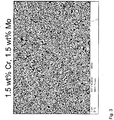
Fig. 3 is an electron microscope image of a 1.5 wt% Mo, 1.5 wt% Cr3C2 in 10 wt% Co fine grained cemented carbide material. -
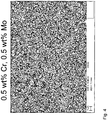
Fig. 4 is an electron microscope image of a 0.5 wt% Mo, 0.5 wt% Cr3C2 in 10 wt% Co fine grained cemented carbide material. -
Fig. 5 is an electron microscope image of a 1.5 wt% Mo, 1.0 wt% Cr3C2 in 10 wt% Co fine grained cemented carbide material. -
Fig. 6 is an electron microscope image of a 1.5 wt% Mo, 0.5 wt% Cr3C2 in 10 wt% Co fine grained cemented carbide material. -
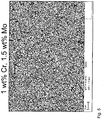
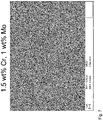
Fig. 7 is an electron microscope image of a 1.0 wt% Mo, 1.5 wt% Cr3C2 in 10 wt% Co fine grained cemented carbide material. -
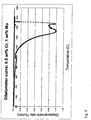
Fig. 8 is a thermomechanical analysis (TMA) curve showing the shrinkage rate difference between samples having high Cr content. -
Fig. 9 is a thermomechanical analysis (TMA) curve showing the shrinkage rate difference between samples having lower Cr content. -
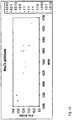
Fig. 10 is a graph illustrating the relationship between hardness and toughness of the tests variants. -
Fig. 11 is a graph illustrating the relationship between hardness and toughness of the tests variants. -
Figs. 12(a) and 12(b) are plots representing the Mo additions versus responses in hardness and Shetty fracture toughness. - A hard composition of material, such as cemented carbide, is appropriate as a substrate for metal cutting applications as it offers a unique combination of strength, hardness and toughness. As referred to herein a hard metal composition refers to a composite material normally having a hard phase composed of one or more carbides, nitrides or carbonitrides of tungsten, titanium, chromium, vanadium, tantalum, niobium, molybdenum or an equivalent material, or a combination thereof, bonded by a binder or metallic phase typically cobalt, nickel, iron, molybdenum or combinations thereof in varying proportions. The hardness of cemented carbide depends upon the concentration and contiguity of the hard phase. For example, the higher the concentration of tungsten carbide the greater the hardness.
- Cemented carbide grades can be classified according to the binder phase content and WC grain size. Different types of grades have been defined as fine, medium, medium course and coarse. As referred to herein, a fine grade can be defined as a material with a binder content of from 3% to 20% and a grain size of less than about 1 µm, with nano, ultrafine and submicron fine grades having grain sizes of less than 0.1 µm, from 0.1 to 0.5 µm and from 0.5 to 1 µm, respectively.
- The hard composition of material can be manufactured as ready to press (RTP) powder for pressing and sintering into components. The material can have tungsten carbide (WC) as the hard phase and cobalt (Co) as the binder phase. Molybdenum has been found to have good solubility in the cobalt binder of cemented carbide. Molybdenum has also been used for many years in cermet materials to increase toughness. The stacking fault energy for molybdenum is low, as for cobalt, which could possibly increase its creep resistance at higher temperatures.
- According to one aspect, molybdenum (Mo) and chromium carbide (Cr3C2) are added as inhibitors and for alloying of the binder phase. The grain growth inhibiting properties of molybdenum, although not as strong as chromium, can be added in significant amounts along with chromium to WC-Co alloys.
- The present disclosure relates to fine grained cement carbide having tungsten carbide (WC) as the hard phase and cobalt (Co) as the binder phase, having from 6 - 15 wt% Co content, a Mo content of from 5 - 15% of the Co content and a Cr3C2 content of from 0 - 15% of the Co content.
- An advantage of this composition is that grain growth of the WC is inhibited without reducing the strength of the binder and thereby reducing edge chipping at metal cutting operations.
- Experimentation was performed evaluating the properties of Mo content of from 0.5 to 1.5 wt% combined with a Cr3C2 content of from 0.5 to 1.5% in a fine grained cemented carbide containing 10 wt% Co. Some of the variants show promising fracture toughness to hardness ratio, although the values are within the spread of the measurement methods.
- An aim of the experimentation was to examine how Mo, along with Cr, would affect the properties of fine grained cemented carbides. For this purpose, a screening test of different Mo and Cr contents in a submicron WC alloy composition containing 10 wt% Co was set up. Samples were randomized in order to minimize effect of subjective human errors.
- The materials were made in 100 g lots by lab milling WC, Co, Mo, Cr3C2 and PEG in ethanol for 8 hours. The materials where sintered at 1410 °C by sinter/HIP at 50 bar. The samples were polished, etched and Hc, Com, density, HV30 and K1c properties measured. Because of the sensitivity of K1c measurements, all samples were re-measured after extra polishing.
- A full X-Ray fluorescence (XRF) analysis of the Cr, Mo and Co content of all samples was made in order to confirm the actual composition and give a precise evaluation of the results. SEM photographs of some of the microstructures are shown in
Figs. 1-7 . Metallographic results from test variants are shown in Table 1, wheresamples Table 1 Sample no Cr3C2 Mo HV30 K1c Anstis K1c Shetty Hc Com Density 1 1 1 1620 12.0 10.8 21.4 6.1 14.29 10 0.5 1.5 1660 12.5 10.8 22.7 6.3 14.25 Fig. 6 11 1.5 1 1640 11.7 10.3 22.5 6.3 14.22 Fig. 7 2 0.5 1 1570 13.1 10.8 20.1 7.5 14.35 Fig. 1 3 1.5 0.5 1661 11.7 10.4 20.9 6.6 14.21 Fig. 2 4 1.5 1.5 1710 10.4 9.8 26.0 5.3 14.22 Fig. 3 5 0.5 0.5 1580 13.3 11.0 20.7 7.0 14.34 Fig. 4 6 1 1.5 1670 12.0 10.6 23.5 6.0 14.23 Fig. 5 7 1 1 1660 12.0 10.5 22.7 6.1 14.31 8 1 1 1670 10.9 9.9 24.4 5.8 14.10 9 1 0.5 1631 11.6 10.2 21.3 6.7 14.32 - In
samples 3 and 10, a third phase precipitation was apparent in the microstructure. Carbon analysis of sinteredsamples samples 3 and 10, it can be supposed that the precipitation was not caused by a lack of carbon.Table 2 1 3 10 5 Total carbon (%) 5.46 5.51 5.50 5.45 Recipe total carbon (%) 5.50 5.59 5.52 5.55 - Referring to
Figs. 8 and9 , thermomechanical Analysis (TMA) curves show shrinkage rate difference between samples having high Cr content and low Cr content. As shown inFig. 8 , at a high Cr content (1-1.5 wt%) the displacement curve is very sharp and fast, with a maximum rate at approximately 1280°C. As shown inFig. 9 , for a low Cr content sample (0.5 wt%) the displacement curve has two separate peaks, one at approximately 1250°C and one at approximately 1330°C, which suggests that the Mo content is affecting the shrinkage in a more pronounced way and that the melting is of a more sluggish nature. - The relationship between hardness and toughness of the tests variants is shown graphically in
Figs.10 and11 . The K1c and HV30 of different compositions are shown with the Cr3C2 content labeled as the first value and the Mo content as the second value in the table. Three outlier points with elevated K1c values were observed for some of the compositions with higher Mo additions and having the same hardness. - The hardness to toughness ratio can be determined as follows:

- K1cH is the average K1c of a sample having a higher Mo content
- K1cL is the average K1c of a sample having a lower Mo content.
- Referring to Table 3, in
samples 3 and 10 there is a 5.4% increase in toughness. Withsamples 6 and 8 the percentage differences rises to 8.7%. Accordingly, at least a 5% increase in toughness to hardness ratio is achieved. - A plot using MODDE® software (Umetrics, Umea, SE), representing the Mo additions versus responses in hardness and Shetty fracture toughness are shown in
Figs. 12(A) and 12(B) . The result indicates that a large amount of Mo, i.e., up to 1.5 wt %, can be added without significant decrease in toughness. This can be seen as the iso-toughness lines are flat as the Mo content is increased. - The above shows that a relatively high amount of Mo can be dissolved into Co. The inhibition effect also seems small based on the Hc values achieved. It should be appreciated that comparison of the variants is subject to the slight differences in their binder volumes.
- Experimentation was performed with a variant containing of 1.5 wt% Mo and 0.5 wt% Cr3C2 (EFP006) having an eta-phase.
Fig. 3 is an electron microscope image of this sample. - Table 4 shows examples from interrupted cutting in stainless steel with the material Mo+Cr+WC+Co alloy (named EFP006) and the reference without Mo addition (H10F reference (89.5% WC008, 0.5% Cr3C2, 10% Co)). The number of cuts until edge chipping occurred on uncoated samples.
Table 4 Edge No HF H10F reference EFP006 1 2 cuts 5 cuts 7 cuts 2 2 4 6 3 4 2 10 Mean 2.7 cuts 3.7 cuts 7.7 cuts - Experimentation was performed on variants with different cobalt contents. The Mo additions were scaled with the cobalt content in the range of 5 - 15% of the cobalt content.
- The materials were made in 100 g lots by lab milling the powders and PEG in ethanol/water for 8 hours. Molybdenum was added in the form of Mo2C. The materials where sintered at 1410 °C by sinter/HIP at 50 bar, then the samples were polished and then HV30 and K1c properties measured. The recipes used and measurements of hardness and toughness are shown in table 5.
Table 5 H6f- IMo H6F baseline H6f-hMo H10F-IMo H10F baseline H10F-hMo H15f-IMo H15F-baseline H15F hMo WC (wt%) 93.4 93.7 92.8 89 89.5 88 83.5 84.25 82 Co (wt%) 6 6 6 10 10 10 15 15 15 Mo (wt%) 0.3 0 0.9 0.5 0 1.5 0.75 0 2.25 Cr3C2 (wt%) 0.3 0.3 0.3 0.5 0.5 0.5 0.75 0.75 0.75 Mο/Co 0.05 0 0.15 0.05 0 0.15 0.05 0 0.15 HV30 1830 1790 1840 1580 1595 1660 1400 1380 1410 T1C (shetty) 9.4 9.5 9.3 11.0 11.0 10.8 13.2 15.1 12.7 - It can be seen that in all cases the additions of the Mo both at the 0.05 and 0.15 Mo/Co ratio has resulted in hardness, with a slight reduction in toughness, compared to the baseline. As a similar response in material properties has been observed as for the 10% binder examples similar changes in performance can be expected from these materials.
- It is also known that Co can dissolve Mo during sintering, but after cooling retained Mo might lead to reduced binder ductility and lower fracture toughness. Therefore inclusion of Mo (and probably Cr also) in carbide grade compositions should be regarded essentially as adding to the hard phase rather than providing an extra constituent to the ductile binder. Co is the key provider of ductility to hard metals, grade toughness being determined by Co volume fraction in relation to all other ingredients.
- It should be appreciated that a variety of combinations of Co and Mo within the disclosed ranges, as well as other ranges, is contemplated and that the application should not be limited to just those combinations disclosed.
- The effect upon grade toughness of partially replacing Co with Mo (up to ∼2 vol %) in Co-Cr3C2 -sub-micron WC hard metal has been studied. Results of these studies show that hardness increased moderately and K1c decreased slightly with increasing replacement of Co by Mo.
- Average edge toughness, as represented by number of interrupted facing cuts on austenitic stainless steel tube, decreased with increasing replacement of Co by Mo. This agreed with K1c the trend. Spread in individual cutting life results was rather wide, implying that extrinsic factors could have had some influence.
- Cobalt is the key provider of ductility in hard metal. Volume fractions of other ingredients, such as those grain growth inhibitors with high solubility in Co should not be regarded as equivalent to Co in providing ductility to the grade.
- Although the present embodiment(s) has been described in relation to particular aspects thereof, many other variations and modifications and other uses will become apparent to those skilled in the art. It is preferred therefore, that the present embodiment(s) be limited not by the specific disclosure herein, but only by the appended claims.
| Sample no | Cr3C2 | Mo | HV30 | K1c Anstis | K1c | Avg K1c | |
| 1 | 1 | 1 | 1620 | 12.0 | 10.8 | 11.4 | |
| 2 | 0.5 | 1 | 1570 | 13.1 | 10.8 | 11.95 | |
| 3 | 1.5 | 0.5 | 1661 | 11.7 | 10.4 | 11.05 | |
| 4 | 1.5 | 1.5 | 1710 | 10.4 | 9.8 | 10.1 | |
| 5 | 0.5 | 0.5 | 1580 | 13.3 | 11.0 | 12.15 | |
| 6 | 1 | 1.5 | 1670 | 12.0 | 10.6 | 11.3 | |
| 7 | 1 | 1 | 1660 | 12.0 | 10.5 | 11.25 | |
| 8 | 1 | 1 | 1670 | 10.9 | 9.9 | 10.4 | |
| 9 | 1 | 0.5 | 1631 | 11.6 | 10.2 | 10.9 | |
| 10 | 0.5 | 1.5 | 1660 | 12.5 | 10.8 | 11.65 | |
| 11 | 1.5 | 1 | 1640 | 11.7 | 10.3 | 11 |
Claims (4)
- A cemented carbide material consisting of, in weight percent, 6-15% of cobalt; a molybdenum content of 5-15% of the cobalt content and a chromium carbide content of 5-15% of the cobalt content and balance of tungsten carbide.
- The cemented carbide material according to claim 1 wherein the material has a grain size of less than 1µm.
- A cutting tool comprising a cemented carbide material according to claim 1.
- A method of producing a cemented carbide material comprising the steps of:providing the material with a content of 6-15 wt% cobalt;providing the material with a molybdenum content of 5% to of 15% of the cobalt content;providing the material with a chromium carbide content of 5% to of 15% of the cobalt content;providing the material with a balance of tungsten carbide;milling the molybdenum, chromium carbide, tungsten carbide and cobalt into a powder mixture; andsintering the powder mixture under pressure.
Applications Claiming Priority (2)
| Application Number | Priority Date | Filing Date | Title |
|---|---|---|---|
| US201361916878P | 2013-12-17 | 2013-12-17 | |
| PCT/IB2014/002828 WO2015092528A1 (en) | 2013-12-17 | 2014-12-17 | Composition for a novel grade for cutting tools |
Publications (2)
| Publication Number | Publication Date |
|---|---|
| EP3084028A1 EP3084028A1 (en) | 2016-10-26 |
| EP3084028B1 true EP3084028B1 (en) | 2019-11-20 |
Family
ID=52424049
Family Applications (1)
| Application Number | Title | Priority Date | Filing Date |
|---|---|---|---|
| EP14830865.3A Active EP3084028B1 (en) | 2013-12-17 | 2014-12-17 | Composition for a novel grade for cutting tools |
Country Status (5)
| Country | Link |
|---|---|
| US (1) | US10781141B2 (en) |
| EP (1) | EP3084028B1 (en) |
| CN (1) | CN105980587A (en) |
| ES (1) | ES2769895T3 (en) |
| WO (1) | WO2015092528A1 (en) |
Families Citing this family (4)
| Publication number | Priority date | Publication date | Assignee | Title |
|---|---|---|---|---|
| DE102019110950A1 (en) | 2019-04-29 | 2020-10-29 | Kennametal Inc. | Hard metal compositions and their applications |
| CN110527889B (en) * | 2019-09-05 | 2021-11-23 | 无锡精蓉创材料科技有限公司 | Material for producing deep cavity welding cleaver and preparation process thereof |
| WO2023228328A1 (en) * | 2022-05-25 | 2023-11-30 | 住友電工ハードメタル株式会社 | Cemented carbide and cutting tool using same |
| JP7541423B1 (en) * | 2023-10-20 | 2024-08-28 | 冨士ダイス株式会社 | Cemented carbide and its processing method, dies and tools |
Citations (1)
| Publication number | Priority date | Publication date | Assignee | Title |
|---|---|---|---|---|
| KR20130112363A (en) * | 2012-04-03 | 2013-10-14 | (주)하이엠시 | Low binder sintered carbides and its manufacturing method |
Family Cites Families (12)
| Publication number | Priority date | Publication date | Assignee | Title |
|---|---|---|---|---|
| JPS6176646A (en) * | 1984-09-21 | 1986-04-19 | Mitsubishi Metal Corp | Tungsten carbide-base sintered hard alloy |
| JP3531040B2 (en) * | 1993-12-10 | 2004-05-24 | 株式会社アライドマテリアル | Manufacturing method of cemented carbide and hard material |
| CN1033526C (en) | 1994-10-25 | 1996-12-11 | 冶金工业部钢铁研究总院 | Tungsten carbide base hard alloy containing rare-earth and its oxides |
| US5679445A (en) * | 1994-12-23 | 1997-10-21 | Kennametal Inc. | Composite cermet articles and method of making |
| EP0966550B1 (en) * | 1997-03-10 | 2001-10-04 | Widia GmbH | Hard metal or cermet sintered body and method for the production thereof |
| SE512754C2 (en) * | 1997-09-05 | 2000-05-08 | Sandvik Ab | Ways to manufacture ultra-fine WC-Co alloys |
| SE520253C2 (en) * | 2000-12-19 | 2003-06-17 | Sandvik Ab | Coated cemented carbide inserts |
| JP2003155538A (en) * | 2001-11-19 | 2003-05-30 | Kyoritsu Gokin Co Ltd | Hard metal alloy |
| JP2004076049A (en) | 2002-08-13 | 2004-03-11 | Hitachi Tool Engineering Ltd | Hard metal of ultra-fine particles |
| US20050072269A1 (en) * | 2003-10-03 | 2005-04-07 | Debangshu Banerjee | Cemented carbide blank suitable for electric discharge machining and cemented carbide body made by electric discharge machining |
| WO2008079083A1 (en) * | 2006-12-27 | 2008-07-03 | Sandvik Intellectual Property Ab | Punch for cold forming operations |
| GB201100966D0 (en) * | 2011-01-20 | 2011-03-02 | Element Six Holding Gmbh | Cemented carbide article |
-
2014
- 2014-12-17 ES ES14830865T patent/ES2769895T3/en active Active
- 2014-12-17 EP EP14830865.3A patent/EP3084028B1/en active Active
- 2014-12-17 WO PCT/IB2014/002828 patent/WO2015092528A1/en not_active Ceased
- 2014-12-17 CN CN201480068945.5A patent/CN105980587A/en active Pending
- 2014-12-17 US US15/105,004 patent/US10781141B2/en active Active
Patent Citations (1)
| Publication number | Priority date | Publication date | Assignee | Title |
|---|---|---|---|---|
| KR20130112363A (en) * | 2012-04-03 | 2013-10-14 | (주)하이엠시 | Low binder sintered carbides and its manufacturing method |
Also Published As
| Publication number | Publication date |
|---|---|
| CN105980587A (en) | 2016-09-28 |
| US20160318811A1 (en) | 2016-11-03 |
| EP3084028A1 (en) | 2016-10-26 |
| US10781141B2 (en) | 2020-09-22 |
| ES2769895T3 (en) | 2020-06-29 |
| WO2015092528A1 (en) | 2015-06-25 |
Similar Documents
| Publication | Publication Date | Title |
|---|---|---|
| RU2623545C2 (en) | Feni - binding agent with universal opportunities of use | |
| JP5117931B2 (en) | Fine-grained cemented carbide | |
| EP2746413B1 (en) | Cemented carbide punch | |
| EP3686302B1 (en) | A cemented carbide and method of manufacturing a cemented carbide | |
| EP1462534A1 (en) | Compositionally graded sintered alloy and method of producing the same | |
| US12584202B2 (en) | Cobalt-free tungsten carbide-based hard-metal material | |
| WO2018206174A1 (en) | Cemented carbides comprising an fe-cr binder based metallic binder | |
| US10781141B2 (en) | Composition for a novel grade for cutting tools | |
| US20220341007A1 (en) | NbC-BASED CEMENTED CARBIDE | |
| JPS634895B2 (en) | ||
| CN114761157A (en) | Microstructure of NbC-based hard alloy | |
| JPH07197180A (en) | High strength and high hardness sintered hard alloy excellent in corrosion resistance | |
| KR102849688B1 (en) | Tungsten carbide-based superalloy materials | |
| JP2004263251A (en) | Group 7a element-containing cemented carbide | |
| DE102008052559A1 (en) | Use of binder alloy powder containing specific range of molybdenum (in alloyed form), iron, cobalt, and nickel to produce sintered hard metals based on tungsten carbide | |
| Silva et al. | Development of complex concentrated alloys binders for co-free cemented WC composites | |
| SE459862B (en) | SINTRAD TWO-PHASE CARBON NITRID METAL AND METHOD FOR PREPARING THIS | |
| JP2003231938A (en) | Tungsten-carbide-base hard alloy |
Legal Events
| Date | Code | Title | Description |
|---|---|---|---|
| PUAI | Public reference made under article 153(3) epc to a published international application that has entered the european phase |
Free format text: ORIGINAL CODE: 0009012 |
|
| 17P | Request for examination filed |
Effective date: 20160718 |
|
| AK | Designated contracting states |
Kind code of ref document: A1 Designated state(s): AL AT BE BG CH CY CZ DE DK EE ES FI FR GB GR HR HU IE IS IT LI LT LU LV MC MK MT NL NO PL PT RO RS SE SI SK SM TR |
|
| AX | Request for extension of the european patent |
Extension state: BA ME |
|
| DAX | Request for extension of the european patent (deleted) | ||
| STAA | Information on the status of an ep patent application or granted ep patent |
Free format text: STATUS: EXAMINATION IS IN PROGRESS |
|
| 17Q | First examination report despatched |
Effective date: 20180131 |
|
| RAP1 | Party data changed (applicant data changed or rights of an application transferred) |
Owner name: SANDVIK HYPERION AB |
|
| RAP1 | Party data changed (applicant data changed or rights of an application transferred) |
Owner name: HYPERION MATERIALS & TECHNOLOGIES (SWEDEN) AB |
|
| GRAP | Despatch of communication of intention to grant a patent |
Free format text: ORIGINAL CODE: EPIDOSNIGR1 |
|
| STAA | Information on the status of an ep patent application or granted ep patent |
Free format text: STATUS: GRANT OF PATENT IS INTENDED |
|
| INTG | Intention to grant announced |
Effective date: 20190711 |
|
| GRAS | Grant fee paid |
Free format text: ORIGINAL CODE: EPIDOSNIGR3 |
|
| GRAA | (expected) grant |
Free format text: ORIGINAL CODE: 0009210 |
|
| STAA | Information on the status of an ep patent application or granted ep patent |
Free format text: STATUS: THE PATENT HAS BEEN GRANTED |
|
| AK | Designated contracting states |
Kind code of ref document: B1 Designated state(s): AL AT BE BG CH CY CZ DE DK EE ES FI FR GB GR HR HU IE IS IT LI LT LU LV MC MK MT NL NO PL PT RO RS SE SI SK SM TR |
|
| REG | Reference to a national code |
Ref country code: GB Ref legal event code: FG4D |
|
| REG | Reference to a national code |
Ref country code: CH Ref legal event code: EP Ref country code: CH Ref legal event code: NV Representative=s name: E. BLUM AND CO. AG PATENT- UND MARKENANWAELTE , CH |
|
| REG | Reference to a national code |
Ref country code: IE Ref legal event code: FG4D |
|
| REG | Reference to a national code |
Ref country code: DE Ref legal event code: R096 Ref document number: 602014057233 Country of ref document: DE |
|
| REG | Reference to a national code |
Ref country code: AT Ref legal event code: REF Ref document number: 1204264 Country of ref document: AT Kind code of ref document: T Effective date: 20191215 |
|
| REG | Reference to a national code |
Ref country code: SE Ref legal event code: TRGR |
|
| REG | Reference to a national code |
Ref country code: NL Ref legal event code: MP Effective date: 20191120 |
|
| REG | Reference to a national code |
Ref country code: LT Ref legal event code: MG4D |
|
| PG25 | Lapsed in a contracting state [announced via postgrant information from national office to epo] |
Ref country code: NO Free format text: LAPSE BECAUSE OF FAILURE TO SUBMIT A TRANSLATION OF THE DESCRIPTION OR TO PAY THE FEE WITHIN THE PRESCRIBED TIME-LIMIT Effective date: 20200220 Ref country code: GR Free format text: LAPSE BECAUSE OF FAILURE TO SUBMIT A TRANSLATION OF THE DESCRIPTION OR TO PAY THE FEE WITHIN THE PRESCRIBED TIME-LIMIT Effective date: 20200221 Ref country code: LT Free format text: LAPSE BECAUSE OF FAILURE TO SUBMIT A TRANSLATION OF THE DESCRIPTION OR TO PAY THE FEE WITHIN THE PRESCRIBED TIME-LIMIT Effective date: 20191120 Ref country code: FI Free format text: LAPSE BECAUSE OF FAILURE TO SUBMIT A TRANSLATION OF THE DESCRIPTION OR TO PAY THE FEE WITHIN THE PRESCRIBED TIME-LIMIT Effective date: 20191120 Ref country code: BG Free format text: LAPSE BECAUSE OF FAILURE TO SUBMIT A TRANSLATION OF THE DESCRIPTION OR TO PAY THE FEE WITHIN THE PRESCRIBED TIME-LIMIT Effective date: 20200220 Ref country code: NL Free format text: LAPSE BECAUSE OF FAILURE TO SUBMIT A TRANSLATION OF THE DESCRIPTION OR TO PAY THE FEE WITHIN THE PRESCRIBED TIME-LIMIT Effective date: 20191120 Ref country code: LV Free format text: LAPSE BECAUSE OF FAILURE TO SUBMIT A TRANSLATION OF THE DESCRIPTION OR TO PAY THE FEE WITHIN THE PRESCRIBED TIME-LIMIT Effective date: 20191120 |
|
| PG25 | Lapsed in a contracting state [announced via postgrant information from national office to epo] |
Ref country code: IS Free format text: LAPSE BECAUSE OF FAILURE TO SUBMIT A TRANSLATION OF THE DESCRIPTION OR TO PAY THE FEE WITHIN THE PRESCRIBED TIME-LIMIT Effective date: 20200320 Ref country code: RS Free format text: LAPSE BECAUSE OF FAILURE TO SUBMIT A TRANSLATION OF THE DESCRIPTION OR TO PAY THE FEE WITHIN THE PRESCRIBED TIME-LIMIT Effective date: 20191120 Ref country code: HR Free format text: LAPSE BECAUSE OF FAILURE TO SUBMIT A TRANSLATION OF THE DESCRIPTION OR TO PAY THE FEE WITHIN THE PRESCRIBED TIME-LIMIT Effective date: 20191120 |
|
| REG | Reference to a national code |
Ref country code: ES Ref legal event code: FG2A Ref document number: 2769895 Country of ref document: ES Kind code of ref document: T3 Effective date: 20200629 |
|
| PG25 | Lapsed in a contracting state [announced via postgrant information from national office to epo] |
Ref country code: AL Free format text: LAPSE BECAUSE OF FAILURE TO SUBMIT A TRANSLATION OF THE DESCRIPTION OR TO PAY THE FEE WITHIN THE PRESCRIBED TIME-LIMIT Effective date: 20191120 |
|
| PG25 | Lapsed in a contracting state [announced via postgrant information from national office to epo] |
Ref country code: RO Free format text: LAPSE BECAUSE OF FAILURE TO SUBMIT A TRANSLATION OF THE DESCRIPTION OR TO PAY THE FEE WITHIN THE PRESCRIBED TIME-LIMIT Effective date: 20191120 Ref country code: CZ Free format text: LAPSE BECAUSE OF FAILURE TO SUBMIT A TRANSLATION OF THE DESCRIPTION OR TO PAY THE FEE WITHIN THE PRESCRIBED TIME-LIMIT Effective date: 20191120 Ref country code: DK Free format text: LAPSE BECAUSE OF FAILURE TO SUBMIT A TRANSLATION OF THE DESCRIPTION OR TO PAY THE FEE WITHIN THE PRESCRIBED TIME-LIMIT Effective date: 20191120 Ref country code: EE Free format text: LAPSE BECAUSE OF FAILURE TO SUBMIT A TRANSLATION OF THE DESCRIPTION OR TO PAY THE FEE WITHIN THE PRESCRIBED TIME-LIMIT Effective date: 20191120 Ref country code: PT Free format text: LAPSE BECAUSE OF FAILURE TO SUBMIT A TRANSLATION OF THE DESCRIPTION OR TO PAY THE FEE WITHIN THE PRESCRIBED TIME-LIMIT Effective date: 20200412 |
|
| REG | Reference to a national code |
Ref country code: DE Ref legal event code: R097 Ref document number: 602014057233 Country of ref document: DE |
|
| REG | Reference to a national code |
Ref country code: BE Ref legal event code: MM Effective date: 20191231 |
|
| PG25 | Lapsed in a contracting state [announced via postgrant information from national office to epo] |
Ref country code: SK Free format text: LAPSE BECAUSE OF FAILURE TO SUBMIT A TRANSLATION OF THE DESCRIPTION OR TO PAY THE FEE WITHIN THE PRESCRIBED TIME-LIMIT Effective date: 20191120 Ref country code: MC Free format text: LAPSE BECAUSE OF FAILURE TO SUBMIT A TRANSLATION OF THE DESCRIPTION OR TO PAY THE FEE WITHIN THE PRESCRIBED TIME-LIMIT Effective date: 20191120 Ref country code: SM Free format text: LAPSE BECAUSE OF FAILURE TO SUBMIT A TRANSLATION OF THE DESCRIPTION OR TO PAY THE FEE WITHIN THE PRESCRIBED TIME-LIMIT Effective date: 20191120 |
|
| PLBE | No opposition filed within time limit |
Free format text: ORIGINAL CODE: 0009261 |
|
| STAA | Information on the status of an ep patent application or granted ep patent |
Free format text: STATUS: NO OPPOSITION FILED WITHIN TIME LIMIT |
|
| REG | Reference to a national code |
Ref country code: AT Ref legal event code: UEP Ref document number: 1204264 Country of ref document: AT Kind code of ref document: T Effective date: 20191120 |
|
| 26N | No opposition filed |
Effective date: 20200821 |
|
| PG25 | Lapsed in a contracting state [announced via postgrant information from national office to epo] |
Ref country code: IE Free format text: LAPSE BECAUSE OF NON-PAYMENT OF DUE FEES Effective date: 20191217 |
|
| PG25 | Lapsed in a contracting state [announced via postgrant information from national office to epo] |
Ref country code: PL Free format text: LAPSE BECAUSE OF FAILURE TO SUBMIT A TRANSLATION OF THE DESCRIPTION OR TO PAY THE FEE WITHIN THE PRESCRIBED TIME-LIMIT Effective date: 20191120 Ref country code: BE Free format text: LAPSE BECAUSE OF NON-PAYMENT OF DUE FEES Effective date: 20191231 Ref country code: SI Free format text: LAPSE BECAUSE OF FAILURE TO SUBMIT A TRANSLATION OF THE DESCRIPTION OR TO PAY THE FEE WITHIN THE PRESCRIBED TIME-LIMIT Effective date: 20191120 |
|
| PG25 | Lapsed in a contracting state [announced via postgrant information from national office to epo] |
Ref country code: IT Free format text: LAPSE BECAUSE OF FAILURE TO SUBMIT A TRANSLATION OF THE DESCRIPTION OR TO PAY THE FEE WITHIN THE PRESCRIBED TIME-LIMIT Effective date: 20191120 |
|
| PG25 | Lapsed in a contracting state [announced via postgrant information from national office to epo] |
Ref country code: CY Free format text: LAPSE BECAUSE OF FAILURE TO SUBMIT A TRANSLATION OF THE DESCRIPTION OR TO PAY THE FEE WITHIN THE PRESCRIBED TIME-LIMIT Effective date: 20191120 |
|
| PG25 | Lapsed in a contracting state [announced via postgrant information from national office to epo] |
Ref country code: HU Free format text: LAPSE BECAUSE OF FAILURE TO SUBMIT A TRANSLATION OF THE DESCRIPTION OR TO PAY THE FEE WITHIN THE PRESCRIBED TIME-LIMIT; INVALID AB INITIO Effective date: 20141217 Ref country code: MT Free format text: LAPSE BECAUSE OF FAILURE TO SUBMIT A TRANSLATION OF THE DESCRIPTION OR TO PAY THE FEE WITHIN THE PRESCRIBED TIME-LIMIT Effective date: 20191120 |
|
| PG25 | Lapsed in a contracting state [announced via postgrant information from national office to epo] |
Ref country code: TR Free format text: LAPSE BECAUSE OF FAILURE TO SUBMIT A TRANSLATION OF THE DESCRIPTION OR TO PAY THE FEE WITHIN THE PRESCRIBED TIME-LIMIT Effective date: 20191120 |
|
| PG25 | Lapsed in a contracting state [announced via postgrant information from national office to epo] |
Ref country code: MK Free format text: LAPSE BECAUSE OF FAILURE TO SUBMIT A TRANSLATION OF THE DESCRIPTION OR TO PAY THE FEE WITHIN THE PRESCRIBED TIME-LIMIT Effective date: 20191120 |
|
| P01 | Opt-out of the competence of the unified patent court (upc) registered |
Effective date: 20230703 |
|
| REG | Reference to a national code |
Ref country code: LU Ref legal event code: HC Owner name: HYPERION MATERIALS & TECHNOLOGIES (SWEDEN) AB; SE Free format text: FORMER OWNER: HYPERION MATERIALS & TECHNOLOGIES (SWEDEN) AB Effective date: 20230811 |
|
| REG | Reference to a national code |
Ref country code: CH Ref legal event code: U11 Free format text: ST27 STATUS EVENT CODE: U-0-0-U10-U11 (AS PROVIDED BY THE NATIONAL OFFICE) Effective date: 20260101 |
|
| PGFP | Annual fee paid to national office [announced via postgrant information from national office to epo] |
Ref country code: GB Payment date: 20251229 Year of fee payment: 12 |
|
| PGFP | Annual fee paid to national office [announced via postgrant information from national office to epo] |
Ref country code: AT Payment date: 20251230 Year of fee payment: 12 |
|
| PGFP | Annual fee paid to national office [announced via postgrant information from national office to epo] |
Ref country code: LU Payment date: 20251229 Year of fee payment: 12 Ref country code: FR Payment date: 20251226 Year of fee payment: 12 |
|
| PGFP | Annual fee paid to national office [announced via postgrant information from national office to epo] |
Ref country code: SE Payment date: 20251227 Year of fee payment: 12 |
|
| PGFP | Annual fee paid to national office [announced via postgrant information from national office to epo] |
Ref country code: ES Payment date: 20260102 Year of fee payment: 12 |
|
| PGFP | Annual fee paid to national office [announced via postgrant information from national office to epo] |
Ref country code: DE Payment date: 20251229 Year of fee payment: 12 |
|
| PGFP | Annual fee paid to national office [announced via postgrant information from national office to epo] |
Ref country code: CH Payment date: 20260101 Year of fee payment: 12 |