EP3079093B1 - Verfahren und vorrichtung zur ermöglichung der laufzeitprüfsummenverifizierung von blockvorrichtungsbildern - Google Patents
Verfahren und vorrichtung zur ermöglichung der laufzeitprüfsummenverifizierung von blockvorrichtungsbildern Download PDFInfo
- Publication number
- EP3079093B1 EP3079093B1 EP16164533.8A EP16164533A EP3079093B1 EP 3079093 B1 EP3079093 B1 EP 3079093B1 EP 16164533 A EP16164533 A EP 16164533A EP 3079093 B1 EP3079093 B1 EP 3079093B1
- Authority
- EP
- European Patent Office
- Prior art keywords
- secure
- hash
- block
- block device
- execution environment
- Prior art date
- Legal status (The legal status is an assumption and is not a legal conclusion. Google has not performed a legal analysis and makes no representation as to the accuracy of the status listed.)
- Active
Links
Images




Classifications
-
- G—PHYSICS
- G06—COMPUTING OR CALCULATING; COUNTING
- G06F—ELECTRIC DIGITAL DATA PROCESSING
- G06F21/00—Security arrangements for protecting computers, components thereof, programs or data against unauthorised activity
- G06F21/50—Monitoring users, programs or devices to maintain the integrity of platforms, e.g. of processors, firmware or operating systems
- G06F21/51—Monitoring users, programs or devices to maintain the integrity of platforms, e.g. of processors, firmware or operating systems at application loading time, e.g. accepting, rejecting, starting or inhibiting executable software based on integrity or source reliability
-
- G—PHYSICS
- G06—COMPUTING OR CALCULATING; COUNTING
- G06F—ELECTRIC DIGITAL DATA PROCESSING
- G06F21/00—Security arrangements for protecting computers, components thereof, programs or data against unauthorised activity
- G06F21/50—Monitoring users, programs or devices to maintain the integrity of platforms, e.g. of processors, firmware or operating systems
- G06F21/57—Certifying or maintaining trusted computer platforms, e.g. secure boots or power-downs, version controls, system software checks, secure updates or assessing vulnerabilities
-
- G—PHYSICS
- G06—COMPUTING OR CALCULATING; COUNTING
- G06F—ELECTRIC DIGITAL DATA PROCESSING
- G06F21/00—Security arrangements for protecting computers, components thereof, programs or data against unauthorised activity
- G06F21/70—Protecting specific internal or peripheral components, in which the protection of a component leads to protection of the entire computer
- G06F21/71—Protecting specific internal or peripheral components, in which the protection of a component leads to protection of the entire computer to assure secure computing or processing of information
- G06F21/74—Protecting specific internal or peripheral components, in which the protection of a component leads to protection of the entire computer to assure secure computing or processing of information operating in dual or compartmented mode, i.e. at least one secure mode
-
- H—ELECTRICITY
- H04—ELECTRIC COMMUNICATION TECHNIQUE
- H04L—TRANSMISSION OF DIGITAL INFORMATION, e.g. TELEGRAPHIC COMMUNICATION
- H04L9/00—Cryptographic mechanisms or cryptographic arrangements for secret or secure communications; Network security protocols
- H04L9/32—Cryptographic mechanisms or cryptographic arrangements for secret or secure communications; Network security protocols including means for verifying the identity or authority of a user of the system or for message authentication, e.g. authorization, entity authentication, data integrity or data verification, non-repudiation, key authentication or verification of credentials
- H04L9/3247—Cryptographic mechanisms or cryptographic arrangements for secret or secure communications; Network security protocols including means for verifying the identity or authority of a user of the system or for message authentication, e.g. authorization, entity authentication, data integrity or data verification, non-repudiation, key authentication or verification of credentials involving digital signatures
-
- H—ELECTRICITY
- H04—ELECTRIC COMMUNICATION TECHNIQUE
- H04L—TRANSMISSION OF DIGITAL INFORMATION, e.g. TELEGRAPHIC COMMUNICATION
- H04L9/00—Cryptographic mechanisms or cryptographic arrangements for secret or secure communications; Network security protocols
- H04L9/32—Cryptographic mechanisms or cryptographic arrangements for secret or secure communications; Network security protocols including means for verifying the identity or authority of a user of the system or for message authentication, e.g. authorization, entity authentication, data integrity or data verification, non-repudiation, key authentication or verification of credentials
- H04L9/3263—Cryptographic mechanisms or cryptographic arrangements for secret or secure communications; Network security protocols including means for verifying the identity or authority of a user of the system or for message authentication, e.g. authorization, entity authentication, data integrity or data verification, non-repudiation, key authentication or verification of credentials involving certificates, e.g. public key certificate [PKC] or attribute certificate [AC]; Public key infrastructure [PKI] arrangements
- H04L9/3265—Cryptographic mechanisms or cryptographic arrangements for secret or secure communications; Network security protocols including means for verifying the identity or authority of a user of the system or for message authentication, e.g. authorization, entity authentication, data integrity or data verification, non-repudiation, key authentication or verification of credentials involving certificates, e.g. public key certificate [PKC] or attribute certificate [AC]; Public key infrastructure [PKI] arrangements using certificate chains, trees or paths; Hierarchical trust model
-
- H—ELECTRICITY
- H04—ELECTRIC COMMUNICATION TECHNIQUE
- H04L—TRANSMISSION OF DIGITAL INFORMATION, e.g. TELEGRAPHIC COMMUNICATION
- H04L9/00—Cryptographic mechanisms or cryptographic arrangements for secret or secure communications; Network security protocols
- H04L9/50—Cryptographic mechanisms or cryptographic arrangements for secret or secure communications; Network security protocols using hash chains, e.g. blockchains or hash trees
-
- G—PHYSICS
- G06—COMPUTING OR CALCULATING; COUNTING
- G06F—ELECTRIC DIGITAL DATA PROCESSING
- G06F21/00—Security arrangements for protecting computers, components thereof, programs or data against unauthorised activity
- G06F21/50—Monitoring users, programs or devices to maintain the integrity of platforms, e.g. of processors, firmware or operating systems
- G06F21/57—Certifying or maintaining trusted computer platforms, e.g. secure boots or power-downs, version controls, system software checks, secure updates or assessing vulnerabilities
- G06F21/575—Secure boot
Definitions
- the present application relates generally to electronic devices requiring data integrity protection and, more specifically, to verifying the data integrity of block devices of mobile devices requiring run-time file-based update.
- a physical data storage hardware such as a hard drive (also commonly known as “hard disk”) and/or a Multi-media card (MMC), and a multilayered software architecture to manage how data is stored and retrieved.
- MMC Multi-media card
- data integrity protection In many cases, data stored in an electronic device is of high importance, and needs protection against malicious or unverifiable modifications, which is known as data integrity protection.
- telecommunication handsets have embedded MMCs housing operating system related data that is the frequent target of malicious alternations aiming to hijack the control of a device or to steal sensitive information.
- a valid update or change to the data stored on a device is often needed.
- the manufacturer frequently releases Over-The-Air (OTA) software updates to the telecommunications handsets to fix bugs or upgrade software system features. Therefore, data integrity protection is also required to accommodate the run-time update to the data on devices.
- OTA Over-The-Air
- Block device an abstract layer in the above-mentioned multilayered software architecture, manipulates data in fixed-size blocks, and controls the data transfer between the layer of file system and the layer of actual physical hardware.
- Data stored on a block device can be verified by applying a cryptographic hash function to the current contents of the block device as a whole to obtain a hash checksum and comparing this hash checksum against a precomputed known good checksum value.
- the known good checksum value is the result of applying the same hash function to the known good contents of a block device.
- the root of the hash tree is the calculated checksum used to check against the known good checksum value.
- the block device contents are considered verified, i.e., the contents are known good.
- an authenticated change is applied to a verified block device, new known good checksum has to be provided, and thereafter, the device can be verified by comparing the calculated hash checksum to the new known good hash checksum.
- the hash checksum calculation is sensitive to not only the contents stored in each data block but also the distribution order of data blocks on a block device such that even if a block device includes the same set of data blocks as a the verified or known good block device.
- the update to the block devices to be applied in a deterministic block-by-block manner i.e., the change to each data block and the distribution of data blocks after update are pre-determined, from which a new known good hash checksum is pre-computed.
- Such an update method is known as block-based update.
- many manufacturers use the file-based update method in which the update is applied by removing, adding, and/or overwriting files in the layer of file system, and the actual changes to the underlying block device layer are non-deterministic, i.e., the change to each data block and the distribution of data blocks after update are unknown now.
- the pre-computed known good checksum value can no longer be used to verify the data on device after a file-based update is applied.
- the above-described methodology cannot be used to verify the data integrity of devices with run-time file-based update. Accordingly, there is a need for methods of efficiently verifying the data integrity of block devices which can accommodate the file-based update on run time.
- US-2014/325644-A1 discloses an integrity verification subsystem that can verify the integrity of software and firmware modules on a computing device at load time and/or at run time, independently of any operating systems that may be installed on the computing device. Some versions of the integrity verification subsystem can operate in physical and/or virtualized system environments, including virtualized mobile device architectures.
- a method for operating an electronic device for verifying data integrity of a block device comprising: providing a secure execution environment configured to monitor changes to data blocks of a block device; determining whether a secure marker is present, wherein the secure marker indicates that the block device is verified; in response to a determination that the secure marker is not present, generating a hash for changed data blocks of the block device in the secure execution environment; verifying a cryptographic signature regarding the hash for the changed data blocks in the secure execution environment.
- a n electronic device operating in a secure execution environment for monitoring changes to data blocks of a block device of the electronic device comprising: a hash generator configured to operate in the secure execution environment and to determine whether a secure marker is present, wherein the secure marker indicates that the block device is verified, and, in response to a determination that the secure marker is not present, generate a hash associated with a changed data block of the block device; a cryptographic signature verifier configured to operate in the secure execution environment and to verify a cryptographic signature regarding the hash for the changed data block of the block device.
- a method for an electronic device for verifying data integrity of a block device of the electronic device comprising: receiving a file-based update package; applying the file-based update package to a block device of the secure partition; determining whether a secure marker is present, wherein the secure marker indicates that the block device is verified; in response to a determination that the secure marker is not present, generating a root hash associated with at least one updated data block of the block device; and verifying a signature regarding the root hash associated with the at least one updated data block.
- Couple and its derivatives refer to any direct or indirect communication between two or more elements, whether or not those elements are in physical contact with one another.
- transmit and “communicate,” as well as derivatives thereof, encompass both direct and indirect communication.
- the term “or” is inclusive, meaning and/or.
- controller means any device, system or part thereof that controls at least one operation. Such a controller can be implemented in hardware or a combination of hardware and software and/or firmware. The functionality associated with any particular controller can be centralized or distributed, whether locally or remotely.
- phrases "at least one of,” when used with a list of items, means that different combinations of one or more of the listed items can be used, and only one item in the list may be needed.
- “at least one of: A, B, and C” includes any of the following combinations: A, B, C, A and B, A and C, B and C, and A and B and C.
- FIGURES 1 through 8 discussed below, and the various embodiments used to describe the principles of the present invention in this patent document are by way of illustration only and should not be construed in any way to limit the scope of the disclosure. Those skilled in the art will understand that the principles of this disclosure can be implemented in any suitably arranged device or system.
- FIGURE 1 illustrates an example wireless network 100 according to this disclosure.
- the embodiment of the wireless network 100 shown in FIGURE 1 is for illustration only. Other embodiments of the wireless network 100 could be used without departing from the scope of this disclosure.
- the wireless network 100 includes an eNodeB (eNB) 101, an eNB 102, and an eNB 103.
- the eNB 101 communicates with the eNB 102 and the eNB 103.
- the eNB 101 also communicates with at least one Internet Protocol (IP) network 130, such as the Internet, a proprietary IP network, or other data network.
- IP Internet Protocol
- eNodeB eNodeB
- eNB base station
- access point eNodeB
- eNodeB and eNB are used in this patent document to refer to network infrastructure components that provide wireless access to remote terminals.
- UE user equipment
- mobile station such as a mobile telephone or smartphone
- remote terminal such as a desktop computer or vending machine
- the eNB 102 provides wireless broadband access to the network 130 for a first plurality of user equipments (UEs) within a coverage area 120 of the eNB 102.
- the first plurality of UEs includes a UE 111, which can be located in a small business (SB); a UE 112, which can be located in an enterprise (E); a UE 113, which can be located in a WiFi hotspot (HS); a UE 114, which can be located in a first residence (R); a UE 115, which can be located in a second residence (R); and a UE 116, which can be a mobile device (M) like a cell phone, a wireless laptop, a wireless PDA, or the like.
- M mobile device
- the eNB 103 provides wireless broadband access to the network 130 for a second plurality of UEs within a coverage area 125 of the eNB 103.
- the second plurality of UEs includes the UE 115 and the UE 116.
- one or more of the eNBs 101-103 can communicate with each other and with the UEs 111-116 using 5G, LTE, LTE-A, WiMAX, or other advanced wireless communication techniques.
- Dotted lines show the approximate extents of the coverage areas 120 and 125, which are shown as approximately circular for the purposes of illustration and explanation only. It should be clearly understood that the coverage areas associated with eNBs, such as the coverage areas 120 and 125, can have other shapes, including irregular shapes, depending upon the configuration of the eNBs and variations in the radio environment associated with natural and man-made obstructions.
- FIGURE 1 illustrates one example of a wireless network 100
- the wireless network 100 could include any number of eNBs and any number of UEs in any suitable arrangement.
- the eNB 101 could communicate directly with any number of UEs and provide those UEs with wireless broadband access to the network 130.
- each eNB 102-103 could communicate directly with the network 130 and provide UEs with direct wireless broadband access to the network 130.
- the eNB 101, 102, and/or 103 could provide access to other or additional external networks, such as external telephone networks or other types of data networks.
- FIGURES 2A and 2B illustrate example wireless transmit and receive paths according to this disclosure.
- a transmit path 200 can be described as being implemented in an eNB (such as eNB 102), while a receive path 250 can be described as being implemented in a UE (such as UE 116).
- the receive path 250 could be implemented in an eNB and that the transmit path 200 could be implemented in a UE.
- processing circuitry within, or coupled to, the transmit path 200 and receive path 250 are configured to facilitate verification of block devices on an updated secure partition of a UE.
- the transmit path 200 includes a channel coding and modulation block 205, a serial-to-parallel (S-to-P) block 210, a size N Inverse Fast Fourier Transform (IFFT) block 215, a parallel-to-serial (P-to-S) block 220, an add cyclic prefix block 225, and an up-converter (UC) 230.
- S-to-P serial-to-parallel
- IFFT Inverse Fast Fourier Transform
- P-to-S parallel-to-serial
- UC up-converter
- the receive path 250 includes a down-converter (DC) 255, a remove cyclic prefix block 260, a serial-to-parallel (S-to-P) block 265, a size N Fast Fourier Transform (FFT) block 270, a parallel-to-serial (P-to-S) block 275, and a channel decoding and demodulation block 280.
- DC down-converter
- S-to-P serial-to-parallel
- FFT Fast Fourier Transform
- P-to-S parallel-to-serial
- the channel coding and modulation block 205 receives a set of information bits, applies coding (such as a low-density parity check (LDPC) coding), and modulates the input bits (such as with Quadrature Phase Shift Keying (QPSK) or Quadrature Amplitude Modulation (QAM)) to generate a sequence of frequency-domain modulation symbols.
- coding such as a low-density parity check (LDPC) coding
- modulates the input bits such as with Quadrature Phase Shift Keying (QPSK) or Quadrature Amplitude Modulation (QAM)
- QPSK Quadrature Phase Shift Keying
- QAM Quadrature Amplitude Modulation
- the serial-to-parallel block 210 converts (such as de-multiplexes) the serial modulated symbols to parallel data in order to generate N parallel symbol streams, where N is the IFFT/FFT size used in the eNB 102 and the UE 116.
- the size N IFFT block 215 performs an IFFT operation on the N parallel symbol streams to generate time-domain output signals.
- the parallel-to-serial block 220 converts (such as multiplexes) the parallel time-domain output symbols from the size N IFFT block 215 in order to generate a serial time-domain signal.
- the add cyclic prefix block 225 inserts a cyclic prefix to the time-domain signal.
- the up-converter 230 modulates (such as up-converts) the output of the add cyclic prefix block 225 to an RF frequency for transmission via a wireless channel.
- the signal can also be filtered at baseband before conversion to the RF frequency.
- a transmitted RF signal from the eNB 102 arrives at the UE 116 after passing through the wireless channel, and reverse operations to those at the eNB 102 are performed at the UE 116.
- the down-converter 255 down-converts the received signal to a baseband frequency
- the remove cyclic prefix block 260 removes the cyclic prefix to generate a serial time-domain baseband signal.
- the serial-to-parallel block 265 converts the time-domain baseband signal to parallel time domain signals.
- the size N FFT block 270 performs an FFT algorithm to generate N parallel frequency-domain signals.
- the parallel-to-serial block 275 converts the parallel frequency-domain signals to a sequence of modulated data symbols.
- the channel decoding and demodulation block 280 demodulates and decodes the modulated symbols to recover the original input data stream.
- Each of the eNBs 101-103 can implement a transmit path 200 that is analogous to transmitting in the downlink to UEs 111-116 and can implement a receive path 250 that is analogous to receiving in the uplink from UEs 111-116.
- each of UEs 111-116 can implement a transmit path 200 for transmitting in the uplink to eNBs 101-103 and can implement a receive path 250 for receiving in the downlink from eNBs 101-103.
- FIGURES 2A and 2B can be implemented using only hardware or using a combination of hardware and software/firmware.
- at least some of the components in FIGURES 2A and 2B can be implemented in software, while other components can be implemented by configurable hardware or a mixture of software and configurable hardware.
- the FFT block 270 and the IFFT block 215 can be implemented as configurable software algorithms, where the value of size N can be modified according to the implementation.
- DFT Discrete Fourier Transform
- IDFT Inverse Discrete Fourier Transform
- N the value of the variable N can be any integer number (such as 1, 2, 3, 4, or the like) for DFT and IDFT functions, while the value of the variable N can be any integer number that is a power of two (such as 1, 2, 4, 8, 16, or the like) for FFT and IFFT functions.
- FIGURES 2A and 2B illustrate examples of wireless transmit and receive paths
- various changes can be made to FIGURES 2A and 2B .
- various components in FIGURES 2A and 2B could be combined, further subdivided, or omitted and additional components could be added according to particular needs.
- FIGURES 2A and 2B are meant to illustrate examples of the types of transmit and receive paths that could be used in a wireless network. Any other suitable architecture could be used to support wireless communications in a wireless network.
- FIGURE 3 illustrates an example UE 116 according to this disclosure.
- the embodiment of the UE 116 illustrated in FIGURE 3 is for illustration only, and the UEs 111-115 of FIGURE 1 could have the same or similar configuration.
- UEs come in a wide variety of configurations, and FIGURE 3 does not limit the scope of this disclosure to any particular implementation of a UE.
- the UE 116 includes an antenna 305, a radio frequency (RF) transceiver 310, transmit (TX) processing circuitry 315, a microphone 320, and receive (RX) processing circuitry 325.
- the UE 116 also includes a speaker 330, a main processor 340, an input/output (I/O) interface (IF) 345, a keypad 350, a display 355, and a memory 360.
- the memory 360 includes a basic operating system (OS) program 361 and one or more applications 362.
- OS basic operating system
- the RF transceiver 310 receives, from the antenna 305, an incoming RF signal transmitted by an eNB of the network 100.
- the RF transceiver 310 down-converts the incoming RF signal to generate an intermediate frequency (IF) or baseband signal.
- the IF or baseband signal is sent to the RX processing circuitry 325, which generates a processed baseband signal by filtering, decoding, and/or digitizing the baseband or IF signal.
- the RX processing circuitry 325 transmits the processed baseband signal to the speaker 330 (such as for voice data) or to the main processor 340 for further processing (such as for web browsing data).
- the TX processing circuitry 315 receives analog or digital voice data from the microphone 320 or other outgoing baseband data (such as web data, e-mail, or interactive video game data) from the main processor 340.
- the TX processing circuitry 315 encodes, multiplexes, and/or digitizes the outgoing baseband data to generate a processed baseband or IF signal.
- the RF transceiver 310 receives the outgoing processed baseband or IF signal from the TX processing circuitry 315 and up-converts the baseband or IF signal to an RF signal that is transmitted via the antenna 305.
- the main processor 340 can include one or more processors or other processing devices and execute the basic OS program 361 stored in the memory 360 in order to control the overall operation of the UE 116.
- the main processor 340 could control the reception of forward channel signals and the transmission of reverse channel signals by the RF transceiver 310, the RX processing circuitry 325, and the TX processing circuitry 315 in accordance with well-known principles.
- the main processor 340 includes at least one microprocessor or microcontroller.
- the main processor 340 is also capable of executing other processes and programs resident in the memory 360, such as operations for facilitating verification of block devices on an updated secure partition of a UE.
- the main processor 340 can move data into or out of the memory 360 as required by an executing process.
- the main processor 340 is configured to execute the applications 362 based on the OS program 361 or in response to signals received from eNBs or an operator.
- the main processor 340 is also coupled to the I/O interface 345, which provides the UE 116 with the ability to connect to other devices such as laptop computers and handheld computers.
- the I/O interface 345 is the communication path between these accessories and the main controller 340.
- the main processor 340 is also coupled to the keypad 350 and the display unit 355.
- the operator of the UE 116 can use the keypad 350 to enter data into the UE 116.
- the display 355 can be a liquid crystal display or other display capable of rendering text and/or at least limited graphics, such as from web sites.
- the memory 360 is coupled to the main processor 340.
- Part of the memory 360 could include a random access memory (RAM), and another part of the memory 360 could include a Flash memory or other read-only memory (ROM).
- RAM random access memory
- ROM read-only memory
- FIGURE 3 illustrates one example of UE 116
- various changes can be made to FIGURE 3 .
- various components in FIGURE 3 could be combined, further subdivided, or omitted and additional components could be added according to particular needs.
- the main processor 340 could be divided into multiple processors, such as one or more central processing units (CPUs) and one or more graphics processing units (GPUs).
- FIGURE 3 illustrates the UE 116 configured as a mobile telephone or smartphone, UEs could be configured to operate as other types of mobile or stationary devices.
- FIGURE 4 illustrates an example verification system 400 for file-based update according to this disclosure.
- the embodiment of the verification system 400 illustrated in FIGURE 4 is for illustration only. Other embodiments could be used without departing from the scope of the present disclosure.
- the verification system 400 includes verification processing circuitry (VPC) 402, a flash device 406, and an update server 404.
- the VPC 402 includes a secure or data partition 408 to be protected, a normal execution environment called a normal world 410, and an isolated execution environment called a secure world 412.
- the data partition 408 includes system files 414 mapped by a file system to data blocks 416 of a block device 418.
- the system files 414 are of the type normally desired to be protected from unauthorized updating and/or alteration.
- the system files 414 can be located in the /system partition of the device.
- the secure world 412 includes a device mapper 419, in this embodiment a device mapper called DM-DIRTY.
- DM-DIRTY is configured to selectively serve as a layer between a file system and block device 418 of the data partition 408.
- DM-DIRTY is configured to capture any changes to the block device 418 resulting from a change to files of the data partition, such as files changed due to application of a file-based update.
- DM-DIRTY interprets any changes in the file system and utilizes information regarding exactly which data blocks 416 are changed on runtime. For each data block 416 being changed, DM-DIRTY is configured to calculate a hash based on the contents of the changed data block and update corresponding leaves of a hash tree of the block device 418. DM-DIRTY is further configured to calculate a hash tree and a root hash of the block device 418.
- the device mapper 419, DM-DIRTY includes a hash generator 422.
- the secure world 412 further includes a certificate verification engine 424. In cases where the verification system 400 is integrated with or is a component of an ANDROID operating system based device, the secure world 412 can be configured to execute the recovery boot mode of the device.
- the secure world 412 can be associated with a reduced instruction set computer based device (such as a device implementing ARM TrustZone architecture), can be a Hypervisor, or any other trusted execution environment.
- the device mapper DM-DIRTY is configured to read the system files 414 of the data partition 408 and is configured to communicate information about the data partition 408 to the hash generator 422.
- the information about the data partition 408 can include system file 414 information (such as information related to the mapping between system files 414 and data blocks 416), the contents of the data blocks 416, and any other information regarding or carried by the data partition 408.
- the hash generator 422 is further configured to selectively generate one or more hashes based on the contents of the data partition 408.
- the system files 414 and their related data blocks 416 are altered in response to a flash update package 426 being applied to the data partition 408.
- the flash update package 426 can be supplied to the VPC 402 by the flash device 406 running memory flash software such as a binary download software 428.
- the system files 414 and their related data blocks 416 are altered in response to a remote update package 430 that is applied to the data partition 408.
- the remote update package 430 can be supplied wirelessly to the VPC 402 by the update server 404.
- the update server 404 can be a device operating in the IP Network 130.
- an update package may be pushed to the VPC 402 or otherwise delivered to the VPC 402 via any other type of network update delivery device and via any other type of network connection, such as through a personal computer connected to an internet service provider.
- a cryptographic security certificate such as an X.509 certificate 432 that has a cryptographic key, such as an RSA key 434, is stored in a secure storage 436.
- the RSA key 434 is rooted at a known or trusted public certificate, or both, of the issuer of the RSA key 434.
- the secure storage 436 is configured to only share the contents of the X.509 certificate 432 with the certificate verification engine 424 of the secure world 412.
- the certificate verification engine 424 is further configured to selectively cryptographically sign a hash generated by the hash generator 422 using the RSA key 434.
- the VPC 402 can be integrated with, or can be a component of, the memory 360 or one or more other components of the UE 116.
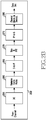
- FIGURE 5 illustrates an example verification method 500 according to this disclosure.
- the embodiment of the verification method 500 illustrated in FIGURE 5 is for illustration only. While the flow chart depicts a series of sequential steps, unless explicitly stated, no inference should be drawn from that sequence regarding specific order of performance, performance of steps or portions thereof serially rather than concurrently or in an overlapping manner, or performance of the steps depicted exclusively without the occurrence of intervening or intermediate steps.
- the process depicted in the example depicted is implemented by a processing circuitry, such as a processor or processor array, in, for example, a mobile station.
- the verification method 500 begins by initiating a boot procedure of a verification device or verification circuitry such as the VPC 402.
- the verification method 500 determines which of a normal boot mode and a secure boot mode has been initiated.
- the verification method 500 progresses to step 506 and verifies the cryptographic signature of the hash checksum of a data partition such as data partition 408.
- the block device to which the data partition 408 is mapped is set to be read-only with data integrity verification functionality turned on.
- the verification method 500 resumes normal boot operation.
- the verification method 500 determines that a secure mode has been initiated, the verification method 500 progresses from step 504 to step 512.
- step 512 the data partition is verified.
- step 514 an update package such as flash update package 426 or remote update package 430 is verified.
- step 516 if one of the partition and the update package are not verified successfully, the verification returns to step 502.
- step 516 if both the data partition and the update package are verified successfully, the verification method 500 progresses to step 518.
- step 518 the update package is applied to the data partition.
- step 520 a hash is generated based on the new data partition content and thereafter signed using a securely provided cryptographic key. After cryptographically signing the hash using the cryptographic key, the verification method initiates a reboot procedure at 522 which returns the verification method 500 to step 502.
- FIGURE 6 illustrates an example verification method 600 according to this disclosure.
- the embodiment of the verification method 600 illustrated in FIGURE 6 is for illustration only. While the flow chart depicts a series of sequential steps, unless explicitly stated, no inference should be drawn from that sequence regarding specific order of performance, performance of steps or portions thereof serially rather than concurrently or in an overlapping manner, or performance of the steps depicted exclusively without the occurrence of intervening or intermediate steps.
- the process depicted in the example depicted is implemented by a processing circuitry, such as a processor or processor array, in, for example, a mobile station.
- the verification method 600 begins by booting into a secure mode configured to apply an update package.
- the verification method determines whether a secure marker is set or present. Presence of the secure marker indicates that a block device is verified and further provides power failure support for update process. Generation of the secure marker is discussed later with reference with step 622. If the secure marker is set, the verification method progresses to step 606 where the update is applied to a secure or data partition. If a power failure occurs during the file-based update process, the method reboots into the secure mode at step 602. At step 608, the verification method 600 regenerates a hash based on the entire contents of the block device of the data partition.
- the verification method 600 cryptographically signs the generated root hash using a securely stored cryptographic key and removes the secure marker.
- the verification method 600 progresses to step 612 and initiates a reboot.
- the verification method 600 determines that the secure marker is not set
- the verification method 600 proceeds to step 614 and determines whether a special flashing flag has been set. Having a special flashing flag set indicates a block device has previously been verified as being valid and/or secure. If the flashing flag has been set, the verification method 600 proceeds to step 616 and sets up a device mapper, in this case, the above-described device mapper called DM-DIRTY 419.
- DM-DIRTY 419 With DM-DIRTY 419 set up, changes to files of a data partition and data blocks of a block device of the data partition will be monitored and utilized by DM-DIRTY to generate hashes of only the updated data blocks (as opposed to the all data blocks), update the leaves of a hash tree of the updated block device, and generate a root hash of the hash tree of the updated block device once the block device has been updated.
- the updated block device may be located on a system partition ("/system") of an ANDROID operating system based device.
- the file-based update is applied to a block device of a secure or data partition.
- DM-DIRTY proceeds to generate the root hash of the updated block device as described above.
- the verification method 600 then proceeds to step 610. However, if at step 614 the verification method 600 determines that the flash related flag has not been set, the verification method 600 proceeds to step 620 and attempts to verify an existing cryptographically signed hash of the contents of a block device that is to be updated. If the verification method 600 verifies the signature and the hash, the verification method 600 proceeds to step 622 and sets up a secure marker, to indicate that the block device is valid and/or verified. In some cases, a secure marker is a securely stored and encrypted file within a security architecture (such as ARM Trustzone). After setting up the secure marker, the verification method 600 proceeds to step 616. However, if at step 620 the verification method 600 fails to verify the signature and the hash, the verification method 600 proceeds to step 624 and aborts the process and indicates an error.
- a secure marker is a securely stored and encrypted file within a security architecture (such as ARM Trustzone).
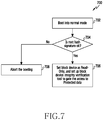
- FIGURE 7 illustrates an example verification method 700 according to this disclosure.
- the embodiment of the verification method 700 illustrated in FIGURE 7 is for illustration only. While the flow chart depicts a series of sequential steps, unless explicitly stated, no inference should be drawn from that sequence regarding specific order of performance, performance of steps or portions thereof serially rather than concurrently or in an overlapping manner, or performance of the steps depicted exclusively without the occurrence of intervening or intermediate steps.
- the process depicted in the example depicted is implemented by a processing circuitry, such as a processor or processor array, in, for example, a mobile station.
- the verification method 700 begins by booting into a normal mode. In some cases, the verification method 700 can occur after the verification method 600.
- the verification method 700 determines whether the cryptographic signature of the root hash is authenticated. If the signature is authenticated, the verification method 700 progresses to step 706.
- the block device is set to read-only, and the verification method 700 enables a security component configured to require a hash check of the contents of the protected block device before access is granted to the protected data of the block device.
- the security component is a block device integrity verification tool, and is configured to compare the calculated root hash against a previously generated cryptographically signed hash value.
- the verification method 700 at step 706 only allows access to the data of the protected block device of the data partition if the contents of the protected block device are verified by the block device integrity verification tools. If at step 704 the signature of the root hash is not verified, the verification method 700 proceeds to step 708 and aborts the process of booting into the normal mode.
- the block device integrity verification tool can be configured to execute DM-VERITY designed by Google.
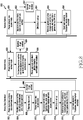
- FIGURE 8 illustrates an example of applying verification method 800 according to this disclosure.
- the embodiment of the verification method 800 illustrated in FIGURE 8 is for illustration only. While the flow chart depicts a series of sequential steps, unless explicitly stated, no inference should be drawn from that sequence regarding specific order of performance, performance of steps or portions thereof serially rather than concurrently or in an overlapping manner, or performance of the steps depicted exclusively without the occurrence of intervening or intermediate steps.
- the process depicted in the example depicted is implemented by a processing circuitry, such as a processor or processor array, in, for example, a mobile station.
- verification method 800 provides steps for implementing updates from a flash device, such as a device executing a binary download software 428, and for implementing remote updates from an update server such as update server 404.
- Steps 802-814 relate specifically to updating from a flash device while steps 826-836 relate specifically to utilizing remote updates.
- the verification method 800 When the verification method 800 is receiving and/or utilizing a binary data download or flash type update to a UE, namely a phone, the verification method 800 begins at step 802 by booting the phone in a binary data download mode configured to allow communication between the phone and the flash or binary data download software.
- the update package is verified by the flashing software. If such verification fails, the verification method 800 proceeds to step 806 and the flash based update procedure is aborted. However, if the verification of the update package is successful, the verification method 800 proceeds to step 808. Note that at step 804, the block device being updated does not require data integrity verification as its data will be fully overwritten by the update package.
- a flashing flag is set.
- the phone reboots in to a secure mode.
- the secure mode kernel verifies the flashing flag, the phone skips hash verification marker and sets a secure marker.
- DM-Dirty a device mapper, is set up.
- additional data is written to the system partition and a hash tree is generated by DM-Dirty.
- the root hash is signed in the TrustZone and the secure marker is removed.
- the verification method 800 proceeds to step 820 and the phone is booted into a normal boot mode.
- the initialization process of the normal boot mode verifies the cryptographically signed root hash and sets up a block device integrity verification tool. If the verification method 800 fails to verify the root hash, the verification method 800 proceeds to step 824 and aborts and can implement a failure action. In some cases, the failure action can include rebooting the phone into a panic mode. In other cases, the failure action can be destruction of the data partition. In still other cases, the failure action can be to repeatedly reboot the phone. However, if at step 822 the verification process 800 verifies the signature of the root hash, the verification method 800 progresses to step 826 and the phone works properly with the block device integrity verification tool enabled.
- the verification method 800 When the verification method 800 is receiving and/or utilizing a remote update to a UE or phone, the verification method 800 begins at step 828 and the phone reboots into a secure mode. Next, at step 830, the secure mode kernel attempts to verify the signature of the remote update, the signature of the root hash, and the data on /system partition against the entire hash tree. If any of such three verifications returns a failure, the verification method 800 progresses to step 832 which produces a failure action. If at step 830 all above-mentioned verifications pass, the verification method 800 progresses to step 834 and sets up DM-Dirty for the update.
- the remote update and other changes are written to the /system partition and a hash tree is re-generated by DM-Dirty.
- a root hash is signed in a TrustZone-based Integrity Measurement Architecture (TIMA) using a securely stored cryptographic key and the secure marker is removed.
- TMA TrustZone-based Integrity Measurement Architecture
- FIGURES 1 through 4 are for illustration only. Each component could have any suitable size, shape, and dimensions, and multiple components could have any suitable arrangement and layout. Also, various components in FIGURES 1 through 4 could be combined, further subdivided, or omitted and additional components could be added according to particular needs. Further, each component in a device or system could be implemented using any suitable structure(s) for performing the described function(s). In addition, while FIGURES 5 through 8 illustrate various series of steps, various steps in FIGURES 5 through 8 could overlap, occur in parallel, occur multiple times, or occur in a different order.
Landscapes
- Engineering & Computer Science (AREA)
- Computer Security & Cryptography (AREA)
- Theoretical Computer Science (AREA)
- Computer Hardware Design (AREA)
- Software Systems (AREA)
- General Engineering & Computer Science (AREA)
- Physics & Mathematics (AREA)
- General Physics & Mathematics (AREA)
- Computer Networks & Wireless Communication (AREA)
- Signal Processing (AREA)
- Mathematical Physics (AREA)
- Mobile Radio Communication Systems (AREA)
Claims (15)
- Verfahren zum Operieren einer elektronischen Vorrichtung (116) zur Verifizierung der Datenintegrität einer Blockvorrichtung (418), wobei das Verfahren umfasst:ein Bereitstellen (602) einer sicheren Ausführungsumgebung (412), die konfiguriert ist, um Veränderungen von Datenblöcken einer Blockvorrichtung (418) zu überwachen;ein Bestimmen (604), ob ein sicherer Marker vorhanden ist, wobei der sichere Marker anzeigt, dass die Blockvorrichtung (418) verifiziert ist;in Reaktion auf eine Bestimmung, dass der sichere Marker nicht vorhanden ist, ein Generieren (616) eines Hashs für veränderte Datenblöcke der Blockvorrichtung (418) in der sicheren Ausführungsumgebung (412);ein Verifizieren (610) einer kryptographischen Signatur bezüglich des Hashs für die veränderten Datenblöcke in der sicheren Ausführungsumgebung (412).
- Verfahren nach Anspruch 1, wobei der Hash für einen Datenblock generiert wird, der durch eine auf die Blockvorrichtung (418) angewendete dateibasierte Aktualisierung aktualisiert wurde,
wobei das Verfahren ferner umfasst:
ein Generieren eines Wurzel-Hashs für einen Hash-Baum der Blockvorrichtung (418) nach Abschluss der dateibasierten Aktualisierung in der sicheren Ausführungsumgebung (412). - Verfahren nach Anspruch 2, ferner umfassend:ein Generieren einer kryptographischen Signatur des Wurzel-Hashs an der Blockvorrichtung (418) an einem Ende eines Aktualisierungsprozesses mithilfe eines kryptographischen Schlüssels (434) in der sicheren Ausführungsumgebung (412); undein Verifizieren der kryptographischen Signatur des Wurzel-Hashs an der Blockvorrichtung (418) an einem Anfang des Aktualisierungsprozesses mithilfe des kryptographischen Schlüssels (434) in der sicheren Ausführungsumgebung (418).
- Eine elektronische Vorrichtung (116), die in einer sicheren Ausführungsumgebung zur Überwachung von Veränderungen an Datenblöcken einer Blockvorrichtung der elektronischen Vorrichtung (116) operiert, umfassend:einen Hash-Generator (422), der konfiguriert ist, um in der sicheren Ausführungsumgebung (412) zu operieren (602) und zu bestimmen (604), ob ein sicherer Marker vorhanden ist, wobei der sichere Marker anzeigt, dass die Blockvorrichtung (418) verifiziert ist, und, in Reaktion auf eine Bestimmung, dass der sichere Marker nicht vorhanden ist, einen Hash für einen veränderten Datenblock der Blockvorrichtung (418) zu generieren (616);einen kryptographischen Signaturverifizierer (424), der konfiguriert ist, um in der sicheren Umgebung (412) zu operieren und eine kryptographische Signatur bezüglich des Hashs für den veränderten Datenblock der Blockvorrichtung (418) zu verifizieren (610).
- Verfahren nach Anspruch 1 oder die elektronische Vorrichtung (116) nach Anspruch 4, wobei die sichere Ausführungsumgebung (412) in einem isolierten und sicheren Modus über einen vertrauenswürdigen Bootingprozess betreten wird.
- Verfahren nach Anspruch 1 oder die elektronische Vorrichtung (116) nach Anspruch 4, wobei der Hash für einen Datenblock generiert wird, der durch eine auf die Blockvorrichtung (418) angewendete dateibasierte Aktualisierung aktualisiert wurde.
- Verfahren oder die elektronische Vorrichtung (116) nach Anspruch 6, wobei die dateibasierte Aktualisierung eine Aktualisierung vom Flashtyp oder eine räumlich abgesetzte Aktualisierung umfasst.
- Elektronische Vorrichtung (116) nach Anspruch 4, wobei der Hash für einen Datenblock generiert wird, der durch eine auf die Blockvorrichtung (418) angewendete dateibasierte Aktualisierung aktualisiert wurde; und
wobei der Hash-Generator (422) konfiguriert ist, um ein Wurzel-Hash für einen Hash-Baum der Blockvorrichtung (418) zu generieren. - Elektronische Vorrichtung (116) nach Anspruch 4, ferner umfassend:
einen sicheren Speicher (436), umfassend einen kryptographischen Schlüssel (434), wobei der sichere Speicher (436) konfiguriert ist, um den kryptographischen Schlüssel (434) nur an die sichere Umgebung (412) zu kommunizieren. - Elektronische Vorrichtung (116) nach Anspruch 9, wobei die sichere Ausführungsumgebung (412) konfiguriert ist, um den Wurzel-Hash mithilfe des kryptographischen Schlüssels (434) kryptographisch zu unterschreiben.
- Verfahren für eine elektronische Vorrichtung (116) zur Verifizierung der Datenintegrität einer Blockvorrichtung (418) der elektronischen Vorrichtung (116), wobei das Verfahren umfasst:ein Empfangen eines dateibasierten Aktualisierungspakets;ein Anwenden des dateibasierten Aktualisierungspakets auf eine Blockvorrichtung (418) der sicheren Partition;ein Bestimmen (604), ob ein sicherer Marker vorhanden ist, wobei der sichere Marker anzeigt, dass die Blockvorrichtung (418) verifiziert ist;in Reaktion auf eine Bestimmung, dass der sichere Marker nicht vorhanden ist, ein Generieren (616) eines Wurzel-Hashs mit mindestens einem aktualisierten Datenblock der Blockvorrichtung (418); undein Verifizieren (610) einer Signatur bezüglich des dem mindestens einen aktualisierten Datenblock zugeordneten Wurzel-Hashs.
- Verfahren nach Anspruch 11, wobei das Generieren des Wurzel-Hashs in einer sicheren Ausführungsumgebung (412) der elektronischen Vorrichtung (116) erfolgt.
- Verfahren nach Anspruch 12, ferner umfassend:
ein kryptographisches Unterschreiben des Wurzel-Hashs mithilfe eines kryptographischen Schlüssels. - Verfahren nach Anspruch 13, wobei der kryptographische Schlüssel (434) in einem sicheren Speicher (436) der elektronischen Vorrichtung (116) gespeichert ist und der sichere Speicher (436) konfiguriert ist, um den kryptographischen Schlüssel (434) nur an die sichere Ausführungsumgebung (412) zu kommunizieren.
- Verfahren nach Anspruch 11, wobei das Verifizieren einer Unterschrift ein Verifizieren der Unterschrift des Wurzel-Hashs im vertrauenswürdigen Bootingprozess in einer normalen Ausführungsumgebung (410) umfasst;
wobei das Verfahren ferner Folgendes umfasst:
ein Einrichten eines Blockdatenintegritätswerkzeugs nach dem Verifizieren der Unterschrift des Wurzel-Hashs in einem vertrauenswürdigen Bootingprozess.
Applications Claiming Priority (1)
| Application Number | Priority Date | Filing Date | Title |
|---|---|---|---|
| US14/683,658 US9984255B2 (en) | 2014-09-30 | 2015-04-10 | Methods and apparatus to enable runtime checksum verification of block device images |
Publications (2)
| Publication Number | Publication Date |
|---|---|
| EP3079093A1 EP3079093A1 (de) | 2016-10-12 |
| EP3079093B1 true EP3079093B1 (de) | 2020-03-04 |
Family
ID=55745603
Family Applications (1)
| Application Number | Title | Priority Date | Filing Date |
|---|---|---|---|
| EP16164533.8A Active EP3079093B1 (de) | 2015-04-10 | 2016-04-08 | Verfahren und vorrichtung zur ermöglichung der laufzeitprüfsummenverifizierung von blockvorrichtungsbildern |
Country Status (1)
| Country | Link |
|---|---|
| EP (1) | EP3079093B1 (de) |
Families Citing this family (1)
| Publication number | Priority date | Publication date | Assignee | Title |
|---|---|---|---|---|
| CN110826099A (zh) * | 2019-10-30 | 2020-02-21 | 上海华元创信软件有限公司 | 适用于嵌入式实时操作系统的安全存储方法及系统 |
Family Cites Families (2)
| Publication number | Priority date | Publication date | Assignee | Title |
|---|---|---|---|---|
| US7974416B2 (en) * | 2002-11-27 | 2011-07-05 | Intel Corporation | Providing a secure execution mode in a pre-boot environment |
| US10073966B2 (en) * | 2013-04-29 | 2018-09-11 | Sri International | Operating system-independent integrity verification |
-
2016
- 2016-04-08 EP EP16164533.8A patent/EP3079093B1/de active Active
Non-Patent Citations (1)
| Title |
|---|
| None * |
Also Published As
| Publication number | Publication date |
|---|---|
| EP3079093A1 (de) | 2016-10-12 |
Similar Documents
| Publication | Publication Date | Title |
|---|---|---|
| US9984255B2 (en) | Methods and apparatus to enable runtime checksum verification of block device images | |
| US12406054B2 (en) | Automated persistent context-aware device provisioning | |
| US8589667B2 (en) | Booting and configuring a subsystem securely from non-local storage | |
| US12174961B2 (en) | Automated ephemeral context-aware device provisioning | |
| US8789037B2 (en) | Compatible trust in a computing device | |
| US9916574B2 (en) | Secure computing device and method | |
| US20170364685A1 (en) | Providing security to computing systems | |
| US10394654B2 (en) | Method and apparatus for hybrid firmware boot | |
| US20140376718A1 (en) | Downloading of data to secure devices | |
| WO2017071207A1 (zh) | 一种应用安装方法、相关装置及应用安装系统 | |
| US20160065375A1 (en) | Dynamic integrity validation of a high level operating system | |
| KR102573950B1 (ko) | 위성 장치를 원격으로 업데이트하기 위한 방법 및 장치 | |
| CN103338450A (zh) | 一种验证方法及设备 | |
| US20250053966A1 (en) | Method for signing application, and service platform | |
| CN110874467A (zh) | 信息处理方法、装置、系统以及处理器、存储介质 | |
| CN113056739A (zh) | 到瞬态、非持久性存储电路中的文件系统的验证和安装 | |
| US10771462B2 (en) | User terminal using cloud service, integrated security management server for user terminal, and integrated security management method for user terminal | |
| US10691447B2 (en) | Writing system software on an electronic device | |
| US20140351220A1 (en) | Configuration of one or more computer devices | |
| CN107992319B (zh) | 补丁数据更新方法及装置 | |
| EP3079093A1 (de) | Verfahren und vorrichtung zur ermöglichung der laufzeitprüfsummenverifizierung von blockvorrichtungsbildern | |
| CN105590061A (zh) | 用于可信执行环境的安全操作系统更新方法 | |
| CN106992857A (zh) | 一种刷机验证方法及装置 | |
| US20180144142A1 (en) | Secure Data Protection and Encryption Techniques for Computing Devices and Information Storage | |
| CN116938465A (zh) | 网关设备启动方法、装置、电子设备及存储介质 |
Legal Events
| Date | Code | Title | Description |
|---|---|---|---|
| PUAI | Public reference made under article 153(3) epc to a published international application that has entered the european phase |
Free format text: ORIGINAL CODE: 0009012 |
|
| AK | Designated contracting states |
Kind code of ref document: A1 Designated state(s): AL AT BE BG CH CY CZ DE DK EE ES FI FR GB GR HR HU IE IS IT LI LT LU LV MC MK MT NL NO PL PT RO RS SE SI SK SM TR |
|
| AX | Request for extension of the european patent |
Extension state: BA ME |
|
| STAA | Information on the status of an ep patent application or granted ep patent |
Free format text: STATUS: REQUEST FOR EXAMINATION WAS MADE |
|
| 17P | Request for examination filed |
Effective date: 20170106 |
|
| RBV | Designated contracting states (corrected) |
Designated state(s): AL AT BE BG CH CY CZ DE DK EE ES FI FR GB GR HR HU IE IS IT LI LT LU LV MC MK MT NL NO PL PT RO RS SE SI SK SM TR |
|
| STAA | Information on the status of an ep patent application or granted ep patent |
Free format text: STATUS: EXAMINATION IS IN PROGRESS |
|
| 17Q | First examination report despatched |
Effective date: 20170831 |
|
| GRAP | Despatch of communication of intention to grant a patent |
Free format text: ORIGINAL CODE: EPIDOSNIGR1 |
|
| STAA | Information on the status of an ep patent application or granted ep patent |
Free format text: STATUS: GRANT OF PATENT IS INTENDED |
|
| INTG | Intention to grant announced |
Effective date: 20191029 |
|
| GRAS | Grant fee paid |
Free format text: ORIGINAL CODE: EPIDOSNIGR3 |
|
| GRAA | (expected) grant |
Free format text: ORIGINAL CODE: 0009210 |
|
| STAA | Information on the status of an ep patent application or granted ep patent |
Free format text: STATUS: THE PATENT HAS BEEN GRANTED |
|
| AK | Designated contracting states |
Kind code of ref document: B1 Designated state(s): AL AT BE BG CH CY CZ DE DK EE ES FI FR GB GR HR HU IE IS IT LI LT LU LV MC MK MT NL NO PL PT RO RS SE SI SK SM TR |
|
| REG | Reference to a national code |
Ref country code: GB Ref legal event code: FG4D |
|
| REG | Reference to a national code |
Ref country code: CH Ref legal event code: EP |
|
| REG | Reference to a national code |
Ref country code: AT Ref legal event code: REF Ref document number: 1241214 Country of ref document: AT Kind code of ref document: T Effective date: 20200315 |
|
| REG | Reference to a national code |
Ref country code: DE Ref legal event code: R096 Ref document number: 602016030906 Country of ref document: DE |
|
| REG | Reference to a national code |
Ref country code: IE Ref legal event code: FG4D |
|
| PG25 | Lapsed in a contracting state [announced via postgrant information from national office to epo] |
Ref country code: NO Free format text: LAPSE BECAUSE OF FAILURE TO SUBMIT A TRANSLATION OF THE DESCRIPTION OR TO PAY THE FEE WITHIN THE PRESCRIBED TIME-LIMIT Effective date: 20200604 Ref country code: FI Free format text: LAPSE BECAUSE OF FAILURE TO SUBMIT A TRANSLATION OF THE DESCRIPTION OR TO PAY THE FEE WITHIN THE PRESCRIBED TIME-LIMIT Effective date: 20200304 Ref country code: RS Free format text: LAPSE BECAUSE OF FAILURE TO SUBMIT A TRANSLATION OF THE DESCRIPTION OR TO PAY THE FEE WITHIN THE PRESCRIBED TIME-LIMIT Effective date: 20200304 |
|
| PGFP | Annual fee paid to national office [announced via postgrant information from national office to epo] |
Ref country code: DE Payment date: 20200421 Year of fee payment: 5 |
|
| REG | Reference to a national code |
Ref country code: NL Ref legal event code: MP Effective date: 20200304 |
|
| PG25 | Lapsed in a contracting state [announced via postgrant information from national office to epo] |
Ref country code: GR Free format text: LAPSE BECAUSE OF FAILURE TO SUBMIT A TRANSLATION OF THE DESCRIPTION OR TO PAY THE FEE WITHIN THE PRESCRIBED TIME-LIMIT Effective date: 20200605 Ref country code: HR Free format text: LAPSE BECAUSE OF FAILURE TO SUBMIT A TRANSLATION OF THE DESCRIPTION OR TO PAY THE FEE WITHIN THE PRESCRIBED TIME-LIMIT Effective date: 20200304 Ref country code: LV Free format text: LAPSE BECAUSE OF FAILURE TO SUBMIT A TRANSLATION OF THE DESCRIPTION OR TO PAY THE FEE WITHIN THE PRESCRIBED TIME-LIMIT Effective date: 20200304 Ref country code: SE Free format text: LAPSE BECAUSE OF FAILURE TO SUBMIT A TRANSLATION OF THE DESCRIPTION OR TO PAY THE FEE WITHIN THE PRESCRIBED TIME-LIMIT Effective date: 20200304 Ref country code: BG Free format text: LAPSE BECAUSE OF FAILURE TO SUBMIT A TRANSLATION OF THE DESCRIPTION OR TO PAY THE FEE WITHIN THE PRESCRIBED TIME-LIMIT Effective date: 20200604 |
|
| PGFP | Annual fee paid to national office [announced via postgrant information from national office to epo] |
Ref country code: GB Payment date: 20200423 Year of fee payment: 5 |
|
| REG | Reference to a national code |
Ref country code: LT Ref legal event code: MG4D |
|
| PG25 | Lapsed in a contracting state [announced via postgrant information from national office to epo] |
Ref country code: NL Free format text: LAPSE BECAUSE OF FAILURE TO SUBMIT A TRANSLATION OF THE DESCRIPTION OR TO PAY THE FEE WITHIN THE PRESCRIBED TIME-LIMIT Effective date: 20200304 |
|
| PG25 | Lapsed in a contracting state [announced via postgrant information from national office to epo] |
Ref country code: LT Free format text: LAPSE BECAUSE OF FAILURE TO SUBMIT A TRANSLATION OF THE DESCRIPTION OR TO PAY THE FEE WITHIN THE PRESCRIBED TIME-LIMIT Effective date: 20200304 Ref country code: ES Free format text: LAPSE BECAUSE OF FAILURE TO SUBMIT A TRANSLATION OF THE DESCRIPTION OR TO PAY THE FEE WITHIN THE PRESCRIBED TIME-LIMIT Effective date: 20200304 Ref country code: SM Free format text: LAPSE BECAUSE OF FAILURE TO SUBMIT A TRANSLATION OF THE DESCRIPTION OR TO PAY THE FEE WITHIN THE PRESCRIBED TIME-LIMIT Effective date: 20200304 Ref country code: PT Free format text: LAPSE BECAUSE OF FAILURE TO SUBMIT A TRANSLATION OF THE DESCRIPTION OR TO PAY THE FEE WITHIN THE PRESCRIBED TIME-LIMIT Effective date: 20200729 Ref country code: EE Free format text: LAPSE BECAUSE OF FAILURE TO SUBMIT A TRANSLATION OF THE DESCRIPTION OR TO PAY THE FEE WITHIN THE PRESCRIBED TIME-LIMIT Effective date: 20200304 Ref country code: IS Free format text: LAPSE BECAUSE OF FAILURE TO SUBMIT A TRANSLATION OF THE DESCRIPTION OR TO PAY THE FEE WITHIN THE PRESCRIBED TIME-LIMIT Effective date: 20200704 Ref country code: RO Free format text: LAPSE BECAUSE OF FAILURE TO SUBMIT A TRANSLATION OF THE DESCRIPTION OR TO PAY THE FEE WITHIN THE PRESCRIBED TIME-LIMIT Effective date: 20200304 Ref country code: CZ Free format text: LAPSE BECAUSE OF FAILURE TO SUBMIT A TRANSLATION OF THE DESCRIPTION OR TO PAY THE FEE WITHIN THE PRESCRIBED TIME-LIMIT Effective date: 20200304 Ref country code: SK Free format text: LAPSE BECAUSE OF FAILURE TO SUBMIT A TRANSLATION OF THE DESCRIPTION OR TO PAY THE FEE WITHIN THE PRESCRIBED TIME-LIMIT Effective date: 20200304 |
|
| REG | Reference to a national code |
Ref country code: AT Ref legal event code: MK05 Ref document number: 1241214 Country of ref document: AT Kind code of ref document: T Effective date: 20200304 |
|
| REG | Reference to a national code |
Ref country code: CH Ref legal event code: PL |
|
| REG | Reference to a national code |
Ref country code: DE Ref legal event code: R097 Ref document number: 602016030906 Country of ref document: DE |
|
| PG25 | Lapsed in a contracting state [announced via postgrant information from national office to epo] |
Ref country code: MC Free format text: LAPSE BECAUSE OF FAILURE TO SUBMIT A TRANSLATION OF THE DESCRIPTION OR TO PAY THE FEE WITHIN THE PRESCRIBED TIME-LIMIT Effective date: 20200304 |
|
| PLBE | No opposition filed within time limit |
Free format text: ORIGINAL CODE: 0009261 |
|
| STAA | Information on the status of an ep patent application or granted ep patent |
Free format text: STATUS: NO OPPOSITION FILED WITHIN TIME LIMIT |
|
| PG25 | Lapsed in a contracting state [announced via postgrant information from national office to epo] |
Ref country code: IT Free format text: LAPSE BECAUSE OF FAILURE TO SUBMIT A TRANSLATION OF THE DESCRIPTION OR TO PAY THE FEE WITHIN THE PRESCRIBED TIME-LIMIT Effective date: 20200304 Ref country code: DK Free format text: LAPSE BECAUSE OF FAILURE TO SUBMIT A TRANSLATION OF THE DESCRIPTION OR TO PAY THE FEE WITHIN THE PRESCRIBED TIME-LIMIT Effective date: 20200304 Ref country code: AT Free format text: LAPSE BECAUSE OF FAILURE TO SUBMIT A TRANSLATION OF THE DESCRIPTION OR TO PAY THE FEE WITHIN THE PRESCRIBED TIME-LIMIT Effective date: 20200304 Ref country code: LI Free format text: LAPSE BECAUSE OF NON-PAYMENT OF DUE FEES Effective date: 20200430 Ref country code: CH Free format text: LAPSE BECAUSE OF NON-PAYMENT OF DUE FEES Effective date: 20200430 Ref country code: LU Free format text: LAPSE BECAUSE OF NON-PAYMENT OF DUE FEES Effective date: 20200408 |
|
| REG | Reference to a national code |
Ref country code: BE Ref legal event code: MM Effective date: 20200430 |
|
| 26N | No opposition filed |
Effective date: 20201207 |
|
| PG25 | Lapsed in a contracting state [announced via postgrant information from national office to epo] |
Ref country code: BE Free format text: LAPSE BECAUSE OF NON-PAYMENT OF DUE FEES Effective date: 20200430 Ref country code: PL Free format text: LAPSE BECAUSE OF FAILURE TO SUBMIT A TRANSLATION OF THE DESCRIPTION OR TO PAY THE FEE WITHIN THE PRESCRIBED TIME-LIMIT Effective date: 20200304 Ref country code: SI Free format text: LAPSE BECAUSE OF FAILURE TO SUBMIT A TRANSLATION OF THE DESCRIPTION OR TO PAY THE FEE WITHIN THE PRESCRIBED TIME-LIMIT Effective date: 20200304 |
|
| PG25 | Lapsed in a contracting state [announced via postgrant information from national office to epo] |
Ref country code: IE Free format text: LAPSE BECAUSE OF NON-PAYMENT OF DUE FEES Effective date: 20200408 Ref country code: FR Free format text: LAPSE BECAUSE OF NON-PAYMENT OF DUE FEES Effective date: 20200504 |
|
| REG | Reference to a national code |
Ref country code: DE Ref legal event code: R119 Ref document number: 602016030906 Country of ref document: DE |
|
| GBPC | Gb: european patent ceased through non-payment of renewal fee |
Effective date: 20210408 |
|
| PG25 | Lapsed in a contracting state [announced via postgrant information from national office to epo] |
Ref country code: DE Free format text: LAPSE BECAUSE OF NON-PAYMENT OF DUE FEES Effective date: 20211103 Ref country code: GB Free format text: LAPSE BECAUSE OF NON-PAYMENT OF DUE FEES Effective date: 20210408 |
|
| PG25 | Lapsed in a contracting state [announced via postgrant information from national office to epo] |
Ref country code: TR Free format text: LAPSE BECAUSE OF FAILURE TO SUBMIT A TRANSLATION OF THE DESCRIPTION OR TO PAY THE FEE WITHIN THE PRESCRIBED TIME-LIMIT Effective date: 20200304 Ref country code: MT Free format text: LAPSE BECAUSE OF FAILURE TO SUBMIT A TRANSLATION OF THE DESCRIPTION OR TO PAY THE FEE WITHIN THE PRESCRIBED TIME-LIMIT Effective date: 20200304 Ref country code: CY Free format text: LAPSE BECAUSE OF FAILURE TO SUBMIT A TRANSLATION OF THE DESCRIPTION OR TO PAY THE FEE WITHIN THE PRESCRIBED TIME-LIMIT Effective date: 20200304 |
|
| PG25 | Lapsed in a contracting state [announced via postgrant information from national office to epo] |
Ref country code: MK Free format text: LAPSE BECAUSE OF FAILURE TO SUBMIT A TRANSLATION OF THE DESCRIPTION OR TO PAY THE FEE WITHIN THE PRESCRIBED TIME-LIMIT Effective date: 20200304 Ref country code: AL Free format text: LAPSE BECAUSE OF FAILURE TO SUBMIT A TRANSLATION OF THE DESCRIPTION OR TO PAY THE FEE WITHIN THE PRESCRIBED TIME-LIMIT Effective date: 20200304 |