EP3077513B1 - Compositions and methods for making (r)-reticuline and precursors thereof - Google Patents
Compositions and methods for making (r)-reticuline and precursors thereof Download PDFInfo
- Publication number
- EP3077513B1 EP3077513B1 EP14867017.7A EP14867017A EP3077513B1 EP 3077513 B1 EP3077513 B1 EP 3077513B1 EP 14867017 A EP14867017 A EP 14867017A EP 3077513 B1 EP3077513 B1 EP 3077513B1
- Authority
- EP
- European Patent Office
- Prior art keywords
- reticuline
- polypeptide
- acid sequence
- seq
- nucleic acid
- Prior art date
- Legal status (The legal status is an assumption and is not a legal conclusion. Google has not performed a legal analysis and makes no representation as to the accuracy of the status listed.)
- Active
Links
Images




Classifications
-
- A—HUMAN NECESSITIES
- A01—AGRICULTURE; FORESTRY; ANIMAL HUSBANDRY; HUNTING; TRAPPING; FISHING
- A01H—NEW PLANTS OR NON-TRANSGENIC PROCESSES FOR OBTAINING THEM; PLANT REPRODUCTION BY TISSUE CULTURE TECHNIQUES
- A01H1/00—Processes for modifying genotypes ; Plants characterised by associated natural traits
- A01H1/04—Processes of selection involving genotypic or phenotypic markers; Methods of using phenotypic markers for selection
-
- C—CHEMISTRY; METALLURGY
- C12—BIOCHEMISTRY; BEER; SPIRITS; WINE; VINEGAR; MICROBIOLOGY; ENZYMOLOGY; MUTATION OR GENETIC ENGINEERING
- C12N—MICROORGANISMS OR ENZYMES; COMPOSITIONS THEREOF; PROPAGATING, PRESERVING, OR MAINTAINING MICROORGANISMS; MUTATION OR GENETIC ENGINEERING; CULTURE MEDIA
- C12N15/00—Mutation or genetic engineering; DNA or RNA concerning genetic engineering, vectors, e.g. plasmids, or their isolation, preparation or purification; Use of hosts therefor
- C12N15/09—Recombinant DNA-technology
- C12N15/11—DNA or RNA fragments; Modified forms thereof; Non-coding nucleic acids having a biological activity
- C12N15/52—Genes encoding for enzymes or proenzymes
-
- C—CHEMISTRY; METALLURGY
- C12—BIOCHEMISTRY; BEER; SPIRITS; WINE; VINEGAR; MICROBIOLOGY; ENZYMOLOGY; MUTATION OR GENETIC ENGINEERING
- C12P—FERMENTATION OR ENZYME-USING PROCESSES TO SYNTHESISE A DESIRED CHEMICAL COMPOUND OR COMPOSITION OR TO SEPARATE OPTICAL ISOMERS FROM A RACEMIC MIXTURE
- C12P17/00—Preparation of heterocyclic carbon compounds with only O, N, S, Se or Te as ring hetero atoms
- C12P17/10—Nitrogen as only ring hetero atom
- C12P17/12—Nitrogen as only ring hetero atom containing a six-membered hetero ring
-
- A—HUMAN NECESSITIES
- A01—AGRICULTURE; FORESTRY; ANIMAL HUSBANDRY; HUNTING; TRAPPING; FISHING
- A01H—NEW PLANTS OR NON-TRANSGENIC PROCESSES FOR OBTAINING THEM; PLANT REPRODUCTION BY TISSUE CULTURE TECHNIQUES
- A01H1/00—Processes for modifying genotypes ; Plants characterised by associated natural traits
- A01H1/06—Processes for producing mutations, e.g. treatment with chemicals or with radiation
-
- A—HUMAN NECESSITIES
- A01—AGRICULTURE; FORESTRY; ANIMAL HUSBANDRY; HUNTING; TRAPPING; FISHING
- A01H—NEW PLANTS OR NON-TRANSGENIC PROCESSES FOR OBTAINING THEM; PLANT REPRODUCTION BY TISSUE CULTURE TECHNIQUES
- A01H5/00—Angiosperms, i.e. flowering plants, characterised by their plant parts; Angiosperms characterised otherwise than by their botanic taxonomy
-
- C—CHEMISTRY; METALLURGY
- C07—ORGANIC CHEMISTRY
- C07D—HETEROCYCLIC COMPOUNDS
- C07D217/00—Heterocyclic compounds containing isoquinoline or hydrogenated isoquinoline ring systems
- C07D217/22—Heterocyclic compounds containing isoquinoline or hydrogenated isoquinoline ring systems with hetero atoms or with carbon atoms having three bonds to hetero atoms with at the most one bond to halogen, e.g. ester or nitrile radicals, directly attached to carbon atoms of the nitrogen-containing ring
- C07D217/24—Oxygen atoms
-
- C—CHEMISTRY; METALLURGY
- C12—BIOCHEMISTRY; BEER; SPIRITS; WINE; VINEGAR; MICROBIOLOGY; ENZYMOLOGY; MUTATION OR GENETIC ENGINEERING
- C12N—MICROORGANISMS OR ENZYMES; COMPOSITIONS THEREOF; PROPAGATING, PRESERVING, OR MAINTAINING MICROORGANISMS; MUTATION OR GENETIC ENGINEERING; CULTURE MEDIA
- C12N15/00—Mutation or genetic engineering; DNA or RNA concerning genetic engineering, vectors, e.g. plasmids, or their isolation, preparation or purification; Use of hosts therefor
- C12N15/09—Recombinant DNA-technology
- C12N15/63—Introduction of foreign genetic material using vectors; Vectors; Use of hosts therefor; Regulation of expression
-
- C—CHEMISTRY; METALLURGY
- C12—BIOCHEMISTRY; BEER; SPIRITS; WINE; VINEGAR; MICROBIOLOGY; ENZYMOLOGY; MUTATION OR GENETIC ENGINEERING
- C12N—MICROORGANISMS OR ENZYMES; COMPOSITIONS THEREOF; PROPAGATING, PRESERVING, OR MAINTAINING MICROORGANISMS; MUTATION OR GENETIC ENGINEERING; CULTURE MEDIA
- C12N15/00—Mutation or genetic engineering; DNA or RNA concerning genetic engineering, vectors, e.g. plasmids, or their isolation, preparation or purification; Use of hosts therefor
- C12N15/09—Recombinant DNA-technology
- C12N15/63—Introduction of foreign genetic material using vectors; Vectors; Use of hosts therefor; Regulation of expression
- C12N15/79—Vectors or expression systems specially adapted for eukaryotic hosts
- C12N15/82—Vectors or expression systems specially adapted for eukaryotic hosts for plant cells, e.g. plant artificial chromosomes (PACs)
-
- C—CHEMISTRY; METALLURGY
- C12—BIOCHEMISTRY; BEER; SPIRITS; WINE; VINEGAR; MICROBIOLOGY; ENZYMOLOGY; MUTATION OR GENETIC ENGINEERING
- C12N—MICROORGANISMS OR ENZYMES; COMPOSITIONS THEREOF; PROPAGATING, PRESERVING, OR MAINTAINING MICROORGANISMS; MUTATION OR GENETIC ENGINEERING; CULTURE MEDIA
- C12N15/00—Mutation or genetic engineering; DNA or RNA concerning genetic engineering, vectors, e.g. plasmids, or their isolation, preparation or purification; Use of hosts therefor
- C12N15/09—Recombinant DNA-technology
- C12N15/63—Introduction of foreign genetic material using vectors; Vectors; Use of hosts therefor; Regulation of expression
- C12N15/79—Vectors or expression systems specially adapted for eukaryotic hosts
- C12N15/82—Vectors or expression systems specially adapted for eukaryotic hosts for plant cells, e.g. plant artificial chromosomes (PACs)
- C12N15/8216—Methods for controlling, regulating or enhancing expression of transgenes in plant cells
- C12N15/8218—Antisense, co-suppression, viral induced gene silencing [VIGS], post-transcriptional induced gene silencing [PTGS]
-
- C—CHEMISTRY; METALLURGY
- C12—BIOCHEMISTRY; BEER; SPIRITS; WINE; VINEGAR; MICROBIOLOGY; ENZYMOLOGY; MUTATION OR GENETIC ENGINEERING
- C12N—MICROORGANISMS OR ENZYMES; COMPOSITIONS THEREOF; PROPAGATING, PRESERVING, OR MAINTAINING MICROORGANISMS; MUTATION OR GENETIC ENGINEERING; CULTURE MEDIA
- C12N15/00—Mutation or genetic engineering; DNA or RNA concerning genetic engineering, vectors, e.g. plasmids, or their isolation, preparation or purification; Use of hosts therefor
- C12N15/09—Recombinant DNA-technology
- C12N15/63—Introduction of foreign genetic material using vectors; Vectors; Use of hosts therefor; Regulation of expression
- C12N15/79—Vectors or expression systems specially adapted for eukaryotic hosts
- C12N15/82—Vectors or expression systems specially adapted for eukaryotic hosts for plant cells, e.g. plant artificial chromosomes (PACs)
- C12N15/8241—Phenotypically and genetically modified plants via recombinant DNA technology
- C12N15/8242—Phenotypically and genetically modified plants via recombinant DNA technology with non-agronomic quality (output) traits, e.g. for industrial processing; Value added, non-agronomic traits
- C12N15/8243—Phenotypically and genetically modified plants via recombinant DNA technology with non-agronomic quality (output) traits, e.g. for industrial processing; Value added, non-agronomic traits involving biosynthetic or metabolic pathways, i.e. metabolic engineering, e.g. nicotine, caffeine
-
- C—CHEMISTRY; METALLURGY
- C12—BIOCHEMISTRY; BEER; SPIRITS; WINE; VINEGAR; MICROBIOLOGY; ENZYMOLOGY; MUTATION OR GENETIC ENGINEERING
- C12N—MICROORGANISMS OR ENZYMES; COMPOSITIONS THEREOF; PROPAGATING, PRESERVING, OR MAINTAINING MICROORGANISMS; MUTATION OR GENETIC ENGINEERING; CULTURE MEDIA
- C12N9/00—Enzymes; Proenzymes; Compositions thereof; Processes for preparing, activating, inhibiting, separating or purifying enzymes
- C12N9/0004—Oxidoreductases (1.)
- C12N9/0006—Oxidoreductases (1.) acting on CH-OH groups as donors (1.1)
-
- C—CHEMISTRY; METALLURGY
- C12—BIOCHEMISTRY; BEER; SPIRITS; WINE; VINEGAR; MICROBIOLOGY; ENZYMOLOGY; MUTATION OR GENETIC ENGINEERING
- C12N—MICROORGANISMS OR ENZYMES; COMPOSITIONS THEREOF; PROPAGATING, PRESERVING, OR MAINTAINING MICROORGANISMS; MUTATION OR GENETIC ENGINEERING; CULTURE MEDIA
- C12N9/00—Enzymes; Proenzymes; Compositions thereof; Processes for preparing, activating, inhibiting, separating or purifying enzymes
- C12N9/0004—Oxidoreductases (1.)
- C12N9/0071—Oxidoreductases (1.) acting on paired donors with incorporation of molecular oxygen (1.14)
- C12N9/0077—Oxidoreductases (1.) acting on paired donors with incorporation of molecular oxygen (1.14) with a reduced iron-sulfur protein as one donor (1.14.15)
- C12N9/0081—Cholesterol monooxygenase (cytochrome P 450scc)(1.14.15.6)
-
- C—CHEMISTRY; METALLURGY
- C12—BIOCHEMISTRY; BEER; SPIRITS; WINE; VINEGAR; MICROBIOLOGY; ENZYMOLOGY; MUTATION OR GENETIC ENGINEERING
- C12N—MICROORGANISMS OR ENZYMES; COMPOSITIONS THEREOF; PROPAGATING, PRESERVING, OR MAINTAINING MICROORGANISMS; MUTATION OR GENETIC ENGINEERING; CULTURE MEDIA
- C12N9/00—Enzymes; Proenzymes; Compositions thereof; Processes for preparing, activating, inhibiting, separating or purifying enzymes
- C12N9/10—Transferases (2.)
- C12N9/1085—Transferases (2.) transferring alkyl or aryl groups other than methyl groups (2.5)
-
- C—CHEMISTRY; METALLURGY
- C12—BIOCHEMISTRY; BEER; SPIRITS; WINE; VINEGAR; MICROBIOLOGY; ENZYMOLOGY; MUTATION OR GENETIC ENGINEERING
- C12P—FERMENTATION OR ENZYME-USING PROCESSES TO SYNTHESISE A DESIRED CHEMICAL COMPOUND OR COMPOSITION OR TO SEPARATE OPTICAL ISOMERS FROM A RACEMIC MIXTURE
- C12P17/00—Preparation of heterocyclic carbon compounds with only O, N, S, Se or Te as ring hetero atoms
- C12P17/10—Nitrogen as only ring hetero atom
-
- C—CHEMISTRY; METALLURGY
- C12—BIOCHEMISTRY; BEER; SPIRITS; WINE; VINEGAR; MICROBIOLOGY; ENZYMOLOGY; MUTATION OR GENETIC ENGINEERING
- C12Q—MEASURING OR TESTING PROCESSES INVOLVING ENZYMES, NUCLEIC ACIDS OR MICROORGANISMS; COMPOSITIONS OR TEST PAPERS THEREFOR; PROCESSES OF PREPARING SUCH COMPOSITIONS; CONDITION-RESPONSIVE CONTROL IN MICROBIOLOGICAL OR ENZYMOLOGICAL PROCESSES
- C12Q1/00—Measuring or testing processes involving enzymes, nucleic acids or microorganisms; Compositions therefor; Processes of preparing such compositions
- C12Q1/68—Measuring or testing processes involving enzymes, nucleic acids or microorganisms; Compositions therefor; Processes of preparing such compositions involving nucleic acids
-
- C—CHEMISTRY; METALLURGY
- C12—BIOCHEMISTRY; BEER; SPIRITS; WINE; VINEGAR; MICROBIOLOGY; ENZYMOLOGY; MUTATION OR GENETIC ENGINEERING
- C12Y—ENZYMES
- C12Y101/00—Oxidoreductases acting on the CH-OH group of donors (1.1)
- C12Y101/01—Oxidoreductases acting on the CH-OH group of donors (1.1) with NAD+ or NADP+ as acceptor (1.1.1)
- C12Y101/01247—Codeinone reductase (NADPH) (1.1.1.247)
-
- C—CHEMISTRY; METALLURGY
- C12—BIOCHEMISTRY; BEER; SPIRITS; WINE; VINEGAR; MICROBIOLOGY; ENZYMOLOGY; MUTATION OR GENETIC ENGINEERING
- C12Y—ENZYMES
- C12Y205/00—Transferases transferring alkyl or aryl groups, other than methyl groups (2.5)
- C12Y205/01—Transferases transferring alkyl or aryl groups, other than methyl groups (2.5) transferring alkyl or aryl groups, other than methyl groups (2.5.1)
- C12Y205/01059—Protein geranylgeranyltransferase type I (2.5.1.59)
-
- C—CHEMISTRY; METALLURGY
- C07—ORGANIC CHEMISTRY
- C07K—PEPTIDES
- C07K2319/00—Fusion polypeptide
Definitions
- compositions and methods disclosed herein relate to secondary metabolites and processes for manufacturing the same. More particularly, the present disclosure relates to (R) -Reticuline and certain precursors thereof and methods and compositions for manufacturing (R) -Reticuline and such precursors.
- the biochemical pathways of living organisms are commonly classified as being either part of primary metabolism or part of secondary metabolism. Pathways that are part of a living cell's primary metabolism are involved in catabolism for energy production or in anabolism for building block production for the cell. Secondary metabolites, on the other hand, are produced by living cells without having any obvious anabolic or catabolic function. It has however long been recognized that many secondary metabolites are useful in many respects, including for example as therapeutic agents or natural deterrents.
- the secondary metabolite (R) -Reticuline is produced by opium poppy ( Papaver somniferum ) and other members of the plant families Papaveraceae, Lauraceae, Annonaceae, Euphorbiaceae and Moraceae, and may be used as a source material for producing the pharmaceutically active compounds including morphine and codeine.
- R )-Reticuline may be harvested from natural sources, such as opium poppy.
- R Alternatively (R) -Reticuline may be prepared synthetically.
- the existing manufacturing methods for (R) -Reticuline however suffer from low yields of ( R )-Reticuline and/or are expensive.
- Desgagné-Penix et al. (BMC Plant Biol, 2010, 10:252 ) describes transcriptome and proteome analyses of genes involved in the alkaloid metabolism in poppy cell cultures, in particular in the biosynthetic pathway that produces sanguinarine and morphine.
- WO 00/58333 A1 relates to codeinone reductase, an enzyme involved in the metabolism of ( R )-reticuline in alkaloid poppy plants.
- WO 2015/173590 A1 describes a cytochrome P450 polypeptide from Papaver somniferum.
- Unterlinner et al. (The Plant Journal, 1995, 18: 465-475 ) describes the cloning and functional expression of a codeinone reductase from Papaver somniferum.
- the present disclosure relates to the secondary metabolite (R) -Reticuline and certain precursors thereof, as well as to methods of making (R) -Reticuline and certain precursors thereof.
- the invention provides a method for preparing (R) -reticuline comprising:
- the invention also provides a recombinant expression vector comprising as operably linked components: (a) a nucleic acid sequence capable of controlling expression in a yeast cell; and (b) a nucleic acid sequence encoding: (i) a CYP450 polypeptide comprising an amino acid sequence that is at least 85% identical to SEQ ID NO: 325 and that is capable of oxidizing ( S )-reticuline to form 1,2-dehydroreticuline; and (ii) an AKR polypeptide comprising an amino acid sequence that is at least 85% identical to SEQ ID NO: 327 and that is capable of reducing 1,2-dehydroreticuline to form ( R )-reticuline; wherein the expression vector is suitable for expression in the yeast cell.
- the invention further provides a yeast host cell comprising a chimeric nucleic acid comprising as operably linked components: (a) a nucleic acid sequence encoding a CYP450 polypeptide comprising an amino acid sequence that is at least 85% identical to SEQ ID NO: 325 and that is capable of oxidizing ( S )-reticuline to form 1,2-dehydroreticuline; and (b) a nucleic acid sequence encoding a AKR polypeptide comprising an amino acid sequence that is at least 85% identical to SEQ ID NO: 327 and that is capable of reducing 1,2-dehydroreticuline to form ( R )-reticuline.
- the invention further provides a method of making (R) -reticuline in a yeast cell comprising: (a) providing (S) -reticuline; (b) contacting the (S) -reticuline with an enzyme mixture capable of converting ( S )-reticuline to ( R )-reticuline under conditions that permit the conversion of ( S )-reticuline to ( R )-reticuline in a yeast cell, wherein the enzyme mixture comprises a first polypeptide capable of oxidizing ( S )-reticuline to form 1,2-dehydroreticuline and a second polypeptide capable of reducing 1,2-dehydroreticuline to form ( R )-reticuline, and wherein the first polypeptide is a CYP450 polypeptide comprising an amino acid sequence that is at least 85% identical to SEQ ID NO: 325 and the second polypeptide is an AKR polypeptide comprising an amino acid sequence that is at least 85% identical to SEQ ID NO: 327.
- the enzyme mixture comprises a first polypeptide capable of oxidizing ( S )-Reticuline to form 1,2-Dehydroreticuline and a second polypeptide capable of reducing 1,2-Dehydroreticuline to form ( R )-Reticuline.
- the first polypeptide capable of oxidizing the benzylisoquinoline derivative to form the oxidized benzylisoquinoline derivative is a cytochrome P450 and the second polypeptide capable of reducing the oxidized benzylisoquinoline derivative to form ( R )-Reticuline is an aldo-keto reductase (AKR).
- ARR aldo-keto reductase
- the method for preparing or making ( R )-reticuline is conducted in vivo in a yeast cell.
- the first and second nucleic acid sequences are operably linked in order to produce a fusion polypeptide comprising CYP450 and AKR.
- Compositions may comprise nucleic acid sequences encoding a first polypeptide capable of oxidizing (S) -Reticuline to form 1,2-Dehydroreticuline and a second polypeptide capable of reducing 1,2-Dehydroreticuline to form (R)- Reticuline, i.e. a nucleic acid sequence encoding a cytochrome P450 and an aldo-keto reductase, together capable of oxidizing (S) -Reticuline to form 1,2-Dehydroreticuline and a second polypeptide capable of reducing 1,2-Dehydroreticuline to form (R) -Reticuline.
- compositions and methods will be described below to provide an example of an embodiment of each claimed subject matter. No embodiment described below limits any claimed subject matter and any claimed subject matter may cover methods, processes, compositions or systems that differ from those described below.
- the claimed subject matter is not limited to compositions or methods having all of the features of any one composition, method, system or process described below or to features common to multiple or all of the compositions, systems or methods described below. It is possible that a composition, system, method or process described below is not an embodiment of any claimed subject matter.
- compositions, system, method or process described below may be the subject matter of another protective instrument, for example, a continuing patent application, and the applicants, inventors or owners do not intend to abandon, disclaim or dedicate to the public any such subject matter by its disclosure in this document.
- X and/or Y is intended to mean X or Y or both, for example.
- X, Y, and/or Z is intended to mean X or Y or Z or any combination thereof.
- the present disclosure relates to the secondary metabolite (R) -Reticuline and precursors thereof, as well as to methods of making (R) -Reticuline and precursors thereof.
- the current disclosure further relates to certain enzymes capable of catalyzing reactions resulting in the conversion of (S)- Reticuline to form (R) -Reticuline.
- the herein provided methods represent a novel and efficient means of manufacturing (R) -Reticuline and precursors thereof.
- the methods provided herein do not rely on chemical synthesis and may be conducted at commercial scale.
- the current disclosure provides for the first time a methodology to manufacture (R) -Reticuline and precursors thereof using living cells not normally capable of synthesizing (R)- Reticuline and precursors thereof. Such cells may be used as a source whence (R)- Reticuline and precursors thereof may economically be extracted. (R) -Reticuline and precursors thereof produced in accordance with the present disclosure are useful inter alia in the manufacture of pharmaceutical compositions including morphine and codeine.
- benzylisoquinoline derivative refers to compounds having the chemical formula (VII): wherein R 1 , R 2 , R 3 and R 4 are each independently or simultaneously a hydrogen atom, a hydroxyl group, an alkyl group (for example C 1 -C 10 -alkyl) or an alkoxy group (for example C 1 -C 10 -alkoxy), and wherein R 5 represents a hydrogen atom or an alkyl group (for example C 1 -C 10 -alkyl).
- (R) -Reticuline precursor refers to a compound having the chemical formula (VIII): wherein R 1 , R 2 , R 3 and R 4 are each independently or simultaneously a hydrogen atom, a hydroxyl group, an alkyl group (for example C 1 -C 10 -alkyl) or an alkoxy group (for example C 1 -C 10 -alkoxy), and wherein R 5 represents a hydrogen atom or an alkyl group (for example C 1 -C 10 -alkyl) , with the proviso that chemical formula (II) excepts (R) -Reticuline, i.e.
- R is a methoxy group
- R 2 is a hydroxyl group
- R 3 is a hydroxyl group
- R 4 is a methoxy group
- R 5 is a methyl group.
- (S) -Reticuline refers to the ( S )-enantiomer of Reticuline and a chemical compound having the chemical structure (III):
- oxidized benzylisoquinoline derivative refers to a compound having the chemical formula (IX): wherein R 1 , R 2 , R 3 and R 4 are each independently or simultaneously a hydrogen atom, a hydroxyl group, an alkyl group (for example C 1 -C 10 -alkyl) or an alkoxy group (for example C 1 -C 10 -alkoxy), and wherein R 5 represents a hydrogen atom or an alkyl group (for example C 1 -C 10 -alkyl).
- (R) -Reticuline refers to the ( R )-enantiomer of Reticuline and a chemical compound having the chemical structure (V):
- 1,2-Dehydroreticuline refers to a chemical compound having the chemical structure (VI):
- (R) -Reticuline pathway or " (R) -Reticuline synthesis pathway”, as may be used interchangeably herein, refer to the metabolic pathway for the synthesis of (R) -Reticuline depicted in FIG. 1 .
- a first chemical compound within the (R) -Reticuline pathway is referenced as "" of a second chemical compound in the pathway, it is meant herein that synthesis of the first chemical compound precedes synthesis of the second chemical compound.
- a first chemical compound is referenced as "downstream" from a second chemical compound in the (R) -Reticuline pathway, it is meant herein that synthesis of the second chemical compound precedes synthesis of the first chemical compound.
- enzyme mixture refers to a mixture comprising one or two or more enzymes. It should be noted that in mixtures containing two or more enzymes the enzymes may be independently biologically active without interaction or coordination to form the mixture. In one embodiment, the enzymes contained in the enzyme mixture may associate or interact as independent non-contiguous polypeptide chains. In another embodiment the enzyme mixture may be prepared as a fusion polypeptide between two polypeptides.
- Cytochrome P450 refers to any and all enzymes comprising a sequence of amino acid residues which is (i) substantially identical to the amino acid sequences constituting any CYP450 polypeptide set forth herein, including, for example, SEQ.ID NO: 219 to SEQ.ID NO: 321; SEQ.ID NO: 325; and SEQ.ID NO: 338, or (ii) encoded by a nucleic acid sequence capable of hybridizing under at least moderately stringent conditions to any nucleic acid sequence encoding any CYP450 polypeptide set forth herein, but for the use of synonymous codons.
- aldo-keto reductase or "AKR”, which may be used interchangeably herein, in reference to any and all enzymes comprising a sequence of amino acid residues which is (i) substantially identical to the amino acid sequences constituting any AKR polypeptide set forth herein, including, for example, SEQ.ID NO: 59 to SEQ.ID NO: 115; SEQ.ID NO: 327; SEQ.ID NO: 329; SEQ.ID NO: 330; and SEQ.ID NO: 340, or (ii) encoded by a nucleic acid sequence capable of hybridizing under at least moderately stringent conditions to any nucleic acid sequence encoding any AKR polypeptide set forth herein, but for the use of synonymous codons.
- nucleic acid sequence refers to a sequence of nucleoside or nucleotide monomers consisting of naturally occurring bases, sugars and intersugar (backbone) linkages. The term also includes modified or substituted sequences comprising non-naturally occurring monomers or portions thereof.
- the nucleic acid sequences of the present disclosure may be deoxyribonucleic acid sequences (DNA) or ribonucleic acid sequences (RNA) and may include naturally occurring bases including adenine, guanine, cytosine, thymidine and uracil.
- the sequences may also contain modified bases. Examples of such modified bases include aza and deaza adenine, guanine, cytosine, thymidine and uracil, and xanthine and hypoxanthine.
- nucleic acid sequence encoding CYP450 and “nucleic acid sequence encoding a CYP450 polypeptide”, refer to any and all nucleic acid sequences encoding a CYP450 polypeptide, including, for example, SEQ.ID NO: 116 to SEQ.ID NO: 218; SEQ.ID NO: 324; and SEQ.ID NO: 337.
- Nucleic acid sequences encoding a CYP450 polypeptide further include any and all nucleic acid sequences which (i) encode polypeptides that are substantially identical to the CYP450 polypeptide sequences set forth herein; or (ii) hybridize to any CYP450 nucleic acid sequences set forth herein under at least moderately stringent hybridization conditions or which would hybridize thereto under at least moderately stringent conditions but for the use of synonymous codons.
- nucleic acid sequence encoding AKR and “nucleic acid sequence encoding an AKR polypeptide”, refer to any and all nucleic acid sequences encoding an AKR polypeptide, including, for example, SEQ.ID NO: 1 to SEQ.ID NO: 58; SEQ.ID NO: 326; SEQ.ID NO: 328; and SEQ.ID NO: 339.
- Nucleic acid sequences encoding an AKR polypeptide further include any and all nucleic acid sequences which (i) encode polypeptides that are substantially identical to the AKR polypeptide sequences set forth herein; or (ii) hybridize to any AKR nucleic acid sequences set forth herein under at least moderately stringent hybridization conditions or which would hybridize thereto under at least moderately stringent conditions but for the use of synonymous codons.
- two polypeptide sequences preferably are at least 70% identical, and more preferably are at least 85% identical and most preferably at least 95% identical, for example 96%, 97%, 98% or 99% identical.
- amino acid sequences of such two sequences are aligned, using for example the alignment method of Needleman and Wunsch (J. Mol. Biol., 1970, 48: 443 ), as revised by Smith and Waterman (Adv. Appl. Math., 1981, 2: 482 ) so that the highest order match is obtained between the two sequences and the number of identical amino acids is determined between the two sequences.
- a particularly preferred method for determining the percentage identity between two polypeptides involves the Clustal W algorithm ( Thompson, J D, Higgines, D G and Gibson T J, 1994, Nucleic Acid Res 22(22): 4673-4680 together with the BLOSUM 62 scoring matrix ( Henikoff S & Henikoff, J G, 1992, Proc. Natl. Acad. Sci. USA 89: 10915-10919 using a gap opening penalty of 10 and a gap extension penalty of 0.1, so that the highest order match obtained between two sequences wherein at least 50% of the total length of one of the two sequences is involved in the alignment.
- the parameters in the wash conditions that determine hybrid stability are sodium ion concentration and temperature.
- a 1% mismatch may be assumed to result in about a 1° C. decrease in Tm, for example if nucleic acid molecules are sought that have a >95% identity, the final wash temperature will be reduced by about 5° C. Based on these considerations those skilled in the art will be able to readily select appropriate hybridization conditions. Stringent hybridization conditions can be selected.
- Moderately stringent hybridization conditions include a washing step in 3 ⁇ SSC at 42° C. It is understood however that equivalent stringencies may be achieved using alternative buffers, salts and temperatures.
- chimeric refers to at least two linked nucleic acid sequences which are not naturally linked.
- Chimeric nucleic acid sequences include linked nucleic acid sequences of different natural origins. For example a nucleic acid sequence constituting a yeast promoter linked to a nucleic acid sequence encoding a COR protein is considered chimeric.
- Chimeric nucleic acid sequences also may comprise nucleic acid sequences of the same natural origin, provided they are not naturally linked.
- nucleic acid sequence constituting a promoter obtained from a particular cell-type may be linked to a nucleic acid sequence encoding a polypeptide obtained from that same cell-type, but not normally linked to the nucleic acid sequence constituting the promoter.
- Chimeric nucleic acid sequences also include nucleic acid sequences comprising any naturally occurring nucleic acid sequence linked to any non-naturally occurring nucleic acid sequence.
- substantially pure and isolated describe a compound, e.g., a pathway synthesis intermediate or a polypeptide, which has been separated from components that naturally accompany it.
- a compound is substantially pure when at least 60%, more preferably at least 75%, more preferably at least 90%, 95%, 96%, 97%, or 98%, and most preferably at least 99% of the total material (by volume, by wet or dry weight, or by mole percent or mole fraction) in a sample is the compound of interest.
- Purity can be measured by any appropriate method, e.g., in the case of polypeptides, by chromatography, gel electrophoresis or HPLC analysis.
- in vivo refers to contacting a benzylisoquinoline derivative with an enzyme capable of catalyzing conversion of the benzylisoquinoline derivative within a living cell (i.e. a yeast cell) to form (R)- Reticuline or an (R) -Reticuline precursor.
- in vitro refers to contacting a benzylisoquinoline derivative with an enzyme capable of catalyzing conversion of the benzylisoquinoline derivative in an environment outside a living cell, including, without limitation, for example, in a microwell plate, a tube, a flask, a beaker, a tank, a reactor and the like, to form (R) -Reticuline or an (R) -Reticuline precursor.
- the AKR polypeptides are obtained from or obtainable from P. somniferum, P. bracteatum and P. rhoeas.
- the first and second polypeptide are provided in the form of two separate polypeptides, i.e. polypeptides that are not connected by covalent chemical bonds.
- the first and second polypeptide are prepared as a fusion polypeptide comprising a first portion encoding a CYP450 polypeptide and a second portion encoding an AKR polypeptide.
- Such fusion polypeptide may be prepared recombinantly or it may be a naturally occurring fusion polypeptide may be used.
- Examples of a CYP450 polypeptide include the polypeptides set forth in. SEQ.ID NO: 219 to SEQ.ID NO: 321; SEQ.ID NO: 325; and SEQ.ID NO: 338.
- Examples of AKR polypeptides include the polypeptides set forth in SEQ.ID NO: 59 to SEQ.ID NO: 115; SEQ.ID NO: 327; SEQ.ID NO: 329; SEQ.ID NO: 330: and SEQ.ID NO: 340.
- the foregoing reactions are performed under conditions permitting the conversion of the benzylisoquinoline precursor to (R) -Reticuline.
- the conditions include in vivo or in vitro conditions, as hereinafter further detailed.
- the conditions further typically include the presence of water and buffering agents.
- a reducing agent in order to permit a reduction reaction resulting in the conversion of the oxidized benzylisoquinoline precursor to (R)- Reticuline.
- the reducing agent may be nicotinamide adenine dinucleotide (NADH), and in other embodiments, the reducing agent is nicotinamide adenine dinucleotide phosphate (NADPH).
- a reductase capable of reducing the enzyme converting the benzylisoquinoline derivative to the oxidized benzylisoquinoline and a reducing agent.
- the reductase is a cytochrome P450 reductase, such as for example the opium poppy cytochrome P450 reductase, capable of reducing CYP450, and the reducing agent is NADH, or more preferably, NADPH.
- the reactions may be conducted at various pH's, e.g. at approximately pH 3, pH 4, pH 5, pH 6, pH 7, pH 8, pH, 9 or pH 10.
- Example 7 documents an optimal pH of approximately pH 8 for the conversion of (S)-Reticuline to 1,2-Dehydroreticuline, an optimal pH of approximately pH 7 for the conversion of 1,2-Dehydroreticuline to ( R )-Reticuline, and an optimal pH of approximately pH 9 for the conversion of ( R )-Reticuline to 1,2-Dehydroreticuline.
- the first polypeptide capable of oxidizing the benzylisoquinoline derivative to form the oxidized benzylisoquinoline derivative 1,2-dehydroreticuline is a cytochrome P450 and the second polypeptide capable of reducing the oxidized benzylisoquinoline derivative to form (R) -Reticuline is an aldo-keto reductase (AKR).
- the AKR is obtained from or obtainable from P. somniferum, P. bracteatum and P. rhoeas.
- the first and second polypeptide are provided in the form of two separate polypeptides, i.e. polypeptides that are not connected by covalent chemical bonds.
- the first and second polypeptide are prepared as a fusion polypeptide comprising a first portion encoding a CYP450 polypeptide and a second portion encoding an AKR polypeptide.
- Such fusion polypeptide may be prepared recombinantly, or it may be a naturally occurring fusion polypeptide may be used.
- CYP450 polypeptides examples include CYP450 polypeptides obtainable from various Papaver species, including, Papaver somniferum, Papaver rhoeas and Papaver bracteatum; Argemone species, including Argemone mexicana ; Berberis species, including Berberis thunbergii ; Corydalis species, including Corydalis chelantifolia ; Chelidonium species, including, Chelidonium majus; Cissampelos species, including Cissampelos mucronata ; Cocculus species, including Cocculus trilobus; Corydalis species, including Corydalis chelantifolia ; Glaucium species, including Glaucium flavum ; Hydrastis species, including Hydrastis canadensis ; Jeffersonia species, including Jeffersonia diphylla ; Mahonia species, including Mahonia aquifolium ; Meni
- AKR polypeptides from the aforementioned species set forth herein in SEQ.ID NO: 219 to SEQ.ID NO: 321; SEQ.ID NO: 325; and SEQ.ID NO: 338.
- AKR polypeptides obtainable from various Papaver species, including, Papaver somniferum, Papaver rhoeas and Papaver bracteatum ; Argemone species, including Argemone mexicana ; Berberis species, including Berberis thunbergii ; Corydalis species, including Corydalis chelantifolia ; Chelidonium species, including, Chelidonium majus ; Cissampelos species, including Cissampelos mucronata ; Cocculus species, including Cocculus trilobus ; Corydalis species, including Corydalis chelantifolia ; Glaucium
- SEQ.ID NO: 59 specifically include the polypeptides from the aforementioned species set forth herein in SEQ.ID NO: 59 to SEQ.ID NO: 115; SEQ.ID NO: 327; SEQ.ID NO: 329; SEQ.ID NO: 330; and SEQ.ID NO: 340.
- the foregoing reactions are performed under conditions permitting the conversion of the benzylisoquinoline precursor to (R) -Reticuline.
- the conditions include in vivo or in vitro conditions, as hereinafter further detailed.
- the conditions further typically include the presence of water and buffering agents.
- a reducing agent in order to permit a reduction reaction resulting in the conversion of the oxidized benzylisoquinoline precursor to (R)- Reticuline.
- the reducing agent may be nicotinamide adenine dinucleotide (NADH), and in other embodiments, the reducing agent is nicotinamide adenine dinucleotide phosphate (NADPH).
- reductase capable of reducing the enzyme converting the benzylisoquinoline derivative to the oxidized benzylisoquinoline and a reducing agent.
- the reductase is a cytochrome P450 reductase capable of reducing CYP450, and the reducing agent is NADH, or more preferably, NADPH.
- the initial reaction constituents are provided in more or less pure form and are mixed under conditions that permit the requisite chemical reactions to substantially proceed.
- Substantially pure forms of the initial benzylisoquinoline derivative may be purchased.
- (S) -Reticuline for example, may be purchased (e.g. from Santa Cruz Biotechnology Inc.) as a substantially pure chemical compound, chemically synthesized from precursor compounds, or isolated from natural sources including Papaver somniferum and other members of the Papaveraceae, Lauraceae, Annonaceae, Euphorbiaceae or Moraceae families of plants comprising such compounds as desired.
- Suitable Papaveraceae members include, but are not limited to, species belonging to the genus Papaver ; Corydalis ; Chelidonium ; and Romeria. Such species may be able to make (S) -Reticuline, including, but not limited to, plant species selected from the species Chelidonium majus ; Corydalis bulbosa ; Corydalis cava ; Corydalis ochotenis ; Coryd ⁇ lis ophiocarpa ; Coryd ⁇ lis platycarpa ; Coryd ⁇ lis tuberosa ; Papaver armeniacum ; Papaver Bracteatum; Papaver cylindricum; Papaver decaisnei; Papaver fugax ; Papaver oreophyllum ; Papaver orientale; Papaver paeonifolium; Papaver persicum; Papaver pseudo-orientale; Papaver rhoeas; Papaver rhopalothece
- (S) -Reticuline may be performed using standard methods as described, for example, in S. Teitel and A. Bross, Journal of Heterocyclic Chemistry 5, 825-829, 1968 .
- more or less pure forms of the enzymes may be isolated from natural sources, including, but not limited to, Papaver somniferum, Papaver bracteatum and Papaver rhoeas, or they may be prepared recombinantly, or synthetically.
- the nucleic acid sequence may be obtained from any natural source, e.g. a plant source, containing such sequences.
- Preferred plant sources include Papaver species, including, Papaver somniferum, Papaver rhoeas and Papaver bracteatum ; Argemone species, including Argemone mexicana ; Berberis species, including Berberis thunbergii ; Corydalis species, including Corydalis chelantifolia ; Chelidonium species, including, Chelidonium majus ; Cissampelos species, including Cissampelos mucronata ; Cocculus species, including Cocculus trilobus ; Corydalis species, including Corydalis chelantifolia ; Glaucium species, including Glaucium flavum ; Hydrastis species, including Hydrastis canadensis ; Jeffersonia species, including Jeffersonia diphylla ; Mahonia species, including Mahonia aquifolium ; Menispermum species, including Menispermum canadense ; Nandina species, including Nandina
- nucleic acid sequences obtainable or obtained from the aforementioned plant species include the nucleic acid sequence set forth in SEQ.ID NO: 116 to SEQ.ID NO: 218; SEQ.ID NO: 324; and SEQ.ID NO: 337.
- nucleic acid sequences obtainable or obtained from the aforementioned plant species include the nucleic acid sequence set forth herein as SEQ.ID NO: 1 to SEQ.ID NO: 58; SEQ.ID NO: 326; SEQ.ID NO: 328; and SEQ.ID NO: 339.
- a nucleic acid sequence encoding a natural fusion polypeptide between CYP450 and AKR forth may be used.
- the polypeptides subsequently may be recovered, isolated and separated from other host cell components by a variety of different protein purification techniques including, e.g. ion-exchange chromatography, size exclusion chromatography, affinity chromatography, hydrophobic interaction chromatography, reverse phase chromatography, gel filtration, etc. Further general guidance with respect to protein purification may for example be found in: Cutler, P. Protein Purification Protocols, Humana Press, 2004, Second Ed . Thus substantially pure preparations of the CYP450 and/or AKR polypeptides may be obtained.
- a benzylisoquinoline derivative is brought in contact with catalytic quantities of one or more of the enzymes CYP450 and AKR under reaction conditions permitting an enzyme catalyzed chemical conversion of the benzylisoquinoline derivative under in vivo reaction conditions.
- living cells are modified in such a manner that they produce (R) -Reticuline.
- the living cells are fungal cells (i.e. yeast cells).
- the living cells are selected to be host cells not naturally capable of capable of producing a benzylisoquinoline derivative, ( S )-Reticuline, a ( R )-Reticuline precursor or (R) -Reticuline.
- the host cells are naturally capable of producing (S) -Reticuline or a benzylisoquinoline derivative but not (R) -Reticuline or an (R) -Reticuline precursor, i.e. the cells are not naturally capable of performing the epimerization reaction from the (S) -enantiomer to the (R) -enantiomer.
- the cells are able to produce a benzylisoquinoline derivative or (S) -Reticuline and (R) -Reticuline or a (R) -Reticuline precursor but the levels of (R) -Reticuline or (R) -Reticuline precursor are lower than desirable and the levels of (R) -Reticuline or (R) -Reticuline precursor are modulated relative to the levels in the unmodified cells.
- the first and second nucleic acid sequences are operably linked in order to produce a fusion polypeptide comprising CYP450 and AKR.
- the nucleic acid sequences encoding CYP450 and AKR can be obtainable or obtained from Papaver somniferum and other members of the Papaveraceae, Lauraceae, Annonaceae, Euphorbiaceae or Moraceae family of plants comprising such compounds as desired.
- Suitable Papaveraceae members include, but are not limited to, species belonging to the genus Papaver ; Corydalis ; Chelidonium ; and Romeria.
- Such species may be able to make (R) -Reticuline, including, but not limited to, plant species selected from the species Chelidonium majus ; Corydalis bulbosa ; Corydalis cava; Corydalis ochotenis; Corydalis ophiocarpa ; Corydalis platycarpa ; Corydalis tuberosa ; Papaver armeniacum ; Papaver Bracteatum; Papaver cylindricum; Papaver decaisnei ; Papaverfugax ; Papaver oreophyllum; Papaver orientale; Papaver paeonifolium ; Papaver persicum; Papaver pseudo-orientale; Papaver rhoeas; Papaver rhopalothece ; Papaver setigerum; Papaver somniferum; Papaver tauricolum ; Papaver triniaefolium ; and Romeria carica.
- the nucleic acid sequences encoding CYP450 and AKR are nucleic acid sequences selected from the nucleic acid sequences encoding CYP450 and AKR obtainable or obtained from Papaver somniferum, Papaver bracteatum and Papaver rhoeas.
- the nucleic acid sequence encoding the CYP450 is SEQ.ID NO: 324.
- the nucleic acid sequence encoding the AKR is SEQ.ID NO: 326.
- nucleic acid sequence encoding CYP450 and AKR are linked to a nucleic acid sequence capable of controlling expression CYP450 and AKR in a host cell.
- the nucleic acid sequence encoding CYP450 and AKR can be linked to a promoter capable of controlling expression in a host cell.
- Nucleic acid sequences capable of controlling expression in host cells that may be used herein include any transcriptional promoter capable of controlling expression of polypeptides in host cells.
- promoters obtained from bacterial cells are used when a bacterial host is selected in accordance herewith, while a fungal promoter will be used when a fungal host is selected, a plant promoter will be used when a plant cell is selected, and so on.
- nucleic acid elements capable elements of controlling expression in a host cell include transcriptional terminators, enhancers and the like, all of which may be included in the chimeric nucleic acid sequences of the present disclosure. It will be understood by those ordinary skill in the art that operable linkage of nucleic acid sequences includes linkage of promoters and sequences capable of controlling expression to coding sequences in the 5' to 3' direction of transcription.
- the chimeric nucleic acid sequences comprising a promoter capable of controlling expression in host cell linked to a nucleic acid sequence encoding CYP450 and AKR, can be integrated into a recombinant expression vector which ensures good expression in the host cell.
- the present disclosure further includes a recombinant expression vector comprising as operably linked components:
- the expression vector may further contain a marker gene.
- Marker genes that may be used in accordance with the present disclosure include all genes that allow the distinction of transformed cells from non-transformed cells, including all selectable and screenable marker genes.
- a marker gene may be a resistance marker such as an antibiotic resistance marker against, for example, kanamycin or ampicillin.
- Screenable markers that may be employed to identify transformants through visual inspection include ⁇ -glucuronidase (GUS) ( U.S. Pat. Nos. 5,268,463 and 5,599,670 ) and green fluorescent protein (GFP) ( Niedz et al., 1995, Plant Cell Rep., 14: 403 ).
- GUS ⁇ -glucuronidase
- GFP green fluorescent protein
- the preparation of the E. coli vectors may be accomplished using commonly known techniques such as restriction digestion, ligation, gel electrophoresis, DNA sequencing, the Polymerase Chain Reaction (PCR) and other methodologies.
- a wide variety of cloning vectors are available to perform the necessary steps required to prepare a recombinant expression vector.
- vectors with a replication system functional in E. coli are vectors such as pBR322, the pUC series of vectors, the M13 mp series of vectors, pBluescript etc.
- these cloning vectors contain a marker allowing selection of transformed cells. Nucleic acid sequences may be introduced in these vectors, and the vectors may be introduced in E.
- E. coli by preparing competent cells, electroporation or using other well known methodologies to a person of skill in the art.
- E. coli may be grown in an appropriate medium including but not limited to, Luria-Broth medium and harvested.
- Recombinant expression vectors may readily be recovered from cells upon harvesting and lysing of the cells. Further, general guidance with respect to the preparation of recombinant vectors and growth of recombinant organisms may be found in, for example: Sambrook et al., Molecular Cloning, a Laboratory Manual, Cold Spring Harbor Laboratory Press, 2001, Third Ed .
- a host cell wherein the host cell comprises a chimeric nucleic acid sequence comprising as operably linked components one or more nucleic acid sequences encoding one or more of the polypeptides selected from the group consisting of CYP450 and AKR.
- the host cell is preferably a host cell not capable of naturally producing a benzylisoquinoline derivative, (S) -Reticuline, or (R) -Reticuline or a (R) -Reticuline precursor.
- the host cell is naturally capable of producing (S) -Reticuline a benzylisoquinoline derivative but not (R)- Reticuline or an (R) -Reticuline precursor.
- the host cell is able to produce a benzylisoquinoline derivative, (S) -Reticuline, or (R) -Reticuline or a (R) -Reticuline precursor, but the levels of (R) -Reticuline or the (R) -Reticuline precursor are lower than desirable and the levels of (R) -Reticuline or (R) -Reticuline precursor are modulated relative to the levels of (R) -Reticuline or (R) -Reticuline precursor in the native, unmodified cells.
- (S)- Reticuline or the benzylisoquinoline derivative may be provided to the cells as part of the cell's growth medium.
- a precursor compound of (S) -Reticuline or a benzylisoquinoline derivative capable of being converted by the cells into (S) -Reticuline or a benzylisoquinoline derivative, respectively may be provided.
- Alternative substrates that may be provided to the cells as part of the cellular growth medium include, but are not limited to, ( S )-Norcoclaurine, ( S )- N -Methylnorcoclaurine, ( S )-Norlaudanosaline, (S)-N- Methylnorlaudanosaline, ( S )-Coclaurine, ( S )- N -Methylcoclaurine, ( S )-3'-Hydroxycoclaurine, ( S )-3'-Hydroxy- N -methylcoclaurine), ( S )-Higenamine, ( S )- N- Methylhigenamine, ( S )-Laudanosoline, (S) -Norreticuline, (S) -Colletine, and (S)- Orientaline.
- Cells that may be used in accordance herewith are yeast cells.
- AKR and CYP450 polypeptides are operably linked to form a fusion polypeptide.
- the amounts of (R) -Reticuline that accumulates in the host cell may vary.
- the ratio of (R) -Reticuline to (S) -Reticuline synthesized in vivo by such cells prepared to comprise chimeric nucleic acid sequences in accordance with the present disclosure exceeds the ratio of (R) -Reticuline to (S)- Reticuline present in the natural host cells (i.e. cells not comprising the chimeric nucleic acid sequences) or host cell extracts.
- the ratio of (R) -Reticuline to (S) -Reticuline in host cells or host cell extracts is greater than 21:79, e.g. at least 0.3:1, at least 0.4:1, at least 0.5:1, at least 1:1, at least 2:1, at least 3:1, or at least 4:1.
- (R) -Reticuline obtained in accordance with the present disclosure may be formulated for use as a pharmaceutical drug, therapeutic agent or medicinal agent.
- the present disclosure further includes a pharmaceutical composition comprising (R) -Reticuline prepared in accordance with the methods of the present disclosure.
- Pharmaceutical drug preparations comprising (R) -Reticuline in accordance with the present disclosure preferably further comprise vehicles, excipients, diluents, and auxiliary substances, such as wetting or emulsifying agents, pH buffering substances and the like. These vehicles, excipients and auxiliary substances are generally pharmaceutical agents that may be administered without undue toxicity.
- compositions include, but are not limited to, liquids such as water, saline, polyethyleneglycol, hyaluronic acid, glycerol and ethanol.
- Pharmaceutically acceptable salts can also be included therein, for example, mineral acid salts such as hydrochlorides, phosphates, sulfates, and the like; and the salts of organic acids such as acetates, propionates, benzoates, and the like. It is also preferred, although not required, that the preparation will contain a pharmaceutically acceptable excipient that serves as a stabilizer.
- suitable carriers that also act as stabilizers for peptides include, without limitation, pharmaceutical grades of dextrose, sucrose, lactose, sorbitol, inositol, dextran, and the like.
- suitable carriers include, again without limitation, starch, cellulose, sodium or calcium phosphates, citric acid, glycine, polyethylene glycols (PEGs), and combinations thereof.
- the pharmaceutical composition may be formulated for oral and intravenous administration and other routes of administration as desired. Dosing may vary and may be optimized using routine experimentation.
- the pharmaceutical composition comprising (R) -Reticuline may be used to treat baldness or muscle tension.
- (R) -Reticuline provided herein is useful as an agent to manufacture other secondary metabolites or medicinal compositions including, without limitation, salutaridine, codeine and morphine, and further including thebaine, papaverine, noscapine, codamine, laudine and laudanosine (+)-pallidine, (-)-isoboldine, and (-)-corytuberine.
- the (R) -Reticuline precursors provided herein are useful as an agent to manufacture other secondary metabolites notably (R) -Reticuline.
- (R) - N -methylcoclaurine may be used as an agent to manufacture (R) -3'-Hydroxy- N -methylcoclaurine.
- (R) -3'-Hydroxy-N-methylcoclaurine may be used as an agent to manufacture (R) -Reticuline.
- Methods to analyze genomic DNA are generally known to the art, and include, for example, the use of the polymerase chain reaction (PCR) and specific polynucleotide primers to amplify specific portions of the nucleotide sequence encoding AKR and/or CYP450. Further restriction digestion and Southern blot analysis may be used. The analysis may further be directed to introns, exons or regions upstream or downstream of the nucleic acid sequence encoding AKR and/or CYP450. The analysis further may be directed at identifying a genomic locus comprising a nucleic acid sequence encoding AKR and/or CYP450, wherein such locus is linked to modulated levels of expression of AKR and/or CYP450.
- PCR polymerase chain reaction
- specific polynucleotide primers to amplify specific portions of the nucleotide sequence encoding AKR and/or CYP450.
- the nucleic acid sequences encoding AKR and/or CYP450 may be used to produce a cell that has modulated levels of expression of AKR and/or CYP450.
- the methods further may result in the modulation of the ratio of (S) -Reticuline, (R)- Reticuline. Such modulation is illustrated in Example 5.
- This Example demonstrates the in vitro conversion of (S) -Reticuline to (R)- Reticuline using an in enzyme mixture in the form of a fusion polypeptide of Papaver somniferum comprised of a CYP450 and an AKR moiety (SEQ.ID: NO 323).
- Saccharomyces cerevisiae strain YPH499 harboring pESC-leu2d::PsCPR/PsREPI was grown and microsomes purified as described below. Briefly, the yeast strain was grown in Synthetic Complete (SC) medium lacking leucine supplemented with 2% glucose for 16 hours at 30°C and 250 rpm. One milliliter of culture was added to 50 mL of SC medium lacking leucine, supplemented with 1.8% galactose, 0.2% glucose and 1% raffinose and grown for 72 hours at 30°C and 250rpm.
- SC Synthetic Complete
- TEK buffer 50 mM Tris-HCl pH 8, 1 mM EDTA, 100 mM KCl.
- Pellets were resuspended in 1mL TESB buffer (50 mM Tris-HCl pH 8, 1 mM EDTA, 0.6 M sorbitol) and an equal volume of 0.5 mm glass beads were added.
- the tubes were shaken by hand at 10°C for 4 minutes.
- the beads were washed with TESB and the washings collected and centrifuged at 14,000 g for 10 min.
- the supernatant was ultracentrifuged for 1 hour at 125,000 g and the supernatant discarded.
- Microsomes were then resuspended in 50 mM HEPES pH 7.5.
- Enzyme assays contained 500 ⁇ M NADPH and 50 ⁇ M of (S)-Reticuline in HEPES buffer (pH 7.5) and microsomes prepared as described above. Assays were incubated overnight at 30 °C. Following the reaction, the assay samples were run on an Agilent 1260 HLPC at a flow rate of 0.2 ml/min and compounds were separated using a LUX cellulose-1 chiral column (150 mm ⁇ 2.1 mm i.d.; Phenomenex) with 75% ammonium bicarbonate supplemented with 0.1% dethylamine (Solvent A) and 25% acetonitrile with 0.1% diethylamine (Solvent B). (R) -Reticuline and (S)- Reticuline were monitored at a wavelength of 284 nm.
- Results are shown in FIG. 3 .
- the retention time of the authentic standard controls (R) -Reticuline and (S) -Reticuline on the chiral column is approximately 13.5 minutes (top panel); and 15 minutes (second panel from top), respectively.
- the bottom panel shows the results of an assay in which no enzyme is present in the mixture and demonstrates that under these reaction conditions no (S) -Reticuline is epimerized to (R) -Reticuline.
- the third panel from the top shows that in the presence of the enzyme mixture (S) -Reticuline is epimerized to (R)- Reticuline (see arrow, and appearance of peak at a retention time of approximately 15 min).
- This example demonstrates the in vitro conversion in yeast of (S) -Reticuline to 1,2-Dehydroreticuline using the CYP450 of Papaver rhoeas (SEQ.ID: NO 325).
- Saccharomyces cerevisiae strain YPH499 harboring pESC-leu2d::PsCPR/PrDRS was grown and microsomes purified as described below. Briefly, the yeast strain was grown in Synthetic Complete (SC) medium lacking leucine supplemented with 2% glucose for 16 hours at 30°C and 250 rpm.
- SC Synthetic Complete
- the tubes were shaken by hand at 10°C for 4 min.
- the beads were washed with TESB and the washings collected and centrifuged at 14,000 g for 10 min. The supernatant was then ultracentrifuged for 1 hour at 125,000 g and the supernatant discarded. Microsomes were then resuspended in 50 mM HEPES pH 7.5.
- Enzyme assays contained 500 ⁇ M NADPH and 50 ⁇ M of (S)-Reticuline in HEPES buffer (pH 7.5) and microsomes prepared as described above. Assays were incubated overnight at 30 °C. Following the reaction, the assay samples were run on an Agilent 1260 HLPC coupled to a 6400 B mass spectrometer with an electronspray ionization source operating in positive mode. The mass spectrometer scanned from 200-400 m/z. Compounds were separated using the HLPC method for enzyme assays described previously ( Farrow SC and Facchini, PJ, (2013), J. Biol. Chem. (288) pp 28,997-29,012 ; dioxygenases catalyze O -demethylation and O , O -demethylation with widespread roles in benzylisoquinoline alkaloid metabolism in opium poppy).
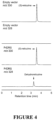
- Results are shown in FIG. 4 .
- a peak with a retention time of approximately 3.1 minutes is observed on the HPLC column in a control sample not comprising the enzyme. This peak corresponds with the predicted retention time of 3.13 minutes for the largest fragment of the collision-induced dissociation spectrum for (S) -Reticuline at m / z 330 (see: Table 1 ).
- the second panel from the top shows that no peaks are observed at m/z 328 in the same control sample, thus indicating the absence in the control sample of 1,2-Dehydroreticuline.
- the third panel from the top shows that a peak is observed at a retention time of approximately 3.1 minutes at m/z 330 in the sample comprising the enzyme, thus indicating the presence of (S) -Reticuline in the assay sample.
- the bottom panel shows that a peak having a retention time of approximately 3.0 is observed at m/z 328 in the assay sample. This peak corresponds with the predicted retention time of 3.02 minutes of the largest fragment of the collision-induced dissociation spectrum for 1,2-Dehydroreticuline at m / z 328 (see: Table 1 ) indicating the presence in the assay sample of 1,2-Dehydroreticuline in the presence of the enzyme.
- This example demonstrates the in vitro conversion in yeast of 1,2-Dehydroreticuline to (R) -Reticuline using AKR of Papaver rhoeas (SEQ.ID: NO 327).
- buffer A 100mM sodium phosphate buffer pH 7.0, 300 mM NaCl, 10% (v/v) glycerol
- PMSF phenylmethanesulfonylfluoride
- the cellular debris was removed by centrifugation at 14,000 g for 15 minutes.
- the total soluble protein extract was combined with buffer A-equilibrated TALON (Clonetech) resin for 45 minutes at 4°C, 65 rpm. The resin was washed twice with buffer A, and protein was eluted stepwise using a gradient of imidazole in buffer A (2.5, 10, 100, 200 mM).
- Enzyme assays contained 500 ⁇ M NADPH, 50 ⁇ M of 1,2-Dehydroreticuline in sodium phosphate buffer (pH 7.0) and protein prepared as described above. Assays were left overnight at 30 °C. Following the reaction, the assay samples were run on an Agilent 1260 HLPC coupled to a 6400 B mass spectrometer with an electronspray ionization source operating in positive mode. The mass spectrometer scanned from 200-400 m / z . Compounds were separated using the HLPC method for enzyme assays described previously ( Farrow SC and Facchini, PJ, (2013), J. Biol. Chem. (288) pp 28,997-29,012 ; dioxygenases catalyze O -demethylation and O , O -demethylation with widespread roles in benzylisoquinoline alkaloid metabolism in opium poppy).
- Results are shown in FIG. 5 .
- a peak with a retention time of approximately 3.0 minutes is observed on the HPLC column in a control sample not comprising the enzyme. This peak corresponds with the predicted retention time of 3.02 minutes for the largest fragment of the collision-induced dissociation spectrum for 1,2-Dehydroreticuline at m / z 328 (see: Table 1 ).
- the second panel from the top shows no peak at a retention time of approximately 3.1 minutes is observed, thus (R) -Reticuline is absent in the sample.
- a small peak is observed at approximately 3.0 minutes in the same control sample. This peak represents an isotopic form of the substrate 1,2-Dehydroreticuline.
- the third panel from the top shows that a peak with a retention time of approximately 3.0 minutes is observed at m/z 328 in the sample containing the enzyme, thus indicating the presence of a small amount of unconsumed 1,2-Dehydroreticuline in the assay sample.
- the bottom panel shows that a peak having a retention time of approximately 3.1 is observed at m / z 330 in the assay sample. This peak corresponds with the predicted retention time of 3.13 minutes of the largest fragment of the collision-induced dissociation spectrum for (R) -Reticuline at m / z 330 (see: Table 1 ) indicating the presence in the assay sample of (R) -Reticuline in the presence of the enzyme.
- This example demonstrates the in vitro conversion in yeast of (S)-N- methylcoclaurine to (R) - N -methylcoclaurine using an in enzyme mixture in the form of a fusion polypeptide of Papaver somniferum comprised of a CYP450 and an AKR moiety (SEQ.ID NO 2).
- Saccharomyces cerevisiae strain YPH499 harboring pESC-leu2d::PsCPR/PsREPI was grown and microsomes purified as described below. Briefly, the yeast strain was grown in Synthetic Complete (SC) medium lacking leucine supplemented with 2% glucose for 16 hours at 30°C and 250 rpm. One milliliter of culture was added to 50 mL of SC medium lacking leucine, supplemented with 1.8% galactose, 0.2% glucose and 1% raffinose and grown for 72 hours at 30°C and 250rpm.
- SC Synthetic Complete
- TEK buffer 50 mM Tris-HCl pH 8, 1 mM EDTA, 100 mM KCl.
- Pellets were resuspended in 1mL TESB buffer (50 mM Tris-HCl pH 8, 1 mM EDTA, 0.6 M sorbitol) and an equal volume of 0.5 mm glass beads were added.
- the tubes were shaken by hand at 10°C for 4 minutes.
- the beads were washed with TESB and the washings collected and centrifuged at 14,000 g for 10 min.
- the supernatant was ultracentrifuged for 1 hour at 125,000 g and the supernatant discarded.
- Microsomes were then resuspended in 50 mM HEPES pH 7.5.
- Enzyme assays contained 500 ⁇ M NADPH and 50 ⁇ M of (S)-N- methylcoclaurine in HEPES buffer (pH 7.5) and microsomes prepared as described above. Assays were incubated overnight at 30 °C. Following the reaction, the assay samples were run on an Agilent 1260 HLPC at a flow rate of 0.2 ml/min and compounds were separated using a LUX cellulose-1 chiral column (150 mm ⁇ 2.1 mm i.d.; Phenomenex) with 75% ammonium bicarbonate supplemented with 0.1% dethylamine (Solvent A) and 25% acetonitrile with 0.1% diethylamine (Solvent B). (R) - and (S) -N-methylcoclaurine were monitored at a wavelength of 230 nm.
- Results are shown in FIG. 6 .
- the retention time of the authentic standard control (S) - N -methylcoclaurine on the chiral column is approximately 13.9 minutes (top panel).
- the bottom panel shows the results of an assay in which no enzyme is present in the mixture and demonstrates that under these reaction conditions no (S) - N -methylcoclaurine is epimerized to (R)-N- methylcoclaurine.
- the middle pannel shows that in the presence of the enzyme mixture (S) - N -methylcoclaurine is epimerized to (R) - N -methylcoclaurine. (see arrow, and appearance of peak at a retention time of approximately 16.3 min)
- This example show silencing of genes encoding the AKR and/or CYP450 using virus-induced gene silencing (VIGS).
- VIPGS virus-induced gene silencing
- REPI and/or COR1.3 (encoding codeinone reductase) transcript levels from opium poppy ( Papaver somniferum ) (transcribed by SEQ.ID. NO: 322 and SEQ.ID NO: 328, respectively) in the Bea's Choice chemotype of opium poppy ( Papaver somniferum ) were suppressed using the tobacco rattle virus (TRV) vector system.
- TRV tobacco rattle virus
- REPI-a region and the COR1.3 region exhibit considerable similarity resulting in the reciprocal co-silencing of REPI and COR1.3 in each case.
- REPI-5' region is unique and result only in the silencing of REPI, but not COR1.3.
- Amplicons were individually cloned into pTRV2 and vectors were mobilized in Agrobacterium tumefaciens as described previously. Apical meristems of two to three week-old seedlings were infiltrated with a 1:1 mixture of A. tumefaciens harboring pTRV1 and constructed pTRV2 containing the gene-specific fragments. Empty pTRV2 was used as a negative control and the pTRV2-PDS construct encoding phytoene desaturase was used as a positive infiltration control. Infiltrated plants were cultivated in the greenhouse for 8-10 weeks. Infiltration with A .
- tumefaciens and collection and processing of latex, stem and root samples for alkaloid and transcript analyses were performed as described previously.
- 20-30 plants were infiltrated with A. tumefaciens harboring pTRV1 and one pTRV2 construct.
- a mobilized fragment of the pTRV2 construct was detected by RT-PCR ( FIG .7A (Panel B); FIG. 7B (Panel B); FIG. 7C , Panel B), showing that these plants were successfully infected.
- Alkaloids were extracted from lyophilized latex using methanol.
- Relative transcript abundance was determined by qRT-PCR ( FIG .7A (Panel C); FIG. 7B (Panel C); FIG. 7C , Panel C). Alkaloid content and relative transcript abundance data were generated from 6 individually infiltrated plants, and three technical replicates were performed on each sample. Latex samples for infiltrated plants were analysed by LC-MS/MS. Effects on the alkaloid content of opium poppy plants infiltrated with A. tumefaciens harboring pTRV1 and each of 2 regions of REPI or COR1.3 in separate pTRV2 constructs were assessed using total ion chromatograms ( FIG .7A (Panel D); FIG. 7B (Panel D); FIG.
- FIG. 7C Panel D
- silencing of REPI or COR1.3 caused significant reduction in the levels of codeine and thebaine.
- Silencing of REPI i.e. the AKR-CYP450 gene
- silencing of COR1.3 i.e.
- the ratio of ( R )-reticuline to ( S )-reticuline was approximately 21:79 in the latex of control (pTRV2) plants, but the ratio of ( R )-reticuline to ( S )-reticuline decreased to approximately 2:98 in the latex of pTRV2-REPI-a plants ( FIG .7A (Panel F) and pTRV2-COR1.3 plants; FIG. 7B (Panel F); and to approximately 5:95 in the latex of pTRV2-REPI-5' plants in latex and roots ( FIG. 7C , Panel F).
- This Example shows the conversion of 1,2-Dehydroreticuline into (R)-Reticuline catalyzed by AKR polypeptide in the presence of the reducing agents NADH or NADPH. This Example further shows reversibility of the foregoing reaction in the presence of the oxidizing agents NAD + or NADP + .
- This Example shows the pH dependence of AKR polypeptide both in the presence of reducing agent and oxidizing agent.
- FIG. 9 Shown in Panel A are graphs showing enzymatic activity as a function of pH using Papaver somniferum CYP450 (PsDRS) and AKR in the presence of NADPH (PsDRS forward) and in the presence of NADP + (PsDRS reverse). Shown in Panel B are graphs showing enzymatic activity as a function of pH using Papaver rhoeas CYP450 (PrDRS) and AKR in the presence of NADPH (PrDRS forward) and in the presence of NADP + (PrDRS reverse). As can be seen in FIG.
- PsDRS and PrDRS convert ( S )-Reticuline to 1,2-Dehydroreticuline at an optimum of approximately pH 8.
- PsDRR and PrDRR convert 1,2-Dehydroreticuline to ( R )-Reticuline at an optimum of approximately pH 7.
- PsDRR and PrDRR convert ( R )-reticuline to 1,2-Dehydroreticuline at an optimum of approximately pH 9.
- This example show further silencing of genes encoding the AKR and/or CYP450 using virus-induced gene silencing (VIGS).
- VIPGS virus-induced gene silencing
- REPIa represents a construct that targets a sequence conserved in both the COR gene and the REPI gene.
- REPIb targets a region that is unique to REPI.
- COR 1.3 targets a region that is unique to COR.
- Transcript levels of REPI and COR were determined as described in Example 5. An empty vector was used as control (PTRV2) As can be seen in FIG. 10 , plants in which REPI is uniquely targeted through REPIb display decreased levels of REPI transcript relative to the control ( FIG.
- FIG. 10 - top panel Plants in which REPI and COR are both targeted through REPIa display reduced transcript levels of REPI ( FIG. 10 - top panel) and COR ( FIG. 10 - bottom panel). When COR was targeted using COR1.3, COR transcript levels were diminished ( FIG. 10 - bottom panel). In addition, REPI transcript levels also decreased relative to the control ( FIG. 10 - top panel) in response to silencing of COR transcript levels by COR1.3.
Landscapes
- Health & Medical Sciences (AREA)
- Life Sciences & Earth Sciences (AREA)
- Genetics & Genomics (AREA)
- Chemical & Material Sciences (AREA)
- Engineering & Computer Science (AREA)
- Organic Chemistry (AREA)
- Wood Science & Technology (AREA)
- Zoology (AREA)
- Bioinformatics & Cheminformatics (AREA)
- General Engineering & Computer Science (AREA)
- Biotechnology (AREA)
- General Health & Medical Sciences (AREA)
- Molecular Biology (AREA)
- Biomedical Technology (AREA)
- Biochemistry (AREA)
- Microbiology (AREA)
- Physics & Mathematics (AREA)
- Biophysics (AREA)
- Plant Pathology (AREA)
- Cell Biology (AREA)
- Medicinal Chemistry (AREA)
- General Chemical & Material Sciences (AREA)
- Chemical Kinetics & Catalysis (AREA)
- Botany (AREA)
- Developmental Biology & Embryology (AREA)
- Environmental Sciences (AREA)
- Virology (AREA)
- Nutrition Science (AREA)
- Proteomics, Peptides & Aminoacids (AREA)
- Physiology (AREA)
- Analytical Chemistry (AREA)
- Immunology (AREA)
- Micro-Organisms Or Cultivation Processes Thereof (AREA)
- Preparation Of Compounds By Using Micro-Organisms (AREA)
- Peptides Or Proteins (AREA)
- Enzymes And Modification Thereof (AREA)
- Other In-Based Heterocyclic Compounds (AREA)
- Breeding Of Plants And Reproduction By Means Of Culturing (AREA)
- Measuring Or Testing Involving Enzymes Or Micro-Organisms (AREA)
Description
- The compositions and methods disclosed herein relate to secondary metabolites and processes for manufacturing the same. More particularly, the present disclosure relates to (R)-Reticuline and certain precursors thereof and methods and compositions for manufacturing (R)-Reticuline and such precursors.
- The following paragraphs are provided by way of background to the present disclosure. They are not however an admission that anything discussed therein is prior art or part of the knowledge of persons skilled in the art.
- The biochemical pathways of living organisms are commonly classified as being either part of primary metabolism or part of secondary metabolism. Pathways that are part of a living cell's primary metabolism are involved in catabolism for energy production or in anabolism for building block production for the cell. Secondary metabolites, on the other hand, are produced by living cells without having any obvious anabolic or catabolic function. It has however long been recognized that many secondary metabolites are useful in many respects, including for example as therapeutic agents or natural deterrents.
- The secondary metabolite (R)-Reticuline is produced by opium poppy (Papaver somniferum) and other members of the plant families Papaveraceae, Lauraceae, Annonaceae, Euphorbiaceae and Moraceae, and may be used as a source material for producing the pharmaceutically active compounds including morphine and codeine.
- It is known that (R)-Reticuline in planta is produced from (S)-Reticuline. However it is not clear which genes and polypeptides are involved in catalyzing the conversion reaction(s).
- Currently (R)-Reticuline may be harvested from natural sources, such as opium poppy. Alternatively (R)-Reticuline may be prepared synthetically. The existing manufacturing methods for (R)-Reticuline however suffer from low yields of (R)-Reticuline and/or are expensive. No methods exist to biosynthetically make (R)-Reticuline from (S)-reticuline. There exists therefore in the art a need for improved methods for the synthesis of (R)-Reticuline.
- Desgagné-Penix et al. (BMC Plant Biol, 2010, 10:252) describes transcriptome and proteome analyses of genes involved in the alkaloid metabolism in poppy cell cultures, in particular in the biosynthetic pathway that produces sanguinarine and morphine.
WO 00/58333 A1 WO 2015/173590 A1 describes a cytochrome P450 polypeptide from Papaver somniferum. Unterlinner et al. (The Plant Journal, 1995, 18: 465-475) describes the cloning and functional expression of a codeinone reductase from Papaver somniferum. - The following paragraphs are intended to introduce the reader to the more detailed description that follows and not to define or limit the claimed subject matter of the present disclosure.
- The present disclosure relates to the secondary metabolite (R)-Reticuline and certain precursors thereof, as well as to methods of making (R)-Reticuline and certain precursors thereof.
- The invention provides a method for preparing (R)-reticuline comprising:
- (a) providing a chimeric nucleic acid comprising as operably linked components:
- (i) a first nucleic acid sequence encoding a cytochrome P450 (CYP450) polypeptide comprising an amino acid sequence that is at least 85% identical to SEQ ID NO: 325;
- (ii) a second nucleic acid sequence encoding an aldo-ketoreductase (AKR) polypeptide comprising an amino acid sequence that is at least 85% identical to SEQ ID NO: 327; and (iii) one or more nucleic acid sequences capable of controlling expression in a yeast cell; and (b) introducing the chimeric nucleic acid into a yeast cell and growing the yeast cell to produce the CYP450 polypeptide and AKR polypeptide and to produce (R)-reticuline; and_(c) recovering (R)-reticuline.
- The invention also provides a recombinant expression vector comprising as operably linked components: (a) a nucleic acid sequence capable of controlling expression in a yeast cell; and (b) a nucleic acid sequence encoding: (i) a CYP450 polypeptide comprising an amino acid sequence that is at least 85% identical to SEQ ID NO: 325 and that is capable of oxidizing (S)-reticuline to form 1,2-dehydroreticuline; and (ii) an AKR polypeptide comprising an amino acid sequence that is at least 85% identical to SEQ ID NO: 327 and that is capable of reducing 1,2-dehydroreticuline to form (R)-reticuline; wherein the expression vector is suitable for expression in the yeast cell.
- The invention further provides a yeast host cell comprising a chimeric nucleic acid comprising as operably linked components: (a) a nucleic acid sequence encoding a CYP450 polypeptide comprising an amino acid sequence that is at least 85% identical to SEQ ID NO: 325 and that is capable of oxidizing (S)-reticuline to form 1,2-dehydroreticuline; and (b) a nucleic acid sequence encoding a AKR polypeptide comprising an amino acid sequence that is at least 85% identical to SEQ ID NO: 327 and that is capable of reducing 1,2-dehydroreticuline to form (R)-reticuline.
- The invention further provides a method of making (R)-reticuline in a yeast cell comprising: (a) providing (S)-reticuline; (b) contacting the (S)-reticuline with an enzyme mixture capable of converting (S)-reticuline to (R)-reticuline under conditions that permit the conversion of (S)-reticuline to (R)-reticuline in a yeast cell, wherein the enzyme mixture comprises a first polypeptide capable of oxidizing (S)-reticuline to form 1,2-dehydroreticuline and a second polypeptide capable of reducing 1,2-dehydroreticuline to form (R)-reticuline, and wherein the first polypeptide is a CYP450 polypeptide comprising an amino acid sequence that is at least 85% identical to SEQ ID NO: 325 and the second polypeptide is an AKR polypeptide comprising an amino acid sequence that is at least 85% identical to SEQ ID NO: 327.
- The enzyme mixture comprises a first polypeptide capable of oxidizing (S)-Reticuline to form 1,2-Dehydroreticuline and a second polypeptide capable of reducing 1,2-Dehydroreticuline to form (R)-Reticuline.
- The first polypeptide capable of oxidizing the benzylisoquinoline derivative to form the oxidized benzylisoquinoline derivative is a cytochrome P450 and the second polypeptide capable of reducing the oxidized benzylisoquinoline derivative to form (R)-Reticuline is an aldo-keto reductase (AKR).
- The method for preparing or making (R)-reticuline is conducted in vivo in a yeast cell.
- Provided herein still further is a method for preparing (R)-Reticuline comprising:
- (a) providing a chimeric nucleic acid sequence comprising as operably linked components:
- (i) a first nucleic acid sequence encoding a CYP450 polypeptide comprising an amino acid sequence that is at least 85% identical to SEQ ID NO: 325;
- (ii) a second nucleic acid sequence encoding an AKR polypeptide comprising an amino acid sequence that is at least 85% identical to SEQ ID NO: 327; and
- (iii) one or more nucleic acid sequences capable of controlling expression in a yeast cell;
- (b) introducing the chimeric nucleic acid sequence into the yeast cell and growing the yeast cell to produce the CYP450 polypeptide and AKR polypeptide and to produce (R)-Reticuline; and
- (c) recovering (R)-Reticuline.
- In preferred embodiments, the first and second nucleic acid sequences are operably linked in order to produce a fusion polypeptide comprising CYP450 and AKR.
- Compositions may comprise nucleic acid sequences encoding a first polypeptide capable of oxidizing (S)-Reticuline to form 1,2-Dehydroreticuline and a second polypeptide capable of reducing 1,2-Dehydroreticuline to form (R)-Reticuline, i.e. a nucleic acid sequence encoding a cytochrome P450 and an aldo-keto reductase, together capable of oxidizing (S)-Reticuline to form 1,2-Dehydroreticuline and a second polypeptide capable of reducing 1,2-Dehydroreticuline to form (R)-Reticuline.
- Other features and advantages of the present disclosure will become apparent from the following detailed description. It should be understood, however, that the detailed description, while indicating preferred implementations of the disclosure, are given by way of illustration only, since various changes and modifications within the scope of the invention, which is defined in the appended claims, will become apparent to those of skill in the art from the detailed description.
- The disclosure is in the hereinafter provided paragraphs described in relation to its Figures. The Figures provided herein are provided for illustration purposes and are not intended to limit the present disclosure.
-
FIGURE 1 depicts the synthesis pathway of various benzylisoquinoline precursors to (R)-Reticuline, (R)-Reticuline precursors, morphine and salutaridine. Included are the chemical structures of the shown compounds. -
FIGURE 2 depicts a synthesis pathway for the manufacture of (R)-Reticuline from (S)-Reticuline and synthesis intermediates thereof. Included are the chemical structures of the synthesis intermediates and enzymes capable of catalyzing chemical conversion of the synthesis intermediates. -
FIGURE 3 depicts a series of HPLC traces of an embodiment of the disclosure providing the conversion of (S)-Reticuline to (R)-Reticuline as described further in Example 1. -
FIGURE 4 depicts a series of HPLC traces of an embodiment of the disclosure providing the conversion of (S)-Reticuline to 1,2-Dehyrdoreticuline as described further in Example 2. -
FIGURE 5 depicts a series of HPLC traces of an embodiment of the disclosure showing the conversion of 1,2-Dehyrdoreticuline to (R)-Reticuline as described further in Example 3. -
FIGURE 6 depicts a series of HPLC traces of an embodiment of the disclosure showing the conversion of (S)-N-methylcoclaurine to (R)-N-methylcoclaurine as described further in Example 4. -
FIGURE 7 depicts results obtained relating to a gene silencing experiment as further described in Example 5. Two different regions in the REPI gene were targeted (FIG. 7A ;FIG. 7C ) and one region of the COR1.3 gene (FIG. 7B ) In eachFIG. 7A - 7C the different panels represent the following: (Panel A) Fragment (grey box) of the REPI or COR1.3 cDNA used to assemble the pTRV2 construct. The black box represents the coding region, whereas the black lines are the flanking untranslated regions. Arrows show the annealing sites of primers used for qRT-PCR analysis. (Panel B) Ethidium bromide-stained agarose gels showing the detection of the pTRV2 vector by RT-PCR using total RNA extracted from individual plants infiltrated with Agrobacterium tumefaciens harboring the pTRV2-REPI-a, the pTRV2-REPI-5', or the pTRV2-COR1.3 constructs, or the pTRV2 empty vector control. PCR primers (TRV2-MCS) were designed to anneal to regions flanking the multiple cloning site (MCS) of pTRV2. (Panel C) Relative REPI or COR1.3 transcript levels in the stems and roots of REPI-silenced (pTRV2-REPI-a; pRTV2-REPI-5') or COR1.3-silenced (pRTV2-COR1.3) plants compared with controls (pTRV2). (Panel D) Total ion chromatograms showing the major alkaloid profiles of REPI-silenced (pTRV2-REPI-a; pRTV2-REPI-5') or COR1.3 silenced (pRTV2-COR1.3) plants compared with controls (pTRV2). (Panel E) Relative abundance of major latex alkaloids, and other alkaloids showing suppressed levels in REPI-silenced (pTRV2-REPI-a; pRTV2-REPI-5') plants or COR1.3-silenced (pRTV2-COR1.3) plants compared with controls (pTRV2). (Panel F) Ratio of (S)-reticuline to (R)-reticuline in REPI-silenced (pTRV2-REPI-a; pRTV2-REPI-5') plants or COR1.3-silenced (pRTV2-COR1.3) plants compared with controls (pTRV2). Asterisks indicate significant differences determined using an unpaired, two-tailed Student t test (p <0.05). Bars represent the mean ± standard deviation of values obtained from 3 technical replicates for each of 6 individually infiltrated plants. -
FIGURE 8 depicts the results obtained when evaluating the activity of AKR polypeptide in the presence of reducing and oxidizing agents, as further described in Example 6.FIG. 8A shows the activity of the 1,2-Dehydroreticuline reductase (PsDRR) component of Papaver somniferum reticuline epimerase (REPI). In the presence of NADH or NADPH, PsDRR converts 1,2-Dehydroreticuline [1] to (R)-reticuline [2] (FIG. 8A , Panel A). In the presence of NAD+ or NADP+, PsDRR converts (R)-reticuline [2] to 1,2-Dehydroreticuline [1] (FIG. 8A , Panel B).FIG. 8B shows the activity of 1,2-Dehydroreticuline reductase (PrDRR) from Papaver rhoeas. In the presence of NADH or NADPH, PrDRR converts 1,2-dehydroreticuline [1] to (R)-reticuline [2] (FIG. 8B , Panel A). In the presence of NAD+ or NADP+, PrDRR converts (R)-reticuline [2] to 1,2-Dehydroreticuline [1] (FIG. 8B , Panel B). -
FIGURE 9 depicts the results obtained when evaluating the pH dependence of CYP450 and AKR polypeptide as further described in Example 7. Shown are the results obtained using Papaver somniferum CYP450 (PsDRS) and AKR in the presence of NADPH (PsDRS forward) and in the presence of NADP+ (PsDRS reverse) (Panel A). Further shown are the results obtained using Papaver rhoeas CYP450 (PrDRS) and AKR in the presence of NADPH (PrDRS forward) and in the presence of NADP+ (PrDRS reverse) (Panel B). -
FIGURE 10 depicts the co-suppression of REPI and COR transcript levels in opium poppy plants subjected to virus-induced gene silencing (VIGS) as further described in Example 8. Plants in which the silencing of COR is targeted (pTRV2-COR1.3) showed significant suppression of COR (FIG. 10 - bottom panel), and additionally showed suppression of REPI (FIG. 10 - top panel). Plants in which the silencing of REPI was targeted using a conserved region found in both REPI and COR (pTRV2-REPIa) also showed significant suppression of COR (FIG. 10 - bottom panel) and REPI (FIG. 10 - top panel). Plants in which the silencing of REPI was targeted using a unique region of REPI (pTRV2-REPIb), a region not also found in COR, did not show the co-silencing of COR (FIG. 10 - bottom panel). pTRV2 is the empty vector control. Asterisks indicate values that are significantly different compared with controls using and unpaired, Student's t-test (P < 0.05). Error bars represent the mean ± standard deviation. - Various compositions and methods will be described below to provide an example of an embodiment of each claimed subject matter. No embodiment described below limits any claimed subject matter and any claimed subject matter may cover methods, processes, compositions or systems that differ from those described below. The claimed subject matter is not limited to compositions or methods having all of the features of any one composition, method, system or process described below or to features common to multiple or all of the compositions, systems or methods described below. It is possible that a composition, system, method or process described below is not an embodiment of any claimed subject matter. Any subject matter disclosed in a composition, system, method or process described below that is not claimed in this document may be the subject matter of another protective instrument, for example, a continuing patent application, and the applicants, inventors or owners do not intend to abandon, disclaim or dedicate to the public any such subject matter by its disclosure in this document.
- It should be noted that terms of degree such as "substantially", "essentially" "about" and "approximately" as used herein mean a reasonable amount of deviation of the modified term such that the end result is not significantly changed. These terms of degree should be construed as including a deviation of the modified term if this deviation would not negate the meaning of the term it modifies.
- As used herein, the wording "and/or" is intended to represent an inclusive- or. That is, "X and/or Y" is intended to mean X or Y or both, for example. As a further example, "X, Y, and/or Z" is intended to mean X or Y or Z or any combination thereof.
- As hereinbefore mentioned, the present disclosure relates to the secondary metabolite (R)-Reticuline and precursors thereof, as well as to methods of making (R)-Reticuline and precursors thereof. The current disclosure further relates to certain enzymes capable of catalyzing reactions resulting in the conversion of (S)-Reticuline to form (R)-Reticuline. The herein provided methods represent a novel and efficient means of manufacturing (R)-Reticuline and precursors thereof. The methods provided herein do not rely on chemical synthesis and may be conducted at commercial scale. To the best of the inventors' knowledge, the current disclosure provides for the first time a methodology to manufacture (R)-Reticuline and precursors thereof using living cells not normally capable of synthesizing (R)-Reticuline and precursors thereof. Such cells may be used as a source whence (R)-Reticuline and precursors thereof may economically be extracted. (R)-Reticuline and precursors thereof produced in accordance with the present disclosure are useful inter alia in the manufacture of pharmaceutical compositions including morphine and codeine.
- The term "benzylisoquinoline derivative" as used herein refers to compounds having the chemical formula (VII):

- The term "(R)-Reticuline precursor", as used herein, refers to a compound having the chemical formula (VIII):

- The term "(S)-Reticuline" as used herein refers to the (S)-enantiomer of Reticuline and a chemical compound having the chemical structure (III):

- The term "oxidized benzylisoquinoline derivative" refers to a compound having the chemical formula (IX):

- The term "(R)-Reticuline" as used herein refers to the (R)-enantiomer of Reticuline and a chemical compound having the chemical structure (V):

- The term "1,2-Dehydroreticuline" as used herein refers to a chemical compound having the chemical structure (VI):

- The terms "(R)-Reticuline pathway" or "(R)-Reticuline synthesis pathway", as may be used interchangeably herein, refer to the metabolic pathway for the synthesis of (R)-Reticuline depicted in
FIG. 1 . When a first chemical compound within the (R)-Reticuline pathway is referenced as "" of a second chemical compound in the pathway, it is meant herein that synthesis of the first chemical compound precedes synthesis of the second chemical compound. Conversely, when a first chemical compound is referenced as "downstream" from a second chemical compound in the (R)-Reticuline pathway, it is meant herein that synthesis of the second chemical compound precedes synthesis of the first chemical compound. - The term "enzyme mixture" as used herein refers to a mixture comprising one or two or more enzymes. It should be noted that in mixtures containing two or more enzymes the enzymes may be independently biologically active without interaction or coordination to form the mixture. In one embodiment, the enzymes contained in the enzyme mixture may associate or interact as independent non-contiguous polypeptide chains. In another embodiment the enzyme mixture may be prepared as a fusion polypeptide between two polypeptides.
- The terms "Cytochrome P450", "CYP450" or "P450", which may be used interchangeably herein, refer to any and all enzymes comprising a sequence of amino acid residues which is (i) substantially identical to the amino acid sequences constituting any CYP450 polypeptide set forth herein, including, for example, SEQ.ID NO: 219 to SEQ.ID NO: 321; SEQ.ID NO: 325; and SEQ.ID NO: 338, or (ii) encoded by a nucleic acid sequence capable of hybridizing under at least moderately stringent conditions to any nucleic acid sequence encoding any CYP450 polypeptide set forth herein, but for the use of synonymous codons.
- The terms "aldo-keto reductase" or "AKR", which may be used interchangeably herein, in reference to any and all enzymes comprising a sequence of amino acid residues which is (i) substantially identical to the amino acid sequences constituting any AKR polypeptide set forth herein, including, for example, SEQ.ID NO: 59 to SEQ.ID NO: 115; SEQ.ID NO: 327; SEQ.ID NO: 329; SEQ.ID NO: 330; and SEQ.ID NO: 340, or (ii) encoded by a nucleic acid sequence capable of hybridizing under at least moderately stringent conditions to any nucleic acid sequence encoding any AKR polypeptide set forth herein, but for the use of synonymous codons.
- The term "nucleic acid sequence" as used herein refers to a sequence of nucleoside or nucleotide monomers consisting of naturally occurring bases, sugars and intersugar (backbone) linkages. The term also includes modified or substituted sequences comprising non-naturally occurring monomers or portions thereof. The nucleic acid sequences of the present disclosure may be deoxyribonucleic acid sequences (DNA) or ribonucleic acid sequences (RNA) and may include naturally occurring bases including adenine, guanine, cytosine, thymidine and uracil. The sequences may also contain modified bases. Examples of such modified bases include aza and deaza adenine, guanine, cytosine, thymidine and uracil, and xanthine and hypoxanthine.
- The herein interchangeably used terms "nucleic acid sequence encoding CYP450" and "nucleic acid sequence encoding a CYP450 polypeptide", refer to any and all nucleic acid sequences encoding a CYP450 polypeptide, including, for example, SEQ.ID NO: 116 to SEQ.ID NO: 218; SEQ.ID NO: 324; and SEQ.ID NO: 337. Nucleic acid sequences encoding a CYP450 polypeptide further include any and all nucleic acid sequences which (i) encode polypeptides that are substantially identical to the CYP450 polypeptide sequences set forth herein; or (ii) hybridize to any CYP450 nucleic acid sequences set forth herein under at least moderately stringent hybridization conditions or which would hybridize thereto under at least moderately stringent conditions but for the use of synonymous codons.
- The herein interchangeably used terms "nucleic acid sequence encoding AKR" and "nucleic acid sequence encoding an AKR polypeptide", refer to any and all nucleic acid sequences encoding an AKR polypeptide, including, for example, SEQ.ID NO: 1 to SEQ.ID NO: 58; SEQ.ID NO: 326; SEQ.ID NO: 328; and SEQ.ID NO: 339. Nucleic acid sequences encoding an AKR polypeptide further include any and all nucleic acid sequences which (i) encode polypeptides that are substantially identical to the AKR polypeptide sequences set forth herein; or (ii) hybridize to any AKR nucleic acid sequences set forth herein under at least moderately stringent hybridization conditions or which would hybridize thereto under at least moderately stringent conditions but for the use of synonymous codons.
- By the term "substantially identical" it is meant that two polypeptide sequences preferably are at least 70% identical, and more preferably are at least 85% identical and most preferably at least 95% identical, for example 96%, 97%, 98% or 99% identical. In order to determine the percentage of identity between two polypeptide sequences the amino acid sequences of such two sequences are aligned, using for example the alignment method of Needleman and Wunsch (J. Mol. Biol., 1970, 48: 443), as revised by Smith and Waterman (Adv. Appl. Math., 1981, 2: 482) so that the highest order match is obtained between the two sequences and the number of identical amino acids is determined between the two sequences. Methods to calculate the percentage identity between two amino acid sequences are generally art recognized and include, for example, those described by Carillo and Lipton (SIAM J. Applied Math., 1988, 48:1073) and those described in Computational Molecular Biology, Lesk, e.d. Oxford University Press, New York, 1988, Biocomputing: Informatics and Genomics Projects. Generally, computer programs will be employed for such calculations. Computer programs that may be used in this regard include, but are not limited to, GCG (Devereux et al., Nucleic Acids Res., 1984, 12: 387) BLASTP, BLASTN and FASTA (Altschul et al., J. Molec. Biol., 1990:215:403). A particularly preferred method for determining the percentage identity between two polypeptides involves the Clustal W algorithm (Thompson, J D, Higgines, D G and Gibson T J, 1994, Nucleic Acid Res 22(22): 4673-4680 together with the BLOSUM 62 scoring matrix (Henikoff S & Henikoff, J G, 1992, Proc. Natl. Acad. Sci. USA 89: 10915-10919 using a gap opening penalty of 10 and a gap extension penalty of 0.1, so that the highest order match obtained between two sequences wherein at least 50% of the total length of one of the two sequences is involved in the alignment.
- By "at least moderately stringent hybridization conditions" it is meant that conditions are selected which promote selective hybridization between two complementary nucleic acid molecules in solution. Hybridization may occur to all or a portion of a nucleic acid sequence molecule. The hybridizing portion is typically at least 15 (e.g. 20, 25, 30, 40 or 50) nucleotides in length. Those skilled in the art will recognize that the stability of a nucleic acid duplex, or hybrids, is determined by the Tm, which in sodium containing buffers is a function of the sodium ion concentration and temperature (Tm=81.5° C.-16.6 (Log10 [Na+])+0.41(% (G+C)-600/l), or similar equation). Accordingly, the parameters in the wash conditions that determine hybrid stability are sodium ion concentration and temperature. In order to identify molecules that are similar, but not identical, to a known nucleic acid molecule a 1% mismatch may be assumed to result in about a 1° C. decrease in Tm, for example if nucleic acid molecules are sought that have a >95% identity, the final wash temperature will be reduced by about 5° C. Based on these considerations those skilled in the art will be able to readily select appropriate hybridization conditions. Stringent hybridization conditions can be selected. By way of example the following conditions may be employed to achieve stringent hybridization: hybridization at 5× sodium chloride/sodium citrate (SSC)/5×Denhardt's solution/1.0% SDS at Tm (based on the above equation) -5° C, followed by a wash of 0.2×SSC/0.1% SDS at 60° C. Moderately stringent hybridization conditions include a washing step in 3×SSC at 42° C. It is understood however that equivalent stringencies may be achieved using alternative buffers, salts and temperatures. Additional guidance regarding hybridization conditions may be found in: Current Protocols in Molecular Biology, John Wiley & Sons, N.Y., 1989, 6.3.1.-6.3.6 and in: Sambrook et al., Molecular Cloning, a Laboratory Manual, Cold Spring Harbor Laboratory Press, 1989, Vol. 3.
- The term "chimeric" as used herein in the context of nucleic acid sequences refers to at least two linked nucleic acid sequences which are not naturally linked. Chimeric nucleic acid sequences include linked nucleic acid sequences of different natural origins. For example a nucleic acid sequence constituting a yeast promoter linked to a nucleic acid sequence encoding a COR protein is considered chimeric. Chimeric nucleic acid sequences also may comprise nucleic acid sequences of the same natural origin, provided they are not naturally linked. For example a nucleic acid sequence constituting a promoter obtained from a particular cell-type may be linked to a nucleic acid sequence encoding a polypeptide obtained from that same cell-type, but not normally linked to the nucleic acid sequence constituting the promoter. Chimeric nucleic acid sequences also include nucleic acid sequences comprising any naturally occurring nucleic acid sequence linked to any non-naturally occurring nucleic acid sequence.
- The terms "substantially pure" and "isolated", as may be used interchangeably herein describe a compound, e.g., a pathway synthesis intermediate or a polypeptide, which has been separated from components that naturally accompany it. Typically, a compound is substantially pure when at least 60%, more preferably at least 75%, more preferably at least 90%, 95%, 96%, 97%, or 98%, and most preferably at least 99% of the total material (by volume, by wet or dry weight, or by mole percent or mole fraction) in a sample is the compound of interest. Purity can be measured by any appropriate method, e.g., in the case of polypeptides, by chromatography, gel electrophoresis or HPLC analysis.
- The term "recovered" as used herein in association with an enzyme or protein refers to a more or less pure form of the enzyme or protein.
- The term "in vivo" as used herein to describe methods of making (R)-Reticuline or an (R)-Reticuline precursor refers to contacting a benzylisoquinoline derivative with an enzyme capable of catalyzing conversion of the benzylisoquinoline derivative within a living cell (i.e. a yeast cell) to form (R)-Reticuline or an (R)-Reticuline precursor.
- The term "in vitro" as used herein to describe methods of making (R)-Reticuline or an (R)-Reticuline precursor refers to contacting a benzylisoquinoline derivative with an enzyme capable of catalyzing conversion of the benzylisoquinoline derivative in an environment outside a living cell, including, without limitation, for example, in a microwell plate, a tube, a flask, a beaker, a tank, a reactor and the like, to form (R)-Reticuline or an (R)-Reticuline precursor.
- For the compound known as (S)-Reticuline see:
FIG. 1 ; compound (III). - Provided is a method of making (R)-Reticuline comprising:
- (a) providing (S)-Reticuline; and
- (b) contacting (S)-Reticuline with an enzyme mixture capable of converting (S)-Reticuline to (R)-Reticuline under conditions that permit the conversion of (S)-Reticuline to (R)-Reticuline, wherein the enzyme mixture comprises a first polypeptide capable of oxidizing (S)-Reticuline to form 1,2-Dehydroreticuline and a second polypeptide capable of reducing 1,2-Dehydroreticuline to form (R)-Reticuline (see:
FIG. 2 ), and wherein the first polypeptide is a CYP450 polypeptide comprising an amino acid sequence that is at least 85% identical to SEQ ID NO: 325 and the second polypeptide is an AKR polypeptide comprising an amino acid sequence that is at least 85% identical to SEQ ID NO: 327. - In particularly preferred embodiments, the AKR polypeptides are obtained from or obtainable from P. somniferum, P. bracteatum and P. rhoeas.
- In certain embodiments, the first and second polypeptide are provided in the form of two separate polypeptides, i.e. polypeptides that are not connected by covalent chemical bonds. In certain preferred embodiments, the first and second polypeptide are prepared as a fusion polypeptide comprising a first portion encoding a CYP450 polypeptide and a second portion encoding an AKR polypeptide. Such fusion polypeptide may be prepared recombinantly or it may be a naturally occurring fusion polypeptide may be used.
- Examples of a CYP450 polypeptide include the polypeptides set forth in. SEQ.ID NO: 219 to SEQ.ID NO: 321; SEQ.ID NO: 325; and SEQ.ID NO: 338. Examples of AKR polypeptides include the polypeptides set forth in SEQ.ID NO: 59 to SEQ.ID NO: 115; SEQ.ID NO: 327; SEQ.ID NO: 329; SEQ.ID NO: 330: and SEQ.ID NO: 340.
- The foregoing reactions are performed under conditions permitting the conversion of the benzylisoquinoline precursor to (R)-Reticuline. The conditions include in vivo or in vitro conditions, as hereinafter further detailed. The conditions further typically include the presence of water and buffering agents. Further typically included are a reducing agent in order to permit a reduction reaction resulting in the conversion of the oxidized benzylisoquinoline precursor to (R)-Reticuline. The reducing agent may be nicotinamide adenine dinucleotide (NADH), and in other embodiments, the reducing agent is nicotinamide adenine dinucleotide phosphate (NADPH). Further typically included in the reaction is a reductase capable of reducing the enzyme converting the benzylisoquinoline derivative to the oxidized benzylisoquinoline and a reducing agent. In preferred embodiments, the reductase is a cytochrome P450 reductase, such as for example the opium poppy cytochrome P450 reductase, capable of reducing CYP450, and the reducing agent is NADH, or more preferably, NADPH. It is further noted that the reactions may be conducted at various pH's, e.g. at approximately
pH 3,pH 4,pH 5,pH 6,pH 7,pH 8, pH, 9 orpH 10. It will be clear to those of skill in the art that an optimal pH may be identified for a reaction by conducting the reaction at a range of different pH's, and evaluating the reaction rate, as illustrated in Example 7 hereof. The optimal pH may vary depending on, for example, the substrate and enzyme selected in accordance herewith. Thus, by way of example only, Example 7 documents an optimal pH of approximatelypH 8 for the conversion of (S)-Reticuline to 1,2-Dehydroreticuline, an optimal pH of approximatelypH 7 for the conversion of 1,2-Dehydroreticuline to (R)-Reticuline, and an optimal pH of approximatelypH 9 for the conversion of (R)-Reticuline to 1,2-Dehydroreticuline. - It is noted that in accordance herewith, depending on the reaction conditions selected, the reaction involving the conversion of 1,2-Dehydroreticuline to (R)-Reticuline may be reversed, or partially reversed. Thus, as documented in Example 6, (R)-Reticuline may be converted to 1,2-Dehydroreticuline. Such a method of making 1,2- Dehydroreticuline may comprise:
- (a) providing (R)-Reticuline; and
- (b) contacting (R)-Reticuline with an AKR polypeptide capable of converting (R)-Reticuline to 1,2-Dehydroreticuline under conditions that permit the conversion of (R)-Reticuline to 1,2-Dehydroreticuline. The AKR polypeptides that may be used to conduct the foregoing reaction include any polypeptide set forth in SEQ.ID NO: 59 to SEQ.ID NO: 115; SEQ.ID NO: 327; SEQ.ID NO: 329; SEQ.ID NO: 330; and SEQ.ID NO: 340. Reaction conditions permitting the conversion include the presence in the reaction mixture of an oxidizing agent, preferably NAD+ or NADP+. As noted above the pH for the reaction may be optimized. The reversibility of the foregoing reaction is further illustrated in
FIG. 2 - The first polypeptide capable of oxidizing the benzylisoquinoline derivative to form the
oxidized benzylisoquinoline derivative 1,2-dehydroreticuline is a cytochrome P450 and the second polypeptide capable of reducing the oxidized benzylisoquinoline derivative to form (R)-Reticuline is an aldo-keto reductase (AKR). In particularly preferred embodiments, the AKR is obtained from or obtainable from P. somniferum, P. bracteatum and P. rhoeas. - In certain embodiments, the first and second polypeptide are provided in the form of two separate polypeptides, i.e. polypeptides that are not connected by covalent chemical bonds. In certain preferred embodiments, the first and second polypeptide are prepared as a fusion polypeptide comprising a first portion encoding a CYP450 polypeptide and a second portion encoding an AKR polypeptide. Such fusion polypeptide may be prepared recombinantly, or it may be a naturally occurring fusion polypeptide may be used.
- Examples of a CYP450 polypeptide that may be used in accordance with the present disclosure include CYP450 polypeptides obtainable from various Papaver species, including, Papaver somniferum, Papaver rhoeas and Papaver bracteatum; Argemone species, including Argemone mexicana; Berberis species, including Berberis thunbergii; Corydalis species, including Corydalis chelantifolia; Chelidonium species, including, Chelidonium majus; Cissampelos species, including Cissampelos mucronata; Cocculus species, including Cocculus trilobus; Corydalis species, including Corydalis chelantifolia; Glaucium species, including Glaucium flavum; Hydrastis species, including Hydrastis canadensis; Jeffersonia species, including Jeffersonia diphylla; Mahonia species, including Mahonia aquifolium; Menispermum species, including Menispermum canadense; Nandina species, including Nandina domestica; Nigella species, including Nigella sativa; Sanguinaria species, including Sanguinaria canadensis; Styplophorum species, Stylophorum diphyllum, Thalictrum species, including Thalictrumflavum; Tinospora species, including Tinospora cordifolia; and Xanthoriza species, including Xanthoriza simplicissima. The foregoing specifically include the polypeptides from the aforementioned species set forth herein in SEQ.ID NO: 219 to SEQ.ID NO: 321; SEQ.ID NO: 325; and SEQ.ID NO: 338. Examples of a AKR polypeptide that may be used in accordance with the present disclosure include AKR polypeptides obtainable from various Papaver species, including, Papaver somniferum, Papaver rhoeas and Papaver bracteatum; Argemone species, including Argemone mexicana; Berberis species, including Berberis thunbergii; Corydalis species, including Corydalis chelantifolia; Chelidonium species, including, Chelidonium majus; Cissampelos species, including Cissampelos mucronata; Cocculus species, including Cocculus trilobus; Corydalis species, including Corydalis chelantifolia; Glaucium species, including Glaucium flavum; Hydrastis species, including Hydrastis canadensis; Jeffersonia species, including Jeffersonia diphylla; Mahonia species, including Mahonia aquifolium; Menispermum species, including Menispermum canadense; Nandina species, including Nandina domestica; Nigella species, including Nigella sativa; Sanguinaria species, including Sanguinaria canadensis; Styplophorum species, Stylophorum diphyllum, Thalictrum species, including Thalictrum flavum; Tinospora species, including Tinospora cordifolia; and Xanthoriza species, including Xanthoriza simplicissima. The foregoing specifically include the polypeptides from the aforementioned species set forth herein in SEQ.ID NO: 59 to SEQ.ID NO: 115; SEQ.ID NO: 327; SEQ.ID NO: 329; SEQ.ID NO: 330; and SEQ.ID NO: 340.
- The foregoing reactions are performed under conditions permitting the conversion of the benzylisoquinoline precursor to (R)-Reticuline. The conditions include in vivo or in vitro conditions, as hereinafter further detailed. The conditions further typically include the presence of water and buffering agents. Further typically included are a reducing agent in order to permit a reduction reaction resulting in the conversion of the oxidized benzylisoquinoline precursor to (R)-Reticuline. The reducing agent may be nicotinamide adenine dinucleotide (NADH), and in other embodiments, the reducing agent is nicotinamide adenine dinucleotide phosphate (NADPH). Further typically included in the reaction is a reductase capable of reducing the enzyme converting the benzylisoquinoline derivative to the oxidized benzylisoquinoline and a reducing agent. In preferred embodiments, the reductase is a cytochrome P450 reductase capable of reducing CYP450, and the reducing agent is NADH, or more preferably, NADPH.
- Under in vitro reaction conditions the initial reaction constituents are provided in more or less pure form and are mixed under conditions that permit the requisite chemical reactions to substantially proceed. Substantially pure forms of the initial benzylisoquinoline derivative may be purchased. (S)-Reticuline, for example, may be purchased (e.g. from Santa Cruz Biotechnology Inc.) as a substantially pure chemical compound, chemically synthesized from precursor compounds, or isolated from natural sources including Papaver somniferum and other members of the Papaveraceae, Lauraceae, Annonaceae, Euphorbiaceae or Moraceae families of plants comprising such compounds as desired. Suitable Papaveraceae members include, but are not limited to, species belonging to the genus Papaver; Corydalis; Chelidonium; and Romeria. Such species may be able to make (S)-Reticuline, including, but not limited to, plant species selected from the species Chelidonium majus; Corydalis bulbosa; Corydalis cava; Corydalis ochotenis; Corydαlis ophiocarpa; Corydαlis platycarpa; Corydαlis tuberosa; Papaver armeniacum; Papaver Bracteatum; Papaver cylindricum; Papaver decaisnei; Papaver fugax; Papaver oreophyllum; Papaver orientale; Papaver paeonifolium; Papaver persicum; Papaver pseudo-orientale; Papaver rhoeas; Papaver rhopalothece; Papaver setigerum; Papaver somniferum; Papaver tauricolum; Papaver triniaefolium; and Romeria carica. Chemical synthesis of (S)-Reticuline may be performed using standard methods as described, for example, in S. Teitel and A. Bross, Journal of . In accordance herewith, more or less pure forms of the enzymes may be isolated from natural sources, including, but not limited to, Papaver somniferum, Papaver bracteatum and Papaver rhoeas, or they may be prepared recombinantly, or synthetically. The nucleic acid sequence may be obtained from any natural source, e.g. a plant source, containing such sequences. Preferred plant sources include Papaver species, including, Papaver somniferum, Papaver rhoeas and Papaver bracteatum; Argemone species, including Argemone mexicana; Berberis species, including Berberis thunbergii; Corydalis species, including Corydalis chelantifolia; Chelidonium species, including, Chelidonium majus; Cissampelos species, including Cissampelos mucronata; Cocculus species, including Cocculus trilobus; Corydalis species, including Corydalis chelantifolia; Glaucium species, including Glaucium flavum; Hydrastis species, including Hydrastis canadensis; Jeffersonia species, including Jeffersonia diphylla; Mahonia species, including Mahonia aquifolium; Menispermum species, including Menispermum canadense; Nandina species, including Nandina domestica; Nigella species, including Nigella sativa; Sanguinaria species, including Sanguinaria canadensis; Styplophorum species, Stylophorum diphyllum, Thalictrum species, including Thalictrum flavum; Tinospora species, including Tinospora cordifolia; and Xanthoriza species, including Xanthoriza simplicissima. With respect to CYP450 the nucleic acid sequences obtainable or obtained from the aforementioned plant species include the nucleic acid sequence set forth in SEQ.ID NO: 116 to SEQ.ID NO: 218; SEQ.ID NO: 324; and SEQ.ID NO: 337. With respect to AKR the nucleic acid sequences obtainable or obtained from the aforementioned plant species include the nucleic acid sequence set forth herein as SEQ.ID NO: 1 to SEQ.ID NO: 58; SEQ.ID NO: 326; SEQ.ID NO: 328; and SEQ.ID NO: 339. In further preferred embodiments, a nucleic acid sequence encoding a natural fusion polypeptide between CYP450 and AKR forth may be used.
- Growth of the host cells leads to production of the CYP450 and/or AKR polypeptides. The polypeptides subsequently may be recovered, isolated and separated from other host cell components by a variety of different protein purification techniques including, e.g. ion-exchange chromatography, size exclusion chromatography, affinity chromatography, hydrophobic interaction chromatography, reverse phase chromatography, gel filtration, etc. Further general guidance with respect to protein purification may for example be found in: Cutler, P. Protein Purification Protocols, Humana Press, 2004, Second Ed. Thus substantially pure preparations of the CYP450 and/or AKR polypeptides may be obtained.
- In accordance with certain aspects of the invention, a benzylisoquinoline derivative is brought in contact with catalytic quantities of one or more of the enzymes CYP450 and AKR under reaction conditions permitting an enzyme catalyzed chemical conversion of the benzylisoquinoline derivative under in vivo reaction conditions. Under such in vivo reaction conditions living cells are modified in such a manner that they produce (R)-Reticuline. The living cells are fungal cells (i.e. yeast cells).
- In one embodiment, the living cells are selected to be host cells not naturally capable of capable of producing a benzylisoquinoline derivative, (S)-Reticuline, a (R)-Reticuline precursor or (R)-Reticuline. In another embodiment, the host cells are naturally capable of producing (S)-Reticuline or a benzylisoquinoline derivative but not (R)-Reticuline or an (R)-Reticuline precursor, i.e. the cells are not naturally capable of performing the epimerization reaction from the (S)-enantiomer to the (R)-enantiomer. In another embodiment, the cells are able to produce a benzylisoquinoline derivative or (S)-Reticuline and (R)-Reticuline or a (R)-Reticuline precursor but the levels of (R)-Reticuline or (R)-Reticuline precursor are lower than desirable and the levels of (R)-Reticuline or (R)-Reticuline precursor are modulated relative to the levels in the unmodified cells.
- In order to produce (R)-Reticuline or (R)-Reticuline precursor, provided herein is further a method for preparing (R)-Reticuline comprising:
- (a) providing a chimeric nucleic acid sequence comprising as operably linked components:
- (i) a first nucleic acid sequence encoding a CYP450 polypeptide comprising an amino acid sequence that is at least 85% identical to SEQ ID NO: 325;
- (ii) a second nucleic acid sequence encoding an AKR polypeptide comprising an amino acid sequence that is at least 85% identical to SEQ ID NO: 327; and
- (iii) one or more nucleic acid sequences capable of controlling expression in a yeast cell;
- (b) introducing the chimeric nucleic acid sequence into a yeast cell and growing the yeast cell to produce CYP450 and AKR and to produce (R)-Reticuline; and
- (c) recovering (R)-Reticuline.
- In preferred embodiments, the first and second nucleic acid sequences are operably linked in order to produce a fusion polypeptide comprising CYP450 and AKR.
- The nucleic acid sequences encoding CYP450 and AKR can be obtainable or obtained from Papaver somniferum and other members of the Papaveraceae, Lauraceae, Annonaceae, Euphorbiaceae or Moraceae family of plants comprising such compounds as desired. Suitable Papaveraceae members include, but are not limited to, species belonging to the genus Papaver; Corydalis; Chelidonium; and Romeria. Such species may be able to make (R)-Reticuline, including, but not limited to, plant species selected from the species Chelidonium majus; Corydalis bulbosa; Corydalis cava; Corydalis ochotenis; Corydalis ophiocarpa; Corydalis platycarpa; Corydalis tuberosa; Papaver armeniacum; Papaver Bracteatum; Papaver cylindricum; Papaver decaisnei; Papaverfugax; Papaver oreophyllum; Papaver orientale; Papaver paeonifolium; Papaver persicum; Papaver pseudo-orientale; Papaver rhoeas; Papaver rhopalothece; Papaver setigerum; Papaver somniferum; Papaver tauricolum; Papaver triniaefolium; and Romeria carica. In particularly preferred embodiments, the nucleic acid sequences encoding CYP450 and AKR are nucleic acid sequences selected from the nucleic acid sequences encoding CYP450 and AKR obtainable or obtained from Papaver somniferum, Papaver bracteatum and Papaver rhoeas. In further preferred embodiments, the nucleic acid sequence encoding the CYP450 is SEQ.ID NO: 324. In preferred embodiments, the nucleic acid sequence encoding the AKR is SEQ.ID NO: 326.
- In accordance herewith, the nucleic acid sequence encoding CYP450 and AKR are linked to a nucleic acid sequence capable of controlling expression CYP450 and AKR in a host cell. The nucleic acid sequence encoding CYP450 and AKR can be linked to a promoter capable of controlling expression in a host cell. Nucleic acid sequences capable of controlling expression in host cells that may be used herein include any transcriptional promoter capable of controlling expression of polypeptides in host cells. Generally, promoters obtained from bacterial cells are used when a bacterial host is selected in accordance herewith, while a fungal promoter will be used when a fungal host is selected, a plant promoter will be used when a plant cell is selected, and so on. Further nucleic acid elements capable elements of controlling expression in a host cell include transcriptional terminators, enhancers and the like, all of which may be included in the chimeric nucleic acid sequences of the present disclosure. It will be understood by those ordinary skill in the art that operable linkage of nucleic acid sequences includes linkage of promoters and sequences capable of controlling expression to coding sequences in the 5' to 3' direction of transcription.
- In accordance with the present disclosure, the chimeric nucleic acid sequences comprising a promoter capable of controlling expression in host cell linked to a nucleic acid sequence encoding CYP450 and AKR, can be integrated into a recombinant expression vector which ensures good expression in the host cell.
- The present disclosure further includes a recombinant expression vector comprising as operably linked components:
- a) a nucleic acid sequence capable of controlling expression in a yeast cell; and
- b) a nucleic acid sequence encoding: (i) a CYP450 polypeptide comprising an amino acid sequence that is at least 85% identical to SEQ ID NO: 325 and that is capable of oxidizing (S)-reticuline to form 1,2-dehydroreticuline; and (ii) an AKR polypeptide comprising an amino acid sequence that is at least 85% identical to SEQ ID NO: 327 and that is capable of reducing 1,2-dehydroreticuline to form (R)-reticuline;
- Pursuant to the present disclosure, the expression vector may further contain a marker gene. Marker genes that may be used in accordance with the present disclosure include all genes that allow the distinction of transformed cells from non-transformed cells, including all selectable and screenable marker genes. A marker gene may be a resistance marker such as an antibiotic resistance marker against, for example, kanamycin or ampicillin. Screenable markers that may be employed to identify transformants through visual inspection include β-glucuronidase (GUS) (
U.S. Pat. Nos. 5,268,463 and5,599,670 ) and green fluorescent protein (GFP) (Niedz et al., 1995, Plant Cell Rep., 14: 403). - The preparation of the E. coli vectors may be accomplished using commonly known techniques such as restriction digestion, ligation, gel electrophoresis, DNA sequencing, the Polymerase Chain Reaction (PCR) and other methodologies. A wide variety of cloning vectors are available to perform the necessary steps required to prepare a recombinant expression vector. Among the vectors with a replication system functional in E. coli, are vectors such as pBR322, the pUC series of vectors, the M13 mp series of vectors, pBluescript etc. Typically, these cloning vectors contain a marker allowing selection of transformed cells. Nucleic acid sequences may be introduced in these vectors, and the vectors may be introduced in E. coli by preparing competent cells, electroporation or using other well known methodologies to a person of skill in the art. E. coli may be grown in an appropriate medium including but not limited to, Luria-Broth medium and harvested. Recombinant expression vectors may readily be recovered from cells upon harvesting and lysing of the cells. Further, general guidance with respect to the preparation of recombinant vectors and growth of recombinant organisms may be found in, for example: Sambrook et al., Molecular Cloning, a Laboratory Manual, Cold Spring Harbor Laboratory Press, 2001, Third Ed.
- Further included in the present disclosure, are a host cell wherein the host cell comprises a chimeric nucleic acid sequence comprising as operably linked components one or more nucleic acid sequences encoding one or more of the polypeptides selected from the group consisting of CYP450 and AKR. As hereinbefore mentioned, the host cell is preferably a host cell not capable of naturally producing a benzylisoquinoline derivative, (S)-Reticuline, or (R)-Reticuline or a (R)-Reticuline precursor. In another embodiment, the host cell is naturally capable of producing (S)-Reticuline a benzylisoquinoline derivative but not (R)-Reticuline or an (R)-Reticuline precursor. In another embodiment, the host cell is able to produce a benzylisoquinoline derivative, (S)-Reticuline, or (R)-Reticuline or a (R)-Reticuline precursor, but the levels of (R)-Reticuline or the (R)-Reticuline precursor are lower than desirable and the levels of (R)-Reticuline or (R)-Reticuline precursor are modulated relative to the levels of (R)-Reticuline or (R)-Reticuline precursor in the native, unmodified cells. In embodiments wherein the cells are unable to naturally produce (S)-Reticuline or a benzylisoquinoline derivative, (S)-Reticuline or the benzylisoquinoline derivative may be provided to the cells as part of the cell's growth medium. In other embodiments, wherein the cells are unable to naturally produce (S)-Reticuline or a benzylisoquinoline derivative, a precursor compound of (S)-Reticuline or a benzylisoquinoline derivative capable of being converted by the cells into (S)-Reticuline or a benzylisoquinoline derivative, respectively, may be provided. Alternative substrates that may be provided to the cells as part of the cellular growth medium include, but are not limited to, (S)-Norcoclaurine, (S)-N-Methylnorcoclaurine, (S)-Norlaudanosaline, (S)-N-Methylnorlaudanosaline, (S)-Coclaurine, (S)-N-Methylcoclaurine, (S)-3'-Hydroxycoclaurine, (S)-3'-Hydroxy-N-methylcoclaurine), (S)-Higenamine, (S)-N-Methylhigenamine, (S)-Laudanosoline, (S)-Norreticuline, (S)-Colletine, and (S)-Orientaline. Cells that may be used in accordance herewith are yeast cells.
- In some embodiments, AKR and CYP450 polypeptides are operably linked to form a fusion polypeptide.
- The amounts of (R)-Reticuline that accumulates in the host cell may vary. In embodiments of the disclosure wherein the host cell naturally produces (R)-Reticuline and (S)-Reticuline, the ratio of (R)-Reticuline to (S)-Reticuline synthesized in vivo by such cells prepared to comprise chimeric nucleic acid sequences in accordance with the present disclosure, exceeds the ratio of (R)-Reticuline to (S)-Reticuline present in the natural host cells (i.e. cells not comprising the chimeric nucleic acid sequences) or host cell extracts. Preferably the ratio of (R)-Reticuline to (S)-Reticuline in host cells or host cell extracts is greater than 21:79, e.g. at least 0.3:1, at least 0.4:1, at least 0.5:1, at least 1:1, at least 2:1, at least 3:1, or at least 4:1.
- (R)-Reticuline obtained in accordance with the present disclosure may be formulated for use as a pharmaceutical drug, therapeutic agent or medicinal agent. Thus the present disclosure further includes a pharmaceutical composition comprising (R)-Reticuline prepared in accordance with the methods of the present disclosure. Pharmaceutical drug preparations comprising (R)-Reticuline in accordance with the present disclosure preferably further comprise vehicles, excipients, diluents, and auxiliary substances, such as wetting or emulsifying agents, pH buffering substances and the like. These vehicles, excipients and auxiliary substances are generally pharmaceutical agents that may be administered without undue toxicity. Pharmaceutically acceptable excipients include, but are not limited to, liquids such as water, saline, polyethyleneglycol, hyaluronic acid, glycerol and ethanol. Pharmaceutically acceptable salts can also be included therein, for example, mineral acid salts such as hydrochlorides, phosphates, sulfates, and the like; and the salts of organic acids such as acetates, propionates, benzoates, and the like. It is also preferred, although not required, that the preparation will contain a pharmaceutically acceptable excipient that serves as a stabilizer. Examples of suitable carriers that also act as stabilizers for peptides include, without limitation, pharmaceutical grades of dextrose, sucrose, lactose, sorbitol, inositol, dextran, and the like. Other suitable carriers include, again without limitation, starch, cellulose, sodium or calcium phosphates, citric acid, glycine, polyethylene glycols (PEGs), and combinations thereof. The pharmaceutical composition may be formulated for oral and intravenous administration and other routes of administration as desired. Dosing may vary and may be optimized using routine experimentation. The pharmaceutical composition comprising (R)-Reticuline may be used to treat baldness or muscle tension.
- Furthermore the (R)-Reticuline provided herein is useful as an agent to manufacture other secondary metabolites or medicinal compositions including, without limitation, salutaridine, codeine and morphine, and further including thebaine, papaverine, noscapine, codamine, laudine and laudanosine (+)-pallidine, (-)-isoboldine, and (-)-corytuberine.
- The (R)-Reticuline precursors provided herein are useful as an agent to manufacture other secondary metabolites notably (R)-Reticuline. As illustrated in
FIG. 1 (R)-N-methylcoclaurine may be used as an agent to manufacture (R)-3'-Hydroxy-N-methylcoclaurine. (R)-3'-Hydroxy-N-methylcoclaurine may be used as an agent to manufacture (R)-Reticuline. - Methods to analyze genomic DNA are generally known to the art, and include, for example, the use of the polymerase chain reaction (PCR) and specific polynucleotide primers to amplify specific portions of the nucleotide sequence encoding AKR and/or CYP450. Further restriction digestion and Southern blot analysis may be used. The analysis may further be directed to introns, exons or regions upstream or downstream of the nucleic acid sequence encoding AKR and/or CYP450. The analysis further may be directed at identifying a genomic locus comprising a nucleic acid sequence encoding AKR and/or CYP450, wherein such locus is linked to modulated levels of expression of AKR and/or CYP450.
- The nucleic acid sequences encoding AKR and/or CYP450 may be used to produce a cell that has modulated levels of expression of AKR and/or CYP450. The methods further may result in the modulation of the ratio of (S)-Reticuline, (R)-Reticuline. Such modulation is illustrated in Example 5.
- Hereinafter are provided examples of specific embodiments for performing the methods of the present disclosure, as well as embodiments representing the compositions of the present disclosure. The examples are provided for illustrative purposes only, and are not intended to limit the scope of the present disclosure in any way.
- This Example demonstrates the in vitro conversion of (S)-Reticuline to (R)-Reticuline using an in enzyme mixture in the form of a fusion polypeptide of Papaver somniferum comprised of a CYP450 and an AKR moiety (SEQ.ID: NO 323).
- Saccharomyces cerevisiae strain YPH499 harboring pESC-leu2d::PsCPR/PsREPI was grown and microsomes purified as described below. Briefly, the yeast strain was grown in Synthetic Complete (SC) medium lacking leucine supplemented with 2% glucose for 16 hours at 30°C and 250 rpm. One milliliter of culture was added to 50 mL of SC medium lacking leucine, supplemented with 1.8% galactose, 0.2% glucose and 1% raffinose and grown for 72 hours at 30°C and 250rpm. Cultures were then centrifuged at 4,000g for 5 minutes and washed with 5mL of TEK buffer (50 mM Tris-
HCl pH HCl pH - Enzyme assays contained 500 µM NADPH and 50 µM of (S)-Reticuline in HEPES buffer (pH 7.5) and microsomes prepared as described above. Assays were incubated overnight at 30 °C. Following the reaction, the assay samples were run on an Agilent 1260 HLPC at a flow rate of 0.2 ml/min and compounds were separated using a LUX cellulose-1 chiral column (150 mm × 2.1 mm i.d.; Phenomenex) with 75% ammonium bicarbonate supplemented with 0.1% dethylamine (Solvent A) and 25% acetonitrile with 0.1% diethylamine (Solvent B). (R)-Reticuline and (S)-Reticuline were monitored at a wavelength of 284 nm.
- Results are shown in
FIG. 3 . As can be seen inFIG. 3 , the retention time of the authentic standard controls (R)-Reticuline and (S)-Reticuline on the chiral column is approximately 13.5 minutes (top panel); and 15 minutes (second panel from top), respectively. The bottom panel shows the results of an assay in which no enzyme is present in the mixture and demonstrates that under these reaction conditions no (S)-Reticuline is epimerized to (R)-Reticuline. The third panel from the top shows that in the presence of the enzyme mixture (S)-Reticuline is epimerized to (R)-Reticuline (see arrow, and appearance of peak at a retention time of approximately 15 min). - This example demonstrates the in vitro conversion in yeast of (S)-Reticuline to 1,2-Dehydroreticuline using the CYP450 of Papaver rhoeas (SEQ.ID: NO 325). Saccharomyces cerevisiae strain YPH499 harboring pESC-leu2d::PsCPR/PrDRS was grown and microsomes purified as described below. Briefly, the yeast strain was grown in Synthetic Complete (SC) medium lacking leucine supplemented with 2% glucose for 16 hours at 30°C and 250 rpm. One milliliter of this culture was added to 50mL of SC medium lacking leucine, supplemented with 1.8% galactose, 0.2% glucose and 1% raffinose and grown for 72 hours at 30°C and 250 rpm. Cultures were then centrifuged at 4,000 g for 5 minutes and washed with 5mL of TEK buffer (50 mM Tris-
HCl pH HCl pH - Enzyme assays contained 500 µM NADPH and 50 µM of (S)-Reticuline in HEPES buffer (pH 7.5) and microsomes prepared as described above. Assays were incubated overnight at 30 °C. Following the reaction, the assay samples were run on an Agilent 1260 HLPC coupled to a 6400 B mass spectrometer with an electronspray ionization source operating in positive mode. The mass spectrometer scanned from 200-400 m/z. Compounds were separated using the HLPC method for enzyme assays described previously (Farrow SC and Facchini, PJ, (2013), J. Biol. Chem. (288) pp 28,997-29,012; dioxygenases catalyze O-demethylation and O,O-demethylation with widespread roles in benzylisoquinoline alkaloid metabolism in opium poppy).
- Results are shown in
FIG. 4 . As can be seen inFIG. 4 (top panel), a peak with a retention time of approximately 3.1 minutes is observed on the HPLC column in a control sample not comprising the enzyme. This peak corresponds with the predicted retention time of 3.13 minutes for the largest fragment of the collision-induced dissociation spectrum for (S)-Reticuline at m/z 330 (see: Table 1). The second panel from the top shows that no peaks are observed at m/z 328 in the same control sample, thus indicating the absence in the control sample of 1,2-Dehydroreticuline. The third panel from the top shows that a peak is observed at a retention time of approximately 3.1 minutes at m/z 330 in the sample comprising the enzyme, thus indicating the presence of (S)-Reticuline in the assay sample. The bottom panel shows that a peak having a retention time of approximately 3.0 is observed at m/z 328 in the assay sample. This peak corresponds with the predicted retention time of 3.02 minutes of the largest fragment of the collision-induced dissociation spectrum for 1,2-Dehydroreticuline at m/z 328 (see: Table 1) indicating the presence in the assay sample of 1,2-Dehydroreticuline in the presence of the enzyme. - This example demonstrates the in vitro conversion in yeast of 1,2-Dehydroreticuline to (R)-Reticuline using AKR of Papaver rhoeas (SEQ.ID: NO 327).
- A 16-hour, 50mL LB supplemented with 50 µg/mL kanamycin monosulfate and 35 µg/mL chloramphenicol culture of Escherichia coli strain Rosetta (DE3) haboring pET47b::PrDRR was added to 1L of the same media and grown at 37°C, 180 rpm until an OD600 of 0.6. IPTG was then added to a final concentration of 1 mM and allowed to grow at 25°C, 180 rpm for 4h and the cell pellet was collected by centrifugation. Cells were lysed in buffer A (100mM sodium phosphate buffer pH 7.0, 300 mM NaCl, 10% (v/v) glycerol) supplemented with 2 mM phenylmethanesulfonylfluoride (PMSF) with a French press. The cellular debris was removed by centrifugation at 14,000 g for 15 minutes. The total soluble protein extract was combined with buffer A-equilibrated TALON (Clonetech) resin for 45 minutes at 4°C, 65 rpm. The resin was washed twice with buffer A, and protein was eluted stepwise using a gradient of imidazole in buffer A (2.5, 10, 100, 200 mM). The purified protein was eluted in 100 mM imidazole. Enzyme assays contained 500 µM NADPH, 50 µM of 1,2-Dehydroreticuline in sodium phosphate buffer (pH 7.0) and protein prepared as described above. Assays were left overnight at 30 °C. Following the reaction, the assay samples were run on an Agilent 1260 HLPC coupled to a 6400 B mass spectrometer with an electronspray ionization source operating in positive mode. The mass spectrometer scanned from 200-400 m/z. Compounds were separated using the HLPC method for enzyme assays described previously (Farrow SC and Facchini, PJ, (2013), J. Biol. Chem. (288) pp 28,997-29,012; dioxygenases catalyze O-demethylation and O,O-demethylation with widespread roles in benzylisoquinoline alkaloid metabolism in opium poppy).
- Results are shown in
FIG. 5 . As can be seen inFIG. 5 (top panel), a peak with a retention time of approximately 3.0 minutes is observed on the HPLC column in a control sample not comprising the enzyme. This peak corresponds with the predicted retention time of 3.02 minutes for the largest fragment of the collision-induced dissociation spectrum for 1,2-Dehydroreticuline at m/z 328 (see: Table 1). The second panel from the top shows no peak at a retention time of approximately 3.1 minutes is observed, thus (R)-Reticuline is absent in the sample. A small peak is observed at approximately 3.0 minutes in the same control sample. This peak represents an isotopic form of thesubstrate 1,2-Dehydroreticuline. The third panel from the top shows that a peak with a retention time of approximately 3.0 minutes is observed at m/z 328 in the sample containing the enzyme, thus indicating the presence of a small amount of unconsumed 1,2-Dehydroreticuline in the assay sample. The bottom panel shows that a peak having a retention time of approximately 3.1 is observed at m/z 330 in the assay sample. This peak corresponds with the predicted retention time of 3.13 minutes of the largest fragment of the collision-induced dissociation spectrum for (R)-Reticuline at m/z 330 (see: Table 1) indicating the presence in the assay sample of (R)-Reticuline in the presence of the enzyme. - This example demonstrates the in vitro conversion in yeast of (S)-N-methylcoclaurine to (R)-N-methylcoclaurine using an in enzyme mixture in the form of a fusion polypeptide of Papaver somniferum comprised of a CYP450 and an AKR moiety (SEQ.ID NO 2).
- Saccharomyces cerevisiae strain YPH499 harboring pESC-leu2d::PsCPR/PsREPI was grown and microsomes purified as described below. Briefly, the yeast strain was grown in Synthetic Complete (SC) medium lacking leucine supplemented with 2% glucose for 16 hours at 30°C and 250 rpm. One milliliter of culture was added to 50 mL of SC medium lacking leucine, supplemented with 1.8% galactose, 0.2% glucose and 1% raffinose and grown for 72 hours at 30°C and 250rpm. Cultures were then centrifuged at 4,000g for 5 minutes and washed with 5mL of TEK buffer (50 mM Tris-
HCl pH HCl pH - Enzyme assays contained 500 µM NADPH and 50 µM of (S)-N-methylcoclaurine in HEPES buffer (pH 7.5) and microsomes prepared as described above. Assays were incubated overnight at 30 °C. Following the reaction, the assay samples were run on an Agilent 1260 HLPC at a flow rate of 0.2 ml/min and compounds were separated using a LUX cellulose-1 chiral column (150 mm × 2.1 mm i.d.; Phenomenex) with 75% ammonium bicarbonate supplemented with 0.1% dethylamine (Solvent A) and 25% acetonitrile with 0.1% diethylamine (Solvent B). (R)- and (S)-N-methylcoclaurine were monitored at a wavelength of 230 nm.
- Results are shown in
FIG. 6 . As can be seen inFIG. 6 , the retention time of the authentic standard control (S)-N-methylcoclaurine on the chiral column is approximately 13.9 minutes (top panel). The bottom panel shows the results of an assay in which no enzyme is present in the mixture and demonstrates that under these reaction conditions no (S)-N-methylcoclaurine is epimerized to (R)-N-methylcoclaurine. The middle pannel shows that in the presence of the enzyme mixture (S)-N-methylcoclaurine is epimerized to (R)-N-methylcoclaurine. (see arrow, and appearance of peak at a retention time of approximately 16.3 min) - This example show silencing of genes encoding the AKR and/or CYP450 using virus-induced gene silencing (VIGS).
- REPI and/or COR1.3 (encoding codeinone reductase) transcript levels from opium poppy (Papaver somniferum) (transcribed by SEQ.ID. NO: 322 and SEQ.ID NO: 328, respectively) in the Bea's Choice chemotype of opium poppy (Papaver somniferum) were suppressed using the tobacco rattle virus (TRV) vector system.
- Two regions (REPI-a (
FIG. 7A ; Panel A) and REPI-5' (FIG. 7C ; Panel A)) of the REPI cDNA and one region of the COR1.3 cDNA (FIG. 7B ; Panel A) were amplified using the following primer pairs: - pTRV2-COR1.3
- COR1.3-F, ggatccCATCAGTTCCATGCTCTGGT
- COR1.3-R, ggtaccGGGCTCATCTCCACTTGATT
- pTRV2-REPI-a
- REPI-a-F, ggatccCATCACTTCCAAGCTCTGGT
- REPI-a-R, ggtaccGGGCTCATCTCCACTTGAT
- pTRV2-REPI-5'
- REPI-5'-F, gaattcCCTACATACTGTATTGGGTTGAATCATG
- REPI-5'-R, ggtaccTAACGGGATAGGACGGTTT
- The REPI-a region and the COR1.3 region exhibit considerable similarity resulting in the reciprocal co-silencing of REPI and COR1.3 in each case. In contrast, the REPI-5' region is unique and result only in the silencing of REPI, but not COR1.3.
- Amplicons were individually cloned into pTRV2 and vectors were mobilized in Agrobacterium tumefaciens as described previously. Apical meristems of two to three week-old seedlings were infiltrated with a 1:1 mixture of A. tumefaciens harboring pTRV1 and constructed pTRV2 containing the gene-specific fragments. Empty pTRV2 was used as a negative control and the pTRV2-PDS construct encoding phytoene desaturase was used as a positive infiltration control. Infiltrated plants were cultivated in the greenhouse for 8-10 weeks. Infiltration with A. tumefaciens, and collection and processing of latex, stem and root samples for alkaloid and transcript analyses were performed as described previously. Typically, 20-30 plants were infiltrated with A. tumefaciens harboring pTRV1 and one pTRV2 construct. In approximately 70-80% of the infiltrated plants, a mobilized fragment of the pTRV2 construct was detected by RT-PCR (
FIG .7A (Panel B);FIG. 7B (Panel B);FIG. 7C , Panel B), showing that these plants were successfully infected. Alkaloids were extracted from lyophilized latex using methanol. Relative transcript abundance was determined by qRT-PCR (FIG .7A (Panel C);FIG. 7B (Panel C);FIG. 7C , Panel C). Alkaloid content and relative transcript abundance data were generated from 6 individually infiltrated plants, and three technical replicates were performed on each sample. Latex samples for infiltrated plants were analysed by LC-MS/MS. Effects on the alkaloid content of opium poppy plants infiltrated with A. tumefaciens harboring pTRV1 and each of 2 regions of REPI or COR1.3 in separate pTRV2 constructs were assessed using total ion chromatograms (FIG .7A (Panel D);FIG. 7B (Panel D);FIG. 7C , Panel D) and by determining the relative abundance of 9 different alkaloids (morphine, codeine, thebaine, papaverine, noscapine, codamine, laudine and laudanosine) in latex and roots (FIG .7A (Panel E);FIG. 7B (Panel E);FIG. 7C , Panel E). In addition to lower morphine content, silencing of REPI or COR1.3 caused significant reduction in the levels of codeine and thebaine. Silencing of REPI (i.e. the AKR-CYP450 gene) as well as silencing of COR1.3 (i.e. the AKR gene) resulted in significant increase in the accumulation of reticuline, codamine, laudanine, laudanosine, and less consistently papaverine and noscapine. The ratio of (R)-reticuline to (S)-reticuline was approximately 21:79 in the latex of control (pTRV2) plants, but the ratio of (R)-reticuline to (S)-reticuline decreased to approximately 2:98 in the latex of pTRV2-REPI-a plants (FIG .7A (Panel F) and pTRV2-COR1.3 plants;FIG. 7B (Panel F); and to approximately 5:95 in the latex of pTRV2-REPI-5' plants in latex and roots (FIG. 7C , Panel F). - This Example shows the conversion of 1,2-Dehydroreticuline into (R)-Reticuline catalyzed by AKR polypeptide in the presence of the reducing agents NADH or NADPH. This Example further shows reversibility of the foregoing reaction in the presence of the oxidizing agents NAD+ or NADP+.
- Experiments were performed essentially as described in Example 3 above, except that the reactions were performed using AKR obtained from Papaver somniferum and from Papaver rhoeas, and that in the reverse reaction (R)-Reticuline was provided as the substrate, and either NAD+ or NADP+ was used as oxidizing agent to perform the enzymatic reaction. The last mentioned reaction was conducted at
pH 9. As shown inFIG. 8 , both in the presence of NADH andNADPH 1,2-Dehydroreticuline is, using catalytic quantities of the AKR polypeptide of both Papaver somniferum (PsDRR) (FIG. 8A , Panel A) and from Papaver rhoeas (PrDRR) (FIG. 8B , Panel A), converted to (R)-Reticuline. As further shown inFIG. 8 , using both the Papaver somniferum AKR polypeptide PsDRR (FIG. 8A , Panel B) and the Papaver Rhoeas polypeptide PrDRR (FIG. 8B , Panel B) the reaction can be reversed, and in the presence of NAD+ or NADP+ (R)-Reticuline is converted into 1,2-Dehydroreticuline. - This Example shows the pH dependence of AKR polypeptide both in the presence of reducing agent and oxidizing agent.
- The pH dependence of both Papaver somniferum and Papaver rhoeas CYP450 and AKR polypeptides was examined. Enzymatic reactions were conducted essentially as described in Example 3 and Example 6, except that the pH in each reaction was incrementally increased from pH 3.5 to
pH 10. The enzyme activity at each evaluated pH was quantitated by analysis of samples on an Agilent 1260 HLPC coupled to a 6400 B mass spectrometer with an electronspray ionization source operating in positive mode. The mass spectrometer scanned from 200-400 m/z. Compounds were separated using the HLPC method for enzyme assays described previously (Farrow SC and Facchini, PJ, (2013), J. Biol. Chem. (288) pp 28,997-29,012; dioxygenases catalyze O-demethylation and O,O-demethylation with widespread roles in benzylisoquinoline alkaloid metabolism in opium poppy). - The results are provided in
FIG. 9 . Shown in Panel A are graphs showing enzymatic activity as a function of pH using Papaver somniferum CYP450 (PsDRS) and AKR in the presence of NADPH (PsDRS forward) and in the presence of NADP+ (PsDRS reverse). Shown in Panel B are graphs showing enzymatic activity as a function of pH using Papaver rhoeas CYP450 (PrDRS) and AKR in the presence of NADPH (PrDRS forward) and in the presence of NADP+ (PrDRS reverse). As can be seen inFIG. 9 , PsDRS and PrDRS convert (S)-Reticuline to 1,2-Dehydroreticuline at an optimum of approximatelypH 8. In the presence of NADPH, PsDRR andPrDRR convert 1,2-Dehydroreticuline to (R)-Reticuline at an optimum of approximatelypH 7. In the presence of NADP+, PsDRR and PrDRR convert (R)-reticuline to 1,2-Dehydroreticuline at an optimum of approximatelypH 9. - This example show further silencing of genes encoding the AKR and/or CYP450 using virus-induced gene silencing (VIGS).
- Gene silencing experiments were conducted essentially as described in Example 5, except that the COR (AKR) and REPI (CYP450) genes were targeted using the following constructs: REPIa, REPIb and COR.1.3. REPIa represents a construct that targets a sequence conserved in both the COR gene and the REPI gene. By contrast, REPIb targets a region that is unique to REPI. COR 1.3 targets a region that is unique to COR. Transcript levels of REPI and COR were determined as described in Example 5. An empty vector was used as control (PTRV2) As can be seen in
FIG. 10 , plants in which REPI is uniquely targeted through REPIb display decreased levels of REPI transcript relative to the control (FIG. 10 - top panel), while COR transcript levels remain substantially the same (FIG. 10 - bottom panel). Plants in which REPI and COR are both targeted through REPIa display reduced transcript levels of REPI (FIG. 10 - top panel) and COR (FIG. 10 - bottom panel). When COR was targeted using COR1.3, COR transcript levels were diminished (FIG. 10 - bottom panel). In addition, REPI transcript levels also decreased relative to the control (FIG. 10 - top panel) in response to silencing of COR transcript levels by COR1.3.
Claims (6)
- A method for preparing (R)-reticuline comprising:(a) providing a chimeric nucleic acid comprising as operably linked components:(i) a first nucleic acid sequence encoding a cytochrome P450 (CYP450) polypeptide comprising an amino acid sequence that is at least 85% identical to SEQ ID NO: 325;(ii) a second nucleic acid sequence encoding an aldo-ketoreductase (AKR) polypeptide comprising an amino acid sequence that is at least 85% identical to SEQ ID NO: 327; and(iii) one or more nucleic acid sequences capable of controlling expression in a yeast cell; and(b) introducing the chimeric nucleic acid into a yeast cell and growing the yeast cell to produce the CYP450 polypeptide and AKR polypeptide and to produce (R)-reticuline; and(c) recovering (R)-reticuline.
- A recombinant expression vector comprising as operably linked components:(a) a nucleic acid sequence capable of controlling expression in a yeast cell; and(b) a nucleic acid sequence encoding: (i) a CYP450 polypeptide comprising an amino acid sequence that is at least 85% identical to SEQ ID NO: 325 and that is capable of oxidizing (S)-reticuline to form 1,2-dehydroreticuline; and (ii) an AKR polypeptide comprising an amino acid sequence that is at least 85% identical to SEQ ID NO: 327 and that is capable of reducing 1,2-dehydroreticuline to form (R)-reticuline;wherein the expression vector is suitable for expression in the yeast cell.
- A yeast host cell comprising a chimeric nucleic acid comprising as operably linked components:(a) a nucleic acid sequence encoding a CYP450 polypeptide comprising an amino acid sequence that is at least 85% identical to SEQ ID NO: 325 and that is capable of oxidizing (S)-reticuline to form 1,2-dehydroreticuline; and(b) a nucleic acid sequence encoding a AKR polypeptide comprising an amino acid sequence that is at least 85% identical to SEQ ID NO: 327 and that is capable of reducing 1,2-dehydroreticuline to form (R)-reticuline.
- The yeast host cell of claim 3, wherein the polynucleotide comprises a yeast promoter.
- A method of making (R)-reticuline in a yeast cell comprising:(a) providing (S)-reticuline;(b) contacting the (S)-reticuline with an enzyme mixture capable of converting (S)-reticuline to (R)-reticuline under conditions that permit the conversion of (S)-reticuline to (R)-reticuline in a yeast cell,wherein the enzyme mixture comprises a first polypeptide capable of oxidizing (S)-reticuline to form 1,2-dehydroreticuline and a second polypeptide capable of reducing 1,2-dehydroreticuline to form (R)-reticuline,and wherein the first polypeptide is a CYP450 polypeptide comprising an amino acid sequence that is at least 85% identical to SEQ ID NO: 325 and the second polypeptide is an AKR polypeptide comprising an amino acid sequence that is at least 85% identical to SEQ ID NO: 327.
- The method of claim 1 or claim 5, the recombinant expression vector of claim 2 or the yeast cell of claim 3 or claim 4, wherein:(a) the CYP450 polypeptide comprises an amino acid sequence that is at least 95%, at least 96%, at least 97%, at least 98% or at least 99% identical to SEQ ID NO: 325, or has the amino acid sequence of SEQ ID NO: 325; and/or(b) the AKR polypeptide comprises an amino acid sequence that is at least 95%, at least 96%, at least 97%, at least 98% or at least 99% identical to SEQ ID NO: 327, or has the amino acid sequence of SEQ ID NO: 327.
Priority Applications (1)
| Application Number | Priority Date | Filing Date | Title |
|---|---|---|---|
| EP23188492.5A EP4289959B1 (en) | 2013-12-04 | 2014-12-03 | Compositions and methods for making (r)-reticuline and precursors thereof |
Applications Claiming Priority (3)
| Application Number | Priority Date | Filing Date | Title |
|---|---|---|---|
| US201361911759P | 2013-12-04 | 2013-12-04 | |
| US201462050399P | 2014-09-15 | 2014-09-15 | |
| PCT/CA2014/051164 WO2015081437A1 (en) | 2013-12-04 | 2014-12-03 | Compositions and methods for making (r)-reticuline and precursors thereof |
Related Child Applications (1)
| Application Number | Title | Priority Date | Filing Date |
|---|---|---|---|
| EP23188492.5A Division EP4289959B1 (en) | 2013-12-04 | 2014-12-03 | Compositions and methods for making (r)-reticuline and precursors thereof |
Publications (3)
| Publication Number | Publication Date |
|---|---|
| EP3077513A1 EP3077513A1 (en) | 2016-10-12 |
| EP3077513A4 EP3077513A4 (en) | 2017-06-21 |
| EP3077513B1 true EP3077513B1 (en) | 2023-08-23 |
Family
ID=53272687
Family Applications (2)
| Application Number | Title | Priority Date | Filing Date |
|---|---|---|---|
| EP14867017.7A Active EP3077513B1 (en) | 2013-12-04 | 2014-12-03 | Compositions and methods for making (r)-reticuline and precursors thereof |
| EP23188492.5A Active EP4289959B1 (en) | 2013-12-04 | 2014-12-03 | Compositions and methods for making (r)-reticuline and precursors thereof |
Family Applications After (1)
| Application Number | Title | Priority Date | Filing Date |
|---|---|---|---|
| EP23188492.5A Active EP4289959B1 (en) | 2013-12-04 | 2014-12-03 | Compositions and methods for making (r)-reticuline and precursors thereof |
Country Status (14)
| Country | Link |
|---|---|
| US (3) | US10190141B2 (en) |
| EP (2) | EP3077513B1 (en) |
| JP (1) | JP6783655B2 (en) |
| KR (2) | KR102018240B1 (en) |
| CN (3) | CN115927140A (en) |
| AU (4) | AU2014360597B2 (en) |
| BR (1) | BR112016012595B1 (en) |
| CA (1) | CA2932448C (en) |
| DK (1) | DK3077513T5 (en) |
| ES (1) | ES2961516T3 (en) |
| IL (2) | IL245970B (en) |
| MX (1) | MX364825B (en) |
| RU (1) | RU2729065C2 (en) |
| WO (1) | WO2015081437A1 (en) |
Families Citing this family (17)
| Publication number | Priority date | Publication date | Assignee | Title |
|---|---|---|---|---|
| EP3865580A1 (en) | 2013-03-15 | 2021-08-18 | The Board of Trustees of the Leland Stanford Junior University | Benzylisoquinoline alkaloids (bia) producing microbes, and methods of making and using the same |
| WO2015066642A1 (en) | 2013-11-04 | 2015-05-07 | The Board Of Trustees Of The Leland Stanford Junior University | Benzylisoquinoline alkaloid (bia) precursor producing microbes, and methods of making and using the same |
| WO2015081437A1 (en) * | 2013-12-04 | 2015-06-11 | Epimeron Inc. | Compositions and methods for making (r)-reticuline and precursors thereof |
| CA2946812C (en) * | 2014-05-16 | 2023-10-10 | The Unversity Of York | Cytochrome p450 fusion protein |
| CN107614688B (en) | 2015-05-04 | 2023-02-28 | 小利兰·斯坦福大学托管委员会 | Microorganisms producing benzylisoquinoline alkaloid (BIA) precursors and methods for their preparation and use |
| ES2945359T3 (en) * | 2015-05-08 | 2023-06-30 | Univ Leland Stanford Junior | Methods for producing epimerases and benzylisoquinoline alkaloids |
| GB201511156D0 (en) * | 2015-06-24 | 2015-08-05 | Glaxosmithkline Australia Pty Ltd And University Of York | Production of alkaloids |
| CA3028817A1 (en) | 2016-06-27 | 2018-01-04 | Serturner Corp. | Polynucleotides and polypeptides useful for making alkaloid compounds |
| CA3029263A1 (en) | 2016-06-27 | 2018-01-04 | Intrexon Corporation | Compositions and methods for making benzylisoquinoline alkaloids, morphinan alkaloids, thebaine, and derivatives thereof |
| CN106119265B (en) * | 2016-06-30 | 2019-04-30 | 湖南美可达生物资源股份有限公司 | The cytochrome P 450 enzymes gene and its application that sanguinarine is synthesized with Chelerythrine are participated in macleaya cordata |
| EP3529355A4 (en) | 2016-10-18 | 2020-07-08 | Antheia, Inc. | METHOD FOR PRODUCING NOR-OPIOID AND NAL-OPIOID-BENZYLISOCHINOLINAL CALOIDS |
| GB2579940B (en) | 2017-08-03 | 2022-11-30 | Antheia Inc | Engineered benzylisoquinoline alkaloid epimerases and methods of producing benzylisoquinoline alkaloids |
| IL276462B2 (en) | 2018-02-08 | 2026-03-01 | Antheia Inc | Methods of producing morphinan alkaloids and derivatives |
| WO2020185626A1 (en) | 2019-03-08 | 2020-09-17 | The Board Of Trustees Of The Leland Stanford Junior University | Tropane alkaloid (ta) producing non-plant host cells, and methods of making and using the same |
| US12359233B2 (en) | 2019-06-24 | 2025-07-15 | Fermelanta, Inc. | Production method of (R)-reticuline |
| WO2024100063A1 (en) | 2022-11-08 | 2024-05-16 | River Stone Biotech Aps | Genetically modified benzylisoquinoline alkaloid-producing host cells with modified efflux transporter gene expression |
| CN119776567A (en) * | 2024-12-16 | 2025-04-08 | 广西壮族自治区农业科学院 | Molecular marker primer kit for identifying Annona custardii germplasm resources and its application |
Citations (2)
| Publication number | Priority date | Publication date | Assignee | Title |
|---|---|---|---|---|
| GB1408729A (en) * | 1973-08-13 | 1975-10-01 | Lilly Co Eli | Sulphilimine compounds |
| WO2015173590A1 (en) * | 2014-05-16 | 2015-11-19 | The Unversity Of York | Novel cytochrome p450 fusion protein |
Family Cites Families (10)
| Publication number | Priority date | Publication date | Assignee | Title |
|---|---|---|---|---|
| US3785927A (en) | 1973-02-12 | 1974-01-15 | Merck & Co Inc | Process for converting(-)reticuline to(+)salutaridine |
| US5268463A (en) | 1986-11-11 | 1993-12-07 | Jefferson Richard A | Plant promoter α-glucuronidase gene construct |
| AUPP946399A0 (en) * | 1999-03-26 | 1999-04-22 | Johnson & Johnson Research Pty. Limited | Codeinone reductase from alkaloid poppy |
| WO2005033305A1 (en) * | 2003-09-17 | 2005-04-14 | Kyoto University | PROCESS FOR PRODUCING INTERMEDIATE OF USEFUL ALKALOID BIOSYNTHESIS ACCORDING TO RNAi METHOD |
| EP1837396A1 (en) * | 2006-03-23 | 2007-09-26 | Institut für Pflanzenbiochemie-IPB | Salutaridine reductase and morphine biosynthesis |
| WO2008067070A2 (en) * | 2006-10-19 | 2008-06-05 | California Institute Of Technology | Compositions and methods for producing benzylisoquinolines alkaloids |
| WO2011058446A2 (en) | 2009-11-12 | 2011-05-19 | Uti Limited Partnership | Thebaine 6-o-demethylase and codeine o-demethylase from papaver somniferum |
| WO2015081437A1 (en) * | 2013-12-04 | 2015-06-11 | Epimeron Inc. | Compositions and methods for making (r)-reticuline and precursors thereof |
| US20160340704A1 (en) | 2014-01-13 | 2016-11-24 | Valorbec Société en Commandite | Method of making a benzylisoquinoline alkaloid (bia) metabolite, enzymes therefore |
| ES2945359T3 (en) | 2015-05-08 | 2023-06-30 | Univ Leland Stanford Junior | Methods for producing epimerases and benzylisoquinoline alkaloids |
-
2014
- 2014-12-03 WO PCT/CA2014/051164 patent/WO2015081437A1/en not_active Ceased
- 2014-12-03 CN CN202210963307.6A patent/CN115927140A/en active Pending
- 2014-12-03 EP EP14867017.7A patent/EP3077513B1/en active Active
- 2014-12-03 US US15/101,474 patent/US10190141B2/en active Active
- 2014-12-03 CA CA2932448A patent/CA2932448C/en active Active
- 2014-12-03 JP JP2016536954A patent/JP6783655B2/en active Active
- 2014-12-03 RU RU2016124228A patent/RU2729065C2/en active
- 2014-12-03 CN CN202210963296.1A patent/CN115927139A/en active Pending
- 2014-12-03 ES ES14867017T patent/ES2961516T3/en active Active
- 2014-12-03 MX MX2016007176A patent/MX364825B/en active IP Right Grant
- 2014-12-03 EP EP23188492.5A patent/EP4289959B1/en active Active
- 2014-12-03 AU AU2014360597A patent/AU2014360597B2/en active Active
- 2014-12-03 KR KR1020167017344A patent/KR102018240B1/en active Active
- 2014-12-03 DK DK14867017.7T patent/DK3077513T5/en active
- 2014-12-03 KR KR1020197025315A patent/KR102491060B1/en active Active
- 2014-12-03 BR BR112016012595-9A patent/BR112016012595B1/en active IP Right Grant
- 2014-12-03 CN CN201480071559.1A patent/CN105980563B/en active Active
-
2016
- 2016-06-01 IL IL245970A patent/IL245970B/en active IP Right Grant
-
2018
- 2018-12-07 US US16/213,037 patent/US11613770B2/en active Active
-
2019
- 2019-12-09 IL IL271289A patent/IL271289B/en unknown
-
2020
- 2020-01-08 AU AU2020200131A patent/AU2020200131A1/en not_active Abandoned
- 2020-03-10 AU AU2020201743A patent/AU2020201743B2/en active Active
-
2022
- 2022-11-29 AU AU2022279419A patent/AU2022279419B2/en active Active
-
2023
- 2023-03-06 US US18/179,035 patent/US20240002894A1/en active Pending
Patent Citations (2)
| Publication number | Priority date | Publication date | Assignee | Title |
|---|---|---|---|---|
| GB1408729A (en) * | 1973-08-13 | 1975-10-01 | Lilly Co Eli | Sulphilimine compounds |
| WO2015173590A1 (en) * | 2014-05-16 | 2015-11-19 | The Unversity Of York | Novel cytochrome p450 fusion protein |
Non-Patent Citations (1)
| Title |
|---|
| UNTERLINNER BERNHARD ET AL: "Molecular cloning and functional expression of codeinone reductase: The penultimate enzyme in morphine biosynthesis in the opium poppy Papaver somniferum", THE PLANT JOURNAL, BLACKWELL SCIENTIFIC PUBLICATIONS, OXFORD, GB, vol. 18, no. 5, 1 June 1999 (1999-06-01), pages 465 - 475, XP002182520, ISSN: 0960-7412, DOI: 10.1046/J.1365-313X.1999.00470.X * |
Also Published As
Similar Documents
| Publication | Publication Date | Title |
|---|---|---|
| EP4289959B1 (en) | Compositions and methods for making (r)-reticuline and precursors thereof | |
| EP3158073B1 (en) | Compositions and methods for making (s)-norcoclaurine and (s)-norlaudanosoline, and synthesis intermediates thereof | |
| EP3033347B1 (en) | Methods for making noscapine and synthesis intermediates thereof | |
| US20190152981A1 (en) | Compositions and Methods For Making Alkaloid Morphinans | |
| AU2017289304A1 (en) | Polynucleotides and polypeptides useful for making alkaloid compounds | |
| WO2019165551A1 (en) | Alkaloid biosynthesis facilitating proteins and methods of use | |
| AU2017228939B2 (en) | Compositions and methods for making terpenoid indole alkaloids | |
| HK1230235A1 (en) | Compositions and methods for making (r)-reticuline and precursors thereof | |
| HK1230235B (en) | Compositions and methods for making (r)-reticuline and precursors thereof |
Legal Events
| Date | Code | Title | Description |
|---|---|---|---|
| PUAI | Public reference made under article 153(3) epc to a published international application that has entered the european phase |
Free format text: ORIGINAL CODE: 0009012 |
|
| 17P | Request for examination filed |
Effective date: 20160526 |
|
| AK | Designated contracting states |
Kind code of ref document: A1 Designated state(s): AL AT BE BG CH CY CZ DE DK EE ES FI FR GB GR HR HU IE IS IT LI LT LU LV MC MK MT NL NO PL PT RO RS SE SI SK SM TR |
|
| AX | Request for extension of the european patent |
Extension state: BA ME |
|
| DAX | Request for extension of the european patent (deleted) | ||
| A4 | Supplementary search report drawn up and despatched |
Effective date: 20170523 |
|
| RIC1 | Information provided on ipc code assigned before grant |
Ipc: A01H 5/00 20060101ALI20170517BHEP Ipc: C12N 15/52 20060101ALI20170517BHEP Ipc: C12P 17/10 20060101ALI20170517BHEP Ipc: C12Q 1/68 20060101ALI20170517BHEP Ipc: C12N 9/10 20060101ALI20170517BHEP Ipc: C12N 15/82 20060101ALI20170517BHEP Ipc: A01H 1/06 20060101ALI20170517BHEP Ipc: C12N 15/63 20060101AFI20170517BHEP Ipc: A01H 1/04 20060101ALI20170517BHEP Ipc: C12N 9/04 20060101ALI20170517BHEP Ipc: C12P 17/12 20060101ALI20170517BHEP Ipc: C12N 9/02 20060101ALI20170517BHEP |
|
| REG | Reference to a national code |
Ref country code: HK Ref legal event code: DE Ref document number: 1230235 Country of ref document: HK |
|
| STAA | Information on the status of an ep patent application or granted ep patent |
Free format text: STATUS: EXAMINATION IS IN PROGRESS |
|
| 17Q | First examination report despatched |
Effective date: 20180205 |
|
| TPAC | Observations filed by third parties |
Free format text: ORIGINAL CODE: EPIDOSNTIPA |
|
| TPAC | Observations filed by third parties |
Free format text: ORIGINAL CODE: EPIDOSNTIPA |
|
| TPAC | Observations filed by third parties |
Free format text: ORIGINAL CODE: EPIDOSNTIPA |
|
| GRAP | Despatch of communication of intention to grant a patent |
Free format text: ORIGINAL CODE: EPIDOSNIGR1 |
|
| STAA | Information on the status of an ep patent application or granted ep patent |
Free format text: STATUS: GRANT OF PATENT IS INTENDED |
|
| INTG | Intention to grant announced |
Effective date: 20220930 |
|
| RAP1 | Party data changed (applicant data changed or rights of an application transferred) |
Owner name: ANTHEIA, INC. |
|
| P01 | Opt-out of the competence of the unified patent court (upc) registered |
Effective date: 20230514 |
|
| GRAS | Grant fee paid |
Free format text: ORIGINAL CODE: EPIDOSNIGR3 |
|
| GRAA | (expected) grant |
Free format text: ORIGINAL CODE: 0009210 |
|
| STAA | Information on the status of an ep patent application or granted ep patent |
Free format text: STATUS: THE PATENT HAS BEEN GRANTED |
|
| AK | Designated contracting states |
Kind code of ref document: B1 Designated state(s): AL AT BE BG CH CY CZ DE DK EE ES FI FR GB GR HR HU IE IS IT LI LT LU LV MC MK MT NL NO PL PT RO RS SE SI SK SM TR |
|
| REG | Reference to a national code |
Ref country code: GB Ref legal event code: FG4D |
|
| REG | Reference to a national code |
Ref country code: CH Ref legal event code: EP |
|
| REG | Reference to a national code |
Ref country code: IE Ref legal event code: FG4D |
|
| REG | Reference to a national code |
Ref country code: DE Ref legal event code: R096 Ref document number: 602014088052 Country of ref document: DE |
|
| REG | Reference to a national code |
Ref country code: DK Ref legal event code: T3 Effective date: 20231019 |
|
| REG | Reference to a national code |
Ref country code: LT Ref legal event code: MG9D |
|
| REG | Reference to a national code |
Ref country code: NL Ref legal event code: MP Effective date: 20230823 |
|
| REG | Reference to a national code |
Ref country code: AT Ref legal event code: MK05 Ref document number: 1602637 Country of ref document: AT Kind code of ref document: T Effective date: 20230823 |
|
| PG25 | Lapsed in a contracting state [announced via postgrant information from national office to epo] |
Ref country code: GR Free format text: LAPSE BECAUSE OF FAILURE TO SUBMIT A TRANSLATION OF THE DESCRIPTION OR TO PAY THE FEE WITHIN THE PRESCRIBED TIME-LIMIT Effective date: 20231124 |
|
| PG25 | Lapsed in a contracting state [announced via postgrant information from national office to epo] |
Ref country code: IS Free format text: LAPSE BECAUSE OF FAILURE TO SUBMIT A TRANSLATION OF THE DESCRIPTION OR TO PAY THE FEE WITHIN THE PRESCRIBED TIME-LIMIT Effective date: 20231223 |
|
| REG | Reference to a national code |
Ref country code: SK Ref legal event code: T3 Ref document number: E 42603 Country of ref document: SK |
|
| PG25 | Lapsed in a contracting state [announced via postgrant information from national office to epo] |
Ref country code: SE Free format text: LAPSE BECAUSE OF FAILURE TO SUBMIT A TRANSLATION OF THE DESCRIPTION OR TO PAY THE FEE WITHIN THE PRESCRIBED TIME-LIMIT Effective date: 20230823 Ref country code: RS Free format text: LAPSE BECAUSE OF FAILURE TO SUBMIT A TRANSLATION OF THE DESCRIPTION OR TO PAY THE FEE WITHIN THE PRESCRIBED TIME-LIMIT Effective date: 20230823 Ref country code: PT Free format text: LAPSE BECAUSE OF FAILURE TO SUBMIT A TRANSLATION OF THE DESCRIPTION OR TO PAY THE FEE WITHIN THE PRESCRIBED TIME-LIMIT Effective date: 20231226 Ref country code: NO Free format text: LAPSE BECAUSE OF FAILURE TO SUBMIT A TRANSLATION OF THE DESCRIPTION OR TO PAY THE FEE WITHIN THE PRESCRIBED TIME-LIMIT Effective date: 20231123 Ref country code: NL Free format text: LAPSE BECAUSE OF FAILURE TO SUBMIT A TRANSLATION OF THE DESCRIPTION OR TO PAY THE FEE WITHIN THE PRESCRIBED TIME-LIMIT Effective date: 20230823 Ref country code: LV Free format text: LAPSE BECAUSE OF FAILURE TO SUBMIT A TRANSLATION OF THE DESCRIPTION OR TO PAY THE FEE WITHIN THE PRESCRIBED TIME-LIMIT Effective date: 20230823 Ref country code: LT Free format text: LAPSE BECAUSE OF FAILURE TO SUBMIT A TRANSLATION OF THE DESCRIPTION OR TO PAY THE FEE WITHIN THE PRESCRIBED TIME-LIMIT Effective date: 20230823 Ref country code: IS Free format text: LAPSE BECAUSE OF FAILURE TO SUBMIT A TRANSLATION OF THE DESCRIPTION OR TO PAY THE FEE WITHIN THE PRESCRIBED TIME-LIMIT Effective date: 20231223 Ref country code: HR Free format text: LAPSE BECAUSE OF FAILURE TO SUBMIT A TRANSLATION OF THE DESCRIPTION OR TO PAY THE FEE WITHIN THE PRESCRIBED TIME-LIMIT Effective date: 20230823 Ref country code: GR Free format text: LAPSE BECAUSE OF FAILURE TO SUBMIT A TRANSLATION OF THE DESCRIPTION OR TO PAY THE FEE WITHIN THE PRESCRIBED TIME-LIMIT Effective date: 20231124 Ref country code: FI Free format text: LAPSE BECAUSE OF FAILURE TO SUBMIT A TRANSLATION OF THE DESCRIPTION OR TO PAY THE FEE WITHIN THE PRESCRIBED TIME-LIMIT Effective date: 20230823 Ref country code: AT Free format text: LAPSE BECAUSE OF FAILURE TO SUBMIT A TRANSLATION OF THE DESCRIPTION OR TO PAY THE FEE WITHIN THE PRESCRIBED TIME-LIMIT Effective date: 20230823 |
|
| PG25 | Lapsed in a contracting state [announced via postgrant information from national office to epo] |
Ref country code: PL Free format text: LAPSE BECAUSE OF FAILURE TO SUBMIT A TRANSLATION OF THE DESCRIPTION OR TO PAY THE FEE WITHIN THE PRESCRIBED TIME-LIMIT Effective date: 20230823 |
|
| REG | Reference to a national code |
Ref country code: ES Ref legal event code: FG2A Ref document number: 2961516 Country of ref document: ES Kind code of ref document: T3 Effective date: 20240312 |
|
| PG25 | Lapsed in a contracting state [announced via postgrant information from national office to epo] |
Ref country code: SM Free format text: LAPSE BECAUSE OF FAILURE TO SUBMIT A TRANSLATION OF THE DESCRIPTION OR TO PAY THE FEE WITHIN THE PRESCRIBED TIME-LIMIT Effective date: 20230823 Ref country code: RO Free format text: LAPSE BECAUSE OF FAILURE TO SUBMIT A TRANSLATION OF THE DESCRIPTION OR TO PAY THE FEE WITHIN THE PRESCRIBED TIME-LIMIT Effective date: 20230823 Ref country code: EE Free format text: LAPSE BECAUSE OF FAILURE TO SUBMIT A TRANSLATION OF THE DESCRIPTION OR TO PAY THE FEE WITHIN THE PRESCRIBED TIME-LIMIT Effective date: 20230823 Ref country code: CZ Free format text: LAPSE BECAUSE OF FAILURE TO SUBMIT A TRANSLATION OF THE DESCRIPTION OR TO PAY THE FEE WITHIN THE PRESCRIBED TIME-LIMIT Effective date: 20230823 |
|
| REG | Reference to a national code |
Ref country code: DE Ref legal event code: R097 Ref document number: 602014088052 Country of ref document: DE |
|
| PLBE | No opposition filed within time limit |
Free format text: ORIGINAL CODE: 0009261 |
|
| STAA | Information on the status of an ep patent application or granted ep patent |
Free format text: STATUS: NO OPPOSITION FILED WITHIN TIME LIMIT |
|
| 26N | No opposition filed |
Effective date: 20240524 |
|
| PG25 | Lapsed in a contracting state [announced via postgrant information from national office to epo] |
Ref country code: SI Free format text: LAPSE BECAUSE OF FAILURE TO SUBMIT A TRANSLATION OF THE DESCRIPTION OR TO PAY THE FEE WITHIN THE PRESCRIBED TIME-LIMIT Effective date: 20230823 |
|
| PG25 | Lapsed in a contracting state [announced via postgrant information from national office to epo] |
Ref country code: LU Free format text: LAPSE BECAUSE OF NON-PAYMENT OF DUE FEES Effective date: 20231203 |
|
| PG25 | Lapsed in a contracting state [announced via postgrant information from national office to epo] |
Ref country code: MC Free format text: LAPSE BECAUSE OF FAILURE TO SUBMIT A TRANSLATION OF THE DESCRIPTION OR TO PAY THE FEE WITHIN THE PRESCRIBED TIME-LIMIT Effective date: 20230823 |
|
| PG25 | Lapsed in a contracting state [announced via postgrant information from national office to epo] |
Ref country code: MC Free format text: LAPSE BECAUSE OF FAILURE TO SUBMIT A TRANSLATION OF THE DESCRIPTION OR TO PAY THE FEE WITHIN THE PRESCRIBED TIME-LIMIT Effective date: 20230823 Ref country code: LU Free format text: LAPSE BECAUSE OF NON-PAYMENT OF DUE FEES Effective date: 20231203 |
|
| REG | Reference to a national code |
Ref country code: IE Ref legal event code: MM4A |
|
| PG25 | Lapsed in a contracting state [announced via postgrant information from national office to epo] |
Ref country code: IE Free format text: LAPSE BECAUSE OF NON-PAYMENT OF DUE FEES Effective date: 20231203 |
|
| REG | Reference to a national code |
Ref country code: DK Ref legal event code: T5 Effective date: 20241009 |
|
| PG25 | Lapsed in a contracting state [announced via postgrant information from national office to epo] |
Ref country code: IE Free format text: LAPSE BECAUSE OF NON-PAYMENT OF DUE FEES Effective date: 20231203 |
|
| PG25 | Lapsed in a contracting state [announced via postgrant information from national office to epo] |
Ref country code: BG Free format text: LAPSE BECAUSE OF FAILURE TO SUBMIT A TRANSLATION OF THE DESCRIPTION OR TO PAY THE FEE WITHIN THE PRESCRIBED TIME-LIMIT Effective date: 20230823 |
|
| PG25 | Lapsed in a contracting state [announced via postgrant information from national office to epo] |
Ref country code: BG Free format text: LAPSE BECAUSE OF FAILURE TO SUBMIT A TRANSLATION OF THE DESCRIPTION OR TO PAY THE FEE WITHIN THE PRESCRIBED TIME-LIMIT Effective date: 20230823 |
|
| PG25 | Lapsed in a contracting state [announced via postgrant information from national office to epo] |
Ref country code: CY Free format text: LAPSE BECAUSE OF FAILURE TO SUBMIT A TRANSLATION OF THE DESCRIPTION OR TO PAY THE FEE WITHIN THE PRESCRIBED TIME-LIMIT; INVALID AB INITIO Effective date: 20141203 |
|
| PG25 | Lapsed in a contracting state [announced via postgrant information from national office to epo] |
Ref country code: HU Free format text: LAPSE BECAUSE OF FAILURE TO SUBMIT A TRANSLATION OF THE DESCRIPTION OR TO PAY THE FEE WITHIN THE PRESCRIBED TIME-LIMIT; INVALID AB INITIO Effective date: 20141203 |
|
| PG25 | Lapsed in a contracting state [announced via postgrant information from national office to epo] |
Ref country code: TR Free format text: LAPSE BECAUSE OF FAILURE TO SUBMIT A TRANSLATION OF THE DESCRIPTION OR TO PAY THE FEE WITHIN THE PRESCRIBED TIME-LIMIT Effective date: 20230823 |
|
| REG | Reference to a national code |
Ref country code: CH Ref legal event code: U11 Free format text: ST27 STATUS EVENT CODE: U-0-0-U10-U11 (AS PROVIDED BY THE NATIONAL OFFICE) Effective date: 20260101 |
|
| PGFP | Annual fee paid to national office [announced via postgrant information from national office to epo] |
Ref country code: GB Payment date: 20251229 Year of fee payment: 12 |
|
| PGFP | Annual fee paid to national office [announced via postgrant information from national office to epo] |
Ref country code: IT Payment date: 20251219 Year of fee payment: 12 Ref country code: DK Payment date: 20251226 Year of fee payment: 12 |
|
| PGFP | Annual fee paid to national office [announced via postgrant information from national office to epo] |
Ref country code: FR Payment date: 20251226 Year of fee payment: 12 |
|
| PGFP | Annual fee paid to national office [announced via postgrant information from national office to epo] |
Ref country code: BE Payment date: 20251229 Year of fee payment: 12 |
|
| PGFP | Annual fee paid to national office [announced via postgrant information from national office to epo] |
Ref country code: SK Payment date: 20251119 Year of fee payment: 12 |
|
| PGFP | Annual fee paid to national office [announced via postgrant information from national office to epo] |
Ref country code: ES Payment date: 20260102 Year of fee payment: 12 |
|
| PGFP | Annual fee paid to national office [announced via postgrant information from national office to epo] |
Ref country code: DE Payment date: 20251229 Year of fee payment: 12 |
|
| PGFP | Annual fee paid to national office [announced via postgrant information from national office to epo] |
Ref country code: CH Payment date: 20260101 Year of fee payment: 12 |