EP3076511A1 - Power transmission system for improving transmission capacity of urban power grid through non-sine alternating current power transmission - Google Patents
Power transmission system for improving transmission capacity of urban power grid through non-sine alternating current power transmission Download PDFInfo
- Publication number
- EP3076511A1 EP3076511A1 EP14864751.4A EP14864751A EP3076511A1 EP 3076511 A1 EP3076511 A1 EP 3076511A1 EP 14864751 A EP14864751 A EP 14864751A EP 3076511 A1 EP3076511 A1 EP 3076511A1
- Authority
- EP
- European Patent Office
- Prior art keywords
- polar
- alternating current
- waveform conversion
- conversion system
- voltage converter
- Prior art date
- Legal status (The legal status is an assumption and is not a legal conclusion. Google has not performed a legal analysis and makes no representation as to the accuracy of the status listed.)
- Granted
Links
Images


Classifications
-
- H—ELECTRICITY
- H02—GENERATION; CONVERSION OR DISTRIBUTION OF ELECTRIC POWER
- H02J—ELECTRIC POWER NETWORKS; CIRCUIT ARRANGEMENTS OR SYSTEMS FOR SUPPLYING OR DISTRIBUTING ELECTRIC POWER; SYSTEMS FOR STORING ELECTRIC ENERGY
- H02J3/00—Circuit arrangements for AC mains or AC distribution networks
-
- H—ELECTRICITY
- H02—GENERATION; CONVERSION OR DISTRIBUTION OF ELECTRIC POWER
- H02J—ELECTRIC POWER NETWORKS; CIRCUIT ARRANGEMENTS OR SYSTEMS FOR SUPPLYING OR DISTRIBUTING ELECTRIC POWER; SYSTEMS FOR STORING ELECTRIC ENERGY
- H02J3/00—Circuit arrangements for AC mains or AC distribution networks
- H02J3/04—Arrangements for connecting networks of the same frequency but supplied from different sources
-
- H—ELECTRICITY
- H02—GENERATION; CONVERSION OR DISTRIBUTION OF ELECTRIC POWER
- H02J—ELECTRIC POWER NETWORKS; CIRCUIT ARRANGEMENTS OR SYSTEMS FOR SUPPLYING OR DISTRIBUTING ELECTRIC POWER; SYSTEMS FOR STORING ELECTRIC ENERGY
- H02J2105/00—Networks for supplying or distributing electric power characterised by their spatial reach or by the load
- H02J2105/10—Local stationary networks having a local or delimited stationary reach
- H02J2105/12—Local stationary networks having a local or delimited stationary reach supplying households or buildings
-
- Y—GENERAL TAGGING OF NEW TECHNOLOGICAL DEVELOPMENTS; GENERAL TAGGING OF CROSS-SECTIONAL TECHNOLOGIES SPANNING OVER SEVERAL SECTIONS OF THE IPC; TECHNICAL SUBJECTS COVERED BY FORMER USPC CROSS-REFERENCE ART COLLECTIONS [XRACs] AND DIGESTS
- Y02—TECHNOLOGIES OR APPLICATIONS FOR MITIGATION OR ADAPTATION AGAINST CLIMATE CHANGE
- Y02E—REDUCTION OF GREENHOUSE GAS [GHG] EMISSIONS, RELATED TO ENERGY GENERATION, TRANSMISSION OR DISTRIBUTION
- Y02E60/00—Enabling technologies; Technologies with a potential or indirect contribution to GHG emissions mitigation
- Y02E60/60—Arrangements for transfer of electric power between AC networks or generators via a high voltage DC link [HVCD]
Definitions
- the present invention belongs to the field of power electronic technology, and particularly relates to a power transmission system for improving the transmission capacity of an urban power grid by adopting non-sinusoidal alternating current transmission.
- the problem of short-circuit current is obvious.
- the urban power grids develop quickly, the power grid lines interweave with one another tightly, and the equivalent impedance is low, so that the short-circuit current level of the power grids is high. If the problem of insufficient power supply of urban power grids is solved by adopting newly-built alternating current lines, the power grids may be closer, and the equivalent impedance may be further reduced, so that the short-circuit current is increased to influence safe operation of the power grids.
- the reactive power voltage regulation of urban power grids is increasingly difficult, and the voltage stability cannot be ignored.
- Cable lines in the urban power grids are increasing, the land for urban transformer substations is limited, the perceptual reactive power configuration is generally deficient, the reactive power voltage regulation becomes more and more difficult, and the situation of over high voltage at the low valley load of the power grids is serious.
- the air-conditioner load and motor load proportions in the urban power grids are high. Since the quick dynamic reactive power regulation capacity is insufficient, the voltage stability problem at the peak load of the power grids is gradually obvious.
- insulation endurance is the main factor restricting the transmission capacity of alternating current lines.
- the insulation of an alternating current system is designed according to the voltage peak, but the transmission capacity is determined by a voltage effective value and is merely 71% of the peak.
- Researches show that when an alternating current line runs in a direct current mode, the direct current insulating strength of the alternating current line is nearly 2-3 times the alternating current voltage or higher due to the difference on electric field distribution, heating condition and the like inside an insulating layer.
- the capacitances of cable lines are much higher than those of overhead lines, if an alternating current power transmission mode is adopted and when the lengths of cables exceed a certain value (e.g., 40-60km), the capacitance current may occupy all effective load capacity of cable cores, but if a direct current power transmission mode is adopted, the steady-state capacitance current is merely caused by the ripple voltage and is very low, so that the power transmission lengths of cables are hardly restricted by the capacitance current.
- a certain value e.g. 40-60km
- ABB Company put forward a scheme of reforming a three-phase alternating current line for flexible direct current power transmission, wherein a third polar lead is periodically connected to a first polar lead or a second polar lead by adopting an additional phase branch to conduct current, but the line loss cannot be uniformly distributed among the three leads.
- the first and second polar leads reach thermal stability limits first in this scheme, so the thermal stability limit of the third polar lead cannot be sufficiently utilized.
- the scheme cannot be applied to reform of alternating current cable lines, because the space charge accumulation of the alternating current cable lines under the working condition of direct current is serious and the electric field intensity in insulators after long-time voltage application can be increased to 7-9 times the initial value.
- the space charge problem is not considered when alternating current cables in practical operation are researched, so after the alternating current cable lines are converted to direct current operation, space charges may lead to electric field distortion and even breakdown of cable insulators in severe cases.
- the present invention provides a power transmission system for improving the transmission capacity of an urban power grid by adopting non-sinusoidal alternating current transmission, which well solves the problem about reformation of capacity expansion of an alternating current line by using the bidirectional current conductivity of voltage source current converters under the coordination of switch handover devices, without improving the short-circuit current level of the power grid.
- the power transmission system has transient functions such as dynamic reactive power compensation, and therefore is significant for solving the contradiction between increase of large urban loads and increasing difficulty of new line construction.
- the present invention adopts the following technical solution.
- the present invention provides a power transmission system for improving the transmission capacity of an urban power grid by adopting non-sinusoidal alternating current transmission.
- the system includes a first waveform conversion system and a third waveform conversion system for converting sine wave into alternating square wave, and a second waveform conversion system and a fourth waveform conversion system for converting alternating square wave into sine wave; the first waveform conversion system is connected with the second waveform conversion system via a first polar lead and a second polar lead which are parallel to each other; and the third waveform conversion system is connected with the fourth waveform conversion system via a third polar lead.
- the first waveform conversion system includes an alternating current transformer, a positive polar voltage converter, a negative polar voltage converter and a switch handover device; a first alternating current system is connected with the input end of the positive polar voltage converter via the alternating current transformer, the positive electrode of a direct current clamping capacitor of the positive polar voltage converter is connected with the input end of the switch handover device, while the negative electrode of the direct current clamping capacitor is grounded; the negative electrode of a direct current clamping capacitor of the negative polar voltage converter is connected with the input end of the switch handover device, while the positive electrode of the direct current clamping capacitor is grounded; and the output ends of the positive polar voltage converter and the negative polar voltage converter are separately connected with a switch handover device of the second waveform conversion system via the first polar lead and the second polar lead.
- the second waveform conversion system includes the switch handover device, a positive polar voltage converter, a negative polar voltage converter and an alternating current transformer; the positive electrode of a direct current clamping capacitor of the positive polar voltage converter is connected with the output end of the switch handover device, while the negative electrode of the direct current clamping capacitor is grounded; the negative electrode of a direct current clamping capacitor of the negative polar voltage converter is connected with the output end of the switch handover device, while the positive electrode of the direct current clamping capacitor is grounded; and the output ends of the positive polar voltage converter and the negative polar voltage converter are separately connected with a second alternating current system via the alternating current transformer.
- the third waveform conversion system includes an alternating current transformer, a third polar voltage converter and a switch handover device; the first alternating current system is connected with the input end of the third polar voltage converter via the alternating current transformer, the positive electrode of a direct current clamping capacitor of the third polar voltage converter is connected with the input end of the switch handover device, and the output end of the third polar voltage converter is connected with a switch handover device of the fourth waveform conversion system via the third polar lead.
- the fourth waveform conversion system includes the switch handover device, a third polar voltage converter and an alternating current transformer; the positive electrode of a direct current clamping capacitor of the third polar voltage converter is connected with the output end of the switch handover device, and the output end of the third polar voltage converter is connected with the second alternating current system via the alternating current transformer.
- the first polar lead, the second polar lead and the third polar lead are all overhead lines or cable lines.
- the switch handover devices are thyristor fling-cut switches or switch devices based on turn-off power electronic devices.
- the positive polar voltage converters, the negative polar voltage converters and the third polar voltage converters all are voltage converters based on turn-off power electronic devices.
- the second waveform conversion system and the fourth waveform conversion system convert sine wave into alternating square wave
- the first waveform conversion system and the third waveform conversion system convert alternating square wave into sine wave, thus completing power transmission from the second alternating current system to the first alternating current system.
- the present invention has the following advantages:
- the present invention provides a power transmission system for improving the transmission capacity of an urban power grid by adopting non-sinusoidal alternating current transmission.
- the power transmission system takes a half-bridge modular cascade multi-level series technology as a main feature, and adopts a novel connection form formed by three polar leads, current handover devices at two ends of each lead and half-bridge modular cascade voltage converters.
- the system includes a first waveform conversion system and a third waveform conversion system for converting sine wave into alternating square wave, and a second waveform conversion system and a fourth waveform conversion system for converting alternating square wave into sine wave; the first waveform conversion system is connected with the second waveform conversion system via a first polar lead and a second polar lead which are parallel to each other; and the third waveform conversion system is connected with the fourth waveform conversion system via a third polar lead.
- the first waveform conversion system includes an alternating current transformer, a positive polar voltage converter, a negative polar voltage converter and a switch handover device; a first alternating current system is connected with the input end of the positive polar voltage converter via the alternating current transformer, the positive electrode of a direct current clamping capacitor of the positive polar voltage converter is connected with the input end of the switch handover device, while the negative electrode of the direct current clamping capacitor is grounded; the negative electrode of a direct current clamping capacitor of the negative polar voltage converter is connected with the input end of the switch handover device, while the positive electrode of the direct current clamping capacitor is grounded; and the output ends of the positive polar voltage converter and the negative polar voltage converter are separately connected with a switch handover device of the second waveform conversion system via the first polar lead and the second polar lead.
- the second waveform conversion system includes the switch handover device, a positive polar voltage converter, a negative polar voltage converter and an alternating current transformer; the positive electrode of a direct current clamping capacitor of the positive polar voltage converter is connected with the output end of the switch handover device, while the negative electrode of the direct current clamping capacitor is grounded; the negative electrode of a direct current clamping capacitor of the negative polar voltage converter is connected with the output end of the switch handover device, while the positive electrode of the direct current clamping capacitor is grounded; and the output ends of the positive polar voltage converter and the negative polar voltage converter are separately connected with a second alternating current system via the alternating current transformer.
- the third waveform conversion system includes an alternating current transformer, a third polar voltage converter and a switch handover device; the first alternating current system is connected with the input end of the third polar voltage converter via the alternating current transformer, the positive electrode of a direct current clamping capacitor of the third polar voltage converter is connected with the input end of the switch handover device, and the output end of the third polar voltage converter is connected with a switch handover device of the fourth waveform conversion system via the third polar lead.
- the fourth waveform conversion system includes the switch handover device, a third polar voltage converter and an alternating current transformer; the positive electrode of a direct current clamping capacitor of the third polar voltage converter is connected with the output end of the switch handover device, and the output end of the third polar voltage converter is connected with the second alternating current system via the alternating current transformer.
- the first polar lead, the second polar lead and the third polar lead are all overhead lines or cable lines.
- the switch handover devices are thyristor fling-cut switches or switch devices based on turn-off power electronic devices.
- the voltage of the third polar lead is changed periodically in the form of alternating square wave by controlling the periodic on/off of the upper bridge arm or the lower bridge arm of the switch handover device.
- the power transmission system structure sufficiently utilizes three polar leads to transmit power, the voltages of the first polar lead and the second polar lead are unchanged, the direction of the current flowing through the first polar lead and the second polar lead is unchanged, and the amplitude of the current is changed periodically and alternated between the maximum and the minimum.
- the voltage of the third polar lead is changed periodically, the third polar lead is parallel to the first polar lead or the second polar lead all the time and shares forward or reverse current together with them, but the amplitude of the current flowing through the third polar lead is unchanged.
- the positive polar voltage converters, the negative polar voltage converters and the third polar voltage converters are voltage converters based on turn-off power electronic devices.
- the second waveform conversion system and the fourth waveform conversion system convert sine wave into alternating square wave
- the first waveform conversion system and the third waveform conversion system convert alternating square wave into sine wave, thus completing power transmission from the second alternating current system to the first alternating current system.
- the working principle of the power transmission system for improving the transmission capacity of an urban power grid in a non-sinusoidal alternating current transmission mode taking alternating square wave as a main feature is as follows:
- the current of the first polar lead or the second polar lead is changed between the maximum current I max and the minimum current I min , and the effective value of the current within a cycle should reach the heating limit likewise, to ensure that the transmitted power of the three polar leads each reaches the thermal stability limit.
- the operating current I max of the first polar lead or the second polar lead is 1.37I N
- I min is 0.37 I N .
- Fig. 2 shows a topological structure diagram of the power transmission system for improving the transmission capacity of an urban power grid in a non-sinusoidal alternating current transmission mode taking alternating square wave as a main feature.
- the system includes a first polar lead L1, a second polar lead L2, a third polar lead L3, four switch handover devices, voltage converters VSC 1 , VSC 1' , VSC 2, VSC 2', VSC 3 and VSC 3', direct current clamping capacitors C 1, C 1', C 2 , C 2 ', C 3 and C 3' of the voltage converters, a first alternating current system and a second alternating current system.
- Two ends of the first polar lead L1 are connected with the upper ports of the switch handover devices, the other upper ports of the switch handover devices are connected with the positive electrodes of the direct current clamping capacitors C 1 and C 1', two ends of the second polar lead L2 are connected with the lower ports of the switch handover devices, the other lower ports of the switch handover devices are connected with the negative electrodes of the direct current clamping capacitors C 2 and C 2', and the negative electrodes of C 1 and C 1' and the positive electrodes of C 2 and C 2' are grounded; two ends of the third polar lead L3 are connected with the switch handover devices, then the switch handover devices are connected with the positive electrodes of the direct current clamping capacitors C 3 and C 3', and the negative electrodes of C 3 and C 3' are grounded.
- the alternating current sides of the three head voltage converters VSC 1, VSC 2 and VSC 3 at the head are separately connected in parallel to the same bus or different buses of the alternating current system via converter transformers or reactors.
- the alternating current sides of the three tail voltage converters VSC 1' , VSC 2' and VSC 3' at the tail are separately connected in parallel to the same bus or different buses of the alternating current system via converter transformers or reactors.
- the switch handover devices may be thyristor switches or based on turn-off power electronic devices.
- the functional schematic diagram of the switch handover devices is as shown in Fig. 3 , bilateral switches SW 1 and SW 1' can simultaneously connect a node 1 with a node 3 and connect a node 2 with a node 4, taking the third polar lead as an example, so that as shown in Fig.
- the positive electrodes of the direct current clamping capacitors C 3 and C 3' are connected with the lead L3, the negative electrodes of C 3 and C 3' are grounded, and the voltage polarity of the third polar lead L3 is positive; or can simultaneously connect a node 1 with a node 4' and connect a node 2 with a node 3', so that as shown in Fig. 2 , the negative electrodes of the direct current clamping capacitors C 3 and C 3' are connected with the third polar lead L3, the positive electrodes of C 3 and C 3' are grounded, and the voltage polarity of the third polar lead L3 is negative.
- Each switch handover device includes two sets of compound switches SW 1 , SW 1 ', SW 2 and SW 2' formed by connecting two sides of a thyristor switch with high-speed mechanical switches in parallel.
- SW 1 and SW 1' are switched on to simultaneously connect a node 1 with a node 3 and connect a node 2 with a node 4, taking the third polar lead as an example, so that as shown in Fig. 2 , the positive electrodes of the direct current clamping capacitors C 3 and C 3' are connected with the third polar lead L3, and the negative electrodes of C 3 and C 3' are grounded.
- SW2 and SW 2' are switched on to simultaneously connect a node 1 with a node 4 and connect a node 2 with a node 3, so that as shown in Fig. 2 , the positive electrodes of the direct current clamping capacitors C 3 and C 3' are grounded, and the negative electrodes of C 3 and C 3' are connected with the third polar lead L3.
- the present invention sufficiently utilizes the bidirectional current flowing capacity of the voltage source converters, adopts the switch handover devices to realize reversal of voltage polarities of the three polar leads and change the voltage and current polarities thereof, and realizes periodic sharing of the current of the first and second polar leads on the premise that the transmitted power of the three polar leads is unchanged.
- the transmitted power can be uniformly allocated among the three polar leads, and the current of the three polar leads can reach respective heating limit.
- current flows among the three polar leads and does not form a passage with the ground, so that high-frequency electromagnetic interference and corrosion of metal equipment in the ground are avoided.
- the transmitted power of an original alternating current line can be improved by about 60%.
Landscapes
- Engineering & Computer Science (AREA)
- Power Engineering (AREA)
- Inverter Devices (AREA)
- Ac-Ac Conversion (AREA)
Abstract
Description
- The present invention belongs to the field of power electronic technology, and particularly relates to a power transmission system for improving the transmission capacity of an urban power grid by adopting non-sinusoidal alternating current transmission.
- In recent years, as urbanization development in China is further accelerated, the urban power load is increasing, the scale and the transmission capacity of power grids are objectively required to keep sustainable development, but the present urban power grids universally have the following problems.
- With the increase of urban power load, the transmission capacity of alternating current lines is insufficient, and line corridors are deficient. The transmission capacity of heavy-load alternating current lines cannot be greatly improved by adding FACTS (Flexible Alternating Current Transmission System) devices, while newly-built lines encounter increasingly high resistance, and particularly, town-going line projects are hardly supported on the aspects of land requisition and environmental protection.
- As the structures of urban power grids are increasingly close, the problem of short-circuit current is obvious. The urban power grids develop quickly, the power grid lines interweave with one another tightly, and the equivalent impedance is low, so that the short-circuit current level of the power grids is high. If the problem of insufficient power supply of urban power grids is solved by adopting newly-built alternating current lines, the power grids may be closer, and the equivalent impedance may be further reduced, so that the short-circuit current is increased to influence safe operation of the power grids.
- The reactive power voltage regulation of urban power grids is increasingly difficult, and the voltage stability cannot be ignored. Cable lines in the urban power grids are increasing, the land for urban transformer substations is limited, the perceptual reactive power configuration is generally deficient, the reactive power voltage regulation becomes more and more difficult, and the situation of over high voltage at the low valley load of the power grids is serious. In addition, the air-conditioner load and motor load proportions in the urban power grids are high. Since the quick dynamic reactive power regulation capacity is insufficient, the voltage stability problem at the peak load of the power grids is gradually obvious.
- Based on the above problems, it is necessary to research new technical means for sufficiently exerting the power transmission potential of existing line corridors and preventing the problems of short-circuit current over-limitation, insufficient dynamic reactive power support and the like.
- In view of power transmission lines, insulation endurance is the main factor restricting the transmission capacity of alternating current lines. At present, the insulation of an alternating current system is designed according to the voltage peak, but the transmission capacity is determined by a voltage effective value and is merely 71% of the peak. Researches show that when an alternating current line runs in a direct current mode, the direct current insulating strength of the alternating current line is nearly 2-3 times the alternating current voltage or higher due to the difference on electric field distribution, heating condition and the like inside an insulating layer. In addition, the capacitances of cable lines are much higher than those of overhead lines, if an alternating current power transmission mode is adopted and when the lengths of cables exceed a certain value (e.g., 40-60km), the capacitance current may occupy all effective load capacity of cable cores, but if a direct current power transmission mode is adopted, the steady-state capacitance current is merely caused by the ripple voltage and is very low, so that the power transmission lengths of cables are hardly restricted by the capacitance current.
- The researches on direct current conversion of alternating current lines get wide attention of domestic and foreign research institutions in recent years. ABB Company put forward a scheme of reforming a three-phase alternating current line for flexible direct current power transmission, wherein a third polar lead is periodically connected to a first polar lead or a second polar lead by adopting an additional phase branch to conduct current, but the line loss cannot be uniformly distributed among the three leads. With the increase of a load, the first and second polar leads reach thermal stability limits first in this scheme, so the thermal stability limit of the third polar lead cannot be sufficiently utilized. Moreover, the scheme cannot be applied to reform of alternating current cable lines, because the space charge accumulation of the alternating current cable lines under the working condition of direct current is serious and the electric field intensity in insulators after long-time voltage application can be increased to 7-9 times the initial value. The space charge problem is not considered when alternating current cables in practical operation are researched, so after the alternating current cable lines are converted to direct current operation, space charges may lead to electric field distortion and even breakdown of cable insulators in severe cases.
- In order to overcome the above defects of the prior art, the present invention provides a power transmission system for improving the transmission capacity of an urban power grid by adopting non-sinusoidal alternating current transmission, which well solves the problem about reformation of capacity expansion of an alternating current line by using the bidirectional current conductivity of voltage source current converters under the coordination of switch handover devices, without improving the short-circuit current level of the power grid. The power transmission system has transient functions such as dynamic reactive power compensation, and therefore is significant for solving the contradiction between increase of large urban loads and increasing difficulty of new line construction.
- In order to fulfill the above objects, the present invention adopts the following technical solution.
- The present invention provides a power transmission system for improving the transmission capacity of an urban power grid by adopting non-sinusoidal alternating current transmission. The system includes a first waveform conversion system and a third waveform conversion system for converting sine wave into alternating square wave, and a second waveform conversion system and a fourth waveform conversion system for converting alternating square wave into sine wave; the first waveform conversion system is connected with the second waveform conversion system via a first polar lead and a second polar lead which are parallel to each other; and the third waveform conversion system is connected with the fourth waveform conversion system via a third polar lead.
- The first waveform conversion system includes an alternating current transformer, a positive polar voltage converter, a negative polar voltage converter and a switch handover device; a first alternating current system is connected with the input end of the positive polar voltage converter via the alternating current transformer, the positive electrode of a direct current clamping capacitor of the positive polar voltage converter is connected with the input end of the switch handover device, while the negative electrode of the direct current clamping capacitor is grounded; the negative electrode of a direct current clamping capacitor of the negative polar voltage converter is connected with the input end of the switch handover device, while the positive electrode of the direct current clamping capacitor is grounded; and the output ends of the positive polar voltage converter and the negative polar voltage converter are separately connected with a switch handover device of the second waveform conversion system via the first polar lead and the second polar lead.
- The second waveform conversion system includes the switch handover device, a positive polar voltage converter, a negative polar voltage converter and an alternating current transformer; the positive electrode of a direct current clamping capacitor of the positive polar voltage converter is connected with the output end of the switch handover device, while the negative electrode of the direct current clamping capacitor is grounded; the negative electrode of a direct current clamping capacitor of the negative polar voltage converter is connected with the output end of the switch handover device, while the positive electrode of the direct current clamping capacitor is grounded; and the output ends of the positive polar voltage converter and the negative polar voltage converter are separately connected with a second alternating current system via the alternating current transformer.
- The third waveform conversion system includes an alternating current transformer, a third polar voltage converter and a switch handover device; the first alternating current system is connected with the input end of the third polar voltage converter via the alternating current transformer, the positive electrode of a direct current clamping capacitor of the third polar voltage converter is connected with the input end of the switch handover device, and the output end of the third polar voltage converter is connected with a switch handover device of the fourth waveform conversion system via the third polar lead.
- The fourth waveform conversion system includes the switch handover device, a third polar voltage converter and an alternating current transformer; the positive electrode of a direct current clamping capacitor of the third polar voltage converter is connected with the output end of the switch handover device, and the output end of the third polar voltage converter is connected with the second alternating current system via the alternating current transformer.
- The first polar lead, the second polar lead and the third polar lead are all overhead lines or cable lines.
- The switch handover devices are thyristor fling-cut switches or switch devices based on turn-off power electronic devices.
- The positive polar voltage converters, the negative polar voltage converters and the third polar voltage converters all are voltage converters based on turn-off power electronic devices.
- According to the practical situation of the power grid, in the line flow direction, the second waveform conversion system and the fourth waveform conversion system convert sine wave into alternating square wave, and the first waveform conversion system and the third waveform conversion system convert alternating square wave into sine wave, thus completing power transmission from the second alternating current system to the first alternating current system.
- Compared with the prior art, the present invention has the following advantages:
- 1, the power transmission system provided by the present invention, for improving the transmission capacity of an urban power grid in a non-sinusoidal alternating current transmission mode taking alternating square wave as a main feature can well solve the problem about reformation of capacity expansion of a three-phase alternating current line, particularly an embedded alternating current cable line;
- 2, the power transmission system provided by the present invention, for improving the transmission capacity of an urban power grid in a non-sinusoidal alternating current transmission mode taking alternating square wave as a main feature can maximize the transmission power of an original power transmission line, and does not destroy the insulating property of an alternating current cable line, thus avoiding accumulation of space charges of the alternating current cable line;
- 3, the power transmission system provided by the present invention, for improving the transmission capacity of an urban power grid in a non-sinusoidal alternating current transmission mode taking alternating square wave as a main feature has the functions of reactive power compensation, harmonic suppression and the like by adopting voltage source converters; and
- 4, the power transmission system provided by the present invention, for improving the transmission capacity of an urban power grid in a non-sinusoidal alternating current transmission mode taking alternating square wave as a main feature is applied to the occasions of reformation of three-phase alternating current overhead lines or three-phase alternating current cable power transmission systems, and significantly improves the operational flexibility and reliability without improving the short-circuit level of the power grid.
-
-
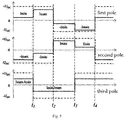
Fig. 1 is a schematic diagram of current and voltage changes of each polar lead in an operating mode I of a power transmission system in an embodiment of the present invention; -
Fig. 2 is a topological structure diagram of a power transmission system for improving the transmission capacity of an urban power grid in a non-sinusoidal alternating current transmission mode taking alternating square wave as a main feature in an embodiment of the present invention; -
Fig. 3 is a functional schematic diagram of switch handover devices in an embodiment of the present invention; -
Fig. 4 is an implementation scheme diagram of the switch handover devices in an embodiment of the present invention; -
Fig. 5 is a schematic diagram of current and voltage changes of each polar lead in an operating mode II of the power transmission system in an embodiment of the present invention. - The present invention will be described in detail below in combination with the accompanying drawings.
- The present invention provides a power transmission system for improving the transmission capacity of an urban power grid by adopting non-sinusoidal alternating current transmission. The power transmission system takes a half-bridge modular cascade multi-level series technology as a main feature, and adopts a novel connection form formed by three polar leads, current handover devices at two ends of each lead and half-bridge modular cascade voltage converters.
- The system includes a first waveform conversion system and a third waveform conversion system for converting sine wave into alternating square wave, and a second waveform conversion system and a fourth waveform conversion system for converting alternating square wave into sine wave; the first waveform conversion system is connected with the second waveform conversion system via a first polar lead and a second polar lead which are parallel to each other; and the third waveform conversion system is connected with the fourth waveform conversion system via a third polar lead.
- The first waveform conversion system includes an alternating current transformer, a positive polar voltage converter, a negative polar voltage converter and a switch handover device; a first alternating current system is connected with the input end of the positive polar voltage converter via the alternating current transformer, the positive electrode of a direct current clamping capacitor of the positive polar voltage converter is connected with the input end of the switch handover device, while the negative electrode of the direct current clamping capacitor is grounded; the negative electrode of a direct current clamping capacitor of the negative polar voltage converter is connected with the input end of the switch handover device, while the positive electrode of the direct current clamping capacitor is grounded; and the output ends of the positive polar voltage converter and the negative polar voltage converter are separately connected with a switch handover device of the second waveform conversion system via the first polar lead and the second polar lead.
- The second waveform conversion system includes the switch handover device, a positive polar voltage converter, a negative polar voltage converter and an alternating current transformer; the positive electrode of a direct current clamping capacitor of the positive polar voltage converter is connected with the output end of the switch handover device, while the negative electrode of the direct current clamping capacitor is grounded; the negative electrode of a direct current clamping capacitor of the negative polar voltage converter is connected with the output end of the switch handover device, while the positive electrode of the direct current clamping capacitor is grounded; and the output ends of the positive polar voltage converter and the negative polar voltage converter are separately connected with a second alternating current system via the alternating current transformer.
- The third waveform conversion system includes an alternating current transformer, a third polar voltage converter and a switch handover device; the first alternating current system is connected with the input end of the third polar voltage converter via the alternating current transformer, the positive electrode of a direct current clamping capacitor of the third polar voltage converter is connected with the input end of the switch handover device, and the output end of the third polar voltage converter is connected with a switch handover device of the fourth waveform conversion system via the third polar lead.
- The fourth waveform conversion system includes the switch handover device, a third polar voltage converter and an alternating current transformer; the positive electrode of a direct current clamping capacitor of the third polar voltage converter is connected with the output end of the switch handover device, and the output end of the third polar voltage converter is connected with the second alternating current system via the alternating current transformer.
- The first polar lead, the second polar lead and the third polar lead are all overhead lines or cable lines.
- The switch handover devices are thyristor fling-cut switches or switch devices based on turn-off power electronic devices. The voltage of the third polar lead is changed periodically in the form of alternating square wave by controlling the periodic on/off of the upper bridge arm or the lower bridge arm of the switch handover device.
- The power transmission system structure sufficiently utilizes three polar leads to transmit power, the voltages of the first polar lead and the second polar lead are unchanged, the direction of the current flowing through the first polar lead and the second polar lead is unchanged, and the amplitude of the current is changed periodically and alternated between the maximum and the minimum. The voltage of the third polar lead is changed periodically, the third polar lead is parallel to the first polar lead or the second polar lead all the time and shares forward or reverse current together with them, but the amplitude of the current flowing through the third polar lead is unchanged.
- The positive polar voltage converters, the negative polar voltage converters and the third polar voltage converters are voltage converters based on turn-off power electronic devices.
- According to the practical situation of the power grid, in the line flow direction, the second waveform conversion system and the fourth waveform conversion system convert sine wave into alternating square wave, and the first waveform conversion system and the third waveform conversion system convert alternating square wave into sine wave, thus completing power transmission from the second alternating current system to the first alternating current system.
- The working principle of the power transmission system for improving the transmission capacity of an urban power grid in a non-sinusoidal alternating current transmission mode taking alternating square wave as a main feature is as follows:
- As shown in
Fig. 1 , the transmitted power of the direct current system can be improved under the same heating limit by periodically changing the magnitude of the current of the three polar leads. The polarities of the voltage and the current of the three polar leads are periodically changed to realize voltage polarity reversal of the first polar lead and the second polar lead, avoid accumulation of space charges and simultaneously realize periodic sharing of the third polar lead on the current of the first or second polar lead. The magnitude of the current of the first or second polar lead is periodically changed between I max and I min, and the direction of the current is changed along with the change of the lead voltage; the magnitude of the current of the third polar lead is unchanged and is I max-I min all the time, and the direction of the current is also changed along with the change of the lead voltage. - The heating limits of the first, second and third polar leads are the same, and it is supposed that a thermal stability limit current is IN = 1.0pu. In order that the third polar lead reaches the heating limit, it should satisfy:

- The current of the first polar lead or the second polar lead is changed between the maximum current I max and the minimum current I min, and the effective value of the current within a cycle should reach the heating limit likewise, to ensure that the transmitted power of the three polar leads each reaches the thermal stability limit. Specifically, it shows in
Fig. 1 , the current effective values of the first polar lead, the second polar lead and the third polar lead are equal within the time of 0 to t 4, so it should satisfy:
- Based on the above condition, the operating current I max of the first polar lead or the second polar lead is 1.37IN, and I min is 0.37 IN.
- When the first polar lead is connected parallel to the third polar lead, the voltage is +U DC, and when forward maximum current I max passes, the working voltage of the second polar lead is -U DC, and reverse maximum current -I max passes; at the moment t 1, the polarity of the working voltage of the first polar lead is unchanged, but the current is changed into the forward maximum current I max, then the second polar lead is parallel to the third polar lead and the both share the reverse maximum current -I max, and the polarity of the third polar lead is reversed; at the moment t 2, the voltage of the first polar lead is reversed, the first polar lead is parallel to the third polar lead and the both work at the reverse maximum current -I max, the voltage of the second polar lead is also reversed, and the second polar lead works at the forward maximum current I max; at the moment t3 , the voltage of the first polar lead is reversed, the forward maximum current I max passes through the first polar lead, the voltage of the second polar lead is reversed, the second polar lead is parallel to the third polar lead and the both work at the reverse maximum current -I max; and at the moment t 4, the voltage of the third polar lead is reversed and restored to the initial state. Alternating square wave transmission is realized by cyclic reversal of the operating mode.
- When the first polar lead is connected parallel to the third polar lead, the voltage is +U DC, and when forward maximum current I max passes, the working voltage of the second polar lead is -U DC, and reverse maximum current -I max passes; at the moment t 1, the polarity of the working voltage of the first polar lead is unchanged, but the current is changed into the forward maximum current I max, then the second polar lead is parallel to the third polar lead and the both share the reverse maximum current -I max, and the polarity of the third polar lead is reversed; at the moment t 2, the voltage of the first polar lead is reversed, the first polar lead is parallel to the third polar lead and the both work at the reverse maximum current -I max, the voltage of the second polar lead is also reversed, and the second polar lead works at the forward maximum current I max; at the moment t 3, the polarity of the working voltage of the first polar lead is unchanged, but the current is changed into the reverse maximum current -I max, the second polar lead is parallel to the third polar lead and the both work at the forward maximum current I max; and at the moment t 4, the voltages of the first polar lead and the second polar lead are reversed, the first polar lead is parallel to the third polar lead and the both are restored to the initial state. Alternating square wave transmission is realized by cyclic reversal of the operating mode.
-
Fig. 2 shows a topological structure diagram of the power transmission system for improving the transmission capacity of an urban power grid in a non-sinusoidal alternating current transmission mode taking alternating square wave as a main feature. The system includes a first polar lead L1, a second polar lead L2, a third polar lead L3, four switch handover devices, voltage converters VSC1, VSC1', VSC2, VSC2', VSC3 and VSC3', direct current clamping capacitors C1, C1', C2, C2', C3 and C3' of the voltage converters, a first alternating current system and a second alternating current system. - Two ends of the first polar lead L1 are connected with the upper ports of the switch handover devices, the other upper ports of the switch handover devices are connected with the positive electrodes of the direct current clamping capacitors C1 and C1', two ends of the second polar lead L2 are connected with the lower ports of the switch handover devices, the other lower ports of the switch handover devices are connected with the negative electrodes of the direct current clamping capacitors C2 and C2', and the negative electrodes of C1 and C1' and the positive electrodes of C2 and C2' are grounded; two ends of the third polar lead L3 are connected with the switch handover devices, then the switch handover devices are connected with the positive electrodes of the direct current clamping capacitors C3 and C3', and the negative electrodes of C3 and C3' are grounded.
- The alternating current sides of the three head voltage converters VSC1, VSC2 and VSC3 at the head are separately connected in parallel to the same bus or different buses of the alternating current system via converter transformers or reactors.
- The alternating current sides of the three tail voltage converters VSC1', VSC2' and VSC3' at the tail are separately connected in parallel to the same bus or different buses of the alternating current system via converter transformers or reactors.
- The switch handover devices may be thyristor switches or based on turn-off power electronic devices. The functional schematic diagram of the switch handover devices is as shown in
Fig. 3 , bilateral switches SW1 and SW1' can simultaneously connect anode 1 with anode 3 and connect anode 2 with anode 4, taking the third polar lead as an example, so that as shown inFig. 2 , the positive electrodes of the direct current clamping capacitors C3 and C3' are connected with the lead L3, the negative electrodes of C3 and C3' are grounded, and the voltage polarity of the third polar lead L3 is positive; or can simultaneously connect anode 1 with a node 4' and connect anode 2 with a node 3', so that as shown inFig. 2 , the negative electrodes of the direct current clamping capacitors C3 and C3' are connected with the third polar lead L3, the positive electrodes of C3 and C3' are grounded, and the voltage polarity of the third polar lead L3 is negative. - An implementation scheme of the switch handover devices is as shown in
Fig. 4 . Each switch handover device includes two sets of compound switches SW1, SW1', SW2 and SW2' formed by connecting two sides of a thyristor switch with high-speed mechanical switches in parallel. SW1 and SW1' are switched on to simultaneously connect anode 1 with anode 3 and connect anode 2 with anode 4, taking the third polar lead as an example, so that as shown inFig. 2 , the positive electrodes of the direct current clamping capacitors C3 and C3' are connected with the third polar lead L3, and the negative electrodes of C3 and C3' are grounded. SW2 and SW2' are switched on to simultaneously connect anode 1 with anode 4 and connect anode 2 with anode 3, so that as shown inFig. 2 , the positive electrodes of the direct current clamping capacitors C3 and C3' are grounded, and the negative electrodes of C3 and C3' are connected with the third polar lead L3. - The present invention sufficiently utilizes the bidirectional current flowing capacity of the voltage source converters, adopts the switch handover devices to realize reversal of voltage polarities of the three polar leads and change the voltage and current polarities thereof, and realizes periodic sharing of the current of the first and second polar leads on the premise that the transmitted power of the three polar leads is unchanged. By appropriate control, the transmitted power can be uniformly allocated among the three polar leads, and the current of the three polar leads can reach respective heating limit. In the power transmission system, current flows among the three polar leads and does not form a passage with the ground, so that high-frequency electromagnetic interference and corrosion of metal equipment in the ground are avoided. The transmitted power of an original alternating current line can be improved by about 60%. By adopting the voltage source conversion technology, high-capacity reactive power compensation and filter devices are not needed, dynamic voltage support and active filter functions can also be provided for an alternating current system without improving the short-circuit current level of the system, and the operational flexibility and reliability of the system can be significantly improved.
- Finally, it should be noted that the above embodiments are merely used for describing rather than limiting the technical solutions of the present invention. Although the present invention is described in detail with reference to the above embodiments, it could be understood by those of ordinary skill in the art that modifications or equivalent substitutions still can be made to the specific embodiments of the present invention without departing from the spirit and scope of the present invention, and these modifications or equivalent substitutions should be included within the scope of the claims of the present invention.
Claims (9)
- A power transmission system for improving the transmission capacity of an urban power grid by adopting non-sinusoidal alternating current transmission, comprising a first waveform conversion system and a third waveform conversion system for converting sine wave into alternating square wave, and a second waveform conversion system and a fourth waveform conversion system for converting alternating square wave into sine wave, wherein the first waveform conversion system is connected with the second waveform conversion system via a first polar lead and a second polar lead which are parallel to each other; and the third waveform conversion system is connected with the fourth waveform conversion system via a third polar lead.
- The power transmission system for improving the transmission capacity of an urban power grid by adopting non-sinusoidal alternating current transmission of claim 1, wherein the first waveform conversion system comprises an alternating current transformer, a positive polar voltage converter, a negative polar voltage converter and a switch handover device; a first alternating current system is connected with the input end of the positive polar voltage converter via the alternating current transformer, the positive electrode of a direct current clamping capacitor of the positive polar voltage converter is connected with the input end of the switch handover device, while the negative electrode of the direct current clamping capacitor is grounded; the negative electrode of a direct current clamping capacitor of the negative polar voltage converter is connected with the input end of the switch handover device, while the positive electrode of the direct current clamping capacitor is grounded; and the output ends of the positive polar voltage converter and the negative polar voltage converter are separately connected with a switch handover device of the second waveform conversion system via the first polar lead and the second polar lead.
- The power transmission system for improving the transmission capacity of an urban power grid by adopting non-sinusoidal alternating current transmission of claim 2, wherein the second waveform conversion system comprises the switch handover device, a positive polar voltage converter, a negative polar voltage converter and an alternating current transformer; the positive electrode of a direct current clamping capacitor of the positive polar voltage converter is connected with the output end of the switch handover device, while the negative electrode of the direct current clamping capacitor is grounded; the negative electrode of a direct current clamping capacitor of the negative polar voltage converter is connected with the output end of the switch handover device, while the positive electrode of the direct current clamping capacitor is grounded; and the output ends of the positive polar voltage converter and the negative polar voltage converter are separately connected with a second alternating current system via the alternating current transformer.
- The power transmission system for improving the transmission capacity of an urban power grid by adopting non-sinusoidal alternating current transmission of claim 1, wherein the third waveform conversion system comprises an alternating current transformer, a third polar voltage converter and a switch handover device; the first alternating current system is connected with the input end of the third polar voltage converter via the alternating current transformer, the positive electrode of a direct current clamping capacitor of the third polar voltage converter is connected with the input end of the switch handover device, and the output end of the third polar voltage converter is connected with a switch handover device of the fourth waveform conversion system via the third polar lead.
- The power transmission system for improving the transmission capacity of an urban power grid by adopting non-sinusoidal alternating current transmission of claim 4, wherein the fourth waveform conversion system comprises the switch handover device, a third polar voltage converter and an alternating current transformer; the positive electrode of a direct current clamping capacitor of the third polar voltage converter is connected with the output end of the switch handover device, and the output end of the third polar voltage converter is connected with the second alternating current system via the alternating current transformer.
- The power transmission system for improving the transmission capacity of an urban power grid by adopting non-sinusoidal alternating current transmission of claim 1, 2 or 4, wherein the first polar lead, the second polar lead and the third polar lead are all overhead lines or cable lines.
- The power transmission system for improving the transmission capacity of an urban power grid by adopting non-sinusoidal alternating current transmission of any of claims 2-5, wherein the switch handover devices are thyristor fling-cut switches or switch devices based on turn-off power electronic devices.
- The power transmission system for improving the transmission capacity of an urban power grid by adopting non-sinusoidal alternating current transmission of any of claims 2-5, wherein the positive polar voltage converters, the negative polar voltage converters and the third polar voltage converters are voltage converters based on turn-off power electronic devices.
- The power transmission system for improving the transmission capacity of an urban power grid by adopting non-sinusoidal alternating current transmission of claim 2, wherein according to the practical situation of the power grid, in the line flow direction, the second waveform conversion system and the fourth waveform conversion system convert sine wave into alternating square wave, and the first waveform conversion system and the third waveform conversion system convert alternating square wave into sine wave, thus completing power transmission from the second alternating current system to the first alternating current system.
Applications Claiming Priority (2)
| Application Number | Priority Date | Filing Date | Title |
|---|---|---|---|
| CN201310606681.1A CN103606917B (en) | 2013-11-25 | 2013-11-25 | Non-sine ac transmission is used to promote the transmission system of urban distribution network conveying capacity |
| PCT/CN2014/092202 WO2015074624A1 (en) | 2013-11-25 | 2014-11-25 | Power transmission system for improving transmission capacity of urban power grid through non-sine alternating current power transmission |
Publications (3)
| Publication Number | Publication Date |
|---|---|
| EP3076511A1 true EP3076511A1 (en) | 2016-10-05 |
| EP3076511A4 EP3076511A4 (en) | 2017-07-19 |
| EP3076511B1 EP3076511B1 (en) | 2021-05-05 |
Family
ID=50125123
Family Applications (1)
| Application Number | Title | Priority Date | Filing Date |
|---|---|---|---|
| EP14864751.4A Active EP3076511B1 (en) | 2013-11-25 | 2014-11-25 | Power transmission system for improving transmission capacity of urban power grid through non-sine alternating current power transmission |
Country Status (3)
| Country | Link |
|---|---|
| EP (1) | EP3076511B1 (en) |
| CN (1) | CN103606917B (en) |
| WO (1) | WO2015074624A1 (en) |
Families Citing this family (9)
| Publication number | Priority date | Publication date | Assignee | Title |
|---|---|---|---|---|
| CN103606917B (en) * | 2013-11-25 | 2016-08-17 | 国家电网公司 | Non-sine ac transmission is used to promote the transmission system of urban distribution network conveying capacity |
| CN103986154B (en) * | 2014-04-30 | 2017-01-18 | 国家电网公司 | Square wave power transmission system for improving transmission capacity of alternating-current cable line |
| CN103972919B (en) * | 2014-05-14 | 2016-05-04 | 国网上海市电力公司 | A kind of friendship changes the choosing method of DC rated voltage after three utmost point direct currents |
| CN105071373B (en) * | 2015-08-27 | 2018-03-30 | 中国电力科学研究院 | The configuration system and method for dc switch field in a kind of flexible direct current power transmission system |
| CN105162157B (en) * | 2015-09-15 | 2019-02-05 | 国网辽宁省电力有限公司经济技术研究院 | A voltage-current transfer switch based on three-phase H-bridge |
| CN105162156B (en) * | 2015-09-15 | 2018-12-18 | 国网智能电网研究院 | Grid power transmission capacity-increasing transformation method based on double MMC inverters |
| CN105356495B (en) * | 2015-11-27 | 2018-10-12 | 国网浙江省电力有限公司电力科学研究院 | A kind of DC transmission system transmitted electricity using three-phase alternating current cable |
| CN106356882B (en) * | 2016-10-21 | 2018-07-20 | 南京南瑞继保电气有限公司 | A kind of flow control method for flexible direct current power grid |
| CN114930666A (en) * | 2020-01-22 | 2022-08-19 | 日立能源瑞士股份公司 | Apparatus and method for power transmission |
Family Cites Families (9)
| Publication number | Priority date | Publication date | Assignee | Title |
|---|---|---|---|---|
| DE3616334C2 (en) * | 1986-05-15 | 2000-11-02 | Asea Brown Boveri | Method of damping at least one electrical harmonic at the mains frequency in a multi-phase AC network |
| CN86108522A (en) * | 1986-12-09 | 1987-11-04 | 陈雅罗 | Two-phase or four-phase magnetic positive feedback ascillating power generation and electric power distribution |
| SE9800956L (en) * | 1998-03-23 | 1999-05-25 | Asea Brown Boveri | Power supply power supply to an electronics unit at a semiconductor valve in a shunt-connected thyristor-coupled capacitor |
| US6714427B1 (en) * | 2002-11-07 | 2004-03-30 | Lionel O. Barthold | Current modulation of direct current transmission lines |
| CA2664076C (en) * | 2006-09-29 | 2015-09-29 | Abb Technology Ag | Conversion of ac lines to hvdc lines |
| CN102738819B (en) * | 2012-06-06 | 2013-11-13 | 中国电力科学研究院 | Power transmission system for improving transmission capability of alternating-current circuit through using mixed current converting technology |
| CN102738820B (en) * | 2012-06-06 | 2013-11-13 | 中国电力科学研究院 | Power transmission system for improving transmission capability of alternating-current circuit through using voltage source current converting technology |
| CN103219738B (en) * | 2013-03-29 | 2015-05-20 | 浙江大学 | Direct current transmission system based on three-pole type structure |
| CN103606917B (en) * | 2013-11-25 | 2016-08-17 | 国家电网公司 | Non-sine ac transmission is used to promote the transmission system of urban distribution network conveying capacity |
-
2013
- 2013-11-25 CN CN201310606681.1A patent/CN103606917B/en active Active
-
2014
- 2014-11-25 WO PCT/CN2014/092202 patent/WO2015074624A1/en not_active Ceased
- 2014-11-25 EP EP14864751.4A patent/EP3076511B1/en active Active
Also Published As
| Publication number | Publication date |
|---|---|
| CN103606917B (en) | 2016-08-17 |
| CN103606917A (en) | 2014-02-26 |
| EP3076511A4 (en) | 2017-07-19 |
| WO2015074624A1 (en) | 2015-05-28 |
| EP3076511B1 (en) | 2021-05-05 |
Similar Documents
| Publication | Publication Date | Title |
|---|---|---|
| EP3076511B1 (en) | Power transmission system for improving transmission capacity of urban power grid through non-sine alternating current power transmission | |
| EP3082212B1 (en) | Tripolar flexible direct-current power transmission system and method | |
| CN102738819B (en) | Power transmission system for improving transmission capability of alternating-current circuit through using mixed current converting technology | |
| Miura et al. | Modular multilevel matrix converter for low frequency AC transmission | |
| CN102246379B (en) | Method of upgrading a facility for transmitting electric power and such facility | |
| CN103430422B (en) | Module for converting the voltage between a high-voltage network and an energy storage component of an aircraft | |
| CN103895534B (en) | Double-current system traction power supply system based on modularized multi-level current converter | |
| CN103986154B (en) | Square wave power transmission system for improving transmission capacity of alternating-current cable line | |
| CN102420533A (en) | Hybrid multilevel current conversion circuit topology structure and control method thereof | |
| CN209313433U (en) | A kind of transmission system | |
| CN108649576A (en) | A kind of transmission system | |
| CN103606946B (en) | A kind of transmission system promoting interchange overhead transmission line conveying capacity based on MMC | |
| CN104269841B (en) | A kind of direct current network rectification harmonic suppression apparatus | |
| CN102738820B (en) | Power transmission system for improving transmission capability of alternating-current circuit through using voltage source current converting technology | |
| CN108631326A (en) | Idle and harmonic compensation device based on Buck type three-level AC AC-AC converters | |
| CN102983586B (en) | A kind of HVDC based on three-level voltage source converter holds concurrently UPFC system | |
| CN203859516U (en) | Square wave alternating-current power transmission system for improving alternating-current cable line transmission capacity | |
| CN204144944U (en) | A kind of non-sine AC transmission system based on H bridge submodule | |
| CN204928187U (en) | Voltage -current conversion switch based on three -phase H bridge | |
| CN102638039B (en) | Three-phase chain-type static synchronous compensator | |
| RU124076U1 (en) | COMBINED PLANT FOR HUNGER-MOLDING AND REACTIVE POWER COMPENSATION | |
| CN105162157B (en) | A voltage-current transfer switch based on three-phase H-bridge | |
| CN208028779U (en) | Three level power unit main circuits of one kind and cascade high voltage frequency converter | |
| CN205911824U (en) | Uninterrupted power supply | |
| CN104836250B (en) | A kind of electrode current transfer switch |
Legal Events
| Date | Code | Title | Description |
|---|---|---|---|
| PUAI | Public reference made under article 153(3) epc to a published international application that has entered the european phase |
Free format text: ORIGINAL CODE: 0009012 |
|
| 17P | Request for examination filed |
Effective date: 20160617 |
|
| AK | Designated contracting states |
Kind code of ref document: A1 Designated state(s): AL AT BE BG CH CY CZ DE DK EE ES FI FR GB GR HR HU IE IS IT LI LT LU LV MC MK MT NL NO PL PT RO RS SE SI SK SM TR |
|
| AX | Request for extension of the european patent |
Extension state: BA ME |
|
| RIC1 | Information provided on ipc code assigned before grant |
Ipc: H02J 3/00 20060101AFI20161010BHEP |
|
| RIN1 | Information on inventor provided before grant (corrected) |
Inventor name: ZHOU, FEI Inventor name: LIU, JIAN Inventor name: GE, WEICHUN Inventor name: JING, PING Inventor name: YU, HONGYANG |
|
| DAX | Request for extension of the european patent (deleted) | ||
| A4 | Supplementary search report drawn up and despatched |
Effective date: 20170621 |
|
| RIC1 | Information provided on ipc code assigned before grant |
Ipc: H02J 3/04 20060101ALI20170614BHEP Ipc: H02J 3/00 20060101AFI20170614BHEP |
|
| STAA | Information on the status of an ep patent application or granted ep patent |
Free format text: STATUS: EXAMINATION IS IN PROGRESS |
|
| 17Q | First examination report despatched |
Effective date: 20180531 |
|
| GRAP | Despatch of communication of intention to grant a patent |
Free format text: ORIGINAL CODE: EPIDOSNIGR1 |
|
| STAA | Information on the status of an ep patent application or granted ep patent |
Free format text: STATUS: GRANT OF PATENT IS INTENDED |
|
| INTG | Intention to grant announced |
Effective date: 20201124 |
|
| GRAS | Grant fee paid |
Free format text: ORIGINAL CODE: EPIDOSNIGR3 |
|
| GRAA | (expected) grant |
Free format text: ORIGINAL CODE: 0009210 |
|
| STAA | Information on the status of an ep patent application or granted ep patent |
Free format text: STATUS: THE PATENT HAS BEEN GRANTED |
|
| AK | Designated contracting states |
Kind code of ref document: B1 Designated state(s): AL AT BE BG CH CY CZ DE DK EE ES FI FR GB GR HR HU IE IS IT LI LT LU LV MC MK MT NL NO PL PT RO RS SE SI SK SM TR |
|
| REG | Reference to a national code |
Ref country code: GB Ref legal event code: FG4D |
|
| REG | Reference to a national code |
Ref country code: CH Ref legal event code: EP |
|
| REG | Reference to a national code |
Ref country code: AT Ref legal event code: REF Ref document number: 1391032 Country of ref document: AT Kind code of ref document: T Effective date: 20210515 |
|
| REG | Reference to a national code |
Ref country code: IE Ref legal event code: FG4D |
|
| REG | Reference to a national code |
Ref country code: DE Ref legal event code: R096 Ref document number: 602014077297 Country of ref document: DE |
|
| REG | Reference to a national code |
Ref country code: LT Ref legal event code: MG9D |
|
| REG | Reference to a national code |
Ref country code: AT Ref legal event code: MK05 Ref document number: 1391032 Country of ref document: AT Kind code of ref document: T Effective date: 20210505 |
|
| PG25 | Lapsed in a contracting state [announced via postgrant information from national office to epo] |
Ref country code: BG Free format text: LAPSE BECAUSE OF FAILURE TO SUBMIT A TRANSLATION OF THE DESCRIPTION OR TO PAY THE FEE WITHIN THE PRESCRIBED TIME-LIMIT Effective date: 20210805 Ref country code: AT Free format text: LAPSE BECAUSE OF FAILURE TO SUBMIT A TRANSLATION OF THE DESCRIPTION OR TO PAY THE FEE WITHIN THE PRESCRIBED TIME-LIMIT Effective date: 20210505 Ref country code: LT Free format text: LAPSE BECAUSE OF FAILURE TO SUBMIT A TRANSLATION OF THE DESCRIPTION OR TO PAY THE FEE WITHIN THE PRESCRIBED TIME-LIMIT Effective date: 20210505 Ref country code: FI Free format text: LAPSE BECAUSE OF FAILURE TO SUBMIT A TRANSLATION OF THE DESCRIPTION OR TO PAY THE FEE WITHIN THE PRESCRIBED TIME-LIMIT Effective date: 20210505 Ref country code: HR Free format text: LAPSE BECAUSE OF FAILURE TO SUBMIT A TRANSLATION OF THE DESCRIPTION OR TO PAY THE FEE WITHIN THE PRESCRIBED TIME-LIMIT Effective date: 20210505 |
|
| PG25 | Lapsed in a contracting state [announced via postgrant information from national office to epo] |
Ref country code: IS Free format text: LAPSE BECAUSE OF FAILURE TO SUBMIT A TRANSLATION OF THE DESCRIPTION OR TO PAY THE FEE WITHIN THE PRESCRIBED TIME-LIMIT Effective date: 20210905 Ref country code: LV Free format text: LAPSE BECAUSE OF FAILURE TO SUBMIT A TRANSLATION OF THE DESCRIPTION OR TO PAY THE FEE WITHIN THE PRESCRIBED TIME-LIMIT Effective date: 20210505 Ref country code: GR Free format text: LAPSE BECAUSE OF FAILURE TO SUBMIT A TRANSLATION OF THE DESCRIPTION OR TO PAY THE FEE WITHIN THE PRESCRIBED TIME-LIMIT Effective date: 20210806 Ref country code: SE Free format text: LAPSE BECAUSE OF FAILURE TO SUBMIT A TRANSLATION OF THE DESCRIPTION OR TO PAY THE FEE WITHIN THE PRESCRIBED TIME-LIMIT Effective date: 20210505 Ref country code: RS Free format text: LAPSE BECAUSE OF FAILURE TO SUBMIT A TRANSLATION OF THE DESCRIPTION OR TO PAY THE FEE WITHIN THE PRESCRIBED TIME-LIMIT Effective date: 20210505 Ref country code: PL Free format text: LAPSE BECAUSE OF FAILURE TO SUBMIT A TRANSLATION OF THE DESCRIPTION OR TO PAY THE FEE WITHIN THE PRESCRIBED TIME-LIMIT Effective date: 20210505 Ref country code: PT Free format text: LAPSE BECAUSE OF FAILURE TO SUBMIT A TRANSLATION OF THE DESCRIPTION OR TO PAY THE FEE WITHIN THE PRESCRIBED TIME-LIMIT Effective date: 20210906 Ref country code: NO Free format text: LAPSE BECAUSE OF FAILURE TO SUBMIT A TRANSLATION OF THE DESCRIPTION OR TO PAY THE FEE WITHIN THE PRESCRIBED TIME-LIMIT Effective date: 20210805 Ref country code: ES Free format text: LAPSE BECAUSE OF FAILURE TO SUBMIT A TRANSLATION OF THE DESCRIPTION OR TO PAY THE FEE WITHIN THE PRESCRIBED TIME-LIMIT Effective date: 20210505 |
|
| REG | Reference to a national code |
Ref country code: NL Ref legal event code: MP Effective date: 20210505 |
|
| PG25 | Lapsed in a contracting state [announced via postgrant information from national office to epo] |
Ref country code: NL Free format text: LAPSE BECAUSE OF FAILURE TO SUBMIT A TRANSLATION OF THE DESCRIPTION OR TO PAY THE FEE WITHIN THE PRESCRIBED TIME-LIMIT Effective date: 20210505 |
|
| PG25 | Lapsed in a contracting state [announced via postgrant information from national office to epo] |
Ref country code: CZ Free format text: LAPSE BECAUSE OF FAILURE TO SUBMIT A TRANSLATION OF THE DESCRIPTION OR TO PAY THE FEE WITHIN THE PRESCRIBED TIME-LIMIT Effective date: 20210505 Ref country code: EE Free format text: LAPSE BECAUSE OF FAILURE TO SUBMIT A TRANSLATION OF THE DESCRIPTION OR TO PAY THE FEE WITHIN THE PRESCRIBED TIME-LIMIT Effective date: 20210505 Ref country code: DK Free format text: LAPSE BECAUSE OF FAILURE TO SUBMIT A TRANSLATION OF THE DESCRIPTION OR TO PAY THE FEE WITHIN THE PRESCRIBED TIME-LIMIT Effective date: 20210505 Ref country code: SM Free format text: LAPSE BECAUSE OF FAILURE TO SUBMIT A TRANSLATION OF THE DESCRIPTION OR TO PAY THE FEE WITHIN THE PRESCRIBED TIME-LIMIT Effective date: 20210505 Ref country code: SK Free format text: LAPSE BECAUSE OF FAILURE TO SUBMIT A TRANSLATION OF THE DESCRIPTION OR TO PAY THE FEE WITHIN THE PRESCRIBED TIME-LIMIT Effective date: 20210505 Ref country code: RO Free format text: LAPSE BECAUSE OF FAILURE TO SUBMIT A TRANSLATION OF THE DESCRIPTION OR TO PAY THE FEE WITHIN THE PRESCRIBED TIME-LIMIT Effective date: 20210505 |
|
| REG | Reference to a national code |
Ref country code: DE Ref legal event code: R097 Ref document number: 602014077297 Country of ref document: DE |
|
| PLBE | No opposition filed within time limit |
Free format text: ORIGINAL CODE: 0009261 |
|
| STAA | Information on the status of an ep patent application or granted ep patent |
Free format text: STATUS: NO OPPOSITION FILED WITHIN TIME LIMIT |
|
| 26N | No opposition filed |
Effective date: 20220208 |
|
| PG25 | Lapsed in a contracting state [announced via postgrant information from national office to epo] |
Ref country code: IS Free format text: LAPSE BECAUSE OF FAILURE TO SUBMIT A TRANSLATION OF THE DESCRIPTION OR TO PAY THE FEE WITHIN THE PRESCRIBED TIME-LIMIT Effective date: 20210905 Ref country code: AL Free format text: LAPSE BECAUSE OF FAILURE TO SUBMIT A TRANSLATION OF THE DESCRIPTION OR TO PAY THE FEE WITHIN THE PRESCRIBED TIME-LIMIT Effective date: 20210505 |
|
| PG25 | Lapsed in a contracting state [announced via postgrant information from national office to epo] |
Ref country code: MC Free format text: LAPSE BECAUSE OF FAILURE TO SUBMIT A TRANSLATION OF THE DESCRIPTION OR TO PAY THE FEE WITHIN THE PRESCRIBED TIME-LIMIT Effective date: 20210505 |
|
| REG | Reference to a national code |
Ref country code: CH Ref legal event code: PL |
|
| PG25 | Lapsed in a contracting state [announced via postgrant information from national office to epo] |
Ref country code: LU Free format text: LAPSE BECAUSE OF NON-PAYMENT OF DUE FEES Effective date: 20211125 Ref country code: IT Free format text: LAPSE BECAUSE OF FAILURE TO SUBMIT A TRANSLATION OF THE DESCRIPTION OR TO PAY THE FEE WITHIN THE PRESCRIBED TIME-LIMIT Effective date: 20210505 Ref country code: BE Free format text: LAPSE BECAUSE OF NON-PAYMENT OF DUE FEES Effective date: 20211130 |
|
| REG | Reference to a national code |
Ref country code: BE Ref legal event code: MM Effective date: 20211130 |
|
| PG25 | Lapsed in a contracting state [announced via postgrant information from national office to epo] |
Ref country code: LI Free format text: LAPSE BECAUSE OF NON-PAYMENT OF DUE FEES Effective date: 20211130 Ref country code: CH Free format text: LAPSE BECAUSE OF NON-PAYMENT OF DUE FEES Effective date: 20211130 |
|
| PG25 | Lapsed in a contracting state [announced via postgrant information from national office to epo] |
Ref country code: IE Free format text: LAPSE BECAUSE OF NON-PAYMENT OF DUE FEES Effective date: 20211125 |
|
| PG25 | Lapsed in a contracting state [announced via postgrant information from national office to epo] |
Ref country code: FR Free format text: LAPSE BECAUSE OF NON-PAYMENT OF DUE FEES Effective date: 20211130 |
|
| PG25 | Lapsed in a contracting state [announced via postgrant information from national office to epo] |
Ref country code: HU Free format text: LAPSE BECAUSE OF FAILURE TO SUBMIT A TRANSLATION OF THE DESCRIPTION OR TO PAY THE FEE WITHIN THE PRESCRIBED TIME-LIMIT; INVALID AB INITIO Effective date: 20141125 |
|
| PG25 | Lapsed in a contracting state [announced via postgrant information from national office to epo] |
Ref country code: CY Free format text: LAPSE BECAUSE OF FAILURE TO SUBMIT A TRANSLATION OF THE DESCRIPTION OR TO PAY THE FEE WITHIN THE PRESCRIBED TIME-LIMIT Effective date: 20210505 |
|
| PG25 | Lapsed in a contracting state [announced via postgrant information from national office to epo] |
Ref country code: MK Free format text: LAPSE BECAUSE OF FAILURE TO SUBMIT A TRANSLATION OF THE DESCRIPTION OR TO PAY THE FEE WITHIN THE PRESCRIBED TIME-LIMIT Effective date: 20210505 |
|
| PG25 | Lapsed in a contracting state [announced via postgrant information from national office to epo] |
Ref country code: MT Free format text: LAPSE BECAUSE OF FAILURE TO SUBMIT A TRANSLATION OF THE DESCRIPTION OR TO PAY THE FEE WITHIN THE PRESCRIBED TIME-LIMIT Effective date: 20210505 |
|
| PG25 | Lapsed in a contracting state [announced via postgrant information from national office to epo] |
Ref country code: TR Free format text: LAPSE BECAUSE OF FAILURE TO SUBMIT A TRANSLATION OF THE DESCRIPTION OR TO PAY THE FEE WITHIN THE PRESCRIBED TIME-LIMIT Effective date: 20210505 |
|
| PGFP | Annual fee paid to national office [announced via postgrant information from national office to epo] |
Ref country code: DE Payment date: 20251202 Year of fee payment: 12 |
|
| PGFP | Annual fee paid to national office [announced via postgrant information from national office to epo] |
Ref country code: GB Payment date: 20251201 Year of fee payment: 12 |