EP3075899A1 - Absorbent fabric - Google Patents
Absorbent fabric Download PDFInfo
- Publication number
- EP3075899A1 EP3075899A1 EP14863119.5A EP14863119A EP3075899A1 EP 3075899 A1 EP3075899 A1 EP 3075899A1 EP 14863119 A EP14863119 A EP 14863119A EP 3075899 A1 EP3075899 A1 EP 3075899A1
- Authority
- EP
- European Patent Office
- Prior art keywords
- polyester fibers
- weight
- fabric
- jis
- absorbent fabric
- Prior art date
- Legal status (The legal status is an assumption and is not a legal conclusion. Google has not performed a legal analysis and makes no representation as to the accuracy of the status listed.)
- Granted
Links
- 239000004744 fabric Substances 0.000 title claims abstract description 123
- 239000002250 absorbent Substances 0.000 title claims abstract description 29
- 230000002745 absorbent Effects 0.000 title claims abstract description 29
- 229920000728 polyester Polymers 0.000 claims abstract description 98
- 239000000835 fiber Substances 0.000 claims abstract description 94
- XLYOFNOQVPJJNP-UHFFFAOYSA-N water Substances O XLYOFNOQVPJJNP-UHFFFAOYSA-N 0.000 claims abstract description 85
- 238000000034 method Methods 0.000 claims abstract description 73
- 150000001732 carboxylic acid derivatives Chemical class 0.000 claims abstract description 35
- 238000005406 washing Methods 0.000 claims abstract description 34
- LLLVZDVNHNWSDS-UHFFFAOYSA-N 4-methylidene-3,5-dioxabicyclo[5.2.2]undeca-1(9),7,10-triene-2,6-dione Chemical compound C1(C2=CC=C(C(=O)OC(=C)O1)C=C2)=O LLLVZDVNHNWSDS-UHFFFAOYSA-N 0.000 claims abstract description 7
- -1 sulfonate compound Chemical class 0.000 claims description 21
- 125000004122 cyclic group Chemical group 0.000 claims description 11
- 229910052751 metal Inorganic materials 0.000 claims description 7
- 239000002184 metal Substances 0.000 claims description 7
- QQVIHTHCMHWDBS-UHFFFAOYSA-N isophthalic acid Chemical compound OC(=O)C1=CC=CC(C(O)=O)=C1 QQVIHTHCMHWDBS-UHFFFAOYSA-N 0.000 claims description 6
- 125000001273 sulfonato group Chemical group [O-]S(*)(=O)=O 0.000 claims description 3
- 238000004519 manufacturing process Methods 0.000 claims description 2
- 238000010521 absorption reaction Methods 0.000 abstract description 15
- HEMHJVSKTPXQMS-UHFFFAOYSA-M Sodium hydroxide Chemical compound [OH-].[Na+] HEMHJVSKTPXQMS-UHFFFAOYSA-M 0.000 description 27
- 238000004900 laundering Methods 0.000 description 22
- 239000000523 sample Substances 0.000 description 16
- QTBSBXVTEAMEQO-UHFFFAOYSA-N Acetic acid Chemical compound CC(O)=O QTBSBXVTEAMEQO-UHFFFAOYSA-N 0.000 description 15
- 230000035807 sensation Effects 0.000 description 15
- 238000012360 testing method Methods 0.000 description 15
- 150000002500 ions Chemical class 0.000 description 14
- 230000000694 effects Effects 0.000 description 12
- 238000009940 knitting Methods 0.000 description 11
- 239000000243 solution Substances 0.000 description 11
- 230000007423 decrease Effects 0.000 description 9
- 239000003599 detergent Substances 0.000 description 8
- 238000005259 measurement Methods 0.000 description 8
- 239000011734 sodium Substances 0.000 description 8
- 230000000052 comparative effect Effects 0.000 description 7
- 238000001514 detection method Methods 0.000 description 7
- 238000001840 matrix-assisted laser desorption--ionisation time-of-flight mass spectrometry Methods 0.000 description 7
- 238000012545 processing Methods 0.000 description 7
- LLHSEQCZSNZLRI-UHFFFAOYSA-M sodium;3,5-bis(methoxycarbonyl)benzenesulfonate Chemical compound [Na+].COC(=O)C1=CC(C(=O)OC)=CC(S([O-])(=O)=O)=C1 LLHSEQCZSNZLRI-UHFFFAOYSA-M 0.000 description 7
- 239000002759 woven fabric Substances 0.000 description 7
- 239000003795 chemical substances by application Substances 0.000 description 6
- 238000004043 dyeing Methods 0.000 description 6
- 238000004895 liquid chromatography mass spectrometry Methods 0.000 description 6
- 239000011159 matrix material Substances 0.000 description 6
- QPJVMBTYPHYUOC-UHFFFAOYSA-N methyl benzoate Chemical compound COC(=O)C1=CC=CC=C1 QPJVMBTYPHYUOC-UHFFFAOYSA-N 0.000 description 6
- 238000002156 mixing Methods 0.000 description 6
- AFVLVVWMAFSXCK-UHFFFAOYSA-N α-cyano-4-hydroxycinnamic acid Chemical compound OC(=O)C(C#N)=CC1=CC=C(O)C=C1 AFVLVVWMAFSXCK-UHFFFAOYSA-N 0.000 description 6
- 230000015572 biosynthetic process Effects 0.000 description 5
- 238000009981 jet dyeing Methods 0.000 description 5
- 239000000047 product Substances 0.000 description 5
- 238000001228 spectrum Methods 0.000 description 5
- WEVYAHXRMPXWCK-UHFFFAOYSA-N Acetonitrile Chemical group CC#N WEVYAHXRMPXWCK-UHFFFAOYSA-N 0.000 description 4
- MHAJPDPJQMAIIY-UHFFFAOYSA-N Hydrogen peroxide Chemical compound OO MHAJPDPJQMAIIY-UHFFFAOYSA-N 0.000 description 4
- 238000006386 neutralization reaction Methods 0.000 description 4
- 238000011002 quantification Methods 0.000 description 4
- 150000003839 salts Chemical class 0.000 description 4
- 239000006096 absorbing agent Substances 0.000 description 3
- 239000002253 acid Substances 0.000 description 3
- 238000004458 analytical method Methods 0.000 description 3
- 238000000119 electrospray ionisation mass spectrum Methods 0.000 description 3
- 150000002148 esters Chemical class 0.000 description 3
- 239000011521 glass Substances 0.000 description 3
- 239000000017 hydrogel Substances 0.000 description 3
- 230000014759 maintenance of location Effects 0.000 description 3
- 229940095102 methyl benzoate Drugs 0.000 description 3
- 229920000642 polymer Polymers 0.000 description 3
- 238000007670 refining Methods 0.000 description 3
- 239000005871 repellent Substances 0.000 description 3
- YXTFRJVQOWZDPP-UHFFFAOYSA-M sodium;3,5-dicarboxybenzenesulfonate Chemical compound [Na+].OC(=O)C1=CC(C(O)=O)=CC(S([O-])(=O)=O)=C1 YXTFRJVQOWZDPP-UHFFFAOYSA-M 0.000 description 3
- 238000009987 spinning Methods 0.000 description 3
- 229920002994 synthetic fiber Polymers 0.000 description 3
- 239000012209 synthetic fiber Substances 0.000 description 3
- BYEAHWXPCBROCE-UHFFFAOYSA-N 1,1,1,3,3,3-hexafluoropropan-2-ol Chemical compound FC(F)(F)C(O)C(F)(F)F BYEAHWXPCBROCE-UHFFFAOYSA-N 0.000 description 2
- CSCPPACGZOOCGX-UHFFFAOYSA-N Acetone Chemical compound CC(C)=O CSCPPACGZOOCGX-UHFFFAOYSA-N 0.000 description 2
- IJGRMHOSHXDMSA-UHFFFAOYSA-N Atomic nitrogen Chemical compound N#N IJGRMHOSHXDMSA-UHFFFAOYSA-N 0.000 description 2
- NBIIXXVUZAFLBC-UHFFFAOYSA-N Phosphoric acid Chemical compound OP(O)(O)=O NBIIXXVUZAFLBC-UHFFFAOYSA-N 0.000 description 2
- 239000004952 Polyamide Substances 0.000 description 2
- 239000004115 Sodium Silicate Substances 0.000 description 2
- GWEVSGVZZGPLCZ-UHFFFAOYSA-N Titan oxide Chemical compound O=[Ti]=O GWEVSGVZZGPLCZ-UHFFFAOYSA-N 0.000 description 2
- 150000004996 alkyl benzenes Chemical class 0.000 description 2
- 235000013351 cheese Nutrition 0.000 description 2
- 238000000354 decomposition reaction Methods 0.000 description 2
- 125000000118 dimethyl group Chemical group [H]C([H])([H])* 0.000 description 2
- PBOFFNYRKURMFP-UHFFFAOYSA-L dipotassium;5-sulfobenzene-1,3-dicarboxylate Chemical compound [K+].[K+].OS(=O)(=O)C1=CC(C([O-])=O)=CC(C([O-])=O)=C1 PBOFFNYRKURMFP-UHFFFAOYSA-L 0.000 description 2
- UGVNWEXJCGWQOA-UHFFFAOYSA-L disodium;4-sulfonaphthalene-2,6-dicarboxylate Chemical compound [Na+].[Na+].C1=C(C([O-])=O)C=C2C(S(=O)(=O)O)=CC(C([O-])=O)=CC2=C1 UGVNWEXJCGWQOA-UHFFFAOYSA-L 0.000 description 2
- GVGUFUZHNYFZLC-UHFFFAOYSA-N dodecyl benzenesulfonate;sodium Chemical compound [Na].CCCCCCCCCCCCOS(=O)(=O)C1=CC=CC=C1 GVGUFUZHNYFZLC-UHFFFAOYSA-N 0.000 description 2
- 238000000132 electrospray ionisation Methods 0.000 description 2
- 238000011156 evaluation Methods 0.000 description 2
- 238000002354 inductively-coupled plasma atomic emission spectroscopy Methods 0.000 description 2
- 239000007788 liquid Substances 0.000 description 2
- 238000004949 mass spectrometry Methods 0.000 description 2
- 238000001819 mass spectrum Methods 0.000 description 2
- 239000000463 material Substances 0.000 description 2
- 125000002496 methyl group Chemical group [H]C([H])([H])* 0.000 description 2
- 239000000178 monomer Substances 0.000 description 2
- 230000003472 neutralizing effect Effects 0.000 description 2
- 229920002647 polyamide Polymers 0.000 description 2
- 238000006116 polymerization reaction Methods 0.000 description 2
- 238000005070 sampling Methods 0.000 description 2
- 229940080264 sodium dodecylbenzenesulfonate Drugs 0.000 description 2
- NTHWMYGWWRZVTN-UHFFFAOYSA-N sodium silicate Chemical compound [Na+].[Na+].[O-][Si]([O-])=O NTHWMYGWWRZVTN-UHFFFAOYSA-N 0.000 description 2
- 229910052911 sodium silicate Inorganic materials 0.000 description 2
- 238000003756 stirring Methods 0.000 description 2
- 150000003871 sulfonates Chemical class 0.000 description 2
- 238000002211 ultraviolet spectrum Methods 0.000 description 2
- 239000003643 water by type Substances 0.000 description 2
- 230000037303 wrinkles Effects 0.000 description 2
- HJIAMFHSAAEUKR-UHFFFAOYSA-N (2-hydroxyphenyl)-phenylmethanone Chemical class OC1=CC=CC=C1C(=O)C1=CC=CC=C1 HJIAMFHSAAEUKR-UHFFFAOYSA-N 0.000 description 1
- RNFJDJUURJAICM-UHFFFAOYSA-N 2,2,4,4,6,6-hexaphenoxy-1,3,5-triaza-2$l^{5},4$l^{5},6$l^{5}-triphosphacyclohexa-1,3,5-triene Chemical compound N=1P(OC=2C=CC=CC=2)(OC=2C=CC=CC=2)=NP(OC=2C=CC=CC=2)(OC=2C=CC=CC=2)=NP=1(OC=1C=CC=CC=1)OC1=CC=CC=C1 RNFJDJUURJAICM-UHFFFAOYSA-N 0.000 description 1
- FDXXNZBUQBJJJS-UHFFFAOYSA-M C(CCC)[P+](CCCC)(CCCC)CCCC.C1=CC=C(C2=CC=CC=C12)S(=O)(=O)[O-] Chemical compound C(CCC)[P+](CCCC)(CCCC)CCCC.C1=CC=C(C2=CC=CC=C12)S(=O)(=O)[O-] FDXXNZBUQBJJJS-UHFFFAOYSA-M 0.000 description 1
- XSFMRDBLAYMQEP-UHFFFAOYSA-M C[P+](C)(C)C.C1(=CC=CC2=CC=CC=C12)S(=O)(=O)[O-] Chemical compound C[P+](C)(C)C.C1(=CC=CC2=CC=CC=C12)S(=O)(=O)[O-] XSFMRDBLAYMQEP-UHFFFAOYSA-M 0.000 description 1
- 229920003043 Cellulose fiber Polymers 0.000 description 1
- 229920000742 Cotton Polymers 0.000 description 1
- YCKRFDGAMUMZLT-UHFFFAOYSA-N Fluorine atom Chemical compound [F] YCKRFDGAMUMZLT-UHFFFAOYSA-N 0.000 description 1
- 229920000297 Rayon Polymers 0.000 description 1
- VYPSYNLAJGMNEJ-UHFFFAOYSA-N Silicium dioxide Chemical compound O=[Si]=O VYPSYNLAJGMNEJ-UHFFFAOYSA-N 0.000 description 1
- 229920006221 acetate fiber Polymers 0.000 description 1
- 239000003513 alkali Substances 0.000 description 1
- 238000005904 alkaline hydrolysis reaction Methods 0.000 description 1
- 239000012670 alkaline solution Substances 0.000 description 1
- 229940045714 alkyl sulfonate alkylating agent Drugs 0.000 description 1
- 150000008052 alkyl sulfonates Chemical class 0.000 description 1
- 229910000147 aluminium phosphate Inorganic materials 0.000 description 1
- 239000002518 antifoaming agent Substances 0.000 description 1
- 239000003963 antioxidant agent Substances 0.000 description 1
- 230000003078 antioxidant effect Effects 0.000 description 1
- 239000002216 antistatic agent Substances 0.000 description 1
- WWLOCCUNZXBJFR-UHFFFAOYSA-N azanium;benzenesulfonate Chemical compound [NH4+].[O-]S(=O)(=O)C1=CC=CC=C1 WWLOCCUNZXBJFR-UHFFFAOYSA-N 0.000 description 1
- CDSYNBNDDIBFSF-UHFFFAOYSA-M benzenesulfonate tributyl(methyl)phosphanium Chemical compound [O-]S(=O)(=O)c1ccccc1.CCCC[P+](C)(CCCC)CCCC CDSYNBNDDIBFSF-UHFFFAOYSA-M 0.000 description 1
- VEGPYAOWYWDJKW-UHFFFAOYSA-M benzenesulfonate;tetrabutylphosphanium Chemical compound [O-]S(=O)(=O)C1=CC=CC=C1.CCCC[P+](CCCC)(CCCC)CCCC VEGPYAOWYWDJKW-UHFFFAOYSA-M 0.000 description 1
- WLNQVIBTOCBTBA-UHFFFAOYSA-M benzenesulfonate;tetramethylphosphanium Chemical compound C[P+](C)(C)C.[O-]S(=O)(=O)C1=CC=CC=C1 WLNQVIBTOCBTBA-UHFFFAOYSA-M 0.000 description 1
- 238000005282 brightening Methods 0.000 description 1
- 125000003178 carboxy group Chemical group [H]OC(*)=O 0.000 description 1
- 238000004140 cleaning Methods 0.000 description 1
- 238000003776 cleavage reaction Methods 0.000 description 1
- 239000011248 coating agent Substances 0.000 description 1
- 238000000576 coating method Methods 0.000 description 1
- 150000001875 compounds Chemical class 0.000 description 1
- 239000003484 crystal nucleating agent Substances 0.000 description 1
- 230000001186 cumulative effect Effects 0.000 description 1
- 230000003247 decreasing effect Effects 0.000 description 1
- 230000006735 deficit Effects 0.000 description 1
- 238000001212 derivatisation Methods 0.000 description 1
- 238000013461 design Methods 0.000 description 1
- 230000006866 deterioration Effects 0.000 description 1
- 230000003292 diminished effect Effects 0.000 description 1
- 238000002330 electrospray ionisation mass spectrometry Methods 0.000 description 1
- 238000010828 elution Methods 0.000 description 1
- 230000032050 esterification Effects 0.000 description 1
- 238000005886 esterification reaction Methods 0.000 description 1
- 238000002474 experimental method Methods 0.000 description 1
- 239000003063 flame retardant Substances 0.000 description 1
- 229910052731 fluorine Inorganic materials 0.000 description 1
- 239000011737 fluorine Substances 0.000 description 1
- 229910021485 fumed silica Inorganic materials 0.000 description 1
- 230000006870 function Effects 0.000 description 1
- 238000010438 heat treatment Methods 0.000 description 1
- 230000002209 hydrophobic effect Effects 0.000 description 1
- 230000003100 immobilizing effect Effects 0.000 description 1
- 238000007373 indentation Methods 0.000 description 1
- 238000002347 injection Methods 0.000 description 1
- 239000007924 injection Substances 0.000 description 1
- 238000004811 liquid chromatography Methods 0.000 description 1
- 239000000314 lubricant Substances 0.000 description 1
- 239000006224 matting agent Substances 0.000 description 1
- 238000013508 migration Methods 0.000 description 1
- 230000005012 migration Effects 0.000 description 1
- 230000007935 neutral effect Effects 0.000 description 1
- 229910052757 nitrogen Inorganic materials 0.000 description 1
- 150000002989 phenols Chemical class 0.000 description 1
- 239000000049 pigment Substances 0.000 description 1
- 238000006068 polycondensation reaction Methods 0.000 description 1
- 229920006149 polyester-amide block copolymer Polymers 0.000 description 1
- 239000004814 polyurethane Substances 0.000 description 1
- 229920002635 polyurethane Polymers 0.000 description 1
- 229920006306 polyurethane fiber Polymers 0.000 description 1
- 239000002244 precipitate Substances 0.000 description 1
- 239000002964 rayon Substances 0.000 description 1
- 230000002040 relaxant effect Effects 0.000 description 1
- 230000002940 repellent Effects 0.000 description 1
- 238000011160 research Methods 0.000 description 1
- 239000012488 sample solution Substances 0.000 description 1
- 230000007017 scission Effects 0.000 description 1
- 230000001953 sensory effect Effects 0.000 description 1
- 239000000344 soap Substances 0.000 description 1
- MRASRRVMMKOGGK-UHFFFAOYSA-M sodium 4-hydroxy-2-sulfobenzoate Chemical compound [Na+].Oc1ccc(C([O-])=O)c(c1)S(O)(=O)=O MRASRRVMMKOGGK-UHFFFAOYSA-M 0.000 description 1
- DAJSVUQLFFJUSX-UHFFFAOYSA-M sodium;dodecane-1-sulfonate Chemical compound [Na+].CCCCCCCCCCCCS([O-])(=O)=O DAJSVUQLFFJUSX-UHFFFAOYSA-M 0.000 description 1
- AYFACLKQYVTXNS-UHFFFAOYSA-M sodium;tetradecane-1-sulfonate Chemical compound [Na+].CCCCCCCCCCCCCCS([O-])(=O)=O AYFACLKQYVTXNS-UHFFFAOYSA-M 0.000 description 1
- ORLPWCUCEDVJNN-UHFFFAOYSA-N sodium;tetradecyl benzenesulfonate Chemical compound [Na].CCCCCCCCCCCCCCOS(=O)(=O)C1=CC=CC=C1 ORLPWCUCEDVJNN-UHFFFAOYSA-N 0.000 description 1
- DBMQUCVJHLWQHT-UHFFFAOYSA-M sodium;undecane-1-sulfonate Chemical compound [Na+].CCCCCCCCCCCS([O-])(=O)=O DBMQUCVJHLWQHT-UHFFFAOYSA-M 0.000 description 1
- NZRSEGYTVSNMCK-UHFFFAOYSA-N sodium;undecyl benzenesulfonate Chemical compound [Na].CCCCCCCCCCCOS(=O)(=O)C1=CC=CC=C1 NZRSEGYTVSNMCK-UHFFFAOYSA-N 0.000 description 1
- 239000007787 solid Substances 0.000 description 1
- 238000004611 spectroscopical analysis Methods 0.000 description 1
- 239000003381 stabilizer Substances 0.000 description 1
- 239000000454 talc Substances 0.000 description 1
- 229910052623 talc Inorganic materials 0.000 description 1
- 239000004753 textile Substances 0.000 description 1
- 239000004408 titanium dioxide Substances 0.000 description 1
- 238000004704 ultra performance liquid chromatography Methods 0.000 description 1
- 239000006097 ultraviolet radiation absorber Substances 0.000 description 1
Images




Classifications
-
- D—TEXTILES; PAPER
- D06—TREATMENT OF TEXTILES OR THE LIKE; LAUNDERING; FLEXIBLE MATERIALS NOT OTHERWISE PROVIDED FOR
- D06M—TREATMENT, NOT PROVIDED FOR ELSEWHERE IN CLASS D06, OF FIBRES, THREADS, YARNS, FABRICS, FEATHERS OR FIBROUS GOODS MADE FROM SUCH MATERIALS
- D06M13/00—Treating fibres, threads, yarns, fabrics or fibrous goods made from such materials, with non-macromolecular organic compounds; Such treatment combined with mechanical treatment
- D06M13/10—Treating fibres, threads, yarns, fabrics or fibrous goods made from such materials, with non-macromolecular organic compounds; Such treatment combined with mechanical treatment with compounds containing oxygen
- D06M13/224—Esters of carboxylic acids; Esters of carbonic acid
- D06M13/228—Cyclic esters, e.g. lactones
-
- D—TEXTILES; PAPER
- D01—NATURAL OR MAN-MADE THREADS OR FIBRES; SPINNING
- D01F—CHEMICAL FEATURES IN THE MANUFACTURE OF ARTIFICIAL FILAMENTS, THREADS, FIBRES, BRISTLES OR RIBBONS; APPARATUS SPECIALLY ADAPTED FOR THE MANUFACTURE OF CARBON FILAMENTS
- D01F6/00—Monocomponent artificial filaments or the like of synthetic polymers; Manufacture thereof
- D01F6/88—Monocomponent artificial filaments or the like of synthetic polymers; Manufacture thereof from mixtures of polycondensation products as major constituent with other polymers or low-molecular-weight compounds
- D01F6/92—Monocomponent artificial filaments or the like of synthetic polymers; Manufacture thereof from mixtures of polycondensation products as major constituent with other polymers or low-molecular-weight compounds of polyesters
-
- D—TEXTILES; PAPER
- D01—NATURAL OR MAN-MADE THREADS OR FIBRES; SPINNING
- D01F—CHEMICAL FEATURES IN THE MANUFACTURE OF ARTIFICIAL FILAMENTS, THREADS, FIBRES, BRISTLES OR RIBBONS; APPARATUS SPECIALLY ADAPTED FOR THE MANUFACTURE OF CARBON FILAMENTS
- D01F11/00—Chemical after-treatment of artificial filaments or the like during manufacture
- D01F11/04—Chemical after-treatment of artificial filaments or the like during manufacture of synthetic polymers
- D01F11/08—Chemical after-treatment of artificial filaments or the like during manufacture of synthetic polymers of macromolecular compounds obtained otherwise than by reactions only involving carbon-to-carbon unsaturated bonds
-
- D—TEXTILES; PAPER
- D01—NATURAL OR MAN-MADE THREADS OR FIBRES; SPINNING
- D01F—CHEMICAL FEATURES IN THE MANUFACTURE OF ARTIFICIAL FILAMENTS, THREADS, FIBRES, BRISTLES OR RIBBONS; APPARATUS SPECIALLY ADAPTED FOR THE MANUFACTURE OF CARBON FILAMENTS
- D01F6/00—Monocomponent artificial filaments or the like of synthetic polymers; Manufacture thereof
- D01F6/78—Monocomponent artificial filaments or the like of synthetic polymers; Manufacture thereof from copolycondensation products
- D01F6/84—Monocomponent artificial filaments or the like of synthetic polymers; Manufacture thereof from copolycondensation products from copolyesters
-
- D—TEXTILES; PAPER
- D06—TREATMENT OF TEXTILES OR THE LIKE; LAUNDERING; FLEXIBLE MATERIALS NOT OTHERWISE PROVIDED FOR
- D06M—TREATMENT, NOT PROVIDED FOR ELSEWHERE IN CLASS D06, OF FIBRES, THREADS, YARNS, FABRICS, FEATHERS OR FIBROUS GOODS MADE FROM SUCH MATERIALS
- D06M11/00—Treating fibres, threads, yarns, fabrics or fibrous goods made from such materials, with inorganic substances or complexes thereof; Such treatment combined with mechanical treatment, e.g. mercerising
- D06M11/32—Treating fibres, threads, yarns, fabrics or fibrous goods made from such materials, with inorganic substances or complexes thereof; Such treatment combined with mechanical treatment, e.g. mercerising with oxygen, ozone, ozonides, oxides, hydroxides or percompounds; Salts derived from anions with an amphoteric element-oxygen bond
- D06M11/36—Treating fibres, threads, yarns, fabrics or fibrous goods made from such materials, with inorganic substances or complexes thereof; Such treatment combined with mechanical treatment, e.g. mercerising with oxygen, ozone, ozonides, oxides, hydroxides or percompounds; Salts derived from anions with an amphoteric element-oxygen bond with oxides, hydroxides or mixed oxides; with salts derived from anions with an amphoteric element-oxygen bond
- D06M11/38—Oxides or hydroxides of elements of Groups 1 or 11 of the Periodic Table
-
- D—TEXTILES; PAPER
- D06—TREATMENT OF TEXTILES OR THE LIKE; LAUNDERING; FLEXIBLE MATERIALS NOT OTHERWISE PROVIDED FOR
- D06M—TREATMENT, NOT PROVIDED FOR ELSEWHERE IN CLASS D06, OF FIBRES, THREADS, YARNS, FABRICS, FEATHERS OR FIBROUS GOODS MADE FROM SUCH MATERIALS
- D06M2101/00—Chemical constitution of the fibres, threads, yarns, fabrics or fibrous goods made from such materials, to be treated
- D06M2101/16—Synthetic fibres, other than mineral fibres
- D06M2101/30—Synthetic polymers consisting of macromolecular compounds obtained otherwise than by reactions only involving carbon-to-carbon unsaturated bonds
- D06M2101/32—Polyesters
-
- D—TEXTILES; PAPER
- D10—INDEXING SCHEME ASSOCIATED WITH SUBLASSES OF SECTION D, RELATING TO TEXTILES
- D10B—INDEXING SCHEME ASSOCIATED WITH SUBLASSES OF SECTION D, RELATING TO TEXTILES
- D10B2401/00—Physical properties
- D10B2401/02—Moisture-responsive characteristics
- D10B2401/022—Moisture-responsive characteristics hydrophylic
-
- D—TEXTILES; PAPER
- D10—INDEXING SCHEME ASSOCIATED WITH SUBLASSES OF SECTION D, RELATING TO TEXTILES
- D10B—INDEXING SCHEME ASSOCIATED WITH SUBLASSES OF SECTION D, RELATING TO TEXTILES
- D10B2501/00—Wearing apparel
-
- D—TEXTILES; PAPER
- D10—INDEXING SCHEME ASSOCIATED WITH SUBLASSES OF SECTION D, RELATING TO TEXTILES
- D10B—INDEXING SCHEME ASSOCIATED WITH SUBLASSES OF SECTION D, RELATING TO TEXTILES
- D10B2501/00—Wearing apparel
- D10B2501/02—Underwear
-
- D—TEXTILES; PAPER
- D10—INDEXING SCHEME ASSOCIATED WITH SUBLASSES OF SECTION D, RELATING TO TEXTILES
- D10B—INDEXING SCHEME ASSOCIATED WITH SUBLASSES OF SECTION D, RELATING TO TEXTILES
- D10B2503/00—Domestic or personal
- D10B2503/06—Bed linen
-
- D—TEXTILES; PAPER
- D10—INDEXING SCHEME ASSOCIATED WITH SUBLASSES OF SECTION D, RELATING TO TEXTILES
- D10B—INDEXING SCHEME ASSOCIATED WITH SUBLASSES OF SECTION D, RELATING TO TEXTILES
- D10B2507/00—Sport; Military
Definitions
- the present invention relates to a fabric having absorbency. More particularly, the present invention relates to an absorbent fabric that absorbs water semi-permanently even without being subjected to water absorption treatment, is able to quickly absorb perspiration as a result of having superior water absorbency, and can be preferably used in applications such as inner wear, sportswear or bedding due to its softness and pleasant feel.
- Synthetic fibers such as polyester or polyamide fibers are used as general-purpose materials in applications such as inner wear or sportswear.
- these synthetic fibers are hydrophobic fibers, water absorption treatment is required when used in products worn close to the skin in particular, while also having the problem of undergoing a decrease in water absorbency following repeated laundering.
- the loss of water absorption treatment agent is particularly remarkable when laundering at high temperatures in the manner of so-called industrial laundering used to wash uniforms and the like, thereby resulting in the need for improved washing durability.
- water absorbency is imparted by treating polyester fibers with a water absorbing agent followed by covering the water absorbing agent with a hydrogel.
- the water absorbing agent is imparted by processing, deterioration of water absorbency cannot be avoided even if covered with a hydrogel, performance ends up decreasing following repeated laundering, and there is the potential for performance to decrease even further when subjected to high-temperature laundering in the manner of industrial laundering.
- Patent Document 2 indicated below describes that a polyester fiber woven fabric is produced by subjecting polyester fibers to alkaline processing followed by treating with a treatment liquid containing a hydrophilic agent, since performance decreases due to repeated laundering in the case of subjecting ordinary polyester fibers to alkaline processing and hydrophilic processing, water absorbency having washing durability cannot be imparted.
- An object of the present invention is to provide a fabric that semi-permanently absorbs water even in the case of not undergoing water absorption treatment, or in other words, an absorbent fabric that is able to quickly absorb perspiration when worn, has superior comfort, is soft, has a pleasant feel, and can be preferably used in applications such as inner wear or sportswear, and to provide a fabric that retains durable water absorbency even after industrial laundering for which there is susceptibility to a decrease in water absorbency attributable to laundering.
- the absorbent fabric of the present invention can be preferably used in applications such as inner wear or sportswear since it absorbs water semi-permanently even in the case of not being subjected to water absorption treatment, is able to quickly absorb perspiration when worn, has superior comfort, is soft and has a pleasant feel.
- the polyester fibers that compose the fabric of the present embodiment are characterized by having a carboxylic acid terminated linear oligomer component on the surface thereof.
- Water absorbency demonstrates durability against repeated laundering as a result of having a carboxylic acid terminated linear oligomer component on the surface.
- a fabric containing polyester fibers having a carboxylic acid terminated linear oligomer component in this manner has superior water absorption performance.
- the presence of the oligomer component can be confirmed qualitatively and quantitatively by combining the two types of analytical techniques indicated below.
- a 100 g sample in the form of polyester yarn extracted from the fabric is placed in a glass sample bottle having a volume of 20 mL (AS ONE Laboran Pack screw bottle 9-852-07 No. 5) followed by the addition of 3 ml of THF. After stirring for 6 hours at about 800 rpm/min using the Model M-41 Yamato Mag-Mixer, the solution is allowed to stand undisturbed for 4 days followed by performing LC/MS on the THF solution to analyze components extracted from the sample. A 0.495 ml solution is sampled while ensuring that solids do not enter when sampling the THF solution, and a 0.005 ml solution of a 1 mg/ml methyl benzoate solution is added to prepare the sample.
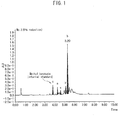
- FIG. 1 shows an example of the chart of a UV chromatogram of the THF solution (240 nm).
- a large number of the aforementioned carboxylic acid terminated linear oligomer component and cyclic oligomer component peaks to be subsequently described were detected.
- the structures of other peaks can also be similarly deduced from the mass numbers of ions detected by ESI-mass spectroscopy.
- a mass chromatogram is displayed for a mass number of 785 (vertical axis: detection intensity of specific mass number, horizontal axis: retention time), and whether or not the oligomer is present can be determined based on whether or not a detection intensity peak (peak z) having that mass number is present in the vicinity of the retention time estimated from the example of the UV spectrum (approx. 4.5 min in FIG. 1 ).
- the location of peak s of the internal standard is estimated by detecting the corresponding mass number in the ESI-mass spectrum of that peak.
- peak x is not well-defined on the UV chromatogram for reasons such as overlapping with another peak
- the area of peak z on a mass chromatogram for a mass number of 785 as previously described and then determining the intensity ratio between x and z by measuring a different sample in which both peaks x and z are well defined
- the area of peak z of the sample of interest can be converted to the area of peak x.
- the strength ratio with peak s can then be calculated using the area of peak x of the sample in question.
- a cyclic oligomer such as that represented by the following formula (2): does not have water absorbency, and conversely impairs water absorbency.
- the amount of the cyclic oligomer represented by formula (2) can also be analyzed by LC/MS (liquid chromatography/mass spectroscopy) after dissolving in THF, and the concentration by internal standardization can be determined from the ratio of peak intensity to the internal standard.
- This peak can be confirmed to be derived from the cyclic oligomer component (molecular weight: 576.18) based on the detection of an ion ([M-NH4] + ) having a mass number (m/z) of 594 in the ESI-mass spectrum of this peak (electrospray ionization, positive ion mass spectrum).
- a mass chromatogram is displayed for a mass number of 594, and whether or not the oligomer is present can be determined based on whether or not a detection intensity peak (peak w) having that mass number is present in the vicinity of the retention time estimated from the example of the UV spectrum (approx. 5.3 min in FIG. 1 ).
- the amount of this oligomer present can be measured using the peak area on a UV chromatogram, and can be converted to a concentration from the ratio with the peak area of the peak of methyl benzoate (peak s) added as an internal standard on the UV chromatogram.
- the fabric according to the present embodiment preferably retains a carboxylic acid terminated linear oligomer , which has a comparatively high molecular weight and is not extracted with THF, on the surface of the polyester fibers that compose the fabric, even after the oligomer that is soluble in the aforementioned THF has been extracted.
- This carboxylic acid terminated linear oligomer strongly adheres to the fibers, and since this oligomer is resistant to elution even after repeated laundering, it is thought to demonstrate an even greater effect on water absorbency after repeated laundering.
- the oligomer having a comparatively high molecular weight that is not extracted by THF treatment can be quantified by MALDI-TOF/MS measurement.
- a sample obtained after extracting an oligomer with THF is air-dried followed by sampling 2 mg, placing in a glass sample bottle having a volume of 20 mL and adding 1 ml of hexafluoroisopropanol (HFIP) to dissolve the sample.
- the matrix solution indicated below is prepared.
- the 20 ⁇ L sample solution is sampled followed by the addition of 20 ⁇ L of the matrix solution.
- a precipitated component is immediately confirmed.
- the lower layer solution, and not the precipitate in the upper layer is collected and subjected to MALDI-TOF/MS measurement under the conditions indicated below.
- the measurement is performed at a laser intensity at which the matrix intensity is 50 mV/profiles to less than 2000 mV/profiles.
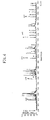
- FIGS. 3 to 5 indicate examples of positive ion spectra obtained during MALDI-TOF/MS measurement.
- n 4 to 10 carboxylic acid terminated linear oligomer component of Formula (1)
- the n 4 to 10 carboxylic acid terminated linear oligomer component is quantified according to the method indicated below.
- the amount of the oligomer component can be evaluated in terms of the value obtained by standardizing the peak intensity of the oligomer Na adduct with the matrix (CHCA) peak intensity.
- This value is preferably 0.07 or more and more preferably 0.10 or more. There is excessive progression of decomposition if the value of the sum total exceeds 0.5, thereby making this undesirable.
- n 3 to 10 carboxylic acid terminated linear oligomers present that are soluble and insoluble in THF.
- carboxylic acid terminated linear oligomers present that are soluble and insoluble in THF.
- the method used to have the oligomers present may be imparted by a method consisting of, for example, coating a carboxylic acid terminated linear oligomer component on a fabric or mixing into an ester polymer, they can be imparted in the vicinity of the fiber surface in a specific polyester fiber by a specific alkaline treatment, thereby making this preferable.
- the carboxylic acid terminated linear oligomer can be imparted by subjecting polyester fibers containing 0.005% by weight to 1% by weight of the S element to a specific alkaline treatment.
- polyester fibers containing 0.005% by weight to 1% by weight of the S element include polyester fibers containing 0.5 mol% to 5 mol% of an ester-forming sulfonate compound.
- ester-forming sulfonate compounds contained at 0.5 mol% to 5 mol% in polyester fibers include sodium 5-sulfoisophthalate, potassium 5-sulfoisophthalate, sodium 4-sulfo-2,6-naphthalenedicarboxylate, sodium 2-sulfo-4-hydroxybenzoate, 3,5-dicarboxylic acid benzenesulfonic acid tetramethylphosphonium salt, 3,5-dicarboxylic acid benzenesulfonic acid tetrabutylphosphonium salt, 3,5-dicarboxylic acid benzenesulfonic acid tributylmethylphosphonium salt, 2,6-dicarboxylic acid naphthalene-4-sulfonic acid tetrabutylphosphonium salt, 2,6-dicarboxylic acid naphthalene-4-sulfonic acid tetramethylphosphonium salt, 3,5-dicarboxylic acid benzenesulfonic acid ammonium
- polyester fibers preferably contain a metal sulfonate group-containing isophthalic acid component such as sodium 5-sulfoisophthalate or potassium 5-sulfoisophthalate, and particularly preferably contain sodium 5-sulfoisophthalate.
- an ester-forming sulfonate compound is particularly preferable is that, in contrast to hardly any formation of oligomer since the terminal group is hydrolyzed by alkaline treatment in the case of ordinary polyester fibers, in the case of polyester fibers containing an ester-forming sulfonate compound, an alkali preferentially attacks the position of the S element as a result of alkaline treatment, and since this results in the occurrence of cleavage of the molecular chain at intermediate locations, the amount of oligomer having a carboxyl group on the terminal group thereof is presumed to increase.
- polyester fibers according to the present embodiment can be polyester fibers containing a non-ester-forming sulfonate compound.
- Polyester fibers containing a non-ester-forming sulfonate compound refers to polyester fibers containing a sulfonate compound that does not form polyester by polycondensation as a result of a sulfonate compound undergoing direct esterification with polyester, and examples thereof include polyester fibers obtained by a method consisting of mixing master chips incorporating 0.5 mol% to 5 mol% of a sulfonate compound and polyester chips containing 95 mol% or more of an ordinary ethylene terephthalate component, and polyester fibers obtained by directly adding 0.5 mol% to 5 mol% of a sulfonate compound during polymerization.
- non-ester-forming sulfonate compounds include alkaline metal salts of alkyl sulfonates and alkaline metal salts of alkyl benzene sulfonates.
- alkaline metal salts of alkyl sulfonic acid include sodium dodecyl sulfonate, sodium undecyl sulfonate and sodium tetradecyl sulfonate.
- examples of alkaline metal salts of alkyl benzene sulfonates include sodium dodecyl benzene sulfonate, sodium undecyl benzene sulfonate and sodium tetradecyl benzene sulfonate.
- Sodium dodecyl benzene sulfonate is particularly preferable from the viewpoint of processing stability.
- a water absorption effect is obtained by subjecting polyester fibers containing 0.005% by weight to 1% by weight of the S element to a specific alkaline treatment, and the resulting fabric undergoes hardly any change in that effect even after repeated laundering. If the content of the S element is less than 0.005% by weight, the effect of imparting durability to water absorbency following alkaline treatment is small, while in the case the polyester fibers contain 1% by weight or more of the S element, fiber strength decreases making spinning difficult.
- the content of the S element in the polyester fibers is more preferably 0.01% by weight to 0.8% by weight and even more preferably 0.015% by weight to 0.7% by weight.
- ICP-AES inductively coupled plasma atomic emission spectroscopy
- the content of the ester-forming sulfonate compound in the polyester fibers is more preferably 1 mol% to 4.5 mol% and even more preferably 1.5 mol% to 4 mol%.
- whether the S element contained in the polyester is derived from an ester-forming sulfonate compound or derived from a non-ester-forming sulfonate compound can be determined by, for example, decomposing the polyester into monomers by alkaline hydrolysis, analyzing the monomers by LC/MS and the like, and determining whether or not an ester-forming sulfonate compound is detected. Analysis may also be performed by derivatization of the compounds as necessary.
- the conditions for alkaline treatment are such that the fiber reduction rate is preferably 0.6% to 9%, more preferably 1% to 8%, and even more preferably 1.5% to 7%.
- Reduction rate can be calculated from the weight of the polyester yarn before and after alkaline treatment.
- the fibers are preferably treated after adjusting to a low alkaline concentration since the speed of alkaline reduction is slower than that of ordinary polyester fibers.
- the reduction rate is less than 0.6%, the effect of forming a carboxylic acid terminated linear oligomer component by alkaline treatment is small, and the durability of water absorbency is inferior. If the reduction rate exceeds 9%, since alkaline reduction proceeds excessively, the durability of water absorbency is also inferior. This is presumed to be because once the carboxylic acid terminated linear oligomer has been formed on the surface of the fibers, it ends up being lost due to excessive reduction. In addition, a large number of large, deep pits form on the fiber surfaces resulting in a decrease in fiber strength and thereby making this undesirable.
- an alkaline treatment method consisting of treating for 5 minutes to 100 minutes at 90°C to 100°C with sodium hydroxide at a concentration of 1 g/L to 20 g/L is used preferably, and treating for 5 minutes to 60 minutes at 90°C to 95°C with sodium hydroxide at a concentration of 5 g/L to 15 g/L is even more preferable.
- the product of alkaline treatment concentration (g/L) and time (min) is preferably made to be within the range of 100 (g/L ⁇ min) to 800 (g/L ⁇ min), and even more preferably within the range of 200 (g/L ⁇ min) to 600 (g/L ⁇ min).
- the rate of the temperature rise during alkaline treatment is also important, and the temperature is preferably raised slowly at the rate of 1°C/min to 2°C/min. Oligomer formation is presumed to be promoted by raising the temperature slowly.
- Cyclic oligomers that impair water absorbency can be removed by this specific oligomer removal treatment.
- methods used to remove oligomers include a method consisting of the use of an oligomer removal agent and method consisting of intensifying rinsing.
- Rinsing conditions preferably consist of, for example, rinsing two or more times for 10 minutes to 30 minutes.
- Rinsing two or more times refers to performing a procedure consisting of draining the water and replacing the water two or more times. Using hot water at 40°C to 60°C at least once is even more preferable.
- a volatile acid such as acetic acid is preferably used for the acid used during neutralization.
- the alkaline solution may be recovered followed by neutralization and intensified rinsing.
- a method consisting of performing alkaline treatment on polyester fibers containing 0.005% by weight to 1% by weight of S element using a cheese dyeing machine so that the reduction rate is 0.6% to 9% in the yarn state, followed by using a portion of the polyester fibers to form a fabric, is preferably applied as another method for performing alkaline treatment.
- the reduction rate is preferably 0.6% to 9%, more preferably 1% to 8%, and even more preferably 1.5% to 7%.
- the containing of a specific oligomer component in the polyester fibers allows the obtaining of durable water absorbency even in the case of not performing water absorption treatment.
- Durable water absorbency refers to making it difficult for a decrease in water absorbency to occur even after repeated laundering.
- the resulting fabric after alkaline treatment, neutralization and rinsing can be dyed and finished using ordinary methods.
- alkaline treatment can also be performed when soaping after dyeing.
- the fabric of the present embodiment has absorbency (as determined according to the dripping method of JIS L1907) of 5 seconds or less after washing 30 times according to Method C of JIS L0217 No. 103.
- Absorbency after washing 30 times is preferably 3 seconds or less, more preferably 2 seconds or less and even more preferably 1 second or less.
- Absorbency after washing once according to the same method is also preferably 5 seconds or less, more preferably 3 seconds or less, even more preferably 2 seconds or less and particularly preferably 1 second or less.
- the fabric of the present embodiment is able to retain absorbency after washing 50 times and even after washing 100 times according to the method described above, and absorbency after washing 50 times or 100 times is more preferably 5 seconds or less.
- a detergent such as a neutral detergent or weakly alkaline detergent is preferably used for detergent used during laundering.
- the fabric of the present embodiment has a superior effect of sustaining its water absorption effect during industrial laundering.
- Industrial laundering is applied when laundering work clothes, uniforms and the like. This laundering is performed under more severe conditions than home laundering, and an example of a method thereof is defined in the medium temperature washer method of JIS L1096 8.39.5b) 2.2.2)F-2, and normally assistants such as hydrogen peroxide or sodium silicate are added in addition to detergent components.
- the fabric of the present embodiment preferably has absorbency of 5 seconds or less after washing 30 times for 30 minutes at 60°C in accordance with JIS 1096 F-2.
- preferably 0.1 to 30 pits, and more preferably 0.2 to 2 pits, having a length of 0.5 ⁇ m to 5 ⁇ m are preferably formed over an area of (or per) 100 ⁇ m 2 on the surface of polyester fibers containing 0.005% by weight to 1% by weight of the S element.
- Pits refer to slight indentations present on the surface of a fiber, and are formed by alkaline treatment. Although numerous pits are formed and connect with each other to form striated grooves more than 5 ⁇ m in length in the case of ordinary alkaline treatment, in the present embodiment, there are preferably few striated grooves exceeding 5 ⁇ m in length.
- the number of pits over an area of 100 ⁇ m2 on the surface of the polyester fibers is the average value obtained by measuring the number of pits at 50 arbitrary locations on the surface of the fibers measuring 10 ⁇ m ⁇ 10 ⁇ m using an electron microscope and magnifying to about 1000X.
- the average number of grooves when measuring striated grooves in excess of 5 ⁇ m in length on the same surfaces is preferably 1 or less and more preferably 0.1 or less.
- length refers to the maximum length of a single pit. The formation of extremely small pits on the surface of the polyester fibers of the present embodiment is presumed to contribute to durable water absorbency.
- the shape of the pits in terms of the ratio of height to width is preferably 1.0 to 2.5 and more preferably 1.0 to 2.0.
- height refers to the maximum length
- width refers to the maximum length in the direction perpendicular to the direction of height.
- pits are measured after first thoroughly cleaning the sample to prevent measurement errors caused by soiling of the sample. The sample is preferably washed once or more according to the JIS method and then rinsed for 20 minutes or more.
- the fabric of the present embodiment preferably contains polyester fibers adhered with a specific oligomer over 25% or more, and preferably 40% or more, of the surface of at least one side of the fabric.
- 25% or more refers to the percentage of the total area.
- a preferable dry feel is imparted by using the side of the polyester fibers containing the S element at 0.005% by weight to 1% by weight as previously described on the side contacting the skin.
- a yarn containing polyester fibers adhered with a specific oligomer is preferably connected in the course-wise direction at the rate of at least 1 course every 8 courses.
- polyester fibers containing 0.005% by weight to 1% by weight of the S element are not connected in the course-wise direction, the polyester fibers containing 0.005% by weight to 1% by weight of the S element are preferably connected at the rate of at least 1 wale every 4 wales.
- Connecting refers to linking by knit or tuck.
- loops of polyester fibers adhered with a specific oligomer are arranged so as to be connected.
- polyester fibers adhered with a specific oligomer with synthetic fibers such as polyester fibers, polyamide fibers or polyurethane fibers, or cellulose fibers such as cotton, rayon, cupra or acetate fibers, not adhered with a specific oligomer.
- the arrangement and migration of water retention in the fabric can be controlled as desired by combining with a water-repellent yarn subjected to water repellent processing and the like, such as by applying a fluorine-based treatment agent.
- a water-repellent yarn subjected to water repellent processing and the like such as by applying a fluorine-based treatment agent.
- water-repellent yarn and a small amount of polyester fibers adhered with the specific oligomer on the side in contact with the skin, and connecting the polyester fibers to the side on the surface, water is able to be absorbed from the polyester fibers and migrate to the surface, thereby making it possible to design a fabric that prevents perspiration from remaining on the side in contact with the skin resulting in superior perspiration absorbency.
- the total fineness of the fibers used in the present embodiment is preferably 8 dtex to 167 dtex and more preferably 22 dtex to 110 dtex.
- single fiber fineness is preferably as small as possible from the viewpoint of facilitating the formation of oligomer, and is preferably 0.5 dtex to 2.5 dtex and particularly preferably 0.5 dtex to 1.5 dtex.
- Single fiber fineness is also preferably as small as possible from the viewpoint of feel and texture.
- the fibers used in the present embodiment may contain a matting agent such as titanium dioxide, stabilizer such as phosphoric acid, ultraviolet absorber such as a hydroxybenzophenone derivative, crystal nucleating agent such as talc, lubricant such as fumed silica, antioxidant such as a hindered phenol derivative, flame retardant, antistatic agent, pigment, fluorescent brightening agent, infrared absorbent or antifoaming agent and the like.
- a matting agent such as titanium dioxide, stabilizer such as phosphoric acid, ultraviolet absorber such as a hydroxybenzophenone derivative, crystal nucleating agent such as talc, lubricant such as fumed silica, antioxidant such as a hindered phenol derivative, flame retardant, antistatic agent, pigment, fluorescent brightening agent, infrared absorbent or antifoaming agent and the like.
- Crimped fibers such as false twisted yarn can also be used in the fabric of the present embodiment, and the fibers preferably have a crimp elongation rate of 0% to 150%. Furthermore, the crimp elongation rate of false twisted yarn is measured under the conditions indicated below.
- a load of 1.77 ⁇ 10 -3 cN/dtex is applied to the lower end and length (A) is measured 30 seconds later.
- the 1.77 ⁇ 10 -3 cN/dtex load is removed and load of 0.088 cN/dtex is applied followed by measuring length (B) 30 seconds later and determining the crimp elongation rate according to equation (3) indicated below.
- Crimp elongation rate % B ⁇ A / A ⁇ 100
- the fabric of the present embodiment may be a woven fabric or knit fabric.
- a plain weave stitch, sateen weave stitch or various derivative weave stitches derived therefrom can be applied for the weave stitch of a woven fabric.
- a double weave stitch in which polyester fibers adhered with 25% or more of the specific oligomer is preferably arranged on the side that contacts the skin in order to impart durable water absorbency to the side that contacts the skin.
- a knit fabric may employ a circular knit or warp knit, and a weft knitting machine, double circular knitting machine, tricot knitting machine or Russell knitting machine and the like can be used for the knitting machine.
- the knitting gauge of the knitting machine used is preferably 10 GG to 60 GG.
- a stitch in which different yarns are arranged on the top and bottom surfaces, and in which polyester fibers adhered with 25% or more of the specific polymer are arranged on the side that contacts the skin, is preferable in order to impart durable water absorbency to the side that contacts the skin.
- the fabric weight of the present embodiment is preferably 30 g/m 2 to 300 g/m 2 and more preferably 50 g/m 2 to 250 g/m 2 .
- the fabric of the present invention may also be subjected to water absorption treatment.
- the fabric of the present embodiment is preferable for clothing applications requiring a perspiration absorbent function, such as textile products including clothing and particularly sportswear and inner wear, it is not limited thereto, but rather can also be applied to other articles of clothing such as outerwear or linings, bedding such as sheets or sanitary products such as adult diapers, and demonstrates a preferable water absorption effect.
- the sample was washed once in accordance with Method C of JIS L0217 No. 103 (in attached Table 1) and rinsed for 20 minutes followed by acquiring an image of the surface magnified 2000X using an electron microscope, measuring the pits according to the previously described method and taking the average value of 50 locations.
- a T-shirt was produced that was fabricated such that the side having a large number of polyester fibers containing 0.005% by weight to 1% by weight of the S element on the surface thereof was on the side that contacts the skin, and the T-shirt was washed in accordance with Method C of JIS L0217 No. 103 (in attached Table 1) 30 times using "Attack" manufactured by Kao Corp. for the detergent. After washing 30 times, the T-shirt was worn, the wearer remained still for 10 minutes in an artificial climate chamber at 30°C and 50% RH, ran for 20 minutes at a speed of 7 km/hr on the ORK-3000 treadmill manufactured by Ohtake-Root Kogyo Co., Ltd and then again remained still for 10 minutes. Feel and comfort before running and stickiness after running were respectively subjected to sensory evaluations in accordance with the evaluation criteria indicated below.
- the sample was washed in accordance with Method C of JIS L0217 No. 103(in attached Table 1) using a weak alkaline detergent ("Attack" manufactured by Kao Corp.).
- a detergent consisting of soap at 0.8% owf, hydrogen peroxide at 0.8% owf and sodium silicate at 0.8% owf was used under conditions of the medium temperature washer method of JIS L1096 8.39.5b) 2.2.2)F-2 to simulate an industrial laundering test.
- Polyester chips containing 4.5 mol% of dimethyl sodium 5-sulfoisophthalate and polyester chips containing 99 mol% of an ordinary ethylene terephthalate component were blended so as to obtain chips adjusted to an S element of 0.3% by weight followed by spinning 84 dtex/36 f yarn and performing false twist processing to obtain a textured yarn having a circular cross-section.
- This textured yarn was supplied so as to indicate the knit stitch shown in FIG.
- the temperature was raised at 2°C/min with a jet dyeing machine under conditions of a sodium hydroxide concentration of 9 g/L, followed by performing alkaline treatment for 45 minutes at 95°C, neutralizing with acetic acid and rinsing well.
- Rinsing conditions consisted of heating to 60°C after pouring in water followed by washing for 15 minutes.
- the water was temporarily drained and the temperature was again raised to 60°C after pouring in water followed by rinsing for 15 minutes and draining (Rinsing Conditions A).
- the reduction rate of the 84 dtex/36 f textured yarn containing the S element was 4.8%.
- the polyester yarn was dyed and rinsed at 130°C, stretched with a pin tenter to a degree that removed wrinkles and then final set for 90 seconds at 150°C to obtain a knit fabric having a fabrics weight of 130 g/m 2 and thickness of 0.62 mm. Water absorbency of this knit fabric after washing 30 times according to Method C of JIS L0217 No.
- a knit fabric having a half tricot stitch was formed using a 28 GG tricot knitting machine, using 56 dtex/24 f polyester yarn (S element content: 0.17% by weight) having a circular cross-section and containing 2.5 mol% of dimethyl sodium 5-sulfoisophthalate for the front, and using 44 dtex polyurethane yarn for the back.
- the fabric was heat-set at 190°C, heated with a jet dyeing machine at 2°C/min under conditions of a sodium hydroxide concentration of 10 g/L, subjected to alkaline treatment for 45 minutes at 95°C, and neutralized with acetic acid and rinsed well.
- Rinsing conditions consisted of repeating rinsing for 15 minutes at 60°C twice (Rinsing Conditions A). The reduction rate was 6.5%. Moreover, dyeing at 130°C and final setting at 170°C were performed to obtain a knit fabric having a fabric weight of 180 g/m 2 and thickness of 0.58 mm. Water absorbency of this knit fabric after washing 30 times according to Method C of JIS L0217 No. 103(in attached Table 1) and the medium temperature washer method of JIS L1096 8.39.5b) 2.2.2)F-2 was less than 1 second and 2 seconds, respectively, and in a wear test of a shirt made with this knit fabric, results were obtained indicating that the shirt was soft, comfortable and did not produce a sticky sensation even after perspiring.
- the double woven fabric of FIG. 8 was fabricated using 56 dtex/72 f polyester textured yarn not containing the S element for the warp, and distributing a 167 dtex/72 f polyester textured yarn (S element content: 0.17% by weight) containing 2.5 mol% of dimethyl sodium 5-sulfoisophthalate and having a circular cross-section together with a 84 dtex/72 f two-fold polyester textured yarn not having the S element for the weft.
- the fabric was heat-set at 190°C, heated with a jet dyeing machine under conditions of a sodium hydroxide concentration of 7 g/L and 2°C/min, subjected to alkaline treatment for 60 minutes at 95°C, neutralized with acetic acid and rinsed well.
- Rinsing conditions consisted of repeating rinsing for 15 minutes at 60°C twice (Rinsing Conditions A). The reduction rate was 3.9%.
- dyeing at 130°C and final setting at 170°C were performed to obtain a woven fabric having a fabric weight of 155 g/m 2 and thickness of 0.40 mm. Water absorbency of this knit fabric after washing 30 times according to Method C of JIS L0217 No.
- a knit fabric having a fabric weight of 138 g/m 2 and thickness of 0.63 mm was obtained in the same manner as Example 1 with the exception of changing the concentration during alkaline treatment to 5 g/L and changing the treatment time to 20 minutes.
- Water absorbency of this knit fabric after washing 30 times according to Method C of JIS L0217 No. 103(in attached Table 1) and the medium temperature washer method of JIS L1096 8.39.5b) 2.2.2)F-2 was 2 seconds and 5 seconds, respectively, and in a wear test of a shirt using this knit fabric, results were obtained indicating that the shirt was soft, comfortable and did not produce a sticky sensation even after perspiring.
- water absorbency was 2 seconds even after washing 100 times according to Method C of JIS L0217 No. 103(in attached Table 1).
- a knit fabric having a fabric weight of 175 g/m 2 and thickness of 0.59 mm was obtained in the same manner as Example 2 with the exception of using 56 dtex/24 f polyester yarn (S element content: 0.18% by weight) containing 2.5 mol% of sodium 4-sulfo-2,6-naphthalenedicarboxylate and having a circular cross-section instead of 56 dtex/24 g polyester yarn containing 2.5 mol% of dimethyl sodium 5-sulfoisophthalate and having a circular cross-section. Water absorbency of this knit fabric after washing 30 times according to Method C JIS L0217 No.
- a gray fabric was then obtained by using this S element-containing textured yarn (S element content: 0.17% by weight), 84 dtex/36 f polyester textured yarn not containing the S element and having a circular cross-section, and 84 dtex/72 f polyester textured yarn not containing the S element and having a circular cross-section, and forming into the knit stitch shown in FIG. 3 using a 28-gauge double circular knitting machine.
- presetting was performed for 90 seconds at 180°C and tentering ratio of 20% with a pin tenter.
- the gray fabric was subjected to polyester dyeing at 130°C and rinsing, stretched with a pin tenter to a degree that removed wrinkles and then final set for 90 seconds at 150°C to obtain a knit fabric having a fabric weight of 135 g/m 2 and thickness of 0.63 mm.
- Water absorbency of this knit fabric after washing 30 times according to Method C of JIS L0217 No. 103(in attached Table 1) and the medium temperature washer method of JIS L1096 8.39.5b) 2.2.2)F-2 was 1 second and 2 seconds, respectively, and in a wear test of a shirt using this knit fabric, results were obtained indicating that the shirt was soft, comfortable and did not produce a sticky sensation even after perspiring.
- water absorbency was also 1 second even after washing 100 times according to Method C of JIS L0217 No. 103(in attached Table 1).
- a knit fabric having a fabric weight of 134 g/m 2 and thickness of 0.63 mm was obtained in the same manner as Example 1 with the exception of changing the rinsing conditions following alkaline treatment to rinsing once at 20°C for 15 minutes (Rinsing Conditions B).
- Water absorbency of this knit fabric after washing 30 times according to Method C of JIS L0217 No. 103(in attached Table 1) and the medium temperature washer method of JIS L1096 8.39.5b) 2.2.2)F-2 was 5 seconds and 180 seconds or more, demonstrating superior water absorbency following repeated washing under the former conditions.
- a knit fabric having a fabric weight of 135 g/m 2 and thickness of 0.65 mm was obtained in the same manner as Example 1 with the exception of using 84 dtex/36 f regular polyester textured yarn (not containing the S element) having a circular cross-section instead of the textured yarn obtained by blending the polyester chips containing 4.5 mol% of dimethyl sodium 5-sulfoisophthalate and polyester chips containing 95 mol% of an ordinary ethylene terephthalate component. Water absorbency of this knit fabric after washing 30 times according to Method C of JIS L0217 No.
- a knit fabric having a fabric weight of 136 g/m 2 and thickness of 0.65 mm was obtained in the same manner as Example 1 with the exception of using 84 dtex/36 f regular polyester textured yarn (not containing the S element) having a circular cross-section instead of the textured yarn obtained by blending the polyester chips containing 4.5 mol% of dimethyl sodium 5-sulfoisophthalate and the polyester chips containing 95 mol% of an ordinary ethylene terephthalate component, and adding 2% owf of SR1000 manufactured by Takamatsu Oil & Fat Co., Ltd. without performing alkaline treatment. Water absorbency of this knit fabric after washing 30 times according to Method C of JIS L0217 No.
- a knit fabric having a fabric weight of 133 g/m 2 and thickness of 0.64 mm was obtained in the same manner as Example 1 with the exception of changing the sodium hydroxide concentration during alkaline treatment to 0.5 g/L.
- Water absorbency of this knit fabric after washing 30 times according to Method C of JIS L0217 No. 103(in attached Table 1) and the medium temperature washer method of JIS L1096 8.39.5b) 2.2.2)F-2 was 180 seconds or more and 180 seconds or more, respectively, and in a wear test of a shirt using this knit fabric, results were obtained indicating that the shirt produced a sticky sensation when perspiring.
- a knit fabric having a fabric weight of 118 g/m 2 and thickness of 0.53 mm was obtained in the same manner as Example 1 with the exception of changing the sodium hydroxide concentration during alkaline treatment to 24 g/L.
- Water absorbency of this knit fabric after washing 30 times according to Method C of JIS L0217 No. 103(in attached Table 1) and the medium temperature washer method of JIS L1096 8.39.5b) 2.2.2)F-2 was 180 seconds or more and 180 seconds or more, respectively, and in a wear test of a shirt using this knit fabric, results were obtained indicating that the shirt produced a sticky sensation when perspiring.
- a knit fabric having a fabric weight of 124 g/m 2 and thickness of 0.59 mm was obtained in the same manner as Comparative Example 1 with the exception of changing the sodium hydroxide concentration during alkaline treatment to 50 g/L.
- the reduction rate of this knit fabric was 13%.
- Water absorbency of this knit fabric after washing 30 times according to Method C of JIS L0217 No. 103(in attached Table 1) and the medium temperature washer method of JIS L1096 8.39.5b) 2.2.2)F-2 was 180 seconds or more and 180 seconds or more, respectively, and in a wear test of a shirt using this knit fabric, results were obtained indicating that the shirt produced a sticky sensation when perspiring.
- the absorbent fabric according to the present invention semi-permanently absorbs water even in the case of not being subjected to water absorption treatment, is able to quickly absorb perspiration when worn, has superior comfort, and is soft and has a pleasant feel, thereby enabling it to be preferably used in applications such as inner wear or sportswear.
Landscapes
- Engineering & Computer Science (AREA)
- Textile Engineering (AREA)
- Chemical & Material Sciences (AREA)
- Chemical Kinetics & Catalysis (AREA)
- General Chemical & Material Sciences (AREA)
- Chemical Or Physical Treatment Of Fibers (AREA)
- Treatments For Attaching Organic Compounds To Fibrous Goods (AREA)
- Artificial Filaments (AREA)
Abstract
Description
- The present invention relates to a fabric having absorbency. More particularly, the present invention relates to an absorbent fabric that absorbs water semi-permanently even without being subjected to water absorption treatment, is able to quickly absorb perspiration as a result of having superior water absorbency, and can be preferably used in applications such as inner wear, sportswear or bedding due to its softness and pleasant feel.
- Synthetic fibers such as polyester or polyamide fibers are used as general-purpose materials in applications such as inner wear or sportswear. However, since these synthetic fibers are hydrophobic fibers, water absorption treatment is required when used in products worn close to the skin in particular, while also having the problem of undergoing a decrease in water absorbency following repeated laundering. The loss of water absorption treatment agent is particularly remarkable when laundering at high temperatures in the manner of so-called industrial laundering used to wash uniforms and the like, thereby resulting in the need for improved washing durability.
- Various studies have been conducted on methods for improving water absorbency of polyester.
- For example, in
Patent Document 1 indicated below, water absorbency is imparted by treating polyester fibers with a water absorbing agent followed by covering the water absorbing agent with a hydrogel. In this method, since the water absorbing agent is imparted by processing, deterioration of water absorbency cannot be avoided even if covered with a hydrogel, performance ends up decreasing following repeated laundering, and there is the potential for performance to decrease even further when subjected to high-temperature laundering in the manner of industrial laundering. Moreover, there is also the risk of impairment of fiber softness as a result of covering the fibers with a hydrogel. - In addition, although
Patent Document 2 indicated below describes that a polyester fiber woven fabric is produced by subjecting polyester fibers to alkaline processing followed by treating with a treatment liquid containing a hydrophilic agent, since performance decreases due to repeated laundering in the case of subjecting ordinary polyester fibers to alkaline processing and hydrophilic processing, water absorbency having washing durability cannot be imparted. -
- Patent Document 1: Japanese Unexamined Patent Publication No.
H9-158049 - Patent Document 2: Japanese Unexamined Patent Publication No.
2005-200799 - An object of the present invention is to provide a fabric that semi-permanently absorbs water even in the case of not undergoing water absorption treatment, or in other words, an absorbent fabric that is able to quickly absorb perspiration when worn, has superior comfort, is soft, has a pleasant feel, and can be preferably used in applications such as inner wear or sportswear, and to provide a fabric that retains durable water absorbency even after industrial laundering for which there is susceptibility to a decrease in water absorbency attributable to laundering.
- As a result of conducting extensive research and repeated experiments to solve the aforementioned problems, the inventors of the present invention found that the aforementioned problems can be solved by incorporating a specific oligomer in a specific polyester yarn, thereby leading to completion of the present invention.
- Namely, the present invention is as indicated below.
-
- [1] An absorbent fabric in which polyester fibers constitute 95 mol% or more of the repeating units of ethylene terephthalate, wherein a carboxylic acid terminated linear oligomer component is present on the surface of the polyester fibers, and water absorbency according to the dripping method of JIS L1907 after washing 30 times according to Method C of JIS L0217 No. 103 is 5 seconds or less.
- [2] The absorbent fabric described in [1] above, wherein water absorbency according to the dripping method of JIS L1907 after washing once according to Method C of JIS L0217 No. 103 is 5 seconds or less.
- [3] The absorbent fabric described in [1] or [2] above, wherein the polyester fibers contain 0.005% by weight to 1% by weight of the S element.
- [4] The absorbent fabric described in [3] above, wherein the polyester fibers containing 0.005% by weight to 1% by weight of the S element are polyester fibers containing 0.5 mol% to 5 mol% of an ester-forming sulfonate compound.
- [5] The absorbent fabric described in [4] above, wherein the ester-forming sulfonate compound is a metal sulfonate group-containing isophthalic acid.
- [6] The absorbent fabric described in any of [1] to [5] above, wherein 0.1 to 30 pits having a length of 0.5 µm to 5 µm are formed in an area of 100 µm2 on the surface of the polyester fibers containing 0.005% by weight to 1% by weight of the S element.
- [7] The absorbent fabric described in any of [1] to [6] above, wherein the peak intensity ratio of the n = 8 carboxylic acid terminated linear oligomer component to an internal standard is 0.05 to 0.100.
- [8] The absorbent fabric described in any of [1] to [7] above, wherein the concentration of the n = 4 carboxylic acid terminated linear oligomer component is equivalent to a concentration of 2 µg/ml to 15 µg/ml by internal standardization.
- [9] The absorbent fabric described in any of [1] to [8] above, wherein the concentration of the n = 3 cyclic oligomer is equivalent to a concentration of 80 µg/ml or less by internal standardization.
- [10] A method for producing the absorbent fabric described in any of [1] to [9] above, comprising: a step for performing alkaline reduction on polyester fibers at a reduction rate of 0.6% to 9% in a fabric containing polyester fibers containing the S element at 0.005% by weight to 1% by weight.
- The absorbent fabric of the present invention can be preferably used in applications such as inner wear or sportswear since it absorbs water semi-permanently even in the case of not being subjected to water absorption treatment, is able to quickly absorb perspiration when worn, has superior comfort, is soft and has a pleasant feel.
-
-
FIG. 1 is a UV chromatogram obtained during LC/MS measurement (240 nm). -
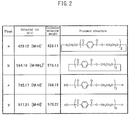
FIG. 2 is a table showing presumed structures associated with characteristic peaks observed in the UV chromatogram ofFIG. 1 . -
FIG. 3 is a graph of a MALDI-TOF/MS spectrum (positive ion mode) (entire range). -
FIG. 4 is a graph of a MALDI-TOF/MS spectrum (position ion mode) (m/z 500-1500). -
FIG. 5 is a graph of a MALDI-TOF/MS spectrum (positive ion mode) (m/z 1500-2500). -
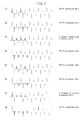
FIG. 6 is a drawing for explaining the assignment of detected positive ion peaks. -
FIG. 7 shows the knit stitch of a knit fabric of Example 1. -
FIG. 8 shows an organizational chart of a double woven fabric of Example 3. - The following provides a detailed explanation of embodiments of the present invention.
- The polyester fibers that compose the fabric of the present embodiment are characterized by having a carboxylic acid terminated linear oligomer component on the surface thereof. Water absorbency demonstrates durability against repeated laundering as a result of having a carboxylic acid terminated linear oligomer component on the surface. Here, the carboxylic acid terminated linear oligomer component can be that in which n = 3 to 10 represented by the following formula (1).

- A fabric containing polyester fibers having a carboxylic acid terminated linear oligomer component in this manner has superior water absorption performance.
- The presence of the oligomer component can be confirmed qualitatively and quantitatively by combining the two types of analytical techniques indicated below.
- Those carboxylic acid terminated linear oligomer components that have a comparatively low molecular weight can be analyzed by LC/MS (liquid chromatography-mass spectroscopy) after dissolving in THF. If a typical component thereof is assumed to be that in which n = 4, n = 4 oligomer components present on the fiber surface can be measured using the method indicated below.
- A 100 g sample in the form of polyester yarn extracted from the fabric is placed in a glass sample bottle having a volume of 20 mL (AS ONE Laboran Pack screw bottle 9-852-07 No. 5) followed by the addition of 3 ml of THF. After stirring for 6 hours at about 800 rpm/min using the Model M-41 Yamato Mag-Mixer, the solution is allowed to stand undisturbed for 4 days followed by performing LC/MS on the THF solution to analyze components extracted from the sample. A 0.495 ml solution is sampled while ensuring that solids do not enter when sampling the THF solution, and a 0.005 ml solution of a 1 mg/ml methyl benzoate solution is added to prepare the sample. The conditions for LC/MS analysis are as indicated in Table 1 below.
[Table 1] LC Apparatus Waters, UPLC Column Imtakt, Candenza CD-C18 (2 mm I.D. x 30 mm) Column temperature 40°C Detection PDA 210-400 nm Flow rate 0.2 mL/min Mobile phase A = water B = acetonitrile/THF (20/80) Gradient Time (min) A% B% 0 90 10 10 0 100 10.1 90 10 20 90 10 Injection volume 2 µL MS Apparatus Waters, Synapt G2 Ionization ESI+, ESI- Scanning range m/z 50-2000 -
FIG. 1 shows an example of the chart of a UV chromatogram of the THF solution (240 nm). InFIG. 1 , a large number of the aforementioned carboxylic acid terminated linear oligomer component and cyclic oligomer component peaks to be subsequently described were detected. Peak x inFIG. 1 is derived from the n = 4 carboxylic acid terminated linear oligomer component (molecular weight: 786.24). This is deduced based on the detection of an ion ([M-H]-) having a mass number (m/z) of 785 in the ESI-mass spectrum of this peak (electrospray ionization, negative ion mass spectrum). The structures of other peaks can also be similarly deduced from the mass numbers of ions detected by ESI-mass spectroscopy. - In the case a peak derived from the aforementioned oligomer cannot be identified in the UV chromatogram, a mass chromatogram is displayed for a mass number of 785 (vertical axis: detection intensity of specific mass number, horizontal axis: retention time), and whether or not the oligomer is present can be determined based on whether or not a detection intensity peak (peak z) having that mass number is present in the vicinity of the retention time estimated from the example of the UV spectrum (approx. 4.5 min in
FIG. 1 ). - The amount of an n = 4 carboxylic acid terminated linear oligomer can be measured using the peak area on a UV chromatogram, and can be converted to a concentration from the ratio with the peak area of the peak of methyl benzoate (peak s) added as an internal standard on the UV chromatogram. The location of peak s of the internal standard is estimated by detecting the corresponding mass number in the ESI-mass spectrum of that peak. In the case peak x is not well-defined on the UV chromatogram for reasons such as overlapping with another peak, by using the area of peak z on a mass chromatogram for a mass number of 785 as previously described and then determining the intensity ratio between x and z by measuring a different sample in which both peaks x and z are well defined, the area of peak z of the sample of interest can be converted to the area of peak x. The strength ratio with peak s can then be calculated using the area of peak x of the sample in question.
- The amount of an n = 4 carboxylic acid terminated linear oligomer in the fabric of the present embodiment is preferably equivalent to 2 µg/ml to 15 µg/ml, and more preferably equivalent to 3 µg/ml to 10 µg/ml, as the concentration of the internal standard.
- Although this type of carboxylic acid terminated linear oligomer contributes to water absorbency, a cyclic oligomer, such as that represented by the following formula (2):

- More specifically, in the example of the chart of the UV chromatogram (240 nm) of
FIG. 1 , peak b is the peak of the n = 3 cyclic oligomer component. This peak can be confirmed to be derived from the cyclic oligomer component (molecular weight: 576.18) based on the detection of an ion ([M-NH4]+) having a mass number (m/z) of 594 in the ESI-mass spectrum of this peak (electrospray ionization, positive ion mass spectrum). In the case the peak derived from the aforementioned oligomer is not well-defined, a mass chromatogram is displayed for a mass number of 594, and whether or not the oligomer is present can be determined based on whether or not a detection intensity peak (peak w) having that mass number is present in the vicinity of the retention time estimated from the example of the UV spectrum (approx. 5.3 min inFIG. 1 ). - The amount of this oligomer present can be measured using the peak area on a UV chromatogram, and can be converted to a concentration from the ratio with the peak area of the peak of methyl benzoate (peak s) added as an internal standard on the UV chromatogram.
- Since those carboxylic acid terminated linear oligomers that have a comparatively high molecular weight do not dissolve easily in THF, they cannot be detected by the aforementioned method. The fabric according to the present embodiment preferably retains a carboxylic acid terminated linear oligomer , which has a comparatively high molecular weight and is not extracted with THF, on the surface of the polyester fibers that compose the fabric, even after the oligomer that is soluble in the aforementioned THF has been extracted. This carboxylic acid terminated linear oligomer strongly adheres to the fibers, and since this oligomer is resistant to elution even after repeated laundering, it is thought to demonstrate an even greater effect on water absorbency after repeated laundering.
- The oligomer having a comparatively high molecular weight that is not extracted by THF treatment can be quantified by MALDI-TOF/MS measurement.
- A sample obtained after extracting an oligomer with THF is air-dried followed by sampling 2 mg, placing in a glass sample bottle having a volume of 20 mL and adding 1 ml of hexafluoroisopropanol (HFIP) to dissolve the sample. In addition, the matrix solution indicated below is prepared. The 20 µL sample solution is sampled followed by the addition of 20 µL of the matrix solution. After stirring and mixing in a glass capillary tube into which the sample has been collected, a precipitated component is immediately confirmed. The lower layer solution, and not the precipitate in the upper layer, is collected and subjected to MALDI-TOF/MS measurement under the conditions indicated below. During measurement, the measurement is performed at a laser intensity at which the matrix intensity is 50 mV/profiles to less than 2000 mV/profiles.
-
- Apparatus: Shimadzu AXIMA CFR Plus
- Laser: Nitrogen laser (337 nm)
- Detector type: Linear mode
- Ion detection: Positive ions (positive mode) Negative ions (negative mode)
- Cumulative number: 500 times
- Matrix solution: CHCA (α-cyano-4-hydroxycinnamic acid) 10 mg/ml H2O+CH3CN
- Cationization agent: NaI, 1 mg/ml acetone
- Scanning range: m/z 1-8000
-
FIGS. 3 to 5 indicate examples of positive ion spectra obtained during MALDI-TOF/MS measurement. InFIGS. 3 to 5 , peaks were detected that were derived from carboxylic acid terminated linear oligomers in the vicinity of n = 4 to 10 and oligomers similar thereto, and peaks indicated with black squares (■) indicate peaks corresponding to the carboxylic acid terminated linear oligomers deduced from the mass number detected by MS spectroscopy. - In the present embodiment, the presence of an n = 4 to 10 carboxylic acid terminated linear oligomer component of Formula (1) is extremely effective for durability of water absorbency. The n = 4 to 10 carboxylic acid terminated linear oligomer component is quantified according to the method indicated below.
- The peak of an n = 4 to 10 carboxylic acid terminated linear oligomer is detected in the form of an Na adduct in a positive ion spectrum of MALDI-TOF/MS. The amount of the oligomer component can be evaluated in terms of the value obtained by standardizing the peak intensity of the oligomer Na adduct with the matrix (CHCA) peak intensity. Namely, the value obtained by dividing the peak height of the oligomer Na adduct by the peak height (m/z = 212) of the Na adduct of the matrix(CHCA) is taken to be an indicator of the amount of the component, and the peak heights of each of the oligomer Na adducts for n = 4 to n = 10 are divided by the peak height of the Na adduct of CHCA followed by evaluating based on the sum total thereof. This value is preferably 0.07 or more and more preferably 0.10 or more. There is excessive progression of decomposition if the value of the sum total exceeds 0.5, thereby making this undesirable.
- In particular, the contribution of an n = 8 to 10 carboxylic acid terminated linear oligomer component to water absorbency durability is extremely large. If a typical example thereof is assumed to be that in which n = 8, then the ratio of peak intensity of the n = 8 carboxylic acid terminated linear oligomer component to that of the internal standard can be determined with the value obtained by dividing the peak height of an Na adduct of an n = 8 oligomer (peak D in
FIG. 5 ) by the peak height of an Na adduct of CHCA, and this value is preferably 0.005 to 0.1 and more preferably 0.008 to 0.08. - The fabric of the present embodiment demonstrates a water absorption effect by having n = 3 to 10 carboxylic acid terminated linear oligomers present that are soluble and insoluble in THF. There are no particular limitations on the method used to have the oligomers present, and although they may be imparted by a method consisting of, for example, coating a carboxylic acid terminated linear oligomer component on a fabric or mixing into an ester polymer, they can be imparted in the vicinity of the fiber surface in a specific polyester fiber by a specific alkaline treatment, thereby making this preferable.
- For example, the carboxylic acid terminated linear oligomer can be imparted by subjecting polyester fibers containing 0.005% by weight to 1% by weight of the S element to a specific alkaline treatment. Examples of polyester fibers containing 0.005% by weight to 1% by weight of the S element include polyester fibers containing 0.5 mol% to 5 mol% of an ester-forming sulfonate compound.
- Examples of ester-forming sulfonate compounds contained at 0.5 mol% to 5 mol% in polyester fibers include sodium 5-sulfoisophthalate, potassium 5-sulfoisophthalate, sodium 4-sulfo-2,6-naphthalenedicarboxylate, sodium 2-sulfo-4-hydroxybenzoate, 3,5-dicarboxylic acid benzenesulfonic acid tetramethylphosphonium salt, 3,5-dicarboxylic acid benzenesulfonic acid tetrabutylphosphonium salt, 3,5-dicarboxylic acid benzenesulfonic acid tributylmethylphosphonium salt, 2,6-dicarboxylic acid naphthalene-4-sulfonic acid tetrabutylphosphonium salt, 2,6-dicarboxylic acid naphthalene-4-sulfonic acid tetramethylphosphonium salt, 3,5-dicarboxylic acid benzenesulfonic acid ammonium salt, and methyl, dimethyl or other ester derivatives thereof. These methyl, dimethyl or other ester derivatives are used preferably from the viewpoint of imparting superior polymer whiteness and rate of polymerization. The polyester fibers preferably contain a metal sulfonate group-containing isophthalic acid component such as sodium 5-sulfoisophthalate or potassium 5-sulfoisophthalate, and particularly preferably contain sodium 5-sulfoisophthalate.
- The reason why an ester-forming sulfonate compound is particularly preferable is that, in contrast to hardly any formation of oligomer since the terminal group is hydrolyzed by alkaline treatment in the case of ordinary polyester fibers, in the case of polyester fibers containing an ester-forming sulfonate compound, an alkali preferentially attacks the position of the S element as a result of alkaline treatment, and since this results in the occurrence of cleavage of the molecular chain at intermediate locations, the amount of oligomer having a carboxyl group on the terminal group thereof is presumed to increase.
- The polyester fibers according to the present embodiment can be polyester fibers containing a non-ester-forming sulfonate compound. Polyester fibers containing a non-ester-forming sulfonate compound refers to polyester fibers containing a sulfonate compound that does not form polyester by polycondensation as a result of a sulfonate compound undergoing direct esterification with polyester, and examples thereof include polyester fibers obtained by a method consisting of mixing master chips incorporating 0.5 mol% to 5 mol% of a sulfonate compound and polyester chips containing 95 mol% or more of an ordinary ethylene terephthalate component, and polyester fibers obtained by directly adding 0.5 mol% to 5 mol% of a sulfonate compound during polymerization.
- Examples of non-ester-forming sulfonate compounds include alkaline metal salts of alkyl sulfonates and alkaline metal salts of alkyl benzene sulfonates. Examples of alkaline metal salts of alkyl sulfonic acid include sodium dodecyl sulfonate, sodium undecyl sulfonate and sodium tetradecyl sulfonate. In addition, examples of alkaline metal salts of alkyl benzene sulfonates include sodium dodecyl benzene sulfonate, sodium undecyl benzene sulfonate and sodium tetradecyl benzene sulfonate. Sodium dodecyl benzene sulfonate is particularly preferable from the viewpoint of processing stability.
- A water absorption effect is obtained by subjecting polyester fibers containing 0.005% by weight to 1% by weight of the S element to a specific alkaline treatment, and the resulting fabric undergoes hardly any change in that effect even after repeated laundering. If the content of the S element is less than 0.005% by weight, the effect of imparting durability to water absorbency following alkaline treatment is small, while in the case the polyester fibers contain 1% by weight or more of the S element, fiber strength decreases making spinning difficult. The content of the S element in the polyester fibers is more preferably 0.01% by weight to 0.8% by weight and even more preferably 0.015% by weight to 0.7% by weight. Furthermore, inductively coupled plasma atomic emission spectroscopy (ICP-AES) is used as a method for quantifying the S element.
- In the case of containing an ester-forming sulfonate compound, if the content thereof is less than 0.5 mol%, the effect of imparting durability to water absorbency following alkaline treatment is small, while in the case the polyester fibers contain greater than 5 mol% of the ester-forming sulfonate compound, fiber strength decreases making spinning difficult. The content of the ester-forming sulfonate compound in the polyester fibers is more preferably 1 mol% to 4.5 mol% and even more preferably 1.5 mol% to 4 mol%. Furthermore, whether the S element contained in the polyester is derived from an ester-forming sulfonate compound or derived from a non-ester-forming sulfonate compound can be determined by, for example, decomposing the polyester into monomers by alkaline hydrolysis, analyzing the monomers by LC/MS and the like, and determining whether or not an ester-forming sulfonate compound is detected. Analysis may also be performed by derivatization of the compounds as necessary.
- In order to demonstrate water absorbency, the conditions for alkaline treatment are such that the fiber reduction rate is preferably 0.6% to 9%, more preferably 1% to 8%, and even more preferably 1.5% to 7%. Reduction rate can be calculated from the weight of the polyester yarn before and after alkaline treatment. In the case of polyester fibers containing 0.5 mol% to 5 mol% of an ester-forming sulfonate compound, the fibers are preferably treated after adjusting to a low alkaline concentration since the speed of alkaline reduction is slower than that of ordinary polyester fibers.
- In the case the reduction rate is less than 0.6%, the effect of forming a carboxylic acid terminated linear oligomer component by alkaline treatment is small, and the durability of water absorbency is inferior. If the reduction rate exceeds 9%, since alkaline reduction proceeds excessively, the durability of water absorbency is also inferior. This is presumed to be because once the carboxylic acid terminated linear oligomer has been formed on the surface of the fibers, it ends up being lost due to excessive reduction. In addition, a large number of large, deep pits form on the fiber surfaces resulting in a decrease in fiber strength and thereby making this undesirable. In order to make the reduction rate to be within the range of 0.6% to 9%, for example, an alkaline treatment method consisting of treating for 5 minutes to 100 minutes at 90°C to 100°C with sodium hydroxide at a concentration of 1 g/L to 20 g/L is used preferably, and treating for 5 minutes to 60 minutes at 90°C to 95°C with sodium hydroxide at a concentration of 5 g/L to 15 g/L is even more preferable. The product of alkaline treatment concentration (g/L) and time (min) is preferably made to be within the range of 100 (g/L·min) to 800 (g/L·min), and even more preferably within the range of 200 (g/L·min) to 600 (g/L·min).
- In addition, the rate of the temperature rise during alkaline treatment is also important, and the temperature is preferably raised slowly at the rate of 1°C/min to 2°C/min. Oligomer formation is presumed to be promoted by raising the temperature slowly.
- Although neutralization with acid and rinsing are normally performed following alkaline treatment, in the present invention, it is extremely important to perform a specific oligomer removal treatment. Cyclic oligomers that impair water absorbency can be removed by this specific oligomer removal treatment. There are several examples of methods used to remove oligomers. Examples thereof include a method consisting of the use of an oligomer removal agent and method consisting of intensifying rinsing. Among these, a method that intensifies rinsing after alkaline treatment makes it possible to remove cyclic oligomers that impair water absorbency while making it difficult to remove n = 4 to 10 carboxylic acid terminated linear oligomers that contribute to water absorbency, thereby making this particularly preferable. Rinsing conditions preferably consist of, for example, rinsing two or more times for 10 minutes to 30 minutes. Rinsing two or more times refers to performing a procedure consisting of draining the water and replacing the water two or more times. Using hot water at 40°C to 60°C at least once is even more preferable. Furthermore, a volatile acid such as acetic acid is preferably used for the acid used during neutralization. Depending on the equipment used, the alkaline solution may be recovered followed by neutralization and intensified rinsing.
- In the case of a fabric that is interknitted or interwoven with an another material, it is necessary to confirm the reduction rate in advance for each type of fiber and calculate the reduction rate of the polyester fibers from the mixing ratio.
- A method consisting of performing alkaline treatment on polyester fibers containing 0.005% by weight to 1% by weight of S element using a cheese dyeing machine so that the reduction rate is 0.6% to 9% in the yarn state, followed by using a portion of the polyester fibers to form a fabric, is preferably applied as another method for performing alkaline treatment. In this case as well, the reduction rate is preferably 0.6% to 9%, more preferably 1% to 8%, and even more preferably 1.5% to 7%. In addition, it is preferable to rinse well as previously described.
- In the present embodiment, the containing of a specific oligomer component in the polyester fibers allows the obtaining of durable water absorbency even in the case of not performing water absorption treatment. Durable water absorbency refers to making it difficult for a decrease in water absorbency to occur even after repeated laundering. In the case of imparting the oligomer by alkaline treatment, the resulting fabric after alkaline treatment, neutralization and rinsing can be dyed and finished using ordinary methods. In addition, alkaline treatment can also be performed when soaping after dyeing.
- The fabric of the present embodiment has absorbency (as determined according to the dripping method of JIS L1907) of 5 seconds or less after washing 30 times according to Method C of JIS L0217 No. 103. Absorbency after washing 30 times is preferably 3 seconds or less, more preferably 2 seconds or less and even more preferably 1 second or less. Absorbency after washing once according to the same method is also preferably 5 seconds or less, more preferably 3 seconds or less, even more preferably 2 seconds or less and particularly preferably 1 second or less. The fabric of the present embodiment is able to retain absorbency after washing 50 times and even after washing 100 times according to the method described above, and absorbency after washing 50 times or 100 times is more preferably 5 seconds or less. A detergent such as a neutral detergent or weakly alkaline detergent is preferably used for detergent used during laundering.
- In addition, the fabric of the present embodiment has a superior effect of sustaining its water absorption effect during industrial laundering. Industrial laundering is applied when laundering work clothes, uniforms and the like. This laundering is performed under more severe conditions than home laundering, and an example of a method thereof is defined in the medium temperature washer method of JIS L1096 8.39.5b) 2.2.2)F-2, and normally assistants such as hydrogen peroxide or sodium silicate are added in addition to detergent components. The fabric of the present embodiment preferably has absorbency of 5 seconds or less after washing 30 times for 30 minutes at 60°C in accordance with JIS 1096 F-2.
- In the fabric of the present embodiment, in the case of imparting a specific oligomer by a specific alkaline treatment, preferably 0.1 to 30 pits, and more preferably 0.2 to 2 pits, having a length of 0.5 µm to 5 µm are preferably formed over an area of (or per) 100 µm2 on the surface of polyester fibers containing 0.005% by weight to 1% by weight of the S element. Pits refer to slight indentations present on the surface of a fiber, and are formed by alkaline treatment. Although numerous pits are formed and connect with each other to form striated grooves more than 5 µm in length in the case of ordinary alkaline treatment, in the present embodiment, there are preferably few striated grooves exceeding 5 µm in length. Here, the number of pits over an area of 100 µm2 on the surface of the polyester fibers is the average value obtained by measuring the number of pits at 50 arbitrary locations on the surface of the fibers measuring 10 µm × 10 µm using an electron microscope and magnifying to about 1000X. Similarly, the average number of grooves when measuring striated grooves in excess of 5 µm in length on the same surfaces is preferably 1 or less and more preferably 0.1 or less. Here, length refers to the maximum length of a single pit. The formation of extremely small pits on the surface of the polyester fibers of the present embodiment is presumed to contribute to durable water absorbency.
- Pits having a length of 0.5 µm or less result in a diminished water absorption effect, and the presence of striated grooves in excess of 5 µm in length means that alkaline treatment has proceeded excessively resulting in excessive decomposition, thereby making this undesirable. In addition, in the case of more than 30 pits having a length of 0.5 µm to 5 µm, this means that alkaline treatment has proceeded excessively, thereby also making this undesirable. In the present embodiment, the rate of decrease in strength is small since there is no formation of striated grooves or through holes in excess of 5 µm in length even if subjected to alkaline reduction. Moreover, the shape of the pits in terms of the ratio of height to width is preferably 1.0 to 2.5 and more preferably 1.0 to 2.0. Here, height refers to the maximum length, while width refers to the maximum length in the direction perpendicular to the direction of height. Furthermore, pits are measured after first thoroughly cleaning the sample to prevent measurement errors caused by soiling of the sample. The sample is preferably washed once or more according to the JIS method and then rinsed for 20 minutes or more.
- The fabric of the present embodiment preferably contains polyester fibers adhered with a specific oligomer over 25% or more, and preferably 40% or more, of the surface of at least one side of the fabric. Here, 25% or more refers to the percentage of the total area. In the case of using the fabric of the present embodiment as a finished product, a preferable dry feel is imparted by using the side of the polyester fibers containing the S element at 0.005% by weight to 1% by weight as previously described on the side contacting the skin.
- In the case of circular knit fabric, a yarn containing polyester fibers adhered with a specific oligomer is preferably connected in the course-wise direction at the rate of at least 1 course every 8 courses. In the case polyester fibers containing 0.005% by weight to 1% by weight of the S element are not connected in the course-wise direction, the polyester fibers containing 0.005% by weight to 1% by weight of the S element are preferably connected at the rate of at least 1 wale every 4 wales. "Connecting" refers to linking by knit or tuck.
- In the case of warp knit fabric, loops of polyester fibers adhered with a specific oligomer are arranged so as to be connected.
- When composing the fabric of the present embodiment, it is possible to mix polyester fibers adhered with a specific oligomer with synthetic fibers such as polyester fibers, polyamide fibers or polyurethane fibers, or cellulose fibers such as cotton, rayon, cupra or acetate fibers, not adhered with a specific oligomer.
- In particular, the arrangement and migration of water retention in the fabric can be controlled as desired by combining with a water-repellent yarn subjected to water repellent processing and the like, such as by applying a fluorine-based treatment agent. For example, by arranging a water-repellent yarn and a small amount of polyester fibers adhered with the specific oligomer on the side in contact with the skin, and connecting the polyester fibers to the side on the surface, water is able to be absorbed from the polyester fibers and migrate to the surface, thereby making it possible to design a fabric that prevents perspiration from remaining on the side in contact with the skin resulting in superior perspiration absorbency.
- The total fineness of the fibers used in the present embodiment is preferably 8 dtex to 167 dtex and more preferably 22 dtex to 110 dtex. Although there are no particular limitations thereon, single fiber fineness is preferably as small as possible from the viewpoint of facilitating the formation of oligomer, and is preferably 0.5 dtex to 2.5 dtex and particularly preferably 0.5 dtex to 1.5 dtex. Single fiber fineness is also preferably as small as possible from the viewpoint of feel and texture.
- The fibers used in the present embodiment may contain a matting agent such as titanium dioxide, stabilizer such as phosphoric acid, ultraviolet absorber such as a hydroxybenzophenone derivative, crystal nucleating agent such as talc, lubricant such as fumed silica, antioxidant such as a hindered phenol derivative, flame retardant, antistatic agent, pigment, fluorescent brightening agent, infrared absorbent or antifoaming agent and the like.
- Crimped fibers such as false twisted yarn can also be used in the fabric of the present embodiment, and the fibers preferably have a crimp elongation rate of 0% to 150%. Furthermore, the crimp elongation rate of false twisted yarn is measured under the conditions indicated below.
- After immobilizing the upper end of the false twisted yarn, a load of 1.77 × 10⁻³ cN/dtex is applied to the lower end and length (A) is measured 30 seconds later. Next, the 1.77 × 10⁻³ cN/dtex load is removed and load of 0.088 cN/dtex is applied followed by measuring length (B) 30 seconds later and determining the crimp elongation rate according to equation (3) indicated below.

- The fabric of the present embodiment may be a woven fabric or knit fabric.
- A plain weave stitch, sateen weave stitch or various derivative weave stitches derived therefrom can be applied for the weave stitch of a woven fabric. A double weave stitch in which polyester fibers adhered with 25% or more of the specific oligomer is preferably arranged on the side that contacts the skin in order to impart durable water absorbency to the side that contacts the skin.
- A knit fabric may employ a circular knit or warp knit, and a weft knitting machine, double circular knitting machine, tricot knitting machine or Russell knitting machine and the like can be used for the knitting machine. The knitting gauge of the knitting machine used is preferably 10 GG to 60 GG. There are also no particular limitations on the knit stitches. A stitch in which different yarns are arranged on the top and bottom surfaces, and in which polyester fibers adhered with 25% or more of the specific polymer are arranged on the side that contacts the skin, is preferable in order to impart durable water absorbency to the side that contacts the skin.
- Although there are no particular limitations thereon, the fabric weight of the present embodiment is preferably 30 g/m2 to 300 g/m2 and more preferably 50 g/m2 to 250 g/m2.
- In addition, the fabric of the present invention may also be subjected to water absorption treatment.
- Although the fabric of the present embodiment is preferable for clothing applications requiring a perspiration absorbent function, such as textile products including clothing and particularly sportswear and inner wear, it is not limited thereto, but rather can also be applied to other articles of clothing such as outerwear or linings, bedding such as sheets or sanitary products such as adult diapers, and demonstrates a preferable water absorption effect.
- The following provides a detailed explanation of the present invention by listing examples thereof. The present invention is naturally not limited thereto.
- Furthermore, the knit fabric obtained in the examples was evaluated according to the methods indicated below.
- The previously described method was used.
- The previously described method was used.
- The previously described method was used.
- The sample was washed once in accordance with Method C of JIS L0217 No. 103 (in attached Table 1) and rinsed for 20 minutes followed by acquiring an image of the surface magnified 2000X using an electron microscope, measuring the pits according to the previously described method and taking the average value of 50 locations.
- A T-shirt was produced that was fabricated such that the side having a large number of polyester fibers containing 0.005% by weight to 1% by weight of the S element on the surface thereof was on the side that contacts the skin, and the T-shirt was washed in accordance with Method C of JIS L0217 No. 103 (in attached Table 1) 30 times using "Attack" manufactured by Kao Corp. for the detergent. After washing 30 times, the T-shirt was worn, the wearer remained still for 10 minutes in an artificial climate chamber at 30°C and 50% RH, ran for 20 minutes at a speed of 7 km/hr on the ORK-3000 treadmill manufactured by Ohtake-Root Kogyo Co., Ltd and then again remained still for 10 minutes. Feel and comfort before running and stickiness after running were respectively subjected to sensory evaluations in accordance with the evaluation criteria indicated below.
- ○: Good feel and texture, comfortable, no sticky sensation
- Δ: Somewhat poor feel and texture, generally comfortable, some sticky sensation
- ×: Poor feel and texture, uncomfortable, sticky sensation
- Water absorbency was evaluated according to the dripping method of JIS L1907.
- The sample was washed in accordance with Method C of JIS L0217 No. 103(in attached Table 1) using a weak alkaline detergent ("Attack" manufactured by Kao Corp.).
- A detergent consisting of soap at 0.8% owf, hydrogen peroxide at 0.8% owf and sodium silicate at 0.8% owf was used under conditions of the medium temperature washer method of JIS L1096 8.39.5b) 2.2.2)F-2 to simulate an industrial laundering test.
- Polyester chips containing 4.5 mol% of dimethyl sodium 5-sulfoisophthalate and polyester chips containing 99 mol% of an ordinary ethylene terephthalate component were blended so as to obtain chips adjusted to an S element of 0.3% by weight followed by spinning 84 dtex/36 f yarn and performing false twist processing to obtain a textured yarn having a circular cross-section. This textured yarn was supplied so as to indicate the knit stitch shown in
FIG. 7 (encircled numbers in the drawing indicate the knitting order) using a regular yarn not containing the S element in the form of 84 dtex/36 f polyester textured yarn having a circular cross-section, 84 dtex/72 f polyester textured yarn having a circular cross-section, and a 28-gauge double circular knitting machine to obtain a gray fabric. This gray fabric was refined for 20 minutes at 80°C using a jet dyeing machine and then rinsed followed by presetting for 90 seconds at 180°C and tentering ratio of 20% with a pin tenter. Subsequently, the temperature was raised at 2°C/min with a jet dyeing machine under conditions of a sodium hydroxide concentration of 9 g/L, followed by performing alkaline treatment for 45 minutes at 95°C, neutralizing with acetic acid and rinsing well. Rinsing conditions consisted of heating to 60°C after pouring in water followed by washing for 15 minutes. Subsequently, the water was temporarily drained and the temperature was again raised to 60°C after pouring in water followed by rinsing for 15 minutes and draining (Rinsing Conditions A). The reduction rate of the 84 dtex/36 f textured yarn containing the S element was 4.8%. Subsequently, the polyester yarn was dyed and rinsed at 130°C, stretched with a pin tenter to a degree that removed wrinkles and then final set for 90 seconds at 150°C to obtain a knit fabric having a fabrics weight of 130 g/m2 and thickness of 0.62 mm. Water absorbency of this knit fabric after washing 30 times according to Method C of JIS L0217 No. 103 (in attached Table 1) and the medium temperature washer method of JIS L1096 8.39.5b) 2.2.2)F-2 was less than 1 second and 2 seconds, respectively, and in a wear test of a shirt made with this knit fabric (in which textured fibers containing the S element were arranged on the side that contacts the skin), results were obtained indicating that the shirt was soft, comfortable and did not produce a sticky sensation even after perspiring. In addition, water absorbency was less than 1 second even after washing 100 times according to Method C of JIS L0217 No. 103 (in attached Table 1). - A knit fabric having a half tricot stitch was formed using a 28 GG tricot knitting machine, using 56 dtex/24 f polyester yarn (S element content: 0.17% by weight) having a circular cross-section and containing 2.5 mol% of dimethyl sodium 5-sulfoisophthalate for the front, and using 44 dtex polyurethane yarn for the back. After relaxing and refining at 80°C, the fabric was heat-set at 190°C, heated with a jet dyeing machine at 2°C/min under conditions of a sodium hydroxide concentration of 10 g/L, subjected to alkaline treatment for 45 minutes at 95°C, and neutralized with acetic acid and rinsed well. Rinsing conditions consisted of repeating rinsing for 15 minutes at 60°C twice (Rinsing Conditions A). The reduction rate was 6.5%. Moreover, dyeing at 130°C and final setting at 170°C were performed to obtain a knit fabric having a fabric weight of 180 g/m2 and thickness of 0.58 mm. Water absorbency of this knit fabric after washing 30 times according to Method C of JIS L0217 No. 103(in attached Table 1) and the medium temperature washer method of JIS L1096 8.39.5b) 2.2.2)F-2 was less than 1 second and 2 seconds, respectively, and in a wear test of a shirt made with this knit fabric, results were obtained indicating that the shirt was soft, comfortable and did not produce a sticky sensation even after perspiring.
- The double woven fabric of
FIG. 8 was fabricated using 56 dtex/72 f polyester textured yarn not containing the S element for the warp, and distributing a 167 dtex/72 f polyester textured yarn (S element content: 0.17% by weight) containing 2.5 mol% of dimethyl sodium 5-sulfoisophthalate and having a circular cross-section together with a 84 dtex/72 f two-fold polyester textured yarn not having the S element for the weft. After refining at 80°C, the fabric was heat-set at 190°C, heated with a jet dyeing machine under conditions of a sodium hydroxide concentration of 7 g/L and 2°C/min, subjected to alkaline treatment for 60 minutes at 95°C, neutralized with acetic acid and rinsed well. Rinsing conditions consisted of repeating rinsing for 15 minutes at 60°C twice (Rinsing Conditions A). The reduction rate was 3.9%. Moreover, dyeing at 130°C and final setting at 170°C were performed to obtain a woven fabric having a fabric weight of 155 g/m2 and thickness of 0.40 mm. Water absorbency of this knit fabric after washing 30 times according to Method C of JIS L0217 No. 103(in attached Table 1) and the medium temperature washer method of JIS L1096 8.39.5b) 2.2.2)F-2 was 1 second and 5 seconds, respectively, and in a wear test of clothing wear obtained from this woven fabric, results were obtained indicating that the clothing wear was soft, comfortable and did not produce a sticky sensation even after perspiring. - A knit fabric having a fabric weight of 138 g/m2 and thickness of 0.63 mm was obtained in the same manner as Example 1 with the exception of changing the concentration during alkaline treatment to 5 g/L and changing the treatment time to 20 minutes. Water absorbency of this knit fabric after washing 30 times according to Method C of JIS L0217 No. 103(in attached Table 1) and the medium temperature washer method of JIS L1096 8.39.5b) 2.2.2)F-2 was 2 seconds and 5 seconds, respectively, and in a wear test of a shirt using this knit fabric, results were obtained indicating that the shirt was soft, comfortable and did not produce a sticky sensation even after perspiring. In addition, water absorbency was 2 seconds even after washing 100 times according to Method C of JIS L0217 No. 103(in attached Table 1).
- A knit fabric having a fabric weight of 175 g/m2 and thickness of 0.59 mm was obtained in the same manner as Example 2 with the exception of using 56 dtex/24 f polyester yarn (S element content: 0.18% by weight) containing 2.5 mol% of sodium 4-sulfo-2,6-naphthalenedicarboxylate and having a circular cross-section instead of 56 dtex/24 g polyester yarn containing 2.5 mol% of dimethyl sodium 5-sulfoisophthalate and having a circular cross-section. Water absorbency of this knit fabric after washing 30 times according to Method C JIS L0217 No. 103(in attached Table 1) and the medium temperature washer method of JIS L1096 8.39.5b) 2.2.2)F-2 was 1 second and 6 seconds, respectively, and in a wear test of a shirt using this knit fabric, results were obtained indicating that the shirt was soft, comfortable and did not produce a sticky sensation even after perspiring.
- 84 dtex/36 f polyester textured yarn containing 2.5 mol% of dimethyl sodium 5-sulfoisophthalate and having a circular cross-section was heated using a cheese dyeing machine under conditions of a sodium hydroxide concentration of 10 g/L and 2°C/min followed by performing alkaline treatment for 45 minutes at 95°C, neutralizing using acetic acid and rinsing well. Rinsing conditions consisted of repeating rinsing for 15 minutes at 60°C twice (Rinsing Conditions A). The reduction rate of the textured yarn was 5.1%. A gray fabric was then obtained by using this S element-containing textured yarn (S element content: 0.17% by weight), 84 dtex/36 f polyester textured yarn not containing the S element and having a circular cross-section, and 84 dtex/72 f polyester textured yarn not containing the S element and having a circular cross-section, and forming into the knit stitch shown in
FIG. 3 using a 28-gauge double circular knitting machine. After refining this gray fabric for 20 minutes at 80°C using a jet dyeing machine and rinsing, presetting was performed for 90 seconds at 180°C and tentering ratio of 20% with a pin tenter. Subsequently, the gray fabric was subjected to polyester dyeing at 130°C and rinsing, stretched with a pin tenter to a degree that removed wrinkles and then final set for 90 seconds at 150°C to obtain a knit fabric having a fabric weight of 135 g/m2 and thickness of 0.63 mm. Water absorbency of this knit fabric after washing 30 times according to Method C of JIS L0217 No. 103(in attached Table 1) and the medium temperature washer method of JIS L1096 8.39.5b) 2.2.2)F-2 was 1 second and 2 seconds, respectively, and in a wear test of a shirt using this knit fabric, results were obtained indicating that the shirt was soft, comfortable and did not produce a sticky sensation even after perspiring. In addition, water absorbency was also 1 second even after washing 100 times according to Method C of JIS L0217 No. 103(in attached Table 1). - A knit fabric having a fabric weight of 134 g/m2 and thickness of 0.63 mm was obtained in the same manner as Example 1 with the exception of changing the rinsing conditions following alkaline treatment to rinsing once at 20°C for 15 minutes (Rinsing Conditions B). Water absorbency of this knit fabric after washing 30 times according to Method C of JIS L0217 No. 103(in attached Table 1) and the medium temperature washer method of JIS L1096 8.39.5b) 2.2.2)F-2 was 5 seconds and 180 seconds or more, demonstrating superior water absorbency following repeated washing under the former conditions. In a wear test of a shirt using this knit fabric, results were obtained indicating that, although it was generally comfortable in comparison with a fabric not having water absorbency, there was somewhat of a sticky sensation when perspiring. In addition, water absorbency was 10 seconds after washing 100 times according to Method C of JIS L0217 No. 103(in attached Table 1).
- A knit fabric having a fabric weight of 135 g/m2 and thickness of 0.65 mm was obtained in the same manner as Example 1 with the exception of using 84 dtex/36 f regular polyester textured yarn (not containing the S element) having a circular cross-section instead of the textured yarn obtained by blending the polyester chips containing 4.5 mol% of dimethyl sodium 5-sulfoisophthalate and polyester chips containing 95 mol% of an ordinary ethylene terephthalate component. Water absorbency of this knit fabric after washing 30 times according to Method C of JIS L0217 No. 103(in attached Table 1) and the medium temperature washer method of JIS L1096 8.39.5b) 2.2.2)F-2 was 180 seconds or more and 180 seconds or more, respectively, and in a wear test of a shirt using this knit fabric, results were obtained indicating that the shirt produced a sticky sensation when perspiring.
- A knit fabric having a fabric weight of 136 g/m2 and thickness of 0.65 mm was obtained in the same manner as Example 1 with the exception of using 84 dtex/36 f regular polyester textured yarn (not containing the S element) having a circular cross-section instead of the textured yarn obtained by blending the polyester chips containing 4.5 mol% of dimethyl sodium 5-sulfoisophthalate and the polyester chips containing 95 mol% of an ordinary ethylene terephthalate component, and adding 2% owf of SR1000 manufactured by Takamatsu Oil & Fat Co., Ltd. without performing alkaline treatment. Water absorbency of this knit fabric after washing 30 times according to Method C of JIS L0217 No. 103(in attached Table 1) and the medium temperature washer method of JIS L1096 8.39.5b) 2.2.2)F-2 was 15 seconds or more and 180 seconds or more, respectively, and in a wear test of a shirt using this knit fabric, results were obtained indicating that the shirt produced a sticky sensation when perspiring.
- A knit fabric having a fabric weight of 133 g/m2 and thickness of 0.64 mm was obtained in the same manner as Example 1 with the exception of changing the sodium hydroxide concentration during alkaline treatment to 0.5 g/L. Water absorbency of this knit fabric after washing 30 times according to Method C of JIS L0217 No. 103(in attached Table 1) and the medium temperature washer method of JIS L1096 8.39.5b) 2.2.2)F-2 was 180 seconds or more and 180 seconds or more, respectively, and in a wear test of a shirt using this knit fabric, results were obtained indicating that the shirt produced a sticky sensation when perspiring.
- A knit fabric having a fabric weight of 118 g/m2 and thickness of 0.53 mm was obtained in the same manner as Example 1 with the exception of changing the sodium hydroxide concentration during alkaline treatment to 24 g/L. Water absorbency of this knit fabric after washing 30 times according to Method C of JIS L0217 No. 103(in attached Table 1) and the medium temperature washer method of JIS L1096 8.39.5b) 2.2.2)F-2 was 180 seconds or more and 180 seconds or more, respectively, and in a wear test of a shirt using this knit fabric, results were obtained indicating that the shirt produced a sticky sensation when perspiring.
- A knit fabric having a fabric weight of 124 g/m2 and thickness of 0.59 mm was obtained in the same manner as Comparative Example 1 with the exception of changing the sodium hydroxide concentration during alkaline treatment to 50 g/L. The reduction rate of this knit fabric was 13%. Water absorbency of this knit fabric after washing 30 times according to Method C of JIS L0217 No. 103(in attached Table 1) and the medium temperature washer method of JIS L1096 8.39.5b) 2.2.2)F-2 was 180 seconds or more and 180 seconds or more, respectively, and in a wear test of a shirt using this knit fabric, results were obtained indicating that the shirt produced a sticky sensation when perspiring.
- Results for the aforementioned examples and comparative examples are summarized in the following Table 2.


- The absorbent fabric according to the present invention semi-permanently absorbs water even in the case of not being subjected to water absorption treatment, is able to quickly absorb perspiration when worn, has superior comfort, and is soft and has a pleasant feel, thereby enabling it to be preferably used in applications such as inner wear or sportswear.
Claims (10)
- An absorbent fabric in which polyester fibers constitute 95 mol% or more of the repeating units of ethylene terephthalate, wherein a carboxylic acid terminated linear oligomer component is present on the surface of the polyester fibers, and water absorbency according to the dripping method of JIS L1907 after washing 30 times according to Method C of JIS L0217 No. 103 is 5 seconds or less.
- The absorbent fabric according to claim 1, wherein water absorbency according to the dripping method of JIS L1907 after washing once according to Method C of JIS L0217 No. 103 is 5 seconds or less.
- The absorbent fabric according to claim 1 or 2, wherein the polyester fibers contain 0.005% by weight to 1% by weight of the S element.
- The absorbent fabric according to claim 3, wherein the polyester fibers containing 0.005% by weight to 1% by weight of the S element are polyester fibers containing 0.5 mol% to 5 mol% of an ester-forming sulfonate compound.
- The absorbent fabric according to claim 4, wherein the ester-forming sulfonate compound is a metal sulfonate group-containing isophthalic acid.
- The absorbent fabric according to any of claims 1 to 5, wherein 0.1 to 30 pits having a length of 0.5 µm to 5 µm are formed in an area of 100 µm2 on the surface of the polyester fibers containing 0.005% by weight to 1% by weight of the S element.
- The absorbent fabric according to any of claims 1 to 6, wherein the peak intensity ratio of the carboxylic acid terminated linear oligomer component in which n = 8 to an internal standard is 0.05 to 0.100.
- The absorbent fabric according to any of claims 1 to 7, wherein the concentration of the n=4 carboxylic acid terminated linear oligomer component is equivalent to a concentration of 2 µg/ml to 15 µg/ml by internal standardization.
- The absorbent fabric according to any of claims 1 to 8, wherein the n=3 cyclic oligomer is equivalent to a concentration of 80 µg/ml or less by internal standardization.
- A method for producing the absorbent fabric according to any of claims 1 to 9, comprising: a step for performing alkaline reduction on polyester fibers at a reduction rate of 0.6% to 9% in a fabric containing polyester fibers containing the S element at 0.005% by weight to 1% by weight.
Applications Claiming Priority (3)
| Application Number | Priority Date | Filing Date | Title |
|---|---|---|---|
| JP2013243248 | 2013-11-25 | ||
| JP2014116251 | 2014-06-04 | ||
| PCT/JP2014/081100 WO2015076412A1 (en) | 2013-11-25 | 2014-11-25 | Absorbent fabric |
Publications (3)
| Publication Number | Publication Date |
|---|---|
| EP3075899A1 true EP3075899A1 (en) | 2016-10-05 |
| EP3075899A4 EP3075899A4 (en) | 2016-11-30 |
| EP3075899B1 EP3075899B1 (en) | 2019-01-09 |
Family
ID=53179671
Family Applications (1)
| Application Number | Title | Priority Date | Filing Date |
|---|---|---|---|
| EP14863119.5A Not-in-force EP3075899B1 (en) | 2013-11-25 | 2014-11-25 | Absorbent fabric |
Country Status (8)
| Country | Link |
|---|---|
| US (1) | US10494741B2 (en) |
| EP (1) | EP3075899B1 (en) |
| JP (1) | JP6095798B2 (en) |
| KR (1) | KR101902661B1 (en) |
| CN (1) | CN105793484B (en) |
| ES (1) | ES2711623T3 (en) |
| TW (1) | TWI550159B (en) |
| WO (1) | WO2015076412A1 (en) |
Families Citing this family (4)
| Publication number | Priority date | Publication date | Assignee | Title |
|---|---|---|---|---|
| CN105793484B (en) | 2013-11-25 | 2018-11-02 | 旭化成株式会社 | Water imbibition cloth and silk |
| TWI643996B (en) * | 2016-12-28 | 2018-12-11 | 旭化成股份有限公司 | Water-absorbing polyester fiber reel body and preparation method thereof |
| EP3564437A4 (en) * | 2016-12-28 | 2019-12-25 | Asahi Kasei Kabushiki Kaisha | Wound yarn body of water absorbent polyester fiber and method for manufacturing same |
| US20210189601A1 (en) * | 2017-12-15 | 2021-06-24 | 3M Innovative Properties Company | Fibers including an alkylene oxide-containing non ionic surfactant, articles, and methods |
Family Cites Families (26)
| Publication number | Priority date | Publication date | Assignee | Title |
|---|---|---|---|---|
| JPS58163719A (en) * | 1982-03-19 | 1983-09-28 | Teijin Ltd | Polyester fiber and preparation thereof |
| JPS58183719A (en) | 1982-04-21 | 1983-10-27 | Mitsubishi Gas Chem Co Inc | Unsaturated polyester resin composition |
| JPS6095798A (en) | 1983-10-31 | 1985-05-29 | Nec Corp | Charge transfer device |
| JPS60155770A (en) * | 1984-01-24 | 1985-08-15 | 帝人株式会社 | Hygroscopic polyester fiber |
| JP3194464B2 (en) | 1994-11-15 | 2001-07-30 | 三菱レイヨン株式会社 | POLYESTER FIBER FABRIC AND PROCESS FOR PRODUCING THE SAME |
| JPH09158049A (en) | 1995-12-07 | 1997-06-17 | Teijin Ltd | Anti-static sweat-absorbent anti-fouling fabric with improved washing durability |
| JPH1112925A (en) | 1997-04-30 | 1999-01-19 | Toray Ind Inc | Alkali weight reduction processing method for polyester fabric |
| JPH10317276A (en) | 1997-05-15 | 1998-12-02 | Unitika Ltd | Alkali thinning treatment of polyester fiber fabric |
| JP4062778B2 (en) * | 1998-07-01 | 2008-03-19 | 日本エクスラン工業株式会社 | Porous hygroscopic particles and method for producing the same |
| JP2002115175A (en) | 2000-10-05 | 2002-04-19 | Toray Ind Inc | Method for producing polyester fiber cloth containing cellulosic fiber |
| JP2002309485A (en) | 2001-04-11 | 2002-10-23 | Teijin Ltd | Polyester fiber structure and method for producing the same |
| JP2002363864A (en) | 2001-05-31 | 2002-12-18 | Asahi Kasei Corp | Water absorbent fabric |
| JP3935703B2 (en) * | 2001-10-15 | 2007-06-27 | 帝人ファイバー株式会社 | Method for producing polyester fiber |
| JP3973435B2 (en) | 2002-02-01 | 2007-09-12 | 帝人ファイバー株式会社 | Deep color water-absorbing polyester fabric |
| JP4254440B2 (en) | 2003-09-16 | 2009-04-15 | 東レ株式会社 | Textile manufacturing method |
| CN1619022A (en) * | 2003-11-18 | 2005-05-25 | 南亚塑胶工业股份有限公司 | Modified polyester fiber, different shrinkage composite long fiber and its fabric |
| JP2005200799A (en) | 2004-01-19 | 2005-07-28 | Seiren Co Ltd | Woven or knitted fabric of polyester fiber having water absorption property/quick-drying property and method for producing the same |
| JP2005264378A (en) | 2004-03-19 | 2005-09-29 | Hanayama Kogyo Kk | Method for producing polyester fabric |
| JP2006082428A (en) * | 2004-09-16 | 2006-03-30 | Fuji Xerox Co Ltd | Liquid absorbing member and inkjet recording apparatus |
| JP2009144263A (en) | 2007-12-12 | 2009-07-02 | Asahi Kasei Fibers Corp | Water-absorbing quick-drying polyester unstretched fiber and method for producing the same |
| JP2010255130A (en) * | 2009-04-22 | 2010-11-11 | Asahi Kasei Fibers Corp | Method for producing dyed water-absorbing and quick-drying woven and knitted fabrics |
| CN102575414B (en) * | 2009-10-20 | 2015-08-19 | 帝人富瑞特株式会社 | Polyester fiber and manufacture method, cloth and silk, fibre, polyester molded article |
| CN102167806B (en) * | 2010-02-25 | 2013-09-25 | 东丽纤维研究所(中国)有限公司 | Copolyester and fiber prepared thereby |
| JP2014101599A (en) | 2012-11-19 | 2014-06-05 | Asahi Kasei Fibers Corp | Water absorbing fabric |
| JP2014101598A (en) | 2012-11-19 | 2014-06-05 | Asahi Kasei Fibers Corp | Fabric |
| CN105793484B (en) | 2013-11-25 | 2018-11-02 | 旭化成株式会社 | Water imbibition cloth and silk |
-
2014
- 2014-11-25 CN CN201480064444.XA patent/CN105793484B/en not_active Expired - Fee Related
- 2014-11-25 JP JP2015549225A patent/JP6095798B2/en active Active
- 2014-11-25 ES ES14863119T patent/ES2711623T3/en active Active
- 2014-11-25 TW TW103140894A patent/TWI550159B/en not_active IP Right Cessation
- 2014-11-25 US US15/038,915 patent/US10494741B2/en not_active Expired - Fee Related
- 2014-11-25 KR KR1020167008812A patent/KR101902661B1/en not_active Expired - Fee Related
- 2014-11-25 EP EP14863119.5A patent/EP3075899B1/en not_active Not-in-force
- 2014-11-25 WO PCT/JP2014/081100 patent/WO2015076412A1/en not_active Ceased
Also Published As
| Publication number | Publication date |
|---|---|
| TW201527621A (en) | 2015-07-16 |
| KR101902661B1 (en) | 2018-10-01 |
| US10494741B2 (en) | 2019-12-03 |
| JPWO2015076412A1 (en) | 2017-03-16 |
| CN105793484B (en) | 2018-11-02 |
| ES2711623T3 (en) | 2019-05-06 |
| WO2015076412A1 (en) | 2015-05-28 |
| EP3075899B1 (en) | 2019-01-09 |
| JP6095798B2 (en) | 2017-03-15 |
| TWI550159B (en) | 2016-09-21 |
| KR20160068761A (en) | 2016-06-15 |
| CN105793484A (en) | 2016-07-20 |
| US20160376730A1 (en) | 2016-12-29 |
| EP3075899A4 (en) | 2016-11-30 |
Similar Documents
| Publication | Publication Date | Title |
|---|---|---|
| EP2492390B1 (en) | Polyester fibers, process for production of the polyester fibers, cloth, and fiber product | |
| EP2835460B1 (en) | Fabric and fiber product | |
| EP3075899B1 (en) | Absorbent fabric | |
| EP3919673B1 (en) | Water-repellent woven article, production method for same, and garment | |
| EP3321418A1 (en) | Stainproof fiber structure | |
| JP2016194182A (en) | Pile fabric, manufacturing method thereof, and textile products | |
| JP2014101598A (en) | Fabric | |
| JP5815450B2 (en) | Polyester latently crimped multifilament yarn and method for producing the same, dark-dyed fabric and method for producing the same | |
| Avinc et al. | Effects of softeners and laundering on the handle of knitted PLA filament fabrics | |
| EP3957787B1 (en) | Textile and garment | |
| HK1225084A1 (en) | Absorbent fabric | |
| Akaydin et al. | Effect of finishing on performance characteristics of woven and warp-knitted terry fabrics. | |
| JP2017008425A (en) | Water-absorbing polyester wound body and method for producing the same | |
| JP2014101599A (en) | Water absorbing fabric | |
| JP2010196208A (en) | Method for producing copolyester fiber fabric and copolyester fiber fabric and fiber product | |
| EP3564437A1 (en) | Wound yarn body of water absorbent polyester fiber and method for manufacturing same | |
| JP2010255128A (en) | Circular knitted fabric and textile products | |
| EP3978663B1 (en) | Knitted fabric and fiber product | |
| JP4839816B2 (en) | Knitted fabric | |
| JP2010265560A (en) | Water-absorbing fabric and fiber product | |
| Hossain et al. | Investigation of Different Cationic Softener Effects on Shade Appearance, Colour Fastness and Hand Feel Properties of 100% Cotton Circular Weft Knitted Single Jersey Fabric | |
| JP6799818B2 (en) | Fiber structure and its manufacturing method | |
| EP1891262A1 (en) | Soil release treatment for moisture wicking socks | |
| JP2010275666A (en) | Fabrics and textiles having protrusions | |
| CN116497511A (en) | Fabric |
Legal Events
| Date | Code | Title | Description |
|---|---|---|---|
| PUAI | Public reference made under article 153(3) epc to a published international application that has entered the european phase |
Free format text: ORIGINAL CODE: 0009012 |
|
| 17P | Request for examination filed |
Effective date: 20160523 |
|
| AK | Designated contracting states |
Kind code of ref document: A1 Designated state(s): AL AT BE BG CH CY CZ DE DK EE ES FI FR GB GR HR HU IE IS IT LI LT LU LV MC MK MT NL NO PL PT RO RS SE SI SK SM TR |
|
| AX | Request for extension of the european patent |
Extension state: BA ME |
|
| STAA | Information on the status of an ep patent application or granted ep patent |
Free format text: STATUS: EXAMINATION IS IN PROGRESS |
|
| A4 | Supplementary search report drawn up and despatched |
Effective date: 20161103 |
|
| RIC1 | Information provided on ipc code assigned before grant |
Ipc: D06M 101/32 20060101ALI20161026BHEP Ipc: D06M 11/38 20060101ALI20161026BHEP Ipc: D01F 6/84 20060101ALI20161026BHEP Ipc: D06M 11/00 20060101AFI20161026BHEP Ipc: D01F 6/92 20060101ALI20161026BHEP |
|
| 17Q | First examination report despatched |
Effective date: 20161123 |
|
| DAX | Request for extension of the european patent (deleted) | ||
| GRAP | Despatch of communication of intention to grant a patent |
Free format text: ORIGINAL CODE: EPIDOSNIGR1 |
|
| STAA | Information on the status of an ep patent application or granted ep patent |
Free format text: STATUS: GRANT OF PATENT IS INTENDED |
|
| INTG | Intention to grant announced |
Effective date: 20180627 |
|
| GRAS | Grant fee paid |
Free format text: ORIGINAL CODE: EPIDOSNIGR3 |
|
| GRAA | (expected) grant |
Free format text: ORIGINAL CODE: 0009210 |
|
| STAA | Information on the status of an ep patent application or granted ep patent |
Free format text: STATUS: THE PATENT HAS BEEN GRANTED |
|
| AK | Designated contracting states |
Kind code of ref document: B1 Designated state(s): AL AT BE BG CH CY CZ DE DK EE ES FI FR GB GR HR HU IE IS IT LI LT LU LV MC MK MT NL NO PL PT RO RS SE SI SK SM TR |
|
| REG | Reference to a national code |
Ref country code: GB Ref legal event code: FG4D |
|
| REG | Reference to a national code |
Ref country code: CH Ref legal event code: EP Ref country code: AT Ref legal event code: REF Ref document number: 1087425 Country of ref document: AT Kind code of ref document: T Effective date: 20190115 |
|
| REG | Reference to a national code |
Ref country code: DE Ref legal event code: R096 Ref document number: 602014039783 Country of ref document: DE |
|
| REG | Reference to a national code |
Ref country code: IE Ref legal event code: FG4D |
|
| REG | Reference to a national code |
Ref country code: NL Ref legal event code: FP |
|
| REG | Reference to a national code |
Ref country code: SE Ref legal event code: TRGR |
|
| RAP2 | Party data changed (patent owner data changed or rights of a patent transferred) |
Owner name: ASAHI KASEI KABUSHIKI KAISHA |
|
| REG | Reference to a national code |
Ref country code: CH Ref legal event code: NV Representative=s name: KASCHE AND PARTNER AG, CH Ref country code: NO Ref legal event code: T2 Effective date: 20190109 |
|
| REG | Reference to a national code |
Ref country code: NO Ref legal event code: CREP Representative=s name: BRYN AARFLOT AS, STORTINGSGATA 8, 0161 OSLO, NORGE |
|
| REG | Reference to a national code |
Ref country code: ES Ref legal event code: FG2A Ref document number: 2711623 Country of ref document: ES Kind code of ref document: T3 Effective date: 20190506 |
|
| REG | Reference to a national code |
Ref country code: LT Ref legal event code: MG4D |
|
| PG25 | Lapsed in a contracting state [announced via postgrant information from national office to epo] |
Ref country code: LT Free format text: LAPSE BECAUSE OF FAILURE TO SUBMIT A TRANSLATION OF THE DESCRIPTION OR TO PAY THE FEE WITHIN THE PRESCRIBED TIME-LIMIT Effective date: 20190109 Ref country code: PL Free format text: LAPSE BECAUSE OF FAILURE TO SUBMIT A TRANSLATION OF THE DESCRIPTION OR TO PAY THE FEE WITHIN THE PRESCRIBED TIME-LIMIT Effective date: 20190109 Ref country code: FI Free format text: LAPSE BECAUSE OF FAILURE TO SUBMIT A TRANSLATION OF THE DESCRIPTION OR TO PAY THE FEE WITHIN THE PRESCRIBED TIME-LIMIT Effective date: 20190109 Ref country code: PT Free format text: LAPSE BECAUSE OF FAILURE TO SUBMIT A TRANSLATION OF THE DESCRIPTION OR TO PAY THE FEE WITHIN THE PRESCRIBED TIME-LIMIT Effective date: 20190509 |
|
| PG25 | Lapsed in a contracting state [announced via postgrant information from national office to epo] |
Ref country code: GR Free format text: LAPSE BECAUSE OF FAILURE TO SUBMIT A TRANSLATION OF THE DESCRIPTION OR TO PAY THE FEE WITHIN THE PRESCRIBED TIME-LIMIT Effective date: 20190410 Ref country code: BG Free format text: LAPSE BECAUSE OF FAILURE TO SUBMIT A TRANSLATION OF THE DESCRIPTION OR TO PAY THE FEE WITHIN THE PRESCRIBED TIME-LIMIT Effective date: 20190409 Ref country code: HR Free format text: LAPSE BECAUSE OF FAILURE TO SUBMIT A TRANSLATION OF THE DESCRIPTION OR TO PAY THE FEE WITHIN THE PRESCRIBED TIME-LIMIT Effective date: 20190109 Ref country code: IS Free format text: LAPSE BECAUSE OF FAILURE TO SUBMIT A TRANSLATION OF THE DESCRIPTION OR TO PAY THE FEE WITHIN THE PRESCRIBED TIME-LIMIT Effective date: 20190509 Ref country code: RS Free format text: LAPSE BECAUSE OF FAILURE TO SUBMIT A TRANSLATION OF THE DESCRIPTION OR TO PAY THE FEE WITHIN THE PRESCRIBED TIME-LIMIT Effective date: 20190109 Ref country code: LV Free format text: LAPSE BECAUSE OF FAILURE TO SUBMIT A TRANSLATION OF THE DESCRIPTION OR TO PAY THE FEE WITHIN THE PRESCRIBED TIME-LIMIT Effective date: 20190109 |
|
| REG | Reference to a national code |
Ref country code: DE Ref legal event code: R097 Ref document number: 602014039783 Country of ref document: DE |
|
| PG25 | Lapsed in a contracting state [announced via postgrant information from national office to epo] |
Ref country code: AL Free format text: LAPSE BECAUSE OF FAILURE TO SUBMIT A TRANSLATION OF THE DESCRIPTION OR TO PAY THE FEE WITHIN THE PRESCRIBED TIME-LIMIT Effective date: 20190109 Ref country code: EE Free format text: LAPSE BECAUSE OF FAILURE TO SUBMIT A TRANSLATION OF THE DESCRIPTION OR TO PAY THE FEE WITHIN THE PRESCRIBED TIME-LIMIT Effective date: 20190109 Ref country code: DK Free format text: LAPSE BECAUSE OF FAILURE TO SUBMIT A TRANSLATION OF THE DESCRIPTION OR TO PAY THE FEE WITHIN THE PRESCRIBED TIME-LIMIT Effective date: 20190109 Ref country code: SK Free format text: LAPSE BECAUSE OF FAILURE TO SUBMIT A TRANSLATION OF THE DESCRIPTION OR TO PAY THE FEE WITHIN THE PRESCRIBED TIME-LIMIT Effective date: 20190109 Ref country code: CZ Free format text: LAPSE BECAUSE OF FAILURE TO SUBMIT A TRANSLATION OF THE DESCRIPTION OR TO PAY THE FEE WITHIN THE PRESCRIBED TIME-LIMIT Effective date: 20190109 Ref country code: RO Free format text: LAPSE BECAUSE OF FAILURE TO SUBMIT A TRANSLATION OF THE DESCRIPTION OR TO PAY THE FEE WITHIN THE PRESCRIBED TIME-LIMIT Effective date: 20190109 |
|
| PLBE | No opposition filed within time limit |
Free format text: ORIGINAL CODE: 0009261 |
|
| STAA | Information on the status of an ep patent application or granted ep patent |
Free format text: STATUS: NO OPPOSITION FILED WITHIN TIME LIMIT |
|
| PG25 | Lapsed in a contracting state [announced via postgrant information from national office to epo] |
Ref country code: SM Free format text: LAPSE BECAUSE OF FAILURE TO SUBMIT A TRANSLATION OF THE DESCRIPTION OR TO PAY THE FEE WITHIN THE PRESCRIBED TIME-LIMIT Effective date: 20190109 |
|
| 26N | No opposition filed |
Effective date: 20191010 |
|
| PGFP | Annual fee paid to national office [announced via postgrant information from national office to epo] |
Ref country code: NO Payment date: 20191121 Year of fee payment: 6 Ref country code: DE Payment date: 20191202 Year of fee payment: 6 Ref country code: NL Payment date: 20191121 Year of fee payment: 6 Ref country code: SE Payment date: 20191125 Year of fee payment: 6 |
|
| PG25 | Lapsed in a contracting state [announced via postgrant information from national office to epo] |
Ref country code: SI Free format text: LAPSE BECAUSE OF FAILURE TO SUBMIT A TRANSLATION OF THE DESCRIPTION OR TO PAY THE FEE WITHIN THE PRESCRIBED TIME-LIMIT Effective date: 20190109 |
|
| PGFP | Annual fee paid to national office [announced via postgrant information from national office to epo] |
Ref country code: BE Payment date: 20191121 Year of fee payment: 6 Ref country code: IT Payment date: 20191120 Year of fee payment: 6 Ref country code: FR Payment date: 20191121 Year of fee payment: 6 Ref country code: ES Payment date: 20191216 Year of fee payment: 6 |
|
| PG25 | Lapsed in a contracting state [announced via postgrant information from national office to epo] |
Ref country code: TR Free format text: LAPSE BECAUSE OF FAILURE TO SUBMIT A TRANSLATION OF THE DESCRIPTION OR TO PAY THE FEE WITHIN THE PRESCRIBED TIME-LIMIT Effective date: 20190109 |
|
| PGFP | Annual fee paid to national office [announced via postgrant information from national office to epo] |
Ref country code: CH Payment date: 20191125 Year of fee payment: 6 Ref country code: AT Payment date: 20191119 Year of fee payment: 6 |
|
| PGFP | Annual fee paid to national office [announced via postgrant information from national office to epo] |
Ref country code: GB Payment date: 20191126 Year of fee payment: 6 |
|
| PG25 | Lapsed in a contracting state [announced via postgrant information from national office to epo] |
Ref country code: LU Free format text: LAPSE BECAUSE OF NON-PAYMENT OF DUE FEES Effective date: 20191125 Ref country code: MC Free format text: LAPSE BECAUSE OF FAILURE TO SUBMIT A TRANSLATION OF THE DESCRIPTION OR TO PAY THE FEE WITHIN THE PRESCRIBED TIME-LIMIT Effective date: 20190109 |
|
| PG25 | Lapsed in a contracting state [announced via postgrant information from national office to epo] |
Ref country code: IE Free format text: LAPSE BECAUSE OF NON-PAYMENT OF DUE FEES Effective date: 20191125 |
|
| PG25 | Lapsed in a contracting state [announced via postgrant information from national office to epo] |
Ref country code: CY Free format text: LAPSE BECAUSE OF FAILURE TO SUBMIT A TRANSLATION OF THE DESCRIPTION OR TO PAY THE FEE WITHIN THE PRESCRIBED TIME-LIMIT Effective date: 20190109 |
|
| REG | Reference to a national code |
Ref country code: DE Ref legal event code: R119 Ref document number: 602014039783 Country of ref document: DE |
|
| REG | Reference to a national code |
Ref country code: NO Ref legal event code: MMEP |
|
| REG | Reference to a national code |
Ref country code: SE Ref legal event code: EUG |
|
| REG | Reference to a national code |
Ref country code: CH Ref legal event code: PL |
|
| REG | Reference to a national code |
Ref country code: NL Ref legal event code: MM Effective date: 20201201 |
|
| REG | Reference to a national code |
Ref country code: AT Ref legal event code: MM01 Ref document number: 1087425 Country of ref document: AT Kind code of ref document: T Effective date: 20201125 |
|
| GBPC | Gb: european patent ceased through non-payment of renewal fee |
Effective date: 20201125 |
|
| PG25 | Lapsed in a contracting state [announced via postgrant information from national office to epo] |
Ref country code: NO Free format text: LAPSE BECAUSE OF NON-PAYMENT OF DUE FEES Effective date: 20201130 Ref country code: MT Free format text: LAPSE BECAUSE OF FAILURE TO SUBMIT A TRANSLATION OF THE DESCRIPTION OR TO PAY THE FEE WITHIN THE PRESCRIBED TIME-LIMIT Effective date: 20190109 Ref country code: HU Free format text: LAPSE BECAUSE OF FAILURE TO SUBMIT A TRANSLATION OF THE DESCRIPTION OR TO PAY THE FEE WITHIN THE PRESCRIBED TIME-LIMIT; INVALID AB INITIO Effective date: 20141125 |
|
| REG | Reference to a national code |
Ref country code: BE Ref legal event code: MM Effective date: 20201130 |
|
| PG25 | Lapsed in a contracting state [announced via postgrant information from national office to epo] |
Ref country code: LI Free format text: LAPSE BECAUSE OF NON-PAYMENT OF DUE FEES Effective date: 20201130 Ref country code: SE Free format text: LAPSE BECAUSE OF NON-PAYMENT OF DUE FEES Effective date: 20201126 Ref country code: NL Free format text: LAPSE BECAUSE OF NON-PAYMENT OF DUE FEES Effective date: 20201201 Ref country code: AT Free format text: LAPSE BECAUSE OF NON-PAYMENT OF DUE FEES Effective date: 20201125 Ref country code: CH Free format text: LAPSE BECAUSE OF NON-PAYMENT OF DUE FEES Effective date: 20201130 |
|
| PG25 | Lapsed in a contracting state [announced via postgrant information from national office to epo] |
Ref country code: IT Free format text: LAPSE BECAUSE OF NON-PAYMENT OF DUE FEES Effective date: 20201125 Ref country code: FR Free format text: LAPSE BECAUSE OF NON-PAYMENT OF DUE FEES Effective date: 20201130 |
|
| PG25 | Lapsed in a contracting state [announced via postgrant information from national office to epo] |
Ref country code: GB Free format text: LAPSE BECAUSE OF NON-PAYMENT OF DUE FEES Effective date: 20201125 Ref country code: DE Free format text: LAPSE BECAUSE OF NON-PAYMENT OF DUE FEES Effective date: 20210601 |
|
| REG | Reference to a national code |
Ref country code: ES Ref legal event code: FD2A Effective date: 20220203 |
|
| PG25 | Lapsed in a contracting state [announced via postgrant information from national office to epo] |
Ref country code: ES Free format text: LAPSE BECAUSE OF NON-PAYMENT OF DUE FEES Effective date: 20201126 |
|
| PG25 | Lapsed in a contracting state [announced via postgrant information from national office to epo] |
Ref country code: MK Free format text: LAPSE BECAUSE OF FAILURE TO SUBMIT A TRANSLATION OF THE DESCRIPTION OR TO PAY THE FEE WITHIN THE PRESCRIBED TIME-LIMIT Effective date: 20190109 |
|
| PG25 | Lapsed in a contracting state [announced via postgrant information from national office to epo] |
Ref country code: BE Free format text: LAPSE BECAUSE OF NON-PAYMENT OF DUE FEES Effective date: 20201130 |
|
| REG | Reference to a national code |
Ref country code: AT Ref legal event code: UEP Ref document number: 1087425 Country of ref document: AT Kind code of ref document: T Effective date: 20190109 |