EP3073560A1 - Image processing apparatus, image capturing apparatus, water discharge control system and vehicle - Google Patents
Image processing apparatus, image capturing apparatus, water discharge control system and vehicle Download PDFInfo
- Publication number
- EP3073560A1 EP3073560A1 EP16162636.1A EP16162636A EP3073560A1 EP 3073560 A1 EP3073560 A1 EP 3073560A1 EP 16162636 A EP16162636 A EP 16162636A EP 3073560 A1 EP3073560 A1 EP 3073560A1
- Authority
- EP
- European Patent Office
- Prior art keywords
- vehicle
- processing apparatus
- image
- image processing
- water
- Prior art date
- Legal status (The legal status is an assumption and is not a legal conclusion. Google has not performed a legal analysis and makes no representation as to the accuracy of the status listed.)
- Granted
Links
Images




Classifications
-
- H—ELECTRICITY
- H01—ELECTRIC ELEMENTS
- H01M—PROCESSES OR MEANS, e.g. BATTERIES, FOR THE DIRECT CONVERSION OF CHEMICAL ENERGY INTO ELECTRICAL ENERGY
- H01M8/00—Fuel cells; Manufacture thereof
- H01M8/04—Auxiliary arrangements, e.g. for control of pressure or for circulation of fluids
- H01M8/04291—Arrangements for managing water in solid electrolyte fuel cell systems
-
- B—PERFORMING OPERATIONS; TRANSPORTING
- B60—VEHICLES IN GENERAL
- B60L—PROPULSION OF ELECTRICALLY-PROPELLED VEHICLES; SUPPLYING ELECTRIC POWER FOR AUXILIARY EQUIPMENT OF ELECTRICALLY-PROPELLED VEHICLES; ELECTRODYNAMIC BRAKE SYSTEMS FOR VEHICLES IN GENERAL; MAGNETIC SUSPENSION OR LEVITATION FOR VEHICLES; MONITORING OPERATING VARIABLES OF ELECTRICALLY-PROPELLED VEHICLES; ELECTRIC SAFETY DEVICES FOR ELECTRICALLY-PROPELLED VEHICLES
- B60L58/00—Methods or circuit arrangements for monitoring or controlling batteries or fuel cells, specially adapted for electric vehicles
- B60L58/30—Methods or circuit arrangements for monitoring or controlling batteries or fuel cells, specially adapted for electric vehicles for monitoring or controlling fuel cells
- B60L58/32—Methods or circuit arrangements for monitoring or controlling batteries or fuel cells, specially adapted for electric vehicles for monitoring or controlling fuel cells for controlling the temperature of fuel cells, e.g. by controlling the electric load
-
- G—PHYSICS
- G06—COMPUTING OR CALCULATING; COUNTING
- G06V—IMAGE OR VIDEO RECOGNITION OR UNDERSTANDING
- G06V20/00—Scenes; Scene-specific elements
- G06V20/50—Context or environment of the image
- G06V20/56—Context or environment of the image exterior to a vehicle by using sensors mounted on the vehicle
-
- G—PHYSICS
- G06—COMPUTING OR CALCULATING; COUNTING
- G06V—IMAGE OR VIDEO RECOGNITION OR UNDERSTANDING
- G06V40/00—Recognition of biometric, human-related or animal-related patterns in image or video data
- G06V40/10—Human or animal bodies, e.g. vehicle occupants or pedestrians; Body parts, e.g. hands
- G06V40/103—Static body considered as a whole, e.g. static pedestrian or occupant recognition
-
- H—ELECTRICITY
- H01—ELECTRIC ELEMENTS
- H01M—PROCESSES OR MEANS, e.g. BATTERIES, FOR THE DIRECT CONVERSION OF CHEMICAL ENERGY INTO ELECTRICAL ENERGY
- H01M8/00—Fuel cells; Manufacture thereof
- H01M8/04—Auxiliary arrangements, e.g. for control of pressure or for circulation of fluids
- H01M8/04298—Processes for controlling fuel cells or fuel cell systems
- H01M8/04694—Processes for controlling fuel cells or fuel cell systems characterised by variables to be controlled
- H01M8/04746—Pressure; Flow
-
- B—PERFORMING OPERATIONS; TRANSPORTING
- B60—VEHICLES IN GENERAL
- B60L—PROPULSION OF ELECTRICALLY-PROPELLED VEHICLES; SUPPLYING ELECTRIC POWER FOR AUXILIARY EQUIPMENT OF ELECTRICALLY-PROPELLED VEHICLES; ELECTRODYNAMIC BRAKE SYSTEMS FOR VEHICLES IN GENERAL; MAGNETIC SUSPENSION OR LEVITATION FOR VEHICLES; MONITORING OPERATING VARIABLES OF ELECTRICALLY-PROPELLED VEHICLES; ELECTRIC SAFETY DEVICES FOR ELECTRICALLY-PROPELLED VEHICLES
- B60L2240/00—Control parameters of input or output; Target parameters
- B60L2240/10—Vehicle control parameters
- B60L2240/12—Speed
-
- B—PERFORMING OPERATIONS; TRANSPORTING
- B60—VEHICLES IN GENERAL
- B60L—PROPULSION OF ELECTRICALLY-PROPELLED VEHICLES; SUPPLYING ELECTRIC POWER FOR AUXILIARY EQUIPMENT OF ELECTRICALLY-PROPELLED VEHICLES; ELECTRODYNAMIC BRAKE SYSTEMS FOR VEHICLES IN GENERAL; MAGNETIC SUSPENSION OR LEVITATION FOR VEHICLES; MONITORING OPERATING VARIABLES OF ELECTRICALLY-PROPELLED VEHICLES; ELECTRIC SAFETY DEVICES FOR ELECTRICALLY-PROPELLED VEHICLES
- B60L2240/00—Control parameters of input or output; Target parameters
- B60L2240/70—Interactions with external data bases, e.g. traffic centres
-
- B—PERFORMING OPERATIONS; TRANSPORTING
- B60—VEHICLES IN GENERAL
- B60L—PROPULSION OF ELECTRICALLY-PROPELLED VEHICLES; SUPPLYING ELECTRIC POWER FOR AUXILIARY EQUIPMENT OF ELECTRICALLY-PROPELLED VEHICLES; ELECTRODYNAMIC BRAKE SYSTEMS FOR VEHICLES IN GENERAL; MAGNETIC SUSPENSION OR LEVITATION FOR VEHICLES; MONITORING OPERATING VARIABLES OF ELECTRICALLY-PROPELLED VEHICLES; ELECTRIC SAFETY DEVICES FOR ELECTRICALLY-PROPELLED VEHICLES
- B60L2250/00—Driver interactions
- B60L2250/16—Driver interactions by display
-
- H—ELECTRICITY
- H01—ELECTRIC ELEMENTS
- H01M—PROCESSES OR MEANS, e.g. BATTERIES, FOR THE DIRECT CONVERSION OF CHEMICAL ENERGY INTO ELECTRICAL ENERGY
- H01M2250/00—Fuel cells for particular applications; Specific features of fuel cell system
- H01M2250/20—Fuel cells in motive systems, e.g. vehicle, ship, plane
-
- Y—GENERAL TAGGING OF NEW TECHNOLOGICAL DEVELOPMENTS; GENERAL TAGGING OF CROSS-SECTIONAL TECHNOLOGIES SPANNING OVER SEVERAL SECTIONS OF THE IPC; TECHNICAL SUBJECTS COVERED BY FORMER USPC CROSS-REFERENCE ART COLLECTIONS [XRACs] AND DIGESTS
- Y02—TECHNOLOGIES OR APPLICATIONS FOR MITIGATION OR ADAPTATION AGAINST CLIMATE CHANGE
- Y02E—REDUCTION OF GREENHOUSE GAS [GHG] EMISSIONS, RELATED TO ENERGY GENERATION, TRANSMISSION OR DISTRIBUTION
- Y02E60/00—Enabling technologies; Technologies with a potential or indirect contribution to GHG emissions mitigation
- Y02E60/30—Hydrogen technology
- Y02E60/50—Fuel cells
-
- Y—GENERAL TAGGING OF NEW TECHNOLOGICAL DEVELOPMENTS; GENERAL TAGGING OF CROSS-SECTIONAL TECHNOLOGIES SPANNING OVER SEVERAL SECTIONS OF THE IPC; TECHNICAL SUBJECTS COVERED BY FORMER USPC CROSS-REFERENCE ART COLLECTIONS [XRACs] AND DIGESTS
- Y02—TECHNOLOGIES OR APPLICATIONS FOR MITIGATION OR ADAPTATION AGAINST CLIMATE CHANGE
- Y02T—CLIMATE CHANGE MITIGATION TECHNOLOGIES RELATED TO TRANSPORTATION
- Y02T10/00—Road transport of goods or passengers
- Y02T10/60—Other road transportation technologies with climate change mitigation effect
- Y02T10/72—Electric energy management in electromobility
-
- Y—GENERAL TAGGING OF NEW TECHNOLOGICAL DEVELOPMENTS; GENERAL TAGGING OF CROSS-SECTIONAL TECHNOLOGIES SPANNING OVER SEVERAL SECTIONS OF THE IPC; TECHNICAL SUBJECTS COVERED BY FORMER USPC CROSS-REFERENCE ART COLLECTIONS [XRACs] AND DIGESTS
- Y02—TECHNOLOGIES OR APPLICATIONS FOR MITIGATION OR ADAPTATION AGAINST CLIMATE CHANGE
- Y02T—CLIMATE CHANGE MITIGATION TECHNOLOGIES RELATED TO TRANSPORTATION
- Y02T90/00—Enabling technologies or technologies with a potential or indirect contribution to GHG emissions mitigation
- Y02T90/10—Technologies relating to charging of electric vehicles
- Y02T90/16—Information or communication technologies improving the operation of electric vehicles
-
- Y—GENERAL TAGGING OF NEW TECHNOLOGICAL DEVELOPMENTS; GENERAL TAGGING OF CROSS-SECTIONAL TECHNOLOGIES SPANNING OVER SEVERAL SECTIONS OF THE IPC; TECHNICAL SUBJECTS COVERED BY FORMER USPC CROSS-REFERENCE ART COLLECTIONS [XRACs] AND DIGESTS
- Y02—TECHNOLOGIES OR APPLICATIONS FOR MITIGATION OR ADAPTATION AGAINST CLIMATE CHANGE
- Y02T—CLIMATE CHANGE MITIGATION TECHNOLOGIES RELATED TO TRANSPORTATION
- Y02T90/00—Enabling technologies or technologies with a potential or indirect contribution to GHG emissions mitigation
- Y02T90/40—Application of hydrogen technology to transportation, e.g. using fuel cells
Definitions
- This disclosure relates to an image processing apparatus, an image capturing apparatus and a water discharge control system used for a vehicle equipped with a fuel cell, and a vehicle.
- PLC 1 discloses a technique to limit discharge amount of water when the temperature outside the vehicle is below a predetermined temperature to prevent the discharged water from freezing and from having an adverse effect on the environment outside the vehicle.
- PLC 2 discloses a technique to control discharge of water depending on the distance to an object or a subsequent vehicle detected by using a clearance sonar or a millimeter-wave radar to prevent discharged water from being splashed on people or buildings.
- an image processing apparatus configured to determine whether or not to limit discharge of water depending on various situations around a vehicle, an image capturing apparatus, a water discharge control system and a vehicle.
- an image processing apparatus includes:
- an image capturing apparatus includes:
- a water discharge control system includes:
- a vehicle according to this disclosure includes:
- the disclosed image processing apparatus, image capturing apparatus, water discharge control system and vehicle allows determination of whether or not discharge of water should be limited depending on various situations around the vehicle.
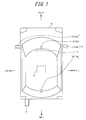
- a vehicle 10 which is a moving body, and a water discharge control system 11 provided in the vehicle 10 according to the first embodiment of this disclosure are described with reference to FIG. 1 .
- the vehicle 10 includes a fuel cell 12 and an outlet 13 configured to discharge water produced from electric power generation by the fuel cell out of the vehicle.
- the fuel cell 12 supplies electric power produced from the chemical reaction between, for example, hydrogen and oxygen, to the vehicle 10, the water discharge control system 11, or the like. Further, the fuel cell 12 produces water from chemical reaction during electric power generation.
- the fuel cell 12 is placed in any position of the vehicle 10.
- the outlet 13 discharges the produced water out of the vehicle 10.
- the outlet 13 is placed in any position of the vehicle 10.
- the outlet 13 is placed at the rear of the vehicle to allow the water to be discharged toward the rear of the vehicle 10.
- the outlet 13 has a valve configured to be controlled to open and close by a control signal outputted from an ECU or an image processing apparatus of the vehicle 10 described later. More specifically, the valve of the outlet 13 is in an open state when no control signal is output, and is in a half open state or a close state when a control signal is output.
- the water discharge control system 11 includes at least one image capturing apparatus 14 and an image processing apparatus 15.
- the water discharge control system 11 includes four image capturing apparatuses 14.
- four image capturing apparatuses 14 are distinguished more clearly, hereinafter they are referred to as a front camera 14a, a rear camera 14b, a left side camera 14c and a right side camera 14d, respectively.
- the front camera 14a is placed on the vehicle 10 to allow an image of the area around the front of the vehicle 10 to be captured.
- the rear camera 14b is placed on the vehicle 10 to allow an image of the area around the rear of the vehicle 10 to be captured.
- the left side camera 14c is placed, for example, vertically downward on the left door mirror to allow an image of the area around the left side of the vehicle 10 to be captured.
- the right side camera 14d is placed, for example, vertically downward on the right door mirror to allow an image of the area around the right side of the vehicle 10 to be captured.
- Each image capturing apparatus 14 includes a lens having a wide angle of view, such as a fish-eye lens, and can capture an image of the area around the vehicle 10 in a wide angle.
- the image processing apparatus 15 is placed on any position of the vehicle 10.
- FIG. 2 only one image capturing apparatus 14 is illustrated for convenience of description.
- the image capturing apparatus 14 includes an optical system 16, an image sensor 17, an imaging processor 18, an input/output unit 19 and a camera controller 20.
- the optical system 16 includes a diaphragm and a plurality of lenses, and forms an image of a subject.
- the optical system 16 has a wide angle and can form an image of a subject located in an area around the vehicle 10.
- the image sensor 17 is, for example, a CMOS image sensor, and captures an image of a subject formed by the optical system 16 and produces a captured image.
- the imaging processor 18 includes a processor dedicated to image processing, such as, for example, an AFE and a DSP.
- the imaging processor 18 performs a predetermined preceding image processing such as CDS, gain adjustment (AGC), A/D conversion (ADC), or the like, to a captured image produced by the image sensor 17. Further, the imaging processor 18 performs a predetermined post image processing such as exposure, color interpolation, or the like, to a captured image.
- the input/output unit 19 is an interface configured to input/output the information via a network 21, such as a CAN, or the like, and an exclusive line 22, such as a video signal line, or the like.
- the camera controller 20 is a general-purpose CPU configured to perform the specific processing by reading a dedicated micro processor or a specific program.
- the camera controller 20 controls operation of the entire image capturing apparatus 14.
- the camera controller 20 controls the operation of the image sensor 17 and produces a captured image periodically at 30 fps, for example.
- the camera controller 20 outputs a captured image to which the post image processing is performed by the imaging processor 18 to the image processing apparatus 15 via the input/output unit 19 and the network 21, or the exclusive line 22.
- the image processing apparatus 15 includes an input/output unit 23, a storage 24 and an image processing apparatus controller 25.
- the input/output unit 23 is an interface configured to input/output the information via the network 21 and the exclusive line 22.
- the storage 24 is a memory, for example, and is configured to store a variety of information and program required for each kind of operation of the image processing apparatus 15.
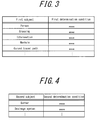
- the storage 24 associates the information indicating the first subject with the information indicating the first determination condition as illustrated in FIG. 3 , and stores them in advance.
- the first subject is a subject that is considered, among various subjects that can be recognized by the object recognition processing, that discharge of water out of the vehicle 10 should be limited (controlled or inhibited), when it is present in the vicinity of the vehicle 10, for example.
- a person (pedestrian) a crossing, an intersection, a manhole and a curved travel path are defined as the first subject.
- the first determination condition is a condition for determining whether or not the corresponding first subject and the vehicle 10 have a predetermined positional relationship (a first positional relationship) based on a captured image of an area around the vehicle 10.
- the first determination condition and the first positional relationship are arbitrarily defined depending on the first subject and the installation position and direction of the image capturing apparatus 14 relative to the vehicle 10.
- the first determination condition can be a condition for determining whether or not a person is present in the vicinity of the vehicle 10 based on a captured image. In such a case, when it is determined that the first determination condition is satisfied based on a captured image, it is determined that a person is present in the vicinity of the vehicle 10.
- the first determination condition will be described in detail later.
- the storage 24 associates the information indicating the second subject with the information indicating the second determination condition as illustrated in FIG. 4 , and stores them in advance.
- the second subject is a subject that is considered, among various subjects that can be recognized by the object recognition processing, that discharge of water out of the vehicle 10 should be promoted, when it is present in the vicinity of the vehicle 10, for example.
- a gutter and a drainage system are defined as the second subject.
- the second determination condition is a condition for determining whether or not the corresponding second subject and the vehicle 10 have a predetermined positional relationship (a second positional relationship) based on a captured image of an area around the vehicle 10.
- the second determination condition and the second positional relationship are arbitrarily defined depending on the second subject and the installation position and direction of the image capturing apparatus 14 relative to the vehicle 10.
- the second determination condition can be a condition for determining whether or not a gutter is present in the vicinity of the vehicle 10 based on a captured image. In such a case, when it is determined that the second determination condition is satisfied based on the captured image, it is determined that a gutter is present in the vicinity of the vehicle 10.
- the second determination condition will be described in detail later.
- the image processing apparatus controller 25 illustrated in FIG. 2 is a general-purpose CPU configured to perform specific processing by reading, for example, a dedicated micro processor or a specific program.
- the image processing apparatus controller 25 controls the operation of the entire image processing apparatus 15.
- the image processing apparatus controller 25 obtains a captured image outputted by each image capturing apparatus 14 via the network 21 or the exclusive line 22 and the input/output unit 23, and allows the image to be stored and held in the storage 24.
- the image processing apparatus controller 25 performs the object recognition processing by using the captured image held in the storage 24.
- various subjects such as, for example, a travel path, a pedestrian, a gutter, or the like, can be recognized by using different object recognition algorithms depending on the subject. A specific example of the object recognition processing will be described later.
- the image processing apparatus controller 25 determines, depending on the subject recognized by the object recognition processing, whether or not to limit discharge of water produced from electric power generation by the fuel cell 12 out of the vehicle 10. More specifically, the image processing apparatus controller 25 determines that discharge of water should be limited when the first subject recognized by the object recognition processing and the vehicle 10 have the first positional relationship, or the width of the travel path recognized by the object recognition processing is less than the predetermined value. Preferably the image processing apparatus controller 25 stops the determination that discharge of water should be limited when the second subject recognized by the object recognition processing and the vehicle 10 have the second positional relationship.
- An operation example of the image processing apparatus controller 25 configured to determine whether or not to limit discharge of water depending on the recognized subject will be described specifically below.
- the first operation example of the image processing apparatus controller 25 that determines, when a manhole, which is the first subject, recognized by the object recognition processing and the vehicle 10 have the first positional relationship (e.g. a manhole is present in the vicinity of the vehicle), that discharge of water should be limited will be described.
- the image processing apparatus controller 25 performs the object recognition processing by using each captured image held in the storage 24 and determines whether a manhole, which is the first subject, is recognized or not.
- object recognition processing any object recognition algorithm for recognizing a manhole in the captured image, such as, for example, a pattern matching, or the like, can be used.
- the image processing apparatus controller 25 determines, when a manhole is recognized in at least one captured image, whether or not the manhole and the vehicle 10 have the first positional relationship, for example, whether or not the manhole is present in the vicinity of the vehicle 10. More specifically, the image processing apparatus controller 25 determines whether or not the first determination condition is satisfied, for example, whether or not the condition that the manhole is present within a predetermined distance from the vehicle 10 is satisfied, by using, for example, the captured image in which the manhole is recognized. Then the image processing apparatus controller 25 determines, for example, when the manhole 26 is present within a predetermined distance 27 from the vehicle 10, that is, the first determination condition is satisfied, as illustrated in FIG. 5 , that the manhole 26 is present in the vicinity of the vehicle 10, then the manhole 26 and the vehicle 10 have the first positional relationship.
- the image processing apparatus controller 25 determines, when the manhole and the vehicle 10 have the first positional relationship, that the discharge of water from the outlet 13 of the vehicle 10 should be limited.
- the image processing apparatus controller 25 outputs a reference signal to the network 21 via the input/output unit 23.
- the reference signal includes, for example, the information used by the ECU of the vehicle 10 to determine whether or not to output a control signal.
- the reference signal includes the information indicating that a control signal that allows a valve of the outlet 13 to be in a half open state or a close state should be outputted and the information indicating that the manhole and the vehicle 10 have the first positional relationship, or the like.
- the image processing apparatus controller 25 may output, instead of a reference signal, a control signal that allows the valve of the outlet 13 to be in a half open state or a close state.
- the ECU or the image processing apparatus controller 25 outputs a control signal, thereby allowing the valve of the outlet 13 to be in a half open state or a close state, and thus discharge of water out of the vehicle 10 from the outlet 13 is limited.
- the image processing apparatus controller 25 stops the determination that discharge of water should be limited when the second subject (e.g. a gutter) recognized by the object recognition processing and the vehicle 10 have the second positional relationship (e.g. the second subject is present in the vicinity of the vehicle 10), which will be described more specifically below.
- the second subject e.g. a gutter
- the vehicle 10 have the second positional relationship (e.g. the second subject is present in the vicinity of the vehicle 10), which will be described more specifically below.
- the image processing apparatus controller 25 performs, when determining that the first subject and the vehicle 10 have the first positional relationship, the object recognition processing by using each captured image held in the storage 24, and determines whether or not a gutter, which is the second subject, is recognized.
- the object recognition processing any object recognition algorithm for recognizing a gutter in a captured image, such as, for example, a pattern matching, is used.
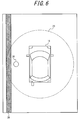
- the image processing apparatus controller 25 determines, when a gutter is recognized in at least one captured image, whether or not the gutter and the vehicle 10 have the second positional relationship, for example, whether or not the gutter is present in the vicinity of the vehicle 10. More specifically, the image processing apparatus controller 25 determines whether or not the second determination condition is satisfied, that is, whether or not the condition that the gutter is present within a predetermined distance from the vehicle 10 is satisfied by using, for example, a captured image in which the gutter is recognized. Then the image processing apparatus controller 25 determines, when the gutter 28 is present within a predetermined distance 29 from the vehicle 10 as illustrated in FIG. 6 , for example, that is, when the second determination condition is satisfied, that the gutter 28 is present in the vicinity of the vehicle 10 and the gutter 28 and the vehicle 10 have the second positional relationship.
- the image processing apparatus controller 25 stops the determination that discharge of water from the outlet 13 of the vehicle 10 should be limited when the gutter and the vehicle 10 have the second positional relationship. In this manner, for example, even if the manhole and the vehicle 10 have the first positional relationship, when the gutter and the vehicle 10 have the second positional relationship, the ECU or the image processing apparatus controller 25 does not output a control signal, which allows the valve of the outlet 13 to be in an open state, and thus water is discharged out of the vehicle 10 from the outlet 13.
- the image processing apparatus controller 25 may stop the determination of whether or not a second subject is recognized when determining that a specific first subject and the vehicle 10 have the first positional relationship. For example, even if a gutter, which is the second subject, is present in the vicinity of the vehicle 10, if a person is present in the vicinity of the vehicle 10, discharged water may splash on the person. In such a case, discharge of water is not desirable. Therefore, a subject (e.g. a person) on which direct splashing of discharged water is desired to be suppressed is defined as a specific first subject, thus discharge of water can be limited even if a gutter is present in the vicinity of the vehicle 10, for example.
- a subject e.g. a person
- the second operation example of the image processing apparatus controller 25 configured to determine that discharge of water should be limited when a curved travel path, which is the first subject, recognized by the object recognition processing and the vehicle 10 have the first positional relationship (e.g. the curved travel path is present ahead (direction of travel) of the vehicle 10) will be described.
- the image processing apparatus controller 25 performs the object recognition processing by using an image captured by the front camera 14a and held in the storage 24 to determine whether or not an index extending along the travel path is recognized.
- the index is two white lines located apart from each other in the width direction of the travel path.
- the index can be borders with sidewalks located on both sides of the travel path in the width direction, for example.
- any object recognition algorithm for recognizing an index in a captured image such as a white line detection algorithm that employs, for example, edge point detection and Hough conversion, is used.
- the image processing apparatus controller 25 recognizes that a travel path is present around the vehicle 10 when two white lines are recognized.
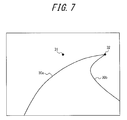
- the image processing apparatus controller 25 calculates, when two white lines 30a and 30b are recognized in the captured image as illustrated in FIG. 7 , the distance between a first vanishing point 31 and a second vanishing point 32, which is an intersection of the two white lines, 30a and 30b, in a captured image.
- the first vanishing point 31 is a point where two white lines on the travel path intersect with each other in the captured image when the front camera 14a captures an image of a travel path extending linearly ahead of the vehicle 10.
- the position of the first vanishing point 31 in the captured image can be calculated in advance depending on the angle of view of the optical system of the front camera 14a and the mounting position, the direction, or the like, of the image capturing apparatus relative to the vehicle.
- the distance between the first vanishing point 31 and the second vanishing point 32 in the captured image differs depending on the shape of the travel path. For example, when the travel path extends approximately linearly ahead of the vehicle 10, the distance between the first vanishing point 31 and the second vanishing point 32 is less than a predetermined value. On the other hand, the larger the curvature of the travel path extending ahead of the vehicle 10 is, that is, the sharper the curve is, the larger the distance between the first vanishing point 31 and the second vanishing point 32 is. In this embodiment, the image processing apparatus controller 25 recognizes that the travel path extending ahead of the vehicle 10 is a curved travel path when the distance between the first vanishing point 31 and the second vanishing point 32 is not less than the predetermined value.
- the image processing apparatus controller 25 determines whether or not the curved travel path, which is the first subject, and the vehicle 10 have the first positional relationship, for example, whether or not the curved travel path is present ahead (direction of travel) of the vehicle 10. More specifically, the image processing apparatus controller 25 determines whether or not the first determination condition is satisfied, that is, for example, when the two white lines 30a and 30b are recognized in the image captured by the front camera 14a, determines whether or not the condition that the distance between the first vanishing point 31 and the second vanishing point 32 is not less than the predetermined value is satisfied.
- the image processing apparatus controller 25 determines, when the distance between the first vanishing point 31 and the second vanishing point 32 in the image captured by the front camera 14a is not less than the predetermined value, that is, the first determination condition is satisfied, that the curved travel path and the vehicle 10 have the first positional relationship.
- the image processing apparatus controller 25 determines that discharge of water from the outlet 13 of the vehicle 10 should be limited when the curved travel path and the vehicle 10 have the first positional relationship.
- the image processing apparatus controller 25 outputs a reference signal or a control signal to the network 21 via the input/output unit 23 in response to the result of determination that discharge of water should be limited.
- the ECU or the image processing apparatus controller 25 outputs a control signal, thereby allowing the valve of the outlet 13 to be in a half open state or a close state, and thus discharge of water out of the vehicle 10 from the outlet 13 is limited.
- the image processing apparatus controller 25 performs the object recognition processing by using an image captured by at least either the front camera 14a or the rear camera 14b held in the storage 24 to determine whether or not an index extending along the travel path is recognized.
- the image processing apparatus controller 25 recognizes that a travel path is present in the vicinity of the vehicle 10 when recognizing two white lines.
- the image processing apparatus controller 25 calculates, in a captured image, the distance between two white lines in the width direction of the recognized travel path. In this embodiment, the image processing apparatus controller 25 defines the calculated distance as the width of the travel path.
- the image processing apparatus controller 25 determines whether or not the width of the travel path (the calculated distance between the two white lines) is less than the predetermined value.
- the image processing apparatus controller 25 determines, when the distance of the travel path is less than the predetermined value, that is, the width of the travel path is narrow, that discharge of water from the outlet 13 of the vehicle 10 should be limited.
- the image processing apparatus controller 25 outputs a reference signal or a control signal to the network 21 via the input/output unit 23 in response to the result of determination that discharge of water should be limited. In this manner, when the width of the travel path is less than the predetermined value, the ECU or the image processing apparatus controller 25 outputs a control signal, thereby allowing the valve of the outlet 13 to be in a half close state or a close state, and thus discharge of water out of the vehicle 10 from the outlet 13 is limited.
- Step S100 First, the image capturing apparatus 14 captures an image of an area around the vehicle 10 to produce a captured image.
- Step S101 Subsequently, the image capturing apparatus 14 outputs the captured image of step S100 to the image processing apparatus 15 via the input/output unit 19 and the network 21 or the exclusive line 22.
- Step S102 Next, the image processing apparatus 15 obtains the captured image of step S101 via the network 21 or the exclusive line 22 and the input/output unit 23, then stores and holds it in the storage 24.
- Step S103 Subsequently, the image processing apparatus 15 performs the object recognition processing by using the captured image held in the storage 24 at step S102.
- various subjects such as, for example, a travel path, a pedestrian, a gutter, or the like, can be recognized by using different object recognition algorithms depending on the subj ect.
- Step S104 Then the image processing apparatus 15 performs determination processing to determine, depending on the subject recognized by the object recognition processing of step S103, whether or not to limit discharge of water produced from electric power generation by the fuel cell 12 out of the vehicle 10.
- Step S200 First, the image processing apparatus controller 25 determines whether or not the first subject that can be recognized by the object recognition processing at step S103 of FIG. 8 and the vehicle 10 have the first positional relationship. When the first subject and the vehicle 10 have the first positional relationship (Yes at step S200), the process proceeds to step S202 of FIG. 9 . On the other hand, when the first subject and the vehicle 10 don't have the first positional relationship (No at step S200), the process proceeds to step S201.
- Step S201 When the first subject and the vehicle 10 don't have the first positional relationship at step S200 (No at step S200), the image processing apparatus controller 25 determines whether or not the width of the travel path is less than the predetermined value based on the index (e.g. two white lines) extending along the travel path that can be recognized by the object recognition processing at step S103 of FIG. 8 .
- the width of the travel path is less than the predetermined value (Yes at step S201)
- the process proceeds to step S202 of FIG. 9 .
- the image processing apparatus controller 25 ends the determination processing without determining that discharge of water should be limited.
- Step S202 When the first subject and the vehicle 10 have the first positional relationship at step S200 (Yes at step S200), or when the width of the travel path is less than the predetermined value at step S201 (Yes at step S201), the image processing apparatus controller 25 determines whether or not the second subject that can be recognized by the object recognition processing at step S103 of FIG. 8 and the vehicle 10 have the second positional relationship. When the second subject and the vehicle 10 have the second positional relationship (Yes at step S202), the image processing apparatus controller 25 ends the determination processing without determining that discharge of water should be limited. On the other hand, when the second subject and the vehicle 10 don't have the second positional relationship (No at step S202), the process proceeds to step S203.
- Step S203 When the second subject and the vehicle 10 don't have the second positional relationship at step S202 (No at step S202), the image processing apparatus controller 25 determines that discharge of water should be limited.
- Step S204 Then the image processing apparatus controller 25 outputs a reference signal or a control signal to the network 21 via the input/output unit 23 in response to the result of determination at step S203.
- the image processing apparatus 15 performs the object recognition processing by using a captured image of an area around the vehicle 10, and determines, depending on the recognized subject, whether or not to limit discharge of water produced from electric power generation by the fuel cell 12 out of the vehicle 10, thereby allowing determination whether or not discharge of water should be limited depending on the various situations around the vehicle 10.
- the image processing apparatus 15 determines that discharge of water should be limited when the first subject recognized by the object recognition processing and the vehicle 10 have the first positional relationship, or the width of the travel path is less than the predetermined value.
- a person (pedestrian), a crossing, an intersection, a manhole and a curved travel path are defined as the first subject, thereby allowing adverse effects of water discharged out of the vehicle 10 on the vehicle exterior environment, such as, for example, splashing discharged water on a person, slippage of a person or the other vehicles due to discharged water, or the like, to be reduced.
- the image processing apparatus 15 stops the determination that the discharge of water should be limited when the second subject recognized by the object recognition processing and the vehicle 10 have the second positional relationship.
- the image processing apparatus 15 stops the determination that the discharge of water should be limited when the second subject recognized by the object recognition processing and the vehicle 10 have the second positional relationship.
- a gutter or a drainage system is present in the vicinity of the vehicle 10, discharged water may easily flow into the gutter or the drainage system, thus it is not likely that the vehicle exterior environment suffers adverse effects. Therefore, a gutter and a drainage system are defined as the second subject, thereby allowing the image processing apparatus 15 to determine the situation where substantially there is no problem even if water is discharged out of the vehicle 10.
- the vehicle according to the second embodiment is different from that of the first embodiment in that it includes a plurality of outlets.
- the components that are the same as those of the first embodiment are each assigned the same reference sign and descriptions thereof are omitted.
- a vehicle 100 and a water discharge control system 11 provided to the vehicle 100 according to the second embodiment of this disclosure are described with reference to FIG. 10 .
- the vehicle 100 includes a fuel cell 12 and a plurality of outlets 13 configured to discharge water produced from electric power generation by the fuel cell 12 out of the vehicle 100.
- the fuel cell 12 is the same as that of the first embodiment.
- two outlets 13 are placed respectively at the rear left and the rear right of the vehicle to allow water to be discharged toward the rear of the vehicle.
- an outlet placed at the rear left of the vehicle is referred to as an outlet 13a and that placed at the rear right is referred to as an outlet 13b.
- the water discharge control system 11 includes at least one image capturing apparatus 14 and an image processing apparatus 15.
- the image capturing apparatus 14 is the same as that of the first embodiment.
- the water discharge control system 11 has four image capturing apparatuses 14.
- the four image capturing apparatuses 14 are particularly distinguished from each other, they are referred to as a front camera 14a, a rear camera 14b, a left side camera 14c and a right side camera 14d, respectively.
- the image processing apparatus 15 includes an input/output unit 23, a storage 24 and an image processing apparatus controller 25.
- the input/output unit 23 and the storage 24 are the same as those of the first embodiment.
- the image processing apparatus controller 25 is a general-purpose CPU configured to perform specific processing by reading, for example, a dedicated microprocessor or a specific program.
- the image processing apparatus controller 25 controls operation of the entire image processing apparatus 15.
- the image processing apparatus controller 25 obtains, as with the first embodiment, a captured image outputted by each image capturing apparatus 14 via the network 21 or the exclusive line 22 and the input/output unit 23 and stores and holds it in the storage 24. Subsequently, the image processing apparatus controller 25 performs the object recognition processing by using the captured image held in the storage 24.
- the image processing apparatus controller 25 determines, depending on the positional relationship between the subject recognized by the object recognition processing and the vehicle 100, whether or not to limit discharge of water out of the vehicle 100 from the outlet 13, for each of the plurality of outlets 13. More specifically, the image processing apparatus controller 25 determines, when the first subject recognized by the object recognition processing and the vehicle 100 have the first positional relationship, that discharge of water out of the vehicle 100 from at least one outlet 13 out of the plurality of outlets 13 should be limited depending on the installation position of the plurality of outlets 13 on the vehicle 100.
- An operation example of the image processing apparatus controller 25 that determines, when a manhole, which is the first subject, recognized by the object recognition processing, and the vehicle 100 have the first positional relationship (e.g. the manhole is present in the vicinity of the vehicle 100), that discharge of water out of the vehicle 100 from at least one outlet out of the plurality of the outlets 13 should be limited will be described below.
- the image processing apparatus controller 25 performs the object recognition processing by using each captured image held in the storage 24, and determines whether or not the manhole, which is the first subject, is recognized. Subsequently, the image processing apparatus controller 25 determines, when a manhole is recognized in at least one captured image, that whether or not the manhole and the vehicle 100 have the first positional relationship, that is, for example, whether or not the manhole is present in the vicinity of the vehicle 100. More specifically, the image processing apparatus controller 25 determines whether or not the first determination condition is satisfied, that is, for example, determines whether or not the condition that the manhole is present within a predetermined distance from the vehicle 100 is satisfied, by using a captured image in which the manhole is recognized.
- the image processing apparatus controller 25 determines, as illustrated in FIG. 11 , for example, when the manhole 26 is present within the predetermined distance 27 from the vehicle 100, that is, the first determination condition is satisfied, that the manhole is present in the vicinity of the vehicle 100, and the manhole and the vehicle 100 have the first positional relationship.
- the image processing apparatus controller 25 selects at least one outlet 13 from which discharge of water should be limited, for example, in ascending order of the distance to the recognized manhole 13, depending on the installation position of the plurality of outlets 13 on the vehicle 100.
- the image processing apparatus controller 25 selects, for example, at least one outlet 13 whose distance to the manhole is less than the predetermined distance. For example, as illustrated in FIG. 11 , when the manhole 26 is present on the left side of the vehicle 100, at least the outlet 13a placed at the rear left of the vehicle 100 is selected.
- the image processing apparatus controller 25 determines that discharge of water from the selected outlet 13 should be limited.
- a reference signal includes the information indicating that a control signal that allows the selected outlet 13 to be in a half open state or a close state should be output and the information indicating that the manhole and the vehicle 100 have the first positional relationship, or the like.
- the image processing apparatus controller 25 may output, instead of a reference signal, a control signal that allows the selected outlet 13 to be in a half open state or a close state.
- the ECU or the image processing apparatus controller 25 outputs a control signal, thereby allowing the valve of the selected outlet 13 to be in a half open state or a close state, and discharge of water out of the vehicle 100 from the selected outlet 13 is limited.
- step S104 After steps S100 to S103 (see FIG. 8 ) of the above-described first embodiment is performed by the water discharge control system 11.
- Steps S300 to S302 First, the image processing apparatus controller 25 performs the same processing of steps S200 to S202 illustrated in FIG. 9 .
- Step S303 When the second subject and the vehicle 100 don't have the second positional relationship at step S302 (No at step S302), the image processing apparatus controller 25 selects at least one outlet 13 from which discharge of water should be limited depending on the installation position of the plurality of outlets 13 on the vehicle 100. Alternatively, the image processing apparatus controller 25 selects at least one outlet 13 whose distance to the first subject, for example, is less than the predetermined distance.
- Step S304 Subsequently, the image processing apparatus controller 25 determines that discharge of water from the outlet 13 selected at step S303 should be limited.
- Step S305 Then the image processing apparatus controller 25 outputs a reference signal or a control signal to the vehicle 100 via the input/output unit 23 and the network 21 in response to the result of determination at step S304.
- the image processing apparatus 15 determines, for each of the plurality of outlets 13, whether or not to limit discharge of water out of the vehicle 100 from the outlet 13 depending on the recognized subject.
- the image processing apparatus 15 can, depending on various situations around the vehicle 100, limit discharge of water from some outlets 13 that can have adverse effects on the vehicle exterior environment while allowing discharge of water from the other outlets 13 that are considered to have less adverse effect on the vehicle exterior environment.
- the image processing apparatus controller 25 may obtain, for example, the control information including the speed information or the travel distance information, or the like, of the vehicle 10/100 via the network 21 and the input/output unit 23, and determine whether or not the first subject and the vehicle 10/100 have the first positional relationship based on the captured image and the control information. For example, when the image processing apparatus controller 25 recognizes that the first subject (e.g. a crossing) is present ahead of the vehicle 10/100 by using an image captured by the front camera 14a during travel of the vehicle 10/100, it starts obtaining the control information via the network 21 and the input/output unit 23.
- the control information including the speed information or the travel distance information, or the like
- the image processing apparatus controller 25 calculates, based on the obtained control information, the traveling distance of the vehicle 10/100 from the point in time when the crossing has been recognized. Then the image processing apparatus controller 25 determines that the crossing and the vehicle 10/100 have the first positional relationship when the vehicle 10/100 travels a predetermined distance from the point in time when the crossing has been recognized, and determines that discharge of water should be limited.
- the image processing apparatus controller 25 may change the first determination condition depending on the control information of the vehicle 10/100. For example, the image processing apparatus controller 25 may, if the first determination condition or the second determination condition is the condition that the first subject or the second subject is present within a predetermined distance from the vehicle 10/100, increase the predetermined distance as the speed of the vehicle 10/100 indicated in the control signal increases.
- valve of the outlet 13 may be configured so that its open/close state changes or switches in response to the outputted control signal.
- the image processing apparatus 15 outputs, when the first subject and the vehicle 10/100 have the first positional relationship, for example, a first reference signal including the information indicating that a control signal that allows the valve of the outlet 13 to be in a half open state or a close state should be outputted to the vehicle 100 via the input/output unit 23 and the network 21.
- the image processing apparatus 15 outputs a second reference signal including the information indicating that a control signal that allows the valve of the outlet 13 to be in an open state should be output to the network 21 via the input/output unit 23 when the first positional relationship between the first subject and the vehicle 10/100 has been dissolved.
- the image processing apparatus controller 25 may determine that the first positional relationship has been dissolved based on, for example, the control information of the vehicle 10/100. For example, the image processing apparatus controller 25 outputs a first reference signal and starts obtaining the control information via the network 21 and the input/output unit 23 when recognizing the presence of the first subject (e.g. a crossing) ahead of the vehicle 10/100 by using an image captured by the front camera 14a, during travel of the vehicle 10/100. Here, discharge of water can be controlled by outputting a first reference signal. Subsequently, the image processing apparatus controller 25 calculates the traveling distance of the vehicle 10/100 from the point in time when the crossing has been recognized, based on the obtained control information.
- the image processing apparatus controller 25 calculates the traveling distance of the vehicle 10/100 from the point in time when the crossing has been recognized, based on the obtained control information.
- the image processing apparatus controller 25 determines, when the vehicle 10/100 has traveled a predetermined distance from the point in time when the crossing has been recognized, that the first positional relationship between the crossing and the vehicle 10/100 has been dissolved.
- the crossing is recognized to be present ahead of the vehicle 10/100, then as the vehicle 10/100 travels, the crossing now locates at the rear of the vehicle 10/100, then when the crossing is sufficiently apart from the vehicle 10/100, the first positional relationship is determined to have been dissolved, and a second reference signal is output.
- the second reference signal is outputted, limitation of discharge of water can be cancelled.
- the image processing apparatus controller 25 may determine that the first positional relationship has been dissolve based on, for example, images captured by a plurality of image capturing apparatuses 14. For example, the image processing apparatus 15 outputs a first reference signal when recognizing that, during travel of the vehicle 10/100, the first subject (e.g. a crossing) is present ahead of the vehicle 10/100 by using an image captured by the front camera 14a. Subsequently, after recognition of the crossing, the image processing apparatus controller 25 recognizes, as the vehicle 10/100 travels, that the crossing now locates at the rear of the vehicle 10/100 by using an image captured by the rear camera 14b.
- the first subject e.g. a crossing
- the image processing apparatus controller 25 determines, when determining that the crossing recognized by the image captured by the rear camera 14b and the vehicle 10/100 don't have the first positional relationship, that the first positional relationship between the crossing and the vehicle 10/100 has been dissolved. In this manner, for example, after a crossing is recognized ahead of the vehicle 10/100, as the vehicle 10/100 travels, the crossing now locates at the rear of the vehicle 10/100, then when the crossing is sufficiently apart from the vehicle 10/100, the first positional relationship is determined to have been dissolved, and a second reference signal is output.
- the image processing apparatus 15 may obtain the information indicating the present location of the vehicle 10/100 from a navigation system with GPS, for example, and use the information indicating the present location when determining whether or not the first subject and the vehicle 10/100 have the first positional relationship. More specifically, the image processing apparatus 15 may determine that the crossing, which is the first subject, and the vehicle 10/100 have the first positional relationship if the present location indicated by the information obtained from the navigation system is in the vicinity of the crossing and the crossing is recognized by the object recognition processing as well.
- the image processing apparatus 15 or the like may be realized as a communication device such as a cell phone, an external server, or the like, and may be connected wired or wirelessly to the vehicle 10/100 and other components of the water discharge control system 11.
Landscapes
- Engineering & Computer Science (AREA)
- Life Sciences & Earth Sciences (AREA)
- Sustainable Development (AREA)
- Sustainable Energy (AREA)
- Multimedia (AREA)
- Physics & Mathematics (AREA)
- Theoretical Computer Science (AREA)
- Manufacturing & Machinery (AREA)
- Chemical & Material Sciences (AREA)
- Chemical Kinetics & Catalysis (AREA)
- Electrochemistry (AREA)
- General Chemical & Material Sciences (AREA)
- General Physics & Mathematics (AREA)
- Transportation (AREA)
- Human Computer Interaction (AREA)
- Power Engineering (AREA)
- Mechanical Engineering (AREA)
- Fuel Cell (AREA)
- Arrangement Or Mounting Of Propulsion Units For Vehicles (AREA)
- Electric Propulsion And Braking For Vehicles (AREA)
- Image Analysis (AREA)
- Traffic Control Systems (AREA)
Abstract
Description
- This disclosure relates to an image processing apparatus, an image capturing apparatus and a water discharge control system used for a vehicle equipped with a fuel cell, and a vehicle.
- In a vehicle equipped with a fuel cell, water produced from electric power generation by a fuel cell has been discharged out of the vehicle. For example, PLC 1 discloses a technique to limit discharge amount of water when the temperature outside the vehicle is below a predetermined temperature to prevent the discharged water from freezing and from having an adverse effect on the environment outside the vehicle. Further, PLC 2 discloses a technique to control discharge of water depending on the distance to an object or a subsequent vehicle detected by using a clearance sonar or a millimeter-wave radar to prevent discharged water from being splashed on people or buildings.
-
- PTL 1:
JP2006-180631 (A - PTL 2:
JP2012-075314 (A - However, under the conventional technique, various situations around a vehicle cannot always be comprehended in detail. For example, an object present around a vehicle cannot be discriminated by using a clearance sonar or a millimeter-wave radar. Thus, there was a room to improve the control accuracy of discharge of water by comprehending various situations around a vehicle.
- It would therefore be helpful to provide an image processing apparatus configured to determine whether or not to limit discharge of water depending on various situations around a vehicle, an image capturing apparatus, a water discharge control system and a vehicle.
- In order to solve the above problem, an image processing apparatus according to this disclosure includes:
- an input/output unit configured to obtain a captured image of an area around a vehicle equipped with a fuel cell; and
- a controller configured to perform object recognition processing by using the captured image, and to determine, depending on a subject recognized by the object recognition processing, whether or not to limit discharge of water produced from electric power generation by the fuel cell out of the vehicle.
- Further, an image capturing apparatus according to this disclosure includes:
- an image sensor configured to capture an image of an area around a vehicle equipped with a fuel cell and to produce a captured image; and
- a controller configured to perform object recognition processing by using the captured image and to determine, depending on a subject recognized by the object recognition processing, whether or not to limit discharge of water produced from electric power generation by the fuel cell out of the vehicle.
- Moreover, a water discharge control system according to this disclosure includes:
- an image capturing apparatus configured to capture an image of an area around a vehicle equipped with a fuel cell and to produce a captured image; and
- an image processing apparatus having an input/output unit configured to obtain the captured image and a controller configured to perform object recognition processing by using the captured image and to determine whether or not to limit discharge of water produced from electric power generation by the fuel cell out of the vehicle,
- the input/output unit outputs, in response to a result of determination by the controller, a control signal to limit discharge of water .
- Further, a vehicle according to this disclosure includes:
- an image capturing apparatus configured to capture an image of an area around a vehicle equipped with a fuel cell and to produce a captured image;
- an image processing apparatus having an input/output unit configured to obtain the captured image and a controller configured to perform object recognition processing by using the captured image and to determine, depending on a subject recognized by the object recognition processing, whether or not to limit discharge of water produced from electric power generation by the fuel cell out of the vehicle; and
- an outlet configured to discharge water produced from electric power generation by the fuel cell out of the vehicle, wherein
- the image processing apparatus limits discharge of water from the outlet in response to a result of determination by the controller.
- The disclosed image processing apparatus, image capturing apparatus, water discharge control system and vehicle allows determination of whether or not discharge of water should be limited depending on various situations around the vehicle.
- In the accompanying drawings:
-
FIG. 1 is an overhead view of a vehicle equipped with a water discharge control system according to a first embodiment of this disclosure; -
FIG. 2 is a block diagram illustrating a schematic configuration of the water discharge control system ofFIG. 1 ; -
FIG. 3 is a diagram illustrating an example of the information stored by a storage ofFIG. 2 ; -
FIG. 4 is a diagram illustrating an example of the information stored by the storage ofFIG. 2 ; -
FIG. 5 is an overhead view of the vehicle and an area around the vehicle ofFIG. 1 ; -
FIG. 6 is an overhead view of the vehicle and an area around the vehicle ofFIG. 1 ; -
FIG. 7 is a diagram illustrating an example of white lines on a travel path recognized by the image processing apparatus ofFIG. 2 through the object recognition processing; -
FIG. 8 is a flow chart illustrating an operation of the water discharge control system ofFIG. 1 ; -
FIG. 9 is a flow chart illustrating the processing to determine whether or not to limit discharge of water performed by the image processing apparatus according to the first embodiment of this disclosure; -
FIG. 10 is an overhead view of a vehicle equipped with a water discharge control system according to a second embodiment of this disclosure; -
FIG. 11 is an overhead view of the vehicle and an area around the vehicle ofFIG.8 ; and -
FIG. 12 is a flow chart illustrating the processing to determine whether or not to limit discharge of water performed by the image processing apparatus according to the second embodiment of this disclosure. - Embodiments of this disclosure will be described below with reference to the drawings.
- First, a
vehicle 10, which is a moving body, and a waterdischarge control system 11 provided in thevehicle 10 according to the first embodiment of this disclosure are described with reference toFIG. 1 . - The
vehicle 10 includes afuel cell 12 and anoutlet 13 configured to discharge water produced from electric power generation by the fuel cell out of the vehicle. - The
fuel cell 12 supplies electric power produced from the chemical reaction between, for example, hydrogen and oxygen, to thevehicle 10, the waterdischarge control system 11, or the like. Further, thefuel cell 12 produces water from chemical reaction during electric power generation. Thefuel cell 12 is placed in any position of thevehicle 10. - The
outlet 13 discharges the produced water out of thevehicle 10. Theoutlet 13 is placed in any position of thevehicle 10. In this embodiment, theoutlet 13 is placed at the rear of the vehicle to allow the water to be discharged toward the rear of thevehicle 10. In addition, theoutlet 13 has a valve configured to be controlled to open and close by a control signal outputted from an ECU or an image processing apparatus of thevehicle 10 described later. More specifically, the valve of theoutlet 13 is in an open state when no control signal is output, and is in a half open state or a close state when a control signal is output. - The water
discharge control system 11 includes at least oneimage capturing apparatus 14 and animage processing apparatus 15. In this embodiment, the waterdischarge control system 11 includes fourimage capturing apparatuses 14. When fourimage capturing apparatuses 14 are distinguished more clearly, hereinafter they are referred to as afront camera 14a, arear camera 14b, aleft side camera 14c and aright side camera 14d, respectively. - The
front camera 14a is placed on thevehicle 10 to allow an image of the area around the front of thevehicle 10 to be captured. Further, therear camera 14b is placed on thevehicle 10 to allow an image of the area around the rear of thevehicle 10 to be captured. Then, theleft side camera 14c is placed, for example, vertically downward on the left door mirror to allow an image of the area around the left side of thevehicle 10 to be captured. Further, theright side camera 14d is placed, for example, vertically downward on the right door mirror to allow an image of the area around the right side of thevehicle 10 to be captured. Eachimage capturing apparatus 14 includes a lens having a wide angle of view, such as a fish-eye lens, and can capture an image of the area around thevehicle 10 in a wide angle. Further, theimage processing apparatus 15 is placed on any position of thevehicle 10. - Next, each component of the water
discharge control system 11 will be described more specifically with reference toFIG. 2 . InFIG. 2 , only oneimage capturing apparatus 14 is illustrated for convenience of description. - The
image capturing apparatus 14 includes anoptical system 16, animage sensor 17, animaging processor 18, an input/output unit 19 and acamera controller 20. - The
optical system 16 includes a diaphragm and a plurality of lenses, and forms an image of a subject. In this embodiment, theoptical system 16 has a wide angle and can form an image of a subject located in an area around thevehicle 10. - The
image sensor 17 is, for example, a CMOS image sensor, and captures an image of a subject formed by theoptical system 16 and produces a captured image. - The
imaging processor 18 includes a processor dedicated to image processing, such as, for example, an AFE and a DSP. Theimaging processor 18 performs a predetermined preceding image processing such as CDS, gain adjustment (AGC), A/D conversion (ADC), or the like, to a captured image produced by theimage sensor 17. Further, theimaging processor 18 performs a predetermined post image processing such as exposure, color interpolation, or the like, to a captured image. - The input/
output unit 19 is an interface configured to input/output the information via anetwork 21, such as a CAN, or the like, and anexclusive line 22, such as a video signal line, or the like. - The
camera controller 20 is a general-purpose CPU configured to perform the specific processing by reading a dedicated micro processor or a specific program. Thecamera controller 20 controls operation of the entireimage capturing apparatus 14. For example, thecamera controller 20 controls the operation of theimage sensor 17 and produces a captured image periodically at 30 fps, for example. Further, thecamera controller 20 outputs a captured image to which the post image processing is performed by theimaging processor 18 to theimage processing apparatus 15 via the input/output unit 19 and thenetwork 21, or theexclusive line 22. - The
image processing apparatus 15 includes an input/output unit 23, astorage 24 and an imageprocessing apparatus controller 25. - The input/
output unit 23 is an interface configured to input/output the information via thenetwork 21 and theexclusive line 22. - The
storage 24 is a memory, for example, and is configured to store a variety of information and program required for each kind of operation of theimage processing apparatus 15. - For example, the
storage 24 associates the information indicating the first subject with the information indicating the first determination condition as illustrated inFIG. 3 , and stores them in advance. The first subject is a subject that is considered, among various subjects that can be recognized by the object recognition processing, that discharge of water out of thevehicle 10 should be limited (controlled or inhibited), when it is present in the vicinity of thevehicle 10, for example. In this embodiment, for example, a person (pedestrian), a crossing, an intersection, a manhole and a curved travel path are defined as the first subject. Further, the first determination condition is a condition for determining whether or not the corresponding first subject and thevehicle 10 have a predetermined positional relationship (a first positional relationship) based on a captured image of an area around thevehicle 10. Here, the first determination condition and the first positional relationship are arbitrarily defined depending on the first subject and the installation position and direction of theimage capturing apparatus 14 relative to thevehicle 10. For example, if the first subject is a person, the first determination condition can be a condition for determining whether or not a person is present in the vicinity of thevehicle 10 based on a captured image. In such a case, when it is determined that the first determination condition is satisfied based on a captured image, it is determined that a person is present in the vicinity of thevehicle 10. The first determination condition will be described in detail later. - Further, the
storage 24 associates the information indicating the second subject with the information indicating the second determination condition as illustrated inFIG. 4 , and stores them in advance. The second subject is a subject that is considered, among various subjects that can be recognized by the object recognition processing, that discharge of water out of thevehicle 10 should be promoted, when it is present in the vicinity of thevehicle 10, for example. In this embodiment, for example, a gutter and a drainage system are defined as the second subject. Further, the second determination condition is a condition for determining whether or not the corresponding second subject and thevehicle 10 have a predetermined positional relationship (a second positional relationship) based on a captured image of an area around thevehicle 10. Here, the second determination condition and the second positional relationship are arbitrarily defined depending on the second subject and the installation position and direction of theimage capturing apparatus 14 relative to thevehicle 10. For example, if the second subject is a gutter, the second determination condition can be a condition for determining whether or not a gutter is present in the vicinity of thevehicle 10 based on a captured image. In such a case, when it is determined that the second determination condition is satisfied based on the captured image, it is determined that a gutter is present in the vicinity of thevehicle 10. The second determination condition will be described in detail later. - The image
processing apparatus controller 25 illustrated inFIG. 2 is a general-purpose CPU configured to perform specific processing by reading, for example, a dedicated micro processor or a specific program. The imageprocessing apparatus controller 25 controls the operation of the entireimage processing apparatus 15. - For example, the image
processing apparatus controller 25 obtains a captured image outputted by eachimage capturing apparatus 14 via thenetwork 21 or theexclusive line 22 and the input/output unit 23, and allows the image to be stored and held in thestorage 24. - Subsequently the image
processing apparatus controller 25 performs the object recognition processing by using the captured image held in thestorage 24. In the object recognition processing, various subjects such as, for example, a travel path, a pedestrian, a gutter, or the like, can be recognized by using different object recognition algorithms depending on the subject. A specific example of the object recognition processing will be described later. - Then the image
processing apparatus controller 25 determines, depending on the subject recognized by the object recognition processing, whether or not to limit discharge of water produced from electric power generation by thefuel cell 12 out of thevehicle 10. More specifically, the imageprocessing apparatus controller 25 determines that discharge of water should be limited when the first subject recognized by the object recognition processing and thevehicle 10 have the first positional relationship, or the width of the travel path recognized by the object recognition processing is less than the predetermined value. Preferably the imageprocessing apparatus controller 25 stops the determination that discharge of water should be limited when the second subject recognized by the object recognition processing and thevehicle 10 have the second positional relationship. An operation example of the imageprocessing apparatus controller 25 configured to determine whether or not to limit discharge of water depending on the recognized subject will be described specifically below. - First, the first operation example of the image
processing apparatus controller 25 that determines, when a manhole, which is the first subject, recognized by the object recognition processing and thevehicle 10 have the first positional relationship (e.g. a manhole is present in the vicinity of the vehicle), that discharge of water should be limited will be described. - First, the image
processing apparatus controller 25 performs the object recognition processing by using each captured image held in thestorage 24 and determines whether a manhole, which is the first subject, is recognized or not. In the object recognition processing, any object recognition algorithm for recognizing a manhole in the captured image, such as, for example, a pattern matching, or the like, can be used. - Subsequently, the image
processing apparatus controller 25 determines, when a manhole is recognized in at least one captured image, whether or not the manhole and thevehicle 10 have the first positional relationship, for example, whether or not the manhole is present in the vicinity of thevehicle 10. More specifically, the imageprocessing apparatus controller 25 determines whether or not the first determination condition is satisfied, for example, whether or not the condition that the manhole is present within a predetermined distance from thevehicle 10 is satisfied, by using, for example, the captured image in which the manhole is recognized. Then the imageprocessing apparatus controller 25 determines, for example, when themanhole 26 is present within apredetermined distance 27 from thevehicle 10, that is, the first determination condition is satisfied, as illustrated inFIG. 5 , that themanhole 26 is present in the vicinity of thevehicle 10, then themanhole 26 and thevehicle 10 have the first positional relationship. - Subsequently, the image
processing apparatus controller 25 determines, when the manhole and thevehicle 10 have the first positional relationship, that the discharge of water from theoutlet 13 of thevehicle 10 should be limited. - Then, in response to the result of the determination that discharge of water should be limited, the image
processing apparatus controller 25 outputs a reference signal to thenetwork 21 via the input/output unit 23. The reference signal includes, for example, the information used by the ECU of thevehicle 10 to determine whether or not to output a control signal. For example, the reference signal includes the information indicating that a control signal that allows a valve of theoutlet 13 to be in a half open state or a close state should be outputted and the information indicating that the manhole and thevehicle 10 have the first positional relationship, or the like. Alternatively, the imageprocessing apparatus controller 25 may output, instead of a reference signal, a control signal that allows the valve of theoutlet 13 to be in a half open state or a close state. In this manner, when the manhole and thevehicle 10 have the first positional relationship, the ECU or the imageprocessing apparatus controller 25 outputs a control signal, thereby allowing the valve of theoutlet 13 to be in a half open state or a close state, and thus discharge of water out of thevehicle 10 from theoutlet 13 is limited. - Preferably the image
processing apparatus controller 25 stops the determination that discharge of water should be limited when the second subject (e.g. a gutter) recognized by the object recognition processing and thevehicle 10 have the second positional relationship (e.g. the second subject is present in the vicinity of the vehicle 10), which will be described more specifically below. - The image
processing apparatus controller 25 performs, when determining that the first subject and thevehicle 10 have the first positional relationship, the object recognition processing by using each captured image held in thestorage 24, and determines whether or not a gutter, which is the second subject, is recognized. In the object recognition processing, any object recognition algorithm for recognizing a gutter in a captured image, such as, for example, a pattern matching, is used. - Subsequently the image
processing apparatus controller 25 determines, when a gutter is recognized in at least one captured image, whether or not the gutter and thevehicle 10 have the second positional relationship, for example, whether or not the gutter is present in the vicinity of thevehicle 10. More specifically, the imageprocessing apparatus controller 25 determines whether or not the second determination condition is satisfied, that is, whether or not the condition that the gutter is present within a predetermined distance from thevehicle 10 is satisfied by using, for example, a captured image in which the gutter is recognized. Then the imageprocessing apparatus controller 25 determines, when thegutter 28 is present within apredetermined distance 29 from thevehicle 10 as illustrated inFIG. 6 , for example, that is, when the second determination condition is satisfied, that thegutter 28 is present in the vicinity of thevehicle 10 and thegutter 28 and thevehicle 10 have the second positional relationship. - Then, the image
processing apparatus controller 25 stops the determination that discharge of water from theoutlet 13 of thevehicle 10 should be limited when the gutter and thevehicle 10 have the second positional relationship. In this manner, for example, even if the manhole and thevehicle 10 have the first positional relationship, when the gutter and thevehicle 10 have the second positional relationship, the ECU or the imageprocessing apparatus controller 25 does not output a control signal, which allows the valve of theoutlet 13 to be in an open state, and thus water is discharged out of thevehicle 10 from theoutlet 13. - Here, the image
processing apparatus controller 25 may stop the determination of whether or not a second subject is recognized when determining that a specific first subject and thevehicle 10 have the first positional relationship. For example, even if a gutter, which is the second subject, is present in the vicinity of thevehicle 10, if a person is present in the vicinity of thevehicle 10, discharged water may splash on the person. In such a case, discharge of water is not desirable. Therefore, a subject (e.g. a person) on which direct splashing of discharged water is desired to be suppressed is defined as a specific first subject, thus discharge of water can be limited even if a gutter is present in the vicinity of thevehicle 10, for example. - Next, the second operation example of the image
processing apparatus controller 25 configured to determine that discharge of water should be limited when a curved travel path, which is the first subject, recognized by the object recognition processing and thevehicle 10 have the first positional relationship (e.g. the curved travel path is present ahead (direction of travel) of the vehicle 10) will be described. - First, the image
processing apparatus controller 25 performs the object recognition processing by using an image captured by thefront camera 14a and held in thestorage 24 to determine whether or not an index extending along the travel path is recognized. In this embodiment, the index is two white lines located apart from each other in the width direction of the travel path. However, the index can be borders with sidewalks located on both sides of the travel path in the width direction, for example. In the object recognition processing, any object recognition algorithm for recognizing an index in a captured image, such as a white line detection algorithm that employs, for example, edge point detection and Hough conversion, is used. In this embodiment, the imageprocessing apparatus controller 25 recognizes that a travel path is present around thevehicle 10 when two white lines are recognized. - Subsequently, the image
processing apparatus controller 25 calculates, when twowhite lines FIG. 7 , the distance between a first vanishingpoint 31 and a second vanishingpoint 32, which is an intersection of the two white lines, 30a and 30b, in a captured image. The first vanishingpoint 31 is a point where two white lines on the travel path intersect with each other in the captured image when thefront camera 14a captures an image of a travel path extending linearly ahead of thevehicle 10. The position of the first vanishingpoint 31 in the captured image can be calculated in advance depending on the angle of view of the optical system of thefront camera 14a and the mounting position, the direction, or the like, of the image capturing apparatus relative to the vehicle. Here, the distance between the first vanishingpoint 31 and the second vanishingpoint 32 in the captured image differs depending on the shape of the travel path. For example, when the travel path extends approximately linearly ahead of thevehicle 10, the distance between the first vanishingpoint 31 and the second vanishingpoint 32 is less than a predetermined value. On the other hand, the larger the curvature of the travel path extending ahead of thevehicle 10 is, that is, the sharper the curve is, the larger the distance between the first vanishingpoint 31 and the second vanishingpoint 32 is. In this embodiment, the imageprocessing apparatus controller 25 recognizes that the travel path extending ahead of thevehicle 10 is a curved travel path when the distance between the first vanishingpoint 31 and the second vanishingpoint 32 is not less than the predetermined value. - Subsequently, the image
processing apparatus controller 25 determines whether or not the curved travel path, which is the first subject, and thevehicle 10 have the first positional relationship, for example, whether or not the curved travel path is present ahead (direction of travel) of thevehicle 10. More specifically, the imageprocessing apparatus controller 25 determines whether or not the first determination condition is satisfied, that is, for example, when the twowhite lines front camera 14a, determines whether or not the condition that the distance between the first vanishingpoint 31 and the second vanishingpoint 32 is not less than the predetermined value is satisfied. Then the imageprocessing apparatus controller 25 determines, when the distance between the first vanishingpoint 31 and the second vanishingpoint 32 in the image captured by thefront camera 14a is not less than the predetermined value, that is, the first determination condition is satisfied, that the curved travel path and thevehicle 10 have the first positional relationship. - Subsequently, the image
processing apparatus controller 25 determines that discharge of water from theoutlet 13 of thevehicle 10 should be limited when the curved travel path and thevehicle 10 have the first positional relationship. - Then, the image
processing apparatus controller 25 outputs a reference signal or a control signal to thenetwork 21 via the input/output unit 23 in response to the result of determination that discharge of water should be limited. In this manner, when the curved travel path and thevehicle 10 have the first positional relationship, the ECU or the imageprocessing apparatus controller 25 outputs a control signal, thereby allowing the valve of theoutlet 13 to be in a half open state or a close state, and thus discharge of water out of thevehicle 10 from theoutlet 13 is limited. - Next, the third operation example of the image
processing apparatus controller 25 configured to determine that discharge of water should be limited when the width of the travel path recognized by the object recognition processing is less than the predetermined valve will be described. - First, the image
processing apparatus controller 25 performs the object recognition processing by using an image captured by at least either thefront camera 14a or therear camera 14b held in thestorage 24 to determine whether or not an index extending along the travel path is recognized. In this embodiment, the imageprocessing apparatus controller 25 recognizes that a travel path is present in the vicinity of thevehicle 10 when recognizing two white lines. - Subsequently, the image
processing apparatus controller 25 calculates, in a captured image, the distance between two white lines in the width direction of the recognized travel path. In this embodiment, the imageprocessing apparatus controller 25 defines the calculated distance as the width of the travel path. - Subsequently, the image
processing apparatus controller 25 determines whether or not the width of the travel path (the calculated distance between the two white lines) is less than the predetermined value. - Subsequently, the image
processing apparatus controller 25 determines, when the distance of the travel path is less than the predetermined value, that is, the width of the travel path is narrow, that discharge of water from theoutlet 13 of thevehicle 10 should be limited. - Then, the image
processing apparatus controller 25 outputs a reference signal or a control signal to thenetwork 21 via the input/output unit 23 in response to the result of determination that discharge of water should be limited. In this manner, when the width of the travel path is less than the predetermined value, the ECU or the imageprocessing apparatus controller 25 outputs a control signal, thereby allowing the valve of theoutlet 13 to be in a half close state or a close state, and thus discharge of water out of thevehicle 10 from theoutlet 13 is limited. - Next, an operation example of the
discharge control system 11 according to this embodiment will be described with reference to the flow chart illustrated inFIG. 8 . This operation is performed, for example, in each frame of captured image produced by theimage capturing apparatus 14. - Step S100: First, the
image capturing apparatus 14 captures an image of an area around thevehicle 10 to produce a captured image. - Step S101: Subsequently, the
image capturing apparatus 14 outputs the captured image of step S100 to theimage processing apparatus 15 via the input/output unit 19 and thenetwork 21 or theexclusive line 22. - Step S102: Next, the
image processing apparatus 15 obtains the captured image of step S101 via thenetwork 21 or theexclusive line 22 and the input/output unit 23, then stores and holds it in thestorage 24. - Step S103: Subsequently, the
image processing apparatus 15 performs the object recognition processing by using the captured image held in thestorage 24 at step S102. In the object recognition processing, various subjects such as, for example, a travel path, a pedestrian, a gutter, or the like, can be recognized by using different object recognition algorithms depending on the subj ect. - Step S104: Then the
image processing apparatus 15 performs determination processing to determine, depending on the subject recognized by the object recognition processing of step S103, whether or not to limit discharge of water produced from electric power generation by thefuel cell 12 out of thevehicle 10. - Next, the determination processing to determine whether or not to limit discharge of water performed by the
image processing apparatus 15 will be described with reference to the flow chart illustrated inFIG. 9 . This processing is performed at the above mentioned step S104. - Step S200: First, the image
processing apparatus controller 25 determines whether or not the first subject that can be recognized by the object recognition processing at step S103 ofFIG. 8 and thevehicle 10 have the first positional relationship. When the first subject and thevehicle 10 have the first positional relationship (Yes at step S200), the process proceeds to step S202 ofFIG. 9 . On the other hand, when the first subject and thevehicle 10 don't have the first positional relationship (No at step S200), the process proceeds to step S201. - Step S201: When the first subject and the
vehicle 10 don't have the first positional relationship at step S200 (No at step S200), the imageprocessing apparatus controller 25 determines whether or not the width of the travel path is less than the predetermined value based on the index (e.g. two white lines) extending along the travel path that can be recognized by the object recognition processing at step S103 ofFIG. 8 . When the width of the travel path is less than the predetermined value (Yes at step S201), the process proceeds to step S202 ofFIG. 9 . On the other hand, when the width of the travel path is not less than the predetermined value (No at step S201), the imageprocessing apparatus controller 25 ends the determination processing without determining that discharge of water should be limited. - Step S202: When the first subject and the
vehicle 10 have the first positional relationship at step S200 (Yes at step S200), or when the width of the travel path is less than the predetermined value at step S201 (Yes at step S201), the imageprocessing apparatus controller 25 determines whether or not the second subject that can be recognized by the object recognition processing at step S103 ofFIG. 8 and thevehicle 10 have the second positional relationship. When the second subject and thevehicle 10 have the second positional relationship (Yes at step S202), the imageprocessing apparatus controller 25 ends the determination processing without determining that discharge of water should be limited. On the other hand, when the second subject and thevehicle 10 don't have the second positional relationship (No at step S202), the process proceeds to step S203. - Step S203: When the second subject and the
vehicle 10 don't have the second positional relationship at step S202 (No at step S202), the imageprocessing apparatus controller 25 determines that discharge of water should be limited. - Step S204: Then the image
processing apparatus controller 25 outputs a reference signal or a control signal to thenetwork 21 via the input/output unit 23 in response to the result of determination at step S203. - In this manner, the
image processing apparatus 15 according to the first embodiment performs the object recognition processing by using a captured image of an area around thevehicle 10, and determines, depending on the recognized subject, whether or not to limit discharge of water produced from electric power generation by thefuel cell 12 out of thevehicle 10, thereby allowing determination whether or not discharge of water should be limited depending on the various situations around thevehicle 10. - More specifically, the
image processing apparatus 15 determines that discharge of water should be limited when the first subject recognized by the object recognition processing and thevehicle 10 have the first positional relationship, or the width of the travel path is less than the predetermined value. Here, a person (pedestrian), a crossing, an intersection, a manhole and a curved travel path are defined as the first subject, thereby allowing adverse effects of water discharged out of thevehicle 10 on the vehicle exterior environment, such as, for example, splashing discharged water on a person, slippage of a person or the other vehicles due to discharged water, or the like, to be reduced. - Further, the
image processing apparatus 15 stops the determination that the discharge of water should be limited when the second subject recognized by the object recognition processing and thevehicle 10 have the second positional relationship. Here, for example, if a gutter or a drainage system is present in the vicinity of thevehicle 10, discharged water may easily flow into the gutter or the drainage system, thus it is not likely that the vehicle exterior environment suffers adverse effects. Therefore, a gutter and a drainage system are defined as the second subject, thereby allowing theimage processing apparatus 15 to determine the situation where substantially there is no problem even if water is discharged out of thevehicle 10. - Next, a second embodiment of this disclosure will be described. The vehicle according to the second embodiment is different from that of the first embodiment in that it includes a plurality of outlets. Hereinafter the components that are the same as those of the first embodiment are each assigned the same reference sign and descriptions thereof are omitted.
- First, a
vehicle 100 and a waterdischarge control system 11 provided to thevehicle 100 according to the second embodiment of this disclosure are described with reference toFIG. 10 . - The
vehicle 100 includes afuel cell 12 and a plurality ofoutlets 13 configured to discharge water produced from electric power generation by thefuel cell 12 out of thevehicle 100. Thefuel cell 12 is the same as that of the first embodiment. In this embodiment, twooutlets 13 are placed respectively at the rear left and the rear right of the vehicle to allow water to be discharged toward the rear of the vehicle. Hereinafter, when the twooutlets 13 are particularly distinguished from each other, an outlet placed at the rear left of the vehicle is referred to as anoutlet 13a and that placed at the rear right is referred to as anoutlet 13b. - The water
discharge control system 11 includes at least oneimage capturing apparatus 14 and animage processing apparatus 15. Theimage capturing apparatus 14 is the same as that of the first embodiment. In this embodiment, the waterdischarge control system 11 has fourimage capturing apparatuses 14. Hereinafter when the fourimage capturing apparatuses 14 are particularly distinguished from each other, they are referred to as afront camera 14a, arear camera 14b, aleft side camera 14c and aright side camera 14d, respectively. - The
image processing apparatus 15 includes an input/output unit 23, astorage 24 and an imageprocessing apparatus controller 25. The input/output unit 23 and thestorage 24 are the same as those of the first embodiment. - The image
processing apparatus controller 25 is a general-purpose CPU configured to perform specific processing by reading, for example, a dedicated microprocessor or a specific program. The imageprocessing apparatus controller 25 controls operation of the entireimage processing apparatus 15. - For example, the image
processing apparatus controller 25 obtains, as with the first embodiment, a captured image outputted by eachimage capturing apparatus 14 via thenetwork 21 or theexclusive line 22 and the input/output unit 23 and stores and holds it in thestorage 24. Subsequently, the imageprocessing apparatus controller 25 performs the object recognition processing by using the captured image held in thestorage 24. - Then the image
processing apparatus controller 25 determines, depending on the positional relationship between the subject recognized by the object recognition processing and thevehicle 100, whether or not to limit discharge of water out of thevehicle 100 from theoutlet 13, for each of the plurality ofoutlets 13. More specifically, the imageprocessing apparatus controller 25 determines, when the first subject recognized by the object recognition processing and thevehicle 100 have the first positional relationship, that discharge of water out of thevehicle 100 from at least oneoutlet 13 out of the plurality ofoutlets 13 should be limited depending on the installation position of the plurality ofoutlets 13 on thevehicle 100. - An operation example of the image
processing apparatus controller 25 that determines, when a manhole, which is the first subject, recognized by the object recognition processing, and thevehicle 100 have the first positional relationship (e.g. the manhole is present in the vicinity of the vehicle 100), that discharge of water out of thevehicle 100 from at least one outlet out of the plurality of theoutlets 13 should be limited will be described below. - First, as with the first embodiment, the image
processing apparatus controller 25 performs the object recognition processing by using each captured image held in thestorage 24, and determines whether or not the manhole, which is the first subject, is recognized. Subsequently, the imageprocessing apparatus controller 25 determines, when a manhole is recognized in at least one captured image, that whether or not the manhole and thevehicle 100 have the first positional relationship, that is, for example, whether or not the manhole is present in the vicinity of thevehicle 100. More specifically, the imageprocessing apparatus controller 25 determines whether or not the first determination condition is satisfied, that is, for example, determines whether or not the condition that the manhole is present within a predetermined distance from thevehicle 100 is satisfied, by using a captured image in which the manhole is recognized. Then the imageprocessing apparatus controller 25 determines, as illustrated inFIG. 11 , for example, when themanhole 26 is present within thepredetermined distance 27 from thevehicle 100, that is, the first determination condition is satisfied, that the manhole is present in the vicinity of thevehicle 100, and the manhole and thevehicle 100 have the first positional relationship. - Subsequently, when the manhole recognized by the object recognition processing and the
vehicle 100 have the first positional relationship, the imageprocessing apparatus controller 25 selects at least oneoutlet 13 from which discharge of water should be limited, for example, in ascending order of the distance to the recognizedmanhole 13, depending on the installation position of the plurality ofoutlets 13 on thevehicle 100. Alternatively, the imageprocessing apparatus controller 25 selects, for example, at least oneoutlet 13 whose distance to the manhole is less than the predetermined distance. For example, as illustrated inFIG. 11 , when themanhole 26 is present on the left side of thevehicle 100, at least theoutlet 13a placed at the rear left of thevehicle 100 is selected. - Subsequently, the image
processing apparatus controller 25 determines that discharge of water from the selectedoutlet 13 should be limited. - Then the image
processing apparatus controller 25 outputs a reference signal to thevehicle 100 via the input/output unit 23 and thenetwork 21 in response to the result of determination that discharge of water should be limited. For example, a reference signal includes the information indicating that a control signal that allows the selectedoutlet 13 to be in a half open state or a close state should be output and the information indicating that the manhole and thevehicle 100 have the first positional relationship, or the like. Alternatively, the imageprocessing apparatus controller 25 may output, instead of a reference signal, a control signal that allows the selectedoutlet 13 to be in a half open state or a close state. In this manner, when the manhole and thevehicle 100 have the first positional relationship, the ECU or the imageprocessing apparatus controller 25 outputs a control signal, thereby allowing the valve of the selectedoutlet 13 to be in a half open state or a close state, and discharge of water out of thevehicle 100 from the selectedoutlet 13 is limited. - Next, the processing to determine whether or not to limit discharge of water performed by the
image processing apparatus 15 will be described with reference to the flow chart illustrated inFIG. 12 . This processing is performed at step S104 after steps S100 to S103 (seeFIG. 8 ) of the above-described first embodiment is performed by the waterdischarge control system 11. - Steps S300 to S302: First, the image
processing apparatus controller 25 performs the same processing of steps S200 to S202 illustrated inFIG. 9 . - Step S303: When the second subject and the
vehicle 100 don't have the second positional relationship at step S302 (No at step S302), the imageprocessing apparatus controller 25 selects at least oneoutlet 13 from which discharge of water should be limited depending on the installation position of the plurality ofoutlets 13 on thevehicle 100. Alternatively, the imageprocessing apparatus controller 25 selects at least oneoutlet 13 whose distance to the first subject, for example, is less than the predetermined distance. - Step S304: Subsequently, the image
processing apparatus controller 25 determines that discharge of water from theoutlet 13 selected at step S303 should be limited. - Step S305: Then the image
processing apparatus controller 25 outputs a reference signal or a control signal to thevehicle 100 via the input/output unit 23 and thenetwork 21 in response to the result of determination at step S304. - In this manner, the
image processing apparatus 15 according to the second embodiment determines, for each of the plurality ofoutlets 13, whether or not to limit discharge of water out of thevehicle 100 from theoutlet 13 depending on the recognized subject. Thus theimage processing apparatus 15 can, depending on various situations around thevehicle 100, limit discharge of water from someoutlets 13 that can have adverse effects on the vehicle exterior environment while allowing discharge of water from theother outlets 13 that are considered to have less adverse effect on the vehicle exterior environment. - Although this disclosure has been described based on embodiments and drawings, it is to be noted that various changes and modifications will be apparent to those skilled in the art based on this disclosure. Therefore, such changes and modifications are to be understood as included within the scope of this disclosure. For example, the functions or the like included in the various means and steps may be reordered in any logically consistent manner. Furthermore, means and members may be combined into one or divided.
- Further, in the above described embodiments, the image
processing apparatus controller 25 may obtain, for example, the control information including the speed information or the travel distance information, or the like, of thevehicle 10/100 via thenetwork 21 and the input/output unit 23, and determine whether or not the first subject and thevehicle 10/100 have the first positional relationship based on the captured image and the control information. For example, when the imageprocessing apparatus controller 25 recognizes that the first subject (e.g. a crossing) is present ahead of thevehicle 10/100 by using an image captured by thefront camera 14a during travel of thevehicle 10/100, it starts obtaining the control information via thenetwork 21 and the input/output unit 23. Subsequently, the imageprocessing apparatus controller 25 calculates, based on the obtained control information, the traveling distance of thevehicle 10/100 from the point in time when the crossing has been recognized. Then the imageprocessing apparatus controller 25 determines that the crossing and thevehicle 10/100 have the first positional relationship when thevehicle 10/100 travels a predetermined distance from the point in time when the crossing has been recognized, and determines that discharge of water should be limited. - Moreover, in the above described embodiments, the image
processing apparatus controller 25 may change the first determination condition depending on the control information of thevehicle 10/100. For example, the imageprocessing apparatus controller 25 may, if the first determination condition or the second determination condition is the condition that the first subject or the second subject is present within a predetermined distance from thevehicle 10/100, increase the predetermined distance as the speed of thevehicle 10/100 indicated in the control signal increases. - In addition, in the above described embodiments, although a configuration in which the valve of the
outlet 13 is in an open state when a control signal is not outputted and is in a half open state or a close state when a control signal is outputted, the configuration is not limited thereto. For example, the valve of theoutlet 13 may be configured so that its open/close state changes or switches in response to the outputted control signal. In such a case, theimage processing apparatus 15 outputs, when the first subject and thevehicle 10/100 have the first positional relationship, for example, a first reference signal including the information indicating that a control signal that allows the valve of theoutlet 13 to be in a half open state or a close state should be outputted to thevehicle 100 via the input/output unit 23 and thenetwork 21. Then theimage processing apparatus 15 outputs a second reference signal including the information indicating that a control signal that allows the valve of theoutlet 13 to be in an open state should be output to thenetwork 21 via the input/output unit 23 when the first positional relationship between the first subject and thevehicle 10/100 has been dissolved. - Here, the image
processing apparatus controller 25 may determine that the first positional relationship has been dissolved based on, for example, the control information of thevehicle 10/100. For example, the imageprocessing apparatus controller 25 outputs a first reference signal and starts obtaining the control information via thenetwork 21 and the input/output unit 23 when recognizing the presence of the first subject (e.g. a crossing) ahead of thevehicle 10/100 by using an image captured by thefront camera 14a, during travel of thevehicle 10/100. Here, discharge of water can be controlled by outputting a first reference signal. Subsequently, the imageprocessing apparatus controller 25 calculates the traveling distance of thevehicle 10/100 from the point in time when the crossing has been recognized, based on the obtained control information. Then the imageprocessing apparatus controller 25 determines, when thevehicle 10/100 has traveled a predetermined distance from the point in time when the crossing has been recognized, that the first positional relationship between the crossing and thevehicle 10/100 has been dissolved. In this manner, for example, the crossing is recognized to be present ahead of thevehicle 10/100, then as thevehicle 10/100 travels, the crossing now locates at the rear of thevehicle 10/100, then when the crossing is sufficiently apart from thevehicle 10/100, the first positional relationship is determined to have been dissolved, and a second reference signal is output. Here, when the second reference signal is outputted, limitation of discharge of water can be cancelled. - Alternatively, the image
processing apparatus controller 25 may determine that the first positional relationship has been dissolve based on, for example, images captured by a plurality ofimage capturing apparatuses 14. For example, theimage processing apparatus 15 outputs a first reference signal when recognizing that, during travel of thevehicle 10/100, the first subject (e.g. a crossing) is present ahead of thevehicle 10/100 by using an image captured by thefront camera 14a. Subsequently, after recognition of the crossing, the imageprocessing apparatus controller 25 recognizes, as thevehicle 10/100 travels, that the crossing now locates at the rear of thevehicle 10/100 by using an image captured by therear camera 14b. Then the imageprocessing apparatus controller 25 determines, when determining that the crossing recognized by the image captured by therear camera 14b and thevehicle 10/100 don't have the first positional relationship, that the first positional relationship between the crossing and thevehicle 10/100 has been dissolved. In this manner, for example, after a crossing is recognized ahead of thevehicle 10/100, as thevehicle 10/100 travels, the crossing now locates at the rear of thevehicle 10/100, then when the crossing is sufficiently apart from thevehicle 10/100, the first positional relationship is determined to have been dissolved, and a second reference signal is output. - Further, in the above described embodiment, the
image processing apparatus 15 may obtain the information indicating the present location of thevehicle 10/100 from a navigation system with GPS, for example, and use the information indicating the present location when determining whether or not the first subject and thevehicle 10/100 have the first positional relationship. More specifically, theimage processing apparatus 15 may determine that the crossing, which is the first subject, and thevehicle 10/100 have the first positional relationship if the present location indicated by the information obtained from the navigation system is in the vicinity of the crossing and the crossing is recognized by the object recognition processing as well. - Moreover, some components of the water
discharge control system 11 according to the above described embodiments may be provided outside thevehicle 10/100. For example, theimage processing apparatus 15 or the like may be realized as a communication device such as a cell phone, an external server, or the like, and may be connected wired or wirelessly to thevehicle 10/100 and other components of the waterdischarge control system 11.
Claims (8)
- An image processing apparatus, comprising:an input/output unit configured to obtain a captured image of an area around a vehicle equipped with a fuel cell; anda controller configured to perform object recognition processing by using the captured image and to determine, depending on a subject recognized by the object recognition processing, whether or not to limit discharge of water produced from electric power generation by the fuel cell out of the vehicle.
- The image processing apparatus according to claim 1, wherein the controller determines, when at least one of a person, a crossing, an intersection, a manhole and a curved travel path recognized by the object recognition processing and the vehicle have a first positional relationship, or when a width of the travel path recognized by the object recognition processing is less than a predetermined value, that discharge of water should be limited.
- The image processing apparatus according to claim 2, wherein when a gutter or a drainage system recognized by the object recognition processing and the vehicle have a second positional relationship, the controller stops determination that discharge of water should be limited.
- The image processing apparatus according to any one of claims 1 to 3, wherein the vehicle comprises a plurality of outlets configured to discharge water produced from electric power generation by the fuel cell out of the vehicle; and depending on the recognized subject, the controller determines, for each of the plurality of outlets, whether or not to limit discharge of water out of the vehicle from the outlet.
- The image processing apparatus according to claim 4, wherein, when a recognized first subject and the vehicle have a first positional relationship, the controller determines, depending on an installation position of the plurality of outlets on the vehicle, that discharge of water out of the vehicle from at least one outlet out of the plurality of outlets should be limited.
- An image processing apparatus according to claim 1, wherein said input/output unit includesan image sensor configured to capture an image of an area around the vehicle equipped with the fuel cell and to produce the captured image.
- A water discharge control system, comprising:an image capturing apparatus configured to capture an image of an area around a vehicle equipped with a fuel cell and to produce a captured image; andan image processing apparatus according to one of claims 1 to 6.
- A vehicle comprising:an image capturing apparatus configured to capture an image of an area around a vehicle equipped with a fuel cell and to produce a captured image;an image processing apparatus including an input/output unit configured to obtain the captured image and a controller configured to perform object recognition processing by using the captured image and to determine, depending on a subject recognized by the object recognition processing, whether or not to limit discharge of water produced from electric power generation by the fuel cell out of the vehicle; andan outlet configured to discharge water produced from electric power generation by the fuel cell out or the vehicle, wherein the image processing apparatus limits, in response to a result of determination by the controller, discharge of water from the outlet.
Applications Claiming Priority (1)
| Application Number | Priority Date | Filing Date | Title |
|---|---|---|---|
| JP2015067048A JP6581793B2 (en) | 2015-03-27 | 2015-03-27 | Image processing apparatus, imaging apparatus, drainage control system, and vehicle |
Publications (2)
| Publication Number | Publication Date |
|---|---|
| EP3073560A1 true EP3073560A1 (en) | 2016-09-28 |
| EP3073560B1 EP3073560B1 (en) | 2019-11-06 |
Family
ID=55661256
Family Applications (1)
| Application Number | Title | Priority Date | Filing Date |
|---|---|---|---|
| EP16162636.1A Active EP3073560B1 (en) | 2015-03-27 | 2016-03-29 | Image processing apparatus, image capturing apparatus, water discharge control system and vehicle |
Country Status (2)
| Country | Link |
|---|---|
| EP (1) | EP3073560B1 (en) |
| JP (1) | JP6581793B2 (en) |
Cited By (4)
| Publication number | Priority date | Publication date | Assignee | Title |
|---|---|---|---|---|
| US20180294491A1 (en) * | 2017-04-06 | 2018-10-11 | Toyota Jidosha Kabushiki Kaisha | Fuel cell vehicle |
| CN109291809A (en) * | 2018-10-15 | 2019-02-01 | 武汉格罗夫氢能汽车有限公司 | A kind of hydrogen energy vehicle drainage control method, equipment and storage equipment |
| FR3108446A1 (en) * | 2020-03-20 | 2021-09-24 | Novares France | Recycling system for a vehicle |
| EP4421925A1 (en) * | 2023-02-27 | 2024-08-28 | Suzuki Motor Corporation | Drainage control device of fuel cell vehicle |
Families Citing this family (4)
| Publication number | Priority date | Publication date | Assignee | Title |
|---|---|---|---|---|
| JP6940309B2 (en) * | 2017-06-15 | 2021-09-22 | 株式会社Subaru | Battery cooling control device and battery cooling control method and electric vehicle |
| JP7103097B2 (en) * | 2018-09-13 | 2022-07-20 | トヨタ自動車株式会社 | Fuel cell vehicle |
| JP2020164067A (en) * | 2019-03-29 | 2020-10-08 | 5Kサポート株式会社 | Dashboard camera installation method, dashboard camera, and automobile |
| JP7247951B2 (en) * | 2020-04-30 | 2023-03-29 | トヨタ自動車株式会社 | Information processing device, control device, vehicle, and watering method |
Citations (3)
| Publication number | Priority date | Publication date | Assignee | Title |
|---|---|---|---|---|
| US20060068240A1 (en) * | 2004-09-28 | 2006-03-30 | Nissan Motor Co., Ltd. | Fuel cell system |
| JP2006180631A (en) | 2004-12-22 | 2006-07-06 | Nissan Motor Co Ltd | Vehicle fuel cell system |
| JP2012075314A (en) | 2003-08-26 | 2012-04-12 | Toyota Motor Corp | Moving body |
Family Cites Families (7)
| Publication number | Priority date | Publication date | Assignee | Title |
|---|---|---|---|---|
| JP2005347190A (en) * | 2004-06-07 | 2005-12-15 | Toyota Motor Corp | Mobile and refueling facilities |
| JP2006141154A (en) * | 2004-11-12 | 2006-06-01 | Nissan Motor Co Ltd | Fuel cell drainage control device |
| JP2006176090A (en) * | 2004-12-24 | 2006-07-06 | Nissan Motor Co Ltd | Vehicle fuel cell system |
| JP4967949B2 (en) * | 2007-09-18 | 2012-07-04 | トヨタ自動車株式会社 | Fuel cell vehicle |
| JP2009283243A (en) * | 2008-05-21 | 2009-12-03 | Toyota Motor Corp | Fuel cell system and movable body |
| JP2010112198A (en) * | 2008-11-04 | 2010-05-20 | Toyota Motor Corp | Exhaust emission control device of internal combustion engine |
| JP6265639B2 (en) * | 2013-07-12 | 2018-01-24 | 矢崎エナジーシステム株式会社 | Vehicle information collection device |
-
2015
- 2015-03-27 JP JP2015067048A patent/JP6581793B2/en active Active
-
2016
- 2016-03-29 EP EP16162636.1A patent/EP3073560B1/en active Active
Patent Citations (3)
| Publication number | Priority date | Publication date | Assignee | Title |
|---|---|---|---|---|
| JP2012075314A (en) | 2003-08-26 | 2012-04-12 | Toyota Motor Corp | Moving body |
| US20060068240A1 (en) * | 2004-09-28 | 2006-03-30 | Nissan Motor Co., Ltd. | Fuel cell system |
| JP2006180631A (en) | 2004-12-22 | 2006-07-06 | Nissan Motor Co Ltd | Vehicle fuel cell system |
Cited By (5)
| Publication number | Priority date | Publication date | Assignee | Title |
|---|---|---|---|---|
| US20180294491A1 (en) * | 2017-04-06 | 2018-10-11 | Toyota Jidosha Kabushiki Kaisha | Fuel cell vehicle |
| US10468694B2 (en) * | 2017-04-06 | 2019-11-05 | Toyota Jidosha Kabushiki Kaisha | Fuel cell vehicle |
| CN109291809A (en) * | 2018-10-15 | 2019-02-01 | 武汉格罗夫氢能汽车有限公司 | A kind of hydrogen energy vehicle drainage control method, equipment and storage equipment |
| FR3108446A1 (en) * | 2020-03-20 | 2021-09-24 | Novares France | Recycling system for a vehicle |
| EP4421925A1 (en) * | 2023-02-27 | 2024-08-28 | Suzuki Motor Corporation | Drainage control device of fuel cell vehicle |
Also Published As
| Publication number | Publication date |
|---|---|
| EP3073560B1 (en) | 2019-11-06 |
| JP2016187273A (en) | 2016-10-27 |
| JP6581793B2 (en) | 2019-09-25 |
Similar Documents
| Publication | Publication Date | Title |
|---|---|---|
| EP3073560B1 (en) | Image processing apparatus, image capturing apparatus, water discharge control system and vehicle | |
| EP2557550A1 (en) | Vehicle periphery monitoring device, vehicle periphery monitoring method, and vehicle device | |
| US9704404B2 (en) | Lane detection apparatus and operating method for the same | |
| US9734581B2 (en) | On-vehicle control device | |
| KR101961571B1 (en) | Object recognition device using plurality of object detection means | |
| US11327478B2 (en) | Program for operating vehicle from outside vehicle | |
| US9001204B2 (en) | Vehicle peripheral monitoring device | |
| JP4985250B2 (en) | Parking assistance device | |
| JP7044513B2 (en) | Road recognition device | |
| CN110770106A (en) | Parking control method and parking control device | |
| JP2012038048A (en) | Obstacle detecting device for vehicle | |
| KR101326943B1 (en) | Overtaking vehicle warning system and overtaking vehicle warning method | |
| CN111052174A (en) | Image processing apparatus, image processing method, and program | |
| CN109388136B (en) | Moving object control system, moving object control method and storage medium | |
| US11189048B2 (en) | Information processing system, storing medium storing program, and information processing device controlling method for performing image processing on target region | |
| CN111832347B (en) | Method and device for dynamically selecting region of interest | |
| US20180349717A1 (en) | Traffic Signal Detection Device and Traffic Signal Detection Method | |
| CN115257712A (en) | Automatic parking method, device, electronic equipment and medium | |
| KR20140123299A (en) | Device for preventing vehicle collisions and method thereof | |
| JP4942604B2 (en) | Vehicle telephone call determination device | |
| JP2018149821A (en) | Operation mode changeover control device, method and program | |
| JP6313999B2 (en) | Object detection device and object detection system | |
| JP2004230963A (en) | Tunnel detecting method for vehicle, tunnel detecting device for vehicle, and vehicle controller using tunnel detecting device | |
| EP3437948A1 (en) | Device for detecting orientation of vehicle, image processing system, vehicle, and method for detecting orientation of vehicle | |
| JP2021022783A (en) | Control device, tracking system, control method, and program |
Legal Events
| Date | Code | Title | Description |
|---|---|---|---|
| PUAI | Public reference made under article 153(3) epc to a published international application that has entered the european phase |
Free format text: ORIGINAL CODE: 0009012 |
|
| 17P | Request for examination filed |
Effective date: 20160329 |
|
| AK | Designated contracting states |
Kind code of ref document: A1 Designated state(s): AL AT BE BG CH CY CZ DE DK EE ES FI FR GB GR HR HU IE IS IT LI LT LU LV MC MK MT NL NO PL PT RO RS SE SI SK SM TR |
|
| AX | Request for extension of the european patent |
Extension state: BA ME |
|
| RBV | Designated contracting states (corrected) |
Designated state(s): AL AT BE BG CH CY CZ DE DK EE ES FI FR GB GR HR HU IE IS IT LI LT LU LV MC MK MT NL NO PL PT RO RS SE SI SK SM TR |
|
| STAA | Information on the status of an ep patent application or granted ep patent |
Free format text: STATUS: EXAMINATION IS IN PROGRESS |
|
| 17Q | First examination report despatched |
Effective date: 20180201 |
|
| GRAP | Despatch of communication of intention to grant a patent |
Free format text: ORIGINAL CODE: EPIDOSNIGR1 |
|
| STAA | Information on the status of an ep patent application or granted ep patent |
Free format text: STATUS: GRANT OF PATENT IS INTENDED |
|
| RIC1 | Information provided on ipc code assigned before grant |
Ipc: B60L 58/32 20190101ALI20190506BHEP Ipc: H01M 8/04119 20160101AFI20190506BHEP Ipc: H01M 8/04746 20160101ALI20190506BHEP Ipc: H01M 8/04291 20160101ALI20190506BHEP Ipc: G06K 9/00 20060101ALI20190506BHEP |
|
| INTG | Intention to grant announced |
Effective date: 20190612 |
|
| GRAS | Grant fee paid |
Free format text: ORIGINAL CODE: EPIDOSNIGR3 |
|
| GRAA | (expected) grant |
Free format text: ORIGINAL CODE: 0009210 |
|
| STAA | Information on the status of an ep patent application or granted ep patent |
Free format text: STATUS: THE PATENT HAS BEEN GRANTED |
|
| AK | Designated contracting states |
Kind code of ref document: B1 Designated state(s): AL AT BE BG CH CY CZ DE DK EE ES FI FR GB GR HR HU IE IS IT LI LT LU LV MC MK MT NL NO PL PT RO RS SE SI SK SM TR |
|
| REG | Reference to a national code |
Ref country code: GB Ref legal event code: FG4D |
|
| REG | Reference to a national code |
Ref country code: CH Ref legal event code: EP Ref country code: AT Ref legal event code: REF Ref document number: 1200040 Country of ref document: AT Kind code of ref document: T Effective date: 20191115 |
|
| REG | Reference to a national code |
Ref country code: IE Ref legal event code: FG4D |
|
| REG | Reference to a national code |
Ref country code: DE Ref legal event code: R096 Ref document number: 602016023587 Country of ref document: DE |
|
| REG | Reference to a national code |
Ref country code: NL Ref legal event code: MP Effective date: 20191106 |
|
| REG | Reference to a national code |
Ref country code: LT Ref legal event code: MG4D |
|
| PG25 | Lapsed in a contracting state [announced via postgrant information from national office to epo] |
Ref country code: FI Free format text: LAPSE BECAUSE OF FAILURE TO SUBMIT A TRANSLATION OF THE DESCRIPTION OR TO PAY THE FEE WITHIN THE PRESCRIBED TIME-LIMIT Effective date: 20191106 Ref country code: BG Free format text: LAPSE BECAUSE OF FAILURE TO SUBMIT A TRANSLATION OF THE DESCRIPTION OR TO PAY THE FEE WITHIN THE PRESCRIBED TIME-LIMIT Effective date: 20200206 Ref country code: GR Free format text: LAPSE BECAUSE OF FAILURE TO SUBMIT A TRANSLATION OF THE DESCRIPTION OR TO PAY THE FEE WITHIN THE PRESCRIBED TIME-LIMIT Effective date: 20200207 Ref country code: LT Free format text: LAPSE BECAUSE OF FAILURE TO SUBMIT A TRANSLATION OF THE DESCRIPTION OR TO PAY THE FEE WITHIN THE PRESCRIBED TIME-LIMIT Effective date: 20191106 Ref country code: NL Free format text: LAPSE BECAUSE OF FAILURE TO SUBMIT A TRANSLATION OF THE DESCRIPTION OR TO PAY THE FEE WITHIN THE PRESCRIBED TIME-LIMIT Effective date: 20191106 Ref country code: PL Free format text: LAPSE BECAUSE OF FAILURE TO SUBMIT A TRANSLATION OF THE DESCRIPTION OR TO PAY THE FEE WITHIN THE PRESCRIBED TIME-LIMIT Effective date: 20191106 Ref country code: SE Free format text: LAPSE BECAUSE OF FAILURE TO SUBMIT A TRANSLATION OF THE DESCRIPTION OR TO PAY THE FEE WITHIN THE PRESCRIBED TIME-LIMIT Effective date: 20191106 Ref country code: LV Free format text: LAPSE BECAUSE OF FAILURE TO SUBMIT A TRANSLATION OF THE DESCRIPTION OR TO PAY THE FEE WITHIN THE PRESCRIBED TIME-LIMIT Effective date: 20191106 Ref country code: NO Free format text: LAPSE BECAUSE OF FAILURE TO SUBMIT A TRANSLATION OF THE DESCRIPTION OR TO PAY THE FEE WITHIN THE PRESCRIBED TIME-LIMIT Effective date: 20200206 Ref country code: PT Free format text: LAPSE BECAUSE OF FAILURE TO SUBMIT A TRANSLATION OF THE DESCRIPTION OR TO PAY THE FEE WITHIN THE PRESCRIBED TIME-LIMIT Effective date: 20200306 |
|
| PG25 | Lapsed in a contracting state [announced via postgrant information from national office to epo] |
Ref country code: IS Free format text: LAPSE BECAUSE OF FAILURE TO SUBMIT A TRANSLATION OF THE DESCRIPTION OR TO PAY THE FEE WITHIN THE PRESCRIBED TIME-LIMIT Effective date: 20200306 Ref country code: RS Free format text: LAPSE BECAUSE OF FAILURE TO SUBMIT A TRANSLATION OF THE DESCRIPTION OR TO PAY THE FEE WITHIN THE PRESCRIBED TIME-LIMIT Effective date: 20191106 Ref country code: HR Free format text: LAPSE BECAUSE OF FAILURE TO SUBMIT A TRANSLATION OF THE DESCRIPTION OR TO PAY THE FEE WITHIN THE PRESCRIBED TIME-LIMIT Effective date: 20191106 |
|
| PG25 | Lapsed in a contracting state [announced via postgrant information from national office to epo] |
Ref country code: AL Free format text: LAPSE BECAUSE OF FAILURE TO SUBMIT A TRANSLATION OF THE DESCRIPTION OR TO PAY THE FEE WITHIN THE PRESCRIBED TIME-LIMIT Effective date: 20191106 |
|
| PG25 | Lapsed in a contracting state [announced via postgrant information from national office to epo] |
Ref country code: ES Free format text: LAPSE BECAUSE OF FAILURE TO SUBMIT A TRANSLATION OF THE DESCRIPTION OR TO PAY THE FEE WITHIN THE PRESCRIBED TIME-LIMIT Effective date: 20191106 Ref country code: CZ Free format text: LAPSE BECAUSE OF FAILURE TO SUBMIT A TRANSLATION OF THE DESCRIPTION OR TO PAY THE FEE WITHIN THE PRESCRIBED TIME-LIMIT Effective date: 20191106 Ref country code: RO Free format text: LAPSE BECAUSE OF FAILURE TO SUBMIT A TRANSLATION OF THE DESCRIPTION OR TO PAY THE FEE WITHIN THE PRESCRIBED TIME-LIMIT Effective date: 20191106 Ref country code: EE Free format text: LAPSE BECAUSE OF FAILURE TO SUBMIT A TRANSLATION OF THE DESCRIPTION OR TO PAY THE FEE WITHIN THE PRESCRIBED TIME-LIMIT Effective date: 20191106 Ref country code: DK Free format text: LAPSE BECAUSE OF FAILURE TO SUBMIT A TRANSLATION OF THE DESCRIPTION OR TO PAY THE FEE WITHIN THE PRESCRIBED TIME-LIMIT Effective date: 20191106 |
|
| REG | Reference to a national code |
Ref country code: DE Ref legal event code: R097 Ref document number: 602016023587 Country of ref document: DE |
|
| REG | Reference to a national code |
Ref country code: AT Ref legal event code: MK05 Ref document number: 1200040 Country of ref document: AT Kind code of ref document: T Effective date: 20191106 |
|
| PG25 | Lapsed in a contracting state [announced via postgrant information from national office to epo] |
Ref country code: SK Free format text: LAPSE BECAUSE OF FAILURE TO SUBMIT A TRANSLATION OF THE DESCRIPTION OR TO PAY THE FEE WITHIN THE PRESCRIBED TIME-LIMIT Effective date: 20191106 Ref country code: SM Free format text: LAPSE BECAUSE OF FAILURE TO SUBMIT A TRANSLATION OF THE DESCRIPTION OR TO PAY THE FEE WITHIN THE PRESCRIBED TIME-LIMIT Effective date: 20191106 |
|
| PLBE | No opposition filed within time limit |
Free format text: ORIGINAL CODE: 0009261 |
|
| STAA | Information on the status of an ep patent application or granted ep patent |
Free format text: STATUS: NO OPPOSITION FILED WITHIN TIME LIMIT |
|
| 26N | No opposition filed |
Effective date: 20200807 |
|
| PG25 | Lapsed in a contracting state [announced via postgrant information from national office to epo] |
Ref country code: MC Free format text: LAPSE BECAUSE OF FAILURE TO SUBMIT A TRANSLATION OF THE DESCRIPTION OR TO PAY THE FEE WITHIN THE PRESCRIBED TIME-LIMIT Effective date: 20191106 |
|
| REG | Reference to a national code |
Ref country code: CH Ref legal event code: PL |
|
| PG25 | Lapsed in a contracting state [announced via postgrant information from national office to epo] |
Ref country code: AT Free format text: LAPSE BECAUSE OF FAILURE TO SUBMIT A TRANSLATION OF THE DESCRIPTION OR TO PAY THE FEE WITHIN THE PRESCRIBED TIME-LIMIT Effective date: 20191106 Ref country code: SI Free format text: LAPSE BECAUSE OF FAILURE TO SUBMIT A TRANSLATION OF THE DESCRIPTION OR TO PAY THE FEE WITHIN THE PRESCRIBED TIME-LIMIT Effective date: 20191106 |
|
| REG | Reference to a national code |
Ref country code: BE Ref legal event code: MM Effective date: 20200331 |
|
| PG25 | Lapsed in a contracting state [announced via postgrant information from national office to epo] |
Ref country code: LU Free format text: LAPSE BECAUSE OF NON-PAYMENT OF DUE FEES Effective date: 20200329 |
|
| PG25 | Lapsed in a contracting state [announced via postgrant information from national office to epo] |
Ref country code: LI Free format text: LAPSE BECAUSE OF NON-PAYMENT OF DUE FEES Effective date: 20200331 Ref country code: CH Free format text: LAPSE BECAUSE OF NON-PAYMENT OF DUE FEES Effective date: 20200331 Ref country code: IE Free format text: LAPSE BECAUSE OF NON-PAYMENT OF DUE FEES Effective date: 20200329 Ref country code: IT Free format text: LAPSE BECAUSE OF FAILURE TO SUBMIT A TRANSLATION OF THE DESCRIPTION OR TO PAY THE FEE WITHIN THE PRESCRIBED TIME-LIMIT Effective date: 20191106 |
|
| PG25 | Lapsed in a contracting state [announced via postgrant information from national office to epo] |
Ref country code: BE Free format text: LAPSE BECAUSE OF NON-PAYMENT OF DUE FEES Effective date: 20200331 |
|
| PG25 | Lapsed in a contracting state [announced via postgrant information from national office to epo] |
Ref country code: TR Free format text: LAPSE BECAUSE OF FAILURE TO SUBMIT A TRANSLATION OF THE DESCRIPTION OR TO PAY THE FEE WITHIN THE PRESCRIBED TIME-LIMIT Effective date: 20191106 Ref country code: MT Free format text: LAPSE BECAUSE OF FAILURE TO SUBMIT A TRANSLATION OF THE DESCRIPTION OR TO PAY THE FEE WITHIN THE PRESCRIBED TIME-LIMIT Effective date: 20191106 Ref country code: CY Free format text: LAPSE BECAUSE OF FAILURE TO SUBMIT A TRANSLATION OF THE DESCRIPTION OR TO PAY THE FEE WITHIN THE PRESCRIBED TIME-LIMIT Effective date: 20191106 |
|
| PG25 | Lapsed in a contracting state [announced via postgrant information from national office to epo] |
Ref country code: MK Free format text: LAPSE BECAUSE OF FAILURE TO SUBMIT A TRANSLATION OF THE DESCRIPTION OR TO PAY THE FEE WITHIN THE PRESCRIBED TIME-LIMIT Effective date: 20191106 |
|
| P01 | Opt-out of the competence of the unified patent court (upc) registered |
Effective date: 20230508 |
|
| PGFP | Annual fee paid to national office [announced via postgrant information from national office to epo] |
Ref country code: GB Payment date: 20260209 Year of fee payment: 11 |
|
| PGFP | Annual fee paid to national office [announced via postgrant information from national office to epo] |
Ref country code: DE Payment date: 20260204 Year of fee payment: 11 |
|
| PGFP | Annual fee paid to national office [announced via postgrant information from national office to epo] |
Ref country code: FR Payment date: 20260209 Year of fee payment: 11 |