EP3072954A1 - Hericium erinaceum-derived lectin specific for sialic acid linkage - Google Patents
Hericium erinaceum-derived lectin specific for sialic acid linkage Download PDFInfo
- Publication number
- EP3072954A1 EP3072954A1 EP14862325.9A EP14862325A EP3072954A1 EP 3072954 A1 EP3072954 A1 EP 3072954A1 EP 14862325 A EP14862325 A EP 14862325A EP 3072954 A1 EP3072954 A1 EP 3072954A1
- Authority
- EP
- European Patent Office
- Prior art keywords
- lectin
- neuac
- sialic acid
- added
- gal
- Prior art date
- Legal status (The legal status is an assumption and is not a legal conclusion. Google has not performed a legal analysis and makes no representation as to the accuracy of the status listed.)
- Granted
Links
Images



Classifications
-
- C—CHEMISTRY; METALLURGY
- C07—ORGANIC CHEMISTRY
- C07K—PEPTIDES
- C07K14/00—Peptides having more than 20 amino acids; Gastrins; Somatostatins; Melanotropins; Derivatives thereof
- C07K14/37—Peptides having more than 20 amino acids; Gastrins; Somatostatins; Melanotropins; Derivatives thereof from fungi
- C07K14/375—Peptides having more than 20 amino acids; Gastrins; Somatostatins; Melanotropins; Derivatives thereof from fungi from Basidiomycetes
-
- C—CHEMISTRY; METALLURGY
- C12—BIOCHEMISTRY; BEER; SPIRITS; WINE; VINEGAR; MICROBIOLOGY; ENZYMOLOGY; MUTATION OR GENETIC ENGINEERING
- C12N—MICROORGANISMS OR ENZYMES; COMPOSITIONS THEREOF; PROPAGATING, PRESERVING, OR MAINTAINING MICROORGANISMS; MUTATION OR GENETIC ENGINEERING; CULTURE MEDIA
- C12N1/00—Microorganisms; Compositions thereof; Processes of propagating, maintaining or preserving microorganisms or compositions thereof; Processes of preparing or isolating a composition containing a microorganism; Culture media therefor
- C12N1/14—Fungi; Culture media therefor
-
- C—CHEMISTRY; METALLURGY
- C07—ORGANIC CHEMISTRY
- C07K—PEPTIDES
- C07K14/00—Peptides having more than 20 amino acids; Gastrins; Somatostatins; Melanotropins; Derivatives thereof
- C07K14/37—Peptides having more than 20 amino acids; Gastrins; Somatostatins; Melanotropins; Derivatives thereof from fungi
-
- C—CHEMISTRY; METALLURGY
- C07—ORGANIC CHEMISTRY
- C07K—PEPTIDES
- C07K14/00—Peptides having more than 20 amino acids; Gastrins; Somatostatins; Melanotropins; Derivatives thereof
- C07K14/415—Peptides having more than 20 amino acids; Gastrins; Somatostatins; Melanotropins; Derivatives thereof from plants
- C07K14/42—Lectins, e.g. concanavalin, phytohaemagglutinin
-
- C—CHEMISTRY; METALLURGY
- C08—ORGANIC MACROMOLECULAR COMPOUNDS; THEIR PREPARATION OR CHEMICAL WORKING-UP; COMPOSITIONS BASED THEREON
- C08B—POLYSACCHARIDES; DERIVATIVES THEREOF
- C08B37/00—Preparation of polysaccharides not provided for in groups C08B1/00 - C08B35/00; Derivatives thereof
-
- G—PHYSICS
- G01—MEASURING; TESTING
- G01N—INVESTIGATING OR ANALYSING MATERIALS BY DETERMINING THEIR CHEMICAL OR PHYSICAL PROPERTIES
- G01N33/00—Investigating or analysing materials by specific methods not covered by groups G01N1/00 - G01N31/00
- G01N33/48—Biological material, e.g. blood, urine; Haemocytometers
- G01N33/50—Chemical analysis of biological material, e.g. blood, urine; Testing involving biospecific ligand binding methods; Immunological testing
- G01N33/58—Chemical analysis of biological material, e.g. blood, urine; Testing involving biospecific ligand binding methods; Immunological testing involving labelled substances
- G01N33/582—Chemical analysis of biological material, e.g. blood, urine; Testing involving biospecific ligand binding methods; Immunological testing involving labelled substances with fluorescent label
-
- G—PHYSICS
- G01—MEASURING; TESTING
- G01N—INVESTIGATING OR ANALYSING MATERIALS BY DETERMINING THEIR CHEMICAL OR PHYSICAL PROPERTIES
- G01N33/00—Investigating or analysing materials by specific methods not covered by groups G01N1/00 - G01N31/00
- G01N33/48—Biological material, e.g. blood, urine; Haemocytometers
- G01N33/50—Chemical analysis of biological material, e.g. blood, urine; Testing involving biospecific ligand binding methods; Immunological testing
- G01N33/68—Chemical analysis of biological material, e.g. blood, urine; Testing involving biospecific ligand binding methods; Immunological testing involving proteins, peptides or amino acids
- G01N33/6803—General methods of protein analysis not limited to specific proteins or families of proteins
- G01N33/6848—Methods of protein analysis involving mass spectrometry
-
- G—PHYSICS
- G01—MEASURING; TESTING
- G01N—INVESTIGATING OR ANALYSING MATERIALS BY DETERMINING THEIR CHEMICAL OR PHYSICAL PROPERTIES
- G01N2333/00—Assays involving biological materials from specific organisms or of a specific nature
- G01N2333/415—Assays involving biological materials from specific organisms or of a specific nature from plants
- G01N2333/42—Lectins, e.g. concanavalin, phytohaemagglutinin
Definitions
- the present invention relates to a novel Hericium erinaceum NEU-1 L strain (deposit number: KCTC 12499BP), a lectin binding specifically to sialic acid which is produced thereby, and a use of the same.
- Lectin is one of the proteins that can bind to glycoconjugates, which is endogenous in a variety of organisms from microorganisms to higher animals. It is known that lectin is involved in various life phenomena including protein quality control, host-pathogen interaction, cell-cell communication, inflammation, immune response, cancer progression, and development by binding specifically to glycoconjugates ( Lam and Ng, 2011. Appl. Microbiol. Biotechnol. 89, 45 ).
- Lectins are multivalent carbohydrate binding proteins that display neither catalytic activity nor antibody like characteristics. Lectin was first isolated from Ricinus communis by the Russian scientist Sillmark in the late 19 th century. Since then, 40 kinds of lectins including Concanavlain A (ConA) have been identified, studied, and used in various fields. According to the recent advancement of molecular biology and biochemistry, lectins are classified into many groups according to their nucleotide sequences and protein structures. According to origin, lectins are also classified into plant lectin (plant lectin families) and animal lectin (invertebrate/vertebrate lectin families).
- ConA Concanavlain A
- Vertebrate lectins are divided into such groups as C-type (mannose-binding lectin, MBL), S-type (galectin: ⁇ -galactoside-binding lectin), P-type (mannose-6-phosphate bind lectin), and I-type (selectin) according to their characteristics, and belongs to Pentraxin group represented by cyclic pentameric structure according to their protein structure.
- C-type mannose-binding lectin, MBL
- S-type galectin: ⁇ -galactoside-binding lectin
- P-type mannose-6-phosphate bind lectin
- I-type selectin
- Plant lectins are identified in almost every part of a plant including leaves, stems, roots, flowers, and pollens, and even in seeds and bulbs which can be harvested. Therefore, plant lectins have been easily purified from plants. In plants, lectins are involved in a variety of activities and functions such as immune function, self-defense from harmful insects, self-defense from animals by causing allergic reaction, anti-fungal activity, antiviral activity, colonization in a specific region of symbiotic microorganism by cell/cell interaction between plants and microorganisms, delivery and preservation of nutrients and metal ions, protecting plants from coldness, acting as a partner to increase enzyme activity in cells, and trafficking of glycoproteins, etc.
- activities and functions such as immune function, self-defense from harmful insects, self-defense from animals by causing allergic reaction, anti-fungal activity, antiviral activity, colonization in a specific region of symbiotic microorganism by cell/cell interaction between plants and microorganisms, delivery and preservation of nutrients and metal
- a lectin By using such a glycoconjugate specific binding activity of a lectin, a lectin is believed to be effectively used for the early diagnosis of a specific disease by observing the changes of glycoproteins, glycolipids, and oligosaccharides presented on the cell surface, and further studied with animal tests to cope a disease by boosting in vivo immune system by the agglutination with glycoconjugates of the cell surface of the key cells to cause a disease or of the cell surface of viruses and microorganisms.
- the glycan specific binding activity of lectin is useful tool for application of glycan biomarker detection for the early diagnosis of cancer cells, the identification of the location of a specific endogenous glycoprotein, the measurement of glycan-mediated cell/cell interaction, and scanning of image of intracellular invasion of viruses and microorganisms, owing to its usability in recognizing glycoconjugates on the surface of specific cells, viruses, and microorganisms.
- the commercialized lectins nowadays are extracted from various sources such as plants, animals, and microorganisms, and they are useful for measuring the basic monomer of sialic acid (Neu5Ac, N-acetaylneuraminic acid), galactose (Gal), N-acetylglucosamine (GlcNAc), N-acetylgalactosamine (GalNAc), fucose (Fuc), mannose (Man), rhamnose (Rha), xylose (Xyl), and glucose (Glc) ( Lehmann et al., 2006, Cell. Mol. Life Sci. 63, 1331 ; Singh et al., 2010 Crit. Rev. Biotechnol. 30, 99 ; Kajiwara et al., 2010, Microbes Environ. 25, 152 ).
- the present inventors tried to develop a novel lectin binding specifically to sialoglycoconjugates.
- the inventors obtained a novel active lectin protein through purification process from Hericium erinaceum (deposit number: KCTC 12499BP).
- the present inventors finally completed this invention by confirming that the novel lectin protein can be widely applied to the study to disclose life phenomena mediated by sugar chains and also to the measurement of cells, proteins, and glycoconjugates having sialic acid moieties such as glycoproteins, glycolipids, and oligosaccharides, and to the monitoring of a microorganism containing sialoglycoconjugates.
- the present invention provides a novel Hericium erinaceum NEU-1 L strain (deposit number: KCTC 12499BP).
- the present invention also provides a method for preparation of a lectin, which binds specifically to sialic acid, from a fruiting body of a novel Hericium erinaceum NEU-1 L strain (deposit number: KCTC 12499BP); and a lectin produced thereby.
- the present invention also provides a composition or a kit for the measurement or detection of glycoproteins, glycopeptides, glycolipids, sugar precursors, or oligosaccharides having sialic acid moieties, including the lectin of the invention binding specifically to sialic acid.
- the present invention also provides a composition or a kit for the measurement or detection of cell lines, bacteria, or viruses having sialic acid sialoglycoconjugates, including the lectin of the invention binding specifically to sialic acid.
- the present invention also provides a use of the kit for the measurement or quantification of glycoproteins, glycopeptides, glycolipids, sugar precursors, or oligosaccharides having sialic acid moieties, including the lectin of the invention.
- the present invention also provides a use of the kit for the monitoring, measurement or quantification of cell lines, bacteria, or viruses having sialic acid sialoglycoconjugates, including the lectin of the invention.
- the present invention provides a method for producing a lectin, which binds specifically to sialoglycoconjugates, from a fruiting body of a novel Hericium erinaceum (deposit number: KCTC 12499BP) NEU-1 L strain; and a lectin produced thereby.
- the lectin of the present invention can be useful as an active ingredient of a composition or a kit for measuring or detecting glycoproteins, glycopeptides, glycolipids, sugar precursors or oligosaccharides having sialic acid moieties, containing a lectin specifically binding to sialic acid, or a composition or a kit for measuring or detecting cell lines, bacteria and viruses having sialoglycoconjugates, containing a lectin specifically binding to sialic acid moieties.
- the present invention provides a Hericium erinaceum NEU-1 L strain deposited under the deposit number KCTC 12499BP that can produce a lectin binding specifically to sialic acid moieties.
- the said strain is preferably composed of the 26S rDNA nucleotide sequence represented by SEQ. ID. NO: 1 and the ITS1-5.8S-ITS4 rDNA nucleotide sequence represented by SEQ. ID. NO: 4, but not always limited thereto.
- the said lectin protein binding specifically to sialoglycoconjugates is preferably binding to N-linked glycan structures or O-linked glycan structures in a fetuin glycoprotein added with sialic acid, but not always limited thereto.
- the inventors isolated a novel strain from Hericium erinaceum obtained from a mushroom farm in order to investigate the lectin binding specifically to sialic acid sugar chains, and further analyzed 26S rDNA and 5.8S rDNA sequences for the molecular biological identification of the strain.
- the inventors confirmed that the 26S rDNA sequence of the strain was same as the sequence represented by SEQ. ID. NO: 1 (see Table 1).
- the relationship of the 26S rDNA composed of the sequence represented by SEQ. ID. NO: 1 with similar species was investigated.
- the strain of the invention was named 'Hericium erinaceum NEU-1 L', which was deposited at Korean Collection for Type Cultures (KCTC), Korea Research Institute of Bioscience and Biotechnology (KRIBB), on October 4, 2013 (KCTC 12499BP).
- the present invention also provides a method for preparing a lectin, which binds specifically to sialic acid sugar chains, separated from Hericium erinaceum NEU-1 L strain, comprising the following steps:
- step (b) It is preferred to include an additional step of isolation of a target lectin selectively from the lectin purifying in step (b) above by interrupting the lectin bound to glycan moieties in the glycoconjugate-immobilized or linked resins, but not always limited thereto.
- an extract was prepared in order to isolate a lectin from the Hericium erinaceum fruiting body.
- Fetuin-agarose column chromatography was performed with the extract prepared above. As a result, the lectin protein bound to the sialoglycoprotein fetuin was eluted.
- the present invention also provides a lectin binding specifically to sialic acid moieties prepared by the method of the invention.
- the present invention also provides a lectin binding specifically to sialic acid moieties and having the molecular weight of 15 kDa ⁇ 20 kDa, which is produced from the Hericium erinaceum NEU-1 L strain deposited under the deposit number KCTC 12499BP and includes the protein N-terminal amino acid sequences represented by SEQ. ID. NO: 7, NO: 8, or NO: 9.
- the present invention also provides a lectin binding specifically to sialic acid moieties and having the molecular weight of 50 kDa ⁇ 75 kDa, which is produced from the Hericium erinaceum NEU-1 L strain deposited under the deposit number KCTC 12499BP and includes the protein N-terminal amino acid sequences represented by SEQ. ID. NO: 9.
- the present invention also provides a lectin characteristically binding to the glycan structure selected from the group composed of the followings; sialylated glycan wherein NeuAc or NeuGc( ⁇ 2 ⁇ 3) is added to Gal or Glc residue; sialylated glycan wherein NeuAc or NeuGc( ⁇ 2 ⁇ 6) is added to Gal or Glc residue; sialylated glycan wherein NeuAc or NeuGc( ⁇ 2 ⁇ 3) is added to Gal( ⁇ 1 ⁇ 4)Glc or Glc( ⁇ 1 ⁇ 4)Glc residue; sialylated glycan wherein NeuAc or NeuGc( ⁇ 2 ⁇ 6) is added to Gal( ⁇ 1 ⁇ 4)Glc or Glc( ⁇ 1 ⁇ 4)Glc residue; sialylated glycan wherein NeuAc or NeuGc( ⁇ 2 ⁇ 3) is added to Gal( ⁇ 1 ⁇ 4)GlcNAc or Gal( ⁇ 1 ⁇ 3)GlcNAc residue; sialylated glycan
- the present invention also provides a kit containing the lectin of the invention for the measurement or quantification of glycoconjugates such as glycoproteins, glycopeptides, glycolipids, sugar precursors, or oligosaccharides having sialic acid moieties.
- glycoconjugates such as glycoproteins, glycopeptides, glycolipids, sugar precursors, or oligosaccharides having sialic acid moieties.
- the present invention also provides a kit containing the lectin of the invention for the monitoring, measurement, or quantification of cell lines, bacteria, or viruses having sialoglycoconjugates on their surface thereof.
- the present invention also provides a method for the measurement or quantification of the sialoglycocconjugates such as the glycoproteins, glycopeptides, glycolipids, sugar precursors, or oligosaccharides having sialic acid sugar chains, which comprises the following steps:
- the present invention also provides a method for the measurement or quantification of the cell lines, bacteria, or viruses having sialic acid sugar chains, which comprises the following steps:
- the eluted protein was concentrated by using Amicon ® Ultra Centrifugal filter 10K.
- the purified proteins' molecular weight and their purity were checked by SDS-PAGE, followed by Coommassie Brilliant Blue staining.
- the lectins bound to the sialoglycoconjutes were purified by using fetuin agarose column.
- the purified lectins were identified as HEL1 and HEL2 and the molecular weights of these two kinds of proteins were approximately 15 ⁇ 20 kDa and 50 ⁇ 75 kDa (see Figure 2 ).
- the purication procedure optimization was completed with these two lectin proteins, HEL1 and HEL2.
- the pure HEL1 and HEL2 lectin proteins can be purified by using the ion exchange chromatography DEAE-Sepharose column, the affinity chromatography fetuin column, and the size exclusion chromatography Superose 12 10/300 GL column.
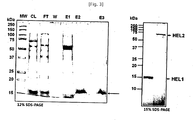
- the molecular weight of each protein was approximately 15 ⁇ 20 kDa and 50 ⁇ 75 kDa (see Figure 3 ).
- Microflex Maldi-TOF MS (Bruker Daltonik GmbH. Bremen, Germany) was performed.
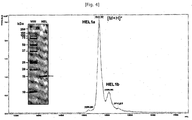
- the molecular weight of each lectin was precisely 15327.587 Da or 15536.953 Da and 73253.12 Da (see Figure 4 ).
- HEL1 lectin The oligomerized size and pi of HEL1 lectin protein were analyzed under non-denaturing condition. As a result, HEL1 lectin was confirmed as a protein in the structure of 32 ⁇ 5 kDa dimer or tetramer with pi 4.2-4.5 (see Figure 5 ). Erythrocyte agglutination was investigated with HEL1 lectin. Test was equally performed with the positive control SNA-1 lectin. As a result, all the erythrocyte samples were aggregated by HEL1. In particular, the agglutination by HEL1 lectin was more active in porcine erythrocytes than in rabbit or human erythrocytes (see Figure 6 ).
- lectin blotting was performed using the fetuin containing sialic acid moieties and the sialic acid-free asialofetuin as the substrates.
- lectin blot signal was observed in the fetuin containing such N-linked glycan structure as Neu5Ac ⁇ (2,3) Gal ⁇ (1,4)GlcNAc and such O-linked glycan structure as Neu5Ac a(2,3)Gal ⁇ (1,3)[GaINA,NeuSAc ⁇ (2,3)Gal ⁇ (1,4)Gal ⁇ (1,6)].
- the present invention provides a method for producing a lectin, which binds specifically to sialoglycoconjugates, from a fruiting body of a novel Hericium erinaceum (deposit number: KCTC 12499BP) NEU-1 L strain; and a lectin produced thereby.
- the lectin of the present invention can be useful as an active ingredient of a composition or a kit for measuring or detecting glycoproteins, glycopeptides, glycolipids, sugar precursors or oligosaccharides harboring sialic acid moieties, or a composition or a kit for measuring or detecting cell lines, bacteria and viruses containing sialoglycoconjugates.
- Example 1 Isolation and identification of a lectin from the fruiting body of a mushroom strain
- spores were obtained from the sporocyst of Hericium erinaceum purchased from Dolsan mushroom farming association by using a platinum loop.
- the obtained spores were distributed on solid media such as PDA, YDP, and amino acid minimal medium, followed by static culture at 22°C.
- solid media such as PDA, YDP, and amino acid minimal medium, followed by static culture at 22°C.
- the hyphae produced from a single cell were isolated for pure culture, which were inoculated again on the same medium as the above, followed by static culture at 22°C. Then, the pure culture of the mushroom was confirmed by observing the morphology.
- Example ⁇ 1-1> molecular-biologically, 26S rDNA and 5.8S rDNA sequencing was performed.
- Example ⁇ 1-1> was inoculated in each liquid medium of 10 mL PDA, 10 mL YDP, and 10 mL amino acid minimal medium in a 125 ml flask, followed by static culture at 22°C. After culturing the strain for at least 15 days, the cells were harvested, followed by centrifugation. The liquid medium was discarded. The harvested cells were frozen under liquid nitrogen and then lysed physically. The lysed cells were added with cell lysis buffer containing 50 mU/mL Lypticase, 50 mM Tris-HCl (pH 8.0), and 250 mM NaCl, followed by reaction at 37°C for at least 1 hour.
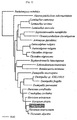
- the nucleotide sequence of 26S rDNA of the strain was identified as the sequence represented by SEQ. ID. NO: 1 as shown in Table 1 below (Table 1). Then, the evolutionary relationship of the 26S rDNA sequence represented by SEQ. ID. NO: 1 with similar species was analyzed. As a result, a phylogenetic tree analysis shows the strain of the invention is clusted with 5.8S and 18S ribosomal RNA coding DNA sequences of other Hericium species such as Hericium erinaceum, Hericium coralloides, Hericium abietis, Hericium americanum, and Hericium alpestre.
- Hericium species such as Hericium erinaceum, Hericium coralloides, Hericium abietis, Hericium americanum, and Hericium alpestre.
- the strain of the invention is a different mushroom specie with 98% sequence identity among Hericium species cluster family( Figure 1 ). Therefore, the strain obtained above was named 'Hericium erinaceum NEU-1 L', which was deposited at Korean Collection for Type Cultures (KCTC), Korea Research Institute of Bioscience and Biotechnology (KRIBB), on October 4, 2013 (KCTC 12499BP).
- KCTC Korean Collection for Type Cultures
- KRIBB Korean Research Institute of Bioscience and Biotechnology
- KCTC 12499BP Korean Collection for Type Cultures
- DNA polymerase chain reaction was performed with 30 cycles of 94°C for 45 seconds; 55°C for 30 seconds; and 72°C for 1 minute and 30 seconds by using ITS1 primer (SEQ. ID. NO: 5) and ITS4 primer (SEQ. ID.
- SEQ. ID. NO: 6 5'-TCCTCCGCTTATTGATATGC-3').
- 644 bp gene was amplified.
- the amplified gene was cloned in pGEM-T easy vector, followed by sequencing.
- SEQ. ID. NO: 4 [Table 1] SEQ. ID. NO Sequence 26S rDNA sequence (SEQ. ID. NO: 1) NL1 primer (SEQ. ID. NO: 2) 5'-GCATATCAATAAGCGGAGGAAAAG-3' LR6 primer (SEQ. ID.
- Example 2 Isolation and purification of a sialoglycoconiugate-binding lectin from Hericium erinaceum
- the Hericium erinaceum fruiting body stored as frozen at-80°C was placed in a mortar, followed by grinding the fruiting body with adding liquid nitrogen in order for the fruiting body not to be thawed.
- the fruiting body was prepared as frozen fine powder through a series of grinding process in the mortar.
- the prepared fruiting body frozen powder was harvested and stored at -80°C again until it would be used for the experiment.
- protease inhibitor cocktail (Roche, Switzerland) was added thereto at the volume of three times the weight of the fruiting body together with 20 mM Tris-HCl buffer (pH 8.0) containing 1 mM PMSF at the volume of three times the volume of the fruiting body.
- the mushroom fruiting body extract was well mixed at 4°C for at least 6 hours.
- the extract was centrifugated by using SUPRA 22K centrifuge (Hanil Science Inc., Korea) equipped with A500S-6N rotor (Hanil Science Inc., Korea) at 4°C, 7,000 rpm for 30 minutes. Then, the precipitates were discarded and the supernatant was obtained. The obtained supernatant was re-centrifugated at 4°C, 12,000 rpm for 30 minutes. Then, the precipitate was discarded and the supernatant was obtained as the crude protein extract for the lectin purification.
- a column for the lectin purification was prepared with Fetuin-agarose, an agarose resin on which fetuin was immobilized.
- the Hericium erinaceum fruiting body cell extract prepared by the method of Example ⁇ 1-1> was applied into the Fetuin-agarose resin (Sigma-Aldrich, USA) packed column (1.0 x 10cm) equilibrated with 20 mM Tris-HCl buffer (pH 8.0) by using Pump P-1 peristatic pump (GE Healthcare, USA) at the flow rate of 1 mL/min. The column was washed with the same buffer of 10 times column.
- proteins bound to fetuin column was eluted with a step gradient at 20 mM via 40 mM upto 200 mM galactose. At that time, the elution flow rate was 1 ml/min.
- the eluted protein was concentrated by using Amicon ® Ultra Centrifugal filter 10K.
- Example ⁇ 2-2> The following experiment was performed to provide the optimized purification procedure for HEL1 and HEL2 lectin proteins identified in Example ⁇ 2-2> by using the extract prepared by the method of Example ⁇ 2-1>.
- the same buffer was added to the precipitated fruiting body at the volume of 1.5 times the weight of the fruiting body.
- the supernatant was obtained from the mixture by the same manner as described above. Each supernatant obtained above was mixed together to prepare the mushroom extract. Ammonium sulfate (saturation concentration 80%) was added thereto, which was stirred slowly at 4°C to precipitate protein. The mixture was centrifuged at 4°C, 25,000 x g, for 60 minutes to obtain the precipitate protein.
- the obtained protein was dissolved in 50 mM Tris-HCl (pH 7.4) buffer (1/10 v/v), followed by dialysis in the same buffer or passing through PD-10 deslating column (GE Healthcare) in order to eliminate ammonium sulfate from the crude extract.
- the crude extract was applied into DEAD-Sepharose column (1.5 x 17 cm), followed by column equilibration with 50 mM Tris-HCl (pH 7.4) buffer 5 times column volume.
- 50 mM Tris-HCl (pH 7.4) buffer containing 0 ⁇ 0.5 M NaCl was applied in a step gradient or a linear gradient by using AKTA purification system (GE Healthcare) to elute the lectin protein from the column.
- the fraction containing lectin activity was analyzed by agglutination assay with 0.5% (v/v) porcine erythrocytes. The fractions were collected, pooled together and then concentrated by using Amicon ® Ultra Centrifugal filter 10K.
- the concentrated protein pool was loaded in the Fetuin-agarose resin (Sigma-Aldrich, USA) column (1.5 x 17cm) equilibrated with 50 mM Tris-HCl (pH 7.4) buffer by the same manner as described in Example ⁇ 2-2>.
- the column was washed with the same buffer of 10 times column volume. After washing, fetuin-bound proteins were eluted by using the same buffer containing 0.2 ⁇ 0.5 M D-galactose. The eluted protein fractions were concentrated.
- the concentrated protein solution showing agglutination activity was loaded in Superose 12 10/300 GL (GE Healthcare) chromatography column equilibrated with 50 mM Tris-HCl buffer (pH 7.4). The protein was eluted by using AKTA purification system at the flow rate of 0.5 mL/min. Finally, the fractions confirmed positive to the porcine erythrocyte agglutination assay were pooled together and then concentrated.
- the lectin protein fractions obtained from each step were separated by 12% or 15% SDS-PAGE by the same manner as described in Example ⁇ 2-3>.
- the pure HEL1 and HEL2 lectin proteins were purified through ion exchange chromatography DEAE-Sepharose column, affinity chromatography fetuin column, and size exclusion chromatography Superose 12 10/300 GL column.
- the molecular weights of HEL1 and HEL2 were approximately 15 ⁇ 20 kDa and 50 ⁇ 75 kDa, respectively ( Figure 3 ).
- Example 3 Determination of N-terminal amino acid sequences of the lectin protein purified from the Hericium erinaceum fruiting body
- the lectin protein prepared by the method of Example ⁇ 2-4> was separated by using 16% Tricin-PAGE.
- the protein on Tricin-PAGE was transferred onto PVDF membrane by using Trans-Blot SD Semi-Dry Transfer Cell (Bio-Rad, USA) at 15 V for 1 hour.
- the protein transferred onto PVDF membrane from Tricin-PAGE was stained with 0.1% (w/v) Ponceau S. The stained protein was cut off from the membrane, which N-terminal sequence of the lectin protein was analyzed at eMass Co.(Seoul, Korea).
- HEL1 protein with the molecular weight of 15 ⁇ 20 kDa was identified the two amino acid sequences as HEL1a and HEL1b: HEL1a displaying a strong signal was identified as the N-terminal sequence represented by SEQ. ID. NO: 7 (NH2-KEPTVWGRPES-CO 2 - ). However HEL1b displaying a rather weak signal was identified as the N-terminal sequence represented by SEQ. ID. NO: 8 (NH2-WPVAPDYPPES-CO 2 - ).
- the protein in the molecular weight of 50 ⁇ 75 kDa was confirmed to have the N-terminal sequence represented by SEQ. ID. NO: 9 (NH2-GGHSVPLTNFMNAQYFTEISLGSPPQQFKV-CO 2 - ).
- Example 4 Analysis of the molecular weight of the lectin proteins by using mass spectrometer
- Example ⁇ 2-4> Microflex Maldi-TOF MS analysis (Bruker Daltonik GmbH. Bremen, Germany) was performed.
- the lectin protein purified by the method of Example ⁇ 2-4> was applied into PD-10 column (GE Healthcare, USA), followed by elution using distilled water to eliminate salts from the protein solution. And then concentrated upto ⁇ 1 mg/ml proteiin. Then, sinapinic acid was dissolved to be saturated in the solution containing both 25% acetonitrile and 0.1% trifluoroacetic acid with the ratio of 1:2. The sinapinic acid matrix solution was mixed with the concentrated protein at the ratio of 1:1 (v/v), followed by crystallization on MALDI-TOF MS target. The crystallized protein proceeded to Microflex Maldi-TOF MS (Bruker Daltonik GmbH. Bremen, Germany). The molecular weights of the purified lectins were analyzed.
- the molecular weight of HEL1a lectin displaying as strong signal intensity as 5 times the signal of HEL1b was 15327.587 Da.
- the molecular weight of HEL1b lectin displaying a weak signal intensity was 15536.953 Da ( Figure 4 ).
- the molecular weight of HEL2 lectin was confirmed to be 73253.12 Da.
- Example 5 Analysis of the molecular weight and the pl of HEL1 lectin protein under non-denaturing condition
- HEL1 lectin protein prepared by the method of Example ⁇ 2-4> under non-denaturing condition was analyzed by using AKTA purification system equipped with Superose 12 10/300 GL column.
- AKTA purification system equipped with Superose 12 10/300 GL column.
- standard proteins of molecular weight calibration kit GE Healthcare
- 440 kDa ferrtin, 158 kDa aldose, 44 kDa ovalbumin, 29 kDa carbonic anhydrase, 13.7 kDa ribonuclease A, and 6.5 kDa aprotinin were used.
- the fractions containing HEL1 lectin protein eluted from Superose 12 10/300 GL column were detected by porcine erythrocyte agglutination assay.
- the resultant chromatogram was interpreted with those of the standard proteins to measure the comparative molecular weight of the native HEL1.
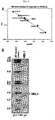
- HEL1 lectin was confirmed in the form of 32 ⁇ 5 kDa dimer or tetramer in non-denaturing condition ( Figure 5A ).
- HEL1 lectin protein separated by the same manner as described in Example ⁇ 2-4> was investigated by Iso-ElectroFocusing (IEF) electrophoresis.
- IEF-PAG gel analysis was performed using pi 3 ⁇ 7 IEF-gel system (KOMABIOTECH) in cathode and anode buffers at 100 V for 1 hour, at 200 V for 1 hour, and at 500 V for 30 minutes, and the result was compared with pi of the standard protein.
- HEL1 lectin was confirmed as the protein of pi 4.2-4.5 ( Figure 5B ).
- HEL1 lectin prepared by the method of Example ⁇ 2-4> towards various erythrocyte derived from porcine blood, rabbit blood, and human blood (B-type) were diluted in 10% (v/v) PBS (phosphate buffer saline), followed by centrifugation at 4°C, 1000 rpm for 5 minutes. As a result, erythrocytes were precipitated. The supernatant was eliminated. The procedure above was repeated three times. The final precipitate was diluted in PBS, resulting in the preparation of 2% (v/v) erythrocyte solution. Agglutination assay was performed using V-shaped 96-well plate.
- PBS phosphate buffer saline
- Example ⁇ 2-4> 100 uL of the lectin protein (0.1 mg/mL) prepared in Example ⁇ 2-4> was serially diluted at the ratio of 1/2, which was mixed with the equal volume of the 2% erythrocyte solution. The mixture in the 96-well plate stood at room temperature for 1 hour. Lectin mediated agglutination of porcine erythrocytes, rabbit erythrocytes, and human erythrocytes were observed. At that time, as the positive control, SNA-I lectin binding selectively to sialic acid sugar chains was used at the same concentration. As the negative control, lectin-free PBS was used.
- HEL1 lectin induced erythrocyte agglutination in all the test samples as equally as the positive control SNA-1 lectin did.
- the agglutination in porcine erythrocytes by HEL1 was stronger than in rabbit erythrocyte and in human erythrocyte ( Figure 6 ).
- Example 7 Detection of glycoprotein containing sialic acid sugar chain by lectin blotting
- lectin blotting was performed using fetuin containing sialoglycoconjugates and sialic acid-free asialofetuin as substrates.
- each glycoprotein solution respectively containing fetuin and asialofetuin was mixed with 5 x Laemmli buffer, followed by heating for 10 minutes. Electrophoresis was performed using 8% SDS-PAGE gel for the protein separation. The proteins separated on SDS-PAGE gel were transferred onto nitrocellulose membrane at 15 V for 1 hour by using Trans-Blot SD Semi-Dry Transfer Cell (Bio-Rad, USA), followed by blocking with phosphate buffered saline (PBS) comprising 3% bovine serum albumin (BSA), phosphate buffered saline containing tween 20 (PBST), and 0.5% tween for 1 hour.
- PBS phosphate buffered saline
- BSA bovine serum albumin
- PBST phosphate buffered saline containing tween 20
- the membrane was loaded in 3% BSA-PBS containing 1 mg/mL of biotin-conjugated lectin, followed by culture at room temperature for 4 hours.
- the biotinylation conjugation of the lectin was performed by using Antibody Biotinylation Kit (Genomine, KOREA).
- the membrane was washed with PBST 6 times for 10 minutes, which was then reacted with 0.2 mg/mL of horseradish peroxidase (HRP) conjugated anti-biotin antibody (1:500, Sigma-Aldrich) for 1 hour.
- HRP horseradish peroxidase
- the membrane was washed again with PBST 6 times for 10 minutes by the same manner as described above.
- the sialylated protein was confirmed by using ECL kit (GE Healthcare, USA).
- N-linked glycan structure such as Neu5Ac ⁇ (2,3) Gal ⁇ (1,4)GlcNAc and O-linked glycan structure such as Neu5Ac ⁇ (2,3)Gal ⁇ , Neu5Ac ⁇ (2,3)Gal ⁇ (1,3) GalNA, Neu5Ac ⁇ (2,6)[Gal ⁇ (1,3)]GalNA, Neu5Ac ⁇ (2,3)Gal ⁇ (1,3) [Neu5Ac ⁇ (2,6)]GalNAc], Neu5Ac ⁇ (2,3)Gal ⁇ (1,3) [Neu5Ac ⁇ (2,3)Gal ⁇ (1,4)GlcNAc ⁇ (1,6)]GalNAc.
- N-linked glycan structure such as Neu5Ac ⁇ (2,3) Gal ⁇ (1,4)GlcNAc and O-linked glycan structure
- Neu5Ac ⁇ (2,3)Gal ⁇ Neu5Ac ⁇ (2,3)Gal ⁇ , Neu5Ac ⁇ (2,3)Gal ⁇ (1,4)GlcNAc
- the lectin blot signal was not observed in the asialofetuin proteins containing non-sialylated N-linked glycan such as Gal ⁇ (1,4)GlcNAc and O-linked glycan such as Gal ⁇ , Gal ⁇ (1,3) GalNA, Gal ⁇ (1,3)GalNA, Gal ⁇ (1,3) [Gal ⁇ (1,4)GlcNAc ⁇ (1,6)]GalNAc ( Figure 7 ).
- non-sialylated N-linked glycan such as Gal ⁇ (1,4)GlcNAc
- O-linked glycan such as Gal ⁇ , Gal ⁇ (1,3) GalNA, Gal ⁇ (1,3)GalNA, Gal ⁇ (1,3) [Gal ⁇ (1,4)GlcNAc ⁇ (1,6)]GalNAc ( Figure 7 ).
- HEL1 was also applied to be monitoring a live animal cell line containing sialoglycoconjugates on its cell surface.
- the surface of A549 cell line (ATCC CCL-185TM, Rockville MD, USA) was observed by using a fluorescence-labeled lectin.
- A549 cell line was cultured in serum-free medium and then harvested by centrifugation.
- the lectin prepared by the method of Example ⁇ 2-4> was labeled with a fluorescent material by using Alexa Fluor ® 488 Protein Labeling Kit (Invitrogen, USA) according to the conventional method well-known to those in the art.
- the harvested cells were washed with PBS containing 1 mg/mL BSA, followed by centrifugation.
- the obtained cells were suspended in a small amount of PBS containing BSA (PBSB), and the lectin conjugated with Alexa Fluor ® 488 was added thereto at the final concentration of 0.5 nM ⁇ 1.0 nM.
- the cells were reacted with the fluorescence-labelled lectin on ice for 1 hour. After the one-hour incubation, the cells were centrifuged, washed with PBSB at least three times and then suspended in the same buffer at the final density of 1 ⁇ 5 x 10 6 cells/mL. The fluorescence image of the cells was observed under Zeiss LSM510 Confocal Laser Scanning Microscope (Carl Zeiss Germany).
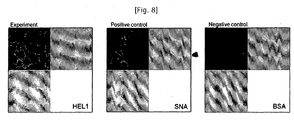
- the fluorescence-labeled lectin can show clearly A549 cell line like that of SNA lectin used in a positive control ( Figure 8 ).
- the fluorescence cell image represented HEL1 was usedful to detect sialoglycoconjugates on the cell surface, comparable to other lectins such as SNA and MAA.
Landscapes
- Life Sciences & Earth Sciences (AREA)
- Health & Medical Sciences (AREA)
- Chemical & Material Sciences (AREA)
- Engineering & Computer Science (AREA)
- Molecular Biology (AREA)
- Organic Chemistry (AREA)
- Biochemistry (AREA)
- Medicinal Chemistry (AREA)
- General Health & Medical Sciences (AREA)
- Genetics & Genomics (AREA)
- Biophysics (AREA)
- Proteomics, Peptides & Aminoacids (AREA)
- Biomedical Technology (AREA)
- Mycology (AREA)
- Gastroenterology & Hepatology (AREA)
- Physics & Mathematics (AREA)
- Urology & Nephrology (AREA)
- Immunology (AREA)
- Hematology (AREA)
- Bioinformatics & Cheminformatics (AREA)
- Biotechnology (AREA)
- Microbiology (AREA)
- Cell Biology (AREA)
- Bioinformatics & Computational Biology (AREA)
- Food Science & Technology (AREA)
- Analytical Chemistry (AREA)
- General Physics & Mathematics (AREA)
- Pathology (AREA)
- Wood Science & Technology (AREA)
- Botany (AREA)
- Zoology (AREA)
- Spectroscopy & Molecular Physics (AREA)
- Virology (AREA)
- Tropical Medicine & Parasitology (AREA)
- General Engineering & Computer Science (AREA)
- Materials Engineering (AREA)
- Chemical Kinetics & Catalysis (AREA)
- Polymers & Plastics (AREA)
- Peptides Or Proteins (AREA)
- Preparation Of Compounds By Using Micro-Organisms (AREA)
Abstract
Description
- The present invention relates to a novel Hericium erinaceum NEU-1 L strain (deposit number: KCTC 12499BP), a lectin binding specifically to sialic acid which is produced thereby, and a use of the same.
- Lectin is one of the proteins that can bind to glycoconjugates, which is endogenous in a variety of organisms from microorganisms to higher animals. It is known that lectin is involved in various life phenomena including protein quality control, host-pathogen interaction, cell-cell communication, inflammation, immune response, cancer progression, and development by binding specifically to glycoconjugates (Lam and Ng, 2011. Appl. Microbiol. Biotechnol. 89, 45).
- Lectins are multivalent carbohydrate binding proteins that display neither catalytic activity nor antibody like characteristics. Lectin was first isolated from Ricinus communis by the Russian scientist Sillmark in the late 19th century. Since then, 40 kinds of lectins including Concanavlain A (ConA) have been identified, studied, and used in various fields. According to the recent advancement of molecular biology and biochemistry, lectins are classified into many groups according to their nucleotide sequences and protein structures. According to origin, lectins are also classified into plant lectin (plant lectin families) and animal lectin (invertebrate/vertebrate lectin families). Vertebrate lectins are divided into such groups as C-type (mannose-binding lectin, MBL), S-type (galectin: β-galactoside-binding lectin), P-type (mannose-6-phosphate bind lectin), and I-type (selectin) according to their characteristics, and belongs to Pentraxin group represented by cyclic pentameric structure according to their protein structure. In spite of such an abundance of lectin, invertebrate/vertebrate lectin families functioning somehow in physiological metabolism in cells have been rarely reported, compared to plant lectins. Therefore, plant lectins extracted from the natural system have been widely applied to diagnose blood type and application thereof by using their glycan binding specificities (Lehmann et al., 2006, Cell. Mol. Life Sci. 63, 1331).
- Plant lectins are identified in almost every part of a plant including leaves, stems, roots, flowers, and pollens, and even in seeds and bulbs which can be harvested. Therefore, plant lectins have been easily purified from plants. In plants, lectins are involved in a variety of activities and functions such as immune function, self-defense from harmful insects, self-defense from animals by causing allergic reaction, anti-fungal activity, antiviral activity, colonization in a specific region of symbiotic microorganism by cell/cell interaction between plants and microorganisms, delivery and preservation of nutrients and metal ions, protecting plants from coldness, acting as a partner to increase enzyme activity in cells, and trafficking of glycoproteins, etc. These activities and functions are accomplished by glycan specific binding activities of lectins, according to the previous reports (Lehmann et al., 2006, Cell. Mol. Life Sci. 63, 1331; Singh et al., 2010 Crit. Rev. Biotechnol. 30, 99).
- By using such a glycoconjugate specific binding activity of a lectin, a lectin is believed to be effectively used for the early diagnosis of a specific disease by observing the changes of glycoproteins, glycolipids, and oligosaccharides presented on the cell surface, and further studied with animal tests to cope a disease by boosting in vivo immune system by the agglutination with glycoconjugates of the cell surface of the key cells to cause a disease or of the cell surface of viruses and microorganisms. Along with the recent development of optical microscope technique and the chemical synthesis method of various fluorescent probes, the glycan specific binding activity of lectin is useful tool for application of glycan biomarker detection for the early diagnosis of cancer cells, the identification of the location of a specific endogenous glycoprotein, the measurement of glycan-mediated cell/cell interaction, and scanning of image of intracellular invasion of viruses and microorganisms, owing to its usability in recognizing glycoconjugates on the surface of specific cells, viruses, and microorganisms. The commercialized lectins nowadays are extracted from various sources such as plants, animals, and microorganisms, and they are useful for measuring the basic monomer of sialic acid (Neu5Ac, N-acetaylneuraminic acid), galactose (Gal), N-acetylglucosamine (GlcNAc), N-acetylgalactosamine (GalNAc), fucose (Fuc), mannose (Man), rhamnose (Rha), xylose (Xyl), and glucose (Glc) (Lehmann et al., 2006, Cell. Mol. Life Sci. 63, 1331; Singh et al., 2010 Crit. Rev. Biotechnol. 30, 99; Kajiwara et al., 2010, Microbes Environ. 25, 152).
- However, owing to the variety of glycan structures including alpha-linkage and beta-linkage, and monomers composition of glycans, hundreds of or thousands of different glycan structures can be theoretically found in the natural system. Nevertheless, the number of lectins identified so far are limited to detect or to measure these types of glycoconjugates. In particular, the commercialized Maackia amurensis (MAA), Sambucus nigra (SNA), and Limulus polyphemus lectins are known to bind specifically to the specific sialic acid (Neu5Ac). However, limited number of sialic acid-binding lectins are available rather than other sugar binding proteins for Gal and GlcNAc, etc. In addition, these sialic acid binding lectins sometimes do not distinguish α(2,3)-, α(2,6)-, and α(2,8)-sialic acid linkage precisely, due to non-specific binding activities.
- Therefore, the present inventors tried to develop a novel lectin binding specifically to sialoglycoconjugates. As a result, the inventors obtained a novel active lectin protein through purification process from Hericium erinaceum (deposit number: KCTC 12499BP). The present inventors finally completed this invention by confirming that the novel lectin protein can be widely applied to the study to disclose life phenomena mediated by sugar chains and also to the measurement of cells, proteins, and glycoconjugates having sialic acid moieties such as glycoproteins, glycolipids, and oligosaccharides, and to the monitoring of a microorganism containing sialoglycoconjugates.
- It is an object of the present invention to provide a novel Hericium erinaceum NEU-1 L strain (deposit number: KCTC 12499BP).
- It is another object of the present invention to provide a method for producing a lectin, which binds specifically to glycoconjugates, from a fruiting body of a novel Hericium erinaceum NEU-1 L strain (deposit number: KCTC 12499BP); and a lectin produced thereby.
- It is also an object of the present invention to provide a composition or a kit for the measurement or detection of glycoproteins, glycopeptides, glycolipids, sugar precursors, or oligosaccharides having sialic acid moieties, including the lectin of the invention binding specifically to sialic acid.
- It is further an object of the present invention to provide a composition or a kit for the measurement or detection of cell lines, bacteria, or viruses containing sialoglycoconjugates, including the lectin of the invention binding specifically to sialic acid.
- To achieve the above objects, the present invention provides a novel Hericium erinaceum NEU-1 L strain (deposit number: KCTC 12499BP).
- The present invention also provides a method for preparation of a lectin, which binds specifically to sialic acid, from a fruiting body of a novel Hericium erinaceum NEU-1 L strain (deposit number: KCTC 12499BP); and a lectin produced thereby.
- The present invention also provides a composition or a kit for the measurement or detection of glycoproteins, glycopeptides, glycolipids, sugar precursors, or oligosaccharides having sialic acid moieties, including the lectin of the invention binding specifically to sialic acid.
- The present invention also provides a composition or a kit for the measurement or detection of cell lines, bacteria, or viruses having sialic acid sialoglycoconjugates, including the lectin of the invention binding specifically to sialic acid.
- The present invention also provides a use of the kit for the measurement or quantification of glycoproteins, glycopeptides, glycolipids, sugar precursors, or oligosaccharides having sialic acid moieties, including the lectin of the invention.
- The present invention also provides a use of the kit for the monitoring, measurement or quantification of cell lines, bacteria, or viruses having sialic acid sialoglycoconjugates, including the lectin of the invention.
- The present invention provides a method for producing a lectin, which binds specifically to sialoglycoconjugates, from a fruiting body of a novel Hericium erinaceum (deposit number: KCTC 12499BP) NEU-1 L strain; and a lectin produced thereby. The lectin of the present invention can be useful as an active ingredient of a composition or a kit for measuring or detecting glycoproteins, glycopeptides, glycolipids, sugar precursors or oligosaccharides having sialic acid moieties, containing a lectin specifically binding to sialic acid, or a composition or a kit for measuring or detecting cell lines, bacteria and viruses having sialoglycoconjugates, containing a lectin specifically binding to sialic acid moieties.
- The application of the preferred embodiments of the present invention is best understood with reference to the accompanying drawings, wherein:
-
Figure 1 is a diagram illustrating the phylogenetic tree represented as evolutionary relationship between 26S rDNA of the Hericium erinaceum NEU-L1 strain and that of the similar strain. -
Figure 2 is a diagram illustrating the result of SDS-PAGE with the lectin purified from the Hericium erinaceum fruiting body by using fetuin-conjugated agarose column;- CL: cell extract;
- FT: non-bound, flow through fraction;
- MW: standard protein marker;
- Wash W1:
column wash fraction 1; - Wash W2: column wash fraction 2;
- Wash W3:
column wash fraction 3; - Elution 20: fraction eluted at 20 mM galactose;
- Elution 40: fraction eluted at 40 mM galactose; and
- Elution 200: fraction eluted at 200 mM galactose.
-
Figure 3 is a diagram illustrating the results of 12% SDS-PAGE and 15% SDS-PAGE with the lectin proteins purified from the Hericium erinaceum fruiting body in each phase (left) and HEL1 and HEL2 lectin proteins (right), purified from the above by using DEAD-Sepharose column, Fetuin-agarose column, andSuperose 12 column;- MW: standard protein marker;
- CL: cell extract;
- FT: non-bound, flowthrough fraction;
- W: DEAE-Sepharose column wash fraction;
- E1: fraction eluted from DEAE-Sepharose column;
- E2: fraction eluted from Fetuin-agarose column; and
- E3: fraction eluted from
Superose 12 column.
-
Figure 4 is a diagram illustrating the result of 16% Tricine-PAGE with the purified HEL1 lectin and the molecular weights of the two lectin proteins HEL1a and HEL1b included in HEL1 lectin which was measured by MALDI-TOF MS;- MW: standard protein marker; and
- HEL: HEL1 lectin protein.
-
Figure 5 is a set of diagrams illustrating the size of the HEL1 protein purified bySuperose 12 column under non-denaturing condition (Figure 5A ) and the pi value of HEL1 lectin inpi 3~7 IEF-gel (Figure 5B );- pi standard protein: standard protein pi marker; and
- HEL1: HEL1 lectin protein.
-
Figure 6 is a diagram illustrating the agglutination activity of HEL1 lectin protein towards human, rabbit, and porcine erythrocytes;- Human(B-type): human erythrocyte (blood type: B);
- Rabbit: rabbit erythrocyte;
- Porcine: porcine erythrocyte;
- Blank, Control negative: negative control;
- Test, HEL1: experimental group, HEL1 lectin; and
- Positive, SNA-1 positive: positive control, SNA-1 lectin.
-
Figure 7 is a diagram illustrating the binding affinity of HEL1 purified from the Hericium erinaceum fruiting body to a sialylated protein fetuin measured by lectin blotting analysis;- Fetuin, sialylated glycoprotein;
- Asialofetuin, non-sialylated glycoprotein.
-
Figure 8 is a diagram illustrating the detection of A549 cell line with the fluorescence-labeled HEL1 by using under confocal microscope;- HEL1: experimental group using Hericium erinaceum HEL1 lectin;
- SNA: positive control using Sambucus nigra (SNA) lectin; and
- BSA: negative control using bovine serum albumin (BSA).
- Hereinafter, the present invention is described in detail.
- The present invention provides a Hericium erinaceum NEU-1 L strain deposited under the deposit number KCTC 12499BP that can produce a lectin binding specifically to sialic acid moieties.
- The said strain is preferably composed of the 26S rDNA nucleotide sequence represented by SEQ. ID. NO: 1 and the ITS1-5.8S-ITS4 rDNA nucleotide sequence represented by SEQ. ID. NO: 4, but not always limited thereto.
- The said lectin protein binding specifically to sialoglycoconjugates is preferably binding to N-linked glycan structures or O-linked glycan structures in a fetuin glycoprotein added with sialic acid, but not always limited thereto.
- In a preferred embodiment of the present invention, the inventors isolated a novel strain from Hericium erinaceum obtained from a mushroom farm in order to investigate the lectin binding specifically to sialic acid sugar chains, and further analyzed 26S rDNA and 5.8S rDNA sequences for the molecular biological identification of the strain. As a result, the inventors confirmed that the 26S rDNA sequence of the strain was same as the sequence represented by SEQ. ID. NO: 1 (see Table 1). Then, the relationship of the 26S rDNA composed of the sequence represented by SEQ. ID. NO: 1 with similar species was investigated. As a result, it was confirmed from the comparison of the strain of the invention with Hericium erinaceum 5.8S ribosomal RNA and Hericium erinaceum 18S ribosomal RNA that the sequence identity was 98% with both (see
Figure 1 ). Therefore, the strain of the invention was named 'Hericium erinaceum NEU-1 L', which was deposited at Korean Collection for Type Cultures (KCTC), Korea Research Institute of Bioscience and Biotechnology (KRIBB), on October 4, 2013 (KCTC 12499BP). - The present invention also provides a method for preparing a lectin, which binds specifically to sialic acid sugar chains, separated from Hericium erinaceum NEU-1 L strain, comprising the following steps:
- (a) obtaining a cell extract from the fruiting body of the Hericium erinaceum NEU-1L strain deposited under the deposit number KCTC 12499BP; and
- (b) purifying a lectin from the cell extract above by using the column filled with the resin conjugated with glycoproteins, glycopeptides, glycolipids, oligosaccharides, or monosaccharides containing sialic acid moieties.
- It is preferred to include an additional step of isolation of a target lectin selectively from the lectin purifying in step (b) above by interrupting the lectin bound to glycan moieties in the glycoconjugate-immobilized or linked resins, but not always limited thereto.
- In a preferred embodiment of the present invention, an extract was prepared in order to isolate a lectin from the Hericium erinaceum fruiting body. To purify the lectin, Fetuin-agarose column chromatography was performed with the extract prepared above. As a result, the lectin protein bound to the sialoglycoprotein fetuin was eluted.
- The present invention also provides a lectin binding specifically to sialic acid moieties prepared by the method of the invention.
- The present invention also provides a lectin binding specifically to sialic acid moieties and having the molecular weight of 15 kDa ~ 20 kDa, which is produced from the Hericium erinaceum NEU-1 L strain deposited under the deposit number KCTC 12499BP and includes the protein N-terminal amino acid sequences represented by SEQ. ID. NO: 7, NO: 8, or NO: 9.
- The present invention also provides a lectin binding specifically to sialic acid moieties and having the molecular weight of 50 kDa ∼ 75 kDa, which is produced from the Hericium erinaceum NEU-1 L strain deposited under the deposit number KCTC 12499BP and includes the protein N-terminal amino acid sequences represented by SEQ. ID. NO: 9.
- The present invention also provides a lectin characteristically binding to the glycan structure selected from the group composed of the followings;
sialylated glycan wherein NeuAc or NeuGc(α2→3) is added to Gal or Glc residue;
sialylated glycan wherein NeuAc or NeuGc(α2→6) is added to Gal or Glc residue;
sialylated glycan wherein NeuAc or NeuGc(α2→3) is added to Gal(β1→4)Glc or Glc(β1→4)Glc residue;
sialylated glycan wherein NeuAc or NeuGc(α2→6) is added to Gal(β1→4)Glc or Glc(β1→4)Glc residue;
sialylated glycan wherein NeuAc or NeuGc(α2→3) is added to Gal(β1→4)GlcNAc or Gal(β1→3)GlcNAc residue;
sialylated glycan wherein NeuAc or NeuGc(α2→6) is added to Gal(β1→4)GlcNAc or Gal(β1→3)GlcNAc residue;
sialylated glycan wherein NeuAc or NeuGc(α2→3) is added to Gal(β1→3)[αFuc(1→4)]GlcNAc residue;
sialylated glycan wherein NeuAc or NeuGc(α2→6) is added to Gal(β1→3)[αFuc(1→4)]GlcNAc residue;
sialylated glycan wherein NeuAc or NeuGc(α2→3) is added to Gal(β1→4)[αFuc(1→3)]GlcNAc residue;
sialylated glycan wherein NeuAc or NeuGc(α2→6) is added to Gal(β1→4)[αFuc(1→3)]GlcNAc residue;
sialylated glycan wherein NeuAc or NeuGc(α2→8) is added to NeuAc residue;
sialylated glycan wherein NeuAc or NeuGc(α2→8) is added to NeuAc(α2→3) Gal(β1→4)GlcNAc residue;
sialylated glycan wherein NeuAc or NeuGc(α2→8) is added to NeuAc(α2→8)NeuAc(α2→3) Gal(β1→4)GlcNAc residue;
sialylated glycan wherein NeuAc or NeuGc(α2→8) is added to NeuAc(α2→8) [NeuAc(α2→8)]nNeuAc(α2→3) Gal(β1→4)GlcNAc residue; and
sialylated glycan wherein NeuAc or NeuGc(α2→8) is added to [NeuAc]n residue. - The present invention also provides a kit containing the lectin of the invention for the measurement or quantification of glycoconjugates such as glycoproteins, glycopeptides, glycolipids, sugar precursors, or oligosaccharides having sialic acid moieties.
- The present invention also provides a kit containing the lectin of the invention for the monitoring, measurement, or quantification of cell lines, bacteria, or viruses having sialoglycoconjugates on their surface thereof.
- The present invention also provides a method for the measurement or quantification of the sialoglycocconjugates such as the glycoproteins, glycopeptides, glycolipids, sugar precursors, or oligosaccharides having sialic acid sugar chains, which comprises the following steps:
- a) contacting a test sample to the lectin of the invention; and
- b) analyzing the glycoproteins, glycopeptides, glycolipids, sugar precursors, or oligosaccharides binding to the lectin above.
- The present invention also provides a method for the measurement or quantification of the cell lines, bacteria, or viruses having sialic acid sugar chains, which comprises the following steps:
- a) contacting a test sample to the lectin of the invention; and
- b) analyzing the cell lines, bacteria, or viruses binding to the lectin above.
- In a preferred embodiment of the present invention, the eluted protein was concentrated by using Amicon®Ultra Centrifugal filter 10K. The purified proteins' molecular weight and their purity were checked by SDS-PAGE, followed by Coommassie Brilliant Blue staining. As a result, the lectins bound to the sialoglycoconjutes were purified by using fetuin agarose column. The purified lectins were identified as HEL1 and HEL2 and the molecular weights of these two kinds of proteins were approximately 15 ∼ 20 kDa and 50 ∼ 75 kDa (see
Figure 2 ). The purication procedure optimization was completed with these two lectin proteins, HEL1 and HEL2. As a result, the pure HEL1 and HEL2 lectin proteins can be purified by using the ion exchange chromatography DEAE-Sepharose column, the affinity chromatography fetuin column, and the sizeexclusion chromatography Superose 12 10/300 GL column. The molecular weight of each protein was approximately 15 ∼ 20 kDa and 50 ∼ 75 kDa (seeFigure 3 ). To measure the precise molecular weight of each protein separated above, Microflex Maldi-TOF MS (Bruker Daltonik GmbH. Bremen, Germany) was performed. As a result, the molecular weight of each lectin was precisely 15327.587 Da or 15536.953 Da and 73253.12 Da (seeFigure 4 ). The oligomerized size and pi of HEL1 lectin protein were analyzed under non-denaturing condition. As a result, HEL1 lectin was confirmed as a protein in the structure of 32 ± 5 kDa dimer or tetramer with pi 4.2-4.5 (seeFigure 5 ). Erythrocyte agglutination was investigated with HEL1 lectin. Test was equally performed with the positive control SNA-1 lectin. As a result, all the erythrocyte samples were aggregated by HEL1. In particular, the agglutination by HEL1 lectin was more active in porcine erythrocytes than in rabbit or human erythrocytes (seeFigure 6 ). To investigate the binding activity of the lectin, lectin blotting was performed using the fetuin containing sialic acid moieties and the sialic acid-free asialofetuin as the substrates. As a result, lectin blot signal was observed in the fetuin containing such N-linked glycan structure as Neu5Ac α(2,3) Galβ(1,4)GlcNAc and such O-linked glycan structure as Neu5Ac a(2,3)Galβ(1,3)[GaINA,NeuSAcα(2,3)Galβ(1,4)Galβ(1,6)]. However, lectin blot signal was not observed in the negative control protein asialofetuin containing N-linked glycan structure as Galβ(1,4)GlcNAc and O-linked glycan as Neu5Ac α(2,3)Galβ, Neu5Ac α(2,3)Galβ(1,3) GalNA, Neu5Ac α(2,6)[Galβ(1,3)]GalNA, Neu5Acα(2,3)Galβ(1,3) [Neu5Ac α(2,6)]GalNAc], Neu5Acα(2,3)Galβ(1,3) [Neu5Ac α(2,3)Galβ(1,4)GlcNAcβ(1,6)]GalNAc (seeFigure 7 ). In addition, the surface of A549 cell line containing the sialoglycoconjugates identified on animal cell surface was observed by using a fluorescence-labeled lectin. As a result, the fluorescence-labeled lectin can be recognizable for detection of the surface of the cell line, confirming the existence of its sialoglycoconugates (seeFigure 8 ). - The present invention provides a method for producing a lectin, which binds specifically to sialoglycoconjugates, from a fruiting body of a novel Hericium erinaceum (deposit number: KCTC 12499BP) NEU-1 L strain; and a lectin produced thereby. The lectin of the present invention can be useful as an active ingredient of a composition or a kit for measuring or detecting glycoproteins, glycopeptides, glycolipids, sugar precursors or oligosaccharides harboring sialic acid moieties, or a composition or a kit for measuring or detecting cell lines, bacteria and viruses containing sialoglycoconjugates.
- Practical and presently preferred embodiments of the present invention are illustrative as shown in the following Examples.
- However, it will be appreciated that those skilled in the art, on consideration of this disclosure, may make modifications and improvements within the spirit and scope of the present invention.
- The following experiment was performed to isolate a novel strain from Hericium erinaceum purchased from Dolsan mushroom farming association (Jeollanam-do Yeosu-si Dolsan-eup Geumbong-ri 1156).
- Particularly, spores were obtained from the sporocyst of Hericium erinaceum purchased from Dolsan mushroom farming association by using a platinum loop. The obtained spores were distributed on solid media such as PDA, YDP, and amino acid minimal medium, followed by static culture at 22°C. After culturing at least 10 days, the hyphae produced from a single cell were isolated for pure culture, which were inoculated again on the same medium as the above, followed by static culture at 22°C. Then, the pure culture of the mushroom was confirmed by observing the morphology.
- To identify the strain isolated in Example <1-1> molecular-biologically, 26S rDNA and 5.8S rDNA sequencing was performed.
- Particularly, the strain isolated in Example <1-1> was inoculated in each liquid medium of 10 mL PDA, 10 mL YDP, and 10 mL amino acid minimal medium in a 125 ml flask, followed by static culture at 22°C. After culturing the strain for at least 15 days, the cells were harvested, followed by centrifugation. The liquid medium was discarded. The harvested cells were frozen under liquid nitrogen and then lysed physically. The lysed cells were added with cell lysis buffer containing 50 mU/mL Lypticase, 50 mM Tris-HCl (pH 8.0), and 250 mM NaCl, followed by reaction at 37°C for at least 1 hour. Upon completion of the reaction, the whole cell lysates were centrifugated and then intracellular DNA was extracted by using AccuPrep®Genomic DNA Extraction Kit (Bioneer, Daejeon, Korea). To amplify 26S rDNA, DNA polymerase chain reaction was performed with 30 cycles of 94°C for 45 seconds; 55°C for 1 second; and 72°C for 1 minute and 30 seconds by using the extracted DNA above as a template with NL1 primer (SEQ. ID. NO: 2) and LR6 primer (SEQ. ID. NO: 3). As a result, 1,146 bp gene was amplified. The amplified gene was cloned in pGEM-T easy vector (Promega, USA), followed by sequencing. The nucleotide sequence of 26S rDNA of the strain was identified as the sequence represented by SEQ. ID. NO: 1 as shown in Table 1 below (Table 1). Then, the evolutionary relationship of the 26S rDNA sequence represented by SEQ. ID. NO: 1 with similar species was analyzed. As a result, a phylogenetic tree analysis shows the strain of the invention is clusted with 5.8S and 18S ribosomal RNA coding DNA sequences of other Hericium species such as Hericium erinaceum, Hericium coralloides, Hericium abietis, Hericium americanum, and Hericium alpestre. However the strain of the invention is a different mushroom specie with 98% sequence identity among Hericium species cluster family(
Figure 1 ). Therefore, the strain obtained above was named 'Hericium erinaceum NEU-1 L', which was deposited at Korean Collection for Type Cultures (KCTC), Korea Research Institute of Bioscience and Biotechnology (KRIBB), on October 4, 2013 (KCTC 12499BP). To analyze ITS1-5.8S-ITS4 rDNA sequence of the Hericium erinaceum NEU-1 L strain, DNA polymerase chain reaction was performed with 30 cycles of 94°C for 45 seconds; 55°C for 30 seconds; and 72°C for 1 minute and 30 seconds by using ITS1 primer (SEQ. ID. NO: 5) and ITS4 primer (SEQ. ID. NO: 6, 5'-TCCTCCGCTTATTGATATGC-3'). As a result, 644 bp gene was amplified. The amplified gene was cloned in pGEM-T easy vector, followed by sequencing. As a result, it was confirmed that the gene was composed of the sequence represented by SEQ. ID. NO: 4 (Table 1).[Table 1] SEQ. ID. NO Sequence 26S rDNA sequence (SEQ. ID. NO: 1) 

NL1 primer (SEQ. ID. NO: 2) 5'-GCATATCAATAAGCGGAGGAAAAG-3' LR6 primer (SEQ. ID. NO: 3) 5'-CG CCAGTTCTG CTTACC-3' ITS1-5.8S-ITS4 rDNA sequence (SEQ. ID. NO: 4) 
ITS1 primer (SEQ. ID. NO: 5) 5'-TCCGTAGGTGAACCTGCGG-3' ITS4 primer (SEQ. ID. NO: 6) 5'-TCCTCCGCTTATTGATATGC-3' - The following experiment was performed to prepare an extract for the isolation of a lectin from the Hericium erinaceum fruiting body.
- Particularly, the Hericium erinaceum fruiting body stored as frozen at-80°C was placed in a mortar, followed by grinding the fruiting body with adding liquid nitrogen in order for the fruiting body not to be thawed. The fruiting body was prepared as frozen fine powder through a series of grinding process in the mortar. The prepared fruiting body frozen powder was harvested and stored at -80°C again until it would be used for the experiment. After measuring the weight of the fruiting body frozen powder prepared by the method above, protease inhibitor cocktail (Roche, Switzerland) was added thereto at the volume of three times the weight of the fruiting body together with 20 mM Tris-HCl buffer (pH 8.0) containing 1 mM PMSF at the volume of three times the volume of the fruiting body. The mushroom fruiting body extract was well mixed at 4°C for at least 6 hours. To discard the non-grinded fruiting body particles and insoluble proteins, the extract was centrifugated by using SUPRA 22K centrifuge (Hanil Science Inc., Korea) equipped with A500S-6N rotor (Hanil Science Inc., Korea) at 4°C, 7,000 rpm for 30 minutes. Then, the precipitates were discarded and the supernatant was obtained. The obtained supernatant was re-centrifugated at 4°C, 12,000 rpm for 30 minutes. Then, the precipitate was discarded and the supernatant was obtained as the crude protein extract for the lectin purification.
- To purity a lectin by using the extract obtained by the method of Example <2-1>, Fetuin-agarose column chromatography was performed.
- Particularly, in order to purify the lectin binding specifically to sialic acid, a column for the lectin purification was prepared with Fetuin-agarose, an agarose resin on which fetuin was immobilized. The Hericium erinaceum fruiting body cell extract prepared by the method of Example <1-1> was applied into the Fetuin-agarose resin (Sigma-Aldrich, USA) packed column (1.0 x 10cm) equilibrated with 20 mM Tris-HCl buffer (pH 8.0) by using Pump P-1 peristatic pump (GE Healthcare, USA) at the flow rate of 1 mL/min. The column was washed with the same buffer of 10 times column. Then, proteins bound to fetuin column was eluted with a step gradient at 20 mM via 40 mM upto 200 mM galactose. At that time, the elution flow rate was 1 ml/min. The eluted protein was concentrated by using Amicon® Ultra Centrifugal filter 10K.
- To confirm the lectin protein purified from the mushroom fruiting body lysate by the method of Example <2-2>, the following experiment was performed.
- Particularly, the fractions obtained in each steps by the same procedure as described in Example <2-2> was analyzed by SDS-PAGE, followed by staining with Coommassie Brilliant Blue. As a result, as shown in
Figure 2 , two proteins were dominantely eluted from the mushroom lysate by using Fetuin-agarose column: Fetuin-affinity proteins were identified as HEL1 and HEL2 and the size of these two kinds of proteins were approximately 15 ~ 20 kDa for HEL1 and 50 ~ 75 kDa for HEL2(Figure 2 ). - The following experiment was performed to provide the optimized purification procedure for HEL1 and HEL2 lectin proteins identified in Example <2-2> by using the extract prepared by the method of Example <2-1>.
- Particularly, after measuring the weight of the fruiting body frozen powder prepared and stored as described in Example <2-1>, 50 mM Tris-HCl (pH 7.4) was added thereto at the volume of 2.5 times the weight of the fruiting body powder, which was well mixed at 4°C for at least 12 hours. To eliminate the non-grinded fruiting body particles and insoluble proteins from the mixture, centrifugation was performed at 4°C, 20,000 x g, for 30 minutes. Then, the precipitate was eliminated and the supernatant was obtained. To eliminate the remaining unwanted particles completely, centrifugation was performed again at 4°C, 25,000 x g, for 45 minutes. Then, the precipitate was discarded and the supernatant was obtained again. The same buffer was added to the precipitated fruiting body at the volume of 1.5 times the weight of the fruiting body. The supernatant was obtained from the mixture by the same manner as described above. Each supernatant obtained above was mixed together to prepare the mushroom extract. Ammonium sulfate (saturation concentration 80%) was added thereto, which was stirred slowly at 4°C to precipitate protein. The mixture was centrifuged at 4°C, 25,000 x g, for 60 minutes to obtain the precipitate protein. The obtained protein was dissolved in 50 mM Tris-HCl (pH 7.4) buffer (1/10 v/v), followed by dialysis in the same buffer or passing through PD-10 deslating column (GE Healthcare) in order to eliminate ammonium sulfate from the crude extract.
- After desalting, the crude extract was applied into DEAD-Sepharose column (1.5 x 17 cm), followed by column equilibration with 50 mM Tris-HCl (pH 7.4)
buffer 5 times column volume. 50 mM Tris-HCl (pH 7.4) buffer containing 0 ~ 0.5 M NaCl was applied in a step gradient or a linear gradient by using AKTA purification system (GE Healthcare) to elute the lectin protein from the column. The fraction containing lectin activity was analyzed by agglutination assay with 0.5% (v/v) porcine erythrocytes. The fractions were collected, pooled together and then concentrated by using Amicon® Ultra Centrifugal filter 10K. - The concentrated protein pool was loaded in the Fetuin-agarose resin (Sigma-Aldrich, USA) column (1.5 x 17cm) equilibrated with 50 mM Tris-HCl (pH 7.4) buffer by the same manner as described in Example <2-2>. The column was washed with the same buffer of 10 times column volume. After washing, fetuin-bound proteins were eluted by using the same buffer containing 0.2 ~ 0.5 M D-galactose. The eluted protein fractions were concentrated.
- The concentrated protein solution showing agglutination activity was loaded in
Superose 12 10/300 GL (GE Healthcare) chromatography column equilibrated with 50 mM Tris-HCl buffer (pH 7.4). The protein was eluted by using AKTA purification system at the flow rate of 0.5 mL/min. Finally, the fractions confirmed positive to the porcine erythrocyte agglutination assay were pooled together and then concentrated. - The lectin protein fractions obtained from each step were separated by 12% or 15% SDS-PAGE by the same manner as described in Example <2-3>.
- As a result, as shown in
Figure 3 , the pure HEL1 and HEL2 lectin proteins were purified through ion exchange chromatography DEAE-Sepharose column, affinity chromatography fetuin column, and sizeexclusion chromatography Superose 12 10/300 GL column. The molecular weights of HEL1 and HEL2 were approximately 15 ~ 20 kDa and 50 ~ 75 kDa, respectively (Figure 3 ). - To determine the amino acid sequence of the lectin protein binding selectively to sialic acid isolated from the Hericium erinaceum fruiting body by the method of Example <2-4>, the N-terminal amino acid sequences was analyzed as follows.
- Particularly, the lectin protein prepared by the method of Example <2-4> was separated by using 16% Tricin-PAGE. The protein on Tricin-PAGE was transferred onto PVDF membrane by using Trans-Blot SD Semi-Dry Transfer Cell (Bio-Rad, USA) at 15 V for 1 hour. The protein transferred onto PVDF membrane from Tricin-PAGE was stained with 0.1% (w/v) Ponceau S. The stained protein was cut off from the membrane, which N-terminal sequence of the lectin protein was analyzed at eMass Co.(Seoul, Korea).
- As a result, the HEL1 protein with the molecular weight of 15 ~ 20 kDa was identified the two amino acid sequences as HEL1a and HEL1b: HEL1a displaying a strong signal was identified as the N-terminal sequence represented by SEQ. ID. NO: 7 (NH2-KEPTVWGRPES-CO2 -). However HEL1b displaying a rather weak signal was identified as the N-terminal sequence represented by SEQ. ID. NO: 8 (NH2-WPVAPDYPPES-CO2 -). In addition, the protein in the molecular weight of 50 ~ 75 kDa was confirmed to have the N-terminal sequence represented by SEQ. ID. NO: 9 (NH2-GGHSVPLTNFMNAQYFTEISLGSPPQQFKV-CO2 -).
- To determine the precise molecular weight of the protein separated by the method of Example <2-4>, Microflex Maldi-TOF MS analysis (Bruker Daltonik GmbH. Bremen, Germany) was performed.
- Particularly, the lectin protein purified by the method of Example <2-4> was applied into PD-10 column (GE Healthcare, USA), followed by elution using distilled water to eliminate salts from the protein solution. And then concentrated upto ≥1 mg/ml proteiin. Then, sinapinic acid was dissolved to be saturated in the solution containing both 25% acetonitrile and 0.1% trifluoroacetic acid with the ratio of 1:2. The sinapinic acid matrix solution was mixed with the concentrated protein at the ratio of 1:1 (v/v), followed by crystallization on MALDI-TOF MS target. The crystallized protein proceeded to Microflex Maldi-TOF MS (Bruker Daltonik GmbH. Bremen, Germany). The molecular weights of the purified lectins were analyzed.
- As a result, the molecular weight of HEL1a lectin displaying as strong signal intensity as 5 times the signal of HEL1b was 15327.587 Da. However the molecular weight of HEL1b lectin displaying a weak signal intensity was 15536.953 Da (
Figure 4 ). In addition, the molecular weight of HEL2 lectin was confirmed to be 73253.12 Da. - The oligomerization of HEL1 lectin protein prepared by the method of Example <2-4> under non-denaturing condition was analyzed by using AKTA purification system equipped with
Superose 12 10/300 GL column. As the standard proteins of molecular weight calibration kit (GE Healthcare), 440 kDa ferrtin, 158 kDa aldose, 44 kDa ovalbumin, 29 kDa carbonic anhydrase, 13.7 kDa ribonuclease A, and 6.5 kDa aprotinin were used. The fractions containing HEL1 lectin protein eluted fromSuperose 12 10/300 GL column were detected by porcine erythrocyte agglutination assay. The resultant chromatogram was interpreted with those of the standard proteins to measure the comparative molecular weight of the native HEL1. - As a result, as shown in
Figure 5A , HEL1 lectin was confirmed in the form of 32 ± 5 kDa dimer or tetramer in non-denaturing condition (Figure 5A ). - Also, pi of the HEL1 lectin protein separated by the same manner as described in Example <2-4> was investigated by Iso-ElectroFocusing (IEF) electrophoresis. IEF-PAG gel analysis was performed using
pi 3~7 IEF-gel system (KOMABIOTECH) in cathode and anode buffers at 100 V for 1 hour, at 200 V for 1 hour, and at 500 V for 30 minutes, and the result was compared with pi of the standard protein. As shown inFigure 5B , HEL1 lectin was confirmed as the protein of pi 4.2-4.5 (Figure 5B ). - To test of the agglutination activity of HEL1 lectin prepared by the method of Example <2-4> towards various erythrocyte derived from porcine blood, rabbit blood, and human blood (B-type) were diluted in 10% (v/v) PBS (phosphate buffer saline), followed by centrifugation at 4°C, 1000 rpm for 5 minutes. As a result, erythrocytes were precipitated. The supernatant was eliminated. The procedure above was repeated three times. The final precipitate was diluted in PBS, resulting in the preparation of 2% (v/v) erythrocyte solution. Agglutination assay was performed using V-shaped 96-well plate. 100 uL of the lectin protein (0.1 mg/mL) prepared in Example <2-4> was serially diluted at the ratio of 1/2, which was mixed with the equal volume of the 2% erythrocyte solution. The mixture in the 96-well plate stood at room temperature for 1 hour. Lectin mediated agglutination of porcine erythrocytes, rabbit erythrocytes, and human erythrocytes were observed. At that time, as the positive control, SNA-I lectin binding selectively to sialic acid sugar chains was used at the same concentration. As the negative control, lectin-free PBS was used.
- As a result, as shown in
Figure 6 , HEL1 lectin induced erythrocyte agglutination in all the test samples as equally as the positive control SNA-1 lectin did. In particular, the agglutination in porcine erythrocytes by HEL1 was stronger than in rabbit erythrocyte and in human erythrocyte (Figure 6 ). - To determine the glycan binding activity of the lectin separated by the method of Example <2-4>, lectin blotting was performed using fetuin containing sialoglycoconjugates and sialic acid-free asialofetuin as substrates.
- Particularly, each glycoprotein solution respectively containing fetuin and asialofetuin was mixed with 5 x Laemmli buffer, followed by heating for 10 minutes. Electrophoresis was performed using 8% SDS-PAGE gel for the protein separation. The proteins separated on SDS-PAGE gel were transferred onto nitrocellulose membrane at 15 V for 1 hour by using Trans-Blot SD Semi-Dry Transfer Cell (Bio-Rad, USA), followed by blocking with phosphate buffered saline (PBS) comprising 3% bovine serum albumin (BSA), phosphate buffered saline containing tween 20 (PBST), and 0.5% tween for 1 hour. Then, the membrane was loaded in 3% BSA-PBS containing 1 mg/mL of biotin-conjugated lectin, followed by culture at room temperature for 4 hours. The biotinylation conjugation of the lectin was performed by using Antibody Biotinylation Kit (Genomine, KOREA). After the incubation of the biotinylated lectin together with the membrane, the membrane was washed with PBST 6 times for 10 minutes, which was then reacted with 0.2 mg/mL of horseradish peroxidase (HRP) conjugated anti-biotin antibody (1:500, Sigma-Aldrich) for 1 hour. Upon completion of the reaction, the membrane was washed again with PBST 6 times for 10 minutes by the same manner as described above. The sialylated protein was confirmed by using ECL kit (GE Healthcare, USA).
- As a result, as shown in
Figure 7 , lectin blot signal was observed in the fetuin containing N-linked glycan structure such as Neu5Ac α(2,3) Galβ(1,4)GlcNAc and O-linked glycan structure such as Neu5Ac α(2,3)Galβ, Neu5Ac α(2,3)Galβ(1,3) GalNA, Neu5Ac α(2,6)[Galβ(1,3)]GalNA, Neu5Acα(2,3)Galβ(1,3) [Neu5Ac α(2,6)]GalNAc], Neu5Acα(2,3)Galβ(1,3) [Neu5Ac α(2,3)Galβ(1,4)GlcNAcβ(1,6)]GalNAc. However, the lectin blot signal was not observed in the asialofetuin proteins containing non-sialylated N-linked glycan such as Galβ(1,4)GlcNAc and O-linked glycan such as Galβ, Galβ(1,3) GalNA, Galβ(1,3)GalNA, Galβ(1,3) [Galβ(1,4)GlcNAcβ(1,6)]GalNAc (Figure 7 ). - HEL1 was also applied to be monitoring a live animal cell line containing sialoglycoconjugates on its cell surface. The surface of A549 cell line (ATCC CCL-185TM, Rockville MD, USA) was observed by using a fluorescence-labeled lectin.
- Particularly, A549 cell line was cultured in serum-free medium and then harvested by centrifugation. The lectin prepared by the method of Example <2-4> was labeled with a fluorescent material by using Alexa Fluor®488 Protein Labeling Kit (Invitrogen, USA) according to the conventional method well-known to those in the art. The harvested cells were washed with PBS containing 1 mg/mL BSA, followed by centrifugation. The obtained cells were suspended in a small amount of PBS containing BSA (PBSB), and the lectin conjugated with Alexa Fluor®488 was added thereto at the final concentration of 0.5 nM ~ 1.0 nM. The cells were reacted with the fluorescence-labelled lectin on ice for 1 hour. After the one-hour incubation, the cells were centrifuged, washed with PBSB at least three times and then suspended in the same buffer at the final density of 1 ~ 5 x 10⁶ cells/mL. The fluorescence image of the cells was observed under Zeiss LSM510 Confocal Laser Scanning Microscope (Carl Zeiss Germany).
- As a result, as shown in
Figure 8 , the fluorescence-labeled lectin can show clearly A549 cell line like that of SNA lectin used in a positive control (Figure 8 ). The fluorescence cell image represented HEL1 was usedful to detect sialoglycoconjugates on the cell surface, comparable to other lectins such as SNA and MAA. -
- Depositary Authority: Korea Research Institute of Bioscience and Biotechnology
- Deposit Number: KCTC 12499BP
- Deposit Day: 20131004
- Those skilled in the art will appreciate that the conceptions and specific embodiments disclosed in the foregoing description may be readily utilized as a basis for modifying or designing other embodiments for carrying out the same purposes of the present invention. Those skilled in the art will also appreciate that such equivalent embodiments do not depart from the spirit and scope of the invention as set forth in the appended Claims.


Claims (15)
- A Hericium erinaceum NEU-1 L strain deposited under deposit number KCTC 12499BP that can produce a lectin protein binding specifically to sialic acid sugar chains.
- The Hericium erinaceum NEU-1L strain according to claim 1, wherein the strain is composed of the 26S rDNA sequence represented by SEQ. ID. NO: 1 and the ITS1-5.8S-ITS4 rDNA sequence represented by SEQ. ID. NO: 4.
- The Hericium erinaceum NEU-1L strain according to claim 1, wherein the lectin protein binding specifically to sialic acid sugar chains is characterized by the specific binding to N-linked sugar chain structure or O-linked sugar chain structure in the fetuin glycoprotein added with sialic acid.
- A method for preparing a lectin binding specifically to sialic acid sugar chains from Hericium erinaceum NEU-1L strain, comprising the following steps:(a) obtaining a cell extract from the fruiting body of the Hericium erinaceum NEU-1L strain deposited under the deposit number KCTC 12499BP; and(b) separating a lectin from the cell extract above by using the column filled with the resin conjugated with glycoproteins, glycopeptides, glycolipids, oligosaccharides, or monosaccharides containing sialic acid sugar chains.
- The method for preparing a lectin binding specifically to sialic acid sugar chains from Hericium erinaceum NEU-1 L strain according to claim 4, wherein the additional step of eluting the target lectin selectively from the sugar chain conjugated resin by interrupting the binding between the sugar chain and the lectin is additionally included.
- A lectin binding specifically to sialic acid sugar chains prepared by the method of claim 4 or claim 5.
- A lectin binding specifically to sialic acid sugar chains, which is produced from the Hericium erinaceum NEU-1 L strain deposited under the deposit number KCTC 12499BP, contains the protein N-terminal sequence represented by SEQ. ID. NO: 7 or NO: 8, and has the molecular weight of 15 kDa ~ 20 kDa.
- A lectin binding specifically to sialic acid sugar chains, which is produced from the Hericium erinaceum NEU-1 L strain deposited under the deposit number KCTC 12499BP, contains the protein N-terminal sequence represented by SEQ. ID. NO: 9, and has the molecular weight of 50 kDa ~ 75 kDa.
- The lectin according to claim 7 or claim 8, wherein the lectin binds specifically to the sugar chain structure selected from the group consisting of the followings:sialylated sugar chain wherein NeuAc or NeuGc(α2→3) is added to Gal or Glc residue;sialylated sugar chain wherein NeuAc or NeuGc(α2→6) is added to Gal or Glc residue;sialylated sugar chain wherein NeuAc or NeuGc(α2→3) is added to Gal(β1→4)Glc or Glc(β1→4)Glc residue;sialylated sugar chain wherein NeuAc or NeuGc(α2→6) is added to Gal(β1→4)Glc or Glc(β1→4)Glc residue;sialylated sugar chain wherein NeuAc or NeuGc(α2→3) is added to Gal(β1→4)GlcNac or Gal(β1→3)GlcNac residue;sialylated sugar chain wherein NeuAc or NeuGc(α2→6) is added to Gal(β1→4)GlcNac or Gal(β1→3)GlcNac residue;sialylated sugar chain wherein NeuAc or NeuGc(α2→3) is added to Gal(β1→3)[αFuc(1→4)]GlcNac residue;sialylated sugar chain wherein NeuAc or NeuGc(α2→6) is added to Gal(β1→3)[αFuc(1→4)]GlcNac residue;sialylated sugar chain wherein NeuAc or NeuGc(α2→3) is added to Gal(β1→4)[αFuc(1→3)]GlcNac residue;sialylated sugar chain wherein NeuAc or NeuGc(α2→6) is added to Gal(β1→4)[αFuc(1→3)]GlcNac residue;sialylated sugar chain wherein NeuAc or NeuGc(α2→8) is added to NeuAc residue;sialylated sugar chain wherein NeuAc or NeuGc(α2→8) is added to NeuAc(α2→3) Gal(β1→4)GlcNac residue;sialylated sugar chain wherein NeuAc or NeuGc(α2→8) is added to NeuAc(α2→8)NeuAc(α2→3) Gal(β1→4)GlcNac residue;sialylated sugar chain wherein NeuAc or NeuGc(α2→8) is added to NeuAc(α2→8) [NeuAc(α2→8)]nNeuAc(α2→3) Gal(β1→4)GlcNac residue; andsialylated sugar chain wherein NeuAc or NeuGc(α2→8) is added to [NeuAc]n residue.
- A kit for the measurement or quantification of glycoproteins, glycopeptides, glycolipids, sugar precursors, or oligosaccharides having sialic acid sugar chains, including the lectin of claim 7 or claim 8.
- A kit for the monitoring, measurement or quantification of cell lines, bacteria, or viruses having sialic acid sugar chains, including the lectin of claim 7 or claim 8.
- A method for the measurement or quantification of the sialylated conjugate composed of glycoproteins, glycopeptides, glycolipids, sugar precursors, or oligosaccharides having sialic acid sugar chains, which comprises the following steps:a) contacting a test sample to the lectin of claim 7 or claim 8; andb) analyzing the glycoproteins, glycopeptides, glycolipids, sugar precursors, or oligosaccharides binding to the lectin above.
- A method for the measurement or quantification of cell lines, bacteria, or viruses having sialic acid sugar chains, which comprises the following steps:a) contacting a test sample to the lectin of claim 7 or claim 8; andb) analyzing the cell lines, bacteria, or viruses binding to the lectin above.
- A use of the kit for the measurement or quantification of glycoproteins, glycopeptides, glycolipids, sugar precursors, or oligosaccharides having sialic acid sugar chains, including the lectin of claim 7 or claim 8.
- A use of the kit for the monitoring, measurement or quantification of cell lines, bacteria, or viruses having sialic acid sugar chains, including the lectin of claim 7 or claim 8.
Applications Claiming Priority (2)
| Application Number | Priority Date | Filing Date | Title |
|---|---|---|---|
| KR20130140244 | 2013-11-18 | ||
| PCT/KR2014/010974 WO2015072786A1 (en) | 2013-11-18 | 2014-11-14 | Hericium erinaceum-derived lectin specific for sialic acid linkage |
Publications (3)
| Publication Number | Publication Date |
|---|---|
| EP3072954A1 true EP3072954A1 (en) | 2016-09-28 |
| EP3072954A4 EP3072954A4 (en) | 2016-10-19 |
| EP3072954B1 EP3072954B1 (en) | 2017-12-20 |
Family
ID=53392694
Family Applications (1)
| Application Number | Title | Priority Date | Filing Date |
|---|---|---|---|
| EP14862325.9A Not-in-force EP3072954B1 (en) | 2013-11-18 | 2014-11-14 | Hericium erinaceum-derived lectin specific for sialic acid linkage |
Country Status (4)
| Country | Link |
|---|---|
| US (1) | US10150799B2 (en) |
| EP (1) | EP3072954B1 (en) |
| JP (1) | JP6356256B2 (en) |
| KR (1) | KR101695741B1 (en) |
Families Citing this family (4)
| Publication number | Priority date | Publication date | Assignee | Title |
|---|---|---|---|---|
| KR101842226B1 (en) * | 2015-11-25 | 2018-03-26 | 한국생명공학연구원 | Mushroom Hericium erinaceus lectin specifically binding to core 1 O-linked glycan and uses thereof |
| CN108676728B (en) * | 2018-05-24 | 2021-09-14 | 富乐顿生物工程科技(北京)有限公司 | Polysaccharide-producing space coralloid hericium ST21-2 and application thereof in improving biological oxidation resistance |
| CN109439553B (en) * | 2018-12-26 | 2020-08-21 | 华熙生物科技股份有限公司 | Ergothioneine-producing strain and its screening method |
| WO2022157928A1 (en) | 2021-01-22 | 2022-07-28 | 共栄社化学株式会社 | Evoh extraction agent and method for extracting evoh using same, method for recovering evoh, and method for regenerating evoh extraction agent |
Family Cites Families (8)
| Publication number | Priority date | Publication date | Assignee | Title |
|---|---|---|---|---|
| KR100486784B1 (en) * | 2001-05-22 | 2005-04-29 | 김하형 | Lectin protein prepared from Maackia fauriei, process for preparing the same and the use thereof |
| KR20040061963A (en) | 2002-12-31 | 2004-07-07 | 김하형 | Sialic acid-specific lectin protein prepared from paecilomyces japonica, process for preparing the same and the use thereof |
| DE10325752A1 (en) | 2003-06-06 | 2004-12-30 | Faustus Forschungs Cie. Translational Cancer Research Gmbh | Lectin conjugates |
| EP2078755B1 (en) * | 2007-12-18 | 2019-02-20 | Amin Karmali | Process for simultaneous extraction and purification of fine chemicals from spent mushroom compost, mushroom stems and partially degraded mushroom fruiting bodies |
| JP4514163B2 (en) | 2008-07-22 | 2010-07-28 | 株式会社J−オイルミルズ | Fucose α1 → 6 specific lectin |
| JP2010091308A (en) * | 2008-10-04 | 2010-04-22 | Sapporo Medical Univ | Method for diagnosing prostate carcinoma by lectin absorbing method and prostate carcinoma determining kit |
| JP2010256132A (en) * | 2009-04-23 | 2010-11-11 | Okayama Univ | Method for detecting the degree of progression of diabetic nephropathy, diagnostic kit for the degree of progression of diabetic nephropathy, substance serving as an index of the degree of progression of diabetic nephropathy, and method for selecting the same |
| JP5698588B2 (en) * | 2011-04-11 | 2015-04-08 | 株式会社J−オイルミルズ | Lacanka lectin, its production method and use |
-
2014
- 2014-11-14 EP EP14862325.9A patent/EP3072954B1/en not_active Not-in-force
- 2014-11-14 KR KR1020140158614A patent/KR101695741B1/en active Active
- 2014-11-14 JP JP2016554158A patent/JP6356256B2/en active Active
-
2016
- 2016-05-18 US US15/158,407 patent/US10150799B2/en active Active
Also Published As
| Publication number | Publication date |
|---|---|
| EP3072954B1 (en) | 2017-12-20 |
| JP6356256B2 (en) | 2018-07-11 |
| US20160326223A1 (en) | 2016-11-10 |
| KR20150058013A (en) | 2015-05-28 |
| JP2017500058A (en) | 2017-01-05 |
| KR101695741B1 (en) | 2017-01-12 |
| US10150799B2 (en) | 2018-12-11 |
| EP3072954A4 (en) | 2016-10-19 |
Similar Documents
| Publication | Publication Date | Title |
|---|---|---|
| Tateno et al. | Glycome diagnosis of human induced pluripotent stem cells using lectin microarray | |
| US20140087395A1 (en) | Method for distinguishing between species within the genus staphilococcus | |
| Giollant et al. | Characterization of a lectin from Lactarius deterrimus (research on the possible involvement of the fungal lectin in recognition between mushroom and spruce during the early stages of mycorrhizae formation) | |
| JP4514163B2 (en) | Fucose α1 → 6 specific lectin | |
| US10150799B2 (en) | Sialic acid-specific binding affinity lectin from the mushroom Hericium erinaceum | |
| KR101298579B1 (en) | Method for detecting pancreatic cancer | |
| Cummings | 10 Lectins as Tools for Glycoconjugate Purification | |
| Kim | Biochemical characterization and cytotoxicity of polylactosamine-extended N-glycans binding isolectins from the mushroom Hericium erinaceus | |
| Suzuki et al. | Purification and characterization of a lectin from the mushroom Hypsizigus marmoreus | |
| Shimokawa et al. | Characterization and cloning of GNA-like lectin from the mushroom Marasmius oreades | |
| Kim | Ricin B-like lectin orthologues from two mushrooms, Hericium erinaceus and Stereum hirsutum, enable recognition of highly fucosylated N-glycans | |
| Okuyama et al. | Strict binding specificity of small-sized lectins from the red alga Hypnea japonica for core (α1-6) fucosylated N-glycans | |
| US10281460B2 (en) | Polyporus squamosus-derived recombinant lectin specific for sialic acid linkage | |
| KR101842226B1 (en) | Mushroom Hericium erinaceus lectin specifically binding to core 1 O-linked glycan and uses thereof | |
| Gerlach et al. | Non-carbohydrate-mediated interaction of lectins with plant proteins | |
| Zhao et al. | MALDI-TOF-MS characterization of N-linked glycoprotein derived from ginger with ACE inhibitory activity | |
| WO2015072786A1 (en) | Hericium erinaceum-derived lectin specific for sialic acid linkage | |
| Stepanova et al. | Isolation and characterization of lectin from the surface of Grifola frondosa (Fr.) SF Gray mycelium | |
| CN109536432A (en) | A kind of method of the extracting method and application its secretory protein group of shotgun technical research of rice blast fungus secretory protein | |
| KR20130055894A (en) | Sialyltransferase of halocynthia rorentzi and a method for synthesis of sialoglycoconjugates using it | |
| Khan | Purification and characterization of a lectin from fusarium SP. LR11 having complex sugar specificity | |
| Samek | Sialic acid as a recognition motif for host-originated glycoproteins in Ixodes ricinus | |
| Mu | Biochemical Study on Lectins from Calcareous Green Algae of the Genus Halimeda | |
| GRANEC | Charakterizace potenciálních archeálních lektinů | |
| Kuku et al. | Comparison of the amino acid sequences of lectins from the seeds of Dioclea reflexa and Canavalia ensiformis |
Legal Events
| Date | Code | Title | Description |
|---|---|---|---|
| PUAI | Public reference made under article 153(3) epc to a published international application that has entered the european phase |
Free format text: ORIGINAL CODE: 0009012 |
|
| 17P | Request for examination filed |
Effective date: 20160617 |
|
| AK | Designated contracting states |
Kind code of ref document: A1 Designated state(s): AL AT BE BG CH CY CZ DE DK EE ES FI FR GB GR HR HU IE IS IT LI LT LU LV MC MK MT NL NO PL PT RO RS SE SI SK SM TR |
|
| AX | Request for extension of the european patent |
Extension state: BA ME |
|
| A4 | Supplementary search report drawn up and despatched |
Effective date: 20160915 |
|
| RIC1 | Information provided on ipc code assigned before grant |
Ipc: C07K 14/37 20060101ALI20160909BHEP Ipc: C12N 1/14 20060101AFI20160909BHEP Ipc: C07K 14/42 20060101ALI20160909BHEP |
|
| DAX | Request for extension of the european patent (deleted) | ||
| GRAP | Despatch of communication of intention to grant a patent |
Free format text: ORIGINAL CODE: EPIDOSNIGR1 |
|
| INTG | Intention to grant announced |
Effective date: 20170621 |
|
| GRAS | Grant fee paid |
Free format text: ORIGINAL CODE: EPIDOSNIGR3 |
|
| GRAA | (expected) grant |
Free format text: ORIGINAL CODE: 0009210 |
|
| AK | Designated contracting states |
Kind code of ref document: B1 Designated state(s): AL AT BE BG CH CY CZ DE DK EE ES FI FR GB GR HR HU IE IS IT LI LT LU LV MC MK MT NL NO PL PT RO RS SE SI SK SM TR |
|
| REG | Reference to a national code |
Ref country code: GB Ref legal event code: FG4D |
|
| REG | Reference to a national code |
Ref country code: CH Ref legal event code: EP |
|
| REG | Reference to a national code |
Ref country code: IE Ref legal event code: FG4D |
|
| REG | Reference to a national code |
Ref country code: AT Ref legal event code: REF Ref document number: 956399 Country of ref document: AT Kind code of ref document: T Effective date: 20180115 |
|
| REG | Reference to a national code |
Ref country code: DE Ref legal event code: R096 Ref document number: 602014018945 Country of ref document: DE |
|
| REG | Reference to a national code |
Ref country code: NL Ref legal event code: MP Effective date: 20171220 |
|
| PG25 | Lapsed in a contracting state [announced via postgrant information from national office to epo] |
Ref country code: LT Free format text: LAPSE BECAUSE OF FAILURE TO SUBMIT A TRANSLATION OF THE DESCRIPTION OR TO PAY THE FEE WITHIN THE PRESCRIBED TIME-LIMIT Effective date: 20171220 Ref country code: NO Free format text: LAPSE BECAUSE OF FAILURE TO SUBMIT A TRANSLATION OF THE DESCRIPTION OR TO PAY THE FEE WITHIN THE PRESCRIBED TIME-LIMIT Effective date: 20180320 Ref country code: SE Free format text: LAPSE BECAUSE OF FAILURE TO SUBMIT A TRANSLATION OF THE DESCRIPTION OR TO PAY THE FEE WITHIN THE PRESCRIBED TIME-LIMIT Effective date: 20171220 Ref country code: FI Free format text: LAPSE BECAUSE OF FAILURE TO SUBMIT A TRANSLATION OF THE DESCRIPTION OR TO PAY THE FEE WITHIN THE PRESCRIBED TIME-LIMIT Effective date: 20171220 |
|
| REG | Reference to a national code |
Ref country code: LT Ref legal event code: MG4D |
|
| REG | Reference to a national code |
Ref country code: AT Ref legal event code: MK05 Ref document number: 956399 Country of ref document: AT Kind code of ref document: T Effective date: 20171220 |
|
| PG25 | Lapsed in a contracting state [announced via postgrant information from national office to epo] |
Ref country code: GR Free format text: LAPSE BECAUSE OF FAILURE TO SUBMIT A TRANSLATION OF THE DESCRIPTION OR TO PAY THE FEE WITHIN THE PRESCRIBED TIME-LIMIT Effective date: 20180321 Ref country code: RS Free format text: LAPSE BECAUSE OF FAILURE TO SUBMIT A TRANSLATION OF THE DESCRIPTION OR TO PAY THE FEE WITHIN THE PRESCRIBED TIME-LIMIT Effective date: 20171220 Ref country code: LV Free format text: LAPSE BECAUSE OF FAILURE TO SUBMIT A TRANSLATION OF THE DESCRIPTION OR TO PAY THE FEE WITHIN THE PRESCRIBED TIME-LIMIT Effective date: 20171220 Ref country code: HR Free format text: LAPSE BECAUSE OF FAILURE TO SUBMIT A TRANSLATION OF THE DESCRIPTION OR TO PAY THE FEE WITHIN THE PRESCRIBED TIME-LIMIT Effective date: 20171220 Ref country code: BG Free format text: LAPSE BECAUSE OF FAILURE TO SUBMIT A TRANSLATION OF THE DESCRIPTION OR TO PAY THE FEE WITHIN THE PRESCRIBED TIME-LIMIT Effective date: 20180320 |
|
| PG25 | Lapsed in a contracting state [announced via postgrant information from national office to epo] |
Ref country code: NL Free format text: LAPSE BECAUSE OF FAILURE TO SUBMIT A TRANSLATION OF THE DESCRIPTION OR TO PAY THE FEE WITHIN THE PRESCRIBED TIME-LIMIT Effective date: 20171220 |
|
| PG25 | Lapsed in a contracting state [announced via postgrant information from national office to epo] |
Ref country code: CY Free format text: LAPSE BECAUSE OF FAILURE TO SUBMIT A TRANSLATION OF THE DESCRIPTION OR TO PAY THE FEE WITHIN THE PRESCRIBED TIME-LIMIT Effective date: 20171220 Ref country code: EE Free format text: LAPSE BECAUSE OF FAILURE TO SUBMIT A TRANSLATION OF THE DESCRIPTION OR TO PAY THE FEE WITHIN THE PRESCRIBED TIME-LIMIT Effective date: 20171220 Ref country code: CZ Free format text: LAPSE BECAUSE OF FAILURE TO SUBMIT A TRANSLATION OF THE DESCRIPTION OR TO PAY THE FEE WITHIN THE PRESCRIBED TIME-LIMIT Effective date: 20171220 Ref country code: ES Free format text: LAPSE BECAUSE OF FAILURE TO SUBMIT A TRANSLATION OF THE DESCRIPTION OR TO PAY THE FEE WITHIN THE PRESCRIBED TIME-LIMIT Effective date: 20171220 Ref country code: SK Free format text: LAPSE BECAUSE OF FAILURE TO SUBMIT A TRANSLATION OF THE DESCRIPTION OR TO PAY THE FEE WITHIN THE PRESCRIBED TIME-LIMIT Effective date: 20171220 |
|
| PG25 | Lapsed in a contracting state [announced via postgrant information from national office to epo] |
Ref country code: AT Free format text: LAPSE BECAUSE OF FAILURE TO SUBMIT A TRANSLATION OF THE DESCRIPTION OR TO PAY THE FEE WITHIN THE PRESCRIBED TIME-LIMIT Effective date: 20171220 Ref country code: SM Free format text: LAPSE BECAUSE OF FAILURE TO SUBMIT A TRANSLATION OF THE DESCRIPTION OR TO PAY THE FEE WITHIN THE PRESCRIBED TIME-LIMIT Effective date: 20171220 Ref country code: IT Free format text: LAPSE BECAUSE OF FAILURE TO SUBMIT A TRANSLATION OF THE DESCRIPTION OR TO PAY THE FEE WITHIN THE PRESCRIBED TIME-LIMIT Effective date: 20171220 Ref country code: RO Free format text: LAPSE BECAUSE OF FAILURE TO SUBMIT A TRANSLATION OF THE DESCRIPTION OR TO PAY THE FEE WITHIN THE PRESCRIBED TIME-LIMIT Effective date: 20171220 Ref country code: IS Free format text: LAPSE BECAUSE OF FAILURE TO SUBMIT A TRANSLATION OF THE DESCRIPTION OR TO PAY THE FEE WITHIN THE PRESCRIBED TIME-LIMIT Effective date: 20180420 Ref country code: PL Free format text: LAPSE BECAUSE OF FAILURE TO SUBMIT A TRANSLATION OF THE DESCRIPTION OR TO PAY THE FEE WITHIN THE PRESCRIBED TIME-LIMIT Effective date: 20171220 |
|
| REG | Reference to a national code |
Ref country code: DE Ref legal event code: R097 Ref document number: 602014018945 Country of ref document: DE |
|
| REG | Reference to a national code |
Ref country code: FR Ref legal event code: PLFP Year of fee payment: 5 |
|
| PLBE | No opposition filed within time limit |
Free format text: ORIGINAL CODE: 0009261 |
|
| STAA | Information on the status of an ep patent application or granted ep patent |
Free format text: STATUS: NO OPPOSITION FILED WITHIN TIME LIMIT |
|
| PG25 | Lapsed in a contracting state [announced via postgrant information from national office to epo] |
Ref country code: DK Free format text: LAPSE BECAUSE OF FAILURE TO SUBMIT A TRANSLATION OF THE DESCRIPTION OR TO PAY THE FEE WITHIN THE PRESCRIBED TIME-LIMIT Effective date: 20171220 |
|
| 26N | No opposition filed |
Effective date: 20180921 |
|
| PG25 | Lapsed in a contracting state [announced via postgrant information from national office to epo] |
Ref country code: SI Free format text: LAPSE BECAUSE OF FAILURE TO SUBMIT A TRANSLATION OF THE DESCRIPTION OR TO PAY THE FEE WITHIN THE PRESCRIBED TIME-LIMIT Effective date: 20171220 |
|
| REG | Reference to a national code |
Ref country code: CH Ref legal event code: PL |
|
| GBPC | Gb: european patent ceased through non-payment of renewal fee |
Effective date: 20181114 |
|
| PG25 | Lapsed in a contracting state [announced via postgrant information from national office to epo] |
Ref country code: MC Free format text: LAPSE BECAUSE OF FAILURE TO SUBMIT A TRANSLATION OF THE DESCRIPTION OR TO PAY THE FEE WITHIN THE PRESCRIBED TIME-LIMIT Effective date: 20171220 Ref country code: LU Free format text: LAPSE BECAUSE OF NON-PAYMENT OF DUE FEES Effective date: 20181114 |
|
| REG | Reference to a national code |
Ref country code: BE Ref legal event code: MM Effective date: 20181130 |
|
| REG | Reference to a national code |
Ref country code: IE Ref legal event code: MM4A |
|
| PG25 | Lapsed in a contracting state [announced via postgrant information from national office to epo] |
Ref country code: CH Free format text: LAPSE BECAUSE OF NON-PAYMENT OF DUE FEES Effective date: 20181130 Ref country code: LI Free format text: LAPSE BECAUSE OF NON-PAYMENT OF DUE FEES Effective date: 20181130 |
|
| PG25 | Lapsed in a contracting state [announced via postgrant information from national office to epo] |
Ref country code: IE Free format text: LAPSE BECAUSE OF NON-PAYMENT OF DUE FEES Effective date: 20181114 |
|
| PG25 | Lapsed in a contracting state [announced via postgrant information from national office to epo] |
Ref country code: BE Free format text: LAPSE BECAUSE OF NON-PAYMENT OF DUE FEES Effective date: 20181130 |
|
| PG25 | Lapsed in a contracting state [announced via postgrant information from national office to epo] |
Ref country code: GB Free format text: LAPSE BECAUSE OF NON-PAYMENT OF DUE FEES Effective date: 20181114 |
|
| PG25 | Lapsed in a contracting state [announced via postgrant information from national office to epo] |
Ref country code: MT Free format text: LAPSE BECAUSE OF NON-PAYMENT OF DUE FEES Effective date: 20181114 |
|
| PG25 | Lapsed in a contracting state [announced via postgrant information from national office to epo] |
Ref country code: TR Free format text: LAPSE BECAUSE OF FAILURE TO SUBMIT A TRANSLATION OF THE DESCRIPTION OR TO PAY THE FEE WITHIN THE PRESCRIBED TIME-LIMIT Effective date: 20171220 |
|
| PG25 | Lapsed in a contracting state [announced via postgrant information from national office to epo] |
Ref country code: PT Free format text: LAPSE BECAUSE OF FAILURE TO SUBMIT A TRANSLATION OF THE DESCRIPTION OR TO PAY THE FEE WITHIN THE PRESCRIBED TIME-LIMIT Effective date: 20171220 |
|
| PG25 | Lapsed in a contracting state [announced via postgrant information from national office to epo] |
Ref country code: MK Free format text: LAPSE BECAUSE OF NON-PAYMENT OF DUE FEES Effective date: 20171220 Ref country code: HU Free format text: LAPSE BECAUSE OF FAILURE TO SUBMIT A TRANSLATION OF THE DESCRIPTION OR TO PAY THE FEE WITHIN THE PRESCRIBED TIME-LIMIT; INVALID AB INITIO Effective date: 20141114 |
|
| PG25 | Lapsed in a contracting state [announced via postgrant information from national office to epo] |
Ref country code: AL Free format text: LAPSE BECAUSE OF FAILURE TO SUBMIT A TRANSLATION OF THE DESCRIPTION OR TO PAY THE FEE WITHIN THE PRESCRIBED TIME-LIMIT Effective date: 20171220 |
|
| PGFP | Annual fee paid to national office [announced via postgrant information from national office to epo] |
Ref country code: FR Payment date: 20230929 Year of fee payment: 10 |
|
| PGFP | Annual fee paid to national office [announced via postgrant information from national office to epo] |
Ref country code: DE Payment date: 20230929 Year of fee payment: 10 |
|
| REG | Reference to a national code |
Ref country code: DE Ref legal event code: R119 Ref document number: 602014018945 Country of ref document: DE |
|
| PG25 | Lapsed in a contracting state [announced via postgrant information from national office to epo] |
Ref country code: DE Free format text: LAPSE BECAUSE OF NON-PAYMENT OF DUE FEES Effective date: 20250603 |
|
| PG25 | Lapsed in a contracting state [announced via postgrant information from national office to epo] |
Ref country code: FR Free format text: LAPSE BECAUSE OF NON-PAYMENT OF DUE FEES Effective date: 20241130 |