EP3072898A1 - Homo- and heterodimeric smac mimetic compounds as apoptosis inducers - Google Patents
Homo- and heterodimeric smac mimetic compounds as apoptosis inducers Download PDFInfo
- Publication number
- EP3072898A1 EP3072898A1 EP16165611.1A EP16165611A EP3072898A1 EP 3072898 A1 EP3072898 A1 EP 3072898A1 EP 16165611 A EP16165611 A EP 16165611A EP 3072898 A1 EP3072898 A1 EP 3072898A1
- Authority
- EP
- European Patent Office
- Prior art keywords
- alkyl
- optionally substituted
- hydrogen
- compound
- independently
- Prior art date
- Legal status (The legal status is an assumption and is not a legal conclusion. Google has not performed a legal analysis and makes no representation as to the accuracy of the status listed.)
- Withdrawn
Links
- 0 CC(C)CC1=CN(C(C)C*CCC2N=NC(CC(C)C)=C2)N(C)N1 Chemical compound CC(C)CC1=CN(C(C)C*CCC2N=NC(CC(C)C)=C2)N(C)N1 0.000 description 30
- DTQVDTLACAAQTR-UHFFFAOYSA-N OC(C(F)(F)F)=O Chemical compound OC(C(F)(F)F)=O DTQVDTLACAAQTR-UHFFFAOYSA-N 0.000 description 2
- ZCFBURQIMWPYFA-UHFFFAOYSA-N C=CC(CC1=CCCC=C1)O Chemical compound C=CC(CC1=CCCC=C1)O ZCFBURQIMWPYFA-UHFFFAOYSA-N 0.000 description 1
- DTTGKXCFHXGUBM-UHFFFAOYSA-N C=CCC1=CC=CCC1 Chemical compound C=CCC1=CC=CCC1 DTTGKXCFHXGUBM-UHFFFAOYSA-N 0.000 description 1
- QFWPIQXPJSINNK-DMBGQZSHSA-N CC(C([C@@H]1C2CC2)C1=C)N Chemical compound CC(C([C@@H]1C2CC2)C1=C)N QFWPIQXPJSINNK-DMBGQZSHSA-N 0.000 description 1
- YQEQFYCWAYZKQW-UHFFFAOYSA-N CC(C)C(C(CCN)=O)(c1ccccc1)c1ccccc1 Chemical compound CC(C)C(C(CCN)=O)(c1ccccc1)c1ccccc1 YQEQFYCWAYZKQW-UHFFFAOYSA-N 0.000 description 1
- LJDSTRZHPWMDPG-UHFFFAOYSA-O CCCCNCC[OH2+] Chemical compound CCCCNCC[OH2+] LJDSTRZHPWMDPG-UHFFFAOYSA-O 0.000 description 1
- ZJBDKABWTKJAAR-BIOTVQLQSA-N CC[C@@H](C(C)N[C@@H]([C@@H](CO)CCC(CC1)N2[C@@H]1C(OC)=O)C2=O)NC(OC(C)(C)C)=O Chemical compound CC[C@@H](C(C)N[C@@H]([C@@H](CO)CCC(CC1)N2[C@@H]1C(OC)=O)C2=O)NC(OC(C)(C)C)=O ZJBDKABWTKJAAR-BIOTVQLQSA-N 0.000 description 1
- PETQIIVFCQFYOJ-JISXRMOGSA-N CC[C@@H](C(C1C2C3C2C3CCC1)N)C=C Chemical compound CC[C@@H](C(C1C2C3C2C3CCC1)N)C=C PETQIIVFCQFYOJ-JISXRMOGSA-N 0.000 description 1
- YNQLUTRBYVCPMQ-UHFFFAOYSA-N CCc1ccccc1 Chemical compound CCc1ccccc1 YNQLUTRBYVCPMQ-UHFFFAOYSA-N 0.000 description 1
- YYYGSQOZWZQGSM-UHFFFAOYSA-N CNCC1OC1 Chemical compound CNCC1OC1 YYYGSQOZWZQGSM-UHFFFAOYSA-N 0.000 description 1
- WGQKYBSKWIADBV-UHFFFAOYSA-N NCc1ccccc1 Chemical compound NCc1ccccc1 WGQKYBSKWIADBV-UHFFFAOYSA-N 0.000 description 1
- ZCGDGJIKCFSNSS-UHFFFAOYSA-N OC1=[F]C1(F)F Chemical compound OC1=[F]C1(F)F ZCGDGJIKCFSNSS-UHFFFAOYSA-N 0.000 description 1
Classifications
-
- A—HUMAN NECESSITIES
- A61—MEDICAL OR VETERINARY SCIENCE; HYGIENE
- A61K—PREPARATIONS FOR MEDICAL, DENTAL OR TOILETRY PURPOSES
- A61K38/00—Medicinal preparations containing peptides
- A61K38/04—Peptides having up to 20 amino acids in a fully defined sequence; Derivatives thereof
- A61K38/07—Tetrapeptides
-
- A—HUMAN NECESSITIES
- A61—MEDICAL OR VETERINARY SCIENCE; HYGIENE
- A61K—PREPARATIONS FOR MEDICAL, DENTAL OR TOILETRY PURPOSES
- A61K38/00—Medicinal preparations containing peptides
- A61K38/04—Peptides having up to 20 amino acids in a fully defined sequence; Derivatives thereof
- A61K38/06—Tripeptides
-
- A—HUMAN NECESSITIES
- A61—MEDICAL OR VETERINARY SCIENCE; HYGIENE
- A61K—PREPARATIONS FOR MEDICAL, DENTAL OR TOILETRY PURPOSES
- A61K45/00—Medicinal preparations containing active ingredients not provided for in groups A61K31/00 - A61K41/00
- A61K45/06—Mixtures of active ingredients without chemical characterisation, e.g. antiphlogistics and cardiaca
-
- A—HUMAN NECESSITIES
- A61—MEDICAL OR VETERINARY SCIENCE; HYGIENE
- A61P—SPECIFIC THERAPEUTIC ACTIVITY OF CHEMICAL COMPOUNDS OR MEDICINAL PREPARATIONS
- A61P35/00—Antineoplastic agents
-
- C—CHEMISTRY; METALLURGY
- C07—ORGANIC CHEMISTRY
- C07D—HETEROCYCLIC COMPOUNDS
- C07D519/00—Heterocyclic compounds containing more than one system of two or more relevant hetero rings condensed among themselves or condensed with a common carbocyclic ring system not provided for in groups C07D453/00 or C07D455/00
-
- C—CHEMISTRY; METALLURGY
- C07—ORGANIC CHEMISTRY
- C07K—PEPTIDES
- C07K5/00—Peptides containing up to four amino acids in a fully defined sequence; Derivatives thereof
- C07K5/04—Peptides containing up to four amino acids in a fully defined sequence; Derivatives thereof containing only normal peptide links
- C07K5/08—Tripeptides
- C07K5/0802—Tripeptides with the first amino acid being neutral
- C07K5/0804—Tripeptides with the first amino acid being neutral and aliphatic
- C07K5/0806—Tripeptides with the first amino acid being neutral and aliphatic the side chain containing 0 or 1 carbon atoms, i.e. Gly, Ala
-
- C—CHEMISTRY; METALLURGY
- C07—ORGANIC CHEMISTRY
- C07K—PEPTIDES
- C07K5/00—Peptides containing up to four amino acids in a fully defined sequence; Derivatives thereof
- C07K5/04—Peptides containing up to four amino acids in a fully defined sequence; Derivatives thereof containing only normal peptide links
- C07K5/08—Tripeptides
- C07K5/0802—Tripeptides with the first amino acid being neutral
- C07K5/0804—Tripeptides with the first amino acid being neutral and aliphatic
- C07K5/0808—Tripeptides with the first amino acid being neutral and aliphatic the side chain containing 2 to 4 carbon atoms, e.g. Val, Ile, Leu
-
- C—CHEMISTRY; METALLURGY
- C07—ORGANIC CHEMISTRY
- C07K—PEPTIDES
- C07K5/00—Peptides containing up to four amino acids in a fully defined sequence; Derivatives thereof
- C07K5/04—Peptides containing up to four amino acids in a fully defined sequence; Derivatives thereof containing only normal peptide links
- C07K5/10—Tetrapeptides
- C07K5/1002—Tetrapeptides with the first amino acid being neutral
- C07K5/1005—Tetrapeptides with the first amino acid being neutral and aliphatic
- C07K5/1008—Tetrapeptides with the first amino acid being neutral and aliphatic the side chain containing 0 or 1 carbon atoms, i.e. Gly, Ala
-
- C—CHEMISTRY; METALLURGY
- C07—ORGANIC CHEMISTRY
- C07K—PEPTIDES
- C07K5/00—Peptides containing up to four amino acids in a fully defined sequence; Derivatives thereof
- C07K5/04—Peptides containing up to four amino acids in a fully defined sequence; Derivatives thereof containing only normal peptide links
- C07K5/10—Tetrapeptides
- C07K5/1002—Tetrapeptides with the first amino acid being neutral
- C07K5/1005—Tetrapeptides with the first amino acid being neutral and aliphatic
- C07K5/101—Tetrapeptides with the first amino acid being neutral and aliphatic the side chain containing 2 to 4 carbon atoms, e.g. Val, Ile, Leu
-
- A—HUMAN NECESSITIES
- A61—MEDICAL OR VETERINARY SCIENCE; HYGIENE
- A61K—PREPARATIONS FOR MEDICAL, DENTAL OR TOILETRY PURPOSES
- A61K38/00—Medicinal preparations containing peptides
Definitions
- the present invention relates to conformationally constrained homo- and heterodimeric mimetics of Smac (Second mitochondria-derived activator of caspases) with function as inhibitors of Inhibitor of Apoptosis Proteins (IAPs).
- Smac Synd mitochondria-derived activator of caspases
- IAPs Inhibitor of Apoptosis Proteins
- the invention also relates to the use of these compounds, alone or in combination with other active ingredients, in the treatment of cancer, wherein the induction of apoptotic cell death is beneficial.
- Apoptosis is absolutely necessary for human development and survival, with millions of cells committing suicide daily as a way to prevent uncontrolled growth. Defects in apoptosis, together with amplified growth signals, often lead to cancer. Targeting apoptosis defects in cancer has a tremendous potential.
- the first human apoptotic protein identified was BCL-2, as inhibitor of apoptosis, in 1984.
- the role of caspases-proteases that act as the cell's direct executioners by cleaving other cellular proteins was revealed in humans beginning in 1993.
- pro-apoptotic BCL-2 family members like BAX, disrupt mitochondria, causing the release of other proteins that lead to caspase release and cell death.
- Activation of this so-called "intrinsic" apoptotic pathway is the goal of many of the new cancer drugs.
- cancer therapies including chemotherapeutic agents, radiation, and immunotherapy, work by indirectly inducing apoptosis in cancer cells.
- the inability of cancer cells to execute an apoptotic program due to defects in the normal apoptotic machinery is thus often associated with an increase in resistance to chemotherapy, radiation or immunotherapy-induced apoptosis.
- the first class is the BCL-2 family of proteins.
- Anti-Bcl-2 biologicals antisense, antibodies, etc.
- obatoclax, gossypol, ABT-763 Two classes of central negative regulators of apoptosis have been identified.
- the first class is the BCL-2 family of proteins.
- Anti-Bcl-2 biologicals antisense, antibodies, etc.
- obatoclax, gossypol, ABT-763 have also entered Phase II clinical trials for the same indications.
- the second class of central negative regulators of apoptosis is the inhibitor of apoptosis proteins (IAPs).
- IAPs potently suppress apoptosis induced by a large variety of apoptotic stimuli, including chemotherapeutic agents, radiation, and immunotherapy in cancer cells.
- X-linked IAP is the most studied IAP family member, and one of the most potent inhibitors in suppressing apoptosis among all of the IAP members.
- XIAP plays a key role in the negative regulation of apoptosis in both the death receptor-mediated and the mitochondria-mediated pathways.
- XIAP functions as a potent endogenous apoptosis inhibitor by directly binding and potently inhibiting three members of the caspase family enzymes, caspase-3, -7, and -9.
- XIAP contains three baculovirus inhibitor of apoptosis repeat (BIR) domains.
- the third BIR domain (BIR3) selectively targets caspase-9, the initiator caspase in the mitochondrial pathway, whereas the linker region between BIR1 and BIR2 inhibits both caspase-3 and caspase-7. While binding to XIAP prevents the activation of all three caspases, it is apparent that the interaction with caspase-9 is the most critical for its inhibition of apoptosis. Because XIAP blocks apoptosis at the downstream effector phase, a point where multiple signalling pathways converge, strategies targeting XIAP may prove to be especially effective to overcome resistance of cancer cells to apoptosis.
- IAP-1 and 2 cellular IAPs 1 and 2 (cIAP-1 and cIAP-2) were also identified and characterized as potent inhibitors in suppressing apoptosis via two distinct pathways. Direct caspase inhibition happens through binding to the same BIR domains as XIAP, but inhibition of TNF- ⁇ induced apoptosis and induction of non-canonical NF- ⁇ B activation is also observed.
- both cIAP-1 and cIAP-2 are essential for maintaining this balance.
- both cIAPs may play an important role in the control of angiogenesis and blood vessel homeostasis in several pathologies involving regeneration and tumorigenesis.
- pan-IAP inhibitors as potent and effective pro-apoptotic agents in oncology.
- Smac/DIABLO second mitochondria-derived activator of caspases
- Smac/DIABLO second mitochondria-derived activator of caspases
- Smac is synthesized with an N-terminal mitochondrial targeting sequence that is proteolytically removed during maturation to the mature polipeptide.
- Smac was shown to directly interact with XIAP, cIAP-1, cIAP-2 and other IAPs, to disrupt their binding to caspases and facilitate caspases activation.
- Smac is a potent endogenous inhibitor of XIAP.
- Smac/DIABLO interacts with both the BIR2 and BIR3 domains of XIAP.
- the crystal structure of Smac/DIABLO reveals that it forms a homodimer through a large, hydrophobic interface, and that homodimerization is essential for its binding to the BIR2, but not BIR3, domain of XIAP.
- the four amino-terminal residues of Smac/DIABLO (Ala-Val-Pro-Ile, AVPI) make specific contact with a surface groove of the BIR2 and BIR3 domains, but not with the BIR1 domain, of XIAP.
- the conserved tetrapeptide motif has remarkable homology to the IAP-interacting motif found in the p12 amino-terminal sequence of caspase-9 (Ala- Thr-Pro-Phe) and the Drosophila proteins Hid (Ala-Val-Pro-Phe), Reaper (Ala-Val-Ala-Phe) and Grim (Ala-Ile-Ala-Tyr).
- Kd 0.4 ⁇ M
- Object of the present invention is to provide new non-peptidic compounds and a process for their preparation.
- Still another object of the present invention is to provide new non-peptidic compounds showing activity as inhibitors of those substances that act as inhibitors of Apoptosis Proteins (IAPs), thus being able to re-establish the spontaneous human apoptosis process.
- IAPs Apoptosis Proteins
- Additional object of the present invention is to overcome the intrinsic limitations of peptide-based IAP inhibitors by providing non-peptidic compounds.
- Another object of the present invention is to provide non-peptide, homo- and heterodimeric small molecules able to mimic the binding of Smac to XIAP, to cIAP-1 and to cIAP-2.
- linker 83 can be prepared according to Tetrahedron Lett. 1998, 39, 6277 ; Makromol. Chem. 1979, 180, 2539 . Details are given in the experimental section of this description.
- heteroalkyl alkyl, alkenyl, alkynyl and aryl groups, respectively, wherein one or more carbon atoms are replaced by a heteroatom selected among O, S and N.
- the alkyl, alkenyl, alkynyl groups can be linear or branched; such groups may be for example selected as methyl, ethyl, propyl, isopropyl, butyl, tert-butyl, ethenyl, propenyl, isopropenyl, butenyl, isobutenyl, hexenyl, ethynyl, propynyl, butynyl.
- alkyl groups are lower alkyl groups, i.e. they have 1 to 6 carbon atoms and alkenyl and alkynyl groups are lower alkenyl and alkynyl groups, i.e. they have 2 to 6 carbon atoms.
- the term "optionally substituted”, if not expressly defined, means that any substitution is possible, provided that the resulting molecule is chemically stable.
- the expression “optionally substituted” means that the designated groups may be optionally substituted for instance by alkyl, cycloalkyl, optionally substituted aryl, alkylaryl, heteroaryl, alkylheteroaryl, OR 4 , SR 4 , NR 4 R 5 or COOR 4 .
- a preferred embodiment is that where the optionally substituted alkyl, heteroalkyl, alkenyl, heteroalkenyl, alkynyl, heteroalkynyl, alkylaryl or alkylheteroaryl groups are substituted on the aliphatic chains by oxo or thioxo groups.
- A is NH 2 or NH-Alkyl or -N(Alkyl) 2 .
- B is an alkyl group, more preferably methyl, ethyl or an optionally substituted alkylaryl group, such as a benzyl group.
- n is 2.
- m is 1.
- m is 2.
- NR 4 is a NH, thus R 4 being preferably selected as hydrogen.
- the compounds of the invention present some chiral carbons and therefore may exist in the form of racemates or diastereoisomers, all being encompassed by the scope of the invention.
- the present invention relates to homodimeric compounds of formula (I) having the following stereochemical configuration wherein the substituents are as defined above and the wedge-shaped bonds indicate that the substituents are positioned above the plane.
- the present invention relates to heterodimeric compounds of formula (II) having the following configuration wherein the substituents are as defined above and the wedge-shaped bonds indicate that the substituents are positioned above the plane.
- Each of the above described compound can be obtained as such, as its saline form or as a pharmaceutically acceptable salt or a prodrug.
- prodrug means that compounds of the invention are in the form of a precursor of the active ingredient, said precursor being metabolized, after administration, to the active compound of formula (I).
- the compounds of this invention may be prepared using experimental methods known to those skilled in the art, and according to the methods and reactions described in details in the experimental section of the present description.
- the compounds of formula (I) and (II) induce apoptosis as standalone treatments, and also potentiate the induction of apoptosis as a response to proapoptotic signals.
- the compounds may sensitize cells to inducers of apoptosis, including cells that are resistant to these inducers.
- These compounds can be used to induce or restore apoptosis in any disease that can be prevented, ameliorated or fully treated by induction or restoration of apoptosis.
- the present invention also provides compositions and methods for targeting mammals characterized as overexpressing an IAP family protein member.
- the diseased cells such as cancer cells
- the cells operationally confirm to possess elevated expression levels of IAP proteins due to their entering the apoptosis program and dying in response to an inhibiting effective amount of a compound of the invention, such response being at least in part due to their IAP protein function-dependent survival.
- the invention pertains to modulating an apoptosis associated state which is connected with one or more apoptosis modulators.
- apoptosis modulating agents include, but are not limited to, Fas/CD95, TRAMP, TNF R1, DR1, DR2, DR3, DR4, DR5, DR6, FADD, RIP, TNFa, Fas ligand, TRAIL, antibodies to TRAILR1 or TRAILR2, Bcl-2, p53, BAX, BAD, Akt, CAD, PI3 kinase, PP1, and caspase proteins in general.
- Preferred apoptosing modulators are inducers of apoptosis such as TNF or a TNF-related ligand, particularly a TRAMP ligand, a Fas/CD95 ligand, a TNFR-1 ligand, or TRAIL.
- the compounds of formula (I) and (II) prevent or inhibit angiogenesis and disrupt blood vessel homeostasis during vascular development in pathological conditions as standalone treatments.
- the present invention relates to the use of the compounds of formula for the preparation of medicaments to treat diseased cells, tissues, organs, or pathological conditions and/or disease states in an animal (for example, a mammalian subject including, but not limited to, humans and veterinary mammals), more specifically for the treatment and/or prophylaxis of cancer and related conditions, such as lymphoma, melanoma, glioma, glioblastoma, myeloma, insulinoma, hypercalcemia, leukaemia, neuroblastoma, sarcoma, polycythemia, thrombocytosis, Hodgkin's disease, macroglobulinemia; autoimmune diseases; inflammatory diseases; infections; hyperproliferative diseases; AIDS; neurodegenerative diseases; vascular diseases.
- treated cancer cells are metastatic.
- treated cancer cells are resistant to common anticancer agents.
- Infections suitable for treatment with the compounds of the invention include, but are not limited to, infections caused by viruses, bacteria, fungi, mycoplasma, prions.
- Endothelial cell-associated diseases suitable for treatment with the compounds of the invention include, but are not limited to, macular degeneration, rheumatoid arthritis, psoriasis, diabetic retinopathycomeal graft rejection, myocardial angiogenesis, telangiectasia, angiofibroma, wound granulation, atherosclerosis, scleroderma and hypertrophic scars.
- the present invention relates to pharmaceutical compositions comprising at least one of the compounds of formula (I) and (II).
- the present invention relates to combinations of an effective amount of a compound of formula (I) and (II) and at least one additional therapeutic agent (including, but not limited to, chemotherapeutics, apoptosis modulators, anti-angiogenetics, antimicrobials, antivirals, antifungals and anti-inflammatory agents).
- additional therapeutic agent including, but not limited to, chemotherapeutics, apoptosis modulators, anti-angiogenetics, antimicrobials, antivirals, antifungals and anti-inflammatory agents.
- anticancer agents are contemplated for use in the method of the present invention.
- chemotherapeutic compounds and anticancer therapies suitable for co-administration with compounds of formula (I) and (II) are known to those skilled in the art.
- anticancer agents comprise agents that induce or stimulate apoptosis. They include, but are not limited to, radiation therapies; TNF-related factors; kinase inhibitors; antisense molecules; antibodies; anti-estrogens; antiandrogens; COX-2 inhibitors; anti-inflammatory drugs; cancer chemotherapeutic drugs; cellular signalling molecules; ceramides and cytokines; staurosporine, and the like. Specific examples of anticancer agents suitable for co-administration with compounds of Formula (I) and (II) are known to those skilled in the art.
- composition and methods of the present invention provide a compound of Formula (I) and (II) and at least one anti-hyperproliferative or antineoplastic agent selected from alkylating agents, antimetabolites, and natural products (for example, plant- and/or animal-derived compounds).
- alkylating agents suitable for use in the present compositions and methods include, but are not limited to, nitrogen mustards; ethyleneimines and methylmelamines; alkyl sulfonates; nitrosoureas; triazenes.
- alkylating agents suitable for co-administration with compounds of Formula (I) and (II) are known to those skilled in the art.
- antimetabolites suitable for use in the present compositions and methods include, but are not limited to, folic acid analogues; pyrimidine analogues; purine analogues.
- Specific examples of antimetabolites suitable for co-administration with compounds of Formula (I) and (II) are known to those skilled in the art.
- chemotherapeutic agents suitable for use in the present compositions and methods include, but are not limited to, vinca alkaloids; epipodophyllotoxins; antibiotics; enzymes; biological response modifiers; platinum coordinating complexes; anthracenediones; methylhydrazine derivatives; adrenocortical suppressants; adrenocorticosteroids; progestins; estrogens; androgens; antiandrogens; gonadotropin-releasing hormone analogues.
- Specific examples of chemotherapeutic agents suitable for co-administration with compounds of Formula (I) and (II) are known to those skilled in the art.
- any oncolytic agent that is routinely used in a cancer therapy context finds use in the composition and methods of the present invention.
- the U.S. FDA and international counterpart agencies to the U.S. FDA maintain formularies of oncolytic agents approved for use, whose listed members are for example suitable for co-administration with compounds of Formula (I and (II).
- the "product labels" required on all approved chemotherapeutics describe approved indications, dosing information, toxicity data, and the like, for the agents.
- anticancer agents and other therapeutic agents suitable, for example, to be co-administered or associated with the compounds according to formula (I) and (II) of the present invention those skilled in the art are referred to any number of instructive manuals including, but not limited to, the Physician's Desk Reference and to Goodman and Gilman's "Pharmaceutical Basis of Therapeutics" 11th Edition, Eds. Hardman et al., 2005 .
- the present invention relates to a combination of an effective amount of a compound of formula (I) and (II) and at least one treatment for cancer, for instance, surgical intervention or radiotherapy.
- the present invention also provides methods for administering a compound of formula (I) and (II) with radiation therapy.
- the invention is not limited by the types, amounts, or delivery and administration systems used to deliver the therapeutic dose of radiation to an animal.
- the source of radiation can be external or internal to the animal.
- External radiation therapy is most common and involves directing a beam of high-energy radiation to a tumour site through the skin using, for instance, a linear accelerator.
- Internal radiation therapy involves implanting a radiation-emitting source inside the body at or near the tumour site, including the use of delivery systems that specifically target cancer cells.
- the animal may optionally receive radiosensitizers or radioprotectors. Radiosensitizers enhance the killing of tumour cells. Radioprotectors protect healthy tissues from the harmful effect of radiation.
- Radiotherapies include ionizing/electromagnetic radiotherapy and particle beam radiation therapy.
- the total dose of radiation administered to an animal is preferably about .01 Gray (Gy) to about 100 Gy. More preferably, about 10 Gy to about 65 Gy are administered during the course of the treatment. While in some embodiments a complete dose of radiation can be administered over the course of one day, the total dose is ideally fractionated and administered over several days. Desirably, radiotherapy is administered at intervals of at least about 3 days, in a period of 1 to 8 weeks. Accordingly, a daily dose of radiation will comprise approximately 1-5 Gy, and preferably 1-2 Gy. The daily dose of radiation should be sufficient to induce destruction of the targeted cells, but days of rest from therapy should be included. For example, radiation desirably is administered on 5 consecutive days, and not administered for 2 days, for each week of treatment, thereby allowing 2 days of rest per week. These exemplary radiotherapy administration schedules are not intended, however, to limit the present invention.
- a compound of Formula (I) and (II) and one or more therapeutic or anticancer agents are administered to an animal under one or more of the following conditions: at different periodicities, at different durations, at different concentrations, by different administration routers, and so on.
- the compound is administered prior to the therapeutic or anticancer agent, i. e. 0.5, 1, 2, 3, 4, 5, 10, 12, or 18 hours, 1, 2, 3, 4, 5, or 6 days, 1, 2, 3 or 4 weeks prior to the administration of the therapeutic or anticancer agent.
- the compound is administered after the therapeutic or anticancer agent, i.e.
- the compound and the therapeutic or anticancer agent are administered concurrently but on different schedules, i.e. the compound is administered daily while the therapeutic or anticancer agent is administered once a week, once every two weeks, once every three weeks, or once every four weeks. In other embodiments, the compound is administered once a week while the therapeutic or anticancer agent is administered daily, once a week, once every two weeks, once every three weeks, or once every four weeks.
- compositions within the scope of this invention include all compositions wherein the compounds of the present invention are comprised in an amount which is effective to achieve its intended purpose. While individual needs vary, determination of optimal ranges of effective amounts of each component is within the skill of the art.
- the compounds may be administered to mammals, and in particular humans, orally at a dose of 0.0025 to 50 mg/kg, or an equivalent amount of the pharmaceutically acceptable salt thereof, per day of the body weight of the mammal being treated for disorders responsive to induction or restoration of apoptosis.
- a dose 0.0025 to 50 mg/kg, or an equivalent amount of the pharmaceutically acceptable salt thereof, per day of the body weight of the mammal being treated for disorders responsive to induction or restoration of apoptosis.
- about 0.01 to about 10 mg/kg is orally administered to treat, ameliorate, or prevent such disorders.
- the dose is generally one half of the oral dose.
- the compound may be present at a concentration of about 0.01 to 100 mg per gram of carrier. In a preferred embodiment, the compound is present at a concentration of about 0.07-1.0 mg/mL, more preferably, about 0.1-0.5 mg/mL, most preferably, about 0.4 mg/mL.
- the compounds of the invention may be administered as part of a pharmaceutical preparation containing suitable pharmaceutically acceptable carriers comprising excipients and auxiliaries which facilitate processing of the compounds into preparations which can be used pharmaceutically.
- suitable pharmaceutically acceptable carriers comprising excipients and auxiliaries which facilitate processing of the compounds into preparations which can be used pharmaceutically.
- the preparations particularly those preparations which can be administered orally or topically and which can be used for the preferred type of administration, such as tablets, dragées, slow release lozenges and capsules, mouth rinses and washes, gels, liquid suspensions, hair rinses, hair gels, shampoos and other preparations which can be administered rectally, such as suppositories, as well as suitable solutions for administration by injection, topically or orally, contain from about 0.01 to 99 percent, preferably from 0.25 to 75 percent of active compound(s), together with the excipient.
- the compounds and pharmaceutical compositions thereof may be administered by any means that achieve their intended purpose.
- administration may be by parenteral, subcutaneous, intravenous, intramuscular, intraperitoneal, transdermal, buccal, intratechal, intracranial, intranasal or topical routes.
- administration may be by the oral route.
- the dosage administered will be dependent upon the age, health, and weight of the recipient, kind of concerned treatment, if any, frequency of treatment, and the nature of the desired effect.
- compositions of the present invention are manufactured in a manner which is itself known, for example, by means of conventional mixing, granulating, dragée-making, dissolving, or lyophilizing processes.
- pharmaceutical preparations for oral use can be obtained by combining the active compounds with solid excipients, optionally grinding the resulting mixture and processing the mixture of granules, after adding suitable auxiliaries, if desired or necessary, to obtain tablets or dragée cores.
- Suitable excipients are, in particular, filters such as saccharides, cellulose preparations and/or calcium phosphates, as well as binders as starch paste, using, for example, starch, gelatine, cellulose, and/or polyvinyl pyrrolidone.
- disintegrating agents may be added such as the above mentioned starches, crosslinked polyvinyl pyrrolidone, agar, or alginic acid or a salt thereof.
- Auxiliaries are, above all, flow-regulating agents and lubricants, for example, silica, talc, stearic acid or salts thereof, and/or polyethylene glycol.
- Dragée cores are provided with suitable coatings which, if desired, are resistant to gastric juices. In order to produce coatings resistant to gastric juices, solutions of suitable cellulose are used.
- Other pharmaceutical preparations which can be used orally include push-fit capsule made of gelatine, as well as soft, sealed capsules made of gelatine and a plasticizer such as glycerol or sorbitol.
- the push-fit capsules can contain the active compounds in the form of granules which may be mixed with fillers, binders and/or lubricants and, optionally, stabilizers.
- the active compounds are preferably dissolved or suspended in suitable liquids, such as fatty oils, or liquid paraffin.
- suitable liquids such as fatty oils, or liquid paraffin.
- stabilizers may be added.
- Possible pharmaceutical preparations which can be used rectally include, for example, suppositories, which consist of a combination of one or more active compounds with a suppository base.
- Suitable suppository bases are, for example, natural or synthetic triglycerides, or paraffin hydrocarbons.
- Suitable formulations for parenteral administration include aqueous solutions of the active compounds in water-soluble form.
- suspensions of the active compounds as appropriate oily injection suspensions may be administered.
- Suitable lipophilic solvents or vehicles include fatty oils or synthetic fatty acid esters.
- Aqueous injections may contain substances which increase the viscosity of the suspension, such as sorbitol and/or dextran.
- the suspension may also contain stabilizers.
- the topical compositions of this invention are formulated preferably as oils, creams, lotions, ointments and the like by choice of appropriate carriers.
- Suitable carriers include vegetable or mineral oils, white soft paraffin, fats and high molecular weight alcohol.
- the preferred carriers are those in which the active ingredient is soluble.
- Creams are preferably formulated from a mixture of mineral oil, self-emulsifying beeswax and water in which mixture the active ingredient, dissolved in a small amount of an oil is admixed.
- a typical example includes about 40 parts water, about 20 parts beeswax, about 40 parts mineral oil and about 1 part almond oil.
- Ointments may be formulated by mixing a solution of the active ingredient in a vegetable oil with warm soft paraffin and allowing the mixture to cool.
- a typical example of such an ointment includes about 30% almond oil and about 70% white soft paraffin by weight.
- Lotions may be conveniently prepared by dissolving the active ingredient, in a suitable high molecular weight alcohol.
- Intermediates 5 are the synthetic gateway to functionalized homodimeric and heterodimeric bivalent Smac mimetics.
- Compound 3a was synthesized by the general procedure described above.
- BiotageTM C 18 reverse phase eluant conditions from 90% H 2 O and 10% CH 3 CN to 100% CH 3 CN. Yield 90% (1.65 g, MW 344.17, 4.79 mmol) of pure 3a as an amorphous white solid.
- Compound 4a was synthesized by the general procedure described above starting from compound 3a (1.65 g, 4.79 mmol) and N-Boc, N-Me ethylglycine.
- BiotageTM C 18 reverse phase eluant conditions from 90% H 2 O and 10% CH 3 CN to 100% CH 3 CN. Yield 82 % (1.78 g, MW 455.55, 3.91 mmol) of pure 4a as an amorphous white solid.
- Analytical characterization ⁇ D 20 ⁇ 88.2 (c 0.5, CHCl 3 ).
- Compound 4b was synthesized by the general procedure described above starting from compound 3a (1. 65 g, 4.79 mmol) and N-Boc ethylglycine.
- BiotageTM C 18 reverse phase eluant conditions from 90% H 2 O and 10% CH 3 CN to 100% CH 3 CN. Yield 70 % (1.48 g, MW 441.25, 3.35 mmol) of pure 4b as an amorphous white solid.
- BiotageTM eluant conditions from 1% of MeOH and 99% of CH 2 Cl 2 to 10% of MeOH and 90% of CH 2 Cl 2 . Yield 93 % (64 mg, MW 685.87,0.093 mmol) of pure
- BiotageTM eluant conditions from 1% of MeOH and 99% of CH 2 Cl 2 to 10% of MeOH and 90% of CH 2 Cl 2. Yield 87 % (57 mg, MW 657.35, 0.087 mmol) of pure 12b.
- HOBt (1.2 equiv), HBTU (1.2 equiv) and Sym-collidine (2.0 equiv) were sequentially added to a stirred solution of azides 13 (1.0 equiv) and N-Boc protected aminoacids 14 (1.25 equiv) in dry DMF ( ⁇ 0.15 M concentration for 13) at 0 °C.
- the reaction mixture was left stirring and monitored by LC-MS. After reaction completion, the mixture was diluted with EtOAc and sequentially washed with 5% aqueous citric acid, saturated aqueous sodium bicarbonate and brine. The organic layer was dried over Na 2 SO 4 , and then the solvent removed under reduced pressure. The residue was purified by BiotageTM flash chromatography.
- Compound 15a was synthesized by the general procedure described above starting from 11-azido-3,6,9-trioxaundecan-1-amine 13a (110 mg, 0.503 mmol) and Boc-( S )-2-Phenylglycine 14a (158 mg, 0.630 mmol).
- BiotageTM eluant conditions from 1% of MeOH and 99% of CH 2 Cl 2 to 10% of MeOH and 90% of CH 2 Cl 2 . Yield 74 % (167 mg, MW 451.53, 0.37 mmol) of pure 15a.
- HOBt (1.2 equiv), HBTU (1.2 equiv) and sym-collidine (4.0 equiv) were sequentially added to a stirred solution of the crude residue (1.0 theoretical equiv) and compounds 5 (1.25 equiv) in dry DMF ( ⁇ 0.10 M concentration for 5) at 0 °C.
- the reaction mixture was left stirring and monitored by LC-MS. After reaction completion, the mixture was diluted with EtOAc and washed with 5% aqueous citric acid, saturated aqueous sodium bicarbonate and brine. The organic layer was dried over Na 2 SO 4 , and then the solvent removed under reduced pressure. The residue was purified by BiotageTM flash chromatography.
- Compound 16a was synthesized by the general procedure described above starting from compound 15a (95 mg, 0.27 mmol) and 5a (150 mg, 0.34 mmol).
- BiotageTM eluant conditions from 1% of MeOH and 99% of CH 2 Cl 2 to 10% of MeOH and 90% of CH 2 Cl 2 . Yield 82 % (170 mg, MW 774.92, 0.220 mmol) of pure 16a.
- BiotageTM C 18 reverse phase eluant conditions from 90% H 2 O (1% CH 3 COOH) and 10% CH 3 CN (1% CH 3 COOH) to 100% CH 3 CN (1% CH 3 COOH). Yield 98 % (162 mg, MW 748.95, 0.219 mmol) of pure 17a.
- BiotageTM eluant conditions from 1% of MeOH and 99% of CH 2 Cl 2 to 10% of MeOH and 90% of CH 2 Cl 2 . Yield 74 % (67 mg, MW 829.01, 0.081 mmol) of pure 18a.
- BiotageTM C 18 reverse phase eluant conditions from 90% H 2 O (1% CH 3 COOH) and 10% CH 3 CN (1% CH 3 COOH) to 100% CH 3 CN (1% CH 3 COOH). Yield 58 % (55 mg, MW 865.00, 0.064 mmol) of pure 19a.
- reaction mixture was irradiated in a microwave reactor at 100°C for 30 min. After reaction completion, the solvent was removed under reduced pressure, the crude product was diluted with EtOAc and washed with water. The organic layer was dried over Na 2 SO 4 , and then the solvent removed under reduced pressure. Finally, the crude product was purified by BiotageTM flash chromatography.
- BiotageTM eluant conditions from 1% of MeOH and 99% of CH 2 Cl 2 to 10% of MeOH and 90% of CH 2 Cl 2 . Yield 58 % (47 mg, MW 1431.77, 0.033 mmol) of pure 22a.
- reaction mixture was stirred at room temperature and monitored by LC-MS. After reaction completion, the solution was diluted with CH 2 Cl 2 and then washed with a saturated aqueous solution of NH 4 Cl, then brine. The organic layer was dried over Na 2 SO 4 , and then the solvent removed under reduced pressure. The residue was purified by BiotageTM flash chromatography.
- BiotageTM eluant conditions from 1% of MeOH and 99% of CH 2 Cl 2 to 10% of MeOH and 90% of CH 2 Cl 2 . Yield 45 % (21 mg, MW 1560.32, 0.0135 mmol) of pure 24a.
- HOBt (2.4 equiv), HBTU (2.4 equiv) and Sym-collidine (4.0 equiv) were sequentially added at 0 °C to a stirred solution of commercially available diamines 25 (1.0 equiv) and N-Boc protected aminoacids 14 (2.5 equiv) in dry DMF ( ⁇ 0.15 M concentration for 25).
- the reaction mixture was left stirring and monitored by LC-MS. After reaction completion, the mixture was diluted with EtOAc and sequentially washed with a saturated aqueous solution of NH 4 Cl, saturated aqueous solution of sodium bicarbonate, and brine. The organic layer was dried over Na 2 SO 4 , and then the solvent removed under reduced pressure. The residue was purified by BiotageTM flash chromatography.
- Compound 26a was synthesized by the general procedure described above starting from 1,8-diaminooctane 25a (46 mg, 0.32 mmol) and Boc-( S )-2-Phenylglycine 14a (200 mg, 0.80 mmol).
- BiotageTM eluant conditions from 1% of MeOH and 99% of CH 2 Cl 2 to 10% of MeOH and 90% of CH 2 Cl 2 . Yield 94 % (146 mg, MW 686.85,0.212 mmol) of pure 26d.
- HOBt (2.4 equiv), HBTU (2.4 equiv) and Sym-collidine (4.0 equiv) were sequentially added to a stirred solution of the crude residue (1.0 theoretical equiv) and compounds 5 ( ⁇ 2.5 equiv) in dry DMF ( ⁇ 0.10 M concentration for 5) at 0 °C.
- the reaction mixture was left stirring and monitored by LC-MS. After reaction completion, the mixture was diluted with EtOAc and sequentially washed with 5% aqueous citric acid, saturated aqueous sodium bicarbonate and brine. The organic layer was dried over Na 2 SO 4 , and then the solvent removed under reduced pressure. The residue was purified by BiotageTM flash chromatography.
- Compound 27a was synthesized by the general procedure described above starting from compound 26a (34 mg, 0.08 mmol) and 5a (91 mg, 0.200 mmol).
- BiotageTM eluant conditions from 1% of MeOH and 99% of CH 2 Cl 2 to 10% of MeOH and 90% of CH 2 Cl 2 . Yield 97 % (98 mg, MW 1257.59,0.078 mmol) of pure 27a.
- BiotageTM eluant conditions from 1% of MeOH and 99% of CH 2 Cl 2 to 10% of MeOH and 90% of CH 2 Cl 2 . Yield 51 % (42 mg, MW 1352.63,0.031 mmol) of pure 27b.
- BiotageTM eluant conditions from 1% of MeOH and 99% of CH 2 Cl 2 to 10% of MeOH and 90% of CH 2 Cl 2 . Yield 74 % (58 mg, MW 1391.69, 0.041 mmol) of pure 27c.
- BiotageTM eluant conditions from 1% ofMeOH and 99% of CH 2 Cl 2 to 10% of MeOH and 90% of CH 2 Cl 2 . Yield 80 % (47 mg, MW 1333.64, 0.035 mmol) of pure 27d.
- a 0.9 M aqueous solution of sodium ascorbate (0.55 equiv) and a 0.3 M aqueous solution of Cu(OAc) 2 (0.25 equiv) were sequentially added to a stirred solution of compounds 16 (1.0 equiv) and compounds 12 (1.0 equiv) in a 1:1 mixture of H 2 O/ t BuOH (final concentration of 16 ⁇ 0.05 M).
- the reaction mixture was stirred overnight at room temperature and then the solvent was removed under reduced pressure. The residues were purified by BiotageTM flash chromatography.
- Compound 31a was synthesized by the general procedure described above starting from compound 16a (44 mg, 0.057 mmol) and 12a (38 mg, 0.057 mmol).
- BiotageTM eluant conditions from 1% of MeOH and 99% of CH 2 Cl 2 to 10% of MeOH and 90% of CH 2 Cl 2 . Yield 61 % (51 mg, MW 1460.79, 0.035 mmol) of pure 31a.
- Compound 32a was synthesized by the general procedure described above starting from compound 18a (37 mg, 0.045 mmol) and 10a (29 mg, 0.045 mmol).
- BiotageTM eluant conditions from 1% of MeOH and 99% of CH 2 Cl 2 to 10% of MeOH and 90% of CH 2 Cl 2 . Yield 80 % (52 mg, MW 1460.79, 0.036 mmol) of pure 32a.
- HOBt (1.2 equiv), HBTU (1.2 equiv) and sym-collidine (4.0 equiv) were sequentially added to a stirred solution of compounds 19 (1.0 equiv) and compounds 11 (1.25 equiv) in dry DMF ( ⁇ 0.10 M concentration for 19) at 0 °C.
- the reaction mixture was left stirring and monitored by LC-MS. After reaction completion, the mixture was diluted with EtOAc and washed with 5% aqueous citric acid, saturated aqueous sodium bicarbonate and brine. The organic layer was dried over Na 2 SO 4 , and then the solvent removed under reduced pressure. The residue was purified by BiotageTM flash chromatography.
- Compound 33a was synthesized by the general procedure described above starting from compound 19a (54 mg, 0.063 mmol) and 11a (52 mg, 0.08 mmol).
- BiotageTM eluant conditions from 1% of MeOH and 99% of CH 2 Cl 2 to 10% of MeOH and 90% of CH 2 Cl 2 . Yield 67 % (61 mg, MW 1457.77, 0.042 mmol) of pure 33a.
- a pET28 vector (Novagen) with the cDNA coding for human XIAP BIR3 domain from residue 241 to 356 was used to transform Escherichia coli strain BL21. Protein expression was induced by adding isopropyl- ⁇ -D-thiogalactopyranoside (IPTG) to a final concentration of 1 mM and 100 ⁇ M zinc acetate (ZnAc) for 3 hours at 37 °C.
- IPTG isopropyl- ⁇ -D-thiogalactopyranoside
- ZnAc zinc acetate
- Bacteria grown in LB medium plus kanamycin were harvested, resuspended in a buffer containing 50 mM Tris HCl pH 7.5,200 mM NaCl, 50 ⁇ M ZnAc and protease inhibitors, treated with 100 ⁇ g/ml lysozyme for 30 minutes in ice and then lysed by sonication. After elimination of debris by centrifugation, recombinant protein was purified using Ni-NTA (His-trap Ffcrude, Ge-Healthcare) followed by gel filtration (Superdex 200, Ge-Healthcare).
- BIR3-His-tag was eluted with 250 mM imidazole and thereafter stored in 20 mM Tris pH 7.5, 200 mM NaCl, 50 ⁇ M ZnAc, and 10 mM Dithiothreitol.
- Fluorescent polarization experiments were performed in black, flat-bottom 96-well microplates (PBI) and fluorescent polarization was measured by Ultra plate reader (Tecan). Fluorescent-labelled Smac peptide [AbuRPF-K(5-Fam)-NH 2 ] (FITC-SMAC) to a final concentration of 5 nM and increasing concentration of BIR3-His-tag from 0 to 20 ⁇ M were added to an assay buffer. The final volume in each well was 120 ⁇ l, with the assay buffer consisting of 100 mM potassium phosphate, pH 7.5; 100 ⁇ g/ml bovine y-globulin; 0.02% sodium azide. After a 15 min shaking, the plate was incubated for 3 hours at room temperature.
- Fluorescence polarization was measured at an excitation and emission wavelenghts of 485 nm and 530 nm respectively.
- the equilibrium binding graphs were constructed by plotting millipolarization units (mP) as function of the XIAP BIR3 concentration. Data were analyzed using Prism 4.0 software (Graphpad Software).
- SMAC-mimic compounds were evaluated for their ability to displace FITC-SMAC probe from recombinant protein.
- 5 mM of FITC-SMAC, XIAP BIR3-His-tag and serial dilutions of the SMAC-mimic compounds were added to each well to a final volume of 120 ⁇ l in the assay buffer described above.
- the concentration of BIR3-His-tag used was 60 nM, able to bind more than 50% of the ligand in the saturation binding experiment.
- fluorescent polarization was measured by Ultra plate reader (Tecan). All SMAC-mimics and the fluorescent peptide were stocked in DMSO.
- IC 50 s of some examples are reported in the Table below, as an average value from three independent measurements, together with their standard deviation.
- a pET28 vector (Novagen) with the cDNA coding for human XIAP from residue 124 to 356 (linker-BIR2-BIR3), coding for BIR2 and BIR3 domains and the linker region preceding BIR2, was used to transform Escherichia coli strain BL21. Protein expression was induced by adding isopropyl-p-D-thiogalactopyranoside (IPTG) to a final concentration of 1 mM and 100 ⁇ M zinc acetate (ZnAc) for 3 hours at 37 °C.
- IPTG isopropyl-p-D-thiogalactopyranoside
- ZnAc zinc acetate
- Bacteria grown in LB medium plus kanamycin were harvested, resuspended in a buffer containing 50 mM Tris HCl pH 7.5, 200 mM NaCl, 50 ⁇ M ZnAc and protease inhibitors, treated with 100 ⁇ g/ml lysozyme for 30 minutes in ice and then lysed by sonication. After elimination of debris by centrifugation, recombinant protein was purified using Ni-NTA (His-trap Ffcrude, Ge-Healthcare) followed by gel filtration (Superdex 200, Ge-Healthcare).
- linker-BIR2-BIR3-His-tag was eluted with 250 mM imidazole and thereafter stored in 20 mM Tris pH 7.5, 200 mM NaCl, 50 ⁇ M ZnAc, and 10 mM Dithiothreitol.
- Fluorescent polarization experiments were performed in black, flat-bottom 96-well microplates (PBI) and fluorescent polarization was measured by Ultra plate reader (Tecan). Fluorescent-labelled dimeric Smac peptide SMAC-1F ( Nikolovska-Coleska et al., Analyt. Biochem. 374:87, 2008 ) to a final concentration of 1 nM and increasing concentration of linker-BIR2-BIR3-His-tag from 0 to 2 ⁇ M were added to an assay buffer. The final volume in each well was 120 ⁇ l, with the assay buffer consisting of 100 mM potassium phosphate, pH 7.5; 100 ⁇ g/ml bovine y-globulin; 0.02% sodium azide.
- the equilibrium binding graphs were constructed by plotting millipolarization units (mP) as function of the XIAP linker-BIR2-BIR3 concentration. Data were analyzed using Prism 4.0 software (Graphpad Software).
- SMAC-mimic compounds were evaluated for their ability to displace SMAC-1F probe from recombinant protein.
- 1 nM of SMAC-1F, 3 nM of XIAP linker-BIR2-BIR3-His-tag and serial dilutions of the SMAC-mimic compounds (concentrations ranging from 2 ⁇ M to 0.2 nM) were added to each well to a final volume of 120 ⁇ l in the assay buffer described above. After being mixed for 15 minutes on a shaker and incubated 3 hours at room temperature, fluorescent polarization was measured by Ultra plate reader (Tecan). All SMAC-mimics and the fluorescent peptide were stocked in DMSO.
- IC50s of some examples are reported in the Table below, as an average value from three independent measurements, together with their standard deviation.
- the sequence coding for the 245-357 residues (XIAP-BIR3 structural homology numbering) constituting the cIAP1- and cIAP2-BIR3 domains were cloned in pET21(b) vector (Novagen) with a C-terminal 6xHis-tag.
- the plasmids were used to transform Escherichia coli strain BL21(DE3).
- the recombinant proteins were purified using Ni-NTA (His-trap FFcrude, Ge-Healthcare), followed by gel filtration (Superdex 200, Ge-Healthcare). The recombinant proteins were eluted in 20 mM Tris pH 8.0, 250 mM NaCl and 10 mM DTT. Aliquoted proteins were conserved at - 80°C.
- the fluorescently-labelled Smac peptide (AbuRPF-K(5-Fam)-NH2, final concentration of 2 nM), and increasing concentrations of cIAP1- and cIAP2-BIR3 from 0 to 20 ⁇ M, were added to an assay buffer consisting of 100 mM potassium phosphate, pH 7.5, 100 ⁇ g/ml bovine y-globulin, 0.02% sodium azide. After shaking (15 min) the plate was incubated for 3 hours at room temperature. Fluorescence polarization was measured on an Ultra plate reader (Tecan), at excitation and emission wavelengths of 485 nm and 530 nm, respectively.
- the equilibrium binding curves were drawn by plotting experimental data (millipolarization units, mP) as a function of recombinant concentration and the Kd values were evaluated as 4.8 ⁇ 0.6 nM for cIAPI-BIR3, and 23.6 ⁇ 1.6 nM for cIAP2-BIR3.All experiments were performed in black, flat-bottom 96-well microplates (Greiner bio-one). 4-substituted azabicyclo[5.3.0]alkane Smac-mimetics were evaluated for their ability to displace the fluorescent probe from recombinant protein.
- Fluorescent probe (2 nM), cIAP1-BIR3 (10 nM) or cIAP2 (25 nM) and serial dilutions of 4-substituted azabicyclo[5.3.0]alkane Smac-mimetics (concentration ranging from 1 ⁇ M to 0.1 nM) were added to each well, to a final volume of 120 ⁇ l in the assay buffer described above. After 15 minutes mixing on a shaker, and 3 hours incubation at room temperature, fluorescent polarization was measured on the Ultra plate reader (Tecan).
- Human cell lines MDA-MB-231 (breast epithelial adenocarcinoma), HL-60 (promieloblast cells) and PC-3 (prostate adenocarcinoma cells) were purchased from Istituto Zooprofilattico di Brescia ( www.bs.izs.it ). Reagents for cell culture were purchased from Sigma, unless otherwise indicated. Cells were grown on Plastic Petri dishes (Falcon) in RPMI 1640 medium supplemented with 2 mM L-glutamine, Penicillin (100 U/mL) /Streptomicin (100 ⁇ g/mL), 10% Fetal Bovine Serum. A subcultivation ratio of 1:4 was used. Cells were maintained at 37°C in an atmosphere of 95% air and 5% CO 2 .
- Cells were seeded in 96-well flat bottom cell culture plates at a density of 5000 cells/well in 100 ⁇ L of culture medium. HL-60 cells were immediately stimulated with the indicated compounds for 96 hours in the incubator. MDA-MB-231 and PC-3 cells were allowed to adhere for 24 hours. prior to be exposed to the compounds for 96 hours in the incubator. Cells were exposed to the following concentrations of the compounds: 50 nM, 100 nM, 200 nM, 500 nM, 1 ⁇ M, 5 ⁇ M, 10 ⁇ M, 50 ⁇ M and 100 ⁇ M. Each point was done in triplicate. The cellular growth inhibitory effect of our compounds was evaluated using the MTT assay (Sigma).
- MTT reagent solution 5 mg of MTT powder/mL diluted in Phosphate Buffer Salt saline solution
- Phosphate Buffer Salt saline solution 10 ⁇ L of MTT reagent solution
- cells were solubilized in Lysis Buffer (10% SDS/0,1% HCl in water, 100 ⁇ L for each well) for 24 hours at 37°C.
- Lysis Buffer 10% SDS/0,1% HCl in water, 100 ⁇ L for each well
- the absorbance was measured at 570 nm using a multiplate reader. Absorbance values were collected and IC 50 values were determined using GraphPad Prism5 software. The experiments were repeated twice.
- MTT reagent solution 5 mg of MTT powder/ml diluted in Phosphate Buffer Salt saline solution
- Phosphate Buffer Salt saline solution 10 mg of MTT powder/ml diluted in Phosphate Buffer Salt saline solution
- cells were solubilized in Lysis Buffer (10% SDS/0,1% HCl in water, 100 ⁇ l for each well) for 24 hours at 37°C.
- the absorbance was measured at 570 nm using a multiplate reader. Absorbance values were collected and IC 50 /IC 80 values were determined using GraphPad Prism5 software.
- Ovarian tumor i.p. xenografts The IGROV-1 tumor was adapted to grow in the peritoneal cavity (i.p.) and maintained by serial i.p. passages of ascitic cells into healthy mice. In this tumor model, hemorrhagic ascites with diffuse peritoneal carcinomatosis develops and the animal eventually die.
- 2.5 x 10 6 ascitic cells in 0.2 ml of saline were injected i.p. into mice. Locoregional administration was employed. In particular, treatments started 1 day after cell inoculum. 28a was delivered i.p.
- MST median survival time
- percent survivorship over time was estimated by the Kaplan-Meier product method and compared using the log-rank test.
- Ovarian tumor subcutanous xenografts 7.4 Ovarian tumor subcutanous xenografts.
- s.c. subcutaneous
- tumor cells 5 x 10 6 cells/mouse
- the tumor line was achieved by serial s.c. passages of fragments (about 2x2x6 mm) from regrowing tumors into healthy mice.
- Groups of five mice bearing bilateral s.c. tumors were employed. Tumor fragments were implanted on day 0 and tumor growth was followed by biweekly measurements of tumor diameters with a Vernier caliper.
- 28a was delivered i.p. and administered for 5 days a week for three weeks (qdx5/wx3w). Treatment started three days after tumor implant, when tumors were just palpable.
- the toxicity of the drug treatment was determined as body weight loss and lethal toxicity. Deaths occurring in treated mice before the death of the first control mouse were ascribed to toxic effects. Student t test (two tailed) exact test was used for statistical comparison of tumor volumes in mice.
- mice xenografted i.p. with IGROV-1 human ovarian carcinoma cells were injected i.p. with 28a or standard compound SM-164 both delivered qd4-5/wx2 at a dose of 5 mg/kg. Treatment started the day after tumor cell inoculation. Control mice were treated i.p. with saline when evaluating the antitumor activity of 28a or with vehicle when the effect of the standard was examined. Results are summarized in Table 1 and mice survival is shown in Figure 1. The i.p. delivery of 28a led to a significant increased survival time compared with controls (P ⁇ 0.05) with a T/C value of 180%. Under the same experimental conditions, the T/C value obtained using the standard was 164% (P ⁇ 0.05).
- mice were xenografted s.c. with IGROV-1, a significant inhibition of tumor growth was observed with 28a admininistration (i.p., 5 mg/Kg, qdx5/wx3), the TVI being of 66% (Table 2, P ⁇ 0.05 vs controls).
- 28a admininistration i.p., 5 mg/Kg, qdx5/wx3
- the TVI being of 66% (Table 2, P ⁇ 0.05 vs controls).
- the standard used at the same dose and with the same schedule as 28a did not display any antitumor effect.
- the invention provides, in particular, the following:
Landscapes
- Chemical & Material Sciences (AREA)
- Health & Medical Sciences (AREA)
- Organic Chemistry (AREA)
- Life Sciences & Earth Sciences (AREA)
- General Health & Medical Sciences (AREA)
- Medicinal Chemistry (AREA)
- Proteomics, Peptides & Aminoacids (AREA)
- Biochemistry (AREA)
- Biophysics (AREA)
- Genetics & Genomics (AREA)
- Molecular Biology (AREA)
- Public Health (AREA)
- Veterinary Medicine (AREA)
- Animal Behavior & Ethology (AREA)
- Pharmacology & Pharmacy (AREA)
- Epidemiology (AREA)
- Gastroenterology & Hepatology (AREA)
- Immunology (AREA)
- Engineering & Computer Science (AREA)
- Bioinformatics & Cheminformatics (AREA)
- Chemical Kinetics & Catalysis (AREA)
- General Chemical & Material Sciences (AREA)
- Nuclear Medicine, Radiotherapy & Molecular Imaging (AREA)
- Pharmaceuticals Containing Other Organic And Inorganic Compounds (AREA)
- Medicines That Contain Protein Lipid Enzymes And Other Medicines (AREA)
Abstract
Description
- The present invention relates to conformationally constrained homo- and heterodimeric mimetics of Smac (Second mitochondria-derived activator of caspases) with function as inhibitors of Inhibitor of Apoptosis Proteins (IAPs). The invention also relates to the use of these compounds, alone or in combination with other active ingredients, in the treatment of cancer, wherein the induction of apoptotic cell death is beneficial.
- Apoptosis is absolutely necessary for human development and survival, with millions of cells committing suicide daily as a way to prevent uncontrolled growth. Defects in apoptosis, together with amplified growth signals, often lead to cancer. Targeting apoptosis defects in cancer has a tremendous potential.
- The first human apoptotic protein identified was BCL-2, as inhibitor of apoptosis, in 1984. The role of caspases-proteases that act as the cell's direct executioners by cleaving other cellular proteins was revealed in humans beginning in 1993. In cell ready to die, pro-apoptotic BCL-2 family members, like BAX, disrupt mitochondria, causing the release of other proteins that lead to caspase release and cell death. Activation of this so-called "intrinsic" apoptotic pathway is the goal of many of the new cancer drugs.
- A second, "extrinsic", cell death pathway is also an important target, and the first so-called death receptor, DR4, was discovered around 1996.
- Most of the current cancer therapies, including chemotherapeutic agents, radiation, and immunotherapy, work by indirectly inducing apoptosis in cancer cells. The inability of cancer cells to execute an apoptotic program due to defects in the normal apoptotic machinery is thus often associated with an increase in resistance to chemotherapy, radiation or immunotherapy-induced apoptosis.
- In this regard, targeting crucial negative regulators that play a central role in directly inhibiting apoptosis in cancer cells represents a highly promising therapeutic strategy for new anticancer drug design.
- Two classes of central negative regulators of apoptosis have been identified. The first class is the BCL-2 family of proteins. Anti-Bcl-2 biologicals (antisense, antibodies, etc.) were tested in Phase III clinical trials for the treatment of solid and not solid tumors, while recently several small molecules (obatoclax, gossypol, ABT-763) have also entered Phase II clinical trials for the same indications.
- The second class of central negative regulators of apoptosis is the inhibitor of apoptosis proteins (IAPs). IAPs potently suppress apoptosis induced by a large variety of apoptotic stimuli, including chemotherapeutic agents, radiation, and immunotherapy in cancer cells.
- X-linked IAP (XIAP) is the most studied IAP family member, and one of the most potent inhibitors in suppressing apoptosis among all of the IAP members. XIAP plays a key role in the negative regulation of apoptosis in both the death receptor-mediated and the mitochondria-mediated pathways. XIAP functions as a potent endogenous apoptosis inhibitor by directly binding and potently inhibiting three members of the caspase family enzymes, caspase-3, -7, and -9. XIAP contains three baculovirus inhibitor of apoptosis repeat (BIR) domains. The third BIR domain (BIR3) selectively targets caspase-9, the initiator caspase in the mitochondrial pathway, whereas the linker region between BIR1 and BIR2 inhibits both caspase-3 and caspase-7. While binding to XIAP prevents the activation of all three caspases, it is apparent that the interaction with caspase-9 is the most critical for its inhibition of apoptosis. Because XIAP blocks apoptosis at the downstream effector phase, a point where multiple signalling pathways converge, strategies targeting XIAP may prove to be especially effective to overcome resistance of cancer cells to apoptosis.
- More recently, cellular IAPs 1 and 2 (cIAP-1 and cIAP-2) were also identified and characterized as potent inhibitors in suppressing apoptosis via two distinct pathways. Direct caspase inhibition happens through binding to the same BIR domains as XIAP, but inhibition of TNF-α induced apoptosis and induction of non-canonical NF-κB activation is also observed.
- A balance between endothelial cell survival and apoptosis contributes to the integrity of the blood vessel wall during vascular development and pathological angiogenesis. It has been shown that both cIAP-1 and cIAP-2 are essential for maintaining this balance. Thus, both cIAPs may play an important role in the control of angiogenesis and blood vessel homeostasis in several pathologies involving regeneration and tumorigenesis.
- There is evidence to indicate that XIAP and cIAPs are widely overexpressed in many types of cancer and may play an important role in the resistance of cancer cells to a variety of current therapeutic agents. There is thus a strong rationale for pan-IAP inhibitors as potent and effective pro-apoptotic agents in oncology.
- Recently, Smac/DIABLO (second mitochondria-derived activator of caspases) was identified as a protein released from mitochondria into the cytosol in response to apoptotic stimuli. Smac is synthesized with an N-terminal mitochondrial targeting sequence that is proteolytically removed during maturation to the mature polipeptide. Smac was shown to directly interact with XIAP, cIAP-1, cIAP-2 and other IAPs, to disrupt their binding to caspases and facilitate caspases activation. Smac is a potent endogenous inhibitor of XIAP.
- Smac/DIABLO interacts with both the BIR2 and BIR3 domains of XIAP. The crystal structure of Smac/DIABLO reveals that it forms a homodimer through a large, hydrophobic interface, and that homodimerization is essential for its binding to the BIR2, but not BIR3, domain of XIAP. The four amino-terminal residues of Smac/DIABLO (Ala-Val-Pro-Ile, AVPI) make specific contact with a surface groove of the BIR2 and BIR3 domains, but not with the BIR1 domain, of XIAP. Significantly, the conserved tetrapeptide motif has remarkable homology to the IAP-interacting motif found in the p12 amino-terminal sequence of caspase-9 (Ala- Thr-Pro-Phe) and the Drosophila proteins Hid (Ala-Val-Pro-Phe), Reaper (Ala-Val-Ala-Phe) and Grim (Ala-Ile-Ala-Tyr).
- The Kd value of Smac peptide AVPI binding to XIAP (Kd = 0.4 µM) is essentially the same as the mature Smac protein (Kd = 0.42 µM).
- Full length Smac-BIR domain complexes of cIAP-1 or cIAP-2 are not reported. A complex between the BIR3 domain of cIAP-1 and N-terminal Smac sequences was reported, showing similar binding modes and strengths compared with XIAP.
- Object of the present invention is to provide new non-peptidic compounds and a process for their preparation.
- Still another object of the present invention is to provide new non-peptidic compounds showing activity as inhibitors of those substances that act as inhibitors of Apoptosis Proteins (IAPs), thus being able to re-establish the spontaneous human apoptosis process.
- Additional object of the present invention is to overcome the intrinsic limitations of peptide-based IAP inhibitors by providing non-peptidic compounds.
- Another object of the present invention is to provide non-peptide, homo- and heterodimeric small molecules able to mimic the binding of Smac to XIAP, to cIAP-1 and to cIAP-2.
- These and also other aspect of the invention are reached by a homodimeric compound of formula (I)

- n
- is 1 or 2
- m
- is an integer from 0 to 3
- A
- is
- ✔ NR1R2, or
- ✔ N+R1R2R3 where
- R1, R2 and R3 are, each independently,
- hydrogen;
- C1-8 alkyl or heteroalkyl; C2-8 alkenyl or heteroalkenyl; C2-8 alkynyl or heteroalkynyl;
- optionally substituted aryl, alkylaryl, heteroaryl, alkylheteroaryl; or
- any two of R1, R2, and R3 taken together with the nitrogen to which they are attached form a heterocyclic group, optionally substituted by one or more oxo, thioxo, and optionally comprising a heteroatom selected from O, S, and N, provided that the heteroatom is separated from the nitrogen atom by a least two carbon atoms;
- R1, R2 and R3 are, each independently,
- R4
- is
- ✔ hydrogen;
- ✔ optionally substituted C1-18 alkyl or heteroalkyl; C2-18 alkenyl or heteroalkenyl; C2-18 alkynyl or heteroalkynyl;
- ✔ optionally substituted aryl, alkylaryl, heteroaryl, or alkylheteroaryl;
- B
- is
- ✔ C1-4 alkyl; C2-4 alkenyl; C2-4 alkynyl;
- ✔ aryl, alkylaryl, heteroaryl or alkylheteroaryl;
all optionally substituted by one or more halogen;
- Y
- is selected among:
- ✔ OR5,
- ✔ NHR5,
- ✔ NR5R6,
- ✔ NH-S(O)2-R5,
- ✔ N+(R5)3,
- ✔ SR5,
- ✔ N3,
- ✔ C(O)OR5,
- ✔ CN,
- ✔ C(S)OR5,
- ✔ C(S)NHR5,
- ✔ C(NH)NHR5,
- ✔ NH(CNH)NHR5,
- ✔ NH(CS)NHR5,
- ✔ NH(CO)NHR5
- ✔

- R5 is
- hydrogen;
- optionally substituted C1-8 alkyl; C2-8 alkenyl; C2-8 alkynyl;
- optionally substituted aryl; alkylaryl; heteroaryl;
- R6 is
- optionally substituted C1-8 alkyl; C2-8 alkenyl; or C2-8 alkynyl;
- optionally substituted aryl; alkylaryl; or heteroaryl;
- R5 is
- L
- is a "linker", preferably but not exclusively selected among those listed in the following Table I.
- Always according to the present invention are heterodimeric compounds of formula (II)

- n, m, A, R4, B, Y are defined as above indicated (same definitions as in formula (I)) while:
- X
- is
- ✔ optionally substituted C1-18 alkyl,
- ✔ C2-18 alkenyl,
- ✔ C2-18 alkynyl,
- ✔ aryl,
- ✔ heteroaryl,
and one or more hydrogens in CH, CH2 or CH3 groups can be replaced by- • a branced or unbranced alkyl or cycloalkyl,
- • optionally substituted aryl, alkylaryl, heteroaryl, or alkylheteroaryl,
- • OR7,
- • SR7,
- • NR7R8;
- LL
- is a "linker", selected among those listed in the following Table II.
- Z
- is selected among
- ✔ CR7R8,
- ✔ O,
- ✔ NR7,
- ✔ NR7C(O),
- ✔ C(O)NR7,
- ✔ S,
- ✔ C(O)O,
- ✔ C(S)O,
- ✔ C(S)NR7,
- ✔ C(NR8)NR7,
- ✔ NR7C(NR8)NR9,
- ✔ NR7C(O)NR8,
- ✔ NR7C(S)NR8
- ✔

- k =1-10 each independently;
- - R7, R8, R9 are independently hydrogen or optionally substituted C1-4 alkyl, C2-5 alkenyl, or C2-5 alkynyl, in which one or more carbons can be replaced by a heteroatom selected from O, S, and N, or optionally substituted aryl, alkylaryl, heteroaryl, or alkylheteroaryl; or any two of R7, R8, and R9 taken together with the nitrogen to which they are attached form a heterocyclic group, in which one or more carbon atom can be replaced by C=O, C=S, or a heteroatom selected from O, S, and N, with the proviso that the heteroatom is separated from the nitrogen atom by a least two carbons;
- Most of the linkers of Table 2 are well known and commercially available from, for example, Aldrich Neosystem and Peptides International catalogues. Any other linker may be easily prepared according to known methods. For example, linker 83 can be prepared according to Tetrahedron Lett. 1998, 39, 6277 ; Makromol. Chem. 1979, 180, 2539 . Details are given in the experimental section of this description.
- According to the present invention and with reference to those compounds belonging to formula (I) and (II), the terms "heteroalkyl", "heteroalkenyl", "heteroalkynyl" and "heteroaryl" define alkyl, alkenyl, alkynyl and aryl groups, respectively, wherein one or more carbon atoms are replaced by a heteroatom selected among O, S and N.
- According to the present invention, the alkyl, alkenyl, alkynyl groups can be linear or branched; such groups may be for example selected as methyl, ethyl, propyl, isopropyl, butyl, tert-butyl, ethenyl, propenyl, isopropenyl, butenyl, isobutenyl, hexenyl, ethynyl, propynyl, butynyl.
- Unless otherwise indicated, alkyl groups are lower alkyl groups, i.e. they have 1 to 6 carbon atoms and alkenyl and alkynyl groups are lower alkenyl and alkynyl groups, i.e. they have 2 to 6 carbon atoms.
- According to the present invention, the term "optionally substituted", if not expressly defined, means that any substitution is possible, provided that the resulting molecule is chemically stable. Preferably, unless otherwise indicated, the expression "optionally substituted" means that the designated groups may be optionally substituted for instance by alkyl, cycloalkyl, optionally substituted aryl, alkylaryl, heteroaryl, alkylheteroaryl, OR4, SR4, NR4R5 or COOR4.
- Always according to the invention, a preferred embodiment is that where the optionally substituted alkyl, heteroalkyl, alkenyl, heteroalkenyl, alkynyl, heteroalkynyl, alkylaryl or alkylheteroaryl groups are substituted on the aliphatic chains by oxo or thioxo groups.
- According to another preferred embodiment, A is NH2 or NH-Alkyl or -N(Alkyl)2. According to another preferred embodiment, B is an alkyl group, more preferably methyl, ethyl or an optionally substituted alkylaryl group, such as a benzyl group. According to another preferred embodiment, n is 2.
- According to another preferred embodiment, m is 1.
- According to another preferred embodiment, m is 2.
- The expression "each independently" means that each designated groups represents any of the given definitions and can therefore be equal or different to the others. According to another preferred embodiment, NR4 is a NH, thus R4 being preferably selected as hydrogen.
- The compounds of the invention present some chiral carbons and therefore may exist in the form of racemates or diastereoisomers, all being encompassed by the scope of the invention.
- According to a preferred embodiment, the present invention relates to homodimeric compounds of formula (I) having the following stereochemical configuration

- According to another preferred embodiment, the present invention relates to heterodimeric compounds of formula (II) having the following configuration

- Each of the above described compound can be obtained as such, as its saline form or as a pharmaceutically acceptable salt or a prodrug.
- According to the present invention the term "prodrug" means that compounds of the invention are in the form of a precursor of the active ingredient, said precursor being metabolized, after administration, to the active compound of formula (I).
- Illustrative preferred embodiments of the invention are compounds of the following table:
P1 Compound 28a 
P2 Compound 29a 
P3 Compound 30a 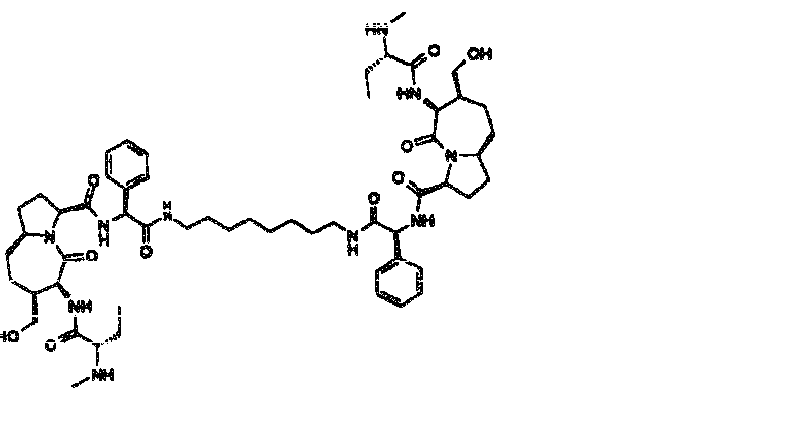
P4 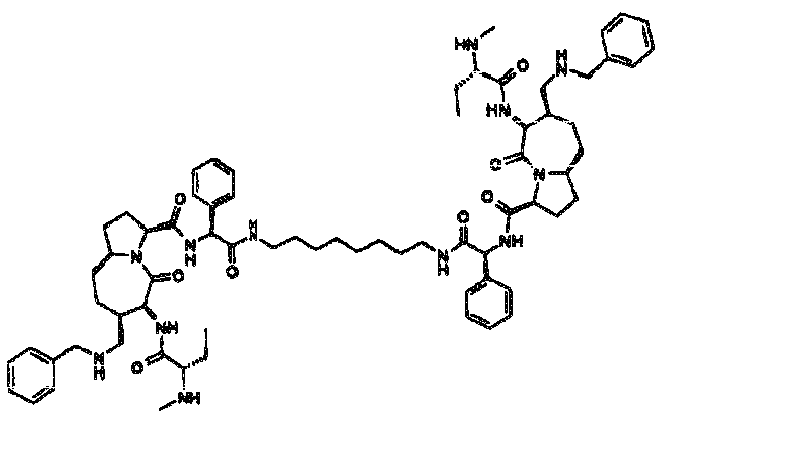
P5 Compound 30d 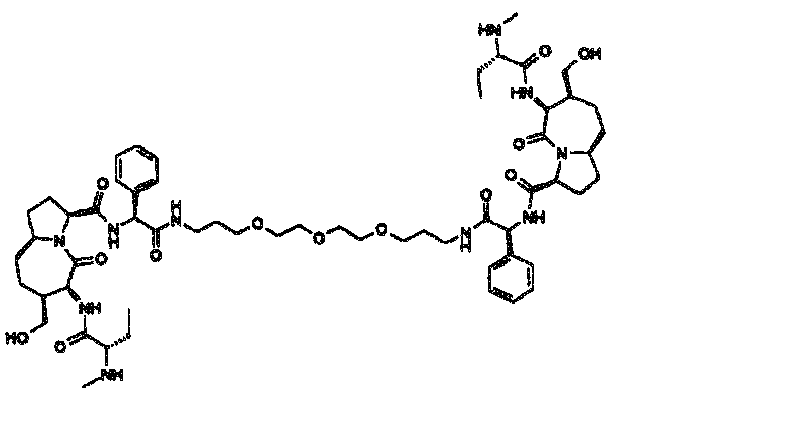
P6 
P7 Compound 30c 
P8 
P9 Compound 30b 
P10 
P11 Compound 34a 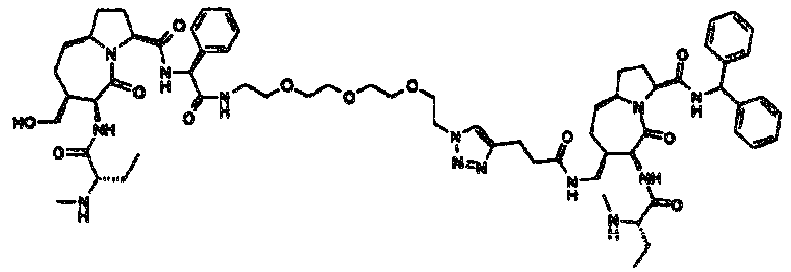
P12 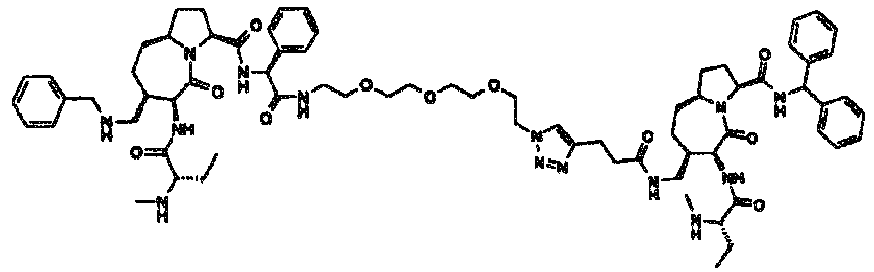
P13 Compound 35a 
P14 
P15 Compound 36a 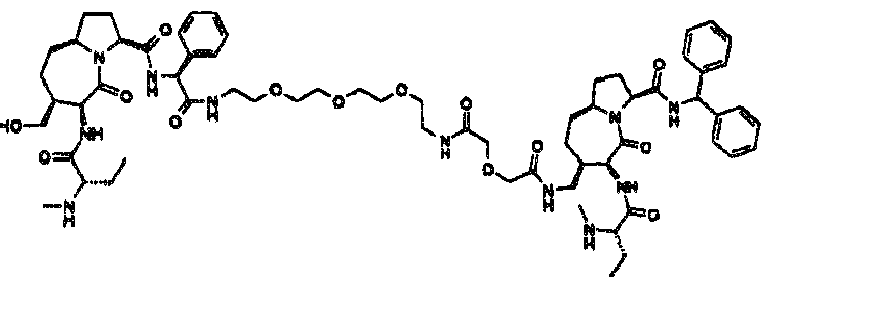
P16 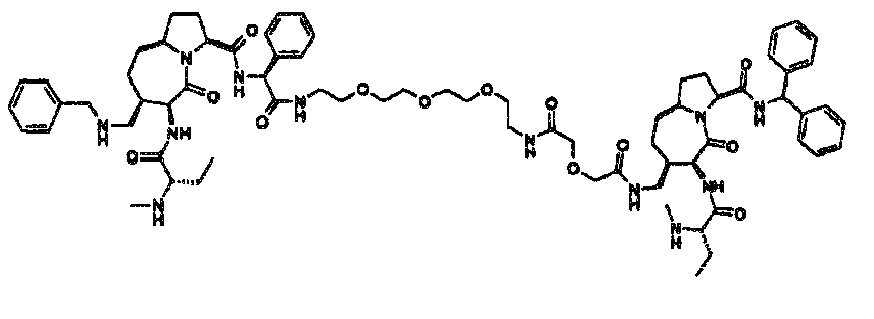
P17 
P18 
- Other preferred homodimeric compounds are those of the following table:
C1 
C2 
C3 
C4 
C5 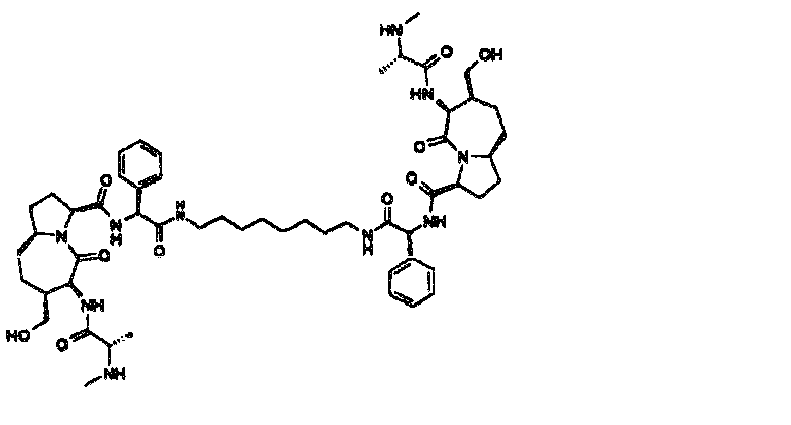
C6 
C7 
C8 
C9 
C10 
C11 
C12 
C13 
C14 
C15 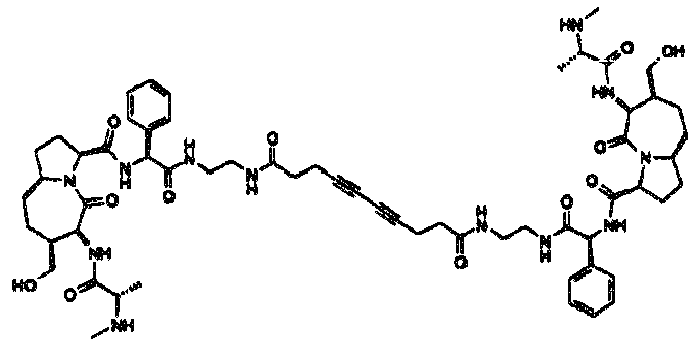
C16 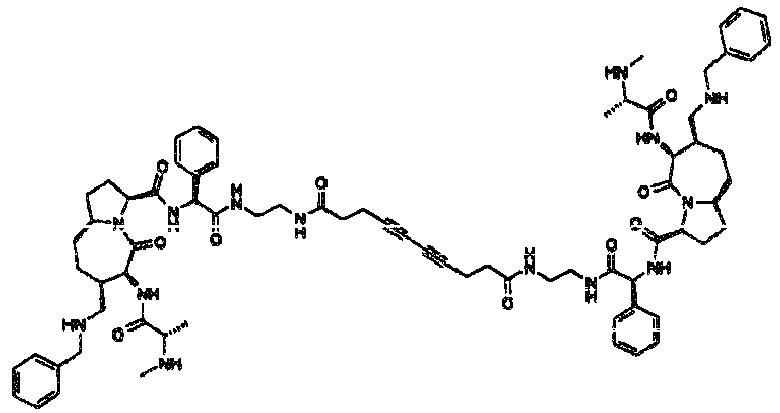
C17 
C18 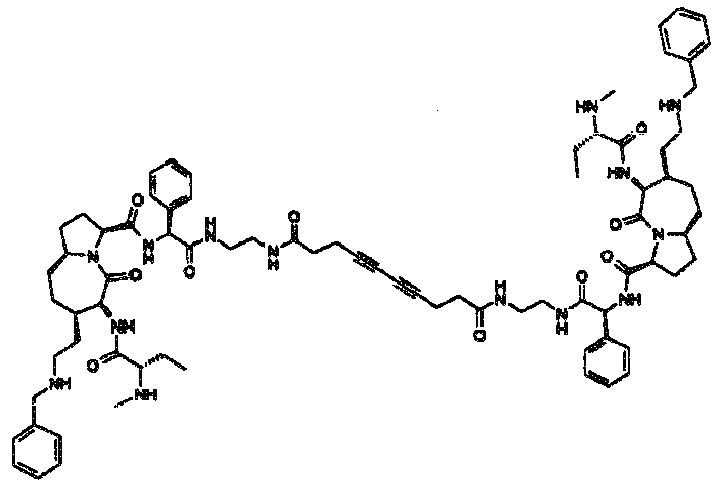
C19 
C20 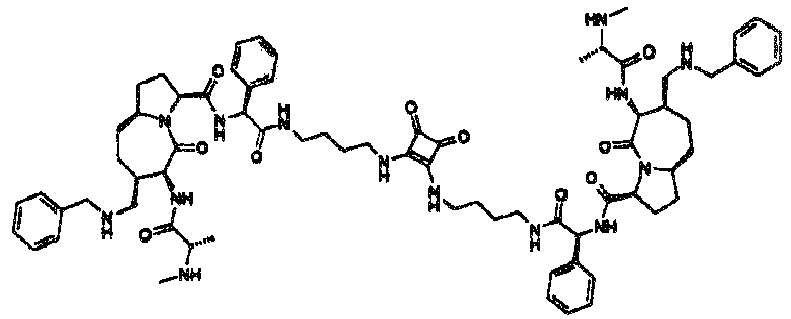
C21 
C22 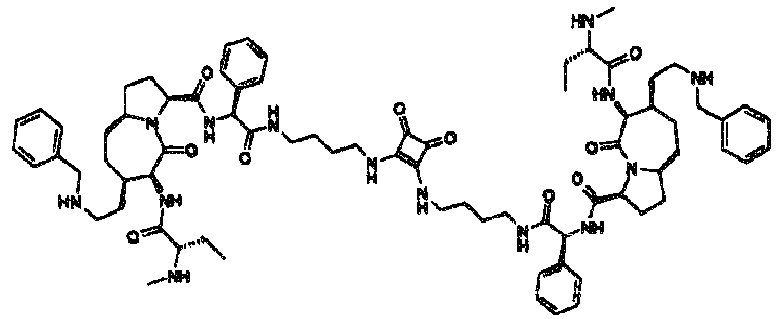
C23 
C24 
C25 
C26 
C27 
C28 
C29 
C30 
C31 
C32 
C33 
C34 
C35 
C36 
C37 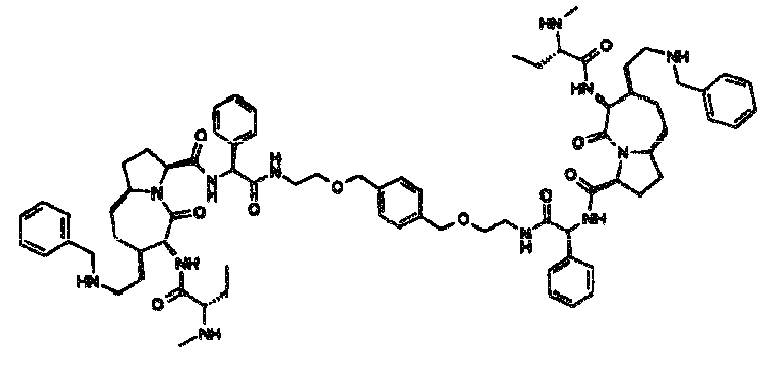
C38 
C39 
C40 
C41 
C42 
C43 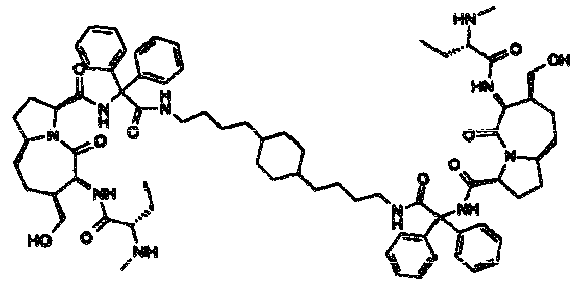
C44 
C45 
C46 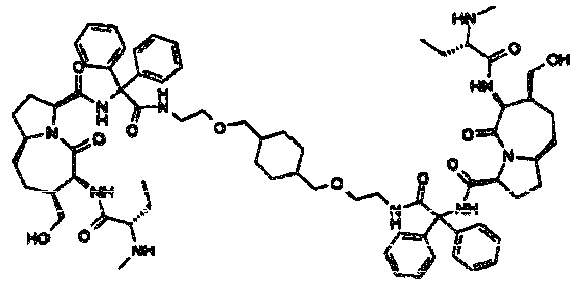
C47 
C48 
C49 
C50 
C51 
C52 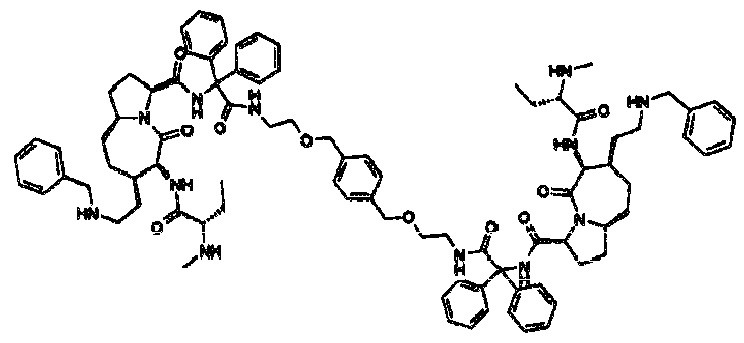
- Other preferred heterodimeric compounds of the invention are the following:
C53 
C54 
C55 
C56 
C57 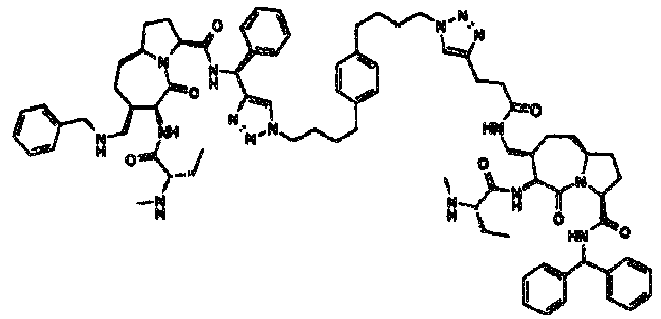
C58 
C59 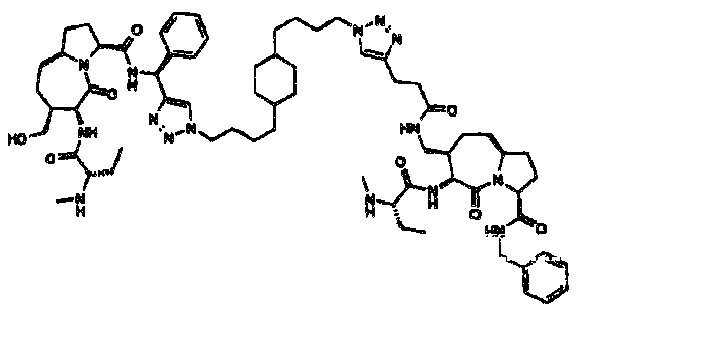
C60 
C61 
C62 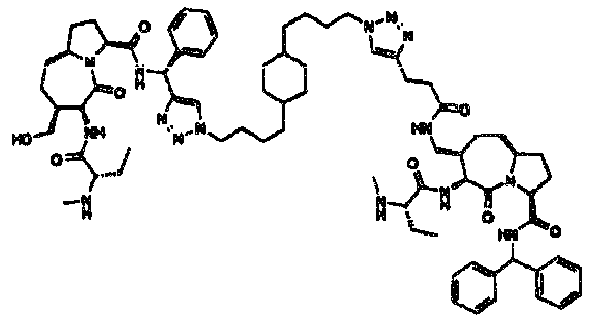
C63 
C64 
C65 
C66 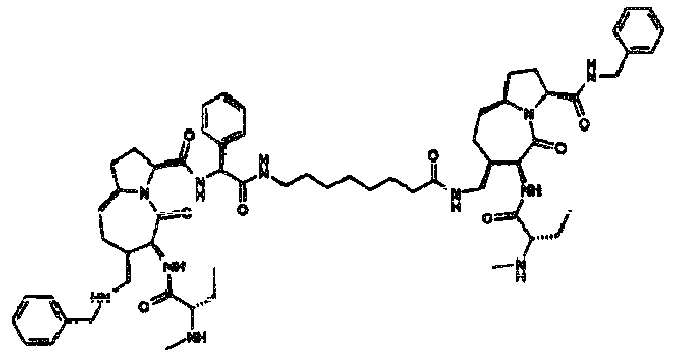
C67 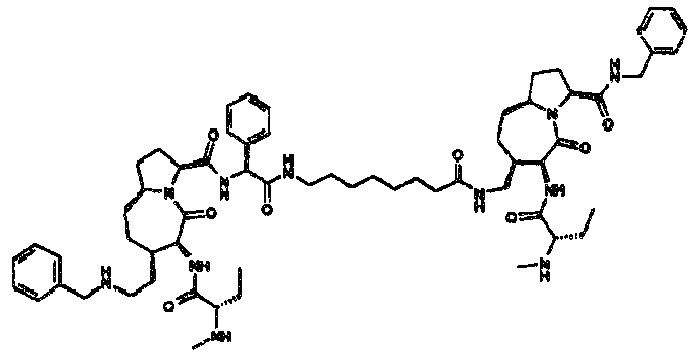
C68 
C69 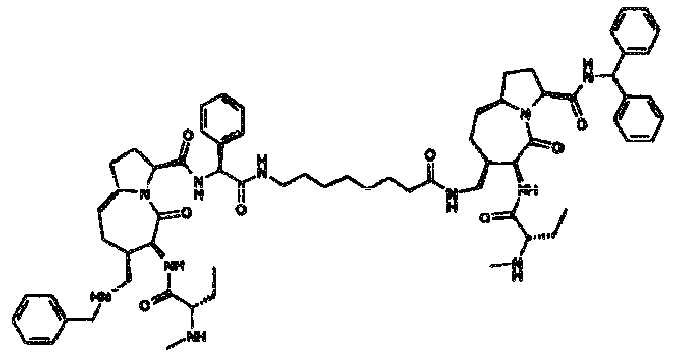
C70 
C71 
C72 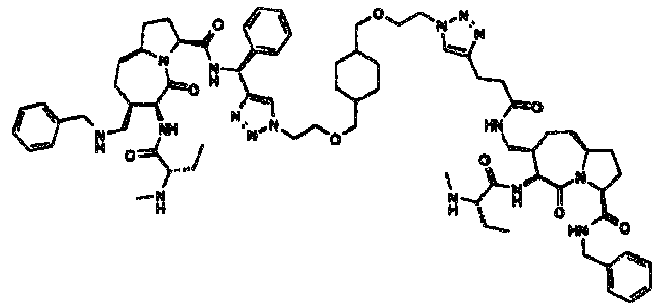
C73 
C74 
C75 
C76 
C77 
C78 
C79 
C80 
C81 
C82 
C83 
C84 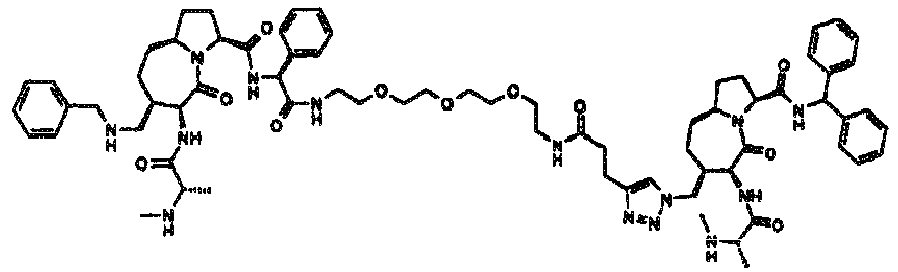
C85 
C86 
C87 
C88 
C89 
C90 
C91 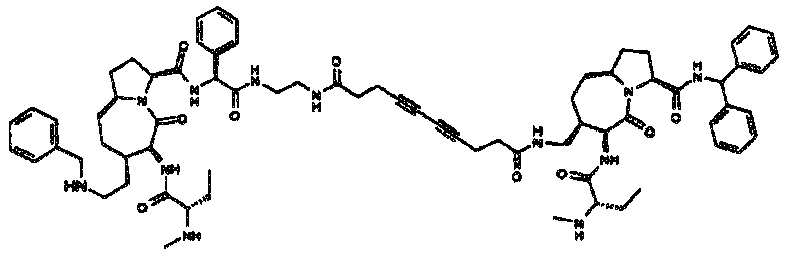
C92 
C93 
C94 
C95 
C96 
C97 
C98 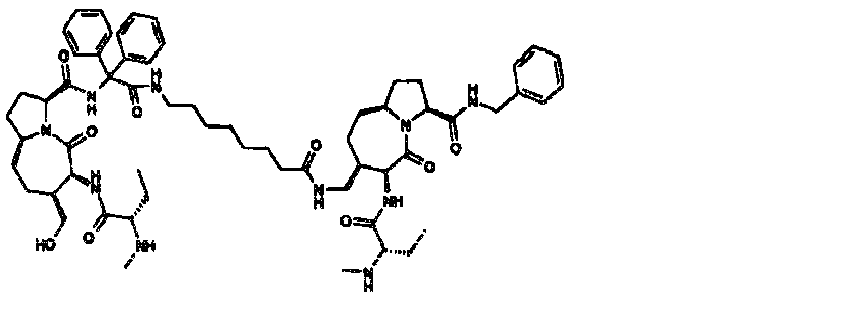
C99 
C100 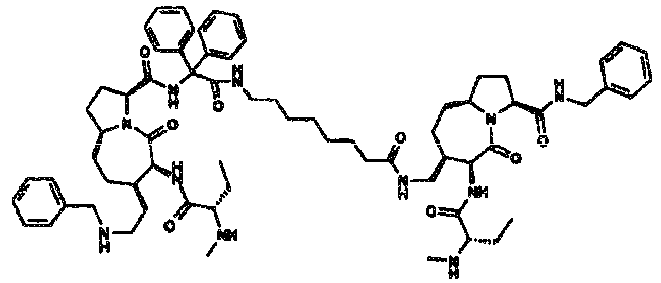
C101 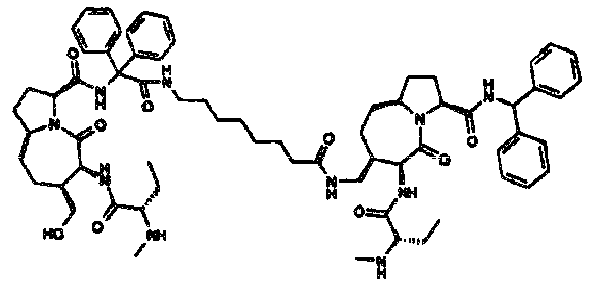
C102 
C103 
C104 
C105 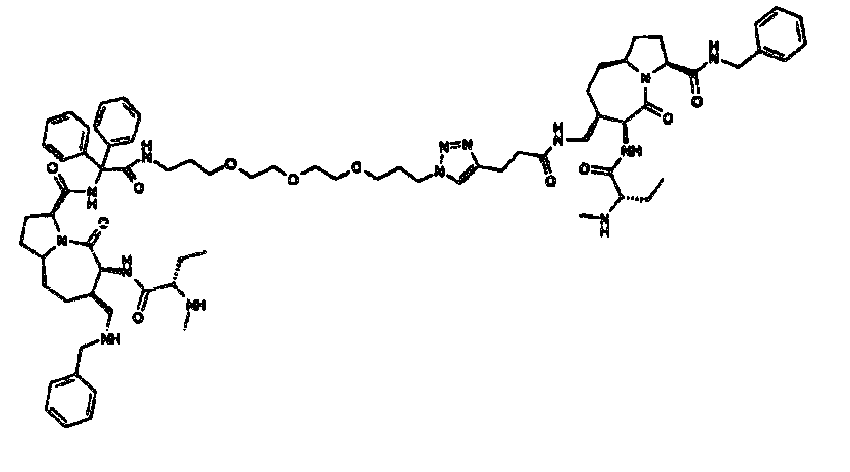
C106 
C107 
C108 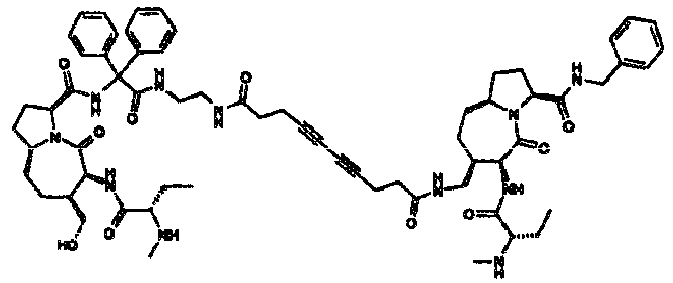
C109 
C110 
C111 
C112 
C113 
C114 
C115 
C116 
C117 
C118 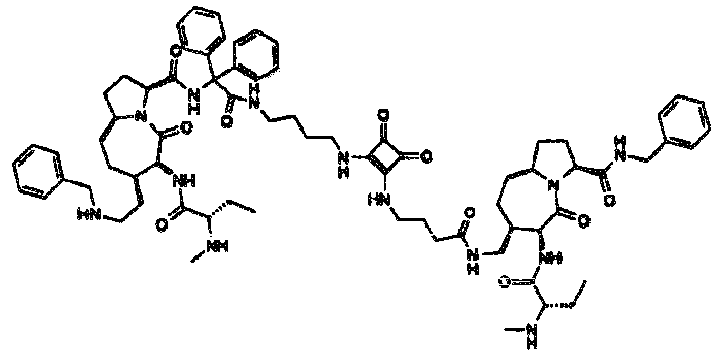
C119 
C120 
C121 
C122 
C123 
C124 
C125 
C126 
C127 
- Preferred compounds of the invention are here below indicated and also disclosed in the examples.
-
- L is selected as linker L5 with n=2 taken from Table 1
- R4 is selected as hydrogen
- m=1, n=2
- Y is selected as OH
- A is selected as NR1R2 where R1 is hydrogen and R2 is C1 alkyl
- B is selected as C2 alkyl.
-
- L is selected as linker L5 with n=2 taken from Table 1
- R4 is selected as hydrogen
- m=1, n=2
- Y is selected as NR5R6 where R5 is hydrogen and R6 is CH2Phe
- A is selected as NR1R2 where R1 is hydrogen and R2 is C1 alkyl
- B is selected as C2 alkyl.
-
- L is selected as linker L19 taken from Table 1
- R4 is selected as hydrogen
- m=1, n=2
- Y is selected as OH
- A is selected as NR1R2 where R1 is hydrogen and R2 is C1 alkyl (CH3)
- B is selected as C2 alkyl.
-
- L is selected as linker L55 taken from Table 1
- R4 is selected as hydrogen
- m=1, n=2
- Y is selected as OH
- A is selected as NR1R2 where R1 is hydrogen and R2 is C1 alkyl (CH3)
- B is selected as C2 alkyl.
-
- L is selected as linker L51 taken from Table 1
- R4 is selected as hydrogen
- m=1, n=2
- Y is selected as OH
- A is selected as NR1R2 where R1 is hydrogen and R2 is C1 alkyl (CH3)
- B is selected as C2 alkyl.
-
- L is selected as linker L27 with n=2 taken from Table 1
- R4 is selected as hydrogen
- m=1, n=2
- Y is selected as OH
- A is selected as NR1R2 where R1 is hydrogen and R2 is C1 alkyl (CH3)
- B is selected as C2 alkyl.
-
- LL is selected as L95
- A is selected as NR1R2 where R1 is selected as hydrogen and R2 is selected as C1 alkyl (CH3)
- B is selected as C2 alkyl
- R4 is selected as hydrogen
- Y is selected as OH
- m=1, n=2
- X is selected as NR7R8 with R7 selected as hydrogen and R8 selected as substituted C1 alkyl with two aryl groups
- Z is selected as
-
- LL is selected as L88 where n=3
- A is selected as NR1R2 where R1 is selected as hydrogen and R2 is selected as C1 alkyl (CH3)
- B is selected as C2 alkyl
- R4 is selected as hydrogen
- Y is selected as OH
- m=1, n=2
- X is selected as NR7R8 with R7 selected as hydrogen and R8 selected as substituted C1 alkyl with two aryl groups
- Z is selected as NR7 with R7 selected as hydrogen.
- The compounds of this invention may be prepared using experimental methods known to those skilled in the art, and according to the methods and reactions described in details in the experimental section of the present description.
- The compounds of formula (I) and (II) induce apoptosis as standalone treatments, and also potentiate the induction of apoptosis as a response to proapoptotic signals. Thus, the compounds may sensitize cells to inducers of apoptosis, including cells that are resistant to these inducers.
- These compounds can be used to induce or restore apoptosis in any disease that can be prevented, ameliorated or fully treated by induction or restoration of apoptosis.
- Thus, the present invention also provides compositions and methods for targeting mammals characterized as overexpressing an IAP family protein member. In some embodiments, the diseased cells (such as cancer cells) show elevated expression levels of IAP proteins as compared to non-pathological counterparts (such as non-cancerous cells).
- In other embodiments, the cells operationally confirm to possess elevated expression levels of IAP proteins due to their entering the apoptosis program and dying in response to an inhibiting effective amount of a compound of the invention, such response being at least in part due to their IAP protein function-dependent survival. In another embodiment, the invention pertains to modulating an apoptosis associated state which is connected with one or more apoptosis modulators. Examples of apoptosis modulating agents include, but are not limited to, Fas/CD95, TRAMP, TNF R1, DR1, DR2, DR3, DR4, DR5, DR6, FADD, RIP, TNFa, Fas ligand, TRAIL, antibodies to TRAILR1 or TRAILR2, Bcl-2, p53, BAX, BAD, Akt, CAD, PI3 kinase, PP1, and caspase proteins in general. Preferred apoptosing modulators are inducers of apoptosis such as TNF or a TNF-related ligand, particularly a TRAMP ligand, a Fas/CD95 ligand, a TNFR-1 ligand, or TRAIL.
- The compounds of formula (I) and (II) prevent or inhibit angiogenesis and disrupt blood vessel homeostasis during vascular development in pathological conditions as standalone treatments.
- So according to another of its aspects, the present invention relates to the use of the compounds of formula for the preparation of medicaments to treat diseased cells, tissues, organs, or pathological conditions and/or disease states in an animal (for example, a mammalian subject including, but not limited to, humans and veterinary mammals), more specifically for the treatment and/or prophylaxis of cancer and related conditions, such as lymphoma, melanoma, glioma, glioblastoma, myeloma, insulinoma, hypercalcemia, leukaemia, neuroblastoma, sarcoma, polycythemia, thrombocytosis, Hodgkin's disease, macroglobulinemia; autoimmune diseases; inflammatory diseases; infections; hyperproliferative diseases; AIDS; neurodegenerative diseases; vascular diseases. In some embodiments, treated cancer cells are metastatic.
- In other embodiments, treated cancer cells are resistant to common anticancer agents. Infections suitable for treatment with the compounds of the invention include, but are not limited to, infections caused by viruses, bacteria, fungi, mycoplasma, prions. Endothelial cell-associated diseases suitable for treatment with the compounds of the invention include, but are not limited to, macular degeneration, rheumatoid arthritis, psoriasis, diabetic retinopathycomeal graft rejection, myocardial angiogenesis, telangiectasia, angiofibroma, wound granulation, atherosclerosis, scleroderma and hypertrophic scars.
- According to another of its aspects, the present invention relates to pharmaceutical compositions comprising at least one of the compounds of formula (I) and (II).
- According to another of its aspects, the present invention relates to combinations of an effective amount of a compound of formula (I) and (II) and at least one additional therapeutic agent (including, but not limited to, chemotherapeutics, apoptosis modulators, anti-angiogenetics, antimicrobials, antivirals, antifungals and anti-inflammatory agents).
- A number of suitable anticancer agents are contemplated for use in the method of the present invention. Examples of chemotherapeutic compounds and anticancer therapies suitable for co-administration with compounds of formula (I) and (II) are known to those skilled in the art.
- In preferred embodiments, anticancer agents comprise agents that induce or stimulate apoptosis. They include, but are not limited to, radiation therapies; TNF-related factors; kinase inhibitors; antisense molecules; antibodies; anti-estrogens; antiandrogens; COX-2 inhibitors; anti-inflammatory drugs; cancer chemotherapeutic drugs; cellular signalling molecules; ceramides and cytokines; staurosporine, and the like. Specific examples of anticancer agents suitable for co-administration with compounds of Formula (I) and (II) are known to those skilled in the art.
- In still other embodiments, the composition and methods of the present invention provide a compound of Formula (I) and (II) and at least one anti-hyperproliferative or antineoplastic agent selected from alkylating agents, antimetabolites, and natural products (for example, plant- and/or animal-derived compounds).
- In some embodiments, alkylating agents suitable for use in the present compositions and methods include, but are not limited to, nitrogen mustards; ethyleneimines and methylmelamines; alkyl sulfonates; nitrosoureas; triazenes. Specific examples of alkylating agents suitable for co-administration with compounds of Formula (I) and (II) are known to those skilled in the art.
- In other embodiments, antimetabolites suitable for use in the present compositions and methods include, but are not limited to, folic acid analogues; pyrimidine analogues; purine analogues. Specific examples of antimetabolites suitable for co-administration with compounds of Formula (I) and (II) are known to those skilled in the art.
- In still further embodiments, chemotherapeutic agents suitable for use in the present compositions and methods include, but are not limited to, vinca alkaloids; epipodophyllotoxins; antibiotics; enzymes; biological response modifiers; platinum coordinating complexes; anthracenediones; methylhydrazine derivatives; adrenocortical suppressants; adrenocorticosteroids; progestins; estrogens; androgens; antiandrogens; gonadotropin-releasing hormone analogues. Specific examples of chemotherapeutic agents suitable for co-administration with compounds of Formula (I) and (II) are known to those skilled in the art.
- Any oncolytic agent that is routinely used in a cancer therapy context finds use in the composition and methods of the present invention. The U.S. FDA and international counterpart agencies to the U.S. FDA maintain formularies of oncolytic agents approved for use, whose listed members are for example suitable for co-administration with compounds of Formula (I and (II). Those skilled in the art will appreciate that the "product labels" required on all approved chemotherapeutics describe approved indications, dosing information, toxicity data, and the like, for the agents.
- For a more detailed description of anticancer agents and other therapeutic agents suitable, for example, to be co-administered or associated with the compounds according to formula (I) and (II) of the present invention, those skilled in the art are referred to any number of instructive manuals including, but not limited to, the Physician's Desk Reference and to Goodman and Gilman's "Pharmaceutical Basis of Therapeutics" 11th Edition, Eds. Hardman et al., 2005.
- According to another of its aspects, the present invention relates to a combination of an effective amount of a compound of formula (I) and (II) and at least one treatment for cancer, for instance, surgical intervention or radiotherapy.
- Therefore the present invention also provides methods for administering a compound of formula (I) and (II) with radiation therapy. The invention is not limited by the types, amounts, or delivery and administration systems used to deliver the therapeutic dose of radiation to an animal.
- The source of radiation can be external or internal to the animal. External radiation therapy is most common and involves directing a beam of high-energy radiation to a tumour site through the skin using, for instance, a linear accelerator. Internal radiation therapy involves implanting a radiation-emitting source inside the body at or near the tumour site, including the use of delivery systems that specifically target cancer cells.
- The animal may optionally receive radiosensitizers or radioprotectors. Radiosensitizers enhance the killing of tumour cells. Radioprotectors protect healthy tissues from the harmful effect of radiation.
- Any type of radiation may be administered to a patient, as long as its dosage is tolerated without unacceptable side effects. Suitable radiotherapies include ionizing/electromagnetic radiotherapy and particle beam radiation therapy.
- The total dose of radiation administered to an animal is preferably about .01 Gray (Gy) to about 100 Gy. More preferably, about 10 Gy to about 65 Gy are administered during the course of the treatment. While in some embodiments a complete dose of radiation can be administered over the course of one day, the total dose is ideally fractionated and administered over several days. Desirably, radiotherapy is administered at intervals of at least about 3 days, in a period of 1 to 8 weeks. Accordingly, a daily dose of radiation will comprise approximately 1-5 Gy, and preferably 1-2 Gy. The daily dose of radiation should be sufficient to induce destruction of the targeted cells, but days of rest from therapy should be included. For example, radiation desirably is administered on 5 consecutive days, and not administered for 2 days, for each week of treatment, thereby allowing 2 days of rest per week. These exemplary radiotherapy administration schedules are not intended, however, to limit the present invention.
- In some embodiments of the present invention, a compound of Formula (I) and (II) and one or more therapeutic or anticancer agents are administered to an animal under one or more of the following conditions: at different periodicities, at different durations, at different concentrations, by different administration routers, and so on. In some embodiments, the compound is administered prior to the therapeutic or anticancer agent, i. e. 0.5, 1, 2, 3, 4, 5, 10, 12, or 18 hours, 1, 2, 3, 4, 5, or 6 days, 1, 2, 3 or 4 weeks prior to the administration of the therapeutic or anticancer agent. In other embodiments, the compound is administered after the therapeutic or anticancer agent, i.e. 0.5, 1, 2, 3, 4, 5, 10, 12, or 18 hours, 1, 2, 3, 4, 5, or 6 days, 1, 2, 3 or 4 weeks after the administration of the therapeutic or anticancer agent. In some embodiments, the compound and the therapeutic or anticancer agent are administered concurrently but on different schedules, i.e. the compound is administered daily while the therapeutic or anticancer agent is administered once a week, once every two weeks, once every three weeks, or once every four weeks. In other embodiments, the compound is administered once a week while the therapeutic or anticancer agent is administered daily, once a week, once every two weeks, once every three weeks, or once every four weeks.
- Pharmaceutical compositions within the scope of this invention include all compositions wherein the compounds of the present invention are comprised in an amount which is effective to achieve its intended purpose. While individual needs vary, determination of optimal ranges of effective amounts of each component is within the skill of the art. Typically, the compounds may be administered to mammals, and in particular humans, orally at a dose of 0.0025 to 50 mg/kg, or an equivalent amount of the pharmaceutically acceptable salt thereof, per day of the body weight of the mammal being treated for disorders responsive to induction or restoration of apoptosis. Preferably, about 0.01 to about 10 mg/kg is orally administered to treat, ameliorate, or prevent such disorders. For intramolecular injections, the dose is generally one half of the oral dose. For example, a suitable i.m. dose would be about 0.0025 to about 25 mg/kg, and most preferably, from about 0.01 to about 5 mg/kg. In a topical formulation, the compound may be present at a concentration of about 0.01 to 100 mg per gram of carrier. In a preferred embodiment, the compound is present at a concentration of about 0.07-1.0 mg/mL, more preferably, about 0.1-0.5 mg/mL, most preferably, about 0.4 mg/mL.
- In addition to administering the compound as a raw chemical, the compounds of the invention may be administered as part of a pharmaceutical preparation containing suitable pharmaceutically acceptable carriers comprising excipients and auxiliaries which facilitate processing of the compounds into preparations which can be used pharmaceutically. Preferably, the preparations, particularly those preparations which can be administered orally or topically and which can be used for the preferred type of administration, such as tablets, dragées, slow release lozenges and capsules, mouth rinses and washes, gels, liquid suspensions, hair rinses, hair gels, shampoos and other preparations which can be administered rectally, such as suppositories, as well as suitable solutions for administration by injection, topically or orally, contain from about 0.01 to 99 percent, preferably from 0.25 to 75 percent of active compound(s), together with the excipient.
- The compounds and pharmaceutical compositions thereof may be administered by any means that achieve their intended purpose. For example, administration may be by parenteral, subcutaneous, intravenous, intramuscular, intraperitoneal, transdermal, buccal, intratechal, intracranial, intranasal or topical routes. Alternatively, or concurrently, administration may be by the oral route. The dosage administered will be dependent upon the age, health, and weight of the recipient, kind of concerned treatment, if any, frequency of treatment, and the nature of the desired effect.
- The pharmaceutical preparations of the present invention are manufactured in a manner which is itself known, for example, by means of conventional mixing, granulating, dragée-making, dissolving, or lyophilizing processes. Thus, pharmaceutical preparations for oral use can be obtained by combining the active compounds with solid excipients, optionally grinding the resulting mixture and processing the mixture of granules, after adding suitable auxiliaries, if desired or necessary, to obtain tablets or dragée cores.
- Suitable excipients are, in particular, filters such as saccharides, cellulose preparations and/or calcium phosphates, as well as binders as starch paste, using, for example, starch, gelatine, cellulose, and/or polyvinyl pyrrolidone. If desired, disintegrating agents may be added such as the above mentioned starches, crosslinked polyvinyl pyrrolidone, agar, or alginic acid or a salt thereof. Auxiliaries are, above all, flow-regulating agents and lubricants, for example, silica, talc, stearic acid or salts thereof, and/or polyethylene glycol. Dragée cores are provided with suitable coatings which, if desired, are resistant to gastric juices. In order to produce coatings resistant to gastric juices, solutions of suitable cellulose are used.
- Other pharmaceutical preparations which can be used orally include push-fit capsule made of gelatine, as well as soft, sealed capsules made of gelatine and a plasticizer such as glycerol or sorbitol. The push-fit capsules can contain the active compounds in the form of granules which may be mixed with fillers, binders and/or lubricants and, optionally, stabilizers. In soft capsules, the active compounds are preferably dissolved or suspended in suitable liquids, such as fatty oils, or liquid paraffin. In addition, stabilizers may be added.
- Possible pharmaceutical preparations which can be used rectally include, for example, suppositories, which consist of a combination of one or more active compounds with a suppository base. Suitable suppository bases are, for example, natural or synthetic triglycerides, or paraffin hydrocarbons.
- Suitable formulations for parenteral administration include aqueous solutions of the active compounds in water-soluble form. In addition, suspensions of the active compounds as appropriate oily injection suspensions may be administered. Suitable lipophilic solvents or vehicles include fatty oils or synthetic fatty acid esters. Aqueous injections may contain substances which increase the viscosity of the suspension, such as sorbitol and/or dextran. Optionally, the suspension may also contain stabilizers.
- The topical compositions of this invention are formulated preferably as oils, creams, lotions, ointments and the like by choice of appropriate carriers. Suitable carriers include vegetable or mineral oils, white soft paraffin, fats and high molecular weight alcohol. The preferred carriers are those in which the active ingredient is soluble. Creams are preferably formulated from a mixture of mineral oil, self-emulsifying beeswax and water in which mixture the active ingredient, dissolved in a small amount of an oil is admixed. A typical example includes about 40 parts water, about 20 parts beeswax, about 40 parts mineral oil and about 1 part almond oil.
- Ointments may be formulated by mixing a solution of the active ingredient in a vegetable oil with warm soft paraffin and allowing the mixture to cool. A typical example of such an ointment includes about 30% almond oil and about 70% white soft paraffin by weight.
- Lotions may be conveniently prepared by dissolving the active ingredient, in a suitable high molecular weight alcohol.
- The following examples are illustrative, but not limiting, of the method and compositions of the present invention. Other suitable modifications and adaptations of the variety of conditions and parameters normally encountered in clinical therapy and which are obvious to the those skilled in the art are within the scope and the spirit of the invention.
- The invention is now disclosed by way of non-limiting examples.
- Title intermediates may be in general prepared according to a synthetic process outlined in Scheme 1.
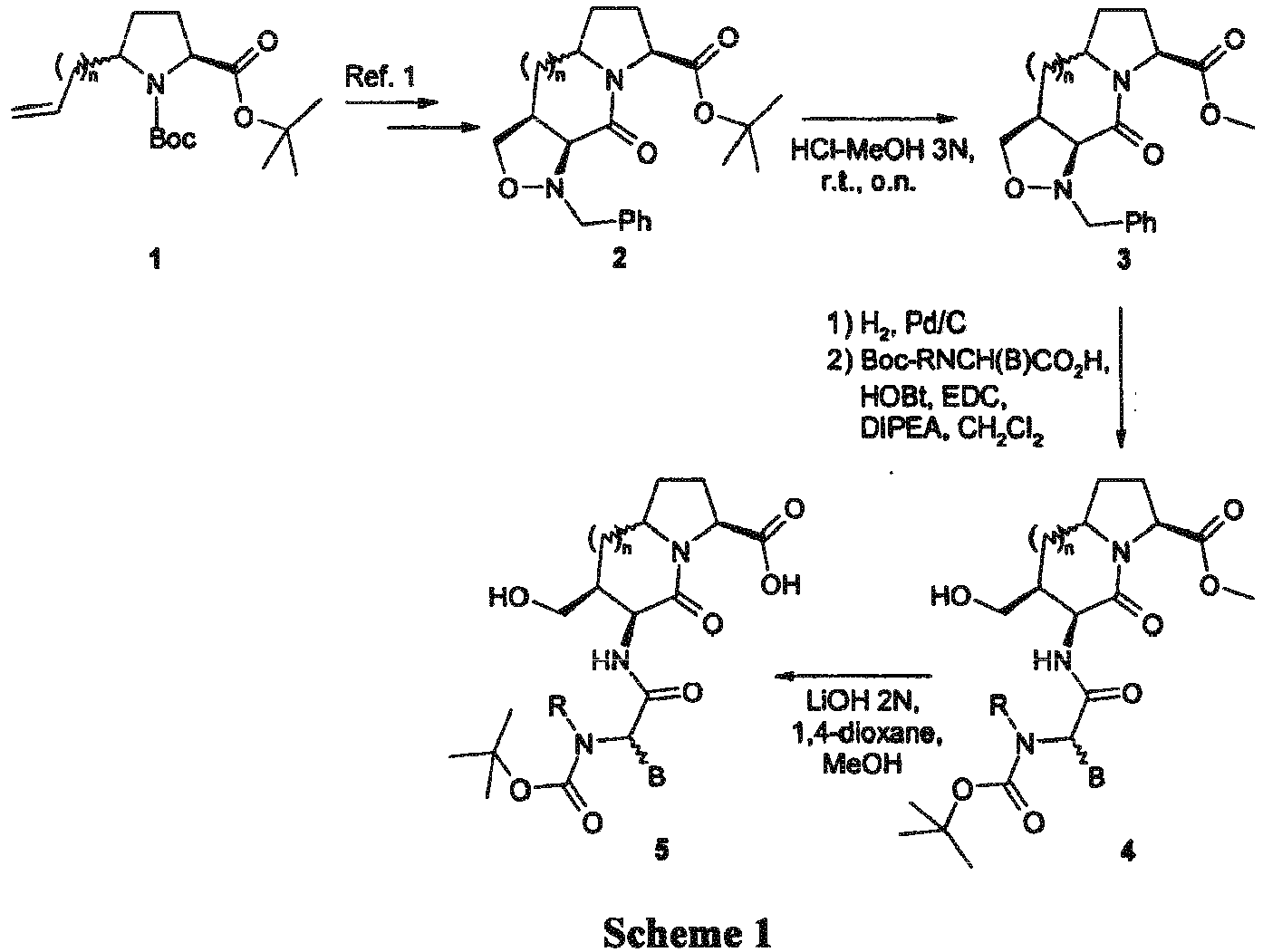
- Intermediates 2 are easily prepared using a procedure already reported in the literature (Leonardo Manzoni, et. al., J. Org. Chem. 2005, 70, 4124). Compounds of general structure 5 were prepared efficiently using standard methods, comprising the following stages:
- a) Trans-esterification from tert-butyl-ester to methyl ester, compounds 3;
- b) hydrogenation of the isoxazolidine ring and coupling with the suitable protected aminoacid derivative, compounds 4;
- c) hydrolysis of the methyl ester, compounds 5.
- Intermediates 5 are the synthetic gateway to functionalized homodimeric and heterodimeric bivalent Smac mimetics.
- 1H-NMR spectra were recorded on Bruker Avance in CDCl3, CD3OD or D2O as solvent at 400 MHz or 600 MHz. 13C-NMR spectra were recorded in CDCl3, CD3OD or D2O as solvent at 100 MHz or 125 MHz. Coupling constants are given in hertz and are rounded to the nearest 0.1 Hz. Purifications were carried out either by flash chromatography on silica gel (particle size 60 µm, 230-400 mesh), Kieselgel, or by Biotage™ flash chromatography [Biotage columns Si-12-M (150X12 mm; silica gel (40-63 µm), flow rate 12 ml/min; and Si-25-M columns (150X25 mm; silica gel (40-63 µm), flow rate 25 ml/min], or by Biotage™ C18 reverse phase chromatography [Biotage columns C18HS (150X12 mm; KP-C18-HS (35-70 µm), flow rate 25 ml/min]. Final products were purified by C18 reverse phase semi-preparative HPLC using either a Waters X-Terra RP18 ODB column (19 mm x 10.0 cm, 5 µm) or a Supelco Ascentis C18 column (21.2 mm x 15.0 cm, 5 µm). Solvents were distilled and dried according to standard procedures, and reactions requiring anhydrous conditions were performed under nitrogen or argon. Solvents for the reactions were used directly from the bottle if not specified. Optical rotations

- Compounds 2 (5.3 mmol) were dissolved in 26.5 mL of a 3N methanolic HCl solution. The resulting mixture was stirred at room temperature for 48 hours and then condensed under reduced pressure. The crude product was redissolved in CH2Cl2 and washed once with a saturated solution of NaHCO3. The organic layer was dried over Na2SO4, filtered and the solvent was removed under reduced pressure. Finally, the crude product was purified by flash chromatography.
- Compound 3a was synthesized by the general procedure described above.
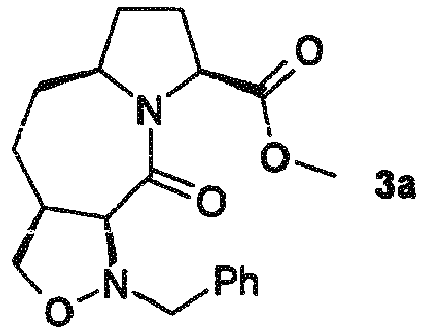
- 3a. Biotage™ C18 reverse phase eluant conditions : from 90% H2O and 10% CH3CN to 100% CH3CN. Yield 90% (1.65 g, MW 344.17, 4.79 mmol) of pure 3a as an amorphous white solid. Analytical characterization:

- Simultaneous N-O hydrogenolytic cleavage and benzyl deprotection on compounds 3 was performed using H-Cube™ continuous-flow hydrogenation reactor. The methyl ester 3 (4.8 mmol) was dissolved in 85:15 EtOH/H2O (190 mL, ∼ 0.025 M final concentration) and reduced over 10% Pd/C catalyst (hydrogen pressure: 10 bar, T = 85 °C, flow: 0.7 mL/min). The reaction was monitored by LC-MS. After reaction completion the solvent was evaporated under reduced pressure. The crude aminoalcohol was obtained in quantitative yield and used without any further purification.
- Dry DIPEA (2 equiv) was added to a solution of N-Boc protected aminoacid (1.2 equiv), EDC*HCl (1.2 equiv) and HOBt (1.2 equiv) in dry CH2Cl2 at room temperature under a nitrogen atmosphere. The solution was stirred for 10 min before adding a solution of the aminoalcohol (1 equiv) in CH2Cl2 (final concentration of aminoalcohol: 0.1 M). The reaction mixture was stirred at room temperature and monitored by LC-MS. After reaction completion, the solution was diluted with CH2Cl2 and washed once with 5% citric acid and saturated NaHCO3. The organic layer was dried over Na2SO4 and evaporated under reduced pressure. The crude product was purified by flash chromatography.
- Compound 4a was synthesized by the general procedure described above starting from compound 3a (1.65 g, 4.79 mmol) and N-Boc, N-Me ethylglycine.

- 4a. Biotage™ C18 reverse phase eluant conditions: from 90% H2O and 10% CH3CN to 100% CH3CN. Yield 82 % (1.78 g, MW 455.55, 3.91 mmol) of pure 4a as an amorphous white solid. Analytical characterization:
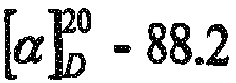
- Compound 4b was synthesized by the general procedure described above starting from compound 3a (1. 65 g, 4.79 mmol) and N-Boc ethylglycine.

- 4b. Biotage™ C18 reverse phase eluant conditions: from 90% H2O and 10% CH3CN to 100% CH3CN. Yield 70 % (1.48 g, MW 441.25, 3.35 mmol) of pure 4b as an amorphous white solid. Analytical characterization:

- A 2 N aqueous LiOH solution (7.0 equiv) was slowly added to an iced cooled, stirred solutions of methyl esters 4 (1.0 equiv) in 1,4-dioxane (0.25 M concentration for 4). The reaction mixture was then stirred at room temperature until complete hydrolysis of the starting material. After reaction completion, the cloudy solution was concentrated, the residue was taken up in CH2Cl2 and water, and acidified to pH≈3 with aqueous 2N solution of HCl. The mixture was extracted with CH2Cl2, the combined organic layer was dried over Na2SO4, and then the solvent was removed under reduced pressure. The crude carboxylic acid, obtained as amorphous white solids, did not require further purification.
- Compound 5a was synthesized by the general procedure described above starting from compound 4a (4.55 g, 10.0 mmol).

- 5a. Quantitative yield (4.41 g, MW 441.20, 10.0 mmol). Analytical characterization:

- Compound 5b was synthesized by the general procedure described above starting from compound 4b (4.41 g, 10.0 mmol).

- 5b. Quantitative yield (4.27 g, MW 427.23, 10.0 mmol). Analytical characterization:
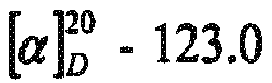
- Some title intermediates may be prepared according to a synthetic process outlined in Scheme 2, comprising the following reactions:
- a) coupling of the free acid of compounds 5 with suitable amines;
- b) transformation of the 4-hydroxy group into an azide, followed by reduction to afford a 4-amino compounds 11;
- c) coupling of compounds 11 with acids or N-protected aminoacids.
- The general synthesis of key intermediates is showed in Scheme 2.
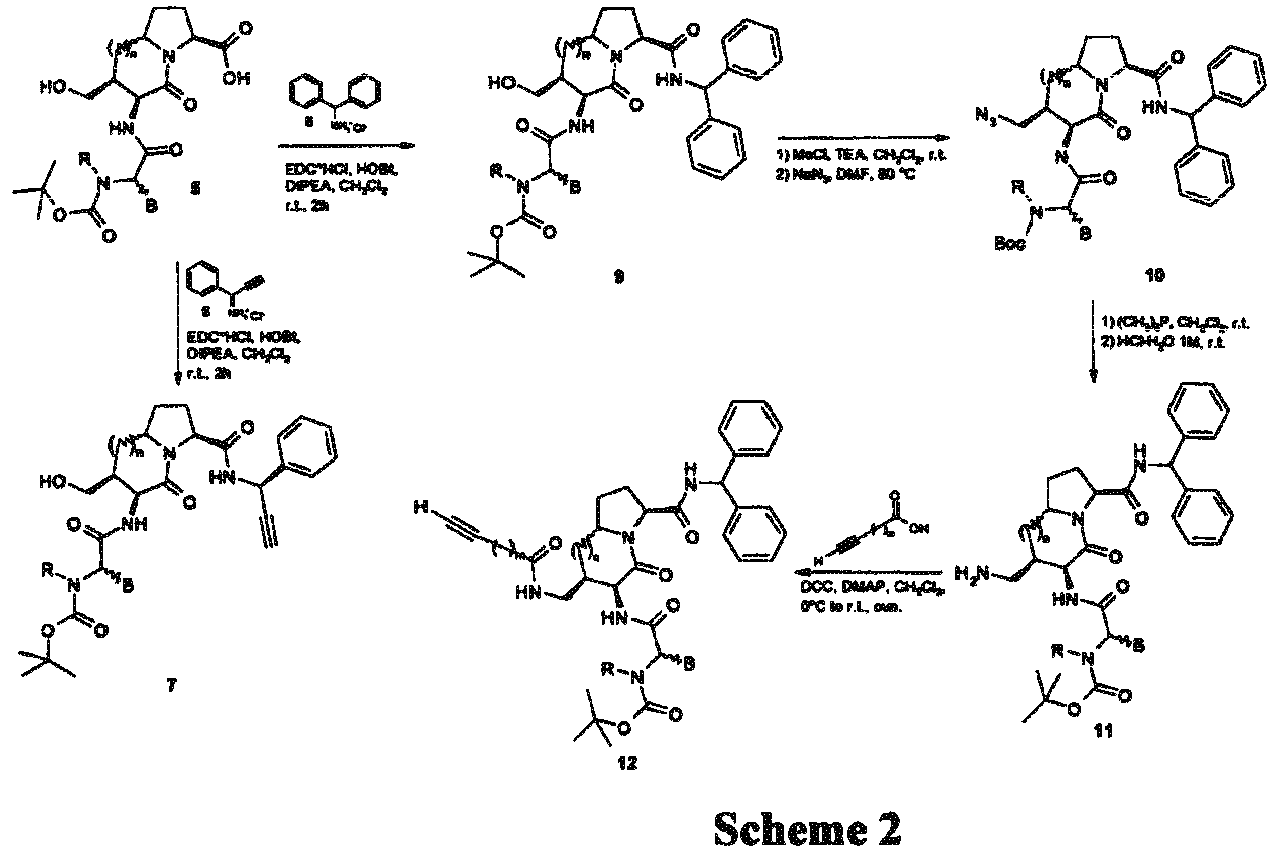
- EDC*HCl (1.2 equiv), HOBt (1.2 equiv) and DIPEA (4.0 equiv) were sequentially added to a stirred solution of 5 (1 equiv) in CH2Cl2. The reaction mixture was left stirring at room temperature for 15 min, and then added to a stirred solution of 6 (1.25 equiv) in dry CH2Cl2 (final concentration of 5 ∼ 0.05 M). The reaction mixture was stirred at room temperature overnight and then, after reaction completion, the solvent was removed under reduced pressure. The crude product was diluted with EtOAc and sequentially washed with 5% aqueous citric acid, saturated aqueous sodium bicarbonate and brine. The organic layer was dried over Na2SO4, and then the solvent removed under reduced pressure. The residue was purified by Biotage™ flash chromatography.
- Compound 7a was synthesized by the general procedure described above starting from compound 5a (500 mg, 1.14 mmol).

- 7a. Biotage™ eluant conditions: 50% of EtOAc and 50% of petroleum ether to 100% of EtOAc. Yield 94 % (592 mg, MW 554.69, 1.07 mmol) of pure 7a. Analytical characterization:

- EDC*HCl (1.2 equiv), HOBt (1.2 equiv) and DIPEA (4.0 equiv) were sequentially added to a stirred solution of 5 (1 equiv) in CH2Cl2. The reaction mixture was left stirring at room temperature for 15 min, and then added to a stirred solution of 8 (1.25 equiv) in dry CH2Cl2 (final concentration of 5 ∼ 0.1 M). The reaction mixture was stirred at room temperature overnight and then, after reaction completion, the solvent was removed under reduced pressure. The crude product was diluted with EtOAc and sequentially washed with 5% aqueous citric acid, saturated aqueous sodium bicarbonate and brine. The organic layer was dried over Na2SO4, and then the solvent removed under reduced pressure. The residue was purified by Biotage™ flash chromatography.
- Compound 9a was synthesized by the general procedure described above starting from compound 5a (4.41 g, 10.0 mmol).

- 9a Biotage™ eluant conditions: from 90% of H2O and 10% CH3CN to 100% of CH3CN. Yield 83 % (5.04 g, MW 606.75, 8.30 mmol) of pure 9a. Analytical characterization:

- Compound 9b was synthesized by the general procedure described above starting from compound 5b (4.27 g, 10.0 mmol).
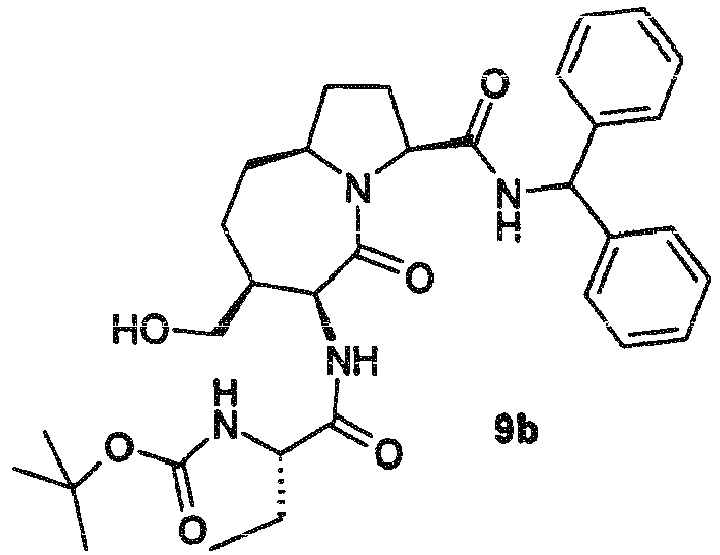
- 9b Biotage™ eluant conditions: from 90% of H2O and 10% CH3CN to 100% of CH3CN. Yield 76 % (4.5 g, MW 592.73, 7.6 mmol) of pure 9b. Analytical characterization:

- Dry TEA (4.0 equiv) and MsCl (4.0 equiv) were sequentially added to a stirred solution of compounds 9 (1.0 equiv) in dry CH2Cl2 (≈0.25 M concentration for 9) under argon at 0 °C. The reaction mixture was stirred at room temperature overnight.
- After reaction completion, the resulting mixture was diluted with CH2Cl2 and washed with a saturated NH4Cl solution. The organic layer was dried over Na2SO4, and then the solvent removed under reduced pressure. The crude product was dissolved in dry DMF (≈0.1 M concentration) under argon at room temperature, and then NaN3 (10.0 equiv) was added. The reaction mixture was stirred at 80 °C overnight. After reaction completion, the solvent was removed under reduced pressure, the crude product was diluted with CH2Cl2 and washed with water. The organic layer was dried over Na2SO4, and then the solvent removed under reduced pressure. The crude product was purified by flash chromatography.
- Compound 10a was synthesized by the general procedure described above starting from compound 9a (1.21 g, 2.0 mmol).

- 10a. Eluant mixture: Petroleum ether/EtOAc 30 : 70. Yield 64 % (810 mg, MW 631.75, 1.28 mmol) of pure 10a. Analytical characterization:

- Compound 10b was synthesized by the general procedure described above starting from compound 9b (1.18 g, 2.0 mmol).

- 10b. Eluant mixture: Petroleum ether/EtOAc 30 : 70. Yield 51 % (635 mg, MW 617.74, 1.02 mmol) of pure 10b. Analytical characterization:

- A 1 N solution of (CH3)3P in toluene (1.5 equiv) was added to a stirred solution of azides 10 (1.0 equiv) in dry CH2Cl2 (≈0.67 M concentration for 10) under argon at room temperature. After complete conversion of the azide to the corresponding iminophosphorane, 1N aqueous HCl was added to the reaction mixture, which was stirred at room temperature for further 10-20 min. After reaction completion, the reaction mixture was extracted with CH2Cl2, the organic layer was dried over Na2SO4, and the solvent was removed under reduced pressure. The crude hydrochloride salt was used without further purification.
- Compound 11a was synthesized by the general procedure described above starting from compound 10a (632 mg, 1.0 mmol).
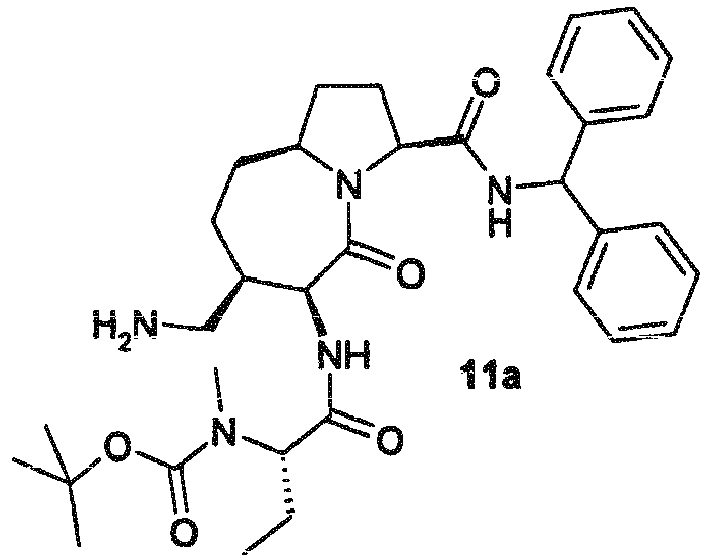
- 11a. Yield 50 % (321 mg, MW 642.23, 0.50 mmol) of pure hydrochloride salt of 11a. Analytical characterization:

- Compound 11b was synthesized by the general procedure described above starting from compound 10b (617 mg, 1.0 mmol).
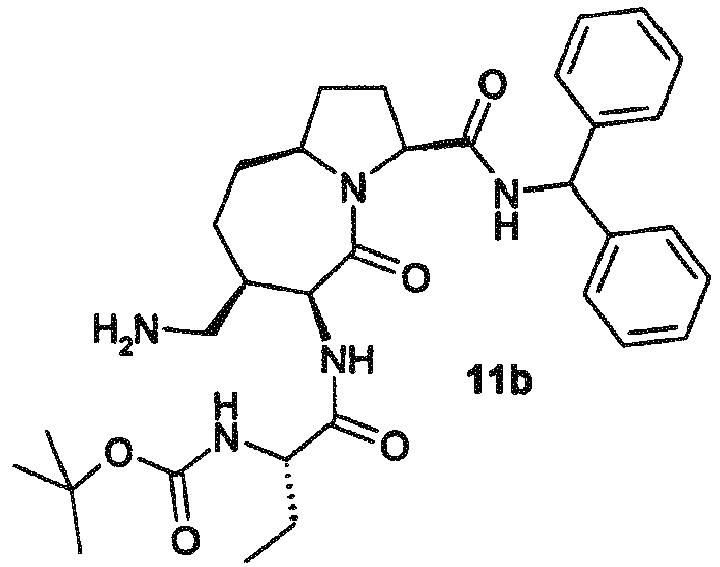
- 11b. Yield 92% (578 mg, MW 628.20, 0.92 mmol) of pure hydrochloride salt of 11b. Analytical characterization:

- DCC (1.0 equiv) and DMAP (0.2 equiv) were sequentially added to a stirred solution of compounds 11 (1.0 equiv) and the appropriate terminal alkyne carboxylic acid (1.0 equiv) in dry CH2Cl2 at 0 °C. The reaction mixture was warmed to room temperature over a period of 1 hour. After reaction completion, the reaction mixture was filtered, and washed with diethyl ether. The solvent was removed under reduced pressure, and the crude product was purified by Biotage™ flash chromatography.
- Compound 12a was synthesized by the general procedure described above starting from compound 11a (60 mg, 0.1 mmol).

- 12a. Biotage™ eluant conditions: from 1% of MeOH and 99% of CH2Cl2 to 10% of MeOH and 90% of CH2Cl2. Yield 93 % (64 mg, MW 685.87,0.093 mmol) of pure
- 12a. Analytical characterization:

- Compound 12b was synthesized by the general procedure described above starting from compound 11b (63 mg, 0.1 mmol).

- 12b. Biotage™ eluant conditions: from 1% of MeOH and 99% of CH2Cl2 to 10% of MeOH and 90% of CH2Cl2. Yield 87 % (57 mg, MW 657.35, 0.087 mmol) of pure 12b. Analytical characterization:
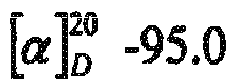
- Some other title intermediates may be prepared according to a synthetic process outlined in Scheme 3, comprising the following reactions:
- a) coupling of linker 13 with suitable amino acids to provide intermediates 15;
- b) condensation of N-deprotected compounds 15 with compounds 5;
- c) azide reduction to provide amines 17;
- d) coupling of amines 17 with suitable acid derivatives to provide amides 18 and 19.
- The general synthesis of key intermediates is showed in Scheme 3.

- HOBt (1.2 equiv), HBTU (1.2 equiv) and Sym-collidine (2.0 equiv) were sequentially added to a stirred solution of azides 13 (1.0 equiv) and N-Boc protected aminoacids 14 (1.25 equiv) in dry DMF (≈0.15 M concentration for 13) at 0 °C. The reaction mixture was left stirring and monitored by LC-MS. After reaction completion, the mixture was diluted with EtOAc and sequentially washed with 5% aqueous citric acid, saturated aqueous sodium bicarbonate and brine. The organic layer was dried over Na2SO4, and then the solvent removed under reduced pressure. The residue was purified by Biotage™ flash chromatography.
- Compound 15a was synthesized by the general procedure described above starting from 11-azido-3,6,9-trioxaundecan-1-amine 13a (110 mg, 0.503 mmol) and Boc-(S)-2-Phenylglycine 14a (158 mg, 0.630 mmol).

- 15a. Biotage™ eluant conditions: from 1% of MeOH and 99% of CH2Cl2 to 10% of MeOH and 90% of CH2Cl2. Yield 74 % (167 mg, MW 451.53, 0.37 mmol) of pure 15a. Analytical characterization: 1H-NMR (400 MHz, CDCl3): δ: 7.32.7.20 (m, 5H), 6.28 (bs, 1H), 5.77 (bs, 1H), 5.07 (bs, 1H), 3.6-3.28 (m, 16H), 1.35 (s, 9H); 13C-NMR (100 MHz, CDCl3): δ: 129.0, 128.3, 127.2, 70.7, 70.6, 70.5, 70.3, 70.0, 69.6, 68.8, 58.5, 50.7, 39.6, 28.3. ESI-MS: m/z 452.5 [M+H]+, 474.5 [M+Na]+.
- TFA (50.0 equiv) was added to a stirred solution of compounds 15 (1.0 equiv) in CH2Cl2 (≈0.10 M concentration for 15). The reaction mixture was left stirring at room temperature and then concentrated under reduced pressure. The crude trifluoroacetate salts of the amines were used without further purification.
- HOBt (1.2 equiv), HBTU (1.2 equiv) and sym-collidine (4.0 equiv) were sequentially added to a stirred solution of the crude residue (1.0 theoretical equiv) and compounds 5 (1.25 equiv) in dry DMF (≈0.10 M concentration for 5) at 0 °C. The reaction mixture was left stirring and monitored by LC-MS. After reaction completion, the mixture was diluted with EtOAc and washed with 5% aqueous citric acid, saturated aqueous sodium bicarbonate and brine. The organic layer was dried over Na2SO4, and then the solvent removed under reduced pressure. The residue was purified by Biotage™ flash chromatography.
- Compound 16a was synthesized by the general procedure described above starting from compound 15a (95 mg, 0.27 mmol) and 5a (150 mg, 0.34 mmol).

- 16a. Biotage™ eluant conditions: from 1% of MeOH and 99% of CH2Cl2 to 10% of MeOH and 90% of CH2Cl2. Yield 82 % (170 mg, MW 774.92, 0.220 mmol) of pure 16a. Analytical characterization: 1H-NMR (400 MHz, CDCl3): δ: 7.93 (d, J = 6.8 Hz, 1H), 7.51 (d, J = 8.0 Hz, 1H), 7.36-7.27 (m, 5H), 6.37 (bs, 1H), 5.38 (d, J = 7Hz, 1H), 4.71 (d, J = 6.8 Hz, 1H), 4.48 (m, 2H), 3.68 (m, 1H), 3.65 (m, 8H), 3.55 (m, 4H), 3.45 (m, 4H), 3.38 (m, 2H), 3.32 (m, 1H), 2.87 (s, 3H), 2.32 (m 1H), 2.22 (m, 1H), 2.10-1.40 (m, 3H), 1.35-1.70 (m, 5H), 1.52 (s, 9H), 1.30 (m, 2H), 0.93 (t, J = 7Hz, 3H); 13C-NMR (100 MHz, CDCl3): δ: 173.2, 172.4, 171.4, 170.0, 169.5, 138.2, 128.9, 128.2, 127.2, 70.7, 70.6, 70.5, 70.3, 70.0, 69.5, 64.3, 61.4, 61.0, 59.1, 58.8, 57.4, 53.9, 50.6, 41.6, 39.7, 34.4, 33.0, 32.8, 30.4, 28.4, 26.4, 21.6, 10.7 . ESI-MS: m/z 775.5 [M+H]+, 797.5 [M+Na]+.
- 1.0 M aqueous citric acid (1.1 equiv) was added to a solution of azides 16 in H2O/EtOH 1:9 (≈5.0 M concentration for 16). The solution was hydrogenated by flowing through a 10% Pd/C catalyst cartridge (hydrogen pressure 10 bar, temperature 35 °C, flow rate 0.5 mL/min) using the H-Cube™ system by Thales Nanotechnology. After complete reduction to the corresponding amine, the solvent was removed under reduced pressure. The crude product was used without any further purification, and only an analytical sample was purified (semi-preparative HPLC reverse phase chromatography) and characterized.
- Compound 17a was synthesized by the general procedure described above starting from compound 16a (170 mg, 0.220 mmol).

- 17a. Biotage™ C18 reverse phase eluant conditions: from 90% H2O (1% CH3COOH) and 10% CH3CN (1% CH3COOH) to 100% CH3CN (1% CH3COOH). Yield 98 % (162 mg, MW 748.95, 0.219 mmol) of pure 17a. Analytical characterization: 1H-NMR (400 MHz, CD3OD): δ: 8.6 (bs, 1H), 7.44-7.33 (m, 5H), 5.40 (s, 1H), 4.67 (dd, J = 5.2, 2.8 Hz, 1H), 4.53 (m, 2H), 4.01 (m, 1H), 3.67 (m, 5H), 3.65-3.47 (m, 8H), 3.39 (m, 2H), 3.09 (bs, 2H), 2.85 (s, 3H), 2.27 (m, 1H), 2.16 (m, 1H), 2.10- 1.88 (m, 4H), 1.82-1.65 (m, 4H), 1.55 (m, 1H), 1.50 (s, 9H), 1.42 (bs, 2H), 0.94 (t, J = 7.2 Hz, 3H); 13C-NMR (100 MHz, CD3OD): δ: 172.3, 171.8, 171.0, 137.6, 128.4, 127.9, 127.2, 70.1, 69.8, 69.0, 67.4, 63.9, 61.4, 58.5, 57.3, 40.3, 39.6, 39.2, 33.2, 32.8, 30.7, 29.5, 27.3, 27.2, 26.9, 9.6. ESI-MS: m/z 749.6 [M+H]+, 771.7 [M+Na]+.
- DCC (1.0 equiv) and DMAP (0.2 equiv) were sequentially added to a stirred solution of compounds 17 (1.0 equiv) and the appropriate terminal alkyne carboxylic acid (1.0 mmol) in dry CH2Cl2 at 0 °C. The reaction mixture was warmed to room temperature over a period of 1 hour. After reaction completion, the reaction mixture was filtered, and washed with diethyl ether. The solvent was removed under reduced pressure, and the crude product was purified by Biotage™ flash chromatography.
- Compound 18a was synthesized by the general procedure described above starting from compound 17a (83 mg, 0.11 mmol).

- 18a. Biotage™ eluant conditions: from 1% of MeOH and 99% of CH2Cl2 to 10% of MeOH and 90% of CH2Cl2. Yield 74 % (67 mg, MW 829.01, 0.081 mmol) of pure 18a. Analytical characterization: 1H-NMR (400 MHz, CDCl3): δ: 7.98 (d, J = 7.0 Hz, 1H), 7.51 (d, J = 6.8 Hz, 1H), 7.45-7.25 (m, 5H), 6.68 (bs, 1H), 5.43 (d, J = 7.2 Hz, 1H), 4.71 (d, J = 6.8 Hz, 1H); 4.48 (bs, 2H), 3.8 (m, 1H), 3.70- 3.30 (m, 18H), 2.87 (s. 3H), 2.48 (m, 2H), 2.40-2.15 (m, 4H), 2.15-1.65 (m, 9H), 1.52 (s, 9H), 1.40-1.25 (m, 2H), 0.93 (t, J = 7.2 Hz, 3H); 13C-NMR (100 MHz, CDCl3): δ: 173.4, 173.2, 171.4, 171.3, 170.1, 169.5, 138.2, 128.8, 128.2, 127.2, 83.2, 70.6, 70.5, 70.4, 70.3, 70.1, 69.8, 69.5, 69.2, 64.3, 61.4, 58.8, 57.2, 53.9, 41.6, 39.7, 39.6, 39.1, 35.1, 34.5, 33.0, 31.2, 28.4, 26.6, 21.6, 20.6, 14.8, 10.6. ESI-MS: m/z 829.6 [M+H]+, 851.5 [M+Na]+.
- Diglycolic anydride (2.0 equiv) and pyridine (4.0 equiv) were sequentially added to a stirred solution of compounds 17 (1.0 equiv) in DMF. The reaction mixture was stirred at room temperature for 4 hours. After reaction completion, water was added to the reaction mixture. The mixture was diluted with EtOAc and washed with 5% aqueous citric acid, saturated aqueous sodium bicarbonate and brine. The organic layer was dried over Na2SO4, and then the solvent removed under reduced pressure. Finally, the crude product was purified by flash chromatography on Biotage using a C18 reverse phase column.
- Compound 19a was synthesized by the general procedure described above starting from compound 17a (83 mg, 0.11 mmol).

- 19a. Biotage™ C18 reverse phase eluant conditions: from 90% H2O (1% CH3COOH) and 10% CH3CN (1% CH3COOH) to 100% CH3CN (1% CH3COOH). Yield 58 % (55 mg, MW 865.00, 0.064 mmol) of pure 19a. Analytical characterization: 1H-NMR (400 MHz, CDCl3): δ: 8.01 (d, J = 7.0 Hz, 1H), 7.61 (bs, 1H), 7.53 (d, J = 6.8 Hz, 1H), 7.40-7.28 (m, 5H), 6.98 (bs, 1H), 4.52 (d, J = 7.2Hz, 1H), 4.71 (d, J = 6.8 Hz, 1H), 4.5 (m, 2H), 4.10 (m, 3H), 3.82 (m, 1H); 3.70-3.30 (m, 18H), 2.88 (s, 3H), 2.25 (m, 2H), 2.08 (s, 2H), 2.05-1.70 (m, 8H), 1.51 (s, 9H), 1.39 (m, 2H), 0.93 (t, J = 7.2 Hz, 3H); 13C-NMR (100 MHz, CDCl3): δ: 175.2, 173.0, 171.9, 171.4, 169.8, 169.8, 137.9, 128.8, 128.3, 127.2, 77.3, 77.0, 76.8, 71.4, 70.4, 70.0, 69.7, 69.5, 69.2, 64.3, 61.6, 58.9, 57.2, 54.0, 41.5, 39.7, 38.8, 34.3, 33.0, 31.2, 28.4, 26.7, 21.6, 20.6, 10.6. ESI-MS: m/z 865.4 [M+H]+, 887.4 [M+Na]+.
-

- A 0.9 M aqueous solution of sodium ascorbate (0.55 equiv) and a 0.3 M aqueous solution of Cu(OAc)2 (0.25 equiv) were sequentially added to a stirred solution of compounds 7 (1.1 equiv) and compound 20 (Yoshito Takeuchi, et. al., Journal of Organometallic Chemistry, 2003, 678, 61) (0.5 equiv) in a 1:1 mixture of H2O/BuOH (final concentration of 7 ∼ 0.05 M). The reaction mixture was stirred at room temperature and monitored by LC-MS. After reaction completion, the solvent was removed under reduced pressure, the crude product was taken up in CH2Cl2 and water and then extracted with CH2Cl2. The organic layer was dried over Na2SO4, and then the solvent removed under reduced pressure. Finally, the residue was purified by Biotage™ flash chromatography.
- Compound 21a was synthesized by the general procedure described above starting from compound 7a (200 mg, 0.44 mmol).
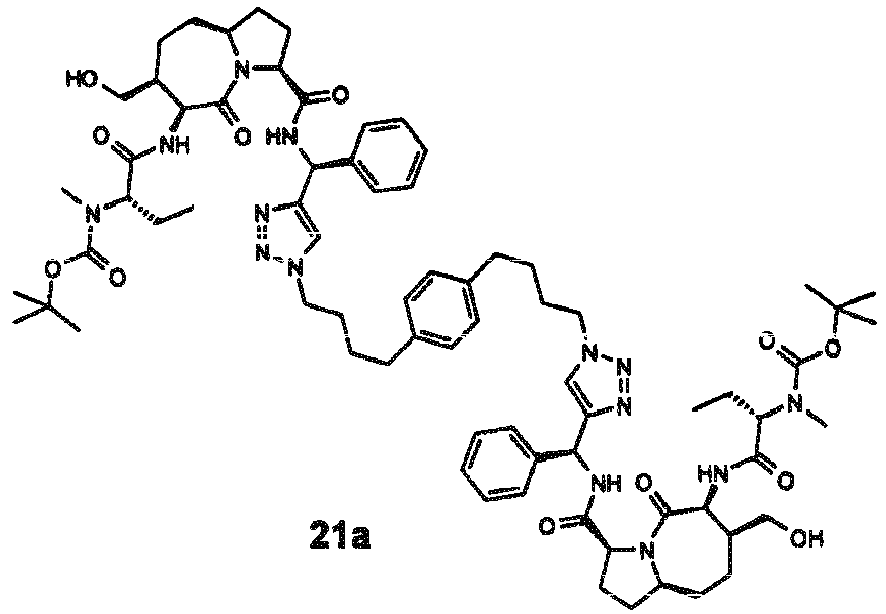
- 21a. Biotage™ eluant conditions: from 20% of EtOAc and 80% of Petroleum ether to 100% of EtOAc. Yield 73 % (221 mg, MW 1381.74, 0.160 mmol) of pure 21a. Analytical characterization:

-
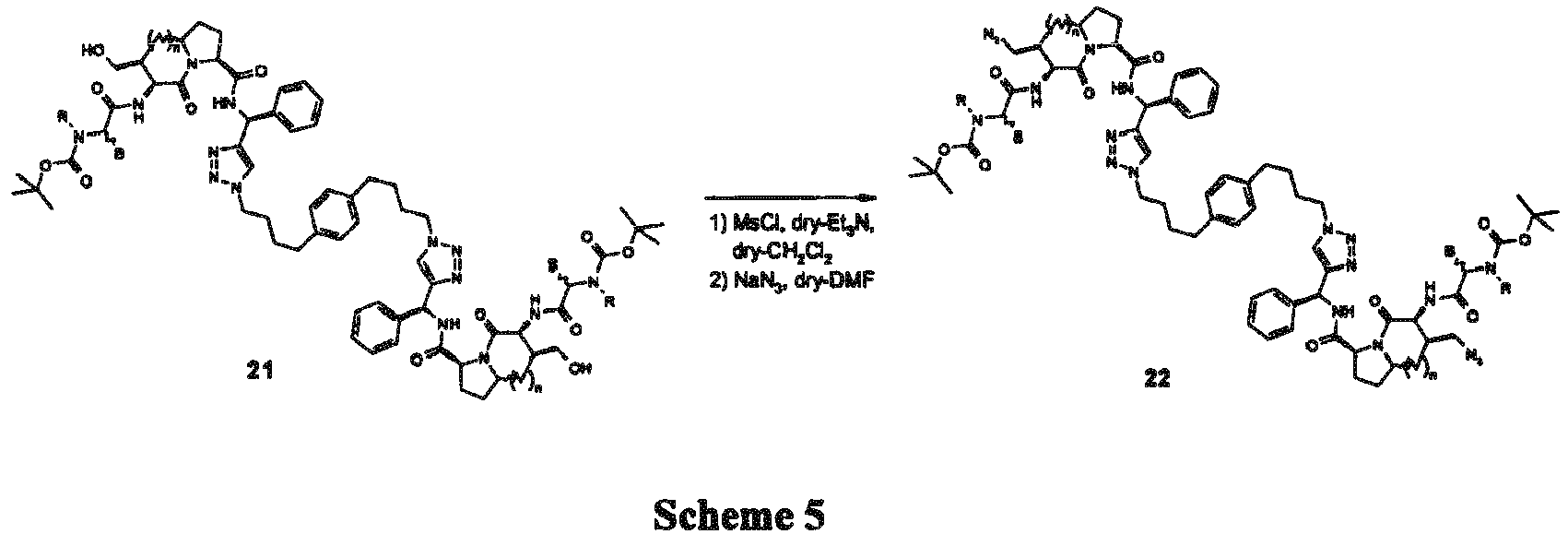
- Dry TEA (4.0 equiv) and MsCl (4.0 equiv) were sequentially added to a stirred solution of compounds 21 (1.0 equiv) in dry CH2Cl2 (≈0.25 M concentration for 21) under argon at 0 °C. The reaction mixture was stirred at room temperature for 2 hours. After reaction completion, the resulting mixture was diluted with CH2Cl2 and washed with a saturated aqueous solution of NH4Cl. The organic layer was dried over Na2SO4, and then the solvent removed under reduced pressure. The crude product was dissolved in dry DMF (≈0.1 M concentration) under argon at room temperature, and then NaN3 (20.0 equiv) was added. The reaction mixture was irradiated in a microwave reactor at 100°C for 30 min. After reaction completion, the solvent was removed under reduced pressure, the crude product was diluted with EtOAc and washed with water. The organic layer was dried over Na2SO4, and then the solvent removed under reduced pressure. Finally, the crude product was purified by Biotage™ flash chromatography.
- Compound 22a was synthesized by the general procedure described above starting from compound 21a (78 mg, 0.056 mmol).
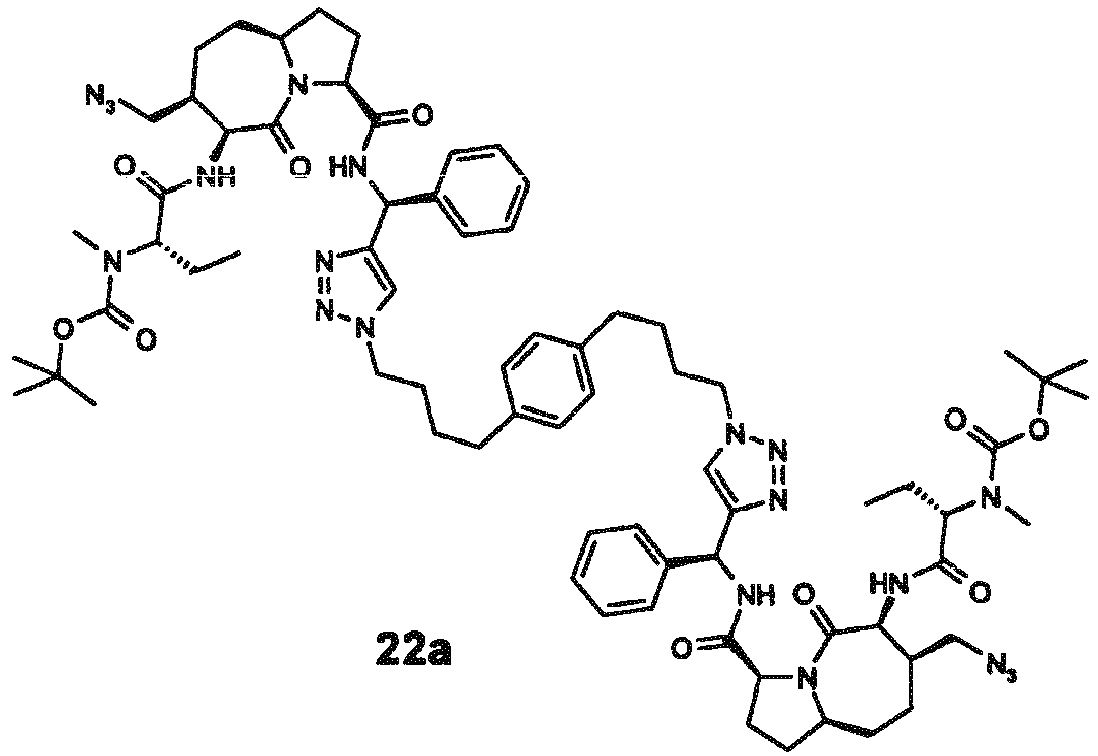
- 22a. Biotage™ eluant conditions: from 1% of MeOH and 99% of CH2Cl2 to 10% of MeOH and 90% of CH2Cl2. Yield 58 % (47 mg, MW 1431.77, 0.033 mmol) of pure 22a. Analytical characterization:
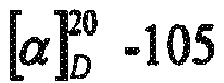
-

- A 1N solution of (CH3)3P in toluene (3.0 equiv) was added to a stirred solution of compounds 22 (1.0 equiv) in dry CH2Cl2 (≈0.01 M concentration for 22) under argon at room temperature. After two hours, a 0.5 M HCl solution was added to the reaction mixture, which was stirred at room temperature for further 10-20 min. After reaction completion, the mixture was extracted with CH2Cl2, the organic layer was combined and dried over Na2SO4, and then the solvent was removed under reduced pressure. The crude product was used without further purification.
- Compound 23a was synthesized by the general procedure described above starting from compound 22a (36 mg, 0.026 mmol).

- 23a. Yield 78 % (28 mg, MW 1379.77, 0.020 mmol) of pure 23a. Analytical characterization:

-

- Solid NaBH(OAc)3 (2.6 equiv) was added to a stirred solution of compounds 23 (1.0 equiv) and benzaldehyde (1.8 equiv) in dry CH2Cl2 (≈0.01 M concentration for 23).
- The reaction mixture was stirred at room temperature and monitored by LC-MS. After reaction completion, the solution was diluted with CH2Cl2 and then washed with a saturated aqueous solution of NH4Cl, then brine. The organic layer was dried over Na2SO4, and then the solvent removed under reduced pressure. The residue was purified by Biotage™ flash chromatography.
- Compound 24a was synthesized by the general procedure described above starting from compound 23a (42 mg, 0.03 mmol).
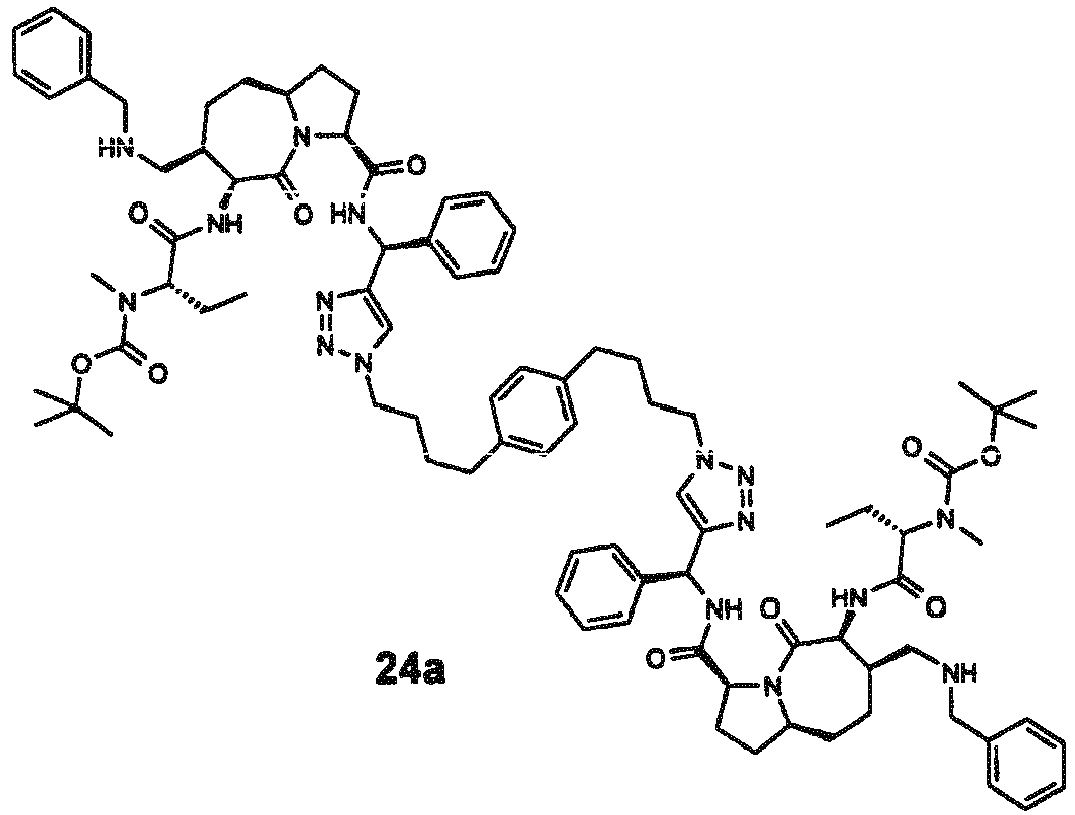
- 24a. Biotage™ eluant conditions: from 1% of MeOH and 99% of CH2Cl2 to 10% of MeOH and 90% of CH2Cl2. Yield 45 % (21 mg, MW 1560.32, 0.0135 mmol) of pure 24a. Analytical characterization:

-

- HOBt (2.4 equiv), HBTU (2.4 equiv) and Sym-collidine (4.0 equiv) were sequentially added at 0 °C to a stirred solution of commercially available diamines 25 (1.0 equiv) and N-Boc protected aminoacids 14 (2.5 equiv) in dry DMF (≈0.15 M concentration for 25). The reaction mixture was left stirring and monitored by LC-MS. After reaction completion, the mixture was diluted with EtOAc and sequentially washed with a saturated aqueous solution of NH4Cl, saturated aqueous solution of sodium bicarbonate, and brine. The organic layer was dried over Na2SO4, and then the solvent removed under reduced pressure. The residue was purified by Biotage™ flash chromatography.
- Compound 26a was synthesized by the general procedure described above starting from 1,8-diaminooctane 25a (46 mg, 0.32 mmol) and Boc-(S)-2-Phenylglycine 14a (200 mg, 0.80 mmol).

- 26a. Biotage™ eluant conditions: from 1% of MeOH and 99% of CH2Cl2 to 10% of MeOH and 90% of CH2Cl2. Yield 94 % (183 mg, MW 610.80, 0.30 mmol) of pure 26a. Analytical characterization: 1H-NMR (400 MHz, CDCl3): δ: 7.38-7.25 (m, 10H), 5.76 (m, 2H), 5.25 (m, 2H), 3.32 (bs, 1H), 3.23 (m, 2H), 3.13 (bs, 1H), 1.57 (s, 4H), 1.42 (m, 18H), 1.21 (d, J = 11.2 Hz, 6H); 13C-NMR (100 MHz, CDCl3): δ: 129.0, 128.9, 128.3, 127.2, 39.7, 39.7, 29.2, 28.8, 28.3, 26.4. ESI-MS: m/z 611.4 [M+H]+.
- Compound 26b was synthesized by the general procedure described above starting from 3,4-Bis-(4-amino-butylamino)-cyclobut-3-ene-1,2-dione 25b (17 mg, 0.068 mmol) and Boc-(S)-2-Phenylglycine 14a (43 mg, 0.17 mmol).

- 26b. Biotage™ eluant conditions: from 1% of MeOH and 99% of CH2Cl2 to 10% of MeOH and 90% of CH2Cl2 10 VC. Yield 88 % (43 mg, MW 720.87, 0.60 mmol) of pure 26b. Analytical characterization: 1H-NMR (400 MHz, CD3OD): δ: 7.41-7.31 (m, 10H), 5.11 (bs, 2H), 3.56 (bs, 4H), 3.30-3.19 (m, 4H), 1.55 (bs, 8H), 1.44 (s, 18H); 13C-NMR (100 MHz, CD3OD): δ: 128.3, 127.8, 127.0, 43.4, 38.7, 28.1, 27.3, 25.8. ESI-MS: m/z 721.1 [M+H]+.
- Compound 26c was synthesized by the general procedure described above starting from deca-4,6-diynedioic acid bis-[(2-amino-ethyl)-amide] 25c (17 mg, 0.068 mmol) and Boc-(S)-2-Phenylglycine 14a (43 mg, 0.17 mmol).

- 26c. Biotage™ eluant conditions: from 1% of MeOH and 99% of CH2Cl2 to 10% of MeOH and 90% of CH2Cl2. Yield 83 % (42 mg, MW 744.90, 0.56 mmol) of pure 26c. Analytical characterization: 1H-NMR (400 MHz, CDCl3): δ: 7.32-7.19 (m, 10H), 6.81 (bs, 2H), 5.73 (d, J = 6.4 Hz, 2H), 5.08 (bs, 2H), 3.32-3.19 (m, 8H), 2.43 (m, 4H), 2.19 (m, 4H), 1.33 (s, 18H); 13C-NMR (100 MHz, CDCl3): δ: 171.3, 129.0, 128.3, 127.2, 80.2, 66.2, 59.0, 41.0, 38.7, 34.8, 28.3, 16.0. ESI-MS: m/z 745.6 [M+H]+.
- Compound 26d was synthesized by the general procedure described above starting from 4,7,10-trioxa-1,13-tridecanediamine 25d (50 mg, 0.227 mmol) and Boc-(S)-2-Phenylglycine 14a (142 mg, 0.567 mmol)

- 26d. Biotage™ eluant conditions: from 1% of MeOH and 99% of CH2Cl2 to 10% of MeOH and 90% of CH2Cl2. Yield 94 % (146 mg, MW 686.85,0.212 mmol) of pure 26d. Analytical characterization: 1H-NMR (400 MHz, CDCl3): δ: 7.39-7.28 (m, 10H), 6.55 (bs, 2H), 5.94 (bs, 2H), 5.10 (bs, 2H), 3.59-3.31 (m, 16H), 1.70 (t, J = 6.0 Hz, 4H), 1.42 (s, 18H); 13C-NMR (100 MHz, CDCl3): δ: 170.3, 138.9, 128.8, 128.1, 127.2, 79.8, 70.4, 70.1, 69.7, 38.1, 28.7, 28.3. ESI-MS: m/z 687.6 [M+H]+, 709.5 [M+Na]+.
- TFA (50.0 equiv) was added to a stirred solution of compounds 26 (1.0 equiv) in CH2Cl2 (≈0.10 M concentration for 26). The reaction mixture was left stirring at room temperature and then concentrated under reduced pressure to give a crude residue which was used without purification.
- HOBt (2.4 equiv), HBTU (2.4 equiv) and Sym-collidine (4.0 equiv) were sequentially added to a stirred solution of the crude residue (1.0 theoretical equiv) and compounds 5 (≈2.5 equiv) in dry DMF (≈0.10 M concentration for 5) at 0 °C. The reaction mixture was left stirring and monitored by LC-MS. After reaction completion, the mixture was diluted with EtOAc and sequentially washed with 5% aqueous citric acid, saturated aqueous sodium bicarbonate and brine. The organic layer was dried over Na2SO4, and then the solvent removed under reduced pressure. The residue was purified by Biotage™ flash chromatography.
- Compound 27a was synthesized by the general procedure described above starting from compound 26a (34 mg, 0.08 mmol) and 5a (91 mg, 0.200 mmol).

- 27a. Biotage™ eluant conditions: from 1% of MeOH and 99% of CH2Cl2 to 10% of MeOH and 90% of CH2Cl2. Yield 97 % (98 mg, MW 1257.59,0.078 mmol) of pure 27a. Analytical characterization:
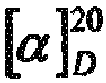
- Compound 27b was synthesized by the general procedure described above starting from compound 26b (45 mg, 0.062 mmol) and 5a (68 mg, 0.153 mmol).

- 27b. Biotage™ eluant conditions: from 1% of MeOH and 99% of CH2Cl2 to 10% of MeOH and 90% of CH2Cl2. Yield 51 % (42 mg, MW 1352.63,0.031 mmol) of pure 27b. Analytical characterization: 1H-NMR (400 MHz, CD3OD): δ: 7.31-7.18 (m, 10H), 5.24 (s, 2H), 4.54 (dd, J = 8.0, 2.4 Hz, 2H), 4.41 (m, 4H), 3.87 (m, 2H), 3.43 (m, 8H), 3.21 (m, 4H), 2.73 (s, 6H), 2.14 (m, 2H), 2.01 (m, 2H), 1.95-1.75 (m, 8H), 1.61 (m, 8H), 1.43 (m, 10H), 1.38 (s, 18H), 0.81 (t, J = 7.2 Hz, 6H); 13C-NMR (100 MHz, CD3OD): δ: 171.8, 171.2, 170.9, 168.0, 137.6, 128.5, 127.9, 127.1, 63.9, 61.4, 58.5, 57.6, 54.8, 43.5, 40.3, 38.6, 33.2, 32.8, 30.8, 28.1, 27.3, 27.0, 25.8, 21.2, 9.7. ESI-MS: m/z 1367.9 [M+H]+.
- Compound 27c was synthesized by the general procedure described above starting from compound 26c (42 mg, 0.056 mmol) and 5a (67 mg, 0.152 mmol).

- 27c. Biotage™ eluant conditions: from 1% of MeOH and 99% of CH2Cl2 to 10% of MeOH and 90% of CH2Cl2. Yield 74 % (58 mg, MW 1391.69, 0.041 mmol) of pure 27c. Analytical characterization: 1H-NMR (400 MHz, CDCl3): δ: 7.95 (bs, 2H), 7.55 (bs, 2H), 7.40-7.30 (m, 10H), 7.05 (bs, 2H), 6.95 (bs, 2H), 5.39 (d, J = 7.2 Hz, 2H), 4.75 (d, J = 6.4 Hz, 2H), 4.51 (bs, 4H), 3.82 (m, 2H), 3.64 (d, J = 11.6,2H), 3.42 (m, 4H), 3.35 (m, 6H), 2.88 (s, 6H), 2.60 (m, 4H), 2.45-2.15 (m, 8H), 2.15-1.60 (m, 14H), 1.51 (s, 18H), 1.35-1.25 (m, 4H) 0.93 (t, J = 7.6 Hz, 6H); 13C-NMR (100 MHz, CDCl3): δ: 173.0, 172.7, 171.7, 170.5, 137.8, 128.9, 128.3, 127.2, 66.2, 64.4, 61.4, 60.2, 58.9, 57.6, 54.0, 41.6, 41.0, 38.7, 34.7, 34.5, 33.1, 31.2, 28.4, 26.3, 21.6, 16.1, 10.7. ESI-MS: m/z 1392.0[M+H]+.
- Compound 27d was synthesized by the general procedure described above starting from compound 27d (30 mg, 0.044 mmol) and 5a (48 mg, 0.110 mmol).

- 27d. Biotage™ eluant conditions: from 1% ofMeOH and 99% of CH2Cl2 to 10% of MeOH and 90% of CH2Cl2. Yield 80 % (47 mg, MW 1333.64, 0.035 mmol) of pure 27d. Analytical characterization: 1H-NMR (400 MHz, CDCl3): δ: 7.84 (d, J = 7.8 Hz, 2H), 7.44 (d, J = 6.8 Hz, 2H), 7.35-7.15 (m, 10H), 6.72 (bs, 2H), 5.25 (d, J = 6.8 Hz, 2H), 4.60 (d, J = 6.8 Hz, 2H), 4.40 (bs, 4H), 3.72 (d, J = 12.0 Hz, 2H), 3.45 (m, 6H), 3.40-3.30 (m, 4H), 3.30-3.15 (m, 8H), 2.79 (s, 6H), 2.20-2.10 (m, 4H), 2.05-1.55 (m, 18H), 1.43 (s, 18H), 1.31-1.19 (m, 4H), 0.85 (t, J = 7.2 Hz, 6H); 13C-NMR (100 MHz, CDCl3): δ: 173.1, 171.4, 170.4, 169.4, 138.4, 128.9, 128.8, 128.1, 127.2, 80.5, 70.5, 70.0, 69.6, 64.4, 61.9, 60.3, 58.9, 57.4, 54.0, 41.6, 38.0, 34.4, 33.0, 31.2, 30.4, 28.4, 26.7, 21.6, 10.7. ESI-MS: m/z 1334.0[M+H]+.
- TFA (50.0 equiv) was added to a stirred solution of compounds 21, 24, 27 (1.0 equiv) in CH2Cl2 (0.10 M concentration). The reaction mixtures were left stirring at room temperature and monitored by LC-MS. After reaction completion the solution was concentrated under reduced pressure. The residue was treated with water and vigorously stirred to hydrolyze any undesired trifluoroacetate ester, and finally the solution was concentrated under reduced pressure. The residues were purified by chromatography on a C18 reverse phase semi-preparative HPLC column, and then lyophilized.

- 28a, from 21a (30 mg, 0.022 mmol). HPLC eluant conditions: from 90% of H2O (0.2% TFA) and 10% of MeOH/ i PrOH 6:4 (0.2% TFA) to 100% of MeOH/ i PrOH 6:4 (0.2% TFA), flow rate 12 ml/min., 20 min. runs. Yield 59% (18 mg, MW 1409.54, 0.013 mmol) of pure 28a. Analytical characterization:

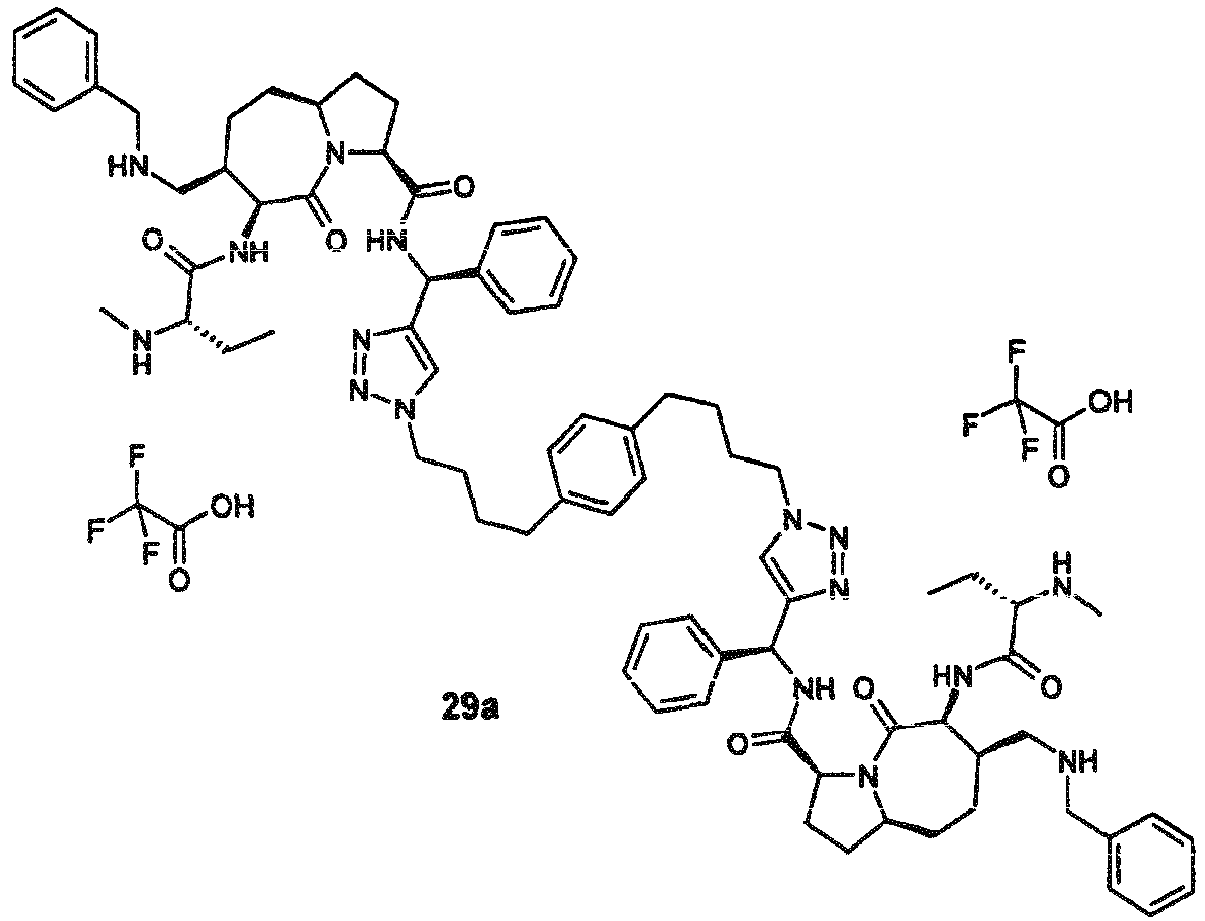
- 29a, from 24a (21 mg, 0.013 mmol). HPLC eluant conditions: from 90% of H2O (0.2% TFA) and 10% of MeOH/ i PrOH 6:4 (0.2% TFA) to 100% of MeOH/ i PrOH 6:4 (0.2% TFA), flow rate 12 ml/min., 20 min. runs. Yield 92% (19 mg, MW 1587.83, 0.012 mmol) of pure 29a. Analytical characterization:

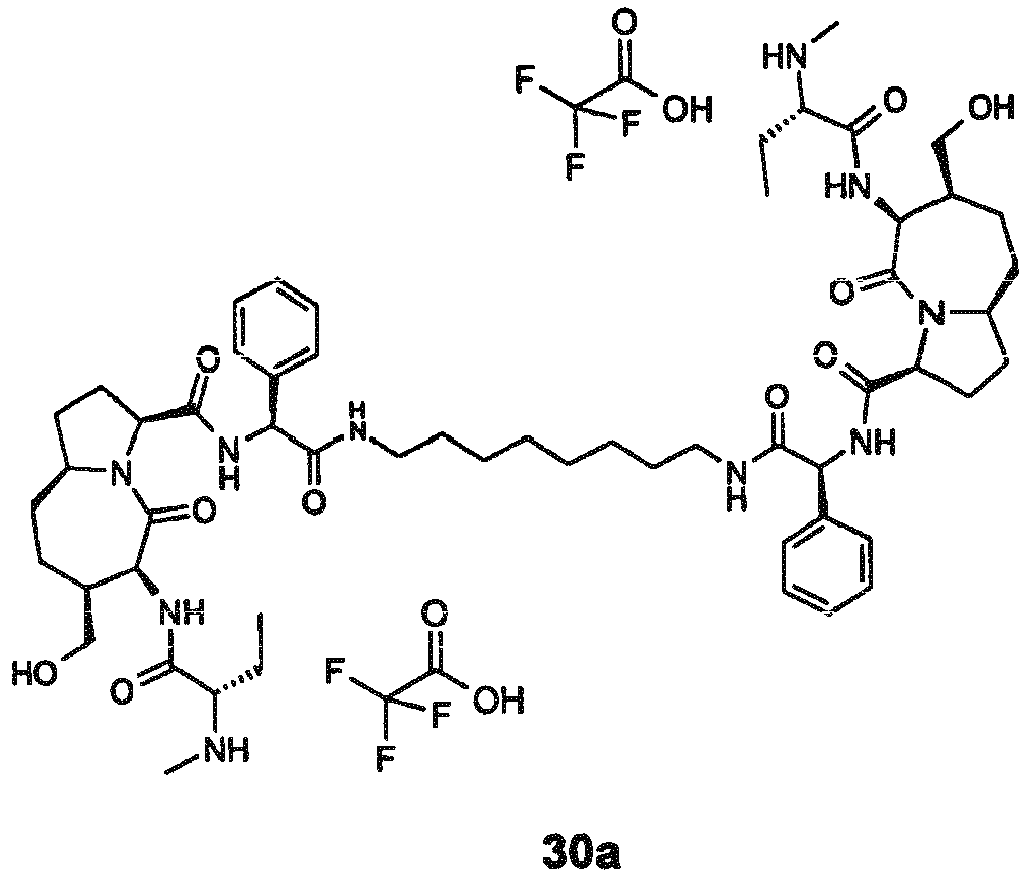
- 30a, from 27a (93 mg, 0.074 mmol). HPLC eluant conditions: from 70% of H2O (0.2% TFA) and 30% of CH3CN (0.2% TFA) to 30% of H2O (0.2% TFA) and 70% of CH3CN (0.2% TFA), flow rate 12 ml/min., 20 min. runs. Yield 58% (55 mg, MW 1285.35, 0.043 mmol) of pure 30a. Analytical characterization:


- 30b, from 27b (22 mg, 0.016 mmol). HPLC eluant conditions: from 80% of H2O (0.1% TFA) and 20% of CH3CN (0.1% TFA) to 25% of H2O (0.1% TFA) and 75% of CH3CN (0.1% TFA), flow rate 12 ml/min., 25 min. runs. Yield 69% (16 mg, MW 1395.43, 0.011 mmol) of pure 30b. Analytical characterization: 1H-NMR (600 MHz, D2O): δ: 7.32-7.22 (m, 10H), 5.18 (s, 2H), 4.61 (d, J = 10.2 Hz, 2H), 4.43 (dd, J = 8.4, 4.8 Hz, 2H), 3.95 (m, 2H), 3.81 (dd, J = 7.2, 5.4 Hz, 2H), 3.53 (dd, J = 4.2, 1.8 Hz, 4H), 3.55-3.25 (m, 6H), 3.02 (m, 2H), 2.61 (s, 6H), 2.18 (m, 2H), 2,10 (m, 2H), 1.95-1.80 (m, 10H), 1.80-1.60 (m, 6H), 1.48 (m, 2H), 1.35 (m, 4H), 1.25 (m, 4H), 0.88 (t, J = 7.8 Hz, 6H); 13C-NMR (125 MHz, D2O): δ: 173.2, 171.8, 171.1, 168.2, 135.8, 129.0, 128.8, 127.2, 63.1, 62.6, 61.7, 58.7, 58.3, 54.3, 42.8, 38.9, 38.8, 32.4, 31.4,29.4,27.7,25.3,23.4,8.1. ESI-MS: m/z 1167.6 [M+H]+.


- 30d, from 27d (50 mg, 0.038 mmol). HPLC eluant conditions: from 80% of H2O (0.1 % TFA) and 20% ofCH3CN (0.1 % TFA) to 25% of H2O (0.1% TFA) and 75% of CH3CN (0.1% TFA), flow rate 12 ml/min., 25 min. runs. Yield 97% (50 mg, MW 1361.41, 0.037 mmol) of pure 30d. Analytical characterization: 1H-NMR (600 MHz, D2O): δ: 7.36-7.33 (m, 10H), 5.22 (s, 2H), 4.62 (d, J = 9.6 Hz, 2H), 4.46 (dd, J = 8.4, 4.8 Hz, 2H), 3.97 (m, 2H), 3.81 (dd, J = 7.2, 5.4 Hz, 2H), 3.54 (dd, J = 4.2, 1.8 Hz, 4H), 3.45 (m, 4H), 3.38 (m, 4H), 3.26 (m, 6H), 3.10 (m, 2H), 2.61 (s, 6H), 2.20 (m, 2H), 2.08 (m, 2H), 1.97 (m, 4H), 1.90-1.80 (m, 6H), 1.80-1.75 (m, 2H), 1.75-1.55 (m, 8H), 1.55-1.45 (m, 2H), 0.89 (t, J = 7.8 Hz, 6H); 13C-NMR (125 MHz, D2O): δ: 173.2, 171.7, 171.1, 168.2, 135.9, 129.2, 129.0, 127.3, 69.4, 68.0, 63.1, 62.7, 61.7, 58.7, 58.2, 54.4, 38.9, 36.3, 32.4, 31.5, 31.4, 29.4, 28.0, 27.7, 23.4, 8.1. ESI-MS: m/z 1133.6 [M+H]+.
-

- A 0.9 M aqueous solution of sodium ascorbate (0.55 equiv) and a 0.3 M aqueous solution of Cu(OAc)2 (0.25 equiv) were sequentially added to a stirred solution of compounds 16 (1.0 equiv) and compounds 12 (1.0 equiv) in a 1:1 mixture of H2O/ t BuOH (final concentration of 16 ~ 0.05 M). The reaction mixture was stirred overnight at room temperature and then the solvent was removed under reduced pressure. The residues were purified by Biotage™ flash chromatography.
- Compound 31a was synthesized by the general procedure described above starting from compound 16a (44 mg, 0.057 mmol) and 12a (38 mg, 0.057 mmol).

- 31a. Biotage™ eluant conditions: from 1% of MeOH and 99% of CH2Cl2 to 10% of MeOH and 90% of CH2Cl2. Yield 61 % (51 mg, MW 1460.79, 0.035 mmol) of pure 31a. Analytical characterization: 1H-NMR (400 MHz, CDCl3): δ: 7.95 (d, J = 6.8 Hz, 2H), 7.51 (m, 2H), 7.35-7.20 (m, 15H), 7.16 (d, J = 9.2Hz, 2H), 6.75 (bs, 1H), 6.22 (d, J = 6.8 Hz, 1H), 5.43 (d, J = 7.2 Hz, 1H), 4.72 (dd, J = 16, 7.6 Hz, 2H), 4.48 (m, 6H), 3.82 (m, 4H), 3.70-3.30 (m, 15H), 3.07 (t, J = 7.6 Hz, 2H), 2.85 (m, 6H), 2,.67 (m, 3H), 2.48 (m, 1H), 2.25 (m, 3H), 2.05 (m, 1H), 2.00-1.80 (m, 5H), 1.80-1.65 (m, 7H), 1.52 (s, 9H), 1.48 (s, 9H), 1.35 (m, 1H), 1.25 (m, 2H), 1.10 (m, 1H), 0.94 (t, J = 7.2 Hz, 6H); 13C-NMR (100 MHz, CDCl3): δ: 173.1, 171.4, 169.6, 169.4, 146.1, 142.1, 138.4, 128.8, 128.7, 128.6, 127.3, 127.2, 127.1, 123.0, 70.5, 70.4, 70.2, 69.5, 69.3, 64.3, 61.4, 61.1, 58.8, 57.2, 56.8, 53.9, 53.7, 50.4, 41.7, 39.6, 35.5, 34.5, 33.2, 33.0, 31.2, 28.4, 28.3, 26.4, 25.6, 21.6, 21.3, 10.7. ESI-MS: m/z 1461.7 [M+H]+, 1482.7 [M+Na]+.
-

- A 0.9 M aqueous solution of sodium ascorbate (0.55 equiv) and a 0.3 M aqueous solution of Cu(OAc)2 (0.25 equiv) were sequentially added to a stirred solution of compounds 18 (1.0 equiv) and compounds 10 (1.0 equiv) in a 1:1 mixture of H2O/ t BuOH (final concentration of 18 ~ 0.05 M). The reaction mixture was stirred overnight at room temperature and then the solvent was removed under reduced pressure. The residues were purified by Biotage™ flash chromatography.
- Compound 32a was synthesized by the general procedure described above starting from compound 18a (37 mg, 0.045 mmol) and 10a (29 mg, 0.045 mmol).
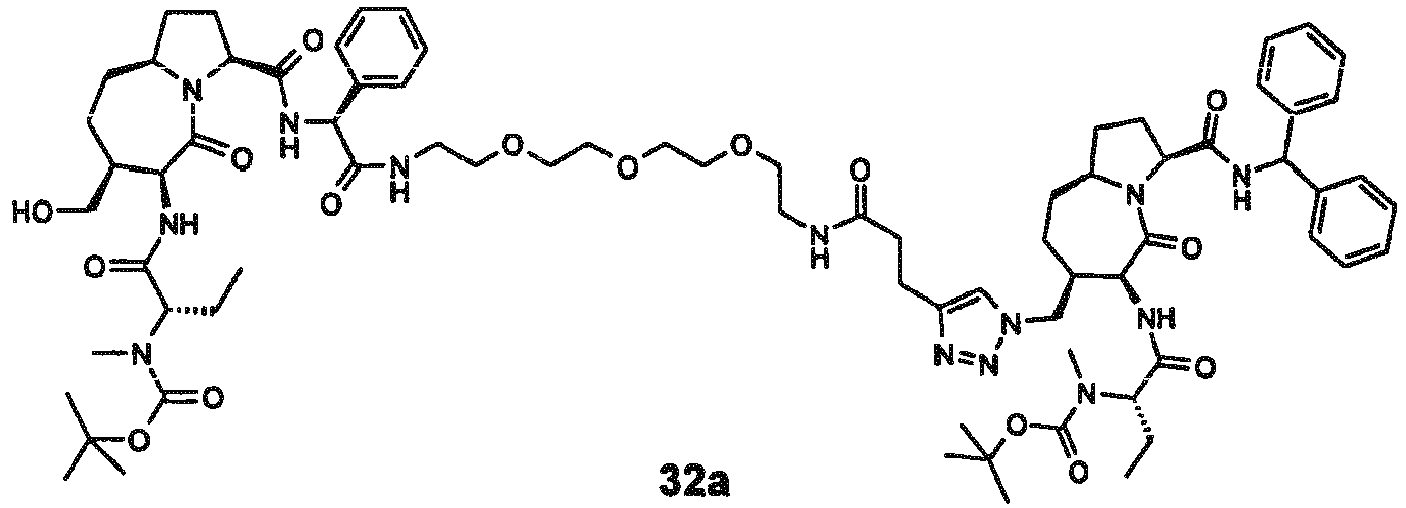
- 32a. Biotage™ eluant conditions: from 1% of MeOH and 99% of CH2Cl2 to 10% of MeOH and 90% of CH2Cl2. Yield 80 % (52 mg, MW 1460.79, 0.036 mmol) of pure 32a. Analytical characterization: 1H-NMR (400 MHz, CDCl3): δ: 7.89 (d, J = 6.8 Hz, 1H), 7.71 (d, J = 7.0 Hz, 1H), 7.47 (m, 1H), 7.35-7.12 (m, 15H), 7.08 (d, J = 7.2 Hz, 1H), 6.85 (bs, 1H), 6.55 (bs, 1H), 6.10 (d, J = 8.8 Hz, 1H), 5.36 (d, J = 7.2 Hz, 1H), 4.56 (m, 3H), 4.38 (m, 4H), 4.10 (bs, 1H), 3.75 (m, 2H), 3.60-3.20 (m, 18H), , 2.97 (bs, 2H), 2.75 (s, 6H), 2.55 (m, 3H), 2.32 (m, 1H), 2.15 (m, 3H), 1.95-1.60 (m, 13H), 1.43 (s, 9H), 1.38 (s, 9H); 1.35-1.15 (m, 3H), 1.02 (m, 1H), 0.85 (t, J = 7.2 Hz, 6H); 13C-NMR (100 MHz, CDCl3): δ: 171.9, 171.4, 170.7, 169.6, 141.8, 141.2, 138.4, 128.8, 128.7, 128.1, 127.6, 127.5, 127.3, 127.2, 127.1, 70.4, 70.1, 69.9, 69.8, 69.5, 64.3, 61.4, 61.3, 58.8, 57.2, 56.9, 53.9, 53.6, 41.6, 40.4, 39.6, 39.2, 34.4, 33.6, 33.3, 33.0, 31.1, 28.4, 28.3, 26.5, 25.9, 21.7, 21.2, 10.7. ESI-MS: m/z 681.2 [M+H]2+,1461.0 [M+H]+, 1483.0 [M+Na]+.
-

- HOBt (1.2 equiv), HBTU (1.2 equiv) and sym-collidine (4.0 equiv) were sequentially added to a stirred solution of compounds 19 (1.0 equiv) and compounds 11 (1.25 equiv) in dry DMF (≈0.10 M concentration for 19) at 0 °C. The reaction mixture was left stirring and monitored by LC-MS. After reaction completion, the mixture was diluted with EtOAc and washed with 5% aqueous citric acid, saturated aqueous sodium bicarbonate and brine. The organic layer was dried over Na2SO4, and then the solvent removed under reduced pressure. The residue was purified by Biotage™ flash chromatography.
- Compound 33a was synthesized by the general procedure described above starting from compound 19a (54 mg, 0.063 mmol) and 11a (52 mg, 0.08 mmol).

- 33a. Biotage™ eluant conditions: from 1% of MeOH and 99% of CH2Cl2 to 10% of MeOH and 90% of CH2Cl2. Yield 67 % (61 mg, MW 1457.77, 0.042 mmol) of pure 33a. Analytical characterization: 1H-NMR (400 MHz, CDCl3): δ: 7.87 (d, J = 7.2 Hz, 1H), 7.76 (d, J = 6.8 Hz, 1H), 7.63 (d, J = 6.0 Hz, 1H), 7.46 (m, 2H), 7.35-7.10 (m, 15H), 6.72 (bs, 1H), 6.15 (d, J = 8.4 Hz, 1H), 5.35 (d, J = 7.2 Hz, 1H), 4.64 (dd, J = 19.2,7.2 Hz, 2H), 4.40 (m, 4H), 3.95 (m, 4H), 3.72 (m, 3H), 3.6-3.20 (m, 18H), 2.79 (s, 3H), 2.75 (s, 3H), 2.52 (m, 2H), 2.35 (m, 1H), 2.18 (m, 2H), 1.90-1.55 (m, 14H), 1.43 (s, 9H), 1.41 (s, 9H), 1.30-1.10 (m, 4H), 0.85 (m, 6H); 13C-NMR (100 MHz, CDCl3): δ: 172.7, 171.3, 169.6, 168.9, 168.9, 142.2, 138.4, 128.8, 128.6, 128.5, 128.1, 127.4, 127.3, 127.2, 70.7, 70.5, 70.4, 70.3, 70.1, 69.6, 69.5, 64.3, 61.7, 61.4, 61.3, 60.5, 58.9, 58.8, 57.2, 56.8, 53.9, 53.5, 41.6, 40.0, 39.7, 39.6, 38.7, 34.4, 34.3, 33.1, 33.0, 31.1, 28.4, 28.3, 26.4, 25.7, 21.7, 21.3, 10.7, 10.6. ESI-MS: m/z 1452.9 [M+H]+, 1475.0 [M+Na]+.
- TFA (50.0 equiv) was added to a stirred solution of compounds 31, 32, 33 (1.0 equiv) in CH2Cl2 (≈0.10 M concentration). The reaction mixtures were left stirring at room temperature and monitored by LC-MS. After reaction completion the reaction mixture was concentrated under reduced pressure. The residue was treated with water and vigorously stirred to hydrolyze any undesired trifluoroacetate ester, then the mixture was concentrated under reduced pressure. The residue was purified by chromatography on a C18 reverse phase semi-preparative HPLC column and then lyophilized.

- 34a, from 31a (0.035 mmol). HPLC eluant conditions: from 40% of H2O (0.1% TFA) and 60% of CH3CN (0.1% TFA) to 25% of H2O (0.1% TFA) and 75% of CH3CN (0.1% TFA), flow rate 15 ml/min., 22 min. runs. Yield 90 % (47 mg, MW 1488.60, 0.032 mmol) of pure 34a. Analytical characterization; 1H-NMR (400 MHz, D2O): δ: 8.77 (s, 1H), 7.39-7.29 (m, 15H), 6.04 (s, 1H), 5.33 (s, 1H), 4.67 (d, J = 10.0 Hz, 2H), 4.60-4.40 (m, 5H), 4.00 (m, 2H), 3.90 (m, 2H), 3.79 (m, 2H), 3.58 (d, J = 3.6 Hz, 2H), 3.55-38 (m, 11H), 3.35-3.20 (m, 2H), 2.96 (m, 3H), 2.67 (s, 6H), 2.57 (t, J = 7.2 Hz, 2H), 2.23 (m, 2H), 2.12 (m, 2H), 2.07-1.85 (m, 8H), 1.85-1.62 (m, 7H), 1.55 (m, 1H), 1.50-1.30 (m, 2H), 0.95 (m, 6H); 13C-NMR (100 MHz, D2O): 8:174.8, 173.2, 172.7, 171.8, 171.1, 169.9, 168.4, 168.2, 146.0, 141.0, 140.8, 135.9, 129.2, 129.0, 128.8, 127.8, 127.3, 127.1, 123.9, 69.5, 69.4, 68.7, 68.6, 63.2, 62.7, 62.6, 61.7, 58.7, 58.3, 58.0, 57.6, 54.5, 54.4, 50.0, 40.7, 39.2, 38.9, 37.2, 35.1, 32.4, 31.5, 31.4, 30.1, 29.4, 27.9, 27.7, 23.4, 21.0, 8.2. ESI-MS: m/z 631.3 [M+H]2+, 1260.8 [M+H]+, 1282.7 [M+Na]+.

- 35a, from 32a (0.022 mmol). HPLC eluant conditions: from 40% of H2O (0.1% TFA) and 60% of CH3CN (0.1% TFA) to 25% of H2O (0.1% TFA) and 75% of CH3CN (0.1% TFA), flow rate 15 ml/min., 22 min. runs. Yield 86% (28 mg, MW 1488.60, 0.019 mmol) of pure 35a. Analytical characterization: 1H-NMR (400 MHz, D2O): δ: 7.78 (s, 1H), 7.37-7.28 (m, 15H), 6.04 (s, 1H), 5.34 (s, 1H), 4.78 (d, J = 10.4 Hz, 1H), 4.66 (m, 1H), 4.53 (m, 3H), 4.36 (m, 1H), 4.03 (m, 2H), 3.88 (t, J = 6.0 Hz, 2H), 3.60-3.25 (m, 16H), 3.28 (m, 3H), 2.94 (t, J = 14.4 Hz, 2H), 2.70 (s, 3H), 2.58 (s, 3H), 2.56 (t, J = 7.2 Hz, 2H), 2.35-2.05 (m, 5H), 2.05-1.88 (m, 9H), 1.85-1.65 (m, 6H), 1.62-1.46 (m, 3H), 0.95 (m, 6H); 13C-NMR (100 MHz, D2O): 8:174.9, 173.2, 172.7, 171.1, 169.5, 168.7, 146.5, 141.0, 140.9, 136.0, 129.2, 129.0, 128.9, 127.8, 127.4, 127.3, 127.1, 69.6, 69.4, 68.8, 68.7, 63.2, 62.8, 62.6, 61.9, 61.8, 58.7, 58.2, 58.0, 57.6, 54.5, 54.4, 52.0, 39.3, 39.0, 38.1, 35.0, 32.4, 32.3, 31.8, 31.5,27.9, 27.7, 23.5, 23.4, 20.9, 8.2, 8.1. ESI-MS: m/z 631.1 [M+H]2+, 1260.8 [M+H]+, 1282.7 [M+Na]+.

- 36a, from 33a (0.042 mmol). HPLC eluant conditions: from 40% of H2O (0.1% TFA) and 60% of CH3CN (0.1% TFA) to 25% of H2O (0.1% TFA) and 75% of CH3CN (0.1% TFA), flow rate 15 ml/min., 22 min. runs. Yield 88 % (55 mg, MW 1480.57, 0.037 mmol) of pure 36a. Analytical characterization; 1H-NMR (400 MHz, D2O): δ: 7.41-7.30 (m, 15H), 6.06 (s, 1H), 5.36 (s, 1H), 4.67 (d, J = 8.4 Hz, 2H), 4.55 (m, 2H), 4.10 (d, J = 5.2 hz, 4H), 4.05 (m, 2H), 3.93 (t, J = 6.4 Hz, 1H), 3.89 (t, J = 5.6 Hz, 1H), 2.70 (s, 3H), 2.69 (s, 3H), 2.25 (m, 2H), 2.15 (m, 2H), 2.08-1-68 (m, 17H), 1.65-1.50 (m, 3H), 0.97 (m, 6H) ; 13C-NMR (100 MHz, D2O): δ: 172.8, 171.8, 171.7, 171.1, 170.1, 168.5, 168.3, 141.0, 140.9, 129.2, 129.0, 128.9, 127.8, 127.4, 127.3, 127.2, 70.0, 69.9, 69.6, 69.4, 68.8, 68.7, 63.2, 62.8, 62.7, 61.9, 61.8, 58.8, 58.5, 58.0, 57.7, 54.6, 54.5, 40.7, 39.3, 39.0, 38.6, 37.4, 32.4, 31.6, 31.5, 30.5, 29.5, 29.0, 27.9, 27.7, 23.4, 8.2, 8.1. ESI-MS: m/z 627.1 [M+H]2+, 1252.8 [M+H]+, 1274.8 [M+Na]+.
- A pET28 vector (Novagen) with the cDNA coding for human XIAP BIR3 domain from residue 241 to 356 was used to transform Escherichia coli strain BL21. Protein expression was induced by adding isopropyl-β-D-thiogalactopyranoside (IPTG) to a final concentration of 1 mM and 100 µM zinc acetate (ZnAc) for 3 hours at 37 °C. Bacteria grown in LB medium plus kanamycin were harvested, resuspended in a buffer containing 50 mM Tris HCl pH 7.5,200 mM NaCl, 50 µM ZnAc and protease inhibitors, treated with 100 µg/ml lysozyme for 30 minutes in ice and then lysed by sonication. After elimination of debris by centrifugation, recombinant protein was purified using Ni-NTA (His-trap Ffcrude, Ge-Healthcare) followed by gel filtration (Superdex 200, Ge-Healthcare). BIR3-His-tag was eluted with 250 mM imidazole and thereafter stored in 20 mM Tris pH 7.5, 200 mM NaCl, 50 µM ZnAc, and 10 mM Dithiothreitol.
- Fluorescent polarization experiments were performed in black, flat-bottom 96-well microplates (PBI) and fluorescent polarization was measured by Ultra plate reader (Tecan). Fluorescent-labelled Smac peptide [AbuRPF-K(5-Fam)-NH2] (FITC-SMAC) to a final concentration of 5 nM and increasing concentration of BIR3-His-tag from 0 to 20 µM were added to an assay buffer. The final volume in each well was 120 µl, with the assay buffer consisting of 100 mM potassium phosphate, pH 7.5; 100 µg/ml bovine y-globulin; 0.02% sodium azide. After a 15 min shaking, the plate was incubated for 3 hours at room temperature. Fluorescence polarization was measured at an excitation and emission wavelenghts of 485 nm and 530 nm respectively. The equilibrium binding graphs were constructed by plotting millipolarization units (mP) as function of the XIAP BIR3 concentration. Data were analyzed using Prism 4.0 software (Graphpad Software).
- SMAC-mimic compounds were evaluated for their ability to displace FITC-SMAC probe from recombinant protein. 5 mM of FITC-SMAC, XIAP BIR3-His-tag and serial dilutions of the SMAC-mimic compounds (concentrations ranging from 4 µM to 0.4 nM) were added to each well to a final volume of 120 µl in the assay buffer described above. The concentration of BIR3-His-tag used was 60 nM, able to bind more than 50% of the ligand in the saturation binding experiment. After being mixed for 15 minutes on a shaker and incubated 3 hours at room temperature, fluorescent polarization was measured by Ultra plate reader (Tecan). All SMAC-mimics and the fluorescent peptide were stocked in DMSO.
- The IC50s of some examples are reported in the Table below, as an average value from three independent measurements, together with their standard deviation.
Compound No. IC50(av) [nM] RSD % 28a 25.4 11.3 29a 58.3 8.3 30a 29.9 12.8 30b 26.7 16.0 30c 24.5 11.7 30d 26.0 13.8 34a 31.1 30.5 35a 29.7 29.0 36a 31.2 29.1 SM164a 42.0 16.0 afrom J. Am. Chem. Soc. 2007,129,15279 - The values of the tested compounds clearly show high potency (nanomolar) on the relevant in vitro assay, with an indication of structure-activity relationships among congeners.
- A pET28 vector (Novagen) with the cDNA coding for human XIAP from residue 124 to 356 (linker-BIR2-BIR3), coding for BIR2 and BIR3 domains and the linker region preceding BIR2, was used to transform Escherichia coli strain BL21. Protein expression was induced by adding isopropyl-p-D-thiogalactopyranoside (IPTG) to a final concentration of 1 mM and 100 µM zinc acetate (ZnAc) for 3 hours at 37 °C. Bacteria grown in LB medium plus kanamycin were harvested, resuspended in a buffer containing 50 mM Tris HCl pH 7.5, 200 mM NaCl, 50 µM ZnAc and protease inhibitors, treated with 100 µg/ml lysozyme for 30 minutes in ice and then lysed by sonication. After elimination of debris by centrifugation, recombinant protein was purified using Ni-NTA (His-trap Ffcrude, Ge-Healthcare) followed by gel filtration (Superdex 200, Ge-Healthcare). The linker-BIR2-BIR3-His-tag was eluted with 250 mM imidazole and thereafter stored in 20 mM Tris pH 7.5, 200 mM NaCl, 50 µM ZnAc, and 10 mM Dithiothreitol.
- Fluorescent polarization experiments were performed in black, flat-bottom 96-well microplates (PBI) and fluorescent polarization was measured by Ultra plate reader (Tecan). Fluorescent-labelled dimeric Smac peptide SMAC-1F (Nikolovska-Coleska et al., Analyt. Biochem. 374:87, 2008) to a final concentration of 1 nM and increasing concentration of linker-BIR2-BIR3-His-tag from 0 to 2 µM were added to an assay buffer. The final volume in each well was 120 µl, with the assay buffer consisting of 100 mM potassium phosphate, pH 7.5; 100 µg/ml bovine y-globulin; 0.02% sodium azide. After a 15 minutes shaking, the plate was incubated for 3 hours at room temperature. Fluorescence polarization was measured at an excitation and emission wavelenghts of 485 nm and 530 nm respectively. The equilibrium binding graphs were constructed by plotting millipolarization units (mP) as function of the XIAP linker-BIR2-BIR3 concentration. Data were analyzed using Prism 4.0 software (Graphpad Software).
- SMAC-mimic compounds were evaluated for their ability to displace SMAC-1F probe from recombinant protein. 1 nM of SMAC-1F, 3 nM of XIAP linker-BIR2-BIR3-His-tag and serial dilutions of the SMAC-mimic compounds (concentrations ranging from 2 µM to 0.2 nM) were added to each well to a final volume of 120 µl in the assay buffer described above. After being mixed for 15 minutes on a shaker and incubated 3 hours at room temperature, fluorescent polarization was measured by Ultra plate reader (Tecan). All SMAC-mimics and the fluorescent peptide were stocked in DMSO.
- The IC50s of some examples are reported in the Table below, as an average value from three independent measurements, together with their standard deviation.
Compound No. IC50(av) [nM] RSD % 28a 0.8 25.0 29a 4.4 22.0 30a 0.3 22.0 30b 0.8 17.8 30c 0.1 17.5 30d 0.2 18.3 34a 0.11 24.1 35a 0.13 25.7 36a 0.08 26.0 SM164a 0.76 24.7 a from J. Am. Chem. Soc. 2007, 129, 15279 - The values of the tested compounds clearly show extremely high potency (nanomolar) on the relevant in vitro assay, with an indication of structure-activity relationships among congeners.
- The sequence coding for the 245-357 residues (XIAP-BIR3 structural homology numbering) constituting the cIAP1- and cIAP2-BIR3 domains were cloned in pET21(b) vector (Novagen) with a C-terminal 6xHis-tag. The plasmids were used to transform Escherichia coli strain BL21(DE3). The recombinant proteins were purified using Ni-NTA (His-trap FFcrude, Ge-Healthcare), followed by gel filtration (Superdex 200, Ge-Healthcare). The recombinant proteins were eluted in 20 mM Tris pH 8.0, 250 mM NaCl and 10 mM DTT. Aliquoted proteins were conserved at - 80°C.
- The fluorescently-labelled Smac peptide (AbuRPF-K(5-Fam)-NH2, final concentration of 2 nM), and increasing concentrations of cIAP1- and cIAP2-BIR3 from 0 to 20 µM, were added to an assay buffer consisting of 100 mM potassium phosphate, pH 7.5, 100 µg/ml bovine y-globulin, 0.02% sodium azide. After shaking (15 min) the plate was incubated for 3 hours at room temperature. Fluorescence polarization was measured on an Ultra plate reader (Tecan), at excitation and emission wavelengths of 485 nm and 530 nm, respectively. The equilibrium binding curves were drawn by plotting experimental data (millipolarization units, mP) as a function of recombinant concentration and the Kd values were evaluated as 4.8 ± 0.6 nM for cIAPI-BIR3, and 23.6 ± 1.6 nM for cIAP2-BIR3.All experiments were performed in black, flat-bottom 96-well microplates (Greiner bio-one). 4-substituted azabicyclo[5.3.0]alkane Smac-mimetics were evaluated for their ability to displace the fluorescent probe from recombinant protein. Fluorescent probe (2 nM), cIAP1-BIR3 (10 nM) or cIAP2 (25 nM) and serial dilutions of 4-substituted azabicyclo[5.3.0]alkane Smac-mimetics (concentration ranging from 1 µM to 0.1 nM) were added to each well, to a final volume of 120 µl in the assay buffer described above. After 15 minutes mixing on a shaker, and 3 hours incubation at room temperature, fluorescent polarization was measured on the Ultra plate reader (Tecan).
- The IC50s of some examples are reported in the Table below, as an average value from three independent measurements, together with their standard deviation.
Compound No. cIAP1 cIAP2 IC50(av) [nM] RSD % IC50(av) [nM] RSD % 28a 5.4 12.2 2.5 17.6 29a 17.6 12.2 12.1 18.4 30a 1.9 12.0 1.8 21.2 30b 2.6 11.0 2.9 16.8 30c 1.1 18.1 1.1 5.3 30d 1.5 17.0 2.2 6.0 34a 3.2 10.3 0.3 24.5 35a 5.0 16.8 0.4 24.2 36a 1.5 4.9 0.2 23.7 SM164a 0.46 23.0 0.51 30.0 afrom J. Am. Chem. Soc. 2007, 129, 15279 - The values of the tested compounds clearly show extremely high potency (nanomolar) on the relevant in vitro assay, with an indication of structure-activity relationships among congeners.
- Human cell lines MDA-MB-231 (breast epithelial adenocarcinoma), HL-60 (promieloblast cells) and PC-3 (prostate adenocarcinoma cells) were purchased from Istituto Zooprofilattico di Brescia (www.bs.izs.it). Reagents for cell culture were purchased from Sigma, unless otherwise indicated. Cells were grown on Plastic Petri dishes (Falcon) in RPMI 1640 medium supplemented with 2 mM L-glutamine, Penicillin (100 U/mL) /Streptomicin (100 µg/mL), 10% Fetal Bovine Serum. A subcultivation ratio of 1:4 was used. Cells were maintained at 37°C in an atmosphere of 95% air and 5% CO2.
- Cells were seeded in 96-well flat bottom cell culture plates at a density of 5000 cells/well in 100 µL of culture medium. HL-60 cells were immediately stimulated with the indicated compounds for 96 hours in the incubator. MDA-MB-231 and PC-3 cells were allowed to adhere for 24 hours. prior to be exposed to the compounds for 96 hours in the incubator. Cells were exposed to the following concentrations of the compounds: 50 nM, 100 nM, 200 nM, 500 nM, 1 µM, 5 µM, 10 µM, 50 µM and 100 µM. Each point was done in triplicate. The cellular growth inhibitory effect of our compounds was evaluated using the MTT assay (Sigma). After 96 hours of treatment, 10 µL of MTT reagent solution (5 mg of MTT powder/mL diluted in Phosphate Buffer Salt saline solution) were added in each well and allowed to react for 3 hours in the incubator. After 3 hours cells were solubilized in Lysis Buffer (10% SDS/0,1% HCl in water, 100 µL for each well) for 24 hours at 37°C. Finally, the absorbance was measured at 570 nm using a multiplate reader. Absorbance values were collected and IC50 values were determined using GraphPad Prism5 software. The experiments were repeated twice.
- After 96 hours of treatment, 10 µl of MTT reagent solution (5 mg of MTT powder/ml diluted in Phosphate Buffer Salt saline solution) were added in each well and allowed to react for 3 hours in the incubator. After 3 hours cells were solubilized in Lysis Buffer (10% SDS/0,1% HCl in water, 100 µl for each well) for 24 hours at 37°C. Finally, the absorbance was measured at 570 nm using a multiplate reader. Absorbance values were collected and IC50/IC80 values were determined using GraphPad Prism5 software. The experiments were repeated twice, and some results are reported below as an activity range - A, IC50 < 1µM; B, 1µM < IC50 < 10µM; C, 10µM < IC50 < 50µM; D, IC50 > 50µM.
Compound MDA-MB-231 IC50 (µM ± standard Deviation) HL-60 IC50 (µM ± standard Deviation) PC-3 IC50 (µM ± standard Deviation) 28a A A D 29a A - - 30a A - - 30b C - - 30c C - - 30d C C D 34a C - - 35a B - - 36a B - - SM164a A A C afrom J. Am. Chem. Soc. 2007, 129, 15279 - The values of the tested compounds clearly show cytotoxic activity, with an indication of structure-activity relationships among congeners.
- 7.1 Animals and experimental model. All experiments of antitumor activity were carried out using female athymic Swiss nude mice, 8-10 weeks-old (Charles River, Calco, Italy). Mice were maintained in laminar flow rooms keeping temperature and humidity constant. Mice had free access to food and water. Experiments were approved by the Ethics Committee for Animal Experimentation of the Istituto Nazionale Tumori of Milan according to institutional guidelines. The IGROV-1 human ovarian tumor xenograft derived from an ovarian carcinoma cell line obtained from an untreated patient (Benard et al., Cancer Res., 45:4970, 1985) was used in the study because it can be inoculated at different sites.
- 7.2 Drugs. Compound 28a was dissolved in saline at a concentration of 0.5 mg/ml, whereas standard compound SM-164 (S. Wang, et. al., J. Am. Chem. Soc. 2007, 129, 15279) was dissolved in a mixture of ethanol and cremophor employing a magnetic stirrer and suspended in saline at a final concentration of 5+5+90%. The drugs were freshly dissolved at the beginning of the weekly administration following analysis of stability by HPLC-MS, which under the present conditions was maintained up to 5 days. The drugs were delivered i.p. in a volume of 10 ml/Kg of body weight.
- 7.3 Ovarian tumor i.p. xenografts. The IGROV-1 tumor was adapted to grow in the peritoneal cavity (i.p.) and maintained by serial i.p. passages of ascitic cells into healthy mice. In this tumor model, hemorrhagic ascites with diffuse peritoneal carcinomatosis develops and the animal eventually die. For evaluation of antitumor activity, 2.5 x 10⁶ ascitic cells in 0.2 ml of saline were injected i.p. into mice. Locoregional administration was employed. In particular, treatments started 1 day after cell inoculum. 28a was delivered i.p. at a dose of 5 mg/Kg and administered for 4-5 days a week for two weeks (qdx4-5/wx2w), starting the day after cell injection. For antitumor activity studies, experimental groups were inspected daily and weighed three times weekly. Prior to impending death, mice were sacrificed by cervical dislocation and day of sacrifice was considered as day of death and the median survival time (MST) was calculated for each group. Antitumor activity was assessed as T/C%, i.e., the ratio of MST in treated mice over that of control mice x 100. For statistical analysis, percent survivorship over time was estimated by the Kaplan-Meier product method and compared using the log-rank test.
- 7.4 Ovarian tumor subcutanous xenografts. For subcutaneous (s.c.) growth, exponentially growing tumor cells (5 x 10⁶ cells/mouse) were s.c. injected into the right flank of athymic nude mice. The tumor line was achieved by serial s.c. passages of fragments (about 2x2x6 mm) from regrowing tumors into healthy mice. Groups of five mice bearing bilateral s.c. tumors were employed. Tumor fragments were implanted on day 0 and tumor growth was followed by biweekly measurements of tumor diameters with a Vernier caliper. Tumor volume (TV) was calculated according to the formula: TV (mm3) = d2xD/2 where d and D are the shortest and the longest diameter, respectively. 28a was delivered i.p. and administered for 5 days a week for three weeks (qdx5/wx3w). Treatment started three days after tumor implant, when tumors were just palpable. The efficacy of the drug treatment was assessed as tumor volume inhibition percentage (TVI %) in treated versus control mice, calculated as: TVI% = 100-(mean TV treated/mean TV control x 100). The toxicity of the drug treatment was determined as body weight loss and lethal toxicity. Deaths occurring in treated mice before the death of the first control mouse were ascribed to toxic effects. Student t test (two tailed) exact test was used for statistical comparison of tumor volumes in mice.
- Mice xenografted i.p. with IGROV-1 human ovarian carcinoma cells were injected i.p. with 28a or standard compound SM-164 both delivered qd4-5/wx2 at a dose of 5 mg/kg. Treatment started the day after tumor cell inoculation. Control mice were treated i.p. with saline when evaluating the antitumor activity of 28a or with vehicle when the effect of the standard was examined. Results are summarized in Table 1 and mice survival is shown in Figure 1. The i.p. delivery of 28a led to a significant increased survival time compared with controls (P < 0.05) with a T/C value of 180%. Under the same experimental conditions, the T/C value obtained using the standard was 164% (P < 0.05). Thus, although 28a appeared superior to the standard in this experimental setting, both compounds were endowed with antitumor activity on the i.p. IGROV-1 tumor.
Table 1 - Efficacy of i.p. SMAC mimetic agents, 5 mg/kg, qdx4-5/wx2-3w, on the ovarian carcinoma IGROV-1 xenografted i.p. in athymic nude mice. Agent MST1 Range2 T/C%3 P4 saline 20 14-26 28a 36 28-56 180 0.0001 vehicle 22.5 20-30 SM164 37 24-49 164 0.0007 1Median survival time (day).
2Range of the days of death.
3Ratio of MST in treated over control mice x 100.
4By two-sided log-rank test on survival curves over control mice.
- When mice were xenografted s.c. with IGROV-1, a significant inhibition of tumor growth was observed with 28a admininistration (i.p., 5 mg/Kg, qdx5/wx3), the TVI being of 66% (Table 2, P < 0.05 vs controls). In contrast, the standard used at the same dose and with the same schedule as 28a did not display any antitumor effect.
- Moreover, 28a was well tolerated. These results support that 28a is endowed with a promising antitumor effect.
Table 2 - Efficacy of i.p. SMAC mimetic agents, 5 mg/kg,, qdx4-5/wx3w, on the ovarian carcinoma IGROV-1 xenografted s.c. in athymic nude mice Agent TVI%1 BWL%2 Tox3 P4 28a 66 2 0/4 0.034 SM164 0 5 0/4 n.s. 1Tumor volume inhibition % in treated over control mice assessed 7 days after last treatment.
2Body weight loss % induced by treatment; the highest change is reported.
3Dead/treated mice.
4By Student's t test on tumor volumes over control mice. - The invention provides, in particular, the following:
- 1. A homodimeric compound of formula (I)
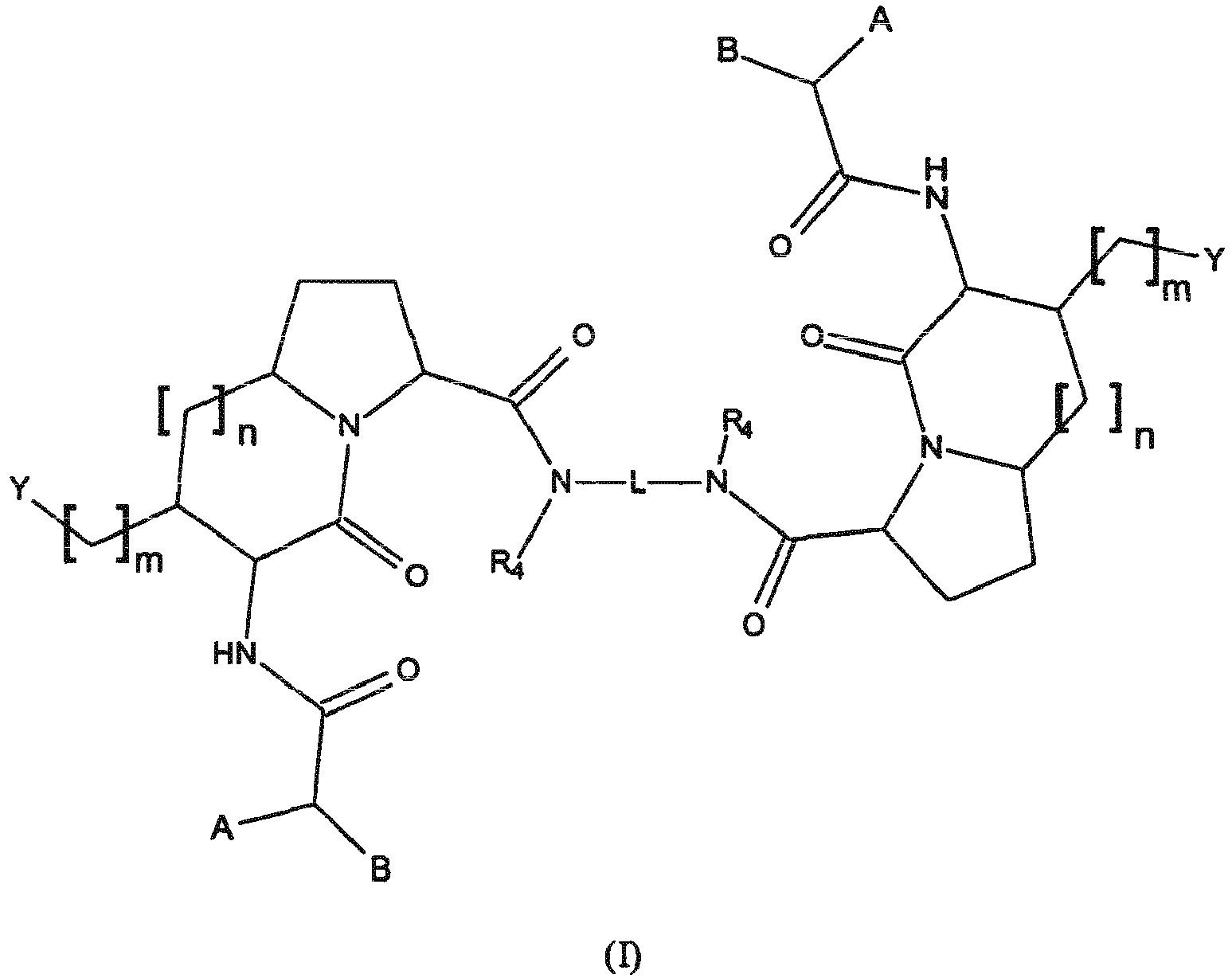
- n
- is 1 or 2
- m
- is an integer from 0 to 3
- A
- is NR1R2, or N+R1R2R3
- R1, R2 and R3
- are, each independently,
- hydrogen;
- C1-8 alkyl or heteroalkyl; C2-8 alkenyl or heteroalkenyl; C2-8 alkynyl or heteroalkynyl;
- optionally substituted aryl, alkylaryl, heteroaryl, alkylheteroaryl;
or
any two of R1, R2, and R3 taken together with the nitrogen to which they are attached form a heterocyclic group, optionally substituted by one or more oxo, thioxo, and optionally comprising a heteroatom selected from O, S, and N, provided that the heteroatom is separated from the nitrogen atom by a least two carbon atoms;
- R4
- are each independently
- hydrogen;
- optionally substituted C1-18 alkyl or heteroalkyl; C2-18 alkenyl or heteroalkenyl; C2-18 alkynyl or heteroalkynyl;
- optionally substituted aryl, alkylaryl, heteroaryl, or alkylheteroaryl;
- B
- is
- C1-4 alkyl; C2-4 alkenyl; C2-4 alkynyl;
- aryl, alkylaryl, heteroaryl or alkylheteroaryl; all optionally substituted by one or more halogen;
- Y
- is selected among OR5, NHR5, NR5R6, NH-S(O)2-R5, N+(R5)3, SR5, N3, C(O)OR5, CN, C(S)OR5, C(S)NHR5, C(NH)NHR5, NH(CNH)NHR5, NH(CS)NHR5, NH(CO)NHR5 or
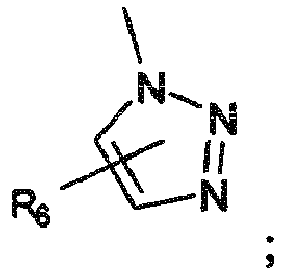
- R5
- is
- hydrogen;
- optionally substituted C1-8 alkyl; C2-8 alkenyl; C2-8 alkynyl;
- optionally substituted aryl; alkylaryl; heteroaryl;
- R6
- is
- optionally substituted C1-8 alkyl; C2-8 alkenyl; or C2-8 alkynyl;
- optionally substituted aryl; alkylaryl; or heteroaryl.;
- L
- is a "linker" selected among those listed as L1 to L56 in Table I of the present description.
- 2. A heterodimeric compound of formula (II)

- n
- is 1 or 2
- m
- is an integer from 0 to 3
- A is
- NR1R2, or N+R1R2R3
- R1, R2 and R3
- are, each independently,
- hydrogen;
- C1-8 alkyl or heteroalkyl; C2-8 alkenyl or heteroalkenyl; C2-8 alkynyl or heteroalkynyl;
- optionally substituted aryl, alkylaryl, heteroaryl, alkylheteroaryl;
or
any two of R1, R2, and R3 taken together with the nitrogen to which they are attached form a heterocyclic group, optionally substituted by one or more oxo, thioxo, and optionally comprising a heteroatom selected from O, S, and N, provided that the heteroatom is separated from the nitrogen atom by a least two carbon atoms;
- R4
- is
- hydrogen;
- optionally substituted C1-18 alkyl or heteroalkyl; C2-18 alkenyl or heteroalkenyl; C2-18 alkynyl or heteroalkynyl;
- optionally substituted aryl, alkylaryl, heteroaryl, or alkylheteroaryl;
- B
- are each independently
- C1-4 alkyl; C2-4 alkenyl; C2-4 alkynyl;
- aryl, alkylaryl, heteroaryl or alkylheteroaryl; all optionally substituted by one or more halogen;
- Y
- is selected among OR5, NHR5, NR5R6, NH-S(O)2-R5, N+(R5)3, SR5, N3, C(O)OR5, CN, C(S)OR5, C(S)NHR5, C(NH)NHR5, NH(CNH)NHR5, NH(CS)NHR5, NH(CO)NHR5 or

- R5
- is
- hydrogen;
- optionally substituted C1-8 alkyl; C2-8 alkenyl; C2-8 alkynyl;
- optionally substituted aryl; heteroaryl;
- R6
- is
- optionally substituted C1-8 alkyl; C2-8 alkenyl; or C2-8 alkynyl;
- optionally substituted aryl or heteroaryl.;
- X
- is optionally substituted C1-18 alkyl, C2-18 alkenyl, C2-18 alkynyl, aryl, or heteroaryl, and one or more hydrogens in CH, CH2 or CH3 groups can be replaced by a branched or unbranched alkyl or cycloalkyl, an optionally substituted aryl, alkylaryl, heteroaryl, or alkylheteroaryl, or OR7, SR7, or NR7R8;
- LL
- is a "linker", selected among those listed as L57 to L124 in Table II of the present description. where Z is selected among CR7R8, O, NR7, NR7C(O), S, C(O)O, C(S)O, C(S)NR7, C(NR8)NR7, NR7C(NR8)NR9, NR7C(O)NR8, NR7C(S)NR8 or

- R7, R8, R9
- are independently hydrogen or optionally substituted C1-4 alkyl, C2-5 alkenyl, or C2-5 alkynyl, in which one or more carbons can be replaced by a heteroatom selected from O, S, and N, or optionally substituted aryl, alkylaryl, heteroaryl, or alkylheteroaryl; or any two of R7, R8, and R9 taken together with the nitrogen to which they are attached form a heterocyclic group, in which one or more carbon atom can be replaced by C=O, C=S, or a heteroatom selected from O, S, and N, with the proviso that the heteroatom is separated from the nitrogen atom by a least two carbons;
- 3. Compounds according to previous items as pharmaceutically acceptable salts or prodrugs.
- 4. Compounds according to any of items 1 to 3 for their use in therapy.
- 5. Compounds according to any of items 1 to 3 for their use as proapoptotic agents.
- 6. Compounds according to any of items 1 to 3 for their use as anti-angiogenic agents.
- 7. Compounds according to item 6 for their use as anti-cancer agents.
- 8. Pharmaceutical composition comprising as the active ingredient, at least one compound according to any of items 1 to 3.
- 9. Association or combination of an effective amount of at least a compound of formula (I) and (II) according to items 1 and 2 and at least one additional therapeutic agent selected among chemotherapeutics, apoptosis modulators, antimicrobial, antiviral, antifungal and anti-inflammatory agents.
- 10. Association or combination of an effective amount of at least a compound of formula (I) and (II) according to items 1 and 2 and at least one additional therapeutic agent selected among chemotherapeutics, apoptosis modulators.
- 11. Association or combination according to item 10 for its use in the treatment of cancer.
- 12. Compound according to item 1, where:
- L is selected as linker L5 with n=2
- R4 is selected as hydrogen
- m=1, n=2
- Y is selected as OH
- A is selected as NR1R2 where R1 is hydrogen and R2 is C1 alkyl
- B is selected as C2 alkyl.
- 13. Compound according to item 1, where:
- L is selected as linker L5 with n=2
- R4 is selected as hydrogen
- m=1, n=2
- Y is selected as NR5R6 where R5 is hydrogen and R6 is CH2Phe
- A is selected as NR1R2 where R1 is hydrogen and R2 is C1 alkyl
- B is selected as C2 alkyl.
- 14. Compound according to item 1, where:
- L is selected as linker L19
- R4 is selected as hydrogen
- m=1, n=2
- Y is selected as OH
- A is selected as NR1R2 where R1 is hydrogen and R2 is C1 alkyl (CH3)
- B is selected as C2 alkyl.
- 15. Compound according to item 1, where:
- L is selected as linker L55
- R4 is selected as hydrogen
- m=1, n=2
- Y is selected as OH
- A is selected as NR1R2 where R1 is hydrogen and R2 is C1 alkyl (CH3)
- B is selected as C2 alkyl.
- 16. Compound according to item 1, where:
- L is selected as linker L51
- R4 is selected as hydrogen
- m=1, n=2
- Y is selected as OH
- A is selected as NR1R2 where R1 is hydrogen and R2 is C1 alkyl (CH3)
- B is selected as C2 alkyl.
- 17. Compound according to item 1, where:
- L is selected as linker L27 with n=2
- R4 is selected as hydrogen
- m=1, n=2
- Y is selected as OH
- A is selected as NR1R2 where R1 is hydrogen and R2 is C1 alkyl (CH3)
- B is selected as C2 alkyl.
- 18. Compound according to item 2, where:
- LL is selected as L95
- A is selected as NR1R2 where R1 is selected as hydrogen and R2 is selected as C1 alkyl (CH3)
- B is selected as C2 alkyl
- R4 is selected as hydrogen
- Y is selected as OH
- m=1, n=2
- X is selected as NR7R8 with R7 selected as hydrogen and R8 selected as substituted C1 alkyl with two aryl groups
- Z is selected as
- 19. Compound according to item 2, where:
- LL is selected as L95
- A is selected as NR1R2 where R1 is selected as hydrogen and R2 is selected as C1 alkyl (CH3)
- B is selected as C2 alkyl
- R4 is selected as hydrogen
- Y is selected as OH
- m=1, n=2
- X is selected as NR7R8 with R7 selected as hydrogen and R8 selected as substituted C1 alkyl with two aryl groups
- Z is selected as
- 20. Compound according to item 2, where:
- LL is selected as L88 where n=3
- A is selected as NR1R2 where R1 is selected as hydrogen and R2 is selected as C1 alkyl (CH3)
- B is selected as C2 alkyl
- R4 is selected as hydrogen
- Y is selected as OH
- m=1, n=2
- X is selected as NR7R8 with R7 selected as hydrogen and R8 selected as substituted C1 alkyl with two acryl groups
- Z is selected as NR7 with R7 selected as hydrogen.
| LINKER L | |
| L1 | 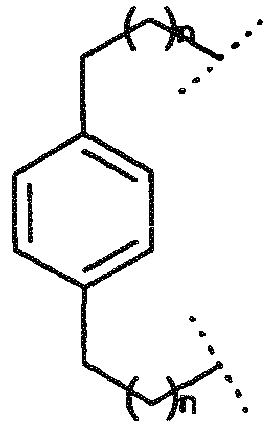 |
| n = 1-6, each independently | |
| L2 |  |
| n = 1-6, each independently | |
| L3 |  |
| n = 1-6, each independently | |
| L4 |  |
| n = 1-6, each independently | |
| L5 |  |
| n = 1-6, each independently | |
| L6 |  |
| n = 1-6, each independently | |
| L7 |  |
| n = 1-10 | |
| L8 |  |
| n = 1-10 | |
| L9 |  |
| n = 1-3, each independently | |
| L10 |  |
| n = 1-3, each independently | |
| L11 |  |
| n = 1-3, each independently | |
| L12 |  |
| n = 1-4 | |
| L13 |  |
| n = 1-4 | |
| L14 |  |
| n = 1-4 | |
| L15 |  |
| n = 1-4 | |
| L16 | 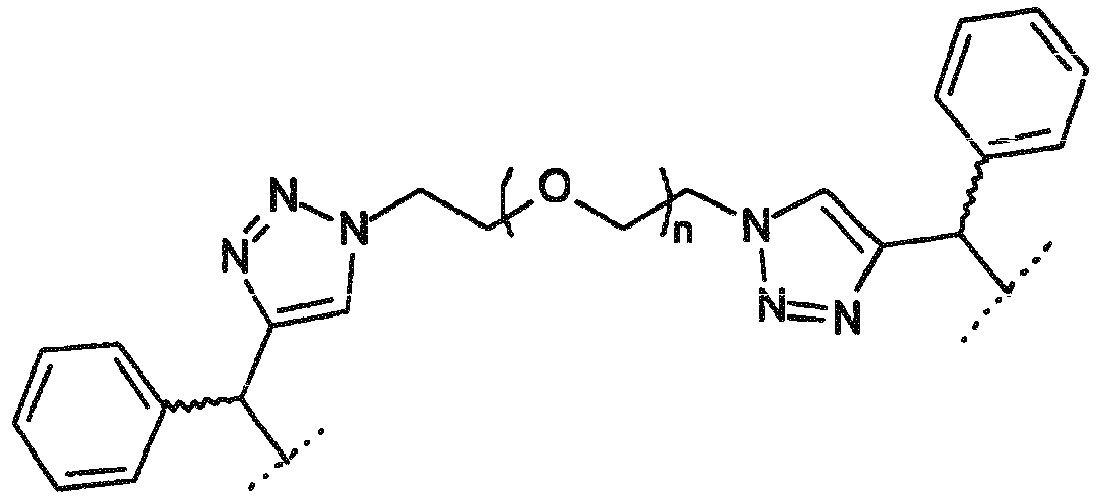 |
| n = 1=4 | |
| L17 |  |
| n = 2-12 | |
| L18 |  |
| n= 2-12 | |
| L19 |  |
| n = 2-12 | |
| L20 |  |
| n = 2-12 | |
| L21 | 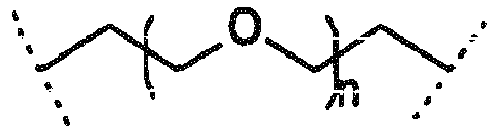 |
| n = 1-5 | |
| L22 |  |
| n = 1-5 | |
| L23 |  |
| n = 1-5 | |
| L24 |  |
| n = 1-5 | |
| L25 |  |
| n = 1-3 | |
| L26 |  |
| n = 1-3 | |
| L27 |  |
| n = 1-3 | |
| L28 |  |
| n = 1-3 | |
| L29 |  |
| n = 1-3 | |
| L30 |  |
| n = 1-3 | |
| L31 | 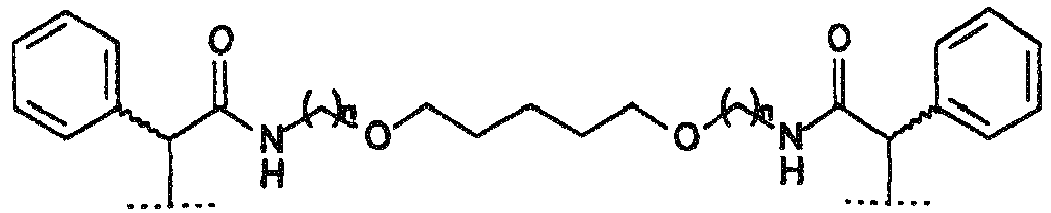 |
| n = 1-3 | |
| L32 |  |
| n = 1-3 | |
| L33 |  |
| n = 1-6, each independently | |
| L34 |  |
| n = 1-6, each independently | |
| L35 |  |
| n = 1-6, each independently | |
| L36 |  |
| n = 1-6, each independently | |
| L37 |  |
| n = 1-6, each independently | |
| L38 | 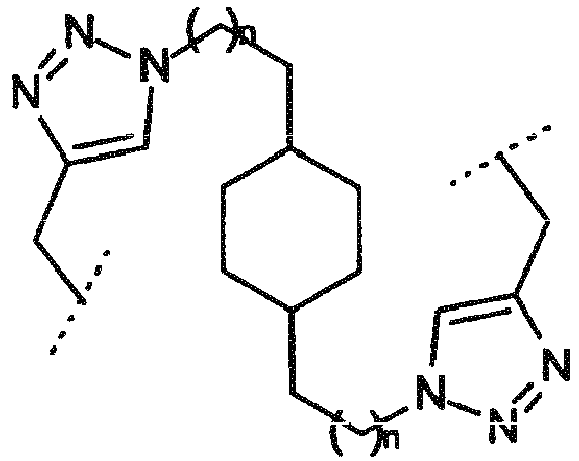 |
| n = 1-6, each independently | |
| L39 |  |
| n = 1-3, each independently | |
| L40 | 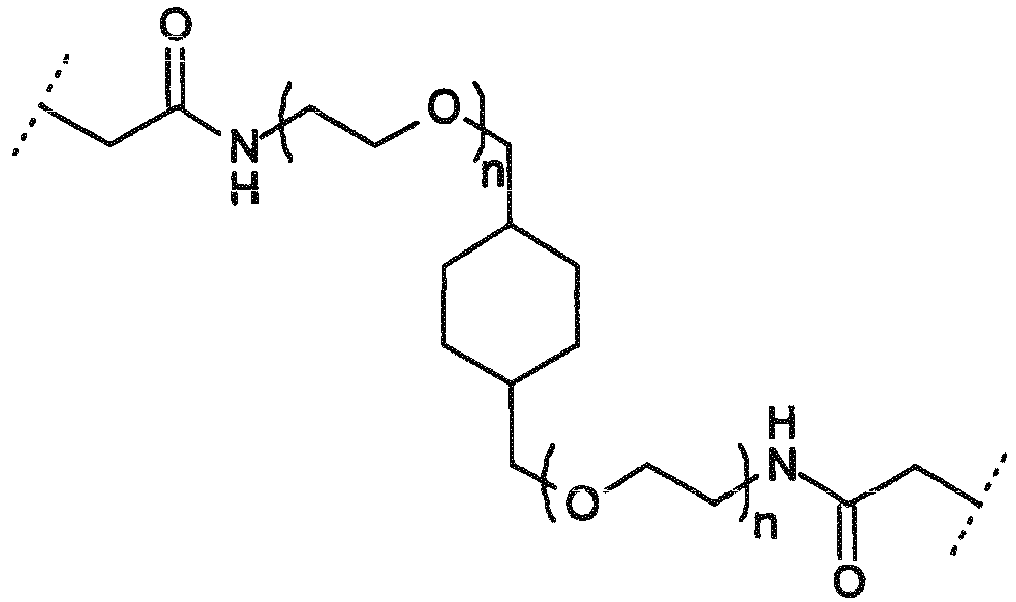 |
| n = 1-3, each independently | |
| L41 |  |
| n = 1-3, each independently | |
| L42 |  |
| n = 1-3, each independently | |
| L43 |  |
| n = 1-3, each independently | |
| L44 |  |
| n = 1-3, each independently | |
| L45 |  |
| n = 1-6, each independently | |
| L46 |  |
| n = 1-6, each independently | |
| L47 |  |
| n = 1-6, each independently | |
| L48 |  |
| n = 1-6, each independently | |
| L49 |  |
| n, m = 1-6, each independently | |
| L50 |  |
| n, m = 1-6, each independently | |
| L51 |  |
| n, m = 1-6, each independently | |
| L52 |  |
| n, m = 1-6, each independently | |
| L53 |  |
| n = 1-6, each independently | |
| L54 |  |
| n = 1-6, each independently | |
| L55 |  |
| n = 1-6, each independently | |
| L56 |  |
| n = 1-6, each independently |
Most of the linkers of Table 1 are well known and commercially available from, for example, Aldrich Neosystem and Peptides International catalogues. Any other linker may be easily prepared according to known methods. For example, linker 21 can be prepared according to Tetrahedron Lett. 1998, 39, 6277 ; Makromol. Chem. 1979, 180, 2539 . Details are given in the experimental section of this description.
| LINKER LL | |
| L57 |  |
| n = 1-6, each independently | |
| L58 |  |
| n = 1-6, each independently | |
| L59 |  |
| n = 1-6, each independently | |
| L60 |  |
| n = 1-6, each independently | |
| L61 |  |
| n = 1-6, each independently | |
| L62 |  |
| n = 1-6, each independently | |
| L63 |  |
| n, m = 1-10 each independently | |
| L64 | 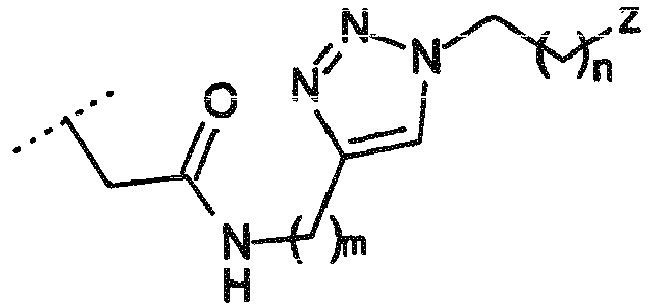 |
| n, m = 1-10 each independently | |
| L65 | 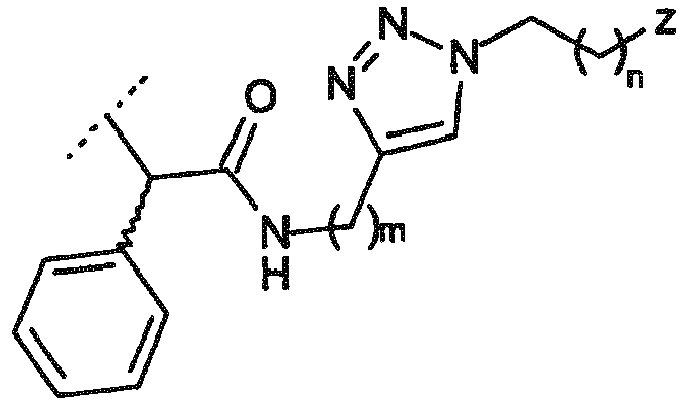 |
| n, m =1-10 each independently | |
| L66 |  |
| n, m =1-10 each independently | |
| L67 |  |
| L68 |  |
| n = 1-3, each independently | |
| L69 |  |
| n = 1-3, each independently | |
| L70 |  |
| n = 1-3, each independently | |
| L71 |  |
| n = 1-3, each independently | |
| L72 | 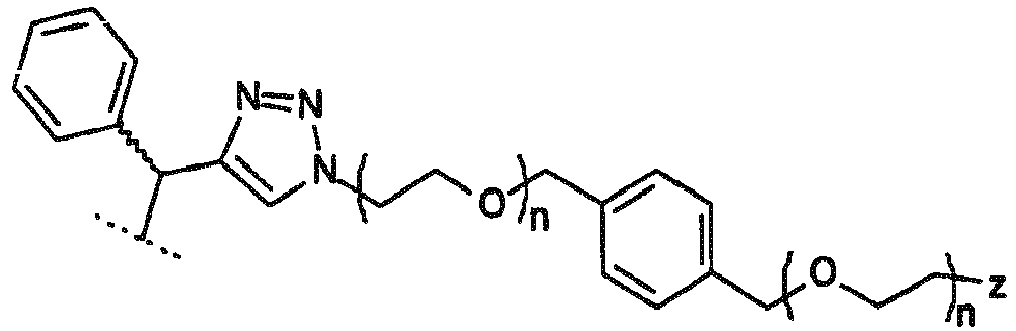 |
| n = 1-3, each independently | |
| L73 | 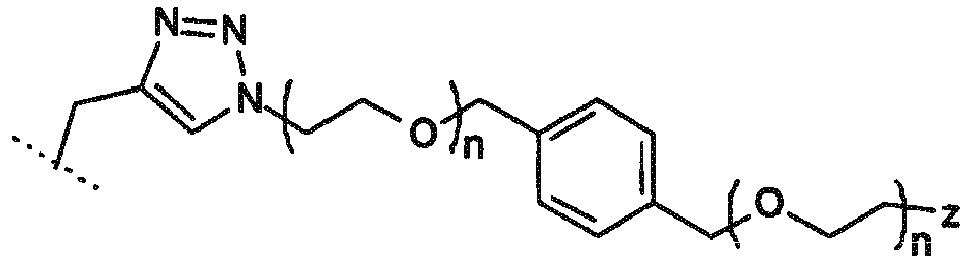 |
| n = 1-3, each independently | |
| L74 |  |
| n = 1-4 , each independently | |
| L75 |  |
| n = 1-4, each independently | |
| L76 | 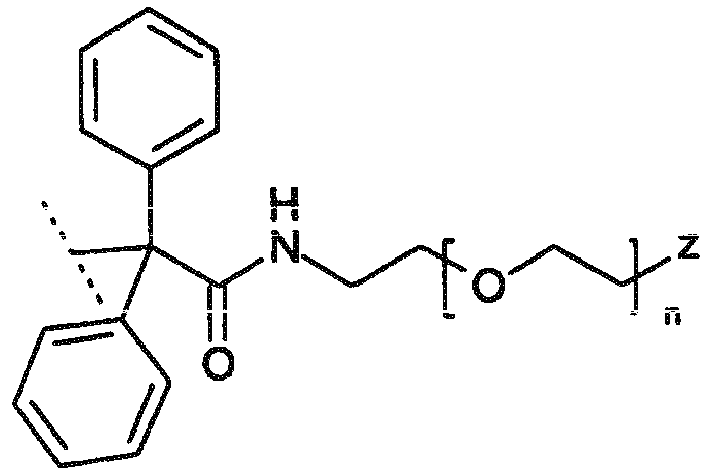 |
| n = each | |
| L77 |  |
| n = 1-4 | |
| L78 |  |
| n = 1-4 | |
| L79 | 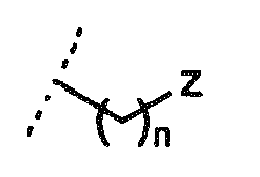 |
| n = 2-12 | |
| L80 | 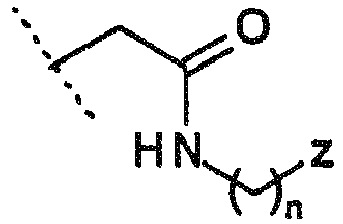 |
| n = 2-12 | |
| L81 | 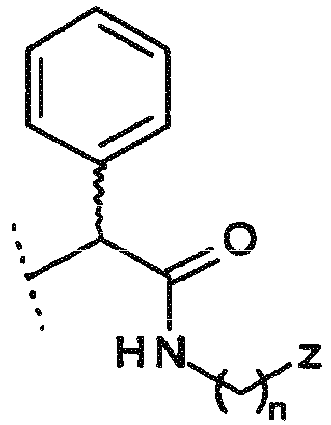 |
| n = 2-12 | |
| L82 | 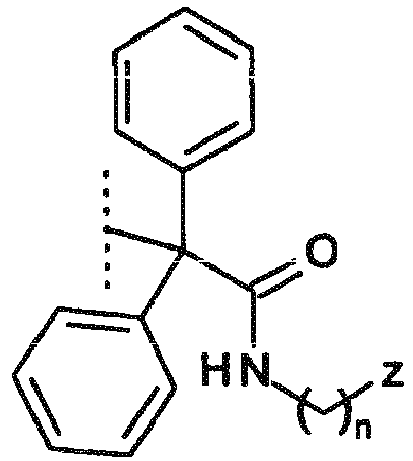 |
| n = 2-12 | |
| L83 |  |
| n = 1-5 | |
| L84 |  |
| n = 1-5 | |
| L85 |  |
| n =1-5 | |
| L86 |  |
| n = 1-5 | |
| L87 |  |
| n = 1-5 | |
| L88 |  |
| n = 1-5 | |
| L89 |  |
| L90 |  |
| n = 1-5; m = 1-12 each independently | |
| L91 |  |
| n = 1-5; m = 1-12 each independently | |
| L92 |  |
| n = 1-5; m = 1-12 each independently | |
| L93 |  |
| n = 1-5 each independently | |
| L94 |  |
| n = 1-5 each independently | |
| L95 |  |
| n = 1-5 each independently | |
| L96 | 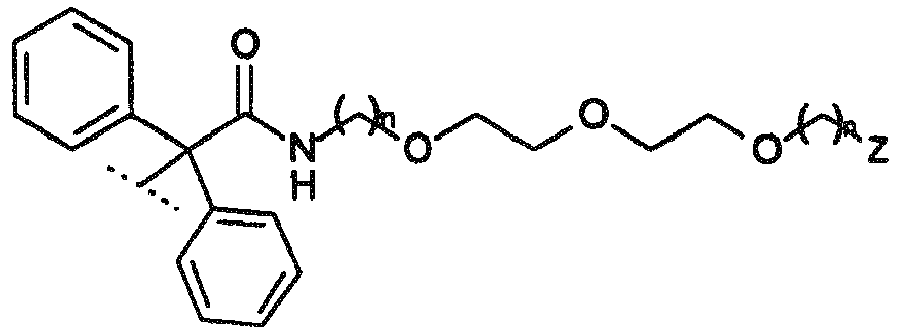 |
| n = 1-5 each independently | |
| L97 |  |
| n = 1-5 each independently | |
| L98 | 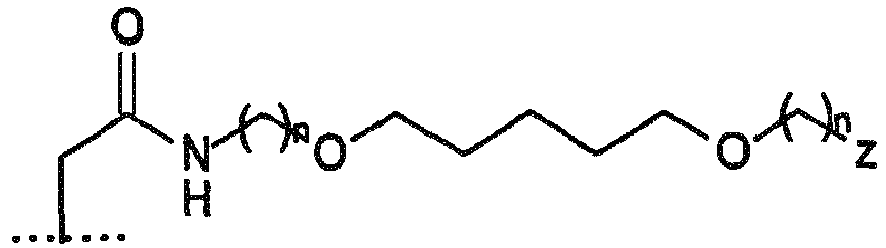 |
| n = 1-5 each independently | |
| L99 | 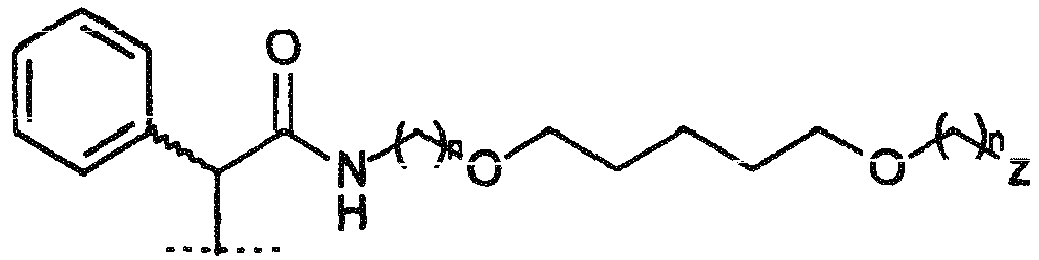 |
| n = 1-5 each independently | |
| L100 |  |
| n = 1-5 each independently | |
| L101 |  |
| n = 1-6, each independently | |
| L102 |  |
| n = 1-6, each independently | |
| L103 | 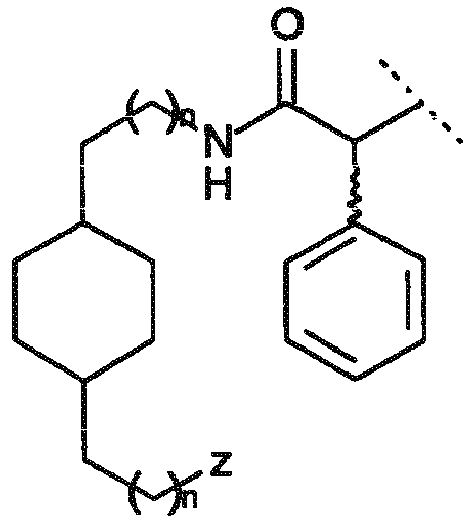 |
| n = 1-6, each independently | |
| L104 |  |
| n = 1-6, each independently | |
| L105 |  |
| n = 1-6, each independently | |
| L106 | 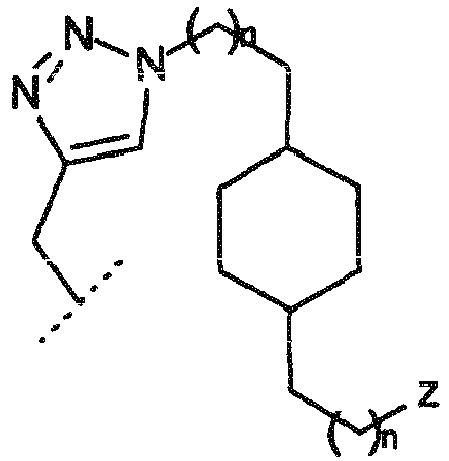 |
| n = 1-6, each independently | |
| L107 | 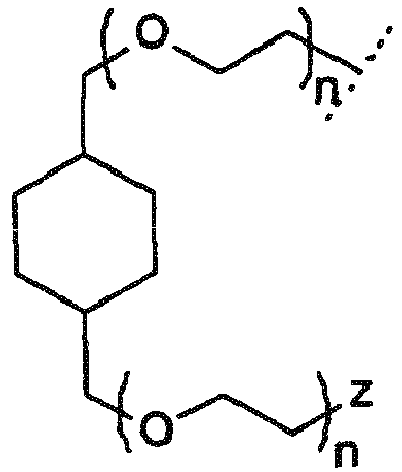 |
| n = 1-3, each independently | |
| L108 |  |
| n = 1-3, each independently | |
| L109 |  |
| n = 1-3, each independently | |
| L110 | 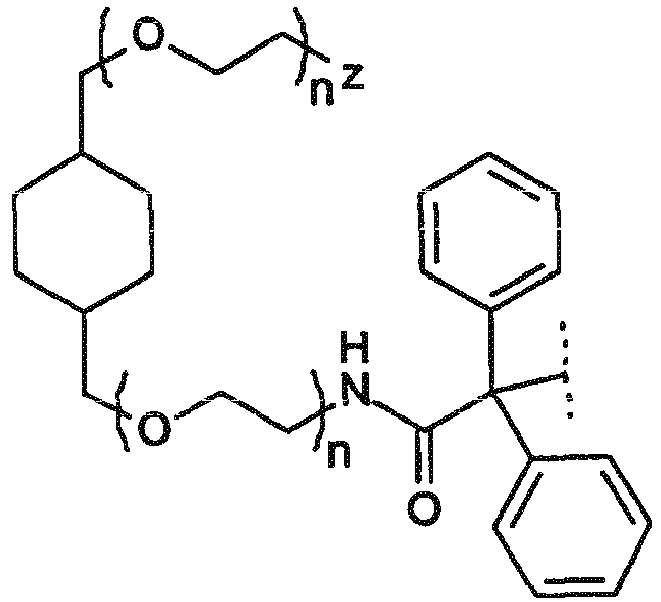 |
| n = 1-3, each independently | |
| L111 |  |
| n = 1-3, each independently | |
| L112 |  |
| n = 1-3, each independently | |
| L113 | 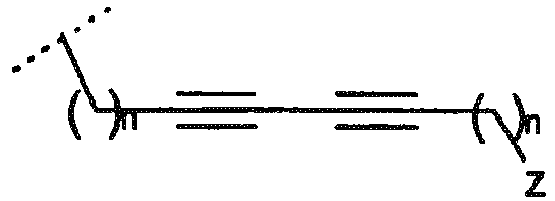 |
| n = 1-6, each independently | |
| L114 |  |
| n = 1-6, each independently | |
| L115 | 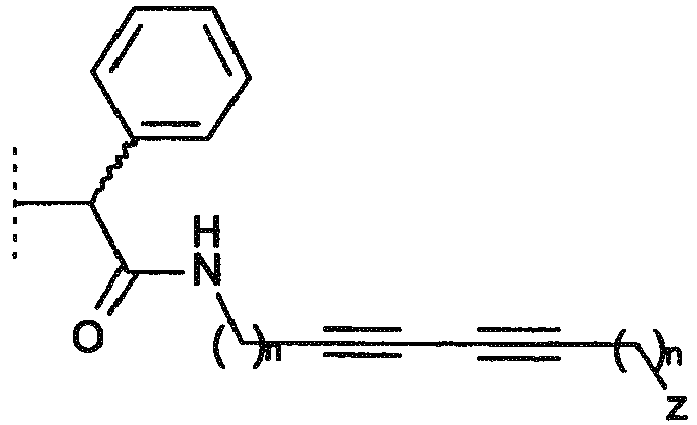 |
| n = 1-6, each independently | |
| L116 |  |
| n = 1-6, each independently | |
| L117 |  |
| n, m = 1-6, each independently | |
| L118 |  |
| n, m = 1-6, each independently | |
| L119 |  |
| n, m = 1-6, each independently | |
| L120 | 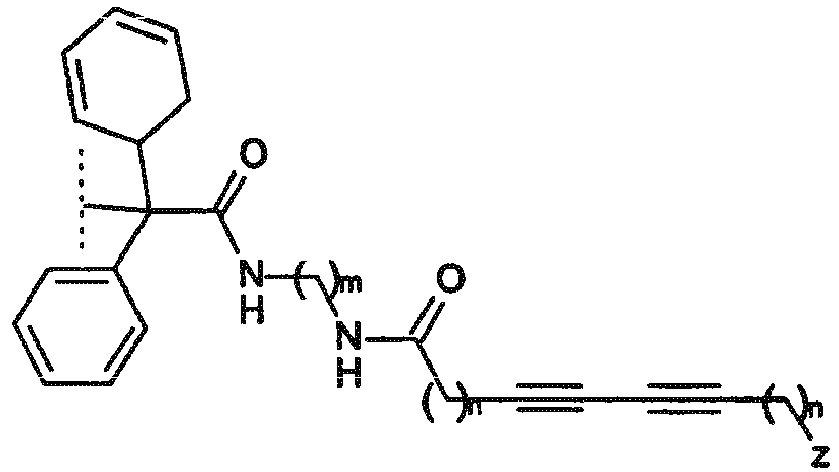 |
| n, m = 1-6, each independently | |
| L121 |  |
| n = 1-6, each independently | |
| L122 |  |
| n = 1-6, each independently | |
| L123 |  |
| n = 1-6, each independently | |
| L124 | 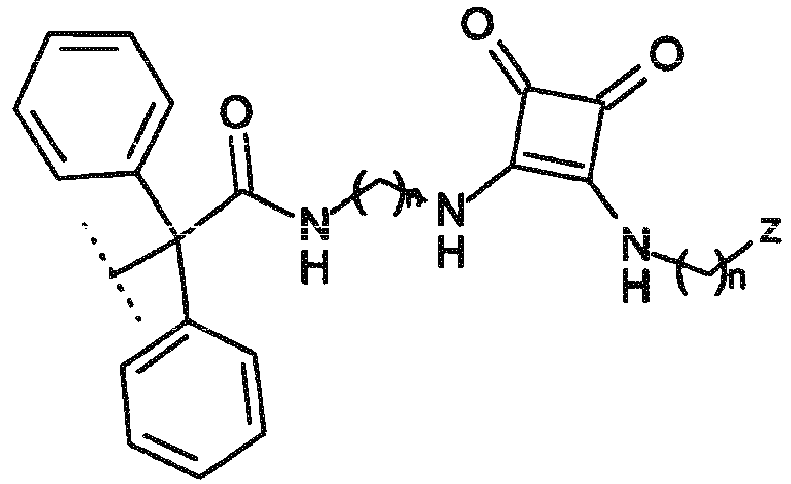 |
| n = 1-6, each independently |
Claims (15)
- A homodimeric compound of formula (I)
 n is 1 or 2m is an integer from 0 to 3A is NR1R2, or N+R1R2R3R1, R2 and R3 are, each independently,- hydrogen;- C1-8 alkyl or heteroalkyl; C2-8 alkenyl or heteroalkenyl; C2-8 alkynyl or heteroalkynyl;- optionally substituted aryl, alkylaryl, heteroaryl, alkylheteroaryl;
or
any two of R1, R2, and R3 taken together with the nitrogen to which they are attached form a heterocyclic group, optionally substituted by one or more oxo, thioxo, and optionally comprising a heteroatom selected from O, S, and N, provided that the heteroatom is separated from the nitrogen atom by a least two carbon atoms;R4 are each independently- hydrogen;- optionally substituted C1-18 alkyl or heteroalkyl; C2-18 alkenyl or heteroalkenyl; C2-18 alkynyl or heteroalkynyl;- optionally substituted aryl, alkylaryl, heteroaryl, or alkylheteroaryl;B is- C1-4 alkyl; C2-4 alkenyl; C2-4 alkynyl;- aryl, alkylaryl, heteroaryl or alkylheteroaryl; all optionally substituted by one or more halogen;Y is selected among OR5, NHR5, NR5R6, NH-S(O)2-R5, N+(R5)3, SR5, N3, C(O)OR5, CN, C(S)OR5, C(S)NHR5, C(NH)NHR5, NH(CNH)NHR5, NH(CS)NHRs, NH(CO)NHR5 or R5 is- hydrogen;- optionally substituted C1-8 alkyl; C2-8 alkenyl; C2-8 alkynyl;- optionally substituted aryl; alkylaryl; heteroaryl;R6 is- optionally substituted C1-8 alkyl; C2-8 alkenyl; or C2-8 alkynyl;- optionally substituted aryl; alkylaryl; or heteroaryl.;L is a "linker" selected among those listed as L1 to L56 in Table I of the present description.
- A heterodimeric compound of formula (II)
 n is 1 or 2m is an integer from 0 to 3A is NR1R2, or N+R1R2R3R1, R2 and R3 are, each independently,- hydrogen;- C1-8 alkyl or heteroalkyl; C2-8 alkenyl or heteroalkenyl; C2-8 alkynyl or heteroalkynyl;- optionally substituted aryl, alkylaryl, heteroaryl, alkylheteroaryl;
or
any two of R1, R2, and R3 taken together with the nitrogen to which they are attached form a heterocyclic group, optionally substituted by one or more oxo, thioxo, and optionally comprising a heteroatom selected from O, S, and N, provided that the heteroatom is separated from the nitrogen atom by a least two carbon atoms;R4 is- hydrogen;- optionally substituted C1-18 alkyl or heteroalkyl; C2-18 alkenyl or heteroalkenyl; C2-18 alkynyl or heteroalkynyl;- optionally substituted aryl, alkylaryl, heteroaryl, or alkylheteroaryl;B are each independently- C1-4 alkyl; C2-4 alkenyl; C2-4 alkynyl;- aryl, alkylaryl, heteroaryl or alkylheteroaryl;
all optionally substituted by one or more halogen;Y is selected among OR5, NHR5, NR5R6, NH-S(O)2-R5, N+(R5)3, SR5, N3, C(O)OR5, CN, C(S)OR5, C(S)NHR5, C(NH)NHR5, NH(CNH)NHR5, NH(CS)NHR5, NH(CO)NHR5 or R5 is- hydrogen;- optionally substituted C1-8 alkyl; C2-8 alkenyl; C2-8 alkynyl;- optionally substituted aryl; heteroaryl;R6 is- optionally substituted C1-8 alkyl; C2-8 alkenyl; or C2-8 alkynyl;- optionally substituted aryl or heteroaryl.;X is optionally substituted C1-18 alkyl, C2-18 alkenyl, C2-18 alkynyl, aryl, or heteroaryl, and one or more hydrogens in CH, CH2 or CH3 groups can be replaced by a branched or unbranched alkyl or cycloalkyl, an optionally substituted aryl, alkylaryl, heteroaryl, or alkylheteroaryl, or OR7, SR7, or NR7R8;LL is a "linker", selected among those listed as L57 to L124 in Table II of the present description.
where Z is selected among CR7R8, O, NR7, NR7C(O), S, C(O)O, C(S)O, C(S)NR7, C(NR8)NR7, NR7C(NR8)NR9, NR7C(O)NR8, NR7C(S)NR8 or R7, R8, R9 are independently hydrogen or optionally substituted C1-4 alkyl, C2-5 alkenyl, or C2-5 alkynyl, in which one or more carbons can be replaced by a heteroatom selected from O, S, and N, or optionally substituted aryl, alkylaryl, heteroaryl, or alkylheteroaryl; or any two of R7, R8, and R9 taken together with the nitrogen to which they are attached form a heterocyclic group, in which one or more carbon atom can be replaced by C=O, C=S, or a heteroatom selected from O, S, and N, with the proviso that the heteroatom is separated from the nitrogen atom by a least two carbons;
- Compound according to claim 1 or 2 as pharmaceutically acceptable salt or prodrug.
- Compound according to any of claims 1 to 3 for use in therapy.
- Compound according to any of claims 1 to 3 for use as proapoptotic agent.
- Compound according to any of claims 1 to 3 for use as anti-angiogenic agent.
- Compound according to claim 6 for use as anti-cancer agent.
- Pharmaceutical composition comprising as the active ingredient, at least one compound according to any of claims 1 to 3.
- Association or combination of an effective amount of at least a compound of formula (I) and (II) according to claim 1 or 2 and at least one additional therapeutic agent selected among chemotherapeutics, apoptosis modulators, antimicrobial, antiviral, antifungal and anti-inflammatory agents, preferably among chemotherapeutics and apoptosis modulators.
- Association or combination of an effective amount of at least a compound of formula (I) and (II) according to claim 1 or 2 and at least one additional therapeutic agent selected among chemotherapeutics and apoptosis modulators for use in the treatment of cancer.
- Compound according to claim 1, where:L is selected as linker L5 with n=2R4 is selected as hydrogenm=1, n=2Y is selected as OHA is selected as NR1R2 where R1 is hydrogen and R2 is C1 alkylB is selected as C2 alkyl.
- Compound according to claim 1, having the formula:

- Compound according to claim 1, where:L is selected as linker L5 with n=2R4 is selected as hydrogenm=1, n=2Y is selected as NR5R6 where R5 is hydrogen and R6 is CH2PheA is selected as NR1R2 where R1 is hydrogen and R2 is C1 alkylB is selected as C2 alkyl.
- Compound according to claim 1, where:L is selected from the group consisting of linker L19, linker L55, linkerL51, and linker L27 with n=2R4 is selected as hydrogenm=1, n=2Y is selected as OHA is selected as NR1R2 where R1 is hydrogen and R2 is C1 alkyl (CH3)B is selected as C2 alkyl.
- Compound according to claim 2, where:LL is selected as L88 where n=3A is selected as NR1R2 where R1 is selected as hydrogen and R2 is selected as C1 alkyl (CH3)B is selected as C2 alkylR4 is selected as hydrogenY is selected as OHm=1, n=2X is selected as NR7R8 with R7 selected as hydrogen and R8 selected as substituted C1 alkyl with two aryl groupsZ is selected as NR7 with R7 selected as hydrogen.
Priority Applications (1)
| Application Number | Priority Date | Filing Date | Title |
|---|---|---|---|
| EP16165611.1A EP3072898A1 (en) | 2012-02-20 | 2012-02-20 | Homo- and heterodimeric smac mimetic compounds as apoptosis inducers |
Applications Claiming Priority (3)
| Application Number | Priority Date | Filing Date | Title |
|---|---|---|---|
| EP12865538.8A EP2817322B1 (en) | 2012-02-20 | 2012-02-20 | Homo- and heterodimeric smac mimetic compounds as apoptosis inducers |
| EP16165611.1A EP3072898A1 (en) | 2012-02-20 | 2012-02-20 | Homo- and heterodimeric smac mimetic compounds as apoptosis inducers |
| PCT/IB2012/000297 WO2013124701A2 (en) | 2012-02-20 | 2012-02-20 | New homo- and heterodimeric smac mimetic compounds as apoptosis inducers |
Related Parent Applications (1)
| Application Number | Title | Priority Date | Filing Date |
|---|---|---|---|
| EP12865538.8A Division EP2817322B1 (en) | 2012-02-20 | 2012-02-20 | Homo- and heterodimeric smac mimetic compounds as apoptosis inducers |
Publications (1)
| Publication Number | Publication Date |
|---|---|
| EP3072898A1 true EP3072898A1 (en) | 2016-09-28 |
Family
ID=48783275
Family Applications (2)
| Application Number | Title | Priority Date | Filing Date |
|---|---|---|---|
| EP12865538.8A Active EP2817322B1 (en) | 2012-02-20 | 2012-02-20 | Homo- and heterodimeric smac mimetic compounds as apoptosis inducers |
| EP16165611.1A Withdrawn EP3072898A1 (en) | 2012-02-20 | 2012-02-20 | Homo- and heterodimeric smac mimetic compounds as apoptosis inducers |
Family Applications Before (1)
| Application Number | Title | Priority Date | Filing Date |
|---|---|---|---|
| EP12865538.8A Active EP2817322B1 (en) | 2012-02-20 | 2012-02-20 | Homo- and heterodimeric smac mimetic compounds as apoptosis inducers |
Country Status (4)
| Country | Link |
|---|---|
| US (2) | US9321808B2 (en) |
| EP (2) | EP2817322B1 (en) |
| ES (1) | ES2572606T3 (en) |
| WO (1) | WO2013124701A2 (en) |
Families Citing this family (22)
| Publication number | Priority date | Publication date | Assignee | Title |
|---|---|---|---|---|
| DE10347710B4 (en) | 2003-10-14 | 2006-03-30 | Johannes-Gutenberg-Universität Mainz | Recombinant vaccines and their use |
| DE102005046490A1 (en) | 2005-09-28 | 2007-03-29 | Johannes-Gutenberg-Universität Mainz | New nucleic acid molecule comprising promoter, a transcriptable nucleic acid sequence, a first and second nucleic acid sequence for producing modified RNA with transcriptional stability and translational efficiency |
| LT2714071T (en) | 2011-05-24 | 2019-10-10 | Biontech Rna Pharmaceuticals Gmbh | Individualized vaccines for cancer |
| WO2013143555A1 (en) | 2012-03-26 | 2013-10-03 | Biontech Ag | Rna formulation for immunotherapy |
| AU2013351542B2 (en) | 2012-11-28 | 2018-08-09 | BioNTech SE | Individualized vaccines for cancer |
| WO2014180490A1 (en) | 2013-05-10 | 2014-11-13 | Biontech Ag | Predicting immunogenicity of t cell epitopes |
| WO2015109391A1 (en) | 2014-01-24 | 2015-07-30 | Children's Hospital Of Eastern Ontario Research Institute Inc. | Smc combination therapy for the treatment of cancer |
| WO2016045732A1 (en) | 2014-09-25 | 2016-03-31 | Biontech Rna Pharmaceuticals Gmbh | Stable formulations of lipids and liposomes |
| WO2016128060A1 (en) | 2015-02-12 | 2016-08-18 | Biontech Ag | Predicting t cell epitopes useful for vaccination |
| WO2017059902A1 (en) | 2015-10-07 | 2017-04-13 | Biontech Rna Pharmaceuticals Gmbh | 3' utr sequences for stabilization of rna |
| WO2018224166A1 (en) | 2017-06-09 | 2018-12-13 | Biontech Rna Pharmaceuticals Gmbh | Methods for predicting the usefulness of disease specific amino acid modifications for immunotherapy |
| US20240157180A1 (en) | 2021-02-04 | 2024-05-16 | Mighty Fire Breaker Llc | Method of and kit for installing and operating a wildfire defense spraying system on a property parcel for proactively spraying environmentally-clean liquid fire inhibitor thereover to inhibit fire ignition and flame spread caused by wind-driven wildfire embers |
| US11865390B2 (en) | 2017-12-03 | 2024-01-09 | Mighty Fire Breaker Llc | Environmentally-clean water-based fire inhibiting biochemical compositions, and methods of and apparatus for applying the same to protect property against wildfire |
| US12594448B2 (en) | 2019-06-22 | 2026-04-07 | Mighty Fire Breaker Llc | Environmentally-clean aqueous-based fire extinguishing biochemical liquid concentrates for mixing with proportioned quantities of water to produce fire extinguishing water streams |
| US11865394B2 (en) | 2017-12-03 | 2024-01-09 | Mighty Fire Breaker Llc | Environmentally-clean biodegradable water-based concentrates for producing fire inhibiting and fire extinguishing liquids for fighting class A and class B fires |
| US10653904B2 (en) | 2017-12-02 | 2020-05-19 | M-Fire Holdings, Llc | Methods of suppressing wild fires raging across regions of land in the direction of prevailing winds by forming anti-fire (AF) chemical fire-breaking systems using environmentally clean anti-fire (AF) liquid spray applied using GPS-tracking techniques |
| US11826592B2 (en) | 2018-01-09 | 2023-11-28 | Mighty Fire Breaker Llc | Process of forming strategic chemical-type wildfire breaks on ground surfaces to proactively prevent fire ignition and flame spread, and reduce the production of smoke in the presence of a wild fire |
| CN113613724B (en) * | 2018-11-30 | 2024-11-08 | 葛兰素史克知识产权开发有限公司 | Compounds that could be used for HIV therapy |
| US11911643B2 (en) | 2021-02-04 | 2024-02-27 | Mighty Fire Breaker Llc | Environmentally-clean fire inhibiting and extinguishing compositions and products for sorbing flammable liquids while inhibiting ignition and extinguishing fire |
| US12599797B2 (en) | 2020-03-01 | 2026-04-14 | Mighty Fire Breaker Llc | Environmentally-clean fire inhibiting and extinguishing compositions and products for sorbing flammable liquids while inhibiting ignition and extinguishing fire |
| US12616859B2 (en) | 2021-02-04 | 2026-05-05 | Mighty Fire Breaker Llc | Method of and system for defending home building projects from wildfire during and after construction on property located within a wildfire urban interface (WUI) region |
| AU2024367811A1 (en) * | 2023-10-24 | 2026-05-07 | Tract Pharmaceuticals, Inc. | Combination of iap inhibitors and cellular kinase inhibitors, such as ponatinib, for use in the treatment of cancer or pulmonary diseases, such as copd, cystic fibrosis, pulmonary fibrosis and covid-19 |
Citations (1)
| Publication number | Priority date | Publication date | Assignee | Title |
|---|---|---|---|---|
| WO2009060292A2 (en) * | 2007-11-09 | 2009-05-14 | Universita'degli Studi Di Milano | Smac mimetic compounds as apoptosis inducers |
-
2012
- 2012-02-20 WO PCT/IB2012/000297 patent/WO2013124701A2/en not_active Ceased
- 2012-02-20 EP EP12865538.8A patent/EP2817322B1/en active Active
- 2012-02-20 ES ES12865538.8T patent/ES2572606T3/en active Active
- 2012-02-20 US US14/379,675 patent/US9321808B2/en active Active
- 2012-02-20 EP EP16165611.1A patent/EP3072898A1/en not_active Withdrawn
-
2016
- 2016-03-16 US US15/071,677 patent/US9730976B2/en active Active
Patent Citations (1)
| Publication number | Priority date | Publication date | Assignee | Title |
|---|---|---|---|---|
| WO2009060292A2 (en) * | 2007-11-09 | 2009-05-14 | Universita'degli Studi Di Milano | Smac mimetic compounds as apoptosis inducers |
Non-Patent Citations (6)
| Title |
|---|
| "Goodman and Gilman's ''Pharmaceutical Basis of Therapeutics", 2005 |
| BENARD ET AL., CANCER RES., vol. 45, 1985, pages 4970 |
| MAKROMOL. CHEM., vol. 180, 1979, pages 2539 |
| NIKOLOVSKA-COLESKA ET AL., ANALYT. BIOCHEM., vol. 374, 2008, pages 87 |
| S. WANG ET AL., J. AM. CHEM. SOC., vol. 129, 2007, pages 15279 |
| TETRAHEDRON LETT., vol. 39, 1998, pages 6277 |
Also Published As
| Publication number | Publication date |
|---|---|
| EP2817322A2 (en) | 2014-12-31 |
| ES2572606T3 (en) | 2016-06-01 |
| US20160317605A1 (en) | 2016-11-03 |
| US9321808B2 (en) | 2016-04-26 |
| WO2013124701A3 (en) | 2013-10-31 |
| US9730976B2 (en) | 2017-08-15 |
| US20150119342A1 (en) | 2015-04-30 |
| WO2013124701A2 (en) | 2013-08-29 |
| EP2817322B1 (en) | 2016-04-20 |
Similar Documents
| Publication | Publication Date | Title |
|---|---|---|
| EP2817322B1 (en) | Homo- and heterodimeric smac mimetic compounds as apoptosis inducers | |
| US8609685B2 (en) | SMAC mimetic compounds as apoptosis inducers | |
| TWI504597B (en) | Iap bir domain binding compounds | |
| JP4954983B2 (en) | BIR domain binding compound | |
| KR102942565B1 (en) | Tlr7/8 antagonists and uses thereof | |
| CN1839139B (en) | Proteasome inhibitors and methods of use thereof | |
| EP3127912B1 (en) | Tripeptide epoxyketone compound constructed by heterocycle and preparation method and use thereof | |
| JP2009537461A (en) | IAPBIR domain binding protein | |
| US20110021544A1 (en) | Hydrochloride salt of ((1s,2s,4r)-4--2-hydroxycyclopentyl)methyl sulfamate | |
| KR20130086520A (en) | Spirocyclic compounds and their use as therapeutic agents and diagnostic probes | |
| MXPA06008095A (en) | Conformationally constrained smac mimetics and the uses thereof. | |
| FR2974576A1 (en) | N - [(1H-PYRAZOL-1-YL) ARYL] -1H-INDOLE OR 1H-INDAZOLE-3-CARBOXAMIDE DERIVATIVES, THEIR PREPARATION AND THEIR THERAPEUTIC APPLICATIONS | |
| KR20120046162A (en) | 2,3-dihydro-1h-indene compounds and their use to treat cancer | |
| CN102089312A (en) | Salinosporamide derivatives as proteasome inhibitors | |
| EP4244218A1 (en) | 1-(2-(4-cyclopropyl-1h-1,2,3-triazol-1-yl)acetyl)-4-hydroxy-n-(benzyl)pyrrolidin e-2-carboxamide derivatives as vhl inhibitors for the treatment of anemia and cancer | |
| JP7844478B2 (en) | SMAC mimetic for cancer treatment, its preparation process, and pharmaceutical composition | |
| CA2930032A1 (en) | Macrocyclic compounds for inhibition of inhibitors of apoptosis | |
| Sinitsyna et al. | Synthesis of alkyl derivatives of 3, 7, 10-trioxo-2, 4, 6, 8, 9, 11-hexaaza [3.3. 3] propellane and evaluation of their biological activity | |
| CN104093703B (en) | Mglu 2/3 agonist | |
| CN110183471B (en) | A kind of piperazine derivatives and preparation method and application | |
| CN109134295B (en) | Anthracenedione derivatives and preparation method and application thereof | |
| WO2026086805A1 (en) | Pcsk9 and hmg-coa bicyclic compound, and preparation and use thereof | |
| CN115340527A (en) | BCL-XL inhibitor and preparation method and application thereof | |
| CN118666840A (en) | Design, synthesis and application of spiro[pyrrolidine-3,3′-quinoline]-2,2′-diketopiperidinamides | |
| MX2008005477A (en) | Iap bir domain binding compounds |
Legal Events
| Date | Code | Title | Description |
|---|---|---|---|
| PUAI | Public reference made under article 153(3) epc to a published international application that has entered the european phase |
Free format text: ORIGINAL CODE: 0009012 |
|
| AC | Divisional application: reference to earlier application |
Ref document number: 2817322 Country of ref document: EP Kind code of ref document: P |
|
| AK | Designated contracting states |
Kind code of ref document: A1 Designated state(s): AL AT BE BG CH CY CZ DE DK EE ES FI FR GB GR HR HU IE IS IT LI LT LU LV MC MK MT NL NO PL PT RO RS SE SI SK SM TR |
|
| RIN1 | Information on inventor provided before grant (corrected) |
Inventor name: SENECI, PIERFAUSTO Inventor name: DELIA, DOMENICO Inventor name: LECIS, DANIELE Inventor name: MASTRANGELO, ELOISE Inventor name: MANZONI, LEONARDO, PIERPAOLO Inventor name: MILANI DE MAYO DE MARI, MARIO Inventor name: PEREGO, PAOLA MARIA CHIARA Inventor name: DRAGO, CARMELO Inventor name: COSSU, FEDERICA Inventor name: VASILE, FRANCESCA Inventor name: MAIORANA, STEFANO Inventor name: BELVISI, LAURA |
|
| RIN1 | Information on inventor provided before grant (corrected) |
Inventor name: PEREGO, PAOLA MARIA CHIARA Inventor name: COSSU, FEDERICA Inventor name: SENECI, PIERFAUSTO Inventor name: VASILE, FRANCESCA Inventor name: DRAGO, CARMELO Inventor name: BELVISI, LAURA Inventor name: MILANI DE MAYO DE MARI, MARIO Inventor name: LECIS, DANIELE Inventor name: MAIORANA, STEFANO Inventor name: DELIA, DOMENICO Inventor name: MANZONI, LEONARDO, PIERPAOLO Inventor name: MASTRANGELO, ELOISE |
|
| RIN1 | Information on inventor provided before grant (corrected) |
Inventor name: DELIA, DOMENICO Inventor name: LECIS, DANIELE Inventor name: MILANI DE MAYO DE MARI, MARIO Inventor name: SENECI, PIERFAUSTO Inventor name: DRAGO, CARMELO Inventor name: MASTRANGELO, ELOISE Inventor name: BELVISI, LAURA Inventor name: MANZONI, LEONARDO, PIERPAOLO Inventor name: PEREGO, PAOLA MARIA CHIARA Inventor name: MAIORANA, STEFANO Inventor name: COSSU, FEDERICA Inventor name: VASILE, FRANCESCA |
|
| RAP1 | Party data changed (applicant data changed or rights of an application transferred) |
Owner name: BIONTECH AG |
|
| STAA | Information on the status of an ep patent application or granted ep patent |
Free format text: STATUS: THE APPLICATION IS DEEMED TO BE WITHDRAWN |
|
| 18D | Application deemed to be withdrawn |
Effective date: 20170329 |