EP3065426A1 - Method and apparatus for notification of group communication information - Google Patents
Method and apparatus for notification of group communication information Download PDFInfo
- Publication number
- EP3065426A1 EP3065426A1 EP14857645.7A EP14857645A EP3065426A1 EP 3065426 A1 EP3065426 A1 EP 3065426A1 EP 14857645 A EP14857645 A EP 14857645A EP 3065426 A1 EP3065426 A1 EP 3065426A1
- Authority
- EP
- European Patent Office
- Prior art keywords
- terminal
- serving cell
- information
- belong
- neighboring cells
- Prior art date
- Legal status (The legal status is an assumption and is not a legal conclusion. Google has not performed a legal analysis and makes no representation as to the accuracy of the status listed.)
- Granted
Links
Images


Classifications
-
- H—ELECTRICITY
- H04—ELECTRIC COMMUNICATION TECHNIQUE
- H04W—WIRELESS COMMUNICATION NETWORKS
- H04W36/00—Hand-off or reselection arrangements
- H04W36/0005—Control or signalling for completing the hand-off
- H04W36/0055—Transmission or use of information for re-establishing the radio link
- H04W36/0061—Transmission or use of information for re-establishing the radio link of neighbour cell information
-
- H—ELECTRICITY
- H04—ELECTRIC COMMUNICATION TECHNIQUE
- H04L—TRANSMISSION OF DIGITAL INFORMATION, e.g. TELEGRAPHIC COMMUNICATION
- H04L12/00—Data switching networks
- H04L12/02—Details
- H04L12/16—Arrangements for providing special services to substations
- H04L12/18—Arrangements for providing special services to substations for broadcast or conference, e.g. multicast
- H04L12/189—Arrangements for providing special services to substations for broadcast or conference, e.g. multicast in combination with wireless systems
-
- H—ELECTRICITY
- H04—ELECTRIC COMMUNICATION TECHNIQUE
- H04W—WIRELESS COMMUNICATION NETWORKS
- H04W36/00—Hand-off or reselection arrangements
- H04W36/24—Reselection being triggered by specific parameters
- H04W36/30—Reselection being triggered by specific parameters by measured or perceived connection quality data
- H04W36/302—Reselection being triggered by specific parameters by measured or perceived connection quality data due to low signal strength
-
- H—ELECTRICITY
- H04—ELECTRIC COMMUNICATION TECHNIQUE
- H04W—WIRELESS COMMUNICATION NETWORKS
- H04W4/00—Services specially adapted for wireless communication networks; Facilities therefor
- H04W4/06—Selective distribution of broadcast services, e.g. multimedia broadcast multicast service [MBMS]; Services to user groups; One-way selective calling services
- H04W4/08—User group management
-
- H—ELECTRICITY
- H04—ELECTRIC COMMUNICATION TECHNIQUE
- H04W—WIRELESS COMMUNICATION NETWORKS
- H04W76/00—Connection management
- H04W76/40—Connection management for selective distribution or broadcast
-
- H—ELECTRICITY
- H04—ELECTRIC COMMUNICATION TECHNIQUE
- H04W—WIRELESS COMMUNICATION NETWORKS
- H04W76/00—Connection management
- H04W76/10—Connection setup
-
- H—ELECTRICITY
- H04—ELECTRIC COMMUNICATION TECHNIQUE
- H04W—WIRELESS COMMUNICATION NETWORKS
- H04W76/00—Connection management
- H04W76/20—Manipulation of established connections
- H04W76/22—Manipulation of transport tunnels
-
- H—ELECTRICITY
- H04—ELECTRIC COMMUNICATION TECHNIQUE
- H04W—WIRELESS COMMUNICATION NETWORKS
- H04W92/00—Interfaces specially adapted for wireless communication networks
- H04W92/16—Interfaces between hierarchically similar devices
- H04W92/20—Interfaces between hierarchically similar devices between access points
Definitions
- the present disclosure relates to the field of communication technology, in particular to a method and a device for notifying group communication information.
- Group communication refers to the data transmission to all terminals in a group simultaneously via a network in a rapid and effective manner.
- LTE Long-Term Evolution
- an end-to-end transmission delay for the group communication is required to be 150ms.
- MBMS Multimedia Broadcast Multicast Service
- Fig.1 shows the MBMS network architecture for the LTE system.
- Logical entities in the MBMS network architecture mainly include a Mobility Management Entity (MME), an MBMS Gateway (GW), a Multi-cell/multicast Coordination Entity (MCE), an evolved Node B (eNB), a Packet Data Network Gateway (P-GW), and a Broadcast Multicast Service Center (BM-SC).
- MME Mobility Management Entity
- GW MBMS Gateway
- MCE Multi-cell/multicast Coordination Entity
- eNB evolved Node B
- P-GW Packet Data Network Gateway
- BM-SC Broadcast Multicast Service Center
- An M3 interface is used to provide functions related to session management between the MME and the MCE
- an M2 interface is used to provide functions, such as session management and MBMS scheduling information transmission, between the MCE and the eNB
- an M1 interface is used to provide MBMS service transmission between the MBMS GW and the eNB.
- the terminals for the group communication may be divided into two kinds, i.e., transmission terminals and reception terminals.
- the transmission terminal refers to a terminal which is authorized by a group communication server to transmit group communication data to the group communication server, and uplink data is transmitted in a unicast manner between the transmission terminal and the group communication server.
- the reception terminal refers to a terminal which is authorized by the group communication server to receive the group communication data issued thereby, and the group communication data may be received by the reception terminal via a network in a unicast or multicast manner.
- MBSFN Multicast Broadcast Single Frequency Network
- An object of the present disclosure is to provide a method and a device for notifying group communication information, so as to notify the group communication information on the basis of an MBMS network architecture, thereby to ensure the service continuity for the group communication.
- the present disclosure provides in certain embodiments a method for notifying group communication information, including steps of: exchanging, by a base station, with a further base station information about MBSFN areas to which serving cells of the base stations belong; and transmitting, by the base station, information about MBSFN areas to which neighboring cells of a current serving cell of a terminal belong, to the terminal in accordance with the neighboring cells of the current serving cell of the terminal and received information about the MBSFN area, the terminal being served by the current serving cell.
- the step of exchanging, by the base station, with the further base station the information about the MBSFN areas to which the serving cells of the base stations belong may include: exchanging, by the base station, with the further base station the information about the MBSFN areas to which the serving cells of the base stations belong, by an X2 Setup Request message; or exchanging, by the base station, with the further base station the information about the MBSFN areas to which the serving cells of the base stations belong, by an X2 Setup Response message; or exchanging, by the base station, with the further base station the information about the MBSFN areas to which the serving cells of the base stations belong, by an eNB Configuration Update message.
- the step of transmitting, by the base station, the information about the MBSFN areas to which the neighboring cells of the current serving cell of the terminal belong, to the terminal in accordance with the neighboring cells of the current serving cell of the terminal and the received information about the MBSFN area may include: transmitting, by the base station, the information about the MBSFN areas to which the neighboring cells of the current serving cell of the terminal belong, to the terminal when the base station determines, in accordance with the neighboring cells of the current serving cell of the terminal and the received information about the MBSFN area, that the MBSFN areas to which the neighboring cells of the current serving cell of the terminal belong are different from the MBSFN area to which the current serving cell of the terminal belongs.
- the step of transmitting, by the base station, the information about the MBSFN areas to which the neighboring cells of the current serving cell of the terminal belong, to the terminal in accordance with the neighboring cells of the current serving cell of the terminal and the received information about the MBSFN area may include: determining, by the base station, whether or not the terminal is interested in a group communication service or whether or not the terminal is executing the group communication service after the information about the MBSFN areas has been received, and when the base station determines that the terminal is interested in the group communication service or the terminal is executing the group communication service, transmitting, by the base station, the information about the MBSFN areas to which the neighboring cells of the current serving cell of the terminal belong, to the terminal via dedicated signaling.
- the dedicated signaling may include Radio Resource Control (RRC) signaling, Media Access Control (MAC) signaling or L1 signaling.
- the step of transmitting, by the base station, the information about the MBSFN areas to which the neighboring cells of the current serving cell of the terminal belong, to the terminal in accordance with the neighboring cells of the current serving cell of the terminal and the received information about the MBSFN areas may include: determining, by the base station, whether or not there is a terminal in the current serving cell that is interested in a group communication service or that is executing the group communication service after the information about the MBSFN area has been received, and when the base station determines that there is a terminal in the current serving cell that is interested in the group communication service or that is executing the group communication service, transmitting the information about the MBSFN areas to which the neighboring cells of the current serving cell of the terminal belong, to the terminal by broadcasting at the current serving cell the information about the MBSFN areas.
- RRC Radio Resource Control
- MAC Media Access Control
- the information about the MBSFN areas to which the neighboring cells belong may include one or a combination of: identifiers of all the neighboring cells, and identifiers of the MBSFN areas to which the neighboring cells belong; identifiers of all the neighboring cells, and indication information corresponding to the identifier of each neighboring cell, the indication information indicating whether or not each neighboring cell belongs to the MBSFN area identical to the current serving cell; identifiers of the neighboring cells which belong to the MBSFN areas different from the current serving cell, and identifiers of the MBSFN areas to which these neighboring cells belong; identifiers of the neighboring cells which belong to the MBSFN areas different from the current serving cell; and identifiers of the neighboring cells which belong to the MBSFN areas identical to the current serving cell.
- the present disclosure provides in certain embodiments a method for notifying group communication information, including steps of: receiving, by a terminal, information about MBSFN areas to which neighboring cells of a current serving cell of the terminal belong from a base station; and determining, by the terminal, whether or not target serving cells of the terminal belong to the MBSFN area identical to the current serving cell in accordance with the received information about the MBSFN areas.
- the step of determining, by the terminal, whether or not the target serving cells of the terminal belong to the MBSFN area identical to the current serving cell may include: when the terminal enters the current serving cell, determining whether or not the target serving cells belong to the MBSFN area identical to the current serving cell, the target serving cells being all neighboring cells of the current serving cell; or when signal strength of the current serving cell of the terminal is lower than that of the neighboring cells, determining whether or not the target serving cells belong to the MBSFN area identical to the current serving cell, the target serving cells being the neighboring cells that meet a cell switch or reselection condition, or previous N neighboring cells in the neighboring cells that meet the cell switch or reselection condition when ranked in a descending order in accordance with the signal strength, where N ⁇ 1; or when signal quality of the current serving cell of the terminal is less than a first threshold or signal quality of the neighboring cells is greater than a second threshold, determining whether or not the target serving cells belong to the MBSFN area identical to the current
- the method may further include: acquiring, by the terminal, system information about the target serving cells, and acquiring information desired for creating a unicast bearer or an MBMS bearer for the target serving cells in accordance with the system information about the target serving cells.
- the step of acquiring, by the terminal, the system information about the target serving cells, and acquiring the information desired for creating a unicast bearer or an MBMS bearer for the target serving cells in accordance with the system information about the target serving cells may include: acquiring, by the terminal, the system information about the target serving cells, acquiring multicast control channel information in the system information, and determining whether or not there is a group communication service in which the terminal is interested or which is being executed by the terminal in the MBSFN areas to which the target serving cells belong; when there is the group communication service in which the terminal is interested or which is being executed by the terminal, storing the system information about the target serving cells and the multicast control channel information, the system information and the multicast control channel information being used to receive data in an MBMS manner when the terminal is switched or reselected to the target serving cell; or when there is not the group communication service in which the terminal is interested or which is being executed by the terminal, creating the unicast bearer for the current serving cell, or creating the unicast bearer
- the method may further include: creating, by the terminal, the unicast bearer for the current serving cell so as to be switched to the target serving cell in a unicast manner.
- the method may further include: determining, by the terminal, whether or not the group communication service in which the terminal is interested is provided by the target serving cell in an MBMS manner in accordance with the system information about the target serving cell and the multicast control channel information, and when the group communication service in which the terminal is interested is provided by the target serving cell in an MBMS manner, receiving the group communication service at the target serving cell in an MBMS manner, and releasing the unicast bearer for the target serving cell.
- the step of receiving, by the terminal, the information about the MBSFN areas to which the neighboring cells of the current serving cell of the terminal belong from the base station may include: receiving, by the terminal, the information about the MBSFN areas to which the neighboring cells of the current serving cell of the terminal belong from the base station by receiving broadcasting information at the current serving cell or by receiving dedicated signaling.
- the information about the MBSFN areas to which the neighboring cells belong may include one or a combination of: identifiers of all the neighboring cells, and identifiers of the MBSFN areas to which the neighboring cells belong; identifiers of all the neighboring cells, and indication information corresponding to the identifier of each neighboring cell, the indication information indicating whether or not each neighboring cell belongs to the MBSFN area identical to the current serving cell; identifiers of the neighboring cells which belong to the MBSFN areas different from the current serving cell, and identifiers of the MBSFN areas to which these neighboring cells belong; identifiers of the neighboring cells which belong to the MBSFN areas different from the current serving cell; and identifiers of the neighboring cells which belong to the MBSFN areas identical to the current serving cell.
- the present disclosure provides in certain embodiments a base station, including: a first interface module configured to exchange with a further base station information about MBSFN areas to which serving cells of the base stations belong; and a second interface module configured to transmit information about MBSFN areas to which neighboring cells of a current serving cell of a terminal belong, to the terminal in accordance with the neighboring cells of the current serving cell of the terminal and received information about the MBSFN area, the terminal being served by the current serving cell.
- the first interface module may be configured to exchange with the further base station the information about the MBSFN areas to which the serving cells of the base stations belong, by an X2 Setup Request message; or exchange with the further base station the information about the MBSFN area to which the serving cells of the base stations belong, by an X2 Setup Response message; or exchange with the further base station the information about the MBSFN areas to which the serving cells of the base stations belong, by an eNB Configuration Update message.
- the base station may further include a first processing module configured to determine, in accordance with the neighboring cells of the current serving cell of the terminal and the received information about the MBSFN area, whether or not the MBSFN areas to which the neighboring cells of the current serving cell of the terminal belong are different from the MBSFN area to which the current serving cell of the terminal belongs.
- the second interface module may be configured to, when the MBSFN areas to which the neighboring cells of the current serving cell of the terminal belong are different from the MBSFN area to which the current serving cell of the terminal belongs, transmit the information about the MBSFN areas to which the neighboring cells of the current serving cell of the terminal belong, to the terminal.
- the base station may further include a second processing module configured to determine whether or not the terminal is interested in a group communication service or whether or not the terminal is executing the group communication service after the information about the MBSFN areas has been received by the first interface module, and the second interface module may be configured to, when the terminal is interested in the group communication service or the terminal is executing the group communication service, transmit the information about the MBSFN areas to which the neighboring cells of the current serving cell of the terminal belong, to the terminal via dedicated signaling.
- the dedicated signaling includes RRC signaling, MAC signaling or L1 signaling.
- the base station may further include a third processing processor configured to determine whether or not there is a terminal in the current serving cell that is interested in a group communication service or that is executing the group communication service after the information about the MBSFN area has been received, and the second interface module may be configured to, when there is a terminal in the current serving cell that is interested in the group communication service or that is executing the group communication service, broadcast at the current serving cell the information about the MBSFN areas to which the neighboring cells of the current serving cell of the terminal belong.
- a third processing processor configured to determine whether or not there is a terminal in the current serving cell that is interested in a group communication service or that is executing the group communication service after the information about the MBSFN area has been received
- the second interface module may be configured to, when there is a terminal in the current serving cell that is interested in the group communication service or that is executing the group communication service, broadcast at the current serving cell the information about the MBSFN areas to which the neighboring cells of the current serving cell of the terminal belong.
- the information about the MBSFN areas to which the neighboring cells belong may include one or a combination of: identifiers of all the neighboring cells, and identifiers of the MBSFN areas to which the neighboring cells belong; identifiers of all the neighboring cells, and indication information corresponding to the identifier of each neighboring cell, the indication information indicating whether or not each neighboring cell belongs to the MBSFN area identical to the current serving cell; identifiers of the neighboring cells which belong to the MBSFN areas different from the current serving cell, and identifiers of the MBSFN areas to which these neighboring cells belong; identifiers of the neighboring cells which belong to the MBSFN areas different from the current serving cell; and identifiers of the neighboring cells which belong to the MBSFN areas identical to the current serving cell.
- the present disclosure provides in certain embodiments a base station, including: a processor, a transceiver and a memory.
- the processor is configured to read a program stored in the memory so as to exchange with a further base station information about MBSFN areas to which serving cells of the base stations belong, and transmit information about MBSFN areas to which neighboring cells of the current serving cell of the terminal, to the terminal via the transceiver in accordance with the neighboring cells of the current serving cell of the terminal and the information about the MBSFN area received by a first interface module, the terminal being served by the current serving cell.
- the transceiver is configured to receive and transmit data under the control of the processor.
- the memory is configured to store data desired for the operation of the processor.
- the processor may be configured to read the program stored in the memory, so as to exchange with the further base station the information about the MBSFN areas to which the serving cells of the base stations belong, by an X2 Setup Request message; or exchange with the further base station the information about the MBSFN areas to which the serving cells of the base stations belong, by an X2 Setup Response message; or exchange with the further base station the information about the MBSFN areas to which the serving cells of the base stations belong, by an eNB Configuration Update message.
- the processor may be further configured to read the program stored in the memory, so as to determine, in accordance with the neighboring cells of the current serving cell of the terminal and the received information about the MBSFN area, whether or not the MBSFN areas to which the neighboring cells of the current serving cell of the terminal belong are different from the MBSFN area to which the current serving cell of the terminal belongs, and when the MBSFN areas to which the neighboring cells of the current serving cell of the terminal belong are different from the MBSFN area to which the current serving cell of the terminal belongs, transmit the information about the MBSFN areas to which the neighboring cells of the current serving cell of the terminal belong, to the terminal.
- the processor may be further configured to read the program stored in the memory, so as to determine whether or not the terminal is interested in a group communication service or whether or not the terminal is executing the group communication service after the information about the MBSFN areas has been received by the first interface module, and when the terminal is interested in the group communication service or the terminal is executing the group communication service, transmit the information about the MBSFN areas to which the neighboring cells of the current serving cell of the terminal belong, to the terminal via dedicated signaling.
- the dedicated signaling may include RRC signaling, MAC signaling or L1 signaling.
- the processor may be further configured to determine whether or not there is a terminal in the current serving cell that is interested in a group communication service or that is executing the group communication service after the information about the MBSFN area has been received, and when there is a terminal in the current serving cell that is interested in the group communication service or that is executing the group communication service, broadcast at the current serving cell the information about the MBSFN areas to which the neighboring cells of the current serving cell of the terminal belong.
- the information about the MBSFN areas to which the neighboring cells belong may include one or a combination of: identifiers of all the neighboring cells, and identifiers of the MBSFN areas to which the neighboring cells belong; identifiers of all the neighboring cells, and indication information corresponding to the identifier of each neighboring cell, the indication information indicating whether or not each neighboring cell belongs to the MBSFN area identical to the current serving cell; identifiers of the neighboring cells which belong to the MBSFN areas different from the current serving cell, and identifiers of the MBSFN areas to which these neighboring cells belong; identifiers of the neighboring cells which belong to the MBSFN areas different from the current serving cell; and identifiers of the neighboring cells which belong to the MBSFN areas identical to the current serving cell.
- the present disclosure provides in certain embodiments a terminal, including: an interface module configured to receive information about MBSFN areas to which neighboring cells of a current serving cell of the terminal belong from a base station; and a determination module configured to determine whether or not target serving cells of the terminal belong to the MBSFN area identical to the current serving cell in accordance with the information about the MBSFN areas received by the interface module.
- the determination module may be configured to, when the terminal enters the current serving cell, determine whether or not the target serving cells belong to the MBSFN area identical to the current serving cell, the target serving cells being all neighboring cells of the current serving cell; or when signal strength of the current serving cell of the terminal is lower than those of the neighboring cells, determine whether or not the target serving cells belong to the MBSFN area identical to the current serving cell, the target serving cells being the neighboring cells that meet a cell switch or reselection condition, or previous N neighboring cells in the neighboring cells that meet the cell switch or reselection condition when ranked in a descending order in accordance with the signal strength, where N ⁇ 1; or when signal quality of the current serving cell of the terminal is less than a first threshold or signal quality of the neighboring cells is greater than a second threshold, determine whether or not the target serving cells belong to the MBSFN area identical to the current serving cell, the target serving cells being the neighboring cells that meet the cell switch or reselection condition, or previous N neighboring cells
- the terminal may further include an acquisition module configured to, when the determination module determines that the target serving cells of the terminal belong to the MBSFN areas different from the current serving cell, acquire system information about the target serving cells, and acquire information desired for creating a unicast bearer or an MBMS bearer for the target serving cells in accordance with the system information about the target serving cells.
- an acquisition module configured to, when the determination module determines that the target serving cells of the terminal belong to the MBSFN areas different from the current serving cell, acquire system information about the target serving cells, and acquire information desired for creating a unicast bearer or an MBMS bearer for the target serving cells in accordance with the system information about the target serving cells.
- the acquisition module may be further configured to, after the terminal is switched to the target serving cell, determine whether or not the group communication service in which the terminal is interested is provided by the target serving cell in an MBMS manner in accordance with the system information about the target serving cell and multicast control channel information, and when the group communication service in which the terminal is interested is provided by the target serving cell in an MBMS manner, instruct the bearer processing module to receive the group communication service at the target serving cell in an MBMS manner, and release the unicast bearer for the target serving cell.
- the terminal may further include a bearer processing module configured to, when the target serving cells of the terminal belong to the MBSFN areas different from the current serving cell, create the unicast bearer for the current serving cell, and switch the terminal to the target serving cell in a unicast manner.
- a bearer processing module configured to, when the target serving cells of the terminal belong to the MBSFN areas different from the current serving cell, create the unicast bearer for the current serving cell, and switch the terminal to the target serving cell in a unicast manner.
- the terminal may further include a bearer processing module.
- the acquisition module may be configured to acquire the system information about the target serving cells, acquire multicast control channel information in the system information, and determine whether or not there is a group communication service in which the terminal is interested or which is being executed by the terminal in the MBSFN areas to which the target serving cells belong; when there is the group communication service in which the terminal is interested or which is being executed by the terminal, store the system information about the target serving cells and the multicast control channel information, the system information and the multicast control channel information being used to receive data in an MBMS manner when the terminal is switched or reselected to the target serving cell; or when there is not the group communication service in which the terminal is interested or which is being executed by the terminal, instruct the bearer processing module to create the unicast bearer for the current serving cell, or instruct the bearer processing module to create the unicast bearer for the target serving cell in accordance with the system information about the target serving cell.
- the interface module may be configured to receive the information about the MBSFN areas to
- the information about the MBSFN areas to which the neighboring cells belong may include one or a combination of: identifiers of all the neighboring cells, and identifiers of the MBSFN areas to which the neighboring cells belong; identifiers of all the neighboring cells, and indication information corresponding to the identifier of each neighboring cell, the indication information indicating whether or not each neighboring cell belongs to the MBSFN area identical to the current serving cell; identifiers of the neighboring cells which belong to the MBSFN areas different from the current serving cell, and identifiers of the MBSFN areas to which these neighboring cells belong; identifiers of the neighboring cells which belong to the MBSFN areas different from the current serving cell; and identifiers of the neighboring cells which belong to the MBSFN areas identical to the current serving cell.
- the present disclosure further provides in certain embodiments a terminal, including a processor, a transceiver and a memory.
- the processor is configured to read a program stored in the memory, so as to receive information about MBSFN areas to which neighboring cells of a current serving cell of the terminal belong from a base station via the transceiver, and determine whether or not target serving cells of the terminal belong to the MBSFN area identical to the current serving cell in accordance with the received information about the MBSFN areas.
- the transceiver is configured to receive and transmit data under the control of the processor.
- the memory is configured store data desired for the operation of the processor.
- the processor may be configured to read the program stored in the memory, so as to, when the terminal enters the current serving cell, determine whether or not the target serving cells belong to the MBSFN area identical to the current serving cell, the target serving cells being all neighboring cells of the current serving cell; or when signal strength of the current serving cell of the terminal is lower than those of the neighboring cells, determine whether or not the target serving cells belong to the MBSFN area identical to the current serving cell, the target serving cells being the neighboring cells that meet a cell switch or reselection condition, or previous N neighboring cells in the neighboring cells that meet the cell switch or reselection condition when ranked in a descending order in accordance with the signal strength, where N ⁇ 1; or when signal quality of the current serving cell of the terminal is less than a first threshold or signal quality of the neighboring cells is greater than a second threshold, determine whether or not the target serving cells belong to the MBSFN area identical to the current serving cell, the target serving cells being the neighboring cells that meet the cell switch or res
- the processor may be configured to read the program stored in the memory, so as to, when a determination module determines that the target serving cells of the terminal belong to the MBSFN areas different from the current serving cell, acquire system information about the target serving cells, and acquire information desired for creating a unicast bearer or an MBMS bearer for the target serving cells in accordance with the system information about the target serving cells.
- the processor may be configured to read the program stored in the memory, so as to, after the terminal is switched to the target serving cell, determine whether or not the group communication service in which the terminal is interested is provided by the target serving cell in an MBMS manner in accordance with the system information about the target serving cell and multicast control channel information, and when the group communication service in which the terminal is interested is provided by the target serving cell in an MBMS manner, instruct a bearer processing module to receive the group communication service at the target serving cell in an MBMS manner, and release the unicast bearer for the target serving cell.
- the processor may be configured to read the program stored in the memory, so as to, when the target serving cells of the terminal belong to the MBSFN areas different from the current serving cell, create the unicast bearer for the current serving cell and switch the terminal to the target serving cell in a unicast manner.
- the processor may be configured to read the program stored in the memory, so as to, acquire the system information about the target serving cells, acquire multicast control channel information in the system information, and determine whether or not there is a group communication service in which the terminal is interested or which is being executed by the terminal in the MBSFN areas to which the target serving cells belong; and when there is the group communication service in which the terminal is interested or which is being executed by the terminal, store the system information about the target serving cells and the multicast control channel information, the system information and the multicast control channel information being used to receive data in an MBMS manner when the terminal is switched or reselected to the target serving cell; or when there is not the group communication service in which the terminal is interested or which is being executed by the terminal, instruct the bearer processing module to create the unicast bearer for the current serving cell, or instruct the bearer processing module to create the unicast bearer for the target serving cell in accordance with the system information about the target serving cell.
- the processor may be configured to read the program stored in the memory, so as to receive the information about the MBSFN areas to which the neighboring cells of the current serving cell of the terminal belong from the base station by receiving broadcasting information at the current serving cell or by receiving dedicated signaling.
- the information about the MBSFN areas to which the neighboring cells belong may include one or a combination of: identifiers of all the neighboring cells, and identifiers of the MBSFN areas to which the neighboring cells belong; identifiers of all the neighboring cells, and indication information corresponding to the identifier of each neighboring cell, the indication information indicating whether or not each neighboring cell belongs to the MBSFN area identical to the current serving cell; identifiers of the neighboring cells which belong to the MBSFN areas different from the current serving cell, and identifiers of the MBSFN areas to which these neighboring cells belong; identifiers of the neighboring cells which belong to the MBSFN areas different from the current serving cell; and identifiers of the neighboring cells which belong to the MBSFN areas identical to the current serving cell.
- the base station exchanges with a further base station the information about the MBSFN areas to which the serving cells of the base stations belong, and transmits the information about the MBSFN areas to which the neighboring cells of the current serving cell of the terminal belong, to the terminal, so that the terminal may acquire the information about the MBSFN areas to which the neighboring cells of the current serving cell belong before the cell switch or reselection operation.
- the terminal may acquire the information about the MBSFN areas to which the neighboring cells of the current serving cell belong before the cell switch or reselection operation.
- An existing MBMS network architecture may be used to achieve group communication, but in some scenarios, e.g., when a terminal moves out of an MBSFN area, the terminal will be switched between a multicast connection and a unicast connection or between different multicast connections, or it will reselect the multicast or unicast connection. After the terminal fails to receive an MBMS service at a target serving cell, it will create the unicast connection to the target serving cell or create an MBMS bearer. In this way, the group communication service may be interrupted for a long period of time during the switch between the multicast connection and the unicast connection or the reselection thereof, or during the switch between the multicast connections or the reselection thereof. As a result, it is impossible to meet the requirements of the group communication on service continuity.
- the present disclosure provides a scheme for notifying the group communication information on the basis of the existing LTE system architecture, so as to reduce the transmission delay for the group communication and ensure the service continuity.
- a base station may exchange with a further base station information about MBSFN areas to which serving cells of the base stations belong via an X2 interface, and notify a terminal of the information about the MBSFN areas to which neighboring cells of a current serving cell of the terminal served by the base station belong, to the terminal. Further, the terminal may determine, in accordance with the received information about the MBSFN area, whether or not a target serving cell into which the terminal is about to enter belongs to the MBSFN area identical to the current serving cell. When they belong to the identical MBSFN area, the terminal may continue to receive group communication data in an MBMS manner.
- the terminal may pre-read system information about the target serving cell, so as to acquire information desired for creating a unicast bearer or the MBMS bearer for the target serving cell.
- the terminal may acquire whether or not the switched or reselected target serving cell belongs to the MBSFN area identical to the current serving cell in advance, so as to determine, in a subsequent operation, whether or not to transmit the data in a unicast manner, receive the data in an MBMS manner, or create the MBMS bearer, thereby to reduce the transmission delay for the group communication service when the terminal moves between the cells and ensure the service continuity.
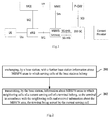
- the method may include: Step 201 of exchanging, by a base station, with a further base station information about MBSFN areas to which serving cells of the base stations belong; and Step 202 of transmitting, by the base station, information about MBSFN areas to which neighboring cells of a current serving cell of a terminal belong, to the terminal in accordance with the neighboring cells of the current serving cell of the terminal and the received information about the MBSFN area, the terminal being served by the current serving cell.
- the base station may, with respect to each terminal served by the serving cell, determine the information about the MBSFN areas to which the neighboring cells of the current serving cell of the terminal belong, in accordance with the neighboring cells of the current serving cell of the terminal and the received information about the MBSFN area, and transmit the information about the MBSFN areas to which the neighboring cells of the current serving cell of the terminal belong, to the terminal.
- the base station may exchange with the further base station the information about the MBSFN areas to which the serving cells of the base stations belong via an X2 interface.
- the base station may exchange with the further base station the information about the MBSFN areas to which the serving cells of the base stations belong by an X2 Setup Request message, an X2 Setup Response message, or an eNB Configuration Update message.
- the X2 interface is an interface between the base stations and it is used to interconnect the base stations. It includes an X2 user plane and an X2 control plane, and the user plane is configured to transmit user data between the base stations. Through the X2 interface, it is able for the base stations to exchange the Served Cell Information.
- the information included in the Served Cell Information exchanged on the basis of the X2 interface and related to MBMS merely includes MBSFN Subframe Information and MBMS Service Area Identity List.
- the Serving Cell Information exchanged on the basis of the X2 interface may be extended, so as to enable it to carry the information about the MBSFN areas to which the serving cells belong. Table 1 shows a format for the extended Serving Cell Information.
- M ENUMERATE D (ssp0, ssp1, ssp2, ssp3, ssp4, ssp5, ssp6, ssp7, ssp8, ..., ssp9) - - >>>>Cyclic Prefix DL M ENUMERATE D (Normal, Extended,%) - - >>>>Cyclic Prefix UL M ENUMERATE D(Normal, Extended,%) - - Number of Antenna Ports O 9.2.43 YES ignore PRACH Configuration O PRACH Configuration 9.2.50 YES ignore MBSFN Subframe Info 0..
- the MBMS Service Area Identity List information element and the MBSFN Subframe Information element related to MBMS are known in the art, and the MBSFN area ID element is newly added in the embodiments of the present disclosure for carrying the information about the MBSFN areas to which the current serving cells of the terminal belong.
- the base station may also exchange with a further base station the information about the MBSFN areas to which the serving cells of the base stations belong, by a newly-defined message, or a new information element may be added in the existing message on the basis of the X2 interface interaction so as to carry the information about the MBSFN areas to which the serving cells of the base stations belong.
- the information about the MBSFN areas of the neighboring cells transmitted by the base station may include one or a combination of: identifiers of all the neighboring cells, and identifiers of the MBSFN areas to which the neighboring cells belong; identifiers of all the neighboring cells, and indication information corresponding to the identifier of each neighboring cell, the indication information indicating whether or not each neighboring cell belongs to the MBSFN area identical to the current serving cell; identifiers of the neighboring cells which belong to the MBSFN areas different from the current serving cell, and identifiers of the MBSFN areas to which these neighboring cells belong; identifiers of the neighboring cells which belong to the MBSFN areas different from the current serving cell; and identifiers of the neighboring cells which belong to the MBSFN areas identical to the current serving cell.
- the base station may transmit the information about the MBSFN areas to which the neighboring cells of the current serving cell of the terminal belong, to the terminal when the base station determines, in accordance with the neighboring cells of the current serving cell of the terminal and the received information about the MBSFN area, that the MBSFN areas to which the neighboring cells of the current serving cell of the terminal belong are different from the MBSFN area to which the current serving cell of the terminal belongs.
- the base station may not transmit the information about the MBSFN areas to which the neighboring cells of the current serving cell of the terminal belong, to the terminal. In this way, it is able to reduce signaling overhead for an air interface.
- the base station may determine whether or not the terminal is interested in a group communication service or whether or not the terminal is executing the group communication service. Only when the base station determines that the terminal is interested in the group communication service or the terminal is executing the group communication service, the base station may transmit the information about the MBSFN areas to which the neighboring cells of the current serving cell of the terminal belong, to the terminal. The base station may determine whether or not the terminal is interested in the group communication service or whether or not the terminal is executing the group communication service in accordance with MBMS Interest information reported by the terminal.
- the base station may determine that the terminal is interested in the group communication service. Also, the base station may determine whether or not the terminal is interested in the group communication service or whether or not the terminal is executing the group communication service in accordance with a counting result. For example, when the counting result obtained by the base station with respect to a certain MBMS service is not zero, the base station may determine that there is a terminal that is interested in the MBMS service or that is receiving the MBMS service.
- the base station may transmit the information about the MBSFN areas to which the neighboring cells of the current serving cell of the terminal belong, to the terminal via dedicated signaling (which carries the information about the MBSFN areas to which the neighboring cells of the current serving cell of the terminal belong).
- the dedicated signaling may be RRC signaling, MAC signaling or L1 signaling.
- the base station may also determine whether or not whether or not there is a terminal in the current serving cell that is interested in a group communication service or that is executing the group communication service.
- the base station may transmit the information about the MBSFN areas to which the neighboring cells of the current serving cell of the terminal belong, to the terminal by broadcasting at the current serving cell the information about the MBSFN areas.
- SIB System Information Block
- an existing SIB may be modified, so as to carry the information about the MBSFN areas.
- the above second and third alternative modes for Step 202 may be used in combination with the above first alternative mode for Step 202.
- the first alternative mode when the terminal is interested in the group communication service or it is executing the group communication service but the MBSFN areas to which the neighboring cells of the current serving cell of the terminal belong are different from the MBSFN area to which the current serving cell belongs, the information about the MBSFN areas to which the neighboring cells of the current serving cell belong may be transmitted to the terminal.
- a condition for the first alternative mode may be determined before or after a condition for the second alternative mode, i.e., the determination order thereof is not particularly defined herein.
- the base station may transmit the information about the MBSFN areas to which the neighboring cells of the current serving cell of the terminal belong, to the terminal.
- a condition for the first alternative mode may be determined before or after a condition for the third alternative mode, i.e., the determination order thereof is not particularly defined herein.
- the base station exchanges with a further base station the information about the MBSFN areas to which the serving cells of the base stations belong, and transmits the information about the MBSFN areas to which the neighboring cells of the current serving cell of the terminal belong, to the terminal, so that the terminal may acquire the information about the MBSFN areas to which the neighboring cells of the current serving cell belong before the cell switch or reselection.
- the terminal may acquire the information about the MBSFN areas to which the neighboring cells of the current serving cell belong before the cell switch or reselection.
- Corresponding processing may be performed by the terminal after it receives from the base station the information about the MBSFN areas to which the neighboring cells of the current serving cell of the terminal belong.
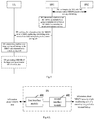
- Fig.3 is a flow chart of a method for notifying group communication information at a terminal side according to one embodiment of the present disclosure, the method may include the following steps.
- Step 301 receiving, by a terminal, information about MBSFN areas to which neighboring cells of a current serving cell of the terminal belong from a base station.
- the terminal may receive from the base station the information about the MBSFN areas to which the neighboring cells of the current serving cell of the terminal belong by broadcasting or via dedicated signaling.
- the contents contained in the information about the MBSFN areas to which the neighboring cells of the current serving cell of the terminal belong are mentioned hereinabove, and thus will not be repeated herein.
- Step 302 determining, by the terminal, whether or not target serving cells of the terminal belong to the MBSFN area identical to the current serving cell in accordance with the received information about the MBSFN areas.
- Step 301 there may be various triggering conditions for the terminal to determine whether or not the target serving cells of the terminal belong to the MBSFN area identical to the current serving cell, and some of them will be given hereinafter.
- Triggering condition 1 when the terminal enters the current serving cell, the terminal may start to determine whether or not the target serving cells of the terminal belong to the MBSFN area identical to the current serving cell. In this triggering condition, the target serving cells are all the neighboring cells of the current serving cell of the terminal.
- Triggering condition 2 when signal strength of the current serving cell of the terminal is lower than those of the neighboring cells, the terminal may start to determine whether or not the target serving cells belong to the MBSFN area identical to the current serving cell.
- the target serving cells are the neighboring cells that meet a cell switch or reselection condition, or previous N (N ⁇ 1) neighboring cells in the neighboring cells that meet the cell switch or reselection condition when ranked in a descending order in accordance with the signal strength.
- a value of N may be set in accordance with the practical need. For example, in order to reduce a data volume stored in the terminal, N may be set as one (1).
- Triggering condition 3 when signal quality of the current serving cell of the terminal is less than a first threshold or signal quality of the neighboring cells is greater than a second threshold, the terminal may start to determine whether or not the target serving cells belong to the MBSFN area identical to the current serving cell.
- the target serving cells are the neighboring cells that meet the cell switch or reselection condition, or previous N (N ⁇ 1) neighboring cells in the neighboring cells that meet the cell switch or reselection condition when ranked in a descending order in accordance with the signal quality.
- the first and second thresholds may be set by the system and configured for the terminal via a network-side device (e.g., a base station).
- a value of N may be set in accordance with the practical need. For example, in order to reduce a data volume stored in the terminal, N may be set as one (1).
- determination operation When determination operation is started by the terminal in accordance with the above triggering conditions, it is able to reduce a processing overhead for the terminal. For example, as can be seen from the second or third triggering condition, the determination operation is started only when the terminal needs to be switched or reselected to the target serving cell.
- the terminal may perform the determination operation after it receives from the base station the information about the MBSFN areas to which the neighboring cells of the current serving cell of the terminal belong.
- Step 302 when the terminal determines that the target serving cells of the terminal belong to the MBSFN areas different from the current serving cell, the terminal may further acquire system information about the target serving cells, and acquire information desired for creating a unicast bearer or an MBMS bearer for the target serving cells in accordance with the system information about the target serving cells.
- the terminal pre-create the bearer for the current serving cell or the target serving cell in accordance with the acquired information (i.e., the information desired for creating the unicast bearer or the MBMS bearer for the target serving cells), or to execute the MBMS service as soon as possible in accordance with the information when the terminal is switched or reselected to the target serving cell, thereby to ensure the continuity of the group communication service.
- the acquired information i.e., the information desired for creating the unicast bearer or the MBMS bearer for the target serving cells
- the terminal may acquire the system information about the target serving cells, acquire multicast control channel (MCCH) information in the system information, and determine whether or not there is a group communication service in which the terminal is interested or which is being executed by the terminal in the MBSFN areas to which the target serving cells belong (the determination manner is similar to that mentioned above).
- the terminal may store the system information about the target serving cells and the MCCH information. Otherwise, the terminal may create the unicast bearer for the current serving cell, or create the unicast bearer for the target serving cell in accordance with the system information about the target serving cell.
- the terminal may create the unicast bearer for the current serving cell, and then it is switched to the target serving cell in a unicast manner. Further, after the terminal is switched to the target serving cell, the terminal may determine whether or not the target serving cell provides the group communication service in which the terminal is interested in an MBMS manner in accordance with the system information of the target serving cell and the MCCH information. When it is determined that the target serving cell provides the group communication service in which the terminal is interested in an MBMS manner, the terminal may start to receive data in an MBMS manner at the target serving cell, and release the unicast bearer for the target serving cell.
- the base station exchanges with a further base station the information about the MBSFN areas to which the serving cells of the base stations belong, and transmits the information about the MBSFN areas to which the neighboring cells of the current serving cell of the terminal belong, to the terminal, so that the terminal may acquire the information about the MBSFN areas to which the neighboring cells of the current serving cell belong before the cell switch or reselection.
- the terminal may acquire the information about the MBSFN areas to which the neighboring cells of the current serving cell belong before the cell switch or reselection.
- Fig.4 shows a procedure for notifying the group communication information in one application scenario.
- a base station 1 is a current serving base station of a terminal 1
- a base station 2 may exchange information with the base station 1 via the X2 interface.
- the method may include the following steps.
- Step 401 exchanging, by the base station 1, with the base station 2 information about MBSFN areas to which the serving cells of the base stations belong, via a related X2 message, e.g., an X2 Setup Request message, an X2 Setup Response message or an eNB Configuration Update message.
- a related X2 message e.g., an X2 Setup Request message, an X2 Setup Response message or an eNB Configuration Update message.
- Step 402 broadcasting, by the base station 1, information about MBSFN areas to which neighboring cells of the serving cell of the terminal belong in the serving cell.
- a new SIB may be introduced so as to broadcast the information about the MBSFN areas to which the neighboring cells of the serving cell of the terminal belong.
- the contents contained in the information about the MBSFN areas are mentioned above, and thus will not be repeated herein.
- the base station may notify the information about the MBSFN areas to which the neighboring cells belong by broadcasting only when the neighboring cells belong to the MBSFN areas different from the current serving cell.
- Step 403 determining, by the terminal, whether or not the target serving cell belongs to the MBSFN area identical to the current serving cell.
- the triggering conditions for this step are mentioned hereinbefore, and thus will not be repeated herein.
- Step 403 when the terminal determines that the target serving cell belongs to the MBSFN area identical to the current serving cell, no other operation may be performed by the terminal. Further, when the terminal is currently executing the group communication service, the terminal may continue to receive the group communication data in an MBMS manner. Alternatively, when the terminal determines that the target serving cell belongs to the MBSFN area different from the current serving cell, the terminal may perform the following Step 404.
- Step 404 pre-reading, by the terminal, the system information of the target serving cell and/or the MCCH information.
- the terminal may pre-read a Master Information Block (MIB) and/or a SIB of the target serving cell.
- MIB Master Information Block
- the terminal needs to further read the MCCH information of target serving cell, and determine whether or not there is the group communication service in which the terminal is interested or which is being executed by the terminal in the MBSFN area to which the target serving cell belongs. Further, the following processing may be performed by the terminal in accordance with a determination result.
- MIB Master Information Block
- the terminal may continue to receive data in an MBMS manner and meanwhile store one or more of the MIB, SIB and MCCH information of target serving cell. In this way, it is able to receive the data in an MBMS manner as soon as possible when the terminal is switched or reselected to the target serving cell, thereby to ensure the service continuity for the group communication.
- the terminal may continue to receive data in an MBMS manner, and meanwhile create the unicast bearer for the current serving cell or create the unicast bearer for the target serving cell in accordance with the system information about the target serving cell. In this way, it is able to ensure the transmission delay for the group communication during the cell switch or reselection, thereby to ensure the continuity for the group communication service.
- the terminal may determine whether or not there is the group communication service in which the terminal is interested or which is being executed by the terminal in the MBSFN area to which the target serving cell belongs in accordance with a Temporary Mobile Group Identity (TMGI).
- TMGI Temporary Mobile Group Identity
- the method further includes a step of determining, by the base station, whether or not there is a terminal in the current serving cell that is interested in the group communication service or that is executing the group communication service.
- the procedure will be ended.
- Fig.5 shows a procedure for notifying the group communication information in another application scenario.
- the base station 1 is the serving base station of the terminal 1, and the base station 2 exchanges information with the base station 1 via an X2 interface.
- the method may include the following steps.
- Step 501 exchanging, by the base station 1, with the base station 2 information about MBSFN areas to which serving cells of the base stations belong.
- the base station 1 may exchange with the base station 2 the information about the MBSFN areas to which the serving cells of the base stations belong via an X2 message, e.g., an X2 Setup Request message, an X2 Setup Response message or an eNB Configuration Update message.
- an X2 message e.g., an X2 Setup Request message, an X2 Setup Response message or an eNB Configuration Update message.
- Step 502 determining, by the base station, whether or not the terminal is interested in the group communication service or the terminal is executing the group communication service; when the terminal is interested in the group communication service or the terminal is executing the group communication, proceeding to Step 503, and otherwise, ending the procedure.
- the base station may determine whether or not the terminal is interested in the group communication service or the terminal is executing the group communication service in accordance with MBMS Interest information reported by the terminal or a counting result.
- Step 503 notifying, by the base station, the information about the MBSFN areas to which the neighboring cells of the current serving cell of the terminal belong, to the terminal via dedicated signaling in the current serving cell.
- the dedicated signal may be RRC signaling, MAC signaling or L1 signaling. The contents contained in the information about the MBSFN areas are mentioned above, and thus will not be repeated herein.
- the base station may notify the terminal of the information about the MBSFN areas to which the neighboring cells belong only when the neighboring cells belong to the MBSFN areas different from the current serving cell.
- Step 504 determining, by the terminal, whether or not the target serving cell belongs to the MBSFN area identical to the current serving cell.
- the triggering conditions for this step are mentioned hereinbefore, and thus will not be repeated herein.
- Step 505 when the terminal determines that the target serving cell belongs to the MBSFN area identical to the current serving cell, no additional operation may be performed. Further, when the terminal is currently executing the group communication service, the terminal may continue to receive the group communication data in an MBMS manner. Alternatively, when the terminal determines that the target serving cell belongs to the MBSFN area different from the current serving cell, Step 505 may be performed.
- Step 505 pre-reading, by the terminal, the system information of the target serving cell and/or the MCCH information. This step is identical to Step 404 in Fig.4 , and thus will not be repeated herein.
- the present disclosure further provides in some embodiments a base station.
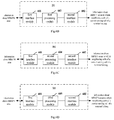
- the base station may include a first interface module 601 configured to exchange with a further base station information about MBSFN areas to which serving cells of the base stations belong; and a second interface module 602 configured to transmit information about MBSFN areas to which neighboring cells of a current serving cell of a terminal belong, to the terminal in accordance with the neighboring cells of the current serving cell of the terminal and received information about the MBSFN area.
- the terminal is served by the current serving cell.
- the first interface module 601 is configured to exchange with a further base station the information about the MBSFN areas to which the serving cells of the base stations belong, by an X2 Setup Request message; or exchange with the further base station the information about the MBSFN area to which the serving cells of the base stations belong, by an X2 Setup Response message; or exchange with the further base station the information about the MBSFN areas to which the serving cells of the base stations belong, by an eNB Configuration Update message.
- the base station may further include a first processing module 603 configured to determine, in accordance with the neighboring cells of the current serving cell of the terminal and the received information about the MBSFN area, whether or not the MBSFN areas to which the neighboring cells of the current serving cell of the terminal belong are different from the MBSFN area to which the current serving cell of the terminal belongs.
- the second interface module 602 may be configured to, when the MBSFN areas to which the neighboring cells of the current serving cell of the terminal belong are different from the MBSFN area to which the current serving cell of the terminal belongs, transmit the information about the MBSFN areas to which the neighboring cells of the current serving cell of the terminal belong, to the terminal.
- the base station may further include a second processing module 604 configured to determine whether or not the terminal is interested in a group communication service or whether or not the terminal is executing the group communication service after the information about the MBSFN areas has been received by the first interface module 601; and the second interface module 602 is configured to, when the terminal is interested in the group communication service or the terminal is executing the group communication service, transmit the information about the MBSFN areas to which the neighboring cells of the current serving cell of the terminal belong, to the terminal via dedicated signaling.
- the dedicated signaling includes RRC signaling, MAC signaling or L1 signaling.
- the base station may further include a third processing processor 605 configured to determine whether or not there is a terminal in the current serving cell that is interested in a group communication service or that is executing the group communication service after the information about the MBSFN area has been received by the first interface module 601; and the second interface module 602 is configured to, when there is the terminal in the current serving cell that is interested in the group communication service or that is executing the group communication service, transmit the information about the MBSFN areas to which the neighboring cells of the current serving cell of the terminal belong, to the terminal by broadcasting at the current serving cell the information about the MBSFN areas.
- the contents contained in the information about the MBSFN areas to which the neighboring cells belong are mentioned hereinbefore, and thus will not be repeated herein.
- the present disclosure further provides in some embodiments a base station.
- the base station may include a processor 700, a transceiver 710 and a memory 720.
- the processor 700 is configured to read a program stored in the memory 720 so as to exchange with a further base station information about MBSFN areas to which serving cells of the base stations belong, and transmit information about MBSFN areas to which neighboring cells of the current serving cell of the terminal, to the terminal via the transceiver 710 in accordance with the neighboring cells of the current serving cell of the terminal and the information about the MBSFN area received by a first interface module, the terminal being served by the current serving cell.
- the transceiver 710 is configured to receive and transmit data under the control of the processor 700.
- a bus architecture may include a number of buses and bridges connected to each other, so as to connect various circuits for one or more processors 700 and one or more memories 720.
- the bus architecture may be used to connect any other circuits, such as a circuit for a peripheral device, a circuit for a voltage stabilizer and a power management circuit.
- Bus interfaces are provided, and the transceiver 710 may consist of a transmitter and a receiver for communication with any other devices over a transmission medium.
- the processor 700 takes charge of managing the bus architecture as well general processing.
- the memory 720 may store data desired for the operation of the processor 700.
- the present disclosure further provides in some embodiments a terminal.
- the terminal may include an interface module 801, a determination module 802, an acquisition module 803 and a bearer processing module 804.
- the interface module 801 is configured to receive information about MBSFN areas to which neighboring cells of a current serving cell of the terminal belong from a base station.
- the determination module 802 is configured to determine whether or not target serving cells of the terminal belong to the MBSFN area identical to the current serving cell in accordance with the information about the MBSFN areas received by the interface module.
- the determination module 802 may be configured to, when the terminal enters the current serving cell, determine whether or not the target serving cells belong to the MBSFN area identical to the current serving cell, the target serving cells being all neighboring cells of the current serving cell; or when signal strength of the current serving cell of the terminal is lower than those of the neighboring cells, determine whether or not the target serving cells belong to the MBSFN area identical to the current serving cell, the target serving cells being the neighboring cells that meet a cell switch or reselection condition, or previous N neighboring cells in the neighboring cells that meet the cell switch or reselection condition when ranked in a descending order in accordance with the signal strength, where N ⁇ 1; or when signal quality of the current serving cell of the terminal is less than a first threshold or signal quality of the neighboring cells is greater than a second threshold, determine whether or not the target serving cells belong to the MBSFN area identical to the current serving cell, the target serving cells being the neighboring cells that meet the cell switch or reselection condition, or previous N
- the acquisition module 803 is configured to, when the determination module 802 determines that the target serving cells of the terminal belong to the MBSFN areas different from the current serving cell, acquire system information about the target serving cells, and acquire information desired for creating a unicast bearer or an MBMS bearer for the target serving cells in accordance with the system information about the target serving cells.
- the acquisition module 803 may be configured to acquire the system information about the target serving cells, acquire multicast control channel information in the system information, and determine whether or not there is a group communication service in which the terminal is interested or which is being executed by the terminal in the MBSFN areas to which the target serving cells belong; when there is the group communication service in which the terminal is interested or which is being executed by the terminal, store the system information about the target serving cells and the multicast control channel information, the system information and the multicast control channel information being used to receive data in an MBMS manner when the terminal is switched or reselected to the target serving cell; or when there is not the group communication service in which the terminal is interested or which is being executed by the terminal, instruct the bearer processing module to create the unicast bearer for the current serving cell, or instruct the bearer processing module to create the unicast bearer for the target serving cell in accordance with the system information about the target serving cell.
- the acquisition module 803 may further be configured to, after the terminal is switched to the target serving cell, determine whether or not the group communication service in which the terminal is interested is provided by the target serving cell in an MBMS manner in accordance with the system information about the target serving cell and multicast control channel information, and when the group communication service in which the terminal is interested is provided by the target serving cell in an MBMS manner, instruct the bearer processing module to receive the group communication service at the target serving cell in an MBMS manner, and release the unicast bearer for the target serving cell.
- the bearer processing module 804 may be configured to, when the target serving cells of the terminal belong to the MBSFN areas different from the current serving cell, create the unicast bearer for the current serving cell, and switch the terminal to the target serving cell in a unicast manner.
- the interface module 801 may be configured to receive the information about the MBSFN areas to which the neighboring cells of the current serving cell of the terminal belong from the base station by receiving broadcasting information at the current serving cell or by receiving dedicated signaling.
- the contents contained in the information about the MBSFN areas to which the neighboring cells belong are mentioned hereinbefore, and thus will not be repeated herein.
- the present disclosure further provides in some embodiments a terminal.
- the terminal may include a processor 900, a transceiver 910 and a memory 920.
- the processor 900 is configured to read a program stored in the memory 920, so as to receive information about MBSFN areas to which neighboring cells of a current serving cell of the terminal belong from a base station via the transceiver 910, and determine whether or not target serving cells of the terminal belong to the MBSFN area identical to the current serving cell in accordance with the received information about the MBSFN areas.
- the transceiver 910 is configured to receive and transmit data under the control of the processor 900.
- a bus architecture may include a number of buses and bridges connected to each other, so as to connect various circuits for one or more processors 900 and one or more memories 920.
- the bus architecture may be used to connect any other circuits, such as a circuit for a peripheral device, a circuit for a voltage stabilizer and a power management circuit.
- Bus interfaces are provided, and the transceiver 910 may consist of a transmitter and a receiver for communication with any other devices over a transmission medium.
- a user interface 930 may also be provided for devices which are to be arranged inside or outside each UE, and these devices may include but not limited to a keypad, a display, a speaker, a microphone and a joystick.
- the processor 900 takes charge of managing the bus architecture as well general processing.
- the memory 920 may store data desired for the operation of the processor 900.
- the present disclosure provides in the embodiments the method on the basis of the existing LTE network architecture, so as to reduce the transmission delay for the group communication.
- the method is able to, without changing the existing network architecture, reduce the transmission delay for the group communication service during the movement of the terminal, thereby to meet the requirements of the group communication service on continuity.
- each process and/or block, or combinations thereof, in the flow charts and/or block diagrams may be implemented via computer program commands.
- These computer program commands may be applied to a general-purpose computer, a special-purpose computer, an embedded processor or any other processor of programmable data processing equipment, so as to form a machine, thereby to obtain the means capable of effecting the functions specified in one or more processes in the flow charts and/or one or more blocks in the block diagrams in accordance with the commands executed by the computer or the processor of the other programmable data processing equipment.
- These computer program commands may also be stored in a computer-readable memory capable of guiding the computer or the other programmable data processing equipment to work in a special manner, so as to form a product including a command device capable of effecting the functions specified in one or more processes in the flow charts and/or one or more blocks in the block diagrams.
- These computer program commands may also be loaded onto a computer or the other programmable data processing equipment, so as to perform a series of operations thereon and generate the processing implemented by the computer, thereby to provide the steps capable of effecting the functions specified one or more processes in the flow charts and/or one or more blocks in the block diagrams in accordance with the instructions.
Landscapes
- Engineering & Computer Science (AREA)
- Computer Networks & Wireless Communication (AREA)
- Signal Processing (AREA)
- Multimedia (AREA)
- Mobile Radio Communication Systems (AREA)
Abstract
Description
- The present application claims a priority of the Chinese patent application No
.201310527009.3 filed on October 30, 2013 - The present disclosure relates to the field of communication technology, in particular to a method and a device for notifying group communication information.
- Group communication refers to the data transmission to all terminals in a group simultaneously via a network in a rapid and effective manner. For a Long-Term Evolution (LTE) system, an end-to-end transmission delay for the group communication is required to be 150ms. In order to meet the requirement on the transmission delay, it is currently inclined to reuse an existing Multimedia Broadcast Multicast Service (MBMS) architecture, with some modifications, as a network architecture.
-
Fig.1 shows the MBMS network architecture for the LTE system. Logical entities in the MBMS network architecture mainly include a Mobility Management Entity (MME), an MBMS Gateway (GW), a Multi-cell/multicast Coordination Entity (MCE), an evolved Node B (eNB), a Packet Data Network Gateway (P-GW), and a Broadcast Multicast Service Center (BM-SC). An M3 interface is used to provide functions related to session management between the MME and the MCE, an M2 interface is used to provide functions, such as session management and MBMS scheduling information transmission, between the MCE and the eNB, and an M1 interface is used to provide MBMS service transmission between the MBMS GW and the eNB. - Depending on different roles for the group communication, the terminals for the group communication may be divided into two kinds, i.e., transmission terminals and reception terminals. The transmission terminal refers to a terminal which is authorized by a group communication server to transmit group communication data to the group communication server, and uplink data is transmitted in a unicast manner between the transmission terminal and the group communication server. On the other hand, the reception terminal refers to a terminal which is authorized by the group communication server to receive the group communication data issued thereby, and the group communication data may be received by the reception terminal via a network in a unicast or multicast manner.
- Currently, there is an urgent need to support public safety group communication using the LTE system. One scheme is to achieve the group communication function using the existing MBMS network architecture. However, there is no scheme for notifying information related to the group communication, so as to meet the requirements of the group communication on service continuity when the terminals move into different Multicast Broadcast Single Frequency Network (MBSFN) areas or move out of the MBSFN areas.
- An object of the present disclosure is to provide a method and a device for notifying group communication information, so as to notify the group communication information on the basis of an MBMS network architecture, thereby to ensure the service continuity for the group communication.
- In one aspect, the present disclosure provides in certain embodiments a method for notifying group communication information, including steps of: exchanging, by a base station, with a further base station information about MBSFN areas to which serving cells of the base stations belong; and transmitting, by the base station, information about MBSFN areas to which neighboring cells of a current serving cell of a terminal belong, to the terminal in accordance with the neighboring cells of the current serving cell of the terminal and received information about the MBSFN area, the terminal being served by the current serving cell.
- Alternatively, the step of exchanging, by the base station, with the further base station the information about the MBSFN areas to which the serving cells of the base stations belong may include: exchanging, by the base station, with the further base station the information about the MBSFN areas to which the serving cells of the base stations belong, by an X2 Setup Request message; or exchanging, by the base station, with the further base station the information about the MBSFN areas to which the serving cells of the base stations belong, by an X2 Setup Response message; or exchanging, by the base station, with the further base station the information about the MBSFN areas to which the serving cells of the base stations belong, by an eNB Configuration Update message.
- Alternatively, the step of transmitting, by the base station, the information about the MBSFN areas to which the neighboring cells of the current serving cell of the terminal belong, to the terminal in accordance with the neighboring cells of the current serving cell of the terminal and the received information about the MBSFN area may include: transmitting, by the base station, the information about the MBSFN areas to which the neighboring cells of the current serving cell of the terminal belong, to the terminal when the base station determines, in accordance with the neighboring cells of the current serving cell of the terminal and the received information about the MBSFN area, that the MBSFN areas to which the neighboring cells of the current serving cell of the terminal belong are different from the MBSFN area to which the current serving cell of the terminal belongs.
- Alternatively, the step of transmitting, by the base station, the information about the MBSFN areas to which the neighboring cells of the current serving cell of the terminal belong, to the terminal in accordance with the neighboring cells of the current serving cell of the terminal and the received information about the MBSFN area may include: determining, by the base station, whether or not the terminal is interested in a group communication service or whether or not the terminal is executing the group communication service after the information about the MBSFN areas has been received, and when the base station determines that the terminal is interested in the group communication service or the terminal is executing the group communication service, transmitting, by the base station, the information about the MBSFN areas to which the neighboring cells of the current serving cell of the terminal belong, to the terminal via dedicated signaling. The dedicated signaling may include Radio Resource Control (RRC) signaling, Media Access Control (MAC) signaling or L1 signaling. Alternatively, the step of transmitting, by the base station, the information about the MBSFN areas to which the neighboring cells of the current serving cell of the terminal belong, to the terminal in accordance with the neighboring cells of the current serving cell of the terminal and the received information about the MBSFN areas may include: determining, by the base station, whether or not there is a terminal in the current serving cell that is interested in a group communication service or that is executing the group communication service after the information about the MBSFN area has been received, and when the base station determines that there is a terminal in the current serving cell that is interested in the group communication service or that is executing the group communication service, transmitting the information about the MBSFN areas to which the neighboring cells of the current serving cell of the terminal belong, to the terminal by broadcasting at the current serving cell the information about the MBSFN areas.
- Alternatively, the information about the MBSFN areas to which the neighboring cells belong may include one or a combination of: identifiers of all the neighboring cells, and identifiers of the MBSFN areas to which the neighboring cells belong; identifiers of all the neighboring cells, and indication information corresponding to the identifier of each neighboring cell, the indication information indicating whether or not each neighboring cell belongs to the MBSFN area identical to the current serving cell; identifiers of the neighboring cells which belong to the MBSFN areas different from the current serving cell, and identifiers of the MBSFN areas to which these neighboring cells belong; identifiers of the neighboring cells which belong to the MBSFN areas different from the current serving cell; and identifiers of the neighboring cells which belong to the MBSFN areas identical to the current serving cell.
- In another aspect, the present disclosure provides in certain embodiments a method for notifying group communication information, including steps of: receiving, by a terminal, information about MBSFN areas to which neighboring cells of a current serving cell of the terminal belong from a base station; and determining, by the terminal, whether or not target serving cells of the terminal belong to the MBSFN area identical to the current serving cell in accordance with the received information about the MBSFN areas.
- Alternatively, the step of determining, by the terminal, whether or not the target serving cells of the terminal belong to the MBSFN area identical to the current serving cell may include: when the terminal enters the current serving cell, determining whether or not the target serving cells belong to the MBSFN area identical to the current serving cell, the target serving cells being all neighboring cells of the current serving cell; or when signal strength of the current serving cell of the terminal is lower than that of the neighboring cells, determining whether or not the target serving cells belong to the MBSFN area identical to the current serving cell, the target serving cells being the neighboring cells that meet a cell switch or reselection condition, or previous N neighboring cells in the neighboring cells that meet the cell switch or reselection condition when ranked in a descending order in accordance with the signal strength, where N≥1; or when signal quality of the current serving cell of the terminal is less than a first threshold or signal quality of the neighboring cells is greater than a second threshold, determining whether or not the target serving cells belong to the MBSFN area identical to the current serving cell, the target serving cells being the neighboring cells that meet the cell switch or reselection condition, or previous N neighboring cells in the neighboring cells that meet the cell switch or reselection condition when ranked in a descending order in accordance with the signal quality, where N≥1.
- Alternatively, when the terminal determines that the target serving cells of the terminal belong to the MBSFN areas different from the current serving cell, the method may further include: acquiring, by the terminal, system information about the target serving cells, and acquiring information desired for creating a unicast bearer or an MBMS bearer for the target serving cells in accordance with the system information about the target serving cells.
- Alternatively, the step of acquiring, by the terminal, the system information about the target serving cells, and acquiring the information desired for creating a unicast bearer or an MBMS bearer for the target serving cells in accordance with the system information about the target serving cells may include: acquiring, by the terminal, the system information about the target serving cells, acquiring multicast control channel information in the system information, and determining whether or not there is a group communication service in which the terminal is interested or which is being executed by the terminal in the MBSFN areas to which the target serving cells belong; when there is the group communication service in which the terminal is interested or which is being executed by the terminal, storing the system information about the target serving cells and the multicast control channel information, the system information and the multicast control channel information being used to receive data in an MBMS manner when the terminal is switched or reselected to the target serving cell; or when there is not the group communication service in which the terminal is interested or which is being executed by the terminal, creating the unicast bearer for the current serving cell, or creating the unicast bearer for the target serving cell in accordance with the system information about the target serving cell.
- Alternatively, when the terminal determines that the target serving cells of the terminal belong to the MBSFN areas different from the current serving cell, the method may further include: creating, by the terminal, the unicast bearer for the current serving cell so as to be switched to the target serving cell in a unicast manner.
- Alternatively, after the terminal is switched to the target serving cell, the method may further include: determining, by the terminal, whether or not the group communication service in which the terminal is interested is provided by the target serving cell in an MBMS manner in accordance with the system information about the target serving cell and the multicast control channel information, and when the group communication service in which the terminal is interested is provided by the target serving cell in an MBMS manner, receiving the group communication service at the target serving cell in an MBMS manner, and releasing the unicast bearer for the target serving cell.
- Alternatively, the step of receiving, by the terminal, the information about the MBSFN areas to which the neighboring cells of the current serving cell of the terminal belong from the base station may include: receiving, by the terminal, the information about the MBSFN areas to which the neighboring cells of the current serving cell of the terminal belong from the base station by receiving broadcasting information at the current serving cell or by receiving dedicated signaling.
- Alternatively, the information about the MBSFN areas to which the neighboring cells belong may include one or a combination of: identifiers of all the neighboring cells, and identifiers of the MBSFN areas to which the neighboring cells belong; identifiers of all the neighboring cells, and indication information corresponding to the identifier of each neighboring cell, the indication information indicating whether or not each neighboring cell belongs to the MBSFN area identical to the current serving cell; identifiers of the neighboring cells which belong to the MBSFN areas different from the current serving cell, and identifiers of the MBSFN areas to which these neighboring cells belong; identifiers of the neighboring cells which belong to the MBSFN areas different from the current serving cell; and identifiers of the neighboring cells which belong to the MBSFN areas identical to the current serving cell.
- In yet another aspect, the present disclosure provides in certain embodiments a base station, including: a first interface module configured to exchange with a further base station information about MBSFN areas to which serving cells of the base stations belong; and a second interface module configured to transmit information about MBSFN areas to which neighboring cells of a current serving cell of a terminal belong, to the terminal in accordance with the neighboring cells of the current serving cell of the terminal and received information about the MBSFN area, the terminal being served by the current serving cell.
- Alternatively, the first interface module may be configured to exchange with the further base station the information about the MBSFN areas to which the serving cells of the base stations belong, by an X2 Setup Request message; or exchange with the further base station the information about the MBSFN area to which the serving cells of the base stations belong, by an X2 Setup Response message; or exchange with the further base station the information about the MBSFN areas to which the serving cells of the base stations belong, by an eNB Configuration Update message.
- Alternatively, the base station may further include a first processing module configured to determine, in accordance with the neighboring cells of the current serving cell of the terminal and the received information about the MBSFN area, whether or not the MBSFN areas to which the neighboring cells of the current serving cell of the terminal belong are different from the MBSFN area to which the current serving cell of the terminal belongs. The second interface module may be configured to, when the MBSFN areas to which the neighboring cells of the current serving cell of the terminal belong are different from the MBSFN area to which the current serving cell of the terminal belongs, transmit the information about the MBSFN areas to which the neighboring cells of the current serving cell of the terminal belong, to the terminal.
- Alternatively, the base station may further include a second processing module configured to determine whether or not the terminal is interested in a group communication service or whether or not the terminal is executing the group communication service after the information about the MBSFN areas has been received by the first interface module, and the second interface module may be configured to, when the terminal is interested in the group communication service or the terminal is executing the group communication service, transmit the information about the MBSFN areas to which the neighboring cells of the current serving cell of the terminal belong, to the terminal via dedicated signaling. The dedicated signaling includes RRC signaling, MAC signaling or L1 signaling.
- Alternatively, the base station may further include a third processing processor configured to determine whether or not there is a terminal in the current serving cell that is interested in a group communication service or that is executing the group communication service after the information about the MBSFN area has been received, and the second interface module may be configured to, when there is a terminal in the current serving cell that is interested in the group communication service or that is executing the group communication service, broadcast at the current serving cell the information about the MBSFN areas to which the neighboring cells of the current serving cell of the terminal belong.
- Alternatively, the information about the MBSFN areas to which the neighboring cells belong may include one or a combination of: identifiers of all the neighboring cells, and identifiers of the MBSFN areas to which the neighboring cells belong; identifiers of all the neighboring cells, and indication information corresponding to the identifier of each neighboring cell, the indication information indicating whether or not each neighboring cell belongs to the MBSFN area identical to the current serving cell; identifiers of the neighboring cells which belong to the MBSFN areas different from the current serving cell, and identifiers of the MBSFN areas to which these neighboring cells belong; identifiers of the neighboring cells which belong to the MBSFN areas different from the current serving cell; and identifiers of the neighboring cells which belong to the MBSFN areas identical to the current serving cell.
- In still yet another aspect, the present disclosure provides in certain embodiments a base station, including: a processor, a transceiver and a memory. The processor is configured to read a program stored in the memory so as to exchange with a further base station information about MBSFN areas to which serving cells of the base stations belong, and transmit information about MBSFN areas to which neighboring cells of the current serving cell of the terminal, to the terminal via the transceiver in accordance with the neighboring cells of the current serving cell of the terminal and the information about the MBSFN area received by a first interface module, the terminal being served by the current serving cell. The transceiver is configured to receive and transmit data under the control of the processor. The memory is configured to store data desired for the operation of the processor.
- Alternatively, the processor may be configured to read the program stored in the memory, so as to exchange with the further base station the information about the MBSFN areas to which the serving cells of the base stations belong, by an X2 Setup Request message; or exchange with the further base station the information about the MBSFN areas to which the serving cells of the base stations belong, by an X2 Setup Response message; or exchange with the further base station the information about the MBSFN areas to which the serving cells of the base stations belong, by an eNB Configuration Update message.
- Alternatively, the processor may be further configured to read the program stored in the memory, so as to determine, in accordance with the neighboring cells of the current serving cell of the terminal and the received information about the MBSFN area, whether or not the MBSFN areas to which the neighboring cells of the current serving cell of the terminal belong are different from the MBSFN area to which the current serving cell of the terminal belongs, and when the MBSFN areas to which the neighboring cells of the current serving cell of the terminal belong are different from the MBSFN area to which the current serving cell of the terminal belongs, transmit the information about the MBSFN areas to which the neighboring cells of the current serving cell of the terminal belong, to the terminal.
- Alternatively, the processor may be further configured to read the program stored in the memory, so as to determine whether or not the terminal is interested in a group communication service or whether or not the terminal is executing the group communication service after the information about the MBSFN areas has been received by the first interface module, and when the terminal is interested in the group communication service or the terminal is executing the group communication service, transmit the information about the MBSFN areas to which the neighboring cells of the current serving cell of the terminal belong, to the terminal via dedicated signaling. The dedicated signaling may include RRC signaling, MAC signaling or L1 signaling.
- Alternatively, the processor may be further configured to determine whether or not there is a terminal in the current serving cell that is interested in a group communication service or that is executing the group communication service after the information about the MBSFN area has been received, and when there is a terminal in the current serving cell that is interested in the group communication service or that is executing the group communication service, broadcast at the current serving cell the information about the MBSFN areas to which the neighboring cells of the current serving cell of the terminal belong.
- Alternatively, the information about the MBSFN areas to which the neighboring cells belong may include one or a combination of: identifiers of all the neighboring cells, and identifiers of the MBSFN areas to which the neighboring cells belong; identifiers of all the neighboring cells, and indication information corresponding to the identifier of each neighboring cell, the indication information indicating whether or not each neighboring cell belongs to the MBSFN area identical to the current serving cell; identifiers of the neighboring cells which belong to the MBSFN areas different from the current serving cell, and identifiers of the MBSFN areas to which these neighboring cells belong; identifiers of the neighboring cells which belong to the MBSFN areas different from the current serving cell; and identifiers of the neighboring cells which belong to the MBSFN areas identical to the current serving cell.
- In still yet another aspect, the present disclosure provides in certain embodiments a terminal, including: an interface module configured to receive information about MBSFN areas to which neighboring cells of a current serving cell of the terminal belong from a base station; and a determination module configured to determine whether or not target serving cells of the terminal belong to the MBSFN area identical to the current serving cell in accordance with the information about the MBSFN areas received by the interface module.
- Alternatively, the determination module may be configured to, when the terminal enters the current serving cell, determine whether or not the target serving cells belong to the MBSFN area identical to the current serving cell, the target serving cells being all neighboring cells of the current serving cell; or when signal strength of the current serving cell of the terminal is lower than those of the neighboring cells, determine whether or not the target serving cells belong to the MBSFN area identical to the current serving cell, the target serving cells being the neighboring cells that meet a cell switch or reselection condition, or previous N neighboring cells in the neighboring cells that meet the cell switch or reselection condition when ranked in a descending order in accordance with the signal strength, where N≥1; or when signal quality of the current serving cell of the terminal is less than a first threshold or signal quality of the neighboring cells is greater than a second threshold, determine whether or not the target serving cells belong to the MBSFN area identical to the current serving cell, the target serving cells being the neighboring cells that meet the cell switch or reselection condition, or previous N neighboring cells in the neighboring cells that meet the cell switch or reselection condition when ranked in a descending order in accordance with the signal quality, where N≥1.
- Alternatively, the terminal may further include an acquisition module configured to, when the determination module determines that the target serving cells of the terminal belong to the MBSFN areas different from the current serving cell, acquire system information about the target serving cells, and acquire information desired for creating a unicast bearer or an MBMS bearer for the target serving cells in accordance with the system information about the target serving cells. The acquisition module may be further configured to, after the terminal is switched to the target serving cell, determine whether or not the group communication service in which the terminal is interested is provided by the target serving cell in an MBMS manner in accordance with the system information about the target serving cell and multicast control channel information, and when the group communication service in which the terminal is interested is provided by the target serving cell in an MBMS manner, instruct the bearer processing module to receive the group communication service at the target serving cell in an MBMS manner, and release the unicast bearer for the target serving cell.
- Alternatively, the terminal may further include a bearer processing module configured to, when the target serving cells of the terminal belong to the MBSFN areas different from the current serving cell, create the unicast bearer for the current serving cell, and switch the terminal to the target serving cell in a unicast manner.
- Alternatively, the terminal may further include a bearer processing module. The acquisition module may be configured to acquire the system information about the target serving cells, acquire multicast control channel information in the system information, and determine whether or not there is a group communication service in which the terminal is interested or which is being executed by the terminal in the MBSFN areas to which the target serving cells belong; when there is the group communication service in which the terminal is interested or which is being executed by the terminal, store the system information about the target serving cells and the multicast control channel information, the system information and the multicast control channel information being used to receive data in an MBMS manner when the terminal is switched or reselected to the target serving cell; or when there is not the group communication service in which the terminal is interested or which is being executed by the terminal, instruct the bearer processing module to create the unicast bearer for the current serving cell, or instruct the bearer processing module to create the unicast bearer for the target serving cell in accordance with the system information about the target serving cell. The interface module may be configured to receive the information about the MBSFN areas to which the neighboring cells of the current serving cell of the terminal belong from the base station by receiving broadcasting information at the current serving cell or by receiving dedicated signaling.
- Alternatively, the information about the MBSFN areas to which the neighboring cells belong may include one or a combination of: identifiers of all the neighboring cells, and identifiers of the MBSFN areas to which the neighboring cells belong; identifiers of all the neighboring cells, and indication information corresponding to the identifier of each neighboring cell, the indication information indicating whether or not each neighboring cell belongs to the MBSFN area identical to the current serving cell; identifiers of the neighboring cells which belong to the MBSFN areas different from the current serving cell, and identifiers of the MBSFN areas to which these neighboring cells belong; identifiers of the neighboring cells which belong to the MBSFN areas different from the current serving cell; and identifiers of the neighboring cells which belong to the MBSFN areas identical to the current serving cell.
- In still yet another aspect, the present disclosure further provides in certain embodiments a terminal, including a processor, a transceiver and a memory. The processor is configured to read a program stored in the memory, so as to receive information about MBSFN areas to which neighboring cells of a current serving cell of the terminal belong from a base station via the transceiver, and determine whether or not target serving cells of the terminal belong to the MBSFN area identical to the current serving cell in accordance with the received information about the MBSFN areas. The transceiver is configured to receive and transmit data under the control of the processor. The memory is configured store data desired for the operation of the processor.
- Alternatively, the processor may be configured to read the program stored in the memory, so as to, when the terminal enters the current serving cell, determine whether or not the target serving cells belong to the MBSFN area identical to the current serving cell, the target serving cells being all neighboring cells of the current serving cell; or when signal strength of the current serving cell of the terminal is lower than those of the neighboring cells, determine whether or not the target serving cells belong to the MBSFN area identical to the current serving cell, the target serving cells being the neighboring cells that meet a cell switch or reselection condition, or previous N neighboring cells in the neighboring cells that meet the cell switch or reselection condition when ranked in a descending order in accordance with the signal strength, where N≥1; or when signal quality of the current serving cell of the terminal is less than a first threshold or signal quality of the neighboring cells is greater than a second threshold, determine whether or not the target serving cells belong to the MBSFN area identical to the current serving cell, the target serving cells being the neighboring cells that meet the cell switch or reselection condition, or previous N neighboring cells in the neighboring cells that meet the cell switch or reselection condition when ranked in a descending order in accordance with the signal quality, where N≥1.
- Alternatively, the processor may be configured to read the program stored in the memory, so as to, when a determination module determines that the target serving cells of the terminal belong to the MBSFN areas different from the current serving cell, acquire system information about the target serving cells, and acquire information desired for creating a unicast bearer or an MBMS bearer for the target serving cells in accordance with the system information about the target serving cells. The processor may be configured to read the program stored in the memory, so as to, after the terminal is switched to the target serving cell, determine whether or not the group communication service in which the terminal is interested is provided by the target serving cell in an MBMS manner in accordance with the system information about the target serving cell and multicast control channel information, and when the group communication service in which the terminal is interested is provided by the target serving cell in an MBMS manner, instruct a bearer processing module to receive the group communication service at the target serving cell in an MBMS manner, and release the unicast bearer for the target serving cell.
- Alternatively, the processor may be configured to read the program stored in the memory, so as to, when the target serving cells of the terminal belong to the MBSFN areas different from the current serving cell, create the unicast bearer for the current serving cell and switch the terminal to the target serving cell in a unicast manner.
- Alternatively, the processor may be configured to read the program stored in the memory, so as to, acquire the system information about the target serving cells, acquire multicast control channel information in the system information, and determine whether or not there is a group communication service in which the terminal is interested or which is being executed by the terminal in the MBSFN areas to which the target serving cells belong; and when there is the group communication service in which the terminal is interested or which is being executed by the terminal, store the system information about the target serving cells and the multicast control channel information, the system information and the multicast control channel information being used to receive data in an MBMS manner when the terminal is switched or reselected to the target serving cell; or when there is not the group communication service in which the terminal is interested or which is being executed by the terminal, instruct the bearer processing module to create the unicast bearer for the current serving cell, or instruct the bearer processing module to create the unicast bearer for the target serving cell in accordance with the system information about the target serving cell.
- Alternatively, the processor may be configured to read the program stored in the memory, so as to receive the information about the MBSFN areas to which the neighboring cells of the current serving cell of the terminal belong from the base station by receiving broadcasting information at the current serving cell or by receiving dedicated signaling.
- Alternatively, the information about the MBSFN areas to which the neighboring cells belong may include one or a combination of: identifiers of all the neighboring cells, and identifiers of the MBSFN areas to which the neighboring cells belong; identifiers of all the neighboring cells, and indication information corresponding to the identifier of each neighboring cell, the indication information indicating whether or not each neighboring cell belongs to the MBSFN area identical to the current serving cell; identifiers of the neighboring cells which belong to the MBSFN areas different from the current serving cell, and identifiers of the MBSFN areas to which these neighboring cells belong; identifiers of the neighboring cells which belong to the MBSFN areas different from the current serving cell; and identifiers of the neighboring cells which belong to the MBSFN areas identical to the current serving cell.
- According to the embodiments of the present disclosure, the base station exchanges with a further base station the information about the MBSFN areas to which the serving cells of the base stations belong, and transmits the information about the MBSFN areas to which the neighboring cells of the current serving cell of the terminal belong, to the terminal, so that the terminal may acquire the information about the MBSFN areas to which the neighboring cells of the current serving cell belong before the cell switch or reselection operation. As a result, it is able to create the unicast bearer for the current serving cell or create the unicast bearer or the MBMS service bearer for the target serving cells in advance, thereby to reduce the transmission delay for the group communication service when the terminal moves between the cells, and ensure the continuity of the group communication service.
- In order to illustrate the technical solutions of the present disclosure or the related art in a clearer manner, the drawings desired for the present disclosure or the related art will be described hereinafter briefly. Obviously, the following drawings merely relate to some embodiments of the present disclosure, and based on these drawings, a person skilled in the art may obtain the other drawings without any creative effort.
-
Fig.1 is a schematic view showing an MBMS network architecture for an existing LTE system; -
Fig.2 is a flow chart of a method for notifying group communication information at a base station side according to one embodiment of the present disclosure; -
Fig.3 is a flow chart of a method for notifying group communication information at a terminal side according to one embodiment of the present disclosure; -
Fig.4 is a flow chart of a procedure for notifying the group communication information according to one embodiment of the present disclosure; -
Fig.5 is another flow chart of the procedure for notifying the group communication information according to one embodiment of the present disclosure; -
Figs.6A ,6B, 6C and 6D are schematic views showing a base station according to one embodiment of the present disclosure; -
Fig.7 is another schematic view showing the base station according to one embodiment of the present disclosure; -
Fig.8 is a schematic view showing a terminal according to one embodiment of the present disclosure; and -
Fig.9 is another schematic view showing the terminal according to one embodiment of the present disclosure. - An existing MBMS network architecture may be used to achieve group communication, but in some scenarios, e.g., when a terminal moves out of an MBSFN area, the terminal will be switched between a multicast connection and a unicast connection or between different multicast connections, or it will reselect the multicast or unicast connection. After the terminal fails to receive an MBMS service at a target serving cell, it will create the unicast connection to the target serving cell or create an MBMS bearer. In this way, the group communication service may be interrupted for a long period of time during the switch between the multicast connection and the unicast connection or the reselection thereof, or during the switch between the multicast connections or the reselection thereof. As a result, it is impossible to meet the requirements of the group communication on service continuity.
- In this regard, the present disclosure provides a scheme for notifying the group communication information on the basis of the existing LTE system architecture, so as to reduce the transmission delay for the group communication and ensure the service continuity.
- In the embodiments of the present disclosure, a base station may exchange with a further base station information about MBSFN areas to which serving cells of the base stations belong via an X2 interface, and notify a terminal of the information about the MBSFN areas to which neighboring cells of a current serving cell of the terminal served by the base station belong, to the terminal. Further, the terminal may determine, in accordance with the received information about the MBSFN area, whether or not a target serving cell into which the terminal is about to enter belongs to the MBSFN area identical to the current serving cell. When they belong to the identical MBSFN area, the terminal may continue to receive group communication data in an MBMS manner. Otherwise, on the premise that the terminal continues to receive the group communication data in an MBMS manner, the terminal may pre-read system information about the target serving cell, so as to acquire information desired for creating a unicast bearer or the MBMS bearer for the target serving cell.
- According to the embodiments of the present disclosure, the terminal may acquire whether or not the switched or reselected target serving cell belongs to the MBSFN area identical to the current serving cell in advance, so as to determine, in a subsequent operation, whether or not to transmit the data in a unicast manner, receive the data in an MBMS manner, or create the MBMS bearer, thereby to reduce the transmission delay for the group communication service when the terminal moves between the cells and ensure the service continuity.
- In order to make the objects, the technical solutions and the advantages of the present disclosure more apparent, the present disclosure will be described hereinafter in conjunction with the drawings and embodiments. Obviously, the following embodiments are merely a part of, rather than all of, the embodiments of the present disclosure, and based on these embodiments, a person skilled in the art may obtain, without any creative effort, the other embodiments, which also fall within the scope of the present disclosure.
- Referring to
Fig.2 , which is a flow chart of a method for notifying group communication information at a base station side according to one embodiment of the present disclosure, the method may include: Step 201 of exchanging, by a base station, with a further base station information about MBSFN areas to which serving cells of the base stations belong; and Step 202 of transmitting, by the base station, information about MBSFN areas to which neighboring cells of a current serving cell of a terminal belong, to the terminal in accordance with the neighboring cells of the current serving cell of the terminal and the received information about the MBSFN area, the terminal being served by the current serving cell. - During the implementation, after receiving from the further base station the information about the MBSFN areas to which the serving cells of the further base station belong, the base station may, with respect to each terminal served by the serving cell, determine the information about the MBSFN areas to which the neighboring cells of the current serving cell of the terminal belong, in accordance with the neighboring cells of the current serving cell of the terminal and the received information about the MBSFN area, and transmit the information about the MBSFN areas to which the neighboring cells of the current serving cell of the terminal belong, to the terminal.
- In
Step 201, the base station may exchange with the further base station the information about the MBSFN areas to which the serving cells of the base stations belong via an X2 interface. During the implementation, the base station may exchange with the further base station the information about the MBSFN areas to which the serving cells of the base stations belong by an X2 Setup Request message, an X2 Setup Response message, or an eNB Configuration Update message. - The X2 interface is an interface between the base stations and it is used to interconnect the base stations. It includes an X2 user plane and an X2 control plane, and the user plane is configured to transmit user data between the base stations. Through the X2 interface, it is able for the base stations to exchange the Served Cell Information. In an existing protocol, the information included in the Served Cell Information exchanged on the basis of the X2 interface and related to MBMS merely includes MBSFN Subframe Information and MBMS Service Area Identity List. Alternatively, in the embodiments of the present disclosure, the Serving Cell Information exchanged on the basis of the X2 interface may be extended, so as to enable it to carry the information about the MBSFN areas to which the serving cells belong. Table 1 shows a format for the extended Serving Cell Information.
Table 1 IE/Group Name Prese nce Range IE type and reference Semantics description Critica lity Assigned Criticality PCI M INTEGER (0..503, ...) Physical Cell ID - - Cell ID M ECGI 9.2.14 - - TAC M OCTET STRING(2) Tracking Area Code - - Broadcast PLMNs 1..<ma xnoofB PLMNs > Broadcast PLMNs - - >PLMN Identity M 9.2.4 - - CHOICE EUTRA-Mode- Info M - - >FDD >>FDD Info 1 - - >>>UL EARFCN M EARFCN 9.2.26 Corresponds to NUL in ref. TS 36.104 [16]. - - >>>DL EARFCN M EARFCN 9.2.26 Corresponds to NDL in ref. TS 36.104 [16]. - - >>>UL Transmission Bandwidth M Transmission Bandwidth 9.2 27 - - >>>DL Transmission Bandwidth M Transmission Bandwidth 9.2 27 Same as UL Transmission Bandwidth in this release. - - > TDD - - >>TDD Info 1 - - >>>EARFCN M 9.2.26 Corresponds to NDL/NUL in ref. TS 36.104 [16]. - - >>> Transmission Bandwidth M Transmission Bandwidth 9.2 27 - - >>>Subframe Assignment M ENUMERATE D(sa0, sa1, sa2, sa3, sa4, sa5, sa6,...) Uplink-downli nk subframe configuration information defined in ref. TS 36.211 [10]. - - >>> Special Subframe Info 1 Special subframe configuration information defined in ref. TS 36.211 [10]. - - >>>>Special Subframe Patterns M ENUMERATE D(ssp0, ssp1, ssp2, ssp3, ssp4, ssp5, ssp6, ssp7, ssp8, ..., ssp9) - - >>>>Cyclic Prefix DL M ENUMERATE D (Normal, Extended,...) - - >>>>Cyclic Prefix UL M ENUMERATE D(Normal, Extended,...) - - Number of Antenna Ports O 9.2.43 YES ignore PRACH Configuration O PRACH Configuration 9.2.50 YES ignore MBSFN Subframe Info 0.. <maxn oofMBS FN> MBSFN subframe defined in TS 36.331 [9]. GLOB AL ignore >Radio frame Allocation Period M ENUMERATE D(n1, n2, n4, n8, n16, n32, ...) - - >Radio frame Allocation Offset M INTEGER (0..7, ...) - - >Subframe Allocation M 9.2.51 - - CSG Id O 9.2.53 YES ignore MBMS 0 .. Supported GLOB ignore Service Area Identity List <maxn oofMB MSServ iceArea Identiti es > MBMS Service Area Identities in the cell. AL >MBMS Service Area Identity OCTET STRING(2) MBMS Service Area Identities as defined in TS 23.003 [xx]. MultibandInfo List O 9.2.60 YES ignore MBSFN area Id O INTEGER (0..255) - In Table 1, the MBMS Service Area Identity List information element and the MBSFN Subframe Information element related to MBMS are known in the art, and the MBSFN area ID element is newly added in the embodiments of the present disclosure for carrying the information about the MBSFN areas to which the current serving cells of the terminal belong.
- It should be appreciated that, Table 1 is merely for illustrative purposes, but shall not be construed as limiting the present disclosure. In addition, the base station may also exchange with a further base station the information about the MBSFN areas to which the serving cells of the base stations belong, by a newly-defined message, or a new information element may be added in the existing message on the basis of the X2 interface interaction so as to carry the information about the MBSFN areas to which the serving cells of the base stations belong.
- In
Step 202, the information about the MBSFN areas of the neighboring cells transmitted by the base station may include one or a combination of: identifiers of all the neighboring cells, and identifiers of the MBSFN areas to which the neighboring cells belong; identifiers of all the neighboring cells, and indication information corresponding to the identifier of each neighboring cell, the indication information indicating whether or not each neighboring cell belongs to the MBSFN area identical to the current serving cell; identifiers of the neighboring cells which belong to the MBSFN areas different from the current serving cell, and identifiers of the MBSFN areas to which these neighboring cells belong; identifiers of the neighboring cells which belong to the MBSFN areas different from the current serving cell; and identifiers of the neighboring cells which belong to the MBSFN areas identical to the current serving cell. - In
Step 202, alternatively, the base station may transmit the information about the MBSFN areas to which the neighboring cells of the current serving cell of the terminal belong, to the terminal when the base station determines, in accordance with the neighboring cells of the current serving cell of the terminal and the received information about the MBSFN area, that the MBSFN areas to which the neighboring cells of the current serving cell of the terminal belong are different from the MBSFN area to which the current serving cell of the terminal belongs. When the MBSFN areas to which the neighboring cells of the current serving cell of the terminal belong are identical to the MBSFN area to which the current serving cell of the terminal belongs, the base station may not transmit the information about the MBSFN areas to which the neighboring cells of the current serving cell of the terminal belong, to the terminal. In this way, it is able to reduce signaling overhead for an air interface. - In
Step 202, alternatively, prior to transmitting the information about the MBSFN areas to which the neighboring cells of the current serving cell of the terminal belong, to the terminal, the base station may determine whether or not the terminal is interested in a group communication service or whether or not the terminal is executing the group communication service. Only when the base station determines that the terminal is interested in the group communication service or the terminal is executing the group communication service, the base station may transmit the information about the MBSFN areas to which the neighboring cells of the current serving cell of the terminal belong, to the terminal. The base station may determine whether or not the terminal is interested in the group communication service or whether or not the terminal is executing the group communication service in accordance with MBMS Interest information reported by the terminal. For example, when there is a terminal reporting that it is interested in the MBMS service on a frequency point of the current serving cell, the base station may determine that the terminal is interested in the group communication service. Also, the base station may determine whether or not the terminal is interested in the group communication service or whether or not the terminal is executing the group communication service in accordance with a counting result. For example, when the counting result obtained by the base station with respect to a certain MBMS service is not zero, the base station may determine that there is a terminal that is interested in the MBMS service or that is receiving the MBMS service. - Alternatively, when the base station determines that the terminal is interested in the group communication service or the terminal is executing the group communication service, the base station may transmit the information about the MBSFN areas to which the neighboring cells of the current serving cell of the terminal belong, to the terminal via dedicated signaling (which carries the information about the MBSFN areas to which the neighboring cells of the current serving cell of the terminal belong). The dedicated signaling may be RRC signaling, MAC signaling or L1 signaling.
- In
Step 202, alternatively, prior to transmitting the information about the MBSFN areas to which the neighboring cells of the current serving cell of the terminal belong, to the terminal, the base station may also determine whether or not whether or not there is a terminal in the current serving cell that is interested in a group communication service or that is executing the group communication service. When the base station determines that there is the terminal in the current serving cell that is interested in the group communication service or that is executing the group communication service, the base station may transmit the information about the MBSFN areas to which the neighboring cells of the current serving cell of the terminal belong, to the terminal by broadcasting at the current serving cell the information about the MBSFN areas. During the implementation, in order to broadcast the information about the MBSFN areas, a newly-defined System Information Block (SIB) may be introduced or an existing SIB may be modified, so as to carry the information about the MBSFN areas. - It should be appreciated that, the above second and third alternative modes for
Step 202 may be used in combination with the above first alternative mode forStep 202. To be specific, in the case that the first alternative mode is used in combination with the second alternative mode, when the terminal is interested in the group communication service or it is executing the group communication service but the MBSFN areas to which the neighboring cells of the current serving cell of the terminal belong are different from the MBSFN area to which the current serving cell belongs, the information about the MBSFN areas to which the neighboring cells of the current serving cell belong may be transmitted to the terminal. A condition for the first alternative mode may be determined before or after a condition for the second alternative mode, i.e., the determination order thereof is not particularly defined herein. In the case that the first alternative mode is used in combination with the third alternative mode, when there is a terminal in the current serving cell that is interested in the group communication service or that is executing the group communication service but the MBSFN areas to which the neighboring cells of the current serving cells of the terminal belong are different from the MBSFN area to which the current serving cell belongs, the base station may transmit the information about the MBSFN areas to which the neighboring cells of the current serving cell of the terminal belong, to the terminal. A condition for the first alternative mode may be determined before or after a condition for the third alternative mode, i.e., the determination order thereof is not particularly defined herein. - According to the method in the embodiments of the present disclosure, the base station exchanges with a further base station the information about the MBSFN areas to which the serving cells of the base stations belong, and transmits the information about the MBSFN areas to which the neighboring cells of the current serving cell of the terminal belong, to the terminal, so that the terminal may acquire the information about the MBSFN areas to which the neighboring cells of the current serving cell belong before the cell switch or reselection. As a result, it is able to create the unicast bearer for the current serving cell or create the unicast bearer or the MBMS service bearer for the target serving cells in advance, thereby to reduce the transmission delay for the group communication service when the terminal moves between the cells, and ensure the continuity of the group communication service.
- Corresponding processing may be performed by the terminal after it receives from the base station the information about the MBSFN areas to which the neighboring cells of the current serving cell of the terminal belong.
- Referring to
Fig.3 , which is a flow chart of a method for notifying group communication information at a terminal side according to one embodiment of the present disclosure, the method may include the following steps. - Step 301: receiving, by a terminal, information about MBSFN areas to which neighboring cells of a current serving cell of the terminal belong from a base station. As mentioned above, the terminal may receive from the base station the information about the MBSFN areas to which the neighboring cells of the current serving cell of the terminal belong by broadcasting or via dedicated signaling. In addition, the contents contained in the information about the MBSFN areas to which the neighboring cells of the current serving cell of the terminal belong are mentioned hereinabove, and thus will not be repeated herein.
- Step 302: determining, by the terminal, whether or not target serving cells of the terminal belong to the MBSFN area identical to the current serving cell in accordance with the received information about the MBSFN areas.
- In
Step 301, there may be various triggering conditions for the terminal to determine whether or not the target serving cells of the terminal belong to the MBSFN area identical to the current serving cell, and some of them will be given hereinafter. - Triggering condition 1: when the terminal enters the current serving cell, the terminal may start to determine whether or not the target serving cells of the terminal belong to the MBSFN area identical to the current serving cell. In this triggering condition, the target serving cells are all the neighboring cells of the current serving cell of the terminal.
- Triggering condition 2: when signal strength of the current serving cell of the terminal is lower than those of the neighboring cells, the terminal may start to determine whether or not the target serving cells belong to the MBSFN area identical to the current serving cell. In this triggering condition, the target serving cells are the neighboring cells that meet a cell switch or reselection condition, or previous N (N≥1) neighboring cells in the neighboring cells that meet the cell switch or reselection condition when ranked in a descending order in accordance with the signal strength. A value of N may be set in accordance with the practical need. For example, in order to reduce a data volume stored in the terminal, N may be set as one (1).
- Triggering condition 3: when signal quality of the current serving cell of the terminal is less than a first threshold or signal quality of the neighboring cells is greater than a second threshold, the terminal may start to determine whether or not the target serving cells belong to the MBSFN area identical to the current serving cell. In this triggering condition, the target serving cells are the neighboring cells that meet the cell switch or reselection condition, or previous N (N≥1) neighboring cells in the neighboring cells that meet the cell switch or reselection condition when ranked in a descending order in accordance with the signal quality. The first and second thresholds may be set by the system and configured for the terminal via a network-side device (e.g., a base station). A value of N may be set in accordance with the practical need. For example, in order to reduce a data volume stored in the terminal, N may be set as one (1).
- When determination operation is started by the terminal in accordance with the above triggering conditions, it is able to reduce a processing overhead for the terminal. For example, as can be seen from the second or third triggering condition, the determination operation is started only when the terminal needs to be switched or reselected to the target serving cell.
- The above triggering conditions are for illustrative purposes only, but shall not be used to limit the scope of the present disclosure. For example, the terminal may perform the determination operation after it receives from the base station the information about the MBSFN areas to which the neighboring cells of the current serving cell of the terminal belong.
- In
Step 302, when the terminal determines that the target serving cells of the terminal belong to the MBSFN areas different from the current serving cell, the terminal may further acquire system information about the target serving cells, and acquire information desired for creating a unicast bearer or an MBMS bearer for the target serving cells in accordance with the system information about the target serving cells. In this way, it is able for the terminal to pre-create the bearer for the current serving cell or the target serving cell in accordance with the acquired information (i.e., the information desired for creating the unicast bearer or the MBMS bearer for the target serving cells), or to execute the MBMS service as soon as possible in accordance with the information when the terminal is switched or reselected to the target serving cell, thereby to ensure the continuity of the group communication service. - During the implementation, the terminal may acquire the system information about the target serving cells, acquire multicast control channel (MCCH) information in the system information, and determine whether or not there is a group communication service in which the terminal is interested or which is being executed by the terminal in the MBSFN areas to which the target serving cells belong (the determination manner is similar to that mentioned above). When there is the group communication service in which the terminal is interested or which is being executed by the terminal, the terminal may store the system information about the target serving cells and the MCCH information. Otherwise, the terminal may create the unicast bearer for the current serving cell, or create the unicast bearer for the target serving cell in accordance with the system information about the target serving cell. Alternatively, the terminal may create the unicast bearer for the current serving cell, and then it is switched to the target serving cell in a unicast manner. Further, after the terminal is switched to the target serving cell, the terminal may determine whether or not the target serving cell provides the group communication service in which the terminal is interested in an MBMS manner in accordance with the system information of the target serving cell and the MCCH information. When it is determined that the target serving cell provides the group communication service in which the terminal is interested in an MBMS manner, the terminal may start to receive data in an MBMS manner at the target serving cell, and release the unicast bearer for the target serving cell.
- According to the method in the embodiments of the present disclosure, the base station exchanges with a further base station the information about the MBSFN areas to which the serving cells of the base stations belong, and transmits the information about the MBSFN areas to which the neighboring cells of the current serving cell of the terminal belong, to the terminal, so that the terminal may acquire the information about the MBSFN areas to which the neighboring cells of the current serving cell belong before the cell switch or reselection. As a result, it is able to create the unicast bearer for the current serving cell or create the unicast bearer or the MBMS service bearer for the target serving cells in advance, thereby to reduce the transmission delay for the group communication service when the terminal moves between the cells, and ensure the continuity of the group communication service.
- For ease of better understanding, the methods will be described hereinafter by taking two application scenarios as an example.
-
Fig.4 shows a procedure for notifying the group communication information in one application scenario. In this application scenario, abase station 1 is a current serving base station of aterminal 1, and abase station 2 may exchange information with thebase station 1 via the X2 interface. As shown inFig.4 , the method may include the following steps. - Step 401: exchanging, by the
base station 1, with thebase station 2 information about MBSFN areas to which the serving cells of the base stations belong, via a related X2 message, e.g., an X2 Setup Request message, an X2 Setup Response message or an eNB Configuration Update message. - Step 402: broadcasting, by the
base station 1, information about MBSFN areas to which neighboring cells of the serving cell of the terminal belong in the serving cell. To be specific, a new SIB may be introduced so as to broadcast the information about the MBSFN areas to which the neighboring cells of the serving cell of the terminal belong. The contents contained in the information about the MBSFN areas are mentioned above, and thus will not be repeated herein. - Alternatively, the base station may notify the information about the MBSFN areas to which the neighboring cells belong by broadcasting only when the neighboring cells belong to the MBSFN areas different from the current serving cell.
- Step 403: determining, by the terminal, whether or not the target serving cell belongs to the MBSFN area identical to the current serving cell. The triggering conditions for this step are mentioned hereinbefore, and thus will not be repeated herein.
- In
Step 403, when the terminal determines that the target serving cell belongs to the MBSFN area identical to the current serving cell, no other operation may be performed by the terminal. Further, when the terminal is currently executing the group communication service, the terminal may continue to receive the group communication data in an MBMS manner. Alternatively, when the terminal determines that the target serving cell belongs to the MBSFN area different from the current serving cell, the terminal may perform thefollowing Step 404. - Step 404: pre-reading, by the terminal, the system information of the target serving cell and/or the MCCH information.
- In this step, the terminal may pre-read a Master Information Block (MIB) and/or a SIB of the target serving cell. When it reads SIB 13 from the target serving cell, the terminal needs to further read the MCCH information of target serving cell, and determine whether or not there is the group communication service in which the terminal is interested or which is being executed by the terminal in the MBSFN area to which the target serving cell belongs. Further, the following processing may be performed by the terminal in accordance with a determination result.
- When there is the group communication service in which the terminal is interested or which is being executed by the terminal, the terminal may continue to receive data in an MBMS manner and meanwhile store one or more of the MIB, SIB and MCCH information of target serving cell. In this way, it is able to receive the data in an MBMS manner as soon as possible when the terminal is switched or reselected to the target serving cell, thereby to ensure the service continuity for the group communication.
- When there is no group communication service in which the terminal is interested or which is being executed by the terminal, the terminal may continue to receive data in an MBMS manner, and meanwhile create the unicast bearer for the current serving cell or create the unicast bearer for the target serving cell in accordance with the system information about the target serving cell. In this way, it is able to ensure the transmission delay for the group communication during the cell switch or reselection, thereby to ensure the continuity for the group communication service.
- The terminal may determine whether or not there is the group communication service in which the terminal is interested or which is being executed by the terminal in the MBSFN area to which the target serving cell belongs in accordance with a Temporary Mobile Group Identity (TMGI).
- Alternatively, prior to
Step 402 and subsequent to Step 401, the method further includes a step of determining, by the base station, whether or not there is a terminal in the current serving cell that is interested in the group communication service or that is executing the group communication service. Correspondingly, when it is determined that there is the terminal in the current serving cell that is interested in the group communication service or that is executing the group communication service, it will proceed to Step 402, and otherwise, the procedure will be ended. -
Fig.5 shows a procedure for notifying the group communication information in another application scenario. In this application scenario, thebase station 1 is the serving base station of theterminal 1, and thebase station 2 exchanges information with thebase station 1 via an X2 interface. As shown inFig.5 , the method may include the following steps. - Step 501: exchanging, by the
base station 1, with thebase station 2 information about MBSFN areas to which serving cells of the base stations belong. In this scenario, thebase station 1 may exchange with thebase station 2 the information about the MBSFN areas to which the serving cells of the base stations belong via an X2 message, e.g., an X2 Setup Request message, an X2 Setup Response message or an eNB Configuration Update message. - Step 502: determining, by the base station, whether or not the terminal is interested in the group communication service or the terminal is executing the group communication service; when the terminal is interested in the group communication service or the terminal is executing the group communication, proceeding to Step 503, and otherwise, ending the procedure. During the implementation, the base station may determine whether or not the terminal is interested in the group communication service or the terminal is executing the group communication service in accordance with MBMS Interest information reported by the terminal or a counting result.
- Step 503: notifying, by the base station, the information about the MBSFN areas to which the neighboring cells of the current serving cell of the terminal belong, to the terminal via dedicated signaling in the current serving cell. During the implementation, the dedicated signal may be RRC signaling, MAC signaling or L1 signaling. The contents contained in the information about the MBSFN areas are mentioned above, and thus will not be repeated herein.
- Alternatively, the base station may notify the terminal of the information about the MBSFN areas to which the neighboring cells belong only when the neighboring cells belong to the MBSFN areas different from the current serving cell.
- Step 504: determining, by the terminal, whether or not the target serving cell belongs to the MBSFN area identical to the current serving cell. The triggering conditions for this step are mentioned hereinbefore, and thus will not be repeated herein.
- In this step, when the terminal determines that the target serving cell belongs to the MBSFN area identical to the current serving cell, no additional operation may be performed. Further, when the terminal is currently executing the group communication service, the terminal may continue to receive the group communication data in an MBMS manner. Alternatively, when the terminal determines that the target serving cell belongs to the MBSFN area different from the current serving cell,
Step 505 may be performed. - Step 505: pre-reading, by the terminal, the system information of the target serving cell and/or the MCCH information. This step is identical to Step 404 in
Fig.4 , and thus will not be repeated herein. - Based on an identical inventive concept, the present disclosure further provides in some embodiments a base station. As shown in
Fig.6A , the base station may include afirst interface module 601 configured to exchange with a further base station information about MBSFN areas to which serving cells of the base stations belong; and asecond interface module 602 configured to transmit information about MBSFN areas to which neighboring cells of a current serving cell of a terminal belong, to the terminal in accordance with the neighboring cells of the current serving cell of the terminal and received information about the MBSFN area. The terminal is served by the current serving cell. - To be specific, the
first interface module 601 is configured to exchange with a further base station the information about the MBSFN areas to which the serving cells of the base stations belong, by an X2 Setup Request message; or exchange with the further base station the information about the MBSFN area to which the serving cells of the base stations belong, by an X2 Setup Response message; or exchange with the further base station the information about the MBSFN areas to which the serving cells of the base stations belong, by an eNB Configuration Update message. - Further, as shown in
Fig.6B , the base station may further include afirst processing module 603 configured to determine, in accordance with the neighboring cells of the current serving cell of the terminal and the received information about the MBSFN area, whether or not the MBSFN areas to which the neighboring cells of the current serving cell of the terminal belong are different from the MBSFN area to which the current serving cell of the terminal belongs. Correspondingly, thesecond interface module 602 may be configured to, when the MBSFN areas to which the neighboring cells of the current serving cell of the terminal belong are different from the MBSFN area to which the current serving cell of the terminal belongs, transmit the information about the MBSFN areas to which the neighboring cells of the current serving cell of the terminal belong, to the terminal. - Further, as shown in
Fig.6C , the base station may further include asecond processing module 604 configured to determine whether or not the terminal is interested in a group communication service or whether or not the terminal is executing the group communication service after the information about the MBSFN areas has been received by thefirst interface module 601; and thesecond interface module 602 is configured to, when the terminal is interested in the group communication service or the terminal is executing the group communication service, transmit the information about the MBSFN areas to which the neighboring cells of the current serving cell of the terminal belong, to the terminal via dedicated signaling. The dedicated signaling includes RRC signaling, MAC signaling or L1 signaling. - As shown in
Fig.6D , the base station may further include athird processing processor 605 configured to determine whether or not there is a terminal in the current serving cell that is interested in a group communication service or that is executing the group communication service after the information about the MBSFN area has been received by thefirst interface module 601; and thesecond interface module 602 is configured to, when there is the terminal in the current serving cell that is interested in the group communication service or that is executing the group communication service, transmit the information about the MBSFN areas to which the neighboring cells of the current serving cell of the terminal belong, to the terminal by broadcasting at the current serving cell the information about the MBSFN areas. The contents contained in the information about the MBSFN areas to which the neighboring cells belong are mentioned hereinbefore, and thus will not be repeated herein. - Based on an identical inventive concept, the present disclosure further provides in some embodiments a base station. As shown in
Fig.7 , the base station may include aprocessor 700, atransceiver 710 and amemory 720. - The
processor 700 is configured to read a program stored in thememory 720 so as to exchange with a further base station information about MBSFN areas to which serving cells of the base stations belong, and transmit information about MBSFN areas to which neighboring cells of the current serving cell of the terminal, to the terminal via thetransceiver 710 in accordance with the neighboring cells of the current serving cell of the terminal and the information about the MBSFN area received by a first interface module, the terminal being served by the current serving cell. Thetransceiver 710 is configured to receive and transmit data under the control of theprocessor 700. - In
Fig.7 , a bus architecture may include a number of buses and bridges connected to each other, so as to connect various circuits for one ormore processors 700 and one ormore memories 720. In addition, as is known in the art, the bus architecture may be used to connect any other circuits, such as a circuit for a peripheral device, a circuit for a voltage stabilizer and a power management circuit. Bus interfaces are provided, and thetransceiver 710 may consist of a transmitter and a receiver for communication with any other devices over a transmission medium. Theprocessor 700 takes charge of managing the bus architecture as well general processing. Thememory 720 may store data desired for the operation of theprocessor 700. - Based on an identical inventive concept, the present disclosure further provides in some embodiments a terminal. As shown in
Fig.8 , the terminal may include aninterface module 801, adetermination module 802, anacquisition module 803 and abearer processing module 804. - The
interface module 801 is configured to receive information about MBSFN areas to which neighboring cells of a current serving cell of the terminal belong from a base station. Thedetermination module 802 is configured to determine whether or not target serving cells of the terminal belong to the MBSFN area identical to the current serving cell in accordance with the information about the MBSFN areas received by the interface module. - To be specific, the determination module 802 may be configured to, when the terminal enters the current serving cell, determine whether or not the target serving cells belong to the MBSFN area identical to the current serving cell, the target serving cells being all neighboring cells of the current serving cell; or when signal strength of the current serving cell of the terminal is lower than those of the neighboring cells, determine whether or not the target serving cells belong to the MBSFN area identical to the current serving cell, the target serving cells being the neighboring cells that meet a cell switch or reselection condition, or previous N neighboring cells in the neighboring cells that meet the cell switch or reselection condition when ranked in a descending order in accordance with the signal strength, where N≥1; or when signal quality of the current serving cell of the terminal is less than a first threshold or signal quality of the neighboring cells is greater than a second threshold, determine whether or not the target serving cells belong to the MBSFN area identical to the current serving cell, the target serving cells being the neighboring cells that meet the cell switch or reselection condition, or previous N neighboring cells in the neighboring cells that meet the cell switch or reselection condition when ranked in a descending order in accordance with the signal quality, where N≥1.
- Further, the
acquisition module 803 is configured to, when thedetermination module 802 determines that the target serving cells of the terminal belong to the MBSFN areas different from the current serving cell, acquire system information about the target serving cells, and acquire information desired for creating a unicast bearer or an MBMS bearer for the target serving cells in accordance with the system information about the target serving cells. - Further, the
acquisition module 803 may be configured to acquire the system information about the target serving cells, acquire multicast control channel information in the system information, and determine whether or not there is a group communication service in which the terminal is interested or which is being executed by the terminal in the MBSFN areas to which the target serving cells belong; when there is the group communication service in which the terminal is interested or which is being executed by the terminal, store the system information about the target serving cells and the multicast control channel information, the system information and the multicast control channel information being used to receive data in an MBMS manner when the terminal is switched or reselected to the target serving cell; or when there is not the group communication service in which the terminal is interested or which is being executed by the terminal, instruct the bearer processing module to create the unicast bearer for the current serving cell, or instruct the bearer processing module to create the unicast bearer for the target serving cell in accordance with the system information about the target serving cell. - Further, the
acquisition module 803 may further be configured to, after the terminal is switched to the target serving cell, determine whether or not the group communication service in which the terminal is interested is provided by the target serving cell in an MBMS manner in accordance with the system information about the target serving cell and multicast control channel information, and when the group communication service in which the terminal is interested is provided by the target serving cell in an MBMS manner, instruct the bearer processing module to receive the group communication service at the target serving cell in an MBMS manner, and release the unicast bearer for the target serving cell. - Further, the
bearer processing module 804 may be configured to, when the target serving cells of the terminal belong to the MBSFN areas different from the current serving cell, create the unicast bearer for the current serving cell, and switch the terminal to the target serving cell in a unicast manner. - To be specific, the
interface module 801 may be configured to receive the information about the MBSFN areas to which the neighboring cells of the current serving cell of the terminal belong from the base station by receiving broadcasting information at the current serving cell or by receiving dedicated signaling. The contents contained in the information about the MBSFN areas to which the neighboring cells belong are mentioned hereinbefore, and thus will not be repeated herein. - Based on an identical inventive concept, the present disclosure further provides in some embodiments a terminal. As shown in
Fig.9 , the terminal may include aprocessor 900, atransceiver 910 and amemory 920. Theprocessor 900 is configured to read a program stored in thememory 920, so as to receive information about MBSFN areas to which neighboring cells of a current serving cell of the terminal belong from a base station via thetransceiver 910, and determine whether or not target serving cells of the terminal belong to the MBSFN area identical to the current serving cell in accordance with the received information about the MBSFN areas. Thetransceiver 910 is configured to receive and transmit data under the control of theprocessor 900. - In
Fig.9 , a bus architecture may include a number of buses and bridges connected to each other, so as to connect various circuits for one ormore processors 900 and one ormore memories 920. In addition, as is known in the art, the bus architecture may be used to connect any other circuits, such as a circuit for a peripheral device, a circuit for a voltage stabilizer and a power management circuit. Bus interfaces are provided, and thetransceiver 910 may consist of a transmitter and a receiver for communication with any other devices over a transmission medium. With respect to different User Equipments (UEs), auser interface 930 may also be provided for devices which are to be arranged inside or outside each UE, and these devices may include but not limited to a keypad, a display, a speaker, a microphone and a joystick. Theprocessor 900 takes charge of managing the bus architecture as well general processing. Thememory 920 may store data desired for the operation of theprocessor 900. - In a word, the present disclosure provides in the embodiments the method on the basis of the existing LTE network architecture, so as to reduce the transmission delay for the group communication. Through the method, it is able to, without changing the existing network architecture, reduce the transmission delay for the group communication service during the movement of the terminal, thereby to meet the requirements of the group communication service on continuity.
- The present disclosure is described with reference to the flow charts and/or block diagrams showing the method, device (system) and computer program product according to the embodiments of the present disclosure. It should be appreciated that each process and/or block, or combinations thereof, in the flow charts and/or block diagrams may be implemented via computer program commands. These computer program commands may be applied to a general-purpose computer, a special-purpose computer, an embedded processor or any other processor of programmable data processing equipment, so as to form a machine, thereby to obtain the means capable of effecting the functions specified in one or more processes in the flow charts and/or one or more blocks in the block diagrams in accordance with the commands executed by the computer or the processor of the other programmable data processing equipment.
- These computer program commands may also be stored in a computer-readable memory capable of guiding the computer or the other programmable data processing equipment to work in a special manner, so as to form a product including a command device capable of effecting the functions specified in one or more processes in the flow charts and/or one or more blocks in the block diagrams.
- These computer program commands may also be loaded onto a computer or the other programmable data processing equipment, so as to perform a series of operations thereon and generate the processing implemented by the computer, thereby to provide the steps capable of effecting the functions specified one or more processes in the flow charts and/or one or more blocks in the block diagrams in accordance with the instructions.
- The above are merely the preferred embodiments of the present disclosure. Obviously, a person skilled in the art may make further modifications and improvements without departing from the spirit of the present disclosure, and these modifications and improvements shall also fall within the scope of the present disclosure.
Claims (30)
- A method for notifying group communication information, comprising steps of:exchanging, by a base station, with a further base station information about Multicast Broadcast Single Frequency Network (MBSFN) areas to which serving cells of the base stations belong; andtransmitting, by the base station, information about MBSFN areas to which neighboring cells of a current serving cell of a terminal belong, to the terminal in accordance with the neighboring cells of the current serving cell of the terminal and received information about the MBSFN area, wherein the terminal is served by the current serving cell.
- The method according to claim 1, wherein the step of exchanging, by the base station, with the further base station the information about the MBSFN areas to which the serving cells of the base stations belong comprises:exchanging, by the base station, with the further base station the information about the MBSFN areas to which the serving cells of the base stations belong, by an X2 Setup Request message; orexchanging, by the base station, with the further base station the information about the MBSFN areas to which the serving cells of the base stations belong, by an X2 Setup Response message; orexchanging, by the base station, with the further base station the information about the MBSFN areas to which the serving cells of the base stations belong, by an evolved NodeB (eNB) Configuration Update message.
- The method according to claim 1, wherein the step of transmitting, by the base station, the information about the MBSFN areas to which the neighboring cells of the current serving cell of the terminal belong, to the terminal in accordance with the neighboring cells of the current serving cell of the terminal and the received information about the MBSFN area comprises:transmitting, by the base station, the information about the MBSFN areas to which the neighboring cells of the current serving cell of the terminal belong, to the terminal when the base station determines, in accordance with the neighboring cells of the current serving cell of the terminal and the received information about the MBSFN area, that the MBSFN areas to which the neighboring cells of the current serving cell of the terminal belong are different from the MBSFN area to which the current serving cell of the terminal belongs.
- The method according to claim 1 or 3, wherein the step of transmitting, by the base station, the information about the MBSFN areas to which the neighboring cells of the current serving cell of the terminal belong, to the terminal in accordance with the neighboring cells of the current serving cell of the terminal and the received information about the MBSFN area comprises:determining, by the base station, whether or not the terminal is interested in a group communication service or whether or not the terminal is executing the group communication service after the information about the MBSFN areas has been received; andtransmitting, by the base station, the information about the MBSFN areas to which the neighboring cells of the current serving cell of the terminal belong, to the terminal via dedicated signaling, when the base station determines that the terminal is interested in the group communication service or the terminal is executing the group communication service.
- The method according to claim 4, wherein the dedicated signaling comprises Radio Resource Control (RRC) signaling, Media Access Control (MAC) signaling or L1 signaling.
- The method according to claim 1 or 3, wherein the step of transmitting, by the base station, the information about the MBSFN areas to which the neighboring cells of the current serving cell of the terminal belong, to the terminal in accordance with the neighboring cells of the current serving cell of the terminal and the received information about the MBSFN areas comprises:determining, by the base station, whether or not there is a terminal in the current serving cell that is interested in a group communication service or that is executing the group communication service after the information about the MBSFN area has been received; andtransmitting the information about the MBSFN areas to which the neighboring cells of the current serving cell of the terminal belong, to the terminal by broadcasting at the current serving cell the information about the MBSFN areas, when the base station determines that there is a terminal in the current serving cell that is interested in the group communication service or that is executing the group communication service.
- The method according to any one of claims 1 to 6, wherein the information about the MBSFN areas to which the neighboring cells belong comprises one or a combination of:identifiers of all the neighboring cells, and identifiers of the MBSFN areas to which the neighboring cells belong;identifiers of all the neighboring cells, and indication information corresponding to the identifier of each neighboring cell, wherein the indication information indicates whether or not each neighboring cell belongs to the MBSFN area identical to the current serving cell;identifiers of the neighboring cells which belong to the MBSFN areas different from the current serving cell, and identifiers of the MBSFN areas to which these neighboring cells belong;identifiers of the neighboring cells which belong to the MBSFN areas different from the current serving cell; andidentifiers of the neighboring cells which belong to the MBSFN areas identical to the current serving cell.
- A method for notifying group communication information, comprising steps of:receiving, by a terminal, information about Multicast Broadcast Single Frequency Network (MBSFN) areas to which neighboring cells of a current serving cell of the terminal belong from a base station; anddetermining, by the terminal, whether or not target serving cells of the terminal belong to the MBSFN area identical to the current serving cell in accordance with the received information about the MBSFN areas.
- The method according to claim 8, wherein the step of determining, by the terminal, whether or not the target serving cells of the terminal belong to the MBSFN area identical to the current serving cell comprises:determining whether or not the target serving cells belong to the MBSFN area identical to the current serving cell, when the terminal enters the current serving cell, wherein the target serving cells are all neighboring cells of the current serving cell; ordetermining whether or not the target serving cells belong to the MBSFN area identical to the current serving cell, when signal strength of the current serving cell of the terminal is lower than those of the neighboring cells, wherein the target serving cells are the neighboring cells that meet a cell switch or reselection condition, or previous N neighboring cells in the neighboring cells that meet the cell switch or reselection condition when ranked in a descending order in accordance with the signal strength, where N≥1; ordetermining whether or not the target serving cells belong to the MBSFN area identical to the current serving cell, when signal quality of the current serving cell of the terminal is less than a first threshold or signal quality of the neighboring cells is greater than a second threshold, wherein the target serving cells are the neighboring cells that meet the cell switch or reselection condition, or previous N neighboring cells in the neighboring cells that meet the cell switch or reselection condition when ranked in a descending order in accordance with the signal quality, where N≥1.
- The method according to claim 8, wherein when the terminal determines that the target serving cells of the terminal belong to the MBSFN areas different from the current serving cell, the method further comprises:acquiring, by the terminal, system information about the target serving cells, and acquiring information desired for creating a unicast bearer or an MBMS bearer for the target serving cells in accordance with the system information about the target serving cells.
- The method according to claim 10, wherein the step of acquiring, by the terminal, the system information about the target serving cells, and acquiring the information desired for creating a unicast bearer or an MBMS bearer for the target serving cells in accordance with the system information about the target serving cells comprises:acquiring, by the terminal, the system information about the target serving cells, acquiring Multicast Control Channel (MCCH) information in the system information, and determining whether or not there is a group communication service in which the terminal is interested or which is being executed by the terminal in the MBSFN areas to which the target serving cells belong;storing the system information about the target serving cells and the MCCH information, when there is the group communication service in which the terminal is interested or which is being executed by the terminal, wherein the system information and the multicast control channel information are used to receive data in an MBMS manner when the terminal is switched or reselected to the target serving cell; orcreating the unicast bearer for the current serving cell, or creating the unicast bearer for the target serving cell in accordance with the system information about the target serving cell, when there is not the group communication service in which the terminal is interested or which is being executed by the terminal.
- The method according to claim 8, wherein when the terminal determines that the target serving cells of the terminal belong to the MBSFN areas different from the current serving cell, the method further comprises:creating, by the terminal, the unicast bearer for the current serving cell so as to be switched to the target serving cell in a unicast manner.
- The method according to claim 11 or 12, wherein after the terminal is switched to the target serving cell, the method further comprises:determining, by the terminal, whether or not the group communication service in which the terminal is interested is provided by the target serving cell in a Multimedia Broadcast Multicast Service (MBMS) manner in accordance with the system information about the target serving cell and the MCCH information; andreceiving the group communication service at the target serving cell in an MBMS manner, and releasing the unicast bearer for the target serving cell, when the group communication service in which the terminal is interested is provided by the target serving cell in an MBMS manner.
- The method according to claim 8, wherein the step of receiving, by the terminal, the information about the MBSFN areas to which the neighboring cells of the current serving cell of the terminal belong from the base station comprises:receiving, by the terminal, the information about the MBSFN areas to which the neighboring cells of the current serving cell of the terminal belong from the base station by receiving broadcasting information at the current serving cell or by receiving dedicated signaling.
- The method according to any one of claims 8 to 14, wherein the information about the MBSFN areas to which the neighboring cells belong comprises one or a combination of:identifiers of all the neighboring cells, and identifiers of the MBSFN areas to which the neighboring cells belong;identifiers of all the neighboring cells, and indication information corresponding to the identifier of each neighboring cell, wherein the indication information indicates whether or not each neighboring cell belongs to the MBSFN area identical to the current serving cell;identifiers of the neighboring cells which belong to the MBSFN areas different from the current serving cell, and identifiers of the MBSFN areas to which these neighboring cells belong;identifiers of the neighboring cells which belong to the MBSFN areas different from the current serving cell; andidentifiers of the neighboring cells which belong to the MBSFN areas identical to the current serving cell.
- Abase station, comprising:a first interface module configured to exchange with a further base station information about Multicast Broadcast Single Frequency Network (MBSFN) areas to which serving cells of the base stations belong; anda second interface module configured to transmit information about MBSFN areas to which neighboring cells of a current serving cell of a terminal belong, to the terminal in accordance with the neighboring cells of the current serving cell of the terminal and received information about the MBSFN area, wherein the terminal is served by the current serving cell.
- The base station according to claim 16, wherein the first interface module is configured to exchange with the further base station the information about the MBSFN areas to which the serving cells of the base stations belong, by an X2 Setup Request message, or exchange with the further base station the information about the MBSFN area to which the serving cells of the base stations belong, by an X2 Setup Response message, or exchange with the further base station the information about the MBSFN areas to which the serving cells of the base stations belong, by an evolved NodeB (eNB) Configuration Update message.
- The base station according to claim 16, further comprising a first processing module configured to determine, in accordance with the neighboring cells of the current serving cell of the terminal and the received information about the MBSFN area, whether or not the MBSFN areas to which the neighboring cells of the current serving cell of the terminal belong are different from the MBSFN area to which the current serving cell of the terminal belongs,
wherein the second interface module is configured to, when the MBSFN areas to which the neighboring cells of the current serving cell of the terminal belong are different from the MBSFN area to which the current serving cell of the terminal belongs, transmit the information about the MBSFN areas to which the neighboring cells of the current serving cell of the terminal belong, to the terminal. - The base station according to claim 16 or 18, further comprising a second processing module configured to determine whether or not the terminal is interested in a group communication service or whether or not the terminal is executing the group communication service after the information about the MBSFN areas has been received by the first interface module,
wherein the second interface module is configured to, when the terminal is interested in the group communication service or the terminal is executing the group communication service, transmit the information about the MBSFN areas to which the neighboring cells of the current serving cell of the terminal belong, to the terminal via dedicated signaling. - The base station according to claim 19, wherein the dedicated signaling comprises Radio Resource Control (RRC) signaling, Media Access Control (MAC) signaling or L 1 signaling.
- The base station according to claim 16 or 18, further comprising a third processing processor configured to determine whether or not there is a terminal in the current serving cell that is interested in a group communication service or that is executing the group communication service after the information about the MBSFN area has been received by the first interface module,
wherein the second interface module is configured to, when the third processing module determines that there is a terminal in the current serving cell that is interested in the group communication service or that is executing the group communication service, broadcast at the current serving cell the information about the MBSFN areas to which the neighboring cells of the current serving cell of the terminal belong. - The base station according to any one of claims 16 to 21, wherein the information about the MBSFN areas to which the neighboring cells belong includes one or a combination of:identifiers of all the neighboring cells, and identifiers of the MBSFN areas to which the neighboring cells belong;identifiers of all the neighboring cells, and indication information corresponding to the identifier of each neighboring cell, wherein the indication information indicates whether or not each neighboring cell belongs to the MBSFN area identical to the current serving cell;identifiers of the neighboring cells which belong to the MBSFN areas different from the current serving cell, and identifiers of the MBSFN areas to which these neighboring cells belong;identifiers of the neighboring cells which belong to the MBSFN areas different from the current serving cell; andidentifiers of the neighboring cells which belong to the MBSFN areas identical to the current serving cell.
- A terminal, comprising:an interface module configured to receive information about Multicast Broadcast Single Frequency Network (MBSFN) areas to which neighboring cells of a current serving cell of the terminal belong from a base station; anda determination module configured to determine whether or not target serving cells of the terminal belong to the MBSFN area identical to the current serving cell in accordance with the information about the MBSFN areas received by the interface module.
- The terminal according to claim 23, wherein the determination module is configured to:when the terminal enters the current serving cell, determine whether or not the target serving cells belong to the MBSFN area identical to the current serving cell, wherein the target serving cells are all neighboring cells of the current serving cell; orwhen signal strength of the current serving cell of the terminal is lower than those of the neighboring cells, determine whether or not the target serving cells belong to the MBSFN area identical to the current serving cell, wherein the target serving cells are the neighboring cells that meet a cell switch or reselection condition, or previous N neighboring cells in the neighboring cells that meet the cell switch or reselection condition when ranked in a descending order in accordance with the signal strength, where N≥1; orwhen signal quality of the current serving cell of the terminal is less than a first threshold or signal quality of the neighboring cells is greater than a second threshold, determine whether or not the target serving cells belong to the MBSFN area identical to the current serving cell, wherein the target serving cells are the neighboring cells that meet the cell switch or reselection condition, or previous N neighboring cells in the neighboring cells that meet the cell switch or reselection condition when ranked in a descending order in accordance with the signal quality, where N≥1.
- The terminal according to claim 23, further comprising an acquisition module configured to, when the determination module determines that the target serving cells of the terminal belong to the MBSFN areas different from the current serving cell, acquire system information about the target serving cells, and acquire information desired for creating a unicast bearer or a Multimedia Broadcast Multicast Service (MBMS) bearer for the target serving cells in accordance with the system information about the target serving cells.
- The terminal according to claim 25, further comprising a bearer processing module configured to:acquire the system information about the target serving cells, acquire Multicast Control Channel (MCCH) information in the system information, and determine whether or not there is a group communication service in which the terminal is interested or which is being executed by the terminal in the MBSFN areas to which the target serving cells belong; andwhen there is the group communication service in which the terminal is interested or which is being executed by the terminal, store the system information about the target serving cells and the multicast control channel information, wherein the system information and the multicast control channel information are used to receive data in an MBMS manner when the terminal is switched or reselected to the target serving cell; orwhen there is not the group communication service in which the terminal is interested or which is being executed by the terminal, instruct the bearer processing module to create the unicast bearer for the current serving cell, or instruct the bearer processing module to create the unicast bearer for the target serving cell in accordance with the system information about the target serving cell.
- The terminal according to claim 23, further comprising a bearer processing module configured to when the target serving cells of the terminal belong to the MBSFN areas different from the current serving cell, create the unicast bearer for the current serving cell, and switch the terminal to the target serving cell in a unicast manner.
- The terminal according to claim 26 or 27, wherein the acquisition module is further configured to:after the terminal is switched to the target serving cell, determine whether or not the group communication service in which the terminal is interested is provided by the target serving cell in an MBMS manner in accordance with the system information about the target serving cell and the MCCH information, andwhen the group communication service in which the terminal is interested is provided by the target serving cell in an MBMS manner, instruct the bearer processing module to receive the group communication service at the target serving cell in an MBMS manner, and release the unicast bearer for the target serving cell.
- The terminal according to claim 23, wherein the interface module is configured to receive the information about the MBSFN areas to which the neighboring cells of the current serving cell of the terminal belong from the base station by receiving broadcasting information at the current serving cell or by receiving dedicated signaling.
- The terminal according to any one of claims 23 to 29, wherein the information about the MBSFN areas to which the neighboring cells belong comprises one or a combination of:identifiers of all the neighboring cells, and identifiers of the MBSFN areas to which the neighboring cells belong;identifiers of all the neighboring cells, and indication information corresponding to the identifier of each neighboring cell, wherein the indication information indicates whether or not each neighboring cell belongs to the MBSFN area identical to the current serving cell;identifiers of the neighboring cells which belong to the MBSFN areas different from the current serving cell, and identifiers of the MBSFN areas to which these neighboring cells belong;identifiers of the neighboring cells which belong to the MBSFN areas different from the current serving cell; andidentifiers of the neighboring cells which belong to the MBSFN areas identical to the current serving cell.
Applications Claiming Priority (2)
| Application Number | Priority Date | Filing Date | Title |
|---|---|---|---|
| CN201310527009.3A CN104602344B (en) | 2013-10-30 | 2013-10-30 | A kind of group of communication information notifying method and equipment |
| PCT/CN2014/089680 WO2015062474A1 (en) | 2013-10-30 | 2014-10-28 | Method and apparatus for notification of group communication information |
Publications (3)
| Publication Number | Publication Date |
|---|---|
| EP3065426A1 true EP3065426A1 (en) | 2016-09-07 |
| EP3065426A4 EP3065426A4 (en) | 2016-11-16 |
| EP3065426B1 EP3065426B1 (en) | 2020-04-15 |
Family
ID=53003343
Family Applications (1)
| Application Number | Title | Priority Date | Filing Date |
|---|---|---|---|
| EP14857645.7A Active EP3065426B1 (en) | 2013-10-30 | 2014-10-28 | Method and device for notification of group communication information |
Country Status (5)
| Country | Link |
|---|---|
| US (1) | US10075883B2 (en) |
| EP (1) | EP3065426B1 (en) |
| CN (1) | CN104602344B (en) |
| TW (1) | TW201526573A (en) |
| WO (1) | WO2015062474A1 (en) |
Families Citing this family (10)
| Publication number | Priority date | Publication date | Assignee | Title |
|---|---|---|---|---|
| EP3346767B1 (en) | 2015-08-30 | 2022-01-26 | LG Electronics Inc. | Method and device for performing cell reselection |
| WO2017167838A1 (en) * | 2016-03-31 | 2017-10-05 | British Telecommunications Public Limited Company | Mobile communications network |
| CN108886761B (en) | 2016-03-31 | 2023-04-28 | 英国电讯有限公司 | Mobile communication network |
| US11510116B2 (en) | 2016-06-29 | 2022-11-22 | British Telecommunications Public Limited Company | Multicast-broadcast mobile communications network |
| CN108322892B (en) * | 2017-01-18 | 2021-04-20 | 成都鼎桥通信技术有限公司 | MBSFN (multicast broadcast single frequency network) area configuration information transmission method, device and system |
| CN108337649B (en) * | 2017-01-19 | 2021-05-28 | 成都鼎桥通信技术有限公司 | Receiving method of multimedia broadcast multicast service |
| CN110581727A (en) | 2018-06-08 | 2019-12-17 | 英国电讯有限公司 | Wireless telecommunications network |
| CN109218995B (en) * | 2018-10-08 | 2021-08-20 | 腾讯科技(深圳)有限公司 | Communication method, apparatus, computer readable medium and electronic device |
| CN115668994A (en) * | 2020-07-30 | 2023-01-31 | Oppo广东移动通信有限公司 | MBS service transmission method and device, and communication equipment |
| CN115226165B (en) * | 2021-04-14 | 2024-05-07 | 维沃移动通信有限公司 | Transmission switching method, terminal and network side equipment |
Family Cites Families (44)
| Publication number | Priority date | Publication date | Assignee | Title |
|---|---|---|---|---|
| US20050213541A1 (en) * | 2004-02-13 | 2005-09-29 | Lg Electronics Inc. | Method for transmitting service information between network nodes for MBMS service in mobile communication system |
| JP4926177B2 (en) * | 2006-08-25 | 2012-05-09 | パナソニック株式会社 | Core network apparatus, radio communication base station apparatus, and radio communication method |
| EP2140647A4 (en) * | 2007-03-28 | 2014-05-21 | Ericsson Telefon Ab L M | Measurement of cell-specific reference symbols in the presence of mbms single frequency network transmissions |
| AU2008247881A1 (en) * | 2007-04-30 | 2008-11-13 | Interdigital Technology Corporation | Cell reselection and handover with multimedia broadcast/multicast service |
| EP2140713B1 (en) * | 2007-05-02 | 2017-03-01 | Nokia Technologies Oy | Methods, apparatus and computer program product for signaling allocation of neighbor cells |
| US8670363B2 (en) | 2007-05-30 | 2014-03-11 | Qualcomm Incorporated | Method and apparatus for sending scheduling information for broadcast and multicast services in a cellular communication system |
| WO2008153474A1 (en) * | 2007-06-14 | 2008-12-18 | Telefonaktiebolaget Lm Ericsson (Publ) | Method of maintaining broadcast service continuity |
| US20090067386A1 (en) * | 2007-06-19 | 2009-03-12 | Qualcomm Incorporated | Method and apparatus for cell reselection enhancement for e-utran |
| BRPI0813664A2 (en) * | 2007-06-19 | 2019-09-24 | Panasonic Corp | radio transmission method, radio reception method, radio transmission and reception method, radio transmission and reception system, base station apparatus, and communication terminal |
| US9866919B2 (en) * | 2007-10-25 | 2018-01-09 | Telefonaktiebolaget Lm Ericsson (Publ) | Method of transmitting MBMS data in an E-UTRAN-system |
| KR101405804B1 (en) * | 2007-11-27 | 2014-06-13 | 삼성전자주식회사 | Apparatus and method for automatically changing broadcasting channels of a digital multimedia broadcasting receiving mobile communication terminal |
| US8121632B2 (en) | 2008-02-04 | 2012-02-21 | Qualcomm Incorporated | Suitable trigger mechanism to control new cell identification in UE when in DRX mode |
| US8396083B2 (en) | 2008-03-31 | 2013-03-12 | Qualcomm Incorporated | Determinative segmentation resegmentation and padding in radio link control (RLC) service data units (SDU) |
| WO2010044605A2 (en) * | 2008-10-15 | 2010-04-22 | 엘지전자주식회사 | Method and apparatus for transmitting data in a wireless communication system |
| US9497731B2 (en) * | 2008-10-31 | 2016-11-15 | Nec Corporation | Mobile communication system, control station, base station, communication method and program |
| CN101873532B (en) | 2009-04-22 | 2013-01-02 | 电信科学技术研究院 | Method, base station and UE (User End) for sending and acquiring control information in multicast broadcast system |
| KR101302782B1 (en) * | 2009-12-21 | 2013-09-02 | 한국전자통신연구원 | Base station, mobile station, and method for providing service continuity between MBMS areas in mobile telecommunication system |
| KR101790569B1 (en) * | 2010-04-28 | 2017-10-26 | 미쓰비시덴키 가부시키가이샤 | Mobile communication system |
| US9686770B2 (en) * | 2010-06-15 | 2017-06-20 | Mediatek Inc. | Methods to support MBMS service continuity and counting and localized MBMS service |
| US9185682B2 (en) * | 2010-06-15 | 2015-11-10 | Mediatek Inc. | Methods to support continuous MBMS reception without network assistance |
| CN102136863A (en) | 2010-12-28 | 2011-07-27 | 大唐移动通信设备有限公司 | Method and device for realizing almost blank subframe processing and synchronization between base stations |
| US9042291B2 (en) * | 2010-12-29 | 2015-05-26 | Motorola Solutions, Inc. | Methods for assigning a plethora of group communications among a limited number of pre-established MBMS bearers in a communication system |
| US9173192B2 (en) * | 2011-03-17 | 2015-10-27 | Qualcomm Incorporated | Target cell selection for multimedia broadcast multicast service continuity |
| CN102740233B (en) * | 2011-04-08 | 2017-06-06 | 中兴通讯股份有限公司 | Realize the successional method of multimedia broadcast multi-broadcasting business, user equipment and system |
| KR20120123914A (en) * | 2011-05-02 | 2012-11-12 | 주식회사 팬택 | Apparatus and method for transmitting control information for service continuity of multimedia broadcast multicast service |
| CN102202265A (en) | 2011-06-10 | 2011-09-28 | 电信科学技术研究院 | Cell reselection method and equipment |
| CN102857867B (en) * | 2011-06-30 | 2015-06-10 | 上海贝尔股份有限公司 | Methods and devices for enhancing continuity of multimedia broadcast multicast service (MBMS) through improvement of X2 interface |
| KR101405978B1 (en) * | 2011-07-01 | 2014-06-12 | 엘지전자 주식회사 | Method for measuring cell, and terminal |
| US9277459B2 (en) * | 2011-07-14 | 2016-03-01 | Lg Electronics Inc. | Method for reporting in wireless communication system and apparatus for supporting same |
| US20130039250A1 (en) | 2011-08-12 | 2013-02-14 | Mediatek, Inc. | Method to Indicate MBMS Reception Status to Enable Service Continuity |
| CN102932744B (en) * | 2011-08-12 | 2014-07-09 | 华为技术有限公司 | Method, base station and system for reselecting or switching to broadcast multicast cell |
| CN102938878B (en) | 2011-08-15 | 2016-03-23 | 上海贝尔股份有限公司 | The MBMS information notice method of neighbor cell and corresponding equipment |
| WO2013028109A1 (en) * | 2011-08-24 | 2013-02-28 | Telefonaktiebolaget L M Ericsson (Publ) | Service continuity within a mbsfn service area of a wireless telecommunication system |
| KR101150846B1 (en) * | 2011-09-05 | 2012-06-13 | 엘지전자 주식회사 | Method for performing cell measurement and method for providing information for cell measurement |
| WO2013048104A2 (en) * | 2011-09-26 | 2013-04-04 | 엘지전자 주식회사 | Method and apparatus for acquiring service area information in wireless communication system |
| CN103313202A (en) * | 2012-03-14 | 2013-09-18 | 北京三星通信技术研究有限公司 | Method for supporting broadcast data continuity |
| US8750181B2 (en) * | 2012-05-14 | 2014-06-10 | Blackberry Limited | Maintaining MBMS continuity |
| US9877166B2 (en) * | 2012-05-14 | 2018-01-23 | Telefonaktiebolaget Lm Ericsson (Publ) | Providing broadcast service in broadcast service reserved cells |
| US9603066B2 (en) * | 2012-06-18 | 2017-03-21 | Qualcomm Incorporated | EMBMS service continuity during UE mobility |
| US9723523B2 (en) * | 2012-08-03 | 2017-08-01 | Blackberry Limited | Maintaining MBMS continuity |
| CN102833688B (en) * | 2012-08-14 | 2018-04-27 | 中兴通讯股份有限公司 | The requesting method and system of multicast physical channel PMCH |
| EP2894906B1 (en) * | 2012-09-07 | 2019-03-27 | LG Electronics Inc. | Priority handling-based cell reselection method in wireless communication system and apparatus for supporting the method |
| US9591461B2 (en) * | 2012-10-08 | 2017-03-07 | Kyocera Corporation | Transmission of MBSFN subframe within a non-LTE service area |
| US20160323846A1 (en) * | 2014-01-06 | 2016-11-03 | Lg Electronics Inc. | Method and apparatus for providing group communication service enabler (gcse) service in wireless communication system |
-
2013
- 2013-10-30 CN CN201310527009.3A patent/CN104602344B/en active Active
-
2014
- 2014-10-28 WO PCT/CN2014/089680 patent/WO2015062474A1/en not_active Ceased
- 2014-10-28 EP EP14857645.7A patent/EP3065426B1/en active Active
- 2014-10-28 US US15/033,257 patent/US10075883B2/en active Active
- 2014-10-30 TW TW103137541A patent/TW201526573A/en unknown
Also Published As
| Publication number | Publication date |
|---|---|
| CN104602344B (en) | 2019-02-12 |
| US10075883B2 (en) | 2018-09-11 |
| EP3065426A4 (en) | 2016-11-16 |
| TW201526573A (en) | 2015-07-01 |
| CN104602344A (en) | 2015-05-06 |
| TWI562565B (en) | 2016-12-11 |
| EP3065426B1 (en) | 2020-04-15 |
| US20160286439A1 (en) | 2016-09-29 |
| WO2015062474A1 (en) | 2015-05-07 |
Similar Documents
| Publication | Publication Date | Title |
|---|---|---|
| EP3065426B1 (en) | Method and device for notification of group communication information | |
| US10638454B2 (en) | Wireless communication system, communication control method, radio base station, radio terminal, and storage medium | |
| KR100689390B1 (en) | Method of transmitting and receiving service validity information of multimedia broadcasting / multicast service | |
| KR101866619B1 (en) | Methods for tranmitting and receving the single cell multipoint transmission data and Apparatuses thereof | |
| CN103228015B (en) | The cell switching method of monitor terminal, equipment and system | |
| EP3949537B1 (en) | Quantized early measurements | |
| CN106162565B (en) | Method, system and device for transmitting group communication service data | |
| CN107872859B (en) | A method and device for called access | |
| EP3925269A1 (en) | Triggering measurements before the completion of connection resumption | |
| EP2737734B1 (en) | Identification of ue counting results in EMBMS | |
| US20140161020A1 (en) | Device and method for supporting continuity of mbms | |
| KR20180049796A (en) | Methods for processing a data based Network Slice and Apparatuses thereof | |
| US20160381517A1 (en) | Method and apparatus for transmitting unicast request indication in wireless communication system | |
| EP3089487A1 (en) | Method, device and system for maintaining continuity of group communication service | |
| CN114095864A (en) | Mobility management method, user equipment and base station | |
| KR20110084024A (en) | Measurement apparatus and method for communication of low mobility idle mode device in mobile communication system | |
| WO2016141528A1 (en) | Method for controlling user equipment accessing communication network of high-speed moving vehicle | |
| CN108781479B (en) | Multicast transmission method, base station and user equipment | |
| EP3709716A1 (en) | Apparatus, circuit and method for controlling service access in packet data communication system | |
| WO2023182189A1 (en) | Communication system for the provision of multicast and broadcast services in cellular mobile radio networks | |
| EP3636017A1 (en) | Area update procedure(s) for radio system | |
| JP7613568B2 (en) | COMMUNICATION METHOD, TERMINAL DEVICE, AND NETWORK DEVICE | |
| KR102362973B1 (en) | Method, system, and apparatus for transmitting group communication service data | |
| US7657279B2 (en) | Apparatus and method for transmitting information for MBMS | |
| KR20170003981A (en) | Method, user equipment, system, mobile communication network, program and computer program product for improving device to device communication |
Legal Events
| Date | Code | Title | Description |
|---|---|---|---|
| PUAI | Public reference made under article 153(3) epc to a published international application that has entered the european phase |
Free format text: ORIGINAL CODE: 0009012 |
|
| 17P | Request for examination filed |
Effective date: 20160506 |
|
| AK | Designated contracting states |
Kind code of ref document: A1 Designated state(s): AL AT BE BG CH CY CZ DE DK EE ES FI FR GB GR HR HU IE IS IT LI LT LU LV MC MK MT NL NO PL PT RO RS SE SI SK SM TR |
|
| AX | Request for extension of the european patent |
Extension state: BA ME |
|
| A4 | Supplementary search report drawn up and despatched |
Effective date: 20161018 |
|
| RIC1 | Information provided on ipc code assigned before grant |
Ipc: H04W 84/04 20090101ALI20161012BHEP Ipc: H04W 4/06 20090101AFI20161012BHEP Ipc: H04W 72/12 20090101ALI20161012BHEP |
|
| DAX | Request for extension of the european patent (deleted) | ||
| STAA | Information on the status of an ep patent application or granted ep patent |
Free format text: STATUS: EXAMINATION IS IN PROGRESS |
|
| 17Q | First examination report despatched |
Effective date: 20170725 |
|
| GRAP | Despatch of communication of intention to grant a patent |
Free format text: ORIGINAL CODE: EPIDOSNIGR1 |
|
| STAA | Information on the status of an ep patent application or granted ep patent |
Free format text: STATUS: GRANT OF PATENT IS INTENDED |
|
| INTG | Intention to grant announced |
Effective date: 20191004 |
|
| GRAS | Grant fee paid |
Free format text: ORIGINAL CODE: EPIDOSNIGR3 |
|
| GRAA | (expected) grant |
Free format text: ORIGINAL CODE: 0009210 |
|
| STAA | Information on the status of an ep patent application or granted ep patent |
Free format text: STATUS: THE PATENT HAS BEEN GRANTED |
|
| AK | Designated contracting states |
Kind code of ref document: B1 Designated state(s): AL AT BE BG CH CY CZ DE DK EE ES FI FR GB GR HR HU IE IS IT LI LT LU LV MC MK MT NL NO PL PT RO RS SE SI SK SM TR |
|
| REG | Reference to a national code |
Ref country code: CH Ref legal event code: EP |
|
| REG | Reference to a national code |
Ref country code: DE Ref legal event code: R096 Ref document number: 602014063913 Country of ref document: DE |
|
| REG | Reference to a national code |
Ref country code: IE Ref legal event code: FG4D |
|
| REG | Reference to a national code |
Ref country code: AT Ref legal event code: REF Ref document number: 1258714 Country of ref document: AT Kind code of ref document: T Effective date: 20200515 |
|
| REG | Reference to a national code |
Ref country code: NL Ref legal event code: MP Effective date: 20200415 |
|
| REG | Reference to a national code |
Ref country code: LT Ref legal event code: MG4D |
|
| PG25 | Lapsed in a contracting state [announced via postgrant information from national office to epo] |
Ref country code: NO Free format text: LAPSE BECAUSE OF FAILURE TO SUBMIT A TRANSLATION OF THE DESCRIPTION OR TO PAY THE FEE WITHIN THE PRESCRIBED TIME-LIMIT Effective date: 20200715 Ref country code: IS Free format text: LAPSE BECAUSE OF FAILURE TO SUBMIT A TRANSLATION OF THE DESCRIPTION OR TO PAY THE FEE WITHIN THE PRESCRIBED TIME-LIMIT Effective date: 20200815 Ref country code: GR Free format text: LAPSE BECAUSE OF FAILURE TO SUBMIT A TRANSLATION OF THE DESCRIPTION OR TO PAY THE FEE WITHIN THE PRESCRIBED TIME-LIMIT Effective date: 20200716 Ref country code: LT Free format text: LAPSE BECAUSE OF FAILURE TO SUBMIT A TRANSLATION OF THE DESCRIPTION OR TO PAY THE FEE WITHIN THE PRESCRIBED TIME-LIMIT Effective date: 20200415 Ref country code: NL Free format text: LAPSE BECAUSE OF FAILURE TO SUBMIT A TRANSLATION OF THE DESCRIPTION OR TO PAY THE FEE WITHIN THE PRESCRIBED TIME-LIMIT Effective date: 20200415 Ref country code: SE Free format text: LAPSE BECAUSE OF FAILURE TO SUBMIT A TRANSLATION OF THE DESCRIPTION OR TO PAY THE FEE WITHIN THE PRESCRIBED TIME-LIMIT Effective date: 20200415 Ref country code: PT Free format text: LAPSE BECAUSE OF FAILURE TO SUBMIT A TRANSLATION OF THE DESCRIPTION OR TO PAY THE FEE WITHIN THE PRESCRIBED TIME-LIMIT Effective date: 20200817 Ref country code: FI Free format text: LAPSE BECAUSE OF FAILURE TO SUBMIT A TRANSLATION OF THE DESCRIPTION OR TO PAY THE FEE WITHIN THE PRESCRIBED TIME-LIMIT Effective date: 20200415 |
|
| REG | Reference to a national code |
Ref country code: AT Ref legal event code: MK05 Ref document number: 1258714 Country of ref document: AT Kind code of ref document: T Effective date: 20200415 |
|
| PG25 | Lapsed in a contracting state [announced via postgrant information from national office to epo] |
Ref country code: HR Free format text: LAPSE BECAUSE OF FAILURE TO SUBMIT A TRANSLATION OF THE DESCRIPTION OR TO PAY THE FEE WITHIN THE PRESCRIBED TIME-LIMIT Effective date: 20200415 Ref country code: LV Free format text: LAPSE BECAUSE OF FAILURE TO SUBMIT A TRANSLATION OF THE DESCRIPTION OR TO PAY THE FEE WITHIN THE PRESCRIBED TIME-LIMIT Effective date: 20200415 Ref country code: RS Free format text: LAPSE BECAUSE OF FAILURE TO SUBMIT A TRANSLATION OF THE DESCRIPTION OR TO PAY THE FEE WITHIN THE PRESCRIBED TIME-LIMIT Effective date: 20200415 Ref country code: BG Free format text: LAPSE BECAUSE OF FAILURE TO SUBMIT A TRANSLATION OF THE DESCRIPTION OR TO PAY THE FEE WITHIN THE PRESCRIBED TIME-LIMIT Effective date: 20200715 |
|
| PG25 | Lapsed in a contracting state [announced via postgrant information from national office to epo] |
Ref country code: AL Free format text: LAPSE BECAUSE OF FAILURE TO SUBMIT A TRANSLATION OF THE DESCRIPTION OR TO PAY THE FEE WITHIN THE PRESCRIBED TIME-LIMIT Effective date: 20200415 |
|
| REG | Reference to a national code |
Ref country code: DE Ref legal event code: R097 Ref document number: 602014063913 Country of ref document: DE |
|
| PG25 | Lapsed in a contracting state [announced via postgrant information from national office to epo] |
Ref country code: DK Free format text: LAPSE BECAUSE OF FAILURE TO SUBMIT A TRANSLATION OF THE DESCRIPTION OR TO PAY THE FEE WITHIN THE PRESCRIBED TIME-LIMIT Effective date: 20200415 Ref country code: AT Free format text: LAPSE BECAUSE OF FAILURE TO SUBMIT A TRANSLATION OF THE DESCRIPTION OR TO PAY THE FEE WITHIN THE PRESCRIBED TIME-LIMIT Effective date: 20200415 Ref country code: ES Free format text: LAPSE BECAUSE OF FAILURE TO SUBMIT A TRANSLATION OF THE DESCRIPTION OR TO PAY THE FEE WITHIN THE PRESCRIBED TIME-LIMIT Effective date: 20200415 Ref country code: RO Free format text: LAPSE BECAUSE OF FAILURE TO SUBMIT A TRANSLATION OF THE DESCRIPTION OR TO PAY THE FEE WITHIN THE PRESCRIBED TIME-LIMIT Effective date: 20200415 Ref country code: CZ Free format text: LAPSE BECAUSE OF FAILURE TO SUBMIT A TRANSLATION OF THE DESCRIPTION OR TO PAY THE FEE WITHIN THE PRESCRIBED TIME-LIMIT Effective date: 20200415 Ref country code: EE Free format text: LAPSE BECAUSE OF FAILURE TO SUBMIT A TRANSLATION OF THE DESCRIPTION OR TO PAY THE FEE WITHIN THE PRESCRIBED TIME-LIMIT Effective date: 20200415 Ref country code: IT Free format text: LAPSE BECAUSE OF FAILURE TO SUBMIT A TRANSLATION OF THE DESCRIPTION OR TO PAY THE FEE WITHIN THE PRESCRIBED TIME-LIMIT Effective date: 20200415 Ref country code: SM Free format text: LAPSE BECAUSE OF FAILURE TO SUBMIT A TRANSLATION OF THE DESCRIPTION OR TO PAY THE FEE WITHIN THE PRESCRIBED TIME-LIMIT Effective date: 20200415 |
|
| PLBE | No opposition filed within time limit |
Free format text: ORIGINAL CODE: 0009261 |
|
| STAA | Information on the status of an ep patent application or granted ep patent |
Free format text: STATUS: NO OPPOSITION FILED WITHIN TIME LIMIT |
|
| PG25 | Lapsed in a contracting state [announced via postgrant information from national office to epo] |
Ref country code: SK Free format text: LAPSE BECAUSE OF FAILURE TO SUBMIT A TRANSLATION OF THE DESCRIPTION OR TO PAY THE FEE WITHIN THE PRESCRIBED TIME-LIMIT Effective date: 20200415 Ref country code: PL Free format text: LAPSE BECAUSE OF FAILURE TO SUBMIT A TRANSLATION OF THE DESCRIPTION OR TO PAY THE FEE WITHIN THE PRESCRIBED TIME-LIMIT Effective date: 20200415 |
|
| 26N | No opposition filed |
Effective date: 20210118 |
|
| PG25 | Lapsed in a contracting state [announced via postgrant information from national office to epo] |
Ref country code: SI Free format text: LAPSE BECAUSE OF FAILURE TO SUBMIT A TRANSLATION OF THE DESCRIPTION OR TO PAY THE FEE WITHIN THE PRESCRIBED TIME-LIMIT Effective date: 20200415 |
|
| REG | Reference to a national code |
Ref country code: CH Ref legal event code: PL |
|
| PG25 | Lapsed in a contracting state [announced via postgrant information from national office to epo] |
Ref country code: LU Free format text: LAPSE BECAUSE OF NON-PAYMENT OF DUE FEES Effective date: 20201028 Ref country code: MC Free format text: LAPSE BECAUSE OF FAILURE TO SUBMIT A TRANSLATION OF THE DESCRIPTION OR TO PAY THE FEE WITHIN THE PRESCRIBED TIME-LIMIT Effective date: 20200415 |
|
| REG | Reference to a national code |
Ref country code: BE Ref legal event code: MM Effective date: 20201031 |
|
| REG | Reference to a national code |
Ref country code: DE Ref legal event code: R081 Ref document number: 602014063913 Country of ref document: DE Owner name: DATANG MOBILE COMMUNICATIONS EQUIPMENT CO., LT, CN Free format text: FORMER OWNER: CHINA ACADEMY OF TELECOMMUNICATIONS TECHNOLOGY, BEIJING, CN |
|
| REG | Reference to a national code |
Ref country code: GB Ref legal event code: 732E Free format text: REGISTERED BETWEEN 20210729 AND 20210804 |
|
| PG25 | Lapsed in a contracting state [announced via postgrant information from national office to epo] |
Ref country code: CH Free format text: LAPSE BECAUSE OF NON-PAYMENT OF DUE FEES Effective date: 20201031 Ref country code: BE Free format text: LAPSE BECAUSE OF NON-PAYMENT OF DUE FEES Effective date: 20201031 Ref country code: LI Free format text: LAPSE BECAUSE OF NON-PAYMENT OF DUE FEES Effective date: 20201031 |
|
| PG25 | Lapsed in a contracting state [announced via postgrant information from national office to epo] |
Ref country code: IE Free format text: LAPSE BECAUSE OF NON-PAYMENT OF DUE FEES Effective date: 20201028 |
|
| PG25 | Lapsed in a contracting state [announced via postgrant information from national office to epo] |
Ref country code: TR Free format text: LAPSE BECAUSE OF FAILURE TO SUBMIT A TRANSLATION OF THE DESCRIPTION OR TO PAY THE FEE WITHIN THE PRESCRIBED TIME-LIMIT Effective date: 20200415 Ref country code: MT Free format text: LAPSE BECAUSE OF FAILURE TO SUBMIT A TRANSLATION OF THE DESCRIPTION OR TO PAY THE FEE WITHIN THE PRESCRIBED TIME-LIMIT Effective date: 20200415 Ref country code: CY Free format text: LAPSE BECAUSE OF FAILURE TO SUBMIT A TRANSLATION OF THE DESCRIPTION OR TO PAY THE FEE WITHIN THE PRESCRIBED TIME-LIMIT Effective date: 20200415 |
|
| PG25 | Lapsed in a contracting state [announced via postgrant information from national office to epo] |
Ref country code: MK Free format text: LAPSE BECAUSE OF FAILURE TO SUBMIT A TRANSLATION OF THE DESCRIPTION OR TO PAY THE FEE WITHIN THE PRESCRIBED TIME-LIMIT Effective date: 20200415 |
|
| P01 | Opt-out of the competence of the unified patent court (upc) registered |
Effective date: 20230512 |
|
| PGFP | Annual fee paid to national office [announced via postgrant information from national office to epo] |
Ref country code: DE Payment date: 20251021 Year of fee payment: 12 |
|
| PGFP | Annual fee paid to national office [announced via postgrant information from national office to epo] |
Ref country code: GB Payment date: 20251022 Year of fee payment: 12 |
|
| PGFP | Annual fee paid to national office [announced via postgrant information from national office to epo] |
Ref country code: FR Payment date: 20251030 Year of fee payment: 12 |