EP3065307B1 - Mu-mimo-gruppenverwaltung - Google Patents
Mu-mimo-gruppenverwaltung Download PDFInfo
- Publication number
- EP3065307B1 EP3065307B1 EP15157281.5A EP15157281A EP3065307B1 EP 3065307 B1 EP3065307 B1 EP 3065307B1 EP 15157281 A EP15157281 A EP 15157281A EP 3065307 B1 EP3065307 B1 EP 3065307B1
- Authority
- EP
- European Patent Office
- Prior art keywords
- wireless devices
- mimo group
- wireless
- acknowledgement
- domain
- Prior art date
- Legal status (The legal status is an assumption and is not a legal conclusion. Google has not performed a legal analysis and makes no representation as to the accuracy of the status listed.)
- Active
Links
Images

Classifications
-
- H—ELECTRICITY
- H04—ELECTRIC COMMUNICATION TECHNIQUE
- H04B—TRANSMISSION
- H04B7/00—Radio transmission systems, i.e. using radiation field
- H04B7/02—Diversity systems; Multi-antenna system, i.e. transmission or reception using multiple antennas
- H04B7/04—Diversity systems; Multi-antenna system, i.e. transmission or reception using multiple antennas using two or more spaced independent antennas
- H04B7/0413—MIMO systems
- H04B7/0452—Multi-user MIMO systems
-
- H—ELECTRICITY
- H04—ELECTRIC COMMUNICATION TECHNIQUE
- H04B—TRANSMISSION
- H04B7/00—Radio transmission systems, i.e. using radiation field
- H04B7/02—Diversity systems; Multi-antenna system, i.e. transmission or reception using multiple antennas
- H04B7/04—Diversity systems; Multi-antenna system, i.e. transmission or reception using multiple antennas using two or more spaced independent antennas
- H04B7/06—Diversity systems; Multi-antenna system, i.e. transmission or reception using multiple antennas using two or more spaced independent antennas at the transmitting station
- H04B7/0613—Diversity systems; Multi-antenna system, i.e. transmission or reception using multiple antennas using two or more spaced independent antennas at the transmitting station using simultaneous transmission
- H04B7/0615—Diversity systems; Multi-antenna system, i.e. transmission or reception using multiple antennas using two or more spaced independent antennas at the transmitting station using simultaneous transmission of weighted versions of same signal
- H04B7/0619—Diversity systems; Multi-antenna system, i.e. transmission or reception using multiple antennas using two or more spaced independent antennas at the transmitting station using simultaneous transmission of weighted versions of same signal using feedback from receiving side
- H04B7/0621—Feedback content
- H04B7/0623—Auxiliary parameters, e.g. power control [PCB] or not acknowledged commands [NACK], used as feedback information
-
- H—ELECTRICITY
- H04—ELECTRIC COMMUNICATION TECHNIQUE
- H04L—TRANSMISSION OF DIGITAL INFORMATION, e.g. TELEGRAPHIC COMMUNICATION
- H04L1/00—Arrangements for detecting or preventing errors in the information received
- H04L1/12—Arrangements for detecting or preventing errors in the information received by using return channel
- H04L1/16—Arrangements for detecting or preventing errors in the information received by using return channel in which the return channel carries supervisory signals, e.g. repetition request signals
- H04L1/1607—Details of the supervisory signal
- H04L1/1635—Cumulative acknowledgement, i.e. the acknowledgement message applying to all previous messages
Definitions
- the present invention relates to apparatuses and a method for transmitting data packets to wireless devices in a multi-user multiple-input and multiple-output (MU-MIMO) scheme. More particularly, the present invention relates to apparatuses and a method for deciding whether to maintain a MU-MIMO group or to form a different MU-MIMO group based on acknowledgement messages received from the wireless devices.
- MU-MIMO multi-user multiple-input and multiple-output
- MU-MIMO is a scheme in which multiple signals are transmitted from a transmitter to a multitude of wireless devices or from the multitude of wireless devices to the transmitter using the same time and frequency resources.
- downlink transmission quality depends heavily on whether the transmission to each wireless device is orthogonal to the transmission to other wireless devices.
- each wireless device in a MU-MIMO group sees (at its receive antenna or antennas) only the transmission aimed at itself and not the transmissions to other wireless devices of the MU-MIMO group.
- US 2013/0107916 A1 discloses a method for facilitating and improving the performance of MU-MIMO transmission in wireless communication system.
- Time Domain Precoding for MIMO-OFDM Systems (INTERNATIONAL OFDM WORKSHOP, 31 AUGUST 2005, pages 1-5 ) discloses a time domain based precoding method for removing Multi-stream interference, MSI.
- US 2013/0301569 A1 discloses a method for transmitting acknowledgements in response to data packets in wireless communication.
- US 2008/0311939 A1 discloses a method for retransmitting data sequence in response to a predetermined number of non-acknowledgement indications which received from one of the user equipment in Multi-user MIMO.
- the object of the present invention is solved by an apparatus having a plurality of transmit and/or a plurality of receive antennas, whereas an antenna can be configured to perform transmit and receive operations, the apparatus being configured to:
- While the present invention is in principle susceptible to any wireless communication environment, wherein a wireless access point transmits data to a plurality of wireless devices using a MU-MIMO scheme such as for example in WiMAX or LTE, it is particularly advantageous in an IEEE 802.11 WLAN environment and particularly in a IEEE 802.11 WLAN environment where a WLAN access point serves a plurality of wireless devices including legacy wireless devices that do not support specific MU-MIMO signaling.
- the apparatus is further configured to apply time-domain precoders to received signals corresponding to the acknowledgement messages to separate acknowledgement messages from different wireless devices.
- time-domain precoders allows assigning the received signals to the different wireless devices in cases where the wireless devices acknowledge reception of the data packets simultaneously, for example, when data packets are transmitted to the wireless devices simultaneously in the downlink and some or all of the wireless devices are to acknowledge the downlink transmission after a predefined time period, e.g., after a Short Inter-Frame Space (SIFS).
- SIFS Short Inter-Frame Space
- Replacing the frequency-domain precoders with the time-domain precoders allows transmitting data to the wireless devices in the downlink with high accuracy, using the frequency-domain precoders in the downlink, while enabling the assignment of the signals received in the uplink to the different wireless devices by using the time-domain precoders in the uplink.
- the time-domain precoders are time-domain equivalents of the frequency-domain precoders, or the time-domain precoders are time-domain equivalents of the frequency-domain precoders with regard to their beamforming capabilities.
- time-domain precoders that are time-domain equivalents of the frequency-domain precoders or time-domain equivalents of the frequency-domain precoders with regard to their beamforming capabilities increases the accuracy in assigning the received signals to the different wireless devices.
- time-domain precoders allows to correctly differentiate between the two or more of the wireless devices that do not support delayed BA.
- the plurality of transmit antennas are identical to the plurality of receive antennas.
- the apparatus is, if all or all but one of the wireless devices support delayed block acknowledgement, BA, configured to cause the plurality of wireless devices to transmit the acknowledgement messages, indicating reception of the data packets, sequentially by being configured to request delayed BA from all or from all but one of the wireless devices supporting delayed BA.
- BA delayed block acknowledgement
- Requesting delayed BA allows avoiding collisions between acknowledgement messages of the wireless devices.
- some wireless devices may support delayed acknowledgement ACK messages where the transmission of ACK messages is delayed until the apparatus sends a Delayed Block ACK (DELBA) request frame.
- DELBA Delayed Block ACK
- the apparatus is configured to form a different MU-MIMO group if a number of acknowledgement failures, as indicated by acknowledgement messages of the plurality of wireless devices, exceeds a threshold.
- analyzing the acknowledgement messages it may be possible to find the wireless devices of the MU-MIMO group whose transmissions are not decoded correctly due to interference from other transmissions within the MU-MIMO group.
- analyzing the acknowledgement messages allows re-forming the MU-MIMO group to avoid transmissions which are not orthogonal between devices of the MU-MIMO group and hence reduce the number of devices who suffer from severe interference.
- the apparatus is configured to remove a wireless device from the MU-MIMO group to form the different MU-MIMO group comprising wireless devices of the MU-MIMO group but not the removed wireless device, if a number of acknowledgement failures, as indicated by acknowledgement messages of the plurality of wireless devices, exceeds a threshold, or replace a wireless device from the MU-MIMO group with another wireless device which is not in the MU-MIMO group to form the different MU-MIMO group comprising wireless devices of the MU-MIMO group but not the replaced wireless device, if a number of acknowledgement failures as indicated by acknowledgement messages of the plurality of wireless devices exceeds a threshold.
- a wireless device of the MU-MIMO group whose transmission suffers from severe interference may be removed from the group or replaced with another wireless device to form a MU-MIMO group where the transmissions between the wireless devices and the apparatus do not suffer from severe interference, thereby increasing overall downlink transmission quality.
- the apparatus is configured to maintain the MU-MIMO group or to form a different MU-MIMO group by adding a wireless device to the MU-MIMO group, if, for each wireless device, a number of acknowledgement failures, as indicated by the acknowledgement messages of the plurality of wireless devices, does not exceed the threshold.
- the MU-MIMO group is maintained or enlarged when no severe interference occurs which makes it possible to form a MU-MIMO group that consists of wireless devices for which orthogonal transmissions can be ensured which increases downlink transmission efficiency.
- the apparatus is configured to keep track of timing and received power of the plurality of wireless devices.
- Keeping track of timing and received power of the plurality of wireless devices facilitates forming a MU-MIMO group and transmitting data packets to the wireless devices in the MU-MIMO group with high accuracy in the downlink.
- the apparatus is configured to compute frequency-domain precoders for the plurality of wireless devices based on implicit and/or explicit feedback of the plurality of wireless devices.
- the apparatus is not limited to serving wireless devices that do support explicit feedback but can also be applied to wireless devices that do only support implicit feedback such as for example legacy wireless devices.
- the apparatus is configured to determine whether one or more wireless devices support delayed BA.
- the object is solved by a method of managing a multi-user multiple-input and multiple-output group comprising a plurality of wireless devices, comprising:
- Fig. 1 shows the apparatus 10 and a plurality of wireless devices 12-28 in an exemplary wireless environment 30.
- the apparatus 10 comprises four antennas 32-38 and the wireless devices 12-28 comprise either one antenna 40-52 or two antennas 54-60. Moreover, the apparatus 10 uses all its antennas 32-38 for transmission of data to the wireless devices 12-28 and also uses all its antennas 32-38 for reception of data from the wireless devices 12-28. In turn, the wireless devices 12-28 use all their antennas 40-60 for reception of data from the apparatus 10 but only one antenna 40-54, 58 for transmission of data to the apparatus 10.
- the apparatus 10 in the exemplary environment 30 has four antennas 32-38 and the wireless devices 12-28 have either one antenna 20-52 or two antennas 54-60, the apparatus 10 may also have less or more than four antennas 40-52 and the wireless environment 30 may also comprise wireless devices with more than two antennas 54-60, e.g. four antennas or eight antennas.
- the apparatus 10 may also use only some of its antennas 32-38 for transmission of data to the plurality of wireless devices 12-28 in the downlink and may also use only some of its antennas 32-38 for reception of data from the plurality of wireless devices 12-28 in the uplink.
- the wireless devices 26 and 28 having two or more antennas 54-60 may also use all of their antennas for transmission of data to the apparatus 10 in the uplink.
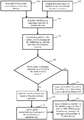
- Fig. 2 is a flow diagram showing operations performed by the apparatus 10 in the wireless environment 30 to form and manage a MU-MIMO group.
- the apparatus 10 keeps track of timing and received power of at least some of the wireless devices 12-28 in the wireless environment 30. For example, the apparatus 10 keeps track of timing and received power of at least wireless devices 12, 20, 22, and 28. Furthermore, at 102, the apparatus computes precoders of at least some of the wireless devices 12-28 based on either implicit or explicit feedback. For example, if apparatus 10 and wireless device 12 support IEEE 802.11ac, wireless device 20 supports IEEE 802.11a, wireless device 22 supports IEEE 802.11g and wireless device 28 supports IEEE 802.11n, the apparatus 10 may compute a frequency-domain precoder for the wireless device 12 based on explicit feedback and frequency-domain precoders for wireless devices 20, 22, and 28 based on implicit feedback.
- the apparatus 10 forms at 104 a MU-MIMO group comprising the wireless devices 12, 20, 22, and 28, which are referred to as "the MU-MIMO group" in the following.
- the apparatus 10 transmits downlink data to the wireless devices 12, 20, 22, and 28 of the MU-MIMO group in a MU-MIMO fashion, such that the transmission is carried out simultaneously across the same frequency resources.
- the apparatus 10 is configured to transmit the downlink data in the form of data packets to the wireless devices 12, 20, 22, and 28 using its plurality of antennas 32-38 for beamforming. While apparatus 10 of the wireless environment 30 applies precoder-based beamforming, it is clear that the invention as such may also be put into practice with an apparatus having multiple directional antenna elements or phased array beamformers.
- the wireless devices 12, 20, 22 and 28 will reply to the transmitted downlink data with an acknowledgement (ACK) message after an SIFS period.
- ACK acknowledgement
- the apparatus 10 may request at 110 that the wireless devices which support delayed BA respond with a delayed BA to the downlink transmission of the apparatus 10.
- the wireless devices 12, 20, 22 and 28, or in case of all but one wireless device supporting delayed BA the wireless devices 20, 22 and 28, may then try to acknowledge reception of the downlink data using the CSMA/CA mechanism, ensuring that the apparatus 10 will receive the uplink BAs separately, i.e. one after the other. In case of a collision, the wireless devices involved will re-transmit the uplink BAs.
- the apparatus 10 may request that the wireless devices supporting delayed BA respond with a delayed BA to lessen the computational requirements imposed on the apparatus 10 by the alternative process described with reference to 112 and 114 in the following.
- the wireless devices 12, 20, 22 and 28 support delayed BA, the wireless devices not supporting delayed BA and/or not being instructed to apply delayed BA will acknowledge reception of the data packet after the SIFS period which immediately follows the completed reception of the downlink transmission.
- the apparatus 10 may generate at 112 time-domain precoders for the wireless devices not supporting delayed BA and/or not being instructed to apply delayed BA. I.e., the apparatus 10 may preferably generate the time-domain equivalents of the frequency-domain precoders that were used in the downlink transmission for each of the wireless devices that does not support delayed BA and/or has not been instructed to use delayed BA.
- the apparatus 10 may then at 114 apply the time-domain precoders to the received uplink signals, i.e. the uplink ACKs, so that the apparatus 10 can separate and decode the signals from all wireless devices that do not support delayed BA and/or were not instructed to use delayed BA.
- the apparatus 10 may instruct the wireless devices 22 and 28 that support delayed BA to use delayed BA and generate and apply time-domain precoders which are time-domain equivalents of the frequency-domain precoders of the wireless devices 12 and 20 that do not support delayed BA, to the uplink signals received after transmission of the downlink data to separate the ACKs of the wireless devices 12 and 20 which do not support delayed BA.
- the apparatus 10 may instruct none, one, or some of the wireless devices 22, 28 which support delayed BA to use delayed BA and generate and apply time-domain precoders to the uplink signals received immediately after transmission of the downlink data to separate the ACKs of the wireless devices 12 and 20 that do not support delayed BA and of the wireless devices that were not instructed to use delayed BA.
- the apparatus 10 Once the apparatus 10 has successfully decoded the uplink ACK/BA transmissions from the wireless devices 12, 20, 22 and 28 (whether simultaneous and/or delayed), it needs to verify whether the transmission of data to the wireless devices 12, 20, 22 and 28 in the downlink was correctly received by the wireless devices 12, 20, 22 and 28. If all wireless devices 12, 20, 22 and 28 transmitted an ACK/BA, then the MU-MIMO group is considered to have been well chosen and the MU-MIMO group may be maintained. Alternatively, a further wireless device may be added to the MU-MIMO group to promote spectrum efficiency provided that the downlink transmission of data to the added wireless device proves to be orthogonal to the downlink transmissions of data to the wireless devices 12, 20, 22 and 28 of the MU-MIMO group.
- the apparatus 10 may thus decide at 116 to maintain the MU-MIMO group or to form a different MU-MIMO group, for example by adding or removing one or several wireless devices from the MU-MIMO group or by replacing one or several wireless devices of the MU-MIMO group with one or several wireless devices that were not part of the MU-MIMO group.
- this allow to manage the MU-MIMO group to comprise only wireless devices that receive downlink transmissions from the apparatus 10 that are orthogonal to each other so that the overall downlink transmission accuracy is increased.
Landscapes
- Engineering & Computer Science (AREA)
- Computer Networks & Wireless Communication (AREA)
- Signal Processing (AREA)
- Mobile Radio Communication Systems (AREA)
Claims (12)
- Gerät (10) mit einer Vielzahl von Übertragungsantennen (32-38) und einer Vielzahl von Empfangsantennen (32-38), wobei das Gerät (10) konfiguriert ist zum:Bilden einer Mehrbenutzer-Mehreingang- und -Mehrausgang- bzw. MU-MIMO-Gruppe, wobei die MU-MIMO-Gruppe eine Vielzahl von drahtlosen Vorrichtungen (12, 20, 22, 28) umfasst;Übertragen, unter Verwendung der Vielzahl von Übertragungsantennen (32-38), von Datenpaketen an die Vielzahl von drahtlosen Vorrichtungen (12, 20, 22, 28) unter Verwendung der gleichen Zeit- und Frequenz-Betriebsmittel; undEntscheiden, ob die MU-MIMO-Gruppe beizubehalten ist oder eine andere MU-MIMO-Gruppe zu bilden ist, basierend auf Bestätigungsnachrichten der Vielzahl von drahtlosen Vorrichtungen (12, 20, 22, 28);wobei das Gerät (10) ein Zugangspunkt eines drahtlosen Nahbereichsnetzwerks, WLAN, ist; unddas Gerät (10) konfiguriert ist, vorher verwendete Frequenzdomänen-Vorcodierer durch Zeitdomänen-Vorcodierer zu ersetzen, wenn weniger als sämtliche außer einer der drahtlosen Vorrichtungen (12, 20, 22, 28) verzögerte Blockbestätigung, BA, unterstützen.
- Gerät (10) nach Anspruch 1, wobei das Gerät (10) ferner konfiguriert ist, Zeitdomänen-Vorcodierer auf empfangene Signale, die den Bestätigungsnachrichten entsprechen, anzuwenden, um Bestätigungsnachrichten von verschiedenen drahtlosen Vorrichtungen (12, 20, 22, 28) zu trennen.
- Gerät (10) nach Anspruch 1,
wobei die Zeitdomänen-Vorcodierer Zeitdomänen-Äquivalente der Frequenzdomänen-Vorcodierer sind; oder
wobei die Zeitdomänen-Vorcodierer Zeitdomänen-Äquivalente der Frequenzdomänen-Vorcodierer hinsichtlich ihrer Strahlenformungsfähigkeiten sind. - Gerät (10) nach einem der vorstehenden Ansprüche, wobei die Vielzahl von Übertragungsantennen (32-38) zu der Vielzahl von Empfangsantennen (32-38) identisch ist.
- Gerät (10) nach einem der Ansprüche 1 bis 4, wobei, wenn sämtliche oder sämtliche außer einer der drahtlosen Vorrichtungen (12, 20, 22, 28) verzögerte Blockbestätigung, BA, unterstützen, das Gerät (10) konfiguriert ist, zu bewirken, dass die Vielzahl von drahtlosen Vorrichtungen (12, 20, 22, 28) die Bestätigungsnachrichten, die Empfang der Datenpakete angeben, nacheinander überträgt, indem sie konfiguriert ist, verzögerte BA von sämtlichen oder von sämtlichen außer einer der drahtlosen Vorrichtungen (22, 28), die verzögerte BA unterstützen, anzufordern.
- Gerät (10) nach einem der vorstehenden Ansprüche, wobei das Gerät (10) konfiguriert ist, eine andere MU-MIMO-Gruppe zu bilden, wenn eine Anzahl von Bestätigungsfehlern, wie durch Bestätigungsnachrichten der Vielzahl von drahtlosen Vorrichtungen (12, 20, 22, 28) angegeben, einen Schwellenwert übersteigt.
- Gerät (10) nach Anspruch 6, wobei das Gerät (10) konfiguriert ist, eine drahtlose Vorrichtung (12, 20, 22, 28) aus der MU-MIMO-Gruppe zu entfernen, um die andere MU-MIMO-Gruppe zu bilden, umfassend die drahtlosen Vorrichtungen (12, 20, 22, 28) der MU-MIMO-Gruppe, aber nicht die entfernte drahtlose Vorrichtung (12, 20, 22, 28), wenn eine Anzahl von Bestätigungsfehlern, wie durch Bestätigungsnachrichten der Vielzahl von drahtlosen Vorrichtungen (12, 20, 22, 28) angegeben, einen Schwellenwert übersteigt, oder
wobei das Gerät (10) konfiguriert ist, eine drahtlose Vorrichtung (12, 20, 22, 28) aus der MU-MIMO-Gruppe durch eine andere drahtlose Vorrichtung (14-18, 24, 26), die nicht in der MU-MIMO-Gruppe ist, zu ersetzen, um die andere MU-MIMO-Gruppe zu bilden, umfassend die drahtlosen Vorrichtungen (12, 20, 22, 28) der MU-MIMO-Gruppe, aber nicht die ersetzte drahtlose Vorrichtung (12, 20, 22, 28), wenn eine Anzahl von Bestätigungsfehlern, wie durch Bestätigungsnachrichten der Vielzahl von drahtlosen Vorrichtungen (12, 20, 22, 28) angegeben, einen Schwellenwert übersteigt. - Gerät (10) nach einem der vorstehenden Ansprüche, wobei das Gerät (10) konfiguriert ist, die MU-MIMO-Gruppe beizubehalten oder eine andere MU-MIMO-Gruppe durch Hinzuzufügen einer drahtlosen Vorrichtung (14-18, 24, 26) zu der MU-MIMO-Gruppe zu bilden, wenn, für jede drahtlose Vorrichtung (12, 20, 22, 28) der MU-MIMO-Gruppe, eine Anzahl von Bestätigungsfehlern, wie durch die Bestätigungsnachrichten der Vielzahl von drahtlosen Vorrichtungen (12, 20, 22, 28) angegeben, den Schwellenwert nicht übersteigt.
- Gerät (10) nach einem der vorstehenden Ansprüche, wobei das Gerät (10) konfiguriert ist, den Zeitablauf und die Empfangsleistung der Vielzahl von drahtlosen Vorrichtungen (12, 20, 22, 28) zu verfolgen.
- Gerät (10) nach einem der vorstehenden Ansprüche, wobei das Gerät (10) konfiguriert ist, Frequenzdomänen-Vorcodierer für die Vielzahl von drahtlosen Vorrichtungen (12, 20, 22, 28) basierend auf der impliziten und/oder expliziten Rückmeldung der Vielzahl von drahtlosen Vorrichtungen (12, 20, 22, 28) zu berechnen.
- Gerät (10) nach einem der vorstehenden Ansprüche, wobei das Gerät (10) konfiguriert ist, zu bestimmen, ob eine oder mehrere drahtlose Vorrichtungen (22, 28) verzögerte BA unterstützen.
- Verfahren zum Verwalten einer Mehrbenutzer-Mehreingang- und -Mehrausgang- bzw. MU-MIMO-Gruppe, umfassend eine Vielzahl von drahtlosen Vorrichtungen, umfassend:Übertragen (106), unter Verwendung einer Vielzahl von Übertragungsantennen (32-38) eines Zugangspunkts eines drahtlosen Nahbereichsnetzwerks, WLAN, von Datenpaketen an die Vielzahl von drahtlosen Vorrichtungen (12, 20, 22, 28) unter Verwendung der gleichen Zeit- und Frequenz-Betriebsmittel;Entscheiden (116), ob die MU-MIMO-Gruppe beizubehalten ist oder eine andere MU-MIMO-Gruppe zu bilden ist, basierend auf Bestätigungsnachrichten der Vielzahl von drahtlosen Vorrichtungen (12, 20, 22, 28); undwobei das Verfahren ferner umfasst:Ersetzen vorher verwendeter Frequenzdomänen-Vorcodierer durch Zeitdomänen-Vorcodierer, wenn weniger als sämtliche außer einer der drahtlosen Vorrichtungen (12, 20, 22, 28) verzögerte Blockbestätigung, BA, unterstützen.
Priority Applications (1)
| Application Number | Priority Date | Filing Date | Title |
|---|---|---|---|
| EP15157281.5A EP3065307B1 (de) | 2015-03-03 | 2015-03-03 | Mu-mimo-gruppenverwaltung |
Applications Claiming Priority (1)
| Application Number | Priority Date | Filing Date | Title |
|---|---|---|---|
| EP15157281.5A EP3065307B1 (de) | 2015-03-03 | 2015-03-03 | Mu-mimo-gruppenverwaltung |
Publications (2)
| Publication Number | Publication Date |
|---|---|
| EP3065307A1 EP3065307A1 (de) | 2016-09-07 |
| EP3065307B1 true EP3065307B1 (de) | 2018-02-21 |
Family
ID=52648832
Family Applications (1)
| Application Number | Title | Priority Date | Filing Date |
|---|---|---|---|
| EP15157281.5A Active EP3065307B1 (de) | 2015-03-03 | 2015-03-03 | Mu-mimo-gruppenverwaltung |
Country Status (1)
| Country | Link |
|---|---|
| EP (1) | EP3065307B1 (de) |
Families Citing this family (8)
| Publication number | Priority date | Publication date | Assignee | Title |
|---|---|---|---|---|
| US10826576B1 (en) | 2018-12-06 | 2020-11-03 | Sprint Spectrum L.P. | Use of RF stability as basis to control configuration of MU-MIMO service |
| US10470073B1 (en) | 2018-12-06 | 2019-11-05 | Sprint Spectrum L.P. | Use of block error rate as basis to control configuration of MU-MIMO service |
| US10602478B1 (en) | 2018-12-06 | 2020-03-24 | Sprint Spectrum L.P. | Use of mobility as basis to control configuration of MU-MIMO service |
| US10412691B1 (en) | 2018-12-06 | 2019-09-10 | Sprint Spectrum, L.P. | Use of power headroom as basis to control configuration of MU-MIMO service |
| US11140639B1 (en) | 2018-12-06 | 2021-10-05 | Sprint Spectrum L.P. | Use of power class as basis to control configuration of MU-MIMO service |
| CN114342501B (zh) | 2019-09-27 | 2024-11-15 | 华为技术有限公司 | 多用户下行数据聚合传输的方法和装置 |
| CN111147112B (zh) * | 2019-12-30 | 2021-06-11 | 中国传媒大学 | 一种基于mimo-noma系统的能量最大化收集方法 |
| WO2024173111A1 (en) * | 2023-02-13 | 2024-08-22 | Kyocera Corporation | Multiple user multiple input multiple output (mu-mimo) transmission precoder management using precoder assigned regions |
Family Cites Families (3)
| Publication number | Priority date | Publication date | Assignee | Title |
|---|---|---|---|---|
| US20080311939A1 (en) * | 2007-06-18 | 2008-12-18 | Nokia Corporation | Acknowledgment aided space domain user scheduling for multi-user mimo |
| US8902921B2 (en) * | 2011-08-16 | 2014-12-02 | Mediatek Singapore Pte Ltd. | Methods for inter-user interference indication feedback and usage in MU-MIMO wireless systems |
| US9608789B2 (en) * | 2012-05-11 | 2017-03-28 | Interdigital Patent Holdings, Inc. | Method and apparatus for transmitting acknowledgements in response to received frames |
-
2015
- 2015-03-03 EP EP15157281.5A patent/EP3065307B1/de active Active
Non-Patent Citations (1)
| Title |
|---|
| None * |
Also Published As
| Publication number | Publication date |
|---|---|
| EP3065307A1 (de) | 2016-09-07 |
Similar Documents
| Publication | Publication Date | Title |
|---|---|---|
| EP3065307B1 (de) | Mu-mimo-gruppenverwaltung | |
| EP3646483B1 (de) | Strahlausfallwiederherstellungsanforderung | |
| EP3888285B1 (de) | Verfahren und vorrichtung für aperiodische referenzsignalübertragung und -empfang | |
| US9166660B2 (en) | Uplink multi-user multiple input multiple output beamforming | |
| EP2466947B1 (de) | Vorrichtung und Verfahren zur periodischen Berichterstattung Kanalzustandsinformationen in einem drahtlosen Netzwerk. | |
| JP6038317B2 (ja) | Ri報告を制御するための方法および装置 | |
| US11601169B2 (en) | Method and apparatus for port selection in wireless communication systems | |
| EP3522583B1 (de) | Antennenstrahlverwaltungsverfahren und zugehörige vorrichtung | |
| US10892808B2 (en) | Method of acquiring channel state information | |
| JP2022543477A (ja) | 無線通信システムにおけるcsiパラメータ構成のための方法及び装置 | |
| US20110176627A1 (en) | Multi-user Transmission Method, Multiple Input Multiple Output Transmission System Using the Same, Scheduling Method and Access Point Using the Same | |
| US20190068256A1 (en) | Codebook Subset Restriction for Full-Dimension MIMO | |
| EP3046270A1 (de) | Feedbackschema für mu-mimo | |
| US20190379494A1 (en) | User equipment and method of control of channel state information (csi) reporting | |
| US20110228718A1 (en) | Reference signal transmission method for downlink multiple input multiple output system | |
| WO2018175728A1 (en) | Beam management procedures for user equipment and transmission and reception point | |
| CN110832787A (zh) | Ue波束训练期间的ue rx波束切换 | |
| US20220200670A1 (en) | Method and apparatus for robust mimo transmission | |
| US12580712B2 (en) | Method and apparatus for configuring semi-persistent CSI-RS resources | |
| US20220124537A1 (en) | Method and apparatus for csi reporting based on a port selection codebook | |
| IL265407B2 (en) | Method and device for transmitting signals | |
| US20220190897A1 (en) | Codebook for distributed mimo transmission | |
| CN106922033A (zh) | 一种在基站中进行上行随机接入的方法和装置 | |
| US20180270847A1 (en) | User terminal, radio base station, radio communication system, and radio communication method | |
| US12413280B2 (en) | Method of sounding reference signal (SRS)-assisted SD beam and FD vector reporting for type II channel state information (CSI) |
Legal Events
| Date | Code | Title | Description |
|---|---|---|---|
| PUAI | Public reference made under article 153(3) epc to a published international application that has entered the european phase |
Free format text: ORIGINAL CODE: 0009012 |
|
| AK | Designated contracting states |
Kind code of ref document: A1 Designated state(s): AL AT BE BG CH CY CZ DE DK EE ES FI FR GB GR HR HU IE IS IT LI LT LU LV MC MK MT NL NO PL PT RO RS SE SI SK SM TR |
|
| AX | Request for extension of the european patent |
Extension state: BA ME |
|
| 17P | Request for examination filed |
Effective date: 20170307 |
|
| RBV | Designated contracting states (corrected) |
Designated state(s): AL AT BE BG CH CY CZ DE DK EE ES FI FR GB GR HR HU IE IS IT LI LT LU LV MC MK MT NL NO PL PT RO RS SE SI SK SM TR |
|
| REG | Reference to a national code |
Ref country code: DE Ref legal event code: R079 Ref document number: 602015008077 Country of ref document: DE Free format text: PREVIOUS MAIN CLASS: H04B0007040000 Ipc: H04B0007045200 |
|
| GRAP | Despatch of communication of intention to grant a patent |
Free format text: ORIGINAL CODE: EPIDOSNIGR1 |
|
| RIC1 | Information provided on ipc code assigned before grant |
Ipc: H04L 1/16 20060101ALI20170807BHEP Ipc: H04B 7/0452 20170101AFI20170807BHEP Ipc: H04B 7/06 20060101ALI20170807BHEP |
|
| INTG | Intention to grant announced |
Effective date: 20170831 |
|
| GRAS | Grant fee paid |
Free format text: ORIGINAL CODE: EPIDOSNIGR3 |
|
| GRAA | (expected) grant |
Free format text: ORIGINAL CODE: 0009210 |
|
| AK | Designated contracting states |
Kind code of ref document: B1 Designated state(s): AL AT BE BG CH CY CZ DE DK EE ES FI FR GB GR HR HU IE IS IT LI LT LU LV MC MK MT NL NO PL PT RO RS SE SI SK SM TR |
|
| REG | Reference to a national code |
Ref country code: GB Ref legal event code: FG4D |
|
| REG | Reference to a national code |
Ref country code: CH Ref legal event code: EP |
|
| REG | Reference to a national code |
Ref country code: AT Ref legal event code: REF Ref document number: 972778 Country of ref document: AT Kind code of ref document: T Effective date: 20180315 |
|
| REG | Reference to a national code |
Ref country code: IE Ref legal event code: FG4D |
|
| REG | Reference to a national code |
Ref country code: DE Ref legal event code: R096 Ref document number: 602015008077 Country of ref document: DE |
|
| REG | Reference to a national code |
Ref country code: FR Ref legal event code: PLFP Year of fee payment: 4 |
|
| REG | Reference to a national code |
Ref country code: NL Ref legal event code: MP Effective date: 20180221 |
|
| REG | Reference to a national code |
Ref country code: LT Ref legal event code: MG4D |
|
| REG | Reference to a national code |
Ref country code: AT Ref legal event code: MK05 Ref document number: 972778 Country of ref document: AT Kind code of ref document: T Effective date: 20180221 |
|
| PG25 | Lapsed in a contracting state [announced via postgrant information from national office to epo] |
Ref country code: FI Free format text: LAPSE BECAUSE OF FAILURE TO SUBMIT A TRANSLATION OF THE DESCRIPTION OR TO PAY THE FEE WITHIN THE PRESCRIBED TIME-LIMIT Effective date: 20180221 Ref country code: NO Free format text: LAPSE BECAUSE OF FAILURE TO SUBMIT A TRANSLATION OF THE DESCRIPTION OR TO PAY THE FEE WITHIN THE PRESCRIBED TIME-LIMIT Effective date: 20180521 Ref country code: HR Free format text: LAPSE BECAUSE OF FAILURE TO SUBMIT A TRANSLATION OF THE DESCRIPTION OR TO PAY THE FEE WITHIN THE PRESCRIBED TIME-LIMIT Effective date: 20180221 Ref country code: ES Free format text: LAPSE BECAUSE OF FAILURE TO SUBMIT A TRANSLATION OF THE DESCRIPTION OR TO PAY THE FEE WITHIN THE PRESCRIBED TIME-LIMIT Effective date: 20180221 Ref country code: LT Free format text: LAPSE BECAUSE OF FAILURE TO SUBMIT A TRANSLATION OF THE DESCRIPTION OR TO PAY THE FEE WITHIN THE PRESCRIBED TIME-LIMIT Effective date: 20180221 Ref country code: CY Free format text: LAPSE BECAUSE OF FAILURE TO SUBMIT A TRANSLATION OF THE DESCRIPTION OR TO PAY THE FEE WITHIN THE PRESCRIBED TIME-LIMIT Effective date: 20180221 Ref country code: NL Free format text: LAPSE BECAUSE OF FAILURE TO SUBMIT A TRANSLATION OF THE DESCRIPTION OR TO PAY THE FEE WITHIN THE PRESCRIBED TIME-LIMIT Effective date: 20180221 |
|
| PG25 | Lapsed in a contracting state [announced via postgrant information from national office to epo] |
Ref country code: GR Free format text: LAPSE BECAUSE OF FAILURE TO SUBMIT A TRANSLATION OF THE DESCRIPTION OR TO PAY THE FEE WITHIN THE PRESCRIBED TIME-LIMIT Effective date: 20180522 Ref country code: BG Free format text: LAPSE BECAUSE OF FAILURE TO SUBMIT A TRANSLATION OF THE DESCRIPTION OR TO PAY THE FEE WITHIN THE PRESCRIBED TIME-LIMIT Effective date: 20180521 Ref country code: SE Free format text: LAPSE BECAUSE OF FAILURE TO SUBMIT A TRANSLATION OF THE DESCRIPTION OR TO PAY THE FEE WITHIN THE PRESCRIBED TIME-LIMIT Effective date: 20180221 Ref country code: LV Free format text: LAPSE BECAUSE OF FAILURE TO SUBMIT A TRANSLATION OF THE DESCRIPTION OR TO PAY THE FEE WITHIN THE PRESCRIBED TIME-LIMIT Effective date: 20180221 Ref country code: RS Free format text: LAPSE BECAUSE OF FAILURE TO SUBMIT A TRANSLATION OF THE DESCRIPTION OR TO PAY THE FEE WITHIN THE PRESCRIBED TIME-LIMIT Effective date: 20180221 Ref country code: AT Free format text: LAPSE BECAUSE OF FAILURE TO SUBMIT A TRANSLATION OF THE DESCRIPTION OR TO PAY THE FEE WITHIN THE PRESCRIBED TIME-LIMIT Effective date: 20180221 |
|
| PG25 | Lapsed in a contracting state [announced via postgrant information from national office to epo] |
Ref country code: EE Free format text: LAPSE BECAUSE OF FAILURE TO SUBMIT A TRANSLATION OF THE DESCRIPTION OR TO PAY THE FEE WITHIN THE PRESCRIBED TIME-LIMIT Effective date: 20180221 Ref country code: IT Free format text: LAPSE BECAUSE OF FAILURE TO SUBMIT A TRANSLATION OF THE DESCRIPTION OR TO PAY THE FEE WITHIN THE PRESCRIBED TIME-LIMIT Effective date: 20180221 Ref country code: RO Free format text: LAPSE BECAUSE OF FAILURE TO SUBMIT A TRANSLATION OF THE DESCRIPTION OR TO PAY THE FEE WITHIN THE PRESCRIBED TIME-LIMIT Effective date: 20180221 Ref country code: AL Free format text: LAPSE BECAUSE OF FAILURE TO SUBMIT A TRANSLATION OF THE DESCRIPTION OR TO PAY THE FEE WITHIN THE PRESCRIBED TIME-LIMIT Effective date: 20180221 Ref country code: PL Free format text: LAPSE BECAUSE OF FAILURE TO SUBMIT A TRANSLATION OF THE DESCRIPTION OR TO PAY THE FEE WITHIN THE PRESCRIBED TIME-LIMIT Effective date: 20180221 |
|
| REG | Reference to a national code |
Ref country code: CH Ref legal event code: PL |
|
| REG | Reference to a national code |
Ref country code: DE Ref legal event code: R097 Ref document number: 602015008077 Country of ref document: DE |
|
| PG25 | Lapsed in a contracting state [announced via postgrant information from national office to epo] |
Ref country code: CZ Free format text: LAPSE BECAUSE OF FAILURE TO SUBMIT A TRANSLATION OF THE DESCRIPTION OR TO PAY THE FEE WITHIN THE PRESCRIBED TIME-LIMIT Effective date: 20180221 Ref country code: SK Free format text: LAPSE BECAUSE OF FAILURE TO SUBMIT A TRANSLATION OF THE DESCRIPTION OR TO PAY THE FEE WITHIN THE PRESCRIBED TIME-LIMIT Effective date: 20180221 Ref country code: MC Free format text: LAPSE BECAUSE OF FAILURE TO SUBMIT A TRANSLATION OF THE DESCRIPTION OR TO PAY THE FEE WITHIN THE PRESCRIBED TIME-LIMIT Effective date: 20180221 Ref country code: DK Free format text: LAPSE BECAUSE OF FAILURE TO SUBMIT A TRANSLATION OF THE DESCRIPTION OR TO PAY THE FEE WITHIN THE PRESCRIBED TIME-LIMIT Effective date: 20180221 Ref country code: SM Free format text: LAPSE BECAUSE OF FAILURE TO SUBMIT A TRANSLATION OF THE DESCRIPTION OR TO PAY THE FEE WITHIN THE PRESCRIBED TIME-LIMIT Effective date: 20180221 |
|
| REG | Reference to a national code |
Ref country code: BE Ref legal event code: MM Effective date: 20180331 |
|
| REG | Reference to a national code |
Ref country code: IE Ref legal event code: MM4A |
|
| PLBE | No opposition filed within time limit |
Free format text: ORIGINAL CODE: 0009261 |
|
| STAA | Information on the status of an ep patent application or granted ep patent |
Free format text: STATUS: NO OPPOSITION FILED WITHIN TIME LIMIT |
|
| PG25 | Lapsed in a contracting state [announced via postgrant information from national office to epo] |
Ref country code: LU Free format text: LAPSE BECAUSE OF NON-PAYMENT OF DUE FEES Effective date: 20180303 |
|
| 26N | No opposition filed |
Effective date: 20181122 |
|
| PG25 | Lapsed in a contracting state [announced via postgrant information from national office to epo] |
Ref country code: IE Free format text: LAPSE BECAUSE OF NON-PAYMENT OF DUE FEES Effective date: 20180303 |
|
| PG25 | Lapsed in a contracting state [announced via postgrant information from national office to epo] |
Ref country code: SI Free format text: LAPSE BECAUSE OF FAILURE TO SUBMIT A TRANSLATION OF THE DESCRIPTION OR TO PAY THE FEE WITHIN THE PRESCRIBED TIME-LIMIT Effective date: 20180221 Ref country code: BE Free format text: LAPSE BECAUSE OF NON-PAYMENT OF DUE FEES Effective date: 20180331 Ref country code: CH Free format text: LAPSE BECAUSE OF NON-PAYMENT OF DUE FEES Effective date: 20180331 Ref country code: LI Free format text: LAPSE BECAUSE OF NON-PAYMENT OF DUE FEES Effective date: 20180331 |
|
| PG25 | Lapsed in a contracting state [announced via postgrant information from national office to epo] |
Ref country code: MT Free format text: LAPSE BECAUSE OF NON-PAYMENT OF DUE FEES Effective date: 20180303 |
|
| PG25 | Lapsed in a contracting state [announced via postgrant information from national office to epo] |
Ref country code: TR Free format text: LAPSE BECAUSE OF FAILURE TO SUBMIT A TRANSLATION OF THE DESCRIPTION OR TO PAY THE FEE WITHIN THE PRESCRIBED TIME-LIMIT Effective date: 20180221 |
|
| PG25 | Lapsed in a contracting state [announced via postgrant information from national office to epo] |
Ref country code: PT Free format text: LAPSE BECAUSE OF FAILURE TO SUBMIT A TRANSLATION OF THE DESCRIPTION OR TO PAY THE FEE WITHIN THE PRESCRIBED TIME-LIMIT Effective date: 20180221 |
|
| PG25 | Lapsed in a contracting state [announced via postgrant information from national office to epo] |
Ref country code: MK Free format text: LAPSE BECAUSE OF NON-PAYMENT OF DUE FEES Effective date: 20180221 Ref country code: HU Free format text: LAPSE BECAUSE OF FAILURE TO SUBMIT A TRANSLATION OF THE DESCRIPTION OR TO PAY THE FEE WITHIN THE PRESCRIBED TIME-LIMIT; INVALID AB INITIO Effective date: 20150303 |
|
| PG25 | Lapsed in a contracting state [announced via postgrant information from national office to epo] |
Ref country code: IS Free format text: LAPSE BECAUSE OF FAILURE TO SUBMIT A TRANSLATION OF THE DESCRIPTION OR TO PAY THE FEE WITHIN THE PRESCRIBED TIME-LIMIT Effective date: 20180621 |
|
| PGFP | Annual fee paid to national office [announced via postgrant information from national office to epo] |
Ref country code: GB Payment date: 20260202 Year of fee payment: 12 |
|
| PGFP | Annual fee paid to national office [announced via postgrant information from national office to epo] |
Ref country code: DE Payment date: 20260204 Year of fee payment: 12 |
|
| PGFP | Annual fee paid to national office [announced via postgrant information from national office to epo] |
Ref country code: FR Payment date: 20260209 Year of fee payment: 12 |