EP3059899A1 - Permission verification method and device - Google Patents
Permission verification method and device Download PDFInfo
- Publication number
- EP3059899A1 EP3059899A1 EP15858097.7A EP15858097A EP3059899A1 EP 3059899 A1 EP3059899 A1 EP 3059899A1 EP 15858097 A EP15858097 A EP 15858097A EP 3059899 A1 EP3059899 A1 EP 3059899A1
- Authority
- EP
- European Patent Office
- Prior art keywords
- binding
- terminal
- bound
- physical property
- verification
- Prior art date
- Legal status (The legal status is an assumption and is not a legal conclusion. Google has not performed a legal analysis and makes no representation as to the accuracy of the status listed.)
- Granted
Links
Images


Classifications
-
- H—ELECTRICITY
- H04—ELECTRIC COMMUNICATION TECHNIQUE
- H04L—TRANSMISSION OF DIGITAL INFORMATION, e.g. TELEGRAPHIC COMMUNICATION
- H04L9/00—Cryptographic mechanisms or cryptographic arrangements for secret or secure communications; Network security protocols
- H04L9/32—Cryptographic mechanisms or cryptographic arrangements for secret or secure communications; Network security protocols including means for verifying the identity or authority of a user of the system or for message authentication, e.g. authorization, entity authentication, data integrity or data verification, non-repudiation, key authentication or verification of credentials
- H04L9/321—Cryptographic mechanisms or cryptographic arrangements for secret or secure communications; Network security protocols including means for verifying the identity or authority of a user of the system or for message authentication, e.g. authorization, entity authentication, data integrity or data verification, non-repudiation, key authentication or verification of credentials involving a third party or a trusted authority
-
- G—PHYSICS
- G06—COMPUTING OR CALCULATING; COUNTING
- G06F—ELECTRIC DIGITAL DATA PROCESSING
- G06F21/00—Security arrangements for protecting computers, components thereof, programs or data against unauthorised activity
- G06F21/30—Authentication, i.e. establishing the identity or authorisation of security principals
-
- G—PHYSICS
- G06—COMPUTING OR CALCULATING; COUNTING
- G06F—ELECTRIC DIGITAL DATA PROCESSING
- G06F21/00—Security arrangements for protecting computers, components thereof, programs or data against unauthorised activity
- G06F21/30—Authentication, i.e. establishing the identity or authorisation of security principals
- G06F21/305—Authentication, i.e. establishing the identity or authorisation of security principals by remotely controlling device operation
-
- G—PHYSICS
- G06—COMPUTING OR CALCULATING; COUNTING
- G06F—ELECTRIC DIGITAL DATA PROCESSING
- G06F21/00—Security arrangements for protecting computers, components thereof, programs or data against unauthorised activity
- G06F21/30—Authentication, i.e. establishing the identity or authorisation of security principals
- G06F21/31—User authentication
-
- H—ELECTRICITY
- H04—ELECTRIC COMMUNICATION TECHNIQUE
- H04L—TRANSMISSION OF DIGITAL INFORMATION, e.g. TELEGRAPHIC COMMUNICATION
- H04L63/00—Network architectures or network communication protocols for network security
- H04L63/08—Network architectures or network communication protocols for network security for authentication of entities
-
- H—ELECTRICITY
- H04—ELECTRIC COMMUNICATION TECHNIQUE
- H04L—TRANSMISSION OF DIGITAL INFORMATION, e.g. TELEGRAPHIC COMMUNICATION
- H04L63/00—Network architectures or network communication protocols for network security
- H04L63/10—Network architectures or network communication protocols for network security for controlling access to devices or network resources
-
- H—ELECTRICITY
- H04—ELECTRIC COMMUNICATION TECHNIQUE
- H04L—TRANSMISSION OF DIGITAL INFORMATION, e.g. TELEGRAPHIC COMMUNICATION
- H04L63/00—Network architectures or network communication protocols for network security
- H04L63/12—Applying verification of the received information
-
- H—ELECTRICITY
- H04—ELECTRIC COMMUNICATION TECHNIQUE
- H04L—TRANSMISSION OF DIGITAL INFORMATION, e.g. TELEGRAPHIC COMMUNICATION
- H04L9/00—Cryptographic mechanisms or cryptographic arrangements for secret or secure communications; Network security protocols
- H04L9/32—Cryptographic mechanisms or cryptographic arrangements for secret or secure communications; Network security protocols including means for verifying the identity or authority of a user of the system or for message authentication, e.g. authorization, entity authentication, data integrity or data verification, non-repudiation, key authentication or verification of credentials
-
- H—ELECTRICITY
- H04—ELECTRIC COMMUNICATION TECHNIQUE
- H04W—WIRELESS COMMUNICATION NETWORKS
- H04W12/00—Security arrangements; Authentication; Protecting privacy or anonymity
- H04W12/06—Authentication
-
- H—ELECTRICITY
- H04—ELECTRIC COMMUNICATION TECHNIQUE
- H04W—WIRELESS COMMUNICATION NETWORKS
- H04W84/00—Network topologies
- H04W84/18—Self-organising networks, e.g. ad-hoc networks or sensor networks
- H04W84/20—Leader-follower arrangements
Definitions
- the present disclosure relates to the field of communication technology, and more particularly, to a method and a device for verifying permission.
- the two-dimension code is used commonly.
- one two-dimension code identified uniquely is required to attach on the surface of the bound device.
- the user may use the camera of the mobile phone to shoot the two-dimension code, so as to obtain the unique identification code, and then verify the unique identification code in the remoter server. If the remote server verifies that it is valid, that is, it proves that the user has the ownership of the device attached with the two-dimension code.
- the user is required to use the mobile phone to scan the two-dimension code, which is not friendly to the devices inconvenient for operations.
- embodiments of the present disclosure provide a method and a device for verifying permission, which may simplify a verification operation of permission, make a user complete a permission verification by a simple button clicking operation, and have high safety.
- a method for verifying permission including:
- the method further includes:
- the method further includes:
- a method for verifying permission including:
- the method further includes:
- the method further includes:
- the method further includes:
- the operation instruction for displaying the physical property includes one or more of displaying a random number, displaying a random character, displaying a pattern, displaying a phrase, controlling a color of an indicator light, controlling the number of indicator lights, controlling a flashing frequency of an indicator light, controlling a voice output, a physical deformation and a physical displacement.
- a method for verifying permission including:
- the method further includes:
- a device for verifying permission including:
- the device further includes:
- the device further includes:
- a device for verifying permission including:
- the device further includes:
- the device further includes:
- the device further includes:
- a device for verifying permission including:
- the device further includes:
- a device for verifying permission including:
- the technical solutions provided by embodiments of the present disclosure may simplify the verification operation of the permission, make the user complete the permission verification by the simple button clicking operation, and have the high safety.
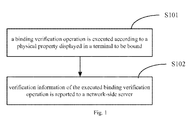
- Fig. 1 is a flow chart showing a method for verifying permission according to an illustrative embodiment. As shown in Fig. 1 , the method is suitable for a control terminal, for example, a mobile phone, a tablet, a PC, etc., and the method includes following steps.
- a control terminal for example, a mobile phone, a tablet, a PC, etc.
- a binding verification operation is executed according to a physical property displayed in a terminal to be bound.
- the physical property may be one or more of a displayed random number, a displayed random character, a displayed pattern, a displayed pattern, a color of an indicator light, the number of indicator lights, a flashing frequency of an indicator light, a voice output, a physical deformation and a physical displacement.
- the control terminal may execute the binding verification operation for inputting this random character.
- the control terminal may execute the binding verification operation for inputting this color of the indicator light.
- Other forms will not be elaborated herein.
- step S102 verification information of the executed binding verification operation is reported to a network-side server.
- the input color information of the indicator light is taken as the verification information and sent to the network-side server.
- the method further includes: sending a binding request to the network-side server via a current account after establishing a communication connection with the terminal to be bound; receiving a binding operation prompt for the physical property of the terminal to be bound returned by the network-side server.
- the method further includes: receiving a binding result returned by the network-side server according to the verification information; determining a control relationship between the current account and the terminal to be bound if the binding result is successful; displaying a binding failure prompt if the binding result is failing.
- the method is suitable for the mobile phone, and includes following steps.
- step S201 the mobile phone establishes the communication connection with the smart camera via the current account.
- the mobile phone finds the smart camera via the network-side server or a local area network.
- the mobile phone may also find the smart camera by broadcasting via itself or by other manners directly.
- step S202 the mobile phone sends the binding request to the network-side server.
- step S203 the mobile phone receives the binding operation prompt for the physical property of the smart camera returned by the network-side server.
- the binding operation prompt may be "please input the number of flashing of the indicator light”.
- step S204 the mobile phone executes the binding verification operation according to the physical property displayed in the terminal to be bound. For example, the input number of flashing is received.
- step S205 the mobile phone reports the verification information of the executed binding verification operation to the network-side server.
- the mobile phone reports the received input number of flashing to the network-side server.
- step S206 the mobile phone receives the binding result returned by the network-side server according to the verification information.
- the control relationship between the current account and the terminal to be bound is determined if the binding result is successful; and the binding failure prompt is displayed if the binding result is failing.
- Fig. 3 is a flow chart showing a method for verifying permission according to an illustrative embodiment. As shown in Fig. 3 , the method is suitable for a network-side server, for example, a cloud server, a router, etc., and the method includes following steps.
- a network-side server for example, a cloud server, a router, etc.
- step S301 a binding request sent by a control terminal via a current account is received after a communication connection is established with the control terminal.
- step S302 a binding operation prompt for a physical property of a terminal to be bound is sent to the control terminal.
- the terminal to be bound that is required for bonding by the control terminal is determined.
- the binding operation prompt is sent to the control terminal according to the physical property of the terminal to be bound.
- the terminal to be bound has the indicator light, and a content of the binding operation prompt may aim at the indicator light.
- the terminal to be bound has a display screen, and the content of the binding operation prompt may aim at a content displayed in the display screen.
- the terminal to be bound has a physical button, and the content of the binding operation prompt may aim at the physical button.
- the method further includes: sending an operation instruction for displaying the physical property to the terminal to be bound meanwhile sending the binding operation prompt for the physical property of the terminal to be bound to the control terminal.
- the operation instruction for displaying numbers, the operation instruction for lighting the indicator light, the operation instruction for controlling the terminal to be bound to have the physical deformation, the operation instruction for controlling the terminal to be bound to have the physical displacement and other operation instructions may be sent to the terminal to be bound.
- the operation instruction for displaying the physical property includes one or more of displaying a random number, displaying a random character, displaying a pattern, displaying a phrase, controlling a color of an indicator light, controlling the number of indicator lights, controlling a flashing frequency of an indicator light, controlling a voice output, a physical deformation and a physical displacement. For example, moving left, rotating right, depressing down the screen, these will not be elaborated herein.
- the method further includes: verifying a validity of verification information after receiving the verification information of an executed binding verification operation that is sent by the control terminal and/or the terminal to be bound; sending a binding result to the control terminal according to a verification result.
- the operation instruction for displaying the physical property sent to the terminal to be bound is displaying a number 567, and the verification information reported by the control terminal is a number 345, so this verification information is not valid, and thus the control terminal cannot obtain the control permission of the terminal to be bound.
- the received verification information sent from the terminal to be bound is pressing a switch three times, and the binding operation prompt sent to the control terminal is pressing the switch three times, so this verification information is valid and thus the control terminal obtains the control permission of the terminal to be bound.
- verifying the validity it may be detected whether this verification information is received within a preset period, and if this verification information is received beyond the preset period, this verification information is invalid.
- the method further includes: establishing a control relationship between the current account and the terminal to be bound if the verification result is valid.
- the control relationship may be stored after being established, such that the current account obtains the permission of controlling the terminal to be bound in a long term until unbinding.
- the method is suitable for the network-side server and includes following steps.
- step S401 the binding request sent by the control terminal via the current account is received after the communication connection is established with the control terminal.
- the binding request for binding the smart outlet sent by the Pad is received after the communication connection is established with the Pad.
- step S402 the binding operation prompt for the physical property of the terminal to be bound is sent to the control terminal. For example, a prompt of "please input the color of the indicator light" is sent to the control terminal.
- the operation instruction for displaying the physical property is sent to the terminal to be bound, i.e., the smart outlet, for example, the operation instruction for displaying blue in the indicator light.
- step S403 the validity of the verification information is verified after the verification information of the executed binding verification operation which is sent by the control terminal is received.
- the binding operation prompt is "please input the color of the indicator light”
- the verification information sent by the control terminal is blue
- the verification information is valid.
- verifying the validity it is detected whether this verification information is received within a preset period, and if the verification information is received beyond the preset period, this verification information is invalid.
- step S404 the binding result is sent to the control terminal according to a verification result.
- the verification result is valid, the control relationship between the current account and the terminal to be bound is established.
- the method is suitable for the network-side server and includes following steps.
- step S501 the binding request sent by the control terminal via the current account is received after the communication connection is established with the control terminal.
- the binding request for binding the smart outlet sent by the Pad is received after the communication connection is established with the Pad.
- step S502 the binding operation prompt for the physical property of the terminal to be bound is sent to the control terminal.
- the prompt of "please press the on-off button two times" is sent to the control terminal.
- step S503 the validity of the verification information is verified after the verification information of the executed binding verification operation which is sent by the terminal to be bound is received.
- the verification information reported by the smart outlet is that the on-off button is pressed two times, and thus the verification information is valid.
- verifying the validity it is detected whether this verification information is received within a preset period, and if this verification information is received beyond the preset period, this verification information is invalid.
- step S504 the binding result is sent to the control terminal according to a verification result.
- the verification result is valid, the control relationship between the current account and the terminal to be bound is established.
- Fig. 6 is a flow chart showing a method for verifying permission according to an illustrative embodiment.
- the method is suitable for a smart terminal, for example, a smart outlet, a smart camera, a smart purifier, a smart air conditioner, etc., and the method includes following steps.
- step S601 an operation instruction for displaying a physical property sent by a network-side server is received.
- step S602 a corresponding physical property is displayed according to the operation instruction.
- the operation instruction for displaying the physical property includes one or more of displaying a random number, displaying a random character, displaying a pattern, displaying a phrase, controlling a color of an indicator light, controlling the number of indicator lights, controlling a flashing frequency of an indicator light, controlling a voice output, a physical deformation and a physical displacement.
- the method further includes: sending verification information to the network-side server after receiving a binding verification operation for the physical property, for example, receiving that a device button is operated, receiving that a remote controller is operated, collecting a continuously shaking image, collecting a particular voice input, sensing that an electromagnetic induction switch is operated, etc.
- the method provided by embodiments of the present disclosure may perform the permission verification by the physical property of the terminal to be bound, simplify the verification operation of the permission, make the user complete the permission verification by the simple button clicking operation, and have the high safety.
- the method also may avoid that adjacent control terminals forestall to obtain the control permission of the device to be bound when finding the device to be bound. For example, when the mobile phone in the neighborhood finds the user's smart device, if only the verification code pushed by the server needs to be input simply, it is easy for other users to the control permission of the smart device.
- Fig. 7 is a flow chart showing a method for verifying permission according to an illustrative embodiment. As shown in Fig. 7 , the method includes following steps.
- step S701 the control terminal establishes the communication connection with the network-side server.
- the control terminal finds the terminal to be bound via the network-side server or the local area network, or finds the terminal to be bound by broadcasting via itself. For example, when using the local area network, the control terminal establishes the communication connection with a router that generates the local area network, and finds the terminal to be bound by broadcasting via the router.
- the terminal to be bound is the smart device with an uncertain control permission.
- step S703 the control terminal sends the binding request to the network-side server via the current account.
- step S704 the network-side server determines the physical property of the terminal to be bound after receiving the binding request, and returns the binding operation prompt for the physical property of the terminal to be bound to the control terminal.
- step S705 the control terminal receives the binding operation prompt for the physical property of the terminal to be bound returned by the network-side server, and displays the binding operation prompt in a current page.
- binding operation prompt is configured to prompt the operation for the physical property of the terminal to be bound, for example, operating the device button, operating the remote controller, continuously shaking the image, inputting the particular voice, operating the electromagnetic induction switch, etc. Then step S706 is executed.
- the terminal to be bound detects the binding verification operation for the physical property.
- the terminal to be bound realizes one or more of detecting that the device button is operated, detecting that the remote controller is operated, collecting the continuously shaking image, collecting the particular voice input, sensing that the electromagnetic induction switch is operated, detecting the physical deformation and detecting the physical displacement.
- step S707 the terminal to be bound sends the verification information to the network-side server.
- step S708 the network-side server verifies the validity of the verification information after receiving the verification information of the executed binding verification operation sent by the terminal to be bound.
- verifying the validity it may be detected whether this verification information is received within a preset period, and if this verification information is received beyond the preset period, this verification information is invalid. If the verification result is valid, the control relationship between the current account and the terminal to be bound is established.
- step S709 the network-side server sends the binding result to the control terminal according to the verification result. If the verification result is valid, the control relationship between the current account and the terminal to be bound is established.
- the control relationship between the account and the terminal to be bound is determined accurately, the control permission is confirmed, and a control instruction is allowed to send to the terminal to be bound from the account.
- the terminal to be bound does not accept the control instruction from any other account, thus avoiding the abuse of a malicious user.
- Fig. 8 is a flow chart showing a method for verifying permission according to an illustrative embodiment. As shown in Fig. 8 , the method includes following steps.
- step S801 the control terminal establishes the communication connection with the network-side server.
- the control terminal finds the terminal to be bound via the network-side server or the local area network, or finds the terminal to be bound by broadcasting via itself. For example, when using the local area network, the control terminal establishes the communication connection with the router that generates the local area network, and finds the terminal to be bound by broadcasting via the router.
- the terminal to be bound is the smart device with the uncertain control permission.
- step S803 the control terminal sends the binding request to the network-side server via the current account.
- step S804 the network-side server determines the physical property of the terminal to be bound after receiving the binding request, and returns the binding operation prompt for the physical property of the terminal to be bound to the control terminal, and sends the operation instruction for displaying the physical property to the terminal to be bound.
- step S805 the terminal to be bound displays the corresponding physical property according to the operation instruction.
- the operation instruction for displaying the physical property includes one or more of displaying a random number, displaying a random character, displaying a pattern, displaying a phrase, controlling a color of an indicator light, controlling the number of indicator lights, controlling a flashing frequency of an indicator light, controlling a voice output, a physical deformation and a physical displacement.
- step S806 the control terminal receives the binding operation prompt for the physical property of the terminal to be bound returned by the network-side server and displays the binding operation prompt in the current page.
- step S807 the control terminal inputs the verification information according to the binding operation prompt and the physical property displayed in the terminal to be bound.
- step S808 the control terminal sends the verification information to the network-side server.
- step S809 the network-side server verifies the validity of the verification information after receiving the verification information of the executed binding verification operation which is sent by the control terminal.
- verifying the validity it is detected whether this verification information is received within a preset period, and if this verification information is received beyond the preset period, this verification information is invalid.
- step S810 the network-side server sends the binding result to the control terminal according to the verification result.
- the verification result is valid, the control relationship between the current account and the terminal to be bound is established.
- the control relationship between the account and the terminal to be bound is determined accurately, the control permission is confirmed, and the control instruction is allowed to send to the terminal to be bound from the account.
- the terminal to be bound does not accept the control instruction from any other account, thus avoiding the abuse of the malicious user.
- Fig. 9 is a flow chart showing a method for verifying permission according to an illustrative embodiment. As shown in Fig. 9 , the method includes following steps.
- step S901 the control terminal establishes the communication connection with the network-side server.
- the control terminal finds the terminal to be bound via the network-side server or the local area network, or finds the terminal to be bound by broadcasting via itself. For example, when using the local area network, the control terminal establishes the communication connection with the router that generates the local area network, and finds the terminal to be bound by broadcasting via the router.
- the terminal to be bound is the smart device with the uncertain control permission.
- step S903 the control terminal sends the binding request to the network-side server via the current account.
- step S904 the network-side server and determines the physical property of the terminal to be bound after receiving the binding request, and returns the binding operation prompt for the physical property of the terminal to be bound to the control terminal, and sends the operation instruction for displaying the physical property to the terminal to be bound.
- the operation instruction for displaying the physical property includes one or more of displaying a random number, displaying a random character, displaying a pattern, displaying a phrase, controlling a color of an indicator light, controlling the number of indicator lights, controlling flashing a frequency of an indicator light, controlling a voice output, a physical deformation and a physical displacement.
- step S905 the control terminal receives the binding operation prompt for the physical property of the terminal to be bound returned by the network-side server, and displays the binding operation prompt in the current page.
- binding operation prompt is configured to prompt the operation for the physical property of the terminal to be bound, for example, operating the device button, operating the remote controller, continuously shaking the image, inputting the particular voice, operating the electromagnetic induction switch, etc. Then step S906 is executed.
- the terminal to be bound detects the binding verification operation for the physical property, and the control terminal detects the verification information input for the physical property of the terminal to be bound.
- the terminal to be bound realizes one or more of detecting that the device button is operated, detecting that the remote controller is operated, collecting the continuously shaking image, collecting the particular voice input, sensing that the electromagnetic induction switch is operated, detecting the physical deformation, detecting the physical displacement.
- step S907 the terminal to be bound and the control terminal send the verification information to the network-side server.
- step S908 the network-side server verifies the validity of the verification information after receiving the verification information of the executed binding verification operation sent by the terminal to be bound and the control terminal.
- verifying the validity it is detected whether this verification information is received within a preset period, and if this verification information is received beyond the preset period, this verification information is invalid. If the verification result is valid, the control relationship between the current account and the terminal to be bound may be established.
- step S909 the network-side server sends the binding result to the control terminal according to the verification result. If the verification result is valid, the control relationship between the current account and the terminal to be bound may be established.
- the control relationship between the account and the terminal to be bound is determined accurately, the control permission is confirmed, and the control instruction is allowed to send to the terminal to be bound from the account.
- the terminal to be bound does not accept the control instruction from any other account, thus avoiding the abuse of the malicious user.
- the embodiments of the present disclosure provide a device for verifying permission, and as shown in Fig. 10 , the device includes an executing module 1001 and a reporting module 1002.
- the executing module 1001 is configured to execute a binding verification operation according to a physical property displayed in a terminal to be bound.
- the reporting module 1002 is configured to report verification information of the executed binding verification operation to a network-side server.
- the device further includes a binding requesting module 1003 and a prompt receiving module 1004.
- the binding requesting module 1003 is configured to send a binding request to the network-side server via a current account after establishing a communication connection with the terminal to be bound.
- the prompt receiving module 1004 is configured to receive a binding operation prompt for the physical property of the terminal to be bound returned by the network-side server.
- the device further includes a result receiving module 1005 and a processing module 1006.
- the result receiving module 1005 is configured to receive a binding result returned by the network-side server according to the verification information.
- the processing module 1006 is configured to determine a control relationship between the current account and the terminal to be bound if the binding result is successful, and to display a binding failure prompt if the binding result is failing.
- the embodiments of the present disclosure provide a device for verifying permission, and as shown in Fig. 11 , the device includes a binding receiving module 1101 and a prompt sending module 1102.
- the binding receiving module 1101 is configured to receive a binding request sent by the control terminal via a current account after establishing a communication connection with a control terminal.
- the prompt sending module 1102 is configured to send a binding operation prompt for a physical property of a terminal to be bound to the control terminal.
- the device further includes a verifying module 1103 and a result sending module 1104.
- the verifying module 1103 is configured to verify a validity of verification information after receiving the verification information of an executed binding verification operation that is sent by the control terminal and/or the terminal to be bound.
- the result sending module 1104 is configured to send a binding result to the control terminal according to a verification result.
- the device further includes an establishing module 1105.
- the establishing module 1105 is configured to establish a control relationship between the current account and the terminal to be bound if the verification result is valid.
- the device further includes an operation sending module 1106.
- the operation sending module 1106 is configured to send an operation instruction for displaying the physical property to the terminal to be bound meanwhile sending the binding operation prompt for the physical property of the terminal to be bound to the control terminal.
- the embodiments of the present disclosure provide a device for verifying permission, and as shown in Fig. 12 , the device includes an operation receiving module 1201 and a property displaying module 1202.
- the operation receiving module 1201 is configured to receive an operation instruction for displaying a physical property sent by a network-side server.
- the property displaying module 1202 is configured to display a corresponding physical property according to the operation instruction.
- the device further includes a verification sending module 1203.
- the verification sending module 1203 is configured to send verification information to the network-side server after receiving a binding verification operation for the physical property.
- a device for verifying permission includes:
- the method further includes:
- the method further includes:
- the method for verifying permission includes:
- the method further includes:
- the method further includes:
- the method further includes:
- the operation instruction for displaying the physical property includes one or more of displaying a random number, displaying a random character, displaying a pattern, displaying a phrase, controlling a color of an indicator light, controlling the number of indicator lights, controlling a flashing frequency of an indicator light, controlling a voice output, a physical deformation and a physical displacement.
- the method for verifying permission includes:
- the method further includes: sending verification information to the network-side server after receiving a binding verification operation for the physical property.
- the method provided by embodiments of the present disclosure can simplify a verification operation of permission, make a user complete a permission verification by a simple button clicking operation, and have a high safety.
- Fig. 13 is a block diagram showing a device 1300 for verifying permission according to an illustrative embodiment.
- the device 1300 may be a mobile phone, a computer, a digital broadcast terminal, a messaging device, a gaming console, a tablet, a medical device, exercise equipment, a personal digital assistant, and the like.
- the device 1300 may include one or more of the following components: a processing component 1302, a memory 1304, a power component 1306, a multimedia component 1308, an audio component 1310, an input/output (I/O) interface 1312, a sensor component 1314 and a communication component 1316.
- a processing component 1302 a memory 1304, a power component 1306, a multimedia component 1308, an audio component 1310, an input/output (I/O) interface 1312, a sensor component 1314 and a communication component 1316.
- the processing component 1302 typically controls overall operations of the device 1300, such as the operations associated with display, telephone calls, data communications, camera operations, and recording operations.
- the processing component 1302 may include one or more processors 1320 to execute instructions so as to perform all or a part of the steps in the above described methods.
- the processing component 1302 may include one or more modules which facilitate the interaction between the processing component 1302 and other components.
- the processing component 1302 may include a multimedia module to facilitate the interaction between the multimedia component 1308 and the processing component 1302.
- the memory 1304 is configured to store various types of data to support the operation of the device 1300. Examples of such data include instructions for any applications or methods operated on the device 1300, contact data, phonebook data, messages, pictures, videos, etc.
- the memory 1304 may be implemented using any type of volatile or non-volatile memory devices, or a combination thereof, such as a static random access memory (SRAM), an electrically erasable programmable read-only memory (EEPROM), an erasable programmable read-only memory (EPROM), a programmable read-only memory (PROM), a read-only memory (ROM), a magnetic memory, a flash memory, a magnetic or optical disk.
- SRAM static random access memory
- EEPROM electrically erasable programmable read-only memory
- EPROM erasable programmable read-only memory
- PROM programmable read-only memory
- ROM read-only memory
- magnetic memory a magnetic memory
- flash memory a flash memory
- magnetic or optical disk a magnetic
- the power component 1306 is configured to provide power to various components of the device 1300.
- the power component 1306 may include a power management system, one or more power sources, and other components associated with the generation, control, and distribution of power in the device 1300.
- the multimedia component 1308 includes a screen configured to provide an output interface between the device 1300 and the user.
- the screen may include a liquid crystal display (LCD) and a touch panel (TP). If the screen includes the touch panel, the screen may be implemented as a touch screen to receive input signals from the user.
- the touch panel includes one or more touch sensors to sense touches, swipes, and gestures on the touch panel. The touch sensors may not only sense a boundary of a touch or swipe action, but also sense a period of time and a pressure associated with the touch or swipe action.
- the multimedia component 1308 includes a front camera and/or a rear camera. The front camera and the rear camera may receive an external multimedia datum when the device 1300 is in an operation mode such as a photographing mode or a video mode. Each of the front camera and the rear camera may be a fixed optical lens system or have focus and optical zoom capability.
- the audio component 1310 is configured to output and/or input audio signals.
- the audio component 1310 includes a microphone (MIC) configured to receive an external audio signal when the device 1300 is in an operation mode, such as a call mode, a recording mode, and a voice recognition mode.
- the received audio signal may be further stored in the memory 1304 or transmitted via the communication component 1316.
- the audio component 1310 further includes a loud speaker to output audio signals.
- the I/O interface 1312 is configured to provide an interface between the processing component 1302 and peripheral interface modules, such as a keyboard, a click wheel, buttons, and the like.
- the buttons may include, but are not limited to, a home button, a volume button, a starting button, and a locking button.
- the sensor component 1314 includes one or more sensors to provide status assessments of various aspects of the device 1300. For instance, the sensor component 1314 may detect an on/off status of the device 1300, relative positioning of components (e.g., a display screen and a keypad) of the device 1300. The sensor component 1314 may further detect a change in position of the device 1300 or a component of the device 1300, a presence or absence of user contact with the device 1300, an orientation or an acceleration/deceleration of the device 1300, and a change in temperature of the device 1300. The sensor component 1314 may include a proximity sensor configured to detect the presence of nearby objects without any physical contact.
- the sensor component 1314 may further include a light sensor, such as a CMOS or CCD image sensor, for use in imaging applications.
- the sensor component 1314 may also include an accelerometer sensor, a gyroscope sensor, a magnetic sensor, a pressure sensor, or a temperature sensor.
- the communication component 1316 is configured to facilitate a wired or wireless communication between the device 1300 and other terminals.
- the device 1300 can access a wireless network based on a communication standard, such as WiFi, 2G, or 3G, or a combination thereof.
- the communication component 1316 receives a broadcast signal or broadcast associated information from an external broadcast control system via a broadcast channel.
- the communication component 1316 further includes a near field communication (NFC) module to facilitate short-range communications.
- the NFC module may be implemented based on a radio frequency identification (RFID) technology, an infrared data association (IrDA) technology, an ultra-wideband (UWB) technology, a Bluetooth (BT) technology, or other technologies.
- RFID radio frequency identification
- IrDA infrared data association
- UWB ultra-wideband
- BT Bluetooth
- the device 1300 may be implemented with one or more electronic elements such as application specific integrated circuits (ASICs), digital signal processors (DSPs), digital signal processing devices (DSPDs), programmable logic devices (PLDs), field programmable gate arrays (FPGAs), controllers, micro-controllers, microprocessors, or other electronic components, for performing the above described methods.
- ASICs application specific integrated circuits
- DSPs digital signal processors
- DSPDs digital signal processing devices
- PLDs programmable logic devices
- FPGAs field programmable gate arrays
- controllers micro-controllers, microprocessors, or other electronic components, for performing the above described methods.
- non-transitory computer readable storage medium including instructions, such as the memory 1304 including instructions executable by the processor in the device 1300 to perform the above-described methods.
- the non-transitory computer-readable storage medium may be a ROM, a RAM, a CD-ROM, a magnetic tape, a floppy disc, an optical data storage device, and the like.
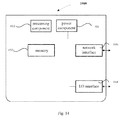
- Fig. 14 is a block diagram of a device 1900 for verifying permission, according to an illustrative embodiment.
- the device 1900 may be provided as a server.
- the device 1900 may include a processing component 1922 which further include one or more processors, and a memory resource represented by a memory 1932 and configured to store instructions executable by the processing component 1922, such as application programs.
- the application programs stored in the memory 1932 may include one or more modules, in which each module corresponds to a set of instructions.
- the processing component 1922 may be configured to execute instructions so as to perform the above methods.
- the device 1900 may also include a power component 1926 configured to execute a power management of the device 1900, a wired or wireless network interface 1950 configured to connect the device 1900 to the internet, and an input/output interface 1958.
- the device 1900 may be operated based on an operating system stored in the memory 1932, such as Windows ServerTM, Mac OS XTM, UnixTM, LinuxTM, FreeBSDTM, or the like.
Landscapes
- Engineering & Computer Science (AREA)
- Computer Security & Cryptography (AREA)
- Computer Networks & Wireless Communication (AREA)
- Signal Processing (AREA)
- Computer Hardware Design (AREA)
- General Engineering & Computer Science (AREA)
- Theoretical Computer Science (AREA)
- Computing Systems (AREA)
- General Physics & Mathematics (AREA)
- Physics & Mathematics (AREA)
- Software Systems (AREA)
- Telephonic Communication Services (AREA)
- Telephone Function (AREA)
- Computer And Data Communications (AREA)
- Time Recorders, Dirve Recorders, Access Control (AREA)
- User Interface Of Digital Computer (AREA)
Abstract
Description
- This application is based upon and claims a priority to Chinese Patent Application No.
201410646289.4, filed with the State Intellectual Property Office of P. R. China - The present disclosure relates to the field of communication technology, and more particularly, to a method and a device for verifying permission.
- In applications of wireless Internet of things, authentication bound to the control right of a device is a difficult problem. At present, the two-dimension code is used commonly. However, one two-dimension code identified uniquely is required to attach on the surface of the bound device. The user may use the camera of the mobile phone to shoot the two-dimension code, so as to obtain the unique identification code, and then verify the unique identification code in the remoter server. If the remote server verifies that it is valid, that is, it proves that the user has the ownership of the device attached with the two-dimension code. However, the user is required to use the mobile phone to scan the two-dimension code, which is not friendly to the devices inconvenient for operations.
- In order to overcome problems existing in the related art, embodiments of the present disclosure provide a method and a device for verifying permission, which may simplify a verification operation of permission, make a user complete a permission verification by a simple button clicking operation, and have high safety.
- According to a first aspect of embodiments of the present disclosure, there is provided a method for verifying permission, including:
- executing a binding verification operation according to a physical property displayed in a terminal to be bound;
- reporting verification information of the executed binding verification operation to a network-side server.
- In an embodiment, the method further includes:
- sending a binding request to the network-side server via a current account after establishing a communication connection with the terminal to be bound;
- receiving a binding operation prompt for the physical property of the terminal to be bound returned by the network-side server.
- In an embodiment, the method further includes:
- receiving a binding result returned by the network-side server according to the verification information;
- determining a control relationship between the current account and the terminal to be bound if the binding result is successful;
- displaying a binding failure prompt if the binding result is failing.
- According to a second aspect of embodiments of the present disclosure, there is provided a method for verifying permission, including:
- receiving a binding request sent by a control terminal via a current account after establishing a communication connection with the control terminal;
- sending a binding operation prompt for a physical property of a terminal to be bound to the control terminal.
- In an embodiment, the method further includes:
- verifying a validity of verification information after receiving the verification information of an executed binding verification operation that is sent by the control terminal and/or the terminal to be bound;
- sending a binding result to the control terminal according to a verification result.
- In an embodiment, the method further includes:
- establishing a control relationship between the current account and the terminal to be bound if the verification result is valid.
- In an embodiment, the method further includes:
- sending an operation instruction for displaying the physical property to the terminal to be bound meanwhile sending the binding operation prompt for the physical property of the terminal to be bound to the control terminal.
- In an embodiment, the operation instruction for displaying the physical property includes one or more of displaying a random number, displaying a random character, displaying a pattern, displaying a phrase, controlling a color of an indicator light, controlling the number of indicator lights, controlling a flashing frequency of an indicator light, controlling a voice output, a physical deformation and a physical displacement.
- According to a third aspect of embodiments of the present disclosure, there is provided a method for verifying permission, including:
- receiving an operation instruction for displaying a physical property sent by a network-side server;
- displaying a corresponding physical property according to the operation instruction.
- In an embodiment, the method further includes:
- sending verification information to the network-side server after receiving a binding verification operation for the physical property.
- According to a fourth aspect of embodiments of the present disclosure, there is provided a device for verifying permission, including:
- an executing module, configured to execute a binding verification operation according to a physical property displayed in a terminal to be bound;
- a reporting module, configured to report verification information of the executed binding verification operation to a network-side server.
- In an embodiment, the device further includes:
- a binding requesting module, configured to send a binding request to the network-side server via a current account after establishing a communication connection with the terminal to be bound;
- a prompt receiving module, configured to receive a binding operation prompt for the physical property of the terminal to be bound returned by the network-side server.
- In an embodiment, the device further includes:
- a result receiving module, configured to receive a binding result returned by the network-side server according to the verification information;
- a processing module, configured to determine a control relationship between the current account and the terminal to be bound if the binding result is successful, and to display a binding failure prompt if the binding result is failing.
- According to a fifth aspect of embodiments of the present disclosure, there is provided a device for verifying permission, including:
- a binding receiving module, configured to receive a binding request sent by a control terminal via a current account after establishing a communication connection with the control terminal;
- a prompt sending module, configured to send a binding operation prompt for a physical property of a terminal to be bound to the control terminal.
- In an embodiment, the device further includes:
- a verifying module, configured to verify a validity of verification information after receiving the verification information of an executed binding verification operation that is sent by the control terminal and/or the terminal to be bound;
- a result sending module, configured to send a binding result to the control terminal according to a verification result.
- In an embodiment, the device further includes:
- an establishing module, configured to establish a control relationship between the current account and the terminal to be bound if the verification result is valid.
- In an embodiment, the device further includes:
- an operation sending module, configured to send an operation instruction for displaying the physical property to the terminal to be bound meanwhile sending the binding operation prompt for the physical property of the terminal to be bound to the control terminal.
- According to a sixth aspect of embodiments of the present disclosure, there is provided a device for verifying permission, including:
- an operation receiving module, configured to receive an operation instruction for displaying a physical property sent by a network-side server;
- a property displaying module, configured to display a corresponding physical property according to the operation instruction.
- In an embodiment, the device further includes:
- a verification sending module, configured to send verification information to the network-side server after receiving a binding verification operation for the physical property.
- According to a seventh aspect of embodiments of the present disclosure, there is provided a device for verifying permission, including:
- a processor;
- a memory configured to store an instruction executable by the processor;
- in which the processor is configured to:
- execute a binding verification operation according to a physical property displayed in a terminal to be bound;
- report verification information of the executed binding verification operation to a network-side server;
or - receive a binding request sent by a control terminal via a current account after establishing a communication connection with the control terminal;
- send a binding operation prompt for a physical property of a terminal to be bound to the control terminal;
or - receive an operation instruction for displaying a physical property sent by a network-side server;
- display a corresponding physical property according to the operation instruction.
- The technical solutions provided by embodiments of the present disclosure may simplify the verification operation of the permission, make the user complete the permission verification by the simple button clicking operation, and have the high safety.
- It is to be understood that both the foregoing general description and the following detailed description are illustrative and explanatory only and are not restrictive of the disclosure, as claimed.
- The accompanying drawings, which are incorporated in and constitute a part of this specification, illustrate embodiments consistent with the disclosure and, together with the description, serve to explain the principles of the disclosure.
-
Fig. 1 is a flow chart showing a method for verifying permission according to an illustrative embodiment; -
Fig. 2 is a flow chart showing a method for verifying permission according to an illustrative embodiment; -
Fig. 3 is a flow chart showing a method for verifying permission according to an illustrative embodiment; -
Fig. 4 is a flow chart showing a method for verifying permission according to an illustrative embodiment; -
Fig. 5 is a flow chart showing a method for verifying permission according to an illustrative embodiment; -
Fig. 6 is a flow chart showing a method for verifying permission according to an illustrative embodiment; -
Fig. 7 is a flow chart showing a method for verifying permission according to an illustrative embodiment; -
Fig. 8 is a flow chart showing a method for verifying permission according to an illustrative embodiment; -
Fig. 9 is a flow chart showing a method for verifying permission according to an illustrative embodiment; -
Fig. 10 is a block diagram showing a device for verifying permission according to an illustrative embodiment; -
Fig. 11 is a block diagram showing a device for verifying permission according to an illustrative embodiment; -
Fig. 12 is a block diagram showing a device for verifying permission according to an illustrative embodiment; -
Fig. 13 is a block diagram showing a device for verifying permission according to another illustrative embodiment; -
Fig. 14 is a block diagram showing a device for verifying permission according to another illustrative embodiment. - Reference will now be made in detail to illustrative embodiments, examples of which are illustrated in the accompanying drawings. The following description refers to the accompanying drawings in which the same numbers in different drawings represent the same or similar elements unless otherwise represented. The implementations set forth in the following description of illustrative embodiments do not represent all implementations consistent with the disclosure. Instead, they are merely examples of devices and methods consistent with aspects related to the disclosure as recited in the appended claims.
-
Fig. 1 is a flow chart showing a method for verifying permission according to an illustrative embodiment. As shown inFig. 1 , the method is suitable for a control terminal, for example, a mobile phone, a tablet, a PC, etc., and the method includes following steps. - In step S101, a binding verification operation is executed according to a physical property displayed in a terminal to be bound. For example, the physical property may be one or more of a displayed random number, a displayed random character, a displayed pattern, a displayed pattern, a color of an indicator light, the number of indicator lights, a flashing frequency of an indicator light, a voice output, a physical deformation and a physical displacement. When the physical property displayed in the terminal to be bound is the displayed random character, the control terminal may execute the binding verification operation for inputting this random character. When the physical property displayed in the terminal to be bound is the color of the indicator light, the control terminal may execute the binding verification operation for inputting this color of the indicator light. Other forms will not be elaborated herein.
- In step S102, verification information of the executed binding verification operation is reported to a network-side server. For example, the input color information of the indicator light is taken as the verification information and sent to the network-side server.
- In an embodiment, the method further includes: sending a binding request to the network-side server via a current account after establishing a communication connection with the terminal to be bound; receiving a binding operation prompt for the physical property of the terminal to be bound returned by the network-side server.
- In an embodiment, the method further includes: receiving a binding result returned by the network-side server according to the verification information; determining a control relationship between the current account and the terminal to be bound if the binding result is successful; displaying a binding failure prompt if the binding result is failing.
- Taking the mobile phone obtaining an operation permission of a smart camera as an example, the method provided by the embodiment will be described in detail, and as shown in
Fig. 2 , the method is suitable for the mobile phone, and includes following steps. - In step S201, the mobile phone establishes the communication connection with the smart camera via the current account. For example, the mobile phone finds the smart camera via the network-side server or a local area network. The mobile phone may also find the smart camera by broadcasting via itself or by other manners directly.
- In step S202, the mobile phone sends the binding request to the network-side server.
- In step S203, the mobile phone receives the binding operation prompt for the physical property of the smart camera returned by the network-side server. For example, the binding operation prompt may be "please input the number of flashing of the indicator light".
- In step S204, the mobile phone executes the binding verification operation according to the physical property displayed in the terminal to be bound. For example, the input number of flashing is received.
- In step S205, the mobile phone reports the verification information of the executed binding verification operation to the network-side server. For example, the mobile phone reports the received input number of flashing to the network-side server.
- In step S206, the mobile phone receives the binding result returned by the network-side server according to the verification information. The control relationship between the current account and the terminal to be bound is determined if the binding result is successful; and the binding failure prompt is displayed if the binding result is failing.
- Based on the same idea,
Fig. 3 is a flow chart showing a method for verifying permission according to an illustrative embodiment. As shown inFig. 3 , the method is suitable for a network-side server, for example, a cloud server, a router, etc., and the method includes following steps. - In step S301, a binding request sent by a control terminal via a current account is received after a communication connection is established with the control terminal.
- In step S302, a binding operation prompt for a physical property of a terminal to be bound is sent to the control terminal.
- For example, after the binding request sent by the control terminal via the current account is received, the terminal to be bound that is required for bonding by the control terminal is determined. The binding operation prompt is sent to the control terminal according to the physical property of the terminal to be bound. For example, the terminal to be bound has the indicator light, and a content of the binding operation prompt may aim at the indicator light. The terminal to be bound has a display screen, and the content of the binding operation prompt may aim at a content displayed in the display screen. The terminal to be bound has a physical button, and the content of the binding operation prompt may aim at the physical button.
- In an embodiment, the method further includes: sending an operation instruction for displaying the physical property to the terminal to be bound meanwhile sending the binding operation prompt for the physical property of the terminal to be bound to the control terminal. For example, the operation instruction for displaying numbers, the operation instruction for lighting the indicator light, the operation instruction for controlling the terminal to be bound to have the physical deformation, the operation instruction for controlling the terminal to be bound to have the physical displacement and other operation instructions may be sent to the terminal to be bound.
- In an embodiment, the operation instruction for displaying the physical property includes one or more of displaying a random number, displaying a random character, displaying a pattern, displaying a phrase, controlling a color of an indicator light, controlling the number of indicator lights, controlling a flashing frequency of an indicator light, controlling a voice output, a physical deformation and a physical displacement. For example, moving left, rotating right, depressing down the screen, these will not be elaborated herein.
- In an embodiment, the method further includes: verifying a validity of verification information after receiving the verification information of an executed binding verification operation that is sent by the control terminal and/or the terminal to be bound; sending a binding result to the control terminal according to a verification result. For example, the operation instruction for displaying the physical property sent to the terminal to be bound is displaying a number 567, and the verification information reported by the control terminal is a number 345, so this verification information is not valid, and thus the control terminal cannot obtain the control permission of the terminal to be bound. As another example, the received verification information sent from the terminal to be bound is pressing a switch three times, and the binding operation prompt sent to the control terminal is pressing the switch three times, so this verification information is valid and thus the control terminal obtains the control permission of the terminal to be bound. When verifying the validity, it may be detected whether this verification information is received within a preset period, and if this verification information is received beyond the preset period, this verification information is invalid.
- In an embodiment, the method further includes: establishing a control relationship between the current account and the terminal to be bound if the verification result is valid. The control relationship may be stored after being established, such that the current account obtains the permission of controlling the terminal to be bound in a long term until unbinding.
- Taking a Pad obtaining an operation permission of a smart outlet as an example, the method provided by the embodiment will be described in detail. As shown in
Fig. 4 , the method is suitable for the network-side server and includes following steps. - In step S401, the binding request sent by the control terminal via the current account is received after the communication connection is established with the control terminal. For example, the binding request for binding the smart outlet sent by the Pad is received after the communication connection is established with the Pad.
- In step S402, the binding operation prompt for the physical property of the terminal to be bound is sent to the control terminal. For example, a prompt of "please input the color of the indicator light" is sent to the control terminal. At the same time, the operation instruction for displaying the physical property is sent to the terminal to be bound, i.e., the smart outlet, for example, the operation instruction for displaying blue in the indicator light.
- In step S403, the validity of the verification information is verified after the verification information of the executed binding verification operation which is sent by the control terminal is received. When the binding operation prompt is "please input the color of the indicator light", if the verification information sent by the control terminal is blue, the verification information is valid. When verifying the validity, it is detected whether this verification information is received within a preset period, and if the verification information is received beyond the preset period, this verification information is invalid.
- In step S404, the binding result is sent to the control terminal according to a verification result. When the verification result is valid, the control relationship between the current account and the terminal to be bound is established.
- Taking the Pad obtaining the operation permission of the smart outlet as an example, the method provided by the embodiment will be described in detail. As shown in
Fig. 5 , the method is suitable for the network-side server and includes following steps. - In step S501, the binding request sent by the control terminal via the current account is received after the communication connection is established with the control terminal. For example, the binding request for binding the smart outlet sent by the Pad is received after the communication connection is established with the Pad.
- In step S502, the binding operation prompt for the physical property of the terminal to be bound is sent to the control terminal. For example, the prompt of "please press the on-off button two times" is sent to the control terminal.
- In step S503, the validity of the verification information is verified after the verification information of the executed binding verification operation which is sent by the terminal to be bound is received. For example, the verification information reported by the smart outlet is that the on-off button is pressed two times, and thus the verification information is valid. When verifying the validity, it is detected whether this verification information is received within a preset period, and if this verification information is received beyond the preset period, this verification information is invalid.
- In step S504, the binding result is sent to the control terminal according to a verification result. When the verification result is valid, the control relationship between the current account and the terminal to be bound is established.
- Based on the same idea,
Fig. 6 is a flow chart showing a method for verifying permission according to an illustrative embodiment. As shown inFig. 6 , the method is suitable for a smart terminal, for example, a smart outlet, a smart camera, a smart purifier, a smart air conditioner, etc., and the method includes following steps. - In step S601, an operation instruction for displaying a physical property sent by a network-side server is received.
- In step S602, a corresponding physical property is displayed according to the operation instruction.
- The operation instruction for displaying the physical property includes one or more of displaying a random number, displaying a random character, displaying a pattern, displaying a phrase, controlling a color of an indicator light, controlling the number of indicator lights, controlling a flashing frequency of an indicator light, controlling a voice output, a physical deformation and a physical displacement.
- In an embodiment, the method further includes: sending verification information to the network-side server after receiving a binding verification operation for the physical property, for example, receiving that a device button is operated, receiving that a remote controller is operated, collecting a continuously shaking image, collecting a particular voice input, sensing that an electromagnetic induction switch is operated, etc.
- The method provided by embodiments of the present disclosure, may perform the permission verification by the physical property of the terminal to be bound, simplify the verification operation of the permission, make the user complete the permission verification by the simple button clicking operation, and have the high safety. The method also may avoid that adjacent control terminals forestall to obtain the control permission of the device to be bound when finding the device to be bound. For example, when the mobile phone in the neighborhood finds the user's smart device, if only the verification code pushed by the server needs to be input simply, it is easy for other users to the control permission of the smart device.
-
Fig. 7 is a flow chart showing a method for verifying permission according to an illustrative embodiment. As shown inFig. 7 , the method includes following steps. - In step S701, the control terminal establishes the communication connection with the network-side server.
- In step S702, the control terminal finds the terminal to be bound via the network-side server or the local area network, or finds the terminal to be bound by broadcasting via itself. For example, when using the local area network, the control terminal establishes the communication connection with a router that generates the local area network, and finds the terminal to be bound by broadcasting via the router. The terminal to be bound is the smart device with an uncertain control permission.
- In step S703, the control terminal sends the binding request to the network-side server via the current account.
- In step S704, the network-side server determines the physical property of the terminal to be bound after receiving the binding request, and returns the binding operation prompt for the physical property of the terminal to be bound to the control terminal.
- In step S705, the control terminal receives the binding operation prompt for the physical property of the terminal to be bound returned by the network-side server, and displays the binding operation prompt in a current page.
- It is assumed that the binding operation prompt is configured to prompt the operation for the physical property of the terminal to be bound, for example, operating the device button, operating the remote controller, continuously shaking the image, inputting the particular voice, operating the electromagnetic induction switch, etc. Then step S706 is executed.
- In step S706, the terminal to be bound detects the binding verification operation for the physical property. For example, the terminal to be bound realizes one or more of detecting that the device button is operated, detecting that the remote controller is operated, collecting the continuously shaking image, collecting the particular voice input, sensing that the electromagnetic induction switch is operated, detecting the physical deformation and detecting the physical displacement.
- In step S707, the terminal to be bound sends the verification information to the network-side server.
- In step S708, the network-side server verifies the validity of the verification information after receiving the verification information of the executed binding verification operation sent by the terminal to be bound. When verifying the validity, it may be detected whether this verification information is received within a preset period, and if this verification information is received beyond the preset period, this verification information is invalid. If the verification result is valid, the control relationship between the current account and the terminal to be bound is established.
- In step S709, the network-side server sends the binding result to the control terminal according to the verification result. If the verification result is valid, the control relationship between the current account and the terminal to be bound is established.
- With the method provided by the embodiment, the control relationship between the account and the terminal to be bound is determined accurately, the control permission is confirmed, and a control instruction is allowed to send to the terminal to be bound from the account. In addition, the terminal to be bound does not accept the control instruction from any other account, thus avoiding the abuse of a malicious user.
-
Fig. 8 is a flow chart showing a method for verifying permission according to an illustrative embodiment. As shown inFig. 8 , the method includes following steps. - In step S801, the control terminal establishes the communication connection with the network-side server.
- In step S802, the control terminal finds the terminal to be bound via the network-side server or the local area network, or finds the terminal to be bound by broadcasting via itself. For example, when using the local area network, the control terminal establishes the communication connection with the router that generates the local area network, and finds the terminal to be bound by broadcasting via the router. The terminal to be bound is the smart device with the uncertain control permission.
- In step S803, the control terminal sends the binding request to the network-side server via the current account.
- In step S804, the network-side server determines the physical property of the terminal to be bound after receiving the binding request, and returns the binding operation prompt for the physical property of the terminal to be bound to the control terminal, and sends the operation instruction for displaying the physical property to the terminal to be bound.
- In step S805, the terminal to be bound displays the corresponding physical property according to the operation instruction. The operation instruction for displaying the physical property includes one or more of displaying a random number, displaying a random character, displaying a pattern, displaying a phrase, controlling a color of an indicator light, controlling the number of indicator lights, controlling a flashing frequency of an indicator light, controlling a voice output, a physical deformation and a physical displacement.
- In step S806, the control terminal receives the binding operation prompt for the physical property of the terminal to be bound returned by the network-side server and displays the binding operation prompt in the current page.
- In step S807, the control terminal inputs the verification information according to the binding operation prompt and the physical property displayed in the terminal to be bound.
- In step S808, the control terminal sends the verification information to the network-side server.
- In step S809, the network-side server verifies the validity of the verification information after receiving the verification information of the executed binding verification operation which is sent by the control terminal. When verifying the validity, it is detected whether this verification information is received within a preset period, and if this verification information is received beyond the preset period, this verification information is invalid.
- In step S810, the network-side server sends the binding result to the control terminal according to the verification result. When the verification result is valid, the control relationship between the current account and the terminal to be bound is established.
- With the method provided by the embodiment, the control relationship between the account and the terminal to be bound is determined accurately, the control permission is confirmed, and the control instruction is allowed to send to the terminal to be bound from the account. In addition, the terminal to be bound does not accept the control instruction from any other account, thus avoiding the abuse of the malicious user.
-
Fig. 9 is a flow chart showing a method for verifying permission according to an illustrative embodiment. As shown inFig. 9 , the method includes following steps. - In step S901, the control terminal establishes the communication connection with the network-side server.
- In step S902, the control terminal finds the terminal to be bound via the network-side server or the local area network, or finds the terminal to be bound by broadcasting via itself. For example, when using the local area network, the control terminal establishes the communication connection with the router that generates the local area network, and finds the terminal to be bound by broadcasting via the router. The terminal to be bound is the smart device with the uncertain control permission.
- In step S903, the control terminal sends the binding request to the network-side server via the current account.
- In step S904, the network-side server and determines the physical property of the terminal to be bound after receiving the binding request, and returns the binding operation prompt for the physical property of the terminal to be bound to the control terminal, and sends the operation instruction for displaying the physical property to the terminal to be bound. For example, the operation instruction for displaying the physical property includes one or more of displaying a random number, displaying a random character, displaying a pattern, displaying a phrase, controlling a color of an indicator light, controlling the number of indicator lights, controlling flashing a frequency of an indicator light, controlling a voice output, a physical deformation and a physical displacement.
- In step S905, the control terminal receives the binding operation prompt for the physical property of the terminal to be bound returned by the network-side server, and displays the binding operation prompt in the current page.
- It is assumed that the binding operation prompt is configured to prompt the operation for the physical property of the terminal to be bound, for example, operating the device button, operating the remote controller, continuously shaking the image, inputting the particular voice, operating the electromagnetic induction switch, etc. Then step S906 is executed.
- In step S906, the terminal to be bound detects the binding verification operation for the physical property, and the control terminal detects the verification information input for the physical property of the terminal to be bound. For example, the terminal to be bound realizes one or more of detecting that the device button is operated, detecting that the remote controller is operated, collecting the continuously shaking image, collecting the particular voice input, sensing that the electromagnetic induction switch is operated, detecting the physical deformation, detecting the physical displacement.
- In step S907, the terminal to be bound and the control terminal send the verification information to the network-side server.
- In step S908, the network-side server verifies the validity of the verification information after receiving the verification information of the executed binding verification operation sent by the terminal to be bound and the control terminal. When verifying the validity, it is detected whether this verification information is received within a preset period, and if this verification information is received beyond the preset period, this verification information is invalid. If the verification result is valid, the control relationship between the current account and the terminal to be bound may be established.
- In step S909, the network-side server sends the binding result to the control terminal according to the verification result. If the verification result is valid, the control relationship between the current account and the terminal to be bound may be established.
- With the method provided by the embodiment, the control relationship between the account and the terminal to be bound is determined accurately, the control permission is confirmed, and the control instruction is allowed to send to the terminal to be bound from the account. In addition, the terminal to be bound does not accept the control instruction from any other account, thus avoiding the abuse of the malicious user.
- The embodiments of the present disclosure provide a device for verifying permission, and as shown in
Fig. 10 , the device includes an executingmodule 1001 and areporting module 1002. - The executing
module 1001 is configured to execute a binding verification operation according to a physical property displayed in a terminal to be bound. - The
reporting module 1002 is configured to report verification information of the executed binding verification operation to a network-side server. - Alternatively, the device further includes a binding requesting
module 1003 and aprompt receiving module 1004. - The binding requesting
module 1003 is configured to send a binding request to the network-side server via a current account after establishing a communication connection with the terminal to be bound. - The
prompt receiving module 1004 is configured to receive a binding operation prompt for the physical property of the terminal to be bound returned by the network-side server. - Alternatively, the device further includes a
result receiving module 1005 and aprocessing module 1006. - The
result receiving module 1005 is configured to receive a binding result returned by the network-side server according to the verification information. - The
processing module 1006 is configured to determine a control relationship between the current account and the terminal to be bound if the binding result is successful, and to display a binding failure prompt if the binding result is failing. - The embodiments of the present disclosure provide a device for verifying permission, and as shown in
Fig. 11 , the device includes abinding receiving module 1101 and aprompt sending module 1102. - The
binding receiving module 1101 is configured to receive a binding request sent by the control terminal via a current account after establishing a communication connection with a control terminal. - The
prompt sending module 1102 is configured to send a binding operation prompt for a physical property of a terminal to be bound to the control terminal. - Alternatively, the device further includes a
verifying module 1103 and aresult sending module 1104. - The
verifying module 1103 is configured to verify a validity of verification information after receiving the verification information of an executed binding verification operation that is sent by the control terminal and/or the terminal to be bound. - The
result sending module 1104 is configured to send a binding result to the control terminal according to a verification result. - Alternatively, the device further includes an establishing module 1105.
- The establishing module 1105 is configured to establish a control relationship between the current account and the terminal to be bound if the verification result is valid.
- Alternatively, the device further includes an
operation sending module 1106. - The
operation sending module 1106 is configured to send an operation instruction for displaying the physical property to the terminal to be bound meanwhile sending the binding operation prompt for the physical property of the terminal to be bound to the control terminal. - The embodiments of the present disclosure provide a device for verifying permission, and as shown in
Fig. 12 , the device includes anoperation receiving module 1201 and aproperty displaying module 1202. - The
operation receiving module 1201 is configured to receive an operation instruction for displaying a physical property sent by a network-side server. - The
property displaying module 1202 is configured to display a corresponding physical property according to the operation instruction. - Alternatively, the device further includes a
verification sending module 1203. - The
verification sending module 1203 is configured to send verification information to the network-side server after receiving a binding verification operation for the physical property. - With respect to the devices in the above embodiments, the specific manners for performing operations for individual modules therein have been described in detail in the embodiments regarding the methods, which are not elaborated herein again.
- A device for verifying permission, includes:
- a processor;
- a memory configured to store an instruction executable by the processor;
- in which the processor is configured to:
- execute a binding verification operation according to a physical property displayed in a terminal to be bound;
- report verification information of the executed binding verification operation to a network-side server;
or - receive a binding request sent by a control terminal via a current account after establishing a communication connection with the control terminal;
- send a binding operation prompt for a physical property of a terminal to be bound to the control terminal;
or - receive an operation instruction for displaying a physical property sent by a network-side server;
- display a corresponding physical property according to the operation instruction.
- A non-transitory computer-readable storage medium having stored therein instructions which, when executed by a processor of a terminal, cause the terminal to perform a method for verifying permission, the method including:
- executing a binding verification operation according to a physical property displayed in a terminal to be bound;
- reporting verification information of the executed binding verification operation to a network-side server.
- In an embodiment, the method further includes:
- sending a binding request to the network-side server via a current account after establishing a communication connection with the terminal to be bound;
- receiving a binding operation prompt for the physical property of the terminal to be bound returned by the network-side server.
- In an embodiment, the method further includes:
- receiving a binding result returned by the network-side server according to the verification information;
- determining a control relationship between the current account and the terminal to be bound if the binding result is successful;
- displaying a binding failure prompt if the binding result is failing.
- The method for verifying permission, includes:
- receiving a binding request sent by a control terminal via a current account after establishing a communication connection with the control terminal;
- sending a binding operation prompt for a physical property of a terminal to be bound to the control terminal.
- In an embodiment, the method further includes:
- verifying a validity of verification information after receiving the verification information of an executed binding verification operation that is sent by the control terminal and/or the terminal to be bound;
- sending a binding result to the control terminal according to a verification result.
- In an embodiment, the method further includes:
- establishing a control relationship between the current account and the terminal to be bound if the verification result is valid.
- In an embodiment, the method further includes:
- sending an operation instruction for displaying the physical property to the terminal to be bound meanwhile sending the binding operation prompt for the physical property of the terminal to be bound to the control terminal.
- In an embodiment, the operation instruction for displaying the physical property includes one or more of displaying a random number, displaying a random character, displaying a pattern, displaying a phrase, controlling a color of an indicator light, controlling the number of indicator lights, controlling a flashing frequency of an indicator light, controlling a voice output, a physical deformation and a physical displacement.
- The method for verifying permission, includes:
- receiving an operation instruction for displaying a physical property sent by a network-side server;
- displaying a corresponding physical property according to the operation instruction.
- In an embodiment, the method further includes: sending verification information to the network-side server after receiving a binding verification operation for the physical property.
- The method provided by embodiments of the present disclosure can simplify a verification operation of permission, make a user complete a permission verification by a simple button clicking operation, and have a high safety.
-
Fig. 13 is a block diagram showing adevice 1300 for verifying permission according to an illustrative embodiment. For example, thedevice 1300 may be a mobile phone, a computer, a digital broadcast terminal, a messaging device, a gaming console, a tablet, a medical device, exercise equipment, a personal digital assistant, and the like. - Referring to
Fig. 13 , thedevice 1300 may include one or more of the following components: aprocessing component 1302, amemory 1304, apower component 1306, amultimedia component 1308, anaudio component 1310, an input/output (I/O)interface 1312, asensor component 1314 and acommunication component 1316. - The
processing component 1302 typically controls overall operations of thedevice 1300, such as the operations associated with display, telephone calls, data communications, camera operations, and recording operations. Theprocessing component 1302 may include one ormore processors 1320 to execute instructions so as to perform all or a part of the steps in the above described methods. Moreover, theprocessing component 1302 may include one or more modules which facilitate the interaction between theprocessing component 1302 and other components. For instance, theprocessing component 1302 may include a multimedia module to facilitate the interaction between themultimedia component 1308 and theprocessing component 1302. - The
memory 1304 is configured to store various types of data to support the operation of thedevice 1300. Examples of such data include instructions for any applications or methods operated on thedevice 1300, contact data, phonebook data, messages, pictures, videos, etc. Thememory 1304 may be implemented using any type of volatile or non-volatile memory devices, or a combination thereof, such as a static random access memory (SRAM), an electrically erasable programmable read-only memory (EEPROM), an erasable programmable read-only memory (EPROM), a programmable read-only memory (PROM), a read-only memory (ROM), a magnetic memory, a flash memory, a magnetic or optical disk. - The
power component 1306 is configured to provide power to various components of thedevice 1300. Thepower component 1306 may include a power management system, one or more power sources, and other components associated with the generation, control, and distribution of power in thedevice 1300. - The
multimedia component 1308 includes a screen configured to provide an output interface between thedevice 1300 and the user. In some embodiments, the screen may include a liquid crystal display (LCD) and a touch panel (TP). If the screen includes the touch panel, the screen may be implemented as a touch screen to receive input signals from the user. The touch panel includes one or more touch sensors to sense touches, swipes, and gestures on the touch panel. The touch sensors may not only sense a boundary of a touch or swipe action, but also sense a period of time and a pressure associated with the touch or swipe action. In some embodiments, themultimedia component 1308 includes a front camera and/or a rear camera. The front camera and the rear camera may receive an external multimedia datum when thedevice 1300 is in an operation mode such as a photographing mode or a video mode. Each of the front camera and the rear camera may be a fixed optical lens system or have focus and optical zoom capability. - The
audio component 1310 is configured to output and/or input audio signals. For example, theaudio component 1310 includes a microphone (MIC) configured to receive an external audio signal when thedevice 1300 is in an operation mode, such as a call mode, a recording mode, and a voice recognition mode. The received audio signal may be further stored in thememory 1304 or transmitted via thecommunication component 1316. In some embodiments, theaudio component 1310 further includes a loud speaker to output audio signals. - The I/
O interface 1312 is configured to provide an interface between theprocessing component 1302 and peripheral interface modules, such as a keyboard, a click wheel, buttons, and the like. The buttons may include, but are not limited to, a home button, a volume button, a starting button, and a locking button. - The
sensor component 1314 includes one or more sensors to provide status assessments of various aspects of thedevice 1300. For instance, thesensor component 1314 may detect an on/off status of thedevice 1300, relative positioning of components (e.g., a display screen and a keypad) of thedevice 1300. Thesensor component 1314 may further detect a change in position of thedevice 1300 or a component of thedevice 1300, a presence or absence of user contact with thedevice 1300, an orientation or an acceleration/deceleration of thedevice 1300, and a change in temperature of thedevice 1300. Thesensor component 1314 may include a proximity sensor configured to detect the presence of nearby objects without any physical contact. Thesensor component 1314 may further include a light sensor, such as a CMOS or CCD image sensor, for use in imaging applications. In some embodiments, thesensor component 1314 may also include an accelerometer sensor, a gyroscope sensor, a magnetic sensor, a pressure sensor, or a temperature sensor. - The
communication component 1316 is configured to facilitate a wired or wireless communication between thedevice 1300 and other terminals. Thedevice 1300 can access a wireless network based on a communication standard, such as WiFi, 2G, or 3G, or a combination thereof. In one illustrative embodiment, thecommunication component 1316 receives a broadcast signal or broadcast associated information from an external broadcast control system via a broadcast channel. In one illustrative embodiment, thecommunication component 1316 further includes a near field communication (NFC) module to facilitate short-range communications. For example, the NFC module may be implemented based on a radio frequency identification (RFID) technology, an infrared data association (IrDA) technology, an ultra-wideband (UWB) technology, a Bluetooth (BT) technology, or other technologies. - In illustrative embodiments, the
device 1300 may be implemented with one or more electronic elements such as application specific integrated circuits (ASICs), digital signal processors (DSPs), digital signal processing devices (DSPDs), programmable logic devices (PLDs), field programmable gate arrays (FPGAs), controllers, micro-controllers, microprocessors, or other electronic components, for performing the above described methods. - In illustrative embodiments, there is further provided a non-transitory computer readable storage medium including instructions, such as the
memory 1304 including instructions executable by the processor in thedevice 1300 to perform the above-described methods. For example, the non-transitory computer-readable storage medium may be a ROM, a RAM, a CD-ROM, a magnetic tape, a floppy disc, an optical data storage device, and the like. -
Fig. 14 is a block diagram of adevice 1900 for verifying permission, according to an illustrative embodiment. For example, thedevice 1900 may be provided as a server. Referring toFig. 14 , thedevice 1900 may include aprocessing component 1922 which further include one or more processors, and a memory resource represented by amemory 1932 and configured to store instructions executable by theprocessing component 1922, such as application programs. The application programs stored in thememory 1932 may include one or more modules, in which each module corresponds to a set of instructions. Further, theprocessing component 1922 may be configured to execute instructions so as to perform the above methods. - The
device 1900 may also include apower component 1926 configured to execute a power management of thedevice 1900, a wired orwireless network interface 1950 configured to connect thedevice 1900 to the internet, and an input/output interface 1958. Thedevice 1900 may be operated based on an operating system stored in thememory 1932, such as Windows ServerTM, Mac OS XTM, UnixTM, LinuxTM, FreeBSDTM, or the like. - Other embodiments of the disclosure will be apparent to those skilled in the art from consideration of the specification and practice of the disclosure disclosed here. This application is intended to cover any variations, uses, or adaptations of the disclosure following the general principles thereof and including such departures from the present disclosure as come within known or customary practice in the art. It is intended that the specification and examples be considered as illustrative only, with a true scope and spirit of the disclosure being indicated by the following claims.
- It will be appreciated that the present disclosure is not limited to the exact construction that has been described above and illustrated in the accompanying drawings, and that various modifications and changes can be made without departing from the scope thereof. It is intended that the scope of the disclosure only be limited by the appended claims.
Claims (20)
- A method for verifying permission, comprising:executing a binding verification operation according to a physical property displayed in a terminal to be bound;reporting verification information of the executed binding verification operation to a network-side server.
- The method according to claim 1, further comprising:sending a binding request to the network-side server via a current account after establishing a communication connection with the terminal to be bound;receiving a binding operation prompt for the physical property of the terminal to be bound returned by the network-side server.
- The method according to claim 1 or 2, further comprising:receiving a binding result returned by the network-side server according to the verification information;determining a control relationship between the current account and the terminal to be bound if the binding result is successful;displaying a binding failure prompt if the binding result is failing.
- A method for verifying permission, comprising:receiving a binding request sent by a control terminal via a current account after establishing a communication connection with the control terminal;sending a binding operation prompt for a physical property of a terminal to be bound to the control terminal.
- The method according to claim 4, further comprising:verifying a validity of verification information after receiving the verification information of an executed binding verification operation that is sent by the control terminal and/or the terminal to be bound;sending a binding result to the control terminal according to a verification result.
- The method according to claim 5, further comprising:establishing a control relationship between the current account and the terminal to be bound if the verification result is valid.
- The method according to claim 4, further comprising:sending an operation instruction for displaying the physical property to the terminal to be bound meanwhile sending the binding operation prompt for the physical property of the terminal to be bound to the control terminal.
- The method according to claim 7, wherein the operation instruction for displaying the physical property comprises one or more of displaying a random number, displaying a random character, displaying a pattern, displaying a phrase, controlling a color of an indicator light, controlling the number of indicator lights, controlling a flashing frequency of an indicator light, controlling a voice output, a physical deformation and a physical displacement.
- A method for verifying permission, comprising:receiving an operation instruction for displaying a physical property sent by a network-side server;displaying a corresponding physical property according to the operation instruction.
- The method according to claim 9, further comprising:sending verification information to the network-side server after receiving a binding verification operation for the physical property.
- A device for verifying permission, comprising:an executing module, configured to execute a binding verification operation according to a physical property displayed in a terminal to be bound;a reporting module, configured to report verification information of the executed binding verification operation to a network-side server.
- The device according to claim 11, further comprising:a binding requesting module, configured to send a binding request to the network-side server via a current account after establishing a communication connection with the terminal to be bound;a prompt receiving module, configured to receive a binding operation prompt for the physical property of the terminal to be bound returned by the network-side server.
- The device according to claim 11 or 12, further comprising:a result receiving module, configured to receive a binding result returned by the network-side server according to the verification information;a processing module, configured to determine a control relationship between the current account and the terminal to be bound if the binding result is successful, and to display a binding failure prompt if the binding result is failing.
- A device for verifying permission, comprising:a binding receiving module, configured to receive a binding request sent by a control terminal via a current account after establishing a communication connection with the control terminal;a prompt sending module, configured to send a binding operation prompt for a physical property of a terminal to be bound to the control terminal.
- The device according to claim 14, further comprising:a verifying module, configured to verify a validity of verification information after receiving the verification information of an executed binding verification operation that is sent by the control terminal and/or the terminal to be bound;a result sending module, configured to send a binding result to the control terminal according to a verification result.
- The device according to claim 15, further comprising:an establishing module, configured to establish a control relationship between the current account and the terminal to be bound if the verification result is valid.
- The device according to claim 14, further comprising:an operation sending module, configured to send an operation instruction for displaying the physical property to the terminal to be bound meanwhile sending the binding operation prompt for the physical property of the terminal to be bound to the control terminal.
- A device for verifying permission, comprising:an operation receiving module, configured to receive an operation instruction for displaying a physical property sent by a network-side server;a property displaying module, configured to display a corresponding physical property according to the operation instruction.
- The device according to claim 18, further comprising:a verification sending module, configured to send verification information to the network-side server after receiving a binding verification operation for the physical property.
- A device for verifying permission, comprising:a processor;a memory configured to store an instruction executable by the processor;wherein the processor is configured to:execute a binding verification operation according to a physical property displayed in a terminal to be bound;report verification information of the executed binding verification operation to a network-side server;
orreceive a binding request sent by a control terminal via a current account after establishing a communication connection with the control terminal;send a binding operation prompt for a physical property of a terminal to be bound to the control terminal;
orreceive an operation instruction for displaying a physical property sent by a network-side server;display a corresponding physical property according to the operation instruction.
Applications Claiming Priority (2)
| Application Number | Priority Date | Filing Date | Title |
|---|---|---|---|
| CN201410646289.4A CN104468524B (en) | 2014-11-14 | 2014-11-14 | The method and device of Authority Verification |
| PCT/CN2015/093906 WO2016074586A1 (en) | 2014-11-14 | 2015-11-05 | Permission verification method and device |
Publications (3)
| Publication Number | Publication Date |
|---|---|
| EP3059899A1 true EP3059899A1 (en) | 2016-08-24 |
| EP3059899A4 EP3059899A4 (en) | 2017-06-14 |
| EP3059899B1 EP3059899B1 (en) | 2020-09-23 |
Family
ID=52913896
Family Applications (1)
| Application Number | Title | Priority Date | Filing Date |
|---|---|---|---|
| EP15858097.7A Active EP3059899B1 (en) | 2014-11-14 | 2015-11-05 | Permission verification method and device |
Country Status (8)
| Country | Link |
|---|---|
| US (1) | US20170006038A1 (en) |
| EP (1) | EP3059899B1 (en) |
| JP (1) | JP6374517B2 (en) |
| KR (1) | KR20160132966A (en) |
| CN (1) | CN104468524B (en) |
| MX (1) | MX391238B (en) |
| RU (1) | RU2663710C2 (en) |
| WO (1) | WO2016074586A1 (en) |
Families Citing this family (19)
| Publication number | Priority date | Publication date | Assignee | Title |
|---|---|---|---|---|
| CN104468524B (en) * | 2014-11-14 | 2018-12-25 | 小米科技有限责任公司 | The method and device of Authority Verification |
| CN104992088A (en) * | 2015-06-30 | 2015-10-21 | 小米科技有限责任公司 | Device security protection method and apparatus |
| CN105610821A (en) * | 2015-12-26 | 2016-05-25 | 小米科技有限责任公司 | Security verification method and apparatuses |
| CN107104996B (en) * | 2016-02-19 | 2021-05-18 | 腾讯科技(深圳)有限公司 | User position checking method and device, and controlled equipment access method and device |
| CN106302392A (en) * | 2016-07-27 | 2017-01-04 | 深圳前海弘稼科技有限公司 | Control method and control device, terminal for intelligence plantation equipment |
| CN106354183A (en) * | 2016-11-03 | 2017-01-25 | 许昌学院 | Intelligent agricultural greenhouse control method based on cloud server |
| CN106534189A (en) * | 2016-12-14 | 2017-03-22 | 宁夏煜隆科技有限公司 | Bi-directional interactive center control server |
| CN106411517B (en) * | 2016-12-14 | 2019-05-31 | 北京小米移动软件有限公司 | A kind of password remapping method and device |
| CN107664337B (en) * | 2017-08-21 | 2019-11-19 | 珠海格力电器股份有限公司 | Air-conditioning system, the control method of air-conditioner set equipment and device |
| JP2020067824A (en) * | 2018-10-24 | 2020-04-30 | シャープ株式会社 | Network system and electric device |
| CN113273151A (en) * | 2018-12-29 | 2021-08-17 | 华为技术有限公司 | Intelligent device management method, mobile terminal and system |
| CN111132110B (en) * | 2019-12-26 | 2023-06-16 | 重庆物奇科技有限公司 | Device master-slave role switching system and method for wireless communication |
| CN115396926A (en) | 2020-10-22 | 2022-11-25 | 荣耀终端有限公司 | Method, device, storage medium and chip for processing network registration exception |
| CN113313350A (en) * | 2021-04-23 | 2021-08-27 | 武汉瑞安科技发展有限公司 | Internet of things data acquisition, analysis and management system |
| CN115540229B (en) * | 2021-06-29 | 2026-01-30 | 佛山市顺德区美的电子科技有限公司 | Virtual remote control control switching method, device, equipment and storage medium |
| CN113490213A (en) * | 2021-07-07 | 2021-10-08 | 宁波奥克斯电气股份有限公司 | Air conditioner network distribution method and system |
| CN114449504B (en) * | 2022-03-08 | 2022-09-06 | 芯电智联(北京)科技有限公司 | NFC label verification method, electronic device and storage medium |
| US20240039720A1 (en) * | 2022-07-28 | 2024-02-01 | Whatsapp Llc | Device verification using key transparency |
| US20250007910A1 (en) * | 2023-06-30 | 2025-01-02 | Moxa Inc. | Network apparatus and network authentication method thereof |
Family Cites Families (27)
| Publication number | Priority date | Publication date | Assignee | Title |
|---|---|---|---|---|
| US9197599B1 (en) * | 1997-09-26 | 2015-11-24 | Verizon Patent And Licensing Inc. | Integrated business system for web based telecommunications management |
| JPWO2002037358A1 (en) * | 2000-10-31 | 2004-03-11 | アークレイ株式会社 | User authentication method in network |
| JP2002251375A (en) * | 2001-02-21 | 2002-09-06 | Ntt Data Corp | User authentication server, personal authentication method and program in communication network |
| US7596227B2 (en) * | 2004-06-08 | 2009-09-29 | Dartdevices Interop Corporation | System method and model for maintaining device integrity and security among intermittently connected interoperating devices |
| US7529937B2 (en) * | 2005-03-07 | 2009-05-05 | Microsoft Corporation | System and method for establishing that a server and a correspondent have compatible secure email |
| US20070111796A1 (en) * | 2005-11-16 | 2007-05-17 | Microsoft Corporation | Association of peripherals communicatively attached to a console device |
| US20090038013A1 (en) * | 2007-07-31 | 2009-02-05 | Nokia Corporation | Wireless communication security when using known link keys |
| JP2009181396A (en) * | 2008-01-31 | 2009-08-13 | Hitachi Ltd | User authentication system and method |
| US8850553B2 (en) * | 2008-09-12 | 2014-09-30 | Microsoft Corporation | Service binding |
| US20100131409A1 (en) * | 2008-11-22 | 2010-05-27 | Google Inc. | Identification verification with user challenge |
| JP5334690B2 (en) * | 2009-06-03 | 2013-11-06 | 三菱電機株式会社 | Information processing method, information processing system, portable device, and network device |
| US20130214902A1 (en) * | 2010-12-02 | 2013-08-22 | Viscount Systems Inc. | Systems and methods for networks using token based location |
| JP2012181716A (en) * | 2011-03-02 | 2012-09-20 | Kddi Corp | Authentication method using color password and system |
| EP2692125B1 (en) * | 2011-03-31 | 2019-06-26 | Sony Mobile Communications AB | System and method for establishing a communication session |
| CN102790674B (en) * | 2011-05-20 | 2016-03-16 | 阿里巴巴集团控股有限公司 | Auth method, equipment and system |
| CN102571979B (en) * | 2012-02-10 | 2019-04-19 | 上海视畅信息科技有限公司 | Multi-screen interactive equipment and its binding method |
| CN103546430A (en) * | 2012-07-11 | 2014-01-29 | 网易(杭州)网络有限公司 | Mobile terminal, and method, server and system for authenticating identities on basis of mobile terminal |
| WO2014063363A1 (en) * | 2012-10-26 | 2014-05-01 | Baina Innovation (Chengdu) Technology Co., Limited | Method and system for authenticating computing devices |
| KR102210995B1 (en) * | 2013-04-24 | 2021-02-02 | 삼성전자 주식회사 | Apparatus and method for notifying information of security in electric device and computer-readable recording medium for the same |
| CN103516726A (en) * | 2013-09-22 | 2014-01-15 | 小米科技有限责任公司 | Verification method, device, client side, server and equipment based on terminal behavior |
| CN103634297A (en) * | 2013-11-11 | 2014-03-12 | 广东天际电器股份有限公司 | Account number binding method and system of cloud electric appliance |
| CN103941664A (en) * | 2013-12-31 | 2014-07-23 | 海尔集团公司 | Method and system for binding user terminal and household appliance control device |
| CN103747010B (en) * | 2014-01-22 | 2017-07-28 | 北京奇立软件技术有限公司 | A kind of method, system and device by mobile terminal control PC |
| CN103795571B (en) * | 2014-01-24 | 2017-10-17 | 北京搜狗科技发展有限公司 | Binding method and device between equipment |
| CN103751020B (en) * | 2014-01-24 | 2017-03-08 | 深圳市盈佳信息动力技术有限公司 | Intelligent extension medicine box system |
| CN103914645A (en) * | 2014-04-03 | 2014-07-09 | 百度在线网络技术(北京)有限公司 | Identity authentication method and wearing device |
| CN104468524B (en) * | 2014-11-14 | 2018-12-25 | 小米科技有限责任公司 | The method and device of Authority Verification |
-
2014
- 2014-11-14 CN CN201410646289.4A patent/CN104468524B/en active Active
-
2015
- 2015-11-05 JP JP2016548039A patent/JP6374517B2/en active Active
- 2015-11-05 EP EP15858097.7A patent/EP3059899B1/en active Active
- 2015-11-05 WO PCT/CN2015/093906 patent/WO2016074586A1/en not_active Ceased
- 2015-11-05 KR KR1020167028413A patent/KR20160132966A/en not_active Ceased
- 2015-11-05 MX MX2017005368A patent/MX391238B/en unknown
- 2015-11-05 RU RU2017102538A patent/RU2663710C2/en active
-
2016
- 2016-09-15 US US15/266,359 patent/US20170006038A1/en not_active Abandoned
Also Published As
| Publication number | Publication date |
|---|---|
| EP3059899B1 (en) | 2020-09-23 |
| KR20160132966A (en) | 2016-11-21 |
| US20170006038A1 (en) | 2017-01-05 |
| WO2016074586A1 (en) | 2016-05-19 |
| RU2017102538A3 (en) | 2018-07-26 |
| MX2017005368A (en) | 2017-06-21 |
| JP2017510876A (en) | 2017-04-13 |
| RU2663710C2 (en) | 2018-08-08 |
| EP3059899A4 (en) | 2017-06-14 |
| MX391238B (en) | 2025-03-21 |
| JP6374517B2 (en) | 2018-08-15 |
| RU2017102538A (en) | 2018-07-26 |
| CN104468524B (en) | 2018-12-25 |
| CN104468524A (en) | 2015-03-25 |
Similar Documents
| Publication | Publication Date | Title |
|---|---|---|
| EP3059899B1 (en) | Permission verification method and device | |
| EP3119054B1 (en) | Method for controlling smart apparatus, terminal and server | |
| KR102036977B1 (en) | Method and apparatus for controlling device, and terminal device | |
| EP3070905B1 (en) | Method and apparatus for binding device | |
| EP3073708B1 (en) | A method and a terminal for controlling a smart home device | |
| EP3099063A1 (en) | Video communication method and apparatus | |
| US9886259B2 (en) | Method and terminal device for complying router management application with router firmware | |
| EP3179711B1 (en) | Method and apparatus for preventing photograph from being shielded | |
| US10721196B2 (en) | Method and device for message reading | |
| EP3076716A1 (en) | Method and apparatus for network access | |
| EP2977926A1 (en) | Method and device for verification using verification code | |
| EP3232715A1 (en) | Method and apparatus for accessing wireless access point | |
| EP3133851A1 (en) | Method and device for acquiring using authority | |
| US10922444B2 (en) | Method and apparatus for displaying application interface | |
| EP3136699A1 (en) | Method and device for connecting external equipment | |
| EP3096565A1 (en) | Method and apparatus for accessing wireless network by terminal device | |
| EP3015965A1 (en) | Method and apparatus for prompting device connection | |
| EP3232301B1 (en) | Mobile terminal and virtual key processing method | |
| EP3173912A1 (en) | Method and apparatus for processing point-reporting of touchscreen | |
| CN106888309A (en) | The fingerprint recognition reminding method and device of video terminal | |
| US20160308869A1 (en) | Method and Device for Controlling Access | |
| US20180146496A1 (en) | Control method and apparatus for wireless device, and storage medium | |
| US20160127196A1 (en) | Device connection prompt |
Legal Events
| Date | Code | Title | Description |
|---|---|---|---|
| PUAI | Public reference made under article 153(3) epc to a published international application that has entered the european phase |
Free format text: ORIGINAL CODE: 0009012 |
|
| 17P | Request for examination filed |
Effective date: 20160517 |
|
| AK | Designated contracting states |
Kind code of ref document: A1 Designated state(s): AL AT BE BG CH CY CZ DE DK EE ES FI FR GB GR HR HU IE IS IT LI LT LU LV MC MK MT NL NO PL PT RO RS SE SI SK SM TR |
|
| AX | Request for extension of the european patent |
Extension state: BA ME |
|
| A4 | Supplementary search report drawn up and despatched |
Effective date: 20170516 |
|
| RIC1 | Information provided on ipc code assigned before grant |
Ipc: H04L 29/06 20060101ALI20170510BHEP Ipc: H04L 9/32 20060101AFI20170510BHEP Ipc: G06F 21/30 20130101ALI20170510BHEP Ipc: H04W 12/06 20090101ALI20170510BHEP Ipc: H04W 84/20 20090101ALI20170510BHEP |
|
| DAV | Request for validation of the european patent (deleted) | ||
| DAX | Request for extension of the european patent (deleted) | ||
| STAA | Information on the status of an ep patent application or granted ep patent |
Free format text: STATUS: EXAMINATION IS IN PROGRESS |
|
| 17Q | First examination report despatched |
Effective date: 20190416 |
|
| GRAP | Despatch of communication of intention to grant a patent |
Free format text: ORIGINAL CODE: EPIDOSNIGR1 |
|
| STAA | Information on the status of an ep patent application or granted ep patent |
Free format text: STATUS: GRANT OF PATENT IS INTENDED |
|
| INTG | Intention to grant announced |
Effective date: 20200430 |
|
| RIN1 | Information on inventor provided before grant (corrected) |
Inventor name: GAO, ZIGUANG Inventor name: YIN, MINGJUN Inventor name: ZHANG, YANLU |
|
| GRAS | Grant fee paid |
Free format text: ORIGINAL CODE: EPIDOSNIGR3 |
|
| GRAA | (expected) grant |
Free format text: ORIGINAL CODE: 0009210 |
|
| STAA | Information on the status of an ep patent application or granted ep patent |
Free format text: STATUS: THE PATENT HAS BEEN GRANTED |
|
| AK | Designated contracting states |
Kind code of ref document: B1 Designated state(s): AL AT BE BG CH CY CZ DE DK EE ES FI FR GB GR HR HU IE IS IT LI LT LU LV MC MK MT NL NO PL PT RO RS SE SI SK SM TR |
|
| REG | Reference to a national code |
Ref country code: GB Ref legal event code: FG4D |
|
| REG | Reference to a national code |
Ref country code: CH Ref legal event code: EP |
|
| REG | Reference to a national code |
Ref country code: IE Ref legal event code: FG4D |
|
| REG | Reference to a national code |
Ref country code: DE Ref legal event code: R096 Ref document number: 602015059644 Country of ref document: DE Ref country code: AT Ref legal event code: REF Ref document number: 1317500 Country of ref document: AT Kind code of ref document: T Effective date: 20201015 |
|
| PG25 | Lapsed in a contracting state [announced via postgrant information from national office to epo] |
Ref country code: NO Free format text: LAPSE BECAUSE OF FAILURE TO SUBMIT A TRANSLATION OF THE DESCRIPTION OR TO PAY THE FEE WITHIN THE PRESCRIBED TIME-LIMIT Effective date: 20201223 Ref country code: GR Free format text: LAPSE BECAUSE OF FAILURE TO SUBMIT A TRANSLATION OF THE DESCRIPTION OR TO PAY THE FEE WITHIN THE PRESCRIBED TIME-LIMIT Effective date: 20201224 Ref country code: SE Free format text: LAPSE BECAUSE OF FAILURE TO SUBMIT A TRANSLATION OF THE DESCRIPTION OR TO PAY THE FEE WITHIN THE PRESCRIBED TIME-LIMIT Effective date: 20200923 Ref country code: BG Free format text: LAPSE BECAUSE OF FAILURE TO SUBMIT A TRANSLATION OF THE DESCRIPTION OR TO PAY THE FEE WITHIN THE PRESCRIBED TIME-LIMIT Effective date: 20201223 Ref country code: HR Free format text: LAPSE BECAUSE OF FAILURE TO SUBMIT A TRANSLATION OF THE DESCRIPTION OR TO PAY THE FEE WITHIN THE PRESCRIBED TIME-LIMIT Effective date: 20200923 Ref country code: FI Free format text: LAPSE BECAUSE OF FAILURE TO SUBMIT A TRANSLATION OF THE DESCRIPTION OR TO PAY THE FEE WITHIN THE PRESCRIBED TIME-LIMIT Effective date: 20200923 |
|
| REG | Reference to a national code |
Ref country code: AT Ref legal event code: MK05 Ref document number: 1317500 Country of ref document: AT Kind code of ref document: T Effective date: 20200923 |
|
| PG25 | Lapsed in a contracting state [announced via postgrant information from national office to epo] |
Ref country code: RS Free format text: LAPSE BECAUSE OF FAILURE TO SUBMIT A TRANSLATION OF THE DESCRIPTION OR TO PAY THE FEE WITHIN THE PRESCRIBED TIME-LIMIT Effective date: 20200923 Ref country code: LV Free format text: LAPSE BECAUSE OF FAILURE TO SUBMIT A TRANSLATION OF THE DESCRIPTION OR TO PAY THE FEE WITHIN THE PRESCRIBED TIME-LIMIT Effective date: 20200923 |
|
| REG | Reference to a national code |
Ref country code: NL Ref legal event code: MP Effective date: 20200923 |
|
| REG | Reference to a national code |
Ref country code: LT Ref legal event code: MG4D |
|
| PG25 | Lapsed in a contracting state [announced via postgrant information from national office to epo] |
Ref country code: CZ Free format text: LAPSE BECAUSE OF FAILURE TO SUBMIT A TRANSLATION OF THE DESCRIPTION OR TO PAY THE FEE WITHIN THE PRESCRIBED TIME-LIMIT Effective date: 20200923 Ref country code: SM Free format text: LAPSE BECAUSE OF FAILURE TO SUBMIT A TRANSLATION OF THE DESCRIPTION OR TO PAY THE FEE WITHIN THE PRESCRIBED TIME-LIMIT Effective date: 20200923 Ref country code: PT Free format text: LAPSE BECAUSE OF FAILURE TO SUBMIT A TRANSLATION OF THE DESCRIPTION OR TO PAY THE FEE WITHIN THE PRESCRIBED TIME-LIMIT Effective date: 20210125 Ref country code: RO Free format text: LAPSE BECAUSE OF FAILURE TO SUBMIT A TRANSLATION OF THE DESCRIPTION OR TO PAY THE FEE WITHIN THE PRESCRIBED TIME-LIMIT Effective date: 20200923 Ref country code: EE Free format text: LAPSE BECAUSE OF FAILURE TO SUBMIT A TRANSLATION OF THE DESCRIPTION OR TO PAY THE FEE WITHIN THE PRESCRIBED TIME-LIMIT Effective date: 20200923 Ref country code: NL Free format text: LAPSE BECAUSE OF FAILURE TO SUBMIT A TRANSLATION OF THE DESCRIPTION OR TO PAY THE FEE WITHIN THE PRESCRIBED TIME-LIMIT Effective date: 20200923 Ref country code: LT Free format text: LAPSE BECAUSE OF FAILURE TO SUBMIT A TRANSLATION OF THE DESCRIPTION OR TO PAY THE FEE WITHIN THE PRESCRIBED TIME-LIMIT Effective date: 20200923 |
|
| PG25 | Lapsed in a contracting state [announced via postgrant information from national office to epo] |
Ref country code: ES Free format text: LAPSE BECAUSE OF FAILURE TO SUBMIT A TRANSLATION OF THE DESCRIPTION OR TO PAY THE FEE WITHIN THE PRESCRIBED TIME-LIMIT Effective date: 20200923 Ref country code: AL Free format text: LAPSE BECAUSE OF FAILURE TO SUBMIT A TRANSLATION OF THE DESCRIPTION OR TO PAY THE FEE WITHIN THE PRESCRIBED TIME-LIMIT Effective date: 20200923 Ref country code: AT Free format text: LAPSE BECAUSE OF FAILURE TO SUBMIT A TRANSLATION OF THE DESCRIPTION OR TO PAY THE FEE WITHIN THE PRESCRIBED TIME-LIMIT Effective date: 20200923 Ref country code: IS Free format text: LAPSE BECAUSE OF FAILURE TO SUBMIT A TRANSLATION OF THE DESCRIPTION OR TO PAY THE FEE WITHIN THE PRESCRIBED TIME-LIMIT Effective date: 20210123 Ref country code: PL Free format text: LAPSE BECAUSE OF FAILURE TO SUBMIT A TRANSLATION OF THE DESCRIPTION OR TO PAY THE FEE WITHIN THE PRESCRIBED TIME-LIMIT Effective date: 20200923 |
|
| REG | Reference to a national code |
Ref country code: DE Ref legal event code: R097 Ref document number: 602015059644 Country of ref document: DE |
|
| PG25 | Lapsed in a contracting state [announced via postgrant information from national office to epo] |
Ref country code: MC Free format text: LAPSE BECAUSE OF FAILURE TO SUBMIT A TRANSLATION OF THE DESCRIPTION OR TO PAY THE FEE WITHIN THE PRESCRIBED TIME-LIMIT Effective date: 20200923 Ref country code: SK Free format text: LAPSE BECAUSE OF FAILURE TO SUBMIT A TRANSLATION OF THE DESCRIPTION OR TO PAY THE FEE WITHIN THE PRESCRIBED TIME-LIMIT Effective date: 20200923 |
|
| REG | Reference to a national code |
Ref country code: CH Ref legal event code: PL |
|
| PG25 | Lapsed in a contracting state [announced via postgrant information from national office to epo] |
Ref country code: LU Free format text: LAPSE BECAUSE OF NON-PAYMENT OF DUE FEES Effective date: 20201105 |
|
| PLBE | No opposition filed within time limit |
Free format text: ORIGINAL CODE: 0009261 |
|
| STAA | Information on the status of an ep patent application or granted ep patent |
Free format text: STATUS: NO OPPOSITION FILED WITHIN TIME LIMIT |
|
| REG | Reference to a national code |
Ref country code: BE Ref legal event code: MM Effective date: 20201130 |
|
| PG25 | Lapsed in a contracting state [announced via postgrant information from national office to epo] |
Ref country code: LI Free format text: LAPSE BECAUSE OF NON-PAYMENT OF DUE FEES Effective date: 20201130 Ref country code: SI Free format text: LAPSE BECAUSE OF FAILURE TO SUBMIT A TRANSLATION OF THE DESCRIPTION OR TO PAY THE FEE WITHIN THE PRESCRIBED TIME-LIMIT Effective date: 20200923 Ref country code: CH Free format text: LAPSE BECAUSE OF NON-PAYMENT OF DUE FEES Effective date: 20201130 Ref country code: DK Free format text: LAPSE BECAUSE OF FAILURE TO SUBMIT A TRANSLATION OF THE DESCRIPTION OR TO PAY THE FEE WITHIN THE PRESCRIBED TIME-LIMIT Effective date: 20200923 |
|
| 26N | No opposition filed |
Effective date: 20210624 |
|
| PG25 | Lapsed in a contracting state [announced via postgrant information from national office to epo] |
Ref country code: IE Free format text: LAPSE BECAUSE OF NON-PAYMENT OF DUE FEES Effective date: 20201105 Ref country code: IT Free format text: LAPSE BECAUSE OF FAILURE TO SUBMIT A TRANSLATION OF THE DESCRIPTION OR TO PAY THE FEE WITHIN THE PRESCRIBED TIME-LIMIT Effective date: 20200923 |
|
| PG25 | Lapsed in a contracting state [announced via postgrant information from national office to epo] |
Ref country code: TR Free format text: LAPSE BECAUSE OF FAILURE TO SUBMIT A TRANSLATION OF THE DESCRIPTION OR TO PAY THE FEE WITHIN THE PRESCRIBED TIME-LIMIT Effective date: 20200923 Ref country code: MT Free format text: LAPSE BECAUSE OF FAILURE TO SUBMIT A TRANSLATION OF THE DESCRIPTION OR TO PAY THE FEE WITHIN THE PRESCRIBED TIME-LIMIT Effective date: 20200923 Ref country code: CY Free format text: LAPSE BECAUSE OF FAILURE TO SUBMIT A TRANSLATION OF THE DESCRIPTION OR TO PAY THE FEE WITHIN THE PRESCRIBED TIME-LIMIT Effective date: 20200923 |
|
| PG25 | Lapsed in a contracting state [announced via postgrant information from national office to epo] |
Ref country code: MK Free format text: LAPSE BECAUSE OF FAILURE TO SUBMIT A TRANSLATION OF THE DESCRIPTION OR TO PAY THE FEE WITHIN THE PRESCRIBED TIME-LIMIT Effective date: 20200923 |
|
| PG25 | Lapsed in a contracting state [announced via postgrant information from national office to epo] |
Ref country code: BE Free format text: LAPSE BECAUSE OF NON-PAYMENT OF DUE FEES Effective date: 20201130 |
|
| P01 | Opt-out of the competence of the unified patent court (upc) registered |
Effective date: 20230523 |
|
| PGFP | Annual fee paid to national office [announced via postgrant information from national office to epo] |
Ref country code: DE Payment date: 20251119 Year of fee payment: 11 |
|
| PGFP | Annual fee paid to national office [announced via postgrant information from national office to epo] |
Ref country code: GB Payment date: 20251121 Year of fee payment: 11 |
|
| PGFP | Annual fee paid to national office [announced via postgrant information from national office to epo] |
Ref country code: FR Payment date: 20251125 Year of fee payment: 11 |