EP3059710B1 - Fitting support device and method - Google Patents
Fitting support device and method Download PDFInfo
- Publication number
- EP3059710B1 EP3059710B1 EP14854421.6A EP14854421A EP3059710B1 EP 3059710 B1 EP3059710 B1 EP 3059710B1 EP 14854421 A EP14854421 A EP 14854421A EP 3059710 B1 EP3059710 B1 EP 3059710B1
- Authority
- EP
- European Patent Office
- Prior art keywords
- data
- image data
- fitting
- user
- basis
- Prior art date
- Legal status (The legal status is an assumption and is not a legal conclusion. Google has not performed a legal analysis and makes no representation as to the accuracy of the status listed.)
- Active
Links
Images



Classifications
-
- G—PHYSICS
- G06—COMPUTING OR CALCULATING; COUNTING
- G06T—IMAGE DATA PROCESSING OR GENERATION, IN GENERAL
- G06T19/00—Manipulating three-dimensional [3D] models or images for computer graphics
-
- G—PHYSICS
- G06—COMPUTING OR CALCULATING; COUNTING
- G06Q—INFORMATION AND COMMUNICATION TECHNOLOGY [ICT] SPECIALLY ADAPTED FOR ADMINISTRATIVE, COMMERCIAL, FINANCIAL, MANAGERIAL OR SUPERVISORY PURPOSES; SYSTEMS OR METHODS SPECIALLY ADAPTED FOR ADMINISTRATIVE, COMMERCIAL, FINANCIAL, MANAGERIAL OR SUPERVISORY PURPOSES, NOT OTHERWISE PROVIDED FOR
- G06Q30/00—Commerce
- G06Q30/06—Buying, selling or leasing transactions
-
- G—PHYSICS
- G06—COMPUTING OR CALCULATING; COUNTING
- G06Q—INFORMATION AND COMMUNICATION TECHNOLOGY [ICT] SPECIALLY ADAPTED FOR ADMINISTRATIVE, COMMERCIAL, FINANCIAL, MANAGERIAL OR SUPERVISORY PURPOSES; SYSTEMS OR METHODS SPECIALLY ADAPTED FOR ADMINISTRATIVE, COMMERCIAL, FINANCIAL, MANAGERIAL OR SUPERVISORY PURPOSES, NOT OTHERWISE PROVIDED FOR
- G06Q30/00—Commerce
- G06Q30/06—Buying, selling or leasing transactions
- G06Q30/0601—Electronic shopping [e-shopping]
- G06Q30/0641—Electronic shopping [e-shopping] utilising user interfaces specially adapted for shopping
- G06Q30/0643—Electronic shopping [e-shopping] utilising user interfaces specially adapted for shopping graphically representing goods, e.g. 3D product representation
-
- G—PHYSICS
- G06—COMPUTING OR CALCULATING; COUNTING
- G06T—IMAGE DATA PROCESSING OR GENERATION, IN GENERAL
- G06T19/00—Manipulating three-dimensional [3D] models or images for computer graphics
- G06T19/20—Editing of three-dimensional [3D] images, e.g. changing shapes or colours, aligning objects or positioning parts
-
- G—PHYSICS
- G06—COMPUTING OR CALCULATING; COUNTING
- G06T—IMAGE DATA PROCESSING OR GENERATION, IN GENERAL
- G06T7/00—Image analysis
- G06T7/50—Depth or shape recovery
-
- G—PHYSICS
- G06—COMPUTING OR CALCULATING; COUNTING
- G06T—IMAGE DATA PROCESSING OR GENERATION, IN GENERAL
- G06T7/00—Image analysis
- G06T7/70—Determining position or orientation of objects or cameras
- G06T7/73—Determining position or orientation of objects or cameras using feature-based methods
- G06T7/75—Determining position or orientation of objects or cameras using feature-based methods involving models
-
- G—PHYSICS
- G06—COMPUTING OR CALCULATING; COUNTING
- G06T—IMAGE DATA PROCESSING OR GENERATION, IN GENERAL
- G06T7/00—Image analysis
- G06T7/90—Determination of colour characteristics
-
- G—PHYSICS
- G06—COMPUTING OR CALCULATING; COUNTING
- G06V—IMAGE OR VIDEO RECOGNITION OR UNDERSTANDING
- G06V40/00—Recognition of biometric, human-related or animal-related patterns in image or video data
- G06V40/10—Human or animal bodies, e.g. vehicle occupants or pedestrians; Body parts, e.g. hands
- G06V40/103—Static body considered as a whole, e.g. static pedestrian or occupant recognition
-
- G—PHYSICS
- G06—COMPUTING OR CALCULATING; COUNTING
- G06T—IMAGE DATA PROCESSING OR GENERATION, IN GENERAL
- G06T2200/00—Indexing scheme for image data processing or generation, in general
- G06T2200/04—Indexing scheme for image data processing or generation, in general involving 3D image data
-
- G—PHYSICS
- G06—COMPUTING OR CALCULATING; COUNTING
- G06T—IMAGE DATA PROCESSING OR GENERATION, IN GENERAL
- G06T2200/00—Indexing scheme for image data processing or generation, in general
- G06T2200/24—Indexing scheme for image data processing or generation, in general involving graphical user interfaces [GUIs]
-
- G—PHYSICS
- G06—COMPUTING OR CALCULATING; COUNTING
- G06T—IMAGE DATA PROCESSING OR GENERATION, IN GENERAL
- G06T2207/00—Indexing scheme for image analysis or image enhancement
- G06T2207/10—Image acquisition modality
- G06T2207/10016—Video; Image sequence
-
- G—PHYSICS
- G06—COMPUTING OR CALCULATING; COUNTING
- G06T—IMAGE DATA PROCESSING OR GENERATION, IN GENERAL
- G06T2207/00—Indexing scheme for image analysis or image enhancement
- G06T2207/10—Image acquisition modality
- G06T2207/10028—Range image; Depth image; 3D point clouds
-
- G—PHYSICS
- G06—COMPUTING OR CALCULATING; COUNTING
- G06T—IMAGE DATA PROCESSING OR GENERATION, IN GENERAL
- G06T2207/00—Indexing scheme for image analysis or image enhancement
- G06T2207/30—Subject of image; Context of image processing
- G06T2207/30196—Human being; Person
-
- G—PHYSICS
- G06—COMPUTING OR CALCULATING; COUNTING
- G06T—IMAGE DATA PROCESSING OR GENERATION, IN GENERAL
- G06T2210/00—Indexing scheme for image generation or computer graphics
- G06T2210/16—Cloth
-
- G—PHYSICS
- G06—COMPUTING OR CALCULATING; COUNTING
- G06T—IMAGE DATA PROCESSING OR GENERATION, IN GENERAL
- G06T2219/00—Indexing scheme for manipulating 3D models or images for computer graphics
- G06T2219/20—Indexing scheme for editing of 3D models
- G06T2219/2004—Aligning objects, relative positioning of parts
Definitions
- the present invention relates to a fitting support device and method which virtually display a wearing state by combining, with image data on a user, three-dimensional image data obtained by synthesizing a three-dimensional body shape and image data on apparel such as clothes.
- Patent Literature 1 describes a virtual fitting system that: reads clothing pattern-sheet information corresponding to clothes (clothes to be tried on) selected for trial fitting, and standard body information concerning a body shape of a standard body model; creates clothing image indicating clothes that fit the body shape of a person who tries on the clothes, on the basis of body shape information, fabric information, and sewing information; and creates a composite image (fitting image) on the basis of the created clothing image and a person image of the person who tries on the clothes.
- Patent Literature 2 describes: creating three-dimensional data obtained by causing data on a body portion prepared in advance to put on clothes made of a fabric selected by a customer; and performing display by combining the data with two-dimensional data on a captured head portion of the customer, whereby fitting simulation with a real feeling can be easily achieved.
- Patent Literature 3 describes performing a fitting simulation by simultaneously displaying, on a display device, a model image in which clothes to be fitted are put on and a person image of a person who tries on the clothes; and by cutting a face image in the person image and moving the face image to a position of the model image to thereby perform the synthesis.
- NPTL 1 CORDIER F ET AL: "From 2D Photos of Yourself to Virtual Try-on Dress on the Web", People and Computers XV. Proceedings of HCI, 10 September 2001, pages 31-46, XP008025524 discloses a methodology from cloning and dressing people by using a website. The input is simple photographs or body measurements that anybody can produce in any environment. Then the Web-based virtual-try-on allows users to see them dressed.
- the present invention has an object to provide a fitting support device and method which make it possible to reliably select apparel such as clothes matching user's appearance.
- a fitting support device includes: a capturing unit that captures an image of a user; a detection unit that detects a body shape of the user; an operation unit that performs a selection operation of clothes; a processing unit that creates fitting image data on clothing data selected by the operation unit, on the basis of captured image data obtained from the capturing unit and body shape data obtained from the detection unit; and a display unit that displays the created fitting image data
- the processing unit includes: a color-characteristic processing unit that acquires color characteristic data on user's skin color on the basis of the captured image data; a body processing unit that acquires three-dimensional body shape data on the basis of the body shape data and colors the three-dimensional body shape data on the basis of the color characteristic data to thereby create body image data; a color-pattern processing unit that acquires color pattern data corresponding to the color characteristic data on the basis of the clothing data; a wearing processing unit that creates wearing image data on the basis of the body image data and the color pattern data; and a
- the detection unit is configured to detect user's posture in real time, and the fitting processing unit creates the fitting image data on the basis of detected posture data.
- the color-characteristic processing unit acquires the color characteristic data on the basis of hue, lightness, and saturation of a pixel concerning a skin portion in the captured image data.
- the fitting processing unit creates fitting image data by incorporating background image data captured by the capturing unit.
- a fitting support method is a fitting support method of displaying fitting image data on clothing data selected by a user on the basis of captured image data and body shape data on the user, and the method includes the steps of: acquiring color characteristic data on user's skin color on the basis of the captured image data; acquiring three-dimensional body shape data on the basis of the body shape data, and coloring the three-dimensional body shape data on the basis of the color characteristic data to thereby create body image data; acquiring color pattern data corresponding to the color characteristic data on the basis of the clothing data; creating wearing image data on the basis of the body image data and the color pattern data; and acquiring in real time head portion image data on the user on the basis of the captured image data, and synthesizing the head portion image data and the wearing image data to thereby create the fitting image data; the method further comprising the steps of detecting in real time the user's posture, and creating the fitting image data on the basis of detected posture data and in the case of a backward posture, confirming the fitting state by performing an operation
- the present invention has a configuration as described above and makes it possible to display a fitting image concerning clothes having a color pattern that matches user's skin color, and thus apparel such as clothes matching user's appearance can be efficiently selected.
- Fig. 1 is a schematic configuration view of a fitting support device according to the present invention.
- the fitting support device includes an information processing device 1 that performs processing for displaying a fitting image, a display device 2 that displays the fitting image, an operation display device 3 a user operates to input data, a capturing device 4 that captures an image of a user, and a detection sensor 5 that detects a body shape of the user.
- a well-known computer including a CPU, a memory, a hard disk, a transmission-reception unit, and the like can be used as the information processing device 1, and programs that achieve various functions for displaying the fitting image are installed in the information processing device 1.
- the display device 2 includes a large-sized display such as a liquid crystal display panel that can display a full-sized fitting image of a user, and is configured so that the user standing in front of the display device 2 can visibly recognize a fitting image with a feeling as if the user actually stands in front of a mirror.
- a well-known device such as a tablet terminal can be used as the operation display device 3 having an operation display function for performing operations necessary to display a fitting image.
- image data for displaying an icon representing a color pattern or type of clothes is registered.
- a capturing camera capturing an image of a user standing in front of the display device 2 can be used as the capturing device 4 that is configured so that a color image of the user captured is transmitted to the information processing device 1.
- a depth sensor employing an infrared light or the like can be used as the detection sensor 5 having a function of detecting a body shape or posture of a user standing in front of the display device.
- Fig. 2 is a functional block configuration diagram of the fitting support device.
- a processing unit 10 controls the entire device, and includes a color-characteristic processing unit 100, a body processing unit 101, a color-pattern processing unit 102, a wearing processing unit 103, and a fitting processing unit 104, each of which serves as a function for displaying fitting images.
- a capturing unit 11 transmits a color image of a user captured by the capturing device 4 to the processing unit 10.
- a detection unit 12 transmits detected data obtained from the detection sensor 5 to the processing unit 10.
- An operation display unit 13 displays an image necessary for operation, and transmits an operational signal by the user, to the processing unit 10. In addition, the operation display unit 13 stores data necessary to select clothing and a color pattern transmitted from the processing unit 10, and displays the data.
- the display unit 14 displays a fitting image transmitted from the processing unit 10.
- a memory unit 15 stores programs and data necessary for control processing and display processing of the device, and includes: a capturing information DB 150 that stores captured images of a user; a color characteristic information DB 151 that stores data necessary for analyzing the skin color of a body; a body shape information DB 152 that stores three-dimensional body shape data for displaying body shapes of bodies in a categorized manner; clothing information DB 153 that stores clothing data indicating three-dimensional data (for example, pattern-sheet data and the like) concerning various designs of apparel such as clothes; a color pattern information DB 154 that stores color pattern data on color patterns used in apparel such as clothes; and a customer information DB 155 that stores attribute information such as a body shape and a skin color of a user, or information concerning fitting conditions in the past.
- a capturing information DB 150 that stores captured images of a user
- a color characteristic information DB 151 that stores data necessary for analyzing the skin color of a body
- a body shape information DB 152 that stores three-dimensional body shape
- the color-characteristic processing unit 100 acquires color characteristic data on user's skin color on the basis of the captured image data transmitted from the capturing unit 11. It is preferable to acquire data including, for example, hue, lightness, and saturation concerning a skin color, as the color characteristic data.
- the user's skin color can be classified into a warm color and a cool color on the basis of these data (reference: Masako Kadota, "Design method for personal color through measurement of skin color - No. 2: Method of selecting clothes -, " Journal of the Color Science Association of Japan, May 1995, the Color Science Association of Japan ).
- Fine Color Chart System Cross Cosmos 6000 (Japan Color Research Institute) is used for the classification method for the warm color or cool color described above, to analyze hue, lightness, and saturation.
- the warm-based skin color is a strong yellowy ocher-based color having a hue closer to yellow, and the cool-based skin color looks bluish pink having a hue of purplish red.
- the color-characteristic processing unit 100 acquires analysis data on the skin color such as the warm color or the cool color, as the color characteristic data.
- the body processing unit 101 acquires three-dimensional body shape data from the body shape information DB 152 on the basis of body shape data on a user transmitted from the detection unit 12, and colors the three-dimensional body shape data on the basis of the color characteristic data obtained from the color-characteristic processing unit 100 to thereby create body image data.
- the skeleton of a user can be detected by using, for example, a depth sensor that performs irradiation with infrared light as the detection sensor, to thereby allow detection of the depth of an object. Then, three-dimensional body shape data corresponding to the skeleton of the user is read from the body shape information DB 152.
- the body shape information DB 152 for example, three-dimensional body shape data created on the basis of size categories such as 9AR and 11AT specified in Japan Industrial Standards are registered, and a size category is determined on the basis of the size of a characteristic portion (for example, width of a shoulder and height) of the skeleton of a user, and then, three-dimensional body shape data close to the body shape of the user is acquired. Coloring processing is performed on the acquired three-dimensional body shape data on the basis of the color characteristic data to thereby create body image data.
- size categories such as 9AR and 11AT specified in Japan Industrial Standards
- the color-pattern processing unit 102 acquires, from the color pattern information DB 154, color pattern data corresponding to the color characteristic data obtained from the color-characteristic processing unit 100 on the basis of clothing data selected by the user in the operation display unit 13. For example, in the case where the skin color is set to a warm color or cool color as the color characteristic data, the following color shade is selected for the color pattern data corresponding to the skin color.
- the color pattern data acquired by the color-pattern processing unit 102 is transmitted to the operation display unit 13, and is displayed.
- the user selects a favorite color pattern from the color pattern data displayed on the operation display unit 13.
- color patterns with color shades that match user's skin color are selected in advance, and are displayed on the operation display unit 13, and thereby the user can choose a color pattern from the color patterns that match his/her skin color.
- the color pattern data displayed on the operation display unit 13 it is possible to enhance convenience when the user selects the color pattern data, by preferentially displaying the data matching the skin color.
- the wearing processing unit 103 reads, from the clothes information DB 153, three-dimensional data on the clothing data selected by the user in the operation display unit 13, and performs image processing so that the body image data obtained from the body processing unit 101 is made to virtually put on the three-dimensional data on the clothing data.
- the processing is performed on shape change such as drooping and pleats in accordance with mechanical properties of cloth of the clothing data.
- the three-dimensional data on the clothing data is selected so as to match the size category of a user used at the time when the body image data is created.
- the wearing image data is obtained by overlapping the body image data and the clothing data in accordance with the size category of a user, it is possible to obtain the wearing image data in which the body image data does not protrude from the clothing data.
- the wearing image data is created as three-dimensional image data, and thus it becomes possible to obtain wearing image data viewed not only from the front side of the user but also from various directions including the front and rear, and left and right directions.
- the fitting processing unit 104 acquires head portion image data on a user on the basis of captured image data obtained from the capturing unit 11, and synthesizes the head portion image data and the wearing image data obtained from the wearing processing unit 103 to thereby create fitting image data.
- the image region of a portion above the neck of a user is defined on the basis of data on the position and the posture of the user detected by the detection unit 12, and the head portion image data is cut out from the captured image data to thereby obtain the head portion image data.
- the wearing image data is synthesized while being aligned with the acquired head portion image data, thereby creating fitting image data. In this case, it is also possible to align the head portion image data with the wearing image data and thereby creat the fitting image data.
- the fitting image is displayed on the display unit 14 in response to the position and the posture of the user.
- the movement state or rotating state is detected by the detection unit 12 in real time, and is reflected to the fitting image data.
- the user's posture for example, skeleton data is created on the basis of a detected signal of the user from the detection unit 12, and the user's posture can be recognized on the basis of shape change of the skeleton data.
- head portion image data is extracted from the captured image data in real time, and fitting image is created by performing synthesis so that the wearing image data follows the head portion image data that moves in response to the user, with the result that the user can visually recognize the fitting image without a feeling of unnaturalness.
- the fitting state can be checked with a real feeling as if the user views a mirror, by capturing a background image in advance as a still image, and combining the background image with a fitting image.
- a fitting image is created by aligning the head portion image so as to match the background image and by aligning the wearing image with the head portion image, and thus a real feeling of the fitting state can be enhanced.
- the fitting image is displayed as a three-dimensional image, and thus, also in the case where a user wishes to confirm the fitting sideways or backways, the fitting image changes in response to the position and the posture of the user, and can be visually recognized as if the user views a mirror.
- a backward posture that can be difficult to be visually recognized, it is possible to confirm the fitting state by performing an operation of storing, in a backward state, a still image in the operation display unit 13 and then viewing the still image after the operation.
- the user can confirm apparel such as clothes that match user's skin color or style and also confirm the color shade of the apparel while visually recognizing image data that is close to the actual fitting state, and thus the user can efficiently select apparel such as clothes that match user's appearance.
- body shape data on a user, selected clothing data, and color pattern data are stored in the customer information DB 155, and are utilized as history information when the user uses the fitting support device thereafter.
- Fig. 3 is a flowchart of fitting support processing.
- the user stands in front of the display device 2 of the fitting support device illustrated in Fig. 1 , and stands in an upright position in a state of putting its feet at predetermined positions and of facing the display device 2.
- the capturing device 4 captures an image of the user
- the detection sensor 5 detects the body shape of the user.
- the background image is captured as a still image by using the capturing device 4 before the image of the user is captured.
- extraction processing of the skin color is performed from the captured image data on the user (S100), and the data on the skin color extracted is analyzed to thereby give color characteristic data (S101) .
- the skin color it is preferable to extract colors from a portion below ears or from cheeks of the user where user's ground color is exhibited.
- the position of extraction can be identified by image recognition of portions such as eyes, a nose, or a mouth on the basis of the captured image of the face of the user.
- Body shape data such as the width of a shoulder and the height are calculated on the basis of the detected signals from the detection sensor 5 (S102), and three-dimensional body shape data on the size category close to the body shape of a user is acquired on the basis of the calculated body shape data (S103) .
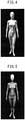
- Fig. 4 is an explanatory view illustrating the acquired three-dimensional body shape data. There is displayed three-dimensional body shape data on an average body shape corresponding to the size category. Then, coloring processing corresponding to the color characteristic data is performed on the acquired three-dimensional body shape data to thereby create body image data as illustrated in Fig. 5 (S104).
- the created body image data represents an image having a body shape and a skin color close to those of the user, and thus the user can confirm whether or not clothes fit user's appearance at the time of trying on the clothes.
- Fig. 6 illustrates an example of the display screen of the operation display device 3.
- a display area 30 for a fitting image which will be described later
- a display area 31 in which icons for clothing designs are displayed and a display area 32 in which icons for color patterns are displayed.
- a color pattern that matches user's skin color is preferentially displayed.
- the user performs a selection operation of his/her favorite color pattern, by performing a scroll operation of the display area 32 to thereby display color patterns.
- the user selects a color pattern displayed as an icon on the operation display device 3, and thus selection processing for a color pattern is performed (S108). Then, on the basis of the selected color pattern and the selected clothing design, the body image data is made to put on three-dimensional data on the clothing design, and coloring processing is performed depending on the color pattern to thereby create wearing image data (S109) .
- head portion image data on the user is subjected to extraction processing from the captured image data captured by the capturing device 4 (S110), and the wearing image data is synthesized while being aligned with the head portion image data on the user, thereby creating fitting image data (S111). In the case where background image data is incorporated, the head portion image data is positioned on the background image data, and subsequently, the wearing image data is synthesized while being aligned with the head portion image data, thereby creating the fitting image data.
- the fitting image is displayed on the display device 2 on the basis of the position and the posture of the user detected by the detection sensor 5 (S112) .
- the position and the posture of the user are detected in real time, and the fitting image is displayed according to the position and the posture of the user, and thus the user can visually recognize the fitting state as if the user views a mirror.
- It becomes possible to display a fitting state without a feeling of naturalness by extracting the head portion image data from the captured image data on a user in real time; by positioning the wearing image data according to movement of the head portion image data; and by creating the fitting image data.
- the present invention can be used as a costume-wearing support device that stores, as clothing data, costumes of characters from animation, TV drama, or the like, as clothing data to display an image in which these costumes are virtually put on.
Landscapes
- Engineering & Computer Science (AREA)
- Theoretical Computer Science (AREA)
- Physics & Mathematics (AREA)
- General Physics & Mathematics (AREA)
- Business, Economics & Management (AREA)
- Finance (AREA)
- Accounting & Taxation (AREA)
- Computer Vision & Pattern Recognition (AREA)
- Marketing (AREA)
- General Business, Economics & Management (AREA)
- Development Economics (AREA)
- Economics (AREA)
- Strategic Management (AREA)
- General Engineering & Computer Science (AREA)
- Computer Hardware Design (AREA)
- Computer Graphics (AREA)
- Software Systems (AREA)
- Architecture (AREA)
- Human Computer Interaction (AREA)
- Multimedia (AREA)
- Image Processing (AREA)
- Processing Or Creating Images (AREA)
- Management, Administration, Business Operations System, And Electronic Commerce (AREA)
Description
- The present invention relates to a fitting support device and method which virtually display a wearing state by combining, with image data on a user, three-dimensional image data obtained by synthesizing a three-dimensional body shape and image data on apparel such as clothes.
- When purchasing apparel such as clothes to be worn at a shop or the like, it is common that a customer tries on a product to be purchased in advance in a fitting room or the like prepared in the shop and confirms the size or comfortableness of the clothes or whether or not the clothes fits his/her appearance.
- In order for the customer to try on plural clothes to find the most preferable clothes from among the clothes the customer has tried on, it is necessary to make a comparison among the clothes in a state of trying on respective clothes. However, the customer has to make a comparison on the basis of customer's memory at the time of trying on the clothes. When the number of clothes to be tried on is large, the memory of the first fitting becomes vague, and the customer may incorrectly select his/her preferred clothes or may need to have another fitting, because of not being able to make sufficient comparison, which requires further time.
- In order to deal with such a problem concerning fitting, a fitting support device that virtually displays a wearing state is proposed. For example, Patent Literature 1 describes a virtual fitting system that: reads clothing pattern-sheet information corresponding to clothes (clothes to be tried on) selected for trial fitting, and standard body information concerning a body shape of a standard body model; creates clothing image indicating clothes that fit the body shape of a person who tries on the clothes, on the basis of body shape information, fabric information, and sewing information; and creates a composite image (fitting image) on the basis of the created clothing image and a person image of the person who tries on the clothes. Furthermore,
Patent Literature 2 describes: creating three-dimensional data obtained by causing data on a body portion prepared in advance to put on clothes made of a fabric selected by a customer; and performing display by combining the data with two-dimensional data on a captured head portion of the customer, whereby fitting simulation with a real feeling can be easily achieved. Moreover, Patent Literature 3 describes performing a fitting simulation by simultaneously displaying, on a display device, a model image in which clothes to be fitted are put on and a person image of a person who tries on the clothes; and by cutting a face image in the person image and moving the face image to a position of the model image to thereby perform the synthesis. -
- PTL 1: Japanese Patent No.
3314704 - PTL 2: Japanese Patent Laid-Open No.
2000-315262 - PTL 3: Japanese Patent Laid-Open No.
2001-134745 - PTL 4:
US 2002/0059248 A1 discloses a method for selecting fashion, including cosmetic and clothing, information for an individual. The method includes providing a fashion database that includes complimentary cosmetic information such as cosmetic product data and physical characteristic data. - NPTL 1: CORDIER F ET AL: "From 2D Photos of Yourself to Virtual Try-on Dress on the Web", People and Computers XV. Proceedings of HCI, 10 September 2001, pages 31-46, XP008025524 discloses a methodology from cloning and dressing people by using a website. The input is simple photographs or body measurements that anybody can produce in any environment. Then the Web-based virtual-try-on allows users to see them dressed.
- At the time of actually trying on clothes, it is ideal to select clothes that match user's appearance, and in particular, it is desirable to select clothes having a color shade that match user's skin color. In the case of Patent Literatures described above, a wearing state of being close to the actual fitting is displayed by combining the clothing image with a body shape of a body model to thereby synthesize the combined image and image data on the user. However, as to the clothes that match user's appearance, the user views the displayed image, and selects the clothes that match user's appearance. At this time, an examination is made mainly from the viewpoint of whether or not the design of the clothes matches the body shape of the user, and it is difficult for the user to make the examination from the viewpoint of whether or not the clothes have a color shade that matches user's skin color. Accordingly, it is difficult to select clothes that match user' s appearance from various viewpoints.
- Therefore, the present invention has an object to provide a fitting support device and method which make it possible to reliably select apparel such as clothes matching user's appearance.
- A fitting support device according to the present invention is defined by claim 1 and includes: a capturing unit that captures an image of a user; a detection unit that detects a body shape of the user; an operation unit that performs a selection operation of clothes; a processing unit that creates fitting image data on clothing data selected by the operation unit, on the basis of captured image data obtained from the capturing unit and body shape data obtained from the detection unit; and a display unit that displays the created fitting image data, wherein the processing unit includes: a color-characteristic processing unit that acquires color characteristic data on user's skin color on the basis of the captured image data; a body processing unit that acquires three-dimensional body shape data on the basis of the body shape data and colors the three-dimensional body shape data on the basis of the color characteristic data to thereby create body image data; a color-pattern processing unit that acquires color pattern data corresponding to the color characteristic data on the basis of the clothing data; a wearing processing unit that creates wearing image data on the basis of the body image data and the color pattern data; and a fitting processing unit that acquires in real time head portion image data on the user on the basis of the captured image data, and synthesizes the head portion image data and the wearing image data to thereby create the fitting image data. Furthermore, the detection unit is configured to detect user's posture in real time, and the fitting processing unit creates the fitting image data on the basis of detected posture data. Moreover, the color-characteristic processing unit acquires the color characteristic data on the basis of hue, lightness, and saturation of a pixel concerning a skin portion in the captured image data. In addition, the fitting processing unit creates fitting image data by incorporating background image data captured by the capturing unit.
- A fitting support method according to the present invention as defined by
claim 4 is a fitting support method of displaying fitting image data on clothing data selected by a user on the basis of captured image data and body shape data on the user, and the method includes the steps of: acquiring color characteristic data on user's skin color on the basis of the captured image data; acquiring three-dimensional body shape data on the basis of the body shape data, and coloring the three-dimensional body shape data on the basis of the color characteristic data to thereby create body image data; acquiring color pattern data corresponding to the color characteristic data on the basis of the clothing data; creating wearing image data on the basis of the body image data and the color pattern data; and acquiring in real time head portion image data on the user on the basis of the captured image data, and synthesizing the head portion image data and the wearing image data to thereby create the fitting image data; the method further comprising the steps of detecting in real time the user's posture, and creating the fitting image data on the basis of detected posture data and in the case of a backward posture, confirming the fitting state by performing an operation of storing, in a backward state, a still image and then viewing the still image after the operation; and displaying the created fitting image data. - The present invention has a configuration as described above and makes it possible to display a fitting image concerning clothes having a color pattern that matches user's skin color, and thus apparel such as clothes matching user's appearance can be efficiently selected.
-
-
Fig. 1 is a schematic configuration view of a fitting support device according to the present invention. -
Fig. 2 is a functional block configuration diagram of the fitting support device. -
Fig. 3 is a flowchart of fitting support processing. -
Fig. 4 is an explanatory view illustrating a three-dimensional body shape. -
Fig. 5 is an explanatory view illustrating a body image. -
Fig. 6 is an explanatory view illustrating one example of a display screen of an operation display device. - Hereinafter, an embodiment according to the present invention will be described with reference to the drawings. Note that the embodiment described below is a preferred specific example for carrying out the present invention, and various technical limitations are imposed. However, the present invention is not limited to these embodiments unless it is specified in the following description that the present invention is limited.
-
Fig. 1 is a schematic configuration view of a fitting support device according to the present invention. The fitting support device includes an information processing device 1 that performs processing for displaying a fitting image, adisplay device 2 that displays the fitting image, an operation display device 3 a user operates to input data, a capturingdevice 4 that captures an image of a user, and adetection sensor 5 that detects a body shape of the user. - A well-known computer including a CPU, a memory, a hard disk, a transmission-reception unit, and the like can be used as the information processing device 1, and programs that achieve various functions for displaying the fitting image are installed in the information processing device 1. The
display device 2 includes a large-sized display such as a liquid crystal display panel that can display a full-sized fitting image of a user, and is configured so that the user standing in front of thedisplay device 2 can visibly recognize a fitting image with a feeling as if the user actually stands in front of a mirror. A well-known device such as a tablet terminal can be used as the operation display device 3 having an operation display function for performing operations necessary to display a fitting image. In addition, in the operation display device 3, image data for displaying an icon representing a color pattern or type of clothes is registered. A capturing camera capturing an image of a user standing in front of thedisplay device 2 can be used as the capturingdevice 4 that is configured so that a color image of the user captured is transmitted to the information processing device 1. A depth sensor employing an infrared light or the like can be used as thedetection sensor 5 having a function of detecting a body shape or posture of a user standing in front of the display device. -
Fig. 2 is a functional block configuration diagram of the fitting support device. Aprocessing unit 10 controls the entire device, and includes a color-characteristic processing unit 100, abody processing unit 101, a color-pattern processing unit 102, a wearingprocessing unit 103, and afitting processing unit 104, each of which serves as a function for displaying fitting images. A capturingunit 11 transmits a color image of a user captured by the capturingdevice 4 to theprocessing unit 10. Adetection unit 12 transmits detected data obtained from thedetection sensor 5 to theprocessing unit 10. Anoperation display unit 13 displays an image necessary for operation, and transmits an operational signal by the user, to theprocessing unit 10. In addition, theoperation display unit 13 stores data necessary to select clothing and a color pattern transmitted from theprocessing unit 10, and displays the data. Thedisplay unit 14 displays a fitting image transmitted from theprocessing unit 10. - A
memory unit 15 stores programs and data necessary for control processing and display processing of the device, and includes: a capturinginformation DB 150 that stores captured images of a user; a colorcharacteristic information DB 151 that stores data necessary for analyzing the skin color of a body; a body shape information DB 152 that stores three-dimensional body shape data for displaying body shapes of bodies in a categorized manner; clothing information DB 153 that stores clothing data indicating three-dimensional data (for example, pattern-sheet data and the like) concerning various designs of apparel such as clothes; a color pattern information DB 154 that stores color pattern data on color patterns used in apparel such as clothes; and a customer information DB 155 that stores attribute information such as a body shape and a skin color of a user, or information concerning fitting conditions in the past. - The color-
characteristic processing unit 100 acquires color characteristic data on user's skin color on the basis of the captured image data transmitted from the capturingunit 11. It is preferable to acquire data including, for example, hue, lightness, and saturation concerning a skin color, as the color characteristic data. The user's skin color can be classified into a warm color and a cool color on the basis of these data (reference: Masako Kadota, "Design method for personal color through measurement of skin color - No. 2: Method of selecting clothes -, " Journal of the Color Science Association of Japan, May 1995, the Color Science Association of Japan). Fine Color Chart System Cross Cosmos 6000 (Japan Color Research Institute) is used for the classification method for the warm color or cool color described above, to analyze hue, lightness, and saturation. The warm-based skin color is a strong yellowy ocher-based color having a hue closer to yellow, and the cool-based skin color looks bluish pink having a hue of purplish red. The color-characteristic processing unit 100 acquires analysis data on the skin color such as the warm color or the cool color, as the color characteristic data. - The
body processing unit 101 acquires three-dimensional body shape data from the bodyshape information DB 152 on the basis of body shape data on a user transmitted from thedetection unit 12, and colors the three-dimensional body shape data on the basis of the color characteristic data obtained from the color-characteristic processing unit 100 to thereby create body image data. The skeleton of a user can be detected by using, for example, a depth sensor that performs irradiation with infrared light as the detection sensor, to thereby allow detection of the depth of an object. Then, three-dimensional body shape data corresponding to the skeleton of the user is read from the bodyshape information DB 152. In the bodyshape information DB 152, for example, three-dimensional body shape data created on the basis of size categories such as 9AR and 11AT specified in Japan Industrial Standards are registered, and a size category is determined on the basis of the size of a characteristic portion (for example, width of a shoulder and height) of the skeleton of a user, and then, three-dimensional body shape data close to the body shape of the user is acquired. Coloring processing is performed on the acquired three-dimensional body shape data on the basis of the color characteristic data to thereby create body image data. - The color-
pattern processing unit 102 acquires, from the colorpattern information DB 154, color pattern data corresponding to the color characteristic data obtained from the color-characteristic processing unit 100 on the basis of clothing data selected by the user in theoperation display unit 13. For example, in the case where the skin color is set to a warm color or cool color as the color characteristic data, the following color shade is selected for the color pattern data corresponding to the skin color. - Warm-based: ivory, camel, red, brown, khaki
Cool-based: gray, charcoal gray, black, white, navy, wine red - Warm-based: camel, dark brown, olive green
Cool-based: gray, charcoal gray, navy
In addition, the color pattern data acquired by the color-pattern processing unit 102 is transmitted to theoperation display unit 13, and is displayed. The user selects a favorite color pattern from the color pattern data displayed on theoperation display unit 13. In this case, color patterns with color shades that match user's skin color are selected in advance, and are displayed on theoperation display unit 13, and thereby the user can choose a color pattern from the color patterns that match his/her skin color. As to the color pattern data displayed on theoperation display unit 13, it is possible to enhance convenience when the user selects the color pattern data, by preferentially displaying the data matching the skin color. - The wearing
processing unit 103 reads, from theclothes information DB 153, three-dimensional data on the clothing data selected by the user in theoperation display unit 13, and performs image processing so that the body image data obtained from thebody processing unit 101 is made to virtually put on the three-dimensional data on the clothing data. For example, the processing is performed on shape change such as drooping and pleats in accordance with mechanical properties of cloth of the clothing data. The three-dimensional data on the clothing data is selected so as to match the size category of a user used at the time when the body image data is created. Then, on the basis of color pattern data selected in theoperation display unit 13, coloring processing is performed on the three-dimensional data, on which the body image data is made to put, and the colored clothing data is overlapped with the colored body image data to thereby create wearing image data. Since the wearing image data is obtained by overlapping the body image data and the clothing data in accordance with the size category of a user, it is possible to obtain the wearing image data in which the body image data does not protrude from the clothing data. In addition, the wearing image data is created as three-dimensional image data, and thus it becomes possible to obtain wearing image data viewed not only from the front side of the user but also from various directions including the front and rear, and left and right directions. - The
fitting processing unit 104 acquires head portion image data on a user on the basis of captured image data obtained from the capturingunit 11, and synthesizes the head portion image data and the wearing image data obtained from the wearingprocessing unit 103 to thereby create fitting image data. When the head portion image data on a user is acquired, the image region of a portion above the neck of a user is defined on the basis of data on the position and the posture of the user detected by thedetection unit 12, and the head portion image data is cut out from the captured image data to thereby obtain the head portion image data. Then, the wearing image data is synthesized while being aligned with the acquired head portion image data, thereby creating fitting image data. In this case, it is also possible to align the head portion image data with the wearing image data and thereby creat the fitting image data. - The fitting image is displayed on the
display unit 14 in response to the position and the posture of the user. Thus, in the case where the user moves or rotates, the movement state or rotating state is detected by thedetection unit 12 in real time, and is reflected to the fitting image data. As to the user's posture, for example, skeleton data is created on the basis of a detected signal of the user from thedetection unit 12, and the user's posture can be recognized on the basis of shape change of the skeleton data. Then, head portion image data is extracted from the captured image data in real time, and fitting image is created by performing synthesis so that the wearing image data follows the head portion image data that moves in response to the user, with the result that the user can visually recognize the fitting image without a feeling of unnaturalness. By displaying the fitting image as described above, clothes the user wears are deleted, and only the head portion image is synthesized with the wearing image that matches the body shape or skin color of the user, and thus it becomes possible to display the fitting image in a state of being close to an actual state. - Furthermore, the fitting state can be checked with a real feeling as if the user views a mirror, by capturing a background image in advance as a still image, and combining the background image with a fitting image. In the case where a background image is partially contained in the head portion image of a user, a fitting image is created by aligning the head portion image so as to match the background image and by aligning the wearing image with the head portion image, and thus a real feeling of the fitting state can be enhanced.
- The fitting image is displayed as a three-dimensional image, and thus, also in the case where a user wishes to confirm the fitting sideways or backways, the fitting image changes in response to the position and the posture of the user, and can be visually recognized as if the user views a mirror. In addition, in the case of a backward posture that can be difficult to be visually recognized, it is possible to confirm the fitting state by performing an operation of storing, in a backward state, a still image in the
operation display unit 13 and then viewing the still image after the operation. - As described above, the user can confirm apparel such as clothes that match user's skin color or style and also confirm the color shade of the apparel while visually recognizing image data that is close to the actual fitting state, and thus the user can efficiently select apparel such as clothes that match user's appearance. In addition, body shape data on a user, selected clothing data, and color pattern data are stored in the customer information DB 155, and are utilized as history information when the user uses the fitting support device thereafter.
-
Fig. 3 is a flowchart of fitting support processing. First, the user stands in front of thedisplay device 2 of the fitting support device illustrated inFig. 1 , and stands in an upright position in a state of putting its feet at predetermined positions and of facing thedisplay device 2. In this state, thecapturing device 4 captures an image of the user, and thedetection sensor 5 detects the body shape of the user. In the case where a background image is incorporated into a fitting image, the background image is captured as a still image by using thecapturing device 4 before the image of the user is captured. - Then, extraction processing of the skin color is performed from the captured image data on the user (S100), and the data on the skin color extracted is analyzed to thereby give color characteristic data (S101) . As to the skin color, it is preferable to extract colors from a portion below ears or from cheeks of the user where user's ground color is exhibited. The position of extraction can be identified by image recognition of portions such as eyes, a nose, or a mouth on the basis of the captured image of the face of the user.
- Body shape data such as the width of a shoulder and the height are calculated on the basis of the detected signals from the detection sensor 5 (S102), and three-dimensional body shape data on the size category close to the body shape of a user is acquired on the basis of the calculated body shape data (S103) .
Fig. 4 is an explanatory view illustrating the acquired three-dimensional body shape data. There is displayed three-dimensional body shape data on an average body shape corresponding to the size category. Then, coloring processing corresponding to the color characteristic data is performed on the acquired three-dimensional body shape data to thereby create body image data as illustrated inFig. 5 (S104). The created body image data represents an image having a body shape and a skin color close to those of the user, and thus the user can confirm whether or not clothes fit user's appearance at the time of trying on the clothes. - Then, icon display concerning clothing designs is performed on the operation display device 3 (S105), and the user selects a displayed icon, whereby selection processing for clothing design is performed (S106) . Furthermore, in relation to the clothing design subjected to selection processing, color pattern data that matches user's skin color is extracted on the basis of the color characteristic data, and is displayed on the operation display device 3 as an icon (S107).
Fig. 6 illustrates an example of the display screen of the operation display device 3. There are set, on the display screen, adisplay area 30 for a fitting image, which will be described later, adisplay area 31 in which icons for clothing designs are displayed, and adisplay area 32 in which icons for color patterns are displayed. In thedisplay area 32, a color pattern that matches user's skin color is preferentially displayed. In addition, the user performs a selection operation of his/her favorite color pattern, by performing a scroll operation of thedisplay area 32 to thereby display color patterns. - The user selects a color pattern displayed as an icon on the operation display device 3, and thus selection processing for a color pattern is performed (S108). Then, on the basis of the selected color pattern and the selected clothing design, the body image data is made to put on three-dimensional data on the clothing design, and coloring processing is performed depending on the color pattern to thereby create wearing image data (S109) . After that, head portion image data on the user is subjected to extraction processing from the captured image data captured by the capturing device 4 (S110), and the wearing image data is synthesized while being aligned with the head portion image data on the user, thereby creating fitting image data (S111). In the case where background image data is incorporated, the head portion image data is positioned on the background image data, and subsequently, the wearing image data is synthesized while being aligned with the head portion image data, thereby creating the fitting image data.
- The fitting image is displayed on the
display device 2 on the basis of the position and the posture of the user detected by the detection sensor 5 (S112) . The position and the posture of the user are detected in real time, and the fitting image is displayed according to the position and the posture of the user, and thus the user can visually recognize the fitting state as if the user views a mirror. It becomes possible to display a fitting state without a feeling of naturalness by extracting the head portion image data from the captured image data on a user in real time; by positioning the wearing image data according to movement of the head portion image data; and by creating the fitting image data. In addition, it is also possible to store horizontal and backward fitting images and check them by later display, and thus it becomes possible to closely examine whether or not the selected clothing design and color pattern match user's appearance. - After the fitting state is confirmed by the user, it is checked whether or not another color pattern is selected (S113), and when selection operation is performed, the color pattern is assumed to be changed, and the procedure returns to step S108 and selection processing for a color pattern is performed. Then, wearing image data is created on the basis of the selected color pattern. When no other color pattern is selected, it is checked whether or not another clothing design is selected (S114), and when another clothing design is selected, the clothing design is assumed to be changed, and the procedure returns to step S106 and selection processing for clothing design is performed. In addition, selection processing for a color pattern and creation processing for wearing image data are performed on the basis of another clothing design. When neither color pattern nor clothing design is selected, it is checked whether or not ending operation is performed (S115), and when ending operation is performed, ending processing is performed.
- In the example described above, description has been made of an example in which apparel such as clothes is used as clothing data. However, the present invention can be used as a costume-wearing support device that stores, as clothing data, costumes of characters from animation, TV drama, or the like, as clothing data to display an image in which these costumes are virtually put on.
-
- 1
- information processing device
- 2
- display device
- 3
- operation display device
- 4
- capturing device
- 5
- detection sensor
Claims (4)
- A fitting support device, comprising:a capturing unit (11) that captures an image of a user;a detection unit (12) that detects a body shape of the user;an operation unit (13) that performs a selection operation of clothes;a processing unit (10) that creates fitting image data on clothing data selected by the operation unit (13), on the basis of captured image data obtained from the capturing unit (11) and body shape data obtained from the detection unit (12) ; anda display unit (14) that displays the created fitting image data, whereinthe processing unit (10) includes:a color-characteristic processing unit (100) that acquires color characteristic data on user's skin color on the basis of the captured image data;a body processing unit (101) that acquires three-dimensional body shape data on the basis of the body shape data and colors the three-dimensional body shape data on the basis of the color characteristic data to thereby create body image data;a color-pattern processing (102) unit that acquires color pattern data corresponding to the color characteristic data on the basis of the clothing data;a wearing processing unit (103) that creates wearing image data on the basis of the body image data and the color pattern data; anda fitting processing unit (104) that acquires in real time head portion image data on the user on the basis of the captured image data, and synthesizes the head portion image data and the wearing image data to thereby create the fitting image data whereinthe detection unit is configured to detect in real time the user's posture, andthe fitting processing unit (104) creates the fitting image data on the basis of detected posture data and in the case of a backward posture, confirming the fitting state by performing an operation of storing, in a backward state, a still image and then viewing the still image after the operation.
- The fitting support device according to claim 1, wherein
the color-characteristic processing unit (100) acquires the color characteristic data on the basis of hue, lightness, and saturation of a pixel concerning a skin portion in the captured image data. - The fitting support device according to any of claims 1 to 2, wherein
the fitting processing unit (104) creates fitting image data by incorporating background image data captured by the capturing unit (11). - A fitting support method of displaying fitting image data on clothing data selected by a user on the basis of captured image data and body shape data on the user, the method comprising the steps of:acquiring color characteristic data on user's skin color on the basis of the captured image data;acquiring three-dimensional body shape data on the basis of the body shape data, and coloring the three-dimensional body shape data on the basis of the color characteristic data to thereby create body image data;acquiring color pattern data corresponding to the color characteristic data on the basis of the clothing data;creating wearing image data on the basis of the body image data and the color pattern data; andacquiring in real time head portion image data on the user on the basis of the captured image data, and synthesizing the head portion image data and the wearing image data to thereby create the fitting image data; the method further comprising the steps ofdetecting in real time the user's posture;creating the fitting image data on the basis of detected posture data;displaying the created fitting image data; andin the case of a backward posture, confirming the fitting state by performing an operation of storing, in a backward state, a still image and then viewing the still image after the operation.
Applications Claiming Priority (2)
| Application Number | Priority Date | Filing Date | Title |
|---|---|---|---|
| JP2013216301A JP6341646B2 (en) | 2013-10-17 | 2013-10-17 | Try-on support device and method |
| PCT/JP2014/075786 WO2015056552A1 (en) | 2013-10-17 | 2014-09-29 | Fitting support device and method |
Publications (3)
| Publication Number | Publication Date |
|---|---|
| EP3059710A1 EP3059710A1 (en) | 2016-08-24 |
| EP3059710A4 EP3059710A4 (en) | 2017-04-19 |
| EP3059710B1 true EP3059710B1 (en) | 2020-04-01 |
Family
ID=52828001
Family Applications (1)
| Application Number | Title | Priority Date | Filing Date |
|---|---|---|---|
| EP14854421.6A Active EP3059710B1 (en) | 2013-10-17 | 2014-09-29 | Fitting support device and method |
Country Status (6)
| Country | Link |
|---|---|
| US (1) | US10147241B2 (en) |
| EP (1) | EP3059710B1 (en) |
| JP (1) | JP6341646B2 (en) |
| CN (1) | CN105637565A (en) |
| HK (1) | HK1219796A1 (en) |
| WO (1) | WO2015056552A1 (en) |
Families Citing this family (18)
| Publication number | Priority date | Publication date | Assignee | Title |
|---|---|---|---|---|
| JP2993125B2 (en) | 1995-08-15 | 1999-12-20 | 住友金属工業株式会社 | Hot rolling method for steel and roll for hot rolling steel |
| CN103489107B (en) * | 2013-08-16 | 2015-11-25 | 北京京东尚科信息技术有限公司 | A kind of method and apparatus making virtual fitting model image |
| JP5605885B1 (en) * | 2014-02-27 | 2014-10-15 | 木下 泰男 | Virtual try-on system and virtual try-on program |
| WO2016070309A1 (en) * | 2014-11-03 | 2016-05-12 | Carroll Terrence A | Textile matching using color and pattern recognition and methods of use |
| WO2017030255A1 (en) * | 2015-08-18 | 2017-02-23 | Samsung Electronics Co., Ltd. | Large format display apparatus and control method thereof |
| KR102354458B1 (en) * | 2015-08-19 | 2022-01-21 | 삼성전자주식회사 | Display apparatus and controlling method thereof |
| US9940728B2 (en) * | 2015-12-15 | 2018-04-10 | Intel Corporation | Computer vision assisted item search |
| JP6362634B2 (en) * | 2016-02-05 | 2018-07-25 | 株式会社バンダイナムコエンターテインメント | Image generation system, game device, and program |
| EP3382648A4 (en) * | 2016-02-16 | 2019-05-22 | Rakuten, Inc. | THREE-DIMENSIONAL MODEL GENERATION SYSTEM, THREE-DIMENSIONAL MODEL GENERATION METHOD, AND PROGRAM |
| US10963812B1 (en) * | 2017-03-17 | 2021-03-30 | Amazon Technologies, Inc. | Model-based artificial intelligence data mining system for dimension estimation |
| US10665022B2 (en) * | 2017-06-06 | 2020-05-26 | PerfectFit Systems Pvt. Ltd. | Augmented reality display system for overlaying apparel and fitness information |
| JP7072378B2 (en) * | 2017-12-13 | 2022-05-20 | キヤノン株式会社 | Image generator and its control method, image generation system, program |
| JP6631988B1 (en) * | 2018-07-02 | 2020-01-15 | 株式会社ブルームスキーム | Virtual fitting device, virtual fitting method, and virtual fitting program |
| JP7180336B2 (en) * | 2018-12-04 | 2022-11-30 | 大日本印刷株式会社 | shooting system |
| JP6684009B1 (en) * | 2019-10-03 | 2020-04-22 | 株式会社クリューシステムズ | Program, video processing device, and authentication method |
| US11258988B1 (en) * | 2020-07-21 | 2022-02-22 | Vivian J. Douglas Dudley | Body-viewing camera system |
| JP7133177B2 (en) * | 2020-12-01 | 2022-09-08 | 公紀 岩中 | Evaluation server device for coordination, control method for evaluation server device for coordination, and program and recording medium used therefor |
| DE102021103578B4 (en) * | 2021-02-16 | 2023-06-07 | Sikora Aktiengesellschaft | Method and system for collecting and providing data for a purchase of an article of clothing |
Family Cites Families (15)
| Publication number | Priority date | Publication date | Assignee | Title |
|---|---|---|---|---|
| JPH09106419A (en) * | 1995-08-04 | 1997-04-22 | Sanyo Electric Co Ltd | Fitting simulation method |
| US6148092A (en) * | 1998-01-08 | 2000-11-14 | Sharp Laboratories Of America, Inc | System for detecting skin-tone regions within an image |
| JP3314704B2 (en) | 1998-01-20 | 2002-08-12 | 東洋紡績株式会社 | Method of synthesizing image showing fitting state and virtual fitting system using the method |
| JP2000315262A (en) | 1999-03-02 | 2000-11-14 | Fujitsu Ltd | Image display method and apparatus and storage medium |
| JP2001134745A (en) | 1999-11-05 | 2001-05-18 | Hitachi Information & Control Systems Inc | Try-on simulation device |
| US20020059248A1 (en) | 2000-07-20 | 2002-05-16 | Samuel Farchione | Method for determining proper color for makeup and clothing |
| AU2002233646A1 (en) * | 2002-02-18 | 2003-09-04 | Li Wu | Fashion advising system |
| US7937253B2 (en) * | 2004-03-05 | 2011-05-03 | The Procter & Gamble Company | Virtual prototyping system and method |
| US9646340B2 (en) * | 2010-04-01 | 2017-05-09 | Microsoft Technology Licensing, Llc | Avatar-based virtual dressing room |
| JP5722603B2 (en) * | 2010-12-03 | 2015-05-20 | 新日鉄住金ソリューションズ株式会社 | Augmented reality presentation device, augmented reality presentation method and program |
| US20130097194A1 (en) * | 2011-08-05 | 2013-04-18 | New York University | Apparatus, method, and computer-accessible medium for displaying visual information |
| JP5874325B2 (en) * | 2011-11-04 | 2016-03-02 | ソニー株式会社 | Image processing apparatus, image processing method, and program |
| JP2013101528A (en) * | 2011-11-09 | 2013-05-23 | Sony Corp | Information processing apparatus, display control method, and program |
| US9280202B2 (en) * | 2013-05-10 | 2016-03-08 | Magna Electronics Inc. | Vehicle vision system |
| US9348411B2 (en) * | 2013-05-24 | 2016-05-24 | Microsoft Technology Licensing, Llc | Object display with visual verisimilitude |
-
2013
- 2013-10-17 JP JP2013216301A patent/JP6341646B2/en active Active
-
2014
- 2014-09-29 WO PCT/JP2014/075786 patent/WO2015056552A1/en not_active Ceased
- 2014-09-29 US US15/029,339 patent/US10147241B2/en active Active
- 2014-09-29 EP EP14854421.6A patent/EP3059710B1/en active Active
- 2014-09-29 CN CN201480056173.3A patent/CN105637565A/en active Pending
- 2014-09-29 HK HK16107745.5A patent/HK1219796A1/en unknown
Non-Patent Citations (1)
| Title |
|---|
| None * |
Also Published As
| Publication number | Publication date |
|---|---|
| US20160240002A1 (en) | 2016-08-18 |
| US10147241B2 (en) | 2018-12-04 |
| CN105637565A (en) | 2016-06-01 |
| WO2015056552A1 (en) | 2015-04-23 |
| EP3059710A1 (en) | 2016-08-24 |
| JP2015079362A (en) | 2015-04-23 |
| JP6341646B2 (en) | 2018-06-13 |
| EP3059710A4 (en) | 2017-04-19 |
| HK1219796A1 (en) | 2017-04-13 |
Similar Documents
| Publication | Publication Date | Title |
|---|---|---|
| US10147241B2 (en) | Fitting support device and method | |
| US12444110B2 (en) | System and method for digital makeup mirror | |
| EP3479296B1 (en) | System of virtual dressing utilizing image processing, machine learning, and computer vision | |
| CN111681070B (en) | Online commodity purchasing method, purchasing device, storage device and purchasing equipment | |
| KR102279063B1 (en) | Method for composing image and an electronic device thereof | |
| KR102240302B1 (en) | Apparatus and Method for virtual fitting thereof | |
| JP6389888B2 (en) | Virtualization device, system and method in mirror | |
| US9928411B2 (en) | Image processing apparatus, image processing system, image processing method, and computer program product | |
| EP3408835A1 (en) | Virtually trying cloths on realistic body model of user | |
| KR101085762B1 (en) | Display device and method for wearing jewelry using augmented reality | |
| CN202904582U (en) | Virtual fitting system based on body feeling identification device | |
| WO2018005884A1 (en) | System and method for digital makeup mirror | |
| JP2010262425A (en) | Computer-implemented method for recognizing and classifying clothes | |
| KR20170022078A (en) | Display apparatus and controlling method thereof | |
| US20190311540A1 (en) | Method and device for the virtual try-on of garments based on augmented reality with multi-detection | |
| CN108764998A (en) | Intelligence displaying device and intelligent methods of exhibiting | |
| KR20100135001A (en) | Digital virtual mirror system for clothes and its processing method | |
| KR20130007011A (en) | Smart coordinate system in the clothes shop | |
| KR20140107734A (en) | Virtual fitting method and system | |
| Arulananth et al. | Python based smart trial room | |
| Rajan et al. | Virtual dressing room with web deployment | |
| CN113469774A (en) | Intelligent device and size recommendation method | |
| WO2024043088A1 (en) | Virtual try-on system, virtual try-on method, and recording medium | |
| KR20210014860A (en) | Automated sales support system with consulting |
Legal Events
| Date | Code | Title | Description |
|---|---|---|---|
| PUAI | Public reference made under article 153(3) epc to a published international application that has entered the european phase |
Free format text: ORIGINAL CODE: 0009012 |
|
| 17P | Request for examination filed |
Effective date: 20160422 |
|
| AK | Designated contracting states |
Kind code of ref document: A1 Designated state(s): AL AT BE BG CH CY CZ DE DK EE ES FI FR GB GR HR HU IE IS IT LI LT LU LV MC MK MT NL NO PL PT RO RS SE SI SK SM TR |
|
| AX | Request for extension of the european patent |
Extension state: BA ME |
|
| DAX | Request for extension of the european patent (deleted) | ||
| A4 | Supplementary search report drawn up and despatched |
Effective date: 20170322 |
|
| RIC1 | Information provided on ipc code assigned before grant |
Ipc: G06Q 30/06 20120101ALI20170316BHEP Ipc: G06T 19/00 20110101AFI20170316BHEP |
|
| GRAP | Despatch of communication of intention to grant a patent |
Free format text: ORIGINAL CODE: EPIDOSNIGR1 |
|
| STAA | Information on the status of an ep patent application or granted ep patent |
Free format text: STATUS: GRANT OF PATENT IS INTENDED |
|
| INTG | Intention to grant announced |
Effective date: 20191121 |
|
| GRAS | Grant fee paid |
Free format text: ORIGINAL CODE: EPIDOSNIGR3 |
|
| GRAA | (expected) grant |
Free format text: ORIGINAL CODE: 0009210 |
|
| STAA | Information on the status of an ep patent application or granted ep patent |
Free format text: STATUS: THE PATENT HAS BEEN GRANTED |
|
| AK | Designated contracting states |
Kind code of ref document: B1 Designated state(s): AL AT BE BG CH CY CZ DE DK EE ES FI FR GB GR HR HU IE IS IT LI LT LU LV MC MK MT NL NO PL PT RO RS SE SI SK SM TR |
|
| REG | Reference to a national code |
Ref country code: GB Ref legal event code: FG4D |
|
| REG | Reference to a national code |
Ref country code: CH Ref legal event code: EP Ref country code: AT Ref legal event code: REF Ref document number: 1252361 Country of ref document: AT Kind code of ref document: T Effective date: 20200415 |
|
| REG | Reference to a national code |
Ref country code: DE Ref legal event code: R096 Ref document number: 602014063296 Country of ref document: DE |
|
| REG | Reference to a national code |
Ref country code: IE Ref legal event code: FG4D |
|
| PG25 | Lapsed in a contracting state [announced via postgrant information from national office to epo] |
Ref country code: BG Free format text: LAPSE BECAUSE OF FAILURE TO SUBMIT A TRANSLATION OF THE DESCRIPTION OR TO PAY THE FEE WITHIN THE PRESCRIBED TIME-LIMIT Effective date: 20200701 |
|
| REG | Reference to a national code |
Ref country code: NL Ref legal event code: MP Effective date: 20200401 |
|
| REG | Reference to a national code |
Ref country code: LT Ref legal event code: MG4D |
|
| PG25 | Lapsed in a contracting state [announced via postgrant information from national office to epo] |
Ref country code: IS Free format text: LAPSE BECAUSE OF FAILURE TO SUBMIT A TRANSLATION OF THE DESCRIPTION OR TO PAY THE FEE WITHIN THE PRESCRIBED TIME-LIMIT Effective date: 20200801 Ref country code: FI Free format text: LAPSE BECAUSE OF FAILURE TO SUBMIT A TRANSLATION OF THE DESCRIPTION OR TO PAY THE FEE WITHIN THE PRESCRIBED TIME-LIMIT Effective date: 20200401 Ref country code: CZ Free format text: LAPSE BECAUSE OF FAILURE TO SUBMIT A TRANSLATION OF THE DESCRIPTION OR TO PAY THE FEE WITHIN THE PRESCRIBED TIME-LIMIT Effective date: 20200401 Ref country code: GR Free format text: LAPSE BECAUSE OF FAILURE TO SUBMIT A TRANSLATION OF THE DESCRIPTION OR TO PAY THE FEE WITHIN THE PRESCRIBED TIME-LIMIT Effective date: 20200702 Ref country code: NO Free format text: LAPSE BECAUSE OF FAILURE TO SUBMIT A TRANSLATION OF THE DESCRIPTION OR TO PAY THE FEE WITHIN THE PRESCRIBED TIME-LIMIT Effective date: 20200701 Ref country code: SE Free format text: LAPSE BECAUSE OF FAILURE TO SUBMIT A TRANSLATION OF THE DESCRIPTION OR TO PAY THE FEE WITHIN THE PRESCRIBED TIME-LIMIT Effective date: 20200401 Ref country code: LT Free format text: LAPSE BECAUSE OF FAILURE TO SUBMIT A TRANSLATION OF THE DESCRIPTION OR TO PAY THE FEE WITHIN THE PRESCRIBED TIME-LIMIT Effective date: 20200401 Ref country code: PT Free format text: LAPSE BECAUSE OF FAILURE TO SUBMIT A TRANSLATION OF THE DESCRIPTION OR TO PAY THE FEE WITHIN THE PRESCRIBED TIME-LIMIT Effective date: 20200817 Ref country code: NL Free format text: LAPSE BECAUSE OF FAILURE TO SUBMIT A TRANSLATION OF THE DESCRIPTION OR TO PAY THE FEE WITHIN THE PRESCRIBED TIME-LIMIT Effective date: 20200401 |
|
| REG | Reference to a national code |
Ref country code: AT Ref legal event code: MK05 Ref document number: 1252361 Country of ref document: AT Kind code of ref document: T Effective date: 20200401 |
|
| PG25 | Lapsed in a contracting state [announced via postgrant information from national office to epo] |
Ref country code: HR Free format text: LAPSE BECAUSE OF FAILURE TO SUBMIT A TRANSLATION OF THE DESCRIPTION OR TO PAY THE FEE WITHIN THE PRESCRIBED TIME-LIMIT Effective date: 20200401 Ref country code: LV Free format text: LAPSE BECAUSE OF FAILURE TO SUBMIT A TRANSLATION OF THE DESCRIPTION OR TO PAY THE FEE WITHIN THE PRESCRIBED TIME-LIMIT Effective date: 20200401 Ref country code: RS Free format text: LAPSE BECAUSE OF FAILURE TO SUBMIT A TRANSLATION OF THE DESCRIPTION OR TO PAY THE FEE WITHIN THE PRESCRIBED TIME-LIMIT Effective date: 20200401 |
|
| PG25 | Lapsed in a contracting state [announced via postgrant information from national office to epo] |
Ref country code: AL Free format text: LAPSE BECAUSE OF FAILURE TO SUBMIT A TRANSLATION OF THE DESCRIPTION OR TO PAY THE FEE WITHIN THE PRESCRIBED TIME-LIMIT Effective date: 20200401 |
|
| REG | Reference to a national code |
Ref country code: DE Ref legal event code: R097 Ref document number: 602014063296 Country of ref document: DE |
|
| PG25 | Lapsed in a contracting state [announced via postgrant information from national office to epo] |
Ref country code: AT Free format text: LAPSE BECAUSE OF FAILURE TO SUBMIT A TRANSLATION OF THE DESCRIPTION OR TO PAY THE FEE WITHIN THE PRESCRIBED TIME-LIMIT Effective date: 20200401 Ref country code: DK Free format text: LAPSE BECAUSE OF FAILURE TO SUBMIT A TRANSLATION OF THE DESCRIPTION OR TO PAY THE FEE WITHIN THE PRESCRIBED TIME-LIMIT Effective date: 20200401 Ref country code: ES Free format text: LAPSE BECAUSE OF FAILURE TO SUBMIT A TRANSLATION OF THE DESCRIPTION OR TO PAY THE FEE WITHIN THE PRESCRIBED TIME-LIMIT Effective date: 20200401 Ref country code: RO Free format text: LAPSE BECAUSE OF FAILURE TO SUBMIT A TRANSLATION OF THE DESCRIPTION OR TO PAY THE FEE WITHIN THE PRESCRIBED TIME-LIMIT Effective date: 20200401 Ref country code: SM Free format text: LAPSE BECAUSE OF FAILURE TO SUBMIT A TRANSLATION OF THE DESCRIPTION OR TO PAY THE FEE WITHIN THE PRESCRIBED TIME-LIMIT Effective date: 20200401 Ref country code: EE Free format text: LAPSE BECAUSE OF FAILURE TO SUBMIT A TRANSLATION OF THE DESCRIPTION OR TO PAY THE FEE WITHIN THE PRESCRIBED TIME-LIMIT Effective date: 20200401 |
|
| PLBE | No opposition filed within time limit |
Free format text: ORIGINAL CODE: 0009261 |
|
| STAA | Information on the status of an ep patent application or granted ep patent |
Free format text: STATUS: NO OPPOSITION FILED WITHIN TIME LIMIT |
|
| PG25 | Lapsed in a contracting state [announced via postgrant information from national office to epo] |
Ref country code: PL Free format text: LAPSE BECAUSE OF FAILURE TO SUBMIT A TRANSLATION OF THE DESCRIPTION OR TO PAY THE FEE WITHIN THE PRESCRIBED TIME-LIMIT Effective date: 20200401 Ref country code: SK Free format text: LAPSE BECAUSE OF FAILURE TO SUBMIT A TRANSLATION OF THE DESCRIPTION OR TO PAY THE FEE WITHIN THE PRESCRIBED TIME-LIMIT Effective date: 20200401 |
|
| 26N | No opposition filed |
Effective date: 20210112 |
|
| REG | Reference to a national code |
Ref country code: DE Ref legal event code: R119 Ref document number: 602014063296 Country of ref document: DE |
|
| PG25 | Lapsed in a contracting state [announced via postgrant information from national office to epo] |
Ref country code: MC Free format text: LAPSE BECAUSE OF FAILURE TO SUBMIT A TRANSLATION OF THE DESCRIPTION OR TO PAY THE FEE WITHIN THE PRESCRIBED TIME-LIMIT Effective date: 20200401 |
|
| REG | Reference to a national code |
Ref country code: CH Ref legal event code: PL |
|
| GBPC | Gb: european patent ceased through non-payment of renewal fee |
Effective date: 20200929 |
|
| PG25 | Lapsed in a contracting state [announced via postgrant information from national office to epo] |
Ref country code: SI Free format text: LAPSE BECAUSE OF FAILURE TO SUBMIT A TRANSLATION OF THE DESCRIPTION OR TO PAY THE FEE WITHIN THE PRESCRIBED TIME-LIMIT Effective date: 20200401 |
|
| REG | Reference to a national code |
Ref country code: BE Ref legal event code: MM Effective date: 20200930 |
|
| PG25 | Lapsed in a contracting state [announced via postgrant information from national office to epo] |
Ref country code: LU Free format text: LAPSE BECAUSE OF NON-PAYMENT OF DUE FEES Effective date: 20200929 |
|
| PG25 | Lapsed in a contracting state [announced via postgrant information from national office to epo] |
Ref country code: DE Free format text: LAPSE BECAUSE OF NON-PAYMENT OF DUE FEES Effective date: 20210401 |
|
| PG25 | Lapsed in a contracting state [announced via postgrant information from national office to epo] |
Ref country code: LI Free format text: LAPSE BECAUSE OF NON-PAYMENT OF DUE FEES Effective date: 20200930 Ref country code: IE Free format text: LAPSE BECAUSE OF NON-PAYMENT OF DUE FEES Effective date: 20200929 Ref country code: GB Free format text: LAPSE BECAUSE OF NON-PAYMENT OF DUE FEES Effective date: 20200929 Ref country code: CH Free format text: LAPSE BECAUSE OF NON-PAYMENT OF DUE FEES Effective date: 20200930 Ref country code: BE Free format text: LAPSE BECAUSE OF NON-PAYMENT OF DUE FEES Effective date: 20200930 |
|
| PG25 | Lapsed in a contracting state [announced via postgrant information from national office to epo] |
Ref country code: TR Free format text: LAPSE BECAUSE OF FAILURE TO SUBMIT A TRANSLATION OF THE DESCRIPTION OR TO PAY THE FEE WITHIN THE PRESCRIBED TIME-LIMIT Effective date: 20200401 Ref country code: MT Free format text: LAPSE BECAUSE OF FAILURE TO SUBMIT A TRANSLATION OF THE DESCRIPTION OR TO PAY THE FEE WITHIN THE PRESCRIBED TIME-LIMIT Effective date: 20200401 Ref country code: CY Free format text: LAPSE BECAUSE OF FAILURE TO SUBMIT A TRANSLATION OF THE DESCRIPTION OR TO PAY THE FEE WITHIN THE PRESCRIBED TIME-LIMIT Effective date: 20200401 |
|
| PG25 | Lapsed in a contracting state [announced via postgrant information from national office to epo] |
Ref country code: MK Free format text: LAPSE BECAUSE OF FAILURE TO SUBMIT A TRANSLATION OF THE DESCRIPTION OR TO PAY THE FEE WITHIN THE PRESCRIBED TIME-LIMIT Effective date: 20200401 |
|
| PGFP | Annual fee paid to national office [announced via postgrant information from national office to epo] |
Ref country code: IT Payment date: 20250825 Year of fee payment: 12 |
|
| PGFP | Annual fee paid to national office [announced via postgrant information from national office to epo] |
Ref country code: FR Payment date: 20250808 Year of fee payment: 12 |