EP3058322B1 - Verbesserungen an oder im zusammenhang mit zählen durch gewichtzählsysteme - Google Patents
Verbesserungen an oder im zusammenhang mit zählen durch gewichtzählsysteme Download PDFInfo
- Publication number
- EP3058322B1 EP3058322B1 EP14796841.6A EP14796841A EP3058322B1 EP 3058322 B1 EP3058322 B1 EP 3058322B1 EP 14796841 A EP14796841 A EP 14796841A EP 3058322 B1 EP3058322 B1 EP 3058322B1
- Authority
- EP
- European Patent Office
- Prior art keywords
- weight
- counting
- items
- predetermined
- average
- Prior art date
- Legal status (The legal status is an assumption and is not a legal conclusion. Google has not performed a legal analysis and makes no representation as to the accuracy of the status listed.)
- Active
Links
Images



Classifications
-
- G—PHYSICS
- G01—MEASURING; TESTING
- G01G—WEIGHING
- G01G23/00—Auxiliary devices for weighing apparatus
- G01G23/01—Testing or calibrating of weighing apparatus
-
- G—PHYSICS
- G01—MEASURING; TESTING
- G01G—WEIGHING
- G01G19/00—Weighing apparatus or methods adapted for special purposes not provided for in the preceding groups
- G01G19/40—Weighing apparatus or methods adapted for special purposes not provided for in the preceding groups with provisions for indicating, recording, or computing price or other quantities dependent on the weight
- G01G19/42—Weighing apparatus or methods adapted for special purposes not provided for in the preceding groups with provisions for indicating, recording, or computing price or other quantities dependent on the weight for counting by weighing
-
- G—PHYSICS
- G07—CHECKING-DEVICES
- G07D—HANDLING OF COINS OR VALUABLE PAPERS, e.g. TESTING, SORTING BY DENOMINATIONS, COUNTING, DISPENSING, CHANGING OR DEPOSITING
- G07D7/00—Testing specially adapted to determine the identity or genuineness of valuable papers or for segregating those which are unacceptable, e.g. banknotes that are alien to a currency
- G07D7/181—Testing mechanical properties or condition, e.g. wear or tear
Definitions
- This invention relates to a method to automatically adjust the maximum number of items (Slice Limit) to be applied to a counting by weight cash counting process at one time to ensure the maximum possible accumulated tolerance cannot result in an error and that optimum efficiency is maintained.
- any item that is produced repetitively will have a weight tolerance, small variations between one produced item and the next, that will affect the maximum number of items that may be counted without the risk of a counting error caused by these tolerances accumulating. In some situations this error may be ignored e.g. if very low value items are being counted an error of 1 or 2 pieces may be negligible and considered acceptable, or it may be impossible to ever experience this error e.g. the number of pieces required, if each item weighs the minimum within its tolerance range, for the total weight to indicate an error of -1 piece produces a total weight beyond the range of the weighing device.
- slice limits are currently normally determined by careful and accurate manual weighing of many samples of a denomination to build up a statistical profile of note weight variations, the task of determining a new slice limit takes considerable time and is only relevant to that point in time. Furthermore, this determination is normally triggered by experiencing a higher than acceptable number of count errors but, not necessarily by an improving weight range that would allow for a larger and more efficient slice limit.
- the slice limit should in fact change over time to maintain accuracy and efficiency as any series notes are added to or removed from circulation causing a change in the data set.
- Means for counting by weighing are for example known from patent documents EP0091274 A2 or US4629016A .
- the present invention aims to address these problems by providing an automatic and continuous method of determining and applying the slice limit for optimum accuracy and efficiency of counting.
- the present invention is defined by independent method claim 1 and independent apparatus claim 14.
- the term "slice limit" is considered to mean the maximum number of items that may be applied to a counting by weight counting system at one time to ensure the maximum possible accumulated tolerance cannot result in an error.
- the counting by weight counting system may be a counting by weight cash counting system.
- the items being counted may be any item that is produced repetitively.
- the items being counted may be cash, i.e. bank notes, bank coins or any other cash representative items such as tokens or vouchers.
- the one or more properties of the items that may be provided to the counting by weight counting system may be an item identifier, item value, item monetary value, code, item currency, or the like. If the item is cash the denomination of the bank note or bank coin may be provided to the counting by weight counting system.
- the method may comprise the additional step of removing one or more items from the counting by weight counting system before the total number of said items is determined if the total measured weight of the items exceeds the current slice limit.
- the method may comprise the additional step of removing one or more items from the counting by weight counting system before the total number of said items is determined if the total measured weight is out with a predetermined tolerance band for the determined total number of items.
- the method may comprise the additional step of displaying the total number of items added to the counting by weight counting system.
- the method may comprise the additional step of recording or storing the total number of items added to the counting by weight counting system.
- the method may comprise the additional step of recording or storing the measured weight of the number of items added to the counting by weight counting system.
- the determination of the total number of said items added to said counting by weight counting system may be based on an average predetermined weight of one of said items.
- the determination of the total number of said items added to said counting by weight counting system may be based on a plurality of predetermined weights of one of said items.
- the determination of the total number of said items added to said counting by weight counting system may be based on an average of a plurality of predetermined weights of one of said items.
- Said plurality of predetermined weights of one of said items may be representative of the weight of one of said items over a period of time.
- Said plurality of predetermined weights of one of said items may be representative of the average weight of one of said items over a period of time.
- Said plurality of predetermined weights of one of said items may be representative of the historical weight of one of said items.
- Said plurality of predetermined weights of one of said items may be representative of the historical average weight of one of said items.
- Said plurality of predetermined weights may be stored in the counting by weight counting system.
- Said plurality of predetermined weights may be stored on computer readable media in the counting by weight counting system.
- Said plurality of predetermined weights may be stored in a buffer.
- the buffer may be a circular buffer.
- the buffer may be readable by a computer.
- the method may comprise the additional step of adding the determined average weight of said items added to said counting by weight counting system to the plurality of predetermined weights of one of said items.
- the method may comprise the additional step of adding the determined average weight of said items added to said counting by weight counting system to the stored plurality of predetermined weights of one of said items.
- the method may comprise the additional step of adding the determined average weight of said items added to said counting by weight counting system to the circular buffer of stored predetermined weights of one of said items.
- the sensitivity factor may be 50.
- the sensitivity factor may be between 0 and 100.
- the counting by weight counting system may be configured to operate with a plurality of different items.
- the plurality of different items may be different denominations of bank notes, bank coins etc.
- the determined weights, mean weights, standard deviations of mean weights and slice limits may be stored for each type of item counted by the counting by weight counting system.
- the determined weights, mean weights, standard deviations of mean weights and slice limits may be stored on computer readable media in the counting by weight counting system.
- a counting by weight counting apparatus comprising:
- a computer program product encoded with instructions that when run on a computer of a counting by weight counting apparatus, cause the counting by weight counting apparatus to receive input data and information and perform a method of adjusting the slice limit thereof, the method comprising the steps of:
- the computer program product may be stored on or transmitted over as one or more instructions or code on a computer-readable medium.
- Computer-readable media includes both computer storage media and communication media including any medium that facilitates transfer of a computer program from one place to another.
- a storage media may be any available media that can be accessed by a computer.
- such computer-readable media can comprise RAM, ROM, EEPROM, CD-ROM or other optical disk storage, magnetic disk storage or other magnetic storage devices, or any other medium that can be used to carry or store desired program code in the form of instructions or data structures and that can be accessed by a computer.
- any connection is properly termed a computer-readable medium.
- Disk and disc includes compact disc (CD), laser disc, optical disc, digital versatile disc (DVD), floppy disk and blu-ray disc where disks usually reproduce data magnetically, while discs reproduce data optically with lasers. Combinations of the above should also be included within the scope of computer-readable media.
- the instructions or code associated with a computer-readable medium of the computer program product may be executed by a computer, e.g., by one or more processors, such as one or more digital signal processors (DSPs), general purpose microprocessors, ASICs, FPGAs, or other equivalent integrated or discrete logic circuitry.
- processors such as one or more digital signal processors (DSPs), general purpose microprocessors, ASICs, FPGAs, or other equivalent integrated or discrete logic circuitry.
- a counting by weight cash counting process for resolving the measured weight derived from a counting by weight cash counting device, for each denomination being processed, into a number of items of that denomination, said resolution being susceptible to changes in the weight tolerance range within the total population of the type of items to be counted, the process comprising the stages:
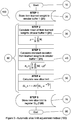
- Steps 2, 3 and 4 of the method for automatic slice limit adjustment (100) comprise a slice limit determination algorithm (60) for determination of adjustment required to slice limit for the relevant currency and denomination.
- the slice limit determination algorithm (60) comprises the steps of:
- the circular buffer 1 (21) possesses a capacity to store a pre-set number of records where all records contained in the circular buffer 1 (21) are included in the calculation (30) of the mean of learned weights in circular buffer 1 (21) and in the calculation (40) of standard deviation of learned weights in circular buffer 1 (21).
- the capacity of circular buffer 1 (21) to store records may be variable and automatically adjustable based on, for instance, the rate of change of learned weight values, such variability enabling the method for automatic slice limit adjustment (100) to respond more quickly to significant changes in the weight tolerance range within the total population of the type of items to be counted.
- the circular buffer 1 (21) may possess a capacity to store a pre-set number of records but the number of most recent records included in the calculation (30) of the mean of learned weights in circular buffer 1 (21) and in the calculation (40) of standard deviation of learned weights in circular buffer 1 (21) may be variable and automatically adjustable based on, for instance, the rate of change of learned weight values, such variability enabling the method for automatic slice limit adjustment (100) to respond more quickly to significant changes in the weight tolerance range within the total population of the type of items to be counted.
- one embodiment of a first aspect of the invention can provide a method to automatically and continuously adjust the slice limit utilising an automatic slice limit determination algorithm.
- the calculations involved in the slice limit adjustment method requires data from counting operations to be recorded and historical data to be analysed in order to determine the statistical profile of banknotes being weighed and how this profile is changing over time.
- This method is not expected to eliminate all possible errors that may occur with the introduction of a new series of banknotes: As this method will be based on a learning algorithm, time will be required for adjustments to take place over a number of counts before changes to the slice limit become effective - if a large number of new series notes are counted on a weighing device before any learning has taken place, an error will still be possible, but it is expected that situations where this method is used will demonstrate considerable improvement over situations where it is not used.
- this method is not expected to continuously achieve maximum slice limit and hence, maximum efficiency: As this method will be based on a learning algorithm, time will be required for adjustments to take place over a number of counts before changes to the slice limit become effective, but it is expected that changes will occur much more rapidly than is presently the situation as an improving denomination weight range and reducing frequency of count errors is currently unlikely to prompt a new manual determination of slice limit.
- This method also allows the system, rather than an individual, to determine the slice limit. This means that human error can be avoided, and appropriate calibration of the device can be undertaken efficiently by the system itself, rather than manually.
- Embodiments of the current invention propose an automatic slice limit adjustment method (100) wherein the method is an integral part of the counting by weight cash counting process (200) as employed in counting by weight cash counting device(s). This allows a device(s) to monitor counting operation results, apply the slice limit determination algorithm and automatically adjust the slice limit as required for optimum count accuracy and efficiency. It allows a device(s) to adjust the slice limit after each counting operation as compared to the intermittent, manual determination and application of slice limit adjustments that occur currently.
- Figure 1 shows one embodiment of a counting by weight cash counting process as currently used.
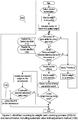
- Figure 2 shows one embodiment of a counting by weight cash counting process including an automatic slice adjustment method (100) according to the present invention.
- Figure 4 showing typical outputs from P(x) and x [data set, 1000points] formulae.
- Figure 5 shows Distribution of old and new series banknotes combined.
- Figure 6 shows Equivalent Gaussian distribution P'(x).
- Figure 7 shows calculated values of a and oW simulated with fixed slice limit.
- Figure 8 shows simulation results - automatic slice limit adjustment turned off.
- Figure 9 shows simulation results - automatic slice limit adjustment turned on.
- x 1 ⁇ 1 + ⁇ 2 ⁇ ln A ⁇ 2 ⁇ cos 2 ⁇ ⁇ ⁇ B ⁇ ⁇ 1
- x 2 ⁇ 2 + ⁇ 2 ⁇ ln A ⁇ 2 ⁇ cos 2 ⁇ ⁇ ⁇ B ⁇ ⁇ 2
- a complete data set of n points should consist of k 1 ⁇ n points calculated using x 1 and k 2 ⁇ n points calculated using x 2 .
- the standard deviation, ⁇ 1 , and the mean value, ⁇ 1 , of the old series of notes may be estimated from historical data if it has been recorded, but standard deviation, ⁇ 2 , and the mean value, ⁇ 2 , of the new series of notes may never be determined as they will be mixed with old series notes when they are first presented to the weighing device.
- Historical data is information that may be available if internal storage (non-volatile memory) is used to record any measurements that are made. For each measurement that is made, it will be possible to record the average weight of a note within the measured sample and the number of notes that were measured in that sample.
- the weight of each individual note ( x i ) is not known from the historical measurement data.
- the weights obtained from previous measurements ( W i ), that are used to calculate the average note weight are in fact themselves averages over the number of notes weighted for each measurement. This does not matter too much when calculating an overall average - the only effect this will have is measurements that were made with a smaller number of notes will contribute more to the calculation than measurements that were made with a larger number of notes. It would be possible to obtain an exact average by applying a weighting to each previous measurement according to the number of notes counted for that measurement, but this is an unnecessary complication and would make very little difference to the result.
- a simulation can be set up to compare this standard deviation with the actual standard deviation (a).
- a simulation is prepared with inputs for mean weight and standard deviation of two series of notes and a starting slice limit.
- a table is set up, providing space for 100 simulated measurements - this equivalent to measuring 100 slices of a denomination of notes. For each simulated measurement, a random number of notes (up to the slice limit) are used, and a probability (between 0 and 1) of each note within the measurement being an old series note is entered.
- a Monte Carlo data set is added to the table with provision for up to 50 notes per measurement (a slice limit of more than 50 would never be used)
- the error is calculated - the difference between the actual number of notes applied to the simulation and the calculated number of notes.
- the frequency of these errors will be affected by the mean and standard distribution of the two series of notes: if the mean values are close together and the standard deviation is very small, the simulation could be run thousands of times without seeing an error but if the mean values are very far apart or the standard deviations indicate a wide tolerance, errors will be inevitable on almost every run of the simulation. Properties of mean and standard deviation should be used in the simulation that are realistic, i.e. likely to resemble a real situation, and not so severe as to eliminate any chance of improving the measurement accuracy.
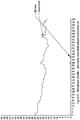
- ⁇ and ⁇ W can be plotted on a chart to see how they have responded to the random nature of the Mote Carlo analysis as shown on Figure 7 .
- ⁇ W The calculation of ⁇ W starts at 0 (this is unavoidable as there is no previous data to base the calculation upon). It can be seen that ⁇ W closely follows the shape of and ⁇ , albeit plotted on a vertical axis scaled down by a factor of 0.1. The calculation of oW can be seen to change more erratically than the calculation of ⁇ .
- the slice limit adjustment calculation should have the following properties:
- Results from the simulation can be observed by producing a chart showing the change in slice limit and the errors over the range of measurements. Initially, the simulation is run with the automatic slice limit adjustment turned off. This simulation was run 20 times and the total errors from each run summed to give a grand total of 56. A typical chart of the slice limit and errors from these simulations is shown in Figure 8 . This shows the slice limit remaining at the starting value of 25 throughout the simulation and 4 errors occurring.
- a sensitivity factor of k 50 was selected, based upon observations of the relation between ⁇ and oW.
- This method is a learning algorithm and as such will only perform when changes are made gradually. This is usually the case as new banknotes come into circulation; they generally appear with a gradually increasing frequency.
- An example of a condition where this method would fail to react would be: a current learned note weight is 1.00g; a new series of notes is released with a weight of 1.05g; a slice of 20 new notes is immediately applied to the counting by weight device. In this situation the applied weight is 21.00g and the counting by weight device will count this as 21 notes. The reason is the device has not had a chance to learn a new mean weight and standard deviation. This situation however is unrealistic and is only likely to occur if forced.
- Figure 3 showing one embodiment of an automatic slice limit adjustment method (100) according to the present invention
- Figure 2 showing one embodiment of a counting by weight cash counting process including an automatic slice adjustment method (100) according to the present invention.
- the start (10) of the automatic slice limit adjustment method (100) is triggered by the counting by weight cash counting process (200) if item weight learning and automatic slice limit adjustment are enabled and a counting by weight cash counting operation is being undertaken.
- step 1 (20) of the method is to store the learned weight of the items being counted to circular buffer 1 (21). If circular buffer 1 (21) is full the learned weight of the items being counted over-writes the oldest record in the circular buffer 1 (21). If the circular buffer 1 (21) is not full the learned weight of the item being counted is stored in the next empty storage position in circular buffer 1 (21).
- the automatic slice limit determination algorithm (60), comprising three calculation steps:
- step 5 the calculated new slice limit ( SL n ) is stored in register SL n (120) for use by the counting by weight process (200) when next initiated for the same currency and denomination.
- the automatic slice limit adjustment method (100) then exits (80) and returns control back to the counting by weight cash counting process (200).
- An automatic slice limit adjustment method (100) is disclosed.
- An automatic slice limit adjustment method (100) is an integral part of a counting by weight cash counting process (200).
- the automatic slice limit adjustment method (100) comprises five steps (20, 30, 40, 50 & 70):
Landscapes
- Physics & Mathematics (AREA)
- General Physics & Mathematics (AREA)
- Engineering & Computer Science (AREA)
- Mathematical Physics (AREA)
- Theoretical Computer Science (AREA)
- Complex Calculations (AREA)
Claims (15)
- Verfahren zum Einstellen der Scheibengrenze eines Zählen-nach-Gewicht-Zählsystems (100), wobei das Verfahren die folgenden Schritte umfasst:Versehen des Systems mit einer oder mehreren Eigenschaften eines zu zählenden Artikels;Hinzufügen eines oder mehrerer der Artikel zu dem Zählen-nach-Gewicht-Zählsystem;Messen des Gewichts der Gesamtzahl der Artikel, die zu dem Zählen-nach-Gewicht-Zählsystem hinzugefügt werden;Bestimmen der Gesamtzahl der Artikel, die zu dem Zählen-nach-Gewicht-Zählsystem hinzugefügt werden, wobei das Bestimmen auf mindestens einem vorbestimmten Gewicht eines der Artikel basiert;Bestimmen des Durchschnittsgewichts der Artikel, die zu dem Zählen-nach-Gewicht-Zählsystem hinzugefügt werden;Bestimmen des Mittelwerts des mindestens einen vorbestimmten Gewichts eines der Artikel und des Durchschnittsgewichts der Artikel, die zu dem Zählen-nach-Gewicht-Zählsystem (30) hinzugefügt werden;Bestimmen der Standardabweichung des mindestens einen vorbestimmten Gewichts eines der Artikel und des Durchschnittsgewichts der Artikel, die zu dem Zählen-nach-Gewicht-Zählsystem (40) hinzugefügt werden; undBestimmen einer neuen Scheibengrenze des Zählen-nach-Gewicht-Zählsystems (50), wobei das Bestimmen auf Folgendem basiert: dem Mittelwert des mindestens einen vorbestimmten Gewichts eines der Artikel und dem Durchschnittsgewicht der Artikel, die durch das Zählen-nach-Gewicht-Zählsystem hinzugefügt werden, der Standardabweichung des mindestens einen vorbestimmten Gewichts eines der Artikel und des Durchschnittsgewichts der Artikel, die zu dem Zählen-nach-Gewicht-Zählsystem hinzugefügt werden, und einem Empfindlichkeitsfaktor, wobei der Empfindlichkeitsfaktor auf Folgendem basiert: der Beziehung zwischen der bestimmten Standardabweichung von dem mindestens einen vorbestimmten Gewicht eines der Artikel und dem Durchschnittsgewicht der Artikel, die zu dem Zählen-nach-Gewicht-Zählsystem hinzugefügt werden, und simulierten Standardabweichungen von vorbestimmten Gewichten und Durchschnittsgewichten von Artikeln, die zu den simulierten Zählen-nach-Gewicht-Zählsystemen hinzugefügt werden.
- Verfahren nach Anspruch 1, wobei das Bestimmen der Gesamtzahl der Artikel, die zu dem Zählen-nach-Gewicht-Zählsystem hinzugefügt werden, auf einem durchschnittlichen vorbestimmten Gewicht eines der Artikel basiert.
- Verfahren nach Anspruch 1 oder Anspruch 2, wobei das Bestimmen der Gesamtzahl der Artikel, die zu dem Zählen-nach-Gewicht-Zählsystem hinzugefügt werden, auf einer Vielzahl von vorbestimmten Gewichten eines der Artikel basiert.
- Verfahren nach Anspruch 3, wobei die Vielzahl von vorbestimmten Gewichten eines der Artikel ein Durchschnitt einer Vielzahl von vorbestimmten Gewichten eines der Artikel ist.
- Verfahren nach Anspruch 3 oder Anspruch 4, wobei das Verfahren den zusätzlichen Schritt des Hinzufügens des bestimmten Durchschnittsgewichts der Artikel, die zu dem Zählen-nach-Gewicht-Zählsystem hinzugefügt werden, zu der Vielzahl von vorbestimmten Gewichten eines der Artikel umfasst.
- Verfahren nach einem der vorhergehenden Ansprüche, wobei der Schritt des Bestimmens des Mittelwerts des mindestens einen vorbestimmten Gewichts eines der Artikel und des Durchschnittsgewichts der Artikel, die zu dem Zählen-nach-Gewicht-Zählsystem (30) hinzugefügt werden, die folgende Formel verwendet:
 µ = das Durchschnittsgewicht der Artikel, die zu dem Zählen-nach-Gewicht-Zählsystem hinzugefügt werden;Wi = das mindestens eine vorbestimmte Gewicht eines der Artikel;N = die Anzahl von vorbestimmten Gewichten eines der Artikel; undi = der Index der vorherigen Messungen.
 - Verfahren nach einem der vorhergehenden Ansprüche, wobei der Schritt des Bestimmens der Standardabweichung des mindestens einen vorbestimmten Gewichts eines der Artikel und des Durchschnittsgewichts der Artikel, die zu dem Zählen-nach-Gewicht-Zählsystem (40) hinzugefügt werden, die folgende Formel verwendet:
 σw = die Standardabweichung des mindestens einen vorbestimmten Gewichts eines der Artikel und des Durchschnittsgewichts der Artikel, die zu dem Zählen-nach-Gewicht-Zählsystem hinzugefügt werden;Wi = das mindestens eine vorbestimmte Gewicht eines der Artikel;N = die Anzahl von vorbestimmten Gewichten eines der Artikel;i = der Index der vorherigen Messungen; undµ = das Durchschnittsgewicht der Artikel, die zu dem Zählen-nach-Gewicht-Zählsystem hinzugefügt werden.
 - Verfahren nach einem der vorhergehenden Ansprüche, wobei der Schritt des Bestimmens der neuen Scheibengrenze des Zählen-nach-Gewicht-Zählsystems (50) die folgende Formel verwendet:
 SLn = die bestimmte neue Scheibengrenze;SLo = die aktuelle Scheibengrenze;σw = die Standardabweichung des mindestens einen vorbestimmten Gewichts eines der Artikel und des Durchschnittsgewichts der Artikel, die zu dem Zählen-nach-Gewicht-Zählsystem hinzugefügt werden (die aktuelle Standardabweichung);µ = das Durchschnittsgewicht der Artikel, die durch das Zählen-nach-Gewicht-Zählsystem hinzugefügt werden; undk = der Empfindlichkeitsfaktor.
 - Verfahren nach einem der vorhergehenden Ansprüche, wobei das Zählen-nach-Gewicht-Zählsystem so konfiguriert ist, dass es mit einer Vielzahl von verschiedenen Artikeln funktioniert.
- Verfahren nach einem der vorhergehenden Ansprüche, wobei die bestimmten Gewichte, die mittleren Gewichte, die Standardabweichungen der mittleren Gewichte und die Scheibengrenzen für jede Art von Artikel, der durch das Zählen-nach-Gewicht-Zählsystem gezählt wird, gespeichert werden.
- Verfahren nach einem der vorangehenden Ansprüche, wobei das Zählen-nach-Gewicht-Zählsystem ein Bargeldzählsystem ist und die Vielzahl von unterschiedlichen Artikeln unterschiedliche Nennwerte von Banknoten und/oder Bankmünzen sind.
- Verfahren nach einem der vorhergehenden Ansprüche, wobei das Verfahren den zusätzlichen Schritt des Entfernens von einem oder mehreren Artikeln aus dem Zählen-nach-Gewicht-Zählsystem umfasst, bevor die Gesamtzahl der Artikel bestimmt wird, wenn das gesamte gemessene Gewicht der Artikel die aktuelle Scheibengrenze übersteigt.
- Verfahren nach einem der vorhergehenden Ansprüche, wobei das Verfahren den zusätzlichen Schritt des Entfernens eines oder mehrerer Artikel aus dem Zählen-nach-Gewicht-Zählsystem umfasst, bevor die Gesamtzahl der Artikel bestimmt wird, wenn das gesamte gemessene Gewicht außerhalb eines vorbestimmten Toleranzbands für die bestimmte Gesamtzahl der Artikel fällt.
- Zählen-nach-Gewicht-Zählvorrichtung, die Folgendes umfasst:ein Eigenschaftseingabemodul, das die Vorrichtung mit einer oder mehreren Eigenschaften eines zu zählenden Artikels versehen kann;ein Gewichtsmessmodul, das das Gewicht einer Gesamtzahl der Artikel, die zu der Zählen-nach-Gewicht-Zählvorrichtung hinzugefügt werden, messen kann;ein Gesamtartikelnummer-Bestimmungsmodul, das die Gesamtzahl der Artikel, die zu der Zählen-nach-Gewicht-Zählvorrichtung hinzugefügt werden, bestimmen kann, wobei das Bestimmen auf mindestens einem vorbestimmten Gewicht eines der Artikel basiert;ein Durchschnittsgewicht-Bestimmungsmodul, das das Durchschnittsgewicht der Artikel, die zu der Zählen-nach-Gewicht-Zählvorrichtung hinzugefügt werden, bestimmen kann;ein Mittelwert-Bestimmungsmodul, das den Mittelwert des mindestens einen vorbestimmten Gewichts eines der Artikel und das Durchschnittsgewicht der Artikel, die zu der Zählen-nach-Gewicht-Zählvorrichtung hinzugefügt werden, bestimmen kann;ein Standardabweichungsmodul, das die Standardabweichung des mindestens einen vorbestimmten Gewichts eines der Artikel und das Durchschnittsgewicht der Artikel, die zu der Zählen-nach-Gewicht-Zählvorrichtung hinzugefügt werden, bestimmen kann; undein Scheibenbegrenzungs-Bestimmungsmodul, das eine neue Scheibengrenze der Zählen-nach-Gewicht-Zählvorrichtung bestimmen kann, wobei das Bestimmen auf Folgendem basiert: dem Mittelwert des mindestens einen vorbestimmten Gewichts eines der Artikel und dem Durchschnittsgewichts der Artikel, die zu der Zählen-nach-Gewicht-Zählvorrichtung hinzugefügt werden, der Standardabweichung des mindestens einen vorbestimmten Gewichts eines der Artikel und dem Durchschnittsgewicht der Artikel, die zu der Zählen-nach-Gewicht-Zählvorrichtung hinzugefügt werden, und einem Empfindlichkeitsfaktor, wobei der Empfindlichkeitsfaktor auf Folgendem basiert: der Beziehung zwischen der bestimmten Standardabweichung des mindestens einen vorbestimmten Gewichts eines der Artikel und dem Durchschnittsgewicht der Artikel, die dem Zählen-nach-Gewicht-Zählsystem hinzugefügt werden, und simulierten Standardabweichungen von vorbestimmten Gewichten und Durchschnittsgewichten von Artikeln, die zu simulierten Zählen-nach-Gewicht-Zählsystemen hinzugefügt werden.
- Computerprogrammprodukt, das mit Befehlen codiert ist, die, wenn sie auf einem Computer einer Zählen-nach-Gewicht-Zählvorrichtung ausgeführt werden, die Zählen-nach-Gewicht-Zählvorrichtung dazu veranlassen, Eingangsdaten und Informationen zu empfangen und ein Verfahren zum Einstellen ihrer Scheibengrenze durchzuführen, wobei das Verfahren die folgenden Schritte umfasst:Versehen der Vorrichtung mit einer oder mehreren Eigenschaften eines zu zählenden Artikels;Messen des Gewichts der Gesamtzahl der Artikel, die zu dem Zählen-nach-Gewicht-Zählsystem hinzugefügt werden;Bestimmen der Gesamtzahl der Artikel, die zu dem Zählen-nach-Gewicht-Zählsystem hinzugefügt werden, wobei das Bestimmen auf mindestens einem vorbestimmten Gewicht eines der Artikel basiert;Bestimmen des Durchschnittsgewichts der Artikel, die zu dem Zählen-nach-Gewicht-Zählsystem hinzugefügt werden;Bestimmen des Mittelwerts des mindestens einen vorbestimmten Gewichts eines der Artikel und des Durchschnittsgewichts der Artikel, die zu dem Zählen-nach-Gewicht-Zählsystem hinzugefügt werden;Bestimmen der Standardabweichung des mindestens einen vorbestimmten Gewichts eines der Artikel und des Durchschnittsgewichts der Artikel, die dem Zählen-nach-Gewicht-Zählsystem hinzugefügt werden; undBestimmen einer neuen Scheibengrenze des Zählen-nach-Gewicht-Zählsystems, wobei das Bestimmen auf Folgendem basiert: dem Mittelwert des mindestens einen vorbestimmten Gewichts eines der Artikel und des Durchschnittsgewichts der Artikel, die zu dem Zählen-nach-Gewicht-Zählsystem hinzugefügt werden, der Standardabweichung des mindestens einen vorbestimmten Gewichts eines der Artikel und des Durchschnittsgewichts der Artikel, die dem Zählen-nach-Gewicht-Zählsystem hinzugefügt werden, und einem Empfindlichkeitsfaktor, wobei der Empfindlichkeitsfaktor auf Folgendem basiert: der Beziehung zwischen der bestimmten Standardabweichung des mindestens ein vorbestimmtes Gewicht eines der Artikel und des Durchschnittsgewichts der Artikel, die dem Zählen-nach-Gewicht-Zählsystem hinzugefügt werden, und simulierten Standardabweichungen von vorbestimmten Gewichten und Durchschnittsgewichten von Artikeln, die dem simulierten Zählen-nach-Gewicht-Zählsystem hinzugefügt werden.
Applications Claiming Priority (2)
| Application Number | Priority Date | Filing Date | Title |
|---|---|---|---|
| GB1318219.1A GB2519295A (en) | 2013-10-15 | 2013-10-15 | Improvements in or relating to counting by weight counting systems |
| PCT/GB2014/053069 WO2015055989A1 (en) | 2013-10-15 | 2014-10-13 | Improvements in or relating to counting by weight counting systems |
Publications (2)
| Publication Number | Publication Date |
|---|---|
| EP3058322A1 EP3058322A1 (de) | 2016-08-24 |
| EP3058322B1 true EP3058322B1 (de) | 2018-05-09 |
Family
ID=49680061
Family Applications (1)
| Application Number | Title | Priority Date | Filing Date |
|---|---|---|---|
| EP14796841.6A Active EP3058322B1 (de) | 2013-10-15 | 2014-10-13 | Verbesserungen an oder im zusammenhang mit zählen durch gewichtzählsysteme |
Country Status (4)
| Country | Link |
|---|---|
| US (1) | US20160238435A1 (de) |
| EP (1) | EP3058322B1 (de) |
| GB (1) | GB2519295A (de) |
| WO (1) | WO2015055989A1 (de) |
Families Citing this family (7)
| Publication number | Priority date | Publication date | Assignee | Title |
|---|---|---|---|---|
| US20180045557A1 (en) * | 2015-05-03 | 2018-02-15 | Supersmart Ltd. | Retail store checkout system and method |
| CN106498489B (zh) * | 2016-12-16 | 2019-06-25 | 南京晶升能源设备有限公司 | 蓝宝石单晶炉称重检测系统、传感器滤波方法及切换方法 |
| CN109145398B (zh) * | 2018-07-30 | 2024-01-05 | 白杨 | 一种基于称重的货品数量计算方法 |
| US10943424B1 (en) * | 2019-12-11 | 2021-03-09 | Capital One Services, Llc | System and method for detecting ATM fraud via weighing notes |
| FR3122544A1 (fr) * | 2021-05-03 | 2022-11-04 | Orange | Procédé et dispositif de paramétrage d’un dispositif terminal |
| CN114910150B (zh) * | 2022-04-20 | 2023-08-01 | 慕思健康睡眠股份有限公司 | 电容式重量传感器的标定方法、装置、智能垫、存储介质 |
| CN117446439A (zh) * | 2023-10-10 | 2024-01-26 | 中国烟草总公司郑州烟草研究院 | 一种定量自动投料装置及定量自动投料方法 |
Family Cites Families (8)
| Publication number | Priority date | Publication date | Assignee | Title |
|---|---|---|---|---|
| JPS53141072A (en) * | 1977-05-15 | 1978-12-08 | Shinkou Denshi Kk | Method for counting number of parts by way of scale |
| US4493384A (en) * | 1982-03-31 | 1985-01-15 | Shimadzu Corporation | Electronic counting scale |
| GB2155190B (en) * | 1984-03-01 | 1988-05-11 | Cherlyn Electronics | Counting by weighing |
| DE3415962A1 (de) * | 1984-04-28 | 1985-10-31 | Sartorius GmbH, 3400 Göttingen | Verfahren zur initialisierung einer zaehlwaage und zaehlwaage zur durchfuehrung des verfahrens |
| CN1019998C (zh) * | 1988-01-18 | 1993-03-03 | 株式会社岛津制作所 | 电子计数秤 |
| GB8813399D0 (en) * | 1988-06-07 | 1988-07-13 | Percell Group Ltd | Method & apparatus for determining number/value of weighed items |
| GB8818511D0 (en) * | 1988-08-04 | 1988-09-07 | Kirby J | Counting articles |
| GB2407172A (en) * | 2003-10-15 | 2005-04-20 | Tellermate Plc | Counting cash by weighing |
-
2013
- 2013-10-15 GB GB1318219.1A patent/GB2519295A/en not_active Withdrawn
-
2014
- 2014-10-13 EP EP14796841.6A patent/EP3058322B1/de active Active
- 2014-10-13 WO PCT/GB2014/053069 patent/WO2015055989A1/en not_active Ceased
- 2014-10-13 US US15/028,165 patent/US20160238435A1/en not_active Abandoned
Non-Patent Citations (1)
| Title |
|---|
| None * |
Also Published As
| Publication number | Publication date |
|---|---|
| US20160238435A1 (en) | 2016-08-18 |
| GB2519295A (en) | 2015-04-22 |
| WO2015055989A1 (en) | 2015-04-23 |
| EP3058322A1 (de) | 2016-08-24 |
| GB201318219D0 (en) | 2013-11-27 |
Similar Documents
| Publication | Publication Date | Title |
|---|---|---|
| US20160238435A1 (en) | Improvements in or relating to counting by weight counting systems | |
| Mindrila | Maximum likelihood (ML) and diagonally weighted least squares (DWLS) estimation procedures: A comparison of estimation bias with ordinal and multivariate non-normal data | |
| US8301486B1 (en) | Demand modeling and forecasting for configurable products or services | |
| EP3678072A1 (de) | Modellintegrationsverfahren und -vorrichtung | |
| CN110276552A (zh) | 贷前风险分析方法、装置、设备及可读存储介质 | |
| US7992768B2 (en) | Cash register tray | |
| Bidah et al. | Stability and Global Sensitivity Analysis for an Agree‐Disagree Model: Partial Rank Correlation Coefficient and Latin Hypercube Sampling Methods | |
| CN109615760B (zh) | 基于机器学习对银行atm机智能加清钞的方法及系统 | |
| CN109389494A (zh) | 借贷欺诈检测模型训练方法、借贷欺诈检测方法及装置 | |
| Delatte et al. | What drove the massive hoarding of international reserves in emerging economies? A time‐varying approach | |
| US10937054B2 (en) | Methods, systems, apparatus and articles of manufacture to determine causal effects | |
| CN110543947A (zh) | 一种基于强化学习模型的奖励资源发放方法和装置 | |
| Vandewalle et al. | Detrended fluctuation analysis of the foreign exchange market | |
| US20170286883A1 (en) | Systems and methods of controlling quantities of denominations of currency at a retail shopping facility | |
| CN115034685A (zh) | 客户价值评估方法、装置和计算机可读存储介质 | |
| Cintra et al. | Detecting depegs: Towards safer passive liquidity provision on curve finance | |
| Kruger | Validation and monitoring of PD models for low default portfolios using PROC MCMC | |
| CN114418018A (zh) | 模型性能评估方法、装置、设备与存储介质 | |
| Tsay | Autoregressive conditional duration models | |
| Philander et al. | US casino revenue taxes and short-run labor outcomes | |
| Fiebig et al. | Testing for detailed balance in a financial market | |
| CN110827144B (zh) | 用户的申请风险评估方法、申请风险评估装置及电子设备 | |
| US20210319515A1 (en) | System and Process For Displaying Calculated Long Term Growth Of A Financial Account | |
| Race et al. | Rule induction in investment appraisal | |
| Los | Nonparametric testing of the high-frequency efficiency of the 1997 Asian foreign exchange markets |
Legal Events
| Date | Code | Title | Description |
|---|---|---|---|
| PUAI | Public reference made under article 153(3) epc to a published international application that has entered the european phase |
Free format text: ORIGINAL CODE: 0009012 |
|
| 17P | Request for examination filed |
Effective date: 20160415 |
|
| AK | Designated contracting states |
Kind code of ref document: A1 Designated state(s): AL AT BE BG CH CY CZ DE DK EE ES FI FR GB GR HR HU IE IS IT LI LT LU LV MC MK MT NL NO PL PT RO RS SE SI SK SM TR |
|
| AX | Request for extension of the european patent |
Extension state: BA ME |
|
| DAX | Request for extension of the european patent (deleted) | ||
| GRAP | Despatch of communication of intention to grant a patent |
Free format text: ORIGINAL CODE: EPIDOSNIGR1 |
|
| RIC1 | Information provided on ipc code assigned before grant |
Ipc: G07D 7/182 20160101ALI20170831BHEP Ipc: G01G 19/42 20060101AFI20170831BHEP Ipc: G07D 7/181 20160101ALI20170831BHEP Ipc: G01G 23/01 20060101ALI20170831BHEP |
|
| INTG | Intention to grant announced |
Effective date: 20170921 |
|
| GRAS | Grant fee paid |
Free format text: ORIGINAL CODE: EPIDOSNIGR3 |
|
| GRAJ | Information related to disapproval of communication of intention to grant by the applicant or resumption of examination proceedings by the epo deleted |
Free format text: ORIGINAL CODE: EPIDOSDIGR1 |
|
| GRAL | Information related to payment of fee for publishing/printing deleted |
Free format text: ORIGINAL CODE: EPIDOSDIGR3 |
|
| INTC | Intention to grant announced (deleted) | ||
| GRAR | Information related to intention to grant a patent recorded |
Free format text: ORIGINAL CODE: EPIDOSNIGR71 |
|
| GRAJ | Information related to disapproval of communication of intention to grant by the applicant or resumption of examination proceedings by the epo deleted |
Free format text: ORIGINAL CODE: EPIDOSDIGR1 |
|
| GRAR | Information related to intention to grant a patent recorded |
Free format text: ORIGINAL CODE: EPIDOSNIGR71 |
|
| GRAA | (expected) grant |
Free format text: ORIGINAL CODE: 0009210 |
|
| INTG | Intention to grant announced |
Effective date: 20180328 |
|
| AK | Designated contracting states |
Kind code of ref document: B1 Designated state(s): AL AT BE BG CH CY CZ DE DK EE ES FI FR GB GR HR HU IE IS IT LI LT LU LV MC MK MT NL NO PL PT RO RS SE SI SK SM TR |
|
| REG | Reference to a national code |
Ref country code: GB Ref legal event code: FG4D |
|
| REG | Reference to a national code |
Ref country code: CH Ref legal event code: EP Ref country code: AT Ref legal event code: REF Ref document number: 998004 Country of ref document: AT Kind code of ref document: T Effective date: 20180515 |
|
| REG | Reference to a national code |
Ref country code: IE Ref legal event code: FG4D |
|
| REG | Reference to a national code |
Ref country code: DE Ref legal event code: R096 Ref document number: 602014025339 Country of ref document: DE |
|
| REG | Reference to a national code |
Ref country code: NL Ref legal event code: MP Effective date: 20180509 |
|
| REG | Reference to a national code |
Ref country code: LT Ref legal event code: MG4D |
|
| PG25 | Lapsed in a contracting state [announced via postgrant information from national office to epo] |
Ref country code: FI Free format text: LAPSE BECAUSE OF FAILURE TO SUBMIT A TRANSLATION OF THE DESCRIPTION OR TO PAY THE FEE WITHIN THE PRESCRIBED TIME-LIMIT Effective date: 20180509 Ref country code: BG Free format text: LAPSE BECAUSE OF FAILURE TO SUBMIT A TRANSLATION OF THE DESCRIPTION OR TO PAY THE FEE WITHIN THE PRESCRIBED TIME-LIMIT Effective date: 20180809 Ref country code: LT Free format text: LAPSE BECAUSE OF FAILURE TO SUBMIT A TRANSLATION OF THE DESCRIPTION OR TO PAY THE FEE WITHIN THE PRESCRIBED TIME-LIMIT Effective date: 20180509 Ref country code: SE Free format text: LAPSE BECAUSE OF FAILURE TO SUBMIT A TRANSLATION OF THE DESCRIPTION OR TO PAY THE FEE WITHIN THE PRESCRIBED TIME-LIMIT Effective date: 20180509 Ref country code: NO Free format text: LAPSE BECAUSE OF FAILURE TO SUBMIT A TRANSLATION OF THE DESCRIPTION OR TO PAY THE FEE WITHIN THE PRESCRIBED TIME-LIMIT Effective date: 20180809 Ref country code: ES Free format text: LAPSE BECAUSE OF FAILURE TO SUBMIT A TRANSLATION OF THE DESCRIPTION OR TO PAY THE FEE WITHIN THE PRESCRIBED TIME-LIMIT Effective date: 20180509 |
|
| PG25 | Lapsed in a contracting state [announced via postgrant information from national office to epo] |
Ref country code: GR Free format text: LAPSE BECAUSE OF FAILURE TO SUBMIT A TRANSLATION OF THE DESCRIPTION OR TO PAY THE FEE WITHIN THE PRESCRIBED TIME-LIMIT Effective date: 20180810 Ref country code: NL Free format text: LAPSE BECAUSE OF FAILURE TO SUBMIT A TRANSLATION OF THE DESCRIPTION OR TO PAY THE FEE WITHIN THE PRESCRIBED TIME-LIMIT Effective date: 20180509 Ref country code: RS Free format text: LAPSE BECAUSE OF FAILURE TO SUBMIT A TRANSLATION OF THE DESCRIPTION OR TO PAY THE FEE WITHIN THE PRESCRIBED TIME-LIMIT Effective date: 20180509 Ref country code: HR Free format text: LAPSE BECAUSE OF FAILURE TO SUBMIT A TRANSLATION OF THE DESCRIPTION OR TO PAY THE FEE WITHIN THE PRESCRIBED TIME-LIMIT Effective date: 20180509 Ref country code: LV Free format text: LAPSE BECAUSE OF FAILURE TO SUBMIT A TRANSLATION OF THE DESCRIPTION OR TO PAY THE FEE WITHIN THE PRESCRIBED TIME-LIMIT Effective date: 20180509 |
|
| REG | Reference to a national code |
Ref country code: AT Ref legal event code: MK05 Ref document number: 998004 Country of ref document: AT Kind code of ref document: T Effective date: 20180509 |
|
| PG25 | Lapsed in a contracting state [announced via postgrant information from national office to epo] |
Ref country code: AT Free format text: LAPSE BECAUSE OF FAILURE TO SUBMIT A TRANSLATION OF THE DESCRIPTION OR TO PAY THE FEE WITHIN THE PRESCRIBED TIME-LIMIT Effective date: 20180509 Ref country code: EE Free format text: LAPSE BECAUSE OF FAILURE TO SUBMIT A TRANSLATION OF THE DESCRIPTION OR TO PAY THE FEE WITHIN THE PRESCRIBED TIME-LIMIT Effective date: 20180509 Ref country code: DK Free format text: LAPSE BECAUSE OF FAILURE TO SUBMIT A TRANSLATION OF THE DESCRIPTION OR TO PAY THE FEE WITHIN THE PRESCRIBED TIME-LIMIT Effective date: 20180509 Ref country code: CZ Free format text: LAPSE BECAUSE OF FAILURE TO SUBMIT A TRANSLATION OF THE DESCRIPTION OR TO PAY THE FEE WITHIN THE PRESCRIBED TIME-LIMIT Effective date: 20180509 Ref country code: RO Free format text: LAPSE BECAUSE OF FAILURE TO SUBMIT A TRANSLATION OF THE DESCRIPTION OR TO PAY THE FEE WITHIN THE PRESCRIBED TIME-LIMIT Effective date: 20180509 Ref country code: SK Free format text: LAPSE BECAUSE OF FAILURE TO SUBMIT A TRANSLATION OF THE DESCRIPTION OR TO PAY THE FEE WITHIN THE PRESCRIBED TIME-LIMIT Effective date: 20180509 Ref country code: PL Free format text: LAPSE BECAUSE OF FAILURE TO SUBMIT A TRANSLATION OF THE DESCRIPTION OR TO PAY THE FEE WITHIN THE PRESCRIBED TIME-LIMIT Effective date: 20180509 |
|
| REG | Reference to a national code |
Ref country code: DE Ref legal event code: R097 Ref document number: 602014025339 Country of ref document: DE |
|
| PG25 | Lapsed in a contracting state [announced via postgrant information from national office to epo] |
Ref country code: SM Free format text: LAPSE BECAUSE OF FAILURE TO SUBMIT A TRANSLATION OF THE DESCRIPTION OR TO PAY THE FEE WITHIN THE PRESCRIBED TIME-LIMIT Effective date: 20180509 Ref country code: IT Free format text: LAPSE BECAUSE OF FAILURE TO SUBMIT A TRANSLATION OF THE DESCRIPTION OR TO PAY THE FEE WITHIN THE PRESCRIBED TIME-LIMIT Effective date: 20180509 |
|
| PLBE | No opposition filed within time limit |
Free format text: ORIGINAL CODE: 0009261 |
|
| STAA | Information on the status of an ep patent application or granted ep patent |
Free format text: STATUS: NO OPPOSITION FILED WITHIN TIME LIMIT |
|
| 26N | No opposition filed |
Effective date: 20190212 |
|
| REG | Reference to a national code |
Ref country code: DE Ref legal event code: R119 Ref document number: 602014025339 Country of ref document: DE |
|
| PG25 | Lapsed in a contracting state [announced via postgrant information from national office to epo] |
Ref country code: SI Free format text: LAPSE BECAUSE OF FAILURE TO SUBMIT A TRANSLATION OF THE DESCRIPTION OR TO PAY THE FEE WITHIN THE PRESCRIBED TIME-LIMIT Effective date: 20180509 |
|
| REG | Reference to a national code |
Ref country code: CH Ref legal event code: PL |
|
| REG | Reference to a national code |
Ref country code: BE Ref legal event code: MM Effective date: 20181031 |
|
| PG25 | Lapsed in a contracting state [announced via postgrant information from national office to epo] |
Ref country code: MC Free format text: LAPSE BECAUSE OF FAILURE TO SUBMIT A TRANSLATION OF THE DESCRIPTION OR TO PAY THE FEE WITHIN THE PRESCRIBED TIME-LIMIT Effective date: 20180509 Ref country code: LU Free format text: LAPSE BECAUSE OF NON-PAYMENT OF DUE FEES Effective date: 20181013 |
|
| REG | Reference to a national code |
Ref country code: IE Ref legal event code: MM4A |
|
| PG25 | Lapsed in a contracting state [announced via postgrant information from national office to epo] |
Ref country code: DE Free format text: LAPSE BECAUSE OF NON-PAYMENT OF DUE FEES Effective date: 20190501 |
|
| PG25 | Lapsed in a contracting state [announced via postgrant information from national office to epo] |
Ref country code: CH Free format text: LAPSE BECAUSE OF NON-PAYMENT OF DUE FEES Effective date: 20181031 Ref country code: LI Free format text: LAPSE BECAUSE OF NON-PAYMENT OF DUE FEES Effective date: 20181031 Ref country code: FR Free format text: LAPSE BECAUSE OF NON-PAYMENT OF DUE FEES Effective date: 20181031 Ref country code: BE Free format text: LAPSE BECAUSE OF NON-PAYMENT OF DUE FEES Effective date: 20181031 |
|
| PG25 | Lapsed in a contracting state [announced via postgrant information from national office to epo] |
Ref country code: IE Free format text: LAPSE BECAUSE OF NON-PAYMENT OF DUE FEES Effective date: 20181013 |
|
| PG25 | Lapsed in a contracting state [announced via postgrant information from national office to epo] |
Ref country code: AL Free format text: LAPSE BECAUSE OF FAILURE TO SUBMIT A TRANSLATION OF THE DESCRIPTION OR TO PAY THE FEE WITHIN THE PRESCRIBED TIME-LIMIT Effective date: 20180509 |
|
| PG25 | Lapsed in a contracting state [announced via postgrant information from national office to epo] |
Ref country code: MT Free format text: LAPSE BECAUSE OF NON-PAYMENT OF DUE FEES Effective date: 20181013 |
|
| PG25 | Lapsed in a contracting state [announced via postgrant information from national office to epo] |
Ref country code: TR Free format text: LAPSE BECAUSE OF FAILURE TO SUBMIT A TRANSLATION OF THE DESCRIPTION OR TO PAY THE FEE WITHIN THE PRESCRIBED TIME-LIMIT Effective date: 20180509 |
|
| PG25 | Lapsed in a contracting state [announced via postgrant information from national office to epo] |
Ref country code: PT Free format text: LAPSE BECAUSE OF FAILURE TO SUBMIT A TRANSLATION OF THE DESCRIPTION OR TO PAY THE FEE WITHIN THE PRESCRIBED TIME-LIMIT Effective date: 20180509 |
|
| PG25 | Lapsed in a contracting state [announced via postgrant information from national office to epo] |
Ref country code: CY Free format text: LAPSE BECAUSE OF FAILURE TO SUBMIT A TRANSLATION OF THE DESCRIPTION OR TO PAY THE FEE WITHIN THE PRESCRIBED TIME-LIMIT Effective date: 20180509 Ref country code: MK Free format text: LAPSE BECAUSE OF NON-PAYMENT OF DUE FEES Effective date: 20180509 Ref country code: HU Free format text: LAPSE BECAUSE OF FAILURE TO SUBMIT A TRANSLATION OF THE DESCRIPTION OR TO PAY THE FEE WITHIN THE PRESCRIBED TIME-LIMIT; INVALID AB INITIO Effective date: 20141013 |
|
| PG25 | Lapsed in a contracting state [announced via postgrant information from national office to epo] |
Ref country code: IS Free format text: LAPSE BECAUSE OF FAILURE TO SUBMIT A TRANSLATION OF THE DESCRIPTION OR TO PAY THE FEE WITHIN THE PRESCRIBED TIME-LIMIT Effective date: 20180909 |
|
| PGFP | Annual fee paid to national office [announced via postgrant information from national office to epo] |
Ref country code: GB Payment date: 20250815 Year of fee payment: 12 |