EP3053047B1 - A method and device for database & storage aware routers - Google Patents
A method and device for database & storage aware routers Download PDFInfo
- Publication number
- EP3053047B1 EP3053047B1 EP14860071.1A EP14860071A EP3053047B1 EP 3053047 B1 EP3053047 B1 EP 3053047B1 EP 14860071 A EP14860071 A EP 14860071A EP 3053047 B1 EP3053047 B1 EP 3053047B1
- Authority
- EP
- European Patent Office
- Prior art keywords
- router
- data
- database
- packet
- mder
- Prior art date
- Legal status (The legal status is an assumption and is not a legal conclusion. Google has not performed a legal analysis and makes no representation as to the accuracy of the status listed.)
- Active
Links
Images


Classifications
-
- G—PHYSICS
- G06—COMPUTING OR CALCULATING; COUNTING
- G06F—ELECTRIC DIGITAL DATA PROCESSING
- G06F16/00—Information retrieval; Database structures therefor; File system structures therefor
- G06F16/20—Information retrieval; Database structures therefor; File system structures therefor of structured data, e.g. relational data
- G06F16/27—Replication, distribution or synchronisation of data between databases or within a distributed database system; Distributed database system architectures therefor
- G06F16/275—Synchronous replication
-
- G—PHYSICS
- G06—COMPUTING OR CALCULATING; COUNTING
- G06F—ELECTRIC DIGITAL DATA PROCESSING
- G06F11/00—Error detection; Error correction; Monitoring
- G06F11/07—Responding to the occurrence of a fault, e.g. fault tolerance
- G06F11/14—Error detection or correction of the data by redundancy in operations
- G06F11/1471—Error detection or correction of the data by redundancy in operations involving logging of persistent data for recovery
-
- H—ELECTRICITY
- H04—ELECTRIC COMMUNICATION TECHNIQUE
- H04L—TRANSMISSION OF DIGITAL INFORMATION, e.g. TELEGRAPHIC COMMUNICATION
- H04L45/00—Routing or path finding of packets in data switching networks
- H04L45/02—Topology update or discovery
-
- H—ELECTRICITY
- H04—ELECTRIC COMMUNICATION TECHNIQUE
- H04L—TRANSMISSION OF DIGITAL INFORMATION, e.g. TELEGRAPHIC COMMUNICATION
- H04L45/00—Routing or path finding of packets in data switching networks
- H04L45/74—Address processing for routing
- H04L45/745—Address table lookup; Address filtering
-
- H—ELECTRICITY
- H04—ELECTRIC COMMUNICATION TECHNIQUE
- H04L—TRANSMISSION OF DIGITAL INFORMATION, e.g. TELEGRAPHIC COMMUNICATION
- H04L67/00—Network arrangements or protocols for supporting network services or applications
- H04L67/01—Protocols
- H04L67/10—Protocols in which an application is distributed across nodes in the network
- H04L67/1095—Replication or mirroring of data, e.g. scheduling or transport for data synchronisation between network nodes
-
- H—ELECTRICITY
- H04—ELECTRIC COMMUNICATION TECHNIQUE
- H04L—TRANSMISSION OF DIGITAL INFORMATION, e.g. TELEGRAPHIC COMMUNICATION
- H04L67/00—Network arrangements or protocols for supporting network services or applications
- H04L67/50—Network services
- H04L67/56—Provisioning of proxy services
- H04L67/568—Storing data temporarily at an intermediate stage, e.g. caching
-
- G—PHYSICS
- G06—COMPUTING OR CALCULATING; COUNTING
- G06F—ELECTRIC DIGITAL DATA PROCESSING
- G06F11/00—Error detection; Error correction; Monitoring
- G06F11/07—Responding to the occurrence of a fault, e.g. fault tolerance
- G06F11/16—Error detection or correction of the data by redundancy in hardware
- G06F11/20—Error detection or correction of the data by redundancy in hardware using active fault-masking, e.g. by switching out faulty elements or by switching in spare elements
- G06F11/2053—Error detection or correction of the data by redundancy in hardware using active fault-masking, e.g. by switching out faulty elements or by switching in spare elements where persistent mass storage functionality or persistent mass storage control functionality is redundant
- G06F11/2094—Redundant storage or storage space
-
- G—PHYSICS
- G06—COMPUTING OR CALCULATING; COUNTING
- G06F—ELECTRIC DIGITAL DATA PROCESSING
- G06F2201/00—Indexing scheme relating to error detection, to error correction, and to monitoring
- G06F2201/80—Database-specific techniques
-
- H—ELECTRICITY
- H04—ELECTRIC COMMUNICATION TECHNIQUE
- H04L—TRANSMISSION OF DIGITAL INFORMATION, e.g. TELEGRAPHIC COMMUNICATION
- H04L12/00—Data switching networks
- H04L12/02—Details
- H04L12/16—Arrangements for providing special services to substations
- H04L12/18—Arrangements for providing special services to substations for broadcast or conference, e.g. multicast
Definitions
- the present disclosure relate to devices and associated methods for maintaining distributed storage in a network environment, and more specifically, but not limited to, a system and method for optimizing the distributed storage network environment.
- System administrators can distribute collections of data (e.g. in a database) across multiple physical locations.
- a distributed database can reside on network servers on the Internet, on corporate intranets, or on other company networks. As distributed databases store data across multiple computers, they improve performance at end-user by allowing transactions to be processed on many machines, instead of being limited to one.
- a distributed storage within the purview of the current invention may refer to a computer network where information is stored on more than one network node, e.g. in a replicated fashion. Thus, it may also refer to either a distributed database where users store information on a number of network nodes, or a computer network in which users store information on a number of peer network nodes.
- a person ordinary skilled in the art may very well know that in communication networks, a node may refer to a connection point, either a redistribution point or a communication endpoint (e.g. some terminal equipment).
- a physical network node is an active electronic device that is attached to a network, and is capable of sending, receiving, or forwarding information (e.g. data packets) over a communications channel.
- replication involves utilizing specialized software modules that look for changes in the distributive database. Once the changes have been identified, the replication process makes all the databases look the same i.e. contain similar data. The replication process can be tediously complex and time-consuming depending on the size and number of the distributed databases. This process also requires a lot of computer resources.
- EP 1 538 804 A1 describes methods and devices for reducing the volume of data to be transmitted in data networks. The therein described methods involve checking a message digest in a proxy server by comparison whether an identical message digest has already been cached for a client. Brief response message is communicated to the client if the identical message digest has already been cached.
- WO 2009/124002 A1 describes media fingerprints, which are each derived from and uniquely correspond to a portion of media content and which are stored over a distributed database.
- An instance of one or more information containers of the distributed database are each disposed over two or more computing devices, which are communicatively linked over a data network.
- the present invention provides a method and a system for optimizing replication in a distributed network environment configured for hosting and communicating among plurality of data packets and a database server as defined in the independent claims. Further embodiments are provided by the dependent claims.
- the present invention with an objective to obviate above mentioned and many other disadvantages provides a method and system for optimizing the storage and database replication by making the storage/database routers aware of the underlying data storage / database cluster topology and replication streams.
- the system and corresponding method in a typical embodiment of the instant invention offers a mechanism for the routers with minimal configuration from the user to determine the nature of the storage/database replication topology and then using the topology awareness, the routers are equipped to optimize the data storage/database replication streams.
- the invention provides a determination of the cluster topology of the underlying network by a router.
- a master database edge router based on a determined topology of a DB cluster exhibits an optimal utilization of caching.
- the present invention provides for optimization of a replication stream OR a redo stream by a plurality of routers.
- the present disclosure in an embodiment of the invention provides a system (and a method) applying specific policies for different nature of streams expressed in terms of the DB (Database operations).
- all logical units described and depicted in the figures include the software and/or hardware components required for the unit to function. Further, each unit may comprise within itself one or more components which are implicitly understood. These components may be operatively coupled to each other and be configured to communicate with each other to perform the function of the said unit.
- server architecture includes the infrastructure (e.g. hardware, software, and communication lines) that offers wireless network services.
- the operations in embodiment of the present invention are performed wirelessly during on-air or air interface.
- the operations described herein are operations performed by a network, device, computer or a machine, or in some embodiments in conjunction with a human operator or user that interacts with the computer or the machine.
- the programs, modules, processes, methods, data, and the like, described herein are but an exemplary implementation and are not related, or limited, to any particular computer, apparatus, or computer language. Rather, various types of general purpose computing machines or devices may be used with programs constructed in accordance with the teachings described herein.
- the instant mechanism advantageously provides a mechanism for a given set of edge routers to determine DataBase cluster topology given some minimal configuration.
- the edge routers are closest to a master DB (DataBase) node as the "Master DB Node Edge Router" or shortly “MDER”.
- the MDER (“Master DB Node Edge Router") is configured when a cluster comprising of a plurality of network nodes e.g. routers is being created.
- the router may offer CLI (Command Line Interface) or SNMP ( Simple Network Management Protocol) or other configuration mechanisms to enable this configuration.
- the data configured in the MDER (“Master DB Node Edge Router") comprise:
- edge routers within the purview of the instant invention are configured to detect the topology of data storage networks, replicated database cluster, distributed databases and distributed data storage.
- a router is a device that forwards data packets between computer networks, creating an overlay internetwork.
- a router may be typically connected to two or more data lines from different networks. When a data packet comes in one of the lines, the router reads the address information in the packet to determine its destination. Then, using information in its routing table or routing policy, it directs the packet to the next network on its journey. Thus, routers perform the "traffic directing" functions on the Internet.
- a cluster within the purview of the instant invention consists of a set of loosely connected or tightly connected computers that work together so and are typically viewed as a single system.
- the MDER (“Master DB Node Edge Router") uses a suitable advertisement/publication mechanism to advertise/publish this service across the network.
- One of the advertisement ways is using the BGP (Border Gateway Protocol) advertisement/publication mechanism introduced in IETF ( Internet Engineering Task Force) draft "draft-keyupate-bgp-services-02".
- the present invention also provides a framework for service advertisement/publishing and the same is described in detail via later paragraphs.
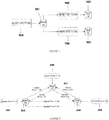
- FIG 1 illustrates an existing Single Master Replication mechanism.
- a transaction (104) made to a Master Database (101) is propagated to a subscriber database (102) and a subscriber database (103) via transactions (105) and (106) respectively.
- redundant copies are maintained at subscriber databases (102) (103).
- FIG. 2 illustrates an existing Multi-master replication mechanism.
- multiple master databases 201,202,203
- Any update made to a particular Master Database needs to be propagated to remaining Master databases for consistency.
- Master Database (201) when updated with a transaction (204) propagates the updates to remaining Master Databases (202,203). Same holds true for remaining master databases which propagate their updates to all other Master databases.
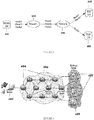
- FIG 3 illustrates redundancy in an existing /traditional replication.
- Master Database (301) has two subscriber databases (302,303). Any change/update made to Master Database (301) needs to be propagated to all its subscribers (302,303). Therefore, whenever an update is made to Master Database (301), the Master Database (301) serves two copies of the update to subscriber database (302) and subscriber database (303). Said two copies are propagated within distributed network via a no. of intermediate routers. A copy of update made to Master Database is therefore repeated at each router for delivery to subscriber databases (302 and 303) using precious network resources and increasing redundancy manifold.
- Figure 4 illustrates a diagrammatic representation of an existing Multicast solution For Solving Over- subscription in a distributed network environment.
- Figure 5 illustrates a diagrammatic representation of an existing solution for Redundancy elimination.
- Figure 6 illustrates an existing solution for Packet Level Redundancy Detection.
- multicast solutions are available only for UDP (User Datagram Protocol). Most of the replication implementations are based on TCP (Transmission Control Protocol) which do not have optimal multicast solutions.
- TCP Transmission Control Protocol
- the UDP (User Datagram Protocol) multicast solutions also suffer from lack of reliability. Also to use multicast solutions require a lot of change in DataBase implementations which make the solutions more complex.
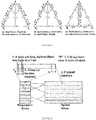
- Figure 7 illustrates an exemplary distributed/replication database of the instant invention.
- One of the many primary aspect of the invention deals with the determination of a cluster topology by a router operating in the distributed network environment of the instant invention. Such determination may utilize existing mechanisms standardized by IETF (Internet Engineering Task Force), e.g. including but not limited to "Service Advertisement Using BGP (Border Gateway Protocol), draft-keyupate-bgp-services-02".
- IETF Internet Engineering Task Force
- BGP Border Gateway Protocol
- draft-keyupate-bgp-services-02 draft-keyupate-bgp-services-02.
- the instant invention allows a router to advertise (i.e. publish) a service using BGP protocol.
- instant invention in a typical embodiment uses this mechanism to publish a DataBase Replication Service.
- This mechanism as mentioned is merely an exemplary mechanism used to advertise in line with the objectives of the present invention.
- an edge router which is closest to a "Master DB node" is configured with the database replication information.
- the router advertises/publishes this service across the whole distributed network.
- the edge router which is closest to this node is also configured marking the role as a subscriber. Based on this configuration the router subscribes to the Master DataBase router. By this mechanism the routers are able to understand the underlying DataBase cluster topology.
- Another aspect of the instant invention deals with the optimization of replication streams (e.g. a redo stream needs to be optimized in case of a database replication) by the routers.
- replication streams e.g. a redo stream needs to be optimized in case of a database replication
- the master DB (DataBase) node edge router need not use "sliding window” caching techniques (like Rabin's fingerprint), but can use a fixed payload cache like MD5. Then the finger print is attached to the payload and this is synchronized across the routers.
- a Master DB Node (701) maintains a master copy of the database.
- the Master DB Node (701) is accessible via a Master DB Router (702).
- the Master DB router (702) is specifically configured with Master DB information.
- Master DB router (702) is further configurable to discover DB cluster topology using BGP advertisement.
- the Master DB router (702) in effect, caches first REDO sent but advantageously sends a fingerprint for second REDO thereby saving precious network resources.
- subscriber DB routers (703) (707) are configured for subscriber DB information.
- the subscriber DB routers (703) (707) subscribe to Master DB router service.
- Figure 8 illustrates an optimal Routing methodology based on Caching and Topology Awareness.
- This aspect of the invention relates with the routing concepts for different topologies.
- One of the typical topologies is a multi-master DataBase cluster.
- the distributed network environment may adopt any of existing "Mesh” or a "star” schema.
- the master DB node router identifies the topology of the DB cluster to be of the above said nature, it computes the path to each node. Based on this computation the DB cluster establishes paths across the network which can use caching.
- the paths in exemplary embodiments, could be established by RSVP-TE (Resource Reservation Protocol - Traffic Engineering) or MPLS-TE mechanisms.
- the Router-1 creates a path along with a label for routing to Router-3 using cached data in Router-2 and vice-versa.
- Router-1 determines a packet is cached in Router-2, but it has to be now transmitted to Router-3, it uses the cached fingerprint along with this path label.
- Router-2 on receiving the finger-print with the specific label, processes the packet and converts the packet data with the actual data and then forwards it to Router-3.
- This technical feature essentially saves "2 units of distance" which is otherwise redundant data.
- Another embodiment of the inventions deals with applying specific policies for different nature of streams expressed in terms of the DB operations e.g. like a "REDO stream”, “Full Mirror stream”, “Priority Stream”.
- the DataBase aware router is configured with various connection parameters along with policies.
- One exemplary embodiment includes a connection for an initial mirroring stream with maximum MTU ⁇ Maximum Transmission Unit ⁇ and compression.
- the DataBase aware router creates a label switched path using the policies mentioned. Such a label switched path is implemented via CSPF and LDP.
- the master DataBase node edge router determines the nature of the stream and applies appropriate policies.
- a maximum MTU Maximum Transmission Unit
- Figure 9 illustrates data configured in an exemplary MDER (Master DB Node Edge Router)
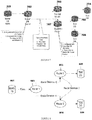
- Figure 10 illustrates a flow diagram depicting Advertisement and Subscription by MDER (Master DB Node Edge Router) in a distributed network environment
- the Advertisement and Subscription by MDER in line with the present invention includes, but not limited to, following steps.
- the MDER Master DB Node Edge Router
- Any router DB-aware router receives this advertisement and stores the advertisement information.
- the DB-aware router is configured for subscriber information and the corresponding cluster information the DB-aware router subscribes to the MDER for the subscription service.
- this node becomes the SDER (Subscriber DataBase Edge Router).
- the subscription in exemplary embodiments can be handled by one of the subscription protocols like XMPP, Jabber or SIP Presence (RFC-3265).
- the corresponding SDER Subscriber DataBase Edge Router
- SDER Subscriber DataBase Edge Router
- MDER Master DB Node Edge Router
- SDER Subscriber DataBase Edge Router
- the MDER on receiving a subscription checks if this SDER (Subscriber DataBase Edge Router) has already subscribed. If this SDER (Subscriber DataBase Edge Router) has already subscribed to the service, then the MDER enables cache on this MDER-SDER link.
- the master DataBase sends REDO log information to its subscriber.
- the MDER Master DB Node Edge Router
- the MDER intercepts the packet from the master DB node and tries to determine if this packet is a REDO log packet. Said determination in a typical embodiment may be achieved by configuration of IP no. and Port No.
- a specific (originating IP + Destination IP + Destination Port) could also be associated with a channel and the channel could be associated with REDO log policy.
- the MDER could be equipped with the packet format of a REDO message and by using DPI (Deep Packet Inspection) techniques could determine the nature of the packet.
- DPI Deep Packet Inspection
- a replication (Master) Service is configured at Master DB Edge Router (1001). Thereafter, replication service is advertised/published (1002) by Master DB Edge Router. The corresponding Subscriber DB Edge Router stores replication service advertisement (1003) and configures replication (subscriber) service (1004).
- Subscriber DB Edge Router determines whether an advertisement/publication for such a service already exists. If the advertisement for service exists, a subscription is sent by Subscriber DB Edge Router and the subscription is received (1007) at the Master DB Edge Router.
- the Master DB Edge Router on receiving said subscription determines if the router is already subscribed (1008) and if so, enables caching (1009) and then stores subscription details (1011). In case Router is not already subscribed, subscription details are stored (1011) (without enabling caching).
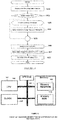
- Figure 11 illustrates a flow diagram depicting REDO Caching Optimization.
- the MDER Master DataBase Edge Router
- the MDER tries to cache it optimally. If more than one Subscriber node exists in this MDER-SDER path, this packet is sure to repeat.
- the MDER checks if cache is enabled on this MDER-SDER path. If enabled the MDER proceeds to handle the packet as described in the above flow chart.
- Another key point to note is that for cached packets, the packet is labeled. This label could be pre-negotiated with the SDER or statically configured with the SDER/MDER. Once the SDER receives a packet with this label, it will convert the fingerprint to the actual packet and forward the actual packet to the subscriber. It may be required that the TCP streams between Master-S1 and Master-S2 are periodically reconciled. If not reconciled, the streams may have an offset because of network conditions and the caching will fail.
- a MDER Master DataBase Edge Router determines whether data packet received (1102) from a Master DataBase is REDO Data. (1103). In case the received data is REDO data, destination address is extracted from the data packet and matched with a lookup edge router information (1105).In case it is determined that data packet is not already cached for the Edge Router , the data packet is forwarded (1108).
- a finger print is generated for the whole packet (1107).
- the finger print and data packet are stored (1110) and both are forwarded (1111).
- Finger Print does not already exist, packet data is labeled and only fingerprint is forwarded.
- Fingerprinting a data packet within the purview of the instant invention is a method of creating a unique key using the characteristics of the packet, through which the packet can be uniquely determined in the cache.
- Optimistic caching a IP packet/data packet is based on the enablement of cache.
- the caching is performed for physical replication logs (REDO in case of DB) as well as for logical replication logs (SQL in case of DB)
- Figure 12 illustrates a corresponding sequence Diagram for optimized REDO caching as described above with reference to Figure 11 .
- a Master Database sends a first REDO-1 (1200) towards Master DB Edge Router.
- the Master DB Edge Router in turn caches said received first REDO-1 (1202).
- Master DB Edge Router forwards the first REDO-1 along with a finger print towards a Subscriber DataBase (DB) Router (1203).
- the subscriber database router forwards the REDO-1 packet towards subscriber database (DB) (1).
- DB Subscriber DataBase
- DB Subscriber DataBase
- DB Subscriber DataBase
- DB Subscriber DataBase
- DB Subscriber DataBase
- DB Subscriber DataBase
- subscriber database router forwards REDO-1 towards Subscriber DataBase 2 (1207).
- FIGURE 13 illustrates an exemplary network diagram for cache based optimal routing
- the MDER after determining the topology of the DB (DataBase) cluster attempts to optimally use caching. If a new SDER is subscribed to the MDER and the SDER has only one subscriber, the MDER tries to find if there are any adjacent SDER which are already subscribed. If this holds true, the MDER tries to create a "switched path" for optimizing the MDER.
- DB DataBase
- a first REDO to S1 (Subscriber One) is sent through R2 (Router two).
- the packet is marked for caching.
- the fingerprint is switched to R2 (Router Two).
- R2 (Router Two) retrieves the actual data packet and forwards it to R3 (Router Three) which then forwards it to S2 (Subscriber Two).
- exemplary embodiments of distributed network environment of present invention comprises of Master DataBase (M), two subscribers (S1, S2), one edge router (R1) and two subscriber routers (R2, R3).
- M Master DataBase
- S1, S2 two subscribers
- R1 one edge router
- R2, R3 two subscriber routers
- Master DataBase (M) sends two REDO's for two of its subscribers (S1, S2) (1301).
- the Edge Router (R1) receives the two REDO's but sends only a FingerPrint to Router 2 (R2) for subscriber Two (S2).
- the Router R2 then sends a REDO for S1 (Subscriber One) and also forwards a separate REDO to (Router Three) R3. Router Three (R3) in effect forwards REDO to Subscriber Two (S2).
- Figure 14 illustrates an exemplary path Creation for Cache Based Optimal Routing.
- the routers are made aware of multiple kind of DB replication traffic that flows between the DB (DataBase) nodes. Each kind of traffic is considered as a channel.
- the data replication traffic could be routine REDO (synchronization) traffic or Initial (or complete) mirroring or priority-packet (for some kind of DDL).
- REDO synchronization
- Initial or complete
- priority-packet for some kind of DDL.
- the router of the instant invention creates rules in the router like compression enabled, complete redundancy elimination.
- the MDER also creates special paths or labels to accommodate these channels. For the initial (or complete) mirroring, the router creates a path which has the maximum MTU (Maximum Transmitting Unit). Similarly for a priority channel the MDER creates another labeled path to the destination. For the priority channel the MDER never enables compression.
- the mechanism for the MDER (Master DataBase Edge Router) to detect the channel includes but not limited to IP+Port configuration or using DPI.
- DB DataBase nodes actively interact with the routers to offer multiple inputs so that the router can operate optimally to build the topology.
- the routers are configurable to manage the streams, by implementing a configuration or management protocol like SNMP or Netconf.
- essentially database node interacts with the edge router to help the edge routers determine the nature of various packets which the routers can optimize very efficiently.
- a database node may offer replication topology insights e.g. when the database node determines that a peer node has gone off service then it actively indicates this information to the router. This makes the database respond to the actual situation of the topology faster.
- Figure 4 in essence illustrates an exemplary System Architecture of the present invention.
- instant invention configures the ability of the database nodes and storage nodes to interact with the edge routers in order to offer a clear view of the "nature" of data being replicated so that the routers can optimize the data better.
- database nodes and storage nodes are also configured to interact with the edge routers to input the changes in the cluster topology so that the routers can make suitable adjustments.
- a typical architecture of an exemplary node including but not limited to router(s) of the present invention is explained with reference to Figure 15 .
- the CPU bus (1402) is, essentially, an interconnection wires that all subsystems are connected to. In general, only one pair of devices can talk to each other at a time, so communication of the bus must be coordinated to prevent message collisions. This coordination is often handled by the CPU (1401).
- the central processing unit (CPU) (1401) executes instructions contained in memory (1403). These instructions are executed at a rate specified by the computer's clock (1404).
- the CPU (1401) needs to access two different types of memory (1403) in order to execute a program.
- memory 1403
- ROM read-only memory
- EPROM erasable programmable read-only memory
- EEPROM electrically erasable programmable read-only memory
- Random access memory or RAM (1406) is used to temporarily store data and instructions.
- ROUTER (s) and DataBase Nodes (404) of the present invention selectively comprise of:
- Device Mainly comprising of CPU + software in memory + rf section, for controlling the bandwidth usage in device.
- Service provider network Mainly comprising of server + software in memory + rf section, for controlling the bandwidth usage in network.
- Mainly comprising of memory, for storing software + data associated with one or more services/tasks/operations as transceived by the said signal control unit.
- Service provider network Mainly comprising of memory, for storing software + data associated with one or more services/tasks/operations as transceived by the said signal control unit
- Mainly comprising of CPU + software in memory + speaker, for processing short switching trigger data pulse signal to accomplish the operations by performing output to the speaker after recalling the corresponding service memory from device and confirm to network provider/operator.
- Service provider network Mainly comprising of server + software in memory, for processing short switching trigger data pulse signal to accomplish the operations by transceiving to device and confirmation from device.
Landscapes
- Engineering & Computer Science (AREA)
- Computer Networks & Wireless Communication (AREA)
- Signal Processing (AREA)
- Theoretical Computer Science (AREA)
- Databases & Information Systems (AREA)
- Physics & Mathematics (AREA)
- General Engineering & Computer Science (AREA)
- General Physics & Mathematics (AREA)
- Computing Systems (AREA)
- Data Mining & Analysis (AREA)
- Quality & Reliability (AREA)
- Data Exchanges In Wide-Area Networks (AREA)
Applications Claiming Priority (2)
| Application Number | Priority Date | Filing Date | Title |
|---|---|---|---|
| IN5044CH2013 IN2013CH05044A (enExample) | 2013-11-08 | 2013-11-08 | |
| PCT/CN2014/076844 WO2015067013A1 (en) | 2013-11-08 | 2014-05-06 | A method and device for database & storage aware routers |
Publications (3)
| Publication Number | Publication Date |
|---|---|
| EP3053047A1 EP3053047A1 (en) | 2016-08-10 |
| EP3053047A4 EP3053047A4 (en) | 2016-10-19 |
| EP3053047B1 true EP3053047B1 (en) | 2018-01-17 |
Family
ID=54398509
Family Applications (1)
| Application Number | Title | Priority Date | Filing Date |
|---|---|---|---|
| EP14860071.1A Active EP3053047B1 (en) | 2013-11-08 | 2014-05-06 | A method and device for database & storage aware routers |
Country Status (5)
| Country | Link |
|---|---|
| US (1) | US10275412B2 (enExample) |
| EP (1) | EP3053047B1 (enExample) |
| CN (1) | CN105683929B (enExample) |
| IN (1) | IN2013CH05044A (enExample) |
| WO (1) | WO2015067013A1 (enExample) |
Families Citing this family (15)
| Publication number | Priority date | Publication date | Assignee | Title |
|---|---|---|---|---|
| CN106790447B (zh) * | 2016-12-02 | 2019-04-19 | 中科星图股份有限公司 | 一种基于库复制的分布式存储方法 |
| US11080274B2 (en) * | 2017-01-17 | 2021-08-03 | Futurewei Technologies, Inc. | Best-efforts database functions |
| TWI821373B (zh) * | 2018-08-23 | 2023-11-11 | 美商阿爾克斯股份有限公司 | 網路運算環境中的第一跳轉閘道的冗餘機制系統 |
| US11153202B2 (en) | 2019-05-13 | 2021-10-19 | 128 Technology, Inc. | Service and topology exchange protocol |
| US10999182B2 (en) | 2019-05-13 | 2021-05-04 | 128 Technology, Inc. | Routing using segment-based metrics |
| US11005749B2 (en) | 2019-05-13 | 2021-05-11 | 128 Technology, Inc. | Multicast source and receiver access control |
| US11451464B2 (en) | 2019-05-13 | 2022-09-20 | 128 Technology, Inc. | Central authority for service and topology exchange |
| US11329912B2 (en) | 2019-05-13 | 2022-05-10 | 128 Technology, Inc. | Source-based routing |
| US12137045B2 (en) | 2019-05-13 | 2024-11-05 | Juniper Networks, Inc. | Metric-based multi-hop path selection |
| US11070465B2 (en) | 2019-05-13 | 2021-07-20 | 128 Technology, Inc. | Distribution of multicast information in a routing system |
| CN118214650A (zh) | 2019-11-27 | 2024-06-18 | 128技术公司 | 度量和事件基础设施 |
| US11582290B2 (en) * | 2020-01-23 | 2023-02-14 | Hewlett Packard Enterprise Development Lp | Switch event ordering |
| EP4173238B1 (en) | 2020-06-24 | 2024-03-13 | Juniper Networks, Inc. | Point-to-multipoint layer-2 network extension over layer-3 network |
| US11960369B2 (en) | 2021-10-26 | 2024-04-16 | International Business Machines Corporation | Efficient creation of a secondary database system |
| CN116471335A (zh) * | 2023-04-07 | 2023-07-21 | 平安银行股份有限公司 | 一种路由配置方法、装置、电子设备及存储介质 |
Family Cites Families (26)
| Publication number | Priority date | Publication date | Assignee | Title |
|---|---|---|---|---|
| US6331983B1 (en) | 1997-05-06 | 2001-12-18 | Enterasys Networks, Inc. | Multicast switching |
| US7535826B1 (en) * | 2000-12-11 | 2009-05-19 | Juniper Networks, Inc | Routing protocols for accommodating nodes with redundant routing facilities |
| US6915309B1 (en) * | 2001-03-20 | 2005-07-05 | Cisco Technology, Inc. | Automatically generating replication topology information for use by a directory service |
| EP1244221A1 (en) | 2001-03-23 | 2002-09-25 | Sun Microsystems, Inc. | Method and system for eliminating data redundancies |
| US7190678B2 (en) * | 2002-10-28 | 2007-03-13 | Cisco Technology, Inc. | Arrangement for router attachments between roaming mobile routers in a clustered network |
| US7792987B1 (en) * | 2003-04-21 | 2010-09-07 | Juniper Networks, Inc. | Supporting virtual private networks using a first network topology for forwarding and a subset of the first network topology or a smaller topology for signaling |
| DE10356724B3 (de) | 2003-12-02 | 2005-06-16 | Deutsches Zentrum für Luft- und Raumfahrt e.V. | Verfahren zum Verringern des Transportvolumens von Daten in Datennetzen |
| TWI234970B (en) * | 2003-12-05 | 2005-06-21 | Inst Information Industry | Method and system for route selection and method for route reconstruction |
| US20050198351A1 (en) | 2004-02-20 | 2005-09-08 | Microsoft Corporation | Content-based routing |
| US7609619B2 (en) | 2005-02-25 | 2009-10-27 | Cisco Technology, Inc. | Active-active data center using RHI, BGP, and IGP anycast for disaster recovery and load distribution |
| US7849199B2 (en) | 2005-07-14 | 2010-12-07 | Yahoo ! Inc. | Content router |
| US7834784B1 (en) | 2007-01-18 | 2010-11-16 | Cisco Technology, Inc. | Data redundancy elimination mechanism including fast lookup of data patterns exhibiting spatial locality |
| US7751405B1 (en) | 2007-09-26 | 2010-07-06 | Juniper Networks, Inc. | Automatic configuration of label switched path tunnels using BGP attributes |
| US7836053B2 (en) | 2007-12-28 | 2010-11-16 | Group Logic, Inc. | Apparatus and methods of identifying potentially similar content for data reduction |
| US20110022633A1 (en) * | 2008-03-31 | 2011-01-27 | Dolby Laboratories Licensing Corporation | Distributed media fingerprint repositories |
| CN101729365B (zh) * | 2008-10-27 | 2012-06-27 | 华为技术有限公司 | 路径建立方法、承载网路由器和网络系统 |
| US9807468B2 (en) | 2009-06-16 | 2017-10-31 | Microsoft Technology Licensing, Llc | Byte range caching |
| US8341118B2 (en) * | 2010-02-09 | 2012-12-25 | Google Inc. | Method and system for dynamically replicating data within a distributed storage system |
| CN102223284B (zh) * | 2010-04-15 | 2014-11-19 | 华为技术有限公司 | 组播选路的方法及装置 |
| US8838919B2 (en) * | 2010-08-30 | 2014-09-16 | Oracle International Corporation | Controlling data lag in a replicated computer system |
| US9378105B2 (en) * | 2010-12-10 | 2016-06-28 | Veritas Technologies Llc | System and method for optimizing replication |
| CN101986628B (zh) * | 2010-12-15 | 2012-11-07 | 山东大学 | 基于蚁群算法的实现多源组播流量均衡的方法 |
| JP5750933B2 (ja) * | 2011-02-18 | 2015-07-22 | ヤマハ株式会社 | 通信システム、スイッチングハブ、ルータおよびプログラム |
| US20120226799A1 (en) | 2011-03-03 | 2012-09-06 | Cisco Technology, Inc. | Capabilities Based Routing of Virtual Data Center Service Request |
| US8619576B2 (en) * | 2011-07-12 | 2013-12-31 | Cisco Technology, Inc. | Selective topology routing for distributed data collection |
| US9559962B2 (en) * | 2013-01-22 | 2017-01-31 | Brocade Communications Systems, Inc. | Optimizing traffic flows via dynamic routing protocol modifications when using server virtualization with dynamic routing |
-
2013
- 2013-11-08 IN IN5044CH2013 patent/IN2013CH05044A/en unknown
-
2014
- 2014-05-06 WO PCT/CN2014/076844 patent/WO2015067013A1/en not_active Ceased
- 2014-05-06 CN CN201480060023.XA patent/CN105683929B/zh active Active
- 2014-05-06 EP EP14860071.1A patent/EP3053047B1/en active Active
-
2016
- 2016-05-06 US US15/148,910 patent/US10275412B2/en active Active
Non-Patent Citations (1)
| Title |
|---|
| None * |
Also Published As
| Publication number | Publication date |
|---|---|
| EP3053047A4 (en) | 2016-10-19 |
| EP3053047A1 (en) | 2016-08-10 |
| US20160321341A1 (en) | 2016-11-03 |
| CN105683929A (zh) | 2016-06-15 |
| US10275412B2 (en) | 2019-04-30 |
| IN2013CH05044A (enExample) | 2015-05-29 |
| WO2015067013A1 (en) | 2015-05-14 |
| CN105683929B (zh) | 2018-10-09 |
Similar Documents
| Publication | Publication Date | Title |
|---|---|---|
| EP3053047B1 (en) | A method and device for database & storage aware routers | |
| CA2594267C (en) | End-to-end publish/subscribe middleware architecture | |
| US8321578B2 (en) | Systems and methods for network virtualization | |
| US8861525B1 (en) | Cloud-based network protocol translation data center | |
| US20110185082A1 (en) | Systems and methods for network virtualization | |
| US12289243B2 (en) | Network policy application based on session state | |
| CN101133380A (zh) | 基于硬件的消息传递设备 | |
| Shantaf et al. | A comparison study of TCP/IP and named data networking protocol | |
| HK1120315A (en) | Hardware-based messaging appliance | |
| HK1118111A (en) | End-to-end publish/subscribe middleware architecture | |
| HK1118110A (en) | A caching engine in a messaging system | |
| HK1125198A (en) | Intelligent messaging application programming interface |
Legal Events
| Date | Code | Title | Description |
|---|---|---|---|
| PUAI | Public reference made under article 153(3) epc to a published international application that has entered the european phase |
Free format text: ORIGINAL CODE: 0009012 |
|
| 17P | Request for examination filed |
Effective date: 20160506 |
|
| AK | Designated contracting states |
Kind code of ref document: A1 Designated state(s): AL AT BE BG CH CY CZ DE DK EE ES FI FR GB GR HR HU IE IS IT LI LT LU LV MC MK MT NL NO PL PT RO RS SE SI SK SM TR |
|
| AX | Request for extension of the european patent |
Extension state: BA ME |
|
| A4 | Supplementary search report drawn up and despatched |
Effective date: 20160916 |
|
| RIC1 | Information provided on ipc code assigned before grant |
Ipc: G06F 12/00 20060101ALI20160912BHEP Ipc: H04L 12/18 20060101ALI20160912BHEP Ipc: G06F 12/16 20060101AFI20160912BHEP |
|
| DAX | Request for extension of the european patent (deleted) | ||
| REG | Reference to a national code |
Ref country code: DE Ref legal event code: R079 Ref document number: 602014020196 Country of ref document: DE Free format text: PREVIOUS MAIN CLASS: G06F0012160000 Ipc: H04L0029080000 |
|
| GRAP | Despatch of communication of intention to grant a patent |
Free format text: ORIGINAL CODE: EPIDOSNIGR1 |
|
| STAA | Information on the status of an ep patent application or granted ep patent |
Free format text: STATUS: GRANT OF PATENT IS INTENDED |
|
| RIC1 | Information provided on ipc code assigned before grant |
Ipc: H04L 12/741 20130101ALI20170712BHEP Ipc: G06F 12/16 20060101ALI20170712BHEP Ipc: H04L 12/18 20060101ALI20170712BHEP Ipc: H04L 29/08 20060101AFI20170712BHEP |
|
| INTG | Intention to grant announced |
Effective date: 20170808 |
|
| GRAS | Grant fee paid |
Free format text: ORIGINAL CODE: EPIDOSNIGR3 |
|
| GRAA | (expected) grant |
Free format text: ORIGINAL CODE: 0009210 |
|
| STAA | Information on the status of an ep patent application or granted ep patent |
Free format text: STATUS: THE PATENT HAS BEEN GRANTED |
|
| AK | Designated contracting states |
Kind code of ref document: B1 Designated state(s): AL AT BE BG CH CY CZ DE DK EE ES FI FR GB GR HR HU IE IS IT LI LT LU LV MC MK MT NL NO PL PT RO RS SE SI SK SM TR |
|
| REG | Reference to a national code |
Ref country code: GB Ref legal event code: FG4D |
|
| REG | Reference to a national code |
Ref country code: CH Ref legal event code: EP |
|
| REG | Reference to a national code |
Ref country code: IE Ref legal event code: FG4D |
|
| REG | Reference to a national code |
Ref country code: AT Ref legal event code: REF Ref document number: 965134 Country of ref document: AT Kind code of ref document: T Effective date: 20180215 |
|
| REG | Reference to a national code |
Ref country code: DE Ref legal event code: R096 Ref document number: 602014020196 Country of ref document: DE |
|
| REG | Reference to a national code |
Ref country code: FR Ref legal event code: PLFP Year of fee payment: 5 |
|
| REG | Reference to a national code |
Ref country code: NL Ref legal event code: MP Effective date: 20180117 |
|
| REG | Reference to a national code |
Ref country code: LT Ref legal event code: MG4D |
|
| REG | Reference to a national code |
Ref country code: AT Ref legal event code: MK05 Ref document number: 965134 Country of ref document: AT Kind code of ref document: T Effective date: 20180117 |
|
| PG25 | Lapsed in a contracting state [announced via postgrant information from national office to epo] |
Ref country code: NL Free format text: LAPSE BECAUSE OF FAILURE TO SUBMIT A TRANSLATION OF THE DESCRIPTION OR TO PAY THE FEE WITHIN THE PRESCRIBED TIME-LIMIT Effective date: 20180117 |
|
| PG25 | Lapsed in a contracting state [announced via postgrant information from national office to epo] |
Ref country code: HR Free format text: LAPSE BECAUSE OF FAILURE TO SUBMIT A TRANSLATION OF THE DESCRIPTION OR TO PAY THE FEE WITHIN THE PRESCRIBED TIME-LIMIT Effective date: 20180117 Ref country code: LT Free format text: LAPSE BECAUSE OF FAILURE TO SUBMIT A TRANSLATION OF THE DESCRIPTION OR TO PAY THE FEE WITHIN THE PRESCRIBED TIME-LIMIT Effective date: 20180117 Ref country code: NO Free format text: LAPSE BECAUSE OF FAILURE TO SUBMIT A TRANSLATION OF THE DESCRIPTION OR TO PAY THE FEE WITHIN THE PRESCRIBED TIME-LIMIT Effective date: 20180417 Ref country code: FI Free format text: LAPSE BECAUSE OF FAILURE TO SUBMIT A TRANSLATION OF THE DESCRIPTION OR TO PAY THE FEE WITHIN THE PRESCRIBED TIME-LIMIT Effective date: 20180117 Ref country code: ES Free format text: LAPSE BECAUSE OF FAILURE TO SUBMIT A TRANSLATION OF THE DESCRIPTION OR TO PAY THE FEE WITHIN THE PRESCRIBED TIME-LIMIT Effective date: 20180117 Ref country code: CY Free format text: LAPSE BECAUSE OF FAILURE TO SUBMIT A TRANSLATION OF THE DESCRIPTION OR TO PAY THE FEE WITHIN THE PRESCRIBED TIME-LIMIT Effective date: 20180117 |
|
| PG25 | Lapsed in a contracting state [announced via postgrant information from national office to epo] |
Ref country code: LV Free format text: LAPSE BECAUSE OF FAILURE TO SUBMIT A TRANSLATION OF THE DESCRIPTION OR TO PAY THE FEE WITHIN THE PRESCRIBED TIME-LIMIT Effective date: 20180117 Ref country code: AT Free format text: LAPSE BECAUSE OF FAILURE TO SUBMIT A TRANSLATION OF THE DESCRIPTION OR TO PAY THE FEE WITHIN THE PRESCRIBED TIME-LIMIT Effective date: 20180117 Ref country code: RS Free format text: LAPSE BECAUSE OF FAILURE TO SUBMIT A TRANSLATION OF THE DESCRIPTION OR TO PAY THE FEE WITHIN THE PRESCRIBED TIME-LIMIT Effective date: 20180117 Ref country code: PL Free format text: LAPSE BECAUSE OF FAILURE TO SUBMIT A TRANSLATION OF THE DESCRIPTION OR TO PAY THE FEE WITHIN THE PRESCRIBED TIME-LIMIT Effective date: 20180117 Ref country code: GR Free format text: LAPSE BECAUSE OF FAILURE TO SUBMIT A TRANSLATION OF THE DESCRIPTION OR TO PAY THE FEE WITHIN THE PRESCRIBED TIME-LIMIT Effective date: 20180418 Ref country code: IS Free format text: LAPSE BECAUSE OF FAILURE TO SUBMIT A TRANSLATION OF THE DESCRIPTION OR TO PAY THE FEE WITHIN THE PRESCRIBED TIME-LIMIT Effective date: 20180517 Ref country code: SE Free format text: LAPSE BECAUSE OF FAILURE TO SUBMIT A TRANSLATION OF THE DESCRIPTION OR TO PAY THE FEE WITHIN THE PRESCRIBED TIME-LIMIT Effective date: 20180117 Ref country code: BG Free format text: LAPSE BECAUSE OF FAILURE TO SUBMIT A TRANSLATION OF THE DESCRIPTION OR TO PAY THE FEE WITHIN THE PRESCRIBED TIME-LIMIT Effective date: 20180417 |
|
| REG | Reference to a national code |
Ref country code: DE Ref legal event code: R097 Ref document number: 602014020196 Country of ref document: DE |
|
| PG25 | Lapsed in a contracting state [announced via postgrant information from national office to epo] |
Ref country code: AL Free format text: LAPSE BECAUSE OF FAILURE TO SUBMIT A TRANSLATION OF THE DESCRIPTION OR TO PAY THE FEE WITHIN THE PRESCRIBED TIME-LIMIT Effective date: 20180117 Ref country code: IT Free format text: LAPSE BECAUSE OF FAILURE TO SUBMIT A TRANSLATION OF THE DESCRIPTION OR TO PAY THE FEE WITHIN THE PRESCRIBED TIME-LIMIT Effective date: 20180117 Ref country code: EE Free format text: LAPSE BECAUSE OF FAILURE TO SUBMIT A TRANSLATION OF THE DESCRIPTION OR TO PAY THE FEE WITHIN THE PRESCRIBED TIME-LIMIT Effective date: 20180117 Ref country code: RO Free format text: LAPSE BECAUSE OF FAILURE TO SUBMIT A TRANSLATION OF THE DESCRIPTION OR TO PAY THE FEE WITHIN THE PRESCRIBED TIME-LIMIT Effective date: 20180117 |
|
| PLBE | No opposition filed within time limit |
Free format text: ORIGINAL CODE: 0009261 |
|
| STAA | Information on the status of an ep patent application or granted ep patent |
Free format text: STATUS: NO OPPOSITION FILED WITHIN TIME LIMIT |
|
| PG25 | Lapsed in a contracting state [announced via postgrant information from national office to epo] |
Ref country code: SK Free format text: LAPSE BECAUSE OF FAILURE TO SUBMIT A TRANSLATION OF THE DESCRIPTION OR TO PAY THE FEE WITHIN THE PRESCRIBED TIME-LIMIT Effective date: 20180117 Ref country code: CZ Free format text: LAPSE BECAUSE OF FAILURE TO SUBMIT A TRANSLATION OF THE DESCRIPTION OR TO PAY THE FEE WITHIN THE PRESCRIBED TIME-LIMIT Effective date: 20180117 Ref country code: DK Free format text: LAPSE BECAUSE OF FAILURE TO SUBMIT A TRANSLATION OF THE DESCRIPTION OR TO PAY THE FEE WITHIN THE PRESCRIBED TIME-LIMIT Effective date: 20180117 Ref country code: SM Free format text: LAPSE BECAUSE OF FAILURE TO SUBMIT A TRANSLATION OF THE DESCRIPTION OR TO PAY THE FEE WITHIN THE PRESCRIBED TIME-LIMIT Effective date: 20180117 |
|
| REG | Reference to a national code |
Ref country code: CH Ref legal event code: PL |
|
| 26N | No opposition filed |
Effective date: 20181018 |
|
| REG | Reference to a national code |
Ref country code: BE Ref legal event code: MM Effective date: 20180531 |
|
| PG25 | Lapsed in a contracting state [announced via postgrant information from national office to epo] |
Ref country code: MC Free format text: LAPSE BECAUSE OF FAILURE TO SUBMIT A TRANSLATION OF THE DESCRIPTION OR TO PAY THE FEE WITHIN THE PRESCRIBED TIME-LIMIT Effective date: 20180117 |
|
| REG | Reference to a national code |
Ref country code: IE Ref legal event code: MM4A |
|
| PG25 | Lapsed in a contracting state [announced via postgrant information from national office to epo] |
Ref country code: SI Free format text: LAPSE BECAUSE OF FAILURE TO SUBMIT A TRANSLATION OF THE DESCRIPTION OR TO PAY THE FEE WITHIN THE PRESCRIBED TIME-LIMIT Effective date: 20180117 Ref country code: CH Free format text: LAPSE BECAUSE OF NON-PAYMENT OF DUE FEES Effective date: 20180531 Ref country code: LI Free format text: LAPSE BECAUSE OF NON-PAYMENT OF DUE FEES Effective date: 20180531 |
|
| PG25 | Lapsed in a contracting state [announced via postgrant information from national office to epo] |
Ref country code: LU Free format text: LAPSE BECAUSE OF NON-PAYMENT OF DUE FEES Effective date: 20180506 |
|
| PG25 | Lapsed in a contracting state [announced via postgrant information from national office to epo] |
Ref country code: IE Free format text: LAPSE BECAUSE OF NON-PAYMENT OF DUE FEES Effective date: 20180506 |
|
| PG25 | Lapsed in a contracting state [announced via postgrant information from national office to epo] |
Ref country code: BE Free format text: LAPSE BECAUSE OF NON-PAYMENT OF DUE FEES Effective date: 20180531 |
|
| PG25 | Lapsed in a contracting state [announced via postgrant information from national office to epo] |
Ref country code: MT Free format text: LAPSE BECAUSE OF NON-PAYMENT OF DUE FEES Effective date: 20180506 |
|
| PG25 | Lapsed in a contracting state [announced via postgrant information from national office to epo] |
Ref country code: TR Free format text: LAPSE BECAUSE OF FAILURE TO SUBMIT A TRANSLATION OF THE DESCRIPTION OR TO PAY THE FEE WITHIN THE PRESCRIBED TIME-LIMIT Effective date: 20180117 |
|
| PG25 | Lapsed in a contracting state [announced via postgrant information from national office to epo] |
Ref country code: PT Free format text: LAPSE BECAUSE OF FAILURE TO SUBMIT A TRANSLATION OF THE DESCRIPTION OR TO PAY THE FEE WITHIN THE PRESCRIBED TIME-LIMIT Effective date: 20180117 |
|
| PG25 | Lapsed in a contracting state [announced via postgrant information from national office to epo] |
Ref country code: HU Free format text: LAPSE BECAUSE OF FAILURE TO SUBMIT A TRANSLATION OF THE DESCRIPTION OR TO PAY THE FEE WITHIN THE PRESCRIBED TIME-LIMIT; INVALID AB INITIO Effective date: 20140506 Ref country code: MK Free format text: LAPSE BECAUSE OF NON-PAYMENT OF DUE FEES Effective date: 20180117 |
|
| REG | Reference to a national code |
Ref country code: DE Ref legal event code: R079 Ref document number: 602014020196 Country of ref document: DE Free format text: PREVIOUS MAIN CLASS: H04L0029080000 Ipc: H04L0065000000 |
|
| REG | Reference to a national code |
Ref country code: FR Ref legal event code: PLFP Year of fee payment: 10 |
|
| PGFP | Annual fee paid to national office [announced via postgrant information from national office to epo] |
Ref country code: DE Payment date: 20250402 Year of fee payment: 12 |
|
| PGFP | Annual fee paid to national office [announced via postgrant information from national office to epo] |
Ref country code: GB Payment date: 20250401 Year of fee payment: 12 |
|
| PGFP | Annual fee paid to national office [announced via postgrant information from national office to epo] |
Ref country code: FR Payment date: 20250401 Year of fee payment: 12 |