EP3049071B1 - Prophylaxe und behandlung einer nicht auf einer proteinfaltungsstörung beruhenden neurodegenerativen erkrankung - Google Patents
Prophylaxe und behandlung einer nicht auf einer proteinfaltungsstörung beruhenden neurodegenerativen erkrankung Download PDFInfo
- Publication number
- EP3049071B1 EP3049071B1 EP14777049.9A EP14777049A EP3049071B1 EP 3049071 B1 EP3049071 B1 EP 3049071B1 EP 14777049 A EP14777049 A EP 14777049A EP 3049071 B1 EP3049071 B1 EP 3049071B1
- Authority
- EP
- European Patent Office
- Prior art keywords
- vcp
- protein folding
- treatment
- disease
- prophylaxis
- Prior art date
- Legal status (The legal status is an assumption and is not a legal conclusion. Google has not performed a legal analysis and makes no representation as to the accuracy of the status listed.)
- Active
Links
Images

Classifications
-
- A—HUMAN NECESSITIES
- A61—MEDICAL OR VETERINARY SCIENCE; HYGIENE
- A61K—PREPARATIONS FOR MEDICAL, DENTAL OR TOILETRY PURPOSES
- A61K31/00—Medicinal preparations containing organic active ingredients
- A61K31/33—Heterocyclic compounds
- A61K31/395—Heterocyclic compounds having nitrogen as a ring hetero atom, e.g. guanethidine or rifamycins
- A61K31/495—Heterocyclic compounds having nitrogen as a ring hetero atom, e.g. guanethidine or rifamycins having six-membered rings with two or more nitrogen atoms as the only ring heteroatoms, e.g. piperazine or tetrazines
- A61K31/505—Pyrimidines; Hydrogenated pyrimidines, e.g. trimethoprim
- A61K31/517—Pyrimidines; Hydrogenated pyrimidines, e.g. trimethoprim ortho- or peri-condensed with carbocyclic ring systems, e.g. quinazoline, perimidine
-
- A—HUMAN NECESSITIES
- A61—MEDICAL OR VETERINARY SCIENCE; HYGIENE
- A61K—PREPARATIONS FOR MEDICAL, DENTAL OR TOILETRY PURPOSES
- A61K31/00—Medicinal preparations containing organic active ingredients
-
- A—HUMAN NECESSITIES
- A61—MEDICAL OR VETERINARY SCIENCE; HYGIENE
- A61K—PREPARATIONS FOR MEDICAL, DENTAL OR TOILETRY PURPOSES
- A61K31/00—Medicinal preparations containing organic active ingredients
- A61K31/33—Heterocyclic compounds
- A61K31/395—Heterocyclic compounds having nitrogen as a ring hetero atom, e.g. guanethidine or rifamycins
- A61K31/41—Heterocyclic compounds having nitrogen as a ring hetero atom, e.g. guanethidine or rifamycins having five-membered rings with two or more ring hetero atoms, at least one of which being nitrogen, e.g. tetrazole
- A61K31/4164—1,3-Diazoles
- A61K31/4166—1,3-Diazoles having oxo groups directly attached to the heterocyclic ring, e.g. phenytoin
-
- A—HUMAN NECESSITIES
- A61—MEDICAL OR VETERINARY SCIENCE; HYGIENE
- A61K—PREPARATIONS FOR MEDICAL, DENTAL OR TOILETRY PURPOSES
- A61K31/00—Medicinal preparations containing organic active ingredients
- A61K31/33—Heterocyclic compounds
- A61K31/395—Heterocyclic compounds having nitrogen as a ring hetero atom, e.g. guanethidine or rifamycins
- A61K31/41—Heterocyclic compounds having nitrogen as a ring hetero atom, e.g. guanethidine or rifamycins having five-membered rings with two or more ring hetero atoms, at least one of which being nitrogen, e.g. tetrazole
- A61K31/4164—1,3-Diazoles
- A61K31/4178—1,3-Diazoles not condensed 1,3-diazoles and containing further heterocyclic rings, e.g. pilocarpine, nitrofurantoin
-
- A—HUMAN NECESSITIES
- A61—MEDICAL OR VETERINARY SCIENCE; HYGIENE
- A61K—PREPARATIONS FOR MEDICAL, DENTAL OR TOILETRY PURPOSES
- A61K9/00—Medicinal preparations characterised by special physical form
- A61K9/0012—Galenical forms characterised by the site of application
- A61K9/0048—Eye, e.g. artificial tears
-
- A—HUMAN NECESSITIES
- A61—MEDICAL OR VETERINARY SCIENCE; HYGIENE
- A61P—SPECIFIC THERAPEUTIC ACTIVITY OF CHEMICAL COMPOUNDS OR MEDICINAL PREPARATIONS
- A61P25/00—Drugs for disorders of the nervous system
-
- A—HUMAN NECESSITIES
- A61—MEDICAL OR VETERINARY SCIENCE; HYGIENE
- A61P—SPECIFIC THERAPEUTIC ACTIVITY OF CHEMICAL COMPOUNDS OR MEDICINAL PREPARATIONS
- A61P25/00—Drugs for disorders of the nervous system
- A61P25/28—Drugs for disorders of the nervous system for treating neurodegenerative disorders of the central nervous system, e.g. nootropic agents, cognition enhancers, drugs for treating Alzheimer's disease or other forms of dementia
-
- A—HUMAN NECESSITIES
- A61—MEDICAL OR VETERINARY SCIENCE; HYGIENE
- A61P—SPECIFIC THERAPEUTIC ACTIVITY OF CHEMICAL COMPOUNDS OR MEDICINAL PREPARATIONS
- A61P27/00—Drugs for disorders of the senses
- A61P27/02—Ophthalmic agents
Definitions
- the present invention relates to substances for the prophylaxis and treatment of a neurodegenerative disease which is not based on a protein folding disorder.
- Neurodegenerative diseases form a group of mostly slowly progressing, hereditary or sporadic diseases of the nervous system.
- the main characteristic is the increasing loss of nerve cells, which leads to various neurological symptoms, often including dementia and movement disorders.
- the diseases can occur at different ages, are diffuse or generalized and cause characteristic damage patterns.
- Neurodegenerative diseases of the eye are of particular importance.
- Retinal degeneration is a deterioration of the retina that can eventually lead to retinal cell death.
- retinitis pigmentosa (RP) or also called retinopathia pigmentosa.
- RP retinitis pigmentosa
- retinopathia pigmentosa Around 3 million people worldwide are affected by RP, in Germany around 30,000 to 40,000. The disease usually occurs in adolescence or middle age with the first signs, such as night blindness. The eyesight gradually deteriorates. The entire process of increasing visual impairment is insidious and usually extends over decades for those affected.
- macular degeneration covers a group of neurodegenerative diseases of the eye that affect the macula lutea, also known as the "yellow spot", of the retina and are accompanied by a gradual loss of function of the tissues located there.
- the most important form here is the age-related one Macular Degeneration (AMD) in its dry or wet form. It begins with deposits of so-called drusen, metabolic end products such as lipofuscins and impaired blood flow to the choroid, which can result in so-called geographical atrophy. It can change from the dry to the wet form, which can lead to the formation of new vessels, edema and hemorrhage in the retina. In the advanced stage, both forms can change into a flat cell death of the retinal pigment epitaph.
- Diabetic retinopathy is a disease of the retina of the eye caused by the diabetes mellitus.
- the increasing damage to small blood vessels causes initially unnoticed damage to the retina.
- edema and bleeding up to retinal detachment can also occur here.
- DR can lead to blindness over time.
- the substances "ranibizumab” or “Lucentis” and “VEGF-Trap” intended for the treatment of degenerative eye diseases have a limited spectrum of activity in practice.
- these substances do not work or do not work satisfactorily
- VCP inhibitors are described in the prior art for the treatment of neurodegenerative diseases.
- VCP stands for "Valosin-containing protein” or "Valosin-containing protein”.
- VCP also referred to as p97, is a protein, which is described as one that is involved in protein quality control and removal of misfolded proteins in eukaryotic cells.
- WO 2013/068431 describes the treatment of muscle wasting due to mutated and misfolded SOD1 using the VCP inhibitors Eer-I, DBEQ and Syk-Inhibitor-III.
- VCP inhibitors are proposed for the treatment of glaucoma and retinitis pigmentosa, which are based on protein folding disorders.
- VCP inhibitor valosin-containing protein
- AMD age-related macular degeneration
- DR diabetic retinopathy
- VCP inhibitors can be used in neurodegenerative diseases which are based on a protein folding disorder, for example on misfolded rhodopsin.
- VCP is described as such a protein that is directly involved in the protein folding machinery of the cell.
- VCP is an ATP-driven chaperone that regulates critical steps in ubiquitin-dependent protein quality control, extracts misfolded proteins from the endoplasmic reticulum and feeds them to proteasolmal degradation. It has also already been described in the literature that VCP colocalizes with misfolded rhodopsin.
- VCP inhibitors have no effect whatsoever in neurodegenerative diseases that are not based on a protein folding disorder.
- a “neurodegenerative disease not based on a protein folding disorder” is understood to mean a neurodegeneration which is not caused by any mutation which would then result in a protein folding disorder.
- this relates to age-related macular degeneration (AMD), which occurs with advancing aging and / or due to inflammatory events and diabetic retinopathy (DR), which is due to impaired cellular homeostasis and oxygen supply.
- AMD age-related macular degeneration
- DR diabetic retinopathy
- stabilization of photoreceptors means counteracting degeneration of the photoreceptor, be it by preventing the degeneration or reducing the rate of degeneration.
- VCP inhibitors Using a representative number of different VCP inhibitors that were chemically and structurally different, the inventors were able to surprisingly find that photoreceptors obtained from wild-type rats remain functional in cell culture after treatment with VCP inhibitors significantly longer than untreated photoreceptors. The degeneration of the photoreceptors usually observed in cell cultures is significantly slowed down over time by treatment with VCP inhibitors. The photoreceptors are surprisingly stabilized by the VCP inhibitors.
- the neurodegenerative disease is an eye disease that is not based on a protein folding disorder of a visual pigment, for example of rhodopsin and / or opsin.
- RP rhinitis pigmentosa
- the eye disease is age-related macular degeneration (AMD), especially in its dry form, and diabetic retinopathy (DR).
- AMD age-related macular degeneration
- DR diabetic retinopathy
- the VCP inhibitor is administered intraocularly, periocularly or systemically.
- This measure has the advantage that the optimal form of administration is selected depending on the type of neurodegenerative disease.
- the proteins located in the photoreceptor are preferably in the wild type, the proteins located in the photoreceptor being more preferably visual pigments and most preferably rhodopsin and / or opsin.
- the VCP inhibitor can also be used to stabilize photoreceptors that are not damaged by a mutation in a protein of the photoreceptor, such as a visual pigment, e.g. rhodopsin or opsin, and are therefore subject to degeneration. Rather, stabilization also takes place in those cases in which the degeneration is caused by other causes such as increasing age, disturbed cellular homeostasis or disturbed oxygen supply and inflammation, etc.
- At least one of the proteins located in the photoreceptor such as a visual pigment, for example rhodopsin or opsin, has at least one mutation or genetic risk variant that does not result in a protein folding disorder.
- This measure has the advantage that the large group of phenomena occurring in pathologies of the eye are now also recorded, in which one Degenration of the pigment epithelium or the photoreceptor is observed, the mutations or genetic risk variants involved or causing them, such as polymorphisms, however, do not lead to a protein folding disorder but possibly to functional disorders of the protein concerned.
- the proteins localized in the photoreceptor comprise visual pigments, more preferably rhodopsin and opsin.
- VCP inhibitor can also be used to stabilize those photoreceptors in which the most important photoreceptor proteins are in the wild type or have such a mutation that leads to photoreceptor degeneration but does not cause a folding disorder of the rhodopsin.
- the present invention relates to an inhibitor of the valosin-containing protein (VCP inhibitor) for the prophylaxis and / or treatment of a neurodegenerative eye disease that is not based on a protein folding disorder, having the features of claim 1.
- VCP inhibitor valosin-containing protein
- another subject matter of the present invention is a pharmaceutical composition for the prophylaxis and / or treatment of a neurodegenerative eye disease not based on a protein folding disorder, which has a VCP inhibitor as an active ingredient, the eye disease being age-related macular degeneration (AMD) or diabetic retinopathy (DR ) is.
- the VCP inhibitor can be the sole active ingredient.
- further active ingredients can be provided which, if necessary, induce synergistic effects.
- the pharmaceutical composition according to the invention is preferably designed for intraocular, periocular or systemic administration. It can be, for example, eye drops or a solution for injection or a act other pharmaceutical compositions, which can additionally contain a pharmaceutically acceptable carrier and salts, buffers and other substances.
- AMD age-related macular degeneration
- DR diabetic retinopathy
- Pharmaceutically acceptable carriers are described comprehensively in the prior art and depend on the intended form of administration. An overview can be found, for example, in A. Kibbe, Handbook of Pharmaceutical Excipients, 3rd Edition, 2000, American Pharmaceutical Association and Pharmaceutical Press .
- Another aspect of the present disclosure relates to a method for the prophylaxis and / or treatment of a neurodegenerative disease not based on a protein folding disorder, which comprises the administration of a VCP inhibitor or the pharmaceutical composition according to the invention into a living being, preferably in or on the eye of the living being .
- Homozygous P23H rhodopsin transgenic rats manufactured by Chrysalis DNX Transgenic Sciences, Princeton, NJ, United States of America
- Tg (P23H) 1Lav (P23H-1) were kindly provided by Dr. MM LaVail (University of California, San Francisco, CA, United States of America) and in the animal housing facilities of the Center for Ophthalmology in Tübingen.
- Heterozygous P23H rats obtained by crossing with wt, CD rats (CDH IGS Rat; Charles River, Germany) were used to reflect the genetic background of the autosomal dominant retinitis pigmentosa (ADRP).
- ADRP autosomal dominant retinitis pigmentosa
- Postnatal day 9 (PN9) retinas of P23H-transgenic rats were cultured for six days (DIV6), which corresponds to PN15, ie the peak of the degeneration in those mutants which have been adapted for age in vivo.
- the day of birth was set to P0.
- the retinas were isolated from nine day old P23H rats with adherent retinal pigment epithelium (RPE), essentially as previously described in Caffe et al. (2001), "Mouse retina explants after long-term culture in serum free medium", J. Chem. Neuroanat. 22 (4): 263-73 , and Arango-Gonzalez, et al. (2010), "In vivo and in vitro development of S and M cones in rat retina", Invest. Ophthalmol. Vis. Sci. 2010 Oct; 51 (10): 5320-7 .
- RPE retinal pigment epithelium
- the eyes of decapitated rats were enucleated for 15 minutes at 37 ° C in an aseptic environment and treated with 12% Proteinase K (ICN Biomedicals Inc., OH, United States of America) in R16 serum-free culture medium (Invitrogen Life Technologies, Paisley , United Kingdom).
- the enzymatic digestion was stopped by adding 20% fetal bovine serum.
- the retina and RPE were exposed and four radial cuts were made to flatten the tissue.
- the tissue was transferred to a 0.5 ⁇ m polycarbonate membrane (Corning Life Sciences, Lowell, MA, United States of America) with the RPE facing the membrane.
- the inserts were placed in six-well culture plates and mixed with R16 nutrient medium at 36.5 ° C.
- the retina was in R16 culture medium left without treatment for one day to allow acclimatization to culture conditions.
- the medium was exchanged for DIV1, DIV3 and DIV5 and new medium and contained either ML240 (1 ⁇ M or 20 ⁇ M) or Eerll (1 ⁇ M or 20 ⁇ M). Both compounds were previously diluted in dimethyl sulfoxide (DMSO, Sigma). The same amount of DMSO (0.05% or 1%) was diluted in culture medium as controls.
- the cultures were fixed at DIV6 and analyzed as radial sections.
- TUNEL assay (“terminal deoxynucleotidyltransferase dUTP nick end labeling") was carried out using an in situ cell death detection kit conjugated with fluorescein isothiocyanate (Roche Diagnostics, Mannheim, Germany).
- the sections were incubated overnight at 4 ° C. with primary antibodies against rhodopsin or visual arrestin. Fluorescence immunocytochemistry was performed using secondary antibodies conjugated with Alexa Fluor® 488 and 564 (Molecular Probes, Incorporation, Eugene, United States of America). Negative controls were performed by omitting the primary antibody.
- Retinal organ cultures were obtained from rhodopsin mutated (P23H) rats and from wild type rats.
- the P23H mutation in rat rhodopsin corresponds to the P37H mutation in humans (Rh1 P37H ), which results in misfolded rhodamine and a form of RP.
- These organ cultures were with the VCP inhibitors ML240 ( Figure 1A ) and Eerl ( Figure 1B ) treated.
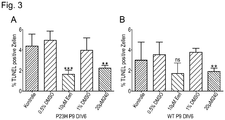
- the radial sections produced from this show a clear increase in the survival of such photoreceptors and a reduced tunnel staining of those retinas that were produced with ML240 ( Fig. 2 ; B and E) and Eerl ( Fig. 2 ; C and F) were treated compared to the control that was only treated with DMSO ( Fig. 2 ; A and D).
- both VCP inhibitors i.e. both Eerl and ML240
- both Eerl and ML240 significantly reduce the number of dying photoreceptors compared to the correspondingly untreated and DMSO-treated (0.5 and 1%) controls
- the VCP inhibitors also reduce the percentage of TUNEL-positive cells in WT-cultivated retinas, ML240 significantly and Eerl not significantly ( Fig. 3 ; B); ** p ⁇ 0.01; *** p ⁇ 0.001.
- the VCP inhibitors also have a stabilizing effect on "healthy" photoreceptors that do not have any mutations in their proteins.
- VCP inhibitors exert a stabilization on photoreceptors whose proteins are in the wild type or are not mutually folded. This leads to the inventive finding that VCP inhibitors can be used for the prophylaxis and / or treatment of a neurodegenerative disease that is not based on a protein folding disorder and for the stabilization of photoreceptors.
Landscapes
- Health & Medical Sciences (AREA)
- Pharmacology & Pharmacy (AREA)
- Veterinary Medicine (AREA)
- Public Health (AREA)
- General Health & Medical Sciences (AREA)
- Chemical & Material Sciences (AREA)
- Animal Behavior & Ethology (AREA)
- Life Sciences & Earth Sciences (AREA)
- Medicinal Chemistry (AREA)
- Epidemiology (AREA)
- Engineering & Computer Science (AREA)
- Bioinformatics & Cheminformatics (AREA)
- Neurosurgery (AREA)
- Organic Chemistry (AREA)
- Nuclear Medicine, Radiotherapy & Molecular Imaging (AREA)
- General Chemical & Material Sciences (AREA)
- Chemical Kinetics & Catalysis (AREA)
- Neurology (AREA)
- Biomedical Technology (AREA)
- Ophthalmology & Optometry (AREA)
- Psychiatry (AREA)
- Hospice & Palliative Care (AREA)
- Medicines That Contain Protein Lipid Enzymes And Other Medicines (AREA)
- Pharmaceuticals Containing Other Organic And Inorganic Compounds (AREA)
- Acyclic And Carbocyclic Compounds In Medicinal Compositions (AREA)
Description
- Die vorliegende Erfindung betrifft Substanzen zur Prophylaxe und Behandlung einer nicht auf einer Proteinfaltungsstörung beruhenden neurodegenerativen Erkrankung.
- Neurodegenerative Erkrankungen bilden eine Gruppe von meist langsam fortschreitenden, erblich oder sporadisch auftretenden Erkrankungen des Nervensystems. Hauptmerkmal ist der zunehmende Verlust von Nervenzellen, der zu verschiedenen neurologischen Symptomen führt, darunter häufig zu Demenz und Bewegungsstörungen. Die Erkrankungen können in unterschiedlichen Lebensaltern auftreten, verlaufen diffus oder generalisiert und rufen charakteristische Schädigungsmuster hervor.
- Von besonderer Bedeutung sind neurodegenerative Erkrankungen des Auges.
- Die retinale Degeneration ist ein Verfall der Retina, der schließlich zum Tod der Netzhautzellen führen kann. Eine der wichtigsten Formen der Retinadegeneration ist die sogenannte Retinitis pigmentosa (RP) oder auch Retinopathia pigmentosa genannt. Weltweit sind von RP etwa 3 Millionen Menschen, in Deutschland etwa 30.000 bis 40.000, betroffen. Die Erkrankung tritt meistens im Jugendalter oder in den mittleren Lebensjahren mit den ersten Merkmalen, wie beispielsweise Nachtblindheit, auf. Die Sehkraft lässt allmählich nach. Der gesamte Prozess zunehmender Sehbehinderung verläuft schleichend und erstreckt sich beim Betroffenen meistens über Jahrzehnte hinweg.
- Unter dem Begriff Maculadegeneration wird eine Gruppe von neurodegenerativen Erkrankungen des Auges zusammengefasst, die die Macula lutea, auch "gelber Fleck" genannt, der Netzhaut betreffen und mit einem allmählichen Funktionsverlust der dort befindlichen Gewebe einhergehen. Die wichtigste Form bildet hier die altersbedingte Makuladegeneration (AMD) in ihrer trockenen oder feuchten Form. Sie beginnt durch Ablagerungen von sogenannten Drusen, Stoffwechselendprodukten wie Lipofuszinen sowie einer gestörten Durchblutung der Aderhaut, die in einer sogenannten geographischen Atrophie resultieren kann. Sie kann von der trockenen in die feuchte Form übergehen, bei der es zur Gefäßneubildung, Ödemen und Einblutung in die Netzhaut kommen kann. Die beiden Formen können im fortgeschrittenen Stadium in einen flächigen Zelltod des retinalen Pigmentepitels übergehen.
- Die diabetische Retinopathie (DR) ist eine durch die Zuckerkrankheit Diabetes mellitus hervorgerufene Erkankung der Netzhaut des Auges. Die zunehmende Schädigung kleiner Blutgefäße verursacht eine zunächst unbemerkte Schädigung der Netzhaut. Im weiteren Verlauf kann es auch hier zu Ödemen und Einblutung bis hin zur Netzhautablösung kommen. DR kann im Verlauf zur Erblindung führen.
- Die bisher verfügbaren pharmakologischen Therapieansätze gegen neurodegenerative Erkrankungen, insbesondere solche des Auges, sind bislang nicht zufriedenstellend.
- So haben beispielsweise die zur Behandlung von degenerativen Augenerkrankungen vorgesehenen Substanzen "Ranibizumab" bzw. "Lucentis" sowie "VEGF-Trap" ein in der Praxis begrenztes Wirkungsspektrum. Insbesondere bei erblichen Netzhauterkrankungen sowie der trockenen Form der AMD wirken diese Substanzen nicht oder nicht zufriedenstellend
- Die Gruppe der sogenannten VCP-Inhibitoren werden im Stand der Technik zur Behandlung von neurodegenerativen Erkrankungen beschrieben. VCP steht für "Valosin-containing protein" bzw. "Valosin-haltiges Protein". VCP, das auch als p97 bezeichnet wird, ist ein Protein, welches als ein solches beschrieben wird, das in eukaryotischen Zellen in die Proteinqualitätskontrolle und Entfernung von fehlgefalteten Proteinen involviert ist.
- In der
WO 2013/068431 wird die Behandlung von Muskelschwund aufgrund mutierter und fehlgefalteter SOD1 mittels der VCP-Inhibitoren Eer-I, DBEQ und Syk-Inhibitor-III beschrieben. - Griciuc et al. (2010), Inactivation of VCP/ter94 suppresses retinal pathology caused by misfolded Rhodopsin in Drosophila, PLoS Genet. 6(8): e1001075, beschreiben die Unterdrückung von retinaler Degeneration, verursacht durch fehlgefaltetes Rhodopsin, durch eine Inhibition von VCP.
- Valle et al. (2011), Critical role of VCP/p97 in the pathogenesis and progression of non-small cell lung carcinoma, PLoS ONE 6(12): e209073, beschreiben die Hemmung der Lungentumorzellproliferation und -migration und Induktion von Apoptose durch eine Inhibition von VCP.
- Muraoka et al. (2013), A novel Valosin-containing protein inhibitor suppresses photoreceptor degeneration in a rapid model of Retinitis pigmentosa, Poster Session ARVO Jahreskonferenz Seattle 2013, beschreiben die Unterdrückung der Photorezeptordegeneration, verursacht durch missgefaltetes Rhodopsin, durch den Einsatz von VCP-Inhibitoren.
- In der
EP 2 623 494 werden verschiedene VCP-Inhibitoren zur Behandlung von Glaukomen und Retinitis pigmentosa vorgeschlagen, die auf Proteinfaltungsstörungen beruhen. - In dem Dokument
WO 2009/011910 wird ein VCP-Inhibitor mit der Bezeichnung "Eeyarestatin" beschrieben. Chou et al. (2013), ChemMedChem 8, 297 ― 312, beschreiben Struktur-Aktivitäts-Experimente, die an den beiden VCP-Inhibitoren ML240 und ML241 im Hinblick auf das inhibitorische Potenzial auf die p97-ATPase durchgeführt wurden. - Zufriedenstellende pharmakologische Interventionen zur Behandlung von solchen neurodegenerativen Erkrankungen, die nicht auf einer Proteinfaltungsstörung beruhen, stehen im Stand der Technik bislang nicht zur Verfügung.
- Vor diesem Hintergrund ist es eine Aufgabe der vorliegenden Erfindung eine Substanz bereitzustellen, die wirksam in der Prophylaxe und/oder Behandlung einer nicht auf einer Proteinfaltungsstörung beruhenden neurodegenerativen Augenerkrankung ist.
- Diese Aufgabe wird durch die Bereitstellung bzw. Verwendung eines Inhibitors des Valosin-haltigen Proteins (VCP-Inhibitor) gelöst, wobei es sich bei der Augenerkrankung um altersbedingte Makuladegeneration (AMD) oder diabetische Retinopathie (DR) handelt.
- Diese Erkenntnis war überraschend und so nicht zu erwarten. So ist im Stand der Technik beschrieben, dass VCP-Inhibitoren bei neurodegenerativen Erkrankungen eingesetzt werden können, die auf einer Proteinfaltungsstörung, beispielsweise auf fehlgefaltetem Rhodopsin beruhen.
- Die Erkenntnis der Erfinder war auch deshalb nicht zu erwarten, da VCP als ein solches Protein beschrieben ist, das direkt in die Proteinfaltungsmaschinerie der Zelle involviert ist. Bei VCP handelt es sich nach der Literatur um ein ATP-getriebenes Chaperon, das kritische Schritte in der Ubiquitin-abhängigen Proteinqualitätskontrolle regelt, fehlgefaltete Proteine aus dem endoplasmatischen Retikulum extrahiert und diese der proteasolmalen Degradation zuführt. In der Literatur ist ferner bereits beschrieben worden, dass VCP mit fehlgefaltetem Rhodopsin kolokalisiert.
- Es wurde deshalb bislang vermutet, dass VCP-Inhibitoren bei neurodegenerativen Erkrankungen, die nicht auf einer Proteinfaltungsstörung beruhen, keinerlei Wirkung zeigen.
- Erfindungsgemäß wird unter einer "nicht auf einer Proteinfaltungsstörung beruhenden neurodegenerativen Erkrankung" eine solche Neurodegeneration verstanden, die durch keinerlei Mutation verursacht wird, welche dann in einer Proteinfaltungsstörung resultieren würde. Erfindungsgemäß betrifft dies die altersbedingte Makuladegeneration (AMD), die bei fortschreitendem Altern und/oder aufgrund von entzündlichen Ereignissen auftritt, und die diabetische Retinopathie (DR), die auf einer gestörter zellulärer Homöostase und Sauerstoffversorgung beruht.
- Erfindungsgemäß bedeutet "Stabilisierung von Photorezeptoren" das Entgegenwirken einer Degeneration des Photorezeptors, sei es durch eine Verhinderung der Degeneration oder Reduzierung der Degenerationsgeschwindigkeit.
- Die Erfinder konnten anhand einer repräsentativen Anzahl verschiedener VCP-Inhibitoren, die chemisch und strukturell unterschiedlich waren, überraschenderweise feststellen, dass Photorezeptoren, die aus Wildtyp-Ratten gewonnen wurden, in Zellkultur nach Behandlung mit VCP-Inhibitoren signifikant länger funktionsfähig bleiben als unbehandelte Photorezeptoren. Die üblicherweise in Zellkulturen beobachtete Degeneration der Photorezeptoren wird durch die Behandlung mit VCP-Inhibitoren zeitlich signifikant verlangsamt. Die Photorezeptoren werden überraschenderweise durch die VCP-Inhibitoren stabilisiert.
- Die der Erfindung zugrundeliegende Aufgabe wird hiermit vollkommen gelöst.
- Bei der neurodegenerativen Erkrankung handelt es sich um eine Augenerkrankung, die nicht auf einer Proteinfaltungsstörung eines Sehpigments, bspw. von Rhodopsin und/oder Opsin beruht.
- Diese Maßnahme hat den Vorteil, dass ein neues Behandlungskonzept für eine wichtige Gruppe von neurodegenerativen Erkrankungen bereitgestellt wird. So basiert der weitaus größte Anteil von Rhetinitis pigmentosa (RP) nicht auf einer Proteinfaltungsstörung des Rhodopsins oder eines anderen Sehpigments bzw. -proteins, sondern geht auf andere Ursachen zurück.
- Die Augenerkrankung ist altersbedingte Makuladegeneration (AMD), insbesondere in ihrer trockenen Form, und diabetische Retinophathie (DR).
- Für die vorstehend genannten Augenerkrankungen, die nicht auf einer Proteinfaltungsstörung beruhen, stehen im Stand der Technik bislang keine oder nur begrenzt zufriedenstellende Therapiemöglichkeiten zur Verfügung. Die Erfinder stellen hier erstmals ein neues und vielversprechendes Therapiekonzept bereit.
- Dabei ist es nach einer bevorzugten Weiterentwicklung bevorzugt, wenn der VCP-Inhibitor intraokular, periokular oder systemisch verabreicht wird.
- Diese Maßnahme hat den Vorteil, dass nach Art der neurodegenerativen Erkrankung jeweils die optimale Verabreichungsform gewählt wird.
- Bei der offenbarten Verwendung des VCP-Inhibitors zur Stabilisierung von Photorezeptoren liegen die im Photorezeptor lokalisierten Proteine vorzugsweise im Wildtyp vor, wobei es sich bei den im Photorezeptor lokalisierten Proteinen weiter bevorzugt um Sehpigmente und höchst bevorzugt um Rhodopsin und/oder Opsin handelt.
- Diese Maßnahme hat den Vorteil, dass nun erstmals mit dem VCP-Inhibitor auch solche Photorezeptoren stabilisiert werden können, die nicht durch eine Mutation in einem Protein des Photorezeptors, wie einem Sehfarbstoff, bspw. Rhodopsin oder Opsin, geschädigt sind und dadurch einer Degeneration unterliegen. Die Stabilisierung erfolgt vielmehr auch in solchen Fällen, in denen die Degeneration durch andere Ursachen wie zunehmendes Alter, gestörte zelluläre Homöostase oder gestörte Sauerstoffzufuhr sowie Entzündung etc. verursacht wird.
- Nach einer bevorzugten Ausgestaltung der offenbarten Verwendung des VCP-Inhibitors zur Stabilisierung von Photorezeptoren weist zumindest eines der im Photorezeptor lokalisierten Proteine, wie einem Sehfarbstoff, bspw. Rhodopsin oder Opsin, zumindest eine Mutation oder genetische Risikovariante auf, die nicht in einer Proteinfaltungsstörung resultiert.
- Diese Maßnahme hat den Vorteil, dass nunmehr auch die große Gruppe der in Pathologien des Auges auftretenden Phänomene erfasst werden, in denen eine Degenration des Pigmentepithels bzw. des Photorezeptors beobachtet wird, die involvierten oder verursachenden Mutationen oder genetischen Risikovarianten wie bspw. Polymorphismen jedoch nicht zu einer Proteinfaltungsstörung sondern ggf. zu Funktionsstörungen des betroffenen Proteins führen.
- Nach einer bevorzugten Weiterentwicklung der offenbarten Verwendung des VCP-Inhibitors zur Stabilisierung von Photorezeptoren umfassen die im Photorezeptor lokalisierten Proteine Sehpigmente, weiter bevorzugt Rhodopsin und Opsin.
- Diese Maßnahme hat den Vorteil, dass der VCP-Inhibitor auch zur Stabilisierung solcher Photorezeptoren eingesetzt werden kann, bei denen die wichtigsten Photorezeptorproteine im Wildtyp vorliegen oder eine solche Mutation aufweisen, die zur Photorezeptordegeneration führt, nicht jedoch eine Faltungsstörung des Rhodopsins verursacht.
- Die vorliegende Erfindung betrifft ein Inhibitor des Valosin-haltigen Proteins (VCP-Inhibitor) zur Prophylaxe und/oder Behandlung einer nicht auf einer Proteinfaltungsstörung beruhenden neurodegenerativen Augenerkrankung mit den Merkmalen des Patentanspruchs 1.
- Vor diesem Hintergrund ist ein weiterer Gegenstand der vorliegenden Erfindung eine pharmazeutische Zusammensetzung zur Prophylaxe und/oder Behandlung einer nicht auf einer Proteinfaltungsstörung beruhenden neurodegenerativen Augenerkrankung, die als Wirkstoff einen VCP-Inhibitor aufweist, wobei die Augenerkrankung altersbedingte Makuladegeneration (AMD) oder diabetische Retinopathie (DR) ist. Dabei kann es sich bei dem VCP-Inhibitor um den alleinigen Wirkstoff handeln. Es können jedoch weitere Wirkstoffe vorgesehen werden, die gegebenenfalls synergistische Effekte induzieren.
- Die erfindungsgemäße pharmazeutische Zusammensetzung ist vorzugsweise zur intraokularen, periokularen oder systemischen Verabreichung ausgestaltet. Es kann sich beispielsweise um Augentropfen oder aber eine Injektionslösung oder eine andere pharmazeutische Zusammensetzung handeln, die zusätzlich einen pharmazeutisch akzeptablen Träger sowie Salze, Puffer und weitere Substanzen enthalten können.
- Die Merkmale, Vorteile, Eigenschaften und Weiterentwicklungen der erfindungsgemäßen Verwendung gelten für die erfindungsgemäße pharmazeutische Zusammensetzung gleichermaßen.
- Offenbart wird ein Verfahren zur Herstellung einer pharmazeutischen Zusammensetzung zur Prophylaxe und/oder Behandlung einer nicht auf einer Proteinfaltungsstörung beruhenden neurodegenerativen Augenerkrankung, wobei die Augenerkrankung altersbedingte Makuladegeneration (AMD) oder diabetische Retinopathie (DR) ist, das die Formulierung eines VCP-Inhibitors in einen pharmazeutisch akzeptablen Träger aufweist.
- Pharmazeutisch akzeptable Träger sind im Stand der Technik umfassend beschrieben und richten sich nach der beabsichtigten Applikationsform. Eine Übersicht findet sich beispielsweise in A. Kibbe, "Handbook of Pharmaceutical Excipients", 3rd Edition, 2000, American Pharmaceutical Association and Pharmaceutical Press.
- Ein weiterer Aspekt der vorliegenden Offenbarung betrifft ein Verfahren zur Prophylaxe und/oder Behandlung einer nicht auf einer Proteinfaltungsstörung beruhenden neurodegenerativen Erkrankung, das die Verabreichung eines VCP-Inhibitors bzw. der erfindungsgemäßen pharmazeutischen Zusammensetzung in ein Lebewesen umfasst, vorzugsweise in oder auf das Auge des Lebewesens.
- Die Merkmale, Eigenschaften, Vorteile und Weiterentwicklungen der erfindungsgemäßen Verwendung gelten für die Verfahren entsprechend.
- Es versteht sich, dass die vorstehend genannten und die nachstehend noch zu erläuternden Merkmale nicht nur in der jeweils angegebenen Kombination, sondern auch in anderen Kombinationen oder in Alleinstellung verwendbar sind, ohne den Rahmen der vorliegenden Erfindung zu verlassen.
- Die Erfindung wird nun anhand von Ausführungsbeispielen weiter erläutert, aus denen sich weitere Eigenschaften, Merkmale und Vorteile der Erfindung ergeben. Die Ausführungsbeispiele sind rein illustrativ und schränken die Reichweite der vorliegenden Erfindung nicht ein. Dabei wird Bezug genommen auf die beigefügten Figuren, in denen Folgendes dargestellt ist:
- Fig. 1
- zeigt die chemischen Strukturen der VCP-Inhibitoren ML240 (A) und Eeya-restatin I (Eerl) (B).
- Fig. 2
- zeigt fluoreszensmikroskopische Aufnahmen eines TUNEL-Assays für sterbende Zellen. Retinale Organkulturen, die von in Rhodopsin mutierten (P23H) und Wildtypratten erhalten wurden, wurden mit ML240 (B und E) und Eerl (C und F) behandelt. Die Kontrollen wurden mit DMSO behandelt. Von den Kulturen wurden Radialschnitte angefertigt und eine TUNEL-Färbung durchgeführt.
- Fig. 3
- zeigt in einem Balkendiagramm das Ergebnis aus
Fig.2 , d.h. den Photorezeptorzelltod in kultivierten Retinas, die aus in Rhodopsin mutierten (P23H) (A) und Wildtypratten (B) gewonnen wurden, in Abhängigkeit der VCP-Inhibitoren ML240 und Eerl. Dargestellt ist der prozentuale Anteil von TUNEL-positiven Zellen in der äußeren nukleären Schicht (ONL) im Vergleich zu der Gesamtzahl der Zellkerne in der ONL. - Sämtliche Maßnahmen wurden von dem Tierschutzkomitee der Universität Tübingen genehmigt und in Übereinstimmung mit der Erklärung der Association for Research in Vision and Ophthalmology ("AFO Statement") durchgeführt. Die Protokolle stehen im Einklang mit § 4 Abs. 3 des Deutschen Tierschutzgesetzes und wurden durch die "Einrichtung für Tierschutz, tierärztlichen Dienst und Labortierkunde" geprüft und genehmigt. Es wurden jegliche Bemühungen unternommen, um die Anzahl der Tiere und deren Leid zu minimieren.
- Homozygote P23H Rhodopsin-transgene Ratten (hergestellt von Chrysalis DNX Transgenic Sciences, Princeton, NJ, Vereinigte Staaten von Amerika) der Linie Tg (P23H) 1Lav (P23H-1) wurden freundlicherweise bereitgestellt von Dr. M.M. LaVail (Universität von Kalifornien, San Francisco, CA, Vereinigte Staaten von Amerika) und in den Tierbehausungseinrichtungen des Zentrums für Ophthalmologie in Tübingen gehalten. Es wurden heterozygote P23H-Ratten verwendet, die durch Kreuzung mit wt, CD Ratten (CDH IGS Rat; Charles River, Deutschland) erhalten wurden, um den genetischen Hintergrund der autosomal-dominanten Retinitis pigmentosa (ADRP) wieder zu geben.
- Retinas vom postnatalen Tag 9 (PN9) von P23H-transgenen Ratten wurden für sechs Tage (DIV6) kultiviert, was PN15, d.h. dem Höhepunkt der Degeneration in solchen Mutanten entspricht, die in vivo hinsichtlich des Alters angepasst wurden. Der Tag der Geburt wurde auf P0 festgelegt. Zur Anfertigung von Radialschnitten wurden die Kulturen für 30 Minuten bei 4°C in 4 % Paraformaldehyd in 0,1 M Phosphatpuffer (PB; pH 7,4) getränkt und in Cryomatrix (Tissue-Tek, Leica, Bensheim, Deutschland) eingebettet. Die Radialschnitte (15 µm Dicke) wurden sofort verarbeitet oder bei 20°C gelagert.
- Die Retinas wurden von neun Tage alten P23H-Ratten mit dem anhaftendem retinalen Pigmentepithel (RPE) isoliert, im Wesentlichen wie zuvor beschrieben in Caffe et al. (2001), "Mouse retina explants after long-term culture in serum free medium", J. Chem. Neuroanat. 22(4): 263-73, und Arango-Gonzalez et al. (2010), "In vivo and in vitro development of S- and M-cones in rat retina", Invest. Ophthalmol. Vis. Sci. 2010 Oct;51(10):5320-7. In Kürze, die Augen von enthaupteten Ratten wurden für 15 Minuten bei 37°C in einer aseptischen Umgebung entkernt und mit 12 % Proteinase K (ICN Biomedicals Inc., OH, Vereinigte Staaten von Amerika) in R16 serumfreien Kulturmedium (Invitrogen Life Technologies, Paisley, Vereinigtes Königreich) vorbehandelt. Der enzymatische Verdau wurde durch Zugabe von 20 % fötalem Rinderserum gestoppt. Retina und RPE wurden freigelegt und vier Radialschnitte wurden getätigt, um das Gewebe flach zu machen. Das Gewebe wurde auf eine 0,5 µm Polycarbonatmembran (Corning Life Sciences, Lowell, MA, Vereinigte Staaten von Amerika) transferiert, wobei das RPE der Membran zugewandt war. Die Inserts wurden in Kulturplatten mit sechs Vertiefungen gegeben und mit R16-Nährmedium bei 36,5°C versetzt. Die Retina wurde in R16 Kulturmedium ohne Behandlung für einen Tag belassen, um eine Gewöhnung an die Kulturbedingungen zu ermöglichen. Das Medium wurde bei DIV1, DIV3 und DIV5 ausgetauscht und neues Medium und enthielt entweder ML240 (1 µM oder 20 µM) oder Eerll (1 µM oder 20 µM). Beide Verbindungen wurden vorab in Dimethylsulfoxid (DMSO, Sigma) verdünnt. Als Kontrollen wurde die gleiche Menge von DMSO (0,05 % bzw. 1 %) in Kulturmedium verdünnt. Die Kulturen wurden bei DIV6 fixiert und als Radialschnitte analysiert.
- Ein TUNEL-Assay ("terminal deoxynucleotidyltransferase dUTP nick end labeling") wurde durchgeführt, indem ein in situ Zelltoddetektionskit konjugiert mit Fluoreszeinisothiocyanat (Roche Diagnostics, Mannheim, Deutschland) verwendet wurde.
- Die Schnitte wurden über Nacht bei 4°C mit primären Antikörpern gegen Rhodopsin oder Visual Arrestin inkubiert. Die Fluoreszenzimmuncytochemie wurde unter Verwendung von mit Alexa Fluor® 488 und 564 konjugierten Sekundärantikörpern (Molecular Probes, Incorporation, Eugene, Vereinigte Staaten von Amerika) durchgeführt. Negativkontrollen wurden durchgeführt, indem der Primärantikörper weggelassen wurde.
- Retinale Organkulturen wurden aus in Rhodopsin mutierten (P23H) Ratten und aus Wildtypratten gewonnen. Die P23H-Mutation im Rhodopsin der Ratte entspricht der P37H-Mutation beim Menschen (Rh1P37H), die zu fehlgefaltetem Rhodamin und einer Form von RP führt. Diese Organkulturen wurden mit den VCP-Inhibitoren ML240 (
Fig. 1A ) und Eerl (Fig. 1B ) behandelt. Die hiervon angefertigten Radialschnitte zeigen einen deutlichen Anstieg des Überleben solcher Photorezeptoren und eine reduzierte Tunnelfärbung solcher Retinas, die mit ML240 (Fig. 2 ; B und E) und Eerl (Fig. 2 ; C und F) behandelt wurden, im Vergleich zur Kontrolle, die nur mit DMSO behandelt wurde (Fig. 2 ; A und D). - Dabei zeigt sich erwartungsgemäß, dass in der P23H Mutante beide VCP-Inhibitoren, also sowohl Eerl als auch ML240, die Anzahl von sterbenden Photorezeptoren im Vergleich zu den entsprechend unbehandelten und DMSO-behandelten (0,5 und 1 %) Kontrollen signifikant reduziert (
Fig. 3 ; A). Überraschenderweise reduzieren auch in WT-kultivierten Retinas die VCP-Inhibitoren den prozentualen Anteil von TUNEL-positiven Zellen, ML240 signifikant und Eerl nicht signifikant (Fig. 3 ; B); **p < 0,01; ***p < 0,001. Die VCP-Inhibitoren haben also auch auf "gesunde" Photorezeptoren, die in ihren Proteinen keine Mutation aufweisen, eine stabilisierende Wirkung. - Die Erfinder konnten auf eindrucksvolle Weise anhand eines Retinaexplantatsystems demonstrieren, dass VCP-Inhibitoren eine Stabilisierung auf Photorezeptoren ausüben, deren Proteine im Wildtyp bzw. nicht faltungsmutiert vorliegen. Dies führt zur erfinderischen Erkenntnis, dass VCP-Inhibitoren zur Prophylaxe und/oder Behandlung einer nicht auf einer Proteinfaltungsstörung beruhenden neurodegenerativen Erkrankung und zur Stabilisierung von Photorezeptoren verwendet werden können.
Claims (5)
- Inhibitor des Valosin-haltigen Proteins (VCP-Inhibitor) zur Verwendung in der Prophylaxe und/oder Behandlung einer nicht auf einer Proteinfaltungsstörung beruhenden neurodegenerativen Erkrankung, wobei es sich um eine Augenerkrankung handelt, dadurch gekennzeichnet, dass die Augenerkrankung altersbedingte Makuladegeneration (AMD) oder diabetische Retinopathie (DR) ist.
- VCP-Inhibitor nach Anspruch 1, dadurch gekennzeichnet, dass es sich bei der AMD um die in ihrer trockenen Form handelt.
- VCP-Inhibitor nach Anspruch 1 oder 2, dadurch gekennzeichnet, dass der VCP-Inhibitor in einer Augentropflösung, als intraokular oder systemisch verabreichtes Präparat oder als Nahrungsergänzungsmittel vorliegt.
- Pharmazeutische Zusammensetzung zur Verwendung in der Prophylaxe und/oder Behandlung einer nicht auf einer Proteinfaltungsstörung beruhenden neurodegenerativen Erkrankung, die als Wirkstoff den VCP-Inhibitor nach einem der Ansprüche 1 bis 3 aufweist, wobei es sich bei der nicht auf einer Proteinfaltungsstörung beruhenden neurodegenerativen Erkrankung um die Augenkrankheit der altersbedingten Makuladegeneration (AMD) oder diabetische Retinopathie (DR) handelt.
- Pharmazeutische Zusammensetzung nach Anspruch 4, dadurch gekennzeichnet dass diese als Augentropflösung, als intraokular oder systemisch verabreichtes Präparat oder als Nahrungsergänzungsmittel ausgestaltet ist.
Applications Claiming Priority (2)
| Application Number | Priority Date | Filing Date | Title |
|---|---|---|---|
| DE102013110714.1A DE102013110714A1 (de) | 2013-09-27 | 2013-09-27 | Prophylaxe und Behandlung einer nicht auf einer Proteinfaltungsstörung beruhenden neurodegenerativen Erkrankung |
| PCT/EP2014/070459 WO2015044251A1 (de) | 2013-09-27 | 2014-09-25 | Prophylaxe und behandlung einer nicht auf einer proteinfaltungsstörung beruhenden neurodegenerativen erkrankung |
Publications (2)
| Publication Number | Publication Date |
|---|---|
| EP3049071A1 EP3049071A1 (de) | 2016-08-03 |
| EP3049071B1 true EP3049071B1 (de) | 2021-11-17 |
Family
ID=51627282
Family Applications (1)
| Application Number | Title | Priority Date | Filing Date |
|---|---|---|---|
| EP14777049.9A Active EP3049071B1 (de) | 2013-09-27 | 2014-09-25 | Prophylaxe und behandlung einer nicht auf einer proteinfaltungsstörung beruhenden neurodegenerativen erkrankung |
Country Status (4)
| Country | Link |
|---|---|
| US (1) | US11229651B2 (de) |
| EP (1) | EP3049071B1 (de) |
| DE (1) | DE102013110714A1 (de) |
| WO (1) | WO2015044251A1 (de) |
Families Citing this family (4)
| Publication number | Priority date | Publication date | Assignee | Title |
|---|---|---|---|---|
| US10752593B2 (en) | 2018-12-28 | 2020-08-25 | Endogena Therapeutics, Inc. | Compounds for use as therapeutically active substances in the treatment of retinal diseases |
| WO2019133904A1 (en) * | 2017-12-30 | 2019-07-04 | Unity Biotechnology, Inc. | Inhibitors of hsp90, pi3-kinase, proteasome, hdac, and p97 pathways for selective removal of senescent cells in the treatment of age related conditions |
| US10807973B2 (en) | 2018-12-28 | 2020-10-20 | Endogena Therapeutics, Inc. | Compounds for use as therapeutically active substances in the treatment of retinal diseases |
| GB202109830D0 (en) * | 2021-07-07 | 2021-08-18 | Francis Crick Institute Ltd | VCP inhibitors and uses thereof for treatment |
Family Cites Families (5)
| Publication number | Priority date | Publication date | Assignee | Title |
|---|---|---|---|---|
| US8637560B2 (en) * | 2007-07-18 | 2014-01-28 | The United States Of America As Represented By The Secretary Of The Department Of Health And Human Services | Imidazolidinone compounds, methods to inhibit deubiquitination and methods of treatment |
| US8518968B2 (en) * | 2009-12-04 | 2013-08-27 | The United States Of America, As Represented By The Secretary, Department Of Health And Human Services | Hydrazone and diacyl hydrazine compounds and methods of use |
| US8865708B2 (en) * | 2010-05-07 | 2014-10-21 | California Institute Of Technology | Methods and compositions for inhibition of the transitional endoplasmic reticulum ATPase |
| WO2012043891A1 (ja) * | 2010-09-30 | 2012-04-05 | ダイトーケミックス株式会社 | 眼疾患処置薬 |
| EP2776022A1 (de) | 2011-11-08 | 2014-09-17 | Novartis Forschungsstiftung, Zweigniederlassung Friedrich Miescher Institute For Biomedical Research | Neue behandlung für neurodegenerative erkrankungen |
-
2013
- 2013-09-27 DE DE102013110714.1A patent/DE102013110714A1/de active Pending
-
2014
- 2014-09-25 WO PCT/EP2014/070459 patent/WO2015044251A1/de not_active Ceased
- 2014-09-25 EP EP14777049.9A patent/EP3049071B1/de active Active
-
2016
- 2016-03-28 US US15/082,409 patent/US11229651B2/en active Active
Non-Patent Citations (2)
| Title |
|---|
| LAURA CAMPELLO ET AL: "The Ubiquitin-Proteasome System in Retinal Health and Disease", MOLECULAR NEUROBIOLOGY, vol. 47, no. 2, 22 January 2013 (2013-01-22), US, pages 790 - 810, XP055470981, ISSN: 0893-7648, DOI: 10.1007/s12035-012-8391-5 * |
| SHANG FU ET AL: "Function of the ubiquitin proteolytic pathway in the eye", EXPERIMENTAL EYE RESEARCH., vol. 78, no. 1, 1 January 2004 (2004-01-01), LONDON., pages 1 - 14, XP055805470, ISSN: 0014-4835, DOI: 10.1016/j.exer.2003.10.003 * |
Also Published As
| Publication number | Publication date |
|---|---|
| US11229651B2 (en) | 2022-01-25 |
| EP3049071A1 (de) | 2016-08-03 |
| WO2015044251A1 (de) | 2015-04-02 |
| DE102013110714A1 (de) | 2015-04-02 |
| US20160213671A1 (en) | 2016-07-28 |
Similar Documents
| Publication | Publication Date | Title |
|---|---|---|
| Upadhyay et al. | Oxidative stress in the retina and retinal pigment epithelium (RPE): Role of aging, and DJ-1 | |
| Rodríguez-Muela et al. | Autophagy promotes survival of retinal ganglion cells after optic nerve axotomy in mice | |
| Kong et al. | Nanoceria extend photoreceptor cell lifespan in tubby mice by modulation of apoptosis/survival signaling pathways | |
| Sanz et al. | Significant photoreceptor rescue by treatment with a combination of antioxidants in an animal model for retinal degeneration | |
| DE602004005617T2 (de) | Mittel zur behandlung von glaukomatöser retinopathie und optischer neuropathie | |
| Li et al. | Neural stem cells transplanted to the subretinal space of rd1 mice delay retinal degeneration by suppressing microglia activation | |
| US8097640B2 (en) | Prophylactic or therapeutic agent for diabetic maculopathy | |
| CN117580573A (zh) | L-麦角硫因用于缓解和预防年龄相关的视力退化 | |
| Torriglia et al. | On the retinal toxicity of intraocular glucocorticoids | |
| Callan et al. | Cellular and molecular mechanisms of neuronal degeneration in early-stage diabetic retinopathy | |
| DE202010017530U1 (de) | Danazolverbindung zur Behandlung von Krankheiten | |
| EP3049071A1 (de) | Prophylaxe und behandlung einer nicht auf einer proteinfaltungsstörung beruhenden neurodegenerativen erkrankung | |
| Tiruvalluru et al. | Vitamin A supplementation ameliorates obesity-associated retinal degeneration in WNIN/Ob rats | |
| EP2693216B1 (de) | Verfahren zur Diagnose oder Prädiagnose einer Beta-Amyloidopathie | |
| WO1999042088A2 (de) | Verfahren zur behandlung von erkrankungen oder störungen des innenohrs | |
| Zhu et al. | Neuroprotection and enhancement of remyelination by estradiol and dexamethasone in cocultures of rat DRG neurons and Schwann cells | |
| Wollmann et al. | Voltage-dependent ion channels in the mouse RPE: comparison with Norrie disease mice | |
| DE60027878T2 (de) | Verwendung des nervenwachstumfaktors zur herstellung eines arzneimittels zur behandlung von erkrankungen der innenaugegeweb | |
| DE69519219T2 (de) | Verwendung von (2S,4S)-6-fluoro-2',5'-dioxospiro[chroman-4,4'-imidazoline]-2-carboxamid zur Behandlung von Keratopathie | |
| CN106074585A (zh) | 人参皂苷Rb1和Rd组合及其在制备治疗光感受器细胞死亡相关疾病的药物中的应用 | |
| US20260115166A1 (en) | Compounds and methods of use thereof for the treatment of photoreceptor rod degenerations and generation of photoreceptors | |
| Bai et al. | Up-regulation of tau, a brain microtubule-associated protein, in lens cortical fractions of aged αA-, αB-, and αA/B-crystallin knockout mice | |
| DE10251028A1 (de) | Verwendung von Progesteron oder einem Progesteronrezeptor-Agonisten zur Hemmung der Steroidsynthese | |
| Nettesheim et al. | Elevated PRDM13 Disrupts Photoreceptor Function and Survival in the Mammalian Retina | |
| EP4724064A1 (de) | Zusammensetzung mit einer kombination aus einem kortikosteroid und einem flavonoid zur verwendung bei der behandlung von augenerkrankungen |
Legal Events
| Date | Code | Title | Description |
|---|---|---|---|
| PUAI | Public reference made under article 153(3) epc to a published international application that has entered the european phase |
Free format text: ORIGINAL CODE: 0009012 |
|
| 17P | Request for examination filed |
Effective date: 20160425 |
|
| AK | Designated contracting states |
Kind code of ref document: A1 Designated state(s): AL AT BE BG CH CY CZ DE DK EE ES FI FR GB GR HR HU IE IS IT LI LT LU LV MC MK MT NL NO PL PT RO RS SE SI SK SM TR |
|
| AX | Request for extension of the european patent |
Extension state: BA ME |
|
| RIN1 | Information on inventor provided before grant (corrected) |
Inventor name: UEFFING, MARIUS Inventor name: GRICIUC, ANA Inventor name: ARANGO-GONZALEZ, BLANCA |
|
| DAX | Request for extension of the european patent (deleted) | ||
| STAA | Information on the status of an ep patent application or granted ep patent |
Free format text: STATUS: EXAMINATION IS IN PROGRESS |
|
| 17Q | First examination report despatched |
Effective date: 20180507 |
|
| GRAP | Despatch of communication of intention to grant a patent |
Free format text: ORIGINAL CODE: EPIDOSNIGR1 |
|
| STAA | Information on the status of an ep patent application or granted ep patent |
Free format text: STATUS: GRANT OF PATENT IS INTENDED |
|
| INTG | Intention to grant announced |
Effective date: 20210601 |
|
| GRAS | Grant fee paid |
Free format text: ORIGINAL CODE: EPIDOSNIGR3 |
|
| GRAA | (expected) grant |
Free format text: ORIGINAL CODE: 0009210 |
|
| STAA | Information on the status of an ep patent application or granted ep patent |
Free format text: STATUS: THE PATENT HAS BEEN GRANTED |
|
| AK | Designated contracting states |
Kind code of ref document: B1 Designated state(s): AL AT BE BG CH CY CZ DE DK EE ES FI FR GB GR HR HU IE IS IT LI LT LU LV MC MK MT NL NO PL PT RO RS SE SI SK SM TR |
|
| REG | Reference to a national code |
Ref country code: GB Ref legal event code: FG4D Free format text: NOT ENGLISH |
|
| REG | Reference to a national code |
Ref country code: IE Ref legal event code: FG4D Free format text: LANGUAGE OF EP DOCUMENT: GERMAN |
|
| REG | Reference to a national code |
Ref country code: DE Ref legal event code: R096 Ref document number: 502014016002 Country of ref document: DE |
|
| REG | Reference to a national code |
Ref country code: AT Ref legal event code: REF Ref document number: 1447496 Country of ref document: AT Kind code of ref document: T Effective date: 20211215 |
|
| REG | Reference to a national code |
Ref country code: LT Ref legal event code: MG9D |
|
| REG | Reference to a national code |
Ref country code: NL Ref legal event code: MP Effective date: 20211117 |
|
| PG25 | Lapsed in a contracting state [announced via postgrant information from national office to epo] |
Ref country code: RS Free format text: LAPSE BECAUSE OF FAILURE TO SUBMIT A TRANSLATION OF THE DESCRIPTION OR TO PAY THE FEE WITHIN THE PRESCRIBED TIME-LIMIT Effective date: 20211117 Ref country code: LT Free format text: LAPSE BECAUSE OF FAILURE TO SUBMIT A TRANSLATION OF THE DESCRIPTION OR TO PAY THE FEE WITHIN THE PRESCRIBED TIME-LIMIT Effective date: 20211117 Ref country code: FI Free format text: LAPSE BECAUSE OF FAILURE TO SUBMIT A TRANSLATION OF THE DESCRIPTION OR TO PAY THE FEE WITHIN THE PRESCRIBED TIME-LIMIT Effective date: 20211117 Ref country code: BG Free format text: LAPSE BECAUSE OF FAILURE TO SUBMIT A TRANSLATION OF THE DESCRIPTION OR TO PAY THE FEE WITHIN THE PRESCRIBED TIME-LIMIT Effective date: 20220217 |
|
| PG25 | Lapsed in a contracting state [announced via postgrant information from national office to epo] |
Ref country code: IS Free format text: LAPSE BECAUSE OF FAILURE TO SUBMIT A TRANSLATION OF THE DESCRIPTION OR TO PAY THE FEE WITHIN THE PRESCRIBED TIME-LIMIT Effective date: 20220317 Ref country code: SE Free format text: LAPSE BECAUSE OF FAILURE TO SUBMIT A TRANSLATION OF THE DESCRIPTION OR TO PAY THE FEE WITHIN THE PRESCRIBED TIME-LIMIT Effective date: 20211117 Ref country code: PT Free format text: LAPSE BECAUSE OF FAILURE TO SUBMIT A TRANSLATION OF THE DESCRIPTION OR TO PAY THE FEE WITHIN THE PRESCRIBED TIME-LIMIT Effective date: 20220317 Ref country code: PL Free format text: LAPSE BECAUSE OF FAILURE TO SUBMIT A TRANSLATION OF THE DESCRIPTION OR TO PAY THE FEE WITHIN THE PRESCRIBED TIME-LIMIT Effective date: 20211117 Ref country code: NO Free format text: LAPSE BECAUSE OF FAILURE TO SUBMIT A TRANSLATION OF THE DESCRIPTION OR TO PAY THE FEE WITHIN THE PRESCRIBED TIME-LIMIT Effective date: 20220217 Ref country code: NL Free format text: LAPSE BECAUSE OF FAILURE TO SUBMIT A TRANSLATION OF THE DESCRIPTION OR TO PAY THE FEE WITHIN THE PRESCRIBED TIME-LIMIT Effective date: 20211117 Ref country code: LV Free format text: LAPSE BECAUSE OF FAILURE TO SUBMIT A TRANSLATION OF THE DESCRIPTION OR TO PAY THE FEE WITHIN THE PRESCRIBED TIME-LIMIT Effective date: 20211117 Ref country code: HR Free format text: LAPSE BECAUSE OF FAILURE TO SUBMIT A TRANSLATION OF THE DESCRIPTION OR TO PAY THE FEE WITHIN THE PRESCRIBED TIME-LIMIT Effective date: 20211117 Ref country code: GR Free format text: LAPSE BECAUSE OF FAILURE TO SUBMIT A TRANSLATION OF THE DESCRIPTION OR TO PAY THE FEE WITHIN THE PRESCRIBED TIME-LIMIT Effective date: 20220218 Ref country code: ES Free format text: LAPSE BECAUSE OF FAILURE TO SUBMIT A TRANSLATION OF THE DESCRIPTION OR TO PAY THE FEE WITHIN THE PRESCRIBED TIME-LIMIT Effective date: 20211117 |
|
| PG25 | Lapsed in a contracting state [announced via postgrant information from national office to epo] |
Ref country code: SM Free format text: LAPSE BECAUSE OF FAILURE TO SUBMIT A TRANSLATION OF THE DESCRIPTION OR TO PAY THE FEE WITHIN THE PRESCRIBED TIME-LIMIT Effective date: 20211117 Ref country code: SK Free format text: LAPSE BECAUSE OF FAILURE TO SUBMIT A TRANSLATION OF THE DESCRIPTION OR TO PAY THE FEE WITHIN THE PRESCRIBED TIME-LIMIT Effective date: 20211117 Ref country code: RO Free format text: LAPSE BECAUSE OF FAILURE TO SUBMIT A TRANSLATION OF THE DESCRIPTION OR TO PAY THE FEE WITHIN THE PRESCRIBED TIME-LIMIT Effective date: 20211117 Ref country code: EE Free format text: LAPSE BECAUSE OF FAILURE TO SUBMIT A TRANSLATION OF THE DESCRIPTION OR TO PAY THE FEE WITHIN THE PRESCRIBED TIME-LIMIT Effective date: 20211117 Ref country code: DK Free format text: LAPSE BECAUSE OF FAILURE TO SUBMIT A TRANSLATION OF THE DESCRIPTION OR TO PAY THE FEE WITHIN THE PRESCRIBED TIME-LIMIT Effective date: 20211117 Ref country code: CZ Free format text: LAPSE BECAUSE OF FAILURE TO SUBMIT A TRANSLATION OF THE DESCRIPTION OR TO PAY THE FEE WITHIN THE PRESCRIBED TIME-LIMIT Effective date: 20211117 |
|
| REG | Reference to a national code |
Ref country code: DE Ref legal event code: R097 Ref document number: 502014016002 Country of ref document: DE |
|
| PLBE | No opposition filed within time limit |
Free format text: ORIGINAL CODE: 0009261 |
|
| STAA | Information on the status of an ep patent application or granted ep patent |
Free format text: STATUS: NO OPPOSITION FILED WITHIN TIME LIMIT |
|
| 26N | No opposition filed |
Effective date: 20220818 |
|
| PG25 | Lapsed in a contracting state [announced via postgrant information from national office to epo] |
Ref country code: AL Free format text: LAPSE BECAUSE OF FAILURE TO SUBMIT A TRANSLATION OF THE DESCRIPTION OR TO PAY THE FEE WITHIN THE PRESCRIBED TIME-LIMIT Effective date: 20211117 |
|
| PG25 | Lapsed in a contracting state [announced via postgrant information from national office to epo] |
Ref country code: SI Free format text: LAPSE BECAUSE OF FAILURE TO SUBMIT A TRANSLATION OF THE DESCRIPTION OR TO PAY THE FEE WITHIN THE PRESCRIBED TIME-LIMIT Effective date: 20211117 |
|
| PG25 | Lapsed in a contracting state [announced via postgrant information from national office to epo] |
Ref country code: MC Free format text: LAPSE BECAUSE OF FAILURE TO SUBMIT A TRANSLATION OF THE DESCRIPTION OR TO PAY THE FEE WITHIN THE PRESCRIBED TIME-LIMIT Effective date: 20211117 |
|
| REG | Reference to a national code |
Ref country code: BE Ref legal event code: MM Effective date: 20220930 |
|
| PG25 | Lapsed in a contracting state [announced via postgrant information from national office to epo] |
Ref country code: IT Free format text: LAPSE BECAUSE OF FAILURE TO SUBMIT A TRANSLATION OF THE DESCRIPTION OR TO PAY THE FEE WITHIN THE PRESCRIBED TIME-LIMIT Effective date: 20211117 |
|
| PG25 | Lapsed in a contracting state [announced via postgrant information from national office to epo] |
Ref country code: LU Free format text: LAPSE BECAUSE OF NON-PAYMENT OF DUE FEES Effective date: 20220925 |
|
| PG25 | Lapsed in a contracting state [announced via postgrant information from national office to epo] |
Ref country code: IE Free format text: LAPSE BECAUSE OF NON-PAYMENT OF DUE FEES Effective date: 20220925 |
|
| PG25 | Lapsed in a contracting state [announced via postgrant information from national office to epo] |
Ref country code: BE Free format text: LAPSE BECAUSE OF NON-PAYMENT OF DUE FEES Effective date: 20220930 |
|
| REG | Reference to a national code |
Ref country code: AT Ref legal event code: MM01 Ref document number: 1447496 Country of ref document: AT Kind code of ref document: T Effective date: 20220925 |
|
| PG25 | Lapsed in a contracting state [announced via postgrant information from national office to epo] |
Ref country code: AT Free format text: LAPSE BECAUSE OF NON-PAYMENT OF DUE FEES Effective date: 20220925 |
|
| PG25 | Lapsed in a contracting state [announced via postgrant information from national office to epo] |
Ref country code: HU Free format text: LAPSE BECAUSE OF FAILURE TO SUBMIT A TRANSLATION OF THE DESCRIPTION OR TO PAY THE FEE WITHIN THE PRESCRIBED TIME-LIMIT; INVALID AB INITIO Effective date: 20140925 |
|
| PG25 | Lapsed in a contracting state [announced via postgrant information from national office to epo] |
Ref country code: CY Free format text: LAPSE BECAUSE OF FAILURE TO SUBMIT A TRANSLATION OF THE DESCRIPTION OR TO PAY THE FEE WITHIN THE PRESCRIBED TIME-LIMIT Effective date: 20211117 |
|
| PG25 | Lapsed in a contracting state [announced via postgrant information from national office to epo] |
Ref country code: MK Free format text: LAPSE BECAUSE OF FAILURE TO SUBMIT A TRANSLATION OF THE DESCRIPTION OR TO PAY THE FEE WITHIN THE PRESCRIBED TIME-LIMIT Effective date: 20211117 |
|
| PG25 | Lapsed in a contracting state [announced via postgrant information from national office to epo] |
Ref country code: TR Free format text: LAPSE BECAUSE OF FAILURE TO SUBMIT A TRANSLATION OF THE DESCRIPTION OR TO PAY THE FEE WITHIN THE PRESCRIBED TIME-LIMIT Effective date: 20211117 |
|
| PG25 | Lapsed in a contracting state [announced via postgrant information from national office to epo] |
Ref country code: MT Free format text: LAPSE BECAUSE OF FAILURE TO SUBMIT A TRANSLATION OF THE DESCRIPTION OR TO PAY THE FEE WITHIN THE PRESCRIBED TIME-LIMIT Effective date: 20211117 |
|
| REG | Reference to a national code |
Ref country code: CH Ref legal event code: U11 Free format text: ST27 STATUS EVENT CODE: U-0-0-U10-U11 (AS PROVIDED BY THE NATIONAL OFFICE) Effective date: 20251001 |
|
| PGFP | Annual fee paid to national office [announced via postgrant information from national office to epo] |
Ref country code: DE Payment date: 20250924 Year of fee payment: 12 |
|
| PGFP | Annual fee paid to national office [announced via postgrant information from national office to epo] |
Ref country code: GB Payment date: 20250919 Year of fee payment: 12 |
|
| PGFP | Annual fee paid to national office [announced via postgrant information from national office to epo] |
Ref country code: FR Payment date: 20250922 Year of fee payment: 12 |
|
| PGFP | Annual fee paid to national office [announced via postgrant information from national office to epo] |
Ref country code: CH Payment date: 20251001 Year of fee payment: 12 |