EP3032941B1 - Cytoplasmic male sterile cichorium plants - Google Patents
Cytoplasmic male sterile cichorium plants Download PDFInfo
- Publication number
- EP3032941B1 EP3032941B1 EP13752882.4A EP13752882A EP3032941B1 EP 3032941 B1 EP3032941 B1 EP 3032941B1 EP 13752882 A EP13752882 A EP 13752882A EP 3032941 B1 EP3032941 B1 EP 3032941B1
- Authority
- EP
- European Patent Office
- Prior art keywords
- seq
- dna
- cichorium
- lactuca
- male sterile
- Prior art date
- Legal status (The legal status is an assumption and is not a legal conclusion. Google has not performed a legal analysis and makes no representation as to the accuracy of the status listed.)
- Active
Links
Images


Classifications
-
- A—HUMAN NECESSITIES
- A01—AGRICULTURE; FORESTRY; ANIMAL HUSBANDRY; HUNTING; TRAPPING; FISHING
- A01H—NEW PLANTS OR NON-TRANSGENIC PROCESSES FOR OBTAINING THEM; PLANT REPRODUCTION BY TISSUE CULTURE TECHNIQUES
- A01H1/00—Processes for modifying genotypes ; Plants characterised by associated natural traits
- A01H1/02—Methods or apparatus for hybridisation; Artificial pollination ; Fertility
- A01H1/021—Methods of breeding using interspecific crosses, i.e. interspecies crosses
-
- A—HUMAN NECESSITIES
- A01—AGRICULTURE; FORESTRY; ANIMAL HUSBANDRY; HUNTING; TRAPPING; FISHING
- A01H—NEW PLANTS OR NON-TRANSGENIC PROCESSES FOR OBTAINING THEM; PLANT REPRODUCTION BY TISSUE CULTURE TECHNIQUES
- A01H1/00—Processes for modifying genotypes ; Plants characterised by associated natural traits
- A01H1/02—Methods or apparatus for hybridisation; Artificial pollination ; Fertility
- A01H1/022—Genic fertility modification, e.g. apomixis
- A01H1/023—Male sterility
-
- A—HUMAN NECESSITIES
- A01—AGRICULTURE; FORESTRY; ANIMAL HUSBANDRY; HUNTING; TRAPPING; FISHING
- A01H—NEW PLANTS OR NON-TRANSGENIC PROCESSES FOR OBTAINING THEM; PLANT REPRODUCTION BY TISSUE CULTURE TECHNIQUES
- A01H5/00—Angiosperms, i.e. flowering plants, characterised by their plant parts; Angiosperms characterised otherwise than by their botanic taxonomy
- A01H5/02—Flowers
-
- A—HUMAN NECESSITIES
- A01—AGRICULTURE; FORESTRY; ANIMAL HUSBANDRY; HUNTING; TRAPPING; FISHING
- A01H—NEW PLANTS OR NON-TRANSGENIC PROCESSES FOR OBTAINING THEM; PLANT REPRODUCTION BY TISSUE CULTURE TECHNIQUES
- A01H5/00—Angiosperms, i.e. flowering plants, characterised by their plant parts; Angiosperms characterised otherwise than by their botanic taxonomy
- A01H5/12—Leaves
-
- A—HUMAN NECESSITIES
- A01—AGRICULTURE; FORESTRY; ANIMAL HUSBANDRY; HUNTING; TRAPPING; FISHING
- A01H—NEW PLANTS OR NON-TRANSGENIC PROCESSES FOR OBTAINING THEM; PLANT REPRODUCTION BY TISSUE CULTURE TECHNIQUES
- A01H6/00—Angiosperms, i.e. flowering plants, characterised by their botanic taxonomy
- A01H6/14—Asteraceae or Compositae, e.g. safflower, sunflower, artichoke or lettuce
-
- C—CHEMISTRY; METALLURGY
- C12—BIOCHEMISTRY; BEER; SPIRITS; WINE; VINEGAR; MICROBIOLOGY; ENZYMOLOGY; MUTATION OR GENETIC ENGINEERING
- C12N—MICROORGANISMS OR ENZYMES; COMPOSITIONS THEREOF; PROPAGATING, PRESERVING, OR MAINTAINING MICROORGANISMS; MUTATION OR GENETIC ENGINEERING; CULTURE MEDIA
- C12N15/00—Mutation or genetic engineering; DNA or RNA concerning genetic engineering, vectors, e.g. plasmids, or their isolation, preparation or purification; Use of hosts therefor
- C12N15/09—Recombinant DNA-technology
- C12N15/63—Introduction of foreign genetic material using vectors; Vectors; Use of hosts therefor; Regulation of expression
- C12N15/79—Vectors or expression systems specially adapted for eukaryotic hosts
- C12N15/82—Vectors or expression systems specially adapted for eukaryotic hosts for plant cells, e.g. plant artificial chromosomes (PACs)
- C12N15/8241—Phenotypically and genetically modified plants via recombinant DNA technology
- C12N15/8261—Phenotypically and genetically modified plants via recombinant DNA technology with agronomic (input) traits, e.g. crop yield
- C12N15/8287—Phenotypically and genetically modified plants via recombinant DNA technology with agronomic (input) traits, e.g. crop yield for fertility modification, e.g. apomixis
- C12N15/8289—Male sterility
-
- C—CHEMISTRY; METALLURGY
- C12—BIOCHEMISTRY; BEER; SPIRITS; WINE; VINEGAR; MICROBIOLOGY; ENZYMOLOGY; MUTATION OR GENETIC ENGINEERING
- C12Q—MEASURING OR TESTING PROCESSES INVOLVING ENZYMES, NUCLEIC ACIDS OR MICROORGANISMS; COMPOSITIONS OR TEST PAPERS THEREFOR; PROCESSES OF PREPARING SUCH COMPOSITIONS; CONDITION-RESPONSIVE CONTROL IN MICROBIOLOGICAL OR ENZYMOLOGICAL PROCESSES
- C12Q1/00—Measuring or testing processes involving enzymes, nucleic acids or microorganisms; Compositions therefor; Processes of preparing such compositions
- C12Q1/68—Measuring or testing processes involving enzymes, nucleic acids or microorganisms; Compositions therefor; Processes of preparing such compositions involving nucleic acids
- C12Q1/6876—Nucleic acid products used in the analysis of nucleic acids, e.g. primers or probes
- C12Q1/6888—Nucleic acid products used in the analysis of nucleic acids, e.g. primers or probes for detection or identification of organisms
- C12Q1/6895—Nucleic acid products used in the analysis of nucleic acids, e.g. primers or probes for detection or identification of organisms for plants, fungi or algae
-
- C—CHEMISTRY; METALLURGY
- C12—BIOCHEMISTRY; BEER; SPIRITS; WINE; VINEGAR; MICROBIOLOGY; ENZYMOLOGY; MUTATION OR GENETIC ENGINEERING
- C12N—MICROORGANISMS OR ENZYMES; COMPOSITIONS THEREOF; PROPAGATING, PRESERVING, OR MAINTAINING MICROORGANISMS; MUTATION OR GENETIC ENGINEERING; CULTURE MEDIA
- C12N5/00—Undifferentiated human, animal or plant cells, e.g. cell lines; Tissues; Cultivation or maintenance thereof; Culture media therefor
- C12N5/10—Cells modified by introduction of foreign genetic material
- C12N5/12—Fused cells, e.g. hybridomas
- C12N5/14—Plant cells
-
- C—CHEMISTRY; METALLURGY
- C12—BIOCHEMISTRY; BEER; SPIRITS; WINE; VINEGAR; MICROBIOLOGY; ENZYMOLOGY; MUTATION OR GENETIC ENGINEERING
- C12Q—MEASURING OR TESTING PROCESSES INVOLVING ENZYMES, NUCLEIC ACIDS OR MICROORGANISMS; COMPOSITIONS OR TEST PAPERS THEREFOR; PROCESSES OF PREPARING SUCH COMPOSITIONS; CONDITION-RESPONSIVE CONTROL IN MICROBIOLOGICAL OR ENZYMOLOGICAL PROCESSES
- C12Q2600/00—Oligonucleotides characterized by their use
- C12Q2600/13—Plant traits
-
- C—CHEMISTRY; METALLURGY
- C12—BIOCHEMISTRY; BEER; SPIRITS; WINE; VINEGAR; MICROBIOLOGY; ENZYMOLOGY; MUTATION OR GENETIC ENGINEERING
- C12Q—MEASURING OR TESTING PROCESSES INVOLVING ENZYMES, NUCLEIC ACIDS OR MICROORGANISMS; COMPOSITIONS OR TEST PAPERS THEREFOR; PROCESSES OF PREPARING SUCH COMPOSITIONS; CONDITION-RESPONSIVE CONTROL IN MICROBIOLOGICAL OR ENZYMOLOGICAL PROCESSES
- C12Q2600/00—Oligonucleotides characterized by their use
- C12Q2600/156—Polymorphic or mutational markers
Definitions
- the present invention relates to cytoplasmic male sterile (CMS) Cichorium plants and especially to cytoplasmic male sterile (CMS) green chicory plants; cytoplasmic male sterile (CMS) radicchio rosso plants; cytoplasmic male sterile (CMS) red leaved chicory plants, cytoplasmic male sterile (CMS) Treviso plants, cytoplasmic male sterile (CMS) sugar loaf plants, cytoplasmic male sterile (CMS) white chicory plants, cytoplasmic male sterile (CMS) Belgian endive plants, cytoplasmic male sterile (CMS) witloof plants, cytoplasmic male sterile (CMS) Catalogna plants, cytoplasmic male sterile (CMS) endive plants, cytoplasmic male sterile (CMS) C.
- CMS cytoplasmic male sterile
- CMS cytoplasmic male sterile
- Cichorium is available in several distinct cultivated forms: as green chicory, radicchio rosso or red leaved chicory, Treviso, white chicory, sugar loaf, Belgian endive (witloof), Catalogna (all C . intybus var. foliosum ), endive ( C. endivia ) but also root chicory ( C. intybus L. var. sativum ) is known.
- the latter is cultivated for its taproot from which several products as inulin, flavour for beer, coffee substitutes but also substrates for polymer production are derived.
- Witloof is grown for its taproot initially, which then is forced in the dark to produce the well-known witloof, Belgian endive or chicon. This forcing is done hydroponically or conventionally.
- leaf chicories Cichorium intybus var. foliosum
- radicchio rosso with variegated red and green leaves, sometimes with white veins
- Treviso Catalogna
- green hearted chicory Typical for all chicory varieties is the somewhat bitter taste.
- Another member of the Cichorieae is endive, Cichorium endivia.
- the Cichoriae are part of the Asteraceae (formerly Compositae ) to which, among others, belong sunflower ( Helianthus ), lettuce ( Lactuca ), Calendula, Aster and Echinacea.
- Cichorium seeds like radicchio rosso, Treviso and others
- Certation is the botanical phenomenon where there is competition between pollen tubes, showing a difference in growth rate. Pollen tubes of the same plant (self-pollination) grow slower through the style then pollen tubes of another, cross-pollinating plant. This mechanism is exploited to enhance the share of cross-fertilization but self-fertilization, resulting in impurity of the desired hybrid, cannot be excluded. In practice up to 30 % of the produced seed consists of products of self-fertilization, in other words, inbred plants instead of hybrid plants. Using seed cleaning methods, this percentage can be reduced to 10 - 20% but is still undesirably high.
- the most important advantage is the superb uniformity such a F1 hybrid will offer, i.e. substantially 100% uniformity. This enables a harvest that can be performed at one time or simultaneously, in addition to resulting in a minimal loss after sorting the crop.
- radicchio rosso gets less intense in color as the crop is exposed to high temperatures and intense daylight for prolonged times.
- the possibility to simultaneously harvest this product results in a reduction of loss for the grower.
- the Cichorium plant is highly or substantially 100 % uniform with respect to the genetic composition, i.e. genome, of the Cichorium plant, there are several advantages, both for a producer of seeds and the grower of the crop.
- the producer has the advantage that more combinations of parent lines can be used, resulting in a broader range of available hybrids.
- advantages of a highly uniform hybrid are a short period for harvesting and processing the total crop, consisting of a very homogenous product without so-called off-types. For this reason, less labor is required to harvest the crop and prepare it for sale.
- a highly or substantially 100 % uniform hybrid has a consistent quality, especially for color when considering e.g. radicchio rosso.
- the varieties available on the market now cannot guarantee this consistent quality.
- Cichorium endivia (endive) production of hybrids with the current state of the art is impossible; a mechanism as certation is not present in endive. Therefore endive is 100 % self-pollinating crop, albeit showing a high level of uniformity it has a poor heterosis.
- Cichorium breeding material A similar patent application is submitted by Sakata Seeds as WO 2007/049730 where CMS from sunflower is transferred into lettuce, Lactuca sativa.
- cytoplasmic male sterile Cichorium plants comprising mitochondria of Lactuca, wherein said mitochondria of Lactuca comprise at least one mitochondrial nucleic acid sequence selected from the group consisting of SEQ ID No. 1, SEQ ID No. 2, SEQ ID No. 3, SEQ ID No. 4, SEQ ID No. 5, SEQ ID No. 6, SEQ ID No. 7, SEQ ID No. 8, SEQ ID No. 9, and SEQ ID No. 10 and wherein said wherein said Cichorium plant comprises a cytoplasm maternally derived from a plant according to deposit NCIMB 42125.
- CMS cytoplasmic male sterility
- Lactuca sp. no CMS is present. Lactuca and Cichorium belong to the family of the Asteraceae and within this family to the tribe Cichorieae or Lactuceae, respectively.
- Cichorium cytoplasmic male sterile
- Lactuca sp. no CMS is present. Lactuca is related to Cichorium, both belong to the family of the Asteraceae and within this family to the tribe Cichorieae or Lactuceae; therefore this plant was chosen as a candidate both for crosses and asymmetric cell fusions with Cichorium.
- Cichorium After obtaining this hybrid between Cichorium and Lactuca it will be necessary to perform several backcrosses to regain the genetic setup of Cichorium. With a crop like Cichorium it will take at least 8 years to reconstruct the complete genome of this species in the product of the crossings. Next to that, a cross between distinct species is very inefficient, especially in the first generations, so the amount of seeds yielded will be very limited initially.
- Bejo Zaden B.V. performed asymmetric cell fusions between Cichorium species and Lactuca sp.
- Protoplasts from both species were isolated.
- Protoplasts from Cichorium (the acceptor) were treated with iodoacetamide (IOA) or iodoacetate (IA) for inactivation of the cytoplasm.
- Protoplasts of Lactuca sp. (the donor) were treated with ionizing radiation to inactivate or destroy the nuclear genome but maintaining active genetic elements in the cytoplasm (chloroplasts and mitochondria).
- PEG/Ca 2+ mediated cell fusion After a PEG/Ca 2+ mediated cell fusion, one or more novel cells are formed with the nuclear genome (and thus horticultural characteristics) of Cichorium but with the cytoplasm of Lactuca. This fusion can be performed either in test tubes or petri dishes.
- PEG acts as a means to promote the association of cells, a high pH and Ca 2+ ions are a prerequisite for the actual fusion of cells.
- a FDA staining procedure is used to ascertain the resulting cells are viable.
- a suitable medium comprising water, salts, vitamins, sugars and plant hormones was used to promote the formation of calli. Subsequently, the regeneration of plants was performed by promoting the advent of shoots which finally are rooted; also these stages are dependent of the application of suitable plant hormones.
- the plants obtained are checked for a correct DNA content using flowcytometry. Diploid plants resulting from this check then are subject to a molecular test to ascertain the presence of the Lactuca cytoplasm. To this end a RAMP technique was used to discriminate between the Cichorium and Lactuca cytoplasm.
- the plant obtained had flowers with visible pollen grains on the anthers but these are smaller than wild type pollen grains and using a FDA staining technique, it was shown that pollen of the hybrid plant were not viable. Accordingly, the F1 hybrid plants are male sterile. Thus, from the above fusion plants, the present Cichorium plants are obtained which are suitable to produce 100 % pure hybrids of Cichorium.
- a representative sample of a plant according to the present invention was deposited on March 28, 2013 at NCIMB, Ferguson Building, Craibstone Estate, Bucksburn, Aberdeen, UK with deposit number NCIMB 42125.
- the present invention relates to cytoplasmic male sterile Cichorium plants, wherein the cytoplasmic male sterile Cichorium plants are further identifiable by a molecular marker of 1592 bp using SEQ ID No. 31 and SEQ ID No. 32.
- the present invention relates to cytoplasmic male sterile Cichorium plants, wherein the cytoplasmic male sterile Cichorium plants are further identifiable by a molecular marker of 293 bp using SEQ ID No. 33 and SEQ ID No. 34.
- the present invention relates to cytoplasmic male sterile Cichorium plants having at least two, at least three, at least four, at least five, at least six, at least seven, at least eight, at least nine, or ten of the present mitochondrial nucleic acid sequences.
- the plants according to the present invention are preferably selected from the group consisting of green chicory, radicchio rosso, red leaved chicory, Treviso, white chicory, sugar loaf, Belgian endive, witloof, Catalogna, C. intybus var. foliosum, C. endivia, and C . intybus L. var. sativum.
- the present invention relates to methods for identifying a cytoplasmic male sterile Cichorium plant, the method comprises establishing in a sample of said cytoplasmic male sterile Cichorium plant one or more of the present mitochondrial sequences, i.e. nucleic acid sequences selected from the group consisting of SEQ ID No. 1, SEQ ID No. 2, SEQ ID No. 3, SEQ ID No. 4, SEQ ID No. 5, SEQ ID No. 6, SEQ ID No. 7, SEQ ID No. 8, SEQ ID No. 9, and SEQ ID No. 10.
- nucleic acid sequences selected from the group consisting of SEQ ID No. 1, SEQ ID No. 2, SEQ ID No. 3, SEQ ID No. 4, SEQ ID No. 5, SEQ ID No. 6, SEQ ID No. 7, SEQ ID No. 8, SEQ ID No. 9, and SEQ ID No. 10.
- the present invention relates to methods for identifying a cytoplasmic male sterile Cichorium plant, the method comprises establishing in a sample of said cytoplasmic male sterile Cichorium plant a molecular marker of 1592 bp using nucleic acid amplification primers SEQ ID No. 31 and SEQ ID No. 32 and/or a molecular marker of 293 bp using nucleic acid amplification markers SEQ ID No. 33 and SEQ ID No. 34.
- mitochondrial nucleic acid sequences selected from the group consisting of SEQ ID No. 1, SEQ ID No. 2, SEQ ID No. 3, SEQ ID No. 4, SEQ ID No. 5, SEQ ID No. 6, SEQ ID No. 7, SEQ ID No. 8, SEQ ID No. 9, SEQ ID No. 10, SEQ ID No. 11, SEQ ID No.12, SEQ ID No.13, SEQ ID No. 14, SEQ ID No. 15, SEQ ID No. 16, and SEQ ID No. 17.
- cytoplasmic male sterile hybrid plants of Cichorium and Lactuca wherein the cytoplasmic male sterile hybrid plants comprise mitochondria of Lactuca and said mitochondria comprise at least one mitochondrial nucleic acid sequence selected from the group consisting of SEQ ID No. 1, SEQ ID No. 2, SEQ ID No. 3, SEQ ID No. 4, SEQ ID No. 5, SEQ ID No. 6, SEQ ID No. 7, SEQ ID No. 8, SEQ ID No. 9, and SEQ ID No. 10.
- cytoplasmic male sterile hybrid plants are a cytoplasmic male sterile hybrid plant according to deposit NCIMB 42125 and/or comprise mitochondria derived from a Lactuca plant according to deposit NCIMB 41985.
- mitochondria of a Lactuca plant for obtaining a cytoplasmic male sterile Cichorium plant
- the present use preferably comprises a protoplast fusion of a nuclear genome inactivated protoplast of Lactuca as donor and a mitochondrial genome inactivated protoplast of Cichorium as acceptor.
- the collected filtrate was centrifuged for 5 minutes at 60x g . After resuspending the pellet in 10 ml wash solution, this centrifugation step was repeated. Protoplasts were kept on ice until further processing.
- Viable cells can be recognized by a bright yellow-green color, non-viable cells do not fluoresce.
- Isolated protoplasts from the donor ( Lactuca ) were treated with a suitable source of ionizing radiation (e.g. a source of Roentgen or gamma radiation).
- a suitable dose is in the range of 250 - 500 Gray as measure of absorbed energy.
- From the protoplasts isolated from the acceptor Cichorium intybus var. foliosum , cellular organelles were inactivated by a treatment with a final concentration IOA of 10 mM (supplied from a 60 mM IOA stock solution) during 10 minutes at 4 °C. After this treatment cells were washed twice with wash solution and centrifuged at 60x g during 5 minutes.
- Fusion and successive regeneration of the protoplasts obtained can be performed in two alternative ways as described in the examples 5 and 6a (culture in liquid medium) and 5 and 6b (embedded in solid medium using sodium alginate) respectively.
- each pellet was resuspended in 0.3 ml wash solution. Then, 0.4 ml PEG1500 solution per test tube was added by letting separate drops fall into the tubes; no further mixing was allowed here. After standing still for 30 minutes, 0.8 ml PEG diluting solution was added, by slowly flowing down the test tube wall. Without further mixing the cells are left for 10 minutes.
- tubes are topped up with CPW-Ca ++ solution to a final volume of 10 ml, without further mixing the cells are centrifuged for 5 minutes at 60* g . After three repetitive washing with CPW-Ca ++ solution pellets were resuspended in PM1 culture medium providing a final density of 20.000 protoplasts/ml.
- Emerging shoots were cut from the calli, leaving behind as much callus as possible, and placed on MS30-gelrite medium either in jars or petridishes. To promote rooting, shoots were cut - to remove any residual callus- and transferred to fresh MS30-gelrite medium.
- the alginate matrix was dissolved by replacing the culture medium by 50 mM sodium citrate solution.
- Each alginate disc was cut in 8 pieces and the dishes are placed on an orbital shaker for 2 hours (30 rpm).
- Microcalli were collected using a pipette and transferred to a test tube. To this tube PM2 medium was added to a final volume of 10 ml and then the tube is centrifuged for 5 minutes at 60* g .
- the ploidy level of the sample was determined using a Partec PA flow cytometer and compared to the result of samples from Cichorium and Lactuca plants. Only diploid plants, resulting from cell fusion were retained.
- Cichorium P155
- Heating is performed with 0.3 °C/sec.
- Mitochondrial DNA was characterized to demonstrate that indeed the cytoplasm of Cichorium was replaced by the Lactuca cytoplasm.
- Buffers used were essentially as described. However, some buffers were adjusted as denoted in the section "Solutions and chemicals”. All experimental steps were performed with precooled buffers and at 4°C, unless stated otherwise.
- the resulting pellet was resuspended in 10 ml shelf buffer.
- the suspension was centrifuged for 10 minutes at 16.000x g , the pellet was dissolved in 600 ⁇ l Lysis Buffer and transferred to a 1.5 ml Eppendorf test tube.
- 1 mg proteinase K is dissolved and 10 ⁇ l RNAse-A solution was added. Incubation was first 60 minutes at 37 °C followed by 30 minutes incubation at 65 °C.
- DNA was precipitated by adding 200 ⁇ l 5 M KAc and mixed by turning over the test tube, leaving it then for maximum 15 minutes on ice. Next is a centrifugation during 10 minutes at 20.000x g at room temperature. Finally, the DNA is subsequently extracted with phenol/chloroform/isoamylalcohol and chloroform/isoamylalcohol. The remaining water phase was mixed with 400 ⁇ l isopropanol and 27 ⁇ l 7.5 M ammoniumacetate.
- a second DNA precipitation was performed by adding 20 ⁇ l 7.5 M Na-Acetate and 150 ⁇ l isopropanol, the mixture was mixed gently for a few seconds.
- the next centrifugation is 10 minutes at 20.000x g (20°C).
- the pellet was washed with 500 ⁇ l 70% ethanol in water and re-centrifuged shortly (2 minutes at 20.000x g (20°C).
- the pellet was dried and dissolved in 22 ⁇ l sterile ultrapure water. Storage was at 4°C.
- the sequence of the isolated mitochondrial DNA was determined by Next Generation sequencing using sequencing techniques generally known to the person skilled in the art.
- Table 2 Sequence of the 17 SNP markers developed to discriminate between both fusion parents and the selected fusion plant. Denoted are the sequences used and between brackets ([N / N]) is the single nucleotide differing between the plants as elucidated in the three columns right of this sequence.
- WS9M medium supplemented with: Yakult Cellulase Onozuka R10 0.2% (w/v) Pectinase (Sigma, P4300) pH 5.6-5.7, filter sterile 0.2% (w/v)
- PEG1500 40 % (w/v) Glucose anhydrous (w/v) 0.3 M CaCl 2 .2H 2 O 50 mM filter sterile
- Glycine 50 mM glucose anhydrous 0.3 M CaCl 2 .2H 2 O 50 mM pH 10.5; 520 mOsm/kg; filter sterile
- Tris-HCl (pH 8.8) 75 mM NH 4 SO 4 20 mM Tween20 0.01% (v/v) MgCl 2 2.8 mM dNTPs 0.25 mM forward primer 0.15 ⁇ M reverse primer 0.2 ⁇ M Red Hot ® DNA Polymerase (ABgene, Epsom U.K.) 0.04 units/ ⁇ l genomic plant DNA ⁇ 0.2 ng/ ⁇ l
Landscapes
- Life Sciences & Earth Sciences (AREA)
- Health & Medical Sciences (AREA)
- Genetics & Genomics (AREA)
- Botany (AREA)
- Chemical & Material Sciences (AREA)
- Environmental Sciences (AREA)
- Developmental Biology & Embryology (AREA)
- Engineering & Computer Science (AREA)
- Organic Chemistry (AREA)
- General Health & Medical Sciences (AREA)
- Physiology (AREA)
- Biotechnology (AREA)
- Zoology (AREA)
- Wood Science & Technology (AREA)
- Bioinformatics & Cheminformatics (AREA)
- Molecular Biology (AREA)
- General Engineering & Computer Science (AREA)
- Analytical Chemistry (AREA)
- Proteomics, Peptides & Aminoacids (AREA)
- Biochemistry (AREA)
- Biophysics (AREA)
- Microbiology (AREA)
- Biomedical Technology (AREA)
- Physics & Mathematics (AREA)
- Natural Medicines & Medicinal Plants (AREA)
- Animal Husbandry (AREA)
- Cell Biology (AREA)
- Mycology (AREA)
- Plant Pathology (AREA)
- Immunology (AREA)
- Breeding Of Plants And Reproduction By Means Of Culturing (AREA)
- Measuring Or Testing Involving Enzymes Or Micro-Organisms (AREA)
- Micro-Organisms Or Cultivation Processes Thereof (AREA)
Description
- The present invention relates to cytoplasmic male sterile (CMS) Cichorium plants and especially to cytoplasmic male sterile (CMS) green chicory plants; cytoplasmic male sterile (CMS) radicchio rosso plants; cytoplasmic male sterile (CMS) red leaved chicory plants, cytoplasmic male sterile (CMS) Treviso plants, cytoplasmic male sterile (CMS) sugar loaf plants, cytoplasmic male sterile (CMS) white chicory plants, cytoplasmic male sterile (CMS) Belgian endive plants, cytoplasmic male sterile (CMS) witloof plants, cytoplasmic male sterile (CMS) Catalogna plants, cytoplasmic male sterile (CMS) endive plants, cytoplasmic male sterile (CMS) C. intybus var. foliosum plants, cytoplasmic male sterile (CMS) C. endivia plants and cytoplasmic male sterile (CMS) C. intybus L. var. sativum plants. The present invention further relates to methods for identifying cytoplasmic male sterile (CMS) Cichorium plants.
- Cichorium is available in several distinct cultivated forms: as green chicory, radicchio rosso or red leaved chicory, Treviso, white chicory, sugar loaf, Belgian endive (witloof), Catalogna (all C. intybus var. foliosum), endive (C. endivia) but also root chicory (C. intybus L. var. sativum) is known. The latter is cultivated for its taproot from which several products as inulin, flavour for beer, coffee substitutes but also substrates for polymer production are derived.
- Witloof is grown for its taproot initially, which then is forced in the dark to produce the well-known witloof, Belgian endive or chicon. This forcing is done hydroponically or conventionally.
- Examples of leaf chicories (Cichorium intybus var. foliosum) are radicchio rosso (with variegated red and green leaves, sometimes with white veins), Treviso, Catalogna and green hearted chicory. Typical for all chicory varieties is the somewhat bitter taste. Another member of the Cichorieae is endive, Cichorium endivia.
- The Cichoriae are part of the Asteraceae (formerly Compositae) to which, among others, belong sunflower (Helianthus), lettuce (Lactuca), Calendula, Aster and Echinacea.
- Using the present state of the art for commercially available Cichorium seeds (like radicchio rosso, Treviso and others) hybrids are produced using certation.
- Certation is the botanical phenomenon where there is competition between pollen tubes, showing a difference in growth rate. Pollen tubes of the same plant (self-pollination) grow slower through the style then pollen tubes of another, cross-pollinating plant. This mechanism is exploited to enhance the share of cross-fertilization but self-fertilization, resulting in impurity of the desired hybrid, cannot be excluded. In practice up to 30 % of the produced seed consists of products of self-fertilization, in other words, inbred plants instead of hybrid plants. Using seed cleaning methods, this percentage can be reduced to 10 - 20% but is still undesirably high.
- An additional drawback of using certation is that during maintenance of the female line (having certation), individual plants yielding more pollen spread their genes in the population more efficiently resulting in potential loss of certation after a number of generations, i.e. an useless parental line.
- Further, certation is not present in all lines of Cichorium, thus reducing the combination possibilities to produce commercially interesting hybrids.
- For the culture of chicory in all the described forms above, it will therefore be advantageous to have highly, preferably substantially 100%, uniform F1 hybrids available. These hybrid Cichorium varieties have several advantages over the now common available races.
- The most important advantage is the superb uniformity such a F1 hybrid will offer, i.e. substantially 100% uniformity. This enables a harvest that can be performed at one time or simultaneously, in addition to resulting in a minimal loss after sorting the crop.
- For example, radicchio rosso gets less intense in color as the crop is exposed to high temperatures and intense daylight for prolonged times. The possibility to simultaneously harvest this product results in a reduction of loss for the grower.
- When the Cichorium plant is highly or substantially 100 % uniform with respect to the genetic composition, i.e. genome, of the Cichorium plant, there are several advantages, both for a producer of seeds and the grower of the crop.
- When a highly uniform F1 hybrid can be provided, the producer has the advantage that more combinations of parent lines can be used, resulting in a broader range of available hybrids.
- Presently, seed treatment as priming and the like or seed selection are of little use since uniformity in the seed lots is too low. When the high quality seeds of the desired highly uniform hybrid are available, processes like priming and other seed-technological treatments of the seeds become useful.
- For the grower, advantages of a highly uniform hybrid are a short period for harvesting and processing the total crop, consisting of a very homogenous product without so-called off-types. For this reason, less labor is required to harvest the crop and prepare it for sale.
- A highly or substantially 100 % uniform hybrid has a consistent quality, especially for color when considering e.g. radicchio rosso. The varieties available on the market now cannot guarantee this consistent quality.
- Finally, it can be noted that highly uniform F1 hybrids will show a better emergence of the seeds.
- For Cichorium endivia (endive) production of hybrids with the current state of the art is impossible; a mechanism as certation is not present in endive. Therefore endive is 100 % self-pollinating crop, albeit showing a high level of uniformity it has a poor heterosis.
- To improve on the aforementioned points much research is performed to develop other methods for hybridization in Cichorium. One of the methods is described in patent applications made by Enza Zaden (
NL 1001554 WO 97/45548 WO 2007/049730 where CMS from sunflower is transferred into lettuce, Lactuca sativa. - Yet another approach is described in patent application
WO 2012/163389 by Az. Agricola T&T, where a recessive or genetically nuclear encoded male sterility is induced in Cichorium by mutagenesis. F1 hybrids produced with this system are, due to the recessive character of the described trait, male fertile. A further draw-back of this system is that male sterile mother lines (denoted as ms/ms) have to be propagated vegetatively by in vitro or in vivo methods. - Considering the above, it is an object of the present invention, amongst other objects, to provide cytoplasmic male sterile Cichorium plants obviating the above drawbacks of the prior art.
- The above object, amongst other objects, has been met by the present invention, by providing plants as described in the appended claims.
- Specifically, the above object, amongst other objects, has been met by the present invention, according to a first aspect, by cytoplasmic male sterile Cichorium plants comprising mitochondria of Lactuca, wherein said mitochondria of Lactuca comprise at least one mitochondrial nucleic acid sequence selected from the group consisting of SEQ ID No. 1, SEQ ID No. 2, SEQ ID No. 3, SEQ ID No. 4, SEQ ID No. 5, SEQ ID No. 6, SEQ ID No. 7, SEQ ID No. 8, SEQ ID No. 9, and SEQ ID No. 10 and wherein said wherein said Cichorium plant comprises a cytoplasm maternally derived from a plant according to deposit NCIMB 42125.
- A research program was initiated to identify plant species which might serve as a suitable donor for the introduction of cytoplasmic male sterility (CMS) in Cichorium. In this context, "suitable" also means that the disadvantages of the prior art are obviated.
- In lettuce, Lactuca sp., no CMS is present. Lactuca and Cichorium belong to the family of the Asteraceae and within this family to the tribe Cichorieae or Lactuceae, respectively.
- The combination Lactuca and Cichorium was studied to determine whether a combination of Cichorium nuclei with the cytoplasm of Lactuca would result in a cytoplasmic male sterile (CMS) Cichorium.
- In lettuce, Lactuca sp., no CMS is present. Lactuca is related to Cichorium, both belong to the family of the Asteraceae and within this family to the tribe Cichorieae or Lactuceae; therefore this plant was chosen as a candidate both for crosses and asymmetric cell fusions with Cichorium.
- With the Lactuca mentioned above, the combination with Cichorium was studied to determine whether a combination of Cichorium nuclei with the cytoplasm of Lactuca would result in a cytoplasmic male sterile Cichorium. This research was aimed especially at several Lactuca species since initial research learned that crossing of Cichorium with Lactuca resulted in a - limited- amount of seeds. Plants grown from these seeds were recognized as hybrid both by flowcytometrical as molecular studies.
- After obtaining this hybrid between Cichorium and Lactuca it will be necessary to perform several backcrosses to regain the genetic setup of Cichorium. With a crop like Cichorium it will take at least 8 years to reconstruct the complete genome of this species in the product of the crossings. Next to that, a cross between distinct species is very inefficient, especially in the first generations, so the amount of seeds yielded will be very limited initially.
- After several generations the amount of Lactuca genome is diluted sufficiently but an inbred generation, made by self-pollination, is required to select the required genetically stable candidate parent line for hybrid production. However, since this material will be male sterile, this final self-pollination step is impossible.
- To provide a solution to the drawbacks mentioned before Bejo Zaden B.V. performed asymmetric cell fusions between Cichorium species and Lactuca sp.
- Briefly, protoplasts from both species were isolated. Protoplasts from Cichorium (the acceptor) were treated with iodoacetamide (IOA) or iodoacetate (IA) for inactivation of the cytoplasm. Protoplasts of Lactuca sp. (the donor) were treated with ionizing radiation to inactivate or destroy the nuclear genome but maintaining active genetic elements in the cytoplasm (chloroplasts and mitochondria).
- After a PEG/Ca2+ mediated cell fusion, one or more novel cells are formed with the nuclear genome (and thus horticultural characteristics) of Cichorium but with the cytoplasm of Lactuca. This fusion can be performed either in test tubes or petri dishes. Here PEG acts as a means to promote the association of cells, a high pH and Ca2+ ions are a prerequisite for the actual fusion of cells. A FDA staining procedure is used to ascertain the resulting cells are viable.
- A suitable medium comprising water, salts, vitamins, sugars and plant hormones was used to promote the formation of calli. Subsequently, the regeneration of plants was performed by promoting the advent of shoots which finally are rooted; also these stages are dependent of the application of suitable plant hormones.
- After regeneration, the plants obtained are checked for a correct DNA content using flowcytometry. Diploid plants resulting from this check then are subject to a molecular test to ascertain the presence of the Lactuca cytoplasm. To this end a RAMP technique was used to discriminate between the Cichorium and Lactuca cytoplasm.
- Further research on plants containing the Cichorium nuclear material combined with the Lactuca cytoplasm showed that between the regenerated fusion plants, individual plants occur which are male sterile while retaining female fertility, i.e. plants according to the present invention. The frequency with which these plants were identified was about 1 in 21 original fusion plants.
- The plant obtained had flowers with visible pollen grains on the anthers but these are smaller than wild type pollen grains and using a FDA staining technique, it was shown that pollen of the hybrid plant were not viable. Accordingly, the F1 hybrid plants are male sterile. Thus, from the above fusion plants, the present Cichorium plants are obtained which are suitable to produce 100 % pure hybrids of Cichorium.
- A representative sample of a plant according to the present invention was deposited on March 28, 2013 at NCIMB, Ferguson Building, Craibstone Estate, Bucksburn, Aberdeen, UK with deposit number NCIMB 42125.
- According to a preferred embodiment of this first aspect, the present invention relates to cytoplasmic male sterile Cichorium plants, wherein the cytoplasmic male sterile Cichorium plants are further identifiable by a molecular marker of 1592 bp using SEQ ID No. 31 and SEQ ID No. 32.
- According to another preferred embodiment of this first aspect, the present invention relates to cytoplasmic male sterile Cichorium plants, wherein the cytoplasmic male sterile Cichorium plants are further identifiable by a molecular marker of 293 bp using SEQ ID No. 33 and SEQ ID No. 34.
- According to an especially preferred embodiment, the present invention relates to cytoplasmic male sterile Cichorium plants having at least two, at least three, at least four, at least five, at least six, at least seven, at least eight, at least nine, or ten of the present mitochondrial nucleic acid sequences.
- The plants according to the present invention are preferably selected from the group consisting of green chicory, radicchio rosso, red leaved chicory, Treviso, white chicory, sugar loaf, Belgian endive, witloof, Catalogna, C. intybus var. foliosum, C. endivia, and C. intybus L. var. sativum.
- According to a second aspect, the present invention relates to methods for identifying a cytoplasmic male sterile Cichorium plant, the method comprises establishing in a sample of said cytoplasmic male sterile Cichorium plant one or more of the present mitochondrial sequences, i.e. nucleic acid sequences selected from the group consisting of SEQ ID No. 1, SEQ ID No. 2, SEQ ID No. 3, SEQ ID No. 4, SEQ ID No. 5, SEQ ID No. 6, SEQ ID No. 7, SEQ ID No. 8, SEQ ID No. 9, and SEQ ID No. 10.
- According to a third aspect, the present invention relates to methods for identifying a cytoplasmic male sterile Cichorium plant, the method comprises establishing in a sample of said cytoplasmic male sterile Cichorium plant a molecular marker of 1592 bp using nucleic acid amplification primers SEQ ID No. 31 and SEQ ID No. 32 and/or a molecular marker of 293 bp using nucleic acid amplification markers SEQ ID No. 33 and SEQ ID No. 34.
- Disclosed are mitochondrial nucleic acid sequences selected from the group consisting of SEQ ID No. 1, SEQ ID No. 2, SEQ ID No. 3, SEQ ID No. 4, SEQ ID No. 5, SEQ ID No. 6, SEQ ID No. 7, SEQ ID No. 8, SEQ ID No. 9, SEQ ID No. 10, SEQ ID No. 11, SEQ ID No.12, SEQ ID No.13, SEQ ID No. 14, SEQ ID No. 15, SEQ ID No. 16, and SEQ ID No. 17.
- Disclosed are cytoplasmic male sterile hybrid plants of Cichorium and Lactuca, wherein the cytoplasmic male sterile hybrid plants comprise mitochondria of Lactuca and said mitochondria comprise at least one mitochondrial nucleic acid sequence selected from the group consisting of SEQ ID No. 1, SEQ ID No. 2, SEQ ID No. 3, SEQ ID No. 4, SEQ ID No. 5, SEQ ID No. 6, SEQ ID No. 7, SEQ ID No. 8, SEQ ID No. 9, and SEQ ID No. 10.
- Disclosed are cytoplasmic male sterile hybrid plants are a cytoplasmic male sterile hybrid plant according to deposit NCIMB 42125 and/or comprise mitochondria derived from a Lactuca plant according to deposit NCIMB 41985.
- Disclosed is the use of mitochondria of a Lactuca plant for obtaining a cytoplasmic male sterile Cichorium plant, the present use preferably comprises a protoplast fusion of a nuclear genome inactivated protoplast of Lactuca as donor and a mitochondrial genome inactivated protoplast of Cichorium as acceptor.
- Below, the present invention will further be described in examples of preferred embodiments of the present invention. In the examples, reference is made to figures wherein:
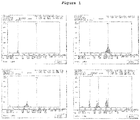
- Figure 1:
- shows flowcytograms of: (A) Cichorium intybus L. (upper left); (B) Lactuca sp. (upper right); (C) Hybrid 1 (according to the present invention; lower left); and (D) a mixed sample of A, B and C (lower right);
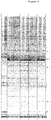
- Figure 2:
- shows result of a molecular characterization of nuclear DNA using the RAMP technique. From left lane to right lane, Cichorium intybus (P155); Lactuca sp. (P157); hybrids 1 to 3 (H1-H3, i.e. hybrid plants of a cross between P155 and P157; discriminating bands are indicated;
- Figure 3:
- shows a graphic representation of pollen size of Cichorium, Lactuca and the selected fusion plant P153. Legend to this graph:
- X axis: diameter of pollen grains in µm2
- Y axis: percentage of pollen grains present in the distinct sizes;
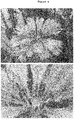
- Figure 4:
- shows TOP: Photograph of a flower of P153, a selected plant from the described fusion products obtained. BOTTOM: detail of the anthers showing (non-functional) pollen grains;
- Figure 5:
- shows TOP: Photograph of a fertile flower of Cichorium intybus L. BOTTOM: detail of the anthers.
- Seeds from both the donor (Lactuca sp., deposited on June, 1, 2012 at NCIMB, Ferguson Building, Craibstone Estate, Bucksburn, Aberdeen, UK as deposit NCIMB 41985, and the acceptor (Cichorium intybus L.) were sown in vitro. To this end 100 seeds of each species were sterilized by a rinse in 70 % ethanol in water, succeeded by a treatment with a bleach solution (1 % (w/v) NaOCl + 0.01 % (v/v) Tween80 in demineralized water). After a thorough rinse with sterile demineralized water, seeds were placed on a suitable medium as ½MS15 and placed in a growth room at 25ºC, 16/24 hrs. light. After 4 weeks plants were suitable for protoplast isolation.
- Young, surface-sterilized leaves of 4 week old plants were collected. These leaves were cut in pieces of 1 - 2 mm in TC quality petri dishes (Greiner Bio-One, article 664160) in plasmolysing solution WS9M. After collecting all material, this solution was replaced by 20 ml of enzyme solution containing cell wall degrading enzymes like pectinase and/or cellulase. After an overnight incubation (dark, 25°C) on an orbital shaker with a speed of 30 rpm, material was sieved on respectively a 110 and a 53 µm filter; these filters were rinsed twice with 10 ml wash solution.
- The collected filtrate was centrifuged for 5 minutes at 60x g. After resuspending the pellet in 10 ml wash solution, this centrifugation step was repeated. Protoplasts were kept on ice until further processing.
- A check for viability of the isolated protoplasts and pollen grains was performed with FDA. To this end, samples of stained protoplasts, from both donor and acceptor, or pollen grains collected from donor or selected fusion plants, were checked with a fluorescence-microscope using the appropriate filters, magnification 10x.
- Viable cells can be recognized by a bright yellow-green color, non-viable cells do not fluoresce.
- Isolated protoplasts from the donor (Lactuca) were treated with a suitable source of ionizing radiation (e.g. a source of Roentgen or gamma radiation). A suitable dose is in the range of 250 - 500 Gray as measure of absorbed energy. From the protoplasts isolated from the acceptor (Cichorium intybus var. foliosum), cellular organelles were inactivated by a treatment with a final concentration IOA of 10 mM (supplied from a 60 mM IOA stock solution) during 10 minutes at 4 °C. After this treatment cells were washed twice with wash solution and centrifuged at 60x g during 5 minutes.
- Fusion and successive regeneration of the protoplasts obtained can be performed in two alternative ways as described in the examples 5 and 6a (culture in liquid medium) and 5 and 6b (embedded in solid medium using sodium alginate) respectively.
- Per 10 ml tube (round bottom, Greiner, catalogue number 163189) 1 x 10⁶ protoplasts (in a ratio of acceptor:donor of 1:1 or 2:1) in wash solution were added.
- After centrifugation (5 minutes at 60*g) each pellet was resuspended in 0.3 ml wash solution. Then, 0.4 ml PEG1500 solution per test tube was added by letting separate drops fall into the tubes; no further mixing was allowed here. After standing still for 30 minutes, 0.8 ml PEG diluting solution was added, by slowly flowing down the test tube wall. Without further mixing the cells are left for 10 minutes.
- After this, tubes are topped up with CPW-Ca++ solution to a final volume of 10 ml, without further mixing the cells are centrifuged for 5 minutes at 60*g. After three repetitive washing with CPW-Ca++ solution pellets were resuspended in PM1 culture medium providing a final density of 20.000 protoplasts/ml.
- Culturing was performed in dark at 25 °C, every week the culture medium is partly replaced:
- 6 cm dish: 3 ml (out of 4.5 ml) is replaced by 3 ml fresh PM1 medium
- 9 cm dish: 5 ml (out of 9 ml) is replaced by 5 ml fresh PM1 medium
- As soon as the first cell divisions were observed (2 to 4 cell stage) the culture medium was replaced by PM2 medium, also this medium is partly replaced on a weekly basis as described above.
- Calli of 2 mm diameter were placed on solid CRM medium at 1000 lux. As soon as the calli turn green the amount of light was increased to approx. 1700 lux. Calli without shoots were transferred to fresh CRM medium every three weeks.
- Emerging shoots were cut from the calli, leaving behind as much callus as possible, and placed on MS30-gelrite medium either in jars or petridishes. To promote rooting, shoots were cut - to remove any residual callus- and transferred to fresh MS30-gelrite medium.
- Starting with the fused protoplasts as described in example 5, protoplasts were resuspended in solution A; per tube containing 1 x 10⁶ protoplasts. To each tube, 2.5 ml solution A was added; after carefully re-suspending the cells, 2.5 ml sodium alginate solution was added. Drops of 1 ml suspension were placed on solid medium B. After 1 hour the solidified medium including the protoplasts were rinsed with PM1 medium and transferred to dishes containing 3 resp. 6 ml PM1 medium (petri dishes of 6 or 9 cm diameter, respectively). Further media changes were similar as described in example 6a.
- As soon as the calli reach a diameter of 2 mm, the alginate matrix was dissolved by replacing the culture medium by 50 mM sodium citrate solution. Each alginate disc was cut in 8 pieces and the dishes are placed on an orbital shaker for 2 hours (30 rpm).
- Microcalli were collected using a pipette and transferred to a test tube. To this tube PM2 medium was added to a final volume of 10 ml and then the tube is centrifuged for 5 minutes at 60*g.
- After washing with PM2 medium twice, calli were placed on CRM medium at 1000 lux; calli which turned green were grown further at 1700 lux. Calli were kept on this medium and transferred, if necessary, to fresh CRM medium every three weeks.
- Shoots which emerged on these calli were cut from the callus and placed on MS30-gelrite medium, either in petri dishes or glass jars, shoots were transferred on fresh medium of the same composition until roots were formed. Rooted plants were placed on MS30 medium.
- From plants resulting from cell fusion or crosses between Cichorium and Lactuca plants, the relative ploidy level was determined. To this end, a small piece of leaf tissue 1 cm2 was taken from the plants examined and chopped with a razor blade in CyStain® UV Ploidy buffer (Partec, Münster, Germany).
- After filtration, the ploidy level of the sample was determined using a Partec PA flow cytometer and compared to the result of samples from Cichorium and Lactuca plants. Only diploid plants, resulting from cell fusion were retained.
- Plants resulting from crosses between Cichorium and Lactuca sp. possess a ploidy level intermediate between Cichorium and Lactuca sp. (
Figure 1 ). - Resulting from the cross between Cichorium (ID = P155) and Lactuca (ID = P157), several seeds were harvested, of which three germinated seeds were analyzed as described in example 7 and identified as hybrid plants. To further characterize these plants, a molecular analysis was performed.
- From these putative hybrid plants and both parents DNA was isolated, following a standard isolation procedure, starting with leaf explants of ± 0.3 cm2.
- On this isolated DNA, a RAMP analysis was performed with two primers generating polymorphisms between Cichorium and Lactuca. The result showed unequivocally that the hybrid plant harbored genomic DNA of both parents, thus demonstrating this plant was indeed a genomic hybrid between Cichorium and Lactuca.
- Primers used for the reaction were:
- Bejop09631 AGTCGGGTGG (SEQ ID No. 37; RAPD primer)
- Bejop01751 CCAGGTGTGTGTGTGT (SEQ ID No. 38; iSSR primer)
- PCR conditions:
- 2 minutes 93 °C
- 40 cycles of: 30 s. 93°C - 30 s. 35°C - 90 s. 72 °C
- 5 minutes 72 °C
- Heating is performed with 0.3 °C/sec.
- To analyze the RAMP patterns a "Gene ReadIR 4200 DNA analyzer" (Licor Inc.) was used. Based on an optimal concentration of 6.5 % acrylamide DNA fragments differing 1 base pair in size can be separated. To envisage these fragments labeled (IRDye labels) primers were used, one third of the amount of forward primer was replaced by a labeled, identical primer.
- The result showed unequivocally that the obtained plants harbored genomic DNA of both parents, thus demonstrating these three plants (HI to H3) were indeed hybrids between Cichorium and Lactuca (
Figure 2 ). - Mitochondrial DNA was characterized to demonstrate that indeed the cytoplasm of Cichorium was replaced by the Lactuca cytoplasm.
- Buffers used were essentially as described. However, some buffers were adjusted as denoted in the section "Solutions and chemicals". All experimental steps were performed with precooled buffers and at 4°C, unless stated otherwise.
- 100 grams of fresh leaves were homogenized on ice with a blender in 250 ml GB buffer. The homogenate was vacuum filtered on 4 layers of cheesecloth and 2 layers of nylon mesh (75 µm). The residue was homogenized further using a precooled mortar and pestle and subsequently filtered as described.
- Filtrates were pooled and centrifuged for 10 minutes at 1.000x g; the supernatant was re-centrifuged at 2.000x g. Finally mitochondria were collected by centrifugation at 16.000x g. The resulting pellet was resuspended using a paint brush in 10 ml DNAse storage buffer.
- Following centrifugation at 2.000x g, the resulting supernatant was pipetted to a centrifuge tube, 50 µl 2M MgCl2 and 200
µl 5 mg/ml DNAse were added. After incubation for one hour, 20 ml of shelf buffer was pipetted under this mixture. - After centrifugation at 14.000x g, the resulting pellet was resuspended in 10 ml shelf buffer. The suspension was centrifuged for 10 minutes at 16.000x g, the pellet was dissolved in 600 µl Lysis Buffer and transferred to a 1.5 ml Eppendorf test tube. In this lysate, containing the mitochondrial DNA, 1 mg proteinase K is dissolved and 10 µl RNAse-A solution was added. Incubation was first 60 minutes at 37 °C followed by 30 minutes incubation at 65 °C.
- After this incubation, DNA was precipitated by adding 200 µl 5 M KAc and mixed by turning over the test tube, leaving it then for maximum 15 minutes on ice. Next is a centrifugation during 10 minutes at 20.000x g at room temperature. Finally, the DNA is subsequently extracted with phenol/chloroform/isoamylalcohol and chloroform/isoamylalcohol. The remaining water phase was mixed with 400 µl isopropanol and 27 µl 7.5 M ammoniumacetate.
- After centrifugation for 10 minutes at 20.000x g (20°C) the remaining pellet was washed with 500 µl 70% ethanol in water and re-centrifuged for 2 minutes at 20.000x g (20°C). After drying the resulting DNA is dissolved in 200 µl TE buffer.
- A second DNA precipitation was performed by adding 20 µl 7.5 M Na-Acetate and 150 µl isopropanol, the mixture was mixed gently for a few seconds.
- The next centrifugation is 10 minutes at 20.000x g (20°C). The pellet was washed with 500 µl 70% ethanol in water and re-centrifuged shortly (2 minutes at 20.000x g (20°C). The pellet was dried and dissolved in 22 µl sterile ultrapure water. Storage was at 4°C.
- Purity and concentration of the DNA was determined using a Nanodrop 2000 Spectrophotometer, a Qubit 2.0 Fluorometer and standard agarose gel electrophoresis techniques.
- The sequence of the isolated mitochondrial DNA was determined by Next Generation sequencing using sequencing techniques generally known to the person skilled in the art.
- This sequencing resulted in the identification of several regions where the mitochondrial DNA (mtDNA) of the selected CMS Cichorium plant equals either the original fertile Cichorium plant or the Lactuca donor, proving the mitochondrial DNA of the selected CMS Cichorium plant to be a rearrangement of the mtDNA of both the original fertile Cichorium plant and the Lactuca donor.
- To this end, 4 sets of PCR primers were developed to identify the unique rearranged mtDNA of the selected fusion plant leading to the CMS phenotype. Also a set of 17 SNPs were developed as a further characterization of the selected fusion product (Table 2). From this data it is concluded that the selected CMS Cichorium plant contains an unique rearranged mitochondrial DNA with fragments of both parent lines being responsible for the CMS character of the described plant. Experimental details are shown in the tables mentioned above.
Table 1. Data for PCR reactions discriminating between both fusion parents and the selected CMS Cichorium Primer combination Forward primer sequence Reverse primer sequence Lactuca Fertile Cichorium CMS Cichorium Fragment size 1 SEQ ID 29 SEQ ID 30 - + + 611 bp 2 SEQ ID 31 SEQ ID 32 + - + 1592 bp 3 SEQ ID 33 SEQ ID 34 + - + 293 bp 4 SEQ ID 35SEQ ID 36 - + + 107 bp - SEQ ID 29: GCCTCCAGGGTATGATCCTTAA
- SEQ ID 30: CGAGCACTTATTTGACCTGTGT
- SEQ ID 31: TGCTAACGAGGTTCAATGATG
- SEQ ID 32: TTCGATTCAGGATCAAGCCCAG
- SEQ ID 33: TCGATATTCTTTTCGCGACAGG
- SEQ ID 34: TTAGGTTATTTCGTTGGTCGCC
- SEQ ID 35: TTTATAGACAGCGACTCCCTCC
- SEQ ID 36: ACCTGAAGGGAGTTATGGCATT
- PCR conditions for this reaction were as follows:
- total DNA was isolated from young leaf tissue as described and treated with RNAseA/T1. DNA integrity was confirmed by agarose gel electrophoresis. DNA from all samples was diluted to 15 ng/µl for PCR reactions. The amount of template DNA was 15 ng per PCR reaction. PCR for both marker combinations was carried out using Biomix Red (GC Biotech) in 20 µl reactions with 10 pmol of each primer mentioned above. PCR parameters were:
- 1 minute 94 °C
- 30 cycles of: 15 s. 94°C; 15 s. 58 °C; 1 minute 72 °C)
- 5 minutes 72 °C
- Store at 4 °C.
- Five µl of the PCR reactions were loaded on a 1% agarose gel and separated using standard techniques, known to the person skilled in the art.
Table 2: Sequence of the 17 SNP markers developed to discriminate between both fusion parents and the selected fusion plant. Denoted are the sequences used and between brackets ([N/N]) is the single nucleotide differing between the plants as elucidated in the three columns right of this sequence. Analysis was performed by LGC Genomics, see www.lgcgenomics.com SNP SEQ ID Sequence Lactuca Fertile Cichorium CMS Cichorium 1 CCGAACCGCGCGAAATGGTCGCCTATTACACGGCTCACTAACTCTGCCTG[G/T]AGTGGTGGTACCTATTATTCGTCGGCGGGGGCGGTCCGGCGATAC G T G 2 CTCTTAAGGTTAGTTCTATGCCTCACAACAACTACCTCATAGGTGATTCT[A/C]AATCCGTCTTTAGATCAGAAGTAGATGCCTCTTCCAGGGCTCTGT A C A 3 GTACCAAATGCTTGGCAATCCTTGGTAGAGCTTATTTATGATTTCGTGCT[G/T]AACCTGGTAAACGAACAAATAGGGGGTCTTTCCGGAAATGTTAAA T G T 4 TATTGATTACACTCCTTCTCCTACTGCTTCTCCTTATACCCACTAATGTT[A/C]TTCTTCGTCCTACCTTGACTATTGGGAAATTTCCATTCGAGAAAG C A C 5 TGCAGCGTAAACTCCTGCTAAATGAATGCCTTTGCTTTGGCTTTGAAATT[A/C]TGTTCCTGATTCAACTCCTTCATGCCATTGATTGATGCAAGTCTT A C A 6 CTGAATGACCTCTCTCATCTAATCGATCGGTGAAGGATGTCTTTGAAGAT[A/C]ATCTGGTCTGGCTCGTTACCATTAGTTCCTCTCTCTATAGTCGAG A C A 7 CTCTTGTTCTCTTTTCTTAGTTAGGCCCAAGAAAGTACAAGATATAGCTT[G/T]ACTAATATACTAAGATGATAGCTAGAGACTAGAGATGAGAGTGCA G T G 8 TTGGATATTGTACGACAGGATCCCCATCCGTGTTTTCGTTTCGCTAACGA[G/T]AAAGGCCGGAAAGCGTGGGACCTATTTAAGTGACCTGGCCGATGG G T G 9 TTTTTCGTTCCTTCTCTTCGATAAGAATATCGATTTGAAATGATAAAAAT[GjT]CCTCTTTATTCTCTTGTGCTCAGCGAAAGAACTGCCTAAGCATAC G T G 10 GTCCGATCGTCGCTAGAGGCCCGTCGACTATAATACACTGTTCGAAATTT[A/C]TTCGTTTCTGCCGAAACAAAACGGGATTGGCTATCTTAACCTTAG A C A 11 AAGGAAATGATCTTTACATGGAAATGAAAGAATCTGGAGTAATTAATGAA[A/C]AAAATATTCCAGAATCAAAAGTAGCTCTAGTTTACGGTCAGATGA A C C 12 GGGGCGTCCAAAGAGTCGATCATTTCTGCATGACTCGTGCACT[A/G]CCCCTTCCAATGGGTTTCGAAGATAAAAATCCTTTATTGGCCCAT A G G 13 CATACGCTAAAATTTGTCCCTTTTTAATGCATTTACCCCGCTGAACCTGG[A/G]GTTTTTGATGCATACAAGTATTTTTGTTGGAACGTTGATACATAA G A A 14 AGATAAAAATAACAAGGAATAGAATTTGATTAGTTGGTATTCAAAATATA[C/T]GATTCAAGTAGTCAAGTCGAGAAAGAGATGGTTGAATCAAAATAA T C C 15 TAAGCAATATATTGATTTTCTTCTCCAGGAACAGGCTCGATTCCATAGCA[G/T]CGCCCTTTGTAACGATCAAGGCTCGTAAGTCCATCGGTCCACACA T G G 16 ACTTTTTATTGGCATTGGAAGCACATTACATTATGGCAGGGTAATGTTTC[A/G]CAGTTTAATGAATCTTCCACTTATTTGATGGGCTGGTTAAGAGAT G A A 17 GGTATGAATAGTTTATCAGTCTGGGCATGGATGTTTTTATTTGGACATCT[G/T]GTTTGGGCTACTGGATTTATGTTTTTAATTTCCTGGCGTGGATAT G T T - To illustrate the difference between the original fertile chicory plant and the selected fusion plant, a study was made of the available pollen grains. Studying the selected fusion plant P153, putative pollen grains were visible, however, both an attempted self-fertilization and a stain with FDA (Example 3) showed this putative pollen was not functional.
- Further testing of the pollen of Cichorium and the selected fusion plant learned that from the latter pollen grains were significantly smaller. Pollen grains, suspended in WS9M, were imaged using regular bright field techniques on an inverted microscope with a 10x objective lens and recorded with a 3 MB CCD camera. Digital images of pollen grains were processed and analyzed using ImageJ software (Rasband, W.S., ImageJ, U. S. National Institutes of Health, Bethesda, Maryland, USA, http://imagej.nih.gov/ij/, 1997-2012).
- Images were converted into 8-bit binary images. Holes were closed, dark outliers were removed (radius = 10 pixels), and pollen grain projections touching each other were separated using the "watershed" command. The resulting images were analyzed with the "analyze particles" command to obtain the surface areas of the pollen grain projections. Objects touching the edge of the image were excluded. Using Microsoft Excel statistical functions, the measurements were converted into µm2 and averaged.
- For the selected fusion plants pollen surface varied between 1150 and 1850 µm2 (SD = 180), for the original Cichorium plant pollen grains, the determined surface was between 1550 and 2550 µm2 (SD = 226). Furthermore, student T-test analysis indicated that the chance that both populations of pollen grains are equal is below 0.01 (
Figure 3 ). - Unless stated otherwise all solutions were autoclaved (20 minutes at 120°C)
½ MS15 MS30 MS30-gelrite ½ MS medium Duchefa; M0233 2.28 g/l - - MS medium Duchefa; M0222 - 4.40 g/l 4.40 g/l Sucrose 15 g/l 30 g/l 30 g/l Agar Duchefa; M1002 7 g/l 7 g/l - Gelrite Duchefa; G1101 - - 7.5 g/l pH 5.8 5.8 5.8 -
KH2PO4 0.20 mM CaCl2.2H2O 10 mM KNO3 1 mM MgSO4.7H2O 1 mM MES (monohydrate) 2.8 mM Mannitol 0.5 M pH 5.6; 580 mOsm/kg - WS9M medium supplemented with:
Yakult Cellulase Onozuka R10 0.2% (w/v) Pectinase (Sigma, P4300) pH 5.6-5.7, filter sterile 0.2% (w/v) -
CaCl2.2H2O 13.6 mM KCl 0.34 M MES (monohydrate) 2.8 mM pH 5.8; 640 mOsm/kg -
- 0.222 g IOA per 20 ml wash solution
-
PEG1500 40 % (w/v) Glucose anhydrous (w/v) 0.3 M CaCl2.2H2O 50 mM filter sterile -
Glycine 50 mM glucose anhydrous 0.3 M CaCl2.2H2O 50 mM pH 10.5; 520 mOsm/kg; filter sterile -
10 x CPW salts stock (ref. 3) 20 ml CaCl2.2H2O 50 mM Mannitol 0.365 M pH 5.7; 530 mOsm/kg; filter sterile Culture media PM1 PM2 KNO3 7.42 mM - MgSO4.7 H2O 0.69 mM 0.69 mM CaCl2.2 H2O 1.5 mM 1.5 mM KH2PO4 0.62 mM 0.62 mM KCl - 5 mM Gamborg4 B5 micro 100x stock 5 ml/ l 5 ml/l KI 0.73 µM 0.73 µM FeNaEDTA 0.11 mM 0.11 mM Gamborg B5 vitamins (Duchefa; G0415) 11.2 mgram/l 11.2 mgram/l Glutamine 2.57 mM 5.14 mM Sucrose 14.6 mM 14.6 mM Mannitol 0.41 0.30 M NAA 10.2 µM 2.5 µM BA 4.44 µM - Caseinehydrolysate (Duchefa; C1301) - 150 mgram/l pH 5.5-5.6 5.5-5.6 osmolarity 530 mOsm/kg 400 mOsm/kg filtersterile filtersterile -
MS medium (Duchefa; M0222) 4.40 gram Sucrose 30 mM Zeatin 4.56 µM BA 2.22 µM caseinhydrolysate (Duchefa; C1301) 300 mgram/l agar (Duchefa; M1002) 8 gram/l pH 5.7 -
Tris-HCl (pH 8.8) 75 mM NH4SO4 20 mM Tween20 0.01% (v/v) MgCl2 2.8 mM dNTPs 0.25 mM forward primer 0.15 µM reverse primer 0.2 µM Red Hot ® DNA Polymerase (ABgene, Epsom U.K.) 0.04 units/µl genomic plant DNA ∼0.2 ng/µl -
sorbitol 0.35 M mannitol 0.1 M Tris-HCl pH 7.6 50 mM Na2- EDTA 5 mM BSA 0.2 % (w/v) PVP 1.0 % (w/v) spermidine 0.025 % (w/v) β mercaptoethanol 0.125 % (v/v) DIECA 10 mM -
Sodiumacetate 5 M CaCl2.2H2O 1 M
prior to use, an equal volume glycerol is added -
DIECA (add just prior to use) 10 mM -
Sucrose 0.6 M Tris HCl pH 7.2 10 mM Na2- EDTA 20 mM DIECA (add just prior to use) 10 mM -
Tris-HCl pH 7.5 50 mM Na2- EDTA 10 mM
2 M MgCl2 -
- RnaseA solution: Thermo Scientific productnr. EN0551 5 M KAc
- Phenol/chloroform/isoamylalcohol (25:24:1)
- chloroform/isoamylalcohol (24:1)
- 7.5 M NH4-Acetate
- 7.5 M Na-Acetate pH 4.5-5.2
-
- BA
- 6 benzylaminopurine
- bp
- basepairs
- BSA
- bovine serum albumin
- CMS
- cytoplasmic male sterile
cytoplasmic male sterility - DIECA
- Na-diethyldithiocarbamate
- EDTA
- ethylene diaminetetra acetic acid
- FDA
- fluorescein diacetate
- IOA
- iodoacetamide
- IA
- iodoacetate
- MES
- 2-(N-morpholino)ethanesulfonic acid
- mtDNA
- mitochondrial DNA
- NAA
- 1-naphthaleneacetic acid
- ng
- nanogram
- PCR
- polymerase chain reaction
- PEG
- polyethylene glycol
- PVP
- polyvinylpyrrolidone
- RAMP
- Random Amplified Microsatellite Polymorphism
- SD
- standard deviation
- SNP
- single nucleotide polymorphism
- K
- G or T)
- M
- A or C) nucleotide ambiguity codes
- R
- G or A) according to the rules of IUPAC
- Y
- T or C)
-
- <110> Bejo Zaden B.V.
- <120> CYTOPLASMIC MALE CICHORIUM PLANT
- <130> 4/2OL49/18
- <160> 38
- <170> BiSSAP 1.0
- <210> 1
<211> 96
<212> DNA
<213> Lactuca - <220>
<221> source
<222> 1..96
<223> /mol_type="DNA" /organism="Lactuca" - <400> 1

- <210> 2
<211> 96
<212> DNA
<213> Lactuca - <220>
<221> source
<222> 1..96
<223> /mol_type="DNA" /organism="Lactuca" - <400> 2

- <210> 3
<211> 96
<212> DNA
<213> Lactuca - <220>
<221> source
<222> 1..96
<223> /mol_type="DNA" /organism="Lactuca" - <400> 3

- <210> 4
<211> 96
<212> DNA
<213> Lactuca - <220>
<221> source
<222> 1..96
<223> /mol_type="DNA" /organism="Lactuca" - <400> 4

- <210> 5
<211> 96
<212> DNA
<213> Lactuca - <220>
<221> source
<222> 1..96
<223> /mol_type="DNA" /organism="Lactuca" - <400> 5

- <210> 6
<211> 96
<212> DNA
<213> Lactuca - <220>
<221> source
<222> 1..96
<223> /mol_type="DNA" /organism="Lactuca" - <400> 6

- <210> 7
<211> 96
<212> DNA
<213> Lactuca - <220>
<221> source
<222> 1..96
<223> /mol_type="DNA" /organism="Lactuca" - <400> 7

- <210> 8
<211> 96
<212> DNA
<213> Lactuca - <220>
<221> source
<222> 1..96
<223> /mol_type="DNA" /organism="Lactuca" - <400> 8

- <210> 9
<211> 96
<212> DNA
<213> Lactuca - <220>
<221> source
<222> 1..96
<223> /mol_type="DNA" /organism="Lactuca" - <400> 9

- <210> 10
<211> 96
<212> DNA
<213> Lactuca - <220>
<221> source
<222> 1..96
<223> /mol_type="DNA" /organism="Lactuca" - <400> 10

- <210> 11
<211> 96
<212> DNA
<213> Lactuca - <220>
<221> source
<222> 1..96
<223> /mol_type="DNA" /organism="Lactuca" - <400> 11

- <210> 12
<211> 96
<212> DNA
<213> Lactuca - <220>
<221> source
<222> 1..96
<223> /mol_type="DNA" /organism="Lactuca" - <400> 12

- <210> 13
<211> 96
<212> DNA
<213> Lactuca - <220>
<221> source
<222> 1..96
<223> /mol_type="DNA" /organism="Lactuca" - <400> 13

- <210> 14
<211> 96
<212> DNA
<213> Lactuca - <220>
<221> source
<222> 1..96
<223> /mol_type="DNA" /organism="Lactuca" - <400> 14

- <210> 15
<211> 96
<212> DNA
<213> Lactuca - <220>
<221> source
<222> 1..96
<223> /mol_type="DNA" /organism="Lactuca" - <400> 15

- <210> 16
<211> 96
<212> DNA
<213> Lactuca - <220>
<221> source
<222> 1..96
<223> /mol_type="DNA" /organism="Lactuca" - <400> 16

- <210> 17
<211> 96
<212> DNA
<213> Lactuca - <220>
<221> source
<222> 1..96
<223> /mol_type="DNA" /organism="Lactuca" - <400> 17

- <210> 18
<211> 96
<212> DNA
<213> Cichorium - <220>
<221> source
<222> 1..96
<223> /mol_type="DNA" /organism="Cichorium" - <400> 18

- <210> 19
<211> 96
<212> DNA
<213> Cichorium - <220>
<221> source
<222> 1..96
<223> /mol_type="DNA" /organism="Cichorium" - <400> 19

- <210> 20
<211> 96
<212> DNA
<213> Cichorium - <220>
<221> source
<222> 1..96
<223> /mol_type="DNA" /organism="Cichorium" - <400> 20

- <210> 21
<211> 96
<212> DNA
<213> Cichorium - <220>
<221> source
<222> 1..96
<223> /mol_type="DNA" /organism="Cichorium" - <400> 21

- <210> 22
<211> 96
<212> DNA
<213> Cichorium - <220>
<221> source
<222> 1..96
<223> /mol_type="DNA" /organism="Cichorium" - <400> 22

- <210> 23
<211> 96
<212> DNA
<213> Cichorium - <220>
<221> source
<222> 1..96
<223> /mol_type="DNA" /organism="Cichorium" - <400> 23

- <210> 24
<211> 96
<212> DNA
<213> Cichorium - <220>
<221> source - <222> 1..96
<223> /mol_type="DNA" /organism="Cichorium" - <400> 24

- <210> 25
- <400> 25
000 - <210> 26
<211> 96
<212> DNA
<213> Cichorium - <220>
<221> source
<222> 1..96
<223> /mol_type="DNA" /organism="Cichorium" - <400> 26

- <210> 27
<211> 96
<212> DNA
<213> Cichorium - <220>
<221> source
<222> 1..96
<223> /mol_type="DNA" /organism="Cichorium" - <400> 27

- <210> 28
<211> 96
<212> DNA
<213> Cichorium - <220>
<221> source
<222> 1..96
<223> /mol_type="DNA" /organism="Cichorium" - <400> 28

- <210> 29
<211> 22
<212> DNA
<213> artificial sequences - <220>
<221> source
<222> 1..22
<223> /mol_type="DNA" /note="primer" /organism="artificial sequences" - <400> 29

- <210> 30
<211> 22
<212> DNA
<213> artificial sequences - <220>
<221> source
<222> 1..22
<223> /mol_type="DNA" /note="primer" /organism="artificial sequences" - <400> 30

- <210> 31
<211> 21
<212> DNA
<213> artificial sequences - <220>
<221> source
<222> 1..21
<223> /mol_type="DNA" /note="primer" /organism="artificial sequences" - <400> 31

- <210> 32
<211> 22
<212> DNA
<213> artificial sequences - <220>
<221> source
<222> 1..22
<223> /mol_type="DNA" /note="primer" /organism="artificial sequences" - <400> 32

- <210> 33
<211> 22
<212> DNA
<213> artificial sequences - <220>
<221> source
<222> 1..22
<223> /mol_type="DNA" /note="primer" /organism="artificial sequences" - <400> 33

- <210> 34
<211> 22
<212> DNA
<213> artificial sequences - <220>
<221> source
<222> 1..22
<223> /mol_type="DNA" /note="primer" /organism="artificial sequences" - <400> 34

- <210> 35
<211> 22
<212> DNA
<213> artificial sequences - <220>
<221> source
<222> 1..22
<223> /mol_type="DNA" /note="primer" /organism="artificial sequences" - <400> 35

- <210> 36
<211> 22
<212> DNA
<213> artificial sequences - <220>
<221> source
<222> 1..22
<223> /mol_type="DNA" /note="primer" /organism="artificial sequences" - <400> 36

- <210> 37
<211> 10
<212> DNA
<213> artificial sequences - <220>
<221> source
<222> 1..10
<223> /mol_type="DNA" /note="RAPD primer" /organism="artificial sequences" - <400> 37

- <210> 38
<211> 16
<212> DNA
<213> artificial sequences - <220>
<221> source
<222> 1..16
<223> /mol_type="DNA" /note="iSSR primer" /organism="artificial sequences" - <400> 38

-
- <110> Bejo Zaden B.V.
- <120> CYTOPLASMATIC MALE CHICORIUM PLANT
- <130> 4/2OL49/18
- <160> 38
- <170> BiSSAP 1.0
- <210> 1
<211> 96
<212> DNA
<213> Lactuca - <220>
<221> source
<222> 1..96
<223> /mol_type="DNA" /organism="Lactuca" - <400> 1

- <210> 2
<211> 96
<212> DNA
<213> Lactuca - <220>
<221> source
<222> 1..96
<223> /mol_type="DNA" /organism="Lactuca" - <400> 2

- <210> 3
<211> 96
<212> DNA
<213> Lactuca - <220>
<221> source
<222> 1..96
<223> /mol_type="DNA" /organism="Lactuca" - <400> 3

- <210> 4
<211> 96
<212> DNA
<213> Lactuca - <220>
<221> source
<222> 1..96
<223> /mol_type="DNA" /organism="Lactuca" - <400> 4

- <210> 5
<211> 96
<212> DNA
<213> Lactuca - <220>
<221> source
<222> 1..96
<223> /mol_type="DNA" /organism="Lactuca" - <400> 5

- <210> 6
<211> 96
<212> DNA
<213> Lactuca - <220>
<221> source
<222> 1..96
<223> /mol_type="DNA" /organism="Lactuca" - <400> 6

- <210> 7
<211> 96
<212> DNA
<213> Lactuca - <220>
<221> source
<222> 1..96
<223> /mol_type="DNA" /organism="Lactuca" - <400> 7

- <210> 8
<211> 96
<212> DNA
<213> Lactuca - <220>
<221> source
<222> 1..96
<223> /mol_type="DNA" /organism="Lactuca" - <400> 8

- <210> 9
<211> 96
<212> DNA
<213> Lactuca - <220>
<221> source
<222> 1..96
<223> /mol_type="DNA" /organism="Lactuca" - <400> 9

- <210> 10
<211> 96
<212> DNA
<213> Lactuca - <220>
<221> source
<222> 1..96
<223> /mol_type="DNA" /organism="Lactuca" - <400> 10

- <210> 11
<211> 96
<212> DNA
<213> Lactuca - <220>
<221> source
<222> 1..96
<223> /mol_type="DNA" /organism="Lactuca" - <400> 11

- <210> 12
<211> 96
<212> DNA
<213> Lactuca - <220>
<221> source
<222> 1..96
<223> /mol_type="DNA" /organism="Lactuca" - <400> 12

- <210> 13
<211> 96
<212> DNA
<213> Lactuca - <220>
<221> source
<222> 1..96
<223> /mol_type="DNA" /organism="Lactuca" - <400> 13

- <210> 14
<211> 96
<212> DNA
<213> Lactuca - <220>
<221> source
<222> 1..96
<223> /mol_type="DNA" /organism="Lactuca" - <400> 14

- <210> 15
<211> 96
<212> DNA
<213> Lactuca - <220>
<221> source
<222> 1..96
<223> /mol_type="DNA" /organism="Lactuca" - <400> 15

- <210> 16
<211> 96
<212> DNA
<213> Lactuca - <220>
<221> source
<222> 1..96
<223> /mol_type="DNA" /organism="Lactuca" - <400> 16

- <210> 17
<211> 96
<212> DNA
<213> Lactuca - <220>
<221> source
<222> 1..96
<223> /mol_type="DNA" /organism="Lactuca" - <400> 17

- <210> 18
<211> 96
<212> DNA
<213> Cichorium - <220>
<221> source
<222> 1..96
<223> /mol_type="DNA" /organism="Cichorium" - <400> 18


- <210> 19
<211> 96
<212> DNA
<213> Cichorium - <220>
<221> source
<222> 1..96
<223> /mol_type="DNA" /organism="Cichorium" - <400> 19

- <210> 20
<211> 96
<212> DNA
<213> Cichorium - <220>
<221> source
<222> 1..96
<223> /mol_type="DNA" /organism="Cichorium" - <400> 20

- <210> 21
<211> 96
<212> DNA
<213> Cichorium - <220>
<221> source
<222> 1..96
<223> /mol_type="DNA" /organism="Cichorium" - <400> 21

- <210> 22
<211> 96
<212> DNA
<213> Cichorium - <220>
<221> source
<222> 1..96
<223> /mol_type="DNA" /organism="Cichorium" - <400> 22

- <210> 23
<211> 96
<212> DNA
<213> Cichorium - <220>
<221> source
<222> 1..96
<223> /mol_type="DNA" /organism="Cichorium" - <400> 23

- <210> 24
<211> 96
<212> DNA
<213> Cichorium - <220>
<221> source
<222> 1..96
<223> /mol_type="DNA" /organism="Cichorium" - <400> 24

- <210> 25
- <400> 25
000 - <210> 26
<211> 96
<212> DNA
<213> Cichorium - <220>
<221> source
<222> 1..96
<223> /mol_type="DNA" /organism="Cichorium" - <400> 26

- <210> 27
<211> 96
<212> DNA
<213> Cichorium - <220>
<221> source
<222> 1..96
<223> /mol_type="DNA" /organism="Cichorium" - <400> 27

- <210> 28
<211> 96
<212> DNA
<213> Cichorium - <220>
<221> source
<222> 1..96
<223> /mol_type="DNA" /organism="Cichorium" - <400> 28

- <210> 29
<211> 22
<212> DNA
<213> artificial sequences - <220>
<221> source
<222> 1..22
<223> /mol_type="DNA" /note="primer" /organism="artificial sequences" - <400> 29
gcctccaggg tatgatcctt aa 22 - <210> 30
<211> 22
<212> DNA
<213> artificial sequences - <220>
<221> source
<222> 1..22
<223> /mol_type="DNA" /note="primer" /organism="artificial sequences" - <400> 30
cgagcactta tttgacctgt gt 22 - <210> 31
<211> 21
<212> DNA
<213> artificial sequences - <220>
<221> source
<222> 1..21
<223> /mol_type="DNA" /note="primer" /organism="artificial sequences" - <400> 31
tgctaacgag gttcaatgat g 21 - <210> 32
<211> 22
<212> DNA
<213> artificial sequences - <220>
<221> source
<222> 1..22
<223> /mol_type="DNA" /note="primer" /organism="artificial sequences" - <400> 32
ttcgattcag gatcaagccc ag 22 - <210> 33
<211> 22
<212> DNA
<213> artificial sequences - <220>
<221> source
<222> 1..22
<223> /mol_type="DNA" /note="primer" /organism="artificial sequences" - <400> 33
tcgatattct tttcgcgaca gg 22 - <210> 34
<211> 22
<212> DNA
<213> artificial sequences - <220>
<221> source
<222> 1..22
<223> /mol_type="DNA" /note="primer" /organism="artificial sequences" - <400> 34
ttaggttatt tcgttggtcg cc 22 - <210> 35
<211> 22
<212> DNA
<213> artificial sequences - <220>
<221> source
<222> 1..22
<223> /mol_type="DNA" /note="primer" /organism="artificial sequences" - <400> 35
tttatagaca gcgactccct cc 22 - <210> 36
<211> 22
<212> DNA
<213> artificial sequences - <220>
<221> source
<222> 1..22
<223> /mol_type="DNA" /note="primer" /organism="artificial sequences" - <400> 36
acctgaaggg agttatggca tt 22 - <210> 37
<211> 10
<212> DNA
<213> artificial sequences - <220>
<221> source
<222> 1..10
<223> /mol_type="DNA" /note="RAPD primer" /organism="artificial sequences" - <400> 37
agtcgggtgg 10 - <210> 38
<211> 16
<212> DNA
<213> artificial sequences - <220>
<221> source
<222> 1..16
<223> /mol_type="DNA" /note="iSSR primer" /organism="artificial sequences" - <400> 38
ccaggtgtgt gtgtgt 16
Claims (7)
- Cytoplasmic male sterile Cichorium plant comprising mitochondria of Lactuca, wherein said mitochondria of Lactuca comprise at least one mitochondrial nucleic acid sequence selected from the group consisting of SEQ ID No. 1, SEQ ID No. 2, SEQ ID No. 3, SEQ ID No. 4, SEQ ID No. 5, SEQ ID No. 6, SEQ ID No. 7, SEQ ID No. 8, SEQ ID No. 9, and SEQ ID No. 10 and wherein said Cichorium plant comprises a cytoplasm maternally derived from a plant according to deposit NCIMB 42125.
- Cytoplasmic male sterile Cichorium plant according to claim 1, wherein said cytoplasmic male sterile Cichorium plant is further identifiable by a molecular marker of 1592 bp using SEQ ID No. 31 and SEQ ID No. 32.
- Cytoplasmic male sterile Cichorium plant according to claim 1 or claim 2, wherein said cytoplasmic male sterile Cichorium plant is further identifiable by a molecular marker of 293 bp using SEQ ID No. 33 and SEQ ID No. 34.
- Cytoplasmic male sterile Cichorium plant according to any one of the claims 1 to 3, wherein said at least one mitochondrial nucleic acid sequence is at least two, at least three, at least four, at least five, at least six, at least seven, at least eight, at least nine, or ten mitochondrial nucleic acid sequences.
- Cytoplasmic male sterile Cichorium plant according to any one of the claims 1 to 4, wherein said Cichorium plant is selected from the group consisting of green chicory, radicchio rosso, red leaved chicory, Treviso, white chicory, sugar loaf, Belgian endive, witloof, Catalogna, C. intybus var. foliosum, C. endivia, and C. intybus L. var. sativum.
- Method for identifying a cytoplasmic male sterile Cichorium plant, said method comprises establishing in a sample of said cytoplasmic male sterile Cichorium plant one or more mitochondrial nucleic acid sequences selected from the group consisting of SEQ ID No. 1, SEQ ID No. 2, SEQ ID No. 3, SEQ ID No. 4, SEQ ID No. 5, SEQ ID No. 6, SEQ ID No. 7, SEQ ID No. 8, SEQ ID No. 9, and SEQ ID No. 10.
- Method for identifying a cytoplasmic male sterile Cichorium plant, said method comprises establishing in a sample of said cytoplasmic male sterile Cichorium plant a molecular marker of 1592 bp using nucleic acid amplification primers SEQ ID No. 31 and SEQ ID No. 32 and/or a molecular marker of 293 bp using nucleic acid amplification markers SEQ ID No. 33 and SEQ ID No. 34.
Priority Applications (3)
| Application Number | Priority Date | Filing Date | Title |
|---|---|---|---|
| PT137528824T PT3032941T (en) | 2013-08-14 | 2013-08-14 | Cytoplasmic male sterile cichorium plants |
| PL13752882T PL3032941T3 (en) | 2013-08-14 | 2013-08-14 | Cytoplasmic male sterile cichorium plants |
| TR2018/10215T TR201810215T4 (en) | 2013-08-14 | 2013-08-14 | CYTOPLASMIC MALE STERILE CICHORIUM PLANTS. |
Applications Claiming Priority (1)
| Application Number | Priority Date | Filing Date | Title |
|---|---|---|---|
| PCT/EP2013/067014 WO2015022023A1 (en) | 2013-08-14 | 2013-08-14 | Cytoplasmic male sterile cichorium plants |
Publications (2)
| Publication Number | Publication Date |
|---|---|
| EP3032941A1 EP3032941A1 (en) | 2016-06-22 |
| EP3032941B1 true EP3032941B1 (en) | 2018-04-18 |
Family
ID=49034081
Family Applications (1)
| Application Number | Title | Priority Date | Filing Date |
|---|---|---|---|
| EP13752882.4A Active EP3032941B1 (en) | 2013-08-14 | 2013-08-14 | Cytoplasmic male sterile cichorium plants |
Country Status (15)
| Country | Link |
|---|---|
| US (1) | US10015942B2 (en) |
| EP (1) | EP3032941B1 (en) |
| JP (1) | JP6268292B2 (en) |
| CN (1) | CN105611826A (en) |
| AR (1) | AR097112A1 (en) |
| AU (1) | AU2013398123B2 (en) |
| BR (1) | BR112016002635B1 (en) |
| CA (1) | CA2919129C (en) |
| ES (1) | ES2675586T3 (en) |
| MX (1) | MX356183B (en) |
| PL (1) | PL3032941T3 (en) |
| PT (1) | PT3032941T (en) |
| RU (1) | RU2016108879A (en) |
| TR (1) | TR201810215T4 (en) |
| WO (1) | WO2015022023A1 (en) |
Family Cites Families (5)
| Publication number | Priority date | Publication date | Assignee | Title |
|---|---|---|---|---|
| DE69507146T3 (en) * | 1995-11-02 | 2007-05-10 | Enza Zaden Beheer B.V. | Cytoplasmic male-sterile plant cell of the Compositae family and method for producing the plant |
| NL1001554C2 (en) | 1995-11-02 | 1996-08-02 | Enza Zaden De Enkhuizer Zaadha | Cytoplasmic male sterile vegetable plant of the family of the Compositae, as well as a method for obtaining such a plant. |
| FR2749321B1 (en) | 1996-05-31 | 1998-08-21 | Florimond Desprez Veuve Et Fil | RECOMBINANT PLANT GENOME, MITOCHONDRIA AND CELL CONTAINING THE SAME, AND METHOD FOR SELECTING MALE CYTOPLASMIC STERILITY IN A CICHORIUM PLANT |
| EP1950290B1 (en) * | 2005-10-26 | 2015-07-22 | Sakata Seed Corporation | Cytoplasmic hybrid plant belonging to the genus lactuca and method for production thereof |
| WO2012163389A1 (en) * | 2011-05-27 | 2012-12-06 | Az. Agricola T.&T. Produce Di Tiozzo Silvano | Cichorium spp. male sterile mutants |
-
2013
- 2013-08-14 JP JP2016533825A patent/JP6268292B2/en active Active
- 2013-08-14 CN CN201380078833.3A patent/CN105611826A/en active Pending
- 2013-08-14 US US14/909,935 patent/US10015942B2/en active Active
- 2013-08-14 RU RU2016108879A patent/RU2016108879A/en not_active Application Discontinuation
- 2013-08-14 PL PL13752882T patent/PL3032941T3/en unknown
- 2013-08-14 PT PT137528824T patent/PT3032941T/en unknown
- 2013-08-14 MX MX2016001876A patent/MX356183B/en active IP Right Grant
- 2013-08-14 BR BR112016002635-7A patent/BR112016002635B1/en not_active IP Right Cessation
- 2013-08-14 WO PCT/EP2013/067014 patent/WO2015022023A1/en not_active Ceased
- 2013-08-14 TR TR2018/10215T patent/TR201810215T4/en unknown
- 2013-08-14 AU AU2013398123A patent/AU2013398123B2/en active Active
- 2013-08-14 CA CA2919129A patent/CA2919129C/en active Active
- 2013-08-14 EP EP13752882.4A patent/EP3032941B1/en active Active
- 2013-08-14 ES ES13752882.4T patent/ES2675586T3/en active Active
-
2014
- 2014-07-29 AR ARP140102827A patent/AR097112A1/en unknown
Non-Patent Citations (1)
| Title |
|---|
| None * |
Also Published As
| Publication number | Publication date |
|---|---|
| CA2919129A1 (en) | 2015-02-19 |
| ES2675586T3 (en) | 2018-07-11 |
| TR201810215T4 (en) | 2018-08-27 |
| WO2015022023A1 (en) | 2015-02-19 |
| CN105611826A (en) | 2016-05-25 |
| MX2016001876A (en) | 2016-07-26 |
| US20160165825A1 (en) | 2016-06-16 |
| JP6268292B2 (en) | 2018-01-24 |
| CA2919129C (en) | 2020-02-11 |
| BR112016002635A2 (en) | 2017-09-12 |
| AU2013398123B2 (en) | 2019-07-18 |
| BR112016002635B1 (en) | 2022-03-03 |
| AR097112A1 (en) | 2016-02-17 |
| US10015942B2 (en) | 2018-07-10 |
| EP3032941A1 (en) | 2016-06-22 |
| MX356183B (en) | 2018-05-17 |
| PL3032941T3 (en) | 2018-08-31 |
| PT3032941T (en) | 2018-05-25 |
| RU2016108879A (en) | 2017-09-14 |
| JP2016529894A (en) | 2016-09-29 |
| AU2013398123A1 (en) | 2016-02-18 |
Similar Documents
| Publication | Publication Date | Title |
|---|---|---|
| Collonnier et al. | Source of resistance against Ralstonia solanacearum in fertile somatic hybrids of eggplant (Solanum melongena L.) with Solanum aethiopicum L | |
| CA2092097C (en) | Dna sequence imparting cytoplasmic male sterility, mitochondrial genome, nuclear genome, mitochondria and plant containing said sequence and process for the preparation of hybrids | |
| US8247655B2 (en) | Rucola plants with cytoplasmic male sterility (CMS) | |
| Isabel et al. | Occurrence of somaclonal variation among somatic embryo‐derived white spruces (Picea glauca, Pinaceae) | |
| Collonnier et al. | GISH confirmation of somatic hybrids between Solanum melongena and S. torvum: assessment of resistance to both fungal and bacterial wilts | |
| KR20110094268A (en) | How to Develop Diagnostic Markers | |
| Bala et al. | Self-incompatibility: a targeted, unexplored pre-fertilization barrier in flower crops of Asteraceae | |
| WO2019196738A1 (en) | Method for overcoming self-incompatibility of diploid potatoes | |
| KR101959732B1 (en) | Primers for detecting SSR markers specific to allotetraploid mandarin orange and uses thereof | |
| Khan et al. | Establishment of genetic fidelity of in vitro raised banana plantlets | |
| Gniech Karasawa et al. | Gametic embryogenesis through isolated microspore culture in Corylus avellana L. | |
| JPWO2020027155A1 (en) | Stevia plant with high sweetness component and its screening method | |
| Belandres et al. | FISH karyotype and GISH meiotic pairing analyses of a stable intergeneric hybrid xBrassicoraphanus line BB# 5 | |
| Ramon et al. | Introgression of resistance to late blight (Phytophthora infestans) from Solanum pinnatisectum into S. tuberosum using embryo rescue and double pollination | |
| US10015942B2 (en) | Cytoplasmic male sterile Cichorium plants | |
| Djafri-Bouallag et al. | A cytogenetic and pollen study of annual Medicago species from Soummam Valley (Northeastern of Algeria) | |
| WO2020209265A1 (en) | Stevia plant having less ability to form flower buds | |
| WO2020209266A1 (en) | Stevia plant having less ability to form pollens | |
| WO2022107839A1 (en) | Cytoplasmic male sterile plant of genus petunia, intergeneric hybrid plant thereof, and method of producing same | |
| Cooper-Bland et al. | Intraspecific somatic and sexual hybridisation between dihaploid lines of Solanum tuberosum L.: evaluation of morphological traits and resistance to late blight Phytophthora infestans (Mont.) de Bary in the foliage | |
| Stommel | Barriers for introgression of Solanum ochranthum into tomato via somatic hybrids | |
| Parihar et al. | Protoplast isolation and fusion in cultivated Cajanus cajan (L.) Millsp. and wild species of Pigeonpea | |
| EA032108B1 (en) | Methods for providing cytoplasmic male sterile petroselinum crispum plants, cytoplasmic male sterile petroselinum crispum plants and seeds and plant parts thereof | |
| 박혜랑 | Cytogenetic analysis for genome divergence and compatibility in the brassicaceae family | |
| Koblitz | Protoplast culture and somatic hybridization in Lycopersicon |
Legal Events
| Date | Code | Title | Description |
|---|---|---|---|
| PUAI | Public reference made under article 153(3) epc to a published international application that has entered the european phase |
Free format text: ORIGINAL CODE: 0009012 |
|
| 17P | Request for examination filed |
Effective date: 20160229 |
|
| AK | Designated contracting states |
Kind code of ref document: A1 Designated state(s): AL AT BE BG CH CY CZ DE DK EE ES FI FR GB GR HR HU IE IS IT LI LT LU LV MC MK MT NL NO PL PT RO RS SE SI SK SM TR |
|
| AX | Request for extension of the european patent |
Extension state: BA ME |
|
| DAX | Request for extension of the european patent (deleted) | ||
| REG | Reference to a national code |
Ref country code: DE Ref legal event code: R079 Ref document number: 602013036108 Country of ref document: DE Free format text: PREVIOUS MAIN CLASS: A01H0001000000 Ipc: A01H0005020000 |
|
| GRAP | Despatch of communication of intention to grant a patent |
Free format text: ORIGINAL CODE: EPIDOSNIGR1 |
|
| RIC1 | Information provided on ipc code assigned before grant |
Ipc: A01H 5/02 20060101AFI20171020BHEP Ipc: A01H 1/00 20060101ALI20171020BHEP Ipc: C12N 15/82 20060101ALI20171020BHEP Ipc: C12Q 1/68 20060101ALI20171020BHEP Ipc: A01H 5/12 20060101ALI20171020BHEP |
|
| INTG | Intention to grant announced |
Effective date: 20171117 |
|
| GRAS | Grant fee paid |
Free format text: ORIGINAL CODE: EPIDOSNIGR3 |
|
| GRAA | (expected) grant |
Free format text: ORIGINAL CODE: 0009210 |
|
| AK | Designated contracting states |
Kind code of ref document: B1 Designated state(s): AL AT BE BG CH CY CZ DE DK EE ES FI FR GB GR HR HU IE IS IT LI LT LU LV MC MK MT NL NO PL PT RO RS SE SI SK SM TR |
|
| REG | Reference to a national code |
Ref country code: GB Ref legal event code: FG4D |
|
| REG | Reference to a national code |
Ref country code: CH Ref legal event code: NV Representative=s name: ARNOLD AND SIEDSMA AG, CH Ref country code: CH Ref legal event code: EP |
|
| REG | Reference to a national code |
Ref country code: AT Ref legal event code: REF Ref document number: 989400 Country of ref document: AT Kind code of ref document: T Effective date: 20180515 |
|
| REG | Reference to a national code |
Ref country code: IE Ref legal event code: FG4D |
|
| REG | Reference to a national code |
Ref country code: DE Ref legal event code: R096 Ref document number: 602013036108 Country of ref document: DE |
|
| REG | Reference to a national code |
Ref country code: PT Ref legal event code: SC4A Ref document number: 3032941 Country of ref document: PT Date of ref document: 20180525 Kind code of ref document: T Free format text: AVAILABILITY OF NATIONAL TRANSLATION Effective date: 20180521 |
|
| REG | Reference to a national code |
Ref country code: NL Ref legal event code: FP Ref country code: ES Ref legal event code: FG2A Ref document number: 2675586 Country of ref document: ES Kind code of ref document: T3 Effective date: 20180711 |
|
| REG | Reference to a national code |
Ref country code: FR Ref legal event code: PLFP Year of fee payment: 6 |
|
| REG | Reference to a national code |
Ref country code: LT Ref legal event code: MG4D |
|
| PG25 | Lapsed in a contracting state [announced via postgrant information from national office to epo] |
Ref country code: AL Free format text: LAPSE BECAUSE OF FAILURE TO SUBMIT A TRANSLATION OF THE DESCRIPTION OR TO PAY THE FEE WITHIN THE PRESCRIBED TIME-LIMIT Effective date: 20180418 Ref country code: LT Free format text: LAPSE BECAUSE OF FAILURE TO SUBMIT A TRANSLATION OF THE DESCRIPTION OR TO PAY THE FEE WITHIN THE PRESCRIBED TIME-LIMIT Effective date: 20180418 Ref country code: SE Free format text: LAPSE BECAUSE OF FAILURE TO SUBMIT A TRANSLATION OF THE DESCRIPTION OR TO PAY THE FEE WITHIN THE PRESCRIBED TIME-LIMIT Effective date: 20180418 Ref country code: NO Free format text: LAPSE BECAUSE OF FAILURE TO SUBMIT A TRANSLATION OF THE DESCRIPTION OR TO PAY THE FEE WITHIN THE PRESCRIBED TIME-LIMIT Effective date: 20180718 Ref country code: FI Free format text: LAPSE BECAUSE OF FAILURE TO SUBMIT A TRANSLATION OF THE DESCRIPTION OR TO PAY THE FEE WITHIN THE PRESCRIBED TIME-LIMIT Effective date: 20180418 Ref country code: BG Free format text: LAPSE BECAUSE OF FAILURE TO SUBMIT A TRANSLATION OF THE DESCRIPTION OR TO PAY THE FEE WITHIN THE PRESCRIBED TIME-LIMIT Effective date: 20180718 |
|
| PG25 | Lapsed in a contracting state [announced via postgrant information from national office to epo] |
Ref country code: GR Free format text: LAPSE BECAUSE OF FAILURE TO SUBMIT A TRANSLATION OF THE DESCRIPTION OR TO PAY THE FEE WITHIN THE PRESCRIBED TIME-LIMIT Effective date: 20180719 Ref country code: HR Free format text: LAPSE BECAUSE OF FAILURE TO SUBMIT A TRANSLATION OF THE DESCRIPTION OR TO PAY THE FEE WITHIN THE PRESCRIBED TIME-LIMIT Effective date: 20180418 Ref country code: LV Free format text: LAPSE BECAUSE OF FAILURE TO SUBMIT A TRANSLATION OF THE DESCRIPTION OR TO PAY THE FEE WITHIN THE PRESCRIBED TIME-LIMIT Effective date: 20180418 Ref country code: RS Free format text: LAPSE BECAUSE OF FAILURE TO SUBMIT A TRANSLATION OF THE DESCRIPTION OR TO PAY THE FEE WITHIN THE PRESCRIBED TIME-LIMIT Effective date: 20180418 |
|
| REG | Reference to a national code |
Ref country code: DE Ref legal event code: R097 Ref document number: 602013036108 Country of ref document: DE |
|
| PG25 | Lapsed in a contracting state [announced via postgrant information from national office to epo] |
Ref country code: RO Free format text: LAPSE BECAUSE OF FAILURE TO SUBMIT A TRANSLATION OF THE DESCRIPTION OR TO PAY THE FEE WITHIN THE PRESCRIBED TIME-LIMIT Effective date: 20180418 Ref country code: CZ Free format text: LAPSE BECAUSE OF FAILURE TO SUBMIT A TRANSLATION OF THE DESCRIPTION OR TO PAY THE FEE WITHIN THE PRESCRIBED TIME-LIMIT Effective date: 20180418 Ref country code: DK Free format text: LAPSE BECAUSE OF FAILURE TO SUBMIT A TRANSLATION OF THE DESCRIPTION OR TO PAY THE FEE WITHIN THE PRESCRIBED TIME-LIMIT Effective date: 20180418 Ref country code: EE Free format text: LAPSE BECAUSE OF FAILURE TO SUBMIT A TRANSLATION OF THE DESCRIPTION OR TO PAY THE FEE WITHIN THE PRESCRIBED TIME-LIMIT Effective date: 20180418 Ref country code: SK Free format text: LAPSE BECAUSE OF FAILURE TO SUBMIT A TRANSLATION OF THE DESCRIPTION OR TO PAY THE FEE WITHIN THE PRESCRIBED TIME-LIMIT Effective date: 20180418 |
|
| PLBE | No opposition filed within time limit |
Free format text: ORIGINAL CODE: 0009261 |
|
| STAA | Information on the status of an ep patent application or granted ep patent |
Free format text: STATUS: NO OPPOSITION FILED WITHIN TIME LIMIT |
|
| PG25 | Lapsed in a contracting state [announced via postgrant information from national office to epo] |
Ref country code: SM Free format text: LAPSE BECAUSE OF FAILURE TO SUBMIT A TRANSLATION OF THE DESCRIPTION OR TO PAY THE FEE WITHIN THE PRESCRIBED TIME-LIMIT Effective date: 20180418 |
|
| 26N | No opposition filed |
Effective date: 20190121 |
|
| PG25 | Lapsed in a contracting state [announced via postgrant information from national office to epo] |
Ref country code: MC Free format text: LAPSE BECAUSE OF FAILURE TO SUBMIT A TRANSLATION OF THE DESCRIPTION OR TO PAY THE FEE WITHIN THE PRESCRIBED TIME-LIMIT Effective date: 20180418 |
|
| PG25 | Lapsed in a contracting state [announced via postgrant information from national office to epo] |
Ref country code: LU Free format text: LAPSE BECAUSE OF NON-PAYMENT OF DUE FEES Effective date: 20180814 |
|
| REG | Reference to a national code |
Ref country code: IE Ref legal event code: MM4A |
|
| PG25 | Lapsed in a contracting state [announced via postgrant information from national office to epo] |
Ref country code: SI Free format text: LAPSE BECAUSE OF FAILURE TO SUBMIT A TRANSLATION OF THE DESCRIPTION OR TO PAY THE FEE WITHIN THE PRESCRIBED TIME-LIMIT Effective date: 20180418 |
|
| PG25 | Lapsed in a contracting state [announced via postgrant information from national office to epo] |
Ref country code: IE Free format text: LAPSE BECAUSE OF NON-PAYMENT OF DUE FEES Effective date: 20180814 |
|
| PG25 | Lapsed in a contracting state [announced via postgrant information from national office to epo] |
Ref country code: MT Free format text: LAPSE BECAUSE OF NON-PAYMENT OF DUE FEES Effective date: 20180814 |
|
| PG25 | Lapsed in a contracting state [announced via postgrant information from national office to epo] |
Ref country code: MK Free format text: LAPSE BECAUSE OF NON-PAYMENT OF DUE FEES Effective date: 20180418 Ref country code: CY Free format text: LAPSE BECAUSE OF FAILURE TO SUBMIT A TRANSLATION OF THE DESCRIPTION OR TO PAY THE FEE WITHIN THE PRESCRIBED TIME-LIMIT Effective date: 20180418 Ref country code: HU Free format text: LAPSE BECAUSE OF FAILURE TO SUBMIT A TRANSLATION OF THE DESCRIPTION OR TO PAY THE FEE WITHIN THE PRESCRIBED TIME-LIMIT; INVALID AB INITIO Effective date: 20130814 |
|
| REG | Reference to a national code |
Ref country code: AT Ref legal event code: UEP Ref document number: 989400 Country of ref document: AT Kind code of ref document: T Effective date: 20180418 |
|
| PG25 | Lapsed in a contracting state [announced via postgrant information from national office to epo] |
Ref country code: IS Free format text: LAPSE BECAUSE OF FAILURE TO SUBMIT A TRANSLATION OF THE DESCRIPTION OR TO PAY THE FEE WITHIN THE PRESCRIBED TIME-LIMIT Effective date: 20180818 |
|
| P01 | Opt-out of the competence of the unified patent court (upc) registered |
Effective date: 20230424 |
|
| PGFP | Annual fee paid to national office [announced via postgrant information from national office to epo] |
Ref country code: NL Payment date: 20250826 Year of fee payment: 13 |
|
| PGFP | Annual fee paid to national office [announced via postgrant information from national office to epo] |
Ref country code: ES Payment date: 20250901 Year of fee payment: 13 Ref country code: PT Payment date: 20250723 Year of fee payment: 13 |
|
| PGFP | Annual fee paid to national office [announced via postgrant information from national office to epo] |
Ref country code: DE Payment date: 20250827 Year of fee payment: 13 |
|
| PGFP | Annual fee paid to national office [announced via postgrant information from national office to epo] |
Ref country code: TR Payment date: 20250721 Year of fee payment: 13 Ref country code: PL Payment date: 20250724 Year of fee payment: 13 Ref country code: IT Payment date: 20250820 Year of fee payment: 13 |
|
| PGFP | Annual fee paid to national office [announced via postgrant information from national office to epo] |
Ref country code: BE Payment date: 20250827 Year of fee payment: 13 Ref country code: GB Payment date: 20250827 Year of fee payment: 13 |
|
| PGFP | Annual fee paid to national office [announced via postgrant information from national office to epo] |
Ref country code: FR Payment date: 20250825 Year of fee payment: 13 Ref country code: AT Payment date: 20250827 Year of fee payment: 13 |
|
| PGFP | Annual fee paid to national office [announced via postgrant information from national office to epo] |
Ref country code: CH Payment date: 20250901 Year of fee payment: 13 |