EP3030656B1 - Means and methods for the generation of mammalian producer cells for the production of recombinant proteins - Google Patents
Means and methods for the generation of mammalian producer cells for the production of recombinant proteins Download PDFInfo
- Publication number
- EP3030656B1 EP3030656B1 EP14744580.3A EP14744580A EP3030656B1 EP 3030656 B1 EP3030656 B1 EP 3030656B1 EP 14744580 A EP14744580 A EP 14744580A EP 3030656 B1 EP3030656 B1 EP 3030656B1
- Authority
- EP
- European Patent Office
- Prior art keywords
- mir
- cell
- cho
- protein
- mirs
- Prior art date
- Legal status (The legal status is an assumption and is not a legal conclusion. Google has not performed a legal analysis and makes no representation as to the accuracy of the status listed.)
- Not-in-force
Links
Images





Classifications
-
- C—CHEMISTRY; METALLURGY
- C12—BIOCHEMISTRY; BEER; SPIRITS; WINE; VINEGAR; MICROBIOLOGY; ENZYMOLOGY; MUTATION OR GENETIC ENGINEERING
- C12N—MICROORGANISMS OR ENZYMES; COMPOSITIONS THEREOF; PROPAGATING, PRESERVING, OR MAINTAINING MICROORGANISMS; MUTATION OR GENETIC ENGINEERING; CULTURE MEDIA
- C12N15/00—Mutation or genetic engineering; DNA or RNA concerning genetic engineering, vectors, e.g. plasmids, or their isolation, preparation or purification; Use of hosts therefor
- C12N15/09—Recombinant DNA-technology
- C12N15/11—DNA or RNA fragments; Modified forms thereof; Non-coding nucleic acids having a biological activity
- C12N15/113—Non-coding nucleic acids modulating the expression of genes, e.g. antisense oligonucleotides; Antisense DNA or RNA; Triplex- forming oligonucleotides; Catalytic nucleic acids, e.g. ribozymes; Nucleic acids used in co-suppression or gene silencing
-
- C—CHEMISTRY; METALLURGY
- C07—ORGANIC CHEMISTRY
- C07K—PEPTIDES
- C07K16/00—Immunoglobulins [IG], e.g. monoclonal or polyclonal antibodies
-
- C—CHEMISTRY; METALLURGY
- C12—BIOCHEMISTRY; BEER; SPIRITS; WINE; VINEGAR; MICROBIOLOGY; ENZYMOLOGY; MUTATION OR GENETIC ENGINEERING
- C12N—MICROORGANISMS OR ENZYMES; COMPOSITIONS THEREOF; PROPAGATING, PRESERVING, OR MAINTAINING MICROORGANISMS; MUTATION OR GENETIC ENGINEERING; CULTURE MEDIA
- C12N15/00—Mutation or genetic engineering; DNA or RNA concerning genetic engineering, vectors, e.g. plasmids, or their isolation, preparation or purification; Use of hosts therefor
- C12N15/09—Recombinant DNA-technology
- C12N15/11—DNA or RNA fragments; Modified forms thereof; Non-coding nucleic acids having a biological activity
- C12N15/111—General methods applicable to biologically active non-coding nucleic acids
-
- C—CHEMISTRY; METALLURGY
- C12—BIOCHEMISTRY; BEER; SPIRITS; WINE; VINEGAR; MICROBIOLOGY; ENZYMOLOGY; MUTATION OR GENETIC ENGINEERING
- C12P—FERMENTATION OR ENZYME-USING PROCESSES TO SYNTHESISE A DESIRED CHEMICAL COMPOUND OR COMPOSITION OR TO SEPARATE OPTICAL ISOMERS FROM A RACEMIC MIXTURE
- C12P21/00—Preparation of peptides or proteins
-
- C—CHEMISTRY; METALLURGY
- C12—BIOCHEMISTRY; BEER; SPIRITS; WINE; VINEGAR; MICROBIOLOGY; ENZYMOLOGY; MUTATION OR GENETIC ENGINEERING
- C12N—MICROORGANISMS OR ENZYMES; COMPOSITIONS THEREOF; PROPAGATING, PRESERVING, OR MAINTAINING MICROORGANISMS; MUTATION OR GENETIC ENGINEERING; CULTURE MEDIA
- C12N2310/00—Structure or type of the nucleic acid
- C12N2310/10—Type of nucleic acid
- C12N2310/14—Type of nucleic acid interfering nucleic acids [NA]
- C12N2310/141—MicroRNAs, miRNAs
-
- C—CHEMISTRY; METALLURGY
- C12—BIOCHEMISTRY; BEER; SPIRITS; WINE; VINEGAR; MICROBIOLOGY; ENZYMOLOGY; MUTATION OR GENETIC ENGINEERING
- C12N—MICROORGANISMS OR ENZYMES; COMPOSITIONS THEREOF; PROPAGATING, PRESERVING, OR MAINTAINING MICROORGANISMS; MUTATION OR GENETIC ENGINEERING; CULTURE MEDIA
- C12N2330/00—Production
- C12N2330/50—Biochemical production, i.e. in a transformed host cell
- C12N2330/51—Specially adapted vectors
Definitions
- the present invention relates to the generation of mammalian cells capable of producing proteins at an industrial scale and means and methods to obtain and use said cells, in particular for protein production.
- RNA:RNA interactions between the miR and the 3'-UTR of target mRNAs are endogenous single-stranded non-coding RNA of approximately 22 nucleotides (nt) in length that generally act as negative regulators of gene expression by RNA:RNA interactions between the miR and the 3'-UTR of target mRNAs.
- miRs have been shown to play important regulatory roles in mRNA translation, and are involved in the control of cell development, differentiation, apoptosis, antiviral defences and most fundamental cellular processes. Indeed, it has been suggested that miRs might regulate expression of around 30% of the human genome. miRs influence and regulate mRNA translation rates by interacting with specific target cellular mRNAs, mainly at the 3'-UTR. Further, one miR may target and interact with multiple target mRNAs and therefore determining miR recognition motifs and targets is currently difficult.
- miR short interfering RNA
- RISC RNA-induced silencing complex
- This pre-miR is around 60 to 70 nucleotides in length, and has a 5' phosphate and a 2 nucleotide over hang on the 3' end.
- the pre-miR hairpin is actively transported from the nucleus through the receptor Exportin-5.
- Dicer an RNase III endonuclease called Dicer is thought to interact with the pre-miR by recognising the double stranded portion, and cutting approximately two helical turns away from the base of the stem-loop, leaving a miR:miR* duplex (the opposing arm of the pre-miR is denoted by an asterisk after the miR name).
- This miR:miR* duplex enters RISC, and the miR* component of the miR:miR* duplex is peeled away and degraded via the aid of a helicase.
- the 5' end of the mature miR lies at the end of a strand of the miR-miR* duplex with the lowest thermodynamic energy ( Bartel et al. 2004 Cell 116:281-297 ).
- the first one to seven nucleotides at the 5' end of the miR bind to the target via base-pairing and is termed the 'seed' region.
- miRs usually recognise target genes via imperfect base pairing to the mRNA where only the seed region of the miR exhibits a perfect match to the target. It has also been reported that miR binding sites exist in other locations other than the 3' end of mRNA, such as the 5'-untranslated region (UTR) of ribosomal protein mRNA ( ⁇ r-om et al. 2008 Molecular Cell 30:460-471 ), or even genomic regulatory sequences such as promoters (e.g., Tan et al. 2009 BMC Molecular Biology 10:12 ).
- UTR 5'-untranslated region
- miRs can interact with mRNAs in the coding sequence ( Rigoutsos et al. 2009 Cancer Research 69:3245-3248 ). However, less information on the non 3'-UTR interactions exist and most validated miR targets are located in mRNA 3'-untranslated regions (3'UTRs). Generally, if there is incomplete base-pairing between the miR and mRNA target, translational inhibition occurs, whereas it is thought that where there is complete base-pairing target mRNA degradation occurs.
- miRs could be applied to pathways to increase qP (e.g., through manipulation of secretory pathways) or IVC (e.g., through manipulation of proliferative or apoptotic pathways).
- miR-15a, -15b and -34c are included miR-15a, -15b and -34c ( Hammond et al. 2012 Biotechnology and Bioengineering 109:1371-1375 ).
- a study in CHO reported by Johnson et al. (2011) identified 350 miRs via alignment with known miRs from the miRBase database ( Johnson et al. 2011 Biotechnology and Bioengineering 108:475-480 ).
- this group reported that lowering the temperature from 37 °C to 28-33 °C led to increased levels of miR-219, miR-518d, miR-126, miR-30e, miR-489 and miR-345, when measured after 24 h, while miR-7, miR-320, miR-101 and miR-199 were down-regulated ( Barron et al. 2011 Journal of Biotechnology 151:204-211 ).
- the successful exogenous over-expression of miR-7 resulted in a blocking of cell proliferation and increased normalised (per cell) recombinant protein production at 37 °C but the yield was still lower than from cells at reduced temperature.
- the present invention is inter alia based on the technical problem to provide improved or further means and methods for the industrial scale production of proteins.
- the present invention solves its technical problem by the provision of the teaching of the independent claims.
- the present invention solves its technical problem by providing a method for the production of a protein of interest in a mammalian producer cell comprising the process steps
- the present invention increases the concentration, that means raises the amount, in particular intracellular amount of the identified miRs in a mammalian producer cell to provide for an increased production of the protein of interest.
- concentration is understood to also mean level.
- an increased concentration of a miR is a higher concentration of said miR compared to the concentration of said miR in the mammalian producer cell provided in step a).
- the concentration of miR can be determined by conventional methods to determine miR amounts in a cell, for instance by qRT-PCR-analysis. Appropriate control measurements and the establishment of appropriate standards are known to the skilled person.
- an increased production of the protein of interest is meant to refer to a higher specific production rate (qP) of the protein of interest, in particular the recombinant protein of interest in the cell and/or to a higher time integral of viable cell concentration (IVC).
- qP specific production rate
- IVC time integral of viable cell concentration
- an increase in recombinant protein production might be determined at small-scale by measuring the titre in tissue culture medium by ELISA ( Smales et al. 2004 Biotechnology Bioengineering 88:474-488 ). It can also be determined quantitatively by the ForteBio Octet, for example for high throughput determination of recombinant monoclonal antibody (mAb) concentration in medium ( Mason et al. 2012 Biotechnology Progress 28:846-855 ) or at a larger-scale by protein A HPLC ( Stansfield et al. 2007 Biotechnology Bioengineering 97:410-424 ). Methods for counting cells include, but are not limited to, trypan blue exclusion methods followed by counting using a haemocytometer or Vi-CELL (Beckman-Coulter).
- Said increased production of the protein of interest may in one embodiment be due to an increased specific protein production rate (qP) of the cells as a result of the increased intracellular concentration of the at least one miR obtained in step b) of the present process.
- said increased protein production may alternatively or additionally be due to increased cell growth, in particular a higher IVC as a result of the increased concentration of the at least one miR obtained in step b) of the present process.
- the present invention is particularly useful for the growth and use of mammalian producer cells, in particular cell lines, which are used in the generation of proteins, in particular recombinant proteins.
- step a) of the present method requires the provision of a mammalian producer cell, which means a cell that is capable of producing a protein of interest, in particular a recombinant protein of interest, and which is capable of being subjected to steps b) and c) of the present method.
- a mammalian producer cell which means a cell that is capable of producing a protein of interest, in particular a recombinant protein of interest, and which is capable of being subjected to steps b) and c) of the present method.
- the protein of interest is an endogenous protein of the producer cell line.
- the protein of interest is exogenous to the producer cell. That means the protein of interest is not normally present in the producer cell.
- a nucleotide sequence encoding the protein of interest has to be introduced, in particular transfected, into the producer cell by methods known to the skilled person, preferably as mentioned below.
- a nucleotide sequence encoding the protein of interest is transfected prior to step a) of the present method. That means the exogenous protein of interest is already present in the provided producer cell.
- the nucleotide sequence encoding the protein of interest is present on a vector or stably integrated in the genome of the producer cell.
- step b) of the present method requires the increase in the concentration of at least one of said miRs in comparison to the level of said miR present in the mammalian producer cell before having carried out step b) so as to obtain a manipulated (engineered) mammalian producer cell, in the following also termed "protein production engineered mammalian producer cell".
- Said protein production engineered mammalian producer cell subsequently is cultivated in step c) under conditions suitable for the production of the protein of interest, wherein during said cultivation said protein of interest is produced and can be recovered, in particular can be separated from the culture medium and the cell.
- a nucleotide sequence encoding the protein of interest is transfected into the producer cell simultaneously with the at least one miR during step b) of the present process.
- the nucleotide sequence encoding the protein of interest can be on a separate vector or be stably integrated into the genome of the protein production engineered mammalian producer cell obtained.
- a nucleotide sequence encoding the protein of interest is transfected into the protein production engineered mammalian producer cell, i. e. after step b), but before step c) of the present process.
- the cell culture is carried out as a batch culture, fed-batch culture or a continuous culture. Furthermore preferred, the cell culture is carried out as suspension culture. Preferably, a conventional cell culture medium is used in step b).
- step b) of the present invention is carried out in a conventional cell culture medium, preferably a cell culture medium such as used in step c).
- step b) is carried out in a transfection medium, in particular a medium suitable for transfecting miRs or vectors comprising nucleotide sequences encoding miRs, and possibly the protein of interest, into the mammalian producer cell.
- Suitable cultivation and recovery methods are known to the skilled person and may depend upon the protein of interest and the mammalian producer cell employed.
- the present disclosure relates to providing a method for the preparation of a protein production engineered mammalian producer cell capable of expressing a protein of interest, comprising the process steps
- the present method for the preparation of a protein production engineered mammalian producer cell thus, provides for the production of an engineered mammalian producer cell which is preferably capable of increased specific protein production rate and/or capable of improved, in particular increased, cell growth, i. e. a higher time integral of viable cell concentration (IVC).
- IVC viable cell concentration
- miR-15b and miR-16 are both apoptosis-inducing miRs, targeting mRNA encoding anti-apoptotic proteins such as Bcl2.
- miR-16 is also reported to regulate Cyclin D1, Cyclin D3, Cyclin E1 and CDK6 causing cells to go into arrest at the G0/G1 phase of the cell cycle.
- miR-21 is another apoptotic inducing miR preventing cell proliferation and inducing cell death.
- miR-21 targets Bcl2 mRNA.
- miR-34c is involved in cell proliferation, mainly in p53-mediated apoptosis making it a key target for cancer diagnosis and therapy.
- miR-34 is a tumour suppressor, achieving this by targeting Notch, HMGA2, silent information regulator 1 (SIRT1) as well as Bcl-2 and other genes associated with tumour formation and/or development.
- the present invention provides in an advantageous manner means and methods to enhance protein production, in particular to allow the large-scale production of a protein of interest in a mammalian producer cell.
- the disclosure also relates to improved mammalian producer cells, that means engineered mammalian producer cells, which are engineered so as to allow an improved, in particular, increased, protein production and/or improved, in particular increased, cell growth.
- protein of interest is meant to refer to an oligopeptide or polypeptide in glycosylated, partially glycosylated or non-glycosylated form.
- protein of interest as used herein in singular form is also referring in one embodiment to at least one protein of interest, in particular polypeptides of interest, that means inter alia to two, three or more different proteins of interest.
- protein of interest refers to one specific protein whose production is increased, preferably specifically increased, in particular merely the production of this specific protein is increased.
- said protein of interest in particular the nucleotide sequence encoding it, may be an endogenous or exogenous protein with respect to the mammalian producer cell, i. e. the mammalian host cell. In case the producer cell line comprises an exogenous protein of interest it is termed transgenic.
- endogenous protein refers to a protein already being present in or being encoded in the genome of the mammalian producer cell line and therefore is not originating from outside of said cell line.
- exogenous protein refers to a protein being present in said mammalian producer cell due to methods of recombinant gene technology, for instance conventional genetic engineering methods, preferably by means of transformation, electroporation or transfection of a nucleotide sequence encoding said exogenous protein, wherein said exogenous nucleotide sequence was, prior to that genetic engineering step, not present in said mammalian producer cell.
- the protein of interest may be a genetically engineered, in particular a recombinant protein.
- the protein may be a biopharmaceutical.
- the protein may be a mammalian, bacterial, viral or plant protein.
- the protein is a human or humanised protein.
- mammalian producer cell is meant to refer to a mammalian cell, in particular a mammalian host cell, capable of producing a protein of interest, in particular to a mammalian host cell capable of producing a protein of interest and capable of being subjected to the process steps b) and c) of the present methods.
- a protein production engineered mammalian producer cell is meant to refer to an engineered mammalian producer cell which is a result of having increased the concentration of at least one miR selected from the group consisting of miR-15, miR-16, miR-34 in the provided mammalian producer cell and which is therefore characterised by an increased concentration of said at least one miR, in particular two of said miRs, preferably three of said miRs in comparison to the mammalian producer cell provided in step a).
- the present "protein production engineered mammalian producer cell” is characterised in one preferred embodiment by increased protein production, in one embodiment by an increased qP or IVC and in one embodiment by both of said characteristics.
- the "protein production engineered mammalian producer cell” is a cell exhibiting increased qP or an increased IVC or both.
- the miR-15 is miR-15a or miR-15b.
- the miR-16 is miR-16-1 or miR-16-2.
- the miR-34 is miR-34a, miR-34b or miR-34c.
- the concentration of the at least one miR is increased by transfecting the mammalian producer cell in step b) with at least one miR selected from the group consisting of miR-15, miR-16 and miR-34.
- the mammalian producer cells are transfected with at least one miR or pre-miR, preferably at least two, most preferable three miRs or pre-miRs as identified herein, so as to obtain an increased concentration thereof.
- the producer cells are transiently transfected with at least one pre-miR encoding vector(s) whilst in another preferred embodiment cell lines are constructed which stably express at least one pre-miR(s), that means the protein production engineered producer cells contain the nucleotide sequence of at least one pre-miR stably integrated into their genome.
- the concentration of at least one miR is increased by transfecting the mammalian producer cell in step b) with at least one vector containing a nucleotide sequence encoding at least one miR under control of at least one regulatory element allowing the over-expression of at least one miR, wherein the at least one miR is selected from the group consisting of miR-15, miR-16 and miR-34.
- the vector containing the nucleotide sequence coding at least one of the miRs is an expression vector.
- the mammalian producer cells are transfected with at least one of the present vectors allowing in the transfected cells the over-expression of at least one miR, preferably at least two, most preferable three, miRs as identified herein, so as to obtain an increased concentration thereof.
- the concentration is transiently increased.
- the concentration is stably increased.
- a regulatory element allowing the over-expression of at least one miR can be a promoter or any other expression promoting or expression enhancing element such as an enhancer.
- the regulatory element allowing the over-expression of at least one miR is a promoter, preferably a mammalian or viral promoter.
- the promoter may be a constitutive or inducible promoter, for instance a temperature-inducible promoter.
- the at least one vector used in step b) is transiently or stably transfected into the mammalian producer cell.
- At least two, preferably i) miR-15 and miR-16 or ii) miR-15 and miR-34 or iii) miR-16 and miR-34, preferably all three, of the miRs or nucleotide sequences encoding at least two, preferably three, of the miRs are transfected.
- At least two miR encoding nucleotide sequences may be transfected on the same vector.
- the co-transfection of at least two miRs encoding nucleotide sequences is carried out with each individual miR encoded on separate vectors. Further, if the protein of interest is transfected together with the at least one miR it can be encoded on the same vector or on an individual vector.
- the transfection of the nucleotide sequence encoding the at least one miR or of the at least one miR can be achieved using conventional methods well-known to the skilled person. Said methods may preferably be lipofectamine transfection, electroporation, liposomemediated transfection, calcium-phosphate-mediated transfection, virus mediated transfection or direct gene transfer, e.g. particle bombardment.
- the nucleotide sequence encoding at least one miR, preferably at least one pre-miR under control of at least one regulatory element allowing the over-expression of at least one miR is transiently or stably contained in the mammalian producer cell.
- the miR is a mature miR, a precursor miR (pre-miR) or a primary miR (pri-miR).
- the mature miR is preferably synthesised by the cell or is an exogenously-added chemically synthesised oligonucleotide.
- the mammalian producer cell is preferably a rodent cell, a hamster cell, a mouse cell or a human cell, a Y0 cell, a COS cell, a sp2/0 cell, a CHO cell, a CHO-K1 cell or a CHO-K1SV cell, a DG44 CHO cell, a DUXB11 CHO cell, a CHO GS knock-out cell, a CHO FUT8 GS knock-out cell, a NS0 cell, a PERC6 cell, a HEK293 cell, a HT1080 cell or a BHK cell.
- the mammalian producer cell can also be a baby hamster kidney cell (BHK) cell.
- the producer cell can also be a non-mammalian cell, e. g. an insect cell etc., preferably the producer cell is a non-human cell.
- the mammalian producer cell is a CHO cell, a NS0 cell, a PERC6 cell, a HT1080 cell or a baby hamster kidney (BHK) cell.
- the CHO cell is selected from the group consisting of a CHO-K1 cell, a CHO-K1SV cell, a DG44 CHO cell, a DUXB11 CHO cell, a CHO GS knock-out cell and a CHO FUT8 GS knock-out cell.
- the CHO GS knock-out cell is preferably a CHO-K1SV GS knockout cell, preferably GS XceedTM of Lonza.
- the CHO FUT8 knockout cell is preferably the Potelligent® CHOK1SV of Lonza.
- cell is meant to refer to a single cell.
- the term “cell” is also meant to refer to a cell line, preferably an immortalised cell line, which may comprise a pool of cells.
- the present invention solves its technical problem also by providing a "protein production engineered mammalian producer cell" produced according to anyone of the methods of the present invention.
- the present disclosure relates in particular to a "protein production engineered mammalian producer" cell comprising at least one transgenic nucleic acid sequence encoding at least one miR, which transgenic nucleic acid sequence is transiently or stably incorporated into the genome of that cell under control of at least one regulatory element allowing the over-expression of said at least one miR, wherein the at least one miR is selected from the group consisting of miR-15, miR-16 and miR-34.
- the present disclosure relates in particular to a kit for the production of the protein of interest in a mammalian producer cell, comprising at least one mammalian producer cell, at least one vector containing a nucleotide sequence encoding at least one miR under control of at least one regulatory element allowing the over-expression of the at least one miR, wherein the miR is selected from the group consisting of miR-15, miR-16, miR-34 and means for transfecting the at least one cell with the at least one vector.
- the kit further comprises a second vector comprising a nucleotide sequence encoding a protein of interest.
- Vectors for over-expression of miRs were generated to express the hairpin of the human miR - generating a pre-miR.
- a puromycin selection marker was included in the vector for the generation of stable cell lines.
- a sponge vector consisting of Renilla luciferase with a complementary or near complementary miR-34c target sequence in the 3'-UTR was used to show that over-expression of miR-34c results in gene silencing.
- CHO-K1 adherent cells European Collection of Cell Culture
- Gibco® DMEM Gibco® DMEM (Life Technologies, UK) supplemented with 500 ⁇ M L-glutamic acid and 500 ⁇ M asparagine, 200 mM L-glutamine, nucleosides (30 ⁇ M adenosine, cytidine, uridine and guanosine with 10 ⁇ M thymidine (all Sigma)), 10% (v/v) heat inactivated foetal bovine serum (PAA laboratories) and 1% (v/v) Gibco® non-essential amino acids (Life Technologies, UK).
- CHO-K1 was maintained in T-flasks (75 cm 2 , Sartorius) at 37°C in a humidified 5 % CO 2 in air incubator. When the flask became approximately 80% confluent the cells were split. The current medium was aspirated and washed out with 10 mL phosphate buffered saline (PBS) (1 tablet per 100 mL of sterile water (Oxide Limited)). The PBS was aspirated and the cells were incubated in 3 mL of trypsin (Life Technologies, UK) for 2-3 min at 37°C, 5% CO 2 (v/v) in air.
- PBS phosphate buffered saline
- GS-CHO 42, 56 and 114 suspension cells were cultured in CD CHO medium (Life Technologies, UK). These were routinely maintained in Erlenmeyer flasks at 37°C in a humidified 5% CO 2 in air (v/v) orbital shaking incubator at 100 rpm and were initially seeded at 2 x 10 5 cells.mL -1 .
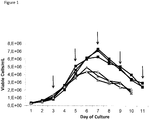
- Both cell lines were initially seeded at 3 x 10 5 cells.mL -1 in 100 mL of CD CHO medium in large 500 mL Erlenmeyer flasks and incubated at 37°C in a humidified 5% CO 2 in air (v/v) orbital shaking incubator at 100 rpm. A sample was taken daily for cell counting (1 mL). At time points of 3, 5, 7 and 11 days of culture time, aliquots of 1x10 7 cells were removed for miR analysis. Cells were harvested by centrifugation, the pellet washed once with PBS and stored at -70°C. The supernatant was retained in order to determine the concentration of secreted mAb.
- RNA extraction was undertaken using the Mir VANA RNA Extraction Kit (Life Technologies, UK) following the manufacturer's instructions.
- a Nanodrop instrument was used to measure the quantity of RNA obtained by determining the absorbance at a wavelength of A260 nm.
- a 20 ng.mL -1 dilution of the RNA extract was prepared to use in the subsequent qRT-PCR.
- the manufacturer's protocol for the enrichment of small RNAs was followed.
- qRT-PCR materials were sourced from Applied Biosystems unless otherwise stated.
- the two-step TaqMan® MicroRNA Assay kit was utilised with 48 and 96 well opaque plates and adhesive sheets (both obtained from Bio-Rad).
- the first step involves the miR Reverse Transcription kit and collected sample. Each well was prepared according to the manufacturer's instructions to contain 7 ⁇ L of master mix, 3 ⁇ L of the appropriate primer (which are provided in the kit, one for each miR) and 5 ⁇ L of RNA sample at a concentration of 10 ng.mL -1 .
- the RT-PCR was run on an Eppendorf Authorised Thermo Cycler using the following program:
- the second qRT-PCR step was then performed.
- Each well consisted of 1 ⁇ L of TaqMan microRNA Assay (20 X), 1.33 ⁇ L of product from the first step, 10 ⁇ L TaqMan Universal PCR Mix and 7.67 ⁇ L nuclease-free water.
- the qRT-PCR experiments were run on a Mastercycler® Eppendorf Realplex 4 instrument using the following PCR cycle details;
- the products of the qRT-PCR were analysed on a 2% agarose gel alongside a 10 bp DNA ladder (Invitrogen).
- a standard curve was generated using commercially synthesized material of each miR of known concentration.
- the standard curve was generated using the synthetic material in the TaqMan® MicroRNA Assay with known copy numbers and the subsequent unknown miR concentrations determined from samples using the standard curve.
- the SYBR Green one step qRT-PCR kit was utilised with 48 and 96 well opaque plates and adhesive sheets. Each well was prepared to contain 12.5 ⁇ L of SYBR green mix, 1.5 ⁇ L of the appropriate primers, 0.5 ⁇ L of RT enzyme, 2 ⁇ L of RNA at a concentration of 2.5 ng/mL and 8.5 ⁇ L of ddH 2 O.
- the primers utilised during this study are described in Table 1 below.
- the cell lines were seeded in the exponential growth phase at 3 x 10 5 cells.mL -1 into 6-well plates (Greiner, U.K.) containing appropriate media and grown at 37°C in a humidified 5% CO 2 in air (v/v) incubator.
- the following was prepared; (a) 4 ⁇ g of DNA and 250 ⁇ L of Gibco® OptiMEM medium (Life Technologies, UK), (b) 12 ⁇ L of Lipofectamine (Invitrogen, Life Technologies, UK) with 250 ⁇ L of Gibco® OptiMEM medium (Life Technologies, UK). These were then incubated at room temperature for 5 min, and the two tubes were mixed and incubated at room temperature for 20 min. At the end of this period, 500 ⁇ L of the DNA complex was added to the appropriate wells. The cells were cultured for different time periods before counting the cells and collecting a portion of the medium for mAb titre determination by ELISA.
- the initial work to identify miRs whose expression may be associated with either qP or IVC was undertaken by using a commercially available miRCURY LNA microarray approach (Exiqon, Denmark). Two approaches were taken: A) The first approach was to compare miR responses in a GS-CHOK1SV cell line (expressing a model recombinant chimeric mAb, cB72.3) grown in 10 L airlift bioreactors in batch and fed-batch mode. The fed-batch mode used Lonza's generic feeding regime (generic process - version 6).
- f1 and f2 indicate application of the first and second feeds, respectively.
- Bioreactors run in batch mode
- Bioreactors run in fed-batch mode
- F13 F14 F16 F17 F18 F19 Elapsed time (day)
- Sampling point Viable cell concentration (10 6 cells.mL -1 ) 0 0.2 0.2 0.2 0.2 - 1 0.2 0.3 0.3 0.3 0.3 2 0.7 0.6 0.7 0.6 0.4 3 0.6 0.5 0.7 0.5 0.6 0.6 4 1.7 1.7 1.9 1.7 1.7 1.8 5(f1) 1 (pre-feed 1) 1.9 3.0 3.0 3.1 3.0 2.7 6 2.3 3.8 3.3 4.0 3.9 4.1 7 2 2.3 4.4 4.3 4.7 4.4 5.0 8 2.5 4.8 4.8 6.0 5.8 6.3 9 3 2.5 5.6 5.4 6.8 6.5 7.3 10(f2) 2.3 5.5 4.9 6.8 6.7 7.2 11 2.0 5.2
- the data represented here are normalised log median ratios (ln(Hy3/Hy5)) values for miRs from comparing groups of reactors by ANOVA. Only those with p ⁇ 0.05 (Table 3) were entered into the 2-way hierarchical clustering algorithm. From this analysis a number of interesting miR clusters (containing mmu-miR-21, -34b, -34c, -29a, -130a and -193) were identified that showed differences in expression between growth stages or between feeding processes. The miR identified in the array study may be involved in control of cell cycle and apoptosis. Large changes were observed in the amount of mmu-miR-34b and -34c.
- miRs mmu-miR-34a, -34b and -34c are all closely related and miR-34a is known to be a target for p53 leading to apoptosis and G1 arrest.
- Table 3 Ranking of miRs by average fold-change between fed-batch day 12 and the reference. Significance testing was by ANOVA and the associated p-values are shown. MiRs listed in bold are of particular interest.
- the miR profiling identified a subset (15) of the total number of miRs analysed by the miRCURYTM microarray that are differentially expressed in the high and low producer groups using mouse annotation and 18 miRs using human annotation. Heat map diagrams for the human and mouse annotations were prepared. The p values from ANOVA from the human and mouse annotation results are reported in Tables 5 and 6. Table 5. ANOVA calculated p-values between miRs differentially regulated between 'high' and 'low' producer groups. Analysis was performed using the miRCURY LNA microarray between 'high' and 'low' producer groups for mouse annotations. MiRs of particular interest are highlighted in bold.
- ANOVA calculated p-values between miRs differentially regulated between 'high' and 'low' producer groups. Analysis was performed using the miRCURY LNA microarray between 'high' and 'low' producer groups for human annotations. MiRs of particular interest are highlighted in bold.
- miR amounts were determined using the commercially available two-step TaqMan® MicroRNA Assay kit (Applied Biosystems). In order to determine the concentrations of mature miRs in each sample a standard curve was prepared for each miR.
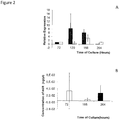
- the concentration of miR-15b in the two test cell lines throughout batch culture is reported in Figure 2 .
- the pre-miR amounts in both cell lines showed similar profiles throughout culture ( Figure 2A )
- the amount of pre-miR-15b in the 120 h and 168 h samples was greater for the 'high' producer cell line.
- the trend in the amounts of the mature miR is different between the two cell lines, decreasing throughout culture in the 'low' producer and only appearing at the end of culture in the 'high' producer ( Figure 2B ).
- This data concurred with the microarray data in which miR-15b levels were elevated in some 'high' producer cell lines at day 4 of batch culture.
- the qRT-PCR data for the mature miRs was therefore generally consistent with the microarray data as described above.
- Examples 3 to 5 show the transient over-expression of the mature miRs and demonstrates that over-expression can modify the phenotype of the GS-CHOK1SV cell lines investigated, e.g. specific production rate, qP or the integral of viable cell concentration, IVC.
- the transient over-expression of both individual and combinations of miRs was analysed using a plasmid based-approach as described in the following sections.
- CHOK1SV cells were transiently transfected with an expression vector encoding pre-miR-21.
- RNA extracts from control cells (transfected with a blank plasmid) and pre-miR-21-transfected cells were analysed by northern blotting.
- the amount of mature miR-21 was elevated in CHOK1SV cells transiently transfected with the pre-miR-21 construct (data not shown). Relatively large amounts of pre-miR were observed in all samples compared to mature levels. This data shows the vectors are functional and can be used in for over-expression or 'knock-up' studies.
- miR-15 was the only exogenously expressed miR to increase IVC by 50% (compared to transfectant blank) and then only in the 'high' producer cell line ( Figure 6A ).
- qP only exogenously expressed miR-34c engendered a significant increase (compared to transfectant blank) and this occurred both in the 'low' and 'high' producer cell lines ( Figure 6B ). This suggests that miR-34c may target processes involved in determining qP that are common to both 'high and 'low' producing cell lines.
- GS-CHOK1SV cell lines Three different cB72.3-producing GS-CHOK1SV cell lines were used to determine if any observed effects were cell line-specific: 'High' and 'low' producing lines CHO 42 and CHO 114, respectively, plus CHO-56 which was deemed a 'mid' producer cell line.
- CHO 56 cells transiently co-transfected with separate vectors encoding pre-miR-15b and pre-miR-16, pre-miR-16 and pre-miR-34c or pre-miR-15b with pre-miR-16 and pre-miR-34c showed statistically significant increases (58.7%, 57.8% and 71.1%, respectively) in the concentration of mAb in the culture medium after 96 h post-transfection ( Figure 8 ).
- transfectant pools were generated from the CHOK1SV host engineered to stably over-express the individual pre-miRs.
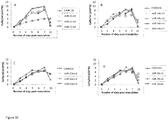
- Transfectant pools over-expressing the individual pre-miRs were created in CHOK1SV host cells (Lonza Biologics). To achieve this, the aforementioned vectors encoding various pre-miRs were used which additionally contain a puromycin selection marker. These vectors were transfected by electroporation into the Lonza CHOK1SV host cell line followed by selection in puromycin-containing medium. Puromycin-resistant pools were analysed for growth ( Figure 10 ) and miR content ( Figure 11 ) to confirm that the amount of specific mature miR (i.e., the one encoded in pre-miR form by the transfected vector and processed to the mature miR form by the cell) was elevated in the pools.
Landscapes
- Health & Medical Sciences (AREA)
- Life Sciences & Earth Sciences (AREA)
- Engineering & Computer Science (AREA)
- Chemical & Material Sciences (AREA)
- Genetics & Genomics (AREA)
- Organic Chemistry (AREA)
- Biomedical Technology (AREA)
- Wood Science & Technology (AREA)
- Zoology (AREA)
- Molecular Biology (AREA)
- Biotechnology (AREA)
- Bioinformatics & Cheminformatics (AREA)
- General Engineering & Computer Science (AREA)
- Biochemistry (AREA)
- General Health & Medical Sciences (AREA)
- Microbiology (AREA)
- Biophysics (AREA)
- Physics & Mathematics (AREA)
- Plant Pathology (AREA)
- General Chemical & Material Sciences (AREA)
- Chemical Kinetics & Catalysis (AREA)
- Immunology (AREA)
- Medicinal Chemistry (AREA)
- Proteomics, Peptides & Aminoacids (AREA)
- Micro-Organisms Or Cultivation Processes Thereof (AREA)
- Preparation Of Compounds By Using Micro-Organisms (AREA)
Description
- The present invention relates to the generation of mammalian cells capable of producing proteins at an industrial scale and means and methods to obtain and use said cells, in particular for protein production.
- The generation and synthesis of recombinant proteins for various applications and processes is well-known to the skilled person. A wide variety of different means and methods are used employing various mechanisms to provide for a safe and efficient large-scale manufacture of said proteins. These cellular mechanisms may exert their effects at different stages of the protein production process, for instance at the transcriptional, translational or post-translational level. A relatively recently discovered mechanism by which translation, and hence gene expression, is controlled is via the expression of miRNAs (short for microRNAs, in the following also termed miRs). These are endogenous single-stranded non-coding RNA of approximately 22 nucleotides (nt) in length that generally act as negative regulators of gene expression by RNA:RNA interactions between the miR and the 3'-UTR of target mRNAs. miRs have been shown to play important regulatory roles in mRNA translation, and are involved in the control of cell development, differentiation, apoptosis, antiviral defences and most fundamental cellular processes. Indeed, it has been suggested that miRs might regulate expression of around 30% of the human genome. miRs influence and regulate mRNA translation rates by interacting with specific target cellular mRNAs, mainly at the 3'-UTR. Further, one miR may target and interact with multiple target mRNAs and therefore determining miR recognition motifs and targets is currently difficult.
- To date the majority of studies investigating miR expression and the subsequent control these elicit on gene expression have been undertaken in the oncology field, although much of this knowledge is relevant to the industrial biotechnology field with respect to how these underpin cell phenotype. For example, studies in the cancer field that demonstrate the relationship between cell growth and miRs may be applicable in the biotechnology field. The wide range of potential targets that miRs can regulate offers the potential to develop cell lines with new phenotypes by manipulating gene expression via miR engineering. In doing this, it is realised that manipulation of a single miR could potentially target the regulation of multiple genes that together play a role in determining cell phenotype.
- Part of the pathway for the biogenesis of miRs is shared with that of silencing or short interfering RNA (siRNA), involving Dicer and RNA-induced silencing complex (RISC) (Bartel et al. 2004 Cell 116:281-297). 70% of miR genes are reported to be found within introns or exons of genes, with the remaining 30% located within intergenic regions. Initially, the primary miR (pri-miR) is cleaved by RNase II endonuclease Drosha and Pasha forming a stem-loop structure called a pre-miRNA (pre-miR). This pre-miR is around 60 to 70 nucleotides in length, and has a 5' phosphate and a 2 nucleotide over hang on the 3' end. Along with the transport cofactor Ran-GTP the pre-miR hairpin is actively transported from the nucleus through the receptor Exportin-5. In the cytoplasm an RNase III endonuclease called Dicer is thought to interact with the pre-miR by recognising the double stranded portion, and cutting approximately two helical turns away from the base of the stem-loop, leaving a miR:miR* duplex (the opposing arm of the pre-miR is denoted by an asterisk after the miR name). This miR:miR* duplex enters RISC, and the miR* component of the miR:miR* duplex is peeled away and degraded via the aid of a helicase. The 5' end of the mature miR lies at the end of a strand of the miR-miR* duplex with the lowest thermodynamic energy (Bartel et al. 2004 Cell 116:281-297).
- The first one to seven nucleotides at the 5' end of the miR bind to the target via base-pairing and is termed the 'seed' region. In mammalian cells miRs usually recognise target genes via imperfect base pairing to the mRNA where only the seed region of the miR exhibits a perfect match to the target. It has also been reported that miR binding sites exist in other locations other than the 3' end of mRNA, such as the 5'-untranslated region (UTR) of ribosomal protein mRNA (Ør-om et al. 2008 Molecular Cell 30:460-471), or even genomic regulatory sequences such as promoters (e.g., Tan et al. 2009 BMC Molecular Biology 10:12). There are also reports that miRs can interact with mRNAs in the coding sequence (Rigoutsos et al. 2009 Cancer Research 69:3245-3248). However, less information on the non 3'-UTR interactions exist and most validated miR targets are located in mRNA 3'-untranslated regions (3'UTRs). Generally, if there is incomplete base-pairing between the miR and mRNA target, translational inhibition occurs, whereas it is thought that where there is complete base-pairing target mRNA degradation occurs.
- Despite the potential use of miRs to regulate gene expression and hence pathways and cellular processes that influence high recombinant protein productivity, to date the manipulation of miRs to improve the production of recombinant proteins from cultured mammalian cells has not been fully realised. The concentration of secreted recombinant protein in culture medium is a function of cell-specific production rate (qP) and the time integral of viable cell concentration (IVC) (Porter et al. 2010 Biotechnology Progress 26:1446-1455). Hence, miRs could be applied to pathways to increase qP (e.g., through manipulation of secretory pathways) or IVC (e.g., through manipulation of proliferative or apoptotic pathways). The majority of studies into miR expression and manipulation in the bioprocessing/biotechnology field have centred on different Chinese hamster ovary (CHO) cell lineages. However, one study that profiled miRs in human embryonic kidney 293 (HEK293) cells (often used for transient production of recombinant protein), followed how the miR expression profile changed during different growth-phases in batch culture (Koh et al. 2009 Journal of Biotechnology 140:149-155). These authors reported that 14 miRs changed significantly in expression between exponential and stationary growth phases, 13 being up-regulated in stationary phase. Amongst those miRs observed to change between exponential and stationary phase were miR-15a and miR-16 (Koh et al. 2009 Journal of Biotechnology 140:149-155).
- Recently, CHO cell miR expression and the manipulation of miRs in CHO cells have attracted much interest, although such studies are still in their infancy. A recent study used deep sequencing approaches to profile conserved miRs and their expression across recombinant cell lines (Hammond et al. 2012 Biotechnology and Bioengineering 109:1371-1375). This study investigated a CHO-K1 host, secreted alkaline phosphatase (SEAP)- and tissue plasminogen activator protein (tPA)-expressing CHO-K1-derived cell lines and found 173 conserved miRs of which 136 were differentially expressed in either the SEAP or tPA recombinant cell line and 75 in both compared to the host. Of those identified as differentially expressed were included miR-15a, -15b and -34c (Hammond et al. 2012 Biotechnology and Bioengineering 109:1371-1375). Another study reported that mmu-miR-446h expression influenced apoptosis in CHO cells (Druz et al. 2011 Biotechnology and Bioengineering 108:1651-1661). A study in CHO reported by Johnson et al. (2011) identified 350 miRs via alignment with known miRs from the miRBase database (Johnson et al. 2011 Biotechnology and Bioengineering 108:475-480). This study showed (i) that almost all mature miRs in the CHO cell lines investigated were highly homologous to their human or mouse counterpart; and (ii) that the expression of many of the miRs changed in response to small environmental perturbations. This study also reported that hamster miR cgr-let-7f is the most abundant miR in CHO cells and its levels were comparable across the conditions investigated.
- A similar sequencing approach was reported by Hackl et al. (Hackl et al. 2011 Journal of Biotechnology 153:62-75) to identify and annotate both conserved and novel miRs in CHO cells. At the time of the study, the authors had no access to an annotated CHO genome. Instead, read alignment patterns and read count ratios of 5' and 3' mature miRs were obtained and used for an independent classification into miR/miR* and 5p/3p miR pairs and discrimination of miRs from other non-coding RNAs, resulting in the annotation of 387 mature CHO miRs. The study included a comparison of serum vs serum-free conditions and host vs derivative recombinant cell lines. In the host vs recombinant derivative cell line comparison they reported differential expression of miR-16b (Hackl et al. 2011 Journal of Biotechnology 153:62-75). The same group has also reported on the expression of miRs in CHO-K1 suspension cell cultures at different phases of batch culture and report that more than 100 miRs were differentially regulated across batch culture (Hernandez Bort et al. 2012 Biotechnology Journal 7:500-515). In another study, Lin et al (2011) investigated miR levels in host CHO DG44 cells and a derivative IgG-producing cell line, reporting that miR-221 and miR-22 were down-regulated in the IgG-producing recombinant cell lines. However, there was no relationship between the concentration of IgG secreted into culture medium and expression of these miRs. In the parental DG44 cell line, miR-15b expression was also significantly lower compared to a derivative cell line producing a recombinant protein (Lin et al. 2011 Biotechnology Progress 27:1163-1171).
- One of the first reports into miR expression in CHO cells was that from Gammell et al. (Gammell et al. 2007 Journal of Biotechnology 130:213-218). The approach taken by the authors was to use a non-hamster microarray and investigate miR expression upon temperature-shift. The resulting data showed that miR-21 and miR-24 were up-regulated in CHO-K1 growth-arrested cell lines, induced either by temperature shift or during normal batch culture (
US 2010/0190258 A1 ). Subsequently, this group reported that lowering the temperature from 37 °C to 28-33 °C led to increased levels of miR-219, miR-518d, miR-126, miR-30e, miR-489 and miR-345, when measured after 24 h, while miR-7, miR-320, miR-101 and miR-199 were down-regulated (Barron et al. 2011 Journal of Biotechnology 151:204-211). The successful exogenous over-expression of miR-7 resulted in a blocking of cell proliferation and increased normalised (per cell) recombinant protein production at 37 °C but the yield was still lower than from cells at reduced temperature. - The impact of miR manipulation is often investigated using reporter genes and 'sponge vectors' (Ebert et al. 2007 Nature Methods 4:721-726). In order to demonstrate the influence of miRs on industrially-relevant phenotypes it is necessary to validate this by either reducing or increasing expression of the miR in question. Jadhav et al. (Jadhav et al. 2012 Biotechnology and Bioengineering 109:1376-1385) recently reported that the functional analysis of miRs in CHO cells can be successfully demonstrated using a recombinant EPO-FC-producing CHO cell line and transient transfection over a four day period.
- Commercial recombinant protein production often requires large-scale manufacturing processes. Despite recent advances in industrial processes, recombinant protein production remains a challenging task. Therefore there is still the need to provide further improved means and methods for the production of proteins in a more efficient and optimised way.
- The present invention is inter alia based on the technical problem to provide improved or further means and methods for the industrial scale production of proteins.
- The present invention solves its technical problem by the provision of the teaching of the independent claims.
- In particular, the present invention solves its technical problem by providing a method for the production of a protein of interest in a mammalian producer cell comprising the process steps
- a) providing a mammalian producer cell,
- b) increasing the concentration of at least one miR selected from the group consisting of miR-15, miR-16 and miR-34 in the mammalian producer cell provided in step a) so as to obtain a protein production engineered mammalian producer cell,
- c) cultivating the protein production engineered mammalian producer cell under conditions suitable for the production of the protein of interest, and
- d) recovering the protein of interest produced in step c).
- The present invention, thus, increases the concentration, that means raises the amount, in particular intracellular amount of the identified miRs in a mammalian producer cell to provide for an increased production of the protein of interest.
- In the context of the present invention the term concentration is understood to also mean level.
- In the context of the present invention, an increased concentration of a miR is a higher concentration of said miR compared to the concentration of said miR in the mammalian producer cell provided in step a). The concentration of miR can be determined by conventional methods to determine miR amounts in a cell, for instance by qRT-PCR-analysis. Appropriate control measurements and the establishment of appropriate standards are known to the skilled person.
- In the context of the present invention an increased production of the protein of interest is meant to refer to a higher specific production rate (qP) of the protein of interest, in particular the recombinant protein of interest in the cell and/or to a higher time integral of viable cell concentration (IVC). Recombinant protein production or productivity, being defined as concentration of the said protein in the culture medium, is a function of these two parameters (qP and IVC), calculated according to Porter et al. (Porter et al. 2010 Biotechnology Progress 26:1446-1455).
- Methods of measuring increased protein production are well-known to those skilled in the art. For example, an increase in recombinant protein production might be determined at small-scale by measuring the titre in tissue culture medium by ELISA (Smales et al. 2004 Biotechnology Bioengineering 88:474-488). It can also be determined quantitatively by the ForteBio Octet, for example for high throughput determination of recombinant monoclonal antibody (mAb) concentration in medium (Mason et al. 2012 Biotechnology Progress 28:846-855) or at a larger-scale by protein A HPLC (Stansfield et al. 2007 Biotechnology Bioengineering 97:410-424). Methods for counting cells include, but are not limited to, trypan blue exclusion methods followed by counting using a haemocytometer or Vi-CELL (Beckman-Coulter).
- Said increased production of the protein of interest may in one embodiment be due to an increased specific protein production rate (qP) of the cells as a result of the increased intracellular concentration of the at least one miR obtained in step b) of the present process. In one embodiment, said increased protein production may alternatively or additionally be due to increased cell growth, in particular a higher IVC as a result of the increased concentration of the at least one miR obtained in step b) of the present process. Thus, the present invention is particularly useful for the growth and use of mammalian producer cells, in particular cell lines, which are used in the generation of proteins, in particular recombinant proteins.
- In accordance with the present invention, step a) of the present method requires the provision of a mammalian producer cell, which means a cell that is capable of producing a protein of interest, in particular a recombinant protein of interest, and which is capable of being subjected to steps b) and c) of the present method.
- In a preferred embodiment of the present invention, the protein of interest is an endogenous protein of the producer cell line.
- In a further preferred embodiment, the protein of interest is exogenous to the producer cell. That means the protein of interest is not normally present in the producer cell. Thus, a nucleotide sequence encoding the protein of interest has to be introduced, in particular transfected, into the producer cell by methods known to the skilled person, preferably as mentioned below.
- In a particularly preferred embodiment of the present invention, a nucleotide sequence encoding the protein of interest is transfected prior to step a) of the present method. That means the exogenous protein of interest is already present in the provided producer cell. Preferably, the nucleotide sequence encoding the protein of interest is present on a vector or stably integrated in the genome of the producer cell.
- In accordance with the present invention, step b) of the present method requires the increase in the concentration of at least one of said miRs in comparison to the level of said miR present in the mammalian producer cell before having carried out step b) so as to obtain a manipulated (engineered) mammalian producer cell, in the following also termed "protein production engineered mammalian producer cell". Said protein production engineered mammalian producer cell subsequently is cultivated in step c) under conditions suitable for the production of the protein of interest, wherein during said cultivation said protein of interest is produced and can be recovered, in particular can be separated from the culture medium and the cell.
- In a further particularly preferred embodiment, a nucleotide sequence encoding the protein of interest is transfected into the producer cell simultaneously with the at least one miR during step b) of the present process. Thus, in this embodiment, not only the concentration of the at least one miR is increased but also that of the protein of interest. Also here, the nucleotide sequence encoding the protein of interest can be on a separate vector or be stably integrated into the genome of the protein production engineered mammalian producer cell obtained.
- In a still further particularly preferred embodiment, a nucleotide sequence encoding the protein of interest is transfected into the protein production engineered mammalian producer cell, i. e. after step b), but before step c) of the present process.
- In a particularly preferred embodiment, the cell culture is carried out as a batch culture, fed-batch culture or a continuous culture. Furthermore preferred, the cell culture is carried out as suspension culture. Preferably, a conventional cell culture medium is used in step b).
- In a preferred embodiment, step b) of the present invention is carried out in a conventional cell culture medium, preferably a cell culture medium such as used in step c). In another embodiment of the present invention, step b) is carried out in a transfection medium, in particular a medium suitable for transfecting miRs or vectors comprising nucleotide sequences encoding miRs, and possibly the protein of interest, into the mammalian producer cell.
- Suitable cultivation and recovery methods are known to the skilled person and may depend upon the protein of interest and the mammalian producer cell employed.
- The present disclosure relates to providing a method for the preparation of a protein production engineered mammalian producer cell capable of expressing a protein of interest, comprising the process steps
- x) providing a mammalian producer cell,
- y) increasing the concentration of at least one miR selected from the group consisting of miR-15, miR-16 and miR-34 in the mammalian producer cell provided in step x) so as to obtain a protein production engineered mammalian producer cell,
- z) recovering the protein production engineered mammalian producer cell produced in step y).
- The present method for the preparation of a protein production engineered mammalian producer cell, thus, provides for the production of an engineered mammalian producer cell which is preferably capable of increased specific protein production rate and/or capable of improved, in particular increased, cell growth, i. e. a higher time integral of viable cell concentration (IVC).
- miR-15b and miR-16 are both apoptosis-inducing miRs, targeting mRNA encoding anti-apoptotic proteins such as Bcl2. Several other genes have also been revealed as targets for these miRs. For example, miR-16 is also reported to regulate Cyclin D1, Cyclin D3, Cyclin E1 and CDK6 causing cells to go into arrest at the G0/G1 phase of the cell cycle. miR-21 is another apoptotic inducing miR preventing cell proliferation and inducing cell death. miR-21, like miR-15 and miR-16, targets Bcl2 mRNA. miR-34c is involved in cell proliferation, mainly in p53-mediated apoptosis making it a key target for cancer diagnosis and therapy. miR-34 is a tumour suppressor, achieving this by targeting Notch, HMGA2, silent information regulator 1 (SIRT1) as well as Bcl-2 and other genes associated with tumour formation and/or development.
- The present invention, thus, provides in an advantageous manner means and methods to enhance protein production, in particular to allow the large-scale production of a protein of interest in a mammalian producer cell. The disclosure also relates to improved mammalian producer cells, that means engineered mammalian producer cells, which are engineered so as to allow an improved, in particular, increased, protein production and/or improved, in particular increased, cell growth.
- In the context of the present invention, the term "protein of interest" is meant to refer to an oligopeptide or polypeptide in glycosylated, partially glycosylated or non-glycosylated form.
- The term "protein of interest" as used herein in singular form is also referring in one embodiment to at least one protein of interest, in particular polypeptides of interest, that means inter alia to two, three or more different proteins of interest. In one embodiment of present invention, the term "protein of interest" refers to one specific protein whose production is increased, preferably specifically increased, in particular merely the production of this specific protein is increased. In a particular and preferred embodiment, said protein of interest, in particular the nucleotide sequence encoding it, may be an endogenous or exogenous protein with respect to the mammalian producer cell, i. e. the mammalian host cell. In case the producer cell line comprises an exogenous protein of interest it is termed transgenic.
- In the context of the present invention, the term "endogenous" protein refers to a protein already being present in or being encoded in the genome of the mammalian producer cell line and therefore is not originating from outside of said cell line.
- In the context of the present invention, the term "exogenous" protein refers to a protein being present in said mammalian producer cell due to methods of recombinant gene technology, for instance conventional genetic engineering methods, preferably by means of transformation, electroporation or transfection of a nucleotide sequence encoding said exogenous protein, wherein said exogenous nucleotide sequence was, prior to that genetic engineering step, not present in said mammalian producer cell.
The protein of interest may be a genetically engineered, in particular a recombinant protein. In particular, the protein may be a biopharmaceutical.
In particular, the protein may be a mammalian, bacterial, viral or plant protein. Preferably, the protein is a human or humanised protein. - In the context of the present invention, the term "mammalian producer cell" is meant to refer to a mammalian cell, in particular a mammalian host cell, capable of producing a protein of interest, in particular to a mammalian host cell capable of producing a protein of interest and capable of being subjected to the process steps b) and c) of the present methods.
- In the context of the present invention, the term "a protein production engineered mammalian producer cell" is meant to refer to an engineered mammalian producer cell which is a result of having increased the concentration of at least one miR selected from the group consisting of miR-15, miR-16, miR-34 in the provided mammalian producer cell and which is therefore characterised by an increased concentration of said at least one miR, in particular two of said miRs, preferably three of said miRs in comparison to the mammalian producer cell provided in step a). The present "protein production engineered mammalian producer cell" is characterised in one preferred embodiment by increased protein production, in one embodiment by an increased qP or IVC and in one embodiment by both of said characteristics.
- In a preferred embodiment of the present invention, the "protein production engineered mammalian producer cell" is a cell exhibiting increased qP or an increased IVC or both.
- In a preferred embodiment, the miR-15 is miR-15a or miR-15b.
- In a preferred embodiment, the miR-16 is miR-16-1 or miR-16-2.
- In a preferred embodiment the miR-34 is miR-34a, miR-34b or miR-34c.
- In a preferred embodiment, the concentration of the at least one miR is increased by transfecting the mammalian producer cell in step b) with at least one miR selected from the group consisting of miR-15, miR-16 and miR-34.
- Thus, in a preferred embodiment the mammalian producer cells are transfected with at least one miR or pre-miR, preferably at least two, most preferable three miRs or pre-miRs as identified herein, so as to obtain an increased concentration thereof. In a preferred embodiment, the producer cells are transiently transfected with at least one pre-miR encoding vector(s) whilst in another preferred embodiment cell lines are constructed which stably express at least one pre-miR(s), that means the protein production engineered producer cells contain the nucleotide sequence of at least one pre-miR stably integrated into their genome.
- In a preferred embodiment, the concentration of at least one miR is increased by transfecting the mammalian producer cell in step b) with at least one vector containing a nucleotide sequence encoding at least one miR under control of at least one regulatory element allowing the over-expression of at least one miR, wherein the at least one miR is selected from the group consisting of miR-15, miR-16 and miR-34.
- In a preferred embodiment, the vector containing the nucleotide sequence coding at least one of the miRs is an expression vector.
- Thus, in a preferred embodiment, the mammalian producer cells are transfected with at least one of the present vectors allowing in the transfected cells the over-expression of at least one miR, preferably at least two, most preferable three, miRs as identified herein, so as to obtain an increased concentration thereof. In a preferred embodiment of the present invention, the concentration is transiently increased. In another preferred embodiment of the present invention, the concentration is stably increased.
- A regulatory element allowing the over-expression of at least one miR can be a promoter or any other expression promoting or expression enhancing element such as an enhancer. In a preferred embodiment, the regulatory element allowing the over-expression of at least one miR is a promoter, preferably a mammalian or viral promoter.
- In a particularly preferred embodiment, the promoter may be a constitutive or inducible promoter, for instance a temperature-inducible promoter.
- In a preferred embodiment, the at least one vector used in step b) is transiently or stably transfected into the mammalian producer cell.
- In a preferred embodiment, at least two, preferably i) miR-15 and miR-16 or ii) miR-15 and miR-34 or iii) miR-16 and miR-34, preferably all three, of the miRs or nucleotide sequences encoding at least two, preferably three, of the miRs are transfected.
- In one preferred embodiment, at least two miR encoding nucleotide sequences may be transfected on the same vector. In another embodiment, the co-transfection of at least two miRs encoding nucleotide sequences is carried out with each individual miR encoded on separate vectors. Further, if the protein of interest is transfected together with the at least one miR it can be encoded on the same vector or on an individual vector.
- The transfection of the nucleotide sequence encoding the at least one miR or of the at least one miR can be achieved using conventional methods well-known to the skilled person. Said methods may preferably be lipofectamine transfection, electroporation, liposomemediated transfection, calcium-phosphate-mediated transfection, virus mediated transfection or direct gene transfer, e.g. particle bombardment.
In a preferred embodiment of the present invention, the nucleotide sequence encoding at least one miR, preferably at least one pre-miR under control of at least one regulatory element allowing the over-expression of at least one miR is transiently or stably contained in the mammalian producer cell. - In a preferred embodiment, the miR is a mature miR, a precursor miR (pre-miR) or a primary miR (pri-miR). The mature miR is preferably synthesised by the cell or is an exogenously-added chemically synthesised oligonucleotide.
- In a preferred embodiment, the mammalian producer cell is preferably a rodent cell, a hamster cell, a mouse cell or a human cell, a Y0 cell, a COS cell, a sp2/0 cell, a CHO cell, a CHO-K1 cell or a CHO-K1SV cell, a DG44 CHO cell, a DUXB11 CHO cell, a CHO GS knock-out cell, a CHO FUT8 GS knock-out cell, a NS0 cell, a PERC6 cell, a HEK293 cell, a HT1080 cell or a BHK cell. The mammalian producer cell can also be a baby hamster kidney cell (BHK) cell. The producer cell can also be a non-mammalian cell, e. g. an insect cell etc., preferably the producer cell is a non-human cell.
- In a preferred embodiment, the mammalian producer cell is a CHO cell, a NS0 cell, a PERC6 cell, a HT1080 cell or a baby hamster kidney (BHK) cell. In a preferred embodiment, the CHO cell is selected from the group consisting of a CHO-K1 cell, a CHO-K1SV cell, a DG44 CHO cell, a DUXB11 CHO cell, a CHO GS knock-out cell and a CHO FUT8 GS knock-out cell.
- The CHO GS knock-out cell is preferably a CHO-K1SV GS knockout cell, preferably GS Xceed™ of Lonza. The CHO FUT8 knockout cell is preferably the Potelligent® CHOK1SV of Lonza.
- In the context of the present invention, the term "cell" is meant to refer to a single cell. The term "cell" is also meant to refer to a cell line, preferably an immortalised cell line, which may comprise a pool of cells.
- The present invention solves its technical problem also by providing a "protein production engineered mammalian producer cell" produced according to anyone of the methods of the present invention.
- The present disclosure relates in particular to a "protein production engineered mammalian producer" cell comprising at least one transgenic nucleic acid sequence encoding at least one miR, which transgenic nucleic acid sequence is transiently or stably incorporated into the genome of that cell under control of at least one regulatory element allowing the over-expression of said at least one miR, wherein the at least one miR is selected from the group consisting of miR-15, miR-16 and miR-34.
- The present disclosure relates in particular to a kit for the production of the protein of interest in a mammalian producer cell, comprising at least one mammalian producer cell, at least one vector containing a nucleotide sequence encoding at least one miR under control of at least one regulatory element allowing the over-expression of the at least one miR, wherein the miR is selected from the group consisting of miR-15, miR-16, miR-34 and means for transfecting the at least one cell with the at least one vector.
- The kit further comprises a second vector comprising a nucleotide sequence encoding a protein of interest.
- Further preferred embodiments are the subject matter of the subclaims.
- The present invention will now be explained in more detail by way of non-limiting examples and the accompanying figures.
The figures show: -
Figure 1 . Batch growth curve of two recombinant GS-CHOK1SV cell lines expressing the mAb cB72.3 grown in CD-CHO medium (■ = 'high' producer CHO 42 cell line with a mAb titre of 550 ± 4 mg/L at the completion of shake flask batch culture, Δ = 'low' producer CHO 114 cell line with a mAb titre of 313 ± 64 mg/L at the completion of shake flask batch culture). Samples were taken throughout batch culture at the times indicated by arrows for extraction of miR material from cell pellets for qRT-PCR analysis. -
Figure 2 . The profile of pre-miR-15b (A) and mature miR-15b (B) throughout batch culture of the 'high' producer CHO 42 (■) and 'low' producer CHO 114 (□) cB72.3 mAb-producing GS-CHOK1SV cell lines. Error bars = ± SD (n=3). -
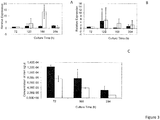
Figure 3 . The profile of (A) pre-miR-16-1, (B) pre-miR16-2 and mature (C) miR-16 throughout batch culture of the CHO 42 (■) and CHO 114 (□) cB72.3 mAb-producing GS-CHOK1SV cell lines. Error bars = ± SD (n=3). -
Figure 4 . The profile of (A) pre-miR-21 and (B) mature miR-21 throughout batch culture of the 'high' producer CHO 42 (■) and 'low' producer CHO 114 (□) cB72.3 mAb-producing GS-CHOK1SV cell lines. Error bars = ± SD (n=3). -
Figure 5 . The profile of (A) pre-miR-34c and (B) mature miR-34c throughout batch culture of the 'high' producer CHO 42 (■) and 'low' producer CHO 114 (□) cB72.3 mAb-producing GS-CHOK1SV cell lines. Error bars = ± SD (n=3). -
Figure 6 . Effect of transient over-expression of miRs on IVC and qP as determined over a period 24-96 h post-transfection for the 'high' producer CHO 42 (■) and 'low' producer CHO 114 (□) cB72.3 mAb-producing GS-CHOK1SV cell lines. -
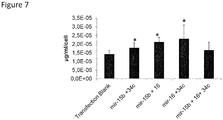
Figure 7 . Effect of transient over-expression of pre-miRs on the concentration of mAb in medium at 96 h post-transfection in the 'high' producer CHO 42 cB72.3 mAb-producing GS-CHOK1SV cell line. The mAb concentration has been normalised to the viable cell concentration of the culture at each time point. * = statistically significant increase in mAb expression (P<0.05) compared to the transfectant blank control. Error bars = ± SD (n=3). -
Figure 8 . Effect of transient over-expression of pre-miRs on the concentration of mAb in medium at 96 h post-transfection in the 'mid' producer CHO 56 cB72.3 mAb-producing GS-CHOK1SV cell line. * = statistically significant increase in mAb expression (P<0.05) compared to the transfectant blank control. Error bars = ± SD (n=3). -
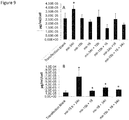
Figure 9 . Effect of transient over-expression of miRs on the concentration of mAb in medium at (A) 48 h and (B) 96 h post-transfection in the 'low' producer CHO 114 cB72.3 mAb-producing GS-CHOK1SV cell line. * = statistically significant increase in mAb expression (P<0.05) compared to the transfectant blank control. Error bars = ± SD (n=3). -
Figure 10 . Growth curves of CHOK1SV pools created by transfection with vectors encoding individual pre-miRs. A = miR-21 pool (pre-miR-21 encoding vector JR03), B = miR-34c pool (pre-miR-34c encoding vector JR04), C = miR-15b pool (pre-miR-15b encoding vector JR05), D = miR-16 pool (pre-miR-16 encoding vector JR06). Three cultures for each pool are shown alongside the CHOK1SV host. -
Figure 11 . Mature miR expression on day 5 (■) and day 7 (□) of batch culture of CHOK1SV-derived pools created by transfection with vectors encoding individual pre-miRs. A = miR-21 (pre-miR encoding vector JR03), B = miR-34c (pre-miR-34c encoding vector JR04), C = miR-15b (pre-miR-15b encoding vector JR05), D = miR-16 (pre-miR-16 encoding vector JR06) CHOK1SV host cell line, RY05 = Pool created by transfection with miR expression vector encoding no miR. Error bars = ± SD (n=3). -
Figure 12 . Luciferase expression 48 h post-transient transfection in various miR-manipulated cell lines. (■) Pools were transfected with the luciferase reporter vector with or without the miR-34c target sequence (without = 'luciferase vector', with = 'luciferase with sponge vector' containing target sequence for miR-34c) in the 3'-UTR of the luciferase transcription unit. (□) Pools were super-co-transfected with additional miR-34c encoding vector plus either the luciferase reporter vector with the miR-34c target sequence in the 3'-UTR of the luciferase transcription unit or without it. All data is shown relative to the luciferase expression in the miR-34c stable pool in the absence of the target sequence for miR-34c. - Table 1 below identifies the nucleotide sequences of pre-miR primers (
SEQ ID Nos 1 to 12) used in the present invention. - Vectors for over-expression of miRs were generated to express the hairpin of the human miR - generating a pre-miR. A puromycin selection marker was included in the vector for the generation of stable cell lines. A sponge vector consisting of Renilla luciferase with a complementary or near complementary miR-34c target sequence in the 3'-UTR was used to show that over-expression of miR-34c results in gene silencing.
- CHO-K1 adherent cells (European Collection of Cell Culture) were cultured in Gibco® DMEM (Life Technologies, UK) supplemented with 500 µM L-glutamic acid and 500 µM asparagine, 200 mM L-glutamine, nucleosides (30 µM adenosine, cytidine, uridine and guanosine with 10 µM thymidine (all Sigma)), 10% (v/v) heat inactivated foetal bovine serum (PAA laboratories) and 1% (v/v) Gibco® non-essential amino acids (Life Technologies, UK). CHO-K1 was maintained in T-flasks (75 cm2, Sartorius) at 37°C in a humidified 5 % CO2 in air incubator. When the flask became approximately 80% confluent the cells were split. The current medium was aspirated and washed out with 10 mL phosphate buffered saline (PBS) (1 tablet per 100 mL of sterile water (Oxide Limited)). The PBS was aspirated and the cells were incubated in 3 mL of trypsin (Life Technologies, UK) for 2-3 min at 37°C, 5% CO2 (v/v) in air. 10 mL of medium were then added to inhibit the trypsin and the cell suspension was poured into a 50 mL falcon tube and centrifuged for 5 min at 1000 rpm. The supernatant was then removed and the cell pellet resuspended in 10 mL of fresh media to confirm that the cell viability was >95% (as determined using a ViCell instrument). A new T75 flask containing 10 mL of fresh medium was then seeded by adding 0.25 mL of the cell suspension to the T75 flask.
- GS-CHO 42, 56 and 114 suspension cells (Lonza Biologics plc) were cultured in CD CHO medium (Life Technologies, UK). These were routinely maintained in Erlenmeyer flasks at 37°C in a humidified 5% CO2 in air (v/v) orbital shaking incubator at 100 rpm and were initially seeded at 2 x 10⁵ cells.mL-1.
- Both cell lines were initially seeded at 3 x 10⁵ cells.mL-1 in 100 mL of CD CHO medium in large 500 mL Erlenmeyer flasks and incubated at 37°C in a humidified 5% CO2 in air (v/v) orbital shaking incubator at 100 rpm. A sample was taken daily for cell counting (1 mL). At time points of 3, 5, 7 and 11 days of culture time, aliquots of 1x10⁷ cells were removed for miR analysis. Cells were harvested by centrifugation, the pellet washed once with PBS and stored at -70°C. The supernatant was retained in order to determine the concentration of secreted mAb.
- RNA extraction was undertaken using the MirVANA RNA Extraction Kit (Life Technologies, UK) following the manufacturer's instructions. A Nanodrop instrument was used to measure the quantity of RNA obtained by determining the absorbance at a wavelength of A260 nm. A 20 ng.mL-1 dilution of the RNA extract was prepared to use in the subsequent qRT-PCR. For miR analysis the manufacturer's protocol for the enrichment of small RNAs was followed.
- All qRT-PCR materials were sourced from Applied Biosystems unless otherwise stated. For all experiments the two-step TaqMan® MicroRNA Assay kit was utilised with 48 and 96 well opaque plates and adhesive sheets (both obtained from Bio-Rad). The first step involves the miR Reverse Transcription kit and collected sample. Each well was prepared according to the manufacturer's instructions to contain 7 µL of master mix, 3 µL of the appropriate primer (which are provided in the kit, one for each miR) and 5 µL of RNA sample at a concentration of 10 ng.mL-1. The RT-PCR was run on an Eppendorf Authorised Thermo Cycler using the following program:
- ▪ 16°C for 30 min
- ▪ 42°C for 30 min
- ▪ 85°C for 5 min
- The second qRT-PCR step was then performed. Each well consisted of 1 µL of TaqMan microRNA Assay (20 X), 1.33 µL of product from the first step, 10 µL TaqMan Universal PCR Mix and 7.67 µL nuclease-free water. The qRT-PCR experiments were run on a Mastercycler® Eppendorf Realplex4 instrument using the following PCR cycle details;
- 1. 95°C for 10 min
- 2. 95°C for 15 seconds
- 3. 60°C for 60 seconds
- The products of the qRT-PCR were analysed on a 2% agarose gel alongside a 10 bp DNA ladder (Invitrogen).
- To determine the copy number of each miR, a standard curve was generated using commercially synthesized material of each miR of known concentration. The standard curve was generated using the synthetic material in the TaqMan® MicroRNA Assay with known copy numbers and the subsequent unknown miR concentrations determined from samples using the standard curve.
- For all experiments the SYBR Green one step qRT-PCR kit was utilised with 48 and 96 well opaque plates and adhesive sheets. Each well was prepared to contain 12.5 µL of SYBR green mix, 1.5 µL of the appropriate primers, 0.5 µL of RT enzyme, 2 µL of RNA at a concentration of 2.5 ng/mL and 8.5 µL of ddH2O. The primers utilised during this study are described in Table 1 below.
- qRT-PCR experiments were run on a Mastercycler® Eppendorf Re-alplex4 instrument using the following PCR cycle details;
- 1. 50°C for 10 min
- 2. 95°C for 5 min
- 3. 95°C for 10 seconds
- 4. 58°C for 30 seconds
- ▪ Melting Curve (measured at 0.5°C change in temperature)
- The products of the qRT-PCR were analysed on a 1% agarose gel alongside a 100 bp RNA ladder (Invitrogen, Life Technologies, UK).
Table 1. Primers Designed for pre-miR qRT-PCR experiment Gene Forward Primer Reverse Primer Pre-miR-15b AGTACTGTAGCAGCACATCATGG (SEQ ID No 1) TTTCCTT AAATTT CTAGAGCAGCA (SEQ ID No 2) Pre-miR-16-1 AGCAGTGCCTTAGCAGCAC (SEQ ID No 3) CAACCTTACTTCAGCAGCACA (SEQ ID No 4) Pre-miR-16-2 TTCCACTCTAGCAGCACGTAAA (SEQ ID No 5) GTCACACTAAAGCAGCACAATAA (SEQ ID No 6) Pre-miR-21 GTACCACCTTGTCGGGTAGC (SEQ ID No 7) CAAAATGTCAGACAGCCCATC (SEQ ID No 8) Pre-miR-34c GGCAGTGTAGTTAGCTGATTGCT (SEQ ID No 9) TCTTTTTACCTGGCTGTGTGG (SEQ ID No 10) B-actin* AGCTGAGAGGGAAATTGTGCG (SEQ ID No 11) GCAACGGAACCGCTCATT (SEQ ID No 12) *B-actin primers from University of Kent. - For transient transfection experiments in 6 well plates the cell lines were seeded in the exponential growth phase at 3 x 10⁵ cells.mL-1 into 6-well plates (Greiner, U.K.) containing appropriate media and grown at 37°C in a humidified 5% CO2 in air (v/v) incubator. In 2 different tubes the following was prepared; (a) 4 µg of DNA and 250 µL of Gibco® OptiMEM medium (Life Technologies, UK), (b) 12 µL of Lipofectamine (Invitrogen, Life Technologies, UK) with 250 µL of Gibco® OptiMEM medium (Life Technologies, UK). These were then incubated at room temperature for 5 min, and the two tubes were mixed and incubated at room temperature for 20 min. At the end of this period, 500 µL of the DNA complex was added to the appropriate wells. The cells were cultured for different time periods before counting the cells and collecting a portion of the medium for mAb titre determination by ELISA.
- For transient transfection experiments using various CHO-K1SV cell lines in 96-well deep well plates, the protocol for the 6 well plate transient transfection experiments was adjusted to take account of the larger number of cells. Cells were seeded in the exponential growth phase at 0.4 x 10⁶ cells per well into 96-well deep well plates (Nunc) at 37°C in a humidified 5% CO2 in air (v/v) orbital shaking incubator at 375 rpm. 0.4 µg of DNA, 50 µL of Gibco® OptiMEM medium (Life Technologies, UK) and 1.2 µL of Lipofectamine (Invitrogen, Life Technologies, UK) were used per well, and prepared as above. Transfected cells were left for different time periods before counting the cells and collecting the medium in order to determine the mAb titre in the medium by ELISA.
- To determine mAb concentration, 100 µL of supernatant medium from transient transfections were analysed using a standard ELISA-based method (Smales et al. 2004 Biotechnology Bioengineering 88:474-488).
- To determine whether there were statistically significant differences in IVC, qP or the concentration of mAb in the supernatant medium between experimental conditions and controls, a student's t-test was undertaken. Changes were considered significant when a p value P<0.05 (at 95% confidence level) was obtained.
- The initial work to identify miRs whose expression may be associated with either qP or IVC was undertaken by using a commercially available miRCURY LNA microarray approach (Exiqon, Denmark). Two approaches were taken:
A) The first approach was to compare miR responses in a GS-CHOK1SV cell line (expressing a model recombinant chimeric mAb, cB72.3) grown in 10 L airlift bioreactors in batch and fed-batch mode. The fed-batch mode used Lonza's generic feeding regime (generic process - version 6). Three batch-mode bioreactors (n = 3) were compared to three fed-batch mode reactors (n = 3) for the GS-CHOK1SV 42 cell line (producing the chimeric mAb, cB72.3). Five points on each growth curve were selected for sampling (Table 2). For points 1-3, RNA samples were prepared from all six bioreactors (1 = immediately pre-application of feed1 (pre-feed1), 2 = 48 h post-feed1 and 3 = peak viable cell concentration). After peak, the unfed (batch-mode) bioreactors began to decline and no further sampling was taken from this set of bioreactors. Two further time points were taken from the three bioreactors receiving the feeds (fed-batch mode reactors, F17, F18 and F19) at 48 h post application of the second feed (4 = 48 h post-feed2) and at harvest (5 = harvest). Thus, in total 24 samples were taken and RNA prepared from them using the miRNeasy kit (Qiagen) according to manufacturer's instructions. A 25th reference sample was prepared which consisted of a mixture of 5 µg of RNA from each of the 24 RNA preparations.Table 2. Cell line '42' growth in 10 L airlift bioreactor culture. Bioreactors were either run in batch or fed-batch mode. Note: for batch cultures no further sampling occurred after day 9 and for fed-batch cultures, f1 and f2 indicate application of the first and second feeds, respectively.Bioreactors run in batch mode Bioreactors run in fed-batch mode F13 F14 F16 F17 F18 F19 Elapsed time (day) Sampling point Viable cell concentration (106 cells.mL-1) 0 0.2 0.2 0.2 0.2 0.2 - 1 0.2 0.3 0.3 0.3 0.3 0.3 2 0.7 0.6 0.7 0.5 0.6 0.4 3 0.6 0.5 0.7 0.5 0.6 0.6 4 1.7 1.7 1.9 1.7 1.7 1.8 5(f1) 1 (pre-feed 1) 1.9 3.0 3.0 3.1 3.0 2.7 6 2.3 3.8 3.3 4.0 3.9 4.1 7 2 2.3 4.4 4.3 4.7 4.4 5.0 8 2.5 4.8 4.8 6.0 5.8 6.3 9 3 2.5 5.6 5.4 6.8 6.5 7.3 10(f2) 2.3 5.5 4.9 6.8 6.7 7.2 11 2.0 5.2 4.7 6.8 6.5 7.5 12 4 1.6 4.3 4.1 6.6 6.5 7.5 13 1.5 3.8 3.0 7.4 6.6 7.7 14 5 1.3 2.7 2.1 7.3 6.5 7.4
The samples were labelled with Hy3 and the reference with Hy5 and each sample hybridized against the reference on 24 miRCURY LNA (locked nucleic acid) microarrays. The data represented here are normalised log median ratios (ln(Hy3/Hy5)) values for miRs from comparing groups of reactors by ANOVA. Only those with p < 0.05 (Table 3) were entered into the 2-way hierarchical clustering algorithm. From this analysis a number of interesting miR clusters (containing mmu-miR-21, -34b, -34c, -29a, -130a and -193) were identified that showed differences in expression between growth stages or between feeding processes. The miR identified in the array study may be involved in control of cell cycle and apoptosis. Large changes were observed in the amount of mmu-miR-34b and -34c. miRs mmu-miR-34a, -34b and -34c are all closely related and miR-34a is known to be a target for p53 leading to apoptosis and G1 arrest.Table 3. Ranking of miRs by average fold-change between fed- batch day 12 and the reference. Significance testing was by ANOVA and the associated p-values are shown. MiRs listed in bold are of particular interest. The log median expression ratios for each miR were converted to fold changes using the following Microsoft Excel formula: "=POWER(2,A1)", where A1 is the cell containing the average of the log median normalised expression ratio (In(Hy3/Hy5)).miR Average fold-change p-value Batch day 9 Fed-batch day 12 mmu-miR-34b 2.28 4.09 1.41E-05 mmu-miR-21 3.03 4.06 5.73E-10 mmu-miR-34c 2.22 4.03 4.25E-05 mmu-miR-22 1.83 1.99 451E-03 mmu-miR-130a 1.73 1.94 1.33E-03 mmu-miR-29a 1.75 1.92 1.53E-06 mmu-miR-23a 2.13 1.76 2.41E-03 mmu-miR-26b 1.68 1.68 8.30E-05 mmu-miR-26a 1.90 1.63 8.55E-03 mmu-miR-30b 1.46 1.56 8.48E-06 mmu-miR-193 1.26 1.54 1.59E-04 mmu-miR-700 2.02 1.51 4.59E-04 mmu-miR-23b 1.50 1.43 6.90E-05 mmu-let-7c 1.18 1.36 2.45E-07 mmu-miR-30c 1.40 1.29 1.32E-04 mmu-let-7b 1.17 1.29 1.84E-05 mmu-miR-29b 1.20 1.26 5.03E-07 hsa-miR-3180-3p 1.16 1.22 1.24E-08 mmu-let-7d* 1.23 1.22 2.39E-03 mmu-miR-31 1.53 1.18 9.83E-03 mmu-miR-669c 0.97 1.13 6.97E-03 mmu-miR-669a 1.10 1.09 4.10E-06 hsa-miR-193a-5p 1.14 1.09 1.47E-03 mmu-miR-125a 0.90 1.06 1.15E-06 mmu-miR-185 1.08 1.05 2.85E-04 mmu-miR-10a 1.26 1.04 6.40E-03 mmu-miR-710 0.93 0.99 2.49E-03 hsa-miR483-5p 1.01 0.99 1.85E-06 hsa-miR-371a-5p 1.04 0.96 5.96E-04 mmu-miR-290 1.14 0.94 1.40E-04 hsa-miR-483-5p 0.92 0.93 2.76E-04 mmu-miR-705 0.99 0.93 8.34E-07 miRPlus_17836 (hsa-miR-30b-3p) 0.94 0.92 2.04E-03 hsa-miR-885-5p 0.94 0.89 4.22E-04 mmu-miR-129-5p 1.02 087 7.28E-04 mmu-miR-468 0.95 0.84 7.08E-08 mmu-miR-452 0.86 0.84 1.96E-03 mmu-miR-210 0.82 0.84 1.46E-04 mmu-miR-292-5p 0.99 0.83 2.67E-05 mmu-miR-671 0.92 0.83 5.75E-05 miRPlus_17861 0.94 0.78 8.09E-07 mmu-miR-298 0.84 0.74 7.77E-07 hsa-miR-491-3p 0.75 0.72 1.07E-03 hsa-miR-501-3p 0.74 0.72 2.53E-04 miRPlus_17832 0.76 0.71 5.52E-06 mmu-miR-467a 0.75 0.70 1.21E-05 mmu-miR-714 0.76 0.68 4.00E-03 mmu-miR-720 0.80 0.67 2.15E-04 mmu-miR-706 0.83 0.65 6.31E-09 mmu-miR-709 0.65 0.63 8.27E-04 mmu-miR-467b 0.67 0.56 3.97E-05 hsa/bta-miR-21-3p 0.68 0.54 4.69E-06 mmu-miR-691 0.62 0.50 4.47E-05 hsa-miR-665 0.62 0.48 2.63E-05 hsa-miR-185-3p 0.62 0.47 3.98E-08
B) The second approach was to profile miRs across a panel of 10 GS-CHOK1SV cell lines with different cB72.3 mAb productivities. This was undertaken by analysing cell samples taken from triplicate batch shake-flask cultures of 10 GS-CHO cell lines with a range of productivities for cB72.3 mAb in batch suspension culture (Table 4).Table 4: Concentration of mAb at harvest in batch suspension culture of the 10 recombinant GS-CHOK1SV cell lines expressing the cB72.3 antibody. Values are the mean (±SD) of three cultures, with the exception of cell line 56 which is the mean two cultures. Cell Line [mAb] at harvest (mg/L) 153 11±0 1 223±5 142 254±43 54 303±5 114 313±64 40 349±2 56 414±11 137 472±14 149 524±13 42 550±4 47 644±14 - RNA was extracted from the cell pellets collected during the exponential growth phase and subjected to analysis on the miRCURY LNA microarray (Exiqon, Denmark). Cell lines were ranked and separated into two equally-sized groups, based on the cB72.3 concentration from batch suspension cultures (Table 4: 'low' producer cell lines: 153,1,142, 54, 114; 'high' producer cell lines: 40, 137, 149, 42, 47). Normalised log median expression ratios (ln(Hy3/Hy5)) for each miR were then analysed to identify relationships with productivity. The miR profiling identified a subset (15) of the total number of miRs analysed by the miRCURY™ microarray that are differentially expressed in the high and low producer groups using mouse annotation and 18 miRs using human annotation. Heat map diagrams for the human and mouse annotations were prepared. The p values from ANOVA from the human and mouse annotation results are reported in Tables 5 and 6.
Table 5. ANOVA calculated p-values between miRs differentially regulated between 'high' and 'low' producer groups. Analysis was performed using the miRCURY LNA microarray between 'high' and 'low' producer groups for mouse annotations. MiRs of particular interest are highlighted in bold. Probe Set p-value mmu-let-7b 3.51E-03 mmu-let-7d 7.68E-03 mmu-let-7f 5.80E-03 mmu-miR-137 1.71E-05 mmu-miR-146a 2.05E-03 mmu-miR-15b 3.09E-04 mmu-miR-16 3.24E-04 mmu-miR-186 8.43E-03 mmu-miR-18a 8.06E-03 mmu-miR-19a 1.89E-04 mmu-miR-19b 1.47E-03 mmu-miR-382 1.38E-04 mmu-miR-483 3.23E-03 mmu-miR-711 3.54E-03 mmu-miR-882 9.89E-08 Table 6. ANOVA calculated p-values between miRs differentially regulated between 'high' and 'low' producer groups. Analysis was performed using the miRCURY LNA microarray between 'high' and 'low' producer groups for human annotations. MiRs of particular interest are highlighted in bold. Probe Set p-value hsa-let-7b 3.51E-03 hsa-let-7d 7.68E-03 hsa-let-7f-1 5.80E-03 hsa-miR-137 1.71E-05 hsa-miR-146a 2.05E-03 hsa-miR-15b 3.09E-04 hsa-miR-16 3.24E-04 hsa-miR-186 8.43E-03 hsa-miR-18a 8.06E-03 hsa-miR-19a 1.89E-04 hsa-miR-19b 1.47E-03 hsa-miR-382 1.38E-04 hsa-miR-576-3p 1.96E-03 hsa-miR-583 9.44E-06 hsa-miR-605 4.33E-03 hsa-miR-617 6.49E-03 hsa-miR-620 4.17E-03 miRPIus_17891 5.12E-04 - From these initial microarray studies five miRs were identified that showed increased expression related to growth (miR-21, miR-34c) or productivity (miR-15b, miR-16 and miR-186).
- Having identified a number of miRs using the miRCURY LNA microarray system whose expression might be associated with either IVC or qP as described in Example 1, four target miRs, namely miR-15b, miR-16, miR-21 and miR-34c, were further analysed with respect to their influence on recombinant protein expression in GS-CHOK1SV cell lines
- Before manipulating the levels of the miRs by transient transfection (Example 3 to 5, using an approach similar to that outlined by Jadhav et al. (2012 Biotechnology and Bioengineering 109:1376-1385). It was first necessary to show that the microarray results were consistent with measurements of the target miRs in recombinant GS-CHOK1SV cell lines by qRT-PCR. To achieve this three cell lines were selected (Example 1 b) for further analysis differing in productivity (Table 4) and IVC (see
Figure 1 ). Samples were taken (a set number of cells at each point) throughout culture at the points indicated by arrows for analysis of the miR amounts etc. - After miR extraction was completed using the MirVANA RNA Extraction Kit, miR amounts were determined using the commercially available two-step TaqMan® MicroRNA Assay kit (Applied Biosystems). In order to determine the concentrations of mature miRs in each sample a standard curve was prepared for each miR.
- Using this qRT-PCR the concentrations of the four target miRs in GS-CHOK1SV cell lines were determined across batch culture in the Lonza cB72.3 producing GS-CHOK1SV cell lines: GS-CHO 42 ('high' producer) and GS-CHO 114 ('low' producer). The data obtained was compatible with the microarray data. The data in
Figures 2 to 5 shows (A) the amount of the immature pre-miR normalised to β-actin and relative to the first day samples collected and (B) the concentration of mature miR determined from the standard curves at the various time points. - The concentration of miR-15b in the two test cell lines throughout batch culture is reported in
Figure 2 . Although the pre-miR amounts in both cell lines showed similar profiles throughout culture (Figure 2A ), the amount of pre-miR-15b in the 120 h and 168 h samples was greater for the 'high' producer cell line. As can be seen from the data, the trend in the amounts of the mature miR is different between the two cell lines, decreasing throughout culture in the 'low' producer and only appearing at the end of culture in the 'high' producer (Figure 2B ). Thus there was no relationship between the pre-miR-15b and mature miR-15b amounts. This data concurred with the microarray data in which miR-15b levels were elevated in some 'high' producer cell lines atday 4 of batch culture. - The relative amount of pre-miR-16 and concentration of miR-16 in the 'high' and 'low' producer cell lines throughout batch culture is reported in
Figure 3 . In the 'high' producer there is 40-50% more pre-miR-16-1 present than the 'low' producer throughout culture (Figure 3A ). The relative amount of pre-miR-16 for both cell lines peaks at 168 h (for pre-miR-16-1) and 120 h (for pre-miR-16-2) (Figure 3A and 3B , respectively) and their profiles were similar to those observed for pre-miR-15b (Figure 2A ). However, once again the profile of the mature miR-16 was different. The concentration of mature miR decreased across culture in both cell lines, although the concentration was always higher in the 'high' producer cell line (Figure 3C ). This is consistent with the microarray data showing that miR-16 is elevated in some 'high' producer cell lines atday 4 of culture. - The relative amount of pre-miR-21 and concentration of miR-21 in the higher and lower-producer cell lines throughout batch culture is reported in
Figure 4 . Between 72 and 120 h of culture time, pre-miR-21 showed a large increase in the 'low' producer cell line, whilst the 'high' producer cell line had lower relative amounts of pre-miR-21 that only increased between 120 h and 168 h of culture (Figure 4A ). The concentration of miR-21 in the 'low' producer cell line increases up to 168 h of culture time then drops between 168 h and 264 h of culture time, whilst in the 'high' producer cell line the concentration of miR-21 continues to increase throughout culture (Figure 4B ). - The relative amount of pre-miR-34c and concentration of miR-34c in the 'high' and 'low' producer cell lines throughout batch culture is reported in
Figure 5 . A different trend was observed between the 'high' and 'low' producer cell lines with respect to pre-miR34-c and mature miR-34c (Figure 5 ). Although the relative amount of pre-miR-34c in both cell lines showed similar profiles throughout culture (Figure 5A ), the relative amount of pre-miR-34c in the 120 h and 168 h samples was higher for the 'high' producer cell line. For both cell lines, it was observed that the profile of relative amounts of pre-miR-34c reflects that of the concentration of mature miR-34c. In the 'high' producer cell line, the amount of pre-miR-34c appeared to increase throughout culture, much less so in the case of the 'low' producer cell line (Figure 5A ). The concentration of miR-34c in the 'high' producer cell line increases between 72 h and 168 h of culture time, but falls again at 264 h (Figure 5B ). However, in the 'low' producer cell line the concentration of miR-34c falls by 168 h of culture (Figure 5B ). - The qRT-PCR data for the mature miRs was therefore generally consistent with the microarray data as described above.
- Examples 3 to 5 show the transient over-expression of the mature miRs and demonstrates that over-expression can modify the phenotype of the GS-CHOK1SV cell lines investigated, e.g. specific production rate, qP or the integral of viable cell concentration, IVC. In these examples, the transient over-expression of both individual and combinations of miRs was analysed using a plasmid based-approach as described in the following sections.
- To confirm functional effects of the miRs investigated, transient studies were undertaken. Vectors that express the stem-loops of human pre-miRs flanked by the appropriate pre-miR genomic sequence were generated and used for transient expression. The expected sequence was confirmed by restriction enzyme digestion and sequencing. Transient expression of miRs in CHO cells is reported to be higher when using the CHO-derived stem-loops, although other species can also be used to over-express pre-miRs. However, a lower amount of over-expression may be beneficial as too high an elevation in the concentration of exogenous miR could be detrimental.
- To confirm the functionality of these plasmids, CHOK1SV cells were transiently transfected with an expression vector encoding pre-miR-21. RNA extracts from control cells (transfected with a blank plasmid) and pre-miR-21-transfected cells were analysed by northern blotting. The amount of mature miR-21 was elevated in CHOK1SV cells transiently transfected with the pre-miR-21 construct (data not shown). Relatively large amounts of pre-miR were observed in all samples compared to mature levels. This data shows the vectors are functional and can be used in for over-expression or 'knock-up' studies.
- Four vectors expressing the stem-loops of human pre-miR miR-15b, -16, -21 and -34c were constructed. These vectors were used to investigate the effect of exogenous miRs on the qP and IVC in the 'low' and 'high' producer cell lines used in the validation of the microarray data (Example 4). In the first set of experiments, cells were grown and transfected with the over-expression vectors in a 6-well plate format in static mode incubators. The effect of each vector on qP and IVC determined post-transfection are presented in
Figure 6 . - In this cell culture format, miR-15 was the only exogenously expressed miR to increase IVC by 50% (compared to transfectant blank) and then only in the 'high' producer cell line (
Figure 6A ). In terms of qP, only exogenously expressed miR-34c engendered a significant increase (compared to transfectant blank) and this occurred both in the 'low' and 'high' producer cell lines (Figure 6B ). This suggests that miR-34c may target processes involved in determining qP that are common to both 'high and 'low' producing cell lines. - The effect of these miRs was further analysed by transiently expressing the over-expression vectors into the same two mAb-producing GS-CHOK1SV cell lines, this time grown in suspension culture in 96-well deep well shaken plates. As all the GS-CHOK1SV cell lines described in this patent grow in suspension culture, this mode of culture is more appropriate to these cell lines and is closer to the manufacturing process.
- In order to assess the influence of miR over-expression, and combinations of miR over-expression in an environment that can approximate better to the environment found in a bioreactor, experiments were undertaken in shaken 96-well deep well plates. GS-CHOK1SV cell lines producing cB72.3 mAb were transiently transfected in suspension separately with a single vector encoding one miR or in co-transfections where two or three miR-encoding vectors were combined. For the single transfections, cells and culture medium were sampled at 48 h post-transfection, whilst co-transfections were sampled at either 48 h or 96 h post-transfection. For each transfection, growth (IVC) and product titre (determined by ELISA) were determined. Three different cB72.3-producing GS-CHOK1SV cell lines were used to determine if any observed effects were cell line-specific: 'High' and 'low' producing lines CHO 42 and CHO 114, respectively, plus CHO-56 which was deemed a 'mid' producer cell line.
- CHO 42 cells transiently co-transfected with separate vectors either encoding pre-miR-34c and pre-miR-15b, pre-miR-15b and pre-miR-16 or pre-miR-16 and pre-miR-34c all showed a statistically significant increases (20.77%, 33.24% and 38.7%, respectively) in the concentration mAb in the culture medium 96 h post-transfection (
Figure 7 ). - CHO 56 cells transiently co-transfected with separate vectors encoding pre-miR-15b and pre-miR-16, pre-miR-16 and pre-miR-34c or pre-miR-15b with pre-miR-16 and pre-miR-34c showed statistically significant increases (58.7%, 57.8% and 71.1%, respectively) in the concentration of mAb in the culture medium after 96 h post-transfection (
Figure 8 ). - In the case of the CHO 114 cell line, only those transfected with the vector encoding pre-miR-34 showed a statistically significant increase in the concentration of mAb in the culture medium 48 h after transfection (
Figure 9A ). However, by 96 h post-transfection all the co-transfection combinations showed statistically significant increases in the concentration of mAb secreted into the culture medium to varying degrees (Figure 9B ). - The combined data from transient studies in the different cell lines shows that either individual over-expression of pre-miR-15b, pre-miR-16 or pre-miR-34c, or combinations of these, can influence recombinant mAb expression in one or more cell lines producing the same mAb with different productivities.
- To further investigate this transfectant pools were generated from the CHOK1SV host engineered to stably over-express the individual pre-miRs.
- Transfectant pools over-expressing the individual pre-miRs were created in CHOK1SV host cells (Lonza Biologics). To achieve this, the aforementioned vectors encoding various pre-miRs were used which additionally contain a puromycin selection marker. These vectors were transfected by electroporation into the Lonza CHOK1SV host cell line followed by selection in puromycin-containing medium. Puromycin-resistant pools were analysed for growth (
Figure 10 ) and miR content (Figure 11 ) to confirm that the amount of specific mature miR (i.e., the one encoded in pre-miR form by the transfected vector and processed to the mature miR form by the cell) was elevated in the pools. During batch culture there was no significant difference in growth characteristics of the pools compared to the control pool (i.e., CHOK1SV separately transfected with an identical vector containing a puromycin marker without encoding a pre-miR). However, the concentrations of specific miR (related to the pre-miR-encoding vector used to create the pool) in each pool was increased by 2- to 3-fold in all the pools compared to the control pool and the original CHOK1SV host (Figure 11 ). - In order to test the performance of the pool expressing exogenous miR-34c, it was transiently super-transfected with a luciferase reporter gene with or without a sponge sequence (i.e. a complementary or near complementary miR target sequence; Ebert M.S. et al. 2007 Nature Methods 4:721-726) in the 3'-UTR (
Figure 12 ). As the miR-34c levels appear to be elevated in the pool, this should result in lower reporter activity than in the control. The stable pool was also transiently super-transfected with the same vector (used to create the pool) encoding miR-34c to determine if this has any further effect on reporter gene activity. As shown inFigure 12 , when the luciferase reporter was transfected into the miR-34c-expressing pool, the presence of the miR-34c sequence resulted in a decrease in luciferase expression of approximately 65%, consistent with the processing of over-expressed pre-miR-34c into mature miR-34c. When additional pre-miR-34c-encoding vector was transfected into the pool a further reduction in luciferase reporter expression was only observed if the target sequence was present in the luciferase reporter transcription cassette (Figure 12 ). The reporter activity was only elevated in the pre-miR-34c stable pool compared to the control cell line. This observation is in agreement with the results observed upon transient over-expression of miR-34c in the mAb-producing cell lines, where an increase in the concentration of mAb in the medium was observed. These results show that pre-miR-34c over-expression leads to enhanced transgene expression (via successful cell-processing of the exogenous pre-miR-34c to mature miR-34c), and that CHOK1SV cells are competent to process pre-miR-34c into functional mature miR-34c (as determined by a qRT-PCR assay specific for mature miR).
Claims (11)
- A method for the production of a protein of interest in a mammalian producer cell, comprising the process stepsa) providing a mammalian producer cell,b) increasing the concentration of at least one miR selected from the group consisting of miR-15, miR-16 and miR-34 in the mammalian producer cell provided in step a) by transfecting the mammalian producer cell with at least one miR selected from the group consisting of miR-15, miR-16 and miR-34 or with at least one vector containing a nucleotide sequence encoding at least one miR under control of at least one regulatory element allowing the over-expression of the at least one miR, wherein the at least one miR is selected from the group consisting of miR-15, miR-16 and miR-34 so as to obtain a protein production engineered mammalian producer cell,c) cultivating the protein production engineered mammalian producer cell under conditions suitable for the production of the protein of interest, andd) recovering the protein of interest produced in step c),wherein the mammalian producer cell is a rodent cell, a hamster cell, a mouse cell or a human cell, a YO cell, a COS cell, a sp2/0 cell, a CHO cell, a CHO-K1 cell or a CHO-K1SV cell, a DG44 CHO cell, a DUXB11 CHO cell, a CHO GS knock-out cell, a CHO FUT8 GS knock-out cell, a NS0 cell, a PERC6 cell, a HEK293 cell, a HT1080 cell or a BHK cell.
- The method according to claim 1, wherein the miR-15 is miR-15a or miR-15b.
- The method according to any one of the preceding claims, wherein the miR-34 is miR-34a, miR-34b or miR-34c.
- The method according to any one of the preceding claims, wherein at least two of the miRs or at least two of the nucleotide sequences encoding at least two of the miRs are transfected.
- The method according to any one of the preceding claims, wherein the miR is a mature miR, a precursor miR or a primary miR.
- The method according to any one of the preceding claims, wherein the at least one vector encoding the at least one miR in step b) is transiently or stably transfected.
- The method according to any one of the preceding claims, wherein the mammalian producer cell is transfected with a nucleotide sequence encoding the protein of interest prior to step a) or during step b).
- The method according to any one of claims 1 to 6, wherein the protein production engineered mammalian producer cell obtained after step b) is transfected with a nucleotide sequence encoding the protein of interest.
- The method according to any one of the preceding claims, wherein the mammalian producer cell is a CHO-cell, CHO-K1-cell or a CHO-K1SV-cell.
- The method according to any one of the preceding claims, wherein the regulatory element allowing the over-expression of the at least one miR is a promoter.
- The method according to any one of the preceding claims, wherein the protein production engineered mammalian producer cell is a cell exhibiting an increased specific production rate or an increased time integral of viable cell concentration or both.
Priority Applications (1)
| Application Number | Priority Date | Filing Date | Title |
|---|---|---|---|
| EP14744580.3A EP3030656B1 (en) | 2013-08-06 | 2014-07-30 | Means and methods for the generation of mammalian producer cells for the production of recombinant proteins |
Applications Claiming Priority (3)
| Application Number | Priority Date | Filing Date | Title |
|---|---|---|---|
| EP13179342 | 2013-08-06 | ||
| PCT/EP2014/066352 WO2015018703A1 (en) | 2013-08-06 | 2014-07-30 | Means and methods for the generation of mammalian producer cells for the production of recombinant proteins |
| EP14744580.3A EP3030656B1 (en) | 2013-08-06 | 2014-07-30 | Means and methods for the generation of mammalian producer cells for the production of recombinant proteins |
Publications (2)
| Publication Number | Publication Date |
|---|---|
| EP3030656A1 EP3030656A1 (en) | 2016-06-15 |
| EP3030656B1 true EP3030656B1 (en) | 2018-08-22 |
Family
ID=48914165
Family Applications (1)
| Application Number | Title | Priority Date | Filing Date |
|---|---|---|---|
| EP14744580.3A Not-in-force EP3030656B1 (en) | 2013-08-06 | 2014-07-30 | Means and methods for the generation of mammalian producer cells for the production of recombinant proteins |
Country Status (9)
| Country | Link |
|---|---|
| US (1) | US10669541B2 (en) |
| EP (1) | EP3030656B1 (en) |
| JP (1) | JP6676526B2 (en) |
| CN (1) | CN105849265B (en) |
| ES (1) | ES2698610T3 (en) |
| HK (1) | HK1221977A1 (en) |
| SG (1) | SG11201600872UA (en) |
| TW (1) | TWI646194B (en) |
| WO (1) | WO2015018703A1 (en) |
Families Citing this family (5)
| Publication number | Priority date | Publication date | Assignee | Title |
|---|---|---|---|---|
| ES2938626T3 (en) * | 2016-05-03 | 2023-04-13 | Lonza Ag | Modulation of lipid metabolism for protein production |
| US11781116B2 (en) | 2017-02-17 | 2023-10-10 | Lonza Ltd. | Mammalian cells for producing adeno-associated viruses |
| WO2018150269A1 (en) | 2017-02-17 | 2018-08-23 | Lonza Ltd. | Multi-site specific integration cells for difficult to express proteins |
| US12234472B2 (en) | 2021-10-18 | 2025-02-25 | Regeneron Pharmaceuticals, Inc. | Eukaryotic cells comprising adenovirus-associated virus polynucleotides |
| CN119302983B (en) * | 2024-12-19 | 2025-06-17 | 成都市农林科学院 | Application of circWRNIP1 and its related reagents in regulating chicken follicle development |
Family Cites Families (3)
| Publication number | Priority date | Publication date | Assignee | Title |
|---|---|---|---|---|
| CA2658301A1 (en) * | 2006-08-04 | 2008-02-07 | Dublin City University | A method of producing recombinant biological products |
| EP3075396A1 (en) | 2010-10-17 | 2016-10-05 | Yeda Research and Development Co. Ltd. | Methods and compositions for the treatment of insulin-associated medical conditions |
| CN102784398B (en) * | 2011-05-16 | 2014-06-18 | 南京大学 | Composition comprising endostatin adopted as delivery system and chemically-synthesized RNA interference molecule, and application thereof |
-
2014
- 2014-07-30 CN CN201480044493.7A patent/CN105849265B/en not_active Expired - Fee Related
- 2014-07-30 HK HK16110195.4A patent/HK1221977A1/en unknown
- 2014-07-30 JP JP2016532318A patent/JP6676526B2/en not_active Expired - Fee Related
- 2014-07-30 US US14/910,267 patent/US10669541B2/en not_active Expired - Fee Related
- 2014-07-30 WO PCT/EP2014/066352 patent/WO2015018703A1/en not_active Ceased
- 2014-07-30 ES ES14744580T patent/ES2698610T3/en active Active
- 2014-07-30 EP EP14744580.3A patent/EP3030656B1/en not_active Not-in-force
- 2014-07-30 SG SG11201600872UA patent/SG11201600872UA/en unknown
- 2014-08-04 TW TW103126576A patent/TWI646194B/en not_active IP Right Cessation
Non-Patent Citations (1)
| Title |
|---|
| None * |
Also Published As
| Publication number | Publication date |
|---|---|
| TW201522631A (en) | 2015-06-16 |
| ES2698610T3 (en) | 2019-02-05 |
| US20160177300A1 (en) | 2016-06-23 |
| JP2016532445A (en) | 2016-10-20 |
| JP6676526B2 (en) | 2020-04-08 |
| WO2015018703A1 (en) | 2015-02-12 |
| EP3030656A1 (en) | 2016-06-15 |
| HK1221977A1 (en) | 2017-06-16 |
| CN105849265A (en) | 2016-08-10 |
| CN105849265B (en) | 2021-03-26 |
| US10669541B2 (en) | 2020-06-02 |
| SG11201600872UA (en) | 2016-03-30 |
| TWI646194B (en) | 2019-01-01 |
Similar Documents
| Publication | Publication Date | Title |
|---|---|---|
| D’Ambrogio et al. | Specific miRNA stabilization by Gld2-catalyzed monoadenylation | |
| EP2925866B1 (en) | Circular rna for inhibition of microrna | |
| Alipoor et al. | The roles of miRNAs as potential biomarkers in lung diseases | |
| Barron et al. | Engineering CHO cell growth and recombinant protein productivity by overexpression of miR-7 | |
| Chen et al. | Noncoding RNAs: new players in cancers | |
| EP2937417B1 (en) | MiRNAs enhancing cell productivity | |
| Dai et al. | Testis-specific miRNA-469 up-regulated in gonadotropin-regulated testicular RNA helicase (GRTH/DDX25)-null mice silences transition protein 2 and protamine 2 messages at sites within coding region: implications of its role in germ cell development | |
| US10669541B2 (en) | Means and methods for the generation of mammalian producer cells for the production of recombinant proteins | |
| CA2902581C (en) | Recombinant polypeptide production | |
| Park et al. | MicroRNA clustering on the biogenesis of suboptimal microRNAs | |
| Klanert et al. | Endogenous microRNA clusters outperform chimeric sequence clusters in Chinese hamster ovary cells | |
| Yoon et al. | MicroRNA-296 is enriched in cancer cells and downregulates p21WAF1 mRNA expression via interaction with its 3′ untranslated region | |
| Xiang et al. | The miR-17-92 cluster regulates FOG-2 expression and inhibits proliferation of mouse embryonic cardiomyocytes | |
| EP2046970B2 (en) | A method of producing recombinant biological products | |
| Moreno-Mateos et al. | Novel small RNA expression libraries uncover hsa-miR-30b and hsa-miR-30c as important factors in anoikis resistance | |
| CN104031916A (en) | Novel RNAi precursor, and preparation and application thereof | |
| Shan et al. | A quick and efficient approach for gene silencing by using triple putative microRNA-based short hairpin RNAs | |
| US11242553B2 (en) | MiRNA targets | |
| Ohishi et al. | A forward genetic screen to study mammalian RNA interference–essential role of RNase IIIa domain of Dicer1 in 3′ strand cleavage of dsRNA in vivo | |
| Amandadi et al. | Designing a Restriction Enzyme-free Method to Construct a MicroRNA Precursor gene for microRNA Cloning | |
| Hashemabadi et al. | A Novel Enzyme-Free Approach for Precursor microRNA Cloning and Expression | |
| Lachinani et al. | Tumor suppressor effects of miR-143 and miR-199 on myelogenous leukemia cells through targeting RNA-binding protein Musashi2 | |
| Kellner | Improving biopharmaceutical production of Chinese hamster ovary cells using targeted genome engineering Tools | |
| Agarwal et al. | Cloning of human microRNA (miR-631) in mammalian expression vector | |
| Kelly | Enhancing CHO cell productivity through the stable depletion of microRNA-23 |
Legal Events
| Date | Code | Title | Description |
|---|---|---|---|
| PUAI | Public reference made under article 153(3) epc to a published international application that has entered the european phase |
Free format text: ORIGINAL CODE: 0009012 |
|
| 17P | Request for examination filed |
Effective date: 20160307 |
|
| AK | Designated contracting states |
Kind code of ref document: A1 Designated state(s): AL AT BE BG CH CY CZ DE DK EE ES FI FR GB GR HR HU IE IS IT LI LT LU LV MC MK MT NL NO PL PT RO RS SE SI SK SM TR |
|
| AX | Request for extension of the european patent |
Extension state: BA ME |
|
| DAX | Request for extension of the european patent (deleted) | ||
| STAA | Information on the status of an ep patent application or granted ep patent |
Free format text: STATUS: EXAMINATION IS IN PROGRESS |
|
| 17Q | First examination report despatched |
Effective date: 20170628 |
|
| GRAP | Despatch of communication of intention to grant a patent |
Free format text: ORIGINAL CODE: EPIDOSNIGR1 |
|
| STAA | Information on the status of an ep patent application or granted ep patent |
Free format text: STATUS: GRANT OF PATENT IS INTENDED |
|
| INTG | Intention to grant announced |
Effective date: 20180228 |
|
| GRAS | Grant fee paid |
Free format text: ORIGINAL CODE: EPIDOSNIGR3 |
|
| GRAA | (expected) grant |
Free format text: ORIGINAL CODE: 0009210 |
|
| STAA | Information on the status of an ep patent application or granted ep patent |
Free format text: STATUS: THE PATENT HAS BEEN GRANTED |
|
| AK | Designated contracting states |
Kind code of ref document: B1 Designated state(s): AL AT BE BG CH CY CZ DE DK EE ES FI FR GB GR HR HU IE IS IT LI LT LU LV MC MK MT NL NO PL PT RO RS SE SI SK SM TR |
|
| REG | Reference to a national code |
Ref country code: GB Ref legal event code: FG4D |
|
| REG | Reference to a national code |
Ref country code: CH Ref legal event code: EP |
|
| REG | Reference to a national code |
Ref country code: AT Ref legal event code: REF Ref document number: 1032538 Country of ref document: AT Kind code of ref document: T Effective date: 20180915 |
|
| REG | Reference to a national code |
Ref country code: IE Ref legal event code: FG4D |
|
| REG | Reference to a national code |
Ref country code: DE Ref legal event code: R096 Ref document number: 602014030885 Country of ref document: DE |
|
| REG | Reference to a national code |
Ref country code: SE Ref legal event code: TRGR |
|
| REG | Reference to a national code |
Ref country code: NL Ref legal event code: FP |
|
| REG | Reference to a national code |
Ref country code: LT Ref legal event code: MG4D |
|
| PG25 | Lapsed in a contracting state [announced via postgrant information from national office to epo] |
Ref country code: BG Free format text: LAPSE BECAUSE OF FAILURE TO SUBMIT A TRANSLATION OF THE DESCRIPTION OR TO PAY THE FEE WITHIN THE PRESCRIBED TIME-LIMIT Effective date: 20181122 Ref country code: LT Free format text: LAPSE BECAUSE OF FAILURE TO SUBMIT A TRANSLATION OF THE DESCRIPTION OR TO PAY THE FEE WITHIN THE PRESCRIBED TIME-LIMIT Effective date: 20180822 Ref country code: IS Free format text: LAPSE BECAUSE OF FAILURE TO SUBMIT A TRANSLATION OF THE DESCRIPTION OR TO PAY THE FEE WITHIN THE PRESCRIBED TIME-LIMIT Effective date: 20181222 Ref country code: NO Free format text: LAPSE BECAUSE OF FAILURE TO SUBMIT A TRANSLATION OF THE DESCRIPTION OR TO PAY THE FEE WITHIN THE PRESCRIBED TIME-LIMIT Effective date: 20181122 Ref country code: FI Free format text: LAPSE BECAUSE OF FAILURE TO SUBMIT A TRANSLATION OF THE DESCRIPTION OR TO PAY THE FEE WITHIN THE PRESCRIBED TIME-LIMIT Effective date: 20180822 Ref country code: RS Free format text: LAPSE BECAUSE OF FAILURE TO SUBMIT A TRANSLATION OF THE DESCRIPTION OR TO PAY THE FEE WITHIN THE PRESCRIBED TIME-LIMIT Effective date: 20180822 Ref country code: GR Free format text: LAPSE BECAUSE OF FAILURE TO SUBMIT A TRANSLATION OF THE DESCRIPTION OR TO PAY THE FEE WITHIN THE PRESCRIBED TIME-LIMIT Effective date: 20181123 |
|
| REG | Reference to a national code |
Ref country code: ES Ref legal event code: FG2A Ref document number: 2698610 Country of ref document: ES Kind code of ref document: T3 Effective date: 20190205 |
|
| REG | Reference to a national code |
Ref country code: AT Ref legal event code: MK05 Ref document number: 1032538 Country of ref document: AT Kind code of ref document: T Effective date: 20180822 |
|
| PG25 | Lapsed in a contracting state [announced via postgrant information from national office to epo] |
Ref country code: HR Free format text: LAPSE BECAUSE OF FAILURE TO SUBMIT A TRANSLATION OF THE DESCRIPTION OR TO PAY THE FEE WITHIN THE PRESCRIBED TIME-LIMIT Effective date: 20180822 Ref country code: LV Free format text: LAPSE BECAUSE OF FAILURE TO SUBMIT A TRANSLATION OF THE DESCRIPTION OR TO PAY THE FEE WITHIN THE PRESCRIBED TIME-LIMIT Effective date: 20180822 Ref country code: AL Free format text: LAPSE BECAUSE OF FAILURE TO SUBMIT A TRANSLATION OF THE DESCRIPTION OR TO PAY THE FEE WITHIN THE PRESCRIBED TIME-LIMIT Effective date: 20180822 |
|
| PG25 | Lapsed in a contracting state [announced via postgrant information from national office to epo] |
Ref country code: AT Free format text: LAPSE BECAUSE OF FAILURE TO SUBMIT A TRANSLATION OF THE DESCRIPTION OR TO PAY THE FEE WITHIN THE PRESCRIBED TIME-LIMIT Effective date: 20180822 Ref country code: EE Free format text: LAPSE BECAUSE OF FAILURE TO SUBMIT A TRANSLATION OF THE DESCRIPTION OR TO PAY THE FEE WITHIN THE PRESCRIBED TIME-LIMIT Effective date: 20180822 Ref country code: CZ Free format text: LAPSE BECAUSE OF FAILURE TO SUBMIT A TRANSLATION OF THE DESCRIPTION OR TO PAY THE FEE WITHIN THE PRESCRIBED TIME-LIMIT Effective date: 20180822 Ref country code: RO Free format text: LAPSE BECAUSE OF FAILURE TO SUBMIT A TRANSLATION OF THE DESCRIPTION OR TO PAY THE FEE WITHIN THE PRESCRIBED TIME-LIMIT Effective date: 20180822 Ref country code: PL Free format text: LAPSE BECAUSE OF FAILURE TO SUBMIT A TRANSLATION OF THE DESCRIPTION OR TO PAY THE FEE WITHIN THE PRESCRIBED TIME-LIMIT Effective date: 20180822 |
|
| REG | Reference to a national code |
Ref country code: DE Ref legal event code: R097 Ref document number: 602014030885 Country of ref document: DE |
|
| PG25 | Lapsed in a contracting state [announced via postgrant information from national office to epo] |
Ref country code: SM Free format text: LAPSE BECAUSE OF FAILURE TO SUBMIT A TRANSLATION OF THE DESCRIPTION OR TO PAY THE FEE WITHIN THE PRESCRIBED TIME-LIMIT Effective date: 20180822 Ref country code: SK Free format text: LAPSE BECAUSE OF FAILURE TO SUBMIT A TRANSLATION OF THE DESCRIPTION OR TO PAY THE FEE WITHIN THE PRESCRIBED TIME-LIMIT Effective date: 20180822 Ref country code: DK Free format text: LAPSE BECAUSE OF FAILURE TO SUBMIT A TRANSLATION OF THE DESCRIPTION OR TO PAY THE FEE WITHIN THE PRESCRIBED TIME-LIMIT Effective date: 20180822 |
|
| PLBE | No opposition filed within time limit |
Free format text: ORIGINAL CODE: 0009261 |
|
| STAA | Information on the status of an ep patent application or granted ep patent |
Free format text: STATUS: NO OPPOSITION FILED WITHIN TIME LIMIT |
|
| 26N | No opposition filed |
Effective date: 20190523 |
|
| PG25 | Lapsed in a contracting state [announced via postgrant information from national office to epo] |
Ref country code: SI Free format text: LAPSE BECAUSE OF FAILURE TO SUBMIT A TRANSLATION OF THE DESCRIPTION OR TO PAY THE FEE WITHIN THE PRESCRIBED TIME-LIMIT Effective date: 20180822 |
|
| PG25 | Lapsed in a contracting state [announced via postgrant information from national office to epo] |
Ref country code: MC Free format text: LAPSE BECAUSE OF FAILURE TO SUBMIT A TRANSLATION OF THE DESCRIPTION OR TO PAY THE FEE WITHIN THE PRESCRIBED TIME-LIMIT Effective date: 20180822 |
|
| PG25 | Lapsed in a contracting state [announced via postgrant information from national office to epo] |
Ref country code: TR Free format text: LAPSE BECAUSE OF FAILURE TO SUBMIT A TRANSLATION OF THE DESCRIPTION OR TO PAY THE FEE WITHIN THE PRESCRIBED TIME-LIMIT Effective date: 20180822 |
|
| REG | Reference to a national code |
Ref country code: BE Ref legal event code: MM Effective date: 20190731 |
|
| PG25 | Lapsed in a contracting state [announced via postgrant information from national office to epo] |
Ref country code: BE Free format text: LAPSE BECAUSE OF NON-PAYMENT OF DUE FEES Effective date: 20190731 Ref country code: LU Free format text: LAPSE BECAUSE OF NON-PAYMENT OF DUE FEES Effective date: 20190730 |
|
| PG25 | Lapsed in a contracting state [announced via postgrant information from national office to epo] |
Ref country code: PT Free format text: LAPSE BECAUSE OF FAILURE TO SUBMIT A TRANSLATION OF THE DESCRIPTION OR TO PAY THE FEE WITHIN THE PRESCRIBED TIME-LIMIT Effective date: 20181222 |
|
| PG25 | Lapsed in a contracting state [announced via postgrant information from national office to epo] |
Ref country code: IE Free format text: LAPSE BECAUSE OF NON-PAYMENT OF DUE FEES Effective date: 20190730 |
|
| PGFP | Annual fee paid to national office [announced via postgrant information from national office to epo] |
Ref country code: FR Payment date: 20200615 Year of fee payment: 7 Ref country code: CH Payment date: 20200617 Year of fee payment: 7 |
|
| PGFP | Annual fee paid to national office [announced via postgrant information from national office to epo] |
Ref country code: NL Payment date: 20200611 Year of fee payment: 7 Ref country code: GB Payment date: 20200615 Year of fee payment: 7 Ref country code: SE Payment date: 20200612 Year of fee payment: 7 |
|
| PGFP | Annual fee paid to national office [announced via postgrant information from national office to epo] |
Ref country code: DE Payment date: 20200611 Year of fee payment: 7 Ref country code: ES Payment date: 20200831 Year of fee payment: 7 |
|
| PGFP | Annual fee paid to national office [announced via postgrant information from national office to epo] |
Ref country code: IT Payment date: 20200616 Year of fee payment: 7 |
|
| PG25 | Lapsed in a contracting state [announced via postgrant information from national office to epo] |
Ref country code: CY Free format text: LAPSE BECAUSE OF FAILURE TO SUBMIT A TRANSLATION OF THE DESCRIPTION OR TO PAY THE FEE WITHIN THE PRESCRIBED TIME-LIMIT Effective date: 20180822 |
|
| PG25 | Lapsed in a contracting state [announced via postgrant information from national office to epo] |
Ref country code: MT Free format text: LAPSE BECAUSE OF FAILURE TO SUBMIT A TRANSLATION OF THE DESCRIPTION OR TO PAY THE FEE WITHIN THE PRESCRIBED TIME-LIMIT Effective date: 20180822 Ref country code: HU Free format text: LAPSE BECAUSE OF FAILURE TO SUBMIT A TRANSLATION OF THE DESCRIPTION OR TO PAY THE FEE WITHIN THE PRESCRIBED TIME-LIMIT; INVALID AB INITIO Effective date: 20140730 |
|
| REG | Reference to a national code |
Ref country code: DE Ref legal event code: R119 Ref document number: 602014030885 Country of ref document: DE |
|
| REG | Reference to a national code |
Ref country code: CH Ref legal event code: PL |
|
| REG | Reference to a national code |
Ref country code: NL Ref legal event code: MM Effective date: 20210801 |
|
| GBPC | Gb: european patent ceased through non-payment of renewal fee |
Effective date: 20210730 |
|
| PG25 | Lapsed in a contracting state [announced via postgrant information from national office to epo] |
Ref country code: LI Free format text: LAPSE BECAUSE OF NON-PAYMENT OF DUE FEES Effective date: 20210731 Ref country code: GB Free format text: LAPSE BECAUSE OF NON-PAYMENT OF DUE FEES Effective date: 20210730 Ref country code: DE Free format text: LAPSE BECAUSE OF NON-PAYMENT OF DUE FEES Effective date: 20220201 Ref country code: CH Free format text: LAPSE BECAUSE OF NON-PAYMENT OF DUE FEES Effective date: 20210731 |
|
| PG25 | Lapsed in a contracting state [announced via postgrant information from national office to epo] |
Ref country code: FR Free format text: LAPSE BECAUSE OF NON-PAYMENT OF DUE FEES Effective date: 20210731 Ref country code: SE Free format text: LAPSE BECAUSE OF NON-PAYMENT OF DUE FEES Effective date: 20210731 Ref country code: NL Free format text: LAPSE BECAUSE OF NON-PAYMENT OF DUE FEES Effective date: 20210801 |
|
| PG25 | Lapsed in a contracting state [announced via postgrant information from national office to epo] |
Ref country code: MK Free format text: LAPSE BECAUSE OF FAILURE TO SUBMIT A TRANSLATION OF THE DESCRIPTION OR TO PAY THE FEE WITHIN THE PRESCRIBED TIME-LIMIT Effective date: 20180822 |
|
| PG25 | Lapsed in a contracting state [announced via postgrant information from national office to epo] |
Ref country code: IT Free format text: LAPSE BECAUSE OF NON-PAYMENT OF DUE FEES Effective date: 20210730 |
|
| REG | Reference to a national code |
Ref country code: ES Ref legal event code: FD2A Effective date: 20220930 |
|
| PG25 | Lapsed in a contracting state [announced via postgrant information from national office to epo] |
Ref country code: ES Free format text: LAPSE BECAUSE OF NON-PAYMENT OF DUE FEES Effective date: 20210731 |