EP3030387B1 - Razors and razor blade cartridges and methods of manufacture therefore - Google Patents
Razors and razor blade cartridges and methods of manufacture therefore Download PDFInfo
- Publication number
- EP3030387B1 EP3030387B1 EP13798635.2A EP13798635A EP3030387B1 EP 3030387 B1 EP3030387 B1 EP 3030387B1 EP 13798635 A EP13798635 A EP 13798635A EP 3030387 B1 EP3030387 B1 EP 3030387B1
- Authority
- EP
- European Patent Office
- Prior art keywords
- razor
- razor blade
- blade cartridge
- coating
- polymer
- Prior art date
- Legal status (The legal status is an assumption and is not a legal conclusion. Google has not performed a legal analysis and makes no representation as to the accuracy of the status listed.)
- Active
Links
- 238000000034 method Methods 0.000 title claims description 19
- 238000004519 manufacturing process Methods 0.000 title claims description 11
- 238000000576 coating method Methods 0.000 claims description 57
- 239000011248 coating agent Substances 0.000 claims description 55
- 239000000463 material Substances 0.000 claims description 37
- 229920000642 polymer Polymers 0.000 claims description 34
- 238000001994 activation Methods 0.000 claims description 12
- 238000000465 moulding Methods 0.000 claims description 9
- 239000002861 polymer material Substances 0.000 claims description 8
- HRPVXLWXLXDGHG-UHFFFAOYSA-N Acrylamide Chemical compound NC(=O)C=C HRPVXLWXLXDGHG-UHFFFAOYSA-N 0.000 claims description 7
- 239000000178 monomer Substances 0.000 claims description 6
- 239000000126 substance Substances 0.000 claims description 5
- 229920002554 vinyl polymer Polymers 0.000 claims description 5
- 125000000524 functional group Chemical group 0.000 claims description 4
- 238000005520 cutting process Methods 0.000 claims description 3
- 238000010008 shearing Methods 0.000 claims description 3
- 125000000391 vinyl group Chemical group [H]C([*])=C([H])[H] 0.000 claims description 3
- 230000003213 activating effect Effects 0.000 claims description 2
- 230000004048 modification Effects 0.000 claims description 2
- 238000012986 modification Methods 0.000 claims description 2
- 230000004913 activation Effects 0.000 description 11
- 229920002803 thermoplastic polyurethane Polymers 0.000 description 7
- 229920002614 Polyether block amide Polymers 0.000 description 6
- 239000004433 Thermoplastic polyurethane Substances 0.000 description 6
- 239000004814 polyurethane Substances 0.000 description 6
- 229920003169 water-soluble polymer Polymers 0.000 description 6
- 239000004676 acrylonitrile butadiene styrene Substances 0.000 description 5
- 239000000203 mixture Substances 0.000 description 5
- 229920001778 nylon Polymers 0.000 description 5
- 229920003023 plastic Polymers 0.000 description 5
- 239000004033 plastic Substances 0.000 description 5
- 229920000036 polyvinylpyrrolidone Polymers 0.000 description 5
- 235000013855 polyvinylpyrrolidone Nutrition 0.000 description 5
- 230000008569 process Effects 0.000 description 5
- WHNWPMSKXPGLAX-UHFFFAOYSA-N N-Vinyl-2-pyrrolidone Chemical compound C=CN1CCCC1=O WHNWPMSKXPGLAX-UHFFFAOYSA-N 0.000 description 4
- XECAHXYUAAWDEL-UHFFFAOYSA-N acrylonitrile butadiene styrene Chemical compound C=CC=C.C=CC#N.C=CC1=CC=CC=C1 XECAHXYUAAWDEL-UHFFFAOYSA-N 0.000 description 4
- 229920000122 acrylonitrile butadiene styrene Polymers 0.000 description 4
- 230000009286 beneficial effect Effects 0.000 description 4
- 239000010410 layer Substances 0.000 description 4
- QNILTEGFHQSKFF-UHFFFAOYSA-N n-propan-2-ylprop-2-enamide Chemical compound CC(C)NC(=O)C=C QNILTEGFHQSKFF-UHFFFAOYSA-N 0.000 description 4
- 229920002725 thermoplastic elastomer Polymers 0.000 description 4
- 239000004677 Nylon Substances 0.000 description 3
- 239000004721 Polyphenylene oxide Substances 0.000 description 3
- YXFVVABEGXRONW-UHFFFAOYSA-N Toluene Chemical compound CC1=CC=CC=C1 YXFVVABEGXRONW-UHFFFAOYSA-N 0.000 description 3
- 229920001577 copolymer Polymers 0.000 description 3
- 230000000694 effects Effects 0.000 description 3
- 239000011888 foil Substances 0.000 description 3
- 239000011521 glass Substances 0.000 description 3
- 229920000570 polyether Polymers 0.000 description 3
- XLYOFNOQVPJJNP-UHFFFAOYSA-N water Substances O XLYOFNOQVPJJNP-UHFFFAOYSA-N 0.000 description 3
- BVKZGUZCCUSVTD-UHFFFAOYSA-L Carbonate Chemical compound [O-]C([O-])=O BVKZGUZCCUSVTD-UHFFFAOYSA-L 0.000 description 2
- CBENFWSGALASAD-UHFFFAOYSA-N Ozone Chemical compound [O-][O+]=O CBENFWSGALASAD-UHFFFAOYSA-N 0.000 description 2
- 239000004480 active ingredient Substances 0.000 description 2
- 125000001931 aliphatic group Chemical group 0.000 description 2
- QVGXLLKOCUKJST-UHFFFAOYSA-N atomic oxygen Chemical compound [O] QVGXLLKOCUKJST-UHFFFAOYSA-N 0.000 description 2
- 230000008901 benefit Effects 0.000 description 2
- 239000002131 composite material Substances 0.000 description 2
- 229920001477 hydrophilic polymer Polymers 0.000 description 2
- 238000002386 leaching Methods 0.000 description 2
- 239000002184 metal Substances 0.000 description 2
- 229910052751 metal Inorganic materials 0.000 description 2
- 229910052760 oxygen Inorganic materials 0.000 description 2
- 239000001301 oxygen Substances 0.000 description 2
- 238000009832 plasma treatment Methods 0.000 description 2
- 229920000728 polyester Polymers 0.000 description 2
- 229920002635 polyurethane Polymers 0.000 description 2
- 239000007787 solid Substances 0.000 description 2
- 239000000243 solution Substances 0.000 description 2
- 239000002904 solvent Substances 0.000 description 2
- 241001116389 Aloe Species 0.000 description 1
- 241001550224 Apha Species 0.000 description 1
- VYZAMTAEIAYCRO-UHFFFAOYSA-N Chromium Chemical compound [Cr] VYZAMTAEIAYCRO-UHFFFAOYSA-N 0.000 description 1
- 229920001634 Copolyester Polymers 0.000 description 1
- 125000003182 D-alloisoleucine group Chemical group [H]N([H])[C@@]([H])(C(=O)[*])[C@](C([H])([H])[H])([H])C(C([H])([H])[H])([H])[H] 0.000 description 1
- ZAKOWWREFLAJOT-CEFNRUSXSA-N D-alpha-tocopherylacetate Chemical compound CC(=O)OC1=C(C)C(C)=C2O[C@@](CCC[C@H](C)CCC[C@H](C)CCCC(C)C)(C)CCC2=C1C ZAKOWWREFLAJOT-CEFNRUSXSA-N 0.000 description 1
- 239000000654 additive Substances 0.000 description 1
- 230000000996 additive effect Effects 0.000 description 1
- 235000011399 aloe vera Nutrition 0.000 description 1
- 239000004411 aluminium Substances 0.000 description 1
- 229910052782 aluminium Inorganic materials 0.000 description 1
- XAGFODPZIPBFFR-UHFFFAOYSA-N aluminium Chemical compound [Al] XAGFODPZIPBFFR-UHFFFAOYSA-N 0.000 description 1
- 239000007864 aqueous solution Substances 0.000 description 1
- 238000003491 array Methods 0.000 description 1
- 210000003323 beak Anatomy 0.000 description 1
- 230000015556 catabolic process Effects 0.000 description 1
- 239000003795 chemical substances by application Substances 0.000 description 1
- 239000011247 coating layer Substances 0.000 description 1
- 229920001688 coating polymer Polymers 0.000 description 1
- 238000010276 construction Methods 0.000 description 1
- 239000013078 crystal Substances 0.000 description 1
- ZAKOWWREFLAJOT-UHFFFAOYSA-N d-alpha-Tocopheryl acetate Natural products CC(=O)OC1=C(C)C(C)=C2OC(CCCC(C)CCCC(C)CCCC(C)C)(C)CCC2=C1C ZAKOWWREFLAJOT-UHFFFAOYSA-N 0.000 description 1
- 238000006731 degradation reaction Methods 0.000 description 1
- 238000000151 deposition Methods 0.000 description 1
- 238000001035 drying Methods 0.000 description 1
- 239000013536 elastomeric material Substances 0.000 description 1
- 230000003628 erosive effect Effects 0.000 description 1
- 238000005530 etching Methods 0.000 description 1
- 238000001704 evaporation Methods 0.000 description 1
- 238000002347 injection Methods 0.000 description 1
- 239000007924 injection Substances 0.000 description 1
- 230000003993 interaction Effects 0.000 description 1
- 239000000314 lubricant Substances 0.000 description 1
- -1 peroxy disulphates Chemical class 0.000 description 1
- JRKICGRDRMAZLK-UHFFFAOYSA-L peroxydisulfate Chemical compound [O-]S(=O)(=O)OOS([O-])(=O)=O JRKICGRDRMAZLK-UHFFFAOYSA-L 0.000 description 1
- 238000000678 plasma activation Methods 0.000 description 1
- 239000002985 plastic film Substances 0.000 description 1
- 229920006255 plastic film Polymers 0.000 description 1
- 238000007747 plating Methods 0.000 description 1
- 229920000191 poly(N-vinyl pyrrolidone) Polymers 0.000 description 1
- 229920001610 polycaprolactone Polymers 0.000 description 1
- 239000004632 polycaprolactone Substances 0.000 description 1
- 239000001267 polyvinylpyrrolidone Substances 0.000 description 1
- 239000000843 powder Substances 0.000 description 1
- 239000011347 resin Substances 0.000 description 1
- 229920005989 resin Polymers 0.000 description 1
- 230000036555 skin type Effects 0.000 description 1
- 229940042585 tocopherol acetate Drugs 0.000 description 1
- 238000009966 trimming Methods 0.000 description 1
Images





Classifications
-
- B—PERFORMING OPERATIONS; TRANSPORTING
- B26—HAND CUTTING TOOLS; CUTTING; SEVERING
- B26B—HAND-HELD CUTTING TOOLS NOT OTHERWISE PROVIDED FOR
- B26B21/00—Razors of the open or knife type; Safety razors or other shaving implements of the planing type; Hair-trimming devices involving a razor-blade; Equipment therefor
- B26B21/40—Details or accessories
- B26B21/4012—Housing details, e.g. for cartridges
-
- B—PERFORMING OPERATIONS; TRANSPORTING
- B26—HAND CUTTING TOOLS; CUTTING; SEVERING
- B26B—HAND-HELD CUTTING TOOLS NOT OTHERWISE PROVIDED FOR
- B26B21/00—Razors of the open or knife type; Safety razors or other shaving implements of the planing type; Hair-trimming devices involving a razor-blade; Equipment therefor
- B26B21/40—Details or accessories
- B26B21/44—Means integral with, or attached to, the razor for storing shaving-cream, styptic, or the like
- B26B21/443—Lubricating strips attached to the razor head
-
- B—PERFORMING OPERATIONS; TRANSPORTING
- B26—HAND CUTTING TOOLS; CUTTING; SEVERING
- B26B—HAND-HELD CUTTING TOOLS NOT OTHERWISE PROVIDED FOR
- B26B19/00—Clippers or shavers operating with a plurality of cutting edges, e.g. hair clippers, dry shavers
- B26B19/38—Details of, or accessories for, hair clippers, or dry shavers, e.g. housings, casings, grips, guards
- B26B19/384—Dry-shaver foils; Manufacture thereof
-
- B—PERFORMING OPERATIONS; TRANSPORTING
- B26—HAND CUTTING TOOLS; CUTTING; SEVERING
- B26B—HAND-HELD CUTTING TOOLS NOT OTHERWISE PROVIDED FOR
- B26B19/00—Clippers or shavers operating with a plurality of cutting edges, e.g. hair clippers, dry shavers
- B26B19/38—Details of, or accessories for, hair clippers, or dry shavers, e.g. housings, casings, grips, guards
- B26B19/3853—Housing or handle
-
- B—PERFORMING OPERATIONS; TRANSPORTING
- B26—HAND CUTTING TOOLS; CUTTING; SEVERING
- B26B—HAND-HELD CUTTING TOOLS NOT OTHERWISE PROVIDED FOR
- B26B19/00—Clippers or shavers operating with a plurality of cutting edges, e.g. hair clippers, dry shavers
- B26B19/38—Details of, or accessories for, hair clippers, or dry shavers, e.g. housings, casings, grips, guards
- B26B19/3893—Manufacturing of shavers or clippers or components thereof
-
- B—PERFORMING OPERATIONS; TRANSPORTING
- B26—HAND CUTTING TOOLS; CUTTING; SEVERING
- B26B—HAND-HELD CUTTING TOOLS NOT OTHERWISE PROVIDED FOR
- B26B21/00—Razors of the open or knife type; Safety razors or other shaving implements of the planing type; Hair-trimming devices involving a razor-blade; Equipment therefor
- B26B21/08—Razors of the open or knife type; Safety razors or other shaving implements of the planing type; Hair-trimming devices involving a razor-blade; Equipment therefor involving changeable blades
- B26B21/14—Safety razors with one or more blades arranged transversely to the handle
-
- B—PERFORMING OPERATIONS; TRANSPORTING
- B26—HAND CUTTING TOOLS; CUTTING; SEVERING
- B26B—HAND-HELD CUTTING TOOLS NOT OTHERWISE PROVIDED FOR
- B26B21/00—Razors of the open or knife type; Safety razors or other shaving implements of the planing type; Hair-trimming devices involving a razor-blade; Equipment therefor
- B26B21/08—Razors of the open or knife type; Safety razors or other shaving implements of the planing type; Hair-trimming devices involving a razor-blade; Equipment therefor involving changeable blades
- B26B21/14—Safety razors with one or more blades arranged transversely to the handle
- B26B21/22—Safety razors with one or more blades arranged transversely to the handle involving several blades to be used simultaneously
- B26B21/222—Safety razors with one or more blades arranged transversely to the handle involving several blades to be used simultaneously with the blades moulded into, or attached to, a changeable unit
-
- B—PERFORMING OPERATIONS; TRANSPORTING
- B26—HAND CUTTING TOOLS; CUTTING; SEVERING
- B26B—HAND-HELD CUTTING TOOLS NOT OTHERWISE PROVIDED FOR
- B26B21/00—Razors of the open or knife type; Safety razors or other shaving implements of the planing type; Hair-trimming devices involving a razor-blade; Equipment therefor
- B26B21/40—Details or accessories
- B26B21/4068—Mounting devices; Manufacture of razors or cartridges
-
- B—PERFORMING OPERATIONS; TRANSPORTING
- B26—HAND CUTTING TOOLS; CUTTING; SEVERING
- B26B—HAND-HELD CUTTING TOOLS NOT OTHERWISE PROVIDED FOR
- B26B21/00—Razors of the open or knife type; Safety razors or other shaving implements of the planing type; Hair-trimming devices involving a razor-blade; Equipment therefor
- B26B21/40—Details or accessories
- B26B21/44—Means integral with, or attached to, the razor for storing shaving-cream, styptic, or the like
-
- C—CHEMISTRY; METALLURGY
- C08—ORGANIC MACROMOLECULAR COMPOUNDS; THEIR PREPARATION OR CHEMICAL WORKING-UP; COMPOSITIONS BASED THEREON
- C08J—WORKING-UP; GENERAL PROCESSES OF COMPOUNDING; AFTER-TREATMENT NOT COVERED BY SUBCLASSES C08B, C08C, C08F, C08G or C08H
- C08J7/00—Chemical treatment or coating of shaped articles made of macromolecular substances
- C08J7/12—Chemical modification
- C08J7/16—Chemical modification with polymerisable compounds
-
- C—CHEMISTRY; METALLURGY
- C09—DYES; PAINTS; POLISHES; NATURAL RESINS; ADHESIVES; COMPOSITIONS NOT OTHERWISE PROVIDED FOR; APPLICATIONS OF MATERIALS NOT OTHERWISE PROVIDED FOR
- C09D—COATING COMPOSITIONS, e.g. PAINTS, VARNISHES OR LACQUERS; FILLING PASTES; CHEMICAL PAINT OR INK REMOVERS; INKS; CORRECTING FLUIDS; WOODSTAINS; PASTES OR SOLIDS FOR COLOURING OR PRINTING; USE OF MATERIALS THEREFOR
- C09D133/00—Coating compositions based on homopolymers or copolymers of compounds having one or more unsaturated aliphatic radicals, each having only one carbon-to-carbon double bond, and at least one being terminated by only one carboxyl radical, or of salts, anhydrides, esters, amides, imides, or nitriles thereof; Coating compositions based on derivatives of such polymers
- C09D133/24—Homopolymers or copolymers of amides or imides
-
- C—CHEMISTRY; METALLURGY
- C08—ORGANIC MACROMOLECULAR COMPOUNDS; THEIR PREPARATION OR CHEMICAL WORKING-UP; COMPOSITIONS BASED THEREON
- C08J—WORKING-UP; GENERAL PROCESSES OF COMPOUNDING; AFTER-TREATMENT NOT COVERED BY SUBCLASSES C08B, C08C, C08F, C08G or C08H
- C08J2323/00—Characterised by the use of homopolymers or copolymers of unsaturated aliphatic hydrocarbons having only one carbon-to-carbon double bond; Derivatives of such polymers
- C08J2323/02—Characterised by the use of homopolymers or copolymers of unsaturated aliphatic hydrocarbons having only one carbon-to-carbon double bond; Derivatives of such polymers not modified by chemical after treatment
- C08J2323/04—Homopolymers or copolymers of ethene
- C08J2323/06—Polyethene
-
- C—CHEMISTRY; METALLURGY
- C08—ORGANIC MACROMOLECULAR COMPOUNDS; THEIR PREPARATION OR CHEMICAL WORKING-UP; COMPOSITIONS BASED THEREON
- C08J—WORKING-UP; GENERAL PROCESSES OF COMPOUNDING; AFTER-TREATMENT NOT COVERED BY SUBCLASSES C08B, C08C, C08F, C08G or C08H
- C08J2355/00—Characterised by the use of homopolymers or copolymers, obtained by polymerisation reactions only involving carbon-to-carbon unsaturated bonds, not provided for in groups C08J2323/00 - C08J2353/00
- C08J2355/02—Acrylonitrile-Butadiene-Styrene [ABS] polymers
-
- C—CHEMISTRY; METALLURGY
- C08—ORGANIC MACROMOLECULAR COMPOUNDS; THEIR PREPARATION OR CHEMICAL WORKING-UP; COMPOSITIONS BASED THEREON
- C08J—WORKING-UP; GENERAL PROCESSES OF COMPOUNDING; AFTER-TREATMENT NOT COVERED BY SUBCLASSES C08B, C08C, C08F, C08G or C08H
- C08J2375/00—Characterised by the use of polyureas or polyurethanes; Derivatives of such polymers
- C08J2375/04—Polyurethanes
-
- C—CHEMISTRY; METALLURGY
- C08—ORGANIC MACROMOLECULAR COMPOUNDS; THEIR PREPARATION OR CHEMICAL WORKING-UP; COMPOSITIONS BASED THEREON
- C08J—WORKING-UP; GENERAL PROCESSES OF COMPOUNDING; AFTER-TREATMENT NOT COVERED BY SUBCLASSES C08B, C08C, C08F, C08G or C08H
- C08J2377/00—Characterised by the use of polyamides obtained by reactions forming a carboxylic amide link in the main chain; Derivatives of such polymers
-
- C—CHEMISTRY; METALLURGY
- C08—ORGANIC MACROMOLECULAR COMPOUNDS; THEIR PREPARATION OR CHEMICAL WORKING-UP; COMPOSITIONS BASED THEREON
- C08J—WORKING-UP; GENERAL PROCESSES OF COMPOUNDING; AFTER-TREATMENT NOT COVERED BY SUBCLASSES C08B, C08C, C08F, C08G or C08H
- C08J2433/00—Characterised by the use of homopolymers or copolymers of compounds having one or more unsaturated aliphatic radicals, each having only one carbon-to-carbon double bond, and only one being terminated by only one carboxyl radical, or of salts, anhydrides, esters, amides, imides, or nitriles thereof; Derivatives of such polymers
- C08J2433/24—Homopolymers or copolymers of amides or imides
Definitions
- This invention relates to improved razor blade cartridges and methods of manufacture therefore.
- US 5,005,287 assigned to Wilkinson Sword GmbH describes a process for forming and applying a hydrophilic coating, which is highly slideable when wet, to a plastic or metal part either directly, or indirectly via plastic film, to a safety razor or razor blade unit, in which a solution containing a water-soluble polymer is applied to the plastic or metal part and is cured.
- the invention also relates to a razor blade unit comprising a blade platform for at least one razor blade, a surface for slidably engaging the skin of a user and a coating on the surface for increasing the slideability of the surface.
- the coating comprises a water-soluble polymer or copolymer of poly-N-vinylpyrrolidone, at least one radically polymerizable vinyl monomer and a photoinitiator.
- a further razor blade cartridge is disclosed in US 5,056,221 , also to Wilkinson Sword GmbH.
- a razor blade unit comprising a support for at least one razor blade and a surface for slidably engaging the skin of a user, and a xerogel on the surface.
- a process for making a sliding surface on a razor blade unit comprising applying a solution of polyurethane, a water-soluble plastic and a solvent to a surface of the razor blade unit which engages the skin of a user during shaving, and evaporating the solvent to form the sliding surface.
- the preferred embodiment is to provide the coating on to a strip and to attach the strip to the desired part of the razor blade cartridge.
- US 4 875 287 to Hydromer Inc. discloses a similar application method.
- a more preferred method of applying lubricious surfaces onto razor blade cartridges has been by securing a coated strip as a physically fixed insert in the razor blade cartridge. This prevents dislodgement of the strip and also is preferable from the point of view of manufacture of each individual cartridge.
- One such cartridge is disclosed in EP 0715561 to Gillette which describes a shaving unit including a composite that has a surface for engaging the user's skin. The composite contains a water-insoluble resin, a shaving aid, and a water-swellable polymer.
- EP 1 055 491 to Warner-Lambert discloses cartridges in which a plastics insert is provided with a lubricious coating. It discloses so-called "Glide” strips for wet shave razors in which the glide strips comprise a mixture of polyurethane and polyvinylpyrrolidone in a ratio of less than 3:1. Glide strips having a ratio within this range provide the benefit of allowing an additive, such as aloe or vitamin E acetate, to be incorporated within the strip in a manner so that it will be capable of depositing the material from the strip on the user's skin during usage. This will provide the benefit to the user of applying a material directly to the skin to enhance the shaving experience.
- an additive such as aloe or vitamin E acetate
- a further embodiment provides a glide strip having a PVP/PUR blend of a certain colour and ratio, which ratio will allow the PVP/PUR blend to erode as the razor is used.
- the underlying material of a different colour than the PVP/PUR, will be exposed and provide an indication to the user that the razor should be replaced.
- a disadvantage of these coatings is that they are not very hard wearing and tend to become worn before the full life of the blades is used and this sometimes results in a user disposing of the razor blade cartridge prematurely.
- the shaving aid strip includes a first exposed lengthwise-extending portion containing a lubricious water-soluble polymer and an adjacent, second exposed lengthwise-extending portion containing a lubricious water-soluble polymer.
- the first portion contains a greater amount of the lubricious water-soluble polymer than the second portion, and the first portion is adapted to wear at a faster rate than the second portion during shaving.
- GB 2480916 and US 2012/167401 disclose a razor blade cartridge including at least one razor blade and a housing made from a polymer material and comprising an outer surface wherein at least part of the outer surface of the housing is coated with a hydrophilic material.
- This construction enables the strip to release more of the lubricious water-soluble polymer for a longer time period (i.e. for more shaves) than conventional shaving aid strips.
- a further disadvantage of these razor blade cartridges is that they can result in variability of the level of friction during the course of the use of the razor cartridge. This can result from variabilities in the use pattern of the user, the extent of humidity in the bathroom, the relative hardness of the water supply as well as the differences in the beard type and the type and amount of lubricant the user applies to the face. All of these factors can effect the extent of leaching out of the shaving aid active ingredient and general wear and degradation characteristics of the shaving aid strip of these conventional razor cartridges.
- a razor or razor blade cartridge including at least one razor blade and a housing made from a polymer material and comprising an outer surface wherein at least part of the housing is coated with a hydrophilic material, and wherein the outer surface of the housing comprises undulations on at least a portion of the coated part.
- a razor or razor blade cartridge including at least one razor blade and a housing made from a polymer material and comprising an outer surface wherein at least part of the outer surface of the housing is coated with a hydrophilic material, and wherein the coating is formed from an acrylamide
- the razor blade cartridge may be a fixed non-electric wet shave blade cartridge with cutting blades or a rotating blade of an electric razor with shearing blades.
- the blade may be arranged underneath a skin contacting foil.
- the undulated skin engaging surface will preferably be arranged adjacent to the blade.
- the undulations have a length dimension, a width dimension and a height dimension and they preferably extend longitudinally having a greater length than the height and width.
- the height is preferably defined by a lower trough surface and an upper crest surface joined by intervening side walls.
- the undulations preferably provide an increased contact surface area between the first polymer and the coating such that for a given thickness the amount of polymer is greater than would be the case for a flat surface.
- the coating is applied at a thickness which extends higher than the height of the undulations such that the troughs are completely filled with coating material.
- the coating may extend in thickness beyond the top of the crests of the undulations and may form a flat outer surface having a thickness above the crests and a greater thickness above the troughs corresponding to the depth of the troughs.
- the depth dimension between the top of the crests and the bottom of the troughs may be within the range 0.01 to 1.0 mm and may advantageously be 0.05 to 0.5 mm, and is preferably within the range 0.1 to 0.2mm.
- the width dimension of the undulations may be non uniform that is to say that the width of the crest or ridge may be different to the width of the trough or the gap between ridges.
- the width of the crest or ridge may be within the range 0.01 to 1.0 mm and may advantageously be 0.05 to 0.5 mm, and is preferably within the range 0.1 to 0.2mm.
- the trough width or gap between the ridges may be within the range 0.01 to 1.0 mm and may advantageously be 0.05 to 0.5 mm, and is preferably within the range 0.1 to 0.2mm.
- the coating has a thickness which extends beyond the top of the crest or ridge and this coating thickness may be within the range 0.01 to 1.0 mm and may advantageously be 0.05 to 0.5 mm, and is preferably within the range 0.1 to 0.2mm.
- the undulations may be formed in a straight configuration, or alternatively they may be curved or circular.
- the first polymer material may be any suitable polymer as currently used to make razors or razor blade cartridges such as acrylonitrile butadiene styrene ABS, but also may be any vinyl polymers, nylons, carbonate polymers, aliphatic polymers or the like.
- the housing may be made of a co moulding of a first polymer and a second separate and different polymer.
- the first co-moulded polymer may be a polymer to which the hydrophilic coating does not adhere very well whereas the second co-moulded polymer may be a polymer to which the hydrophyllic coating does adhere very well.
- the first co-polymer is preferably a glass filled nylon but also may be any vinyl polymers, nylons, carbonate polymers, aliphatic polymers or the like.
- the second co-polymer is preferably a TPU or TPE.
- a method of manufacture of a razor blade cartridge including the steps of moulding a cartridge housing including undulated skin contacting surfaces of polymeric material; subsequently activating the undulated skin engaging surfaces of the polymer using either physical or chemical means to make the undulated surface receptive to the covalent grafting of a monomer, and then grafting a functional group onto the surface.
- the functional group is an acrylamide, such as N-Isopropylacrylamide.
- the physical activation means may be plasma treatment or the like.
- the chemical activation means may be exposing the surface to any medium to produce oxygen centred radicals in its surface; such as by exposure to ozone or a peroxidant such as peroxydisulphate in an aqueous solution.
- a razor blade cartridge 1 in a first embodiment of the invention, shown in Fig 1 to Fig 3 , includes a cartridge housing 5 including skin engaging surfaces 2 and razor blades 3. In this embodiment there are five blades, although any number of blades could be used.
- the housing 5 is moulded from acrylonitrile butadiene styrene (ABS). ABS is a very common commercially available polymer and it will be appreciated that any other suitable polymer having the required properties of a razor blade cartridge may be used.
- ABS acrylonitrile butadiene styrene
- the housing 5 and blade set 3 components of the razor blade cartridge 1 are made separately and assembled together to form the complete razor blade cartridge.
- the cartridge housing 5 is injection moulded and then treated to forma highly lubricious hydrophilic coating which has a very low friction of drag effect on the user's skin.
- the material selected for the razor blade cartridge is an elastomeric material, preferably selected from one of the materials:
- the cartridge housings 5 are provided with a coating 11 by a suitable process such as plasma activation.
- plasma activation is a known technique for the activation of polymers in general and is used for example in the chrome plating of plastics for example for the car industry.
- N-Isopropylacrylamide - 97% which is commercially available from Sigma-Aldrich under product number 415324.
- N-Isopropylacrylamide has the following specification: Specification of N-Isopropylacrylamide - 97%:
- a skin contacting surface portion of the razor blade cartridge comprising a housing base part 7 made from a first polymer material of ABS and a coating layer 11 comprising the hydrophilic material.
- the housing base part 7 comprises an array of undulations 12 comprising crests or ridges 13 and intervening troughs or gaps 14.
- the undulations 12 have a length dimension, a width dimension and a height dimension and in this embodiment they extend longitudinally and parallel to each other and having a significantly greater length than the height and width.
- the height of the undulations is defined the distance by a lower trough surface 14 and an upper crest surface 13 joined by intervening side walls 15.
- the undulations preferably provide an increased contact surface area between the first polymer and the coating polymer.
- the coating is applied at a thickness which extends higher than the height of the undulations 12 such that the troughs 14 are completely filled with coating material.
- the coating also extends in thickness beyond the top of the crests 13 of the undulations 12 and forms a flat outer surface having a thickness above the crests 13 and a greater thickness above the troughs 14 corresponding to the depth of the troughs 14.
- the depth dimension between the top of the crests and the bottom of the troughs in this embodiment is uniformly 0.15 mm, but may be within the range 0.01 to 1.0 mm and may advantageously be 0.05 to 0.5 mm, and is preferably within the range 0.1 to 0.2mm.
- the width of the crest or ridge in this embodiment is uniformly 0.15 mm, but may be within the range 0.01 to 1.0 mm and may advantageously be 0.05 to 0.5 mm, and is preferably within the range 0.1 to 0.2mm.
- the trough width or gap between the ridges in this embodiment is uniformly 0.15 mm but may be within the range 0.01 to 1.0 mm and may advantageously be 0.05 to 0.5 mm, and is preferably within the range 0.1 to 0.2mm.
- the coating has a thickness which extends beyond the top of the crest or ridge and this coating thickness in this embodiment is uniformly 0.15 mm, but may be within the range 0.01 to 1.0 mm and may advantageously be 0.05 to 0.5 mm, and is preferably within the range 0.1 to 0.2mm.
- the width dimension of the undulations 12, may be non-uniform that is to say that the width of the crest or ridge may be different to the width of the trough or the gap between ridges and the ridge or gap width, height, and thickness may vary on different portions of the skin contacting surface 6.
- a further embodiment is shown in which the undulations, formed on a housing part 105, are not formed in a straight configuration but instead are uniformly circular.
- the length is not greater than the width but is equal to it. That is to say the top surface of the crest 113 is circular and has a diameter of 0.15 mm.
- the corresponding troughs are formed of the remaining shape surrounding the circular crests 113.
- the depth of the crests 113 in this embodiment is uniformly 0.15 mm, but may be within the range 0.01 to 1.0 mm and may advantageously be 0.05 to 0.5 mm, and is preferably within the range 0.1 to 0.2mm.
- the trough width or gap between the crests 113 ridges in this embodiment is uniformly the surface area remaining when the crests are spaced apart by 0.30 mm between their centres but may be within the range 0.02 to 2.0 mm and may advantageously be 0.10 to 1.0 mm, and is preferably within the range 0.2 to 0.4mm.
- the coating has a thickness (t), which extends beyond the top of the crests 113 and this coating thickness in this embodiment is uniformly 0.15 mm, but may be within the range 0.01 to 1.0 mm and may advantageously be 0.05 to 0.5 mm, and is preferably within the range 0.1 to 0.2mm.
- Fig 5 the skin contacting surface portion of the razor head cartridge of Fig. 4 is shown following several days of use by a user.
- the precise number of days of use is not possible to predict due to the large variation in skin types, however it can be seen that the top layer 116 of the coating, which is unsupported by the undulations has completely worn away. What remains is the entirety of the coating which has been deposited in the troughs or gaps between the ridges 113. This remaining coating is present across a sufficient proportion of the skin contacting area, to continue to have a significant beneficial effect in providing a smooth friction free glide over the user's skin. This remaining coating is protected by the crests or ridges 113 and will remain protected and beneficial for the remaining life of the razor blade cartridge when the edges of the blades are worn out.
- the skin contacting components of an electric dry shaver as shown in Figs 6 - 8 , are formed according to the invention. It has become apparent that some users prefer to use electrically powered shavers in the wet environment of a shower or by a basin. Such shaving can no longer accurately be called dry shaving, and is instead more accurately referred to as electrically powered shaving. The inventor has discovered that whilst shaving using an electrically powered shaver, in which shearing, rather than cutting, blades are completely protected by a foil, significant beneficial effects are achieved by coating the skin contacting parts of the powered shaver with the method of the present invention.
- the electric dry shaver comprises a razor body 216 and a razor head 201
- the razor head 201 comprises a housing 205 skin contacting surface portions 202 and at least one blade part 203.
- the blade parts are rotating electrically driven blades located behind skin contacting foils.
- the skin contacting surfaces 202 are arranged concentrically inside and outside the blade parts 203.
- the skin contacting parts 202 both inside and outside the blade parts 203 comprise corresponding ridges 213 and troughs 212 which have a relatively large length dimension and run concentrically around the blade parts and each other and are in parallel with each other forming discrete rows.
- the ridge width and gap or trough width are the same as described in the previous embodiment in Figs 1 to 5 , as are the ridge depth and also the thickness of the coating which fills the troughs and also extends as a uniformly fiat layer above the ridges.
- FIG. 9 to 12 An alternative embodiment of the wet razor of Fig. 1 is shown in Fig. 9 to 12 the razor cartridge 301 is made from first and second materials in a two shot moulding process.
- the first material being relatively less receptive to the subsequent coating process than the second material.
- a first material is made from a polymer which is less responsive to the activation and grafting stages described above and results in its surface becoming coated with a lower thickness of the hydrophilic material
- the second material is made from a polymer which is more responsive to the subsequent activation and or grafting stages its surface becomes coated with a greater amount of the hydrophilic polymer coating.
- the lower portion 306 of the housing 305 is a first co-moulding shot made from a first material, in this case a glass filled nylon, and the upper portion 304 of the housing 305 is the second co-moulding shot of a second material, in this case Pebax 5533.
- Pebax 5533 Details of Pebax 5533 are:
- the lower portion 306 and the upper portion 304 being co-moulded to form the housing 305.
- Any suitable material may be chosen for the first material as an alternative to glass filled nylon provided it has sufficient rigidity and provided it is less receptive to the subsequent hydrophilic coating than the second material.
- Suitable materials for the second material are polymers which bond to the first material and which are more receptive to the subsequent hydrophilic polymer coating that the first material such as Pebax 5533 and other TPUs and TPEs.
- Fig. 10 shows the lower portion 304 made from the relatively less receptive material and includes the means of attachment 307 to a razor handle.
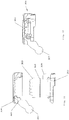
- Fig. 11 shows the components of the razor blade cartridge unassembled and the housing 305 including the co-moulded lower portion 306, and upper portion 304, a trimming blade 309, an aluminium sacrificial anode element 308, a blade set 303, and a rear cover 310 which holds the assembly together. These are shown assembled together in Fig. 12 .
- hydrophilic coating which are usefully, although not exclusively, the skin engaging parts.
- Fig 1 it will be appreciated that it is also possible for there to be skin engaging surfaces 18 which are permanently affixed to what is normally referred to as the razor handle 16.
- the razor handles it is perfectly possible within the scope of the present invention for the razor handles to take the place of the housing in the first embodiment. In this case however it would be essential that the razor handles are in two part form and only one of the two parts will be subject to activation and grafted of the hydrophilic coating of the present invention. The other part remaining untreated and preferably made from a highly gripable polymer. A razor handle made entirely of treated polymer would cause difficulties in the user being able to grip and hold the handle effectively.
- Still further embodiments include the grafting of alternative vinyl monomers with similar suitable highly hydrophilic properties such as any acrylamide, or a mixture of other monomers copolymerizable with the acrylamide.
- the lateral arrays of undulations on the skin contacting surfaces may have any suitable shape or pattern from a wide variety of shapes and patterns in addition to those described herein and still achieve the objects of the invention.
- the term undulations is to be understood to mean in its very general sense any textured surface which a series of higher and lower portions in the dimensions referred to herein in any array either uniformly or randomly arranged.
- the undulations are formed by moulding of the housing part but the required undulations or textured surface could be formed by other suitable means such as etching or by the process to prepare the surface for grafting of the hydrophilic coating.
- a first skin contacting part may have a dissimilar pattern and dimensions or ridge height, length, width and gap than those for a second or subsequent skin contacting part of the same razor head.
Landscapes
- Engineering & Computer Science (AREA)
- Life Sciences & Earth Sciences (AREA)
- Forests & Forestry (AREA)
- Mechanical Engineering (AREA)
- Chemical & Material Sciences (AREA)
- Manufacturing & Machinery (AREA)
- Organic Chemistry (AREA)
- Wood Science & Technology (AREA)
- Materials Engineering (AREA)
- General Chemical & Material Sciences (AREA)
- Health & Medical Sciences (AREA)
- Chemical Kinetics & Catalysis (AREA)
- Medicinal Chemistry (AREA)
- Polymers & Plastics (AREA)
- Dry Shavers And Clippers (AREA)
- Cosmetics (AREA)
Description
- This invention relates to improved razor blade cartridges and methods of manufacture therefore.
- There are a number of known prior art devices which endeavour to provide lubricious properties to the surfaces of a shaving cartridge. For example
US 5,005,287 assigned to Wilkinson Sword GmbH describes a process for forming and applying a hydrophilic coating, which is highly slideable when wet, to a plastic or metal part either directly, or indirectly via plastic film, to a safety razor or razor blade unit, in which a solution containing a water-soluble polymer is applied to the plastic or metal part and is cured. The invention also relates to a razor blade unit comprising a blade platform for at least one razor blade, a surface for slidably engaging the skin of a user and a coating on the surface for increasing the slideability of the surface. The coating comprises a water-soluble polymer or copolymer of poly-N-vinylpyrrolidone, at least one radically polymerizable vinyl monomer and a photoinitiator. - A further razor blade cartridge is disclosed in
US 5,056,221 , also to Wilkinson Sword GmbH. In this disclosure a razor blade unit comprising a support for at least one razor blade and a surface for slidably engaging the skin of a user, and a xerogel on the surface. A process for making a sliding surface on a razor blade unit comprising applying a solution of polyurethane, a water-soluble plastic and a solvent to a surface of the razor blade unit which engages the skin of a user during shaving, and evaporating the solvent to form the sliding surface. The preferred embodiment is to provide the coating on to a strip and to attach the strip to the desired part of the razor blade cartridge.US 4 875 287 to Hydromer Inc. discloses a similar application method. - A more preferred method of applying lubricious surfaces onto razor blade cartridges however has been by securing a coated strip as a physically fixed insert in the razor blade cartridge. This prevents dislodgement of the strip and also is preferable from the point of view of manufacture of each individual cartridge. One such cartridge is disclosed in
EP 0715561 to Gillette which describes a shaving unit including a composite that has a surface for engaging the user's skin. The composite contains a water-insoluble resin, a shaving aid, and a water-swellable polymer. -
EP 1 055 491 to Warner-Lambert - A disadvantage of these coatings is that they are not very hard wearing and tend to become worn before the full life of the blades is used and this sometimes results in a user disposing of the razor blade cartridge prematurely.
- There are numerous patents concerned with the various orientation of the shaving aid strips with respect to the blades as well as to the various active ingredients within the shaving aids leaching out. One such example is
US 6298559 by Gillette directed to a razor cartridge with a solid polymeric shaving aid strip. The razor cartridge has a solid polymeric shaving aid strip having an upper exposed surface which contacts the skin during shaving. The shaving aid strip includes a first exposed lengthwise-extending portion containing a lubricious water-soluble polymer and an adjacent, second exposed lengthwise-extending portion containing a lubricious water-soluble polymer. The first portion contains a greater amount of the lubricious water-soluble polymer than the second portion, and the first portion is adapted to wear at a faster rate than the second portion during shaving. Moreover,GB 2480916 US 2012/167401 disclose a razor blade cartridge including at least one razor blade and a housing made from a polymer material and comprising an outer surface wherein at least part of the outer surface of the housing is coated with a hydrophilic material. - This construction enables the strip to release more of the lubricious water-soluble polymer for a longer time period (i.e. for more shaves) than conventional shaving aid strips.
- This additional variability of lifetime makes it difficult to balance the respective lifetimes of the shaving aid on the one hand and the blades edges on the other which due to the varying manufacturing tolerances statistically results in a number of blade cartridge being discarded before one of the shaving aid or the blade edge is fully used.
- In addition these types of blade cartridges with the shaving aid strips located in close proximity to the blades result in the entrapment of shaving debris and makes the wash through of the debris a more difficult task for the user. In order to wash a razor blade cartridge after use a user is inclined to hold the cartridge under a running tap, so the better the wash through properties of the razor cartridge the less water is consumed.
- A further disadvantage of these razor blade cartridges is that they can result in variability of the level of friction during the course of the use of the razor cartridge. This can result from variabilities in the use pattern of the user, the extent of humidity in the bathroom, the relative hardness of the water supply as well as the differences in the beard type and the type and amount of lubricant the user applies to the face. All of these factors can effect the extent of leaching out of the shaving aid active ingredient and general wear and degradation characteristics of the shaving aid strip of these conventional razor cartridges.
- It is an objective of the present invention to overcome the above disadvantages.
- It is therefore an objective of the present invention to provide a razor cartridge which has highly lubricious properties which remain more constant throughout the life of the razor cartridge than current razor cartridges.
- It is an objective of the present invention to provide improved razor blades, razor blade cartridges and methods of manufacture therefore in which the friction properties do not become ineffective before the blade edge has dulled.
- It is a further objective of the present invention to provide improved razor blades, razor blade cartridges and methods of manufacture therefore in which the friction properties remain constant during the different use patterns of the user.
- It is a further objective of the present invention to provide improved razor blades, razor blade cartridges and methods of manufacture therefore to provide an improved washthrough of the shaving debris and reduce the amount of water consumed during a shave.
- According to a first aspect of the invention there is provided a razor or razor blade cartridge including at least one razor blade and a housing made from a polymer material and comprising an outer surface wherein at least part of the housing is coated with a hydrophilic material, and wherein the outer surface of the housing comprises undulations on at least a portion of the coated part.
- According to a further aspect of the disclosure there is provided a razor or razor blade cartridge including at least one razor blade and a housing made from a polymer material and comprising an outer surface wherein at least part of the outer surface of the housing is coated with a hydrophilic material, and wherein the coating is formed from an acrylamide
- The razor blade cartridge may be a fixed non-electric wet shave blade cartridge with cutting blades or a rotating blade of an electric razor with shearing blades. In the case of an electric razor the blade may be arranged underneath a skin contacting foil. The undulated skin engaging surface will preferably be arranged adjacent to the blade.
- There may be more than one blade, preferably five blades in the case of a fixed blade wet razor cartridge.
- The undulations have a length dimension, a width dimension and a height dimension and they preferably extend longitudinally having a greater length than the height and width. The height is preferably defined by a lower trough surface and an upper crest surface joined by intervening side walls.
- By means of the intervening side walls the undulations preferably provide an increased contact surface area between the first polymer and the coating such that for a given thickness the amount of polymer is greater than would be the case for a flat surface.
- Preferably the coating is applied at a thickness which extends higher than the height of the undulations such that the troughs are completely filled with coating material. The coating may extend in thickness beyond the top of the crests of the undulations and may form a flat outer surface having a thickness above the crests and a greater thickness above the troughs corresponding to the depth of the troughs.
- The depth dimension between the top of the crests and the bottom of the troughs may be within the range 0.01 to 1.0 mm and may advantageously be 0.05 to 0.5 mm, and is preferably within the range 0.1 to 0.2mm.
- The width dimension of the undulations, may be non uniform that is to say that the width of the crest or ridge may be different to the width of the trough or the gap between ridges.
- The width of the crest or ridge may be within the range 0.01 to 1.0 mm and may advantageously be 0.05 to 0.5 mm, and is preferably within the range 0.1 to 0.2mm.
- The trough width or gap between the ridges may be within the range 0.01 to 1.0 mm and may advantageously be 0.05 to 0.5 mm, and is preferably within the range 0.1 to 0.2mm.
- The coating has a thickness which extends beyond the top of the crest or ridge and this coating thickness may be within the range 0.01 to 1.0 mm and may advantageously be 0.05 to 0.5 mm, and is preferably within the range 0.1 to 0.2mm.
- The undulations may be formed in a straight configuration, or alternatively they may be curved or circular.
- The first polymer material may be any suitable polymer as currently used to make razors or razor blade cartridges such as acrylonitrile butadiene styrene ABS, but also may be any vinyl polymers, nylons, carbonate polymers, aliphatic polymers or the like.
- The housing may be made of a co moulding of a first polymer and a second separate and different polymer. The first co-moulded polymer may be a polymer to which the hydrophilic coating does not adhere very well whereas the second co-moulded polymer may be a polymer to which the hydrophyllic coating does adhere very well.
- The first co-polymer is preferably a glass filled nylon but also may be any vinyl polymers, nylons, carbonate polymers, aliphatic polymers or the like. The second co-polymer is preferably a TPU or TPE.
- According to a further aspect of the invention there is provided a method of manufacture of a razor blade cartridge including the steps of moulding a cartridge housing including undulated skin contacting surfaces of polymeric material; subsequently activating the undulated skin engaging surfaces of the polymer using either physical or chemical means to make the undulated surface receptive to the covalent grafting of a monomer, and then grafting a functional group onto the surface.
- Preferably the functional group is an acrylamide, such as N-Isopropylacrylamide.
- The physical activation means may be plasma treatment or the like. The chemical activation means may be exposing the surface to any medium to produce oxygen centred radicals in its surface; such as by exposure to ozone or a peroxidant such as peroxydisulphate in an aqueous solution.
- A number of embodiments on the invention will now be described with reference to the figures in which:
-
Fig 1 is a razor comprising a razor blade cartridge according to a first embodiment of the invention, -
Fig 2 shows an enlarged view the razor blade cartridge portion of the razor ofFig 1 , -
Fig 3 shows a view of the skin contacting surface of the razor blade cartridge portion offig 2 enlarged further, -
Fig 4 shows an enlarged view of an alternative embodiment of the skin contacting surface of the razor blade cartridge portion, -
Fig 5 shows an enlarged view of an alternative embodiment of the skin contacting surface of the razor blade cartridge portion as inFig 4 after use of the razor blade cartridge has commenced, -
Fig 6 shows an alternative embodiment of the invention of an electrically powered rotating blade razor, -
Fig. 7 shows an enlarged view the electric razor blade cartridge portion of the razor offigure 6 , -
Fig 8 shows a view of the skin contacting surface of the electric razor blade cartridge portion offig 6 enlarged further, -
Fig 9 shows an alternative embodiment of the razor cartridge portion of a wet razor of the invention, -
Fig 10 shows an under part of the razor cartridge inFig. 9 with a second co-moulding shot not shown, -
Fig. 11 shows a break out side cross-sectional view of the unassembled components of the razor cartridge ofFig 9 , and -
Fig 12 shows side cross sectional view of the razor cartridge ofFig. 9 . - In a first embodiment of the invention, shown in
Fig 1 to Fig 3 , arazor blade cartridge 1 includes acartridge housing 5 includingskin engaging surfaces 2 andrazor blades 3. In this embodiment there are five blades, although any number of blades could be used. - The
housing 5 is moulded from acrylonitrile butadiene styrene (ABS). ABS is a very common commercially available polymer and it will be appreciated that any other suitable polymer having the required properties of a razor blade cartridge may be used. Thehousing 5 and blade set 3 components of therazor blade cartridge 1 are made separately and assembled together to form the complete razor blade cartridge. Thecartridge housing 5 is injection moulded and then treated to forma highly lubricious hydrophilic coating which has a very low friction of drag effect on the user's skin. - In alternative embodiments of the invention the material selected for the razor blade cartridge is an elastomeric material, preferably selected from one of the materials:
- Texin RxT90A, a tradename of Bayer Material Science AG
- Hardness 30D (Scale D Rockwell hardness)
- Tensile strength 40.7 MPA
- Flexural Modulas 41.4 MPA
- Type: TPU (Thermoplastic polyurethane), polyether based.
- Pearlthane D16N60D, a tradename of Merquinsa.
- Hardness: 63D
- Tensile Strength: 40 MPA
- Type: TPU, Polyester Based
- Pearlthane 11t65D, a tradename of Merquinsa
- Hardness: 64D
- Tensile Strength: 35 MPA
- Type: TPU, Polycaprolactone copolyester based
- Pebax 7033, a tradename of Arkema
- Hardness 69D (Scale D Rockwell hardness)
- Tensile strength 57.2 MPA
- Flexural Modulas 462 MPA
- Type: TPE, Made from flexible polyether and rigid polamide.
- Pebax 7233
- Hardness 72D (Scale D Rockwell hardness)
- Tensile strength 63.5 MPA
- Flexural Modulas 738 MPA
- Type: TPE, made from flexible polyether and rigid polamide.
- Texin HM1206
- Hardness 85D (Scale D Rockwell hardness)
- Tensile strength 76 MPA
- Flexural Modulas 2321 MPA
- Type: TPU, Polyester Based
- Before assembly of the
razor blade cartridge 1 to theblades 3, thecartridge housings 5 are provided with a coating 11 by a suitable process such as plasma activation. Such weakly ionised oxygen plasma treatment is a known technique for the activation of polymers in general and is used for example in the chrome plating of plastics for example for the car industry. - Following activation the coating is grafted on by exposure to the coating material. A suitable coating material is N-Isopropylacrylamide - 97%, which is commercially available from Sigma-Aldrich under product number 415324. N-Isopropylacrylamide has the following specification:
Specification of N-Isopropylacrylamide - 97%: - Formula: C6H11NO
- Appearance: powder or crystals or flakes
- Colour(APHA): white to off-white or faint yellow.
- Solubility (5% in toluene): clear.
- Referring now to
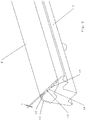
Fig. 3 there is an enlarged view of a skin contacting surface portion of the razor blade cartridge comprising ahousing base part 7 made from a first polymer material of ABS and a coating layer 11 comprising the hydrophilic material. In this embodiment thehousing base part 7 comprises an array ofundulations 12 comprising crests orridges 13 and intervening troughs orgaps 14. - The
undulations 12 have a length dimension, a width dimension and a height dimension and in this embodiment they extend longitudinally and parallel to each other and having a significantly greater length than the height and width. The height of the undulations is defined the distance by alower trough surface 14 and anupper crest surface 13 joined by interveningside walls 15. - By means of the intervening
side walls 15 the undulations preferably provide an increased contact surface area between the first polymer and the coating polymer. - In this embodiment the coating is applied at a thickness which extends higher than the height of the
undulations 12 such that thetroughs 14 are completely filled with coating material. The coating also extends in thickness beyond the top of thecrests 13 of theundulations 12 and forms a flat outer surface having a thickness above thecrests 13 and a greater thickness above thetroughs 14 corresponding to the depth of thetroughs 14. - The depth dimension between the top of the crests and the bottom of the troughs in this embodiment is uniformly 0.15 mm, but may be within the range 0.01 to 1.0 mm and may advantageously be 0.05 to 0.5 mm, and is preferably within the range 0.1 to 0.2mm.
- The width of the crest or ridge in this embodiment is uniformly 0.15 mm, but may be within the range 0.01 to 1.0 mm and may advantageously be 0.05 to 0.5 mm, and is preferably within the range 0.1 to 0.2mm.
- The trough width or gap between the ridges in this embodiment is uniformly 0.15 mm but may be within the range 0.01 to 1.0 mm and may advantageously be 0.05 to 0.5 mm, and is preferably within the range 0.1 to 0.2mm.
- The coating has a thickness which extends beyond the top of the crest or ridge and this coating thickness in this embodiment is uniformly 0.15 mm, but may be within the range 0.01 to 1.0 mm and may advantageously be 0.05 to 0.5 mm, and is preferably within the range 0.1 to 0.2mm.
- The width dimension of the
undulations 12, may be non-uniform that is to say that the width of the crest or ridge may be different to the width of the trough or the gap between ridges and the ridge or gap width, height, and thickness may vary on different portions of the skin contacting surface 6. - Referring now to
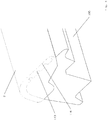
Fig 4 , a further embodiment is shown in which the undulations, formed on ahousing part 105, are not formed in a straight configuration but instead are uniformly circular. Correspondingly the length is not greater than the width but is equal to it. That is to say the top surface of thecrest 113 is circular and has a diameter of 0.15 mm. The corresponding troughs are formed of the remaining shape surrounding the circular crests 113. - The depth of the
crests 113 in this embodiment is uniformly 0.15 mm, but may be within the range 0.01 to 1.0 mm and may advantageously be 0.05 to 0.5 mm, and is preferably within the range 0.1 to 0.2mm. - The trough width or gap between the
crests 113 ridges in this embodiment is uniformly the surface area remaining when the crests are spaced apart by 0.30 mm between their centres but may be within the range 0.02 to 2.0 mm and may advantageously be 0.10 to 1.0 mm, and is preferably within the range 0.2 to 0.4mm. - The coating has a thickness (t), which extends beyond the top of the
crests 113 and this coating thickness in this embodiment is uniformly 0.15 mm, but may be within the range 0.01 to 1.0 mm and may advantageously be 0.05 to 0.5 mm, and is preferably within the range 0.1 to 0.2mm. - Referring now to
Fig 5 , the skin contacting surface portion of the razor head cartridge ofFig. 4 is shown following several days of use by a user. The precise number of days of use is not possible to predict due to the large variation in skin types, however it can be seen that thetop layer 116 of the coating, which is unsupported by the undulations has completely worn away. What remains is the entirety of the coating which has been deposited in the troughs or gaps between theridges 113. This remaining coating is present across a sufficient proportion of the skin contacting area, to continue to have a significant beneficial effect in providing a smooth friction free glide over the user's skin. This remaining coating is protected by the crests orridges 113 and will remain protected and beneficial for the remaining life of the razor blade cartridge when the edges of the blades are worn out. - It has been found that it is additionally beneficial to have the layer of
coating 116 on top of thecrests 113 and to permit this layer to be gradually worn off by the first several uses of the cartridge since this improves the quality of the shave during these first several uses. This is believed to be as a result of a complex interaction between the wearing of the coating material the friction effect of the coating itself and the initial sharpness profile of the blade edges and the geometry of the blades in relation to the contacting surfaces and each other. - In a further embodiment the skin contacting components of an electric dry shaver as shown in
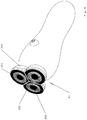
Figs 6 - 8 , are formed according to the invention. It has become apparent that some users prefer to use electrically powered shavers in the wet environment of a shower or by a basin. Such shaving can no longer accurately be called dry shaving, and is instead more accurately referred to as electrically powered shaving. The inventor has discovered that whilst shaving using an electrically powered shaver, in which shearing, rather than cutting, blades are completely protected by a foil, significant beneficial effects are achieved by coating the skin contacting parts of the powered shaver with the method of the present invention. The electric dry shaver comprises a razor body 216 and arazor head 201, and therazor head 201 comprises ahousing 205 skin contactingsurface portions 202 and at least oneblade part 203. The blade parts are rotating electrically driven blades located behind skin contacting foils. Theskin contacting surfaces 202 are arranged concentrically inside and outside theblade parts 203. - Referring specifically to
Fig. 8 it can be seen that theskin contacting parts 202 both inside and outside theblade parts 203 comprise correspondingridges 213 andtroughs 212 which have a relatively large length dimension and run concentrically around the blade parts and each other and are in parallel with each other forming discrete rows. The ridge width and gap or trough width are the same as described in the previous embodiment inFigs 1 to 5 , as are the ridge depth and also the thickness of the coating which fills the troughs and also extends as a uniformly fiat layer above the ridges. - An alternative embodiment of the wet razor of
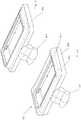
Fig. 1 is shown inFig. 9 to 12 therazor cartridge 301 is made from first and second materials in a two shot moulding process. The first material being relatively less receptive to the subsequent coating process than the second material. In this embodiment a first material is made from a polymer which is less responsive to the activation and grafting stages described above and results in its surface becoming coated with a lower thickness of the hydrophilic material whereas the second material is made from a polymer which is more responsive to the subsequent activation and or grafting stages its surface becomes coated with a greater amount of the hydrophilic polymer coating. Referring toFig.9 thelower portion 306 of thehousing 305 is a first co-moulding shot made from a first material, in this case a glass filled nylon, and theupper portion 304 of thehousing 305 is the second co-moulding shot of a second material, in this case Pebax 5533. - Details of Pebax 5533 are:
- Pebax 5533, a tradename of Arkema
- Hardness 55 (Shore D Durometer hardness)
- Tensile strength (beak) 44.0 MPA
- Flexural Modulas 165 MPA
- The
lower portion 306 and theupper portion 304 being co-moulded to form thehousing 305. Any suitable material may be chosen for the first material as an alternative to glass filled nylon provided it has sufficient rigidity and provided it is less receptive to the subsequent hydrophilic coating than the second material. Suitable materials for the second material are polymers which bond to the first material and which are more receptive to the subsequent hydrophilic polymer coating that the first material such as Pebax 5533 and other TPUs and TPEs. -
Fig. 10 shows thelower portion 304 made from the relatively less receptive material and includes the means ofattachment 307 to a razor handle. -
Fig. 11 shows the components of the razor blade cartridge unassembled and thehousing 305 including the co-mouldedlower portion 306, andupper portion 304, atrimming blade 309, an aluminiumsacrificial anode element 308, ablade set 303, and arear cover 310 which holds the assembly together. These are shown assembled together inFig. 12 . - As an alternative to using a two shot co-moulded housing, it will also be appreciated that it would be possible to mask those parts of the razor cartridge, or for that matter the razor handle, that aren't desired to be treated either from the activation stage, or the grafting stage, or both.
- Consequently selected parts of the razor blade cartridge are coated with hydrophilic coating, which are usefully, although not exclusively, the skin engaging parts.
- Referring once more to
Fig 1 , it will be appreciated that it is also possible for there to beskin engaging surfaces 18 which are permanently affixed to what is normally referred to as the razor handle 16. In this case it is perfectly possible within the scope of the present invention for the razor handles to take the place of the housing in the first embodiment. In this case however it would be essential that the razor handles are in two part form and only one of the two parts will be subject to activation and grafted of the hydrophilic coating of the present invention. The other part remaining untreated and preferably made from a highly gripable polymer. A razor handle made entirely of treated polymer would cause difficulties in the user being able to grip and hold the handle effectively. - Further embodiments include alternative methods for the activation stage which include corona discharge or ozone treatment or chemical activation means such as peroxy disulphates. With chemical activation means an additional drying step would be required before the grafting stage.
- Additionally further embodiments include the grafting of alternative vinyl monomers with similar suitable highly hydrophilic properties such as any acrylamide, or a mixture of other monomers copolymerizable with the acrylamide.
- It will be appreciated that the lateral arrays of undulations on the skin contacting surfaces may have any suitable shape or pattern from a wide variety of shapes and patterns in addition to those described herein and still achieve the objects of the invention. The term undulations is to be understood to mean in its very general sense any textured surface which a series of higher and lower portions in the dimensions referred to herein in any array either uniformly or randomly arranged.
- In the above specific embodiments the undulations are formed by moulding of the housing part but the required undulations or textured surface could be formed by other suitable means such as etching or by the process to prepare the surface for grafting of the hydrophilic coating.
- Furthermore since the razor head has different skin contacting parts a first skin contacting part may have a dissimilar pattern and dimensions or ridge height, length, width and gap than those for a second or subsequent skin contacting part of the same razor head.
- While particular embodiments of the present invention have been illustrated and described, it would be obvious to those skilled in the art that various other changes and modifications can be made without departing from the scope of the appended claims.
Claims (20)
- A razor or razor blade cartridge (1) including at least one razor blade (3) and a housing (5) made from a polymer material and comprising an outer surface, said outer surface of the housing (5) comprises undulations (12), said undulations (12) having a length dimension, a width dimension and a height dimension and the height being defined by a lower trough surface (14) and an upper crest surface (13) joined by intervening side walls (15), characterised in that the undulations (12) of the housing (5) comprise a coating (11) of hydrophilic material.
- A razor or razor blade (1) including at least one razor blade (3) and a housing (5) made from a polymer material, characterised in that the housing (5) comprises an outer surface with undulations (12) coated with a hydrophilic material, wherein the coating (11) is formed from an acrylamide.
- A razor or razor blade cartridge according to claim 1, characterised in that the coating is formed from a vinyl monomer, such as an acrylamide.
- A razor or razor blade cartridge according to claim 1, characterised in that undulated surface portion is arranged adjacent to the at least one blade.
- A razor or razor blade cartridge according to claim 1, characterised in that undulations extend longitudinally having a greater length than the height and width.
- A razor or razor blade cartridge according to claim 1, characterised in that the intervening side walls of the undulations provide an increased contact surface area between the first polymer and the coating such that for a given hydrophilic coating thickness the amount of hydrophilic material is greater than would be the case for a flat surface.
- A razor or razor blade cartridge according to claim 1, characterised in that the hydrophilic coating is applied at a thickness which extends higher than the height of the undulations such that the troughs are completely filled with coating material.
- A razor or razor blade cartridge according to claim 1 and 7, characterised in that the hydrophilic coating extends in thickness beyond the top of the crests of the undulations and forms a flat outer surface having a thickness above the crests and a greater thickness above the troughs corresponding to the depth of the troughs.
- A razor or razor blade cartridge according to claim 1, characterised in that the depth dimension between the top of the crests and the bottom of the troughs is within the range 0.01 to 1.0 mm, such as 0.1 to 0.2mm.
- A razor or razor blade cartridge according to claim 1, characterised in that the width dimension in the upper crest surface is within the range 0.01 to 1.0 mm, such as 0.1 to 0.2mm.
- A razor or razor blade cartridge according to claim 1, characterised in that the width of the lower trough surface is within the range 0.01 to 1.0 mm, such as 0.1 to 0.2mm.
- A razor or razor blade cartridge according to claim 7, characterised in that the coating has a thickness which extends beyond the upper crest surface or ridge within the range 0.01 to 1.0 mm, such as 0.1 to 0.2mm.
- A razor or razor blade cartridge according to claim 1, characterized in that the undulations are arranged in straight or curved lines, or arranged as discrete circular protrusions.
- A razor or razor blade cartridge according to claim 1, characterised in that the coating is formed on the polymer material following modification of the surface by functionalisation.
- A razor or razor blade cartridge according to claim 1, characterised in that the housing is made of a co moulding of a first polymer and a second, different, polymer.
- A razor or razor blade cartridge according to claim 15, characterised in that the first co-moulded polymer is a polymer to which the hydrophilic coating adheres relatively poorly whereas the second co-moulded polymer is a polymer to which the hydrophilic coating adheres relatively well resulting in a coating thickness on the second polymer greater than the coating thickness on the first polymer.
- A razor or razor blade cartridge according to claim 1, characterised in that the razor blade cartridge is of the non-rotating cutting blade type or of the rotating shearing blade type.
- A method of manufacture of a razor or razor blade cartridge including the steps of providing a cartridge housing including undulated skin contacting surfaces of polymeric material; activating the undulated skin engaging surfaces of the polymer using either physical or chemical means to make the undulated surface receptive to the covalent grafting of a monomer, and then grafting a functional group onto the surface.
- A method of manufacture of a razor or razor blade cartridge according to claim 18, characterised in that the undulations are provided by moulding of the cartridge housing, by the activation process, or by a separate stage.
- A method of manufacture of a razor or razor blade cartridge according to claim 19, characterised in that the functional group is an acrylamide.
Priority Applications (1)
| Application Number | Priority Date | Filing Date | Title |
|---|---|---|---|
| PL13798635T PL3030387T3 (en) | 2013-01-09 | 2013-11-26 | Razors and razor blade cartridges and methods of manufacture therefore |
Applications Claiming Priority (2)
| Application Number | Priority Date | Filing Date | Title |
|---|---|---|---|
| GB1300372.8A GB2511726B (en) | 2013-01-09 | 2013-01-09 | Razors and razor blade cartridges and methods of manufacture therefore |
| PCT/EP2013/074779 WO2014108241A1 (en) | 2013-01-09 | 2013-11-26 | Razors and razor blade cartridges and methods of manufacture therefore |
Publications (2)
| Publication Number | Publication Date |
|---|---|
| EP3030387A1 EP3030387A1 (en) | 2016-06-15 |
| EP3030387B1 true EP3030387B1 (en) | 2019-05-15 |
Family
ID=47748172
Family Applications (1)
| Application Number | Title | Priority Date | Filing Date |
|---|---|---|---|
| EP13798635.2A Active EP3030387B1 (en) | 2013-01-09 | 2013-11-26 | Razors and razor blade cartridges and methods of manufacture therefore |
Country Status (7)
| Country | Link |
|---|---|
| US (1) | US10350773B2 (en) |
| EP (1) | EP3030387B1 (en) |
| BR (1) | BR112016008543B1 (en) |
| CA (1) | CA2932213C (en) |
| GB (1) | GB2511726B (en) |
| PL (1) | PL3030387T3 (en) |
| WO (1) | WO2014108241A1 (en) |
Cited By (1)
| Publication number | Priority date | Publication date | Assignee | Title |
|---|---|---|---|---|
| US11660769B2 (en) | 2018-07-18 | 2023-05-30 | BIC Violex Single Member S.A. | Shaving aid delivery systems for razors |
Families Citing this family (10)
| Publication number | Priority date | Publication date | Assignee | Title |
|---|---|---|---|---|
| GB2511726B (en) * | 2013-01-09 | 2016-12-21 | SOCIéTé BIC | Razors and razor blade cartridges and methods of manufacture therefore |
| EP3429809B1 (en) | 2016-03-18 | 2021-07-28 | Personal Care Marketing And Research, Inc. | Razor cartridge |
| KR101703514B1 (en) * | 2016-06-24 | 2017-02-07 | 주식회사 도루코 | Razor |
| WO2020150321A1 (en) * | 2019-01-15 | 2020-07-23 | Carefusion 2200, Inc. | Surgical clipper blade assemblies with hydrophobic layers and methods of use |
| AU2020209765B2 (en) * | 2019-01-15 | 2023-03-02 | Carefusion 2200, Inc. | Powered hair clippers with blade assemblies including patterned rib arrays |
| USD884970S1 (en) * | 2019-02-27 | 2020-05-19 | PCMR International Ltd. | Razor cartridge guard |
| USD884971S1 (en) * | 2019-02-27 | 2020-05-19 | Pcmr International Ltd | Razor cartridge |
| USD884969S1 (en) * | 2019-02-27 | 2020-05-19 | Pcmr International Ltd | Combined razor cartridge guard and docking |
| USD965887S1 (en) | 2020-05-20 | 2022-10-04 | The Gillette Company Llc | Shaving razor guard bar |
| US11000960B1 (en) | 2020-11-16 | 2021-05-11 | Personal Care Marketing And Research, Inc. | Razor exposure |
Citations (1)
| Publication number | Priority date | Publication date | Assignee | Title |
|---|---|---|---|---|
| US20120167401A1 (en) * | 2011-01-05 | 2012-07-05 | Steven Francis Quigley | Wet friction materials for hair removal devices |
Family Cites Families (15)
| Publication number | Priority date | Publication date | Assignee | Title |
|---|---|---|---|---|
| US3815233A (en) * | 1972-09-05 | 1974-06-11 | Woodmont Ind Inc | Shaving cartridges |
| US4170821A (en) * | 1977-12-02 | 1979-10-16 | Warner-Lambert Company | Razor cartridges |
| GB2024082B (en) | 1978-05-31 | 1982-05-06 | Gillette Co | Safety razors |
| US4875287A (en) * | 1986-11-14 | 1989-10-24 | Hydromer, Inc. | Shaving articles lubricious when wet and compositions therefor |
| DE3814135A1 (en) * | 1987-05-06 | 1988-11-24 | Wilkinson Sword Gmbh | METHOD FOR PRODUCING A HYDROPHILIC COATING ON A MOLDED PART AND USING THE METHOD OF A SHAVER |
| GB9211966D0 (en) * | 1992-06-05 | 1992-07-15 | Univ Liverpool | Functionalisation of polymers |
| US5689883A (en) * | 1995-05-08 | 1997-11-25 | Warner-Lambert Company | Shaving implement |
| US20060064875A1 (en) * | 2004-09-24 | 2006-03-30 | Eveready Battery Company, Inc. | Shaving implement employing discrete cartridge sections |
| EP1817143B2 (en) * | 2004-10-05 | 2014-07-16 | Eveready Battery Company, Inc. | Shaving implement |
| US7681314B2 (en) * | 2005-06-10 | 2010-03-23 | Eveready Battery Company Inc. | Inter-blade guard and method for manufacturing same |
| US20090071006A1 (en) * | 2007-09-14 | 2009-03-19 | The Gillette Company | Safety razor with enhanced shaving aid member |
| US20090071007A1 (en) * | 2007-09-14 | 2009-03-19 | The Gillette Company | Safety razor with enhanced shaving aid member having protuberances |
| GB201009019D0 (en) * | 2010-06-01 | 2010-07-14 | King Of Shaves Company The Ltd | Razor or razor blade cartridge and methods of manufacture therefore |
| GB2511726B (en) * | 2013-01-09 | 2016-12-21 | SOCIéTé BIC | Razors and razor blade cartridges and methods of manufacture therefore |
| US9802328B2 (en) * | 2013-11-13 | 2017-10-31 | The Gillette Company Llc | Razor cartridge guard structure |
-
2013
- 2013-01-09 GB GB1300372.8A patent/GB2511726B/en not_active Expired - Fee Related
- 2013-11-26 CA CA2932213A patent/CA2932213C/en active Active
- 2013-11-26 PL PL13798635T patent/PL3030387T3/en unknown
- 2013-11-26 BR BR112016008543-4A patent/BR112016008543B1/en not_active IP Right Cessation
- 2013-11-26 EP EP13798635.2A patent/EP3030387B1/en active Active
- 2013-11-26 US US15/110,407 patent/US10350773B2/en active Active
- 2013-11-26 WO PCT/EP2013/074779 patent/WO2014108241A1/en not_active Ceased
Patent Citations (1)
| Publication number | Priority date | Publication date | Assignee | Title |
|---|---|---|---|---|
| US20120167401A1 (en) * | 2011-01-05 | 2012-07-05 | Steven Francis Quigley | Wet friction materials for hair removal devices |
Cited By (1)
| Publication number | Priority date | Publication date | Assignee | Title |
|---|---|---|---|---|
| US11660769B2 (en) | 2018-07-18 | 2023-05-30 | BIC Violex Single Member S.A. | Shaving aid delivery systems for razors |
Also Published As
| Publication number | Publication date |
|---|---|
| BR112016008543A2 (en) | 2017-10-03 |
| GB201300372D0 (en) | 2013-02-20 |
| CA2932213A1 (en) | 2014-07-17 |
| GB2511726A (en) | 2014-09-17 |
| US10350773B2 (en) | 2019-07-16 |
| US20160354939A1 (en) | 2016-12-08 |
| CA2932213C (en) | 2020-03-10 |
| BR112016008543B1 (en) | 2021-08-03 |
| PL3030387T3 (en) | 2019-11-29 |
| GB2511726B (en) | 2016-12-21 |
| EP3030387A1 (en) | 2016-06-15 |
| WO2014108241A1 (en) | 2014-07-17 |
Similar Documents
| Publication | Publication Date | Title |
|---|---|---|
| CA2932213C (en) | Razors and razor blade cartridges and methods of manufacture therefore | |
| US10836878B2 (en) | Razors and razor blade cartridges and methods of manufacture therefore | |
| EP2366507B1 (en) | Razor cartridge | |
| US11712814B2 (en) | Razor cartridge | |
| EP2771155B1 (en) | Razor cartridge with improved guard | |
| JP5074391B2 (en) | Ergonomic razor handle with improved grip | |
| JP7436404B2 (en) | razor cartridge for shaving | |
| PL178537B1 (en) | Skin protecting component of a safety razor shaving head | |
| JP2020522332A (en) | Razor cartridge for shaving | |
| US11780106B2 (en) | Blade assembly with lubricating elements | |
| EP3490763A1 (en) | Shaving cartridge including a masking foil | |
| IL125850A (en) | Shaving system with improved guard structure | |
| US5347716A (en) | Safety razors | |
| EP2490868B1 (en) | Lubrication box for a wet shaving implement | |
| HK62795A (en) | Process for the production of a hydrophilic coating on a moulded part, and razor manufactured by applying the process | |
| CN103140333B (en) | Scrape the lubricating box of palpus device for wet type | |
| CN102802889A (en) | Blade cartridge | |
| GB2519307A (en) | Hairbrushes, hairbrush bristles and hairbrush bristle cartridges and methods of manufacture therefore |
Legal Events
| Date | Code | Title | Description |
|---|---|---|---|
| PUAI | Public reference made under article 153(3) epc to a published international application that has entered the european phase |
Free format text: ORIGINAL CODE: 0009012 |
|
| 17P | Request for examination filed |
Effective date: 20160408 |
|
| AK | Designated contracting states |
Kind code of ref document: A1 Designated state(s): AL AT BE BG CH CY CZ DE DK EE ES FI FR GB GR HR HU IE IS IT LI LT LU LV MC MK MT NL NO PL PT RO RS SE SI SK SM TR |
|
| RAP1 | Party data changed (applicant data changed or rights of an application transferred) |
Owner name: SOCIETE BIC |
|
| STAA | Information on the status of an ep patent application or granted ep patent |
Free format text: STATUS: EXAMINATION IS IN PROGRESS |
|
| 17Q | First examination report despatched |
Effective date: 20170418 |
|
| GRAP | Despatch of communication of intention to grant a patent |
Free format text: ORIGINAL CODE: EPIDOSNIGR1 |
|
| STAA | Information on the status of an ep patent application or granted ep patent |
Free format text: STATUS: GRANT OF PATENT IS INTENDED |
|
| INTG | Intention to grant announced |
Effective date: 20181031 |
|
| GRAJ | Information related to disapproval of communication of intention to grant by the applicant or resumption of examination proceedings by the epo deleted |
Free format text: ORIGINAL CODE: EPIDOSDIGR1 |
|
| STAA | Information on the status of an ep patent application or granted ep patent |
Free format text: STATUS: EXAMINATION IS IN PROGRESS |
|
| GRAR | Information related to intention to grant a patent recorded |
Free format text: ORIGINAL CODE: EPIDOSNIGR71 |
|
| GRAS | Grant fee paid |
Free format text: ORIGINAL CODE: EPIDOSNIGR3 |
|
| STAA | Information on the status of an ep patent application or granted ep patent |
Free format text: STATUS: GRANT OF PATENT IS INTENDED |
|
| INTC | Intention to grant announced (deleted) | ||
| GRAA | (expected) grant |
Free format text: ORIGINAL CODE: 0009210 |
|
| STAA | Information on the status of an ep patent application or granted ep patent |
Free format text: STATUS: THE PATENT HAS BEEN GRANTED |
|
| INTG | Intention to grant announced |
Effective date: 20190311 |
|
| AK | Designated contracting states |
Kind code of ref document: B1 Designated state(s): AL AT BE BG CH CY CZ DE DK EE ES FI FR GB GR HR HU IE IS IT LI LT LU LV MC MK MT NL NO PL PT RO RS SE SI SK SM TR |
|
| REG | Reference to a national code |
Ref country code: CH Ref legal event code: EP |
|
| REG | Reference to a national code |
Ref country code: DE Ref legal event code: R096 Ref document number: 602013055485 Country of ref document: DE |
|
| REG | Reference to a national code |
Ref country code: IE Ref legal event code: FG4D |
|
| REG | Reference to a national code |
Ref country code: NL Ref legal event code: FP |
|
| REG | Reference to a national code |
Ref country code: LT Ref legal event code: MG4D |
|
| PG25 | Lapsed in a contracting state [announced via postgrant information from national office to epo] |
Ref country code: FI Free format text: LAPSE BECAUSE OF FAILURE TO SUBMIT A TRANSLATION OF THE DESCRIPTION OR TO PAY THE FEE WITHIN THE PRESCRIBED TIME-LIMIT Effective date: 20190515 Ref country code: LT Free format text: LAPSE BECAUSE OF FAILURE TO SUBMIT A TRANSLATION OF THE DESCRIPTION OR TO PAY THE FEE WITHIN THE PRESCRIBED TIME-LIMIT Effective date: 20190515 Ref country code: SE Free format text: LAPSE BECAUSE OF FAILURE TO SUBMIT A TRANSLATION OF THE DESCRIPTION OR TO PAY THE FEE WITHIN THE PRESCRIBED TIME-LIMIT Effective date: 20190515 Ref country code: NO Free format text: LAPSE BECAUSE OF FAILURE TO SUBMIT A TRANSLATION OF THE DESCRIPTION OR TO PAY THE FEE WITHIN THE PRESCRIBED TIME-LIMIT Effective date: 20190815 Ref country code: HR Free format text: LAPSE BECAUSE OF FAILURE TO SUBMIT A TRANSLATION OF THE DESCRIPTION OR TO PAY THE FEE WITHIN THE PRESCRIBED TIME-LIMIT Effective date: 20190515 Ref country code: PT Free format text: LAPSE BECAUSE OF FAILURE TO SUBMIT A TRANSLATION OF THE DESCRIPTION OR TO PAY THE FEE WITHIN THE PRESCRIBED TIME-LIMIT Effective date: 20190915 Ref country code: AL Free format text: LAPSE BECAUSE OF FAILURE TO SUBMIT A TRANSLATION OF THE DESCRIPTION OR TO PAY THE FEE WITHIN THE PRESCRIBED TIME-LIMIT Effective date: 20190515 Ref country code: ES Free format text: LAPSE BECAUSE OF FAILURE TO SUBMIT A TRANSLATION OF THE DESCRIPTION OR TO PAY THE FEE WITHIN THE PRESCRIBED TIME-LIMIT Effective date: 20190515 |
|
| PG25 | Lapsed in a contracting state [announced via postgrant information from national office to epo] |
Ref country code: BG Free format text: LAPSE BECAUSE OF FAILURE TO SUBMIT A TRANSLATION OF THE DESCRIPTION OR TO PAY THE FEE WITHIN THE PRESCRIBED TIME-LIMIT Effective date: 20190815 Ref country code: RS Free format text: LAPSE BECAUSE OF FAILURE TO SUBMIT A TRANSLATION OF THE DESCRIPTION OR TO PAY THE FEE WITHIN THE PRESCRIBED TIME-LIMIT Effective date: 20190515 Ref country code: LV Free format text: LAPSE BECAUSE OF FAILURE TO SUBMIT A TRANSLATION OF THE DESCRIPTION OR TO PAY THE FEE WITHIN THE PRESCRIBED TIME-LIMIT Effective date: 20190515 |
|
| REG | Reference to a national code |
Ref country code: AT Ref legal event code: MK05 Ref document number: 1132900 Country of ref document: AT Kind code of ref document: T Effective date: 20190515 |
|
| REG | Reference to a national code |
Ref country code: GR Ref legal event code: EP Ref document number: 20190402248 Country of ref document: GR Effective date: 20191128 |
|
| PG25 | Lapsed in a contracting state [announced via postgrant information from national office to epo] |
Ref country code: EE Free format text: LAPSE BECAUSE OF FAILURE TO SUBMIT A TRANSLATION OF THE DESCRIPTION OR TO PAY THE FEE WITHIN THE PRESCRIBED TIME-LIMIT Effective date: 20190515 Ref country code: DK Free format text: LAPSE BECAUSE OF FAILURE TO SUBMIT A TRANSLATION OF THE DESCRIPTION OR TO PAY THE FEE WITHIN THE PRESCRIBED TIME-LIMIT Effective date: 20190515 Ref country code: SK Free format text: LAPSE BECAUSE OF FAILURE TO SUBMIT A TRANSLATION OF THE DESCRIPTION OR TO PAY THE FEE WITHIN THE PRESCRIBED TIME-LIMIT Effective date: 20190515 Ref country code: AT Free format text: LAPSE BECAUSE OF FAILURE TO SUBMIT A TRANSLATION OF THE DESCRIPTION OR TO PAY THE FEE WITHIN THE PRESCRIBED TIME-LIMIT Effective date: 20190515 Ref country code: CZ Free format text: LAPSE BECAUSE OF FAILURE TO SUBMIT A TRANSLATION OF THE DESCRIPTION OR TO PAY THE FEE WITHIN THE PRESCRIBED TIME-LIMIT Effective date: 20190515 Ref country code: RO Free format text: LAPSE BECAUSE OF FAILURE TO SUBMIT A TRANSLATION OF THE DESCRIPTION OR TO PAY THE FEE WITHIN THE PRESCRIBED TIME-LIMIT Effective date: 20190515 |
|
| REG | Reference to a national code |
Ref country code: DE Ref legal event code: R097 Ref document number: 602013055485 Country of ref document: DE |
|
| PG25 | Lapsed in a contracting state [announced via postgrant information from national office to epo] |
Ref country code: SM Free format text: LAPSE BECAUSE OF FAILURE TO SUBMIT A TRANSLATION OF THE DESCRIPTION OR TO PAY THE FEE WITHIN THE PRESCRIBED TIME-LIMIT Effective date: 20190515 |
|
| PLBE | No opposition filed within time limit |
Free format text: ORIGINAL CODE: 0009261 |
|
| STAA | Information on the status of an ep patent application or granted ep patent |
Free format text: STATUS: NO OPPOSITION FILED WITHIN TIME LIMIT |
|
| PG25 | Lapsed in a contracting state [announced via postgrant information from national office to epo] |
Ref country code: TR Free format text: LAPSE BECAUSE OF FAILURE TO SUBMIT A TRANSLATION OF THE DESCRIPTION OR TO PAY THE FEE WITHIN THE PRESCRIBED TIME-LIMIT Effective date: 20190515 |
|
| 26N | No opposition filed |
Effective date: 20200218 |
|
| PG25 | Lapsed in a contracting state [announced via postgrant information from national office to epo] |
Ref country code: SI Free format text: LAPSE BECAUSE OF FAILURE TO SUBMIT A TRANSLATION OF THE DESCRIPTION OR TO PAY THE FEE WITHIN THE PRESCRIBED TIME-LIMIT Effective date: 20190515 |
|
| REG | Reference to a national code |
Ref country code: CH Ref legal event code: PL |
|
| PG25 | Lapsed in a contracting state [announced via postgrant information from national office to epo] |
Ref country code: CH Free format text: LAPSE BECAUSE OF NON-PAYMENT OF DUE FEES Effective date: 20191130 Ref country code: MC Free format text: LAPSE BECAUSE OF FAILURE TO SUBMIT A TRANSLATION OF THE DESCRIPTION OR TO PAY THE FEE WITHIN THE PRESCRIBED TIME-LIMIT Effective date: 20190515 Ref country code: LI Free format text: LAPSE BECAUSE OF NON-PAYMENT OF DUE FEES Effective date: 20191130 Ref country code: LU Free format text: LAPSE BECAUSE OF NON-PAYMENT OF DUE FEES Effective date: 20191126 |
|
| REG | Reference to a national code |
Ref country code: BE Ref legal event code: MM Effective date: 20191130 |
|
| PG25 | Lapsed in a contracting state [announced via postgrant information from national office to epo] |
Ref country code: IE Free format text: LAPSE BECAUSE OF NON-PAYMENT OF DUE FEES Effective date: 20191126 |
|
| PG25 | Lapsed in a contracting state [announced via postgrant information from national office to epo] |
Ref country code: BE Free format text: LAPSE BECAUSE OF NON-PAYMENT OF DUE FEES Effective date: 20191130 |
|
| PG25 | Lapsed in a contracting state [announced via postgrant information from national office to epo] |
Ref country code: CY Free format text: LAPSE BECAUSE OF FAILURE TO SUBMIT A TRANSLATION OF THE DESCRIPTION OR TO PAY THE FEE WITHIN THE PRESCRIBED TIME-LIMIT Effective date: 20190515 |
|
| PG25 | Lapsed in a contracting state [announced via postgrant information from national office to epo] |
Ref country code: IS Free format text: LAPSE BECAUSE OF FAILURE TO SUBMIT A TRANSLATION OF THE DESCRIPTION OR TO PAY THE FEE WITHIN THE PRESCRIBED TIME-LIMIT Effective date: 20190915 |
|
| PG25 | Lapsed in a contracting state [announced via postgrant information from national office to epo] |
Ref country code: HU Free format text: LAPSE BECAUSE OF FAILURE TO SUBMIT A TRANSLATION OF THE DESCRIPTION OR TO PAY THE FEE WITHIN THE PRESCRIBED TIME-LIMIT; INVALID AB INITIO Effective date: 20131126 Ref country code: MT Free format text: LAPSE BECAUSE OF FAILURE TO SUBMIT A TRANSLATION OF THE DESCRIPTION OR TO PAY THE FEE WITHIN THE PRESCRIBED TIME-LIMIT Effective date: 20190515 |
|
| PG25 | Lapsed in a contracting state [announced via postgrant information from national office to epo] |
Ref country code: MK Free format text: LAPSE BECAUSE OF FAILURE TO SUBMIT A TRANSLATION OF THE DESCRIPTION OR TO PAY THE FEE WITHIN THE PRESCRIBED TIME-LIMIT Effective date: 20190515 |
|
| PGFP | Annual fee paid to national office [announced via postgrant information from national office to epo] |
Ref country code: NL Payment date: 20241022 Year of fee payment: 12 |
|
| PGFP | Annual fee paid to national office [announced via postgrant information from national office to epo] |
Ref country code: DE Payment date: 20241022 Year of fee payment: 12 |
|
| PGFP | Annual fee paid to national office [announced via postgrant information from national office to epo] |
Ref country code: PL Payment date: 20241023 Year of fee payment: 12 Ref country code: GR Payment date: 20241023 Year of fee payment: 12 |
|
| PGFP | Annual fee paid to national office [announced via postgrant information from national office to epo] |
Ref country code: GB Payment date: 20241023 Year of fee payment: 12 |
|
| PGFP | Annual fee paid to national office [announced via postgrant information from national office to epo] |
Ref country code: FR Payment date: 20241022 Year of fee payment: 12 |
|
| PGFP | Annual fee paid to national office [announced via postgrant information from national office to epo] |
Ref country code: IT Payment date: 20241022 Year of fee payment: 12 |