EP3026171A1 - Method for displacement in batch digesters - Google Patents
Method for displacement in batch digesters Download PDFInfo
- Publication number
- EP3026171A1 EP3026171A1 EP15196583.7A EP15196583A EP3026171A1 EP 3026171 A1 EP3026171 A1 EP 3026171A1 EP 15196583 A EP15196583 A EP 15196583A EP 3026171 A1 EP3026171 A1 EP 3026171A1
- Authority
- EP
- European Patent Office
- Prior art keywords
- displacement
- digester
- liquor
- temperature
- volume
- Prior art date
- Legal status (The legal status is an assumption and is not a legal conclusion. Google has not performed a legal analysis and makes no representation as to the accuracy of the status listed.)
- Granted
Links
Images




Classifications
-
- D—TEXTILES; PAPER
- D21—PAPER-MAKING; PRODUCTION OF CELLULOSE
- D21C—PRODUCTION OF CELLULOSE BY REMOVING NON-CELLULOSE SUBSTANCES FROM CELLULOSE-CONTAINING MATERIALS; REGENERATION OF PULPING LIQUORS; APPARATUS THEREFOR
- D21C3/00—Pulping cellulose-containing materials
- D21C3/22—Other features of pulping processes
- D21C3/26—Multistage processes
-
- D—TEXTILES; PAPER
- D21—PAPER-MAKING; PRODUCTION OF CELLULOSE
- D21C—PRODUCTION OF CELLULOSE BY REMOVING NON-CELLULOSE SUBSTANCES FROM CELLULOSE-CONTAINING MATERIALS; REGENERATION OF PULPING LIQUORS; APPARATUS THEREFOR
- D21C1/00—Pretreatment of the finely-divided materials before digesting
- D21C1/02—Pretreatment of the finely-divided materials before digesting with water or steam
-
- D—TEXTILES; PAPER
- D21—PAPER-MAKING; PRODUCTION OF CELLULOSE
- D21C—PRODUCTION OF CELLULOSE BY REMOVING NON-CELLULOSE SUBSTANCES FROM CELLULOSE-CONTAINING MATERIALS; REGENERATION OF PULPING LIQUORS; APPARATUS THEREFOR
- D21C3/00—Pulping cellulose-containing materials
-
- D—TEXTILES; PAPER
- D21—PAPER-MAKING; PRODUCTION OF CELLULOSE
- D21C—PRODUCTION OF CELLULOSE BY REMOVING NON-CELLULOSE SUBSTANCES FROM CELLULOSE-CONTAINING MATERIALS; REGENERATION OF PULPING LIQUORS; APPARATUS THEREFOR
- D21C1/00—Pretreatment of the finely-divided materials before digesting
-
- D—TEXTILES; PAPER
- D21—PAPER-MAKING; PRODUCTION OF CELLULOSE
- D21C—PRODUCTION OF CELLULOSE BY REMOVING NON-CELLULOSE SUBSTANCES FROM CELLULOSE-CONTAINING MATERIALS; REGENERATION OF PULPING LIQUORS; APPARATUS THEREFOR
- D21C1/00—Pretreatment of the finely-divided materials before digesting
- D21C1/04—Pretreatment of the finely-divided materials before digesting with acid reacting compounds
-
- D—TEXTILES; PAPER
- D21—PAPER-MAKING; PRODUCTION OF CELLULOSE
- D21C—PRODUCTION OF CELLULOSE BY REMOVING NON-CELLULOSE SUBSTANCES FROM CELLULOSE-CONTAINING MATERIALS; REGENERATION OF PULPING LIQUORS; APPARATUS THEREFOR
- D21C3/00—Pulping cellulose-containing materials
- D21C3/22—Other features of pulping processes
-
- D—TEXTILES; PAPER
- D21—PAPER-MAKING; PRODUCTION OF CELLULOSE
- D21C—PRODUCTION OF CELLULOSE BY REMOVING NON-CELLULOSE SUBSTANCES FROM CELLULOSE-CONTAINING MATERIALS; REGENERATION OF PULPING LIQUORS; APPARATUS THEREFOR
- D21C7/00—Digesters
-
- D—TEXTILES; PAPER
- D21—PAPER-MAKING; PRODUCTION OF CELLULOSE
- D21C—PRODUCTION OF CELLULOSE BY REMOVING NON-CELLULOSE SUBSTANCES FROM CELLULOSE-CONTAINING MATERIALS; REGENERATION OF PULPING LIQUORS; APPARATUS THEREFOR
- D21C7/00—Digesters
- D21C7/12—Devices for regulating or controlling
Definitions
- Bio Pulping as much as possible of the hydrolysate can be recovered before the neutralization step in order to be able to utilize the carbohydrates released in the prehydrolysis as an additional product from the mill.
- a separate washing stage in which the digester is first filled up with a washing liquid and then the liquid containing the carbohydrates is removed from the digester, can be used between the prehydrolysis and cooking stages.
- both the liquid filling of the digester as well as removal of the dissolved carbohydrates are done by a displacement process using heated wash liquors, all in order to maintain the temperature of the cellulose material.
- figure 3a and 4a show the two independent heating effects from exothermic reactions and heating from digester material respectively, and that the usage of an isothermal displacement liquor results in a temperature profile in the digester, and hence is the digester content in top and bottom of digester subjected to quite a difference in H- or P-factor exposure resulting a variance in the pulp quality.
- the forced temperature profiling be controlled exponentially so that the digester content may be exposed to less total cooling effect in latter stages of displacement, i.e. using less temperature increase in first 1-3 phases and then successively higher temperature increases in last 4-7 phases.
Landscapes
- Paper (AREA)
Abstract
Description
- The present invention relates to a method for producing pulp. More particularly, it concerns a displacement batch cooking process comprising a displacement phase using a temperature gradient in the displacement liquor used.
- The inventive method may preferably be used in a prehydrolysis step, which is either a steam or liquid phase prehydrolysis, wherein the invention concerns a method for ending that treatment phase of the digester content. In order to obtain a more uniform pulp quality from the process is the treatment phase ended by displacing a liquor volume (WLP) through the digester vessel with an imposed increasing temperature in the displacement liquor added to digester.
- The prehydrolysis- sulfate (Kraft) cooking for the production of special pulps having a high content of alpha cellulose was developed in the 1930's, see e.g. Rydholm, S. E., Pulping Processes, pp. 649 to 672, Interscience Publishers, New York, 1968. The basic idea is to remove as much hemicellulose as possible from cellulose fibers in connection with delignification, so as to obtain a high content of alpha cellulose. This is essential because the various end uses of such pulps, dissolving pulp for instance, do not tolerate short-chained hemicellulose molecules with a randomly grafted molecular structure.
- A separate prehydrolysis step permits the desired adjustment of the hydrolysis of hemicelluloses by varying the hydrolysis conditions. In the prehydrolysis-kraft cooking process the necessary delignification is not carried out until a separate second cooking step. The prehydrolysis is carried out either as a steam or water phase prehydrolysis, or in the presence of a catalyst. In the former "steam" processes, organic acids liberated from wood during the process establish the necessary pH conditions and perform a major part of the hydrolysis, whereas in the latter "water" process, small amounts of mineral acid or sulfur dioxide may be added to "assist" the prehydrolysis. In the prehydrolysis stage carried out in a steam phase, often called autohydrolysis, direct steam is introduced to the chip column in the digester. Conventionally is autohydrolysis established at some 30-40° C higher temperature than in liquid filled hydrolysis.
- Conventionally after prehydrolyzing the cellulosic material in a reactor, the hydrolysate and the prehydrolyzed cellulosic material are neutralized in the reactor with alkaline neutralizing liquor so as to produce neutralized hydrolysate and neutralized prehydrolyzed cellulosic material. There is hydrolysate both in the free liquid outside the chips and also trapped and immobilized inside the chips.
- In Bio Pulping, as much as possible of the hydrolysate can be recovered before the neutralization step in order to be able to utilize the carbohydrates released in the prehydrolysis as an additional product from the mill. A separate washing stage, in which the digester is first filled up with a washing liquid and then the liquid containing the carbohydrates is removed from the digester, can be used between the prehydrolysis and cooking stages. Conventionally, both the liquid filling of the digester as well as removal of the dissolved carbohydrates are done by a displacement process using heated wash liquors, all in order to maintain the temperature of the cellulose material.
- In
EP 2430233 is disclosed another method to recover the hydrolysate from a steam phase prehydrolysis. InEP 2430233 is hot water introduced into the digester after prehydrolysis at top and bottom and subjected to internal circulation while filling the digester. The water filling may be continued until the entire chip volume inside digester is drenched in water. The hot water is heated to the intended temperature and stored in hot water accumulator before usage. The heating is done up to a temperature close to the temperature of the hydrolysis. - Also, a sequence of multiple displacement liquors may be used in a sequence during displacement, and one such sequence is shown in
EP796367 - Similar displacement using a white liquor pad, added in volume at some 30m3 in a digester with a total volume about 300m3, is also disclosed in
EP2567023 , but ahead of a CCE-filtrate added in volume at some 130m3. Sequential displacement from bottom is also disclosed for hot black liquor filling as well as final liquor displacement. All displacement liquors used having an isothermal temperature when adding them to the digester. - While the processes hereto has been optimized for maintaining the established heat value in the digester, i.e. avoiding losses of heat value in the process, most implementations has used excessive heating of process liquors added after a hot treatment stage. The objective in this excessive heating has been to maintain the temperature of the content of the digester high, avoiding the losses that may be at hand if the digester is first elevated to a high process temperature, then lowered in temperature, followed by heating again to establish a higher temperature. Each such swing in temperature leads to heat losses per default, even if heat recovery is implemented after each phase.
- The system has thus been designed with large accumulators for storing the heated process liquors, which accumulators are equipped with circulation systems and heat exchangers in order to heat the liquors to this elevated temperature before use at the specific treatment phase.
- What is also seen in the prior art is that even if these high temperature liquors are used to end a treatment phase, the digester content is subjected to different H-factor exposure as of content close to bottom VS content close to top, and especially if the temperatures differ between phases. Using an isothermal displacement liquor after a hot treatment phase, and a somewhat colder displacement liquor to the bottom of the digester, will impose a larger cooling effect on the digester material contained in the bottom VS the digester material contained in the upper part. This due to that the displacement liquor will be heated by the digester material during displacement and in some cases due to exothermic reactions. At the instant where the displacement front reach the top is the temperature of the free displacement liquor often more than 20-40°C higher than the temperature of the displacement liquor last added to the bottom. Now, the temperature profile may be even out afterwards by circulation, but the harm has already been done at the moment this temperature profile is obtained.
- The object of the present invention is to improve a displacement following a general heated treatment stage which will result in better uniformity in the pulp produced. It is especially the uniformity of pulp, as seen in over the extension of the digester between top and bottom that is improved as the P- or H-factor will be more similar over the entire content of the digester.
- These objects are achieved by the method according to claim 1. The dependent claims contain further preferred embodiments of the invention.
- H-factor is a kinetic model for the rate of delignification in kraft pulping. It is a single variable model combining temperature (T) and time (t) and assuming that the delignification is one single reaction (see Herbert Sixta, Handbook of Pulp, Volume 1, Wiley-VCH Verlag 2006, pages 343-345), and P-factor is the equivalent factor for hydrolysis processes also taking the temperature and time into account.
- For H-factor the delignification process doubles the reaction rate for each 8-10°C increase starting from a temperature of about 90-100°C where the delignification rate is almost 0 at all practical retention times and at single H-factor digits even at a retention time of 400 minutes at 100°C.
- For the hydrolysis process the P-factor during 10 minutes is about 100 units at 170°C, only 20 units at 150°C and practically neglect able at 130°C. Hence, for controlling the appropriate ending of a prehydrolysis sufficient low temperature should be established.
- For ending a prehydrolysis stage it is necessary to change the conditions favoring the prehydrolysis reactions, i.e. a low pH and high temperature. In the prior art has hot white liquor been charged that at end of displacement may be heated to full prehydrolysis temperature or even higher, and this requires excessive charges of white liquor. With the invention the alkali charge may be reduced as an effective lowering of the temperature is established.
- As process liquors may be used at start of displacement, not requiring heating before use, could saving in heating (less use of steam) be obtained in first phases. The necessary heating accumulators may also be smaller (less investment) as the necessary volumes of heated liquors decrease.
- The invention may be applied after any kind of heated treatment phase, where the treatment result on the material content in the digester is a result of exposure of time and temperature, i.e. H-factor or P-factor.
- The invention may preferably be applied after hydrolysis, both after steam hydrolysis, as well as liquid filled hydrolysis. The invention is preferably applied in a prehydrolysis kraft process, where first prehydrolysis is performed at high temperatures in the order of 170°C, while subsequent black liquor impregnation is implemented at quite lower temperature below 155°C, even as low as down to 100°C, which impregnation is followed by cooking at some 135-170°C.
- However, any displacement phase after impregnation or cooking liquor establishment as well as final wash may benefit from the invention, as more total equal H-factor may be obtained for the entire digester content. Equal impregnation effect is also a necessity ahead of cooking in order to obtain same pulp quality of the digester content.
- The invention is related to a method for ending a heated treatment phase in a displacement batch pulping process in a digester vessel, where the treatment phase has been done at a treatment temperature above 130°C, preferably above 150°C. Said digester vessel having at least a bottom, a mid-point and a top liquid exchange position. The method is initiated after the heated treatment phase and comprises the following steps;
- adding a first displacement liquor to the bottom liquid exchange position, wherein the first displacement liquor has a first lower temperature T1 which is more than 20°C below the treatment temperature in the heated treatment phase at start of the displacement filling a part of the digester with a first volume of the first displacement liquor
- continuing to add the same first displacement liquor to the bottom liquid exchange position, but the first displacement liquor now having a higher second temperature T2 in a later phase of the displacement filling at least a part of the digester with a second volume of the first displacement liquor, which second volume is larger than the first volume,
- and optionally continuing the displacement with a final displacement liquor.
- By this principle could the temperature profiling of the displacement liquor reduce the residual H-factor exposure on the digester content of cellulosic material from the preceding heat treatment, obtaining less difference in pulp quality between the pulp blown first and last from digester. The final displacement liquor may be a different liquor than that used for the initial displacement liquor, but they may also be the same.
- A typical state of the art batch digester with a digester volume in excess of 300 m3, may require some 20-30 minutes for a full displacement cycle. Hence, the P- or H-factor exposure on the digester content may differ quite a lot for the digester content, as the bottom content is effectively ending the heat treatment sooner than is obtained in the top content of the digester. Thus using a colder liquor in first part of displacement will prevent this liquor from reaching excessive temperature at end of displacement.
- According to a preferred embodiment is the displacement process improved such that the final displacement liquor is supplied and displaced until the content of the digester vessel is completely submerged under the total volume of the final displacement liquor added and wherein the first displacement liquor has been displaced from the digester via the top liquid exchange position.
- In this embodiment may the first displacement liquor be used entirely as a neutralization liquor with the sole objective to swing the digester content towards alkaline conditions during alkali consumption that may consume most of the alkali content.
- According to yet a preferred embodiment is the displacement process improved such that after adding the first displacement liquor with the higher second temperature T2 and before the content of the digester vessel is completely submerged the displacement is continuing by adding the same first displacement liquor to the bottom liquid exchange position while having a third temperature T3 higher than the second temperature T2 in the displacement liquor in a later phase of the displacement filling a part of the digester with a third volume of first displacement liquor larger than the second volume. In some applications may more than 2 stages in the temperature profiling be beneficial, depending on size of digester and the necessary time for starting and ending the displacement, which may take up to 10-20 minutes or more.
- This may also be further improved by that the temperature in the first displacement liquor increase is done in incremental steps in at least 3 and up to 10 steps during the displacement.
- Alternatively the temperature increase in the first displacement liquor may be done continuously during the displacement.
- In a preferred embodiment may the displacement be succeeded with initiation of a circulation of the liquor after the digester vessel has been filled by the final displacement liquor. This may improve further equalization of residual heat in the digester content.
- In a preferred embodiment of the inventive method that is especially advantageous when using a white liquor pad as neutralization liquor after a prehydrolysis and using only 2 temperatures in a first cold and a second hot white liquor pad is the proportion of the first volume of the first displacement liquor in relation to the total volume of the first displacement liquor in the range of 20-50%. This part volume of the total white liquor pad establish a sufficient part volume that could absorb most if not all of the exothermic heat release during displacement, but also most of the residual heat value of the digester content.
- Also preferable when implementing the inventive method after prehydrolysis is that the total volume of the first displacement liquor is in the range of 50-75% of the free digester volume, i.e. not filling the entire digester with this neutralization liquor which may reduce total alkali consumption.
- In order to absorb most of the exothermic heat release and the residual heat in the digester content but still not reaching high temperatures close to those high temperatures supporting hydrolysis reactions, is preferably the first lower temperature in the first displacement liquor in the range of 70-110°C, preferably in the range of 90-100°C.
- As indicated before, the inventive method is preferably applied after prehydrolysis wherein the heated treatment phase is a prehydrolysis phase wherein the digester content is hydrolyzed at a temperature above 150°C. As it relates to the upper temperature limit of the prehydrolysis phase it should be acknowledged that the skilled person easily finds an appropriate upper temperature limit. He might for example consider the goals for either carbohydrate dissolution, and/or residual pulp viscosity. The upper temperature limit may for example by 200 °C, preferably 175 °C and still more preferably 170 °C, however the present invention is not limited thereto. In such high temperature hydrolysis process is the residual heat value in the digester content quite high and even further heated by reaction heat formed in neutralization, so a hydrolysis effect is maintained to a large extent in final digester content volumes displaced by the displacement liquor, while first digester content volumes displaced are sooner to lower the temperature and end the hydrolysis, whereby a forced temperature profiling may reduce difference in P-factor exposure. In some extreme hydrolyzing stages the total P-factor may for example reach 1500.
- Typically the reaction heat formation in neutralization is estimated to 0.1-0.2 GJ/tBDwood resulting in up to 10 °C temperature increase in on average for the liquor filled digester.
-
-
Fig.1 is a schematic layout of a batch digester system with the components necessary to implement the invention in a white liquor displacement phase; -
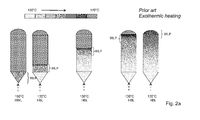
Fig.2a is showing the a principle effect from exothermic reaction during a conventional displacement front through the digester using a hot white liquor pad WLP at a temperature of 150°C displaced trough the digester; -
Fig.2b is showing a conventional circulation phase afterfigure 2a in order to establish same temperature throughout the digester after the displacement; -
Fig.3a is showing a principle effect heating from digester content during a conventional displacement front through the digester using a first white liquor pad WLP at a temperature of 150°C displaced by hot black liquor at a temperature of 130°C; -
Fig.3b is showing a conventional circulation phase afterfigure 3a in order to establish same temperature throughout the digester after the displacement; -
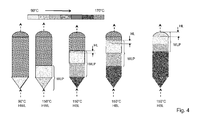
Fig.4 is showing the principle effect of the inventive displacement front through the digester using a hot white liquor pad at successively higher temperature charged at 90°C in first phase and up to 150°C in a second phase ; -
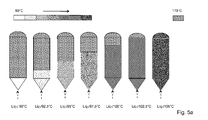
Fig.5a is showing the principle effect of the inventive displacement front through the digester using a displacement liquor at successively higher temperature in 7 stages during complete filling of the digester; -
Fig.5b is showing an optional circulation phase that may be implemented afterfigure 4a in order to absorb some of heat value still contained in the digester content. - The description will be made using the schematic layout shown in
figure 1 which only discloses the essential components for the system used necessary to implement the invention in a white liquor displacement phase. In a full commercial plant is also additional equipment added for performing the kraft cook and heat recovery after cook, for example using warm and hot black liquor accumulators. - Only one digester is shown but typically is a number of digesters used operated in sequence and thus in different phases of the cook. If for example 5 digesters are operated the first digester is started and then the remaining digesters are started at some time interval which time interval may correspond to 1/5 of the total cooking cycle time for one digester. Cooked pulp may then be blown to a blow tank at regular intervals, and the process liquids stored in accumulators and atmospheric tanks may be used in another digester minimizing inactive dwell time for the liquids used.
The piping system is simplified showing only one liquid addition point for WL, Wash filtrate, LP- and MP-steam but in a real system are individual piping connected to the inlet point of the digester. - During the white liquor displacement phase is white liquor used that typically is obtained from the caustization. This white liquor conventionally has a temperature of about 90°C as it has been stored in atmospheric tanks. The white liquor is heated before supply to the hot white liquor accumulator in at least one heat exchanger HE2P, using hotter process liquors or steam as heating medium. The content of the hot white liquor accumulator is also heated in a circulation containing an additional heat exchanger HE2C, using hotter process liquors or steam as heating medium. The heating is performed until the entire accumulator content has reached the intended temperature which in the figure may lie at some 150°C.
- Now if the total digester volume is about 300 m3, the total free volume inside a digester filled with comminuted chips is about 200 m3, so the accumulator needs a size of 200 m3 to store this volume for a full displacement phase.
- In
figure 2a is shown the principle heating effect from exothermic reactions during a conventional displacement front through the digester using a hot white liquor pad at a temperature of 150°C. In this example is a drained digester shown with a digester content of comminuted chips after a heated treatment in form of a prehydrolysis conducted at 170°C. In a first stage, first left hand figure, of the displacement phase is the inlet cone part filled with a volume of white liquor holding 150°C when added. In a second stage, second figure from left, of the displacement phase is the inlet cone part filled with a volume of hot black liquor holding 130°C when added, pushing the hot white liquor pad WLP upwardly. During this displacement will exothermic heat be released as alkali is consumed when the upper level of the white liquor pad neutralizes the acidic digester content, but now heated to a higher temperature due to exothermic reactions. The heating effect due to exothermic reactions is in the range 0.138-0.206 GJ/odt of wood. - This continues in stages until the entire digester is filled with displacement liquor, and as a result of the heating from the exothermic reaction is a temperature profile established over the height of the digester, with a temperature of the free liquor close to the hydrolysis temperature, i.e. close to 170°C in top but close to 130°C in bottom. Now, the digester content in bottom has been flushed by 130°C wash liquor during the entire displacement and is very close to 130°C. But the digester content in top has only been drenched by heated white liquor with most of the alkali content consumed during neutralization. As a result is the hydrolysis ended much sooner in bottom of digester, as the temperature has been lowered to 130°C at an early stage and alkali has been present, while the digester content in the top is subjected to extended hydrolysis, as the criteria's for ending the hydrolysis, lowering of temperature and change to alkaline conditions has not been fulfilled.
- This temperature profile may be even out by a circulation as shown in
figure 2b , which starts from a condition corresponding to the rightmost hand figure infigure 2a , where a pump starts to withdraw liquor from mid-point liquid exchange position and return this liquor to both top and bottom. This will result in some heating in bottom and cooling in top and ideally the entire content of the digester assumes a temperature lying in-between the hot black liquor temperature and the hydrolysis temperature at end of circulation, as disclosed in the right hand figure. - In
figure 3a is shown the additional principle heating effect from the residual heat content of the digester during a conventional displacement front through the digester using a hot white liquor pad at a temperature of 150°C. In this example is a drained digester shown with a digester content of comminuted chips after a heated treatment in form of a prehydrolysis conducted at 170°C. In a first stage, first left hand figure, of the displacement phase is the inlet cone part filled with a volume of hot white liquor holding 150°C when added. In a second stage, second figure from left, of the displacement phase is the inlet cone part filled with a volume of hot black liquor holding 130°C when added, pushing the first volume upwardly but now heated to a higher temperature by the digester content. This continues in stages until the entire digester is filled with displacement liquor, and as a result of the heating from the digester content is a temperature profile established over the height of the digester, with a temperature of the free liquor elevated some 10°C in top but close to 130°C in bottom. Now, the digester content in bottom has been flushed by 130°C hot black liquor during the entire displacement and is very close to 130°C. But the digester content in top has only been drenched for a short time by heated white liquor, that now holds a temperature of about 150±10°C, and has thus most of the heat value from hydrolysis left also in the digester content. - This temperature profile may be even out by a circulation as shown in
figure 3b , which starts from a condition corresponding to the rightmost hand figure infigure 3a , where a pump starts to withdraw liquor from mid-point liquid exchange position and return this liquor to both top and bottom. This will result in some heating in bottom and cooling in top and ideally the entire content of the digester assumes a temperature lying in-between the hot black liquor temperature, about 130°C, and the added heating from the digester material release, about 140°C, at end of circulation, as disclosed in the right hand figure. - These two examples in
figure 3a and4a show the two independent heating effects from exothermic reactions and heating from digester material respectively, and that the usage of an isothermal displacement liquor results in a temperature profile in the digester, and hence is the digester content in top and bottom of digester subjected to quite a difference in H- or P-factor exposure resulting a variance in the pulp quality. - According to the invention is instead a deliberate temperature profiling implemented in the displacement liquor used, either as a part of a displacement pad or throughout a complete filling of the digester.
- In
figure 4 is a first embodiment of the inventive displacement through the digester shown using a displacement liquor, i.e. the one and same displacement liquor as of chemical content, which in at least 2 incremental steps, at temperatures of 90°C and finally 150°C is used. In this example is a drained digester shown with a digester content of comminuted chips after a heated treatment in form of a prehydrolysis conducted at 170°C. In a first stage, first left hand figure, of the displacement phase is the inlet cone part filled with a first volume of white liquor holding 90°C when added. In a second stage, second figure from left, of the displacement phase is the inlet cone part filled with a second volume of hot white liquor holding 150°C when added, pushing the first volume upwardly. The first and second volumes establish a white liquor pad (WLP) that is thereafter displaced through the digester content by adding hot black liquor holding a temperature of about 150°C. With this temperature profiling of the white liquor, using an unheated white liquor in first phase, will this low temperature part of the WLP absorb the exothermic heat release as well -as residual heat in the digester content, avoiding the temperature to become excessive. As indicated will an upper layer of the first volume be heated during displacement and this heated layer HL will increase during the displacement. Due to the initial low temperature at some 90°C, the heating from both exothermic reactions and residual heat in digester content will not be able to raise the temperature close to full hydrolysis temperature which will guarantee that the hydrolysis will be ended. This even if the alkali content has been depleted by the consumption during neutralization. The total volume of the White Liquor Pad WLP is 50-70% of the free volume inside digester and the first colder volume of the WLP is 20-50% of the WLP. - In
Figure 5a is an alternative embodiment of the invention shown during a complete filling of the digester with one and the same liquor, but with a forced temperature profile. This temperature profiling may be implemented after the White Liquor Pad displacement as shown infigure 4 . - The principle effect of the inventive displacement front through the digester shown using a displacement liquor, i.e. the one and same displacement liquor as of chemical content, that in at least 2 or 3 incremental steps, which in
figure 5a are 7 incremental steps, at temperatures of 90-92.5-95-97.5-100-102.5 and finally 105°C is used. In this example is a drained digester shown with a digester content of comminuted chips after a heated treatment in form of a prehydrolysis conducted at 170°C. In a first stage, first left hand figure, of the displacement phase is the inlet cone part filled with a volume of wash liquid holding 90°C when added. In a second stage, second figure from left, of the displacement phase is the inlet cone part filled with a volume of wash liquid holding 92.5°C when added, pushing the first volume upwardly but now heated to a higher temperature by the digester content to about 92.5°C. This continues in stages until the entire digester is filled with displacement liquor, and as a result of the heating from the digester content is an ISO temperature profile established over the height of the digester, with a temperature of the free liquor close to about 105°C in the entire digester. The total heating effect is about 10°C from exothermic reactions and about 10°C from heat value in digester content. Now, the digester content in bottom has been flushed by liquor during the entire displacement and most of the heat value in the digester content has been absorbed in the liquor, while the digester content in top has only been drenched by heated liquor and has thus most of the heat value from hydrolysis left in the digester content. This temperature profile may be even out by a circulation as shown infigure 5b , which starts from a condition corresponding to the rightmost hand figure infigure 4a , with an isothermal temperature profile of the free liquor, where a pump starts to withdraw liquor from mid-point liquid exchange position and return this liquor to both top and bottom. This will result in some heating of the free liquor by the excess residual heat in the digester content in top throughout the digester. Ideally the entire content of the digester, both the chips and the free liquor, assumes a temperature lying somewhat above the temperature of the free liquor at end of displacement, as disclosed in the right hand figure. - Alternatively, the forced temperature profiling of the displacement liquor may even be modified so that the temperature of the free liquor in the final phase of displacement is not isothermal throughout the digester, but could still have a slight temperature profile with either colder or warmer temperature in final 7th displacement phase.
- Hence, the digester content in bottom that is displaced by largest amount of displacement liquor may have the lowest residual heat value in the digester content, and therefore could the temperature increase be larger in the steps disclosed in
figure 5a . - As the objective is to expose the digester content of iso-H factor exposure, could the forced temperature profiling be controlled exponentially so that the digester content may be exposed to less total cooling effect in latter stages of displacement, i.e. using less temperature increase in first 1-3 phases and then successively higher temperature increases in last 4-7 phases.
- The effect of the temperature profiling could be controlled in the pulp finally blown from the digester, taking a sample of the first blow pulp and then a sample from the last blown pulp from the digester and compare pulp quality between these samples as of viscosity, tear strength or other pulp characteristics that may be effected by the specific displacement process.
- If the inventive displacement process is implemented after a prehydrolysis, could for example differences in first and last blow pulp be compared as to residual content of hemicellulose that is supposed to dissolve during the prehydrolysis. If the first blown pulp, i.e. the digester content in bottom during treatment, has a higher content of hemicellulose, one may assume that the hydrolysis has not been obtained to the same extent as the last blown pulp thus suggesting an alteration of the temperature profiling towards a higher temperature in the lower part during the displacement phase.
- The temperature profiling during the displacement could easily be implemented in a principal system as that disclosed in
figure 1 by using only unheated liquor (90°C) in first phase, i.e. opening valve V2A while having valve V2B closed. Then as disclosed in figures could a change be implemented in several stages, gradually opening the valve V2B in steps as functionally disclosed in figures, or alternatively opening the valve gradually over the entire control process. The total volume of the liquor accumulator could thus be reduced considerably, as the total heated liquor volume is reduced in proportion to usage. The opening of the valve V2B may be controlled by a temperature sensor located after mixing of the unheated and heated wash liquors, as disclosed infigure 1 . - While the temperature profiling has been disclosed after a prehydrolysis, the very same temperature profiling may be forced to any displacement liquor added to batch digester to end a preceding heated phase where temperature and time exposure on the digester content of cellulosic material play a role in that treatment phase. Thus the Hot White Liquor accumulator shown in
figure 1 may alternatively be a Wash Liquor or Hot Black Liquor accumulator.
Claims (10)
- Method for ending a heated treatment phase in a displacement batch pulping process in a digester vessel, where the heated treatment phase has been done at a treatment temperature above 130°C, preferably above 150°C, said digester having at least a bottom liquid exchange position, a mid-point liquid exchange position and a top liquid exchange position and the method is initiated after the heated treatment phase and comprising the following steps;- adding a first displacement liquor to the bottom liquid exchange position, wherein the first displacement liquor has a first lower temperature (T1) which is more than 20°C below the treatment temperature in the heated treatment phase at start of the displacement filling a part of the digester with a first volume of the first displacement liquor,- continuing to add the same first displacement liquor to the bottom liquid exchange position, but the first displacement liquor now having a higher second temperature (T2) in a later phase of the displacement filling at least a part of the digester with a second volume of the first displacement liquor, which second volume is larger than the first volume,- and optionally continuing the displacement with a final displacement liquor.
- The method according to claim 1, wherein the final displacement liquor is supplied and displaced until the content of the digester vessel is completely submerged under the total volume of the final displacement liquor added and wherein the first displacement liquor has been displaced from the digester via the top liquid exchange position.
- The method according to claim 1, wherein after adding the first displacement liquor with the higher second temperature (T2) and before the content of the digester vessel is completely submerged the displacement is continuing by adding the same first displacement liquor to the bottom liquid exchange position while having a third temperature (T3) higher than the second temperature (T2) in the displacement liquor in a later phase of the displacement filling a part of the digester with a third volume of first displacement liquor, which third volume is larger than the second volume.
- The method according to claim 3, wherein the temperature increase in the first displacement liquor is done in incremental steps in at least 3 and up to 10 steps during the displacement.
- The method according to claim 3, wherein the temperature increase in the first displacement liquor is done continuously during the displacement.
- The method according to claim 2, wherein a circulation of the liquor is initiated after the digester vessel has been filled by the final displacement liquor.
- The method according to claim 1, wherein the proportion of the first volume of the first displacement liquor in relation to the total volume of the first displacement liquor is in the range of 20 to less than 50%.
- The method according to claim 6, wherein the total volume of the first displacement liquor is in the range of 50-75% of the free digester volume.
- The method according to claim 1, wherein the first lower temperature T1 in the first displacement liquor is in the range of 70-110°C, preferably in the range of 90-100°C.
- The method according to claim 1, wherein the heated treatment phase is a prehydrolysis phase wherein the digester content is hydrolyzed at a temperature above 150°C.
Applications Claiming Priority (1)
| Application Number | Priority Date | Filing Date | Title |
|---|---|---|---|
| SE1451445A SE538454C2 (en) | 2014-11-27 | 2014-11-27 | Method for displacement in batch digesters |
Publications (2)
| Publication Number | Publication Date |
|---|---|
| EP3026171A1 true EP3026171A1 (en) | 2016-06-01 |
| EP3026171B1 EP3026171B1 (en) | 2017-03-15 |
Family
ID=54770838
Family Applications (1)
| Application Number | Title | Priority Date | Filing Date |
|---|---|---|---|
| EP15196583.7A Active EP3026171B1 (en) | 2014-11-27 | 2015-11-26 | Method for displacement in batch digesters |
Country Status (4)
| Country | Link |
|---|---|
| US (1) | US9631317B2 (en) |
| EP (1) | EP3026171B1 (en) |
| BR (1) | BR102015029715B1 (en) |
| SE (1) | SE538454C2 (en) |
Cited By (2)
| Publication number | Priority date | Publication date | Assignee | Title |
|---|---|---|---|---|
| WO2020236061A1 (en) | 2019-05-22 | 2020-11-26 | Valmet Ab | A method for extracting hydrolysate, a batch cooking system and a hydrolysate extracting arrangement |
| WO2020263153A1 (en) * | 2019-06-26 | 2020-12-30 | Valmet Ab | Method for extracting hemicellulose from lignocellulosic material |
Families Citing this family (1)
| Publication number | Priority date | Publication date | Assignee | Title |
|---|---|---|---|---|
| SE539706C2 (en) * | 2014-11-07 | 2017-11-07 | Valmet Oy | Method for recovering hydrolysate |
Citations (7)
| Publication number | Priority date | Publication date | Assignee | Title |
|---|---|---|---|---|
| US4236961A (en) * | 1979-07-25 | 1980-12-02 | Green Frank B | Pulping lignocellulose in continuous pressurized batch digesters |
| US4975148A (en) * | 1988-12-06 | 1990-12-04 | Ahlstromforetagen Svenska Ab | Cold blow system for batch production of pulp |
| US5080757A (en) * | 1989-10-30 | 1992-01-14 | Beloit Corporation | Method to displace a digester from both ends |
| EP0796367A1 (en) | 1994-01-24 | 1997-09-24 | Sunds Defibrator Pori Oy | Production of prehydrolyzed pulp |
| WO2002036876A1 (en) * | 2000-11-03 | 2002-05-10 | Metso Paper, Inc. | A cooking process using hot black liquor |
| EP2430233A1 (en) | 2010-03-11 | 2012-03-21 | Metso Paper, Inc. | Method for producing pulp |
| EP2567023A1 (en) | 2010-05-04 | 2013-03-13 | Bahia Specialty Cellulose SA | Method and system for high alpha dissolving pulp production |
Family Cites Families (9)
| Publication number | Priority date | Publication date | Assignee | Title |
|---|---|---|---|---|
| US5059284A (en) * | 1989-10-30 | 1991-10-22 | Beloit Corporation | Apparatus to displace a digester from both ends |
| AT398588B (en) | 1992-12-02 | 1994-12-27 | Voest Alpine Ind Anlagen | METHOD FOR THE PRODUCTION OF VISCOSE CELLS |
| FI122654B (en) * | 1997-12-08 | 2012-05-15 | Ovivo Luxembourg Sarl | Process for making paper cellulose pulp |
| FI122655B (en) * | 1998-11-06 | 2012-05-15 | Ovivo Luxembourg Sarl | Batch-making process for mass production |
| US20060231222A1 (en) * | 2005-04-19 | 2006-10-19 | Bianchini Craig A | Method and apparatus to decrease steam consumption in conventional batch digesters |
| KR20110123184A (en) * | 2010-05-06 | 2011-11-14 | 바히아 스페셜티 셀룰로스 에스에이 | Method and system for producing high alpha dissolving pulp |
| US8951388B2 (en) * | 2011-04-08 | 2015-02-10 | Pec-Tech Engineering And Construction Pte Ltd | Method and system for efficient production of dissolving pulp in a kraft mill producing paper grade pulp with a continuous type digester |
| ES2737432T3 (en) | 2011-05-13 | 2020-01-14 | Valmet Oy | Compact procedure to produce pre-rolled paper pulp |
| SE539706C2 (en) * | 2014-11-07 | 2017-11-07 | Valmet Oy | Method for recovering hydrolysate |
-
2014
- 2014-11-27 SE SE1451445A patent/SE538454C2/en unknown
-
2015
- 2015-11-25 US US14/951,520 patent/US9631317B2/en not_active Expired - Fee Related
- 2015-11-26 EP EP15196583.7A patent/EP3026171B1/en active Active
- 2015-11-26 BR BR102015029715-7A patent/BR102015029715B1/en active IP Right Grant
Patent Citations (7)
| Publication number | Priority date | Publication date | Assignee | Title |
|---|---|---|---|---|
| US4236961A (en) * | 1979-07-25 | 1980-12-02 | Green Frank B | Pulping lignocellulose in continuous pressurized batch digesters |
| US4975148A (en) * | 1988-12-06 | 1990-12-04 | Ahlstromforetagen Svenska Ab | Cold blow system for batch production of pulp |
| US5080757A (en) * | 1989-10-30 | 1992-01-14 | Beloit Corporation | Method to displace a digester from both ends |
| EP0796367A1 (en) | 1994-01-24 | 1997-09-24 | Sunds Defibrator Pori Oy | Production of prehydrolyzed pulp |
| WO2002036876A1 (en) * | 2000-11-03 | 2002-05-10 | Metso Paper, Inc. | A cooking process using hot black liquor |
| EP2430233A1 (en) | 2010-03-11 | 2012-03-21 | Metso Paper, Inc. | Method for producing pulp |
| EP2567023A1 (en) | 2010-05-04 | 2013-03-13 | Bahia Specialty Cellulose SA | Method and system for high alpha dissolving pulp production |
Non-Patent Citations (2)
| Title |
|---|
| HERBERT SIXTA: "Handbook of Pulp", vol. 1, 2006, WILEY-VCH VERLAG, pages: 343 - 345 |
| RYDHOLM, S. E.: "Pulping Processes", 1968, INTERSCIENCE PUBLISHERS, pages: 649 - 672 |
Cited By (3)
| Publication number | Priority date | Publication date | Assignee | Title |
|---|---|---|---|---|
| WO2020236061A1 (en) | 2019-05-22 | 2020-11-26 | Valmet Ab | A method for extracting hydrolysate, a batch cooking system and a hydrolysate extracting arrangement |
| EP3973101A4 (en) * | 2019-05-22 | 2023-01-25 | Valmet Ab | HYDROLYZATE EXTRACTION METHOD, BATCH COOKING SYSTEM AND HYDROLYZATE EXTRACTION ARRANGEMENT |
| WO2020263153A1 (en) * | 2019-06-26 | 2020-12-30 | Valmet Ab | Method for extracting hemicellulose from lignocellulosic material |
Also Published As
| Publication number | Publication date |
|---|---|
| US9631317B2 (en) | 2017-04-25 |
| US20160153138A1 (en) | 2016-06-02 |
| SE538454C2 (en) | 2016-07-12 |
| EP3026171B1 (en) | 2017-03-15 |
| BR102015029715B1 (en) | 2022-04-05 |
| SE1451445A1 (en) | 2016-05-28 |
| BR102015029715A2 (en) | 2016-08-02 |
Similar Documents
| Publication | Publication Date | Title |
|---|---|---|
| CN102472006B (en) | Method for producing pulp | |
| CN103687990B (en) | Manufacture the compact method of prehydrolyzed pulp | |
| CA2641686C (en) | Method for recovering hydrolysis products | |
| RU2424387C1 (en) | Method for sulphate pulping using polysulphide (versions) | |
| EP3026171B1 (en) | Method for displacement in batch digesters | |
| US9663896B2 (en) | Method for recovering hydrolysate | |
| JPH03130482A (en) | Method and device for continuous digesting of cellulose | |
| CN108699768B (en) | Method for recovering concentrated hydrolysate after hydrolysis of cellulosic material | |
| EP0498821B1 (en) | Method and apparatus to displace spent liquors in a digester | |
| CN220266173U (en) | Slurry digestion system | |
| US5080757A (en) | Method to displace a digester from both ends | |
| US20060175029A1 (en) | Batch process for preparing pulp | |
| RU1838487C (en) | Method of sulfate cellulose preparing | |
| US6103057A (en) | Kraft digesting process wherein a vapor interface is formed by withdrawing hot cooking liquor | |
| JPH10509484A (en) | Black liquor soak treatment in a single tank hydraulic digester | |
| EP3673110B1 (en) | Improved compact process for producing prehydrolyzed pulp | |
| CN116590946A (en) | Slurry digestion system | |
| JPH0244957B2 (en) | ||
| WO2002042550A1 (en) | Method for alkaline cooking of fiber material |
Legal Events
| Date | Code | Title | Description |
|---|---|---|---|
| PUAI | Public reference made under article 153(3) epc to a published international application that has entered the european phase |
Free format text: ORIGINAL CODE: 0009012 |
|
| AK | Designated contracting states |
Kind code of ref document: A1 Designated state(s): AL AT BE BG CH CY CZ DE DK EE ES FI FR GB GR HR HU IE IS IT LI LT LU LV MC MK MT NL NO PL PT RO RS SE SI SK SM TR |
|
| AX | Request for extension of the european patent |
Extension state: BA ME |
|
| 17P | Request for examination filed |
Effective date: 20160621 |
|
| RBV | Designated contracting states (corrected) |
Designated state(s): AL AT BE BG CH CY CZ DE DK EE ES FI FR GB GR HR HU IE IS IT LI LT LU LV MC MK MT NL NO PL PT RO RS SE SI SK SM TR |
|
| GRAP | Despatch of communication of intention to grant a patent |
Free format text: ORIGINAL CODE: EPIDOSNIGR1 |
|
| RIC1 | Information provided on ipc code assigned before grant |
Ipc: D21C 3/00 20060101AFI20161010BHEP Ipc: D21C 7/00 20060101ALI20161010BHEP |
|
| INTG | Intention to grant announced |
Effective date: 20161025 |
|
| STAA | Information on the status of an ep patent application or granted ep patent |
Free format text: STATUS: GRANT OF PATENT IS INTENDED |
|
| GRAS | Grant fee paid |
Free format text: ORIGINAL CODE: EPIDOSNIGR3 |
|
| GRAA | (expected) grant |
Free format text: ORIGINAL CODE: 0009210 |
|
| STAA | Information on the status of an ep patent application or granted ep patent |
Free format text: STATUS: THE PATENT HAS BEEN GRANTED |
|
| AK | Designated contracting states |
Kind code of ref document: B1 Designated state(s): AL AT BE BG CH CY CZ DE DK EE ES FI FR GB GR HR HU IE IS IT LI LT LU LV MC MK MT NL NO PL PT RO RS SE SI SK SM TR |
|
| REG | Reference to a national code |
Ref country code: CH Ref legal event code: EP Ref country code: GB Ref legal event code: FG4D |
|
| REG | Reference to a national code |
Ref country code: IE Ref legal event code: FG4D |
|
| REG | Reference to a national code |
Ref country code: AT Ref legal event code: REF Ref document number: 875697 Country of ref document: AT Kind code of ref document: T Effective date: 20170415 |
|
| REG | Reference to a national code |
Ref country code: DE Ref legal event code: R096 Ref document number: 602015001842 Country of ref document: DE |
|
| REG | Reference to a national code |
Ref country code: NL Ref legal event code: MP Effective date: 20170315 |
|
| REG | Reference to a national code |
Ref country code: LT Ref legal event code: MG4D |
|
| PG25 | Lapsed in a contracting state [announced via postgrant information from national office to epo] |
Ref country code: HR Free format text: LAPSE BECAUSE OF FAILURE TO SUBMIT A TRANSLATION OF THE DESCRIPTION OR TO PAY THE FEE WITHIN THE PRESCRIBED TIME-LIMIT Effective date: 20170315 Ref country code: GR Free format text: LAPSE BECAUSE OF FAILURE TO SUBMIT A TRANSLATION OF THE DESCRIPTION OR TO PAY THE FEE WITHIN THE PRESCRIBED TIME-LIMIT Effective date: 20170616 Ref country code: NO Free format text: LAPSE BECAUSE OF FAILURE TO SUBMIT A TRANSLATION OF THE DESCRIPTION OR TO PAY THE FEE WITHIN THE PRESCRIBED TIME-LIMIT Effective date: 20170615 Ref country code: LT Free format text: LAPSE BECAUSE OF FAILURE TO SUBMIT A TRANSLATION OF THE DESCRIPTION OR TO PAY THE FEE WITHIN THE PRESCRIBED TIME-LIMIT Effective date: 20170315 |
|
| PG25 | Lapsed in a contracting state [announced via postgrant information from national office to epo] |
Ref country code: RS Free format text: LAPSE BECAUSE OF FAILURE TO SUBMIT A TRANSLATION OF THE DESCRIPTION OR TO PAY THE FEE WITHIN THE PRESCRIBED TIME-LIMIT Effective date: 20170315 Ref country code: LV Free format text: LAPSE BECAUSE OF FAILURE TO SUBMIT A TRANSLATION OF THE DESCRIPTION OR TO PAY THE FEE WITHIN THE PRESCRIBED TIME-LIMIT Effective date: 20170315 Ref country code: BG Free format text: LAPSE BECAUSE OF FAILURE TO SUBMIT A TRANSLATION OF THE DESCRIPTION OR TO PAY THE FEE WITHIN THE PRESCRIBED TIME-LIMIT Effective date: 20170615 Ref country code: SE Free format text: LAPSE BECAUSE OF FAILURE TO SUBMIT A TRANSLATION OF THE DESCRIPTION OR TO PAY THE FEE WITHIN THE PRESCRIBED TIME-LIMIT Effective date: 20170315 |
|
| PG25 | Lapsed in a contracting state [announced via postgrant information from national office to epo] |
Ref country code: NL Free format text: LAPSE BECAUSE OF FAILURE TO SUBMIT A TRANSLATION OF THE DESCRIPTION OR TO PAY THE FEE WITHIN THE PRESCRIBED TIME-LIMIT Effective date: 20170315 |
|
| PG25 | Lapsed in a contracting state [announced via postgrant information from national office to epo] |
Ref country code: RO Free format text: LAPSE BECAUSE OF FAILURE TO SUBMIT A TRANSLATION OF THE DESCRIPTION OR TO PAY THE FEE WITHIN THE PRESCRIBED TIME-LIMIT Effective date: 20170315 Ref country code: IT Free format text: LAPSE BECAUSE OF FAILURE TO SUBMIT A TRANSLATION OF THE DESCRIPTION OR TO PAY THE FEE WITHIN THE PRESCRIBED TIME-LIMIT Effective date: 20170315 Ref country code: SK Free format text: LAPSE BECAUSE OF FAILURE TO SUBMIT A TRANSLATION OF THE DESCRIPTION OR TO PAY THE FEE WITHIN THE PRESCRIBED TIME-LIMIT Effective date: 20170315 Ref country code: CZ Free format text: LAPSE BECAUSE OF FAILURE TO SUBMIT A TRANSLATION OF THE DESCRIPTION OR TO PAY THE FEE WITHIN THE PRESCRIBED TIME-LIMIT Effective date: 20170315 Ref country code: ES Free format text: LAPSE BECAUSE OF FAILURE TO SUBMIT A TRANSLATION OF THE DESCRIPTION OR TO PAY THE FEE WITHIN THE PRESCRIBED TIME-LIMIT Effective date: 20170315 Ref country code: EE Free format text: LAPSE BECAUSE OF FAILURE TO SUBMIT A TRANSLATION OF THE DESCRIPTION OR TO PAY THE FEE WITHIN THE PRESCRIBED TIME-LIMIT Effective date: 20170315 |
|
| PG25 | Lapsed in a contracting state [announced via postgrant information from national office to epo] |
Ref country code: PL Free format text: LAPSE BECAUSE OF FAILURE TO SUBMIT A TRANSLATION OF THE DESCRIPTION OR TO PAY THE FEE WITHIN THE PRESCRIBED TIME-LIMIT Effective date: 20170315 Ref country code: PT Free format text: LAPSE BECAUSE OF FAILURE TO SUBMIT A TRANSLATION OF THE DESCRIPTION OR TO PAY THE FEE WITHIN THE PRESCRIBED TIME-LIMIT Effective date: 20170717 Ref country code: IS Free format text: LAPSE BECAUSE OF FAILURE TO SUBMIT A TRANSLATION OF THE DESCRIPTION OR TO PAY THE FEE WITHIN THE PRESCRIBED TIME-LIMIT Effective date: 20170715 Ref country code: SM Free format text: LAPSE BECAUSE OF FAILURE TO SUBMIT A TRANSLATION OF THE DESCRIPTION OR TO PAY THE FEE WITHIN THE PRESCRIBED TIME-LIMIT Effective date: 20170315 |
|
| REG | Reference to a national code |
Ref country code: DE Ref legal event code: R097 Ref document number: 602015001842 Country of ref document: DE |
|
| PLBE | No opposition filed within time limit |
Free format text: ORIGINAL CODE: 0009261 |
|
| STAA | Information on the status of an ep patent application or granted ep patent |
Free format text: STATUS: NO OPPOSITION FILED WITHIN TIME LIMIT |
|
| PG25 | Lapsed in a contracting state [announced via postgrant information from national office to epo] |
Ref country code: DK Free format text: LAPSE BECAUSE OF FAILURE TO SUBMIT A TRANSLATION OF THE DESCRIPTION OR TO PAY THE FEE WITHIN THE PRESCRIBED TIME-LIMIT Effective date: 20170315 |
|
| 26N | No opposition filed |
Effective date: 20171218 |
|
| PG25 | Lapsed in a contracting state [announced via postgrant information from national office to epo] |
Ref country code: SI Free format text: LAPSE BECAUSE OF FAILURE TO SUBMIT A TRANSLATION OF THE DESCRIPTION OR TO PAY THE FEE WITHIN THE PRESCRIBED TIME-LIMIT Effective date: 20170315 |
|
| REG | Reference to a national code |
Ref country code: DE Ref legal event code: R119 Ref document number: 602015001842 Country of ref document: DE |
|
| PG25 | Lapsed in a contracting state [announced via postgrant information from national office to epo] |
Ref country code: MC Free format text: LAPSE BECAUSE OF FAILURE TO SUBMIT A TRANSLATION OF THE DESCRIPTION OR TO PAY THE FEE WITHIN THE PRESCRIBED TIME-LIMIT Effective date: 20170315 |
|
| PG25 | Lapsed in a contracting state [announced via postgrant information from national office to epo] |
Ref country code: LU Free format text: LAPSE BECAUSE OF NON-PAYMENT OF DUE FEES Effective date: 20171126 |
|
| REG | Reference to a national code |
Ref country code: FR Ref legal event code: ST Effective date: 20180731 Ref country code: BE Ref legal event code: MM Effective date: 20171130 |
|
| REG | Reference to a national code |
Ref country code: IE Ref legal event code: MM4A |
|
| PG25 | Lapsed in a contracting state [announced via postgrant information from national office to epo] |
Ref country code: MT Free format text: LAPSE BECAUSE OF NON-PAYMENT OF DUE FEES Effective date: 20171126 |
|
| PG25 | Lapsed in a contracting state [announced via postgrant information from national office to epo] |
Ref country code: IE Free format text: LAPSE BECAUSE OF NON-PAYMENT OF DUE FEES Effective date: 20171126 Ref country code: FR Free format text: LAPSE BECAUSE OF NON-PAYMENT OF DUE FEES Effective date: 20171130 Ref country code: DE Free format text: LAPSE BECAUSE OF NON-PAYMENT OF DUE FEES Effective date: 20180602 |
|
| PG25 | Lapsed in a contracting state [announced via postgrant information from national office to epo] |
Ref country code: BE Free format text: LAPSE BECAUSE OF NON-PAYMENT OF DUE FEES Effective date: 20171130 |
|
| PG25 | Lapsed in a contracting state [announced via postgrant information from national office to epo] |
Ref country code: HU Free format text: LAPSE BECAUSE OF FAILURE TO SUBMIT A TRANSLATION OF THE DESCRIPTION OR TO PAY THE FEE WITHIN THE PRESCRIBED TIME-LIMIT; INVALID AB INITIO Effective date: 20151126 |
|
| REG | Reference to a national code |
Ref country code: CH Ref legal event code: PL |
|
| PG25 | Lapsed in a contracting state [announced via postgrant information from national office to epo] |
Ref country code: CH Free format text: LAPSE BECAUSE OF NON-PAYMENT OF DUE FEES Effective date: 20181130 Ref country code: LI Free format text: LAPSE BECAUSE OF NON-PAYMENT OF DUE FEES Effective date: 20181130 |
|
| PG25 | Lapsed in a contracting state [announced via postgrant information from national office to epo] |
Ref country code: CY Free format text: LAPSE BECAUSE OF FAILURE TO SUBMIT A TRANSLATION OF THE DESCRIPTION OR TO PAY THE FEE WITHIN THE PRESCRIBED TIME-LIMIT Effective date: 20170315 |
|
| REG | Reference to a national code |
Ref country code: AT Ref legal event code: UEP Ref document number: 875697 Country of ref document: AT Kind code of ref document: T Effective date: 20170315 |
|
| PG25 | Lapsed in a contracting state [announced via postgrant information from national office to epo] |
Ref country code: MK Free format text: LAPSE BECAUSE OF FAILURE TO SUBMIT A TRANSLATION OF THE DESCRIPTION OR TO PAY THE FEE WITHIN THE PRESCRIBED TIME-LIMIT Effective date: 20170315 |
|
| PG25 | Lapsed in a contracting state [announced via postgrant information from national office to epo] |
Ref country code: TR Free format text: LAPSE BECAUSE OF FAILURE TO SUBMIT A TRANSLATION OF THE DESCRIPTION OR TO PAY THE FEE WITHIN THE PRESCRIBED TIME-LIMIT Effective date: 20170315 |
|
| PG25 | Lapsed in a contracting state [announced via postgrant information from national office to epo] |
Ref country code: AL Free format text: LAPSE BECAUSE OF FAILURE TO SUBMIT A TRANSLATION OF THE DESCRIPTION OR TO PAY THE FEE WITHIN THE PRESCRIBED TIME-LIMIT Effective date: 20170315 |
|
| GBPC | Gb: european patent ceased through non-payment of renewal fee |
Effective date: 20191126 |
|
| PG25 | Lapsed in a contracting state [announced via postgrant information from national office to epo] |
Ref country code: GB Free format text: LAPSE BECAUSE OF NON-PAYMENT OF DUE FEES Effective date: 20191126 |
|
| P01 | Opt-out of the competence of the unified patent court (upc) registered |
Effective date: 20230503 |
|
| PGFP | Annual fee paid to national office [announced via postgrant information from national office to epo] |
Ref country code: AT Payment date: 20251118 Year of fee payment: 11 |
|
| PGFP | Annual fee paid to national office [announced via postgrant information from national office to epo] |
Ref country code: FI Payment date: 20251118 Year of fee payment: 11 |