EP3022320B2 - Gesamtgenom und gezielte haplotyprekonstruktion - Google Patents
Gesamtgenom und gezielte haplotyprekonstruktion Download PDFInfo
- Publication number
- EP3022320B2 EP3022320B2 EP14826457.5A EP14826457A EP3022320B2 EP 3022320 B2 EP3022320 B2 EP 3022320B2 EP 14826457 A EP14826457 A EP 14826457A EP 3022320 B2 EP3022320 B2 EP 3022320B2
- Authority
- EP
- European Patent Office
- Prior art keywords
- genomic dna
- haplotype
- proximally
- ligated
- fragments
- Prior art date
- Legal status (The legal status is an assumption and is not a legal conclusion. Google has not performed a legal analysis and makes no representation as to the accuracy of the status listed.)
- Active
Links
Images






Classifications
-
- C—CHEMISTRY; METALLURGY
- C12—BIOCHEMISTRY; BEER; SPIRITS; WINE; VINEGAR; MICROBIOLOGY; ENZYMOLOGY; MUTATION OR GENETIC ENGINEERING
- C12Q—MEASURING OR TESTING PROCESSES INVOLVING ENZYMES, NUCLEIC ACIDS OR MICROORGANISMS; COMPOSITIONS OR TEST PAPERS THEREFOR; PROCESSES OF PREPARING SUCH COMPOSITIONS; CONDITION-RESPONSIVE CONTROL IN MICROBIOLOGICAL OR ENZYMOLOGICAL PROCESSES
- C12Q1/00—Measuring or testing processes involving enzymes, nucleic acids or microorganisms; Compositions therefor; Processes of preparing such compositions
- C12Q1/68—Measuring or testing processes involving enzymes, nucleic acids or microorganisms; Compositions therefor; Processes of preparing such compositions involving nucleic acids
- C12Q1/6869—Methods for sequencing
- C12Q1/6874—Methods for sequencing involving nucleic acid arrays, e.g. sequencing by hybridisation
-
- C—CHEMISTRY; METALLURGY
- C12—BIOCHEMISTRY; BEER; SPIRITS; WINE; VINEGAR; MICROBIOLOGY; ENZYMOLOGY; MUTATION OR GENETIC ENGINEERING
- C12Q—MEASURING OR TESTING PROCESSES INVOLVING ENZYMES, NUCLEIC ACIDS OR MICROORGANISMS; COMPOSITIONS OR TEST PAPERS THEREFOR; PROCESSES OF PREPARING SUCH COMPOSITIONS; CONDITION-RESPONSIVE CONTROL IN MICROBIOLOGICAL OR ENZYMOLOGICAL PROCESSES
- C12Q1/00—Measuring or testing processes involving enzymes, nucleic acids or microorganisms; Compositions therefor; Processes of preparing such compositions
- C12Q1/68—Measuring or testing processes involving enzymes, nucleic acids or microorganisms; Compositions therefor; Processes of preparing such compositions involving nucleic acids
- C12Q1/6869—Methods for sequencing
Definitions
- This invention relates to methods for haplotype determination and, in particular, haplotype determination at the whole genome level as well as targeted haplotype determination.
- haplotypes are useful clinically in predicting outcomes for donor-host matching in organ transplantation ( Crawford et al., Annual Review Of Medicine 56, 303-320 (2005 ) and Petersdorf et al., PLoS Medicine 4, e8 (2007 )) and are increasingly used as a means to detect disease associations ( Studies et al., Nature 447, 655-660 (2007 ); Cirulli, et al., Nature Reviews. Genetics 11, 415-425 (2010 ); and Ng et al., Nature Genetics 42, 30-35 (2010 )).
- haplotypes provide information as to whether two deleterious variants are located on the same or different alleles, greatly impacting the prediction of whether inheritance of these variants are deleterious ( Musone et al., Nature Genetics 40, 1062-1064 (2008 ); and Erythematosus, et al., Nature Genetics 40, 204-210 (2008 ); and Zschocke, Journal of Inherited Metabolic Disease 31, 599-618 (2008 )).
- haplotypes Recognizing the importance of haplotypes, several groups have sought to expand the understanding of haplotype structures both at the level of populations and individuals. Initiatives such as International Hapmap project and 1000 genomes project have attempted to systematically reconstruct haplotypes through linkage disequilibrium measures based on populations of unrelated individuals sequencing data or by genotyping family trios. However, the average length of accurately phased haplotypes generated using this approach is limited to ⁇ 300kb ( Fan et al., Nature Biotechnology 29, 51-57 (2011 ) and Browning et al., American Journal of Human Genetics 81, 1084-1097 (2007 )).
- targeted haplotyping are also of importance.
- targeted haplotyping of HLA (Human leukocyte antigen) locus can aid in host-donor matching for organ transplantation and elucidating roles of cis-regulatory elements in gene activity.
- haplotype reconstruction from previously established DNA shotgun sequencing methods is the length of the sequenced genomic fragment ( Tewhey et al., Nature Reviews. Genetics 12, 215-223 (2011 )).
- longer haplotypes can be obtained by mate pair sequencing (fragment or insert size ⁇ 5kb) compared with conventional genome sequencing (fragment or insert size ⁇ 500bp).
- mate pair sequencing fragment or insert size ⁇ 5kb
- conventional genome sequencing fragment or insert size ⁇ 500bp
- This invention addresses the aforementioned unmet need by providing a method of reconstructing haplotype at the whole genome level, as well as a method of reconstructing haplotype at a targeted region of a genome.
- the invention features a method for whole-chromosome haplotyping of an organism.
- the present invention provides a method for targeted haplotyping of an organism comprising; incubating a cell of the organism or a nucleus thereof, wherein the cell or nucleus thereof contains a set of chromosomes having genomic DNA, with a fixation agent for a period of time to allow crosslinking of the genomic DNA in situ and thereby to form crosslinked genomic DNA; fragmenting the crosslinked genomic DNA and ligating the proximally located crosslinked and fragmented DNA to form a proximally ligated complex having a first genomic DNA fragment and a second genomic DNA fragment; shearing the proximally ligated complex to form proximally-ligated DNA fragments; contacting the proximally-ligated DNA fragments with one or more oligonucleotides that hybridize to pre-selected regions of a subset of the proximally-ligated fragments to provide a subset of proximally-ligated fragments hybridized to the oligonucleotides, isolating
- the present invention provides a method for whole-chromosome haplotyping an organism, comprising;
- the oligonucleotides are immobilized.
- the methods further include isolating the cell nuclei from the cell before the incubating step.
- Methods for isolating cell nuclei are known in the art. For example, methods for isolating nuclei from plant cells are disclosed by Lee et al. (2007) The Plant Cell 19:731-749 .
- the methods further include, after the fragmenting step, labeling the first genomic DNA fragment or the second genomic DNA fragment with a marker; joining the first genomic DNA fragment and the second genomic DNA fragment so that the marker is therebetween to form a labeled chimeric DNA molecule; and shearing the labeled chimeric DNA molecule to form labeled, proximally-ligated DNA fragments.
- the fragmenting step can be carried out by various ways known in the art. For example, it can be carried out via enzymatic cleavage, including those mediated by, restriction enzymes, DNAse, or transposase. In one embodiment, this step is performed by digesting the ligated genomic DNA with a restriction enzyme to form digested genomic DNA fragments. Any suitable restriction enzymes (e.g., BamHI, EcoRI, HindIII, NcoI, or XhoI) or a combination of two or more such restriction enzymes can be used.
- the fixation agent can comprise formaldehyde, glutaraldehyde, or formalin.
- the labeling step can be carried out by filling the ends of said first or second genomic DNA fragment with a nucleotide that is labeled with the marker, e.g., biotin.
- the obtaining step can be carried out using streptavidin, which can be affixed to a bead.
- streptavidin which can be affixed to a bead.
- the joining step it can be carried out by ligating the first genomic DNA fragment and the second genomic DNA fragment using a ligase.
- the ligating step may be performed in solution or on a solid substrate. Ligation on a solid substrate is referred to herein as "tethered chromosomal capture.”
- the sequencing it can be carried out using pair-end sequencing.
- each paired-end sequencing read fragment can be at least 20 bp in length, such as 20-1000 bp or preferably 20-150 bp in length (e.g., 20, 25, 30, 40, 50, 60, 60, 80, 90, 100, 110, 120, 130, 140, or 150 bp in length).
- the library contains at least 15x sequence coverage, e.g., 25-30x sequence coverage.
- the first genomic DNA fragment and the second genomic DNA fragment are on the same chromosome or in cis.
- the first genomic DNA fragment and the second genomic DNA fragment are apart in situ by at least 100 bp, such as 100-100 MB ( e.g ., 100 bp, 1 kb, 10 kb, 1 Mb, 10 Mb, 20 Mb, 30 Mb, 40 Mb, 50 Mb, 60 Mb, 70 Mb, 80 Mb, 90 Mb, or 100 Mb).
- 100 bp such as 100-100 MB ( e.g ., 100 bp, 1 kb, 10 kb, 1 Mb, 10 Mb, 20 Mb, 30 Mb, 40 Mb, 50 Mb, 60 Mb, 70 Mb, 80 Mb, 90 Mb, or 100 Mb).
- the method can be applied to the cells previously extracted from various organisms, including procaryotes and eucaryotes.
- the organisms include fungi, plants, and animals.
- the organism is a plant
- the organism is a mammal or a mammalian embryo, or a human or a human embryo.
- the human is a donor or a recipient of an organ.
- the organ can be haplotyped ex vivo or in vitro using the method of this invention before being transplanted to a recipient with matching haplotype.
- the method of this invention can be used on a diploid cell, aneuploid cell, or a polyploid cell, e.g., certain cancerous cells.
- This invention provides a novel approach for haplotyping, which includes a proximity-ligation and DNA sequencing technique with a probabilistic algorithm for haplotype assembly ( Dekker et al., Science 295, 1306-1311 (2002 ); Lieberman-Aiden et al., Science 326, 289-293 (2009 ); Kalhor et al., Nature Biotechnology 30, 90-98 (2012 ); and Bansal et al., Bioinformatics 24, i153-159 (2008 )).
- HaploSeq Ha plotyping using P roximity- L igation and Seq uencing, reconstructs complete haplotypes ortargeted haplotypes by utilizing proximity-ligation and DNA shotgun sequencing.
- HaploSeq has been experimentally validated in a hybrid mouse embryonic stem cell line and a human lymphoblastoid cell line in which the complete haplotypes are known a priori. It is demonstrated here that with HaploSeq, chromosome-span haplotype reconstruction can be achieved with over 95% of alleles linked at an accuracy of ⁇ 99.5% in mouse.
- HaploSeq is coupled with local conditional phasing to obtain chromosome-span haplotypes at ⁇ 81% resolution with an accuracy of ⁇ 98% using just 17 x coverage of genome sequencing.
- FIG. 1 An embodiment of the HaploSeq method of this invention is shown in FIG. 1 .
- FIG. 1a depicts comparison of HaploSeq with other methods for reconstructing haplotypes of an individual.
- the diagram outlines several methods used to phase haplotypes. Unlike previous methods, proximity-ligation links distal DNA fragments that are spatially close. These are then isolated from cells and sequenced.
- FIG. 1b shows frequency distributions of insert sizes from conventional WGS, mate-pair ( Guerre, S. et al. Proceedings of the National Academy of Sciences of the United States of America 108, 1513-1518 (2011 )) and Hi-C.
- the x-axis is in base-pairs (log10 scale).
- Plots represent random subset of data points taken from previously published for GM12878 cells across chromosomes 1-22 .
- size distribution of the clones inferred after alignment is shown.
- the Hi-C insert sizes are derived from libraries generated by the inventors' laboratory. Insert and clone sizes are correlated with the ability to reconstruct longer haplotypes. Among these methods, only proximity-ligation based Hi-C generates abundant long fragments.
- FIG. 1c illustrates the role of proximity-ligation reads in building chromosome span haplotypes.
- the top and bottom sequences represent regions of two homologous chromosomes, where " ⁇ " represents no variability and nucleotides represent heterozygous SNPs. Heterozygous SNPs and indels can be used to distinguish the homologous chromosomes.
- Local haplotype blocks (“block 1" and "block 2”) can be built from short insert sequencing reads (i), similar to what occurs in conventional WGS or mate pair sequencing. Given the distance between variants, these small haplotype blocks remain un-phased in relation to each other. Distally located regions in terms of linear sequence can be brought in close proximity in situ (ii). These linkages will be preserved by proximity-ligation.
- the large insert-size proximity-ligation sequencing reads help consolidate smaller haplotype blocks into a single chromosome span haplotype (iii).
- the Hi-C method comprises purifying ligation products followed by massively parallel sequencing.
- a Hi-C method allows unbiased identification of chromatin interactions across an entire genome.
- the method may comprise steps including, but not limited to, crosslinking cells with formaldehyde; digesting DNA with a restriction enzyme that leaves a 5'-overhang; filling the 5'-overhang that includes a biotinylated residue; and ligating blunt-end fragments under dilute conditions wherein ligation events between the cross-linked DNA fragments are favored.
- the method may result in a DNA sample containing ligation products consisting of fragments that were originally in close spatial proximity in the nucleus, marked with the biotin residue at the junction.
- the method further comprises creating a library (i.e ., for example, a Hi-C library).
- the library is created by shearing the DNA and selecting the biotin-containing fragments with streptavidin beads.
- the library is then analyzed using massively parallel DNA sequencing, producing a catalog of interacting fragments. See, FIG. 1a .
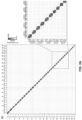
- FIG. 2a shows a whole genome interaction frequency heat map.
- Hi-C reads originating from the CAST ("c") or J129 ("j") genome were distinguished based on the known haplotype structures of the parental strains.
- the frequency of interactions between each allele of each chromosome was calculated using 10 Mb bin size.
- the CAST or J129 allele of each chromosome primarily interacts in cis , confirming that the chromosomes territories seen in Hi-C data occur for individual alleles.
- Inset shows a magnified view of the CAST and J129 allele for chromosomes 12 through 16.
- FIG. 1 shows a magnified view of the CAST and J129 allele for chromosomes 12 through 16.
- FIG. 2b shows the interaction frequencies (log 10 scale) between any two fragments as a function of linear distance. From a prioiri haplotype information, read-pairs are distinguished as interacting in cis (top) and in h-trans (bottom). The interaction frequency in cis can be several orders of magnitude more frequent than in h-trans. Notably, the frequency of interactions in cis approaches that of in h-trans at large genomic distances (>100 Mbp) and ⁇ 2% overall h-trans interactions were observed. Plot generated using data from chromosomes 1-19 in CASTxJ129 system. Finally, FIG. 2c shows comparison of the h-trans interaction probability as a function of insert size.
- Plot was generated using data from chromosomes 1-19 in CASTxJ129 system. LOWESS fit was performed at 2% smoothing. Below 30 Mb, the probability of a read being an h-trans interaction is ⁇ 5% (dashed line). Therefore, this cutoff is used as a maximum insert size for further analysis.
- FIG. 3a shows a diagram of Hi-C reads arising from the 129 allele that span ⁇ 30 Mb total of chromosome 18 and are used to link the variants into a single chromosome span haplotype.
- the sequence of the Hi-C reads is shown in black text with the variant locations in red and underlined.
- the sequence of the reference genome is in gray.
- a priori CAST and J129 haplotypes for each genotype were used at the variant locations as well as the predicted haplotype based on the Hi-C data.
- Hi-C generates a perfect match in terms of the identification of the known haplotype structure.
- HapCUT can then use these heterozygous variants as nodes and such overlapping reads as edges to form graph structures.
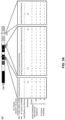
- the table in FIG. 3b shows results of Hi-C based haplotype phasing in CASTxJ129 system.
- the "Phasable Span of Chr” column lists the numbers of phasable bases (the base-pair difference between first and last heterozygous variant).
- Listed in the "Variant spanned in MVP block” column is the total number of heterozygous variants spanned by the MVP block per chromosome, which is an alternative measure for completeness and is used as a denominator for estimating resolution.
- Listed in the "%Chr Spanned in MVP block” column are the percentages of phasable bases spanned by the predicted haplotype.
- %Variants Phased in MVP block are the percentages of all heterozygous variants phased among the variants spanned in the MVP block. Listed in the last column is the accuracy for each of the phased heterozygous variants. For each chromosome, the inventors generated complete (>99.9% of bases spanned), high-resolution (>95% of het. variants phased), and accurate (>99.5% correctly phased het. variants) haplotypes.
- FIG. 3c further shows the comparison of haplotype phasing methods for generating complete haplotypes by simulation.
- Y-axis represents the span of MVP block as a function of phasable span of chromosome 19.
- the MVP block in HaploSeq spans whole chromosome, whereas other methods MVP block spans only a fraction of the chromosome.
- the inventors also combined 20 x sequencing coverage for each method with 20 x conventional WGS data for a total of 40 x coverage to compare methods at a higher coverage.
- FIG. 3d shows an analysis of the adjusted span (AS) of the haplotype phasing.
- the AS is defined as the product of span and fraction of heterozygous variants phased in that block.
- Haplotype blocks were ranked by number of heterozygous variants phased in each block (x-axis is ranking) and the cumulative AS over the whole chromosome is represented on the y-axis.
- the MVP block alone spans 100% of chromosome and contains 90% of variants phased.
- percent phasing increased cumulatively as the inventors include non-MVP blocks. Dashed lines represent increased coverage at 40 x by combining with WGS data as discussed above.
- FIG. 4a demonstrates the differences in variant frequency between mice (CASTx129) and humans (GM12878) over the Hoxd13/HOXD13 gene. Also shown is the Hi-C read coverage (log 10 scale) over these loci. Hi-C reads are more likely to contain variants in the high SNP density (mouse) case (shown as "SNP-covering reads"). This in turn allows these variants to be more readily connected to the MVP block. In the low variant density scenario (human), this is not the case, and as a result there are “gaps" where variants remain unphased relative to the MVP block.
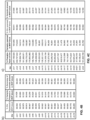
- the table in FIG. 4b shows the completeness ("% Chr Spanned in MVP block”), resolution (“% Variants Phased in MVP block”), and accuracy (“% Accuracy of variants phased in MVP block”) of haplotype reconstruction using HaploSeq analysis in a low variant density scenario in CASTxJ129 system.
- Variants were sub-sampled in the CASTx129 genome to have a heterozygous variant every 1500 bases and phasing was performed as described above.
- the inventors continued to generate haplotypes that are complete (>99% chromosome span) and accurate (>99% accuracy).
- there is a reduction in the resolution of the variants phased ( ⁇ 32%) in the low variant density scenario. Numbers are rounded off to three decimals.
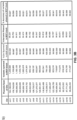
- the table in FIG. 4c summarizes results of the HaploSeq based haplotype reconstruction in GM12878 cells.
- the results show completeness ("% Chr Spanned in MVP block") and resolution ("% Variants Phased in MVP block”).
- the inventors were able to generate chromosome-span haplotypes (>99%), albeit at a lower resolution ( ⁇ 22%).
- GM12878 cells the inventors generated ⁇ 17 x coverage when compared to ⁇ 30x in CASTxJ129 system. Therefore, the inventors observed a lower resolution (22%) when compared to low-density CASTxJ129 (32%). Numbers are rounded off to three decimals.
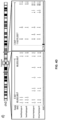
- the method of this invention allows one to generate seed haplotypes that span the centromere of metacentric chromosomes. Shown are two regions on either side of the centromere of chromosome 2.
- the two Hi-C generated seed haplotypes are arbitrarily designated as "A” and "B.”
- the actual haplotypes of the GM12878 individual learned from trio sequencing are shown below designated arbitrarily as “A” and "B.”
- the Hi-C generated seed haplotypes match the actual haplotypes on both sides of the centromere.
- some variants in the actual haplotype remain unphased, thus contributing to the "gaps" in the seed haplotype.
- the actual haplotypes do not contain all variants as trio-sequencing was performed at low depth, therefore the seed haplotype contains some phased variants not in the actual haplotype (see the third variant in the AAK1 region for example).
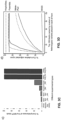
- FIG. 5a shows the ability to perform local conditional phasing.
- the x-axis is the chromosome span seed haplotypes resolution generated by simulation.
- the bottom panel shows the percentage of variants that remain unphased due to neighborhood correction as a function of resolution. All simulations are done in GM12878 chromosome 1.
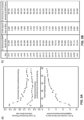
- the table in FIG. 5b demonstrates the resolution of haplotype phasing using HaploSeq after local conditional phasing along with overall accuracy in GM12878 cells.
- the table also depicts resolution lost due to neighborhood correction (NC), which is on average only ⁇ 3%.
- NC neighborhood correction
- the inventors used a window size of 3 seed haplotype phased variants to check performance of local phasing.
- the inventors also obtained accurate haplotypes, with an overall accuracy ⁇ 98%.
- Accuracy here reflects error from MVP block of initial HaploSeq analysis and error from local conditional phasing. For some chromosomes, the accuracy was lower due to lower coverage (see Table 1 below).
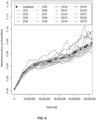
- the plot in FIG. 5c also demonstrates the ability to achieve chromosome-span seed haplotype (MVP block) at varying parameters of read length and coverage. In all cases, chromosome span seed haplotype can be obtained with ⁇ 15x usable coverage. All simulations are done in GM12878 chromosome 1.
- the plot in FIG. 5d shows the ability of different combinations of read length and coverage to generate high-resolution seed haplotypes. In this instance, longer-read lengths contribute to a greater resolution of the Hi-C generated seed haplotypes. All simulations are done in GM12878 chromosome 1.
- the inventors describe herein a novel strategy to reconstruct a chromosome-span haplotype for an organism. Compared to other haplotyping methods that reconstruct complete haplotypes from shotgun sequencing reads, the method disclosed herein can generate chromosome-span haplotypes ( Fan et al., Nature Biotechnology 29, 51-57 (2011 ); Yang et al., Proceedings of the National Academy of Sciences of the United States of America 108, 12-17 (2011 ); and Ma et al., Nature Methods 7, 299-301 (2010 )). This approach is most suitable for clinical and laboratory setting, since the reagents and equipment required for HaploSeq experiment are readily available.
- the method is more apt than sperm cell genotyping based approach ( Kirkness et al., Genome Research 23, 826-832 (2013 )), as it can generate whole-genome haplotypes from intact cells of any individual or cell-line.
- HaploSeq is thus of great utility in personalized medicine. Determination of haplotypes in individuals allows the identification of novel haplotype-disease associations, some of which have already been identified on smaller scales ( He et al., American Journal of Human Genetics 92, 667-680 (2013 ); Zeng et al., Genetic Epidemiology 28, 70-82 (2005 ); and Chapman et al., Human Heredity 56, 18-31 (2003 )).
- haplotypes will be essential for understanding allelic biases in gene expression, which will contribute to genetic and epigenetic polymorphisms in the population and their phenotypic consequences at a molecular level ( Gimelbrant et al., Science 318, 1136-1140 (2007 ); Kong et al., Nature 462, 868-874 (2009 ); and McDaniell et al., Science 328, 235-239 (2010 )).
- HaploSeq can be used to identify genetic polymorphisms in cancer cells that either cause or are markers for resistance to cancer treatment drugs.
- proximity-ligation was used to study the spatial organization of chromosomes ( Lieberman-Aiden et al., Science 326, 289-293 (2009 )), but not haplotype determination at the whole genome level. As disclosed herein, it is also a valuable tool in studying the genetic makeup of an individual. As demonstrated herein, proximity-ligation based approaches can not only tell which cis-regulatory element is physically interacting with which target gene, but also which alleles of these are linked on the same chromosome. Proximity-ligation data can also be used for genotyping, on the same lines as WGS.
- variants far from restriction enzyme cut sites are less likely to be genotyped owing to biases from proximity-ligation approaches such as Hi-C, population based imputation ( Browning et al., American Journal Of Human Genetics 81, 1084-1097 (2007 )) of un-genotyped variants can be performed in supplement to achieve increased genotype calls. Because all this can be done using a single experiment, HaploSeq can be used as a general tool for whole genome analysis.
- HaploSeq can also be used for targeted haplotyping of distinct regions.
- custom-designed oligonucleotides which may be immobilized on a solid surface, are introduced to the library in solution. These oligonucleotides "target" specific proximity-ligation fragments and hybridize to those proximity-ligation fragments. The proximity-ligation fragments that are hybridized to such oligonucleotides are isolated to provide new library.
- This library now contains a subset of proximally-ligated fragments that were captured by the custom oligonucleotides. These fragments are sequenced and assembled to generate directed haplotypes.
- This method is useful for the directed haplotyping of distinct regions.
- directed haplotyping of the HLA region aslo known as human major histocompatibility complex locus or human leukocyte antigen locus
- Such directed haplotyping of the HLA region is useful in predicting outcomes for donor-host matching in organ transplantation.
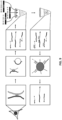
- FIG. 9 Shown in FIG. 9 is a schematic example for this targeted haplotyping.
- cells are cross-linked and fixed, thereby capturing the spatially proximal DNA element (top left).
- the cells are digested with, e.g ., HindIII and fragmented ends are filled in with a biotinylated nucleotide, followed by re-ligation of digested ends as performed in the Hi-C protocol (top middle).
- the final Hi-C library is composed of Hi-C di-tags that can be targeted by biotinylated RNA probes which have been designed to capture specific Hi-C fragments (top right).
- oligonucleotide capture technology OCT
- some Hi-C fragments will have been targeted by two RNA probes, while others only one, and all non-targeted sequences will be unbound by RNA probe (bottom right).
- streptavidin-coated beads are used to bind the biotinylated RNA:DNA duplexes (bottom middle), thereby extracting the targeted Hi-C fragments from the Hi-C library, and creating the Capture-HiC library.
- the bead-bound Hi-C library then is PCR amplified, purified, and subject to next-generation sequencing (bottom left).
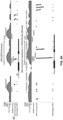
- FIG. 10 Shown in FIG. 10 is a Capture-HiC probe design used in the examples. Probe sequences were first computationally generated using the SureDesign software suite (Agilent). Shown in FIG. 10a is a UCSC Genome Browser shot of the HLA locus in humans (hg19). FIG. 10b shows a Zoom-in UCSC Genome Browser shot of the HLA-DQB1 gene to demonstrate the probe targeting approach. In that case, the inventors targeted the +/- 400 bp adjacent to the restriction enzyme cut sites used to prepare the Hi-C library, in this case HindIII ("Targeted Regions" track).
- HindIII Large Regions
- probes were designed at 4X tiling density, which aims to have each nucleotide of target sequence covered by up to 4 probe sequences. Also note that the probes do not overlap the HindIII cut site itself ("HLA Probes" track). It was also elected to not target any sequence within the targeted region that was called to contain repetitive sequences by RepeatMasker ("Missed Regions" and "RepeatMasker” track).
- the targeted haplotyping approaches discussed herein e.g ., the Capture-HiC approach, present an opportunity to phase the entire HLA locus into a single haplotype block, enabling better predictive HLA type matching in cell and organ transplantation procedures.
- Several studies have uncovered numerous disease-associated non-coding variants associated with specific HLA genes or alleles ( Trowsdale et al., Annual Review Of Genomics And Human Genetics 14, 301-323, (2013 ) and Trowsdale, Immunology letters 137, 1-8, (2011 )). Therefore, by delineating a single haplotype structure of HLA, one can systematically deconvolute the role of genetic variation on HLA linked diseases and phenotypes.
- Capture-HiC generally preserves the chromatin interaction measurements detected by conventional Hi-C experiments. Therefore, Capture-HiC can be used as a method to obtain long-range interactions at specific loci. For example, utilizing Capture-HiC can reveal haplotype-resolved long-range interaction mechanisms behind genome imprinting. While several groups currently use the 4C and SC technologies to study targeted chromatin interactions ( Simonis et al., Nature Genetics 38, 1348-1354, (2006 ), and Dostie et al. Genome Research 16, 1299-1309, (2006 )), Capture-HiC offers a more flexible methodology.
- Capture-HiC can be applied to detect interactions of thousands of viewpoints in a single experiment, and is capable of retrieving regional and customized 3D interaction frequencies in an unbiased fashion.
- Capture-HiC offers the capability to be tailored to capture any interspersed genomic element given the element's relative proximity to the restriction enzyme cut site, and therefore applicable to generalized cases. For example, by applying Capture-HiC to genome-wide promoters or other genomic elements, one can generate maps of 3D regulatory interactions genome-wide at unprecedented resolution and relatively low cost.
- Hi-C protocol has recently been demonstrated to be useful in assembling genomes de novo. ( Burton et al. Nat Biotechnol 31, 1119-1125, (2013 ) and Kaplan et al. Nat Biotechnol 31, 1143-1147, (2013 ))
- this methodology can be used to generate diploid assembly of complex regions, such as the T-cell Receptor beta (Treb) locus ( Spicuglia et al., Seminars in Immunology 22, 330-336, (2010 )), of human and other large genomes.
- diploid assembly of the highly heterozygous HLA locus performed in a population scale can allow detection of novel structural variations and enable precise delineating of human migration patterns as well as perform association studies to discover personalized medications for various disease states.
- Hi-C has also recently been used in metagenomics studies to deconvolute the species present in complex microbiome mixtures ( Beitel et al., PeerJ, doi:10.7287/peerj.preprnts.260v1 (2014 ) and Burton et al.. Species-Level Deconvolution of Metagenome Assemblies with Hi-C-Based Contact Probability Maps. G3, doi:10.1534/g3.114.011825 (2014 ).
- Capture-HiC With the advent of Capture-HiC, one can capture distinct loci that are informative and discriminative enough to delineate species mixtures based on the captured Hi-C fragments. Taken together, Capture-HiC and its application for targeted phasing as well as the other applications disclosed herein enable new avenues in personalized clinical genomics as well as biomedical research.
- marker refers to any compound or chemical moiety that is capable of being incorporated within a nucleic acid and can provide a basis for selective purification.
- a marker may include, but not be limited to, a labeled nucleotide linker, a labeled and/or modified nucleotide, nick translation, primer linkers, or tagged linkers.
- labeled nucleotide linker refers to a type of marker comprising any nucleic acid sequence comprising a label that may be incorporated ( i.e ., for example, ligated) into another nucleic acid sequence.
- the label may serve to selectively purify the nucleic acid sequence (i.e ., for example, by affinity chromatography).
- a label may include, but is not limited to, a biotin label, a histidine label (i.e ., 6His), or a FLAG label.
- labeled nucleotide refers to a marker comprising any nucleotide base attached to a marker, wherein the marker comprises a specific moiety having a unique affinity for a ligand.
- a binding partner may have: affinity for the junction marker.
- the marker includes, but is not limited to, a biotin marker, a histidine marker ( i.e ., 6His), or a FLAG marker.
- dATP-Biotin may be considered a labeled nucleotide.
- a fragmented nucleic acid sequence may undergo blunting with a labeled nucleotide followed by blunt-end ligation.
- label or “detectable label” are used herein, to refer to any composition detectable by spectroscopic, photochemical, biochemical, immunochemical, electrical, optical or chemical means.
- labels include biotin for staining with labeled streptavidin conjugate, magnetic beads (e.g ., Dynabeads TM ), fluorescent dyes (e.g ., fluorescein, texas red, rhodamine, green fluorescent protein, and the like), radiolabels ( e.g ., 3 H, 125 I, 35 S, 14 C, or 32 P), enzymes ( e.g ., horse radish peroxidase, alkaline phosphatase and others commonly used in an ELISA), and calorimetric labels such as colloidal gold or colored glass or plastic ( e.g ., polystyrene, polypropylene, latex, etc.) beads.
- fluorescent dyes e.g ., fluorescein, texas red, r
- the labels contemplated in the present invention may be detected by many methods.
- radiolabels may be detected using photographic film or scintillation counters
- fluorescent markers may be detected using a photodetector to detect emitted light.
- Enzymatic labels are typically detected by providing the enzyme with a substrate and detecting, the reaction product produced by the action of the enzyme on the substrate, and calorimetric labels are detected by simply visualizing the colored label.
- fragment refers to any nucleic acid sequence that is shorter than the sequence from which it is derived. Fragments can be of any size, ranging from several megabases and/or kilobases to only a few nucleotides long. Experimental conditions can determine an expected fragment size, including but not limited to, restriction enzyme digestion, sonication, acid incubation, base incubation, microfluidization etc.
- chromosome refers to a naturally occurring nucleic acid sequence comprising a series of functional regions termed genes that usually encode proteins. Other functional regions may include microRNAs or long noncoding KNAs, or other regulatory elements. These proteins may have a biological function or they directly interact with the same or other chromosomes ( i.e. , for example, regulatory chromosomes).
- genomic region refers to any defined length of a genome and/or chromosome.
- a genomic region may refer to the association ( i.e. , for example, an interaction) between more than one chromosomes.
- a genomic region may refer to a complete chromosome or a partial chromosome.
- a genomic region may refer to a specific nucleic acid sequence on a chromosome ( i.e ., for example, an open reading frame and/or a regulatory gene).
- fragmenting refers to any process or method by which a compound or composition is separated into smaller units.
- the separation may include, but is not limited to, enzymatic cleavage (i.e ., for example, transposase-mediated fragmentation, restriction enzymes acting upon nucleic acids or protease enzymes acting on proteins), base hydrolysis, acid hydrolysis, or heat-induced thermal destabilization.
- heatmap refers to any graphical representation of data where the values taken by a variable in a two-dimensional map are represented as colors. Heat maps have been widely used to represent the level of expression of many genes across a number of comparable samples (e.g . cells in different states, samples from different patients) as obtained from DNA microarrays.
- a genome refers to any set of chromosomes with the genes they contain.
- a genome may include, but is not limited to, eukaryotic genomes and prokaryotic genomes.
- fixation refers to any method or process that immobilizes any and all cellular processes. A fixed cell, therefore, accurately maintains the spatial relationships between intracellular components at the time of fixation. Many chemicals are capable of providing fixation, including but not limited to, formaldehyde, formalin, or glutaraldehyde.
- crosslink refers to any stable chemical association between two compounds, such that they may be further processed as a unit Such stability may be based upon covalent and/or non-covalent bonding.
- nucleic acids and/or proteins may be cross-linked by chemical agents (i.e ., for example, a fixative) such that they maintain their spatial relationships during routine laboratory procedures (i.e , for example, extracting, washing, centrifugation etc.)
- join refers to a unique linkage of two nucleic acid sequences by a junction marker. Such linkages may arise by processes including, but not limited to, fragmentation, filling in with marked nucleotides, and blunt end ligation. Such a join reflects the proximity of two genomic regions thereby providing evidence of a functional interaction, A join comprising a junction marker may be selectively purified in order to facilitate a sequencing analysis;
- ligated refers to any linkage of two nucleic acid sequences usually comprising a phosphodiester bond.
- the linkage is normally facilitated by the presence of a catalytic enzyme (i.e ., for example, a ligase) in the presence of co-factor reagents and an energy source (i.e ., for example, adenosine triphosphate (ATP)).
- a catalytic enzyme i.e ., for example, a ligase
- co-factor reagents i.e ., for example, adenosine triphosphate (ATP)
- restriction enzyme refers to any protein that cleaves nucleic acid at a specific base pair sequence.
- selective purification refers to any process or method by which a specific compound and/or complex may be removed from a mixture or composition.
- a process may be based upon affinity chromatography where the specific compound to be removed has a higher affinity for the chromatography substrate than the remainder of the mixture or composition.
- nucleic: acids labeled with biotin may be selectively purified from a mixture comprising nucleic acids not labeled with biotin by passing the mixture through a chromatography column comprising streptavidin.
- purified refers to a nucleic acid composition that has been subjected to treatment (i.e ., for example, fractionation) to remove various other components, and which composition substantially retains its expressed biological activity.
- substantially purified this designation will refer to a composition in which the nucleic acid forms the major component of the composition, such as constituting about 50%, about 60%, about 70%, about 80%, about 90%, about 95% or more of the composition ( i.e ., for example, weight/weight and/or weight/volume).
- purified to homogeneity is used to include compositions that have been purified to 'apparent homogeneity” such that there is single nucleic acid sequence (i.e ., for example, based upon SDS-PAGE or HPLC analysis).
- a purified composition is not intended to mean that some trace impurities may remain.
- substantially purified refers to molecules, either nucleic or amino acid sequences, that are removed from their natural environment, isolated or separated, and are at least 60% free, preferably 75% free, and more preferably 90% free from other components with which they are naturally associated.
- An "isolated polynucleotide” is therefore a substantially purified polynucleotide.
- Nucleic acid sequence or “nucleotide sequence” refers to an oligonucleotide or polynucleotide, and fragments or portions thereof, and to DNA or RNA of genomicor synthetic origin which may be single- stranded or double-stranded, and represent the sense or antisense strand.
- an isolated nucleic acid refers to any nucleic acid molecule that has been removed from its natural state (e.g ., removed from a cell and is, in a preferred embodiment, free of other genomic nucleic acid).
- variant of a nucleotide refers to novel nucleotide sequence which differs from a reference oligonucleotide by having deletions, insertions and substitutions. These may be detected using a variety of methods (e.g ., sequencing, hybridization assays etc.).
- a “deletion” is defined as a change in either nucleotide or amino acid sequence in which one or more nucleotides or amino acid residues, respectively, are absent.
- An “insertion” or “addition” is that change in a nucleotide or amino acid sequence which has resulted in the addition of one or more nucleotides or amino acid residues.
- substitution results from the replacement of one or more nucleotides or amino acids by different nucleotides or amino acids, respectively.
- nucleotide sequences refer to a degree of complementarity with other nucleotide sequences. There may be partial homology or complete homology (i.e ., identity).
- a nucleotide sequence which is partially complementary, i.e ., “substantially homologous,” to a nucleic acid sequence is one that at least partially inhibits a completely complementary sequence from hybridizing to a target nucleic acid sequence. The inhibition of hybridization of the completely complementary sequence to the target sequence may be examined using a hybridization assay (Southern or Northern blot, solution hybridization and the like) under conditions of low stringency.
- a substantially homologous sequence or probe will compete for and inhibit the binding ( i.e .. the hybridization) of a completely homologous sequence to a target sequence under conditions of low stringency.
- cancer treatment drugs refers to all chemotherapeutic agents to which cancer cells can acquire chemoresistance, Examples include JAK/STAT inhibitors, P13 kinase inhibitors, mTOR inhibitors, ErbB inhibitors, topoisomerase inhibitors, and so forth.
- This example descibes general methods and materials used in Examples 2-9 below.
- the F1 Mus musculus castaneus x S129/SvJae (F123 line) were a gift from the laboratory of Edith Heard and have been described previously in Gribnau et al., Genes & Development 17, 759-773 (2003 ). These cells were grown in KnockOut Serum Replacement containing mouse ES cell media: DMEM 85%, 15% KnockOut Serum Replacement (Invitrogen), penicillin/streptomycin, 1 X Non-essential amino acids (GIBCO), 1 X GlutaMax, 1000 U/mL LIF (MILLIPORE), 0.4 mM ⁇ -mercaptoethanol.
- Variant calls and genotypes for GM12878 were downloaded from DePristo et al., Nature Genetics 43, 491-498 (2011 ) and these were used for haplotype reconstruction.
- Phasing Information for GM12878 was downloaded from 1000 genomes project ( Genomes Project, C. et al., Nature 467, 1061-1073 (2010 )). The phasing of GM12878 by the 1000 genomes project utilized low coverage sequencing and so covers only ⁇ 65% of heterozygous variants genotyped ( DePristo et al., Nature Genetics 43, 491-498 (2011 )) in this individual's genome.
- GM12878 is the name of the lymphoblastoid cell line while “NA12878” is the identifier for the individual from whom this cell line was derived. GM12878 was used throughout the examples here for the sake of consistency and clarity.
- Inventors filtered out variants that did not meet the GATK quality filters or that were called as heterozygous variants, as the genome sequencing was performed in homozygous parental inbred mice.
- the genotype calls in the parents were used both to determine the extent of interactions in cis versus h-trans as well as in learning the phasing of hybrid CASTxJ129 cells a priori to haplotype reconstruction.
- Hi-C reads were aligned to the mm9 (mouse) or the hg18 (human) genome. In each case, any bases in the genome genotyped as SNPs in either Mus musculus castaneus or S129/SvJae (for mouse) or GM12878 (for humans) were masked. These bases were masked to "N" in order to reduce reference bias mapping artifacts.
- Hi-C reads were aligned iteratively as single end reads using Novoalign. Specifically, for iterative alignment, first the entire sequencing read was aligned to either the mouse or human genome. Unmapped reads were then trimmed by 5 base pairs and realigned.
- a paired-end read could either have both ends mapped to the same chromosome (intra-chromosomal) or mapped to different chromosomes (inter-chromosomal).
- the initial mapping of the Hi-C data utilized a haploid reference genome and did not distinguish to which of the two homologous copies of a chromosome an individual sequencing read maps.
- read pairs that initially map as "intra-chromosomal” were broken down into reads that occur on the same homologous chromosome (which are truly in cis ) and reads that map between the two homologous pairs (which was defined as "h-trans” ).
- both intra-chromosomal and inter-chromosomal reads were utilized.
- inter-chromosomal reads one can consider each inter-chromosomal read pair as two single-end reads, as the paired information for such reads is not useful for phasing.
- all intra-chramasomal reads are considered for phasing.
- the probability of a single read to harbor more than one variant is small, especially in humans where the variant density is relatively low. This, in combination with the fact that only the paired intra-chromosomal reads will have large insert sizes, means that the vast majority of reads that contribute to the success of haplotype phasing are the intra-chromosomal reads. Therefore, the "usable coverage" was defined as the genomic coverage derived from intra-chromosomal reads only.
- the Hi-C experiment generated ⁇ 22% inter-chromosomal reads in CASTxJI29 while ⁇ 55% of the reads in GM12878 were inter-chromosomal.
- 620M paired-end reads out of 795M were useful in CASTxJ129, with a usable coverage of 30x.
- 262M paired-end reads out of 577M were useful, resulting in a usable coverage of 17 x.
- the fraction of all reads that are intra-chromosomal versus inter-chromosomal in a Hi-C experiment may vary between experiments and across cell types.
- HapCUT was used to perform the computational aspects of HoploSeq, the details of which are described previously in Bansal et al., Bioinformatics 24, i153-159 (2008 ).
- HapCUT was originally designed to work on conventional genome sequencing (WGS) or mate-pair data.
- WGS genome sequencing
- HapCUT constructs a graph with the heterozygous variants as nodes and edges between nodes that are covered by the same fragment(s). Therefore, only fragments with at least two heterozygous variants are useful for haplotype phasing.
- HapCUT extracts such 'haplotype-informative' fragments from a coordinate sorted.
- BAM file using a sorting method that stores each potential haplotype-informative read in a buffer until its mate is seen. The buffer size was customized to allow HapCUT handle large insert sized proximity-ligation reads.
- HapCUT uses a greedy max-cut heuristic to identify the haplotype solution for each connected component in the graph with the lowest score under the MEC scoring function.
- the original HapCUT algorithm used O(n) iterations to find the best cut. Since Hi-C data resulted in chromosomal span haplotypes with a single large connected component, the default method took several days of computing time to phase the CASTxJ129 genome. To reduce the computation time, the impact of reducing the number of iterations on the accuracy of phasing was assessed. For CAST*129 system, it was observed that increasing the number of iterations beyond 1000 did not significantly improve the accuracy, For GM12878, upto 100,000 iterations were allowed.
- the probability of a Hi-C read being in cis versus h-trans varies as a function of the distance between the two read pairs ( FIG. 2c ).
- the probability that an intra-chromosomal read is in h-trans is very low.
- this probability rises substantially and is in theory more likely to introduce erroneous connections for HapCUT to phase.
- the Hi-C data for chromosomes 1, 5, 10, 15 and 19 in the CASTxJ129 data were used and haplotype reconstruction repeated allowing variable maximum insert size values. Any reads where the insert size between reads was greater than the allowable maximum insert size were excluded. This analysis was performed using the low variant density case, for this analysis because lower density was most amenable for applications in humans ( FIGs. 8a-b ). This step resulted in an increase in accuracy of HaploSeq analysis with moderate reduction in resolution.
- a useful feature of the HapCUT algorithm is that it accounts for the base quality score at a variant location in order to calculate the score of a potential haplotype. In other words, if in a sequencing read that links two variants and the base quality at one variant location is low, this read is given relatively lower weight by HapCUT in generating its final haplotype calls. Therefore, HapCUT can use this information to try to disregard potential sequencing errors from making erroneous haplotype connections. As previously mentioned, in Hi-C data errors may also arise due to h-trans interactions, which are much more frequent than sequencing errors and show a distance dependent behavior. Therefore, it was attempted to account for the likelihood of an interaction being in cis versus h-trans based on the distance between the two reads.
- the CASTx129 Hi-C data was used to identify reads that are in cis or h-trans.
- the insert-sizes was binned into 50 Kb bins and estimated the probability of a read being h-trans (# h-trans /(# cis +# h-trans ).
- Local regression (LOWESS) was then used at 2% smoothing to predict h-trans probabilities at any given insert-size.
- the cis probabilities (1 -h-trans ) were multiplied with the base qualities to account for the odds of this intra-chromosomal read being a homologous trans interaction. As a result, reads that are more likely to be h-trans are given lower weight by HapCUT in identifying the haplotype solution.
- chromosome 19 maxIS of 30 Mb had an error rate of 1.1% ( FIG. 8b ). After adding h-trans probabilities, the error rate is 0.9% ( FIG. 4b ), where Error rate is defined as I-Accuracy.
- seed genotypes were first simulated. Different combinations of read length and coverage were used to obtain seed genotypes of various resolutions.
- Hi-C intra-chromosomal read starting positions from HI and H1-derived cells (unpublished data) were used to generate pairs of reads of a given read length and coverage. This allowed one to maintain the Hi-C data structure and the observed distribution of insert sizes in the simulated data.
- the inventors constructed a graph with nodes representing heterozygous variants in GM12878 (chromosome 1) and edges corresponding to reads that cover multiple variants.
- This graph is essentially a genotype graph because the phasing was not known yet Hence, the whole point of this graph is to provide a subset of variants that are part of the seed genotype and that are not (gaps to be inferred by local phasing), based on the resolution and Hi-C data structure. Seed genotypes were generated at required parameters of read length and coverage to attain a specific resolution. These seed genotypes were used for both local phasing ( FIG. 5a ) and to study the minimal requirements for generating seed haplotypes of enough resolution ( FIGs. 5c-d ). These two analyses were performed independently and in both cases, generating seed genotypes and downstream analysis were repeated 10 times to note the average results.
- a priori haplotype system to check accuracy of the local conditional phasing. Because a priori haplotype information from the trio covers only ⁇ 65% of heterozygous variants, it was decided to perform local phasing simulation only on the trio subset. Specifically, it was conditioned that every variant that is part of either seed genotype or "gaps,” should be part of 1000 genome phased trio. Seed genotypes were converted to seed haplotypes using the trio information while keeping "gap" variants as unphased. Local phasing conditioned on the seed haplotype was then used to infer phasing of the gap variants using Beagle. Homozygous variants were allowed to assist Beagle in making better predictions from the hidden Markov model.
- the inventors collected 3 variants each upstream and downstream that are phased in seed haplotype. Then it was checked if there is 100% correlation between the phasing present in seed haplotype to what is predicted by Beagle. This gives a confidence of how well Beagle could have performed in this "local" region. If there is a 100% match, the variant was considered as conditionally phased. If there is not 100% match, the unphased variant was disregarded in the final haplotype. Other window sizes such as 5 and 10 were tried and no improvement in accuracy was found.
- the inventors coupled HaploSeq analysis and local conditional phasing to increase resolution in GM 12878 cells.
- Local conditional phasing was performed as described earlier on genotypes that are common between GM12878 (ref. 44) and population samples.
- the inventors marked the seed haplotype phased variants that did not agree with local phasing. These marked variants were made "unphased" as these could be potential errors.
- the inventors also used this information to mark variants in the seed haplotype that could be potentially erroneous. This allowed a minor increase in accuracy after local phasing (see Table 1).
- GM12878 cells have a lower variant density than CASTxJ129 and a lower coverage added more constraints on the prediction model resulting in relative higher HaploSeq error rate of 2%, when compared to 0.8% in low density CASTxJ129 case.
- a usable coverage of 25-30x could help gain accuracy and potentially cover more rare variants in the seed haplotype.
- about 16% of the variants are not locally phased due to their absence in population. These could be phased either by additional Hi-C data or even conventional genome sequencing data, which can potentially link gap variants to variants in seed MVP block.
- An important aspect in HaploSeq analysis is the ability to form seed chromosome-span haplotype, which cannot be made from conventional genome sequencing or mate-pair or fosmids.
- the inventors emulated fosmid clones as paired end sequencing, with insert sizes close to 40 kb. The inventors reasoned that this approach is easier to simulate and yet maintains the data structure that fosmids add to haplotype reconstruction. As evidence, the simulation produces haplotype blocks of size up to 1Mb in humans, as reported by other groups ( Kitzman et al., Nature Biotechnology 29, 59-63 (2011 ); Suk et al., Genome Research 21, 1672-1685 (2011 ); and Duitama et al., Nucleic Acids Research 40, 2041-2053 (2012 )).
- simulated 100bp paired-end reads were at various sequencing coverage for GM12878 chromosome 1. Reads were simulated with random starting positions with a mean insert size as mentioned and a standard deviation of 10% of the mean.
- Fosmid inserts represents simulations with "fosmid-size" insert to pinpoint the ability of these large fragments to generate longer haplotypes.
- 500bp Skewed mix inserts contained 70% of 500bp insert sizes, 20% mate-pair inserts and 10% 40000 bp inserts.
- 40000 bp skewes contained 70% 40000 bp inserts and 10% 500bp inserts.
- the N50 defined span of 50% of haplotype blocks containing N50 span. Simulations were repeated for 10 times and noted average N50 in the Y axis. The results demonstrated that higher coverage alone cannot form longer haplotpes. Further, these data demonstrated longer the insert size fragments generate longer haplotypes.
- the inventors first performed proximity-ligation sequencing based on the previously established Hi-C protocol ( Lieberman-Aiden et al., Science 326, 289-293 (2009 )). Proximity-ligation was first performed in situ prior to the isolation of DNA from cells, as opposed to purified genomic DNA in other haplotyping approaches (FIG. la). Specifically, spatially proximal genomic regions were cross-linked in situ , digested with a restriction enzyme, re-ligated to form artificial fragments, which were subsequently isolated (FIG. la).
- the purified DNA fragments thus isolated may capture two distant genomic loci that looped together in 3D space in vivo ( Dekker et al., Science 295, 1306-1311 (2002 ); Lieberman-Aiden el al., Science 326, 289-293 (2009 ); and Kalhor et al., Nature Biotechnology 30, 90-98 (2012 )). Indeed, after shotgun DNA-sequencing of the resulting DNA library, paired-end sequencing reads have "insert sizes” that range from several hundred base pairs to tens of million base pairs, while other methods tend to generate “inserts” ranging from several hundreds to tens of kilobase pairs (FIG. la-b).
- the experimental approach in HaploSeq preserves haplotype information because it allows two regions of the same chromosome that are linearly far apart to be linked into a short and contiguous DNA fragment ( FIG. 1a ). While the short fragments generated in a Hi-C experiment can form small haplotype blocks, long fragments ultimately can link these small blocks together ( FIG. 1c ). With enough sequencing coverage, such an approach permits one to link variants in discontinuous blocks and assemble every such block to a single haplotype. Therefore, with proximity-ligation based methods to prepare DNA sequencing libraries one can reconstruct chromosome-span haplotype blocks.
- proximity-ligation can capture interactions both in cis within an individual allele and in trans between homologous and non-homologous chromosomes. While non-homologous tram interactions between different chromosomes do not affect phasing, interactions in trans between homologous chromosomes (referred to as h-trans hereafter) may complicate haplotype reconstruction if h-trans interactions were as frequent as cis interactions. Therefore, the inventors set out to determine the relative frequency of h-trans versus cis interactions in proximity-ligation sequencing data.
- ES mouse embryonic stem cell
- CAST Mus musculus castaneous
- J129 129S4/SvJae
- WGS parental inbred whole genome sequences
- each plot depicts lowess smoothened curve and the black plot results from combining all chromosomes. This shows that every chromosome follows a similar pattern of h-trans interaction probabilities.
- HapCUT 25 software into HaploSeq analysis to probabilistically predict haplotypes.
- HapCUT constructs a graph with heterozygous variants as nodes and edges as explained by overlapping fragments. This graph might contain several spurious edges due to sequencing errors or h-trans interactions.
- HapCUT uses a max-cut algorithm to predict parsimonious solutions that are maximally consistent with the haplotype information provided by the set of input sequencing reads ( FIG. 3a ).
- the inventors modified HapCUT to reduce its computing time, making it feasible for HaploSeq analysis.
- the inventors again utilized the CASTx129 mouse ES cell Hi-C data. In this instance, the inventors did not distinguish a priori to which allele a sequencing read belongs. Instead, the inventors allowed HapCUT to reconstruct de novo haplotype blocks of the heterozygous variants.
- the inventors then utilized the known haplotype information of the CAST and J129 alleles to assess the performance of the algorithm. The inventors used the metrics of completeness, resolution, and accuracy to assess the success of the HaploSeq analysis in haplotype reconstruction ( FIG. 7 ).
- heterozygous SNPs are considered as nodes, and edges are made between nodes that belong to same fragment
- This graph system establishes two homologous chromosomes (or haplotypes) de-novo. Nevertheless, there can be multiple blocks formed and in this example, and the inventors had identified one large MVP component that spans 96.15% and one other small block that cannot be connected to MVP block (shown in the black edged box).
- haplotype phasing is measured by the size of the haplotype blocks generated in terms of the number of base-pairs spanned or by the total number of heterozygous variants spanned per block.
- HapCUT will generate several haplotype blocks of various sizes for each chromosome depending on heterozygous variant connections.
- the haplotype block containing the most heterozygous variants phased (MVP) is generally the most interesting, as it is often the largest spanning block.
- MVP most heterozygous variants phased
- a minority of heterozygous variants may be assigned to smaller blocks due to their inability to be connected with MVP block.
- the MVP block in this case spans greater than 99.9% of the phasable base-pairs for each chromosome ( FIG. 3b ), demonstrating that HaploSeq analysis using Hi-C data can generate complete chromosome-span haplotypes.
- the inventors compared the predicted haplotypes generated de novo by HaploSeq analysis with the known haplotypes of the CAST and J129 alleles The inventors define accuracy as the fraction of phased heterozygous variants that are correctly phased in the MVP block ( FIG. 7 ). Of the variants that were assigned to MVP haplotype block, the inventors observed >99.5% accuracy in distinguishing between the two known haplotypes ( FIG. 3b ).
- constrained HapCUT model allowed only fragments up to a certain maximum insert size (maxIS).
- maxIS maximum insert size
- the lowest maxIS was 5 megabases, below which the ability to form chromosome-span haplotypes in MVP block is lost.
- the resolution of MVP block (a) is high but contains higher accuracy (b).
- b contains higher accuracy
- 30 megabases was chosen as the maxIS as to allow acceptable levels of resolution and accuracy.
- the inventors simulated 20 x coverage DNA sequencing data for conventional paired-end shotgun DNA sequencing (WGS), mate-pair sequencing, fosmids and proximity-ligation to assess each method's ability to reconstruct haplotypes.
- WGS paired-end shotgun DNA sequencing
- mate-pair sequencing mate-pair sequencing
- fosmids mate-pair sequencing
- proximity-ligation to assess each method's ability to reconstruct haplotypes.
- the inventors observed that only HaploSeq analysis using proximity-ligation could generate a chromosome-span MVP block, while other methods generated significantly smaller MVP blocks and thus have a fragmented haplotype structure ( FIG. 3c ).
- mate-pair and fosmids based sequencing approaches generated blocks of few hundred kilobases and about a megabase in size, respectively.
- the inventors combined WGS data with mate pair, fosmids and proximity-ligation to increase coverage and add variability in data structure, and yet the ability to general longer haplotypes did not change significantly ( FIG. 3c ).
- the inventors examined the cumulative adjusted span of the top 100 variant-phased haplotype blocks ( FIG. 3d ), where adjusted span is denoted as the product of completeness and resolution.
- the MVP block alone obtained in HaploSeq was complete and had ⁇ 90% resolution.
- conventional shotgun sequencing, mate pairs and fosmids can only cover 5%, 65%, and 90% of the chromosome when all blocks are considered cumulatively.
- Cumulative completeness is of less potential usage than the size of the MVP block since variants in different blocks remain unphased with each other. Higher coverage (dashed lines, FIG. 3d ) did not significantly change the cumulative span pattern. This shows that total sequencing coverage appears to be less important than the method used for phasing in order to generate chromosome-span haplotype blocks.
- a distinct feature of the CASTxJ129 ES cell line is the high density of heterozygous variants present throughout the genome. On average, there is a heterozygous variant every 150 bases, which is 7-10 times more frequent than in humans ( Wheeler et al., Nature 452, 872-876 (2008 ) and Pushkarev et al., Nature Biotechnology 27, 847-850 (2009 )) ( FIG. 4a ).
- the inventors sub-sampled heterozygous variants in CASTxJ129 system so that the variant density mimics that in human populations. The inventors then tested how lower variant density affects the ability of HaploSeq to reconstruct haplotypes.
- the inventors performed HaploSeq in the GM12878 lymphoblastoid cell line.
- the complete haplotype of this cell line has been determined by the 1000 genomes project from family trio WGS 15 .
- the inventors generated over 262 million usable 100 base pair paired-end reads corresponding to ⁇ 17 x coverage.
- HaploSeq successfully generated chromosome-span haplotypes in all acrocentric chromosomes and in 17 out of 18 metacentric chromosomes in the GM12878 cells ( FIGs. 4c-d ).
- HaploSeq the inventors generated haplotypes that spanned the centromere in all metacentric chromosomes with the exception of chromosome 9, where an erroneous linkage causes switching of haplotype calls at the centromere.
- chromosome 9 has relatively lower usable coverage (13.7 x). The inventors hypothesized that additional coverage might offer a better chance in spanning the centromere.
- TCC Tethered chromatin capture
- the inventors generated complete chromosome-span haplotypes, for all human chromosomes including chromosome X, albeit at reduced resolution of ⁇ 22% ( FIG. 4c ), from just 17 x genome coverage of HaploSeq analysis.
- the inventors used the HaploSeq generated chromosome-span haplotype as a "seed haplotype" to guide the local phasing. As a result, the inventors could generate local phasing predictions from linkage disequilibrium (LD) measures for the remaining unphased "gapped" variants relative to the MVP block.
- LD linkage disequilibrium
- the inventors simulated chromosome-span seed haplotypes in the GM12878 genome with different percentages of resolution in terms of the number of variants phased in the MVP block.
- the simulation results indicate that the inventors can accurately infer local phasing even at low-resolution seed haplotype inputs (3% error at 10% seed haplotype resolution, upper curve in FIG. 5a ).
- the inventors checked a neighborhood window region surrounding every heterozygous variant to be inferred and analyzed the agreement in phasing between seed haplotype and local phasing.
- the inventors used the MVP chromosome-span haplotypes generated from HaploSeq analysis as seed haplotypes and performed local conditional phasing. Overall, the inventors generated chromosome-span haplotypes: with ⁇ 81% resolution at an accuracy of ⁇ 98%, on average ( FIG. 5b ). Notably. among the 19% heterozygous variants that cannot be locally phased, ⁇ 16% were due to their absence in population samples and ⁇ 3% because of neighborhood correction, which only marginally affects resolution ( FIG. 5b ). Therefore, by coupling HaploSeq analysis and local conditional phasing, the inventors were able to achieve high resolution and accurate chromosome-span haplotypes in humans.
- the inventors From the local conditional phasing analysis, the inventors deduced that a seed haplotype with ⁇ 20-30% resolution is sufficient to obtain accurate and high-resolution chromosome-span haplotypes. A subsequent question therefore is what are the minimal experimental requirements to achieve chromosome-span seed haplotypes with ⁇ 20-30% resolution. To investigate this, the inventors generated simulated proximity-ligation sequencing data with varying read length and sequencing coverage. Based on the simulations, to first achieve chromosome-span haplotypes depends on obtaining a usable sequencing coverage of ⁇ 15x, irrespective of the read length ( FIG. 5c ).
- Table 1 shows the relationship between coverage and accuracy of MVP blocks. Low coverage affects the ability of proximity-ligation to achieve accurate haplotypes as seen in chromosomes 17, 19 and 20. After local conditional phasing (LCP), resolution was increased front 22% to 81% ( FIG. 5b ) without reducing accuracy further. In fact, a minor increase was seen in accuracy based on neighborhood correction. The last column reflects overall accuracy, as also shown in FIG. 5b .
- LCP local conditional phasing
- HaploSeq analysis was carried out using samples from four human individuals. To that end, human tissue samples were flash frozen and pulverized prior to formaldehyde cross-linking. Hi-C was then conducted on the samples as described in Lieberman-Aiden et al., Science 326, 289-293 (2009 ). Haplotyping was performed using the previously described HaploSeq method ( Selvaraj et al., Nat Biotechnol. 2013 Dec:31(12):1 111-8 ).
- Hi-C reads from each donor were used as input sequencing into the HapCUT software ( Bansal et al., Bioinformatics, 2008 Aug 15;24(16):i 133-9 ) in order to generate haplotype predictions.
- Hi-C data was combined with WGS mate-pair data for the donor genomes. Because Hi-C data can phase only some of the SNPs, the local conditional phasing procedure was performed by utilizing population sequencing data from the 1000 genomes project.
- HaploSeq generates two haplotypes for each chromosome, one for the maternal allele and one for the paternal allele. One allele is named as P1 (parent1) and another allele is named as P2 (parent2) since information regarding the parent of origin in each donor genome was not available.
- haplotypes For four different tissue donors, the inventors were able to generate haplotypes spanning entire chromosomes with 99.5% completeness (the coverage of haplotype resolved genomic regions) on average and with an average resolution (the coverage of phased heterozygous SNPs) ranging from 78% to 89% in each tissue donor.
- the accuracy of haplotype predictions was validated by comparing the concordance of predicted haplotypes with the SNPs residing in the same paired-end sequencing reads. The concordance rates were 99.7% for H3K27ac ChIP-seq reads and 98.4% for mRNA-seq reads indicating a high degree of accuracy.
- Capture-HiC with oligonucleotide probes was used to capture chromatin interactions for targeted baplotyping of the entire human HLA locus.
- GM12878 CORIELL cells were cultured in suspension in 85% RPML media supplemented with 15% FBS and IX penicillin/streptomycin. GM12878 cells were harvested, formaldehyde fixed, and subject to the Hi-C protocol as described in Lieberman-Aiden et al. Science 326, 289-293, (2009 ), with some modifications prior to capture sequencing. After Illumina adapters were ligated onto Hi-C fragments, libraries were subjected to 14 cycles of PCR amplification prior to capture hybridization using a high-fidelity (Fusion) polymerase. The number of pre-capture PCR cycles can be tailored depending on how much DNA is required for downstream capture hybridization reactions.
- a conventional Hi-C library was first generated with enough material to enable oligonucleotide probe based capturing of the entire HLA region ( FIG. 9 and FIG. 10a ).
- oligonucleotide probe sequences were computationally generated and targeted the non-repetitive +/- 400 bp regions adjacent to HindIII cut sites over the HLA locus ( FIG. 10 ).
- a haplotyping performance simulation was carried out. Briefly, HaploSeq performance was simulated in teams of haplotyping resolution (Y-axis) as a function of sequencing coverage (x-axis). This study was performed to more generally ask how well HaploSeq would perform if only Hi-C fragments containing HindIII cut site-adjacent sequences were present in the library.
- a Capture-HiC library would only contain Hi-C fragments in which at least one read-end originated from a HindIII cute site-adjacent sequence. Therefore, using an in-house conventional Hi-C dataset, HaploSeq analysis was performed using all mapped Hi-C reads without restricting any of the reads (Resolution_Nores). The usable reads were also restricted to only those containing at least 1 read end within 500bp of a HindIII cut site (Resolution_pm500) or 250 bp of a cut site (Resolution_pm250). Results from this simulation indicated that although there was a ⁇ 20% decrease in haplotyping resolution, the resolution would still be sufficient for haplotyping purposes. The results also indicated that there was minimal difference in resolution whether the reads were restricted to 250 bp or 500bp adjacent to HindIII cut sites. Accordingly, 400 bp was chosen for the targeted approach.
- probes were designed at 4 X tiling density at the target regions to optimize capture efficiency and consequently maximizing haplotyping resolution and accuracy. More specifically, to generate RNA baits, probes were designed using the SureDesign software suite (AGILENT TECHNOLOGIES). The custom design targeted the upstream and downstream 400 bp adjacent to Hindlll cut sites spanning the MHC locus using the hg19 genome build (chr6:29689001-33098938). SureDesign parameters were set to 4 X tiling density, maximum probe boosting, and maximum repetitive sequence masking.
- ssDNA oligos were synthesized by CustomArray Inc.
- ssDNA oligos contained universal forward and reverse priming sequences.
- Forward priming sequences comprised of a truncated SP6 RNA polymerase recognition sequence.
- the reverse universal priming sequence contained a BsrDI recognition sequence for 3' cleavage prior to in vitro transcription.
- KAPA high-fidelity DNA polymerase
- PROMEGA column-purified
- Hi-C libraries were generated by PCR amplification primarily according to a CustomArray protocol with some modifications. Briefly, 500 ng of Hi-C library was incubated overnight at 65 °C with 500 ng of biotinylated RNA probe. Because the targeted sequence ( ⁇ 320 kb) is only ⁇ 0.01% of the genome, the inventors carried out 16 parallel hybridization reactions per experiment and pooled the final hybridization products prior to sequencing. Then, RNA:DNA hybrids were pulled down using streptavidin coated beads (INVITROGEN), non-bound DNA fragments were washed away, and captured products were eluted.
- Capture-HiC libraries were then subject to next-generation sequences on Illumina HiSeq2500.
- the resulting library was sequenced at ⁇ IX sequencing depth, using paired-end 100bp read lengths. In theory, this sequencing depth would be enough to cover each base in the genome once.
- the coverage over the entire HLA locus was then computed and determined to be ⁇ 32.1 X.
- To compute the HLA locus enrichment the HLA coverage was divided by the genomic coverage. All monoclonal mapped reads from the Capture-HiC sequencing data were binned into 100 kb bins genome wide. Here, the total number of reads falling into each bin at the HLA locus and the adjacent off-target region on chromosome 6 was plotted. It was found that the targeted HLA locus was approximately from 29 M to 33.4 M, which displays significant enrichment relative to non-targeted adjacent regions on chromosome 6.
- a Capture-HiC library of the GM12878 human lymphoblastoid cell line (LCL) was generated at ⁇ I.I X sequencing depth with ⁇ 30-fold enrichment over the HLA locus.
- Capture-HiC datasets preserved the relative contact frequencies compared to a conventional Hi-C library at the same locus.
- chromatin interactions from Capture Hi-C were compared with previously published Hi-C data at the HLA locus from GM 12878 cells.
- contact matrices were generated over the HLA locus in 20 kb bins using Capture-HiC data from GM12878 (top), and published data from GM12878 ( Selvaraj et al., Nat Biotechnol. 2013 Dec;31(12):1111 ).
- each dataset was normalized by read depth, which simply divides each matrix value (I,j) by the total number of reads mapping to the locus. It was found that there was a highly significant concordance between these datasets (p ⁇ 0.01).
- Capture-HiC data In addition to examining whether the relative 3D contact frequencies were preserved in Capture-HiC data, assays were also performed to examine the Hi-C fragment characteristics more closely. First, using all Capture-HiC data (including off-target sequences captured by the experiment), the inventors compared the proportion of intrachromosomal (cis) and interchromosomal (trans) reads in the Capture and Conventional Hi-C libraries and found the cisitrans ratios to be consistent with each other. Second, if each dataset was restricted to only reads mapping to the HLA locus, it was again found that each dataset contained roughly the same cisitrans ratio.
- Capture-HiC RNA probe sensitivity was carried out.
- the inventors analyzed the read density over each probe sequence as well as the total fraction of probes with at least 1 captured Hi-C fragment. To that end, the read density (Y-axis) was plotted for each unique RNA probe sequences (X-axis) to generate a histogram. Each vertical line in this histogram represents a single unique probe. It was found that of all 7,885 total unique probes, 7,650 ( ⁇ 97%) had a least one read mapping to the sequence targeted by the probe. This provides some sense of the overall sensitivity of the capture sequencing approach.
- Capture-HiC protocol data was of high quality data and therefore enables accurate analyses of haplotype patterns.
- haplotype reconstruction from Capture-HiC data was performed using HaploSeq ( Selvaraj et al., Nat Biotechnol. 2013 Dec;31(12):1111-8 ) and LCP protocols.
- HaploSeq Selvaraj et al., Nat Biotechnol. 2013 Dec;31(12):1111-8
- LCP local conditional phasing
- the inventors generated a complete haplotype structure of the HLA locus and phase ⁇ 46% of all heterozygous SNPs at ⁇ 96% accuracy.
- LCP ⁇ 95% of all heterozygous SNPs were phased at ⁇ 98% accuracy.
- the accuracies of the SNPs phased by HapCUT and LCP were found to be ⁇ 96% and 99%, respectively.
- the method disclosed herein is the first to demonstrate high-quality haplotyping across the entire HLA locus, phasing not only the highly diverse major and minor HLA allele loci, but also other important immunological genes and non-HLA genes across the locus together in a single haplotype structure. More broadly, this methodology is among the first to achieve complete haplotype structure of a user-defined targeted loci ( Kaper et al. Proc Natl Acad Sci USA 110, 5552-57 (2013 )). By achieving accurate haplotypes ( ⁇ 98%) for 95% alleles, this approach can be used in personalized genomics and population genetics.
Landscapes
- Life Sciences & Earth Sciences (AREA)
- Chemical & Material Sciences (AREA)
- Proteomics, Peptides & Aminoacids (AREA)
- Organic Chemistry (AREA)
- Zoology (AREA)
- Wood Science & Technology (AREA)
- Health & Medical Sciences (AREA)
- Engineering & Computer Science (AREA)
- Biochemistry (AREA)
- General Health & Medical Sciences (AREA)
- Microbiology (AREA)
- Molecular Biology (AREA)
- Biotechnology (AREA)
- Genetics & Genomics (AREA)
- Immunology (AREA)
- General Engineering & Computer Science (AREA)
- Bioinformatics & Cheminformatics (AREA)
- Physics & Mathematics (AREA)
- Analytical Chemistry (AREA)
- Biophysics (AREA)
- Measuring Or Testing Involving Enzymes Or Micro-Organisms (AREA)
- Chemical Kinetics & Catalysis (AREA)
- General Chemical & Material Sciences (AREA)
Claims (15)
- Verfahren zur gezielten Haplotypisierung eines Organismus, umfassend; Inkubieren einer Zelle des Organismus oder eines Kerns davon, wobei die Zelle oder der Kern davon einen Satz von Chromosomen enthält, die genomische DNA aufweist, mit einem Fixierungsmittel für eine Zeitperiode, um ein Vernetzen der genomischen DNA in situ zu ermöglichen und dadurch vernetzte genomische DNA zu bilden; Fragmentieren der vernetzten genomischen DNA und Ligieren der proximal angeordneten vernetzten und fragmentierten DNA zur Bildung eines proximal-ligierten Komplexes, der ein erstes genomisches DNA-Fragment und ein zweites genomisches DNA-Fragment aufweist; Scheren des proximal-ligierten Komplexes zur Bildung proximal-ligierter DNA-Fragmente; Inkontaktbringen der proximal-ligierten DNA-Fragmente mit einem oder mehreren Oligonukleotiden, die an vorgewählte Regionen einer Untermenge der proximal-ligierten Fragmente hybridisieren, um eine Untermenge von proximal-ligierten Fragmenten bereitzustellen, die an die Oligonukleotide hybridisiert sind, Isolieren der Untermenge von proximal-ligierten Fragmenten, die an die Oligonukleotide hybridisiert sind, um eine Bibliothek zu bilden, und Abtrennen der Untermenge von proximal-ligierten Fragmenten von den Oligonukleotiden; Sequenzieren der Untermenge von proximal-ligierten DNA-Fragmenten, um eine Vielzahl von Sequenz-Reads zu erhalten, und Anordnen der Vielzahl von Sequenz-Reads, um einen gezielten Haplotyp zu konstruieren.
- Verfahren zur Haplotypisierung ganzer Chromosomen eines Organismus, umfassend;Inkubieren einer Zelle des Organismus oder eines Kerns davon, wobei die Zelle oder der Kern davoneinen Satz von Chromosomen enthält, der genomische DNA aufweist, mit einem Fixierungsmittel für eine Zeitperiode, um ein Vernetzen der genomischen DNA in situ zu ermöglichen und dadurch vernetzte genomische DNA zu bilden;Fragmentieren der vernetzten genomischen DNA und Ligieren der proximal angeordneten vernetzten und fragmentierten genomischen DNA zur Bildung eines proximal-ligierten Komplexes, der ein erstes genomisches DNA-Fragment und ein zweites genomisches DNA-Fragment aufweist;Scheren des proximal-ligierten Komplexes zur Bildung proximal-ligierter DNA-Fragmente;Erhalten einer Vielzahl der proximal-ligierten DNA-Fragmente zur Bildung einer Bibliothek;Sequenzieren der Vielzahl der proximal-ligierten DNA-Fragmente, um eine Vielzahl von Sequenz-Reads zu erhalten, undAnordnen der Vielzahl von Sequenz-Reads, um einen Haplotyp für eines oder mehrere der Chromosomen über die Gesamtbreite der Chromosomen zu konstruieren.
- Verfahren nach Anspruch 1, wobei die Oligonukleotide auf einem Festsubstrat immobilisiert sind.
- Verfahren nach einem der Ansprüche 1-3, weiter umfassend einen oder mehrere der folgenden Schritte:(a) Isolieren des Zellkerns von der Zelle vor dem Inkubationsschritt; und(b) nach dem FragmentierungsschrittMarkieren des ersten genomischen DNA-Fragments oder des zweiten genomischen DNA-Fragments mit einem Marker;Verbinden des ersten genomischen DNA-Fragments und des zweiten genomischen DNA-Fragments, so dass der Marker dazwischen liegt, um ein markiertes chimäres DNA-Molekül zu bilden; undScheren des markierten chimären DNA-Moleküls, um markierte, proximalligierte DNA-Fragmente zu bilden.
- Verfahren nach einem der Ansprüche 1-4, wobei der Fragmentierungsschritt durch Verdauen der ligierten genomischen DNA mit einem Restriktionsenzym durchgeführt wird, um verdaute genomische DNA-Fragmente zu bilden.
- Verfahren nach einem der Ansprüche 1-4, wobei das Fixierungsmittel Formaldehyd, Glutaraldehyd oder Formalin umfasst.
- Verfahren von Teil (b) nach Anspruch 4, wobei der Markierungsschritt durch Auffüllen der Enden des ersten oder zweiten genomischen DNA-Fragments mit einem Nukleotid, das mit dem Marker markiert ist, durchgeführt wird.
- Verfahren nach Anspruch 7, wobei der Marker eine spezifische Einheit umfasst, die eine einzigartige Affinität für einen Liganden aufweist.
- Verfahren nach Anspruch 4, wobei der Verbindungsschritt durch Ligieren des ersten genomischen DNA-Fragments und des zweiten genomischen DNA-Fragments unter Verwendung einer Ligase durchgeführt wird.
- Verfahren nach einem der Ansprüche 1-9, wobei die Sequenzierung unter Verwendung von Paar-End-Sequenzierung von Paar-End-Sequenzierungsfragmenten durchgeführt wird.
- Verfahren nach einem der Ansprüche 1-10, wobei die Bibliothek für jedes Chromosom mindestens die 15-fache Sequenzabdeckung enthält.
- Verfahren nach einem der Ansprüche 1-11, wobei der Organismus ein Prokaryot, ein Eukaryot, ein Pilz, eine Pflanze, ein Tier, ein Säugetier oder ein menschlicher Embryo ist, aus dem die Zelle oder der Zellkern isoliert wurde.
- Verfahren nach Anspruch 12, wobei der Organismus ein Mensch oder ein menschlicher Embryo ist, aus dem die Zelle oder der Zellkern isoliert wurde.
- Verfahren nach einem der Ansprüche 1-13, wobei die Zelle eine diploide Zelle, eine aneuploide Zelle oder eine Krebszelle ist.
- Verfahren nach einem der Ansprüche 1-14, wobei die Anordnung in Verbindung mit einer lokalen bedingten Phasierung durchgeführt wird.
Applications Claiming Priority (3)
| Application Number | Priority Date | Filing Date | Title |
|---|---|---|---|
| US201361856486P | 2013-07-19 | 2013-07-19 | |
| US201361873671P | 2013-09-04 | 2013-09-04 | |
| PCT/US2014/047243 WO2015010051A1 (en) | 2013-07-19 | 2014-07-18 | Whole-genome and targeted haplotype reconstruction |
Publications (4)
| Publication Number | Publication Date |
|---|---|
| EP3022320A1 EP3022320A1 (de) | 2016-05-25 |
| EP3022320A4 EP3022320A4 (de) | 2017-06-21 |
| EP3022320B1 EP3022320B1 (de) | 2021-07-14 |
| EP3022320B2 true EP3022320B2 (de) | 2024-09-25 |
Family
ID=52346761
Family Applications (1)
| Application Number | Title | Priority Date | Filing Date |
|---|---|---|---|
| EP14826457.5A Active EP3022320B2 (de) | 2013-07-19 | 2014-07-18 | Gesamtgenom und gezielte haplotyprekonstruktion |
Country Status (4)
| Country | Link |
|---|---|
| US (4) | US10508303B2 (de) |
| EP (1) | EP3022320B2 (de) |
| CN (2) | CN111705116A (de) |
| WO (1) | WO2015010051A1 (de) |
Families Citing this family (15)
| Publication number | Priority date | Publication date | Assignee | Title |
|---|---|---|---|---|
| CN109599148B (zh) | 2013-10-01 | 2022-03-25 | 深圳华大智造科技有限公司 | 鉴定基因组中的变异的定相和连接方法 |
| AU2016281776B2 (en) * | 2015-06-24 | 2019-09-05 | Oxford BioDynamics PLC | Detection processes using sites of chromosome interaction |
| EP3317420B1 (de) | 2015-07-02 | 2021-10-20 | Arima Genomics, Inc. | Genaue molekulare dekonvolution von mischungsproben |
| US20180282796A1 (en) * | 2015-09-29 | 2018-10-04 | Ludwig Institute For Cancer Research Ltd | Typing and Assembling Discontinuous Genomic Elements |
| KR102744506B1 (ko) * | 2016-02-23 | 2024-12-18 | 더브테일 제노믹스 엘엘씨 | 게놈 어셈블리를 위한 페이징된 판독 세트의 생성 및 반수체형 페이징 |
| US12315601B2 (en) | 2016-06-08 | 2025-05-27 | The Broad Institute, Inc. | Linear genome assembly from three dimensional genome structure |
| CN117402951A (zh) * | 2016-09-02 | 2024-01-16 | 路德维格癌症研究有限公司 | 染色质相互作用的全基因组鉴定 |
| US11873481B2 (en) | 2017-11-21 | 2024-01-16 | Arima Genomics, Inc. | Preserving spatial-proximal contiguity and molecular contiguity in nucleic acid templates |
| CN108197431B (zh) * | 2018-01-24 | 2022-04-05 | 清华大学 | 染色质相互作用差异的分析方法和系统 |
| EP3884069A2 (de) | 2018-11-20 | 2021-09-29 | Arima Genomics, Inc. | Verfahren und zusammensetzungen zur herstellung von nukleinsäuren, die räumlich-proximale nachbarschaftsinformationen aufrechterhalten |
| CN111455021B (zh) * | 2019-01-18 | 2024-06-04 | 广州微远医疗器械有限公司 | 去除宏基因组中宿主dna的方法及试剂盒 |
| CN115708166A (zh) * | 2021-08-20 | 2023-02-21 | 北京望石智慧科技有限公司 | 一种药物分子设计方法、装置、电子设备及存储介质 |
| CA3249871A1 (en) * | 2022-01-25 | 2023-08-03 | Dovetail Genomics, Llc | TYPING AND PHASING METHODS FOR HUMAN LEUKOCYTE ANTIGENS |
| KR20250008056A (ko) | 2022-05-11 | 2025-01-14 | 프로빈셜 헬스 서비시즈 오쏘리티 | 유전성 질환의 진단 및 관리를 위한 부모 기원 질환 대립유전자 검출 방법 및 장치 |
| CN115992261B (zh) * | 2022-12-13 | 2025-06-24 | 中国科学院海洋研究所 | 一种构建牡蛎单倍型基因组的方法 |
Citations (1)
| Publication number | Priority date | Publication date | Assignee | Title |
|---|---|---|---|---|
| WO2012005595A2 (en) † | 2010-07-09 | 2012-01-12 | Wouter Leonard De Laat | V3-d genomic region of interest sequencing strategies |
Family Cites Families (6)
| Publication number | Priority date | Publication date | Assignee | Title |
|---|---|---|---|---|
| WO2007070280A2 (en) * | 2005-12-02 | 2007-06-21 | The General Hospital Corporation | Use of deletion polymorphisms to predict, prevent, and manage histoincompatibility |
| WO2010036323A1 (en) | 2008-09-25 | 2010-04-01 | University Of Massachusetts Medical School | Method of identifing interactions between genomic loci |
| SI2403951T1 (sl) | 2009-03-02 | 2016-04-29 | The Regents Of The University Of California | Tumorsko selektivni mutanti adenovirusa e1a in e1b |
| WO2012106546A2 (en) * | 2011-02-02 | 2012-08-09 | University Of Washington Through Its Center For Commercialization | Massively parallel continguity mapping |
| US9150852B2 (en) * | 2011-02-18 | 2015-10-06 | Raindance Technologies, Inc. | Compositions and methods for molecular labeling |
| CA2833165A1 (en) * | 2011-04-14 | 2012-10-18 | Complete Genomics, Inc. | Processing and analysis of complex nucleic acid sequence data |
-
2014
- 2014-07-18 WO PCT/US2014/047243 patent/WO2015010051A1/en not_active Ceased
- 2014-07-18 CN CN202010505400.3A patent/CN111705116A/zh active Pending
- 2014-07-18 US US14/906,153 patent/US10508303B2/en active Active
- 2014-07-18 CN CN201480051354.7A patent/CN106062207B/zh active Active
- 2014-07-18 EP EP14826457.5A patent/EP3022320B2/de active Active
-
2019
- 2019-10-24 US US16/662,352 patent/US11149311B2/en active Active
-
2021
- 2021-10-18 US US17/504,058 patent/US12173370B2/en active Active
-
2024
- 2024-11-11 US US18/942,959 patent/US20250066850A1/en active Pending
Patent Citations (1)
| Publication number | Priority date | Publication date | Assignee | Title |
|---|---|---|---|---|
| WO2012005595A2 (en) † | 2010-07-09 | 2012-01-12 | Wouter Leonard De Laat | V3-d genomic region of interest sequencing strategies |
Also Published As
| Publication number | Publication date |
|---|---|
| US10508303B2 (en) | 2019-12-17 |
| EP3022320A1 (de) | 2016-05-25 |
| US20220177961A1 (en) | 2022-06-09 |
| US11149311B2 (en) | 2021-10-19 |
| CN111705116A (zh) | 2020-09-25 |
| EP3022320A4 (de) | 2017-06-21 |
| US20200199670A1 (en) | 2020-06-25 |
| US20160160275A1 (en) | 2016-06-09 |
| US20250066850A1 (en) | 2025-02-27 |
| CN106062207B (zh) | 2020-07-03 |
| US12173370B2 (en) | 2024-12-24 |
| CN106062207A (zh) | 2016-10-26 |
| EP3022320B1 (de) | 2021-07-14 |
| WO2015010051A1 (en) | 2015-01-22 |
Similar Documents
| Publication | Publication Date | Title |
|---|---|---|
| US12173370B2 (en) | Whole-genome haplotype reconstruction | |
| US20250290122A1 (en) | Typing and Assembling Discontinuous Genomic Elements | |
| Jathar et al. | Technological developments in lncRNA biology | |
| JP6234629B1 (ja) | 遺伝的変異を検出するためのシステムおよび方法 | |
| Ali et al. | RAD capture (Rapture): flexible and efficient sequence-based genotyping | |
| Strachan et al. | Genetics and genomics in medicine | |
| US20180135120A1 (en) | Comprehensive methods for detecting genomic variations | |
| JP2022541387A (ja) | 近接ライゲーションのための方法および組成物 | |
| Lu et al. | A high-quality assembled genome and its comparative analysis decode the adaptive molecular mechanism of the number one Chinese cotton variety CRI-12 | |
| Shaw et al. | The evolution of gene regulation on sex chromosomes | |
| Liu et al. | 3D chromatin maps of a brown alga reveal U/V sex chromosome spatial organization | |
| Silver et al. | Using bioinformatics to investigate functional diversity: a case study of MHC diversity in koalas | |
| Formenti et al. | The complete genome of a songbird | |
| Parker et al. | Expression quantitative trait locus mapping in recombinant gametes using single nucleus RNA sequencing | |
| Shin et al. | Assembly of Mb-size genome segments from linked read sequencing of CRISPR DNA targets | |
| Han et al. | Principles of 3D Nucleus Organization and Epigenetic Regulation in Diploid Genome Revealed by Multi-omic Data from Hybrid Mouse | |
| Fan et al. | Widespread germline genetic heterogeneity of human ribosomal RNA genes | |
| Eleutério | Exploring nanopore long reads and whole-genome sequencing data to characterize long tandem repeats and chromosome structure in mammalian genomes | |
| Smith | Genetic and Epigenetic Identity of Centromeres | |
| O'Connell | Developing and Applying Chromatin Proximity Ligation Methods | |
| Clark | Satellite DNA evolution: old ideas, new approaches | |
| Larkin et al. | Jitendra Narayan | |
| Cabili | Integrative Characterization of Human Long Non-Coding RNAs |
Legal Events
| Date | Code | Title | Description |
|---|---|---|---|
| PUAI | Public reference made under article 153(3) epc to a published international application that has entered the european phase |
Free format text: ORIGINAL CODE: 0009012 |
|
| 17P | Request for examination filed |
Effective date: 20160218 |
|
| AK | Designated contracting states |
Kind code of ref document: A1 Designated state(s): AL AT BE BG CH CY CZ DE DK EE ES FI FR GB GR HR HU IE IS IT LI LT LU LV MC MK MT NL NO PL PT RO RS SE SI SK SM TR |
|
| AX | Request for extension of the european patent |
Extension state: BA ME |
|
| RAP1 | Party data changed (applicant data changed or rights of an application transferred) |
Owner name: LUDWIG INSTITUTE FOR CANCER RESEARCH LTD. |
|
| RIN1 | Information on inventor provided before grant (corrected) |
Inventor name: DIXON, JESSE Inventor name: SCHMITT, ANTHONY Inventor name: SELVARAJ, SIDDARTH Inventor name: REN, BING |
|
| DAX | Request for extension of the european patent (deleted) | ||
| A4 | Supplementary search report drawn up and despatched |
Effective date: 20170523 |
|
| RIC1 | Information provided on ipc code assigned before grant |
Ipc: C12Q 1/68 20060101AFI20170517BHEP |
|
| STAA | Information on the status of an ep patent application or granted ep patent |
Free format text: STATUS: EXAMINATION IS IN PROGRESS |
|
| 17Q | First examination report despatched |
Effective date: 20190521 |
|
| REG | Reference to a national code |
Ref country code: DE Ref legal event code: R079 Ref document number: 602014078792 Country of ref document: DE Free format text: PREVIOUS MAIN CLASS: C12Q0001680000 Ipc: C12Q0001686900 |
|
| GRAP | Despatch of communication of intention to grant a patent |
Free format text: ORIGINAL CODE: EPIDOSNIGR1 |
|
| STAA | Information on the status of an ep patent application or granted ep patent |
Free format text: STATUS: GRANT OF PATENT IS INTENDED |
|
| RIC1 | Information provided on ipc code assigned before grant |
Ipc: C12Q 1/6869 20180101AFI20200626BHEP |
|
| INTG | Intention to grant announced |
Effective date: 20200721 |
|
| GRAJ | Information related to disapproval of communication of intention to grant by the applicant or resumption of examination proceedings by the epo deleted |
Free format text: ORIGINAL CODE: EPIDOSDIGR1 |
|
| STAA | Information on the status of an ep patent application or granted ep patent |
Free format text: STATUS: EXAMINATION IS IN PROGRESS |
|
| GRAP | Despatch of communication of intention to grant a patent |
Free format text: ORIGINAL CODE: EPIDOSNIGR1 |
|
| STAA | Information on the status of an ep patent application or granted ep patent |
Free format text: STATUS: GRANT OF PATENT IS INTENDED |
|
| INTC | Intention to grant announced (deleted) | ||
| INTG | Intention to grant announced |
Effective date: 20201020 |
|
| GRAJ | Information related to disapproval of communication of intention to grant by the applicant or resumption of examination proceedings by the epo deleted |
Free format text: ORIGINAL CODE: EPIDOSDIGR1 |
|
| STAA | Information on the status of an ep patent application or granted ep patent |
Free format text: STATUS: EXAMINATION IS IN PROGRESS |
|
| INTC | Intention to grant announced (deleted) | ||
| GRAP | Despatch of communication of intention to grant a patent |
Free format text: ORIGINAL CODE: EPIDOSNIGR1 |
|
| STAA | Information on the status of an ep patent application or granted ep patent |
Free format text: STATUS: GRANT OF PATENT IS INTENDED |
|
| INTG | Intention to grant announced |
Effective date: 20210129 |
|
| GRAS | Grant fee paid |
Free format text: ORIGINAL CODE: EPIDOSNIGR3 |
|
| GRAA | (expected) grant |
Free format text: ORIGINAL CODE: 0009210 |
|
| STAA | Information on the status of an ep patent application or granted ep patent |
Free format text: STATUS: THE PATENT HAS BEEN GRANTED |
|
| RAP3 | Party data changed (applicant data changed or rights of an application transferred) |
Owner name: LUDWIG INSTITUTE FOR CANCER RESEARCH LTD |
|
| AK | Designated contracting states |
Kind code of ref document: B1 Designated state(s): AL AT BE BG CH CY CZ DE DK EE ES FI FR GB GR HR HU IE IS IT LI LT LU LV MC MK MT NL NO PL PT RO RS SE SI SK SM TR |
|
| REG | Reference to a national code |
Ref country code: GB Ref legal event code: FG4D |
|
| REG | Reference to a national code |
Ref country code: IE Ref legal event code: FG4D |
|
| REG | Reference to a national code |
Ref country code: DE Ref legal event code: R096 Ref document number: 602014078792 Country of ref document: DE |
|
| REG | Reference to a national code |
Ref country code: AT Ref legal event code: REF Ref document number: 1410702 Country of ref document: AT Kind code of ref document: T Effective date: 20210815 |
|
| REG | Reference to a national code |
Ref country code: SE Ref legal event code: TRGR |
|
| REG | Reference to a national code |
Ref country code: NL Ref legal event code: FP |
|
| REG | Reference to a national code |
Ref country code: LT Ref legal event code: MG9D |
|
| REG | Reference to a national code |
Ref country code: AT Ref legal event code: MK05 Ref document number: 1410702 Country of ref document: AT Kind code of ref document: T Effective date: 20210714 |
|
| PG25 | Lapsed in a contracting state [announced via postgrant information from national office to epo] |
Ref country code: NO Free format text: LAPSE BECAUSE OF FAILURE TO SUBMIT A TRANSLATION OF THE DESCRIPTION OR TO PAY THE FEE WITHIN THE PRESCRIBED TIME-LIMIT Effective date: 20211014 Ref country code: PT Free format text: LAPSE BECAUSE OF FAILURE TO SUBMIT A TRANSLATION OF THE DESCRIPTION OR TO PAY THE FEE WITHIN THE PRESCRIBED TIME-LIMIT Effective date: 20211115 Ref country code: FI Free format text: LAPSE BECAUSE OF FAILURE TO SUBMIT A TRANSLATION OF THE DESCRIPTION OR TO PAY THE FEE WITHIN THE PRESCRIBED TIME-LIMIT Effective date: 20210714 Ref country code: ES Free format text: LAPSE BECAUSE OF FAILURE TO SUBMIT A TRANSLATION OF THE DESCRIPTION OR TO PAY THE FEE WITHIN THE PRESCRIBED TIME-LIMIT Effective date: 20210714 Ref country code: LT Free format text: LAPSE BECAUSE OF FAILURE TO SUBMIT A TRANSLATION OF THE DESCRIPTION OR TO PAY THE FEE WITHIN THE PRESCRIBED TIME-LIMIT Effective date: 20210714 Ref country code: AT Free format text: LAPSE BECAUSE OF FAILURE TO SUBMIT A TRANSLATION OF THE DESCRIPTION OR TO PAY THE FEE WITHIN THE PRESCRIBED TIME-LIMIT Effective date: 20210714 Ref country code: BG Free format text: LAPSE BECAUSE OF FAILURE TO SUBMIT A TRANSLATION OF THE DESCRIPTION OR TO PAY THE FEE WITHIN THE PRESCRIBED TIME-LIMIT Effective date: 20211014 Ref country code: HR Free format text: LAPSE BECAUSE OF FAILURE TO SUBMIT A TRANSLATION OF THE DESCRIPTION OR TO PAY THE FEE WITHIN THE PRESCRIBED TIME-LIMIT Effective date: 20210714 Ref country code: RS Free format text: LAPSE BECAUSE OF FAILURE TO SUBMIT A TRANSLATION OF THE DESCRIPTION OR TO PAY THE FEE WITHIN THE PRESCRIBED TIME-LIMIT Effective date: 20210714 |
|
| PG25 | Lapsed in a contracting state [announced via postgrant information from national office to epo] |
Ref country code: PL Free format text: LAPSE BECAUSE OF FAILURE TO SUBMIT A TRANSLATION OF THE DESCRIPTION OR TO PAY THE FEE WITHIN THE PRESCRIBED TIME-LIMIT Effective date: 20210714 Ref country code: LV Free format text: LAPSE BECAUSE OF FAILURE TO SUBMIT A TRANSLATION OF THE DESCRIPTION OR TO PAY THE FEE WITHIN THE PRESCRIBED TIME-LIMIT Effective date: 20210714 Ref country code: GR Free format text: LAPSE BECAUSE OF FAILURE TO SUBMIT A TRANSLATION OF THE DESCRIPTION OR TO PAY THE FEE WITHIN THE PRESCRIBED TIME-LIMIT Effective date: 20211015 |
|
| REG | Reference to a national code |
Ref country code: BE Ref legal event code: MM Effective date: 20210731 |
|
| REG | Reference to a national code |
Ref country code: DE Ref legal event code: R026 Ref document number: 602014078792 Country of ref document: DE |
|
| PLBI | Opposition filed |
Free format text: ORIGINAL CODE: 0009260 |
|
| PG25 | Lapsed in a contracting state [announced via postgrant information from national office to epo] |
Ref country code: DK Free format text: LAPSE BECAUSE OF FAILURE TO SUBMIT A TRANSLATION OF THE DESCRIPTION OR TO PAY THE FEE WITHIN THE PRESCRIBED TIME-LIMIT Effective date: 20210714 |
|
| PLAX | Notice of opposition and request to file observation + time limit sent |
Free format text: ORIGINAL CODE: EPIDOSNOBS2 |
|
| PLAB | Opposition data, opponent's data or that of the opponent's representative modified |
Free format text: ORIGINAL CODE: 0009299OPPO |
|
| 26 | Opposition filed |
Opponent name: V.O. Effective date: 20220413 |
|
| PG25 | Lapsed in a contracting state [announced via postgrant information from national office to epo] |
Ref country code: SM Free format text: LAPSE BECAUSE OF FAILURE TO SUBMIT A TRANSLATION OF THE DESCRIPTION OR TO PAY THE FEE WITHIN THE PRESCRIBED TIME-LIMIT Effective date: 20210714 Ref country code: SK Free format text: LAPSE BECAUSE OF FAILURE TO SUBMIT A TRANSLATION OF THE DESCRIPTION OR TO PAY THE FEE WITHIN THE PRESCRIBED TIME-LIMIT Effective date: 20210714 Ref country code: RO Free format text: LAPSE BECAUSE OF FAILURE TO SUBMIT A TRANSLATION OF THE DESCRIPTION OR TO PAY THE FEE WITHIN THE PRESCRIBED TIME-LIMIT Effective date: 20210714 Ref country code: MC Free format text: LAPSE BECAUSE OF FAILURE TO SUBMIT A TRANSLATION OF THE DESCRIPTION OR TO PAY THE FEE WITHIN THE PRESCRIBED TIME-LIMIT Effective date: 20210714 Ref country code: LU Free format text: LAPSE BECAUSE OF NON-PAYMENT OF DUE FEES Effective date: 20210718 Ref country code: EE Free format text: LAPSE BECAUSE OF FAILURE TO SUBMIT A TRANSLATION OF THE DESCRIPTION OR TO PAY THE FEE WITHIN THE PRESCRIBED TIME-LIMIT Effective date: 20210714 Ref country code: CZ Free format text: LAPSE BECAUSE OF FAILURE TO SUBMIT A TRANSLATION OF THE DESCRIPTION OR TO PAY THE FEE WITHIN THE PRESCRIBED TIME-LIMIT Effective date: 20210714 Ref country code: AL Free format text: LAPSE BECAUSE OF FAILURE TO SUBMIT A TRANSLATION OF THE DESCRIPTION OR TO PAY THE FEE WITHIN THE PRESCRIBED TIME-LIMIT Effective date: 20210714 |
|
| R26 | Opposition filed (corrected) |
Opponent name: V.O. Effective date: 20220413 |
|
| PG25 | Lapsed in a contracting state [announced via postgrant information from national office to epo] |
Ref country code: IT Free format text: LAPSE BECAUSE OF FAILURE TO SUBMIT A TRANSLATION OF THE DESCRIPTION OR TO PAY THE FEE WITHIN THE PRESCRIBED TIME-LIMIT Effective date: 20210714 Ref country code: IE Free format text: LAPSE BECAUSE OF NON-PAYMENT OF DUE FEES Effective date: 20210718 Ref country code: BE Free format text: LAPSE BECAUSE OF NON-PAYMENT OF DUE FEES Effective date: 20210731 |
|
| PLBB | Reply of patent proprietor to notice(s) of opposition received |
Free format text: ORIGINAL CODE: EPIDOSNOBS3 |
|
| PG25 | Lapsed in a contracting state [announced via postgrant information from national office to epo] |
Ref country code: HU Free format text: LAPSE BECAUSE OF FAILURE TO SUBMIT A TRANSLATION OF THE DESCRIPTION OR TO PAY THE FEE WITHIN THE PRESCRIBED TIME-LIMIT; INVALID AB INITIO Effective date: 20140718 |
|
| P01 | Opt-out of the competence of the unified patent court (upc) registered |
Effective date: 20230516 |
|
| PG25 | Lapsed in a contracting state [announced via postgrant information from national office to epo] |
Ref country code: CY Free format text: LAPSE BECAUSE OF FAILURE TO SUBMIT A TRANSLATION OF THE DESCRIPTION OR TO PAY THE FEE WITHIN THE PRESCRIBED TIME-LIMIT Effective date: 20210714 |
|
| PG25 | Lapsed in a contracting state [announced via postgrant information from national office to epo] |
Ref country code: MK Free format text: LAPSE BECAUSE OF FAILURE TO SUBMIT A TRANSLATION OF THE DESCRIPTION OR TO PAY THE FEE WITHIN THE PRESCRIBED TIME-LIMIT Effective date: 20210714 |
|
| PG25 | Lapsed in a contracting state [announced via postgrant information from national office to epo] |
Ref country code: TR Free format text: LAPSE BECAUSE OF FAILURE TO SUBMIT A TRANSLATION OF THE DESCRIPTION OR TO PAY THE FEE WITHIN THE PRESCRIBED TIME-LIMIT Effective date: 20210714 |
|
| PUAH | Patent maintained in amended form |
Free format text: ORIGINAL CODE: 0009272 |
|
| STAA | Information on the status of an ep patent application or granted ep patent |
Free format text: STATUS: PATENT MAINTAINED AS AMENDED |
|
| 27A | Patent maintained in amended form |
Effective date: 20240925 |
|
| AK | Designated contracting states |
Kind code of ref document: B2 Designated state(s): AL AT BE BG CH CY CZ DE DK EE ES FI FR GB GR HR HU IE IS IT LI LT LU LV MC MK MT NL NO PL PT RO RS SE SI SK SM TR |
|
| REG | Reference to a national code |
Ref country code: DE Ref legal event code: R102 Ref document number: 602014078792 Country of ref document: DE |
|
| PG25 | Lapsed in a contracting state [announced via postgrant information from national office to epo] |
Ref country code: MT Free format text: LAPSE BECAUSE OF FAILURE TO SUBMIT A TRANSLATION OF THE DESCRIPTION OR TO PAY THE FEE WITHIN THE PRESCRIBED TIME-LIMIT Effective date: 20210714 |
|
| REG | Reference to a national code |
Ref country code: SE Ref legal event code: RPEO |
|
| REG | Reference to a national code |
Ref country code: NL Ref legal event code: FP |
|
| PGFP | Annual fee paid to national office [announced via postgrant information from national office to epo] |
Ref country code: NL Payment date: 20250723 Year of fee payment: 12 |
|
| PGFP | Annual fee paid to national office [announced via postgrant information from national office to epo] |
Ref country code: DE Payment date: 20250722 Year of fee payment: 12 |
|
| PGFP | Annual fee paid to national office [announced via postgrant information from national office to epo] |
Ref country code: GB Payment date: 20250724 Year of fee payment: 12 |
|
| PGFP | Annual fee paid to national office [announced via postgrant information from national office to epo] |
Ref country code: FR Payment date: 20250723 Year of fee payment: 12 |
|
| PGFP | Annual fee paid to national office [announced via postgrant information from national office to epo] |
Ref country code: CH Payment date: 20250801 Year of fee payment: 12 Ref country code: SE Payment date: 20250723 Year of fee payment: 12 |