EP3019986B1 - Systeme und verfahren zur bereitstellung benutzerspezifischer inhalte auf einer elektronischen vorrichtung - Google Patents
Systeme und verfahren zur bereitstellung benutzerspezifischer inhalte auf einer elektronischen vorrichtung Download PDFInfo
- Publication number
- EP3019986B1 EP3019986B1 EP14822628.5A EP14822628A EP3019986B1 EP 3019986 B1 EP3019986 B1 EP 3019986B1 EP 14822628 A EP14822628 A EP 14822628A EP 3019986 B1 EP3019986 B1 EP 3019986B1
- Authority
- EP
- European Patent Office
- Prior art keywords
- user
- application
- applications
- electronic device
- data
- Prior art date
- Legal status (The legal status is an assumption and is not a legal conclusion. Google has not performed a legal analysis and makes no representation as to the accuracy of the status listed.)
- Active
Links
Images



Classifications
-
- G—PHYSICS
- G06—COMPUTING OR CALCULATING; COUNTING
- G06Q—INFORMATION AND COMMUNICATION TECHNOLOGY [ICT] SPECIALLY ADAPTED FOR ADMINISTRATIVE, COMMERCIAL, FINANCIAL, MANAGERIAL OR SUPERVISORY PURPOSES; SYSTEMS OR METHODS SPECIALLY ADAPTED FOR ADMINISTRATIVE, COMMERCIAL, FINANCIAL, MANAGERIAL OR SUPERVISORY PURPOSES, NOT OTHERWISE PROVIDED FOR
- G06Q30/00—Commerce
- G06Q30/02—Marketing; Price estimation or determination; Fundraising
- G06Q30/0241—Advertisements
-
- G—PHYSICS
- G06—COMPUTING OR CALCULATING; COUNTING
- G06F—ELECTRIC DIGITAL DATA PROCESSING
- G06F9/00—Arrangements for program control, e.g. control units
- G06F9/06—Arrangements for program control, e.g. control units using stored programs, i.e. using an internal store of processing equipment to receive or retain programs
- G06F9/46—Multiprogramming arrangements
- G06F9/54—Interprogram communication
- G06F9/543—User-generated data transfer, e.g. clipboards, dynamic data exchange [DDE], object linking and embedding [OLE]
-
- H—ELECTRICITY
- H04—ELECTRIC COMMUNICATION TECHNIQUE
- H04N—PICTORIAL COMMUNICATION, e.g. TELEVISION
- H04N21/00—Selective content distribution, e.g. interactive television or video on demand [VOD]
- H04N21/40—Client devices specifically adapted for the reception of or interaction with content, e.g. set-top-box [STB]; Operations thereof
- H04N21/43—Processing of content or additional data, e.g. demultiplexing additional data from a digital video stream; Elementary client operations, e.g. monitoring of home network or synchronising decoder's clock; Client middleware
- H04N21/443—OS processes, e.g. booting an STB, implementing a Java virtual machine in an STB or power management in an STB
-
- H—ELECTRICITY
- H04—ELECTRIC COMMUNICATION TECHNIQUE
- H04N—PICTORIAL COMMUNICATION, e.g. TELEVISION
- H04N21/00—Selective content distribution, e.g. interactive television or video on demand [VOD]
- H04N21/40—Client devices specifically adapted for the reception of or interaction with content, e.g. set-top-box [STB]; Operations thereof
- H04N21/45—Management operations performed by the client for facilitating the reception of or the interaction with the content or administrating data related to the end-user or to the client device itself, e.g. learning user preferences for recommending movies, resolving scheduling conflicts
- H04N21/4508—Management of client data or end-user data
-
- H—ELECTRICITY
- H04—ELECTRIC COMMUNICATION TECHNIQUE
- H04N—PICTORIAL COMMUNICATION, e.g. TELEVISION
- H04N21/00—Selective content distribution, e.g. interactive television or video on demand [VOD]
- H04N21/80—Generation or processing of content or additional data by content creator independently of the distribution process; Content per se
- H04N21/81—Monomedia components thereof
- H04N21/8166—Monomedia components thereof involving executable data, e.g. software
- H04N21/818—OS software
Definitions
- Mobile devices such as cellular telephones, smart phones, and tablets, use operating systems to manage hardware and provide common services for installed software applications.
- PC personal computer
- mobile operating systems typically isolate applications from each other for reasons of security and resource management. Isolating applications in this manner, however, limits the potential functionality of the mobile device. In particular, the ability to provide user-specific content in diverse applications, which can enhance the user experience, can be limited if those applications cannot share data with each other.
- FIG. 1 shows an illustrative block diagram of an electronic device 100, in accordance with some embodiments.
- Electronic device 100 can be any portable or non-portable device including, but not limited to, a communication device (e.g., mobile phone, smart phone), a multi-media device (e.g., MP3 player, TV, radio), a portable or handheld computer (e.g., tablet, netbook, laptop), a desktop computer, an All-In-One desktop, a peripheral device, any other system or device, or combinations of two or more of these types of devices.
- Electronic device 100 can generally include an operating system 102, a master program 104, and isolated applications 106a-N stored in memory (e.g., memory 904 described in more detail below with respect to FIG. 9).
- Operating system 102 can include software and/or firmware designed to perform basic system operations such as running other applications on electronic device 100, performing basic hardware interface tasks (e.g., polling interface devices, recognizing keyboard input), managing a file system stored in memory, and/or allocating system resources (e.g., resources of a processor such as processor 902 of FIG. 9), for example.
- a nonvolatile memory which may be a portion of memory 904, for example, can persistently store operating system 102 such that it can be loaded each time electronic device 100 is booted up from a power-down state.
- Operating system 102 can also define and/or implement rules for how other applications (e.g., isolated applications 106a-N on electronic device 100) may interact with one another. According to some embodiments, for instance, operating system 102 can prevent some or all of the various applications installed on electronic device 100 from sharing data directly and/or otherwise interacting with each other. Isolated applications 106a-N may be segregated in this manner and only permitted to communicate with operating system 102. Isolating applications in such a way may be beneficial for a number of reasons.
- operating system 102 can improve the security of electronic device 100. That is, if isolated applications 106a-N are prevented from communicating, sharing data, and/or otherwise altering each other, the chance of a data breach can be minimized. Thus, a rogue application such as a virus, spyware, or malware, for example, would be unable to directly access sensitive user data stored in conjunction with another application and/or otherwise adversely alter other applications. Further, applications that are subject to attack due to security breaches are less likely to lead to other applications being exposed to subsidiary attacks.
- operating system 102 may be able to better manage system resources such as memory allocation, battery life, and processor resources in environments where isolated applications 106a-N are prevented from communicating directly with one another. In such environments, isolated applications 106a-N can communicate directly with operating system 102 and, therefore, operating system 102 can more efficiently track and prioritize system resources among the various applications. Operating system 102 may also permit only one of isolated applications 106a-N to run at a time, thereby allowing all system resources to be dedicated to a single application and preventing wasteful use of resources by applications running in the background.
- One downside of limiting communications between the various installed applications can be that sharing of data between applications that would enhance the user experience may be curtailed or completely prevented. That is, user data gathered in one isolated application may not be available to generate useful user-specific content in another application.
- a user's search history for music artists that the user enjoys which might be logged by a browser application on electronic device 100, would not be shared with a separate music streaming application even though the data may be stored locally in memory on electronic device 100, and the music streaming application could potentially use that data (i) to help the user locate music by the artists he or she previously searched for and/or (ii) to suggest new artists to the user.
- Another example of synergistic data sharing between applications that may be curtailed in environments where applications are isolated from each other is targeted advertising to the user of the electronic device.
- Providing advertisements in applications can help application developers monetize their products without resorting to direct monetization models such as charging users either one-time fees, or recurring subscription fees, for use of the applications, for example.
- broadcast advertisements sent indiscriminately to an entire population are not as effective as targeted advertisements sent to a defined group of individuals who are more likely receptive to the advertisement content. It should be noted that this benefit is also reciprocal. Users may be more likely to continue using an application if the advertisements provided are for products and services they are more interested in.
- electronic device 100 can include master program 104, which may be any software application installed on electronic device 100 that is not subject to application isolation rules set by operating system 102 that are applied to isolated applications 106a-n.
- Master program 104 may be controlled directly by operating system 102, and may, according to some embodiments, be considered part of operating system 102. Because master program 104 can be controlled directly by operating system 102, it may be considered more secure than thirdparty applications (e.g., isolated applications 106a-N) installed on electronic device 100 by a user.
- Operating system 102 may even load master program 104 into isolated applications 106a-N in order to promote useful bi-directional communications between isolated applications 106 and operating system 102.
- master program 104 may be replaced with an alternative one.
- operating system 102 can be provided with a default master program (e.g., a default keyboard application) that can be replaced with an alternative master program.
- Master program 104 may be replaced via a software update of operating system 102 and/or upon a user downloading a new master program (e.g., from the Internet).
- Operating system 102 may limit to one or more the number of master programs that can be installed on electronic device 100, according to various embodiments.
- master program 104 is a keyboard application designed to receive input from a user while the user is interacting with isolated applications 106a-N.
- Operating system 102 may load the keyboard application automatically along with each instance of an application on electronic device 100.
- operating system 102 may instantiate master program 104 when an isolated application requires input from the user.
- master program 104 may, for example, engage in bidirectional communication with each of isolated applications 106a-N and operating system 102. This bidirectional communication can allow master program 104 to share data between isolated applications 106a-N in spite of these applications being prohibited from sharing such data with each other directly by operating system 102.
- Isolated applications 106a-N can include any number of applications installed on electronic device 100 that are prohibited from interacting directly with each other by operating system 102.
- Examples of isolated applications 106a-N can include, but are not limited to, Internet browsers, e-mail clients, news applications, music applications, social networking applications, games, productivity applications, utilities (e.g., calendars, clocks, and calculators), shopping applications, navigation applications, weather applications, and travel applications.
- each one of isolated applications 106a-N may collect user data as the user interacts with electronic device 100.
- An Internet browser for example, can keep track of the user's web browsing history to determine what sort of things interests the user. While that browsing history may allow user-specific content (e.g., targeted advertisements or offers) to be presented to the user within that Internet browser, the browsing history data may not be available in other applications where the data may also be useful.
- user-specific content e.g., targeted advertisements or offers
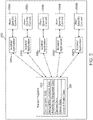
- FIG. 2 shows a block diagram of an electronic device 200, in accordance with some embodiments.
- Electronic device 200 can include master program 204 and isolated applications 206a-N, which may correspond to master program 104 and isolated applications 106a-N of FIG. 1 , respectively.
- Master program 204 can be configured for bidirectional communication with isolated applications 206a-N. Accordingly, master program 204 may both send data to and receive data from isolated applications 206a-N.
- Master program 204 includes a user profile 210 that can store any suitable user data about one or more users of electronic device 200.
- user profile 210 can include demographic data (e.g., age and sex of the user), geographic location data (e.g., common geographic locations visited by the user), advertising response data (e.g., how the user responded to previously provided advertisements in one or more applications), opt-out data (e.g., whether the user has affirmatively requested that a particular entity, such as a clothing store, refrain from advertising to the user), opt-in data (e.g., whether the user has affirmatively requested that a particular entity advertise the user), and/or search profile data (e.g., a log of search terms searched by the user and/or Internet websites visited by the user).
- demographic data e.g., age and sex of the user
- geographic location data e.g., common geographic locations visited by the user
- advertising response data e.g., how the user responded to previously provided advertisements in one or more applications
- Master program 204 provides user profile 210 (or portions thereof) to any of isolated applications 206a-N when master program 204 is co-loaded with the application.
- an operating system e.g., operating system 102 of FIG. 1
- operating system 102 may only load master program 204 as required by one of isolated applications 206a-N, and user profile 210 may be provided to the application upon loading of master program 204.
- isolated applications 206a-N can request that operating system 202 launch master application 204 when user input is required, for example.
- the application can provide master program 204 with a pointer (e.g., a callback function) that allows the application to receive data from master program 204.
- the operating system may load master program 204 upon request of an Internet browser application when the user attempts to interact with the browser (e.g., by entering a URL, utilizing a search engine, or providing data into a form).
- each of isolated applications 206a-N may utilize user profile 210 differently.
- a music streaming application may utilize a user's demographic data and search profile data to suggest new artists to the user and/or to help the user locate artists known to be of interest.
- Such a music streaming application may further utilize advertising response data, opt-out data, opt-in data, and search profile data to provide targeted advertisements to the user within the application.
- the user may chat with friends (e.g., via text messages or a social networking platform) about an artist. That information can be added to the user profile and later provided to a music streaming application in order to better populate an artist recommendation list or serve an advertisement that can be relevant to the user's interest.
- Any one of isolated applications 206a-N is permitted to alter user profile 210.
- a browser application may provide updated search profile data to user profile 210 any time the browser is permitted to communicate with master program 204, such as when master program 204 is loaded into the browser application, for example.
- a music streaming application can determine the user's favorite artists, provide that information back to master program 204, and that information may be used by an events tickets application in conjunction with geographic location data stored in user profile 210 to suggest upcoming concerts or shows in the geographic area that the user may be interested in attending.
- isolated applications 206a-N can provide a pointer that allows the application to receive data from master program 204.
- Master program 204 can receive data from isolated applications 206a-N using a similar pointer and/or master program 204 can directly record data input into isolated applications 206a-N as the user utilizes master program 204.
- user interactions with user-specific content 208a-N may be tracked by each respective isolated applications 206a-N and used to update user profile 210.
- user-specific content 208a represents an advertisement provided in isolated application 206a
- the application can determine whether the user acted positively or negatively with respect to the advertisement. Examples of positive reactions to user-specific content 208a may include a determination that the user followed a hyperlink associated with the advertisement or opted into future similar advertisements. On the other hand, examples of acting negatively with respect to user-specific content 208a may include ignoring the advertisement or opting out of future similar advertisements. In this way, user reactions to user-specific content 208a-N can be passed from isolated applications to master program 204, which can update user profile 210 accordingly.
- user profile 210 is depicted in FIG. 2 as being part of master program 204, a person skilled in the art will appreciate that user profile 210 may associated with any other suitable software installed on electronic device 200 (an operating system or one of isolated applications 206a-N), or user profile 210 may be a data structure stored in a file system of electronic device 200 that is not primarily associated with any software extant on electronic device 200. According to some embodiments, user profile 210 may also be stored outside of electronic device 200 (e.g., on a cloud-based server accessible using electronic device 200).
- user-specific content 208a-N can represent password management and/or form filling data for use within a respective one of isolated applications 206a-N.
- user profile 210 can store credentials to log in to any or all of isolated applications 206a-N.
- master program 204 can recognize the application and enter the proper credentials from user profile 210 into the fields for the user's login name and password. Additionally or alternatively, master program 204 can suggest the most relevant login names and passwords for a given isolated application.
- master program 204 can recognize the form and enter the user's billing information (e.g., billing address, shipping address, credit card information, etc.) into the appropriate fields on the billing form.
- billing information e.g., billing address, shipping address, credit card information, etc.
- such form-filling information may be provided automatically to an application, while in other embodiments, the user may be given an asked whether the form should be filled in using data stored in user profile 210.
- data can be imported from an external source (e.g., a PC program or a remote database) and/or provided by the user in isolated applications 206a-N or master program 204.
- user profile 210 may be updated manually by a user of electronic device 200 in addition to being updated as a result of interactions with isolated applications 206a-N.
- the user may be permitted to manually fill in some fields of user profile 210 (e.g., demographic data) without waiting for user profile 210 to be learn the requisite information based on data received from user interactions with isolated applications 206a-N.
- FIG. 3 shows an illustrative screenshot 300 of an isolated application 306 displaying user-specific content 308, in accordance with some embodiments.
- isolated application 306 can be a music streaming application running on an electronic device (e.g., isolated application 106a of electronic device 100 of FIG. 1 ).
- screenshot 300 can include user-specific content 308.
- User-specific content 308 depicted in screenshot 300 can be a targeted advertisement for an Italian restaurant.
- user-specific content 308 can be determined based upon any suitable data found in a user profile (e.g., user profile 210 of FIG. 2 ).
- the advertisement for the Italian restaurant displayed in screenshot 300 may have been chosen based on one or more of the following factors that can be gleaned from a user profile: proximity of the restaurant's location to a geographical location often frequented by the user; information that the user recently and/or often searches the web for Italian restaurants; information that the user has opted-into advertisements from that particular Italian restaurant; information that the user has previously followed a hyperlink for that Italian restaurant or a similar Italian restaurant; or any other suitable information stored in the user profile.
- user-specific content 308 is configured to accept user action (e.g., via following a hyperlink associated with the content)
- the user's decision to act positively or negatively with respect to user-specific content 308 can be noted and provided to a master program (e.g., master program 204 of FIG. 2 ) in order to update the user profile based on the action taken (or not taken).
- a master program e.g., master program 204 of FIG. 2
- the user may be given an option to opt-in to or opt-out of future advertisements from the advertiser.
- FIG. 4 shows an illustrative screenshot 400 of an isolated application 406 displaying user-specific content 408, in accordance with some embodiments.
- Screenshot 400 may be another screenshot of the same music streaming application displayed in screenshot 300 of FIG. 3 , except that the user-specific content 408 displayed may be different.
- user-specific content 408 can be a list of musical artists that the user may enjoy based on data gleaned from a user profile (e.g., user profile 210 of FIG. 2 ). It may be, for example, that the user recently searched the Internet for a particular artist in a browser application on the electronic device, and that search history was incorporated into the user's user profile.
- the master program, invoked when the user opened isolated application 406 can have made the user profile available to isolated application 406, and the application could have used the user profile to generate and display a list of artists the user is likely to enjoy as user-specific content 408.
- FIG. 5 shows a screenshot 500 of an isolated application 506 displaying user-specific content 508, in accordance with some embodiments.
- isolated application 506 can be an e-mail application installed on an electronic device (e.g., electronic device 100 of FIG. 1 ).
- screenshot 500 includes an exemplary graphical user interface for a master program 504, which, as depicted in FIG. 5 , is a virtual keyboard for a keyboard application that can be displayed on a touchscreen surface of the electronic device. It should be understood that although a virtual keyboard is displayed in FIG.
- master program 504 can also accept input from any other suitable I/O device including a mechanical keyboard, which can be integrally formed with the electronic device or otherwise communicatively coupled to the electronic device, a mouse, a gesture recognition sensor or module, or a voice recognition device.
- a user of the electronic device can use the virtual keyboard of master program 504 for the purpose of entering text into one or more of the text fields displayed in screenshot 500 (i.e., the To: field, the Subject: field, and the e-mail body field).
- master program 504 and/or isolated application 506 can analyze the typed text and supply user-specific content 508 based on the results on the analysis. Accordingly, because the user typed in the word "restaurant" into the text of an e-mail in isolated application 506, the application can display user-specific content 508 to the user, which represents an advertisement for an Italian restaurant.
- isolated application 506 can chose to display user-specific content 508 based upon at least one other variable.
- the variable may be the model number, IP address, or current location of the electronic device, for example. Further, the variable may be any suitable information gleaned from a user profile (e.g., user profile 210 of FIG. 2 ).
- isolated application 506 can parse the text and one or more other variables and display user-specific content 508 to the user.
- the targeted advertisement shown in screenshot 500 may have been chosen by isolated application 506 because: 1) the user typed the word "restaurant” into a text field of isolated application 506; 2) the current location of the electronic device (e.g., as determined by a GPS module) was close to the advertised restaurant; and/or 3) the user profile made available by master program 504 indicated that the user enjoys Italian food. While an advertisement for an Italian restaurant was displayed as user-specific content 508, if the user profile indicated that the user enjoyed Indian food, an Indian food restaurant may have been displayed instead.
- FIG. 6 shows a screenshot 600 of an isolated application 606 providing context-specific search functionality, in accordance with some embodiments.
- isolated application 606 can be an e-mail application that can analyze text a user enters using a virtual keyboard associated with master program 604.
- isolated application 606 (or master program 604) can generate and display potential search terms as user-specific content 608.
- the user can then choose one of the generated search terms and invoke a search in, for example, an isolated Internet browser application, by invoking the "Search" button.
- Master program 604 can then unilaterally, or with assistance from an operating system (e.g., operating system 102 of FIG. 1 ), open the Internet browser and commence a search using the chosen search term.
- an operating system e.g., operating system 102 of FIG. 1
- the Internet browser application can access a user profile (e.g., user profile 210 of FIG. 1 ) via master program 604, which can be loaded along with the application opened to run the search.
- the search results can be based not only on the search term generated by the analyzed text entered into isolated application 606, but also on one or more additional variables gleaned from a user profile made available via master program 604.
- FIG. 7 shows a flowchart of an illustrative process 700 for providing user-specific content on an electronic device, in accordance with some embodiments.
- Process 700 can begin at step 701, which can include receiving user data at a first application (e.g., isolated application 106a of FIG. 1 ) stored in a memory of an electronic device (e.g., electronic device 100 of FIG. 1 ) from a master program (e.g., master program 104 of FIG. 1 ) also stored in a memory of an electronic device, wherein the master program received the user data from at least one other application (e.g., isolated application 106b) that is isolated from the first application.
- a first application e.g., isolated application 106a of FIG. 1
- a master program e.g., master program 104 of FIG. 1
- the master program received the user data from at least one other application (e.g., isolated application 106b) that is isolated from the first application.
- the user data can be any suitable data about the user that can allow the first application to provide user-specific content to the user, as described in more detail below.
- the user data may be stored in a user profile data structure (e.g., user profile 210 of FIG. 1 ) that can be associated with the master program, an operating system of the electronic device, an application of the electronic device (e.g., one of isolated applications 106a-N of FIG. 1 ), or that is otherwise accessible to the master program.
- the first application can generate user-specific content (e.g., user-specific content 208a of FIG. 2 ) based on at least the received user data.
- the user-specific content can be any suitable content generated by the first application such as one or more targeted advertisements and/or enhanced application functionality (e.g., artist suggestions in a music streaming application, search term suggestions in an Internet browser application, or vacation suggestions in a travel application).
- the user-specific content can be displayed or otherwise made available to the user on a display of the electronic device (e.g., display assembly 912 described below) via the first application.
- the master program can gather additional user data from the first application.
- the additional user data may be any data that can be added to a user profile suitable for generating user-specific content in the first application or any other isolated application on the electronic device. Accordingly, the additional user data may represent, for example, demographic data, geographic location data, advertising response data, opt-out data, opt-in data, search profile data, and/or any other suitable data.
- the first application can transmit the additional data from the first application to the master program.
- the master program can then add the additional data to the user profile, and the updated user profile can be made available to one or more other isolated applications on the electronic device in order to allow those applications to provide user-specific content to the user.
- FIG. 8 shows a flowchart of an illustrative process 800 for providing user-specific content on an electronic device, in accordance with some embodiments.
- Process 800 can begin at step 801, which can include accessing a first application (e.g., isolated application 106a of FIG. 1 ) using a master program (e.g., master program 104 of FIG. 1 ).
- the first application can be any suitable application installed in a memory on the electronic device that is prohibited from sharing data directly with other applications installed in that memory or another suitable memory.
- the master program can be any application that can be instantiated along with the first application that is not subject to application isolation rules set by an operating system of the electronic device.
- the master program can be a keyboard application for facilitating user interaction with the first application.
- the master program can provide user data to the first application, thereby enabling the first application to provide user-specific content to a user via a display (e.g., a display of display assembly 912 of FIG. 9).
- the user data may be any suitable data that can be used by the first application to generate user-specific content, and it may be stored in a user profile (e.g., user profile 210 of FIG. 2 ) associated with or otherwise accessible by the master program.
- the master program can receive additional user data from the first application.
- the additional user data can include any data that can be added to a user profile suitable for generating user-specific content in the first application or any other isolated application on the electronic device.
- the user data can be, for example, demographic data, geographic location data, advertising response data, opt-out data, opt-in data, search profile data, or any other suitable user data that can be used to generate user-specific content.
- the master program can access a second application that is isolated from the first application. That is, the second application may be prohibited from directly communicating with, sharing data with, and/or altering the first application.
- the first and second applications may be isolated per rules defined by an operating system (e.g., operating system 102 of FIG. 1 ), for example.
- the master program can provide the user data and the additional user data to the second application, enabling the second application to provide user-specific content to the user.
- the user-specific content can be any suitable content that may be generated from the user data and/or the additional user data received at the second application.
- the user-specific content may include one or more targeted advertisements, form-filling data, login/password data, application enrichment data, and/or any other suitable user-specific content.
- the methods described with respect to FIGS. 7 and 8 may each be implemented by software, but may also be implemented in hardware, firmware, or any combination of software, hardware, and firmware. They each may also be embodied as machine-readable code recorded on a machine-readable medium.
- the machine-readable medium may be any data storage device that can store data that can thereafter be read by a computer system. Examples of the machine-readable medium may include, but are not limited to, read-only memory, random-access memory, flash memory, CD-ROMs, DVDs, magnetic tape, and optical data storage devices.
- the machine-readable medium can also be distributed over network-coupled computer systems so that the machine-readable code is stored and executed in distributed fashion.
- FIG. 9 shows a schematic view of an illustrative electronic device 900, in accordance with some embodiments.
- Electronic device 900 may be any electronic device configured to embody and/or implement the systems and methods described herein (e.g., electronic device 100 of FIG. 1 ).
- Electronic device 900 can be, but is not limited to, a music player, video player, still image player, game player, other media player, music recorder, movie or video camera or recorder, still camera, other media recorder, radio, medical equipment, domestic appliance, transportation vehicle instrument, musical instrument, calculator, cellular telephone, other wireless communication device, personal digital assistant, remote control, pager, computer (e.g., desktop, laptop, tablet, server, etc.), monitor, television, stereo equipment, set up box, settop box, boom box, modem, router, keyboard, mouse, speaker, printer, and combinations thereof.
- computer e.g., desktop, laptop, tablet, server, etc.
- monitor television, stereo equipment, set up box, settop box, boom box, modem, router, keyboard, mouse, speaker, printer, and combinations thereof.
- electronic device 900 may perform a single function (e.g., a device dedicated to displaying image content) and, in other embodiments, electronic device 900 may perform multiple functions (e.g., a device that displays image content, plays music, and receives and transmits telephone calls).
- a single function e.g., a device dedicated to displaying image content
- electronic device 900 may perform multiple functions (e.g., a device that displays image content, plays music, and receives and transmits telephone calls).
- Electronic device 900 may include a housing 901, a processor or control circuitry 902, memory 904, communications circuitry 906, power supply 908, input component 910, and display assembly 912.
- Electronic device 900 may also include a bus 903 that may provide a data transfer path for transferring data and/or power, to, from, or between various other components of electronic device 900.
- one or more components of electronic device 900 may be combined or omitted.
- electronic device 900 may include other components not combined or included in FIG. 9. For the sake of simplicity, only one of each of the components is shown in FIG. 9.
- Memory 904 may include one or more storage mediums, including for example, a hard-drive, flash memory, permanent memory such as read-only memory (“ROM”), semi-permanent memory such as random access memory (“RAM”), any other suitable type of storage component, or any combination thereof.
- Memory 904 may include cache memory, which may be one or more different types of memory used for temporarily storing data for electronic device applications.
- Memory 904 may store media data (e.g., music, image, and video files), software (e.g., operating system 102, master program 104, and/or isolated applications 106a-N of FIG. 1 ), firmware, user data (e.g., user data in user profile 210 of FIG.
- transaction information e.g., information such as credit card information
- wireless connection information e.g., information that may enable electronic device 900 to establish a wireless connection
- subscription information e.g., information that keeps track of podcasts or television shows or other media a user subscribes to
- contact information e.g., telephone numbers and e-mail addresses
- calendar information any other suitable data, or any combination thereof.
- Communications circuitry 906 may be provided to allow electronic device 900 to communicate with one or more other electronic devices or servers using any suitable communications protocol.
- communications circuitry 906 may support Wi-Fi TM (e.g., an 802.11 protocol), Ethernet, Bluetooth TM , high frequency systems (e.g., 900 MHz, 2.4 GHz, and 5.6 GHz communication systems), infrared, transmission control protocol/internet protocol (“TCP/IP”) (e.g., any of the protocols used in each of the TCP/IP layers), hypertext transfer protocol ("HTTP”), BitTorrent TM , file transfer protocol (“FTP”), real-time transport protocol (“RTP”), real-time streaming protocol (“RTSP”), secure shell protocol (“SSH”), any other communications protocol, or any combination thereof.
- Communications circuitry 906 may also include circuitry that can enable electronic device 900 to be electrically coupled to another device (e.g., a computer or an accessory device) and communicate with that other device, either wirelessly or via a wired connection.
- Power supply 908 may provide power to one or more of the components of electronic device 900.
- power supply 908 can be coupled to a power grid (e.g., when electronic device 900 is not a portable device, such as a desktop computer).
- power supply 908 can include one or more batteries for providing power (e.g., when electronic device 900 is a portable device, such as a cellular telephone).
- power supply 908 can be configured to generate power from a natural source (e.g., solar power using one or more solar cells).
- One or more input components 910 may be provided to permit a user to interact or interface with electronic device 900.
- input component 910 can take a variety of forms, including, but not limited to, a track pad, dial, touch screen, one or more buttons (e.g., a keyboard), mouse, joy stick, track ball, and combinations thereof.
- input component 910 may include a multi-touch screen.
- Each input component 910 can be configured to provide one or more dedicated control functions for making selections or issuing commands associated with operating electronic device 900.
- Electronic device 900 may also include one or more output components that may present information (e.g., textual, graphical, audible, and/or tactile information) to a user of electronic device 900.
- An output component of electronic device 900 may take various forms, including, but not limited, to audio speakers, headphones, audio line-outs, visual displays, antennas, infrared ports, or combinations thereof.
- electronic device 900 may include display assembly 912 as an output component.
- Display assembly 912 may include any suitable type of display or interface for presenting visible information to a user of electronic device 900.
- display assembly 912 may include a display embedded in electronic device 900 or coupled to electronic device 900 (e.g., a removable display).
- Display assembly 912 may include, for example, a liquid crystal display ("LCD”), a light emitting diode (“LED”) display, an organic light-emitting diode (“OLED”) display, a surface-conduction electronemitter display (“SED”), a carbon nanotube display, a nanocrystal display, any other suitable type of display, or combination thereof.
- LCD liquid crystal display
- LED light emitting diode
- OLED organic light-emitting diode
- SED surface-conduction electronemitter display
- display assembly 912 can include a movable display or a projecting system for providing a display of content on a surface remote from electronic device 900, such as, for example, a video projector, a head-up display, or a three-dimensional (e.g., holographic) display.
- display assembly 912 may include a digital or mechanical viewfinder.
- display assembly 912 may include a viewfinder of the type found in compact digital cameras, reflex cameras, or any other suitable still or video camera.
- one or more input components and one or more output components may sometimes be referred to collectively as an I/O interface (e.g., input component 910 and display assembly 912 as I/O interface 911). It should also be noted that input component 910 and display assembly 912 may sometimes be a single I/O component, such as a touch screen that may receive input information through a user's touch of a display screen and that may also provide visual information to a user via that same display screen.
- Processor 902 of electronic device 900 may control the operation of many functions and other circuitry provided by electronic device 900.
- processor 902 may receive input signals from input component 910 and/or drive output signals to display assembly 912.
- Processor 902 may load a user interface program (e.g., a program stored in memory 904 or another device or server) to determine how instructions or data received via an input component 910 may manipulate the way in which information is provided to the user via an output component (e.g., display assembly 912).
- processor 902 may control the viewing angle of the visible information presented to the user by display assembly 912 or may otherwise instruct display assembly 912 to alter the viewing angle.
- Electronic device 900 may also be provided with a housing 901 that may at least partially enclose one or more of the components of electronic device 900 for protecting them from debris and other degrading forces external to electronic device 900.
- a housing 901 may at least partially enclose one or more of the components of electronic device 900 for protecting them from debris and other degrading forces external to electronic device 900.
- one or more of the components may be provided within its own housing (e.g., input component 910 may be an independent keyboard or mouse within its own housing that may wirelessly or through a wire communicate with processor 902, which may be provided within its own housing).
Landscapes
- Engineering & Computer Science (AREA)
- Software Systems (AREA)
- Theoretical Computer Science (AREA)
- Multimedia (AREA)
- Signal Processing (AREA)
- Business, Economics & Management (AREA)
- General Engineering & Computer Science (AREA)
- Physics & Mathematics (AREA)
- General Physics & Mathematics (AREA)
- Development Economics (AREA)
- Accounting & Taxation (AREA)
- Finance (AREA)
- Strategic Management (AREA)
- Entrepreneurship & Innovation (AREA)
- Game Theory and Decision Science (AREA)
- Economics (AREA)
- Marketing (AREA)
- General Business, Economics & Management (AREA)
- Databases & Information Systems (AREA)
- Management, Administration, Business Operations System, And Electronic Commerce (AREA)
- Information Transfer Between Computers (AREA)
Claims (8)
- Verfahren zum Bereitstellen von benutzerspezifischem Inhalt auf einer Elektronikvorrichtung, wobei die Elektronikvorrichtung eine Anzeige und einen Speicher aufweist, wobei der Speicher ein Betriebssystem, eine Tastaturanwendung und mehrere getrennte Anwendungen, die in diesem installiert sind, aufweist, wobei die mehreren getrennten Anwendungen von dem Betriebssystem zum Vermeiden, dass eine Schadanwendung eine der getrennten Anwendungen abändert, daran gehindert werden, direkt miteinander zu kommunizieren, mit folgenden Schritten:Sammeln, unter Verwendung der Tastaturanwendung, von Benutzerdaten während einer Benutzerinteraktion mit einer ersten Anwendung der mehreren getrennten Anwendungen, wobei das Sammeln Analysieren einer Texteingabe unter Verwendung der Tastaturanwendung aufweist, und Hinzufügen der Benutzerdaten zu einem in dem Speicher gespeicherten Benutzerprofil, wobei das Benutzerprofil Daten in Bezug auf ein Benutzerverhalten aufweist, die anhand der Benutzerinteraktion mit mindestens einer ersten Anwendung der mehreren Anwendungen identifiziert werden;trotz Verhindern einer direkten Kommunikation zwischen der ersten Anwendung und anderen Anwendungen der mehreren getrennten Anwendungen durch das Betriebssystem, Verwenden der Tastaturanwendung zum Bereitstellen mindestens eines Teils der Benutzerdaten für mindestens eine zweite Anwendung der mehreren getrennten Anwendungen während einer Ausführung der mindestens einen zweiten Anwendung, zum Bewirken eines synergistischen Datenaustauschs zwischen Anwendungen, die ansonsten hinsichtlich einer Kommunikation voneinander getrennt sind, wobei der mindestens eine Teil der Benutzerdaten der mindestens einer zweiten Anwendung ermöglicht, benutzerspezifischen Inhalt, der potenziell von Interesse für einen Benutzer ist, über die Anzeige vorzuschlagen;Sammeln, unter Verwendung der Tastaturanwendung, von zusätzlichen Benutzerdaten anhand der mindestens einen zweiten Anwendung der mehreren Anwendungen; undAktualisieren des Benutzerprofils mit den zusätzlichen Benutzerdaten.
- Verfahren nach Anspruch 1, ferner mit Bereitstellen mindestens eines Teils jeweils der Benutzerdaten und der zusätzlichen Benutzerdaten von der Tastaturanwendung für eine dritte Anwendung der mehreren getrennten Anwendungen, wobei die Benutzerdaten und die zusätzlichen Benutzerdaten der dritten Anwendung ermöglichen, zusätzlichen benutzerspezifischen Inhalt, der potenziell von Interesse für den Benutzer ist, über die Anzeige vorzuschlagen.
- Verfahren nach Anspruch 1, bei dem die getrennten Anwendungen basierend auf Regeln, die durch das Betriebssystem, das in dem Speicher der Elektronikvorrichtung installiert ist, festgelegt sind, getrennt sind.
- Elektronikvorrichtung mit:mehreren Anwendungen, die in einem Speicher auf der Elektronikvorrichtung installiert sind;einem in dem Speicher installierten Betriebssystem, das ausgebildet ist zum Verhindern, dass die mehreren Anwendungen direkt miteinander kommunizieren, sodass verhindert wird, dass eine Schadanwendung eine der mehreren Anwendungen abändert;einem Tastaturproramm, das in dem Speicher installiert ist und das nicht daran gehindert wird, mit den mehreren Anwendungen zu kommunizieren; undeinem Benutzerprofil, das in dem Speicher, auf den das Tastaturprogramm Zugriff hat, gespeichert ist, wobei das Benutzerprofil Benutzerdaten mit Daten in Bezug auf ein Benutzerverhalten, die anhand der Benutzerinteraktion mit mindestens einer ersten Anwendung der mehreren Anwendungen identifiziert werden, aufweist, wobei das Tastaturprogramm ausgebildet ist zum:Bereitstellen der Benutzerdaten für mindestens eine zweite Anwendung der mehreren Anwendungen, sodass die mindestens eine zweite Anwendung basierend mindestens auf den Benutzerdaten benutzerspezifischen Inhalt erzeugen kann und ein synergistischer Datenaustausch zwischen Anwendungen, die ansonsten voneinander getrennt sind, ermöglicht wird;Empfangen von zusätzlichen Benutzerdaten von der mindestens einen zweiten Anwendung der mehreren Anwendungen; undAktualisierung des Benutzerprofils mit den zusätzlichen Benutzerdaten.
- Elektronikvorrichtung nach Anspruch 4, bei der der benutzerspezifische Inhalt eine zielgerichtete Werbung aufweist.
- Elektronikvorrichtung nach Anspruch 4, bei der das Tastaturprogramm zum Bereitstellen mindestens eines Teils der Benutzerdaten und der zusätzlichen Benutzerdaten für eine dritte Anwendung der mehreren Anwendungen ausgebildet ist, wobei die Benutzerdaten und die zusätzlichen Daten der dritten Anwendung ermöglichen, zusätzlichen benutzerspezifischen Inhalt, der potenziell von Interesse für den Benutzer ist, über eine Anzeige der Elektronikvorrichtung vorzuschlagen.
- Elektronikvorrichtung nach Anspruch 4, bei der mindestens ein Teil der Benutzerdaten Webbrowserverlaufsdaten aufweist.
- Elektronikvorrichtung nach Anspruch 4, bei der die mehreren Anwendungen basierend auf Regeln, die durch das in dem Speicher der Elektronikvorrichtung installierte Betriebssystem festgelegt werden, daran gehindert werden, direkt miteinander zu kommunizieren.
Applications Claiming Priority (2)
| Application Number | Priority Date | Filing Date | Title |
|---|---|---|---|
| US13/938,829 US9514477B2 (en) | 2013-07-10 | 2013-07-10 | Systems and methods for providing user-specific content on an electronic device |
| PCT/US2014/044015 WO2015006049A1 (en) | 2013-07-10 | 2014-06-25 | Systems and methods for providing user-specific content on an electronic device |
Publications (3)
| Publication Number | Publication Date |
|---|---|
| EP3019986A1 EP3019986A1 (de) | 2016-05-18 |
| EP3019986A4 EP3019986A4 (de) | 2017-03-22 |
| EP3019986B1 true EP3019986B1 (de) | 2022-09-14 |
Family
ID=52278213
Family Applications (1)
| Application Number | Title | Priority Date | Filing Date |
|---|---|---|---|
| EP14822628.5A Active EP3019986B1 (de) | 2013-07-10 | 2014-06-25 | Systeme und verfahren zur bereitstellung benutzerspezifischer inhalte auf einer elektronischen vorrichtung |
Country Status (4)
| Country | Link |
|---|---|
| US (1) | US9514477B2 (de) |
| EP (1) | EP3019986B1 (de) |
| IL (1) | IL243524A0 (de) |
| WO (1) | WO2015006049A1 (de) |
Families Citing this family (11)
| Publication number | Priority date | Publication date | Assignee | Title |
|---|---|---|---|---|
| US10025863B2 (en) | 2014-10-31 | 2018-07-17 | Oath Inc. | Recommending contents using a base profile |
| US10324926B2 (en) * | 2015-05-15 | 2019-06-18 | Microsoft Technology Licensing, Llc | System and method for extracting and sharing application-related user data |
| US10229429B2 (en) * | 2015-06-26 | 2019-03-12 | International Business Machines Corporation | Cross-device and cross-channel advertising and remarketing |
| EP3497915B1 (de) * | 2016-08-10 | 2020-09-30 | Innogy Se | System für peer-to-peer-kommunikation und vorrichtung zur peer-to-peer-verarbeitung |
| WO2018032516A1 (zh) * | 2016-08-19 | 2018-02-22 | 华为技术有限公司 | 应用数据的共享方法、装置和终端设备 |
| US11019067B2 (en) | 2019-01-10 | 2021-05-25 | Vmware, Inc. | Device application access and user data management |
| US11019058B2 (en) * | 2019-01-10 | 2021-05-25 | Vmware, Inc. | Device application access and user data management |
| US11113350B2 (en) * | 2019-03-29 | 2021-09-07 | At&T Intellectual Property I, L.P. | Systems and methods for administrating suggested merchandising arrangements |
| US11409909B1 (en) * | 2020-09-09 | 2022-08-09 | Robert Alderton | Data privacy enforcers |
| US12143656B2 (en) * | 2022-08-11 | 2024-11-12 | Comcast Cable Communications, Llc | Controlling sharing of content targeting data with content delivery networks |
| US20260052284A1 (en) * | 2024-08-13 | 2026-02-19 | Disney Enterprises, Inc. | Personalized Playback Experiences via Recipe Resolution |
Family Cites Families (9)
| Publication number | Priority date | Publication date | Assignee | Title |
|---|---|---|---|---|
| US4527250A (en) * | 1980-09-11 | 1985-07-02 | Allen-Bradley Company | Video computer terminal with detachable intelligent keyboard module |
| US6192419B1 (en) * | 1997-06-18 | 2001-02-20 | International Business Machines Corporation | Collaborative framework for disparate application programs |
| US20090006543A1 (en) | 2001-08-20 | 2009-01-01 | Masterobjects | System and method for asynchronous retrieval of information based on incremental user input |
| US8726294B2 (en) * | 2010-10-01 | 2014-05-13 | Z124 | Cross-environment communication using application space API |
| US20080052279A1 (en) | 2006-07-12 | 2008-02-28 | Sunil Marolia | Device and network capable of providing personalized services |
| US9318108B2 (en) * | 2010-01-18 | 2016-04-19 | Apple Inc. | Intelligent automated assistant |
| US10019570B2 (en) | 2007-06-14 | 2018-07-10 | Microsoft Technology Licensing, Llc | Protection and communication abstractions for web browsers |
| US8626802B2 (en) | 2009-07-24 | 2014-01-07 | Apple Inc. | Dynamic media content previews |
| US20120304283A1 (en) | 2011-05-27 | 2012-11-29 | Microsoft Corporation | Brokered item access for isolated applications |
-
2013
- 2013-07-10 US US13/938,829 patent/US9514477B2/en active Active
-
2014
- 2014-06-25 EP EP14822628.5A patent/EP3019986B1/de active Active
- 2014-06-25 WO PCT/US2014/044015 patent/WO2015006049A1/en not_active Ceased
-
2016
- 2016-01-10 IL IL243524A patent/IL243524A0/en unknown
Also Published As
| Publication number | Publication date |
|---|---|
| IL243524A0 (en) | 2016-02-29 |
| EP3019986A4 (de) | 2017-03-22 |
| US20150020083A1 (en) | 2015-01-15 |
| US9514477B2 (en) | 2016-12-06 |
| WO2015006049A1 (en) | 2015-01-15 |
| EP3019986A1 (de) | 2016-05-18 |
Similar Documents
| Publication | Publication Date | Title |
|---|---|---|
| US9514477B2 (en) | Systems and methods for providing user-specific content on an electronic device | |
| US11012753B2 (en) | Computerized system and method for determining media based on selected motion video inputs | |
| US11341153B2 (en) | Computerized system and method for determining applications on a device for serving media | |
| US10679250B2 (en) | System and method for sharing content on third-party mobile applications | |
| KR102040754B1 (ko) | 추천 콘텐츠에 기초한 상호작용 방법, 단말기 및 서버 | |
| US9589149B2 (en) | Combining personalization and privacy locally on devices | |
| CN103959745B (zh) | 监视应用程序资源消耗的方法和设备 | |
| US10353686B1 (en) | Application installation system | |
| US20180183894A1 (en) | Inferring user identity across multiple applications and user devices | |
| US20180343215A1 (en) | Sharing web entities based on trust relationships | |
| US9537925B2 (en) | Browser notifications | |
| CA2969353C (en) | Associating user interactions across multiple applications on a client device | |
| US9832258B2 (en) | Mode indicators for applications, web applications, and browser extensions | |
| KR20190102308A (ko) | 데이터 콘텐츠 필터 | |
| US20170311021A1 (en) | System, method, and device for displaying content item | |
| US9503410B2 (en) | Sharing of activity metadata via messaging systems | |
| CN104067305A (zh) | 用于生成富集用户简档的方法、装置和计算机程序产品 | |
| CN104090884B (zh) | 应用媒体信息动态分享方法及装置 | |
| JP6543774B2 (ja) | コンピューティングデバイスのプロパティに基づく情報のランク付け | |
| WO2015099893A1 (en) | Determining an active persona of a user device | |
| KR20130136401A (ko) | 미디어 배포 플랫폼으로부터의 소셜 네트워크를 통한 피드백 제공 | |
| WO2015149321A1 (en) | Personal digital engine for user empowerment and method to operate the same | |
| US20180081500A1 (en) | Systems and methods for content engagement | |
| EP3682645B1 (de) | Systeme und verfahren zur bereitstellung eines mehrteiligen persistenten inhalts | |
| US20230176843A1 (en) | App Store Information Page Customization |
Legal Events
| Date | Code | Title | Description |
|---|---|---|---|
| PUAI | Public reference made under article 153(3) epc to a published international application that has entered the european phase |
Free format text: ORIGINAL CODE: 0009012 |
|
| 17P | Request for examination filed |
Effective date: 20160210 |
|
| AK | Designated contracting states |
Kind code of ref document: A1 Designated state(s): AL AT BE BG CH CY CZ DE DK EE ES FI FR GB GR HR HU IE IS IT LI LT LU LV MC MK MT NL NO PL PT RO RS SE SI SK SM TR |
|
| AX | Request for extension of the european patent |
Extension state: BA ME |
|
| RIN1 | Information on inventor provided before grant (corrected) |
Inventor name: BEN-ITZHAK, YUVAL |
|
| DAX | Request for extension of the european patent (deleted) | ||
| A4 | Supplementary search report drawn up and despatched |
Effective date: 20170217 |
|
| RIC1 | Information provided on ipc code assigned before grant |
Ipc: G06F 9/54 20060101ALI20170210BHEP Ipc: G06Q 30/02 20120101ALI20170210BHEP Ipc: G06F 17/30 20060101AFI20170210BHEP Ipc: H04N 21/81 20110101ALI20170210BHEP Ipc: H04N 21/45 20110101ALI20170210BHEP Ipc: H04N 21/443 20110101ALI20170210BHEP |
|
| STAA | Information on the status of an ep patent application or granted ep patent |
Free format text: STATUS: EXAMINATION IS IN PROGRESS |
|
| 17Q | First examination report despatched |
Effective date: 20180405 |
|
| REG | Reference to a national code |
Ref country code: DE Ref legal event code: R079 Ref document number: 602014084963 Country of ref document: DE Free format text: PREVIOUS MAIN CLASS: G06F0017300000 Ipc: G06F0009540000 |
|
| GRAP | Despatch of communication of intention to grant a patent |
Free format text: ORIGINAL CODE: EPIDOSNIGR1 |
|
| STAA | Information on the status of an ep patent application or granted ep patent |
Free format text: STATUS: GRANT OF PATENT IS INTENDED |
|
| RIC1 | Information provided on ipc code assigned before grant |
Ipc: H04N 21/81 20110101ALI20200921BHEP Ipc: G06F 9/54 20060101AFI20200921BHEP Ipc: H04N 21/443 20110101ALI20200921BHEP Ipc: H04N 21/45 20110101ALI20200921BHEP Ipc: G06Q 30/02 20120101ALI20200921BHEP |
|
| INTG | Intention to grant announced |
Effective date: 20201019 |
|
| GRAS | Grant fee paid |
Free format text: ORIGINAL CODE: EPIDOSNIGR3 |
|
| GRAA | (expected) grant |
Free format text: ORIGINAL CODE: 0009210 |
|
| STAA | Information on the status of an ep patent application or granted ep patent |
Free format text: STATUS: THE PATENT HAS BEEN GRANTED |
|
| AK | Designated contracting states |
Kind code of ref document: B1 Designated state(s): AL AT BE BG CH CY CZ DE DK EE ES FI FR GB GR HR HU IE IS IT LI LT LU LV MC MK MT NL NO PL PT RO RS SE SI SK SM TR |
|
| RAP1 | Party data changed (applicant data changed or rights of an application transferred) |
Owner name: AVAST SOFTWARE S.R.O. |
|
| REG | Reference to a national code |
Ref country code: GB Ref legal event code: FG4D |
|
| REG | Reference to a national code |
Ref country code: CH Ref legal event code: EP |
|
| REG | Reference to a national code |
Ref country code: DE Ref legal event code: R096 Ref document number: 602014084963 Country of ref document: DE |
|
| REG | Reference to a national code |
Ref country code: IE Ref legal event code: FG4D |
|
| REG | Reference to a national code |
Ref country code: AT Ref legal event code: REF Ref document number: 1519144 Country of ref document: AT Kind code of ref document: T Effective date: 20221015 |
|
| REG | Reference to a national code |
Ref country code: LT Ref legal event code: MG9D |
|
| REG | Reference to a national code |
Ref country code: NL Ref legal event code: MP Effective date: 20220914 |
|
| PG25 | Lapsed in a contracting state [announced via postgrant information from national office to epo] |
Ref country code: SE Free format text: LAPSE BECAUSE OF FAILURE TO SUBMIT A TRANSLATION OF THE DESCRIPTION OR TO PAY THE FEE WITHIN THE PRESCRIBED TIME-LIMIT Effective date: 20220914 Ref country code: RS Free format text: LAPSE BECAUSE OF FAILURE TO SUBMIT A TRANSLATION OF THE DESCRIPTION OR TO PAY THE FEE WITHIN THE PRESCRIBED TIME-LIMIT Effective date: 20220914 Ref country code: NO Free format text: LAPSE BECAUSE OF FAILURE TO SUBMIT A TRANSLATION OF THE DESCRIPTION OR TO PAY THE FEE WITHIN THE PRESCRIBED TIME-LIMIT Effective date: 20221214 Ref country code: LV Free format text: LAPSE BECAUSE OF FAILURE TO SUBMIT A TRANSLATION OF THE DESCRIPTION OR TO PAY THE FEE WITHIN THE PRESCRIBED TIME-LIMIT Effective date: 20220914 Ref country code: LT Free format text: LAPSE BECAUSE OF FAILURE TO SUBMIT A TRANSLATION OF THE DESCRIPTION OR TO PAY THE FEE WITHIN THE PRESCRIBED TIME-LIMIT Effective date: 20220914 Ref country code: FI Free format text: LAPSE BECAUSE OF FAILURE TO SUBMIT A TRANSLATION OF THE DESCRIPTION OR TO PAY THE FEE WITHIN THE PRESCRIBED TIME-LIMIT Effective date: 20220914 |
|
| REG | Reference to a national code |
Ref country code: AT Ref legal event code: MK05 Ref document number: 1519144 Country of ref document: AT Kind code of ref document: T Effective date: 20220914 |
|
| PG25 | Lapsed in a contracting state [announced via postgrant information from national office to epo] |
Ref country code: HR Free format text: LAPSE BECAUSE OF FAILURE TO SUBMIT A TRANSLATION OF THE DESCRIPTION OR TO PAY THE FEE WITHIN THE PRESCRIBED TIME-LIMIT Effective date: 20220914 Ref country code: GR Free format text: LAPSE BECAUSE OF FAILURE TO SUBMIT A TRANSLATION OF THE DESCRIPTION OR TO PAY THE FEE WITHIN THE PRESCRIBED TIME-LIMIT Effective date: 20221215 |
|
| PG25 | Lapsed in a contracting state [announced via postgrant information from national office to epo] |
Ref country code: SM Free format text: LAPSE BECAUSE OF FAILURE TO SUBMIT A TRANSLATION OF THE DESCRIPTION OR TO PAY THE FEE WITHIN THE PRESCRIBED TIME-LIMIT Effective date: 20220914 Ref country code: RO Free format text: LAPSE BECAUSE OF FAILURE TO SUBMIT A TRANSLATION OF THE DESCRIPTION OR TO PAY THE FEE WITHIN THE PRESCRIBED TIME-LIMIT Effective date: 20220914 Ref country code: PT Free format text: LAPSE BECAUSE OF FAILURE TO SUBMIT A TRANSLATION OF THE DESCRIPTION OR TO PAY THE FEE WITHIN THE PRESCRIBED TIME-LIMIT Effective date: 20230116 Ref country code: ES Free format text: LAPSE BECAUSE OF FAILURE TO SUBMIT A TRANSLATION OF THE DESCRIPTION OR TO PAY THE FEE WITHIN THE PRESCRIBED TIME-LIMIT Effective date: 20220914 Ref country code: CZ Free format text: LAPSE BECAUSE OF FAILURE TO SUBMIT A TRANSLATION OF THE DESCRIPTION OR TO PAY THE FEE WITHIN THE PRESCRIBED TIME-LIMIT Effective date: 20220914 Ref country code: AT Free format text: LAPSE BECAUSE OF FAILURE TO SUBMIT A TRANSLATION OF THE DESCRIPTION OR TO PAY THE FEE WITHIN THE PRESCRIBED TIME-LIMIT Effective date: 20220914 |
|
| PG25 | Lapsed in a contracting state [announced via postgrant information from national office to epo] |
Ref country code: SK Free format text: LAPSE BECAUSE OF FAILURE TO SUBMIT A TRANSLATION OF THE DESCRIPTION OR TO PAY THE FEE WITHIN THE PRESCRIBED TIME-LIMIT Effective date: 20220914 Ref country code: PL Free format text: LAPSE BECAUSE OF FAILURE TO SUBMIT A TRANSLATION OF THE DESCRIPTION OR TO PAY THE FEE WITHIN THE PRESCRIBED TIME-LIMIT Effective date: 20220914 Ref country code: IS Free format text: LAPSE BECAUSE OF FAILURE TO SUBMIT A TRANSLATION OF THE DESCRIPTION OR TO PAY THE FEE WITHIN THE PRESCRIBED TIME-LIMIT Effective date: 20230114 Ref country code: EE Free format text: LAPSE BECAUSE OF FAILURE TO SUBMIT A TRANSLATION OF THE DESCRIPTION OR TO PAY THE FEE WITHIN THE PRESCRIBED TIME-LIMIT Effective date: 20220914 |
|
| REG | Reference to a national code |
Ref country code: DE Ref legal event code: R097 Ref document number: 602014084963 Country of ref document: DE |
|
| PG25 | Lapsed in a contracting state [announced via postgrant information from national office to epo] |
Ref country code: NL Free format text: LAPSE BECAUSE OF FAILURE TO SUBMIT A TRANSLATION OF THE DESCRIPTION OR TO PAY THE FEE WITHIN THE PRESCRIBED TIME-LIMIT Effective date: 20220914 Ref country code: AL Free format text: LAPSE BECAUSE OF FAILURE TO SUBMIT A TRANSLATION OF THE DESCRIPTION OR TO PAY THE FEE WITHIN THE PRESCRIBED TIME-LIMIT Effective date: 20220914 |
|
| PLBE | No opposition filed within time limit |
Free format text: ORIGINAL CODE: 0009261 |
|
| STAA | Information on the status of an ep patent application or granted ep patent |
Free format text: STATUS: NO OPPOSITION FILED WITHIN TIME LIMIT |
|
| PG25 | Lapsed in a contracting state [announced via postgrant information from national office to epo] |
Ref country code: DK Free format text: LAPSE BECAUSE OF FAILURE TO SUBMIT A TRANSLATION OF THE DESCRIPTION OR TO PAY THE FEE WITHIN THE PRESCRIBED TIME-LIMIT Effective date: 20220914 |
|
| 26N | No opposition filed |
Effective date: 20230615 |
|
| PG25 | Lapsed in a contracting state [announced via postgrant information from national office to epo] |
Ref country code: SI Free format text: LAPSE BECAUSE OF FAILURE TO SUBMIT A TRANSLATION OF THE DESCRIPTION OR TO PAY THE FEE WITHIN THE PRESCRIBED TIME-LIMIT Effective date: 20220914 |
|
| PG25 | Lapsed in a contracting state [announced via postgrant information from national office to epo] |
Ref country code: MC Free format text: LAPSE BECAUSE OF FAILURE TO SUBMIT A TRANSLATION OF THE DESCRIPTION OR TO PAY THE FEE WITHIN THE PRESCRIBED TIME-LIMIT Effective date: 20220914 |
|
| PG25 | Lapsed in a contracting state [announced via postgrant information from national office to epo] |
Ref country code: MC Free format text: LAPSE BECAUSE OF FAILURE TO SUBMIT A TRANSLATION OF THE DESCRIPTION OR TO PAY THE FEE WITHIN THE PRESCRIBED TIME-LIMIT Effective date: 20220914 |
|
| REG | Reference to a national code |
Ref country code: CH Ref legal event code: PL |
|
| REG | Reference to a national code |
Ref country code: BE Ref legal event code: MM Effective date: 20230630 |
|
| PG25 | Lapsed in a contracting state [announced via postgrant information from national office to epo] |
Ref country code: LU Free format text: LAPSE BECAUSE OF NON-PAYMENT OF DUE FEES Effective date: 20230625 |
|
| REG | Reference to a national code |
Ref country code: IE Ref legal event code: MM4A |
|
| PG25 | Lapsed in a contracting state [announced via postgrant information from national office to epo] |
Ref country code: LU Free format text: LAPSE BECAUSE OF NON-PAYMENT OF DUE FEES Effective date: 20230625 |
|
| PG25 | Lapsed in a contracting state [announced via postgrant information from national office to epo] |
Ref country code: IE Free format text: LAPSE BECAUSE OF NON-PAYMENT OF DUE FEES Effective date: 20230625 |
|
| PG25 | Lapsed in a contracting state [announced via postgrant information from national office to epo] |
Ref country code: IE Free format text: LAPSE BECAUSE OF NON-PAYMENT OF DUE FEES Effective date: 20230625 Ref country code: CH Free format text: LAPSE BECAUSE OF NON-PAYMENT OF DUE FEES Effective date: 20230630 |
|
| PG25 | Lapsed in a contracting state [announced via postgrant information from national office to epo] |
Ref country code: IT Free format text: LAPSE BECAUSE OF FAILURE TO SUBMIT A TRANSLATION OF THE DESCRIPTION OR TO PAY THE FEE WITHIN THE PRESCRIBED TIME-LIMIT Effective date: 20220914 Ref country code: BE Free format text: LAPSE BECAUSE OF NON-PAYMENT OF DUE FEES Effective date: 20230630 |
|
| PG25 | Lapsed in a contracting state [announced via postgrant information from national office to epo] |
Ref country code: BG Free format text: LAPSE BECAUSE OF FAILURE TO SUBMIT A TRANSLATION OF THE DESCRIPTION OR TO PAY THE FEE WITHIN THE PRESCRIBED TIME-LIMIT Effective date: 20220914 |
|
| PG25 | Lapsed in a contracting state [announced via postgrant information from national office to epo] |
Ref country code: BG Free format text: LAPSE BECAUSE OF FAILURE TO SUBMIT A TRANSLATION OF THE DESCRIPTION OR TO PAY THE FEE WITHIN THE PRESCRIBED TIME-LIMIT Effective date: 20220914 |
|
| PG25 | Lapsed in a contracting state [announced via postgrant information from national office to epo] |
Ref country code: CY Free format text: LAPSE BECAUSE OF FAILURE TO SUBMIT A TRANSLATION OF THE DESCRIPTION OR TO PAY THE FEE WITHIN THE PRESCRIBED TIME-LIMIT; INVALID AB INITIO Effective date: 20140625 |
|
| PG25 | Lapsed in a contracting state [announced via postgrant information from national office to epo] |
Ref country code: HU Free format text: LAPSE BECAUSE OF FAILURE TO SUBMIT A TRANSLATION OF THE DESCRIPTION OR TO PAY THE FEE WITHIN THE PRESCRIBED TIME-LIMIT; INVALID AB INITIO Effective date: 20140625 |
|
| PG25 | Lapsed in a contracting state [announced via postgrant information from national office to epo] |
Ref country code: TR Free format text: LAPSE BECAUSE OF FAILURE TO SUBMIT A TRANSLATION OF THE DESCRIPTION OR TO PAY THE FEE WITHIN THE PRESCRIBED TIME-LIMIT Effective date: 20220914 |
|
| PGFP | Annual fee paid to national office [announced via postgrant information from national office to epo] |
Ref country code: GB Payment date: 20260520 Year of fee payment: 13 |
|
| PGFP | Annual fee paid to national office [announced via postgrant information from national office to epo] |
Ref country code: DE Payment date: 20260520 Year of fee payment: 13 |
|
| PGFP | Annual fee paid to national office [announced via postgrant information from national office to epo] |
Ref country code: FR Payment date: 20260520 Year of fee payment: 13 |