EP3018471A1 - Method for quantitative analysis of heavy metals - Google Patents
Method for quantitative analysis of heavy metals Download PDFInfo
- Publication number
- EP3018471A1 EP3018471A1 EP15192972.6A EP15192972A EP3018471A1 EP 3018471 A1 EP3018471 A1 EP 3018471A1 EP 15192972 A EP15192972 A EP 15192972A EP 3018471 A1 EP3018471 A1 EP 3018471A1
- Authority
- EP
- European Patent Office
- Prior art keywords
- lead
- arsenic
- antimony
- cadmium
- sample
- Prior art date
- Legal status (The legal status is an assumption and is not a legal conclusion. Google has not performed a legal analysis and makes no representation as to the accuracy of the status listed.)
- Granted
Links
- 238000000034 method Methods 0.000 title claims abstract description 91
- 238000004445 quantitative analysis Methods 0.000 title claims abstract description 66
- 229910001385 heavy metal Inorganic materials 0.000 title claims abstract description 39
- 229910052785 arsenic Inorganic materials 0.000 claims abstract description 154
- RQNWIZPPADIBDY-UHFFFAOYSA-N arsenic atom Chemical compound [As] RQNWIZPPADIBDY-UHFFFAOYSA-N 0.000 claims abstract description 153
- 229910052787 antimony Inorganic materials 0.000 claims abstract description 149
- WATWJIUSRGPENY-UHFFFAOYSA-N antimony atom Chemical compound [Sb] WATWJIUSRGPENY-UHFFFAOYSA-N 0.000 claims abstract description 149
- 229910052793 cadmium Inorganic materials 0.000 claims abstract description 133
- BDOSMKKIYDKNTQ-UHFFFAOYSA-N cadmium atom Chemical compound [Cd] BDOSMKKIYDKNTQ-UHFFFAOYSA-N 0.000 claims abstract description 133
- 239000007788 liquid Substances 0.000 claims abstract description 75
- 239000002537 cosmetic Substances 0.000 claims description 107
- 238000004458 analytical method Methods 0.000 claims description 102
- 239000000523 sample Substances 0.000 claims description 98
- 239000000538 analytical sample Substances 0.000 claims description 82
- 230000002452 interceptive effect Effects 0.000 claims description 66
- 238000011088 calibration curve Methods 0.000 claims description 44
- 238000004876 x-ray fluorescence Methods 0.000 claims description 36
- 230000000694 effects Effects 0.000 claims description 31
- GRYLNZFGIOXLOG-UHFFFAOYSA-N Nitric acid Chemical group O[N+]([O-])=O GRYLNZFGIOXLOG-UHFFFAOYSA-N 0.000 claims description 28
- 229910017604 nitric acid Inorganic materials 0.000 claims description 28
- 230000001678 irradiating effect Effects 0.000 claims description 26
- 238000010521 absorption reaction Methods 0.000 claims description 20
- 239000000203 mixture Substances 0.000 claims description 11
- 238000012937 correction Methods 0.000 claims description 7
- ZOKXTWBITQBERF-UHFFFAOYSA-N Molybdenum Chemical compound [Mo] ZOKXTWBITQBERF-UHFFFAOYSA-N 0.000 claims description 6
- FPAFDBFIGPHWGO-UHFFFAOYSA-N dioxosilane;oxomagnesium;hydrate Chemical compound O.[Mg]=O.[Mg]=O.[Mg]=O.O=[Si]=O.O=[Si]=O.O=[Si]=O.O=[Si]=O FPAFDBFIGPHWGO-UHFFFAOYSA-N 0.000 claims description 6
- 235000013305 food Nutrition 0.000 claims description 6
- 229910052750 molybdenum Inorganic materials 0.000 claims description 6
- 239000011733 molybdenum Substances 0.000 claims description 6
- ATJFFYVFTNAWJD-UHFFFAOYSA-N Tin Chemical compound [Sn] ATJFFYVFTNAWJD-UHFFFAOYSA-N 0.000 claims description 5
- 229910052718 tin Inorganic materials 0.000 claims description 5
- 239000010936 titanium Substances 0.000 claims description 5
- KDLHZDBZIXYQEI-UHFFFAOYSA-N Palladium Chemical compound [Pd] KDLHZDBZIXYQEI-UHFFFAOYSA-N 0.000 claims description 4
- 229910017052 cobalt Inorganic materials 0.000 claims description 4
- 239000010941 cobalt Substances 0.000 claims description 4
- GUTLYIVDDKVIGB-UHFFFAOYSA-N cobalt atom Chemical compound [Co] GUTLYIVDDKVIGB-UHFFFAOYSA-N 0.000 claims description 4
- 229910052716 thallium Inorganic materials 0.000 claims description 4
- BKVIYDNLLOSFOA-UHFFFAOYSA-N thallium Chemical compound [Tl] BKVIYDNLLOSFOA-UHFFFAOYSA-N 0.000 claims description 4
- ZCYVEMRRCGMTRW-UHFFFAOYSA-N 7553-56-2 Chemical compound [I] ZCYVEMRRCGMTRW-UHFFFAOYSA-N 0.000 claims description 3
- GYHNNYVSQQEPJS-UHFFFAOYSA-N Gallium Chemical compound [Ga] GYHNNYVSQQEPJS-UHFFFAOYSA-N 0.000 claims description 3
- BUGBHKTXTAQXES-UHFFFAOYSA-N Selenium Chemical compound [Se] BUGBHKTXTAQXES-UHFFFAOYSA-N 0.000 claims description 3
- 229910052797 bismuth Inorganic materials 0.000 claims description 3
- JCXGWMGPZLAOME-UHFFFAOYSA-N bismuth atom Chemical compound [Bi] JCXGWMGPZLAOME-UHFFFAOYSA-N 0.000 claims description 3
- 229910052733 gallium Inorganic materials 0.000 claims description 3
- 229910052732 germanium Inorganic materials 0.000 claims description 3
- GNPVGFCGXDBREM-UHFFFAOYSA-N germanium atom Chemical compound [Ge] GNPVGFCGXDBREM-UHFFFAOYSA-N 0.000 claims description 3
- 229910052738 indium Inorganic materials 0.000 claims description 3
- APFVFJFRJDLVQX-UHFFFAOYSA-N indium atom Chemical compound [In] APFVFJFRJDLVQX-UHFFFAOYSA-N 0.000 claims description 3
- 229910052740 iodine Inorganic materials 0.000 claims description 3
- 239000011630 iodine Substances 0.000 claims description 3
- TWNQGVIAIRXVLR-UHFFFAOYSA-N oxo(oxoalumanyloxy)alumane Chemical compound O=[Al]O[Al]=O TWNQGVIAIRXVLR-UHFFFAOYSA-N 0.000 claims description 3
- 229910052699 polonium Inorganic materials 0.000 claims description 3
- HZEBHPIOVYHPMT-UHFFFAOYSA-N polonium atom Chemical compound [Po] HZEBHPIOVYHPMT-UHFFFAOYSA-N 0.000 claims description 3
- 229910052711 selenium Inorganic materials 0.000 claims description 3
- 239000011669 selenium Substances 0.000 claims description 3
- 229910052709 silver Inorganic materials 0.000 claims description 3
- 239000004332 silver Substances 0.000 claims description 3
- 229910052714 tellurium Inorganic materials 0.000 claims description 3
- PORWMNRCUJJQNO-UHFFFAOYSA-N tellurium atom Chemical compound [Te] PORWMNRCUJJQNO-UHFFFAOYSA-N 0.000 claims description 3
- BQCADISMDOOEFD-UHFFFAOYSA-N Silver Chemical compound [Ag] BQCADISMDOOEFD-UHFFFAOYSA-N 0.000 claims description 2
- RTAQQCXQSZGOHL-UHFFFAOYSA-N Titanium Chemical compound [Ti] RTAQQCXQSZGOHL-UHFFFAOYSA-N 0.000 claims description 2
- QCWXUUIWCKQGHC-UHFFFAOYSA-N Zirconium Chemical compound [Zr] QCWXUUIWCKQGHC-UHFFFAOYSA-N 0.000 claims description 2
- 229910052782 aluminium Inorganic materials 0.000 claims description 2
- XAGFODPZIPBFFR-UHFFFAOYSA-N aluminium Chemical compound [Al] XAGFODPZIPBFFR-UHFFFAOYSA-N 0.000 claims description 2
- 238000001514 detection method Methods 0.000 claims description 2
- 229910052763 palladium Inorganic materials 0.000 claims description 2
- 229910052719 titanium Inorganic materials 0.000 claims description 2
- 229910052726 zirconium Inorganic materials 0.000 claims description 2
- 239000002994 raw material Substances 0.000 description 90
- 239000000243 solution Substances 0.000 description 43
- 238000001095 inductively coupled plasma mass spectrometry Methods 0.000 description 32
- 239000012496 blank sample Substances 0.000 description 19
- 239000000047 product Substances 0.000 description 18
- 239000000463 material Substances 0.000 description 16
- XKRFYHLGVUSROY-UHFFFAOYSA-N Argon Chemical compound [Ar] XKRFYHLGVUSROY-UHFFFAOYSA-N 0.000 description 14
- 238000002360 preparation method Methods 0.000 description 14
- 239000011159 matrix material Substances 0.000 description 13
- 239000012488 sample solution Substances 0.000 description 13
- 230000000052 comparative effect Effects 0.000 description 12
- 239000012153 distilled water Substances 0.000 description 12
- XLYOFNOQVPJJNP-UHFFFAOYSA-N water Chemical compound O XLYOFNOQVPJJNP-UHFFFAOYSA-N 0.000 description 12
- KRHYYFGTRYWZRS-UHFFFAOYSA-N Fluorane Chemical compound F KRHYYFGTRYWZRS-UHFFFAOYSA-N 0.000 description 10
- 238000002083 X-ray spectrum Methods 0.000 description 10
- 238000001228 spectrum Methods 0.000 description 10
- OSCJHTSDLYVCQC-UHFFFAOYSA-N 2-ethylhexyl 4-[[4-[4-(tert-butylcarbamoyl)anilino]-6-[4-(2-ethylhexoxycarbonyl)anilino]-1,3,5-triazin-2-yl]amino]benzoate Chemical compound C1=CC(C(=O)OCC(CC)CCCC)=CC=C1NC1=NC(NC=2C=CC(=CC=2)C(=O)NC(C)(C)C)=NC(NC=2C=CC(=CC=2)C(=O)OCC(CC)CCCC)=N1 OSCJHTSDLYVCQC-UHFFFAOYSA-N 0.000 description 8
- 239000012086 standard solution Substances 0.000 description 8
- HJTAZXHBEBIQQX-UHFFFAOYSA-N 1,5-bis(chloromethyl)naphthalene Chemical compound C1=CC=C2C(CCl)=CC=CC2=C1CCl HJTAZXHBEBIQQX-UHFFFAOYSA-N 0.000 description 7
- 229910052786 argon Inorganic materials 0.000 description 7
- GOLCXWYRSKYTSP-UHFFFAOYSA-N arsenic trioxide Inorganic materials O1[As]2O[As]1O2 GOLCXWYRSKYTSP-UHFFFAOYSA-N 0.000 description 7
- 239000007789 gas Substances 0.000 description 7
- 238000000354 decomposition reaction Methods 0.000 description 6
- 238000002474 experimental method Methods 0.000 description 6
- HTUMBQDCCIXGCV-UHFFFAOYSA-N lead oxide Chemical compound [O-2].[Pb+2] HTUMBQDCCIXGCV-UHFFFAOYSA-N 0.000 description 6
- YEXPOXQUZXUXJW-UHFFFAOYSA-N lead(II) oxide Inorganic materials [Pb]=O YEXPOXQUZXUXJW-UHFFFAOYSA-N 0.000 description 6
- 238000005259 measurement Methods 0.000 description 6
- YLZOPXRUQYQQID-UHFFFAOYSA-N 3-(2,4,6,7-tetrahydrotriazolo[4,5-c]pyridin-5-yl)-1-[4-[2-[[3-(trifluoromethoxy)phenyl]methylamino]pyrimidin-5-yl]piperazin-1-yl]propan-1-one Chemical compound N1N=NC=2CN(CCC=21)CCC(=O)N1CCN(CC1)C=1C=NC(=NC=1)NCC1=CC(=CC=C1)OC(F)(F)F YLZOPXRUQYQQID-UHFFFAOYSA-N 0.000 description 5
- WWGNOEDOFJKLST-UHFFFAOYSA-N [Cd].[Sb] Chemical compound [Cd].[Sb] WWGNOEDOFJKLST-UHFFFAOYSA-N 0.000 description 5
- 239000004922 lacquer Substances 0.000 description 5
- VZSRBBMJRBPUNF-UHFFFAOYSA-N 2-(2,3-dihydro-1H-inden-2-ylamino)-N-[3-oxo-3-(2,4,6,7-tetrahydrotriazolo[4,5-c]pyridin-5-yl)propyl]pyrimidine-5-carboxamide Chemical compound C1C(CC2=CC=CC=C12)NC1=NC=C(C=N1)C(=O)NCCC(N1CC2=C(CC1)NN=N2)=O VZSRBBMJRBPUNF-UHFFFAOYSA-N 0.000 description 4
- PXGOKWXKJXAPGV-UHFFFAOYSA-N Fluorine Chemical compound FF PXGOKWXKJXAPGV-UHFFFAOYSA-N 0.000 description 4
- PXHVJJICTQNCMI-UHFFFAOYSA-N Nickel Chemical compound [Ni] PXHVJJICTQNCMI-UHFFFAOYSA-N 0.000 description 4
- 239000004809 Teflon Substances 0.000 description 4
- 229920006362 Teflon® Polymers 0.000 description 4
- 239000002253 acid Substances 0.000 description 4
- KGBXLFKZBHKPEV-UHFFFAOYSA-N boric acid Chemical compound OB(O)O KGBXLFKZBHKPEV-UHFFFAOYSA-N 0.000 description 4
- 239000004327 boric acid Substances 0.000 description 4
- 239000013078 crystal Substances 0.000 description 4
- 238000005516 engineering process Methods 0.000 description 4
- 238000001914 filtration Methods 0.000 description 4
- 239000011737 fluorine Substances 0.000 description 4
- 229910052731 fluorine Inorganic materials 0.000 description 4
- 229910052751 metal Inorganic materials 0.000 description 4
- 239000002184 metal Substances 0.000 description 4
- 230000000737 periodic effect Effects 0.000 description 4
- 239000000843 powder Substances 0.000 description 4
- 239000002244 precipitate Substances 0.000 description 4
- 238000012545 processing Methods 0.000 description 4
- AFCARXCZXQIEQB-UHFFFAOYSA-N N-[3-oxo-3-(2,4,6,7-tetrahydrotriazolo[4,5-c]pyridin-5-yl)propyl]-2-[[3-(trifluoromethoxy)phenyl]methylamino]pyrimidine-5-carboxamide Chemical compound O=C(CCNC(=O)C=1C=NC(=NC=1)NCC1=CC(=CC=C1)OC(F)(F)F)N1CC2=C(CC1)NN=N2 AFCARXCZXQIEQB-UHFFFAOYSA-N 0.000 description 3
- CXKCTMHTOKXKQT-UHFFFAOYSA-N cadmium oxide Inorganic materials [Cd]=O CXKCTMHTOKXKQT-UHFFFAOYSA-N 0.000 description 3
- 239000000126 substance Substances 0.000 description 3
- 241000243251 Hydra Species 0.000 description 2
- 206010020751 Hypersensitivity Diseases 0.000 description 2
- XEEYBQQBJWHFJM-UHFFFAOYSA-N Iron Chemical compound [Fe] XEEYBQQBJWHFJM-UHFFFAOYSA-N 0.000 description 2
- NBIIXXVUZAFLBC-UHFFFAOYSA-N Phosphoric acid Chemical compound OP(O)(O)=O NBIIXXVUZAFLBC-UHFFFAOYSA-N 0.000 description 2
- XUIMIQQOPSSXEZ-UHFFFAOYSA-N Silicon Chemical compound [Si] XUIMIQQOPSSXEZ-UHFFFAOYSA-N 0.000 description 2
- QAOWNCQODCNURD-UHFFFAOYSA-N Sulfuric acid Chemical compound OS(O)(=O)=O QAOWNCQODCNURD-UHFFFAOYSA-N 0.000 description 2
- 208000026935 allergic disease Diseases 0.000 description 2
- 230000007815 allergy Effects 0.000 description 2
- 238000001479 atomic absorption spectroscopy Methods 0.000 description 2
- CFEAAQFZALKQPA-UHFFFAOYSA-N cadmium(2+);oxygen(2-) Chemical compound [O-2].[Cd+2] CFEAAQFZALKQPA-UHFFFAOYSA-N 0.000 description 2
- 238000010790 dilution Methods 0.000 description 2
- 239000012895 dilution Substances 0.000 description 2
- 201000010099 disease Diseases 0.000 description 2
- 208000037265 diseases, disorders, signs and symptoms Diseases 0.000 description 2
- 230000008030 elimination Effects 0.000 description 2
- 238000003379 elimination reaction Methods 0.000 description 2
- 238000009472 formulation Methods 0.000 description 2
- -1 hydrofluoric acid Chemical class 0.000 description 2
- 238000009616 inductively coupled plasma Methods 0.000 description 2
- QRXWMOHMRWLFEY-UHFFFAOYSA-N isoniazide Chemical compound NNC(=O)C1=CC=NC=C1 QRXWMOHMRWLFEY-UHFFFAOYSA-N 0.000 description 2
- QSHDDOUJBYECFT-UHFFFAOYSA-N mercury Chemical compound [Hg] QSHDDOUJBYECFT-UHFFFAOYSA-N 0.000 description 2
- 229910052753 mercury Inorganic materials 0.000 description 2
- 150000002739 metals Chemical class 0.000 description 2
- 229910052759 nickel Inorganic materials 0.000 description 2
- 238000003908 quality control method Methods 0.000 description 2
- 229910052710 silicon Inorganic materials 0.000 description 2
- 239000010703 silicon Substances 0.000 description 2
- 230000003595 spectral effect Effects 0.000 description 2
- 239000000454 talc Substances 0.000 description 2
- 229910052623 talc Inorganic materials 0.000 description 2
- 231100000331 toxic Toxicity 0.000 description 2
- 230000002588 toxic effect Effects 0.000 description 2
- 235000017166 Bambusa arundinacea Nutrition 0.000 description 1
- 235000017491 Bambusa tulda Nutrition 0.000 description 1
- 241001330002 Bambuseae Species 0.000 description 1
- RYGMFSIKBFXOCR-UHFFFAOYSA-N Copper Chemical compound [Cu] RYGMFSIKBFXOCR-UHFFFAOYSA-N 0.000 description 1
- FYYHWMGAXLPEAU-UHFFFAOYSA-N Magnesium Chemical compound [Mg] FYYHWMGAXLPEAU-UHFFFAOYSA-N 0.000 description 1
- 235000015334 Phyllostachys viridis Nutrition 0.000 description 1
- HCHKCACWOHOZIP-UHFFFAOYSA-N Zinc Chemical compound [Zn] HCHKCACWOHOZIP-UHFFFAOYSA-N 0.000 description 1
- 238000009825 accumulation Methods 0.000 description 1
- 150000007513 acids Chemical class 0.000 description 1
- 229910000147 aluminium phosphate Inorganic materials 0.000 description 1
- 239000011425 bamboo Substances 0.000 description 1
- 235000013361 beverage Nutrition 0.000 description 1
- 239000012490 blank solution Substances 0.000 description 1
- 239000003610 charcoal Substances 0.000 description 1
- 150000001875 compounds Chemical class 0.000 description 1
- 229910052802 copper Inorganic materials 0.000 description 1
- 239000010949 copper Substances 0.000 description 1
- 239000006071 cream Substances 0.000 description 1
- 239000000499 gel Substances 0.000 description 1
- 229910052742 iron Inorganic materials 0.000 description 1
- 239000006210 lotion Substances 0.000 description 1
- 229910052749 magnesium Inorganic materials 0.000 description 1
- 239000011777 magnesium Substances 0.000 description 1
- 238000004519 manufacturing process Methods 0.000 description 1
- 231100000783 metal toxicity Toxicity 0.000 description 1
- 239000010445 mica Substances 0.000 description 1
- 229910052618 mica group Inorganic materials 0.000 description 1
- 239000002674 ointment Substances 0.000 description 1
- 239000011368 organic material Substances 0.000 description 1
- 230000003647 oxidation Effects 0.000 description 1
- 238000007254 oxidation reaction Methods 0.000 description 1
- 229910001848 post-transition metal Inorganic materials 0.000 description 1
- 238000002203 pretreatment Methods 0.000 description 1
- 238000013441 quality evaluation Methods 0.000 description 1
- 230000035945 sensitivity Effects 0.000 description 1
- 208000017520 skin disease Diseases 0.000 description 1
- 238000004611 spectroscopical analysis Methods 0.000 description 1
- 230000006641 stabilisation Effects 0.000 description 1
- 238000011105 stabilization Methods 0.000 description 1
- 231100000419 toxicity Toxicity 0.000 description 1
- 230000001988 toxicity Effects 0.000 description 1
- 229910052723 transition metal Inorganic materials 0.000 description 1
- 210000001835 viscera Anatomy 0.000 description 1
- 229910052725 zinc Inorganic materials 0.000 description 1
- 239000011701 zinc Substances 0.000 description 1
Images




Classifications
-
- G—PHYSICS
- G01—MEASURING; TESTING
- G01N—INVESTIGATING OR ANALYSING MATERIALS BY DETERMINING THEIR CHEMICAL OR PHYSICAL PROPERTIES
- G01N23/00—Investigating or analysing materials by the use of wave or particle radiation, e.g. X-rays or neutrons, not covered by groups G01N3/00 – G01N17/00, G01N21/00 or G01N22/00
- G01N23/22—Investigating or analysing materials by the use of wave or particle radiation, e.g. X-rays or neutrons, not covered by groups G01N3/00 – G01N17/00, G01N21/00 or G01N22/00 by measuring secondary emission from the material
- G01N23/223—Investigating or analysing materials by the use of wave or particle radiation, e.g. X-rays or neutrons, not covered by groups G01N3/00 – G01N17/00, G01N21/00 or G01N22/00 by measuring secondary emission from the material by irradiating the sample with X-rays or gamma-rays and by measuring X-ray fluorescence
-
- G—PHYSICS
- G01—MEASURING; TESTING
- G01N—INVESTIGATING OR ANALYSING MATERIALS BY DETERMINING THEIR CHEMICAL OR PHYSICAL PROPERTIES
- G01N23/00—Investigating or analysing materials by the use of wave or particle radiation, e.g. X-rays or neutrons, not covered by groups G01N3/00 – G01N17/00, G01N21/00 or G01N22/00
- G01N23/22—Investigating or analysing materials by the use of wave or particle radiation, e.g. X-rays or neutrons, not covered by groups G01N3/00 – G01N17/00, G01N21/00 or G01N22/00 by measuring secondary emission from the material
- G01N23/2202—Preparing specimens therefor
Definitions
- the present invention relates to a method for quantitative analysis of heavy metals, particularly lead, arsenic, antimony or cadmium.
- Trace heavy metals contained in cosmetic products are those released from raw materials used for the production of the cosmetic products, and are problematic when they are present in trace amounts that do not harm human health. However, if cosmetic products contain excessive amounts of heavy metals such as lead, arsenic, antimony, cadmium, mercury, cobalt and nickel, these heavy metals can cause serious diseases such as skin diseases.
- Analysis instruments that have conventionally been used include atomic absorption spectrometers (AAS) and inductively coupled plasma (ICP) analyzers.
- AS atomic absorption spectrometers
- ICP inductively coupled plasma
- methods employing these analysis instruments require a long pretreatment time and use strong acids such as hydrofluoric acid, and for this reason, these methods are unsuitable for use in the quality control of raw materials and products, and thus the use thereof is limited.
- Patents related to the X-ray fluorescence (XRF) analysis of heavy metals have already been reported.
- these patents mention neither technology relating to the preparation of standard samples nor technology relating to matrix correction methods.
- XRF X-ray fluorescence
- the present inventors have developed a method of pretreating a cosmetic sample for analysis so as to have a matrix similar to a standard sample, and as a result, have developed a simple and convenient quantitative analysis method capable of accurately analyzing trace heavy metals such as lead, arsenic, antimony or cadmium, which are present in various types of samples, by an X-ray fluorescence analysis method, thereby completing the present invention.
- a method for quantitative analysis of heavy metals comprising:
- the method for quantitative analysis of heavy metals according to the present invention requires no pretreatment of sample, and thus can achieve analysis in a simple, convenient and quick manner. Furthermore, the analysis method according to the present invention can accurately analyze trace heave metals through preparation of a calibration curve based on prepared standard samples, selection of the optimum target, and elimination of the effect of an interfering element. In addition, the analysis method according to the present invention can simultaneously analyze lead, arsenic, antimony and cadmium in a sample, even if the amount of the sample is trace or the formulation of the sample is liquid or powder. Thus, the analysis method according to the present invention can effectively and quantitatively analyze lead, arsenic, antimony and cadmium, which should not be contained in foods and cosmetic products. Accordingly, the method according to the present invention can be effectively used for quality evaluation of foods and cosmetic products to provide better quality products to consumers.
- the term "lead” means a post-transition metal element of group 14 of the periodic table, which has an atomic symbol of Pb and an atomic number of 82.
- aromatic means a semi-metal element of group 15 of the periodic table, which has an atomic symbol of As and an atomic number of 33.
- antimony means a semi-metal element of group 15 of the periodic table, which has an atomic symbol of Sb and an atomic number of 51.
- cadmium means a transition metal element of group 12 of the periodic table, which has an atomic symbol of Cd and an atomic number of 48.
- All the steps of the method for quantitative analysis of heavy metals according to the present invention may be selectively and independently performed with respect to any one heavy metal among lead, arsenic, antimony and cadmium.
- the step regarding arsenic, antimony and cadmium may not be performed, and during quantitative analysis of arsenic, the step regarding lead, antimony and cadmium may not be performed, and during quantitative analysis of antimony, the step regarding lead, arsenic and cadmium may not be performed, and during quantitative analysis of cadmium, the step regarding lead, arsenic and antimony may not be performed.
- analytical sample means a certain amount of a sample taken from the material to be analyzed in order to measure the concentration of lead, arsenic, antimony or cadmium in the material to be analyzed.
- blank sample means a sample that does not contain lead, arsenic, antimony or cadmium.
- standard sample means a sample obtained by adding a fixed amount of lead, arsenic, antimony or cadmium to a blank sample so as to enable the concentration of lead, arsenic, antimony or cadmium to be arithmetically calculated.
- standard samples having different concentrations means two or more standard samples having different concentrations of lead, arsenic, antimony or cadmium.
- the term "energy peak” means an energy intensity value corresponding to the energy level of an X-ray spectrum which is detected when X-rays are irradiated to a sample.
- standard calibration curve means a two-dimensional relationship between a concentration value, arithmetically calculated on standard samples having different concentrations, and an energy peak intensity value corresponding to the energy level of lead, arsenic, antimony or cadmium, detected by irradiating X-rays.
- the standard calibration curve can be determined by a linear or curve approximation.
- the deconvolution step further comprises a step of correcting the absorption effect of an interfering element to remove an energy intensity value corresponding to an energy level range in which the detected energy peak of lead, arsenic, antimony or cadmium overlaps with the energy peak of a selected interfering element.
- the step of correcting the absorption effect of the interfering element comprises correcting a matrix effect in which an energy value measured by irradiating X-rays to a sample is changed due to elements other than lead, arsenic, antimony or cadmium to affect the measurement of concentration of lead, arsenic, antimony or cadmium in the sample, so that the analysis method of the present invention can accurately measure the concentration of lead, arsenic, antimony or cadmium in the sample.
- the step of correcting the absorption effect of the interfering element further comprises a step of correcting the detected energy peak of lead, arsenic, antimony or cadmium by the Lucas-Tooth/Price algorithm.
- B i , K i and a ij in Equation 1 are used to determine the detected energy peak values of two or more liquid standard samples having different concentrations by the linear-squares method.
- the nitric acid solution that is used as the blank liquid standard sample contains neither the lead, arsenic, antimony or cadmium to be analyzed, nor an element having an energy level near the energy level of each of lead, arsenic, antimony and cadmium, and thus causes no interference during quantitative analysis of lead, arsenic, antimony or cadmium in a sample.
- the nitric acid solution is suitable as a blank sample.
- the concentration of the nitric acid solution that is used in the step of preparing the liquid standard sample and the step of preparing the liquid standard samples having different concentrations is 5-10%. If the concentration of the nitric acid solution is lower than 5%, lead, arsenic, antimony or cadmium cannot be dissolved therein, and if the concentration of the nitric acid solution is higher than 10%, the nitric acid solution can dissolve either the material of a container for the sample or a film coated on the container surface.
- talc powder that is used as the blank liquid standard sample contains neither the lead, arsenic, antimony or cadmium to be analyzed, nor an element having an energy level near the energy level of each of lead and arsenic, and thus causes no interference during quantitative analysis of lead or arsenic in a sample.
- the talc powder is suitable as a blank sample.
- detection of the energy peak in the deconvolution step and the step of measuring the concentration of lead, arsenic, antimony or cadmium in the sample is performed by an X-ray fluorescence analysis method.
- the X-rays that are used in the deconvolution step and the step of measuring the concentration of lead, arsenic, antimony or cadmium in the sample are irradiated to the analytical sample or the standard sample through a polarizing plate comprising any one or more selected from the group consisting of molybdenum, aluminum, aluminum oxide, palladium, titanium, zirconium and cobalt.
- the background can be corrected using an energy peak value corresponding to the material of the polarizing plate, and when the polarizing plate comprises molybdenum, the X-ray spectrum measured will have high sensitivity.
- the method for quantitative analysis of heavy metals is a method for quantitative analysis of lead
- the interfering element is any one or more selected from the group consisting of thallium, arsenic, bismuth and polonium.
- the interfering element thallium has a peak L-alpha energy level of 10.267 keV; the interfering element arsenic has a peak K-alpha energy level of 10.542 keV; the interfering element bismuth has a peak L-alpha energy level of 10.837 keV; and the interfering element polonium has a peak L-alpha energy level of 11.129 keV.
- the method for quantitative analysis of heavy metals is a method for quantitative analysis of arsenic, and the interfering element is any one or more selected from the group consisting of gallium, germanium, lead and selenium.
- the interfering element gallium has a peak K-alpha energy level of 9.250 keV; the interfering element germanium has a peak K-alpha energy level of 9.885 keV; the interfering element lead has a peak L-alpha energy level of 10.550 keV; and the interfering element selenium has a peak K-alpha energy level of 11.220 keV.
- the method for quantitative analysis of heavy metals is a method for quantitative analysis of antimony
- the interfering element is any one or more selected from the group consisting of tin, tellurium and iodine.
- the interfering element thallium has a peak K-alpha energy level of 25.267 keV; the interfering element tellurium has a peak K-alpha energy level of 27.468 keV; and the interfering element iodine has a peak K-alpha energy level of 28.607 keV.
- the method for quantitative analysis of heavy metals is a method for quantitative analysis of cadmium
- the interfering element is any one or more selected from the group consisting of silver, indium and tin.
- the interfering element silver has a peak K-alpha energy level of 22.159 keV; the interfering element indium has a peak K-alpha energy level of 24.206 keV; and the interfering element tin has a peak K-alpha energy level of 25.267 keV.
- the method for quantitative analysis of heavy metals is a method for quantitative analysis of lead, and lead in the step of preparing the standard samples having different concentrations is an oxide of lead.
- the oxide of lead may be lead monoxide (PbO).
- the method for quantitative analysis of heavy metals is a method for quantitative analysis of arsenic, and arsenic in the step of preparing the standard samples having different concentrations is an oxide of arsenic.
- the oxide of arsenic may be arsenic trioxide (As 2 O 3 ).
- the analytical sample is a cosmetic composition or a food composition.
- the cosmetic composition may be a lotion, ointment, gel or cream formulation, and is not specifically limited, as long as it is in a liquid form.
- the food composition may be a beverage, and is not specifically limited, as long as it is in a liquid form.
- the cosmetic composition may be a composition contained in eye shadow, nail lacquer or mud pack, and is not specifically limited, as long as it is in a powder form.
- the food composition is specifically limited, as long as it is in a powder form.
- the step of measuring the concentration of lead, arsenic, antimony or cadmium in the analytical sample is performed without pretreatment of the analytical sample.
- the correlation coefficient of the prepared standard calibration curve is 0.99 or more.
- Example 1-1 Selection of Optimum Conditions for Liquid Sample Analysis
- Methods for analysis of heavy metal contents include wet analysis methods, atomic absorption spectrometry methods and inductively coupled plasma spectrometry methods. These analysis methods are performed by treating a sample with acid to make a solution and quantifying each element in the sample solution.
- these analysis methods have shortcomings in that a process for pretreatment of the sample to be analyzed is complex, the pretreatment time is 5 hours or more, and a highly toxic acid is used, which poses a health risk to the operators.
- the wet analysis methods or the atomic absorption spectrometry methods cannot perform simultaneous analysis and also have low accuracy. Thus, these analysis methods are unsuitable for use in quality control.
- the present inventors adopted an X-ray fluorescence analysis method which requires a simple pretreatment method, uses no toxic strong acid, has a short analysis time, and has ensured accuracy.
- nitric acid, sulfuric acid, phosphoric acid or the like for use as a blank solution for dilution was tested at various concentrations.
- a blank sample does not contain lead, arsenic, antimony or cadmium and that other elements are not detected in the blank sample at positions similar to an energy level at which lead, arsenic, antimony or cadmium is detected.
- the blank sample for liquid sample measurement which satisfies such requirements, should be able to dissolve a certain amount of lead, arsenic, antimony or cadmium.
- a 5-10% nitric acid solution that does not dissolve the film of a sample cup was used.
- An X-ray fluorescence analyzer can separate elements according to their characteristic energy values, and is based on the principle according to which the pulse height of a detector signal is proportional to X-ray photon energy having a correlation with wavelength. Based on this principle, the X-ray fluorescence analyzer can quantify each element from the pulse of an energy level according to the concentration of the element.
- Single elements have various energy values, including K ⁇ , K ⁇ , K ⁇ , L ⁇ , L ⁇ , L ⁇ , M ⁇ , M ⁇ , etc.
- the ratio of these energy intensities is constant. In other words, when the K ⁇ energy intensity is 10, K ⁇ is 6, K ⁇ is 2, and L ⁇ is 4, indicating that each element has characteristic energy intensity values.
- the K ⁇ of Ti overlaps with the K ⁇ of V, the K ⁇ or L ⁇ cannot overlap.
- the K ⁇ energy value of V is removed from the overlapping K ⁇ of Ti by deconvolution after calculating the energy intensity of V with the K ⁇ or L ⁇ energy level, the energy value of only Ti can be obtained, and thus the matrix effect can be corrected.
- Example 2-1 To select potential interfering elements in order to apply the deconvolution described in Example 2-1, all elements contained in samples having a complex matrix were scanned. The energy range of lead, arsenic, antimony or cadmium to be analyzed was determined to select elements having high interference potential.
- lead and arsenic in the samples to be analyzed were analyzed using an X-ray fluorescence analyzer. Standard samples of lead and arsenic and analytical samples were used for correction of backgrounds with molybdenum crystal, and interfering elements were selected in order to eliminate the effect of a matrix. Lead and arsenic contained in samples were measured using the Lucas-Tooth model with deconvolution for 1000 seconds per sample. In the following Examples of the present invention, the analysis of lead or arsenic was performed under the conditions shown in Table 1 below.
- Example 1-1 Using the optimum conditions selected in Example 1-1, the following experiments were performed in order to actually analyze lead present in various samples.
- the X-ray fluorescence analyzer used in this Example was Xepos HE (Specto), and data processing was performed using X-Lap Pro program (Specto).
- lead As lead (INCI name: lead; atomic symbol: Pb) used in a liquid standard sample, lead manufactured by Sigma was used as a concentration of 1000 ppm, and as arsenic (INCI name: arsenic; atomic symbol: As) used in a liquid standard sample, arsenic manufactured by Sigma was used as a concentration of 1000 ppm.
- arsenic As lead (INCI name: lead; atomic symbol: Pb) used in a liquid standard sample, lead manufactured by Sigma was used as a concentration of 1000 ppm, and as arsenic (INCI name: arsenic; atomic symbol: As) used in a liquid standard sample, arsenic manufactured by Sigma was used as a concentration of 1000 ppm.
- liquid cosmetic raw material 1 placed in a sample cup without bubbles was used as an analytical sample.
- 0.1 mL, 0.5 mL and 1 mL of the above-described lead standard sample were placed in 100 mL flasks, and then dispersed with 5-10% nitric acid solution according to marked lines, thereby preparing standard samples having different concentrations of 1 ppm, 5 ppm and 10 ppm.
- Energy peaks were measured on the analytical sample and the standard samples by an X-ray fluorescence analyzer under the following conditions, and based on the measured energy peaks, a standard calibration curve was determined using the linear squares method of Equation 1. According to a standard calibration method using the determined standard calibration curve, the concentration of lead in the analytical sample was analyzed. This procedure was also performed on liquid cosmetic raw materials 2 to 6 in the same manner.
- the concentration of arsenic was analyzed in the same manner as the analysis of lead, except that a standard arsenic sample was used instead of the lead standard sample.
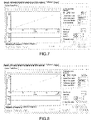
- the standard calibration curves used to quantify the analyzed arsenic and lead were prepared in the range of 1.0-10 ppm. As can be seen in FIGS. 3 and 4 , the prepared standard calibration curves had a correlation coefficient (R) of 0.999 or more, indicating that they had good linearity.
- the vessel was cooled to room temperature, and then the lid was carefully opened, and the decomposed material was transferred into a 100 mL flask.
- the vessel and the lid were washed with a suitable amount of distilled water, and distilled water was added to the decomposed material to a volume of 100 mL. If a precipitate existed, it was used after filtration.
- the resulting material was diluted 5-fold with distilled water, thereby preparing an analytical sample solution.
- a blank sample was prepared using 7 mL of nitric acid and 2 mL in the same manner as the preparation of the analytical sample solution.
- Atomic weight 206, 207 and 208 (selected and detected in a range in which there was no interference); Plasma gas: argon (99.99 v/v% or more).
- Wavelength 193.759 nm (other characteristic wavelengths of arsenic may be selected if an interfering element is contained);
- Plasma gas argon (99.99 v/v% or more).
- Table 5 shows a comparison between the results of XRF analysis of lead and arsenic in the analytical samples (liquid cosmetic raw materials 1 to 5) according to the Example of the present invention and the results of ICP-MS analysis of lead and arsenic according to the Comparative Example.
- Sample Content (ppm) Lead Arsenic XRF ICP-MS XRF ICP-MS Liquid cosmetic raw material 1 1.3 1.5 0 0 Liquid cosmetic raw material 2 2.2 1.8 0.8 1.0 Liquid cosmetic raw material 3 0 0 0 0 Liquid cosmetic raw material 4 0 0 0.6 0.3 Liquid cosmetic raw material 5 0.9 0 0 0 0 0
- Example 2-2 Analysis of Antimony and Cadmium in Liquid Samples
- Example 1-1 Using the optimum conditions selected in Example 1-1, the following experiments were performed in order to actually analyze lead present in various samples.
- the X-ray fluorescence analyzer used in this Example was Xepos HE (Specto), and data processing was performed using X-Lap Pro program (Specto).
- antimony As antimony (INCI name: antimony; atomic symbol: Pb) used in a liquid standard sample, antimony manufactured by Sigma was used as a concentration of 1000 ppm, and as cadmium (INCI name: cadmium; atomic symbol: Cd) used in a liquid standard sample, cadmium manufactured by Sigma was used as a concentration of 1000 ppm.
- cadmium As antimony (INCI name: antimony; atomic symbol: Pb) used in a liquid standard sample, antimony manufactured by Sigma was used as a concentration of 1000 ppm, and as cadmium (INCI name: cadmium; atomic symbol: Cd) used in a liquid standard sample, cadmium manufactured by Sigma was used as a concentration of 1000 ppm.
- liquid cosmetic raw material 1 placed in a sample cup without bubbles was used as an analytical sample.
- 0.1 mL, 0.5 mL and 1 mL of the above-described antimony standard sample were placed in 100 mL flasks, and then dispersed with 5-10% nitric acid solution according to marked lines, thereby preparing standard samples having different concentrations of 1 ppm, 5 ppm and 10 ppm.
- Energy peaks were measured on the analytical sample and the standard samples by an X-ray fluorescence analyzer under the following conditions, and based on the measured energy peaks, a standard calibration curve was determined using the linear squares method of Equation 1. According to a standard calibration method using the determined standard calibration curve, the concentration of antimony in the analytical sample was measured. This procedure was also performed on liquid cosmetic raw materials 2 to 6 in the same manner.
- the concentration of cadmium was analyzed in the same manner as the analysis of antimony, except that a standard cadmium sample was used instead of the antimony standard sample.
- the standard calibration curves used to quantify the analyzed antimony and cadmium were prepared in the range of 1.0-10 ppm. As can be seen in FIGS. 5 and 6 , the prepared standard calibration curves had a correlation coefficient (R) of 0.999 or more, indicating that they had good linearity.
- Atomic weight 206, 207 and 208 (selected and detected in a range in which there was no interference); Plasma gas: argon (99.99 v/v% or more).
- Wavelength 193.759 nm (other characteristic wavelengths of arsenic may be selected if an interfering element is contained);
- Plasma gas argon (99.99 v/v% or more).
- Table 7 shows a comparison between the results of XRF analysis of antimony and cadmium in the analytical samples (liquid cosmetic raw materials 1 to 5) according to the Example of the present invention and the results of ICP-MS analysis of antimony and cadmium according to the Comparative Example.
- Sample Content (ppm) Antimony Cadmium XRF ICP-MS XRF ICP-MS Liquid cosmetic raw material 1 0 0 0 0 Liquid cosmetic raw material 2 0 0 0.9 0.5 Liquid cosmetic raw material 3 0 0 0 0 Liquid cosmetic raw material 4 0 0 0 0 Liquid cosmetic raw material 5 0 0 0.5 0
- a blank sample does not contain lead, arsenic, antimony or cadmium and that other elements are not detected in the blank sample at positions similar to an energy level at which lead, arsenic, antimony or cadmium is detected. Analysis was performed in order to select a blank sample for powder sample measurement, which satisfies such requirements. As a result, it was found that talc would be suitable for use as a blank sample, because lead, arsenic, antimony or cadmium was not detected therein.
- Example 1-2 Using the optimum conditions selected in Example 1-2, the following experiments were performed in order to actually analyze lead present in various samples.
- the X-ray fluorescence analyzer used in this Example was Xepos HE (Specto), and data processing was performed using X-Lap Pro program (Specto).
- lead monoxide (INCI name: lead monoxide; chemical formula: PbO) used in a powdery standard sample
- arsenic trioxide (INCI name: arsenic trioxide; chemical formula: As 2 O 3 ) used in a powdery standard sample
- arsenic trioxide manufactured by ISHIZU PARM was used.
- the concentration of arsenic was analyzed in the same manner as the analysis of lead, except that a standard arsenic sample was used instead of the lead standard sample.
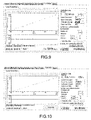
- the standard calibration curves used to quantify the analyzed arsenic and lead were prepared in the range of 1.0-10 ppm. As can be seen in FIGS. 7 and 8 , the prepared standard calibration curves had a correlation coefficient (R) of 0.999 or more, indicating that they had good linearity.
- the vessel was cooled to room temperature, and then the lid was carefully opened, and the decomposed material was transferred into a 100 mL flask.
- the vessel and the lid were washed with a suitable amount of distilled water, and distilled water was added to the decomposed material to a volume of 100 mL. If a precipitate existed, it was used after filtration.
- the resulting material was diluted 5-fold with distilled water, thereby preparing an analytical sample solution.
- a blank sample was prepared using 7 mL of nitric acid and 2 mL in the same manner as the preparation of the analytical sample solution.
- Atomic weight 206, 207 and 208 (selected and detected in a range in which there was no interference); Plasma gas: argon (99.99 v/v% or more).
- Wavelength 193.759 nm (other characteristic wavelengths of arsenic may be selected if an interfering element is contained);
- Plasma gas argon (99.99 v/v% or more).
- Table 11 shows a comparison between the results of XRF analysis of lead and arsenic in the analytical samples (powdery cosmetic raw materials 1 to 5) according to the Example of the present invention and the results of ICP-MS analysis of lead and arsenic according to the Comparative Example.
- Sample Content (ppm) Lead Arsenic XRF ICP-MS XRF ICP-MS Powdery cosmetic raw material 1 5.9 5.5 1.1 1.2 Powdery cosmetic raw material 2 10.4 10.1 0 0 Powdery cosmetic raw material 3 2.1 2.3 0 0 Powdery cosmetic raw material 4 0 0 1.3 1.1 Powdery cosmetic raw material 5 7.1 7.4 0 0
- Example 1-2 Using the optimum conditions selected in Example 1-2, the following experiments were performed in order to actually analyze the antimony or cadmium present in various samples.
- the X-ray fluorescence analyzer used in this Example was Xepos HE (Specto), and data processing was performed using X-Lap Pro program (Specto).
- antimony As antimony (INCI name: antimony; atomic symbol: Sb) used in a powdery standard sample, antimony manufactured by Wako was used, and as cadmium oxide (INCI name: cadmium oxide; chemical formula: CdO) used in a powdery standard sample, arsenic trioxide manufactured by Aldrich was used.
- cadmium oxide As antimony (INCI name: antimony; atomic symbol: Sb) used in a powdery standard sample, antimony manufactured by Wako was used, and as cadmium oxide (INCI name: cadmium oxide; chemical formula: CdO) used in a powdery standard sample, arsenic trioxide manufactured by Aldrich was used.
- the concentration of cadmium was analyzed in the same manner as the analysis of antimony, except that a cadmium standard sample was used instead of the antimony standard sample.
- the standard calibration curves used to quantify the analyzed antimony and cadmium were prepared in the range of 1.0-10 ppm. As can be seen in FIGS. 9 and 10 , the prepared standard calibration curves had a correlation coefficient (R) of 0.999 or more, indicating that they had good linearity.
- the vessel was cooled to room temperature, and then the lid was carefully opened, and the decomposed material was transferred into a 100 mL flask.
- the vessel and the lid were washed with a suitable amount of distilled water, and distilled water was added to the decomposed material to a volume of 100 mL. If a precipitate existed, it was used after filtration.
- the resulting material was diluted 5-fold with distilled water, thereby preparing an analytical sample solution.
- a blank sample was prepared using 7 mL of nitric acid and 2 mL in the same manner as the preparation of the analytical sample solution.
- Atomic weight 206, 207 and 208 (selected and detected in a range in which there was no interference); Plasma gas: argon (99.99 v/v% or more).
- Wavelength 193.759 nm (other characteristic wavelengths of arsenic may be selected if an interfering element is contained);
- Table 15 shows a comparison between the results of XRF analysis of antimony and cadmium in the analytical samples (powdery cosmetic raw materials 1 to 5) according to the Example of the present invention and the results of ICP-MS analysis of antimony and cadmium according to the Comparative Example.
- Sample Content (ppm) Antimony Cadmium XRF ICP-MS XRF ICP-MS Powdery cosmetic raw material 1 0 0 0 0 Powdery cosmetic raw material 2 0 0 0 0 Powdery cosmetic raw material 3 0 0 1.73 1.7 Powdery cosmetic raw material 4 1.86 1.6 0 0 Powdery cosmetic raw material 5 0 0 0 0 0
Landscapes
- Chemical & Material Sciences (AREA)
- Health & Medical Sciences (AREA)
- Life Sciences & Earth Sciences (AREA)
- General Health & Medical Sciences (AREA)
- Analytical Chemistry (AREA)
- Biochemistry (AREA)
- Physics & Mathematics (AREA)
- General Physics & Mathematics (AREA)
- Immunology (AREA)
- Pathology (AREA)
- Analysing Materials By The Use Of Radiation (AREA)
- Investigating Or Analyzing Non-Biological Materials By The Use Of Chemical Means (AREA)
- Engineering & Computer Science (AREA)
- Food Science & Technology (AREA)
- Medicinal Chemistry (AREA)
Abstract
Description
- The present invention relates to a method for quantitative analysis of heavy metals, particularly lead, arsenic, antimony or cadmium.
- This application claims the benefit of the filing dates of Korean Patent Application Nos.
10-2014-0152128 10-2014-0152129 10-2014-0152130 10-2014-0152131 - In recent years, it has been reported that the strong toxicity of heavy metal-containing compounds and the accumulation of these heavy metals in the internal organs cause various fatal diseases. For this reason, the use of heavy metals has been strictly restricted.
- Trace heavy metals contained in cosmetic products are those released from raw materials used for the production of the cosmetic products, and are problematic when they are present in trace amounts that do not harm human health. However, if cosmetic products contain excessive amounts of heavy metals such as lead, arsenic, antimony, cadmium, mercury, cobalt and nickel, these heavy metals can cause serious diseases such as skin diseases.
- The allowable contents of lead, arsenic, mercury, antimony and cadmium in cosmetic products have been restricted, but there are no particular restrictions on other heavy metals. However, the incidence of allergy by heavy metals such as nickel and cobalt has gradually increased, and thus the use of these heavy metals has been gradually limited.
- Magnesium, copper, iron and zinc were approved for use in cosmetic products, because they ensure safety for human use depending on their oxidation state or molecular structure. However, the use of such heavy metals in orally inhalable products has been restricted.
- Due to the reports of studies on allergy caused by heavy metals and heavy metal toxicity as described above, consumers demand safer products, and thus there is an urgent needed to ensure the safety of cosmetic products against heavy metals.
- However, as is known in the analysis field, it is difficult to analyze heavy metals dissolved in complex matrices such as cosmetic products. Analysis instruments that have conventionally been used include atomic absorption spectrometers (AAS) and inductively coupled plasma (ICP) analyzers. However, methods employing these analysis instruments require a long pretreatment time and use strong acids such as hydrofluoric acid, and for this reason, these methods are unsuitable for use in the quality control of raw materials and products, and thus the use thereof is limited.
- Patents related to the X-ray fluorescence (XRF) analysis of heavy metals have already been reported. However, these patents mention neither technology relating to the preparation of standard samples nor technology relating to matrix correction methods. Thus, when the technologies disclosed in these patents were applied to complex matrices containing organic materials and various inorganic metals, such as cosmetic products, accurate analysis was difficult and trace quantitative analysis was impossible, due to errors caused by matrix differences and measurement errors caused by interference.
- Accordingly, the present inventors have developed a method of pretreating a cosmetic sample for analysis so as to have a matrix similar to a standard sample, and as a result, have developed a simple and convenient quantitative analysis method capable of accurately analyzing trace heavy metals such as lead, arsenic, antimony or cadmium, which are present in various types of samples, by an X-ray fluorescence analysis method, thereby completing the present invention.
- Therefore, it is an object of the present invention to provide an optimal X-ray fluorescence analysis method capable of analyzing tract lead, arsenic, antimony or cadmium, which is present in a liquid sample, in a simple, convenient, quick and accurate manner.
- In accordance with a first aspect of the present invention, there is provided a method for quantitative analysis of heavy metals, the method comprising:
- a step of preparing a nitric acid solution that is a blank liquid standard sample;
- a step of preparing two or more liquid standard samples having different concentrations by adding lead, arsenic, antimony or cadmium to the nitric acid solution;
- a step of selecting an interfering element, which has an energy level overlapping with that of an X-ray spectrum detected by irradiating X-rays to lead, arsenic, antimony or cadmium, from among elements detected by irradiating X-rays to an analytical sample;
- a deconvolution step of correcting the detected energy peak of lead, arsenic, antimony or cadmium, among energy peaks detected by irradiating X-rays to the liquid standard samples having different concentrations in the step of selecting the interfering element, from a detected energy peak of the overlapping interfering element;
- a step of irradiating X-rays to each of the prepared liquid standard samples having different concentrations, and then performing the deconvolution step, thereby preparing a standard calibration curve; and
- a step of irradiating X-rays to the analytical sample to detect an energy peak, and then measuring the concentration of lead, arsenic, antimony or cadmium in the analytical sample based on the detected energy peak value of the analytical sample by the prepared standard calibration curve according to a standard calibration method.
- In accordance with a second aspect of the present invention, there is provided a method for quantitative analysis of heavy metals, the method comprising:
- a step of preparing talc powder as a blank powdery standard sample;
- a step of preparing two or more powdery standard samples having different concentrations by adding lead, arsenic, antimony or cadmium to the talc powder;
- a step of selecting an interfering element, which has an energy level overlapping with that of an X-ray spectrum detected by irradiating X-rays to lead, arsenic, antimony or cadmium, from among elements detected by irradiating X-rays to an analytical sample;
- a deconvolution step of correcting the detected energy peak of lead, arsenic, antimony or cadmium, among energy peaks detected by irradiating X-rays to the powdery standard samples having different concentrations in the step of selecting the interfering element, from a detected energy peak of the overlapping interfering element;
- a step of irradiating X-rays to each of the prepared powdery standard samples having different concentrations, and then performing the deconvolution step, thereby preparing a standard calibration curve; and
- a step of irradiating X-rays to the analytical sample to detect an energy peak, and then measuring the concentration of lead, arsenic, antimony or cadmium in the analytical sample based on the detected energy peak value of the analytical sample by the prepared standard calibration curve according to a standard calibration method.
- The method for quantitative analysis of heavy metals according to the present invention requires no pretreatment of sample, and thus can achieve analysis in a simple, convenient and quick manner. Furthermore, the analysis method according to the present invention can accurately analyze trace heave metals through preparation of a calibration curve based on prepared standard samples, selection of the optimum target, and elimination of the effect of an interfering element. In addition, the analysis method according to the present invention can simultaneously analyze lead, arsenic, antimony and cadmium in a sample, even if the amount of the sample is trace or the formulation of the sample is liquid or powder. Thus, the analysis method according to the present invention can effectively and quantitatively analyze lead, arsenic, antimony and cadmium, which should not be contained in foods and cosmetic products. Accordingly, the method according to the present invention can be effectively used for quality evaluation of foods and cosmetic products to provide better quality products to consumers.
-
-
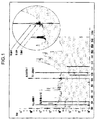
FIG. 1 shows X-ray spectra measured by irradiating X-rays to liquid standard samples having different concentrations of lead and arsenic according to Example 2-1. The X-axis of the spectrum indicates energy level (keV), and the Y-axis indicates energy intensity. The L-alpha energy level of lead is 10.550 keV, and the K-alpha energy level of arsenic is 10.542 keV. -
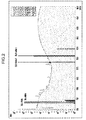
FIG. 2 shows X-ray spectra measured by irradiating X-rays to liquid standard samples having different concentrations of antimony and cadmium according to Example 2-2. The X-axis of the spectrum indicates energy level (keV), and the Y-axis indicates energy intensity. The K-alpha energy level of antimony is 26.355 keV, and the K-alpha energy level of cadmium is 23.170 keV. -
FIG. 3 shows a standard calibration curve for lead, prepared according to Example 2-1. The X-axis indicates the lead concentration (ppm) arithmetically calculated based on the amount of lead added to a lead standard sample, and the Y-axis indicates the concentration (ppm) of lead in the standard sample, calculated according to the step of correcting the absorption effect of an interfering element in the present invention. -
FIG. 4 shows a standard calibration curve for arsenic, prepared according to Example 2-1. The X-axis indicates the arsenic concentration (ppm) arithmetically calculated based on the amount of arsenic added to an arsenic standard sample, and the Y-axis indicates the concentration (ppm) of arsenic in the standard sample, calculated according to the step of correcting the absorption effect of an interfering element in the present invention. -
FIG. 5 shows a standard calibration curve for antimony, prepared according to Example 2-2. The X-axis indicates the antimony concentration (ppm) arithmetically calculated based on the amount of antimony added to an antimony standard sample, and the Y-axis indicates the concentration (ppm) of antimony in the standard sample, calculated according to the step of correcting the absorption effect of an interfering element in the present invention. -
FIG. 6 shows a standard calibration curve for cadmium, prepared according to Example 2-2. The X-axis indicates the cadmium concentration (ppm) arithmetically calculated based on the amount of cadmium added to a cadmium standard sample, and the Y-axis indicates the concentration (ppm) of lead in the standard sample, calculated according to the step of correcting the absorption effect of an interfering element in the present invention. -
FIG. 7 shows a standard calibration curve for lead, prepared according to Example 2-3. The X-axis indicates the lead concentration (ppm) arithmetically calculated based on the amount of lead added to a lead standard sample, and the Y-axis indicates the concentration (ppm) of lead in the standard sample, calculated according to the step of correcting the absorption effect of an interfering element in the present invention. -
FIG. 8 shows a standard calibration curve for arsenic, prepared according to Example 2-3. The X-axis indicates the arsenic concentration (ppm) arithmetically calculated based on the amount of arsenic added to an arsenic standard sample, and the Y-axis indicates the concentration (ppm) of arsenic in the standard sample, calculated according to the step of correcting the absorption effect of an interfering element in the present invention. -
FIG. 9 shows a standard calibration curve for antimony, prepared according to Example 2-4. The X-axis indicates the antimony concentration (ppm) arithmetically calculated based on the amount of antimony added to an antimony standard sample, and the Y-axis indicates the concentration (ppm) of antimony in the standard sample, calculated according to the step of correcting the absorption effect of an interfering element in the present invention. -
FIG. 10 shows a standard calibration curve for cadmium, prepared according to Example 2-4. The X-axis indicates the cadmium concentration (ppm) arithmetically calculated based on the amount of cadmium added to a cadmium standard sample, and the Y-axis indicates the concentration (ppm) of lead in the standard sample, calculated according to the step of correcting the absorption effect of an interfering element in the present invention. -
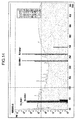
FIG. 11 shows X-ray spectra obtained by correcting values, measured by irradiating X-rays to liquid cosmetic raw materials, according to the step of correcting the absorption effect of an interfering element, in Example 2-1. The X-axis of the spectrum indicates energy level (keV), and the Y-axis indicates energy intensity. -
FIG. 12 shows X-ray spectra obtained by correcting values, measured by irradiating X-rays to liquid cosmetic raw materials, according to the step of correcting the absorption effect of an interfering element, in Example 2-2. The X-axis of the spectrum indicates energy level (keV), and the Y-axis indicates energy intensity. -
FIG. 13 shows X-ray spectra obtained by correcting values, measured by irradiating X-rays to powdery cosmetic raw materials, according to the step of correcting the absorption effect of an interfering element, in Example 2-3. The X-axis of the spectrum indicates energy level (keV), and the Y-axis indicates energy intensity. -
FIG. 14 shows X-ray spectra obtained by correcting values, measured by irradiating X-rays to powdery cosmetic raw materials, according to the step of correcting the absorption effect of an interfering element, in Example 2-4. The X-axis of the spectrum indicates energy level (keV), and the Y-axis indicates energy intensity. - As used herein, the term "lead" means a post-transition metal element of group 14 of the periodic table, which has an atomic symbol of Pb and an atomic number of 82.
- As used herein, the term "arsenic" means a semi-metal element of group 15 of the periodic table, which has an atomic symbol of As and an atomic number of 33.
- As used herein, the term "antimony" means a semi-metal element of group 15 of the periodic table, which has an atomic symbol of Sb and an atomic number of 51.
- As used herein, the term "cadmium" means a transition metal element of group 12 of the periodic table, which has an atomic symbol of Cd and an atomic number of 48.
- All the steps of the method for quantitative analysis of heavy metals according to the present invention may be selectively and independently performed with respect to any one heavy metal among lead, arsenic, antimony and cadmium. For example, during quantitative analysis of lead, the step regarding arsenic, antimony and cadmium may not be performed, and during quantitative analysis of arsenic, the step regarding lead, antimony and cadmium may not be performed, and during quantitative analysis of antimony, the step regarding lead, arsenic and cadmium may not be performed, and during quantitative analysis of cadmium, the step regarding lead, arsenic and antimony may not be performed.
- As used herein, the term "analytical sample" means a certain amount of a sample taken from the material to be analyzed in order to measure the concentration of lead, arsenic, antimony or cadmium in the material to be analyzed.
- As used herein, the term "blank sample" means a sample that does not contain lead, arsenic, antimony or cadmium.
- As used herein, the term "standard sample" means a sample obtained by adding a fixed amount of lead, arsenic, antimony or cadmium to a blank sample so as to enable the concentration of lead, arsenic, antimony or cadmium to be arithmetically calculated.
- As used herein, the term "standard samples having different concentrations" means two or more standard samples having different concentrations of lead, arsenic, antimony or cadmium.
- As used herein, the term "energy peak" means an energy intensity value corresponding to the energy level of an X-ray spectrum which is detected when X-rays are irradiated to a sample.
- As used herein, "standard calibration curve" means a two-dimensional relationship between a concentration value, arithmetically calculated on standard samples having different concentrations, and an energy peak intensity value corresponding to the energy level of lead, arsenic, antimony or cadmium, detected by irradiating X-rays. The standard calibration curve can be determined by a linear or curve approximation.
- According to an embodiment of the present invention, the deconvolution step further comprises a step of correcting the absorption effect of an interfering element to remove an energy intensity value corresponding to an energy level range in which the detected energy peak of lead, arsenic, antimony or cadmium overlaps with the energy peak of a selected interfering element.
- The step of correcting the absorption effect of the interfering element comprises correcting a matrix effect in which an energy value measured by irradiating X-rays to a sample is changed due to elements other than lead, arsenic, antimony or cadmium to affect the measurement of concentration of lead, arsenic, antimony or cadmium in the sample, so that the analysis method of the present invention can accurately measure the concentration of lead, arsenic, antimony or cadmium in the sample.
- According to an embodiment of the present invention, the step of correcting the absorption effect of the interfering element further comprises a step of correcting the detected energy peak of lead, arsenic, antimony or cadmium by the Lucas-Tooth/Price algorithm.
- According to an embodiment of the present invention, the step of correcting the detected energy peak of lead, arsenic, antimony or cadmium by the Lucas-Tooth/Price algorithm further comprises a step of collecting the detected energy peak of lead, arsenic, antimony or cadmium by the following Equation 1:

- According to an embodiment of the present invention, Bi, Ki and aij in
Equation 1 are used to determine the detected energy peak values of two or more liquid standard samples having different concentrations by the linear-squares method. - In the present invention, the nitric acid solution that is used as the blank liquid standard sample contains neither the lead, arsenic, antimony or cadmium to be analyzed, nor an element having an energy level near the energy level of each of lead, arsenic, antimony and cadmium, and thus causes no interference during quantitative analysis of lead, arsenic, antimony or cadmium in a sample. Thus, the nitric acid solution is suitable as a blank sample.
- According to an embodiment of the present invention, the concentration of the nitric acid solution that is used in the step of preparing the liquid standard sample and the step of preparing the liquid standard samples having different concentrations is 5-10%. If the concentration of the nitric acid solution is lower than 5%, lead, arsenic, antimony or cadmium cannot be dissolved therein, and if the concentration of the nitric acid solution is higher than 10%, the nitric acid solution can dissolve either the material of a container for the sample or a film coated on the container surface.
- In the present invention, talc powder that is used as the blank liquid standard sample contains neither the lead, arsenic, antimony or cadmium to be analyzed, nor an element having an energy level near the energy level of each of lead and arsenic, and thus causes no interference during quantitative analysis of lead or arsenic in a sample. Thus, the talc powder is suitable as a blank sample.
- According to an embodiment of the present invention, detection of the energy peak in the deconvolution step and the step of measuring the concentration of lead, arsenic, antimony or cadmium in the sample is performed by an X-ray fluorescence analysis method.
- According to an embodiment of the present invention, the X-rays that are used in the deconvolution step and the step of measuring the concentration of lead, arsenic, antimony or cadmium in the sample are irradiated to the analytical sample or the standard sample through a polarizing plate comprising any one or more selected from the group consisting of molybdenum, aluminum, aluminum oxide, palladium, titanium, zirconium and cobalt. The background can be corrected using an energy peak value corresponding to the material of the polarizing plate, and when the polarizing plate comprises molybdenum, the X-ray spectrum measured will have high sensitivity.
- According to an embodiment of the present invention, the method for quantitative analysis of heavy metals is a method for quantitative analysis of lead, and the interfering element is any one or more selected from the group consisting of thallium, arsenic, bismuth and polonium.
- According to an embodiment of the present invention, in the method for quantitative analysis of lead, the interfering element thallium has a peak L-alpha energy level of 10.267 keV; the interfering element arsenic has a peak K-alpha energy level of 10.542 keV; the interfering element bismuth has a peak L-alpha energy level of 10.837 keV; and the interfering element polonium has a peak L-alpha energy level of 11.129 keV.
- According to an embodiment of the present invention, the method for quantitative analysis of heavy metals is a method for quantitative analysis of arsenic, and the interfering element is any one or more selected from the group consisting of gallium, germanium, lead and selenium.
- According to an embodiment of the present invention, in the method for quantitative analysis of arsenic, the interfering element gallium has a peak K-alpha energy level of 9.250 keV; the interfering element germanium has a peak K-alpha energy level of 9.885 keV; the interfering element lead has a peak L-alpha energy level of 10.550 keV; and the interfering element selenium has a peak K-alpha energy level of 11.220 keV.
- According to an embodiment of the present invention, the method for quantitative analysis of heavy metals is a method for quantitative analysis of antimony, and the interfering element is any one or more selected from the group consisting of tin, tellurium and iodine.
- According to an embodiment of the present invention, in the method for quantitative analysis of antimony, the interfering element thallium has a peak K-alpha energy level of 25.267 keV; the interfering element tellurium has a peak K-alpha energy level of 27.468 keV; and the interfering element iodine has a peak K-alpha energy level of 28.607 keV.
- According to an embodiment of the present invention, the method for quantitative analysis of heavy metals is a method for quantitative analysis of cadmium, and the interfering element is any one or more selected from the group consisting of silver, indium and tin.
- According to an embodiment of the present invention, in the method for quantitative analysis of cadmium, the interfering element silver has a peak K-alpha energy level of 22.159 keV; the interfering element indium has a peak K-alpha energy level of 24.206 keV; and the interfering element tin has a peak K-alpha energy level of 25.267 keV.
- According to an embodiment of the second aspect of the present invention, the method for quantitative analysis of heavy metals is a method for quantitative analysis of lead, and lead in the step of preparing the standard samples having different concentrations is an oxide of lead.
- Specifically, the oxide of lead may be lead monoxide (PbO).
- According to an embodiment of the second aspect of the present invention, the method for quantitative analysis of heavy metals is a method for quantitative analysis of arsenic, and arsenic in the step of preparing the standard samples having different concentrations is an oxide of arsenic.
- Specifically, the oxide of arsenic may be arsenic trioxide (As2O3).
- According to an embodiment of the present invention, the analytical sample is a cosmetic composition or a food composition.
- According to an embodiment of the first aspect of the present invention, the cosmetic composition may be a lotion, ointment, gel or cream formulation, and is not specifically limited, as long as it is in a liquid form.
- According to an embodiment of the first aspect of the present invention, the food composition may be a beverage, and is not specifically limited, as long as it is in a liquid form.
- According to an embodiment of the second aspect of the present invention, the cosmetic composition may be a composition contained in eye shadow, nail lacquer or mud pack, and is not specifically limited, as long as it is in a powder form.
- According to an embodiment of the second aspect of the present invention, the food composition is specifically limited, as long as it is in a powder form.
- According to an embodiment of the present invention, the step of measuring the concentration of lead, arsenic, antimony or cadmium in the analytical sample is performed without pretreatment of the analytical sample.
- According to an embodiment of the present invention, the correlation coefficient of the prepared standard calibration curve is 0.99 or more.
- Hereinafter, the present invention will be described in further detail with reference to examples. It is to be understood, however, that these examples for illustrative purposes only and are not intended to limit the scope of the present invention.
- In order to highly accurately analyze the lead, arsenic, antimony or cadmium contained in the sample to be analyzed, the following experiments were performed to determine the optimum conditions.
- Methods for analysis of heavy metal contents include wet analysis methods, atomic absorption spectrometry methods and inductively coupled plasma spectrometry methods. These analysis methods are performed by treating a sample with acid to make a solution and quantifying each element in the sample solution. However, these analysis methods have shortcomings in that a process for pretreatment of the sample to be analyzed is complex, the pretreatment time is 5 hours or more, and a highly toxic acid is used, which poses a health risk to the operators. In addition, the wet analysis methods or the atomic absorption spectrometry methods cannot perform simultaneous analysis and also have low accuracy. Thus, these analysis methods are unsuitable for use in quality control.
- For these reasons, the present inventors adopted an X-ray fluorescence analysis method which requires a simple pretreatment method, uses no toxic strong acid, has a short analysis time, and has ensured accuracy.
- In order to prepare a liquid standard sample at a suitable concentration, nitric acid, sulfuric acid, phosphoric acid or the like for use as a blank solution for dilution was tested at various concentrations.
- It is required that a blank sample does not contain lead, arsenic, antimony or cadmium and that other elements are not detected in the blank sample at positions similar to an energy level at which lead, arsenic, antimony or cadmium is detected. The blank sample for liquid sample measurement, which satisfies such requirements, should be able to dissolve a certain amount of lead, arsenic, antimony or cadmium. For XRF analysis, a 5-10% nitric acid solution that does not dissolve the film of a sample cup was used.
- An X-ray fluorescence analyzer can separate elements according to their characteristic energy values, and is based on the principle according to which the pulse height of a detector signal is proportional to X-ray photon energy having a correlation with wavelength. Based on this principle, the X-ray fluorescence analyzer can quantify each element from the pulse of an energy level according to the concentration of the element.
- When a sample containing heavy metals is exposed to X-rays, an electron in the K shell of each element is emitted, and an electron in the L shell moves to the K shell for orbital stabilization. At this time, characteristic X-rays corresponding to the difference in energy level between the two shells are generated, and thus each of the elements can be quantified from the characteristic energy values of the K shell, L shell, M shell... of each element.
- However, if the matrix of the sample is complex, the overlapping of X-ray peaks will occur, thus reducing the accuracy of analysis.
- Technology for eliminating the effect of such X-ray overlapping is deconvolution. Single elements have various energy values, including Kα, Kβ, Kγ, Lα, Lβ, Lγ, Mα, Mβ, Mγ, etc. The ratio of these energy intensities is constant. In other words, when the Kα energy intensity is 10, Kβ is 6, Kγ is 2, and Lα is 4, indicating that each element has characteristic energy intensity values.
- If the Kα of Ti overlaps with the Kα of V, the Kβ or Lα cannot overlap. In this case, when the Kα energy value of V is removed from the overlapping Kα of Ti by deconvolution after calculating the energy intensity of V with the Kβ or Lα energy level, the energy value of only Ti can be obtained, and thus the matrix effect can be corrected.
- To select potential interfering elements in order to apply the deconvolution described in Example 2-1, all elements contained in samples having a complex matrix were scanned. The energy range of lead, arsenic, antimony or cadmium to be analyzed was determined to select elements having high interference potential.
- After setting the conditions as described above, lead and arsenic in the samples to be analyzed were analyzed using an X-ray fluorescence analyzer. Standard samples of lead and arsenic and analytical samples were used for correction of backgrounds with molybdenum crystal, and interfering elements were selected in order to eliminate the effect of a matrix. Lead and arsenic contained in samples were measured using the Lucas-Tooth model with deconvolution for 1000 seconds per sample. In the following Examples of the present invention, the analysis of lead or arsenic was performed under the conditions shown in Table 1 below.
[Table 1] X-ray voltage 60 W Polarizing crystal Molybdenum Detector SDD silicon drift detector (Spectral resolution(FWHM) at Mn K-alpha ≤ 160 eV) Measurement time 1000 seconds Correction model Lucas-Tooth/Price Model - After setting the conditions as described above, lead and arsenic in the samples to be analyzed were analyzed using an X-ray fluorescence analyzer. Standard samples of antimony and cadmium and analytical samples were used for correction of backgrounds with molybdenum crystal, and interfering elements were selected in order to eliminate the effect of a matrix. Antimony and cadmium contained in samples were measured using the Lucas-Tooth model with deconvolution for 1000 seconds per sample. In the following Examples of the present invention, the analysis of antimony or cadmium was performed under the conditions shown in Table 2 below.
[Table 2] X-ray voltage 60 W Polarizing crystal Aluminum oxide Detector SDD silicon drift detector (Spectral resolution (FWHM) at Mn K-alpha ≤ 160 eV) Measurement time 1000 seconds Correction model Lucas-Tooth/Price Model - Using the optimum conditions selected in Example 1-1, the following experiments were performed in order to actually analyze lead present in various samples.
- The X-ray fluorescence analyzer used in this Example was Xepos HE (Specto), and data processing was performed using X-Lap Pro program (Specto).
- As lead (INCI name: lead; atomic symbol: Pb) used in a liquid standard sample, lead manufactured by Sigma was used as a concentration of 1000 ppm, and as arsenic (INCI name: arsenic; atomic symbol: As) used in a liquid standard sample, arsenic manufactured by Sigma was used as a concentration of 1000 ppm.
- On liquid cosmetic raw materials, a method for quantitative analysis of lead and arsenic according to an embodiment of the present invention was performed.
- First, about 6 mL of liquid cosmetic
raw material 1 placed in a sample cup without bubbles was used as an analytical sample. In addition, 0.1 mL, 0.5 mL and 1 mL of the above-described lead standard sample were placed in 100 mL flasks, and then dispersed with 5-10% nitric acid solution according to marked lines, thereby preparing standard samples having different concentrations of 1 ppm, 5 ppm and 10 ppm. Energy peaks were measured on the analytical sample and the standard samples by an X-ray fluorescence analyzer under the following conditions, and based on the measured energy peaks, a standard calibration curve was determined using the linear squares method ofEquation 1. According to a standard calibration method using the determined standard calibration curve, the concentration of lead in the analytical sample was analyzed. This procedure was also performed on liquid cosmeticraw materials 2 to 6 in the same manner. - In addition, the concentration of arsenic was analyzed in the same manner as the analysis of lead, except that a standard arsenic sample was used instead of the lead standard sample.
- The spectra of liquid cosmetic
raw materials 1 to 5, which resulted from the analysis, are shown inFIG. 11 , and the results of measuring the concentrations of lead and arsenic in liquid cosmeticraw materials 1 to 5 are shown in Table 3 below.[Table 3] Sample Concentration (ppm) Lead Arsenic Liquid cosmetic raw material 11.3 0 (trade name: Solaveil CT100, manufactured by Croda) Liquid cosmetic raw material 22.2 0.8 (trade name: VEGFTa Red, manufactured by Gattefosse) Liquid cosmetic raw material 3 0 0 (trade name: VE2ETOL, manufactured by Bioland) Liquid cosmetic raw material 40 0.6 (trade name: Dekanex2008FG, manufactured by IMCD) Liquid cosmetic raw material 50.9 0 (trade name: Hydra cires, manufactured by Gattefosse) - The standard calibration curves used to quantify the analyzed arsenic and lead were prepared in the range of 1.0-10 ppm. As can be seen in
FIGS. 3 and 4 , the prepared standard calibration curves had a correlation coefficient (R) of 0.999 or more, indicating that they had good linearity. - (1) Preparation of analytical sample solution: 0.2 g of liquid cosmetic
raw material 1 as an analytical sample was placed in a vessel made of Teflon so as not to come into contact with the wall of the vessel. To decompose the analytical sample, 7 mL of nitric acid and 2 mL of hydrofluoric acid were placed in the vessel which was then covered with a lid and mounted in a microwave oven, and the analytical sample was decomposed under the followingoperating conditions 1 until it became colorless or yellow. The vessel was cooled to room temperature, and then the lid was opened. 20 mL of diluted (5→100) boric acid was placed in the vessel which was then covered with the lid mounted in the microwave oven, and fluorine was inactivated under the followingoperating conditions 2. The vessel was cooled to room temperature, and then the lid was carefully opened, and the decomposed material was transferred into a 100 mL flask. The vessel and the lid were washed with a suitable amount of distilled water, and distilled water was added to the decomposed material to a volume of 100 mL. If a precipitate existed, it was used after filtration. The resulting material was diluted 5-fold with distilled water, thereby preparing an analytical sample solution. In addition, a blank sample was prepared using 7 mL of nitric acid and 2 mL in the same manner as the preparation of the analytical sample solution.[Table 4] Operating conditions 1Operating conditions 2Maximum power: 1000 W Maximum power: 1000 W Peak temperature: 200□ Peak temperature: 180□ Decomposition temperature: about 20 min Decomposition time: about 10 min
(3) Analysis operation: According to the following operating conditions 3, each of the standard solutions was analyzed by inductively coupled plasma mass spectrometry (ICP-MS) to obtain a calibration curve for lead, and the amount of lead in the analytical sample solution was measured using the obtained calibration curve. - Atomic weight: 206, 207 and 208 (selected and detected in a range in which there was no interference);
Plasma gas: argon (99.99 v/v% or more). - (4) The amount of lead in an analytical sample solution was measured in the same manner as described in steps (1) to (3) above, except that each of liquid cosmetic
raw materials 2 to 5 was used instead of liquid cosmeticraw material 1. - (5) The amount of arsenic in an analytical sample solution was measured in the same manner as described in steps (1) to (4) above, except that arsenic was used instead of lead and that the following
operating conditions 4 were used instead of operating conditions 3. - Wavelength: 193.759 nm (other characteristic wavelengths of arsenic may be selected if an interfering element is contained);
Plasma gas: argon (99.99 v/v% or more). - Table 5 below shows a comparison between the results of XRF analysis of lead and arsenic in the analytical samples (liquid cosmetic
raw materials 1 to 5) according to the Example of the present invention and the results of ICP-MS analysis of lead and arsenic according to the Comparative Example.[Table 5] Sample Content (ppm) Lead Arsenic XRF ICP-MS XRF ICP-MS Liquid cosmetic raw material 11.3 1.5 0 0 Liquid cosmetic raw material 22.2 1.8 0.8 1.0 Liquid cosmetic raw material 3 0 0 0 0 Liquid cosmetic raw material 40 0 0.6 0.3 Liquid cosmetic raw material 50.9 0 0 0 - From the results in Table 5 above, it was shown that, compared to the method for ICP-MS analysis of lead or arsenic, the method for analysis for lead or arsenic according to the Example of the present invention was simple and convenient, because there was no pretreatment of the analytical sample, and it could quickly provide results, because the analysis time was short. In addition, it was shown that the analysis method according to the Example of the present invention would be suitable for analysis of samples having various matrices, because it comprises the step of correcting the matrix effect. Furthermore, it was found that the ICP-MS analysis results and the analysis results according to the Example of the present invention all had a relative standard deviation of less than 1%, indicating that the analysis method of the present invention can achieve accurate analysis.
- Using the optimum conditions selected in Example 1-1, the following experiments were performed in order to actually analyze lead present in various samples.
- The X-ray fluorescence analyzer used in this Example was Xepos HE (Specto), and data processing was performed using X-Lap Pro program (Specto).
- As antimony (INCI name: antimony; atomic symbol: Pb) used in a liquid standard sample, antimony manufactured by Sigma was used as a concentration of 1000 ppm, and as cadmium (INCI name: cadmium; atomic symbol: Cd) used in a liquid standard sample, cadmium manufactured by Sigma was used as a concentration of 1000 ppm.
- On liquid cosmetic raw materials, a method for quantitative analysis of antimony and cadmium according to an embodiment of the present invention was performed.
- First, about 6 mL of liquid cosmetic
raw material 1 placed in a sample cup without bubbles was used as an analytical sample. In addition, 0.1 mL, 0.5 mL and 1 mL of the above-described antimony standard sample were placed in 100 mL flasks, and then dispersed with 5-10% nitric acid solution according to marked lines, thereby preparing standard samples having different concentrations of 1 ppm, 5 ppm and 10 ppm. Energy peaks were measured on the analytical sample and the standard samples by an X-ray fluorescence analyzer under the following conditions, and based on the measured energy peaks, a standard calibration curve was determined using the linear squares method ofEquation 1. According to a standard calibration method using the determined standard calibration curve, the concentration of antimony in the analytical sample was measured. This procedure was also performed on liquid cosmeticraw materials 2 to 6 in the same manner. - In addition, the concentration of cadmium was analyzed in the same manner as the analysis of antimony, except that a standard cadmium sample was used instead of the antimony standard sample.
- The spectra of liquid cosmetic
raw materials 1 to 5, which resulted from the analysis, are shown inFIG. 12 , and the results of measuring the concentrations of antimony and cadmium in liquid cosmeticraw materials 1 to 5 are shown in Table 6 below.[Table 6] Sample Concentration (ppm) Antimony Cadmium Liquid cosmetic raw material 10 0 (trade name: Solaveil CT100, manufactured by Croda) Liquid cosmetic raw material 20 0.9 (trade name: VEGFTa Red, manufactured by Gattefosse) Liquid cosmetic raw material 3 0 0 (trade name: VE2ETOL, manufactured by Bioland) Liquid cosmetic raw material 40 0 (trade name: Dekanex2008FG, manufactured by IMCD) Liquid cosmetic raw material 50 0.5 (trade name: Hydra cires, manufactured by Gattefosse) - The standard calibration curves used to quantify the analyzed antimony and cadmium were prepared in the range of 1.0-10 ppm. As can be seen in
FIGS. 5 and 6 , the prepared standard calibration curves had a correlation coefficient (R) of 0.999 or more, indicating that they had good linearity. -
- (1) Preparation of analytical sample solution: 0.2 g of liquid cosmetic
raw material 1 as an analytical sample was placed in a vessel made of Teflon so as not to come into contact with the wall of the vessel. To decompose the analytical sample, 7 mL of nitric acid and 2 mL of hydrofluoric acid were placed in the vessel which was then covered with a lid and mounted in a microwave oven, and the analytical sample was decomposed under the operatingconditions 1 described in Example 2-1 above until it became colorless or yellow. The vessel was cooled to room temperature, and then the lid was opened. 20 mL of diluted (5→100) boric acid was placed in the vessel which was then covered with the lid mounted in the microwave oven, and fluorine was inactivated under the operatingconditions 2 described in Example 2-1 above. The vessel was cooled to room temperature, and then the lid was carefully opened, and the decomposed material was transferred into a 100 mL flask. The vessel and the lid were washed with a suitable amount of distilled water, and distilled water was added to the decomposed material to a volume of 100 mL. If a precipitate existed, it was used after filtration. The resulting material was diluted 5-fold with distilled water, thereby preparing an analytical sample solution. In addition, a blank sample was prepared using 7 mL of nitric acid and 2 mL in the same manner as the preparation of the analytical sample solution. - (2) Preparation of standard sample solutions: Diluted (2→100) nitric acid was added to an antimony standard solution (1000 µg/mL), thereby preparing three or more calibration standard sample solutions having different concentrations. The calibration standard sample solutions contained 1-20 ng of antimony per mL of solution.
- (3) Analysis operation: According to the following operating conditions 3, each of the standard solutions was analyzed by inductively coupled plasma mass spectrometry (ICP-MS) to obtain a calibration curve for antimony, and the amount of antimony in the analytical sample solution was measured using the obtained calibration curve.
- Atomic weight: 206, 207 and 208 (selected and detected in a range in which there was no interference);
Plasma gas: argon (99.99 v/v% or more). - (4) The amount of antimony in an analytical sample solution was measured in the same manner as described in steps (1) to (3) above, except that each of liquid cosmetic
raw materials 2 to 5 was used instead of liquid cosmeticraw material 1. - (5) The amount of cadmium in an analytical sample solution was measured in the same manner as described in steps (1) to (4) above, except that cadmium was used instead of antimony and that the following
operating conditions 4 were used instead of operating conditions 3. - Wavelength: 193.759 nm (other characteristic wavelengths of arsenic may be selected if an interfering element is contained);
Plasma gas: argon (99.99 v/v% or more). - Table 7 below shows a comparison between the results of XRF analysis of antimony and cadmium in the analytical samples (liquid cosmetic
raw materials 1 to 5) according to the Example of the present invention and the results of ICP-MS analysis of antimony and cadmium according to the Comparative Example.[Table 7] Sample Content (ppm) Antimony Cadmium XRF ICP-MS XRF ICP-MS Liquid cosmetic raw material 10 0 0 0 Liquid cosmetic raw material 20 0 0.9 0.5 Liquid cosmetic raw material 3 0 0 0 0 Liquid cosmetic raw material 40 0 0 0 Liquid cosmetic raw material 50 0 0.5 0 - From the results in Table 7 above, it was shown that, compared to the method for ICP-MS analysis of antimony or cadmium, the method for analysis for antimony or cadmium according to the Example of the present invention was simple and convenient, because there was no pretreatment of the analytical sample, and it could quickly provide results, because the analysis time was short. In addition, it was shown that the analysis method according to the Example of the present invention would be suitable for analysis of samples having various matrices, because it comprises the step of correcting the matrix effect. Furthermore, it was found that the ICP-MS analysis results and the analysis results according to the Example of the present invention all had a relative standard deviation of less than 1%, indicating that the analysis method of the present invention can achieve accurate analysis.
- In order to highly accurately analyze the lead, arsenic, antimony or cadmium contained in the sample to be analyzed, the following experiments were performed to determine the optimum conditions.
- The optimum conditions were determined in the same manner as described in Example 1-1 above, except that the blank sample was selected as follows.
- In order to prepare a powdery standard sample with a suitable concentration, whether each of talc, sericite and mica is suitable as a blank sample for dilution was tested.
- It is required that a blank sample does not contain lead, arsenic, antimony or cadmium and that other elements are not detected in the blank sample at positions similar to an energy level at which lead, arsenic, antimony or cadmium is detected. Analysis was performed in order to select a blank sample for powder sample measurement, which satisfies such requirements. As a result, it was found that talc would be suitable for use as a blank sample, because lead, arsenic, antimony or cadmium was not detected therein.
- Using the optimum conditions selected in Example 1-2, the following experiments were performed in order to actually analyze lead present in various samples.
- The X-ray fluorescence analyzer used in this Example was Xepos HE (Specto), and data processing was performed using X-Lap Pro program (Specto).
- As lead monoxide (INCI name: lead monoxide; chemical formula: PbO) used in a powdery standard sample, lead monoxide manufactured by ISHIZU PARM was used, and as arsenic trioxide (INCI name: arsenic trioxide; chemical formula: As2O3) used in a powdery standard sample, arsenic trioxide manufactured by ISHIZU PARM was used.
- On powdery cosmetic raw materials, a method for quantitative analysis of lead and arsenic according to an embodiment of the present invention was performed.
- First, about 6 mL of powdery cosmetic
raw material 1 placed in a sample cup without bubbles was used as an analytical sample. In addition, 0.1 mL, 0.5 mL and 1 mL of the above-described lead standard sample were placed in 100 mL flasks, and then dispersed with 5-10% nitric acid solution according to marked lines, thereby preparing standard samples having different concentrations of 1 ppm, 5 ppm and 10 ppm. Energy peaks were measured on the analytical sample and the standard samples by an X-ray fluorescence analyzer under the following conditions, and based on the measured energy peaks, a standard calibration curve was determined using the linear squares method ofEquation 1. According to a standard calibration method using the determined standard calibration curve, the concentration of lead in the analytical sample was measured. This procedure was also performed on powdery cosmeticraw materials 2 to 6 in the same manner. - In addition, the concentration of arsenic was analyzed in the same manner as the analysis of lead, except that a standard arsenic sample was used instead of the lead standard sample.
- The spectra of powdery cosmetic
raw materials 1 to 5, which resulted from the analysis, are shown inFIG. 13 , and the results of measuring the concentrations of lead and arsenic in powdery cosmeticraw materials 1 to 5 are shown in Table 8 below.[Table 8] Sample Concentration (ppm) Lead Arsenic Powdery cosmetic raw material 15.9 1.1 (trade name: Z-COTE, manufactured by BASF) Powdery cosmetic raw material 210.4 0 (Trade name: BTD-11S2, manufactured by KOBO) Powdery cosmetic raw material 3 2.1 0 (trade name: Sericite JSSA, manufactured by Korea Synthetic Pearl) Powdery cosmetic raw material 40 1.3 (trade name: Argel Red, manufactured by Arclay) Powdery cosmetic raw material 57.1 0 (trade name: Palmac, manufactured by Acidchem) - The standard calibration curves used to quantify the analyzed arsenic and lead were prepared in the range of 1.0-10 ppm. As can be seen in
FIGS. 7 and 8 , the prepared standard calibration curves had a correlation coefficient (R) of 0.999 or more, indicating that they had good linearity. - In addition, the quantitative analysis of lead and arsenic in cosmetic products was performed in the same manner as described in Examples 3-1 to 3-3 above, and the results of the analysis are shown in Table 9 below.
[Table 9] Sample Content (ppm) Lead Arsenic Eye shadow 1 0 0 (trade name: Aritaum Monoeyes, manufactured by Amore Pacific) Eye shadow 20 0 (trade name: Etudehouse Look At My Eyes, manufactured by: Etude) Nail lacquer 10 0 (trade name: Aritaum Modi Nail Glam, manufactured by Amore Pacific) Nail lacquer 20 0 (trade name: Innisfree Eco Nail Color, manufactured by Amore Pacific) - (1) Preparation of analytical sample solution: 0.2 g of powdery cosmetic
raw material 1 as an analytical sample was placed in a vessel made of Teflon so as not to come into contact with the wall of the vessel. To decompose the analytical sample, 7 mL of nitric and 2 mL of hydrofluoric acid were placed in the vessel which was then covered with a lid and mounted in a microwave oven, and the analytical sample was decomposed under the followingoperating conditions 1 until it became colorless or yellow. The vessel was cooled to room temperature, and then the lid was opened. 20 mL of diluted (5→100) boric acid was placed in the vessel which was then covered with the lid mounted in the microwave oven, and fluorine was inactivated under the followingoperating conditions 2. The vessel was cooled to room temperature, and then the lid was carefully opened, and the decomposed material was transferred into a 100 mL flask. The vessel and the lid were washed with a suitable amount of distilled water, and distilled water was added to the decomposed material to a volume of 100 mL. If a precipitate existed, it was used after filtration. The resulting material was diluted 5-fold with distilled water, thereby preparing an analytical sample solution. In addition, a blank sample was prepared using 7 mL of nitric acid and 2 mL in the same manner as the preparation of the analytical sample solution.[Table 10] Operating conditions 1Operating conditions 2Maximum power: 1000 W Maximum power: 1000 W Peak temperature: 200°C Peak temperature: 180°C Decomposition time: about 20 min Decomposition time: about 10 min
(3) Analysis operation: According to the following operating conditions 3, each of the standard solutions was analyzed by inductively coupled plasma mass spectrometry (ICP-MS) to obtain a calibration curve for lead, and the amount of lead in the analytical sample solution was measured using the obtained calibration curve. - Atomic weight: 206, 207 and 208 (selected and detected in a range in which there was no interference);
Plasma gas: argon (99.99 v/v% or more). - (4) The amount of lead in an analytical sample solution was measured in the same manner as described in steps (1) to (3) above, except that each of powdery cosmetic
raw materials 2 to 5 was used instead of powdery cosmeticraw material 1. - (5) The amount of arsenic in an analytical sample solution was measured in the same manner as described in steps (1) to (4) above, except that arsenic was used instead of lead and that the following
operating conditions 4 were used instead of operating conditions 3. - Wavelength: 193.759 nm (other characteristic wavelengths of arsenic may be selected if an interfering element is contained);
Plasma gas: argon (99.99 v/v% or more). - Table 11 below shows a comparison between the results of XRF analysis of lead and arsenic in the analytical samples (powdery cosmetic
raw materials 1 to 5) according to the Example of the present invention and the results of ICP-MS analysis of lead and arsenic according to the Comparative Example.[Table 11] Sample Content (ppm) Lead Arsenic XRF ICP-MS XRF ICP-MS Powdery cosmetic raw material 15.9 5.5 1.1 1.2 Powdery cosmetic raw material 210.4 10.1 0 0 Powdery cosmetic raw material 3 2.1 2.3 0 0 Powdery cosmetic raw material 40 0 1.3 1.1 Powdery cosmetic raw material 57.1 7.4 0 0 - From the results in Table 11 above, it was shown that, compared to the method for ICP-MS analysis of lead or arsenic, the method for analysis for lead or arsenic according to the Example of the present invention was simple and convenient, because there was no pretreatment of the analytical sample, and it could quickly provide results, because the analysis time was short. In addition, it was shown that the analysis method according to the Example of the present invention would be suitable for analysis of samples having various matrices, because it comprises the step of correcting the matrix effect. Furthermore, it was found that the ICP-MS analysis results and the analysis results according to the Example of the present invention all had a relative standard deviation of less than 1%, indicating that the analysis method of the present invention can achieve accurate analysis.
- Using the optimum conditions selected in Example 1-2, the following experiments were performed in order to actually analyze the antimony or cadmium present in various samples.
- The X-ray fluorescence analyzer used in this Example was Xepos HE (Specto), and data processing was performed using X-Lap Pro program (Specto).
- As antimony (INCI name: antimony; atomic symbol: Sb) used in a powdery standard sample, antimony manufactured by Wako was used, and as cadmium oxide (INCI name: cadmium oxide; chemical formula: CdO) used in a powdery standard sample, arsenic trioxide manufactured by Aldrich was used.
- On powdery cosmetic raw materials, a method for quantitative analysis of antimony and cadmium according to an embodiment of the present invention was performed.
- First, about 6 mL of powdery cosmetic
raw material 1 placed in a sample cup without bubbleswas used as an analytical sample. In addition, 0.1 mL, 0.5 mL and 1 mL of the above-described lead standard sample were placed in 100 mL flasks, and then dispersed with 5-10% nitric acid solution according to marked lines, thereby preparing standard samples having different concentrations of 1 ppm, 5 ppm and 10 ppm. Energy peaks were measured on the analytical sample and the standard samples by an X-ray fluorescence analyzer under the following conditions, and based on the measured energy peaks, a standard calibration curve was determined using the linear squares method ofEquation 1. According to a standard calibration method using the determined standard calibration curve, the concentration of antimony in the analytical sample was measured. This procedure was also performed on powdery cosmeticraw materials 2 to 6 in the same manner. - In addition, the concentration of cadmium was analyzed in the same manner as the analysis of antimony, except that a cadmium standard sample was used instead of the antimony standard sample.
- The spectra of powdery cosmetic
raw materials 1 to 5, which resulted from the analysis, are shown inFIG. 14 , and the results of measuring the concentrations of antimony and cadmium in powdery cosmeticraw materials 1 to 5 are shown in Table 12 below.[Table 12] Sample Concentration (ppm) Antimony Cadmium Powdery cosmetic raw material 10 0 (trade name: Z-COTE, manufactured by BASF) Powdery cosmetic raw material 20 0 (trade name: BTD-11S2, manufactured by KOBO) Powdery cosmetic raw material 3 0 1.73 (trade name: Sericite JSSA, manufactured by Korea Synthetic Pearl) Powdery cosmetic raw material 41.86 0 (trade name: Argel Red, manufactured by Arclay) Powdery cosmetic raw material 50 0 (trade name: Palmac, manufactured by Acidchem) - The standard calibration curves used to quantify the analyzed antimony and cadmium were prepared in the range of 1.0-10 ppm. As can be seen in
FIGS. 9 and 10 , the prepared standard calibration curves had a correlation coefficient (R) of 0.999 or more, indicating that they had good linearity. - In addition, the quantitative analysis of antimony and cadmium in cosmetic products was performed in the same manner as described in Examples 3-1 to 3-3 above, and the results of the analysis are shown in Table 13 below.
[Table 13] Sample Content (ppm) Antimony Cadmium Eye shadow 1 0 0 (trade name: Aritaum Monoeyes, manufactured by Amore Pacific) Eye shadow 20 0 (trade name: Etudehouse Look At My Eyes, manufactured by: Etude) Nail lacquer 10 0 (trade name: Aritaum Modi Nail Glam, manufactured by Amore Pacific) Nail lacquer 20 0 (trade name: Innisfree Eco Nail Color, manufactured by Amore Pacific) Mud pack 10 0 (trade name: Aritaum Bamboo Charcoal Mud Pack, manufactured by Amore Pacific) Mud pack 20 0 (trade name: Mud Rang Mud Pack, manufactured by Amore Pacific) - (1) Preparation of analytical sample solution: 0.2 g of powdery cosmetic
raw material 1 as an analytical sample was placed in a vessel made of Teflon so as not to come into contact with the wall of the vessel. To decompose the analytical sample, 7 mL of nitric and 2 mL of hydrofluoric acid were placed in the vessel which was then covered with a lid and mounted in a microwave oven, and the analytical sample was decomposed under the followingoperating conditions 1 until it became colorless or yellow. The vessel was cooled to room temperature, and then the lid was opened. 20 mL of diluted (5→100) boric acid was placed in the vessel which was then covered with the lid mounted in the microwave oven, and fluorine was inactivated under the followingoperating conditions 2. The vessel was cooled to room temperature, and then the lid was carefully opened, and the decomposed material was transferred into a 100 mL flask. The vessel and the lid were washed with a suitable amount of distilled water, and distilled water was added to the decomposed material to a volume of 100 mL. If a precipitate existed, it was used after filtration. The resulting material was diluted 5-fold with distilled water, thereby preparing an analytical sample solution. In addition, a blank sample was prepared using 7 mL of nitric acid and 2 mL in the same manner as the preparation of the analytical sample solution.[Table 14] Operating conditions 1Operating conditions 2Maximum power: 1000 W Maximum power: 1000 W Peak temperature: 200C Peak temperature: 180C Decomposition time: about 20 min Decomposition time: about 10 min
(3) Analysis operation: According to the following operating conditions 3, each of the standard solutions was analyzed by inductively coupled plasma mass spectrometry (ICP-MS) to obtain a calibration curve for antimony, and the amount of antimony in the analytical sample solution was measured using the obtained calibration curve. - Atomic weight: 206, 207 and 208 (selected and detected in a range in which there was no interference);
Plasma gas: argon (99.99 v/v% or more). - (4) The amount of antimony in an analytical sample solution was measured in the same manner as described in steps (1) to (3) above, except that each of powdery cosmetic
raw materials 2 to 5 was used instead of powdery cosmeticraw material 1. - (5) The amount of cadmium in an analytical sample solution was measured in the same manner as described in steps (1) to (4) above, except that cadmium was used instead of antimony and that the following
operating conditions 4 were used instead of operating conditions 3. - Wavelength: 193.759 nm (other characteristic wavelengths of arsenic may be selected if an interfering element is contained);
- Table 15 below shows a comparison between the results of XRF analysis of antimony and cadmium in the analytical samples (powdery cosmetic
raw materials 1 to 5) according to the Example of the present invention and the results of ICP-MS analysis of antimony and cadmium according to the Comparative Example.[Table 15] Sample Content (ppm) Antimony Cadmium XRF ICP-MS XRF ICP-MS Powdery cosmetic raw material 10 0 0 0 Powdery cosmetic raw material 20 0 0 0 Powdery cosmetic raw material 3 0 0 1.73 1.7 Powdery cosmetic raw material 41.86 1.6 0 0 Powdery cosmetic raw material 50 0 0 0 - From the results in Table 15 above, it was shown that, compared to the method for ICP-MS analysis of antimony or cadmium, the method for analysis for antimony or cadmium according to the Example of the present invention was simple and convenient, because there was no pretreatment of the analytical sample, and it could quickly provide results, because the analysis time was short. In addition, it was shown that the analysis method according to the Example of the present invention would be suitable for analysis of samples having various matrices, because it comprises the step of correcting the matrix effect. Furthermore, it was found that the ICP-MS analysis results and the analysis results according to the Example of the present invention all had a relative standard deviation of less than 1%, indicating that the analysis method of the present invention can achieve accurate analysis.
Claims (15)
- A method for quantitative analysis of heavy metals, the method comprising:a step of preparing a blank liquid standard sample that is a nitric acid solution;a step of preparing two or more liquid standard samples having different concentrations by adding lead, arsenic, antimony or cadmium to the nitric acid solution;a step of selecting an interfering element, which has an energy level falling in a detected energy value range of lead, arsenic, antimony or cadmium, from among elements detected by irradiating X-rays to an analytical sample;a deconvolution step of correcting the detected energy peak of lead, arsenic, antimony or cadmium, among energy peaks detected by irradiating X-rays to the liquid standard samples having different concentrations in the step of selecting the interfering element, from a detected energy peak of the overlapping interfering element;a step of irradiating X-rays to each of the prepared liquid standard samples having different concentrations, and then performing the deconvolution step, thereby preparing a standard calibration curve; anda step of irradiating X-rays to the analytical sample to detect an energy peak, and then measuring the concentration of lead, arsenic, antimony or cadmium in the analytical sample based on the detected energy peak value of the analytical sample by the prepared standard calibration curve according to a standard calibration method.
- A method for quantitative analysis of heavy metals, the method comprising:a step of preparing talc powder as a blank powdery standard sample;a step of adding lead, arsenic, antimony or cadmium to the talc powder to prepare two or more powdery standard samples having different concentrations;a step of selecting an interfering element, which has an energy level falling in a detected energy value range of lead, arsenic, antimony or cadmium, from among elements detected by irradiating X-rays to an analytical sample;a deconvolution step of correcting the detected energy peak of lead, arsenic, antimony or cadmium, among energy peaks detected by irradiating X-rays to the powdery standard samples having different concentrations in the step of selecting the interfering element, from a detected energy peak of the overlapping interfering element;a step of irradiating X-rays to each of the prepared powdery standard samples having different concentrations, and then performing the deconvolution step, thereby preparing a standard calibration curve; anda step of irradiating X-rays to the analytical sample to detect an energy peak, and then measuring the concentration of lead, arsenic, antimony or cadmium in the analytical sample based on the detected energy peak value of the analytical sample by the prepared standard calibration curve according to a standard calibration method.
- The method of claim 1 or 2, wherein the deconvolution step further comprises a step of correcting the absorption effect of the interfering element to remove an energy intensity value corresponding to an energy level range in which the detected energy peak of lead, arsenic, antimony or cadmium overlaps with the energy peak of the selected interfering element.
- The method of claim 3, wherein the step of correcting the absorption effect of the interfering element further comprises a step of correcting the detected energy peak of lead, arsenic, antimony or cadmium by a Lucas-Tooth/Price algorithm.
- The method of claim 4, wherein the step of correcting the detected energy peak of lead, arsenic, antimony or cadmium by the Lucas-Tooth/Price algorithm further comprises a step of collecting the detected energy peak of lead, arsenic, antimony or cadmium by the following Equation 1:

- The method of claim 1, wherein the concentration of the nitric acid solution that is used in the step of preparing the blank liquid standard sample and the step of preparing the liquid standard samples having different concentrations is 5-10%.
- The method of claim 1 or 2, wherein the detection of the energy peak in the deconvolution step and the step of measuring the concentration of lead, arsenic, antimony or cadmium in the analytical sample is performed by an X-ray fluorescence analysis method.
- The method of claim 7, wherein X-rays that are used in the X-ray fluorescence analysis method are irradiated to the analytical sample or the standard samples through a polarizing plate comprising any one or more selected from the group consisting of molybdenum, aluminum, aluminum oxide, palladium, titanium, zirconium and cobalt.
- The method of claim 1 or 2, wherein the method for quantitative analysis of heavy metals is a method for quantitative analysis of lead, and the interfering element is any one or more selected from the group consisting of thallium, arsenic, bismuth and polonium.
- The method of claim 1 or 2, wherein the method for quantitative analysis of heavy metals is a method for quantitative analysis of arsenic, and the interfering element is any one or more selected from the group consisting of gallium, germanium, lead and selenium.
- The method of claim 1 or 2, wherein the method for quantitative analysis of heavy metals is a method for quantitative analysis of antimony, and the interfering element is any one or more selected from the group consisting of tin, tellurium and iodine.
- The method of claim 1 or 2, wherein the method for quantitative analysis of heavy metals is a method for quantitative analysis of cadmium, and the interfering element is any one or more selected from the group consisting of silver, indium and tin.
- The method of claim 2, wherein the concentration of the nitric acid solution that is used in the step of preparing the blank powdery standard sample and the steps of preparing the powdery standard samples having different concentrations is 5-10%.
- The method of claim 2, wherein the lead, arsenic, antimony or cadmium that is used in the step of preparing the powdery standard samples having different concentrations is an oxide of lead, arsenic, antimony or cadmium.
- The method of claim 1 or 2, wherein the analytical sample is a cosmetic composition or a food composition.
Applications Claiming Priority (4)
| Application Number | Priority Date | Filing Date | Title |
|---|---|---|---|
| KR1020140152129A KR102152646B1 (en) | 2014-11-04 | 2014-11-04 | Quantitative analytic method for antimon or cadmium |
| KR1020140152131A KR102152654B1 (en) | 2014-11-04 | 2014-11-04 | Quantitative analytic method for antimon or cadmium |
| KR1020140152128A KR102152639B1 (en) | 2014-11-04 | 2014-11-04 | Quantitative analytic method for lead or arsenic |
| KR1020140152130A KR102152652B1 (en) | 2014-11-04 | 2014-11-04 | Quantitative analytic method for lead or arsenic |
Publications (2)
| Publication Number | Publication Date |
|---|---|
| EP3018471A1 true EP3018471A1 (en) | 2016-05-11 |
| EP3018471B1 EP3018471B1 (en) | 2017-06-21 |
Family
ID=54476777
Family Applications (1)
| Application Number | Title | Priority Date | Filing Date |
|---|---|---|---|
| EP15192972.6A Not-in-force EP3018471B1 (en) | 2014-11-04 | 2015-11-04 | Method for quantitative analysis of heavy metals |
Country Status (2)
| Country | Link |
|---|---|
| US (1) | US10180405B2 (en) |
| EP (1) | EP3018471B1 (en) |
Cited By (1)
| Publication number | Priority date | Publication date | Assignee | Title |
|---|---|---|---|---|
| CN107063835A (en) * | 2017-03-29 | 2017-08-18 | 中国汽车技术研究中心 | Digestion method for noble metal in ceramic catalytic converter for vehicle and detection method for content of noble metal element |
Families Citing this family (10)
| Publication number | Priority date | Publication date | Assignee | Title |
|---|---|---|---|---|
| FR3052259B1 (en) * | 2016-06-02 | 2023-08-25 | Avenisense | SENSOR, METHOD FOR CALIBRATING A SENSOR AND AUTOMATED METHOD FOR ONLINE MONITORING OF THE EVOLUTION OF A LIQUID BODY |
| WO2018038773A1 (en) * | 2016-08-24 | 2018-03-01 | Ying Wang | Methods for analyzing ultra-trace amount of metal in liquids |
| CN106290435A (en) * | 2016-08-31 | 2017-01-04 | 安徽紫山农业科技有限公司 | Heavy metal component method for quick in a kind of starch food |
| US11047814B2 (en) * | 2017-08-07 | 2021-06-29 | C. Uyemura & Co., Ltd. | X-ray fluorescence analysis measurement method and X-ray fluorescence analysis measurement device |
| JP7027726B2 (en) * | 2017-08-24 | 2022-03-02 | 株式会社島津製作所 | X-ray fluorescence analysis method |
| CN112557492B (en) * | 2019-12-31 | 2023-02-17 | 北京毅新博创生物科技有限公司 | Method for calibrating ICP-MS (inductively coupled plasma-mass spectrometry) trace element analyzer by using internal standard combined solution |
| CN111751395B (en) * | 2020-06-15 | 2022-10-11 | 安徽长江钢铁股份有限公司 | Method for measuring aluminum inclusion in steel |
| US20220381625A1 (en) * | 2021-05-21 | 2022-12-01 | GIST(Gwangju Institute of Science and Technology) | Temperature measurement method based on the fluorescence characteristic of optical material and temperature sensor using the same |
| CN113866224B (en) * | 2021-12-01 | 2022-02-15 | 广东利诚检测技术有限公司 | Method for detecting content of harmful metal elements in food based on magnetoelectric coupling method |
| CN117074447A (en) * | 2023-08-25 | 2023-11-17 | 中国矿业大学 | Method for detecting harmful impurity element content in gold ore flotation products |
Citations (2)
| Publication number | Priority date | Publication date | Assignee | Title |
|---|---|---|---|---|
| GB2084314A (en) * | 1980-09-17 | 1982-04-07 | Int Paper Co | Determining concentration by x-ray fluorescence |
| US20080267348A1 (en) * | 2007-04-26 | 2008-10-30 | Erikki Puusaari | Filter for x-ray radiation, and an arrangement for using filtered x-ray radiation for excitation |
Family Cites Families (1)
| Publication number | Priority date | Publication date | Assignee | Title |
|---|---|---|---|---|
| GB8621983D0 (en) * | 1986-09-12 | 1986-10-22 | K X Technology Ltd | Ore analysis |
-
2015
- 2015-11-04 US US14/932,096 patent/US10180405B2/en not_active Expired - Fee Related
- 2015-11-04 EP EP15192972.6A patent/EP3018471B1/en not_active Not-in-force
Patent Citations (2)
| Publication number | Priority date | Publication date | Assignee | Title |
|---|---|---|---|---|
| GB2084314A (en) * | 1980-09-17 | 1982-04-07 | Int Paper Co | Determining concentration by x-ray fluorescence |
| US20080267348A1 (en) * | 2007-04-26 | 2008-10-30 | Erikki Puusaari | Filter for x-ray radiation, and an arrangement for using filtered x-ray radiation for excitation |
Non-Patent Citations (1)
| Title |
|---|
| OWERS M J ET AL: "Use of x ray fluorescence for chemical analysis", JOURNAL OF PHYSICS E; SCIENTIFIC INSTRUMENTS,, vol. 7, no. 8, 1 August 1974 (1974-08-01), pages 593 - 603, XP001413451 * |
Cited By (1)
| Publication number | Priority date | Publication date | Assignee | Title |
|---|---|---|---|---|
| CN107063835A (en) * | 2017-03-29 | 2017-08-18 | 中国汽车技术研究中心 | Digestion method for noble metal in ceramic catalytic converter for vehicle and detection method for content of noble metal element |
Also Published As
| Publication number | Publication date |
|---|---|
| US10180405B2 (en) | 2019-01-15 |
| EP3018471B1 (en) | 2017-06-21 |
| US20160123910A1 (en) | 2016-05-05 |
Similar Documents
| Publication | Publication Date | Title |
|---|---|---|
| EP3018471B1 (en) | Method for quantitative analysis of heavy metals | |
| KR101615084B1 (en) | Method for quantifying titanium dioxide and zinc oxide using x-ray fluorescence | |
| EP3428629B1 (en) | Analysis of x-ray spectra using curve fitting | |
| Dalipi et al. | Multi-element analysis of vegetal foodstuff by means of low power total reflection X-ray fluorescence (TXRF) spectrometry | |
| Taher et al. | A sensitive fluorescence quenching method for determination of bismuth with tiron | |
| Mondia et al. | Using X-ray fluorescence to measure inorganics in biopharmaceutical raw materials | |
| Wilke et al. | The oxidation state of iron determined by Fe K-edge XANES—application to iron gall ink in historical manuscripts | |
| Marguí et al. | Determination of metal residues in active pharmaceutical ingredients according to European current legislation by using X-ray fluorescence spectrometry | |
| US20220163453A1 (en) | Quantification of the micronutrient profile in moringa oleifera tree leaves using calibration free laser induced breakdown spectroscopy | |
| Li et al. | X-ray fluorescence spectroscopic analysis of trace elements in soil with an Adaboost back propagation neural network and multivariate-partial least squares regression | |
| Pinheiro et al. | Determination of arsenic in fruit juices using inductively coupled plasma tandem mass spectrometry (ICP-MS/MS) | |
| Sauer et al. | Application of X-ray fluorescence spectrometry for screening pharmaceutical products for Elemental Impurities according to ICH guideline Q3D | |
| Oreste et al. | Evaluation of sample preparation methods for the determination of Ca, Cu, Fe, K, and Na in milk powder samples by ICP-OES | |
| KR102152639B1 (en) | Quantitative analytic method for lead or arsenic | |
| Moriyama | Analysis of trace impurities in pharmaceutical products using polarized EDXRF spectrometer NEX CG | |
| Dhara et al. | Total reflection X-ray Fluorescence determination of interfering elements rubidium and uranium by profile fitting | |
| Feist et al. | Preconcentration via ion associated complexes combined with inductively coupled plasma optical emission spectrometry for determination of heavy metals | |
| Kuliyev et al. | Spectroscopic determination of copper (II) with dimercaptophenols and heterocyclic diamines | |
| Sunitha et al. | An assessment of vitamin B12 through determination of cobalt by X-ray fluorescence spectrometry | |
| Choi et al. | Spectrophotometric study of the uranyl monobenzoate complex at moderate ionic strength | |
| Chuparina et al. | Analytical control of Mn and Se in synthesized compounds, promising plant-derived medicines, by WDXRF and TXRF methods | |
| KR102152652B1 (en) | Quantitative analytic method for lead or arsenic | |
| KR102152654B1 (en) | Quantitative analytic method for antimon or cadmium | |
| KR102152646B1 (en) | Quantitative analytic method for antimon or cadmium | |
| Parsons et al. | Human exposure to lead and new evidence of adverse health effects: Implications for analytical measurements |
Legal Events
| Date | Code | Title | Description |
|---|---|---|---|
| PUAI | Public reference made under article 153(3) epc to a published international application that has entered the european phase |
Free format text: ORIGINAL CODE: 0009012 |
|
| AK | Designated contracting states |
Kind code of ref document: A1 Designated state(s): AL AT BE BG CH CY CZ DE DK EE ES FI FR GB GR HR HU IE IS IT LI LT LU LV MC MK MT NL NO PL PT RO RS SE SI SK SM TR |
|
| AX | Request for extension of the european patent |
Extension state: BA ME |
|
| STAA | Information on the status of an ep patent application or granted ep patent |
Free format text: STATUS: REQUEST FOR EXAMINATION WAS MADE |
|
| 17P | Request for examination filed |
Effective date: 20161108 |
|
| RBV | Designated contracting states (corrected) |
Designated state(s): AL AT BE BG CH CY CZ DE DK EE ES FI FR GB GR HR HU IE IS IT LI LT LU LV MC MK MT NL NO PL PT RO RS SE SI SK SM TR |
|
| GRAP | Despatch of communication of intention to grant a patent |
Free format text: ORIGINAL CODE: EPIDOSNIGR1 |
|
| STAA | Information on the status of an ep patent application or granted ep patent |
Free format text: STATUS: GRANT OF PATENT IS INTENDED |
|
| RIC1 | Information provided on ipc code assigned before grant |
Ipc: G01N 33/20 20060101ALI20161215BHEP Ipc: G01N 23/223 20060101AFI20161215BHEP |
|
| INTG | Intention to grant announced |
Effective date: 20170110 |
|
| GRAS | Grant fee paid |
Free format text: ORIGINAL CODE: EPIDOSNIGR3 |
|
| GRAA | (expected) grant |
Free format text: ORIGINAL CODE: 0009210 |
|
| STAA | Information on the status of an ep patent application or granted ep patent |
Free format text: STATUS: THE PATENT HAS BEEN GRANTED |
|
| AK | Designated contracting states |
Kind code of ref document: B1 Designated state(s): AL AT BE BG CH CY CZ DE DK EE ES FI FR GB GR HR HU IE IS IT LI LT LU LV MC MK MT NL NO PL PT RO RS SE SI SK SM TR |
|
| REG | Reference to a national code |
Ref country code: GB Ref legal event code: FG4D |
|
| REG | Reference to a national code |
Ref country code: CH Ref legal event code: EP |
|
| REG | Reference to a national code |
Ref country code: IE Ref legal event code: FG4D |
|
| REG | Reference to a national code |
Ref country code: AT Ref legal event code: REF Ref document number: 903410 Country of ref document: AT Kind code of ref document: T Effective date: 20170715 |
|
| REG | Reference to a national code |
Ref country code: DE Ref legal event code: R096 Ref document number: 602015003209 Country of ref document: DE |
|
| REG | Reference to a national code |
Ref country code: FR Ref legal event code: PLFP Year of fee payment: 3 |
|
| REG | Reference to a national code |
Ref country code: NL Ref legal event code: MP Effective date: 20170621 |
|
| PG25 | Lapsed in a contracting state [announced via postgrant information from national office to epo] |
Ref country code: GR Free format text: LAPSE BECAUSE OF FAILURE TO SUBMIT A TRANSLATION OF THE DESCRIPTION OR TO PAY THE FEE WITHIN THE PRESCRIBED TIME-LIMIT Effective date: 20170922 Ref country code: NO Free format text: LAPSE BECAUSE OF FAILURE TO SUBMIT A TRANSLATION OF THE DESCRIPTION OR TO PAY THE FEE WITHIN THE PRESCRIBED TIME-LIMIT Effective date: 20170921 Ref country code: LT Free format text: LAPSE BECAUSE OF FAILURE TO SUBMIT A TRANSLATION OF THE DESCRIPTION OR TO PAY THE FEE WITHIN THE PRESCRIBED TIME-LIMIT Effective date: 20170621 Ref country code: HR Free format text: LAPSE BECAUSE OF FAILURE TO SUBMIT A TRANSLATION OF THE DESCRIPTION OR TO PAY THE FEE WITHIN THE PRESCRIBED TIME-LIMIT Effective date: 20170621 Ref country code: FI Free format text: LAPSE BECAUSE OF FAILURE TO SUBMIT A TRANSLATION OF THE DESCRIPTION OR TO PAY THE FEE WITHIN THE PRESCRIBED TIME-LIMIT Effective date: 20170621 |
|
| REG | Reference to a national code |
Ref country code: LT Ref legal event code: MG4D |
|
| REG | Reference to a national code |
Ref country code: AT Ref legal event code: MK05 Ref document number: 903410 Country of ref document: AT Kind code of ref document: T Effective date: 20170621 |
|
| PG25 | Lapsed in a contracting state [announced via postgrant information from national office to epo] |
Ref country code: LV Free format text: LAPSE BECAUSE OF FAILURE TO SUBMIT A TRANSLATION OF THE DESCRIPTION OR TO PAY THE FEE WITHIN THE PRESCRIBED TIME-LIMIT Effective date: 20170621 Ref country code: RS Free format text: LAPSE BECAUSE OF FAILURE TO SUBMIT A TRANSLATION OF THE DESCRIPTION OR TO PAY THE FEE WITHIN THE PRESCRIBED TIME-LIMIT Effective date: 20170621 Ref country code: BG Free format text: LAPSE BECAUSE OF FAILURE TO SUBMIT A TRANSLATION OF THE DESCRIPTION OR TO PAY THE FEE WITHIN THE PRESCRIBED TIME-LIMIT Effective date: 20170921 Ref country code: SE Free format text: LAPSE BECAUSE OF FAILURE TO SUBMIT A TRANSLATION OF THE DESCRIPTION OR TO PAY THE FEE WITHIN THE PRESCRIBED TIME-LIMIT Effective date: 20170621 Ref country code: NL Free format text: LAPSE BECAUSE OF FAILURE TO SUBMIT A TRANSLATION OF THE DESCRIPTION OR TO PAY THE FEE WITHIN THE PRESCRIBED TIME-LIMIT Effective date: 20170621 |
|
| PG25 | Lapsed in a contracting state [announced via postgrant information from national office to epo] |
Ref country code: SK Free format text: LAPSE BECAUSE OF FAILURE TO SUBMIT A TRANSLATION OF THE DESCRIPTION OR TO PAY THE FEE WITHIN THE PRESCRIBED TIME-LIMIT Effective date: 20170621 Ref country code: CZ Free format text: LAPSE BECAUSE OF FAILURE TO SUBMIT A TRANSLATION OF THE DESCRIPTION OR TO PAY THE FEE WITHIN THE PRESCRIBED TIME-LIMIT Effective date: 20170621 Ref country code: RO Free format text: LAPSE BECAUSE OF FAILURE TO SUBMIT A TRANSLATION OF THE DESCRIPTION OR TO PAY THE FEE WITHIN THE PRESCRIBED TIME-LIMIT Effective date: 20170621 Ref country code: AT Free format text: LAPSE BECAUSE OF FAILURE TO SUBMIT A TRANSLATION OF THE DESCRIPTION OR TO PAY THE FEE WITHIN THE PRESCRIBED TIME-LIMIT Effective date: 20170621 Ref country code: EE Free format text: LAPSE BECAUSE OF FAILURE TO SUBMIT A TRANSLATION OF THE DESCRIPTION OR TO PAY THE FEE WITHIN THE PRESCRIBED TIME-LIMIT Effective date: 20170621 |
|
| PG25 | Lapsed in a contracting state [announced via postgrant information from national office to epo] |
Ref country code: SM Free format text: LAPSE BECAUSE OF FAILURE TO SUBMIT A TRANSLATION OF THE DESCRIPTION OR TO PAY THE FEE WITHIN THE PRESCRIBED TIME-LIMIT Effective date: 20170621 Ref country code: ES Free format text: LAPSE BECAUSE OF FAILURE TO SUBMIT A TRANSLATION OF THE DESCRIPTION OR TO PAY THE FEE WITHIN THE PRESCRIBED TIME-LIMIT Effective date: 20170621 Ref country code: IS Free format text: LAPSE BECAUSE OF FAILURE TO SUBMIT A TRANSLATION OF THE DESCRIPTION OR TO PAY THE FEE WITHIN THE PRESCRIBED TIME-LIMIT Effective date: 20171021 Ref country code: PL Free format text: LAPSE BECAUSE OF FAILURE TO SUBMIT A TRANSLATION OF THE DESCRIPTION OR TO PAY THE FEE WITHIN THE PRESCRIBED TIME-LIMIT Effective date: 20170621 |
|
| REG | Reference to a national code |
Ref country code: DE Ref legal event code: R097 Ref document number: 602015003209 Country of ref document: DE |
|
| PLBE | No opposition filed within time limit |
Free format text: ORIGINAL CODE: 0009261 |
|
| STAA | Information on the status of an ep patent application or granted ep patent |
Free format text: STATUS: NO OPPOSITION FILED WITHIN TIME LIMIT |
|
| PG25 | Lapsed in a contracting state [announced via postgrant information from national office to epo] |
Ref country code: DK Free format text: LAPSE BECAUSE OF FAILURE TO SUBMIT A TRANSLATION OF THE DESCRIPTION OR TO PAY THE FEE WITHIN THE PRESCRIBED TIME-LIMIT Effective date: 20170621 |
|
| 26N | No opposition filed |
Effective date: 20180322 |
|
| PG25 | Lapsed in a contracting state [announced via postgrant information from national office to epo] |
Ref country code: MC Free format text: LAPSE BECAUSE OF FAILURE TO SUBMIT A TRANSLATION OF THE DESCRIPTION OR TO PAY THE FEE WITHIN THE PRESCRIBED TIME-LIMIT Effective date: 20170621 |
|
| PG25 | Lapsed in a contracting state [announced via postgrant information from national office to epo] |
Ref country code: SI Free format text: LAPSE BECAUSE OF FAILURE TO SUBMIT A TRANSLATION OF THE DESCRIPTION OR TO PAY THE FEE WITHIN THE PRESCRIBED TIME-LIMIT Effective date: 20170621 Ref country code: LU Free format text: LAPSE BECAUSE OF NON-PAYMENT OF DUE FEES Effective date: 20171104 |
|
| REG | Reference to a national code |
Ref country code: BE Ref legal event code: MM Effective date: 20171130 |
|
| REG | Reference to a national code |
Ref country code: IE Ref legal event code: MM4A |
|
| REG | Reference to a national code |
Ref country code: FR Ref legal event code: PLFP Year of fee payment: 4 |
|
| PG25 | Lapsed in a contracting state [announced via postgrant information from national office to epo] |
Ref country code: MT Free format text: LAPSE BECAUSE OF NON-PAYMENT OF DUE FEES Effective date: 20171104 |
|
| PG25 | Lapsed in a contracting state [announced via postgrant information from national office to epo] |
Ref country code: IE Free format text: LAPSE BECAUSE OF NON-PAYMENT OF DUE FEES Effective date: 20171104 |
|
| PG25 | Lapsed in a contracting state [announced via postgrant information from national office to epo] |
Ref country code: BE Free format text: LAPSE BECAUSE OF NON-PAYMENT OF DUE FEES Effective date: 20171130 |
|
| PG25 | Lapsed in a contracting state [announced via postgrant information from national office to epo] |
Ref country code: HU Free format text: LAPSE BECAUSE OF FAILURE TO SUBMIT A TRANSLATION OF THE DESCRIPTION OR TO PAY THE FEE WITHIN THE PRESCRIBED TIME-LIMIT; INVALID AB INITIO Effective date: 20151104 |
|
| REG | Reference to a national code |
Ref country code: CH Ref legal event code: PL |
|
| PG25 | Lapsed in a contracting state [announced via postgrant information from national office to epo] |
Ref country code: CH Free format text: LAPSE BECAUSE OF NON-PAYMENT OF DUE FEES Effective date: 20181130 Ref country code: LI Free format text: LAPSE BECAUSE OF NON-PAYMENT OF DUE FEES Effective date: 20181130 |
|
| PG25 | Lapsed in a contracting state [announced via postgrant information from national office to epo] |
Ref country code: CY Free format text: LAPSE BECAUSE OF FAILURE TO SUBMIT A TRANSLATION OF THE DESCRIPTION OR TO PAY THE FEE WITHIN THE PRESCRIBED TIME-LIMIT Effective date: 20170621 |
|
| PG25 | Lapsed in a contracting state [announced via postgrant information from national office to epo] |
Ref country code: MK Free format text: LAPSE BECAUSE OF FAILURE TO SUBMIT A TRANSLATION OF THE DESCRIPTION OR TO PAY THE FEE WITHIN THE PRESCRIBED TIME-LIMIT Effective date: 20170621 |
|
| PG25 | Lapsed in a contracting state [announced via postgrant information from national office to epo] |
Ref country code: TR Free format text: LAPSE BECAUSE OF FAILURE TO SUBMIT A TRANSLATION OF THE DESCRIPTION OR TO PAY THE FEE WITHIN THE PRESCRIBED TIME-LIMIT Effective date: 20170621 |
|
| PG25 | Lapsed in a contracting state [announced via postgrant information from national office to epo] |
Ref country code: PT Free format text: LAPSE BECAUSE OF FAILURE TO SUBMIT A TRANSLATION OF THE DESCRIPTION OR TO PAY THE FEE WITHIN THE PRESCRIBED TIME-LIMIT Effective date: 20170621 |
|
| PG25 | Lapsed in a contracting state [announced via postgrant information from national office to epo] |
Ref country code: AL Free format text: LAPSE BECAUSE OF FAILURE TO SUBMIT A TRANSLATION OF THE DESCRIPTION OR TO PAY THE FEE WITHIN THE PRESCRIBED TIME-LIMIT Effective date: 20170621 |
|
| GBPC | Gb: european patent ceased through non-payment of renewal fee |
Effective date: 20191104 |
|
| PG25 | Lapsed in a contracting state [announced via postgrant information from national office to epo] |
Ref country code: GB Free format text: LAPSE BECAUSE OF NON-PAYMENT OF DUE FEES Effective date: 20191104 |
|
| PGFP | Annual fee paid to national office [announced via postgrant information from national office to epo] |
Ref country code: FR Payment date: 20200923 Year of fee payment: 6 |
|
| PGFP | Annual fee paid to national office [announced via postgrant information from national office to epo] |
Ref country code: DE Payment date: 20200921 Year of fee payment: 6 Ref country code: IT Payment date: 20201113 Year of fee payment: 6 |
|
| REG | Reference to a national code |
Ref country code: DE Ref legal event code: R119 Ref document number: 602015003209 Country of ref document: DE |
|
| PG25 | Lapsed in a contracting state [announced via postgrant information from national office to epo] |
Ref country code: DE Free format text: LAPSE BECAUSE OF NON-PAYMENT OF DUE FEES Effective date: 20220601 |
|
| PG25 | Lapsed in a contracting state [announced via postgrant information from national office to epo] |
Ref country code: FR Free format text: LAPSE BECAUSE OF NON-PAYMENT OF DUE FEES Effective date: 20211130 |
|
| PG25 | Lapsed in a contracting state [announced via postgrant information from national office to epo] |
Ref country code: IT Free format text: LAPSE BECAUSE OF NON-PAYMENT OF DUE FEES Effective date: 20211104 |