EP3018327A1 - Thrust reverser with hidden linkage blocker doors - Google Patents
Thrust reverser with hidden linkage blocker doors Download PDFInfo
- Publication number
- EP3018327A1 EP3018327A1 EP15193214.2A EP15193214A EP3018327A1 EP 3018327 A1 EP3018327 A1 EP 3018327A1 EP 15193214 A EP15193214 A EP 15193214A EP 3018327 A1 EP3018327 A1 EP 3018327A1
- Authority
- EP
- European Patent Office
- Prior art keywords
- crank
- pushrod
- sleeve
- thrust reverser
- coupled
- Prior art date
- Legal status (The legal status is an assumption and is not a legal conclusion. Google has not performed a legal analysis and makes no representation as to the accuracy of the status listed.)
- Granted
Links
Images


Classifications
-
- F—MECHANICAL ENGINEERING; LIGHTING; HEATING; WEAPONS; BLASTING
- F02—COMBUSTION ENGINES; HOT-GAS OR COMBUSTION-PRODUCT ENGINE PLANTS
- F02K—JET-PROPULSION PLANTS
- F02K1/00—Plants characterised by the form or arrangement of the jet pipe or nozzle; Jet pipes or nozzles peculiar thereto
- F02K1/54—Nozzles having means for reversing jet thrust
- F02K1/76—Control or regulation of thrust reversers
- F02K1/766—Control or regulation of thrust reversers with blocking systems or locking devices; Arrangement of locking devices for thrust reversers
-
- F—MECHANICAL ENGINEERING; LIGHTING; HEATING; WEAPONS; BLASTING
- F02—COMBUSTION ENGINES; HOT-GAS OR COMBUSTION-PRODUCT ENGINE PLANTS
- F02K—JET-PROPULSION PLANTS
- F02K1/00—Plants characterised by the form or arrangement of the jet pipe or nozzle; Jet pipes or nozzles peculiar thereto
- F02K1/54—Nozzles having means for reversing jet thrust
- F02K1/56—Reversing jet main flow
- F02K1/62—Reversing jet main flow by blocking the rearward discharge by means of flaps
- F02K1/625—Reversing jet main flow by blocking the rearward discharge by means of flaps the aft end of the engine cowling being movable to uncover openings for the reversed flow
-
- F—MECHANICAL ENGINEERING; LIGHTING; HEATING; WEAPONS; BLASTING
- F02—COMBUSTION ENGINES; HOT-GAS OR COMBUSTION-PRODUCT ENGINE PLANTS
- F02K—JET-PROPULSION PLANTS
- F02K1/00—Plants characterised by the form or arrangement of the jet pipe or nozzle; Jet pipes or nozzles peculiar thereto
- F02K1/54—Nozzles having means for reversing jet thrust
- F02K1/64—Reversing fan flow
- F02K1/70—Reversing fan flow using thrust reverser flaps or doors mounted on the fan housing
- F02K1/72—Reversing fan flow using thrust reverser flaps or doors mounted on the fan housing the aft end of the fan housing being movable to uncover openings in the fan housing for the reversed flow
-
- F—MECHANICAL ENGINEERING; LIGHTING; HEATING; WEAPONS; BLASTING
- F02—COMBUSTION ENGINES; HOT-GAS OR COMBUSTION-PRODUCT ENGINE PLANTS
- F02K—JET-PROPULSION PLANTS
- F02K1/00—Plants characterised by the form or arrangement of the jet pipe or nozzle; Jet pipes or nozzles peculiar thereto
- F02K1/54—Nozzles having means for reversing jet thrust
- F02K1/76—Control or regulation of thrust reversers
- F02K1/763—Control or regulation of thrust reversers with actuating systems or actuating devices; Arrangement of actuators for thrust reversers
-
- F—MECHANICAL ENGINEERING; LIGHTING; HEATING; WEAPONS; BLASTING
- F05—INDEXING SCHEMES RELATING TO ENGINES OR PUMPS IN VARIOUS SUBCLASSES OF CLASSES F01-F04
- F05D—INDEXING SCHEME FOR ASPECTS RELATING TO NON-POSITIVE-DISPLACEMENT MACHINES OR ENGINES, GAS-TURBINES OR JET-PROPULSION PLANTS
- F05D2250/00—Geometry
- F05D2250/30—Arrangement of components
- F05D2250/31—Arrangement of components according to the direction of their main axis or their axis of rotation
- F05D2250/313—Arrangement of components according to the direction of their main axis or their axis of rotation the axes being perpendicular to each other
-
- F—MECHANICAL ENGINEERING; LIGHTING; HEATING; WEAPONS; BLASTING
- F05—INDEXING SCHEMES RELATING TO ENGINES OR PUMPS IN VARIOUS SUBCLASSES OF CLASSES F01-F04
- F05D—INDEXING SCHEME FOR ASPECTS RELATING TO NON-POSITIVE-DISPLACEMENT MACHINES OR ENGINES, GAS-TURBINES OR JET-PROPULSION PLANTS
- F05D2260/00—Function
- F05D2260/50—Kinematic linkage, i.e. transmission of position
-
- F—MECHANICAL ENGINEERING; LIGHTING; HEATING; WEAPONS; BLASTING
- F05—INDEXING SCHEMES RELATING TO ENGINES OR PUMPS IN VARIOUS SUBCLASSES OF CLASSES F01-F04
- F05D—INDEXING SCHEME FOR ASPECTS RELATING TO NON-POSITIVE-DISPLACEMENT MACHINES OR ENGINES, GAS-TURBINES OR JET-PROPULSION PLANTS
- F05D2260/00—Function
- F05D2260/50—Kinematic linkage, i.e. transmission of position
- F05D2260/53—Kinematic linkage, i.e. transmission of position using gears
- F05D2260/532—Kinematic linkage, i.e. transmission of position using gears of the bevelled or angled type
Definitions
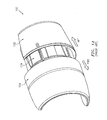
- the system 100 includes a sleeve 102 that is translated or moved in, e.g., an aft direction in order to expose cascades 104 as part of the deployment of the thrust reverser.
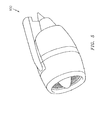
- FIG. 5 illustrates the system 100 in the stowed state. An entirety of a nacelle is shown in FIG. 5 , whereas a portion (e.g., a half) of the nacelle is shown in FIG. 1A .
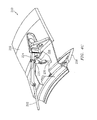
- FIG. 1B illustrates a blocker door 108 of the system 100 hinged to the sleeve 102 near a point 110. Additionally, the door 108 is attached to the inner fixed structure 114 of the thrust reverser via a drag link 112 that retains the door 108 in position during normal flight as well as aids in the deployment of the door 108 during thrust reverse mode.
- the drag link 112 lies within the flow of bypass air from the engine's fan and generates drag losses, resulting in degraded efficiencies.
- aspects of the disclosure are directed to a system comprising: a fixed structure of a thrust reverser, a blocker door, and a plurality of mechanisms arranged in series with one another to couple the fixed structure and the blocker door, including at least a first crank that pivots in a first plane and a second crank that pivots in a second plane normal to the first plane.
- the plurality of mechanisms comprises a first four-bar mechanism, the first four-bar mechanism comprising: the fixed structure, a first pushrod coupled to the fixed structure, a first crank coupled to the first pushrod, and a sleeve coupled to the first crank, wherein the first crank is pivotally attached to the sleeve.
- the system further comprises at least one cascade configured to be selectively hidden or exposed based on a degree to which the sleeve is translated.
- the plurality of mechanisms comprises a second four-bar mechanism, the second four-bar mechanism comprising: the first crank, the sleeve, a second pushrod coupled to the first crank, and a second crank coupled to the second pushrod.
- the system is configured to convert a tangential motion associated with the first crank to a radial motion associated with the second crank.
- the plurality of four-bar mechanisms comprises a third four-bar mechanism, the third four-bar mechanism comprising: the sleeve, the second crank, a third pushrod coupled to the second crank, and the blocker door coupled to the third pushrod.
- the system further comprises a pressure shelf, wherein at least a portion of the third pushrod is configured to selectively penetrate the pressure shelf based on whether the thrust reverser is operated in a stowed state or a deployed state.
- the system further comprises a seal configured to maintain a differential pressure between a duct associated with the sleeve and an ambient environment located external to the duct.
- aspects of the disclosure are directed to a system for a thrust reverser of an aircraft comprising: a blocker door, a kinematic mechanism configured to actuate the blocker door, and a pressure shelf, wherein the blocker door is configured to reside below the pressure shelf in proximity to a duct of the thrust reverser, and wherein at least a portion of the kinematic mechanism is configured to reside above the pressure shelf.
- the blocker door is configured to be deployed in a substantially radial direction towards a center of the system, and wherein the kinematic mechanism is configured to convert a substantially tangential motion associated with the actuation to a substantially radial motion associated with the deployment.
- the system further comprises a seal associated with the pressure shelf is configured to seal around a penetration formed through the pressure shelf through which a portion of the kinematic mechanism is positioned, the seal maintaining a differential pressure between the duct and an ambient environment located external to the duct.
- the kinematic mechanism comprises a gearbox, and wherein the gearbox comprises bevel gears.
- the kinematic mechanism comprises a plurality of four-bar mechanisms arranged in series.
- the plurality of four-bar mechanisms comprise: a first four-bar mechanism comprising: an outer structure of the thrust reverser, a first pushrod coupled to the outer structure of the thrust reverser, a first crank coupled to the first pushrod, and a sleeve coupled to the first crank, a second four-bar mechanism comprising: the first crank, the sleeve, a second pushrod coupled to the first crank, and a second crank coupled to the second pushrod, a third four-bar mechanism comprising: the sleeve, the second crank, a third pushrod coupled to the second crank, and the blocker door coupled to the third pushrod.
- the first crank is pivotally attached to the sleeve, and the system further comprises at least one cascade configured to be selectively hidden or exposed based on a degree to which the first crank is pivoted or the sleeve is translated.
- the kinematic mechanism is configured to convert a substantially tangential motion into a substantially radial motion.
- connections are set forth between elements in the following description and in the drawings (the contents of which are included in this disclosure by way of reference). It is noted that these connections are general and, unless specified otherwise, may be direct or indirect and that this specification is not intended to be limiting in this respect.
- a coupling between two or more entities may refer to a direct connection or an indirect connection.
- An indirect connection may incorporate one or more intervening entities.
- apparatuses, systems and methods are described for making and using a thrust reverser.
- the drag links normally positioned inside the fan duct in a conventional thrust reverser design are eliminated in order to reduce drag. Rather, the linkages for driving the motion of the blocker doors are positioned inside of the translating sleeve
- the system 200 includes a first pushrod 222.
- the first pushrod 222 may couple to an outer fixed structure 206 of the thrust reverser.
- the structure 206 may constitute, for example, a torque tube positioned at the forward end of the thrust reverser.
- the first pushrod 222 may couple to a first crank 224.
- the first crank 224 may pivotally attach to a sleeve 202.
- the first pushrod 222 and the first crank 224 may generally be positioned in and/or their motion may be generally constrained in a first plane that is generally tangential to the sleeve 202 and the central axis of the thrust reverser system and the engine.
- the first crank 224 may couple to a second pushrod 226.
- the second pushrod 226 may couple to a second crank 228.
- the second crank 228 may couple to a third pushrod 230.
- One or both of the second crank 228 and the third pushrod 230 may penetrate through a pressure shell/shelf 240 as further described below.
- the third pushrod 230 may couple to a blocker door 208.
- the blocker door 208 may be similar to the blocker door 108 of the system 100, except that its actuation and motion and connection points are different.
- the system 200 may incorporate a plurality of four-bar mechanisms.
- a first four-bar mechanism may include the first crank 224, the first pushrod 222, the structure 206, and the sleeve 202.
- a second four-bar mechanism may include the second crank 228, the second pushrod 226, the first crank 224, and the sleeve 202.
- a third four-bar mechanism may include the door 208, the third pushrod 230, the second crank 228 and the sleeve 202. In the system 200, these four-bar mechanisms that act to actuate the blocker doors are arranged in series with one another.
- cascades 204 may be selectively exposed (during thrust reversal deployment) or hidden (when the thrust reverser is in a stowed state).
- the cascades 204 may be similar to the cascades 104 of the system 100.
- the door 208 is shown in FIG. 2 in a substantially deployed state, such that the door 208 is proximate to an inner fixed structure 214.
- the inner fixed structure 214 may be similar to the inner fixed structure 114 of the system 100.
- FIG. 3A another view of the system 200 is shown, wherein two sets of mechanisms for actuating blocker doors are visible (there may be one mechanism per blocker door, and each half may have several blocker doors radially arranged around the bypass air duct.
- the first cranks 224 are pivotally attached to the sleeve 202, wherein the sleeve 202 is shown with its outer skin removed.
- FIGS. 3B-3C illustrate the system 200 in different states, based on a pivoting or turning of the first crank 224 as a result of sleeve 202 being driven aft.
- the degree to which a cascade 204 is exposed may be based on the translation of sleeve 202.
- the cascades may be rigidly attached to a forward edge of or part of the translating sleeve 202, the translation of the sleeve aftward exposing the cascades 204 by pulling them out from underneath the fan cowl.
- the cascades may be attached to the fixed structure 206 and would not then translate along with the sleeve 202.
- FIG. 3A As the sleeve moves aftward, the pushrod 222 remains fixed on its one end to the fixed structure 206, and thus the second end applies a force to rotate first crank 224.
- the progression from FIG. 3A to FIG. 3B and from FIG. 3B to FIG. 3C in terms of translating the sleeve 202 and in turn pivoting of the first crank 224 demonstrates a change in the thrust reverser from a stowed state ( FIG. 3A ), to a partially deployed (e.g., 50% deployed) state ( FIG. 3B ), to a deployed state ( FIG. 3C ).
- FIGS. 4A-4C illustrate a conversion of the motion of first crank 224 which is generally constrained to a tangential plane into the motion of second crank 228 which is generally constrained to a radial plane (again, relative to a central axis of the thrust reverser and the engine).
- the blocker door 208 transitions from a stowed state ( FIG. 4A ), to a partially deployed state ( FIG. 4B ), and to a fully deployed state ( FIG.
- the blocker door links 230 may be hidden because the links 230 are not in the air stream inside the bypass duct and/or are not exposed to any air flowing in the duct.
- the first four-bar mechanism constituting the first pushrod 222, the first crank 224, the fixed structure 206 and the sleeve 202, is generally constrained to move in a plane substantially tangential to the thrust reverser centerline
- the third four bar mechanism constituting the second crank 202, the third pushrod 230, the door 208 and the sleeve 202 is generally constrained to move in a plane substantially radial with the thrust reverser centerline.
- the pushrod 226 moves three dimensionally to tie together the two motions, and it is connected with swiveling joints to each of the first crank 224 and second crank 228.
- the door 208 swings relative to the sleeve 202 generally in the radial direction toward the engine centerline when it deploys. Rather than pushrod 226, it may also be possible to tie together the motion of the first and second cranks 224, 228 with a set of bevel gears attached to each.
- the second crank 228 and the third pushrod 230 may reside above the pressure shelf/shell 240 (and the door 208 may reside below the pressure shelf/shell 240) when the thrust reverser is operating in the stowed state.
- at least a portion of the third pushrod 230 and possibly also a portion of the second crank 228 reside below the pressure shelf/shell 240 (and, again, the door 208 may reside below the pressure shelf/shell 240) when the thrust reverser is operating in the deployed state.
- a seal 442 may be included as shown in FIG. 2 and FIG. 4A .
- the seal 442 may be used to maintain a differential pressure between the duct associated with the sleeve 202 and the ambient environment located outside of, or external to, the duct when, e.g., the thrust reverser is operated in the stowed state.
- the pressure shelf/shell 240 may act to seal off any leakage of a fan air stream through openings and/or provide hoop strength and bending stiffness to one or more translating cowls.
- At least a portion of a kinematic mechanism e.g., a portion of one or more of the four-bar mechanisms described above or one or more gearboxes (e.g., bevel gears) for actuating (e.g., stowing or deploying) the door 208 may reside above the pressure shelf 240, whereas the door 208 may reside below the pressure shelf in proximity to the duct of the thrust reverser.
- a kinematic mechanism e.g., a portion of one or more of the four-bar mechanisms described above or one or more gearboxes (e.g., bevel gears)
- actuating e.g., stowing or deploying
- the door 208 may reside above the pressure shelf 240, whereas the door 208 may reside below the pressure shelf in proximity to the duct of the thrust reverser.
- the door 208 may be configured to be deployed in a substantially radial direction towards a center of the thrust reverser system, and the kinematic mechanism may be configured to convert a substantially tangential motion (e.g., a motion associated with the first crank(s) 224) associated with the actuation to a substantially radial motion associated with the deployment.
- a substantially tangential motion e.g., a motion associated with the first crank(s) 224
Landscapes
- Engineering & Computer Science (AREA)
- Chemical & Material Sciences (AREA)
- Combustion & Propulsion (AREA)
- Mechanical Engineering (AREA)
- General Engineering & Computer Science (AREA)
- Power-Operated Mechanisms For Wings (AREA)
- Structures Of Non-Positive Displacement Pumps (AREA)
- Sliding-Contact Bearings (AREA)
Abstract
Description
- Within a turbofan engine that utilizes a cascade type thrust reverser, there are typically a plurality of blocker doors that deploy in order to redirect engine bypass air thru a set of cascades that turn the airflow out and forward in order to reverse the direction of the thrust of the engine. This may be done to slow an aircraft after landing. Referring to
FIG. 1A , asystem 100 is shown. Thesystem 100 includes asleeve 102 that is translated or moved in, e.g., an aft direction in order to exposecascades 104 as part of the deployment of the thrust reverser. Similarly, in order to place the thrust reverser in a stowed state (e.g., during flight) thesleeve 102 is translated or moved in, e.g., a forward (FWD) direction, such that thesleeve 102 may contact or abut a thrust reverserfixed structure 106. When in the stowed state, thecascades 104 are not exposed.FIG. 5 illustrates thesystem 100 in the stowed state. An entirety of a nacelle is shown inFIG. 5 , whereas a portion (e.g., a half) of the nacelle is shown inFIG. 1A . - The blocker doors described above are typically pivotally attached to the
sleeve 102 within the thrust reverser.FIG. 1B illustrates ablocker door 108 of thesystem 100 hinged to thesleeve 102 near apoint 110. Additionally, thedoor 108 is attached to the inner fixedstructure 114 of the thrust reverser via adrag link 112 that retains thedoor 108 in position during normal flight as well as aids in the deployment of thedoor 108 during thrust reverse mode. - The
drag link 112 lies within the flow of bypass air from the engine's fan and generates drag losses, resulting in degraded efficiencies. - The following presents a simplified summary in order to provide a basic understanding of some aspects of the disclosure. The summary is not an extensive overview of the disclosure. It is neither intended to identify key or critical elements of the disclosure nor to delineate the scope of the disclosure. The following summary merely presents some concepts of the disclosure in a simplified form as a prelude to the description below.
- Aspects of the disclosure are directed to a system comprising: a fixed structure of a thrust reverser, a blocker door, and a plurality of mechanisms arranged in series with one another to couple the fixed structure and the blocker door, including at least a first crank that pivots in a first plane and a second crank that pivots in a second plane normal to the first plane. In some embodiments, the plurality of mechanisms comprises a first four-bar mechanism, the first four-bar mechanism comprising: the fixed structure, a first pushrod coupled to the fixed structure, a first crank coupled to the first pushrod, and a sleeve coupled to the first crank, wherein the first crank is pivotally attached to the sleeve. In some embodiments, the system further comprises at least one cascade configured to be selectively hidden or exposed based on a degree to which the sleeve is translated. In some embodiments, the plurality of mechanisms comprises a second four-bar mechanism, the second four-bar mechanism comprising: the first crank, the sleeve, a second pushrod coupled to the first crank, and a second crank coupled to the second pushrod. In some embodiments, the system is configured to convert a tangential motion associated with the first crank to a radial motion associated with the second crank. In some embodiments, the plurality of four-bar mechanisms comprises a third four-bar mechanism, the third four-bar mechanism comprising: the sleeve, the second crank, a third pushrod coupled to the second crank, and the blocker door coupled to the third pushrod. In some embodiments, the system further comprises a pressure shelf, wherein at least a portion of the third pushrod is configured to selectively penetrate the pressure shelf based on whether the thrust reverser is operated in a stowed state or a deployed state. In some embodiments, the system further comprises a seal configured to maintain a differential pressure between a duct associated with the sleeve and an ambient environment located external to the duct.
- Aspects of the disclosure are directed to a system for a thrust reverser of an aircraft comprising: a blocker door, a kinematic mechanism configured to actuate the blocker door, and a pressure shelf, wherein the blocker door is configured to reside below the pressure shelf in proximity to a duct of the thrust reverser, and wherein at least a portion of the kinematic mechanism is configured to reside above the pressure shelf. In some embodiments, the blocker door is configured to be deployed in a substantially radial direction towards a center of the system, and wherein the kinematic mechanism is configured to convert a substantially tangential motion associated with the actuation to a substantially radial motion associated with the deployment. In some embodiments, the system further comprises a seal associated with the pressure shelf is configured to seal around a penetration formed through the pressure shelf through which a portion of the kinematic mechanism is positioned, the seal maintaining a differential pressure between the duct and an ambient environment located external to the duct. In some embodiments, the kinematic mechanism comprises a gearbox, and wherein the gearbox comprises bevel gears. In some embodiments, the kinematic mechanism comprises a plurality of four-bar mechanisms arranged in series. In some embodiments, the plurality of four-bar mechanisms comprise: a first four-bar mechanism comprising: an outer structure of the thrust reverser, a first pushrod coupled to the outer structure of the thrust reverser, a first crank coupled to the first pushrod, and a sleeve coupled to the first crank, a second four-bar mechanism comprising: the first crank, the sleeve, a second pushrod coupled to the first crank, and a second crank coupled to the second pushrod, a third four-bar mechanism comprising: the sleeve, the second crank, a third pushrod coupled to the second crank, and the blocker door coupled to the third pushrod. In some embodiments, the first crank is pivotally attached to the sleeve, and the system further comprises at least one cascade configured to be selectively hidden or exposed based on a degree to which the first crank is pivoted or the sleeve is translated. In some embodiments, the kinematic mechanism is configured to convert a substantially tangential motion into a substantially radial motion.
- The present disclosure is illustrated by way of example and not limited in the accompanying figures in which like reference numerals indicate similar elements.
-
FIG. 1A schematically illustrates a thrust reverser system incorporating a translating sleeve in accordance with the prior art. -
FIG. 1B schematically illustrates a drag link of the system ofFIG. 1A in accordance with the prior art. -
FIG. 2 illustrates a thrust reverser system in accordance with aspects of the disclosure. -
FIGS. 3A-3C illustrate the system ofFIG. 2 , and in particular, various states/positions of first cranks based on a pivoting of the first cranks in relation to an exposure of cascades. -
FIGS. 4A-4C illustrate the system ofFIG. 2 , and in particular, various states/positions of a second crank based on a radial motion of the second crank in relation to a deployment of a blocker door. -
FIG. 5 illustrates a turbofan propulsion system with a nacelle incorporating a thrust reverser. - It is noted that various connections are set forth between elements in the following description and in the drawings (the contents of which are included in this disclosure by way of reference). It is noted that these connections are general and, unless specified otherwise, may be direct or indirect and that this specification is not intended to be limiting in this respect. A coupling between two or more entities may refer to a direct connection or an indirect connection. An indirect connection may incorporate one or more intervening entities.
- In accordance with various aspects of the disclosure, apparatuses, systems and methods are described for making and using a thrust reverser. In accordance with aspects of the disclosure, the drag links normally positioned inside the fan duct in a conventional thrust reverser design are eliminated in order to reduce drag. Rather, the linkages for driving the motion of the blocker doors are positioned inside of the translating sleeve
- Referring to
FIG. 2 , athrust reverser system 200 is shown. Thesystem 200 includes afirst pushrod 222. Thefirst pushrod 222 may couple to an outerfixed structure 206 of the thrust reverser. Thestructure 206 may constitute, for example, a torque tube positioned at the forward end of the thrust reverser. Thefirst pushrod 222 may couple to afirst crank 224. Thefirst crank 224 may pivotally attach to asleeve 202. Thefirst pushrod 222 and the first crank 224 may generally be positioned in and/or their motion may be generally constrained in a first plane that is generally tangential to thesleeve 202 and the central axis of the thrust reverser system and the engine. - The
first crank 224 may couple to asecond pushrod 226. Thesecond pushrod 226 may couple to asecond crank 228. - The
second crank 228 may couple to athird pushrod 230. One or both of the second crank 228 and thethird pushrod 230 may penetrate through a pressure shell/shelf 240 as further described below. - The
third pushrod 230 may couple to ablocker door 208. Theblocker door 208 may be similar to theblocker door 108 of thesystem 100, except that its actuation and motion and connection points are different. - The
system 200 may incorporate a plurality of four-bar mechanisms. A first four-bar mechanism may include thefirst crank 224, thefirst pushrod 222, thestructure 206, and thesleeve 202. A second four-bar mechanism may include the second crank 228, thesecond pushrod 226, thefirst crank 224, and thesleeve 202. A third four-bar mechanism may include thedoor 208, thethird pushrod 230, the second crank 228 and thesleeve 202. In thesystem 200, these four-bar mechanisms that act to actuate the blocker doors are arranged in series with one another. - Depending on a state of one or more of the components/devices described above in connection with the
system 200, cascades 204 may be selectively exposed (during thrust reversal deployment) or hidden (when the thrust reverser is in a stowed state). Thecascades 204 may be similar to thecascades 104 of thesystem 100. - The
door 208 is shown inFIG. 2 in a substantially deployed state, such that thedoor 208 is proximate to an innerfixed structure 214. The inner fixedstructure 214 may be similar to the inner fixedstructure 114 of thesystem 100. - Referring now to
FIG. 3A , another view of thesystem 200 is shown, wherein two sets of mechanisms for actuating blocker doors are visible (there may be one mechanism per blocker door, and each half may have several blocker doors radially arranged around the bypass air duct. InFIG. 3A , thefirst cranks 224 are pivotally attached to thesleeve 202, wherein thesleeve 202 is shown with its outer skin removed. -
FIGS. 3B-3C illustrate thesystem 200 in different states, based on a pivoting or turning of the first crank 224 as a result ofsleeve 202 being driven aft. As shown inFIGS. 3B-3C , the degree to which acascade 204 is exposed may be based on the translation ofsleeve 202. The cascades may be rigidly attached to a forward edge of or part of the translatingsleeve 202, the translation of the sleeve aftward exposing thecascades 204 by pulling them out from underneath the fan cowl. Alternatively, in another embodiment the cascades may be attached to the fixedstructure 206 and would not then translate along with thesleeve 202. As the sleeve moves aftward, thepushrod 222 remains fixed on its one end to the fixedstructure 206, and thus the second end applies a force to rotate first crank 224. The progression fromFIG. 3A to FIG. 3B and fromFIG. 3B to FIG. 3C in terms of translating thesleeve 202 and in turn pivoting of thefirst crank 224 demonstrates a change in the thrust reverser from a stowed state (FIG. 3A ), to a partially deployed (e.g., 50% deployed) state (FIG. 3B ), to a deployed state (FIG. 3C ). - Referring now to
FIGS. 4A-4C , another view of thesystem 200 is shown.FIGS. 4A-4C illustrate a conversion of the motion of first crank 224 which is generally constrained to a tangential plane into the motion of second crank 228 which is generally constrained to a radial plane (again, relative to a central axis of the thrust reverser and the engine). In the progression fromFIG. 4A to FIG. 4B and fromFIG. 4B to FIG. 4C , theblocker door 208 transitions from a stowed state (FIG. 4A ), to a partially deployed state (FIG. 4B ), and to a fully deployed state (FIG. 4C ), coinciding with a transition of the thrust reverser from a stowed state to a deployed state. When operating in the stowed state/mode, the blocker door links 230 may be hidden because thelinks 230 are not in the air stream inside the bypass duct and/or are not exposed to any air flowing in the duct. - The first four-bar mechanism, constituting the
first pushrod 222, thefirst crank 224, the fixedstructure 206 and thesleeve 202, is generally constrained to move in a plane substantially tangential to the thrust reverser centerline, while the third four bar mechanism, constituting the second crank 202, thethird pushrod 230, thedoor 208 and thesleeve 202 is generally constrained to move in a plane substantially radial with the thrust reverser centerline. Thepushrod 226 moves three dimensionally to tie together the two motions, and it is connected with swiveling joints to each of the first crank 224 and second crank 228. Thedoor 208 swings relative to thesleeve 202 generally in the radial direction toward the engine centerline when it deploys. Rather thanpushrod 226, it may also be possible to tie together the motion of the first andsecond cranks - As shown in
FIG. 4A , the second crank 228 and thethird pushrod 230 may reside above the pressure shelf/shell 240 (and thedoor 208 may reside below the pressure shelf/shell 240) when the thrust reverser is operating in the stowed state. As shown inFIG. 2 andFIG. 4C , at least a portion of thethird pushrod 230 and possibly also a portion of the second crank 228 reside below the pressure shelf/shell 240 (and, again, thedoor 208 may reside below the pressure shelf/shell 240) when the thrust reverser is operating in the deployed state. In order to accommodate the penetration of thethird pushrod 230 through the pressure shelf/shell 240, aseal 442 may be included as shown inFIG. 2 andFIG. 4A . Theseal 442 may be used to maintain a differential pressure between the duct associated with thesleeve 202 and the ambient environment located outside of, or external to, the duct when, e.g., the thrust reverser is operated in the stowed state. As one of skill in the art would appreciate, the pressure shelf/shell 240 may act to seal off any leakage of a fan air stream through openings and/or provide hoop strength and bending stiffness to one or more translating cowls. - At least a portion of a kinematic mechanism (e.g., a portion of one or more of the four-bar mechanisms described above or one or more gearboxes (e.g., bevel gears)) for actuating (e.g., stowing or deploying) the
door 208 may reside above thepressure shelf 240, whereas thedoor 208 may reside below the pressure shelf in proximity to the duct of the thrust reverser. Thedoor 208 may be configured to be deployed in a substantially radial direction towards a center of the thrust reverser system, and the kinematic mechanism may be configured to convert a substantially tangential motion (e.g., a motion associated with the first crank(s) 224) associated with the actuation to a substantially radial motion associated with the deployment. - Technical effects and benefits of the disclosure include obtaining a maximum/increased efficiency in terms of engine operation/output by minimizing/reducing drag losses. Additionally, the size/profile of one or more components/devices (e.g., a translating sleeve) may be minimized/reduced, allowing for shorter lines of travel and better/different packaging options.
- Aspects of the disclosure have been described in terms of illustrative embodiments thereof. Numerous other embodiments, modifications, and variations within the scope of the appended claims will occur to persons of ordinary skill in the art from a review of this disclosure. For example, one of ordinary skill in the art will appreciate that the steps described in conjunction with the illustrative figures may be performed in other than the recited order, and that one or more steps illustrated may be optional in accordance with aspects of the disclosure.
Claims (13)
- A system comprising:a fixed structure (206) of a thrust reverser;a blocker door (208); anda plurality of mechanisms arranged in series with one another to couple the fixed structure (206) and the blocker door (208), including at least a first crank (224) that pivots in a first plane and a second crank (228) that pivots in a second plane normal to the first plane.
- The system of claim 1, wherein the plurality of mechanisms comprises a first four-bar mechanism, the first four-bar mechanism comprising:the fixed structure (206);a first pushrod (222) coupled to the fixed structure (206);a first crank (224) coupled to the first pushrod (222); anda sleeve (202) coupled to the first crank (224),wherein the first crank (224) is pivotally attached to the sleeve (202).
- The system of claim 2, further comprising:at least one cascade (204) configured to be selectively hidden or exposed based on a degree to which the sleeve (202) is translated.
- The system of claim 2 or 3, wherein the plurality of mechanisms comprises a second four-bar mechanism, the second four-bar mechanism comprising:the first crank (224);the sleeve (202);a second pushrod (226) coupled to the first crank (224); anda second crank (228) coupled to the second pushrod (226).
- The system of claim 4, wherein the system is configured to convert a tangential motion associated with the first crank (224) to a radial motion associated with the second crank (228).
- The system of claim 4 or 5, wherein the plurality of four-bar mechanisms comprises a third four-bar mechanism, the third four-bar mechanism comprising:the sleeve (202);the second crank (228);a third pushrod (230) coupled to the second crank (228); andthe blocker door (208) coupled to the third pushrod (230).
- The system of claim 6, further comprising:a pressure shelf (240),wherein at least a portion of the third pushrod (230) is configured to selectively penetrate the pressure shelf (240) based on whether the thrust reverser is operated in a stowed state or a deployed state.
- The system of claim 7, further comprising:a seal (442) configured to maintain a differential pressure between a duct associated with the sleeve (202) and an ambient environment located external to the duct.
- A system for a thrust reverser of an aircraft comprising:a blocker door (208);a kinematic mechanism configured to actuate the blocker door (208); anda pressure shelf (240),wherein the blocker door (208) is configured to reside below the pressure shelf (240) in proximity to a duct of the thrust reverser, andwherein at least a portion of the kinematic mechanism is configured to reside above the pressure shelf (240).
- The system of claim 9, wherein the blocker door (208) is configured to be deployed in a substantially radial direction towards a center of the system, and wherein the kinematic mechanism is configured to convert a substantially tangential motion associated with the actuation to a substantially radial motion associated with the deployment.
- The system of claim 9 or 10, further comprising:a seal (442) associated with the pressure shelf (240) is configured to seal around a penetration formed through the pressure shelf (240) through which a portion of the kinematic mechanism is positioned, the seal (442) maintaining a differential pressure between the duct and an ambient environment located external to the duct.
- The system of claim 9, 10 or 11, wherein the kinematic mechanism comprises a gearbox, and wherein the gearbox comprises bevel gears.
- The system of claim 9, 10 or 11, wherein the kinematic mechanism comprises a plurality of four-bar mechanisms arranged in series.
Applications Claiming Priority (1)
| Application Number | Priority Date | Filing Date | Title |
|---|---|---|---|
| US14/535,015 US9784214B2 (en) | 2014-11-06 | 2014-11-06 | Thrust reverser with hidden linkage blocker doors |
Publications (2)
| Publication Number | Publication Date |
|---|---|
| EP3018327A1 true EP3018327A1 (en) | 2016-05-11 |
| EP3018327B1 EP3018327B1 (en) | 2018-04-25 |
Family
ID=54539852
Family Applications (1)
| Application Number | Title | Priority Date | Filing Date |
|---|---|---|---|
| EP15193214.2A Active EP3018327B1 (en) | 2014-11-06 | 2015-11-05 | Thrust reverser with hidden linkage blocker doors |
Country Status (2)
| Country | Link |
|---|---|
| US (1) | US9784214B2 (en) |
| EP (1) | EP3018327B1 (en) |
Cited By (4)
| Publication number | Priority date | Publication date | Assignee | Title |
|---|---|---|---|---|
| FR3089206A1 (en) * | 2018-11-30 | 2020-06-05 | Airbus Operations | NACELLE OF A TURBOREACTOR COMPRISING A REVERSING SHUTTER AND A DELAYED DEPLOYMENT SYSTEM |
| EP3705711A1 (en) * | 2018-09-13 | 2020-09-09 | Rohr, Inc. | Hidden link system blocker door |
| US10794328B2 (en) * | 2018-07-06 | 2020-10-06 | Rohr, Inc. | Thrust reverser with blocker door folding linkage |
| CN111868369A (en) * | 2018-03-19 | 2020-10-30 | 赛峰飞机发动机公司 | Bypass propulsion unit comprising a thrust reverser with movable cascades |
Families Citing this family (11)
| Publication number | Priority date | Publication date | Assignee | Title |
|---|---|---|---|---|
| US10309343B2 (en) * | 2014-11-06 | 2019-06-04 | Rohr, Inc. | Split sleeve hidden door thrust reverser |
| FR3064308B1 (en) * | 2017-03-23 | 2021-06-11 | Airbus Operations Sas | TURBOREACTOR CONTAINING A NACELLE EQUIPPED WITH INVERTER FLAPS |
| FR3067760B1 (en) * | 2017-06-14 | 2019-06-28 | Airbus Operations | TURBOREACTOR COMPRISING A NACELLE EQUIPPED WITH INVERTER SHUTTERS |
| FR3068395B1 (en) * | 2017-06-30 | 2020-09-11 | Safran Nacelles | NACELLE FOR TURBOREACTOR INCLUDING A GRID THRUST INVERTER |
| FR3100578B1 (en) * | 2019-09-05 | 2021-09-24 | Safran Nacelles | Thrust reverser with cable kinematics for scooping shutters |
| EP3943737B1 (en) | 2020-04-07 | 2025-08-20 | Rohr, Inc. | Hidden door thrust reverser system for an aircraft propulsion system |
| FR3122905B1 (en) * | 2021-05-14 | 2026-04-17 | Safran Nacelles | Aircraft propulsion system comprising an actuator connected to a structural arm such as an outfeed guide vane |
| US11719190B2 (en) | 2021-10-05 | 2023-08-08 | Rohr, Inc. | Thrust reverser system with hidden turning door |
| EP4428355A3 (en) | 2023-03-06 | 2024-10-30 | Rohr, Inc. | Thrust reverser with lost motion device |
| US12331701B1 (en) | 2024-03-11 | 2025-06-17 | Rohr, Inc. | Thrust reverser blocker door with fairing |
| US12612171B2 (en) | 2024-07-16 | 2026-04-28 | Rohr, Inc. | Multi-system thrust reverser for aircraft propulsion system |
Citations (4)
| Publication number | Priority date | Publication date | Assignee | Title |
|---|---|---|---|---|
| FR2907512A1 (en) * | 2006-10-23 | 2008-04-25 | Aircelle Sa | Thrust reverser e.g. grid, for e.g. two-flow turbojet, has slider connected to downstream end of flap through rod, and telescopic activating actuator driving slider, in translation, in skid when cowl is in downstream translation phase |
| FR2952128A1 (en) * | 2009-11-05 | 2011-05-06 | Aircelle Sa | THRUST INVERTER DEVICE |
| WO2011073558A1 (en) * | 2009-12-18 | 2011-06-23 | Aircelle | Reverse thrust device |
| DE102011008918A1 (en) * | 2011-01-19 | 2012-07-19 | Rolls-Royce Deutschland Ltd & Co Kg | Aircraft gas turbine thrust reverser, has detour elements arranged at peripheral region of cowl, and lever swingably arranged at rear end region of detour elements, where lever enables pivoting doors with displacement of detour elements |
Family Cites Families (41)
| Publication number | Priority date | Publication date | Assignee | Title |
|---|---|---|---|---|
| BE562528A (en) | 1956-11-21 | |||
| GB913699A (en) | 1959-12-18 | |||
| GB1150012A (en) * | 1966-09-12 | 1969-04-30 | Rolls Royce | Fluid Flow Duct Including Thrust Reversing Means |
| US3500646A (en) | 1968-04-19 | 1970-03-17 | Rohr Corp | Thrust reverser |
| BE755612A (en) * | 1969-06-18 | 1971-02-15 | Gen Electric | PROPULSION TUBES WITH IMPROVED NOISE CANCELLATION SYSTEM |
| US3612209A (en) * | 1969-11-28 | 1971-10-12 | Gen Electric | Propulsion nozzle with combined thrust reverser and sound suppressor mechanism |
| US3600894A (en) * | 1970-04-28 | 1971-08-24 | Rohr Corp | Thrust reversing apparatus |
| US4564160A (en) | 1982-09-29 | 1986-01-14 | The Boeing Company | Thrust reverser blocker door assembly |
| WO1984001446A1 (en) | 1982-09-30 | 1984-04-12 | Boeing Co | Modular multi-engine thrust control assembly |
| US5117630A (en) | 1990-02-12 | 1992-06-02 | Rohr Industries, Inc. | Pivoting door thrust reverser |
| US5309711A (en) * | 1991-08-21 | 1994-05-10 | Rohr, Inc. | Cascade type thrust reverser for fan jet engines |
| US5255850A (en) * | 1992-06-29 | 1993-10-26 | The United States Of America As Represented By The Secretary Of The Air Force | Pivoting flaps and vane pack in a nozzle reverser assembly |
| US5476237A (en) | 1993-06-18 | 1995-12-19 | Northrop Grumman Corporation | Syntactic film for thrust reverser blocker doors |
| US5778659A (en) | 1994-10-20 | 1998-07-14 | United Technologies Corporation | Variable area fan exhaust nozzle having mechanically separate sleeve and thrust reverser actuation systems |
| US5609020A (en) | 1995-05-15 | 1997-03-11 | The Boeing Company | Thrust reverser synchronization shaft lock |
| FR2754565B1 (en) * | 1996-10-10 | 1999-01-08 | Hispano Suiza Sa | PUSH INVERTER WITH CONTROLLED LEAKAGE FLOW DOORS |
| US5987880A (en) * | 1997-07-08 | 1999-11-23 | Mcdonnell Douglas Corporation | Supersonic engine, multi-port thrust reversing system |
| US6042053A (en) | 1997-10-31 | 2000-03-28 | The Boeing Company | Automatic restow system for aircraft thrust reverser |
| EP0926333A1 (en) | 1997-12-26 | 1999-06-30 | SOCIETE DE CONSTRUCTION DES AVIONS HUREL-DUBOIS (société anonyme) | Thrust reverser configuration |
| US6293495B1 (en) | 1999-12-08 | 2001-09-25 | Rohr, Inc. | Pivoting door thrust reverser system for turbofan aircraft jet engine |
| US6311928B1 (en) * | 2000-01-05 | 2001-11-06 | Stage Iii Technologies, L.C. | Jet engine cascade thrust reverser for use with mixer/ejector noise suppressor |
| US6845945B1 (en) | 2001-07-20 | 2005-01-25 | Aircraft Integration Resources, Inc. | Thrust reverser with sliding pivot joints |
| US6584763B2 (en) | 2001-08-01 | 2003-07-01 | Rohr, Inc. | Lock for the translating sleeve of a turbofan engine thrust reverser |
| US6487846B1 (en) * | 2001-09-07 | 2002-12-03 | Honeywell International, Inc. | Thrust reverser actuator including an integrated locking mechanism |
| BR0315201A (en) * | 2002-10-11 | 2005-08-16 | Nordam Group Inc | Double Fold Boost Inverter |
| US6976352B2 (en) * | 2003-03-22 | 2005-12-20 | The Nordam Group, Inc. | Toggle interlocked thrust reverser |
| US7264203B2 (en) * | 2003-10-02 | 2007-09-04 | The Nordam Group, Inc. | Spider actuated thrust reverser |
| US20060288688A1 (en) * | 2005-06-22 | 2006-12-28 | Jean-Pierre Lair | Turbofan core thrust spoiler |
| GB0606982D0 (en) | 2006-04-07 | 2006-05-17 | Rolls Royce Plc | Aeroengine thrust reverser |
| EP2074320B1 (en) * | 2006-10-12 | 2013-06-26 | United Technologies Corporation | Variable area fan nozzle thrust reverser |
| US8002217B2 (en) | 2007-11-16 | 2011-08-23 | Spirit Aerosystems, Inc. | System for adjustment of thrust reverser pivot door |
| US8172175B2 (en) | 2007-11-16 | 2012-05-08 | The Nordam Group, Inc. | Pivoting door thrust reverser for a turbofan gas turbine engine |
| US7735778B2 (en) | 2007-11-16 | 2010-06-15 | Pratt & Whitney Canada Corp. | Pivoting fairings for a thrust reverser |
| FR2933144B1 (en) | 2008-06-26 | 2012-08-17 | Airbus France | NACELLE FOR AN AIRCRAFT COMPRISING INVERTER PUSHING MEANS AND AIRCRAFT COMPRISING AT LEAST ONE SUCH NACELLE |
| FR2946094B1 (en) | 2009-06-02 | 2014-04-18 | Aircelle Sa | THRUST INVERTER FOR DOUBLE FLOW TURBOREACTOR NACELLE. |
| US8479491B2 (en) | 2011-06-06 | 2013-07-09 | General Electric Company | Clamping system and method for thrust reverser attachment |
| US9181898B2 (en) | 2011-09-20 | 2015-11-10 | United Technologies Corporation | Thrust reverser for a gas turbine engine with moveable doors |
| US8904751B2 (en) | 2012-04-30 | 2014-12-09 | Middle River Aircraft Systems | Thrust reverser assembly and method of operation |
| US9016040B2 (en) * | 2012-11-30 | 2015-04-28 | General Electric Company | Thrust reverser system with translating-rotating cascade and method of operation |
| US9938929B2 (en) | 2014-03-21 | 2018-04-10 | Rohr, Inc. | Thrust reverser for a turbofan engine |
| US9534562B2 (en) | 2014-04-25 | 2017-01-03 | Rohr, Inc. | System and apparatus for a thrust reverser |
-
2014
- 2014-11-06 US US14/535,015 patent/US9784214B2/en active Active
-
2015
- 2015-11-05 EP EP15193214.2A patent/EP3018327B1/en active Active
Patent Citations (4)
| Publication number | Priority date | Publication date | Assignee | Title |
|---|---|---|---|---|
| FR2907512A1 (en) * | 2006-10-23 | 2008-04-25 | Aircelle Sa | Thrust reverser e.g. grid, for e.g. two-flow turbojet, has slider connected to downstream end of flap through rod, and telescopic activating actuator driving slider, in translation, in skid when cowl is in downstream translation phase |
| FR2952128A1 (en) * | 2009-11-05 | 2011-05-06 | Aircelle Sa | THRUST INVERTER DEVICE |
| WO2011073558A1 (en) * | 2009-12-18 | 2011-06-23 | Aircelle | Reverse thrust device |
| DE102011008918A1 (en) * | 2011-01-19 | 2012-07-19 | Rolls-Royce Deutschland Ltd & Co Kg | Aircraft gas turbine thrust reverser, has detour elements arranged at peripheral region of cowl, and lever swingably arranged at rear end region of detour elements, where lever enables pivoting doors with displacement of detour elements |
Cited By (8)
| Publication number | Priority date | Publication date | Assignee | Title |
|---|---|---|---|---|
| CN111868369A (en) * | 2018-03-19 | 2020-10-30 | 赛峰飞机发动机公司 | Bypass propulsion unit comprising a thrust reverser with movable cascades |
| CN111868369B (en) * | 2018-03-19 | 2023-03-28 | 赛峰飞机发动机公司 | Bypass propulsion unit comprising a thrust reverser with movable cascades |
| US10794328B2 (en) * | 2018-07-06 | 2020-10-06 | Rohr, Inc. | Thrust reverser with blocker door folding linkage |
| EP3705711A1 (en) * | 2018-09-13 | 2020-09-09 | Rohr, Inc. | Hidden link system blocker door |
| US10895220B2 (en) | 2018-09-13 | 2021-01-19 | Rohr, Inc. | Hidden link system blocker door |
| US11261826B2 (en) | 2018-09-13 | 2022-03-01 | Rohr, Inc. | Hidden link system blocker door |
| EP4180648A3 (en) * | 2018-09-13 | 2023-07-19 | Rohr, Inc. | Hidden link system blocker door |
| FR3089206A1 (en) * | 2018-11-30 | 2020-06-05 | Airbus Operations | NACELLE OF A TURBOREACTOR COMPRISING A REVERSING SHUTTER AND A DELAYED DEPLOYMENT SYSTEM |
Also Published As
| Publication number | Publication date |
|---|---|
| US20160131082A1 (en) | 2016-05-12 |
| EP3018327B1 (en) | 2018-04-25 |
| US9784214B2 (en) | 2017-10-10 |
Similar Documents
| Publication | Publication Date | Title |
|---|---|---|
| US9784214B2 (en) | Thrust reverser with hidden linkage blocker doors | |
| US20200025144A1 (en) | Split sleeve hidden door thrust reverser | |
| US11073104B2 (en) | Translating cascade hidden blocker door thrust reverser | |
| JP6742114B2 (en) | Reverse thrust device and method | |
| US11149686B2 (en) | Thrust reverser assembly | |
| EP2551506B1 (en) | Thrust reverser for a turbofan engine | |
| RU2472272C2 (en) | Telescopic linear actuating mechanism of double action with drive from one motor | |
| JP6903369B2 (en) | Gas turbine engine with thrust reverser and method of operation | |
| US8943794B2 (en) | Linear telescopic actuator for moving a first and a second element relative to a stationary element | |
| US10077739B2 (en) | Dual actuation system for cascade and thrust reverser panel for an integral cascade variable area fan nozzle | |
| EP2937551A1 (en) | System and apparatus for a thrust reverser | |
| US20170292474A1 (en) | Thrust reverser actuator | |
| EP4180648B1 (en) | Hidden link system blocker door | |
| EP2863040A1 (en) | Thrust reverser fan ramp partially formed on aft end of fan case | |
| EP2987991A1 (en) | Fan nozzle with thrust reversing and variable area function | |
| US10767597B2 (en) | Collapsible drag link | |
| US11396854B2 (en) | Hinge mechanism for pivot door thrust reversers | |
| US11566585B2 (en) | Synchronization mechanism for pivot door thrust reversers | |
| US9869275B2 (en) | Single actuator variable area fan nozzle system and method | |
| EP3018328B1 (en) | Sleeve linkage for thrust reverser | |
| US9964071B2 (en) | Decoupled translating sleeve |
Legal Events
| Date | Code | Title | Description |
|---|---|---|---|
| PUAI | Public reference made under article 153(3) epc to a published international application that has entered the european phase |
Free format text: ORIGINAL CODE: 0009012 |
|
| AK | Designated contracting states |
Kind code of ref document: A1 Designated state(s): AL AT BE BG CH CY CZ DE DK EE ES FI FR GB GR HR HU IE IS IT LI LT LU LV MC MK MT NL NO PL PT RO RS SE SI SK SM TR |
|
| AX | Request for extension of the european patent |
Extension state: BA ME |
|
| STAA | Information on the status of an ep patent application or granted ep patent |
Free format text: STATUS: REQUEST FOR EXAMINATION WAS MADE |
|
| 17P | Request for examination filed |
Effective date: 20161110 |
|
| RBV | Designated contracting states (corrected) |
Designated state(s): AL AT BE BG CH CY CZ DE DK EE ES FI FR GB GR HR HU IE IS IT LI LT LU LV MC MK MT NL NO PL PT RO RS SE SI SK SM TR |
|
| RIC1 | Information provided on ipc code assigned before grant |
Ipc: F02K 1/76 20060101ALI20170913BHEP Ipc: F02K 1/72 20060101ALI20170913BHEP Ipc: F02K 1/62 20060101AFI20170913BHEP |
|
| GRAP | Despatch of communication of intention to grant a patent |
Free format text: ORIGINAL CODE: EPIDOSNIGR1 |
|
| STAA | Information on the status of an ep patent application or granted ep patent |
Free format text: STATUS: GRANT OF PATENT IS INTENDED |
|
| INTG | Intention to grant announced |
Effective date: 20171107 |
|
| GRAA | (expected) grant |
Free format text: ORIGINAL CODE: 0009210 |
|
| GRAS | Grant fee paid |
Free format text: ORIGINAL CODE: EPIDOSNIGR3 |
|
| STAA | Information on the status of an ep patent application or granted ep patent |
Free format text: STATUS: THE PATENT HAS BEEN GRANTED |
|
| AK | Designated contracting states |
Kind code of ref document: B1 Designated state(s): AL AT BE BG CH CY CZ DE DK EE ES FI FR GB GR HR HU IE IS IT LI LT LU LV MC MK MT NL NO PL PT RO RS SE SI SK SM TR |
|
| REG | Reference to a national code |
Ref country code: GB Ref legal event code: FG4D |
|
| REG | Reference to a national code |
Ref country code: CH Ref legal event code: EP |
|
| REG | Reference to a national code |
Ref country code: AT Ref legal event code: REF Ref document number: 993182 Country of ref document: AT Kind code of ref document: T Effective date: 20180515 |
|
| REG | Reference to a national code |
Ref country code: IE Ref legal event code: FG4D |
|
| REG | Reference to a national code |
Ref country code: DE Ref legal event code: R096 Ref document number: 602015010356 Country of ref document: DE |
|
| REG | Reference to a national code |
Ref country code: NL Ref legal event code: MP Effective date: 20180425 |
|
| REG | Reference to a national code |
Ref country code: LT Ref legal event code: MG4D |
|
| PG25 | Lapsed in a contracting state [announced via postgrant information from national office to epo] |
Ref country code: NL Free format text: LAPSE BECAUSE OF FAILURE TO SUBMIT A TRANSLATION OF THE DESCRIPTION OR TO PAY THE FEE WITHIN THE PRESCRIBED TIME-LIMIT Effective date: 20180425 |
|
| REG | Reference to a national code |
Ref country code: FR Ref legal event code: PLFP Year of fee payment: 4 |
|
| PG25 | Lapsed in a contracting state [announced via postgrant information from national office to epo] |
Ref country code: BG Free format text: LAPSE BECAUSE OF FAILURE TO SUBMIT A TRANSLATION OF THE DESCRIPTION OR TO PAY THE FEE WITHIN THE PRESCRIBED TIME-LIMIT Effective date: 20180725 Ref country code: ES Free format text: LAPSE BECAUSE OF FAILURE TO SUBMIT A TRANSLATION OF THE DESCRIPTION OR TO PAY THE FEE WITHIN THE PRESCRIBED TIME-LIMIT Effective date: 20180425 Ref country code: PL Free format text: LAPSE BECAUSE OF FAILURE TO SUBMIT A TRANSLATION OF THE DESCRIPTION OR TO PAY THE FEE WITHIN THE PRESCRIBED TIME-LIMIT Effective date: 20180425 Ref country code: LT Free format text: LAPSE BECAUSE OF FAILURE TO SUBMIT A TRANSLATION OF THE DESCRIPTION OR TO PAY THE FEE WITHIN THE PRESCRIBED TIME-LIMIT Effective date: 20180425 Ref country code: FI Free format text: LAPSE BECAUSE OF FAILURE TO SUBMIT A TRANSLATION OF THE DESCRIPTION OR TO PAY THE FEE WITHIN THE PRESCRIBED TIME-LIMIT Effective date: 20180425 Ref country code: SE Free format text: LAPSE BECAUSE OF FAILURE TO SUBMIT A TRANSLATION OF THE DESCRIPTION OR TO PAY THE FEE WITHIN THE PRESCRIBED TIME-LIMIT Effective date: 20180425 Ref country code: NO Free format text: LAPSE BECAUSE OF FAILURE TO SUBMIT A TRANSLATION OF THE DESCRIPTION OR TO PAY THE FEE WITHIN THE PRESCRIBED TIME-LIMIT Effective date: 20180725 |
|
| PG25 | Lapsed in a contracting state [announced via postgrant information from national office to epo] |
Ref country code: HR Free format text: LAPSE BECAUSE OF FAILURE TO SUBMIT A TRANSLATION OF THE DESCRIPTION OR TO PAY THE FEE WITHIN THE PRESCRIBED TIME-LIMIT Effective date: 20180425 Ref country code: RS Free format text: LAPSE BECAUSE OF FAILURE TO SUBMIT A TRANSLATION OF THE DESCRIPTION OR TO PAY THE FEE WITHIN THE PRESCRIBED TIME-LIMIT Effective date: 20180425 Ref country code: GR Free format text: LAPSE BECAUSE OF FAILURE TO SUBMIT A TRANSLATION OF THE DESCRIPTION OR TO PAY THE FEE WITHIN THE PRESCRIBED TIME-LIMIT Effective date: 20180726 Ref country code: LV Free format text: LAPSE BECAUSE OF FAILURE TO SUBMIT A TRANSLATION OF THE DESCRIPTION OR TO PAY THE FEE WITHIN THE PRESCRIBED TIME-LIMIT Effective date: 20180425 |
|
| REG | Reference to a national code |
Ref country code: AT Ref legal event code: MK05 Ref document number: 993182 Country of ref document: AT Kind code of ref document: T Effective date: 20180425 |
|
| PG25 | Lapsed in a contracting state [announced via postgrant information from national office to epo] |
Ref country code: PT Free format text: LAPSE BECAUSE OF FAILURE TO SUBMIT A TRANSLATION OF THE DESCRIPTION OR TO PAY THE FEE WITHIN THE PRESCRIBED TIME-LIMIT Effective date: 20180827 |
|
| REG | Reference to a national code |
Ref country code: DE Ref legal event code: R097 Ref document number: 602015010356 Country of ref document: DE |
|
| PG25 | Lapsed in a contracting state [announced via postgrant information from national office to epo] |
Ref country code: SK Free format text: LAPSE BECAUSE OF FAILURE TO SUBMIT A TRANSLATION OF THE DESCRIPTION OR TO PAY THE FEE WITHIN THE PRESCRIBED TIME-LIMIT Effective date: 20180425 Ref country code: RO Free format text: LAPSE BECAUSE OF FAILURE TO SUBMIT A TRANSLATION OF THE DESCRIPTION OR TO PAY THE FEE WITHIN THE PRESCRIBED TIME-LIMIT Effective date: 20180425 Ref country code: CZ Free format text: LAPSE BECAUSE OF FAILURE TO SUBMIT A TRANSLATION OF THE DESCRIPTION OR TO PAY THE FEE WITHIN THE PRESCRIBED TIME-LIMIT Effective date: 20180425 Ref country code: DK Free format text: LAPSE BECAUSE OF FAILURE TO SUBMIT A TRANSLATION OF THE DESCRIPTION OR TO PAY THE FEE WITHIN THE PRESCRIBED TIME-LIMIT Effective date: 20180425 Ref country code: AT Free format text: LAPSE BECAUSE OF FAILURE TO SUBMIT A TRANSLATION OF THE DESCRIPTION OR TO PAY THE FEE WITHIN THE PRESCRIBED TIME-LIMIT Effective date: 20180425 Ref country code: EE Free format text: LAPSE BECAUSE OF FAILURE TO SUBMIT A TRANSLATION OF THE DESCRIPTION OR TO PAY THE FEE WITHIN THE PRESCRIBED TIME-LIMIT Effective date: 20180425 |
|
| PG25 | Lapsed in a contracting state [announced via postgrant information from national office to epo] |
Ref country code: IT Free format text: LAPSE BECAUSE OF FAILURE TO SUBMIT A TRANSLATION OF THE DESCRIPTION OR TO PAY THE FEE WITHIN THE PRESCRIBED TIME-LIMIT Effective date: 20180425 Ref country code: SM Free format text: LAPSE BECAUSE OF FAILURE TO SUBMIT A TRANSLATION OF THE DESCRIPTION OR TO PAY THE FEE WITHIN THE PRESCRIBED TIME-LIMIT Effective date: 20180425 |
|
| PLBE | No opposition filed within time limit |
Free format text: ORIGINAL CODE: 0009261 |
|
| STAA | Information on the status of an ep patent application or granted ep patent |
Free format text: STATUS: NO OPPOSITION FILED WITHIN TIME LIMIT |
|
| 26N | No opposition filed |
Effective date: 20190128 |
|
| PG25 | Lapsed in a contracting state [announced via postgrant information from national office to epo] |
Ref country code: SI Free format text: LAPSE BECAUSE OF FAILURE TO SUBMIT A TRANSLATION OF THE DESCRIPTION OR TO PAY THE FEE WITHIN THE PRESCRIBED TIME-LIMIT Effective date: 20180425 |
|
| REG | Reference to a national code |
Ref country code: CH Ref legal event code: PL |
|
| PG25 | Lapsed in a contracting state [announced via postgrant information from national office to epo] |
Ref country code: MC Free format text: LAPSE BECAUSE OF FAILURE TO SUBMIT A TRANSLATION OF THE DESCRIPTION OR TO PAY THE FEE WITHIN THE PRESCRIBED TIME-LIMIT Effective date: 20180425 Ref country code: LU Free format text: LAPSE BECAUSE OF NON-PAYMENT OF DUE FEES Effective date: 20181105 |
|
| REG | Reference to a national code |
Ref country code: BE Ref legal event code: MM Effective date: 20181130 |
|
| REG | Reference to a national code |
Ref country code: IE Ref legal event code: MM4A |
|
| PG25 | Lapsed in a contracting state [announced via postgrant information from national office to epo] |
Ref country code: CH Free format text: LAPSE BECAUSE OF NON-PAYMENT OF DUE FEES Effective date: 20181130 Ref country code: LI Free format text: LAPSE BECAUSE OF NON-PAYMENT OF DUE FEES Effective date: 20181130 |
|
| PG25 | Lapsed in a contracting state [announced via postgrant information from national office to epo] |
Ref country code: IE Free format text: LAPSE BECAUSE OF NON-PAYMENT OF DUE FEES Effective date: 20181105 |
|
| PG25 | Lapsed in a contracting state [announced via postgrant information from national office to epo] |
Ref country code: BE Free format text: LAPSE BECAUSE OF NON-PAYMENT OF DUE FEES Effective date: 20181130 Ref country code: AL Free format text: LAPSE BECAUSE OF FAILURE TO SUBMIT A TRANSLATION OF THE DESCRIPTION OR TO PAY THE FEE WITHIN THE PRESCRIBED TIME-LIMIT Effective date: 20180425 |
|
| PG25 | Lapsed in a contracting state [announced via postgrant information from national office to epo] |
Ref country code: MT Free format text: LAPSE BECAUSE OF NON-PAYMENT OF DUE FEES Effective date: 20181105 |
|
| PG25 | Lapsed in a contracting state [announced via postgrant information from national office to epo] |
Ref country code: TR Free format text: LAPSE BECAUSE OF FAILURE TO SUBMIT A TRANSLATION OF THE DESCRIPTION OR TO PAY THE FEE WITHIN THE PRESCRIBED TIME-LIMIT Effective date: 20180425 |
|
| PG25 | Lapsed in a contracting state [announced via postgrant information from national office to epo] |
Ref country code: HU Free format text: LAPSE BECAUSE OF FAILURE TO SUBMIT A TRANSLATION OF THE DESCRIPTION OR TO PAY THE FEE WITHIN THE PRESCRIBED TIME-LIMIT; INVALID AB INITIO Effective date: 20151105 Ref country code: MK Free format text: LAPSE BECAUSE OF NON-PAYMENT OF DUE FEES Effective date: 20180425 Ref country code: CY Free format text: LAPSE BECAUSE OF FAILURE TO SUBMIT A TRANSLATION OF THE DESCRIPTION OR TO PAY THE FEE WITHIN THE PRESCRIBED TIME-LIMIT Effective date: 20180425 |
|
| PG25 | Lapsed in a contracting state [announced via postgrant information from national office to epo] |
Ref country code: IS Free format text: LAPSE BECAUSE OF FAILURE TO SUBMIT A TRANSLATION OF THE DESCRIPTION OR TO PAY THE FEE WITHIN THE PRESCRIBED TIME-LIMIT Effective date: 20180825 |
|
| PGFP | Annual fee paid to national office [announced via postgrant information from national office to epo] |
Ref country code: DE Payment date: 20251022 Year of fee payment: 11 |
|
| PGFP | Annual fee paid to national office [announced via postgrant information from national office to epo] |
Ref country code: GB Payment date: 20251023 Year of fee payment: 11 |
|
| PGFP | Annual fee paid to national office [announced via postgrant information from national office to epo] |
Ref country code: FR Payment date: 20251022 Year of fee payment: 11 |
|
| P01 | Opt-out of the competence of the unified patent court (upc) registered |
Free format text: CASE NUMBER: UPC_APP_0016888_3018327/2025 Effective date: 20251210 |