EP3017307B1 - 3-aryl propiolonitrile compounds for thiol labeling - Google Patents
3-aryl propiolonitrile compounds for thiol labeling Download PDFInfo
- Publication number
- EP3017307B1 EP3017307B1 EP14739728.5A EP14739728A EP3017307B1 EP 3017307 B1 EP3017307 B1 EP 3017307B1 EP 14739728 A EP14739728 A EP 14739728A EP 3017307 B1 EP3017307 B1 EP 3017307B1
- Authority
- EP
- European Patent Office
- Prior art keywords
- mmol
- nmr
- mhz
- group
- compound
- Prior art date
- Legal status (The legal status is an assumption and is not a legal conclusion. Google has not performed a legal analysis and makes no representation as to the accuracy of the status listed.)
- Active
Links
- 0 CC(C)C=CC#Cc(cc1)ccc1-[n]1nnc(C*)c1 Chemical compound CC(C)C=CC#Cc(cc1)ccc1-[n]1nnc(C*)c1 0.000 description 5
- IYXVSRXFGYDNEV-UHFFFAOYSA-N N#CC#Cc1ccccc1 Chemical compound N#CC#Cc1ccccc1 IYXVSRXFGYDNEV-UHFFFAOYSA-N 0.000 description 2
- OIYNSKQQYLVYSB-UHFFFAOYSA-N CC#Cc(cc1)ccc1-[n]1nnc(CBr)c1 Chemical compound CC#Cc(cc1)ccc1-[n]1nnc(CBr)c1 OIYNSKQQYLVYSB-UHFFFAOYSA-N 0.000 description 1
- FCPCLUIWNKOGFV-UHFFFAOYSA-N CC(C)(C)OC(NCCCOCCOCCOCCCNC(Nc(cc1)ccc1C#CC#N)=S)=O Chemical compound CC(C)(C)OC(NCCCOCCOCCOCCCNC(Nc(cc1)ccc1C#CC#N)=S)=O FCPCLUIWNKOGFV-UHFFFAOYSA-N 0.000 description 1
- PVEARCGHTMQYKB-UHFFFAOYSA-N CC(C)(C)OC(c(cc1)ccc1C#CC#N)=O Chemical compound CC(C)(C)OC(c(cc1)ccc1C#CC#N)=O PVEARCGHTMQYKB-UHFFFAOYSA-N 0.000 description 1
- DMBBCGADMYYNJU-UHFFFAOYSA-N CC(Nc(cc1)ccc1C#CC#N)=O Chemical compound CC(Nc(cc1)ccc1C#CC#N)=O DMBBCGADMYYNJU-UHFFFAOYSA-N 0.000 description 1
- DNZADOLSWOJCMH-UHFFFAOYSA-N CC(Nc1cccc(C#CC#N)c1)=O Chemical compound CC(Nc1cccc(C#CC#N)c1)=O DNZADOLSWOJCMH-UHFFFAOYSA-N 0.000 description 1
- XNAMQUKJYHOREV-UHFFFAOYSA-N CC1(C=CC=CC1C#CC#N)OC Chemical compound CC1(C=CC=CC1C#CC#N)OC XNAMQUKJYHOREV-UHFFFAOYSA-N 0.000 description 1
- ISHROSURWLDZFO-UHFFFAOYSA-N COc(cccc1OC)c1C#CC#N Chemical compound COc(cccc1OC)c1C#CC#N ISHROSURWLDZFO-UHFFFAOYSA-N 0.000 description 1
- UYWMZOFKAWDXOL-UHFFFAOYSA-N N#CC#Cc(cc1)ccc1-[n]1nnc(CO)c1 Chemical compound N#CC#Cc(cc1)ccc1-[n]1nnc(CO)c1 UYWMZOFKAWDXOL-UHFFFAOYSA-N 0.000 description 1
- QEQWIDZQNOKSFY-UHFFFAOYSA-N N#CC#Cc(cc1)ccc1C(O)=O Chemical compound N#CC#Cc(cc1)ccc1C(O)=O QEQWIDZQNOKSFY-UHFFFAOYSA-N 0.000 description 1
- JOENZHZHHYINMZ-UHFFFAOYSA-N N#CC#Cc(cccc1)c1[N+]([O-])=O Chemical compound N#CC#Cc(cccc1)c1[N+]([O-])=O JOENZHZHHYINMZ-UHFFFAOYSA-N 0.000 description 1
- QHMQNMQEKHLBEI-UHFFFAOYSA-N N#CC#Cc1ccc(C(F)(F)F)cc1 Chemical compound N#CC#Cc1ccc(C(F)(F)F)cc1 QHMQNMQEKHLBEI-UHFFFAOYSA-N 0.000 description 1
- BCNYIOOGVCSCOQ-UHFFFAOYSA-N NCc1c[n](-c(cc2)ccc2C#CC#N)nn1 Chemical compound NCc1c[n](-c(cc2)ccc2C#CC#N)nn1 BCNYIOOGVCSCOQ-UHFFFAOYSA-N 0.000 description 1
- TVDWBAQHPPVINL-UHFFFAOYSA-N Nc(cc1)ccc1C#CC#N Chemical compound Nc(cc1)ccc1C#CC#N TVDWBAQHPPVINL-UHFFFAOYSA-N 0.000 description 1
- GYMYTYQCANBLKR-UHFFFAOYSA-N Nc1cccc(C#CC#N)c1 Chemical compound Nc1cccc(C#CC#N)c1 GYMYTYQCANBLKR-UHFFFAOYSA-N 0.000 description 1
Images




Classifications
-
- C—CHEMISTRY; METALLURGY
- C07—ORGANIC CHEMISTRY
- C07C—ACYCLIC OR CARBOCYCLIC COMPOUNDS
- C07C255/00—Carboxylic acid nitriles
- C07C255/01—Carboxylic acid nitriles having cyano groups bound to acyclic carbon atoms
- C07C255/32—Carboxylic acid nitriles having cyano groups bound to acyclic carbon atoms having cyano groups bound to acyclic carbon atoms of a carbon skeleton containing at least one six-membered aromatic ring
- C07C255/34—Carboxylic acid nitriles having cyano groups bound to acyclic carbon atoms having cyano groups bound to acyclic carbon atoms of a carbon skeleton containing at least one six-membered aromatic ring with cyano groups linked to the six-membered aromatic ring, or to the condensed ring system containing that ring, by unsaturated carbon chains
-
- C—CHEMISTRY; METALLURGY
- C07—ORGANIC CHEMISTRY
- C07C—ACYCLIC OR CARBOCYCLIC COMPOUNDS
- C07C255/00—Carboxylic acid nitriles
- C07C255/01—Carboxylic acid nitriles having cyano groups bound to acyclic carbon atoms
- C07C255/32—Carboxylic acid nitriles having cyano groups bound to acyclic carbon atoms having cyano groups bound to acyclic carbon atoms of a carbon skeleton containing at least one six-membered aromatic ring
- C07C255/35—Carboxylic acid nitriles having cyano groups bound to acyclic carbon atoms having cyano groups bound to acyclic carbon atoms of a carbon skeleton containing at least one six-membered aromatic ring the carbon skeleton being further substituted by halogen atoms, or by nitro or nitroso groups
-
- C—CHEMISTRY; METALLURGY
- C07—ORGANIC CHEMISTRY
- C07C—ACYCLIC OR CARBOCYCLIC COMPOUNDS
- C07C255/00—Carboxylic acid nitriles
- C07C255/01—Carboxylic acid nitriles having cyano groups bound to acyclic carbon atoms
- C07C255/32—Carboxylic acid nitriles having cyano groups bound to acyclic carbon atoms having cyano groups bound to acyclic carbon atoms of a carbon skeleton containing at least one six-membered aromatic ring
- C07C255/37—Carboxylic acid nitriles having cyano groups bound to acyclic carbon atoms having cyano groups bound to acyclic carbon atoms of a carbon skeleton containing at least one six-membered aromatic ring the carbon skeleton being further substituted by etherified hydroxy groups
-
- C—CHEMISTRY; METALLURGY
- C07—ORGANIC CHEMISTRY
- C07C—ACYCLIC OR CARBOCYCLIC COMPOUNDS
- C07C255/00—Carboxylic acid nitriles
- C07C255/01—Carboxylic acid nitriles having cyano groups bound to acyclic carbon atoms
- C07C255/32—Carboxylic acid nitriles having cyano groups bound to acyclic carbon atoms having cyano groups bound to acyclic carbon atoms of a carbon skeleton containing at least one six-membered aromatic ring
- C07C255/41—Carboxylic acid nitriles having cyano groups bound to acyclic carbon atoms having cyano groups bound to acyclic carbon atoms of a carbon skeleton containing at least one six-membered aromatic ring the carbon skeleton being further substituted by carboxyl groups, other than cyano groups
-
- C—CHEMISTRY; METALLURGY
- C07—ORGANIC CHEMISTRY
- C07C—ACYCLIC OR CARBOCYCLIC COMPOUNDS
- C07C255/00—Carboxylic acid nitriles
- C07C255/01—Carboxylic acid nitriles having cyano groups bound to acyclic carbon atoms
- C07C255/32—Carboxylic acid nitriles having cyano groups bound to acyclic carbon atoms having cyano groups bound to acyclic carbon atoms of a carbon skeleton containing at least one six-membered aromatic ring
- C07C255/42—Carboxylic acid nitriles having cyano groups bound to acyclic carbon atoms having cyano groups bound to acyclic carbon atoms of a carbon skeleton containing at least one six-membered aromatic ring the carbon skeleton being further substituted by singly-bound nitrogen atoms, not being further bound to other hetero atoms
-
- C—CHEMISTRY; METALLURGY
- C07—ORGANIC CHEMISTRY
- C07C—ACYCLIC OR CARBOCYCLIC COMPOUNDS
- C07C255/00—Carboxylic acid nitriles
- C07C255/01—Carboxylic acid nitriles having cyano groups bound to acyclic carbon atoms
- C07C255/32—Carboxylic acid nitriles having cyano groups bound to acyclic carbon atoms having cyano groups bound to acyclic carbon atoms of a carbon skeleton containing at least one six-membered aromatic ring
- C07C255/42—Carboxylic acid nitriles having cyano groups bound to acyclic carbon atoms having cyano groups bound to acyclic carbon atoms of a carbon skeleton containing at least one six-membered aromatic ring the carbon skeleton being further substituted by singly-bound nitrogen atoms, not being further bound to other hetero atoms
- C07C255/43—Carboxylic acid nitriles having cyano groups bound to acyclic carbon atoms having cyano groups bound to acyclic carbon atoms of a carbon skeleton containing at least one six-membered aromatic ring the carbon skeleton being further substituted by singly-bound nitrogen atoms, not being further bound to other hetero atoms the carbon skeleton being further substituted by singly-bound oxygen atoms
-
- C—CHEMISTRY; METALLURGY
- C07—ORGANIC CHEMISTRY
- C07C—ACYCLIC OR CARBOCYCLIC COMPOUNDS
- C07C255/00—Carboxylic acid nitriles
- C07C255/01—Carboxylic acid nitriles having cyano groups bound to acyclic carbon atoms
- C07C255/32—Carboxylic acid nitriles having cyano groups bound to acyclic carbon atoms having cyano groups bound to acyclic carbon atoms of a carbon skeleton containing at least one six-membered aromatic ring
- C07C255/42—Carboxylic acid nitriles having cyano groups bound to acyclic carbon atoms having cyano groups bound to acyclic carbon atoms of a carbon skeleton containing at least one six-membered aromatic ring the carbon skeleton being further substituted by singly-bound nitrogen atoms, not being further bound to other hetero atoms
- C07C255/44—Carboxylic acid nitriles having cyano groups bound to acyclic carbon atoms having cyano groups bound to acyclic carbon atoms of a carbon skeleton containing at least one six-membered aromatic ring the carbon skeleton being further substituted by singly-bound nitrogen atoms, not being further bound to other hetero atoms at least one of the singly-bound nitrogen atoms being acylated
-
- C—CHEMISTRY; METALLURGY
- C07—ORGANIC CHEMISTRY
- C07C—ACYCLIC OR CARBOCYCLIC COMPOUNDS
- C07C271/00—Derivatives of carbamic acids, i.e. compounds containing any of the groups, the nitrogen atom not being part of nitro or nitroso groups
- C07C271/06—Esters of carbamic acids
- C07C271/08—Esters of carbamic acids having oxygen atoms of carbamate groups bound to acyclic carbon atoms
- C07C271/10—Esters of carbamic acids having oxygen atoms of carbamate groups bound to acyclic carbon atoms with the nitrogen atoms of the carbamate groups bound to hydrogen atoms or to acyclic carbon atoms
- C07C271/16—Esters of carbamic acids having oxygen atoms of carbamate groups bound to acyclic carbon atoms with the nitrogen atoms of the carbamate groups bound to hydrogen atoms or to acyclic carbon atoms to carbon atoms of hydrocarbon radicals substituted by singly-bound oxygen atoms
-
- C—CHEMISTRY; METALLURGY
- C07—ORGANIC CHEMISTRY
- C07C—ACYCLIC OR CARBOCYCLIC COMPOUNDS
- C07C271/00—Derivatives of carbamic acids, i.e. compounds containing any of the groups, the nitrogen atom not being part of nitro or nitroso groups
- C07C271/06—Esters of carbamic acids
- C07C271/08—Esters of carbamic acids having oxygen atoms of carbamate groups bound to acyclic carbon atoms
- C07C271/10—Esters of carbamic acids having oxygen atoms of carbamate groups bound to acyclic carbon atoms with the nitrogen atoms of the carbamate groups bound to hydrogen atoms or to acyclic carbon atoms
- C07C271/22—Esters of carbamic acids having oxygen atoms of carbamate groups bound to acyclic carbon atoms with the nitrogen atoms of the carbamate groups bound to hydrogen atoms or to acyclic carbon atoms to carbon atoms of hydrocarbon radicals substituted by carboxyl groups
-
- C—CHEMISTRY; METALLURGY
- C07—ORGANIC CHEMISTRY
- C07C—ACYCLIC OR CARBOCYCLIC COMPOUNDS
- C07C271/00—Derivatives of carbamic acids, i.e. compounds containing any of the groups, the nitrogen atom not being part of nitro or nitroso groups
- C07C271/06—Esters of carbamic acids
- C07C271/08—Esters of carbamic acids having oxygen atoms of carbamate groups bound to acyclic carbon atoms
- C07C271/26—Esters of carbamic acids having oxygen atoms of carbamate groups bound to acyclic carbon atoms with the nitrogen atom of at least one of the carbamate groups bound to a carbon atom of a six-membered aromatic ring
- C07C271/28—Esters of carbamic acids having oxygen atoms of carbamate groups bound to acyclic carbon atoms with the nitrogen atom of at least one of the carbamate groups bound to a carbon atom of a six-membered aromatic ring to a carbon atom of a non-condensed six-membered aromatic ring
-
- C—CHEMISTRY; METALLURGY
- C07—ORGANIC CHEMISTRY
- C07C—ACYCLIC OR CARBOCYCLIC COMPOUNDS
- C07C275/00—Derivatives of urea, i.e. compounds containing any of the groups, the nitrogen atoms not being part of nitro or nitroso groups
- C07C275/28—Derivatives of urea, i.e. compounds containing any of the groups, the nitrogen atoms not being part of nitro or nitroso groups having nitrogen atoms of urea groups bound to carbon atoms of six-membered aromatic rings of a carbon skeleton
- C07C275/42—Derivatives of urea, i.e. compounds containing any of the groups, the nitrogen atoms not being part of nitro or nitroso groups having nitrogen atoms of urea groups bound to carbon atoms of six-membered aromatic rings of a carbon skeleton being further substituted by carboxyl groups
-
- C—CHEMISTRY; METALLURGY
- C07—ORGANIC CHEMISTRY
- C07C—ACYCLIC OR CARBOCYCLIC COMPOUNDS
- C07C309/00—Sulfonic acids; Halides, esters, or anhydrides thereof
- C07C309/01—Sulfonic acids
- C07C309/28—Sulfonic acids having sulfo groups bound to carbon atoms of six-membered aromatic rings of a carbon skeleton
- C07C309/41—Sulfonic acids having sulfo groups bound to carbon atoms of six-membered aromatic rings of a carbon skeleton containing singly-bound oxygen atoms bound to the carbon skeleton
- C07C309/42—Sulfonic acids having sulfo groups bound to carbon atoms of six-membered aromatic rings of a carbon skeleton containing singly-bound oxygen atoms bound to the carbon skeleton having the sulfo groups bound to carbon atoms of non-condensed six-membered aromatic rings
-
- C—CHEMISTRY; METALLURGY
- C07—ORGANIC CHEMISTRY
- C07C—ACYCLIC OR CARBOCYCLIC COMPOUNDS
- C07C319/00—Preparation of thiols, sulfides, hydropolysulfides or polysulfides
- C07C319/02—Preparation of thiols, sulfides, hydropolysulfides or polysulfides of thiols
-
- C—CHEMISTRY; METALLURGY
- C07—ORGANIC CHEMISTRY
- C07C—ACYCLIC OR CARBOCYCLIC COMPOUNDS
- C07C323/00—Thiols, sulfides, hydropolysulfides or polysulfides substituted by halogen, oxygen or nitrogen atoms, or by sulfur atoms not being part of thio groups
- C07C323/23—Thiols, sulfides, hydropolysulfides or polysulfides substituted by halogen, oxygen or nitrogen atoms, or by sulfur atoms not being part of thio groups containing thio groups and nitrogen atoms, not being part of nitro or nitroso groups, bound to the same carbon skeleton
- C07C323/39—Thiols, sulfides, hydropolysulfides or polysulfides substituted by halogen, oxygen or nitrogen atoms, or by sulfur atoms not being part of thio groups containing thio groups and nitrogen atoms, not being part of nitro or nitroso groups, bound to the same carbon skeleton at least one of the nitrogen atoms being part of any of the groups, X being a hetero atom, Y being any atom
- C07C323/40—Y being a hydrogen or a carbon atom
- C07C323/42—Y being a carbon atom of a six-membered aromatic ring
-
- C—CHEMISTRY; METALLURGY
- C07—ORGANIC CHEMISTRY
- C07C—ACYCLIC OR CARBOCYCLIC COMPOUNDS
- C07C323/00—Thiols, sulfides, hydropolysulfides or polysulfides substituted by halogen, oxygen or nitrogen atoms, or by sulfur atoms not being part of thio groups
- C07C323/50—Thiols, sulfides, hydropolysulfides or polysulfides substituted by halogen, oxygen or nitrogen atoms, or by sulfur atoms not being part of thio groups containing thio groups and carboxyl groups bound to the same carbon skeleton
- C07C323/51—Thiols, sulfides, hydropolysulfides or polysulfides substituted by halogen, oxygen or nitrogen atoms, or by sulfur atoms not being part of thio groups containing thio groups and carboxyl groups bound to the same carbon skeleton having the sulfur atoms of the thio groups bound to acyclic carbon atoms of the carbon skeleton
- C07C323/60—Thiols, sulfides, hydropolysulfides or polysulfides substituted by halogen, oxygen or nitrogen atoms, or by sulfur atoms not being part of thio groups containing thio groups and carboxyl groups bound to the same carbon skeleton having the sulfur atoms of the thio groups bound to acyclic carbon atoms of the carbon skeleton with the carbon atom of at least one of the carboxyl groups bound to nitrogen atoms
-
- C—CHEMISTRY; METALLURGY
- C07—ORGANIC CHEMISTRY
- C07C—ACYCLIC OR CARBOCYCLIC COMPOUNDS
- C07C331/00—Derivatives of thiocyanic acid or of isothiocyanic acid
- C07C331/16—Isothiocyanates
- C07C331/28—Isothiocyanates having isothiocyanate groups bound to carbon atoms of six-membered aromatic rings
-
- C—CHEMISTRY; METALLURGY
- C07—ORGANIC CHEMISTRY
- C07C—ACYCLIC OR CARBOCYCLIC COMPOUNDS
- C07C335/00—Thioureas, i.e. compounds containing any of the groups, the nitrogen atoms not being part of nitro or nitroso groups
- C07C335/04—Derivatives of thiourea
- C07C335/16—Derivatives of thiourea having nitrogen atoms of thiourea groups bound to carbon atoms of six-membered aromatic rings of a carbon skeleton
- C07C335/22—Derivatives of thiourea having nitrogen atoms of thiourea groups bound to carbon atoms of six-membered aromatic rings of a carbon skeleton being further substituted by carboxyl groups
-
- C—CHEMISTRY; METALLURGY
- C07—ORGANIC CHEMISTRY
- C07D—HETEROCYCLIC COMPOUNDS
- C07D207/00—Heterocyclic compounds containing five-membered rings not condensed with other rings, with one nitrogen atom as the only ring hetero atom
- C07D207/02—Heterocyclic compounds containing five-membered rings not condensed with other rings, with one nitrogen atom as the only ring hetero atom with only hydrogen or carbon atoms directly attached to the ring nitrogen atom
- C07D207/44—Heterocyclic compounds containing five-membered rings not condensed with other rings, with one nitrogen atom as the only ring hetero atom with only hydrogen or carbon atoms directly attached to the ring nitrogen atom having three double bonds between ring members or between ring members and non-ring members
- C07D207/444—Heterocyclic compounds containing five-membered rings not condensed with other rings, with one nitrogen atom as the only ring hetero atom with only hydrogen or carbon atoms directly attached to the ring nitrogen atom having three double bonds between ring members or between ring members and non-ring members having two doubly-bound oxygen atoms directly attached in positions 2 and 5
- C07D207/448—Heterocyclic compounds containing five-membered rings not condensed with other rings, with one nitrogen atom as the only ring hetero atom with only hydrogen or carbon atoms directly attached to the ring nitrogen atom having three double bonds between ring members or between ring members and non-ring members having two doubly-bound oxygen atoms directly attached in positions 2 and 5 with only hydrogen atoms or radicals containing only hydrogen and carbon atoms directly attached to other ring carbon atoms, e.g. maleimide
- C07D207/452—Heterocyclic compounds containing five-membered rings not condensed with other rings, with one nitrogen atom as the only ring hetero atom with only hydrogen or carbon atoms directly attached to the ring nitrogen atom having three double bonds between ring members or between ring members and non-ring members having two doubly-bound oxygen atoms directly attached in positions 2 and 5 with only hydrogen atoms or radicals containing only hydrogen and carbon atoms directly attached to other ring carbon atoms, e.g. maleimide with hydrocarbon radicals, substituted by hetero atoms, directly attached to the ring nitrogen atom
-
- C—CHEMISTRY; METALLURGY
- C07—ORGANIC CHEMISTRY
- C07D—HETEROCYCLIC COMPOUNDS
- C07D207/00—Heterocyclic compounds containing five-membered rings not condensed with other rings, with one nitrogen atom as the only ring hetero atom
- C07D207/46—Heterocyclic compounds containing five-membered rings not condensed with other rings, with one nitrogen atom as the only ring hetero atom with hetero atoms directly attached to the ring nitrogen atom
-
- C—CHEMISTRY; METALLURGY
- C07—ORGANIC CHEMISTRY
- C07D—HETEROCYCLIC COMPOUNDS
- C07D249/00—Heterocyclic compounds containing five-membered rings having three nitrogen atoms as the only ring hetero atoms
- C07D249/02—Heterocyclic compounds containing five-membered rings having three nitrogen atoms as the only ring hetero atoms not condensed with other rings
- C07D249/04—1,2,3-Triazoles; Hydrogenated 1,2,3-triazoles
- C07D249/06—1,2,3-Triazoles; Hydrogenated 1,2,3-triazoles with aryl radicals directly attached to ring atoms
-
- C—CHEMISTRY; METALLURGY
- C07—ORGANIC CHEMISTRY
- C07D—HETEROCYCLIC COMPOUNDS
- C07D265/00—Heterocyclic compounds containing six-membered rings having one nitrogen atom and one oxygen atom as the only ring hetero atoms
- C07D265/28—1,4-Oxazines; Hydrogenated 1,4-oxazines
- C07D265/34—1,4-Oxazines; Hydrogenated 1,4-oxazines condensed with carbocyclic rings
- C07D265/38—[b, e]-condensed with two six-membered rings
-
- C—CHEMISTRY; METALLURGY
- C07—ORGANIC CHEMISTRY
- C07D—HETEROCYCLIC COMPOUNDS
- C07D311/00—Heterocyclic compounds containing six-membered rings having one oxygen atom as the only hetero atom, condensed with other rings
- C07D311/02—Heterocyclic compounds containing six-membered rings having one oxygen atom as the only hetero atom, condensed with other rings ortho- or peri-condensed with carbocyclic rings or ring systems
- C07D311/78—Ring systems having three or more relevant rings
- C07D311/80—Dibenzopyrans; Hydrogenated dibenzopyrans
- C07D311/82—Xanthenes
-
- C—CHEMISTRY; METALLURGY
- C07—ORGANIC CHEMISTRY
- C07D—HETEROCYCLIC COMPOUNDS
- C07D311/00—Heterocyclic compounds containing six-membered rings having one oxygen atom as the only hetero atom, condensed with other rings
- C07D311/02—Heterocyclic compounds containing six-membered rings having one oxygen atom as the only hetero atom, condensed with other rings ortho- or peri-condensed with carbocyclic rings or ring systems
- C07D311/78—Ring systems having three or more relevant rings
- C07D311/80—Dibenzopyrans; Hydrogenated dibenzopyrans
- C07D311/82—Xanthenes
- C07D311/84—Xanthenes with hetero atoms or with carbon atoms having three bonds to hetero atoms with at the most one bond to halogen, e.g. ester or nitrile radicals, directly attached in position 9
- C07D311/88—Nitrogen atoms
-
- C—CHEMISTRY; METALLURGY
- C07—ORGANIC CHEMISTRY
- C07D—HETEROCYCLIC COMPOUNDS
- C07D337/00—Heterocyclic compounds containing rings of more than six members having one sulfur atom as the only ring hetero atom
- C07D337/02—Seven-membered rings
- C07D337/04—Seven-membered rings not condensed with other rings
-
- C—CHEMISTRY; METALLURGY
- C07—ORGANIC CHEMISTRY
- C07D—HETEROCYCLIC COMPOUNDS
- C07D403/00—Heterocyclic compounds containing two or more hetero rings, having nitrogen atoms as the only ring hetero atoms, not provided for by group C07D401/00
- C07D403/02—Heterocyclic compounds containing two or more hetero rings, having nitrogen atoms as the only ring hetero atoms, not provided for by group C07D401/00 containing two hetero rings
- C07D403/12—Heterocyclic compounds containing two or more hetero rings, having nitrogen atoms as the only ring hetero atoms, not provided for by group C07D401/00 containing two hetero rings linked by a chain containing hetero atoms as chain links
-
- C—CHEMISTRY; METALLURGY
- C07—ORGANIC CHEMISTRY
- C07D—HETEROCYCLIC COMPOUNDS
- C07D405/00—Heterocyclic compounds containing both one or more hetero rings having oxygen atoms as the only ring hetero atoms, and one or more rings having nitrogen as the only ring hetero atom
- C07D405/02—Heterocyclic compounds containing both one or more hetero rings having oxygen atoms as the only ring hetero atoms, and one or more rings having nitrogen as the only ring hetero atom containing two hetero rings
- C07D405/12—Heterocyclic compounds containing both one or more hetero rings having oxygen atoms as the only ring hetero atoms, and one or more rings having nitrogen as the only ring hetero atom containing two hetero rings linked by a chain containing hetero atoms as chain links
-
- C—CHEMISTRY; METALLURGY
- C07—ORGANIC CHEMISTRY
- C07D—HETEROCYCLIC COMPOUNDS
- C07D409/00—Heterocyclic compounds containing two or more hetero rings, at least one ring having sulfur atoms as the only ring hetero atoms
- C07D409/02—Heterocyclic compounds containing two or more hetero rings, at least one ring having sulfur atoms as the only ring hetero atoms containing two hetero rings
- C07D409/12—Heterocyclic compounds containing two or more hetero rings, at least one ring having sulfur atoms as the only ring hetero atoms containing two hetero rings linked by a chain containing hetero atoms as chain links
-
- C—CHEMISTRY; METALLURGY
- C07—ORGANIC CHEMISTRY
- C07D—HETEROCYCLIC COMPOUNDS
- C07D495/00—Heterocyclic compounds containing in the condensed system at least one hetero ring having sulfur atoms as the only ring hetero atoms
- C07D495/02—Heterocyclic compounds containing in the condensed system at least one hetero ring having sulfur atoms as the only ring hetero atoms in which the condensed system contains two hetero rings
- C07D495/04—Ortho-condensed systems
-
- C—CHEMISTRY; METALLURGY
- C07—ORGANIC CHEMISTRY
- C07F—ACYCLIC, CARBOCYCLIC OR HETEROCYCLIC COMPOUNDS CONTAINING ELEMENTS OTHER THAN CARBON, HYDROGEN, HALOGEN, OXYGEN, NITROGEN, SULFUR, SELENIUM OR TELLURIUM
- C07F5/00—Compounds containing elements of Groups 3 or 13 of the Periodic Table
- C07F5/02—Boron compounds
- C07F5/04—Esters of boric acids
-
- C—CHEMISTRY; METALLURGY
- C07—ORGANIC CHEMISTRY
- C07F—ACYCLIC, CARBOCYCLIC OR HETEROCYCLIC COMPOUNDS CONTAINING ELEMENTS OTHER THAN CARBON, HYDROGEN, HALOGEN, OXYGEN, NITROGEN, SULFUR, SELENIUM OR TELLURIUM
- C07F7/00—Compounds containing elements of Groups 4 or 14 of the Periodic Table
- C07F7/02—Silicon compounds
- C07F7/08—Compounds having one or more C—Si linkages
-
- C—CHEMISTRY; METALLURGY
- C07—ORGANIC CHEMISTRY
- C07F—ACYCLIC, CARBOCYCLIC OR HETEROCYCLIC COMPOUNDS CONTAINING ELEMENTS OTHER THAN CARBON, HYDROGEN, HALOGEN, OXYGEN, NITROGEN, SULFUR, SELENIUM OR TELLURIUM
- C07F7/00—Compounds containing elements of Groups 4 or 14 of the Periodic Table
- C07F7/02—Silicon compounds
- C07F7/08—Compounds having one or more C—Si linkages
- C07F7/0803—Compounds with Si-C or Si-Si linkages
- C07F7/081—Compounds with Si-C or Si-Si linkages comprising at least one atom selected from the elements N, O, halogen, S, Se or Te
-
- C—CHEMISTRY; METALLURGY
- C07—ORGANIC CHEMISTRY
- C07F—ACYCLIC, CARBOCYCLIC OR HETEROCYCLIC COMPOUNDS CONTAINING ELEMENTS OTHER THAN CARBON, HYDROGEN, HALOGEN, OXYGEN, NITROGEN, SULFUR, SELENIUM OR TELLURIUM
- C07F9/00—Compounds containing elements of Groups 5 or 15 of the Periodic Table
- C07F9/02—Phosphorus compounds
- C07F9/28—Phosphorus compounds with one or more P—C bonds
- C07F9/54—Quaternary phosphonium compounds
- C07F9/5442—Aromatic phosphonium compounds (P-C aromatic linkage)
-
- C—CHEMISTRY; METALLURGY
- C07—ORGANIC CHEMISTRY
- C07K—PEPTIDES
- C07K1/00—General methods for the preparation of peptides, i.e. processes for the organic chemical preparation of peptides or proteins of any length
- C07K1/13—Labelling of peptides
-
- C—CHEMISTRY; METALLURGY
- C07—ORGANIC CHEMISTRY
- C07K—PEPTIDES
- C07K14/00—Peptides having more than 20 amino acids; Gastrins; Somatostatins; Melanotropins; Derivatives thereof
- C07K14/435—Peptides having more than 20 amino acids; Gastrins; Somatostatins; Melanotropins; Derivatives thereof from animals; from humans
- C07K14/705—Receptors; Cell surface antigens; Cell surface determinants
- C07K14/70596—Molecules with a "CD"-designation not provided for elsewhere
-
- C—CHEMISTRY; METALLURGY
- C07—ORGANIC CHEMISTRY
- C07K—PEPTIDES
- C07K16/00—Immunoglobulins [IG], e.g. monoclonal or polyclonal antibodies
- C07K16/18—Immunoglobulins [IG], e.g. monoclonal or polyclonal antibodies against material from animals or humans
- C07K16/28—Immunoglobulins [IG], e.g. monoclonal or polyclonal antibodies against material from animals or humans against receptors, cell surface antigens or cell surface determinants
- C07K16/2863—Immunoglobulins [IG], e.g. monoclonal or polyclonal antibodies against material from animals or humans against receptors, cell surface antigens or cell surface determinants against receptors for growth factors, growth regulators
-
- C—CHEMISTRY; METALLURGY
- C07—ORGANIC CHEMISTRY
- C07K—PEPTIDES
- C07K16/00—Immunoglobulins [IG], e.g. monoclonal or polyclonal antibodies
- C07K16/18—Immunoglobulins [IG], e.g. monoclonal or polyclonal antibodies against material from animals or humans
- C07K16/28—Immunoglobulins [IG], e.g. monoclonal or polyclonal antibodies against material from animals or humans against receptors, cell surface antigens or cell surface determinants
- C07K16/30—Immunoglobulins [IG], e.g. monoclonal or polyclonal antibodies against material from animals or humans against receptors, cell surface antigens or cell surface determinants from tumour cells
-
- C—CHEMISTRY; METALLURGY
- C07—ORGANIC CHEMISTRY
- C07K—PEPTIDES
- C07K16/00—Immunoglobulins [IG], e.g. monoclonal or polyclonal antibodies
- C07K16/18—Immunoglobulins [IG], e.g. monoclonal or polyclonal antibodies against material from animals or humans
- C07K16/32—Immunoglobulins [IG], e.g. monoclonal or polyclonal antibodies against material from animals or humans against translation products of oncogenes
-
- C—CHEMISTRY; METALLURGY
- C07—ORGANIC CHEMISTRY
- C07K—PEPTIDES
- C07K19/00—Hybrid peptides, i.e. peptides covalently bound to nucleic acids, or non-covalently bound protein-protein complexes
-
- C—CHEMISTRY; METALLURGY
- C12—BIOCHEMISTRY; BEER; SPIRITS; WINE; VINEGAR; MICROBIOLOGY; ENZYMOLOGY; MUTATION OR GENETIC ENGINEERING
- C12N—MICROORGANISMS OR ENZYMES; COMPOSITIONS THEREOF; PROPAGATING, PRESERVING, OR MAINTAINING MICROORGANISMS; MUTATION OR GENETIC ENGINEERING; CULTURE MEDIA
- C12N9/00—Enzymes; Proenzymes; Compositions thereof; Processes for preparing, activating, inhibiting, separating or purifying enzymes
- C12N9/14—Hydrolases (3)
- C12N9/24—Hydrolases (3) acting on glycosyl compounds (3.2)
- C12N9/2402—Hydrolases (3) acting on glycosyl compounds (3.2) hydrolysing O- and S- glycosyl compounds (3.2.1)
- C12N9/2462—Lysozyme (3.2.1.17)
-
- C—CHEMISTRY; METALLURGY
- C12—BIOCHEMISTRY; BEER; SPIRITS; WINE; VINEGAR; MICROBIOLOGY; ENZYMOLOGY; MUTATION OR GENETIC ENGINEERING
- C12Y—ENZYMES
- C12Y302/00—Hydrolases acting on glycosyl compounds, i.e. glycosylases (3.2)
- C12Y302/01—Glycosidases, i.e. enzymes hydrolysing O- and S-glycosyl compounds (3.2.1)
- C12Y302/01017—Lysozyme (3.2.1.17)
-
- G—PHYSICS
- G01—MEASURING; TESTING
- G01N—INVESTIGATING OR ANALYSING MATERIALS BY DETERMINING THEIR CHEMICAL OR PHYSICAL PROPERTIES
- G01N33/00—Investigating or analysing materials by specific methods not covered by groups G01N1/00 - G01N31/00
- G01N33/48—Biological material, e.g. blood, urine; Haemocytometers
- G01N33/50—Chemical analysis of biological material, e.g. blood, urine; Testing involving biospecific ligand binding methods; Immunological testing
- G01N33/58—Chemical analysis of biological material, e.g. blood, urine; Testing involving biospecific ligand binding methods; Immunological testing involving labelled substances
-
- G—PHYSICS
- G01—MEASURING; TESTING
- G01N—INVESTIGATING OR ANALYSING MATERIALS BY DETERMINING THEIR CHEMICAL OR PHYSICAL PROPERTIES
- G01N33/00—Investigating or analysing materials by specific methods not covered by groups G01N1/00 - G01N31/00
- G01N33/48—Biological material, e.g. blood, urine; Haemocytometers
- G01N33/50—Chemical analysis of biological material, e.g. blood, urine; Testing involving biospecific ligand binding methods; Immunological testing
- G01N33/84—Chemical analysis of biological material, e.g. blood, urine; Testing involving biospecific ligand binding methods; Immunological testing involving inorganic compounds or pH
-
- C—CHEMISTRY; METALLURGY
- C07—ORGANIC CHEMISTRY
- C07B—GENERAL METHODS OF ORGANIC CHEMISTRY; APPARATUS THEREFOR
- C07B2200/00—Indexing scheme relating to specific properties of organic compounds
- C07B2200/05—Isotopically modified compounds, e.g. labelled
-
- C—CHEMISTRY; METALLURGY
- C07—ORGANIC CHEMISTRY
- C07C—ACYCLIC OR CARBOCYCLIC COMPOUNDS
- C07C2602/00—Systems containing two condensed rings
- C07C2602/02—Systems containing two condensed rings the rings having only two atoms in common
- C07C2602/14—All rings being cycloaliphatic
- C07C2602/24—All rings being cycloaliphatic the ring system containing nine carbon atoms, e.g. perhydroindane
-
- C—CHEMISTRY; METALLURGY
- C07—ORGANIC CHEMISTRY
- C07K—PEPTIDES
- C07K2317/00—Immunoglobulins specific features
- C07K2317/20—Immunoglobulins specific features characterized by taxonomic origin
- C07K2317/24—Immunoglobulins specific features characterized by taxonomic origin containing regions, domains or residues from different species, e.g. chimeric, humanized or veneered
-
- C—CHEMISTRY; METALLURGY
- C07—ORGANIC CHEMISTRY
- C07K—PEPTIDES
- C07K2317/00—Immunoglobulins specific features
- C07K2317/70—Immunoglobulins specific features characterized by effect upon binding to a cell or to an antigen
- C07K2317/76—Antagonist effect on antigen, e.g. neutralization or inhibition of binding
Definitions
- the present invention relates to a process for labeling compounds comprising thiol moieties with 3-arylpropiolonitrile compounds, and to the compounds thus obtained.
- cysteines Over 90% of the human proteins contain cysteines, while in silico digest of the human proteome revealed that only about 15% of all human tryptic peptides detectable by mass spectroscopy (MS) contain at least one cysteine in their sequence. This observation combined with the presence of a highly reactive thiol group on its side chain makes cysteine an attractive target for chemical labeling. Cysteine is the only coded amino acid that carries a nucleophilic sulfhydryl (or thiol) group (-SH), which largely exceeds the reactivity of any other nucleophilic function susceptible to be present in proteins. As a result, chemospecific cysteine derivatization is by far the most widely used method for chemical tagging of proteins.
- MS mass spectroscopy
- the present invention relates to a process for labeling compounds comprising at least one thiol moiety, such as cysteine, with compounds comprising a tag moiety and a 3-arylpropiolonitrile moiety.
- Said compounds and their addition products with cysteine derivatives (proteins) show an unexpected stability in a wide range of conditions.
- the process for labeling compounds comprising thiol moieties of the invention can thus be used for a wide range of applications.
- the first object of the invention is a process for the preparation of a labelled compound comprising a thiol moiety, comprising contacting a compound comprising a thiol moiety with a compound of formula (I) in Claim 1. wherein R 1 to R 5 are as defined
- Another object of the invention is a compound of formula (III) , wherein R 6 is a protein and R 1 to R 5 are as defined in Claim 1.
- the first object of the invention is a process for the preparation of a labeled compound comprising a thiol moiety, comprising contacting said compound comprising a thiol moiety with a compound of formula (I) wherein each of R 1 to R 5 is independently selected in the group consisting of:
- R 3 comprises, preferably R 3 is, a tag moiety.
- alkyl relates to a linear, cyclic or branched hydrocarbon group comprising from 1 to 20 carbon atoms, preferably from 1 to 6 carbon atoms, in particular from 1 to 3 carbon atoms.
- alkyl groups can be cited for instance the methyl, ethyl, n-propyl, isopropyl, n-butyl, sec-butyl, tert-butyl, n-pentyl, n-hexyl and cyclohexyl groups.
- An alkyl group according to the invention may be interrupted by at least one heteroatom selected from Si, N, O and S.
- alkyl groups interrupted by at least one heteroatom may be cited the polyethyleneglycol groups of formula -(OCH 2 -CH 2 ) n -OH, wherein n is from 1 to 1000, preferably from 1 to 100, in particular from 1 to 8.
- An alkyl group according to the invention may be substituted by at least one halogen atom.
- alkyne relates to an alkyl group as defined above, further comprising at least one C ⁇ C triple bond.
- alkyne groups can be cited for instance acetylene and cyclooctyne groups.
- alkoxy relates to an alkyl group as defined above linked to the rest of the molecule via an oxygen atom.
- aryl relates to a group comprising at least one planar ring comprising a conjugated ⁇ system made of double bonds and/or non-bonding doublets, wherein each atom of the ring comprises a p orbital, the p orbitals overlay each other, and the delocalization of the ⁇ electrons lowers the molecule energy.
- the aryl group is a hydrocarbon aryl group, optionally comprising at least one heteroatom selected from N, O and S.
- an aryl group is selected from the group consisting of phenyl, pyridinyl, pyrimidinyl, pyrazinyl, pyridazinyl, triazinyl, furanyl, thiophenyl, pyrrolyl, imidazolyl, thiazolyl, oxazolyl, isoxazolyl, dihydroisoxasolyl, triazolyl, diazinyl, tetrazinyl, pyrazolyl and naphthyl groups.
- an aryl group is selected from the group consisting of isoxazolyl, dihydroisoxasolyl, triazolyl, diazinyl, tetrazinyl and pyrazolyl groups.
- halogen relates to an atom selected from the group consisting of F, Cl, Br and I atoms.
- a halogen is a Cl or Br atom.
- optical and geometrical isomers, racemates, tautomers, salts, hydrates, solvates and mixtures thereof of the compounds are also encompassed by the scope of formulas (I) and (III) of the present invention.
- salts include pharmaceutically acceptable acid addition salts, pharmaceutically acceptable base addition salts, pharmaceutically acceptable metal salts, ammonium and alkylated ammonium salts.
- Acid addition salts include salts of inorganic acids as well as organic acids. Representative examples of suitable inorganic acids include hydrochloric, hydrobromic, hydroiodic, phosphoric, sulfuric, nitric acids and the like.
- suitable organic acids include formic, acetic, trichloroacetic, trifluoroacetic, propionic, benzoic, cinnamic, citric, fumaric, glycolic, lactic, maleic, malic, malonic, mandelic, oxalic, picric, pyruvic, salicylic, succinic, methanesulfonic, ethanesulfonic, tartaric, ascorbic, pamoic, bismethylene salicylic, ethanedisulfonic, gluconic, citraconic, aspartic, stearic, palmitic, EDTA, glycolic, p-aminobenzoic, glutamic, benzenesulfonic, p-toluenesulfonic acids, sulphates, nitrates, phosphates, perchlorates, borates, acetates, benzoates, hydroxynaphthoates, glycerophosphate
- compositions include the pharmaceutically acceptable salts listed in J. Pharm. Sci. 1977, 66, 2 .
- the salt does not comprise any thiol moiety.
- the "counterion" can be any ion appropriate for compensating the charge of the diazonium group, and may be easily chosen by anyone of ordinary skill in the art.
- the counterion may be selected from the group consisting of halogenates, BP 4 - , NO 3 - , HSO 4 , PF 6 - CH 3 COO - , N(SO 2 CF 3 ) 2 - , CF 3 SO 3 - , CH 3 SO 3 - , CF 3 COO - , (CH 3 O)(H)PO 2 - and N(CN) 2 - .
- hydroxyl (OH), amino (NH 2 or NHR) and carboxyl (COOH) groups may be protected with appropriate protecting groups.
- protecting groups One can refer to T. W. Green, P. G. M. Wuts, Protective Groups in Organic Synthesis, Wiley-Interscience, New York, 1999 .
- acetyl Ac
- benzoyl Bz
- benzyl Bn
- ⁇ -Methoxyethoxymethyl ether MEM
- Dimethoxytrityl [bis-(4-methoxyphenyl)phenylmethyl] (DMT)
- Methoxymethyl ether MOM
- Methoxytrityl [(4-methoxyphenyl)diphenylmethyl, MMT
- PMB p-Methoxybenzyl ether
- Methylthiomethyl ether Pivaloyl (Piv), Tetrahydropyranyl (THP), Tetrahydrofuran (THF), and Trityl (triphenylmethyl, Tr).
- t -butyl carbamate Boc
- 2-trimethylsilylethyl carbamate Teoc
- 1-(1-Adamantyl)-1-methylethyl carbamate Adpoc
- 1-Methyl-1-(4-biphenyl)ethyl carbamate Bpoc
- 1-(3,5-Di- t -butylphenyl)-1-methylethyl carbamate t -Bumeoc
- 1-Adamantyl Carbamate Adoc
- p -Methoxybenzyl carbamate Moz
- 9-Anthrylmethyl carbamate Diphenylmethyl Carbamate
- 9-Fluorenylmethyl carbamate Fmoc
- 9-(2-Sulfo) Fluoroenylmethyl carbamate 9-(2,7-dibromo)Fluorenylmethyl carbamate
- protecting groups for carboxyl groups may be cited methyl esters, benzyl esters, tert-butyl esters, silyl esters, 2,6-dimethylphenol, 2,6-diisopropylphenol, and 2,6-di-tertbutylphenol.
- tag or “tag moiety” is selected from an antibody, a therapeutic agent or a fluorescent probe.
- Fluorescent probes are appropriate for allowing detection of the compound of the invention.
- fluorescent probes are fluorescein, quantum dots, cyanine dyes Cy3® and Cy5®, Alexa Fluor® dyes, Dylight fluor® dyes, IRIS® Dyes, Seta® dyes, SeTau® dyes, SRfluor® dyes, Square® dyes, Nile red, FL or carboxytetramethylrhodamine (TAMRA).
- Antibodies are appropriate for allowing vectorization of an agent of interest with the compound of the invention and thus for helping the compound and/or the agent of interest to reach the appropriate tissue or organ, such as liver or bladder.
- Therapeutic agents are appropriate for allowing modification of the ADME parameters of the compound.
- each of R 1 to R 5 is independently selected in the group consisting of:
- none of R 1 to R 5 comprises a free SH group.
- R 1 and/or R 5 do not comprise any nucleophilic group, such as amino groups, hydroxylamine groups, hydrazine groups or hydroxyl groups.
- 1, 2, 3, 4 or 5 of R 1 to R 5 are different from hydrogen atoms.
- Compounds of formula (I) according to the invention can be synthesized for instance in two steps from the corresponding iodoarene, by coupling with propargyl alcohol, for instance via a Sonogashira coupling.
- the coupling is preferably followed by oxidation; for instance, the oxidation may be a tandem oxidation performed with MnO 2 in the presence of an ammonia solution.
- the compounds of the invention can be synthesized by cyanation of arylalkynes. Cyanation may be performed for instance with CuCN, arylisocyanates, cyanobenzotriazoles or cyanoimidazoles.
- the compounds of formula (I) are used in a process for labeling compounds comprising at least one thiol SH moiety.
- the process of the invention comprises contacting at least one compound of formula (I) with a compound comprising at least one thiol SH moiety, or a sample susceptible to comprise such a compound.
- the sample is a biological sample, in particular an aqueous sample.
- labeling in the present invention refers to the formation of a covalent bond between the sulfur atom of the thiol moiety and the propiolonitrile moiety of the compounds of formula (I).
- the compound comprising a thiol moiety can be for instance a fluorophore, a quencher, an amino acid, a peptide, a protein, an enzyme, a drug, a prodrug and/or a drug metabolite. It may be any chemical group that is bonded to a thiol (SH) group to form a "compound comprising a thiol moiety". It preferably comprises carbon, hydrogen, oxygen, nitrogen, phosphorus, and/or sulphur atoms.
- the compound comprising a thiol moiety can be cystein, or a derivative, such as an ester, thereof, or a peptide or a protein comprising at least one cystein residue.
- the compound comprising a thiol moiety may be a surface presenting at least one free SH group. Labeling of the compounds comprising a thiol moiety with compounds of formula (I) may be used for a great number of applications. In a first embodiment, labeling of the compounds comprising a thiol moiety with compounds of formula (I) may be used in the detection and/or quantification of the compound comprising the thiol moiety in a sample.
- the detection means in the present invention identifying the presence or absence of the desired compound(s) in the sample.
- the sample can be any sample susceptible to comprise the compound comprising at least one thiol moiety.
- the sample may be a biological sample, for instance a biological fluid, such as blood, plasma, serum, saliva, urine, etc., an extract of natural products, a biological tissue, or a part thereof, or a medium comprising cells.
- labeling of the compounds comprising a thiol moiety with compounds of formula (I) may be used for bio-conjugation of the compound comprising a thiol moiety with a drug (therapeutic agent).
- a compound of formula (I) comprising a compound of interest as tag may allow selective vectorization and/or binding of the compound of interest to the compound comprising at least one thiol moiety.
- At least one tag may be added to the following compounds of formula (II) to form the compounds of formula (I) as described above:
- the process for labeling a compound comprising a thiol moiety according to the invention may further comprise, before the step of contacting the compound comprising a thiol moiety with a compound of formula (I), a preliminary step of preparation of the compound of formula (I), comprising contacting a compound of formula (II) with a compound comprising a tag moiety, or a precursor thereof.
- precursor relates in the present case to a chemical group that is able to form, after contacting with the compound of formula (II), the tag moiety.
- the maleimide and NHS-ester moieties respectively allow further linking of the compound to another thiol or an amine group; the N 3 group allows further linking of the compound to another alkyne-group and the alkyne group allows further linking of the compound to another N 3 group.
- the compound of formula (II) may be selected from the following compounds:
- At least one of R 1 to R 5 is further bonded to a compound of interest.
- a compound of interest or tag may be a fluorophore, for instance rhodamine, a therapeutic agent, or an antibody.
- the process of labeling according to the invention affords the formation of a conjugate between the compound of interest and the compound comprising a thiol moiety.
- the compound of interest is a an antibody
- the compound comprising a thiol moiety is a therapeutic agent.
- the conjugate obtained by the process of labeling according to the invention is a therapeutic antibody.
- Another object of the invention is a compound of formula (III): wherein R 1 to R 5 are as described in claim 1, and wherein R 6 is a protein.
- the compounds of formula (III) as described above have shown to be highly more stable in biological conditions than the corresponding compounds wherein the 3-arylpropiolonitrile moiety is replaced with a maleimide moiety.
- addition product between compound and cysteine derivative 3 was particularly stable in a wide range of conditions, such as physiological conditions.
- said addition product was stable in a wide range of pH (from 0 to 14), and no exchange product could be observed after one hour of reaction with an excess of phenylthiol and glutathione.
- Compound 14 can be used for the labeling method according to the invention (with radioisotope 18F).
- Compound 20 can be used for a detection method (with dyes, for instance) according to the invention.
- Compound 21 can be used for a bio-conjugation method according to the invention.
- reaction mix was concentrated to 1 mL and the residue was purified by flash chromatography (DCM/MeOH gradient, 100/0 to 90/10) to give tert-butyl (1-((4-(cyanoethynyl)phenyl)amino)-1-thioxo-6,9,12-trioxa-2-azapentadecan-15-yl)carbamate (126 mg, 0.25 mmol, 92% yield) as a yellow oil.
- Compound 23 can be used for a bio-conjugation method according to the invention.
- tert-Butyl (3-(2-(2-(3-aminopropoxy)ethoxy)ethoxy)propyl)carbamate (1 eq., 50 mg, 0.156 mmol) and NEt 3 (5 eq., 78.9 mg, 0.108 mL, 0.78 mmol) were dissolved in 1 mL of DCM and cooled to -78°C. To this solution was slowly added 23 (1 eq., 29.6 mg, 0.156 mmol) in 1 mL of DCM. The mixture was gradualy warmed to r.t. and stirred for 2h.
- Compound 25 can be used for the labeling (such as photolabeling) method according to the invention or for binding and/or immobilizing compounds.
- Compound 27 can be used for click chemistry according to the invention.
- Compound 28 can be used for click chemistry according to the invention.
- Compound 29 can be used for click chemistry (such as strain-promoted click) according to the invention.
- Compound 31 can be used for rebridging (diAPN) according to the invention.
- 35a 3,3'-(1,4-Phenylene)bis(prop-2-yn-1-ol).
- Compounds 33-35 can be used for rebridging (diAPN) according to the invention.
- Compound 36 can be used for purification and/or immobilization according to the invention.
- 38a 4-((4-(Cyanoethynyl)phenyl)amino)-4-oxobutan-1-aminium trifluoroacetate.
- Compounds 38-40 can be used for detection and/or separation method according to the invention.
- Compound 41 can be used for a bioconjugation method according to the invention.
- Compound 42 can be used for a bioconjugation method according to the invention.
- Compounds 43-45 can be used for a click chemistry (such as reaction click - azide) according to the invention.
- Compound 45 can be used for strain promoted click according to the invention.
- Compounds 46-47 can be used for the preparation of compounds otherwise not accessible (TMTI).
- Compound 48 can be used for purification and/or immobilization according to the invention.
- 49a 2-chloro-N,N,N-trimethyl-2-oxoethan-1-aminium.
- Compound 56 can be used for a bioconjugation method according to the invention.
- Compound 57 can be used for click-chemistry (strain promoted click) according to the invention.
- 59a Under an inert atmosphere, DIPEA (2 eq., 16.1 mg, 0.0206 mL, 0.124 mmol) and Propargylic alcohol (1.5 eq., 5.23 mg, 0.00551 mL, 0.0933 mmol) were added to a solution of 59b (1 eq., 29 mg, 0.0622 mmol), PdCl 2 (PPh 3 ) 2 (5 %, 2.18 mg, 0.00311 mmol) and CuI (10 %, 1.18 mg, 0.00622 mmol) in DMF (1 mL). After stirring for 2 hours at 90 °C, the solvent was removed under reduced pressure. The crude product was purified by flash chromatography (DCM-MeOH from 100-0 to 80- 20). ESI-HRMS: C 23 H 20 N 2 O 3 , 372.14739; found 372.14735.
- Compounds 58-60 can be used for a detection method method according to the invention.
- Compound 63 can be used for a labeling method according to the invention, such as for photolabeling of proteins.
- Compound 66 can be used as a chelating agent.
- reaction crude was extracted with ethyl acetate (3x150 mL) and the combined organic layers were dried over Na 2 SO 4 .
- the crude product was purified by column chromatography on silica gel (100% EtOAc, then 100% DCM to DCM/MeOH (95:5)). BHQ-2 (1.36 g, 39%) was obtained as a dark violet solid.
- 65b 4-((4-( (E) -(2,5-Dimethoxy-4-( (E) -(4-nitrophenyl)diazenyl)phenyl)diazenyl)phe nyl)(methyl)amino)- N -(2-mercaptoethyl)butanamide((BHQ- 2)-SH).
- BHQ-2 (1 eq., 92.2 mg, 0.182 mmol) was dissolved in a mixture of DMF (5 mL) and DCM (10 mL).
- TEA (6 eq., 152 ⁇ L, 1.09 mmol)
- cystamine dichloride (5 eq., 204 mg, 0.91 mmol) were added.
- the mixture was cooled to 0 °C and HBTU (1 eq., 69 mg, 0.182 mmol) was added.
- the solution was allowed to reach room temperature and stirred for 15 hours. When total conversion was reached, DTT (6 eq., 168 mg, 0.162 mL, 1.09 mmol) was added.
- A 5-((4-((4-(2-Cyano-1-((2-(4-((4-( (4-( (E) -(2,5-dimethoxy-4-( (E) -(4-nitrophenyl)diazenyl)phenyl)diazenylphenyl)-(methyl)amino)butanamido)ethyl)thio)vinyl)phenyl)amino)-4-oxobutyl)carbamoyl)-2-(6-(dimethylamino)-3-(dimethyliminio)-3H-xanthen-9-yl)benzoate.
- B-4 3a,4,7,7a-Tetrahydro- 1H -4,7-epoxyisoindole-1,3( 2H )-dione.
- B-3 tert -Butyl (3-((3aR,7aS)-1,3-dioxo-3a,4,7,7a-tetrahydro- 1H- 4,7-epoxyisoindol-2( 3H )-yl)propyl)carbamate.
- Example 3 Hydrolytic stability of a 3-arylpropiolonitrile compound and comparison with phenylmaleimide
- a 100 mM stock solution of the "addition product" was prepared in DMSO and stored at -20°C. 1 ⁇ L of the stock solution was added to 999 ⁇ L of working solutions to give 100 ⁇ M final concentration of substrate. Aliquots were analyzed at 0, 30 and 60 min. Areas under peak of starting material were normalized according to the area of the peak of the internal standard (benzamide). All measurements were carried at 25°C. Table 3 below shows the conversion of "the addition product" in different media in one hour.
- Normal liver BNL CL.2 cells from mouse were grown in Dulbecco's MEM medium with 1g/l glucose (Eurobio, Les Ulis, France) supplemented with 10% fetal bovine serum (Perbio, Brebieres, France), 2 mM L-Glutamine, 100 U/mL penicillin, 100 ⁇ g/mL streptomycin (Eurobio). Cells were maintained in a 5% CO 2 humidified atmosphere at 37°C.
- BNL CL.2 cells were seeded in 96-plates (Greiner Bio One, Frickenhausen, Germany) at 2.0x10 4 cells/well in Dulbecco's MEM complete medium. Both probes ( A and B ) were prepared at 1 ⁇ M concentrations in Dulbecco's MEM complete and added onto cells during different times (2, 6 and 24 hours). After washing with PBS (Eurobio), 5 min incubation with 40 ⁇ l trypsine, and addition of 160 ⁇ l of PBS EDTA 5 mM, cells were analyzed by flow cytometry on a PCA-96 Guava cytometer (Guava Technologies Merck Millipore, Billerica, MA, USA) with a green laser.
- PBS Eurobio
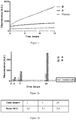
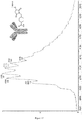
- compound A was far more stable than compound B in human plasma (see fig 1 ).
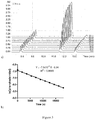
- compound A was far more stable than compound B in cellulo (see fig 2 ).
- HPLC parameters were as follows: flow rate 1 mL/min, gradient from 5 to 95% of mobile phase B from 0 to 20 min, followed by 5 min at 95% of mobile phase and post time of 5 min.
- Mobile phase A was 0.05% TFA in water (mQ) (v/v), and mobile phase B was acetonitrile (HPLC grade).
- Data were analyzed using Shimadzu analysis software. Signals were normalized according to the area of the peak of the internal standard (benzamide). Areas under the peaks of the amino acid benzylamides were used to calculate their conversion during reaction.
- Table 4 presents the conversion of benzylamides in 1 hour in PBS (1X, pH 7.6) in presence of phenylpropiolonitrile (1).
- Table 4 Amino acid benzamide Conversion Amino acid benzamide Conversion CysNHBn ( 7a ) 98% TyrNHBn ( 7g ) 1.6% GlyNHBn ( 7b ) 0.2% HisNHBn ( 7h ) 0.6% AlaNHBn ( 7c ) 0.1% GlnNHBn ( 7i ) 0.1% ValNHBn ( 7d ) 0.7% TrpNHBn ( 7j ) 1.3% SerNHBn ( 7e ) 0.3% ArgNHBn ( 7k ) 0.4% MetNHBn ( 7f ) 0.1% AspNHBn ( 7l ) 0.6%
- Table 5 presents the conversion of benzylamides in 1 hour in PBS (1X, pH 7.6) in presence of phenylmaleimide.
- Bold values correspond to those for which the mass of the corresponding adduct was detected by ESI-LCMS.
- MTT 3-(4,5-Dimethylthiazol-2-yl)-2,5-diphenyltetrazolium bromide
- the experiments were performed in 96-well plates with HaCaT cells grown to confluence in cell culture media (RPMI 1640 media supplemented with 10% fetal calf serum and 1 mM Glutamin, 200 ⁇ L per well). Cells were incubated with chemical reagent at different concentrations (100 ⁇ M to 0.78 ⁇ M by serial 1 ⁇ 2 dilutions) at 37°C for 24 hours. After incubation, the supernatant was replaced with fresh culture media containing MTT (300 ⁇ g/mL).
- the resulting peptide mixtures were analyzed by C18 reversed phase nanoHPLC on a nanoACQUITY Ultra-Performance-LC system (Waters, Milford, MA) coupled to a Q-TOF maXis (Bruker Daltonics, Bremen, Germany) mass spectrometer equipped with a nano-electrospray source. Chromatographic separation was performed on a nanoACQUITY Ultra-Performance-LC. The peptides were separated on an ACQUITY UPLC® BEH130 C18 column (Waters Corp.), 75 ⁇ m x 200 mm, 1.7 ⁇ m particle size. The solvent system consisted of 0.1% formic acid in water (solvent A) and 0.1% formic acid in acetonitrile (solvent B).
- Mass calibration of the TOF was achieved using ES-TOF Tuning Mix (Agilent Technologies) on the 50 to 2200 m/z range in positive mode.
- ES-TOF Tuning Mix Agilent Technologies
- MS the summation time was 0.2 s.
- MS/MS summation time was weighted between 0.2 s and 1.4 s in function of parent ion intensity.
- the 2 most abundant peptides intensity threshold 400 au), preferably ions with two, three, four or five charges, were selected on each MS spectrum for further isolation and CID fragmentation with 2 energies set using collision energy profile. Fragmentation was performed using argon as the collision gas.
- Tryptic peptides were manually sequenced ( de novo ) to confirm their sequence and locate the cysteine tagged by the APN-TMPP probe.
- the peptides were identified using extracted ion chromatograms (EIC) based on monoisotopic mass of calculated peptide sequences.
- APN-TMPP chemoselectivity was carried by studying of its reaction with tryptic digest at 200:1 molar ratio of APN-TMPP (1 ⁇ M) to protein (around 10:1 to cysteine moieties) at room temperature for one hour. Peptide mixtures obtained without and with chemical derivatization were analyzed by LC-MS/MS. All detectable cysteine-containing peptides reacted with a probe and were delayed while cysteine-free peptides were unaffected. The labeling efficiency was evaluated based on the ratio between intensities of labeled and non-labeled peptides by LC-MS. More than 98% of the detected peptides were completely labeled. LC-MS results show clearly that cysteine-containing peptides have an increased retention time due to the addition of the hydrophobic TMPP group, whereas the retention time of all other peptides was unchanged (Table 6).
- Table 6 shows the results of LC-MS analyses of tryptic digest of lysozyme before and after reaction with APN-TMPP.
- Table 6 Before tagging After tagging Peptide sequence [a] m/z (charge state) RT (min) m/z (charge state) RT (min) ⁇ RT (min) Number of tags 24 CELAAAMK 31 419.70 (+2) 13.9 545.89 (+3) 24.2 10.3 1 24 CELAAAMoxK 31 426.70 (+2) 12.6 551.23 (+3) 23.7 11.1 1 40 GYSLGNWVCAAK 51 634.81 (+2) 19.8 689.96 (+3) 25.3 5.5 1 80 WWCNDGR 88 468.69 (+2) 16.5 579.22 (+3) 25.7 9.2 1 92 NLCNIPCSALLSSDITASVNCAK 114 779.71 (+2) 23.7 949.20 (+5) 30.3 6.6 3 52 FESNFNTQATNR 63 714.83 (+2) 13.5 714.83 (+
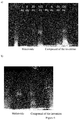
- Figure 6 presents the gel electrophoresis obtained with the compound of the invention and the maleimide, before and after purification.
- Trastuzumab 100uL, 10 mg/mL in 50mM borate buffer pH 8.5 was added 1.74 uL of the solution of 18 (10 mg/mL in DMSO). After incubation for 1h at 25°C was added 0.69 uL of TAMRA-SH (100mM in DMSO). The mixture was incubated at 25°C for 16h and the conjugate was purified by size exclusion chromatography.
- Example 9 Direct conjugation of the compound 58 to partially reduced Trastuzumab.
- Trastuzumab 100uL, 10 mg/mL in 50mM PBS pH 7.4 with 10mM of EDTA
- TCEP 10 mM in water, 1.1 or 2.2 eq.
- the mixture was incubated at 37°C for 2h and then the solution of 58 (8.25 ⁇ L, 10 mM in DMSO) was added.
- the mixture was incubated at 25°C for 16h and the conjugate was purified by size exclusion chromatography.
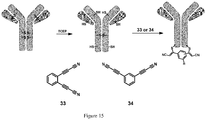
- Example 10 Rebridging of antibody fragments using compounds 33 and 34.
Landscapes
- Chemical & Material Sciences (AREA)
- Organic Chemistry (AREA)
- Health & Medical Sciences (AREA)
- Life Sciences & Earth Sciences (AREA)
- Molecular Biology (AREA)
- Biochemistry (AREA)
- Engineering & Computer Science (AREA)
- General Health & Medical Sciences (AREA)
- Immunology (AREA)
- Genetics & Genomics (AREA)
- Medicinal Chemistry (AREA)
- Biomedical Technology (AREA)
- Hematology (AREA)
- Urology & Nephrology (AREA)
- Biophysics (AREA)
- Proteomics, Peptides & Aminoacids (AREA)
- Zoology (AREA)
- Wood Science & Technology (AREA)
- Bioinformatics & Cheminformatics (AREA)
- Microbiology (AREA)
- Cell Biology (AREA)
- Biotechnology (AREA)
- Analytical Chemistry (AREA)
- General Engineering & Computer Science (AREA)
- General Physics & Mathematics (AREA)
- Pathology (AREA)
- Physics & Mathematics (AREA)
- Food Science & Technology (AREA)
- Inorganic Chemistry (AREA)
- Oncology (AREA)
- Toxicology (AREA)
- Gastroenterology & Hepatology (AREA)
- Organic Low-Molecular-Weight Compounds And Preparation Thereof (AREA)
- Heterocyclic Carbon Compounds Containing A Hetero Ring Having Nitrogen And Oxygen As The Only Ring Hetero Atoms (AREA)
- Peptides Or Proteins (AREA)
- Investigating, Analyzing Materials By Fluorescence Or Luminescence (AREA)
- Investigating Or Analysing Biological Materials (AREA)
- Plural Heterocyclic Compounds (AREA)
- Pyrrole Compounds (AREA)
- Medicines Containing Antibodies Or Antigens For Use As Internal Diagnostic Agents (AREA)
Description
- The present invention relates to a process for labeling compounds comprising thiol moieties with 3-arylpropiolonitrile compounds, and to the compounds thus obtained.
- Over 90% of the human proteins contain cysteines, while in silico digest of the human proteome revealed that only about 15% of all human tryptic peptides detectable by mass spectroscopy (MS) contain at least one cysteine in their sequence. This observation combined with the presence of a highly reactive thiol group on its side chain makes cysteine an attractive target for chemical labeling. Cysteine is the only coded amino acid that carries a nucleophilic sulfhydryl (or thiol) group (-SH), which largely exceeds the reactivity of any other nucleophilic function susceptible to be present in proteins. As a result, chemospecific cysteine derivatization is by far the most widely used method for chemical tagging of proteins. Among the vast number of chemical cysteine modification methods reported in literature so far, reagents such as N-substituted maleimides, 4-vinylpyridines and iodoacetamides are most commonly used. All of them possess drawbacks preventing them from being ideal methodology for cysteine labeling, though being suited for this task. These drawbacks are mainly presence of undesired side reactions, in particular for iodoacetamides and maleimides, and instability of addition product in biological environments due to reversible thiol exchange and other side reactions.
- B. Trofimov et al. (Synthesis, Vol. 2009, No. 18, 10 July 2009, 3136-3142) disclose a process for modifying L-cysteine by reacting it with 3-phenylprop-2-ynenitrile (see Scheme 1). Since 3-phenylprop-2-ynenitrile is not substituted with a tag moiety, this process is not suitable for labelling L-cystein or compounds bearing a cysteine moiety such as proteins.
- The present invention relates to a process for labeling compounds comprising at least one thiol moiety, such as cysteine, with compounds comprising a tag moiety and a 3-arylpropiolonitrile moiety. Said compounds and their addition products with cysteine derivatives (proteins) show an unexpected stability in a wide range of conditions. The process for labeling compounds comprising thiol moieties of the invention can thus be used for a wide range of applications.
- The first object of the invention is a process for the preparation of a labelled compound comprising a thiol moiety, comprising contacting a compound comprising a thiol moiety with a compound of formula (I) in
Claim 1.
- Another object of the invention is a compound of formula (III)

Claim 1. -
- Fig 1:
- Evolution of intensity of fluorescence over time obtained in human plasma for the same concentration of compounds A and B.
- Fig 2:
-
- a) Evolution of intensity of fluorescence over time obtained in cellulo for the same concentration of compounds A and B.
- b) Intensity ratio compound B/compound A at different times in cellulo.
- c) Microscope pictures of cells treated with compounds A and B, superimposition of TAMRA and Hoechst labeling. White spots around nucleus correspond to hydrolyzed probe. A - arylpropiolonitrile probe, B - maleimide probe.
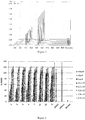
- Fig 3:
- HPLC monitoring of the hydrolysis of phenylmaleimide (2) in PBS (1x, pH 7.6) at 1mM concentration at 25°C; the peaks correspond, from the earliest to the latest, to

- Fig 4:
- HPLC monitoring of hydro lytic stability of N-(4-(cyanoethynyl)phenyl)acetamide (pNHAc-APN, 11) in PBS (1x, pH 7.6) at ImM concentration at 25°C. Conversion was monitored by disappearance of the starting material; the peaks correspond, from the earliest to the latest, to

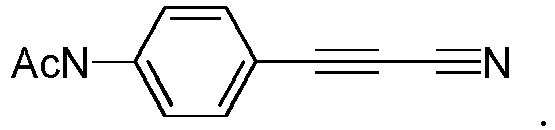
arylpropiolonitrile 11 was observed after 5 hours of monitoring. - Fig 5:
- MTT test results for
compounds - Fig 6:
- Gel electrophoresis of CD38-C375 mutant labeled with a compound according to the invention and with the corresponding maleimide compound, before purification (a) and after purification (b).
- Fig 7:
- Strategy of preparation of the antibody-TAMRA conjugate with a compound according to the invention, and the comparison with the corresponding maleimide.
- Fig 8:
- Gel electrophoresis of the conjugates obtained respectively with the compound according to the invention (CBTF) and with the corresponding maleimide (SMCC).
- Fig 9:
- Mass spectrum for the conjugate obtained with the compound according to the invention.
- Fig 10:
- Zoom on the mass spectrum of
figure 10 . - Fig 11:
- Mass spectrum obtained with the maleimide.
- Fig 12:
- Zoom on the mass spectrum of
figure 12 . - Fig 13:
- General scheme of direct conjugation of the
compound 58 to partially reduced Trastuzumab. - Fig 14:
- SDS-PAGE analysis of the obtained conjugates shows that
compound 58 is covalently attached to the antibody - Fig 15:
- General scheme of rebridging of antibody
fragments using compounds - Fig 16:
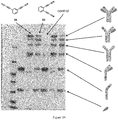
- SDS-PAGE analysis shows that antibody fragments are successfully bridged by
compounds - The first object of the invention is a process for the preparation of a labeled compound comprising a thiol moiety, comprising contacting said compound comprising a thiol moiety with a compound of formula (I)

- hydrogen atoms,
- alkyl, alkene or alkyne groups, optionally interrupted by at least one heteroatom selected among O, N and S,
- aryl groups,
- alkoxy groups,
- halogen atoms,
- amino (-NRR') groups, wherein R and R' are independently hydrogen atoms, alkyl, alkene, alkyne or aryl groups as defined below,
- hydroxylamine (-ONH2) group,
- hydrazine (-NH-NH2) group,
- nitro (-NO2) group,
- azido (-N3) group,
- diazonium (-N2 +) group,
- maleimide group,
- alkyl- or aryl-carboxyl (-C(=O)OR) groups, wherein R is as described above,
- alkyl- or aryl-carbonyl (-C(=O)R) groups, wherein R is as described above,
- hydroxyl (-OH) group,
- boronic acid -B(OR")2 group, wherein R" is a hydrogen atom or an alkyl group,
- phosphine or phosphonium groups,
- isocyanate (-N=C=O) or isothiocyanate (-N=C=S) group,
- chlorosulfonyl (-SO2Cl) group,
- a -O-C(=O)-C(N2)-CF3 group or a -C(=O)-C(N2)-CF3 group,
- activated esters, such as -C(=O)-NHS, wherein NHS stands for N-hydrosuccinimidyl, perfluorinated esters, and acylureas,
- a -C≡C-C≡N group, and
- alkyl groups substituted by at least one of the previously listed groups,
- The tag moiety that is comprised in the compound of formula (I) may be directly bonded to the phenyl ring. It may also be bonded to the phenyl ring through a "linker" group, such as a COO, a NH-C(=O)-NH, a NH-C(=O)-O, a triazole, or a CONH group. It may also be present as a substituent of one of the R1 to R5 groups as described above.
In a preferred embodiment, R3 comprises, preferably R3 is, a tag moiety. - In the present invention, the term "alkyl" relates to a linear, cyclic or branched hydrocarbon group comprising from 1 to 20 carbon atoms, preferably from 1 to 6 carbon atoms, in particular from 1 to 3 carbon atoms. Among alkyl groups can be cited for instance the methyl, ethyl, n-propyl, isopropyl, n-butyl, sec-butyl, tert-butyl, n-pentyl, n-hexyl and cyclohexyl groups. An alkyl group according to the invention may be interrupted by at least one heteroatom selected from Si, N, O and S. Among alkyl groups interrupted by at least one heteroatom may be cited the polyethyleneglycol groups of formula -(OCH2-CH2)n-OH, wherein n is from 1 to 1000, preferably from 1 to 100, in particular from 1 to 8. An alkyl group according to the invention may be substituted by at least one halogen atom.
The term "alkene" relates to an alkyl group as defined above, further comprising at least one C=C double bond. - The term "alkyne" relates to an alkyl group as defined above, further comprising at least one C≡C triple bond. Among alkyne groups can be cited for instance acetylene and cyclooctyne groups.
The term "alkoxy" relates to an alkyl group as defined above linked to the rest of the molecule via an oxygen atom.
The term "aryl" relates to a group comprising at least one planar ring comprising a conjugated π system made of double bonds and/or non-bonding doublets, wherein each atom of the ring comprises a p orbital, the p orbitals overlay each other, and the delocalization of the π electrons lowers the molecule energy. Preferably, the aryl group is a hydrocarbon aryl group, optionally comprising at least one heteroatom selected from N, O and S. Preferably, an aryl group is selected from the group consisting of phenyl, pyridinyl, pyrimidinyl, pyrazinyl, pyridazinyl, triazinyl, furanyl, thiophenyl, pyrrolyl, imidazolyl, thiazolyl, oxazolyl, isoxazolyl, dihydroisoxasolyl, triazolyl, diazinyl, tetrazinyl, pyrazolyl and naphthyl groups. In particular, an aryl group is selected from the group consisting of isoxazolyl, dihydroisoxasolyl, triazolyl, diazinyl, tetrazinyl and pyrazolyl groups.
The term "halogen" relates to an atom selected from the group consisting of F, Cl, Br and I atoms. Preferably, a halogen is a Cl or Br atom. - The optical and geometrical isomers, racemates, tautomers, salts, hydrates, solvates and mixtures thereof of the compounds are also encompassed by the scope of formulas (I) and (III) of the present invention.
- When the compounds according to the invention are in the forms of salts, they are preferably pharmaceutically acceptable salts. Such salts include pharmaceutically acceptable acid addition salts, pharmaceutically acceptable base addition salts, pharmaceutically acceptable metal salts, ammonium and alkylated ammonium salts. Acid addition salts include salts of inorganic acids as well as organic acids. Representative examples of suitable inorganic acids include hydrochloric, hydrobromic, hydroiodic, phosphoric, sulfuric, nitric acids and the like. Representative examples of suitable organic acids include formic, acetic, trichloroacetic, trifluoroacetic, propionic, benzoic, cinnamic, citric, fumaric, glycolic, lactic, maleic, malic, malonic, mandelic, oxalic, picric, pyruvic, salicylic, succinic, methanesulfonic, ethanesulfonic, tartaric, ascorbic, pamoic, bismethylene salicylic, ethanedisulfonic, gluconic, citraconic, aspartic, stearic, palmitic, EDTA, glycolic, p-aminobenzoic, glutamic, benzenesulfonic, p-toluenesulfonic acids, sulphates, nitrates, phosphates, perchlorates, borates, acetates, benzoates, hydroxynaphthoates, glycerophosphates, ketoglutarates and the like. Further examples of pharmaceutically acceptable inorganic or organic acid addition salts include the pharmaceutically acceptable salts listed in J. Pharm. Sci. 1977, 66, 2. Preferably, the salt does not comprise any thiol moiety.
The "counterion" can be any ion appropriate for compensating the charge of the diazonium group, and may be easily chosen by anyone of ordinary skill in the art. For instance, the counterion may be selected from the group consisting of halogenates, BP4 -, NO3 -, HSO4, PF6 - CH3COO-, N(SO2CF3)2 -, CF3SO3 -, CH3SO3 -, CF3COO-, (CH3O)(H)PO2 - and N(CN)2 -. - In the present invention, the hydroxyl (OH), amino (NH2 or NHR) and carboxyl (COOH) groups may be protected with appropriate protecting groups. One can refer to T. W. Green, P. G. M. Wuts, Protective Groups in Organic Synthesis, Wiley-Interscience, New York, 1999 .
Among protecting groups for hydroxyl groups may be cited acetyl (Ac), benzoyl (Bz), benzyl (Bn), β-Methoxyethoxymethyl ether (MEM), Dimethoxytrityl, [bis-(4-methoxyphenyl)phenylmethyl] (DMT), Methoxymethyl ether (MOM), Methoxytrityl [(4-methoxyphenyl)diphenylmethyl, MMT), p-Methoxybenzyl ether (PMB), Methylthiomethyl ether, Pivaloyl (Piv), Tetrahydropyranyl (THP), Tetrahydrofuran (THF), and Trityl (triphenylmethyl, Tr).
Among protecting groups for amino groups may be cited t-butyl carbamate (Boc), 2-trimethylsilylethyl carbamate (Teoc), 1-(1-Adamantyl)-1-methylethyl carbamate (Adpoc), 1-Methyl-1-(4-biphenyl)ethyl carbamate (Bpoc), 1-(3,5-Di-t-butylphenyl)-1-methylethyl carbamate (t-Bumeoc), 1-Adamantyl Carbamate (Adoc), p-Methoxybenzyl carbamate (Moz), 9-Anthrylmethyl carbamate, Diphenylmethyl Carbamate, 9-Fluorenylmethyl carbamate (Fmoc), 9-(2-Sulfo) Fluoroenylmethyl carbamate, 9-(2,7-dibromo)Fluorenylmethyl carbamate, 2,7-Di-t-butyl-[9-(10,10-dioxo-10,10,10,10-tetrahydrothioxanthyl)]methylcarbamate (DBD-Tmoc), 2-(N,N-dicyclohexylcarboxamido)ethylCarbamate, 2-Phosphonioethyl carbamate (Peoc), 2-Phenylethyl carbamate, Benzyl carbamate (Cbz), Allyl carbamate (Alloc), 1-Isopropylallyl carbamate (Ipaoc), 4-Nitrocinnamyl Carbamate (Noc), 8-Quinolyl carbamate and N-Phtalimide.
Among protecting groups for carboxyl groups may be cited methyl esters, benzyl esters, tert-butyl esters, silyl esters, 2,6-dimethylphenol, 2,6-diisopropylphenol, and 2,6-di-tertbutylphenol. - The term "tag" or "tag moiety" is selected from an antibody, a therapeutic agent or a fluorescent probe.
- Fluorescent probes are appropriate for allowing detection of the compound of the invention. Examples of fluorescent probes are fluorescein, quantum dots, cyanine dyes Cy3® and Cy5®, Alexa Fluor® dyes, Dylight fluor® dyes, IRIS® Dyes, Seta® dyes, SeTau® dyes, SRfluor® dyes, Square® dyes, Nile red, FL or carboxytetramethylrhodamine (TAMRA).
- Antibodies are appropriate for allowing vectorization of an agent of interest with the compound of the invention and thus for helping the compound and/or the agent of interest to reach the appropriate tissue or organ, such as liver or bladder.
- Therapeutic agents are appropriate for allowing modification of the ADME parameters of the compound.
- In an embodiment, each of R1 to R5 is independently selected in the group consisting of:
- alkyne groups,
- amino groups,
- hydroxylamine (-ONH2) groups,
- hydrazine (-NH-NH2) groups,
- azido (N3) groups,
- diazonium (N2 +) groups, preferably in presence of a counterion,
- maleimide groups,
- carboxylic acid groups,
- aldehyde (-CHO) groups,
- boronic -B(OR")2 groups, wherein R" is as described above, and
- activated esters.
- In a preferred embodiment, none of R1 to R5 comprises a free SH group. In a preferred embodiment, R1 and/or R5 do not comprise any nucleophilic group, such as amino groups, hydroxylamine groups, hydrazine groups or hydroxyl groups.
- In specific embodiments, 1, 2, 3, 4 or 5 of R1 to R5 are different from hydrogen atoms.
- Compounds of formula (I) according to the invention can be synthesized for instance in two steps from the corresponding iodoarene, by coupling with propargyl alcohol, for instance via a Sonogashira coupling. The coupling is preferably followed by oxidation; for instance, the oxidation may be a tandem oxidation performed with MnO2 in the presence of an ammonia solution. Alternatively, the compounds of the invention can be synthesized by cyanation of arylalkynes. Cyanation may be performed for instance with CuCN, arylisocyanates, cyanobenzotriazoles or cyanoimidazoles.
- The compounds of formula (I) are used in a process for labeling compounds comprising at least one thiol SH moiety. Preferably, the process of the invention comprises contacting at least one compound of formula (I) with a compound comprising at least one thiol SH moiety, or a sample susceptible to comprise such a compound.
Preferably, the sample is a biological sample, in particular an aqueous sample. - The term "labeling" in the present invention refers to the formation of a covalent bond between the sulfur atom of the thiol moiety and the propiolonitrile moiety of the compounds of formula (I).
- The compound comprising a thiol moiety (R6-SH compound) can be for instance a fluorophore, a quencher, an amino acid, a peptide, a protein, an enzyme, a drug, a prodrug and/or a drug metabolite. It may be any chemical group that is bonded to a thiol (SH) group to form a "compound comprising a thiol moiety". It preferably comprises carbon, hydrogen, oxygen, nitrogen, phosphorus, and/or sulphur atoms.
In particular, the compound comprising a thiol moiety can be cystein, or a derivative, such as an ester, thereof, or a peptide or a protein comprising at least one cystein residue. Alternatively, the compound comprising a thiol moiety may be a surface presenting at least one free SH group.
Labeling of the compounds comprising a thiol moiety with compounds of formula (I) may be used for a great number of applications.
In a first embodiment, labeling of the compounds comprising a thiol moiety with compounds of formula (I) may be used in the detection and/or quantification of the compound comprising the thiol moiety in a sample. The detection means in the present invention identifying the presence or absence of the desired compound(s) in the sample. The sample can be any sample susceptible to comprise the compound comprising at least one thiol moiety. For instance, the sample may be a biological sample, for instance a biological fluid, such as blood, plasma, serum, saliva, urine, etc., an extract of natural products, a biological tissue, or a part thereof, or a medium comprising cells. - In a second embodiment, labeling of the compounds comprising a thiol moiety with compounds of formula (I) may be used for bio-conjugation of the compound comprising a thiol moiety with a drug (therapeutic agent).
For instance, a compound of formula (I) comprising a compound of interest as tag may allow selective vectorization and/or binding of the compound of interest to the compound comprising at least one thiol moiety.
At least one tag may be added to the following compounds of formula (II) to form the compounds of formula (I) as described above:


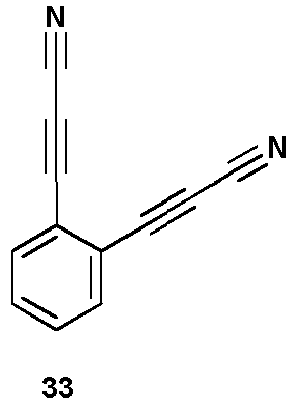


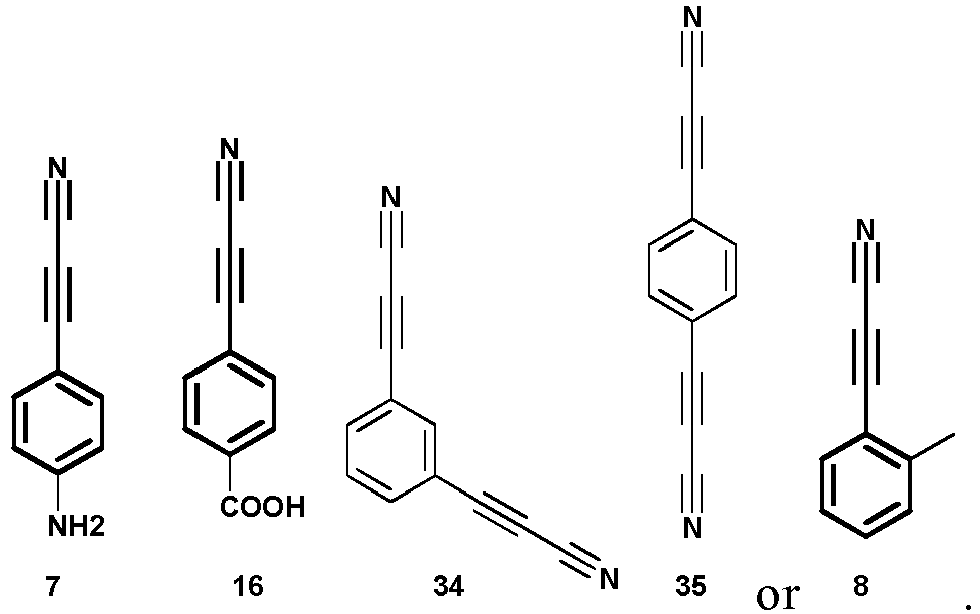
- Among the compounds of formula (II) may also be cited the following compounds:

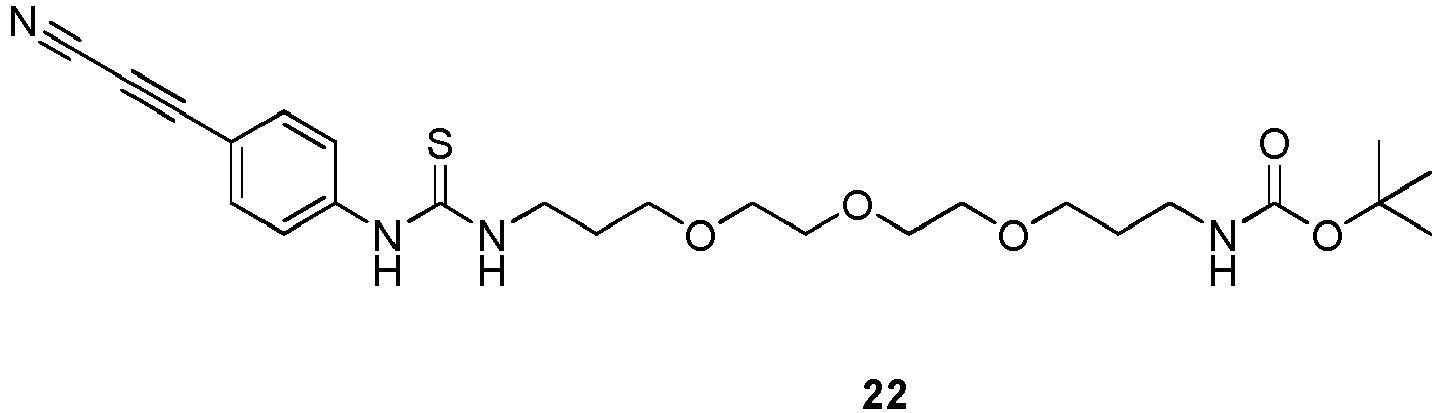


- The process for labeling a compound comprising a thiol moiety according to the invention may further comprise, before the step of contacting the compound comprising a thiol moiety with a compound of formula (I), a preliminary step of preparation of the compound of formula (I), comprising contacting a compound of formula (II) with a compound comprising a tag moiety, or a precursor thereof.
The term "precursor" relates in the present case to a chemical group that is able to form, after contacting with the compound of formula (II), the tag moiety. - In the above compounds of formula (II), the maleimide and NHS-ester moieties respectively allow further linking of the compound to another thiol or an amine group; the N3 group allows further linking of the compound to another alkyne-group and the alkyne group allows further linking of the compound to another N3 group.
The compound of formula (II) may be selected from the following compounds:


- In the compounds of formula (I) according to the invention, at least one of R1 to R5 is further bonded to a compound of interest.
A compound of interest or tag may be a fluorophore, for instance rhodamine, a therapeutic agent, or an antibody. - When the process of labeling according to the invention is performed with such a compound of formula (I), the process affords the formation of a conjugate between the compound of interest and the compound comprising a thiol moiety.
In an embodiment, the compound of interest is a an antibody, and the compound comprising a thiol moiety is a therapeutic agent. The conjugate obtained by the process of labeling according to the invention is a therapeutic antibody.
Another object of the invention is a compound of formula (III):
claim 1, and wherein R6 is a protein. The compounds of formula (III) as described above have shown to be highly more stable in biological conditions than the corresponding compounds wherein the 3-arylpropiolonitrile moiety is replaced with a maleimide moiety. This is because the addition product

cysteine derivative 3
- The invention will be illustrated in more detail with reference to the following examples.
Examples
Example 1: Synthesis of compounds of the invention
Synthesis of compounds of formula (II)
- A series of compounds of formula (II) were synthesized and characterized according to the following procedures.
-

-
- A. To a degased solution of the proper aryl halide (1 eq., 1 mmol) in DMF (5 mL) and DIPEA (10 eq., 10 mmol), premixed PdCl2(PPh3)2 (0.03 eq., 30 µmol) and CuI (0.06 eq., 60 µmol) were added. Obtained reaction mass was degased, stirred for another 5 minutes, followed by the addition of propargyl alcohol (1.2 eq., 1.2 mmol). The reaction mass was stirred for 1-24 hours (monitored by TLC). 1M HCl (50 mL) was added (if contains free amino groups, 50 mL of water were added instead) and the reaction mixture was extracted with ethyl acetate (3x20 mL). United ethyl acetate fractions were washed with water (1x10 mL) dried over MgSO4 and evaporated to give crude product. Products were purified by flash chromatography (gradient of 20 minutes from 100% of cyclohexane to 100% of ethyl acetate).
- B. To a degased solution of the proper aryl halide (1 eq., 1 mmol) in THF (5 mL) and TEA (5 mL), premixed PdCl2(PPh3)2 (0.03 eq., 30 µmol) and CuI (0.06 eq., 60 µmol) were added, followed by the addition of propargyl alcohol (2 eq., 1.2 mmol). The reaction mass was stirred for 1-24 hours (monitored by TLC). THF and TEA were evaporated and the crude product was purified by flash chromatography (gradient of 20 minutes from 100% of cyclohexane to 100% of ethyl acetate).
- C. To a degased solution of the proper aryl halide (1 eq., 1 mmol) in propylamine or pyrrolidine (3 mL), Pd(PPh3)4 (0.05 eq., 50 µmol) was added. The reaction mass was heated overnight (30-50 °C), evaporated and the crude product was purified by flash chromatography (gradient of 20 minutes from 100% of cyclohexane to 100% of ethyl acetate).
- A solution of MnCl2·4H2O (1 eq., 1 mole, 200 g) in water (2 L) at 70 °C was gradually added during 10 minutes, with stirring, to a solution of KMnO4 (1 eq., 1 mole, 160 g) in water (2 L) at 60 °C in a hood. A vigorous reaction ensued with evolution of chlorine; the suspension was stirred for 2 hours and kept overnight at room temperature. The precipitate was filtered off, washed thoroughly with water (4 L) until pH 6.5-7 and the washing gave a negligible chloride test. The filter cake was then dried at 120-130 °C for 18 h; this gave a chocolate-brown, highly disperse amorphous powder.
-

- Slightly modified procedure described by McAllister et al. 824 To a solution of the proper propargylic alcohol (1 eq., 1 mmol) in THF (4.5 mL), MgSO4 (15 eq., 15 mmol), highly active MnO2 (25 eq., 25 mmol) and 2M NH3 solution in IPA (4 eq., 4 mmol, 2 mL) were added. Obtained reaction mass was vigorously stirred at room temperature for 0.5-12 hours (monitored by TLC). DCM (20 mL) were added and the obtained reaction mass was filtered through Celite, evaporated to give crude product and purified by flash chromatography if required.
-

R1 R2 R3 R4 X Protocol 1a OMe H H H I B 2a H OMe H H Br C 3a H H OMe H I B 4a OMe H H OMe I C 5a NH2 H H H I B 6a H NH2 H H I A 7a H H NH2 H I A 8a Me H H H I B 9a Me H H Me I A 10a NO2 H H H Br B 11a H H NHAc H I A 12a H H CONHMe H I A - Reaction time: 18 hours; yield: 72%.
1H NMR (400 MHz, METHANOL-d4) δ 7.36 (dd, J = 1.5, 7.5 Hz, 1H), 7.26-7.33 (m, 1H), 6.97 (d, J = 8.3 Hz, 1H), 6.86-6.93 (m, 1H), 4.43 (s, 2H), 3.84 (s, 3H); 13C NMR (101 MHz, METHANOL-d4) δ161.6, 134.5, 131.0, 121.5, 113.4, 112.0, 92.7, 82.0, 56.2, 51.5. - Reaction time: 16 hours; yield: 87%.
1H NMR (400 MHz, METHANOL-d4) δ 7.15-7.24 (pseudo-t, J = 7.5 Hz, 1H), 7.00 (d, J = 7.5 Hz, 1H), 6.93-6.98 (m, 1H), 6.87 (dd, J = 2.13, 7.5 Hz, 1H), 4.41 (s, 2H), 3.73 (s, 3H); 13C NMR (101 MHz, METHANOL-d4) δ 160.9, 130.6, 125.4, 125.1, 117.8, 115.7, 88.8, 85.6, 55.9,51.4. - Reaction time: 16 hours; yield: 92%.
1H NMR (400 MHz, CHLOROFORM-d) δ 7.40 (d, J = 8.78 Hz, 2H), 6.86 (d, J = 8.78 Hz, 2H), 4.51 (d, J = 4.9 Hz, 2H), 3.83 (s, 3H), 1.78 (t, J = 4.9 Hz, 1H); 13C NMR (101 MHz, CHLOROFORM-d) δ 159.8, 133.2, 114.6, 114.0, 85.9, 85.7, 55.3, 51.7. - Reaction time: 24 hours; yield: 62%.
1H NMR (400 MHz, METHANOL-d4) δ 7.19 (dd, J = 1.25, 7.9 Hz, 1H), 7.03-7.12 (m, 1H), 6.75 (d, J = 7.9 Hz, 1H), 6.56-6.65 (m, 1H), 4.47 (s, 2H), 4.26 (s, 2H); 13C NMR (101 MHz, METHANOL-d4) δ 150.3, 133.0, 130.6, 118.2, 115.6, 93.8, 78.9, 69.5, 51.0. - Reaction time: 18 hours; yield: 77%.
1H NMR (400 MHz, CHLOROFORM-d) δ 7.08 (t, J = 7.8 Hz, 1H), 6.83 (d, J = 7.8 Hz, 1H), 6.76 (s, 1H), 6.64 (dd, J = 1.5, 7.8 Hz, 1H), 4.46 (s, 2H), 2.17 (s, 1H); 13C NMR (101 MHz, CHLOROFORM-d) δ 146.3, 129.2, 123.4, 122.0, 118.0, 115.5, 87.0, 85.6, 51.4. - Reaction time: 18 hours; yield: 42%.
1H NMR (400 MHz, METHANOL-d4) δ 7.11-7.21 (d, J = 8.5 Hz, 2H), 6.53-6.68 (d, J = 8.5 Hz, 2H), 4.37 (s, 2H); 13C NMR (101 MHz, METHANOL-d4) δ 149.7, 133.8, 115.7, 112.5, 86.7, 85.9, 51.4; - Reaction time: 15 hours; yield: 35%.
1H NMR (400 MHz, CHLOROFORM-d) δ 7.97 (d, J = 8.0 Hz, 1H), 7.54-7.60 (d, J = 8.0 Hz, 1H), 7.46-7.54 (t, J = 8.0 Hz, 1H), 7.36-7.44 (t, J = 8.0 Hz, 1H), 4.49 (s, 2H), 1.68 (br. s., 1H); 13C NMR (101 MHz, CHLOROFORM-d) δ 149.9, 134.8, 132.8, 128.9, 124.6, 118.0, 95.2, 80.9, 51.7. - Reaction time: 12 hours; yield: 91%.
1H NMR (400 MHz, METHANOL-d4) δ 7.72-7.82 (m, J = 8.28 Hz, 2H), 7.41-7.53 (m, J = 8.28 Hz, 2H), 4.43 (s, 2H), 2.92 (s, 3H); 13C NMR (101 MHz, METHANOL-d4) δ 169.9, 135.2, 132.7, 128.3, 127.6, 91.5, 84.7, 51.3, 27.1. - Reaction time: 18 hours; yield: 85%.
1H NMR (400 MHz, METHANOL-d4) δ 7.56-7.64 (d, J = 8.8 Hz, 2H), 7.47-7.56 (d, J = 8.8 Hz, 2H), 4.74 (s, 2H), 2.04 (s, 3H); 13C NMR (101 MHz, METHANOL-d4) δ 171.9, 143.8, 135.7, 120.7, 112.8, 106.2, 84.5, 62.7, 24.1. - Reaction time: 5 hours; yield: 70%.
1H NMR (400 MHz, CHLOROFORM-d) δ 7.40 (d, J = 7.5 Hz, 1H), 7.11-7.24 (m, 3H), 4.54 (s, 2H), 2.43 (s., 3H); 13C NMR (101 MHz, CHLOROFORM-d) δ 138.2, 131.2, 128.4, 128.0, 119.3, 115.3, 86.5, 85.2, 51.2, 21.2. - Reaction time: 24 hours; yield: 25%.
1H NMR (400 MHz, CHLOROFORM-d) δ 7.03 (t, J = 7.5 Hz, 1H), 6.95 (d, J = 7.5 Hz, 2H), 4.50 (s, 2H), 2.34 (s, 7H); 13C NMR (101 MHz, CHLOROFORM-d) δ 140.5, 127.9, 126.7, 122.3, 95.6, 83.3, 51.9, 21.1. - Reaction conditions: 30 °C, propylamine, 16 hours; yield: 38%.
1H NMR (400 MHz, METHANOL-d4) δ 7.25 (t, J = 8.4 Hz, 1H), 6.62 (d, J = 8.4 Hz, 2H), 4.46 (s, 2H), 3.84 (s, 6H); 13C NMR (101 MHz, METHANOL-d4) δ 163.0, 131.0, 104.7, 102.5, 97.0, 78.1, 56.4, 51.7. -

R1 R2 R3 R4 Time, h Yield, % 1 OMe H H H 3 45 2 H OMe H H 2 85 3 H H OMe H 3 95 4 OMe H H OMe 4 60 5 NH2 H H H 1 47 6 H NH2 H H 2 71 7 H H NH2 H 9 94 8 Me H H H 1.5 70 9 Me H H Me 2 55 10 NO2 H H H 4 21 11 H H NHAc H 2 92 12 H H CONHMe H 2 61 - 1H NMR (400 MHz, METHANOL-d4) δ 7.51-7.65 (m, 2H), 7.12 (d, J = 8.3 Hz, 1H), 7.01 (t, J = 7.7 Hz, 1H), 3.94 (s, 4H);□13C NMR (101 MHz, METHANOL-d4) δ 164.7, 136.4, 135.3, 122.0, 112.6, 107.7, 106.4, 81.8, 66.7, 56.7; IR (neat film, cm-1): 2946, 2264, 2142 1596, 1490, 1245, 1164, 1122, 1047, 1021, 752, 498; GC-ESI-HRMS: 157.05276; found 157.05044.
- 1H NMR (400 MHz, METHANOL-d4) δ 7.38 (t, J = 7.8 Hz, 1H), 7.27 (d, J = 7.8 Hz, 1H), 7.20-7.24 (m, 1H), 7.12-7.20 (m, 1H), 3.83 (s, 3H); 13C NMR (101 MHz, METHANOL-d4) δ 161.2, 131.4, 127.1, 120.0, 119.4, 119.2, 106.0, 84.1, 62.7, 56.1; IR (neat film, cm-1): 2491, 2264, 2144, 1595, 1573, 1488, 1464, 1420, 1324, 1294, 1207, 1178, 1045, 783, 681, 494; GC-ESI-HRMS: 157.05276; found 157.05298.
- 1H NMR (400 MHz, CHLOROFORM-d) δ 7.46-7.70 (m, J = 8.8 Hz, 2H), 6.86-6.96 (m, J = 8.8 Hz, 2H), 3.86 (s, 3H); 13C NMR (101 MHz, CHLOROFORM-d) δ 161.4, 134.4, 113.7, 108.2, 104.8, 82.7, 61.5, 54.5; IR (neat film, cm-1): 2985, 2358, 2342, 2263, 2178, 2149, 1603, 1514, 1307, 1270, 1180, 1028, 835, 808, 669, 424; GC-ESI-HRMS: 157.05276; found 157.05337.
- 1H NMR (400 MHz, CHLOROFORM-d) δ 7.38 (t, J = 8.5 Hz, 1H), 6.53 (d, J = 8.5 Hz, 2H), 3.88 (s, 6H); 13C NMR (101 MHz, CHLOROFORM-d) δ 164.4, 133.8, 106.2, 103.4, 96.5, 77.7, 70.5, 56.2; IR (neat film, cm-1): 2847, 2359, 2259, 2201, 2139, 1926, 1586, 1574, 1478, 1432, 1302, 1255, 1188, 1109, 1025, 778, 727, 648, 632, 545, 506, 488, 420; GC-ESI-HRMS: 187.06333; found 184.06465.
- 1H NMR (500 MHz, METHANOL-d4) δ 6.81 (d, J = 7.88 Hz, 1H), 6.65-6.76 (m, 1H), 6.08-6.19 (m, 2H), 3.85 (br. s., 1H); 13C NMR (126 MHz, CHLOROFORM-d) δ 151.4, 134.0, 133.4, 118.2, 115.0, 105.8, 101.0, 81.6, 68.5; IR (neat film, cm-1): 3413, 3332, 3211, 2925, 2853, 2250, 2136, 1632, 1600, 1563, 1486, 1452, 1312, 1273, 1252, 1161, 740, 673, 493; GC-ESI-HRMS: 142.05310; found 142.05458.
- 1H NMR (400 MHz, CHLOROFORM-d) δ 7.17 (t, J = 7.6 Hz, 1H), 6.99 (d, J = 7.6 Hz, 1H), 6.74-6.89 (m, 2H), 3.85 (br. s., 2H); 13C NMR (101 MHz, CHLOROFORM-d) δ 146.8, 129.8, 123.6, 118.7, 118.7, 118.0, 105.7, 83.7, 62.3; IR (neat film, cm-1): 3426, 3340, 2923, 2852, 2265, 2142, 1630, 1594, 1579, 1513, 1448, 1326, 1313, 1300, 1220, 1164, 993, 882, 862, 784, 680, 534, 456; GC-ESI-HRMS: 142.05310; found 142.05197.
- 1H NMR (400 MHz, METHANOL-d4) δ 7.26 (d, J = 8.6 Hz, 2H), 6.51 (d, J = 8.6 Hz, 2H); 13C NMR (101 MHz, METHANOL-d4) δ 152.5, 135.1, 113.6, 105.6, 102.3, 86.3, 60.2; IR (neat film, cm-1): 3431, 3333, 3211, 2250, 2132, 1632, 1599, 1513, 1438, 1303, 1178, 1043, 949, 826, 814, 526, 495, 452; GC-ESI-HRMS: 142.05310; found 142.05464.
- 1H NMR (400 MHz, CHLOROFORM-d) δ 7.47 (d, J = 7.78 Hz, 1H), 7.28-7.36 (m, 1H), 7.18 (d, J = 8.03 Hz, 1H), 7.08-7.16 (m, 1H), 2.39 (s, 3H); 13C NMR (101 MHz, CHLOROFORM-d) δ 143.4, 134.1, 131.8, 130.1, 126.1, 117.4, 105.6, 82.4, 66.4, 20.5; IR (neat film, cm-1): 2295, 2257, 2141, 1599, 1484, 1456, 1383, 1291, 1199, 1162, 1116, 1039, 757, 711, 672, 548, 490, 452; GC-ESI-HRMS: 141.05785; found 141.05926.
- 1H NMR (400 MHz, CHLOROFORM-d) δ 7.12-7.27 (t, J = 7.5 Hz, 1H), 7.01 (d, J = 7.5 Hz, 2H), 2.38 (s, 6H); 13C NMR (101 MHz, CHLOROFORM-d) δ 143.8, 131.2, 127.3, 117.6, 105.6, 81.5, 70.2, 20.8; IR (neat film, cm-1): 2923, 2856, 2261, 2138, 1732, 1595, 1468, 1381, 1265, 1168, 1033, 774, 728, 490; GC-ESI-HRMS: 155.07350; found 155.07507.
- 1H NMR (400 MHz, METHANOL-d4) δ 8.28 - 8.35 (m, 1H), 7.96 - 8.06 (m, 1H), 7.81 - 7.90 (m, 2H); 13C NMR (101 MHz, METHANOL-d4) δ 151.9, 138.3, 135.2, 134.1, 126.6, 114.2, 105.7, 79.0, 68.6; IR (neat film, cm-1): 2268, 1604, 1567, 1528, 1502, 1480, 1345, 851, 787, 744, 709, 687, 537, 491; GC-ESI-HRMS: 172.02728; found 172.02869.
- 1H NMR (400 MHz, METHANOL-d4) δ 7.56-7.63 (m, J = 8.8 Hz, 2H), 7.49-7.56 (m, J = 8.8 Hz, 2H), 2.04 (s, 3H); 13C NMR (101 MHz, METHANOL-d4) δ 171.9, 143.8, 135.7, 120.7, 112.8, 106.2, 84.5, 62.7, 24.1; IR (neat film, cm-1): 3303, 3174, 3098, 2278, 2262, 2139, 1670, 1594, 1535, 1407, 1364, 1321, 1263, 1177, 834, 534; GC-ESI-HRMS: 184.06366; found 184.06212.
- 1H NMR (400 MHz, METHANOL-d4) δ 7.96-8.05 (m, J = 7.78 Hz, 2H), 7.85-7.93 (m, J = 7.78 Hz, 2H), 3.03 (s, 3H); 13C NMR (101 MHz, METHANOL-d4) δ 169.1, 138.3, 134.9, 129.0, 121.6, 105.9, 83.0, 64.6, 28.8; IR (neat film, cm-1): 3348, 2270, 1641, 1549, 1502, 1408, 1392, 1327, 1303, 1283, 1162, 854, 760, 617, 488; GC-ESI-HRMS: 184.06366; found 184.06465.
-

- Product was synthesized according to general procedure of MnO2-oxidation. Reaction time: 30 minutes; yield: 61%.
- 1H NMR (400MHz, CHLOROFORM-d) δ = 7.78 (d, J = 8.5 Hz, 2H), 7.32 (d, J = 8.5 Hz, 3H); 13C NMR(101 MHz, chloroform-d) δ 138.1, 134.4, 116.8, 105.2, 99.2, 81.9, 64.2. Compound 13 can be used for the labeling method according to the invention (with radioisotope 1251).
-

- Product was synthesized according to general procedure of MnO2-oxidation. Reaction time: 1 hour; yield: 45%.
1H NMR (400MHz, CHLOROFORM-d) δ = 7.76 (d, J = 8.3 Hz, 2H), 7.70 (d, J = 8.3 Hz, 2H). - Compound 14 can be used for the labeling method according to the invention (with radioisotope 18F).
-

- Product was synthesized according to general procedure B for coupling. Yield : 98%. 1H NMR (400MHz, CHLOROFORM-d) δ = 7.93 (d, J = 8.1 Hz, 2H), 7.47 (d, J = 8.1 Hz, 2H), 4.53 (s, 2H), 1.60 (s, 9H); 13C NMR (101MHz, CHLOROFORM-d) δ = 165.1, 131.7, 131.4, 129.3, 126.6, 89.8, 85.1, 81.4, 51.6, 28.1.
-

- Product was synthesized according to general procedure of MnO2-oxidation. Reaction time: 15 minutes; yield: 48%.
1H NMR (400MHz, DMSO-d6) δ = 8.00 (d, J = 8.3 Hz, 2H), 7.94 (d, J = 8.3 Hz, 2H), 1.56 (s, 9H); 13C NMR (101MHz, CHLOROFORM-d) δ = 164.3, 134.8, 133.3, 129.7, 121.3, 105.2, 82.2, 81.9, 64.8, 28.1. -

- To the solution of tert-butyl 4-(2-cyanoeth-1-yn-1-yl)benzoate (1 eq., 350 mg, 1.54 mmol) in MeCN (14 mL) was added TFA (30.6 eq., 5.372 g, 3.5 mL, 47.1 mmol) . The mixture was stirred for 36h at r.t. and then filtered and washed with 3x2 mL of Et2O. The precipitate consisted of pure 4-(2-cyanoeth-1-yn-1-yl)benzoic acid(140 mg, 0.823 mmol, 53% yield).
1H NMR (400MHz, METHANOL-d4) δ = 8.12 (d, J = 8.3 Hz, 3H), 7.83 (d, J = 8.3 Hz, 2H). -

- The solution of pentafluorophenol (1 eq., 89.2 mg, 0.484 mmol) and 4-(2-cyanoeth-1-yn-1-yl)benzoic acid (1 eq., 82.9 mg, 0.484 mmol) in THF (4.84 mL) was cooled to 0°C and DCC (1 eq., 99.9 mg, 0.484 mmol) was added to the mixture. The resulting solution was stirred at r.t. for 14h, then filtered and washed with Et2O. The filtrate was evaporated to give pentafluorophenyl 4-(2-cyanoeth-1-yn-1-yl)benzoate (120 mg, 0.358 mmol, 74% yield) as a white solid.
- 1H NMR (400MHz, DMSO-d6) δ = 8.29 (d, J = 8.3 Hz, 2H), 8.08 (d, J = 8.3 Hz, 2H).
Compound 17 can be used for a bio-conjugation method according to the invention. -

- To the solution of 4-(2-cyanoeth-1-yn-1-yl)benzoic acid (1 eq., 54.2 mg, 0.317 mmol) and
sodium - 1H NMR (400MHz, DMSO-d6) δ = 8.31 (d, J = 6.3 Hz, 2H), 8.09 (d, J = 6.3 Hz, 2H).
Compound 18 can be used for a bio-conjugation method according to the invention. -

- 5-(dimethylamino)-N-(prop-2-yn-1-yl)naphthalene-1-sulfonamide (1 eq., 395 mg, 1.37 mmol) and 3-(4-azidophenyl)prop-2-ynenitrile (1 eq., 230 mg, 1.37 mmol) were solubilized in tBuOH (6.91 mL). To this mixture was added a solution of copper sulfate pentahydrate (10 %, 34.2 mg, 0.137 mmol) in 0.5 mL of water followed by the solution of sodium ascorbate (0.5 eq., 135 mg, 0.685 mmol) in 0.5 mL of water. The resulting solution was stirred for 2h and then concentrated on rotary evaporator. The residue was extracted with DCM. The organic layer was washed with saturated aqueous solution of NH4Cl and with water, dried over MgSO4 and evaporated to give 20 (544 mg, 1.19 mmol, 87% yield) as a green solid.
1H NMR (400MHz, DMSO-d6) δ = 8.59 (br. s., 1H), 8.34 (d, J = 7.3 Hz, 1H), 8.33 (s, 1H) 8.26 (d, J = 8.8 Hz, 1H), 8.13 (d, J = 7.3 Hz, 1H), 8.00 (d, J = 8.8 Hz, 2H), 7.83 (d, J = 8.8 Hz, 2H), 7.61 - 7.51 (m, 2H), 7.18 (d, J = 7.5 Hz, 1H), 4.21 (s, 2H), 2.71 (s, 6H). 13C NMR (101MHz, DMSO-d6) δ = 151.2, 144.8, 138.4, 135.7, 135.6, 129.4, 128.9, 128.8, 128.6, 127.8, 123.4, 121.3, 119.9, 119.0, 116.0, 114.9, 105.3, 82.5, 63.1, 44.9, 37.6. -
Compound 20 can be used for a detection method (with dyes, for instance) according to the invention. -

- In a 50 mL RB flask, a solution of sodium hydrogen carbonate (886 mg, 10.55 mmol) in 10 mL water was stirred for 10 min and to it dichloromethane (10 mL) was added followed by 3-(4-aminophenyl)prop-2-ynenitrile (500 mg, 3.52 mmol). The reaction mixture was cooled to 0°C, thiophosgene (402 µL, 5.28 mmol) was introduced dropwise over a period of 30 min and continuously stirred at room temperature for 1 h. The organic phase was separated and dried over anhydrous MgSO4. Concentration of the solution afforded pure 21 (609 mg, 3.31 mmol, 94% yield) in form of yellow solid.
1H NMR (400MHz, ACETONITRILE-d3) δ = 7.71 (d, J = 8.5 Hz, 2H), 7.37 (d, J = 8.5 Hz, 2H). - Compound 21 can be used for a bio-conjugation method according to the invention.
-

- tert-Butyl (3-(2-(2-(3-aminopropoxy)ethoxy)ethoxy)propyl)carbamate (1 eq., 91.5 mg, 0.271 mmol) was dissolved in of DCM (2 mL) and cooled to 0°C. To this solution 3-(4-isothiocyanatophenyl)prop-2-ynenitrile (1 eq., 50 mg, 0.271 mmol) in 1 mL of DCM was slowly added and the mixture was stirred for 30 min. The reaction mix was concentrated to 1 mL and the residue was purified by flash chromatography (DCM/MeOH gradient, 100/0 to 90/10) to give tert-butyl (1-((4-(cyanoethynyl)phenyl)amino)-1-thioxo-6,9,12-trioxa-2-azapentadecan-15-yl)carbamate (126 mg, 0.25 mmol, 92% yield) as a yellow oil.
1H NMR (400MHz, METHANOL-d4) δ = 7.66 (s, 4H), 3.65 - 3.54 (m, 12H), 3.50 (t, J = 6.1 Hz, 2H), 3.12 (t, J = 6.8 Hz, 2H), 1.91 (quin, J = 6.1 Hz, 2H), 1.72 (quin, J = 6.4 Hz, 2H), 1.45 (s, 9H).
13C NMR (101MHz, METHANOL-d4) δ = 182.0, 158.5, 144.6, 135.6, 106.4, 84.8, 80.0, 71.6, 71.5, 71.3, 71.3, 70.0, 68.2, 63.0, 38.8, 31.0, 29.8, 29.0 -

- 4-(2-cyanoeth-1-yn-1-yl)benzoic acid (1 eq., 30 mg, 0.175 mmol) was dissolved in DCM (2 mL) and SOCl2 (31.5 eq., 400 µL, 5.51 mmol) was added. The mixture was stirred at reflux until the solid completely dissolved and then evaporated to give pure 23 (29.6 mg, 0.156 mmol, 89% yield) as a white solid.
1H NMR (400MHz, CHLOROFORM-d) δ = 8.08 (d, J = 8.3 Hz, 2H), 7.67 (d, J = 8.3 Hz, 2H). -
Compound 23 can be used for a bio-conjugation method according to the invention. -

- tert-Butyl (3-(2-(2-(3-aminopropoxy)ethoxy)ethoxy)propyl)carbamate (1 eq., 50 mg, 0.156 mmol) and NEt3 (5 eq., 78.9 mg, 0.108 mL, 0.78 mmol) were dissolved in 1 mL of DCM and cooled to -78°C. To this solution was slowly added 23 (1 eq., 29.6 mg, 0.156 mmol) in 1 mL of DCM. The mixture was gradualy warmed to r.t. and stirred for 2h. The reaction mix was then injected into flash chromatography column and eluted with DCM/MeOH (
gradient 100/0 to 90/10) to give pure 24 (40.6 mg, 0.086 mmol, 55 %) as a yellow oil.
1H NMR (400MHz, METHANOL-d4) δ = 7.92 (d, J = 8.3 Hz, 2H), 7.82 (d, J = 8.3 Hz, 2H), 3.72 - 3.45 (m, 14H), 3.12 (t, J = 6.8 Hz, 2H), 1.90 (quin, J = 6.3 Hz, 2H), 1.72 (quin, J = 6.4 Hz, 2H), 1.44 (s, 9H). -
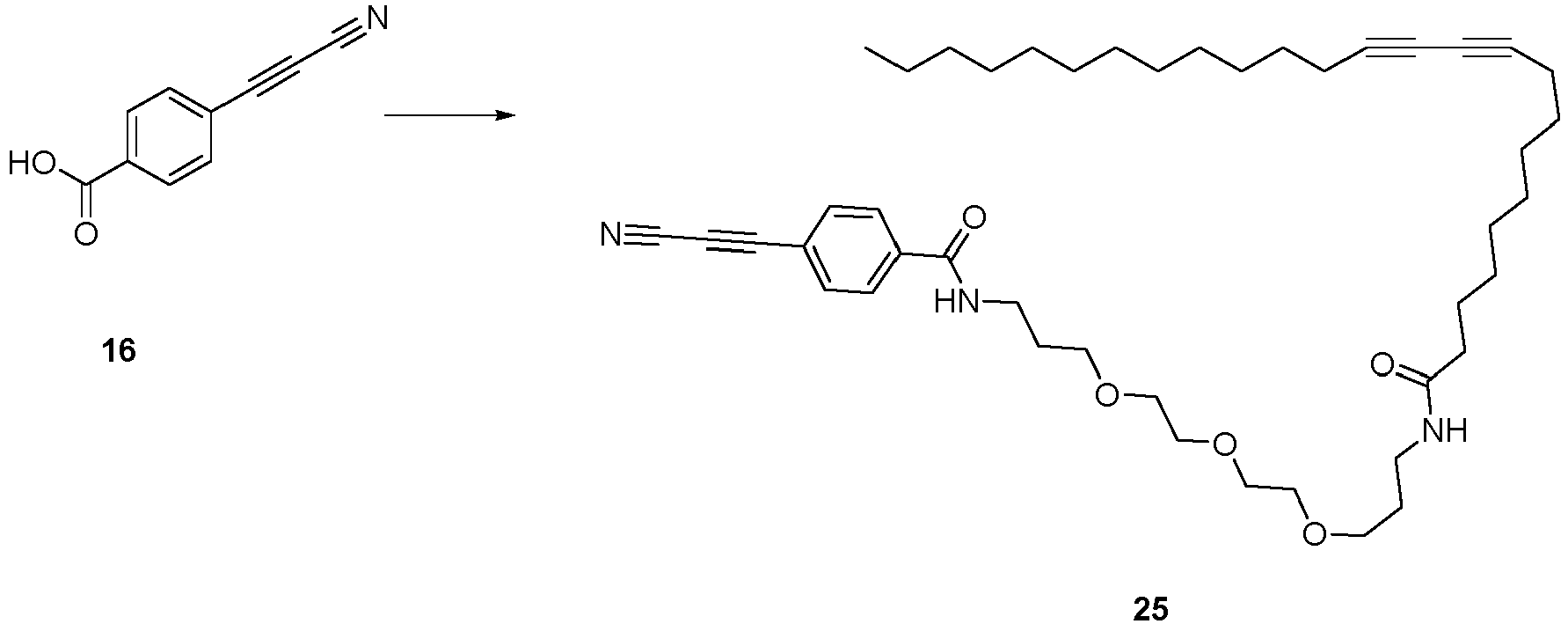
- 4-(2-cyanoeth-1-yn-1-yl)benzoic acid (1 eq., 29.7 mg, 0.173 mmol) was suspended in DCM and SOCl2 (39.8 eq., 820 mg, 0.5 mL, 6.89 mmol) was added. The mixture was stirred at reflux for 1.5h, evaporated, dissolved in DCM, and added to the solution of N-(3-{2-[2-(3-aminopropoxy)ethoxy]ethoxy}propyl)pentacosa-10,12-diynamide (1 eq., 100 mg, 0.173 mmol) and TEA (4 eq., 70.2 mg, 0.0964 mL, 0.693 mmol) in DCM at -78°C. The resulting mixture was stirred at r.t. for 1h and evaporated. The residue was purified by flash chromatography (DCM/MeOH : 10/0 to 9/1) to give the desired product (35.4 mg, 0.0485 mmol, 28% yield) as a yellow oil.
1H NMR (400MHz, CHLOROFORM-d) δ = 7.90 (d, J = 8.3 Hz, 2H), 7.67 (d, J = 8.3 Hz, 2H), 7.48 (br. s, 1H), 6.18 (br. s, 1H), 3.71 - 3.45 (m, 14H), 3.32 (t, J = 6.0 Hz, 2H), 2.23 (t, J = 6.8 Hz, 4H), 2.15 (t, J = 7.5 Hz, 2H), 1.90 (td, J = 6.0, 11.7 Hz, 2H), 1.73 (quin, J = 6.1 Hz, 2H), 1.65 - 1.42 (m, 6H), 1.41 - 1.32 (m, 4H), 1.32 - 1.19 (m, 22H), 0.88 (t, J = 6.8 Hz, 3H). - Compound 25 can be used for the labeling (such as photolabeling) method according to the invention or for binding and/or immobilizing compounds.
-

- To a solution of triphosgene (1 eq., 49.5 mg, 27.8 µL, 0.167 mmol) in DCM (4 mL) was added a solution of 3-(4-aminophenyl)prop-2-ynenitrile (3 eq., 71.1 mg, 0.5 mmol) in DCM (1 mL). Then triethylamine (6 eq., 101 mg, 138 µL, 1 mmol) in 1 mL of DCM was added dropwise. The mixture was stirred for 15 min allowing the formation of isocyanate intermediate and then ethanol (0.1 mL) was added dropwise. The reaction mixture was stirred for 1h then washed with 2x5mL of water and evaporated. The residue was purified by flash chromatography to give ethyl (4-(cyanoethynyl)phenyl)carbamate (102 mg, 0.48 mmol, 96% yield) as a white solid.
1H NMR (400MHz, CHLOROFORM-d) δ = 7.56 (d, J = 8.5 Hz, 2H), 7.46 (d, J = 8.5 Hz, 2H), 6.79 (br. s., 1H), 4.26 (q, J = 7.0 Hz, 2H), 1.33 (t, J = 7.0 Hz, 3H). -

- To a solution of triphosgene (1 eq., 49.5 mg, 27.8 µL, 0.167 mmol) in DCM (2 mL) was added a solution of 3-(4-aminophenyl)prop-2-ynenitrile (3 eq., 71.1 mg, 0.5 mmol) in DCM (3 mL). Then triethylamine (6 eq., 101 mg, 138 µL, 1 mmol) was added, the mixture was stirred for 5 min and then were added propargylamine (4.69 eq., 43 mg, 50.1 µL, 0.782 mmol) and triethylamine (2 eq., 33.7 mg, 46.3 µL, 0.333 mmol) in 1 mL of DCM. The reaction mixture was stirred for 1h then washed with 5mL of water, dried over MgSO4 and concentrated. The residue was purified by flash chromatography (DCM/MeOH gradient) to give 1-(4-(cyanoethynyl)phenyl)-3-(prop-2-yn-1-yl)urea(94.9 mg, 0.425 mmol, 85% yield) as a white solid.
1H NMR (400MHz, METHANOL-d4) δ = 7.60 (d, J = 8.8 Hz, 2H), 7.52 (d, J = 8.8 Hz, 2H), 4.00 (d, J = 2.4 Hz, 2H), 2.61 (t, J = 2.4 Hz, 1H). - Compound 27 can be used for click chemistry according to the invention.
-

- To a solution of triphosgene (1 eq., 49.5 mg, 27.8 µL, 0.167 mmol) in DCM (2 mL) was added a solution of 3-(4-aminophenyl)prop-2-ynenitrile (3 eq., 71.1 mg, 0.5 mmol) in DCM (3 mL). Then triethylamine (6 eq., 101 mg, 138 µL, 1 mmol) was added. The mixture was stirred for 5 min and then were added 2-propyn-1-ol (6 eq., 56.1 mg, 59.1 µL, 1 mmol) and triethylamine (2 eq., 33.7 mg, 46.3 µL, 0.333 mmol) in 1 mL of DCM. The reaction mixture was stirred for 1h then washed with 5mL of water, dried over MgSO4 and concentrated. The residue was purified by flash chromatography (Cyclohexane/EtOAc gradient) to give prop-2-yn-1-yl (4-(cyanoethynyl)phenyl)carbamate (104 mg, 0.465 mmol, 93% yield) as a white solid.
1H NMR (400MHz, CHLOROFORM-d) δ = 7.57 (d, J = 8.6 Hz, 2H), 7.48 (d, J = 8.6 Hz, 2H), 4.80 (d, J = 2.3 Hz, 2H), 2.54 (t, J = 2.3 Hz, 1H). - Compound 28 can be used for click chemistry according to the invention.
-
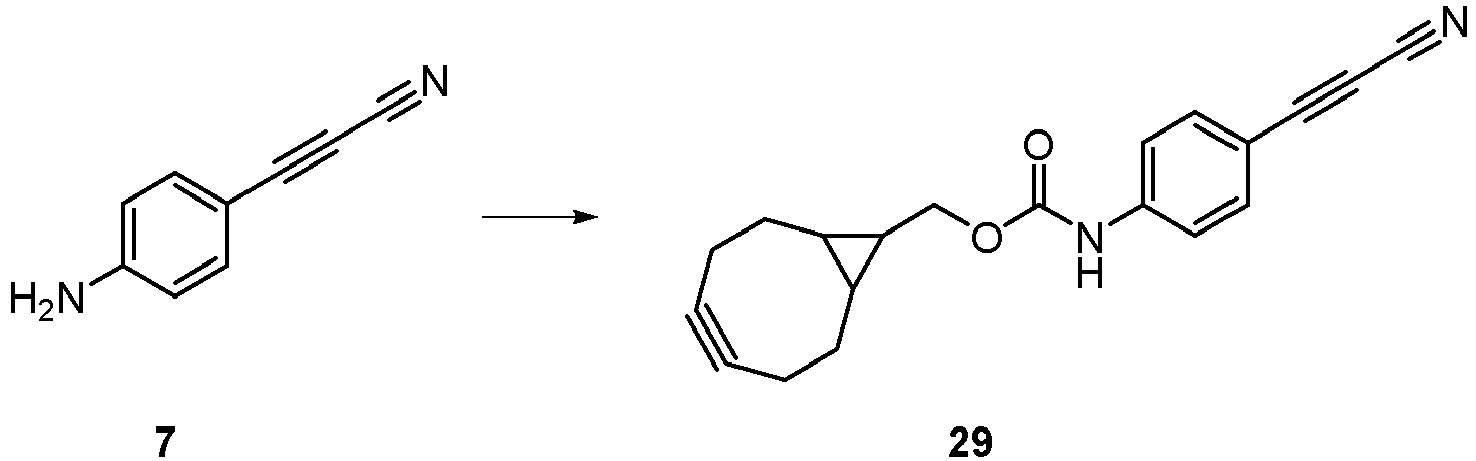
- To a solution of triphosgene (1 eq., 34.8 mg, 19.5 µL, 0.117 mmol) in DCM (4 mL) was added a solution of 3-(4-aminophenyl)prop-2-ynenitrile (3 eq., 50 mg, 0.352 mmol) in DCM (1 mL). Then triethylamine (6 eq., 71.2 mg, 97.8 µL, 0.703 mmol) was added dropwise. The mixture was stirred for 5 min at r.t. and then bicyclo[6.1.0]non-4-yn-9-ylmethanol (3 eq., 52.8 mg, 0.352 mmol) and triethylamine (2 eq., 23.7 mg, 32.6 µL, 0.234 mmol) were added in 1 mL of DCM. The reaction mixture was stirred at r.t. for 2 hours. After full conversion was confirmed by HPLC the mixture was concentrated to 1 mL volume and purified by flash chromatography (cyclohexane/EtOAc gradient) to give bicyclo[6.1.0]non-4-yn-9-ylmethyl (4-(cyanoethynyl)phenyl)carbamate (68.3 mg, 0.215 mmol, 183 %) as a white solid.
1H NMR (400MHz, CHLOROFORM-d) δ = 7.55 (d, J = 8.8 Hz, 2H), 7.47 (d, J = 8.8 Hz, 2H), 7.09 (br. s, 1H), 2.38 - 2.14 (m, 6H), 1.67 - 1.51 (m, 2H), 1.42 (quin, J = 8.7 Hz, 1H), 1.04 - 0.91 (m, 2H) - Compound 29 can be used for click chemistry (such as strain-promoted click) according to the invention.
-

- Product was synthesized according to general procedure B for coupling. Yield : 99%. 1H NMR (400MHz, CHLOROFORM-d) δ = 7.41 (d, J = 8.4 Hz, 2H), 7.36 (d, J = 8.4 Hz, 2H), 4.50 (d, J = 5.5 Hz, 2H), 1.89 (t, J = 5.5 Hz, 1H), 0.25 (s, 9H).
-

- Product was synthesized according to general procedure of MnO2-oxidation. Reaction time: 3 hours; yield: 29%.
1H NMR (400MHz, CHLOROFORM-d) δ = 7.55 (d, J = 8.4 Hz, 2H), 7.48 (d, J = 8.4 Hz, 2H), 0.27 (s, 9H).
13C NMR (101MHz, CHLOROFORM-d) δ = 133.2, 132.2, 126.9, 117.1, 105.3, 103.4, 99.4, 82.3, 64.5, -0.3. -

- Product was synthesized according to general procedure of MnO2-oxidation. Reaction time: 3 hours; yield: 11%.
1H NMR (400MHz, CHLOROFORM-d) δ = 7.20 (t, J = 1.3 Hz, 1H), 6.98 (d, J = 1.3 Hz, 2H), 4.02 (br. s., 2H).
13C NMR (101MHz, CHLOROFORM-d) δ = 147.1, 127.5, 121.6, 119.5, 105.0, 81.0, 63.6. - Compound 31 can be used for rebridging (diAPN) according to the invention.
-

- Product was synthesized according to general procedure of MnO2-oxidation. Reaction time: 4 hours; yield: 63%.
1H NMR (400MHz, CHLOROFORM-d) δ = 7.84 (d, J = 8.2 Hz, 2H), 7.60 (d, J = 8.2 Hz, 2H), 1.36 (s, 12H). -

- To the degased solution of 1,2-diiodobenzene (1 eq., 661 mg, 0.262 mL, 2 mmol) and propargylic alcohol (2.3 eq., 272 µL, 4.61 mmol) in butyl amine (15.8 mL), Pd(PPh3)4 (4%, 92.6 mg, 0.0801 mmol) was added and the obtained reaction mass was refluxed overnight. Solvents were evaporated and the obtained crude product was purified by flash chromatography (20 minutes gradient EtOAc/Cyclohexane) to yield 33a (150 mg, 0.8 mmol, 40 %) as a brownish solid.
1H NMR (400 MHz, METHANOL-d4) δ 7.38 - 7.53 (m, 2H), 7.25 - 7.38 (m, 2H), 4.48 (s, 4H); 13C NMR (101 MHz, METHANOL-d4) d 135.6, 131.9, 129.2, 95.6, 86.6, 53.9; ESI-MS: C12H11O2 +[M+H]+, 187.1; found 187.1. - The compound was obtained as the only product of the standard MnO2 oxidation protocol. Reaction time: 75 minutes. Brown solid, yield: 42%.
1H NMR (400 MHz, METHANOL-d4) δ 7.89 (dd, J = 3.30, 5.80 Hz, 2H), 7.73 (dd, J = 3.30, 5.80 Hz, 2H); 13C NMR (101 MHz, METHANOL-d4) δ 136.0, 133.5, 126.5, 105.5, 80.2, 67.2; GC-ESI-MS: C12H5N2 + [M+H]+, 177.0; found 177.0. -

- Same procedure as for the synthesis of 33a. Brownish solid, yield: 55%.
1H NMR (400 MHz, METHANOL-d4) δ 7.47 (s, 1H), 7.36 - 7.43 (m, 2H), 7.29 - 7.36 (m, 1H), 4.41 (s, 4H); 13C NMR (101 MHz, METHANOL-d4) δ 135.3, 132.5, 129.8, 124.8, 89.7, 84.5, 51.2; ESI-MS: C12H11O2 + [M+H]+, 187.1; found 187.0. - The compound was obtained as the only product of the standard MnO2 oxidation protocol. Reaction time: 2 hours. Brown solid, yield: 35%.
1H NMR (400 MHz, METHANOL-d4) δ 8.10 (d, J = 1.50 Hz, 1H), 7.93 (dd, J = 1.50, 8.00 Hz, 1H), 7.63 (t, J = 8.00 Hz, 2H); 13C NMR (101 MHz, METHANOL-d4) δ 139.3, 137.8, 131.2, 120.0, 105.7, 81.7, 64.2; GC-ESI-MS: C12H5N2 + [M+H]+, 177.0; found 177.1. -

- Same procedure as for the synthesis of 33a, but refluxed for 72 hours. Brownish solid, yield: 35%.
1H NMR (400 MHz, METHANOL-d4) δ 7.39 (s, 4H), 4.41 (s, 4H); 13C NMR (101 MHz, METHANOL-d4) δ 132.6, 124.3, 101.4, 90.8, 84.9, 51.2; ESI-MS: C12H11O2 + [M+H]+, 187.1; found 187.1. - The compound was obtained as the only product of the standard MnO2 oxidation protocol. Reaction time: 2 hours. Brown solid, yield: 19%.
1H NMR (400 MHz, METHANOL-d4) δ 7.94 (s, 4H); 13C NMR (101 MHz, METHANOL-d4) δ 135.0, 121.6, 105.5, 82.0, 65.9; GC-ESI-MS: C12H5N2 + [M+H]+, 177.0; found 177.0. - Compounds 33-35 can be used for rebridging (diAPN) according to the invention.
-

- To a cooled to 0 °C solution of tert-butyl 2-{[(tert-butoxy)carbonyl]amino}-3-(4-hydroxyphenyl)propanoate (1 eq., 518 mg, 1.54 mmol) in pyridine (2.5 mL), triflic anhydride (1.1 eq., 476 mg, 0.28 mL, 1.69 mmol) was added dropwise over 20 minutes (using syringe presser). The resulting dark solution was let to warm up to room temperature, poured into water (10 mL), and extracted with ethyl ester (15 mL). The ether extract was washed sequentially with water (5 mL), IN HCl (2x5 mL), water (5 mL), brine (5 mL), dried over MgSO4, and evaporated to give the targeted product (614 mg, 1.31 mmol, 85 %) as a dark-red oil. The product was used in the next step without further purification.
1H NMR (400 MHz, CHLOROFORM-d) δ 7.03 - 7.18 (m, 3H), 6.82 - 7.03 (m, 2H), 4.87 (d, J = 7.28 Hz, 1H), 4.24 (d, J = 7.03 Hz, 1H), 2.65 - 2.95 (m, 2H), 1.17 (s, 9H), 1.21 (s, 9H).
13C NMR (101 MHz, CHLOROFORM-d) δ 170.5, 148.5, 137.3, 131.3, 121.1, 120.3, 117.1, 82.5, 80.0, 54.7, 38.1, 28.3, 27.9. -

- To a solution of phenoltryphlate (1 eq., 136 mg, 0.291 mmol) in morpholine (1 mL) were consequently added PdCl2(PPh3)2 (5 %, 10.2 mg, 0.0145 mmol), CuI (10 %, 5.53 mg, 0.0291 mmol), and propargylic alcohol (2 eq., 32.6 mg, 0.0343 mL, 0.581 mmol). The obtained reaction mixture was degassed and heated at 60 °C for 24 hours. The resulting black solution was poured into water (10 mL), extracted with EtOAc (3x10 mL). The united organic layers were washed with IN HCl (2x10 mL), water (1x10 mL), dried over MgSO4 and evaporated to give crude product, which after purification by flash chromatography gave the targeted product (8.73 mg, 0.0232 mmol, 8 %) as a yellowish solid.
1H NMR (400 MHz, METHANOL-d4) δ 7.30 - 7.45 (m, J = 7.78 Hz, 2H), 7.14 - 7.30 (m, J = 8.03 Hz, 2H), 4.40 (s, 2H), 4.18 - 4.32 (m, 1H), 3.06 (dd, J = 6.27, 13.80 Hz, 1H), 2.91 (dd, J = 8.66, 13.68 Hz, 1H), 1.45 - 1.53 (m, 1H), 1.42 (d, J = 3.26 Hz, 19H). -

- Product was synthesized according to general procedure of MnO2-oxidation. Reaction time: 2 hours; yield: 56%.
1H NMR (400MHz, CHLOROFORM-d) δ = 7.54 (d, J = 8.2 Hz, 2H), 7.24 (d, J = 8.2 Hz, 2H), 5.05 (d, J = 7.3 Hz, 1H), 4.46 (td, J = 6.1, 7.3 Hz, 1H), 3.14 (dd, J = 6.1, 13.7 Hz, 1H), 3.05 (dd, J = 6.1, 13.7 Hz, 1H), 1.42 (s, 9H), 1.41 (s, 9H).
13C NMR (101MHz, CHLOROFORM-d) δ = 170.3, 154.9, 141.4, 133.4, 130.1, 115.9, 105.5, 82.9, 82.5, 79.9, 63.2, 54.5, 38.8, 28.3, 27.9. - Compound 36 can be used for purification and/or immobilization according to the invention.
-

- To the solution of N-(2-(2-(2-aminoethoxy)ethoxy)ethyl)-5-((3aS,4S,6aR)-2-oxohexahydro-1H-thieno[3,4-d]imidazol-4-yl)pentanamide (1 eq., 222 mg, 0.593 mmol) in dry DMF (1 mL) was added sodium 4-((4-(cyanoethynyl)benzoyl)oxy)-2,3,5,6-tetrafluorobenzenesulfonate (1.2 eq., 300 mg, 0.712 mmol) and DIEA (5.1 eq., 391 mg, 0.5 mL, 3.03 mmol). The mixture was stirred at r.t. for 3 hours and then purified by semi-preparative HPLC to give the desired product (68.8 mg, 0.13 mmol, 22% yield) as a yellow oil.
1H NMR (400MHz ,METHANOL-d4) δ = 7.92 (d, J = 8.5 Hz, 2 H), 7.81 (d, J = 8.5 Hz, 2 H), 4.49 (dd, J = 4.8, 7.8 Hz, 1 H), 4.30 (dd, J = 4.5, 7.8 Hz, 1 H), 3.71 - 3.56 (m, 8 H), 3.54 (t, J = 5.5 Hz, 2 H), 3.34 (t, J = 5.5 Hz, 2 H), 3.24 - 3.14 (m, 1 H), 2.92 (dd, J = 4.8, 12.8 Hz, 1 H), 2.70 (d, J = 12.8 Hz, 1 H), 2.19 (t, J = 7.4 Hz, 2 H), 1.78 - 1.50 (m, 4 H), 1.48 - 1.35 (m, 2 H).
13C NMR (101MHz ,METHANOL-d4) δ = 176.3, 168.8, 166.2, 138.9, 135.0, 129.1, 121.5, 105.9, 83.1, 71.5, 71.4, 70.7, 70.6, 64.6, 63.5, 61.8, 57.1, 41.2, 40.4, 36.9, 29.9, 29.6, 27.0. -

- To the cooled to 0°C solution of Boc-GABA (1 eq., 0.928 g, 4.57 mmol), TEA (3 eq., 1.39 g, 1.9 mL, 13.7 mmol) and DMAP (0.05 eq., 0.0279 g, 0.228 mmol) in DCM (11.7 mL), EDC (1 eq., 0.875 g, 4.57 mmol) was added. The obtained reaction mass was stirred for another 10 minutes at 0°C, an ice bath was removed, and p-iodoaniline (1 eq., 1 g, 4.57 mmol) was added and the reaction was left overnight at 25°C. The obtained reaction mass was washed with 1M HCl (2x20 mL), water (1x20 mL), and dried over Na2SO4 to give 38d (1125 mg, 2.79 mmol, 61 %), which was used without further purification.
1H NMR (400 MHz, CHLOROFORM-d) δ 9.04 (br. s., 1H), 7.58 - 7.72 (m, J = 8.50 Hz, 2H), 7.37 - 7.51 (m, J = 8.50 Hz, 2H), 4.81 (br. s., 1H), 3.27 (m, 2H), 2.30 - 2.50 (m, 2H), 1.88 (m, 2H), 1.49 (s, 9H); 13C NMR (101 MHz, CHLOROFORM-d) δ 174.2, 157.4, 137.8, 120.9, 120.0, 87.3, 77.0, 33.1, 32.8, 28.4, 26.0; ESI-MS: C15H22N2O3 + [M+H]+, 405.0; found 405.1. - Synthesised following the protocol B for Sonogashira coupling. Yellowish solid, yield: 79%.
1H NMR (400 MHz, METHANOL-d4) δ 7.54 - 7.58 (m, J = 8.50 Hz, 2H), 7.34 - 7.38 (m, J = 8.50 Hz, 2H), 4.40 (s, 2H), 3.13 (t, J = 6.90 Hz, 2H), 2.41 (t, J = 7.40 Hz, 2H), 1.81-1.89 (m, 2H), 1.44 (s, 9H); 13C NMR (101 MHz, METHANOL-d4) δ 174.0, 158.6, 140.1, 133.2, 120.8, 119.5, 88.3, 85.3, 80.1, 51.3, 40.9, 35.3, 28.8, 27.1; ESI-MS: C18H25N2O4 + [M+H]+, 332.1; found 332.0. - Synthesised using standard protocol of MnO2 oxidation. Reaction time: 1 hour. White solid, yield: 85%.
1H NMR (400 MHz, METHANOL-d4) δ 7.61 - 7.65 (m, J = 8.80 Hz, 2H), 7.54 - 7.59 (m, J = 8.50 Hz, 2H), 3.04 (t, J = 6.85 Hz, 2H), 2.34 (t, J = 7.40 Hz, 2H), 1.74-1.81 (m, 2H), 1.34 (s, 9H); 13C NMR (101 MHz, METHANOL-d4) δ 174.3, 159.1, 143.8, 135.7, 120.8, 112.8, 106.3, 84.6, 62.7, 40.8, 35.3, 34.8, 28.8, 26.9; ESI-MS: C18H22N3O3 + [M+H]+, 328.1; found 328.1. - To a suspension of 38b (1 eq., 62.8 mg, 0.192 mmol) in DCM (1 mL), TFA (20 eq., 285 µL, 3.83 mmol) was added and the obtained solution was stirred at 25°C for 30 minutes. The target product 38a (TFA salt, 65.0 mg, 0.19 mmol, 99 %) was obtained after the evaporation of the reaction mass and was used without further purification in the next step.
1H NMR (400 MHz, METHANOL-d4) δ 7.71 - 7.79 (m, J = 9.15 Hz, 2H), 7.63 - 7.70 (m, J = 9.15 Hz, 2H), 3.04 (t, J = 6.80 Hz, 2H), 2.6 (t, J = 7.05 Hz, 2H), 1.98-2.08 (m, 2H); 13C NMR (101 MHz, METHANOL-d4) δ 173.1, 143.6, 135.7, 120.7, 112.9, 106.2, 84.5, 62.7, 40.4, 34.5, 24.0; ESI-MS: C13H14N3O+ [M+H]+, 228.1; found 228.1. - To the solution of 38a (1 eq., 10.1 mg, 0.0296 mmol) in DMF (250 µL), TEA (1 eq., 4 µL, 0.0296 mmol) was added. TMPP-Ac-OSu (1 eq., 22.7 mg, 0.0296 mmol) was added to the obtained solution and the reaction mass was for 15 minutes at room temperature. The crude product was purified by HPLC to isolate 38 (9.9 mg, 0.0126 mmol, 42 %) as a main product.
1H NMR (400 MHz, METHANOL-d4) δ 7.44 - 7.59 (m, 4H), 6.13 (d, J = 4.52 Hz, 6H), 3.75 (s, 9H), 3.50 (s, 18H), 3.00 (td, J = 7.91, 15.31 Hz, 2H), 2.26 (t, J = 6.90 Hz, 2H), 1.64-1.75 (m, 2H), 1.25-1.43 (m, 2H); 13C NMR (101 MHz, METHANOL-d4) δ174.2, 167.4, 167.4, 165.3, 143.6, 135.8, 120.6, 112.8, 106.3, 92.2 (d, J = 8 Hz), 84.5, 62.7, 56.5, 56.2, 37.5, 29.4 (d, J = 64 Hz), 27.9, 27.7, 24.9; ESI-HRMS: C42H47N3O11P+ [M]+, 800.29427; found 800.29401. -
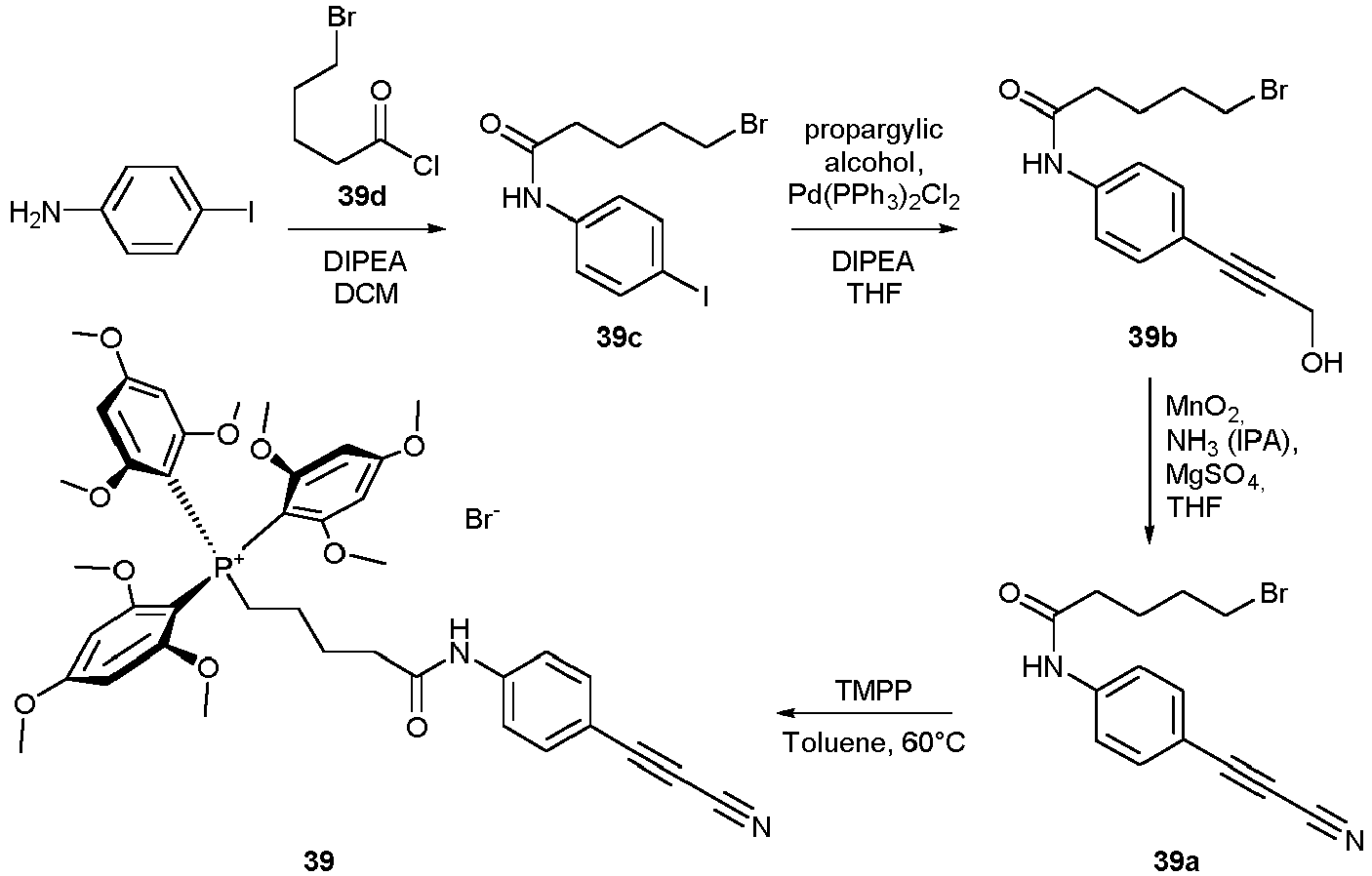
- Degassed solution of 5-bromopentanoic acid (1 eq., 2.85 g, 15.7 mmol) and SOCl2 (1 eq., 1.87 g, 1.14 mL, 15.7 mmol) in DCM (50 mL) was refluxed for 3 hours. The obtained reaction mass was evaporated under reduced pressure to give 39d (3.11 g, 100%) as a yellowish oil. The crude product was used in the next step without purification.
- Solution of 39d (1 eq., 3.11 g, 15.7 mmol) in DCM (50 mL) was poured into a cooled to -78°C solution of 4-iodoaniline (1 eq., 3.45 g, 15.7 mmol) and DIPEA (1 eq., 2.03 g, 2.6 mL, 15.7 mmol) in DCM (50 mL). Obtained reaction mass was allowed to warm to room temperature, stirred for another 30 min, washed with IN HCl (2x25 mL), water (1x25 mL), dried over Na2SO4 and evaporated to give 39c (5.60 g, 14.66 mmol, 93%) as brown solid.
1H NMR (400 MHz, METHANOL-d4) δ 7.62 - 7.66 (m, 2H), 7.38 - 7.43 (m, 2H), 3.50 (t, J = 6.53 Hz, 2H), 2.42 (t, J = 7.28 Hz, 2H), 1.81 - 1.98 (m, 4H), 1.37 - 1.42 (m, 1H); 13C NMR (101 MHz, METHANOL-d4) δ 174.0, 140.5, 138.9, 123.1, 87.6, 36.9, 33.8, 33.4, 25.3; ESI-MS: C11H14BrINO+ [M+H]+, 381.9; found 381.8. - Synthesised following the protocol A for Sonogashira coupling. Brown solid, yield: 92%. 1H NMR (400 MHz, METHANOL-d4) δ7.49 - 7.63 (m, J = 8.53 Hz, 2H), 7.32 - 7.43 (m, J = 8.53 Hz, 2H), 4.40 (s, 2H), 4.26 (s, 1H), 3.50 (t, J = 6.53 Hz, 2H), 2.43 (t, J = 7.15 Hz, 2H), 1.90 - 2.04 (m, 2H), 1.74 - 1.90 (m, 2H), 1.32 (s, 1H); 13C NMR (101 MHz, METHANOL-d4) δ173.9, 140.0, 133.1, 120.7, 119.6, 88.2, 85.2, 51.2, 36.8, 33.7, 33.3, 25.3; ESI-MS: C14H17BrNO+ [M+H]+, 310.0; found 310.0.
- 2M solution of NH3 (4 eq., 94.8 mg, 5.56 mmol) in IPA and anhydrous MgSO4 (15 eq., 2511 mg, 20.9 mmol) were added to a stirred solution of 39b (1 eq., 431 mg, 1.39 mmol) in THF (3.42 mL). Activated MnO2 (15 eq., 1814 mg, 20.9 mmol) was added to the solution and the resulting mixture was stirred at room temperature for 4 hours (controlled by TLC, no more starting alcohol; NB: too long reaction time gives hydrolysis product), diluted with DCM (13 mL). The mixture was filtered, washed thoroughly with DCM and the combined filtrates were concentrated under reduced pressure. The solid residue was purified by flash chromatography (EtOAc-cyclohexane, 20 min gradient from 0 to 100% of EtOAc) to give 39 as a white solid (288 mg, 0.946 mmol, 68 %).
1H NMR (400 MHz, METHANOL-d4) δ7.69 - 7.79 (m, J = 8.78 Hz, 2H), 7.59 - 7.69 (m, J = 8.78 Hz, 2H), 3.50 (t, J = 6.53 Hz, 2H), 1.79 - 1.99 (m, 4H), 1.26 (t, J = 7.15 Hz, 2H); 13C NMR (101 MHz, METHANOL-d4) δ174.3, 143.8, 135.7, 120.7, 112.8, 106.2, 101.4, 84.6, 37.0, 33.7, 33.4, 25.2. ESI-MS: C14H14BrN2O+ [M+H]+, 304.0; found 304.0. - 39a (1 eq., 20 mg, 0.0655 mmol) and tris(2,4,6-trimethoxy-phenyl)phosphane (TMPP, 1.2 eq., 41.9 mg, 0.0786 mmol) were dissolved in dry toluene (1 mL) and stirred overnight at room temperature. 39 (TFA salt, 22 mg, 39%) was obtained after reverse-phase HPLC as a white solid.
1H NMR (400 MHz, METHANOL-d4 ) δ 7.51-7.55 (m, 4H), 6.13 (d, J = 4.77 Hz, 6H), 3.75 (s, 9H), 3.50 (s, 18H), 3.00 (td, J = 6.90, 15.31 Hz, 2H), 2.26 (t, J = 6.90 Hz, 2H), 1.73 (m, 2H), 1.22 - 1.45 (m, 2H); 13C NMR (101 MHz, METHANOL-d 4) δ 174.2, 167.4, 165.3, 143.6, 135.8, 120.6, 112.8, 106.2, 93.6, 92.3, 92.2, 84.5, 62.7, 56.3, 37.5, 29.7, 27.7, 24.9; ESI-HRMS: C41H46N2O10P+ [M]+, 757.28846; found 757.29552. -

- 4-iodobenzoic acid (1 eq., 1.45 g, 5.85 mmol) was heated at 110 °C in SOCl2 (9 eq., 3.8 mL, 52.6 mmol) until complete dissolving (around 15 min). Excess of SOCl2 was removed in vacuo and obtained solid was poured into DCM (15 mL), cooled to -78 °C and DIPEA (3.1 eq., 3 mL, 18.2 mmol) was added under vigorous stirring. 3-Bromopropylamine hydrobromide (1.5 eq., 1.90 g, 8.77 mmol) was added to the obtained reaction mass was left stirring for 5 minutes still at -78 °C, let to warm up to room temperature, while stirring for another 20 minutes. Ethyl acetate (100 mL) was added with 1M HCl (5 mL), obtained solid was filtered (product), washed with water and dried to yield 40c (2.09 g, 5.67 mmol, 97 %) as a white solid.
1H NMR (400 MHz, METHANOL-d4) δ 7.85 (m, J = 8.40 Hz, 2H), 7.58 (m, J = 8.40 Hz, 2H), 3.48-3.56 (m, 4H), 2.12-2.23 (m, 2H); 13C NMR (101 MHz, METHANOL-d4) δ 160.1, 139.2, 136.0, 132.8, 102.4, 50.1, 43.2, 23.0; ESI-MS: C10H12BrINO+ [M+H]+, 367.9; found 368.0. - Synthesised following the protocol B for Sonogashira coupling. Brown solid, yield: 81%. 1H NMR (400 MHz, METHANOL-d4) δ 7.73 (m, J = 8.40 Hz, 2H), 7.38 (m, J = 8.40 Hz, 2H), 4.37 (t, J = 5.30 Hz, 2H), 4.34 (s, 2H), 3.51 (t, J = 5.80 Hz, 2H), 1.92-1.98 (m, 2H); 13C NMR (101 MHz, METHANOL-d4) δ 159.2, 134.2, 132.4, 128.2, 127.1, 91.2, 84.8, 67.2, 51.2, 43.3, 22.5; ESI-MS: C13H15BrNO2 + [M+H]+, 295.0; found 295.0.
- Synthesised using standard protocol of MnO2 oxidation. Reaction time: 45 minutes. Brown solid, yield: 52%.
1H NMR (400 MHz, METHANOL-d4) δ 7.90 (m, J = 8.50 Hz, 2H), 7.80 (m, J = 8.50 Hz, 2H), 3.42-3.55 (m, 2H), 3.25-3.35 (m, 2H), 2.13-2.23 (m, 2H), 1.92-1.98 (m, 2H); 13C NMR (101 MHz, METHANOL-d4) δ 168.7, 138.8,134.9, 128.9, 121.4, 105.8, 83.0, 67.3, 41.9, 39.8, 22.8; ESI-MS: C13H12BrN2O+ [M+H]+, 291.0; found 291.2. - 40a (1 eq., 30 mg, 0.103 mmol) and tris(2,4,6-trimethoxyphenyl)phosphane (TMPP, 1 eq., 54.9 mg, 0.103 mmol) were dissolved in dry toluene (2 mL). The obtained solution was left overnight at room temperature. The precipitate was filtered, resolubilised in DMSO, and purified by HPLC to give 40 (35 mg, 0.0409 mmol, 40 %) as a white solid. 1H NMR (400 MHz, METHANOL-d4 ) δ7.75 (d, J = 8.50 Hz, 2H), 7.69 (d, J = 8.50 Hz, 2H), 6.16 (d, J = 4.70 Hz, 2H), 3.76 (s, 9H), 3.51 (s, 18H), 3.35 (t, J = 7.10 Hz, 2H), 2.98-3.10 (m, 2H), 1.53-1.64 (m, 2H); 13C NMR (101 MHz, METHANOL-d 4) δ 168.5, 167.5, 165.3, 138.7, 134.9, 128.8, 121.2, 105.8, 94.0, 92.9, 92.3, 82.9, 64.5, 56.5, 41.7, 27.8, 25.7; ESI-HRMS: C40H44N2O10P+[M]+, 743.22728; found 743.23946.
- Compounds 38-40 can be used for detection and/or separation method according to the invention.
-

- To the solution of 7 (1 eq., 76.8 mg, 0.541 mmol) in acetone (2 mL), maleic anhydride (2 eq., 106 mg, 1.08 mmol) was added. A yellowish solid was obtained after about 7 hours of stirring. The reaction mass was evaporated, an excess of maleic anhydride and maleic acid was washed with methanol. 41a (127 mg, 0.53 mmol, 98 %) was obtained as yellowish solid, no further purification was needed.
1H NMR (400 MHz, DMSO-d6) δ 12.90 (br. s., 1H), 10.70 (s, 1H), 7.62 - 7.90 (m, 4H), 6.50 (d, J = 11.90 Hz, 1H), 6.34 (d, J = 11.90 Hz, 1H); 13C NMR (101 MHz, DMSO-d6) δ 166.8, 163.8, 142.4, 135.0, 131.7, 130.1, 119.3, 110.2, 105.6, 84.3, 61.9; ESI-MS: C13H7N2O3 -[M-H]-, 239.0; found 239.0. - To the solution of 41a (1 eq., 75 mg, 0.312 mmol) in dry DMF (1.21 mL) trifluoroacetic anhydride (2 eq., 86.9 µL, 0.624 mmol) was added. Stirring continued for another 5 minutes at room temperature and K2CO3 (3 eq., 129 mg, 0.937 mmol) was added. The reaction mass stirred for another 60 minutes, then directly purified by HPLC to give 41 (65.9 mg, 0.297 mmol, 95%) as a slightly yellow solid.
1H NMR (400 MHz, DMSO-d6) δ 7.81 (m, J = 8.50 Hz, 2H), 7.52 (m, J = 8.50 Hz, 2H), 6.96 (s, 2H); 13C NMR (101 MHz, DMSO-d6) δ169.0, 134.4, 134.0, 126.0, 117.3, 117.0, 82.2, 78.5, 62.3; ESI-MS: C13H7N2O2 + [M+H]+, 223.0; found 229.9. -
Compound 41 can be used for a bioconjugation method according to the invention. -

- To a solution of 7 (1 eq., 200 mg, 1.41 mmol) in acetone (1 mL), glutaric anhydride (2 eq., 321 mg, 2.81 mmol) was added. The obtained solution was stirred for 24 hours at room temperature. Acetone was evaporated, the crude product was recrystallised from IPA-cyclohexane to give 42a (324 mg, 1.27 mmol, 90 %) as a grey solid.
1H NMR (400 MHz, DMSO-d6) δ10.21 (s, 1H), 8.15 (br. s., 1H), 7.60 (d, J = 8.72 Hz, 2H), 7.52 (d, J = 8.72 Hz, 2H), 2.52-2.62 (m, 4H), 2.22-2.32 (m, 2H); 13C NMR (101 MHz, DMSO-d6) δ170.0, 168.5, 140.9, 134.2, 119.0, 111.9, 105.4, 84.1, 63.3, 30.1, 29.0, 21.2; ESI-MS: C14H11N2O3 -[M-H]-, 255.1; found 255.1. - To a solution of 42a (1 eq., 18 mg, 0.0702 mmol) in DCM (1 mL), DCC (1.02 eq., 14.8 mg, 0.0716 mmol) and TEA (1 eq., 6.52 mg, 0.00895 mL, 0.0644 mmol) were added. The obtained reaction mass was stirred for 5 minutes, NHS (1 eq., 8.08 mg, 0.0702 mmol) was added. The resulting solution stirred for another 2 hours at room temperature. The crude product was purified by flash chromatography (cyclohexane-EtOAc) to give 42 (6.45 mg, 0.0183 mmol, 26%) as a white solid.
1H NMR (400 MHz, CHLOROFORM-d) δ 8.27 (br. s., 1H), 7.64 (d, J = 8.78 Hz, 2H), 7.57 (d, J = 8.78 Hz, 2H), 2.94 (s, 4H), 2.74 (t, J = 6.53 Hz, 2H), 2.52 (t, J = 6.90 Hz, 2H), 2.23 (m, 2H); 13C NMR (101 MHz, CHLOROFORM-d) d 170.3, 169.5, 168.2, 141.3, 134.6, 119.4, 112.4, 105.7, 83.2, 62.9, 35.6, 29.9, 25.7, 21.2; ESI-MS: C18H16N3O5 + [M+H]+, 353.1; found 353.2. - Compound 42 can be used for a bioconjugation method according to the invention.
-

- 7 (1 eq., 151 mg, 1.07 mmol) was dissolved in acetonitrile (2.34 mL) in a 25 mL roundbottomed flask and cooled to 0°C in an ice bath. To this stirred mixture was added isoamyl nitrite (IAN, 1.5 eq., 215 µL, 1.6 mmol) followed by trimethylsilyl azide (1.2 eq., 147 mg, 0.168 mL, 1.28 mmol) dropwise. The resulting solution was stirred at room temperature for 45 minutes. The reaction mixture was concentrated under vacuum and the crude product was resolubilised in EtOAc, washed with water, dried and evaporated to give 43 (177 mg, 1.06 mmol, 99%).
1H NMR (400 MHz, ACETONITRILE-d3) δ 7.58 - 7.81 (m, J = 8.78 Hz, 2H), 7.11 - 7.26 (m, J = 8.78 Hz, 2H); 13C NMR (101 MHz, ACETONITRILE-d3) δ 144.9, 136.0, 120.4, 113.6, 105.9, 83.4, 62.9; GC-ESI-MS: C9H5N4 +[M+H]+, 169.0; found 169.0. -
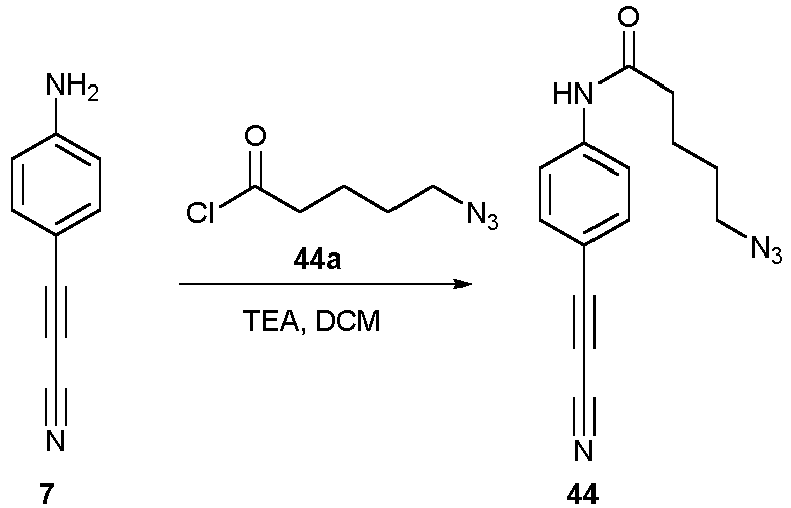
- 5-azidopentanoic acid (1 eq., 1.1 g, 6.99 mmol) was refluxed in SOCl2 (10 eq., 5.1 mL, 69.9 mmol) for 30 minutes. Excess of SOCl2 was removed in vacuo and the obtained crude solid was used in the next step without purification.
- 7 (1 eq., 16.1 mg, 0.113 mmol) and TEA (1.5 eq., 24 µL, 0.17 mmol) were dissolved in DCM (3 mL), cooled to -78 °C, and 44a (1.1 eq., 20.1 mg, 0.125 mmol) was added to the reaction mixture that was then left to warm to room temperature while stirring for another 1 hour. The reaction mass was washed with 1M HCl (2x1 mL), water (2 mL), dried over Na2SO4, and evaporated to give crude product, which was purified by flash chromatography to give 44 (25.5 mg, 0.101 mmol, 89 %) as a grey solid.
1H NMR (400 MHz, METHANOL-d4) δ 7.58 - 7.67 (m, J = 8.70 Hz, 2H), 7.40 - 7.58 (m, J = 8.70 Hz, 2H), 3.23 - 3.28 (m, 2H), 2.34 (t, J = 7.28 Hz, 2H), 1.61 - 1.72 (m, 2H), 1.49 - 1.61 (m, 2H); 13C NMR (101 MHz, METHANOL-d4) δ173.0, 144.0, 135.7, 134.3, 120.7, 113.0, 106.2, 84.5, 40.4, 34.4, 28.8, 24.0; ESI-MS: C14H14N5O+ [M+H]+, 268.1; found 268.1. -

- Synthesised using protocol A for Sonogashira coupling. Yellowish solid, yield: 88%.
1H NMR (400 MHz, ACETONITRILE-d3) δ 7.25 - 7.49 (m, J = 8.03 Hz, 2H), 7.04 - 7.25 (m, J = 8.03 Hz, 2H), 4.34 (d, J = 6.02 Hz, 2H), 3.31 (t, J = 6.02 Hz, 1H), 2.32 (s, 3H); 13C NMR (101 MHz, ACETONITRILE-d3) δ139.8, 132.4, 130.3, 120.8, 88.8, 85.1, 51.2, 21.5; ESI-MS: C10H11O+ [M+H]+, 146.1; found 146.0. - The compound was obtained as the only product of the standard MnO2 oxidation protocol. Reaction time: 3 hours. White solid, yield: 67%.
1H NMR (400 MHz, METHANOL-d4) δ7.37 - 7.59 (m, J = 8.03 Hz, 2H), 7.02 - 7.31 (m, J = 8.03 Hz, 2H), 2.29 (s, 3H); 13C NMR (101 MHz, METHANOL-d4) □□ 143.2, 133.3, 129.5, 114.0, 104.8, 83.2, 61.3, 20.4; ESI-MS: C10H8N+[M+H]+, 141.1; found 141.0. - Degased solution of 45b (1 eq., 68 mg, 0.482 mmol) in DCM (1 mL) was MW-irradiated (100°C) for 5 minutes. The reaction mixture was evaporated, the crude was purified by preparative HPLC to give 45a (42.4 mg, 0.193 mmol, 40 %) as a yellowish solid.
1H NMR (400 MHz, CHLOROFORM-d) δ 7.56 - 7.71 (m, J = 8.28 Hz, 2H), 7.40 - 7.49 (m, J = 8.28 Hz, 2H), 4.48 (s, 2H); 13C NMR (101 MHz, CHLOROFORM-d) □□ 141.8, 133.9, 129.5, 117.5, 105.3, 82.3, 63.7, 31.8; GC-ESI-MS: C10H7BrN+ [M+H]+, 219.0; found 219.0. - To a degassed solution of 45a (1 eq., 43.7 mg, 0.199 mmol) and TMTH (1.29 eq., 43 mg, 0.255 mmol; synthesised following previously described procedure831) in DCM (1.34 mL), a solution of LiOTf (11.6 eq., 360 mg, 2.31 mmol) in distilled and degased H2O□(0.668 mL) was added. The obtained biphasic mixture was vigorously stirred for 5 days at 25 °C (degasing once per day). Two phases were separated, the organic one was washed with DCM (5x2 mL). United organic fractions were evaporated and the crude was purified by HPLC to give 45 (46.9 mg, 0.111 mmol, 56 %) as colourless oil (crystallizes slowly at 0 °C to yield a white solid).
1H NMR (400 MHz, CHLOROFORM-d) δ7.65 - 7.73 (m, J = 8.03 Hz, 2H), 7.56 - 7.65 (m, J = 8.03 Hz, 2H), 5.07 (s, 2H), 4.12 (d, J = 12.30 Hz, 2H), 3.72 (d, J = 12.30 Hz, 2H), 1.36 (s, 6H), 1.30 (s, 6H); 13C NMR (101 MHz, DMSO-d6) δ135.1, 133.6, 131.9, 117.8, 106.4, 105.8, 83.3, 63.6, 60.1, 43.2, 34.6, 26.4, 25.4; HR-ESI-MS: C20H22NS+[M]+, 308.1; found 308.1. - Compounds 43-45 can be used for a click chemistry (such as reaction click - azide) according to the invention.
- Compound 45 can be used for strain promoted click according to the invention.
-

- To a solution of TAMRA-5'-COOH (1 eq., 68.3 mg, 0.159 mmol) in DMF (0.228 mL), HATU (1 eq., 60.3 mg, 0.159 mmol), DIPEA (6 eq., 123 mg, 0.157 mL, 0.952 mmol) and cystamine dichloride (5 eq., 178 mg, 0.793 mmol) were subsequently added; the obtained solution mass was stirred overnight. A solution of DTT (5 eq., 122 mg, 0.118 mL, 0.793 mmol) in DCM (0.911 mL) was added to the reaction mass, the stirring continued for 2 hours. Solvents were evaporated; the obtained crude mass was purified by HPLC to yield 46a (33.5 mg, 0.0555 mmol, 35 %) as a dark-violet solid.
1H NMR (400 MHz, DMSO-d6) δ9.06 (t, J = 5.4 Hz, 1H, 8.70 (d, J = 1.8 Hz, 1H), 8.30 (dd, J = 1.8, 8.0 Hz, 1H), 7.59 (d, J = 8.0 Hz, 1H), 7.08-7.02 (m, 4H), 6.95 (s, 2H), 3.52-3.42 (m, 2H), 3.26 (s, 12H), 2.72 (dt, J = 6.8, 8.0 Hz, 2H); 13C NMR (101 MHz, DMSO-d6) δ166.0, 164.7, 156.8, 156.6, 135.9, 131.2, 130.6, 114.6, 96.3, 42.9, 40.5, 23.3; HR-ESI-MS: C27H27N3O4S: 489.1722; found 489.1723. - A solution of 45 (1 eq., 6.74 mg, 0.016 mmol) in ACN (1 mL) was mixed with a solution of 46a (1 eq., 9.64 mg, 0.016 mmol) in DMF (1 mL). DIPEA (5 eq., 132 µL, 0.08 mmol) was then added and obtained reaction mass was injected into HPLC after 5 minutes of reaction to yield 46 (11.9 mg, 0.0149 mmol, 93 %) as a dark-violet solid.
1H NMR (400 MHz, DMSO-d6) δ8.98 (t, J = 5.40 Hz, 1H), 8.30 (d, J = 8.28 Hz, 1H), 8.10 - 8.20 (m, 1H), 7.85 (s, 1H), 7.57 - 7.69 (m, 4H), 6.97 - 7.15 (m, 5H), 6.07 (s, 1H), 4.85 (s, 2H), 2.81 - 2.90 (m, 4H), 3.28 (br. s., 16H), 1.25 (s, 6H), 1.05 (s, 6H); 13C NMR (101 MHz, DMSO-d6) - not informative (low resolved signals); HR-ESI-MS: C47H49N4O4S2 +, 797.31897; found 797.32739. -
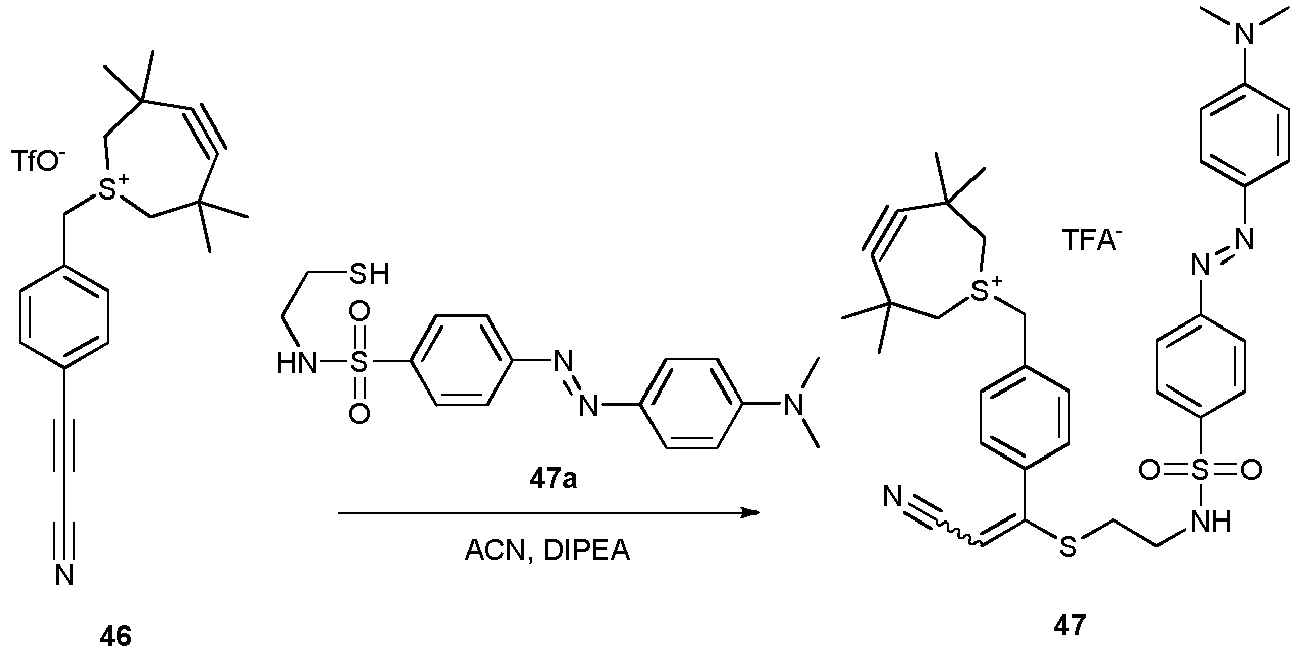
- To a cooled to 0°C solution of Dabsyl chloride (1 eq., 100 mg, 0.309 mmol) in dry ACN (3 mL), TEA (7 eq., 218 mg, 0.3 mL, 2.16 mmol) and cystamine dihydrochloride (5 eq., 347 mg, 1.54 mmol) were subsequently added. After 2 hours of stirring, DTT (6 eq., 285 mg, 0.275 mL, 1.85 mmol) was added to the reaction mass. The obtained solution was stirred for another 2 hours, evaporated and the obtained crude product was purified by flash chromatography (cyclohexane-EtOAc) to yield 47a (105.9 mg, 94%) as an orange solid.
- The same procedure as for the synthesis of the 46. Yield: 94%.
1H NMR (400 MHz, DMSO-d6) δ8.03 (t, J = 4.89 Hz, 1H), 7.91 (d, J = 8.53 Hz, 2H), 7.80 - 7.87 (m, J = 9.04 Hz, 2H), 7.72 - 7.79 (m, J = 8.53 Hz, 2H), 7.68 (s, 4H), 6.87 (d, J = 9.04 Hz, 2H), 6.08 (s, 1H), 4.86 (s, 2H), 3.92 (d, J = 12.05 Hz, 2H), 3.84 (d, J = 12.30 Hz, 2H), 3.10 (s, 6H), 2.71 - 2.87 (m, 4H), 1.32 (s, 6H), 1.17 (s, 6H); 13C NMR (101 MHz, DMSO-d6) δ160.2, 158.6, 158.3, 155.1, 153.7, 143.1, 140.3, 136.8, 131.9, 131.3, 129.5, 128.2, 125.9, 122.8, 117.2, 112.1, 106.4, 99.4, 60.0, 43.3, 42.9, 34.5, 26.4, 25.3; HR-ESI-MS: C36H42N5O2S3 +, 672.24951; found 672.25042. - Compounds 46-47 can be used for the preparation of compounds otherwise not accessible (TMTI).
-
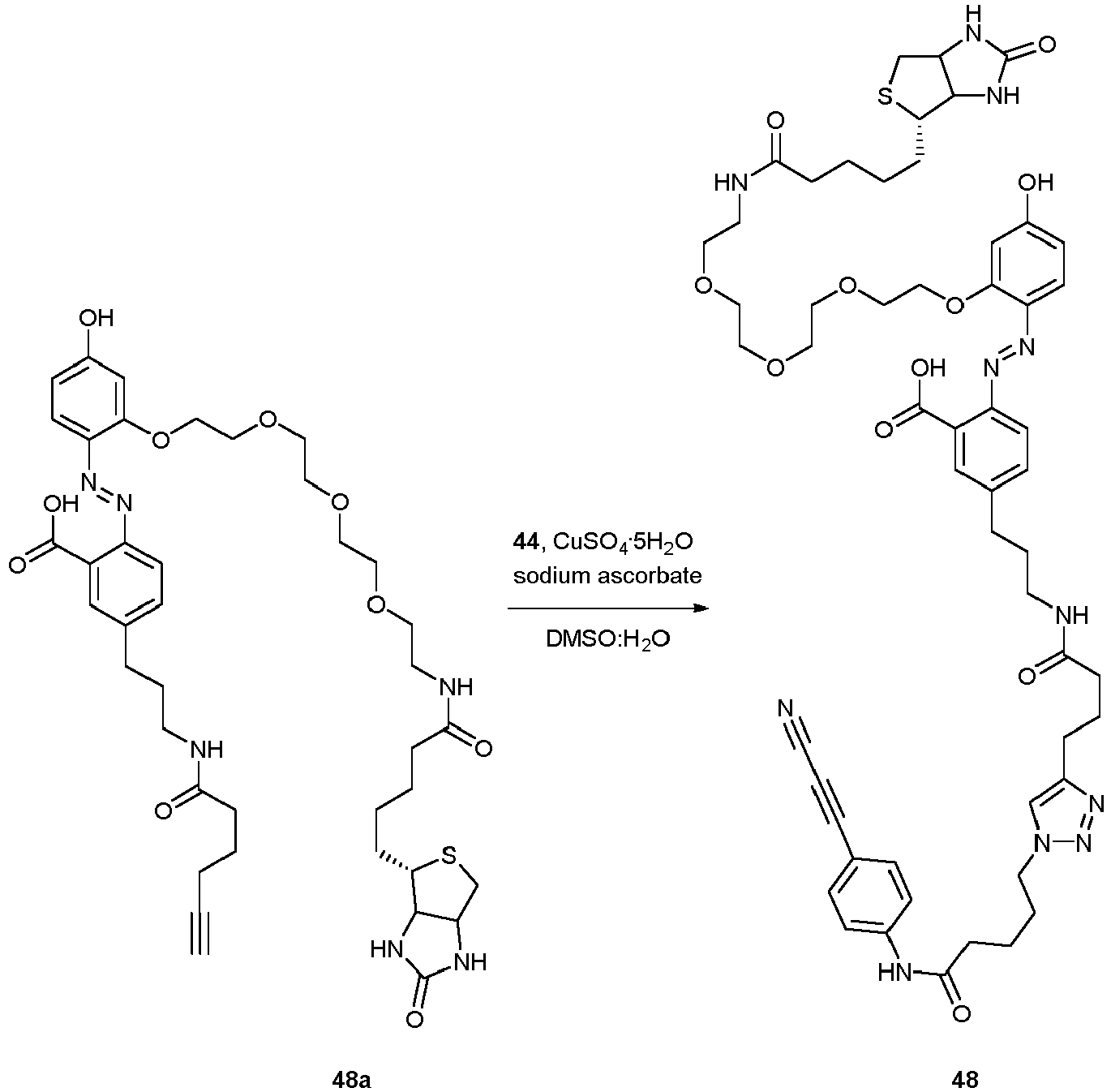
- Compound 48 can be used for purification and/or immobilization according to the invention.
- This compound was synthesised following the previously reported protocol.
- To a solution of 48a (1 eq., 10 mg, 0.0123 mmol) and 77 (1 eq., 3.12 mg, 0.0123 mmol) in DMSO (0.472 mL), solution of sodium ascorbate (10 eq., 24.4 mg, 0.123 mmol) and CuSO4·5H2O (5 eq., 15.4 mg, 0.0617 mmol) in water was added. The obtained reaction mass was degassed and stirred overnight at 25 °C. The reaction mass was directly purified by HPLC to give 48 (8.3 mg, 0.0078 mmol, 63 %) as a yellow solid.
1H NMR (400 MHz, METHANOL-d4) δ7.78 (br. s., 2H), 7.72 (d, J = 8.28 Hz, 1H), 7.67 (s, 1H), 7.58 (d, J = 8.78 Hz, 2H), 7.50 (d, J = 8.78 Hz, 2H), 7.29 (d, J = 8.28 Hz, 1H), 7.25 (d, J = 8.53 Hz, 1H), 6.29 (d, J = 7.78 Hz, 1H), 3.70 - 3.81 (m, 8H), 3.62 (d, J = 4.77 Hz, 2H), 3.58 (d, J = 5.02 Hz, 2H), 3.48 - 3.53 (m, 2H), 3.41 - 3.48 (m, 2H), 3.01 - 3.07 (m, 6H), 2.89 - 3.00 (m, 10H), 2.78 (dd, J = 4.89, 12.93 Hz, 1H), 2.52 - 2.67 (m, 8H), 2.33 (t, J = 7.28 Hz, 2H), 2.09 - 2.19 (m, 2H), 1.81 - 1.91 (m, 4H), 1.65 - 1.78 (m, 2H), 1.52 - 1.63 (m, 2H), 1.42 - 1.52 (m, 1H), 1.23 - 1.31 (m, 1H); HR-ESI-MS: C56H67N11O11S, 1077.47422; found 1077.45931. -

- Synthesised as previously described by Vassel and Skelly (10.1002/0471264180.os035.09).
- To a solution of 3-(4-aminophenyl)prop-2-ynenitrile (1 eq., 66.3 mg, 0.466 mmol) and DIPEA (1.1 eq., 66.3 mg, 0.0848 mL, 0.513 mmol) in DMF (1 mL), a cooled to -20 °C solution of (2-chloro-2-oxoethyl)trimethylazanium chloride (1.1 eq., 88.3 mg, 0.513 mmol) in DMF (1 mL) was added. The obtained reaction mass was stirred at 25 °C for
- 10 hours, purified by RP-flash chromatography to give 49 as a yellowish solid (39 mg, 0.110 mmol, 24%).
1H NMR (400 MHz, ACETONITRILE-d3) δ11.14 (br. s., 1H), 7.70 - 7.83 (m, J= 8.78 Hz, 2H), 7.56 - 7.70 (m, J = 8.78 Hz, 2H), 4.33 (s, 2H), 3.28 (s, 9H); 13C NMR (101 MHz, ACETONITRILE-d3) δ163.5, 142.5, 135.8, 121.2, 113.5, 106.5, 84.4, 66.3, 63.1, 55.2; ESI-MS: C14H16N3O+[M]+, 242.13; found 242.13. -

- A solution of 43 (1 eq., 5.65 mg, 0.0336 mmol) in DMSO (0.0331 mL), a solution of diacid-alkyne (1 eq., 14.6 mg, 0.0336 mmol) in water (0.0331 mL) was added. A solution of copper sulfate pentahydrate (0.1 eq., 0.839 mg, 0.00336 mmol) in minimum ammount of water was added to the obtained reaction mass followed by the addition of a solution of sodium ascorbate (0.5 eq., 3.33 mg, 0.0168 mmol) in minimum ammount of water. The addition repeated after 30 minutes until complete dissapearance of the strasting material (2 times overall). Excess of water was evaporated to vacuo (no heating should be used, otherwise hydrolysis product starts to appear), the obtained crude mass was purified by HPLC after the filtration of copper salts through a seringe filter to give 50 (11 mg, 0.01828 mmol, 54%) as a white solid.
1H NMR (400 MHz, ACETONITRILE-d3) δ8.41 (s, 1H), 7.95 - 8.02 (m, 2H), 7.88 - 7.94 (m, 2H), 6.86 (d, J = 7.78 Hz, 1H), 4.71 (s, 2H), 4.49 (td, J = 6.71, 8.41 Hz, 1H), 3.68 - 3.76 (m, 3H), 3.49 - 3.68 (m, 21H), 2.53 - 2.64 (m, 5H), 1.97 (td, J = 2.42, 4.96 Hz, 15H); 13C NMR (101 MHz, ACETONITRILE-d3) δ188.7, 173.3, 161.6, 146.5, 135.1, 131.3, 130.8, 122.5, 121.0, 117.9, 115.4, 64.2, 40.4, 39.5, 36.7, 30.6; ESI-MS: C28H34N5O10 -[M-H]-, 600.21; found 600.23. -

- A solution of 43 (1 eq., 1.64 mg, 0.00973 mmol) and PEG-Alkyne (1 eq., 11 mg, 0.00973 mmol) in DMSO was added to a mixture of DMSO (0.00958 mL) and water (0.00958 mL). A solution of copper sulfate pentahydrate (0.1 eq., 0.243 mg, 0.000973 mmol) in minimum ammount of water was added to the obtained reaction mass followed by the addition of a solution of sodium ascorbate (0.5 eq., 0.964 mg, 0.00487 mmol) in minimum ammount of water. The reaction mass was filtered and purified by HPLC to give 51 (5 mg, 0.003839 mmol, 39%) as a colorless liquid.
ESI-HRMS: C60H103N9O22, 1301.72177; found 1301.72204. -

- A solution of 3-(4-azidophenyl)prop-2-ynenitrile (1 eq., 14.9 mg, 0.0886 mmol) in DMSO (0.0872 mL), a solution of PEG-alkyne (1 eq., 50.2 mg, 0.0886 mmol) in water (0.0872 mL). To the obtained mixture a solution of copper sulfate pentahydrate (0.1 eq., 2.21 mg, 0.00886 mmol) in minimum ammount of water was added followed by the addition of a solution of sodium ascorbate (0.5 eq., 8.77 mg, 0.0443 mmol) in minimum ammount of water. The addition of copper sulfate pentahydrate (0.1 eq., 2.21 mg, 0.00886 mmol) and sodium ascorbate (0.5 eq., 8.77 mg, 0.0443 mmol) were repeated after 30 minutes if starting azide was still present. Excess of water was evaported to vacuo, the crude product was purified by HPLC to give 52 (55 mg, 0.07485 mmol, 84%) as a colorless oil.
1H NMR (400 MHz, ACETONITRILE-d3) δ8.42 (s, 1H), 7.95 - 8.02 (m, J = 9.03 Hz, 2H), 7.86 - 7.95 (m, J = 8.78 Hz, 2H), 7.30 (br. s., 2H), 7.19 (br. s., 1H), 4.71 (s, 2H), 3.73 - 3.79 (m, 2H), 3.65 - 3.73 (m, 7H), 3.54 - 3.65 (m, 29H), 3.51 (t, J = 5.40 Hz, 2H), 3.34 (q, J = 5.35 Hz, 2H), 3.13 (d, J = 4.52 Hz, 2H), 2.37 - 2.46 (m, 2H), 1.92 - 2.01 (m, 5H); 13C NMR (126 MHz, CHLOROFORM-d) δ177.5, 151.3, 144.6, 140.7, 140.7, 140.6, 127.2, 126.0, 125.9, 125.8, 122.4, 110.5, 87.2, 75.4, 75.3, 75.3, 75.2, 75.2, 75.1, 75.1, 75.1, 75.0, 74.9, 74.8, 74.8, 72.2, 71.9, 68.9, 68.5, 45.0, 44.2, 41.6; ESI-MS: C35H55N6O11 +[M+H]+, 735.39; found 735.20. -

- To a solution of triphosgene (1 eq., 56.3 mg, 31.6 µL, 0.19 mmol) in THF (0.404 µL) was added a solution of 3-(4- aminophenyl)prop-2-ynenitrile (3 eq., 80.9 mg, 0.569 mmol) in THF (0.404 µL). Then triethylamine (6 eq., 115 mg, 158 µL, 1.14 mmol). The mixture was stirred for 5 min and then 3-dimethylaminopropylamine (3 eq., 58.1 mg, 71.8 µL, 0.569 mmol) and triethylamine (2 eq., 38.4 mg, 52.7 µL, 0.379 mmol) was added in THF (0.404 µL). The reaction mixture was stirred for 10 minutes and then concentrated. The obtained residue was purified by HPLC to give 53 (47 mg, 0.1764 mmol, 93%) as a white solid.
1H NMR (400 MHz, METHANOL-d4) δ7.45 - 7.50 (m, 2H), 7.41 - 7.45 (m, 2H), 3.23 - 3.25 (m, 1H), 3.04 - 3.11 (m, 2H), 2.80 (s, 6H), 1.77 - 1.91 (m, 2H); 13C NMR (101 MHz, METHANOL-d4) δ156.5, 143.7, 134.4, 118.0, 109.3, 105.0, 83.7, 61.0, 55.2, 42.1, 35.9, 25.3; ESI-MS: C15H20N4O+[M+H]+, 271.16; found 271.15. -

- 53 (1 eq., 27 mg, 0.0702 mmol) and 1,3-propanesultone (1.1 eq., 9.44 mg, 0.00678 mL, 0.0773 mmol) were dissolved in IPA (0.5 mL) and refluxed for 3 h. The reaction mixture was cooled to room temperature and the precipitate was filtered and washed with cold distilled water to remove any unreacted propanesultone to give 54 (27 mg, 0.0688 mmol, 98 %) as a white solid.
- 1H NMR (400 MHz, DEUTERIUM OXIDE) δ7.45 - 7.67 (m, 2H), 7.33 (br. s., 2H), 3.61 (br. s., 4H), 3.53 (br. s., 1H), 3.39 (br. s., 2H), 3.31 (br. s., 2H), 3.25 (br. s., 2H), 3.03 (br. s., 7H), 2.89 (br. s., 7H), 2.13 (br. s., 1H), 1.89 (br. s., 7H), 1.08 (br. s., 2H); ESI-HRMS: C18H24N4O4S, 392.15183; found 392.15254.Compounds 49-54 can be used for a conjugation method according to the invention, for instance for changing ADME parameters (solubilizing agents).
-

- 3-(4-azidophenyl)prop-2-ynenitrile (1 eq., 300 mg, 1.78 mmol), 2-propyn-1-ol (2 eq., 200 mg, 0.211 mL, 3.57 mmol) were solubilized in THF (9 mL). To this mixture was added a solution of copper sulfate pentahydrate (10 %, 44.5 mg, 0.178 mmol) in 1.5 mL of water followed by the solution of sodium ascorbate (0.5 eq., 176 mg, 0.892 mmol) in 1.5 mL of water. The resulting solution was stirred for 2h and then concentrated on rotary evaporator. The residue was extracted with DCM. The organic layer was washed with NH4Cl (sat.) and water, dried over MgSO4 and then evaporated. The residue was resolubilised in DCM and the product was filtered to give 55 (23.28 mg, 0.08108 mmol, 92%) as a slightly yellowish solid.
1H NMR (400 MHz, MeOD) δ 8.58 (s, 1H), 8.04 (d, J = 7.4 Hz, 2H), 7.93 (d, J = 7.4 Hz, 2H), 4.77 (s, 2H); ESI-MS: C12H9N4O+[M+H]+, 225.08; found 225.05. -

- 55 (1 eq., 19.8 mg, 0.0881 mmol) was dissolved in THF (1 mL) under nitrogen at room temperature and 3-{4-[4-(bromomethyl)-1H-1,2,3-triazol-1-yl]phenyl}prop-2-ynenitrile (23.3 mg, 0.0811 mmol, 92 %) was added. The reaction mixture was stirred at room temperature for 15 hours. Solvents were evaporated, the crude product was purified by HPLC to give 56 (23.3 mg, 0.0811 mmol, 92 %) as a white solid.
1H NMR (400 MHz, ACETONITRILE-d3) δ8.44 (s, 1H), 7.78 - 8.03 (m, 5H), 4.74 (s, 2H); 13C NMR (101 MHz, CHLOROFORM-d) δ150.9, 144.3, 140.6, 140.5, 126.0, 125.9, 110.4, 87.1, 68.5, 27.0; ESI-MS: C12H8BrN4 +[M+H]+, 286.99; found 287.08. - Compound 56 can be used for a bioconjugation method according to the invention.
-

- To a degassed solution of 3-{4-[4-(bromomethyl)-1H-1,2,3-triazol-1-yl]phenyl}prop-2-ynenitrile (1 eq., 19.6 mg, 0.0684 mmol) and TMTH (1.89 eq., 21.7 mg, 0.129 mmol) in DCM (0.982 mL), a solution of lithium triflate (10 eq., 106 mg, 0.684 mmol) in water (0.982 mL) was added. The obtained biphasic mixture was vigorously mixed for 2 days at 25 °C. Phases were separated, organic phase was washed with DCM (5x2 mL). United organic fractions were evaporated and the crude was purified by HPLC to give 57 (23.7 mg, 0.0451, 66%) as a white solid.
ESI-HRMS: C22H23N4S, 375.16434; found 375.16497. - Compound 57 can be used for click-chemistry (strain promoted click) according to the invention.
-

- 2-[6-(dimethylamino)-3-(dimethyliminiumyl)-3H-xanthen-9-yl]-4-[(prop-2-yn-1-yl)carbamoyl]benzoate (1 eq., 52.8 mg, 0.113 mmol) and 3-(4-azidophenyl)prop-2-ynenitrile (1 eq., 19 mg, 0.113 mmol) were solubilized in THF (1 mL). H2O (1 mL) was added to the obtained reaction mixture followed by the addition of solutions of Copper Sulphate pentahydrate (10 %, 2.82 mg, 0.0113 mmol) and sodium ascorbate (50 %, 11.2 mg, 0.0565 mmol) in minimum amount of water (separately). The obtained reaction mixture was stirred for another 30 minutes, evaporated and purified by HPLC to give 58 (66.8 mg, 0.105 mmol, 93 %) as a dark-violet solid.
1H NMR (400 MHz, METHANOL-d4) δ8.51 (s, 1H), 8.33 (d, J = 8.28 Hz, 1H), 8.16 (dd, J = 1.51, 8.28 Hz, 1H), 7.86 - 8.02 (m, 2H), 7.64 - 7.86 (m, 3H), 7.02 - 7.12 (m, 2H), 6.84 - 7.02 (m, 4H), 4.58 - 4.71 (m, 2H); ESI-HRMS: C37H29N7O4, 635.22811; found 635.22861. -

- 59b: 8-(diethylamino)-3-hydroxy-12H-10-oxa-5-azatetraphen-12-one (1 eq., 65 mg, 0.194 mmol) was dissolved in dry DCM (2 mL) and cooled to 5 °C. Then TEA (1.2 eq., 23.6 mg, 0.0324 mL, 0.233 mmol) was added followed by the addition of TfCl (1.2 eq., 39.3 mg, 0.0249 mL, 0.233 mmol). The addition of Tf2O was repeated untile complete disappearance of the starting material. The solvent was evaporated and the residue was treated with water. The precipitate was filtered off and washed with water and heptane to give the desired product (76 mg, 0.163 mmol, 84 %) as a dark-violet solid.
ESI-HRMS: C21H17F3N2O5S, 466.08103; found 466.08221. - 59a: Under an inert atmosphere, DIPEA (2 eq., 16.1 mg, 0.0206 mL, 0.124 mmol) and Propargylic alcohol (1.5 eq., 5.23 mg, 0.00551 mL, 0.0933 mmol) were added to a solution of 59b (1 eq., 29 mg, 0.0622 mmol), PdCl2(PPh3)2 (5 %, 2.18 mg, 0.00311 mmol) and CuI (10 %, 1.18 mg, 0.00622 mmol) in DMF (1 mL). After stirring for 2 hours at 90 °C, the solvent was removed under reduced pressure. The crude product was purified by flash chromatography (DCM-MeOH from 100-0 to 80- 20).
ESI-HRMS: C23H20N2O3, 372.14739; found 372.14735. - 59: To the solution of 59a (1 eq., 10 mg, 0.0269 mmol) in THF (0.121 mL) was added MgSO4 (15 eq., 48.5 mg, 0.403 mmol), NH3 (4 eq., 2 M, 0.0537 mL, 0.107 mmol), and MnO2 (15 eq., 35 mg, 0.403 mmol).The reaction mixture was stirred at r.t. for 15 mins and followed by HPLC. After completion the mixture was filtered through Celite and washed thoroughly with THF. Evaporation of the filtrate gave crude 59 (9.47 mg, 0.0258 mmol, 96 %) which was purified by HPLC.
1H NMR (400 MHz, CHLOROFORM-d) δ8.91 (s, 1H), 8.26 (d, J = 8.03 Hz, 1H), 7.79 (dd, J = 1.51, 8.03 Hz, 1H), 7.62 (d, J = 9.29 Hz, 1H), 6.74 (dd, J = 2.63, 9.16 Hz, 1H), 6.51 (d, J = 2.51 Hz, 1H), 6.35 (s, 1H), 5.31 (s, 2H), 3.49 (q, J = 7.11 Hz, 4H), 1.09 - 1.36 (m, 6H); ESI-HRMS: C23H17N3O2, 367.13208; found 367.13145. -

- 7 (1 eq., 167 mg, 1.17 mmol) was dissolved in acetonitrile (2.58 mL). To this stirred mixture was added Isoamyl nitrite (1.5 eq., 206 mg, 0.237 mL, 1.76 mmol), stirring continued for another 2 minutes, then dimethylaniline (1.1 eq., 156 mg, 0.165 mL, 1.29 mmol) was added. The resulting reaction mixture was stirred overnight (turned red), evaporated and purified by flash chromatography (DCM, first peak) to give 60 (120 mg, 0.437 mmol, 37 %) as red solid.
1H NMR (400 MHz, CHLOROFORM-d) δ7.91 (d, J = 9.03 Hz, 2H), 7.82 - 7.88 (m, J = 8.53 Hz, 2H), 7.62 - 7.77 (m, J = 8.53 Hz, 2H), 6.77 (d, J = 9.03 Hz, 2H), 3.08 - 3.18 (m, 6H); 13C NMR (101 MHz, CHLOROFORM-d) δ154.7, 153.2, 143.7, 134.4, 125.8, 122.5, 117.3, 111.6, 105.6, 83.3, 64.2, 40.3; ESI-HRMS: C17H14N4, 274.12185; found 274.12247. - Compounds 58-60 can be used for a detection method method according to the invention.
-

- To a solution of 43 (1 eq., 51.5 mg, 0.306 mmol) and boc-propargylamine (1 eq., 47.5 mg, 0.306 mmol) in THF (2 mL) were added H2O (1 mL) and solution of CuSO4 (10 %, 4.89 mg, 0.0306 mmol) and sodium ascorbate (50 %, 30.3 mg, 0.153 mmol) in water (50 uL each). Stirring continied for 10 minutes, one more portion of CuSO4 (10 %, 4.89 mg, 0.0306 mmol) and sodium ascorbate (50 %, 30.3 mg, 0.153 mmol) was added. After another 15 minutes of stirring, Et2O (15 mL) and NH4Cl (sat, 10 mL) were added. Organic phase was washed two more times with NH4Cl (sat, 10 mL), dried over MgSO4 and evaporated to give 61 (98 mg, 0.303 mmol, 99 %) as a yellow solid. Used without further purification.
1H NMR (400 MHz, CHLOROFORM-d) δ7.97 (s, 1H), 7.74 - 7.81 (m, J = 8.78 Hz, 2H), 7.67 - 7.74 (m, J = 8.78 Hz, 2H), 4.41 (d, J = 6.02 Hz, 2H), 1.32 - 1.41 (m, 9H); 13C NMR (101 MHz, CHLOROFORM-d) δ139.0, 135.1, 120.4, 117.8, 107.2, 105.1, 81.3, 64.5, 28.4; ESI-MS: C17H18N5O2 +[M+H]+, 323.14; found 323.13. -

- To a solution of 61 (1 eq., 21.5 mg, 0.0665 mmol) in DCM (1 mL) was added TFA (20 eq., 151 mg, 0.0988 mL, 1.33 mmol). The obtained reaction mixture was left overnight at room temperature (or 2 hours at 37 °C) to the targeted product (22.4 mg, 0.0665 mmol, 100 %) after the evaporation of all volatile compounds.
1H NMR (400 MHz, METHANOL-d4) δ8.74 (s, 1H), 7.99 - 8.15 (m, 2H), 7.85 - 7.97 (m, 2H), 4.25 - 4.45 (m, 2H); 13C NMR (101 MHz, METHANOL-d4) δ141.2, 138.9, 135.2, 122.3, 120.3, 117.7, 104.4, 81.1, 62.9, 34.0; ESI-MS: C12H10N5 + [M]+, 227.09; found 227.10. -

- A solution of 4-[3-(trifluoromethyl)-3H-diazirin-3-yl]benzoic acid (1 eq., 57.8 mg, 0.251 mmol), HATU (1 eq., 95.5 mg, 0.251 mmol), and DIPEA (3 eq., 97.4 mg, 0.125 mL, 0.753 mmol) in DMF (2 mL) was added onto 62 (1 eq., 84.7 mg, 0.251 mmol). The obtained reaction mass was stirred for 10 minutes and purified by HPLC to give the targeted compound (76.5 mg, 0.176 mmol, 70 %) as a white solid.
ESI-HRMS: C21H12F3N7O, 435.10554; found 435.10512. - Compound 63 can be used for a labeling method according to the invention, such as for photolabeling of proteins.
-
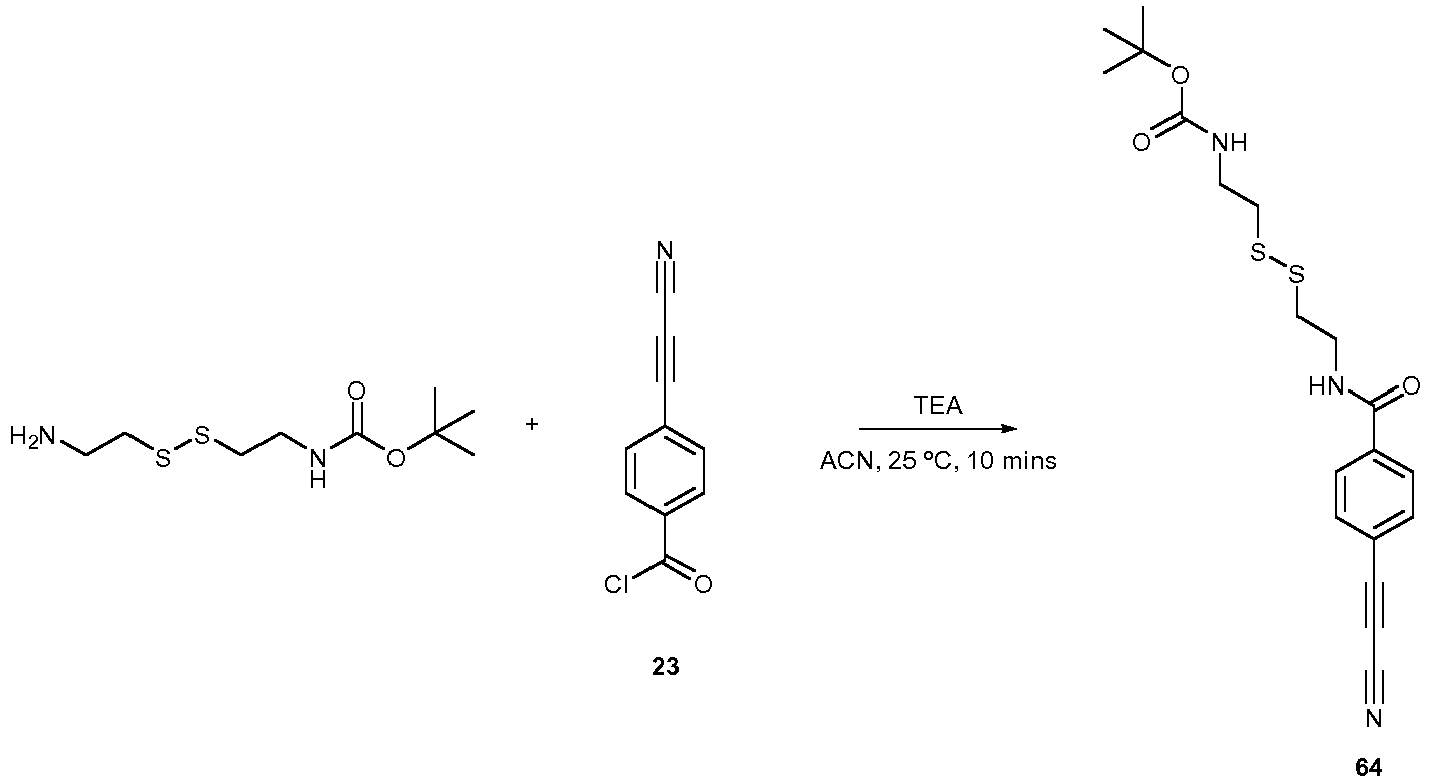
- To a solution of 23 (1 eq., 36 mg, 0.143 mmol) in acn (1 mL) was added a solution of tert-butyl N-{2-[(2-aminoethyl)disulfanyl]ethyl}carbamate (1 eq., 36 mg, 0.143 mmol) and DIPEA (2.12 eq., 39.1 mg, 0.05 mL, 0.303 mmol) in ACN (1 mL). The obtained reaction mixture was left for 10 minutes, then solvents were evaporated and the crude product was purified by flash chromatography to give the targeted product (29.3 mg, 0.0723 mmol, 51 %) as a yellowish solid.
1H NMR (400 MHz, METHANOL-d4) δ7.74 - 7.84 (m, J = 8.53 Hz, 2H), 7.58 - 7.74 (m, J = 8.53 Hz, 2H), 3.60 (t, J = 6.78 Hz, 2H), 3.23 - 3.35 (m, 2H), 2.85 (t, J = 6.78 Hz, 2H), 2.71 (t, J = 6.90 Hz, 2H), 1.32 (s, 9H); 13C NMR (101 MHz, METHANOL-d4) δ167.3, 157.0, 137.3, 133.5, 127.5, 120.1, 104.4, 81.5, 78.8, 63.1, 39.3, 39.1, 37.8, 27.4, 26.6; ESI-MS: C19H24N3O3S2 + [M+H]+, 406.12; found 406.10. -

- To a solution of 64 (1 eq., 29.3 mg, 0.0723 mmol) in ACN-DCM mixture (1 mL of each solvent) was added TFA (10 eq., 82.4 mg, 0.0537 mL, 0.723 mmol). The obtained reaction mixture was stirred for 24 hours, and evaporated to give the targeted compound 65 (30 mg, 0.0715 mmol, 99 %) as a colorless liquid.
ESI-HRMS: C14H16N3OS2 +, 306.07293; found 306.07312. -

- 62 (0.567 eq., 10.1 mg, 0.0299 mmol) solution in MeOH (0.0881 mL) was slowly added to a solution of 2-[4,7,10-tris(carboxymethyl)-1,4,7,10-tetraazacyclododecan-1-yl]acetic acid (1 eq., 21.4 mg, 0.0528 mmol) in water (0.661 mL). The mixture was cooled by ice and pH was adjusted to 5 using DIPEA (25.2 eq., 172 mg, 0.22 mL, 1.33 mmol). An aqueous solution of EDC (0.65 eq., 6.59 mg, 0.0344 mmol) was added dropwise and stirred for 20 min with ice cooling. pH was raised to 8 using DIPEA and reacted for 30 min at room temperature. The end point of the reaction was monitored using HPLC.
ESI-HRMS: C28H35N9O7 +, 609.26594; found 609.26417. -
Compound 66 can be used as a chelating agent. -

- Fast Black K hemi (zinc chloride) salt (practical grade, ≈30% dye content) (7.76 g) was suspended in cold water (150.0 mL, 0°C) and stirred for 20 minutes. The suspension was filtered, and the red solution was added dropwise to a cold (0 °C) mixture of 4-(methyl(phenyl)amino)butanoic acid (1.33 g, 6.88 mmol), concentrated hydrochloric acid (3.1 mL) and sodium acetate (3.6 g, 43.90 mmol) in water-acetone mixture (1:1) (150.0 mL). The reaction mixture was stirred at 10 °C for 15 minutes and at room temperature for 2 hours. Then the reaction crude was extracted with ethyl acetate (3x150 mL) and the combined organic layers were dried over Na2SO4. The crude product was purified by column chromatography on silica gel (100% EtOAc, then 100% DCM to DCM/MeOH (95:5)). BHQ-2 (1.36 g, 39%) was obtained as a dark violet solid.
1H NMR (400 MHz, METHANOL-d4) δ 8.31 (d, J = 9.0 Hz, 2H), 8.00 (d, J = 9.0 Hz, 2H), 7.86 (d, J = 9.0 Hz, 2H), 7.45 (s, 1H), 7.40 (s, 1H), 6.77 (d, J = 9.0 Hz, 2H), 4.05 (s, 3H), 4.00 (s, 3H), 3.5 (t, J = 7.1 Hz, 2H), 2.36 (t, J = 7.1 Hz, 2H), 1.98-1.90 (m, 2H); 13C NMR (101 MHz, METHANOL-d4) δ 176.2, 157.1, 154.3, 153.0, 151.4, 149.0, 147.4, 145.0, 142.6, 126.9, 125.3, 124.2, 112.1, 101.7, 100.7, 57.2, 52.3, 39.0, 31.6, 22.9. - BHQ-2 (1 eq., 92.2 mg, 0.182 mmol) was dissolved in a mixture of DMF (5 mL) and DCM (10 mL). TEA (6 eq., 152 µL, 1.09 mmol) and cystamine dichloride (5 eq., 204 mg, 0.91 mmol) were added. The mixture was cooled to 0 °C and HBTU (1 eq., 69 mg, 0.182 mmol) was added. The solution was allowed to reach room temperature and stirred for 15 hours. When total conversion was reached, DTT (6 eq., 168 mg, 0.162 mL, 1.09 mmol) was added. After the resulting mixture has been stirred for 10 minutes at room temperature, the crude was diluted with saturated NaHCO3 solution (75 mL) and extracted with EtOAc (2x50 mL). The organic layers were combined, washed with water (50 mL), brine (50 mL) and dried over Na2SO4. The crude product was purified by column chromatography on silica gel (DCM/MeOH from 100:0 to 95:5) to yield (BHQ-2)-SH (60.7 mg, 0.107 mmol, 59 %) as a dark violet solid.
1H NMR (400 MHz, CHLOROFORM-d) δ 8.33 (d, J = 9.0 Hz, 2H), 8.0 (d, J = 9.1 Hz, 2H), 7.9 (d, J = 9.1 Hz, 2H), 7.42 (s, 1H), 7.42 (s, 1H), 6.75 (d, J = 9.00 Hz, 2H), 5.90 (t, J = 5.6 Hz, 1H), 4.06 (s, 3H), 4.01 (s, 3H), 3.49 (t, J = 7.4 Hz, 2H), 3.41 (dt, J = 6.2, 6.4 Hz, 2H), 2.64 (td, J = 6.4, 8.47 Hz, 2H), 2.24 (t, J = 7.4 Hz, 2H), 2.01-1.94 (m, 2H); 13C NMR (101 MHz, CHLOROFORM-d) δ 172.2, 156.6, 153.8, 152.4, 151.1, 148.5, 147.0, 144.7, 142.3, 126.4, 124.9, 123.7, 111.6, 101.2, 100.3, 57.0, 56.9, 51.8, 42.5, 38.7, 33.4, 24.9, 23.0; HR-ESI-MS: C27H31N7O5S, 565.2107; found 565.2105. - To a cooled to 0 °C degased solution of 62a (1 eq., 17.3 mg, 0.0507 mmol) and TAMRA-5'-COOH (1 eq., 21.8 mg, 0.0507 mmol) in DMF (1.4 mL), HBTU (1 eq., 19.2 mg) was added at 0 °C. Obtained reaction mass was stirred for 5 minutes and TEA was added. The reaction mass was stirred for 1 hour at 25 °C, evaporated and purified by HPLC to yield 65a (22 mg, 68%) as a dark-violet solid.
1H NMR (400 MHz, METHANOL-d4) δ 8.8 (br. s, 1H), 8.7 (s, 1H), 8.08 - 8.16 (d, J = 8.2 Hz, 1H), 7.60 - 7.70 (d, J = 8.9 Hz, 2H), 7.49 - 7.58 (d, J = 8.9 Hz, 2H), 7.32-7.39 (d, J = 8.2, 1H), δ 7.01 (s, 4H), 6.93 (s, 2H), 3.48-3.58 (m, 2H), 3.26 (s, 12H), 2.44-2.54 (t, J = 7.17 Hz, 2H), 1.98-2.12 (m, 2H); 13C NMR (101 MHz, METHANOL-d 4) - not informative; HR-ESI-MS: 639.24817; found 639.24310. - To a degased solution of BHQ-SH (1.13 eq., 2 mg, 0.00354 mmol) in DCM (0.5 mL), a degased solution of 67 (1 eq., 2 mg, 0.00313 mmol) in methanol (0.5 mL) was added. TEA (4.6 eq., 2 µL, 0.0144 mmol) was added and the obtained reaction mass was left overnight at 25 °C. Solvents were evaporated; the crude product was solubilised in DMSO (0.5 mL) and purified by HPLC to give BHQ-APN-TAMRA (A, 2.7 mg, 0.00225 mmol, 72%) as dark-violet solid.
1H NMR (400 MHz, METHANOL-d4) δ 8.63 (d, J = 2.0 Hz, 1H), 8.34 (d, J = 8.8 Hz, 2H), 8.22 (dd, J = 7.8, 2.0 Hz, 1H), 8.00 (d, J = 8.8 Hz, 2H), 7.75 (d, J = 9.0 Hz, 2H), 7.69 (d, J = 8.5 Hz, 2H), 7.53 (d, J = 80 Hz, 1H), 7.39 (d, J = 8.5 Hz, 2H), 7.34 (d, J = 9.0 Hz, 2H), 6.75-6.86 (m, 8H), 5.48 (s, 1H), 4.02 (s, 3H), 3.92 (s, 3H), 3.58-3.63 (m, 2H), 3.45-3.52 (m, 2H), 3.21 (s, 12H), 3.16 (t, J = 6.9 Hz, 2H), 3.08 (s, 3H), 2.71 (t, J = 6.5 Hz, 2H), 2.55 (t, J = 6.2 Hz, 2H), 2.22 (t, J = 6.9 Hz, 2H), 2.08-2.16 (m, 2H), 1.88-1.96 (m, 2H), 1.61 (br.s, 1H); 13C NMR (101 MHz, METHANOL-d 4) - not informative; HR-ESI-MS: C65H65N12O10S+[M+H]+, 1205.46618; found 1205.46748. -

- This compound was synthesised according to the previously described procedure. 845
- To the solution of B-4 (1 eq., 1.76 g, 10.7 mmol) and tert-butyl N-(3-bromopropyl)carbamate (2 eq., 5.07 g, 21.3 mmol) in DMF (20 mL), K2CO3 (1.2 eq., 1.77 g, 12.8 mmol) was added. The obtained reaction mass was heated at 50 °C for 18 hours. The solution was left to cool down; a solid residue was filtered and washed with DMF. United organic fractions were evaporated, hexane (50 mL) was added to the obtained slurry mass. Obtained suspensions were stirred for another hour, filtered and washed with hexane to give B-3 (3.36 g, 10.4 mmol, 98 %) as white solid.
1H NMR (400 MHz, CHLOROFORM-d) δ 6.49 (s, 2H), 5.23 (s, 2H), 3.52 (t, J = 6.5 Hz, 2H), 2.96 - 3.09 (m, 2H), 2.82 (s, 2H), 1.66-1.75 (m, 2H), 1.41 (s, 9H); 13C NMR (101 MHz, CHLOROFORM-d) δ 176.5, 155.9, 136.5, 81.0, 79.3, 47.5, 37.1, 36.0, 28.4, 27.8. - A solution of 66c (1 eq., 243 mg, 0.754 mmol) in toluene (25 mL) was refluxed for 3 hours. Toluene was evaporated; the obtained white crude product was resolubilised in DCM (5 mL), TFA (0.5 mL) was added. Stirring was continued for 2 hours until complete disappearance of a starting material (controlled by TLC). Solvent were evaporated after the reaction was quenched by methanol (3 mL). Obtained 1-(3-aminopropyl)-1H-pyrrole-2,5-dione (B-2, TFA salt, 190 mg, 94%) was used without further purification.
1H NMR (400 MHz, METHANOL-d4) δ 6.76 (s, 2H), 3.52 (t, J = 6.7 Hz, 2H), 2.80-2.88 (m, 2H), 1.76-1.88 (m, 2H); 13C NMR (101 MHz, METHANOL-d4) δ 170.6, 135.6, 38.5, 35.4, 28.0. - To a solution of TAMRA-5'-COOH (1 eq., 71.5 mg, 0.166 mmol) in DMF (3.21 mL), TEA (2.5 eq., 57.7 µL, 0.415 mmol) and HATU (1.12 eq., 70.7 mg, 0.186 mmol) here added. Obtained reaction mass was stirred for another 5 minutes and B-2 (1 eq., 71.5 mg, 0.166 mmol) was added. Stirring continued for 25 minutes and the reaction mass was evaporated under reduced pressure to the volume of about 1 mL, and the reaction mass was purified by preparative HPLC to give TAMRA-Maleimide (B-1, 34.8 mg, 0.0615 mmol, 37 %) as a pink solid.
1H NMR (400 MHz, METHANOL-d4) δ 8.66 (d, J = 1.8 Hz, 1H), 8.14 (dd, J = 1.8, 8.0 Hz, 2H), 7.41 (d, J = 8.0 Hz, 2H), 7.02 (d, J = 9.5 Hz, 1H), 6.92 (dd, J = 9.5, 2.2 Hz, 2H), 6.81 (d, J = 2.2 Hz, 2H), 6.72 (s, 2H), 3.52 (t, J = 6.8 Hz, 2H), 3.34 (t, J = 7.0 Hz, 2H), 3.17 (s, 12H), 1.80-1.90 (m, 2H); 13C NMR (101 MHz, METHANOL-d4) δ 172.5, 168.2, 167.4, 160.6, 159.0, 158.9, 138.1, 137.7, 137.6, 135.5, 132.9, 132.3, 132.0, 131.4, 115.6, 114.8, 97.5, 82.4, 41.0, 38.6, 36.4, 29.3. HR-ESI-MS: C32H30N4O6, 566.21653; found 566.21654. - To a degased solution of BHQ-SH (1.15 eq., 4.6 mg, 0.00812 mmol) in DCM (0.5 mL), a degased solution of TAMRA-Maleimide (B-1) (1 eq., 4 mg, 0.00313 mmol) in methanol (0.5 mL) was added. TEA (5 eq., 5 µL, 0.0353 mmol) was added and the obtained reaction mass was left overnight at 25 °C. Solvents were evaporated; the crude product was solubilized in DMSO (0.5 mL) and purified by HPLC to give B (7 mg, 0.00621 mmol, 88%) as dark-violet solid.
1H NMR (400 MHz, DMSO-d6) δ 8.91 (t, J = 6.1 Hz, 1H), 8.68 (s, 1H), 8.43 (d, J = 9.1 Hz, 2H), 8.31 (d, J = 8.9 Hz, 1H), 8.01-8.10 (m, 3H), 7.77 (d, J = 9.1 Hz, 2H), 7.60 (d, J = 7.8 Hz, 1H), 7.39 (s, 1H), 7.33 (s, 1H), 6.99 (s, 3H), 6.89 (s, 1H), 6.85 (d, J = 9.1 Hz, 2H), 4.04 (dd, J = 3.9, 8.9 Hz, 1H), 3.98 (s, 3H), 3.92 (s, 3H), 3.41-3.45 (m, 2H), 3.27-3.38 (m, 6H), 3.23 (m, 12H), 3.06 (s, 3H), 2.85-2.95 (m, 1H), 2.72-2.81 (m, 1H), 2.52-2.56 (m, 2H), 2.17 (t, J = 7.3 Hz, 2H), 1.74-1.88 (m, 4H). HR-ESI-MS: C59H62N11O11S+ [M+H]+, 1132.43455; found 1132.43384. -

- To a vial containing 985 µL of PBS (1x, pH 7.6), were subsequently added 5 µL of the stock solution of benzamide (10 mM in water), 5 µL of the stock solution of arylpropiolonitrile (1-12, 10 mM in DMSO) and 5 µL of stock solution of AcCysNHBn (7m, 10 mM in DMSO). Aliquots of the reaction mixture (50 µL) were analyzed by HPLC (injection at 0 and 30 minutes of reaction). Areas under the peaks of the starting materials and hydrolysis products were normalized according to the area of the peak of the internal standard.
- Obtained results are summed up in table 2 below, which presents the conversion of the compounds 1-12 in 30 minutes in presence of 7m at 50 µM concentration of each reagent and 25°C. The reaction is extremely sensitive to steric hindrances induced by substituents in ortho-position to propiolonitrile group (
entries entries 10 and 12), while +M substituents decrease the reactivity of the compound (entries 3 and 7).Table 2 compound Conversion compound Conversion 1 o-OMe 10.1% 10 o-NO2 70.4% * 2 m-OMe 46.8% 12 p-CONHMe 85.5% 3 p-OMe 14.6% 11 p-NHAc 52.3% 5 o-NH2 10.8% 8 o-Me 10.3% 6 m-NH2 42.0% 9 o,o'-diMe 2.3% ** 7 p-NH2 7.4% 4 o,o'-diOMe 4.8% ** *Byproducts were observed; **conversion in 60 minutes. - To a vial containing 980 µL of PBS (1x, pH 7.6), were subsequently added 10 µL of a stock solution of benzamide and 10 µL of a stock solution of electrophile (
phenylmaleimide 1 or
- The obtained results are presented in
figures 4 and 5 . Noticeable hydrolysis was observed only for phenylmaleimide 1 (PhMal, kobs = 7x10⁻⁵s-1). 11 showed no detectable change in concentration.
Example 4: Stability test
Stability of the following compound in different conditions - A 100 mM stock solution of the "addition product"

Table 3 # Working solution Conversion of "addition product" in 1h A 100 mM PhSH in PBS(7.4):DMSO=80:20 0.7% B 1 M H2O2 1.8% C 1 M HCl (pH=0) 0.1% D 1 M NaOH (pH=14) 3.4% E 1 M Glutathione reduced (GSH) in PBS (7.4) 0.4% F 1 M Imidazole in PBS (7.4) 0.5% - This experiment clearly show that the addition product is stable and undergoes very little degradation in a wide range of conditions, in particular for pH ranging from 0 to 14.
- In addition, hardly any thiol exchange is observed when the addition product is exposed for 1 hour to a medium comprising an excess of another thiol, such as phenylthiol or glutathione.
Stability test: comparison with maleimide - The stability of compounds A (formed by the process according to the invention) and B (reference compound) below was studied in different biological conditions.

- Normal liver BNL CL.2 cells from mouse were grown in Dulbecco's MEM medium with 1g/l glucose (Eurobio, Les Ulis, France) supplemented with 10% fetal bovine serum (Perbio, Brebieres, France), 2 mM L-Glutamine, 100 U/mL penicillin, 100 µg/mL streptomycin (Eurobio). Cells were maintained in a 5% CO2 humidified atmosphere at 37°C.
- Twenty four hours prior to experiment, 2.5x10⁴ BNL CL.2 cells were seeded per well in 8-well Lab-Tek II Chambered coverglass plates (ref 155409, Nunc, Naperville, IL, USA). The required amounts of probes A and B were diluted up to 300 µl in MEM complete medium to give final concentration of 1 µM and then added onto the cells. A 5 µg/ml of
Hoechst 118 solution was used as a nuclear marker. Cells were observed with a confocal Leica TSC SPEII microscope after washing with 10% FBS red phenol free Eagle's MEM medium. - The day before experiment, BNL CL.2 cells were seeded in 96-plates (Greiner Bio One, Frickenhausen, Germany) at 2.0x10⁴ cells/well in Dulbecco's MEM complete medium. Both probes (A and B) were prepared at 1 µM concentrations in Dulbecco's MEM complete and added onto cells during different times (2, 6 and 24 hours). After washing with PBS (Eurobio), 5 min incubation with 40 µl trypsine, and addition of 160 µl of
PBS EDTA 5 mM, cells were analyzed by flow cytometry on a PCA-96 Guava cytometer (Guava Technologies Merck Millipore, Billerica, MA, USA) with a green laser. - First, compound A was far more stable than compound B in human plasma (see
fig 1 ). Second, compound A was far more stable than compound B in cellulo (seefig 2 ). - Screening for selectivity was done on benzylamides of non-protected amino acids. 100 mM stock solutions of benzylamides of amino acids (in form of TFA salts) and electrophiles (phenylpropiolonitrile and phenylmaleimide) were prepared in DMSO and stored at -20°
C. A 100 mM stock solution of benzamide (used as an internal standard) was prepared in distilled water and stocked at -20°C. Analyses of reaction mixtures were conducted with Shimadzu LC withSunFire™ C18 5 µM 4.6x150 mm column (Waters). HPLC parameters were as follows: flowrate 1 mL/min, gradient from 5 to 95% of mobile phase B from 0 to 20 min, followed by 5 min at 95% of mobile phase and post time of 5 min. Mobile phase A was 0.05% TFA in water (mQ) (v/v), and mobile phase B was acetonitrile (HPLC grade). Data were analyzed using Shimadzu analysis software. Signals were normalized according to the area of the peak of the internal standard (benzamide). Areas under the peaks of the amino acid benzylamides were used to calculate their conversion during reaction. - 10 µL of the stock solution of amino acid benzamide and 2.5 µL of the stock solution of benzamide were added to a vial containing 977.5 µL of PBS (1x, pH 7.6). The solution was stirred and 10 µL of the stock solution of electrophile were added to give 1 mM final concentrations of reagents and 0.25 mM concentration of benzamide. Aliquots of the reaction mixture (50 µL) were analyzed by HPLC for 1 hour of hydrolysis (injections at 0,30 and 60 min). Areas under the peaks of the starting materials and hydrolysis products were normalized according to the area of peak of the internal standard. In case of phenylpropiolonitrile, none of amino acid models gave more than 1.6% conversion (see table 3 below). Conversely, when phenylmaleimide was tested, some amino acid benzylamides showed conversions up to 8.5%. Masses of corresponding adducts were detected by mass spectrometry (ESI-LCMS) in some cases (shown in bold, Table 4).
- Table 4 below presents the conversion of benzylamides in 1 hour in PBS (1X, pH 7.6) in presence of phenylpropiolonitrile (1).
Table 4 Amino acid benzamide Conversion Amino acid benzamide Conversion CysNHBn (7a) 98% TyrNHBn (7g) 1.6% GlyNHBn (7b) 0.2% HisNHBn (7h) 0.6% AlaNHBn (7c) 0.1% GlnNHBn (7i) 0.1% ValNHBn (7d) 0.7% TrpNHBn (7j) 1.3% SerNHBn (7e) 0.3% ArgNHBn (7k) 0.4% MetNHBn (7f) 0.1% AspNHBn (7l) 0.6% - Table 5 below presents the conversion of benzylamides in 1 hour in PBS (1X, pH 7.6) in presence of phenylmaleimide. Bold values correspond to those for which the mass of the corresponding adduct was detected by ESI-LCMS.
Table 5 Amino acid benzamide Conversion Amino acid benzamide Conversion CysNHBn (7a) 100% TyrNHBn (7g) 2.4% GlyNHBn (7b) 3.3% HisNHBn (7h) 8.5% AlaNHBn (7c) 0.2% GlnNHBn (7i) 1.7% ValNHBn (7d ) 0.9% TrpNHBn (7j) 1.0% SerNHBn (7e) 2.8% ArgNHBn (7k) 2.9% MetNHBn (7f) 1.9% AspNHBn (7l) 1.3% - In conclusion, the selectivity of compounds bearing a phenylpropiolonitrile moiety towards the thiol moiety when compared to other moieties is clearly higher than the selectivity obtained for corresponding compounds, wherein the propiolonitrile moiety is replaced with a maleimide moiety.
- Toxicity of the following "linker" compounds of formula (II) was studied by MTT assay on HaCaT cell lines:
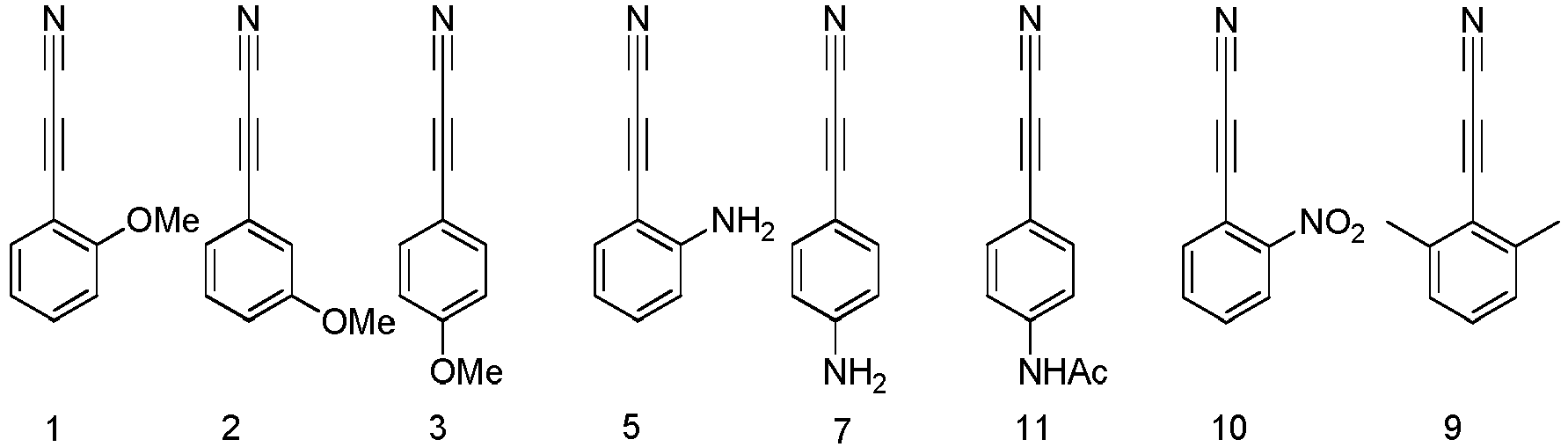
- In vitro cytotoxicity was measured using an MTT (3-(4,5-Dimethylthiazol-2-yl)-2,5-diphenyltetrazolium bromide) assay. The experiments were performed in 96-well plates with HaCaT cells grown to confluence in cell culture media (RPMI 1640 media supplemented with 10% fetal calf serum and 1 mM Glutamin, 200 µL per well). Cells were incubated with chemical reagent at different concentrations (100 µM to 0.78 µM by serial ½ dilutions) at 37°C for 24 hours. After incubation, the supernatant was replaced with fresh culture media containing MTT (300 µg/mL). After 2 hours of incubation at 37°C, the media was carefully removed and 100 µL of DMSO were added to dissolve the formazan crystals generated by mitochondrial enzymes-induced reduction of the MTT. The absorbance was measured at 595 nm using a microplate reader (Biotek, Synergy HT). The cell viabilities were expressed as percent of untreated control cells.
- The results of the MTT test are presented on
figure 5 , and clearly show that compounds of formula (II) are not toxic and may thus be used for instance for biological applications. - 1 nmol of lysozyme was solubilized in NH4HCO3 (25 mM) and reduced with 1mM of TCEP at 57°C during 1 hour. A solution of APN-TMPP (1mM in DMSO) was added to the protein at a molar ratio of 1:200. Then, labeled protein was subjected to proteolysis by porcine trypsin (Promega V5111). Sample was digested with 1:100 (w/w) trypsin in 25 mM ammonium bicarbonate at 35 °C overnight. NanoLC-MS/MS analyses were performed to follow the reaction. The resulting peptide mixtures were analyzed by C18 reversed phase nanoHPLC on a nanoACQUITY Ultra-Performance-LC system (Waters, Milford, MA) coupled to a Q-TOF maXis (Bruker Daltonics, Bremen, Germany) mass spectrometer equipped with a nano-electrospray source. Chromatographic separation was performed on a nanoACQUITY Ultra-Performance-LC. The peptides were separated on an ACQUITY UPLC® BEH130 C18 column (Waters Corp.), 75 µm x 200 mm, 1.7 µm particle size. The solvent system consisted of 0.1% formic acid in water (solvent A) and 0.1% formic acid in acetonitrile (solvent B). Trapping was performed on a 20 x 0.18 mm, 5 µm Symmetry C18 pre-column (Waters Corp.) during 3 minutes at 5 µL/min with 99% of solvent A and 1% of solvent B. Elution was performed at a flow rate of 300 nL/min, using a 1-50% gradient of solvent B for 30 minutes at 50°C followed by a fast rise at 80% (5 minutes) of solvent B. The complete system was fully controlled by Hystar 3.2 (Bruker Daltonics). The Q-TOF instrument was operated with the following settings: source temperature was set to 200°C, drying gaz flow was 4 l/h, and the nano-electrospray voltage was 4kV. Mass calibration of the TOF was achieved using ES-TOF Tuning Mix (Agilent Technologies) on the 50 to 2200 m/z range in positive mode. For tandem MS experiments, the system was operated with automatic switching between MS and MS/MS modes both on m/z range [50-2200]. In MS the summation time was 0.2 s. In MS/MS summation time was weighted between 0.2 s and 1.4 s in function of parent ion intensity. The 2 most abundant peptides (intensity threshold 400 au), preferably ions with two, three, four or five charges, were selected on each MS spectrum for further isolation and CID fragmentation with 2 energies set using collision energy profile. Fragmentation was performed using argon as the collision gas. Tryptic peptides were manually sequenced (de novo) to confirm their sequence and locate the cysteine tagged by the APN-TMPP probe. The peptides were identified using extracted ion chromatograms (EIC) based on monoisotopic mass of calculated peptide sequences.
- Evaluation of APN-TMPP chemoselectivity was carried by studying of its reaction with tryptic digest at 200:1 molar ratio of APN-TMPP (1µM) to protein (around 10:1 to cysteine moieties) at room temperature for one hour. Peptide mixtures obtained without and with chemical derivatization were analyzed by LC-MS/MS. All detectable cysteine-containing peptides reacted with a probe and were delayed while cysteine-free peptides were unaffected. The labeling efficiency was evaluated based on the ratio between intensities of labeled and non-labeled peptides by LC-MS. More than 98% of the detected peptides were completely labeled. LC-MS results show clearly that cysteine-containing peptides have an increased retention time due to the addition of the hydrophobic TMPP group, whereas the retention time of all other peptides was unchanged (Table 6).
- Table 6 below shows the results of LC-MS analyses of tryptic digest of lysozyme before and after reaction with APN-TMPP.
Table 6 Before tagging After tagging Peptide sequence[a] m/z (charge state) RT (min) m/z (charge state) RT (min) ΔRT (min) Number of tags 24CELAAAMK31 419.70 (+2) 13.9 545.89 (+3) 24.2 10.3 1 24CELAAAMoxK31 426.70 (+2) 12.6 551.23 (+3) 23.7 11.1 1 40GYSLGNWVCAAK51 634.81 (+2) 19.8 689.96 (+3) 25.3 5.5 1 80WWCNDGR88 468.69 (+2) 16.5 579.22 (+3) 25.7 9.2 1 92NLCNIPCSALLSSDITASVNCAK114 779.71 (+2) 23.7 949.20 (+5) 30.3 6.6 3 52FESNFNTQATNR63 714.83 (+2) 13.5 714.83 (+2) 13.5 0 0 135GTDVQAWIR143 523.27 (+2) 17.3 523.27 (+2) 17.3 0 0 64NTDGSTDYGILQINSR79 585.28 (+2) 18.2 585.28 (+2) 18.2 0 0 116IVSDGNGMNAWVAWR130 559.27 (+2) 20.9 559.27 (+2) 20.9 0 0 [a] Cysteine residues are in bold. - The compounds below were synthesized:.
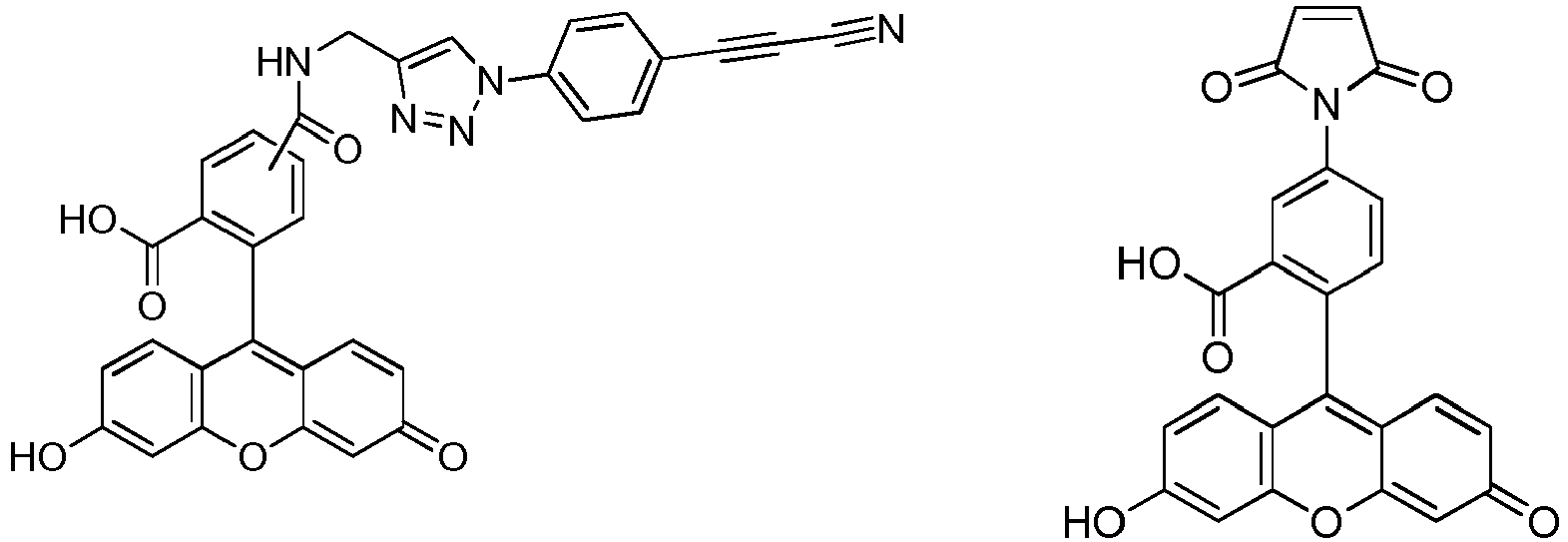
- Stability studies proved that the compound according to the invention was stable for 24 hours in PBS (Phosphate Buffer Saline). Comparatively, the corresponding compound comprising a maleimide moiety was 70% degraded after one hour in PBS.
- Both compounds were reacted with a 2 µM solution of the CD38-C375 mutant.
- Gel electrophoresis after purification showed that a higher labeling rate could be obtained with the compound used in this invention than with the corresponding maleimide compound.
Figure 6 presents the gel electrophoresis obtained with the compound of the invention and the maleimide, before and after purification. - General scheme of the experiment is illustrated on
Figure 7 . - To the solution of Trastuzumab (100uL, 10 mg/mL in 50mM borate buffer pH 8.5) was added 1.74 uL of the solution of 18 (10 mg/mL in DMSO). After incubation for 1h at 25°C was added 0.69 uL of TAMRA-SH (100mM in DMSO). The mixture was incubated at 25°C for 16h and the conjugate was purified by size exclusion chromatography.
- The comparison experiment was carried out using 4-(N-maleimidomethyl)cyclohexanecarboxylic acid N-hydroxysuccinimide ester (SMCC) instead of 18.
- SDS-PAGE analysis of the obtained conjugates (
Figure 8 ) showed thatcompound 18 allows for higher levels of conjugation comparing to SMCC. - Native ESI-MS analysis of the conjugate prepared using 18 (
Figure 9 ,Figure 10 ) showed that in average one molecule of TAMRA per antibody was conjugated. - Native ESI-MS analysis of the conjugate prepared using SMCC (
Figure 11 ,Figure 12 ) showed a complex mixture of undistinguishable species. - Experiment shows that the
compound 18 allows for higher levels of conjugation and gives cleaner population of conjugates comparing to generally applied SMCC. - General scheme of the experiment is illustrated on
Figure 13 . - To the solution of Trastuzumab (100uL, 10 mg/mL in 50mM PBS pH 7.4 with 10mM of EDTA) was added the solution of TCEP (10 mM in water, 1.1 or 2.2 eq.). The mixture was incubated at 37°C for 2h and then the solution of 58 (8.25 µL, 10 mM in DMSO) was added. The mixture was incubated at 25°C for 16h and the conjugate was purified by size exclusion chromatography.
- SDS-PAGE analysis of the obtained conjugates (
Figure 14 ) showed thatcompound 58 was covalently attached to the antibody. ESI-MS analysis showed that in average 4 molecules were conjugated per antibody using 2.2 eq. of TCEP. - General scheme of the experiment is illustrated on
Figure 15 . - To the solution of Trastuzumab (100uL, 10 mg/mL in 50mM PBS pH 7.4 with 10mM of EDTA) was added the solution of TCEP (10 mM in water, 5 eq.). The mixture was incubated at 37°C for 2h and then the solution of 33 or 34 (10 mM in DMSO, 15 eq.) was added. The resulting solution was incubated for 16 h at 25°C and then analyzed by SDS-PAGE in reducing conditions.
- SDS-PAGE analysis showed that antibody fragments were successfully bridged by
compounds 33 and 34 (Figure 17).
Claims (2)
- Process for the preparation of a labeled compound comprising a thiol moiety, comprising contacting a compound comprising a thiol moiety with a compound of formula (I):
 - hydrogen atoms,- alkyl, alkene or alkyne groups, optionally interrupted by at least one heteroatom selected among O, N and S,- aryl groups,- alkoxy groups,- halogen atoms,- amino (-NRR') groups, wherein R and R' are independently hydrogen atoms, alkyl, alkene, alkyne or aryl groups,- hydroxylamine (-ONH2) group,- hydrazine (-NH-NH2) group,- nitro (-NO2) group,- azido (-N3) group,- diazonium (-N2 +) group,- maleimide group,- alkyl- or aryl-carboxyl (-C(=O)OR) groups,- alkyl- or aryl-carbonyl (-C(=O)R) groups,- hydroxyl (-OH) group,- boronic acid -B(OR")2 group, wherein R" is a hydrogen atom or an alkyl group,- phosphine or phosphonium groups,- isocyanate (-N=C=O) or isothiocyanate (-N=C=S) group,- chlorosulfonyl (-SO2Cl) group,- a -O-C(=O)-C(N2)-CF3 group or a -C(=O)-C(N2)-CF3 group,- activated esters, such as -C(=O)-NHS, perfluorinated esters and acylureas,- a -C≡C-C≡N group,- and- alkyl groups substituted by at least one of the previously listed groups,wherein at least one of R1 to R5 comprises a tag moiety which is optionally bonded to the phenyl ring through a linker group, and wherein said tag moiety is selected from an antibody; a therapeutic agent; or a fluorescent probe.
 - Compound of formula (III):

Priority Applications (1)
| Application Number | Priority Date | Filing Date | Title |
|---|---|---|---|
| EP14739728.5A EP3017307B1 (en) | 2013-07-04 | 2014-07-04 | 3-aryl propiolonitrile compounds for thiol labeling |
Applications Claiming Priority (3)
| Application Number | Priority Date | Filing Date | Title |
|---|---|---|---|
| EP13305950.1A EP2821791A1 (en) | 2013-07-04 | 2013-07-04 | 3-aryl propiolonitrile compounds for thiol labeling |
| PCT/EP2014/064387 WO2015001117A1 (en) | 2013-07-04 | 2014-07-04 | 3-aryl propiolonitrile compounds for thiol labeling |
| EP14739728.5A EP3017307B1 (en) | 2013-07-04 | 2014-07-04 | 3-aryl propiolonitrile compounds for thiol labeling |
Publications (2)
| Publication Number | Publication Date |
|---|---|
| EP3017307A1 EP3017307A1 (en) | 2016-05-11 |
| EP3017307B1 true EP3017307B1 (en) | 2018-11-21 |
Family
ID=48795535
Family Applications (2)
| Application Number | Title | Priority Date | Filing Date |
|---|---|---|---|
| EP13305950.1A Withdrawn EP2821791A1 (en) | 2013-07-04 | 2013-07-04 | 3-aryl propiolonitrile compounds for thiol labeling |
| EP14739728.5A Active EP3017307B1 (en) | 2013-07-04 | 2014-07-04 | 3-aryl propiolonitrile compounds for thiol labeling |
Family Applications Before (1)
| Application Number | Title | Priority Date | Filing Date |
|---|---|---|---|
| EP13305950.1A Withdrawn EP2821791A1 (en) | 2013-07-04 | 2013-07-04 | 3-aryl propiolonitrile compounds for thiol labeling |
Country Status (8)
| Country | Link |
|---|---|
| US (2) | US9663454B2 (en) |
| EP (2) | EP2821791A1 (en) |
| JP (1) | JP6578275B2 (en) |
| CN (2) | CN108069876A (en) |
| AU (1) | AU2014286066B2 (en) |
| CA (1) | CA2915733C (en) |
| ES (1) | ES2712178T3 (en) |
| WO (1) | WO2015001117A1 (en) |
Families Citing this family (13)
| Publication number | Priority date | Publication date | Assignee | Title |
|---|---|---|---|---|
| JP6241654B2 (en) * | 2013-10-17 | 2017-12-06 | Dic株式会社 | Polymerizable compound and optical anisotropic body |
| EP3079668A1 (en) | 2013-12-09 | 2016-10-19 | Durect Corporation | Pharmaceutically active agent complexes, polymer complexes, and compositions and methods involving the same |
| EP3225257A1 (en) * | 2016-03-30 | 2017-10-04 | Université de Strasbourg | Amphiphilic monomers based nanovectors and their use for sirna delivery |
| CN106748955A (en) * | 2016-12-07 | 2017-05-31 | 南开大学 | The synthetic method of the N substitution ketone compounds of 5 methylene pyrrole 2 and application |
| US11666657B2 (en) | 2017-05-16 | 2023-06-06 | Universite De Strasbourg | Protein-drug conjugates and their use in the treatment of cancers |
| EP3552631A1 (en) | 2018-04-10 | 2019-10-16 | Inatherys | Antibody-drug conjugates and their uses for the treatment of cancer |
| WO2019210190A2 (en) * | 2018-04-26 | 2019-10-31 | Oregon Health & Science University | Nile red derivatives for improved ratiometric imaging for nerve-specific contrast |
| US11192883B2 (en) * | 2018-10-26 | 2021-12-07 | University Of South Alabama | Functionalized materials and compounds |
| WO2022154127A1 (en) | 2021-01-18 | 2022-07-21 | 味の素株式会社 | Compound or salt thereof, and antibody obtained therefrom |
| CN113135846A (en) * | 2021-04-07 | 2021-07-20 | 吉和昌新材料(荆门)有限公司 | Preparation method of sulfobetaine type waterborne polyurethane chain extender |
| CN113461650B (en) * | 2021-06-15 | 2022-06-07 | 贵州大学 | A kind of calixarene-rhodamine supramolecular co-assembly and its preparation method and application |
| EP4596536A1 (en) | 2022-09-30 | 2025-08-06 | Shanghai de Novo Pharmatech Co., Ltd. | Benzazepine derivative, conjugate containing same, and use thereof |
| CN121336805B (en) * | 2025-12-16 | 2026-03-20 | 云南大学 | Application of 3-(4-fluorophenyl)prop-2-acetylonitrile in the control of plant root-knot nematodes |
Family Cites Families (5)
| Publication number | Priority date | Publication date | Assignee | Title |
|---|---|---|---|---|
| US5025006A (en) * | 1990-06-26 | 1991-06-18 | Merck & Co., Inc. | 2-biphenyl-carbapenem antibacterial agents |
| SE0102616D0 (en) * | 2001-07-25 | 2001-07-25 | Astrazeneca Ab | Novel compounds |
| WO2005069246A2 (en) | 2004-01-09 | 2005-07-28 | United Parcel Service Of America, Inc. | System, method and apparatus for collecting telematics and sensor information in a delivery vehicle |
| US9459249B2 (en) * | 2008-03-27 | 2016-10-04 | Promega Corporation | Protein labeling with cyanobenzothiazole conjugates |
| WO2013067084A1 (en) * | 2011-11-01 | 2013-05-10 | The Florida International University Board Of Trustees | Silylated azulenyl nitrone spin traps as chromotropic superoxide detectors |
-
2013
- 2013-07-04 EP EP13305950.1A patent/EP2821791A1/en not_active Withdrawn
-
2014
- 2014-07-04 ES ES14739728T patent/ES2712178T3/en active Active
- 2014-07-04 WO PCT/EP2014/064387 patent/WO2015001117A1/en not_active Ceased
- 2014-07-04 CN CN201711429754.9A patent/CN108069876A/en active Pending
- 2014-07-04 CN CN201480038338.4A patent/CN105474015B/en active Active
- 2014-07-04 AU AU2014286066A patent/AU2014286066B2/en active Active
- 2014-07-04 EP EP14739728.5A patent/EP3017307B1/en active Active
- 2014-07-04 CA CA2915733A patent/CA2915733C/en active Active
- 2014-07-04 US US14/899,883 patent/US9663454B2/en active Active
- 2014-07-04 JP JP2016522652A patent/JP6578275B2/en active Active
-
2017
- 2017-04-06 US US15/480,420 patent/US10131626B2/en active Active
Non-Patent Citations (1)
| Title |
|---|
| OLEKSANDR KONIEV ET AL: "MAPN: First-in-Class Reagent for Kinetically Resolved Thiol-to-Thiol Conjugation", BIOCONJUGATE CHEMISTRY, vol. 26, no. 9, 3 September 2015 (2015-09-03), US, pages 1863 - 1867, XP055492977, ISSN: 1043-1802, DOI: 10.1021/acs.bioconjchem.5b00440 * |
Also Published As
| Publication number | Publication date |
|---|---|
| EP3017307A1 (en) | 2016-05-11 |
| CN105474015B (en) | 2018-01-26 |
| JP2016536292A (en) | 2016-11-24 |
| US10131626B2 (en) | 2018-11-20 |
| CA2915733A1 (en) | 2015-01-08 |
| CN105474015A (en) | 2016-04-06 |
| ES2712178T3 (en) | 2019-05-09 |
| AU2014286066A1 (en) | 2016-01-28 |
| CN108069876A (en) | 2018-05-25 |
| US20170210700A1 (en) | 2017-07-27 |
| NZ715706A (en) | 2020-12-18 |
| US20160145199A1 (en) | 2016-05-26 |
| WO2015001117A1 (en) | 2015-01-08 |
| CA2915733C (en) | 2021-07-20 |
| US9663454B2 (en) | 2017-05-30 |
| EP2821791A1 (en) | 2015-01-07 |
| AU2014286066B2 (en) | 2020-04-16 |
| JP6578275B2 (en) | 2019-09-18 |
Similar Documents
| Publication | Publication Date | Title |
|---|---|---|
| EP3017307B1 (en) | 3-aryl propiolonitrile compounds for thiol labeling | |
| EP2942352A1 (en) | ASYMMETRICAL Si RHODAMINE AND RHODOL SYNTHESIS | |
| EP4134104A1 (en) | Targeted protease degradation (ted) platform | |
| US8148423B2 (en) | Fluorophore compounds | |
| US6207831B1 (en) | Fluorescent dyes (AIDA) for solid phase and solution phase screening | |
| CS273617B2 (en) | Method of resorufine's derivatives production | |
| EP3728276B1 (en) | Novel tunable photoactivatable silicon rhodamine fluorophores | |
| Bhupathiraju et al. | Improved synthesis of the bifunctional chelator p-SCN-Bn-HOPO | |
| Karrouchi et al. | Synthesis and investigations of reactive properties, photophysical properties and biological activities of a pyrazole-triazole hybrid molecule | |
| Deng et al. | Photo-induced defluorination acyl fluoride exchange as a fluorogenic photo-click reaction for photo-affinity labeling | |
| JP5889987B2 (en) | Novel fluorescent derivatives of polyamines, methods for their preparation, and their use as diagnostic tools in the treatment of cancerous tumors | |
| Clavé et al. | A universal and ready-to-use heterotrifunctional cross-linking reagent for facile synthetic access to sophisticated bioconjugates | |
| CN102807588B (en) | The compounds and methods of adjacent thiol protein in a kind of in situ detection organism | |
| EP3870044B1 (en) | Complexes and ligands | |
| Hamilton et al. | Synthesis and characterization of a photoaffinity labelling probe based on the structure of the cystic fibrosis drug ivacaftor | |
| JP6670502B2 (en) | Development of ligand screening system for neurotransmitter receptor | |
| Ieda et al. | Structure–Activity Relationship of the Linker Moiety in Photoinduced Electron Transfer-Driven Nitric Oxide Releasers | |
| NZ715706B2 (en) | 3-aryl propiolonitrile compounds for thiol labeling | |
| WO2022038359A1 (en) | Cross-linking method and applications in bioconjugation | |
| FR3045053A1 (en) | TRIAZAPYRIDINOPHANE WATER-SOLUBLE COMPLEXING AGENTS AND CORRESPONDING FLUORESCENT LANTHANIDE COMPLEXES | |
| Folliet | Towards the development of a visible light-enabled histidine-selective protein modification strategy using diazo sulfonium-based probes | |
| WO2004085394A1 (en) | 7-nitroindoline derivatives and their uses | |
| EP3556762A1 (en) | Novel tunable photoactivatable silicon rhodamine fluorophores | |
| IE20100683U1 (en) | Novel fluorescent near-infrared (NIR) dyes |
Legal Events
| Date | Code | Title | Description |
|---|---|---|---|
| PUAI | Public reference made under article 153(3) epc to a published international application that has entered the european phase |
Free format text: ORIGINAL CODE: 0009012 |
|
| 17P | Request for examination filed |
Effective date: 20160107 |
|
| AK | Designated contracting states |
Kind code of ref document: A1 Designated state(s): AL AT BE BG CH CY CZ DE DK EE ES FI FR GB GR HR HU IE IS IT LI LT LU LV MC MK MT NL NO PL PT RO RS SE SI SK SM TR |
|
| AX | Request for extension of the european patent |
Extension state: BA ME |
|
| DAX | Request for extension of the european patent (deleted) | ||
| STAA | Information on the status of an ep patent application or granted ep patent |
Free format text: STATUS: EXAMINATION IS IN PROGRESS |
|
| 17Q | First examination report despatched |
Effective date: 20170213 |
|
| GRAP | Despatch of communication of intention to grant a patent |
Free format text: ORIGINAL CODE: EPIDOSNIGR1 |
|
| STAA | Information on the status of an ep patent application or granted ep patent |
Free format text: STATUS: GRANT OF PATENT IS INTENDED |
|
| GRAS | Grant fee paid |
Free format text: ORIGINAL CODE: EPIDOSNIGR3 |
|
| INTG | Intention to grant announced |
Effective date: 20180917 |
|
| GRAA | (expected) grant |
Free format text: ORIGINAL CODE: 0009210 |
|
| STAA | Information on the status of an ep patent application or granted ep patent |
Free format text: STATUS: THE PATENT HAS BEEN GRANTED |
|
| AK | Designated contracting states |
Kind code of ref document: B1 Designated state(s): AL AT BE BG CH CY CZ DE DK EE ES FI FR GB GR HR HU IE IS IT LI LT LU LV MC MK MT NL NO PL PT RO RS SE SI SK SM TR |
|
| REG | Reference to a national code |
Ref country code: CH Ref legal event code: EP |
|
| REG | Reference to a national code |
Ref country code: IE Ref legal event code: FG4D |
|
| REG | Reference to a national code |
Ref country code: DE Ref legal event code: R096 Ref document number: 602014036471 Country of ref document: DE |
|
| REG | Reference to a national code |
Ref country code: AT Ref legal event code: REF Ref document number: 1068146 Country of ref document: AT Kind code of ref document: T Effective date: 20181215 |
|
| REG | Reference to a national code |
Ref country code: CH Ref legal event code: NV Representative=s name: VALIPAT S.A. GEVERS SA, CH |
|
| REG | Reference to a national code |
Ref country code: NL Ref legal event code: FP |
|
| REG | Reference to a national code |
Ref country code: CH Ref legal event code: PCAR Free format text: NEW ADDRESS: RUE DES NOYERS 11, 2000 NEUCHATEL (CH) |
|
| REG | Reference to a national code |
Ref country code: AT Ref legal event code: MK05 Ref document number: 1068146 Country of ref document: AT Kind code of ref document: T Effective date: 20181121 |
|
| PG25 | Lapsed in a contracting state [announced via postgrant information from national office to epo] |
Ref country code: LV Free format text: LAPSE BECAUSE OF FAILURE TO SUBMIT A TRANSLATION OF THE DESCRIPTION OR TO PAY THE FEE WITHIN THE PRESCRIBED TIME-LIMIT Effective date: 20181121 Ref country code: FI Free format text: LAPSE BECAUSE OF FAILURE TO SUBMIT A TRANSLATION OF THE DESCRIPTION OR TO PAY THE FEE WITHIN THE PRESCRIBED TIME-LIMIT Effective date: 20181121 Ref country code: LT Free format text: LAPSE BECAUSE OF FAILURE TO SUBMIT A TRANSLATION OF THE DESCRIPTION OR TO PAY THE FEE WITHIN THE PRESCRIBED TIME-LIMIT Effective date: 20181121 Ref country code: NO Free format text: LAPSE BECAUSE OF FAILURE TO SUBMIT A TRANSLATION OF THE DESCRIPTION OR TO PAY THE FEE WITHIN THE PRESCRIBED TIME-LIMIT Effective date: 20190221 Ref country code: HR Free format text: LAPSE BECAUSE OF FAILURE TO SUBMIT A TRANSLATION OF THE DESCRIPTION OR TO PAY THE FEE WITHIN THE PRESCRIBED TIME-LIMIT Effective date: 20181121 Ref country code: AT Free format text: LAPSE BECAUSE OF FAILURE TO SUBMIT A TRANSLATION OF THE DESCRIPTION OR TO PAY THE FEE WITHIN THE PRESCRIBED TIME-LIMIT Effective date: 20181121 Ref country code: IS Free format text: LAPSE BECAUSE OF FAILURE TO SUBMIT A TRANSLATION OF THE DESCRIPTION OR TO PAY THE FEE WITHIN THE PRESCRIBED TIME-LIMIT Effective date: 20190321 Ref country code: BG Free format text: LAPSE BECAUSE OF FAILURE TO SUBMIT A TRANSLATION OF THE DESCRIPTION OR TO PAY THE FEE WITHIN THE PRESCRIBED TIME-LIMIT Effective date: 20190221 |
|
| REG | Reference to a national code |
Ref country code: ES Ref legal event code: FG2A Ref document number: 2712178 Country of ref document: ES Kind code of ref document: T3 Effective date: 20190509 |
|
| PG25 | Lapsed in a contracting state [announced via postgrant information from national office to epo] |
Ref country code: SE Free format text: LAPSE BECAUSE OF FAILURE TO SUBMIT A TRANSLATION OF THE DESCRIPTION OR TO PAY THE FEE WITHIN THE PRESCRIBED TIME-LIMIT Effective date: 20181121 Ref country code: PT Free format text: LAPSE BECAUSE OF FAILURE TO SUBMIT A TRANSLATION OF THE DESCRIPTION OR TO PAY THE FEE WITHIN THE PRESCRIBED TIME-LIMIT Effective date: 20190321 Ref country code: GR Free format text: LAPSE BECAUSE OF FAILURE TO SUBMIT A TRANSLATION OF THE DESCRIPTION OR TO PAY THE FEE WITHIN THE PRESCRIBED TIME-LIMIT Effective date: 20190222 Ref country code: RS Free format text: LAPSE BECAUSE OF FAILURE TO SUBMIT A TRANSLATION OF THE DESCRIPTION OR TO PAY THE FEE WITHIN THE PRESCRIBED TIME-LIMIT Effective date: 20181121 Ref country code: AL Free format text: LAPSE BECAUSE OF FAILURE TO SUBMIT A TRANSLATION OF THE DESCRIPTION OR TO PAY THE FEE WITHIN THE PRESCRIBED TIME-LIMIT Effective date: 20181121 |
|
| PG25 | Lapsed in a contracting state [announced via postgrant information from national office to epo] |
Ref country code: CZ Free format text: LAPSE BECAUSE OF FAILURE TO SUBMIT A TRANSLATION OF THE DESCRIPTION OR TO PAY THE FEE WITHIN THE PRESCRIBED TIME-LIMIT Effective date: 20181121 Ref country code: PL Free format text: LAPSE BECAUSE OF FAILURE TO SUBMIT A TRANSLATION OF THE DESCRIPTION OR TO PAY THE FEE WITHIN THE PRESCRIBED TIME-LIMIT Effective date: 20181121 Ref country code: DK Free format text: LAPSE BECAUSE OF FAILURE TO SUBMIT A TRANSLATION OF THE DESCRIPTION OR TO PAY THE FEE WITHIN THE PRESCRIBED TIME-LIMIT Effective date: 20181121 |
|
| REG | Reference to a national code |
Ref country code: DE Ref legal event code: R097 Ref document number: 602014036471 Country of ref document: DE |
|
| PG25 | Lapsed in a contracting state [announced via postgrant information from national office to epo] |
Ref country code: SM Free format text: LAPSE BECAUSE OF FAILURE TO SUBMIT A TRANSLATION OF THE DESCRIPTION OR TO PAY THE FEE WITHIN THE PRESCRIBED TIME-LIMIT Effective date: 20181121 Ref country code: EE Free format text: LAPSE BECAUSE OF FAILURE TO SUBMIT A TRANSLATION OF THE DESCRIPTION OR TO PAY THE FEE WITHIN THE PRESCRIBED TIME-LIMIT Effective date: 20181121 Ref country code: SK Free format text: LAPSE BECAUSE OF FAILURE TO SUBMIT A TRANSLATION OF THE DESCRIPTION OR TO PAY THE FEE WITHIN THE PRESCRIBED TIME-LIMIT Effective date: 20181121 Ref country code: RO Free format text: LAPSE BECAUSE OF FAILURE TO SUBMIT A TRANSLATION OF THE DESCRIPTION OR TO PAY THE FEE WITHIN THE PRESCRIBED TIME-LIMIT Effective date: 20181121 |
|
| PGFP | Annual fee paid to national office [announced via postgrant information from national office to epo] |
Ref country code: NL Payment date: 20190729 Year of fee payment: 6 |
|
| PLBE | No opposition filed within time limit |
Free format text: ORIGINAL CODE: 0009261 |
|
| STAA | Information on the status of an ep patent application or granted ep patent |
Free format text: STATUS: NO OPPOSITION FILED WITHIN TIME LIMIT |
|
| 26N | No opposition filed |
Effective date: 20190822 |
|
| PG25 | Lapsed in a contracting state [announced via postgrant information from national office to epo] |
Ref country code: SI Free format text: LAPSE BECAUSE OF FAILURE TO SUBMIT A TRANSLATION OF THE DESCRIPTION OR TO PAY THE FEE WITHIN THE PRESCRIBED TIME-LIMIT Effective date: 20181121 |
|
| PGFP | Annual fee paid to national office [announced via postgrant information from national office to epo] |
Ref country code: IT Payment date: 20190725 Year of fee payment: 6 Ref country code: ES Payment date: 20190826 Year of fee payment: 6 |
|
| PG25 | Lapsed in a contracting state [announced via postgrant information from national office to epo] |
Ref country code: MC Free format text: LAPSE BECAUSE OF FAILURE TO SUBMIT A TRANSLATION OF THE DESCRIPTION OR TO PAY THE FEE WITHIN THE PRESCRIBED TIME-LIMIT Effective date: 20181121 |
|
| PG25 | Lapsed in a contracting state [announced via postgrant information from national office to epo] |
Ref country code: TR Free format text: LAPSE BECAUSE OF FAILURE TO SUBMIT A TRANSLATION OF THE DESCRIPTION OR TO PAY THE FEE WITHIN THE PRESCRIBED TIME-LIMIT Effective date: 20181121 |
|
| REG | Reference to a national code |
Ref country code: BE Ref legal event code: MM Effective date: 20190731 |
|
| PG25 | Lapsed in a contracting state [announced via postgrant information from national office to epo] |
Ref country code: BE Free format text: LAPSE BECAUSE OF NON-PAYMENT OF DUE FEES Effective date: 20190731 Ref country code: LU Free format text: LAPSE BECAUSE OF NON-PAYMENT OF DUE FEES Effective date: 20190704 |
|
| PG25 | Lapsed in a contracting state [announced via postgrant information from national office to epo] |
Ref country code: IE Free format text: LAPSE BECAUSE OF NON-PAYMENT OF DUE FEES Effective date: 20190704 |
|
| REG | Reference to a national code |
Ref country code: NL Ref legal event code: MM Effective date: 20200801 |
|
| PG25 | Lapsed in a contracting state [announced via postgrant information from national office to epo] |
Ref country code: NL Free format text: LAPSE BECAUSE OF NON-PAYMENT OF DUE FEES Effective date: 20200801 |
|
| PG25 | Lapsed in a contracting state [announced via postgrant information from national office to epo] |
Ref country code: CY Free format text: LAPSE BECAUSE OF FAILURE TO SUBMIT A TRANSLATION OF THE DESCRIPTION OR TO PAY THE FEE WITHIN THE PRESCRIBED TIME-LIMIT Effective date: 20181121 |
|
| PG25 | Lapsed in a contracting state [announced via postgrant information from national office to epo] |
Ref country code: HU Free format text: LAPSE BECAUSE OF FAILURE TO SUBMIT A TRANSLATION OF THE DESCRIPTION OR TO PAY THE FEE WITHIN THE PRESCRIBED TIME-LIMIT; INVALID AB INITIO Effective date: 20140704 Ref country code: MT Free format text: LAPSE BECAUSE OF FAILURE TO SUBMIT A TRANSLATION OF THE DESCRIPTION OR TO PAY THE FEE WITHIN THE PRESCRIBED TIME-LIMIT Effective date: 20181121 |
|
| PG25 | Lapsed in a contracting state [announced via postgrant information from national office to epo] |
Ref country code: IT Free format text: LAPSE BECAUSE OF NON-PAYMENT OF DUE FEES Effective date: 20200704 |
|
| REG | Reference to a national code |
Ref country code: ES Ref legal event code: FD2A Effective date: 20211228 |
|
| PG25 | Lapsed in a contracting state [announced via postgrant information from national office to epo] |
Ref country code: ES Free format text: LAPSE BECAUSE OF NON-PAYMENT OF DUE FEES Effective date: 20200705 |
|
| PG25 | Lapsed in a contracting state [announced via postgrant information from national office to epo] |
Ref country code: MK Free format text: LAPSE BECAUSE OF FAILURE TO SUBMIT A TRANSLATION OF THE DESCRIPTION OR TO PAY THE FEE WITHIN THE PRESCRIBED TIME-LIMIT Effective date: 20181121 |
|
| PGFP | Annual fee paid to national office [announced via postgrant information from national office to epo] |
Ref country code: FR Payment date: 20250625 Year of fee payment: 12 |
|
| PGFP | Annual fee paid to national office [announced via postgrant information from national office to epo] |
Ref country code: DE Payment date: 20250728 Year of fee payment: 12 |
|
| PGFP | Annual fee paid to national office [announced via postgrant information from national office to epo] |
Ref country code: GB Payment date: 20250722 Year of fee payment: 12 |
|
| PGFP | Annual fee paid to national office [announced via postgrant information from national office to epo] |
Ref country code: CH Payment date: 20250801 Year of fee payment: 12 |