EP3016934B1 - Heteroaryl compounds useful as inhibitors of sumo activating enzyme - Google Patents
Heteroaryl compounds useful as inhibitors of sumo activating enzyme Download PDFInfo
- Publication number
- EP3016934B1 EP3016934B1 EP14819587.8A EP14819587A EP3016934B1 EP 3016934 B1 EP3016934 B1 EP 3016934B1 EP 14819587 A EP14819587 A EP 14819587A EP 3016934 B1 EP3016934 B1 EP 3016934B1
- Authority
- EP
- European Patent Office
- Prior art keywords
- amino
- carbonyl
- pyrimidin
- pyrazol
- methyl sulfamate
- Prior art date
- Legal status (The legal status is an assumption and is not a legal conclusion. Google has not performed a legal analysis and makes no representation as to the accuracy of the status listed.)
- Active
Links
- 125000001072 heteroaryl group Chemical group 0.000 title description 26
- 239000003112 inhibitor Substances 0.000 title description 12
- 102000004190 Enzymes Human genes 0.000 title description 9
- 108090000790 Enzymes Proteins 0.000 title description 9
- 230000003213 activating effect Effects 0.000 title description 2
- 150000001875 compounds Chemical class 0.000 claims description 186
- -1 chloro, bromo, fluoro, methyl Chemical group 0.000 claims description 142
- 229910052739 hydrogen Inorganic materials 0.000 claims description 91
- 239000001257 hydrogen Substances 0.000 claims description 91
- IJGRMHOSHXDMSA-UHFFFAOYSA-N nitrogen Substances N#N IJGRMHOSHXDMSA-UHFFFAOYSA-N 0.000 claims description 73
- 229910052757 nitrogen Inorganic materials 0.000 claims description 64
- 125000002924 primary amino group Chemical group [H]N([H])* 0.000 claims description 61
- 125000001931 aliphatic group Chemical group 0.000 claims description 43
- 125000003118 aryl group Chemical group 0.000 claims description 42
- 125000000623 heterocyclic group Chemical group 0.000 claims description 42
- 125000005842 heteroatom Chemical group 0.000 claims description 41
- 125000004435 hydrogen atom Chemical class [H]* 0.000 claims description 41
- NINIDFKCEFEMDL-UHFFFAOYSA-N Sulfur Chemical group [S] NINIDFKCEFEMDL-UHFFFAOYSA-N 0.000 claims description 40
- 229910052717 sulfur Chemical group 0.000 claims description 40
- 239000011593 sulfur Chemical group 0.000 claims description 40
- QVGXLLKOCUKJST-UHFFFAOYSA-N atomic oxygen Chemical group [O] QVGXLLKOCUKJST-UHFFFAOYSA-N 0.000 claims description 39
- 229910052760 oxygen Inorganic materials 0.000 claims description 39
- 239000001301 oxygen Chemical group 0.000 claims description 39
- 150000003839 salts Chemical class 0.000 claims description 39
- QJGQUHMNIGDVPM-UHFFFAOYSA-N nitrogen group Chemical group [N] QJGQUHMNIGDVPM-UHFFFAOYSA-N 0.000 claims description 38
- 125000002915 carbonyl group Chemical group [*:2]C([*:1])=O 0.000 claims description 32
- 125000001495 ethyl group Chemical group [H]C([H])([H])C([H])([H])* 0.000 claims description 32
- UFHFLCQGNIYNRP-UHFFFAOYSA-N Hydrogen Chemical compound [H][H] UFHFLCQGNIYNRP-UHFFFAOYSA-N 0.000 claims description 30
- FIYXUOWXHWJDAM-UHFFFAOYSA-N methyl sulfamate Chemical compound COS(N)(=O)=O FIYXUOWXHWJDAM-UHFFFAOYSA-N 0.000 claims description 30
- 125000004527 pyrimidin-4-yl group Chemical group N1=CN=C(C=C1)* 0.000 claims description 28
- 125000002496 methyl group Chemical group [H]C([H])([H])* 0.000 claims description 27
- 125000001997 phenyl group Chemical group [H]C1=C([H])C([H])=C(*)C([H])=C1[H] 0.000 claims description 24
- 206010028980 Neoplasm Diseases 0.000 claims description 23
- 125000004178 (C1-C4) alkyl group Chemical group 0.000 claims description 22
- 201000011510 cancer Diseases 0.000 claims description 19
- 229910052736 halogen Inorganic materials 0.000 claims description 18
- 125000002023 trifluoromethyl group Chemical group FC(F)(F)* 0.000 claims description 17
- 125000001511 cyclopentyl group Chemical group [H]C1([H])C([H])([H])C([H])([H])C([H])(*)C1([H])[H] 0.000 claims description 16
- 125000001559 cyclopropyl group Chemical group [H]C1([H])C([H])([H])C1([H])* 0.000 claims description 16
- 125000001313 C5-C10 heteroaryl group Chemical group 0.000 claims description 15
- 125000002947 alkylene group Chemical group 0.000 claims description 15
- 125000004093 cyano group Chemical group *C#N 0.000 claims description 13
- 125000001153 fluoro group Chemical group F* 0.000 claims description 13
- 150000002367 halogens Chemical group 0.000 claims description 13
- 125000000999 tert-butyl group Chemical group [H]C([H])([H])C(*)(C([H])([H])[H])C([H])([H])[H] 0.000 claims description 12
- 125000000113 cyclohexyl group Chemical group [H]C1([H])C([H])([H])C([H])([H])C([H])(*)C([H])([H])C1([H])[H] 0.000 claims description 11
- 239000008194 pharmaceutical composition Substances 0.000 claims description 10
- 125000000596 cyclohexenyl group Chemical group C1(=CCCCC1)* 0.000 claims description 9
- 125000000499 benzofuranyl group Chemical group O1C(=CC2=C1C=CC=C2)* 0.000 claims description 8
- 125000004196 benzothienyl group Chemical group S1C(=CC2=C1C=CC=C2)* 0.000 claims description 8
- 125000002541 furyl group Chemical group 0.000 claims description 8
- 125000001624 naphthyl group Chemical group 0.000 claims description 8
- 125000004433 nitrogen atom Chemical group N* 0.000 claims description 8
- 125000004076 pyridyl group Chemical group 0.000 claims description 8
- 125000001544 thienyl group Chemical group 0.000 claims description 8
- 239000003937 drug carrier Substances 0.000 claims description 7
- 125000005843 halogen group Chemical group 0.000 claims description 7
- 125000000449 nitro group Chemical group [O-][N+](*)=O 0.000 claims description 7
- AGIKMOLYLSSZIM-ZESCBINXSA-N NS(=O)(=O)OC[C@H]1C[C@@H](Nc2ncncc2C(=O)c2ccn(Cc3ccccc3)n2)[C@H](O)[C@@H]1O Chemical compound NS(=O)(=O)OC[C@H]1C[C@@H](Nc2ncncc2C(=O)c2ccn(Cc3ccccc3)n2)[C@H](O)[C@@H]1O AGIKMOLYLSSZIM-ZESCBINXSA-N 0.000 claims description 6
- 229910052799 carbon Inorganic materials 0.000 claims description 6
- 125000001995 cyclobutyl group Chemical group [H]C1([H])C([H])([H])C([H])(*)C1([H])[H] 0.000 claims description 6
- BQIWIEMVBMKLJE-JZURDYQRSA-N 5-[1-[(3-chlorophenyl)methyl]pyrazole-3-carbonyl]-4-[[(1R,2S,3R,4R)-2,3-dihydroxy-4-[(sulfamoylamino)methyl]cyclopentyl]amino]pyrimidine Chemical compound ClC=1C=C(CN2N=C(C=C2)C(=O)C=2C(=NC=NC=2)N[C@H]2[C@@H]([C@@H]([C@H](C2)CNS(N)(=O)=O)O)O)C=CC=1 BQIWIEMVBMKLJE-JZURDYQRSA-N 0.000 claims description 5
- JBISDDASXBTRSM-QTRJSKNGSA-N NS(=O)(=O)OC[C@H]1C[C@@H](Nc2ncncc2C(=O)c2ccn(CC(=O)c3ccccc3)n2)[C@H](O)[C@@H]1O Chemical compound NS(=O)(=O)OC[C@H]1C[C@@H](Nc2ncncc2C(=O)c2ccn(CC(=O)c3ccccc3)n2)[C@H](O)[C@@H]1O JBISDDASXBTRSM-QTRJSKNGSA-N 0.000 claims description 5
- NTRFGCGYPHOTFP-COFZXWSMSA-N S(N)(OC[C@@H]1[C@H]([C@H]([C@@H](C1)NC1=NC=NC=C1C(=O)C1=NN(C=C1)CC1=CC(=CC=C1)NC(C=C)=O)O)O)(=O)=O Chemical compound S(N)(OC[C@@H]1[C@H]([C@H]([C@@H](C1)NC1=NC=NC=C1C(=O)C1=NN(C=C1)CC1=CC(=CC=C1)NC(C=C)=O)O)O)(=O)=O NTRFGCGYPHOTFP-COFZXWSMSA-N 0.000 claims description 5
- QWPNCBBYHUMVML-KYWVKHOJSA-N [(1R,2R,3S,4R)-2,3-dihydroxy-4-[[5-[5-methyl-1-[[5-(trifluoromethyl)furan-2-yl]methyl]pyrazole-3-carbonyl]pyrimidin-4-yl]amino]cyclopentyl]methyl sulfamate Chemical compound S(N)(OC[C@@H]1[C@H]([C@H]([C@@H](C1)NC1=NC=NC=C1C(=O)C1=NN(C(=C1)C)CC=1OC(=CC=1)C(F)(F)F)O)O)(=O)=O QWPNCBBYHUMVML-KYWVKHOJSA-N 0.000 claims description 5
- BYSJMINIVNJEJN-XVJMICLVSA-N [(1R,2R,3S,4R)-4-[[5-[1-[(3-ethenylsulfonylphenyl)methyl]pyrazole-3-carbonyl]pyrimidin-4-yl]amino]-2,3-dihydroxycyclopentyl]methyl sulfamate Chemical compound S(N)(OC[C@@H]1[C@H]([C@H]([C@@H](C1)NC1=NC=NC=C1C(=O)C1=NN(C=C1)CC1=CC(=CC=C1)S(=O)(=O)C=C)O)O)(=O)=O BYSJMINIVNJEJN-XVJMICLVSA-N 0.000 claims description 5
- CDVCWMAZHRHXNE-XVJMICLVSA-N [(1r,2r,3s,4r)-4-[[3-(1-benzylpyrazole-3-carbonyl)pyridin-4-yl]amino]-2,3-dihydroxycyclopentyl]methyl sulfamate Chemical compound O[C@@H]1[C@H](O)[C@@H](COS(=O)(=O)N)C[C@H]1NC1=CC=NC=C1C(=O)C1=NN(CC=2C=CC=CC=2)C=C1 CDVCWMAZHRHXNE-XVJMICLVSA-N 0.000 claims description 5
- 125000001436 propyl group Chemical group [H]C([*])([H])C([H])([H])C([H])([H])[H] 0.000 claims description 5
- ZDIVCNVAGGHVFE-UHFFFAOYSA-N 1-(difluoromethoxy)-2-(trifluoromethoxy)ethyne Chemical group FC(OC#COC(F)(F)F)F ZDIVCNVAGGHVFE-UHFFFAOYSA-N 0.000 claims description 4
- 206010006187 Breast cancer Diseases 0.000 claims description 4
- 208000026310 Breast neoplasm Diseases 0.000 claims description 4
- 206010058467 Lung neoplasm malignant Diseases 0.000 claims description 4
- AGIKMOLYLSSZIM-VXXKDZQQSA-N NS(=O)(=O)OC[C@H]1C[C@@H](Nc2ncncc2C(=O)c2ccn(Cc3ccccc3)n2)[C@@H](O)[C@@H]1O Chemical compound NS(=O)(=O)OC[C@H]1C[C@@H](Nc2ncncc2C(=O)c2ccn(Cc3ccccc3)n2)[C@@H](O)[C@@H]1O AGIKMOLYLSSZIM-VXXKDZQQSA-N 0.000 claims description 4
- KIDRXSDFGBELIZ-MDZRGWNJSA-N NS(=O)(=O)OC[C@H]1C[C@H](C[C@@H]1O)Nc1ncncc1C(=O)c1ccn(Cc2ccccc2)n1 Chemical compound NS(=O)(=O)OC[C@H]1C[C@H](C[C@@H]1O)Nc1ncncc1C(=O)c1ccn(Cc2ccccc2)n1 KIDRXSDFGBELIZ-MDZRGWNJSA-N 0.000 claims description 4
- RILOPYUGSDZNCX-PUJDYFOHSA-N [(1R,2R,3R,4R)-3-fluoro-2-hydroxy-4-[[5-[1-[(1S)-1-[5-(trifluoromethyl)furan-2-yl]ethyl]pyrrole-3-carbonyl]pyrimidin-4-yl]amino]cyclopentyl]methyl sulfamate Chemical compound S(N)(OC[C@@H]1[C@H]([C@@H]([C@@H](C1)NC1=NC=NC=C1C(=O)C1=CN(C=C1)[C@@H](C)C=1OC(=CC=1)C(F)(F)F)F)O)(=O)=O RILOPYUGSDZNCX-PUJDYFOHSA-N 0.000 claims description 4
- XCGPZFIZIUAYIL-DSKKVCCRSA-N [(1R,2R,3R,4R)-4-[[5-[1-[(1R)-1-(3-bromophenyl)propyl]pyrrole-3-carbonyl]pyrimidin-4-yl]amino]-3-fluoro-2-hydroxycyclopentyl]methyl sulfamate Chemical compound CC[C@H](c1cccc(Br)c1)n1ccc(c1)C(=O)c1cncnc1N[C@@H]1C[C@H](COS(N)(=O)=O)[C@@H](O)[C@@H]1F XCGPZFIZIUAYIL-DSKKVCCRSA-N 0.000 claims description 4
- XCGPZFIZIUAYIL-JTLUYSSBSA-N [(1R,2R,3R,4R)-4-[[5-[1-[(1S)-1-(3-bromophenyl)propyl]pyrrole-3-carbonyl]pyrimidin-4-yl]amino]-3-fluoro-2-hydroxycyclopentyl]methyl sulfamate Chemical compound S(N)(OC[C@@H]1[C@H]([C@@H]([C@@H](C1)NC1=NC=NC=C1C(=O)C1=CN(C=C1)[C@@H](CC)C1=CC(=CC=C1)Br)F)O)(=O)=O XCGPZFIZIUAYIL-JTLUYSSBSA-N 0.000 claims description 4
- CCKQAMCNAJZTLY-PUJDYFOHSA-N [(1R,2R,3R,4R)-4-[[5-[1-[(1S)-1-(5-chlorofuran-2-yl)ethyl]pyrrole-3-carbonyl]pyrimidin-4-yl]amino]-3-fluoro-2-hydroxycyclopentyl]methyl sulfamate Chemical compound S(N)(OC[C@@H]1[C@H]([C@@H]([C@@H](C1)NC1=NC=NC=C1C(=O)C1=CN(C=C1)[C@@H](C)C=1OC(=CC=1)Cl)F)O)(=O)=O CCKQAMCNAJZTLY-PUJDYFOHSA-N 0.000 claims description 4
- RVGYTRHVMUIVJY-CKMSOXPYSA-N [(1R,2R,3S,4R)-2,3-dihydroxy-4-[[5-[1-[(1R)-1-phenylethyl]pyrazole-3-carbonyl]pyrimidin-4-yl]amino]cyclopentyl]methyl sulfamate Chemical compound C[C@H](c1ccccc1)n1ccc(n1)C(=O)c1cncnc1N[C@@H]1C[C@H](COS(N)(=O)=O)[C@@H](O)[C@H]1O RVGYTRHVMUIVJY-CKMSOXPYSA-N 0.000 claims description 4
- TWBPBWYLPUMCOW-KVFYQAMJSA-N [(1R,2R,3S,4R)-4-[[5-[1-[[3-[(R)-ethenylsulfinyl]phenyl]methyl]pyrazole-3-carbonyl]pyrimidin-4-yl]amino]-2,3-dihydroxycyclopentyl]methyl sulfamate Chemical compound S(N)(OC[C@@H]1[C@H]([C@H]([C@@H](C1)NC1=NC=NC=C1C(=O)C1=NN(C=C1)CC1=CC(=CC=C1)[S@](=O)C=C)O)O)(=O)=O TWBPBWYLPUMCOW-KVFYQAMJSA-N 0.000 claims description 4
- JFNIVURHLJTVGR-PCFVDWANSA-N [(1R,2S,4R)-4-[[5-[1-[(1R)-1-(3-bromophenyl)ethyl]pyrazole-3-carbonyl]pyrimidin-4-yl]amino]-2-hydroxycyclopentyl]methyl sulfamate Chemical compound C[C@H](c1cccc(Br)c1)n1ccc(n1)C(=O)c1cncnc1N[C@H]1C[C@H](O)[C@@H](COS(N)(=O)=O)C1 JFNIVURHLJTVGR-PCFVDWANSA-N 0.000 claims description 4
- MKLRNNKPYBITCU-YHFKFMBFSA-N [(1R,2S,4R)-4-[[5-[1-[(1R)-1-(3-ethynylphenyl)ethyl]pyrazole-3-carbonyl]pyrimidin-4-yl]amino]-2-hydroxycyclopentyl]methyl sulfamate Chemical compound S(N)(OC[C@@H]1[C@H](C[C@@H](C1)NC1=NC=NC=C1C(=O)C1=NN(C=C1)[C@H](C)C1=CC(=CC=C1)C#C)O)(=O)=O MKLRNNKPYBITCU-YHFKFMBFSA-N 0.000 claims description 4
- JFNIVURHLJTVGR-XEQBAVFLSA-N [(1R,2S,4R)-4-[[5-[1-[(1S)-1-(3-bromophenyl)ethyl]pyrazole-3-carbonyl]pyrimidin-4-yl]amino]-2-hydroxycyclopentyl]methyl sulfamate Chemical compound S(N)(OC[C@@H]1[C@H](C[C@@H](C1)NC1=NC=NC=C1C(=O)C1=NN(C=C1)[C@@H](C)C1=CC(=CC=C1)Br)O)(=O)=O JFNIVURHLJTVGR-XEQBAVFLSA-N 0.000 claims description 4
- KTNIIQKQCJOPMR-QYDULMRYSA-N [(1R,2S,4R)-4-[[5-[1-[(1S)-1-(3-chlorophenyl)ethyl]-5-methylpyrazole-3-carbonyl]pyrimidin-4-yl]amino]-2-hydroxycyclopentyl]methyl sulfamate Chemical compound S(N)(OC[C@@H]1[C@H](C[C@@H](C1)NC1=NC=NC=C1C(=O)C1=NN(C(=C1)C)[C@@H](C)C1=CC(=CC=C1)Cl)O)(=O)=O KTNIIQKQCJOPMR-QYDULMRYSA-N 0.000 claims description 4
- HECPYUBGJGYSMJ-VFPSZSTASA-N [(1r,2r,3r,4r)-3-fluoro-2-hydroxy-4-[[5-[1-[[(1r,2r)-2-phenylcyclopropyl]methyl]pyrrole-3-carbonyl]pyrimidin-4-yl]amino]cyclopentyl]methyl sulfamate Chemical compound F[C@H]1[C@H](O)[C@@H](COS(=O)(=O)N)C[C@H]1NC1=NC=NC=C1C(=O)C1=CN(C[C@H]2[C@@H](C2)C=2C=CC=CC=2)C=C1 HECPYUBGJGYSMJ-VFPSZSTASA-N 0.000 claims description 4
- HGCJOAUZJXWDPX-YCXWFGPMSA-N [(1r,2r,3r,4r)-4-[[5-[1-[(1s)-1-(3-bromophenyl)ethyl]pyrrole-3-carbonyl]pyrimidin-4-yl]amino]-3-fluoro-2-hydroxycyclopentyl]methyl sulfamate Chemical compound C1([C@H](C)N2C=C(C=C2)C(=O)C=2C(=NC=NC=2)N[C@H]2[C@H]([C@H](O)[C@@H](COS(N)(=O)=O)C2)F)=CC=CC(Br)=C1 HGCJOAUZJXWDPX-YCXWFGPMSA-N 0.000 claims description 4
- RVGYTRHVMUIVJY-ZXUDCPFBSA-N [(1r,2r,3s,4r)-2,3-dihydroxy-4-[[5-[1-[(1s)-1-phenylethyl]pyrazole-3-carbonyl]pyrimidin-4-yl]amino]cyclopentyl]methyl sulfamate Chemical compound C1([C@H](C)N2N=C(C=C2)C(=O)C=2C(=NC=NC=2)N[C@H]2[C@@H]([C@H](O)[C@@H](COS(N)(=O)=O)C2)O)=CC=CC=C1 RVGYTRHVMUIVJY-ZXUDCPFBSA-N 0.000 claims description 4
- TWBPBWYLPUMCOW-DIKXZXNQSA-N [(1r,2r,3s,4r)-4-[[5-[1-[[3-[(s)-ethenylsulfinyl]phenyl]methyl]pyrazole-3-carbonyl]pyrimidin-4-yl]amino]-2,3-dihydroxycyclopentyl]methyl sulfamate Chemical compound O[C@@H]1[C@H](O)[C@@H](COS(=O)(=O)N)C[C@H]1NC1=NC=NC=C1C(=O)C1=NN(CC=2C=C(C=CC=2)[S@@](=O)C=C)C=C1 TWBPBWYLPUMCOW-DIKXZXNQSA-N 0.000 claims description 4
- DRVSWAOUKDUPSO-XEQBAVFLSA-N [(1r,2s,4r)-4-[[5-[1-[(1s)-1-(3-chlorophenyl)ethyl]pyrazole-3-carbonyl]pyrimidin-4-yl]amino]-2-hydroxycyclopentyl]methyl sulfamate Chemical compound C1([C@H](C)N2N=C(C=C2)C(=O)C=2C(=NC=NC=2)N[C@@H]2C[C@H](COS(N)(=O)=O)[C@@H](O)C2)=CC=CC(Cl)=C1 DRVSWAOUKDUPSO-XEQBAVFLSA-N 0.000 claims description 4
- CMBPKRUMICCBNH-LWGWVAHUSA-N [(1r,2s,4r)-4-[[5-[1-[(1s)-1-(6-bromopyridin-2-yl)ethyl]pyrazole-3-carbonyl]pyrimidin-4-yl]amino]-2-hydroxycyclopentyl]methyl sulfamate Chemical compound C1([C@H](C)N2N=C(C=C2)C(=O)C=2C(=NC=NC=2)N[C@@H]2C[C@H](COS(N)(=O)=O)[C@@H](O)C2)=CC=CC(Br)=N1 CMBPKRUMICCBNH-LWGWVAHUSA-N 0.000 claims description 4
- JSUHULTVIFQOTG-BVEDMNCXSA-N [(1r,2s,4r)-4-[[5-[1-[(3-bromophenyl)methyl]-5-[(1r)-1-methoxyethyl]pyrazole-3-carbonyl]pyrimidin-4-yl]amino]-2-hydroxycyclopentyl]methyl sulfamate Chemical compound CO[C@H](C)C1=CC(C(=O)C=2C(=NC=NC=2)N[C@@H]2C[C@H](COS(N)(=O)=O)[C@@H](O)C2)=NN1CC1=CC=CC(Br)=C1 JSUHULTVIFQOTG-BVEDMNCXSA-N 0.000 claims description 4
- 125000001162 cycloheptenyl group Chemical group C1(=CCCCCC1)* 0.000 claims description 4
- 125000000582 cycloheptyl group Chemical group [H]C1([H])C([H])([H])C([H])([H])C([H])([H])C([H])(*)C([H])([H])C1([H])[H] 0.000 claims description 4
- 201000005202 lung cancer Diseases 0.000 claims description 4
- 208000020816 lung neoplasm Diseases 0.000 claims description 4
- 125000002757 morpholinyl group Chemical group 0.000 claims description 4
- 125000004193 piperazinyl group Chemical group 0.000 claims description 4
- 125000003226 pyrazolyl group Chemical group 0.000 claims description 4
- 125000000719 pyrrolidinyl group Chemical group 0.000 claims description 4
- 125000003161 (C1-C6) alkylene group Chemical group 0.000 claims description 3
- RUBLBDFVWYCFMM-DWIQEWEKSA-N NS(=O)(=O)OC[C@H]1C[C@@H](Nc2ncncc2C(=O)c2ccn(Cc3ccccc3)c2)[C@H](O)[C@@H]1O Chemical compound NS(=O)(=O)OC[C@H]1C[C@@H](Nc2ncncc2C(=O)c2ccn(Cc3ccccc3)c2)[C@H](O)[C@@H]1O RUBLBDFVWYCFMM-DWIQEWEKSA-N 0.000 claims description 3
- SPZOHGTXTGPSCS-UTRMSSBJSA-N NS(=O)(=O)OC[C@H]1C[C@@H](Nc2ncncc2C(=O)c2ccn(Cc3ccccc3)n2)[C@@H](F)[C@@H]1O Chemical compound NS(=O)(=O)OC[C@H]1C[C@@H](Nc2ncncc2C(=O)c2ccn(Cc3ccccc3)n2)[C@@H](F)[C@@H]1O SPZOHGTXTGPSCS-UTRMSSBJSA-N 0.000 claims description 3
- SPZOHGTXTGPSCS-DQEVTTJGSA-N NS(=O)(=O)OC[C@H]1C[C@@H](Nc2ncncc2C(=O)c2ccn(Cc3ccccc3)n2)[C@H](F)[C@@H]1O Chemical compound NS(=O)(=O)OC[C@H]1C[C@@H](Nc2ncncc2C(=O)c2ccn(Cc3ccccc3)n2)[C@H](F)[C@@H]1O SPZOHGTXTGPSCS-DQEVTTJGSA-N 0.000 claims description 3
- BMPUEUMWYKLMIC-CEQIKUNHSA-N NS(=O)(=O)OC[C@H]1C[C@H](C[C@@H]1O)NC1=C(C=NC=C1)C(=O)C1=NN(CC2=CC(Cl)=CC=C2)C=C1 Chemical compound NS(=O)(=O)OC[C@H]1C[C@H](C[C@@H]1O)NC1=C(C=NC=C1)C(=O)C1=NN(CC2=CC(Cl)=CC=C2)C=C1 BMPUEUMWYKLMIC-CEQIKUNHSA-N 0.000 claims description 3
- RSAMFWNUOBWHFF-POAQFYNOSA-N NS(=O)(=O)OC[C@H]1C[C@H](C[C@@H]1O)Nc1ncncc1C(=O)c1ccn(Cc2cccc(Br)c2)c1 Chemical compound NS(=O)(=O)OC[C@H]1C[C@H](C[C@@H]1O)Nc1ncncc1C(=O)c1ccn(Cc2cccc(Br)c2)c1 RSAMFWNUOBWHFF-POAQFYNOSA-N 0.000 claims description 3
- NLYVIEPYNMFUDJ-GGPKGHCWSA-N NS(=O)(=O)OC[C@H]1C[C@H](C[C@@H]1O)Nc1ncncc1C(=O)c1ccn(Cc2ccccc2)c1 Chemical compound NS(=O)(=O)OC[C@H]1C[C@H](C[C@@H]1O)Nc1ncncc1C(=O)c1ccn(Cc2ccccc2)c1 NLYVIEPYNMFUDJ-GGPKGHCWSA-N 0.000 claims description 3
- 208000015914 Non-Hodgkin lymphomas Diseases 0.000 claims description 3
- 206010033128 Ovarian cancer Diseases 0.000 claims description 3
- 206010061535 Ovarian neoplasm Diseases 0.000 claims description 3
- AAEANDDXPXVQBS-LSBZLQRGSA-N S(N)(OC[C@@H]1[C@H](C([C@@H](C1)NC1=NC=NC=C1C(=O)C1=NN(C=C1)CC1=CC=CC=C1)(F)F)O)(=O)=O Chemical compound S(N)(OC[C@@H]1[C@H](C([C@@H](C1)NC1=NC=NC=C1C(=O)C1=NN(C=C1)CC1=CC=CC=C1)(F)F)O)(=O)=O AAEANDDXPXVQBS-LSBZLQRGSA-N 0.000 claims description 3
- BNULBMNQZVSWBT-RKVPGOIHSA-N S(N)(OC[C@@H]1[C@H](C[C@@H](C1)NC1=NC=NC=C1C(=O)C1=NN(C=C1)CC#CC1CC1)O)(=O)=O Chemical compound S(N)(OC[C@@H]1[C@H](C[C@@H](C1)NC1=NC=NC=C1C(=O)C1=NN(C=C1)CC#CC1CC1)O)(=O)=O BNULBMNQZVSWBT-RKVPGOIHSA-N 0.000 claims description 3
- UKXNNPGADCVLBH-CLCXKQKWSA-N S(N)(OC[C@@H]1[C@H](C[C@@H](C1)NC1=NC=NC=C1C(=O)C1=NN(C=C1)CC1=C(C=CC=C1)Cl)O)(=O)=O Chemical compound S(N)(OC[C@@H]1[C@H](C[C@@H](C1)NC1=NC=NC=C1C(=O)C1=NN(C=C1)CC1=C(C=CC=C1)Cl)O)(=O)=O UKXNNPGADCVLBH-CLCXKQKWSA-N 0.000 claims description 3
- SRGSXTJJXYVFHF-OGWOLHLISA-N S(N)(OC[C@@H]1[C@H](C[C@@H](C1)NC1=NC=NC=C1C(=O)C1=NN(C=C1)CC1=CC(=CC=C1)C(F)(F)F)O)(=O)=O Chemical compound S(N)(OC[C@@H]1[C@H](C[C@@H](C1)NC1=NC=NC=C1C(=O)C1=NN(C=C1)CC1=CC(=CC=C1)C(F)(F)F)O)(=O)=O SRGSXTJJXYVFHF-OGWOLHLISA-N 0.000 claims description 3
- IXCWIEAIJGSNQZ-HLIPFELVSA-N S(N)(OC[C@@H]1[C@H](C[C@@H](C1)NC1=NC=NC=C1C(=O)C1=NN(C=C1)CC1=CC(=CC=C1)C)O)(=O)=O Chemical compound S(N)(OC[C@@H]1[C@H](C[C@@H](C1)NC1=NC=NC=C1C(=O)C1=NN(C=C1)CC1=CC(=CC=C1)C)O)(=O)=O IXCWIEAIJGSNQZ-HLIPFELVSA-N 0.000 claims description 3
- PJHUELIKSXLGBB-OGWOLHLISA-N S(N)(OC[C@@H]1[C@H](C[C@@H](C1)NC1=NC=NC=C1C(=O)C1=NN(C=C1)CC1=CC(=CC=C1)F)O)(=O)=O Chemical compound S(N)(OC[C@@H]1[C@H](C[C@@H](C1)NC1=NC=NC=C1C(=O)C1=NN(C=C1)CC1=CC(=CC=C1)F)O)(=O)=O PJHUELIKSXLGBB-OGWOLHLISA-N 0.000 claims description 3
- SPAPFFDHWAASPX-MRRJBJDNSA-N S(N)(OC[C@@H]1[C@H](C[C@@H](C1)NC1=NC=NC=C1C(=O)C1=NN(C=C1)CC1=NC(=CC=C1)Br)O)(=O)=O Chemical compound S(N)(OC[C@@H]1[C@H](C[C@@H](C1)NC1=NC=NC=C1C(=O)C1=NN(C=C1)CC1=NC(=CC=C1)Br)O)(=O)=O SPAPFFDHWAASPX-MRRJBJDNSA-N 0.000 claims description 3
- CEHPNXFEKRRQBD-HSMVNMDESA-N S(N)(OC[C@@H]1[C@H](C[C@@H](C1)NC1=NC=NC=C1C(=O)C1=NN(C=C1)CC=1OC(=CC=1)Cl)O)(=O)=O Chemical compound S(N)(OC[C@@H]1[C@H](C[C@@H](C1)NC1=NC=NC=C1C(=O)C1=NN(C=C1)CC=1OC(=CC=1)Cl)O)(=O)=O CEHPNXFEKRRQBD-HSMVNMDESA-N 0.000 claims description 3
- RILOPYUGSDZNCX-LDJLRQHMSA-N [(1R,2R,3R,4R)-3-fluoro-2-hydroxy-4-[[5-[1-[(1R)-1-[5-(trifluoromethyl)furan-2-yl]ethyl]pyrrole-3-carbonyl]pyrimidin-4-yl]amino]cyclopentyl]methyl sulfamate Chemical compound C[C@H](c1ccc(o1)C(F)(F)F)n1ccc(c1)C(=O)c1cncnc1N[C@@H]1C[C@H](COS(N)(=O)=O)[C@@H](O)[C@@H]1F RILOPYUGSDZNCX-LDJLRQHMSA-N 0.000 claims description 3
- CCKQAMCNAJZTLY-LDJLRQHMSA-N [(1R,2R,3R,4R)-4-[[5-[1-[(1R)-1-(5-chlorofuran-2-yl)ethyl]pyrrole-3-carbonyl]pyrimidin-4-yl]amino]-3-fluoro-2-hydroxycyclopentyl]methyl sulfamate Chemical compound S(N)(OC[C@@H]1[C@H]([C@@H]([C@@H](C1)NC1=NC=NC=C1C(=O)C1=CN(C=C1)[C@H](C)C=1OC(=CC=1)Cl)F)O)(=O)=O CCKQAMCNAJZTLY-LDJLRQHMSA-N 0.000 claims description 3
- KTNIIQKQCJOPMR-OQBJRAFVSA-N [(1R,2S,4R)-4-[[5-[1-[(1R)-1-(3-chlorophenyl)ethyl]-5-methylpyrazole-3-carbonyl]pyrimidin-4-yl]amino]-2-hydroxycyclopentyl]methyl sulfamate Chemical compound C[C@H](c1cccc(Cl)c1)n1nc(cc1C)C(=O)c1cncnc1N[C@H]1C[C@H](O)[C@@H](COS(N)(=O)=O)C1 KTNIIQKQCJOPMR-OQBJRAFVSA-N 0.000 claims description 3
- DRVSWAOUKDUPSO-PCFVDWANSA-N [(1R,2S,4R)-4-[[5-[1-[(1R)-1-(3-chlorophenyl)ethyl]pyrazole-3-carbonyl]pyrimidin-4-yl]amino]-2-hydroxycyclopentyl]methyl sulfamate Chemical compound C[C@H](c1cccc(Cl)c1)n1ccc(n1)C(=O)c1cncnc1N[C@H]1C[C@H](O)[C@@H](COS(N)(=O)=O)C1 DRVSWAOUKDUPSO-PCFVDWANSA-N 0.000 claims description 3
- SDTFURRUMBVNTO-OGWOLHLISA-N [(1R,2S,4R)-4-[[5-[1-[(3-chlorophenyl)methyl]pyrazole-3-carbonyl]pyrimidin-4-yl]amino]-2-hydroxycyclopentyl]methyl sulfamate Chemical compound NS(=O)(=O)OC[C@H]1C[C@H](C[C@@H]1O)Nc1ncncc1C(=O)c1ccn(Cc2cccc(Cl)c2)n1 SDTFURRUMBVNTO-OGWOLHLISA-N 0.000 claims description 3
- HECPYUBGJGYSMJ-DIXIVGHSSA-N [(1r,2r,3r,4r)-3-fluoro-2-hydroxy-4-[[5-[1-[[(1s,2s)-2-phenylcyclopropyl]methyl]pyrrole-3-carbonyl]pyrimidin-4-yl]amino]cyclopentyl]methyl sulfamate Chemical compound F[C@H]1[C@H](O)[C@@H](COS(=O)(=O)N)C[C@H]1NC1=NC=NC=C1C(=O)C1=CN(C[C@@H]2[C@H](C2)C=2C=CC=CC=2)C=C1 HECPYUBGJGYSMJ-DIXIVGHSSA-N 0.000 claims description 3
- HGCJOAUZJXWDPX-ZFTZQBIMSA-N [(1r,2r,3r,4r)-4-[[5-[1-[(1r)-1-(3-bromophenyl)ethyl]pyrrole-3-carbonyl]pyrimidin-4-yl]amino]-3-fluoro-2-hydroxycyclopentyl]methyl sulfamate Chemical compound C1([C@@H](C)N2C=C(C=C2)C(=O)C=2C(=NC=NC=2)N[C@H]2[C@H]([C@H](O)[C@@H](COS(N)(=O)=O)C2)F)=CC=CC(Br)=C1 HGCJOAUZJXWDPX-ZFTZQBIMSA-N 0.000 claims description 3
- IKTJVVHOYQBUJC-BBPFFBPGSA-N [(1r,2r,3s,4r)-4-[[5-[1-[(1r)-2,3-dihydro-1h-inden-1-yl]pyrazole-3-carbonyl]pyrimidin-4-yl]amino]-2,3-dihydroxycyclopentyl]methyl sulfamate Chemical compound O[C@@H]1[C@H](O)[C@@H](COS(=O)(=O)N)C[C@H]1NC1=NC=NC=C1C(=O)C1=NN([C@H]2C3=CC=CC=C3CC2)C=C1 IKTJVVHOYQBUJC-BBPFFBPGSA-N 0.000 claims description 3
- IKTJVVHOYQBUJC-LWMOOPSISA-N [(1r,2r,3s,4r)-4-[[5-[1-[(1s)-2,3-dihydro-1h-inden-1-yl]pyrazole-3-carbonyl]pyrimidin-4-yl]amino]-2,3-dihydroxycyclopentyl]methyl sulfamate Chemical compound O[C@@H]1[C@H](O)[C@@H](COS(=O)(=O)N)C[C@H]1NC1=NC=NC=C1C(=O)C1=NN([C@@H]2C3=CC=CC=C3CC2)C=C1 IKTJVVHOYQBUJC-LWMOOPSISA-N 0.000 claims description 3
- FZHDYJCMFZPCHD-JZURDYQRSA-N [(1r,2r,3s,4r)-4-[[5-[1-[(3-chlorophenyl)methyl]pyrazole-3-carbonyl]pyrimidin-4-yl]amino]-2,3-dihydroxycyclopentyl]methyl sulfamate Chemical compound O[C@@H]1[C@H](O)[C@@H](COS(=O)(=O)N)C[C@H]1NC1=NC=NC=C1C(=O)C1=NN(CC=2C=C(Cl)C=CC=2)C=C1 FZHDYJCMFZPCHD-JZURDYQRSA-N 0.000 claims description 3
- UWVWUQQYEUJWJZ-FMTVUPSXSA-N [(1r,2s,4r)-2-hydroxy-4-[[5-[1-[(2,3,6-trifluorophenyl)methyl]pyrazole-3-carbonyl]pyrimidin-4-yl]amino]cyclopentyl]methyl sulfamate Chemical compound C1[C@H](O)[C@@H](COS(=O)(=O)N)C[C@H]1NC1=NC=NC=C1C(=O)C1=NN(CC=2C(=C(F)C=CC=2F)F)C=C1 UWVWUQQYEUJWJZ-FMTVUPSXSA-N 0.000 claims description 3
- KQFOWIKAKTVDSF-CLCXKQKWSA-N [(1r,2s,4r)-2-hydroxy-4-[[5-[1-[[3-(trifluoromethoxy)phenyl]methyl]pyrazole-3-carbonyl]pyrimidin-4-yl]amino]cyclopentyl]methyl sulfamate Chemical compound C1[C@H](O)[C@@H](COS(=O)(=O)N)C[C@H]1NC1=NC=NC=C1C(=O)C1=NN(CC=2C=C(OC(F)(F)F)C=CC=2)C=C1 KQFOWIKAKTVDSF-CLCXKQKWSA-N 0.000 claims description 3
- WYUXXLIVBAVLGU-MDZRGWNJSA-N [(1r,2s,4r)-4-[[5-[1-(cyclohexylmethyl)pyrazole-3-carbonyl]pyrimidin-4-yl]amino]-2-hydroxycyclopentyl]methyl sulfamate Chemical compound C1[C@H](O)[C@@H](COS(=O)(=O)N)C[C@H]1NC1=NC=NC=C1C(=O)C1=NN(CC2CCCCC2)C=C1 WYUXXLIVBAVLGU-MDZRGWNJSA-N 0.000 claims description 3
- SIFDLJDTHZDERK-JXFSHQFZSA-N [(1r,2s,4r)-4-[[5-[1-[(1r)-1-(5-chlorofuran-2-yl)ethyl]pyrazole-3-carbonyl]pyrimidin-4-yl]amino]-2-hydroxycyclopentyl]methyl sulfamate Chemical compound C1([C@@H](C)N2N=C(C=C2)C(=O)C=2C(=NC=NC=2)N[C@@H]2C[C@H](COS(N)(=O)=O)[C@@H](O)C2)=CC=C(Cl)O1 SIFDLJDTHZDERK-JXFSHQFZSA-N 0.000 claims description 3
- CMBPKRUMICCBNH-MMQJMDILSA-N [(1r,2s,4r)-4-[[5-[1-[(1r)-1-(6-bromopyridin-2-yl)ethyl]pyrazole-3-carbonyl]pyrimidin-4-yl]amino]-2-hydroxycyclopentyl]methyl sulfamate Chemical compound C1([C@@H](C)N2N=C(C=C2)C(=O)C=2C(=NC=NC=2)N[C@@H]2C[C@H](COS(N)(=O)=O)[C@@H](O)C2)=CC=CC(Br)=N1 CMBPKRUMICCBNH-MMQJMDILSA-N 0.000 claims description 3
- JSUHULTVIFQOTG-JQVVKUFUSA-N [(1r,2s,4r)-4-[[5-[1-[(3-bromophenyl)methyl]-5-[(1s)-1-methoxyethyl]pyrazole-3-carbonyl]pyrimidin-4-yl]amino]-2-hydroxycyclopentyl]methyl sulfamate Chemical compound CO[C@@H](C)C1=CC(C(=O)C=2C(=NC=NC=2)N[C@@H]2C[C@H](COS(N)(=O)=O)[C@@H](O)C2)=NN1CC1=CC=CC(Br)=C1 JSUHULTVIFQOTG-JQVVKUFUSA-N 0.000 claims description 3
- KJNKXIWPYBQGTE-OPYAIIAOSA-N [(1r,2s,4r)-4-[[5-[1-[(3-ethynylphenyl)methyl]pyrazole-3-carbonyl]pyrimidin-4-yl]amino]-2-hydroxycyclopentyl]methyl sulfamate Chemical compound C1[C@H](O)[C@@H](COS(=O)(=O)N)C[C@H]1NC1=NC=NC=C1C(=O)C1=NN(CC=2C=C(C=CC=2)C#C)C=C1 KJNKXIWPYBQGTE-OPYAIIAOSA-N 0.000 claims description 3
- LCCVIPVYENVOLZ-OGWOLHLISA-N [(1r,2s,4r)-4-[[5-[1-[(4-chlorophenyl)methyl]pyrazole-3-carbonyl]pyrimidin-4-yl]amino]-2-hydroxycyclopentyl]methyl sulfamate Chemical compound C1[C@H](O)[C@@H](COS(=O)(=O)N)C[C@H]1NC1=NC=NC=C1C(=O)C1=NN(CC=2C=CC(Cl)=CC=2)C=C1 LCCVIPVYENVOLZ-OGWOLHLISA-N 0.000 claims description 3
- RZAVZYBRGRFZIG-MRRJBJDNSA-N [(1r,2s,4r)-4-[[5-[1-[(6-chloropyridin-2-yl)methyl]pyrazole-3-carbonyl]pyrimidin-4-yl]amino]-2-hydroxycyclopentyl]methyl sulfamate Chemical compound C1[C@H](O)[C@@H](COS(=O)(=O)N)C[C@H]1NC1=NC=NC=C1C(=O)C1=NN(CC=2N=C(Cl)C=CC=2)C=C1 RZAVZYBRGRFZIG-MRRJBJDNSA-N 0.000 claims description 3
- 125000003785 benzimidazolyl group Chemical group N1=C(NC2=C1C=CC=C2)* 0.000 claims description 3
- 125000001164 benzothiazolyl group Chemical group S1C(=NC2=C1C=CC=C2)* 0.000 claims description 3
- 125000001309 chloro group Chemical group Cl* 0.000 claims description 3
- 125000000259 cinnolinyl group Chemical group N1=NC(=CC2=CC=CC=C12)* 0.000 claims description 3
- 125000000522 cyclooctenyl group Chemical group C1(=CCCCCCC1)* 0.000 claims description 3
- 125000000640 cyclooctyl group Chemical group [H]C1([H])C([H])([H])C([H])([H])C([H])([H])C([H])(*)C([H])([H])C([H])([H])C1([H])[H] 0.000 claims description 3
- 125000002433 cyclopentenyl group Chemical group C1(=CCCC1)* 0.000 claims description 3
- 125000004856 decahydroquinolinyl group Chemical group N1(CCCC2CCCCC12)* 0.000 claims description 3
- 125000002576 diazepinyl group Chemical group N1N=C(C=CC=C1)* 0.000 claims description 3
- 125000000532 dioxanyl group Chemical group 0.000 claims description 3
- 125000002883 imidazolyl group Chemical group 0.000 claims description 3
- 125000003392 indanyl group Chemical group C1(CCC2=CC=CC=C12)* 0.000 claims description 3
- 125000003453 indazolyl group Chemical group N1N=C(C2=C1C=CC=C2)* 0.000 claims description 3
- 125000003406 indolizinyl group Chemical group C=1(C=CN2C=CC=CC12)* 0.000 claims description 3
- 125000001041 indolyl group Chemical group 0.000 claims description 3
- 125000000904 isoindolyl group Chemical group C=1(NC=C2C=CC=CC12)* 0.000 claims description 3
- 125000005956 isoquinolyl group Chemical group 0.000 claims description 3
- 125000001786 isothiazolyl group Chemical group 0.000 claims description 3
- 125000000842 isoxazolyl group Chemical group 0.000 claims description 3
- 125000004593 naphthyridinyl group Chemical group N1=C(C=CC2=CC=CN=C12)* 0.000 claims description 3
- 125000001715 oxadiazolyl group Chemical group 0.000 claims description 3
- 125000000160 oxazolidinyl group Chemical group 0.000 claims description 3
- 125000002971 oxazolyl group Chemical group 0.000 claims description 3
- 125000004592 phthalazinyl group Chemical group C1(=NN=CC2=CC=CC=C12)* 0.000 claims description 3
- 125000003386 piperidinyl group Chemical group 0.000 claims description 3
- 125000001042 pteridinyl group Chemical group N1=C(N=CC2=NC=CN=C12)* 0.000 claims description 3
- 125000000561 purinyl group Chemical group N1=C(N=C2N=CNC2=C1)* 0.000 claims description 3
- 125000003373 pyrazinyl group Chemical group 0.000 claims description 3
- 125000002098 pyridazinyl group Chemical group 0.000 claims description 3
- 125000000714 pyrimidinyl group Chemical group 0.000 claims description 3
- 125000000168 pyrrolyl group Chemical group 0.000 claims description 3
- 125000002294 quinazolinyl group Chemical group N1=C(N=CC2=CC=CC=C12)* 0.000 claims description 3
- 125000005493 quinolyl group Chemical group 0.000 claims description 3
- 125000001567 quinoxalinyl group Chemical group N1=C(C=NC2=CC=CC=C12)* 0.000 claims description 3
- 125000003718 tetrahydrofuranyl group Chemical group 0.000 claims description 3
- 125000003039 tetrahydroisoquinolinyl group Chemical group C1(NCCC2=CC=CC=C12)* 0.000 claims description 3
- 125000001712 tetrahydronaphthyl group Chemical group C1(CCCC2=CC=CC=C12)* 0.000 claims description 3
- 125000000147 tetrahydroquinolinyl group Chemical group N1(CCCC2=CC=CC=C12)* 0.000 claims description 3
- 125000005958 tetrahydrothienyl group Chemical group 0.000 claims description 3
- 125000001113 thiadiazolyl group Chemical group 0.000 claims description 3
- 125000005308 thiazepinyl group Chemical group S1N=C(C=CC=C1)* 0.000 claims description 3
- 125000000335 thiazolyl group Chemical group 0.000 claims description 3
- 125000004568 thiomorpholinyl group Chemical group 0.000 claims description 3
- 125000001425 triazolyl group Chemical group 0.000 claims description 3
- SEKYDCGSZLYKSI-VPWXQRGCSA-N 2-[(1r,2s,4r)-4-[[5-[1-[(3-bromophenyl)methyl]pyrazole-3-carbonyl]pyrimidin-4-yl]amino]-2-hydroxycyclopentyl]ethanesulfonamide Chemical compound C1[C@H](O)[C@@H](CCS(=O)(=O)N)C[C@H]1NC1=NC=NC=C1C(=O)C1=NN(CC=2C=C(Br)C=CC=2)C=C1 SEKYDCGSZLYKSI-VPWXQRGCSA-N 0.000 claims description 2
- PHFHAUSMLIMBHX-PYEPGOSOSA-N C1[C@H](O)[C@@H](COS(=O)(=O)N)C[C@H]1Nc1ncncc1C(=O)c1ccn(\C=C/c2ccccc2)c1 Chemical compound C1[C@H](O)[C@@H](COS(=O)(=O)N)C[C@H]1Nc1ncncc1C(=O)c1ccn(\C=C/c2ccccc2)c1 PHFHAUSMLIMBHX-PYEPGOSOSA-N 0.000 claims description 2
- CLSCNKBMQGHJBA-CPUCHLNUSA-N CC#CCCn1ccc(n1)C(=O)c1cncnc1N[C@H]1C[C@H](O)[C@@H](COS(N)(=O)=O)C1 Chemical compound CC#CCCn1ccc(n1)C(=O)c1cncnc1N[C@H]1C[C@H](O)[C@@H](COS(N)(=O)=O)C1 CLSCNKBMQGHJBA-CPUCHLNUSA-N 0.000 claims description 2
- RGYAEJUVCYDGMY-CPUCHLNUSA-N CC(C)(O)C#CCn1ccc(n1)C(=O)c1cncnc1N[C@H]1C[C@H](O)[C@@H](COS(N)(=O)=O)C1 Chemical compound CC(C)(O)C#CCn1ccc(n1)C(=O)c1cncnc1N[C@H]1C[C@H](O)[C@@H](COS(N)(=O)=O)C1 RGYAEJUVCYDGMY-CPUCHLNUSA-N 0.000 claims description 2
- IRTRJWAMVWAECS-CPUCHLNUSA-N CCC#CCn1ccc(n1)C(=O)c1cncnc1N[C@H]1C[C@H](O)[C@@H](COS(N)(=O)=O)C1 Chemical compound CCC#CCn1ccc(n1)C(=O)c1cncnc1N[C@H]1C[C@H](O)[C@@H](COS(N)(=O)=O)C1 IRTRJWAMVWAECS-CPUCHLNUSA-N 0.000 claims description 2
- FTQHFOCZGLWPMC-MDYRTPRTSA-N CN([C@H]1C[C@H](O)[C@@H](COS(N)(=O)=O)C1)c1ncncc1C(=O)c1ccn(Cc2cccc(Br)c2)n1 Chemical compound CN([C@H]1C[C@H](O)[C@@H](COS(N)(=O)=O)C1)c1ncncc1C(=O)c1ccn(Cc2cccc(Br)c2)n1 FTQHFOCZGLWPMC-MDYRTPRTSA-N 0.000 claims description 2
- RTDIQRCYRNFISS-ROZLJVEFSA-N COc1cccc(Cn2ccc(c2)C(=O)c2cncnc2N[C@@H]2C[C@H](COS(N)(=O)=O)[C@@H](O)[C@@H]2F)n1 Chemical compound COc1cccc(Cn2ccc(c2)C(=O)c2cncnc2N[C@@H]2C[C@H](COS(N)(=O)=O)[C@@H](O)[C@@H]2F)n1 RTDIQRCYRNFISS-ROZLJVEFSA-N 0.000 claims description 2
- RDGPMRFMIZOZBG-SIIHOXLZSA-N COc1cccc(Cn2ccc(n2)C(=O)c2cncnc2N[C@H]2C[C@H](O)[C@@H](COS(N)(=O)=O)C2)n1 Chemical compound COc1cccc(Cn2ccc(n2)C(=O)c2cncnc2N[C@H]2C[C@H](O)[C@@H](COS(N)(=O)=O)C2)n1 RDGPMRFMIZOZBG-SIIHOXLZSA-N 0.000 claims description 2
- FAXCSNYJJZDSRE-GYSYKLTISA-N CSCn1ccc(n1)C(=O)c1cncnc1N[C@H]1C[C@H](O)[C@@H](COS(N)(=O)=O)C1 Chemical compound CSCn1ccc(n1)C(=O)c1cncnc1N[C@H]1C[C@H](O)[C@@H](COS(N)(=O)=O)C1 FAXCSNYJJZDSRE-GYSYKLTISA-N 0.000 claims description 2
- ROFWVAWJGYCHEQ-PDLPPMLWSA-N Cc1cc(nn1Cc1ccc(o1)C(F)(F)F)C(=O)c1cncnc1N[C@@H]1C[C@H](COS(N)(=O)=O)[C@@H](O)[C@@H]1F Chemical compound Cc1cc(nn1Cc1ccc(o1)C(F)(F)F)C(=O)c1cncnc1N[C@@H]1C[C@H](COS(N)(=O)=O)[C@@H](O)[C@@H]1F ROFWVAWJGYCHEQ-PDLPPMLWSA-N 0.000 claims description 2
- HPWGLMXTNDCSHM-MDYRTPRTSA-N Cc1cc(nn1Cc1cccc(Br)c1)C(=O)c1cncnc1N[C@H]1C[C@H](O)[C@@H](COS(N)(=O)=O)C1 Chemical compound Cc1cc(nn1Cc1cccc(Br)c1)C(=O)c1cncnc1N[C@H]1C[C@H](O)[C@@H](COS(N)(=O)=O)C1 HPWGLMXTNDCSHM-MDYRTPRTSA-N 0.000 claims description 2
- KDTPZRROUSQMFS-QINHECLXSA-N Cc1ccc(Cn2ccc(n2)C(=O)c2cncnc2N[C@H]2C[C@H](O)[C@@H](COS(N)(=O)=O)C2)cc1F Chemical compound Cc1ccc(Cn2ccc(n2)C(=O)c2cncnc2N[C@H]2C[C@H](O)[C@@H](COS(N)(=O)=O)C2)cc1F KDTPZRROUSQMFS-QINHECLXSA-N 0.000 claims description 2
- XAYKDEUQFCCLRI-CLCXKQKWSA-N Cc1ccnc(Cn2ccc(n2)C(=O)c2cncnc2N[C@H]2C[C@H](O)[C@@H](COS(N)(=O)=O)C2)c1 Chemical compound Cc1ccnc(Cn2ccc(n2)C(=O)c2cncnc2N[C@H]2C[C@H](O)[C@@H](COS(N)(=O)=O)C2)c1 XAYKDEUQFCCLRI-CLCXKQKWSA-N 0.000 claims description 2
- JJPYKZLSEDQOGS-NMSZZDKCSA-N Cc1cn(Cc2cccc(Br)c2)cc1C(=O)c1cncnc1N[C@@H]1C[C@H](COS(N)(=O)=O)[C@@H](O)[C@@H]1F Chemical compound Cc1cn(Cc2cccc(Br)c2)cc1C(=O)c1cncnc1N[C@@H]1C[C@H](COS(N)(=O)=O)[C@@H](O)[C@@H]1F JJPYKZLSEDQOGS-NMSZZDKCSA-N 0.000 claims description 2
- XAFYTEAVWHMVCZ-DLVXIWMQSA-N Cn1cccc(Cn2ccc(c2)C(=O)c2cncnc2N[C@@H]2C[C@H](COS(N)(=O)=O)[C@@H](O)[C@@H]2F)c1=O Chemical compound Cn1cccc(Cn2ccc(c2)C(=O)c2cncnc2N[C@@H]2C[C@H](COS(N)(=O)=O)[C@@H](O)[C@@H]2F)c1=O XAFYTEAVWHMVCZ-DLVXIWMQSA-N 0.000 claims description 2
- 206010009944 Colon cancer Diseases 0.000 claims description 2
- 208000001333 Colorectal Neoplasms Diseases 0.000 claims description 2
- RQAOVVKSNGLLEG-UHFFFAOYSA-N N'-[2-(difluoromethoxy)-2-(trifluoromethoxy)-2-(trifluoromethylsulfanyl)ethyl]-N'-ethyl-N,N-dimethylethyne-1,2-diamine Chemical group FC(OC(CN(CC)C#CN(C)C)(SC(F)(F)F)OC(F)(F)F)F RQAOVVKSNGLLEG-UHFFFAOYSA-N 0.000 claims description 2
- RSAMFWNUOBWHFF-HQRMLTQVSA-N NS(=O)(=O)OC[C@@H]1C[C@H](C[C@@H]1O)NC1=C(C=NC=N1)C(=O)C1=CN(CC2=CC(Br)=CC=C2)C=C1 Chemical compound NS(=O)(=O)OC[C@@H]1C[C@H](C[C@@H]1O)NC1=C(C=NC=N1)C(=O)C1=CN(CC2=CC(Br)=CC=C2)C=C1 RSAMFWNUOBWHFF-HQRMLTQVSA-N 0.000 claims description 2
- MUBQPCOPTAWRKX-OBZYLPMUSA-N NS(=O)(=O)OC[C@H]1C[C@@H](NC2=C(C=NC=N2)C(=O)C2=CN(CC3=CC(OC(F)(F)F)=CC=C3)C=C2)[C@@H](F)[C@@H]1O Chemical compound NS(=O)(=O)OC[C@H]1C[C@@H](NC2=C(C=NC=N2)C(=O)C2=CN(CC3=CC(OC(F)(F)F)=CC=C3)C=C2)[C@@H](F)[C@@H]1O MUBQPCOPTAWRKX-OBZYLPMUSA-N 0.000 claims description 2
- FQIIOHZSGXADDO-LOFBVBFDSA-N NS(=O)(=O)OC[C@H]1C[C@@H](NC2=C(C=NC=N2)C(=O)C2=NN(CC3=NC=CC=C3)C=C2)[C@H](O)[C@@H]1O Chemical compound NS(=O)(=O)OC[C@H]1C[C@@H](NC2=C(C=NC=N2)C(=O)C2=NN(CC3=NC=CC=C3)C=C2)[C@H](O)[C@@H]1O FQIIOHZSGXADDO-LOFBVBFDSA-N 0.000 claims description 2
- FGORJITUNXITEV-UQHZHQPPSA-N NS(=O)(=O)OC[C@H]1C[C@@H](Nc2ccncc2C(=O)c2ccn(Cc3cccc(OC(F)(F)F)c3)c2)[C@@H](F)[C@@H]1O Chemical compound NS(=O)(=O)OC[C@H]1C[C@@H](Nc2ccncc2C(=O)c2ccn(Cc3cccc(OC(F)(F)F)c3)c2)[C@@H](F)[C@@H]1O FGORJITUNXITEV-UQHZHQPPSA-N 0.000 claims description 2
- HOAJZSKHVDFFKM-ROZLJVEFSA-N NS(=O)(=O)OC[C@H]1C[C@@H](Nc2ncncc2C(=O)c2cc(Cl)n(Cc3cccc(Br)c3)c2)[C@@H](F)[C@@H]1O Chemical compound NS(=O)(=O)OC[C@H]1C[C@@H](Nc2ncncc2C(=O)c2cc(Cl)n(Cc3cccc(Br)c3)c2)[C@@H](F)[C@@H]1O HOAJZSKHVDFFKM-ROZLJVEFSA-N 0.000 claims description 2
- DXUKUYQXEKKKKA-OHRXKNJKSA-N NS(=O)(=O)OC[C@H]1C[C@@H](Nc2ncncc2C(=O)c2ccn(CC(=O)c3cccc(Br)c3)n2)[C@H](O)[C@@H]1O Chemical compound NS(=O)(=O)OC[C@H]1C[C@@H](Nc2ncncc2C(=O)c2ccn(CC(=O)c3cccc(Br)c3)n2)[C@H](O)[C@@H]1O DXUKUYQXEKKKKA-OHRXKNJKSA-N 0.000 claims description 2
- ATLLDEWDJUEKRQ-ZHKFALCXSA-N NS(=O)(=O)OC[C@H]1C[C@@H](Nc2ncncc2C(=O)c2ccn(Cc3cc(F)cc(Cl)c3)n2)[C@H](O)[C@@H]1O Chemical compound NS(=O)(=O)OC[C@H]1C[C@@H](Nc2ncncc2C(=O)c2ccn(Cc3cc(F)cc(Cl)c3)n2)[C@H](O)[C@@H]1O ATLLDEWDJUEKRQ-ZHKFALCXSA-N 0.000 claims description 2
- KHVFBYKJLVIGIG-ZHKFALCXSA-N NS(=O)(=O)OC[C@H]1C[C@@H](Nc2ncncc2C(=O)c2ccn(Cc3cc(ccc3F)C(F)(F)F)n2)[C@H](O)[C@@H]1O Chemical compound NS(=O)(=O)OC[C@H]1C[C@@H](Nc2ncncc2C(=O)c2ccn(Cc3cc(ccc3F)C(F)(F)F)n2)[C@H](O)[C@@H]1O KHVFBYKJLVIGIG-ZHKFALCXSA-N 0.000 claims description 2
- LZTYLXZGXRTGPG-ODTDCLSCSA-N NS(=O)(=O)OC[C@H]1C[C@@H](Nc2ncncc2C(=O)c2ccn(Cc3ccc(Cl)c(SC(F)(F)F)c3)n2)[C@H](O)[C@@H]1O Chemical compound NS(=O)(=O)OC[C@H]1C[C@@H](Nc2ncncc2C(=O)c2ccn(Cc3ccc(Cl)c(SC(F)(F)F)c3)n2)[C@H](O)[C@@H]1O LZTYLXZGXRTGPG-ODTDCLSCSA-N 0.000 claims description 2
- SQOBSWYUTCEJCV-ODTDCLSCSA-N NS(=O)(=O)OC[C@H]1C[C@@H](Nc2ncncc2C(=O)c2ccn(Cc3ccc(F)c(OC(F)(F)F)c3)n2)[C@H](O)[C@@H]1O Chemical compound NS(=O)(=O)OC[C@H]1C[C@@H](Nc2ncncc2C(=O)c2ccn(Cc3ccc(F)c(OC(F)(F)F)c3)n2)[C@H](O)[C@@H]1O SQOBSWYUTCEJCV-ODTDCLSCSA-N 0.000 claims description 2
- NWLMBDSYAUNXEN-ZHKFALCXSA-N NS(=O)(=O)OC[C@H]1C[C@@H](Nc2ncncc2C(=O)c2ccn(Cc3ccc(F)cc3Cl)n2)[C@H](O)[C@@H]1O Chemical compound NS(=O)(=O)OC[C@H]1C[C@@H](Nc2ncncc2C(=O)c2ccn(Cc3ccc(F)cc3Cl)n2)[C@H](O)[C@@H]1O NWLMBDSYAUNXEN-ZHKFALCXSA-N 0.000 claims description 2
- LUOYSKFXNCPMMN-ZHKFALCXSA-N NS(=O)(=O)OC[C@H]1C[C@@H](Nc2ncncc2C(=O)c2ccn(Cc3ccc(F)cc3F)n2)[C@H](O)[C@@H]1O Chemical compound NS(=O)(=O)OC[C@H]1C[C@@H](Nc2ncncc2C(=O)c2ccn(Cc3ccc(F)cc3F)n2)[C@H](O)[C@@H]1O LUOYSKFXNCPMMN-ZHKFALCXSA-N 0.000 claims description 2
- QBGQPTPIGIYDKJ-JZURDYQRSA-N NS(=O)(=O)OC[C@H]1C[C@@H](Nc2ncncc2C(=O)c2ccn(Cc3ccc(SC(F)(F)F)cc3)n2)[C@H](O)[C@@H]1O Chemical compound NS(=O)(=O)OC[C@H]1C[C@@H](Nc2ncncc2C(=O)c2ccn(Cc3ccc(SC(F)(F)F)cc3)n2)[C@H](O)[C@@H]1O QBGQPTPIGIYDKJ-JZURDYQRSA-N 0.000 claims description 2
- RTJDNNTYLTXRMF-XLDSIYFKSA-N NS(=O)(=O)OC[C@H]1C[C@@H](Nc2ncncc2C(=O)c2ccn(Cc3ccc(o3)C(F)(F)F)n2)[C@H](O)[C@@H]1O Chemical compound NS(=O)(=O)OC[C@H]1C[C@@H](Nc2ncncc2C(=O)c2ccn(Cc3ccc(o3)C(F)(F)F)n2)[C@H](O)[C@@H]1O RTJDNNTYLTXRMF-XLDSIYFKSA-N 0.000 claims description 2
- KGUJVEWATAZURQ-OBZYLPMUSA-N NS(=O)(=O)OC[C@H]1C[C@@H](Nc2ncncc2C(=O)c2ccn(Cc3cccc(Cl)c3)c2)[C@@H](F)[C@@H]1O Chemical compound NS(=O)(=O)OC[C@H]1C[C@@H](Nc2ncncc2C(=O)c2ccn(Cc3cccc(Cl)c3)c2)[C@@H](F)[C@@H]1O KGUJVEWATAZURQ-OBZYLPMUSA-N 0.000 claims description 2
- TVVCFZMJSQRKDU-JZURDYQRSA-N NS(=O)(=O)OC[C@H]1C[C@@H](Nc2ncncc2C(=O)c2ccn(Cc3cccc(OC(F)(F)F)c3)n2)[C@H](O)[C@@H]1O Chemical compound NS(=O)(=O)OC[C@H]1C[C@@H](Nc2ncncc2C(=O)c2ccn(Cc3cccc(OC(F)(F)F)c3)n2)[C@H](O)[C@@H]1O TVVCFZMJSQRKDU-JZURDYQRSA-N 0.000 claims description 2
- RPRVEBSEIDRHAM-KPPCOUORSA-N NS(=O)(=O)OC[C@H]1C[C@@H](Nc2ncncc2C(=O)c2ccn(Cc3cccc(Oc4ccc(F)cc4)c3)n2)[C@H](O)[C@@H]1O Chemical compound NS(=O)(=O)OC[C@H]1C[C@@H](Nc2ncncc2C(=O)c2ccn(Cc3cccc(Oc4ccc(F)cc4)c3)n2)[C@H](O)[C@@H]1O RPRVEBSEIDRHAM-KPPCOUORSA-N 0.000 claims description 2
- PKDJHTGIGSAYHJ-JZURDYQRSA-N NS(=O)(=O)OC[C@H]1C[C@@H](Nc2ncncc2C(=O)c2ccn(Cc3cccc(c3)C(F)(F)F)n2)[C@H](O)[C@@H]1O Chemical compound NS(=O)(=O)OC[C@H]1C[C@@H](Nc2ncncc2C(=O)c2ccn(Cc3cccc(c3)C(F)(F)F)n2)[C@H](O)[C@@H]1O PKDJHTGIGSAYHJ-JZURDYQRSA-N 0.000 claims description 2
- MLTVFJCMIJXDCB-JZURDYQRSA-N NS(=O)(=O)OC[C@H]1C[C@@H](Nc2ncncc2C(=O)c2ccn(Cc3ccccc3C(F)(F)F)n2)[C@H](O)[C@@H]1O Chemical compound NS(=O)(=O)OC[C@H]1C[C@@H](Nc2ncncc2C(=O)c2ccn(Cc3ccccc3C(F)(F)F)n2)[C@H](O)[C@@H]1O MLTVFJCMIJXDCB-JZURDYQRSA-N 0.000 claims description 2
- QVKQQXRJLRDENJ-QINHECLXSA-N NS(=O)(=O)OC[C@H]1C[C@H](C[C@@H]1O)NC1=C(C=NC=N1)C(=O)C1=CN(CC2=CC(Br)=C(F)C=C2)C=C1 Chemical compound NS(=O)(=O)OC[C@H]1C[C@H](C[C@@H]1O)NC1=C(C=NC=N1)C(=O)C1=CN(CC2=CC(Br)=C(F)C=C2)C=C1 QVKQQXRJLRDENJ-QINHECLXSA-N 0.000 claims description 2
- BSANGXMCYFJZJM-SIIHOXLZSA-N NS(=O)(=O)OC[C@H]1C[C@H](C[C@@H]1O)NC1=C(C=NC=N1)C(=O)C1=NN(CC2=CC(Br)=CC=C2)C=C1Cl Chemical compound NS(=O)(=O)OC[C@H]1C[C@H](C[C@@H]1O)NC1=C(C=NC=N1)C(=O)C1=NN(CC2=CC(Br)=CC=C2)C=C1Cl BSANGXMCYFJZJM-SIIHOXLZSA-N 0.000 claims description 2
- XBXQAGCYYBOTFK-HMFYCAOWSA-N NS(=O)(=O)OC[C@H]1C[C@H](C[C@@H]1O)Nc1ccncc1C(=O)c1ccn(Cc2cccc(OC(F)(F)F)c2)c1 Chemical compound NS(=O)(=O)OC[C@H]1C[C@H](C[C@@H]1O)Nc1ccncc1C(=O)c1ccn(Cc2cccc(OC(F)(F)F)c2)c1 XBXQAGCYYBOTFK-HMFYCAOWSA-N 0.000 claims description 2
- QSRNXBNZXWFRGC-CEQIKUNHSA-N NS(=O)(=O)OC[C@H]1C[C@H](C[C@@H]1O)Nc1ccncc1C(=O)c1ccn(Cc2cccc(c2)C(F)(F)F)n1 Chemical compound NS(=O)(=O)OC[C@H]1C[C@H](C[C@@H]1O)Nc1ccncc1C(=O)c1ccn(Cc2cccc(c2)C(F)(F)F)n1 QSRNXBNZXWFRGC-CEQIKUNHSA-N 0.000 claims description 2
- QNORKIHQDYFJDF-QINHECLXSA-N NS(=O)(=O)OC[C@H]1C[C@H](C[C@@H]1O)Nc1ncncc1C(=O)c1cc(CO)n(Cc2ccccc2)n1 Chemical compound NS(=O)(=O)OC[C@H]1C[C@H](C[C@@H]1O)Nc1ncncc1C(=O)c1cc(CO)n(Cc2ccccc2)n1 QNORKIHQDYFJDF-QINHECLXSA-N 0.000 claims description 2
- HYMMANKTDKODII-SIIHOXLZSA-N NS(=O)(=O)OC[C@H]1C[C@H](C[C@@H]1O)Nc1ncncc1C(=O)c1cc(n(Cc2cccc(Cl)c2)n1)C(F)(F)F Chemical compound NS(=O)(=O)OC[C@H]1C[C@H](C[C@@H]1O)Nc1ncncc1C(=O)c1cc(n(Cc2cccc(Cl)c2)n1)C(F)(F)F HYMMANKTDKODII-SIIHOXLZSA-N 0.000 claims description 2
- SKQDMVDYPISONI-LBTNJELSSA-N NS(=O)(=O)OC[C@H]1C[C@H](C[C@@H]1O)Nc1ncncc1C(=O)c1ccn(Cc2ccc(Cl)c(OC(F)(F)F)c2)n1 Chemical compound NS(=O)(=O)OC[C@H]1C[C@H](C[C@@H]1O)Nc1ncncc1C(=O)c1ccn(Cc2ccc(Cl)c(OC(F)(F)F)c2)n1 SKQDMVDYPISONI-LBTNJELSSA-N 0.000 claims description 2
- BQMKMJRKBQHSBI-LPMFXHHGSA-N NS(=O)(=O)OC[C@H]1C[C@H](C[C@@H]1O)Nc1ncncc1C(=O)c1ccn(Cc2ccc(F)c(F)c2)n1 Chemical compound NS(=O)(=O)OC[C@H]1C[C@H](C[C@@H]1O)Nc1ncncc1C(=O)c1ccn(Cc2ccc(F)c(F)c2)n1 BQMKMJRKBQHSBI-LPMFXHHGSA-N 0.000 claims description 2
- RDPBECAPZZWSJU-LZJOCLMNSA-N NS(=O)(=O)OC[C@H]1C[C@H](C[C@@H]1O)Nc1ncncc1C(=O)c1ccn(Cc2ccc(F)c(c2)C#C)n1 Chemical compound NS(=O)(=O)OC[C@H]1C[C@H](C[C@@H]1O)Nc1ncncc1C(=O)c1ccn(Cc2ccc(F)c(c2)C#C)n1 RDPBECAPZZWSJU-LZJOCLMNSA-N 0.000 claims description 2
- CUIAAZXWZMDART-OGWOLHLISA-N NS(=O)(=O)OC[C@H]1C[C@H](C[C@@H]1O)Nc1ncncc1C(=O)c1ccn(Cc2ccc(F)cc2)n1 Chemical compound NS(=O)(=O)OC[C@H]1C[C@H](C[C@@H]1O)Nc1ncncc1C(=O)c1ccn(Cc2ccc(F)cc2)n1 CUIAAZXWZMDART-OGWOLHLISA-N 0.000 claims description 2
- HVMHDPMQIFJOGS-MUKKUYKPSA-N NS(=O)(=O)OC[C@H]1C[C@H](C[C@@H]1O)Nc1ncncc1C(=O)c1ccn(Cc2ccc(F)cc2C(F)(F)F)n1 Chemical compound NS(=O)(=O)OC[C@H]1C[C@H](C[C@@H]1O)Nc1ncncc1C(=O)c1ccn(Cc2ccc(F)cc2C(F)(F)F)n1 HVMHDPMQIFJOGS-MUKKUYKPSA-N 0.000 claims description 2
- KWFDZGYZHJFESJ-OGWOLHLISA-N NS(=O)(=O)OC[C@H]1C[C@H](C[C@@H]1O)Nc1ncncc1C(=O)c1ccn(Cc2ccc(cc2)C(F)(F)F)n1 Chemical compound NS(=O)(=O)OC[C@H]1C[C@H](C[C@@H]1O)Nc1ncncc1C(=O)c1ccn(Cc2ccc(cc2)C(F)(F)F)n1 KWFDZGYZHJFESJ-OGWOLHLISA-N 0.000 claims description 2
- CXDGUINSEGEKME-LBTNJELSSA-N NS(=O)(=O)OC[C@H]1C[C@H](C[C@@H]1O)Nc1ncncc1C(=O)c1ccn(Cc2cccc(Br)c2F)n1 Chemical compound NS(=O)(=O)OC[C@H]1C[C@H](C[C@@H]1O)Nc1ncncc1C(=O)c1ccn(Cc2cccc(Br)c2F)n1 CXDGUINSEGEKME-LBTNJELSSA-N 0.000 claims description 2
- CSXCZCXDSIOLEY-RKVPGOIHSA-N NS(=O)(=O)OC[C@H]1C[C@H](C[C@@H]1O)Nc1ncncc1C(=O)c1ccn(Cc2ccccc2OC(F)(F)F)n1 Chemical compound NS(=O)(=O)OC[C@H]1C[C@H](C[C@@H]1O)Nc1ncncc1C(=O)c1ccn(Cc2ccccc2OC(F)(F)F)n1 CSXCZCXDSIOLEY-RKVPGOIHSA-N 0.000 claims description 2
- LICJLHMXZXFKKD-SUMDDJOVSA-N NS(=O)(=O)OC[C@H]1C[C@H](C[C@@H]1O)Nc1ncncc1C(=O)c1ccn(Cc2cncc(Br)c2)c1 Chemical compound NS(=O)(=O)OC[C@H]1C[C@H](C[C@@H]1O)Nc1ncncc1C(=O)c1ccn(Cc2cncc(Br)c2)c1 LICJLHMXZXFKKD-SUMDDJOVSA-N 0.000 claims description 2
- DCJPZYJSGFSPCA-SBHAEUEKSA-N NS(=O)(=O)OC[C@H]1C[C@H](C[C@@H]1O)Nc1ncncc1C(=O)c1ccn(c1)C#Cc1ccccc1 Chemical compound NS(=O)(=O)OC[C@H]1C[C@H](C[C@@H]1O)Nc1ncncc1C(=O)c1ccn(c1)C#Cc1ccccc1 DCJPZYJSGFSPCA-SBHAEUEKSA-N 0.000 claims description 2
- YXEPWCVUSGSPMD-YVHKJVDXSA-N S(N)(OC[C@@H]1[C@H](C[C@@H](C1)NC1=C(C=NC=C1)C(=O)C1=CN(C=C1)CC1=CC(=C(C=C1)Cl)Cl)O)(=O)=O Chemical compound S(N)(OC[C@@H]1[C@H](C[C@@H](C1)NC1=C(C=NC=C1)C(=O)C1=CN(C=C1)CC1=CC(=C(C=C1)Cl)Cl)O)(=O)=O YXEPWCVUSGSPMD-YVHKJVDXSA-N 0.000 claims description 2
- YCIITDSPQHWVHZ-JUXOCIIHSA-N S(N)(OC[C@@H]1[C@H](C[C@@H](C1)NC1=C(C=NC=C1)C(=O)C1=CN(C=C1)CC1=CC(=CC=C1)Cl)O)(=O)=O Chemical compound S(N)(OC[C@@H]1[C@H](C[C@@H](C1)NC1=C(C=NC=C1)C(=O)C1=CN(C=C1)CC1=CC(=CC=C1)Cl)O)(=O)=O YCIITDSPQHWVHZ-JUXOCIIHSA-N 0.000 claims description 2
- YZTHRCBWQPMNEF-PZPWOCDFSA-N S(N)(OC[C@@H]1[C@H](C[C@@H](C1)NC1=C(C=NC=C1)C(=O)C1=NN(C=C1)CC1=CC(=C(C=C1)F)Cl)O)(=O)=O Chemical compound S(N)(OC[C@@H]1[C@H](C[C@@H](C1)NC1=C(C=NC=C1)C(=O)C1=NN(C=C1)CC1=CC(=C(C=C1)F)Cl)O)(=O)=O YZTHRCBWQPMNEF-PZPWOCDFSA-N 0.000 claims description 2
- HUIUCENNJZEEPR-CEQIKUNHSA-N S(N)(OC[C@@H]1[C@H](C[C@@H](C1)NC1=C(C=NC=C1)C(=O)C1=NN(C=C1)CC1=CC(=CC=C1)Br)O)(=O)=O Chemical compound S(N)(OC[C@@H]1[C@H](C[C@@H](C1)NC1=C(C=NC=C1)C(=O)C1=NN(C=C1)CC1=CC(=CC=C1)Br)O)(=O)=O HUIUCENNJZEEPR-CEQIKUNHSA-N 0.000 claims description 2
- NRXNIXYUKRHCKU-BSIFCXSSSA-N S(N)(OC[C@@H]1[C@H](C[C@@H](C1)NC1=NC=NC=C1C(=O)C1=CN(C=C1)C1(CC1)C1=CC(=CC=C1)Cl)O)(=O)=O Chemical compound S(N)(OC[C@@H]1[C@H](C[C@@H](C1)NC1=NC=NC=C1C(=O)C1=CN(C=C1)C1(CC1)C1=CC(=CC=C1)Cl)O)(=O)=O NRXNIXYUKRHCKU-BSIFCXSSSA-N 0.000 claims description 2
- AWXRWRUMLVKNHM-FMKPAKJESA-N S(N)(OC[C@@H]1[C@H](C[C@@H](C1)NC1=NC=NC=C1C(=O)C1=CN(C=C1)CC#C)O)(=O)=O Chemical compound S(N)(OC[C@@H]1[C@H](C[C@@H](C1)NC1=NC=NC=C1C(=O)C1=CN(C=C1)CC#C)O)(=O)=O AWXRWRUMLVKNHM-FMKPAKJESA-N 0.000 claims description 2
- GZHOVVIUXKYBJV-IOASZLSFSA-N S(N)(OC[C@@H]1[C@H](C[C@@H](C1)NC1=NC=NC=C1C(=O)C1=CN(C=C1)CC1=CN=C(S1)C(F)(F)F)O)(=O)=O Chemical compound S(N)(OC[C@@H]1[C@H](C[C@@H](C1)NC1=NC=NC=C1C(=O)C1=CN(C=C1)CC1=CN=C(S1)C(F)(F)F)O)(=O)=O GZHOVVIUXKYBJV-IOASZLSFSA-N 0.000 claims description 2
- AODULYMEUHMGOF-CPUCHLNUSA-N S(N)(OC[C@@H]1[C@H](C[C@@H](C1)NC1=NC=NC=C1C(=O)C1=CN(C=C1)CC1=NN(C(=C1)C(F)(F)F)C)O)(=O)=O Chemical compound S(N)(OC[C@@H]1[C@H](C[C@@H](C1)NC1=NC=NC=C1C(=O)C1=CN(C=C1)CC1=NN(C(=C1)C(F)(F)F)C)O)(=O)=O AODULYMEUHMGOF-CPUCHLNUSA-N 0.000 claims description 2
- SGJNGNGXHFACCP-KNKQGSTJSA-N S(N)(OC[C@@H]1[C@H](C[C@@H](C1)NC1=NC=NC=C1C(=O)C1=NN(C(=C1)C)CC1=CC(=CC=C1)C#C)O)(=O)=O Chemical compound S(N)(OC[C@@H]1[C@H](C[C@@H](C1)NC1=NC=NC=C1C(=O)C1=NN(C(=C1)C)CC1=CC(=CC=C1)C#C)O)(=O)=O SGJNGNGXHFACCP-KNKQGSTJSA-N 0.000 claims description 2
- RPYRIHICVATMIL-MDYRTPRTSA-N S(N)(OC[C@@H]1[C@H](C[C@@H](C1)NC1=NC=NC=C1C(=O)C1=NN(C(=C1)C)CC1=CC(=CC=C1)I)O)(=O)=O Chemical compound S(N)(OC[C@@H]1[C@H](C[C@@H](C1)NC1=NC=NC=C1C(=O)C1=NN(C(=C1)C)CC1=CC(=CC=C1)I)O)(=O)=O RPYRIHICVATMIL-MDYRTPRTSA-N 0.000 claims description 2
- LYSWMLYDEJYNMO-SIIHOXLZSA-N S(N)(OC[C@@H]1[C@H](C[C@@H](C1)NC1=NC=NC=C1C(=O)C1=NN(C(=C1)C)CC1=NC(=CC=C1)Cl)O)(=O)=O Chemical compound S(N)(OC[C@@H]1[C@H](C[C@@H](C1)NC1=NC=NC=C1C(=O)C1=NN(C(=C1)C)CC1=NC(=CC=C1)Cl)O)(=O)=O LYSWMLYDEJYNMO-SIIHOXLZSA-N 0.000 claims description 2
- GFNIQZGURNRLOJ-XNJGSVPQSA-N S(N)(OC[C@@H]1[C@H](C[C@@H](C1)NC1=NC=NC=C1C(=O)C1=NN(C(=C1)C)CC=1OC(=CC=1)Cl)O)(=O)=O Chemical compound S(N)(OC[C@@H]1[C@H](C[C@@H](C1)NC1=NC=NC=C1C(=O)C1=NN(C(=C1)C)CC=1OC(=CC=1)Cl)O)(=O)=O GFNIQZGURNRLOJ-XNJGSVPQSA-N 0.000 claims description 2
- WMFPYJXJTLDGIG-LBTNJELSSA-N S(N)(OC[C@@H]1[C@H](C[C@@H](C1)NC1=NC=NC=C1C(=O)C1=NN(C=C1)C1=CC=CC=C1)O)(=O)=O Chemical compound S(N)(OC[C@@H]1[C@H](C[C@@H](C1)NC1=NC=NC=C1C(=O)C1=NN(C=C1)C1=CC=CC=C1)O)(=O)=O WMFPYJXJTLDGIG-LBTNJELSSA-N 0.000 claims description 2
- FOYLMPPATQBNIN-RKVPGOIHSA-N S(N)(OC[C@@H]1[C@H](C[C@@H](C1)NC1=NC=NC=C1C(=O)C1=NN(C=C1)CC#CC(C)(C)OC)O)(=O)=O Chemical compound S(N)(OC[C@@H]1[C@H](C[C@@H](C1)NC1=NC=NC=C1C(=O)C1=NN(C=C1)CC#CC(C)(C)OC)O)(=O)=O FOYLMPPATQBNIN-RKVPGOIHSA-N 0.000 claims description 2
- KRWPDDMHCRGKDQ-IOASZLSFSA-N S(N)(OC[C@@H]1[C@H](C[C@@H](C1)NC1=NC=NC=C1C(=O)C1=NN(C=C1)CC#CC)O)(=O)=O Chemical compound S(N)(OC[C@@H]1[C@H](C[C@@H](C1)NC1=NC=NC=C1C(=O)C1=NN(C=C1)CC#CC)O)(=O)=O KRWPDDMHCRGKDQ-IOASZLSFSA-N 0.000 claims description 2
- LJYSHFBWMREYAU-CPUCHLNUSA-N S(N)(OC[C@@H]1[C@H](C[C@@H](C1)NC1=NC=NC=C1C(=O)C1=NN(C=C1)CC#CC1(COC1)O)O)(=O)=O Chemical compound S(N)(OC[C@@H]1[C@H](C[C@@H](C1)NC1=NC=NC=C1C(=O)C1=NN(C=C1)CC#CC1(COC1)O)O)(=O)=O LJYSHFBWMREYAU-CPUCHLNUSA-N 0.000 claims description 2
- BHLQUYNLPNDDOH-MDZRGWNJSA-N S(N)(OC[C@@H]1[C@H](C[C@@H](C1)NC1=NC=NC=C1C(=O)C1=NN(C=C1)CC#CCC(C)C)O)(=O)=O Chemical compound S(N)(OC[C@@H]1[C@H](C[C@@H](C1)NC1=NC=NC=C1C(=O)C1=NN(C=C1)CC#CCC(C)C)O)(=O)=O BHLQUYNLPNDDOH-MDZRGWNJSA-N 0.000 claims description 2
- YYYNMCLMDTVZAH-RULNRJAQSA-N S(N)(OC[C@@H]1[C@H](C[C@@H](C1)NC1=NC=NC=C1C(=O)C1=NN(C=C1)CC1=C(C(=C(C(=C1F)F)F)F)F)O)(=O)=O Chemical compound S(N)(OC[C@@H]1[C@H](C[C@@H](C1)NC1=NC=NC=C1C(=O)C1=NN(C=C1)CC1=C(C(=C(C(=C1F)F)F)F)F)O)(=O)=O YYYNMCLMDTVZAH-RULNRJAQSA-N 0.000 claims description 2
- NWFSSKSQMNRCCW-MDZRGWNJSA-N S(N)(OC[C@@H]1[C@H](C[C@@H](C1)NC1=NC=NC=C1C(=O)C1=NN(C=C1)CC1=C(C(=CC=C1)C)F)O)(=O)=O Chemical compound S(N)(OC[C@@H]1[C@H](C[C@@H](C1)NC1=NC=NC=C1C(=O)C1=NN(C=C1)CC1=C(C(=CC=C1)C)F)O)(=O)=O NWFSSKSQMNRCCW-MDZRGWNJSA-N 0.000 claims description 2
- NXZXVNDOXQQKFL-LBTNJELSSA-N S(N)(OC[C@@H]1[C@H](C[C@@H](C1)NC1=NC=NC=C1C(=O)C1=NN(C=C1)CC1=C(C(=CC=C1)F)F)O)(=O)=O Chemical compound S(N)(OC[C@@H]1[C@H](C[C@@H](C1)NC1=NC=NC=C1C(=O)C1=NN(C=C1)CC1=C(C(=CC=C1)F)F)O)(=O)=O NXZXVNDOXQQKFL-LBTNJELSSA-N 0.000 claims description 2
- RHMYIRIPPOBXFC-VPZZIHKRSA-N S(N)(OC[C@@H]1[C@H](C[C@@H](C1)NC1=NC=NC=C1C(=O)C1=NN(C=C1)CC1=C(C=C(C(=C1)F)F)F)O)(=O)=O Chemical compound S(N)(OC[C@@H]1[C@H](C[C@@H](C1)NC1=NC=NC=C1C(=O)C1=NN(C=C1)CC1=C(C=C(C(=C1)F)F)F)O)(=O)=O RHMYIRIPPOBXFC-VPZZIHKRSA-N 0.000 claims description 2
- YZUYIMUZYQQFHY-MUKKUYKPSA-N S(N)(OC[C@@H]1[C@H](C[C@@H](C1)NC1=NC=NC=C1C(=O)C1=NN(C=C1)CC1=C(C=C(C=C1)Cl)F)O)(=O)=O Chemical compound S(N)(OC[C@@H]1[C@H](C[C@@H](C1)NC1=NC=NC=C1C(=O)C1=NN(C=C1)CC1=C(C=C(C=C1)Cl)F)O)(=O)=O YZUYIMUZYQQFHY-MUKKUYKPSA-N 0.000 claims description 2
- SZPSDYCVOFYHOJ-MVBJNABHSA-N S(N)(OC[C@@H]1[C@H](C[C@@H](C1)NC1=NC=NC=C1C(=O)C1=NN(C=C1)CC1=C(C=C(C=C1F)F)F)O)(=O)=O Chemical compound S(N)(OC[C@@H]1[C@H](C[C@@H](C1)NC1=NC=NC=C1C(=O)C1=NN(C=C1)CC1=C(C=C(C=C1F)F)F)O)(=O)=O SZPSDYCVOFYHOJ-MVBJNABHSA-N 0.000 claims description 2
- ISTNCUQHYPKCTH-MUKKUYKPSA-N S(N)(OC[C@@H]1[C@H](C[C@@H](C1)NC1=NC=NC=C1C(=O)C1=NN(C=C1)CC1=C(C=CC(=C1)Br)Cl)O)(=O)=O Chemical compound S(N)(OC[C@@H]1[C@H](C[C@@H](C1)NC1=NC=NC=C1C(=O)C1=NN(C=C1)CC1=C(C=CC(=C1)Br)Cl)O)(=O)=O ISTNCUQHYPKCTH-MUKKUYKPSA-N 0.000 claims description 2
- GFQXKEPZYHCJOP-MUKKUYKPSA-N S(N)(OC[C@@H]1[C@H](C[C@@H](C1)NC1=NC=NC=C1C(=O)C1=NN(C=C1)CC1=C(C=CC(=C1)C(F)(F)F)C(F)(F)F)O)(=O)=O Chemical compound S(N)(OC[C@@H]1[C@H](C[C@@H](C1)NC1=NC=NC=C1C(=O)C1=NN(C=C1)CC1=C(C=CC(=C1)C(F)(F)F)C(F)(F)F)O)(=O)=O GFQXKEPZYHCJOP-MUKKUYKPSA-N 0.000 claims description 2
- MYGZTUAGLCFARO-MUKKUYKPSA-N S(N)(OC[C@@H]1[C@H](C[C@@H](C1)NC1=NC=NC=C1C(=O)C1=NN(C=C1)CC1=C(C=CC(=C1)Cl)Cl)O)(=O)=O Chemical compound S(N)(OC[C@@H]1[C@H](C[C@@H](C1)NC1=NC=NC=C1C(=O)C1=NN(C=C1)CC1=C(C=CC(=C1)Cl)Cl)O)(=O)=O MYGZTUAGLCFARO-MUKKUYKPSA-N 0.000 claims description 2
- DRCJKZFDSZAEOT-CLCXKQKWSA-N S(N)(OC[C@@H]1[C@H](C[C@@H](C1)NC1=NC=NC=C1C(=O)C1=NN(C=C1)CC1=C(C=CC=C1)C(F)(F)F)O)(=O)=O Chemical compound S(N)(OC[C@@H]1[C@H](C[C@@H](C1)NC1=NC=NC=C1C(=O)C1=NN(C=C1)CC1=C(C=CC=C1)C(F)(F)F)O)(=O)=O DRCJKZFDSZAEOT-CLCXKQKWSA-N 0.000 claims description 2
- MCMSJXZDRIWKTN-LPMFXHHGSA-N S(N)(OC[C@@H]1[C@H](C[C@@H](C1)NC1=NC=NC=C1C(=O)C1=NN(C=C1)CC1=CC(=C(C=C1)Cl)C(F)(F)F)O)(=O)=O Chemical compound S(N)(OC[C@@H]1[C@H](C[C@@H](C1)NC1=NC=NC=C1C(=O)C1=NN(C=C1)CC1=CC(=C(C=C1)Cl)C(F)(F)F)O)(=O)=O MCMSJXZDRIWKTN-LPMFXHHGSA-N 0.000 claims description 2
- QPMTXDFMNYTKBB-YVHKJVDXSA-N S(N)(OC[C@@H]1[C@H](C[C@@H](C1)NC1=NC=NC=C1C(=O)C1=NN(C=C1)CC1=CC(=C(C=C1)F)C1CC1)O)(=O)=O Chemical compound S(N)(OC[C@@H]1[C@H](C[C@@H](C1)NC1=NC=NC=C1C(=O)C1=NN(C=C1)CC1=CC(=C(C=C1)F)C1CC1)O)(=O)=O QPMTXDFMNYTKBB-YVHKJVDXSA-N 0.000 claims description 2
- DCMIWRKHKGJBEX-LPMFXHHGSA-N S(N)(OC[C@@H]1[C@H](C[C@@H](C1)NC1=NC=NC=C1C(=O)C1=NN(C=C1)CC1=CC(=C(C=C1)F)I)O)(=O)=O Chemical compound S(N)(OC[C@@H]1[C@H](C[C@@H](C1)NC1=NC=NC=C1C(=O)C1=NN(C=C1)CC1=CC(=C(C=C1)F)I)O)(=O)=O DCMIWRKHKGJBEX-LPMFXHHGSA-N 0.000 claims description 2
- AMSNNBDDINLMKM-NRXGSXMXSA-N S(N)(OC[C@@H]1[C@H](C[C@@H](C1)NC1=NC=NC=C1C(=O)C1=NN(C=C1)CC1=CC(=CC(=C1)F)F)O)(=O)=O Chemical compound S(N)(OC[C@@H]1[C@H](C[C@@H](C1)NC1=NC=NC=C1C(=O)C1=NN(C=C1)CC1=CC(=CC(=C1)F)F)O)(=O)=O AMSNNBDDINLMKM-NRXGSXMXSA-N 0.000 claims description 2
- CGTRXWTYPPAHLS-BLIXFSHQSA-N S(N)(OC[C@@H]1[C@H](C[C@@H](C1)NC1=NC=NC=C1C(=O)C1=NN(C=C1)CC1=CC(=CC=C1)C1(COC1)O)O)(=O)=O Chemical compound S(N)(OC[C@@H]1[C@H](C[C@@H](C1)NC1=NC=NC=C1C(=O)C1=NN(C=C1)CC1=CC(=CC=C1)C1(COC1)O)O)(=O)=O CGTRXWTYPPAHLS-BLIXFSHQSA-N 0.000 claims description 2
- KXPMXCBCAYGLRL-OGWOLHLISA-N S(N)(OC[C@@H]1[C@H](C[C@@H](C1)NC1=NC=NC=C1C(=O)C1=NN(C=C1)CC1=CC(=CC=C1)I)O)(=O)=O Chemical compound S(N)(OC[C@@H]1[C@H](C[C@@H](C1)NC1=NC=NC=C1C(=O)C1=NN(C=C1)CC1=CC(=CC=C1)I)O)(=O)=O KXPMXCBCAYGLRL-OGWOLHLISA-N 0.000 claims description 2
- BXGJVKNFACSLEV-CLCXKQKWSA-N S(N)(OC[C@@H]1[C@H](C[C@@H](C1)NC1=NC=NC=C1C(=O)C1=NN(C=C1)CC1=CC(=CC=C1)OC(F)F)O)(=O)=O Chemical compound S(N)(OC[C@@H]1[C@H](C[C@@H](C1)NC1=NC=NC=C1C(=O)C1=NN(C=C1)CC1=CC(=CC=C1)OC(F)F)O)(=O)=O BXGJVKNFACSLEV-CLCXKQKWSA-N 0.000 claims description 2
- NRPDCRIXVXJOGZ-HMFYCAOWSA-N S(N)(OC[C@@H]1[C@H](C[C@@H](C1)NC1=NC=NC=C1C(=O)C1=NN(C=C1)CC1=CC(=CC=C1)[Si](C)(C)C)O)(=O)=O Chemical compound S(N)(OC[C@@H]1[C@H](C[C@@H](C1)NC1=NC=NC=C1C(=O)C1=NN(C=C1)CC1=CC(=CC=C1)[Si](C)(C)C)O)(=O)=O NRPDCRIXVXJOGZ-HMFYCAOWSA-N 0.000 claims description 2
- HXTCMORQNAMLKO-CLCXKQKWSA-N S(N)(OC[C@@H]1[C@H](C[C@@H](C1)NC1=NC=NC=C1C(=O)C1=NN(C=C1)CC1=CC=C(C=C1)OC(F)(F)F)O)(=O)=O Chemical compound S(N)(OC[C@@H]1[C@H](C[C@@H](C1)NC1=NC=NC=C1C(=O)C1=NN(C=C1)CC1=CC=C(C=C1)OC(F)(F)F)O)(=O)=O HXTCMORQNAMLKO-CLCXKQKWSA-N 0.000 claims description 2
- UIOSDNQJMVAABN-OGWOLHLISA-N S(N)(OC[C@@H]1[C@H](C[C@@H](C1)NC1=NC=NC=C1C(=O)C1=NN(C=C1)CC1=NC(=CC=C1)C1(COC1)O)O)(=O)=O Chemical compound S(N)(OC[C@@H]1[C@H](C[C@@H](C1)NC1=NC=NC=C1C(=O)C1=NN(C=C1)CC1=NC(=CC=C1)C1(COC1)O)O)(=O)=O UIOSDNQJMVAABN-OGWOLHLISA-N 0.000 claims description 2
- PCWVPQWKIAEHBG-XNJGSVPQSA-N S(N)(OC[C@@H]1[C@H](C[C@@H](C1)NC1=NC=NC=C1C(=O)C1=NN(C=C1)CC1=NOC(=C1)C)O)(=O)=O Chemical compound S(N)(OC[C@@H]1[C@H](C[C@@H](C1)NC1=NC=NC=C1C(=O)C1=NN(C=C1)CC1=NOC(=C1)C)O)(=O)=O PCWVPQWKIAEHBG-XNJGSVPQSA-N 0.000 claims description 2
- PDPBRGGTGACQRS-MDZRGWNJSA-N S(N)(OC[C@@H]1[C@H](C[C@@H](C1)NC1=NC=NC=C1C(=O)C1=NN(C=C1)CC=1C=CC=2N(C=1)C=CN=2)O)(=O)=O Chemical compound S(N)(OC[C@@H]1[C@H](C[C@@H](C1)NC1=NC=NC=C1C(=O)C1=NN(C=C1)CC=1C=CC=2N(C=1)C=CN=2)O)(=O)=O PDPBRGGTGACQRS-MDZRGWNJSA-N 0.000 claims description 2
- PXPRCXYFXNFBRB-RKVPGOIHSA-N S(N)(OC[C@@H]1[C@H](C[C@@H](C1)NC1=NC=NC=C1C(=O)C1=NN(C=C1)CC=1COCCC=1)O)(=O)=O Chemical compound S(N)(OC[C@@H]1[C@H](C[C@@H](C1)NC1=NC=NC=C1C(=O)C1=NN(C=C1)CC=1COCCC=1)O)(=O)=O PXPRCXYFXNFBRB-RKVPGOIHSA-N 0.000 claims description 2
- HBWDUGKPQCLVLL-CLCXKQKWSA-N S(N)(OC[C@@H]1[C@H](C[C@@H](C1)NC1=NC=NC=C1C(=O)C1=NN(C=C1)CC=1N=C2N(C=CC=C2)C1)O)(=O)=O Chemical compound S(N)(OC[C@@H]1[C@H](C[C@@H](C1)NC1=NC=NC=C1C(=O)C1=NN(C=C1)CC=1N=C2N(C=CC=C2)C1)O)(=O)=O HBWDUGKPQCLVLL-CLCXKQKWSA-N 0.000 claims description 2
- YCTCHUZVVCXJOV-QINHECLXSA-N S(N)(OC[C@@H]1[C@H](C[C@@H](C1)NC1=NC=NC=C1C(=O)C1=NN(C=C1)CC=1SC2=C(C=1)C=CC=C2)O)(=O)=O Chemical compound S(N)(OC[C@@H]1[C@H](C[C@@H](C1)NC1=NC=NC=C1C(=O)C1=NN(C=C1)CC=1SC2=C(C=1)C=CC=C2)O)(=O)=O YCTCHUZVVCXJOV-QINHECLXSA-N 0.000 claims description 2
- PBUHKOYUTXQCDQ-JMSVASOKSA-N S(N)(OC[C@@H]1[C@H](C[C@@H](C1)NC1=NC=NC=C1C(=O)C1=NN(C=C1)CCOC)O)(=O)=O Chemical compound S(N)(OC[C@@H]1[C@H](C[C@@H](C1)NC1=NC=NC=C1C(=O)C1=NN(C=C1)CCOC)O)(=O)=O PBUHKOYUTXQCDQ-JMSVASOKSA-N 0.000 claims description 2
- WHXLMAPLQLWRCC-UQHZHQPPSA-N S(N)(OC[C@@H]1[C@H]([C@@H]([C@@H](C1)NC1=C(C=NC=C1)C(=O)C1=CN(C=C1)CC1=CC(=CC=C1)Cl)F)O)(=O)=O Chemical compound S(N)(OC[C@@H]1[C@H]([C@@H]([C@@H](C1)NC1=C(C=NC=C1)C(=O)C1=CN(C=C1)CC1=CC(=CC=C1)Cl)F)O)(=O)=O WHXLMAPLQLWRCC-UQHZHQPPSA-N 0.000 claims description 2
- WNKYQWJJEQCYAB-BYIJLXJXSA-N S(N)(OC[C@@H]1[C@H]([C@@H]([C@@H](C1)NC1=NC=NC=C1C(=O)C1=C(N(C(=C1)Cl)CC1=CC(=CC=C1)Br)Cl)F)O)(=O)=O Chemical compound S(N)(OC[C@@H]1[C@H]([C@@H]([C@@H](C1)NC1=NC=NC=C1C(=O)C1=C(N(C(=C1)Cl)CC1=CC(=CC=C1)Br)Cl)F)O)(=O)=O WNKYQWJJEQCYAB-BYIJLXJXSA-N 0.000 claims description 2
- LBUYKAGKOMWQMU-GTDVHBTHSA-N S(N)(OC[C@@H]1[C@H]([C@@H]([C@@H](C1)NC1=NC=NC=C1C(=O)C1=CN(C(=C1)Cl)CC1=CC(=C(C=C1)F)Br)F)O)(=O)=O Chemical compound S(N)(OC[C@@H]1[C@H]([C@@H]([C@@H](C1)NC1=NC=NC=C1C(=O)C1=CN(C(=C1)Cl)CC1=CC(=C(C=C1)F)Br)F)O)(=O)=O LBUYKAGKOMWQMU-GTDVHBTHSA-N 0.000 claims description 2
- GTZWSSBUVCSPBZ-ROZLJVEFSA-N S(N)(OC[C@@H]1[C@H]([C@@H]([C@@H](C1)NC1=NC=NC=C1C(=O)C1=CN(C(=C1)Cl)CC1=CC(=CC=C1)C(F)(F)F)F)O)(=O)=O Chemical compound S(N)(OC[C@@H]1[C@H]([C@@H]([C@@H](C1)NC1=NC=NC=C1C(=O)C1=CN(C(=C1)Cl)CC1=CC(=CC=C1)C(F)(F)F)F)O)(=O)=O GTZWSSBUVCSPBZ-ROZLJVEFSA-N 0.000 claims description 2
- GSAMOFDSZQBXDI-ROZLJVEFSA-N S(N)(OC[C@@H]1[C@H]([C@@H]([C@@H](C1)NC1=NC=NC=C1C(=O)C1=CN(C(=C1)Cl)CC1=CC(=CC=C1)I)F)O)(=O)=O Chemical compound S(N)(OC[C@@H]1[C@H]([C@@H]([C@@H](C1)NC1=NC=NC=C1C(=O)C1=CN(C(=C1)Cl)CC1=CC(=CC=C1)I)F)O)(=O)=O GSAMOFDSZQBXDI-ROZLJVEFSA-N 0.000 claims description 2
- UECSIWCTFCPCPU-LCEYCLEUSA-N S(N)(OC[C@@H]1[C@H]([C@@H]([C@@H](C1)NC1=NC=NC=C1C(=O)C1=CN(C(=C1)Cl)CC1=NOC(=C1)C(F)(F)F)F)O)(=O)=O Chemical compound S(N)(OC[C@@H]1[C@H]([C@@H]([C@@H](C1)NC1=NC=NC=C1C(=O)C1=CN(C(=C1)Cl)CC1=NOC(=C1)C(F)(F)F)F)O)(=O)=O UECSIWCTFCPCPU-LCEYCLEUSA-N 0.000 claims description 2
- LTFSTHXJIIKECS-AZVUBCEASA-N S(N)(OC[C@@H]1[C@H]([C@@H]([C@@H](C1)NC1=NC=NC=C1C(=O)C1=CN(C=C1)CC1=CC(=C(C=C1)Cl)Br)F)O)(=O)=O Chemical compound S(N)(OC[C@@H]1[C@H]([C@@H]([C@@H](C1)NC1=NC=NC=C1C(=O)C1=CN(C=C1)CC1=CC(=C(C=C1)Cl)Br)F)O)(=O)=O LTFSTHXJIIKECS-AZVUBCEASA-N 0.000 claims description 2
- KYKXMZKZGLXHNP-AZVUBCEASA-N S(N)(OC[C@@H]1[C@H]([C@@H]([C@@H](C1)NC1=NC=NC=C1C(=O)C1=CN(C=C1)CC1=CC(=C(C=C1)F)Br)F)O)(=O)=O Chemical compound S(N)(OC[C@@H]1[C@H]([C@@H]([C@@H](C1)NC1=NC=NC=C1C(=O)C1=CN(C=C1)CC1=CC(=C(C=C1)F)Br)F)O)(=O)=O KYKXMZKZGLXHNP-AZVUBCEASA-N 0.000 claims description 2
- LMCBZAZZXUMDFG-OBZYLPMUSA-N S(N)(OC[C@@H]1[C@H]([C@@H]([C@@H](C1)NC1=NC=NC=C1C(=O)C1=CN(C=C1)CC1=CC(=CC=C1)OC(F)F)F)O)(=O)=O Chemical compound S(N)(OC[C@@H]1[C@H]([C@@H]([C@@H](C1)NC1=NC=NC=C1C(=O)C1=CN(C=C1)CC1=CC(=CC=C1)OC(F)F)F)O)(=O)=O LMCBZAZZXUMDFG-OBZYLPMUSA-N 0.000 claims description 2
- VCBAWIPOQIGUSZ-ZPFMKOPRSA-N S(N)(OC[C@@H]1[C@H]([C@@H]([C@@H](C1)NC1=NC=NC=C1C(=O)C1=CN(C=C1)CC1=CC=CC=2N1C=CN=2)F)O)(=O)=O Chemical compound S(N)(OC[C@@H]1[C@H]([C@@H]([C@@H](C1)NC1=NC=NC=C1C(=O)C1=CN(C=C1)CC1=CC=CC=2N1C=CN=2)F)O)(=O)=O VCBAWIPOQIGUSZ-ZPFMKOPRSA-N 0.000 claims description 2
- LECVEGCJLIIZBP-ZHBSVVMTSA-N S(N)(OC[C@@H]1[C@H]([C@@H]([C@@H](C1)NC1=NC=NC=C1C(=O)C1=CN(C=C1)CC=1OC2=C(C=1)C=CC=C2)F)O)(=O)=O Chemical compound S(N)(OC[C@@H]1[C@H]([C@@H]([C@@H](C1)NC1=NC=NC=C1C(=O)C1=CN(C=C1)CC=1OC2=C(C=1)C=CC=C2)F)O)(=O)=O LECVEGCJLIIZBP-ZHBSVVMTSA-N 0.000 claims description 2
- SUOZGCUMEBUGGM-FCFFQYRPSA-N S(N)(OC[C@@H]1[C@H]([C@@H]([C@@H](C1)NC1=NC=NC=C1C(=O)C1=CN(C=C1)CC=1SC(=CC1)C(F)(F)F)F)O)(=O)=O Chemical compound S(N)(OC[C@@H]1[C@H]([C@@H]([C@@H](C1)NC1=NC=NC=C1C(=O)C1=CN(C=C1)CC=1SC(=CC1)C(F)(F)F)F)O)(=O)=O SUOZGCUMEBUGGM-FCFFQYRPSA-N 0.000 claims description 2
- UXXOYFVJMVUDDR-XXECKMAJSA-N S(N)(OC[C@@H]1[C@H]([C@@H]([C@@H](C1)NC1=NC=NC=C1C(=O)C1=CN(C=C1)C[C@H]1OC(CC1)(C)C)F)O)(=O)=O Chemical compound S(N)(OC[C@@H]1[C@H]([C@@H]([C@@H](C1)NC1=NC=NC=C1C(=O)C1=CN(C=C1)C[C@H]1OC(CC1)(C)C)F)O)(=O)=O UXXOYFVJMVUDDR-XXECKMAJSA-N 0.000 claims description 2
- SVIRUMXVVPTRLO-HAFFEQERSA-N S(N)(OC[C@@H]1[C@H]([C@@H]([C@@H](C1)NC1=NC=NC=C1C(=O)C1=NN(C=C1)CC1=CC(=C(C=C1)Cl)C(F)(F)F)F)O)(=O)=O Chemical compound S(N)(OC[C@@H]1[C@H]([C@@H]([C@@H](C1)NC1=NC=NC=C1C(=O)C1=NN(C=C1)CC1=CC(=C(C=C1)Cl)C(F)(F)F)F)O)(=O)=O SVIRUMXVVPTRLO-HAFFEQERSA-N 0.000 claims description 2
- KMGRRWFIZQARIR-BYIJLXJXSA-N S(N)(OC[C@@H]1[C@H]([C@@H]([C@@H](C1)NC1=NC=NC=C1C(=O)C1=NN(C=C1)CC1=CC(=C(C=C1)Cl)OC(F)(F)F)F)O)(=O)=O Chemical compound S(N)(OC[C@@H]1[C@H]([C@@H]([C@@H](C1)NC1=NC=NC=C1C(=O)C1=NN(C=C1)CC1=CC(=C(C=C1)Cl)OC(F)(F)F)F)O)(=O)=O KMGRRWFIZQARIR-BYIJLXJXSA-N 0.000 claims description 2
- OCUOSESFZOBRGL-BYNBJNPRSA-N S(N)(OC[C@@H]1[C@H]([C@@H]([C@@H](C1)NC1=NC=NC=C1C(=O)C1=NN(C=C1)CC1=CC(=CC=C1)C(F)(F)F)F)O)(=O)=O Chemical compound S(N)(OC[C@@H]1[C@H]([C@@H]([C@@H](C1)NC1=NC=NC=C1C(=O)C1=NN(C=C1)CC1=CC(=CC=C1)C(F)(F)F)F)O)(=O)=O OCUOSESFZOBRGL-BYNBJNPRSA-N 0.000 claims description 2
- HUDXPEDKXNFUOV-AUKDSKBCSA-N S(N)(OC[C@@H]1[C@H]([C@@H]([C@@H](C1)NC1=NC=NC=C1C(=O)C1=NN(C=C1)CC1=CC(=CC=C1)N(C)C(C=C)=O)F)O)(=O)=O Chemical compound S(N)(OC[C@@H]1[C@H]([C@@H]([C@@H](C1)NC1=NC=NC=C1C(=O)C1=NN(C=C1)CC1=CC(=CC=C1)N(C)C(C=C)=O)F)O)(=O)=O HUDXPEDKXNFUOV-AUKDSKBCSA-N 0.000 claims description 2
- OHKSDHSDPYTODZ-PBFTVQBMSA-N S(N)(OC[C@@H]1[C@H]([C@H]([C@@H](C1)NC1=NC=NC=C1C(=O)C1=NN(C=C1)C)O)O)(=O)=O Chemical compound S(N)(OC[C@@H]1[C@H]([C@H]([C@@H](C1)NC1=NC=NC=C1C(=O)C1=NN(C=C1)C)O)O)(=O)=O OHKSDHSDPYTODZ-PBFTVQBMSA-N 0.000 claims description 2
- RUDCDKDTTATOGA-OHRXKNJKSA-N S(N)(OC[C@@H]1[C@H]([C@H]([C@@H](C1)NC1=NC=NC=C1C(=O)C1=NN(C=C1)CC(=O)C1=CC(=CC=C1)Cl)O)O)(=O)=O Chemical compound S(N)(OC[C@@H]1[C@H]([C@H]([C@@H](C1)NC1=NC=NC=C1C(=O)C1=NN(C=C1)CC(=O)C1=CC(=CC=C1)Cl)O)O)(=O)=O RUDCDKDTTATOGA-OHRXKNJKSA-N 0.000 claims description 2
- GFJIZCQLEFNORA-ZZLAQHQBSA-N S(N)(OC[C@@H]1[C@H]([C@H]([C@@H](C1)NC1=NC=NC=C1C(=O)C1=NN(C=C1)CC1=C(C(=C(C(=C1F)F)F)F)F)O)O)(=O)=O Chemical compound S(N)(OC[C@@H]1[C@H]([C@H]([C@@H](C1)NC1=NC=NC=C1C(=O)C1=NN(C=C1)CC1=C(C(=C(C(=C1F)F)F)F)F)O)O)(=O)=O GFJIZCQLEFNORA-ZZLAQHQBSA-N 0.000 claims description 2
- HSDUUVYIYHLVPB-OFLMYYNRSA-N S(N)(OC[C@@H]1[C@H]([C@H]([C@@H](C1)NC1=NC=NC=C1C(=O)C1=NN(C=C1)CC1=C(C(=CC=C1F)F)F)O)O)(=O)=O Chemical compound S(N)(OC[C@@H]1[C@H]([C@H]([C@@H](C1)NC1=NC=NC=C1C(=O)C1=NN(C=C1)CC1=C(C(=CC=C1F)F)F)O)O)(=O)=O HSDUUVYIYHLVPB-OFLMYYNRSA-N 0.000 claims description 2
- ZQNHYNRXWBXILT-KGWMGJGOSA-N S(N)(OC[C@@H]1[C@H]([C@H]([C@@H](C1)NC1=NC=NC=C1C(=O)C1=NN(C=C1)CC1=C(C=C(C(=C1)F)F)F)O)O)(=O)=O Chemical compound S(N)(OC[C@@H]1[C@H]([C@H]([C@@H](C1)NC1=NC=NC=C1C(=O)C1=NN(C=C1)CC1=C(C=C(C(=C1)F)F)F)O)O)(=O)=O ZQNHYNRXWBXILT-KGWMGJGOSA-N 0.000 claims description 2
- WFXSATVSSJZPBO-ZHKFALCXSA-N S(N)(OC[C@@H]1[C@H]([C@H]([C@@H](C1)NC1=NC=NC=C1C(=O)C1=NN(C=C1)CC1=C(C=C(C=C1)C(F)(F)F)C(F)(F)F)O)O)(=O)=O Chemical compound S(N)(OC[C@@H]1[C@H]([C@H]([C@@H](C1)NC1=NC=NC=C1C(=O)C1=NN(C=C1)CC1=C(C=C(C=C1)C(F)(F)F)C(F)(F)F)O)O)(=O)=O WFXSATVSSJZPBO-ZHKFALCXSA-N 0.000 claims description 2
- VSTTXVYTMYJJKB-ZHKFALCXSA-N S(N)(OC[C@@H]1[C@H]([C@H]([C@@H](C1)NC1=NC=NC=C1C(=O)C1=NN(C=C1)CC1=C(C=C(C=C1)F)C(F)(F)F)O)O)(=O)=O Chemical compound S(N)(OC[C@@H]1[C@H]([C@H]([C@@H](C1)NC1=NC=NC=C1C(=O)C1=NN(C=C1)CC1=C(C=C(C=C1)F)C(F)(F)F)O)O)(=O)=O VSTTXVYTMYJJKB-ZHKFALCXSA-N 0.000 claims description 2
- AUYSKWINTZDPQZ-ZHKFALCXSA-N S(N)(OC[C@@H]1[C@H]([C@H]([C@@H](C1)NC1=NC=NC=C1C(=O)C1=NN(C=C1)CC1=C(C=CC(=C1)C(F)(F)F)C(F)(F)F)O)O)(=O)=O Chemical compound S(N)(OC[C@@H]1[C@H]([C@H]([C@@H](C1)NC1=NC=NC=C1C(=O)C1=NN(C=C1)CC1=C(C=CC(=C1)C(F)(F)F)C(F)(F)F)O)O)(=O)=O AUYSKWINTZDPQZ-ZHKFALCXSA-N 0.000 claims description 2
- UYTAMGVWPKRYQB-ZHKFALCXSA-N S(N)(OC[C@@H]1[C@H]([C@H]([C@@H](C1)NC1=NC=NC=C1C(=O)C1=NN(C=C1)CC1=C(C=CC(=C1)C(F)(F)F)Cl)O)O)(=O)=O Chemical compound S(N)(OC[C@@H]1[C@H]([C@H]([C@@H](C1)NC1=NC=NC=C1C(=O)C1=NN(C=C1)CC1=C(C=CC(=C1)C(F)(F)F)Cl)O)O)(=O)=O UYTAMGVWPKRYQB-ZHKFALCXSA-N 0.000 claims description 2
- LRVHSLYMRSYJOS-ZHKFALCXSA-N S(N)(OC[C@@H]1[C@H]([C@H]([C@@H](C1)NC1=NC=NC=C1C(=O)C1=NN(C=C1)CC1=C(C=CC(=C1)F)F)O)O)(=O)=O Chemical compound S(N)(OC[C@@H]1[C@H]([C@H]([C@@H](C1)NC1=NC=NC=C1C(=O)C1=NN(C=C1)CC1=C(C=CC(=C1)F)F)O)O)(=O)=O LRVHSLYMRSYJOS-ZHKFALCXSA-N 0.000 claims description 2
- DCIWLLRGHXTJEY-FEGHXTNJSA-N S(N)(OC[C@@H]1[C@H]([C@H]([C@@H](C1)NC1=NC=NC=C1C(=O)C1=NN(C=C1)CC1=C(C=CC=C1)C#N)O)O)(=O)=O Chemical compound S(N)(OC[C@@H]1[C@H]([C@H]([C@@H](C1)NC1=NC=NC=C1C(=O)C1=NN(C=C1)CC1=C(C=CC=C1)C#N)O)O)(=O)=O DCIWLLRGHXTJEY-FEGHXTNJSA-N 0.000 claims description 2
- VBAYXMPUQREXMO-JZURDYQRSA-N S(N)(OC[C@@H]1[C@H]([C@H]([C@@H](C1)NC1=NC=NC=C1C(=O)C1=NN(C=C1)CC1=C(C=CC=C1)F)O)O)(=O)=O Chemical compound S(N)(OC[C@@H]1[C@H]([C@H]([C@@H](C1)NC1=NC=NC=C1C(=O)C1=NN(C=C1)CC1=C(C=CC=C1)F)O)O)(=O)=O VBAYXMPUQREXMO-JZURDYQRSA-N 0.000 claims description 2
- KKSJBZHZPWBNRZ-WGYMDGOUSA-N S(N)(OC[C@@H]1[C@H]([C@H]([C@@H](C1)NC1=NC=NC=C1C(=O)C1=NN(C=C1)CC1=C(C=CC=C1)OC(F)(F)F)O)O)(=O)=O Chemical compound S(N)(OC[C@@H]1[C@H]([C@H]([C@@H](C1)NC1=NC=NC=C1C(=O)C1=NN(C=C1)CC1=C(C=CC=C1)OC(F)(F)F)O)O)(=O)=O KKSJBZHZPWBNRZ-WGYMDGOUSA-N 0.000 claims description 2
- WRBQZFAPYUZJFH-INUOPKQSSA-N S(N)(OC[C@@H]1[C@H]([C@H]([C@@H](C1)NC1=NC=NC=C1C(=O)C1=NN(C=C1)CC1=CC(=C(C(=C1)F)F)F)O)O)(=O)=O Chemical compound S(N)(OC[C@@H]1[C@H]([C@H]([C@@H](C1)NC1=NC=NC=C1C(=O)C1=NN(C=C1)CC1=CC(=C(C(=C1)F)F)F)O)O)(=O)=O WRBQZFAPYUZJFH-INUOPKQSSA-N 0.000 claims description 2
- UYICHXYBWVQXLP-RIYQWJRFSA-N S(N)(OC[C@@H]1[C@H]([C@H]([C@@H](C1)NC1=NC=NC=C1C(=O)C1=NN(C=C1)CC1=CC(=C(C=C1)C)F)O)O)(=O)=O Chemical compound S(N)(OC[C@@H]1[C@H]([C@H]([C@@H](C1)NC1=NC=NC=C1C(=O)C1=NN(C=C1)CC1=CC(=C(C=C1)C)F)O)O)(=O)=O UYICHXYBWVQXLP-RIYQWJRFSA-N 0.000 claims description 2
- BZBWBDCAICRZEZ-ZHKFALCXSA-N S(N)(OC[C@@H]1[C@H]([C@H]([C@@H](C1)NC1=NC=NC=C1C(=O)C1=NN(C=C1)CC1=CC(=C(C=C1)F)F)O)O)(=O)=O Chemical compound S(N)(OC[C@@H]1[C@H]([C@H]([C@@H](C1)NC1=NC=NC=C1C(=O)C1=NN(C=C1)CC1=CC(=C(C=C1)F)F)O)O)(=O)=O BZBWBDCAICRZEZ-ZHKFALCXSA-N 0.000 claims description 2
- QQTRGBLNGQZAKV-ZHKFALCXSA-N S(N)(OC[C@@H]1[C@H]([C@H]([C@@H](C1)NC1=NC=NC=C1C(=O)C1=NN(C=C1)CC1=CC(=CC(=C1)C(F)(F)F)C(F)(F)F)O)O)(=O)=O Chemical compound S(N)(OC[C@@H]1[C@H]([C@H]([C@@H](C1)NC1=NC=NC=C1C(=O)C1=NN(C=C1)CC1=CC(=CC(=C1)C(F)(F)F)C(F)(F)F)O)O)(=O)=O QQTRGBLNGQZAKV-ZHKFALCXSA-N 0.000 claims description 2
- OMYRMVUBFKFNML-JZURDYQRSA-N S(N)(OC[C@@H]1[C@H]([C@H]([C@@H](C1)NC1=NC=NC=C1C(=O)C1=NN(C=C1)CC1=CC(=CC=C1)Br)O)O)(=O)=O Chemical compound S(N)(OC[C@@H]1[C@H]([C@H]([C@@H](C1)NC1=NC=NC=C1C(=O)C1=NN(C=C1)CC1=CC(=CC=C1)Br)O)O)(=O)=O OMYRMVUBFKFNML-JZURDYQRSA-N 0.000 claims description 2
- MWFZDEVGSVQELJ-RIYQWJRFSA-N S(N)(OC[C@@H]1[C@H]([C@H]([C@@H](C1)NC1=NC=NC=C1C(=O)C1=NN(C=C1)CC1=CC(=CC=C1)OC)O)O)(=O)=O Chemical compound S(N)(OC[C@@H]1[C@H]([C@H]([C@@H](C1)NC1=NC=NC=C1C(=O)C1=NN(C=C1)CC1=CC(=CC=C1)OC)O)O)(=O)=O MWFZDEVGSVQELJ-RIYQWJRFSA-N 0.000 claims description 2
- YUAIAIFHFJIBQF-JZURDYQRSA-N S(N)(OC[C@@H]1[C@H]([C@H]([C@@H](C1)NC1=NC=NC=C1C(=O)C1=NN(C=C1)CC1=CC=C(C=C1)F)O)O)(=O)=O Chemical compound S(N)(OC[C@@H]1[C@H]([C@H]([C@@H](C1)NC1=NC=NC=C1C(=O)C1=NN(C=C1)CC1=CC=C(C=C1)F)O)O)(=O)=O YUAIAIFHFJIBQF-JZURDYQRSA-N 0.000 claims description 2
- HWKPSJIUVSAPAD-JZURDYQRSA-N S(N)(OC[C@@H]1[C@H]([C@H]([C@@H](C1)NC1=NC=NC=C1C(=O)C1=NN(C=C1)CC1=CC=C(C=C1)OC(F)(F)F)O)O)(=O)=O Chemical compound S(N)(OC[C@@H]1[C@H]([C@H]([C@@H](C1)NC1=NC=NC=C1C(=O)C1=NN(C=C1)CC1=CC=C(C=C1)OC(F)(F)F)O)O)(=O)=O HWKPSJIUVSAPAD-JZURDYQRSA-N 0.000 claims description 2
- HSSUEYDTLPQQIJ-OLJVKKBNSA-N S(N)(OC[C@@H]1[C@H]([C@H]([C@@H](C1)NC1=NC=NC=C1C(=O)C1=NN(C=C1)CC1=NC=CC(=C1)Br)O)O)(=O)=O Chemical compound S(N)(OC[C@@H]1[C@H]([C@H]([C@@H](C1)NC1=NC=NC=C1C(=O)C1=NN(C=C1)CC1=NC=CC(=C1)Br)O)O)(=O)=O HSSUEYDTLPQQIJ-OLJVKKBNSA-N 0.000 claims description 2
- KSBJEGOLWAKJFP-JJSROIJQSA-N S(N)(OC[C@@H]1[C@H]([C@H]([C@@H](C1)NC1=NC=NC=C1C(=O)C1=NN(C=C1)CC1=NOC(=C1)C)O)O)(=O)=O Chemical compound S(N)(OC[C@@H]1[C@H]([C@H]([C@@H](C1)NC1=NC=NC=C1C(=O)C1=NN(C=C1)CC1=NOC(=C1)C)O)O)(=O)=O KSBJEGOLWAKJFP-JJSROIJQSA-N 0.000 claims description 2
- ZSLNDYLAUAUBCA-RXFVGMGFSA-N S(N)(OC[C@@H]1[C@H]([C@H]([C@@H](C1)NC1=NC=NC=C1C(=O)C1=NN(C=C1)CCC1=CC=CC2=CC=CC=C12)O)O)(=O)=O Chemical compound S(N)(OC[C@@H]1[C@H]([C@H]([C@@H](C1)NC1=NC=NC=C1C(=O)C1=NN(C=C1)CCC1=CC=CC2=CC=CC=C12)O)O)(=O)=O ZSLNDYLAUAUBCA-RXFVGMGFSA-N 0.000 claims description 2
- LQNBONNQUFNKEO-WGYMDGOUSA-N S(N)(OC[C@@H]1[C@H]([C@H]([C@@H](C1)NC1=NC=NC=C1C(=O)C1=NN(C=C1Cl)CC1=CC=CC=C1)O)O)(=O)=O Chemical compound S(N)(OC[C@@H]1[C@H]([C@H]([C@@H](C1)NC1=NC=NC=C1C(=O)C1=NN(C=C1Cl)CC1=CC=CC=C1)O)O)(=O)=O LQNBONNQUFNKEO-WGYMDGOUSA-N 0.000 claims description 2
- KIDRXSDFGBELIZ-FCEWJHQRSA-N S(N)(OC[C@H]1[C@H](C[C@@H](C1)NC1=NC=NC=C1C(=O)C1=NN(C=C1)CC1=CC=CC=C1)O)(=O)=O Chemical compound S(N)(OC[C@H]1[C@H](C[C@@H](C1)NC1=NC=NC=C1C(=O)C1=NN(C=C1)CC1=CC=CC=C1)O)(=O)=O KIDRXSDFGBELIZ-FCEWJHQRSA-N 0.000 claims description 2
- 208000027585 T-cell non-Hodgkin lymphoma Diseases 0.000 claims description 2
- MFMUDMBBAVZKDX-KLICCBINSA-N [(1R,2R,3R,4R)-3-fluoro-2-hydroxy-4-[[5-[1-(4-methoxybut-2-ynyl)pyrrole-3-carbonyl]pyrimidin-4-yl]amino]cyclopentyl]methyl sulfamate Chemical compound COCC#CCn1ccc(c1)C(=O)c1cncnc1N[C@@H]1C[C@H](COS(N)(=O)=O)[C@@H](O)[C@@H]1F MFMUDMBBAVZKDX-KLICCBINSA-N 0.000 claims description 2
- FZJKINOKLJACPT-DLVXIWMQSA-N [(1R,2R,3R,4R)-3-fluoro-2-hydroxy-4-[[5-[1-(oxan-4-ylmethyl)pyrrole-3-carbonyl]pyrimidin-4-yl]amino]cyclopentyl]methyl sulfamate Chemical compound S(N)(OC[C@@H]1[C@H]([C@@H]([C@@H](C1)NC1=NC=NC=C1C(=O)C1=CN(C=C1)CC1CCOCC1)F)O)(=O)=O FZJKINOKLJACPT-DLVXIWMQSA-N 0.000 claims description 2
- BOUUWEXOSPPHFP-SJFSSXKUSA-N [(1R,2R,3R,4R)-3-fluoro-2-hydroxy-4-[[5-[1-[(3-iodophenyl)methyl]-5-methylpyrazole-3-carbonyl]pyrimidin-4-yl]amino]cyclopentyl]methyl sulfamate Chemical compound S(N)(OC[C@@H]1[C@H]([C@@H]([C@@H](C1)NC1=NC=NC=C1C(=O)C1=NN(C(=C1)C)CC1=CC(=CC=C1)I)F)O)(=O)=O BOUUWEXOSPPHFP-SJFSSXKUSA-N 0.000 claims description 2
- DJIRATIXXMOPGF-VVHMCBODSA-N [(1R,2R,3R,4R)-3-fluoro-2-hydroxy-4-[[5-[1-[(3-methyl-1,2-oxazol-5-yl)methyl]pyrrole-3-carbonyl]pyrimidin-4-yl]amino]cyclopentyl]methyl sulfamate Chemical compound S(N)(OC[C@@H]1[C@H]([C@@H]([C@@H](C1)NC1=NC=NC=C1C(=O)C1=CN(C=C1)CC1=CC(=NO1)C)F)O)(=O)=O DJIRATIXXMOPGF-VVHMCBODSA-N 0.000 claims description 2
- IXHRQNNIADNCTR-VVHMCBODSA-N [(1R,2R,3R,4R)-3-fluoro-2-hydroxy-4-[[5-[1-[(5-methyl-1,2-oxazol-3-yl)methyl]pyrrole-3-carbonyl]pyrimidin-4-yl]amino]cyclopentyl]methyl sulfamate Chemical compound CC1=CC(CN2C=CC(=C2)C(=O)C2=C(N[C@@H]3C[C@H](COS(N)(=O)=O)[C@@H](O)[C@@H]3F)N=CN=C2)=NO1 IXHRQNNIADNCTR-VVHMCBODSA-N 0.000 claims description 2
- NBHXVNGJEDRTLG-VXXKDZQQSA-N [(1R,2R,3R,4R)-3-fluoro-2-hydroxy-4-[[5-[1-[(5-methylfuran-2-yl)methyl]pyrrole-3-carbonyl]pyrimidin-4-yl]amino]cyclopentyl]methyl sulfamate Chemical compound S(N)(OC[C@@H]1[C@H]([C@@H]([C@@H](C1)NC1=NC=NC=C1C(=O)C1=CN(C=C1)CC=1OC(=CC=1)C)F)O)(=O)=O NBHXVNGJEDRTLG-VXXKDZQQSA-N 0.000 claims description 2
- WDYDRELHLYFAPA-OBZYLPMUSA-N [(1R,2R,3R,4R)-3-fluoro-2-hydroxy-4-[[5-[1-[[3-(trifluoromethyl)phenyl]methyl]pyrrole-3-carbonyl]pyrimidin-4-yl]amino]cyclopentyl]methyl sulfamate Chemical compound S(N)(OC[C@@H]1[C@H]([C@@H]([C@@H](C1)NC1=NC=NC=C1C(=O)C1=CN(C=C1)CC1=CC(=CC=C1)C(F)(F)F)F)O)(=O)=O WDYDRELHLYFAPA-OBZYLPMUSA-N 0.000 claims description 2
- VBCBUUJMCOFYQS-MYFFOXHASA-N [(1R,2R,3R,4R)-3-fluoro-2-hydroxy-4-[[5-[1-[[4-(trifluoromethyl)furan-2-yl]methyl]pyrrole-3-carbonyl]pyrimidin-4-yl]amino]cyclopentyl]methyl sulfamate Chemical compound S(N)(OC[C@@H]1[C@H]([C@@H]([C@@H](C1)NC1=NC=NC=C1C(=O)C1=CN(C=C1)CC=1OC=C(C=1)C(F)(F)F)F)O)(=O)=O VBCBUUJMCOFYQS-MYFFOXHASA-N 0.000 claims description 2
- JGJJSYANDYEAGM-AZVUBCEASA-N [(1R,2R,3R,4R)-3-fluoro-2-hydroxy-4-[[5-[1-[[5-(methoxymethyl)furan-2-yl]methyl]pyrrole-3-carbonyl]pyrimidin-4-yl]amino]cyclopentyl]methyl sulfamate Chemical compound S(N)(OC[C@@H]1[C@H]([C@@H]([C@@H](C1)NC1=NC=NC=C1C(=O)C1=CN(C=C1)CC=1OC(=CC=1)COC)F)O)(=O)=O JGJJSYANDYEAGM-AZVUBCEASA-N 0.000 claims description 2
- MYJKNWORZGRGFZ-FCFFQYRPSA-N [(1R,2R,3R,4R)-3-fluoro-2-hydroxy-4-[[5-[1-[[5-(trifluoromethyl)furan-2-yl]methyl]pyrrole-3-carbonyl]pyrimidin-4-yl]amino]cyclopentyl]methyl sulfamate Chemical compound S(N)(OC[C@@H]1[C@H]([C@@H]([C@@H](C1)NC1=NC=NC=C1C(=O)C1=CN(C=C1)CC=1OC(=CC=1)C(F)(F)F)F)O)(=O)=O MYJKNWORZGRGFZ-FCFFQYRPSA-N 0.000 claims description 2
- DPWZTIPSEXJCJP-HAFFEQERSA-N [(1R,2R,3R,4R)-3-fluoro-4-[[5-[1-[(4-fluoro-3-iodophenyl)methyl]pyrazole-3-carbonyl]pyrimidin-4-yl]amino]-2-hydroxycyclopentyl]methyl sulfamate Chemical compound NS(=O)(=O)OC[C@H]1C[C@@H](Nc2ncncc2C(=O)c2ccn(Cc3ccc(F)c(I)c3)n2)[C@@H](F)[C@@H]1O DPWZTIPSEXJCJP-HAFFEQERSA-N 0.000 claims description 2
- SIBGDAXULCUQJN-FCFFQYRPSA-N [(1R,2R,3R,4R)-3-fluoro-4-[[5-[1-[(5-fluorofuran-2-yl)methyl]pyrrole-3-carbonyl]pyrimidin-4-yl]amino]-2-hydroxycyclopentyl]methyl sulfamate Chemical compound NS(=O)(=O)OC[C@H]1C[C@@H](NC2=C(C=NC=N2)C(=O)C2=CN(CC3=CC=C(F)O3)C=C2)[C@@H](F)[C@@H]1O SIBGDAXULCUQJN-FCFFQYRPSA-N 0.000 claims description 2
- XJGFSLVVBMIMBS-GFOCRRMGSA-N [(1R,2R,3R,4R)-4-[[5-(1-but-2-ynylpyrrole-3-carbonyl)pyrimidin-4-yl]amino]-3-fluoro-2-hydroxycyclopentyl]methyl sulfamate Chemical compound S(N)(OC[C@@H]1[C@H]([C@@H]([C@@H](C1)NC1=NC=NC=C1C(=O)C1=CN(C=C1)CC#CC)F)O)(=O)=O XJGFSLVVBMIMBS-GFOCRRMGSA-N 0.000 claims description 2
- BMSQTSRBSPEUPW-ZHBSVVMTSA-N [(1R,2R,3R,4R)-4-[[5-[1-(1-benzothiophen-2-ylmethyl)pyrrole-3-carbonyl]pyrimidin-4-yl]amino]-3-fluoro-2-hydroxycyclopentyl]methyl sulfamate Chemical compound NS(=O)(=O)OC[C@H]1C[C@@H](Nc2ncncc2C(=O)c2ccn(Cc3cc4ccccc4s3)c2)[C@@H](F)[C@@H]1O BMSQTSRBSPEUPW-ZHBSVVMTSA-N 0.000 claims description 2
- NVFARHORELQSHZ-DLVXIWMQSA-N [(1R,2R,3R,4R)-4-[[5-[1-(4,4-dimethylpent-2-ynyl)pyrrole-3-carbonyl]pyrimidin-4-yl]amino]-3-fluoro-2-hydroxycyclopentyl]methyl sulfamate Chemical compound S(N)(OC[C@@H]1[C@H]([C@@H]([C@@H](C1)NC1=NC=NC=C1C(=O)C1=CN(C=C1)CC#CC(C)(C)C)F)O)(=O)=O NVFARHORELQSHZ-DLVXIWMQSA-N 0.000 claims description 2
- YADCQYPQIXAEES-HAFFEQERSA-N [(1R,2R,3R,4R)-4-[[5-[1-[(3,4-dichlorophenyl)methyl]pyrazole-3-carbonyl]pyrimidin-4-yl]amino]-3-fluoro-2-hydroxycyclopentyl]methyl sulfamate Chemical compound NS(=O)(=O)OC[C@H]1C[C@@H](Nc2ncncc2C(=O)c2ccn(Cc3ccc(Cl)c(Cl)c3)n2)[C@@H](F)[C@@H]1O YADCQYPQIXAEES-HAFFEQERSA-N 0.000 claims description 2
- HZDMCLDADICFQG-HAFFEQERSA-N [(1R,2R,3R,4R)-4-[[5-[1-[(3-bromo-4-fluorophenyl)methyl]pyrazole-3-carbonyl]pyrimidin-4-yl]amino]-3-fluoro-2-hydroxycyclopentyl]methyl sulfamate Chemical compound S(N)(OC[C@@H]1[C@H]([C@@H]([C@@H](C1)NC1=NC=NC=C1C(=O)C1=NN(C=C1)CC1=CC(=C(C=C1)F)Br)F)O)(=O)=O HZDMCLDADICFQG-HAFFEQERSA-N 0.000 claims description 2
- HOACNNZVNCHITD-OBZYLPMUSA-N [(1R,2R,3R,4R)-4-[[5-[1-[(3-bromophenyl)methyl]pyrrole-3-carbonyl]pyrimidin-4-yl]amino]-3-fluoro-2-hydroxycyclopentyl]methyl sulfamate Chemical compound S(N)(OC[C@@H]1[C@H]([C@@H]([C@@H](C1)NC1=NC=NC=C1C(=O)C1=CN(C=C1)CC1=CC(=CC=C1)Br)F)O)(=O)=O HOACNNZVNCHITD-OBZYLPMUSA-N 0.000 claims description 2
- LXFDJVKVYCBLIM-HAFFEQERSA-N [(1R,2R,3R,4R)-4-[[5-[1-[(3-chloro-4-fluorophenyl)methyl]pyrazole-3-carbonyl]pyrimidin-4-yl]amino]-3-fluoro-2-hydroxycyclopentyl]methyl sulfamate Chemical compound S(N)(OC[C@@H]1[C@H]([C@@H]([C@@H](C1)NC1=NC=NC=C1C(=O)C1=NN(C=C1)CC1=CC(=C(C=C1)F)Cl)F)O)(=O)=O LXFDJVKVYCBLIM-HAFFEQERSA-N 0.000 claims description 2
- HUNXTRFZFYGXQT-BYNBJNPRSA-N [(1R,2R,3R,4R)-4-[[5-[1-[(3-chlorophenyl)methyl]pyrazole-3-carbonyl]pyrimidin-4-yl]amino]-3-fluoro-2-hydroxycyclopentyl]methyl sulfamate Chemical compound S(N)(OC[C@@H]1[C@H]([C@@H]([C@@H](C1)NC1=NC=NC=C1C(=O)C1=NN(C=C1)CC1=CC(=CC=C1)Cl)F)O)(=O)=O HUNXTRFZFYGXQT-BYNBJNPRSA-N 0.000 claims description 2
- LAKQFXYVOZQKTM-HAFFEQERSA-N [(1R,2R,3R,4R)-4-[[5-[1-[(5-bromo-2-chlorophenyl)methyl]pyrazole-3-carbonyl]pyrimidin-4-yl]amino]-3-fluoro-2-hydroxycyclopentyl]methyl sulfamate Chemical compound NS(=O)(=O)OC[C@H]1C[C@@H](Nc2ncncc2C(=O)c2ccn(Cc3cc(Br)ccc3Cl)n2)[C@@H](F)[C@@H]1O LAKQFXYVOZQKTM-HAFFEQERSA-N 0.000 claims description 2
- INYSLJSDHCYDRW-FCFFQYRPSA-N [(1R,2R,3R,4R)-4-[[5-[1-[(5-chlorofuran-2-yl)methyl]pyrrole-3-carbonyl]pyrimidin-4-yl]amino]-3-fluoro-2-hydroxycyclopentyl]methyl sulfamate Chemical compound S(N)(OC[C@@H]1[C@H]([C@@H]([C@@H](C1)NC1=NC=NC=C1C(=O)C1=CN(C=C1)CC=1OC(=CC=1)Cl)F)O)(=O)=O INYSLJSDHCYDRW-FCFFQYRPSA-N 0.000 claims description 2
- DSIALEGBTYCZNF-FCFFQYRPSA-N [(1R,2R,3R,4R)-4-[[5-[1-[(5-chlorothiophen-2-yl)methyl]pyrrole-3-carbonyl]pyrimidin-4-yl]amino]-3-fluoro-2-hydroxycyclopentyl]methyl sulfamate Chemical compound S(N)(OC[C@@H]1[C@H]([C@@H]([C@@H](C1)NC1=NC=NC=C1C(=O)C1=CN(C=C1)CC=1SC(=CC=1)Cl)F)O)(=O)=O DSIALEGBTYCZNF-FCFFQYRPSA-N 0.000 claims description 2
- YCSFLJAZMCAHJW-KREFBHGWSA-N [(1R,2R,3R,4R)-4-[[5-[1-[2-(3-bromophenyl)ethyl]pyrrole-3-carbonyl]pyrimidin-4-yl]amino]-3-fluoro-2-hydroxycyclopentyl]methyl sulfamate Chemical compound S(N)(OC[C@@H]1[C@H]([C@@H]([C@@H](C1)NC1=NC=NC=C1C(=O)C1=CN(C=C1)CCC1=CC(=CC=C1)Br)F)O)(=O)=O YCSFLJAZMCAHJW-KREFBHGWSA-N 0.000 claims description 2
- UXXOYFVJMVUDDR-FEBARNBZSA-N [(1R,2R,3R,4R)-4-[[5-[1-[[(2R)-5,5-dimethyloxolan-2-yl]methyl]pyrrole-3-carbonyl]pyrimidin-4-yl]amino]-3-fluoro-2-hydroxycyclopentyl]methyl sulfamate Chemical compound CC1(C)CC[C@H](Cn2ccc(c2)C(=O)c2cncnc2N[C@@H]2C[C@H](COS(N)(=O)=O)[C@@H](O)[C@@H]2F)O1 UXXOYFVJMVUDDR-FEBARNBZSA-N 0.000 claims description 2
- HOYVVPUJYPZGNQ-HAFFEQERSA-N [(1R,2R,3R,4R)-4-[[5-[1-[[2-chloro-5-(trifluoromethyl)phenyl]methyl]pyrazole-3-carbonyl]pyrimidin-4-yl]amino]-3-fluoro-2-hydroxycyclopentyl]methyl sulfamate Chemical compound S(N)(OC[C@@H]1[C@H]([C@@H]([C@@H](C1)NC1=NC=NC=C1C(=O)C1=NN(C=C1)CC1=C(C=CC(=C1)C(F)(F)F)Cl)F)O)(=O)=O HOYVVPUJYPZGNQ-HAFFEQERSA-N 0.000 claims description 2
- RFISYYURIADFLI-BYNBJNPRSA-N [(1R,2R,3R,4R)-4-[[5-[1-[[3-(difluoromethoxy)phenyl]methyl]pyrazole-3-carbonyl]pyrimidin-4-yl]amino]-3-fluoro-2-hydroxycyclopentyl]methyl sulfamate Chemical compound NS(=O)(=O)OC[C@H]1C[C@@H](Nc2ncncc2C(=O)c2ccn(Cc3cccc(OC(F)F)c3)n2)[C@@H](F)[C@@H]1O RFISYYURIADFLI-BYNBJNPRSA-N 0.000 claims description 2
- NFDGXIKUNYAZAU-FCFFQYRPSA-N [(1R,2R,3R,4R)-4-[[5-[1-[[5-(difluoromethyl)furan-2-yl]methyl]pyrrole-3-carbonyl]pyrimidin-4-yl]amino]-3-fluoro-2-hydroxycyclopentyl]methyl sulfamate Chemical compound S(N)(OC[C@@H]1[C@H]([C@@H]([C@@H](C1)NC1=NC=NC=C1C(=O)C1=CN(C=C1)CC=1OC(=CC=1)C(F)F)F)O)(=O)=O NFDGXIKUNYAZAU-FCFFQYRPSA-N 0.000 claims description 2
- YNRSVTGQIXPHDE-ROZLJVEFSA-N [(1R,2R,3R,4R)-4-[[5-[5-bromo-1-[(3-bromophenyl)methyl]pyrrole-3-carbonyl]pyrimidin-4-yl]amino]-3-fluoro-2-hydroxycyclopentyl]methyl sulfamate Chemical compound NS(=O)(=O)OC[C@H]1C[C@@H](Nc2ncncc2C(=O)c2cc(Br)n(Cc3cccc(Br)c3)c2)[C@@H](F)[C@@H]1O YNRSVTGQIXPHDE-ROZLJVEFSA-N 0.000 claims description 2
- GUVOKEWICWFSBJ-HLRQMNNKSA-N [(1R,2R,3S,4R)-2,3-dihydroxy-4-[[5-(1-propan-2-ylpyrazole-3-carbonyl)pyrimidin-4-yl]amino]cyclopentyl]methyl sulfamate Chemical compound S(N)(OC[C@@H]1[C@H]([C@H]([C@@H](C1)NC1=NC=NC=C1C(=O)C1=NN(C=C1)C(C)C)O)O)(=O)=O GUVOKEWICWFSBJ-HLRQMNNKSA-N 0.000 claims description 2
- SLLMHWHDXQWGRJ-CYHLAULCSA-N [(1R,2R,3S,4R)-2,3-dihydroxy-4-[[5-[1-(2-methylpropyl)pyrazole-3-carbonyl]pyrimidin-4-yl]amino]cyclopentyl]methyl sulfamate Chemical compound CC(C)Cn1ccc(n1)C(=O)c1cncnc1N[C@@H]1C[C@H](COS(N)(=O)=O)[C@@H](O)[C@H]1O SLLMHWHDXQWGRJ-CYHLAULCSA-N 0.000 claims description 2
- CRYMKPHMEBUTGS-QUIPCFFLSA-N [(1R,2R,3S,4R)-2,3-dihydroxy-4-[[5-[1-(pyridin-4-ylmethyl)pyrazole-3-carbonyl]pyrimidin-4-yl]amino]cyclopentyl]methyl sulfamate Chemical compound NS(=O)(=O)OC[C@H]1C[C@@H](NC2=C(C=NC=N2)C(=O)C2=NN(CC3=CC=NC=C3)C=C2)[C@H](O)[C@@H]1O CRYMKPHMEBUTGS-QUIPCFFLSA-N 0.000 claims description 2
- ILUDVQJJUNFUQP-JZURDYQRSA-N [(1R,2R,3S,4R)-2,3-dihydroxy-4-[[5-[1-[(3-iodophenyl)methyl]pyrazole-3-carbonyl]pyrimidin-4-yl]amino]cyclopentyl]methyl sulfamate Chemical compound S(N)(OC[C@@H]1[C@H]([C@H]([C@@H](C1)NC1=NC=NC=C1C(=O)C1=NN(C=C1)CC1=CC(=CC=C1)I)O)O)(=O)=O ILUDVQJJUNFUQP-JZURDYQRSA-N 0.000 claims description 2
- DOZIQIRTRFBJHH-DWVBLMAMSA-N [(1R,2R,3S,4R)-2,3-dihydroxy-4-[[5-[1-[(3-phenylphenyl)methyl]pyrazole-3-carbonyl]pyrimidin-4-yl]amino]cyclopentyl]methyl sulfamate Chemical compound NS(=O)(=O)OC[C@H]1C[C@@H](Nc2ncncc2C(=O)c2ccn(Cc3cccc(c3)-c3ccccc3)n2)[C@H](O)[C@@H]1O DOZIQIRTRFBJHH-DWVBLMAMSA-N 0.000 claims description 2
- VHUUXHXHOBGPKM-JZURDYQRSA-N [(1R,2R,3S,4R)-2,3-dihydroxy-4-[[5-[1-[[4-(trifluoromethyl)phenyl]methyl]pyrazole-3-carbonyl]pyrimidin-4-yl]amino]cyclopentyl]methyl sulfamate Chemical compound S(N)(OC[C@@H]1[C@H]([C@H]([C@@H](C1)NC1=NC=NC=C1C(=O)C1=NN(C=C1)CC1=CC=C(C=C1)C(F)(F)F)O)O)(=O)=O VHUUXHXHOBGPKM-JZURDYQRSA-N 0.000 claims description 2
- YXJHBOJSTJMMEW-ZESCBINXSA-N [(1R,2R,3S,4R)-4-[[5-[1-(cyclohexylmethyl)pyrazole-3-carbonyl]pyrimidin-4-yl]amino]-2,3-dihydroxycyclopentyl]methyl sulfamate Chemical compound NS(=O)(=O)OC[C@H]1C[C@@H](Nc2ncncc2C(=O)c2ccn(CC3CCCCC3)n2)[C@H](O)[C@@H]1O YXJHBOJSTJMMEW-ZESCBINXSA-N 0.000 claims description 2
- ACHOBBSZJISAML-ZHKFALCXSA-N [(1R,2R,3S,4R)-4-[[5-[1-[(3,4-dichlorophenyl)methyl]pyrazole-3-carbonyl]pyrimidin-4-yl]amino]-2,3-dihydroxycyclopentyl]methyl sulfamate Chemical compound NS(=O)(=O)OC[C@H]1C[C@@H](Nc2ncncc2C(=O)c2ccn(Cc3ccc(Cl)c(Cl)c3)n2)[C@H](O)[C@@H]1O ACHOBBSZJISAML-ZHKFALCXSA-N 0.000 claims description 2
- FMRBYBQKYJKTGF-ZHKFALCXSA-N [(1R,2R,3S,4R)-4-[[5-[1-[(3-bromo-4-chlorophenyl)methyl]pyrazole-3-carbonyl]pyrimidin-4-yl]amino]-2,3-dihydroxycyclopentyl]methyl sulfamate Chemical compound NS(=O)(=O)OC[C@H]1C[C@@H](Nc2ncncc2C(=O)c2ccn(Cc3ccc(Cl)c(Br)c3)n2)[C@H](O)[C@@H]1O FMRBYBQKYJKTGF-ZHKFALCXSA-N 0.000 claims description 2
- SHXPGAQTOWALSQ-ZHKFALCXSA-N [(1R,2R,3S,4R)-4-[[5-[1-[(3-bromo-4-fluorophenyl)methyl]pyrazole-3-carbonyl]pyrimidin-4-yl]amino]-2,3-dihydroxycyclopentyl]methyl sulfamate Chemical compound S(N)(OC[C@@H]1[C@H]([C@H]([C@@H](C1)NC1=NC=NC=C1C(=O)C1=NN(C=C1)CC1=CC(=C(C=C1)F)Br)O)O)(=O)=O SHXPGAQTOWALSQ-ZHKFALCXSA-N 0.000 claims description 2
- NDBBTDDSCPMRND-JZURDYQRSA-N [(1R,2R,3S,4R)-4-[[5-[1-[(3-fluorophenyl)methyl]pyrazole-3-carbonyl]pyrimidin-4-yl]amino]-2,3-dihydroxycyclopentyl]methyl sulfamate Chemical compound S(N)(OC[C@@H]1[C@H]([C@H]([C@@H](C1)NC1=NC=NC=C1C(=O)C1=NN(C=C1)CC1=CC(=CC=C1)F)O)O)(=O)=O NDBBTDDSCPMRND-JZURDYQRSA-N 0.000 claims description 2
- IFRYPGBTXLVGND-HHRDLRPDSA-N [(1R,2R,3S,4R)-4-[[5-[1-[(4-fluoronaphthalen-1-yl)methyl]pyrazole-3-carbonyl]pyrimidin-4-yl]amino]-2,3-dihydroxycyclopentyl]methyl sulfamate Chemical compound S(N)(OC[C@@H]1[C@H]([C@H]([C@@H](C1)NC1=NC=NC=C1C(=O)C1=NN(C=C1)CC1=CC=C(C2=CC=CC=C12)F)O)O)(=O)=O IFRYPGBTXLVGND-HHRDLRPDSA-N 0.000 claims description 2
- JGJOXOOQSQPBRA-MPIGDTFPSA-N [(1R,2R,3S,4R)-4-[[5-[1-[(5-chloro-1-benzothiophen-3-yl)methyl]pyrazole-3-carbonyl]pyrimidin-4-yl]amino]-2,3-dihydroxycyclopentyl]methyl sulfamate Chemical compound NS(=O)(=O)OC[C@H]1C[C@@H](Nc2ncncc2C(=O)c2ccn(Cc3csc4ccc(Cl)cc34)n2)[C@H](O)[C@@H]1O JGJOXOOQSQPBRA-MPIGDTFPSA-N 0.000 claims description 2
- ZNLZUKNAAYSVMN-ZQCXSYNGSA-N [(1R,2R,3S,4R)-4-[[5-[1-[(6-bromopyridin-2-yl)methyl]pyrazole-3-carbonyl]pyrimidin-4-yl]amino]-2,3-dihydroxycyclopentyl]methyl sulfamate Chemical compound NS(=O)(=O)OC[C@H]1C[C@@H](Nc2ncncc2C(=O)c2ccn(Cc3cccc(Br)n3)n2)[C@H](O)[C@@H]1O ZNLZUKNAAYSVMN-ZQCXSYNGSA-N 0.000 claims description 2
- JCCVILAFTMQTTK-ZHKFALCXSA-N [(1R,2R,3S,4R)-4-[[5-[1-[[3-fluoro-5-(trifluoromethyl)phenyl]methyl]pyrazole-3-carbonyl]pyrimidin-4-yl]amino]-2,3-dihydroxycyclopentyl]methyl sulfamate Chemical compound S(N)(OC[C@@H]1[C@H]([C@H]([C@@H](C1)NC1=NC=NC=C1C(=O)C1=NN(C=C1)CC1=CC(=CC(=C1)C(F)(F)F)F)O)O)(=O)=O JCCVILAFTMQTTK-ZHKFALCXSA-N 0.000 claims description 2
- WLVBOJCEJWPRNV-ZHKFALCXSA-N [(1R,2R,3S,4R)-4-[[5-[1-[[4-fluoro-3-(trifluoromethyl)phenyl]methyl]pyrazole-3-carbonyl]pyrimidin-4-yl]amino]-2,3-dihydroxycyclopentyl]methyl sulfamate Chemical compound NS(=O)(=O)OC[C@H]1C[C@@H](Nc2ncncc2C(=O)c2ccn(Cc3ccc(F)c(c3)C(F)(F)F)n2)[C@H](O)[C@@H]1O WLVBOJCEJWPRNV-ZHKFALCXSA-N 0.000 claims description 2
- OQACPMNOSROICI-CPUCHLNUSA-N [(1R,2S,4R)-2-hydroxy-4-[[5-[1-(3-methylbut-2-enyl)pyrazole-3-carbonyl]pyrimidin-4-yl]amino]cyclopentyl]methyl sulfamate Chemical compound S(N)(OC[C@@H]1[C@H](C[C@@H](C1)NC1=NC=NC=C1C(=O)C1=NN(C=C1)CC=C(C)C)O)(=O)=O OQACPMNOSROICI-CPUCHLNUSA-N 0.000 claims description 2
- KHYHTCHQQGBXBL-OGWOLHLISA-N [(1R,2S,4R)-2-hydroxy-4-[[5-[1-[(6-methylpyridin-2-yl)methyl]pyrazole-3-carbonyl]pyrimidin-4-yl]amino]cyclopentyl]methyl sulfamate Chemical compound Cc1cccc(Cn2ccc(n2)C(=O)c2cncnc2N[C@H]2C[C@H](O)[C@@H](COS(N)(=O)=O)C2)n1 KHYHTCHQQGBXBL-OGWOLHLISA-N 0.000 claims description 2
- HEZBNIJCLWTRKC-SALXWAHTSA-N [(1R,2S,4R)-2-hydroxy-4-[[5-[1-[[(1R,2R)-2-phenylcyclopropyl]methyl]pyrrole-3-carbonyl]pyrimidin-4-yl]amino]cyclopentyl]methyl sulfamate Chemical compound S(N)(OC[C@@H]1[C@H](C[C@@H](C1)NC1=NC=NC=C1C(=O)C1=CN(C=C1)C[C@H]1[C@@H](C1)C1=CC=CC=C1)O)(=O)=O HEZBNIJCLWTRKC-SALXWAHTSA-N 0.000 claims description 2
- HEZBNIJCLWTRKC-GJTYKATRSA-N [(1R,2S,4R)-2-hydroxy-4-[[5-[1-[[(1S,2S)-2-phenylcyclopropyl]methyl]pyrrole-3-carbonyl]pyrimidin-4-yl]amino]cyclopentyl]methyl sulfamate Chemical compound NS(=O)(=O)OC[C@H]1C[C@H](C[C@@H]1O)NC1=C(C=NC=N1)C(=O)C1=CN(C[C@H]2C[C@@H]2C2=CC=CC=C2)C=C1 HEZBNIJCLWTRKC-GJTYKATRSA-N 0.000 claims description 2
- SAXDYRZUFZGBBW-WBOJAVRRSA-N [(1R,2S,4R)-2-hydroxy-4-[[5-[1-[[(2R)-oxolan-2-yl]methyl]pyrazole-3-carbonyl]pyrimidin-4-yl]amino]cyclopentyl]methyl sulfamate Chemical compound S(N)(OC[C@@H]1[C@H](C[C@@H](C1)NC1=NC=NC=C1C(=O)C1=NN(C=C1)C[C@@H]1OCCC1)O)(=O)=O SAXDYRZUFZGBBW-WBOJAVRRSA-N 0.000 claims description 2
- SAXDYRZUFZGBBW-WVZRYYJFSA-N [(1R,2S,4R)-2-hydroxy-4-[[5-[1-[[(2S)-oxolan-2-yl]methyl]pyrazole-3-carbonyl]pyrimidin-4-yl]amino]cyclopentyl]methyl sulfamate Chemical compound S(N)(OC[C@@H]1[C@H](C[C@@H](C1)NC1=NC=NC=C1C(=O)C1=NN(C=C1)C[C@H]1OCCC1)O)(=O)=O SAXDYRZUFZGBBW-WVZRYYJFSA-N 0.000 claims description 2
- GUTDKVAOVKOMJU-WBOJAVRRSA-N [(1R,2S,4R)-2-hydroxy-4-[[5-[1-[[(3R)-oxolan-3-yl]methyl]pyrazole-3-carbonyl]pyrimidin-4-yl]amino]cyclopentyl]methyl sulfamate Chemical compound NS(=O)(=O)OC[C@H]1C[C@H](C[C@@H]1O)Nc1ncncc1C(=O)c1ccn(C[C@H]2CCOC2)n1 GUTDKVAOVKOMJU-WBOJAVRRSA-N 0.000 claims description 2
- GUTDKVAOVKOMJU-CFAJVAMVSA-N [(1R,2S,4R)-2-hydroxy-4-[[5-[1-[[(3S)-oxolan-3-yl]methyl]pyrazole-3-carbonyl]pyrimidin-4-yl]amino]cyclopentyl]methyl sulfamate Chemical compound NS(=O)(=O)OC[C@H]1C[C@H](C[C@@H]1O)Nc1ncncc1C(=O)c1ccn(C[C@@H]2CCOC2)n1 GUTDKVAOVKOMJU-CFAJVAMVSA-N 0.000 claims description 2
- KDGXYQYANFLCLW-HLIPFELVSA-N [(1R,2S,4R)-2-hydroxy-4-[[5-[1-[[3-(trifluoromethoxy)phenyl]methyl]pyrrole-3-carbonyl]pyrimidin-4-yl]amino]cyclopentyl]methyl sulfamate Chemical compound S(N)(OC[C@@H]1[C@H](C[C@@H](C1)NC1=NC=NC=C1C(=O)C1=CN(C=C1)CC1=CC(=CC=C1)OC(F)(F)F)O)(=O)=O KDGXYQYANFLCLW-HLIPFELVSA-N 0.000 claims description 2
- XTOYFGGJSPIQKY-POAQFYNOSA-N [(1R,2S,4R)-2-hydroxy-4-[[5-[1-[[3-(trifluoromethyl)phenyl]methyl]pyrrole-3-carbonyl]pyrimidin-4-yl]amino]cyclopentyl]methyl sulfamate Chemical compound S(N)(OC[C@@H]1[C@H](C[C@@H](C1)NC1=NC=NC=C1C(=O)C1=CN(C=C1)CC1=CC(=CC=C1)C(F)(F)F)O)(=O)=O XTOYFGGJSPIQKY-POAQFYNOSA-N 0.000 claims description 2
- HADJOEQPHXFVPU-HSMVNMDESA-N [(1R,2S,4R)-2-hydroxy-4-[[5-[1-[[5-(trifluoromethyl)furan-2-yl]methyl]pyrazole-3-carbonyl]pyrimidin-4-yl]amino]cyclopentyl]methyl sulfamate Chemical compound NS(=O)(=O)OC[C@H]1C[C@H](C[C@@H]1O)Nc1ncncc1C(=O)c1ccn(Cc2ccc(o2)C(F)(F)F)n1 HADJOEQPHXFVPU-HSMVNMDESA-N 0.000 claims description 2
- FVAULOTUVXEZBH-HSMVNMDESA-N [(1R,2S,4R)-2-hydroxy-4-[[5-[1-[[5-(trifluoromethyl)thiophen-2-yl]methyl]pyrazole-3-carbonyl]pyrimidin-4-yl]amino]cyclopentyl]methyl sulfamate Chemical compound S(N)(OC[C@@H]1[C@H](C[C@@H](C1)NC1=NC=NC=C1C(=O)C1=NN(C=C1)CC=1SC(=CC1)C(F)(F)F)O)(=O)=O FVAULOTUVXEZBH-HSMVNMDESA-N 0.000 claims description 2
- XFFAQFUBZBMJBN-OGWOLHLISA-N [(1R,2S,4R)-2-hydroxy-4-[[5-[1-[[6-(2-hydroxypropan-2-yl)pyridin-2-yl]methyl]pyrazole-3-carbonyl]pyrimidin-4-yl]amino]cyclopentyl]methyl sulfamate Chemical compound S(N)(OC[C@@H]1[C@H](C[C@@H](C1)NC1=NC=NC=C1C(=O)C1=NN(C=C1)CC1=NC(=CC=C1)C(C)(C)O)O)(=O)=O XFFAQFUBZBMJBN-OGWOLHLISA-N 0.000 claims description 2
- SYNCMMGLKSADAM-OPYAIIAOSA-N [(1R,2S,4R)-2-hydroxy-4-[[5-[5-methyl-1-[(3-methylphenyl)methyl]pyrazole-3-carbonyl]pyrimidin-4-yl]amino]cyclopentyl]methyl sulfamate Chemical compound S(N)(OC[C@@H]1[C@H](C[C@@H](C1)NC1=NC=NC=C1C(=O)C1=NN(C(=C1)C)CC1=CC(=CC=C1)C)O)(=O)=O SYNCMMGLKSADAM-OPYAIIAOSA-N 0.000 claims description 2
- WIEFCDBGGQXYMA-PZPWOCDFSA-N [(1R,2S,4R)-4-[[3-[1-[(3,4-dichlorophenyl)methyl]pyrazole-3-carbonyl]pyridin-4-yl]amino]-2-hydroxycyclopentyl]methyl sulfamate Chemical compound S(N)(OC[C@@H]1[C@H](C[C@@H](C1)NC1=C(C=NC=C1)C(=O)C1=NN(C=C1)CC1=CC(=C(C=C1)Cl)Cl)O)(=O)=O WIEFCDBGGQXYMA-PZPWOCDFSA-N 0.000 claims description 2
- HFFOUAJTGBZTIG-PZPWOCDFSA-N [(1R,2S,4R)-4-[[3-[1-[[4-chloro-3-(trifluoromethyl)phenyl]methyl]pyrazole-3-carbonyl]pyridin-4-yl]amino]-2-hydroxycyclopentyl]methyl sulfamate Chemical compound S(N)(OC[C@@H]1[C@H](C[C@@H](C1)NC1=C(C=NC=C1)C(=O)C1=NN(C=C1)CC1=CC(=C(C=C1)Cl)C(F)(F)F)O)(=O)=O HFFOUAJTGBZTIG-PZPWOCDFSA-N 0.000 claims description 2
- ZGCHWINMHHSDQQ-PZPWOCDFSA-N [(1R,2S,4R)-4-[[3-[1-[[4-fluoro-3-(trifluoromethyl)phenyl]methyl]pyrazole-3-carbonyl]pyridin-4-yl]amino]-2-hydroxycyclopentyl]methyl sulfamate Chemical compound NS(=O)(=O)OC[C@H]1C[C@H](C[C@@H]1O)Nc1ccncc1C(=O)c1ccn(Cc2ccc(F)c(c2)C(F)(F)F)n1 ZGCHWINMHHSDQQ-PZPWOCDFSA-N 0.000 claims description 2
- IWYIQRAXIKIMAK-GYSYKLTISA-N [(1R,2S,4R)-4-[[5-[1-(cyanomethyl)pyrazole-3-carbonyl]pyrimidin-4-yl]amino]-2-hydroxycyclopentyl]methyl sulfamate Chemical compound S(N)(OC[C@@H]1[C@H](C[C@@H](C1)NC1=NC=NC=C1C(=O)C1=NN(C=C1)CC#N)O)(=O)=O IWYIQRAXIKIMAK-GYSYKLTISA-N 0.000 claims description 2
- BFYHGGPVIRAPLC-BSXFFOKHSA-N [(1R,2S,4R)-4-[[5-[1-[(1R)-cyclohex-2-en-1-yl]pyrazole-3-carbonyl]pyrimidin-4-yl]amino]-2-hydroxycyclopentyl]methyl sulfamate Chemical compound S(N)(OC[C@@H]1[C@H](C[C@@H](C1)NC1=NC=NC=C1C(=O)C1=NN(C=C1)[C@H]1C=CCCC1)O)(=O)=O BFYHGGPVIRAPLC-BSXFFOKHSA-N 0.000 claims description 2
- SIFDLJDTHZDERK-VLXAULBPSA-N [(1R,2S,4R)-4-[[5-[1-[(1S)-1-(5-chlorofuran-2-yl)ethyl]pyrazole-3-carbonyl]pyrimidin-4-yl]amino]-2-hydroxycyclopentyl]methyl sulfamate Chemical compound S(N)(OC[C@@H]1[C@H](C[C@@H](C1)NC1=NC=NC=C1C(=O)C1=NN(C=C1)[C@@H](C)C=1OC(=CC=1)Cl)O)(=O)=O SIFDLJDTHZDERK-VLXAULBPSA-N 0.000 claims description 2
- BFYHGGPVIRAPLC-ADAWSYLGSA-N [(1R,2S,4R)-4-[[5-[1-[(1S)-cyclohex-2-en-1-yl]pyrazole-3-carbonyl]pyrimidin-4-yl]amino]-2-hydroxycyclopentyl]methyl sulfamate Chemical compound S(N)(OC[C@@H]1[C@H](C[C@@H](C1)NC1=NC=NC=C1C(=O)C1=NN(C=C1)[C@@H]1C=CCCC1)O)(=O)=O BFYHGGPVIRAPLC-ADAWSYLGSA-N 0.000 claims description 2
- VCPNVGLQZZHOCR-LPMFXHHGSA-N [(1R,2S,4R)-4-[[5-[1-[(3-bromo-4-chlorophenyl)methyl]pyrazole-3-carbonyl]pyrimidin-4-yl]amino]-2-hydroxycyclopentyl]methyl sulfamate Chemical compound S(N)(OC[C@@H]1[C@H](C[C@@H](C1)NC1=NC=NC=C1C(=O)C1=NN(C=C1)CC1=CC(=C(C=C1)Cl)Br)O)(=O)=O VCPNVGLQZZHOCR-LPMFXHHGSA-N 0.000 claims description 2
- JOGRSHJMHIESQC-QINHECLXSA-N [(1R,2S,4R)-4-[[5-[1-[(3-bromo-4-chlorophenyl)methyl]pyrrole-3-carbonyl]pyrimidin-4-yl]amino]-2-hydroxycyclopentyl]methyl sulfamate Chemical compound S(N)(OC[C@@H]1[C@H](C[C@@H](C1)NC1=NC=NC=C1C(=O)C1=CN(C=C1)CC1=CC(=C(C=C1)Cl)Br)O)(=O)=O JOGRSHJMHIESQC-QINHECLXSA-N 0.000 claims description 2
- YRQACTWBEKROCI-HSMVNMDESA-N [(1R,2S,4R)-4-[[5-[1-[(3-chlorothiophen-2-yl)methyl]pyrazole-3-carbonyl]pyrimidin-4-yl]amino]-2-hydroxycyclopentyl]methyl sulfamate Chemical compound S(N)(OC[C@@H]1[C@H](C[C@@H](C1)NC1=NC=NC=C1C(=O)C1=NN(C=C1)CC=1SC=CC=1Cl)O)(=O)=O YRQACTWBEKROCI-HSMVNMDESA-N 0.000 claims description 2
- IPYJACPIBJKRBU-MUKKUYKPSA-N [(1R,2S,4R)-4-[[5-[1-[(5-bromo-2-fluorophenyl)methyl]pyrazole-3-carbonyl]pyrimidin-4-yl]amino]-2-hydroxycyclopentyl]methyl sulfamate Chemical compound S(N)(OC[C@@H]1[C@H](C[C@@H](C1)NC1=NC=NC=C1C(=O)C1=NN(C=C1)CC1=C(C=CC(=C1)Br)F)O)(=O)=O IPYJACPIBJKRBU-MUKKUYKPSA-N 0.000 claims description 2
- XIVQHVRBRVBRKR-FPDPHYFHSA-N [(1R,2S,4R)-4-[[5-[1-[(5-chloro-1-benzothiophen-3-yl)methyl]pyrrole-3-carbonyl]pyrimidin-4-yl]amino]-2-hydroxycyclopentyl]methyl sulfamate Chemical compound NS(=O)(=O)OC[C@H]1C[C@H](C[C@@H]1O)Nc1ncncc1C(=O)c1ccn(Cc2csc3ccc(Cl)cc23)c1 XIVQHVRBRVBRKR-FPDPHYFHSA-N 0.000 claims description 2
- IVSLHGICWXDVDJ-SIIHOXLZSA-N [(1R,2S,4R)-4-[[5-[1-[(6-bromopyridin-2-yl)methyl]-5-methylpyrazole-3-carbonyl]pyrimidin-4-yl]amino]-2-hydroxycyclopentyl]methyl sulfamate Chemical compound S(N)(OC[C@@H]1[C@H](C[C@@H](C1)NC1=NC=NC=C1C(=O)C1=NN(C(=C1)C)CC1=NC(=CC=C1)Br)O)(=O)=O IVSLHGICWXDVDJ-SIIHOXLZSA-N 0.000 claims description 2
- IVTOOLGDXCILOG-CLCXKQKWSA-N [(1R,2S,4R)-4-[[5-[1-[3-(furan-2-yl)prop-2-ynyl]pyrazole-3-carbonyl]pyrimidin-4-yl]amino]-2-hydroxycyclopentyl]methyl sulfamate Chemical compound S(N)(OC[C@@H]1[C@H](C[C@@H](C1)NC1=NC=NC=C1C(=O)C1=NN(C=C1)CC#CC=1OC=CC=1)O)(=O)=O IVTOOLGDXCILOG-CLCXKQKWSA-N 0.000 claims description 2
- WAUDOUPQXYOHBO-BSXFFOKHSA-N [(1R,2S,4R)-4-[[5-[1-[[(2S)-5,5-dimethyloxolan-2-yl]methyl]pyrazole-3-carbonyl]pyrimidin-4-yl]amino]-2-hydroxycyclopentyl]methyl sulfamate Chemical compound CC1(C)CC[C@@H](Cn2ccc(n2)C(=O)c2cncnc2N[C@H]2C[C@H](O)[C@@H](COS(N)(=O)=O)C2)O1 WAUDOUPQXYOHBO-BSXFFOKHSA-N 0.000 claims description 2
- ORGUEKFCMCWTKG-ZTNFWEORSA-N [(1R,2S,4R)-4-[[5-[1-[[3,5-bis(trifluoromethyl)phenyl]methyl]pyrrole-3-carbonyl]pyrimidin-4-yl]amino]-2-hydroxycyclopentyl]methyl sulfamate Chemical compound S(N)(OC[C@@H]1[C@H](C[C@@H](C1)NC1=NC=NC=C1C(=O)C1=CN(C=C1)CC1=CC(=CC(=C1)C(F)(F)F)C(F)(F)F)O)(=O)=O ORGUEKFCMCWTKG-ZTNFWEORSA-N 0.000 claims description 2
- DRMMOHYDUWMEOD-ZTNFWEORSA-N [(1R,2S,4R)-4-[[5-[1-[[3-fluoro-5-(trifluoromethyl)phenyl]methyl]pyrrole-3-carbonyl]pyrimidin-4-yl]amino]-2-hydroxycyclopentyl]methyl sulfamate Chemical compound S(N)(OC[C@@H]1[C@H](C[C@@H](C1)NC1=NC=NC=C1C(=O)C1=CN(C=C1)CC1=CC(=CC(=C1)C(F)(F)F)F)O)(=O)=O DRMMOHYDUWMEOD-ZTNFWEORSA-N 0.000 claims description 2
- JHNOAOXUMSZQDY-MDZRGWNJSA-N [(1R,2S,4R)-4-[[5-[1-[[4-fluoro-3-(trifluoromethoxy)phenyl]methyl]pyrrole-3-carbonyl]pyrimidin-4-yl]amino]-2-hydroxycyclopentyl]methyl sulfamate Chemical compound S(N)(OC[C@@H]1[C@H](C[C@@H](C1)NC1=NC=NC=C1C(=O)C1=CN(C=C1)CC1=CC(=C(C=C1)F)OC(F)(F)F)O)(=O)=O JHNOAOXUMSZQDY-MDZRGWNJSA-N 0.000 claims description 2
- GBVCFMUXBIKASV-HSMVNMDESA-N [(1R,2S,4R)-4-[[5-[1-[[5-(difluoromethyl)furan-2-yl]methyl]pyrazole-3-carbonyl]pyrimidin-4-yl]amino]-2-hydroxycyclopentyl]methyl sulfamate Chemical compound S(N)(OC[C@@H]1[C@H](C[C@@H](C1)NC1=NC=NC=C1C(=O)C1=NN(C=C1)CC=1OC(=CC1)C(F)F)O)(=O)=O GBVCFMUXBIKASV-HSMVNMDESA-N 0.000 claims description 2
- JLXPQCICOWYMTC-DGCUDZEOSA-N [(1r,2r,3r,4r)-3-fluoro-2-hydroxy-4-[[5-[1-(2-oxo-2-pyrrolidin-1-ylethyl)pyrazole-3-carbonyl]pyrimidin-4-yl]amino]cyclopentyl]methyl sulfamate Chemical compound F[C@H]1[C@H](O)[C@@H](COS(=O)(=O)N)C[C@H]1NC1=NC=NC=C1C(=O)C1=NN(CC(=O)N2CCCC2)C=C1 JLXPQCICOWYMTC-DGCUDZEOSA-N 0.000 claims description 2
- RVOURUUJQSCULQ-DLVXIWMQSA-N [(1r,2r,3r,4r)-3-fluoro-2-hydroxy-4-[[5-[1-(4-methoxy-4-methylpent-2-ynyl)pyrrole-3-carbonyl]pyrimidin-4-yl]amino]cyclopentyl]methyl sulfamate Chemical compound COC(C)(C)C#CCN1C=CC(C(=O)C=2C(=NC=NC=2)N[C@H]2[C@H]([C@H](O)[C@@H](COS(N)(=O)=O)C2)F)=C1 RVOURUUJQSCULQ-DLVXIWMQSA-N 0.000 claims description 2
- DYAQTVPOHPTMAO-BYNBJNPRSA-N [(1r,2r,3r,4r)-3-fluoro-2-hydroxy-4-[[5-[1-[(3-iodophenyl)methyl]pyrazole-3-carbonyl]pyrimidin-4-yl]amino]cyclopentyl]methyl sulfamate Chemical compound F[C@H]1[C@H](O)[C@@H](COS(=O)(=O)N)C[C@H]1NC1=NC=NC=C1C(=O)C1=NN(CC=2C=C(I)C=CC=2)C=C1 DYAQTVPOHPTMAO-BYNBJNPRSA-N 0.000 claims description 2
- MZXRISJHGBBLPV-OBZYLPMUSA-N [(1r,2r,3r,4r)-3-fluoro-2-hydroxy-4-[[5-[1-[(3-iodophenyl)methyl]pyrrole-3-carbonyl]pyrimidin-4-yl]amino]cyclopentyl]methyl sulfamate Chemical compound F[C@H]1[C@H](O)[C@@H](COS(=O)(=O)N)C[C@H]1NC1=NC=NC=C1C(=O)C1=CN(CC=2C=C(I)C=CC=2)C=C1 MZXRISJHGBBLPV-OBZYLPMUSA-N 0.000 claims description 2
- MNBLOMJDKMPGLF-BYNBJNPRSA-N [(1r,2r,3r,4r)-3-fluoro-2-hydroxy-4-[[5-[1-[[3-(trifluoromethoxy)phenyl]methyl]pyrazole-3-carbonyl]pyrimidin-4-yl]amino]cyclopentyl]methyl sulfamate Chemical compound F[C@H]1[C@H](O)[C@@H](COS(=O)(=O)N)C[C@H]1NC1=NC=NC=C1C(=O)C1=NN(CC=2C=C(OC(F)(F)F)C=CC=2)C=C1 MNBLOMJDKMPGLF-BYNBJNPRSA-N 0.000 claims description 2
- HPJOHDBEYLZRBS-ZPFMKOPRSA-N [(1r,2r,3r,4r)-3-fluoro-4-[[5-[1-[(4-fluoro-3-methoxyphenyl)methyl]pyrrole-3-carbonyl]pyrimidin-4-yl]amino]-2-hydroxycyclopentyl]methyl sulfamate Chemical compound C1=C(F)C(OC)=CC(CN2C=C(C=C2)C(=O)C=2C(=NC=NC=2)N[C@H]2[C@H]([C@H](O)[C@@H](COS(N)(=O)=O)C2)F)=C1 HPJOHDBEYLZRBS-ZPFMKOPRSA-N 0.000 claims description 2
- DIQBNAPWUMUDOS-DLVXIWMQSA-N [(1r,2r,3r,4r)-4-[[5-[1-(3,6-dihydro-2h-pyran-4-ylmethyl)pyrrole-3-carbonyl]pyrimidin-4-yl]amino]-3-fluoro-2-hydroxycyclopentyl]methyl sulfamate Chemical compound F[C@H]1[C@H](O)[C@@H](COS(=O)(=O)N)C[C@H]1NC1=NC=NC=C1C(=O)C1=CN(CC=2CCOCC=2)C=C1 DIQBNAPWUMUDOS-DLVXIWMQSA-N 0.000 claims description 2
- FAMZSGPVHJVWBJ-ROZLJVEFSA-N [(1r,2r,3r,4r)-4-[[5-[1-[(3-bromophenyl)methyl]-5-fluoropyrrole-3-carbonyl]pyrimidin-4-yl]amino]-3-fluoro-2-hydroxycyclopentyl]methyl sulfamate Chemical compound F[C@H]1[C@H](O)[C@@H](COS(=O)(=O)N)C[C@H]1NC1=NC=NC=C1C(=O)C1=CN(CC=2C=C(Br)C=CC=2)C(F)=C1 FAMZSGPVHJVWBJ-ROZLJVEFSA-N 0.000 claims description 2
- RUWZGFAAALXKHT-PJPYQEIOSA-N [(1r,2r,3r,4r)-4-[[5-[1-[(3-chloro-1-benzothiophen-2-yl)methyl]pyrrole-3-carbonyl]pyrimidin-4-yl]amino]-3-fluoro-2-hydroxycyclopentyl]methyl sulfamate Chemical compound F[C@H]1[C@H](O)[C@@H](COS(=O)(=O)N)C[C@H]1NC1=NC=NC=C1C(=O)C1=CN(CC2=C(C3=CC=CC=C3S2)Cl)C=C1 RUWZGFAAALXKHT-PJPYQEIOSA-N 0.000 claims description 2
- VDYJDWGIQIWPMS-FCFFQYRPSA-N [(1r,2r,3r,4r)-4-[[5-[1-[(5-bromofuran-2-yl)methyl]pyrrole-3-carbonyl]pyrimidin-4-yl]amino]-3-fluoro-2-hydroxycyclopentyl]methyl sulfamate Chemical compound F[C@H]1[C@H](O)[C@@H](COS(=O)(=O)N)C[C@H]1NC1=NC=NC=C1C(=O)C1=CN(CC=2OC(Br)=CC=2)C=C1 VDYJDWGIQIWPMS-FCFFQYRPSA-N 0.000 claims description 2
- RLWULVBBIXLOOU-SIKWWSQNSA-N [(1r,2r,3r,4r)-4-[[5-[1-[(6-chloropyridin-2-yl)methyl]pyrrole-3-carbonyl]pyrimidin-4-yl]amino]-3-fluoro-2-hydroxycyclopentyl]methyl sulfamate Chemical compound F[C@H]1[C@H](O)[C@@H](COS(=O)(=O)N)C[C@H]1NC1=NC=NC=C1C(=O)C1=CN(CC=2N=C(Cl)C=CC=2)C=C1 RLWULVBBIXLOOU-SIKWWSQNSA-N 0.000 claims description 2
- KJPGWGWLGDNZLC-STQYRHOTSA-N [(1r,2r,3r,4r)-4-[[5-[1-benzyl-5-(trifluoromethyl)pyrrole-3-carbonyl]pyrimidin-4-yl]amino]-3-fluoro-2-hydroxycyclopentyl]methyl sulfamate Chemical compound F[C@H]1[C@H](O)[C@@H](COS(=O)(=O)N)C[C@H]1NC1=NC=NC=C1C(=O)C1=CN(CC=2C=CC=CC=2)C(C(F)(F)F)=C1 KJPGWGWLGDNZLC-STQYRHOTSA-N 0.000 claims description 2
- ZQXMXTSGCKMYLI-ROZLJVEFSA-N [(1r,2r,3r,4r)-4-[[5-[5-chloro-1-[(3-chlorophenyl)methyl]pyrrole-3-carbonyl]pyrimidin-4-yl]amino]-3-fluoro-2-hydroxycyclopentyl]methyl sulfamate Chemical compound F[C@H]1[C@H](O)[C@@H](COS(=O)(=O)N)C[C@H]1NC1=NC=NC=C1C(=O)C1=CN(CC=2C=C(Cl)C=CC=2)C(Cl)=C1 ZQXMXTSGCKMYLI-ROZLJVEFSA-N 0.000 claims description 2
- HZKFKGVABBBABY-MWKWTDJYSA-N [(1r,2r,3r,4r)-4-[[5-[5-chloro-1-[[5-(trifluoromethyl)furan-2-yl]methyl]pyrrole-3-carbonyl]pyrimidin-4-yl]amino]-3-fluoro-2-hydroxycyclopentyl]methyl sulfamate Chemical compound F[C@H]1[C@H](O)[C@@H](COS(=O)(=O)N)C[C@H]1NC1=NC=NC=C1C(=O)C1=CN(CC=2OC(=CC=2)C(F)(F)F)C(Cl)=C1 HZKFKGVABBBABY-MWKWTDJYSA-N 0.000 claims description 2
- UDAHXLBENPNMPY-TWMCMTRYSA-N [(1r,2r,3s,4r)-2,3-dihydroxy-4-[[5-[1-[(2,4,6-trifluorophenyl)methyl]pyrazole-3-carbonyl]pyrimidin-4-yl]amino]cyclopentyl]methyl sulfamate Chemical compound O[C@@H]1[C@H](O)[C@@H](COS(=O)(=O)N)C[C@H]1NC1=NC=NC=C1C(=O)C1=NN(CC=2C(=CC(F)=CC=2F)F)C=C1 UDAHXLBENPNMPY-TWMCMTRYSA-N 0.000 claims description 2
- DEOCHGPMCNMQLJ-JZURDYQRSA-N [(1r,2r,3s,4r)-2,3-dihydroxy-4-[[5-[1-[(4-methylpyridin-2-yl)methyl]pyrazole-3-carbonyl]pyrimidin-4-yl]amino]cyclopentyl]methyl sulfamate Chemical compound CC1=CC=NC(CN2N=C(C=C2)C(=O)C=2C(=NC=NC=2)N[C@H]2[C@@H]([C@H](O)[C@@H](COS(N)(=O)=O)C2)O)=C1 DEOCHGPMCNMQLJ-JZURDYQRSA-N 0.000 claims description 2
- NXOTYDHJNKDVQW-SBMLGJNUSA-N [(1r,2r,3s,4r)-2,3-dihydroxy-4-[[5-[1-[2-(1h-indol-3-yl)ethyl]pyrazole-3-carbonyl]pyrimidin-4-yl]amino]cyclopentyl]methyl sulfamate Chemical compound O[C@@H]1[C@H](O)[C@@H](COS(=O)(=O)N)C[C@H]1NC1=NC=NC=C1C(=O)C1=NN(CCC=2C3=CC=CC=C3NC=2)C=C1 NXOTYDHJNKDVQW-SBMLGJNUSA-N 0.000 claims description 2
- KPRMFGLNOGQJIE-QUIPCFFLSA-N [(1r,2r,3s,4r)-2,3-dihydroxy-4-[[5-[1-[2-(3-methylpyrazol-1-yl)ethyl]pyrazole-3-carbonyl]pyrimidin-4-yl]amino]cyclopentyl]methyl sulfamate Chemical compound N1=C(C)C=CN1CCN1N=C(C(=O)C=2C(=NC=NC=2)N[C@H]2[C@@H]([C@H](O)[C@@H](COS(N)(=O)=O)C2)O)C=C1 KPRMFGLNOGQJIE-QUIPCFFLSA-N 0.000 claims description 2
- UUFPOMDEUFSGOL-CODKJTEISA-N [(1r,2r,3s,4r)-3-amino-4-[[5-[1-[(3-bromophenyl)methyl]pyrazole-3-carbonyl]pyrimidin-4-yl]amino]-2-hydroxycyclopentyl]methyl sulfamate Chemical compound C1[C@H](COS(N)(=O)=O)[C@@H](O)[C@@H](N)[C@@H]1NC1=NC=NC=C1C(=O)C1=NN(CC=2C=C(Br)C=CC=2)C=C1 UUFPOMDEUFSGOL-CODKJTEISA-N 0.000 claims description 2
- ZDIJULRXRMOSCP-GCPGGVOISA-N [(1r,2r,3s,4r)-4-[[3-[1-[(3-chlorophenyl)methyl]pyrazole-3-carbonyl]pyridin-4-yl]amino]-2,3-dihydroxycyclopentyl]methyl sulfamate Chemical compound O[C@@H]1[C@H](O)[C@@H](COS(=O)(=O)N)C[C@H]1NC1=CC=NC=C1C(=O)C1=NN(CC=2C=C(Cl)C=CC=2)C=C1 ZDIJULRXRMOSCP-GCPGGVOISA-N 0.000 claims description 2
- AWADVJBJNUWQTP-WELBPKCISA-N [(1r,2r,3s,4r)-4-[[5-(1-benzyl-5-methylpyrazole-3-carbonyl)pyrimidin-4-yl]amino]-2,3-dihydroxycyclopentyl]methyl sulfamate Chemical compound CC1=CC(C(=O)C=2C(=NC=NC=2)N[C@H]2[C@@H]([C@H](O)[C@@H](COS(N)(=O)=O)C2)O)=NN1CC1=CC=CC=C1 AWADVJBJNUWQTP-WELBPKCISA-N 0.000 claims description 2
- XJVNQNFLMVQETR-CYHLAULCSA-N [(1r,2r,3s,4r)-4-[[5-[1-(2-ethoxyethyl)pyrazole-3-carbonyl]pyrimidin-4-yl]amino]-2,3-dihydroxycyclopentyl]methyl sulfamate Chemical compound CCOCCN1C=CC(C(=O)C=2C(=NC=NC=2)N[C@H]2[C@@H]([C@H](O)[C@@H](COS(N)(=O)=O)C2)O)=N1 XJVNQNFLMVQETR-CYHLAULCSA-N 0.000 claims description 2
- HDDAOTGBTKDSHW-OLJVKKBNSA-N [(1r,2r,3s,4r)-4-[[5-[1-(3-bromophenyl)sulfonylpyrazole-3-carbonyl]pyrimidin-4-yl]amino]-2,3-dihydroxycyclopentyl]methyl sulfamate Chemical compound O[C@@H]1[C@H](O)[C@@H](COS(=O)(=O)N)C[C@H]1NC1=NC=NC=C1C(=O)C1=NN(S(=O)(=O)C=2C=C(Br)C=CC=2)C=C1 HDDAOTGBTKDSHW-OLJVKKBNSA-N 0.000 claims description 2
- VSSZQSYYARFWPG-CYHLAULCSA-N [(1r,2r,3s,4r)-4-[[5-[1-(cyclopropylmethyl)pyrazole-3-carbonyl]pyrimidin-4-yl]amino]-2,3-dihydroxycyclopentyl]methyl sulfamate Chemical compound O[C@@H]1[C@H](O)[C@@H](COS(=O)(=O)N)C[C@H]1NC1=NC=NC=C1C(=O)C1=NN(CC2CC2)C=C1 VSSZQSYYARFWPG-CYHLAULCSA-N 0.000 claims description 2
- PGYBDJDBHGLMJQ-ZHKFALCXSA-N [(1r,2r,3s,4r)-4-[[5-[1-[(3-chloro-4-fluorophenyl)methyl]pyrazole-3-carbonyl]pyrimidin-4-yl]amino]-2,3-dihydroxycyclopentyl]methyl sulfamate Chemical compound O[C@@H]1[C@H](O)[C@@H](COS(=O)(=O)N)C[C@H]1NC1=NC=NC=C1C(=O)C1=NN(CC=2C=C(Cl)C(F)=CC=2)C=C1 PGYBDJDBHGLMJQ-ZHKFALCXSA-N 0.000 claims description 2
- DLBGTOJZFSANBA-FEGHXTNJSA-N [(1r,2r,3s,4r)-4-[[5-[1-[(3-cyanophenyl)methyl]pyrazole-3-carbonyl]pyrimidin-4-yl]amino]-2,3-dihydroxycyclopentyl]methyl sulfamate Chemical compound O[C@@H]1[C@H](O)[C@@H](COS(=O)(=O)N)C[C@H]1NC1=NC=NC=C1C(=O)C1=NN(CC=2C=C(C=CC=2)C#N)C=C1 DLBGTOJZFSANBA-FEGHXTNJSA-N 0.000 claims description 2
- IYHLKUSCDRIOFT-OLJVKKBNSA-N [(1r,2r,3s,4r)-4-[[5-[1-[(4-chloropyridin-2-yl)methyl]pyrazole-3-carbonyl]pyrimidin-4-yl]amino]-2,3-dihydroxycyclopentyl]methyl sulfamate Chemical compound O[C@@H]1[C@H](O)[C@@H](COS(=O)(=O)N)C[C@H]1NC1=NC=NC=C1C(=O)C1=NN(CC=2N=CC=C(Cl)C=2)C=C1 IYHLKUSCDRIOFT-OLJVKKBNSA-N 0.000 claims description 2
- SUDBMOWBLASKHY-YFCKSIHTSA-N [(1r,2r,3s,4r)-4-[[5-[1-[[3-[(2-chloroacetyl)amino]phenyl]methyl]pyrazole-3-carbonyl]pyrimidin-4-yl]amino]-2,3-dihydroxycyclopentyl]methyl sulfamate Chemical compound O[C@@H]1[C@H](O)[C@@H](COS(=O)(=O)N)C[C@H]1NC1=NC=NC=C1C(=O)C1=NN(CC=2C=C(NC(=O)CCl)C=CC=2)C=C1 SUDBMOWBLASKHY-YFCKSIHTSA-N 0.000 claims description 2
- HDJNUKBEURNLBT-ZHKFALCXSA-N [(1r,2r,3s,4r)-4-[[5-[1-[[3-fluoro-4-(trifluoromethyl)phenyl]methyl]pyrazole-3-carbonyl]pyrimidin-4-yl]amino]-2,3-dihydroxycyclopentyl]methyl sulfamate Chemical compound O[C@@H]1[C@H](O)[C@@H](COS(=O)(=O)N)C[C@H]1NC1=NC=NC=C1C(=O)C1=NN(CC=2C=C(F)C(=CC=2)C(F)(F)F)C=C1 HDJNUKBEURNLBT-ZHKFALCXSA-N 0.000 claims description 2
- PJRCTZBKHXJXRQ-ZHKFALCXSA-N [(1r,2r,3s,4r)-4-[[5-[1-[[4-chloro-3-(trifluoromethyl)phenyl]methyl]pyrazole-3-carbonyl]pyrimidin-4-yl]amino]-2,3-dihydroxycyclopentyl]methyl sulfamate Chemical compound O[C@@H]1[C@H](O)[C@@H](COS(=O)(=O)N)C[C@H]1NC1=NC=NC=C1C(=O)C1=NN(CC=2C=C(C(Cl)=CC=2)C(F)(F)F)C=C1 PJRCTZBKHXJXRQ-ZHKFALCXSA-N 0.000 claims description 2
- MGTDLKQIDBFFNG-ZOCZFRKYSA-N [(1r,2s,4r)-2-hydroxy-4-[[3-[1-[[3-(trifluoromethoxy)phenyl]methyl]pyrazole-3-carbonyl]pyridin-4-yl]amino]cyclopentyl]methyl sulfamate Chemical compound C1[C@H](O)[C@@H](COS(=O)(=O)N)C[C@H]1NC1=CC=NC=C1C(=O)C1=NN(CC=2C=C(OC(F)(F)F)C=CC=2)C=C1 MGTDLKQIDBFFNG-ZOCZFRKYSA-N 0.000 claims description 2
- RQRXSXKNXFSKKK-QFUCXCTJSA-N [(1r,2s,4r)-2-hydroxy-4-[[5-[1-(2-phenylpropan-2-yl)pyrrole-3-carbonyl]pyrimidin-4-yl]amino]cyclopentyl]methyl sulfamate Chemical compound C1=CC(C(=O)C=2C(=NC=NC=2)N[C@@H]2C[C@H](COS(N)(=O)=O)[C@@H](O)C2)=CN1C(C)(C)C1=CC=CC=C1 RQRXSXKNXFSKKK-QFUCXCTJSA-N 0.000 claims description 2
- HIGPIECYSQVQPZ-VIZSFHNOSA-N [(1r,2s,4r)-2-hydroxy-4-[[5-[1-(naphthalen-2-ylmethyl)pyrazole-3-carbonyl]pyrimidin-4-yl]amino]cyclopentyl]methyl sulfamate Chemical compound C1[C@H](O)[C@@H](COS(=O)(=O)N)C[C@H]1NC1=NC=NC=C1C(=O)C1=NN(CC=2C=C3C=CC=CC3=CC=2)C=C1 HIGPIECYSQVQPZ-VIZSFHNOSA-N 0.000 claims description 2
- NOAJTXRONYYAST-RKVPGOIHSA-N [(1r,2s,4r)-2-hydroxy-4-[[5-[1-[(1-methyl-2-oxopyridin-3-yl)methyl]pyrazole-3-carbonyl]pyrimidin-4-yl]amino]cyclopentyl]methyl sulfamate Chemical compound O=C1N(C)C=CC=C1CN1N=C(C(=O)C=2C(=NC=NC=2)N[C@@H]2C[C@H](COS(N)(=O)=O)[C@@H](O)C2)C=C1 NOAJTXRONYYAST-RKVPGOIHSA-N 0.000 claims description 2
- RVIYETIFLKVOJK-RKVPGOIHSA-N [(1r,2s,4r)-2-hydroxy-4-[[5-[1-[(2-methoxypyridin-3-yl)methyl]pyrazole-3-carbonyl]pyrimidin-4-yl]amino]cyclopentyl]methyl sulfamate Chemical compound COC1=NC=CC=C1CN1N=C(C(=O)C=2C(=NC=NC=2)N[C@@H]2C[C@H](COS(N)(=O)=O)[C@@H](O)C2)C=C1 RVIYETIFLKVOJK-RKVPGOIHSA-N 0.000 claims description 2
- COQNMURTWPVPGH-WBOJAVRRSA-N [(1r,2s,4r)-2-hydroxy-4-[[5-[1-[(2r)-pent-3-yn-2-yl]pyrazole-3-carbonyl]pyrimidin-4-yl]amino]cyclopentyl]methyl sulfamate Chemical compound CC#C[C@@H](C)N1C=CC(C(=O)C=2C(=NC=NC=2)N[C@@H]2C[C@H](COS(N)(=O)=O)[C@@H](O)C2)=N1 COQNMURTWPVPGH-WBOJAVRRSA-N 0.000 claims description 2
- LYSJMCXUUVLMMQ-POAQFYNOSA-N [(1r,2s,4r)-2-hydroxy-4-[[5-[1-[(3-iodophenyl)methyl]pyrrole-3-carbonyl]pyrimidin-4-yl]amino]cyclopentyl]methyl sulfamate Chemical compound C1[C@H](O)[C@@H](COS(=O)(=O)N)C[C@H]1NC1=NC=NC=C1C(=O)C1=CN(CC=2C=C(I)C=CC=2)C=C1 LYSJMCXUUVLMMQ-POAQFYNOSA-N 0.000 claims description 2
- XFKZPXBEKAHYTM-KNKQGSTJSA-N [(1r,2s,4r)-2-hydroxy-4-[[5-[1-[(3-prop-1-ynylphenyl)methyl]pyrazole-3-carbonyl]pyrimidin-4-yl]amino]cyclopentyl]methyl sulfamate Chemical compound CC#CC1=CC=CC(CN2N=C(C=C2)C(=O)C=2C(=NC=NC=2)N[C@@H]2C[C@H](COS(N)(=O)=O)[C@@H](O)C2)=C1 XFKZPXBEKAHYTM-KNKQGSTJSA-N 0.000 claims description 2
- NRXGRUSBQVNKFN-MDZRGWNJSA-N [(1r,2s,4r)-2-hydroxy-4-[[5-[1-[3-(4-hydroxyoxan-4-yl)prop-2-ynyl]pyrazole-3-carbonyl]pyrimidin-4-yl]amino]cyclopentyl]methyl sulfamate Chemical compound C1[C@H](O)[C@@H](COS(=O)(=O)N)C[C@H]1NC1=NC=NC=C1C(=O)C1=NN(CC#CC2(O)CCOCC2)C=C1 NRXGRUSBQVNKFN-MDZRGWNJSA-N 0.000 claims description 2
- ZJWDETKBKBBYPP-OPYAIIAOSA-N [(1r,2s,4r)-2-hydroxy-4-[[5-[1-[4-(oxan-4-yl)but-2-ynyl]pyrazole-3-carbonyl]pyrimidin-4-yl]amino]cyclopentyl]methyl sulfamate Chemical compound C1[C@H](O)[C@@H](COS(=O)(=O)N)C[C@H]1NC1=NC=NC=C1C(=O)C1=NN(CC#CCC2CCOCC2)C=C1 ZJWDETKBKBBYPP-OPYAIIAOSA-N 0.000 claims description 2
- OJRLTEDMHRQPRP-RFJMFJJWSA-N [(1r,2s,4r)-2-hydroxy-4-[[5-[1-[[(1r,2r)-2-methylcyclopropyl]methyl]pyrazole-3-carbonyl]pyrimidin-4-yl]amino]cyclopentyl]methyl sulfamate Chemical compound C[C@@H]1C[C@H]1CN1N=C(C(=O)C=2C(=NC=NC=2)N[C@@H]2C[C@H](COS(N)(=O)=O)[C@@H](O)C2)C=C1 OJRLTEDMHRQPRP-RFJMFJJWSA-N 0.000 claims description 2
- OJRLTEDMHRQPRP-JQIDMEAISA-N [(1r,2s,4r)-2-hydroxy-4-[[5-[1-[[(1s,2s)-2-methylcyclopropyl]methyl]pyrazole-3-carbonyl]pyrimidin-4-yl]amino]cyclopentyl]methyl sulfamate Chemical compound C[C@H]1C[C@@H]1CN1N=C(C(=O)C=2C(=NC=NC=2)N[C@@H]2C[C@H](COS(N)(=O)=O)[C@@H](O)C2)C=C1 OJRLTEDMHRQPRP-JQIDMEAISA-N 0.000 claims description 2
- DMEYFCAYLRSPTA-CPUCHLNUSA-N [(1r,2s,4r)-2-hydroxy-4-[[5-[1-[[2-(trifluoromethyl)pyridin-4-yl]methyl]pyrazole-3-carbonyl]pyrimidin-4-yl]amino]cyclopentyl]methyl sulfamate Chemical compound C1[C@H](O)[C@@H](COS(=O)(=O)N)C[C@H]1NC1=NC=NC=C1C(=O)C1=NN(CC=2C=C(N=CC=2)C(F)(F)F)C=C1 DMEYFCAYLRSPTA-CPUCHLNUSA-N 0.000 claims description 2
- DGHGZNIRWGFOKS-CPUCHLNUSA-N [(1r,2s,4r)-2-hydroxy-4-[[5-[1-[[2-methyl-5-(trifluoromethyl)pyrazol-3-yl]methyl]pyrrole-3-carbonyl]pyrimidin-4-yl]amino]cyclopentyl]methyl sulfamate Chemical compound CN1N=C(C(F)(F)F)C=C1CN1C=C(C(=O)C=2C(=NC=NC=2)N[C@@H]2C[C@H](COS(N)(=O)=O)[C@@H](O)C2)C=C1 DGHGZNIRWGFOKS-CPUCHLNUSA-N 0.000 claims description 2
- GUBBPTHCNBDVGM-BLIXFSHQSA-N [(1r,2s,4r)-2-hydroxy-4-[[5-[1-[[3-(2-hydroxypropan-2-yl)phenyl]methyl]pyrazole-3-carbonyl]pyrimidin-4-yl]amino]cyclopentyl]methyl sulfamate Chemical compound CC(C)(O)C1=CC=CC(CN2N=C(C=C2)C(=O)C=2C(=NC=NC=2)N[C@@H]2C[C@H](COS(N)(=O)=O)[C@@H](O)C2)=C1 GUBBPTHCNBDVGM-BLIXFSHQSA-N 0.000 claims description 2
- NEVFBFOILBPEJX-MRRJBJDNSA-N [(1r,2s,4r)-2-hydroxy-4-[[5-[1-[[6-(trifluoromethyl)pyridin-2-yl]methyl]pyrazole-3-carbonyl]pyrimidin-4-yl]amino]cyclopentyl]methyl sulfamate Chemical compound C1[C@H](O)[C@@H](COS(=O)(=O)N)C[C@H]1NC1=NC=NC=C1C(=O)C1=NN(CC=2N=C(C=CC=2)C(F)(F)F)C=C1 NEVFBFOILBPEJX-MRRJBJDNSA-N 0.000 claims description 2
- YQFKGJLHPIOCOF-QINHECLXSA-N [(1r,2s,4r)-4-[[5-[1-(1-benzofuran-2-ylmethyl)pyrazole-3-carbonyl]pyrimidin-4-yl]amino]-2-hydroxycyclopentyl]methyl sulfamate Chemical compound C1[C@H](O)[C@@H](COS(=O)(=O)N)C[C@H]1NC1=NC=NC=C1C(=O)C1=NN(CC=2OC3=CC=CC=C3C=2)C=C1 YQFKGJLHPIOCOF-QINHECLXSA-N 0.000 claims description 2
- CXSLRSNNZDZFHV-OPYAIIAOSA-N [(1r,2s,4r)-4-[[5-[1-(4-cyclopentylbut-2-ynyl)pyrazole-3-carbonyl]pyrimidin-4-yl]amino]-2-hydroxycyclopentyl]methyl sulfamate Chemical compound C1[C@H](O)[C@@H](COS(=O)(=O)N)C[C@H]1NC1=NC=NC=C1C(=O)C1=NN(CC#CCC2CCCC2)C=C1 CXSLRSNNZDZFHV-OPYAIIAOSA-N 0.000 claims description 2
- MKLRNNKPYBITCU-KBZIOIMTSA-N [(1r,2s,4r)-4-[[5-[1-[(1s)-1-(3-ethynylphenyl)ethyl]pyrazole-3-carbonyl]pyrimidin-4-yl]amino]-2-hydroxycyclopentyl]methyl sulfamate Chemical compound C1([C@H](C)N2N=C(C=C2)C(=O)C=2C(=NC=NC=2)N[C@@H]2C[C@H](COS(N)(=O)=O)[C@@H](O)C2)=CC=CC(C#C)=C1 MKLRNNKPYBITCU-KBZIOIMTSA-N 0.000 claims description 2
- SJUNARTVFBSDLK-MUKKUYKPSA-N [(1r,2s,4r)-4-[[5-[1-[(2,4-difluorophenyl)methyl]pyrazole-3-carbonyl]pyrimidin-4-yl]amino]-2-hydroxycyclopentyl]methyl sulfamate Chemical compound C1[C@H](O)[C@@H](COS(=O)(=O)N)C[C@H]1NC1=NC=NC=C1C(=O)C1=NN(CC=2C(=CC(F)=CC=2)F)C=C1 SJUNARTVFBSDLK-MUKKUYKPSA-N 0.000 claims description 2
- PKEIMLAQXBYOJH-MUKKUYKPSA-N [(1r,2s,4r)-4-[[5-[1-[(2,5-difluorophenyl)methyl]pyrazole-3-carbonyl]pyrimidin-4-yl]amino]-2-hydroxycyclopentyl]methyl sulfamate Chemical compound C1[C@H](O)[C@@H](COS(=O)(=O)N)C[C@H]1NC1=NC=NC=C1C(=O)C1=NN(CC=2C(=CC=C(F)C=2)F)C=C1 PKEIMLAQXBYOJH-MUKKUYKPSA-N 0.000 claims description 2
- NKRGVHRZCCXQIF-QINHECLXSA-N [(1r,2s,4r)-4-[[5-[1-[(2-fluoro-5-methylphenyl)methyl]pyrazole-3-carbonyl]pyrimidin-4-yl]amino]-2-hydroxycyclopentyl]methyl sulfamate Chemical compound CC1=CC=C(F)C(CN2N=C(C=C2)C(=O)C=2C(=NC=NC=2)N[C@@H]2C[C@H](COS(N)(=O)=O)[C@@H](O)C2)=C1 NKRGVHRZCCXQIF-QINHECLXSA-N 0.000 claims description 2
- WDYCQTFSEKORTR-LPMFXHHGSA-N [(1r,2s,4r)-4-[[5-[1-[(3,4-dichlorophenyl)methyl]pyrazole-3-carbonyl]pyrimidin-4-yl]amino]-2-hydroxycyclopentyl]methyl sulfamate Chemical compound C1[C@H](O)[C@@H](COS(=O)(=O)N)C[C@H]1NC1=NC=NC=C1C(=O)C1=NN(CC=2C=C(Cl)C(Cl)=CC=2)C=C1 WDYCQTFSEKORTR-LPMFXHHGSA-N 0.000 claims description 2
- USXOORZWRIMGBO-KKVAFCGZSA-N [(1r,2s,4r)-4-[[5-[1-[(3-bromophenyl)methyl]-5-(hydroxymethyl)pyrazole-3-carbonyl]pyrimidin-4-yl]amino]-2-hydroxycyclopentyl]methyl sulfamate Chemical compound C1[C@H](O)[C@@H](COS(=O)(=O)N)C[C@H]1NC1=NC=NC=C1C(=O)C1=NN(CC=2C=C(Br)C=CC=2)C(CO)=C1 USXOORZWRIMGBO-KKVAFCGZSA-N 0.000 claims description 2
- PZCKLTWSXFDLLP-OGWOLHLISA-N [(1r,2s,4r)-4-[[5-[1-[(3-bromophenyl)methyl]pyrazole-3-carbonyl]pyrimidin-4-yl]amino]-2-hydroxycyclopentyl]methyl sulfamate Chemical compound C1[C@H](O)[C@@H](COS(=O)(=O)N)C[C@H]1NC1=NC=NC=C1C(=O)C1=NN(CC=2C=C(Br)C=CC=2)C=C1 PZCKLTWSXFDLLP-OGWOLHLISA-N 0.000 claims description 2
- YSMMWDFYYNBYFR-JUXOCIIHSA-N [(1r,2s,4r)-4-[[5-[1-[(3-tert-butylphenyl)methyl]pyrazole-3-carbonyl]pyrimidin-4-yl]amino]-2-hydroxycyclopentyl]methyl sulfamate Chemical compound CC(C)(C)C1=CC=CC(CN2N=C(C=C2)C(=O)C=2C(=NC=NC=2)N[C@@H]2C[C@H](COS(N)(=O)=O)[C@@H](O)C2)=C1 YSMMWDFYYNBYFR-JUXOCIIHSA-N 0.000 claims description 2
- YQAUPPXPKGWYML-QINHECLXSA-N [(1r,2s,4r)-4-[[5-[1-[(4-fluoro-3-methylphenyl)methyl]pyrazole-3-carbonyl]pyrimidin-4-yl]amino]-2-hydroxycyclopentyl]methyl sulfamate Chemical compound C1=C(F)C(C)=CC(CN2N=C(C=C2)C(=O)C=2C(=NC=NC=2)N[C@@H]2C[C@H](COS(N)(=O)=O)[C@@H](O)C2)=C1 YQAUPPXPKGWYML-QINHECLXSA-N 0.000 claims description 2
- WAUDOUPQXYOHBO-ADAWSYLGSA-N [(1r,2s,4r)-4-[[5-[1-[[(2r)-5,5-dimethyloxolan-2-yl]methyl]pyrazole-3-carbonyl]pyrimidin-4-yl]amino]-2-hydroxycyclopentyl]methyl sulfamate Chemical compound O1C(C)(C)CC[C@@H]1CN1N=C(C(=O)C=2C(=NC=NC=2)N[C@@H]2C[C@H](COS(N)(=O)=O)[C@@H](O)C2)C=C1 WAUDOUPQXYOHBO-ADAWSYLGSA-N 0.000 claims description 2
- RDBRJAINPOGXJI-MUKKUYKPSA-N [(1r,2s,4r)-4-[[5-[1-[[2-chloro-5-(trifluoromethyl)phenyl]methyl]pyrazole-3-carbonyl]pyrimidin-4-yl]amino]-2-hydroxycyclopentyl]methyl sulfamate Chemical compound C1[C@H](O)[C@@H](COS(=O)(=O)N)C[C@H]1NC1=NC=NC=C1C(=O)C1=NN(CC=2C(=CC=C(C=2)C(F)(F)F)Cl)C=C1 RDBRJAINPOGXJI-MUKKUYKPSA-N 0.000 claims description 2
- DNYDNZYYIQQUNT-QINHECLXSA-N [(1r,2s,4r)-4-[[5-[1-[[4-fluoro-3-(trifluoromethyl)phenyl]methyl]pyrrole-3-carbonyl]pyrimidin-4-yl]amino]-2-hydroxycyclopentyl]methyl sulfamate Chemical compound C1[C@H](O)[C@@H](COS(=O)(=O)N)C[C@H]1NC1=NC=NC=C1C(=O)C1=CN(CC=2C=C(C(F)=CC=2)C(F)(F)F)C=C1 DNYDNZYYIQQUNT-QINHECLXSA-N 0.000 claims description 2
- PBJQLTQMZZSOEH-UNEWFSDZSA-N [(1r,2s,4r)-4-[[6-chloro-5-[1-[(3-chlorophenyl)methyl]pyrazole-3-carbonyl]pyrimidin-4-yl]amino]-2-hydroxycyclopentyl]methyl sulfamate Chemical compound C1[C@H](O)[C@@H](COS(=O)(=O)N)C[C@H]1NC1=NC=NC(Cl)=C1C(=O)C1=NN(CC=2C=C(Cl)C=CC=2)C=C1 PBJQLTQMZZSOEH-UNEWFSDZSA-N 0.000 claims description 2
- HPWGLMXTNDCSHM-VPWXQRGCSA-N [(1s,2s,4r)-4-[[5-[1-[(3-bromophenyl)methyl]-5-methylpyrazole-3-carbonyl]pyrimidin-4-yl]amino]-2-hydroxycyclopentyl]methyl sulfamate Chemical compound CC1=CC(C(=O)C=2C(=NC=NC=2)N[C@@H]2C[C@@H](COS(N)(=O)=O)[C@@H](O)C2)=NN1CC1=CC=CC(Br)=C1 HPWGLMXTNDCSHM-VPWXQRGCSA-N 0.000 claims description 2
- PZCKLTWSXFDLLP-GMBSWORKSA-N [(1s,2s,4r)-4-[[5-[1-[(3-bromophenyl)methyl]pyrazole-3-carbonyl]pyrimidin-4-yl]amino]-2-hydroxycyclopentyl]methyl sulfamate Chemical compound C1[C@H](O)[C@H](COS(=O)(=O)N)C[C@H]1NC1=NC=NC=C1C(=O)C1=NN(CC=2C=C(Br)C=CC=2)C=C1 PZCKLTWSXFDLLP-GMBSWORKSA-N 0.000 claims description 2
- 125000005073 adamantyl group Chemical group C12(CC3CC(CC(C1)C3)C2)* 0.000 claims description 2
- 125000002047 benzodioxolyl group Chemical group O1OC(C2=C1C=CC=C2)* 0.000 claims description 2
- 125000004541 benzoxazolyl group Chemical group O1C(=NC2=C1C=CC=C2)* 0.000 claims description 2
- 150000005350 bicyclononyls Chemical group 0.000 claims description 2
- 125000003016 chromanyl group Chemical group O1C(CCC2=CC=CC=C12)* 0.000 claims description 2
- 125000005043 dihydropyranyl group Chemical group O1C(CCC=C1)* 0.000 claims description 2
- 125000005945 imidazopyridyl group Chemical group 0.000 claims description 2
- 125000003387 indolinyl group Chemical group N1(CCC2=CC=CC=C12)* 0.000 claims description 2
- 125000003566 oxetanyl group Chemical group 0.000 claims description 2
- 125000005479 oxodihydropyridyl group Chemical group 0.000 claims description 2
- 125000004934 phenanthridinyl group Chemical group C1(=CC=CC2=NC=C3C=CC=CC3=C12)* 0.000 claims description 2
- 125000004309 pyranyl group Chemical group O1C(C=CC=C1)* 0.000 claims description 2
- 125000004929 pyrrolidonyl group Chemical group N1(C(CCC1)=O)* 0.000 claims description 2
- 125000001422 pyrrolinyl group Chemical group 0.000 claims description 2
- 125000004621 quinuclidinyl group Chemical group N12C(CC(CC1)CC2)* 0.000 claims description 2
- 125000001412 tetrahydropyranyl group Chemical group 0.000 claims description 2
- 125000004306 triazinyl group Chemical group 0.000 claims description 2
- 208000028564 B-cell non-Hodgkin lymphoma Diseases 0.000 claims 1
- RBZSJEFNLIERJT-UQHZHQPPSA-N CCc1cc(cn1Cc1cccc(Br)c1)C(=O)c1cncnc1N[C@@H]1C[C@H](COS(N)(=O)=O)[C@@H](O)[C@@H]1F Chemical compound CCc1cc(cn1Cc1cccc(Br)c1)C(=O)c1cncnc1N[C@@H]1C[C@H](COS(N)(=O)=O)[C@@H](O)[C@@H]1F RBZSJEFNLIERJT-UQHZHQPPSA-N 0.000 claims 1
- VFCCXINVZASLOS-SJFSSXKUSA-N Cc1cc(nn1Cc1cccc(Br)c1)C(=O)c1cncnc1N[C@@H]1C[C@H](COS(N)(=O)=O)[C@@H](O)[C@@H]1F Chemical compound Cc1cc(nn1Cc1cccc(Br)c1)C(=O)c1cncnc1N[C@@H]1C[C@H](COS(N)(=O)=O)[C@@H](O)[C@@H]1F VFCCXINVZASLOS-SJFSSXKUSA-N 0.000 claims 1
- WCFGKSXIJZRIHN-GWMUQRIZSA-N NS(=O)(=O)OC[C@H]1C[C@@H](NC2=C(C=NC=N2)C(=O)C2=NN(CC3=CC(Cl)=CC=C3)C(=C2)C(F)(F)F)[C@@H](F)[C@@H]1O Chemical compound NS(=O)(=O)OC[C@H]1C[C@@H](NC2=C(C=NC=N2)C(=O)C2=NN(CC3=CC(Cl)=CC=C3)C(=C2)C(F)(F)F)[C@@H](F)[C@@H]1O WCFGKSXIJZRIHN-GWMUQRIZSA-N 0.000 claims 1
- GYSRDHJRLZTIRG-ODTDCLSCSA-N NS(=O)(=O)OC[C@H]1C[C@@H](Nc2ncncc2C(=O)c2ccn(Cc3ccc(Cl)c(OC(F)(F)F)c3)n2)[C@H](O)[C@@H]1O Chemical compound NS(=O)(=O)OC[C@H]1C[C@@H](Nc2ncncc2C(=O)c2ccn(Cc3ccc(Cl)c(OC(F)(F)F)c3)n2)[C@H](O)[C@@H]1O GYSRDHJRLZTIRG-ODTDCLSCSA-N 0.000 claims 1
- ZKLVBBXHRHQAKU-ODTDCLSCSA-N NS(=O)(=O)OC[C@H]1C[C@@H](Nc2ncncc2C(=O)c2ccn(Cc3cccc(F)c3F)n2)[C@H](O)[C@@H]1O Chemical compound NS(=O)(=O)OC[C@H]1C[C@@H](Nc2ncncc2C(=O)c2ccn(Cc3cccc(F)c3F)n2)[C@H](O)[C@@H]1O ZKLVBBXHRHQAKU-ODTDCLSCSA-N 0.000 claims 1
- UNOCJJFWTISHFM-JZURDYQRSA-N NS(=O)(=O)OC[C@H]1C[C@@H](Nc2ncncc2C(=O)c2ccn(Cc3ccccc3Cl)n2)[C@H](O)[C@@H]1O Chemical compound NS(=O)(=O)OC[C@H]1C[C@@H](Nc2ncncc2C(=O)c2ccn(Cc3ccccc3Cl)n2)[C@H](O)[C@@H]1O UNOCJJFWTISHFM-JZURDYQRSA-N 0.000 claims 1
- FUFOTHNDOWFFNQ-MUKKUYKPSA-N S(N)(OC[C@@H]1[C@H](C[C@@H](C1)NC1=NC=NC=C1C(=O)C1=NN(C=C1)CC1=C(C=C(C=C1)F)Cl)O)(=O)=O Chemical compound S(N)(OC[C@@H]1[C@H](C[C@@H](C1)NC1=NC=NC=C1C(=O)C1=NN(C=C1)CC1=C(C=C(C=C1)F)Cl)O)(=O)=O FUFOTHNDOWFFNQ-MUKKUYKPSA-N 0.000 claims 1
- YCNYUFLOQVVNLA-MUKKUYKPSA-N S(N)(OC[C@@H]1[C@H](C[C@@H](C1)NC1=NC=NC=C1C(=O)C1=NN(C=C1)CC1=C(C=CC(=C1)I)Cl)O)(=O)=O Chemical compound S(N)(OC[C@@H]1[C@H](C[C@@H](C1)NC1=NC=NC=C1C(=O)C1=NN(C=C1)CC1=C(C=CC(=C1)I)Cl)O)(=O)=O YCNYUFLOQVVNLA-MUKKUYKPSA-N 0.000 claims 1
- DCWFYEIHZKBFCA-AVQSHMDHSA-N S(N)(OC[C@@H]1[C@H]([C@@H]([C@@H](C1)NC1=C(C=NC=C1)C(=O)C1=NN(C=C1)CC1=CC(=CC=C1)Cl)F)O)(=O)=O Chemical compound S(N)(OC[C@@H]1[C@H]([C@@H]([C@@H](C1)NC1=C(C=NC=C1)C(=O)C1=NN(C=C1)CC1=CC(=CC=C1)Cl)F)O)(=O)=O DCWFYEIHZKBFCA-AVQSHMDHSA-N 0.000 claims 1
- SOKXKNMCBMMGSJ-KREFBHGWSA-N S(N)(OC[C@@H]1[C@H]([C@@H]([C@@H](C1)NC1=NC=NC=C1C(=O)C1=CN(C(=C1)C)CC1=CC(=CC=C1)Br)F)O)(=O)=O Chemical compound S(N)(OC[C@@H]1[C@H]([C@@H]([C@@H](C1)NC1=NC=NC=C1C(=O)C1=CN(C(=C1)C)CC1=CC(=CC=C1)Br)F)O)(=O)=O SOKXKNMCBMMGSJ-KREFBHGWSA-N 0.000 claims 1
- AZLTYCAPNDIZKN-AZVUBCEASA-N S(N)(OC[C@@H]1[C@H]([C@@H]([C@@H](C1)NC1=NC=NC=C1C(=O)C1=CN(C=C1)CC1=CC(=C(C=C1)Cl)Cl)F)O)(=O)=O Chemical compound S(N)(OC[C@@H]1[C@H]([C@@H]([C@@H](C1)NC1=NC=NC=C1C(=O)C1=CN(C=C1)CC1=CC(=C(C=C1)Cl)Cl)F)O)(=O)=O AZLTYCAPNDIZKN-AZVUBCEASA-N 0.000 claims 1
- RCWRCXZHQCFVSB-AZVUBCEASA-N S(N)(OC[C@@H]1[C@H]([C@@H]([C@@H](C1)NC1=NC=NC=C1C(=O)C1=CN(C=C1)CC1=CC(=C(C=C1)F)Cl)F)O)(=O)=O Chemical compound S(N)(OC[C@@H]1[C@H]([C@@H]([C@@H](C1)NC1=NC=NC=C1C(=O)C1=CN(C=C1)CC1=CC(=C(C=C1)F)Cl)F)O)(=O)=O RCWRCXZHQCFVSB-AZVUBCEASA-N 0.000 claims 1
- AFDFBWKAESDGOH-ZHKFALCXSA-N S(N)(OC[C@@H]1[C@H]([C@H]([C@@H](C1)NC1=NC=NC=C1C(=O)C1=NN(C=C1)CC1=C(C=C(C=C1)Cl)F)O)O)(=O)=O Chemical compound S(N)(OC[C@@H]1[C@H]([C@H]([C@@H](C1)NC1=NC=NC=C1C(=O)C1=NN(C=C1)CC1=C(C=C(C=C1)Cl)F)O)O)(=O)=O AFDFBWKAESDGOH-ZHKFALCXSA-N 0.000 claims 1
- VMQDOTPGWAVEGI-ZHKFALCXSA-N S(N)(OC[C@@H]1[C@H]([C@H]([C@@H](C1)NC1=NC=NC=C1C(=O)C1=NN(C=C1)CC1=CC(=C(C=C1)Cl)F)O)O)(=O)=O Chemical compound S(N)(OC[C@@H]1[C@H]([C@H]([C@@H](C1)NC1=NC=NC=C1C(=O)C1=NN(C=C1)CC1=CC(=C(C=C1)Cl)F)O)O)(=O)=O VMQDOTPGWAVEGI-ZHKFALCXSA-N 0.000 claims 1
- GOPAMKBCDBHXOA-ZHKFALCXSA-N S(N)(OC[C@@H]1[C@H]([C@H]([C@@H](C1)NC1=NC=NC=C1C(=O)C1=NN(C=C1)CC1=CC(=CC(=C1)F)F)O)O)(=O)=O Chemical compound S(N)(OC[C@@H]1[C@H]([C@H]([C@@H](C1)NC1=NC=NC=C1C(=O)C1=NN(C=C1)CC1=CC(=CC(=C1)F)F)O)O)(=O)=O GOPAMKBCDBHXOA-ZHKFALCXSA-N 0.000 claims 1
- SEHCHMAJNAFNFH-ZZSVKSCCSA-N S(N)(OC[C@@H]1[C@H]([C@H]([C@@H](C1)NC1=NC=NC=C1C(=O)C1=NN(C=C1)CC1=CC2=CC=CC=C2C=C1)O)O)(=O)=O Chemical compound S(N)(OC[C@@H]1[C@H]([C@H]([C@@H](C1)NC1=NC=NC=C1C(=O)C1=NN(C=C1)CC1=CC2=CC=CC=C2C=C1)O)O)(=O)=O SEHCHMAJNAFNFH-ZZSVKSCCSA-N 0.000 claims 1
- CNGKXWFQXFDPKD-HAFFEQERSA-N [(1R,2R,3R,4R)-4-[[5-[1-[(2,5-dichlorophenyl)methyl]pyrazole-3-carbonyl]pyrimidin-4-yl]amino]-3-fluoro-2-hydroxycyclopentyl]methyl sulfamate Chemical compound S(N)(OC[C@@H]1[C@H]([C@@H]([C@@H](C1)NC1=NC=NC=C1C(=O)C1=NN(C=C1)CC1=C(C=CC(=C1)Cl)Cl)F)O)(=O)=O CNGKXWFQXFDPKD-HAFFEQERSA-N 0.000 claims 1
- VGHNRSRWXWYZCI-BYIJLXJXSA-N [(1R,2R,3R,4R)-4-[[5-[1-[(3-bromo-2-fluorophenyl)methyl]pyrazole-3-carbonyl]pyrimidin-4-yl]amino]-3-fluoro-2-hydroxycyclopentyl]methyl sulfamate Chemical compound NS(=O)(=O)OC[C@H]1C[C@@H](Nc2ncncc2C(=O)c2ccn(Cc3cccc(Br)c3F)n2)[C@@H](F)[C@@H]1O VGHNRSRWXWYZCI-BYIJLXJXSA-N 0.000 claims 1
- GTBRFCHWLVUIKM-HAFFEQERSA-N [(1R,2R,3R,4R)-4-[[5-[1-[(3-bromo-4-chlorophenyl)methyl]pyrazole-3-carbonyl]pyrimidin-4-yl]amino]-3-fluoro-2-hydroxycyclopentyl]methyl sulfamate Chemical compound NS(=O)(=O)OC[C@H]1C[C@@H](Nc2ncncc2C(=O)c2ccn(Cc3ccc(Cl)c(Br)c3)n2)[C@@H](F)[C@@H]1O GTBRFCHWLVUIKM-HAFFEQERSA-N 0.000 claims 1
- YYGHPQTXWRMBCM-MWKWTDJYSA-N [(1R,2R,3R,4R)-4-[[5-[5-chloro-1-[(5-chlorofuran-2-yl)methyl]pyrrole-3-carbonyl]pyrimidin-4-yl]amino]-3-fluoro-2-hydroxycyclopentyl]methyl sulfamate Chemical compound S(N)(OC[C@@H]1[C@H]([C@@H]([C@@H](C1)NC1=NC=NC=C1C(=O)C1=CN(C(=C1)Cl)CC=1OC(=CC=1)Cl)F)O)(=O)=O YYGHPQTXWRMBCM-MWKWTDJYSA-N 0.000 claims 1
- IQCSZWPJAHZVHA-QUIPCFFLSA-N [(1R,2R,3S,4R)-2,3-dihydroxy-4-[[5-[1-(pyridin-3-ylmethyl)pyrazole-3-carbonyl]pyrimidin-4-yl]amino]cyclopentyl]methyl sulfamate Chemical compound S(N)(OC[C@@H]1[C@H]([C@H]([C@@H](C1)NC1=NC=NC=C1C(=O)C1=NN(C=C1)CC=1C=NC=CC=1)O)O)(=O)=O IQCSZWPJAHZVHA-QUIPCFFLSA-N 0.000 claims 1
- NPJHATANYUOBPH-JZURDYQRSA-N [(1R,2R,3S,4R)-4-[[5-[1-[[3-(difluoromethoxy)phenyl]methyl]pyrazole-3-carbonyl]pyrimidin-4-yl]amino]-2,3-dihydroxycyclopentyl]methyl sulfamate Chemical compound S(N)(OC[C@@H]1[C@H]([C@H]([C@@H](C1)NC1=NC=NC=C1C(=O)C1=NN(C=C1)CC1=CC(=CC=C1)OC(F)F)O)O)(=O)=O NPJHATANYUOBPH-JZURDYQRSA-N 0.000 claims 1
- XEGGOTWFKDCKDF-PWHSHALESA-N [(1R,2S,4R)-2-hydroxy-4-[[5-[1-[(3-morpholin-4-ylphenyl)methyl]pyrazole-3-carbonyl]pyrimidin-4-yl]amino]cyclopentyl]methyl sulfamate Chemical compound S(N)(OC[C@@H]1[C@H](C[C@@H](C1)NC1=NC=NC=C1C(=O)C1=NN(C=C1)CC1=CC(=CC=C1)N1CCOCC1)O)(=O)=O XEGGOTWFKDCKDF-PWHSHALESA-N 0.000 claims 1
- QXHAFEAVNJKQAT-MDZRGWNJSA-N [(1R,2S,4R)-2-hydroxy-4-[[5-[1-[3-(1-methylpyrazol-4-yl)prop-2-ynyl]pyrazole-3-carbonyl]pyrimidin-4-yl]amino]cyclopentyl]methyl sulfamate Chemical compound S(N)(OC[C@@H]1[C@H](C[C@@H](C1)NC1=NC=NC=C1C(=O)C1=NN(C=C1)CC#CC=1C=NN(C=1)C)O)(=O)=O QXHAFEAVNJKQAT-MDZRGWNJSA-N 0.000 claims 1
- BAHMUOYTCOTTMT-CPUCHLNUSA-N [(1R,2S,4R)-2-hydroxy-4-[[5-[1-[[5-(trifluoromethyl)furan-2-yl]methyl]pyrrole-3-carbonyl]pyrimidin-4-yl]amino]cyclopentyl]methyl sulfamate Chemical compound S(N)(OC[C@@H]1[C@H](C[C@@H](C1)NC1=NC=NC=C1C(=O)C1=CN(C=C1)CC=1OC(=CC1)C(F)(F)F)O)(=O)=O BAHMUOYTCOTTMT-CPUCHLNUSA-N 0.000 claims 1
- JKWDFTUWGXOGIP-ZOCZFRKYSA-N [(1R,2S,4R)-4-[[3-[1-[[3-(difluoromethoxy)phenyl]methyl]pyrazole-3-carbonyl]pyridin-4-yl]amino]-2-hydroxycyclopentyl]methylsulfamic acid Chemical compound C1[C@H](C[C@@H]([C@H]1CNS(=O)(=O)O)O)NC2=C(C=NC=C2)C(=O)C3=NN(C=C3)CC4=CC(=CC=C4)OC(F)F JKWDFTUWGXOGIP-ZOCZFRKYSA-N 0.000 claims 1
- WWOJTNJQXKLPTJ-INMHGKMJSA-N [(1R,2S,4R)-4-[[5-(1-but-2-ynylpyrrole-3-carbonyl)pyrimidin-4-yl]amino]-2-hydroxycyclopentyl]methyl sulfamate Chemical compound S(N)(OC[C@@H]1[C@H](C[C@@H](C1)NC1=NC=NC=C1C(=O)C1=CN(C=C1)CC#CC)O)(=O)=O WWOJTNJQXKLPTJ-INMHGKMJSA-N 0.000 claims 1
- RREGTMKDXIORBI-OGWOLHLISA-N [(1R,2S,4R)-4-[[5-[1-(3-bromophenyl)sulfonylpyrrole-3-carbonyl]pyrimidin-4-yl]amino]-2-hydroxycyclopentyl]methyl sulfamate Chemical compound S(N)(OC[C@@H]1[C@H](C[C@@H](C1)NC1=NC=NC=C1C(=O)C1=CN(C=C1)S(=O)(=O)C1=CC(=CC=C1)Br)O)(=O)=O RREGTMKDXIORBI-OGWOLHLISA-N 0.000 claims 1
- NOSYAVQZZVNIRI-RKVPGOIHSA-N [(1R,2S,4R)-4-[[5-[1-(4,4-dimethylpent-2-ynyl)pyrazole-3-carbonyl]pyrimidin-4-yl]amino]-2-hydroxycyclopentyl]methyl sulfamate Chemical compound S(N)(OC[C@@H]1[C@H](C[C@@H](C1)NC1=NC=NC=C1C(=O)C1=NN(C=C1)CC#CC(C)(C)C)O)(=O)=O NOSYAVQZZVNIRI-RKVPGOIHSA-N 0.000 claims 1
- YTWZDUVRCPQGED-MDZRGWNJSA-N [(1R,2S,4R)-4-[[5-[1-(cyclohexen-1-ylmethyl)pyrazole-3-carbonyl]pyrimidin-4-yl]amino]-2-hydroxycyclopentyl]methyl sulfamate Chemical compound S(N)(OC[C@@H]1[C@H](C[C@@H](C1)NC1=NC=NC=C1C(=O)C1=NN(C=C1)CC1=CCCCC1)O)(=O)=O YTWZDUVRCPQGED-MDZRGWNJSA-N 0.000 claims 1
- FBTKPZMQHISMNW-YHFKFMBFSA-N [(1R,2S,4R)-4-[[5-[1-[(1R)-1-(3-ethynylphenyl)ethyl]pyrazole-3-carbonyl]pyrimidin-4-yl]amino]-2-hydroxycyclopentyl]methylsulfamic acid Chemical compound C[C@H](C1=CC=CC(=C1)C#C)N2C=CC(=N2)C(=O)C3=CN=CN=C3N[C@@H]4C[C@@H]([C@H](C4)O)CNS(=O)(=O)O FBTKPZMQHISMNW-YHFKFMBFSA-N 0.000 claims 1
- ODPBOXXLUSUTJJ-JXFSHQFZSA-N [(1R,2S,4R)-4-[[5-[1-[(1R)-1-(5-chlorofuran-2-yl)ethyl]pyrazole-3-carbonyl]pyrimidin-4-yl]amino]-2-hydroxycyclopentyl]methylsulfamic acid Chemical compound C[C@H](C1=CC=C(O1)Cl)N2C=CC(=N2)C(=O)C3=CN=CN=C3N[C@@H]4C[C@@H]([C@H](C4)O)CNS(=O)(=O)O ODPBOXXLUSUTJJ-JXFSHQFZSA-N 0.000 claims 1
- FBTKPZMQHISMNW-KBZIOIMTSA-N [(1R,2S,4R)-4-[[5-[1-[(1S)-1-(3-ethynylphenyl)ethyl]pyrazole-3-carbonyl]pyrimidin-4-yl]amino]-2-hydroxycyclopentyl]methylsulfamic acid Chemical compound C[C@@H](C1=CC=CC(=C1)C#C)N2C=CC(=N2)C(=O)C3=CN=CN=C3N[C@@H]4C[C@@H]([C@H](C4)O)CNS(=O)(=O)O FBTKPZMQHISMNW-KBZIOIMTSA-N 0.000 claims 1
- ODPBOXXLUSUTJJ-VLXAULBPSA-N [(1R,2S,4R)-4-[[5-[1-[(1S)-1-(5-chlorofuran-2-yl)ethyl]pyrazole-3-carbonyl]pyrimidin-4-yl]amino]-2-hydroxycyclopentyl]methylsulfamic acid Chemical compound C[C@@H](C1=CC=C(O1)Cl)N2C=CC(=N2)C(=O)C3=CN=CN=C3N[C@@H]4C[C@@H]([C@H](C4)O)CNS(=O)(=O)O ODPBOXXLUSUTJJ-VLXAULBPSA-N 0.000 claims 1
- GYSQGZLRCSWXCM-HLIPFELVSA-N [(1R,2S,4R)-4-[[5-[1-[(2-cyanophenyl)methyl]pyrazole-3-carbonyl]pyrimidin-4-yl]amino]-2-hydroxycyclopentyl]methyl sulfamate Chemical compound S(N)(OC[C@@H]1[C@H](C[C@@H](C1)NC1=NC=NC=C1C(=O)C1=NN(C=C1)CC1=C(C=CC=C1)C#N)O)(=O)=O GYSQGZLRCSWXCM-HLIPFELVSA-N 0.000 claims 1
- WCZYNKWRBDEIPC-LPMFXHHGSA-N [(1R,2S,4R)-4-[[5-[1-[(3-bromo-4-fluorophenyl)methyl]pyrazole-3-carbonyl]pyrimidin-4-yl]amino]-2-hydroxycyclopentyl]methyl sulfamate Chemical compound S(N)(OC[C@@H]1[C@H](C[C@@H](C1)NC1=NC=NC=C1C(=O)C1=NN(C=C1)CC1=CC(=C(C=C1)F)Br)O)(=O)=O WCZYNKWRBDEIPC-LPMFXHHGSA-N 0.000 claims 1
- XFQHWOWCSUSMPQ-SIIHOXLZSA-N [(1R,2S,4R)-4-[[5-[1-[(5-bromopyridin-3-yl)methyl]pyrazole-3-carbonyl]pyrimidin-4-yl]amino]-2-hydroxycyclopentyl]methylsulfamic acid Chemical compound C1[C@H](C[C@@H]([C@H]1CNS(=O)(=O)O)O)NC2=NC=NC=C2C(=O)C3=NN(C=C3)CC4=CC(=CN=C4)Br XFQHWOWCSUSMPQ-SIIHOXLZSA-N 0.000 claims 1
- PIHHXSHEPBHQQQ-HSMVNMDESA-N [(1R,2S,4R)-4-[[5-[1-[(5-chlorothiophen-2-yl)methyl]pyrazole-3-carbonyl]pyrimidin-4-yl]amino]-2-hydroxycyclopentyl]methylsulfamic acid Chemical compound C1[C@H](C[C@@H]([C@H]1CNS(=O)(=O)O)O)NC2=NC=NC=C2C(=O)C3=NN(C=C3)CC4=CC=C(S4)Cl PIHHXSHEPBHQQQ-HSMVNMDESA-N 0.000 claims 1
- ZENMINREHDUSPY-DWWQWDFOSA-N [(1R,2S,4R)-4-[[5-[1-[(E)-but-2-enyl]pyrazole-3-carbonyl]pyrimidin-4-yl]amino]-2-hydroxycyclopentyl]methyl sulfamate Chemical compound S(N)(OC[C@@H]1[C@H](C[C@@H](C1)NC1=NC=NC=C1C(=O)C1=NN(C=C1)C\C=C\C)O)(=O)=O ZENMINREHDUSPY-DWWQWDFOSA-N 0.000 claims 1
- CPMOHSHAICOCIU-MUKKUYKPSA-N [(1R,2S,4R)-4-[[5-[1-[[2,4-bis(trifluoromethyl)phenyl]methyl]pyrazole-3-carbonyl]pyrimidin-4-yl]amino]-2-hydroxycyclopentyl]methylsulfamic acid Chemical compound C1[C@H](C[C@@H]([C@H]1CNS(=O)(=O)O)O)NC2=NC=NC=C2C(=O)C3=NN(C=C3)CC4=C(C=C(C=C4)C(F)(F)F)C(F)(F)F CPMOHSHAICOCIU-MUKKUYKPSA-N 0.000 claims 1
- QOALAEKBYOIOHN-BYNBJNPRSA-N [(1r,2r,3r,4r)-4-[[5-[1-[(3-bromophenyl)methyl]pyrazole-3-carbonyl]pyrimidin-4-yl]amino]-3-fluoro-2-hydroxycyclopentyl]methyl sulfamate Chemical compound F[C@H]1[C@H](O)[C@@H](COS(=O)(=O)N)C[C@H]1NC1=NC=NC=C1C(=O)C1=NN(CC=2C=C(Br)C=CC=2)C=C1 QOALAEKBYOIOHN-BYNBJNPRSA-N 0.000 claims 1
- DGJMSWPZLCCSBO-JMSVASOKSA-N [(1r,2s,4r)-2-hydroxy-4-[[5-[1-(2-methylsulfanylethyl)pyrazole-3-carbonyl]pyrimidin-4-yl]amino]cyclopentyl]methyl sulfamate Chemical compound CSCCN1C=CC(C(=O)C=2C(=NC=NC=2)N[C@@H]2C[C@H](COS(N)(=O)=O)[C@@H](O)C2)=N1 DGJMSWPZLCCSBO-JMSVASOKSA-N 0.000 claims 1
- COQNMURTWPVPGH-CFAJVAMVSA-N [(1r,2s,4r)-2-hydroxy-4-[[5-[1-[(2s)-pent-3-yn-2-yl]pyrazole-3-carbonyl]pyrimidin-4-yl]amino]cyclopentyl]methyl sulfamate Chemical compound CC#C[C@H](C)N1C=CC(C(=O)C=2C(=NC=NC=2)N[C@@H]2C[C@H](COS(N)(=O)=O)[C@@H](O)C2)=N1 COQNMURTWPVPGH-CFAJVAMVSA-N 0.000 claims 1
- JEWQQBVTUGXVEG-HLIPFELVSA-N [(1r,2s,4r)-4-[[5-(1-benzyl-5-methylpyrazole-3-carbonyl)pyrimidin-4-yl]amino]-2-hydroxycyclopentyl]methyl sulfamate Chemical compound CC1=CC(C(=O)C=2C(=NC=NC=2)N[C@@H]2C[C@H](COS(N)(=O)=O)[C@@H](O)C2)=NN1CC1=CC=CC=C1 JEWQQBVTUGXVEG-HLIPFELVSA-N 0.000 claims 1
- XCTJMGZOIDDQFT-MDYRTPRTSA-N [(1r,2s,4r)-4-[[5-[1-[(3-bromophenyl)methyl]-5-(2-hydroxypropan-2-yl)pyrazole-3-carbonyl]pyrimidin-4-yl]amino]-2-hydroxycyclopentyl]methyl sulfamate Chemical compound CC(C)(O)C1=CC(C(=O)C=2C(=NC=NC=2)N[C@@H]2C[C@H](COS(N)(=O)=O)[C@@H](O)C2)=NN1CC1=CC=CC(Br)=C1 XCTJMGZOIDDQFT-MDYRTPRTSA-N 0.000 claims 1
- RYEVCLLJVPWFLQ-CEQIKUNHSA-N [(1r,2s,4r)-4-[[5-[1-[(3-bromophenyl)methyl]-5-(methoxymethyl)pyrazole-3-carbonyl]pyrimidin-4-yl]amino]-2-hydroxycyclopentyl]methyl sulfamate Chemical compound COCC1=CC(C(=O)C=2C(=NC=NC=2)N[C@@H]2C[C@H](COS(N)(=O)=O)[C@@H](O)C2)=NN1CC1=CC=CC(Br)=C1 RYEVCLLJVPWFLQ-CEQIKUNHSA-N 0.000 claims 1
- 239000000203 mixture Substances 0.000 description 240
- 239000000243 solution Substances 0.000 description 198
- 238000004895 liquid chromatography mass spectrometry Methods 0.000 description 171
- XEKOWRVHYACXOJ-UHFFFAOYSA-N Ethyl acetate Chemical compound CCOC(C)=O XEKOWRVHYACXOJ-UHFFFAOYSA-N 0.000 description 156
- 238000006243 chemical reaction Methods 0.000 description 146
- XLYOFNOQVPJJNP-UHFFFAOYSA-N water Substances O XLYOFNOQVPJJNP-UHFFFAOYSA-N 0.000 description 137
- VYPSYNLAJGMNEJ-UHFFFAOYSA-N Silicium dioxide Chemical compound O=[Si]=O VYPSYNLAJGMNEJ-UHFFFAOYSA-N 0.000 description 116
- 239000000741 silica gel Substances 0.000 description 104
- 229910002027 silica gel Inorganic materials 0.000 description 104
- 239000012044 organic layer Substances 0.000 description 96
- CSNNHWWHGAXBCP-UHFFFAOYSA-L Magnesium sulfate Chemical compound [Mg+2].[O-][S+2]([O-])([O-])[O-] CSNNHWWHGAXBCP-UHFFFAOYSA-L 0.000 description 94
- YMWUJEATGCHHMB-UHFFFAOYSA-N dichloromethane Natural products ClCCl YMWUJEATGCHHMB-UHFFFAOYSA-N 0.000 description 89
- 238000005160 1H NMR spectroscopy Methods 0.000 description 81
- 235000019439 ethyl acetate Nutrition 0.000 description 77
- 238000003756 stirring Methods 0.000 description 72
- OKKJLVBELUTLKV-UHFFFAOYSA-N Methanol Chemical compound OC OKKJLVBELUTLKV-UHFFFAOYSA-N 0.000 description 68
- WYURNTSHIVDZCO-UHFFFAOYSA-N tetrahydrofuran Substances C1CCOC1 WYURNTSHIVDZCO-UHFFFAOYSA-N 0.000 description 68
- ZMXDDKWLCZADIW-UHFFFAOYSA-N N,N-Dimethylformamide Chemical compound CN(C)C=O ZMXDDKWLCZADIW-UHFFFAOYSA-N 0.000 description 65
- 238000000034 method Methods 0.000 description 65
- ZMANZCXQSJIPKH-UHFFFAOYSA-N Triethylamine Chemical compound CCN(CC)CC ZMANZCXQSJIPKH-UHFFFAOYSA-N 0.000 description 57
- 239000011541 reaction mixture Substances 0.000 description 48
- QTBSBXVTEAMEQO-UHFFFAOYSA-N Acetic acid Chemical compound CC(O)=O QTBSBXVTEAMEQO-UHFFFAOYSA-N 0.000 description 47
- 229910052943 magnesium sulfate Inorganic materials 0.000 description 47
- PMZURENOXWZQFD-UHFFFAOYSA-L Sodium Sulfate Chemical compound [Na+].[Na+].[O-]S([O-])(=O)=O PMZURENOXWZQFD-UHFFFAOYSA-L 0.000 description 45
- 229910052938 sodium sulfate Inorganic materials 0.000 description 45
- 239000007832 Na2SO4 Substances 0.000 description 43
- 239000012267 brine Substances 0.000 description 43
- HPALAKNZSZLMCH-UHFFFAOYSA-M sodium;chloride;hydrate Chemical compound O.[Na+].[Cl-] HPALAKNZSZLMCH-UHFFFAOYSA-M 0.000 description 43
- 239000007858 starting material Substances 0.000 description 43
- UIIMBOGNXHQVGW-UHFFFAOYSA-M Sodium bicarbonate Chemical compound [Na+].OC([O-])=O UIIMBOGNXHQVGW-UHFFFAOYSA-M 0.000 description 42
- XKRFYHLGVUSROY-UHFFFAOYSA-N Argon Chemical compound [Ar] XKRFYHLGVUSROY-UHFFFAOYSA-N 0.000 description 38
- 239000000543 intermediate Substances 0.000 description 38
- 239000012043 crude product Substances 0.000 description 36
- VLKZOEOYAKHREP-UHFFFAOYSA-N n-Hexane Chemical class CCCCCC VLKZOEOYAKHREP-UHFFFAOYSA-N 0.000 description 36
- LFQSCWFLJHTTHZ-UHFFFAOYSA-N Ethanol Chemical compound CCO LFQSCWFLJHTTHZ-UHFFFAOYSA-N 0.000 description 35
- 235000002639 sodium chloride Nutrition 0.000 description 35
- RTZKZFJDLAIYFH-UHFFFAOYSA-N Diethyl ether Chemical compound CCOCC RTZKZFJDLAIYFH-UHFFFAOYSA-N 0.000 description 30
- IAZDPXIOMUYVGZ-UHFFFAOYSA-N Dimethylsulphoxide Chemical compound CS(C)=O IAZDPXIOMUYVGZ-UHFFFAOYSA-N 0.000 description 26
- MZRVEZGGRBJDDB-UHFFFAOYSA-N N-Butyllithium Chemical compound [Li]CCCC MZRVEZGGRBJDDB-UHFFFAOYSA-N 0.000 description 26
- 229910052702 rhenium Inorganic materials 0.000 description 26
- RIOQSEWOXXDEQQ-UHFFFAOYSA-N triphenylphosphine Chemical compound C1=CC=CC=C1P(C=1C=CC=CC=1)C1=CC=CC=C1 RIOQSEWOXXDEQQ-UHFFFAOYSA-N 0.000 description 26
- VEXZGXHMUGYJMC-UHFFFAOYSA-N Hydrochloric acid Chemical compound Cl VEXZGXHMUGYJMC-UHFFFAOYSA-N 0.000 description 25
- BWHMMNNQKKPAPP-UHFFFAOYSA-L potassium carbonate Chemical compound [K+].[K+].[O-]C([O-])=O BWHMMNNQKKPAPP-UHFFFAOYSA-L 0.000 description 22
- 239000007787 solid Substances 0.000 description 22
- 125000001424 substituent group Chemical group 0.000 description 22
- 150000002431 hydrogen Chemical class 0.000 description 21
- DTQVDTLACAAQTR-UHFFFAOYSA-N trifluoroacetic acid Substances OC(=O)C(F)(F)F DTQVDTLACAAQTR-UHFFFAOYSA-N 0.000 description 21
- JGFZNNIVVJXRND-UHFFFAOYSA-N N,N-Diisopropylethylamine (DIPEA) Chemical compound CCN(C(C)C)C(C)C JGFZNNIVVJXRND-UHFFFAOYSA-N 0.000 description 20
- 102000002669 Small Ubiquitin-Related Modifier Proteins Human genes 0.000 description 20
- 108010043401 Small Ubiquitin-Related Modifier Proteins Proteins 0.000 description 20
- RAXXELZNTBOGNW-UHFFFAOYSA-N 1H-imidazole Chemical compound C1=CNC=N1 RAXXELZNTBOGNW-UHFFFAOYSA-N 0.000 description 19
- 229910052786 argon Inorganic materials 0.000 description 19
- 230000015572 biosynthetic process Effects 0.000 description 19
- YXFVVABEGXRONW-UHFFFAOYSA-N Toluene Chemical compound CC1=CC=CC=C1 YXFVVABEGXRONW-UHFFFAOYSA-N 0.000 description 18
- FJDQFPXHSGXQBY-UHFFFAOYSA-L caesium carbonate Chemical compound [Cs+].[Cs+].[O-]C([O-])=O FJDQFPXHSGXQBY-UHFFFAOYSA-L 0.000 description 17
- 229910000030 sodium bicarbonate Inorganic materials 0.000 description 17
- KAESVJOAVNADME-UHFFFAOYSA-N 1H-pyrrole Natural products C=1C=CNC=1 KAESVJOAVNADME-UHFFFAOYSA-N 0.000 description 16
- NLXLAEXVIDQMFP-UHFFFAOYSA-N Ammonia chloride Chemical class [NH4+].[Cl-] NLXLAEXVIDQMFP-UHFFFAOYSA-N 0.000 description 16
- 229920006395 saturated elastomer Polymers 0.000 description 16
- HJUGFYREWKUQJT-UHFFFAOYSA-N tetrabromomethane Chemical compound BrC(Br)(Br)Br HJUGFYREWKUQJT-UHFFFAOYSA-N 0.000 description 16
- 108090000623 proteins and genes Proteins 0.000 description 15
- 238000003786 synthesis reaction Methods 0.000 description 15
- 210000004027 cell Anatomy 0.000 description 14
- 239000012230 colorless oil Substances 0.000 description 14
- 125000006239 protecting group Chemical group 0.000 description 14
- 238000012512 characterization method Methods 0.000 description 13
- BDERNNFJNOPAEC-UHFFFAOYSA-N propan-1-ol Chemical compound CCCO BDERNNFJNOPAEC-UHFFFAOYSA-N 0.000 description 13
- 102000004169 proteins and genes Human genes 0.000 description 13
- 239000012047 saturated solution Substances 0.000 description 13
- WEVYAHXRMPXWCK-UHFFFAOYSA-N Acetonitrile Chemical compound CC#N WEVYAHXRMPXWCK-UHFFFAOYSA-N 0.000 description 12
- HEMHJVSKTPXQMS-UHFFFAOYSA-M Sodium hydroxide Chemical compound [OH-].[Na+] HEMHJVSKTPXQMS-UHFFFAOYSA-M 0.000 description 12
- 125000004429 atom Chemical group 0.000 description 12
- 229910000024 caesium carbonate Inorganic materials 0.000 description 12
- 125000004432 carbon atom Chemical group C* 0.000 description 12
- 239000010410 layer Substances 0.000 description 12
- 239000002904 solvent Substances 0.000 description 12
- 239000000725 suspension Substances 0.000 description 12
- LWIHDJKSTIGBAC-UHFFFAOYSA-K tripotassium phosphate Chemical compound [K+].[K+].[K+].[O-]P([O-])([O-])=O LWIHDJKSTIGBAC-UHFFFAOYSA-K 0.000 description 12
- 208000037265 diseases, disorders, signs and symptoms Diseases 0.000 description 11
- 239000000706 filtrate Substances 0.000 description 11
- 229910000027 potassium carbonate Inorganic materials 0.000 description 11
- 235000018102 proteins Nutrition 0.000 description 11
- PCLIMKBDDGJMGD-UHFFFAOYSA-N N-bromosuccinimide Chemical compound BrN1C(=O)CCC1=O PCLIMKBDDGJMGD-UHFFFAOYSA-N 0.000 description 10
- JUJWROOIHBZHMG-UHFFFAOYSA-N Pyridine Chemical compound C1=CC=NC=C1 JUJWROOIHBZHMG-UHFFFAOYSA-N 0.000 description 10
- 102000051619 SUMO-1 Human genes 0.000 description 10
- 125000000217 alkyl group Chemical group 0.000 description 10
- 239000012298 atmosphere Substances 0.000 description 10
- 235000019441 ethanol Nutrition 0.000 description 10
- 239000000284 extract Substances 0.000 description 10
- NUJOXMJBOLGQSY-UHFFFAOYSA-N manganese dioxide Chemical compound O=[Mn]=O NUJOXMJBOLGQSY-UHFFFAOYSA-N 0.000 description 10
- 238000002360 preparation method Methods 0.000 description 10
- QAHVHSLSRLSVGS-UHFFFAOYSA-N sulfamoyl chloride Chemical compound NS(Cl)(=O)=O QAHVHSLSRLSVGS-UHFFFAOYSA-N 0.000 description 10
- UHOVQNZJYSORNB-UHFFFAOYSA-N Benzene Chemical compound C1=CC=CC=C1 UHOVQNZJYSORNB-UHFFFAOYSA-N 0.000 description 9
- GUBGYTABKSRVRQ-QKKXKWKRSA-N Lactose Natural products OC[C@H]1O[C@@H](O[C@H]2[C@H](O)[C@@H](O)C(O)O[C@@H]2CO)[C@H](O)[C@@H](O)[C@H]1O GUBGYTABKSRVRQ-QKKXKWKRSA-N 0.000 description 9
- 239000012359 Methanesulfonyl chloride Substances 0.000 description 9
- NISGSNTVMOOSJQ-UHFFFAOYSA-N cyclopentanamine Chemical compound NC1CCCC1 NISGSNTVMOOSJQ-UHFFFAOYSA-N 0.000 description 9
- QARBMVPHQWIHKH-UHFFFAOYSA-N methanesulfonyl chloride Chemical compound CS(Cl)(=O)=O QARBMVPHQWIHKH-UHFFFAOYSA-N 0.000 description 9
- 239000003921 oil Substances 0.000 description 9
- 235000019198 oils Nutrition 0.000 description 9
- IIACRCGMVDHOTQ-UHFFFAOYSA-M sulfamate Chemical compound NS([O-])(=O)=O IIACRCGMVDHOTQ-UHFFFAOYSA-M 0.000 description 9
- YYROPELSRYBVMQ-UHFFFAOYSA-N 4-toluenesulfonyl chloride Chemical compound CC1=CC=C(S(Cl)(=O)=O)C=C1 YYROPELSRYBVMQ-UHFFFAOYSA-N 0.000 description 8
- WMFOQBRAJBCJND-UHFFFAOYSA-M Lithium hydroxide Chemical compound [Li+].[OH-] WMFOQBRAJBCJND-UHFFFAOYSA-M 0.000 description 8
- FAPWRFPIFSIZLT-UHFFFAOYSA-M Sodium chloride Chemical compound [Na+].[Cl-] FAPWRFPIFSIZLT-UHFFFAOYSA-M 0.000 description 8
- 239000003814 drug Substances 0.000 description 8
- BDAGIHXWWSANSR-UHFFFAOYSA-N methanoic acid Natural products OC=O BDAGIHXWWSANSR-UHFFFAOYSA-N 0.000 description 8
- 150000003217 pyrazoles Chemical class 0.000 description 8
- 230000010741 sumoylation Effects 0.000 description 8
- FYSNRJHAOHDILO-UHFFFAOYSA-N thionyl chloride Chemical compound ClS(Cl)=O FYSNRJHAOHDILO-UHFFFAOYSA-N 0.000 description 8
- 125000000025 triisopropylsilyl group Chemical group C(C)(C)[Si](C(C)C)(C(C)C)* 0.000 description 8
- KFZMGEQAYNKOFK-UHFFFAOYSA-N Isopropanol Chemical compound CC(C)O KFZMGEQAYNKOFK-UHFFFAOYSA-N 0.000 description 7
- LRHPLDYGYMQRHN-UHFFFAOYSA-N N-Butanol Chemical compound CCCCO LRHPLDYGYMQRHN-UHFFFAOYSA-N 0.000 description 7
- WTKZEGDFNFYCGP-UHFFFAOYSA-N Pyrazole Chemical compound C=1C=NNC=1 WTKZEGDFNFYCGP-UHFFFAOYSA-N 0.000 description 7
- 239000003795 chemical substances by application Substances 0.000 description 7
- 230000004048 modification Effects 0.000 description 7
- 238000012986 modification Methods 0.000 description 7
- 238000010791 quenching Methods 0.000 description 7
- 239000000126 substance Substances 0.000 description 7
- BCNZYOJHNLTNEZ-UHFFFAOYSA-N tert-butyldimethylsilyl chloride Chemical compound CC(C)(C)[Si](C)(C)Cl BCNZYOJHNLTNEZ-UHFFFAOYSA-N 0.000 description 7
- HSFWRNGVRCDJHI-UHFFFAOYSA-N Acetylene Chemical compound C#C HSFWRNGVRCDJHI-UHFFFAOYSA-N 0.000 description 6
- 208000024172 Cardiovascular disease Diseases 0.000 description 6
- PEDCQBHIVMGVHV-UHFFFAOYSA-N Glycerine Chemical compound OCC(O)CO PEDCQBHIVMGVHV-UHFFFAOYSA-N 0.000 description 6
- PHSPJQZRQAJPPF-UHFFFAOYSA-N N-alpha-Methylhistamine Chemical compound CNCCC1=CN=CN1 PHSPJQZRQAJPPF-UHFFFAOYSA-N 0.000 description 6
- KWYUFKZDYYNOTN-UHFFFAOYSA-M Potassium hydroxide Chemical compound [OH-].[K+] KWYUFKZDYYNOTN-UHFFFAOYSA-M 0.000 description 6
- DNIAPMSPPWPWGF-UHFFFAOYSA-N Propylene glycol Chemical compound CC(O)CO DNIAPMSPPWPWGF-UHFFFAOYSA-N 0.000 description 6
- 108700038981 SUMO-1 Proteins 0.000 description 6
- 102000044159 Ubiquitin Human genes 0.000 description 6
- 108090000848 Ubiquitin Proteins 0.000 description 6
- 125000004122 cyclic group Chemical group 0.000 description 6
- 238000010511 deprotection reaction Methods 0.000 description 6
- NKLCNNUWBJBICK-UHFFFAOYSA-N dess–martin periodinane Chemical compound C1=CC=C2I(OC(=O)C)(OC(C)=O)(OC(C)=O)OC(=O)C2=C1 NKLCNNUWBJBICK-UHFFFAOYSA-N 0.000 description 6
- 201000010099 disease Diseases 0.000 description 6
- 239000002552 dosage form Substances 0.000 description 6
- 230000000694 effects Effects 0.000 description 6
- 150000002430 hydrocarbons Chemical class 0.000 description 6
- 208000027866 inflammatory disease Diseases 0.000 description 6
- 230000002757 inflammatory effect Effects 0.000 description 6
- 239000007788 liquid Substances 0.000 description 6
- HQKMJHAJHXVSDF-UHFFFAOYSA-L magnesium stearate Chemical compound [Mg+2].CCCCCCCCCCCCCCCCCC([O-])=O.CCCCCCCCCCCCCCCCCC([O-])=O HQKMJHAJHXVSDF-UHFFFAOYSA-L 0.000 description 6
- 239000000463 material Substances 0.000 description 6
- 239000000546 pharmaceutical excipient Substances 0.000 description 6
- 238000002953 preparative HPLC Methods 0.000 description 6
- 239000000047 product Substances 0.000 description 6
- 230000002062 proliferating effect Effects 0.000 description 6
- 229910000104 sodium hydride Inorganic materials 0.000 description 6
- FPGGTKZVZWFYPV-UHFFFAOYSA-M tetrabutylammonium fluoride Chemical compound [F-].CCCC[N+](CCCC)(CCCC)CCCC FPGGTKZVZWFYPV-UHFFFAOYSA-M 0.000 description 6
- 229940124597 therapeutic agent Drugs 0.000 description 6
- 238000004809 thin layer chromatography Methods 0.000 description 6
- DOZKNXNCAYBLBI-UHFFFAOYSA-N 1-benzylpyrazole-3-carbaldehyde Chemical compound N1=C(C=O)C=CN1CC1=CC=CC=C1 DOZKNXNCAYBLBI-UHFFFAOYSA-N 0.000 description 5
- JVVRCYWZTJLJSG-UHFFFAOYSA-N 4-dimethylaminophenol Chemical compound CN(C)C1=CC=C(O)C=C1 JVVRCYWZTJLJSG-UHFFFAOYSA-N 0.000 description 5
- 229960000549 4-dimethylaminophenol Drugs 0.000 description 5
- VHYFNPMBLIVWCW-UHFFFAOYSA-N 4-dimethylaminopyridine Substances CN(C)C1=CC=NC=C1 VHYFNPMBLIVWCW-UHFFFAOYSA-N 0.000 description 5
- GUBGYTABKSRVRQ-XLOQQCSPSA-N Alpha-Lactose Chemical compound O[C@@H]1[C@@H](O)[C@@H](O)[C@@H](CO)O[C@H]1O[C@@H]1[C@@H](CO)O[C@H](O)[C@H](O)[C@H]1O GUBGYTABKSRVRQ-XLOQQCSPSA-N 0.000 description 5
- GPQSXLYJYZQORQ-JRJVTICQSA-N C(C)(C)(C)[Si](OC[C@H]1C[C@H]([C@H]2[C@@H]1OC(O2)(C)C)NC2=NC=NC=C2C(=O)C2=NNC=C2)(C)C Chemical compound C(C)(C)(C)[Si](OC[C@H]1C[C@H]([C@H]2[C@@H]1OC(O2)(C)C)NC2=NC=NC=C2C(=O)C2=NNC=C2)(C)C GPQSXLYJYZQORQ-JRJVTICQSA-N 0.000 description 5
- 229910021595 Copper(I) iodide Inorganic materials 0.000 description 5
- 150000001299 aldehydes Chemical class 0.000 description 5
- 230000029936 alkylation Effects 0.000 description 5
- 238000005804 alkylation reaction Methods 0.000 description 5
- 150000001408 amides Chemical class 0.000 description 5
- 239000007864 aqueous solution Substances 0.000 description 5
- 150000004982 aromatic amines Chemical class 0.000 description 5
- 125000003710 aryl alkyl group Chemical group 0.000 description 5
- 239000002585 base Substances 0.000 description 5
- 125000002619 bicyclic group Chemical group 0.000 description 5
- 239000002775 capsule Substances 0.000 description 5
- 230000001413 cellular effect Effects 0.000 description 5
- 238000000576 coating method Methods 0.000 description 5
- 125000000753 cycloalkyl group Chemical group 0.000 description 5
- 208000035475 disorder Diseases 0.000 description 5
- 230000002526 effect on cardiovascular system Effects 0.000 description 5
- 150000002148 esters Chemical class 0.000 description 5
- 239000000499 gel Substances 0.000 description 5
- 239000008101 lactose Substances 0.000 description 5
- 239000002207 metabolite Substances 0.000 description 5
- OKKJLVBELUTLKV-VMNATFBRSA-N methanol-d1 Chemical compound [2H]OC OKKJLVBELUTLKV-VMNATFBRSA-N 0.000 description 5
- 125000002950 monocyclic group Chemical group 0.000 description 5
- 208000015122 neurodegenerative disease Diseases 0.000 description 5
- 231100000252 nontoxic Toxicity 0.000 description 5
- 230000003000 nontoxic effect Effects 0.000 description 5
- 239000006187 pill Substances 0.000 description 5
- 229920001223 polyethylene glycol Polymers 0.000 description 5
- 229920000642 polymer Polymers 0.000 description 5
- UMJSCPRVCHMLSP-UHFFFAOYSA-N pyridine Natural products COC1=CC=CN=C1 UMJSCPRVCHMLSP-UHFFFAOYSA-N 0.000 description 5
- 125000006413 ring segment Chemical group 0.000 description 5
- 239000007909 solid dosage form Substances 0.000 description 5
- 239000003826 tablet Substances 0.000 description 5
- 210000001519 tissue Anatomy 0.000 description 5
- 230000002103 transcriptional effect Effects 0.000 description 5
- 239000003981 vehicle Substances 0.000 description 5
- 239000001993 wax Substances 0.000 description 5
- PUPZLCDOIYMWBV-UHFFFAOYSA-N (+/-)-1,3-Butanediol Chemical compound CC(O)CCO PUPZLCDOIYMWBV-UHFFFAOYSA-N 0.000 description 4
- OZAIFHULBGXAKX-UHFFFAOYSA-N 2-(2-cyanopropan-2-yldiazenyl)-2-methylpropanenitrile Chemical compound N#CC(C)(C)N=NC(C)(C)C#N OZAIFHULBGXAKX-UHFFFAOYSA-N 0.000 description 4
- 125000005999 2-bromoethyl group Chemical group 0.000 description 4
- LIDHMZQWCDKALW-UHFFFAOYSA-N 3,6-dihydro-2h-pyran-5-ylmethanol Chemical compound OCC1=CCCOC1 LIDHMZQWCDKALW-UHFFFAOYSA-N 0.000 description 4
- OSWFIVFLDKOXQC-UHFFFAOYSA-N 4-(3-methoxyphenyl)aniline Chemical compound COC1=CC=CC(C=2C=CC(N)=CC=2)=C1 OSWFIVFLDKOXQC-UHFFFAOYSA-N 0.000 description 4
- BIWOQXBVRYUITN-UHFFFAOYSA-N 4-chloro-5-iodopyrimidine Chemical compound ClC1=NC=NC=C1I BIWOQXBVRYUITN-UHFFFAOYSA-N 0.000 description 4
- BCOOHOFAFOLFMF-UHFFFAOYSA-N 5-[tert-butyl(dimethyl)silyl]oxy-2-methylpent-3-yn-2-ol Chemical compound CC(C)(C)[Si](C)(C)OCC#CC(C)(C)O BCOOHOFAFOLFMF-UHFFFAOYSA-N 0.000 description 4
- HRPVXLWXLXDGHG-UHFFFAOYSA-N Acrylamide Chemical compound NC(=O)C=C HRPVXLWXLXDGHG-UHFFFAOYSA-N 0.000 description 4
- BTVDXYRHCFCCGY-QVDUIBETSA-N CC(C)(C)OC(=O)n1ccc(n1)C(=O)c1cncnc1N[C@@H]1C[C@H](CO)[C@H]2OC(C)(C)O[C@@H]12 Chemical compound CC(C)(C)OC(=O)n1ccc(n1)C(=O)c1cncnc1N[C@@H]1C[C@H](CO)[C@H]2OC(C)(C)O[C@@H]12 BTVDXYRHCFCCGY-QVDUIBETSA-N 0.000 description 4
- TYRVSAPIFXGKLD-UHFFFAOYSA-N CC(Cl)c1ccc(Cl)o1 Chemical compound CC(Cl)c1ccc(Cl)o1 TYRVSAPIFXGKLD-UHFFFAOYSA-N 0.000 description 4
- QWOJMRHUQHTCJG-UHFFFAOYSA-N CC([CH2-])=O Chemical compound CC([CH2-])=O QWOJMRHUQHTCJG-UHFFFAOYSA-N 0.000 description 4
- CTUPLKSZTBCOJU-PYYHNFOQSA-N CC1(C)O[C@@H]2[C@@H](CN=[N+]=[N-])C[C@@H](Nc3ncncc3C(=O)c3ccn(Cc4cccc(Cl)c4)n3)[C@@H]2O1 Chemical compound CC1(C)O[C@@H]2[C@@H](CN=[N+]=[N-])C[C@@H](Nc3ncncc3C(=O)c3ccn(Cc4cccc(Cl)c4)n3)[C@@H]2O1 CTUPLKSZTBCOJU-PYYHNFOQSA-N 0.000 description 4
- GWTYZRJETBZYQQ-UHFFFAOYSA-N CS(=O)(=O)OCC#CC1(O)CCOCC1 Chemical compound CS(=O)(=O)OCC#CC1(O)CCOCC1 GWTYZRJETBZYQQ-UHFFFAOYSA-N 0.000 description 4
- 101100539164 Caenorhabditis elegans ubc-9 gene Proteins 0.000 description 4
- LXWAQMSTAWJXTG-UHFFFAOYSA-N Clc1ncncc1C(=O)c1ccn(Cc2ccccc2)n1 Chemical compound Clc1ncncc1C(=O)c1ccn(Cc2ccccc2)n1 LXWAQMSTAWJXTG-UHFFFAOYSA-N 0.000 description 4
- NPOCFKGGLLVOSA-VHIFSBLJSA-N OC[C@H]1C[C@H]([C@H]2[C@@H]1OC(O2)(C)C)NC2=NC=NC=C2C(=O)C2=NNC=C2 Chemical compound OC[C@H]1C[C@H]([C@H]2[C@@H]1OC(O2)(C)C)NC2=NC=NC=C2C(=O)C2=NNC=C2 NPOCFKGGLLVOSA-VHIFSBLJSA-N 0.000 description 4
- MUBZPKHOEPUJKR-UHFFFAOYSA-N Oxalic acid Chemical compound OC(=O)C(O)=O MUBZPKHOEPUJKR-UHFFFAOYSA-N 0.000 description 4
- 206010035226 Plasma cell myeloma Diseases 0.000 description 4
- 102100035250 SUMO-activating enzyme subunit 2 Human genes 0.000 description 4
- 102100024542 Small ubiquitin-related modifier 2 Human genes 0.000 description 4
- KEAYESYHFKHZAL-UHFFFAOYSA-N Sodium Chemical compound [Na] KEAYESYHFKHZAL-UHFFFAOYSA-N 0.000 description 4
- 229920002472 Starch Polymers 0.000 description 4
- CZMRCDWAGMRECN-UGDNZRGBSA-N Sucrose Chemical compound O[C@H]1[C@H](O)[C@@H](CO)O[C@@]1(CO)O[C@@H]1[C@H](O)[C@@H](O)[C@H](O)[C@@H](CO)O1 CZMRCDWAGMRECN-UGDNZRGBSA-N 0.000 description 4
- 229930006000 Sucrose Natural products 0.000 description 4
- MQIWFISVYAZMKS-KFWWJZLASA-N [(1R,2S,4R)-4-amino-2-tri(propan-2-yl)silyloxycyclopentyl]methanol Chemical compound CC(C)[Si](O[C@H]1C[C@H](N)C[C@@H]1CO)(C(C)C)C(C)C MQIWFISVYAZMKS-KFWWJZLASA-N 0.000 description 4
- 238000010521 absorption reaction Methods 0.000 description 4
- 239000002253 acid Substances 0.000 description 4
- 235000010443 alginic acid Nutrition 0.000 description 4
- 229920000615 alginic acid Polymers 0.000 description 4
- 125000003342 alkenyl group Chemical group 0.000 description 4
- 239000002246 antineoplastic agent Substances 0.000 description 4
- 150000001721 carbon Chemical group 0.000 description 4
- 238000010276 construction Methods 0.000 description 4
- CSJLBAMHHLJAAS-UHFFFAOYSA-N diethylaminosulfur trifluoride Chemical compound CCN(CC)S(F)(F)F CSJLBAMHHLJAAS-UHFFFAOYSA-N 0.000 description 4
- 125000001028 difluoromethyl group Chemical group [H]C(F)(F)* 0.000 description 4
- 235000019253 formic acid Nutrition 0.000 description 4
- 125000000524 functional group Chemical group 0.000 description 4
- 230000014509 gene expression Effects 0.000 description 4
- 239000003701 inert diluent Substances 0.000 description 4
- 239000012280 lithium aluminium hydride Substances 0.000 description 4
- 239000000314 lubricant Substances 0.000 description 4
- 239000002609 medium Substances 0.000 description 4
- IZDROVVXIHRYMH-UHFFFAOYSA-N methanesulfonic anhydride Chemical compound CS(=O)(=O)OS(C)(=O)=O IZDROVVXIHRYMH-UHFFFAOYSA-N 0.000 description 4
- WSFSSNUMVMOOMR-BJUDXGSMSA-N methanone Chemical compound O=[11CH2] WSFSSNUMVMOOMR-BJUDXGSMSA-N 0.000 description 4
- 229910000160 potassium phosphate Inorganic materials 0.000 description 4
- 235000011009 potassium phosphates Nutrition 0.000 description 4
- 239000000843 powder Substances 0.000 description 4
- 108010062219 ran-binding protein 2 Proteins 0.000 description 4
- 230000002829 reductive effect Effects 0.000 description 4
- 238000010992 reflux Methods 0.000 description 4
- 150000003333 secondary alcohols Chemical class 0.000 description 4
- 239000012279 sodium borohydride Substances 0.000 description 4
- 229910000033 sodium borohydride Inorganic materials 0.000 description 4
- 239000012312 sodium hydride Substances 0.000 description 4
- 235000019698 starch Nutrition 0.000 description 4
- 239000005720 sucrose Substances 0.000 description 4
- IIACRCGMVDHOTQ-UHFFFAOYSA-N sulfamic acid Chemical class NS(O)(=O)=O IIACRCGMVDHOTQ-UHFFFAOYSA-N 0.000 description 4
- 125000000472 sulfonyl group Chemical group *S(*)(=O)=O 0.000 description 4
- DYHSDKLCOJIUFX-UHFFFAOYSA-N tert-butoxycarbonyl anhydride Chemical compound CC(C)(C)OC(=O)OC(=O)OC(C)(C)C DYHSDKLCOJIUFX-UHFFFAOYSA-N 0.000 description 4
- UUGWELQZKBBCTO-KURKYZTESA-N tert-butyl N-[(1R,3R,4S)-3-(hydroxymethyl)-4-tri(propan-2-yl)silyloxycyclopentyl]carbamate Chemical compound OC[C@H]1C[C@H](C[C@@H]1O[Si](C(C)C)(C(C)C)C(C)C)NC(OC(C)(C)C)=O UUGWELQZKBBCTO-KURKYZTESA-N 0.000 description 4
- SWMKTVCKHOVRNY-ZLNRFVROSA-N tert-butyl N-[(1R,3R,4S)-3-[[tert-butyl(dimethyl)silyl]oxymethyl]-4-tri(propan-2-yl)silyloxycyclopentyl]carbamate Chemical compound CC(C)[Si](O[C@H]1C[C@@H](C[C@@H]1CO[Si](C)(C)C(C)(C)C)NC(=O)OC(C)(C)C)(C(C)C)C(C)C SWMKTVCKHOVRNY-ZLNRFVROSA-N 0.000 description 4
- ZYDKYFIXEYSNPO-UHFFFAOYSA-N tert-butyl-dimethyl-prop-2-ynoxysilane Chemical compound CC(C)(C)[Si](C)(C)OCC#C ZYDKYFIXEYSNPO-UHFFFAOYSA-N 0.000 description 4
- VZGDMQKNWNREIO-UHFFFAOYSA-N tetrachloromethane Chemical compound ClC(Cl)(Cl)Cl VZGDMQKNWNREIO-UHFFFAOYSA-N 0.000 description 4
- 125000003396 thiol group Chemical group [H]S* 0.000 description 4
- 125000002088 tosyl group Chemical group [H]C1=C([H])C(=C([H])C([H])=C1C([H])([H])[H])S(*)(=O)=O 0.000 description 4
- 229910000404 tripotassium phosphate Inorganic materials 0.000 description 4
- BALOWILXZRPOTB-ZESCBINXSA-N (1-benzylpyrazol-3-yl)-[4-[[(1R,2S,3R,4R)-2,3-dihydroxy-4-(hydroxymethyl)cyclopentyl]amino]pyrimidin-5-yl]methanone Chemical compound OC[C@H]1C[C@@H](Nc2ncncc2C(=O)c2ccn(Cc3ccccc3)n2)[C@H](O)[C@@H]1O BALOWILXZRPOTB-ZESCBINXSA-N 0.000 description 3
- MQCJQFKJSHWCLC-AQNXPRMDSA-N (1R,3R,4S)-3-[[tert-butyl(dimethyl)silyl]oxymethyl]-4-tri(propan-2-yl)silyloxycyclopentan-1-amine Chemical compound CC(C)[Si](O[C@H]1C[C@H](N)C[C@@H]1CO[Si](C)(C)C(C)(C)C)(C(C)C)C(C)C MQCJQFKJSHWCLC-AQNXPRMDSA-N 0.000 description 3
- XZINXOOZVCWXSP-PBXRRBTRSA-N (1s,2r,4r)-4-amino-2-(hydroxymethyl)cyclopentan-1-ol Chemical compound N[C@H]1C[C@H](O)[C@@H](CO)C1 XZINXOOZVCWXSP-PBXRRBTRSA-N 0.000 description 3
- OFWONXXWLCHTSR-UHFFFAOYSA-N (2-methoxypyridin-3-yl)methanol Chemical compound COC1=NC=CC=C1CO OFWONXXWLCHTSR-UHFFFAOYSA-N 0.000 description 3
- GKQBXMVKFNZAOL-UHFFFAOYSA-N (3-bromophenyl)methoxy-tert-butyl-dimethylsilane Chemical compound CC(C)(C)[Si](C)(C)OCC1=CC=CC(Br)=C1 GKQBXMVKFNZAOL-UHFFFAOYSA-N 0.000 description 3
- CPGKUHFGNJQXKY-UHFFFAOYSA-N (3-chloro-1-benzothiophen-2-yl)methanol Chemical compound C1=CC=C2C(Cl)=C(CO)SC2=C1 CPGKUHFGNJQXKY-UHFFFAOYSA-N 0.000 description 3
- OMIZGTRXDUXUOW-UHFFFAOYSA-N (3-prop-1-ynylphenyl)methanol Chemical compound CC#CC1=CC=CC(CO)=C1 OMIZGTRXDUXUOW-UHFFFAOYSA-N 0.000 description 3
- OUFHJMWKSAXDCO-UHFFFAOYSA-N (4-hydroxy-4-methylpent-2-ynyl) methanesulfonate Chemical compound CC(C)(O)C#CCOS(C)(=O)=O OUFHJMWKSAXDCO-UHFFFAOYSA-N 0.000 description 3
- CFLMVPYEVZXIED-UHFFFAOYSA-N (5-bromofuran-2-yl)methanol Chemical compound OCC1=CC=C(Br)O1 CFLMVPYEVZXIED-UHFFFAOYSA-N 0.000 description 3
- VOZFDEJGHQWZHU-UHFFFAOYSA-N (5-methylfuran-2-yl)methanol Chemical compound CC1=CC=C(CO)O1 VOZFDEJGHQWZHU-UHFFFAOYSA-N 0.000 description 3
- XDDGKNRSCDEWBR-UHFFFAOYSA-N (6-bromopyridin-2-yl)methanol Chemical compound OCC1=CC=CC(Br)=N1 XDDGKNRSCDEWBR-UHFFFAOYSA-N 0.000 description 3
- LXRCSRYYCAEDRJ-UHFFFAOYSA-N (6-bromopyridin-2-yl)methoxy-tert-butyl-dimethylsilane Chemical compound CC(C)(C)[Si](C)(C)OCC1=CC=CC(Br)=N1 LXRCSRYYCAEDRJ-UHFFFAOYSA-N 0.000 description 3
- GYMHOIORCMJXQL-UHFFFAOYSA-N 1-(1-bromoethyl)-3-chlorobenzene Chemical compound CC(Br)C1=CC=CC(Cl)=C1 GYMHOIORCMJXQL-UHFFFAOYSA-N 0.000 description 3
- IZZJQEAJJKUCKZ-UHFFFAOYSA-N 1-(5-chlorofuran-2-yl)ethanol Chemical compound CC(O)C1=CC=C(Cl)O1 IZZJQEAJJKUCKZ-UHFFFAOYSA-N 0.000 description 3
- PDKVWCYJNKLAGE-UHFFFAOYSA-N 1-(bromomethyl)cyclohexene Chemical compound BrCC1=CCCCC1 PDKVWCYJNKLAGE-UHFFFAOYSA-N 0.000 description 3
- MKQBBBOXFLTLIQ-UHFFFAOYSA-N 1-[5-(trifluoromethyl)furan-2-yl]ethanol Chemical compound CC(O)C1=CC=C(C(F)(F)F)O1 MKQBBBOXFLTLIQ-UHFFFAOYSA-N 0.000 description 3
- XOMXAUOIYFSKIE-UHFFFAOYSA-N 1-methyl-2-oxopyridine-3-carbaldehyde Chemical compound CN1C=CC=C(C=O)C1=O XOMXAUOIYFSKIE-UHFFFAOYSA-N 0.000 description 3
- OWYVDLOGYIFMCM-UHFFFAOYSA-N 2-(bromomethyl)-3-chloro-1-benzothiophene Chemical compound C1=CC=C2C(Cl)=C(CBr)SC2=C1 OWYVDLOGYIFMCM-UHFFFAOYSA-N 0.000 description 3
- GNJGABUDJGDBGN-UHFFFAOYSA-N 2-(bromomethyl)-5-(difluoromethyl)furan Chemical compound FC(F)C1=CC=C(CBr)O1 GNJGABUDJGDBGN-UHFFFAOYSA-N 0.000 description 3
- VESWLBAJQHPHCB-UHFFFAOYSA-N 2-(chloromethyl)-5-methylfuran Chemical compound CC1=CC=C(CCl)O1 VESWLBAJQHPHCB-UHFFFAOYSA-N 0.000 description 3
- AUCJQPPZTFKDHI-UHFFFAOYSA-N 2-(oxan-4-yl)acetaldehyde Chemical compound O=CCC1CCOCC1 AUCJQPPZTFKDHI-UHFFFAOYSA-N 0.000 description 3
- SZRKYGAUFBGOLT-XHSDSOJGSA-N 2-[(1R,2S,4R)-4-amino-2-tri(propan-2-yl)silyloxycyclopentyl]ethanesulfonamide Chemical compound CC(C)[Si](O[C@H]1C[C@H](N)C[C@@H]1CCS(N)(=O)=O)(C(C)C)C(C)C SZRKYGAUFBGOLT-XHSDSOJGSA-N 0.000 description 3
- WQJFOQXRJNDCBV-UHFFFAOYSA-N 2-[3-(bromomethyl)phenyl]propan-2-ol Chemical compound CC(C)(O)C1=CC=CC(CBr)=C1 WQJFOQXRJNDCBV-UHFFFAOYSA-N 0.000 description 3
- UMVPLLFFXMZXPF-UHFFFAOYSA-N 2-bromo-5-(bromomethyl)furan Chemical compound BrCC1=CC=C(Br)O1 UMVPLLFFXMZXPF-UHFFFAOYSA-N 0.000 description 3
- JYUOZYKKKGDMKH-UHFFFAOYSA-N 2-methyl-4-(trifluoromethyl)furan Chemical compound CC1=CC(C(F)(F)F)=CO1 JYUOZYKKKGDMKH-UHFFFAOYSA-N 0.000 description 3
- HYQRECPLHAOWIE-UHFFFAOYSA-N 2-methyl-4-(trifluoromethyl)furan-3-carboxylic acid Chemical compound CC=1OC=C(C(F)(F)F)C=1C(O)=O HYQRECPLHAOWIE-UHFFFAOYSA-N 0.000 description 3
- SUZFRIVPNGYZSE-UHFFFAOYSA-N 3-(1-methylpyrazol-4-yl)prop-2-yn-1-ol Chemical compound CN1C=C(C#CCO)C=N1 SUZFRIVPNGYZSE-UHFFFAOYSA-N 0.000 description 3
- UJEXAIXGKCBKET-UHFFFAOYSA-N 3-(2-hydroxyethylsulfanyl)benzoic acid Chemical compound OCCSC1=CC=CC(C(O)=O)=C1 UJEXAIXGKCBKET-UHFFFAOYSA-N 0.000 description 3
- ZIXRHBYSNLQDQM-UHFFFAOYSA-N 3-(bromomethyl)-2-methoxypyridine Chemical compound COC1=NC=CC=C1CBr ZIXRHBYSNLQDQM-UHFFFAOYSA-N 0.000 description 3
- ZXOFJHODMQKIPL-UHFFFAOYSA-N 3-(chloromethyl)-1-methylpyridin-2-one Chemical compound CN1C=CC=C(CCl)C1=O ZXOFJHODMQKIPL-UHFFFAOYSA-N 0.000 description 3
- OTFWKDGMVFWJSU-UHFFFAOYSA-N 3-(furan-2-yl)prop-2-yn-1-ol Chemical compound OCC#CC1=CC=CO1 OTFWKDGMVFWJSU-UHFFFAOYSA-N 0.000 description 3
- ILPQOFRAYWDXCJ-UHFFFAOYSA-N 3-(hydroxymethyl)-1-methylpyridin-2-one Chemical compound CN1C=CC=C(CO)C1=O ILPQOFRAYWDXCJ-UHFFFAOYSA-N 0.000 description 3
- YPBRKXFDMDCCEA-UHFFFAOYSA-N 3-cyclopropylprop-2-yn-1-ol Chemical compound OCC#CC1CC1 YPBRKXFDMDCCEA-UHFFFAOYSA-N 0.000 description 3
- LXBUSGGHGKNODC-UHFFFAOYSA-N 3-cyclopropylprop-2-ynyl methanesulfonate Chemical compound CS(=O)(=O)OCC#CC1CC1 LXBUSGGHGKNODC-UHFFFAOYSA-N 0.000 description 3
- ROADCYAOHVSOLQ-UHFFFAOYSA-N 3-oxetanone Chemical compound O=C1COC1 ROADCYAOHVSOLQ-UHFFFAOYSA-N 0.000 description 3
- NLLANJRMYBRPDY-UHFFFAOYSA-N 4,4-dimethylpent-2-yn-1-ol Chemical compound CC(C)(C)C#CCO NLLANJRMYBRPDY-UHFFFAOYSA-N 0.000 description 3
- YXFFEQVOXFGCHD-UHFFFAOYSA-N 4,4-dimethylpent-2-ynyl 4-methylbenzenesulfonate Chemical compound CC1=CC=C(S(=O)(=O)OCC#CC(C)(C)C)C=C1 YXFFEQVOXFGCHD-UHFFFAOYSA-N 0.000 description 3
- VXAGAIDFCIEGNW-UHFFFAOYSA-N 4-(3,3-dibromoprop-2-enyl)oxane Chemical compound BrC(Br)=CCC1CCOCC1 VXAGAIDFCIEGNW-UHFFFAOYSA-N 0.000 description 3
- XFHUCASFWPULRF-UHFFFAOYSA-N 4-(bromomethyl)-1-fluoro-2-iodobenzene Chemical compound FC1=CC=C(CBr)C=C1I XFHUCASFWPULRF-UHFFFAOYSA-N 0.000 description 3
- WTZVYUJFIVRAHF-UHFFFAOYSA-N 4-[3-[tert-butyl(dimethyl)silyl]oxyprop-1-ynyl]oxan-4-ol Chemical compound CC(C)(C)[Si](C)(C)OCC#CC1(O)CCOCC1 WTZVYUJFIVRAHF-UHFFFAOYSA-N 0.000 description 3
- HRWVUBRSPSCZAZ-UHFFFAOYSA-N 4-methoxybut-2-yn-1-ol Chemical compound COCC#CCO HRWVUBRSPSCZAZ-UHFFFAOYSA-N 0.000 description 3
- ZOASAMLTNKUXMB-UHFFFAOYSA-N 4-methoxybut-2-ynyl 4-methylbenzenesulfonate Chemical compound COCC#CCOS(=O)(=O)C1=CC=C(C)C=C1 ZOASAMLTNKUXMB-UHFFFAOYSA-N 0.000 description 3
- OVYWXUZVOLNCBE-UHFFFAOYSA-N 4-methylpent-2-yne-1,4-diol Chemical compound CC(C)(O)C#CCO OVYWXUZVOLNCBE-UHFFFAOYSA-N 0.000 description 3
- KLVCIHFXPHKSPD-UHFFFAOYSA-N 5-(trifluoromethyl)furan-2-carbaldehyde Chemical compound FC(F)(F)C1=CC=C(C=O)O1 KLVCIHFXPHKSPD-UHFFFAOYSA-N 0.000 description 3
- HBAQYPYDRFILMT-UHFFFAOYSA-N 8-[3-(1-cyclopropylpyrazol-4-yl)-1H-pyrazolo[4,3-d]pyrimidin-5-yl]-3-methyl-3,8-diazabicyclo[3.2.1]octan-2-one Chemical class C1(CC1)N1N=CC(=C1)C1=NNC2=C1N=C(N=C2)N1C2C(N(CC1CC2)C)=O HBAQYPYDRFILMT-UHFFFAOYSA-N 0.000 description 3
- CSCPPACGZOOCGX-UHFFFAOYSA-N Acetone Chemical compound CC(C)=O CSCPPACGZOOCGX-UHFFFAOYSA-N 0.000 description 3
- 208000032791 BCR-ABL1 positive chronic myelogenous leukemia Diseases 0.000 description 3
- LPPLNOGPEYQCBT-UHFFFAOYSA-N BrCC#CCC1CCCC1 Chemical compound BrCC#CCC1CCCC1 LPPLNOGPEYQCBT-UHFFFAOYSA-N 0.000 description 3
- LSZYPNDPBXIVPC-UHFFFAOYSA-N BrCC#Cc1ccco1 Chemical compound BrCC#Cc1ccco1 LSZYPNDPBXIVPC-UHFFFAOYSA-N 0.000 description 3
- HJPBHNBKUUXJKY-CTMCQALVSA-N BrCCSC=1C=C(CN2N=C(C=C2)C(=O)C=2C(=NC=NC=2)N[C@@H]2C[C@@H]([C@H]3OC(O[C@H]32)(C)C)CO)C=CC=1 Chemical compound BrCCSC=1C=C(CN2N=C(C=C2)C(=O)C=2C(=NC=NC=2)N[C@@H]2C[C@@H]([C@H]3OC(O[C@H]32)(C)C)CO)C=CC=1 HJPBHNBKUUXJKY-CTMCQALVSA-N 0.000 description 3
- NLZJHFXSLDFCCP-TZMAONTJSA-N C(C)(=O)O[C@@H]1[C@@H](C[C@H]2[C@H]1O[Si](O[Si](OC2)(C(C)C)C(C)C)(C(C)C)C(C)C)NC1=NC=NC=C1C(=O)C1=NN(C=C1)CC1=CC=CC=C1 Chemical compound C(C)(=O)O[C@@H]1[C@@H](C[C@H]2[C@H]1O[Si](O[Si](OC2)(C(C)C)C(C)C)(C(C)C)C(C)C)NC1=NC=NC=C1C(=O)C1=NN(C=C1)CC1=CC=CC=C1 NLZJHFXSLDFCCP-TZMAONTJSA-N 0.000 description 3
- FMGPNKNHVCEXFP-FWPFRTNRSA-N C(C)(C)(C)OC(=O)N[C@H]1C[C@@H]([C@H](C1)/C=C/S(=O)(=O)NC(OC(C)(C)C)=O)O[Si](C(C)C)(C(C)C)C(C)C Chemical compound C(C)(C)(C)OC(=O)N[C@H]1C[C@@H]([C@H](C1)/C=C/S(=O)(=O)NC(OC(C)(C)C)=O)O[Si](C(C)C)(C(C)C)C(C)C FMGPNKNHVCEXFP-FWPFRTNRSA-N 0.000 description 3
- JKPBHLPKXKFOCI-BDTNDASRSA-N C(C)(C)(C)OC(=O)N[C@H]1C[C@@H]([C@H](C1)CCS(=O)(=O)NC(OC(C)(C)C)=O)O[Si](C(C)C)(C(C)C)C(C)C Chemical compound C(C)(C)(C)OC(=O)N[C@H]1C[C@@H]([C@H](C1)CCS(=O)(=O)NC(OC(C)(C)C)=O)O[Si](C(C)C)(C(C)C)C(C)C JKPBHLPKXKFOCI-BDTNDASRSA-N 0.000 description 3
- ARMPNCOMYHLFTR-UHFFFAOYSA-N C(C)(C)(C)[Si](C)(C)OCC#CC=1OC=CC=1 Chemical compound C(C)(C)(C)[Si](C)(C)OCC#CC=1OC=CC=1 ARMPNCOMYHLFTR-UHFFFAOYSA-N 0.000 description 3
- UUHVSRANOGEYQR-OJWCNPDFSA-N C(C1=CC=CC=C1)N1N=C(C=C1)C(=O)C=1C(=NC=NC1)N[C@@H]1C[C@@H]([C@H]2OC(O[C@H]21)(C)C)CO Chemical compound C(C1=CC=CC=C1)N1N=C(C=C1)C(=O)C=1C(=NC=NC1)N[C@@H]1C[C@@H]([C@H]2OC(O[C@H]21)(C)C)CO UUHVSRANOGEYQR-OJWCNPDFSA-N 0.000 description 3
- JIQOTHJNSIIASB-BEJNWIHDSA-N C(C1=CC=CC=C1)N1N=C(C=C1)C(=O)C=1C(=NC=NC1)N[C@@H]1C[C@H]2[C@@H](O[Si](O[Si](OC2)(C(C)C)C(C)C)(C(C)C)C(C)C)[C@H]1O Chemical compound C(C1=CC=CC=C1)N1N=C(C=C1)C(=O)C=1C(=NC=NC1)N[C@@H]1C[C@H]2[C@@H](O[Si](O[Si](OC2)(C(C)C)C(C)C)(C(C)C)C(C)C)[C@H]1O JIQOTHJNSIIASB-BEJNWIHDSA-N 0.000 description 3
- JIQOTHJNSIIASB-WYUASFAYSA-N C(C1=CC=CC=C1)N1N=C(C=C1)C(=O)C=1C(=NC=NC=1)N[C@@H]1C[C@H]2[C@@H](O[Si](O[Si](OC2)(C(C)C)C(C)C)(C(C)C)C(C)C)[C@@H]1O Chemical compound C(C1=CC=CC=C1)N1N=C(C=C1)C(=O)C=1C(=NC=NC=1)N[C@@H]1C[C@H]2[C@@H](O[Si](O[Si](OC2)(C(C)C)C(C)C)(C(C)C)C(C)C)[C@@H]1O JIQOTHJNSIIASB-WYUASFAYSA-N 0.000 description 3
- BALOWILXZRPOTB-VXXKDZQQSA-N C(C1=CC=CC=C1)N1N=C(C=C1)C(=O)C=1C(=NC=NC=1)N[C@H]1[C@H]([C@@H]([C@H](C1)CO)O)O Chemical compound C(C1=CC=CC=C1)N1N=C(C=C1)C(=O)C=1C(=NC=NC=1)N[C@H]1[C@H]([C@@H]([C@H](C1)CO)O)O BALOWILXZRPOTB-VXXKDZQQSA-N 0.000 description 3
- CHFZSZQEWPNFQT-BRDSLWTGSA-N C(C1=CC=CC=C1)N1N=C(C=C1)C(=O)C=1C(=NC=NC=1)N[C@H]1[C@H]([C@@H]([C@H](C1)CO)O[Si](C)(C)C(C)(C)C)O[Si](C)(C)C(C)(C)C Chemical compound C(C1=CC=CC=C1)N1N=C(C=C1)C(=O)C=1C(=NC=NC=1)N[C@H]1[C@H]([C@@H]([C@H](C1)CO)O[Si](C)(C)C(C)(C)C)O[Si](C)(C)C(C)(C)C CHFZSZQEWPNFQT-BRDSLWTGSA-N 0.000 description 3
- MPVFNFUSGUZAQT-UHFFFAOYSA-N C(C1=CC=CC=C1)N1N=C(C=C1)C(O)C=1C=NC=CC1Cl Chemical compound C(C1=CC=CC=C1)N1N=C(C=C1)C(O)C=1C=NC=CC1Cl MPVFNFUSGUZAQT-UHFFFAOYSA-N 0.000 description 3
- CTLFMVCOPNKAAF-UHFFFAOYSA-N CC#Cc1cccc(COS(C)(=O)=O)c1 Chemical compound CC#Cc1cccc(COS(C)(=O)=O)c1 CTLFMVCOPNKAAF-UHFFFAOYSA-N 0.000 description 3
- HZJNWHSFTGNZPN-UHFFFAOYSA-N CC(Br)c1ccc(o1)C(F)(F)F Chemical compound CC(Br)c1ccc(o1)C(F)(F)F HZJNWHSFTGNZPN-UHFFFAOYSA-N 0.000 description 3
- KJWGARXJPBGYRW-UHFFFAOYSA-N CC(C)(C)OC(=O)n1ccc(n1)C(=O)c1cncnc1Cl Chemical compound CC(C)(C)OC(=O)n1ccc(n1)C(=O)c1cncnc1Cl KJWGARXJPBGYRW-UHFFFAOYSA-N 0.000 description 3
- PHFXZUGRGAGRRZ-TYFWRSTJSA-N CC(C)(C)OC(=O)n1ccc(n1)C(=O)c1cncnc1N[C@@H]1C[C@H](CO[Si](C)(C)C(C)(C)C)[C@H]2OC(C)(C)O[C@@H]12 Chemical compound CC(C)(C)OC(=O)n1ccc(n1)C(=O)c1cncnc1N[C@@H]1C[C@H](CO[Si](C)(C)C(C)(C)C)[C@H]2OC(C)(C)O[C@@H]12 PHFXZUGRGAGRRZ-TYFWRSTJSA-N 0.000 description 3
- YILIQLWMUASFMG-UHFFFAOYSA-N CC(C)(C)[Si](C)(C)OCC#CC1(O)COC1 Chemical compound CC(C)(C)[Si](C)(C)OCC#CC1(O)COC1 YILIQLWMUASFMG-UHFFFAOYSA-N 0.000 description 3
- TUSNUMNXGBBVQD-UHFFFAOYSA-N CC(C)(C)[Si](C)(C)OCc1cccc(n1)C1(O)COC1 Chemical compound CC(C)(C)[Si](C)(C)OCc1cccc(n1)C1(O)COC1 TUSNUMNXGBBVQD-UHFFFAOYSA-N 0.000 description 3
- PLAJEDFSFFWAJL-KURKYZTESA-N CC(C)[Si](O[C@H]1C[C@@H](C[C@@H]1C=O)NC(=O)OC(C)(C)C)(C(C)C)C(C)C Chemical compound CC(C)[Si](O[C@H]1C[C@@H](C[C@@H]1C=O)NC(=O)OC(C)(C)C)(C(C)C)C(C)C PLAJEDFSFFWAJL-KURKYZTESA-N 0.000 description 3
- VOTLZNLEZVLYKX-CTMCQALVSA-N CC1(C)O[C@@H]2[C@@H](CO)C[C@@H](Nc3ccncc3C(=O)c3ccn(Cc4ccccc4)n3)[C@@H]2O1 Chemical compound CC1(C)O[C@@H]2[C@@H](CO)C[C@@H](Nc3ccncc3C(=O)c3ccn(Cc4ccccc4)n3)[C@@H]2O1 VOTLZNLEZVLYKX-CTMCQALVSA-N 0.000 description 3
- SJQNYFIZFGHIFZ-CTMCQALVSA-N CC1(C)O[C@@H]2[C@@H](COS(N)(=O)=O)C[C@@H](Nc3ncncc3C(=O)c3ccn(Cc4cccc(c4)S(=O)(=O)C=C)n3)[C@@H]2O1 Chemical compound CC1(C)O[C@@H]2[C@@H](COS(N)(=O)=O)C[C@@H](Nc3ncncc3C(=O)c3ccn(Cc4cccc(c4)S(=O)(=O)C=C)n3)[C@@H]2O1 SJQNYFIZFGHIFZ-CTMCQALVSA-N 0.000 description 3
- SXTXQDJPSSMQJA-UHFFFAOYSA-N COC(C)(C)C#CCO Chemical compound COC(C)(C)C#CCO SXTXQDJPSSMQJA-UHFFFAOYSA-N 0.000 description 3
- RVLKEFYDZOPTLC-UHFFFAOYSA-N COC(C)(C)C#CCOS(C)(=O)=O Chemical compound COC(C)(C)C#CCOS(C)(=O)=O RVLKEFYDZOPTLC-UHFFFAOYSA-N 0.000 description 3
- VEWIRIDTAZSTNX-NZILNVENSA-N CS(=O)(=O)OC[C@H]1C[C@H]([C@@H]2OC(O[C@@H]21)(C)C)NC1=NC=NC=C1C(=O)C1=NN(C=C1)CC1=CC(=CC=C1)Cl Chemical compound CS(=O)(=O)OC[C@H]1C[C@H]([C@@H]2OC(O[C@@H]21)(C)C)NC1=NC=NC=C1C(=O)C1=NN(C=C1)CC1=CC(=CC=C1)Cl VEWIRIDTAZSTNX-NZILNVENSA-N 0.000 description 3
- RLEIYKPNFCXIHW-UHFFFAOYSA-N CS(=O)(=O)OCc1ccc(F)c(c1)C#C Chemical compound CS(=O)(=O)OCc1ccc(F)c(c1)C#C RLEIYKPNFCXIHW-UHFFFAOYSA-N 0.000 description 3
- FFURGVDIRHMBEQ-UHFFFAOYSA-N CS(=O)(=O)OCc1ccc(F)c(c1)C1CC1 Chemical compound CS(=O)(=O)OCc1ccc(F)c(c1)C1CC1 FFURGVDIRHMBEQ-UHFFFAOYSA-N 0.000 description 3
- NRDXNSXGAGHKDT-UHFFFAOYSA-N CS(=O)(=O)OCc1ccc2nccn2c1 Chemical compound CS(=O)(=O)OCc1ccc2nccn2c1 NRDXNSXGAGHKDT-UHFFFAOYSA-N 0.000 description 3
- UQVTUJBTECXMLD-UHFFFAOYSA-N C[Si](C)(C)C#Cc1cc(CO)ccc1F Chemical compound C[Si](C)(C)C#Cc1cc(CO)ccc1F UQVTUJBTECXMLD-UHFFFAOYSA-N 0.000 description 3
- 239000004215 Carbon black (E152) Substances 0.000 description 3
- HHEDEKKLTFNAHR-UHFFFAOYSA-N Cc1cc(nn1C(=O)OC(C)(C)C)C(O)c1cncnc1Cl Chemical compound Cc1cc(nn1C(=O)OC(C)(C)C)C(O)c1cncnc1Cl HHEDEKKLTFNAHR-UHFFFAOYSA-N 0.000 description 3
- BLECAASDDYVEDX-UHFFFAOYSA-N Cc1ccc(cc1)S(=O)(=O)OCC#CCC1CCOCC1 Chemical compound Cc1ccc(cc1)S(=O)(=O)OCC#CCC1CCOCC1 BLECAASDDYVEDX-UHFFFAOYSA-N 0.000 description 3
- KAWXZQYZNSSOAV-UHFFFAOYSA-N Clc1ccncc1C(=O)c1ccn(Cc2ccccc2)n1 Chemical compound Clc1ccncc1C(=O)c1ccn(Cc2ccccc2)n1 KAWXZQYZNSSOAV-UHFFFAOYSA-N 0.000 description 3
- DDPJJZLKZUBQPA-UHFFFAOYSA-N Clc1cn(Cc2ccccc2)nc1C=O Chemical compound Clc1cn(Cc2ccccc2)nc1C=O DDPJJZLKZUBQPA-UHFFFAOYSA-N 0.000 description 3
- IJRRNCVAXGQYNM-UHFFFAOYSA-N Cn1cc(cn1)C#CCBr Chemical compound Cn1cc(cn1)C#CCBr IJRRNCVAXGQYNM-UHFFFAOYSA-N 0.000 description 3
- KMPZGRIXQQAREK-UHFFFAOYSA-N Cn1nc(cc1COS(C)(=O)=O)C(F)(F)F Chemical compound Cn1nc(cc1COS(C)(=O)=O)C(F)(F)F KMPZGRIXQQAREK-UHFFFAOYSA-N 0.000 description 3
- 108050008316 DNA endonuclease RBBP8 Proteins 0.000 description 3
- WSFSSNUMVMOOMR-UHFFFAOYSA-N Formaldehyde Chemical compound O=C WSFSSNUMVMOOMR-UHFFFAOYSA-N 0.000 description 3
- DHMQDGOQFOQNFH-UHFFFAOYSA-N Glycine Natural products NCC(O)=O DHMQDGOQFOQNFH-UHFFFAOYSA-N 0.000 description 3
- 101000628899 Homo sapiens Small ubiquitin-related modifier 1 Proteins 0.000 description 3
- 208000023105 Huntington disease Diseases 0.000 description 3
- 241000124008 Mammalia Species 0.000 description 3
- 208000034578 Multiple myelomas Diseases 0.000 description 3
- LHDOZVARSAGINQ-UHFFFAOYSA-N OC(c1ccn(Cc2ccccc2)n1)c1cncnc1Cl Chemical compound OC(c1ccn(Cc2ccccc2)n1)c1cncnc1Cl LHDOZVARSAGINQ-UHFFFAOYSA-N 0.000 description 3
- AESIVDWDYMOZGZ-UHFFFAOYSA-N OC1(COC1)C#CCBr Chemical compound OC1(COC1)C#CCBr AESIVDWDYMOZGZ-UHFFFAOYSA-N 0.000 description 3
- SKXMNFYBVINCPS-UHFFFAOYSA-N OC1(COC1)c1cccc(CBr)n1 Chemical compound OC1(COC1)c1cccc(CBr)n1 SKXMNFYBVINCPS-UHFFFAOYSA-N 0.000 description 3
- DQESWXXBHZZOAQ-UHFFFAOYSA-N OCC#CC1(O)CCOCC1 Chemical compound OCC#CC1(O)CCOCC1 DQESWXXBHZZOAQ-UHFFFAOYSA-N 0.000 description 3
- PANPQYTXKARPLR-UHFFFAOYSA-N OCC#CC1(O)COC1 Chemical compound OCC#CC1(O)COC1 PANPQYTXKARPLR-UHFFFAOYSA-N 0.000 description 3
- MJUZMAVLGXWZOT-UHFFFAOYSA-N OCC#CCC1CCCC1 Chemical compound OCC#CCC1CCCC1 MJUZMAVLGXWZOT-UHFFFAOYSA-N 0.000 description 3
- ITKDAJPCPQBXBJ-UHFFFAOYSA-N OCC#CCC1CCOCC1 Chemical compound OCC#CCC1CCOCC1 ITKDAJPCPQBXBJ-UHFFFAOYSA-N 0.000 description 3
- DFMYCCMNHJVCSS-AZFSHXRASA-N OC[C@H]1C[C@H]([C@H]2[C@@H]1OC(O2)(C)C)NC1=NC=NC=C1C(=O)C1=NN(C(=C1)C)C(=O)OC(C)(C)C Chemical compound OC[C@H]1C[C@H]([C@H]2[C@@H]1OC(O2)(C)C)NC1=NC=NC=C1C(=O)C1=NN(C(=C1)C)C(=O)OC(C)(C)C DFMYCCMNHJVCSS-AZFSHXRASA-N 0.000 description 3
- ZPYUYOWMTBPUMB-PUZMVAROSA-N OC[C@H]1C[C@H]([C@H]2[C@@H]1OC(O2)(C)C)NC2=NC=NC=C2C(=O)C2=NN(C(=C2)C)CC=2OC(=CC2)C(F)(F)F Chemical compound OC[C@H]1C[C@H]([C@H]2[C@@H]1OC(O2)(C)C)NC2=NC=NC=C2C(=O)C2=NN(C(=C2)C)CC=2OC(=CC2)C(F)(F)F ZPYUYOWMTBPUMB-PUZMVAROSA-N 0.000 description 3
- FYPIOKNGJGUHRZ-NMFKLSHFSA-N OC[C@H]1C[C@H]([C@H]2[C@@H]1OC(O2)(C)C)NC2=NC=NC=C2C(=O)C2=NNC(=C2)C Chemical compound OC[C@H]1C[C@H]([C@H]2[C@@H]1OC(O2)(C)C)NC2=NC=NC=C2C(=O)C2=NNC(=C2)C FYPIOKNGJGUHRZ-NMFKLSHFSA-N 0.000 description 3
- MPYKMUFTRFTUEZ-UHFFFAOYSA-N OCc1ccc(F)c(c1)C#C Chemical compound OCc1ccc(F)c(c1)C#C MPYKMUFTRFTUEZ-UHFFFAOYSA-N 0.000 description 3
- RDNIMTDGEIZOOJ-UHFFFAOYSA-N OCc1ccc(F)c(c1)C1CC1 Chemical compound OCc1ccc(F)c(c1)C1CC1 RDNIMTDGEIZOOJ-UHFFFAOYSA-N 0.000 description 3
- ZCGCGFRKOWIYCF-UHFFFAOYSA-N OCc1ccc(F)o1 Chemical compound OCc1ccc(F)o1 ZCGCGFRKOWIYCF-UHFFFAOYSA-N 0.000 description 3
- PGEKIIWEKOUYMX-UHFFFAOYSA-N OCc1cccc(c1)C1(O)COC1 Chemical compound OCc1cccc(c1)C1(O)COC1 PGEKIIWEKOUYMX-UHFFFAOYSA-N 0.000 description 3
- BKFTUHMLPUKOQA-UHFFFAOYSA-N OCc1cccc(n1)C1(O)COC1 Chemical compound OCc1cccc(n1)C1(O)COC1 BKFTUHMLPUKOQA-UHFFFAOYSA-N 0.000 description 3
- 229910019142 PO4 Inorganic materials 0.000 description 3
- NBIIXXVUZAFLBC-UHFFFAOYSA-N Phosphoric acid Chemical compound OP(O)(O)=O NBIIXXVUZAFLBC-UHFFFAOYSA-N 0.000 description 3
- OFOBLEOULBTSOW-UHFFFAOYSA-N Propanedioic acid Natural products OC(=O)CC(O)=O OFOBLEOULBTSOW-UHFFFAOYSA-N 0.000 description 3
- 208000009527 Refractory anemia Diseases 0.000 description 3
- 208000033501 Refractory anemia with excess blasts Diseases 0.000 description 3
- 206010072684 Refractory cytopenia with unilineage dysplasia Diseases 0.000 description 3
- CDBKAVAZFYHZAW-TXESZTGTSA-N S(N)(OC[C@H]1C[C@H]([C@@H]2OC(O[C@@H]21)(C)C)NC1=NC=NC=C1C(=O)C1=NN(C=C1)CC1=CC(=CC=C1)S(=O)CCBr)(=O)=O Chemical compound S(N)(OC[C@H]1C[C@H]([C@@H]2OC(O[C@@H]21)(C)C)NC1=NC=NC=C1C(=O)C1=NN(C=C1)CC1=CC(=CC=C1)S(=O)CCBr)(=O)=O CDBKAVAZFYHZAW-TXESZTGTSA-N 0.000 description 3
- 102000038631 SUMO E3 ligases Human genes 0.000 description 3
- 108091007904 SUMO E3 ligases Proteins 0.000 description 3
- 102100025809 SUMO-activating enzyme subunit 1 Human genes 0.000 description 3
- 101710180714 SUMO-activating enzyme subunit 1 Proteins 0.000 description 3
- 101000767160 Saccharomyces cerevisiae (strain ATCC 204508 / S288c) Intracellular protein transport protein USO1 Proteins 0.000 description 3
- 102100026940 Small ubiquitin-related modifier 1 Human genes 0.000 description 3
- 101710081623 Small ubiquitin-related modifier 1 Proteins 0.000 description 3
- 108091023040 Transcription factor Proteins 0.000 description 3
- 102000040945 Transcription factor Human genes 0.000 description 3
- XBPRTVBVWWTWHJ-CTMCQALVSA-N [(3aS,4R,6R,6aR)-4-[[5-[1-[[3-(2-bromoethylsulfanyl)phenyl]methyl]pyrazole-3-carbonyl]pyrimidin-4-yl]amino]-2,2-dimethyl-4,5,6,6a-tetrahydro-3aH-cyclopenta[d][1,3]dioxol-6-yl]methyl sulfamate Chemical compound CC1(C)O[C@@H]2[C@@H](COS(N)(=O)=O)C[C@@H](NC3=C(C=NC=N3)C(=O)C3=NN(CC4=CC(SCCBr)=CC=C4)C=C3)[C@@H]2O1 XBPRTVBVWWTWHJ-CTMCQALVSA-N 0.000 description 3
- OOIROKPJMKCDAV-UHFFFAOYSA-N [5-(difluoromethyl)furan-2-yl]methanol Chemical compound OCC1=CC=C(C(F)F)O1 OOIROKPJMKCDAV-UHFFFAOYSA-N 0.000 description 3
- CLWKUGKPFVEXFQ-UHFFFAOYSA-N [5-(difluoromethyl)furan-2-yl]methyl acetate Chemical compound CC(=O)OCC1=CC=C(C(F)F)O1 CLWKUGKPFVEXFQ-UHFFFAOYSA-N 0.000 description 3
- LKUYDWGVTUOAED-NLIITUHUSA-N [Si](C)(C)(C(C)(C)C)OC[C@H]1C[C@H]([C@H]2[C@@H]1OC(O2)(C)C)NC1=NC=NC=C1C(=O)C1=NN(C=C1)CC1=CC(=CC=C1)Cl Chemical compound [Si](C)(C)(C(C)(C)C)OC[C@H]1C[C@H]([C@H]2[C@@H]1OC(O2)(C)C)NC1=NC=NC=C1C(=O)C1=NN(C=C1)CC1=CC(=CC=C1)Cl LKUYDWGVTUOAED-NLIITUHUSA-N 0.000 description 3
- 230000002378 acidificating effect Effects 0.000 description 3
- 239000002671 adjuvant Substances 0.000 description 3
- 229910052784 alkaline earth metal Inorganic materials 0.000 description 3
- 125000003277 amino group Chemical group 0.000 description 3
- 239000012472 biological sample Substances 0.000 description 3
- YNHIGQDRGKUECZ-UHFFFAOYSA-L bis(triphenylphosphine)palladium(ii) dichloride Chemical compound [Cl-].[Cl-].[Pd+2].C1=CC=CC=C1P(C=1C=CC=CC=1)C1=CC=CC=C1.C1=CC=CC=C1P(C=1C=CC=CC=1)C1=CC=CC=C1 YNHIGQDRGKUECZ-UHFFFAOYSA-L 0.000 description 3
- 210000004369 blood Anatomy 0.000 description 3
- 239000008280 blood Substances 0.000 description 3
- 239000006172 buffering agent Substances 0.000 description 3
- KRKNYBCHXYNGOX-UHFFFAOYSA-N citric acid Chemical compound OC(=O)CC(O)(C(O)=O)CC(O)=O KRKNYBCHXYNGOX-UHFFFAOYSA-N 0.000 description 3
- 230000001268 conjugating effect Effects 0.000 description 3
- 238000002425 crystallisation Methods 0.000 description 3
- 230000008025 crystallization Effects 0.000 description 3
- 125000000392 cycloalkenyl group Chemical group 0.000 description 3
- QBJOHGAEIAUULA-UHFFFAOYSA-N cyclohexen-1-ylmethanol Chemical compound OCC1=CCCCC1 QBJOHGAEIAUULA-UHFFFAOYSA-N 0.000 description 3
- 229940127089 cytotoxic agent Drugs 0.000 description 3
- 230000003111 delayed effect Effects 0.000 description 3
- 230000001419 dependent effect Effects 0.000 description 3
- 235000014113 dietary fatty acids Nutrition 0.000 description 3
- 239000003995 emulsifying agent Substances 0.000 description 3
- RQRLSFQHDQTZEF-UHFFFAOYSA-N ethyl 2-methyl-4-(trifluoromethyl)furan-3-carboxylate Chemical compound CCOC(=O)C1=C(C)OC=C1C(F)(F)F RQRLSFQHDQTZEF-UHFFFAOYSA-N 0.000 description 3
- 239000000194 fatty acid Substances 0.000 description 3
- 229930195729 fatty acid Natural products 0.000 description 3
- 239000000945 filler Substances 0.000 description 3
- 238000001914 filtration Methods 0.000 description 3
- 230000006870 function Effects 0.000 description 3
- 239000008187 granular material Substances 0.000 description 3
- 230000012010 growth Effects 0.000 description 3
- 125000004475 heteroaralkyl group Chemical group 0.000 description 3
- 238000004128 high performance liquid chromatography Methods 0.000 description 3
- 229930195733 hydrocarbon Natural products 0.000 description 3
- 208000015181 infectious disease Diseases 0.000 description 3
- INQOMBQAUSQDDS-UHFFFAOYSA-N iodomethane Chemical compound IC INQOMBQAUSQDDS-UHFFFAOYSA-N 0.000 description 3
- 235000019359 magnesium stearate Nutrition 0.000 description 3
- 235000019341 magnesium sulphate Nutrition 0.000 description 3
- NXPHGHWWQRMDIA-UHFFFAOYSA-M magnesium;carbanide;bromide Chemical compound [CH3-].[Mg+2].[Br-] NXPHGHWWQRMDIA-UHFFFAOYSA-M 0.000 description 3
- FGOQWQMPNSYDBL-UHFFFAOYSA-N methyl 3-(hydroxymethyl)benzoate Chemical compound COC(=O)C1=CC=CC(CO)=C1 FGOQWQMPNSYDBL-UHFFFAOYSA-N 0.000 description 3
- 208000016586 myelodysplastic syndrome with excess blasts Diseases 0.000 description 3
- 230000003287 optical effect Effects 0.000 description 3
- 230000037361 pathway Effects 0.000 description 3
- 235000021317 phosphate Nutrition 0.000 description 3
- 239000003755 preservative agent Substances 0.000 description 3
- 150000003138 primary alcohols Chemical class 0.000 description 3
- VTGOHKSTWXHQJK-UHFFFAOYSA-N pyrimidin-2-ol Chemical class OC1=NC=CC=N1 VTGOHKSTWXHQJK-UHFFFAOYSA-N 0.000 description 3
- 150000003254 radicals Chemical class 0.000 description 3
- 230000001105 regulatory effect Effects 0.000 description 3
- 230000010076 replication Effects 0.000 description 3
- 230000002441 reversible effect Effects 0.000 description 3
- 239000011780 sodium chloride Substances 0.000 description 3
- 239000008247 solid mixture Substances 0.000 description 3
- 241000894007 species Species 0.000 description 3
- 239000000758 substrate Substances 0.000 description 3
- 239000000829 suppository Substances 0.000 description 3
- 230000008685 targeting Effects 0.000 description 3
- CEKSJFWXUUYECR-UHFFFAOYSA-N tert-butyl 3-formyl-5-methylpyrazole-1-carboxylate Chemical compound CC1=CC(C=O)=NN1C(=O)OC(C)(C)C CEKSJFWXUUYECR-UHFFFAOYSA-N 0.000 description 3
- UXVMKKALXJFBHZ-UHFFFAOYSA-N tert-butyl 3-formylpyrazole-1-carboxylate Chemical compound CC(C)(C)OC(=O)N1C=CC(C=O)=N1 UXVMKKALXJFBHZ-UHFFFAOYSA-N 0.000 description 3
- NPDUDJIWVTYUBF-MCIONIFRSA-N tert-butyl N-[(1R,3R,4S)-3-[[tert-butyl(dimethyl)silyl]oxymethyl]-4-hydroxycyclopentyl]carbamate Chemical compound CC(C)(C)OC(=O)N[C@H]1C[C@H](O)[C@@H](CO[Si](C)(C)C(C)(C)C)C1 NPDUDJIWVTYUBF-MCIONIFRSA-N 0.000 description 3
- VTKFYZMVRIPXKL-UHFFFAOYSA-N tert-butyl-(4-methoxy-4-methylpent-2-ynoxy)-dimethylsilane Chemical compound C(C)(C)(C)[Si](C)(C)OCC#CC(C)(C)OC VTKFYZMVRIPXKL-UHFFFAOYSA-N 0.000 description 3
- 230000001225 therapeutic effect Effects 0.000 description 3
- JOXIMZWYDAKGHI-UHFFFAOYSA-N toluene-4-sulfonic acid Chemical compound CC1=CC=C(S(O)(=O)=O)C=C1 JOXIMZWYDAKGHI-UHFFFAOYSA-N 0.000 description 3
- VZCYOOQTPOCHFL-UHFFFAOYSA-N trans-butenedioic acid Natural products OC(=O)C=CC(O)=O VZCYOOQTPOCHFL-UHFFFAOYSA-N 0.000 description 3
- 230000009466 transformation Effects 0.000 description 3
- 239000000080 wetting agent Substances 0.000 description 3
- HNVVROFWONXXGO-UHFFFAOYSA-N (3-bromo-4-fluorophenyl)methanol Chemical compound OCC1=CC=C(F)C(Br)=C1 HNVVROFWONXXGO-UHFFFAOYSA-N 0.000 description 2
- BGJSXRVXTHVRSN-UHFFFAOYSA-N 1,3,5-trioxane Chemical compound C1OCOCO1 BGJSXRVXTHVRSN-UHFFFAOYSA-N 0.000 description 2
- VBICKXHEKHSIBG-UHFFFAOYSA-N 1-monostearoylglycerol Chemical compound CCCCCCCCCCCCCCCCCC(=O)OCC(O)CO VBICKXHEKHSIBG-UHFFFAOYSA-N 0.000 description 2
- ICFGFAUMBISMLR-UHFFFAOYSA-N 1h-pyrazole-5-carbaldehyde Chemical compound O=CC=1C=CNN=1 ICFGFAUMBISMLR-UHFFFAOYSA-N 0.000 description 2
- QMIGEDXMDGEZSR-UHFFFAOYSA-N 2,5-dimethoxyoxolane-3-carbaldehyde Chemical compound COC1CC(C=O)C(OC)O1 QMIGEDXMDGEZSR-UHFFFAOYSA-N 0.000 description 2
- FZFGCHRSCIKKOX-UHFFFAOYSA-N 2-(bromomethyl)-4-(trifluoromethyl)furan Chemical compound FC(F)(F)C1=COC(CBr)=C1 FZFGCHRSCIKKOX-UHFFFAOYSA-N 0.000 description 2
- MSPLQORMEKNJGJ-UHFFFAOYSA-N 2-[3-(hydroxymethyl)phenyl]propan-2-ol Chemical compound CC(C)(O)C1=CC=CC(CO)=C1 MSPLQORMEKNJGJ-UHFFFAOYSA-N 0.000 description 2
- OUDFNZMQXZILJD-UHFFFAOYSA-N 5-methyl-2-furaldehyde Chemical compound CC1=CC=C(C=O)O1 OUDFNZMQXZILJD-UHFFFAOYSA-N 0.000 description 2
- 208000024893 Acute lymphoblastic leukemia Diseases 0.000 description 2
- 208000031261 Acute myeloid leukaemia Diseases 0.000 description 2
- 229920001817 Agar Polymers 0.000 description 2
- QGZKDVFQNNGYKY-UHFFFAOYSA-O Ammonium Chemical compound [NH4+] QGZKDVFQNNGYKY-UHFFFAOYSA-O 0.000 description 2
- USFZMSVCRYTOJT-UHFFFAOYSA-N Ammonium acetate Chemical compound N.CC(O)=O USFZMSVCRYTOJT-UHFFFAOYSA-N 0.000 description 2
- 239000005695 Ammonium acetate Substances 0.000 description 2
- CIWBSHSKHKDKBQ-JLAZNSOCSA-N Ascorbic acid Chemical compound OC[C@H](O)[C@H]1OC(=O)C(O)=C1O CIWBSHSKHKDKBQ-JLAZNSOCSA-N 0.000 description 2
- 206010005003 Bladder cancer Diseases 0.000 description 2
- WMMSNFBQNSVIFA-UHFFFAOYSA-N CC(C)(C)OC(=O)n1ccc(n1)C(O)c1cncnc1Cl Chemical compound CC(C)(C)OC(=O)n1ccc(n1)C(O)c1cncnc1Cl WMMSNFBQNSVIFA-UHFFFAOYSA-N 0.000 description 2
- BRHCFRSCXCMFLJ-PYYHNFOQSA-N CC1(C)O[C@@H]2[C@@H](CN)C[C@@H](Nc3ncncc3C(=O)c3ccn(Cc4cccc(Cl)c4)n3)[C@@H]2O1 Chemical compound CC1(C)O[C@@H]2[C@@H](CN)C[C@@H](Nc3ncncc3C(=O)c3ccn(Cc4cccc(Cl)c4)n3)[C@@H]2O1 BRHCFRSCXCMFLJ-PYYHNFOQSA-N 0.000 description 2
- SRKCSNNYAAYITJ-ODQPLOLNSA-N CC1(C)O[C@@H]2[C@@H](CO)C[C@@H](Nc3ncncc3C(=O)c3ccn(Cc4cccc(NC(=O)C=C)c4)n3)[C@@H]2O1 Chemical compound CC1(C)O[C@@H]2[C@@H](CO)C[C@@H](Nc3ncncc3C(=O)c3ccn(Cc4cccc(NC(=O)C=C)c4)n3)[C@@H]2O1 SRKCSNNYAAYITJ-ODQPLOLNSA-N 0.000 description 2
- TWIDPJJOHDKJMZ-UHFFFAOYSA-N CS(=O)(=O)OCC1=CCCOC1 Chemical compound CS(=O)(=O)OCC1=CCCOC1 TWIDPJJOHDKJMZ-UHFFFAOYSA-N 0.000 description 2
- KOPKNKKKRIPZPK-UHFFFAOYSA-N CS(=O)(=O)OCc1cccc(c1)C1(O)COC1 Chemical compound CS(=O)(=O)OCc1cccc(c1)C1(O)COC1 KOPKNKKKRIPZPK-UHFFFAOYSA-N 0.000 description 2
- VTYYLEPIZMXCLO-UHFFFAOYSA-L Calcium carbonate Chemical compound [Ca+2].[O-]C([O-])=O VTYYLEPIZMXCLO-UHFFFAOYSA-L 0.000 description 2
- KXDHJXZQYSOELW-UHFFFAOYSA-M Carbamate Chemical compound NC([O-])=O KXDHJXZQYSOELW-UHFFFAOYSA-M 0.000 description 2
- OKTJSMMVPCPJKN-UHFFFAOYSA-N Carbon Chemical compound [C] OKTJSMMVPCPJKN-UHFFFAOYSA-N 0.000 description 2
- 201000009030 Carcinoma Diseases 0.000 description 2
- GLXFULHTNYKIIL-UHFFFAOYSA-N Cc1cc(nn1C(=O)OC(C)(C)C)C(=O)c1cncnc1Cl Chemical compound Cc1cc(nn1C(=O)OC(C)(C)C)C(=O)c1cncnc1Cl GLXFULHTNYKIIL-UHFFFAOYSA-N 0.000 description 2
- 208000010833 Chronic myeloid leukaemia Diseases 0.000 description 2
- 239000012625 DNA intercalator Substances 0.000 description 2
- FEWJPZIEWOKRBE-JCYAYHJZSA-N Dextrotartaric acid Chemical compound OC(=O)[C@H](O)[C@@H](O)C(O)=O FEWJPZIEWOKRBE-JCYAYHJZSA-N 0.000 description 2
- AOJJSUZBOXZQNB-TZSSRYMLSA-N Doxorubicin Chemical compound O([C@H]1C[C@@](O)(CC=2C(O)=C3C(=O)C=4C=CC=C(C=4C(=O)C3=C(O)C=21)OC)C(=O)CO)[C@H]1C[C@H](N)[C@H](O)[C@H](C)O1 AOJJSUZBOXZQNB-TZSSRYMLSA-N 0.000 description 2
- 102100038912 E3 SUMO-protein ligase RanBP2 Human genes 0.000 description 2
- BBZRBTSVIGXBJD-UHFFFAOYSA-N Fc1ccc(CCl)o1 Chemical compound Fc1ccc(CCl)o1 BBZRBTSVIGXBJD-UHFFFAOYSA-N 0.000 description 2
- 108010010803 Gelatin Proteins 0.000 description 2
- WQZGKKKJIJFFOK-GASJEMHNSA-N Glucose Natural products OC[C@H]1OC(O)[C@H](O)[C@@H](O)[C@@H]1O WQZGKKKJIJFFOK-GASJEMHNSA-N 0.000 description 2
- 239000004471 Glycine Substances 0.000 description 2
- 102100034049 Heat shock factor protein 2 Human genes 0.000 description 2
- 208000002250 Hematologic Neoplasms Diseases 0.000 description 2
- 208000017604 Hodgkin disease Diseases 0.000 description 2
- 208000010747 Hodgkins lymphoma Diseases 0.000 description 2
- 241000282412 Homo Species 0.000 description 2
- 101000832685 Homo sapiens Small ubiquitin-related modifier 2 Proteins 0.000 description 2
- 101000832631 Homo sapiens Small ubiquitin-related modifier 3 Proteins 0.000 description 2
- 101000832643 Homo sapiens Small ubiquitin-related modifier 4 Proteins 0.000 description 2
- 206010061218 Inflammation Diseases 0.000 description 2
- 208000031671 Large B-Cell Diffuse Lymphoma Diseases 0.000 description 2
- 239000012448 Lithium borohydride Substances 0.000 description 2
- 241001465754 Metazoa Species 0.000 description 2
- AFVFQIVMOAPDHO-UHFFFAOYSA-N Methanesulfonic acid Chemical compound CS(O)(=O)=O AFVFQIVMOAPDHO-UHFFFAOYSA-N 0.000 description 2
- 102100040243 Microtubule-associated protein tau Human genes 0.000 description 2
- 201000003793 Myelodysplastic syndrome Diseases 0.000 description 2
- 208000033761 Myelogenous Chronic BCR-ABL Positive Leukemia Diseases 0.000 description 2
- NWIBSHFKIJFRCO-WUDYKRTCSA-N Mytomycin Chemical compound C1N2C(C(C(C)=C(N)C3=O)=O)=C3[C@@H](COC(N)=O)[C@@]2(OC)[C@@H]2[C@H]1N2 NWIBSHFKIJFRCO-WUDYKRTCSA-N 0.000 description 2
- AHVYPIQETPWLSZ-UHFFFAOYSA-N N-methyl-pyrrolidine Natural products CN1CC=CC1 AHVYPIQETPWLSZ-UHFFFAOYSA-N 0.000 description 2
- LDPTXAVYQHRTJA-NLIITUHUSA-N NC=1C=C(CN2N=C(C=C2)C(=O)C=2C(=NC=NC=2)N[C@@H]2C[C@@H]([C@H]3OC(O[C@H]32)(C)C)CO[Si](C)(C)C(C)(C)C)C=CC=1 Chemical compound NC=1C=C(CN2N=C(C=C2)C(=O)C=2C(=NC=NC=2)N[C@@H]2C[C@@H]([C@H]3OC(O[C@H]32)(C)C)CO[Si](C)(C)C(C)(C)C)C=CC=1 LDPTXAVYQHRTJA-NLIITUHUSA-N 0.000 description 2
- 229910002651 NO3 Inorganic materials 0.000 description 2
- NHNBFGGVMKEFGY-UHFFFAOYSA-N Nitrate Chemical compound [O-][N+]([O-])=O NHNBFGGVMKEFGY-UHFFFAOYSA-N 0.000 description 2
- WPHFJMCWNHJTSB-SAVREHANSA-N OC[C@H]1C[C@H]([C@H]2[C@@H]1OC(O2)(C)C)NC2=NC=NC=C2C(=O)C2=NN(C=C2)CC(=O)C2=CC=CC=C2 Chemical compound OC[C@H]1C[C@H]([C@H]2[C@@H]1OC(O2)(C)C)NC2=NC=NC=C2C(=O)C2=NN(C=C2)CC(=O)C2=CC=CC=C2 WPHFJMCWNHJTSB-SAVREHANSA-N 0.000 description 2
- OAICVXFJPJFONN-UHFFFAOYSA-N Phosphorus Chemical compound [P] OAICVXFJPJFONN-UHFFFAOYSA-N 0.000 description 2
- 239000002202 Polyethylene glycol Substances 0.000 description 2
- 206010060862 Prostate cancer Diseases 0.000 description 2
- 208000000236 Prostatic Neoplasms Diseases 0.000 description 2
- 229940079156 Proteasome inhibitor Drugs 0.000 description 2
- 102000001708 Protein Isoforms Human genes 0.000 description 2
- 108010029485 Protein Isoforms Proteins 0.000 description 2
- YZCKVEUIGOORGS-IGMARMGPSA-N Protium Chemical compound [1H] YZCKVEUIGOORGS-IGMARMGPSA-N 0.000 description 2
- 108010087776 Proto-Oncogene Proteins c-myb Proteins 0.000 description 2
- 102000009096 Proto-Oncogene Proteins c-myb Human genes 0.000 description 2
- SMWDFEZZVXVKRB-UHFFFAOYSA-N Quinoline Chemical compound N1=CC=CC2=CC=CC=C21 SMWDFEZZVXVKRB-UHFFFAOYSA-N 0.000 description 2
- 102100038473 Ran GTPase-activating protein 1 Human genes 0.000 description 2
- 101710160162 Ran GTPase-activating protein 1 Proteins 0.000 description 2
- 206010038270 Refractory anaemia with an excess of blasts Diseases 0.000 description 2
- 208000032411 Refractory with Excess of Blasts Anemia Diseases 0.000 description 2
- XUIMIQQOPSSXEZ-UHFFFAOYSA-N Silicon Chemical compound [Si] XUIMIQQOPSSXEZ-UHFFFAOYSA-N 0.000 description 2
- 206010041067 Small cell lung cancer Diseases 0.000 description 2
- 102100024534 Small ubiquitin-related modifier 3 Human genes 0.000 description 2
- 102100024535 Small ubiquitin-related modifier 4 Human genes 0.000 description 2
- CDBYLPFSWZWCQE-UHFFFAOYSA-L Sodium Carbonate Chemical compound [Na+].[Na+].[O-]C([O-])=O CDBYLPFSWZWCQE-UHFFFAOYSA-L 0.000 description 2
- PXIPVTKHYLBLMZ-UHFFFAOYSA-N Sodium azide Chemical compound [Na+].[N-]=[N+]=[N-] PXIPVTKHYLBLMZ-UHFFFAOYSA-N 0.000 description 2
- DBMJMQXJHONAFJ-UHFFFAOYSA-M Sodium laurylsulphate Chemical compound [Na+].CCCCCCCCCCCCOS([O-])(=O)=O DBMJMQXJHONAFJ-UHFFFAOYSA-M 0.000 description 2
- 208000005718 Stomach Neoplasms Diseases 0.000 description 2
- QAOWNCQODCNURD-UHFFFAOYSA-L Sulfate Chemical compound [O-]S([O-])(=O)=O QAOWNCQODCNURD-UHFFFAOYSA-L 0.000 description 2
- QAOWNCQODCNURD-UHFFFAOYSA-N Sulfuric acid Chemical compound OS(O)(=O)=O QAOWNCQODCNURD-UHFFFAOYSA-N 0.000 description 2
- 102000006275 Ubiquitin-Protein Ligases Human genes 0.000 description 2
- 108010083111 Ubiquitin-Protein Ligases Proteins 0.000 description 2
- HMYVDTPBKUBBKJ-SXUFRNKASA-N [(6aR,8R,9S,9aR)-8-[[5-(1-benzylpyrazole-3-carbonyl)pyrimidin-4-yl]amino]-2,2,4,4-tetra(propan-2-yl)-6,6a,7,8,9,9a-hexahydrocyclopenta[f][1,3,5,2,4]trioxadisilocin-9-yl] methanesulfonate Chemical compound CC(C)[Si]1(OC[C@H]2C[C@@H](Nc3ncncc3C(=O)c3ccn(Cc4ccccc4)n3)[C@H](OS(C)(=O)=O)[C@@H]2O[Si](O1)(C(C)C)C(C)C)C(C)C HMYVDTPBKUBBKJ-SXUFRNKASA-N 0.000 description 2
- XUGWMMNKIODMEA-UHFFFAOYSA-N [2-methyl-5-(trifluoromethyl)pyrazol-3-yl]methanol Chemical compound CN1N=C(C(F)(F)F)C=C1CO XUGWMMNKIODMEA-UHFFFAOYSA-N 0.000 description 2
- WPLGQHUJNMZIKJ-NLIITUHUSA-N [Si](C)(C)(C(C)(C)C)OC[C@H]1C[C@H]([C@H]2[C@@H]1OC(O2)(C)C)NC1=NC=NC=C1C(=O)C1=NN(C=C1)CC1=CC(=CC=C1)[N+](=O)[O-] Chemical compound [Si](C)(C)(C(C)(C)C)OC[C@H]1C[C@H]([C@H]2[C@@H]1OC(O2)(C)C)NC1=NC=NC=C1C(=O)C1=NN(C=C1)CC1=CC(=CC=C1)[N+](=O)[O-] WPLGQHUJNMZIKJ-NLIITUHUSA-N 0.000 description 2
- 239000004480 active ingredient Substances 0.000 description 2
- 235000010419 agar Nutrition 0.000 description 2
- 150000001298 alcohols Chemical class 0.000 description 2
- 239000000783 alginic acid Substances 0.000 description 2
- 229960001126 alginic acid Drugs 0.000 description 2
- 150000004781 alginic acids Chemical class 0.000 description 2
- 125000000304 alkynyl group Chemical group 0.000 description 2
- 229940043376 ammonium acetate Drugs 0.000 description 2
- 235000019257 ammonium acetate Nutrition 0.000 description 2
- 239000003098 androgen Substances 0.000 description 2
- 125000006615 aromatic heterocyclic group Chemical group 0.000 description 2
- 125000005160 aryl oxy alkyl group Chemical group 0.000 description 2
- 150000001540 azides Chemical class 0.000 description 2
- 230000008901 benefit Effects 0.000 description 2
- SESFRYSPDFLNCH-UHFFFAOYSA-N benzyl benzoate Chemical compound C=1C=CC=CC=1C(=O)OCC1=CC=CC=C1 SESFRYSPDFLNCH-UHFFFAOYSA-N 0.000 description 2
- AGEZXYOZHKGVCM-UHFFFAOYSA-N benzyl bromide Chemical compound BrCC1=CC=CC=C1 AGEZXYOZHKGVCM-UHFFFAOYSA-N 0.000 description 2
- 125000001797 benzyl group Chemical group [H]C1=C([H])C([H])=C(C([H])=C1[H])C([H])([H])* 0.000 description 2
- WQZGKKKJIJFFOK-VFUOTHLCSA-N beta-D-glucose Chemical compound OC[C@H]1O[C@@H](O)[C@H](O)[C@@H](O)[C@@H]1O WQZGKKKJIJFFOK-VFUOTHLCSA-N 0.000 description 2
- 239000011230 binding agent Substances 0.000 description 2
- 229920002988 biodegradable polymer Polymers 0.000 description 2
- 239000004621 biodegradable polymer Substances 0.000 description 2
- SIPUZPBQZHNSDW-UHFFFAOYSA-N bis(2-methylpropyl)aluminum Chemical compound CC(C)C[Al]CC(C)C SIPUZPBQZHNSDW-UHFFFAOYSA-N 0.000 description 2
- 230000037396 body weight Effects 0.000 description 2
- UORVGPXVDQYIDP-UHFFFAOYSA-N borane Chemical compound B UORVGPXVDQYIDP-UHFFFAOYSA-N 0.000 description 2
- 230000031709 bromination Effects 0.000 description 2
- 238000005893 bromination reaction Methods 0.000 description 2
- 239000000872 buffer Substances 0.000 description 2
- 235000019437 butane-1,3-diol Nutrition 0.000 description 2
- 210000004899 c-terminal region Anatomy 0.000 description 2
- ZOAIGCHJWKDIPJ-UHFFFAOYSA-M caesium acetate Chemical compound [Cs+].CC([O-])=O ZOAIGCHJWKDIPJ-UHFFFAOYSA-M 0.000 description 2
- 125000002837 carbocyclic group Chemical group 0.000 description 2
- 125000004452 carbocyclyl group Chemical group 0.000 description 2
- 239000001768 carboxy methyl cellulose Substances 0.000 description 2
- 239000000969 carrier Substances 0.000 description 2
- KQIADDMXRMTWHZ-UHFFFAOYSA-N chloro-tri(propan-2-yl)silane Chemical compound CC(C)[Si](Cl)(C(C)C)C(C)C KQIADDMXRMTWHZ-UHFFFAOYSA-N 0.000 description 2
- 229940110456 cocoa butter Drugs 0.000 description 2
- 235000019868 cocoa butter Nutrition 0.000 description 2
- 230000021615 conjugation Effects 0.000 description 2
- 230000001276 controlling effect Effects 0.000 description 2
- 238000001816 cooling Methods 0.000 description 2
- LSXDOTMGLUJQCM-UHFFFAOYSA-M copper(i) iodide Chemical compound I[Cu] LSXDOTMGLUJQCM-UHFFFAOYSA-M 0.000 description 2
- 235000012343 cottonseed oil Nutrition 0.000 description 2
- 239000013058 crude material Substances 0.000 description 2
- 125000000151 cysteine group Chemical group N[C@@H](CS)C(=O)* 0.000 description 2
- 206010012818 diffuse large B-cell lymphoma Diseases 0.000 description 2
- 239000003085 diluting agent Substances 0.000 description 2
- KPUWHANPEXNPJT-UHFFFAOYSA-N disiloxane Chemical compound [SiH3]O[SiH3] KPUWHANPEXNPJT-UHFFFAOYSA-N 0.000 description 2
- MOTZDAYCYVMXPC-UHFFFAOYSA-N dodecyl hydrogen sulfate Chemical compound CCCCCCCCCCCCOS(O)(=O)=O MOTZDAYCYVMXPC-UHFFFAOYSA-N 0.000 description 2
- 229940043264 dodecyl sulfate Drugs 0.000 description 2
- 239000008298 dragée Substances 0.000 description 2
- 239000006196 drop Substances 0.000 description 2
- 239000012039 electrophile Substances 0.000 description 2
- 239000000839 emulsion Substances 0.000 description 2
- 239000002702 enteric coating Substances 0.000 description 2
- 238000009505 enteric coating Methods 0.000 description 2
- MMXKVMNBHPAILY-UHFFFAOYSA-N ethyl laurate Chemical compound CCCCCCCCCCCC(=O)OCC MMXKVMNBHPAILY-UHFFFAOYSA-N 0.000 description 2
- 150000004665 fatty acids Chemical class 0.000 description 2
- 239000000796 flavoring agent Substances 0.000 description 2
- 238000001030 gas--liquid chromatography Methods 0.000 description 2
- 206010017758 gastric cancer Diseases 0.000 description 2
- 210000001035 gastrointestinal tract Anatomy 0.000 description 2
- 229920000159 gelatin Polymers 0.000 description 2
- 239000008273 gelatin Substances 0.000 description 2
- 239000007903 gelatin capsule Substances 0.000 description 2
- 235000019322 gelatine Nutrition 0.000 description 2
- 235000011852 gelatine desserts Nutrition 0.000 description 2
- 208000005017 glioblastoma Diseases 0.000 description 2
- 239000008103 glucose Substances 0.000 description 2
- 150000002334 glycols Chemical class 0.000 description 2
- 125000003630 glycyl group Chemical group [H]N([H])C([H])([H])C(*)=O 0.000 description 2
- DMEGYFMYUHOHGS-UHFFFAOYSA-N heptamethylene Natural products C1CCCCCC1 DMEGYFMYUHOHGS-UHFFFAOYSA-N 0.000 description 2
- 230000004054 inflammatory process Effects 0.000 description 2
- 230000002401 inhibitory effect Effects 0.000 description 2
- 239000007972 injectable composition Substances 0.000 description 2
- 125000001449 isopropyl group Chemical group [H]C([H])([H])C([H])(*)C([H])([H])[H] 0.000 description 2
- GOTYRUGSSMKFNF-UHFFFAOYSA-N lenalidomide Chemical compound C1C=2C(N)=CC=CC=2C(=O)N1C1CCC(=O)NC1=O GOTYRUGSSMKFNF-UHFFFAOYSA-N 0.000 description 2
- 238000004811 liquid chromatography Methods 0.000 description 2
- 239000008297 liquid dosage form Substances 0.000 description 2
- 208000014018 liver neoplasm Diseases 0.000 description 2
- 239000006210 lotion Substances 0.000 description 2
- VZCYOOQTPOCHFL-UPHRSURJSA-N maleic acid Chemical compound OC(=O)\C=C/C(O)=O VZCYOOQTPOCHFL-UPHRSURJSA-N 0.000 description 2
- 230000001394 metastastic effect Effects 0.000 description 2
- 206010061289 metastatic neoplasm Diseases 0.000 description 2
- VUQUOGPMUUJORT-UHFFFAOYSA-N methyl 4-methylbenzenesulfonate Chemical compound COS(=O)(=O)C1=CC=C(C)C=C1 VUQUOGPMUUJORT-UHFFFAOYSA-N 0.000 description 2
- 239000004530 micro-emulsion Substances 0.000 description 2
- 150000007522 mineralic acids Chemical class 0.000 description 2
- 239000002808 molecular sieve Substances 0.000 description 2
- 201000011519 neuroendocrine tumor Diseases 0.000 description 2
- 208000002154 non-small cell lung carcinoma Diseases 0.000 description 2
- 239000000346 nonvolatile oil Substances 0.000 description 2
- 239000002674 ointment Substances 0.000 description 2
- ZQPPMHVWECSIRJ-KTKRTIGZSA-N oleic acid Chemical compound CCCCCCCC\C=C/CCCCCCCC(O)=O ZQPPMHVWECSIRJ-KTKRTIGZSA-N 0.000 description 2
- 239000004006 olive oil Substances 0.000 description 2
- 150000007524 organic acids Chemical class 0.000 description 2
- 235000005985 organic acids Nutrition 0.000 description 2
- CTSLXHKWHWQRSH-UHFFFAOYSA-N oxalyl chloride Chemical compound ClC(=O)C(Cl)=O CTSLXHKWHWQRSH-UHFFFAOYSA-N 0.000 description 2
- 230000003647 oxidation Effects 0.000 description 2
- 238000007254 oxidation reaction Methods 0.000 description 2
- RGSFGYAAUTVSQA-UHFFFAOYSA-N pentamethylene Natural products C1CCCC1 RGSFGYAAUTVSQA-UHFFFAOYSA-N 0.000 description 2
- VLTRZXGMWDSKGL-UHFFFAOYSA-N perchloric acid Chemical compound OCl(=O)(=O)=O VLTRZXGMWDSKGL-UHFFFAOYSA-N 0.000 description 2
- 239000002304 perfume Substances 0.000 description 2
- 239000012071 phase Substances 0.000 description 2
- 239000010452 phosphate Substances 0.000 description 2
- NBIIXXVUZAFLBC-UHFFFAOYSA-K phosphate Chemical compound [O-]P([O-])([O-])=O NBIIXXVUZAFLBC-UHFFFAOYSA-K 0.000 description 2
- 229910052698 phosphorus Inorganic materials 0.000 description 2
- 239000011574 phosphorus Substances 0.000 description 2
- 125000003367 polycyclic group Chemical group 0.000 description 2
- 230000034190 positive regulation of NF-kappaB transcription factor activity Effects 0.000 description 2
- 229960004063 propylene glycol Drugs 0.000 description 2
- MWWATHDPGQKSAR-UHFFFAOYSA-N propyne Chemical compound CC#C MWWATHDPGQKSAR-UHFFFAOYSA-N 0.000 description 2
- 239000003207 proteasome inhibitor Substances 0.000 description 2
- 238000000746 purification Methods 0.000 description 2
- ZDYVRSLAEXCVBX-UHFFFAOYSA-N pyridinium p-toluenesulfonate Chemical compound C1=CC=[NH+]C=C1.CC1=CC=C(S([O-])(=O)=O)C=C1 ZDYVRSLAEXCVBX-UHFFFAOYSA-N 0.000 description 2
- 238000005956 quaternization reaction Methods 0.000 description 2
- 230000022532 regulation of transcription, DNA-dependent Effects 0.000 description 2
- 238000000926 separation method Methods 0.000 description 2
- 239000008159 sesame oil Substances 0.000 description 2
- 235000011803 sesame oil Nutrition 0.000 description 2
- 229910052710 silicon Inorganic materials 0.000 description 2
- 239000010703 silicon Substances 0.000 description 2
- 208000000587 small cell lung carcinoma Diseases 0.000 description 2
- URGAHOPLAPQHLN-UHFFFAOYSA-N sodium aluminosilicate Chemical compound [Na+].[Al+3].[O-][Si]([O-])=O.[O-][Si]([O-])=O URGAHOPLAPQHLN-UHFFFAOYSA-N 0.000 description 2
- 235000019333 sodium laurylsulphate Nutrition 0.000 description 2
- 235000011152 sodium sulphate Nutrition 0.000 description 2
- MFRIHAYPQRLWNB-UHFFFAOYSA-N sodium tert-butoxide Chemical compound [Na+].CC(C)(C)[O-] MFRIHAYPQRLWNB-UHFFFAOYSA-N 0.000 description 2
- 239000008107 starch Substances 0.000 description 2
- 201000011549 stomach cancer Diseases 0.000 description 2
- 230000004960 subcellular localization Effects 0.000 description 2
- KDYFGRWQOYBRFD-UHFFFAOYSA-N succinic acid Chemical compound OC(=O)CCC(O)=O KDYFGRWQOYBRFD-UHFFFAOYSA-N 0.000 description 2
- 150000003456 sulfonamides Chemical class 0.000 description 2
- 230000004083 survival effect Effects 0.000 description 2
- 239000000375 suspending agent Substances 0.000 description 2
- 239000003765 sweetening agent Substances 0.000 description 2
- 239000000454 talc Substances 0.000 description 2
- 229910052623 talc Inorganic materials 0.000 description 2
- 235000012222 talc Nutrition 0.000 description 2
- KJSNDUWCYCALLS-HLTSFMKQSA-N tert-butyl n-[(1r,3s,4r)-3-hydroxy-4-(hydroxymethyl)cyclopentyl]carbamate Chemical compound CC(C)(C)OC(=O)N[C@H]1C[C@H](O)[C@@H](CO)C1 KJSNDUWCYCALLS-HLTSFMKQSA-N 0.000 description 2
- KAJZZLBZXOBEMD-UHFFFAOYSA-N tert-butyl n-chlorosulfonylcarbamate Chemical compound CC(C)(C)OC(=O)NS(Cl)(=O)=O KAJZZLBZXOBEMD-UHFFFAOYSA-N 0.000 description 2
- 238000013518 transcription Methods 0.000 description 2
- 230000035897 transcription Effects 0.000 description 2
- ROWMQJJMCWDJDT-UHFFFAOYSA-N tribromomethane Chemical compound Br[C](Br)Br ROWMQJJMCWDJDT-UHFFFAOYSA-N 0.000 description 2
- 208000029729 tumor suppressor gene on chromosome 11 Diseases 0.000 description 2
- 125000000391 vinyl group Chemical group [H]C([*])=C([H])[H] 0.000 description 2
- 229920002554 vinyl polymer Chemical group 0.000 description 2
- 239000003643 water by type Substances 0.000 description 2
- VNDYJBBGRKZCSX-UHFFFAOYSA-L zinc bromide Chemical compound Br[Zn]Br VNDYJBBGRKZCSX-UHFFFAOYSA-L 0.000 description 2
- LSPHULWDVZXLIL-UHFFFAOYSA-N (+/-)-Camphoric acid Chemical compound CC1(C)C(C(O)=O)CCC1(C)C(O)=O LSPHULWDVZXLIL-UHFFFAOYSA-N 0.000 description 1
- XOXUXLDFDIJSPF-UHNVWZDZSA-N (1r,2r)-1-(bromomethyl)-2-methylcyclopropane Chemical compound C[C@@H]1C[C@H]1CBr XOXUXLDFDIJSPF-UHNVWZDZSA-N 0.000 description 1
- XOXUXLDFDIJSPF-CRCLSJGQSA-N (1s,2s)-1-(bromomethyl)-2-methylcyclopropane Chemical compound C[C@H]1C[C@@H]1CBr XOXUXLDFDIJSPF-CRCLSJGQSA-N 0.000 description 1
- JNYAEWCLZODPBN-JGWLITMVSA-N (2r,3r,4s)-2-[(1r)-1,2-dihydroxyethyl]oxolane-3,4-diol Chemical compound OC[C@@H](O)[C@H]1OC[C@H](O)[C@H]1O JNYAEWCLZODPBN-JGWLITMVSA-N 0.000 description 1
- FSWNRRSWFBXQCL-UHFFFAOYSA-N (3-bromophenyl)methanol Chemical compound OCC1=CC=CC(Br)=C1 FSWNRRSWFBXQCL-UHFFFAOYSA-N 0.000 description 1
- ZZIJUXAKPUSHFS-UHFFFAOYSA-N (3-ethynylphenyl)methanol Chemical compound OCC1=CC=CC(C#C)=C1 ZZIJUXAKPUSHFS-UHFFFAOYSA-N 0.000 description 1
- OFSDWHRZVRCPBR-UHFFFAOYSA-N (3-methyl-1,2-oxazol-5-yl)methanol Chemical compound CC=1C=C(CO)ON=1 OFSDWHRZVRCPBR-UHFFFAOYSA-N 0.000 description 1
- FZJYGJZUDMGMDI-UHFFFAOYSA-N (3-methyl-1,2-oxazol-5-yl)methyl 4-methylbenzenesulfonate Chemical compound Cc1cc(COS(=O)(=O)c2ccc(C)cc2)on1 FZJYGJZUDMGMDI-UHFFFAOYSA-N 0.000 description 1
- QAVITTVTXPZTSE-UHFFFAOYSA-N (5-formylfuran-2-yl)methyl acetate Chemical compound CC(=O)OCC1=CC=C(C=O)O1 QAVITTVTXPZTSE-UHFFFAOYSA-N 0.000 description 1
- FPVKHBSQESCIEP-UHFFFAOYSA-N (8S)-3-(2-deoxy-beta-D-erythro-pentofuranosyl)-3,6,7,8-tetrahydroimidazo[4,5-d][1,3]diazepin-8-ol Natural products C1C(O)C(CO)OC1N1C(NC=NCC2O)=C2N=C1 FPVKHBSQESCIEP-UHFFFAOYSA-N 0.000 description 1
- WRIDQFICGBMAFQ-UHFFFAOYSA-N (E)-8-Octadecenoic acid Natural products CCCCCCCCCC=CCCCCCCC(O)=O WRIDQFICGBMAFQ-UHFFFAOYSA-N 0.000 description 1
- FDKXTQMXEQVLRF-ZHACJKMWSA-N (E)-dacarbazine Chemical compound CN(C)\N=N\c1[nH]cnc1C(N)=O FDKXTQMXEQVLRF-ZHACJKMWSA-N 0.000 description 1
- 229940058015 1,3-butylene glycol Drugs 0.000 description 1
- VHQPXXPDHXIXQF-UHFFFAOYSA-N 1-(2,3-dihydro-1H-inden-1-yl)pyrazole-3-carbaldehyde Chemical compound C1(CCC2=CC=CC=C12)N1N=C(C=C1)C=O VHQPXXPDHXIXQF-UHFFFAOYSA-N 0.000 description 1
- DCYMIRVCAPBSBF-UHFFFAOYSA-N 1-(2-methylpropyl)pyrazole-3-carbaldehyde Chemical compound CC(C)CN1C=CC(C=O)=N1 DCYMIRVCAPBSBF-UHFFFAOYSA-N 0.000 description 1
- PURSZYWBIQIANP-UHFFFAOYSA-N 1-(bromomethyl)-2-chlorobenzene Chemical compound ClC1=CC=CC=C1CBr PURSZYWBIQIANP-UHFFFAOYSA-N 0.000 description 1
- LZIYAIRGDHSVED-UHFFFAOYSA-N 1-(bromomethyl)-3-chlorobenzene Chemical compound ClC1=CC=CC(CBr)=C1 LZIYAIRGDHSVED-UHFFFAOYSA-N 0.000 description 1
- LNWXALCHPJANMJ-UHFFFAOYSA-N 1-(bromomethyl)-3-nitrobenzene Chemical compound [O-][N+](=O)C1=CC=CC(CBr)=C1 LNWXALCHPJANMJ-UHFFFAOYSA-N 0.000 description 1
- PJQAWFRZGVFIOK-UHFFFAOYSA-N 1-(bromomethyl)-3-tert-butylbenzene Chemical compound CC(C)(C)C1=CC=CC(CBr)=C1 PJQAWFRZGVFIOK-UHFFFAOYSA-N 0.000 description 1
- FCBKLMZCYRCNQT-UHFFFAOYSA-N 1-(cyclohexylmethyl)pyrazole-3-carbaldehyde Chemical compound C1(CCCCC1)CN1N=C(C=C1)C=O FCBKLMZCYRCNQT-UHFFFAOYSA-N 0.000 description 1
- ROQIWOPSUUICIF-UHFFFAOYSA-N 1-[(3-chlorophenyl)methyl]pyrazole-3-carbaldehyde Chemical compound ClC1=CC=CC(CN2N=C(C=O)C=C2)=C1 ROQIWOPSUUICIF-UHFFFAOYSA-N 0.000 description 1
- URYGNEWVJGLCIU-UHFFFAOYSA-N 1-[1-(3-chlorophenyl)ethyl]pyrazole-3-carbaldehyde Chemical compound ClC=1C=C(C=CC=1)C(C)N1N=C(C=C1)C=O URYGNEWVJGLCIU-UHFFFAOYSA-N 0.000 description 1
- CUKGQXUSWWQYOS-UHFFFAOYSA-N 1-benzyl-5-methylpyrazole-3-carbaldehyde Chemical compound C(C1=CC=CC=C1)N1N=C(C=C1C)C=O CUKGQXUSWWQYOS-UHFFFAOYSA-N 0.000 description 1
- UIQXKUFHSPYYDY-UHFFFAOYSA-N 1-bromo-3-(1-bromoethyl)benzene Chemical compound CC(Br)C1=CC=CC(Br)=C1 UIQXKUFHSPYYDY-UHFFFAOYSA-N 0.000 description 1
- JJYGJTCUEHDMLV-UHFFFAOYSA-N 1-bromo-3-(1-bromopropyl)benzene Chemical compound CCC(Br)C1=CC=CC(Br)=C1 JJYGJTCUEHDMLV-UHFFFAOYSA-N 0.000 description 1
- MICMHFIQSAMEJG-UHFFFAOYSA-N 1-bromopyrrolidine-2,5-dione Chemical compound BrN1C(=O)CCC1=O.BrN1C(=O)CCC1=O MICMHFIQSAMEJG-UHFFFAOYSA-N 0.000 description 1
- XJWZEEGCMBQBNG-UHFFFAOYSA-N 1-fluoro-2-iodo-4-methylbenzene Chemical compound CC1=CC=C(F)C(I)=C1 XJWZEEGCMBQBNG-UHFFFAOYSA-N 0.000 description 1
- QMIUBFUPVMQMRE-UHFFFAOYSA-N 1-methyl-5-(trifluoromethyl)pyrazole-3-carboxylic acid Chemical compound CN1N=C(C(O)=O)C=C1C(F)(F)F QMIUBFUPVMQMRE-UHFFFAOYSA-N 0.000 description 1
- AVFZOVWCLRSYKC-UHFFFAOYSA-N 1-methylpyrrolidine Chemical compound CN1CCCC1 AVFZOVWCLRSYKC-UHFFFAOYSA-N 0.000 description 1
- IIZPXYDJLKNOIY-JXPKJXOSSA-N 1-palmitoyl-2-arachidonoyl-sn-glycero-3-phosphocholine Chemical compound CCCCCCCCCCCCCCCC(=O)OC[C@H](COP([O-])(=O)OCC[N+](C)(C)C)OC(=O)CCC\C=C/C\C=C/C\C=C/C\C=C/CCCCC IIZPXYDJLKNOIY-JXPKJXOSSA-N 0.000 description 1
- BQLFIVZVVNOHEI-UHFFFAOYSA-N 1-propan-2-ylpyrazole-3-carbaldehyde Chemical compound CC(C)N1C=CC(C=O)=N1 BQLFIVZVVNOHEI-UHFFFAOYSA-N 0.000 description 1
- XEZNGIUYQVAUSS-UHFFFAOYSA-N 18-crown-6 Chemical compound C1COCCOCCOCCOCCOCCO1 XEZNGIUYQVAUSS-UHFFFAOYSA-N 0.000 description 1
- YBYIRNPNPLQARY-UHFFFAOYSA-N 1H-indene Chemical group C1=CC=C2CC=CC2=C1 YBYIRNPNPLQARY-UHFFFAOYSA-N 0.000 description 1
- 125000004206 2,2,2-trifluoroethyl group Chemical group [H]C([H])(*)C(F)(F)F 0.000 description 1
- HEWZVZIVELJPQZ-UHFFFAOYSA-N 2,2-dimethoxypropane Chemical compound COC(C)(C)OC HEWZVZIVELJPQZ-UHFFFAOYSA-N 0.000 description 1
- CHHHXKFHOYLYRE-UHFFFAOYSA-M 2,4-Hexadienoic acid, potassium salt (1:1), (2E,4E)- Chemical compound [K+].CC=CC=CC([O-])=O CHHHXKFHOYLYRE-UHFFFAOYSA-M 0.000 description 1
- UEJJHQNACJXSKW-UHFFFAOYSA-N 2-(2,6-dioxopiperidin-3-yl)-1H-isoindole-1,3(2H)-dione Chemical compound O=C1C2=CC=CC=C2C(=O)N1C1CCC(=O)NC1=O UEJJHQNACJXSKW-UHFFFAOYSA-N 0.000 description 1
- SMZOUWXMTYCWNB-UHFFFAOYSA-N 2-(2-methoxy-5-methylphenyl)ethanamine Chemical compound COC1=CC=C(C)C=C1CCN SMZOUWXMTYCWNB-UHFFFAOYSA-N 0.000 description 1
- NDWAVJKRSASRPH-UHFFFAOYSA-N 2-(3-chlorophenyl)ethanol Chemical compound OCCC1=CC=CC(Cl)=C1 NDWAVJKRSASRPH-UHFFFAOYSA-N 0.000 description 1
- BIVGXRIXMOXQBB-UHFFFAOYSA-N 2-(bromomethyl)-3-chlorothiophene Chemical compound ClC=1C=CSC=1CBr BIVGXRIXMOXQBB-UHFFFAOYSA-N 0.000 description 1
- GLSNQEHWJXTBDR-UHFFFAOYSA-N 2-(bromomethyl)-4-chloropyridine Chemical compound ClC1=CC=NC(CBr)=C1 GLSNQEHWJXTBDR-UHFFFAOYSA-N 0.000 description 1
- CZTCOXQVCBNPKF-UHFFFAOYSA-N 2-(bromomethyl)-4-methylpyridine Chemical compound CC1=CC=NC(CBr)=C1 CZTCOXQVCBNPKF-UHFFFAOYSA-N 0.000 description 1
- RAULXVKWNHMKBE-UHFFFAOYSA-N 2-(bromomethyl)-5-(methoxymethyl)furan Chemical compound BrCC=1OC(=CC=1)COC RAULXVKWNHMKBE-UHFFFAOYSA-N 0.000 description 1
- YNHVBNGRNNVEMD-UHFFFAOYSA-N 2-(bromomethyl)-5-(trifluoromethyl)furan Chemical compound FC(F)(F)C1=CC=C(CBr)O1 YNHVBNGRNNVEMD-UHFFFAOYSA-N 0.000 description 1
- RQMHQBOANGFZLA-UHFFFAOYSA-N 2-(bromomethyl)-5-(trifluoromethyl)thiophene Chemical compound FC(F)(F)C1=CC=C(CBr)S1 RQMHQBOANGFZLA-UHFFFAOYSA-N 0.000 description 1
- ZBMWCRYKCOIXSQ-UHFFFAOYSA-N 2-(bromomethyl)-5-chlorofuran Chemical compound BrCC=1OC(=CC=1)Cl ZBMWCRYKCOIXSQ-UHFFFAOYSA-N 0.000 description 1
- NFNNZPYIRODXQL-UHFFFAOYSA-N 2-(bromomethyl)-5-chlorothiophene Chemical compound ClC1=CC=C(CBr)S1 NFNNZPYIRODXQL-UHFFFAOYSA-N 0.000 description 1
- GAAAMBFVILNOPY-UHFFFAOYSA-N 2-(bromomethyl)-6-chloropyridine Chemical compound ClC1=CC=CC(CBr)=N1 GAAAMBFVILNOPY-UHFFFAOYSA-N 0.000 description 1
- XHWDFGQAXHSIMH-UHFFFAOYSA-N 2-(bromomethyl)-6-methoxypyridine Chemical compound COC1=CC=CC(CBr)=N1 XHWDFGQAXHSIMH-UHFFFAOYSA-N 0.000 description 1
- XZXZZACRGBBWTQ-UHFFFAOYSA-N 2-(oxan-4-yl)ethanol Chemical compound OCCC1CCOCC1 XZXZZACRGBBWTQ-UHFFFAOYSA-N 0.000 description 1
- LBLYYCQCTBFVLH-UHFFFAOYSA-N 2-Methylbenzenesulfonic acid Chemical compound CC1=CC=CC=C1S(O)(=O)=O LBLYYCQCTBFVLH-UHFFFAOYSA-N 0.000 description 1
- NIXOWILDQLNWCW-UHFFFAOYSA-N 2-Propenoic acid Natural products OC(=O)C=C NIXOWILDQLNWCW-UHFFFAOYSA-N 0.000 description 1
- KDAWSASJYRIWKE-UHFFFAOYSA-N 2-[3-(hydroxymethyl)phenyl]sulfanylethanol Chemical compound OCCSC1=CC=CC(CO)=C1 KDAWSASJYRIWKE-UHFFFAOYSA-N 0.000 description 1
- QWNXNHDKTIUGQB-UHFFFAOYSA-N 2-[6-(bromomethyl)pyridin-2-yl]propan-2-ol Chemical compound CC(C)(O)C1=CC=CC(CBr)=N1 QWNXNHDKTIUGQB-UHFFFAOYSA-N 0.000 description 1
- NOIXNOMHHWGUTG-UHFFFAOYSA-N 2-[[4-[4-pyridin-4-yl-1-(2,2,2-trifluoroethyl)pyrazol-3-yl]phenoxy]methyl]quinoline Chemical compound C=1C=C(OCC=2N=C3C=CC=CC3=CC=2)C=CC=1C1=NN(CC(F)(F)F)C=C1C1=CC=NC=C1 NOIXNOMHHWGUTG-UHFFFAOYSA-N 0.000 description 1
- JCKQCMWJRYPFEQ-UHFFFAOYSA-N 2-bromo-6-(1-bromoethyl)pyridine Chemical compound CC(Br)C1=CC=CC(Br)=N1 JCKQCMWJRYPFEQ-UHFFFAOYSA-N 0.000 description 1
- LDLCZOVUSADOIV-UHFFFAOYSA-N 2-bromoethanol Chemical compound OCCBr LDLCZOVUSADOIV-UHFFFAOYSA-N 0.000 description 1
- OYMCMWPHMPODNK-UHFFFAOYSA-N 2-bromofuran Chemical compound BrC1=CC=CO1 OYMCMWPHMPODNK-UHFFFAOYSA-N 0.000 description 1
- 125000004777 2-fluoroethyl group Chemical group [H]C([H])(F)C([H])([H])* 0.000 description 1
- PIFFMIDNNWOQLK-UHFFFAOYSA-N 2-methoxypyridine-3-carbaldehyde Chemical compound COC1=NC=CC=C1C=O PIFFMIDNNWOQLK-UHFFFAOYSA-N 0.000 description 1
- 229940080296 2-naphthalenesulfonate Drugs 0.000 description 1
- DNTYEVWEOFZXFE-UHFFFAOYSA-N 2-oxo-1h-pyridine-3-carbaldehyde Chemical compound O=CC1=CC=CNC1=O DNTYEVWEOFZXFE-UHFFFAOYSA-N 0.000 description 1
- 125000000094 2-phenylethyl group Chemical group [H]C1=C([H])C([H])=C(C([H])=C1[H])C([H])([H])C([H])([H])* 0.000 description 1
- LQJBNNIYVWPHFW-UHFFFAOYSA-N 20:1omega9c fatty acid Natural products CCCCCCCCCCC=CCCCCCCCC(O)=O LQJBNNIYVWPHFW-UHFFFAOYSA-N 0.000 description 1
- PPWNCLVNXGCGAF-UHFFFAOYSA-N 3,3-dimethylbut-1-yne Chemical compound CC(C)(C)C#C PPWNCLVNXGCGAF-UHFFFAOYSA-N 0.000 description 1
- RKXCKEHBMLDWET-UHFFFAOYSA-N 3,6-dihydro-2h-pyran-5-carbaldehyde Chemical compound O=CC1=CCCOC1 RKXCKEHBMLDWET-UHFFFAOYSA-N 0.000 description 1
- AXQYVOIYCYAVSW-UHFFFAOYSA-N 3-(bromomethyl)oxolane Chemical compound BrCC1CCOC1 AXQYVOIYCYAVSW-UHFFFAOYSA-N 0.000 description 1
- FPQQSJJWHUJYPU-UHFFFAOYSA-N 3-(dimethylamino)propyliminomethylidene-ethylazanium;chloride Chemical compound Cl.CCN=C=NCCCN(C)C FPQQSJJWHUJYPU-UHFFFAOYSA-N 0.000 description 1
- BMYNFMYTOJXKLE-UHFFFAOYSA-N 3-azaniumyl-2-hydroxypropanoate Chemical compound NCC(O)C(O)=O BMYNFMYTOJXKLE-UHFFFAOYSA-N 0.000 description 1
- ONZQYZKCUHFORE-UHFFFAOYSA-N 3-bromo-1,1,1-trifluoropropan-2-one Chemical compound FC(F)(F)C(=O)CBr ONZQYZKCUHFORE-UHFFFAOYSA-N 0.000 description 1
- HJTMIYKPPPYDRJ-UHFFFAOYSA-N 3-chloro-1-benzothiophene-2-carboxylic acid Chemical compound C1=CC=C2C(Cl)=C(C(=O)O)SC2=C1 HJTMIYKPPPYDRJ-UHFFFAOYSA-N 0.000 description 1
- NHQDETIJWKXCTC-UHFFFAOYSA-N 3-chloroperbenzoic acid Chemical compound OOC(=O)C1=CC=CC(Cl)=C1 NHQDETIJWKXCTC-UHFFFAOYSA-N 0.000 description 1
- ZRPLANDPDWYOMZ-UHFFFAOYSA-N 3-cyclopentylpropionic acid Chemical compound OC(=O)CCC1CCCC1 ZRPLANDPDWYOMZ-UHFFFAOYSA-N 0.000 description 1
- QGCCNWSXJHGUNL-UHFFFAOYSA-N 3-iodo-benzyl alcohol Chemical compound OCC1=CC=CC(I)=C1 QGCCNWSXJHGUNL-UHFFFAOYSA-N 0.000 description 1
- XMIIGOLPHOKFCH-UHFFFAOYSA-M 3-phenylpropionate Chemical compound [O-]C(=O)CCC1=CC=CC=C1 XMIIGOLPHOKFCH-UHFFFAOYSA-M 0.000 description 1
- RSFDFESMVAIVKO-UHFFFAOYSA-N 3-sulfanylbenzoic acid Chemical compound OC(=O)C1=CC=CC(S)=C1 RSFDFESMVAIVKO-UHFFFAOYSA-N 0.000 description 1
- VWTBXNAMQSCYSL-UHFFFAOYSA-N 4-(bromomethyl)-2-(trifluoromethyl)pyridine Chemical compound FC(F)(F)C1=CC(CBr)=CC=N1 VWTBXNAMQSCYSL-UHFFFAOYSA-N 0.000 description 1
- HLAQSTCAEQGBFD-UHFFFAOYSA-N 4-[3-(bromomethyl)phenyl]morpholine Chemical compound BrCC=1C=C(C=CC=1)N1CCOCC1 HLAQSTCAEQGBFD-UHFFFAOYSA-N 0.000 description 1
- 125000004042 4-aminobutyl group Chemical group [H]C([*])([H])C([H])([H])C([H])([H])C([H])([H])N([H])[H] 0.000 description 1
- ADHJWVUGJNQQDD-UHFFFAOYSA-N 4-bromo-2-(bromomethyl)pyridine Chemical compound BrCC1=CC(Br)=CC=N1 ADHJWVUGJNQQDD-UHFFFAOYSA-N 0.000 description 1
- OKQTYALBFDHRAM-UHFFFAOYSA-N 4-bromopent-2-yne Chemical compound CC#CC(C)Br OKQTYALBFDHRAM-UHFFFAOYSA-N 0.000 description 1
- JCXMSYLXHJLALJ-UHFFFAOYSA-N 4-chloro-1h-pyrazole-5-carbaldehyde Chemical compound ClC=1C=NNC=1C=O JCXMSYLXHJLALJ-UHFFFAOYSA-N 0.000 description 1
- 125000001255 4-fluorophenyl group Chemical group [H]C1=C([H])C(*)=C([H])C([H])=C1F 0.000 description 1
- RSDRDHPLXWMTRJ-UHFFFAOYSA-N 4-iodo-1-methylpyrazole Chemical compound CN1C=C(I)C=N1 RSDRDHPLXWMTRJ-UHFFFAOYSA-N 0.000 description 1
- 125000002471 4H-quinolizinyl group Chemical group C=1(C=CCN2C=CC=CC12)* 0.000 description 1
- SHXJVXOFKHZTGT-UHFFFAOYSA-N 5-(chloromethyl)imidazo[1,2-a]pyridine Chemical compound ClCC1=CC=CC2=NC=CN12 SHXJVXOFKHZTGT-UHFFFAOYSA-N 0.000 description 1
- XLYPCKBOJBGJEB-UHFFFAOYSA-N 5-(trifluoromethyl)furan-2-carboxylic acid Chemical compound OC(=O)C1=CC=C(C(F)(F)F)O1 XLYPCKBOJBGJEB-UHFFFAOYSA-N 0.000 description 1
- WJTFHWXMITZNHS-UHFFFAOYSA-N 5-bromofuran-2-carbaldehyde Chemical compound BrC1=CC=C(C=O)O1 WJTFHWXMITZNHS-UHFFFAOYSA-N 0.000 description 1
- DGAUAVDWXYXXGQ-UHFFFAOYSA-N 5-chlorofuran-2-carbaldehyde Chemical compound ClC1=CC=C(C=O)O1 DGAUAVDWXYXXGQ-UHFFFAOYSA-N 0.000 description 1
- CZAZDIRRZHGKBI-UHFFFAOYSA-N 5-methyl-1h-pyrazole-3-carbaldehyde Chemical compound CC=1C=C(C=O)NN=1 CZAZDIRRZHGKBI-UHFFFAOYSA-N 0.000 description 1
- MCJOXOYMJDIPAK-UHFFFAOYSA-N 5-methylhex-2-ynyl 4-methylbenzenesulfonate Chemical compound CC1=CC=C(C=C1)S(=O)(=O)OCC#CCC(C)C MCJOXOYMJDIPAK-UHFFFAOYSA-N 0.000 description 1
- WYWHKKSPHMUBEB-UHFFFAOYSA-N 6-Mercaptoguanine Natural products N1C(N)=NC(=S)C2=C1N=CN2 WYWHKKSPHMUBEB-UHFFFAOYSA-N 0.000 description 1
- QWFHFNGMCPMOCD-UHFFFAOYSA-N 6-bromopyridine-2-carbaldehyde Chemical compound BrC1=CC=CC(C=O)=N1 QWFHFNGMCPMOCD-UHFFFAOYSA-N 0.000 description 1
- FHVDTGUDJYJELY-UHFFFAOYSA-N 6-{[2-carboxy-4,5-dihydroxy-6-(phosphanyloxy)oxan-3-yl]oxy}-4,5-dihydroxy-3-phosphanyloxane-2-carboxylic acid Chemical compound O1C(C(O)=O)C(P)C(O)C(O)C1OC1C(C(O)=O)OC(OP)C(O)C1O FHVDTGUDJYJELY-UHFFFAOYSA-N 0.000 description 1
- STQGQHZAVUOBTE-UHFFFAOYSA-N 7-Cyan-hept-2t-en-4,6-diinsaeure Natural products C1=2C(O)=C3C(=O)C=4C(OC)=CC=CC=4C(=O)C3=C(O)C=2CC(O)(C(C)=O)CC1OC1CC(N)C(O)C(C)O1 STQGQHZAVUOBTE-UHFFFAOYSA-N 0.000 description 1
- QSBYPNXLFMSGKH-UHFFFAOYSA-N 9-Heptadecensaeure Natural products CCCCCCCC=CCCCCCCCC(O)=O QSBYPNXLFMSGKH-UHFFFAOYSA-N 0.000 description 1
- 208000014697 Acute lymphocytic leukaemia Diseases 0.000 description 1
- 208000036762 Acute promyelocytic leukaemia Diseases 0.000 description 1
- 102100026882 Alpha-synuclein Human genes 0.000 description 1
- 239000005995 Aluminium silicate Substances 0.000 description 1
- 208000024827 Alzheimer disease Diseases 0.000 description 1
- 206010002198 Anaphylactic reaction Diseases 0.000 description 1
- 206010073128 Anaplastic oligodendroglioma Diseases 0.000 description 1
- 235000003276 Apios tuberosa Nutrition 0.000 description 1
- 244000105624 Arachis hypogaea Species 0.000 description 1
- 235000010777 Arachis hypogaea Nutrition 0.000 description 1
- 235000010744 Arachis villosulicarpa Nutrition 0.000 description 1
- 241000416162 Astragalus gummifer Species 0.000 description 1
- 206010003571 Astrocytoma Diseases 0.000 description 1
- 208000010839 B-cell chronic lymphocytic leukemia Diseases 0.000 description 1
- 208000003950 B-cell lymphoma Diseases 0.000 description 1
- 208000004860 Blast Crisis Diseases 0.000 description 1
- 108010006654 Bleomycin Proteins 0.000 description 1
- 108010017384 Blood Proteins Proteins 0.000 description 1
- 102000004506 Blood Proteins Human genes 0.000 description 1
- 206010005949 Bone cancer Diseases 0.000 description 1
- 208000018084 Bone neoplasm Diseases 0.000 description 1
- BTBUEUYNUDRHOZ-UHFFFAOYSA-N Borate Chemical compound [O-]B([O-])[O-] BTBUEUYNUDRHOZ-UHFFFAOYSA-N 0.000 description 1
- 208000003174 Brain Neoplasms Diseases 0.000 description 1
- 206010055113 Breast cancer metastatic Diseases 0.000 description 1
- COVZYZSDYWQREU-UHFFFAOYSA-N Busulfan Chemical compound CS(=O)(=O)OCCCCOS(C)(=O)=O COVZYZSDYWQREU-UHFFFAOYSA-N 0.000 description 1
- FERIUCNNQQJTOY-UHFFFAOYSA-M Butyrate Chemical compound CCCC([O-])=O FERIUCNNQQJTOY-UHFFFAOYSA-M 0.000 description 1
- FERIUCNNQQJTOY-UHFFFAOYSA-N Butyric acid Natural products CCCC(O)=O FERIUCNNQQJTOY-UHFFFAOYSA-N 0.000 description 1
- QYRCSIDZBUVLLA-DFVAHILBSA-N C(C1=CC=CC=C1)N1N=C(C=C1)C(=O)C=1C(=NC=NC=1)N[C@H]1[C@H]([C@@H]([C@H](C1)CO[Si](C)(C)C(C)(C)C)O[Si](C)(C)C(C)(C)C)O[Si](C)(C)C(C)(C)C Chemical compound C(C1=CC=CC=C1)N1N=C(C=C1)C(=O)C=1C(=NC=NC=1)N[C@H]1[C@H]([C@@H]([C@H](C1)CO[Si](C)(C)C(C)(C)C)O[Si](C)(C)C(C)(C)C)O[Si](C)(C)C(C)(C)C QYRCSIDZBUVLLA-DFVAHILBSA-N 0.000 description 1
- LQUPWIZPXGAIJD-UHFFFAOYSA-N C1(=CC=CC=C1)C(C)N1N=C(C=C1)C=O Chemical compound C1(=CC=CC=C1)C(C)N1N=C(C=C1)C=O LQUPWIZPXGAIJD-UHFFFAOYSA-N 0.000 description 1
- 125000000041 C6-C10 aryl group Chemical group 0.000 description 1
- POVSTXMUENZQEQ-UHFFFAOYSA-N CC(C)(C)OC(=O)n1ccc(c1)C(=O)c1cncnc1Cl Chemical compound CC(C)(C)OC(=O)n1ccc(c1)C(=O)c1cncnc1Cl POVSTXMUENZQEQ-UHFFFAOYSA-N 0.000 description 1
- AEFIHRGYRJHLAQ-SKVJQKLOSA-N CC(C)[Si](O[C@H]1C[C@@H](C[C@@H]1CO)Nc1ncncc1C(=O)c1ccn(Cc2ccccc2)n1)(C(C)C)C(C)C Chemical compound CC(C)[Si](O[C@H]1C[C@@H](C[C@@H]1CO)Nc1ncncc1C(=O)c1ccn(Cc2ccccc2)n1)(C(C)C)C(C)C AEFIHRGYRJHLAQ-SKVJQKLOSA-N 0.000 description 1
- DQTHCRWCSHPQRP-UHFFFAOYSA-N CC1=CC=C(C=C1)S(=O)(=O)OCC=1CCOCC=1 Chemical compound CC1=CC=C(C=C1)S(=O)(=O)OCC=1CCOCC=1 DQTHCRWCSHPQRP-UHFFFAOYSA-N 0.000 description 1
- FVLVBPDQNARYJU-XAHDHGMMSA-N C[C@H]1CCC(CC1)NC(=O)N(CCCl)N=O Chemical compound C[C@H]1CCC(CC1)NC(=O)N(CCCl)N=O FVLVBPDQNARYJU-XAHDHGMMSA-N 0.000 description 1
- 101000879203 Caenorhabditis elegans Small ubiquitin-related modifier Proteins 0.000 description 1
- OYPRJOBELJOOCE-UHFFFAOYSA-N Calcium Chemical compound [Ca] OYPRJOBELJOOCE-UHFFFAOYSA-N 0.000 description 1
- KLWPJMFMVPTNCC-UHFFFAOYSA-N Camptothecin Natural products CCC1(O)C(=O)OCC2=C1C=C3C4Nc5ccccc5C=C4CN3C2=O KLWPJMFMVPTNCC-UHFFFAOYSA-N 0.000 description 1
- GAGWJHPBXLXJQN-UORFTKCHSA-N Capecitabine Chemical compound C1=C(F)C(NC(=O)OCCCCC)=NC(=O)N1[C@H]1[C@H](O)[C@H](O)[C@@H](C)O1 GAGWJHPBXLXJQN-UORFTKCHSA-N 0.000 description 1
- 229920002134 Carboxymethyl cellulose Polymers 0.000 description 1
- 208000005623 Carcinogenesis Diseases 0.000 description 1
- 206010007572 Cardiac hypertrophy Diseases 0.000 description 1
- 208000006029 Cardiomegaly Diseases 0.000 description 1
- DLGOEMSEDOSKAD-UHFFFAOYSA-N Carmustine Chemical compound ClCCNC(=O)N(N=O)CCCl DLGOEMSEDOSKAD-UHFFFAOYSA-N 0.000 description 1
- 206010008342 Cervix carcinoma Diseases 0.000 description 1
- KRKNYBCHXYNGOX-UHFFFAOYSA-K Citrate Chemical compound [O-]C(=O)CC(O)(CC([O-])=O)C([O-])=O KRKNYBCHXYNGOX-UHFFFAOYSA-K 0.000 description 1
- RYGMFSIKBFXOCR-UHFFFAOYSA-N Copper Chemical compound [Cu] RYGMFSIKBFXOCR-UHFFFAOYSA-N 0.000 description 1
- 229920002261 Corn starch Polymers 0.000 description 1
- CMSMOCZEIVJLDB-UHFFFAOYSA-N Cyclophosphamide Chemical compound ClCCN(CCCl)P1(=O)NCCCO1 CMSMOCZEIVJLDB-UHFFFAOYSA-N 0.000 description 1
- UHDGCWIWMRVCDJ-CCXZUQQUSA-N Cytarabine Chemical compound O=C1N=C(N)C=CN1[C@H]1[C@@H](O)[C@H](O)[C@@H](CO)O1 UHDGCWIWMRVCDJ-CCXZUQQUSA-N 0.000 description 1
- FBPFZTCFMRRESA-KVTDHHQDSA-N D-Mannitol Chemical compound OC[C@@H](O)[C@@H](O)[C@H](O)[C@H](O)CO FBPFZTCFMRRESA-KVTDHHQDSA-N 0.000 description 1
- RGHNJXZEOKUKBD-SQOUGZDYSA-M D-gluconate Chemical compound OC[C@@H](O)[C@@H](O)[C@H](O)[C@@H](O)C([O-])=O RGHNJXZEOKUKBD-SQOUGZDYSA-M 0.000 description 1
- 108020004414 DNA Proteins 0.000 description 1
- 229940123780 DNA topoisomerase I inhibitor Drugs 0.000 description 1
- 229940124087 DNA topoisomerase II inhibitor Drugs 0.000 description 1
- 230000004568 DNA-binding Effects 0.000 description 1
- 238000006646 Dess-Martin oxidation reaction Methods 0.000 description 1
- YZCKVEUIGOORGS-OUBTZVSYSA-N Deuterium Chemical compound [2H] YZCKVEUIGOORGS-OUBTZVSYSA-N 0.000 description 1
- 235000019739 Dicalciumphosphate Nutrition 0.000 description 1
- 102100030987 E3 SUMO-protein ligase PIAS4 Human genes 0.000 description 1
- 101710191253 E3 SUMO-protein ligase PIAS4 Proteins 0.000 description 1
- LVGKNOAMLMIIKO-UHFFFAOYSA-N Elaidinsaeure-aethylester Natural products CCCCCCCCC=CCCCCCCCC(=O)OCC LVGKNOAMLMIIKO-UHFFFAOYSA-N 0.000 description 1
- 206010014733 Endometrial cancer Diseases 0.000 description 1
- 206010014759 Endometrial neoplasm Diseases 0.000 description 1
- 208000000461 Esophageal Neoplasms Diseases 0.000 description 1
- 239000001856 Ethyl cellulose Substances 0.000 description 1
- ZZSNKZQZMQGXPY-UHFFFAOYSA-N Ethyl cellulose Chemical compound CCOCC1OC(OC)C(OCC)C(OCC)C1OC1C(O)C(O)C(OC)C(CO)O1 ZZSNKZQZMQGXPY-UHFFFAOYSA-N 0.000 description 1
- 102000008016 Eukaryotic Initiation Factor-3 Human genes 0.000 description 1
- 108010089790 Eukaryotic Initiation Factor-3 Proteins 0.000 description 1
- 239000004606 Fillers/Extenders Substances 0.000 description 1
- KRHYYFGTRYWZRS-UHFFFAOYSA-M Fluoride anion Chemical compound [F-] KRHYYFGTRYWZRS-UHFFFAOYSA-M 0.000 description 1
- GHASVSINZRGABV-UHFFFAOYSA-N Fluorouracil Chemical compound FC1=CNC(=O)NC1=O GHASVSINZRGABV-UHFFFAOYSA-N 0.000 description 1
- BDAGIHXWWSANSR-UHFFFAOYSA-M Formate Chemical compound [O-]C=O BDAGIHXWWSANSR-UHFFFAOYSA-M 0.000 description 1
- VZCYOOQTPOCHFL-OWOJBTEDSA-N Fumaric acid Chemical compound OC(=O)\C=C\C(O)=O VZCYOOQTPOCHFL-OWOJBTEDSA-N 0.000 description 1
- 241000206672 Gelidium Species 0.000 description 1
- 208000032612 Glial tumor Diseases 0.000 description 1
- 206010018338 Glioma Diseases 0.000 description 1
- AEMRFAOFKBGASW-UHFFFAOYSA-N Glycolic acid Polymers OCC(O)=O AEMRFAOFKBGASW-UHFFFAOYSA-N 0.000 description 1
- 239000007821 HATU Substances 0.000 description 1
- 206010019280 Heart failures Diseases 0.000 description 1
- 108050008354 Heat shock factor protein 2 Proteins 0.000 description 1
- 239000004705 High-molecular-weight polyethylene Substances 0.000 description 1
- 101001016883 Homo sapiens Heat shock factor protein 2 Proteins 0.000 description 1
- 101000972291 Homo sapiens Lymphoid enhancer-binding factor 1 Proteins 0.000 description 1
- 101001094146 Homo sapiens SUMO-activating enzyme subunit 2 Proteins 0.000 description 1
- 101000939246 Homo sapiens SUMO-conjugating enzyme UBC9 Proteins 0.000 description 1
- 108091006905 Human Serum Albumin Proteins 0.000 description 1
- 102000008100 Human Serum Albumin Human genes 0.000 description 1
- 241000701024 Human betaherpesvirus 5 Species 0.000 description 1
- 101900065606 Human cytomegalovirus Immediate early protein IE1 Proteins 0.000 description 1
- VSNHCAURESNICA-UHFFFAOYSA-N Hydroxyurea Chemical compound NC(=O)NO VSNHCAURESNICA-UHFFFAOYSA-N 0.000 description 1
- 206010020751 Hypersensitivity Diseases 0.000 description 1
- 206010020772 Hypertension Diseases 0.000 description 1
- 102000001284 I-kappa-B kinase Human genes 0.000 description 1
- 108060006678 I-kappa-B kinase Proteins 0.000 description 1
- DGAQECJNVWCQMB-PUAWFVPOSA-M Ilexoside XXIX Chemical compound C[C@@H]1CC[C@@]2(CC[C@@]3(C(=CC[C@H]4[C@]3(CC[C@@H]5[C@@]4(CC[C@@H](C5(C)C)OS(=O)(=O)[O-])C)C)[C@@H]2[C@]1(C)O)C)C(=O)O[C@H]6[C@@H]([C@H]([C@@H]([C@H](O6)CO)O)O)O.[Na+] DGAQECJNVWCQMB-PUAWFVPOSA-M 0.000 description 1
- 108010029660 Intrinsically Disordered Proteins Proteins 0.000 description 1
- 229930194542 Keto Natural products 0.000 description 1
- 208000008839 Kidney Neoplasms Diseases 0.000 description 1
- CKLJMWTZIZZHCS-REOHCLBHSA-N L-aspartic acid Chemical compound OC(=O)[C@@H](N)CC(O)=O CKLJMWTZIZZHCS-REOHCLBHSA-N 0.000 description 1
- FBOZXECLQNJBKD-ZDUSSCGKSA-N L-methotrexate Chemical compound C=1N=C2N=C(N)N=C(N)C2=NC=1CN(C)C1=CC=C(C(=O)N[C@@H](CCC(O)=O)C(O)=O)C=C1 FBOZXECLQNJBKD-ZDUSSCGKSA-N 0.000 description 1
- 239000005411 L01XE02 - Gefitinib Substances 0.000 description 1
- JVTAAEKCZFNVCJ-UHFFFAOYSA-M Lactate Chemical compound CC(O)C([O-])=O JVTAAEKCZFNVCJ-UHFFFAOYSA-M 0.000 description 1
- 244000062939 Leptospermum ericoides Species 0.000 description 1
- 240000007472 Leucaena leucocephala Species 0.000 description 1
- 235000010643 Leucaena leucocephala Nutrition 0.000 description 1
- WHXSMMKQMYFTQS-UHFFFAOYSA-N Lithium Chemical compound [Li] WHXSMMKQMYFTQS-UHFFFAOYSA-N 0.000 description 1
- GQYIWUVLTXOXAJ-UHFFFAOYSA-N Lomustine Chemical compound ClCCN(N=O)C(=O)NC1CCCCC1 GQYIWUVLTXOXAJ-UHFFFAOYSA-N 0.000 description 1
- 102100022699 Lymphoid enhancer-binding factor 1 Human genes 0.000 description 1
- FYYHWMGAXLPEAU-UHFFFAOYSA-N Magnesium Chemical compound [Mg] FYYHWMGAXLPEAU-UHFFFAOYSA-N 0.000 description 1
- OFOBLEOULBTSOW-UHFFFAOYSA-L Malonate Chemical compound [O-]C(=O)CC([O-])=O OFOBLEOULBTSOW-UHFFFAOYSA-L 0.000 description 1
- 240000003183 Manihot esculenta Species 0.000 description 1
- 235000016735 Manihot esculenta subsp esculenta Nutrition 0.000 description 1
- 229930195725 Mannitol Natural products 0.000 description 1
- 208000025205 Mantle-Cell Lymphoma Diseases 0.000 description 1
- 206010050513 Metastatic renal cell carcinoma Diseases 0.000 description 1
- 229920000168 Microcrystalline cellulose Polymers 0.000 description 1
- 101100446506 Mus musculus Fgf3 gene Proteins 0.000 description 1
- 101100348848 Mus musculus Notch4 gene Proteins 0.000 description 1
- 101100317378 Mus musculus Wnt3 gene Proteins 0.000 description 1
- 208000033776 Myeloid Acute Leukemia Diseases 0.000 description 1
- ZKGNPQKYVKXMGJ-UHFFFAOYSA-N N,N-dimethylacetamide Chemical compound CN(C)C(C)=O.CN(C)C(C)=O ZKGNPQKYVKXMGJ-UHFFFAOYSA-N 0.000 description 1
- GXCLVBGFBYZDAG-UHFFFAOYSA-N N-[2-(1H-indol-3-yl)ethyl]-N-methylprop-2-en-1-amine Chemical compound CN(CCC1=CNC2=C1C=CC=C2)CC=C GXCLVBGFBYZDAG-UHFFFAOYSA-N 0.000 description 1
- ZDZOTLJHXYCWBA-VCVYQWHSSA-N N-debenzoyl-N-(tert-butoxycarbonyl)-10-deacetyltaxol Chemical compound O([C@H]1[C@H]2[C@@](C([C@H](O)C3=C(C)[C@@H](OC(=O)[C@H](O)[C@@H](NC(=O)OC(C)(C)C)C=4C=CC=CC=4)C[C@]1(O)C3(C)C)=O)(C)[C@@H](O)C[C@H]1OC[C@]12OC(=O)C)C(=O)C1=CC=CC=C1 ZDZOTLJHXYCWBA-VCVYQWHSSA-N 0.000 description 1
- LFTLOKWAGJYHHR-UHFFFAOYSA-N N-methylmorpholine N-oxide Chemical compound CN1(=O)CCOCC1 LFTLOKWAGJYHHR-UHFFFAOYSA-N 0.000 description 1
- 150000001204 N-oxides Chemical class 0.000 description 1
- 150000001422 N-substituted pyrroles Chemical class 0.000 description 1
- 102100039337 NF-kappa-B inhibitor alpha Human genes 0.000 description 1
- 101710083073 NF-kappa-B inhibitor alpha Proteins 0.000 description 1
- 238000005481 NMR spectroscopy Methods 0.000 description 1
- 208000012902 Nervous system disease Diseases 0.000 description 1
- PVNIIMVLHYAWGP-UHFFFAOYSA-N Niacin Chemical compound OC(=O)C1=CC=CN=C1 PVNIIMVLHYAWGP-UHFFFAOYSA-N 0.000 description 1
- 102000008297 Nuclear Matrix-Associated Proteins Human genes 0.000 description 1
- 108010035916 Nuclear Matrix-Associated Proteins Proteins 0.000 description 1
- 206010030155 Oesophageal carcinoma Diseases 0.000 description 1
- 240000007817 Olea europaea Species 0.000 description 1
- 239000005642 Oleic acid Substances 0.000 description 1
- ZQPPMHVWECSIRJ-UHFFFAOYSA-N Oleic acid Natural products CCCCCCCCC=CCCCCCCCC(O)=O ZQPPMHVWECSIRJ-UHFFFAOYSA-N 0.000 description 1
- 201000010133 Oligodendroglioma Diseases 0.000 description 1
- 229930012538 Paclitaxel Natural products 0.000 description 1
- 101100272976 Panax ginseng CYP716A53v2 gene Proteins 0.000 description 1
- 206010061902 Pancreatic neoplasm Diseases 0.000 description 1
- 229930040373 Paraformaldehyde Natural products 0.000 description 1
- 235000019483 Peanut oil Nutrition 0.000 description 1
- 102000035195 Peptidases Human genes 0.000 description 1
- 108091005804 Peptidases Proteins 0.000 description 1
- 229920002732 Polyanhydride Polymers 0.000 description 1
- 229920000954 Polyglycolide Polymers 0.000 description 1
- 229920001710 Polyorthoester Polymers 0.000 description 1
- ZLMJMSJWJFRBEC-UHFFFAOYSA-N Potassium Chemical compound [K] ZLMJMSJWJFRBEC-UHFFFAOYSA-N 0.000 description 1
- 208000006664 Precursor Cell Lymphoblastic Leukemia-Lymphoma Diseases 0.000 description 1
- 208000026149 Primary peritoneal carcinoma Diseases 0.000 description 1
- XBDQKXXYIPTUBI-UHFFFAOYSA-M Propionate Chemical compound CCC([O-])=O XBDQKXXYIPTUBI-UHFFFAOYSA-M 0.000 description 1
- 102000007327 Protamines Human genes 0.000 description 1
- 108010007568 Protamines Proteins 0.000 description 1
- 239000004365 Protease Substances 0.000 description 1
- CZPWVGJYEJSRLH-UHFFFAOYSA-N Pyrimidine Chemical compound C1=CN=CN=C1 CZPWVGJYEJSRLH-UHFFFAOYSA-N 0.000 description 1
- 206010038389 Renal cancer Diseases 0.000 description 1
- 235000004443 Ricinus communis Nutrition 0.000 description 1
- OMEJZYALSBXTSP-HSMVNMDESA-N S(N)(OC[C@@H]1[C@H](C[C@@H](C1)NC1=NC=NC=C1C(=O)C1=NN(C=C1)CC=1SC(=CC=1)Cl)O)(=O)=O Chemical compound S(N)(OC[C@@H]1[C@H](C[C@@H](C1)NC1=NC=NC=C1C(=O)C1=NN(C=C1)CC=1SC(=CC=1)Cl)O)(=O)=O OMEJZYALSBXTSP-HSMVNMDESA-N 0.000 description 1
- 102100029807 SUMO-conjugating enzyme UBC9 Human genes 0.000 description 1
- 240000004808 Saccharomyces cerevisiae Species 0.000 description 1
- 235000019485 Safflower oil Nutrition 0.000 description 1
- 206010039491 Sarcoma Diseases 0.000 description 1
- 102000015602 Septin Human genes 0.000 description 1
- 108050004875 Septin Proteins 0.000 description 1
- 101710081711 Small ubiquitin-related modifier 2 Proteins 0.000 description 1
- 101710081626 Small ubiquitin-related modifier 3 Proteins 0.000 description 1
- 208000021712 Soft tissue sarcoma Diseases 0.000 description 1
- 235000002595 Solanum tuberosum Nutrition 0.000 description 1
- 244000061456 Solanum tuberosum Species 0.000 description 1
- 208000000102 Squamous Cell Carcinoma of Head and Neck Diseases 0.000 description 1
- 238000003428 Staudinger Azide reduction reaction Methods 0.000 description 1
- SSZBUIDZHHWXNJ-UHFFFAOYSA-N Stearinsaeure-hexadecylester Natural products CCCCCCCCCCCCCCCCCC(=O)OCCCCCCCCCCCCCCCC SSZBUIDZHHWXNJ-UHFFFAOYSA-N 0.000 description 1
- 206010042971 T-cell lymphoma Diseases 0.000 description 1
- FEWJPZIEWOKRBE-UHFFFAOYSA-N Tartaric acid Natural products [H+].[H+].[O-]C(=O)C(O)C(O)C([O-])=O FEWJPZIEWOKRBE-UHFFFAOYSA-N 0.000 description 1
- ZMZDMBWJUHKJPS-UHFFFAOYSA-M Thiocyanate anion Chemical compound [S-]C#N ZMZDMBWJUHKJPS-UHFFFAOYSA-M 0.000 description 1
- FOCVUCIESVLUNU-UHFFFAOYSA-N Thiotepa Chemical compound C1CN1P(N1CC1)(=S)N1CC1 FOCVUCIESVLUNU-UHFFFAOYSA-N 0.000 description 1
- 208000007536 Thrombosis Diseases 0.000 description 1
- 208000024770 Thyroid neoplasm Diseases 0.000 description 1
- 229910021626 Tin(II) chloride Inorganic materials 0.000 description 1
- 239000000365 Topoisomerase I Inhibitor Substances 0.000 description 1
- 239000000317 Topoisomerase II Inhibitor Substances 0.000 description 1
- 229920001615 Tragacanth Polymers 0.000 description 1
- YZCKVEUIGOORGS-NJFSPNSNSA-N Tritium Chemical compound [3H] YZCKVEUIGOORGS-NJFSPNSNSA-N 0.000 description 1
- 101800001117 Ubiquitin-related Proteins 0.000 description 1
- 208000007097 Urinary Bladder Neoplasms Diseases 0.000 description 1
- 208000006105 Uterine Cervical Neoplasms Diseases 0.000 description 1
- 208000002495 Uterine Neoplasms Diseases 0.000 description 1
- 208000036142 Viral infection Diseases 0.000 description 1
- 208000033559 Waldenström macroglobulinemia Diseases 0.000 description 1
- 240000008042 Zea mays Species 0.000 description 1
- 235000005824 Zea mays ssp. parviglumis Nutrition 0.000 description 1
- 235000002017 Zea mays subsp mays Nutrition 0.000 description 1
- HCHKCACWOHOZIP-UHFFFAOYSA-N Zinc Chemical compound [Zn] HCHKCACWOHOZIP-UHFFFAOYSA-N 0.000 description 1
- JLJVZAURZZRUGB-ZOCZFRKYSA-N [(1R,2S,4R)-4-[[3-[1-[[3-(difluoromethoxy)phenyl]methyl]pyrazole-3-carbonyl]pyridin-4-yl]amino]-2-hydroxycyclopentyl]methyl sulfamate Chemical compound S(N)(OC[C@@H]1[C@H](C[C@@H](C1)NC1=C(C=NC=C1)C(=O)C1=NN(C=C1)CC1=CC(=CC=C1)OC(F)F)O)(=O)=O JLJVZAURZZRUGB-ZOCZFRKYSA-N 0.000 description 1
- BLTXEPQZAMUGID-ILLHIODVSA-N [(1r,2s,3r,4r)-2,3-dihydroxy-4-(hydroxymethyl)cyclopentyl]azanium;chloride Chemical compound Cl.N[C@@H]1C[C@H](CO)[C@@H](O)[C@H]1O BLTXEPQZAMUGID-ILLHIODVSA-N 0.000 description 1
- NEASMYIAJCWRPR-SIIHOXLZSA-N [(1r,2s,4r)-4-[[5-[1-[(5-bromopyridin-3-yl)methyl]pyrazole-3-carbonyl]pyrimidin-4-yl]amino]-2-hydroxycyclopentyl]methyl sulfamate Chemical compound C1[C@H](O)[C@@H](COS(=O)(=O)N)C[C@H]1NC1=NC=NC=C1C(=O)C1=NN(CC=2C=C(Br)C=NC=2)C=C1 NEASMYIAJCWRPR-SIIHOXLZSA-N 0.000 description 1
- SCXCZVPOCQJAMX-MUKKUYKPSA-N [(1r,2s,4r)-4-[[5-[1-[[2,4-bis(trifluoromethyl)phenyl]methyl]pyrazole-3-carbonyl]pyrimidin-4-yl]amino]-2-hydroxycyclopentyl]methyl sulfamate Chemical compound C1[C@H](O)[C@@H](COS(=O)(=O)N)C[C@H]1NC1=NC=NC=C1C(=O)C1=NN(CC=2C(=CC(=CC=2)C(F)(F)F)C(F)(F)F)C=C1 SCXCZVPOCQJAMX-MUKKUYKPSA-N 0.000 description 1
- 239000001089 [(2R)-oxolan-2-yl]methanol Substances 0.000 description 1
- DVPGBDZQQANSLM-UHFFFAOYSA-N [3-(bromomethyl)phenyl]-trimethylsilane Chemical compound C[Si](C)(C)C1=CC=CC(CBr)=C1 DVPGBDZQQANSLM-UHFFFAOYSA-N 0.000 description 1
- RWAXBMWIUJZCRV-PYYHNFOQSA-N [4-[[(3aS,4R,6R,6aR)-6-(hydroxymethyl)-2,2-dimethyl-4,5,6,6a-tetrahydro-3aH-cyclopenta[d][1,3]dioxol-4-yl]amino]pyrimidin-5-yl]-[1-[(3-chlorophenyl)methyl]pyrazol-3-yl]methanone Chemical compound ClC=1C=C(CN2N=C(C=C2)C(=O)C=2C(=NC=NC=2)N[C@@H]2C[C@@H]([C@H]3OC(O[C@H]32)(C)C)CO)C=CC=1 RWAXBMWIUJZCRV-PYYHNFOQSA-N 0.000 description 1
- 239000002250 absorbent Substances 0.000 description 1
- 230000002745 absorbent Effects 0.000 description 1
- 239000003655 absorption accelerator Substances 0.000 description 1
- DPXJVFZANSGRMM-UHFFFAOYSA-N acetic acid;2,3,4,5,6-pentahydroxyhexanal;sodium Chemical compound [Na].CC(O)=O.OCC(O)C(O)C(O)C(O)C=O DPXJVFZANSGRMM-UHFFFAOYSA-N 0.000 description 1
- 239000003929 acidic solution Substances 0.000 description 1
- 125000000641 acridinyl group Chemical group C1(=CC=CC2=NC3=CC=CC=C3C=C12)* 0.000 description 1
- 230000009471 action Effects 0.000 description 1
- 239000012190 activator Substances 0.000 description 1
- 239000012042 active reagent Substances 0.000 description 1
- 208000038016 acute inflammation Diseases 0.000 description 1
- 230000006022 acute inflammation Effects 0.000 description 1
- UDMBCSSLTHHNCD-KQYNXXCUSA-N adenosine 5'-monophosphate Chemical compound C1=NC=2C(N)=NC=NC=2N1[C@@H]1O[C@H](COP(O)(O)=O)[C@@H](O)[C@H]1O UDMBCSSLTHHNCD-KQYNXXCUSA-N 0.000 description 1
- WNLRTRBMVRJNCN-UHFFFAOYSA-L adipate(2-) Chemical compound [O-]C(=O)CCCCC([O-])=O WNLRTRBMVRJNCN-UHFFFAOYSA-L 0.000 description 1
- 208000030002 adult glioblastoma Diseases 0.000 description 1
- 230000002411 adverse Effects 0.000 description 1
- 239000008272 agar Substances 0.000 description 1
- 229940072056 alginate Drugs 0.000 description 1
- 239000003513 alkali Substances 0.000 description 1
- 229910052783 alkali metal Inorganic materials 0.000 description 1
- 150000001340 alkali metals Chemical class 0.000 description 1
- 150000001342 alkaline earth metals Chemical class 0.000 description 1
- 125000003545 alkoxy group Chemical group 0.000 description 1
- 229940100198 alkylating agent Drugs 0.000 description 1
- 239000002168 alkylating agent Substances 0.000 description 1
- 208000026935 allergic disease Diseases 0.000 description 1
- 230000007815 allergy Effects 0.000 description 1
- 108090000185 alpha-Synuclein Proteins 0.000 description 1
- AWUCVROLDVIAJX-UHFFFAOYSA-N alpha-glycerophosphate Natural products OCC(O)COP(O)(O)=O AWUCVROLDVIAJX-UHFFFAOYSA-N 0.000 description 1
- WNROFYMDJYEPJX-UHFFFAOYSA-K aluminium hydroxide Chemical compound [OH-].[OH-].[OH-].[Al+3] WNROFYMDJYEPJX-UHFFFAOYSA-K 0.000 description 1
- PNEYBMLMFCGWSK-UHFFFAOYSA-N aluminium oxide Inorganic materials [O-2].[O-2].[O-2].[Al+3].[Al+3] PNEYBMLMFCGWSK-UHFFFAOYSA-N 0.000 description 1
- 229910000147 aluminium phosphate Inorganic materials 0.000 description 1
- 235000012211 aluminium silicate Nutrition 0.000 description 1
- CEGOLXSVJUTHNZ-UHFFFAOYSA-K aluminium tristearate Chemical compound [Al+3].CCCCCCCCCCCCCCCCCC([O-])=O.CCCCCCCCCCCCCCCCCC([O-])=O.CCCCCCCCCCCCCCCCCC([O-])=O CEGOLXSVJUTHNZ-UHFFFAOYSA-K 0.000 description 1
- 229940063655 aluminum stearate Drugs 0.000 description 1
- 238000010640 amide synthesis reaction Methods 0.000 description 1
- 150000001412 amines Chemical class 0.000 description 1
- 150000001413 amino acids Chemical group 0.000 description 1
- 206010002022 amyloidosis Diseases 0.000 description 1
- 238000004458 analytical method Methods 0.000 description 1
- 230000036783 anaphylactic response Effects 0.000 description 1
- 208000003455 anaphylaxis Diseases 0.000 description 1
- 206010002224 anaplastic astrocytoma Diseases 0.000 description 1
- 125000002178 anthracenyl group Chemical group C1(=CC=CC2=CC3=CC=CC=C3C=C12)* 0.000 description 1
- 239000003963 antioxidant agent Substances 0.000 description 1
- 235000006708 antioxidants Nutrition 0.000 description 1
- 238000013459 approach Methods 0.000 description 1
- 150000001503 aryl iodides Chemical class 0.000 description 1
- 125000005228 aryl sulfonate group Chemical group 0.000 description 1
- 229940072107 ascorbate Drugs 0.000 description 1
- 235000010323 ascorbic acid Nutrition 0.000 description 1
- 239000011668 ascorbic acid Substances 0.000 description 1
- 229940009098 aspartate Drugs 0.000 description 1
- 238000011914 asymmetric synthesis Methods 0.000 description 1
- 230000005784 autoimmunity Effects 0.000 description 1
- VSRXQHXAPYXROS-UHFFFAOYSA-N azanide;cyclobutane-1,1-dicarboxylic acid;platinum(2+) Chemical compound [NH2-].[NH2-].[Pt+2].OC(=O)C1(C(O)=O)CCC1 VSRXQHXAPYXROS-UHFFFAOYSA-N 0.000 description 1
- 230000009286 beneficial effect Effects 0.000 description 1
- 239000000440 bentonite Substances 0.000 description 1
- 229910000278 bentonite Inorganic materials 0.000 description 1
- SVPXDRXYRYOSEX-UHFFFAOYSA-N bentoquatam Chemical compound O.O=[Si]=O.O=[Al]O[Al]=O SVPXDRXYRYOSEX-UHFFFAOYSA-N 0.000 description 1
- 229940077388 benzenesulfonate Drugs 0.000 description 1
- SRSXLGNVWSONIS-UHFFFAOYSA-M benzenesulfonate Chemical compound [O-]S(=O)(=O)C1=CC=CC=C1 SRSXLGNVWSONIS-UHFFFAOYSA-M 0.000 description 1
- 229940050390 benzoate Drugs 0.000 description 1
- WPYMKLBDIGXBTP-UHFFFAOYSA-N benzoic acid Chemical compound OC(=O)C1=CC=CC=C1 WPYMKLBDIGXBTP-UHFFFAOYSA-N 0.000 description 1
- CEOXKBUCSHIFFW-UHFFFAOYSA-N benzyl 5-fluorofuran-2-carboxylate Chemical compound O1C(F)=CC=C1C(=O)OCC1=CC=CC=C1 CEOXKBUCSHIFFW-UHFFFAOYSA-N 0.000 description 1
- 229960002903 benzyl benzoate Drugs 0.000 description 1
- 125000001743 benzylic group Chemical group 0.000 description 1
- XMIIGOLPHOKFCH-UHFFFAOYSA-N beta-phenylpropanoic acid Natural products OC(=O)CCC1=CC=CC=C1 XMIIGOLPHOKFCH-UHFFFAOYSA-N 0.000 description 1
- 229960000397 bevacizumab Drugs 0.000 description 1
- 125000002618 bicyclic heterocycle group Chemical group 0.000 description 1
- 230000027455 binding Effects 0.000 description 1
- 238000004166 bioassay Methods 0.000 description 1
- 230000004071 biological effect Effects 0.000 description 1
- 230000033228 biological regulation Effects 0.000 description 1
- 229960001561 bleomycin Drugs 0.000 description 1
- OYVAGSVQBOHSSS-UAPAGMARSA-O bleomycin A2 Chemical compound N([C@H](C(=O)N[C@H](C)[C@@H](O)[C@H](C)C(=O)N[C@@H]([C@H](O)C)C(=O)NCCC=1SC=C(N=1)C=1SC=C(N=1)C(=O)NCCC[S+](C)C)[C@@H](O[C@H]1[C@H]([C@@H](O)[C@H](O)[C@H](CO)O1)O[C@@H]1[C@H]([C@@H](OC(N)=O)[C@H](O)[C@@H](CO)O1)O)C=1N=CNC=1)C(=O)C1=NC([C@H](CC(N)=O)NC[C@H](N)C(N)=O)=NC(N)=C1C OYVAGSVQBOHSSS-UAPAGMARSA-O 0.000 description 1
- 210000001124 body fluid Anatomy 0.000 description 1
- 239000010839 body fluid Substances 0.000 description 1
- 230000036760 body temperature Effects 0.000 description 1
- 238000006664 bond formation reaction Methods 0.000 description 1
- 210000000988 bone and bone Anatomy 0.000 description 1
- 229910000085 borane Inorganic materials 0.000 description 1
- UWTDFICHZKXYAC-UHFFFAOYSA-N boron;oxolane Chemical compound [B].C1CCOC1 UWTDFICHZKXYAC-UHFFFAOYSA-N 0.000 description 1
- GXJABQQUPOEUTA-RDJZCZTQSA-N bortezomib Chemical compound C([C@@H](C(=O)N[C@@H](CC(C)C)B(O)O)NC(=O)C=1N=CC=NC=1)C1=CC=CC=C1 GXJABQQUPOEUTA-RDJZCZTQSA-N 0.000 description 1
- 229960001467 bortezomib Drugs 0.000 description 1
- 229910052794 bromium Inorganic materials 0.000 description 1
- 201000005200 bronchus cancer Diseases 0.000 description 1
- YSHOWEKUVWPFNR-UHFFFAOYSA-N burgess reagent Chemical class CC[N+](CC)(CC)S(=O)(=O)N=C([O-])OC YSHOWEKUVWPFNR-UHFFFAOYSA-N 0.000 description 1
- 229960002092 busulfan Drugs 0.000 description 1
- DLDJFQGPPSQZKI-UHFFFAOYSA-N but-2-yne-1,4-diol Chemical compound OCC#CCO DLDJFQGPPSQZKI-UHFFFAOYSA-N 0.000 description 1
- 239000006227 byproduct Substances 0.000 description 1
- 239000011575 calcium Substances 0.000 description 1
- 229910052791 calcium Inorganic materials 0.000 description 1
- 229910000019 calcium carbonate Inorganic materials 0.000 description 1
- 235000010216 calcium carbonate Nutrition 0.000 description 1
- FATUQANACHZLRT-KMRXSBRUSA-L calcium glucoheptonate Chemical compound [Ca+2].OC[C@@H](O)[C@@H](O)[C@H](O)[C@@H](O)C(O)C([O-])=O.OC[C@@H](O)[C@@H](O)[C@H](O)[C@@H](O)C(O)C([O-])=O FATUQANACHZLRT-KMRXSBRUSA-L 0.000 description 1
- 239000001506 calcium phosphate Substances 0.000 description 1
- CJZGTCYPCWQAJB-UHFFFAOYSA-L calcium stearate Chemical compound [Ca+2].CCCCCCCCCCCCCCCCCC([O-])=O.CCCCCCCCCCCCCCCCCC([O-])=O CJZGTCYPCWQAJB-UHFFFAOYSA-L 0.000 description 1
- 239000008116 calcium stearate Substances 0.000 description 1
- 235000013539 calcium stearate Nutrition 0.000 description 1
- MIOPJNTWMNEORI-UHFFFAOYSA-N camphorsulfonic acid Chemical compound C1CC2(CS(O)(=O)=O)C(=O)CC1C2(C)C MIOPJNTWMNEORI-UHFFFAOYSA-N 0.000 description 1
- 229940127093 camptothecin Drugs 0.000 description 1
- VSJKWCGYPAHWDS-FQEVSTJZSA-N camptothecin Chemical compound C1=CC=C2C=C(CN3C4=CC5=C(C3=O)COC(=O)[C@]5(O)CC)C4=NC2=C1 VSJKWCGYPAHWDS-FQEVSTJZSA-N 0.000 description 1
- 230000036952 cancer formation Effects 0.000 description 1
- 229960004117 capecitabine Drugs 0.000 description 1
- 125000000609 carbazolyl group Chemical group C1(=CC=CC=2C3=CC=CC=C3NC12)* 0.000 description 1
- 239000011203 carbon fibre reinforced carbon Substances 0.000 description 1
- 229960004562 carboplatin Drugs 0.000 description 1
- 235000010948 carboxy methyl cellulose Nutrition 0.000 description 1
- 150000007942 carboxylates Chemical class 0.000 description 1
- 150000001732 carboxylic acid derivatives Chemical class 0.000 description 1
- 239000008112 carboxymethyl-cellulose Substances 0.000 description 1
- 231100000504 carcinogenesis Toxicity 0.000 description 1
- 230000000747 cardiac effect Effects 0.000 description 1
- 229960005243 carmustine Drugs 0.000 description 1
- 210000000845 cartilage Anatomy 0.000 description 1
- 239000004359 castor oil Substances 0.000 description 1
- 230000015556 catabolic process Effects 0.000 description 1
- 239000003054 catalyst Substances 0.000 description 1
- 230000003197 catalytic effect Effects 0.000 description 1
- 238000004113 cell culture Methods 0.000 description 1
- 230000024245 cell differentiation Effects 0.000 description 1
- 230000003915 cell function Effects 0.000 description 1
- 230000004663 cell proliferation Effects 0.000 description 1
- 230000033077 cellular process Effects 0.000 description 1
- 239000001913 cellulose Substances 0.000 description 1
- 235000010980 cellulose Nutrition 0.000 description 1
- 229920002678 cellulose Polymers 0.000 description 1
- 229920002301 cellulose acetate Polymers 0.000 description 1
- 201000010881 cervical cancer Diseases 0.000 description 1
- 210000003679 cervix uteri Anatomy 0.000 description 1
- 229960005395 cetuximab Drugs 0.000 description 1
- 229960000541 cetyl alcohol Drugs 0.000 description 1
- 150000005829 chemical entities Chemical class 0.000 description 1
- 239000003153 chemical reaction reagent Substances 0.000 description 1
- 239000007810 chemical reaction solvent Substances 0.000 description 1
- 239000013626 chemical specie Substances 0.000 description 1
- 229960004630 chlorambucil Drugs 0.000 description 1
- JCKYGMPEJWAADB-UHFFFAOYSA-N chlorambucil Chemical compound OC(=O)CCCC1=CC=C(N(CCCl)CCCl)C=C1 JCKYGMPEJWAADB-UHFFFAOYSA-N 0.000 description 1
- 229910052801 chlorine Inorganic materials 0.000 description 1
- DDYAZDRFUVZBMM-UHFFFAOYSA-N chloro-[chloro-di(propan-2-yl)silyl]oxy-di(propan-2-yl)silane Chemical compound CC(C)[Si](Cl)(C(C)C)O[Si](Cl)(C(C)C)C(C)C DDYAZDRFUVZBMM-UHFFFAOYSA-N 0.000 description 1
- 238000004587 chromatography analysis Methods 0.000 description 1
- 230000011855 chromosome organization Effects 0.000 description 1
- 230000024321 chromosome segregation Effects 0.000 description 1
- 208000037976 chronic inflammation Diseases 0.000 description 1
- 230000006020 chronic inflammation Effects 0.000 description 1
- 229960004316 cisplatin Drugs 0.000 description 1
- DQLATGHUWYMOKM-UHFFFAOYSA-L cisplatin Chemical compound N[Pt](N)(Cl)Cl DQLATGHUWYMOKM-UHFFFAOYSA-L 0.000 description 1
- 239000004927 clay Substances 0.000 description 1
- 239000011248 coating agent Substances 0.000 description 1
- 239000008119 colloidal silica Substances 0.000 description 1
- 239000003086 colorant Substances 0.000 description 1
- 238000002648 combination therapy Methods 0.000 description 1
- 230000009918 complex formation Effects 0.000 description 1
- 239000012050 conventional carrier Substances 0.000 description 1
- 229910052802 copper Inorganic materials 0.000 description 1
- 239000010949 copper Substances 0.000 description 1
- ARUVKPQLZAKDPS-UHFFFAOYSA-L copper(II) sulfate Chemical compound [Cu+2].[O-][S+2]([O-])([O-])[O-] ARUVKPQLZAKDPS-UHFFFAOYSA-L 0.000 description 1
- 229910000366 copper(II) sulfate Inorganic materials 0.000 description 1
- 235000005822 corn Nutrition 0.000 description 1
- 235000005687 corn oil Nutrition 0.000 description 1
- 239000002285 corn oil Substances 0.000 description 1
- 239000008120 corn starch Substances 0.000 description 1
- 239000002385 cottonseed oil Substances 0.000 description 1
- 230000008878 coupling Effects 0.000 description 1
- 238000010168 coupling process Methods 0.000 description 1
- 238000005859 coupling reaction Methods 0.000 description 1
- 239000006071 cream Substances 0.000 description 1
- 238000006880 cross-coupling reaction Methods 0.000 description 1
- 239000010779 crude oil Substances 0.000 description 1
- 239000013078 crystal Substances 0.000 description 1
- NXQGGXCHGDYOHB-UHFFFAOYSA-L cyclopenta-1,4-dien-1-yl(diphenyl)phosphane;dichloropalladium;iron(2+) Chemical compound [Fe+2].Cl[Pd]Cl.[CH-]1C=CC(P(C=2C=CC=CC=2)C=2C=CC=CC=2)=C1.[CH-]1C=CC(P(C=2C=CC=CC=2)C=2C=CC=CC=2)=C1 NXQGGXCHGDYOHB-UHFFFAOYSA-L 0.000 description 1
- XCIXKGXIYUWCLL-UHFFFAOYSA-N cyclopentanol Chemical compound OC1CCCC1 XCIXKGXIYUWCLL-UHFFFAOYSA-N 0.000 description 1
- 229960004397 cyclophosphamide Drugs 0.000 description 1
- 229960000684 cytarabine Drugs 0.000 description 1
- 239000002254 cytotoxic agent Substances 0.000 description 1
- 231100000599 cytotoxic agent Toxicity 0.000 description 1
- STQGQHZAVUOBTE-VGBVRHCVSA-N daunorubicin Chemical compound O([C@H]1C[C@@](O)(CC=2C(O)=C3C(=O)C=4C=CC=C(C=4C(=O)C3=C(O)C=21)OC)C(C)=O)[C@H]1C[C@H](N)[C@H](O)[C@H](C)O1 STQGQHZAVUOBTE-VGBVRHCVSA-N 0.000 description 1
- 229960000975 daunorubicin Drugs 0.000 description 1
- DEZRYPDIMOWBDS-UHFFFAOYSA-N dcm dichloromethane Chemical compound ClCCl.ClCCl DEZRYPDIMOWBDS-UHFFFAOYSA-N 0.000 description 1
- 230000003247 decreasing effect Effects 0.000 description 1
- 238000006731 degradation reaction Methods 0.000 description 1
- 230000002939 deleterious effect Effects 0.000 description 1
- 229910052805 deuterium Inorganic materials 0.000 description 1
- NEFBYIFKOOEVPA-UHFFFAOYSA-K dicalcium phosphate Chemical compound [Ca+2].[Ca+2].[O-]P([O-])([O-])=O NEFBYIFKOOEVPA-UHFFFAOYSA-K 0.000 description 1
- 229940038472 dicalcium phosphate Drugs 0.000 description 1
- 229910000390 dicalcium phosphate Inorganic materials 0.000 description 1
- YNHIGQDRGKUECZ-UHFFFAOYSA-N dichloropalladium;triphenylphosphanium Chemical compound Cl[Pd]Cl.C1=CC=CC=C1[PH+](C=1C=CC=CC=1)C1=CC=CC=C1.C1=CC=CC=C1[PH+](C=1C=CC=CC=1)C1=CC=CC=C1 YNHIGQDRGKUECZ-UHFFFAOYSA-N 0.000 description 1
- 235000005911 diet Nutrition 0.000 description 1
- 230000037213 diet Effects 0.000 description 1
- 229960004132 diethyl ether Drugs 0.000 description 1
- 125000004786 difluoromethoxy group Chemical group [H]C(F)(F)O* 0.000 description 1
- JMRYOSQOYJBDOI-UHFFFAOYSA-N dilithium;di(propan-2-yl)azanide Chemical compound [Li+].CC(C)[N-]C(C)C.CC(C)N([Li])C(C)C JMRYOSQOYJBDOI-UHFFFAOYSA-N 0.000 description 1
- GXGAKHNRMVGRPK-UHFFFAOYSA-N dimagnesium;dioxido-bis[[oxido(oxo)silyl]oxy]silane Chemical compound [Mg+2].[Mg+2].[O-][Si](=O)O[Si]([O-])([O-])O[Si]([O-])=O GXGAKHNRMVGRPK-UHFFFAOYSA-N 0.000 description 1
- 125000000118 dimethyl group Chemical group [H]C([H])([H])* 0.000 description 1
- 125000005879 dioxolanyl group Chemical group 0.000 description 1
- ZPWVASYFFYYZEW-UHFFFAOYSA-L dipotassium hydrogen phosphate Chemical compound [K+].[K+].OP([O-])([O-])=O ZPWVASYFFYYZEW-UHFFFAOYSA-L 0.000 description 1
- 229910000396 dipotassium phosphate Inorganic materials 0.000 description 1
- 235000019797 dipotassium phosphate Nutrition 0.000 description 1
- BNIILDVGGAEEIG-UHFFFAOYSA-L disodium hydrogen phosphate Chemical compound [Na+].[Na+].OP([O-])([O-])=O BNIILDVGGAEEIG-UHFFFAOYSA-L 0.000 description 1
- 239000002270 dispersing agent Substances 0.000 description 1
- 239000006185 dispersion Substances 0.000 description 1
- 238000004090 dissolution Methods 0.000 description 1
- 238000004821 distillation Methods 0.000 description 1
- VSJKWCGYPAHWDS-UHFFFAOYSA-N dl-camptothecin Natural products C1=CC=C2C=C(CN3C4=CC5=C(C3=O)COC(=O)C5(O)CC)C4=NC2=C1 VSJKWCGYPAHWDS-UHFFFAOYSA-N 0.000 description 1
- CETRZFQIITUQQL-UHFFFAOYSA-N dmso dimethylsulfoxide Chemical compound CS(C)=O.CS(C)=O CETRZFQIITUQQL-UHFFFAOYSA-N 0.000 description 1
- 229960003668 docetaxel Drugs 0.000 description 1
- POULHZVOKOAJMA-UHFFFAOYSA-M dodecanoate Chemical compound CCCCCCCCCCCC([O-])=O POULHZVOKOAJMA-UHFFFAOYSA-M 0.000 description 1
- 229960004679 doxorubicin Drugs 0.000 description 1
- 229940079593 drug Drugs 0.000 description 1
- 239000003221 ear drop Substances 0.000 description 1
- 229940047652 ear drops Drugs 0.000 description 1
- 239000003792 electrolyte Substances 0.000 description 1
- 239000003480 eluent Substances 0.000 description 1
- 230000001804 emulsifying effect Effects 0.000 description 1
- 239000003623 enhancer Substances 0.000 description 1
- 230000002255 enzymatic effect Effects 0.000 description 1
- 201000004101 esophageal cancer Diseases 0.000 description 1
- 230000032050 esterification Effects 0.000 description 1
- 238000005886 esterification reaction Methods 0.000 description 1
- CCIVGXIOQKPBKL-UHFFFAOYSA-M ethanesulfonate Chemical compound CCS([O-])(=O)=O CCIVGXIOQKPBKL-UHFFFAOYSA-M 0.000 description 1
- OCLXJTCGWSSVOE-UHFFFAOYSA-N ethanol etoh Chemical compound CCO.CCO OCLXJTCGWSSVOE-UHFFFAOYSA-N 0.000 description 1
- BEFDCLMNVWHSGT-UHFFFAOYSA-N ethenylcyclopentane Chemical compound C=CC1CCCC1 BEFDCLMNVWHSGT-UHFFFAOYSA-N 0.000 description 1
- 229940052303 ethers for general anesthesia Drugs 0.000 description 1
- 229940093499 ethyl acetate Drugs 0.000 description 1
- XYIBRDXRRQCHLP-UHFFFAOYSA-N ethyl acetoacetate Chemical compound CCOC(=O)CC(C)=O XYIBRDXRRQCHLP-UHFFFAOYSA-N 0.000 description 1
- 235000019325 ethyl cellulose Nutrition 0.000 description 1
- 229920001249 ethyl cellulose Polymers 0.000 description 1
- LVGKNOAMLMIIKO-QXMHVHEDSA-N ethyl oleate Chemical compound CCCCCCCC\C=C/CCCCCCCC(=O)OCC LVGKNOAMLMIIKO-QXMHVHEDSA-N 0.000 description 1
- 229940093471 ethyl oleate Drugs 0.000 description 1
- NPTDXPDGUHAFKC-UHFFFAOYSA-N ethynylcyclopropane Chemical group C#CC1CC1 NPTDXPDGUHAFKC-UHFFFAOYSA-N 0.000 description 1
- OJCSPXHYDFONPU-UHFFFAOYSA-N etoac etoac Chemical compound CCOC(C)=O.CCOC(C)=O OJCSPXHYDFONPU-UHFFFAOYSA-N 0.000 description 1
- VJJPUSNTGOMMGY-MRVIYFEKSA-N etoposide Chemical compound COC1=C(O)C(OC)=CC([C@@H]2C3=CC=4OCOC=4C=C3[C@@H](O[C@H]3[C@@H]([C@@H](O)[C@@H]4O[C@H](C)OC[C@H]4O3)O)[C@@H]3[C@@H]2C(OC3)=O)=C1 VJJPUSNTGOMMGY-MRVIYFEKSA-N 0.000 description 1
- 229960005420 etoposide Drugs 0.000 description 1
- 230000029142 excretion Effects 0.000 description 1
- 230000001747 exhibiting effect Effects 0.000 description 1
- 238000010195 expression analysis Methods 0.000 description 1
- 238000000605 extraction Methods 0.000 description 1
- 239000003889 eye drop Substances 0.000 description 1
- 229940012356 eye drops Drugs 0.000 description 1
- 235000019197 fats Nutrition 0.000 description 1
- 210000003608 fece Anatomy 0.000 description 1
- 210000002950 fibroblast Anatomy 0.000 description 1
- 229960000390 fludarabine Drugs 0.000 description 1
- GIUYCYHIANZCFB-FJFJXFQQSA-N fludarabine phosphate Chemical compound C1=NC=2C(N)=NC(F)=NC=2N1[C@@H]1O[C@H](COP(O)(O)=O)[C@@H](O)[C@@H]1O GIUYCYHIANZCFB-FJFJXFQQSA-N 0.000 description 1
- 229910052731 fluorine Inorganic materials 0.000 description 1
- 125000006162 fluoroaliphatic group Chemical group 0.000 description 1
- 125000004216 fluoromethyl group Chemical group [H]C([H])(F)* 0.000 description 1
- 229960002949 fluorouracil Drugs 0.000 description 1
- 230000004907 flux Effects 0.000 description 1
- 201000003444 follicular lymphoma Diseases 0.000 description 1
- 238000009472 formulation Methods 0.000 description 1
- 230000005714 functional activity Effects 0.000 description 1
- 239000007789 gas Substances 0.000 description 1
- XGALLCVXEZPNRQ-UHFFFAOYSA-N gefitinib Chemical compound C=12C=C(OCCCN3CCOCC3)C(OC)=CC2=NC=NC=1NC1=CC=C(F)C(Cl)=C1 XGALLCVXEZPNRQ-UHFFFAOYSA-N 0.000 description 1
- 229960002584 gefitinib Drugs 0.000 description 1
- SDUQYLNIPVEERB-QPPQHZFASA-N gemcitabine Chemical compound O=C1N=C(N)C=CN1[C@H]1C(F)(F)[C@H](O)[C@@H](CO)O1 SDUQYLNIPVEERB-QPPQHZFASA-N 0.000 description 1
- 229960005277 gemcitabine Drugs 0.000 description 1
- 229940050410 gluconate Drugs 0.000 description 1
- 235000001727 glucose Nutrition 0.000 description 1
- 125000005456 glyceride group Chemical group 0.000 description 1
- YQEMORVAKMFKLG-UHFFFAOYSA-N glycerine monostearate Natural products CCCCCCCCCCCCCCCCCC(=O)OC(CO)CO YQEMORVAKMFKLG-UHFFFAOYSA-N 0.000 description 1
- SVUQHVRAGMNPLW-UHFFFAOYSA-N glycerol monostearate Natural products CCCCCCCCCCCCCCCCC(=O)OCC(O)CO SVUQHVRAGMNPLW-UHFFFAOYSA-N 0.000 description 1
- 229960002449 glycine Drugs 0.000 description 1
- 150000004820 halides Chemical class 0.000 description 1
- 125000000262 haloalkenyl group Chemical group 0.000 description 1
- 125000004438 haloalkoxy group Chemical group 0.000 description 1
- 125000001188 haloalkyl group Chemical group 0.000 description 1
- 125000001475 halogen functional group Chemical group 0.000 description 1
- 201000010536 head and neck cancer Diseases 0.000 description 1
- 208000014829 head and neck neoplasm Diseases 0.000 description 1
- 201000000459 head and neck squamous cell carcinoma Diseases 0.000 description 1
- 230000036541 health Effects 0.000 description 1
- 230000004217 heart function Effects 0.000 description 1
- 238000010438 heat treatment Methods 0.000 description 1
- 206010073071 hepatocellular carcinoma Diseases 0.000 description 1
- MNWFXJYAOYHMED-UHFFFAOYSA-N heptanoic acid Chemical compound CCCCCCC(O)=O MNWFXJYAOYHMED-UHFFFAOYSA-N 0.000 description 1
- 125000005114 heteroarylalkoxy group Chemical group 0.000 description 1
- 125000004415 heterocyclylalkyl group Chemical group 0.000 description 1
- 239000000833 heterodimer Substances 0.000 description 1
- BXWNKGSJHAJOGX-UHFFFAOYSA-N hexadecan-1-ol Chemical compound CCCCCCCCCCCCCCCCO BXWNKGSJHAJOGX-UHFFFAOYSA-N 0.000 description 1
- IPCSVZSSVZVIGE-UHFFFAOYSA-M hexadecanoate Chemical compound CCCCCCCCCCCCCCCC([O-])=O IPCSVZSSVZVIGE-UHFFFAOYSA-M 0.000 description 1
- FUZZWVXGSFPDMH-UHFFFAOYSA-N hexanoic acid Chemical compound CCCCCC(O)=O FUZZWVXGSFPDMH-UHFFFAOYSA-N 0.000 description 1
- 239000003906 humectant Substances 0.000 description 1
- XMBWDFGMSWQBCA-UHFFFAOYSA-N hydrogen iodide Chemical compound I XMBWDFGMSWQBCA-UHFFFAOYSA-N 0.000 description 1
- ZMZDMBWJUHKJPS-UHFFFAOYSA-N hydrogen thiocyanate Natural products SC#N ZMZDMBWJUHKJPS-UHFFFAOYSA-N 0.000 description 1
- QAOWNCQODCNURD-UHFFFAOYSA-M hydrogensulfate Chemical compound OS([O-])(=O)=O QAOWNCQODCNURD-UHFFFAOYSA-M 0.000 description 1
- XLYOFNOQVPJJNP-UHFFFAOYSA-M hydroxide Chemical compound [OH-] XLYOFNOQVPJJNP-UHFFFAOYSA-M 0.000 description 1
- 125000002887 hydroxy group Chemical group [H]O* 0.000 description 1
- 229960001330 hydroxycarbamide Drugs 0.000 description 1
- 229960001101 ifosfamide Drugs 0.000 description 1
- HOMGKSMUEGBAAB-UHFFFAOYSA-N ifosfamide Chemical compound ClCCNP1(=O)OCCCN1CCCl HOMGKSMUEGBAAB-UHFFFAOYSA-N 0.000 description 1
- 229960003685 imatinib mesylate Drugs 0.000 description 1
- YLMAHDNUQAMNNX-UHFFFAOYSA-N imatinib methanesulfonate Chemical compound CS(O)(=O)=O.C1CN(C)CCN1CC1=CC=C(C(=O)NC=2C=C(NC=3N=C(C=CN=3)C=3C=NC=CC=3)C(C)=CC=2)C=C1 YLMAHDNUQAMNNX-UHFFFAOYSA-N 0.000 description 1
- IEOADZOTWIMSMC-UHFFFAOYSA-N imidazo[1,2-a]pyridin-6-ylmethanol Chemical compound C1=C(CO)C=CC2=NC=CN21 IEOADZOTWIMSMC-UHFFFAOYSA-N 0.000 description 1
- 238000009169 immunotherapy Methods 0.000 description 1
- 238000000338 in vitro Methods 0.000 description 1
- 238000001727 in vivo Methods 0.000 description 1
- 125000003454 indenyl group Chemical group C1(C=CC2=CC=CC=C12)* 0.000 description 1
- 230000002458 infectious effect Effects 0.000 description 1
- 230000005764 inhibitory process Effects 0.000 description 1
- 229940102223 injectable solution Drugs 0.000 description 1
- 229940102213 injectable suspension Drugs 0.000 description 1
- 210000003228 intrahepatic bile duct Anatomy 0.000 description 1
- 238000010255 intramuscular injection Methods 0.000 description 1
- 239000007927 intramuscular injection Substances 0.000 description 1
- 238000005342 ion exchange Methods 0.000 description 1
- 150000002500 ions Chemical class 0.000 description 1
- UWKQSNNFCGGAFS-XIFFEERXSA-N irinotecan Chemical compound C1=C2C(CC)=C3CN(C(C4=C([C@@](C(=O)OC4)(O)CC)C=4)=O)C=4C3=NC2=CC=C1OC(=O)N(CC1)CCC1N1CCCCC1 UWKQSNNFCGGAFS-XIFFEERXSA-N 0.000 description 1
- 229960004768 irinotecan Drugs 0.000 description 1
- 230000007794 irritation Effects 0.000 description 1
- SUMDYPCJJOFFON-UHFFFAOYSA-N isethionic acid Chemical compound OCCS(O)(=O)=O SUMDYPCJJOFFON-UHFFFAOYSA-N 0.000 description 1
- QXJSBBXBKPUZAA-UHFFFAOYSA-N isooleic acid Natural products CCCCCCCC=CCCCCCCCCC(O)=O QXJSBBXBKPUZAA-UHFFFAOYSA-N 0.000 description 1
- 239000007951 isotonicity adjuster Substances 0.000 description 1
- NLYAJNPCOHFWQQ-UHFFFAOYSA-N kaolin Chemical compound O.O.O=[Al]O[Si](=O)O[Si](=O)O[Al]=O NLYAJNPCOHFWQQ-UHFFFAOYSA-N 0.000 description 1
- 210000003734 kidney Anatomy 0.000 description 1
- 201000010982 kidney cancer Diseases 0.000 description 1
- 229940001447 lactate Drugs 0.000 description 1
- 229940099584 lactobionate Drugs 0.000 description 1
- JYTUSYBCFIZPBE-AMTLMPIISA-N lactobionic acid Chemical compound OC(=O)[C@H](O)[C@@H](O)[C@@H]([C@H](O)CO)O[C@@H]1O[C@H](CO)[C@H](O)[C@H](O)[C@H]1O JYTUSYBCFIZPBE-AMTLMPIISA-N 0.000 description 1
- 229940070765 laurate Drugs 0.000 description 1
- 239000000787 lecithin Substances 0.000 description 1
- 235000010445 lecithin Nutrition 0.000 description 1
- 229940067606 lecithin Drugs 0.000 description 1
- 229960004942 lenalidomide Drugs 0.000 description 1
- 239000003446 ligand Substances 0.000 description 1
- 230000000670 limiting effect Effects 0.000 description 1
- 125000005647 linker group Chemical group 0.000 description 1
- 239000002502 liposome Substances 0.000 description 1
- 239000006194 liquid suspension Substances 0.000 description 1
- 238000006138 lithiation reaction Methods 0.000 description 1
- 229910052744 lithium Inorganic materials 0.000 description 1
- 201000007270 liver cancer Diseases 0.000 description 1
- 229960002247 lomustine Drugs 0.000 description 1
- 210000004072 lung Anatomy 0.000 description 1
- 201000005249 lung adenocarcinoma Diseases 0.000 description 1
- 210000001165 lymph node Anatomy 0.000 description 1
- 125000003588 lysine group Chemical group [H]N([H])C([H])([H])C([H])([H])C([H])([H])C([H])([H])C([H])(N([H])[H])C(*)=O 0.000 description 1
- 239000011777 magnesium Substances 0.000 description 1
- 229910052749 magnesium Inorganic materials 0.000 description 1
- VTHJTEIRLNZDEV-UHFFFAOYSA-L magnesium dihydroxide Chemical compound [OH-].[OH-].[Mg+2] VTHJTEIRLNZDEV-UHFFFAOYSA-L 0.000 description 1
- 239000000347 magnesium hydroxide Substances 0.000 description 1
- 229910001862 magnesium hydroxide Inorganic materials 0.000 description 1
- 239000000391 magnesium silicate Substances 0.000 description 1
- 229940099273 magnesium trisilicate Drugs 0.000 description 1
- 229910000386 magnesium trisilicate Inorganic materials 0.000 description 1
- 235000019793 magnesium trisilicate Nutrition 0.000 description 1
- 229940049920 malate Drugs 0.000 description 1
- 239000011976 maleic acid Substances 0.000 description 1
- BJEPYKJPYRNKOW-UHFFFAOYSA-N malic acid Chemical compound OC(=O)C(O)CC(O)=O BJEPYKJPYRNKOW-UHFFFAOYSA-N 0.000 description 1
- 230000003211 malignant effect Effects 0.000 description 1
- 208000015486 malignant pancreatic neoplasm Diseases 0.000 description 1
- 210000004962 mammalian cell Anatomy 0.000 description 1
- 239000000594 mannitol Substances 0.000 description 1
- 235000010355 mannitol Nutrition 0.000 description 1
- 238000004949 mass spectrometry Methods 0.000 description 1
- 239000011159 matrix material Substances 0.000 description 1
- 230000007246 mechanism Effects 0.000 description 1
- 230000001404 mediated effect Effects 0.000 description 1
- 201000001441 melanoma Diseases 0.000 description 1
- SGDBTWWWUNNDEQ-LBPRGKRZSA-N melphalan Chemical compound OC(=O)[C@@H](N)CC1=CC=C(N(CCCl)CCCl)C=C1 SGDBTWWWUNNDEQ-LBPRGKRZSA-N 0.000 description 1
- 229960001924 melphalan Drugs 0.000 description 1
- 239000012528 membrane Substances 0.000 description 1
- GLVAUDGFNGKCSF-UHFFFAOYSA-N mercaptopurine Chemical compound S=C1NC=NC2=C1NC=N2 GLVAUDGFNGKCSF-UHFFFAOYSA-N 0.000 description 1
- 229960001428 mercaptopurine Drugs 0.000 description 1
- 208000037819 metastatic cancer Diseases 0.000 description 1
- 208000011575 metastatic malignant neoplasm Diseases 0.000 description 1
- 229960000485 methotrexate Drugs 0.000 description 1
- 125000000956 methoxy group Chemical group [H]C([H])([H])O* 0.000 description 1
- UVSBCUAQEZINCQ-UHFFFAOYSA-N methyl 3-formylbenzoate Chemical compound COC(=O)C1=CC=CC(C=O)=C1 UVSBCUAQEZINCQ-UHFFFAOYSA-N 0.000 description 1
- KXPWRCPEMHIZGU-UHFFFAOYSA-N methyl cyclohexene-1-carboxylate Chemical compound COC(=O)C1=CCCCC1 KXPWRCPEMHIZGU-UHFFFAOYSA-N 0.000 description 1
- 125000000325 methylidene group Chemical group [H]C([H])=* 0.000 description 1
- 235000019813 microcrystalline cellulose Nutrition 0.000 description 1
- 239000008108 microcrystalline cellulose Substances 0.000 description 1
- 229940016286 microcrystalline cellulose Drugs 0.000 description 1
- 239000002480 mineral oil Substances 0.000 description 1
- 235000010446 mineral oil Nutrition 0.000 description 1
- 229960004857 mitomycin Drugs 0.000 description 1
- 238000002156 mixing Methods 0.000 description 1
- 239000003607 modifier Substances 0.000 description 1
- CQDGTJPVBWZJAZ-UHFFFAOYSA-N monoethyl carbonate Chemical compound CCOC(O)=O CQDGTJPVBWZJAZ-UHFFFAOYSA-N 0.000 description 1
- 125000004573 morpholin-4-yl group Chemical group N1(CCOCC1)* 0.000 description 1
- 210000000214 mouth Anatomy 0.000 description 1
- 201000000050 myeloid neoplasm Diseases 0.000 description 1
- 230000002071 myeloproliferative effect Effects 0.000 description 1
- PEECTLLHENGOKU-UHFFFAOYSA-N n,n-dimethylpyridin-4-amine Chemical compound CN(C)C1=CC=NC=C1.CN(C)C1=CC=NC=C1 PEECTLLHENGOKU-UHFFFAOYSA-N 0.000 description 1
- KVBGVZZKJNLNJU-UHFFFAOYSA-M naphthalene-2-sulfonate Chemical compound C1=CC=CC2=CC(S(=O)(=O)[O-])=CC=C21 KVBGVZZKJNLNJU-UHFFFAOYSA-M 0.000 description 1
- 125000004923 naphthylmethyl group Chemical group C1(=CC=CC2=CC=CC=C12)C* 0.000 description 1
- 229940097496 nasal spray Drugs 0.000 description 1
- 239000007922 nasal spray Substances 0.000 description 1
- 230000017128 negative regulation of NF-kappaB transcription factor activity Effects 0.000 description 1
- 230000004770 neurodegeneration Effects 0.000 description 1
- 230000000955 neuroendocrine Effects 0.000 description 1
- 201000002120 neuroendocrine carcinoma Diseases 0.000 description 1
- 230000000926 neurological effect Effects 0.000 description 1
- 235000001968 nicotinic acid Nutrition 0.000 description 1
- 239000011664 nicotinic acid Substances 0.000 description 1
- 150000002829 nitrogen Chemical class 0.000 description 1
- 231100000344 non-irritating Toxicity 0.000 description 1
- 210000004492 nuclear pore Anatomy 0.000 description 1
- 239000002777 nucleoside Substances 0.000 description 1
- 150000003833 nucleoside derivatives Chemical class 0.000 description 1
- 210000004940 nucleus Anatomy 0.000 description 1
- QIQXTHQIDYTFRH-UHFFFAOYSA-N octadecanoic acid Chemical compound CCCCCCCCCCCCCCCCCC(O)=O QIQXTHQIDYTFRH-UHFFFAOYSA-N 0.000 description 1
- 229940049964 oleate Drugs 0.000 description 1
- 235000008390 olive oil Nutrition 0.000 description 1
- 229940041678 oral spray Drugs 0.000 description 1
- 239000000668 oral spray Substances 0.000 description 1
- 210000000056 organ Anatomy 0.000 description 1
- 239000003960 organic solvent Substances 0.000 description 1
- 125000001181 organosilyl group Chemical group [SiH3]* 0.000 description 1
- 235000006408 oxalic acid Nutrition 0.000 description 1
- 229960001756 oxaliplatin Drugs 0.000 description 1
- DWAFYCQODLXJNR-BNTLRKBRSA-L oxaliplatin Chemical compound O1C(=O)C(=O)O[Pt]11N[C@@H]2CCCC[C@H]2N1 DWAFYCQODLXJNR-BNTLRKBRSA-L 0.000 description 1
- JMJRYTGVHCAYCT-UHFFFAOYSA-N oxan-4-one Chemical compound O=C1CCOCC1 JMJRYTGVHCAYCT-UHFFFAOYSA-N 0.000 description 1
- 125000004430 oxygen atom Chemical group O* 0.000 description 1
- 229960001592 paclitaxel Drugs 0.000 description 1
- NXJCBFBQEVOTOW-UHFFFAOYSA-L palladium(2+);dihydroxide Chemical compound O[Pd]O NXJCBFBQEVOTOW-UHFFFAOYSA-L 0.000 description 1
- 201000002528 pancreatic cancer Diseases 0.000 description 1
- 208000008443 pancreatic carcinoma Diseases 0.000 description 1
- 239000012188 paraffin wax Substances 0.000 description 1
- 229920002866 paraformaldehyde Polymers 0.000 description 1
- 230000036961 partial effect Effects 0.000 description 1
- 239000006072 paste Substances 0.000 description 1
- 230000001717 pathogenic effect Effects 0.000 description 1
- 230000007170 pathology Effects 0.000 description 1
- 239000000312 peanut oil Substances 0.000 description 1
- KGKGDQZZMDWCRD-UHFFFAOYSA-N pent-3-ynyl 4-methylbenzenesulfonate Chemical compound CC#CCCOS(=O)(=O)C1=CC=C(C)C=C1 KGKGDQZZMDWCRD-UHFFFAOYSA-N 0.000 description 1
- 125000006340 pentafluoro ethyl group Chemical group FC(F)(F)C(F)(F)* 0.000 description 1
- FPVKHBSQESCIEP-JQCXWYLXSA-N pentostatin Chemical compound C1[C@H](O)[C@@H](CO)O[C@H]1N1C(N=CNC[C@H]2O)=C2N=C1 FPVKHBSQESCIEP-JQCXWYLXSA-N 0.000 description 1
- 229960002340 pentostatin Drugs 0.000 description 1
- JRKICGRDRMAZLK-UHFFFAOYSA-L peroxydisulfate Chemical compound [O-]S(=O)(=O)OOS([O-])(=O)=O JRKICGRDRMAZLK-UHFFFAOYSA-L 0.000 description 1
- 210000003800 pharynx Anatomy 0.000 description 1
- LIGACIXOYTUXAW-UHFFFAOYSA-N phenacyl bromide Chemical compound BrCC(=O)C1=CC=CC=C1 LIGACIXOYTUXAW-UHFFFAOYSA-N 0.000 description 1
- 125000001791 phenazinyl group Chemical group C1(=CC=CC2=NC3=CC=CC=C3N=C12)* 0.000 description 1
- 125000001484 phenothiazinyl group Chemical group C1(=CC=CC=2SC3=CC=CC=C3NC12)* 0.000 description 1
- 125000001644 phenoxazinyl group Chemical group C1(=CC=CC=2OC3=CC=CC=C3NC12)* 0.000 description 1
- WVDDGKGOMKODPV-ZQBYOMGUSA-N phenyl(114C)methanol Chemical compound O[14CH2]C1=CC=CC=C1 WVDDGKGOMKODPV-ZQBYOMGUSA-N 0.000 description 1
- 239000008363 phosphate buffer Substances 0.000 description 1
- 150000003013 phosphoric acid derivatives Chemical class 0.000 description 1
- 229940075930 picrate Drugs 0.000 description 1
- OXNIZHLAWKMVMX-UHFFFAOYSA-M picrate anion Chemical compound [O-]C1=C([N+]([O-])=O)C=C([N+]([O-])=O)C=C1[N+]([O-])=O OXNIZHLAWKMVMX-UHFFFAOYSA-M 0.000 description 1
- 125000004194 piperazin-1-yl group Chemical group [H]N1C([H])([H])C([H])([H])N(*)C([H])([H])C1([H])[H] 0.000 description 1
- 125000000587 piperidin-1-yl group Chemical group [H]C1([H])N(*)C([H])([H])C([H])([H])C([H])([H])C1([H])[H] 0.000 description 1
- 229950010765 pivalate Drugs 0.000 description 1
- IUGYQRQAERSCNH-UHFFFAOYSA-N pivalic acid Chemical compound CC(C)(C)C(O)=O IUGYQRQAERSCNH-UHFFFAOYSA-N 0.000 description 1
- 239000002798 polar solvent Substances 0.000 description 1
- 229920000058 polyacrylate Polymers 0.000 description 1
- 239000001267 polyvinylpyrrolidone Substances 0.000 description 1
- 229920000036 polyvinylpyrrolidone Polymers 0.000 description 1
- 235000013855 polyvinylpyrrolidone Nutrition 0.000 description 1
- 230000023603 positive regulation of transcription initiation, DNA-dependent Effects 0.000 description 1
- 229910052700 potassium Inorganic materials 0.000 description 1
- 239000011591 potassium Substances 0.000 description 1
- LJCNRYVRMXRIQR-OLXYHTOASA-L potassium sodium L-tartrate Chemical compound [Na+].[K+].[O-]C(=O)[C@H](O)[C@@H](O)C([O-])=O LJCNRYVRMXRIQR-OLXYHTOASA-L 0.000 description 1
- 239000004302 potassium sorbate Substances 0.000 description 1
- 235000010241 potassium sorbate Nutrition 0.000 description 1
- 229940069338 potassium sorbate Drugs 0.000 description 1
- 229920001592 potato starch Polymers 0.000 description 1
- 239000002244 precipitate Substances 0.000 description 1
- 239000002243 precursor Substances 0.000 description 1
- 229940002612 prodrug Drugs 0.000 description 1
- 239000000651 prodrug Substances 0.000 description 1
- 230000000750 progressive effect Effects 0.000 description 1
- 230000002035 prolonged effect Effects 0.000 description 1
- TVDSBUOJIPERQY-UHFFFAOYSA-N prop-2-yn-1-ol Chemical compound OCC#C TVDSBUOJIPERQY-UHFFFAOYSA-N 0.000 description 1
- VBTCAHMANZTRMG-UHFFFAOYSA-N prop-2-ynylcyclopentane Chemical compound C#CCC1CCCC1 VBTCAHMANZTRMG-UHFFFAOYSA-N 0.000 description 1
- 230000000069 prophylactic effect Effects 0.000 description 1
- 229950008679 protamine sulfate Drugs 0.000 description 1
- 229940121649 protein inhibitor Drugs 0.000 description 1
- 239000012268 protein inhibitor Substances 0.000 description 1
- 230000009145 protein modification Effects 0.000 description 1
- 230000018883 protein targeting Effects 0.000 description 1
- 238000000425 proton nuclear magnetic resonance spectrum Methods 0.000 description 1
- HAMAGKWXRRTWCJ-UHFFFAOYSA-N pyrido[2,3-b][1,4]oxazin-3-one Chemical group C1=CN=C2OC(=O)C=NC2=C1 HAMAGKWXRRTWCJ-UHFFFAOYSA-N 0.000 description 1
- 150000003230 pyrimidines Chemical class 0.000 description 1
- 150000003233 pyrroles Chemical class 0.000 description 1
- 150000003856 quaternary ammonium compounds Chemical class 0.000 description 1
- 125000001453 quaternary ammonium group Chemical group 0.000 description 1
- 238000001959 radiotherapy Methods 0.000 description 1
- 210000000664 rectum Anatomy 0.000 description 1
- 230000009467 reduction Effects 0.000 description 1
- 238000006722 reduction reaction Methods 0.000 description 1
- 230000022983 regulation of cell cycle Effects 0.000 description 1
- 238000010405 reoxidation reaction Methods 0.000 description 1
- 230000001718 repressive effect Effects 0.000 description 1
- 230000004044 response Effects 0.000 description 1
- 239000003340 retarding agent Substances 0.000 description 1
- 206010039073 rheumatoid arthritis Diseases 0.000 description 1
- 229960004641 rituximab Drugs 0.000 description 1
- 235000005713 safflower oil Nutrition 0.000 description 1
- 239000003813 safflower oil Substances 0.000 description 1
- 210000003296 saliva Anatomy 0.000 description 1
- 239000000523 sample Substances 0.000 description 1
- 238000007789 sealing Methods 0.000 description 1
- 210000000582 semen Anatomy 0.000 description 1
- 229960003440 semustine Drugs 0.000 description 1
- 230000009919 sequestration Effects 0.000 description 1
- 238000010898 silica gel chromatography Methods 0.000 description 1
- 150000004760 silicates Chemical class 0.000 description 1
- RMAQACBXLXPBSY-UHFFFAOYSA-N silicic acid Chemical compound O[Si](O)(O)O RMAQACBXLXPBSY-UHFFFAOYSA-N 0.000 description 1
- 239000000377 silicon dioxide Substances 0.000 description 1
- 235000012239 silicon dioxide Nutrition 0.000 description 1
- 210000003491 skin Anatomy 0.000 description 1
- AWUCVROLDVIAJX-GSVOUGTGSA-N sn-glycerol 3-phosphate Chemical compound OC[C@@H](O)COP(O)(O)=O AWUCVROLDVIAJX-GSVOUGTGSA-N 0.000 description 1
- 239000011734 sodium Substances 0.000 description 1
- 229910052708 sodium Inorganic materials 0.000 description 1
- 229910000029 sodium carbonate Inorganic materials 0.000 description 1
- 235000019812 sodium carboxymethyl cellulose Nutrition 0.000 description 1
- 229920001027 sodium carboxymethylcellulose Polymers 0.000 description 1
- 239000001509 sodium citrate Substances 0.000 description 1
- NLJMYIDDQXHKNR-UHFFFAOYSA-K sodium citrate Chemical compound O.O.[Na+].[Na+].[Na+].[O-]C(=O)CC(O)(CC([O-])=O)C([O-])=O NLJMYIDDQXHKNR-UHFFFAOYSA-K 0.000 description 1
- QDRKDTQENPPHOJ-UHFFFAOYSA-N sodium ethoxide Chemical compound [Na+].CC[O-] QDRKDTQENPPHOJ-UHFFFAOYSA-N 0.000 description 1
- 235000011006 sodium potassium tartrate Nutrition 0.000 description 1
- AKHNMLFCWUSKQB-UHFFFAOYSA-L sodium thiosulfate Chemical class [Na+].[Na+].[O-]S([O-])(=O)=S AKHNMLFCWUSKQB-UHFFFAOYSA-L 0.000 description 1
- 238000000527 sonication Methods 0.000 description 1
- 235000010199 sorbic acid Nutrition 0.000 description 1
- 239000004334 sorbic acid Substances 0.000 description 1
- 229940075582 sorbic acid Drugs 0.000 description 1
- 239000003549 soybean oil Substances 0.000 description 1
- 235000012424 soybean oil Nutrition 0.000 description 1
- 125000003003 spiro group Chemical group 0.000 description 1
- 210000004989 spleen cell Anatomy 0.000 description 1
- 239000007921 spray Substances 0.000 description 1
- 235000011150 stannous chloride Nutrition 0.000 description 1
- 239000008223 sterile water Substances 0.000 description 1
- 239000003206 sterilizing agent Substances 0.000 description 1
- 230000004936 stimulating effect Effects 0.000 description 1
- ZSJLQEPLLKMAKR-GKHCUFPYSA-N streptozocin Chemical compound O=NN(C)C(=O)N[C@H]1[C@@H](O)O[C@H](CO)[C@@H](O)[C@@H]1O ZSJLQEPLLKMAKR-GKHCUFPYSA-N 0.000 description 1
- 229960001052 streptozocin Drugs 0.000 description 1
- 238000010254 subcutaneous injection Methods 0.000 description 1
- 239000007929 subcutaneous injection Substances 0.000 description 1
- 238000006467 substitution reaction Methods 0.000 description 1
- KDYFGRWQOYBRFD-UHFFFAOYSA-L succinate(2-) Chemical compound [O-]C(=O)CCC([O-])=O KDYFGRWQOYBRFD-UHFFFAOYSA-L 0.000 description 1
- 239000001384 succinic acid Substances 0.000 description 1
- 235000000346 sugar Nutrition 0.000 description 1
- 150000008163 sugars Chemical class 0.000 description 1
- 229940124530 sulfonamide Drugs 0.000 description 1
- BDHFUVZGWQCTTF-UHFFFAOYSA-M sulfonate Chemical compound [O-]S(=O)=O BDHFUVZGWQCTTF-UHFFFAOYSA-M 0.000 description 1
- 239000004094 surface-active agent Substances 0.000 description 1
- 208000024891 symptom Diseases 0.000 description 1
- 208000011580 syndromic disease Diseases 0.000 description 1
- 238000010189 synthetic method Methods 0.000 description 1
- 239000006188 syrup Substances 0.000 description 1
- 235000020357 syrup Nutrition 0.000 description 1
- 239000011975 tartaric acid Substances 0.000 description 1
- 235000002906 tartaric acid Nutrition 0.000 description 1
- 229940095064 tartrate Drugs 0.000 description 1
- RCINICONZNJXQF-MZXODVADSA-N taxol Chemical compound O([C@@H]1[C@@]2(C[C@@H](C(C)=C(C2(C)C)[C@H](C([C@]2(C)[C@@H](O)C[C@H]3OC[C@]3([C@H]21)OC(C)=O)=O)OC(=O)C)OC(=O)[C@H](O)[C@@H](NC(=O)C=1C=CC=CC=1)C=1C=CC=CC=1)O)C(=O)C1=CC=CC=C1 RCINICONZNJXQF-MZXODVADSA-N 0.000 description 1
- 210000001138 tear Anatomy 0.000 description 1
- NRUKOCRGYNPUPR-QBPJDGROSA-N teniposide Chemical compound COC1=C(O)C(OC)=CC([C@@H]2C3=CC=4OCOC=4C=C3[C@@H](O[C@H]3[C@@H]([C@@H](O)[C@@H]4O[C@@H](OC[C@H]4O3)C=3SC=CC=3)O)[C@@H]3[C@@H]2C(OC3)=O)=C1 NRUKOCRGYNPUPR-QBPJDGROSA-N 0.000 description 1
- 229960001278 teniposide Drugs 0.000 description 1
- UCMWADAMYQKLQA-UHFFFAOYSA-N tert-butyl n-(diphenylphosphorylmethylsulfonyl)carbamate Chemical compound C=1C=CC=CC=1P(=O)(CS(=O)(=O)NC(=O)OC(C)(C)C)C1=CC=CC=C1 UCMWADAMYQKLQA-UHFFFAOYSA-N 0.000 description 1
- 125000001981 tert-butyldimethylsilyl group Chemical group [H]C([H])([H])[Si]([H])(C([H])([H])[H])[*]C(C([H])([H])[H])(C([H])([H])[H])C([H])([H])[H] 0.000 description 1
- 125000005931 tert-butyloxycarbonyl group Chemical group [H]C([H])([H])C(OC(*)=O)(C([H])([H])[H])C([H])([H])[H] 0.000 description 1
- 150000003512 tertiary amines Chemical class 0.000 description 1
- WHRNULOCNSKMGB-UHFFFAOYSA-N tetrahydrofuran thf Chemical compound C1CCOC1.C1CCOC1 WHRNULOCNSKMGB-UHFFFAOYSA-N 0.000 description 1
- BSYVTEYKTMYBMK-UHFFFAOYSA-N tetrahydrofurfuryl alcohol Chemical compound OCC1CCCO1 BSYVTEYKTMYBMK-UHFFFAOYSA-N 0.000 description 1
- OSBSFAARYOCBHB-UHFFFAOYSA-N tetrapropylammonium Chemical compound CCC[N+](CCC)(CCC)CCC OSBSFAARYOCBHB-UHFFFAOYSA-N 0.000 description 1
- 125000003831 tetrazolyl group Chemical group 0.000 description 1
- WROMPOXWARCANT-UHFFFAOYSA-N tfa trifluoroacetic acid Chemical compound OC(=O)C(F)(F)F.OC(=O)C(F)(F)F WROMPOXWARCANT-UHFFFAOYSA-N 0.000 description 1
- 229960003433 thalidomide Drugs 0.000 description 1
- 230000008719 thickening Effects 0.000 description 1
- 239000002562 thickening agent Substances 0.000 description 1
- 150000007970 thio esters Chemical class 0.000 description 1
- 229960001196 thiotepa Drugs 0.000 description 1
- 201000002510 thyroid cancer Diseases 0.000 description 1
- AXZWODMDQAVCJE-UHFFFAOYSA-L tin(II) chloride (anhydrous) Chemical compound [Cl-].[Cl-].[Sn+2] AXZWODMDQAVCJE-UHFFFAOYSA-L 0.000 description 1
- MNRILEROXIRVNJ-UHFFFAOYSA-N tioguanine Chemical compound N1C(N)=NC(=S)C2=NC=N[C]21 MNRILEROXIRVNJ-UHFFFAOYSA-N 0.000 description 1
- 229960003087 tioguanine Drugs 0.000 description 1
- 230000000699 topical effect Effects 0.000 description 1
- UCFGDBYHRUNTLO-QHCPKHFHSA-N topotecan Chemical compound C1=C(O)C(CN(C)C)=C2C=C(CN3C4=CC5=C(C3=O)COC(=O)[C@]5(O)CC)C4=NC2=C1 UCFGDBYHRUNTLO-QHCPKHFHSA-N 0.000 description 1
- 229960000303 topotecan Drugs 0.000 description 1
- 230000001988 toxicity Effects 0.000 description 1
- 231100000419 toxicity Toxicity 0.000 description 1
- 235000010487 tragacanth Nutrition 0.000 description 1
- 239000000196 tragacanth Substances 0.000 description 1
- 229940116362 tragacanth Drugs 0.000 description 1
- 229960000575 trastuzumab Drugs 0.000 description 1
- 125000000876 trifluoromethoxy group Chemical group FC(F)(F)O* 0.000 description 1
- CWMFRHBXRUITQE-UHFFFAOYSA-N trimethylsilylacetylene Chemical group C[Si](C)(C)C#C CWMFRHBXRUITQE-UHFFFAOYSA-N 0.000 description 1
- IARSSOVWSJAVSZ-UHFFFAOYSA-N tris(dimethylamino)sulfanium Chemical compound CN(C)[S+](N(C)C)N(C)C IARSSOVWSJAVSZ-UHFFFAOYSA-N 0.000 description 1
- 229910052722 tritium Inorganic materials 0.000 description 1
- 210000004881 tumor cell Anatomy 0.000 description 1
- 239000005483 tyrosine kinase inhibitor Substances 0.000 description 1
- 238000010798 ubiquitination Methods 0.000 description 1
- 230000034512 ubiquitination Effects 0.000 description 1
- 238000004704 ultra performance liquid chromatography Methods 0.000 description 1
- ZDPHROOEEOARMN-UHFFFAOYSA-N undecanoic acid Chemical compound CCCCCCCCCCC(O)=O ZDPHROOEEOARMN-UHFFFAOYSA-N 0.000 description 1
- 201000005112 urinary bladder cancer Diseases 0.000 description 1
- 210000002700 urine Anatomy 0.000 description 1
- 206010046766 uterine cancer Diseases 0.000 description 1
- NQPDZGIKBAWPEJ-UHFFFAOYSA-N valeric acid Chemical class CCCCC(O)=O NQPDZGIKBAWPEJ-UHFFFAOYSA-N 0.000 description 1
- 235000013311 vegetables Nutrition 0.000 description 1
- JXLYSJRDGCGARV-CFWMRBGOSA-N vinblastine Chemical compound C([C@H](C[C@]1(C(=O)OC)C=2C(=CC3=C([C@]45[C@H]([C@@]([C@H](OC(C)=O)[C@]6(CC)C=CCN([C@H]56)CC4)(O)C(=O)OC)N3C)C=2)OC)C[C@@](C2)(O)CC)N2CCC2=C1NC1=CC=CC=C21 JXLYSJRDGCGARV-CFWMRBGOSA-N 0.000 description 1
- 229960003048 vinblastine Drugs 0.000 description 1
- OGWKCGZFUXNPDA-XQKSVPLYSA-N vincristine Chemical compound C([N@]1C[C@@H](C[C@]2(C(=O)OC)C=3C(=CC4=C([C@]56[C@H]([C@@]([C@H](OC(C)=O)[C@]7(CC)C=CCN([C@H]67)CC5)(O)C(=O)OC)N4C=O)C=3)OC)C[C@@](C1)(O)CC)CC1=C2NC2=CC=CC=C12 OGWKCGZFUXNPDA-XQKSVPLYSA-N 0.000 description 1
- 229960004528 vincristine Drugs 0.000 description 1
- OGWKCGZFUXNPDA-UHFFFAOYSA-N vincristine Natural products C1C(CC)(O)CC(CC2(C(=O)OC)C=3C(=CC4=C(C56C(C(C(OC(C)=O)C7(CC)C=CCN(C67)CC5)(O)C(=O)OC)N4C=O)C=3)OC)CN1CCC1=C2NC2=CC=CC=C12 OGWKCGZFUXNPDA-UHFFFAOYSA-N 0.000 description 1
- 230000009385 viral infection Effects 0.000 description 1
- 239000003039 volatile agent Substances 0.000 description 1
- 210000002268 wool Anatomy 0.000 description 1
- 150000003751 zinc Chemical class 0.000 description 1
- 229910052725 zinc Inorganic materials 0.000 description 1
- 239000011701 zinc Substances 0.000 description 1
- 229940102001 zinc bromide Drugs 0.000 description 1
Classifications
-
- A—HUMAN NECESSITIES
- A61—MEDICAL OR VETERINARY SCIENCE; HYGIENE
- A61K—PREPARATIONS FOR MEDICAL, DENTAL OR TOILETRY PURPOSES
- A61K31/00—Medicinal preparations containing organic active ingredients
- A61K31/33—Heterocyclic compounds
- A61K31/395—Heterocyclic compounds having nitrogen as a ring hetero atom, e.g. guanethidine or rifamycins
- A61K31/495—Heterocyclic compounds having nitrogen as a ring hetero atom, e.g. guanethidine or rifamycins having six-membered rings with two or more nitrogen atoms as the only ring heteroatoms, e.g. piperazine or tetrazines
- A61K31/505—Pyrimidines; Hydrogenated pyrimidines, e.g. trimethoprim
-
- A—HUMAN NECESSITIES
- A61—MEDICAL OR VETERINARY SCIENCE; HYGIENE
- A61K—PREPARATIONS FOR MEDICAL, DENTAL OR TOILETRY PURPOSES
- A61K31/00—Medicinal preparations containing organic active ingredients
- A61K31/33—Heterocyclic compounds
- A61K31/395—Heterocyclic compounds having nitrogen as a ring hetero atom, e.g. guanethidine or rifamycins
- A61K31/495—Heterocyclic compounds having nitrogen as a ring hetero atom, e.g. guanethidine or rifamycins having six-membered rings with two or more nitrogen atoms as the only ring heteroatoms, e.g. piperazine or tetrazines
- A61K31/505—Pyrimidines; Hydrogenated pyrimidines, e.g. trimethoprim
- A61K31/506—Pyrimidines; Hydrogenated pyrimidines, e.g. trimethoprim not condensed and containing further heterocyclic rings
-
- A—HUMAN NECESSITIES
- A61—MEDICAL OR VETERINARY SCIENCE; HYGIENE
- A61P—SPECIFIC THERAPEUTIC ACTIVITY OF CHEMICAL COMPOUNDS OR MEDICINAL PREPARATIONS
- A61P25/00—Drugs for disorders of the nervous system
-
- A—HUMAN NECESSITIES
- A61—MEDICAL OR VETERINARY SCIENCE; HYGIENE
- A61P—SPECIFIC THERAPEUTIC ACTIVITY OF CHEMICAL COMPOUNDS OR MEDICINAL PREPARATIONS
- A61P29/00—Non-central analgesic, antipyretic or antiinflammatory agents, e.g. antirheumatic agents; Non-steroidal antiinflammatory drugs [NSAID]
-
- A—HUMAN NECESSITIES
- A61—MEDICAL OR VETERINARY SCIENCE; HYGIENE
- A61P—SPECIFIC THERAPEUTIC ACTIVITY OF CHEMICAL COMPOUNDS OR MEDICINAL PREPARATIONS
- A61P35/00—Antineoplastic agents
-
- A—HUMAN NECESSITIES
- A61—MEDICAL OR VETERINARY SCIENCE; HYGIENE
- A61P—SPECIFIC THERAPEUTIC ACTIVITY OF CHEMICAL COMPOUNDS OR MEDICINAL PREPARATIONS
- A61P43/00—Drugs for specific purposes, not provided for in groups A61P1/00-A61P41/00
-
- A—HUMAN NECESSITIES
- A61—MEDICAL OR VETERINARY SCIENCE; HYGIENE
- A61P—SPECIFIC THERAPEUTIC ACTIVITY OF CHEMICAL COMPOUNDS OR MEDICINAL PREPARATIONS
- A61P9/00—Drugs for disorders of the cardiovascular system
-
- C—CHEMISTRY; METALLURGY
- C07—ORGANIC CHEMISTRY
- C07D—HETEROCYCLIC COMPOUNDS
- C07D239/00—Heterocyclic compounds containing 1,3-diazine or hydrogenated 1,3-diazine rings
- C07D239/02—Heterocyclic compounds containing 1,3-diazine or hydrogenated 1,3-diazine rings not condensed with other rings
- C07D239/24—Heterocyclic compounds containing 1,3-diazine or hydrogenated 1,3-diazine rings not condensed with other rings having three or more double bonds between ring members or between ring members and non-ring members
- C07D239/28—Heterocyclic compounds containing 1,3-diazine or hydrogenated 1,3-diazine rings not condensed with other rings having three or more double bonds between ring members or between ring members and non-ring members with hetero atoms or with carbon atoms having three bonds to hetero atoms with at the most one bond to halogen, directly attached to ring carbon atoms
-
- C—CHEMISTRY; METALLURGY
- C07—ORGANIC CHEMISTRY
- C07D—HETEROCYCLIC COMPOUNDS
- C07D401/00—Heterocyclic compounds containing two or more hetero rings, having nitrogen atoms as the only ring hetero atoms, at least one ring being a six-membered ring with only one nitrogen atom
- C07D401/02—Heterocyclic compounds containing two or more hetero rings, having nitrogen atoms as the only ring hetero atoms, at least one ring being a six-membered ring with only one nitrogen atom containing two hetero rings
- C07D401/06—Heterocyclic compounds containing two or more hetero rings, having nitrogen atoms as the only ring hetero atoms, at least one ring being a six-membered ring with only one nitrogen atom containing two hetero rings linked by a carbon chain containing only aliphatic carbon atoms
-
- C—CHEMISTRY; METALLURGY
- C07—ORGANIC CHEMISTRY
- C07D—HETEROCYCLIC COMPOUNDS
- C07D401/00—Heterocyclic compounds containing two or more hetero rings, having nitrogen atoms as the only ring hetero atoms, at least one ring being a six-membered ring with only one nitrogen atom
- C07D401/14—Heterocyclic compounds containing two or more hetero rings, having nitrogen atoms as the only ring hetero atoms, at least one ring being a six-membered ring with only one nitrogen atom containing three or more hetero rings
-
- C—CHEMISTRY; METALLURGY
- C07—ORGANIC CHEMISTRY
- C07D—HETEROCYCLIC COMPOUNDS
- C07D403/00—Heterocyclic compounds containing two or more hetero rings, having nitrogen atoms as the only ring hetero atoms, not provided for by group C07D401/00
- C07D403/02—Heterocyclic compounds containing two or more hetero rings, having nitrogen atoms as the only ring hetero atoms, not provided for by group C07D401/00 containing two hetero rings
- C07D403/06—Heterocyclic compounds containing two or more hetero rings, having nitrogen atoms as the only ring hetero atoms, not provided for by group C07D401/00 containing two hetero rings linked by a carbon chain containing only aliphatic carbon atoms
-
- C—CHEMISTRY; METALLURGY
- C07—ORGANIC CHEMISTRY
- C07D—HETEROCYCLIC COMPOUNDS
- C07D403/00—Heterocyclic compounds containing two or more hetero rings, having nitrogen atoms as the only ring hetero atoms, not provided for by group C07D401/00
- C07D403/14—Heterocyclic compounds containing two or more hetero rings, having nitrogen atoms as the only ring hetero atoms, not provided for by group C07D401/00 containing three or more hetero rings
-
- C—CHEMISTRY; METALLURGY
- C07—ORGANIC CHEMISTRY
- C07D—HETEROCYCLIC COMPOUNDS
- C07D405/00—Heterocyclic compounds containing both one or more hetero rings having oxygen atoms as the only ring hetero atoms, and one or more rings having nitrogen as the only ring hetero atom
- C07D405/14—Heterocyclic compounds containing both one or more hetero rings having oxygen atoms as the only ring hetero atoms, and one or more rings having nitrogen as the only ring hetero atom containing three or more hetero rings
Definitions
- Small ubiquitin-like modifier is a member of the ubiquitin-like protein (Ubl) family that is covalently conjugated to cellular proteins in a manner similar to Ub-conjugation ( Kerscher, O., Felberbaum, R., and Hochstrasser, M. 2006. Modification of proteins by ubiquitin and ubiquitin-like proteins. Annu Rev Cell Dev Biol. 22:159-80 ). Mammalian cells express three major isoforms: SUMO1, SUMO2 and SUMO3.
- SUMO2 and SUMO3 share ⁇ 95% amino acid sequence homology but have ⁇ 45% sequence homology with SUMO1 ( Kamitani, T., Kito, K., Nguyen, H. P., Fukuda-Kamitani, T., and Yeh, E. T. 1998. Characterization of a second member of the sentrin family of ubiquitin-like proteins. J Biol Chem. 273(18):11349-53 ).
- SUMO proteins can be conjugated to a single lysine residue of a protein (monosumoylation) or to a second SUMO protein that is already conjugated to a protein forming a SUMO chain (polysumoylation).
- SAE SUMO-activating enzyme
- SAE1 SUMO-activating enzyme subunit 1
- SAE2 UAA2
- SAE like other E1 activating enzymes, uses ATP to adenylate the C-terminal glycine residue of SUMO.
- a thioester intermediate is then formed between the C-terminal glycine of SUMO and a cysteine residue in SAE2.
- SUMO is transferred from the E1 to the cysteine residue of the SUMO conjugating enzyme (E2), UBC9.
- Ubc9 is the only known conjugating enzyme for SUMO and functions with all 3 SUMO proteins. SUMO proteins are then conjugated to the target protein, either directly or in conjunction with an E3 ligase, through isopeptide bond formation with the epsilon amino group of a lysine side chain on a target protein.
- E3 ligases including PIAS (protein inhibitor of activated signal transducer and activator of transcription protein) proteins and Ran-binding protein 2 (RanBP2), and polycomb 2 (Pc2), have been identified ( Johnson, E. S., and Gupta, A. A. 2001.
- the nucleoporin RanBP2 has SUMO1 E3 ligase activity. Cell. 108(1):109-20 ; Kagey, M. H., Melhuish, T. A., and Wotton, D. 2003.
- the polycomb protein Pc2 is a SUMO E3. Cell. 113(1):127-37 ).
- SUMO modulates the function, subcellular localization, complex formation and/or stability of substrate proteins ( Müller, S., Hoege, C., Pyrowolakis, G., and Jentsch, S. 2001. SUMO, ubiquitin's mysterious cousin. Nat Rev Mol Cell Biol. 2(3):202-10 ).
- SENPs de-sumoylating enzymes
- SAE-initiated SUMO-conjugation plays a major role in regulating diverse cellular processes, including cell cycle regulation, transcriptional regulation, cellular protein targeting, maintenance of genome integrity, chromosome segregation, and protein stability ( Hay, R. T. 2005. SUMO: a history of modification. Mol Cell. 18(1):1-12 ; Gill, G. 2004. SUMO and ubiquitin in the nucleus: different functions, similar mechanisms? Genes Dev. 18(17):2046-59 ).
- SUMO-conjugation causes changes in the subcellular localization of RanGAP1 by targeting it to the nuclear pore complex ( Mahajan, R., Delphin, C., Guan, T., Gerace, L., and Melchior, F. 1997.
- Sumoylation counteracts ubiquitination and subsequently blocks the degradation of 1 ⁇ B, thereby negatively regulating NF- ⁇ B activation ( Desterro, J. M., Rodriguez, M. S., Hay, R. T. 1998.
- SUMO-1 modification of IkappaBalpha inhibits NF-kappaB activation.
- SAE inhibitors may also be applicable for the treatment of other diseases and conditions outside of oncology.
- SUMO modifies proteins that play important roles in neurodegenerative diseases ( Steffan, J. S., Agrawal, N., Pallos, J., Rockabrand, E., Trotman, L. C., Slepko, N., Illes, K., Lukacsovich, T., Zhu, Y. Z., Cattaneo, E., Pandolfi, P. P., Thompson, L. M., Marsh, J. L. 2004. SUMO modification of Huntington and Huntington's disease pathology. Science. 304(5667):100-4 ); Dorval, V., and Fraser, P. E.
- This application provides compounds which are inhibitors of SAE and accordingly are useful for the treatment of proliferative, inflammatory, cardiovascular and neurodegenerative disorders.
- the compounds of the present disclosure are represented by Formula ( I ): or a pharmaceutically acceptable salt thereof; wherein:
- compounds of the present disclosure may be optionally substituted with one or more substituents, such as are disclosed generally above, or as exemplified by particular classes, subclasses, and species disclosed herein.
- substituents such as are disclosed generally above, or as exemplified by particular classes, subclasses, and species disclosed herein.
- phrase “optionally substituted” is used interchangeably with the phrase “substituted or unsubstituted.”
- substituted whether preceded by the term “optionally” or not, means that a hydrogen radical of the designated moiety is replaced with the radical of a specified substituent, provided that the substitution results in a stable or chemically feasible compound.
- substituted when used in reference to a designated atom, means that attached to the atom is a hydrogen radical, which hydrogen atom can be replaced with the radical of a suitable substituent.
- an "optionally substituted” group may have a substituent at each substitutable position of the group, and when more than one position in any given structure may be substituted with more than one substituent selected from a specified group, the substituent may be either the same or different at every position. Combinations of substituents envisioned by this disclosure are for instance, those that result in the formation of stable or chemically feasible compounds.
- a stable compound or chemically feasible compound is one in which the chemical structure is not substantially altered when kept at a temperature from about -80°C to about +40°C, in the absence of moisture or other chemically reactive conditions, for at least a week, or a compound which maintains its integrity long enough to be useful for therapeutic or prophylactic administration to a patient.
- one or more substituents refers to a number of substituents that equals from one to the maximum number of substituents possible based on the number of available bonding sites, provided that the above conditions of stability and chemical feasibility are met.
- the term "independently selected” means that the same or different values may be selected for multiple instances of a given variable in a single compound.
- a 3-7-membered saturated, partially unsaturated, or aromatic monocyclic ring having 0-3 heteroatoms independently selected from nitrogen, oxygen, or sulfur, or an 8-10-membered partially unsaturated, or aromatic bicyclic ring system having 0-5 heteroatoms independently selected from nitrogen, oxygen, or sulfur includes cycloaliphatic, heterocyclic, aryl and heteroaryl rings.
- aromatic includes aryl and heteroaryl groups as described generally below and herein.
- aliphatic or "aliphatic group”, as used herein, means an optionally substituted straight-chain or branched C 1-12 hydrocarbon, or a cyclic C 1-12 hydrocarbon which is completely saturated or which contains one or more units of unsaturation, but which is not aromatic (also referred to herein as “carbocycle”, “cycloaliphatic”, “cycloalkyl”, or “cycloalkenyl”).
- suitable aliphatic groups include optionally substituted linear, branched or cyclic alkyl, alkenyl, alkynyl groups and hybrids thereof, such as (cycloalkyl)alkyl, (cycloalkenyl)alkyl, or (cycloalkyl)alkenyl.
- aliphatic groups have 1-12, 1-10, 1-8, 1-6, 1-5, 1-4, 1-3, or 1-2 carbon atoms.
- alkyl used alone or as part of a larger moiety, refers to an optionally substituted straight or branched chain hydrocarbon group having 1-12, 1-10, 1-8, 1-6, 1-5, 1-4, 1-3, or 1-2 carbon atoms.
- alkenyl used alone or as part of a larger moiety, refers to an optionally substituted straight or branched chain hydrocarbon group having at least one double bond and having 2-12, 2-10, 2-8, 2-6, 2-5, 2-4, or 2-3 carbon atoms.
- alkynyl used alone or as part of a larger moiety, refers to an optionally substituted straight or branched chain hydrocarbon group having at least one triple bond and having 2-12, 2-10, 2-8, 2-6, 2-5, 2-4, or 2-3 carbon atoms.
- cycloaliphatic refers to an optionally substituted saturated or partially unsaturated cyclic aliphatic ring system having from 3 to about 14 ring carbon atoms.
- the cycloaliphatic group is an optionally substituted monocyclic hydrocarbon having 3-8 or 3-6 ring carbon atoms.
- Cycloaliphatic groups include, without limitation, optionally substituted cyclopropyl, cyclobutyl, cyclopentyl, cyclopentenyl, cyclohexyl, cyclohexenyl, cycloheptyl, cycloheptenyl, cyclooctyl, cyclooctenyl, or cyclooctadienyl.
- cycloaliphatic also include optionally substituted bridged or fused bicyclic rings having 6-12, 6-10, or 6-8 ring carbon atoms, wherein any individual ring in the bicyclic system has 3-8 ring carbon atoms.
- cycloalkyl refers to an optionally substituted saturated ring system of about 3 to about 10 ring carbon atoms.
- exemplary monocyclic cycloalkyl rings include cyclopropyl, cyclobutyl, cyclopentyl, cyclohexyl, and cycloheptyl.
- cycloalkenyl refers to an optionally substituted non-aromatic monocyclic or multicyclic ring system containing at least one carbon-carbon double bond and having about 3 to about 10 carbon atoms.
- exemplary monocyclic cycloalkenyl rings include cyclopentyl, cyclohexenyl, and cycloheptenyl.
- haloaliphatic refers to an aliphatic, alkyl, alkenyl or alkoxy group, as the case may be, which is substituted with one or more halogen atoms.
- halogen or halo means F, Cl, Br, or I.
- fluoroaliphatic refers to a haloaliphatic wherein the halogen is fluoro, including perfluorinated aliphatic groups.
- fluoroaliphatic groups include, without limitation, fluoromethyl, difluoromethyl, trifluoromethyl, 2-fluoroethyl, 2,2,2-trifluoroethyl, 1,1,2-trifluoroethyl, 1,2,2-trifluoroethyl, and pentafluoroethyl.
- heteroatom refers to one or more of oxygen, sulfur, nitrogen, phosphorus, or silicon (including, any oxidized form of nitrogen, sulfur, phosphorus, or silicon; the quaternized form of any basic nitrogen or; a substitutable nitrogen of a heterocyclic ring, for example N (as in 3,4-dihydro-2H-pyrrolyl), NH (as in pyrrolidinyl) or NR + (as in N-substituted pyrrolidinyl)).
- aryl and “ar-”, used alone or as part of a larger moiety e.g., "aralkyl”, “aralkoxy”, or “aryloxyalkyl” refer to an optionally substituted C 6-14 aromatic hydrocarbon moiety comprising one to three aromatic rings.
- the aryl group is a C 6-10 aryl group.
- Aryl groups include, without limitation, optionally substituted phenyl, naphthyl, or anthracenyl.
- aryl and “ar-”, as used herein, also include groups in which an aryl ring is fused to one or more cycloaliphatic rings to form an optionally substituted cyclic structure such as a tetrahydronaphthyl, indenyl, or indanyl ring.
- aryl may be used interchangeably with the terms “aryl group”, “aryl ring”, and “aromatic ring”.
- an “aralkyl” or “arylalkyl” group comprises an aryl group covalently attached to an alkyl group, either of which independently is optionally substituted.
- the aralkyl group is C 6-10 arylC 1-6 alkyl, including, without limitation, benzyl, phenethyl, and naphthylmethyl.
- heteroaryl and “heteroar-”, used alone or as part of a larger moiety refer to groups having 5 to 14 ring atoms, such as 5, 6, 9, or 10 ring atoms; having 6, 10, or 14 ⁇ electrons shared in a cyclic array; and having, in addition to carbon atoms, from one to five heteroatoms.
- a heteroaryl group may be mono-, bi-, tri-, or polycyclic, for instance mono-, bi-, or tricyclic, such as mono- or bicyclic.
- heteroatom refers to nitrogen, oxygen, or sulfur, and includes any oxidized form of nitrogen or sulfur, and any quaternized form of a basic nitrogen.
- a nitrogen atom of a heteroaryl may be a basic nitrogen atom and may also be optionally oxidized to the corresponding N-oxide.
- heteroaryl When a heteroaryl is substituted by a hydroxy group, it also includes its corresponding tautomer.
- heteroaryl and “heteroar-”, as used herein, also include groups in which a heteroaromatic ring is fused to one or more aryl, cycloaliphatic, or heterocycloaliphatic rings.
- heteroaryl groups include thienyl, furanyl, pyrrolyl, imidazolyl, pyrazolyl, triazolyl, tetrazolyl, oxazolyl, isoxazolyl, oxadiazolyl, thiazolyl, isothiazolyl, thiadiazolyl, pyridyl, pyridazinyl, pyrimidinyl, pyrazinyl, indolizinyl, purinyl, naphthyridinyl, pteridinyl, indolyl, isoindolyl, benzothienyl, benzofuranyl, dibenzofuranyl, indazolyl, benzimidazolyl, benzthiazolyl, quinolyl, isoquinolyl, cinnolinyl, phthalazinyl, quinazolinyl, quinoxalinyl, 4H-quinolizinyl
- heteroaryl may be used interchangeably with the terms “heteroaryl ring”, “heteroaryl group”, or “heteroaromatic”, any of which terms include rings that are optionally substituted.
- heteroarylkyl refers to an alkyl group substituted by a heteroaryl, wherein the alkyl and heteroaryl portions independently are optionally substituted.
- heterocycle As used herein, the terms “heterocycle”, “heterocyclyl”, “heterocyclic radical”, and “heterocyclic ring” are used interchangeably and refer to a stable 3- to 8-membered monocyclic or 7-10-membered bicyclic heterocyclic moiety that is either saturated or partially unsaturated, and having, in addition to carbon atoms, one or more, for instance one to four, heteroatoms, as defined above.
- nitrogen includes a substituted nitrogen.
- the nitrogen may be N (as in 3,4-dihydro-2H-pyrrolyl), NH (as in pyrrolidinyl), or NR + (as in N-substituted pyrrolidinyl).
- a heterocyclic ring can be attached to its pendant group at any heteroatom or carbon atom that results in a stable structure and any of the ring atoms can be optionally substituted.
- saturated or partially unsaturated heterocyclic radicals include, without limitation, tetrahydrofuranyl, tetrahydrothienyl, piperidinyl, decahydroquinolinyl, oxazolidinyl, piperazinyl, dioxanyl, dioxolanyl, diazepinyl, oxazepinyl, thiazepinyl, morpholinyl, and thiamorpholinyl.
- a heterocyclyl group may be mono-, bi-, tri-, or polycyclic, for instance mono-, bi-, or tricyclic, such as mono- or bicyclic.
- heterocyclylalkyl refers to an alkyl group substituted by a heterocyclyl, wherein the alkyl and heterocyclyl portions independently are optionally substituted.
- a heterocyclic ring also includes groups in which the heterocyclic ring is fused to one or more aryl rings.
- partially unsaturated refers to a ring moiety that includes at least one double or triple bond between ring atoms.
- the term “partially unsaturated” is intended to encompass rings having multiple sites of unsaturation, but is not intended to include aromatic (e.g., aryl or heteroaryl) moieties, as herein defined.
- alkylene refers to a bivalent alkyl group.
- An "alkylene chain” is a polymethylene group, i.e., -(CH 2 ) n -, wherein n is a positive integer, such as from 1 to 6, from 1 to 4, from 1 to 3, from 1 to 2, or from 2 to 3.
- An optionally substituted alkylene chain is a polymethylene group in which one or more methylene hydrogen atoms is optionally replaced with a substituent. Suitable substituents include those described below for a substituted aliphatic group and also include those described in the specification herein. It will be appreciated that two substituents of the alkylene group may be taken together to form a ring system. In certain embodiments, two substituents can be taken together to form a 3-7-membered ring. The substituents can be on the same or different atoms.
- An alkylene chain also can be optionally interrupted by a functional group.
- An alkylene chain is "interrupted" by a functional group when an internal methylene unit is interrupted by the functional group. Examples of suitable "interrupting functional groups" are described in the specification and claims herein, and include double and/or triple bonds between carbons in the alkylene chain.
- bivalent groups described herein including, e.g., the alkylene chain linkers described above, are intended to be read from left to right, with a corresponding left-to-right reading of the formula or structure in which the variable appears.
- a bivalent group such as X 1 is part of an aromatic system such as an aryl or heteroaryl group
- aryl including aralkyl, aralkoxy, aryloxyalkyl and the like
- heteroaryl including heteroaralkyl and heteroarylalkoxy and the like
- An aliphatic or heteroaliphatic group, or a non-aromatic carbocyclic or heterocyclic ring may contain one or more substituents and thus may be "optionally substituted".
- a ring nitrogen atom of a heteroaryl or non-aromatic heterocyclic ring also may be oxidized to form the corresponding N-hydroxy or N-oxide compound.
- a nonlimiting example of such a heteroaryl having an oxidized ring nitrogen atom is N-oxidopyridyl.
- two independent occurrences of R + are taken together with their intervening atom(s) to form a monocyclic or bicyclic ring selected from 3-13-membered cycloaliphatic, 3-12-membered heterocyclyl having 1-5 heteroatoms independently selected from nitrogen, oxygen, or sulfur, 6-10-membered aryl, or 5-10-membered heteroaryl having 1-5 heteroatoms independently selected from nitrogen, oxygen, or sulfur.
- Exemplary rings that are formed when two independent occurrences of R + (or any other variable similarly defined in the specification and claims herein), are taken together with their intervening atom(s) include, but are not limited to the following: a) two independent occurrences of R + (or any other variable similarly defined in the specification or claims herein) that are bound to the same atom and are taken together with that atom to form a ring, for example, N(R + ) 2 , where both occurrences of R + are taken together with the nitrogen atom to form a piperidin-1-yl, piperazin-1-yl, or morpholin-4-yl group; and b) two independent occurrences of R + (or any other variable similarly defined in the specification or claims herein) that are bound to different atoms and are taken together with both of those atoms to form a ring, for example where a phenyl group is substituted with two occurrences of OR + these two occurrences of R + are taken together with the oxygen atoms to which they are
- structures depicted herein are also meant to include all stereoisomeric (e.g., enantiomeric, diastereomeric, and geometric (or conformational)) forms of the structure; for example, the R and S configurations for each asymmetric center, (Z) and (E) double bond isomers, and (Z) and (E) conformational isomers. Therefore, single stereochemical isomers as well as enantiomeric, diastereomeric, and geometric (or conformational) mixtures of the present compounds are within the scope of the present disclosure. Unless otherwise stated, all tautomeric forms of the compounds disclosed herein are within the scope of the present disclosure.
- structures depicted herein are also meant to include compounds that differ only in the presence of one or more isotopically enriched atoms.
- compounds having the present structures where there is a replacement of hydrogen by deuterium or tritium, or a replacement of a carbon by a 13 C- or 14 C-enriched carbon are within the scope of this disclosure.
- Such compounds are useful, as a nonlimiting example, as analytical tools or probes in biological assays.
- the present disclosure encompasses one enantiomer of inhibitor free from the corresponding optical isomer, racemic mixture of the inhibitor and mixtures enriched in one enantiomer relative to its corresponding optical isomer.
- the mixture contains, for example, an enantiomeric excess of at least 50%, 75%, 90%, 95% 99% or 99.5%.
- the enantiomers of the present disclosure may be resolved by methods known to those skilled in the art, for example by formation of diastereoisomeric salts which may be separated, for example, by crystallization; formation of diastereoisomeric derivatives or complexes which may be separated, for example, by crystallization, gas-liquid or liquid chromatography; selective reaction of one enantiomer with an enantiomer-specific reagent, for example enzymatic esterification; or gas-liquid or liquid chromatography in a chiral environment, for example on a chiral support for example silica with a bound chiral ligand or in the presence of a chiral solvent.
- enantiomers may be synthesized by asymmetric synthesis using optically active reagents, substrates, catalysts or solvents, or by converting one enantiomer into the other by asymmetric transformation.
- the present disclosure encompasses a diastereomer free of other diastereomers, a pair of diastereomers free from other diasteromeric pairs, mixtures of diasteromers, mixtures of diasteromeric pairs, mixtures of diasteromers in which one diastereomer is enriched relative to the other diastereomer(s) and mixtures of diasteromeric pairs in which one diastereomeric pair is enriched relative to the other diastereomeric pair(s).
- the mixture is enriched in one diastereomer or diastereomeric pair(s) relative to the other diastereomers or diastereomeric pair(s), the mixture is enriched with the depicted or referenced diastereomer or diastereomeric pair(s) relative to other diastereomers or diastereomeric pair(s) for the compound, for example, by a molar excess of at least 50%, 75%, 90%, 95%, 99% or 99.5%.
- the diastereoisomeric pairs may be separated by methods known to those skilled in the art, for example chromatography or crystallization and the individual enantiomers within each pair may be separated as described above. Specific procedures for chromatographically separating diastereomeric pairs of precursors used in the preparation of compounds disclosed herein are provided the examples herein.
- the name reflects the two or more possibilities by using "and" between the names of the individual diastereomers that make up the mixture; for example compound I-250: [(1R,2R,3R,4R)-4-( ⁇ 5-[(1- ⁇ [(2R)-5,5-dimethyltetrahydrofuran-2-yl]methyl ⁇ -1H-pyrrol-3-yl)carbonyl]pyrimidin-4-yl ⁇ amino)-3-fluoro-2-hydroxycyclopentyl]methyl sulfamate and [(1R,2R,3R,4R)-4-( ⁇ 5-[(1- ⁇ [(2S)-5,5-dimethyltetrahydrofuran-2-yl]methyl ⁇ -1H-pyrrol-3-yl)carbonyl]pyrimidin-4-yl ⁇ amino)-3-fluoro-2-hydroxycyclopentyl]methyl sulfamate.
- the compounds of formula ( I ) is represented by formula ( II-a ) or ( II-b ): or a pharmaceutically acceptable salt thereof; wherein R a , R a' , R c , R f , X 2 , R d , R d' , R e , R e' , m, and G have the values described herein and stereochemical configurations depicted at asterisked positions indicate absolute stereochemistry.
- the compound of formula ( I ) is represented by formula ( II-a ) wherein R a , R a' , R c , R f , X 2 , R d , R d' , R e , R e' , m, and G have the values described herein and stereochemical configurations depicted at asterisked positions indicate absolute stereochemistry.
- the compound of formula ( I ) is represented by formula ( II-b ) wherein R a , R a' , R c , R f , X 2 , R d , R d' , R e , R e' , m, and G have the values described herein and stereochemical configurations depicted at asterisked positions indicate absolute stereochemistry.
- the compounds of formula ( I ) is represented by formula ( III ) : or a pharmaceutically acceptable salt thereof; wherein R a , R a' , X 1 , X 2 , R d , R d' , R e , R e' , m, and G have the values described herein and stereochemical configurations depicted at asterisked positions indicate absolute stereochemistry.
- the compounds of formula ( I ) is represented by formula ( III-a ) , ( III-b ), ( III-c ) , or ( III-d ): or or a pharmaceutically acceptable salt thereof; wherein R a , R a' , X 1 , X 2 , R d , R d' , R e , R e' , m, and G have the values described herein and stereochemical configurations depicted at asterisked positions indicate absolute stereochemistry.
- the compound of formula ( I ) is represented by formula ( III-a ) wherein R a , R a' , X 2 , R d , R d' , R e , R e' , m, and G have the values described herein and stereochemical configurations depicted at asterisked positions indicate absolute stereochemistry.
- the compound of formula ( I ) is represented by formula ( III-b ) wherein R a , R a' , X 2 , R d , R d' , R e , R e' , m, and G have the values described herein and stereochemical configurations depicted at asterisked positions indicate absolute stereochemistry.
- the compound of formula ( I ) is represented by formula ( III-c ) wherein R a , R a' , X 1 , R d , R d' , R e , R e' , m, and G have the values described herein and stereochemical configurations depicted at asterisked positions indicate absolute stereochemistry.
- the compound of formula ( I ) is represented by formula ( III-d ) wherein R a , R a' , X 1 , R d , R d' , R e , R e' , m, and G have the values described herein and stereochemical configurations depicted at asterisked positions indicate absolute stereochemistry.
- the compounds of formula ( I ) are represented by formula ( IV-a ), ( IV-b ), or ( IV-c ): or or a pharmaceutically acceptable salt thereof; wherein X 1 , X 2 , R d , R d' , R e , R e' , m, and G have the values described herein and stereochemical configurations depicted at asterisked positions indicate absolute stereochemistry.
- the compound of formula ( I ) is represented by formula ( IV-a ) wherein X 1 , X 2 , R d , R d' , R e , R e' , m, and G have the values described herein and stereochemical configurations depicted at asterisked positions indicate absolute stereochemistry.
- the compound of formula ( I ) is represented by formula ( IV-b ) wherein X 1 , X 2 , R d , R d' , R e , R e' , m, and G have the values described herein and stereochemical configurations depicted at asterisked positions indicate absolute stereochemistry.
- the compound of formula ( I ) is represented by formula ( IV-c ) wherein X 1 , X 2 , R d , R d' , R e , R e' , m, and G have the values described herein and stereochemical configurations depicted at asterisked positions indicate absolute stereochemistry.
- Y is -O-, -CH 2 -, or -N(H)-. In some embodiments, Y is -0-. In some embodiments, Y is -CH 2 -. In some embodiments, Y is -N(H)-.
- R a is hydrogen, fluoro, -NH 2 , or -OH. In some embodiments, R a is hydrogen, fluoro or -OH. In some embodiments, R a is hydrogen or -OH. In some embodiments, R a is hydrogen. In some embodiments, R a is -OH.
- R a' is hydrogen or fluoro; provided that when R a is -NH 2 or -OH, R a' is hydrogen. In some embodiments, R a' is fluoro. In some embodiments, R a' is hydrogen.
- R a is hydrogen and R a' is hydrogen. In some embodiments, R a is fluoro and R a' is fluoro. In some embodiments, R a is -NH 2 and R a' is hydrogen. In some embodiments, R a is hydrogen and R a' is fluoro. In some embodiments, R a is -OH and R a' is hydrogen.
- R c is hydrogen or C 1-4 alkyl. In some embodiments, R c is hydrogen or methyl. In some embodiments, R c is hydrogen.
- X 1 is C(H), C(F) or N. In some embodiments, X 1 is C(H), or N. In some embodiments, X 1 is C(H). In some embodiments, X 1 is N.
- X 2 is C(R d ) or N, wherein R d has the values described herein. In some embodiments, X 2 is N. In some embodiments, X 2 is C(R d ), wherein R d has the values described herein.
- each occurrence of R d is independently hydrogen, halogen, cyano, C 1-4 aliphatic, or C 1-4 fluoroaliphatic. In some embodiments, each occurence of R d is independently hydrogen, chloro, bromo, fluoro, methyl, ethyl, or trifluoromethyl. In some embodiments, R d is hydrogen.
- R d' is hydrogen, halogen, cyano, C 1-4 aliphatic, C 1-4 fluoroaliphatic, or - T 2 -R 3 , wherein T 2 and R 3 have the values described herein.
- R d' is hydrogen, chloro, bromo, fluoro, methyl, ethyl, trifluoromethyl, -CH 2 -OR 3a , CH 2 -N(H)R 3a , or -CH 2 -C(O)-R 3b , wherein R 3a and R 3b have the values described herein.
- R d' is hydrogen, chloro, bromo, fluoro, methyl, ethyl, trifluoromethyl, -CH 2 -OH, -CH 2 -OCH 3 , -CH 2 -N(H)CH 3 , or -CH 2 -C(O)-CH 3 .
- R d' is hydrogen, chloro, bromo, fluoro, methyl, ethyl, or trifluoromethyl.
- R a' is hydrogen or methyl.
- T 2 is an optionally substituted C 1 -C 2 alkylene chain. In some embodiments, T 2 is a C 1 -C 2 alkylene chain optionally substituted with 0-3 independent occurrences of R 3c . In some embodiments, T 2 is -CH 2 -CH 2 -. In some embodiments, T 2 is -C(CH 3 ) 2 -. In some embodiments, T 2 is -CH 2 -.
- R 3 is -CN, -NO 2 , -N(R 3a ) 2 , -OR 3a , -C(O)R 3b , -C(O)OR 3a , -C(O)N(R 3a ) 2 , or -S(O) 2 N(R 3a ) 2 , wherein R 3a and R 3b have the values described herein.
- R 3 is - N(R 3a ) 2 , -OR 3a , or -C(O)R 3b , wherein R 3a and R 3b have the values described herein.
- R 3 is -N(R 3a ) 2 , wherein R 3a has the values described herein. In some embodiments, R 3 is - OR 3a , wherein R 3a has the values described herein. In some embodiments, R 3 is -C(O)R 3b , wherein R 3b has the values described herein.
- each occurrence of R 3a is independently hydrogen or C 1-4 alkyl. In some embodiments, ach occurrence of R 3a is independently hydrogen or methyl. In some embodiments, R 3a is hydrogen. In some embodiments, R 3a is methyl.
- R 3b is C 1-4 alkyl. In some embodiments, R 3b is methyl or ethyl. In some embodiments, R 3b is methyl.
- each occurrence of R 3c is independently C 1-4 alkyl. In some embodiments, each occurrence of R 3c is independently methyl or ethyl. In some embodiments, R 3c is methyl.
- R e is hydrogen or C 1-4 alkyl. In some embodiments, R e is hydrogen, methyl, or ethyl. In some embodiments, R e is hydrogen.
- R e' is hydrogen or C 1-4 alkyl. In some embodiments, R e' is hydrogen, methyl or ethyl. In some embodiments, R e' is hydrogen.
- R e is taken together with R e' to form a 3-6 membered cycloaliphatic ring. In some embodiments, R e is taken together with R e' to form a cyclopropyl, cyclobutyl, cyclopentyl, or cyclohexyl ring. In some embodiments, R e is taken together with R e' to form a cyclopropyl ring.
- m is 0-2. In some embodiments, m is 1-2. In some embodiments, m is 0. In some embodiments, m is 1. In some embodiments, m is 2.
- R f is hydrogen, chloro or C 1-4 alkyl. In some embodiments, R f is hydrogen, chloro, methyl, or ethyl. In some embodiments, R f is hydrogen.
- G is R 1 or -L 1 -R 1 . In some embodiments, G is R 1 . In some embodiments, G is -L 1 -R 1 .
- L 1 is -C(O)-, or -SO 2 -; provided that when L 1 is -SO 2 -. m is zero. In some embodiments, L 1 is or -C(O)-. In some embodiments, L 1 is
- R 1 is C 1-6 aliphatic, 3- to 10-membered cycloaliphatic, 4- to 10-membered heterocyclyl having 1-5 heteroatoms independently selected from nitrogen, oxygen, and sulfur, 6- to 10-membered aryl, or 5- to 10-membered heteroaryl having 1-5 heteroatoms independently selected from nitrogen, oxygen, and sulfur, wherein R 1 is unsubstituted or substituted with n occurrences of R 2 , wherein n and R 2 have the values described herein.
- R 1 is 3- to 10-membered cycloaliphatic, 4- to 10-membered heterocyclyl having 1-5 heteroatoms independently selected from nitrogen, oxygen, and sulfur, 6- to 10-membered aryl, or 5- to 10-membered heteroaryl having 1-5 heteroatoms independently selected from nitrogen, oxygen, and sulfur, wherein R 1 is optionally substituted with n occurrences of R 2 , wherein n and R 2 have the values described herein.
- R 1 is furanyl, thienyl, pyrrolyl, oxazolyl, thiazolyl, imidazolyl, pyrazolyl, isoxazolyl, isothiazolyl, oxadiazolyl, triazolyl, thiadiazolyl, phenyl, naphthyl, pyranyl, pyridyl, pyridazinyl, pyrimidinyl, pyrazinyl, triazinyl, indolizinyl, imidazopyridyl, indolyl, isoindolyl, indazolyl, benzimidazolyl, benzthiazolyl, benzothienyl, benzofuranyl, benzoxazolyl, benzodioxolyl, benzthiadiazolyl, 2,3-dihydrobenzofuranyl, 4H-furo[3,2-b]pyrrolyl, pyra
- R 1 is furanyl, thienyl, phenyl, naphthyl, pyridyl, benzothienyl, benzofuranyl, cyclohexyl, or cyclohexenyl, wherein R 1 is unsubstituted or substituted with n occurrences of R 2 , wherein n and R 2 have the values described herein.
- R 1 is: wherein R 2 has the values described herein.
- R 1 is ( a-i ), ( a-iii ), ( a-iv ), ( a-v ) , ( a-viii ), or ( a-xi ), wherein R 2 has the values described herein.
- n is 1-5. In some embodiments, n is 1-4. In some embodiments, n is 1-3. In some embodiments, n is 1-2. In some embodiments, n is 1.
- each occurrence of R 2 is independently -R 2a , -T 1 -R 2d , -T 1 -R 2a , or -V 1 -T 1 -R 2d , wherein R 2a , T 1 , R 2d , V 1 and T 1 have the values described herein. In some embodiments, each occurrence of R 2 is independently -R 2a or -T 1 -R 2a , wherein R 2a and T 1 have the values described herein. In some embodiments, each occurrence of R 2 is independently -R 2a , wherein R 2a has the values described herein.
- each occurrence of R 2 is independently halogen, -R 2c , -N(R 2b ) 2 , -OR 2b , - SR 2c , C 1-6 aliphatic or C 1-6 fluoroaliphatic, wherein R 2b and R 2c have the values described herein.
- each occurrence of R 2 is independently chloro, bromo, fluoro, iodo, methyl, ethyl, propyl, tert-butyl, methoxy, ethoxy, isopropoxy, tert-butoxy, difluoromethyl, trifluoromethyl, difluoromethoxy, trifluoromethoxy, trifluoromethylthio, dimethylamino, diethylamino, ethyne, cyclopropyl, or phenyl.
- each occurrence of R 2 is independently chloro, bromo, fluoro, iodo, methyl, ethyl, difluoromethoxy, trifluoromethoxy, ethyne, cyclopropyl, or phenyl. In some embodiments, each occurrence of R 2 is independently chloro, bromo, iodo, or methyl.
- each occurrence of R 2a is independently halogen, -CN, -NO 2 , -R 2c , - N(R 2b ) 2 , -OR 2b , -SR 2c , -S(O)R 2c , -S(O) 2 R 2c , -C(O)R 2b , -C(O)OR 2b , -C(O)N(R 2b ) 2 , -S(O) 2 N(R 2b ) 2 , -OC(O)N(R 2b ) 2 , -N(R 2e )C(O)R 2b , -N(R 2e )SO 2 R 2c , -N(R 2e )C(O)OR 2b , -N(R 2e )C(O)N(R 2b ) 2 , - N(R 2e )SO 2 N(R 2b ) 2 , or Si(R
- each occurrence of R 2a is independently halogen, -R 2c , -N(R 2b ) 2 , -N(R 2e )C(O)R 2b , -OR 2b , -SR 2c , -S(O)R 2c , -S(O) 2 R 2c , or an optionally substituted C 1-6 aliphatic, or C 1-6 fluoroaliphatic, wherein R 2b and R 2c have the values described herein.
- each occurrence of R 2a is independently halogen, -R 2c , -N(R 2b ) 2 , -OR 2b , - SR 2c , C 1-6 aliphatic, or C 1-6 fluoroaliphatic, wherein R 2b and R 2c have the values described herein.
- each occurrence of R 2a is independently chloro, bromo, fluoro, iodo, cyano, methyl, ethyl, propyl, isopropyl, tert-butyl, methoxy, ethoxy, isopropoxy, tert-butoxy, difluoromethyl, trifluoromethyl, difluoromethoxy, trifluoromethoxy, trifluoromethylthio, trimethylsilyl, dimethylamino, diethylamino, 2-methoxy 2-methylpropyl, 2-hydroxy 2-methyl propyl, or ethyne.
- each occurrence of R 2a is independently chloro, bromo, fluoro, iodo, methyl, ethyl, propyl, tert-butyl, methoxy, ethoxy, isopropoxy, tert-butoxy, difluoromethyl, trifluoromethyl, difluoromethoxy, trifluoromethoxy, trifluoromethylthio, dimethylamino, diethylamino, or ethyne.
- each occurrence of R 2a is independently chloro, bromo, fluoro, iodo, methyl, ethyl, difluoromethyl, trifluoromethyl, difluoromethoxy, trifluoromethoxy, or ethyne.
- each occurrence of R 2b is independently hydrogen or an optionally substituted group selected from C 1- C 6 aliphatic, C 1- C 6 haloaliphatic, 3- to 10-membered cycloaliphatic, 4-to 10-membered heterocyclyl having 1-5 heteroatoms independently selected from nitrogen, oxygen, and sulfur, 6- to 10-membered aryl, or 5- to 10-membered heteroaryl having 1-5 heteroatoms independently selected from nitrogen, oxygen, and sulfur, or two occurrences of R 2b , taken together with a nitrogen atom to which they are bound, form an optionally substituted 4- to -7-membered heterocyclyl ring having 0-1 additional heteroatoms selected from nitrogen, oxygen, and sulfur.
- each occurrence of R 2b is independently hydrogen, C 1-6 aliphatic or C 1-6 fluoroaliphatic. In some embodiments, each occurrence of R 2b is independently C 1-6 aliphatic or C 1-6 fluoroaliphatic. In some embodiments, each occurrence of R 2b is independently optionally substituted phenyl. In some embodiments, each occurrence of R 2b is independently methyl, ethyl, vinyl, phenyl, 4-fluorophenyl, -CH 2 Cl, difluoromethyl, or trifluoromethyl.
- each occurrence of R 2c is independently an optionally substituted group selected from C 1- C 6 aliphatic, C 1- C 6 haloaliphatic, 3- to 10-membered cycloaliphatic, 4- to 10-membered heterocyclyl having 1-5 heteroatoms independently selected from nitrogen, oxygen, and sulfur, 6- to 10-membered aryl, or 5- to 10-membered heteroaryl having 1-5 heteroatoms independently selected from nitrogen, oxygen, and sulfur.
- each occurrence of R 2c is independently methyl, ethyl, propyl, isopropyl, tert-butyl, vinyl, difluoromethyl, trifluoromethyl, cyclopropyl, cyclobutyl, cyclopentyl, cyclohexyl, phenyl, morpholinyl or piperazinyl. In some embodiments, each occurrence of R 2c is independently cyclopropyl or phenyl.
- each occurrence of R 2d is independently hydrogen or an optionally substituted group selected from 3- to 10-membered cycloaliphatic, 4- to 10-membered heterocyclyl having 1-5 heteroatoms independently selected from nitrogen, oxygen, and sulfur, 6- to 10-membered aryl, or 5- to 10-membered heteroaryl having 1-5 heteroatoms independently selected from nitrogen, oxygen, and sulfur.
- each occurrence of R 2e is independently hydrogen or an optionally substituted C 1-6 aliphatic group. In some embodiments, each occurrence of R 2e is independently hydrogen or methyl.
- each occurrence of V 1 is independently -N(R 2e )-, -O-, -S-, -S(O)-, - S(O) 2 -, -C(O)-, -C(O)O-, -C(O)N(R 2e )-, -S(O) 2 N(R 2e )-, -OC(O)N(R 2e )-, -N(R 2e )C(O)-, -N(R 2e )SO 2 -, - N(R 2e )C(O)O-, -N(R 2e )C(O)N(R 2e )-, -N(R 2e )SO 2 N(R 2e )-, -OC(O)-, or -C(O)N(R 2e )-O-, wherein R 2e has the values described herein.
- each occurrence of T 1 is an optionally substituted C 1- C 6 alkylene chain wherein the alkylene chain optionally is interrupted by -N(R 4 )-, -O-, -S-, -S(O)-, -S(O) 2 -, -C(O)-, -C(O)O-, -C(O)N(R 4 )-, -S(O) 2 N(R 4 )-, -OC(O)N(R 4 )-, -N(R 4 )C(O)-, -N(R 4 )SO 2 -, -N(R 4 )C(O)O-, - N(R 4 )C(O)N(R 4 )-, -N(R 4 )S(O) 2 N(R 4 )-, -OC(O)-, or -C(O)N(R 4 )-O- or wherein T 1 or a portion thereof optionally forms
- the compounds of formula ( I ) are represented by formula ( V ): or a pharmaceutically acceptable salt thereof; wherein:
- the compounds of formula ( I ) are represented by formula ( VI-a ): or a pharmaceutically acceptable salt thereof; wherein:
- the compounds of formula ( I ) are represented by formula ( VI-b ): or a pharmaceutically acceptable salt thereof; wherein:
- the compounds in Table 1 may also be identified by the following chemical names: Compound Name I-1 [(1R,2R,3S,4R)-4- ⁇ [5-( ⁇ 1-[(3-bromophenyl)sulfonyl]-1H-pyrazol-3-yl ⁇ carbonyl)pyrimidin-4-yl]amino ⁇ -2,3-dihydroxycyclopentyl]methyl sulfamate I-2 ⁇ (1S,2S,4R)-4-[(5- ⁇ [1-(3-bromobenzyl)-1H-pyrazol-3-yl]carbonyl ⁇ pyrimidin-4-yl)amino]-2-hydroxycyclopentyl ⁇ methyl sulfamate I-3 [(1R,2S,4R)-2-hydroxy-4-( ⁇ 5-[(1- ⁇ [6-(trifluoromethyl)pyridin-2-yl]methyl ⁇ -1H-pyrazol-3-yl)carbonyl]pyrimidin-4-y
- the present disclosure provides compounds that are useful as inhibitors of SAE, and thus the present compounds can be useful for treating proliferative, inflammatory, cardiovascular and neurodegenerative disorders.
- cancer refers to a cellular disorder characterized by uncontrolled or disregulated cell proliferation, decreased cellular differentiation, inappropriate ability to invade surrounding tissue, and/or ability to establish new growth at ectopic sites.
- cancer includes, but is not limited to, solid tumors and bloodborne tumors (hematologic malignancies).
- cancer encompasses diseases of skin, tissues, organs, bone, cartilage, blood, and vessels.
- cancer further encompasses primary and metastatic cancers.
- the present disclosure provides the compound of formula ( I ), or a pharmaceutically acceptable salt thereof, for use in treating cancer.
- the present disclosure provides a pharmaceutical composition (as described herein) for the treatment of cancer comprising the compound of formula ( I ), or a pharmaceutically acceptable salt thereof.
- the present disclosure provides the use of the compound of formula ( I ), or a pharmaceutically acceptable salt thereof, for the preparation of a pharmaceutical composition (as described herein) for the treatment of cancer.
- the present disclosure provides the use of an effective amount of the compound of formula ( I ), or a pharmaceutically acceptable salt thereof, for the treatment of cancer.
- the present disclosure provides the compound of formula ( I ), or a pharmaceutically acceptable salt thereof, for the preparation of a medicament for use in treating cancer.
- Non-limiting examples of solid tumors that can be treated with the disclosed inhibitors include pancreatic cancer; bladder cancer including invasive bladder cancer; colorectal cancer; thyroid cancer, gastric cancer, breast cancer, including metastatic breast cancer; prostate cancer, including androgen-dependent and androgen-independent prostate cancer; renal cancer, including, e.g., metastatic renal cell carcinoma; liver cancer including e.g.
- lung and bronchus cancer including non-small cell lung cancer (NSCLC), squamous lung cancer, brochioloalveolar carcinoma (BAC), adenocarcinoma of the lung, and small cell lung cancer (SCLC); ovarian cancer, including, e.g., progressive epithelial or primary peritoneal cancer; cervical cancer; uterine cancer including e.g.
- uterine corpus and uterine cervix endometrial cancer; gastric cancer; esophageal cancer; head and neck cancer, including, e.g., squamous cell carcinoma of the head and neck, nasopharyngeal caner, oral cavity and pharynx; melanoma; neuroendocrine cancer, including metastatic neuroendocrine tumors; brain cancer, including, e.g., glioma/glioblastoma, anaplastic oligodendroglioma, adult glioblastoma multiforme, and adult anaplastic astrocytoma; neuroendocrine, including metastatic neuroendocrine tumors; bone cancer; and soft tissue sarcoma.
- Non-limiting examples of hematologic malignancies that can be treated with the disclosed inhibitors include acute myeloid leukemia (AML); chronic myelogenous leukemia (CML), including accelerated CML and CML blast phase (CML-BP); acute lymphoblastic leukemia (ALL); chronic lymphocytic leukemia (CLL); Hodgkin's disease (HD); non-Hodgkin's lymphoma (NHL), including follicular lymphoma and mantle cell lymphoma; B-cell lymphoma including diffuse large B-cell lymphoma (DLBCL); T-cell lymphoma; multiple myeloma (MM); amyloidosis; Waldenstrom's macroglobulinemia; myelodysplastic syndromes (MDS), including refractory anemia (RA), refractory anemia with ringed siderblasts (RARS), (refractory anemia with excess blasts (RAEB), and RAEB in transformation (RAEB-
- compounds of the present disclosure are suitable for the treatment of breast cancer, lung cancer, ovarian cancer, multiple myeloma, acute myeloid leukemia or acute lymphoblastic leukemia.
- compounds of the present disclosure are suitable for the treatment of inflammatory, cardiovascular and neurodegenerative disorders including, but not limited to, allergies/anaphylaxis, acute and/or chronic inflammation, rheumatoid arthritis, autoimmunity disorders, thrombosis, hypertension, cardiac hypertrophy, heart failure, Huntington's disease and Alzheimers.
- compositions comprising any of the compounds as described herein, and optionally comprise a pharmaceutically acceptable carrier, adjuvant or vehicle.
- these compositions optionally further comprise one or more additional therapeutic agents.
- a pharmaceutically acceptable derivative includes, but is not limited to, pharmaceutically acceptable prodrugs, salts, esters, salts of such esters, or any other adduct or derivative which upon administration to a patient in need is capable of providing, directly or indirectly, a compound as otherwise described herein, or a metabolite or residue thereof.
- the term “pharmaceutically acceptable salt” refers to those salts which are, within the scope of sound medical judgment, suitable for use in contact with the tissues of humans and lower mammals without undue toxicity, irritation, allergic response and the like, and are commensurate with a reasonable benefit/risk ratio.
- a “pharmaceutically acceptable salt” means any non-toxic salt or salt of an ester of a compound of this invention that, upon administration to a recipient, is capable of providing, either directly or indirectly, a compound of this invention or an inhibitorily active metabolite or residue thereof.
- the term “inhibitorily active metabolite or residue thereof” means that a metabolite or residue thereof is also an inhibitor of SAE.
- Pharmaceutically acceptable salts are well known in the art. For example, S. M. Berge et al., describe pharmaceutically acceptable salts in detail in J. Pharmaceutical Sciences, 1977, 66, 1-19 .
- Pharmaceutically acceptable salts of the compounds of this disclosure include those derived from suitable inorganic and organic acids and bases.
- Examples of pharmaceutically acceptable, nontoxic acid addition salts are salts of an amino group formed with inorganic acids such as hydrochloric acid, hydrobromic acid, phosphoric acid, sulfuric acid and perchloric acid or with organic acids such as acetic acid, oxalic acid, maleic acid, tartaric acid, citric acid, succinic acid or malonic acid or by using other methods used in the art such as ion exchange.
- salts include adipate, alginate, ascorbate, aspartate, benzenesulfonate, benzoate, bisulfate, borate, butyrate, camphorate, camphorsulfonate, citrate, cyclopentanepropionate, digluconate, dodecylsulfate, ethanesulfonate, formate, fumarate, glucoheptonate, glycerophosphate, gluconate, hemisulfate, heptanoate, hexanoate, hydroiodide, 2-hydroxy-ethanesulfonate, lactobionate, lactate, laurate, lauryl sulfate, malate, maleate, malonate, methanesulfonate, 2-naphthalenesulfonate, nicotinate, nitrate, oleate, oxalate, palmitate, pamoate, pectinate,
- Salts derived from appropriate bases include alkali metal, alkaline earth metal, ammonium and N + (C 1-4 alkyl) 4 salts. This present disclosure also envisions the quaternization of any basic nitrogen-containing groups of the compounds disclosed herein. Water or oil-soluble or dispersable products may be obtained by such quaternization.
- Representative alkali or alkaline earth metal salts include sodium, lithium, potassium, calcium, magnesium, and the like.
- Further pharmaceutically acceptable salts include, when appropriate, nontoxic ammonium, quaternary ammonium, and amine cations formed using counterions such as halide, hydroxide, carboxylate, sulfate, phosphate, nitrate, loweralkyl sulfonate and aryl sulfonate.
- the pharmaceutically acceptable compositions of the present disclosure additionally comprise a pharmaceutically acceptable carrier, adjuvant, or vehicle, which, as used herein, includes any and all solvents, diluents, or other liquid vehicle, dispersion or suspension aids, surface active agents, isotonic agents, thickening or emulsifying agents, preservatives, solid binders, lubricants and the like, as suited to the particular dosage form desired.
- a pharmaceutically acceptable carrier, adjuvant, or vehicle which, as used herein, includes any and all solvents, diluents, or other liquid vehicle, dispersion or suspension aids, surface active agents, isotonic agents, thickening or emulsifying agents, preservatives, solid binders, lubricants and the like, as suited to the particular dosage form desired.
- Remington's Pharmaceutical Sciences, Sixteenth Edition, E. W. Martin (Mack Publishing Co., Easton, Pa., 1980 ) discloses various carriers used in formulating pharmaceutically acceptable composition
- any conventional carrier medium is incompatible with the compounds of the present disclosure, such as by producing any undesirable biological effect or otherwise interacting in a deleterious manner with any other component(s) of the pharmaceutically acceptable composition, its use is contemplated to be within the scope of the present disclosure.
- materials which can serve as pharmaceutically acceptable carriers include, but are not limited to, ion exchangers; alumina; aluminum stearate; lecithin; serum proteins, such as human serum albumin; buffer substances such as phosphates (including but not limited to phosphate buffer solutions), glycine, sorbic acid, or potassium sorbate; partial glyceride mixtures of saturated vegetable fatty acids; water; salts or electrolytes, such as protamine sulfate, disodium hydrogen phosphate, potassium hydrogen phosphate, sodium chloride, and zinc salts; colloidal silica; magnesium trisilicate; polyvinyl pyrrolidone; polyacrylates; waxes; polyethylene-polyoxypropylene-block polymers; wool fat; sugars such as lactose, glucose and sucrose; starches such as corn starch and potato starch; cellulose and its derivatives such as sodium carboxymethyl cellulose, ethyl cellulose and cellulose acetate; powdered traga
- a method for treating a proliferative, inflammatory, cardiovascular or neurodegenerative disorder comprising administering an effective amount of a compound, or a pharmaceutical composition to a subject in need thereof.
- an "effective amount" of the compound or pharmaceutical composition is that amount effective for treating a proliferative, inflammatory, infectious, neurological or cardiovascular disorder, or is that amount effective for treating cancer.
- an "effective amount" of a compound is an amount which inhibits binding of SAE.
- the compounds and compositions, according to the method of the present disclosure may be administered using any amount and any route of administration effective for treating the disease.
- the exact amount required will vary from subject to subject, depending on the species, age, and general condition of the subject, the severity of the infection, the particular agent, its mode of administration, and the like.
- the compounds of the present disclosure are frequently formulated in dosage unit form for ease of administration and uniformity of dosage.
- dosage unit form refers to a physically discrete unit of agent appropriate for the patient to be treated. It will be understood, however, that the total daily usage of the compounds and compositions of the present disclosure will be decided by the attending physician within the scope of sound medical judgment.
- the specific effective dose level for any particular patient or organism will depend upon a variety of factors including the disease being treated and the severity of the disease; the activity of the specific compound employed; the specific composition employed; the age, body weight, general health, sex and diet of the patient; the time of administration, route of administration, and rate of excretion of the specific compound employed; the duration of the treatment; drugs used in combination or coincidental with the specific compound employed, and like factors well known in the medical arts.
- patient means an animal, for instance a mammal such as a human.
- compositions of the present disclosure can be administered to humans and other animals orally, rectally, parenterally, intracisternally, intravaginally, intraperitoneally, topically (as by powders, ointments, lotions, or drops), bucally, as an oral or nasal spray, or the like, depending on the severity of the infection being treated.
- the compounds of the present disclosure may be administered orally or parenterally at dosage levels of about 0.01 mg/kg to about 50 mg/kg for instance from about 1 mg/kg to about 25 mg/kg, of subject body weight per day, one or more times a day, to obtain the desired therapeutic effect.
- Liquid dosage forms for oral administration include, but are not limited to, pharmaceutically acceptable emulsions, microemulsions, solutions, suspensions, syrups and elixirs.
- the liquid dosage forms may contain inert diluents commonly used in the art such as, for example, water or other solvents, solubilizing agents and emulsifiers such as ethyl alcohol, isopropyl alcohol, ethyl carbonate, ethyl acetate, benzyl alcohol, benzyl benzoate, propylene glycol, 1,3-butylene glycol, dimethylformamide, oils (for instance, cottonseed, groundnut, corn, germ, olive, castor, and sesame oils), glycerol, tetrahydrofurfuryl alcohol, polyethylene glycols and fatty acid esters of sorbitan, and mixtures thereof.
- the oral compositions can also include adjuvants such as, for example, water or other solvents, solubil
- sterile injectable aqueous or oleaginous suspensions may be formulated according to the known art using suitable dispersing or wetting agents and suspending agents.
- the sterile injectable preparation may also be a sterile injectable solution, suspension or emulsion in a nontoxic parenterally acceptable diluent or solvent, for example, as a solution in 1,3-butanediol.
- acceptable vehicles and solvents that may be employed are water, Ringer's solution, U.S.P. and isotonic sodium chloride solution.
- sterile, fixed oils are conventionally employed as a solvent or suspending medium.
- any bland fixed oil can be employed including synthetic mono- or diglycerides.
- fatty acids such as oleic acid are used in the preparation of injectables.
- the injectable formulations can be sterilized, for example, by filtration through a bacterial-retaining filter, or by incorporating sterilizing agents in the form of sterile solid compositions which can be dissolved or dispersed in sterile water or other sterile injectable medium prior to use.
- the rate of compound release can be controlled.
- biodegradable polymers include poly(orthoesters) and poly(anhydrides).
- Despot injectable formulations are also prepared by entrapping the compound in liposomes or microemulsions that are compatible with body tissues.
- compositions for rectal or vaginal administration are for instance suppositories which can be prepared by mixing the compounds of the present disclosure with suitable non-irritating excipients or carriers such as cocoa butter, polyethylene glycol or a suppository wax which are solid at ambient temperature but liquid at body temperature and therefore melt in the rectum or vaginal cavity and release the active compound.
- suitable non-irritating excipients or carriers such as cocoa butter, polyethylene glycol or a suppository wax which are solid at ambient temperature but liquid at body temperature and therefore melt in the rectum or vaginal cavity and release the active compound.
- Solid dosage forms for oral administration include capsules, tablets, pills, powders, and granules.
- the active compound is mixed with at least one inert, pharmaceutically acceptable excipient or carrier such as sodium citrate or dicalcium phosphate and/or a) fillers or extenders such as starches, lactose, sucrose, glucose, mannitol, and silicic acid, b) binders such as, for example, carboxymethylcellulose, alginates, gelatin, polyvinylpyrrolidinone, sucrose, and acacia, c) humectants such as glycerol, d) disintegrating agents such as agar--agar, calcium carbonate, potato or tapioca starch, alginic acid, certain silicates, and sodium carbonate, e) solution retarding agents such as paraffin, f) absorption accelerators such as quaternary ammonium compounds, g) wetting agents such as, for example, cetyl alcohol and g
- Solid compositions of a similar type may also be employed as fillers in soft and hard-filled gelatin capsules using such excipients as lactose or milk sugar as well as high molecular weight polyethylene glycols and the like.
- the solid dosage forms of tablets, dragees, capsules, pills, and granules can be prepared with coatings and shells such as enteric coatings and other coatings well known in the pharmaceutical formulating art. They may optionally contain opacifying agents and can also be of a composition that they release the active ingredient(s) only, or for instance in a certain part of the intestinal tract, optionally, in a delayed manner. Examples of embedding compositions that can be used include polymeric substances and waxes. Solid compositions of a similar type may also be employed as fillers in soft and hard-filled gelatin capsules using such excipients as lactose or milk sugar as well as high molecular weight polethylene glycols and the like.
- the active compounds can also be in micro-encapsulated form with one or more excipients as noted above.
- the solid dosage forms of tablets, dragees, capsules, pills, and granules can be prepared with coatings and shells such as enteric coatings, release controlling coatings and other coatings well known in the pharmaceutical formulating art.
- the active compound may be admixed with at least one inert diluent such as sucrose, lactose or starch.
- Such dosage forms may also comprise, as is normal practice, additional substances other than inert diluents, e.g., tableting lubricants and other tableting aids such a magnesium stearate and microcrystalline cellulose.
- the dosage forms may also comprise buffering agents. They may optionally contain opacifying agents and can also be of a composition that they release the active ingredient(s) only, or for instance in a certain part of the intestinal tract, optionally, in a delayed manner.
- buffering agents include polymeric substances and waxes.
- Dosage forms for topical or transdermal administration of a compound of the present disclosure include ointments, pastes, creams, lotions, gels, powders, solutions, sprays, inhalants or patches.
- the active component is admixed under sterile conditions with a pharmaceutically acceptable carrier and any needed preservatives or buffers as may be required.
- Ophthalmic formulation, ear drops, and eye drops are also contemplated as being within the scope of the present disclosure.
- the present disclosure contemplates the use of transdermal patches, which have the added advantage of providing controlled delivery of a compound to the body.
- Such dosage forms can be made by dissolving or dispensing the compound in the proper medium.
- Absorption enhancers can also be used to increase the flux of the compound across the skin. The rate can be controlled by either providing a rate controlling membrane or by dispersing the compound in a polymer matrix or gel.
- the compounds of the present disclosure or a pharmaceutical composition thereof is administered in conjunction with an anticancer agent.
- anticancer agent refers to any agent that is administered to a subject with cancer for purposes of treating the cancer.
- Combination therapy includes administration of the therapeutic agents concurrently or sequentially.
- the therapeutic agents can be combined into one composition which is administered to the patient.
- the compounds of the present disclosure are used in combination with other therapeutic agents.
- a compound of the present disclosure is administered in conjunction with another therapeutic agent wherein the therapeutic agent is cytotoxic agents, radiotherapy or immunotherapy.
- Non-limiting examples of DNA damaging chemotherapeutic agents include topoisomerase I inhibitors (e.g., irinotecan, topotecan, camptothecin and analogs or metabolites thereof, and doxorubicin); topoisomerase II inhibitors (e.g., etoposide, teniposide, and daunorubicin); alkylating agents (e.g., melphalan, chlorambucil, busulfan, thiotepa, ifosfamide, carmustine, lomustine, semustine, streptozocin, decarbazine, methotrexate, mitomycin C, and cyclophosphamide); DNA intercalators (e.g., cisplatin, oxaliplatin, and carboplatin); DNA intercalators and free radical generators such as bleomycin; and nucleoside mimetics (e.g., 5-fluorouracil, capecitibine
- Chemotherapeutic agents that disrupt cell replication include: paclitaxel, docetaxel, and related analogs; vincristine, vinblastin, and related analogs; thalidomide, lenalidomide, and related analogs (e.g., CC-5013 and CC-4047); protein tyrosine kinase inhibitors (e.g., imatinib mesylate and gefitinib); proteasome inhibitors (e.g., bortezomib); NF- ⁇ B inhibitors, including inhibitors of I ⁇ B kinase; antibodies which bind to proteins overexpressed in cancers and thereby downregulate cell replication (e.g., trastuzumab, rituximab, cetuximab, and bevacizumab); and other inhibitors of proteins or enzymes known to be upregulated, over-expressed or activated in cancers, the inhibition of which downregulates cell replication.
- a compound of the present disclosure e
- Another aspect of the present disclosure relates to inhibiting SAE activity in a biological sample or a patient, which method comprises administering to the patient, or contacting said biological sample with a compound of formula ( I ), or a composition comprising said compound.
- biological sample generally includes in vivo , in vitro , and ex vivo materials, and also includes, without limitation, cell cultures or extracts thereof; biopsied material obtained from a mammal or extracts thereof; and blood, saliva, urine, feces, semen, tears, or other body fluids or extracts thereof.
- Still another aspect of the present disclosure is to provide a kit comprising separate containers in a single package, wherein a pharmaceutical compound or compositions and/or salts thereof disclosed herein is provided in combination with one or more pharmaceutically acceptable carriers for use in treating one or more disorders, symptoms and diseases where SAE plays a role.
- the compounds of the present disclosure can be prepared by methods known to one of ordinary skill in the art and / or by reference to the schemes shown below and the synthetic examples. Exemplary synthetic routes are set forth in Schemes below and in the Examples.
- Scheme 1 describes a general route to the substituted pyrazole and pyrrole aldehydes, iii, as well as Weinreb amide iv.
- Alkylation of i can provide compounds ii by treatment of the starting materials with a base such as DIEA, Cs 2 CO 3 , or K 2 CO 3 in the presence of an appropriate electrophile in a solvent such as DMF or THF (Method A).
- a standard copper assisted cross-coupling reaction (CuI, K 3 PO 4 ) will also achieve the desired transformation.
- Subsequent reduction of the ester and reoxidation to the aldehyde affords iii.
- Some substituted pyrroles can be converted to the corresponding Weinreb amide, iv, by conversion to the carboxylic acid using bases such as LiOH, KOH, or NaOH followed by amide formation.
- Scheme 3 depicts the synthesis of diaryl ketone intermediates ix.
- Pyrazole and pyrrole aldehydes vii can be N-alkylated with the desired electrophile via Method A.
- Method A can also be an aryl coupling between vii and an aryl iodide to generate iii.
- Lithiation of a bis-halogenated pyrimidine or pyridine can be followed by addition of aldehydes iii to give secondary alcohols viii (Method B).
- the aldehydes iii generated in Scheme 1 could also be inserted into step 2 to give viii via Method B.
- Oxidation conditions (Method C: manganese(IV) oxide or Dess-Martin periodinane) can be utilized to complete diarylketones ix.
- Scheme 5 shows a synthetic route for the preparation of compounds of formula xii.
- diaryl ketones ix can be treated with (1R,2S,3R,4R)-1-amino-2,3-(isoproplydenyl)dihydroxy-4-hydroxymethyl cyclopentane x (prepared according to Claiborne, C.F. et al; PCT Application Publication WO 2008/019124 ) in the presence of base (K 2 CO 3 , DIEA, TEA) in a polar solvent (iPrOH, PrOH, nBuOH, DMF).
- Method E A two step sequence consisting of sulfamation and deprotection of the acetonide under acidic conditions can complete the synthesis of ketopyrimidines xii.
- Scheme 6 illustrates the syntheses of compounds with general structure xv.
- Diaryl ketones ix can be coupled with the TFA salt of cyclopentylamine xiii under conditions of Method D to provide compounds xiv.
- Employment of Method E (sulfamation followed by TIPS removal) can then lead to compounds xv.
- Scheme 7 illustrates that sulfonamides xviii can also be constructed by a similar route.
- Diaryl ketones ix can be coupled with cyclopentylamine xvi to give compounds of formula xvii (Method D). Removal of the TIPS protecting group on the secondary alcohol completes the synthesis of xviii.
- Scheme 8 describes a route for the preparation of compounds of formula xxii.
- Method D diaryl ketones ix could be coupled to cyclopentylamine xix to give the corresponding aryl amines xx.
- these aryl amines can be subjected to a dilute acidic solution in ethanol to selectively remove the TBS protecting group in the presence of the TIPS protecting group (Method F).
- Sulfamation of the newly revealed primary alcohol followed by removal of the TIPS protecting group under acidic conditions (Method E) provides compounds of formula xxii.
- Scheme 10 illustrates the synthesis of compounds of general structure xxx.
- Method D can be exploited for the addition of cyclopentylamines of general structure xxvi to diaryl ketones ix.
- xxvi can be any of the cyclopentylamines xxxi, xxxii, xxiii, xxxiii, xxxiv, and xxxv (for xxxi see: Ober, M. et al. J. Am. Chem. Soc. 2005, 127, 18143-18149 .; for xxxii see: Armitage, I. et al.
- Scheme 11 depicts the synthesis of keto arylamines possessing an amino group at the 2' position of the cyclopentylamine. Similar to Scheme 10, the azide-containing cyclopentylamine xxxvi can be coupled with diaryl ketones ix to give xxxvii. (For the construction of xxxvi, an adapted synthesis of those reported in the following publications can be used. Biggadike, K. at al. J. Chem. Soc. Perkin Trans. 1988, 3, 549-554 .; Borthwick, A.D. et al. J. Med. Chem.
- Standard protecting group manipulations (Methods E, F) followed by sulfamation of xxxix can provide intermediates xl.
- the 2' azide can then be reduced to the corresponding amine via Staudinger reduction followed by removal of the remaining protecting groups under acidic conditions to generate compounds xlii.
- Scheme 12 shows the use of an advanced intermediate to make pyrazole analogues xlvi.
- P H or TBS
- Removal of the Boc protecting group can be accomplished by treatment with K 3 PO 4 in ethanol (Method I) to generate intermediates xliv.
- Intermediates xliv can then be alkylated by use of Method A.
- P TBS
- treatment of xlv with an appropriate fluoride source TASF, TBAF
- Method E can accomplish sulfamation and acetonide removal to produce compounds xlvi.
- Scheme 13 demonstrates an alternative synthetic sequence to compounds xlvi.
- Removal of the pyrazole Boc protecting group (Method I ) can be followed by alkylation of intermediates xlviii to provide intermediates xlix (Method A).
- Final deprotection of the Boc and acetonide groups can be realized by treatment of intermediates xlix with TFA to produce analogues of general structure xlvi.
- Advanced intermediates l can be generated by the routes outlined in Schemes 3 and 6 or Schemes 3 and 8 by using the appropriately protected pyrazole and pyrrole intermediates.
- P can be either TBS or H in compounds l while P 1 can be either Boc (pyrazole, pyrrole) or tosyl (pyrrole).
- the first step in this sequence can be achieved by Method I to generate compounds li.
- Scheme 15 gives an alternative method for the synthesis of pyrazole analogues lix.
- Intermediates lv can be converted to the Boc protected sulfamates Ivi via Method J.
- Method I can be utilized to remove the pyrazole Boc protecting group and subsequent alkylation of intermediates lvii by Method A can lead to formation of compounds lviii.
- Removal of the Boc and TIPS protecting groups by treatment with acid can finish construction of analogues of general structure lix.
- Scheme 16 also outlines the use of an advanced intermediate for analogue construction.
- intermediates lx can be used to synthesize fluorinated analogues lxv.
- Advanced intermediates lx can be generated by use of the routes outlined in Schemes 3 and 9 implementing the appropriately protected pyrazole and pyrrole intermediates.
- Removal of the nitrogen protecting group on the heterocycle can be achieved by Method I to generate compounds lxi.
- Method I can refer to the removal of the Boc protecting group if the heterocycle is pyrazole (K 3 PO 4 /EtOH) or the removal of a tosyl group if the heterocycle is a pyrrole (K 2 CO 3 /MeOH).
- Method H can promote protection of the alcohols as TBS ethers to produce intermediates lxii.
- Removal of the primary silyl protecting group (Method F) can be followed by alkylation of the nitrogen heterocycle (Method A) to achieve intermediates lxiv.
- Method E sulfamation, TBS removal
- Scheme 17 illustrates that intermediates lxi can be alkylated (Method A) to give intermediates lxvi.
- the primary alcohol of lxvi may then be sulfamated in a selective manner by use of Method G and complete the construction of fluorinated analogues lxv.
- LCMS data are acquired on either an Agilent 1100 Series HPLC system or a Waters Acquity UPLC system, connected to a Waters ZQ Mass Spectrometer. Various gradients and run times are used in order to best characterize the compounds under reverse phase conditions using C18 columns.
- Mobile phase compositions are based on Water/MeCN mixtures containing one of two modifiers: 0.1% formic acid (methods indicated FA) or 10 mM ammonium acetate (methods indicated AA).
- 6-Bromo-2-pyridine carboxaldehyde (2.8 g, 15 mmol) was dissolved in methanol (30 mL) and cooled to 0 °C.
- Sodium tetrahydroborate (0.87 g, 23 mmol) was added portionwise over a period of 5 min. It was allowed to stir at 0°C for 1 h.
- the solution was then poured into water (80 mL), and the mixture was extracted with DCM (3x). The combined organic layers were washed with water and then concentrated to yield 6-bromo-2-(hydroxymethyl)pyridine (2.5 g, 88%).
- Step 2 2-Bromo-6-( ⁇ [ tert -butyl(dimethyl)silyl]oxy ⁇ methyl)pyridine
- Step 3 3-[6-( ⁇ [ ter t-Butyl(dimethyl)silyl]oxy ⁇ methyl)pyridin-2-yl]oxetan-3-ol
- Step 1 3-(3- ⁇ [ tert -Butyl(dimethyl)silyl]oxy ⁇ prop-1-yn-1-yl)oxetan-3-ol
- tert -Butyldimethyl(2-propynyloxy)silane (2.0 g, 11.7 mmol) was dissolved in THF (40 mL) and cooled to -78 °C.
- n-Butyllithium (2.5 M solution in hexanes; 5.15 mL, 12.9 mmol) was added dropwise and then the solution was warmed to -30°C for 20 min.
- the reaction was cooled again to -78 °C and 3-oxetanone (0.84 g, 11.7 mmol) was added. After stirring at -78 °C for 30 min, it was allowed to warm to rt and stir for 30 min.
- Step 1 4-(3- ⁇ [ tert -Butyl(dimethyl)silyl]oxy ⁇ prop-1-yn-1-yl)tetrahydro-2H-pyran-4-ol
- tert -Butyldimethyl(2-propynyloxy)silane (1.6 g, 9.3 mmol) was dissolved in THF (40 mL) and cooled to -78 °C.
- n-Butyllithium 2.5 M solution in hexanes; 4.1 mL, 10.2 mmol
- the reaction was cooled again to -78 °C and tetrahydro-4H-pyran-4-one (0.93 g, 9.3 mmol) was added. After stirring at -78 °C for 30 min, it was allowed to warm to rt and stir for 30 min.
- Step 3 3-(4-Hydroxytetrahydro-2H-pyran-4-yl)prop-2-yn-1-yl methanesulfonate Int-29
- Step 1 [(3-Bromobenzyl)oxy]( tert -butyl)dimethylsilane
- reaction mixture was poured into a saturated aqueous solution of NH 4 Cl and then extracted with EtOAc (2x). The combined organic layers were concentrated and purified on silica gel to give the unprotected alcohol, which was then dissolved in a solution of water (4 mL) and TFA (16 mL). The mixture was stirred at 0 °C for 2 h. The reaction mixture was concentrated and purified on silica gel to give 3-[3-(hydroxymethyl)phenyl]oxetan-3-ol (0.53 g, 25%).
- 3-Bromo-1,1,1-trifluoroacetone (8.7 g, 46 mmol) was dissolved into a solution of sodium ethoxide (6.2 g, 91 mmol) in EtOH (100 mL) and then cooled to 0 °C.
- 3-Oxobutanoic acid ethyl ester (5.9 g, 46 mmol) was added to this solution while keeping the temperature under 10 °C.
- the reaction was then allowed to warm to rt and stir for 16 h.
- the reaction mixture was quenched by addition of a saturated aqueous solution of NH 4 Cl (50 mL) and then extracted with DCM (3x).
- Step 1 ⁇ 4-Fluoro-3-[(trimethylsilyl)ethynyl]phenyl ⁇ methanol
- a reaction vial was charged with (3-bromo-4-fluorophenyl)methanol (1.0 g, 4.9 mmol), (PPh 3 ) 2 PdCl 2 (68 mg, 0.10 mmol), CuI (37 mg, 0.20 mmol), and TEA (5.0 mL, 36 mmol).
- the vial was purged with argon and then sealed with a cap.
- (trimethylsilyl)acetylene (1.0 mL, 7.3 mmol) was added to the mixture, and the resulting mixture was heated at 100 °C for 48 h.
- TEA 5.0 mL, 36 mmol
- bis(triphenylphosphine)palladium(II) chloride 30 mg, 0.04 mmol
- CuI 16 mg, 0.08 mmol
- 3-iodobenzyl alcohol 700 mg, 3.0 mmol
- the reaction was cooled to rt and diluted with EtOAc (70 mL). The mixture was filtered through a Celite pad and the residual solid was rinsed with EtOAc several times.
- a microwave reaction vial was charged with (3-bromo-4-fluorophenyl)methanol (530 mg, 2.6 mmol), potassium cyclopropyltrifluoroborate (0.77 g, 5.2 mmol), Cs 2 CO 3 (2.5 g, 7.8 mmol), 1,1'-bis(diphenylphosphino)ferrocenedichloropalladium(II) (95 mg, 0.13 mmol), THF (10.6 mL) and water (1.1 mL). After sealing with cap under an atmosphere of argon, the mixture was heated at 100 °C for 4 h. The reaction was diluted with EtOAc and the mixture was filtered through a celite pad. The residual solid was rinsed with EtOAc and water.
- Step 1 tert -Butyl ⁇ [3-(2-furyl)prop-2-yn-1-yl]oxy ⁇ dimethylsilane
- Triphenylphosphine (550 mg, 2.1 mmol) was added to a DCM (5 mL) solution of 3-(1-methyl-1H-pyrazol-4-yl)prop-2-yn-1-ol (258 mg, 1.9 mmol) and NBS (370 mg, 2.1 mmol) at rt and the mixture was stirred overnight. The mixture was purified on silica gel (directly charged to column) to afford 4-(3-bromoprop-1-yn-1-yl)-1-methyl-1H-pyrazole (297 mg; 79%) as a colorless oil.
- LCMS (FA): m / z 199 (M+H).
- Step 1 5- ⁇ [ tert -Butyl(dimethyl)silyl]oxy ⁇ -2-methylpent-3-yn-2-ol Int-49
- tert -Butyldimethyl(2-propynyloxy)silane (2.4 mL, 12 mmol) was dissolved in THF (40 mL) then it was cooled to -78 °C.
- n-Butyllithium (2.50 M in hexanes; 5.2 mL, 12.9 mmol) was added and the resulting solution allowed to stir for 30 min at -78 °C.
- Acetone 1.0 mL, 14 mmol
- the reaction was then quenched by the addition of saturated aq solution of NH 4 Cl.
- the mixture was extracted with ether (2x).
- Step 2 tert -Butyl[(4-methoxy-4-methylpent-2-yn-1-yl)oxy]dimethylsilane
- Step 4 4-Methoxy-4-methylpent-2-yn-1-yl methanesulfonate Int-50
- Methanesulfonyl chloride (0.20 mL, 2.6 mmol) was added to a solution of 4-methoxy-4-methylpent-2-yn-1-ol (0.32 g, 2.5 mmol) and TEA (0.52 mL, 3.7 mmol) in DCM (9 mL) at 0 °C under an atmosphere of argon. The reaction was then allowed to stir at 0 °C for 1 h and the reaction was quenched by the addition of water. This mixture was extracted with DCM (3x). The combined organic layers were dried over MgSO 4 , filtered, and concentrated.
- Methanesulfonyl chloride (0.23 mL, 3.0 mmol) was added to a solution of 4-methylpent-2-yne-1,4-diol (0.33 g, 2.9 mmol) and TEA (0.60 mL, 4.3 mmol) in DCM (10 mL) at 0 °C under an atmosphere of argon. The reaction was allowed to stir at 0 °C for 1 h The reaction was then quenched by the addition of water and the resulting mixture was extracted with DCM (3x). The combined organic layers were dried over MgSO 4 filtered, and concentrated.
- Step 4 4-(Tetrahydro-2H-pyran-4-yl)but-2-yn-1-yl 4-methylbenzenesulfonate Int-52
- Step 2 3-Cyclopropylprop-2-yn-1-yl methanesulfonate Int-54
- Triphenylphosphine (3.2 g, 12.3 mmol) was added to a solution of cyclohex-1-en-1-ylmethanol (1.25 g, 11.1 mmol) and carbon tetrabromide (4.4 g, 13.4 mmol) in DCM (25 mL) at 0 °C. The mixture was then allowed to slowly warm to rt and stir overnight. After 16 h the mixture was concentrated and purified on silica gel. The product is very nonpolar and coelutes with carbon tribromide. Carbon tribromide was removed under reduced pressure to yield 1-(bromomethyl)cyclohexene (1.8 g, 92%).
- Step 2 1-[(2 - Bromoethyl)sulfanyl] - 3 -( bromomethyl)benzene2 - bromoethyl 3-(bromomethyl)phenyl sulfide Int-112
- This intermediate was then stirred as a solution of 2- ⁇ [3-(hydroxymethyl)phenyl]sulfanyl ⁇ ethanol (0.60 g, 3.3 mmol) in DCM (20 mL) at rt. To this mixture was added phosphorus tribromide (1.8 g, 6.5 mmol) dropwise. The mixture was stirred for 1 hr at rt and then diluted with DCM (50 mL). The mixture was washed with water. The organic layer was then dried over Na 2 SO 4 , filtered, and concentrated.
- Step 2 (1-Benzyl-1H-pyrazol-3-yl)(4-chloropyrimidin-5-yl)methanone Int - 71
- Step 3 (1-Benzyl-1H-pyrazol-3-yl)(4- ⁇ [(3aS,4R,6R,6aR)-6-(hydroxymethyl)-2,2-dimethyltetrahydro-3aH-cyclopenta[d][1,3]dioxol-4-yl]amino ⁇ pyrimidin-5-yl)methanone
- Step 2 Dess-Martin oxidation instead of of manganese dioxide oxidation.
- Step 3 K 2 CO 3 /DMF; DIEA/1-propanol instead of DIEA/1-butanol.
- Step 5 aq. TFA and aq. H 3 PO 4 instead of of aq. HCl.
- I-351/I-361 and I-323/I-353 were made as diastereomeric mixtures and separated via HPLC (chiral column). Absolute configurations of the undefined stereocenters are unknown.
- Step 3 (1-Benzyl-1H-pyrazol-3-yl)(4- ⁇ [(3aS,4R,6R,6aR)-6-(hydroxymethyl)-2,2-dimethyltetrahydro-3aH-cyclopenta[d][1,3]dioxol-4-yl]amino ⁇ pyridin-3-yl)methanone
- Step 4 [(1R,2R,3S,4R)-4-( ⁇ 3-[(1-Benzyl-1H-pyrazol-3-yl)carbonyl]pyridin-4-yl ⁇ amino)-2,3-dihydroxycyclopentyl]methyl sulfamate I-56
- Example 40 (4- ⁇ [(3aS,4R,6R,6aR)-6-( ⁇ [ tert -Butyl(dimethyl)silyl]oxy ⁇ methyl)-2,2-dimethyltetrahydro-3aH-cyclopenta[d][1,3]dioxol-4-yl]amino ⁇ pyrimidin-5-yl)(1H-pyrazol-3-yl)methanone Int-75
- Step 1 tert - Butyl 3-formyl-1H-pyrazole-1-carboxylate Int-72
- Step 2 tert - Butyl 3-[(4-chloropyrimidin-5-yl)(hydrozy)methyl]-1H-pyrazole-1-carboxylate
- Step 3 tert - Butyl 3-[(4-chloropyrimidin-5-yl)carbonyl]-1H-pyrazole-1-carboxylate Int-73
- Step 4 tert -Butyl 3-[(4- ⁇ [(3aS,4R,6R,6aR)-6-(hydroxymethyl)-2,2-dimethyltetrahydro-3aH-cyclopenta[d][1,3]dioxol-4-yl]amino ⁇ pyrimidin-5-yl)carbonyl]-1H-pyrazole-1-carboxylate Int-74
- Step 5 tert - Butyl 3-[(4- ⁇ [(3aS,4R,6R,6aR)-6-( ⁇ [ tert -butyl(dimethyl)silyl]oxy ⁇ methyl)-2,2-dimethyltetrahydro-3aH-cyclopenta[d][1,3]dioxol-4-yl]amino ⁇ pyrimidin-5-yl)carbonyl]-1H-pyrazole-1-carboxylate
- Step 6 (4- ⁇ [(3aS,4R,6R,6aR)-6-( ⁇ [ tert -Butyl(dimethyl)silyl]oxy ⁇ methyl)-2,2-dimethyltetrahydro-3aH-cyclopenta[d][1,3]dioxol-4-yl]amino ⁇ pyrimidin-5-yl)(1H-pyrazol-3-yl)methanone Int-75
- Step 1 (4- ⁇ [(3aS,4R,6R,6aR)-6-( ⁇ [ tert -Butyl(dimethyl)silyl]oxy ⁇ methyl)-2,2-dimethyltetrahydro-3aH-cyclopenta[d][1,3]dioxol-4-yl]amino ⁇ pyrimidin-5-yl)[1-(3-chlorobenzyl)-1H-pyrazol-3-yl]methanone
- Step 2 ⁇ (1R,2R,3S,4R)-4-[(5- ⁇ [1-(3-Chlorobenzyl)-1H-pyrazol-3-yl]carbonyl ⁇ pyrimidin-4-yl)amino]-2,3-dihydronycyclopentyl ⁇ methyl sulfamate I-40
- Tris(dimethylamino)sulfonium trimethylsilyldifluoride (TASF) in DMF (0.25 M solution in DMF; 1.8 mL, 0.44 mmol) was added to this solution at rt and it was allowed to stir for 20 min.
- Chlorosulfonamide (0.051 g, 0.44 mmol) was next added to this solution and it was stirred for 20 min.
- Step 1 Cs 2 CO 3 instead of NaH.
- Step 2 HF/pyridine instead of TASF; aq. HCl is an acceptable replacement for aq.TFA.
- Step 1 (4-1[(3aS,4R,6R,6aR)-6-( ⁇ [ tert -Butyl(dimethyl)silyl]oxy)methyl)-2,2-dimethyltetrahydro-3aH-cyclopenta[d][1,3]dioxol-4-yl]amino ⁇ pyrimidin-5-yl)[1-(3-nitrobenzyl)-1H-pyrazol-3-yl]methanone
- Step 2 [1-(3-Aminobenzyl)-1H-pyrazol-3-yl](4- ⁇ [(3aS,4R,6R,6aR)-6-( ⁇ [ tert- butyl(dimethyl)silyl]oxy ⁇ methyl)-2,2-dimethyltetrahydro-3aH-cyclopenta[d][1,3]dioxol-4-yl]amino ⁇ pyrimidin-5-yl)methanone
- Step 3 N-[3-( ⁇ 3-[(4- ⁇ [(3aS,4R,6R,6aR)-6-( ⁇ [ tert -butyl(dimethyl)silyl]oxy ⁇ methyl)-2,2-dimethyltetrahydro-3aH-cyclopenta[d][1,3]dioxol-4-yl]amino ⁇ pyrimidin-5-yl)carbonyl]-1H-pyrazol-1-yl ⁇ methyl)phenyl]acrylamide
- Step 4 N-[3-( ⁇ 3-[(4- ⁇ [(3aS,4R,6R,6aR)-6-(Hydroxymethyl)-2,2-dimethyltetrahydro-3aH-cyclopenta[d][1,3]dioxol-4-yl]amino ⁇ pyrimidin-5-yl)carbonyl]-1H-pyrazol-1-yl ⁇ methyl)phenyl]acrylamide
- Step 5 [(1R,2R,3S,4R)-4- ⁇ [5-( ⁇ 1-[3-(Acryloylamino)benzyl]-1H-pyrazol-3-yl ⁇ carbonyl)pyrimidin-4-yl]amino ⁇ -2,3-dihydroxycyclopentyl]methyl sulfamate I-313
- Step 1 (4- ⁇ [(3aS,4R,6R,6aR)-6-(Hydroxymethyl)-2,2-dimethyltetrahydro-3aH-cyclopenta[d][1,3]dioxol-4-yl]amino ⁇ pyrimidin-5-yl)(1H-pyrazol-3-yl)methanone Int-113
- Step 2 2- ⁇ 3-[(4-1 ⁇ [(3aS,4R,6R,6aR)-6-(Hydroxymethyl)-2,2-dimethyltetrahydro 3aH-cyclopenta[d][[1,3]dioxol-4-yl]amino ⁇ pyrimidin-5-yl)carbonyl]-1H-pyrazol-1yl ⁇ -1-phenylethanone
- Step 3 ⁇ (1R,2R,3S,4R)-2,3-Dihydroxy-4-[(5- ⁇ [1-(2-oxo-2-phenylethyl)-1H-pyrazol-3-yl]carbonyl ⁇ pyrimidin-4-yl)amino]cyclopentyl ⁇ methyl sulfamate I-125
- the reaction was quenched by addition of a saturated solution of NaHCO 3 and diluted with water. The mixture was extracted with EtOAc (4x). The combined organic layers were dried over MgSO 4 , filtered, and concentrated.
- the crude sulfamate intermediate was dissolved in DMF (2 mL) and HCl (3.0 M in water; 2 mL, 6 mmol) was added to the solution. The reaction was stirred for 1 h at rt. The reaction was quenched by the addition of a saturated solution of NaHCO 3 and extracted with EtOAc (4x). The combined organic layers were dried over MgSO 4 , filtered, and concentrated.
- Step 1 (1- ⁇ 3-[(2-Bromoethyl)sulfanyl]benzyl ⁇ -1H-pyrazol-3-yl)(4- ⁇ [(3aS,4R,6R,6aR)-6-(hydroxymethyl)-2,2-dimethyltetrahydro-3aH-cyclopenta[d][1,3]dioxol-4-yl]amino ⁇ pyrimidin-5-yl)methanone
- Step 2 [(3aR,4R,6R,6aS)-6-( ⁇ 5-[(1- ⁇ 3-[(2-Bromoethyl)sulfanyl]benzyl ⁇ -1H-pyrazol-3-yl)carbonyl]pyrimidin-4-yl ⁇ amino)-2,2-dimethyltetrahydro-3aH-cyclopenta[d][1,3]dioxol-4-yl]methyl sulfamate
- Step 3 [(3aR,4R,6R,6aS)-2,2-Dimethyl-6- ⁇ [5-( ⁇ 1-[3-(vinylsulfonyl)benzyl]-1H-pyrazol-3-yl ⁇ carbonyl)pyrimidin-4-yl]amino ⁇ tetrahydro-3aH-cyclopenta[d][1,3]dioxol-4-yl]methyl sulfamate and [(3aR,4R,6R,6aS)-6-( ⁇ 5-[(1- ⁇ 3-[(2-Bromoethyl)sulfinyl]benzyl ⁇ -1H-pyrazol-3-yl)carbonyl]pyrimidin-4-yl ⁇ amino)-2,2-dimethyltetrahydro-3aH-cyclopenta[d][1,3]dioxol-4-yl]methyl sulfamate
- Int-114 [(3aR,4R
- Step 4 [(1R,2R,3S,4R)-2,3-Dihydroxy-4- ⁇ [5-( ⁇ 1-[3-(vinylsulfonyl)benzyl]-1H-pyrazol-3-yl ⁇ carbonyl)pyrimidin-4-yl]amino ⁇ cyclopentyl]methyl sulfamate I-321
- Example 45 [(1R,2R,3S,4R)-2,3-Dihydroxy-4- ⁇ [5-( ⁇ 1-[3-((R)-vinylsulfinyl)benzyl]-1H-pyrazol-3-yl)carbonyl)pyrimidin-4-yl]amino ⁇ cyclopentyl]methyl sulfamate and [(1R,2R,3S,4R)-2,3-dihydroxy-4- ⁇ [5-( ⁇ 1-[3-((S)-vinylsulfinyl)benzyl]-1H-pyrazol-3-yl ⁇ carbonyl)pyrimidin-4-yl]amino ⁇ cyclopentyl]methyl sulfamate I-74
- Step 1 [(1R,2R,3S,4R)-2,3-Dihydroxy-4- ⁇ [5-( ⁇ 1-[3-((R)-vinylsulfinyl)benzyl]-1H-pyrazol-3-yl ⁇ carbonyl)pyrimidin-4-yl]amino ⁇ cyclopentyl]methyl sulfamate and [(1R,2R,3S,4R)-2,3-dihydroxy-4- ⁇ [5-( ⁇ 1-[3-((S)-vinylsulfinyl)benzyl]-1H-pyrazol-3-yl ⁇ carbonyl)pyrimidin-4-yl]amino]cyclopentyl]methyl sulfamate I-74
- Step 1 tert -Butyl 3-[(4- ⁇ [(3aS,4R,6R,6aR)-6-(7,7-dimethyl-3,3-dioxido-5-oxo-2,6-dioxa-3lambda ⁇ 6 ⁇ -thia-4-azaoct-1-yl)-2,2-dimethyltetrahydro-3aH-cyclopenta[d][1,3]dioxol-4-yl]amino ⁇ pyrimidin-5-yl)carbonyl]-1H-pyrazole-1-carboxylate
- Step 2 [ tert -Butyl ( ⁇ [(3aR,4R,6R,6aS)-2,2-dimethyl-6- ⁇ [5-(1H-pyrazol-3-ylcarbonyl)pyrimidin-4-yl]amino ⁇ tetrahydro-3aH-cyclopenta[d][1,3]dioxol-4-yl]methoxy ⁇ sulfonyl)carbamate]
- Step 3 ((1R,2R,3S,4R)-4-((5-(1-(2-chlorobenzyl)-1 H -pyrazole-3-carbonyl)pyrimidin-4-yl)amino)-2,3-dihydroxycyclopentyl)methyl sulfamate I-193
- Step 1 tert -Butyl 3-formyl-5-methyl-1H-pyrazole-1-carboxylate
- Step 2 tert -Butyl 3-[(4-chloropyrimidin-5-yl)(hydroxy)methyl]-5-methyl-1H-pyrazole-1-carboxylate
- Step 3 tert -Butyl 3-[(4-chloropyrimidin-5-yl)carbonyl]-5-methyl-1H-pyrazole-1-carboxylate Int-76
- Step 4 tert -Butyl 3-[(4- ⁇ [(3aS,4R,6R,6aR)-6-(hydroxymethyl)-2,2-dimethyltetrahydro-3aH-cyclopenta[d][1,3]dioxol-4-yl]amino ⁇ pyrimidin-5-yl)carbonyl]-5-methyl-1H-pyrazole-1-carboxylate
- Step 5 (4- ⁇ [(3aS,4R,6R,6aR)-6-(Hydroxymethyl)-2,2-dimethyltetrahydro-3aH-cyclopenta[d][1,3]dioxol-4-yl]amino ⁇ pyrimidin-5-yl)(5-methyl-1H-pyrazol-3-yl)methanone
- Step 6 (4- ⁇ [(3aS,4R,6R,6aR)-6-(Hydroxymethyl)-2,2-dimethyltetrahydro-3aH-cyclopenta[d][1,3]dioxol-4-yl]amino ⁇ pyrimidin-5-yl)(5-methyl-1- ⁇ [5-(trifluoromethyl)-2-furyl]methyl ⁇ -1H-pyrazol-3-yl)methanone
- Step 7 [(1R,2R,3S,4R)-2,3-Dihydroxy-4-( ⁇ 5-[(5-methyl-1- ⁇ [5-(trifluoromethyl)-2-furyl]methyl ⁇ -1H-pyrazol-3-yl)carbonyl]pyrimidin-4-yl ⁇ amino)cyclopentyl]methyl sulfamate I-138
- the reaction was quenched by addition of a saturated solution of NaHCO 3 and diluted with water. The mixture was extracted with EtOAc (4x). The combined organic layers were dried over MgSO 4 , filtered, and concentrated.
- the crude sulfamate intermediate was dissolved in THF (3.1 mL). Water (3.1 mL) and conc. HCl (0.54 mL, 6.5 mmol) was added to the solution. The reaction was stirred for 4 h at rt. The reaction was quenched by the addition of a saturated solution of NaHCO 3 and extracted with EtOAc (4x). The combined organic layers were dried over MgSO 4 , filtered, and concentrated.
- Step 1 ⁇ (3aR,4R,6R,6aS)-6-[(5- ⁇ [1-(3-Chlorobenzyl)-1H-pyrazol-3-yl]carbonyl ⁇ pyrimidin-4-yl)amino]-2,2-dimethyltetrahydro-3aH-cyclopenta[d][1,3]dioxol-4-yl ⁇ methyl methanesulfonate
- Step 2 (4- ⁇ [(3aS,4R,6R,6aR)-6-(Azidomethyl)-2,2-dimethyltetrahydro-3aH-cyclopenta[d][1,3]dioxol-4-yl]amino ⁇ pyrimidin-5-yl)[1-(3-chlorobenzyl)-1H-pyrazol-3-yl]methanone
- Step 3 (4- ⁇ [(3aS,4R,6R,6aR)-6-(Aminomethyl)-2,2-dimethyltetrahydro-3aH-cyclopenta[d][1,3]dioxol-4-yl]amino ⁇ pyrimidin-5-yl)[1-(3-chlorobenzyl)-1H-pyrazol-3-yl]methanone
- Step 4 N-( ⁇ (1R,2R,3S,4R)-4-[(5- ⁇ [1-(3-Chlorobenzyl)-1H-pyrazol-3-yl]carbonyl ⁇ pyrimidin-4-yl)amino]-2,3-dihydroxycyclopentyl ⁇ methyl)sulfuric diamide I-136
- Step 1 (1-Benzyl-1H-pyrazol-3-yl)(4- ⁇ [(1R,2S,3R,4R)-2,3-dihydroxy-4-(hydroxymethyl)cyclopentyl]amino ⁇ pyrimidin-5-yl)methanone
- Step 2 (1-Benzyl-1H-pyrazol-3-yl)(4- ⁇ [(6aR,8R,9S,9aR)-9-hydroxy-2,2,4,4-tetraisopropylhexahydrocyclopenta[f][1,3,5,2,4]trioxadisilocin-8-yl]amino ⁇ pyrimidin-5-yl)methanone
- Step 3 (6aR,8R,9S,9aR)-8-( ⁇ 5-[(1-Benzyl-1H-pyrazol-3-yl)carbonyl]pyrimidin-4-yl ⁇ amino)-2,2,4,4-tetraisopropylhexahydrocyclopenta[f][1,3,5,2,4]trioxadisilocin-9-yl methanesulfonate
- Step 4 (6aR,8R,9R,9aR)-8-( ⁇ 5-[(1-Benzyl-1H-pyrazol-3-yl)carbonyl]pyrimidin-4-yl ⁇ amino)-2,2,4,4-tetraisopropylhexahydrocyclopenta[f][1,3,5,2,4]trioxadisilocin-9-yl acetate
- Step 5 (1-Benzyl-1H-pyrazol-3-yl)(4- ⁇ [(6aR,8R,9R,9aR)-9-hydroxy-2,2,4,4-tetraisopropylhexahydrocyclopenta[f][1,3,5,2,4]trioxadisilocin-8-yl]amino ⁇ pyrimidin-5-yl)methanone
- Step 6 (1-Benzyl-1H-pyrazol-3-yl)(4- ⁇ [(1R,2R,3R,4R)-2,3-dihydroxy-4-(hydroxymethyl)cyclopentyl]amino ⁇ pyrimidin-5-yl)methanone
- Step 7 (1-Benzyl-1H-pyrazol-3-yl)(4- ⁇ [(1R,2R,3R,4R)-2,3-bis ⁇ [ tert -butyl(dimethyl)silyl]oxy ⁇ -4-( ⁇ [ tert -butyl(dimethyl)silyl]oxy ⁇ methyl)cyclopentyl]amino ⁇ pyrimidin-5-yl)methanone
- Step 8 (1-Benzyl-1H-pyrazol-3-yl)(4- ⁇ [(1R,2R,3R,4R)-2,3-bis ⁇ [ tert -butyl(dimethyl)silyl]oxy ⁇ -4-(hydroxymethyl)cyclopentyl]amino ⁇ pyrimidin-5-yl)methanone
- reaction mixture was sealed and placed in a refrigerator (4°C) for 2 h then moved to a -20°C freezer for 60 h.
- the reaction was then quenched by the addition of aq. saturated NaHCO 3 (10 mL).
- To the residue was added water (20mL) and it was extracted with EtOAc (4x). The combined organic layers were dried over MgSO 4 , filtered, and concentrated.
- Step 9 [(1R,2R,3R,4R)-4-( ⁇ 5-[(1-Benzyl-1H-pyrazol-3-yl)carbonyl]pyrimidin-4-yl ⁇ amino)-2,3-dihydroxycyclopentyl]methyl sulfamate I-135
- Example 50 ⁇ (1R,2S,4R)-4-Amino-2-[(triisopropylsilyl)oxy]cyclopentyl ⁇ methanol•CF 3 CO 2 H Int-79
- Step 1 tert -Butyl [(1R,3R,4S)-3-( ⁇ [ tert -butyl(dimethyl)silyl]oxy ⁇ methyl)-4-hydroxycyclopentyl]carbamate
- Step 2 tert -Butyl ⁇ (1R,3R,4S)-3-( ⁇ [ tert -butyl(dimethyl)silyl]oxy ⁇ methyl)-4-[(triisopropylsilyl)oxy]cyclopentyl ⁇ carbamate Int-77
- Step 3 tert -Butyl ⁇ (1R,3R,4S)-3-(hydroxymethyl)-4-[(triisopropylsilyl)oxy]cyclopentyl ⁇ carbamate Int-78
- Step 4 ⁇ (1R,2S,4R)-4-Amino-2-[(triisopropylsilyl)oxy]cyclopentyl ⁇ methanol•CF 3 CO 2 H Int-79
- Step 1 (1R,3R,4S)-3-( ⁇ [ tert -Butyl(dimethyl)silyl]oxy ⁇ methyl)-4-[(triisopropylsilyl)oxy]cyclopentanamine
- Step 1 tert -Butyl ⁇ (1R,3S,4S)-3-formyl-4-[(triisopropylsilyl)oxy]cyclopentyl ⁇ carbamate
- TPAP tetrapropylammonium perruthenate
- Step 2 tert -Butyl ⁇ [(E)-2- ⁇ (1R,2S,4R)-4-[( tert -butoxycarbonyl)amino]-2-[(triisopropylsilyl)oxy]cyclopentyl ⁇ vinyl]sulfonyl ⁇ carbamate
- Step 3 tert -Butyl [(2- ⁇ (1R,2S,4R)-4-[( tert -butoxycarbonyl)amino]-2-[(triisopropylsilyl)oxy]cyclopentyl ⁇ ethyl)sulfonyl]carbamate
- Step 4 2- ⁇ (1R,2S,4R)-4-Amino-2-[(triisopropylsilyl)oxy]cyclopentyl ⁇ ethanesulfonamide.CF 3 CO 2 H Int-82
- Step 1 (1-Benzyl-1H-pyrazol-3-yl)[4-( ⁇ (1R,3R,4S)-3-(hydroxymethyl)-4-[(triisopropylsilyl)oxy]cyclopentyl ⁇ amino)pyrimidin-5-yl]methanone
- Step 1 tert -Butyl 3- ⁇ [4-( ⁇ (1R,3R,4S)-3-(hydroxymethyl)-4-[(triisopropylsilyl)oxy]cyclopentyl ⁇ amino)pyrimidin-5-yl]carbonyl ⁇ -1H-pyrazole-1-carboxylate Int-83
- Step 2 tert -Butyl [( ⁇ (1R,2S,4R)-4- ⁇ [5-(1H-pyrazol-3-ylcarbonyl)pyrimidin-4-yl]amino ⁇ -2-[(triisopropylsilyl)oxy]cyclopentyl ⁇ methoxy)sulfonyl]carbamate
- Step 3 ⁇ (1R,2S,4R)-4-[(5- ⁇ [1-(3-fluoro-4-methylbenzyl)-1 H -pyrazol-3-yl]carbonyl ⁇ pyrimidin-4-yl)amino]-2-hydroxycyclopentyl ⁇ methyl sulfamate I-210
- I-35 LCMS (FA): m / z 509.5 (M+H).
- I-140 LCMS (FA): m / z 541 (M+H).
- I-191 LCMS (FA): mlz 525.5 (M+H).
- I-20 LCMS (FA): m / z 557 (M+H).
- I-212 LCMS (FA): m / z 509.5 (M+H).
- I-161 LCMS (FA): m / z 491.5 (M+H).
- I-69 LCMS (FA): m / z 609.6 (M+H).
- I-276 LCMS (FA): m / z 557.6 (M+H).
- Step 1 [4-( ⁇ (1R,3R,4S)-3-(Hydroxymethyl)-4-[(triisopropylsilyl)oxy]cyclopentyl ⁇ amino)pyrimidin-5-yl](1H-pyrazol-3-yl)methanone Int-84
- Step 1 [4-( ⁇ (1R,3R,4S)-3-(Hydroxymethyl)-[(triisopropylsilyl)oxy]cyclopentyl ⁇ amino)pyrimidin-5-yl][1-(3-iodobenzyl)-1H-pyrazol-3-yl]methanone
- Step 2 ⁇ (1R,2S,4R)-2-Hydroxy-4-[(5- ⁇ [1-(3-iodobenzyl)-1H-pyrazol-3-yl]carbonyl ⁇ pyrimidin-4-yl)amino]cyclopentyl ⁇ methyl sulfamate I-292
- Step 1 K 2 CO 3 instead of Cs 2 CO 3 ; DMF instead of THF.
- Step 3 aq. TFA and aq. H 3 PO 4 instead of aq. HCl.
- I-55 was made as a diastereomeric mixture (trans cyclopropyl).
- Step 4 [1-(3-Bromobenzyl)-1H-pyrazol-3-yl][4-( ⁇ (1R,3R,4S)-3-( ⁇ [ tert- butyl(dimethyl)silyl]oxy ⁇ methyl)-4-[(triisopropylsilyl)oxy]cyclopentyl ⁇ amino)pyrimidin-5-yl]methanone
- Step 5 [1-(3-Bromobenzyl)-1H-pyrazol-3-yl][4-( ⁇ (1R,3R,4S)-3-(hydroxymethyl)-4-[(triisopropylsilyl)oxy]cyclopentyl ⁇ amino)pyrimidin-5-yl]methanone
- Step 6 ⁇ (1R,2S,4R)-4-[(5- ⁇ [1-(3-Bromobenzyl)-1H-pyrazol-3-yl]carbonyl ⁇ pyrimidin-4-yl)amino]-2-hydroxycyclopentyl ⁇ methyl sulfamate I-11
- Step 1 2- ⁇ (1R,2S,4R)-4-[(5- ⁇ [1-(3-Bromobenzyl)-1H-pyrazol-3-yl]carbonyl ⁇ pyrimidin-4-yl)amino]-2-[(triisopropylsilyl)oxy]cyclopentyl ⁇ ethanesulfonamide
- Step 2 2- ⁇ (1R,2S,4R)-4-[(5- ⁇ [1-(3-Bromobenzyl)-1H-pyrazol-3-yl]carbonyl ⁇ pyrimidin-4-yl)amino]-2-hydroaxycyclopentyl ⁇ ethanesulfonamide I-38
- Step 1 [1-(3-Bromobenzyl)-1H-pyrazol-3-yl](4- ⁇ [(1R,3S,4S)-3-hydroxy-4-(hydroxymethyl)cyclopentyl]amino ⁇ pyrimidin-5-yl)methanone
- Step 2 [1-(3-Bromobenzyl)-1H-pyrazol-3-yl](4- ⁇ [(1R,3S,4S)-3- ⁇ [ tert -butyl(dimethyl)silyl]oxy ⁇ -4-( ⁇ [ tert -butyl(dimethyl)silyl]oxy ⁇ methyl)cyclopentyl]amino ⁇ pyrimidin-5-yl)methanone
- Step 3 [1-(3-Bromobenzyl)-1H-pyrazol-3-yl](4- ⁇ [(1R,3S,4S)-3- ⁇ [ tert -butyl(dimethyl)silyl]oxy ⁇ -4-(hydroxymethyl)cyclopentyl]amino ⁇ pyrimidin-5-yl)methanone
- Step 4 ⁇ (1S,2S,4R)-4-[(5- ⁇ [1-(3-Bromobenzyl)-1H-pyrazol-3-yl]carbonyl ⁇ pyrimidin-4-yl)amino]-2-hydroxycyclopentyl ⁇ methyl sulfamate I-2
- Step 1 tert -Butyl ⁇ (1R,3R,4S)-3-( ⁇ [ tert -butyl(dimethyl)silyl]oxy ⁇ methyl)-4-[(triisopropylsilyl)oxy]cyclopentyl ⁇ methylcarbamate
- Step 2 (1R,3R,4S)-3-( ⁇ [ tert -Butyl(dimethyl)silyl]oxy ⁇ methyl)-N-methyl-4-[(triisopropylsilyl)oxy]cyclopentanamine
- Step 3 [1-(3-Bromobenzyl)-1H-pyrazol-3-yl] ⁇ 4-[ ⁇ (1R,3R,4S)-3-( ⁇ [ tert- butyl(dimethyl)silyl]oxy ⁇ methyl)-4-[(triisopropylsilyl)oxy]cyclopentyl ⁇ (methyl)amino]pyrimidin-5-yl ⁇ methanone
- Step 4 [1-(3-Bromobenzyl)-1H-pyrazol-3-yl] ⁇ 4-[ ⁇ (1R,3R,4S)-3-(hydroxymethyl)-4-[(triisopropylsilyl)oxy]cyclopentyl ⁇ (methyl)amino]pyrimidin-5-yl ⁇ methanone
- Step 5 ⁇ (1R,2S,4R)-4-[(5- ⁇ [1-(3-Bromobenzyl)-1H-pyrazol-3-yl]carbonyl ⁇ pyrimidin-4-yl)(methyl)amino]-2-hydroxycyclopentyl ⁇ methyl sulfamate I-157
- Example 62 ⁇ (1R,2S,4R)-4-[(5- ⁇ [1-(3-Chlorobenzyl)-5-(trifluoromethyl)-1H-pyrazol-3-yl]carbonyl ⁇ pyrimidin-4-yl)amino]-2-hydroxycyclopentyl ⁇ methyl sulfamate I-170
- Lithium aluminum hydride (1.0 M solution in THF; 0.94 mL, 0.94 mmol) was added to an ice-bath cooled solution of 1-(3-chlorobenzyl)-5-(trifluoromethyl)-1H-pyrazole-3-carboxylate (0.30 g, 0.94 mmol) in ether (4.9 mL). The resulting solution was stirred at 0 °C for 30 min. The reaction was quenched with water ( ⁇ 1 mL) at 0 °C. Na 2 SO 4 dodecahydrate ( ⁇ 2g) was added along with EtOAc (15 mL) and the mixture was allowed to warm to rt and stir 18 h. The mixture was filtered and the solid washed with EtOAc.
- Step 7 [4-( ⁇ (1R,3R,4S)-3-( ⁇ [ tert -Butyl(dimethyl)silyl]oxy ⁇ methyl)-4-[(triisopropylsilyl)oxy]cyclopentyl ⁇ amino)pyrimidin-5-yl][1-(3-chlorobenzyl)-5-(trifluoromethyl)-1H-pyrazol-3-yl]methanone Int-86
- Step 8 [1-(3-Chlorobenzyl)-5-(trifluoromethyl)-1H-pyrazol-3-yl][4-( ⁇ (1R,3R,4S)-3-(hydroxymethyl)-4-[(triisopropylsilyl)oxy]cyclopentyl ⁇ amino)pyrimidin-5-yl]methanone
- Step 9 ⁇ (1R,2S,4R)-4-[(5- ⁇ [1-(3-Chlorobenzyl)-5-(trifluoromethyl)-1H-pyrazol-3-yl]carbonyl ⁇ pyrimidin-4-yl)amino]-2-hydroxycyclopentyl ⁇ methyl sulfamate I-170
- Step 4 [1-(3-Bromobenzyl)-5-methyl-1H-pyrazol-3-yl][4-( ⁇ (1R,3R,4S)-3-( ⁇ [ tert- butyl(dimethyl)silyl]oxy ⁇ methyl)-4-[(triisopropylsilyl)oxy]cyclopentyl ⁇ amino)pyrimidin-5-yl]methanone
- Step 5 [1-(3-Bromobenzyl)-5-methyl-1H-pyrazol-3-yl][4-( ⁇ (1R,3R,4S)-3-(hydroxymethyl)-4-[(triisopropylsilyl)oxy]cyclopentyl ⁇ amino)pyrimidin-5-yl]methanone
- Step 6 ⁇ (1R,2S,4R)-4-[(5- ⁇ [1-(3-Bromobenzyl)-5-methyl-1H-pyrazol-3-yl]carbonyl ⁇ pyrimidin-4-yl)amino]-2-hydroxycyclopentyl ⁇ methyl sulfamate I-309
- Step 1 K 2 CO 3 instead of Cs 2 CO 3 ; THF instead of DMF.
- Step 3 Dess-Martin oxidation instead of manganese dioxide.
- Step 4 K 2 CO 3 /DMF; DIE/2-propanol instead of DIEA/1-propanol.
- Step 5 aq. TFA and aq. H 3 PO 4 instead of aq. HCl.
- I-172 and I-365 were made as a mixture of diastereomers (benzylic methyl) then separated via HPLC (chiral column). Absolute configuration of the undefined stereocenter is unknown.
- Step 1 [1-(3-Bromobenzyl)-5-methyl-1H-pyrazol-3-yl](4- ⁇ [(1R,3S,4S)-3-hydroxy-4-(hydroxymethyl)cyclopentyl]amino ⁇ pyrimidin-5-yl)methanone
- Step 2 [1-(3-Bromobenzyl)-5-methyl-1H-pyrazol-3-yl](4- ⁇ [(1R,3S,4S)-3- ⁇ [ tert- butyl(dimethyl)silyl]oxy ⁇ -4-( ⁇ [ tert -butyl(dimethyl)silyl]oxy ⁇ methyl)cyclopentyl]amino ⁇ pyrimidin-5-yl)methanone
- Step 3 [1-(3-Bromobenzyl)-5-methyl-1H-pyrazol-3-yl](4- ⁇ [(1R,3S,4S)-3- ⁇ [ tert- butyl(dimethyl)silyl]oxy ⁇ -4-(hydroxymethyl)cyclopentyl]amino ⁇ pyrimidin-5-yl)methanone
- Step 4 ⁇ (1S,2S,4R)-4-[(5- ⁇ [1-(3-Bromobenzyl)-5-methyl-1H-pyrazol-3-yl]carbonyl ⁇ pyrimidin-4-yl)amino]-2-hydroxycyclopentyl ⁇ methyl sulfamate I-6
- Example 65 [(1R,2S,4R)-4- ⁇ [5-( ⁇ 1-[(1R)-1-(3-Ethynylphenyl)ethyl]-1H-pyrazol-3-yl ⁇ carbonyl)pyrimidin-4-yl]amino ⁇ -2-hydroxycyclopentyl]methyl sulfamate and [(1R,2S,4R)-4- ⁇ [5-( ⁇ 1-[(1S)-1-(3-Ethynylphenyl)ethyl]-1H-pyrazol-3-yl ⁇ carbonyl)pyrimidin-4-yl]amino ⁇ -2-hydroxycyclopentyl]methyl sulfamate I-10/I-355
- Step 1 ⁇ 1-[1-(3-Bromophenyl)ethyl]-1H-pyrazol-3-yl ⁇ [4-( ⁇ (1R,3R,4S)-3-(hydroxymethyl)-4-[(triisopropylsilyl)oxy]cyclopentyl ⁇ amino)pyrimidin-5-yl]methanone
- Step 2 ⁇ 1-[1-(3-Ethynylphenyl)ethyl]-1H-pyrazol-3-yl ⁇ [4-( ⁇ (1R,3R,4S)-3-(hydroxymethyl)-4-[(triisopropylsilyl)oxy]cyclopentyl ⁇ amino)pyrimidin-5-yl]methanone
- Step 3 [(1R,2S,4R)-4- ⁇ [5-( ⁇ 1-[(1R)-1-(3-Ethynylphenyl)ethyl]-1H-pyrazol-3-yl ⁇ carbonyl)pyrimidin-4-yl]amino ⁇ -2-hydroxycyclopentyl]methyl sulfamate and [(1R,2S,4R)-4- ⁇ [5-(1-[(1S)-1-(3-ethynylphenyl)ethyl]-1H-pyrazol-3-yl ⁇ carbonyl)pyrimidin-4-yl]amino ⁇ -2-hydroxycyclopentyl]methyl sulfamate I-10/I-355
- Example 66 ⁇ (1R,2S,4R)-4-[(5- ⁇ [1-(3-Bromobenzyl)-4-chloro-1H-pyrazol-3-yl]carbonyl ⁇ pyrimidin-4-yl)amino]-2-[(triisopropylsilyl)oxy]cyclopentyl ⁇ methyl sulfamate I-111
Landscapes
- Chemical & Material Sciences (AREA)
- Organic Chemistry (AREA)
- Health & Medical Sciences (AREA)
- Veterinary Medicine (AREA)
- Public Health (AREA)
- General Health & Medical Sciences (AREA)
- Animal Behavior & Ethology (AREA)
- Life Sciences & Earth Sciences (AREA)
- Medicinal Chemistry (AREA)
- Pharmacology & Pharmacy (AREA)
- Chemical Kinetics & Catalysis (AREA)
- General Chemical & Material Sciences (AREA)
- Nuclear Medicine, Radiotherapy & Molecular Imaging (AREA)
- Epidemiology (AREA)
- Engineering & Computer Science (AREA)
- Bioinformatics & Cheminformatics (AREA)
- Pain & Pain Management (AREA)
- Cardiology (AREA)
- Rheumatology (AREA)
- Heart & Thoracic Surgery (AREA)
- Biomedical Technology (AREA)
- Neurology (AREA)
- Neurosurgery (AREA)
- Pharmaceuticals Containing Other Organic And Inorganic Compounds (AREA)
- Plural Heterocyclic Compounds (AREA)
- Nitrogen Condensed Heterocyclic Rings (AREA)
Description
- This application claims priority to
U.S. Provisional Application number 61/842,097 filed on July 2, 2013 - Small ubiquitin-like modifier (SUMO) is a member of the ubiquitin-like protein (Ubl) family that is covalently conjugated to cellular proteins in a manner similar to Ub-conjugation (Kerscher, O., Felberbaum, R., and Hochstrasser, M. 2006. Modification of proteins by ubiquitin and ubiquitin-like proteins. Annu Rev Cell Dev Biol. 22:159-80). Mammalian cells express three major isoforms: SUMO1, SUMO2 and SUMO3. SUMO2 and SUMO3 share ∼95% amino acid sequence homology but have ∼45% sequence homology with SUMO1 (Kamitani, T., Kito, K., Nguyen, H. P., Fukuda-Kamitani, T., and Yeh, E. T. 1998. Characterization of a second member of the sentrin family of ubiquitin-like proteins. J Biol Chem. 273(18):11349-53). SUMO proteins can be conjugated to a single lysine residue of a protein (monosumoylation) or to a second SUMO protein that is already conjugated to a protein forming a SUMO chain (polysumoylation). Only SUMO2/3 can form such chains because they possess internal consensus SUMO modification sites (Tatham, M. H., Jaffray, E., Vaughan, O. A., Desterro, J. M., Botting, C. H., Naismith, J. H., Hay, R. T. 2001. Polymeric chains of SUMO-2 and SUMO-3 are conjugated to protein substrates by SAE1/SAE2 and Ubc9. J Biol Chem. 276(38):35368-74). SUMO4 is an isoform found in kidney, lymph node and spleen cells, but it is not known whether SUMO4 can be conjugated to cellular proteins.
- All three SUMOs are activated in an ATP-dependent manner by the SUMO-activating enzyme (SAE). SAE is a heterodimer that consists of SAE1 (SUMO-activating enzyme subunit 1) and SAE2 (UBA2). SAE, like other E1 activating enzymes, uses ATP to adenylate the C-terminal glycine residue of SUMO. In a second step, a thioester intermediate is then formed between the C-terminal glycine of SUMO and a cysteine residue in SAE2. Next, SUMO is transferred from the E1 to the cysteine residue of the SUMO conjugating enzyme (E2), UBC9. Unlike the Ub pathway that contains many E2 enzymes, Ubc9 is the only known conjugating enzyme for SUMO and functions with all 3 SUMO proteins. SUMO proteins are then conjugated to the target protein, either directly or in conjunction with an E3 ligase, through isopeptide bond formation with the epsilon amino group of a lysine side chain on a target protein. Several SUMO E3 ligases, including PIAS (protein inhibitor of activated signal transducer and activator of transcription protein) proteins and Ran-binding protein 2 (RanBP2), and polycomb 2 (Pc2), have been identified (Johnson, E. S., and Gupta, A. A. 2001. An E3-like factor that promotes SUMO conjugation to the yeast septins. Cell. 106(6):735-44; Pichler, A., Gast, A., Seeler, J. S., Dejean, A.; Melchior, F. 2002. The nucleoporin RanBP2 has SUMO1 E3 ligase activity. Cell. 108(1):109-20; Kagey, M. H., Melhuish, T. A., and Wotton, D. 2003. The polycomb protein Pc2 is a SUMO E3. Cell. 113(1):127-37). Once attached to cellular targets, SUMO modulates the function, subcellular localization, complex formation and/or stability of substrate proteins (Müller, S., Hoege, C., Pyrowolakis, G., and Jentsch, S. 2001. SUMO, ubiquitin's mysterious cousin. Nat Rev Mol Cell Biol. 2(3):202-10). SUMO-conjugation is reversible through the action of de-sumoylating enzymes called SENPs (Hay, R. T. 2007. SUMO-specific proteases: a twist in the tail. Trends Cell Biol. 17(8):370-6) and the SUMO proteins can then participate in additional conjugation cycles.
- SAE-initiated SUMO-conjugation plays a major role in regulating diverse cellular processes, including cell cycle regulation, transcriptional regulation, cellular protein targeting, maintenance of genome integrity, chromosome segregation, and protein stability (Hay, R. T. 2005. SUMO: a history of modification. Mol Cell. 18(1):1-12; Gill, G. 2004. SUMO and ubiquitin in the nucleus: different functions, similar mechanisms? Genes Dev. 18(17):2046-59). For example, SUMO-conjugation causes changes in the subcellular localization of RanGAP1 by targeting it to the nuclear pore complex (Mahajan, R., Delphin, C., Guan, T., Gerace, L., and Melchior, F. 1997. A small ubiquitin-related polypeptide involved in targeting RanGAP1 to nuclear pore complex protein RanBP2. Cell. 88(1):97-1070). Sumoylation counteracts ubiquitination and subsequently blocks the degradation of 1κB, thereby negatively regulating NF-κB activation (Desterro, J. M., Rodriguez, M. S., Hay, R. T. 1998. SUMO-1 modification of IkappaBalpha inhibits NF-kappaB activation. Mol Cell. 2(2):233-9). Sumoylation has been reported to play an important role in transcription exhibiting both repressive and stimulatory effects. Many of the transcriptional nodes that are modulated play important roles in cancer. For example, sumoylation stimulates the transcriptional activities of transcription factors such as p53 and HSF2 (Rodriguez, M. S., Desterro, J. M., Lain, S., Midgley, C. A., Lane, D. P., and Hay, R. T. 1999. SUMO-1 modification activates the transcriptional response of p53. EMBO J. 18(22):6455-61; Goodson, M. L., Hong, Y., Rogers, R., Matunis, M. J., Park-Sarge, O. K., Sarge, K. D. 2001. Sumo-1 modification regulates the DNA binding activity of heat shock transcription factor 2, a promyelocytic leukemia nuclear body associated transcription factor. J Biol Chem. 276(21):18513-8). In contrast, SUMO-conjugation represses the transcriptional activities of transcription factors such as LEF (Sachdev, S., Bruhn, L., Sieber, H., Pichler, A., Melchior, F., Grosschedl, R. 2001. PIASy, a nuclear matrix-associated SUMO E3 ligase, represses LEF1 activity by sequestration into nuclear bodies. Genes Dev. 15(23):3088-103) and c-Myb (Bies, J., Markus, J., and Wolff, L. 2002. Covalent attachment of the SUMO-1 protein to the negative regulatory domain of the c-Myb transcription factor modifies its stability and transactivation capacity. J Biol Chem. 277(11):8999-9009). Thus, SUMO-conjugation controls gene expression and growth control pathways that are important for cancer cell survival.
- Altered expression of SAE pathway components have been noted in a variety of cancer types: (Moschos, S. J., Jukic, D. M., Athanassiou, C., Bhargava, R., Dacic, S., Wang, X., Kuan, S. F., Fayewicz, S. L., Galambos, C., Acquafondata, M., Dhir, R., and Becker, D. 2010. Expression analysis of Ubc9, the single small ubiquitin-like modifier (SUMO) E2 conjugating enzyme, in normal and malignant tissues. Hum Pathol. 41(9):1286-980); including multiple myeloma (Driscoll, J. J., Pelluru, D., Lefkimmiatis, K., Fulciniti, M., Prabhala, R. H., Greipp, P. R., Barlogie, B., Tai, Y. T., Anderson, K. C., Shaughnessy, J. D. Jr., Annunziata, C. M., and Munshi, N. C. 2010. The sumoylation pathway is dysregulated in multiple myeloma and is associated with adverse patient outcome. Blood. 115(14):2827-34); and breast cancer (Chen, S. F., Gong, C., Luo, M., Yao, H. R., Zeng, Y. J., and Su, F. X. 2011. Ubc9 expression predicts chemoresistance in breast cancer. Chin J Cancer. 30(9):638-44), In addition, preclinical studies indicate that Myc-driven cancers may be especially sensitive to SAE inhibition (Kessler, J. D., Kahle, K. T., Sun, T., Meerbrey, K. L., Schlabach, M. R., Schmitt, E. M., Skinner, S. O., Xu, Q., Li, M. Z., Hartman, Z. C., Rao, M., Yu, P., Dominguez-Vidana, R., Liang, A. C., Solimini, N. L., Bernardi, R. J., Yu, B., Hsu, T., Golding, I., Luo, J., Osborne, C. K., Creighton, C. J., Hilsenbeck, S. G., Schiff, R., Shaw, C. A., Elledge, S. J., and Westbrook, T. F. 2012. A SUMOylation-dependent transcriptional subprogram is required for Myc-driven tumorigenesis. Science. 335(6066):348-53). Since SUMO-conjugation regulates essential cellular functions that contribute to the growth and survival of tumor cells, targeting SAE could represent an approach to treat proliferative disorders such as cancer.
- SAE inhibitors may also be applicable for the treatment of other diseases and conditions outside of oncology. For example, SUMO modifies proteins that play important roles in neurodegenerative diseases (Steffan, J. S., Agrawal, N., Pallos, J., Rockabrand, E., Trotman, L. C., Slepko, N., Illes, K., Lukacsovich, T., Zhu, Y. Z., Cattaneo, E., Pandolfi, P. P., Thompson, L. M., Marsh, J. L. 2004. SUMO modification of Huntington and Huntington's disease pathology. Science. 304(5667):100-4); Dorval, V., and Fraser, P. E. 2006. Small ubiquitin-like modifier (SUMO) modification of natively unfolded proteins tau and alpha-synuclein. J Biol Chem. 281(15):9919-24; Ballatore, C., Lee, V. M., and Trojanowski, J. Q. 2007. Tau-mediated neurodegeneration in Alzheimer's disease and related disorders. Nat Rev Neurosci. 8(9):663-72). Sumoylation also has been reported to play important role in pathogenic viral infection, inflammation and cardiac function (Lee, H. R., Kim, D. J., Lee, J. M., Choi, C. Y., Ahn, B. Y., Hayward, G. S., and Ahn, J. H. 2004. Ability of the human cytomegalovirus IE1 protein to modulate sumoylation of PML correlates with its functional activities in transcriptional regulation and infectivity in cultured fibroblast cells. J Virol. 78(12):6527-42; Liu, B., and Shuai, K. 2009. Summon SUMO to wrestle with inflammation. Mol Cell. 35(6):731-2; Wang, J., and Schwartz, R. J. 2010. Sumoylation and regulation of cardiac gene expression. Circ Res.107(1):19-29).
- It would be beneficial therefore to provide new SAE inhibitors that possess good therapeutic properties, especially for the treatment of proliferative, inflammatory, cardiovascular and neurodegenerative disorders.
- This application provides compounds which are inhibitors of SAE and accordingly are useful for the treatment of proliferative, inflammatory, cardiovascular and neurodegenerative disorders. The compounds of the present disclosure are represented by Formula ( I ):
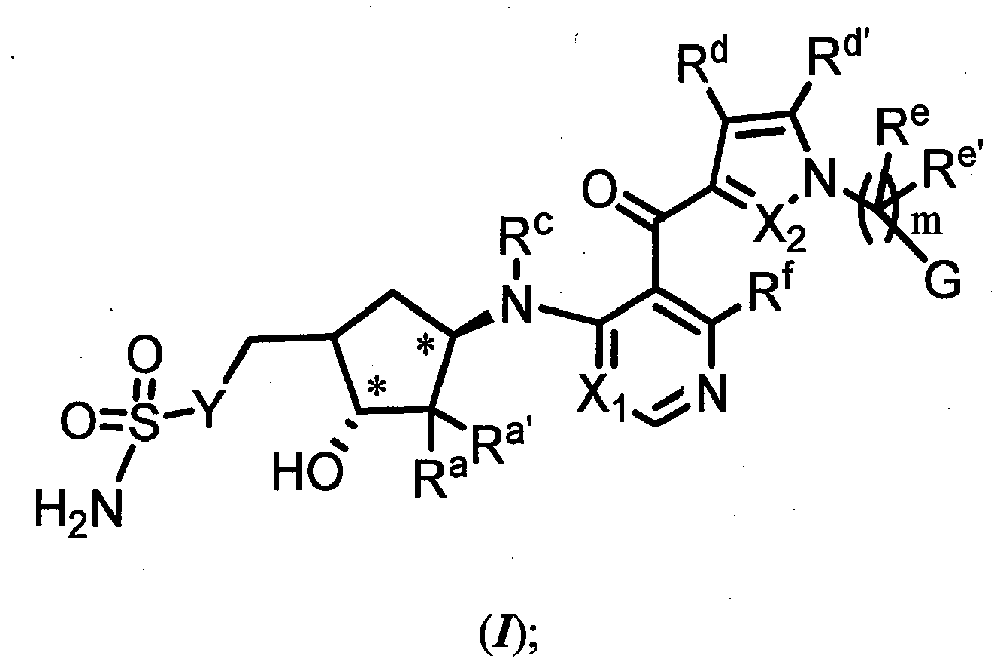
wherein: - stereochemical configurations depicted at asterisked positions indicate absolute stereochemistry;
- Y is -0-, -CH2-, -N(H)-;
- Ra is hydrogen, fluoro, -NH2, or -OH;
- Ra' is hydrogen, or fluoro; provided that when Ra is -NH2 or -OH, Ra' is hydrogen;
- Rc is hydrogen or C1-4 alkyl;
- X1 is C(H), C(F) or N;
- X2 is C(Rd)- or N;
- each occurrence of Rd is independently hydrogen, halogen, cyano, C1-4 aliphatic, or C1-4 fluoroaliphatic;
- Rd' is hydrogen, halogen, cyano, C1-4 aliphatic, C1-4 fluoroaliphatic, or -T2-R3;
- T2 is a C1-C2 alkylene chain optionally substituted with 0-3 independent occurrences of R3c;
- R3 is -CN, -NO2, -N(R3a)2, -OR3a, -C(O)R3b, -C(O)OR3a, -C(O)N(R3a)2, or -S(O)2N(R3a)2;
- each occurrence of R3a is independently hydrogen or C1-4 alkyl;
- R3b is C1-4 alkyl;
- each occurrence of R3c is independently C1-4 alkyl;
- Re is hydrogen or C1-4 alkyl;
- Re' is hydrogen or C1-4 alkyl; or Re is taken together with Re' to form a 3-6 membered cycloaliphatic ring;
- m is 0-2;
- Rf is hydrogen, chloro or C1-4 alkyl;
- G is R1 or -L1-R1;
- L1 is
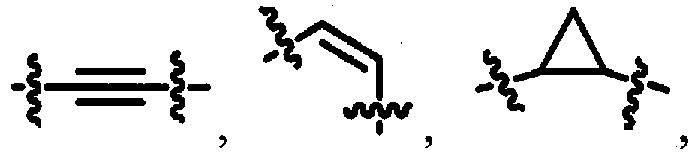
- R1 is an optionally substituted group selected from C1-6 aliphatic, 3- to 10-membered cycloaliphatic, 4- to 10-membered heterocyclyl having 1-5 heteroatoms independently selected from nitrogen, oxygen, and sulfur, 6- to 10-membered aryl, or 5- to 10-membered heteroaryl having 1-5 heteroatoms independently selected from nitrogen, oxygen, and sulfur, wherein R1 is optionally substituted with n occurrences of R2; wherein each occurrence of R2 is independently -R2a, -T1-R2d, -T1-R2a, or -V1-T1-R2d;
- n is 1-5;
- each occurrence of R2a is independently halogen, -CN, -NO2, -R2c, -N(R2b)2, -OR2b, -SR2c, S(O)R2c, -S(O)2R2c, -C(O)R2b, -C(O)OR2b, -C(O)N(R2b)2, -S(O)2N(R2b)2, -OC(O)N(R2b)2, -N(R2e)C(O)R2b, -N(R2e)SO2R2c, -N(R2e)C(O)OR2b, -N(R2e)C(O)N(R2b)2, -N(R2e)SO2N(R2b)2, or Si(R2c)3, or an optionally substituted C1-C6 aliphatic or C1-C6 haloaliphatic;
- each occurrence of R2b is independently hydrogen or an optionally substituted group selected from C1-C6 aliphatic, C1-C6 haloaliphatic, 3- to 10-membered cycloaliphatic, 4- to 10-membered heterocyclyl having 1-5 heteroatoms independently selected from nitrogen, oxygen, and sulfur, 6- to 10-membered aryl, or 5- to 10-membered heteroaryl having 1-5 heteroatoms independently selected from nitrogen, oxygen, and sulfur, or two occurrences of R2b, taken together with a nitrogen atom to which they are bound, form an optionally substituted 4- to -7-membered heterocyclyl ring having 0-1 additional heteroatoms selected from nitrogen, oxygen, and sulfur;
- each occurrence of R2c is independently an optionally substituted group selected from C1-C6 aliphatic, C1-C6 haloaliphatic, 3- to 10-membered cycloaliphatic, 4- to 10-membered heterocyclyl having 1-5 heteroatoms independently selected from nitrogen, oxygen, and sulfur, 6-to 10-membered aryl, or 5- to 10-membered heteroaryl having 1-5 heteroatoms independently selected from nitrogen, oxygen, and sulfur;
- each occurrence of R2d is independently hydrogen or an optionally substituted group selected from 3- to 10-membered cycloaliphatic, 4- to 10-membered heterocyclyl having 1-5 heteroatoms independently selected from nitrogen, oxygen, and sulfur, 6- to 10-membered aryl, or 5- to 10-membered heteroaryl having 1-5 heteroatoms independently selected from nitrogen, oxygen, and sulfur;
- each occurrence of R2e is independently hydrogen or an optionally substituted C1-6 aliphatic group;
- each occurrence of V1 is independently -N(R2e)-, -O-, -S-, -S(O)-, -S(O)2-, -C(O)-, -C(O)O- -C(O)N(R2e)-, -S(O)2N(R2e)-, -OC(O)N(R2e)-, -N(R2e)C(O)-, -N(R2e)SO2-, -N(R2e)C(O)O-, -N(R2e)C(O)N(R2e)-, -N(R2e)SO2N(R2e)-, -OC(O)-, or -C(O)N(R2e)-O-; and
- T1 is an optionally substituted C1-C6 alkylene chain wherein the alkylene chain optionally is interrupted by -N(R4)-, -O-, -S-, -S(O)-, -S(O)2- -C(O)-, -C(O)O-, -C(O)N(R4)-, -S(O)2N(R4)-, -OC(O)N(R4)-, -N(R4)C(O)-, -N(R4)SO2-, -N(R4)C(O)O-, -N(R4)C(O)N(R4)-, - N(R4)S(O)2N(R4)-, -OC(O)-, or -C(O)N(R4)-O- or wherein T1 or a portion thereof optionally forms part of an optionally substituted 3- to -7 membered cycloaliphatic or heterocyclyl ring, wherein R4 is hydrogen or an optionally substituted C1-4 aliphatic group.
- Compounds of the present disclosure include those described generally for formula (I), above, and are further illustrated by the classes, subclasses, and species disclosed herein. It will be appreciated that some subsets described for each variable herein can be used for any of the structural subsets as well. As used herein, the following definitions shall apply unless otherwise indicated.
- As described herein, compounds of the present disclosure may be optionally substituted with one or more substituents, such as are disclosed generally above, or as exemplified by particular classes, subclasses, and species disclosed herein. It will be appreciated that the phrase "optionally substituted" is used interchangeably with the phrase "substituted or unsubstituted." In general, the term "substituted", whether preceded by the term "optionally" or not, means that a hydrogen radical of the designated moiety is replaced with the radical of a specified substituent, provided that the substitution results in a stable or chemically feasible compound. The term "substitutable", when used in reference to a designated atom, means that attached to the atom is a hydrogen radical, which hydrogen atom can be replaced with the radical of a suitable substituent. Unless otherwise indicated, an "optionally substituted" group may have a substituent at each substitutable position of the group, and when more than one position in any given structure may be substituted with more than one substituent selected from a specified group, the substituent may be either the same or different at every position. Combinations of substituents envisioned by this disclosure are for instance, those that result in the formation of stable or chemically feasible compounds.
- A stable compound or chemically feasible compound is one in which the chemical structure is not substantially altered when kept at a temperature from about -80°C to about +40°C, in the absence of moisture or other chemically reactive conditions, for at least a week, or a compound which maintains its integrity long enough to be useful for therapeutic or prophylactic administration to a patient.
- The phrase "one or more substituents", as used herein, refers to a number of substituents that equals from one to the maximum number of substituents possible based on the number of available bonding sites, provided that the above conditions of stability and chemical feasibility are met.
- As used herein, the term "independently selected" means that the same or different values may be selected for multiple instances of a given variable in a single compound.
- As used herein, "a 3-7-membered saturated, partially unsaturated, or aromatic monocyclic ring having 0-3 heteroatoms independently selected from nitrogen, oxygen, or sulfur, or an 8-10-membered partially unsaturated, or aromatic bicyclic ring system having 0-5 heteroatoms independently selected from nitrogen, oxygen, or sulfur" includes cycloaliphatic, heterocyclic, aryl and heteroaryl rings.
- As used herein, the term "aromatic" includes aryl and heteroaryl groups as described generally below and herein.
- The term "aliphatic" or "aliphatic group", as used herein, means an optionally substituted straight-chain or branched C1-12 hydrocarbon, or a cyclic C1-12 hydrocarbon which is completely saturated or which contains one or more units of unsaturation, but which is not aromatic (also referred to herein as "carbocycle", "cycloaliphatic", "cycloalkyl", or "cycloalkenyl"). For example, suitable aliphatic groups include optionally substituted linear, branched or cyclic alkyl, alkenyl, alkynyl groups and hybrids thereof, such as (cycloalkyl)alkyl, (cycloalkenyl)alkyl, or (cycloalkyl)alkenyl. Unless otherwise specified, in various embodiments, aliphatic groups have 1-12, 1-10, 1-8, 1-6, 1-5, 1-4, 1-3, or 1-2 carbon atoms.
- The term "alkyl", used alone or as part of a larger moiety, refers to an optionally substituted straight or branched chain hydrocarbon group having 1-12, 1-10, 1-8, 1-6, 1-5, 1-4, 1-3, or 1-2 carbon atoms.
- The term "alkenyl", used alone or as part of a larger moiety, refers to an optionally substituted straight or branched chain hydrocarbon group having at least one double bond and having 2-12, 2-10, 2-8, 2-6, 2-5, 2-4, or 2-3 carbon atoms.
- The term "alkynyl", used alone or as part of a larger moiety, refers to an optionally substituted straight or branched chain hydrocarbon group having at least one triple bond and having 2-12, 2-10, 2-8, 2-6, 2-5, 2-4, or 2-3 carbon atoms.
- The terms "cycloaliphatic", "carbocycle", "carbocyclyl", "carbocyclo", or "carbocyclic", used alone or as part of a larger moiety, refer to an optionally substituted saturated or partially unsaturated cyclic aliphatic ring system having from 3 to about 14 ring carbon atoms. In some embodiments, the cycloaliphatic group is an optionally substituted monocyclic hydrocarbon having 3-8 or 3-6 ring carbon atoms. Cycloaliphatic groups include, without limitation, optionally substituted cyclopropyl, cyclobutyl, cyclopentyl, cyclopentenyl, cyclohexyl, cyclohexenyl, cycloheptyl, cycloheptenyl, cyclooctyl, cyclooctenyl, or cyclooctadienyl. The terms "cycloaliphatic", "carbocycle", "carbocyclyl", "carbocyclo", or "carbocyclic" also include optionally substituted bridged or fused bicyclic rings having 6-12, 6-10, or 6-8 ring carbon atoms, wherein any individual ring in the bicyclic system has 3-8 ring carbon atoms.
- The term "cycloalkyl" refers to an optionally substituted saturated ring system of about 3 to about 10 ring carbon atoms. Exemplary monocyclic cycloalkyl rings include cyclopropyl, cyclobutyl, cyclopentyl, cyclohexyl, and cycloheptyl.
- The term "cycloalkenyl" refers to an optionally substituted non-aromatic monocyclic or multicyclic ring system containing at least one carbon-carbon double bond and having about 3 to about 10 carbon atoms. Exemplary monocyclic cycloalkenyl rings include cyclopentyl, cyclohexenyl, and cycloheptenyl.
- The terms "haloaliphatic", "haloalkyl", "haloalkenyl" and "haloalkoxy" refer to an aliphatic, alkyl, alkenyl or alkoxy group, as the case may be, which is substituted with one or more halogen atoms. As used herein, the term "halogen" or "halo" means F, Cl, Br, or I. The term "fluoroaliphatic" refers to a haloaliphatic wherein the halogen is fluoro, including perfluorinated aliphatic groups. Examples of fluoroaliphatic groups include, without limitation, fluoromethyl, difluoromethyl, trifluoromethyl, 2-fluoroethyl, 2,2,2-trifluoroethyl, 1,1,2-trifluoroethyl, 1,2,2-trifluoroethyl, and pentafluoroethyl.
- The term "heteroatom" refers to one or more of oxygen, sulfur, nitrogen, phosphorus, or silicon (including, any oxidized form of nitrogen, sulfur, phosphorus, or silicon; the quaternized form of any basic nitrogen or; a substitutable nitrogen of a heterocyclic ring, for example N (as in 3,4-dihydro-2H-pyrrolyl), NH (as in pyrrolidinyl) or NR+ (as in N-substituted pyrrolidinyl)).
- The terms "aryl" and "ar-", used alone or as part of a larger moiety, e.g., "aralkyl", "aralkoxy", or "aryloxyalkyl", refer to an optionally substituted C6-14aromatic hydrocarbon moiety comprising one to three aromatic rings. In at least one embodiment, the aryl group is a C6-10aryl group. Aryl groups include, without limitation, optionally substituted phenyl, naphthyl, or anthracenyl. The terms "aryl" and "ar-", as used herein, also include groups in which an aryl ring is fused to one or more cycloaliphatic rings to form an optionally substituted cyclic structure such as a tetrahydronaphthyl, indenyl, or indanyl ring. The term "aryl" may be used interchangeably with the terms "aryl group", "aryl ring", and "aromatic ring".
- An "aralkyl" or "arylalkyl" group comprises an aryl group covalently attached to an alkyl group, either of which independently is optionally substituted. In at least one embodiment, the aralkyl group is C6-10 arylC1-6alkyl, including, without limitation, benzyl, phenethyl, and naphthylmethyl.
- The terms "heteroaryl" and "heteroar-", used alone or as part of a larger moiety, e.g., "heteroaralkyl", or "heteroaralkoxy", refer to groups having 5 to 14 ring atoms, such as 5, 6, 9, or 10 ring atoms; having 6, 10, or 14 π electrons shared in a cyclic array; and having, in addition to carbon atoms, from one to five heteroatoms. A heteroaryl group may be mono-, bi-, tri-, or polycyclic, for instance mono-, bi-, or tricyclic, such as mono- or bicyclic. In the context of "heteroar" entities, the term "heteroatom" refers to nitrogen, oxygen, or sulfur, and includes any oxidized form of nitrogen or sulfur, and any quaternized form of a basic nitrogen. For example, a nitrogen atom of a heteroaryl may be a basic nitrogen atom and may also be optionally oxidized to the corresponding N-oxide. When a heteroaryl is substituted by a hydroxy group, it also includes its corresponding tautomer. The terms "heteroaryl" and "heteroar-", as used herein, also include groups in which a heteroaromatic ring is fused to one or more aryl, cycloaliphatic, or heterocycloaliphatic rings. Nonlimiting examples of heteroaryl groups include thienyl, furanyl, pyrrolyl, imidazolyl, pyrazolyl, triazolyl, tetrazolyl, oxazolyl, isoxazolyl, oxadiazolyl, thiazolyl, isothiazolyl, thiadiazolyl, pyridyl, pyridazinyl, pyrimidinyl, pyrazinyl, indolizinyl, purinyl, naphthyridinyl, pteridinyl, indolyl, isoindolyl, benzothienyl, benzofuranyl, dibenzofuranyl, indazolyl, benzimidazolyl, benzthiazolyl, quinolyl, isoquinolyl, cinnolinyl, phthalazinyl, quinazolinyl, quinoxalinyl, 4H-quinolizinyl, carbazolyl, acridinyl, phenazinyl, phenothiazinyl, phenoxazinyl, tetrahydroquinolinyl, tetrahydroisoquinolinyl, and pyrido[2,3-b]-1,4-oxazin-3(4H)-one. The term "heteroaryl" may be used interchangeably with the terms "heteroaryl ring", "heteroaryl group", or "heteroaromatic", any of which terms include rings that are optionally substituted. The term "heteroaralkyl" refers to an alkyl group substituted by a heteroaryl, wherein the alkyl and heteroaryl portions independently are optionally substituted.
- As used herein, the terms "heterocycle", "heterocyclyl", "heterocyclic radical", and "heterocyclic ring" are used interchangeably and refer to a stable 3- to 8-membered monocyclic or 7-10-membered bicyclic heterocyclic moiety that is either saturated or partially unsaturated, and having, in addition to carbon atoms, one or more, for instance one to four, heteroatoms, as defined above. When used in reference to a ring atom of a heterocycle, the term "nitrogen" includes a substituted nitrogen. As an example, in a saturated or partially unsaturated ring having 0-3 heteroatoms selected from oxygen, sulfur or nitrogen, the nitrogen may be N (as in 3,4-dihydro-2H-pyrrolyl), NH (as in pyrrolidinyl), or NR+ (as in N-substituted pyrrolidinyl).
- A heterocyclic ring can be attached to its pendant group at any heteroatom or carbon atom that results in a stable structure and any of the ring atoms can be optionally substituted. Examples of such saturated or partially unsaturated heterocyclic radicals include, without limitation, tetrahydrofuranyl, tetrahydrothienyl, piperidinyl, decahydroquinolinyl, oxazolidinyl, piperazinyl, dioxanyl, dioxolanyl, diazepinyl, oxazepinyl, thiazepinyl, morpholinyl, and thiamorpholinyl. A heterocyclyl group may be mono-, bi-, tri-, or polycyclic, for instance mono-, bi-, or tricyclic, such as mono- or bicyclic. The term "heterocyclylalkyl" refers to an alkyl group substituted by a heterocyclyl, wherein the alkyl and heterocyclyl portions independently are optionally substituted. Additionally, a heterocyclic ring also includes groups in which the heterocyclic ring is fused to one or more aryl rings.
- As used herein, the term "partially unsaturated" refers to a ring moiety that includes at least one double or triple bond between ring atoms. The term "partially unsaturated" is intended to encompass rings having multiple sites of unsaturation, but is not intended to include aromatic (e.g., aryl or heteroaryl) moieties, as herein defined.
- The term "alkylene" refers to a bivalent alkyl group. An "alkylene chain" is a polymethylene group, i.e., -(CH2)n-, wherein n is a positive integer, such as from 1 to 6, from 1 to 4, from 1 to 3, from 1 to 2, or from 2 to 3. An optionally substituted alkylene chain is a polymethylene group in which one or more methylene hydrogen atoms is optionally replaced with a substituent. Suitable substituents include those described below for a substituted aliphatic group and also include those described in the specification herein. It will be appreciated that two substituents of the alkylene group may be taken together to form a ring system. In certain embodiments, two substituents can be taken together to form a 3-7-membered ring. The substituents can be on the same or different atoms.
- An alkylene chain also can be optionally interrupted by a functional group. An alkylene chain is "interrupted" by a functional group when an internal methylene unit is interrupted by the functional group. Examples of suitable "interrupting functional groups" are described in the specification and claims herein, and include double and/or triple bonds between carbons in the alkylene chain.
- For purposes of clarity, all bivalent groups described herein, including, e.g., the alkylene chain linkers described above, are intended to be read from left to right, with a corresponding left-to-right reading of the formula or structure in which the variable appears. Where a bivalent group, such as X1 is part of an aromatic system such as an aryl or heteroaryl group, then aromaticity is maintained and the individual member of the bivalent group may be individually described as either X1, X1- or =X1-; for example when X1 is N, this can be described as either N, -N- or =N-.
- An aryl (including aralkyl, aralkoxy, aryloxyalkyl and the like) or heteroaryl (including heteroaralkyl and heteroarylalkoxy and the like) group may contain one or more substituents and thus may be "optionally substituted". In addition to the substituents defined above and herein, suitable substituents on the unsaturated carbon atom of an aryl or heteroaryl group also include and are generally selected from -halo, -NO2, -CN, -R+, -C(R+)=C(R+)2, -C≡C-R+, -OR+, -SR∘, -S(O)R∘, -SO2R∘, -SO3R+, -SO2N(R+)2, -N(R+)2, -NR+C(O)R+, -NR+C(S)R+, -NR+C(O)N(R+)2, -NR+C(S)N(R+)2, -N(R+)C(=NR+)-N(R+)2, -N(R+)C(=NR+)-R∘, -NR+CO2R+, -NR+SO2R∘, -NR+SOzN(R+)2, -O-C(O)R+, -O-CO2R+, -OC(O)N(R+)2, -C(O)R+, -C(S)R∘, -CO2R+, -C(O)-C(O)R+, -C(O)N(R+)2, -C(S)N(R+)2, -C(O)N(R+)-OR+, -C(O)N(R+)C(=NR+)-N(R+)2, -N(R+)C(=NR+)-N(R+)-C(O)R+, -C(=NR+)-N(R+)2, -C(=NR+)-OR+, -N(R+)-N(R+)2, -C(=NR+)-N(R+)-OR+, -C(R∘)=N-OR+, -P(O)(R+)2, -P(O)(OR+)2, -O-P(O)-OR+, and -P(O)(NR+)-N(R+)2, wherein R+, independently, is hydrogen or an optionally substituted aliphatic, aryl, heteroaryl, cycloaliphatic, or heterocyclyl group, or two independent occurrences of R+ are taken together with their intervening atom(s) to form an optionally substituted 5-7-membered aryl, heteroaryl, cycloaliphatic, or heterocyclyl ring. Each R° is an optionally substituted aliphatic, aryl, heteroaryl, cycloaliphatic, or heterocyclyl group.
- An aliphatic or heteroaliphatic group, or a non-aromatic carbocyclic or heterocyclic ring may contain one or more substituents and thus may be "optionally substituted". Unless otherwise defined above and herein, suitable substituents on the saturated carbon of an aliphatic or heteroaliphatic group, or of a non-aromatic carbocyclic or heterocyclic ring are selected from those listed above for the unsaturated carbon of an aryl or heteroaryl group and additionally include the following: =O, =S, =C(R*)2, =N-N(R*)2, =N-OR*, =N-NHC(O)R*, =N-NHCO2R∘ =N-NHSO2R∘ or =N-R* where R∘ is defined above, and each R* is independently selected from hydrogen or an optionally substituted C1-6 aliphatic group.
- In addition to the substituents defined above and herein, optional substituents on the nitrogen of a non-aromatic heterocyclic ring also include and are generally selected from -R+, -N(R+)2, -C(O)R+, -C(O)OR+, -C(O)C(O)R+, -C(O)CH2C(O)R+, -S(O)2R+, -S(O)2N(R+)2, -C(S)N(R+)2, -C(=NH)-N(R+)2, or -N(R+)S(O)2R+; wherein each R+ is defined above. A ring nitrogen atom of a heteroaryl or non-aromatic heterocyclic ring also may be oxidized to form the corresponding N-hydroxy or N-oxide compound. A nonlimiting example of such a heteroaryl having an oxidized ring nitrogen atom is N-oxidopyridyl.
- As detailed above, in some embodiments, two independent occurrences of R+ (or any other variable similarly defined in the specification and claims herein), are taken together with their intervening atom(s) to form a monocyclic or bicyclic ring selected from 3-13-membered cycloaliphatic, 3-12-membered heterocyclyl having 1-5 heteroatoms independently selected from nitrogen, oxygen, or sulfur, 6-10-membered aryl, or 5-10-membered heteroaryl having 1-5 heteroatoms independently selected from nitrogen, oxygen, or sulfur.
- Exemplary rings that are formed when two independent occurrences of R+ (or any other variable similarly defined in the specification and claims herein), are taken together with their intervening atom(s) include, but are not limited to the following: a) two independent occurrences of R+ (or any other variable similarly defined in the specification or claims herein) that are bound to the same atom and are taken together with that atom to form a ring, for example, N(R+)2, where both occurrences of R+ are taken together with the nitrogen atom to form a piperidin-1-yl, piperazin-1-yl, or morpholin-4-yl group; and b) two independent occurrences of R+ (or any other variable similarly defined in the specification or claims herein) that are bound to different atoms and are taken together with both of those atoms to form a ring, for example where a phenyl group is substituted with two occurrences of OR+


- Unless otherwise stated, structures depicted herein are also meant to include all stereoisomeric (e.g., enantiomeric, diastereomeric, and geometric (or conformational)) forms of the structure; for example, the R and S configurations for each asymmetric center, (Z) and (E) double bond isomers, and (Z) and (E) conformational isomers. Therefore, single stereochemical isomers as well as enantiomeric, diastereomeric, and geometric (or conformational) mixtures of the present compounds are within the scope of the present disclosure. Unless otherwise stated, all tautomeric forms of the compounds disclosed herein are within the scope of the present disclosure. Additionally, unless otherwise stated, structures depicted herein are also meant to include compounds that differ only in the presence of one or more isotopically enriched atoms. For example, compounds having the present structures where there is a replacement of hydrogen by deuterium or tritium, or a replacement of a carbon by a 13C- or 14C-enriched carbon are within the scope of this disclosure. Such compounds are useful, as a nonlimiting example, as analytical tools or probes in biological assays.
- It is to be understood that, when a disclosed compound has at least one chiral center, the present disclosure encompasses one enantiomer of inhibitor free from the corresponding optical isomer, racemic mixture of the inhibitor and mixtures enriched in one enantiomer relative to its corresponding optical isomer. When a mixture is enriched in one enantiomer relative to its optical isomers, the mixture contains, for example, an enantiomeric excess of at least 50%, 75%, 90%, 95% 99% or 99.5%.
- The enantiomers of the present disclosure may be resolved by methods known to those skilled in the art, for example by formation of diastereoisomeric salts which may be separated, for example, by crystallization; formation of diastereoisomeric derivatives or complexes which may be separated, for example, by crystallization, gas-liquid or liquid chromatography; selective reaction of one enantiomer with an enantiomer-specific reagent, for example enzymatic esterification; or gas-liquid or liquid chromatography in a chiral environment, for example on a chiral support for example silica with a bound chiral ligand or in the presence of a chiral solvent. Where the desired enantiomer is converted into another chemical entity by one of the separation procedures described above, a further step is required to liberate the desired enantiomeric form. Alternatively, specific enantiomers may be synthesized by asymmetric synthesis using optically active reagents, substrates, catalysts or solvents, or by converting one enantiomer into the other by asymmetric transformation.
- When a disclosed compound has at least two chiral centers, the present disclosure encompasses a diastereomer free of other diastereomers, a pair of diastereomers free from other diasteromeric pairs, mixtures of diasteromers, mixtures of diasteromeric pairs, mixtures of diasteromers in which one diastereomer is enriched relative to the other diastereomer(s) and mixtures of diasteromeric pairs in which one diastereomeric pair is enriched relative to the other diastereomeric pair(s). When a mixture is enriched in one diastereomer or diastereomeric pair(s) relative to the other diastereomers or diastereomeric pair(s), the mixture is enriched with the depicted or referenced diastereomer or diastereomeric pair(s) relative to other diastereomers or diastereomeric pair(s) for the compound, for example, by a molar excess of at least 50%, 75%, 90%, 95%, 99% or 99.5%.
- The diastereoisomeric pairs may be separated by methods known to those skilled in the art, for example chromatography or crystallization and the individual enantiomers within each pair may be separated as described above. Specific procedures for chromatographically separating diastereomeric pairs of precursors used in the preparation of compounds disclosed herein are provided the examples herein.
- For the avoidance of doubt, for compounds described herein, where the compound is a single diastereomer and the absolute configuration of the chiral centers is known the name of the compound reflects the assigned configuration at each stereochemical center; for example compound I-16: {(1R,2S,4R)-2-hydroxy-4-[(5-{[1-(2,3,6-trifluorobenzyl)-1H-pyrazol-3-yl]carbonyl}pyrimidin-4-yl)amino]cyclopentyl}methyl sulfamate. Where the compound is a single diastereomer and the absolute configuration is known at some of the chiral centers but is unknown at one chiral center, the name reflects the two possibilities separated by an "or"; for example compound I-10: [(1R,2S,4R)-4-{[5-({1-[(1R)-1-(3 -ethynylphenyl)ethyl]-1H-pyrazol-3-yl}carbonyl)pyrimidin-4-yl]amino}-2-hydroxycyclopentyl]methyl sulfamate or [(1R,2S,4R)-4-{[5-({1-[(1S)-1-(3-ethynylphenyl)ethyl]-1H-pyrazol-3-yl}carbonyl)pyrimidin-4-yl]amino}-2-hydroxycyclopentyl]methyl sulfamate. Where the compound is a mixture of two or more diastereomers the name reflects the two or more possibilities by using "and" between the names of the individual diastereomers that make up the mixture; for example compound I-250: [(1R,2R,3R,4R)-4-({5-[(1-{[(2R)-5,5-dimethyltetrahydrofuran-2-yl]methyl}-1H-pyrrol-3-yl)carbonyl]pyrimidin-4-yl}amino)-3-fluoro-2-hydroxycyclopentyl]methyl sulfamate and [(1R,2R,3R,4R)-4-({5-[(1-{[(2S)-5,5-dimethyltetrahydrofuran-2-yl]methyl}-1H-pyrrol-3-yl)carbonyl]pyrimidin-4-yl}amino)-3-fluoro-2-hydroxycyclopentyl]methyl sulfamate.
- In some embodiments, the compounds of formula ( I ) is represented by formula ( II-a ) or ( II-b ):


wherein Ra, Ra', Rc, Rf, X2, Rd, Rd', Re, Re', m, and G have the values described herein and stereochemical configurations depicted at asterisked positions indicate absolute stereochemistry. In some embodiments, the compound of formula ( I ) is represented by formula ( II-a ) wherein Ra, Ra', Rc, Rf, X2, Rd, Rd', Re, Re', m, and G have the values described herein and stereochemical configurations depicted at asterisked positions indicate absolute stereochemistry. In some embodiments, the compound of formula ( I ) is represented by formula ( II-b ) wherein Ra, Ra', Rc, Rf, X2, Rd, Rd', Re, Re', m, and G have the values described herein and stereochemical configurations depicted at asterisked positions indicate absolute stereochemistry. - In some embodiments, the compounds of formula ( I ) is represented by formula (III):

wherein Ra, Ra', X1, X2, Rd, Rd', Re, Re', m, and G have the values described herein and stereochemical configurations depicted at asterisked positions indicate absolute stereochemistry. - In some embodiments, the compounds of formula (I) is represented by formula ( III-a ), ( III-b ), ( III-c ), or ( III-d ):

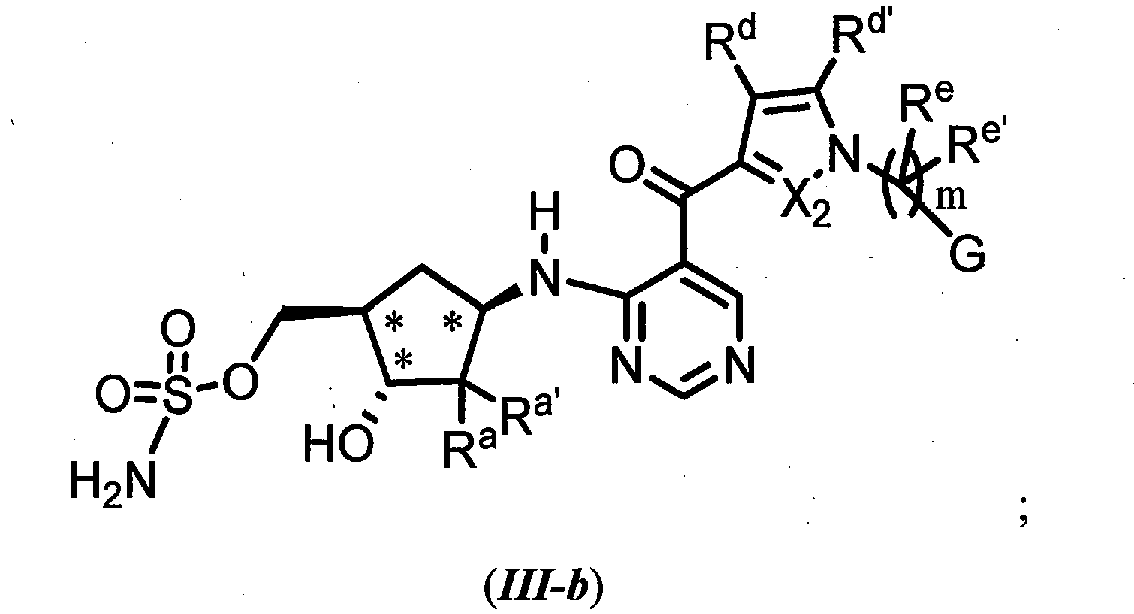


wherein Ra, Ra', X1, X2, Rd, Rd', Re, Re', m, and G have the values described herein and stereochemical configurations depicted at asterisked positions indicate absolute stereochemistry. In some embodiments, the compound of formula ( I ) is represented by formula (III-a) wherein Ra, Ra', X2, Rd, Rd', Re, Re', m, and G have the values described herein and stereochemical configurations depicted at asterisked positions indicate absolute stereochemistry. In some embodiments, the compound of formula ( I ) is represented by formula (III-b) wherein Ra, Ra', X2, Rd, Rd', Re, Re', m, and G have the values described herein and stereochemical configurations depicted at asterisked positions indicate absolute stereochemistry. In some embodiments, the compound of formula ( I ) is represented by formula ( III-c ) wherein Ra, Ra', X1, Rd, Rd', Re, Re', m, and G have the values described herein and stereochemical configurations depicted at asterisked positions indicate absolute stereochemistry. In some embodiments, the compound of formula ( I ) is represented by formula ( III-d ) wherein Ra, Ra', X1, Rd, Rd', Re, Re', m, and G have the values described herein and stereochemical configurations depicted at asterisked positions indicate absolute stereochemistry. - In some embodiments, the compounds of formula ( I ) are represented by formula ( IV-a ), ( IV-b ), or ( IV-c ):


wherein X1, X2, Rd, Rd', Re, Re', m, and G have the values described herein and stereochemical configurations depicted at asterisked positions indicate absolute stereochemistry. In some embodiments, the compound of formula ( I ) is represented by formula ( IV-a ) wherein X1, X2, Rd, Rd', Re, Re', m, and G have the values described herein and stereochemical configurations depicted at asterisked positions indicate absolute stereochemistry. In some embodiments, the compound of formula ( I ) is represented by formula ( IV-b ) wherein X1, X2, Rd, Rd', Re, Re', m, and G have the values described herein and stereochemical configurations depicted at asterisked positions indicate absolute stereochemistry. In some embodiments, the compound of formula ( I ) is represented by formula ( IV-c ) wherein X1, X2, Rd, Rd', Re, Re', m, and G have the values described herein and stereochemical configurations depicted at asterisked positions indicate absolute stereochemistry. - The following values are described for any of formulas ( I ), ( II ), ( II-a ), ( II-b ), ( III ), ( III-a ), ( III-b ), ( III-c ), ( III-d ), ( IV-a ), ( IV-b ) or ( IV-c ).
- In some embodiments, Y is -O-, -CH2-, or -N(H)-. In some embodiments, Y is -0-. In some embodiments, Y is -CH2-. In some embodiments, Y is -N(H)-.
- In some embodiments, Ra is hydrogen, fluoro, -NH2, or -OH. In some embodiments, Ra is hydrogen, fluoro or -OH. In some embodiments, Ra is hydrogen or -OH. In some embodiments, Ra is hydrogen. In some embodiments, Ra is -OH.
- In some embodiments, Ra' is hydrogen or fluoro; provided that when Ra is -NH2 or -OH, Ra' is hydrogen. In some embodiments, Ra' is fluoro. In some embodiments, Ra' is hydrogen.
- In some embodiments, Ra is hydrogen and Ra' is hydrogen. In some embodiments, Ra is fluoro and Ra' is fluoro. In some embodiments, Ra is -NH2 and Ra' is hydrogen. In some embodiments, Ra is hydrogen and Ra' is fluoro. In some embodiments, Ra is -OH and Ra' is hydrogen.
- In some embodiments, Rc is hydrogen or C1-4 alkyl. In some embodiments, Rc is hydrogen or methyl. In some embodiments, Rc is hydrogen.
- In some embodiments, X1 is C(H), C(F) or N. In some embodiments, X1 is C(H), or N. In some embodiments, X1 is C(H). In some embodiments, X1 is N.
- In some embodiments, X2 is C(Rd) or N, wherein Rd has the values described herein. In some embodiments, X2 is N. In some embodiments, X2 is C(Rd), wherein Rd has the values described herein.
- In some embodiments, each occurrence of Rd is independently hydrogen, halogen, cyano, C1-4 aliphatic, or C1-4 fluoroaliphatic. In some embodiments, each occurence of Rd is independently hydrogen, chloro, bromo, fluoro, methyl, ethyl, or trifluoromethyl. In some embodiments, Rd is hydrogen.
- In some embodiments, Rd' is hydrogen, halogen, cyano, C1-4 aliphatic, C1-4 fluoroaliphatic, or - T2-R3, wherein T2 and R3 have the values described herein. In some embodiments, Rd' is hydrogen, chloro, bromo, fluoro, methyl, ethyl, trifluoromethyl, -CH2-OR3a, CH2-N(H)R3a, or -CH2-C(O)-R3b, wherein R3a and R3b have the values described herein. In some embodiments, Rd' is hydrogen, chloro, bromo, fluoro, methyl, ethyl, trifluoromethyl, -CH2-OH, -CH2-OCH3, -CH2-N(H)CH3, or -CH2-C(O)-CH3. In some embodiments, Rd' is hydrogen, chloro, bromo, fluoro, methyl, ethyl, or trifluoromethyl. In some embodiments, Ra' is hydrogen or methyl.
- In some embodiments, T2 is an optionally substituted C1-C2 alkylene chain. In some embodiments, T2 is a C1-C2 alkylene chain optionally substituted with 0-3 independent occurrences of R3c. In some embodiments, T2 is -CH2-CH2-. In some embodiments, T2 is -C(CH3)2-. In some embodiments, T2 is -CH2-.
- In some embodiments, R3 is -CN, -NO2, -N(R3a)2, -OR3a, -C(O)R3b, -C(O)OR3a, -C(O)N(R3a)2, or -S(O)2N(R3a)2, wherein R3a and R3b have the values described herein. In some embodiments, R3 is - N(R3a)2, -OR3a, or -C(O)R3b, wherein R3a and R3b have the values described herein. In some embodiments, R3 is -N(R3a)2, wherein R3a has the values described herein. In some embodiments, R3 is - OR3a, wherein R3a has the values described herein. In some embodiments, R3 is -C(O)R3b, wherein R3b has the values described herein.
- In some embodiments, each occurrence of R3a is independently hydrogen or C1-4 alkyl. In some embodiments, ach occurrence of R3a is independently hydrogen or methyl. In some embodiments, R3a is hydrogen. In some embodiments, R3a is methyl.
- In some embodiments, R3b is C1-4 alkyl. In some embodiments, R3b is methyl or ethyl. In some embodiments, R3b is methyl.
- In some embodiments, each occurrence of R3c is independently C1-4 alkyl. In some embodiments, each occurrence of R3c is independently methyl or ethyl. In some embodiments, R3c is methyl.
- In some embodiments, Re is hydrogen or C1-4 alkyl. In some embodiments, Re is hydrogen, methyl, or ethyl. In some embodiments, Re is hydrogen.
- In some embodiments, Re' is hydrogen or C1-4 alkyl. In some embodiments, Re' is hydrogen, methyl or ethyl. In some embodiments, Re' is hydrogen.
- In some embodiments, Re is taken together with Re' to form a 3-6 membered cycloaliphatic ring. In some embodiments, Re is taken together with Re' to form a cyclopropyl, cyclobutyl, cyclopentyl, or cyclohexyl ring. In some embodiments, Re is taken together with Re' to form a cyclopropyl ring.
- In some embodiments, m is 0-2. In some embodiments, m is 1-2. In some embodiments, m is 0. In some embodiments, m is 1. In some embodiments, m is 2.
- In some embodiments, Rf is hydrogen, chloro or C1-4 alkyl. In some embodiments, Rf is hydrogen, chloro, methyl, or ethyl. In some embodiments, Rf is hydrogen.
- In some embodiments, G is R1 or -L1-R1. In some embodiments, G is R1. In some embodiments, G is -L1-R1.
- In some embodiments, L1 is

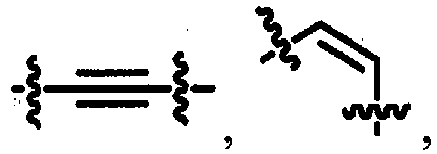

- In some embodiments, R1 is C1-6 aliphatic, 3- to 10-membered cycloaliphatic, 4- to 10-membered heterocyclyl having 1-5 heteroatoms independently selected from nitrogen, oxygen, and sulfur, 6- to 10-membered aryl, or 5- to 10-membered heteroaryl having 1-5 heteroatoms independently selected from nitrogen, oxygen, and sulfur, wherein R1 is unsubstituted or substituted with n occurrences of R2, wherein n and R2 have the values described herein. In some embodiments, R1 is 3- to 10-membered cycloaliphatic, 4- to 10-membered heterocyclyl having 1-5 heteroatoms independently selected from nitrogen, oxygen, and sulfur, 6- to 10-membered aryl, or 5- to 10-membered heteroaryl having 1-5 heteroatoms independently selected from nitrogen, oxygen, and sulfur, wherein R1 is optionally substituted with n occurrences of R2, wherein n and R2 have the values described herein.
- In some embodiments, R1 is furanyl, thienyl, pyrrolyl, oxazolyl, thiazolyl, imidazolyl, pyrazolyl, isoxazolyl, isothiazolyl, oxadiazolyl, triazolyl, thiadiazolyl, phenyl, naphthyl, pyranyl, pyridyl, pyridazinyl, pyrimidinyl, pyrazinyl, triazinyl, indolizinyl, imidazopyridyl, indolyl, isoindolyl, indazolyl, benzimidazolyl, benzthiazolyl, benzothienyl, benzofuranyl, benzoxazolyl, benzodioxolyl, benzthiadiazolyl, 2,3-dihydrobenzofuranyl, 4H-furo[3,2-b]pyrrolyl, pyrazolopyrimidinyl, purinyl, quinolyl, isoquinolyl, tetrahydroquinolinyl, tetrahydronaphthyridinyl, tetrahydroisoquinolinyl, cinnolinyl, phthalazinyl, quinazolinyl, quinoxalinyl, naphthyridinyl, pteridinyl, tetrahydrofuranyl, tetrahydropyranyl, dihydropyranyl, tetrahydrothienyl, indanyl, tetrahydroindazolyl, pyrrolidinyl, pyrrolidonyl, piperidinyl, pyrrolinyl, decahydroquinolinyl, oxazolidinyl, piperazinyl, dioxanyl, diazepinyl, oxazepinyl, thiazepinyl, morpholinyl, thiomorpholinyl, quinuclidinyl, phenanthridinyl, tetrahydronaphthyl, oxodihydropyridyl, indolinyl, benzodioxanyl, chromanyl, oxetanyl, cyclopropyl, cyclobutyl, cyclopentyl, cyclohexyl, cycloheptyl, cyclooctyl, cyclopentenyl, cyclohexenyl, cycloheptenyl, cyclooctenyl, bicycloheptanyl, azabicyclooctanyl, oxabicyclooctanyl, bicyclononyl, bicyclooctanyl, or adamantyl, wherein R1 is unsubstituted or substituted with n occurrences of R2, wherein n and R2 have the values described herein. In some embodiments, R1 is furanyl, thienyl, phenyl, naphthyl, pyridyl, benzothienyl, benzofuranyl, cyclohexyl, or cyclohexenyl, wherein R1 is unsubstituted or substituted with n occurrences of R2, wherein n and R2 have the values described herein.
- In some embodiments, R1 is:


- In some embodiments, R1 is (a-i), (a-iii), (a-iv), (a-v), (a-viii), or ( a-xi ), wherein R2 has the values described herein.
- In some embodiments, n is 1-5. In some embodiments, n is 1-4. In some embodiments, n is 1-3. In some embodiments, n is 1-2. In some embodiments, n is 1.
- In some embodiments, each occurrence of R2 is independently -R2a, -T1-R2d, -T1-R2a, or -V1-T1-R2d, wherein R2a, T1, R2d, V1 and T1 have the values described herein. In some embodiments, each occurrence of R2 is independently -R2a or -T1-R2a, wherein R2a and T1 have the values described herein. In some embodiments, each occurrence of R2 is independently -R2a, wherein R2a has the values described herein. In some embodiments, each occurrence of R2 is independently halogen, -R2c, -N(R2b)2, -OR2b, - SR2c, C1-6 aliphatic or C1-6 fluoroaliphatic, wherein R2b and R2c have the values described herein.
- In some embodiments, each occurrence of R2 is independently chloro, bromo, fluoro, iodo, methyl, ethyl, propyl, tert-butyl, methoxy, ethoxy, isopropoxy, tert-butoxy, difluoromethyl, trifluoromethyl, difluoromethoxy, trifluoromethoxy, trifluoromethylthio, dimethylamino, diethylamino, ethyne, cyclopropyl, or phenyl. In some embodiments, each occurrence of R2 is independently chloro, bromo, fluoro, iodo, methyl, ethyl, difluoromethoxy, trifluoromethoxy, ethyne, cyclopropyl, or phenyl. In some embodiments, each occurrence of R2 is independently chloro, bromo, iodo, or methyl.
- In some embodiments, each occurrence of R2a is independently halogen, -CN, -NO2, -R2c, - N(R2b)2, -OR2b, -SR2c, -S(O)R2c, -S(O)2R2c, -C(O)R2b, -C(O)OR2b, -C(O)N(R2b)2, -S(O)2N(R2b)2, -OC(O)N(R2b)2, -N(R2e)C(O)R2b, -N(R2e)SO2R2c, -N(R2e)C(O)OR2b, -N(R2e)C(O)N(R2b)2, - N(R2e)SO2N(R2b)2, or Si(R2c)3, or an optionally substituted C1-C6 aliphatic or C1-C6 haloaliphatic, wherein R2b, R2c, and R2e have the values described herein. In some embodiments, each occurrence of R2a is independently halogen, -R2c, -N(R2b)2, -N(R2e)C(O)R2b, -OR2b, -SR2c, -S(O)R2c, -S(O)2R2c, or an optionally substituted C1-6 aliphatic, or C1-6 fluoroaliphatic, wherein R2b and R2c have the values described herein. In some embodiments, each occurrence of R2a is independently halogen, -R2c, -N(R2b)2, -OR2b, - SR2c, C1-6 aliphatic, or C1-6 fluoroaliphatic, wherein R2b and R2c have the values described herein. In some embodiments, each occurrence of R2a is independently chloro, bromo, fluoro, iodo, cyano, methyl, ethyl, propyl, isopropyl, tert-butyl, methoxy, ethoxy, isopropoxy, tert-butoxy, difluoromethyl, trifluoromethyl, difluoromethoxy, trifluoromethoxy, trifluoromethylthio, trimethylsilyl, dimethylamino, diethylamino, 2-methoxy 2-methylpropyl, 2-hydroxy 2-methyl propyl, or ethyne. In some embodiments, each occurrence of R2a is independently chloro, bromo, fluoro, iodo, methyl, ethyl, propyl, tert-butyl, methoxy, ethoxy, isopropoxy, tert-butoxy, difluoromethyl, trifluoromethyl, difluoromethoxy, trifluoromethoxy, trifluoromethylthio, dimethylamino, diethylamino, or ethyne. In some embodiments, each occurrence of R2a is independently chloro, bromo, fluoro, iodo, methyl, ethyl, difluoromethyl, trifluoromethyl, difluoromethoxy, trifluoromethoxy, or ethyne.
- In some embodiments, each occurrence of R2b is independently hydrogen or an optionally substituted group selected from C1-C6 aliphatic, C1-C6 haloaliphatic, 3- to 10-membered cycloaliphatic, 4-to 10-membered heterocyclyl having 1-5 heteroatoms independently selected from nitrogen, oxygen, and sulfur, 6- to 10-membered aryl, or 5- to 10-membered heteroaryl having 1-5 heteroatoms independently selected from nitrogen, oxygen, and sulfur, or two occurrences of R2b, taken together with a nitrogen atom to which they are bound, form an optionally substituted 4- to -7-membered heterocyclyl ring having 0-1 additional heteroatoms selected from nitrogen, oxygen, and sulfur. In some embodiments, each occurrence of R2b is independently hydrogen, C1-6 aliphatic or C1-6 fluoroaliphatic. In some embodiments, each occurrence of R2b is independently C1-6 aliphatic or C1-6 fluoroaliphatic. In some embodiments, each occurrence of R2b is independently optionally substituted phenyl. In some embodiments, each occurrence of R2b is independently methyl, ethyl, vinyl, phenyl, 4-fluorophenyl, -CH2Cl, difluoromethyl, or trifluoromethyl.
- In some embodiments, each occurrence of R2c is independently an optionally substituted group selected from C1-C6 aliphatic, C1-C6 haloaliphatic, 3- to 10-membered cycloaliphatic, 4- to 10-membered heterocyclyl having 1-5 heteroatoms independently selected from nitrogen, oxygen, and sulfur, 6- to 10-membered aryl, or 5- to 10-membered heteroaryl having 1-5 heteroatoms independently selected from nitrogen, oxygen, and sulfur. In some embodiments, each occurrence of R2c is independently methyl, ethyl, propyl, isopropyl, tert-butyl, vinyl, difluoromethyl, trifluoromethyl, cyclopropyl, cyclobutyl, cyclopentyl, cyclohexyl, phenyl, morpholinyl or piperazinyl. In some embodiments, each occurrence of R2c is independently cyclopropyl or phenyl.
- In some embodiment, each occurrence of R2d is independently hydrogen or an optionally substituted group selected from 3- to 10-membered cycloaliphatic, 4- to 10-membered heterocyclyl having 1-5 heteroatoms independently selected from nitrogen, oxygen, and sulfur, 6- to 10-membered aryl, or 5- to 10-membered heteroaryl having 1-5 heteroatoms independently selected from nitrogen, oxygen, and sulfur.
- In some embodiments, each occurrence of R2e is independently hydrogen or an optionally substituted C1-6 aliphatic group. In some embodiments, each occurrence of R2e is independently hydrogen or methyl.
- In some embodiments, each occurrence of V1 is independently -N(R2e)-, -O-, -S-, -S(O)-, - S(O)2-, -C(O)-, -C(O)O-, -C(O)N(R2e)-, -S(O)2N(R2e)-, -OC(O)N(R2e)-, -N(R2e)C(O)-, -N(R2e)SO2-, - N(R2e)C(O)O-, -N(R2e)C(O)N(R2e)-, -N(R2e)SO2N(R2e)-, -OC(O)-, or -C(O)N(R2e)-O-, wherein R2e has the values described herein.
- In some embodiments, each occurrence of T1 is an optionally substituted C1-C6 alkylene chain wherein the alkylene chain optionally is interrupted by -N(R4)-, -O-, -S-, -S(O)-, -S(O)2-, -C(O)-, -C(O)O-, -C(O)N(R4)-, -S(O)2N(R4)-, -OC(O)N(R4)-, -N(R4)C(O)-, -N(R4)SO2-, -N(R4)C(O)O-, - N(R4)C(O)N(R4)-, -N(R4)S(O)2N(R4)-, -OC(O)-, or -C(O)N(R4)-O- or wherein T1 or a portion thereof optionally forms part of an optionally substituted 3- to -7 membered cycloaliphatic or heterocyclyl ring, wherein R4 is hydrogen or an optionally substituted C1-4 aliphatic group.
- In some embodiments, the compounds of formula ( I ) are represented by formula ( V ):

wherein: - stereochemical configurations depicted at asterisked positions indicate absolute stereochemistry;
- Ra is hydrogen and Ra' is hydrogen; or Ra is hydrogen and Ra' is fluoro; or Ra is OH and Ra' is hydrogen;
- X2 is C(Rd) or N;
- Rd' is hydrogen, chloro, bromo, fluoro, methyl, ethyl, or trifluoromethyl;
- R1 is furanyl, thienyl, phenyl, naphthyl, pyridyl, benzothienyl, benzofuranyl, cyclohexyl, or cyclohexenyl, wherein R1 is unsubstituted or substituted with n occurrences of R2;
- n is 1-2; and
- each occurrence of R2 is independently halogen, -R2c, -N(R2b)2, -OR2b, -SR2c, C1-6 aliphatic or C1-6 fluoroaliphatic;
- wherein R2b and R2c have the values described herein.
- In some embodiments, the compounds of formula ( I ) are represented by formula (VI-a):

wherein: - stereochemical configurations depicted at asterisked positions indicate absolute stereochemistry;
- Rd' is hydrogen, chloro, bromo, fluoro, methyl, ethyl, or trifluoromethyl;
- R1 is furanyl, thienyl, phenyl, naphthyl, pyridyl, benzothienyl, benzofuranyl, cyclohexyl, or cyclohexenyl, wherein R1 is unsubstituted or substituted with n occurrences of R2;
- n is 1-2; and
- each occurrence of R2 is independently halogen, -R2c, -N(R2b)2, -OR2b, -SR2c, C1-6 aliphatic or C1-6 fluoroaliphatic;
- wherein R2b and R2c have the values described herein.
- In some such embodiments described directly above:
- each occurrence of R2 is independently chloro, bromo, fluoro, iodo, methyl, ethyl,
- difluoromethoxy, trifluoromethoxy, ethyne, cyclopropyl, or phenyl.
- In some such embodiments described directly above:
- Rd' is hydrogen or methyl;
- R1 is ( a-i ), (a-iii), (a-iv), (a-v), ( a-viii ), or ( a-xi ); and
- each occurrence of R2 is independently chloro, bromo, iodo, or methyl.
- In some embodiments, the compounds of formula ( I ) are represented by formula (VI-b):

wherein: - stereochemical configurations depicted at asterisked positions indicate absolute stereochemistry;
- Rd' is hydrogen, chloro, bromo, fluoro, methyl, ethyl, or trifluoromethyl;
- R1 is furanyl, thienyl, phenyl, naphthyl, pyridyl, benzothienyl, benzofuranyl, cyclohexyl, or cyclohexenyl, wherein R1 is unsubstituted or substituted with n occurrences of R2;
- n is 1-2; and
- each occurrence of R2 is independently halogen, -R2c, -N(R2b)2, -OR2b, -SR2c, C1-6aliphatic or C1-6 fluoroaliphatic;
- In some such embodiments described directly above:
- each occurrence of R2 is independently chloro, bromo, fluoro, iodo, methyl, ethyl, difluoromethoxy, trifluoromethoxy, ethyne, cyclopropyl, or phenyl.
- In some such embodiments described directly above:
- Rd' is hydrogen or methyl;
- R1 is ( a-i ), (a-iii), (a-iv), (a-v), (a-viii), or (a-xi); and
- each occurrence of R2 is independently chloro, bromo, iodo, or methyl.
- Representative examples of the compounds of formula ( I ) are shown below in Table 1.


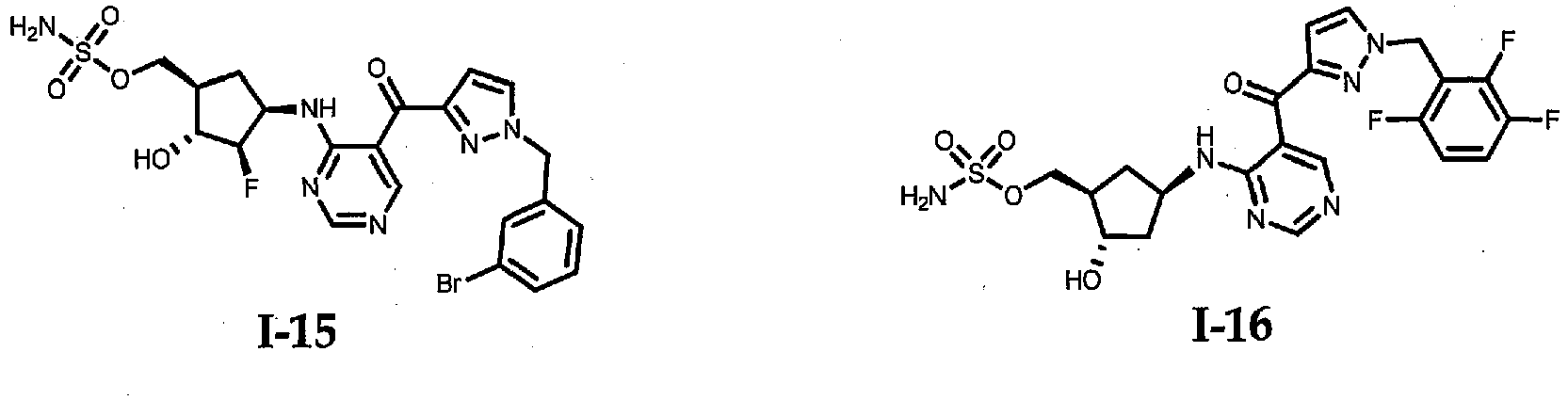


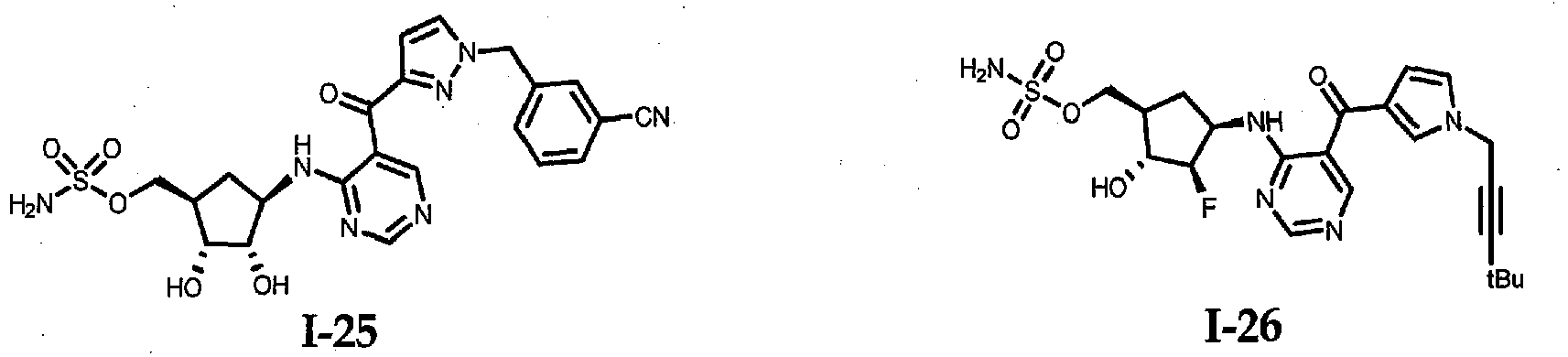


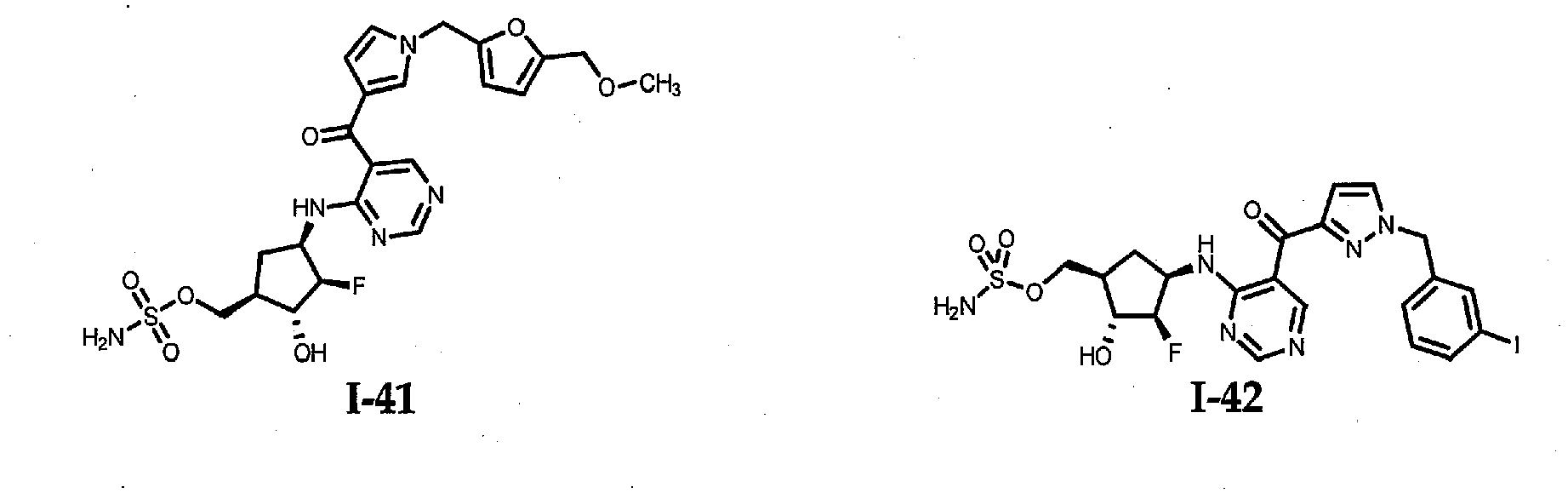


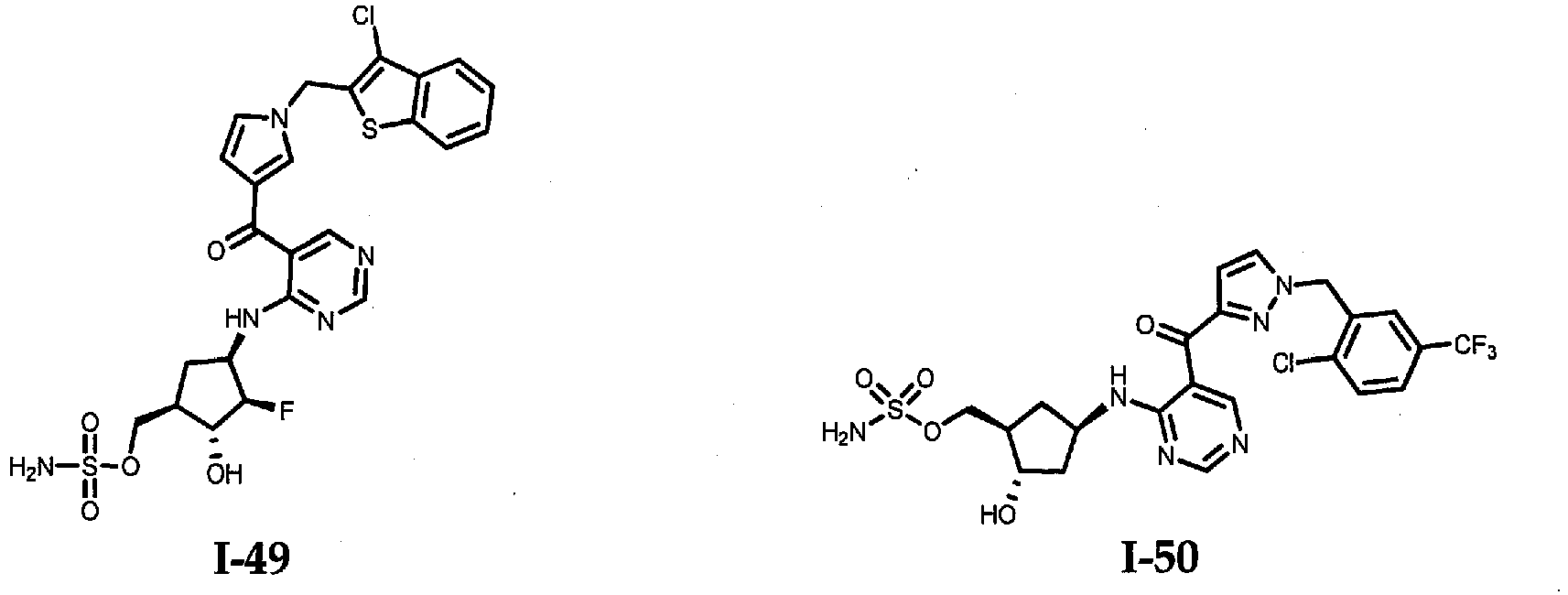


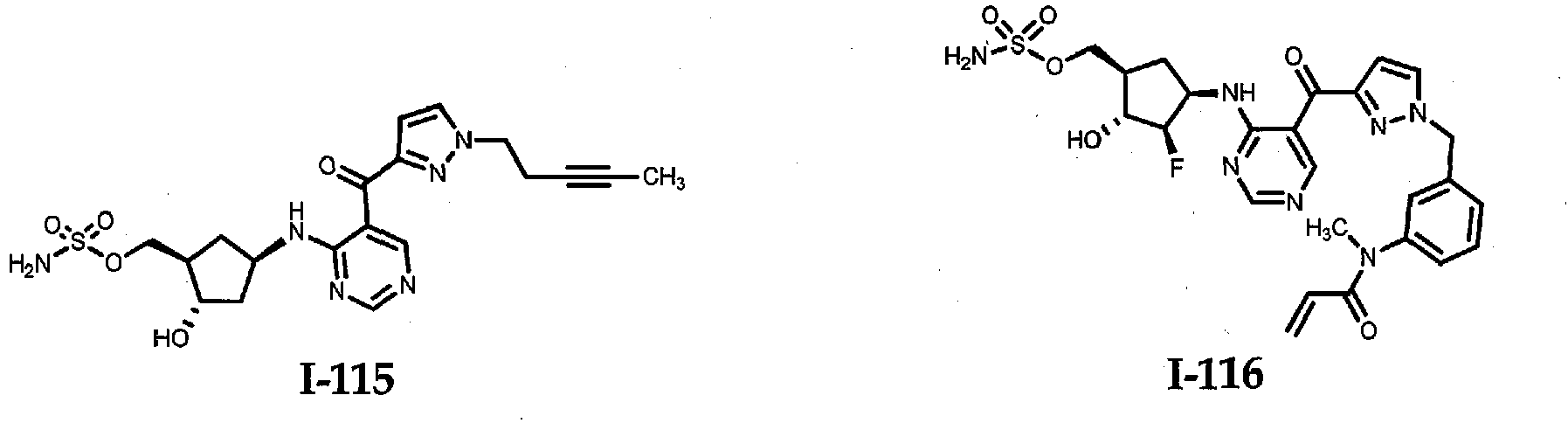


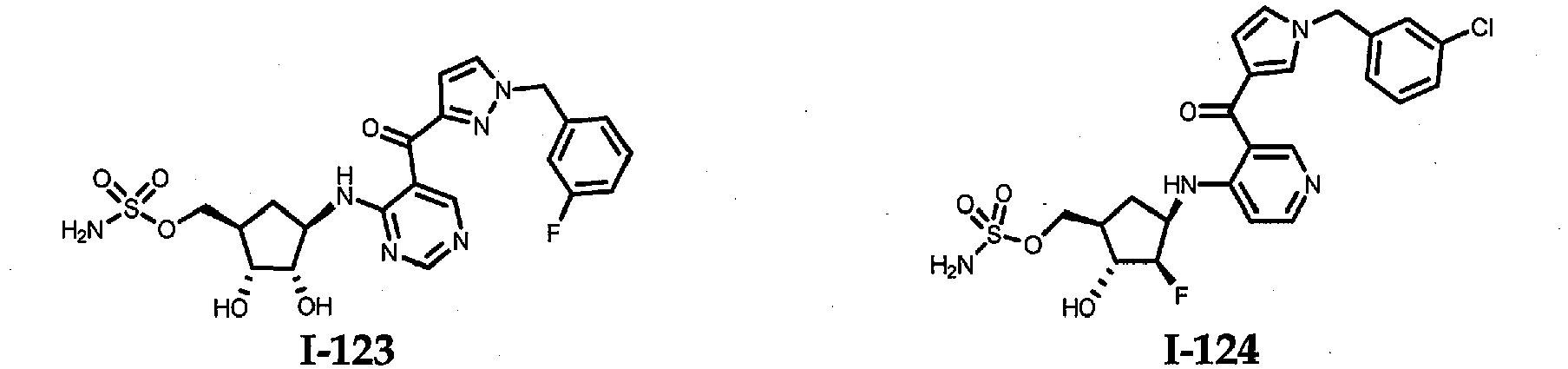


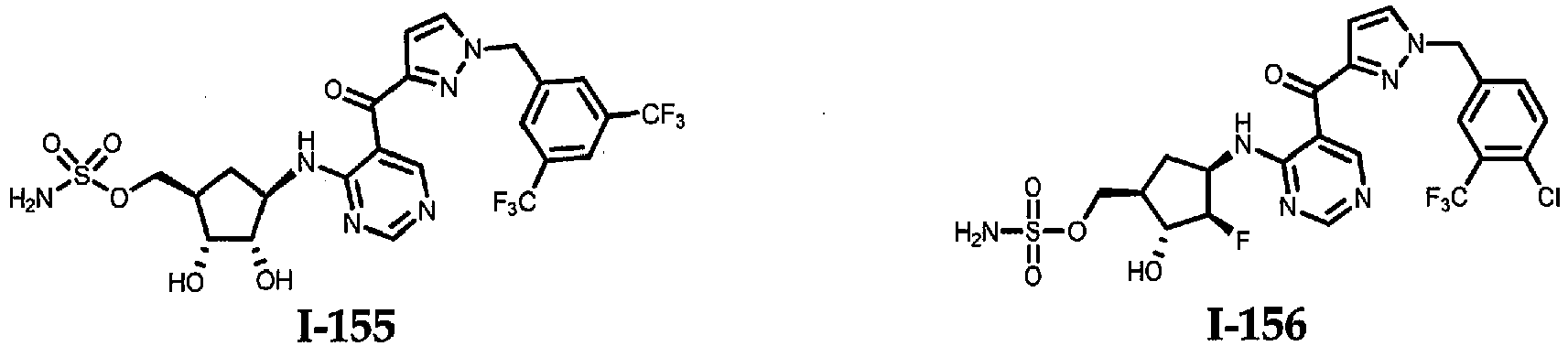


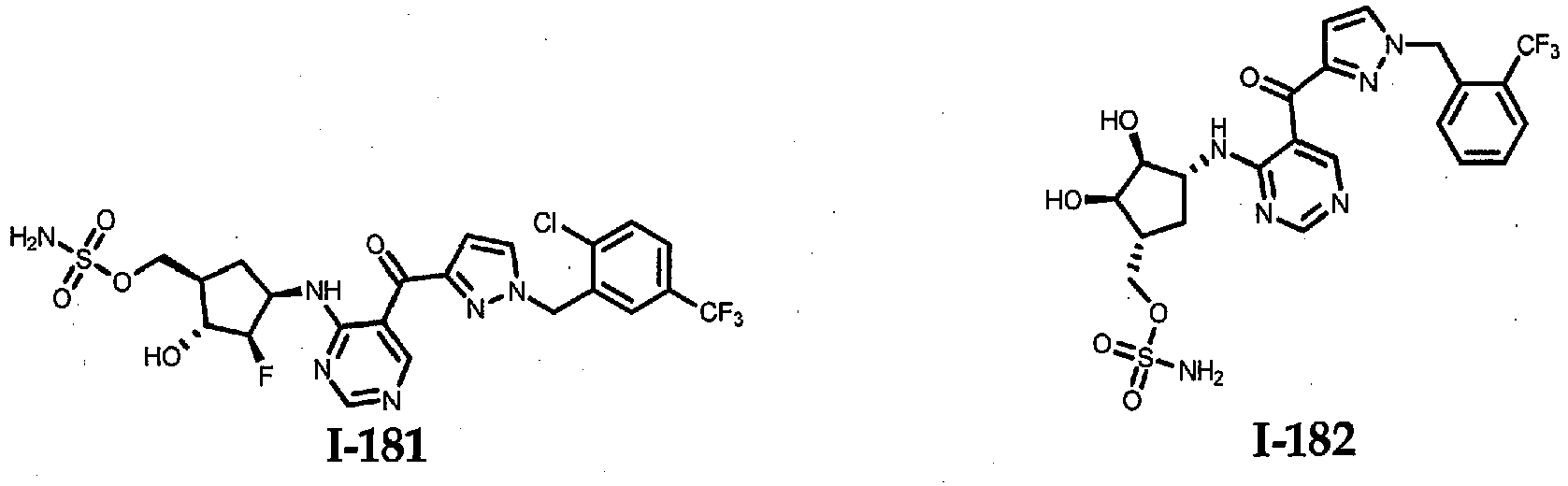

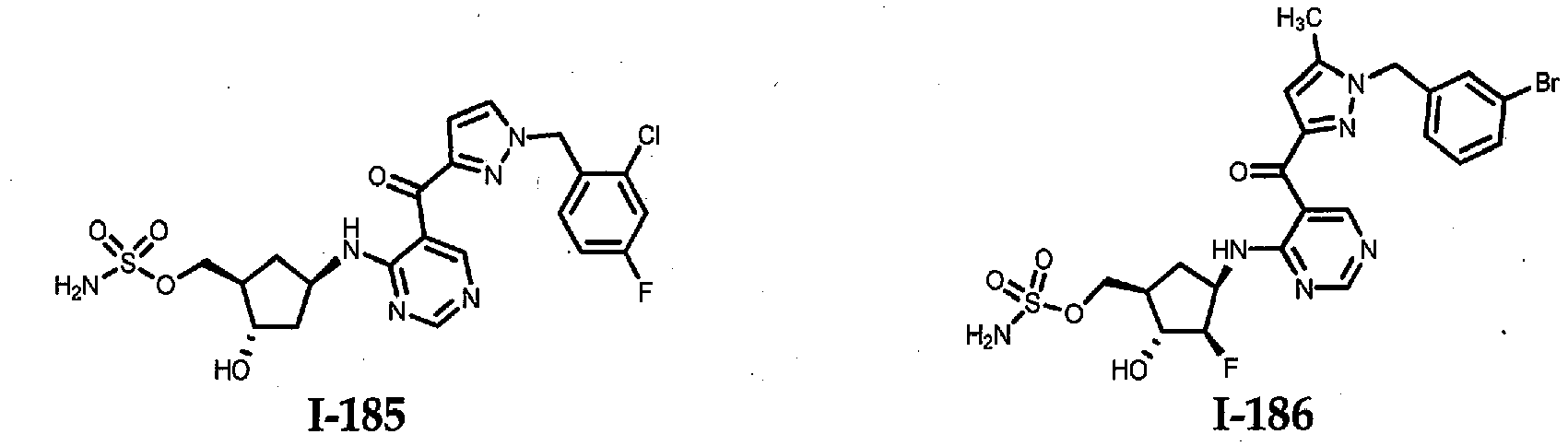


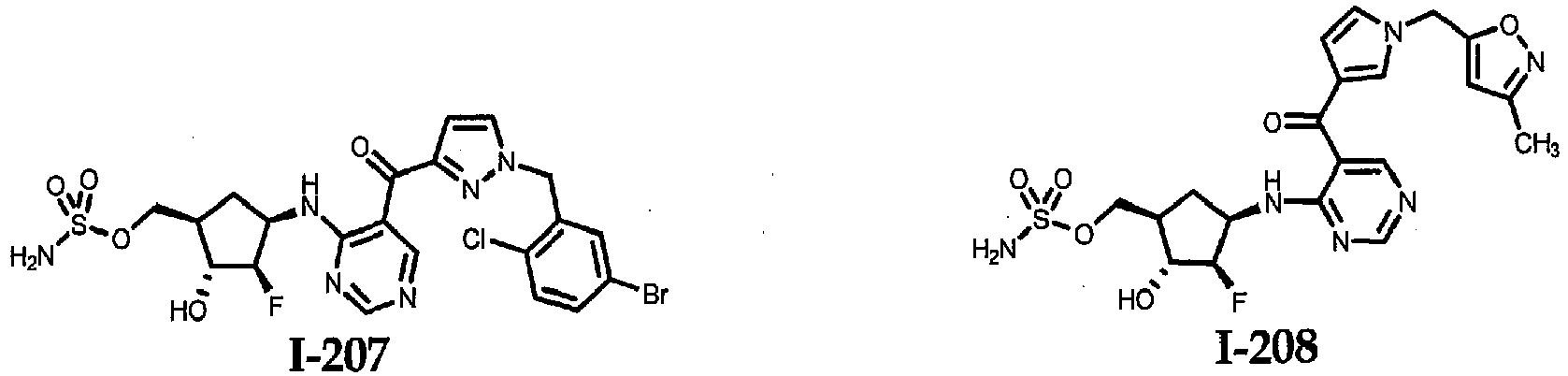


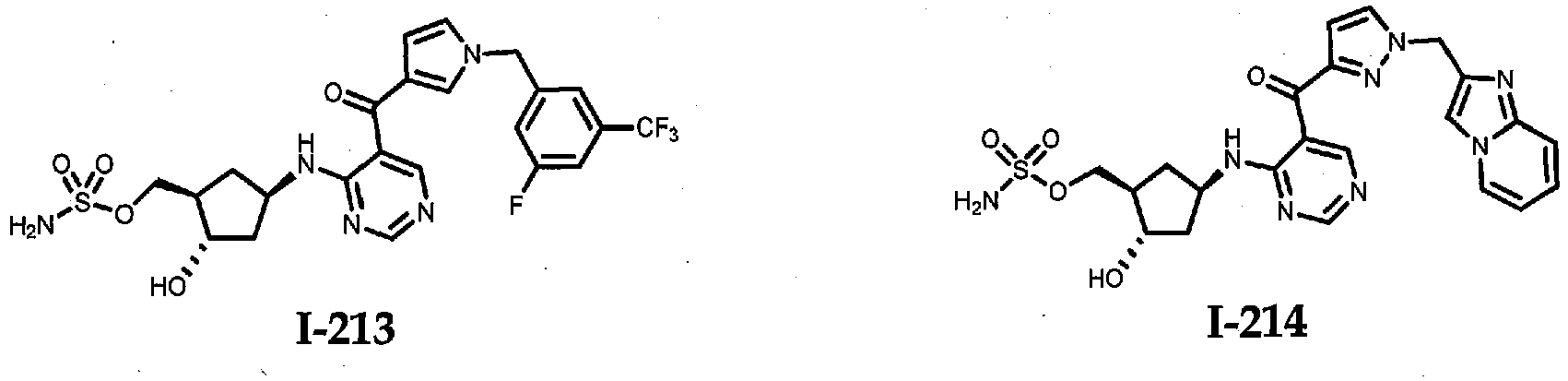


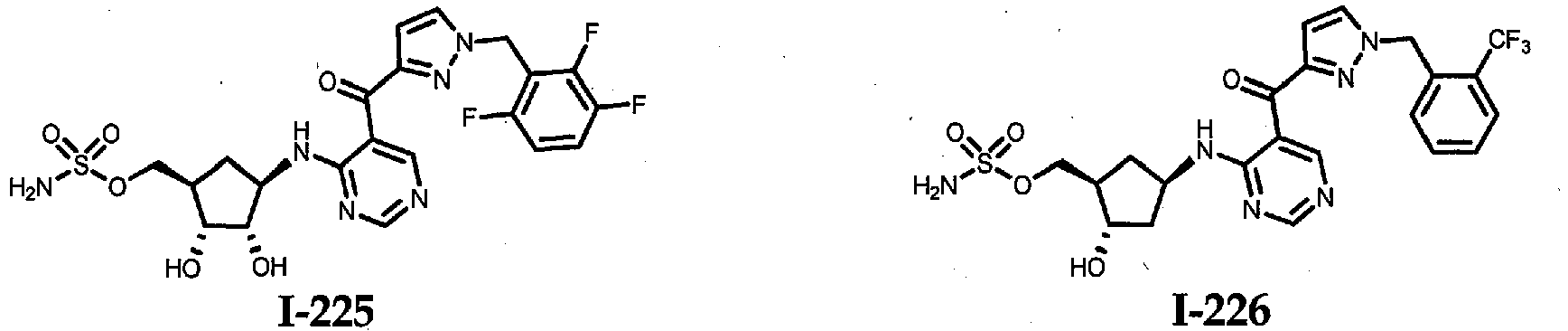


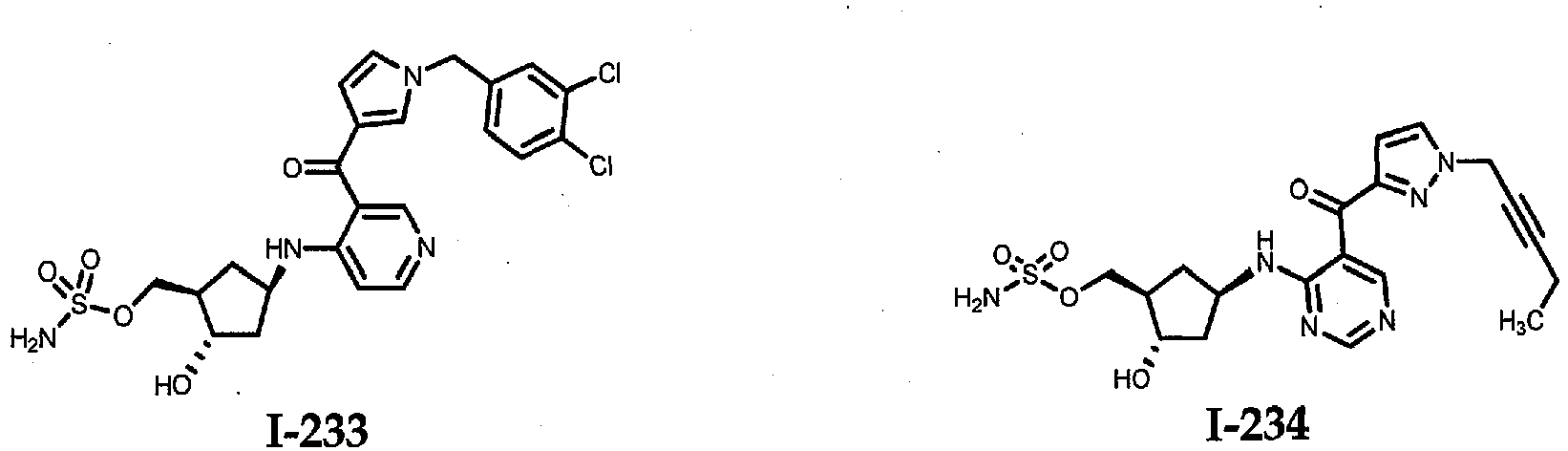


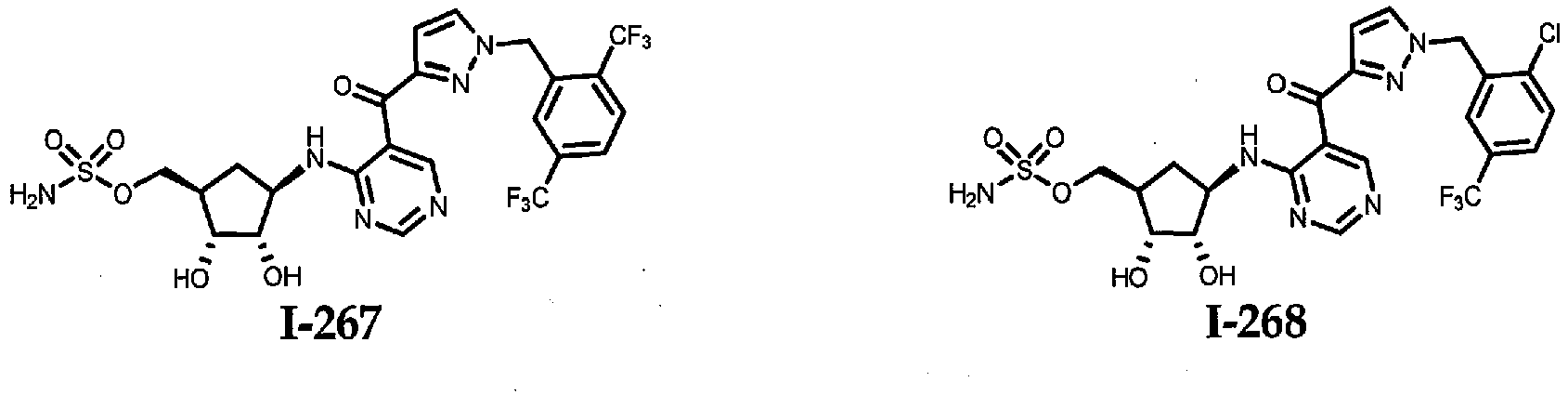


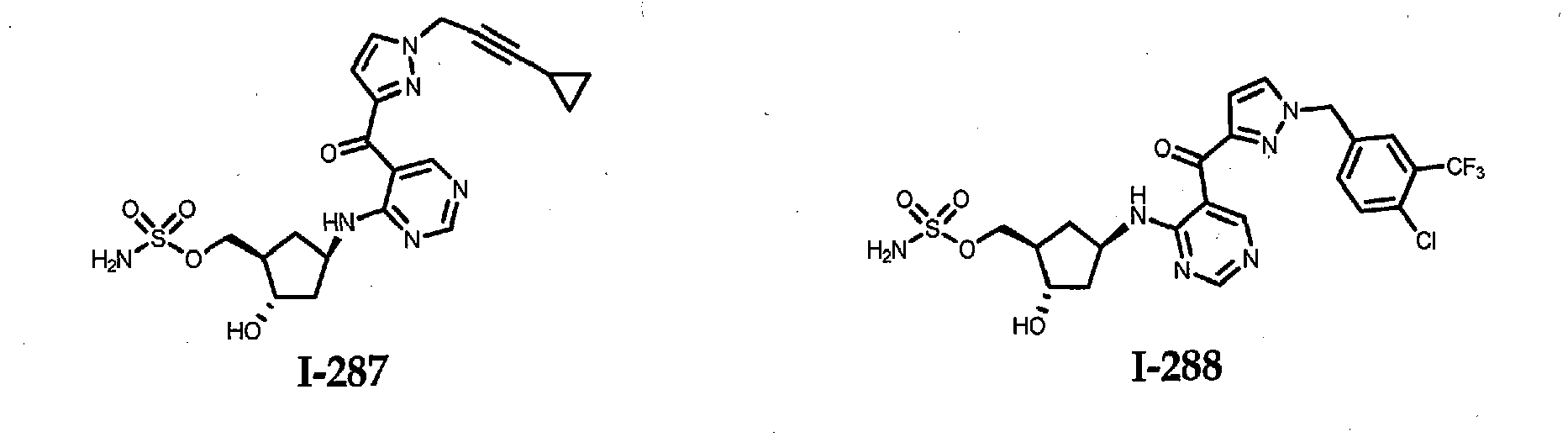

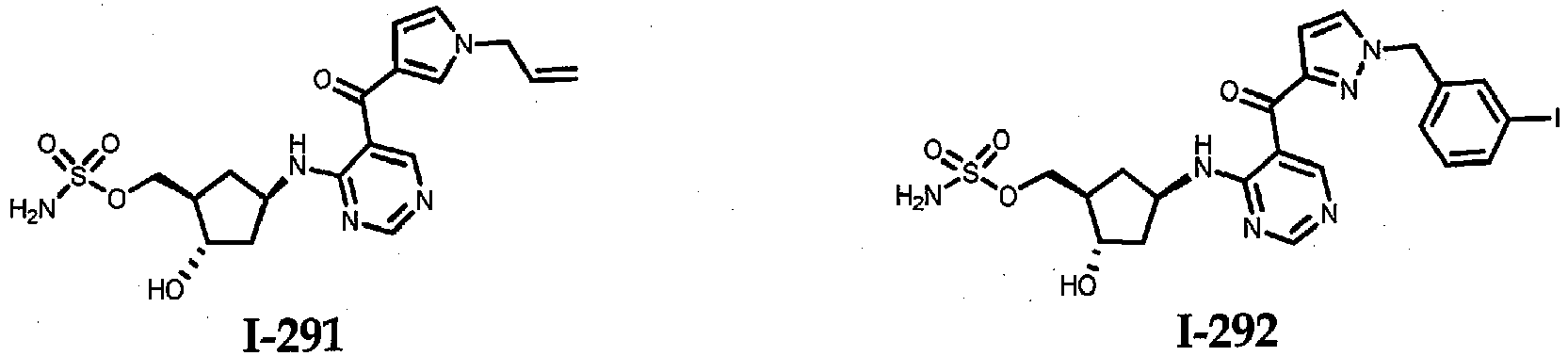


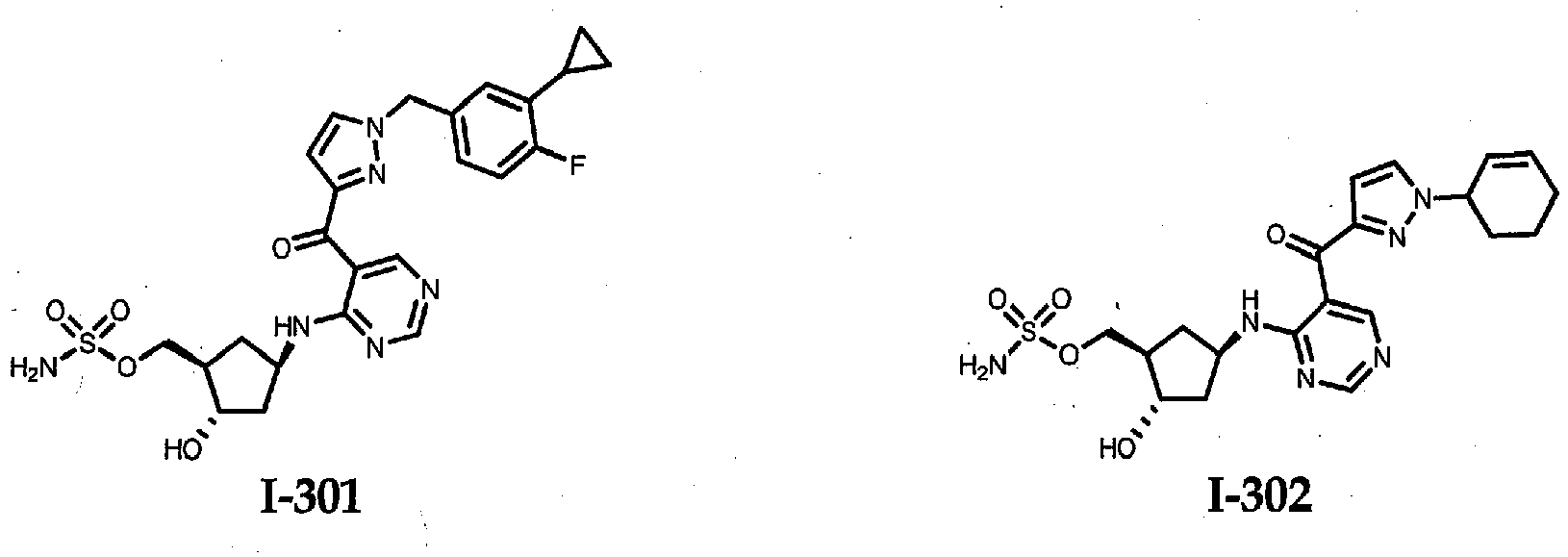


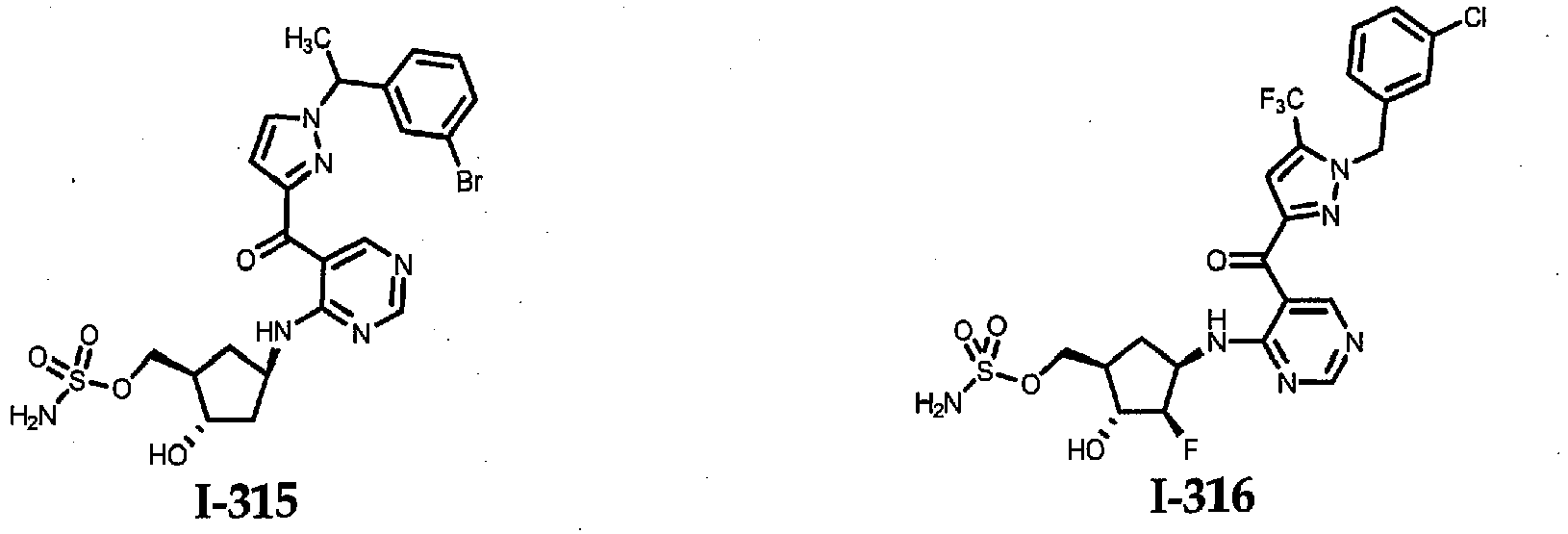


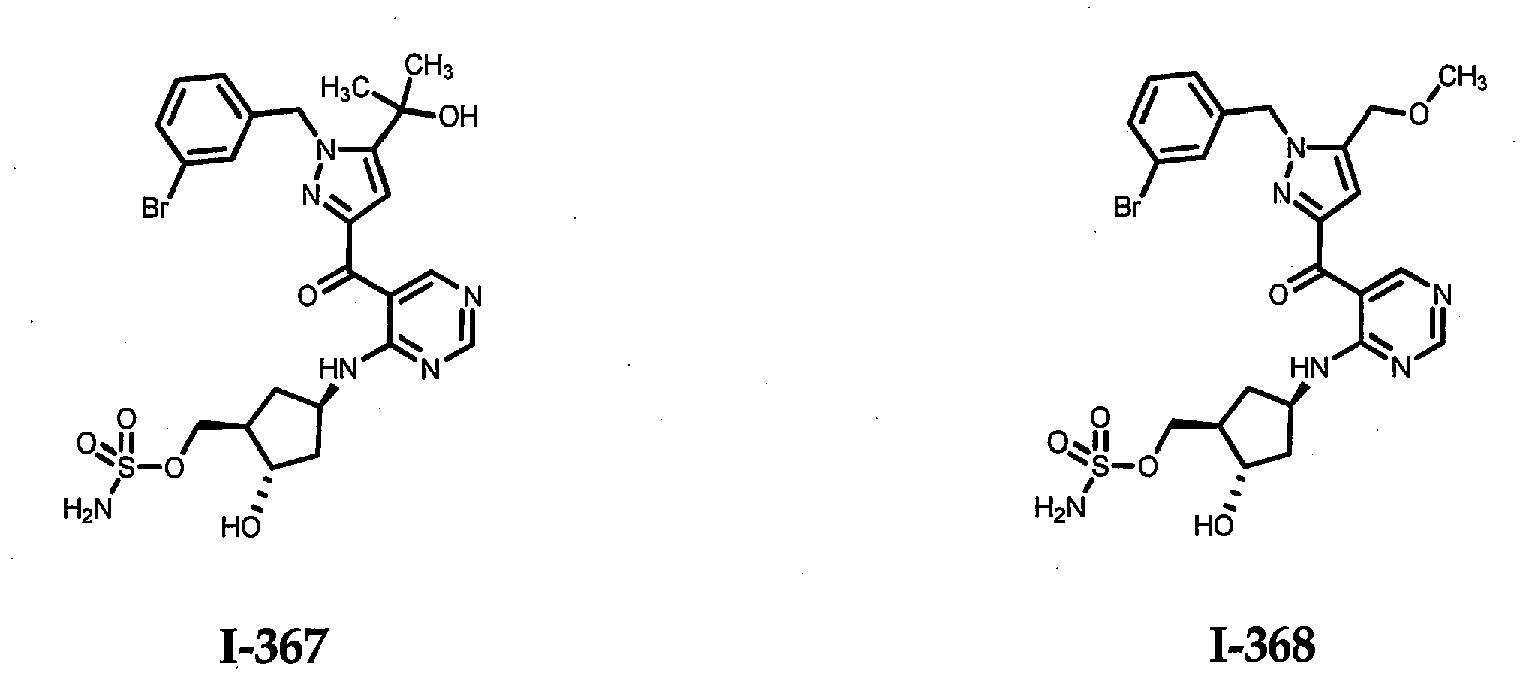

- The compounds in Table 1 may also be identified by the following chemical names:
Compound Name I-1 [(1R,2R,3S,4R)-4-{[5-({1-[(3-bromophenyl)sulfonyl]-1H-pyrazol-3-yl}carbonyl)pyrimidin-4-yl]amino}-2,3-dihydroxycyclopentyl]methyl sulfamate I-2 {(1S,2S,4R)-4-[(5-{[1-(3-bromobenzyl)-1H-pyrazol-3-yl]carbonyl}pyrimidin-4-yl)amino]-2-hydroxycyclopentyl}methyl sulfamate I-3 [(1R,2S,4R)-2-hydroxy-4-({5-[(1-{[6-(trifluoromethyl)pyridin-2-yl]methyl}-1H-pyrazol-3-yl)carbonyl]pyrimidin-4-yl}amino)cyclopentyl]methyl sulfamate I-4 [(1R,2R,3S,4R)-2,3-dihydroxy-4-{[5-({1-[2-(3-methyl-1H-pyrazol-1-yl)ethyl]-1H-pyrazol-3-yl}carbonyl)pyrimidin-4-yl]amino}cyclopentyl]methyl sulfamate I-5 {(1R,2R,3R,4R)-4-[(5-{[1-(3,6-dihydro-2H-pyran-4-ylmethyl)-1H-pyrrol-3-yl]carbonyl}pyrimidin-4-yl)amino]-3-fluoro-2-hydroxycyclopentyl}methyl sulfamate I-6 {(1S,2S,4R)-4-[(5-{[1-(3-bromobenzyl)-5-methyl-1H-pyrazol-3-yl]carbonyl}pyrimidin-4-yl)amino]-2-hydroxycyclopentyl}methyl sulfamate I-7 [(1R,2R,3R,4R)-3-fluoro-2-hydroxy-4-{[5-({1-[3-(trifluoromethyl)benzyl]-1H-pyrrol-3-yl}carbonyl)pyrimidin-4-yl]amino}cyclopentyl]methyl sulfamate I-8 [(1R,2R,3R,4R)-4-{[5-({1-[(6-chloropyridin-2-yl)methyl]-1H-pyrrol-3-yl}carbonyl)pyrimidin-4-yl]amino}-3-fluoro-2-hydroxycyclopentyl]methyl sulfamate I-9 [(1R,2R,3R,4R)-3-fluoro-2-hydroxy-4-{[5-({1-[(1R,2R)-(2-phenylcyclopropyl)methyl]-1H-pyrrol-3-yl}carbonyl)pyrimidin-4-yl]amino}cyclopentyl]methyl sulfamate or [(1R,2R,3R,4R)-3-fluoro-2-hydroxy-4-{[5-({1-[(1S,2S)-(2-phenylcyclopropyl)methyl]-1H-pyrrol-3-yl}carbonyl)pyrimidin-4-yl]amino}cyclopentyl]methyl sulfamate I-10 [(1R,2S,4R)-4-{[5-({1-[(1R)-1-(3-ethynylphenyl)ethyl]-1H-pyrazol-3-yl}carbonyl)pyrimidin-4-yl]amino}-2-hydroxycyclopentyl]methyl sulfamate or [(1R,2S,4R)-4-{[5-({1-[(1S)-1-(3-ethynylphenyl)ethy1]-1H-pyrazol-3-yl}carbonyl)pyrimidin-4-yl]amino}-2-hydroxycyclopentyl]methyl sulfamate I-11 {(1R,2S,4R)-4-[(5-{[1-(3-bromobenzyl)-1H-pyrazol-3-yl]carbonyl}pyrimidin-4-yl)amino]-2-hydroxycyclopentyl}methyl sulfamate I-12 [(1R,2S,4R)-2-hydroxy-4-{[5-({1-[4-(tetrahydro-2H-pyran-4-yl)but-2-yn-1-yl]-1H-pyrazol-3-yl}carbonyl)pyrimidin-4-yl]amino}cyclopentyl]methyl sulfamate I-13 {(1R,2R,3R,4R)-3-fluoro-2-hydroxy-4-[(5-{[1-(3-iodobenzyl)-1H-pyrrol-3yl]carbonyl}pyrimidin-4-yl)amino]cyclopentyl}methyl sulfamate 1-14 {(1R,2S,4R)-4-[(5-{[1-(4-fluoro-3-methylbenzyl)-1H-pyrazol-3-yl]carbonyl}pyrimidin-4-yl)amino]-2-hydroxycyclopentyl}methyl sulfamate 1-15 {(1R,2R,3R,4R)-4-[(5-{[1-(3-bromobenzyl)-1H-pyrazol-3-yl]carbonyl}pyrimidin-4-yl)amino]-3-fluoro-2-hydroxycyclopentyl} methyl sulfamate 1-16 {(1R,2S,4R)-2-hydroxy-4-[(5-{[1-(2,3,6-trifluorobenzyl)-1H-pyrazol-3-yl]carbonyl}pyrimidin-4-yl)amino]cyclopentyl}methyl sulfamate 1-17 {(1R,2S,4R)-4-[(5-{[1-(1-benzofuran-2-ylmethyl)-1H-pyrazol-3-yl]carbonyl}pyrimidin-4-yl)amino]-2-hydroxycyclopentyl}methyl sulfamate 1-18 [(1R,2S,4R)-2-hydroxy-4-{[3-({1-[3-(trifluoromethoxy)benzyl]-1H-pyrazol-3-yl}carbonyl)pyridin-4-yl]amino}cyclopentyl]methyl sulfamate 1-19 [(1R,2R,3R,4R)-3-fluoro-2-hydroxy-4-{[5-({1-[2-oxo-2-(pyrrolidin-1-yl)ethyl]-1H-pyrazol-3-yl}carbonyl)pyrimidin-4-yl]amino}cyclopentyl]methyl sulfamate 1-20 [(1R,2S,4R)-2-hydroxy-4-{[5-({1-[3-(trifluoromethoxy)benzyl]-1H-pyrazol-3-yl}carbonyl)pyrimidin-4-yl]amino}cyclopentyl]methyl sulfamate 1-21 [(1R,2S,4R)-4-{[5-({1-[4-fluoro-3-(trifluoromethyl)benzyl]-1H-pyrrol-3-yl}carbonyl)pyrimidin-4-yl]amino}-2-hydroxycyclopentyl]methyl sulfamate 1-22 {(1R,2S,4R)-4-[(5-{[1-(2-fluoro-3-methylbenzyl)-1H-pyrazol-3-yl]carbonyl}pyrimidin-4-yl)amino]-2-hydroxycyclopentyl}methyl sulfamate 1-23 [(1R,2R,3R,4R)-3-fluoro-2-hydroxy-4-{[5-({1-[3-(trifluoromethoxy)benzyl]-1H-pyrazol-3-yl}carbonyl)pyrimidin-4-yl]amino}cyclopentyl]methyl sulfamate 1-24 [(1R,2R,3R,4R)-4-{[5-({1-[(5-bromo-2-furyl)methyl]-1H-pyrrol-3-yl}carbonyl)pyrimidin-4-yl]amino} -3 -fluoro-2-hydroxycyclopentyl]methyl sulfamate 1-25 {(1R,2R,3S,4R)-4-[(5-{[1-(3-cyanobenzyl)-1H-pyrazol-3-yl]carbonyl}pyrimidin-4-yl)amino]-2,3-dihydroxycyclopentyl}methyl sulfamate 1-26 {(1R,2R,3R,4R)-4-[(5-{[1-(4,4-dimethylpent-2-yn-1-yl)-1H-pyrrol-3-yl]carbonyl}pyrimidin-4-yl)amino]-3-fluoro-2-hydroxycyclopentyl}methyl sulfamate 1-27 [(1R,2S,4R)-2-hydroxy-4-{[5-({1-[3-(4-hydroxytetrahydro-2H-pyran-4-yl)prop-2-yn-1-yl]-1H-pyrazol-3-yl} carbonyl)pyrimidin-4-yl]amino}cyclopentyl]methyl sulfamate I-28 {(1R,2R,3S,4R)-4-[(5-{[1-(2-ethoxyethyl)-1H-pyrazol-3-yl]carbonyl}pyrimidin-4-yl)amino]-2,3-dihydroxycyclopentyl}methyl sulfamate I-29 [(1R,2S,4R)-4-{[5-({1-[(5-bromopyridin-3-yl)methyl]-1H-pyrazol-3-yl}carbonyl)pyrimidin-4-yl]amino}-2-hydroxycyclopentyl]methyl sulfamate I-30 {(1R,2R,3S,4R)-4-[(5-{[1-(cyclopropylmethyl)-1H-pyrazol-3-yl]carbonyl}pyrimidin-4-yl)amino]-2,3-dihydroxycyclopentyl}methyl sulfamate I-31 [(1R,2R,3S,4R)-4-({5-[(1-benzyl-5-methyl-1H-pyrazol-3-yl)carbonyl]pyrimidin-4-yl}amino)-2,3-dihydroxycyclopentyl]methyl sulfamate I-32 {(1R,2S,4R)-4-[(5-{[1-(2-fluoro-5-methylbenzyl)-1H-pyrazol-3-yl]carbonyl}pyrimidin-4-yl)amino]-2-hydroxycyclopentyl}methyl sulfamate I-33 [(1R,2R,3S,4R)-2,3-dihydroxy-4-{[5-({1-[2-(1H-indol-3-yl)ethyl]-1H-pyrazol-3-yl}carbonyl)pyrimidin-4-yl]amino}cyclopentyl]methyl sulfamate I-34 [(1R,2R,3S,4R)-4-{[5-({1-[4-chloro-3-(trifluoromethyl)benzyl]-1H-pyrazol-3-yl}carbonyl)pyrimidin-4-yl]amino}-2,3-dihydroxycyclopentyl]methyl sulfamate I-35 {(1R,2S,4R)-4-[(5-{[1-(2,5-difluorobenzyl)-1H-pyrazol-3-yl]carbonyl}pyrimidin-4-yl)amino]-2-hydroxycyclopentyl}methyl sulfamate I-36 [(1R,2R,3R,4R)-4-({5-[(5-chloro-1-{[5-(trifluoromethyl)-2-furyl]methyl}-1H-pyrrol-3-yl)carbonyl]pyrimidin-4-yl}amino)-3-fluoro-2-hydroxycyclopentyl]methyl sulfamate I-37 [(1R,2S,4R)-2-hydroxy-4-{[5-({1-[2-(methytsulfanyl)ethyl]-1H-pyrazol-3-yl}carbonyl)pyrimidin-4-yl]amino}cyclopentyl]methyl sulfamate I-38 2-{(1R,2S,4R)-4-[(5-{[1-(3-bromobenzyl)-1H-pyrazol-3-yl]carbonyl}pyrimidin-4-yl)amino]-2-hydroxycyclopentyl}ethanesulfonamide I-39 [(1R,2S,4R)-2-hydroxy-4-{[5-({1-[2-(trifluoromethoxy)benzyl]-1H-pyrazol-3-yl}carbonyl)pyrimidin-4-yl]amino}cyclopentyl]methyl sulfamate I-40 {(1R,2R,3S,4R)-4-[(5-{[1-(3-chlorobenzyl)-1H-pyrazol-3-yl]carbonyl}pyrimidin-4-yl)amino]-2,3-dihydroxycyclopentyl}methyl sulfamate I-41 [(1R,2R,3R,4R)-3-fluoro-2-hydroxy-4-({5-[(1-{[5-(methoxymethyl)-2-furyl]methyl}-1H-pyrrol-3-yl)carbonyl]pyrimidin-4-yl}amino)cyclopentyl]methyl sulfamate I-42 {(1R,2R,3R,4R)-3-fluoro-2-hydroxy-4-[(5-{[1-(3-iodobenzyl)-1H-pyrazol-3-yl]carbonyl}pyrimidin-4-yl)amino]cyclopentyl}methyl sulfamate I-43 {(1R,2S,4R)-4-[(5-{[1-(3-bromo-4-chlorobenzyl)-1H-pyrrol-3-yl]carbonyl}pyrimidin-4-yl)amino]-2-hydroxycyclopentyl}methyl sulfamate I-44 {(1R,2R,3R,4R)-4-[(5-{[1-(3-bromobenzyl)-5-fluoro-1H-pyrrol-3-yl]carbonyl}pyrimidin-4-yl)amino]-3-fluoro-2-hydroxycyclopentyl}methyl sulfamate I-45 [(1R,2S,4R)-2-hydroxy-4-({5-[(1-{[1-methyl-3-(trifluoromethyl)-1H-pyrazol-5-yl]methyl}-1H-pyrrol-3-yl)carbonyl]pyrimidin-4-yl}amino)cyclopentyl]methyl sulfamate I-46 [(1R,2R,3S,4R)-4-{[5-({1-[3-fluoro-4-(trifluoromethyl)benzyl]-1H-pyrazol-3-yl}carbonyl)pyrimidin-4-yl]amino}-2,3-dihydroxycyclopentyl]methyl sulfamate I-47 {(1R,2S,4R)-4-[(5-{[1-(4-chlorobenzyl)-1H-pyrazol-3-yl]carbonyl}pyrimidin-4-yl)amino]-2-hydroxycyclopentyl}methyl sulfamate I-48 {(1R,2S,4R)-2-hydroxy-4-[(5-{[1-(2-naphthylmethyl)-1H-pyrazol-3-yl]carbonyl}pyrimidin-4-yl)amino]cyclopentyl}methyl sulfamate I-49 [(1R,2R,3R,4R)-4-{[5-({1-[(3-chloro-1-benzothiophen-2-yl)methyl]-1H-pyrrol-3-yl}carbonyl)pyrimidin-4-yl]amino}-3-fluoro-2-hydroxycyclopentyl]methyl sulfamate I-50 [(1R,2S,4R)-4-{[5-({1-[2-chloro-5-(trifluoromethyl)benzyl]-1H-pyrazol-3-yl}carbonyl)pyrimidin-4-yl]amino}-2-hydroxycyclopentyl]methyl sulfamate I-51 [(1R,2R,3S,4R)-2,3-dihydroxy-4-{[5-({1-[(4-methylpyridin-2-yl)methyl]-1H-pyrazol-3-yl}carbonyl)pyrimidin-4-yl]amino}cyclopentyl]methyl sulfamate I-52 {(1R,2S,4R)-4-[(3-{[1-(3-chlorobenzyl)-1H-pyrazol-3-yl]carbonyl}pyridin-4-yl)amino]-2-hydroxycyclopentyl}methyl sulfamate I-53 [(1R,2S,4R)-2-hydroxy-4-({5-[(1-{[2-(trifluoromethyl)pyridin-4-yl]methyl}-1H-pyrazol-3-yl)carbonyl]pyrimidin-4-yl}amino)cyclopentyl]methyl sulfamate I-54 {(1R,2S,4R)-4-[(6-chloro-5-{[1-(3-chlorobenzyl)-1H-pyrazol-3-yl]carbonyl}pyrimidin-4-yl)amino]-2-hydroxycyclopentyl}methyl sulfamate I-55 [(1R,2S,4R)-2-hydroxy-4-{[5-({1-[((1S,2S)-2-methylcyclopropyl)methyl]-1H-pyrazol-3-yl}carbonyl)pyrimidin-4-yl]amino}cyclopentyl]methyl sulfamate and [(1R,2S,4R)-2-hydroxy-4-{[5-({1-[((1R,2R)-2-methylcyclopropyl)methyl]-1H-pyrazol-3-yl}carbonyl)pyrimidin-4-yl]amino}cyclopentyl]methyl sulfamate I-56 [(1R,2R,3S,4R)-4-({3-[(1-benzyl-1H-pyrazol-3-yl)carbonyl]pyridin-4-yl}amino)-2,3-dihydroxycyclopentyl]methyl sulfamate I-57 {(1R,2R,3R,4R)-3-fluoro-4-[(5-{[1-(4-fluoro-3-methoxybenzyl)-1H-pyrrol-3-yl]carbonyl}pyrimidin-4-yl)amino]-2-hydroxycyclopentyl}methyl sulfamate I-58 {(1R,2S,4R)-4-[(5-{[1-(3,4-dichlorobenzyl)-1H-pyrazol-3-yl]carbonyl}pyrimidin-4-yl)amino]-2-hydroxycyclopentyl}methyl sulfamate I-59 {(1R,2S,4R)-4-[(5-{[1-(4-cyclopentylbut-2-yn-1-yl)-1H-pyrazol-3-yl]carbonyl}pyrimidin-4-yl)amino]-2-hydroxycyclopentyl}methyl sulfamate I-60 [(1R,2S,4R)-2-hydroxy-4-{[5-({1-[3-(2-hydroxypropan-2-yl)benzyl]-1H-pyrazol-3-yl}carbonyl)pyrimidin-4-yl]amino}cyclopentyl]methyl sulfamate I-61 {(1R,2R,3R,4R)-4-[(5-{[5-chloro-1-(3-chlorobenzyl)-1H-pyrrol-3-yl]carbonyl}pyrimidin-4-yl)amino]-3-fluoro-2-hydroxycyclopentyl}methyl sulfamate I-62 {(1R,2S,4R)-4-[(5-{[1-(2,4-difluorobenzyl)-1H-pyrazol-3-yl]carbonyl}pyrimidin-4-yl)amino]-2-hydroxycyclopentyl}methyl sulfamate I-63 [(1R,2S,4R)-2-hydroxy-4-{[5-({1-[(2-methoxypyridin-3-yl)methyl]-1H-pyrazol-3-yl}carbonyl)pyrimidin-4-yl]amino}cyclopentyl]methyl sulfamate I-64 {(1R,2S,4R)-4-[(5-{[1-(3-tert-butylbenzyl)-1H-pyrazol-3-yl]carbonyl}pyrimidin-4-yl)amino]-2-hydroxycyclopentyl}methyl sulfamate I-65 [(1R,2S,4R)-4-{[5-({1-[(1S)-1-(6-bromopyridin-2-yl)ethyl]-1H-pyrazol-3-yl}carbonyl)pyrimidin-4-yl]amino}-2-hydroxycyclopentyl]methyl sulfamate or [(1R,2S,4R)-4-{[5-({1-[(1R)-1-(6-bromopyridin-2-yl)ethyl]-1H-pyrazol-3-yl}carbonyl)pyrimidin-4-yl]amino}-2-hydroxycyclopentyl]methyl sulfamate I-66 [(1R,2S,4R)-4-({5-[(1-benzyl-5-methyl-1H-pyrazol-3-yl)carbonyl]pyrimidin-4-yl}amino)-2-hydroxyeyclopentyl]methyl sulfamate I-67 [(1R,2R,3S,4R)-4-({5-[(1-{3-[(chloroacetyl)amino]benzyl}-1H-pyrazol-3-yl)carbonyl]pyrimidin-4-yl}amino)-2,3-dihydroxycyclopentyl]methyl sulfamate I-68 {(1R,2S,4R)-2-hydroxy-4-[(5-{[1-(3-iodobenzyl)-1H-pyrrol-3-yl]carbonyl}pyrimidin-4-yl)amino]cyclopentyl}methyl sulfamate I-69 [(1R,2S,4R)-4-{[5-({1-[2,4-bis(trifluoromethyl)benzyl]-1H-pyrazol-3-yl}carbonyl)pyrimidin-4-yl]amino}-2-hydroxycyclopentyl]methyl sulfamate I-70 [(1R,2R,3S,4R)-4-{[5-({1-[(4-chloropyridin-2-yl)methyl]-1H-pyrazol-3-yl}carbonyl)pyrimidin-4-yl]amino}-2,3-dihydroxycyclopentyl]methyl sulfamate I-71 {(1R,2R,3R,4R)-4-[(5-{[1-(3-bromobenzyl)-5-methyl-1H-pyrrol-3-yl]carbonyl}pyrimidin-4-yl)amino]-3-fluoro-2-hydroxycyclopentyl}methyl, sulfamate I-72 {(1R,2S,4R)-4-[(5-{[1-(3-bromo-4-fluorobenzyl)-1H-pyrazol-3-yl]carbonyllpyrimidin-4-yl)amino]-2-hydroxycyclopentyl}methyl sulfamate I-73 [(1R,2S,4R)-2-hydroxy-4-({5-[(1-{[2-(trifluoromethyl)-1,3-thiazol-5-yl]methyl}-1H-pyrrol-3-yl)carbonyl]pyrimidin-4-yl}amino)cyclopentyl]methyl sulfamate I-74 [(1R,2R,3S,4R)-2,3-dihydroxy-4-{[5-({1-[3-(R)-vinylsulfinyl)benzyl]-1H-pyrazol-3-yl}carbonyl)pyrimidin-4-yl]amino}cyclopentyl]methyl sulfamate and [(1R,2R,3S,4R)-2,3-dihydroxy-4-{[5-({1-[3-((S)-vinylsulfinyl)benzyl]-1H-pyrazol-3-yl}carbonyl)pyrimidin-4-yl]amino}cyclopentyl]methyl sulfamate I-75 {(1R,2R,3R,4R)-3-fluoro-2-hydroxy-4-[(5-{[1-(4-methoxy-4-methylpent-2-yn-1-yl)-1H-pyrrol-3-yl]carbonyl}pyrimidin-4-yl)amino]cyclopentyl}methyl sulfamate I-76 {(1R,2S,4R)-2-hydroxy-4-[(5-{[1-(2-phenylpropan-2-yl)-1H-pyrrol-3-yl]carbonyl}pyrimidin-4-yl)amino]cyclopentyl}methyl sulfamate I-77 [(1R,2S,4R)-4-({5-[(1-{[(2R)-5,5-dimethyltetrahydrofuran-2-yl]methyl}-1H-pyrazol-3-yl)carbonyl]pyrimidin-4-yl}amino)-2-hydroxycyclopentyl]methyl sulfamate and [(1R,2S,4R)-4-({5-[(1-{[(2S)-5,5-dimethyltetrahydrofuran-2-yl]methyl}-1H-pyrazol-3-yl)carbonyl]pyrimidin-4-yl}amino)-2-hydroxycyclopentyl]methyl sulfamate I-78 {(1R,2S,4R)-4-[(3-{[1-(3,4-dichlorobenzyl)-1H-pyrazol-3-yl]carbonyl}pyridin-4-yl)amino]-2-hydroxycyclopentyl}methyl sulfamate I-79 [(1R,2S,4R)-4-{[5-({1-[(1S)-1-(5-chloro-2-furyl)ethyl]-1H-pyrazol-3-yl}carbonyl)pyrimidin-4-yl]amino}-2-hydroxycyclopentyl]methyl sulfamate or [(1R,2S,4R)-4-{[5-({1-[(1R)-1-(5-chloro-2-furyl)ethyl]-1H-pyrazol-3-yl}carbonyl)pyrimidin-4-yl]amino}-2-hydroxycyclopentyl]methyl sulfamate I-80 [(1R,2S,4R)-2-hydroxy-4-{[5-({1-[(1-methyl-2-oxo-1,2-dihydropyridin-3-yl)methyl]-1H-pyrazol-3-yl}carbonyl)pyrimidin-4-yl]amino}cyclopentyl]methyl sulfamate I-81 {(1R,2R,3S,4R)-4-[(3-{[1-(3-chlorobenzyl)-1H-pyrazol-3-yl]carbonyl}pyridin-4-yl)amino]-2,3-dihydroxycyclopentyl}methyl sulfamate I-82 {(1R,2R,3S,4R)-4-[(5-{[1-(cyclohexylmethyl)-1H-pyrazol-3-yl]carbonyl}pyrimidin-4-yl)amino]-2,3-dihydroxycyclopentyl}methyl sulfamate I-83 [(1R,2S,4R)-2-hydroxy-4-{[3-({1-[3-(trifluoromethoxy)benzyl]-1H-pyrrol-3-yl}carbonyl)pyridin-4-yl]amino}cyclopentyl]methyl sulfamate I-84 [(1R,2S,4R)-2-hydroxy-4-{[5-({1-[3-(prop-1-yn-1-yl)benzyl]-1H-pyrazol-3-yl}carbonyl)pyrimidin-4-yl]amino}cyclopentyl]methyl sulfamate I-85 {(1R,2S,4R)-4-[(5-{[1-(3-ethynylbenzyl)-1H-pyrazol-3-yl]carbonyl}pyrimidin-4-yl)amino]-2-hydroxycyclopentyl}methyl sulfamate I-86 {(1R,2S,4R)-2-hydroxy-4-[(5-{[1-(2S)-(pent-3-yn-2-yl)-1H-pyrazol-3-yl]carbonyl}pyrimidin-4-yl)amino]cyclopentyt}methyl sulfamate or {(1R,2S,4R)-2-hydroxy-4-[(5-{[1-(2R)-(pent-3-yn-2-yl)-1H-pyrazol-3-yl]carbonyl}pyrimidin-4-yl)amino]cyclopentyl}methyl sulfamate I-87 [(1R,2R,3R,4R)-4-({5-[(1-{[5-(difluoromethyl)-2-furyl]methyl}-1H-pyrrol-3-yl)carbonyl]pyrimidin-4-yl}amino)-3-fluoro-2-hydroxycyclopentyl]methyl sulfamate I-88 {(1R,2R,3S,4R)-2,3-dihydroxy-4-[(5-{[1-(2,4,6-trifluorobenzyl)-1H-pyrazol-3-yl]carbonyl}pyrimidin-4-yl)amino]cyclopentyl}methyl sulfamate I-89 {(1R,2R,3S,4R)-4-[(5-{[1-(3-chloro-4-fluorobenzyl)-1H-pyrazol-3-yl]carbonyl}pyrimidin-4-yl)amino]-2,3-dihydroxycyclopentyl}methyl sulfamate I-90 {(1R,2S,4R)-4-[(5-{[1-(3-bromobenzyl)-5-(hydroxymethyl)-1H-pyrazol-3-yl]carbonyl}pyrimidin-4-yl)amino]-2-hydroxycyclopentyl}methyl sulfamate I-91 {(1R,2R,3S,4R)-4-[(5-{[1-(2,5-difluorobenzyl)-1H-pyrazol-3-yl]carbonyl}pyrimidin-4-yl)amino]-2,3-dihydroxycyclopentyl}methyl sulfamate I-92 {(1R,2R,3R,4R)-4-[(5-{[1-(3-bromo-4-fluorobenzyl)-1H-pyrazol-3-yl]carbonyl}pyrimidin-4-yl)amino]-3-fluoro-2-hydroxycyclopentyl}methyl sulfamate I-93 {(1R,2S,4R)-4-[(5-{[1-(cyclohexylmethyl)-1H-pyrazol-3-yl]carbonyl}pyrimidin-4-yl)amino]-2-hydroxycyclopentyl}methyl sulfamate I-94 {(1R,2R,3R,4R)-4-[(5-{[1-benzyl-5-(trifluoromethyl)-1H-pyrrol-3-yl]carbonyl}pyrimidin-4-yl)amino]-3-fluoro-2-hydroxycyclopentyl}methyl sulfamate I-95 [(1R,2S,4R)-4-{[5-({1-[(6-chloropyridin-2-yl)methyl]-1H-pyrazol-3-yl}carbonyl)pyrimidin-4-yl]amino}-2-hydroxycyclopentyl]methyl sulfamate I-96 [(1R,2R,3S,4R)-4-{[5-({1-[2-(3-bromophenyl)-2-oxoethyl]-1H-pyrazol-3-yl}carbonyl)pyrimidin-4-yl]amino}-2,3-dihydroxycyclopentyl]methyl sulfamate I-97 {(1R,2S,4R)-4-[(3-{[1-(3-chloro-4-fluorobenzyl)-1H-pyrazol-3-yl]carbonyl}pyridin-4-yl)amino]-2-hydroxycyclopentyl}methyl sulfamate I-98 [(1R,2R,3 S,4R)-2,3-dihydroxy-4-{[5-({1-[2-(trifluoromethoxy)benzyl]-1H-pyrazol-3-yl}carbonyl)pyrimidin-4-yl]amino}cyclopentyl]methyl sulfamate I-99 [(1R,2S,4R)-4-{[5-({1-[(6-chloropyridin-2-yl)methyl]-5-methyl-1H-pyrazol-3-yl}carbonyl)pyrimidin-4-yl]amino}-2-hydroxycyclopentyl]methyl sulfamate I-100 [(1R,2R,3S,4R)-4-[{5-({1-[4-chloro-3-(trifluoromethoxy)benzyl]-1H-pyrazol-3-yl}carbonyl)pyrimidin-4-yl]amino}-2,3-dihydroxycyclopentyl]methyl sulfamate I-101 [(1R,2S,4R)-4-{[5-({1-[(5-chloro-2-furyl)methyl]-5-methyl-1H-pyrazol-3-yl}carbonyl)pyrimidin-4-yl]amino}-2-hydroxycyclopentyl]methyl sulfamate I-102 [(1R,2R,3R,4R)-3-fluoro-2-hydroxy-4-{[5-({1-[3-(trifluoromethyl)benzyl]-1H-pyrazol-3-yl}carbonyl)pyrimidin-4-yl]amino}cyclopentyl]methyl sulfamate I-103 {(1R,2R,3S,4R)-2,3-dihydroxy-4-[(5-{[1-(2-naphthylinethyl)-1H-pyrazol-3-yl]carbonyl}pyrimidin-4-yl)amino]cyclopentyl}methyl sulfamate I-104 -{(1R,2S,4R)-4-[(5-{[1-(2-chloro-5-iodobenzyl)-1H-pyrazol-3 yl]carbonyl}pyrimidin-4-yl)amino]-2-hydroxycyclopentyl}methyl sulfamate I-105 {(1R,2R,3R,4R)-4-[(5-{[1-(3-bromobenzyl)-2,5-dichloro-1H-pyrrol-3-yl]carbonyl}pyrimidin-4-yl)amino]-3-fluoro-2-hydroxycyclopentyl}methyl sulfamate I-106 {(1R,2R,3S,4R)-4-[(5-{[1-(4-fluorobenzyl)-1H-pyrazol-3-yl]carbonyl}pyrimidin-4-yl)amino]-2,3-dihydroxycyclopentyl}methyl sulfamate I-107 [(1R,2S,4R)-4-{[5-({1-[(2E)-but-2-en-1-yl]-1H-pyrazol-3-yl}carbonyl)pyrimidin-4-yl]amino]-2-hydroxycyclopentyl]methyl sulfamate I-108 {(1R,2S,4R)-4-[(5-{[1-(cyanomethyl)-1H-pyrazol-3-yl]carbonyl}pyrimidin-4-yl)amino]-2-hydroxycyclopentyl}methyl sulfamate I-109 [(1R,2S,4R)-2-hydroxy-4-({5-[(1-{[6-(2-hydroxypropan-2-yl)pyridin-2-yl]methyl}-1H-pyrazol-3-yl)carbonyl]pyrimidin-4-yl}amino)cyclopentyl]methyl sulfamate I-110 {(1R,2R,3R,4R)-4-[(5-{[1-(1-benzofuran-2-ylmethyl)-1H-pyrrol-3-yl]carbonyl}pyrimidin-4-yl)amino]-3-fluoro-2-hydroxycyclopentyl}methyl sulfamate I-111 {(1R,2S,4R)-4-[(5-{[1-(3-bromobenzyl)-4-chloro-1H-pyrazol-3-yl]carbonyl}pyrimidin-4-yl)amino]-2-hydroxycyclopentyl}methyl sulfamate I-112 {(1R,2R,3S,4R)-4-[(5-[1-(4-chloro-3-fluorobenzyl)-1H-pyrazol-3-yl]carbonyl}pyrimidin-4-yl)amino]-2,3-dihydroxycyclopentyl}methyl sulfamate I-113 {(1R,2S,4R)-4-[(5-{[1-(4,4-dirnethylpent-2-yn-1-yl)-1H-pyrazol-3-yl]carbonyl}pyrimidin-4-yl)amino]-2-hydroxycyclopentyl}methyl sulfamate I-114 [(1R,2R,3R,4R)-3-fluoro-2-hydroxy-4-({5-[(1-{[4-(trifluoromethyl)-2-furyl]methyl}-1H-pyrrol-3-yl)carbonyl]pyrimidin-4-yl}amino)cyclopentyl]methyl sulfamate I-115 {(1R,2S,4R)-2-hydroxy-4-[(5-{[1-(pent-3-yn-1-yl)-1H-pyrazol-3-yl]carbonyl}pyrimidin-4-yl)amino]cyclopentyl}methyl sulfamate I-116 [(1R,2R,3R,4R)-4-({5-[(1-{3-[acryloyl(methyl)amino]benzyl}-1H-pyrazol-3-yl)carbonyl]pyrimidin-4-yl}amino)-3-fluoro-2-hydroxycyclopentyl]methyl sulfamate 1-117 [(1R,2S,4R)-4-{[5-({1-[3-(difluoromethoxy)benzyl]-1H-pyrazol-3-yl}carbonyl)pyrimidin-4-yl]amino}-2-hydroxycyclopentyl]methyl sulfamate I-118 [(1R,2R,3S,4R)-2,3-dihydroxy-4-{[5-({1-[2-(1-naphthyl)ethyl]-1H-pyrazol-3-yl}carbonyl)pyrimidin-4-yl]amino}cyclopentyl]methyl sulfamate I-119 [(1R,2R,3S,4R)-2,3-dihydroxy-4-{[5-({1-[3-(trifluoromethyl)benzyl]-1H-pyrazol-3-yl}carbonyl)pyrimidin-4-yl]amino}cyclopentyl]methyl sulfamate I-120 [(1R,2S,4R)-2-hydroxy-4-({5-[(1-{[6-(3-hydroxyoxetan-3-yl)pyridin-2-yl]methyl}-1H-pyrazol-3-yl)carbonyl]pyrimidin-4-yl}amino)cyclopentyl]methyl sulfamate I-121 [(1R,2R,3S,4R)-4-{[5-({1-[4-fluoro-2-(trifluoromethyl)benzyl]-1H-pyrazol-3-yl}carbonyl)pyrimidin-4-yl]amino}-2,3-dihydroxycyclopentyl]methyl sulfamate I-122 {(1R,2R,3R,4R)-4-[(5-{[1-(3-chloro-4-fluorobenzyl)-1H-pyrazol-3-yl]carbonyl}pyrimidin-4-yl)amino]-3-fluoro-2-hydroxycyclopentyl}methyl sulfamate I-123 {(1R,2R,3S,4R)-4-[(5-{[1-(3-fluorobenzyl)-1H-pyrazol-3-yl]carbonyl}pyrimidin-4-yl)amino]-2,3-dihydroxycyclopentyl}methyl sulfamate I-124 {(1R,2R,3R,4R)-4-[(3-{[1-(3-chlorobenzyl)-1H-pyrrol-3-yl]carbonyl}pyridin-4-yl)amino]-3-fluoro-2-hydroxycyclopentyl}methyl sulfamate I-125 {(1R,2R,3S,4R)-2,3-dihydroxy-4-[(5-{[1-(2-oxo-2-phenylethyl)-1H-pyrazol-3-yl]carbonyl}pyrimidin-4-yl)amino]cyclopentyl}methyl sulfamate I-126 [(1R,2R,3S,4R)-4-({5-[(1-{4-chloro-3-[(trifluoromethyl)sulfanyl]benzyl}-1H-pyrazol-3-yl)carbonyl]pyrimidin-4-yl}amino)-2,3-dihydroxycyclopentyl]methyl sulfamate I-127 {((1R,2R,3R,4R)-4-[(5-{[1-(3-bromo-4-chlorobenzyl)-1H-pyrazol-3-yl]carbonyl}pyrimidin-4-yl)amino]-3-fluoro-2-hydroxycyclopentyl}methyl sulfamate I-128 {(1R,2S,4R)-2-hydroxy-4-[(5-{[1-(3-methylbenzyl)-1H-pyrazol-3-yl]carbonyl}pyrimidin-4-yl)amino]cyclopentyl}methyl sulfamate I-129 [(1R,2S,4R)-2-hydroxy-4-{[5-({1-[3-(trifluoromethyl)benzyl]-1H-pyrrol-3-yl}carbonyl)pyrimidin-4-yl]amino}cyclopentyl]methyl sulfamate I-130 [(1R,2R,3S,4R)-2,3-dihydroxy-4-({5-[(1-{[5-(trifluoromethyl)-2-furyl]methyl}-1H-pyrazol-3-yl)carbonyl]pyrimidin-4-yl}amino)cyclopentyl]methyl sulfamate I-131 [(1R,2R,3R,4R)-3-fluoro-2-hydroxy-4-{[5-({1-[3-(trifluoromethoxy)benzyl]-1H-pyrrol-3-yl}carbonyl)pyrimidin-4-yl]amino}cyclopentyl]methyl sulfamate I-132 [(1R,2R,3R,4R)-3-fluoro-2-hydroxy-4-{[3-({1-[3-(trifluoromethoxy)benzyl]-1H-pyrrol-3-yl}carbonyl)pyridin-4-yl]amino}cyclopentyl]methyl sulfamate I-133 [(1R,2S,4R)-4-{[5-({1-[(1S)-1-(3-chlorophenyl)ethyl]-1H-pyrazol-3-yl}carbonyl)pyrimidin-4-yl]amino}-2-hydroxycyclopentyl]methyl sulfamate or [(1R,2S,4R)-4-{[5-({1-[(1R)-1-(3-chlorophenyl)ethyl]-1H-pyrazol-3-yl}carbonyl)pyrimidin-4-yl]amino}-2-hydroxycyclopentyl]methyl sulfamate I-134 [(1R,2R,3S,4R)-4-{[5-({1-[4-fluoro-3-(trifluoromethoxy)benzyl]-1H-pyrazol-3-yl}carbonyl)pyrimidin-4-yl]amino}-2,3-dihydroxycyclopentyl]methyl sulfamate I-135 [(1R,2R,3R,4R)-4-({5-[(1-benzyl-1H-pyrazol-3-yl)carbonyl]pyrimidin,4-yl}amino)-2,3-dihydroxycyclopentyl]methyl sulfamate I-136 N-({(1R,2R,3S,4R)-4-[(5-{[1-(3-chlorobenzyl)-1H-pyrazol-3-yl]carbonyl}pyrimidin-4-yl)amino]-2,3-dihydroxycyclopentyl}methyl)sulfuric diamide I-137 [(1R,2S,4R)-2-hydroxy-4-{[5-({1-[3-(trimethylsilyl)benzyl]-1H-pyrazol-3-yl}carbonyl)pyrimidin-4-yl]amino}cyclopentyl]methyl sulfamate I-138 [(1R,2R,3S,4R)-2,3-dihydroxy-4-({5-[(5-methyl-1-{[5-(trifluoromethyl)-2-furyl]methyl}-1H-pyrazol-3-yl)carbonyl]pyrimidin-4-yl}amino)cyclopentyl]methyl sulfamate I-139 [(1R,2R,3S,4R)-4-({5-[(1-benzyl-4-chloro-1H-pyrazol-3-yl)carbonyl]pyrimidin-4-yl}amino)-2,3-dihydroxycyclopentyl]methyl sulfamate I-140 [(1R,2S,4R)-2-hydroxy-4-{[5-({1-[3-(trifluoromethyl)benzyl]-1H-pyrazol-3-yl}carbonyl)pyrimidin-4-yl]amino}cyclopentyl]methyl sulfamate I-141 {(1R,2R,3R,4R)-4-[(5-{[1-(3-chloro-4-fluorobenzyl)-1H-pyrrol-3-yl]carbonyl]pyrimidin-4-yl)amino]-3-fluoro-2-hydroxycyclopentyl}methyl sulfamate I-142 [(1R,2R,3S,4R)-4-({5-[(1-benzyl-1H-pyrazol-3-yl)carbonyl]pyrimidin-4-yl}amino)-2,3-dihydroxycyclopentyl]methyl sulfamate I-143 {(1R,2R,3R,4R)-4-[(5-{[1-(3-bromo-4-fluorobenzyl)-1H-pyrrol-3-yl]carbonyl}pyrimidin-4-yl)amino]-3-fluoro-2-hydroxycyclopentyl}methyl sulfamate I-144 {(1R,2S,4R)-2-hydroxy-4-[(5-{[1-(imidazo[1,2-a]pyridin-6-ylmethyl)-1H-pyrazol-3-yl]carbonyl}pyrimidin-4-yl)amino]cyclopentyl}methyl sulfamate I-145 {(1R,2S,4R)-4-[(5-{[1-(5,6-dihydro-2H-pyran-3-ylmethyl)-1H-pyrazol-3-yl]carbonyl}pyrimidin-4-yl)amino]-2-hydroxycyclopentyl}methyl sulfamate I-146 {(1R,2R,3S,4R)-4-[(5-{[1-(4-chloro-2-fluorobenzyl)-1H-pyrazol-3-yl]carbonyl]pyrimidin-4-yl)amino]-2,3-dihydroxycyclopentyl}methyl sulfamate I-147 {(1R,2R,3R,4R)-4-[(5-{[1-(3-chlorobenzyl)-1H-pyrrol-3-yl]carbonyl}pyrimidin-4-yl)amino]-3-fluoro-2-hydroxycyclopentyl}methyl sulfamate I-148 [(1R,2R,3R,4R)-4-({5-[(5-chloro-1-{[5-(trifluoromethyl)isoxazol-3-yl]methyl}-1H-pyrrol-3-yl)carbonyl]pyrimidin-4-yl}amino)-3-fluoro-2-hydroxycyclopentyl]methyl sulfamate I-149 {(1R,2R,3R,4R)-4-[(5-{[1-(3-bromobenzyl)-4-methyl-1H-pyrrol-3-yl]carbonyl}pyrimidin-4-yl)amino]-3-fluoro-2-hydroxycyclopentyl}methyl sulfamate I-150 {(1R,2R,3S,4R)-2,3-dihydroxy-4-[(5-{[1-(pyridin-2-ylmethyl)-1H-pyrazol-3-yl]carbonyl}pyrimidin-4-yl)amino]cyclopentyl}methyl sulfamate I-151 {(1R,2S,4R)-2-hydroxy-4-[(5-{[1-(4-methoxy-4-methylpent-2-yn-1-yl)-1H-pyrazol-3-yl]carbonyl}pyrimidin-4-yl)amino]cyclopentyl}methyl sulfamate I-152 [(1R,2S,4R)-4-{[5-({1-[4-chloro-3-(trifluoromethoxy)benzyl]-1H-pyrazol-3-yl}carbonyl)pyrimidin-4-yl]amino}-2-hydroxycyclopentyl]methyl sulfamate I-153 {(1R,2S,4R)-2-hydroxy-4-[(5-{[1-(5-methylhex-2-yn-1-yl)-1H-pyrazol-3-yl]carbonyl}pyrimidin-4-yl)amino]cyclopentyl}methyl sulfamate I-154 {(1R,2S,4R)-2-hydroxy-4-[(5-{[1-(4-hydroxy-4-methylpent-2-yn-1-yl)-1H-pyrazol-3-yl]carbonyl}pyrimidin-4-yl)amino]cyclopentyl}methyl sulfamate I-155 [(1R,2R,3S,4R)-4-{[5-({1-[3,5-bis(trifluoromethyl)benzyl]-1H-pyrazol-3-yl}carbonyl)pyrimidin-4-yl]amino}-2,3-dihydroxycyclopentyl]methyl sulfamate I-156 [(1R,2R,3R,4R)-4-{[5-({1-[4-chloro-3-(trifluoromethyl)benzyl]-1H-pyrazol-3-yl}carbonyl)pyrimidin-4-yl]amino}-3-fluoro-2-hydroxycyclopentyl]methyl sulfamate I-157 {(1R,2S,4R)-4-[(5-{[1-(3-bromobenzyl)-1H-pyrazol-3-yl]carbonyl}pyrimidin-4-yl)(methyl)amino]-2-hydroxycyclopentyl}methyl sulfamate I-158 [(1R,2S,4R)-4-({5-[(1-benzyl-1H-pyrazol-3-yl)carbonyl]pyrimidin-4-yl}amino)-2-hydroxycyclopentyl]methyl sulfamate I-159 {(1R,2R,3S,4R)-4-[(5-{[1-(3,4-dichlorobenzyl)-1H-pyrazol-3-yl]carbonyl}pyrimidin-4-yl)amino]-2,3-dihydroxycyclopentyl}methyl sulfamate I-160 {(1R,2R,3S,4R)-2,3-dihydroxy-4-[(5-{[1-(pyridin-4-ylmethyl)-1H-pyrazol-3-yl]carbonyl}pyrimidin-4-yl)amino]cyclopentyl}methyl sulfamate I-161 {(1R,2S,4R)-4-[(5-{[1-(4-fluorobenzyl)-1H-pyrazol-3-yl]carbonyl}pyrimidin-4-yl)amino]-2-hydroxycyclopentyl}methyl sulfamate I-162 [(1R,2S,4R)-2-hydroxy-4-{[5-({1-[(4-methylpyridin-2-yl)methyl]-1H-pyrazol-3-yl}carbonyl)pyrimidin-4-yl]amino}cyclopentyl]methyl sulfamate I-163 [(1R,2S,4R)-2-hydroxy-4-({5-[(1-{[5-(trifluoromethyl)-2-furyl]methyl}-1H-pyrazol-3-yl)carbonyl]pyrimidin-4-yl}amino)cyclopentyl]methyl sulfamate I-164 {(1R,2S,4R)-4-[(5-{[1-(3-ethynylbenzyl)-5-methyl-1H-pyrazol-3-yl]carbonyl}pyrimidin-4-yl)amino]-2-hydroxycyclopentyl}methyl sulfamate I-165 {(1R,2S,4R)-4-[(5-{[1-(3-fluorobenzyl)-1H-pyrazol-3-yl]carbonyl}pyrimidin-4-yl)amino]-2-hydroxycyclopentyl}methyl sulfamate I-166 {(1R,2S,4R)-4-[(5-{[1-(3-ethynyl-4-fluorobenzyl)-1H-pyrazol-3-yl]carbonyl}pyrimidin-4-yl)amino]-2-hydroxycyclopentyl}methyl sulfamate I-167 [(1R,2R,3S,4R)-2,3-dihydroxy-4-{[5-({1-[4-(trifluoromethyl)benzyl]-1H-pyrazol-3-yl}carbonyl)pyrimidin-4-yl]amino}cyclopentyl]methyl sulfamate I-168 [(1R,2S,4R)-4-{[5-({1-[3,5-bis(trifluoromethyl)benzyl]-1H-pyrrol-3-yl}carbonyl)pyrimidin-4-yl]amino}-2-hydroxycyclopentyl]methyl sulfamate I-169 [(1R,2R,3S,4R)-2,3-dihydroxy-4-{[5-({1-[(5-methylisoxazol-3-yl)methyl]-1H-pyrazol-3-yl}carbonyl)pyrimidin-4-yl]amino}cyclopentyl]methyl sulfamate I-170 {(1R,2S,4R)-4-[(5-{[1-(3-chlorobenzyl)-5-(trifluoromethyl)-1H-pyrazol-3-yl]carbonyl}pyrimidin-4-yl)amino]-2-hydroxycyclopentyl}methyl sulfamate I-171 [(1R,2S,4R)-2-hydroxy-4-{[5-({1-[4-(trifluoromethyl)benzyl]-1H-pyrazol-3-yl}carbonyl)pyrimidin-4-yl]amino}cyclopentyl]methyl sulfamate I-172 [(1R,2S,4R)-4-{[5-({1-[(1R)-1-(3-chlorophenyl)ethyl]-5-methyl-1H-pyrazol-3-yl}carbonyl)pyrimidin-4-yl]amino}-2-hydroxycyclopentyl]methyl sulfamate or [(1R,2S,4R)-4-{[5-({1-[(1S)-1-(3-chlorophenyl)ethyl]-5-methyl-1H-pyrazol-3-yl}carbonyl)pyrimidin-4-yl]amino}-2-hydroxycyclopentyl]methyl sulfamate I-173 [(1R,2R,3S,4R)-2,3-dihydroxy-4-({5-[(1-isobutyl-1H-pyrazol-3-yl)carbonyl]pyrimidin-4-yl}amino)cyclopentyl]methyl sulfamate I-174 [(1R,2S,4R)-4-{[3-({1-[4-chloro-3-(trifluoromethyl)benzyl]-1H-pyrazol-3-yl}carbonyl)pyridin-4-yl]amino}-2-hydroxycyclopentyl]methyl sulfamate I-175 [(1R,2R,3R,4R)-4-{[5-({1-[(1S)-1-(3-bromophenyl)propyl]-1H-pyrrol-3-yl}carbonyl)pyrimidin-4-yl]amino}-3-fluoro-2-hydroxycyclopentyl]methyl sulfamate or [(1R,2R,3R,4R)-4-{[5-({1-[(1R)-1-(3-bromophenyl)propyl]-1H-pyrrol-3-yl}carbonyl)pyrimidin-4-yl]amino}-3-fluoro-2-hydroxycyclopentyl]methyl sulfamate I-176 {(1R,2R,3R,4R)-4-[(5-{[1-(3-chlorobenzyl)-1H-pyrazol-3-yl]carbonyl}pyrimidin-4-yl)amino]-3-fluoro-2-hydroxycyclopentyl}methyl sulfamate I-177 {(1R,2R,3R,4R)-4-[(5-{[1-(3-bromo-2-fluorobenzyl)-1H-pyrazol-3-yl]carbonyl]pyrimidin-4-yl)amino]-3-fluoro-2-hydroxycyclopentyl}methyl sulfamate I-178 {(1R,2R,3R,4R)-3-fluoro-4-[(5-{[1-(4-fluoro-3-iodobenzyl)-1H-pyrazol-3-yl]carbonyl}pyrimidin-4-yl)amino]-2-hydroxycyclopentyl}methyl sulfamate I-179 {(1R,2S,4R)-4-[(5-{[1-(3-bromo-4-chlorobenzyl)-1H-pyrazol-3-yl]carbonyl}pyrimidin-4-yl)amino]-2-hydroxycyclopentyl}methyl sulfamate I-180 [(1R,2S,4R)-4-{[5-({1-[(5-chloro-2-furyl)methyl]-1H-pyrazol-3-yl}carbonyl)pyrimidin-4-yl]amino}-2-hydroxycyclopentyl]methyl sulfamate I-181 [(1R,2R,3R,4R)-4-{[5-({1-[2-chloro-5-(trifluoromethyl)benzyl]-1H-pyrazol-3-yl}carbonyl)pyrimidin-4-yl]amino}-3-fluoro-2-hydroxycyclopentyl]methyl sulfamate I-182 [(1R,2R,3S,4R)-2,3-dihydroxy-4-{[5-({1-[2-(trifluoromethyl)benzyl]-1H-pyrazol-3-yl}carbonyl)pyrimidin-4-yl]amino}cyclopentyl]methyl sulfamate I-183 [(1R,2S,4R)-2-hydroxy-4-({5-[(1-{[5-(trifluoromethyl)-2-thienyl]methyl}-1H-pyrazol-3-yl)carbonyl]pyrimidin-4-yl}amino)cyclopentyl]methyl sulfamate I-184 [(1R,2R,3R,4R)-4-{[5-({5-chloro-1-[3-(trifluoromethyl)benzyl]-1H-pyrrol-3-yl}carbonyl)pyrimidin-4-yl]amino}-3-fluoro-2-hydroxycyclopentyl]methyl sulfamate I-185 {(1R,2S,4R)-4-[(S-{[1-(2-chloro-4-fluorobenzyl)-1H-pyrazol-3-yl]carbonyl}pyrimidin-4-yl)amino]-2-hydroxycyclopentyl}methyl sulfamate I-186 {(1R,2R,3R,4R)-4-[(5-[(1-(3-bromobenzyl)-5-methyl-1H-pyrazol-3-yl]carbonyl}pyrimidin-4-yl)amino]-3-fluoro-2-hydroxycyclopentyl}methyl sulfamate I-187 {(1R,2R,3 R,4R)-4-[(5-{[1-(3-bromobenzyl)-5-ethyl-1H-pyrrol-3-yl]carbonyl}pyrimidin-4-yl)amino]-3-fluoro-2-hydroxycyclopentyl}methyl sulfamate I-188 [(1R,2R,3R,4R)-3-fluoro-2-hydroxy-4-{[5-({1-[(6-methoxypyridin-2-yl)methyl]-1H-pyrrol-3-yl}carbonyl)pyrimidin-4-yl]amino}cyclopentyl]methyl sulfamate I-189 [(1R,2R,3R,4R)-4-{[5-({1-[(5-chloro-2-thienyl)methyl]-1H-pyrrol-3-yl}carbonyl)pyrimidin-4-yl]amino}-3-fluoro-2-hydroxycyclopentyl]methyl sulfamate I-190 {(1R,2R,3S,4R)-4-[(5-{[1-(3,4-difluorobenzyl)-1H-pyrazol-3-yl]carbonyl}pyrimidin-4-yl)amino]-2,3-dihydroxycyclopentyl}methyl sulfamate I-191 {(1R,2S,4R)-4-[(5-{[1-(4-chloro-2-fluorobenzyl)-1H-pyrazol-3-yl]carbonyl}pyrimidin-4-yl)amino]-2-hydroxycyclopentyl}methyl sulfamate I-192 [(1R,2R,3R,4R)-4-{[5-({1-[(1S)-1-(3-bromophenyl)ethyl]-1H-pyrrol-3-yl}carbonyl)pyrimidin-4-yl]amino}-3-fluoro-2-hydroxycyclopentyl]methyl sulfamate or [(1R,2R,3R,4R)-4-{[5-({1-[(1R)-1-(3-bromophenyl)ethyl]-1H-pyrrol-3-yl]}carbonyl)pyrimidin-4-yl]amino}-3-fluoro-2-hydroxycyclopentyl]methyl sulfamate I-193 {(1R,2R,3S,4R)-4-[(5-[1-(2-chlorobenzyl)-1H-pyrazol-3-yl]carbonyl}pyrimidin-4-yl)amino]-2,3-dihydroxycyclopentyl}methyl sulfamate I-194 {(1R,2R,3S,4R)-4-[(5-{[1-(2-chloro-4-fluorobenzyl)-1H-pyrazol-3-yl]carbonyl}pyrimidin-4-yl)amino]-2,3-dihydroxycyclopentyl}methyl sulfamate I-195 {(1R,2R,3R,4R)-4-[(5-{[1-(but-2-yn-1-yl)-1H-pyrrol-3-yl]carbonyl}pyrimidin-4-yl)amino]-3-fluoro-2-hydroxycyclopentyl}methyl sulfamate I-196 {(1R,2S,4R)-2-hydroxy-4-[(5-{[1-(phenylethynyl)-1H-pyrrol-3-yl]carbonyl}pyrimidin-4-yl)amino]cyclopentyl}methyl sulfamate I-197 [(1R,2R,3R,4R)-3-fluoro-2-hydroxy-4-({5-[(5-methyl-1-{[5-(trifluoromethyl)-2-furyl]methyl}-1H-pyrazol-3-yl)carbonyl]pyrimidin-4-yl}amino)cyclopentyl]methyl sulfamate I-198 {(1R,2R,3S,4R)-4-[(5-{[1-(3-fluoro-4-methylbenzyl)-1H-pyrazol-3-yl]carbonyl}pyrimidin-4-yl)amino]-2,3-dihydroxycyclopentyl}methyl sulfamate I-199 [(1R,2S,4R)-4-{[5-({1-[3-(2-furyl)prop-2-yn-1-yl]-1H-pyrazol-3-yl}carbonyl)pyrimidin-4-yl]amino}-2-hydroxycyclopentyl]methyl sulfamate I-200 [(1R,2S,4R)-2-hydroxy-4-{[5-({1-[(Z)-2-phenylvinyl]-1H-pyrrol-3-yl}carbonyl)pyrimidin-4-yl]amino}cyclopentyl]methyl sulfamate I-201 {(1R,2S,4R)-4-[(3-{[1-(3-chlorobenzyl)-1H-pyrrol-3-yl]carbonyl}pyridin-4-yl)amino]-2-hydroxycyclopentyl}methyl sulfamate I-202 {(1R,2S,4R)-2-hydroxy-4-[(5-{[1-(pentafluorobenzyl)-1H-pyrazol-3-yl]carbonyl}pyrimidin-4-yl)amino]cyclopentyl}methyl sulfamate I-203 [(1R,2R,4R)-4-({5-[(1-benzyl-1H-pyrazol-3-yl)carbonyl]pyrimidin-4-yl}amino)-3,3-difluoro-2-hydroxycyclopentyl]methyl sulfamate I-204 {(1R,2R,3S,4R)-4-[(5-{[1-(3-bromo-4-chlorobenzyl)-1H-pyrazol-3-yl]carbonyl}pyrimidin-4-yl)amino]-2,3-dihydroxycyclopentyl}methyl sulfamate I-205 [(1R,2S,4R)-2-hydroxy-4-({5-[(1-phenyl-1H-pyrazol-3-yl)carbonyl]pyrimidin-4-yl}amino)cyclopentyl]methyl sulfamate I-206 {(1R,2S,4R)-4-[(5-{[1-(2-chlorobenzyl)-1H-pyrazol-3-yl]carbonyl}pyrimidin-4-yl)amino]-2-hydroxycyclopentyl}methyl sulfamate I-207 {(1R,2R,3R,4R)-4-[(5-{[1-(5-bromo-2-chlorobenzyl)-1H-pyrazol-3-yl]carbonyl}pyrimidin-4-yl)amino]-3-fluoro-2-hydroxycyclopentyl}methyl sulfamate I-208 [(1R,2R,3R,4R)-3-fluoro-2-hydroxy-4-{[5-({1-[(3-methylisoxazol-5-yl)methyl]-1H-pyrrol-3-yl}carbonyl)pyrimidin-4-yl]amino}cyclopentyl]methyl sulfamate I-209 [(1R,2R,3R,4R)-3-fluoro-2-hydroxy-4-({5-[(1-{[5-(trifluoromethyl)-2-furyl]methyl}-1H-pyrrol-3-yl)carbonyl]pyrimidin-4-yl}amino)cyclopentyl]methyl sulfamate I-210 {(1R,2S,4R)-4-[(5-{[1-(3-fluoro-4-methylbenzyl)-1H-pyrazol-3-yl]carbonyl}pyrimidin-4-yl)amino]-2-hydroxycyclopentyl}methyl sulfamate I-211 [(1R,2S,4R)-4-{[5-({1-[4-fluoro-3-(trifluoromethoxy)benzyl]-1H-pyrrol-3-yl}carbonyl)pyrimidin-4-yl]amino}-2-hydroxycyclopentyl]methyl sulfamate I-212 {(1R,2S,4R)-4-[(5-{[1-(3,4-difluorobenzyl)-1H-pyrazol-3-yl]carbonyl}pyrimidin-4-yl)amino]-2-hydroxycyclopentyl}methyl sulfamate I-213 [(1R,2S,4R)-4-{[5-({1-[3-fluoro-5-(trifluoromethyl)benzyl]-1H-pyrrol-3-yl}carbonyl)pyrimidin-4-yl]amino}-2-hydroxycyclopentyl]methyl sulfamate I-214 {(1R,2S,4R)-2-hydroxy-4-[(5-{[1-(imidazo[1,2-a]pyridin-2-ylmethyl)-1H-pyrazol-3-yl]carbonyl}pyrimidin-4-yl)amino]cyclopentyl}methyl sulfamate I-215 {(1R,2S,4R)-4-[(5-{[1-(3-chlorobenzyl)-1H-pyrazol-3-yl]carbonyl}pyrimidin-4-yl)amino]-2-hydroxycyclopentyl}methyl sulfamate I-216 [(1R,2R,3R,4R)-3-fluoro-2-hydroxy-4-{[5-({1-[(1-methyl-2-oxo-1,2-dihydropyridin-3-yl)methyl]-1H-pyrrol-3-yl}carbonyl)pyrimidin-4-yl]amino}cyclopentyl]methyl sulfamate I-217 [(1R,2R,3S,4R)-4-({5-[(1-benzyl-1H-pyrrol-3-yl)carbonyl]pyrimidin-4-yl}amino)-2,3-dihydroxycyclopentyl]methyl sulfamate I-218 [(1R,2R,3R,4R)-4-{[5-({1-[4-chloro-3-(trifluoromethoxy)benzyl]-1H-pyrazol-3-yl}carbonyl)pyrimidin-4-yl]amino}-3-fluoro-2-hydroxycyclopentyl]methyl sulfamate I-219 {(1R,2S,4R)-4-[(5-{[1-(2,3-difluorobenzyl)-1H-pyrazol-3-yl]carbonyl}pyrimidin-4-yl)amino]-2-hydroxycyclopentyl}methyl sulfamate I-220 [(1R,2R,3S,4R)-2,3-dihydroxy-4-({5-[(1-isopropyl-1H-pyrazol-3-yl)carbonyl]pyrimidin-4-yl}amino)cyclopentyl]methyl sulfamate I-221 {(1R,2R,3S,4R)-2,3-dihydroxy-4-[(5-{[1-(3-iodobenzyl)-1H-pyrazol-3-yl]carbonyl}pyrimidin-4-yl)amino]cyclopentyl}methyl sulfamate I-222 {(1R,2R,3R,4R)-3-fluoro-2-hydroxy-4-[(5-{[1-(tetrahydro-2H-pyran-4-ylmethyl)-1H-pyrrol-3-yl]carbonyl}pyrimidin-4-yl)amino]cyclopentyl}methyl sulfamate I-223 {(1R,2S,4R)-4-[(3-{[1-(3-bromobenzyl)-1H-pyrazol-3-yl]carbonyl}pyridin-4-yl)amino]-2-hydroxycyclopentyl}methyl sulfamate I-224 [(1R,2R,3R,4R)-4-{[5-({1-[3-(difluoromethoxy)benzyl]-1H-pyrrol-3-yl}carbonyl)pyrimidin-4-yl]amino}-3-fluoro-2-hydroxycyclopentyl]methyl sulfamate I-225 {(1R,2R,3S,4R)-2,3-dihydroxy-4-[(5-{[1-(2,3,6-trifluorobenzyl)-1H-pyrazol-3-yl]carbonyl}pyrimidin-4-yl)amino]cyclopentyl}methyl sulfamate I-226 [(1R,2S,4R)-2-hydroxy-4-{[5-({1-[2-(trifluoromethyl)benzyl]-1H-pyrazol-3-yl}carbonyl)pyrimidin-4-yl]amino}cyclopentyl]methyl sulfamate I-227 [(1R,2R,3S,4R)-4-({5-[(1-benzyl-1H-pyrazol-3-yl)carbonyl]pyrimidin-4-yl}amino)-3-fluoro-2-hydroxycyclopentyl]methyl sulfamate I-228 {(1R,2S,4R)-4-[(5-{[1-(but-2-yn-l-yl)-1H-pyrazol-3-yl]carbonyl}pyrimidin-4-yl)amino]-2-hydroxycyclopentyl}methyl sulfamate I-229 [(1R,2R,3S,4R)-4-{[5-({1-[3-(4-fluorophenoxy)benzyl]-1H-pyrazol-3-yl}carbonyl)pyrimidin-4-yl]amino}-2,3-dihydroxycyclopentyl]methyl sulfamate I-230 [(1R,2R,3S,4R)-4-{[5-({1-[2-fluoro-5-(trifluoromethyl)benzyl]-1H-pyrazol-3-yl}carbonyl)pyrimidin-4-yl]amino}-2,3-dihydroxycyclopentyl]methyl sulfamate I-231 [(1R,2R,3R,4R)-3-fluoro-4-{[5-({1-[(5-fluoro-2-furyl)methyl]-1H-pyrrol-3-yl}carbonyl)pyrimidin-4-yl]amino}-2-hydroxycyclopentyl]methyl sulfamate I-232 [(1R,2S,4R)-4-{[5-({1-[(3-chloro-2-thienyl)methyl]-1H-pyrazol-3-yl}carbonyl)pyrimidin-4-yl]amino}-2-hydroxycyclopentyl]methyl sulfamate I-233 {(1R,2S,4R)-4-[(3-{[1-(3,4-dichlorobenzyl)-1H-pyrrol-3-yl]carbonyl}pyridin-4-yl)amino]-2-hydroxycyclopentyl}methyl sulfamate I-234 {(1R,2S,4R)-2-hydroxy-4-[(5-{[1-(pent-2-yn-1-yl)-1H-pyrazol-3-yl]carbonyl}pyrimidin-4-yl)amino]cyclopentyl}methyl sulfamate I-235 [(1R,2S,4R)-4-({5-[(1-{[5-(difluoromethyl)-2-furyl]methyl}-1H-pyrazol-3-yl)carbonyl]pyrimidin-4-yl}amino)-2-hydroxycyclopentyl]methyl sulfamate I-236 {(1R,2R,3R,4R)-3-fluoro-2-hydroxy-4-[(5-{[1-(4-methoxybut-2-yn-1-yl)-1H-pyrrol-3-yl]carbonyl}pyrimidin-4-yl)amino]cyclopentyl}methyl sulfamate I-237 {(1R,2R,3R,4R)-3-fluoro-2-hydroxy-4-[(5-{[1-(imidazo[1,2-a]pyridin-5-ylmethyl)-1H-pyrrol-3-yl]carbonyl}pyrimidin-4-yl)amino]cyclopentyl}methyl sulfamate I-238 [(1R,2S,4R)-4-{[5-({1-[(6-bromopyridin-2-yl)methyl]-5-methyl-1H-pyrazol-3-yl}carbonyl)pyrimidin-4-yl]amino}-2-hydroxycyclopentyl]methyl sulfamate I-239 {(1R,2S,4R)-4-[(5-{[1-(5-bromo-2-chlorobenzyl)-1H-pyrazol-3-yl]carbonyl}pyrimidin-4-yl)amino]-2-hydroxycyclopentyl}methyl sulfamate I-240 {(1R,2R,3S,4R)-4-[(5-{[1-(3-bromobenzyl)-1H-pyrazol-3-yl]carbonyl}pyrimidin-4-yl)amino]-2,3-dihydroxycyclopentyl}methyl sulfamate I-241 {(1R,2S,4R)-4-[(5-{[1-(1-benzothiophen-2-ylmethyl)-1H-pyrazol-3-yl]carbonyl}pyrimidin-4-yl)amino]-2-hydroxycyclopentyl}methyl sulfamate I-242 {(1R,2R,3R,4R)-4=[(3-{[1-(3-chlorobenzyl)-1H-pyrazol-3-yl]carbonyl}pyridin-4-yl)amino]-3-fluoro-2-hydroxycyclopentyl}methyl sulfamate I-243 [(1R,2R,3R,4R)-4-{[5-({1-[2-(3-bromophenyl)ethyl]-1H-pyrrol-3-yl}carbonyl)pyrimidin-4-yl]amino}-3-fluoro-2-hydroxycyclopentyl]methyl sulfamate I-244 {(1R,2R,3R,4R)-4-[(5-{[1-(3-bromobenzyl)-5-chloro-1H-pyrrol-3-yl]carbonyl}pyrimidin-4-yl)amino]-3-fluoro-2-hydroxycyclopentyl}methyl sulfamate I-245 {(1R,2S,4R)-4-[(5-{[1-(4-fluoro-3-iodobenzyl)-1H-pyrazol-3-yl]carbonyl}pyrimidin-4-yl)amino]-2-hydroxycyclopentyl}methyl sulfamate I-246 [(1R,2S,4R)-4-{[3-({1-[3-(difluoromethoxy)benzyl]-1H-pyrazol-3-yl}carbonyl)pyridin-4-yl]amino}-2-hydroxycyclopentyl]methyl sulfamate I-247 {(1R,2R,3S,4R)-2,3-dihydroxy-4-[(5-{[1-(pyridin-3-ylmethyl)-1H-pyrazol-3-yl]carbonyl}pyrimidin-4-yl)amino]cyclopentyl}niethyl sulfamate I-248 {(1R,2S,4R)-2-hydroxy-4-[(5-{[5-methyl-1-(3-methylbenzyl)-1H-pyrazol-3-yl]carbonyl}pyrimidin-4-yl)amino]cyclopentyl}methyl sulfamate I-249 {(1R,2R,3S,4R)-4-[(5-{[1-(2-cyanobenzyl)-1H-pyrazol-3-yl]carbonyl}pyrimidin-4-yl)amino]-2,3-dihydroxycyclopentyl}methyl sulfamate I-250 [(1R,2R,3R,4R)-4-({5-[(1-{[(2R)-5,5-dimethyltetrahydrofuran-2-yl]methyl}-1H-pyrrol-3-yl)carbonyl]pyrimidin-4-ylamino)-3-fluoro-2-hydroxycyclopentyl]methyl sulfamate and [(1R,2R,3R,4R)-4-({5-[(1-{[(2S)-5,5-dimethyltetrahydrofuran-2-yl]methyl}-1H-pyrrol-3-yl)carbonyl]pyrimidin-4-yl}amino)-3-fluoro-2-hydroxycyclopentyl]methyl sulfamate I-251 [(1R,2S,4R)-2-hydroxy-4-{[5-({1-[3-(morpholin-4-yl)benzyl]-1H-pyrazol-3-yl}carbonyl)pyrimidin-4-yl]amino}cyclopentyl]methyl sulfamate I-252 {(1R,2S,4R)-4-[(5-{[1-(cyclohex-1-en-1-ylmethyl)-1H-pyrazol-3-yl]carbonyl}pyrimidin-4-yl)amino]-2-hydroxycyclopentyl}methyl sulfamate I-253 {(1R,2S,4R)-4-[(5-{[1-(2-cyanobenzyl)-1H-pyrazol-3-yl]carbonyl}pyrimidin-4-yl)amino]-2-hydroxycyclopentyl}methyl sulfamate I-254 [(1R,2R,3R,4R)-4-{[5-({5-chloro-1-[(5-chloro-2-furyl)methyl]-1H-pyrrol-3-yl}carbonyl)pyrimidin-4-yl]amino}-3-fluoro-2-hydroxycyclopentyl]methyl sulfamate I-255 [(1R,2S,4R)-4-{[5-({1-[(3-bromophenyl)sulfonyl]-1H-pyrrol-3-yl}carbonyl)pyrimidin-4-yl]amino}-2-hydroxycyclopentyl]methyl sulfamate I-256 [(1R,2R,3S,4R)-4-{[5-({1-[3-(difluoromethoxy)benzyl]-1H-pyrazol-3-yl}carbonyl)pyrimidin-4-yl]amino}-2,3-dihydroxycyclopentyl]methy] sulfamate I-257 [(1R,2R,3R,4R)-3-fluoro-2-hydroxy-4-({5-[(1-{[5-(trifluoromethyl)-2-thienyl]methyl}-1H-pyrrol-3-yl)carbonyl]pyrimidin-4-yl}amino)cyclopentyl]methyl sulfamate I-258 [(1R,2R,3S,4R)-4-{[5-({1-[3-fluoro-5-(trifluoromethyl)benzyl]-1H-pyrazol-3-yl}carbonyl)pyrimidin-4-yl]amino}-2,3-dihydroxycyclopentyl]methyl sulfamate I-259 [(1R,2R,3S,4R)-2,3-dihydroxy-4-({5-[(1-{4-[(trifluoromethyl)sulfanyl]benzyl}-1H-pyrazol-3-yl)carbonyl]pyrimidin-4-yl}amino)cyclopentyl]methyl sulfamate I-260 {(1R,2S,4R)-4-[(5-{[1-(3,5-difluorobenzyl)-1H-pyrazol-3-yl]carbonyl}pyrimidin-4-yl)amino]-2-hydroxycyclopentyl}methyl sulfamate I-261 [(1R,2S,4R)-4-{[5-({1-[2,5-bis(trifluoromethyl)benzyl]-1H-pyrazol-3-yl}carbonyl)pyrimidin-4-yl]amino}-2-hydroxycyclopentyl]methyl sulfamate I-262 [(1R,2S,4R)-2-hydroxy-4-{[3-({1-[3-(trifluoromethyl)benzyl]-1H-pyrazol-3-yl}carbonyl)pyridin-4-yl]amino}cyclopentyl]methyl sulfamate I-263 [(1R,2S,4R)-4-{[3-({1-[4-fluoro-3-(trifluoromethyl)benzyl]-1H-pyrazol-3-yl}carbonyl)pyridin-4-yl]amino}-2-hydroxycyclopentyl]methyl sulfamate I-264 [(1R,2S,4R)-4-{[5-({1-[1-(3-chlorophenyl)cyclopropyl]-1H-pyrrol-3-yl}carbonyl)pyrimidin-4-yl]amino}-2-hydroxycyclopentyl]methyl sulfamate I-265 [(1R,2R,3S,4R)-2,3-dihydroxy-4-{[5-({1-[4-(trifluoromethoxy)benzyl]-1H-pyrazol-3-yl}carbonyl)pyrimidin-4-yl]amino}cyclopentyl]methyl sulfamate I-266 [(1R,2R,3S,4R)-4-{[5-({1-[2,4-bis(trifluoromethyl)benzyl]-1H-pyrazol-3-yl}carbonyl)pyrimidin-4-yl]amino}-2,3-dihydroxycyclopentyl]methyl sulfamate I-267 [(1R,2R,3S,4R)-4-{[5-({1-[2,5-bis(trifluoromethyl)benzyl]-1H-pyrazol-3-yl}carbonyl)pyrimidin-4-yl]amino}-2,3-dihydroxycyclopentyl]methyl sulfamate I-268 [(1R,2R,3S,4R)-4-{[5-({1-[2-chloro-5-(trifluoromethyl)benzyl]-1H-pyrazol-3-yl}carbonyl)pyrimidin-4-yl]amino}-2,3-dihydroxycyclopentyl]methyl sulfamate I-269 {(1R,2R,3S,4R)-4-[(5-{[1-(3,5-difluorobenzyl)-1H-pyrazol-3-yl]carbonyl}pyrimidin-4-yl)amino]-2,3-dihydroxycyclopenty-1}methyl sulfamate I-270 [(1R,2S,4R)-2-hydroxy-4-{[5-({1-[3-(3-hydroxyoxetan-3-yl)benzyl]-1H-pyrazol-3-yl}carbonyl)pyrimidin-4-yl]amino}cyclopentyl]methyl sulfamate I-271 [(1R,2S,4R)-2-hydroxy-4-{[5-({1-[3-(trifluoromethoxy)benzyl]-1H-pyrrol-3-yl}carbonyl)pyrimidin-4-yl]amino}cyclopentyl]methyl sulfamate I-272 {(1R,2R,3R,4R)-4-[(5-{[5-bromo-1-(3-bromobenzyl)-1H-pyrrol-3-yl]carbonyl}pyrimidin-4-yl)amino]-3-fluoro-2-hydroxycyclopentyl}methyl sulfamate I-273 [(1R,2R,3S,4R)-4-{[5-({1-[(4-fluoro-1-naphthyl)methyl]-1H-pyrazol-3-yl}carbonyl)pyrimidin-4-yl]amino}-2,3-dihydroxycyclopentyl]methyl sulfamate I-274 [(1R,2S,4R)-2-hydroxy-4-({5-[(1-{[5-(trifluoromethyl)-2-fuiyl]methyl}-1H-pyrrol-3-yl)carbonyl]pyrimidin-4-yl}amino)cyclopentyl]methyl sulfamate I-275 [(1R,2S,4R)-2-hydroxy-4-{[5-({1-[3-(3-hydroxyoxetan-3-yl)prop-2-yn-1-yl]-1H-pyrazol-3-yl}carbonyl)pyrimidin-4-yl]amino}cyclopentyl]methyl sulfamate I-276 [(1R,2S,4R)-2-hydroxy-4-{[5-({1-[4-(trifluoromethoxy)benzyl]-1H-pyrazol-3-yl}carbonyl)pyrimidin-4-yl]amino}cyclopentyl]methyl sulfamate I-277 [(1R,2R,3R,4R)-3-fluoro-2-hydroxy-4-{[5-({1-[(5-methyl-2-furyl)methyl]-1H-pyrrol-3-yl)carbonyl)pyrimidin-4-yl]amino}cyclopentyl]methyl sulfamate I-278 {(1R,2R,3S,4R)-4-[(5-{[1-(biphenyl-3-ylmethyl)-1H-pyrazol-3-yl]carbonyl}pyrimidin-4-yl)amino]-2,3-dihydroxycyclopentyl}methyl sulfamate I-279 {(1R,2S,4R)-4-[(5-{[1-(3-bromo-4-fluorobenzyl)-1H-pyrrol-3-yl]carbonyl}pyrimidin-4-yl)amino]-2-hydroxycyclopentyl}methyl sulfamate I-280 [(1R,2S,4R)-4-{[5-({1-[(5-chloro-2-thienyl)methyl]-1H-pyrazol-3-yl}carbonyl)pyrimidin-4-yl]amino}-2-hydroxycyclopentyl]methyl sulfamate I-281 [(1R,2S,4R)-2-hydroxy-4-{[5-({1-[(methylsulfanyl)methyl]-1H-pyrazol-3-yl}carbonyl)pyrimidin-4-yl]amino}cyclopentyl]methyl sulfamate I-282 {(1R,2S,4R)-4-[(5-{[1-(3-bromo-2-fluorobenzyl)-1H-pyrazol-3-yl]carbonyl}pyrimidin-4-yl)amino]-2-hydroxycyclopentyl}methyl sulfamate I-283 [(1R,2R,3S,4R)-4-{[5-({1-[2-(3-chlorophenyl)-2-oxoethyl]-1H-pyrazol-3-yl}carbonyl)pyrimidin-4-yl]amino}-2,3-dihydroxycyclopentyl]methyl sulfamate I-284 [(1R,2R,3S,4R)-4-{[5-({1-[(6-bromopyridin-2-yl)methyl]-1H-pyrazol-3-yl}carbonyl)pyrimidin-4-yl]amino}-2,3-dihydroxycyclopentyl]methyl sulfamate I-285 [(1R,2R,3S,4R)-4-{[5-({1-[(5-chloro-1-benzothiophen-3-yl)methyl]-1H-pyrazol-3-yl}carbonyl)pyrimidin-4-yl]amino}-2,3-dihydroxycyclopentyl]methyl sulfamate I-286 {(1R,2S,4R)-2-hydroxy-4-[(5-{[1-(2,4,6-trifluorobenzyl)-1H-pyrazol-3-yl]carbonyl}pyrimidin-4-yl)amino]cyclopentyl}methyl sulfamate I-287 {(1R,2S,4R)-4-[(5-{[1-(3-cyclopropylprop-2-yn-1-yl)-1H-pyrazol-3-yl]carbonyl}pyrimidin-4-yl)amino]-2-hydroxycyclopentyl}methyl sulfamate I-288 [(1R,2S,4R)-4-{[5-({1-[4-chloro-3-(trifluoromethyl)benzyl]-1H-pyrazol-3-yl}carbonyl)pyrimidin-4-yl]amino}-2-hydroxycyclopentyl]methyl sulfamate I-289 {(1R,2S,4R)-4-[(5-{[1-(2,5-dichlorobenzyl)-1H-pyrazol-3-yl]carbonyl}pyrimidin-4-yl)amino]-2-hydroxycyclopentyl}methyl sulfamate I-290 {(1R,2R,3S,4R)-4-[(5-{[1-(3-bromo-4-fluorobenzyl)-1H-pyrazol-3-yl]carbonyl}pyrimidin-4-yl)amino]-2,3-dihydroxycyclopentyl}methyl sulfamate I-291 [(1R,2S,4R)-4-({5-[(1-allyl-1H-pyrrol-3-yl)carbonyl]pyrimidin-4-yl}amino)-2-hydroxycyclopentyl]methyl sulfamate I-292 {(1R,2S,4R)-2-hydroxy-4-[(5-{[1-(3-iodobenzyl)-1H-pyrazol-3-yl]carbonyl}pyrimidin-4-yl)amino]cyclopentyl}methyl sulfamate I-293 [(1R,2S,4R)-2-hydroxy-4-{[5-({1-[(2R)-tetrahydrofuran-2-ylmethyl]-1H-pyrazol-3-yl}carbonyl)pyrimidin-4-yl]amino}cyclopentyl]methyl sulfamate and [(1R,2S,4R)-2-hydroxy-4-{[5-({1-[(2S)-tetrahydrofuran-2-ylmethyl]-1H-pyrazol-3-yl}carbonyl)pyrimidin-4-yl]amino}cyclopentyl]methyl sulfamate I-294 {(1R,2R,3R,4R)-3-fluoro-2-hydroxy-4-[(5-{[1-(3-iodobenzyl)-5-methyl-1H-pyrazol-3-yl]carbonyl}pyrimidin-4-yl)amino]cyclopentyl}methyl sulfamate I-295 [(1R,2S,4R)-2-hydroxy-4-{[5-({1-[(6-methoxypyridin-2-yl)methyl]-1H-pyrazol-3-yl}carbonyl)pyrimidin-4-yl]amino}cyclopentyl]methyl sulfamate I-296 [(1R,2R,3R,4R)-4-{[5-({1-[(5-chloro-2-furyl)methyl]-1H-pyrrol-3-yl}carbonyl)pyrimidin-4-yl]amino}-3-fluoro-2-hydroxycyclopentyl]methyl sulfamate I-297 [(1R,2R,3R,4R)-3-fluoro-2-hydroxy-4-{[5-({1-[(5-methylisoxazol-3-yl)methyl]-1H-pyrrol-3-yl}carbonyl)pyrimidin-4-yl]amino}cyclopentyl]methyl sulfamate I-298 [(1R,2S,4R)-2-hydroxy-4-{[5-({1-[(6-methylpyridin-2-yl)methyl]-1H-pyrazol-3-yl}carbonyl)pyrimidin-4-yl]amino}cyclopentyl]methyl sulfamate I-299 [(1R,2S,4R)-4-{[5-({1-[(5-bromopyridin-3-yl)methyl]-1H-pyrrol-3-yl}carbonyl)pyrimidin-4-yl]amino}-2-hydroxycyclopentyl]methyl sulfamate I-300 [(1R,2S,4R)-4-({5-[(1-benzyl-1H-pyrrol-3-yl)carbonyl]pyrimidin-4-yl}amino)-2-hydroxycyclopentyl]methyl sulfamate I-301 {(1R,2S,4R)-4-[(5-{[1-(3-cyclopropyl-4-fluorobenzyl)-1H-pyrazol-3-yl]carbonyl}pyrimidin-4-yl)amino]-2-hydroxycyclopentyl}methyl sulfamate I-302 [(1R,2S,4R)-4-{[5-({1-[(1R)-cyclohex-2-en-1-yl]-1H-pyrazol-3-yl}carbonyl)pyrimidin-4-yl]amino}-2-hydroxycyclopentyl]methyl sulfamate and [(1R,2S,4R)-4-{[5-({1-[(1S)-cyclohex-2-en-1-yl]-1H-pyrazol-3-yl}carbonyl)pyrimidin-4-yl]amino}-2-hydroxycyclopentyl]methyl sulfamate I-303 [(1R,2R,3R,4R)-4-{[5-({1-[3-(difluoromethoxy)benzyl]-1H-pyrazol-3-yl}carbonyl)pyrimidin-4-yl]amino}-3-fluoro-2-hydroxycyclopentyl]methyl sulfamate I-304 [(1R,2R,3R,4R)-3-fluoro-2-hydroxy-4-({5-[(1-{(1S)-1-[5-(trifluoromethyl)-2-furyl]ethyl}-1H-pyrrol-3-yl)carbonyl]pyrimidin-4-yl}amino)cyclopentyl]methyl sulfamate or [(1R,2R,3R,4R)-3-fluoro-2-hydroxy-4-({5-[(1-{(1R)-1-[5-(trifluoromethyl)-2-furyl]ethyl}-1H-pyrrol-3-yl)carbonyl]pyrimidin-4-yl}amino)cyclopentyl]methyl sulfamate I-305 {(1R,2S,4R)-2-hydroxy-4-[(5-{[1-(2-methoxyethyl)-1H-pyrazol-3-yl]carbonyl}pyrimidin-4-yl)amino]cyclopentyl}methyl sulfamate I-306 [(1R,2S,4R)-2-hydroxy-4-({5-[(1-{[1-methyl-5-(trifluoromethyl)-1H-pyrazol-3-yl]methyl}-1H-pyrrol-3-yl)carbonyl]pyrimidin-4-yl}amino)cyclopentyl]methyl sulfamate I-307 {(1R,2R,3R,4R)-4-[(5-1[1-(2,5-dichlorobenzyl)-1H-pyrazol-3-yl]carbonyl}pyrimidin-4-yl)amino]-3-fluoro-2-hydroxycyclopentyl}methyl sulfamate I-308 [(1R,2S,4R)-2-hydroxy-4-{{[5-({1-[3-(1-methyl-1H-pyrazol-4-yl)prop-2-yn-1-yl]-1H-pyrazol-3-yl}carbonyl)pyrimidin-4-yl]amino}cyclopentyl]methyl sulfamate I-309 {(1R,2S,4R)-4-[(5-{[1-(3-bromobenzyl)-5-methyl-1H-pyrazol-3-yl]carbonyl}pyrimidin-4-yl)amino]-2-hydroxycyclopentyl}methyl sulfamate I-310 {(1R,2R,3R,4R)-4-[(5-{[5-chloro-1-(3-iodobenzyl)-1H-pyrrol-3-yl]carbonyl}pyrimidin-4-yl)amino]-3-fluoro-2-hydroxycyclopentyl}methyl sulfamate I-311 {(1R,2R,3R,4R)-4-[(5-{[1-(3,4-dichlorobenzyl)-1H-pyrazol-3-yl]carbonyl}pyrimidin-4-yl)amino]-3-fluoro-2-hydroxycyclopentyl}methyl sulfamate I-312 {(1R,2R,3R,4R)-4-[(5-{[1-(3-bromobenzyl)-1H-pyrrol-3-yl]carbonyl}pyrimidin-4-yl)amino]-3-fluoro-2-hydroxycyclopentyl}methyl sulfamate I-313 [(1R,2R,3S,4R)-4-{[5-({1-[3-(acryloylamino)benzyl]-1H-pyrazol-3-yl}carbonyl)pyrimidin-4-yl]amino}-2,3-dihydroxycyclopentyl]methyl sulfamate I-314 {(1R,2R,3S,4R)-2,3-dihydroxy-4-[(5-{[1-(2,4,5-trifluorobenzyl)-1H-pyrazol-3-yl]carbonyl}pyrimidin-4-yl)amino]cyclopentyl}methyl sulfamate I-315 [(1R,2S,4R)-4-{[5-({1-[(1S)-1-(3-bromophenyl)ethyl]-1H-pyrazol-3-yl}carbonyl)pyrimidin-4-yl]amino}-2-hydroxycyclopentyl]methyl sulfamate or [(1R,2S,4R)-4-{[5-({1-[(1R)-1-(3-bromophenyl)ethyl]-1H-pyrazol-3-yl}carbonyl)pyrimidin-4-yl]amino}-2-hydroxycyclopentyl]methyl sulfamate I-316 {(1R,2R,3R,4R)-4-[(5-1[1-(3-chlorobenzyl)-5-(trifluoromethyl)-1H-pyrazol-3-yl]carbonyl}pyrimidin-4-yl)amino]-3-fluoro-2-hydroxycyclopentyl}methyl sulfamate I-317 [(1R,2R,3R,4R)-4-({5-[(1-benzyl-1H-pyrazol-3-yl)carbonyl]pyrimidin-4-yl}amino)-3-fluoro-2-hydroxycyclopentyl]methyl sulfamate 1-318 {(1R,2R,3S,4R)-2,3-dihydroxy-4-[(5-{[1-(pentafluorobenzyl)-1H-pyrazol-3-yl]carbonyl}pyrimidin-4-yl)amino]cyclopentyl}methyl sulfamate I-319 {(1S,2S,4R)-4-[(5-{[1-(3-bromobenzyl)-1H-pyrrol-3-yl]carbonyl}pyrimidin-4-yl)amino]-2-hydroxycyclopentyl}methyl sulfamate I-320 {(1R,2R,3R,4R)-4-[(5-{[1-(3-bromo-4-fluorobenzyl)-5-chloro-1H-pyrrol-3-yl]carbonyl}pyrimidin-4-yl)amino]-3-fluoro-2-hydroxycyclopentyl}methyl sulfamate I-321 [(1R,2R,3S,4R)-2,3-dihydroxy-4-{[5-({1-[3-(vinylsulfonyl)benzyl]-1H-pyrazol-3-yl}carbonyl)pyrimidin-4-yl] amino}cyclopentyl]methyl sulfamate I-322 {(1R,2R,3R,4R)-4-[(5-{[1-(1-benzothiophen-2-ylmethyl)-1H-pyrrol-3-yl]carbonyl}pyrimidin-4-yl)amino]-3-fluoro-2-hydroxycyclopentyl}methyl sulfamate I-323 {(1R,2R,3S,4R)-4-[(5-{[1-((1R)-2,3-dihydro-1H-inden-1-yl)-1H-pyrazol-3-yl]carbonyl{pyrimidin-4-yl)amino]-2,3-dihydroxycyclopentyl}methyl sulfamate or {(1R,2R,3S,4R)-4-[(5-{[1-((1S)-2,3-dihydro-1H-inden-1-yl)-1H-pyrazol-3-yl]carbonyl}pyrimidin-4-yl)amino]-2,3-dihydroxycyclopentyl}methyl sulfamate I-324 [(1R,2R,3S,4R)-4-{[5-({1-[(4-bromopyridin-2-yl)methyl]-1H-pyrazol-3-yl}carbonyl)pyrimidin-4-yl]amino}-2,3-dihydroxycyclopentyl]methyl sulfamate I-325 {(1R,2R,3S,4R)-2,3-dihydroxy-4-[(5-{[1-(3-methoxybenzyl)-1H-pyrazol-3-yl]carbonyl}pyrimidin-4-yl)amino]cyclopentyl}methyl sulfamate I-326 {(1R,2R,3S,4R)-2,3-dihydroxy-4-[(5-{[1-(3,4,5-trifluorobenzyl)-1H-pyrazol-3-yl]carbonyl}pyrimidin-4-yl)amino]cyclopentyl}methyl sulfamate I-327 {(1R,2R,3S,4R)-4-[(5-[1-(2,3-difluorobenzyl)-1H-pyrazol-3-yl]carbonyl}pyrimidin-4-yl)amino]-2,3-dihydroxycyclopentyl}methyl sulfamate I-328 [(1R,2S,4R)-4-{[5-({1-[4-fluoro-2-(trifluoromethyl)benzyl]-1H-pyrazol-3-yl}carbonyl)pyrimidin-4-yl]amino}-2-hydroxycyclopentyl]methyl sulfamate I-329 {(1R,2S,4R)-2-hydroxy-4-[(5-{[1-(2,4,5-trifluorobenzyl)-1H-pyrazol-3-yl]carbonyl}pyrimidin-4-yl)amino]cyclopentyl}methyl sulfamate I-330 {(1R,2S,4R)-2-hydroxy-4-[(5-{[1-(prop-2-yn-1-yl)-1H-pyrrol-3-yl]carbonyl}pyrimidin-4-yl)amino]cyclopentyl}methyl sulfamate I-331 {(1R,2R,3R,4R)-4-[(5-{[1-(3,4-dichlorobenzyl)-1H-pyrrol-3-yi]carbonyl}pyrimidin-4-yl)amino]-3-fluoro-2-hydroxycyclopentyl}methyl sulfamate I-332 [(1R,2S,4R)-2-hydroxy-4-{[5-({1-[(3R)-tetrahydrofuran-3-ylmethyl]-1H-pyrazol-3-yl}carbonyl)pyrimidin-4-yl]amino}cyclopentyl]methyl sulfamate and [(1R,2S,4R)-2-hydroxy-4-{[5-({1-[(3S)-tetrahydrofuran-3-ylmethyl]-1H-pyrazole-3-yl}carbonyl)pyrimidin-4-yl]amino}cyclopentyl]methyl sulfamate I-333 {(1R,2S,4R)-4-[(5-{[1-(3-bromobenzyl)-1H-pyrrol-3-yl]carbonyl}pyrimidin-4-yl)amino]-2-hydroxycyclopentyl}methyl sulfamate I-334 {(1R,2R,3S,4R)-4-[(5-{[1-(3-chloro-5-fluorobenzyl)-1H-pyrazol-3-yl]carbonyl}pyrimidin-4-yl)amino]-2,3-dihydroxycyclopentyl}methyl sulfamate I-335 {(1R,2S,4R)-4-[(5-{[1-benzyl-5-(hydroxymethyl)-1H-pyrazol-3-yl]carbonyl}pyrimidin-4-yl)amino]-2-hydroxycyclopentyl}methyl sulfamate I-336 {(1R,2R,3S,4R)-4-[(5-{[1-(2,4-difluorobenzyl)-1H-pyrazol-3-yl]carbonyl}pyrimidin-4-yl)amino]-2,3-dihydroxycyclopentyl}methyl sulfamate I-337 {(1R,2R,3R,4R)-4-[(5-{[1-(3-bromo-4-chlorobenzyl)-1H-pyrrol-3-yl]carbonyl}pyrimidin-4-yl)amino]-3-fluoro-2-hydroxycyclopentyl}methyl sulfamate I-338 {(1R,2R,3S,4R)-4-[(5-{[1-(2-fluorobenzyl)-1H-pyrazol-3-yl]carbonyl}pyrimidin-4-yl)amino]-2,3-dihydroxycyclopentyl}methyl sulfamate I-339 [(1R,2S,4R)-2-hydroxy-4-{[5-({1-[(1S,2S)-(2-phenylcyclopropyl)methyl]-1H-pyrrol-3-yl}carbonyl)pyrimidin-4-yl]amino}cyclopentyl]methyl sulfamate and [(1R,2S,4R)-2-hydroxy-4-{[5-({1-[(1R,2R)-(2-phenylcyclopropyl)methyl]-1H-pyrrol-3-yl}carbonyl)pyrimidin-4-yl]amino}cyclopentyl]methyl sulfamate I-340 {(1R,2S;4R)-4-[(5-{[1-(but-2-yn-1-yl)-1H-pyrrol-3-yl]carbonyl}pyrimidin-4-yl)amino]-2-hydroxycyclopentyl}methyl sulfamate I-341 [(1R,2S,4R)-4-{[5-({1-[(5-chloro-1-benzothiophen-3-yl)methyl]-1H-pyrrol-3-yl}carbonyl)pyrimidin-4-yl]amino}-2-hydroxycyclopentyl]methyl sulfamate I-342 [(1S,2S,4R)-4-({5-[(1-benzyl-1H-pyrazol-3-yl)carbonyl]pyrimidin-4-yl}amino)-2-hydroxycyclopentyl]methyl sulfamate I-343 [(1R,2R,3S,4R)-4-{[5-({1-[4-fluoro-3-(trifluoromethyl)benzyl]-1H-pyrazol-3-yl}carbonyl)pyrimidin-4-yl]amino}-2,3-dihydroxycyclopentyl]methyl sulfamate I-344 {(1R,2S,4R)-2-hydroxy-4-[(5-{[1-(3-methylbut-2-en-1-yl)-1H-pyrazol-3-yl]carbonyl}pyrimidin-4-yl)amino]cyclopentyl}methyl sulfamate I-345 [(1R,2R,3S,4R)-2,3-dihydroxy-4-({5-[(1-methyl-1H-pyrazol-3-yl)carbonyl]pyrimidin-4-yl}amino)cyclopentyl]methyl sulfamate I-346 {(1R,2S,4R)-4-[(5-{[1-(5-bromo-2-fluorobenzyl)-1H-pyrazol-3-yl]carbonyl}pyrimidin-4-yl)amino]-2-hydroxycyclopentyl}methyl sulfamate I-347 {(1R,2S,4R)-2-hydroxy-4-[(5-{[1-(3-iodobenzyl)-5-methyl-1H-pyrazol-3-yl]carbonyl}pyrimidin-4-yl)amino]cyclopentyl}methyl sulfamate I-348 [(1R,2S,4R)-2-hydroxy-4-{[5-({1-[(5-methylisoxazol-3-yl)methyl]-1H-pyrazol-3-yl}carbonyl)pyrimidin-4-yl]amino}cyclopentyl]methyl sulfamate I-349 [(1R,2R,3S,4R)-2,3-dihydroxy-4-{[5-({1-[3-(trifluoromethoxy)benzyl]-1H-pyrazol-3-yl}carbonyl)pyrimidin-4-yl]amino}cyclopentyl]methyl sulfamate I-350 [(1R,2R,3R,4R)-4-{[5-({1-[(1S)-1-(5-chloro-2-furyl)ethyl]-1H-pyrrol-3-yl}carbonyl)pyrimidin-4-yl]amino}-3-fluoro-2-hydroxycyclopentyl]methyl sulfamate or [(1R,2R,3R,4R)-4-{[5-({1-[(1R)-1-(5-chloro-2-furyl)ethyl]-1H-pyrrol-3-yl}carbonyl)pyrimidin-4-yl]amino}-3-fluoro-2-hydroxycyclopentyl]methyl sulfamate I-351 {(1R,2R,3S,4R)-2,3-dihydroxy-4-[(5-{[1-((1S)-1-phenylethyl)-1H-pyrazol-3-yl]carbonyl}pyrimidin-4-yl)amino]cyclopentyl}methyl sulfamate or {(1R,2R,3S,4R)-2,3-dihydroxy-4-[(5-{[1-((1R)-1-phenylethyl)-1H-pyrazol-3-yl]carbonyl}pyrimidin-4-yl)amino]cyclopentyl}methyl sulfamate I-352 [(1R,2S,4R)-4-{[5-({1-[(6-bromopyridin-2-yl)methyl]-1H-pyrazol-3-yl}carbonyl)pyrimidin-4-yl]amino}-2-hydroxycyclopentyl]methyl sulfamate I-353 {(1R,2R,3S,4R)-4-[(5-{[1-((1R)-2,3-dihydro-1H-inden-1-yl)-1H-pyrazol-3-yl]carbonyl}pyrimidin-4-yl)amino]-2,3-dihydroxycyclopentyl}methyl sulfamate or {(1R,2R,3S,4R)-4-[(5-{[1-((1S).2,3-dihydro-1H-inden-1-yl)-1H-pyrazol-3-yl]carbonyl}pyrimidin-4-yl)amino]-2,3-dihydroxycyclopentyl}methyl sulfamate I-354 [(1R;2S,4R)-4-{[5-({1-[(1S)-1-(S-chloro-2-furyl)ethyl]-1H-pyrazol-3-yl}carbonyl)pyrimidin-4-yl]amino}-2-hydroxycyclopentyl]methyl sulfamate or [(1R,2S,4R)-4-{[5-({1-[(1R)-1-(5-chloro-2-furyl)ethyl]-1H-pyrazol-3-yl}carbonyl)pyrimidin-4-yl]amino}-2-hydroxycyclopentyl]methyl sulfamate I-355 [(1R,2S,4R)-4-{[5-({1-[(1S)-1-(3-ethynylphenyl)ethyl]-1H-pyrazol-3-yl)carbonyl)pyrimidin-4-yl]aminol-2-hydroxycyclopentyl]methyl sulfamate or [(1R,2S,4R)-4-{[5-({1-[(1R)-1-(3-ethynylphenyl)ethyl]-1H-pyrazol-3-yl}carbonyl)pyrimidin-4-yl]amino}-2-hydroxycyclopentyl]methyl sulfamate I-356 [(1R,2R,3R,4R)-4-{[5-({1-[(1S)-1-(3-bromophenyl)propyl]-1H-pyrrol-3-yl}carbonyl)pyrimidin-4-yl]amino}-3-fluoro-2-hydroxycyclopentyl]methyl sulfamate or [(1R,2R,3R,4R)-4-{[5-({1-[(1R)-1-(3-bromophenyl)propyl]-1H-pyrrol-3-yl}carbonyl)pyrimidin-4-yl]amino}-3-fluoro-2-hydroxycyclopentyl]methyl sulfamate I-357 [(1R,2R,3R,4R)-3-fluoro-2-hydroxy-4-({5-[(1-{(1S)-1-[5-(trifluoromethyl)-2-furyl]ethyl}-1H-pyrrol-3-yl)carbonyl]pyrimidin-4-yl}amino)cyclopentyl]methyl sulfamate or [(1R,2R,3R,4R)-3-fluoro-2-hydroxy-4-({5-[(1-{(1R)-1-[5-(frifluoromethyl)-2-furyl]ethyl]-1H-pyrrol-3-yl)carbonyl]pyrimidin-4-yl}amino)cyclopentyl]methyl sulfamate I-358 [(1R,2S,4R)-4-{[5-({1-[(1S)-1-(3-bromophenyl)ethyl]-1H-pyrazol-3-yl}carbonyl)pyrimidin-4-yl]amino}-2-hydroxycyclopentyl]methyl sulfamate or [(1R,2S,4R)-4-{[5-({1-[(1R)-1-(3-bromophenyl)ethyl]-1H-pyrazol-3-yl}carbonyl)pyrimidin-4-yl]amino}-2-hydroxycyclopentyl]methyl sulfamate I-359 [(1R,2R,3R,4R)-3-fluoro-2-hydroxy-4-{[5-({1-[(1R,2R)-(2-phenylcyclopropyl)methyl]-1H-pyrrol-3-yl}carbonyl)pyrimidin-4-yl]amino}cyclopentyl]methyl sulfamate or [(1R,2R,3R,4R)-3-fluoro-2-hydroxy-4-{[5-[{1-[(1S,2S)-(2-phenylcyclopropyl)methyl]-1H-pyrrol-3-yl}carbonyl)pyrimidin-4-yl]amino}cyclopentyl]methyl sulfamate I-360 [(1R,2S,4R)-4-{[5-({1-[(1S)-1-(3-chlorophenyl)ethyl]-1H-pyrazol-3-yl}carbonyl)pyrimidin-4-yl]amino}-2-hydroxycyclopentyl]methyl sulfamate or [(1R,2S,4R)-4-{[5-({1-[(1R)-1-(3-chlorophenyl)thyl]-1H-pyrazol-3-yl}carbonyl)pyrimidin-4-yl]amino}-2-hydroxycyclopentyl]methyl sulfamate I-361 {(1R,2R,3S,4R)-2,3-dihydroxy-4-[(5-{[1-((1S)-1-phenylethyl)-1H-pyrazol-3-yl]carbonyl}pyrimidin-4-yl)amino]cyclopentyl}methyl sulfamate or {(1R,2R,3S,4R)-2,3-dihydroxy-4-[(5-{[1-((1R)-1-phenylethyl)-1H-pyrazol-3-yl]carbonyl}pyrimidin-4-yl)amino]cyclopentyl}methyl sulfamate I-362 {(1R,2S,4R)-2-hydroxy-4-[(5-{[(1S)-1-(pent-3-yn-2-yl)-1H-pyrazol-3-yl]carbonyl}pyrimidin-4-yl)amino]cyclopentyl}methyl sulfamate or {(1R,2S,4R)-2-hydroxy-4-[(5-{[(1R)-1-(pent-3-yn-2-yl)-1H-pyrazol-3-yl]carbonyl}pyrimidin-4-yl)amino]cyclopentyl}methyl sulfamate I-363 [(1R,2R,3R,4R)-4-{[5-({1-[(1S)-1-(3-bromophenyl)ethyl]-1H-pyrrol-3-yl}carbonyl)pyrimidin-4-yl]amino}-3-fluoro-2-hydroxycyclopentyl]methyl sulfamate or [(1R,2R,3R,4R)-4-{[5-({1-[(1R)-1-(3-bromophenyl)ethyl]-1H-pyrrol-3-yl}carbonyl)pyrimidin-4-yl]amino}-3-fluoro-2-hydroxycyclopentyl]methyl sulfamate I-364 [(1R,2R,3R,4R)-4-{[5-({1-[(1S)-1-(5-chloro-2-furyl)ethyl]-1H-pyrrol-3-yl}carbonyl)pyrimidin-4-yl]amino}-3-fluoro-2-hydroxycyclopentyl]methyl sulfamate or [(1R,2R,3R,4R)-4-{[S-({1-[(1R)-1-(5-chloro-2-furyl)ethyl]-1H-pyrrol-3-yl}carbonyl)pyrimidin-4-yl]amino}-3-fluoro-2-hydroxycyclopentyl]methyl sulfamate I-365 [(1R,2S,4R)-4-{[5-({1-[(1S)-1-(3-chlorophenyl)ethyl]-5-methyl-1H-pyrazol-3-yl}carbonyl)pyrimidin-4-yl]amino}-2-hydroxycyclopentyl]methyl sulfamate or [(1R,2S,4R)-4-{[5-({1-[(1R)-1-(3-chlorophenyl)ethyl]-S-methyl-1H-pyrazol-3-yl}carbonyl)pyrimidin-4-yl]amino}-2-hydroxycyclopentyl]methyl sulfamate I-366 [(1R,2S,4R)-4-{[5-({1-[(1S)-1-(6-bromopyridin-2-yl)ethyl]-1H-pyrazol-3-yl}carbonyl)pyrimidin-4-yl]amino}-2-hydroxycyclopentyl]methyl sulfamate or [(1R,2S,4R)-4-{[5-({1-[(1R)-1-(6-bromopyridin-2-yl)ethyl]-1H-pyrazol-3-yl}carbonyl)pyrimidin-4-yl]amino}-2-hydroxycyclopentyl]methyl sulfamate I-367 {(1R,2S,4R)-4-[(5-{[1-(3-bromobenzyl)-5-(2-hydroxypropan-2-yl)-1H-pyrazol-3-yl]carbonyl}pyrimidin-4-yl)amino]-2-hydroxycyclopentyl}methyl sulfamate I-368 {(1R,2S,4R)-4-[(5-{[1-(3-bromobenzyl)-5-(methoxymethyl)-1H-pyrazol-3-yl]carbonyl}pyrimidin-4-yl)amino]-2-hydroxycyclopentyl}methyl sulfamate I-369 [(1R,2S,4R)-4-[5-({1-(3-bromobenzyl)-5-[(1S)-1-methoxyethyl]-1H-pyrazol-3-yl}carbonyl)pyrimidin-4-yl]amino}-2-hydroxycyclopentyl]methyl sulfamate and [(1R,2S,4R)-4-{[5-({1-(3-bromobenzyl)-5-[(1R)-1-methoxyethyl]-1H-pyrazol-3-yl}carbonyl)pyrimidin-4-yl]amino}-2-hydroxycyclopentyl]methyl sulfamate I-369a [(1R,2S,4R)-4-{[5-({1-(3-bromobenzyl)-5-[(1S)-1-methoxyethyl]-1H-pyrazol-3-yl}carbonyl)pyrimidin-4-yl]amino}-2-hydroxycyclopentyl]methyl sulfamate or [(1R,2S,4R)-4-{[5-({1-(3-bromobenzyl)-5-[(1R)-1-methoxyethyl]-1H-pyrazol-3-yl}carbonyl)pyrimidin-4-yl]amino}-2-hydroxycyclopentyl]methyl sulfamate I-369b [(1R,2S,4R)-4-{[5-({1-(3-bromobenzyl)-5-[(1S)-1-methoxyethyl]-1H-pyrazol-3-yl}carbonyl)pyrimidin-4-yl]amino}-2-hydroxycyclopentyl]methyl sulfamate or [(1R,2S,4R)-4-{[5-({1-(3-bromobenzyl)-5-[(1R)-1-methoxyethyl]-1H-pyrazol-3-yl}carbonyl)pyrimidin-4-yl]amino}-2-hydroxycyclopentyl]methyl sulfamate I-370 {(1R,2R,3S,4R)-3-amino-4-[(5-{[1-(3-bromobenzyl)-1H-pyrazol-3-yl]carbonyl}pyrimidin-4-yl)amino]-2-hydroxycyclopentyl}methyl sulfamate - As discussed above, the present disclosure provides compounds that are useful as inhibitors of SAE, and thus the present compounds can be useful for treating proliferative, inflammatory, cardiovascular and neurodegenerative disorders.
- The compounds and pharmaceutical compositions of the present disclosure are can be useful for the treatment of cancer. As used herein, the term "cancer" refers to a cellular disorder characterized by uncontrolled or disregulated cell proliferation, decreased cellular differentiation, inappropriate ability to invade surrounding tissue, and/or ability to establish new growth at ectopic sites. The term "cancer" includes, but is not limited to, solid tumors and bloodborne tumors (hematologic malignancies). The term "cancer" encompasses diseases of skin, tissues, organs, bone, cartilage, blood, and vessels. The term "cancer" further encompasses primary and metastatic cancers.
- In some embodiments, therefore, the present disclosure provides the compound of formula ( I ), or a pharmaceutically acceptable salt thereof, for use in treating cancer. In some embodiments, the present disclosure provides a pharmaceutical composition (as described herein) for the treatment of cancer comprising the compound of formula ( I ), or a pharmaceutically acceptable salt thereof. In some embodiments, the present disclosure provides the use of the compound of formula ( I ), or a pharmaceutically acceptable salt thereof, for the preparation of a pharmaceutical composition (as described herein) for the treatment of cancer. In some embodiments, the present disclosure provides the use of an effective amount of the compound of formula ( I ), or a pharmaceutically acceptable salt thereof, for the treatment of cancer. In some embodiments, the present disclosure provides the compound of formula ( I ), or a pharmaceutically acceptable salt thereof, for the preparation of a medicament for use in treating cancer.
- Non-limiting examples of solid tumors that can be treated with the disclosed inhibitors include pancreatic cancer; bladder cancer including invasive bladder cancer; colorectal cancer; thyroid cancer, gastric cancer, breast cancer, including metastatic breast cancer; prostate cancer, including androgen-dependent and androgen-independent prostate cancer; renal cancer, including, e.g., metastatic renal cell carcinoma; liver cancer including e.g. hepatocellular cancer and intrahepatic bile duct; lung and bronchus cancer, including non-small cell lung cancer (NSCLC), squamous lung cancer, brochioloalveolar carcinoma (BAC), adenocarcinoma of the lung, and small cell lung cancer (SCLC); ovarian cancer, including, e.g., progressive epithelial or primary peritoneal cancer; cervical cancer; uterine cancer including e.g. uterine corpus and uterine cervix; endometrial cancer; gastric cancer; esophageal cancer; head and neck cancer, including, e.g., squamous cell carcinoma of the head and neck, nasopharyngeal caner, oral cavity and pharynx; melanoma; neuroendocrine cancer, including metastatic neuroendocrine tumors; brain cancer, including, e.g., glioma/glioblastoma, anaplastic oligodendroglioma, adult glioblastoma multiforme, and adult anaplastic astrocytoma; neuroendocrine, including metastatic neuroendocrine tumors; bone cancer; and soft tissue sarcoma.
- Non-limiting examples of hematologic malignancies that can be treated with the disclosed inhibitors include acute myeloid leukemia (AML); chronic myelogenous leukemia (CML), including accelerated CML and CML blast phase (CML-BP); acute lymphoblastic leukemia (ALL); chronic lymphocytic leukemia (CLL); Hodgkin's disease (HD); non-Hodgkin's lymphoma (NHL), including follicular lymphoma and mantle cell lymphoma; B-cell lymphoma including diffuse large B-cell lymphoma (DLBCL); T-cell lymphoma; multiple myeloma (MM); amyloidosis; Waldenstrom's macroglobulinemia; myelodysplastic syndromes (MDS), including refractory anemia (RA), refractory anemia with ringed siderblasts (RARS), (refractory anemia with excess blasts (RAEB), and RAEB in transformation (RAEB-T); and myeloproliferative syndromes.
- In some embodiments, compounds of the present disclosure are suitable for the treatment of breast cancer, lung cancer, ovarian cancer, multiple myeloma, acute myeloid leukemia or acute lymphoblastic leukemia.
- In other embodiments, compounds of the present disclosure are suitable for the treatment of inflammatory, cardiovascular and neurodegenerative disorders including, but not limited to, allergies/anaphylaxis, acute and/or chronic inflammation, rheumatoid arthritis, autoimmunity disorders, thrombosis, hypertension, cardiac hypertrophy, heart failure, Huntington's disease and Alzheimers.
- Accordingly, in another aspect of the present disclosure, pharmaceutical compositions are provided, wherein these compositions comprise any of the compounds as described herein, and optionally comprise a pharmaceutically acceptable carrier, adjuvant or vehicle. In certain embodiments, these compositions optionally further comprise one or more additional therapeutic agents.
- It will also be appreciated that certain of the compounds of present disclosure can exist in free form for treatment, or where appropriate, as a pharmaceutically acceptable derivative thereof. According to the present disclosure, a pharmaceutically acceptable derivative includes, but is not limited to, pharmaceutically acceptable prodrugs, salts, esters, salts of such esters, or any other adduct or derivative which upon administration to a patient in need is capable of providing, directly or indirectly, a compound as otherwise described herein, or a metabolite or residue thereof.
- As used herein, the term "pharmaceutically acceptable salt" refers to those salts which are, within the scope of sound medical judgment, suitable for use in contact with the tissues of humans and lower mammals without undue toxicity, irritation, allergic response and the like, and are commensurate with a reasonable benefit/risk ratio. A "pharmaceutically acceptable salt" means any non-toxic salt or salt of an ester of a compound of this invention that, upon administration to a recipient, is capable of providing, either directly or indirectly, a compound of this invention or an inhibitorily active metabolite or residue thereof. As used herein, the term "inhibitorily active metabolite or residue thereof" means that a metabolite or residue thereof is also an inhibitor of SAE.
- Pharmaceutically acceptable salts are well known in the art. For example, S. M. Berge et al., describe pharmaceutically acceptable salts in detail in J. Pharmaceutical Sciences, 1977, 66, 1-19. Pharmaceutically acceptable salts of the compounds of this disclosure include those derived from suitable inorganic and organic acids and bases. Examples of pharmaceutically acceptable, nontoxic acid addition salts are salts of an amino group formed with inorganic acids such as hydrochloric acid, hydrobromic acid, phosphoric acid, sulfuric acid and perchloric acid or with organic acids such as acetic acid, oxalic acid, maleic acid, tartaric acid, citric acid, succinic acid or malonic acid or by using other methods used in the art such as ion exchange. Other pharmaceutically acceptable salts include adipate, alginate, ascorbate, aspartate, benzenesulfonate, benzoate, bisulfate, borate, butyrate, camphorate, camphorsulfonate, citrate, cyclopentanepropionate, digluconate, dodecylsulfate, ethanesulfonate, formate, fumarate, glucoheptonate, glycerophosphate, gluconate, hemisulfate, heptanoate, hexanoate, hydroiodide, 2-hydroxy-ethanesulfonate, lactobionate, lactate, laurate, lauryl sulfate, malate, maleate, malonate, methanesulfonate, 2-naphthalenesulfonate, nicotinate, nitrate, oleate, oxalate, palmitate, pamoate, pectinate, persulfate, 3-phenylpropionate, phosphate, picrate, pivalate, propionate, stearate, succinate, sulfate, tartrate, thiocyanate, p-toluenesulfonate, undecanoate, valerate salts, and the like. Salts derived from appropriate bases include alkali metal, alkaline earth metal, ammonium and N+(C1-4alkyl)4 salts. This present disclosure also envisions the quaternization of any basic nitrogen-containing groups of the compounds disclosed herein. Water or oil-soluble or dispersable products may be obtained by such quaternization. Representative alkali or alkaline earth metal salts include sodium, lithium, potassium, calcium, magnesium, and the like. Further pharmaceutically acceptable salts include, when appropriate, nontoxic ammonium, quaternary ammonium, and amine cations formed using counterions such as halide, hydroxide, carboxylate, sulfate, phosphate, nitrate, loweralkyl sulfonate and aryl sulfonate.
- As described above, the pharmaceutically acceptable compositions of the present disclosure additionally comprise a pharmaceutically acceptable carrier, adjuvant, or vehicle, which, as used herein, includes any and all solvents, diluents, or other liquid vehicle, dispersion or suspension aids, surface active agents, isotonic agents, thickening or emulsifying agents, preservatives, solid binders, lubricants and the like, as suited to the particular dosage form desired. Remington's Pharmaceutical Sciences, Sixteenth Edition, E. W. Martin (Mack Publishing Co., Easton, Pa., 1980) discloses various carriers used in formulating pharmaceutically acceptable compositions and known techniques for the preparation thereof. Except insofar as any conventional carrier medium is incompatible with the compounds of the present disclosure, such as by producing any undesirable biological effect or otherwise interacting in a deleterious manner with any other component(s) of the pharmaceutically acceptable composition, its use is contemplated to be within the scope of the present disclosure. Some examples of materials which can serve as pharmaceutically acceptable carriers include, but are not limited to, ion exchangers; alumina; aluminum stearate; lecithin; serum proteins, such as human serum albumin; buffer substances such as phosphates (including but not limited to phosphate buffer solutions), glycine, sorbic acid, or potassium sorbate; partial glyceride mixtures of saturated vegetable fatty acids; water; salts or electrolytes, such as protamine sulfate, disodium hydrogen phosphate, potassium hydrogen phosphate, sodium chloride, and zinc salts; colloidal silica; magnesium trisilicate; polyvinyl pyrrolidone; polyacrylates; waxes; polyethylene-polyoxypropylene-block polymers; wool fat; sugars such as lactose, glucose and sucrose; starches such as corn starch and potato starch; cellulose and its derivatives such as sodium carboxymethyl cellulose, ethyl cellulose and cellulose acetate; powdered tragacanth; malt; gelatin; talc; excipients such as cocoa butter and suppository waxes; oils such as peanut oil, cottonseed oil, safflower oil, sesame oil, olive oil, corn oil and soybean oil; glycols; such a propylene glycol or polyethylene glycol; esters such as ethyl oleate and ethyl laurate; agar; buffering agents such as magnesium hydroxide and aluminum hydroxide; alginic acid; pyrogen-free water; isotonic saline; Ringer's solution; ethyl alcohol, and non-toxic compatible lubricants such as sodium lauryl sulfate and magnesium stearate, as well as coloring agents, releasing agents, coating agents, sweetening, flavoring and perfuming agents, preservatives and antioxidants can also be present in the composition, according to the judgment of the formulator.
- In yet another aspect, a method for treating a proliferative, inflammatory, cardiovascular or neurodegenerative disorder is provided comprising administering an effective amount of a compound, or a pharmaceutical composition to a subject in need thereof. In certain embodiments of the present disclosure an "effective amount" of the compound or pharmaceutical composition is that amount effective for treating a proliferative, inflammatory, infectious, neurological or cardiovascular disorder, or is that amount effective for treating cancer. In other embodiments, an "effective amount" of a compound is an amount which inhibits binding of SAE.
- The compounds and compositions, according to the method of the present disclosure, may be administered using any amount and any route of administration effective for treating the disease. The exact amount required will vary from subject to subject, depending on the species, age, and general condition of the subject, the severity of the infection, the particular agent, its mode of administration, and the like. The compounds of the present disclosure are frequently formulated in dosage unit form for ease of administration and uniformity of dosage. The expression "dosage unit form" as used herein refers to a physically discrete unit of agent appropriate for the patient to be treated. It will be understood, however, that the total daily usage of the compounds and compositions of the present disclosure will be decided by the attending physician within the scope of sound medical judgment. The specific effective dose level for any particular patient or organism will depend upon a variety of factors including the disease being treated and the severity of the disease; the activity of the specific compound employed; the specific composition employed; the age, body weight, general health, sex and diet of the patient; the time of administration, route of administration, and rate of excretion of the specific compound employed; the duration of the treatment; drugs used in combination or coincidental with the specific compound employed, and like factors well known in the medical arts. The term "patient", as used herein, means an animal, for instance a mammal such as a human.
- The pharmaceutically acceptable compositions of the present disclosure can be administered to humans and other animals orally, rectally, parenterally, intracisternally, intravaginally, intraperitoneally, topically (as by powders, ointments, lotions, or drops), bucally, as an oral or nasal spray, or the like, depending on the severity of the infection being treated. In certain embodiments, the compounds of the present disclosure may be administered orally or parenterally at dosage levels of about 0.01 mg/kg to about 50 mg/kg for instance from about 1 mg/kg to about 25 mg/kg, of subject body weight per day, one or more times a day, to obtain the desired therapeutic effect.
- Liquid dosage forms for oral administration include, but are not limited to, pharmaceutically acceptable emulsions, microemulsions, solutions, suspensions, syrups and elixirs. In addition to the active compounds, the liquid dosage forms may contain inert diluents commonly used in the art such as, for example, water or other solvents, solubilizing agents and emulsifiers such as ethyl alcohol, isopropyl alcohol, ethyl carbonate, ethyl acetate, benzyl alcohol, benzyl benzoate, propylene glycol, 1,3-butylene glycol, dimethylformamide, oils (for instance, cottonseed, groundnut, corn, germ, olive, castor, and sesame oils), glycerol, tetrahydrofurfuryl alcohol, polyethylene glycols and fatty acid esters of sorbitan, and mixtures thereof. Besides inert diluents, the oral compositions can also include adjuvants such as wetting agents, emulsifying and suspending agents, sweetening, flavoring, and perfuming agents.
- Injectable preparations, for example, sterile injectable aqueous or oleaginous suspensions may be formulated according to the known art using suitable dispersing or wetting agents and suspending agents. The sterile injectable preparation may also be a sterile injectable solution, suspension or emulsion in a nontoxic parenterally acceptable diluent or solvent, for example, as a solution in 1,3-butanediol. Among the acceptable vehicles and solvents that may be employed are water, Ringer's solution, U.S.P. and isotonic sodium chloride solution. In addition, sterile, fixed oils are conventionally employed as a solvent or suspending medium. For this purpose any bland fixed oil can be employed including synthetic mono- or diglycerides. In addition, fatty acids such as oleic acid are used in the preparation of injectables.
- The injectable formulations can be sterilized, for example, by filtration through a bacterial-retaining filter, or by incorporating sterilizing agents in the form of sterile solid compositions which can be dissolved or dispersed in sterile water or other sterile injectable medium prior to use.
- In order to prolong the effect of a compound of the present disclosure, it is often desirable to slow the absorption of the compound from subcutaneous or intramuscular injection. This may be accomplished by the use of a liquid suspension of crystalline or amorphous material with poor water solubility. The rate of absorption of the compound then depends upon its rate of dissolution that, in turn, may depend upon crystal size and crystalline form. Alternatively, delayed absorption of a parenterally administered compound form is accomplished by dissolving or suspending the compound in an oil vehicle. Injectable depot forms are made by forming microencapsule matrices of the compound in biodegradable polymers such as polylactide-polyglycolide. Depending upon the ratio of compound to polymer and the nature of the particular polymer employed, the rate of compound release can be controlled. Examples of other biodegradable polymers include poly(orthoesters) and poly(anhydrides). Despot injectable formulations are also prepared by entrapping the compound in liposomes or microemulsions that are compatible with body tissues.
- Compositions for rectal or vaginal administration are for instance suppositories which can be prepared by mixing the compounds of the present disclosure with suitable non-irritating excipients or carriers such as cocoa butter, polyethylene glycol or a suppository wax which are solid at ambient temperature but liquid at body temperature and therefore melt in the rectum or vaginal cavity and release the active compound.
- Solid dosage forms for oral administration include capsules, tablets, pills, powders, and granules. In such solid dosage forms, the active compound is mixed with at least one inert, pharmaceutically acceptable excipient or carrier such as sodium citrate or dicalcium phosphate and/or a) fillers or extenders such as starches, lactose, sucrose, glucose, mannitol, and silicic acid, b) binders such as, for example, carboxymethylcellulose, alginates, gelatin, polyvinylpyrrolidinone, sucrose, and acacia, c) humectants such as glycerol, d) disintegrating agents such as agar--agar, calcium carbonate, potato or tapioca starch, alginic acid, certain silicates, and sodium carbonate, e) solution retarding agents such as paraffin, f) absorption accelerators such as quaternary ammonium compounds, g) wetting agents such as, for example, cetyl alcohol and glycerol monostearate, h) absorbents such as kaolin and bentonite clay, and i) lubricants such as talc, calcium stearate, magnesium stearate, solid polyethylene glycols, sodium lauryl sulfate, and mixtures thereof. In the case of capsules, tablets and pills, the dosage form may also comprise buffering agents.
- Solid compositions of a similar type may also be employed as fillers in soft and hard-filled gelatin capsules using such excipients as lactose or milk sugar as well as high molecular weight polyethylene glycols and the like. The solid dosage forms of tablets, dragees, capsules, pills, and granules can be prepared with coatings and shells such as enteric coatings and other coatings well known in the pharmaceutical formulating art. They may optionally contain opacifying agents and can also be of a composition that they release the active ingredient(s) only, or for instance in a certain part of the intestinal tract, optionally, in a delayed manner. Examples of embedding compositions that can be used include polymeric substances and waxes. Solid compositions of a similar type may also be employed as fillers in soft and hard-filled gelatin capsules using such excipients as lactose or milk sugar as well as high molecular weight polethylene glycols and the like.
- The active compounds can also be in micro-encapsulated form with one or more excipients as noted above. The solid dosage forms of tablets, dragees, capsules, pills, and granules can be prepared with coatings and shells such as enteric coatings, release controlling coatings and other coatings well known in the pharmaceutical formulating art. In such solid dosage forms the active compound may be admixed with at least one inert diluent such as sucrose, lactose or starch. Such dosage forms may also comprise, as is normal practice, additional substances other than inert diluents, e.g., tableting lubricants and other tableting aids such a magnesium stearate and microcrystalline cellulose. In the case of capsules, tablets and pills, the dosage forms may also comprise buffering agents. They may optionally contain opacifying agents and can also be of a composition that they release the active ingredient(s) only, or for instance in a certain part of the intestinal tract, optionally, in a delayed manner. Examples of embedding compositions that can be used include polymeric substances and waxes.
- Dosage forms for topical or transdermal administration of a compound of the present disclosure include ointments, pastes, creams, lotions, gels, powders, solutions, sprays, inhalants or patches. The active component is admixed under sterile conditions with a pharmaceutically acceptable carrier and any needed preservatives or buffers as may be required. Ophthalmic formulation, ear drops, and eye drops are also contemplated as being within the scope of the present disclosure. Additionally, the present disclosure contemplates the use of transdermal patches, which have the added advantage of providing controlled delivery of a compound to the body. Such dosage forms can be made by dissolving or dispensing the compound in the proper medium. Absorption enhancers can also be used to increase the flux of the compound across the skin. The rate can be controlled by either providing a rate controlling membrane or by dispersing the compound in a polymer matrix or gel.
- In some embodiments, the compounds of the present disclosure or a pharmaceutical composition thereof is administered in conjunction with an anticancer agent. As used herein, the term "anticancer agent" refers to any agent that is administered to a subject with cancer for purposes of treating the cancer. Combination therapy includes administration of the therapeutic agents concurrently or sequentially. Alternatively, the therapeutic agents can be combined into one composition which is administered to the patient.
- In some embodiments, the compounds of the present disclosure are used in combination with other therapeutic agents. In some embodiments, a compound of the present disclosure is administered in conjunction with another therapeutic agent wherein the therapeutic agent is cytotoxic agents, radiotherapy or immunotherapy.
- Non-limiting examples of DNA damaging chemotherapeutic agents include topoisomerase I inhibitors (e.g., irinotecan, topotecan, camptothecin and analogs or metabolites thereof, and doxorubicin); topoisomerase II inhibitors (e.g., etoposide, teniposide, and daunorubicin); alkylating agents (e.g., melphalan, chlorambucil, busulfan, thiotepa, ifosfamide, carmustine, lomustine, semustine, streptozocin, decarbazine, methotrexate, mitomycin C, and cyclophosphamide); DNA intercalators (e.g., cisplatin, oxaliplatin, and carboplatin); DNA intercalators and free radical generators such as bleomycin; and nucleoside mimetics (e.g., 5-fluorouracil, capecitibine, gemcitabine, fludarabine, cytarabine, mercaptopurine, thioguanine, pentostatin, and hydroxyurea).
- Chemotherapeutic agents that disrupt cell replication include: paclitaxel, docetaxel, and related analogs; vincristine, vinblastin, and related analogs; thalidomide, lenalidomide, and related analogs (e.g., CC-5013 and CC-4047); protein tyrosine kinase inhibitors (e.g., imatinib mesylate and gefitinib); proteasome inhibitors (e.g., bortezomib); NF-κB inhibitors, including inhibitors of IκB kinase; antibodies which bind to proteins overexpressed in cancers and thereby downregulate cell replication (e.g., trastuzumab, rituximab, cetuximab, and bevacizumab); and other inhibitors of proteins or enzymes known to be upregulated, over-expressed or activated in cancers, the inhibition of which downregulates cell replication. In certain embodiments, a compound of the present disclosure is administered in conjunction with a proteasome inhibitor.
- Another aspect of the present disclosure relates to inhibiting SAE activity in a biological sample or a patient, which method comprises administering to the patient, or contacting said biological sample with a compound of formula ( I ), or a composition comprising said compound. The term "biological sample", as used herein, generally includes in vivo, in vitro, and ex vivo materials, and also includes, without limitation, cell cultures or extracts thereof; biopsied material obtained from a mammal or extracts thereof; and blood, saliva, urine, feces, semen, tears, or other body fluids or extracts thereof.
- Still another aspect of the present disclosure is to provide a kit comprising separate containers in a single package, wherein a pharmaceutical compound or compositions and/or salts thereof disclosed herein is provided in combination with one or more pharmaceutically acceptable carriers for use in treating one or more disorders, symptoms and diseases where SAE plays a role.
- The compounds of the present disclosure can be prepared by methods known to one of ordinary skill in the art and / or by reference to the schemes shown below and the synthetic examples. Exemplary synthetic routes are set forth in Schemes below and in the Examples.


- Scheme 1 describes a general route to the substituted pyrazole and pyrrole aldehydes, iii, as well as Weinreb amide iv. Alkylation of i can provide compounds ii by treatment of the starting materials with a base such as DIEA, Cs2CO3, or K2CO3 in the presence of an appropriate electrophile in a solvent such as DMF or THF (Method A). In certain cases when m = 0, a standard copper assisted cross-coupling reaction (CuI, K3PO4) will also achieve the desired transformation. Subsequent reduction of the ester and reoxidation to the aldehyde affords iii. Some substituted pyrroles can be converted to the corresponding Weinreb amide, iv, by conversion to the carboxylic acid using bases such as LiOH, KOH, or NaOH followed by amide formation.
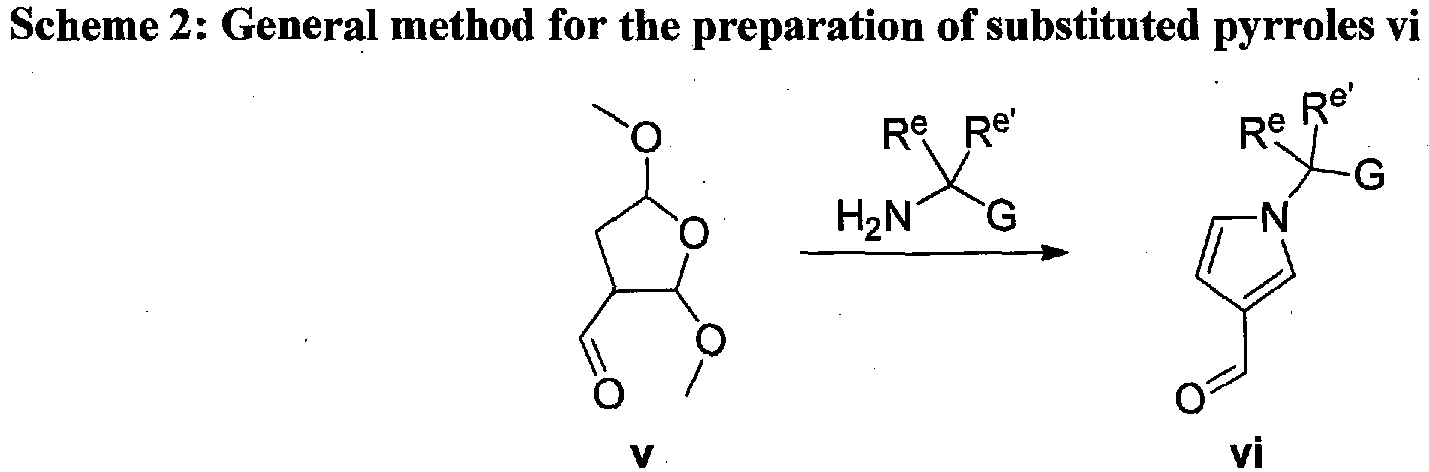
- Scheme 2 demonstrates that N-substituted pyrroles, vi, can be generated by the reaction of 2,5-dimethoxy-3-tetrahydrofurancarboxaldehyde v with appropriately substituted tertiary amines in the presence of acetic acid as described by
Yoshida, M. et al. (PCT Application Publication WO2009/148004 ).

- Scheme 3 depicts the synthesis of diaryl ketone intermediates ix. Pyrazole and pyrrole aldehydes vii can be N-alkylated with the desired electrophile via Method A. In this scheme Method A can also be an aryl coupling between vii and an aryl iodide to generate iii. Lithiation of a bis-halogenated pyrimidine or pyridine can be followed by addition of aldehydes iii to give secondary alcohols viii (Method B). The aldehydes iii generated in Scheme 1 could also be inserted into step 2 to give viii via Method B. Oxidation conditions (Method C: manganese(IV) oxide or Dess-Martin periodinane) can be utilized to complete diarylketones ix.

- Scheme 4 demonstrates that in similar fashion Method B can also generate diaryl ketones ix from Weinreb amide iv by employment of Method B.


- Scheme 5 shows a synthetic route for the preparation of compounds of formula xii. In Method D diaryl ketones ix can be treated with (1R,2S,3R,4R)-1-amino-2,3-(isoproplydenyl)dihydroxy-4-hydroxymethyl cyclopentane x (prepared according to
Claiborne, C.F. et al; PCT Application Publication WO 2008/019124 ) in the presence of base (K2CO3, DIEA, TEA) in a polar solvent (iPrOH, PrOH, nBuOH, DMF). A two step sequence consisting of sulfamation and deprotection of the acetonide under acidic conditions (Method E) can complete the synthesis of ketopyrimidines xii.
- Scheme 6 illustrates the syntheses of compounds with general structure xv. Diaryl ketones ix can be coupled with the TFA salt of cyclopentylamine xiii under conditions of Method D to provide compounds xiv. Employment of Method E (sulfamation followed by TIPS removal) can then lead to compounds xv.


- Scheme 7 illustrates that sulfonamides xviii can also be constructed by a similar route. Diaryl ketones ix can be coupled with cyclopentylamine xvi to give compounds of formula xvii (Method D). Removal of the TIPS protecting group on the secondary alcohol completes the synthesis of xviii.

- Scheme 8 describes a route for the preparation of compounds of formula xxii. By use of Method D diaryl ketones ix could be coupled to cyclopentylamine xix to give the corresponding aryl amines xx. In the second step these aryl amines can be subjected to a dilute acidic solution in ethanol to selectively remove the TBS protecting group in the presence of the TIPS protecting group (Method F). Sulfamation of the newly revealed primary alcohol followed by removal of the TIPS protecting group under acidic conditions (Method E) provides compounds of formula xxii.

- Scheme 9 demonstrates the synthesis of fluorinated compounds of formula xxv. Addition of (1F,2R,3R,5R)-3-amino-2-fluoro-5-(hydroxymethyl)cyclopentanol hydrochloride xxiii (Biggadike, K. et al. J. Chem. Soc. Perkin Trans. 1988, 3, 549-554.; Borthwick, A.D. et al. J. Med. Chem. 1990, 33, 179-186.) to ix can lead to formation of aryl amines xxiv. A selective sulfamation of the primary alcohol by treatment with a modified Burgess reagent (Armitage, I. et al. Org. Lett. 2012, 14, 2626-2629.) can then be followed by treatment with acid to remove the Boc group on the sulfamate (Method G) and results in the synthesis of fluorinated compounds xxv.


- Scheme 10 illustrates the synthesis of compounds of general structure xxx. Method D can be exploited for the addition of cyclopentylamines of general structure xxvi to diaryl ketones ix. In this sequence xxvi can be any of the cyclopentylamines xxxi, xxxii, xxiii, xxxiii, xxxiv, and xxxv (for xxxi see: Ober, M. et al. J. Am. Chem. Soc. 2005, 127, 18143-18149.; for xxxii see:
Armitage, I. et al. US Patent Application Publication 2009/0036678 ; for xxiii, xxxiii, xxxv see: Biggadike, K. at al. J. Chem. Soc. Perkin Trans. 1988, 3, 549-554.; Borthwick, A.D. et al. J. Med. Chem. 1990, 33, 179-186.). Protection of the free alcohols can be accomplished by prolonged treatment with TBSCl in DMF (Method H) to give compounds xxviii, which can then undergo selective deprotection of the primary silyl ether by use of Method F at reduced temperature (<4°C). Subsequent sulfamation/acid deprotection (Method E) of the secondary silyl ether in compound xxix can provide analogues xxx.

- Scheme 11 depicts the synthesis of keto arylamines possessing an amino group at the 2' position of the cyclopentylamine. Similar to Scheme 10, the azide-containing cyclopentylamine xxxvi can be coupled with diaryl ketones ix to give xxxvii. (For the construction of xxxvi, an adapted synthesis of those reported in the following publications can be used. Biggadike, K. at al. J. Chem. Soc. Perkin Trans. 1988, 3, 549-554.; Borthwick, A.D. et al. J. Med. Chem. 1990, 33, 179-186.) Standard protecting group manipulations (Methods E, F) followed by sulfamation of xxxix can provide intermediates xl. The 2' azide can then be reduced to the corresponding amine via Staudinger reduction followed by removal of the remaining protecting groups under acidic conditions to generate compounds xlii.

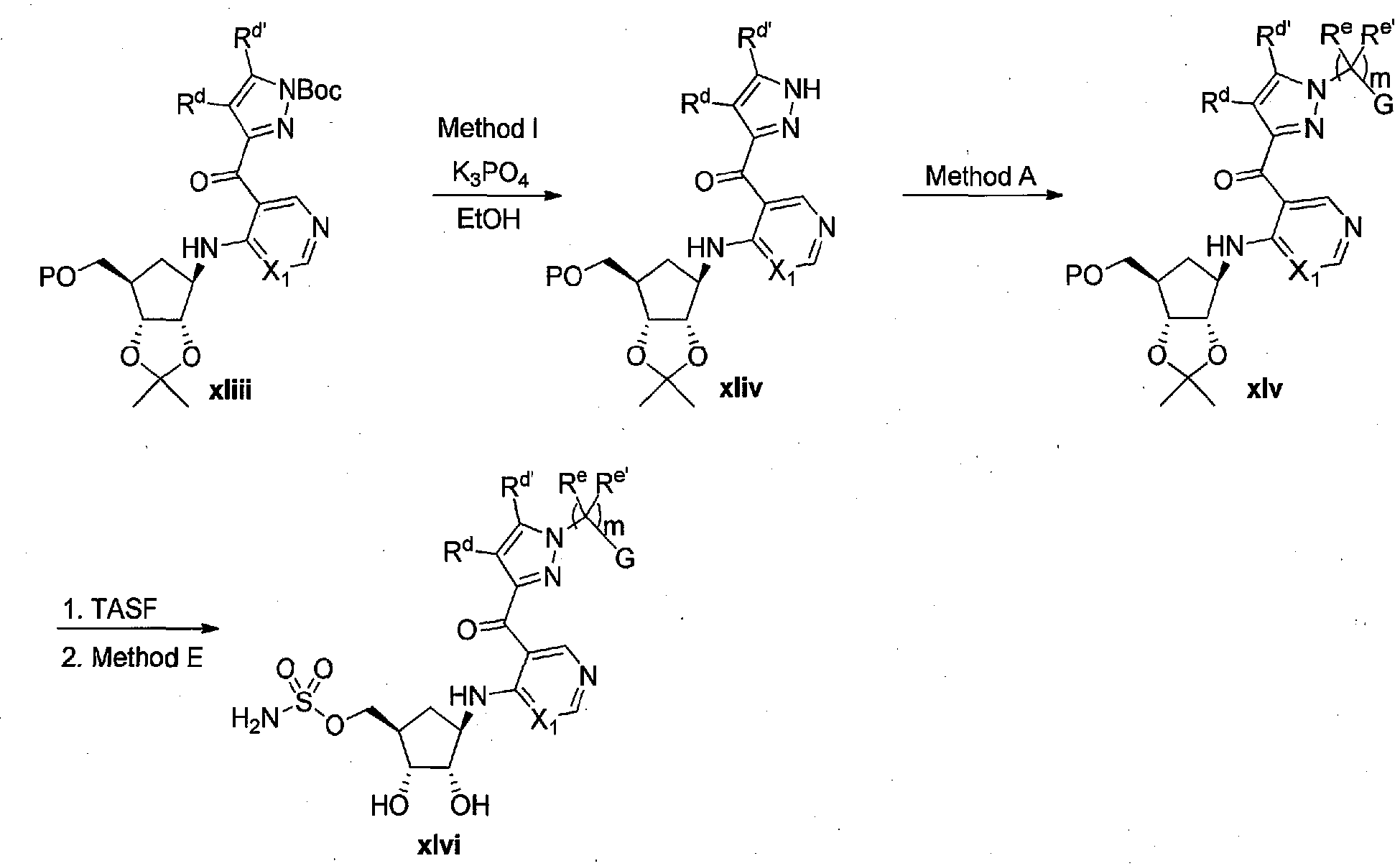
- Scheme 12 shows the use of an advanced intermediate to make pyrazole analogues xlvi. Advanced intermediates xliii (P = H or TBS) can be generated by the routes outlined in Schemes 3 and 5 with the appropriate Boc-protected pyrazole intermediates. Removal of the Boc protecting group can be accomplished by treatment with K3PO4 in ethanol (Method I) to generate intermediates xliv. Intermediates xliv can then be alkylated by use of Method A. If P = TBS then treatment of xlv with an appropriate fluoride source (TASF, TBAF) can remove the TBS protecting group. The final steps in this sequence are Method E which can accomplish sulfamation and acetonide removal to produce compounds xlvi.

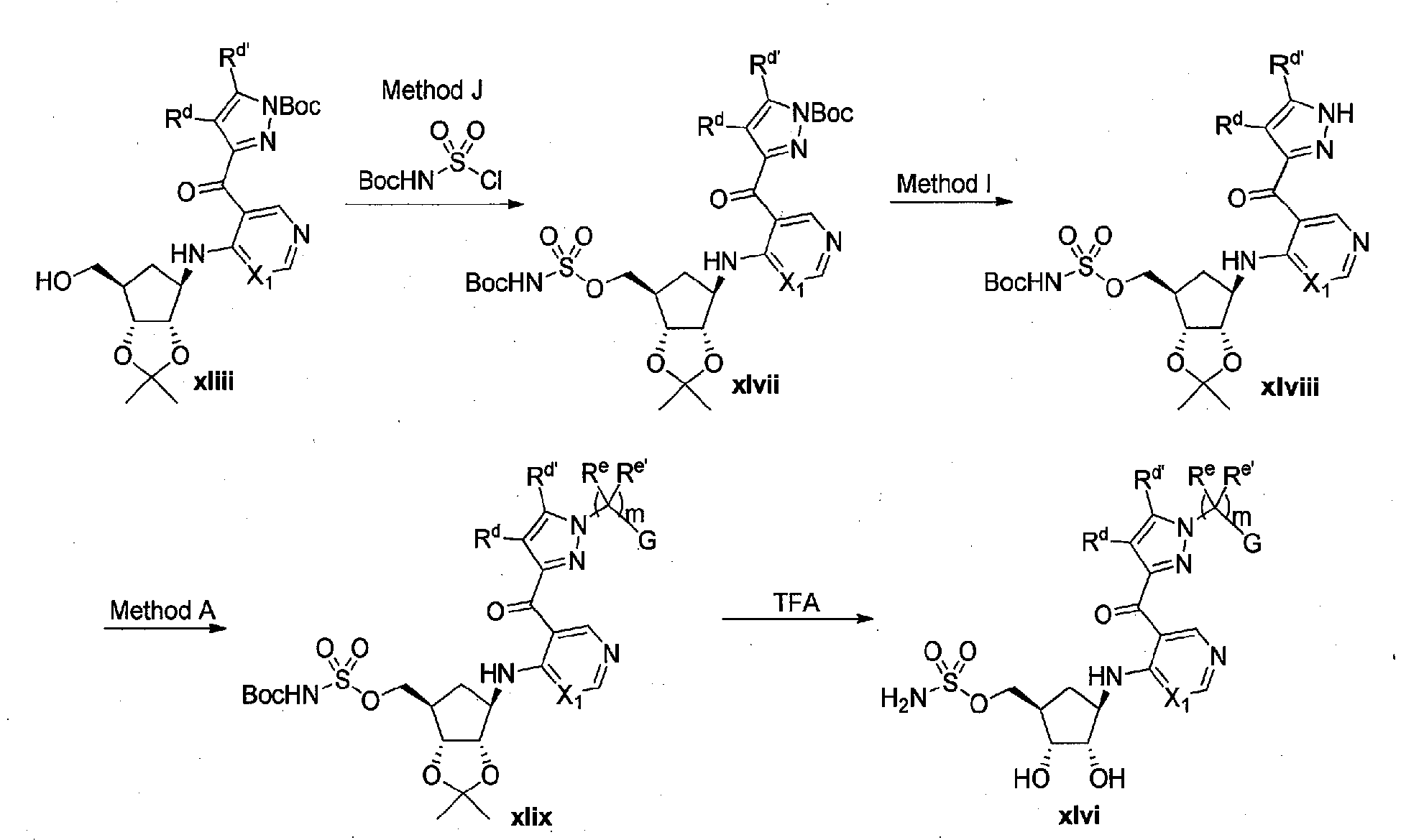
- Scheme 13 demonstrates an alternative synthetic sequence to compounds xlvi. Intermediates xliii (P = H) can be converted to the Boc protected sulfamates xlvii by addition of Boc protected chlorosulfonamide (Method J). Removal of the pyrazole Boc protecting group (Method I) can be followed by alkylation of intermediates xlviii to provide intermediates xlix (Method A). Final deprotection of the Boc and acetonide groups can be realized by treatment of intermediates xlix with TFA to produce analogues of general structure xlvi.

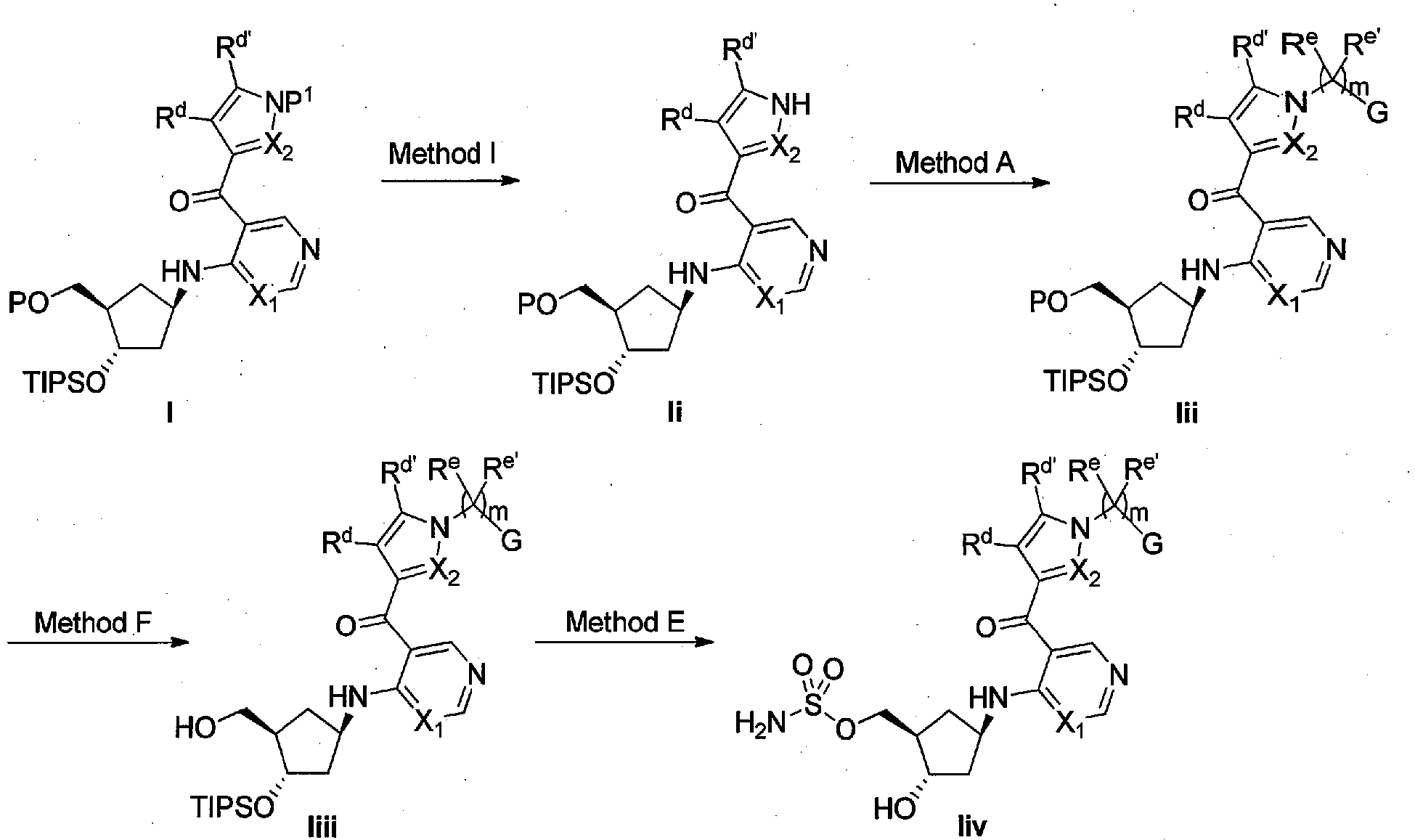
- In a similar fashion Scheme 14 shows the use of advanced intermediates to synthesize analogues liv. Advanced intermediates l can be generated by the routes outlined in Schemes 3 and 6 or Schemes 3 and 8 by using the appropriately protected pyrazole and pyrrole intermediates. P can be either TBS or H in compounds l while P1 can be either Boc (pyrazole, pyrrole) or tosyl (pyrrole). The first step in this sequence (removal of nitrogen protecting group on the heterocycle) can be achieved by Method I to generate compounds li. In this sequence Method I refers to either the removal of a Boc protecting group (pyrazole: K3PO4/EtOH; pyrrole: K2CO3/MeOH) or the removal of a tosyl group (pyrrole: K2CO3/MeOH). Employment of Method A can then be used to alkylate intermediates li to give compounds lii. If P = TBS then subjection of lii to Method F can remove the TBS protecting group leading to intermediates liii. Use of Method E (sulfamation followed by deprotection of the TIPS ether) can complete the synthesis of compounds liv.


- Scheme 15 gives an alternative method for the synthesis of pyrazole analogues lix. Intermediates lv can be converted to the Boc protected sulfamates Ivi via Method J. Method I can be utilized to remove the pyrazole Boc protecting group and subsequent alkylation of intermediates lvii by Method A can lead to formation of compounds lviii. Removal of the Boc and TIPS protecting groups by treatment with acid can finish construction of analogues of general structure lix.


- Scheme 16 also outlines the use of an advanced intermediate for analogue construction. In this case intermediates lx can be used to synthesize fluorinated analogues lxv. Advanced intermediates lx can be generated by use of the routes outlined in Schemes 3 and 9 implementing the appropriately protected pyrazole and pyrrole intermediates. Removal of the nitrogen protecting group on the heterocycle can be achieved by Method I to generate compounds lxi. Method I can refer to the removal of the Boc protecting group if the heterocycle is pyrazole (K3PO4/EtOH) or the removal of a tosyl group if the heterocycle is a pyrrole (K2CO3/MeOH). Use of Method H can promote protection of the alcohols as TBS ethers to produce intermediates lxii. Removal of the primary silyl protecting group (Method F) can be followed by alkylation of the nitrogen heterocycle (Method A) to achieve intermediates lxiv. These two steps can also be done in the reverse order (alkylation followed by deprotection). Again, the final steps in this sequence are employment of Method E (sulfamation, TBS removal) which can generate compounds lxv.

- Alternatively, Scheme 17 illustrates that intermediates lxi can be alkylated (Method A) to give intermediates lxvi. The primary alcohol of lxvi may then be sulfamated in a selective manner by use of Method G and complete the construction of fluorinated analogues lxv.
-
- AA
- LCMS method using ammonium acetate
- aq.
- aqueous
- Boc
- tert-butoxycarbonyl
- C
- Celsius
- DCM
- dichloromethane
- DIBA1-H
- diisobutylaluminum hydride
- DIEA
- diisopropylethylamine
- DMA
- dimethyl acetamide
- DMAP
- 4-dimethylaminopyridine
- DMF
- dimethyl formamaide
- DMSO
- dimethyl sulfoxide
- EtOAc
- ethyl acetate
- EtOH
- ethanol
- FA
- LCMS method using formic acid
- h
- hour(s)
- HATU
- (O-(7-azabenzotriazol-1-yl)-N,N,N',N'-tetramethyluronium hexafluorophosphate)
- IC50
- inhibitory concentration 50%
- LAH
- lithium aluminum hydride
- LCMS
- liquid chromoatography mass spectrometry
- LDA
- lithium diisopropyl amide
- m/z
- mass to charge
- min
- minute(s)
- NBS
- N-bromosuccinimide
- NMP
- N-methylpyrrolidine
- PPTS
- pyridinium para-toluenesulfonate
- RBF
- round bottomed flask
- rt
- room temperature
- TBS
- tert-butyldimethylsilyl
- TBAF
- tetra-n-butylammonium fluoride
- TEA
- triethylamine
- TFA
- trifluoroacetic acid
- THF
- tetrahydrofuran
- TIPS
- triisopropylsilyl
- TLC
- thin layer chromatography
- Tosyl
- p-toluenesulfonyl
- 1H NMR spectra are run on either a 300 MHz or 400 MHz Bruker instrument unless otherwise stated.
- LCMS data are acquired on either an Agilent 1100 Series HPLC system or a Waters Acquity UPLC system, connected to a Waters ZQ Mass Spectrometer. Various gradients and run times are used in order to best characterize the compounds under reverse phase conditions using C18 columns. Mobile phase compositions are based on Water/MeCN mixtures containing one of two modifiers: 0.1% formic acid (methods indicated FA) or 10 mM ammonium acetate (methods indicated AA). An example of an HPLC FA gradient program that is applied is running from 100% A to 100 % B at a flow rate of 1 mL/min over 16.5 min, where A = 99% Water + 1% MeCN + 0.1% Formic Acid and B = 95% MeCN + 5% Water + 0.1% Formic Acid.
- One of ordinary skill in the art will recognize that modifications of the gradient, column length, and flow rate are possible and that some conditions may be more suitable for compound characterization than others, depending on the chemical species being analyzed. Starting materials described were either purchased commercially or prepared by the literature routes if a citation is shown.
-

- To a solution of m-chlorophenylmethylcarbinol (0.50 g, 3.2 mmol) and pyridine (0.052 mL, 0.64 mmol) in DCM (10 mL) at -75°C was added phosphorus tribromide (0.30 mL, 3.2 mmol) dropwise. The mixture was stirred for 10 min and left to stand in a -25°C freezer overnight. The mixture was then placed in an ice bath and 3 mL water was added slowly. The mixture was partitioned into DCM and water. The organic layer was washed successively with water, 1M NaHCO3 and brine, dried over Na2SO4, filtered, and then concentrated to give 1-(1-bromoethyl)-3-chlorobenzene (700 mg, 100%). 1H NMR (CDCl3) δ 7.43 (s, 1H), 7.33 - 7.29 (m, 1H), 7.28 - 7.24 (m, 2H), 5.13 (q, J = 6.9 Hz, 1H), 2.03 (d, J = 6.9 Hz, 3H).
- The compounds listed in the table below were prepared in an analogous fashion to that described above starting from the listed starting materials. Standard bromination conditions employing NBS/PPh3 in DCM or CBr4/PPh3 in DCM were used in some cases in lieu of the described reaction conditions in Example 1.
Starting material Compound Name / No. Characterization Data 
2-Bromo-3-pentyne/Int-2 1H NMR (CDCl3) δ 4.67 - 4.57 (m, 1H), 1.91 - 1.87 (m, 6H). 
1-Bromo-3-(1-bromoethyl)benzene / Int-3 1H NMR (CDCl3) δ 7.58 (s, 1H), 7.42 (d, J = 7.9 Hz, 1H), 7.36 (d, J = 7.8 Hz, 1H), 7.21 (t, J = 7.9 Hz, 1H), 5.12 (q, J = 6.9 Hz, 1H), 2.02 (d, J = 6.9 Hz, 3H). 
(1R,2R)-1-(Bromomethyl)-2-methylcyclopropane and (1S,2S)-1-(Bromomethyl)-2-methylcyclopropane / Int-4 1H NMR (CDCl3) δ 3.40 - 3.28 (m, 2H), 1.06 (d, J = 6.0 Hz, 3H), 1.04 - 0.96 (m, 1H), 0.81 - 0.70 (m, 1H), 0.55 - 0.47 (m, 2H). (mixture of trans isomers) 
3-(Bromomethyl)tetrahydrofuran / Int-5 1H NMR (CDCl3) δ 3.94 - 3.86 (m, 2H), 3.82 - 3.74 (m, 1H), 3.60 (dd, J = 9.0, 5.7 Hz, 1H), 3.45 - 3.35 (m, 2H), 2.76 - 2.63 (m, 1H), 2.13 (dtd, J = 13.0, 8.0, 5.4 Hz, 1H), 1.69 (dt, J = 13.0, 7.1 Hz, 1H). 
(1R,2R)-2-(Bromomethyl)cyclopropyl]benzene and (1S,2S)-2-(Bromomethyl)cyclopropyl]benzene / Int-6 1H NMR (CDCl3) δ 6.99 - 7.51 (m, 5H), 3.55 (dd, J = 10.2, 7.4 Hz, 1H), 3.45 (dd, J = 10.2, 7.8 Hz, 1H), 1.90 - 2.04 (m, 1H), 1.63 (m, 1H), 1.25 (m, 1H), 1.06 (dt, J = 9.0, 5.4 Hz, 1H). (mixture of trans isomers) 
2-(Bromomethyl)-4-methylpyridine / Int-7 1H NMR (CDCl3) δ 8.43 (d, J = 5.0 Hz, 1H), 7.26 (s, 1H), 7.03 (d, J= 4.6 Hz, 1H), 4.52 (s, 2H), 2.36 (s, 3H). 
2-(Bromomethyl)-6-chloropyridine / Int-8 1H NMR (CDCl3) δ 7.66 (t, J = 7.8 Hz, 1H), 7.38 (dd, J = 7.6, 0.7 Hz, 1H), 7.26 (d, J = 7.7 Hz, 1H), 4.49 (s, 2H). 
1-Bromo-3-(1-bromopropyl)benzene / Int-9 1H NMR (CDCl3) δ 7.54 (t, J = 1.8 Hz, 1H), 7.41 (ddd, J = 7.9, 1.9, 1.1 Hz, 1H), 7.34 - 7.29 (m, 1H), 7.21 (t, J = 7.8 Hz, 1H), 4.79 (dd, J = 7.9, 6.9 Hz, 1H), 2.33 - 2.20 (m, 1H), 2.13 (dp, J = 14.3, 7.2 Hz, 1H), 1.00 (t, J = 7.3 Hz, 3H). 
2-Bromo-6-(1-bromoethyl)pyridine / Int-109 1H NMR (CDCl3) δ 7.64 - 7.53 7.47 (d, J = 7.3 Hz, 1H), 7.42 (d, J = 7.8 Hz, 1H), 5.19 (q, J = 6.9 Hz, 1H), 2.07 (d, J = 6.9 Hz, 3H). 
4-Bromo-2-(bromomethyl)pyridine / Int-110 1H NMR (CDCl3) δ 8.42 (d, J = 5.3 Hz, 1H), 7.65 (d, J = 1.6 Hz, 1H), 7.42 (dd, J = 5.3, 1.8 Hz, 1H), 4.52 (s, 2H). 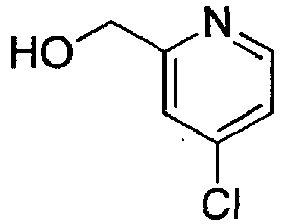
2-(Bromomethyl)-4-chloropyridine / Int-111 1H NMR (DMSO) δ 8.54 (d, J = 5.3 Hz, 1H), 7.73 (d, J = 1.6 Hz, 1H), 7.50 (dd, J = 5.4, 2.0 Hz, 1H), 4.69 (s, 2H). -

- A mixture of 4-fluoro-3-iodotoluene (5 g, 21 mmol), NBS (3.77 g, 21 mmol) and azobisisobutyronitrile (35 mg, 0.21 mmol) in CCl4 (30 mL) was heated to reflux for 4 h. The reaction was cooled to rt and concentrated. The residue was purified on silica gel to obtain 4-(bromomethyl)-1-fluoro-2-iodobenzene (1.7 g, 26%). 1H NMR (CDCl3) δ 7.78 - 7.80 (m, 1H), 7.32 - 7.37 (m, 1H), 7.00 - 7.05 (m, 1H), 4.41 (s, 2H).
- The compounds listed in the table below were prepared using similar methods to that described above starting from the listed starting materials:
Starting material Compound Name / No. Characterization Data 
1-(Bromomethyl)-3-(tert-butyl)benzene / Int-11 1H NMR (CDCl3) δ 7.21 - 7.41 (m, 4H), 4.52 (s, 2H), 0.28 (s, 9H). 
(3-(Bromomethyl) phenyl)trimethylsilane / Int-12 1H NMR (CDCl3) δ 7.30 - 7.53 (m, 4H), 4.52 (s, 2H), 1.33 (s, 9H). Ball, L.T. et al. Chem. Eur. J. 2012, 18, 2931-2937. -

- Methyl 3-formylbenzoate (1.64 g, 10.0 mmol) was dissolved in acetic acid (30 mL), and zinc (3.9 g, 60 mmol) was added to this solution at rt. It was then allowed to stir at rt for 2 h. The resulting solid was filtered and poured into 1N HCl (100 mL). The mixture was extracted with DCM (2x). The combined organic layers were then concentrated and the crude product was purified on silica gel to give 3-hydroxymethyl-benzoic acid methyl ester (0.94 g, 57%).
- 3-Hydroxymethyl-benzoic acid methyl ester (0.94 g, 5.7 mmol) was dissolved in THF (70 mL) and the solution was cooled to 0°C. Methylmagnesium bromide (3.0 M solution in ether; 9.4 mL, 28 mmol) was added dropwise to this solution. The reaction was allowed to warm to rt and then stirred for 4 h. The reaction was then quenched with a saturated NH4Cl solution (aq.) and the mixture extracted with DCM (3x). The combined organic layers were dried over MgSO4 filtered, and concentrated. The residue was purified on silica gel to give 2-[3-(hydroxymethyl)phenyl]propan-2-ol-(0.82 g, 87%).
- 2-[3-(Hydroxymethyl)phenyl]propan-2-ol (0.82 g, 4.9 mmol) and carbon tetrabromide (0.49 g, 1.5 mmol) were dissolved in DCM (30 mL). Triphenylphosphine (0.39 g, 1.5 mmol) was added to this solution at rt and the reaction was allowed to stir for 16 h. The reaction mixture was then concentrated and the crude mixture purified on silica gel to provide 2-[3-(bromomethyl)phenyl]propan-2-ol (0.40 g, 36%). 1H NMR (CDCl3) δ 7.56 (s, 1H), 7.35 (m, 2H), 7.31 (dt, J = 3.5, 1 Hz, 1H), 4.54 (s, 2H), 1.61 (s, 6H).
- The compound listed in the table below were prepared in an analogous fashion to that described above starting from the listed starting materials in step 2:
Starting material Compound Name / No. Characterization Data 
2-[6-(Bromomethyl)pyridin-2-yl]propan-2-ol / Int-14 1H NMR (CDCl3) δ 7.71 (dd, J = 9.5, 6.0 Hz, 1H), 7.31 (d, J = 10.9 Hz, 1H), 7.22 (d, J = 7.6, 1H), 4.77 (s, 2H), 1.56 (s, 6H). -

- To a RBF was added 3-chloro-1-benzothiophene-2-carboxylic acid (1.0 g, 4.7 mmol) in THF (15 mL) and cooled to 0°C. Lithium aluminium hydride (2.0 M solution in THF; 2.35 mL, 4.70 mmol) was then added slowly and the resulting mixture was stirred at 0°C for 1h. Additional lithium aluminium hydride (2.0 M solution in THF; 2.0 mL, 4.0 mmol) was then added and the reaction was stirred at rt for 2 h. The reaction was then quenched slowly with water and a saturated solution of Rochelle's salt was added and the mixture stirred for 30 min. The reaction was next extracted with EtOAc (3x). The combined organic layers were washed with water and brine, dried over Na2SO4, filtered and concentrated to give (3-chloro-1-benzothien-2-yl)methanol (0.53 g, 56%).
- To a solution of (3-chloro-1-benzothien-2-yl)methanol (0.25 g, 1.26 mmol) and pyridine (0.020 mL, 0.25 mmol) in DCM (5 mL) at -75°C was added phosphorus tribromide (0.13 mL, 1.38 mmol) dropwise. The mixture was stirred at -75°C for 1 h. The mixture was allowed to stand in a freezer (at -25 °C) for 2 h. The mixture was cooled to 0°C and quenched slowly with water (3 ml). The mixture was then partitioned into DCM and water. The separated organic layer was washed successively with water, 1M NaHCO3, and brine. The solution was then dried over Na2SO4,filtered and concentrated to provide 2-(bromomethyl)-3-chlorobenzo[b]thiophene (0.33 g, 100%). The crude product was used in the next step without purification (see Example 88).
- The compounds listed in the table below were prepared using similar methods to that described above starting from the listed starting materials in the first step. Standard bromination conditions employing CBr4/PPh3 in DCM were used in some cases in lieu of the described reaction conditions for step 2.
Starting material Compound Name / No. Characterization Data 
2-(Bromomethyl)-5-(trifluoromethyl)thiophene / Int-16 1H NMR (CDCl3) δ 7.30 (s, 1H), 7.10 (s, 1H), 4.70 (s, 2H). 
4-(Bromomethyl)-2-(trifluoromethyl)pyridine / Int-17 1H NMR (CDCl3) δ 8.72 (d, J = 5.0 Hz, 1H), 7.70 (s, 1H), 7.51 (dd, J = 5.0, 1.2 Hz, 1H), 4.45 (s, 2H). 
4-(3-(Bromomethyl)phenyl)morpholine / Int-18 1H NMR (CDCl3) δ 7.22 - 7.27 6.83 - 6.93 (m, 3H), 4.46 (s, 2H), 3.85 - 3.88 (m, 4H), 3.16 - 3.19 (m, 4H). 
2-(Bromomethyl)-5-chlorothiophene / Int-19 1H NMR (CDCl3) δ 6.88 (d, J = 4 Hz, 1H), 6.74 (d, J = 4 Hz, 1H), 4.62 (s, 2H), 3.85 - 3.88 (m, 4H), 3.16 - 3.19 (m, 4H). 
2-(Bromomethyl)-3-chlorothiophene / Int-20 1H NMR (CDCl3) δ 7.31 (d, J = 5.4 Hz, 1H), 6.90 (d, J = 5.4 Hz, 1H), 4.68 (s, 2H). -

- To a RBF was added lithium borohydride (0.052 g, 2.4 mmol) and THF (18 mL). The resulting reaction mixture was stirred at 0 °C for 5 min then 5-bromo-2-furaldehyde (0.42 g, 2.4 mmol) was added and the mixture was allowed to warm to rt and stir for 16 h. 1 M HCl (aq.) was added carefully to quench the reaction. Solid NaCl was then added until the solution was saturated and the mixture was extracted with EtOAc (2x). The combined organic extracts were washed with brine, dried over MgSO4, and concentrated to give 5-bromo-furan-2-yl-methanol (0.38 g, 90%). 1H NMR (CDCl3) δ 6.16 (s, 1H), 6.15 (s, 1H), 4.44 (s, 2H).
- To a RBF was added 5-bromo-furan-2-yl-methanol (0.38 g, 2.1 mmol), ether (15 mL), and phosphorus tribromide (0.20 mL, 2.2 mmol). The resulting reaction mixture was stirred at rt for 18 h. Water was then added and the mixture was extracted with EtOAc (2x). The combined organic extracts were washed with brine, dried over MgSO4, and concentrated to give 2-bromo-5-(bromomethyl)furan (0.45 g, 87%). 1H NMR (CDCl3) δ 6.28 (d, J = 3.3 Hz, 1H), 6.19 (d, J = 3.3 Hz, 1H), 4.37 (s, 2H).
- The compounds listed in the table below were prepared using similar methods to that described above starting from the listed starting materials.
Starting material Compound Name / No. Characterization Data 
2-(Bromomethyl)-5-(methoxymethyl)furan / Int-22 1H NMR (CDCl3) δ 6.37 (d, J = 3.3 Hz, 1H), 6.30 (d, J = 3.2 Hz, 1H), 4.51 (s, 2H), 4.41 (s, 2H), 3.44 - 3.37 (s, 3H). 
2-(Bromomethyl)-5-chlorofuran / Int-23 1H NMR (CDCl3) δ 6.40 (d, J = 3.3 Hz, 1H), 6.15 (d, J = 3.3 Hz, 1H), 4.46 (s, 2H). -

- To a RBF was added lithium borohydride (0.10 g, 4.5 mmol) and diethyl ether (10 mL). The resulting reaction mixture was stirred at 0°C for 5 min then 5-methyl-2-furancarboxaldehyde (0.50 g, 4.5 mmol) was added and the mixture was allowed to warm to rt and stir for 16 h. 1 M HCl (aq.) was added carefully to quench the reaction. Solid NaCl was then added until the solution was saturated and the mixture was extracted with ether (2x). The combined organic extracts were washed with brine, dried over MgSO4, and concentrated to give 5-methyl-2-furanmethanol (0.38 g, 90%). 1H NMR (CDCl3) δ 6.18 (d, J = 3.0 Hz, 1H), 5.93 (d, J = 2.9 Hz, 1H), 4.56 (s, 2H), 2.30 (s, 3H).
- To a RBF was added 5-methyl-2-furanmethanol (0.13 g, 1.1 mmol), DCM (15 mL), and TEA (0.16 mL, 1.1 mmol). The resulting reaction mixture was cooled in an ice bath and thionyl chloride (0.10 mL, 1.4 mmol) was added dropwise. The mixture was allowed to stir at 0°C for 45 min whereupon water was added. The organic layer was separated, dried over MgSO4, filtered and concentrated to give 2-(chloromethyl)-5-methylfuran (0.15 g, 100%).1H NMR (CDCl3) δ 6.31- 6.25 (m, 1H), 5.95 (m, 1H), 4.59 (s, 2H), 2.33 (s, 3H).
-

- To a RBF was added 5-chloro-2-furaldehyde (0.74 g, 5.7 mmol) and THF (35 mL). The resulting reaction mixture was cooled to 0°C and methylmagnesium bromide (3.0 M solution in ether; 3.5 mL, 10.50 mmol) was added dropwise. The mixture was then stirred at 0°C for 25 min and the reaction was quenched by addition of a saturated solution of NH4Cl. The mixture was extracted with EtOAc (2x). The combined organic extracts were washed with brine, dried over MgSO4, and concentrated to give 1-(5-chloro-2-furyl)ethanol (0.82 g, 99%). 1H NMR (CDCl3) δ 6.13 (dd, J = 3.3, 0.7 Hz, 1H), 6.01 (d, J = 3.3 Hz, 1H), 4.71 (q, J = 6.4 Hz, 1H), 2.56 (s, 1H), 1.42 (d, J = 6.6 Hz, 3H).
- To a solution of 1-(5-chloro-2-furyl)ethanol (0.49 g, 3.3 mmol) in DCM (30 mL) at 0°C was added thionyl chloride (0.49 mL, 6.7 mmol) dropwise. The mixture was stirred for 1 h at 0°C then at rt overnight. Water (20 ml) and a saturated solution of NaHCO3 (30 ml) were added. The organic layer was separated, dried over MgSO4, filtered and concentrated to give 2-chloro-5-(1-chloroethyl)furan (0.55 g, 100%). 1H NMR (CDCl3) δ 6.33 (dd, J = 3.3, 0.7 Hz, 1H), 6.14 (d, J = 3.3 Hz, 1H), 5.14 - 5.05 (m, 1H), 1.87 (d, J = 6.9 Hz, 3H).
-

- 5-Acetoxymethyl-2-furaldehyde (3.0 g, 18 mmol) was dissolved in DCM (50 mL) and diethylaminosulfur trifluoride (DAST) (4.3 g, 27 mmol) was added to the solution at 0 °C. The reaction mixture was then allowed to warm to rt and stir for 16 h. The mixture was then quenched with water and extracted with DCM (50 mL). The organic layer was concentrated and the resulting residue was purified on silica gel to give [5-(difluoromethyl)-2-furyl]methyl acetate (2.2 g, 66%).
- [5-(Difluoromethyl)-2-furyl]methyl acetate (2.2 g, 11.8 mmol) was dissolved in methanol (30 mL) and a solution of lithium hydroxide (0.85 g, 35 mmol) in water (10 mL) was added at rt. The resulting mixture was stirred at rt for 4 h. The mixture was concentrated to remove the methanol and the remaining aqueous mixture was neutralized by addition of IN HCl (50 mL). The mixture was extracted with DCM (3x). The combined organic layers were dried over MgSO4, filtered, and concentrated. The residue was purified on silica gel to give [5-(difluoromethyl)-2-furyl]methanol (1.1 g, 61%).
- [5-(Difluoromethyl)-2-furyl]methanol (1.1 g, 7.2 mmol) and phosphorus tribromide (1.0 mL, 10.8 mmol) were dissolved in DCM (30 mL) and the reaction was allowed to stir for 16 h. The reaction mixture was then concentrated and the crude mixture purified on silica gel to yield 2-(bromomethyl)-5-(difluoromethyl)furan (0.98 g, 65%). 1H NMR (CDCl3) δ 6.65 - 6.62 (m, 1H), 6.45 - 6.50 (m, 2H), 4.50 (s, 2H).
-
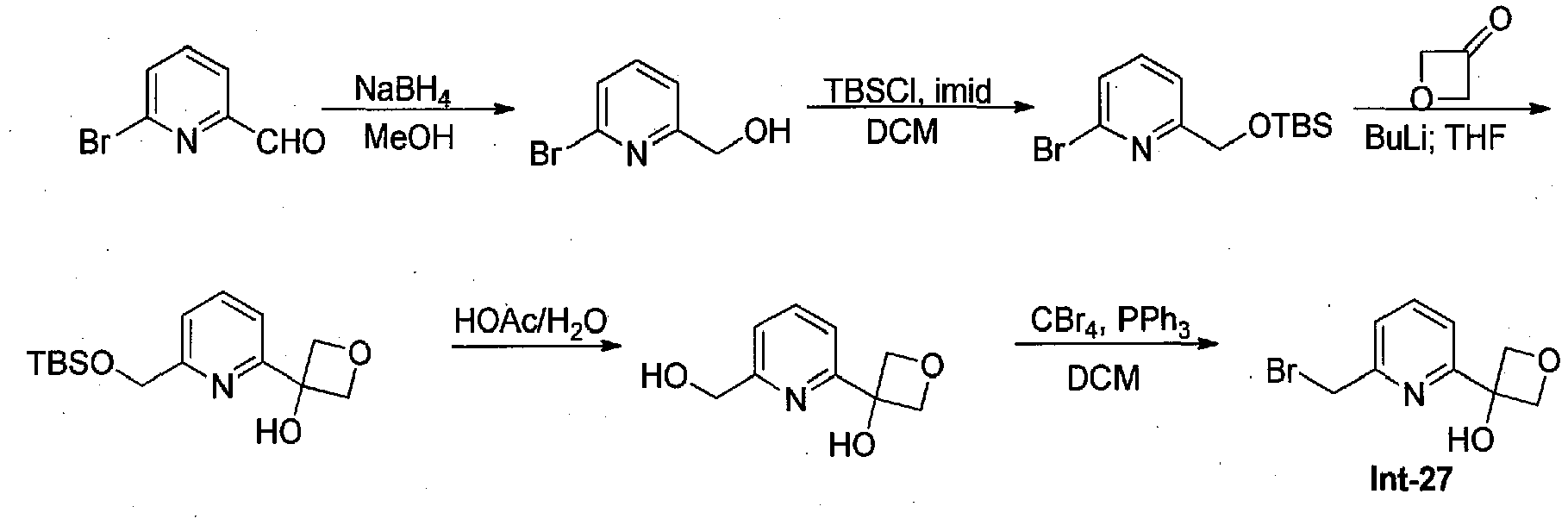
- 6-Bromo-2-pyridine carboxaldehyde (2.8 g, 15 mmol) was dissolved in methanol (30 mL) and cooled to 0 °C. Sodium tetrahydroborate (0.87 g, 23 mmol) was added portionwise over a period of 5 min. It was allowed to stir at 0°C for 1 h. The solution was then poured into water (80 mL), and the mixture was extracted with DCM (3x). The combined organic layers were washed with water and then concentrated to yield 6-bromo-2-(hydroxymethyl)pyridine (2.5 g, 88%).
- 6-Bromo-2-(hydroxymethyl)pyridine (2.5 g, 13.2 mmol) and tert-butyldimethylsilyl chloride (2.4 g, 16 mmol) were dissolved in DCM (80 mL). 1H-Imidazole (1.2 g, 17 mmol) was then added to this solution at rt and it was allowed to stir for 4 h. The reaction was then washed with water and the organic layer was concentrated and purified on silica gel to afford 2-bromo-6-({[tert-butyl(dimethyl)silyl]oxy}methyl)pyridine (2.2 g, 55%) as a clear liquid.
- 2-Bromo-6-({[tert-butyl(dimethyl)silyl]oxy}methyl)pyridine (2.2 g, 7.2 mmol) was dissolved in THF (50 mL) and then cooled to -78°C. n-Butyllithium (2.0 M solution in THF; 4.7 mL, 9.4 mmol) was then injected into the solution dropwise. The resulting deep brown solution was stirred at -78°C for 30 min. A solution of 3-oxetanone (0.54 g, 7.6 mmol) in THF (5 mL) was next added to the reaction and the resulting light yellow solution was stirred at -78°C for 2 h. The reaction was then quenched by addition of a saturated NH4Cl solution (aq.), which was then extracted with EtOAc (2x). The combined organic layers were concentrated and purified on silica gel to provide 3-[6-({[tert-butyl(dimethyl)silyl]oxy}methyl)pyridin-2-yl]oxetan-3-ol (1.6 g, 75%).
- 3-[6-({[tert-Butyl(dimethyl)silyl]oxy}methyl)pyridin-2-yl]oxetan-3-ol (1.6 g, 5.4 mmol) was dissolved into a solution of acetic acid (30 mL) and water (10 mL). The reaction was then stirred at 35°C for 16 h. The mixture was concentrated almost to dryness and then a saturated solution of NaHCO3 was added to basify (pH > 8). The mixture was extracted with EtOAc (5x). The combined organic layers were dried, filtered and concentrated. The crude product was purified on silica gel to give 3-[6-(hydroxymethyl)pyridin-2-yl]oxetan-3-ol (0.64 g, 65%).
- 3-[6-(Hydroxymethyl)pyridin-2-yl]oxetan-3-ol (0.64 g, 3.5 mmol) and carbon tetrabromide (1.4 g, 4.2 mmol) were dissolved in DCM (30 mL) at rt. Triphenylphosphine (1.1 g, 4.2 mmol) was added and the solution stirred for 16 h. The reaction mixture was concentrated and the residue purified on silica gel to yield 3-[6-(bromomethyl)pyridin-2-yl]oxetan-3-ol (0.68 g, 80%). 1H NMR (CDCl3) δ 7.87 - 7.99 (m, 2H), 7.45 - 7.51 (m, 1H), 5.90 (s, 1H), 5.03 - 5.22 (d, 2H), 4.68-4.84 (d, 2H), 4.57 (s, 2H).
-

- tert-Butyldimethyl(2-propynyloxy)silane (2.0 g, 11.7 mmol) was dissolved in THF (40 mL) and cooled to -78 °C. n-Butyllithium (2.5 M solution in hexanes; 5.15 mL, 12.9 mmol) was added dropwise and then the solution was warmed to -30°C for 20 min. The reaction was cooled again to -78 °C and 3-oxetanone (0.84 g, 11.7 mmol) was added. After stirring at -78 °C for 30 min, it was allowed to warm to rt and stir for 30 min. The reaction mixture was poured into a saturated aqueous solution of NH4Cl and then extracted with EtOAc (2x). The combined organic layers were concentrated and purified on silica gel to afford 3-(3-{[tert-butyl(dimethyl)silyl]oxy}prop-1-yn-1-yl)oxetan-3-ol (2.3 g, 81%).
- 3-(3-{[tert-butyl(dimethyl)silyl]oxy}prop-1-yn-1-yl)oxetan-3-ol (2.3 g, 9.5 mmol) was dissolved in DCM (50 mL) followed by addition of a solution of water (0.86 mL, 48 mmol) and TFA (5.4 g, 48 mmol). The mixture was stirred at rt for 4 h. The reaction mixture was concentrated and purified on silica gel to give 3-(3-hydroxyprop-1-yn-1-yl)oxetan-3-ol (0.98 g, 81%).
- 3-(3-Hydroxyprop-1-yn-1-yl)oxetan-3-ol (0.98 g, 7.7 mmol) and carbon tetrabromide (2.8 g, 8.4 mmol) were dissolved in DCM (30 mL) at rt. Triphenylphosphine (2.3 g, 8.8 mmol) was added and the solution stirred for 16 h. The reaction mixture was concentrated and the residue purified on silica gel to 3-(3-bromoprop-1-yn-1-yl)oxetan-3-ol (1.05 g, 72%). 1H NMR (CDCl3) δ 4.85 (d, J = 6.7, 0.9 Hz, 2H), 4.76 - 4.67 (d, 2H), 3.99 (s, 2H).
-

- tert-Butyldimethyl(2-propynyloxy)silane (1.6 g, 9.3 mmol) was dissolved in THF (40 mL) and cooled to -78 °C. n-Butyllithium (2.5 M solution in hexanes; 4.1 mL, 10.2 mmol) was added dropwise and then the solution was warmed to -30 °C for 20 min. The reaction was cooled again to -78 °C and tetrahydro-4H-pyran-4-one (0.93 g, 9.3 mmol) was added. After stirring at -78 °C for 30 min, it was allowed to warm to rt and stir for 30 min. The reaction mixture was poured into a saturated aqueous solution of NH4Cl and then extracted with EtOAc (2x). The combined organic layers were concentrated and purified on silical gel to afford 4-(3-{[tert-butyl(dimethyl)silyl]oxy}prop-1-yn-1-yl)tetrahydro-2H-pyran-4-ol (1.9 g, 75%).
- 4-(3-{[tert-butyl(dimethyl)silyl]oxy}prop-1-yn-1-yl)tetrahydro-2H-pyran-4-ol (1.9 g, 7.0 mmol) was dissolved in a solution of water (2 mL) and TFA (18 mL). The mixture was stirred at rt for 4 h then concentrated. The residue was dissolved in water (30 mL) and the mixture washed with DCM (2x). The aqueous layer was collected and concentrated to yield 4-(3-hydroxyprop-1-yn-1-yl)tetrahydro-2H-pyran-4-ol (0. 56 g, 51%).
- 4-(3-Hydroxyprop-1-yn-1-yl)tetrahydro-2H-pyran-4-ol (0.56 g, 3.6 mmol) was dissolved in THF (20 mL) and DIEA (1.4 g, 11 mmol) was added to this solution. The solution was cooled to 0 °C and methanesulfonic anhydride (0.81 g, 4.7 mmol) was added. It was then allowed to warm to rt and stir for 2 h. The solution was concentrated and the crude residue purified on silical gel to afford 3-(4-hydroxytetrahydro-2H-pyran-4-yl)prop-2-yn-1-yl methanesulfonate (0.52 g, 62%). 1H NMR (CDCl3) δ 4.85 (s, 2H), 3.84 (m, 2H), 3.58 (m, 2H), 3.05 (s, 3H), 1.92 - 1.82 (m, 2H), 1.76 (m, 2H).
-

- To a solution of 3-bromobenzyl alcohol (1.9 g, 10.0 mmol) in THF (30 mL) was added tert-butyldimethylsilyl chloride (1.96 g, 13.0 mmol) and TEA (2.0 g, 20.0 mmol). The solution was stirred for 16 h at rt. The reaction was then quenched by addition of water (5 mL). EtOAc (50 mL) was added and this solution was washed with water (3x10mL). The organic layer was dried over MgSO4,filtered, and concentrated to afford [(3-bromobenzyl)oxy](tert-butyl)dimethylsilane (3.5g, 100%).
- [(3-Bromobenzyl)oxy](tert-butyl)dimethylsilane (3.5 g, 11.6 mmol) was dissolved in THF (60 mL) and cooled to -78 °C. n-Butyllithium (2.5 M solution in hexanes; 7.6 mL, 15.1 mmol) was added dropwise and then the solution was warmed to -30 °C for 20 min. The reaction was cooled again to -78 °C and 3-oxetanone (0.84 g, 11.7 mmol) was added. After stirring at -78 °C for 30 min, it was allowed to warm to rt and stir for 30 min. The reaction mixture was poured into a saturated aqueous solution of NH4Cl and then extracted with EtOAc (2x). The combined organic layers were concentrated and purified on silica gel to give the unprotected alcohol, which was then dissolved in a solution of water (4 mL) and TFA (16 mL). The mixture was stirred at 0 °C for 2 h. The reaction mixture was concentrated and purified on silica gel to give 3-[3-(hydroxymethyl)phenyl]oxetan-3-ol (0.53 g, 25%).
- 3-[3-(Hydroxymethyl)phenyl]oxetan-3-ol (0.53 g, 2.9 mmol) was dissolved in THF (20 mL) and DIEA (1.4 g, 11 mmol) was added to this solution. The solution was cooled to 0 °C and methanesulfonic anhydride (0.67 g, 3.8 mmol) was added. It was then allowed to warm to rt and stir for 2 h. The solution was concentrated and the crude residue purified on silical gel to afford 3-(4-hydroxytetrahydro-2H-pyran-4-yl)prop-2-yn-1-yl methanesulfonate (0.33 g, 44%). 1H NMR (CDCl3) δ 7.70 (d, J = 7.0 Hz, 2H), 7.49 (s, 1H), 7.36 - 7.47 (m, 1H), 5.29 (s, 2H), 4.92 (m, 4H), 2.98 (s, 3H).
-

- 3-Bromo-1,1,1-trifluoroacetone (8.7 g, 46 mmol) was dissolved into a solution of sodium ethoxide (6.2 g, 91 mmol) in EtOH (100 mL) and then cooled to 0 °C. 3-Oxobutanoic acid ethyl ester (5.9 g, 46 mmol) was added to this solution while keeping the temperature under 10 °C. The reaction was then allowed to warm to rt and stir for 16 h. The reaction mixture was quenched by addition of a saturated aqueous solution of NH4Cl (50 mL) and then extracted with DCM (3x). The combined organic layers were concentrated and the remaining residue dissolved in toluene (100 mL), followed by the addition of toluenesulfonic acid (1.6 g, 9.1 mmol). This mixture was heated to reflux for 4 h. The mixture was then allowed to cool to rt and washed with water (10 mL). The organic layer was concentrated and the crude product was purified on silica gel to give ethyl 2-methyl-4-(trifluoromethyl)-3-furoate (3.2 g, 31%).
- Ethyl 2-methyl-4-(trifluoromethyl)-3-furoate (3.2 g, 14 mmol) was dissolved in THF (30 mL) then added to a solution of lithium hydroxide (1.0 g, 43 mmol) in water (20 mL). It was then stirred at rt for 16 h. IN HCl (60 mL) was then added and it was extracted with EtOAc (3x). The combined organic layers were concentrated and purified on silica gel to yield 2-methyl-4-(trifluoromethyl)furan-3-carboxylic acid (1.0 g, 37%).
- 2-Methyl-4-(trifluoromethyl)furan-3-carboxylic acid (1.0 g, 5.2 mmol) was dissolved in quinoline (15 mL) and copper(II) sulfate (0.25 g, 1.5 mmol) was added. The reaction flask was fitted with a distillation apparatus and the reaction heated at 250 °C with stirring. 2-methyl-4-(trifluoromethyl)furan (0.34 g, 44%) was collected as a liquid (bp: 72- 74 °C).
- 2-Methyl-4-(trifluoromethyl)furan (0.34 g, 2.3 mmol) and 2,2'-azo-bis-isobutyronitrile (0.019 g, 0.11 mmol) were dissolved in carbon tetrachloride (20 mL). NBS (0.40 g, 2.3 mmol) was added and the solution was stirred at rt for 16 h. The reaction mixture was concentrated and the crude product was purified on silica gel to give 2-(bromomethyl)-4-(trifluoromethyl) (0.27 g, 52 %). 1H NMR (CDCl3) δ 7.71 (s, 1H), 6.50 (s, 1H), 4.35 (s, 2H).
-

- 5,6-Dihydro-2h-pyran-3-carbaldehyde (0.49 g, 4.4 mmol) was dissolved in methanol (20 mL) and cooled to 0 °C. Sodium tetrahydroborate (0.33 g, 8.7 mmol) was added portionwise over a period of 15 min. It was allowed to stir at 0 °C for 2 h. The solution was then poured into water (30 mL), and the mixture was extracted with DCM (3x). The combined organic layers were washed with water and then concentrated to yield 5,6-dihydro-2H-pyran-3-ylmethanol (0.27 g, 55%).
- 5,6-Dihydro-2H-pyran-3-ylmethanol (0.27 g, 2.4 mmol) was dissolved in DCM (20 mL) and DIEA (0.9 g, 7.1 mmol) was added to this solution. The solution was cooled to 0 °C and methanesulfonic anhydride (0.62 g, 3.6 mmol) was added. It was then allowed to warm to rt and stir for 2 h. The reaction was diluted with DCM (100 mL) and washed with water (2x). The organic layer was dried over MgSO4, filtered, and concentrated to afford 5,6-dihydro-2H-pyran-3-ylmethyl methanesulfonate (0.40 g, 89%). 1H NMR (CDCl3) δ 6.10 (s, 1H), 4.65 (s, 2H), 4.20 (s, 2H), 3.75 (m, 2H), 3.0 (s, 3H), 2.25 (m, 2H).
-

- Borane (1M in THF; 9.0 mL, 9.0 mmol) was added to a solution of 1-methyl-5-(trifluoromethyl)pyrazole-3-carboxylic acid (350 mg, 1.8 mmol) in THF (10 mL) at rt. The mixture was stirred was stirred for 3 hours. It was then cooled to 0 °C and quenched with water. The mixture was extracted with EtOAc (3x) and the combined organic layers were washed with brine, dried over Na2SO4, filtered, and concentrated. The residue was purified on silica gel to afford [1-methyl-3-(trifluoromethyl)-1H-pyrazol-5-yl]methanol (188 mg; 58%) as a colorless oil. LCMS (FA): m/z= 181 (M+H).
- To a solution of [1-methyl-3-(trifluoromethyl)-1H-pyrazol-5-yl]methanol (79 mg, 0.44 mmol) and methanesulfonyl chloride (0.037 mL, 0.47 mmol) in EtOAc (5 mL) was added TEA (0.091 mL, 0.65 mmol) and the mixture was stirred at RT for 3 h. The mixture was quenched with water and extracted with EtOAc (3x). The combined organic layers were washed with brine, dried over Na2SO4, filtered and concentrated to yield [1-methyl-3-(trifluoromethyl)-1H-pyrazol-5-yl]methyl methanesulfonate (112 mg, 100%). LCMS (FA): m/z = 259.1 (M+H).
- The compound listed in the table below was prepared in an analogous fashion to that described above starting from the listed starting material:
Starting material Compound Name / No. 
[1-Methyl-5-(trifluoromethyl)-1H-pyrazol-3-yl] methyl methanesulfonate / Int-34 -

- To a solution of 2-oxo-1,2-dihydropyridine-3-carbaldehyde (1.0 g, 8.1 mmol) in DMF (20 mL) was added cesium carbonate (3.2 g, 9.8 mmol) at rt and the mixture was stirred for 15 minutes. Methyl iodide (0.61 mL, 9.8 mmol) was added to the mixture and it was stirred at rt for 3 hours. The mixture was quenched with aq. NH4Cl and extracted with EtOAc (3x). The organic layer was washed with brine, dried over Na2SO4 and concentrated. The crude product was purified on silica gel to afford methyl-3-formyl-2(1H)-pyridone as a yellow powder (0.57 g, 51%). LCMS (FA): m/z = 138 (M+H).
- To a solution of N-methyl-3-formyl-2(1H)-pyridone (570 mg, 4.2 mmol) in methanol (10 mL) was added sodium tetrahydroborate (160 mg, 4.2 mmol) at rt and the mixture was stirred for 2 h. The mixture was quenched with water and extracted with EtOAc (3x). The organic layer was washed with brine, dried over Na2SO4 and concentrated. The crude product was purified on silica gel to give 3-(hydroxymethyl)-1-methylpyridin-2(1H)-one (613 mg, 100%).
- To a solution of 3-(hydroxymethyl)-1-methylpyridin-2(1H)-one (459 mg, 3.30 mmol) in DCM (10 mL) was added thionyl chloride (0.29 mL, 4.0 mmol) at rt and the mixture was stirred for 2 hours. The volatiles were removed under reduced pressure and the residue was quenched with aq. NaHCO3 and extracted with EtOAc. The organic layer was washed with brine, dried over Na2SO4 and concentrated. The crude product was purified on silica gel to afford 3-(chloromethyl)-1-methylpyridin-2(1H)-one (370 mg, 71%). LCMS (FA): m/z= 158 (M+H).
- The compound listed in the table below was prepared in an analogous fashion to that described above starting from the listed starting material used in step 2:
Starting material Compound Name / No. Characterization Data 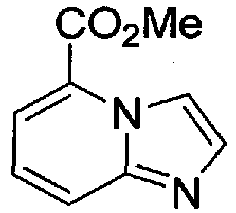
5-(Chloromethyl)imidazo[1,2-a]pyridine / Int-36 LCMS (FA): m/z = 167 (M+H). -

- To a solution of 2-methoxy-pyridine-3-carbaldehyde (2.03 g, 14.8 mmol) in THF (35 mL) was added sodium tetrahydroborate (617 mg, 16.3 mmol) at rt and the mixture was stirred for 1 h. The mixture was quenched with water and extracted with EtOAc. The organic layer was washed with brine, dried over Na2SO4 and concentrated. The crude product was purified on silica gel to give (2-methoxypyridin-3-yl)methanol (2.05 g, 99%) as a clear oil. LCMS (FA): m/z = 140 (M+H).
- To a solution of (2-methoxypyridin-3-yl)methanol (811 mg, 5.8 mmol) and N-bromosuccinimide (1.24 g, 7.0 mmol) in DCM (10 mL) was added triphenylphosphine (1.8 g, 7.0 mmol) at rt and the mixture was stirred for 2 h. The mixture was quenched with water and extracted with EtOAc. The organic layer was washed with brine, dried over Na2SO4 and concentrated. The crude product was purified on silica gel to give 3-(bromomethyl)-2-methoxypyridine (829 mg, 70%) as clear oil. 1H NMR (CDCl3) 8.14 (dd, J = 5.0, 1.9 Hz, 1H), 7.63 (dd, J = 7.3, 1.9 Hz, 1H), 6.89 (dd, J= 7.3, 5.0 Hz, 1H), 4.51 (s, 2H), 4.04 (s, 3H).
- The compound listed in the table below was prepared in an analogous fashion to that described above starting from the listed starting material:
Starting material Compound Name /No. Characterization Data 
2-(Bromomethyl)-6-methoxypyridine / Int-38 1H NMR (CDCl3) δ 7.56 (dd, J = 8.3, 7.2 Hz, 1H), 7.01 (dd, J = 7.2, 0.5 Hz, 1H), 6.68 (d, J = 8.3 Hz, 1H), 4.48 (s, 2H), 3.96 (s, 3H). -

- To a solution of imidazo[1,2-a]pyridin-6-ylmethanol (54 mg, 0.37 mmol) and methanesulfonyl chloride (32 uL, 0.41 mmol) in DCM (3 mL) was added TEA (66 uL, 0.47 mmol) and the mixture was stirred at rt for 3 h. The mixture was filtered and the filtrate was concentrated to give imidazo[1,2-a]pyridin-6-ylmethyl methanesulfonate (84 mg, 100%). LCMS (FA): m/z = 227 (M+H).
-
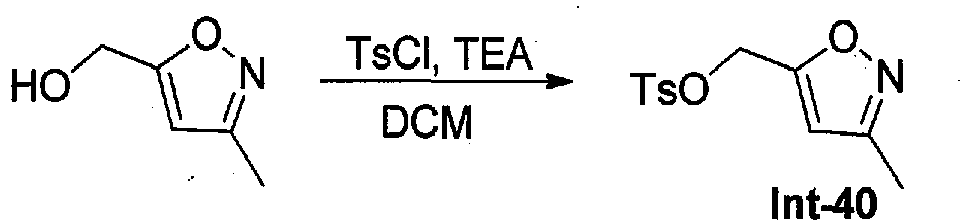
- TEA (1.2 mL, 8.8 mmol) was added to a solution of (3-methylisoxazol-5-yl)methanol (0.5 g, 4 mmol) and p-toluenesulfonyl chloride (1.3 g, 6.6 mmol) in THF (10 mL) at room temp under an atmosphere of argon. A catalytic amount of DMAP was added and the reaction strirred at rt. After 24 h the reaction was quenched by the addition of brine. The mixture was extracted with EtOAc (3x). The combined organic layers were dried over MgSO4, filtered, and concentrated. The crude product was purified on silica gel to yield 3-methylisoxazol-5-yl)methyl 4-methylbenzenesulfonate (130 mg, 10%). LCMS (FA): m/z = 268 (M+H).
- The compounds listed in the table below were prepared in a similar fashion to that described above starting from the listed starting materials:
Starting material Compound Name / No. Characterization Data 
Pent-3-yn-1-yl 4-methylbenzenesulfonate / Int-41 LCMS (FA): m/z = 239.2 (M+H). 
3,6-Dihydro-2H-pyran-4-ylmethyl 4-methylbenzenesulfonate / Int-42 1H NMR (CDCl3) δ 7.76 - 7.89 (m, 2H), 7.37 (d, J = 8.0 Hz, 2H), 5.75 - 5.79 (m, 1H), 4.47 (s, 2H), 4.10 (m, 2H), 3.72 (t, J = 5.5 Hz, 2H), 2.48 (s, 3H), 2.06 (dd, J = 4.6, 2.6 Hz, 2H). Hatano, M. et al. J. Am. Chem. Soc. 2003, 125, 4704-4705. -

- A reaction vial was charged with (3-bromo-4-fluorophenyl)methanol (1.0 g, 4.9 mmol), (PPh3)2PdCl2 (68 mg, 0.10 mmol), CuI (37 mg, 0.20 mmol), and TEA (5.0 mL, 36 mmol). The vial was purged with argon and then sealed with a cap. After sonication, (trimethylsilyl)acetylene (1.0 mL, 7.3 mmol) was added to the mixture, and the resulting mixture was heated at 100 °C for 48 h. The reaction was diluted with EtOAc (100mL) and the EtOAc layer was washed with 1 M HCl (60 mLx2), water (60 mL) and brine (60 mL). The organic layer was dried over Na2SO4, filtered, and concentrated in vacuo. The residue was purified on silica gel to give {4-fluoro-3-[(trimethylsilyl)ethynyl]phenyl}methanol (287 mg, 26%).
- To a solution of {4-fluoro-3-[(trimethylsilyl)ethynyl]phenyl}methanol (280 mg, 1.20 mmol) in MeOH (3 mL) was added K2CO3 (0.87 g, 6.30 mmol) at rt, and the mixture was stirred for 1 h. The reaction was concentrated in vacuo. To the residue was added water (50mL) and extracted with Et2O (50 mLx3). The combined organic layers were dried over Na2SO4, filtered, and concentrated in vacuo. The residue was purified by silica gel column chromatography to give (3-ethynyl-4-fluorophenyl)methanol (178 mg, 94%) as a light brown oil.
- To a solution of (3-ethynyl-4-fluorophenyl)methanol (180 mg, 1.2 mmol) in DCM (10 mL) was added TEA (0.24 mL, 1.8 mmol) followed by methanesulfonyl chloride (95 uL, 1.2 mmol) at 0 °C under an atmosphere of argon. The mixture was stirred for 4 h. The reaction was quenched by addition of water (50 mL) and DCM (50 mL). After separation, the DCM layer was washed with water (50 mL) followed by brine (50 mL) and then dried over Na2SO4. The mixture was filtered and concentrated in vacuo. The residue was purified on silica gel to give 3-ethynyl-4-fluorobenzyl methanesulfonate (145 mg, 55%) as a colorless solid. 1H NMR (CDCl3) δ 7.55 (dd, J = 6.5, 2.3 Hz, 1H), 7.43 - 7.37 (m, 1H), 7.13 (t, J= 8.7 Hz, 1H), 5.18 (s, 2H), 3.34 (s, 1H), 2.98 (s, 3H).
- The compound listed in the table below was prepared in an analogous fashion to that described above starting from the listed starting material:
Starting material Compound Name / No. Characterization Data 
(3-Ethynylphenyl)methanol / Int-44 1H NMR (CDCl3) δ 7.50-7.60 (m, 2H), 7.35 - 7.45 (m, 2H), 5.23 (s, 2H), 3.15 (s, 1H), 2.95 (s, 3H). -

- A 100 mL 2-necked RBF equipped with 3-way stopcock and septum was purged with argon and then the flask was cooled to -78 °C. To the flask was attached a needle connected with a propyne gas cylinder. Liquid propyne (1.7 mL, 30 mmol) was condensed and collected in the flask. To the flask was added TEA (5.0 mL, 36 mmol) followed by bis(triphenylphosphine)palladium(II) chloride (30 mg, 0.04 mmol), CuI (16 mg, 0.08 mmol), and a solution of 3-iodobenzyl alcohol (700 mg, 3.0 mmol) in TEA (2.00 mL, 14.3 mmol) at -78 °C, and the resulting mixture was heated at 50 °C for 2 h. The reaction was cooled to rt and diluted with EtOAc (70 mL). The mixture was filtered through a Celite pad and the residual solid was rinsed with EtOAc several times. The filtrate was washed with 1M HCl (x2), water, and brine. The organic layer was dried over Na2SO4, filtered, and concentrated in vacuo. The residue was purified on silica gel to give [3-(prop-1-yn-1-yl)phenyl]methanol (380 mg, 87%).
- To a solution of [3-(prop-1-yn-1-yl)phenyl]methanol (100 mg, 0.68 mmol) in DCM (5.0 mL) was added TEA (0.19 mL, 1.4 mmol) followed by methanesulfonyl chloride (0.06 mL, 0.72 mmol) at 0 °C, and the mixture was stirred for 6 h at rt. The reaction was quenched by addition of water (50 mL) and extracted with EtOAc (50 mLx3). The combined organic layers were dried over Na2SO4, filtered, and concentrated in vacuo. The residue was purified on silica gel to give 3-(prop-1-yn-1-yl)benzyl methanesulfonate (61 mg, 40%) as a colorless oil. 1H NMR (CDCl3) δ 7.44 (s, 1H), 7.43 - 7.37 (m, 1H), 7.36 - 7.29 (m, 2H), 5.20 (s, 2H), 2.93 (s, 3H), 2.05 (s, 3H).
-

- A microwave reaction vial was charged with (3-bromo-4-fluorophenyl)methanol (530 mg, 2.6 mmol), potassium cyclopropyltrifluoroborate (0.77 g, 5.2 mmol), Cs2CO3 (2.5 g, 7.8 mmol), 1,1'-bis(diphenylphosphino)ferrocenedichloropalladium(II) (95 mg, 0.13 mmol), THF (10.6 mL) and water (1.1 mL). After sealing with cap under an atmosphere of argon, the mixture was heated at 100 °C for 4 h. The reaction was diluted with EtOAc and the mixture was filtered through a celite pad. The residual solid was rinsed with EtOAc and water. The two layers were transferred into a separatory funnel and then separated. The water layer was extracted with EtOAc (x2). The combined organic layers were dried over Na2SO4, filtered, and concentrated. The residue was purified on silica gel to give (3-cyclopropyl-4-fluorophenyl)methanol (309 mg, 72%) as a light yellow oil.
- To a solution of (3-cyclopropyl-4-fluorophenyl)methanol (300 mg, 1.8 mmol) in DCM (10 mL) was added TEA (0.38 mL, 2.7 mmol) followed by methanesulfonyl chloride (0.15 mL, 1.9 mmol) at 0 °C, and the mixture was stirred for 3 h at rt. The reaction was quenched by addition of water (50 mL) and extracted with DCM (50 mLx3). The combined organic layers were dried over Na2SO4, filtered, and concentrated. The residue was purified on silica gel to give 3-cyclopropyl-4-fluorobenzyl methanesulfonate (215 mg, 49%) as a colorless oil. 1H NMR (CDCl3) δ 7.20 - 7.15 (m, 1H), 7.03 (dd, J = 9.9, 8.4 Hz, 1H), 6.95 (dd, J = 7.1, 2.3 Hz, 1H), 5.15 (s, 2H), 2.91 (s, 3H), 2.09 (tt, J = 8.5, 5.2 Hz, 1H), 1.01 (ddd, J = 8.5, 6.4, 4.6 Hz, 2H), 0.74 (dt, J = 6.5, 4.7 Hz, 2H).
-

- Into a RBF was added 2-bromofuran (0.50 g, 3.4 mmol) dissolved in TEA (3.5 mL, 25 mmol). Copper(I) iodide (26 mg, 0.14 mmol) and bis(triphenylphosphine)palladium(II) chloride (48 mg, 0.07 mmol) were added next and the mixture was purged with argon. tert-Butyldimethyl(2-propynyloxy)silane (0.90 mL, 4.4 mmol) was then added and the mixture was heated at 70 °C overnight. The crude mixture was cooled to rt and extracted with EtOAc (3x). The combined organic layers were then washed with water and brine, dried over Na2SO4, filtered and concentrated. The crude product was purified on silica gel to give tert-butyl{[3-(2-furyl)prop-2-yn-1-yl]oxy}dimethylsilane (0.91 g, 100%).
- HCl (3 M solution in water; 0.13 mL, 0.38 mmol) was added to a solution of tert-butyl{[3-(2-furyl)prop-2-yn-1-yl]oxy}dimethylsilane (0.91 g, 3.8 mmol) in THF (20 mL) and the reaction was stirred overnight at rt. It was then quenched with a saturated solution of NaHCO3 and extracted with EtOAc (3X). The combined organic layers were then washed with water and brine, dried over Na2SO4, filtered and concentrated. The crude product was purified on silica gel to give 3-(2-furyl)prop-2-yn-1-ol (0.48g, 100%).
- To a mixture of 3-(2-furyl)prop-2-yn-1-ol (0.48 g, 3.9 mmol) in DCM (15 mL) cooled at 0 °C was added triphenylphosphine (1.2 g, 4.7 mmol) followed by carbon tetrabromide (1.96 g, 5.90 mmol). The reaction was then stirred at 0 °C for 15 min and then concentrated. The crude product was purified on silica gel to provide 2-(3-bromoprop-1-yn-1-yl)furan (0.57g, 78%). 1H NMR (CDCl3) δ 7.40 (dd, J = 1.8, 0.7 Hz, 1H), 6.64 (d, J= 3.4 Hz, 1H), 6.40 (dd, J = 3.4, 1.9 Hz, 1H), 4.17 (s, 2H).
-

- A mixture of 2-propyn-1-ol (0.25 mL, 4.2 mmol), 1-methyl-4-iodo-1H-pyrazole (0.80 g, 3.9 mmol), bis(triphenylphosphine)palladium(II) chloride (0.13 g, 0.19 mmol), copper(I) iodide (0.073 g, 0.38 mmol), and TEA (1.1 mL, 7.7 mmol) in DMF (5.0 mL) was stirred at rt for 4 h. The mixture was purified on silica gel (directly charged to column) to afford 3-(1-methyl-1H-pyrazol-4-yl)prop-2-yn-1-ol (403 mg; 77%). LCMS (FA): m/z = 137 (M+H).
- Triphenylphosphine (550 mg, 2.1 mmol) was added to a DCM (5 mL) solution of 3-(1-methyl-1H-pyrazol-4-yl)prop-2-yn-1-ol (258 mg, 1.9 mmol) and NBS (370 mg, 2.1 mmol) at rt and the mixture was stirred overnight. The mixture was purified on silica gel (directly charged to column) to afford 4-(3-bromoprop-1-yn-1-yl)-1-methyl-1H-pyrazole (297 mg; 79%) as a colorless oil. LCMS (FA): m/z = 199 (M+H).
-

- tert-Butyldimethyl(2-propynyloxy)silane (2.4 mL, 12 mmol) was dissolved in THF (40 mL) then it was cooled to -78 °C. n-Butyllithium (2.50 M in hexanes; 5.2 mL, 12.9 mmol) was added and the resulting solution allowed to stir for 30 min at -78 °C. Acetone (1.0 mL, 14 mmol) was then added to the reaction, which was then allowed to stir at -78 °C for 30 min, followed by stirring at rt for 30 min. The reaction was then quenched by the addition of saturated aq solution of NH4Cl. The mixture was extracted with ether (2x). The combined organic layers were dried over MgSO4, filtered, and concentrated to provide 5-{[tert-butyl(dimethyl)silyl]oxy}-2-methylpent-3-yn-2-ol (2.7g, 100%). 1H NMR (CDCl3) δ 4.25 (s, 2H), 3.60 (m, 1H), 1.30 (s, 6H), 0.80 (s, 9H), 0.0 (s, 6H).
- 5-{[tert-butyl(dimethyl)silyl]oxy}-2-methylpent-3-yn-2-ol (1.0 g, 4.4 mmol) was dissolved in THF (20 mL) under an atmosphere of argon and cooled to 0 °C in an ice bath. Sodium hydride (0.21 g, 5.2 mmol) was added and the resulting suspension was allowed to stir at 0 °C for 30 min. Methyl iodide (0.54 mL, 8.8 mmol) was then added and the reaction was allowed to slowly warm to rt. After stirring overnight at that temperature, TLC showed the reaction was complete. The reaction was quenched by addition of saturated NH4Cl solution (aq.) then extracted with EtOAc (2x). The combined organic layers were dried over MgSO4, filtered, and concentrated to give tert-butyl[(4-methoxy-4-methylpent-2-yn-1-yl)oxy]dimethylsilane (0.95 g, 90%). 1H NMR (CDCl3) δ 4.25 (s, 2H), 3.23 (s, 3H), 1.30 (s, 6H), 0.80 (s, 9H), 0.0 (s, 6H).
- HCl (3.0 M solution in water; 0.13 mL, 0.39 mmol) was added to a solution of tert-butyl[(4-methoxy-4-methylpent-2-yn-1-yl)oxy]dimethylsilane (0.95 g, 3.9 mmol) in THF (20 mL) at rt. The solution was allowed to stir overnight. The reaction was concentrated then purified on silica gel to yield 4-methoxy-4-methylpent-2-yn-1-ol (0.33 g, 66%). 1H NMR (CDCl3) δ 4.30 (s, 2H), 3.30 (s, 3H), 1.45 (s, 6H).
- Methanesulfonyl chloride (0.20 mL, 2.6 mmol) was added to a solution of 4-methoxy-4-methylpent-2-yn-1-ol (0.32 g, 2.5 mmol) and TEA (0.52 mL, 3.7 mmol) in DCM (9 mL) at 0 °C under an atmosphere of argon. The reaction was then allowed to stir at 0 °C for 1 h and the reaction was quenched by the addition of water. This mixture was extracted with DCM (3x). The combined organic layers were dried over MgSO4, filtered, and concentrated. The crude product was purified on silica gel to give 4-methoxy-4-methylpent-2-yn-1-yl methanesulfonate (380 mg, 74%). 1H NMR (CDCl3) δ 4.90 (s, 2H), 3.30 (s, 3H), 3.15 (s, 3H), 1.50 (s, 6H).
-

- HCl (3.0 M solution in water; 0.14 mL, 0.44 mmol) was added to a solution of 5-{[tert-butyl(dimethyl)silyl]oxy}-2-methylpent-3-yn-2-ol (1.0 g, 4.4 mmol) in THF (20 mL) at rt. After stirring overnight the reaction was concentrated and purified on silica gel to afford 4-methylpent-2-yne-1,4-diol (0.35 g, 70%). 1H NMR (CDCl3) δ 4.30 (s, 2H), 1.55 (s, 6H).
- Methanesulfonyl chloride (0.23 mL, 3.0 mmol) was added to a solution of 4-methylpent-2-yne-1,4-diol (0.33 g, 2.9 mmol) and TEA (0.60 mL, 4.3 mmol) in DCM (10 mL) at 0 °C under an atmosphere of argon. The reaction was allowed to stir at 0 °C for 1 h The reaction was then quenched by the addition of water and the resulting mixture was extracted with DCM (3x). The combined organic layers were dried over MgSO4 filtered, and concentrated. The crude product was purified on silica gel to give 4-hydroxy-4-methylpent-2-yn-1-yl methanesulfonate (340 mg, 61%). 1H NMR (CDCl3) δ 4.90 (s, 2H), 3.15 (s, 3H), 1.60 (s, 6H).
-

- A 500 mL RBF under nitrogen charged with DCM (96 mL) and oxalyl chloride (3.6 mL, 42 mmol) was cooled to -60°C. Dimethyl sulfoxide (6.5 mL, 92 mmol) was added dropwise and the mixture stirred 10 min. A solution of 2-tetrahydropyran-4-ylethanol (5 g, 40 mmol) in DCM (40 mL) was added slowly and this mixture was stirred 15 minutes. TEA (30 mL, 200 mmol) was subsequently added slowly and the temperature allowed to rise to -30°C. The cooling bath was then removed and the reaction warmed to rt. The reaction was quenched with water and the aqueous layer was extracted with DCM (3x). The combined organic portions were washed with brine, dried over sodium sulfate, filtered, and concentrated. The crude oil was purified on silica gel to give (tetrahydro-pyran-4-yl)-acetaldehyde (3.7 g, 72%).
- A RBF under nitrogen was charged with (tetrahydro-pyran-4-yl)-acetaldehyde (3.7 g, 29 mmol), DCM (10 mL), and triphenylphosphine (19 g, 71 mmol) and then cooled to 0°C. A solution of carbon tetrabromide (11.8 g, 36 mmol) in DCM was added dropwise keeping the internal temperature under 30°C. A precipitate formed. After stirring 30 min the solid was removed via filtration. The filtrate was concentrated and the resulting residue purified on silica gel to give 4-(3,3-dibromoprop-2-en-1-yl)tetrahydro-2H-pyran (6.04 g, 74%).
- A 500mL oven-dried 2-neck RBF under nitrogen charged with 4-(3,3-dibromoprop-2-en-1-yl)tetrahydro-2H-pyran (3.0 g, 10.6 mmol) and THF (33 mL) was cooled to -10°C. n-Butyllithium (2.5 M solution in hexane; 8.4 mL, 21.0 mmol) was added slowly over 10 min keeping the internal temperature at 0°C. This mixture was kept at the same temperature and stirred 30 min. Paraformaldehyde (0.79 g, 26 mmol) was added in a single portion and the mixture allowed to warm slowly to rt and stir for 18 h. It was then cooled in an ice bath and quenched by slowly adding saturated ammonium chloride (10 mL). The organic solvents were removed in vacuo and water was added. The mixture was extracted with EtOAc (3x). The combined organic portions were washed with brine, dried over sodium sulfate, filtered, and concentrated. The crude product was purified on silica gel to give 4-(tetrahydro-2H-pyran-4-yl)but-2-yn-1-ol (593 mg, 36%).
- A 50mL RBF under nitrogen charged with 4-(tetrahydro-2H-pyran-4-yl)but-2-yn-1-ol (0.59 g, 3.8 mmol), ether (10 mL) and p-toluenesulfonyl chloride (0.84 g, 4.4 mmol) was cooled to 0°C in an ice bath. Potassium hydroxide (2.8 g, 50 mmol) was then added in small portions. The reaction mixture was kept at 0°C and stirred for 1 h. The reaction was quenched with water and the aqueous layer was extracted with ether (3x). The combined organic portions were washed with brine, dried over magnesium sulfate, filtered, and concentrated. The crude product was purified on silica gel to give 4-(tetrahydro-2H-pyran-4-yl)but-2-yn-1-yl 4-methylbenzenesulfonate (520 mg, 44%). LCMS (FA): m/z = 309 (M+H).
-

- A 250 mL 2-necked round bottomed flask equipped with septum and 3-way stopcock was purged with argon. THF (12 mL) and 3-cyclopentyl-1-propyne (1 mL, 9 mmol) were added into the reaction vessel via syringe and the solution was cooled to -78 °C. To the solution was added n-butyllithium (2.5 M solution in hexane; 3.5 mL, 8.8 mmol), and the mixture was stirred for 30 min at -78 °C. To this mixture was added a suspension of 1,3,5-trioxane (0.83 g, 9.2 mmol) in THF (3.1 mL), and the resulting suspension was stirred for 30 min at -78 °C then warmed to rt gradually. The reaction was then quenched by addition of water (5 mL) and extracted with ether (8 mL). The ether layer was dried over Na2SO4, filtered, and concentrated in vacuo (at low temperature and low vacuum because of volatility of the product). The residue was purified on silica gel to provide 4-cyclopentylbut-2-yn-1-ol (785 mg, 63%).
- To a 50 mL RBF was added DCM (13 mL) followed by 4-cyclopentylbut-2-yn-1-ol (780 mg, 5.6 mmol) and carbon tetrabromide (2.8 g, 8.5 mmol). The reaction was cooled to 0 °C and triphenylphosphine (2.2 g, 8.5 mmol) was added. The reaction was kept at this temperature for 2 hours while stirring. The reaction was then quenched with a saturated NaHCO3 solution followed by water, and the mixture was extracted with EtOAc (2x). The organic layers were combined and dried (MgSO4), filtered, and concentrated. The residue was purified on silica gel to give (4-bromobut-2-yn-1-yl)cyclopentane (1.0 g, 89%). 1H NMR (CDCl3) δ 3.87 (s, 2H), 2.25 - 2.11 (m, 2H), 2.04 - 1.90 (m, 1H), 1.77 - 1.66 (m, 2H), 1.64 - 1.41 (m, 4H), 1.28 - 1.10 (m, 2H).
-

- A 250 mL 2-necked round bottomed flask equipped with septum and 3-way stopcock was purged with argon. THF (40 mL) and cyclopropyl acetylene (2.5 mL, 30 mmol) were added into the reaction vessel and the solution was cooled to -78 °C. To the solution was added n-butyllithium (2.50 M in hexane; 11.5 mL, 28.7 mmol), and the mixture was stirred for 30 min at -78 °C. To the mixture was added a suspension of 1,3,5-trioxane (2.7 g, 30 mmol) in THF (10 mL), and the resulting suspension was stirred for 30 min at -78 °C then warmed up to rt gradually. The reaction was quenched by addition of water (50 mL) and extracted with Et2O (80 mL). The organic layer was dried over Na2SO4, filtered, and concentrated. The residue was purified on silica gel to give 3-cyclopropylprop-2-yn-1-ol (2.61 g, 81%) as a colorless oil.
- To a solution of 3-cyclopropylprop-2-yn-1-ol (300 mg, 3.1 mmol) in DCM (15 mL) was added TEA (0.65 mL, 4.7 mmol) followed by methanesulfonyl chloride (0.25 mL, 3.3 mmol) at 0 °C under an atmosphere of argon. The mixture was stirred for 2 h and then quenched by the addition of water (80 mL) followed by extraction with DCM (100 mL). The DCM layer was washed with brine, dried over Na2SO4, filtered, and concentrated. The residue was purified on silica gel to afford 3-cyclopropylprop-2-yn-1-yl methanesulfonate (265 mg, 49%) as a colorless oil. 1H NMR (CDCl3) δ 4.82 (d, J = 2.1 Hz, 2H), 3.10 (s, 3H), 1.34 - 1.24 (m, 1H), 0.87 - 0.81 (m, 2H), 0.76 - 0.70 (m, 2H).
-

- 3,3-Dimethyl-1-butyne (3.0 mL, 25 mmol) was dissolved in THF (86 mL) and cooled to -78 °C. n-Butyllithium (2.5 M solution in hexanes; 11.1 mL, 27.6 mmol) was added dropwise and then the solution was allowed to stir for 30 min. Formaldehyde (0.80 mL, 29 mmol) was then added and stirred at -78 °C for 30 min. It was then allowed to warm to rt and stir for 30 min. The reaction mixture was poured into a saturated aqueous solution of NH4Cl and then extracted ether (2x). The combined organic layers were dried over MgSO4, filtered, and concentrated to give 4,4-dimethylpent-2-yn-1-ol (2.8 g, 98%).
- To a RBF was added 4,4-dimethylpent-2-yn-1-ol (0.28 g, 2.5 mmol), p-toluenesulfonyl chloride (0.57 g, 3.0 mmol), and THF (20 mL). The resulting reaction mixture was stirred at 0 °C and sodium tert-butoxide (0.72 g, 7.5 mmol) was added. The mixture was then stirred at 0 °C for 30 min followed by the addition of saturated NaHCO3 (10 mL) and water (10 mL). The mixture was extracted with EtOAc (2x). The combined organic layers were dried over MgSO4, filtered, and concentrated to give the crude product which was purified on silica gel to give 4,4-dimethylpent-2-yn-1-yl 4-methylbenzenesulfonate (0.37 g, 56%). 1H NMR (CDCl3) δ 7.79 (d, J= 8.3 Hz, 2H), 7.32 (d, J= 8.0 Hz, 2H), 4.70 (s, 2H), 2.45 (s, 3H), 1.20 (s, 9H).
- The compound listed in the table below was prepared in an analogous fashion to that described above starting from the listed starting material:
Starting material Compound Name / No. Characterization Data 
5-Methylhex-2-yn-1-yl 4-methylbenzenesulfonate / Int-56 1H NMR (CDCl3) δ 7.83 (d, J = 8.3 Hz, 2H), 7.36 (d, J = 8.0 Hz, 2H), 4.73 (s, 2H), 2.46 (s, 3H), 2.05 - 1.93 (m, 2H), 1.77 - 1.61 (m, 1H), 0.91 (d, J = 6.4 Hz, 6H). -

- To a RBF was added 2-butyne-1,4-diol (30 g, 350 mmol) and 50% aq NaOH (5.6 mL). The resulting reaction mixture was heated to 60 °C and methyl iodide (4.3 mL, 70 mmol) was added dropwise. After addition was complete, the mixture was stirred at 60 °C for 3 h. The mixture was then distilled to isolate 4-methoxybut-2-yn-1-ol (0.53 g, 8%). 1H NMR (CDCl3) δ 4.38 - 4.31 (m, 2H), 4.16 (t, J= 1.8 Hz, 2H), 3.41 (s, 3H), 1.88 - 1.79 (m, 1H).
- To a RBF were added 4-methoxybut-2-yn-1-ol (0.50 g, 5.0 mmol), p-toluenesulfonyl chloride (2.0 g, 11 mmol), THF (12 mL), and cesium carbonate (8.1 g, 25 mmol). The resulting reaction mixture was stirred at rt for 18 h. The mixture was then concentrated and water was added to the crude residue. The mixture was extracted with EtOAc (2x). The combined organic extracts were washed with brine, dried over MgSO4 and concentrated. The crude product was purified on silica gel to give 4-methoxybut-2-yn-1-yl 4-methylbenzenesulfonate (0.11 g, 9%). 1H NMR (CDCl3) δ 7.87 - 7.78 (m, 2H), 7.36 (dd, J = 8.5, 0.6 Hz, 2H), 4.76 (t, J = 1.8 Hz, 2H), 4.01 (t, J = 1.8 Hz, 2H), 3.29 (s, 3H), 2.46 (s, 3H).
-

- To a RBF was added benzyl 5-fluoro-2-furoate (0.40 g, 1.8 mmol; for prep see: Song, R.; Lin, W.; Jiang, Q. Tetrahedron Lett. 2011, 52, 4965-4966.) and DCM (20 mL). The resulting reaction mixture was stirred at 0 °C and DIBA1-H (1.0 M solution in DCM; 4.6 mL, 4.6 mmol) was added dropwise. The mixture was stirred at 0 °C for 10 min and then warmed to rt and stirred for 30 min. The mixture was subsequently cooled to 0 °C and 1M HCl was added to quench the reaction. The mixture was extracted with DCM (2x). The combined organic extracts were washed with brine, dried over MgSO4, and concentrated. The crude product was purified on silica gel to afford (5-fluoro-2-furyl)methanol (0.24 g, 100%). 1H NMR (CDCl3) δ 7.42 (s, 1H), 7.41 (d, J = 1.4 Hz, 1H), 7.31 (s, 1H), 4.78 - 4.70 (s, 2H).
- To a solution of (5-fluoro-2-furyl)methanol (0.20 g, 1.7 mmol) and TEA (0.24 mL, 1.7 mmol) in DCM (23 mL) at 0 °C was added thionyl chloride (0.15 mL, 2.1 mmol) dropwise. The mixture was stirred for 1 h at 0 °C then at rt for 1 h. Water (20 ml) was added to quench and the organic layer was separated, dried over MgSO4, filtered and concentrated to give 2-chloro-5-(1-chloroethyl)furan (0.55 g, 100%). The product was used crude in the next reaction without purification (see Example 92).
-

- To a round bottomed flask was added 5-(trifluoromethyl)-2-furoic acid (2.5 g, 14 mmol) and THF (50 mL). The solution was cooled to 0 °C. A 2.0 M of lithium aluminium hydride in THF (9.0 mL, 18 mmol) was then added slowly and the resulting mixture was stirred at rt overnight. Water (1 mL) was added slowly to quench the reaction mixture. Na2SO4 solid was added and the mixture stirred at rt for 1 h. The mixture was filtered through a pad of celite and the filtrate concentrated. The alcohol intermediate was then dissolved in DCM (50 mL). Dess-Martin periodinane (7.1 g, 16.7 mmol) was added and the resulting reaction mixture was stirred at rt for 2 h. The reaction was then quenched by the addition of saturated Na2S2O3, and extracted with DCM (3X). The combined organic layers were then washed with brine, dried over Na2SO4, filtered and concentrated. The crude product was purified on silica gel to provide 5-(trifluoromethyl)-2-furaldehyde (0.80 g, 38%).
- Into a RBF was added 5-(trifluoromethyl)-2-furaldehyde (0.80 g, 4.9 mmol) dissolved in THF (12 mL). The solution was cooled to 0 °C and a 3.0 M solution of methylmagnesium bromide in ether (3.25 mL, 9.75 mmol) was added dropwise over 30 min. The resulting mixture was then stirred at 0 °C for 1 h. The reaction was quenched with a saturated solution of NH4Cl and extracted with EtOAc (3X). The combined organic layers were then washed with brine, dried over Na2SO4, filtered and concentrated to give 1-[5-(trifluoromethyl)-2-furyl]ethanol (0.92 g, 100%).
- To a solution of 1-[5-(trifluoromethyl)-2-furyl]ethanol (0.27 g, 1.5 mmol) and pyridine (0.024 mL, 0.30 mmol) in DCM (5 mL) at -75 °C was added phosphorus tribromide (0.14 mL, 1.5 mmol) dropwise. The mixture was stirred for 10 min and then allowed to stand in a freezer (-25 °C) overnight. The mixture was then cooled in an ice bath and water (3 mL) was added slowly. The mixture was then partitioned into DCM and water. The separated organic layer was washed successively with water, 1M NaHCO3 and brine. It was then dried over Na2SO4, filtered, and concentrated to yield 2-(1-bromoethyl)-5-(trifluoromethyl)furan (0.36 g, 100%). 1H NMR (CDCl3) δ 6.73 (dd, J = 3.3, 1.0 Hz, 1H), 6.40 (d, J = 3.4 Hz, 1H), 5.18 (q, J = 7.0 Hz, 1H), 2.05 (d, J = 7.0 Hz, 3H).
-

- To a solution of methyl 1-cyclohexene-1-carboxylate (1.50 mL, 11.0 mmol) in DCM (30 mL) was added diisobutylaluminum hydride (1M solution in toluene; 25 mL, 25 mmol) at -78 °C and the mixture was stirred for 1 h. TLC (3:1 hex:EtOAc) showed that the reaction was then complete. The mixture was quenched with methanol (10 mL) and IN NaOH (10 mL) and then was allowed to stir at rt for 2.5 h. The mixture was extracted with DCM (3x). The combined organic layers were washed with brine, dried over MgSO4, filtered and concentrated to give cyclohex-1-en-1-ylmethanol (1.3 g, 100%).
- Triphenylphosphine (3.2 g, 12.3 mmol) was added to a solution of cyclohex-1-en-1-ylmethanol (1.25 g, 11.1 mmol) and carbon tetrabromide (4.4 g, 13.4 mmol) in DCM (25 mL) at 0 °C. The mixture was then allowed to slowly warm to rt and stir overnight. After 16 h the mixture was concentrated and purified on silica gel. The product is very nonpolar and coelutes with carbon tribromide. Carbon tribromide was removed under reduced pressure to yield 1-(bromomethyl)cyclohexene (1.8 g, 92%). 1H NMR (CDCl3) δ 5.90 (s, 1H), 3.97 (s, 2H), 2.18 - 2.11 (m, 2H), 2.10 - 2.02 (m, 2H), 1.75 - 1.65 (m, 2H), 1.65 - 1.52 (m, 2H).
-

- Sodium hydride (0.45 g, 19 mmol) was added slowly to a solution of m-mercaptobenzoicacid (0.97 g, 6.3 mmol) in ethanol (25.0 mL) a rt. Then, 2-bromoethanol (0.79 g, 6.3 mmol) was added to this solution at rt and the resulting mixture was allowed to stir for 2 h at rt. Acetic acid (5 mL) was added to the solution and the mixture was concentrated. Water (30 mL) was added to dissolve the crude residue and the mixture was extracted with DCM (2x). The combined organic layers were dried over MgSO4, filtered and concentrated to provide 3-[(2-hydroxyethyl)sulfanyl]benzoic acid (1.2 g, 94%).
- Borane-THF complex (1.04 mL, 10.6 mmol) was added dropwise to a solution of 3-[(2-hydroxyethyl)sulfanyl]benzoic acid (1.05 g, 5.3 mmol) in THF (30 mL). The reaction was allowed to stir at rt for 6 h. The reaction was then diluted with ethyl acetate (80 mL) and the solution was washed with water (2x). The organic layer was dried over MgSO4, filtered, and concentrated to give the crude alcohol intermediate. This intermediate was then stirred as a solution of 2-{[3-(hydroxymethyl)phenyl]sulfanyl}ethanol (0.60 g, 3.3 mmol) in DCM (20 mL) at rt. To this mixture was added phosphorus tribromide (1.8 g, 6.5 mmol) dropwise. The mixture was stirred for 1 hr at rt and then diluted with DCM (50 mL). The mixture was washed with water. The organic layer was then dried over Na2SO4, filtered, and concentrated. The crude product was purified on silica gel to yield 1-[(2-bromoethyl)sulfanyl]-3-(bromomethyl)benzene2-bromoethyl 3-(bromomethyl)phenyl sulfide (0.79 g, 78%). 1H NMR (CDCl3) δ 7.40 (s, 1H), 7.23-7.31 (m, 3H), 4.45 (s, 2H), 3.40-3.50 (m, 2H), 3.25-3.35 (m, 2H).
-

- A 100 mL round bottomed flask was charged with pyrazol-3-carbaldehyde (250 mg, 2.60 mmol), Cs2CO3 (2.12 g, 6.50 mmol), and DMF (10 mL). To the suspension was added benzyl bromide (325 uL, 2.7 mmol), and the reaction was stirred for 1 h. The reaction mixture was poured into water (50 mL) and the mixture was extracted with EtOAc (50 mLx3). The combined organic layers were washed with brine, dried over Na2SO4, filtered, and concentrated in vacuo. The residue was purified on silica gel to provide 1-benzyl-1H-pyrazole-3-carbaldehyde (372 mg, 77%). 1H NMR (CDCl3) δ 10.01- 9.98 (m, 1H), 7.42 (d, J = 2.3 Hz, 1H), 7.41 - 7.32 (m, 3H), 7.28 - 7.23 (m, 2H), 6.82 (d, J = 2.4 Hz, 1H), 5.40 (s, 2H).
- The compounds listed in the table below were prepared in a method similar to that described above starting from the listed starting materials:
Starting material Compound Name / No. Characterization Data 
1-(1-Phenylethyl)-1H-pyrazole-3-carbaldehyde / Int-62 LCMS (FA): m/z = 201 (M+H). 
1-iso-Propyl-1H-pyrazole-3-carbaldehyde / Int-63 1H NMR (CDCl3) δ 9.97 (s, 1H), 7.47 (d, J = 2.3 Hz, 1H), 6.80 (d, J = 2.3 Hz, 1H), 4.66 - 4.45 (m, 1H), 1.56 (d, J = 6.7 Hz, 6H). 
1-isoButyl-1H-pyrazole-3-carbaldehyde / Int-64 1H NMR (CDCl3) δ 9.97 (s, 1H), 7.41 (d, J = 2.4 Hz, 1H), 6.80 (d, J = 2.4 Hz, 1H), 4.01 (d, J = 7.3 Hz, 2H), 2.34 - 2.16 (m, 1H), 0.94 (d, J = 6.7 Hz, 6H). 
1-(2,3-Dihydro-1H-inden-1-yl)-1H-pyrazole-3-carbaldehyde / Int-65 LCMS (FA): m/z = 213 (M+H). Arp, F.U. et al. J. Am. Chem. Soc. 2005, 127, 10482-10483. 
1-(Cyclohexylmethyl)-1H-pyrazole-3-carbaldehyde / Int-66 LCMS (FA): m/z = 193 (M+H). 
1-[1-(3-Chlorophenyl)ethyl] - 1H-pyrazole-3-carbaldehyde / Int-67 LCMS (FA): m/z = 235 (M+H). Int-1 
1-(3-Chlorobenzyl)-1H-pyrazole-3-carbaldehyde / Int-68 LCMS (FA): m/z = 221 (M+H). -

- To a solution of 4-chloro-3-formylpyrazole (500 mg, 3.8 mmol) in DMF (20 mL) was added Cs2CO3 (3.1 g, 9.6 mmol) followed by benzyl bromide (0.50 mL, 4.2 mmol) at rt, and the mixture was stirred for 1 h. The reaction was quenched by addition of water (100 mL) and extracted with Et2O (100 mLx3). The combined organic layers were dried over Na2SO4, filtered, and concentrated. The residue was purified on silica gel to afford 1-benzyl-4-chloro-1H-pyrazole-3-carbaldehyde (570 mg, 67%). 1H NMR (DMSO) δ 9.87 (d, J = 0.6 Hz, 1H), 8.35 (d, J = 0.5 Hz, 1H), 7.41 - 7.30 (m, 5H), 5.44 (s, 2H).
- The compound listed in the table below was prepared in an analogous fashion to that described above starting from the listed starting material:
Starting material Compound Name / No. LCMS Data 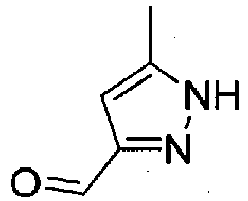
1-Benzyl-5-methyl-1H-pyrazole-3-carbaldehyde / Int-70 LCMS (FA): m/z = 201.1 (M+H). -

- 4-Chloro-5-iodopyrimidine (300 mg, 1.25 mmol) was weighed into a 100 mL 2 necked RBF and the flask was purged with argon. This starting material was dissolved in THF (10 mL) and the solution was cooled to -78 °C. To the solution was added n-Butyllithium (2.50 M in hexane; 1.0 mL, 2.5 mmol) at -78 °C and then the mixture was stirred for 30 min. To this mixture was added dropwise a solution of 1-benzyl-1H-pyrazole-3-carbaldehyde (211 mg, 1.1 mmol) in THF (4 mL), and the resulting mixture was stirred for 30 min. The reaction was quenched by addition of saturated NH4Cl (50 mL) and extracted with EtOAc (50 mLx4). The combined organic layers were washed with brine, dried over Na2SO4, filtered, and concentrated in vacuo. The residue was purified on silica gel to provide (1-benzyl-1H-pyrazol-3-yl)(4-chloropyrimidin-5-yl)methanol (304 mg, 85%) as a light yellow oil. LCMS (FA): m/z = 301.4 (M+H).
- To a solution of (1-benzyl-1H-pyrazol-3-yl)(4-chloropyrimidin-5-yl)methanol (285 mg, 0.95 mmol) in DCM (10 mL) was added manganese(IV) oxide (0.82 g, 9.5 mmol), and the mixture was stirred for 15 h at rt. The reaction was filtered through a celite pad and the residual solid was washed with DCM several times. The filtrate was concentrated in vacuo and the residue was purified on silica gel column to give (1-benzyl-1H-pyrazol-3-yl)(4-chloropyrimidin-5-yl)methanone (257 mg, 91%) as a colorless solid. LCMS (FA): m/z = 299.4 (M+H).
- (-1-Benzyl-1H-pyrazol-3-yl)(4-chloropyrimidin-5-yl)methanone (120 mg, 0.40 mmol) and (1R,2S,3R,4R)-1-amino-2,3-(isoproplydenyl)dihydroxy-4-hydroxymethyl cyclopentane (A) (90 mg, 0.48 mmol) (for synthesis of this starting material see:
Claiborne, C.F. et al. PCT Application Publication WO2008/019124 ) were weighed into a reaction vessel. To this mixture was added 1-BuOH (2.4 mL) and DIEA (0.14 mL, 0.80 mmol), and the tube was sealed under an atmosphere of argon. The resulting mixture was stirred for 2 h at 105 °C. After cooling to rt, the reaction was concentrated in vacuo. To this residue was added water (30 mL) and the resulting mixture was extracted with EtOAc (50 mLx4). The combined organic layers were washed with brine, dried over Na2SO4, filtered, and concentrated in vacuo. The residue was purified on silica gel to make (1-benzyl-1H-pyrazol-3-yl)(4-{[(3aS,4R,6R,6aR)-6-(hydroxymethyl)-2,2-dimethyltetrahydro-3aH-cyclopenta[d][1,3]dioxol-4-yl]amino}pyrimidin-5-yl)methanone (175 mg, 92%) as a colorless solid. LCMS (FA): m/z = 450.5 (M+H). - To a solution of (1-benzyl-1H-pyrazol-3-yl)(4-{[(3aS,4R,6R,6aR)-6-(hydroxymethyl)-2,2-dimethyltetrahydro-3aH-cyclopenta[d][1,3]dioxol-4-yl]amino}pyrimidin-5-yl)methanone (162 mg, 0.36 mmol) in DMF (2.0 mL) was added chlorosulfonamide (83 mg, 0.72 mmol) at rt, and the mixture was stirred for 10 min. The reaction was quenched by addition of saturated NaHCO3 (30 mL) and extracted with EtOAc (50 mLx3). The combined organic layers were dried over Na2SO4, filtered, and concentrated in vacuo. The residue was purified on silica gel to give the sulfamate intermediate [(162 mg, 81%); LCMS (FA): m/z = 529.5 (M+H).] which was then dissolved in THF (2.0 mL). To this solution was added water (2 mL) and conc. HCl (0.35 mL, 4.2 mmol) at rt, and the mixture was stirred for 2 h. The reaction was quenched by addition of saturated NaHCO3 (30 mL) and extracted with EtOAc (50 mLx4). The combined organic layers were dried over Na2SO4, filtered, and concentrated. The residue was purified on silica gel to give [(1R,2R,3S,4R)-4-({5-[(1-benzyl-1H-pyrazol-3-yl)carbonyl]pyrimidin-4-yl}amino)-2,3-dihydroxycyclopentyl]methyl sulfamate (128 mg, 89%). 1H NMR (DMSO) δ 9.47 (s, 1H), 9.07 (d, J = 7.4 Hz, 1H), 8.61 (s, 1H), 8.07 (d, J = 2.4 Hz, 1H), 7.45 (s, 2H), 7.41 - 7.26 (m, 5H), 6.92 (d, J = 2.4 Hz, 1H), 5.51 (s, 2H), 4.92 (d, J = 6.0 Hz, 1H), 4.74 (d, J = 4.8 Hz, 1H), 4.50 - 4.41 (m, 1H), 4.07 (dd, J = 9.7, 6.1 Hz, 1H), 3.98 (dd, J = 9.7, 6.6 Hz, 1H), 3.79 (dd, J = 13.0, 5.8 Hz, 1H), 3.71 (dd, J = 9.5, 4.8 Hz, 1H), 2.38 - 2.28 (m, 1H), 2.25 - 2.15 (m, 1H), 1.15 (dt, J = 12.9, 8.7 Hz, 1H); LCMS (FA): m/z = 489.5 (M+H).
- The compounds listed in the table below were prepared in an analogous fashion to that described above starting from the appropriate starting materials. The following alternative conditions could be employed in the described reaction steps. Step 2: Dess-Martin oxidation instead of of manganese dioxide oxidation. Step 3: K2CO3/DMF; DIEA/1-propanol instead of DIEA/1-butanol. Step 5: aq. TFA and aq. H3PO4 instead of of aq. HCl. I-351/I-361 and I-323/I-353 (benzylic centers) were made as diastereomeric mixtures and separated via HPLC (chiral column). Absolute configurations of the undefined stereocenters are unknown.
Starting material Compound No. LCMS Data 
I-345 LCMS (FA): m/z = 413.5 (M+H). 
I-82 LCMS (FA): m/z = 495.4 (M+H). Int-66 
I-139 LCMS (FA): m/z = 523.3 (M+H). Int-69 
I-31 LCMS (FA): m/z = 503.5 (M+H). Int-70 
I-351 LCMS (FA): m/z = 503.5 (M+H). Int-62 
I-361 LCMS (FA): m/z = 503.5 (M+H). Int-62 
I-173 LCMS (FA): m/z = 455.4 (M+H). Int-64 
I-220 LCMS (FA): m/z = 441.5 (M+H). Int-63 
I-323 LCMS (FA): m/z = 515.5 (M+H). Int-65 
I-353 LCMS (FA): m/z = 515.6 (M+H). Int-65 -

- Into a flame dried RBF with stirbar was added 4-chloro-5-iodopyrimidine (0.69 g, 2.9 mmol) dissolved in THF (15 mL). The flask was purged with argon and cooled to -78 °C. To this solution was added dropwise n-butyllithium (2.5 M in hexane; 2.3 mL, 5.8 mmol) at -78 °C and the mixture was stirred for 30 min. To this mixture was added 1-benzyl-1H-pyrazole-3-carbaldehyde (0.49 g, 2.6 mmol) dissolved in THF (6 mL) dropwise. The reaction was stirred at -78 °C for 1 h. The reaction was quenched with a saturated solution of NH4Cl and then extracted with EtOAc (3x). The combined organic layers were then washed with water and brine, dried over Na2SO4, filtered and concentrated. The crude product was purified on silica gel to give (1-benzyl-1H-pyrazol-3-yl)(4-chloropyridin-3-yl)methanol (0.57 g, 66%). LCMS (FA): m/z = 300.4 (M+H).
- To a solution of (1-benzyl-1H-pyrazol-3-yl)(4-chloropyridin-3-yl)methanol (0.57 g, 1.9 mmol) in DCM (20 mL) was added manganese(IV) oxide (1.66 g, 19.1 mmol). The suspension was stirred for 19 h at rt. The reaction was then filtered through a celite pad and the residual solid was washed with DCM several times. The filtrate was then concentrated in vacuo and the residue was purified on silica gel to (1-benzyl-1H-pyrazol-3-yl)(4-chloropyridin-3-yl)methanone (0.53 g, 94%). LCMS (FA): m/z = 298.3 (M+H).
- (1-Benzyl-1H-pyrazol-3-yl)(4-chloropyridin-3-yl)methanone (0.26 g, 0.87 mmol) and A (0.18 g, 0.96 mmol) were weighed into a 20 mL reaction vessel. To this mixture was added 1-propanol (5 mL) and DIEA (0.30 mL, 1.7 mmol). The resulting mixture was sealed and stirred at 110 °C for 4 h. The reaction was then heated at 160 °C in a microwave reactor for 90 min. It was then cooled to rt and quenched with water. The reaction was then extracted with EtOAc (3x). The combined organic layers were washed with brine, dried over Na2SO4, filtered, and concentrated in vacuo. The crude product was purified on silica gel to afford (1-benzyl-1H-pyrazol-3-yl)(4-{[(3aS,4R,6R,6aR)-6-(hydroxymethyl)-2,2-dimethyltetrahydro-3aH-cyclopenta[d][1,3]dioxol-4-yl]amino}pyridin-3-yl)methanone (0.17 g, 43%); LCMS (FA): m/z = 449.5 (M+H).
- To a solution of (1-benzyl-1H-pyrazol-3-yl)(4-{[(3aS,4R,6R,6aR)-6-(hydroxymethyl)-2,2-dimethyltetrahydro-3aH-cyclopenta[d][1,3]dioxol-4-yl]amino}pyridin-3-yl)methanone (0.17 g, 0.37 mmol) in DMF (3 mL) was added chlorosulfonamide (86 mg, 0.74 mmol) at rt, and the mixture was stirred for 2 h. The reaction was quenched by addition of a saturated solution of NaHCO3 and diluted with water. The mixture was extracted with EtOAc (3x). The combined organic layers were dried over MgSO4, filtered, and concentrated. The crude sulfamate intermediate was dissolved in THF (3 mL) and water (3 mL). Concentrated HCl (0.47 mL, 5.6 mmol) was added to the solution. The reaction was stirred for 16h at rt. The reaction was quenched by the addition of a saturated solution of NaHCO3 and extracted with EtOAc (4x). The combined organic layers were dried over MgSO4, filtered, and concentrated. The residue was purified by prep HPLC to afford [(1R,2R,3S,4R)-4-({3-[(1-Benzyl-1H-pyrazol-3-yl)carbonyl]pyridin-4-yl}amino)-2,3-dihydroxycyclopentyl]methyl sulfamate (0.075 g, 41%). 1H NMR (DMSO) δ 9.34 (s, 1H), 8.91 (d, J = 6.7 Hz, 1H), 8.20 (d, J = 6.1 Hz, 1H), 8.04 (d, J = 2.3 Hz, 1H), 7.41 - 7.25 (m, 5H), 6.91 - 6.84 (m, 2H), 5.49 (s, 2H), 4.12 (dd, J = 9.7, 5.3 Hz, 1H), 4.00 (dd, J = 9.7, 6.9 Hz, 1H), 3.85 - 3.75 (m, 1H), 3.72 - 3.66 (m, 2H), 2.45 - 2.36 (m, 1H), 2.29 - 2.19 (m, 1H), 1.21 -1.10 (m, 1H); LCMS (FA): m/z = 488.4 (M+H).
- The compound listed in the table below was prepared in an analogous fashion to that described above starting from the listed starting material:
Starting material Compound No. LCMS Data 
I-81 LCMS (FA): m/z = 522.5 (M+H). Int-68 -

- Pyrazol-3-carbaldehyde (6.2 g, 65 mmol) and DMAP (0.79 g, 6.5 mmol) were dissolved in DMF (50.0 mL), di-tert-butyldicarbonate (21 g, 97 mmol) was added to this solution. It was cooled down to 0 °C and TEA (4.5 mL, 32 mmol) was added. It was allowed to stir for 1h at 0 °C. DCM (80 mL) was added to dilute the reaction, and it was washed with water (2x). The organic layer was concentrated and purified on silica gel to give tert-butyl 3-formyl-1H-pyrazole-1-carboxylate (9.1 g, 71%).
- Into a flame dried RBF with stirbar was added 4-chloro-5-iodopyrimidine (12.3 g, 51 mmol) dissolved in THF (200 mL). The flask was purged with argon and cooled to -95 °C. To this solution was added dropwise n-butyllithium (2.5 M in hexane; 43 mL, 107 mmol) at -95 °C and the mixture was stirred for 10 min. To this mixture was added tert-butyl 3-formyl-1H-pyrazole-1-carboxylate (9.1 g, 46 mmol) dissolved in THF (30 mL) dropwise at -95 °C. The reaction was stirred at -78 °C for 30 min. The reaction was quenched with a solution of acetic acid (7.9 mL) in THF (15 mL) and then allowed to warm to rt. Water (80 mL) was added and the mixture extracted with EtOAc (3x). The combined organic layers were then washed with water and brine, dried over Na2SO4, filtered and concentrated. The crude product was purified on silica gel to give tert-butyl 3-[(4-chloropyrimidin-5-yl)(hydroxy)methyl]-1H-pyrazole-1-carboxylate (10.2 g, 64%). LCMS (AA): m/z = 311 (M+H).
- tert-Butyl 3-[(4-chloropyrimidin-5-yl)(hydroxy)methyl]-1H-pyrazole-1-carboxylate (1.0 g, 3.3 mmol) was dissolved in DCM (30 mL) and Dess-Martin periodinane (2.1 g, 4.9 mmol) was added to this solution. The mixture was then stirred at 40 °C for 2 h. TLC showed the reaction was done. The reaction was concentrated and purified on silica gel to provide tert-butyl 3-[(4-chloropyrimidin-5-yl)carbonyl]-1H-pyrazole-1-carboxylate (0.92, 90%). LCMS (AA): m/z = 309 (M+H).
- A (1.9 g, 9.9 mmol) and [tert-butyl 3-[(4-chloropyrimidin-5-yl)carbonyl]-1H-pyrazole-1-carboxylate (2.8 g, 9.0 mmol) were weighed into a 50 mL RBF with stirbar. To this mixture was added 1-butanol (5 mL) followed by addition of DIEA (3.1 mL, 18 mmol) and the resulting mixture was stirred at rt for 16 h. Water (50 mL) was then added and the mixture was extracted with EtOAc (4x). The combined organic layers were washed with brine, dried over Na2SO4, filtered, and concentrated in vacuo. The crude product was purified on silica gel to afford [tert-butyl 3-[(4-{[(3aS,4R,6F,6aR)-6-(hydroxymethyl)-2,2-dimethyltetrahydro-3aH-cyclopenta[d][1,3]dioxol-4-yl]amino}pyrimidin-5-yl)carbonyl]-1H-pyrazole-1-carboxylate] (2.5 g, 61%). LCMS (AA): m/z = 460 (M+H).
- tert-Butyl 3-[(4-{[(3aS,4R,6R,6aR)-6-(hydroxymethyl)-2,2-dimethyltetrahydro-3aH-cyclopenta[d][1,3]dioxol-4-yl]amino}pyrimidin-5-yl)carbonyl]-1H-pyrazole-1-carboxylate (0.31 g, 0.66 mmol) and IH-imidazole (0.14 g, 2.0 mmol) were dissolved in DCM (15 mL). tert-Butyldimethylsilyl chloride (0.15 g, 1.0 mmol) was added to this solution and it was stirred at rt for 6 h. The reaction solution was concentrated and the residue was purified on silica gel to afford tert-butyl 3-[(4-{[(3aS,4R,6R,6aR)-6-({[tert-butyl(dimethyl)silyl]oxyl}methyl)-2,2-dimethyltetrahydro-3aH-cyclopenta[d][1,3]dioxol-4-yl]amino}pyrimidin-5-yl)carbonyl]-1H-pyrazole-1-carboxylate (0.33 g, 86%). LCMS (AA): m/z = 575 (M+H).
- tert-Butyl 3-[(4-{[(3aS,4R,6R,6aR)-6-({[tert-butyl(dimethyl)silyl]oxy}methyl)-2,2-dimethyltetrahydro-3aH-cyclopenta[d][1,3]dioxol-4-yl]amino}pyrimidin-5-yl)carbonyl]-1H-pyrazole-1-carboxylate (2.4 g, 4.1 mmol) was dissolved in methanol (25 mL) and a solution of potassium phosphate (0.44 g, 2.1 mmol) in water (3 mL) was added. It was allowed to stir at rt for 3 h. The reaction was concentrated and diluted with EtOAc (100 mL). This mixture was washed with water (2x). The organic layer was dried over MgSO4, filtered, and concentrated to yield (4-{[(3aS,4R,6R,6aR)-6-({[tert-butyl(dimethyl)silyl]oxy}methyl)-2,2-dimethyltetrahydro-3aH-cyclopenta[d][1,3]dioxol-4-yl]amino}pyrimidin-5-yl)(1H-pyrazol-3-yl)methanone (1.8 g, 90%). LCMS (AA): m/z = 475 (M+H).
-

- (4-{[(3aS,4R,6R,6aR)-6-({[tert-Butyl(dimethyl)silyl]oxy}methyl)-2,2-dimethyltetrahydro-3aH-cyclopenta[d][1,3]dioxol-4-yl]amino}pyrimidin-5-yl)(1H-pyrazol-3-yl)methanone (0.13 g, 0.26 mmol) was dissolved in THF (15 mL). Sodium hydride (0.025 g, 1.0 mmol) was added to this solution at rt and it was stirred at rt for 1h. 1-(Bromomethyl)-3-chloro-benzene (0.11 g, 0.52 mmol) was added to this solution and it was stirred at rt for 6 h. A solution of acetic acid (1 mL) and methanol (2 mL) was next added to quench the reaction. The mixture was concentrated and the crude product was purified on silica gel to yield (4-{[(3aS,4R,6R,6aR)-6-({[tert-butyl(dimethyl)silyl]oxy}methyl)-2,2-dimethyltetrahydro-3aH-cyclopenta[d][1,3]dioxol-4-yl]amino}pyrimidin-5-yl)[1-(3-chlorobenzyl)-1H-pyrazol-3-yl]methanone (0.053 g, 34%). LCMS (AA): m/z = 598 (M+H).
- (4-{[(3aS,4R,6R,6aR)-6-({[tert-butyl(dimethyl)silyl]oxy}methyl)-2,2-dimethyltetrahydro-3aH-cyclopenta[d][1,3]dioxol-4-yl]amino}pyrimidin-5-yl)[1-(3-chlorobenzyl)-1H-pyrazol-3-yl]methanone (0.053 g, 0.09 mmol) was dissolved in DMF (1 mL). Tris(dimethylamino)sulfonium trimethylsilyldifluoride (TASF) in DMF (0.25 M solution in DMF; 1.8 mL, 0.44 mmol) was added to this solution at rt and it was allowed to stir for 20 min. Chlorosulfonamide (0.051 g, 0.44 mmol) was next added to this solution and it was stirred for 20 min. Water was then added to the reaction mixture and it was extracted with EtOAc (2x). The combined organic layers were concentrated and dissolved in a solution of TFA (5.0 mL) and water (0.50 mL). The solution was allowed to stir at rt for 30 min then concentrated and the crude residue purified by prep HPLC to give {(1R,2R,3S,4R)-4-[(5-{[1-(3-chlorobenzyl)-1H-pyrazol-3-yl]carbonyl}pyrimidin-4-yl)amino]-2,3-dihydroxycyclopentyl}methyl sulfamate (25 mg, 50%). 1H NMR (MeOD) δ 9.62 (s, 1H), 8.56 (s, 1H), 7.84 (d, J = 2.4 Hz, 1H), 7.38 - 7.29 (m, 3H), 7.23 (dd, J = 6.4, 2.1 Hz, 1H), 6.96 (d, J = 2.4 Hz, 1H), 5.46 (s, 2H), 4.64 - 4.51 (m, 1H), 4.18 (dd, J = 8.3, 7.2 Hz, 2H), 3.94 (dd, 2H), 2.59 - 2.45 (m, 1H), 2.45 - 2.27 (m, 1H), 1.44 - 1.30 (m, 1H). LCMS (AA): m/z = 523.1 (M+H).
- The compounds listed in the table below were prepared using similar methods to that described above starting from the listed starting materials. The following alternative conditions could be employed in the described reaction steps. Step 1: Cs2CO3 instead of NaH. Step 2: HF/pyridine instead of TASF; aq. HCl is an acceptable replacement for aq.TFA.
Starting material Compound No. LCMS Data 
I-159 LCMS (FA): m/z = 557.1 (M+H). 
I-160 LCMS (FA): m/z = 490.1 (M+H). 
I-247 LCMS (FA): m/z = 490.1 (M+H). 
I-1 LCMS (FA): m/z = 616.9 (M+H). -

- Sodium hydride (0.030 g, 1.3 mmol) was added to a solution of (4-{[(3aS,4R,6R,6aR)-6-({[tert-butyl(dimethyl)silyl]oxy}methyl)-2,2-dimethyltetrahydro-3aH-cyclopenta[d][1,3]dioxol-4-yl]amino}pyrimidin-5-yl)(1H-pyrazol-3-yl)methanone (0.18 g, 0.39 mmol) in THF (15 mL) at rt. This mixture was allowed to stir at rt for 1 h, then 1-(bromomethyl)-3-nitro-benzene (0.14 g, 0.65 mmol) was added. The resulting mixture was stirred at rt for 16 h. A solution of acetic acid (1 mL) and methanol (2 mL) was added to quench and the resulting solution was concentrated. The residue was purified on silica gel to yield (4-{[(3aS,4R,6R,6aR)-6-({[tert-butyl(dimethyl)silyl]oxy}methyl)-2,2-dimethyltetrahydro-3aH-cyclopenta[d][1,3]dioxol-4-yl]amino}pyrimidin-5-yl)[1-(3-nitrobenzyl)-1H-pyrazol-3-yl]methanone (192 mg, 81%). LCMS (FA): m/z = 609.3 (M+H).
- (4-{[(3aS,4R,6R,6aR)-6-({[tert-Butyl(dimethyl)silyl]oxy}methyl)-2,2-dimethyltetrahydro-3aH-cyclopenta[d][1,3]dioxol-4-yl]amino}pyrimidin-5-yl)[1-(3-nitrobenzyl)-1H-pyrazol-3-yl]methanone (0.20 g, 0.33 mmol) was dissolved in absolute ethanol (20 mL). Tin dichloride (0.63 g, 3.3 mmol) was added to this solution and the resulting mixture was allowed to stir at rt for 16 h. TEA (1 mL) was added and the resulting solid was filtered and washed with methanol. The filtrate was concentrated to give [1-(3-aminobenzyl)-1H-pyrazol-3-yl](4-{[(3aS,4R,6R,6aR)-6-({[tert-butyl(dimethyl)silyl]oxy}methyl)-2,2-dimethyltetrahydro-3aH-cyclopenta[d][1,3]dioxol-4-yl]amino}pyrimidin-5-yl)methanone (0.16 g, 80%). LCMS (FA): m/z = 579.5 (M+H).
- [1-(3-Aminobenzyl)-1H-pyrazol-3-yl](4-{[(3aS,4R,6R,6aR)-6-({[tert-butyl(dimethyl)silyl]oxy}methyl)-2,2-dimethyltetrahydro-3aH-cyclopenta[d][1,3]dioxol-4-yl]ammo}pyrimidin-5-yl)methanone (0.053 g, 0.092 mmol) and N-(3-dimethylaminopropyl)-N'-ethylcarbodiimide hydrochloride (0.053 g, 0.28 mmol) were stirred as a solution in THF (10 mL). TEA (0.047 g, 0.46 mmol) and acrylic acid (0.013 g, 0.18 mmol) were added to this solution and it was allowed to stir at rt for 3 h. The reaction was concentrated and the residue was purified on silica gel to afford N-[3-({3-[(4-{[(3aS,4R,6R,6aR)-6-({[tert-butyl(dimethyl)silyl]oxy}methyl)-2,2-dimethyltetrahydro-3 aH-cyclopenta[d] [1,3]dioxol-4-yl]amino}pyrimidin-5-yl)carbonyl]-1H-pyrazol-1-yl}methyl)phenyl]acrylamide (38 mg, 65%). LCMS (FA): m/z = 633.5 (M+H).
- N-[3-({3-[(4-{[(3aS,4R,6R,6aR)-6-({[tert-Butyl(dimethyl)silyl]oxy}methyl)-2,2-dimethyltetrahydro-3 aH-cyclopenta[d][1,3]dioxol-4-yl]amino}pyrimidin-5-yl)carbonyl]-1H-pyrazol-1-yl}methyl)phenyl]acrylamide (0.037 g, 0.058 mmol) was added to a solution of 0.05 M HCl in methanol (8.0 mL, 0.40 mmol) and the resulting solution was allowed to stir at rt for 1h. At this point LCMS analysis showed that TBS group removal was complete, but the acetonide protecting group was also removed. The reaction mixture was concentrated and methanol (10 mL), 2,2-dimethoxypropane (0.069 g, 0.66 mmol), and p-toluenesulfonic acid (0.017 g, 0.099 mmol) were added. The resulting mixture was allowed to stir at rt for 1 h. The reaction mixture was concentrated and the residue was purified on silica gel to give N-[3-({3-[(4-{[(3aS,4R,6R,6aR)-6-(hydroxymethyl)-2,2-dimethyltetrahydro-3aH-cyclopenta[d][1,3]dioxol-4-yl]amino}pyrimidin-5-yl)carbonyl]-1H-pyrazol-1-yl}methyl)phenyl]acrylamide (18 mg, 60%). LCMS (FA): m/z = 519.5 (M+H).
- To a solution of N-[3-({3-[(4-{[(3aS,4R,6R,6aR)-6-(hydroxymethyl)-2,2-dimethyltetrahydro-3aH-cyclopenta[d][1,3]dioxot-4-yl]amino}pyrimidin-5-yl)carbonyl]-1H-pyrazol-1-yl}methyl)phenyl]acrylamide (0.015 g, 0.028 mmol) in DMF (3 mL) was added chlorosulfonamide (10 mg, 0.084 mmol) at rt, and the mixture was stirred for 2 h. To the reaction mixture was added TFA (1 mL) and water (1 mL) and allowed to stir at rt for 1 h. The reaction mixture was then quenched by addition of NaHCO3 and water. The mixture was extracted with EtOAc (2x). The combined organic layers were dried over MgSO4, filtered, and concentrated. The crude was purified on silica gel to afford [(1R,2R,3S,4R)-4-{[5-({1-[3-(acryloylamino)benzyl]-1H-pyrazol-3-yl}carbonyl)pyrimidin-4-yl]amino}-2,3-dihydroxycyclopentyl]methyl sulfamate (7 mg, 43%). 1H NMR (MeOD) δ 9.66 (s, 1H), 8.57 (s, 1H), 7.82 (d, J = 2.4 Hz, 1H), 7.61 (d, J = 6.7 Hz, 1H), 7.59 (s, 1H), 7.34 (t, J = 8.1 Hz, 1H), 7.08 (d, J = 7.8 Hz, 1H), 6.96 (d, J = 2.4 Hz, 1H), 6.46 - 6.29 (m, 2H), 5.75 (dd, J = 9.2, 2.7 Hz, 1H), 5.47 (s, 2H), 4.65 - 4.53 (m, 1H), 4.27 - 4.14 (m, 2H), 4.00 - 3.85 (m, 2H), 2.57 - 2.46 (m, 1H), 2.42 - 2.27 (m, 1H), 1.43 - 1.32 (m, 1H). LCMS (FA): m/z = 558.2 (M+H).
- The compound listed in the table below was prepared using an analogous method to that described above starting from the listedstarting material in step 3.
Starting material Compound No. LCMS Data 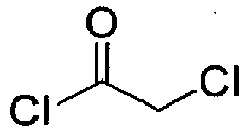
I-67 LCMS (FA): m/z = 580.1 (M+H). -

- tert-Butyl3-[(4-{[(3aS,4R,6R,6aR)-6-(hydroxymethyl)-2,2-dimethyltetrahydro-3aH-cyclopenta[d][1,3]dioxol-4-yl]amino}pyrimidin-5-yl)carbonyl]-1H-pyrazole-1-carboxylate (1.3 g, 2.9 mmol) was dissolved in 2-propanol (50 mL) and a solution of potassium phosphate (1.2 g, 5.7 mmol) in water (5 mL) was added. It was allowed to stir at rt for 3 h. Then, water (20 mL) was added to the reaction and it was extracted with DCM (2x). The combined organic layers were dried over MgSO4, filtered, and concentrated to yield (4-{[(3aS,4R,6R,6aR)-6-(hydroxymethyl)-2,2-dimethyltetrahydro-3aH-cyclopenta[d][1,3]dioxol-4-yl]amino}pyrimidin-5-yl)(1H-pyrazol-3-yl)methanone (0.82 g, 80%). LCMS (FA): m/z = 360.2 (M+H).
- A mixture of (4-{[(3aS,4R,6R,6aR)-6-(hydroxymethyl)-2,2-dimethyltetrahydro-3aH-cyclopenta[d][1,3]dioxol-4-yl]amino}pyrimidin-5-yl)(1H-pyrazol-3-yl)methanone (0.10 g, 0.28 mmol), 2-bromoacetophenone (68 mg, 0.34 mmol), and potassium carbonate (48 mg, 0.35 mmol) were stirred in acetonitrile (4 mL) at rt for 30 min. Water was added to the reaction mixture and it was extracted with EtOAc (3x). The combined organic layers were washed with brine, dried over magnesium sulfate, filtered and concentrated. The residue was purified on silica gel to give 2-{3-[(4-{[(3aS,4R,6R,6aR)-6-(hydroxymethyl)-2,2-dimethyltetrahydro3aH-cyclopenta[d][1,3]dioxol-4-yl]amino}pyrimidin-5-yl)carbonyl]-1H-pyrazol-1yl}1-phenylethanone (0.075 g, 56%). LCMS (FA): m/z = 476.5 (M+H).
- To a solution of 2-{3-[(4-{[(3aS,4R,6R,6aR)-6-(hydroxymethyl)-2,2-dimethyltetrahydro-3aH-cyclopenta[d][1,3]dioxol-4-yl]amino}pyrimidin-5-yl)carbonyl]-1H-pyrazol-1-yl}-1-phenylethanone (0.075 g, 0.16 mmol) and TEA (0.066 mL, 0.47 mmol) in DMF (1.2 mL) was added chlorosulfonamide (54 mg, 0.47 mmol) at rt, and the mixture was stirred for 2 h. The reaction was quenched by addition of a saturated solution of NaHCO3 and diluted with water. The mixture was extracted with EtOAc (4x). The combined organic layers were dried over MgSO4, filtered, and concentrated. The crude sulfamate intermediate was dissolved in DMF (2 mL) and HCl (3.0 M in water; 2 mL, 6 mmol) was added to the solution. The reaction was stirred for 1 h at rt. The reaction was quenched by the addition of a saturated solution of NaHCO3 and extracted with EtOAc (4x). The combined organic layers were dried over MgSO4, filtered, and concentrated. The residue was purified on silica gel to afford {(1R,2R,3S,4R)-2,3-dihydroxy-4-[(5-{[1-(2-oxo-2-phenylethyl)-1H-pyrazol-3-yl]carbonyl}pyrimidin-4-yl)amino]cyclopentyl}methyl sulfamate (41 mg, 50%). 1H NMR (DMSO) δ 9.49 (s, 1H), 9.11 (d, J = 7.2 Hz, 1H), 8.62 (s, 1H), 8.07 (d, J = 7.3 Hz, 2H), 7.96 (d, J = 2.4 Hz, 1H), 7.74 (t, J = 7.4 Hz, 1H), 7.62 (t, J = 7.7 Hz, 2H), 7.47 (s, 2H), 6.96 (s, 1H), 6.10 (s, 2H), 4.95 (d, J = 6.0 Hz, 1H), 4.77 - 4.71 (m, 1H), 4.52 - 4.40 (m, 1H), 4.12 - 4.05 (m, 1H), 4.04 - 3.94 (m, 1H), 3.86 - 3.77 (m, 1H), 3.77 - 3.66 (m, 1H), 2.38 - 2.31 (m, 1H), 2.27 - 2.14 (m, 1H), 1.22 - 1.11 (m, 1H); LCMS (FA): m/z = 517.2 (M+H).
- The compounds listed in the table below were prepared in an analogous fashion to that described above starting from the listed starting materials used in step 2. DMF and THF are also acceptable solvents for use in step 2 instead of acetonitrile.
Starting material Compound No. LCMS Data 
I-283 LCMS (FA): m/z = 551.4 (M+H). 
I-96 LCMS (FA): m/z = 597.1 (M+H). 
I-51 LCMS (FA): m/z = 504.5 (M+H). Int-7 
I-324 LCMS (FA): m/z = 570.3 (M+H). Int-110 
I-70 LCMS (FA): m/z = 524.5 (M+H). Int-111 
I-284 LCMS (FA): m/z = 570.4 (M+H). -

- To a round bottomed flask with stirbar was added (4-{[(3aS,4R,6R,6aR)-6-(hydroxymethyl)-2,2-dimethyltetrahydro-3aH-cyclopenta[d][1,3]dioxol-4-yl]amino}pyrimidin-5-yl)(1H-pyrazol-3-yl)methanone (0.12 g, 0.35 mmol), 1-[(2-bromoethyl)sulfanyl]-3-(bromomethyl)benzene2-bromoethyl 3-(bromomethyl)phenyl sulfide (0.16 g, 0.52 mmol), cesium carbonate (0.23 g, 0.69 mmol), and THF (10 mL). The resulting reaction mixture was stirred 4 h at rt. The mixture was filtered to remove cesium carbonate and the filtrate concentrated. The residue was purified on silica gel to yield (1-{3-[(2-bromoethyl)sulfanyl]benzyl}-1H-pyrazol-3-yl)(4-{[(3aS,4R,6R,6aR)-6-(hydroxymethyl)-2,2-dimethyltetrahydro-3aH-cyclopenta[d][1,3]dioxol-4-yl]amino}pyrimidin-5-yl)methanone (0.15 g, 73%). LCMS (FA): m/z = 590.5 (M+H).
- To a solution of (1-{3-[(2-bromoethyl)sulfanyl]benzyl}-1H-pyrazol-3-yl)(4-{[(3aS,4R,6R,6aR)-6-(hydroxymethyl)-2,2-dimethyltetrahydro-3aH-cyclopenta[d][1,3]dioxol-4-yl]amino}pyrimidin-5-yl)methanone (0.081 g, 0.14 mmol) and DIEA (0.071 g, 0.55 mmol) in DMF (8 mL) was added chlorosulfonamide (0.032 g, 0.28 mmol) at 0 °C and the reaction was allowed to stir for 30 min at that temperature. The reaction mixture was purified directly on silica gel to give [(3aR,4R,6R,6aS)-6-({5-[(1-{3-[(2-bromoethyl)sulfanyl]benzyl}-1H-pyrazol-3-yl)carbonyl]pyrimidin-4-yl}amino)-2,2-dimethyltetrahydro-3aH-cyclopenta[d][1,3]dioxol-4-yl]methyl sulfamate (60 mg, 66%). LCMS (FA): m/z = 669.5 (M+H).
- m-Chloroperbenzoic acid (0.051 g, 0.30 mmol) was added to a solution of [(3aR,4R,6R,6aS)-6-({5-[(1-{3-[(2-bromoethyl)sulfanyl]benzyl}-1H-pyrazol-3-yl)carbonyl]pyrimidin-4-yl}amino)-2,2-dimethyltetrahydro-3aH-cyclopenta[d][1,3]dioxol-4-yl]methyl sulfamate (0.13 g, 0.19 mmol) in DCM (10 mL) at rt. The reaction mixture was stirred at rt for 6 h. DIEA (0.098 g, 0.76 mmol) was then added to this solution and the resulting mixture was allowed to stir for 4 h. The reaction mixture was concentrated and the residue was purified on silica gel to afford [(3aR,4R,6R,6aS)-2,2-dimethyl-6-{[5-({1-[3-(vinylsulfonyl)benzyl]-1H-pyrazol-3-yl}carbonyl)pyrimidin-4-yl]amino}tetrahydro-3aH-cyclopenta[d][1,3]dioxol-4-yl]methyl sulfamate (13 mg, 11%). LCMS (FA): m/z = 619.5 (M+H) and [(3aR,4R,6R,6aS)-6-({5-[(1-{3-[(2-bromoethyl)sulfinyl]benzyl}-1H-pyrazol-3-yl)carbonyl]pyrimidin-4-yl}amino)-2,2-dimethyltetrahydro-3aH-cyclopenta[d][1,3]dioxol-4-yl]methyl sulfamate Int-x (29 mg, 23%). LCMS (FA): m/z = 683.3 (M+H).
- A solution of [(3aR,4R,6R,6aS)-2,2-dimethyl-6-{[5-({1-[3-(vinylsulfonyl)benzyl]-1H-pyrazol-3-yl}carbonyl)pyrimidin-4-yl]amino}tetrahydro-3aH-cyclopenta[d][1,3]dioxol-4-yl]methyl sulfamate (0.014 g, 0.023 mmol) in TFA (4.5 mL) and water (0.50 mL) was stirred at room temperature for 1h. The reaction mixture was concentrated and the crude product was purified by prep HPLC to afford [(1R,2R,3S,4R)-2,3-dihydroxy-4-{[5-({1-[3-(vinylsulfonyl)benzyl]-1H-pyrazol-3-yl}carbonyl)pyrimidin-4-yl]amino}cyclopentyl]methyl sulfamate I-number (6 mg, 47%). 1H NMR (MeOD) δ 9.53 (s, 1H), 8.53 (d, J = 19.2 Hz, 1H), 7.88 (s, 1H), 7.87 - 7.82 (m, 1H), 7.82 (s, 1H), 7.64 - 7.60 (m, 1H), 6.96 (d, J = 2.4 Hz, 1H), 6.86 (m, J = 30.5, 15.3 Hz, 1H), 6.37 (d, J = 15.1 Hz, 1H), 6.09 (d, J = 10.9 Hz, 1H), 5.56 (s, 2H), 4.60 - 4.49 (m, 1H), 4.27 - 4.06 (m, 2H), 3.98 - 3.83 (m, 2H), 2.55 - 2.45 (m, 1H), 2.41 - 2.31 (m, 1H), 1.42 -1.31 (m, 1H). LCMS (AA): m/z = 579.1 (M+H).
-

- Cesium carbonate (0.14 g, 0.43 mmol) was added to a solution of [(3aR,4R,6R,6aS)-6-({5-[(1-{3-[(2-bromoethyl)sulfinyl]benzyl}-1H-pyrazol-3-yl)carbonyl]pyrimidin-4-yl}amino)-2,2-dimethyltetrahydro-3aH-cyclopenta[d][1,3]dioxol-4-yl]methyl sulfamate (0.029 g, 0.043 mmol) in methanol (5 mL) at rt. The resulting mixture was allowed to stir at rt for 1 hr and then concentrated. Water (10 ml) was added and this mixture was then extracted with DCM (2x). The combined organic layers were dried over MgSO4, filtered, and concentrated. The crude intermediate was dissolved in a mixture of TFA (4.5 mL) and water (0.5 mL). After stirring 1 h at rt the reaction mixture was concentrated and the crude product was purified by prep HPLC to yield [(1R,2R,3S,4R)-2,3-dihydroxy-4-{[5-({1-[3-((R)-vinylsulfinyl)benzyl]-1H-pyrazol-3-yl}carbonyl)pyrimidin-4-yl]amino}cyclopentyl]methyl sulfamate and [(1R,2R,3S,4R)-2,3-dihydroxy-4-{[5-({1-[3-((S)-vinylsulfinyl)benzyl]-1H-pyrazol-3-yl}carbonyl)pyrimidin-4-yl]amino}cyclopentyl]methyl sulfamate as a mixture of diastereomers (5 mg, 21%). 1H NMR (MeOD) δ 9.60 (s, 1H), 8.55 (s, 1H), 7.91 - 7.83 (m, 1H), 7.68 - 7.54 (m, 3H), 7.54 - 7.45 (m, 1H), 6.97 (d, J = 2.4 Hz, 1H), 6.79 (dd, J = 16.4, 9.6 Hz, 1H), 6.16 (d, 1H), 5.97 (d, 1H), 5.56 (s, 2H), 4.63 - 4.50 (m, 1H), 4.24 - 4.12 (m, 2H), 3.97 - 3.90 (m, 2H), 2.59 - 2.44 (m, 1H), 2.42 - 2.31 (m, 1H), 1.43 - 1.33 (m, 1H). LCMS (AA): m/z = 563.1 (M+H).
-

- To a solution of tert-butyl 3-[(4-{[(3aS,4R,6R,6aR)-6-(hydroxymethyl)-2,2-dimethyltetrahydro-3aH-cyclopenta[d][1,3]dioxol-4-yl]amino}pyrimidin-5-yl)carbonyl]-1H-pyrazole-1-carboxylate (2.8 g, 6.0 mmol) in THF (40 mL) was added DIEA (1.8 g, 14 mmol). The solution was cooled to 0 °C and tert-butyl (chlorosulfonyl)carbamate (1.5 g, 6.9 mmol) was added. The resulting mixture was then stirred at 0 °C for 4h. The reaction mixture was then concentrated and the crude product purified on silica gel to give tert-butyl 3-[(4-{[(3aS,4R,6R,6aR)-6-(7,7-dimethyl-3,3-dioxido-5-oxo-2,6-dioxa-3lambda∼6∼-thia-4-azaoct-1-yl)-2,2-dimethyltetrahydro-3aH-cyclopenta[d][1,3]dioxol-4-yl]amino}pyrimidin-5-yl)carbonyl]-1H-pyrazole-1-carboxylate (2.9 g, 75%). LCMS (AA): m/z = 639 (M+H).
- tert-Butyl 3-[(4-{[(3aS,4R,6R,6aR)-6-(7,7-dimethyl-3,3-dioxido-5-oxo-2,6-dioxa-3lambda∼6∼-thia-4-azaoct-1-yl)-2,2-dimethyltetrahydro-3aH-cyclopenta[d][1,3]dioxol-4-yl]amino}pyrimidin-5-yl)carbonyl]-1H-pyrazole-1-carboxylate (2.9 g, 4.5 mmol) was dissolved in methanol (80 mL), and a solution of potassium phosphate (1.3 g, 6.0 mmol) in water (15 mL) was added. The reaction was allowed to stir at rt for 1 h. The reaction mixture was concentrated and purified by prep HPLC to provide [tert-butyl ({[(3aR,4R,6R,6aS)-2,2-dimethyl-6-{[5-(1H-pyrazol-3-ylcarbonyl)pyrimidin-4-yl]amino}tetrahydro-3aH-cyclopenta[d][1,3]dioxol-4-yl]methoxy}sulfonyl)carbamate] (1.9 g, 77%). LCMS (AA): m/z = 539 (M+H).
- To a 3-dram vial was added tert-butyl ({[(3aR,4R,6R,6aS)-2,2-dimethyl-6-{[5-(1H-pyrazol-3-ylcarbonyl)pyrimidin-4-yl]amino}tetrahydro-3H-cyclopenta[1,3]dioxol-4-yl] methoxy}sulfonyl) carbamate (0.022 g, 0.041 mmol), THF (1.5 mL), 2-chlorobenzyl bromide (0.017 g, 0.082 mmol) and cesium carbonate (0.13 g, 0.41 mmol). The reaction was shaken at rt for 6 h then filtered through a syringe pad to remove solids. To the crude THF solution was added TFA (3.0 mL) and water (0.2 mL). After the reaction was then stirred at rt for 4 h, solvent was completely evaporated. To the crude product was added DMSO (1.2 mL), potassium carbonate (0.07 g, 0.50 mmol) and water (3 drops). This mixture was shaken at rt for 1 h, filtered to remove solids then purified by prep HPLC to give ((1R,2R,3S,4R)-4-((5-(1-(2-chlorobenzyl)-1H-pyrazole-3-carbonyl)pyrimidin-4-yl)amino)-2,3-dihydroxycyclopentyl)methyl sulfamate (6.0 mg, 27%). LCMS (AA): m/z = 523 (M+H).
- The compounds listed in the table below were prepared in a similar fashion to that described above starting from the listedstarting materials used in step 3:
Starting material Compound No. LCMS Data 
I-325 LCMS (FA): m/z = 519 (M+H). 
I-119 LCMS (FA): m/z = 557.6 (M+H). 
I-28 LCMS (FA): m/z = 471.5 (M+H). 
I-30 LCMS (FA): m/z = 453.5 (M+H). 
I-4 LCMS (FA): m/z = 507.5 (M+H). 
I-103 LCMS (FA): m/z = 539.6 (M+H). 
I-169 LCMS (FA): m/z = 494.5 (M+H). 
I-349 LCMS (FA): m/z = 573.5 (M+H). 
I-265 LCMS (FA): m/z = 573.4 (M+H). 
I-182 LCMS (FA): m/z = 557.5 (M+H). 
I-98 LCMS (FA): m/z = 573.5 (M+H). 
I-88 LCMS (FA): m/z = 543.6 (M+H). 
I-91 LCMS (FA): m/z = 525.6 (M+H). 
I-198 LCMS (FA): m/z = 521.6 (M+H). 
I-314 LCMS (FA): m/z = 543.6 (M+H). 
I-190 LCMS (FA): m/z = 525.6 (M+H). 
I-267 LCMS (FA): m/z = 625.6 (M+H). 
I-118 LCMS (FA): m/z = 553.6 (M+H). 
I-318 LCMS (FA): m/z = 579.6 (M+H). 
I-225 LCMS (FA): m/z = 543.6 (M+H). 
I-249 LCMS (FA): m/z = 514.6 (M+H). 
I-33 LCMS (FA): m/z = 541.5 (M+H). 
I-146 LCMS (FA): m/z = 541.5 (M+H). 
I-121 LCMS (FA): m/z = 575.6 (M+H). 
I-167 LCMS (FA): m/z = 557.6 (M+H). 
I-266 LCMS (FA): m/z = 625.6 (M+H). 
I-327 LCMS (FA): m/z = 525.6 (M+H). 
I-106 LCMS (FA): m/z = 507.6 (M+H). 
I-150 LCMS (FA): m/z = 490.6 (M+H). 
I-336 LCMS (FA): m/z = 525.6 (M+H). 
I-123 LCMS (FA): m/z = 507.6 (M+H). 
I-194 LCMS (FA): m/z = 541.5 (M+H). 
I-269 LCMS (FA): m/z = 525.6 (M+H). 
I-338 LCMS (FA): m/z = 507.6 (M+H). 
I-285 LCMS (FA): m/z = 579.5 (M+H). 
I-259 LCMS (FA): m/z = 589.5 (M+H). 
I-130 LCMS (FA): m/z = 547.6 (M+H). 
I-34 LCMS (FA): m/z = 591.6 (M+H). 
I-23 LCMS (FA): m/z = 575.5 (M+H). 
I-112 LCMS (FA): m/z = 541.5 (M+H). 
I-258 LCMS (FA): m/z = 575.5 (M+H). 
I-126 LCMS (FA): m/z = 623.5 (M+H). 
I-25 LCMS (FA): m/z = 514.6 (M+H). 
I-268 LCMS (FA): m/z = 591.5 (M+H). 
I-334 LCMS (FA): m/z = 541.5 (M+H). 
I-89 LCMS (FA): m/z = 541.5 (M+H). 
I-155 LCMS (FA): m/z = 625.5 (M+H). 
I-134 LCMS (FA): m/z = 591.6 (M+H). 
I-46 LCMS (FA): m/z = 575.5 (M+H). 
I-240 LCMS (FA): m/z = 567.5 (M+H). 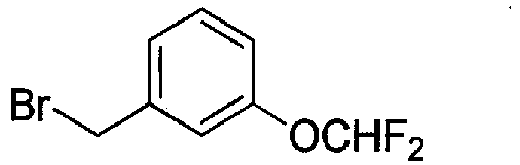
I-256 LCMS (FA): m/z = 555.6 (M+H). 
I-326 LCMS (FA): m/z = 543.5 (M+H). 
I-343 LCMS (FA): m/z = 575.5 (M+H). 
I-100 LCMS (FA): m/z = 607 (M+H). 
I-229 LCMS (FA): m/z = 599.4 (M+H). 
I-290 LCMS (FA): m/z = 585.3 (M+H). 
I-221 LCMS (FA): m/z = 615.3 (M+H). 
I-204 LCMS (FA): m/z = 601.2 (M+H). 
I-273 LCMS (FA): m/z = 557.3 (M+H). 
I-278 LCMS (FA): m/z = 566 (M+H). -

- 5-Methyl-1H-pyrazole-3-carbaldehyde (5.4 g, 49 mmol) was dissolved in acetonitrile (200 mL) and cooled to 0 °C with stirring. DMAP (0.60 g, 4.9 mmol) and di-tert-butyldicarbonate (12.9 g, 59.q mmol) were added and the solution was allowed to warm to rt and stir for 16 h. The reaction was diluted with EtOAc (200 mL). Then the mixture was washed with IN HCl (aq.) (2x100mL), saturated aq NaHCO3 (2x100mL), dried over magnesium sulfate, filtered and concentrated. The residue was purified on silica gel to give tert-butyl 3-formyl-5-methyl-1H-pyrazole-1-carboxylate (3.9 g, 38%) as a clear oil. 1H NMR (CDCl3) δ 10.10 (s, 1H), 6.65 (s, 1H), 2.60 (s, 3H), 1.72 (s, 9H).
- Into a flame dried RBF with stirbar was added 4-chloro-5-iodopyrimidine (4.9 g, 20 mmol) dissolved in THF (40 mL). The flask was purged with argon and cooled to -78 °C. To this solution was added dropwise n-butyllithium (2.5 M in hexane; 17.1 mL, 42.8 mmol) at -78 °C and the mixture was stirred for 30 min. To this mixture was added tert-butyl 3-formyl-5-methyl-1H-pyrazole-1-carboxylate (3.9 g, 18.6 mmol) dissolved in THF (15 mL) dropwise. The reaction was stirred at -78 °C for 2 h. The reaction was quenched with a solution of acetic acid (3.2 mL) in THF (10 mL). Water was added to the mixture and then extracted with EtOAc (3x). The combined organic layers were then washed with water and brine, dried over Na2SO4, filtered and concentrated. The crude product was purified on silica gel to give tert-butyl 3-[(4-chloropyrimidin-5-yl)(hydroxy)methyl]-5-methyl-1H-pyrazole-1-carboxylate (1.0 g, 16%). LCMS (FA): m/z = 325.2 (M+H).
- To a solution of tert-butyl 3-[(4-chloropyrimidin-5-yl)(hydroxy)methyl]-5-methyl-1H-pyrazole-1-carboxylate (1.0 g, 3.0 mmol) in DCM (20 mL) was added manganese(IV) oxide (2.6 g, 30 mmol). The suspension was stirred for 19 h at rt. The reaction was then filtered through a celite pad and the residual solid was washed with DCM several times. The filtrate was then concentrated in vacuo and the residue was purified on silica gel to afford tert-butyl 3-[(4-chloropyrimidin-5-yl)carbonyl]-1H-pyrrole-1-carboxylate (0.81 g, 83%). LCMS (FA): m/z = 323.3 (M+H).
- A (0.069 g, 0.31 mmol) and tert-butyl 3-[(4-chloropyrimidin-5-yl)carbonyl]-5-methyl-1H-pyrazole-1-carboxylate (0.090 g, 0.28 mmol) were weighed into a 20 mL reaction vessel. To this mixture was added 1-propanol (4 mL) and DIEA (0.10 mL, 0.56 mmol). The resulting mixture was sealed and the vessel allowed to stir while heating at 50 °C for 3 h. The reaction was then cooled to rt and the reaction was concentrated. The crude product was purified on silica gel to afford tert-butyl 3-[(4-{[(3aS,4R,6R,6aR)-6-(hydroxymethyl)-2,2-dimethyltetrahydro-3aH-cyclopenta[d][1,3]dioxol-4-yl]amino}pyrimidin-5-yl)carbonyl]-5-methyl-1H-pyrazole-1-carboxylate (0.13 g, 98%). LCMS (FA): m/z = 474 (M+H).
- tert-Butyl3-[(4-{[(3aS,4R,6R,6aR)-6-(hydroxymethyl)-2,2-dimethyltetrahydro-3aH-cyclopenta[d][1,3]dioxol-4-yl]amino}pyrimidin-5-yl)carbonyl]-5-methyl-1H-pyrazole-1-carboxylate (0.13 g, 0.27 mmol) was dissolved in methanol (2 mL) and a solution of potassium phosphate (29 mg, 0.14 mmol) in water (0.20 mL) was added. It was allowed to stir at rt for 15 h. Then, the reaction was concentrated and diluted with EtOAc and water. The aqueous layer was extracted with EtOAc (3x). The combined organic layers were dried over MgSO4, filtered, and concentrated to yield (4-{[(3aS,4R,6R,6aR)-6-(hydroxymethyl)-2,2-dimethyltetrahydro-3aH-cyclopenta[d][1,3]dioxol-4-yl]amino}pyrimidin-5-yl)(5-methyl-1H-pyrazol-3-yl)methanone (91 mg, 89%). LCMS (FA): m/z = 374 (M+H).
- (4-{[(3aS,4R,6R,6aR)-6-(Hydroxymethyl)-2,2-dimethyltetrahydro-3aH-cyclopenta[d][1,3]dioxol-4-yl]amino}pyrimidin-5-yl)(5-methyl-1H-pyrazol-3-yl)methanone (90 mg, 0.24 mmol) was dissolved in THF (10 mL). To this solution was added cesium carbonate (0.16 g, 0.48 mmol) and 2-(bromomethyl)-5-(trifluoromethyl)furan (0.063 g, 0.28 mmol) and the reaction was stirred at rt for 45 h. The reaction was then quenched by addition of water and the mixture extracted with EtOAc (3x). The combined organic layers were washed with brine, dried over MgSO4, filtered, and concentrated. The residue was purified on silica gel to give (4-{[(3aS,4R,6R,6aR)-6-(hydroxymethyl)-2,2-dimethyltetrahydro-3aH-cyclopenta[d][1,3]dioxol-4-yl]amino}pyrimidin-5-yl)(5-methyl-1-{[5-(trifluoromethyl)-2-furyl]methyl}-1H-pyrazol-3-yl)methanone (110 mg, 88%). LCMS (FA): m/z = 523 (M+H).
- To a solution of (4-{[(3aS,4R,6R,6aR)-6-(hydroxymethyl)-2,2-dimethyltetrahydro-3aH-cyclopenta[d][1,3]dioxol-4-yl]amino}pyrimidin-5-yl)(5-methyl-1-{[5-(trifluoromethyl)-2-furyl]methyl}-1H-pyrazol-3-yl)methanone (0.11 g, 0.21 mmol) and TEA (0.09 mL, 0.63 mmol) in DMF (3.3 mL) was added chlorosulfonamide (61 mg, 0.53 mmol) at rt, and the mixture was stirred for 1 h. The reaction was quenched by addition of a saturated solution of NaHCO3 and diluted with water. The mixture was extracted with EtOAc (4x). The combined organic layers were dried over MgSO4, filtered, and concentrated. The crude sulfamate intermediate was dissolved in THF (3.1 mL). Water (3.1 mL) and conc. HCl (0.54 mL, 6.5 mmol) was added to the solution. The reaction was stirred for 4 h at rt. The reaction was quenched by the addition of a saturated solution of NaHCO3 and extracted with EtOAc (4x). The combined organic layers were dried over MgSO4, filtered, and concentrated. The residue was triturated with DCM and filtered to afford [(1R,2R,3S,4R)-2,3-dihydroxy-4-({5-[(5-methyl-1-{[5-(trifluoromethyl)-2-furyl]methyl}-1H-pyrazol-3-yl)carbonyl]pyrimidin-4-yl}amino)cyclopentyl]methyl sulfamate (65 mg, 54%). 1H NMR (DMSO) δ 9.45 (s, 1H), 9.09 (d, J = 7.4 Hz, 1H), 8.62 (s, 1H), 7.46 (s, 2H), 7.23 (s, 1H), 6.71 (s, 2H), 5.61 (s, 2H), 4.93 (d, J = 5.8 Hz, 1H), 4.75 (d, J = 4.5 Hz, 1H), 4.53 - 4.39 (m, 1H), 4.14 - 4.04 (m, 1H), 4.04 - 3.93 (m, 1H), 3.85 - 3.76 (m, 1H), 3.76 - 3.65 (m, 1H), 2.40 (s, 3H), 2.37 - 2.26 (m, 1H), 2.26 - 2.14 (m, 1H), 1.23 - 1.05 (m, 1H); LCMS (AA): m/z = 561.4 (M+H).
-

- [1-(3-Chlorobenzyl)-1H-pyrazol-3-yl](4-{[(3aS,4R,6R,6aR)-6-(hydroxymethyl)-2,2-dimethyltetrahydro-3aH-cyclopenta[d][1,3]dioxol-4-yl]amino}pyrimidin-5-yl)methanone (see example 41 for synthesis) (0.26 g, 0.55 mmol) was dissolved in THF (15 mL). DIEA (0.28 g, 2.2 mmol) and methanesulfonic anhydride (0.19 g, 1.1 mmol) were then added and the reaction mixture was allowed to stir at rt for 30 min. DCM (50 mL) was added and the mixture was washed with water (2x). The organic layer was dried over MgSO4, filtered, and concentrated to yield {(3aR,4R,6R,6aS)-6-[(5-{[1-(3-chlorobenzyl)-1H-pyrazol-3-yl]carbonyl}pyrimidin-4-yl)amino]-2,2-dimethyltetrahydro-3aH-cyclopenta[d][1,3]dioxol-4-yl}methyl methanesulfonate (0.30 g, 97%). LCMS (AA): m/z= 561 (M+H).
- {(3aR,4R,6R,6aS)-6-[(5-{[1-(3-Chlorobenzyl)-1H-pyrazol-3-yl]carbonyl}pyrimidin-4-yl)amino]-2,2-dimethyltetrahydro-3aH-cyclopenta[d][1,3]dioxol-4-yl}methyl methanesulfonate (0.30 g, 0.54 mmol) was dissolved in DMF (10 mL). Sodium azide (0.14 g, 2.1 mmol) was added and the reaction mixture was allowed to stir at 40 °C for 16 h. Water (60 mL) was added and the mixture was extracted with DCM (2x). The organic layer was concentrated and purified on silica gel to afford (4-{[(3aS,4R,6R,6aR)-6-(azidomethyl)-2,2-dimethyltetrahydro-3aH-cyclopenta[d][1,3]dioxol-4-yl]amino}pyrimidin-5-yl)[1-(3-chlorobenzyl)-1H-pyrazol-3-yl]methanone. The eluent was 40-90% EtOAc in hexane (0.17 g, 63%). LCMS (AA): m/z = 509 (M+H).
- (4-{[(3aS,4R,6R,6aR)-6-(Azidomethyl)-2,2-dimethyltetrahydro-3aH-cyclopenta[d][1,3]dioxol-4-yl]amino}pyrimidin-5-yl)[1-(3-chlorobenzyl)-1H-pyrazol-3-yl]methanone (0.17 g, 0.34 mmol) was dissolved in a solution of THF (15 mL) and water (1.0 mL). Triphenylphosphine (0.18 g, 0.68 mmol) was added and the solution was stirred at rt for 3 days. The reaction solvent was evaporated in vacuo and the crude material was purified on silica gel to give (4-{[(3aS,4R,6R,6aR)-6-(azidomethyl)-2,2-dimethyltetrahydro-3aH-cyclopenta[d][1,3]dioxol-4-yl]amino}pyrimidin-5-yl)[1-(3-chlorobenzyl)-1H-pyrazol-3-yl]methanone (0.12 g, 74%). LCMS (AA): m/z = 483 (M+H).
- (4-{[(3aS,4R,6R,6aR)-6-(Aminomethyl)-2,2-dimethyltetrahydro-3aH-cyclopenta[d][1,3]dioxol-4-yl]amino}pyrimidin-5-yl)[1-(3-chlorobenzyl)-1H-pyrazol-3-yl]methanone (0.12 g, 0.25 mmol) was dissolved in THF (20 mL). DIEA (0.10 g, 0.76 mmol) and tert-butyl (chlorosulfonyl)carbamate (0.11 g, 0.51 mmol) were then added to the solution at rt. The reaction mixture was allowed to stir at rt for 30 min. The reaction mixture was concentrated and purified on silica gel to give the Boc-protected intermediate [52 mg, 66%; LCMS (AA): m/z = 662 (M+H).] which was then dissolved in a solution of TFA (7.2 mL) and water (0.80 mL). It was allowed to stir at rt for 30 min. Solvent was then evaporated and the residue was dissolved in methanol (5 mL). TEA (0.5 mL) was added to neutralize the solution and the resulting mixture was concentrated and subsequently dissolved in EtOAc (20 mL). This mixture was washed with water (2x). The organic layer was concentrated to yield N-({(1R,2R,3S,4R)-4-[(5-{[1-(3-chlorobenzyl)-1H-pyrazol-3-yl]carbonyl}pyrimidin-4-yl)amino]-2,3-dihydroxycyclopentyl}methyl)sulfuric diamide (0.025g, 61%). 1H NMR (MeOD) δ 9.64 (s, 1H), 8.58 (s, 1H), 7.86 (d, J = 2.4 Hz, 1H), 7.44 - 7.29 (m, 3H), 7.29 - 7.20 (m, 1H), 6.98 (d, J = 2.4 Hz, 1H), 5.49 (s, 2H), 4.58 (dd, J = 15.3, 8.2 Hz, 1H), 4.00 - 3.93 (m, 1H), 3.90 (t, J = 5.3 Hz, 1H), 3.28 - 3.17 (m, 1H), 3.10 (dd, J = 12.8, 7.2 Hz, 1H), 2.52 (dt, J = 13.3, 8.3 Hz, 1H), 2.32 - 2.16 (m, 1H), 1.31 - 1.25 (m, 1H). LCMS (AA): m/z = 522.2 (M+H).
-

- (1-Benzyl-1H-pyrazol-3-yl)(4-chloropyrimidin-5-yl)methanone (1.00 g, 3.35 mmol) and (1R,2S,3R,5R)-3-amino-5-(hydroxymethyl)cyclopentane-1,2-diol hydrochloride (0.68 g, 3.68 mmol) were weighed into a 250 ml RBF fitted with a reflux condenser. To this mixture was added 1-propanol (48 mL) and DIEA (1.75 mL, 10.0 mmol). The resulting mixture was stirred at 50 °C for 18 h. The reaction was allowed to cool to rt and the solution was concentrated. The residue was purified on silica gel to yield (1-benzyl-1H-pyrazol-3-yl)(4-{[(1R,2S,3R,4R)-2,3-dihydroxy-4-(hydroxymethyl)cyclopentyl]amino}pyrimidin-5-yl)methanone (1.3 g, 100%).
- A 100 mL RBF under nitrogen was charged with (1-benzyl-1H-pyrazol-3-yl)(4-{[(1R,2S,3R,4R)-2,3-dihydroxy-4-(hydroxymethyl)cyclopentyl]amino}pyrimidin-5-yl)methanone (1.3 g, 3.2 mmol), DMF (13 mL), and imidazole (0.87 g, 12.7 mmol). A solution of 1,3-dichloro-1,1,3,3-tetraisopropyldisiloxane (1.1 mL, 3.5 mmol) in DMF (10 mL) was added dropwise over 1 h. The resulting mixture was allowed to stir at rt overnight. After 16 h reaction was poured into a saturated NaHCO3 solution and the mixture was extracted with EtOAc (3x). The combined organic portions were washed with brine, dried over MgSO4, filtered, and concentrated. The crude product was purified on silica gel to give (1-benzyl-1H-pyrazol-3-yl)(4-{[(6aR,8R,9S,9aR)-9-hydroxy-2,2,4,4-tetraisopropylhexahydrocyclopenta[f][1,3,5,2,4]trioxadisilocin-8-yl]amino}pyrimidin-5-yl)methanone (1.9 g, 92%). LCMS (FA): m/z = 652 (M+H).
- A 500 mL RBF under nitrogen was charged with (1-benzyl-1H-pyrazol-3-yl)(4-{[(6aR,8R,9S,9aR)-9-hydroxy-2,2,4,4-tetraisopropylhexahydrocyclopenta[f][1,3,5,2,4]trioxadisilocin-8-yl]amino}pyrimidin-5-yl)methanone (1.8 g, 2.8 mmol), DCM (8 mL), TEA (0.42 mL, 3.0 mmol) and DMAP (0.37 g, 3.0 mmol). The reaction was cooled in an ice bath and a solution of methanesulfonyl chloride (0.24 mL, 3.0 mmol) in DCM (6 mL) was added dropwise. The reaction was then allowed to slowly warm to rt and stir overnight. After stirring 15 h, the reaction was quenched by the addition of water. The mixture was extracted with EtOAc (3x). The combined organic layers were dried over MgSO4, filtered, and concentrated to give (6aR,8R,9S,9aR)-8-({5-[(1-benzyl-1H-pyrazol-3-yl)carbonyl]pyrimidin-4-yl}amino)-2,2,4,4-tetraisopropylhexahydrocyclopenta[f][1,3,5,2,4]trioxadisilocin-9-yl methanesulfonate (2 g, 100%). LCMS (FA): m/z = 731 (M+H).
- A 500 mL RBF under nitrogen was charged with (6aR,8R,9S,9aR)-8-({5-[(1-benzyl-1H-pyrazol-3-yl)carbonyl]pyrimidin-4-yl}amine)-2,2,4,4-tetraisopropylhexahydrocyclopenta[f][1,3,5,2,4]trioxadisilocin-9-yl methanesulfonate (1.1 g, 1.5 mmol), benzene (20 mL), 1,4,7,10,13,16-hexaoxacyclooctadecane (0.21 g, 0.78 mmol), and cesium acetate (0.91 g, 4.7 mmol). The reaction was then heated at 80 °C while stirring. After 7 h, additional cesium acetate (0.91 g, 4.7 mmol) was added and the reaction continued to stir overnight at 80 °C. LCMS then showed a mixture of desired product, starting material and more polar byproducts. The reaction was subsequently quenched by the addition of water then extracted with EtOAc (3x). The combined extracts were concentrated and the crude material purified on silica gel to provide (6aR,8R,9R,9aR)-8-({5-[(1-benzyl-1H-pyrazol-3-yl)carbonyl]pyrimidin-4-yl}amino)-2,2,4,4-tetraisopropylhexahydrocyclopenta[f][1,3,5,2,4]trioxadisilocin-9-yl acetate (0.25 g, 24%). LCMS (FA): m/z = 694 (M+H).
- (6aR,8R,9R,9aR)-8-({5-[(1-Benzyl-1H-pyrazol-3-yl)carbonyl]pyrimidin-4-yl}amino)-2,2,4,4-tetraisopropylhexahydrocyclopenta[f][1,3,5,2,4]trioxadisilocin-9-yl acetate (0.15 g, 0.22 mmol), methanol (7 mL), and potassium carbonate (90 mg, 0.6 mmol) were stirred in a 20 mL scintillation vial at rt for 20 h. The reaction mixture was then concentrated and a solution of saturated sodium bicarbonate (aq.) (20 mL) was added. The resulting mixture was extracted with EtOAc (3x). The combined organic layers were dried over MgSO4, filtered, and concentrated to yield (1-benzyl-1H-pyrazol-3-yl)(4-{[(6aR,8R,9R,9aR)-9-hydroxy-2,2,4,4-tetraisopropylhexahydrocyclopenta[f][1,3,5,2,4]trioxadisilocin-8-yl]amino}pyrimidin-5-yl)methanone (0.14 g, 99%). LCMS (FA): m/z = 652 (M+H).
- (1-Benzyl-1H-pyrazol-3-yl)(4-{[(6aR,8R,9R,9aR)-9-hydroxy-2,2,4,4-tetraisopropylhexahydrocyclopenta[f][1,3,5,2,4]trioxadisilocin-8-yl]amino}pyrimidin-5-yl)methanone (0.36 g, 0.55 mmol) was dissolved in THF (5 mL). TBAF (1.0 M solution in THF; 0.58 mL, 0.58 mmol) was added and the solution was allowed to stir at rt. After stirring for 1 h, additional TBAF (1.0 M solution in THF; 0.2 mL, 0.2 mmol) was added and the reaction stirred an additional 4 h. The reaction mixture was concentrated and purified on silica gel to afford (1-benzyl-1H-pyrazol-3-yl)(4-{[(1R,2R,3R,4R)-2,3-dihydroxy-4-(hydroxymethyl)cyclopentyl]amino}pyrimidin-5-yl)methanone (0.19 g, 84%). LCMS (FA): m/z = 410 (M+H).
- To a solution of (1-benzyl-1H-pyrazol-3-yl)(4-{[(1R,2R,3R,4R)-2,3-dihydroxy-4-(hydroxymethyl)cyclopentyl]amino}pyrimidin-5-yl)methanone (0.19 g, 0.45 mmol) in DMF (8.0 mL) was added imidazole (0.22 g, 3.2 mmol) and DMAP (0.0055 g, 0.045 mmol) followed by tert-butyldimethylsilyl chloride (0.34 g, 2.3 mmol) at rt, and the mixture was stirred for 3 days. Additional Imidazole (0.092 g, 1.4 mmol) and tert-butyldimethylsilyl chloride (0.14 g, 0.90 mmol) were added and the reaction was allowed to continue to stir at rt. After 5 h, TLC and LCMS showed no starting material, but a mixture of the bis-silylated and tris-silylated desired products. The reaction was quenched by addition of water and extracted with EtOAc (3x). The combined organic layers were dried over MgSO4, filtered, and concentrated in vacuo. The residue was purified on silica gel to give 1-benzyl-1H-pyrazol-3-yl)(4-{[(1R,2R,3R,4R)-2,3-bis{[tert-butyl(dimethyl)silyl]oxy}-4-({[tert-butyl(dimethyl)silyl]oxy}methyl)cyclopentyl]amino}pyrimidin-5-yl)methanone (0.090g, 26%). LCMS (FA): m/z = 752 (M+H).
- To a solution of 1-benzyl-1H-pyrazol-3-yl)(4-{[(1R,2R,3R,4R)-2,3-bis{[tert-butyl(dimethyl)silyl]oxy}-4-({[tert-butyl(dimethyl)silyl]oxy}methyl)cyclopentyl]amino}pyrimidin-5-yl)methanone (0.090 g, 0.12 mmol) in EtOH (3.0 mL) was added a solution of 1% HCl in EtOH (3.0 mL, 0.36 mmol) at rt. The reaction mixture was sealed and placed in a refrigerator (4°C) for 2 h then moved to a -20°C freezer for 60 h. The reaction was then quenched by the addition of aq. saturated NaHCO3 (10 mL). To the residue was added water (20mL) and it was extracted with EtOAc (4x). The combined organic layers were dried over MgSO4, filtered, and concentrated. The residue was purified on silica gel to yield (1-benzyl-1H-pyrazol-3-yl)(4-{[(1R,2R,3R,4R)-2,3-bis{[tert-butyl(dimethyl)silyl]oxy}-4-(hydroxymethyl)cyclopentyl]amino}pyrimidin-5-yl)methanone (0.06 g, 79%).
- To a solution of (1-benzyl-1H-pyrazol-3-yl)(4-{[(1R,2R,3R,4R)-2,3-bis{[tert-butyl(dimethyl)silyl]oxy}-4-(hydroxymethyl)cyclopentyl]amino}pyrimidin-5-yl)methanone (0.060 g, 0.094 mmol) in DMF (1.5 mL) and TEA (0.079 mL, 0.56 mmol) was added chlorosulfonamide (0.049 g, 0.42 mmol) at rt, and the mixture was allowed to stir for 1 h. Additional chlorosulfonamide (0.025 g, 0.21 mmol) was then added and the reaction stirred at rt an additional 1 h. The reaction was quenched with sat NaHCO3, and then extracted with EtOAc (4x). The combined organic layers were dried over MgSO4, filtered and concentrated to give the crude sulfamate intermediate which was immediately dissolved in THF (4 mL). HCl (3.0 M solution in water; 1 mL, 3 mmol) was added to the solution. The reaction flask was fitted with a reflux condenser and the reaction stirred at 60 °C for 7 h. The reaction was then quenched with sat NaHCO3, and then extracted with EtOAc (4x). The combined organic layers were dried over MgSO4, filtered and concentrated. The crude product was triturated with DCM and collected as a white solid to provide [(1R,2R,3R,4R)-4-({5-[(1-benzyl-1H-pyrazol-3-yl)carbonyl]pyrimidin-4-yl}amino)-2,3-dihydroxycyclopentyl]methyl sulfamate (40 mg, 61%). 1H NMR (DMSO) δ 9.50 (s, 1H), 9.39 (d, J = 7.5 Hz, 1H), 8.62 (s, 1H), 8.07 (d, J = 2.4 Hz, 1H), 7.43 (s, 2H), 7.41- 7.27 (m, 5H), 6.91 (d, J = 2.4 Hz, 1H), 5.59 (d, J = 4.4 Hz, 1H), 5.51 (s, 2H), 5.12 (d, J = 4.7 Hz, 1H), 4.67 - 4.53 (m, 1H), 4.13 (dd, J = 9.4, 6.5 Hz, 1H), 4.01 - 3.92 (m, 1H), 3.87 - 3.79 (m, 1H), 3.66 (dd, J = 6.7, 4.4 Hz, 1H), 2.38 - 2.28 (m, 1H), 2.14 -2.03 (m, 1H), 1.40 - 1.25 (m, 1H). LCMS (FA): m/z = 489 (M+H).
-

- A solution of tert-butyl [(1R,3S,4R)-3-hydroxy-4-(hydroxymethyl)cyclopentyl]carbamate (4.0 g, 17 mmol) (for synthesis of starting material see: Ober, M. et. al. J. Am. Chem. Soc. 2005, 127, 18143-18149.) and imidazole (1.4 g, 21 mmol) in DMF (40 mL) was diluted with DCM (200 mL) and cooled in an ice/water bath. tert-Butyldimethylsilylchloride (2.9 g, 19 mmol) was added as a solution in DCM (40 mL). The reaction was allowed to warm to ambient temperature and stirred overnight. The reaction was quenched by addition of water (150 mL) and the mixture was transferred to separatory funnel. The organic layer was collected and the residual water layer was extracted with DCM (150 mLx2). The combined organic layers were dried over Na2SO4, filtered, and concentrated. The residue was purified on silica gel to provide tert-butyl [(1R,3R,4S)-3-({[tert-butyl(dimethyl)silyl]oxy}methyl)-4-hydroxycyclopentyl]carbamate (5.21 g, 87%). 1H NMR (CDCl3) δ 4.73 (s, 1H), 4.20 - 4.05 (m, 2H), 3.81 (dd, J = 9.8, 4.2 Hz, 1H), 3.54 (dd, J = 9.7, 7.1 Hz, 1H), 2.33 - 2.10 (m, 2H), 2.05 -1.79 (m, 3H), 1.43 (s, 9H), 1.20 - 1.08 (m, 1H), 0.90 (s, 9H), 0.08 (s, 6H).
- To a solution of tert-butyl [(1R,3R,4S)-3-({[tert-butyl(dimethyl)silyl]oxy}methyl)-4-hydroxycyclopentyl]carbamate (3.8 g, 11 mmol) in DMF (57 mL) under an atmosphere of argon was added imidazole (2.25 g, 33 mmol) followed by triisopropylchlorosilane (4.7 mL, 22 mmol) at rt, and the mixture was stirred for 61 h. The reaction was quenched by addition of saturated NH4Cl (150 mL) and extracted with EtOAc (200 mLx5). The combined organic layers were washed with brine, dried over Na2SO4, filtered, and concentrated in vacuo. The residue was purified on silica gel to afford tert-butyl {(1R,3R,4S)-3-({[tert-butyl(dimethyl)silyl]oxy}methyl)-4-[(triisopropylsilyl)oxy]cyclopentyl}carbamate (5.13 g, 93%) as a colorless oil. 1H NMR (CDCl3) δ 4.90 (s, 1H), 4.35 - 4.20 (m, 1H), 4.19 - 3.99 (m, 1H), 3.75 - 3.44 (m, 2H), 2.37 - 2.17 (m, 1H), 2.03 (s, 1H), 1.96 -1.69 (m, 2H), 1.43 (s, 9H), 1.31 -1.13 (m, 1H), 1.04 (s, 2H), 0.90 (s, 9H), 0.06 (s, 6H).
- To a solution of tert-butyl {(1R,3R,4S)-3-({[tert-butyl(dimethyl)silyl]oxy}methyl)-4-[(triisopropylsilyl)oxy]cyclopentyl}carbamate (535 mg, 0.91 mmol) in EtOH (9.7 mL) was added 1% HCl in EtOH (9.7 mL, 1.2 mmol) at rt, and the mixture was allowed to stand at 4 °C for 13 h. The reaction was then stirred for 4 h at rt. The reaction was quenched by addition of saturated NaHCO3 (50 mL) and extracted with DCM (50 mLx3). The combined organic layers were dried over Na2SO4, filtered, and concentrated in vacuo. The residue was purified on silica gel to give tert-butyl {(1R,3R,4S)-3-(hydroxymethyl)-4-[(triisopropylsilyl)oxy]cyclopentyl}carbamate (327 mg, 93%) as a colorless oil. 1H NMR (CDCl3) δ 4.65 (s, 1H), 4.22 (dd, J = 10.9, 5.1 Hz, 1H), 4.19 - 4.05 (m, 1H), 3.72 - 3.58 (m, 2H), 2.41- 2.27 (m, 1H), 2.13 - 2.04 (m, 1H), 2.00 (m, 1H), 1.80 - 1.63 (m, 2H), 1.44 (s, 9H), 1.23 - 1.09 (m, 1H), 1.06 (s, 21H).
- A 250 mL RBF was charged with tert-butyl {(1R,3R,4S)-3-(hydroxymethyl)-4-[(triisopropylsilyl)oxy]cyclopentyl}carbamate (1.0 g, 2.6 mmol). To the reaction vessel was added TFA (6.5 mL, 84 mmol) at rt, and the mixture was stirred for 5 min. To the mixture was added toluene (50 mL) and the mixture was concentrated in vacuo. This was repeated twice more to remove water and the resulting residue was dried under high vaccuum to give {(1R,2S,4R)-4-amino-2-[(triisopropylsilyl)oxy]cyclopentyl}methanol•CF3CO2H (1.31 g, 100%) as colorless oil. LCMS (FA): m/z = 288.6 (M+H).
-

- To solution of tert-butyl {(1R,3R,4S)-3-({(tert-butyl(dimethyl)silyl]oxy}methyl)-4-[(triisopropylsilyl)oxy]cyclopentyl}carbamate (1.5 g, 3.0 mmol) in DCM (100 mL) was added EtOH (0.38 mL, 6.6 mmol) followed by zinc bromide (5.4 g, 24 mmol) at rt, and the mixture was stirred for 37 h. The reaction was quenched by addition of 1N NaOH (100 mL) and extracted with DCM (100 mLx5). The combined organic layers were washed with brine and then dried over Na2SO4. After filtration, the filtrate was concentrated in vacuo. The residue was purified on silica gel to give (1R,3R,4S)-3-({[tert-butyl(dimethyl)silyl]oxy}methyl)-4-[(triisopropylsilyl)oxy]cyclopentanamine (1.09 g, 91%) as a colorless oil. LCMS (FA): m/z = 402.6 (M+H).
-
- tert-Butyl [(1R,3S,4R)-3-hydroxy-4-(hydroxymethyl)cyclopentyl]carbamate (450 mg, 1.90 mmol) (for synthesis see: Ober, M. et al. J. Am. Chem. Soc. 2005, 127, 18143-18149.) was weighed into a 100 mL RBF and water (10 mL) was added. This mixture was stirred for 48 h at 100 °C. The reaction mixture was concentrated in vacuo and the residue was azeototroped with toluene twice. The resulting residue was dried under high vacuum for 16 h to give (1S,2R,4R)-4-amino-2-(hydroxymethyl)cyclopentanol (268 mg, 99%) as a colorless oil. LCMS (FA): m/z = 132.2 (M+H).
-

- A 100 mL RBF was charged with tert-butyl {(1R,3R,4S)-3-(hydroxymethyl)-4-[(triisopropylsilyl)oxy]cyclopentyl}carbamate (550 mg, 1.4 mmol), N-methylmorpholine N-oxide (332 mg, 2.8 mmol), and 3 angstrom molecular sieves (activated at 220 °C under high vac for 2 h). The flask was then purged with argon. DCM (22 mL) was added and the mixture was stirred for 10 min. To this mixture was added tetrapropylammonium perruthenate (TPAP) (50 mg, 0.14 mmol), and the resulting mixture was stirred for 30 min at rt. The reaction was diluted with EtOAc and the mixture was filtered through a silica gel pad over Celite pad (two layers; Celite is bottom and silica gel on the top). The residual molecular sieves were rinsed with EtOAc several times. The organic layer was concentrated in vacuo and the residue was purified on silica gel to give tert-butyl {(1R,3S,4S)-3-formyl-4-[(triisopropylsilyl)oxy]cyclopentyl}carbamate (380 mg, 69%) as colorless oil. 1H NMR (CDCl3) δ 9.81 (s, 1H), 4.70 - 4.42 (m, 2H), 4.36 - 4.20 (m, 1H), 3.01 - 2.89 (m, 1H), 2.44 - 2.31 (m, 1H), 2.14 - 2.03 (m, 1H), 1.77-1.64 (m, 1H), 1.62 - 1.53 (m, 1H), 1.44 (s, 9H), 1.14 - 0.96 (m, 21H).
- To a solution of tert-butyl {[(diphenylphosphoryl)methyl]sulfonyl}carbamate (1.8 g, 4.5 mmol) in DMF (9.3 mL) was added NaH (60% in mineral oil) (363.0 mg, 9.1 mmol) at rt, and the mixture was stirred for 90 min. To the light yellow solution was added a solution of tert-butyl {(1R,3S,4S)-3-formyl-4-[(triisopropylsilyl)oxy]cyclopentyl}carbamate (700 mg, 1.82 mmol) in DMF and the resulting mixture was stirred for 1 h at rt. The reaction was cooled to 0 °C and then quenched by addition of water (150 mL). The mixture was extracted with EtOAc:Hexanes (1:1) (50 mLx3). The combined organic layers were dried over Na2SO4, filtered, and concentrated in vacuo. The residue was purified on silica gel to give tert-butyl {[(E)-2-{(1R,2S,4R)-4-[(tert-butoxycarbonyl)amino]-2-[(triisopropylsilyl)oxy]cyclopentyl}vinyl]sulfonyl}carbamate (565 mg, 53%) as colorless oil. 1H NMR (CDCl3) δ 7.06 - 6.94 (m, 1H), 6.93 (dd, J = 15.1, 8.3 Hz, 1H), 6.48 (dd, J = 15.1, 1.0 Hz, 1H), 4.60 - 4.40 (m, 1H), 4.30 - 4.14 (m, 2H), 2.75 - 2.65 (m, 1H), 2.52 - 2.39 (m, 1H), 2.16 - 2.05 (m, 1H), 1.73 (dt, J = 13.7, 7.0 Hz, 1H), 1.48 (s, 9H), 1.44 (s, 9H), 1.37 - 1.26 (m, 1H), 1.03 (m, 21H).
- To a solution of tert-butyl {[(E)-2-{(1R,2S,4R)-4-[(tert-butoxycarbonyl)amino]-2-[(triisopropylsilyl)oxy]cyclopentyl}vinyl]sulfonyl}carbamate (520 mg, 0.92 mmol) in EtOH (50 mL) in a parr shaker flask was added 10% palladium hydroxide on carbon (50 mg, 0.36 mmol), and the mixture. was stirred for 4 h under an atmosphere of hydrogen (50 psi). The reaction was filtered through a celite pad and the residual solid was rinsed with MeOH several times. The filtrate was concentrated in vacuo and the residue was purified on silica gel to give tert-butyl [(2-{(1R,2S,4R)-4-[(tert-butoxycarbonyl)amino]-2-[(triisopropylsilyl)oxy]cyclopentyl}ethyl)sulfonyl]carbamate (443 mg, 85%) as a colorless amorphous solid. LCMS (FA): m/z = 565.5 (M+H).
- tert-Butyl [(2-{(1R,2S,4R)-4-[(tert-butoxycarbonyl)amino]-2-[(triisopropylsilyl)oxy]cyclopentyl}ethyl)sulfonyl]carbamate (150 mg, 0.27 mmol) was weighed into a 100 mL RBF and TFA (2.0 mL, 26 mmol) was added to the reaction vessel. The mixture was stirred for 15 min then diluted with toluene and concentrated in vacuo. The residue was azeotroped with toluene twice and then dried under high vacuum for 18 h to give 2-{(1R,2S,4R)-4-amino-2-[(triisopropylsilyl)oxy]cyclopentyl}ethanesulfonamide•CF3CO2H (127 mg, 100%) as a colorless oil. LCMS (FA): m/z = 365.4 (M+H).
-

- To a solution of {(1R,2S,4R)-4-amino-2-[(triisopropylsilyl)oxy]cyclopentyl}methanol•CF3CO2H (1.04 g, 2.58 mmol) in DMF (20 mL) was added K2CO3 (1.1 g, 7.7 mmol) followed by (1-benzyl-1H-pyrazol-3-yl)(4-chloropyrimidin-5-yl)methanone (0.85 g, 2.8 mmol) at rt, and the mixture was stirred for 13 h. The reaction was then concentrated in vacuo. To the residue was added water (100 mL) and then the mixture was extracted with EtOAc (100 mLx3). The combined organic layers were washed with brine, dried over Na2SO4, filtered, and concentrated in vacuo. The residue was purified on silica gel to give (1-benzyl-1H-pyrazol-3-yl)[4-({(1R,3R,4S)-3-(hydroxymethyl)-4-[(triisopropylsilyl)oxy]cyclopentyl}amino)pyrimidin-5-yl]methanone (1.08 g, 75%) as a colorless oil. LCMS (FA): m/z = 550.7 (M+H).
- To a solution of (1-benzyl-1H-pyrazol-3-yl)[4-({(1R,3R,4S)-3-(hydroxymethyl)-4-[(triisopropylsilyl)oxy]cyclopentyl}amino)pyrimidin-5-yl]methanone (1.0 g, 1.8 mmol) in DMF (30 mL) was added chlorosulfonamide (650 mg, 5.6 mmol) at rt, and the mixture was stirred for 20 min. The reaction was quenched by addition of saturated NaHCO3 (100 mL) and water (50mL). The mixture was extracted with EtOAc (150 mLx3), and the combined organic layers were dried over Na2SO4, filtered, and concentrated in vacuo. The residue was purified on silica gel to give the sulfamate intermediate [(0.91 g, 80%); LCMS (FA): m/z = 629.7 (M+H).] which was then dissolved in THF (20 mL) and HCl (4 M in water; 20 mL, 80 mmol) was added at rt. This mixture was stirred for 1 h and then quenched by addition of saturated NaHCO3 (150 mL) and extracted with EtOAc (200 mLx4). The combined organic layers were dried over Na2SO4, filtered, and concentrated in vacuo. To the residue was added DCM and the resulting suspension was filtered through a glass frit funnel and the residual solid was washed with DCM twice. The filtrate was concentrated in vacuo and the residue was purified on silica gel. The purification product and solid from filtration were combined to give [(1R,2S,4R)-4-({5-[(1-benzyl-1H-pyrazol-3-yl)carbonyl]pyrimidin-4-yl}amino)-2-hydroxycyclopentyl]methyl sulfamate (652 mg, 95%) as a colorless solid. 1H NMR (DMSO) δ 9.46 (s, 1H), 9.00 (d, J = 7.5 Hz, 1H), 8.62 (s, 1H), 8.07 (d, J = 2.4 Hz, 1H), 7.45 (s, 2H), 7.41- 7.25 (m, 5H), 6.90 (d, J = 2.4 Hz, 1H), 5.50 (s, 2H), 4.92 (d, J = 4.6 Hz, 1H), 4.76 - 4.64 (m, 1H), 4.10 (dd, J = 9.7, 5.9 Hz, 1H), 4.01- 3.92 (m, 2H), 2.41 - 2.30 (m, 1H), 2.19 - 2.07 (m, 1H), 2.00 (ddd, J = 11.7, 7.7, 3.8 Hz, 1H), 1.83 -1.72 (m, 1H), 1.28 (dt, J = 12.9, 9.2 Hz, 1H); LCMS (FA): m/z = 473.5 (M+H).
- The compounds listed in the table below were prepared in an analogous fashion to that described above starting from the appropriate starting materials used in step 1. I-133 and I-360 were made as a diastereomeric mixture (benzylic methyl sterocenter) and then separated via HPLC (chiral column). Absolute configurations of the undefined stereocenters are unknown.
Starting material Compound No. LCMS Data 
I-93 LCMS (FA): m/z = 479.6 (M+H). Int-66 
I-133 LCMS (FA): m/z = 521.0 (M+H). Int-67 
I-360 LCMS (FA): m/z = 521.1 (M+H). Int-67 -

- tert-Butyl 3-[(4-chloropyrimidin-5-yl)carbonyl]-1H-pyrazole-1-carboxylate (2.2 g, 7.1 mmol) was dissolved in isopropyl alcohol (80 mL). DIEA (2.8 g, 21 mmol) and {(1R,2S,4R)-4-amino-2-[(triisopropylsilyl)oxy]cyclopentyl}methanol•TFA (2.9 g, 7.1 mmol) dissolved iPrOH (20 mL) was added to the solution and it was stirred at rt for 16 h. The reaction mixture was concentrated and the crude product was purified on silica gel to produce tert-butyl 3-{[4-({(1R,3R,4S)-3-(hydroxymethyl)-4-[(triisopropylsilyl)oxy]cyclopentyl}amino)pyrimidin-5-yl]carbonyl}-1H-pyrazole-1-carboxylate (2.5 g, 625). LCMS (AA): m/z = 560 (M+H).
- To a solution of tert-butyl 3-{[4-({(1R,3R,4S)-3-(hydroxymethyl)-4-[(triisopropylsilyl)oxy]cyclopentyl}amino)pyrimidin-5-yl]carbonyl}-1H-pyrazole-1-carboxylate (2.5 g, 4.4 mmol) and DIEA (2.3 g, 18 mmol) in THF (40 mL) was added tert-butyl (chlorosulfonyl)carbamate (1.9 g, 8.8 mmol) at 0 °C. It was then stirred at 0 °C for 4 h. The reaction solvent was evaporated and the residue was dissolved in EtOH (60 mL). A solution of potassium phosphate (0.47 g, 2.2 mmol) in water (4 mL) was then added and the resulting mixture stirred at rt for 2 h. The reaction solvent was evaporated and the crude product was purified on silica gel to provide [tert-butyl [({(1R,2S,4R)-4-{[5-(1H-pyrazol-3-ylcarbonyl)pyrimidin-4-yl]amino}-2-[(triisopropylsilyl)oxy]cyclopentyl}methoxy)sulfonyl]carbamate] (1.6 g, 56%). LCMS (AA): m/z = 639 (M+H).
- To a 3-dram vial was added 3-fluoro-4-methyl benzyl bromide (0.020 g, 0.10 mmol), tert-butyl [({(1R,2S,4R)-4-{[5-(1H-pyrazol-3-ylcarbonyl)pyrimidin-4-yl]amino}-2-[(triisopropylsilyl)oxy] cyclopentyl}methoxy)sulfonyl]carbamate (0.032 g, 0.050 mmol) in THF (1.00 mL) followed by cesium carbonate (0.16 g, 0.50 mmol). The mixture was shaken at rt for 4 h then the mixture was filtered to remove solids. To the clear THF solution was added TFA (3.0 mL), water (0.30 mL). This mixture was then shaken at rt for 16 h. Solvent was then evaporated and to the residue was added DMSO (1.2 mL), potassium carbonate (0.069 g, 0.50 mmol) and water (3 drops). After shaking at rt for 1 h, the solution was filtered and purified by prep-HPLC to give {(1R,2S,4R)-4-[(5-{[1-(3-fluoro-4-methylbenzyl)-1H-pyrazol-3-yl]carbonyl} pyrimidin-4-yl)amino]-2-hydroxycyclopentyl}methyl sulfamate (2.1 mg, 8%). LCMS (FA): m/z = 505.6 (M+H).
- The compounds listed in the table below were prepared in an analogous fashion to that described above starting from the listed starting materials used in step 3:
Starting material Compound No. LCMS Data 
I-185 LCMS (FA): m/z = 525.5 (M+H). 
I-219 LCMS (FA): m/z = 509.6 (M+H). 
I-253 LCMS (FA): m/z = 498.6 (M+H). 
I-47 LCMS (FA): m/z = 507.6 (M+H). 
I-286 LCMS (FA): m/z = 527.6 (M+H). 
I-226 LCMS (FA): m/z = 541.6 (M+H). 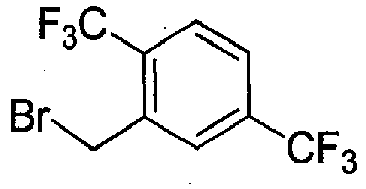
I-261 LCMS (FA): m/z = 609.6 (M+H). 
I-329 LCMS (FA): m/z = 527.6 (M+H). 
I-62 LCMS (FA): m/z = 509.5 (M+H). 
I-206 LCMS (FA): m/z = 507.6 (M+H). 
I-202 LCMS (FA): m/z = 563.5 (M+H). 
I-260 LCMS (FA): m/z = 509.5 (M+H). 
I-16 LCMS (FA): m/z = 527.5 (M+H). 
I-35 LCMS (FA): m/z = 509.5 (M+H). 
I-140 LCMS (FA): m/z = 541 (M+H). 
I-191 LCMS (FA): mlz = 525.5 (M+H). 
I-20 LCMS (FA): m/z = 557 (M+H). 
I-212 LCMS (FA): m/z = 509.5 (M+H). 
I-161 LCMS (FA): m/z = 491.5 (M+H). 
I-69 LCMS (FA): m/z = 609.6 (M+H). 
I-276 LCMS (FA): m/z = 557.6 (M+H). 
I-48 LCMS (FA): m/z = 523.6 (M+H). 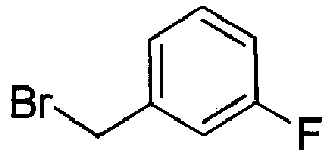
I-165 LCMS (FA): m/z = 491.5 (M+H). 
I-39 LCMS (FA): m/z = 557.5 (M+H). 
I-289 LCMS (FA): m/z = 541.5 (M+H). 
I-328 LCMS (FA): m/z = 559.6 (M+H). -

- To a solution of tert-butyl 3-{[4-({(1R,3R,4S)-3-(hydroxymethyl)-4-[(triisopropylsilyl)oxy]cyclopentyl}amino)pyrimidin-5-yl]carbonyl}-1H-pyrazole-1-carboxylate (1.7 g, 3.1 mmol) in EtOH (30 mL) was added a solution of potassium phosphate (1.4 g, 6.5 mmol) in water (4.5 mL). This mixture was stirred at rt for 2 h. Water was added to the mixture and it was extracted with DCM (2x50mL). The combined extracts were dried over MgSO4, filtered, and concentrated. The residue was purified on silica gel to give [4-({(1R,3R,4S)-3-(hydroxymethyl)-4-[(triisopropylsilyl)oxy]cyclopentyl}amino)pyrimidin-5-yl](1H-pyrazol-3-yl)methanone (1.13 g, 79%). LCMS (FA): m/z = 460.4 (M+H).
- To a 50 mL reaction vial was added [4-({(1R,3R,4S)-3-(hydroxymethyl)-4-[(triisopropylsilyl)oxy] cyclopentyl}amino)pyrimidin-5-yl](1H-pyrazol-3-yl)methanone (0.14 g, 0.31 mmol), 4-chloro-3-(trifluoromethoxy)benzylbromide (0.11 g, 0.39 mmol), cesium carbonate (0.41 g, 1.25 mmol), and THF (4.0 mL). The mixture was stirred at rt for 2 h. To the vial was added brine (1 mL), water (1 mL) and EtOAc (20 mL). After separation, the aqueous layer was extracted with EtOAc (5 mL). The combined organic phases were concentrated. To the vial was then added chlorosulfonamide (0.15 g, 1.25 mmol), TEA (0.17 mL, 1.25 mmol), and acetonitrile (2 mL). After the reaction stirred at rt for 1 h, saturated NaHCO3 (2 mL) and EtOAc (20 mL) were added. After separation of the phases, the aqueous layer was extracted with EtOAc (5 mL). The combined organic phases were then concentrated. To the resulting solid in the reaction vial was added TFA (5.0 mL) and water (0.5 mL). After this mixture was stirred at rt for 16 h, solvent was completely evaporated. This residue was dissolved in MeOH (10 mL) and to it was added MP PL-CO3 resin (3 g). After this mixture was stirred at rt for 2 h, the resin was filtered and rinsed with MeOH (10 mL). The filtrate was then evaporated and the resulting residue was purified by prep-HPLC to give [(1R,2S,4R)-4-{[5-({1-[4-chloro-3-(trifluoromethoxy)benzyl]-1H-pyrazol-3-yl}carbonyl)pyrimidin-4-yl]amino}-2-hydroxycyclopentyl]methyl sulfamate (0.122 g, 66%). 1H NMR (MeOD) δ 9.61 (s, 1H), 8.57 (s, 1H), 7.88 (d, J = 2.4 Hz, 1H), 7.59 (d, J = 8.4 Hz, 1H), 7.38 (s, 1H), 7.30 (d, J = 8.4, 1H), 6.98 (s, 1H), 5.53 (s, 2H), 4.82 (m, 1H), 4.21 (m, 3H), 2.55 (m, 1H), 2.31 (m, 1H), 2.17 (m, 1H), 1.92 (m, 1H), 1.45 (m, 1H). LCMS (FA): m/z = 592 (M+H).
- The compounds listed in the table below were prepared in an analogous fashion to that described above starting from the listed starting materials used in step 2:
Starting material Compound No. LCMS Data 
I-58 LCMS (FA): m/z = 541.1 (M+H). 
I-117 LCMS (FA): m/z = 540 (M+H). 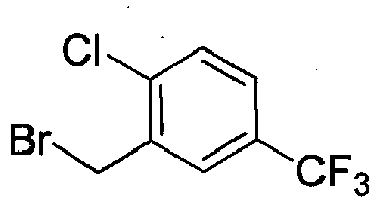
I-50 LCMS (FA): m/z = 576 (M+H). 
I-288 LCMS (FA): m/z = 575 (M+H). 
I-282 LCMS (FA): m/z = 570.7 (M+H). 
I-72 LCMS (FA): m/z = 570.8 (M+H). 
I-245 LCMS (FA): m/z = 616.8 (M+H). 
I-104 LCMS (FA): m/z = 632.8 (M+H). 
I-239 LCMS (FA): m/z = 584.7 (M+H). 
I-179 LCMS (FA): m/z = 584.8 (M+H). 
I-346 LCMS (FA): m/z = 569 (M+H). 
I-115 LCMS (FA): m/z = 449.8 (M+H). Fang, F. et al. Org. Biomol. Chem. 2012, 10, 3080-3091. 
I-153 LCMS (FA): m/z = 477.3 (M+H). Hasting, C.J. et al. J. Am. Chem. Soc. 2008, 130, 10977-10983. 
I-308 LCMS (FA): m/z = 501.3 (M+H). Int-48 
I-252 LCMS (FA): m/z = 477.8 (M+H). Int-60 
I-80 LCMS (FA): m/z = 504.3 (M+H). Int-35 
I-228 LCMS (FA): m/z = 435.2 (M+H). 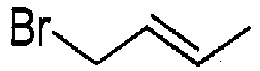
I-107 LCMS (FA): m/z = 437.3 (M+H). 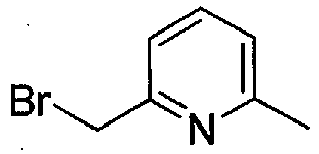
I-298 LCMS (FA): m/z = 488.4 (M+H). 
I-113 LCMS (FA): m/z = 477.3 (M+H). Int-55 
I-234 LCMS (FA): m/z = 449.3 (M+H). 
I-344 LCMS (FA): m/z = 451 (M+H). 
I-295 LCMS (FA): m/z = 504 (M+H). Int-38 
I-151 LCMS (FA): m/z = 494 (M+H). Int-50 
I-251 LCMS (FA): m/z = 558.2 (M+H). Int-18 
I-137 LCMS (FA): m/z = 545.1 (M+H). Int-12 
I-232 LCMS (FA): m/z = 513.0 (M+H). Int-20 
I-280 LCMS (FA): m/z = 513.0 (M+H). Int-19 
I-64 LCMS (FA): m/z = 529.1 (M+H). Int-11 -

- [4-({(1R,3R,4S)-3-(hydroxymethyl)-4-[(triisopropylsilyl)oxy]cyclopentyl}amino)pyrimidin-5-yl](1H-pyrazol-3-yl)methanone (0.64 g, 1.4 mmol) was dissolved in THF (25 mL). To this solution was added cesium carbonate (1.6 g, 4.9 mmol) and 3-iodobenzyl bromide (0.62 g, 2.1 mmol) and the reaction was stirred at rt for 20 h. The reaction was filtered and the filtrate concentrated. The residue was purified on silica gel to give [4-({(1R,3R,4S)-3-(hydroxymethyl)-4[(triisopropylsilyl)oxy]cyclopentyl}amino)pyrimidin-5-yl][1-(3-iodobenzyl)-1H-pyrazol-3-yl]methanone (0.79 g, 83%). LCMS (FA): m/z = 677.3 (M+H).
- To a solution of [4-({(1R,3R,4S)-3-(hydroxymethyl)-4-[(triisopropylsilyl)oxy]cyclopentyl}amino)pyrimidin-5-yl][1-(3-iodobenzyl)-1H-pyrazol-3-yl]methanone (0.79 g, 1.16 mmol) and TEA (0.5 mL, 2.4 mmol) in DMF (10 mL) was added chlorosulfonamide (400 mg, 3.3 mmol) at rt, and the mixture was stirred for 2 h. The reaction was quenched by addition of a saturated solution of NaHCO3 and diluted with water. The mixture was extracted with EtOAc (4x). The combined organic layers were dried over MgSO4, filtered, and concentrated. The residue was purified on silica gel to give the sulfamate intermediate [(830 mg, 95%); LCMS (FA): m/z = 755.2 (M+H).] which was dissolved in THF (7 mL) and HCl (4.0 M in water; 7 mL, 28 mmol) was added to the solution. The reaction was stirred for 5 h at 40 °C. The reaction was cooled to rt and quenched by the addition of a saturated solution of NaHCO3 and extracted with EtOAc (4x). The combined organic layers were dried over MgSO4, filtered, and concentrated. The residue was triturated with the addition of DCM. A white solid was collected as {(1R,2S,4R)-2-hydroxy-4-[(5-{[1-(3-iodobenzyl)-1H-pyrazol-3-yl]carbonyl}pyrimidin-4-yl)amino]cyclopentyl}methyl sulfamate (0.40 g, 61%). 1HNMR (DMSO) δ 9.45 (s, 1H), 9.01 (d, J = 7.4 Hz, 1H), 8.63 (s, 1H), 8.09 (d, J = 2.4 Hz, 1H), 7.73 - 7.66 (m, 2H), 7.45 (s, 2H), 7.29 (d, J = 7.7 Hz, 1H), 7.18 (t, J = 7.7 Hz, 1H), 6.91 (d, J = 2.4Hz, 1H), 5.49 (s, 2H), 4.92 (d, J = 4.5 Hz, 1H), 4.76 - 4.63 (m, 1H), 4.14 - 4.06 (m, 1H), 4.00 - 3.93 (m, 2H), 2.42 - 2.32 (m, 1H), 2.18 - 2.09 (m, 1H), 2.06 -1.96 (m, 1H), 1.85-1.73 (m, 1H), 1.34-1.21 (m, 1H); LCMS (FA): m/z = 599.3 (M+H).
- The compounds listed in the table below were prepared using a similar method to that described above starting from the listed starting materials. The following alternative conditions could be employed in the described reaction steps. Step 1: K2CO3instead of Cs2CO3; DMF instead of THF. Step 3: aq. TFA and aq. H3PO4 instead of aq. HCl. I-55 was made as a diastereomeric mixture (trans cyclopropyl). The following sets were made as diastereomeric mixtures and then separated via HPLC (chiral column): I-315/I-358 (benzylic methyl), I-86/I-362 (propargylic methyl); I-79/I-354 (furylic methyl); I-65/I-366 (pyridyl methyl). Absolute configurations of the undefined stereocenters are unknown.
Starting material Compound No. LCMS Data 
I-3 LCMS (FA): m/z = 542.3 (M+H). 
I-108 LCMS (FA): m/z = 422.0 (M+H). 
I-53 LCMS (FA): m/z = 542.5 (M+H). Int-17 
I-199 LCMS (FA): m/z = 487.1 (M+H). Int-47 
I-55 LCMS (FA): m/z = 451.4 (M+H). Int-4 
I-12 LCMS (FA): m/z = 519.3 (M+H). Int-52 
I-281 LCMS (FA): m/z = 443.0 (M+H). 
I-37 LCMS (FA): m/z = 456.6 (M+H). 
I-305 LCMS (FA): m/z = 441.5 (M+H). 
I-315 LCMS (FA): m/z = 564.9 (M+H). Int-3 
I-358 LCMS (FA): m/z = 564.9 (M+H). Int-3 
I-162 LCMS (FA): m/z = 488.0 (M+H). Int-7 
I-95 LCMS (FA): m/z = 508.0 (M+H). Int-8 
I-332 LCMS (FA): m/z = 467.4 (M+H). Int-5 
I-86 LCMS (FA): m/z = 449.5 (M+H). Int-2 
I-362 LCMS (FA): m/z = 449.5 (M+H). Int-2 
I-301 LCMS (FA): m/z = 531.5 (M+H). Int-46 
I-14 LCMS (FA): m/z = 505.5 (M+H). 
I-352 LCMS (FA): m/z = 554.4 (M+H). 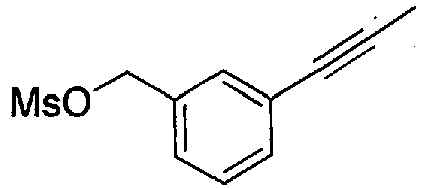
I-84 LCMS (FA): m/z = 511.5 (M+H). Int-45 
I-180 LCMS (FA): m/z = 497.3 (M+H). Int-23 
I-79 LCMS (FA): m/z = 511.4 (M+H). Int-25 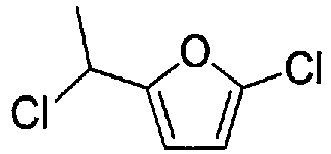
I-354 LCMS (FA): m/z = 511.4 (M+H). Int-25 
I-85 LCMS (FA): m/z = 497 (M+H). Int-44 
I-128 LCMS (FA): m/z = 487 (M+H). 
I-22 LCMS (FA): m/z = 505 (M+H). 
I-32 LCMS (FA): m/z = 505 (M+H). 
I-144 LCMS (FA): m/z = 513.0 (M+H). Int-39 
I-302 LCMS (FA): m/z = 463.0 (M+H). 
I-63 LCMS (FA): m/z = 504.0 (M+H). Int-37 
I-214 LCMS (FA): m/z = 513.0 (M+H). 
I-29 LCMS (FA): m/z = 552.3 (M+H). 
I-59 LCMS (FA): m/z = 503.4 (M+H). Int-53 
I-163 LCMS (FA): m/z = 531.4 (M+H). 
I-348 LCMS (FA): m/z = 478.4 (M+H). 
I-154 LCMS (FA): m/z = 479.3 (M+H). Int-51 
I-60 LCMS (AA): m/z = 531.2 (M+H). Int-13 
I-27 LCMS (AA): m/z = 521.2 (M+H). Int-29 
I-270 LCMS (AA): m/z = 543.2 (M+H). *Int-30 
I-145 LCMS (AA): m/z = 479.2 (M+H). Int-32 
I-215 LCMS (FA): m/z = 507.1 (M+H). 
I-171 LCMS (FA): m/z = 541.1 (M+H). 
Pelcman, B. et al. PCT Application Publication WO 2008/110793 I-17 LCMS (AA): m/z = 513.2 (M+H). 
I-241 LCMS (AA): m/z = 529.1 (M+H). PCT Application Publication WO 2006/085149 
I-293 LCMS (AA): m/z = 467.2 (M+H). Int-5 
I-77 LCMS (AA): m/z = 495.2 (M+H). US Application Publication 2010/0093814 
I-235 LCMS (AA): m/z = 513.1 (M+H). Int-26 
I-183 LCMS (AA): m/z = 547.1 (M+H). Int-16 
I-109 LCMS (AA): m/z = 532.2 (M+H). Int-14 
I-120 LCMS (AA): m/z = 544.2 (M+H). Int-27 
I-275 LCMS (FA): m/z = 493.1 (M+H). Int-28 
I-166 LCMS (FA): m/z = 515.4 (M+H). Int-43 
I-287 LCMS (FA): m/z = 461.4 (M+H). Int-54 
I-65 LCMS (FA): m/z = 568.2 (M+H). Int-109 
I-366 LCMS (FA): m/z = 568.2 (M+H). Int-109 -

- To a solution of pyrazol-3-carbaldehyde (10.0 g, 104 mmol) in DMF (333 mL) was added K2CO3 (43 g, 312 mmol) followed by 3-bromobenzyl bromide (27.3 g, 109 mmol) at rt, and the mixture was stirred for 14 h. The reaction was filtered through a celite pad and the residual solid was rinsed with EtOAc. The filtrate was concentrated in vacuo. To the residue was added water (200 mL) and the mixture was extracted with Hexane:EtOAc (1:1, 200 mLx3). The combined organic layers were dried over Na2SO4, filtered, and concentrated in vacuo. The residue was purified on silica to provide 1-(3-bromobenzyl)-1H-pyrazole-3-carbaldehyde (21.1 g; 76%) as a colorless solid. LCMS (FA): m/z = 267.1 (M+H).
- 4-Chloro-5-iodopyrimidine (20.0 g, 83.0 mmol) was added to a 3-neck RBF, which was equipped with additional funnel, three way stop cock, septum, and internal temperature probe. The reaction vessel was purged with argon. The content was dissolved in THF (500 mL), and the solution was cooled to -78 °C with a dry ice bath. To the solution was added dropwise n-Butyllithium (2.50 M in hexane; 66.4 mL, 166 mmol), and the mixture was stirred for 30 min. A solution of 1-(3-bromobenzyl)-1H-pyrazole-3-carbaldehyde (20.0 g, 75 mmol) in THF (80 mL) was added dropwise to the mixture at -78 °C, and the reaction was stirred for 30 min at the same temperature. The reaction was quenched by addition of saturated NH4Cl (300 mL) and extracted with EtOAc (300 mLx3). The combined organic layers were dried over Na2SO4, filtered, and concentrated in vacuo. The residue was purified on silica gel to give [1-(3-bromobenzyl)-1H-pyrazol-3-yl](4-chloropyrimidin-5-yl)methanol (20.4 g, 71%) as an orange oil. LCMS (FA): m/z = 381.0 (M+H).
- To a solution of [1-(3-bromobenzyl)-1H-pyrazol-3-yl](4-chloropyrimidin-5-yl)methanol (20.4 g, 53.7 mmol) in DCM (474 mL) was added manganese(IV) oxide (46.7 g, 537 mmol) and the mixture was stirred for 12 h at rt. The reaction was then filtered through a celite pad and the residual solid was washed with DCM and EtOAc several times. The filtrate was concentrated in vacuo and the residue was purified on silica gel to give [1-(3-bromobenzyl)-1H-pyrazol-3-yl](4-chloropyrimidin-5-yl)methanone (16.7 g, 82%) as an off-white solid. LCMS (FA): m/z = 379.1 (M+H).
- (1R,3R,4S)-3-({[tert-Butyl(dimethyl)silyl]oxy}methyl)-4-[(triisopropylsilyl)oxy]cyclopentanamine (40.0 g, 100 mmol) and [1-(3-bromobenzyl)-1H-pyrazol-3-yl](4-chloropyrimidin-5-yl)methanone (34.2 g, 90.5 mmol) were weighed into a reaction vessel and the contents were dissolved in DMF (400 mL). To the solution was added K2CO3 (37.5 g, 271 mmol) at rt, and the resulting mixture was stirred for overnight. The reaction was concentrated in vacuo. To the residue was added water and then the mixture was extracted with EtOAc (3x). The combined organic layers were then washed with brine, dried over Na2SO4, filtered and concentrated in vacuo. The residue was purified on silica gel to give [1-(3-bromobenzyl)-1H-pyrazol-3-yl][4-({(1R,3R,4S)-3-({[tert-butyl(dimethyl)silyl]oxy}methyl)-4-[(triisopropylsilyl)oxy]cyclopentyl}amino)pyrimidin-5-yl]methanone (63.2 g, 94%) as a light brown oil. LCMS (FA): m/z = 744.2 (M+H).
- To a solution of [1-(3-bromobenzyl)-1H-pyrazol-3-yl][4-({(1R,3R,4S)-3-({[tert-butyl(dimethyl)silyl]oxy}methyl)-4-[(triisopropylsilyl)oxy]cyclopentyl}amino)pyrimidin-5-yl]methanone (63.0 g, 80.6 mmol) in EtOH (630 mL) cooled to 0 °C was added 1% HCl in EtOH (1.33 L, 161.1 mmol). The reaction was sealed and allowed to stand at rt for 6 h then at 4 °C for 14 h. The mixture was then warmed to rt and stirred for 9 h. The reaction was quenched by addition of saturated NaHCO3 (200 mL) and the mixture was concentrated to remove EtOH. To the residue was added water (150 mL) and then the mixture was extracted with EtOAc (400 mLx4). The combined organic layers were dried over Na2SO4, filtered, and concentrated in vacuo. The residue was purified on silica gel to give [1-(3-bromobenzyl)-1H-pyrazol-3-yl][4-({(1R,3R,4S)-3-(hydroxymethyl)-4-[(triisopropylsilyl)oxy]cyclopentyl}amino)pyrimidin-5-yl]methanone (45.6 g, 90%) as a light yellow oil. LCMS (FA): m/z = 630.5 (M+H).
- To a solution of [1-(3-bromobenzyl)-1H-pyrazol-3-yl][4-({(1R,3R,4S)-3-(hydroxymethyl)-4-[(triisopropylsilyl)oxy]cyclopentyl}amino)pyrimidin-5-yl]methanone (45.5 g, 69 mmol) in DMF (396 mL) was added chlorosulfonamide (12.7 g, 110 mmol) at 0 °C, and the mixture was stirred for 20 min at the same temperature. The reaction was quenched by addition of a saturated aqueous solution of NaHCO3 (600 mL) and the resulting mixture was extracted with EtOAc (400 mLx4). The combined organic layers were dried over Na2SO4, filtered, and concentrated in vacuo. The residue was purified on silica gel to give the sulfamate intermediate [(42.0 g, 86%); LCMS (FA): m/z = 630.5 (M+H).] which was then dissolved in THF (200 mL). To this solution was added HCl (4.0 M in water; 200 mL, 800 mmol) at rt, and the mixture was stirred for 14 h. The reaction was quenched by the addition of saturated NaHCO3 and the mixture was extracted with EtOAc (4X). The combined organic layers were dried over Na2SO4, filtered, and concentrated in vacuo. To the residue was added a small volume of DCM and the suspension was filtered through a glass frit funnel. The residual solid was rinsed with Et2O and dried under high vacuum for 16 h to give {(1R,2S,4R)-4-[(5-{[1-(3-bromobenzyl)-1H-pyrazol-3-yl]carbonyl}pyrimidin-4-yl)amino]-2-hydroxycyclopentyllmethyl sulfamate (29.6 g, 90%). 1H NMR (DMSO) δ 9.44 (s, 1H), 9.00 (d, J = 7.4 Hz, 1H), 8.63 (s, 1H), 8.09 (d, J = 2.4 Hz, 1H), 7.56 - 7.50 (m, 2H), 7.43 (s, 2H), 7.37 - 7.31 (m, 1H), 7.28 (d, J = 7.7 Hz, 1H), 6.91 (d, J = 2.4 Hz, 1H), 5.52 (s, 2H), 4.91 (d, J = 4.3 Hz, 1H), 4.77 - 4.65 (m, 1H), 4.10 (dd, J = 9.7, 5.9 Hz, 1H), 4.01- 3.93 (m, 2H), 2.41 - 2.31 (m, 1H), 2.18 - 2.08 (m, 1H), 2.05 -1.95 (m, 1H), 1.78 (ddd, J = 13.2, 8.4, 6.9 Hz, 1H), 1.28 (dt, J = 12.8, 9.2 Hz, 1H); LCMS (FA): m/z = 553.3 (M+H).
-

- To a flask containing 2-{(1R,2S,4R)-4-amino-2-[(triisopropylsilyl)oxy]cyclopentyl}ethanesulfonamide●CF3CO2H (127 mg, 0.27 mmol) was added DMF (2 mL), K2CO3 (110 mg, 0.80 mmol) and [1-(3-bromobenzyl)-1H-pyrazol-3-yl](4-chloropyrimidin-5-yl)methanone (120 mg, 0.32 mmol) at rt. The mixture was stirred for 1 h and then quenched by addition of water (50 mL). The mixture was then extracted with EtOAc (60 mLx3). The combined organic layers were dried over Na2SO4, filtered, and concentrated. The residue was purified on silica gel to give 2-{(1R,2S,4R)-4-[(5-{[1-(3-bromobenzyl)-1H-pyrazol-3-yl]carbonyl}pyrimidin-4-yl)amino]-2-[(triisopropylsilyl)oxy]cyclopentyl}ethanesulfonamide (164 mg, 83%) as a colorless solid. %). LCMS (AA): m/z = 707.4 (M+H).
- To a solution of 2-{(1R,2S,4R)-4-[(5-{[1-(3-bromobenzyl)-1H-pyrazol-3-yl]carbonyl}pyrimidin-4-yl)amino]-2-[(triisopropylsilyl)oxy]cyclopentyl}ethanesulfonamide (155 mg, 0.22 mmol) in THF (2.0 mL) was added HCl (4 M solution in water; 2.0 mL, 8.9 mmol) at rt, and the mixture was stirred for 1 h at 45 °C. The reaction was quenched by addition of saturated NaHCO3 and extracted with EtOAc (x3). The combined organic layers were dried over Na2SO4, filtered, and concentrated in vacuo. To the residual solid was added Et2O and the resulting suspension was filtered through a glass frit funnel. The residual white solid was rinsed with Et2O and dried under high vacuum to give 2-{(1R,2S,4R)-4-[(5-{[1-(3-bromobenzyl)-1H-pyrazol-3-yl]carbonyl}pyrimidin-4-yl)amino]-2-hydroxycyclopentyl}ethanesulfonamide (114 mg, 95%) as a colorless solid. 1H NMR (DMSO) δ 9.44 (s, 1H), 9.00 (d, J = 7.4 Hz, 1H), 8.62 (s, 1H), 8.09 (d, J = 2.4 Hz, 1H), 7.55 - 7.49 (m, 2H), 7.37 - 7.31 (m, 1H), 7.30 - 7.25 (m, 1H), 6.91 (d, J = 2.4 Hz, 1H), 6.73 (s, 2H), 5.52 (s, 2H), 4.83 (d, J = 5.0 Hz, 1H), 4.69 - 4.57 (m, 1H), 3.84 - 3.76 (m, 1H), 3.10 - 2.91 (m, 2H), 2.39 - 2.29 (m, 1H), 2.00 - 1.89 (m, 2H), 1.85 - 1.61 (m, 3H), 1.20 - 1.10 (m, 1H);LCMS (FA): m/z = 551.3 (M+H).
-

- A RBF was charged with [1-(3-bromobenzyl)-1H-pyrazol-3-yl](4-chloropyrimidin-5-yl)methanone (200 mg, 0.53 mmol), (1S,2S,4R)-4-amino-2-(hydroxymethyl)cyclopentanol hydrobromide (B) (135 mg, 0.64 mmol) (for synthesis see:
Armitage, I. et al. US Application Publication 2009/0036678 ), and K2CO3 (183 mg, 1.32 mmol). The contents were dissolved in DMF (4 mL) and the mixture was stirred for 1 h at 80 °C. The reaction was then cooled to rt and diluted with EtOAc. The suspension was filtered through a celite pad and the residual solid was rinsed with EtOAc several times. The filtrate was concentrated in vacuo and the residue was dissolved in EtOAc (80 mL) which was then washed with water (30 mL) followed by brine. The organic layer was dried over Na2SO4, filtered, and concentrated. The residue was purified on silica gel to give [1-(3-bromobenzyl)-1H-pyrazol-3-yl](4-{[(1R,3S,4S)-3-hydroxy-4-(hydroxymethyl)cyclopentyl]amino}pyrimidin-5-yl)methanone (167 mg, 60%) as a colorless solid. LCMS (FA): m/z = 474.3 (M+H). - To a solution of [1-(3-bromobenzyl)-1H-pyrazol-3-yl](4-{[(1R,3S,4S)-3-hydroxy-4-(hydroxymethyl)cyclopentyl]amino}pyrimidin-5-yl)methanone (144 mg, 0.31 mmol) in DMF (5 mL) was added DMAP (1.9 mg, 0.02 mmol), imidazole (100 mg, 1.5 mmol), and TBSCl (115 mg, 0.76 mmol) at rt. The resulting mixture was stirred for 12 h. The reaction was then concentrated in vacuo. To the residue was added water (40 mL) and the mixture was extracted with EtOAc (50 mLx3). The combined organic layers were dried over Na2SO4, filtered, and concentrated in vacuo. The residue was purified on silica gel to give [1-(3-bromobenzyl)-1H-pyrazol-3-yl](4-{[(1R,3S,4S)-3-{[tert-butyl(dimethyl)silyl]oxy}-4-({[tert-butyl(dimethyl)silyl]oxy}methyl)cyclopentyl]amino}pyrimidin-5-yl)methanone (168 mg, 79%) as a colorless oil. LCMS (FA): m/z = 702.4 (M+H).
- To a solution of [1-(3-bromobenzyl)-1H-pyrazol-3-yl](4-{[(1R,3S,4S)-3-{[tert-butyl(dimethyl)silyl]oxy}-4-({[tert-butyl(dimethyl)silyl]oxy}methyl)cyclopentyl]amino}pyrimidin-5-yl)methanone (160 mg, 0.23 mmol) in EtOH (3.0 mL) was added 1% HCl in EtOH (3.0 mL, 0.36 mmol) and the mixture was stirred for 2 h at rt. The reaction was quenched by addition of saturated NaHCO3 (30 mL) and the mixture was concentrated to remove EtOH. To the residue was added water (20 mL) and the mixture was extracted with EtOAc (50 mLx4). The combined organic layers were dried over Na2SO4, filtered, and concentrated in vacuo. The residue was purified on silica gel to give [1-(3-bromobenzyl)-1H-pyrazol-3-yl](4-{[(1R,3S,4S)-3-{[tert-butyl(dimethyl)silyl]oxy}-4-(hydroxymethyl)cyclopentyl]amino}pyrimidin-5-yl)methanone (113 mg, 84%). LCMS (FA): m/z = 588.4 (M+H).
- To a solution of [1-(3-bromobenzyl)-1H-pyrazol-3-yl](4-{[(1R,3S,4S)-3-{[tert-butyl(dimethyl)silyl]oxy}-4-(hydroxymethyl)cyclopentyl]amino}pyrimidin-5-yl)methanone (105 mg, 0.18 mmol) in DMF (2.0 mL) was added chlorosulfonamide (41 mg, 0.36 mmol) at rt, and the mixture was stirred for 20 min. The reaction mixture was quenched by addition of saturated NaHCO3 and then the mixture extracted with EtOAc (x3). The combined organic layers were dried over Na2SO4, filtered, and concentrated. The residue was purified on silica gel to give the sulfamate intermediate [(91 mg, 76%); LCMS (FA): m/z = 667.4 (M+H).] which was dissolved in THF (2.0 mL). To this solution was added HCl (4 M solution in water; 2.0 mL, 8.9 mmol), and the mixture was stirred for 14 h at rt. The reaction was quenched by addition of saturated NaHCO3 (30 mL) and the resulting mixture extracted with EtOAc (50 mLx4). The combined organic layers were dried over Na2SO4, filtered, and concentrated in vacuo. The residue was purified on silica gel to afford {(1S,2S,4R)-4-[(5-{[1-(3-bromobenzyl)-1H-pyrazol-3-yl]carbonyl}pyrimidin-4-yl)amino]-2-hydroxycyclopentyl}methyl sulfamate (69 mg, 94%). 1H NMR (DMSO) δ 9.45 (s, 1H), 9.05 (d, J = 6.9 Hz, 1H), 8.63 (s, 1H), 8.10 (s, 1H), 7.53 (s, 2H), 7.48 - 7.19 (m, 4H), 6.92 (s, 1H), 5.53 (s, 2H), 4.97 - 4.56 (m, 2H), 4.29 - 4.15 (m, 2H), 4.05 - 3.95 (m, 1H), 2.47 - 2.37 (m, 1H), 2.23 - 2.10 (m, 1H), 2.06 -1.93 (m, 1H), 1.85 -1.61 (m, 2H); LCMS (FA): m/z = 553.3 (M+H).
-

- To a solution of tert-butyl {(1R,3R,4S)-3-({[tert-butyl(dimethyl)silyl]oxy}methyl)-4-[(triisopropylsilyl)oxy]cyclopentyl}carbamate (150 mg, 0.30 mmol) in DMF (2.0 mL) was added NaH (60% in mineral oil) (35.9 mg, 0.90 mmol) followed by MeI (55.8 uL, 0.90 mmol) at rt, and the mixture was stirred for 14 h. The reaction was quenched by addition of water (40 mL) and extracted with hexane (50 mLx3). The combined organic layers were dried over Na2SO4, filtered, and concentrated in vacuo. The residue was purified by ISCO silica gel column chromatography to give tert-butyl {(1R,3R,4S)-3-({[tert-butyl(dimethyl)silyl]oxy}methyl)-4-[(triisopropylsilyl)oxy]cyclopentyl}methylcarbamate (145 mg, 80%). 1H NMR (CDCl3) δ 4.87 - 4.66 (m, 1H), 4.23 - 4.15 (m, 1H), 3.62 (dd, J = 9.9,4.8 Hz, 1H), 3.57 - 3.49 (m, 1H), 2.71 (s, 3H), 2.07 - 1.86 (m, 2H), 1.79 -1.70 (m, 2H), 1.46 (s, 9H), 1.41- 1.31 (m, 1H), 1.10 - 0.99 (m, 21H), 0.89 (s, 9H), 0.03 (s, 6H).
- To a solution of tert-butyl {(1R,3R,4S)-3-({[tert-butyl(dimethyl)silyl]oxy}methyl)-4-[(triisopropylsilyl)oxy]cyclopentyl}methylcarbamate (123 mg, 0.24 mmol) in DCM (5.0 mL) was added EtOH (0.07 mL, 1.19 mmol) followed by ZnBr2 (538 mg, 2.39 mmol) at rt, and the mixture was stirred for 63 h. The reaction was quenched by addition of saturated 1 M NaOH and extracted with DCM (x3). The combined organic layers were dried over Na2SO4, filtered, and concentrated in vacuo. The residue was purified by silica gel column chromatography to give (1R,3R,4S)-3-({[tert-butyl(dimethyl)silyl]oxy}methyl)-N-methyl-4-[(triisopropylsilyl)oxy]cyclopentanamine (82 mg, 82%) as light brown oil. LCMS (FA): m/z = 416.6 (M+H).
- To a solution of (1R,3R;4S)-3-({[tert-butyl(dimethyl)silyl]oxy}methyl)-N-methyl-4-[(triisopropylsilyl)oxy]cyclopentanamine (80 mg, 0.19 mmol) in DMF (2.0 mL) was added K2CO3 (80 mg, 0.58 mmol) followed by [1-(3-bromobenzyl)-1H-pyrazol-3-yl](4-chloropyrimidin-5-yl)methanone (73 mg, 0.19 mmol) at rt, and the mixture was stirred for 1 h. The reaction was quenched by addition of water (50 mL) and extracted with EtOAc:Hexane (1:1) (50 mLx4). The combined organic layers were dried over Na2SO4, filtered, and concentrated in vacuo. The residue was purified on silica gel to give [1-(3-bromobenzyl)-1H-pyrazol-3-yl]{4-[{(1R,3R,4S)-3-({[tert-butyl(dimethyl)silyl]oxy}methyl)-4-[(triisopropylsilyl)oxy]cyclopentyl}(methyl)amino]pyrimidin-5-yl}methanone (121 mg, 83%) as a colorless oil. LCMS (FA): m/z = 758.6 (M+H).
- To a solution of [1-(3-bromobenzyl)-1H-pyrazol-3-yl]14-[{(1R,3R,4S)-3-({[tert-butyl(dimethyl)silyl]oxy}methyl)-4-[(triisopropylsilyl)oxy]cyclopentyl}(methyl)amino]pyrimidin-5-yl}methanone (115 mg, 0.15 mmol) in EtOH (4 mL) was added 1% HCl in EtOH (4.0 mL, 0.32 mmol) at rt, and the mixture was allowed to stand at 4°C for 16 h. The reaction was quenched by addition of saturated NaHCO3 (50 mL) and extracted with EtOAc (50 mLx3). The combined organic layers were dried over Na2SO4, filtered, and concentrated in vacuo. The residue was purified on silica gel to give [1-(3-bromobenzyl)-1H-pyrazol-3-yl]{4-[{(1R,3R,4S)-3-(hydroxymethyl)-4-[(triisopropylsilyl)oxy]cyclopentyl}(methyl)amino]pyrimidin-5-yl}methanone (91 mg, 93%). LCMS (FA): m/z = 644.6 (M+H).
- To a solution of [1-(3-bromobenzyl)-1H-pyrazol-3-yl]{4-[{(1R,3R,4S)-3-(hydroxymethyl)-4-[(triisopropylsilyl)oxy]cyclopentyl}(methyl)amino]pyrimidin-5-yl}methanone (88.0 mg, 0.14 mmol) in DMF (2.0 mL) was added chlorosulfonamide (31.6 mg, 0.27 mmol) at rt, and the mixture was stirred for 10 min. The reaction was quenched by addition of saturated NaHCO3 (40 mL) and extracted with EtOAc (50 mLx3). The combined organic layers were dried over Na2SO4, filtered, and concentrated in vacuo. The residue was purified on silica gel to give the sulfamate intermediate [(95 mg, 91%); LCMS (FA): m/z = 723.6 (M+H).] which was dissolved in THF (2 mL). To this solution was added HCl (4.0 M solution in water; 2.0 mL, 8.0 mmol) at rt, and the mixture was allowed to stand at 4°C for 14 h and then warmed to room temp for 4 h. The reaction was quenched by addition of saturated NaHCO3 (60 mL) and the mixture was extracted with EtOAc (50 mLx3). The combined organic layers were dried over Na2SO4, filtered, and concentrated in vacuo. The residue was purified on silica gel to give {(1R,2S,4R)-4-[(5-{[1-(3-bromobenzyl)-1H-pyrazol-3-yl]carbonyl}pyrimidin-4-yl)(methyl)amino]-2-hydroxycyclopentyl}methyl sulfamate (59 mg, 86%). 1H NMR (DMSO) δ 8.57 (s, 1H), 8.39 (s, 1H), 8.09 (d, J = 2.4 Hz, 1H), 7.52 (d, J = 7.9 Hz, 1H), 7.48 (s, 1H), 7.43 (s, 2H), 7.33 (t, J = 7.8 Hz, 1H), 7.22 (d, J = 7.7 Hz, 1H), 6.94 (d, J = 2.4 Hz, 1H), 5.47 (s, 2H), 5.23 - 5.09 (m, 1H), 4.88 (d, J = 4.5 Hz, 1H), 4.12 - 4.04 (m, 1H), 3.99 - 3.85 (m, 2H), 2.09 - 1.98 (m, 1H), 1.96 - 1.75 (m, 3H), 1.70 -1.59 (m, 1H), 1.35 -1.22 (m, 1H); LCMS (FA): m/z = 567.3 (M+H).
-

- DIEA (0.90 mL, 5.2 mmol) was added to a solution of 2-furoyltrifluoroacetone (0.71 g, 3.4 mmol) in EtOH (6 mL) at rt. (3-Chlorobenzyl)hydrazine hydrochloride (1.0 g, 5.2 mmol) was then added in portions. The resulting light orange solution was allowed to stir at rt for 14 h. The reaction mixture was then concentrated and the residue dissolved in EtOAc. This solution was then washed with water and brine. The organic layer was dried over MgSO4, filtered, and concentrated. The crude product was purified on silica gel to give the pyrazolinol intermediate (0.90 g, 76%). LCMS (FA): m/z = 345 (M+H). The pyrazolinol intermediate was dissolved in THF (11 mL) and HCl (3.0 M solution in water; 2.6 mL, 7.8 mmol) was added. The resulting solution was heated to reflux with stirring. After 45 min LCMS showed the reaction to be complete. The reaction was allowed to cool to rt and quenched by the addition of a saturated NaHCO3 solution. The mixture was extracted with EtOAc (2x). The combined organic extracts were dried over MgSO4, filtered, and concentrated to give 1-(3-chlorobenzyl)-3-(2-furyl)-5-(trifluoromethyl)-1H-pyrazole (0.76 g, 89%). LCMS (FA): m/z = 327 (M+H).
- To a solution of 1-(3-chlorobenzyl)-3-(2-furyl)-5-(trifluoromethyl)-1H-pyrazole (0.75 g, 2.3 mmol) in acetonitrile (7 mL) was added carbon tetrachloride (7 mL) and water (9.8 mL). Sodium metaperiodate (2.7 g, 12 mmol) and ruthenium(III) chloride hydrate (0.052 g, 0.23 mmol) were added to this mixture. After stirring 20 min at rt TLC showed the reaction was complete. IN NaOH (10 mL) was added to the reaction mixture which was extracted with EtOAc (2x). The organic extracts were discarded. The aqueous layer was acidified and extracted with EtOAc (3x). The combined organic extracts were dried over MgSO4, filtered, and concentrated to yield 1-(3-chlorobenzyl)-5-(trifluoromethyl)-1H-pyrazole-3-carboxylic acid (0.37 g, 53%). LCMS (FA): m/z =182 (M+H).
- Concentrated sulfuric acid (0.1 mL, 2 mmol) was added to a solution of 1-(3-chlorobenzyl)-5-(trifluoromethyl)-1H-pyrazole-3-carboxylic acid (0.36 g, 1.2 mmol) in methanol (10 mL). The resulting solution was heated at 60 °C with stirring for 3 h. The reaction mixture was then concentrated and purified on silica gel to afford methyl 1-(3-chlorobenzyl)-5-(trifluoromethyl)-1H-pyrazole-3-carboxylate (0.30 g, 80%). LCMS (FA): m/z = 319 (M+H).
- Lithium aluminum hydride (1.0 M solution in THF; 0.94 mL, 0.94 mmol) was added to an ice-bath cooled solution of 1-(3-chlorobenzyl)-5-(trifluoromethyl)-1H-pyrazole-3-carboxylate (0.30 g, 0.94 mmol) in ether (4.9 mL). The resulting solution was stirred at 0 °C for 30 min. The reaction was quenched with water (∼1 mL) at 0 °C. Na2SO4 dodecahydrate (∼2g) was added along with EtOAc (15 mL) and the mixture was allowed to warm to rt and stir 18 h. The mixture was filtered and the solid washed with EtOAc. The filtrate was concentrated to give the alcohol intermediate [LCMS (FA): m/z = 291 (M+H).] which was then dissolved in DCM (15 mL). Dess-Martin periodinane (0.73 g, 1.72 mmol) was added and the reaction was allowed to stir at rt for 1 h. The reaction mixture was then concentrated and the crude material purified on silica gel to provide 1-(3-chlorobenzyl)-5-(trifluoromethyl)-1H-pyrazole-3-carbaldehyde (226 mg, 83%). LCMS (FA): m/z = 289 (M+H).
- 4-Chloro-5-iodopyrimidine (167 mg, 0.69 mmol) was weighed into a 100 mL flame dried RBF under argon. The solid was dissolved in THF (4.9 mL) and the solution was cooled to -78 °C in a dry ice-acetone bath. To this solution was added dropwise n-butyllithium (2.5 M solution in hexanes; 0.55 mL, 1.39 mmol) and the resulting mixture was stirred for 45 min at -78 °C. To the mixture was added dropwise a solution of 1-(3-chlorobenzyl)-5-(trifluoromethyl)-1H-pyrazole-3-carbaldehyde (0.22 g, 0.76 mmol) in THF (2.4 mL) at -78 °C, and the resulting mixture was stirred for 30 min. The reaction was warmed to rt and subsequently quenched by the addition of saturated NH4Cl (10 mL). After dilution with water, the mixture was extracted with EtOAc (3x). The combined organic layers were dried over MgSO4, filtered, and concentrated. The residue was purified on silica gel to yield [1-(3-chlorobenzyl)-5-(trifluoromethyl)-1H-pyrazol-3-yl](4-chloropyrimidin-5-yl)methanol (240 mg, 86%). LCMS (FA): m/z = 403 (M+H).
- To a solution of [1-(3-chlorobenzyl)-5-(trifluoromethyl)-1H-pyrazol-3-yl](4-chloropyrimidin-5-yl)methanol (0.24 g, 0.60 mmol) in DCM (7.2 mL) was added manganese(IV) oxide (0.62 g, 7.1 mmol), and the mixture was stirred at rt for 16 h. Additional manganese(IV) oxide (0.21 g, 2.4 mmol) was then added and the mixture continued to stir at rt an additional 24 h. The reaction mixture was then filtered through a celite pad and the residual solid was washed with DCM and EtOAc several times. The filtrate was concentrated to give [1-(3-chlorobenzyl)-5-(trifluoromethyl)-1H-pyrazol-3-yl](4-chloropyrimidin-5-yl)methanone (220 mg, 92%). LCMS (FA): m/z = 401 (M+H).
- [1-(3-chlorobenzyl)-5-(trifluoromethyl)-1H-pyrazol-3-yl](4-chloropyrimidin-5-yl)methanone (110 mg, 0.27 mmol) and (1R,3R,4S)-3-({[tert-butyl(dimethyl)silyl]oxy}methyl)-4-[(triisopropylsilyl)oxy]cyclopentanamine (0.13 g, 0.33 mmol) were weighed into a reaction vessel with stirbar. To this mixture was added 1-propanol (3.3 mL) and DIEA (0.14 mL, 0.82 mmol). The resulting mixture was sealed and the vessel allowed to stir while heating at 35 °C. After 16 h the reaction was cooled to rt and the reaction was concentrated. The crude product was purified on silica gel to afford [4-({(1R,3R,4S)-3-({[tert-butyl(dimethyl)silyl]oxy}methyl)-4-[(triisopropylsilyl)oxy]cyclopentyl}amino)pyrimidin-5-yl][1-(3-chlorobenzyl)-5-(trifluoromethyl)-1H-pyrazol-3-yl]methanone (0.15 g, 73%).
- To a solution of [4-({(1R,3R,4S)-3-({[tert-butyl(dimethyl)silyl]oxy}methyl)-4-[(triisopropylsilyl)oxy]cyclopentyl}amino)pyrimidin-5-yl][1-(3-chlorobenzyl)-5-(trifluoromethyl)-1H-pyrazol-3-yl]methanone (0.15 g, 0.20 mmol) in EtOH (4.7 mL) was added 1% HCl in EtOH (4.9 mL, 0.59 mmol) at rt. The reaction vessel was sealed and placed in a refrigerator (4 °C) for 22 h. The reaction was quenched by addition of a saturated aq. solution of NaHCO3. To the residue was added water which was extracted with EtOAc (4x). The combined organic layers were dried over MgSO4, filtered, and concentrated. The residue was purified on silica gel to give [1-(3-chlorobenzyl)-5-(trifluoromethyl)-1H-pyrazol-3-yl][4-({(1R,3R,4S)-3-(hydroxymethyl)-4-[(triisopropylsilyl)oxy]cyclopentyl}amino)pyrimidin-5-yl]methanone (0.12 g, 94%). LCMS (FA): m/z = 653 (M+H).
- To a solution of [1-(3-chlorobenzyl)-5-(trifluoromethyl)-1H-pyrazol-3-yl][4-({(1R,3R,4S)-3-(hydroxymethyl)-4-[(triisopropylsilyl)oxy]cyclopentyl}amino)pyrimidin-5-yl]methanone (0.11 g, 0.17 mmol) in DMF (2.6 mL) and TEA (0.071 mL, 0.51 mmol) was added chlorosulfonamide (0.049 g, 0.42 mmol) at rt, and the mixture was allowed to stir for 10 min. The reaction was quenched with sat NaHCO3, and then extracted with EtOAc (4x). The combined organic layers were dried over MgSO4, filtered and concentrated to give the crude sulfamate intermediate which was immediately dissolved in THF (5.5 mL). HCl (3.0 M solution in water; 1.1 mL, 3.2 mmol) was added to the solution. The reaction was allowed to stir for 15 h at rt then at 40-45 °C for 6 h. The reaction was then quenched with sat NaHCO3, and extracted with EtOAc (4x). The combined organic layers were dried over MgSO4, filtered and concentrated. The crude product was purified on silica gel to afford {(1R,2S,4R)-4-[(5-{[1-(3-chlorobenzyl)-5-(trifluoromethyl)-1H-pyrazol-3-yl]carbonyl}pyrimidin-4-yl)amino]-2-hydroxycyclopentyl}methyl sulfamate I-number (68 mg, 72%). 1H NMR (DMSO) δ 9.36 (d, J = 4.9 Hz, 1H), 8.96 (d, J = 7.4 Hz, 1H), 8.67 (s, 1H), 7.54 (s, 1H), 7.45 (s, 2H), 7.43 - 7.40 (m, 2H), 7.34 (s, 1H), 7.18 - 7.08 (m, 1H), 5.70 (s, 2H), 4.93 (d, J = 4.5 Hz, 1H), 4.82 - 4.67 (m, 1H), 4.12 (dd, J = 9.7, 5.9 Hz, 1H), 4.04 - 3.93 (m, 2H), 2.43 - 2.31 (m, 1H), 2.20 - 2.09 (m, 1H), 2.08 - 1.99 (m, 1H), 1.86 -1.72 (m, 1H), 1.37 -1.25 (m, 1H); LCMS (FA): m/z = 575.5 (M+H).
-

- 5-Methyl-2H-pyrazole-3-carbaldehyde (0.99 g, 9.0 mmol) was dissolved in DMF (35 mL). To this solution was added cesium carbonate (7.3 g, 22.5 mmol) and 3-bromobenzyl bromide (2.5 g, 9.9 mmol) and the reaction was stirred at rt for 1 h. The reaction was quenched by addition of water. This mixture was then extracted with EtOAc (3x). The combined organic layers were dried over MgSO4, filtered and concentrated. The residue was purified on silica gel to give 1-(3-bromobenzyl)-5-methyl-1H-pyrazole-3-carbaldehyde (1.7 g, 68%). LCMS (FA): m/z = 281.0 (M+H).
- Into a flame dried RBF with stirbar was added 4-chloro-5-iodopyrimidine (1.6 g, 6.7 mmol) dissolved in THF (23 mL). The flask was purged with argon and cooled to -78 °C. To this solution was added dropwise n-butyllithium (2.5 M in hexane; 5.6 mL, 14.0 mmol) at -78 °C and the mixture was stirred for 30 min. To this mixture was added 1-(3-bromobenzyl)-5-methyl-1H-pyrazole-3-carbaldehyde (1.7 g, 6.1 mmol) dissolved in THF (4.3 mL) dropwise. The reaction was stirred at -78 °C for 2 h. The reaction was quenched with a saturated solution of NH4Cl and then extracted with EtOAc (3x). The combined organic layers were then washed with water and brine, dried over Na2SO4, filtered and concentrated. The crude product was purified on silica gel to give [1-(3-bromobenzyl)-5-methyl-1H-pyrazol-3-yl](4-chloropyrimidin-5-yl)methanol (2.0 g, 82%). LCMS (FA): m/z = 395.2 (M+H).
- To a solution of [1-(3-bromobenzyl)-5-methyl-1H-pyrazol-3-yl](4-chloropyrimidin-5-yl)methanol (2.0 g, 5.0 mmol) in DCM (32 mL) was added manganese(IV) oxide (4.34 g, 50 mmol). The suspension was stirred for 19 h at rt. The reaction was then filtered through a celite pad and the residual solid was washed with DCM several times. The filtrate was then concentrated in vacuo and the residue was purified on silica gel to afford [1-(3-bromobenzyl)-5-methyl-1H-pyrazol-3-yl](4-chloropyrimidin-5-yl)methanone (1.44 g, 74%). LCMS (FA): m/z = 393.1 (M+H).
- [1-(3-bromobenzyl)-5-methyl-1H-pyrazol-3-yl](4-chloropyrimidin-5-yl)methanone (0.77 g, 2.0 mmol) and (1R,3R,4S)-3-({[tert-butyl(dimethyl)silyl]oxy}methyl)-4-[(triisopropylsilyl)oxy]cyclopentanamine (0.79 g, 2.0 mmol) were stirred as a mixture in 2-propanol (22 mL) and DIEA (1.0 mL, 5.9 mmol) at rt for 18 h. The reaction was then concentrated and the crude product was purified on silica gel to afford [1-(3-bromobenzyl)-5-methyl-1H-pyrazol-3-yl][4-({(1R,3R,4S)-3-({[tert-butyl(dimethyl)silyl]oxy}methyl)-4-[(triisopropylsilyl)oxy]cyclopentyl}amino)pyrimidin-5-yl]methanone (1.17 g, 78%).
- To a solution of [1-(3-bromobenzyl)-5-methyl-1H-pyrazol-3-yl][4-({(1R,3R,4S)-3-({[tert-butyl(dimethyl)silyl]oxy}methyl)-4-[(triisopropylsilyl)oxy]cyclopentyl}amino)pyrimidin-5-yl]methanone (1.17 g, 1.5 mmol) in EtOH (11 mL) was added 1% HCl in EtOH (15.3 mL, 1.9 mmol) at rt. The solution was stirred at rt for 3 h. The reaction was quenched by addition of a saturated aq. solution of NaHCO3. To the residue was added water which was extracted with EtOAc (4x). The combined organic layers were dried over MgSO4, filtered, and concentrated. The residue was purified on silica gel to give [1-(3-bromobenzyl)-5-methyl-1H-pyrazol-3-yl][4-({(1R,3R,4S)-3-(hydroxymethyl)-4-[(triisopropylsilyl)oxy]cyclopentyl}amino)pyrimidin-5-yl]methanone (0.68 g, 69%). LCMS (FA): m/z = 644.5 (M+H).
- To a solution of [1-(3-bromobenzyl)-5-methyl-1H-pyrazol-3-yl][4-({(1R,3R,4S)-3-(hydroxymethyl)-4-[(triisopropylsilyl)oxy]cyclopentyl}amino)pyrimidin-5-yl]methanone (0.68 g, 1.1 mmol) and TEA (0.44 mL, 3.2 mmol) in DMF (8 mL) was added chlorosulfonamide (0.36 g, 3.2 mmol) at rt, and the mixture was stirred for 2 h. HCl (3.0 M in water; 10 mL, 30 mmol) was then added to the solution. The reaction was stirred for 30 min at rt and then quenched by the addition of a saturated solution of NaHCO3 and extracted with EtOAc (4x). The combined organic layers were dried over MgSO4, filtered, and concentrated. The residue was purified on silica gel to afford {(1R,2S,4R)-4-[(5-{[1-(3-bromobenzyl)-5-methyl-1H-pyrazol-3-yl]carbonyl}pyrimidin-4-yl)amino]-2-hydroxycyclopentyl}methyl sulfamate (0.35 g, 59%). 1H NMR (DMSO) δ 9.48 (s, 1H), 9.02 (d, J = 7.3 Hz, 1H), 8.63 (s, 1H), 7.52 (d, J = 8.0 Hz, 1H), 7.45 (s, 2H), 7.41 (s, 1H), 7.34 (t, J = 7.9 Hz, 1H), 7.13 (d, J = 8.2 Hz, 1H), 6.73 (d, J = 0.7 Hz, 1H), 5.50 (s, 2H), 4.92 (d, J = 4.6 Hz, 1H), 4.78 - 4.63 (m, 1H), 4.14 - 4.05 (m, 1H), 4.04 - 3.91 (m, 2H), 2.42 - 2.33 (m, 1H), 2.30 (s, 3H), 2.18 - 2.06 (m, 1H), 2.04 - 1.94 (m, 1H), 1.86 - 1.71 (m, 1H), 1.34 - 1.24 (m, 1H); LCMS (FA): m/z = 568.1 (M+H).
- The compounds listed in the table below were prepared using a similar method to that described above starting from the appropriate starting materials. The following alternative conditions could be employed in the described reaction steps. Step 1: K2CO3 instead of Cs2CO3; THF instead of DMF. Step 3: Dess-Martin oxidation instead of manganese dioxide. Step 4: K2CO3/DMF; DIE/2-propanol instead of DIEA/1-propanol. Step 5: aq. TFA and aq. H3PO4 instead of aq. HCl. I-172 and I-365 were made as a mixture of diastereomers (benzylic methyl) then separated via HPLC (chiral column). Absolute configuration of the undefined stereocenter is unknown.
Starting material Compound No. LCMS Data 
I-347 LCMS (FA): m/z = 613.4 (M+H). 
I-172 LCMS (FA): m/z = 535.0 (M+H). Int-1 
I-365 LCMS (FA): m/z = 535.0 (M+H). Int-1 
I-164 LCMS (FA): m/z = 511 (M+H). Int-44 
I-248 LCMS (FA): m/z = 501 (M+H). 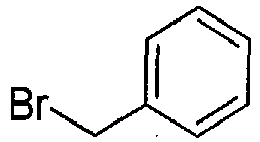
I-66 LCMS (FA): m/z = 487.5 (M+H). 
I-238 LCMS (FA): m/z = 568.4 (M+H). 
I-99 LCMS (FA): m/z = 522.3 (M+H). 
I-101 LCMS (FA): m/z = 511.4 (M+H). -

- B (0.14 g, 0.68 mmol) and [1-(3-bromobenzyl)-5-methyl-1H-pyrazol-3-yl](4-chloropyrimidin-5-yl)methanone (0.22 g, 0.56 mmol) were weighed into a round bottomed flask with stirbar. The mixture was dissolved in DMF (4 mL). Potassium carbonate (0.2 g, 1.4 mmol) was added to the reaction vessel at rt and the resulting mixture was stirred at 80 °C for 1 h. The reaction was then diluted with EtOAc and filtered through a pad of celite. The filtrate was concentrated. The resulting residue was dissolved in EtOAc and the mixture was washed with water and brine, dried over Na2SO4, filtered and concentrated. The crude product was purified on silica gel to provide [1-(3-bromobenzyl)-5-methyl-1H-pyrazol-3-yl](4-{[(1R,3S,4S)-3-hydroxy-4-(hydroxymethyl)cyclopentyl]amino}pyrimidin-5-yl)methanone (0.17 g, 63%). LCMS (FA): m/z = 488 (M+H).
- To a solution of [1-(3-bromobenzyl)-5-methyl-1H-pyrazol-3-yl](4-{[(1R,3S,4S)-3-hydroxy-4-(hydroxymethyl)cyclopentyl]amino}pyrimidin-5-yl)methanone (170 mg, 0.35 mmol) in DMF (6 mL) was added DMAP (2.2 mg, 0.02 mmol), imidazole (0.12 g, 1.8 mmol) followed by tert-butyldimethylsilyl chloride (0.13 g, 0.88 mmol) at rt, and the mixture was stirred for 12 h. The reaction was then quenched by addition of water and extracted with EtOAc (3x). The combined organic layers were washed with brine, dried over MgSO4, filtered, and concentrated. The residue was purified on silica gel to give [1-(3-bromobenzyl)-5-methyl-1H-pyrazol-3-yl](4-{[(1R,3S,4S)-3-{[tert-butyl(dimethyl)silyl]oxy}-4-({[tert-butyl(dimethyl)silyl]oxy}methyl)cyclopentyl]amino}pyrimidin-5-yl)methanone (0.20 g, 79%). LCMS (FA): m/z = 716 (M+H).
- To a solution of [1-(3-bromobenzyl)-5-methyl-1H-pyrazol-3-yl](4-{[(1R,3S,4S)-3-{[tert-butyl(dimethyl)silyl]oxy}-4-({[tert-butyl(dimethyl)silyl]oxy}methyl)cyclopentyl]amino}pyrimidin-5-yl)methanone (0.20 g, 0.28 mmol) in EtOH (3.5 mL) was added 1% HCl in EtOH (4.6 mL, 0.56 mmol) at rt. The reaction vessel was sealed and allowed to stand in a refrigerator (4°C) for 16 h. The reaction was quenched by addition of a saturated aq. solution of NaHCO3. To the residue was added water which was extracted with EtOAc (4x). The combined organic layers were dried over MgSO4, filtered, and concentrated. The residue was purified on silica gel to give [1-(3-bromobenzyl)-5-methyl-1H-pyrazol-3-yl](4-{[(1R,3S,4S)-3-{[tert-butyl(dimethyl)silyl]oxy}-4-(hydroxymethyl)cyclopentyl]amino}pyrimidin-5-yl)methanone (136 mg, 81%). LCMS (FA): m/z = 602 (M+H).
- To a solution of [1-(3-bromobenzyl)-5-methyl-1H-pyrazol-3-yl](4-{[(1R,3S,4S)-3-{[tert-butyl(dimethyl)silyl]oxy}-4-(hydroxymethyl)cyclopentyl]amino}pyrimidin-5-yl)methanone (136 mg, 0.23 mmol) in DMF (2 mL) was added chlorosulfonamide (39 mg, 0.34 mmol) at rt, and the mixture was stirred for 30 min. The reaction was quenched by addition of a saturated solution of NaHCO3 and diluted with water. The mixture was extracted with EtOAc (4x). The combined organic layers were dried over MgSO4, filtered, and concentrated. The crude sulfamate intermediate was dissolved in THF (4 mL) and HCl (4.0 M in water; 1 mL, 4 mmol) was added to the solution. The reaction was stirred for 16 h at rt. The reaction was quenched by the addition of a saturated solution of NaHCO3 and extracted with EtOAc (4x). The combined organic layers were dried over MgSO4, filtered, and concentrated. The residue was purified by prep HPLC to afford {(1S,2S,4R)-4-[(5-{[1-(3-bromobenzyl)-5-methyl-1H-pyrazol-3-yl]carbonyl}pyrimidin-4-yl)amino]-2-hydroxycyclopentyl}methyl sulfamate (89 mg, 74%). 1H NMR (MeOD) δ 9.63 (s, 1H), 8.57 (s, 1H), 7.48 (d, J = 8.0 Hz, 1H), 7.37 (s, 1H), 7.30 (t, J = 7.9 Hz, 1H), 7.17 (d, J = 7.7 Hz, 1H), 6.77 (d, J = 0.7 Hz, 1H), 5.47 (s, 2H), 4.46 - 4.39 (m, 1H), 4.35 (dd, J = 9.7, 7.7 Hz, 1H), 4.18 (dd, J = 9.7, 7.3 Hz, 1H), 2.69 - 2.50 (m, 1H), 2.41 - 2.34 (m, 1H), 2.33 (s, 3H), 2.23 - 2.08 (m, 1H), 1.96 - 1.75 (m, 2H). LCMS (FA): m/z = 567.1 (M+H).
-

- Into a flask was added [4-({(1R,3R,4S)-3-(hydroxymethyl)-4-[(triisopropylsilyl)oxy]cyclopentyl}amino)pyrimidin-5-yl](1H-pyrazol-3-yl)methanone (0.32 g, 0.70 mmol) and DMF (12 mL). To this solution was added cesium carbonate (0.68 g, 2.1 mmol) followed by 1-bromo-3-(1-bromoethyl)benzene (0.28 g, 1.04 mmol). The reaction was allowed to stir at rt for 18 h. The reaction was quenched with water and extracted with EtOAc (3X). The combined organic layers were then washed with water and brine, dried over Na2SO4, filtered and concentrated. The crude product was purified on silica gel to give {1-[1-(3-bromophenyl)ethyl]-1H-pyrazol-3-yl}[4-({(1R,3R,4S)-3-(hydroxymethyl)-4-[(triisopropylsilyl)oxy]cyclopentyl}amino)pyrimidin-5-yl]methanone (467 mg, 100%). LCMS (FA): m/z = 644.3 (M+H).
- To a solution of rel-{1-[1-(3-bromophenyl)ethyl]-1H-pyrazol-3-yl}[4-({(1R,3R,4S)-3-(hydroxymethyl)-4-[(triisopropylsilyl)oxy]cyclopentyl}amino)pyrimidin-5-yl]methanone (500 mg, 0.78 mmol) in TEA (2.0 mL) was added bis(triphenylphosphine)palladium(II) chloride (27 mg, 0.039 mmol) and copper(I) iodide (59 mg, 0.31 mmol), followed by (trimethylsilyl)acetylene (660 uL, 4.7 mmol). The reaction was heated at 100°C for 3 h. Bis(triphenylphosphine)palladium(II) chloride (27 mg, 0.039 mmol), copper(I) iodide (59 mg, 0.31 mmol), and (trimethylsilyl)acetylene (660 uL, 4.7 mmol) were each added again and the reaction heated 18 h at 100°C. Bis(triphenylphosphine)palladium(II) chloride (27 mg, 0.039 mmol), copper(I) iodide (59 mg, 0.31 mmol), and (trimethylsilyl)acetylene (660 uL, 4.7 mmol) were each added a third time and the reaction heated an additional 24 h at 100°C. The reaction mixture was allowed to cool and filtered through celite, washing with EtOAc. This filtrate was washed with 0.1N HCl (aq.) and brine. The organic layer was dried over Na2SO4, filtered and concentrated. The crude product was purified on silica gel to afford the silyl intermediate (150 mg, 29%) [LCMS (FA): m/z = 660.6 (M+H).] which was next dissolved in methanol (1.0 mL). Potassium carbonate (150 mg, 1.1 mmol) was added and the reaction stirred for 15 min. The reaction was filtered and the filtrate concentrated. Purification on silica gel gave {1-[1-(3-Ethynylphenyl)ethyl]-1H-pyrazol-3-yl}[4-({(1R,3R,4S)-3-(hydroxymethyl)-4-[(triisopropylsilyl)oxy]cyclopentyl}amino)pyrimidin-5-yl]methanone (100 mg, 77%). LCMS (FA): m/z = 588.6 (M+H).
- To a solution of rel-{1-[1-(3-ethynylphenyl)ethyl]-1H-pyrazol-3-yl}[4-({(1R,3R,4S)-3-(hydroxymethyl)-4-[(triisopropylsilyl)oxy]cyclopentyl}amino)pyrimidin-5-yl]methanone (100 mg, 0.17 mmol) in DMF (1.5 mL) was added chlorosulfonamide (39 mg, 0.34 mmol) and the reaction stirred for 30 min at rt. The reaction was quenched with a satd. sodium bicarbonate solution (2 mL) and then the mixture was extracted with EtOAc. The organic layers were dried (Na2SO4), filtered, and evaporated [LCMS (FA): m/z = 667.2 (M+H).]. The crude sulfamate intermediate was next dissolved in THF (1.0 mL). Water (1.0 mL) was added followed by conc. HCl (0.4 mL, 5 mmol) and the reaction was allowed to stir for 3 h. It was then quenched with satd. sodium bicarbonate solution and the resulting mixture was extracted with EtOAc. The combined organic layers were washed with water then concentrated. The crude product was purified using prep HPLC (chiral column) to separate diastereomers and give [(1R,2S,4R)-4-{[5-({1-[(1R)-1-(3-ethynylphenyl)ethyl]-1H-pyrazol-3-yl}carbonyl)pyrimidin-4-yl]amino}-2-hydroxycyclopentyl]methyl sulfamate and [(1R,2S,4R)-4-{[5-({1-[(1S)-1-(3-ethynylphenyl)ethyl]-1H-pyrazol-3-yl}carbonyl)pyrimidin-4-yl]amino}-2-hydroxycyclopentyl]methyl sulfamate as equal amounts of each diastereomer (20 mg, 20%). Absolute configuration of the benzylic methyl group for each particular isolated diastereomer is unknown. First eluting peak: 1H NMR (MeOD) δ 9.56 (s, 1H), 8.46 (s, 1H), 7.75 (d, J = 2.4 Hz, 1H), 7.35 - 7.14 (m, 4H), 6.85 (d, J = 2.4 Hz, 1H), 5.63 (q, J = 7.0 Hz, 1H), 4.76 - 4.65 (m, 1H), 4.16 - 4.00 (m, 3H), 3.40 (s, 1H), 2.49 - 2.37 (m, 1H), 2.24 - 2.12 (m, 1H), 2.12 - 2.02 (m, 1H), 1.84 (d, J = 7.1 Hz, 3H), 1.82 -1.75 (m, 1H), 1.41- 1.27 (m, 1H). LCMS (FA): m/z = 511.2 (M+H).; Second eluting peak: 1H NMR (MeOD) δ 9.56 (s, 1H), 8.46 (s, 1H), 7.75 (d, J = 2.4 Hz, 1H), 7.35 - 7.16 (m, 4H), 6.85 (d, J = 2.4 Hz, 1H), 5.63 (q, J = 7.0 Hz, 1H), 4.74 - 4.65 (m, 1H), 4.17 - 3.95 (m, 3H), 3.40 (s, 1H), 2.49 - 2.35 (m, 1H), 2.23 - 2.13 (m, 1H), 2.13 - 2.03 (m, 1H), 1.84 (d, J = 7.1 Hz, 3H), 1.82 -1.76 (m, 1H), 1.41 - 1.25 (m, 1H). LCMS (FA): m/z = 511.2 (M+H).
-

- To a solution of 4-chloro-3-formylpyrazole (300 mg, 2.3 mmol) in DMF (20 mL) was added Cs2CO3 (1.9 g, 5.8 mmol) followed by 3-bromobenzyl bromide (630 mg, 2.5 mmol) at rt, and the mixture was stirred for 15 h. The reaction was quenched by addition of water (100 mL) and extracted with 1:1 EtOAc:hexanes (100 mLx3). The combined organic layers were dried over Na2SO4, filtered, and concentrated in vacuo. The residue was purified on silica gel to give 1-(3-bromobenzyl)-4-chloro-1H-pyrazole-3-carbaldehyde (314 mg, 46%) as a colorless solid. 1H NMR (CDCl3) δ 10.00 (s, 1H), 7.56 - 7.47 (m, 1H), 7.46 - 7.38 (m, 2H), 7.31 - 7.22 (m, 1H), 7.20 (d, J = 7.7 Hz, 1H), 5.30 (s, 2H).
- A 100 mL 2-necked RBF, equipped with septum and 3-way stopcock with an argon balloon, was charged with 4-chloro-5-iodopyrimidine (279 mg, 1.16 mmol), and the reaction vessel was purged with argon. The contents were dissolved in THF (8 mL) and the solution was cooled to -78 °C. To the solution was added dropwise n-Butyllithium (2.50 M solution in hexane; 0.93 mL, 2.3 mmol), and the mixture was stirred for 30 min. To the mixture was added dropwise a solution of 1-(3-bromobenzyl)-4-chloro-1H-pyrazole-3-carbaldehyde (290 mg, 0.97 mmol) in THF (4 mL) at -78 °C and the resulting mixture was stirred for 30 min. The reaction was quenched by addition of saturated NH4Cl (40 mL) and extracted with EtOAc (50 mLx3). The combined organic layers were dried over Na2SO4, filtered, and concentrated in vacuo. The residue was purified on silica gel to give [1-(3-bromobenzyl)-4-chloro-1H-pyrazol-3-yl](4-chloropyrimidin-5-yl)methanol (175 mg, 44%). LCMS (FA): m/z = 414.8 (M+H).
- To a solution of [1-(3-bromobenzyl)-4-chloro-1H-pyrazol-3-yl](4-chloropyrimidin-5-yl)methanol (170 mg, 0.41 mmol) in DCM (10 mL) was added manganese(IV) oxide (360 mg, 4.1 mmol), and the mixture was stirred for 16 h at rt. The reaction was filtered through a Celite pad and the residual solid was rinsed with DCM several times. The filtrate was concentrated in vacuo and the residue was purified on silica gel to give [1-(3-bromobenzyl)-4-chloro-1H-pyrazol-3-yl](4-chloropyrimidin-5-yl)methanone (135 mg, 76%) as a colorless solid. LCMS (FA): m/z = 412.8 (M+H).
- A 100mL reaction vessel was charged with {(1R,2S,4R)-4-amino-2-[(triisopropylsilyl)oxy]cyclopentyl}methanol●CF3CO2H (150 mg, 0.38 mmol) and K2CO3 (130 mg, 0.95 mmol). To the mixture was added a solution of [1-(3-bromobenzyl)-4-chloro-1H-pyrazol-3-yl](4-chloropyrimidin-5-yl)methanone (130 mg, 0.32 mmol) in DMF (3 mL) at rt and the resulting mixture was stirred for 18 h at rt. The reaction was quenched by addition of water (50 mL) and extracted with EtOAc (50 mLx3). The combined organic layers were dried over Na2SO4, filtered, and concentrated in vacuo. The residue was purified on silica gel to give [1-(3-bromobenzyl)-4-chloro-1H-pyrazol-3-yl][4-({(1R,3R,4S)-3-(hydroxymethyl)-4-[(triisopropylsilyl)oxy]cyclopentyl}amino)pyrimidin-5-yl]methanone (185 mg, 88%). LCMS (FA): m/z = 664.1 (M+H).
- To a solution of [1-(3-bromobenzyl)-4-chloro-1H-pyrazol-3-yl][4-({(1R,3R,4S)-3-(hydroxymethyl)-4-[(triisopropylsilyl)oxy]cyclopentyl}amino)pyrimidin-5-yl]methanone (130 mg, 0.20 mmol) in DMF (3.00 mL) was added chlorosulfonamide (45.3 mg, 0.39 mmol) at rt, and the mixture was stirred for 15 min. The reaction was quenched by addition of saturated NaHCO3 (50 mL) and extracted with EtOAc (50 mLx3). The combined organic layers were dried over Na2SO4, filtered, and concentrated in vacuo. The residue was purified on silica gel to give the sulfamate intermediate [(155 mg, 96%); LCMS (FA): m/z = 743.0 (M+H).] which was dissolved in THF (2 mL). To this solution was added HCl (4.0 M in H2O; 3.0 mL, 12 mmol) at rt, and the mixture was stirred for 3 h. The reaction was quenched by addition of saturated NaHCO3 (50 mL) and extracted with EtOAc (50 mLx3). The combined organic layers were dried over Na2SO4, filtered, and concentrated in vacuo. The residue was purified by ISCO silica gel column chromatography to give {(1R,2S,4R)-4-[(5-{[1-(3-bromobenzyl)-4-chloro-1H-pyrazol-3-yl]carbonyl}pyrimidin-4-yl)amino]-2-hydroxycyclopentyl}methyl sulfamate (102 mg, 93%). 1H NMR (DMSO) δ 9.00 (s, 1H), 8.90 (d, J = 7.4 Hz, 1H), 8.63 (s, 1H), 8.38 (s, 1H), 7.60 - 7.50 (m, 2H), 7.43 (s, 2H), 7.35 (t, J = 7.7 Hz, 1H), 7.29 (d, J = 7.7 Hz, 1H), 5.46 (s, 2H), 4.91 (d, J = 4.5 Hz, 1H), 4.79 - 4.67 (m, 1H), 4.10 (dt, J = 8.3, 5.7 Hz, 1H), 4.03 - 3.93 (m, 2H), 2.41 - 2.28 (m, 1H), 2.20 - 2.07 (m, 1H), 2.06 - 1.93 (m, 1H), 1.87 -1.73 (m, 1H), 1.30 (dt, J = 12.5, 9.3 Hz, 1H); LCMS (FA): m/z = 587.2 (M+H).
-

- A solution of N,N-diisopropylamine (0.36 mL, 2.6 mmol) in THF (10 mL) was cooled to -78 °C under an atmosphere of argon. To this solution was added dropwise n-butyllithium (2.50 M solution in hexane; 1.0 mL, 2.5 mmol), and the mixture was stirred for 30 min at 0 °C. This LDA solution was cooled to -78 °C and then a solution of 4,6-dichloropyrimidine (350 mg, 2.35 mmol) in THF (3 mL) was added dropwise to the LDA solution. The dark red brown solution was stirred for 30 min. To this mixture was added a solution of 1-(3-chlorobenzyl)-1H-pyrazole-3-carbaldehyde (518 mg, 2.35 mmol) in THF (3 mL) at -78 °C, and the resulting mixture was stirred for 30 min. The reaction was quenched by addition of saturated NH4Cl (50 mL) and extracted with EtOAc (50 mLx3). The combined organic layers were dried over Na2SO4, filtered, and concentrated in vacuo. The residue was purified on silica gel to give [1-(3-chlorobenzyl)-1H-pyrazol-3-yl](4,6-dichloropyrimidin-5-yl)methanol (174 mg, 16%). 1H NMR (CDCl3) δ 8.72 (s, 1H), 7.38 (d, J = 2.3 Hz, 1H), 7.31 - 7.22 (m, 2H), 7.12 (s, 1H), 7.06 - 7.03 (m, 1H), 6.54 (d, J = 8.4 Hz, 1H), 6.17 (d, J = 2.1 Hz, 1H), 5.25 (s, 2H), 3.71 (d, J = 8.4 Hz, 1H).
- To a solution of [1-(3-chlorobenzyl)-1H-pyrazol-3-yl](4,6-dichloropyrimidin-5-yl)methanol (140 mg, 0.37 mmol) in DCM (4.4 mL) was added manganese(IV) oxide (0.32 g, 3.7 mmol) and the mixture was stirred for 12 h at rt. The reaction was filtered through a celite pad and the residual solid was rinsed with DCM several times. The filtrate was concentrated in vacuo and the residue was purified on silica gel to give [1-(3-chlorobenzyl)-1H-pyrazol-3-yl](4,6-dichloropyrimidin-5-yl)methanone (86 mg, 64%) as a colorless solid. LCMS (FA): m/z = 368.9 (M+H).
- A 100mL reaction vessel was charged with {(1R,2S,4R)-4-amino-2-[(triisopropylsilyl)oxy]cyclopentyl}methanol●CF3CO2H (96 mg, 0.24 mmol) and K2CO3 (0.10 g, 0.69 mmol). To the mixture was added a solution of [1-(3-chlorobenzyl)-1H-pyrazol-3-yl](4,6-dichloropyrimidin-5-yl)methanone (85 mg, 0.23 mmol) in DMF (3 mL) and the resulting mixture was stirred for 2 h at rt. The reaction was quenched by the addition of water (40 mL) and extracted with EtOAc (50 mLx3). The combined organic layers were dried over Na2SO4, filtered, and concentrated in vacuo. The residue was purified on silica gel to give [1-(3-chlorobenzyl)-1H-pyrazol-3-yl][4-chloro-6-({(1R,3R,4S)-3-(hydroxymethyl)-4-[(triisopropylsilyl)oxy]cyclopentyl}amino)pyrimidin-5-yl]methanone (132 mg, 88%) as a colorless solid. LCMS (FA): m/z = 618.1 (M+H).
- To a solution of [1-(3-chlorobenzyl)-1H-pyrazol-3-yl][4-chloro-6-({(1R,3R,4S)-3-(hydroxymethyl)-4-[(triisopropylsilyl)oxy]cyclopentyl}amino)pyrimidin-5-yl]methanone (120 mg, 0.20 mmol) in DMF (2 mL) was added chlorosulfonamide (45 mg, 0.39 mmol) at rt, and the mixture was stirred for 10 min. The reaction was quenched by addition of saturated NaHCO3 (50 mL) and extracted with EtOAc (50 mLx3). The combined organic layers were dried over Na2SO4, filtered, and concentrated in vacuo. The residue was purified on silica gel to give the sulfamate intermediate [(116 mg, 80%); LCMS (FA): m/z = 697.5 (M+H).] which was dissolved in THF (2 mL). To this solution was added HCl (4.0 M solution in water; 2.0 mL, 8.0 mmol) at rt, and the mixture was stirred for 5 h. The reaction was quenched by addition of saturated NaHCO3 (50 mL) and extracted with EtOAc (50 mLx3). The combined organic layers were dried over Na2SO4, filtered, and concentrated in vacuo. The residue was purified by ISCO silica gel column chromatography to give {(1R,2S,4R)-4-[(6-chloro-5-{[1-(3-chlorobenzyl)-1H-pyrazol-3-yl]carbonyl}pyrimidin-4-yl)amino]-2-hydroxycyclopentyl}methyl sulfamate (65 mg, 77%) as a colorless solid. 1H NMR (DMSO) δ 8.34 (s, 1H), 8.05 (d, J = 2.3 Hz, 1H), 7.45 - 7.38 (m, 2H), 7.38 - 7.30 (m, 3H), 7.22 (s, 1H), 7.17 - 7.10 (m, 1H), 6.94 (d, J = 2.3 Hz, 1H), 5.48 (s, 2H), 4.78 (d, J = 4.5 Hz, 1H), 4.71- 4.59 (m, 1H), 4.02 (dd, J = 9.6, 5.9 Hz, 1H), 3.92 - 3.80 (m, 2H), 2.14 - 1.96 (m, 2H), 1.81 - 1.71 (m, 1H), 1.70 -1.60 (m, 1H), 1.20 (m, 1H); LCMS (FA): m/z = 541.2 (M+H).
-

- A large sealable reaction vessel was charged with ethyl 1H-pyrazole-3-carboxylate (300 mg, 2.1 mmol), iodobenzene (0.57 g, 2.8 mmol), copper(I) iodide (20 mg, 0.10 mmol), trans-1,2-bis(methylarnino)cyclohexane (0.06 g, 0.42 mmol), and potassium phosphate (0.96 g, 4.5 mmol). To the reaction vessel was added toluene (10 mL) and the mixture was purged with nitrogen for 5 min. The vessel was sealed and heated at 110 °C for 16 h. The reaction was cooled to rt and filtered through a celite pad. The residual solid was rinsed with EtOAc several times. The filtrate was concentrated in vacuo and the residue was purified on silica gel to give ethyl 1-phenyl-1H-pyrazole-3-carboxylate (320 mg, 69%) as colorless oil. LCMS (FA): m/z = 217.1 (M+H).
- A round bottomed flask was charged with 4-chloro-5-iodopyrimidine (360 mg, 1.5 mmol) and the reaction vessel was purged with argon. The content was dissolved in THF (12 mL) and the solution was cooled to -78 °C. To the solution was added dropwise n-butyllithium (2.50 M solution in hexane; 1.2 mL, 3.0 mmol), and the mixture was stirred for 30 min at -78 °C. To this mixture was added dropwise a solution of ethyl 1-phenyl-1H-pyrazole-3-carboxylate (300 mg, 1.4 mmol) in THF (6 mL), and the resulting mixture was stirred for 30 min. The reaction was quenched by addition of saturated NH4Cl (50 mL) and extracted with EtOAc (50 mLx4). The combined organic layers were dried over Na2SO4, filtered, and concentrated in vacuo. The residue was purified on silica gel to give (4-chloropyrimidin-5-yl)(1-phenyl-1H-pyrazol-3-yl)methanone (210 mg, 54%) as a colorless solid. LCMS (FA): m/z = 285.1 (M+H).
- A reaction vessel was charged with {(1R,2S,4R)-4-amino-2-[(triisopropylsilyl)oxy]cyclopentyl}methanol●CF3CO2H (293 mg, 0.73 mmol) and K2CO3 (277 mg, 2.00 mmol). To the mixture was added a solution of (4-chloropyrimidin-5-yl)(1-phenyl-1H-pyrazol-3-yl)methanone (190 mg, 0.67 mmol) in DMF (6 mL), and the resulting mixture was stirred for 2 h at rt. The reaction was concentrated in vacuo. To the residue was added water (40 mL) and the mixture was extracted with EtOAc (50 mLx3). The combined organic layers were dried over Na2SO4, filtered, and concentrated in vacuo. The residue was purified on silica gel to give [4-({(1R,3R,4S)-3-(hydroxymethyl)-4-[(triisopropylsilyl)oxy]cyclopentyl}amino)pyrimidin-5-yl](1-phenyl-1H-pyrazol-3-yl)methanone (311 mg, 83%) as a yellow sticky oil. LCMS (FA): m/z = 536.4 (M+H).
- To a solution of [4-({(1R,3R,4S)-3-(hydroxymethyl)-4-[(triisopropylsilyl)oxy]cyclopentyl}amino)pyrimidin-5-yl](1-phenyl-1H-pyrazol-3-yl)methanone (300 mg, 0.56 mmol) in DMF (2.0 mL) was added chlorosulfonamide (129 mg, 1.12 mmol) at rt, and the mixture was stirred for 30 min. LC/MS showed reaction completed. The reaction was quenched by addition of saturated NaHCO3 (50 mL) and extracted with EtOAc (60 mLx3). The combined organic layers were dried over Na2SO4, filtered, and concentrated in vacuo. The residue was purified on silica gel to give the sulfamate intermediate [(267 mg, 78%); LCMS (FA): m/z = 615.2 (M+H).] which was dissolved in THF (2 mL). To this solution was added HCl (4.0 M solution in water; 2.0 mL, 8.0 mmol) at rt and the mixture was stirred for 5 h at rt.The reaction was quenched by addition of saturated NaHCO3 and solid NaCl. The mixture was extracted with a 9:1 EtOAc:MeOH solution (60 mLx3). The combined organic layers were dried over Na2SO4, filtered, and concentrated in vacuo. To the residue was added a small amount of DCM and the resulting suspension was filtered through a glass frit funnel. The residual solid was rinsed with DCM twice and dried under high vacuum overnight to give [(1R,2S,4R)-2-hydroxy-4-({5-[(1-phenyl-1H-pyrazol-3-yl)carbonyl]pyrimidin-4-yl}amino)cyclopentyl]methyl sulfamate (168 mg, 88%) as a colorless solid. 1H NMR (DMSO) δ 9.61 (s, 1H), 9.05 (d, J = 7.3 Hz, 1H), 8.69 (m, 2H), 7.98 - 7.89 (m, 2H), 7.63 - 7.54 (m, 2H), 7.47 - 7.39 (m, 3H), 7.14 (s, 1H), 4.91 (d, J = 4.5 Hz, 1H), 4.81 - 4.69 (m, 1H), 4.12 (dd, J = 9.5, 6.0 Hz, 1H), 4.03 - 3.95 (m, 2H), 2.44 - 2.34 (m, 1H), 2.21 - 2.10 (m, 1H), 2.08 - 1.99 (m, 1H), 1.86 - 1.76 (m, 1H), 1.32 (dd, J = 21.8, 9.3 Hz, 1H); LCMS (FA): m/z = 459.2 (M+H).
-

- Into a flame dried RBF with stirbar was added 4-chloro-5-iodopyrimidine (0.72 g, 3.0 mmol) dissolved in THF (15 mL). The flask was purged with argon and cooled to -78 °C. To this solution was added dropwise n-butyllithium (2.5 M in hexane; 2.39 mL, 5.78 mmol) at -78 °C and the mixture was stirred for 30 min. To this mixture was added 1-(3-chlorobenzyl)-1H-pyrazole-3-carbaldehyde (0.60 g, 2.7 mmol) dissolved in THF (6 mL) dropwise. The reaction was stirred at -78 °C for 2 h then allowed to warm slowly to rt and stir an additional 12 h. The reaction was quenched with a saturated solution of NH4Cl and then extracted with EtOAc (3x). The combined organic layers were then washed with water and brine, dried over Na2SO4, filtered and concentrated. The crude product was purified on silica gel to give [1-(3-chlorobenzyl)-1H-pyrazol-3-yl](4-chloropyridin-3-yl)methanol (0.44 g, 46%); LCMS (FA): m/z = 334.4 (M+H).
- To a solution of [1-(3-chlorobenzyl)-1H-pyrazol-3-yl](4-chloropyridin-3-yl)methanol (0.42 g, 1.3 mmol) in DCM (12 mL) was added manganese(IV) oxide (1.1 g, 12.6 mmol). The suspension was stirred for 19 h at rt. The reaction was then filtered through a celite pad and the residual solid was washed with DCM several times. The filtrate was then concentrated in vacuo and the residue was purified on silica gel to afford [1-(3-chlorobenzyl)-1H-pyrazol-3-yl](4-chloropyridin-3-yl)methanone (0.39 g, 91%). LCMS (FA): m/z = 332.4 (M+H).
- [1-(3-Chlorobenzyl)-1H-pyrazol-3-yl](4-chloropyridin-3-yl)methanone (0.38 g, 1.1 mmol) and (1S,2R,4R)-4-amino-2-(hydroxymethyl)cyclopentanol (0.18 g, 1.4 mmol) were weighed into a 20 mL reaction vessel. To this mixture was added 1-propanol (5 mL) and DIEA (0.40 mL, 2.3 mmol). The resulting mixture was sealed and the vessel heated at 180 °C for 2 h in a microwave reactor. It was then cooled to rt and quenched with water. The reaction was then extracted with EtOAc (3x). The combined organic layers were washed with brine, dried over Na2SO4, filtered, and concentrated in vacuo. The crude product was purified on silica gel to afford [1-(3-chlorobenzyl)-1H-pyrazol-3-yl](4-{[(1R,3S,4R)-3-hydroxy-4-(hydroxymethyl)cyclopentyl]amino}pyridin-3-yl)methanone (0.18 g, 39%). LCMS (FA): m/z = 427.5 (M+H).
- To a solution of [1-(3-chlorobenzyl)-1H-pyrazol-3-yl](4-{[(1R,3S,4R)-3-hydroxy-4-(hydroxymethyl)cyclopentyl]amino}pyridin-3-yl)methanone (0.18 g, 0.43 mmol) in DMF (7 mL) was added imidazole (0.12 g, 1.7 mmol) followed by tert-butyldimethylsilyl chloride (0.16 g, 1.1 mmol) at rt, and the mixture was stirred for 2 days. The reaction was then quenched by addition of water and extracted with EtOAc (3x). The combined organic layers were washed with brine, dried over MgSO4, filtered, and concentrated. The residue was purified on silica gel column to give (4-{[(1R,3S,4R)-3-{[tert-butyl(dimethyl)silyl]oxy}-4-({[tert-butyl(dimethyl)silyl]oxy}methyl)cyclopentyl]amino}pyridine-3-yl)[1-(3-chlorobenzyl)-1H-pyrazol-3-yl]methanone (0.23 g, 81%). LCMS (FA): m/z = 655.7 (M+H).
- To a solution of (4-{[(1R,3S,4R)-3-{[tert-butyl(dimethyl)silyl]oxy}-4-({[tert-butyl(dimethyl)silyl]oxymethyl)cyclopentyl]amino}pyridin-3-yl)[1-(3-chlorobenzyl)-1H-pyrazol-3-yl]methanone (0.23 g, 0.35 mmol) in EtOH (16 mL) was added 1% HCl in EtOH (11.5 mL, 1.4 mmol) at rt. The reaction vessel was sealed and placed in a refrigerator (4°C) for 5 h and then allowed to stand at - 20°C for 16 h. The reaction was quenched by addition of a saturated aq. solution of NaHCO3. To the residue was added water which was extracted with EtOAc (4x). The combined organic layers were dried over MgSO4, filtered, and concentrated. The residue was purified on silica gel to give (4-{[(1R,3S,4R)-3-{[tert-butyl(dimethyl)silyl]oxy}-4-(hydroxymethyl)cyclopentyl]amino}pyridin-3-yl)[1-(3-chlorobenzyl)-1H-pyrazol-3-yl]methanone (0.072 g, 38%). LCMS (FA): m/z = 541.6 (M+H).
- To a solution of (4-{[(1R,3S,4R)-3-{[tert-Butyl(dimethyl)silyl]oxy}-4-(hydroxymethyl)cyclopentyl]amino}pyridin-3-yl)[1-(3-chlorobenzyl)-1H-pyrazol-3-yl]methanone (0.072 g, 0.13 mmol) in DMF (2 mL) was added chlorosulfonamide (31 mg, 0.27 mmol) at rt, and the mixture was stirred for 1 h. The reaction was quenched by addition of a saturated solution of NaHCO3 and diluted with water. The mixture was extracted with EtOAc (4x). The combined organic layers were dried over MgSO4, filtered, and concentrated. The crude sulfamate intermediate was dissolved in THF (3 mL) and HCl (3.0 M in water; 1.5 mL, 4.5 mmol) was added to the solution. The reaction was stirred for 2 h at rt. The reaction was quenched by the addition of a saturated solution of NaHCO3 and extracted with EtOAc (4x). The combined organic layers were dried over MgSO4, filtered, and concentrated. The residue was purified by prep HPLC to afford {(1R,2S,4R)-4-[(3-{[1-(3-chlorobenzyl)-1H-pyrazol-3-yl]carbonyl}pyridin-4-yl)amino]-2-hydroxycyclopentyl}methyl sulfamate (0.018 g, 27%). 1H NMR (DMSO) δ 9.31 (s, 1H), 8.89 (d, J = 6.9 Hz, 1H), 8.20 (d, J = 6.1 Hz, 1H), 8.16 (s, 1H), 8.06 (d, J = 2.3 Hz, 1H), 7.45 - 7.34 (m, 4H), 7.26 - 7.19 (m, 1H), 6.87 (d, J = 2.3 Hz, 1H), 6.78 (d, J = 6.2 Hz, 1H), 5.51 (s, 2H), 4.97 (s, 1H), 4.20 - 4.08 (m, 2H), 4.02-3.93 (m, 2H), 2.49 - 2.41 (m, 1H), 2.21 - 2.10 (m, 1H), 2.11-2.01 (m, 1H), 1.81 - 1.70 (m, 1H), 1.31 - 1.17 (m, 1H); LCMS (FA): m/z = 506.5 (M+H).
-

- Into a flame dried RBF with stirbar was added 3-bromo-4-fluoropyridine (4.5 g, 25 mmol) dissolved in THF (200 mL). The flask was purged with argon and cooled to -95 °C. To this solution was added dropwise n-butyllithium (2.5 M in hexane; 23 mL, 58 mmol) at -95 °C and the mixture was stirred for 15 min. To this mixture was added tert-butyl 3-formyl-1H-pyrazole-1-carboxylate (4.8 g, 25 mmol) dissolved in THF (35 mL) dropwise at -90 °C. The reaction was stirred at -90 °C for 30 min then allowed to warm to -60 °C. The reaction was then quenched with a solution of acetic acid (4.3 mL) in THF (20 mL) and allowed to warm to rt. The mixture was concentrated and the crude product was purified on silica gel to give tert-butyl 3-[(4-fluoropyridin-3-yl)(hydroxy)methyl]-1H-pyrazole-1-carboxylate (2.1 g, 29%). LCMS (AA): m/z = 294 (M+H).
- To a solution of tert-butyl 3-[(4-fluoropyridin-3-yl)(hydroxy)methyl]-1H-pyrazole-1-carboxylate (0.48 g, 1.6 mmol) in DCM (20 mL) was added manganese(IV) oxide (2.0 g, 23 mmol). The suspension was stirred for 3 h at rt. The reaction was then filtered through a celite pad and the residual solid was washed with DCM several times. The filtrate was then concentrated in vacuo and the residue was purified on silica gel to afford tert-butyl 3-[(4-fluoropyridin-3-yl)carbonyl]-1H-pyrazole-1-carboxylate (0.36 g, 76%). LCMS (AA): m/z = 292 (M+H).
- tert-Butyl {(1R,3R,4S)-3 -(hydroxymethyl)-4-[(triisopropylsilyl)oxy]cyclopentyl}carbamate (0.48 g, 1.2 mmol) was dissolved in TFA (10.0 mL) and then the mixture was immediately concentrated. A solution of DIEA (1.7 mL, 9.9 mmol) in 1-propanol (10.0 mL) was then added and the solution was transferred to a microwave reaction vessel. tert-Butyl 3-[(4-fluoropyridin-3-yl)carbonyl]-1H-pyrazole-1-carboxylate (0.36 g, 1.2 mmol) was added to the reaction mixture and it was heated at 120 °C for 90 min in a microwave reactor. The reaction mixture was concentrated and the crude product was purified on silica gel to give [4-({(1R,3R,4S)-3-(hydroxymethyl)-4-[(triisopropylsilyl)oxy]cyclopentyl}amino)pyridin-3-yl](1H-pyrazol-3-yl)methanone (0.17 g, 31%). LCMS (AA): m/z = 459 (M+H).
- To a 3-dram vial was added 3-chloro-4-fluorobenzylbromide (0.024 g, 0.11 mmol) and cesium carbonate (0.17 g, 0.52 mmol), followed by [4-({(1R,3R,4S)-3-(hydroxymethyl)-4 [(triisopropylsilyl)oxy]cyclopentyl}amino)pyridin-3-yl](1H-pyrazol-3-yl)methanone (0.04 g, 0.087 mmol) in THF (1.0 mL). The solution was shaken at rt for 1 h. The solid carbonate was filtered and rinsed with THF (1 mL). To the combined THF clear solution (∼2 mL) in another 3-dram vial was added DMF (0.50 mL) followed by chlorosulfonamide (0.040 g, 0.35 mmol). The solution was shaken at rt for 1 h, then saturated NaHCO3 solution (0.5 ml), water (1 mL), and EtOAc (3 mL) were added. After the layers were separated, the aqueous layer was extracted with EtOAc (3 mL). The combined organic phases were concentrated to a solid residue. To the residue in a 20-mL vial was added TFA (2.0 mL) and water (0.2 mL). The mixture was shaken at rt for 2 h and then the solvent was evaporated. To the residue was added methanol (2.0 mL) and MP PL-CO3 resin (0.5 g). After shaking at rt for 1 h, the solid was filtered and the resin was rinsed with MeOH (5 mL). The MeOH solution was concentrated to a solid residue which was purified by prep HPLC to provide {(1R,2S,4R)-4-[(3-{[1-(3-chloro-4-fluorobenzyl)-1H-pyrazol-3-yl]carbonyl}pyridin-4yl)amino]-2-hydroxycyclopentyl}methyl sulfamate (7 mg, 15%). LCMS (FA): m/z = 524.4 (M+H).
- The compounds listed in the table below were prepared in an analogous fashion to that described above starting from the listed starting materials used in step 4:
Starting material Compound No. LCMS Data 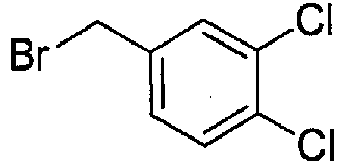
I-78 LCMS (FA): m/z = 540.4 (M+H). 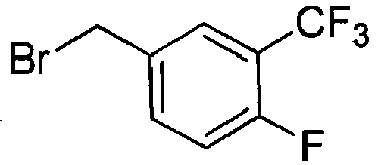
I-263 LCMS (FA): m/z = 558.4 (M+H). 
I-174 LCMS (FA): m/z = 574.4 (M+H). 
I-223 LCMS (FA): m/z = 550.4 (M+H). 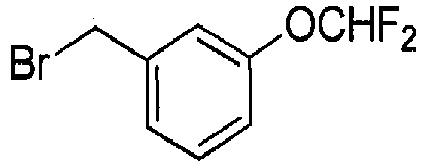
I-246 LCMS (FA): m/z = 538.4 (M+H). 
I-18 LCMS (FA): m/z = 556.9 (M+H). 
I-262 LCMS (FA): m/z = 540 (M+H). -

- (1-Benzyl-1H-pyrazol-3-yl)(4-chloropyrimidin-5-yl)methanone (0.30 g, 1.0 mmol) and (1R,2R,3R,5R)-3-amino-2-fluoro-5-(hydroxymethyl)cyclopentanol hydrochloride (C) (0.21 g, 1.11 mmol) (for synthesis see: Biggadike, K. et al. J. Chem. Soc. Perkin Trans. 1988, 3, 549-554; Borthwick, A.D. et al. J. Med. Chem. 1990, 33, 179-186.) were weighed into a 20 mL reaction vessel. To this mixture was added 1-propanol (14 mL) and DIEA (0.52 mL, 3.0 mmol). The resulting mixture was sealed and the vessel allowed to stir while heating at 50 °C for 2 h. The reaction was then cooled to rt and the reaction was concentrated. The crude product was purified on silica gel to afford (1-benzyl-1H-pyrazol-3-yl)(4-{[(1R,2R,3R,4R)-2-fluoro-3-hydroxy-4-(hydroxymethyl)cyclopentyl]amino}pyrimidin-5-yl)methanone (0.38 g, 94%). LCMS (FA): m/z = 412 (M+H).
- To a solution of (1-benzyl-1H-pyrazol-3-yl)(4-{[(1R,2R,3R,4R)-2-fluoro-3-hydroxy-4-(hydroxymethyl)cyclopentyl]amino}pyrimidin-5-yl)methanone (0.37 g, 0.90 mmol) in DMF (14.8 mL) was added imidazole (0.24 g, 3.6 mmol) followed by tert-butyldimethylsilyl chloride (0.34 g, 2.2 mmol) at rt, and the mixture was stirred for 3 days. The reaction was then quenched by addition of water and extracted with EtOAc (3x). The combined organic layers were washed with brine, dried over MgSO4, filtered, and concentrated. The residue was purified on silica gel column to give (1-benzyl-1H-pyrazol-3-yl)(4-{[(1R,2R,3R,4R)-3-{[tert-butyl(dimethyl)silyl]oxy}-4-({[tert-butyl(dimethyl)silyl]oxy}methyl)-2-fluorocyclopentyl]amino}pyrimidin-5-yl)methanone (0.53 g, 92%).
- To a solution of [A] (1-benzyl-1H-pyrazol-3-yl)(4-{[(1R,2R,3R,4R)-3-{[tert-butyl(dimethyl)silyl]oxy}-4-({[tert-butyl(dimethyl)silyl]oxy}methyl)-2-fluorocyclopentyl]amino}pyrimidin-5-yl)methanone (0.50 g, 0.78 mmol) in EtOH (51 mL) was added 1% HCl in EtOH (25.9 mL, 3.12 mmol) at rt. The reaction vessel was sealed and placed in a refrigerator (4°C) for 22 h. The reaction was quenched by addition of a saturated aq. solution of NaHCO3. To the residue was added water which was extracted with EtOAc (4x). The combined organic layers were dried over MgSO4, filtered, and concentrated. The residue was purified on silica gel to give (1-benzyl-1H-pyrazol-3-yl)(4-{[(1R,2R,3R,4R)-3-{[tert-butyl(dimethyl)silyl]oxy}-2-fluoro-4-(hydroxymethyl)cyclopentyl]amino}pyrimidin-5-yl)methanone (0.29 g, 71%). LCMS (FA): m/z = 412 (M+H).
- To a solution of (1-benzyl-1H-pyrazol-3-yl)(4-{[(1R,2R,3R,4R)-3-{[tert-butyl(dimethyl)silyl]oxy}-2-fluoro-4-(hydroxymethyl)cyclopentyl]amino}pyrimidin-5-yl)methanone (0.28 g, 0.53 mmol) in DMF (4.1 mL) was added chlorosulfonamide (123 mg, 1.1 mmol) at rt, and the mixture was stirred for 1 h. The reaction was quenched by addition of a saturated solution of NaHCO3 and diluted with water. The mixture was extracted with EtOAc (4x). The combined organic layers were dried over MgSO4, filtered, and concentrated. The crude sulfamate intermediate was dissolved in THF (11 mL) and HCl (3.0 M in water; 5.50 mL, 16.5 mmol) was added to the solution. The reaction was stirred for 3h at rt. The reaction was quenched by the addition of a saturated solution of NaHCO3 (30mL) and extracted with EtOAc (4x). The combined organic layers were dried over MgSO4, filtered, and concentrated. The residue was purified by prep HPLC to afford [(1R,2R,3R,4R)-4-({5-[(1-benzyl-1H-pyrazol-3-yl)carbonyl]pyrimidin-4-yl}amino)-3-fluoro-2-hydroxycyclopentyl]methyl sulfamate (115 mg, 44%). 1H NMR (DMSO) δ 9.56 (d, J = 1.1 Hz, 1H), 9.23 (d, J = 7.6 Hz, 1H), 8.68 (s, 1H), 8.07 (dd, J = 2.3, 1.2 Hz, 1H), 7.50 (s, 2H), 7.43 - 7.22 (m, 5H), 6.93 (d, J = 2.4 Hz, 1H), 5.57 (s, 1H), 5.51 (s, 2H), 4.93 - 4.70 (m, 2H), 4.12 (dd, J = 9.8, 6.0 Hz, 1H), 4.03 (dd, J = 9.8, 6.9 Hz, 1H), 3.94 (dd, J = 21.9, 4.7 Hz, 1H), 2.41 - 2.28 (m, 1H), 2.25 - 2.12 (m, 1H), 1.47 (dd, J = 22.4, 11.4 Hz, 1H); LCMS (FA): m/z = 491.5 (M+H).
- The compounds listed in the table below were prepared in an analogous fashion to that described above starting from the listed starting materials: (for synthesis of C, D, and E in this table see Biggadike, K. et al. J. Chem. Soc. Perkin Trans. 1988, 3, 549-554.; Borthwick, A.D. et al. J. Med. Chem. 1990, 33, 179-186 respectively)
Starting material Starting material Compound No. LCMS Data 

I-342 LCMS (FA): m/z = 471 (M+H). Int-71 

I-227 LCMS (FA): m/z = 491 (M+H). Int-71 

I-203 LCMS (FA): m/z = 509.4 (M+H). Int-71 

I-242 LCMS (FA): m/z = 524 (M+H). See Ex. 38; prepared in a similar manner to Int-71 -

- tert-Butyl 3-[(4-chloropyrimidin-5-yl)carbonyl]-1H-pyrazole-1-carboxylate (1.5 g, 4.9 mmol) and (1R,2R,3R,5R)-3-amino-2-fluoro-5-(hydroxymethyl)cyclopentanol hydrochloride (1.08 g, 5.83 mmol) were weighed into a reaction vessel with stirbar. To this mixture was added 2-propanol (20 mL) and DIEA (3 mL, 17 mmol). The resulting mixture was sealed and the vessel allowed to stir at rt for 18 h. The reaction was then concentrated to afford tert-butyl 3-[(4-{[(1R,2R,3R,4R)-2-fluoro-3-hydroxy-4-(hydroxymethyl)cyclopentyl]amino}pyrimidin-5-yl)carbonyl]-1H-pyrazole-1-carboxylate (2.1 g, 100%). LCMS (AA): m/z = 422.5 (M+H).
- To a RBF was added tert-butyl 3-[(4-{[(1R,2R,3R,4R)-2-fluoro-3-hydroxy-4-(hydroxymethyl)cyclopentyl]amino}pyrimidin-5-yl)carbonyl]-1H-pyrazole-1-carboxylate (0.47 g, 1.1 mmol), DCM (6 mL), and HCl (4.0 M solution in dioxane; 10 mL, 40 mmol). The resulting reaction mixture was stirred at rt for 16 hr. The reaction mixture was then concentrated and imidazole (0.38 g, 5.6 mmol), tert-butyldimethylsilyl chloride (0.5 g, 3.3 mmol), and DCM (10 mL) were added. The mixture was then stirred for 16 h at rt. The mixture was filtered and the filtrate was concentrated. The resulting residue was purified on silica gel to afford (4-{[(1R,2R,3R,4R)-3-{[tert-butyl(dimethyl)silyl]oxy}-4-({[tert-butyl(dimethyl)silyl]oxy}methyl)-2-fluorocyclopentyl]amino}pyrimidin-5-yl)(1H-pyrazol-3-yl)methanone (0.13g, 20%). LCMS (AA): m/z = 550.7 (M+H).
- To (4-{[(1R,2R,3R,4R)-3-{[tert-butyl(dimethyl)silyl]oxy}-4-({[tert-butyl(dimethyl)silyl]oxy}methyl)-2-fluorocyclopentyl]amino}pyrimidin-5-yl)(1H-pyrazol-3-yl)methanone (0.50 g, 0.73 mmol) was added 1% HCl in EtOH (30 mL, 3.6 mmol) at rt. The reaction vessel was sealed and placed in a refrigerator (4°C) for 14 h. The reaction was quenched by addition of a saturated aq. solution of NaHCO3. To the residue was added water which was extracted with EtOAc (4x). The combined organic layers were dried over MgSO4, filtered, and concentrated. The residue was purified on silica gel to give (4-{[(1R,2R,3R,4R)-3-{[tert-butyl(dimethyl)silyl]oxy}-2-fluoro-4-(hydroxymethyl)cyclopentyl]amino}pyrimidin-5-yl)(1H-pyrazol-3-yl)methanone (0.20 g, 63%). LCMS (FA): m/z = 436 (M+H).
- To a 2-dram vial pre-weighed with 1-bromo-3-(bromomethyl)-2-fluorobenzene (0.022 g, 0.080 mmol) was added (4-{[(1R,2R,3R,4R)-3-{[tert-butyl(dimethyl)silyl]oxy}-2-fluoro-4 (hydroxymethyl)cyclopentyl]amino}pyrimidin-5-yl)(1H-pyrazol-3-yl)methanone (0.028 g, 0.064 mmol) in DMF (1.0 mL) followed by cesium carbonate (0.084 g, 0.26 mmol). The mixture was shaken at rt for 1 h. Dimethylamine (2.0 M in THF; 0.016 mL, 0.032 mmol) was then added to quench excess benzyl bromide. The solids were then filtered and rinsed with DMF (1 mL). To the filtrate solution in a 3-dram vial was added TEA (0.036 mL, 0.26 mmol) and chlorosulfonamide (0.030 g, 0.26 mmol). The solution was shaken at rt for 1 h. To the vial was then added EtOAc (5 mL) and water (2 mL). After separation of the phases, the aqueous layer was extracted with EtOAc (5 mL). The combined organic phases were concentrated. To the resulting residue in a 20-mL vial was added TFA (1.8 mL) and water (0.2 mL). After shaking at rt for 2 h, solvent was completed evaporated. To this residue was added MeOH (5.0 mL) and MP PL-CO3 (0.50 g). After shaking at rt for 30 min, the resin was filtered and rinsed with MeOH (5 mL). This filtrate solution was then concentrated and the solid residue was purified by prep-HPLC to provide ((1R,2R,3R,4R)-4-((5-(1-(3-bromo-2-fluorobenzyl)-1H-pyrazole-3 carbonyl) pyrimidin-4-yl)amino)-3-fluoro-2-hydroxycyclopentyl)methyl sulfamate (4 mg, 11%). LCMS (FA): m/z = 587.1 (M+H).
- The compounds listed in the table below were prepared in an analogous fashion to that described above starting from the listed starting materials:
Starting material Compound No. LCMS Data 
I-92 LCMS (FA): m/z = 587.1 (M+H). 
I-122 LCMS (FA): m/z = 543.1 (M+H). 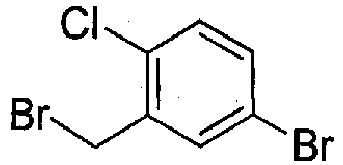
I-207 LCMS (FA): m/z = 603.1 (M+H). 
I-127 LCMS (FA): m/z = 603.0 (M+H). 
I-178 LCMS (FA): m/z = 635.4 (M+H). 
I-42 LCMS (FA): m/z = 617.0 (M+H). -
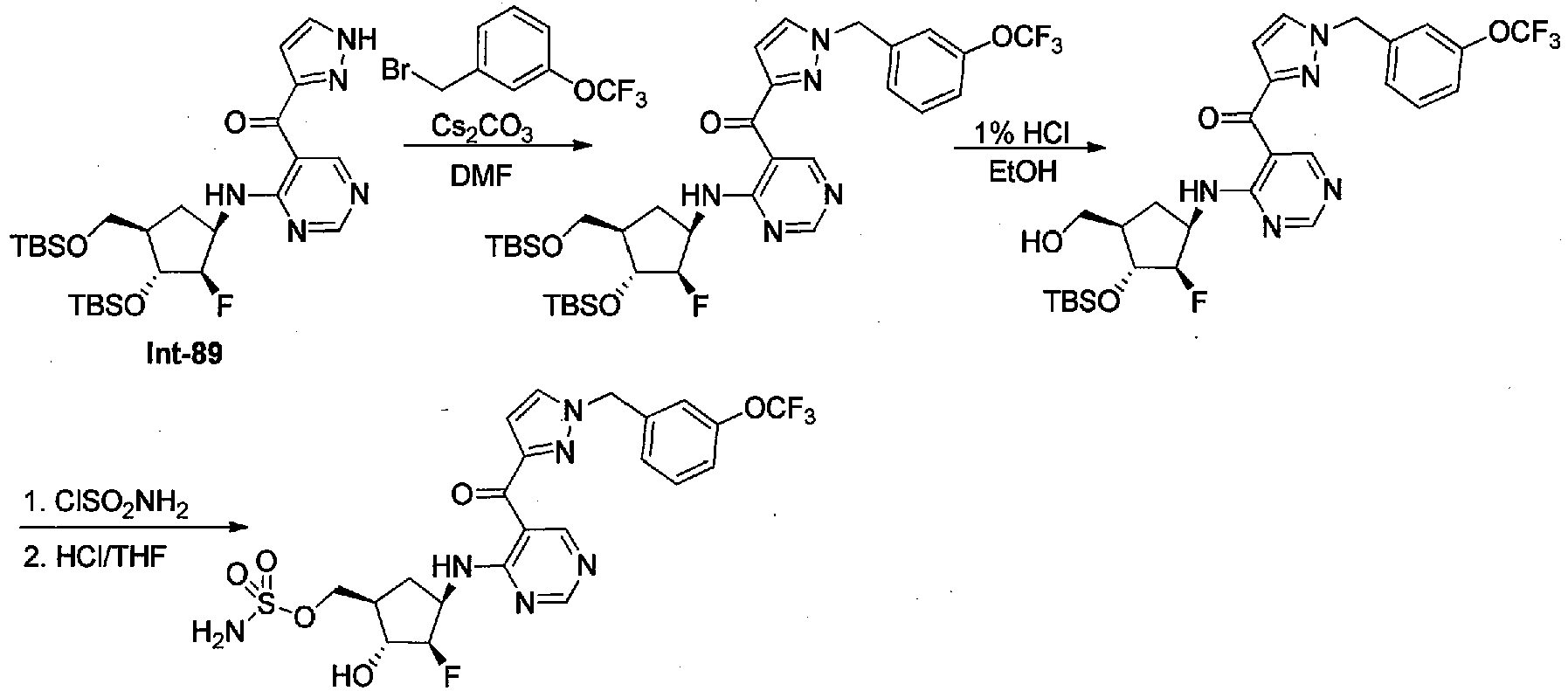
- To a round bottomed flask with stirbar was added (4-{[(1R,2R,3R,4R)-3-{[tert-butyl(dimethyl)silyl]oxy}-4-({[tert-butyl(dimethyl)silyl]oxy}methyl)-2-fluorocyclopentyl]amino}pyrimidin-5-yl)(1H-pyrazol-3-yl)methanone (0.25 g, 0.46 mmol), 3-(trifluoromethoxy)benzyl bromide (0.10 mL, 0.64 mmol), cesium carbonate (0.74 g, 2.3 mmol), and THF (10 mL). The resulting reaction mixture was stirred at rt overnight. The mixture was filtered to remove cesium carbonate and the filtrate concentrated. The residue was purified on silica gel to yield (4-{[(1R,2R,3R,4R)-3-{[tert-butyl(dimethyl)silyl]oxy}-4-({[tert-butyl(dimethyl)silyl]oxy}methyl)-2-fluorocyclopentyl]amino}pyrimidin-5-yl){1-[3-(trifluoromethoxy)benzyl]-1H-pyrazol-3-yl}methanone (0.29 g, 88%).
- To a solution of (4-{[(1R,2R,3R,4R)-3-{[tert-butyl(dimethyl)silyl]oxy}-4-({[tert-butyl(dimethyl)silyl]oxy}methyl)-2-fluorocyclopentyl]amino}pyrimidin-5-yl){1-[3-(trifluoromethoxy)benzyl]-1H-pyrazol-3-yl}methanone (0.28 g, 0.40 mmol) in EtOH (9.6 mL) was added 1% HCl in EtOH (9.6 mL, 1.2 mmol) at rt. The reaction vessel was sealed and placed in a refrigerator (4°C) for 23 h. The reaction was quenched by addition of a saturated aq. solution of NaHCO3. To the residue was added water which was then extracted with EtOAc (4x). The combined organic layers were dried over MgSO4, filtered, and concentrated. The residue was purified on silica gel to give (4-{[(1R,2R,3R,4R)-3-{[tert-butyl(dimethyl)silyl]oxy}-2-fluoro-4-(hydroxymethyl)cyclopentyl]amino}pyrimidin-5-yl){1-[3-(trifluoromethoxy)benzyl]-1H-pyrazol-3-yl}methanone (0.17 g, 71%). LCMS (FA): m/z = 611 (M+H).
- To a solution of (4-{[(1R,2R,3R,4R)-3-{[tert-butyl(dimethyl)silyl]oxy}-2-fluoro-4-(hydroxymethyl)cyclopentyl]amino}pyrimidin-5-yl){1-[3-(trifluoromethoxy)benzyl]-1H-pyrazol-3-yl}methanone (0.17 g, 0.28 mmol) in DMF (2 mL) was added chlorosulfonamide (60 mg, 0.52 mmol) at rt, and the mixture was stirred for 1.25 h. Additional chlorosulfonamide (15 mg, 0.13 mmol) was added and the reaction stirred 16 h. The reaction was then quenched by addition of a saturated solution of NaHCO3 and diluted with water. The mixture was extracted with EtOAc (4x). The combined organic layers were dried over MgSO4, filtered, and concentrated. The crude sulfamate intermediate was dissolved in THF (4.4 mL) and HCl (3.0 M in water; 2.6 mL, 7.9 mmol) was added to the solution. The reaction was stirred for 2 h at rt. The reaction was quenched by the addition of a saturated solution of NaHCO3 and extracted with EtOAc (4x). The combined organic layers were dried over MgSO4, filtered, and concentrated. The residue was purified on silica gel to afford [(1R,2R,3R,4R)-3-fluoro-2-hydroxy-4-{[5-({1-[3-(trifluoromethoxy)benzyl]-1H-pyrazol-3-yl}carbonyl)pyrimidin-4-yl]amino}cyclopentyl]methyl sulfamate (100 mg, 67%). 1H NMR (DMSO) δ 9.56 (s, 1H), 9.24 (d, J = 7.5 Hz, 1H), 8.69 (s, 1H), 8.13 (d, J = 2.4 Hz, 1H), 7.59 - 7.39 (m, 3H), 7.39 - 7.24 (m, 3H), 6.96 (d, J = 2.4 Hz, 1H), 5.60 (s, 2H), 5.56 (s, 1H), 4.94 - 4.71 (m, 2H), 4.13 (dd, J = 9.8, 6.0 Hz, 1H), 4.04 (dd, J = 9.5, 6.7 Hz, 1H), 4.02 - 3.87 (m, 1H), 2.42 - 2.30 (m, 1H), 2.27 - 2.05 (m, 1H), 1.58 - 1.41 (m, 1H); LCMS (FA): m/z = 575.4 (M+H).
- The compounds listed in the table below were prepared using a similar method to that described above starting from the listed starting materials:
Starting material Compound No. LCMS Data 
I-303 LCMS (FA): m/z = 557.3 (M+H). 
I-307 LCMS (AA): m/z = 559.5 (M+H). 
I-311 LCMS (FA): m/z = 559.5 (M+H). 
I-156 LCMS (FA): m/z = 593.6 (M+H). 
I-15 LCMS (FA): m/z = 571.0 (M+H). 
I-181 LCMS (FA): m/z = 514.3 (M+H). 
I-218 LCMS (FA): m/z = 609.6 (M+H). -

- A solution of [1-(3-bromobenzyl)-1H-pyrazol-3-yl](4-{[(1R,2R,3R,4R)-3-{[tert-butyl(dimethyl)silyl]oxy}-4-({[tert-butyl(dimethyl)silyl]oxy}methyl)-2-fluorocyclopentyl]amino}pyrimidin-5-yl)methanone (400 mg, 0.56 mmol; see example 73 for analagous synthesis) in 1,4-dioxane (17 mL) was degassed by bubbling through argon. N-Methylacrylamide (142 mg, 1.7 mmol) and cesium carbonate (540 mg, 1.7 mmol) were added and the mixture stirred under an atmosphere of argon. Separately, a solution of 4,5-bis(diphenylphosphino)-9,9-dimethylxanthene (29.0 mg, 0.050 mmol) and tris(dibenzylideneacetone)dipalladium(O) (15.3 mg, 0.017 mmol) was prepared in 1,4-dioxane (5.7 mL). This solution was degassed by bubbling through argon and then heated to 60 °C. It was subsequently added to the above solution and the resulting mixture was heated at 90 °C for 18 h. The reaction was allowed to cool, filtered through celite, and concentrated. The residue was purified on silica gel to yield N-[3-({3-[(4-{[(1R,2R,3R,4R)-3-{[tert-butyl(dimethyl)silyl]oxy}-4-({[tert-butyl(dimethyl)silyl]oxy}methyl)-2-fluorocyclopentyl]amino}pyrimidin-5-yl)carbonyl]-1H-pyrazol-1-yl}methyl)phenyl]-N-methylacrylamide (320 mg, 80%). LCMS (FA): m/z = 723.3 (M+H).
- A solution of HCl (0.10 M solution in EtOH; 1.0 mL, 0.10 mmol) was added to N-[3-({3-[(4-{[(1R,2R,3R,4R)-3-{[tert-butyl(dimethyl)silyl]oxy}-4-({[tert-butyl(dimethyl)silyl]oxy}methyl)-2-fluorocyclopentyl]amino}pyrimidin-5-yl)carbonyl]-1H-pyrazol-1-yl}methyl)phenyl]-N-methylacrylamide (90.0 mg, 0.124 mmol) and the solution was stirred for 3 h at rt. The reaction was quenched by addition of a saturated aq. solution of NaHCO3. To the residue was added water which was then extracted with EtOAc (3x). The combined organic layers were dried over MgSO4, filtered, and concentrated. The residue was purified on silica gel to give N-[3-({3-[(4-{[(1R,2R,3R,4R)-3-{[tert-butyl(dimethyl)silyl]oxy}-2-fluoro-4-(hydroxymethyl)cyclopentyl]amino}pyrimidin-5-yl)carbonyl]-1H-pyrazol-1-yl}methyl)phenyl]-N-methylacrylamide (49 mg, 65%). LCMS (FA): m/z = 609.2 (M+H).
- To a solution of N-[3-({3-[(4-{[(1R,2R,3R,4R)-3-{[tert-butyl(dimethyl)silyl]oxy}-2-fluoro-4-(hydroxymethyl)cyclopentyl]amino}pyrimidin-5-yl)carbonyl]-1H-pyrazol-1-yl}methyl)phenyl]-N-methylacrylamide (100 mg, 0.16 mmol) and TEA (0.10 mL, 0.72 mmol) in DMF (2 mL) was added chlorosulfonamide (57 mg, 0.49 mmol) at rt, and the mixture was stirred for 3 h. The reaction was then quenched by addition of a saturated solution of NaHCO3 and diluted with water. The mixture was extracted with EtOAc (3x). The combined organic layers were dried over MgSO4, filtered, and concentrated. The crude product was purified on silica gel to give [(1R,2R,3R,4R)-4-({5-[(1-{3-[acryloyl(methyl)amino]benzyl}-1H-pyrazol-3-yl)carbonyl]pyrimidin-4-yl}amino)-2-{[tert-butyl(dimethyl)silyl]oxy}-3-fluorocyclopentyl]methyl sulfamate (63 mg, 56%). LCMS (FA): m/z = 689.3 (M+H).
- TASF (24 mg, 0.087 mmol) was added to a solution of [(1R,2R,3R,4R)-4-({5-[(1-{3-[acryloyl(methyl)amino]benzyl}-1H-pyrazol-3-yl)carbonyl]pyrimidin-4-yl}amino)-2-{[tert-butyl(dimethyl)silyl]oxy}-3-fluorocyclopentyl]methyl sulfamate (30 mg, 0.044 mmol) in DMF (1 mL) at rt. The reaction mixture was stirred for 16 h at rt. The reaction was diluted with EtOAc and washed with water. The organic layer was dried over MgSO4, filtered, and concentrated. The residue was purified by prep HPLC to afford [(1R,2R,3R,4R)-4-({5-[(1-{3-[acryloyl(methyl)amino]benzyl}-1H-pyrazol-3-yl)carbonyl]pyrimidin-4-yl}amino)-3-fluoro-2-hydroxycyclopentyl]methyl sulfamate (21 mg, 84%). 1H NMR (DMSO) δ 9.56 (s, 1H), 9.23 (d, J = 7.3 Hz, 1H), 8.69 (s, 1H), 8.09 (s, 1H), 7.52 (s, 2H), 7.47 - 7.34 (m, 3H), 7.28 (m, 2H), 6.94 (s, 1H), 6.60 (s, 1H), 6.56 (s, 1H), 5.54 (s, 2H), 4.97 - 4.69 (m, 2H), 4.16 - 4.08 (m, 1H), 4.08 - 4.00 (m, 1H), 3.94 (m, 1H), 2.70 (s, 3H), 2.41 - 2.29 (m, 1H), 2.25 - 2.12 (m, 1H), 1.55 - 1.39 (m, 1H). LCMS (FA): m/z = 574.3 (M+H).
-

- Sodium hydride (60% in mineral oil; 0.038 g, 0.94 mmol) was added to a solution of (4-{[(1R,2R,3R,4R)-3-{[tert-butyl(dimethyl)silyl]oxy}-4-({[tert-butyl(dimethyl)silyl]oxy}methyl)-2-fluorocyclopentyl]amino}pyrimidin-5-yl)(1H-pyrazol-3-yl)methanone (0.35 g, 0.63 mmol) in DMF (13 mL) at 0 °C. The suspension was stirred at that temperature for 1 h. Potassium iodide (0.11 g, 0.69 mmol) was added followed by a solution of methyl bromoacetate (0.15 mL, 1.6 mmol) in DMF (2 mL). The reaction mixture was allowed to warm to rt and stirred for 2 h. A saturated solution of NaHCO3 was added to the reaction mixture and it was extracted with EtOAc (3x). The combined organic layers were washed with brine, dried over magnesium sulfate, filtered and concentrated. The residue was purified on silica gel to give methyl {3-[(4-{[(1R,2R,3R,4R)-3-{[tert-butyl(dimethyl)silyl]oxy}-4-({[tert-butyl(dimethyl)silyl]oxy}methyl)-2-fluorocyclopentyl]amino}pyrimidin-5-yl)carbonyl]-1H-pyrazol-1-yl}acetate (0.39 g, 99%). LCMS (FA): m/z = 622.5 (M+H).
- A mixture of {3-[(4-{[(1R,2R,3R,4R)-3-{[tert-butyl(dimethyl)silyl]oxy}-4-({[tert-butyl(dimethyl)silyl]oxy}methyl)-2-fluorocyclopentyl]amino}pyrimidin-5-yl)carbonyl]-1H-pyrazol-1-yl}acetate (0.39 g, 0.62 mmol) and sodium hydroxide (0.5 g, 12.4 mmol) were stirred in methanol (10 mL) at rt for 18 h. The mixture was concentrated to remove the solvent then diluted with water. The mixture was extracted with EtOAc, washed with brine, dried over magnesium sulfate, filtered and concentrated to give the carboxylic acid intermediate (0.18 g, 47%) which was dissolved in DMF (2.0 mL). N-(3-Dimethylaminopropyl)-N'-ethylcarbodiimide hydrochloride (42 mg, 0.22 mmol), 1-hydroxybenzotriazole (29 mg, 0.22 mmol), pyrrolidine (0.02 mL, 0.3 mmol), and DIEA (0.04 mL, 0.2 mmol) were added to the solution and the resulting mixture was stirred at rt for 24 h. A saturated solution of NaHCO3 was added to the reaction mixture and it was extracted with EtOAc (3x). The combined organic layers were washed with brine, dried over magnesium sulfate, filtered and concentrated to give 2-{3-[(4-{[(1R,2R,3R,4R)-3-{[tert-butyl(dimethyl)silyl]oxy}-4-({[tert-butyl(dimethyl)silyl]oxy}methyl)-2-fluorocyclopentyl]amino}pyrimidin-5-yl)carbonyl]-1H-pyrazol-1-yl}-1-(pyrrolidin-1-yl)ethanone (58 mg, 61%). LCMS (FA): m/z = 661.6 (M+H).
- To a solution of 2-{3-[(4-{[(1R,2R,3R,4R)-3-{[tert-butyl(dimethyl)silyl]oxy}-4-({[tert-butyl(dimethyl)silyl]oxy}methyl)-2-fluorocyclopentyl]amino}pyrimidin-5-yl)carbonyl]-1H-pyrazol-1-yl)-1-(pyrrolidin-1-yl)ethanone (50 mg, 0.076 mmol) in EtOH (1.8 mL) was added 1% HCl in EtOH (3.3 mL, 0.40 mmol) at rt. The reaction vessel was sealed and allowed to stand in a refrigerator (4°C) for 15 h. The reaction was quenched by addition of a saturated aq. solution of NaHCO3. To the residue was added water which was extracted with EtOAc (4x). The combined organic layers were dried over MgSO4, filtered, and concentrated to give 2-{3-[(4-{[(1R,2R,3R,4R)-3-{[tert-butyl(dimethyl)silyl]oxy}-2-fluoro-4-(hydroxymethyl)cyclopentyl]amino}pyrimidin-5-yl)carbonyl]-1H-pyrazol-1-yl}-1-(pyrrolidin-1-yl)ethanone (53 mg, 100%). LCMS (FA): m/z = 547.5 (M+H).
- To a solution of 2-{3-[(4-{[(1R,2R,3R,4R)-3-{[tert-butyl(dimethyl)silyl]oxy}-2-fluoro-4-(hydroxymethyl)cyclopentyl]amino}pyrimidin-5-yl)carbonyl]-1H-pyrazol-1-yl}-1-(pyrrolidin-1-yl)ethanone (53 mg, 0.097 mmol) and TEA (0.040 mL, 0.29 mmol) in DMF (0.7 mL) was added chlorosulfonamide (34 mg, 0.29 mmol) at rt, and the mixture was stirred for 1 h. HCl (3.0 M in water; 1.3 mL, 3.9 mmol) was added to the solution. The reaction was stirred for 30 min at rt. The reaction was quenched by the addition of a saturated solution of NaHCO3 and extracted with EtOAc (4x). The combined organic layers were dried over MgSO4, filtered, and concentrated. The residue was purified by prep HPLC to afford [(1R,2R,3R,4R)-3-fluoro-2-hydroxy-4-{[5-({1-[2-oxo-2-(pyrrolidin-1-yl)ethyl]-1H-pyrazol-3-yl}carbonyl)pyrimidin-4-yl]amino}cyclopentyl]methyl sulfamate (4 mg, 7%). 1H NMR (DMSO) δ 9.60 (s, 1H), 9.26 (d, J = 7.3 Hz, 1H), 8.70 (s, 1H), 7.88 (s, 1H), 7.50 (s, 2H), 6.92 (s, 1H), 5.57 (d, J = 5.1 Hz, 1H), 5.25 (s, 2H), 4.96 - 4.86 (m, 1H), 4.80 - 4.75 (m, 1H), 4.15 - 4.10 (m, 1H), 4.06 - 4.01 (m, 1H), 3.57 (s, 4H), 3.52 (t, J = 6.8 Hz, 2H), 2.42 - 2.28 (m, 2H), 1.96 - 1.88 (m, 2H), 1.85 - 1.75 (m, 2H); LCMS (FA): m/z = 512.3 (M+H).
-

- A solution of tert-butyl 3-[(4-{[(1R,2R,3R,4R)-2-fluoro-3-hydroxy-4-(hydroxymethyl)cyclopentyl]amino}pyrimidin-5-yl)carbonyl]-1H-pyrazole-1-carboxylate (0.57 g, 1.4 mmol) and 1H-imidazole (0.277 g, 4.07 mmol) in DCM (25 mL) was cooled in an ice/water bath. tert-Butyldimethylsilyl chloride (0.23 g, 1.5 mmol) was added and the reaction was stirred at 0 °C for 2 h. The reaction was then quenched by addition of water (350 mL) and the mixture was extracted with DCM (2x). The combined organic layers were concentrated and the crude product was purified on silica gel to afford [tert-butyl 3-[(4-{[(1R,2R,3R,4R)-4-({[tert-butyl(dimethyl)silyl]oxy}methyl)-2-fluoro-3-hydroxycyclopentyl]amino}pyrimidin-5-yl)carbonyl]-1H-pyrazole-1-carboxylate] (0.58 g, 72%). LCMS (AA): m/z = 536 (M+H).
- tert-Butyl 3-[(4-{[(1R,2R,3R,4R)-4-({[tert-butyl(dimethyl)silyl]oxy}methyl)-2-fluoro-3-hydroxycyclopentyl]amino}pyrimidin-5-yl)carbonyl]-1H-pyrazole-1-carboxylate (0.58 g, 1.08 mmol) was dissolved in methanol (20 mL) and a solution of potassium phosphate (0.23 g, 1.08 mmol) in water (3 mL) was added. This mixture was allowed to stir at rt for 3 h. The reaction solvent was evaporated and DCM (100 mL) was added to the residue. This solution was washed with water (2x) and the organic layer was concentrated to yield (4-{[(1R,2R,3R,4R)-4-({[tert-butyl(dimethyl)silyl]oxy}methyl)-2-fluoro-3-hydroxycyclopentyl]amino}pyrimidin-5-yl)(1H-pyrazol-3-yl)methanone (0.47 g, 100%). LCMS (AA): m/z = 436 (M+H).
- (4-{[(1R,2R,3R,4R)-4-({[tert-Butyl(dimethyl)silyl]oxy}methyl)-2-fluoro-3-hydroxycyclopentyl]amino}pyrimidin-5-yl)(1H-pyrazol-3-yl)methanone (0.86 g, 2.0 mmol) and 2,6-lutidine (0.64 g, 5.9 mmol) were dissolved in DCM (30 mL) and triisopropylsilyl triflate (0.91 g, 3.0 mmol) was added to this solution. The reaction mixture was allowed to stir at rt for 4 h. The reaction mixture was concentrated and the resulting residue was purified on silica gel to produce [4-({(1R,2R,3R,4R)-4-({[tert-butyl(dimethyl)silyl]oxy}methyl)-2-fluoro-3-[(triisopropylsilyl)oxy]cyclopentyl}amino)pyrimidin-5-yl](1H-pyrazol-3-yl)methanone (0.92 g, 79%). LCMS (AA): m/z = 592 (M+H).
- [4-({(1R,2R,3R,4R)-4-({[tert-Butyl(dimethyl)silyl]oxy}methyl)-2-fluoro-3-[(triisopropylsilyl)oxy]cyclopentyl}amino)pyrimidin-5-yl](1H-pyrazol-3-yl)methanone (0.42 g, 0.71 mmol) was dissolved in methanol (20 mL) and HCl (0.05 M solution in methanol; 20 mL, 1.0 mmol) was added to this solution. The reaction mixture was allowed to stir at rt for 15 min. The reaction mixture was concentrated and the residue was dissolved in MeOH (20 mL). TEA (1 mL) was added to this solution and the solvent was subsequently removed in vacuo and the resulting residue was purified on silica gel to produce [4-({(1R,2R,3R,4R)-2-fluoro-4-(hydroxymethyl)-3-[(triisopropylsilyl)oxy]cyclopentyl}amino)pyrimidin-5-yl](1H-pyrazol-3-yl)methanone (0.22 g, 82%). LCMS (AA): m/z = 478.6 (M+H).
- [4-({(1R,2R,3R,4R)-2-Fluoro-4-(hydroxymethyl)-3-[(triisopropylsilyl)oxy]cyclopentyl}amino)pyrimidin-5-yl](1H-pyrazol-3-yl)methanone (0.051 g, 0.11 mmol) was dissolved in THF (50 mL) and cesium carbonate (0.11 g, 0.32 mmol) was added to this solution. 3-(trifluoromethyl)benzyl bromide (0.027 g, 0.11 mmol) was added and the reaction was allowed to stir for 16 h at rt. The solids were removed via filtration and DMA (4 mL) was added to the filtrate. Chlorosulfonamide (0.037 g, 0.32 mmol) was then added and the mixture stirred at rt for 30 min. The reaction mixture was then concentrated and the resulting residue was purified on silica gel to afford {(1R,2R,3R,4R)-3-fluoro-4-{[5-({1-[3-(trifluoromethyl)benzyl]-1H-pyrazol-3-yl}carbonyl)pyrimidin-4-yl]amino}-2-[(triisopropylsilyl)oxy]cyclopentyl}methyl sulfamate (0.058 g, 73%). LCMS (AA): m/z = 636 (M+H).
- {(1R,2R,3R,4R)-3-Fluoro-4-{[5-({1-[3-(trifluoromethyl)benzyl]-1H-pyrazol-3-yl}carbonyl)pyrimidin-4-yl]amino}-2-[(triisopropylsilyl)oxy]cyclopentyl}methyl sulfamate (0.058 g, 0.081 mmol) was dissolved in a solution of TFA (3.6 mL) and water (0.40 mL). The reaction was allowed to stir for 1 h at rt. TLC and LCMS indicated no desired reaction had occurred. HCl (4.0 M in EtOH; 2.0 mL, 8.0 mmol) was subsequently added and the resulting solution was stirred for 1 h at rt. The reaction mixture was then concentrated and the resulting residue dissolved in MeOH (5 mL) and DIEA (1 mL). This mixture was concentrated and purified by prep HPLC to provide [(1R,2R,3R,4R)-3-fluoro-2-hydroxy-4-{[5-({1-[3-(trifluoromethyl)benzyl]-1H-pyrazol-3-yl}carbonyl)pyrimidin-4-yl]amino}cyclopentyl]methyl sulfamate (13 mg, 28%). 1H NMR (MeOD) δ 9.68 (s, 1H), 8.61 (s, 1H), 7.89 (d, J = 2.4 Hz, 1H), 7.63 (d, J = 11.3 Hz, 2H), 7.60 - 7.53 (m, 2H), 7.00 (d, J = 2.4 Hz, 1H), 5.59 (s, 2H), 5.02 - 4.96 (m, 1H), 4.23 (ddd, 2H), 4.12 (dd, 1H), 2.58 - 2.42 (m, 1H), 2.37 - 2.22 (m, 1H), 1.74 - 1.51 (m, 1H). LCMS (AA): m/z = 559.1 (M+H).
- The compound listed in the table below was prepared in an analogous fashion to that described above starting from the listed starting material used in step 5.
Starting material Compound No. LCMS Data 
I-176 LCMS (FA): m/z = 525.1 (M+H). -

- [1-(3-bromobenzyl)-5-methyl-1H-pyrazol-3-yl](4-chloropyrimidin-5-yl)methanone (0.54 g, 1.4 mmol) and (1R,2R,3R,5R)-3-amino-2-fluoro-5-(hydroxymethyl)cyclopentanol●HCl (0.29 g, 1.6 mmol) were weighed into a reaction vessel. To this mixture was added 2-propanol (21 mL) and DIEA (0.7 mL, 4.1 mmol). The resulting mixture was stirred at rt for 3.5 h. The reaction was then concentrated. The crude product was purified on silica gel to afford [1-(3-bromobenzyl)-5-methyl-1H-pyrazol-3-yl](4-{[(1R,2R,3R,4R)-2-fluoro-3-hydroxy-4-(hydroxymethyl)cyclopentyl]amino}pyrimidin-5-yl)methanone (0.20 g, 28%). LCMS (FA): m/z = 506.4 (M+H).
- [1-(3-Bromobenzyl)-5-methyl-1H-pyrazol-3-yl](4-{[(1R,2R,3R,4R)-2-fluoro-3-hydroxy-4-(hydroxymethyl)cyclopentyl]amino}pyrimidin-5-yl)methanone (0.20 g, 0.39 mmol) was dissolved in NMP (1.9 mL) and acetonitrile (0.95 mL). To this solution was added in one portion PPTS (98 mg, 0.39 mmol) followed by the addition of (4-aza-1-azoniabicyclo[2.2.2]oct-1-ylsulfonyl)(tert-butoxycarbonyl)azanide - 1,4-diazabicyclo[2.2.2]octane (1:1) hydrochloride (F) (see: Armitage, I. et al. Org. Lett. 2012, 14, 2626-2629.) (0.43 g, 0.97 mmol). After stirring 2 h at rt, additional (4-aza-1-azoniabicyclo[2.2.2]oct-1-ylsulfonyl)(tert-butoxycarbonyl)azanide-1,4-diazabicyclo[2.2.2]octane (1:1) hydrochloride (F) (80 mg, 0.18 mmol) was added and continued to stir at rt an additional 2 h. Upon reaction completion, the reaction was quenched by the addition of water. The mixture was extracted with EtOAc (3x). The combined organic layers were dried over MgSO4, filtered and concentrated. The crude product was purified on silica gel to give the Boc-protected sulfamate intermediate [(0.22 g, 84%); LCMS (FA): m/z = 685.5 (M+H).] which was then dissolved in acetonitrile (1.0 mL) at rt. Concentrated HCl (0.50 mL, 6.0 mmol) was added at 0 °C. The mixture was then allowed to stir at rt for 18 h. The reaction was quenched by the addition of a saturated solution of NaHCO3 in water. After diluting the mixture with water it was extracted with EtOAc (4x). The combined organic layers were dried over MgSO4, filtered, and concentrated. The crude product was purified on silica gel to give {(1R,2R,3R,4R)-4-[(5-{[1-(3-bromobenzyl)-5-methyl-1H-pyrazol-3-yl]carbonyl}pyrimidin-4-yl)amino]-3-fluoro-2-hydroxycyclopentyl}methyl sulfamate (82 mg, 43%). 1H NMR (DMSO) δ 9.58 (s, 1H), 9.24 (d, J = 7.9 Hz, 1H), 8.69 (s, 1H), 7.54 - 7.48 (m, 3H), 7.42 (s, 1H), 7.34 (t, J = 7.9 Hz, 1H), 7.16 - 7.10 (m, 1H), 6.76 (s, 1H), 5.56 (d, J = 5.2 Hz, 1H), 5.51 (s, 2H), 4.93 - 4.73 (m, 2H), 4.16 - 4.08 (m, 1H), 4.07 - 3.99 (m, 1H), 3.99 - 3.87 (m, 1H), 2.40 - 2.32 (m, 1H), 2.30 (s, 3H), 2.24 - 2.14 (m, 1H), 1.57 - 1.39 (m, 1H); LCMS (FA): m/z = 585.2 (M+H).
- The compound listed in the table below was prepared in an analogous fashion to that described above starting from the listed starting material:
Starting material Compound No. LCMS Data 
I-294 LCMS (FA): m/z = 631.3 (M+H). See Ex. 63; prepared in a smilar manner to Int-87 -

- tert-Butyl 3-[(4-chloropyrimidin-5-yl)carbonyl]-5-methyl-1H-pyrazole-1-carboxylate (0.31 g, 0.95 mmol) and (1R,2R,3R,SR)-3-amino-2-fluoro-5-(hydroxymethyl)cyclopentanol●HCl (0.26 g, 1.4 mmol) were weighed into a reaction vessel. To this mixture was added 2-propanol (14 mL) and DIEA (0.5 mL, 2.9 mmol). The resulting mixture was stirred at rt for 5 h. The reaction was then concentrated. The crude product was purified on silica gel to afford tert-butyl 3-[(4-{[(1R,2R,3R,4R)-2-fluoro-3-hydroxy-4-(hydroxymethyl)cyclopentyl]amino}pyrimidin-5-yl)carbonyl]-5-methyl-1H-pyrazole-1-carboxylate (0.46 g, 100%). LCMS (FA): m/z = 436.5 (M+H).
- To a solution of tert-butyl 3-[(4-{[(1R,2R,3R,4R)-2-fluoro-3-hydroxy-4-(hydroxymethyl)cyclopentyl]amino}pyrimidin-5-yl)carbonyl]-5-methyl-1H-pyrazole-1-carboxylate (0.46 g, 1.1 mmol) in EtOH (10 mL) was added a solution of potassium phosphate (0.47 g, 2.2 mmol) in water (1.5 mL). This mixture was stirred at rt for 16 h. The mixture was concentrated to remove the EtOH. Water was added to the mixture and it was extracted with EtOAc (3x). The combined extracts were dried over MgSO4, filtered, and concentrated. To the resulting residue was added ether and a white solid formed. The white solid was filtered off and the filtrate concentrated to give (4-{[(1R,2R,3R,4R)-2-fluoro-3-hydroxy-4-(hydroxymethyl) cyclopentyl]amino}pyrimidin-5-yl)(5-methyl-1H-pyrazol-3-yl)methanone (0.35 g, 98%). LCMS (FA): m/z = 336.4 (M+H).
- (4-{[(1R,2R,3R,4R)-2-Fluoro-3-hydroxy-4-(hydroxymethyl) cyclopentyl]amino}pyrimidin-5-yl)(5-methyl-1H-pyrazol-3-yl)methanone (0.35 g, 1.0 mmol) was dissolved in DMF (10 mL). To this solution was added cesium carbonate (0.67 g, 2.1 mmol) and 2-(bromomethyl)-5-(trifluoromethyl)furan (0.28 g, 1.2 mmol) and the reaction was stirred at rt for 2 h. The reaction was quenched by addition of water. This mixture was then extracted with EtOAc (3x). The combined organic layers were dried over MgSO4, filtered and concentrated. The residue was purified on silica gel to give (4-{[(1R,2R,3R,4R)-2-fluoro-3-hydroxy-4-(hydroxymethyl) cyclopentyl]amino}pyrimidin-5-yl)(5-methyl-1-{[5-(trifluoromethyl)-2-furyl]methyl}-1H-pyrazol-3-yl)methanone (0.15 g, 29%). LCMS (FA): m/z = 485.5 (M+H).
- (4-{[(1R,2R,3R,4R)-2-Fluoro-3-hydroxy-4-(hydroxymethyl)cyclopentyl]amino}pyrimidin-5-yl)(5-methyl-1-{[5-(trifluoromethyl)-2-furyl]methyl}-1H-pyrazol-3-yl)methanone (0.14 g, 0.30 mmol) was dissolved in NMP (2.0 mL) and acetonitrile (1.0 mL). To this solution was added in one portion PPTS (74 mg, 0.30 mmol) followed by the addition of (4-aza-1-azoniabicyclo[2.2.2]oct-1-ylsulfonyl)(tert-butoxycarbonyl)azanide - 1,4-diazabicyclo[2.2.2]octane (1:1) hydrochloride (F) (0.39 g, 0.89 mmol). After stirring 1 h at rt, additional (4-aza-1-azoniabicyclo[2.2.2]oct-1-ylsulfonyl)(tert-butoxycarbonyl)azanide - 1,4-diazabicyclo[2.2.2]octane (1:1) hydrochloride (F) (60 mg, 0.14 mmol) was added and continued to stir at rt an additional 2 h. Upon reaction completion, the reaction was quenched by the addition of water. The mixture was extracted with EtOAc (3x). The combined organic layers were dried over MgSO4, filtered and concentrated. The crude Boc-protected sulfamate intermediate was then dissolved in acetonitrile (1.0 mL) at rt. Concentrated HCl (0.50 mL, 6.0 mmol) was added at 0 °C. The mixture was then allowed to stir at rt for 18 h. The reaction was quenched by the addition of a saturated solution of NaHCO3 in water. After diluting the mixture with water it was extracted with EtOAc (4x). The combined organic layers were dried over MgSO4, filtered, and concentrated. The crude product was purified by prep HPLC to give [(1R,2R,3R,4R)-3-fluoro-2-hydroxy-4-({5-[(5-methyl-1-{[5-(trifluoromethyl)-2-furyl]methyl}-1H-pyrazol-3-yl)carbonyl]pyrimidin-4-yl}amino)cyclopentyl]methyl sulfamate (50 mg, 27%). 1H NMR (DMSO) δ 9.55 (s, 1H), 9.23 (d, J = 7.3 Hz, 1H), 8.70 (s, 1H), 7.50 (s, 2H), 7.23 (s, 1H), 6.74 - 6.67 (m, 2H), 5.61 (s, 2H), 5.56 (d, J = 5.0 Hz, 1H), 4.92 - 4.71 (m, 2H), 4.16 - 4.07 (m, 1H), 4.07 - 3.99 (m, 1H), 3.99 - 3.88 (m, 1H), 2.40 (s, 3H), 2.38 - 2.30 (m, 1H), 2.25 - 2.14 (m, 1H), 1.54 -1.43 (m, 1H); LCMS (FA): m/z = 485.5 (M+H).
-

- [1-(3-Chlorobenzyl)-5-(trifluoromethyl)-1H-pyrazol-3-yl](4-chloropyrimidin-5-yl)methanone (0.11 g, 0.27 mmol) and (1R,2R,3R,5R)-3-amino-2-fluoro-5-(hydroxymethyl)cyclopentanol hydrochloride (61 mg, 0.33 mmol) were weighed into a 20 mL reaction vessel. To this mixture was added 1-propanol (3.3 mL) and DIEA (0.14 mL, 0.82 mmol). The resulting mixture was sealed and the vessel allowed to stir while heating at 35 °C for 16 h. The reaction was then cooled to rt and the reaction was concentrated. The crude product was purified on silica gel to afford [1-(3-chlorobenzyl)-5-(trifluoromethyl)-1H-pyrazol-3-yl](4-{[(1R,2R,3R,4R)-2-fluoro-3-hydroxy-4-(hydroxymethyl)cyclopentyl]amino}pyrimidin-5-yl)methanone (0.12 g, 85%). LCMS (FA): m/z = 514 (M+H).
- [1-(3-chlorobenzyl)-5-(trifluoromethyl)-1H-pyrazol-3-yl](4-{[(1R,2R,3R,4R)-2-fluoro-3-hydroxy-4-(hydroxymethyl)cyclopentyl]amino}pyrimidin-5-yl)methanone (0.12 g, 0.23 mmol) was dissolved in NMP (1.1 mL) and acetonitrile (0.57 mL). To this solution was added in one portion PPTS (59 mg, 0.23 mmol) followed by the addition of (4-aza-1-azoniabicyclo[2.2.2]oct-1-ylsulfonyl)(tert-butoxycarbonyl)azanide- 1,4-diazabicyclo[2.2.2]octane (1:1) hydrochloride (F) (0.21 g, 0.47 mmol). After 1 h, additional (4-aza-1-azoniabicyclo[2.2.2]oct-1-ylsulfonyl)(tert-butoxycarbonyl)azanide- 1,4-diazabicyclo[2.2.2]octane (1:1) hydrochloride (F) (40 mg, 0.09 mmol) was added and continued to stir at rt an additional 2 h. Upon completion, the reaction was quenched by the addition of water. The mixture was extracted with EtOAc (3x). The combined organic layers were dried over MgSO4, filtered and concentrated. The crude product was purified on silica gel to give the Boc-protected sulfamate intermediate which was then dissolved in acetonitrile (1.0 mL) at rt. Concentrated HCl (0.50 mL, 6.0 mmol) was added at 0 °C. The mixture was then allowed to stir at rt for 18 h. The reaction was quenched by the addition of a saturated solution of NaHCO3 in water. After diluting the mixture with water it was extracted with EtOAc (4x). The combined organic layers were dried over MgSO4, filtered, and concentrated. The crude product was purified by prep HPLC to give {(1R,2R,3R,4R)-4-[(5-{[1-(3-chlorobenzyl)-5-(trifluoromethyl)-1H-pyrazol-3-yl]carbonyl}pyrimidin-4-yl)amino]-3-fluoro-2-hydroxycyclopentyl}methyl sulfamate (65 mg, 51%). 1H NMR (DMSO) δ 9.45 (s, 1H), 9.18 (d, J = 7.6 Hz, 1H), 8.72 (s, 1H), 7.57 (s, 1H), 7.49 (s, 2H), 7.44 - 7.37 (m, 2H), 7.34 (s, 1H), 7.20 - 7.08 (m, 1H), 5.70 (s, 2H), 5.57 (s, 1H), 4.95 - 4.71 (m, 2H), 4.12 (dd, J = 9.7, 5.9 Hz, 1H), 4.03 (dd, J = 9.7, 6.9 Hz, 1H), 3.95 (dd, J = 22.1, 4.7 Hz, 1H), 2.41 - 2.31 (m, 1H), 2.25 - 2.12 (m, 1H), 1.50 (dd, J = 22.5, 11.2 Hz, 1H); LCMS (FA): m/z = 593.5 (M+H).
-

- 1H-Pyrrole-3-carbaldehyde (4.5 g, 47 mmol) was dissolved in DCM (400 mL) and the solution was cooled to 0 °C in an ice bath. Sodium hydroxide (2.3 g, 57 mmol) was added and the mixture stirred for 10 min at 0 °C. The reaction mixture was kept cool and p-toluenesulfonyl chloride (18.0 g, 95 mmol) was added in 2 portions (10 min apart). The reaction mixture was allowed to stir at 0 °C and then slowly warm to rt and stir for 19 h. The reaction was then diluted with DCM (100 mL) and the mixture washed with water (2x). The organic layer was dried over MgSO4, filtered, and concentrated. The crude product was purified on silica gel to yield 1-[(4-methylphenyl)sulfonyl]-1H-pyrrole-3-carbaldehyde (10.4 g, 88%). LCMS (FA): m/z = 250.1 (M+H).
- Into a flame dried RBF with stirbar was added 4-chloro-5-iodopyrimidine (2.3 g, 9.5 mmol) dissolved in THF (20 mL). The flask was purged with argon and cooled to -78 °C. To this solution was added dropwise n-butyllithium (2.5 M in hexane; 7.9 mL, 19.8 mmol) at -78 °C and the mixture was stirred for 30 min. To this mixture was added 1-[(4-methylphenyl)sulfonyl]-1H-pyrrole-3-carbaldehyde (2.15 g, 8.6 mmol) dissolved in THF (10 mL) dropwise. The reaction was stirred at -78 °C for 3 h. The reaction was quenched with a saturated solution of NH4Cl and then extracted with EtOAc (3x). The combined organic layers were then washed with water and brine, dried over Na2SO4, filtered and concentrated. The crude product was purified on silica gel to give (4-chloropyrimidin-5-yl){1-[(4-methylphenyl)sulfonyl]-1H-pyrrol-3-yl}methanol (2.2 g, 69%); LCMS (FA): m/z = 364.0 (M+H).
- To a solution of (4-chloropyrimidin-5-yl){1-[(4-methylphenyl)sulfonyl]-1H-pyrrol-3-yl}methanol (2.2 g, 6.0 mmol) in DCM (60 mL) was added manganese(IV) oxide (5.2 g, 60 mmol). The suspension was stirred for 19 h at rt. The reaction was then filtered through a celite pad and the residual solid was washed with DCM several times. The filtrate was then concentrated in vacuo and the residue was purified on silica gel to afford (4-chloropyrimidin-5-yl){1-[(4-methylphenyl)sulfonyl]-1H-pyrrol-3-yl}methanone (2.1 g, 97%). LCMS (FA): m/z = 362.0 (M+H).
- Into a RBF was added tert-butyl {(1R,3R,4S)-3-(hydroxymethyl)-4-[(triisopropylsilyl)oxy]cyclopentyl}carbamate (0.75 g, 1.9 mmol), DCM (2 mL), and TFA (2.0 mL, 26 mmol). The mixture was stirred for 10 min at rt. The reaction was concentrated and azeotroped with toluene (3x) to remove water. The crude material was then dried under high vacuum, dissolved in DMF (3 mL), and added to a solution of (4-chloropyrimidin-5-yl){1-[(4-methylphenyl)sulfonyl]-1H-pyrrol-3-yl}methanone (0.59 g, 1.6 mmol) in DMF (8 mL). Potassium carbonate (0.67 g, 4.9 mmol) was added to the reaction vessel and the resulting mixture was stirred at rt for 24 h. The reaction was then quenched by addition of water and the mixture extracted with EtOAc (3x). The combined organic layers were then washed with water and brine, dried over Na2SO4, filtered and concentrated. The crude product was purified on silica gel to provide [4-({(1R,3R,4S)-3-(hydroxymethyl)-4-[(triisopropylsilyl)oxy]cyclopentyl}amino)pyrimidin-5-yl]{1-[(4-methylphenyl)sulfonyl]-1H-pyrrol-3-yl}methanone (0.80 g, 81%). LCMS (FA): m/z = 613.2 (M+H).
- Into a RBF with stirbar was added [4-({(1R,3R,4S)-3-(hydroxymethyl)-4-[(triisopropylsilyl)oxy]cyclopentyl}amino)pyrimidin-5-yl]{1-[(4-methylphenyl)sulfonyl]-1H-pyrrol-3-yl}methanone (0.80 g, 1.3 mmol), methanol (20 mL) and potassium carbonate (0.54 g, 3.9 mmol) and the mixture was stirred at rt for 3 h. The reaction was then quenched by addition of water and the mixture extracted with EtOAc (3x). The combined organic layers were then washed with water and brine, dried over Na2SO4, filtered and concentrated. The crude product was purified on silica gel to provide [4-({(1R,3R,4S)-3-(hydroxymethyl)-4-[(triisopropylsilyl)oxy]cyclopentyl}amino)pyrimidin-5-yl](1H-pyrrol-3-yl)methanone (0.38 g, 64%). LCMS (FA): m/z = 459.2 (M+H).
- To a 3-dram vial with 1-(bromomethyl)-3,5-bis(trifluoromethyl)benzene (0.025 g, 0.082 mmol) was added [4-({(1R,3R,4S)-3-(hydroxymethyl)-4-[(triisopropylsilyl)oxy] cyclopentyl}amino)pyrimidin-5-yl](1H-pyrrol-3-yl)methanone (0.029 g, 0.063 mmol) in DMF (1.0 mL) followed by cesium carbonate (0.082 g, 0.25 mmol). The mixture was shaken at rt for 2 h. The solid Cs2CO3 was filtered and rinsed with DMF (1 mL). To the combined clear DMF solution was added chlorosulfonamide (0.0292 g, 0.253 mmol). The solution was shaken at rt for 1 h, then saturated NaHCO3 (2 mL) and EtOAc (5 mL) were added. After separation, the aqueous layer was extracted with EtOAc (5 mL). The combined organic phases were then concentrated. To the resulting solid in a 20-mL vial was added TFA (2.0 mL) and water (0.2 mL) and then shaken at rt for 2 h. The solvent was then evaporated and to the resulting residue was added MeOH (3.0 mL) and MP PL-CO3 resin. After shaking at rt for 30 min, the resin was filtered off and rinsed with MeOH (10 mL). The filtrate was concentrated and the residue purified by prep-HPLC to provide [(1R,2S,4R)-4-{[5-({1-[3,5-bis(trifluoromethyl)benzyl]-1H-pyrrol-3-yl}carbonyl) pyrimidin-4-yl]amino}-2-hydroxycyclopentyl]methylsulfamate (3 mg, 8%). LCMS (FA): m/z = 608.4 (M+H).
- The compounds listed in the table below were prepared in an analogous fashion to that described above starting from the list class of starting materials in step 6.
Starting material Compound No. or Name LCMS Data 
I-333 LCMS (FA): m/z = 540 (M+H). 
I-211 LCMS (FA): m/z = 574.4 (M+H). 
I-43 LCMS (FA): m/z = 584.3 (M+H). 
I-279 LCMS (FA): m/z = 568.3 (M+H). 
I-21 LCMS (FA): m/z = 558.3 (M+H). 
I-341 LCMS (FA): m/z = 562.4 (M+H). 
I-274 LCMS (FA): m/z = 530.8 (M+H). 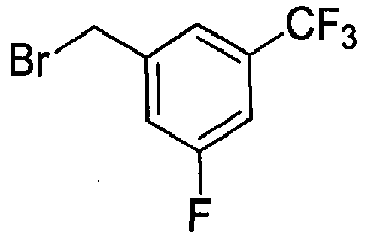
I-213 LCMS (FA): m/z = 558.4 (M+H). 
I-271 LCMS (FA): m/z = 556.3 (M+H). 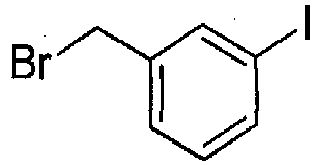
I-68 LCMS (FA): m/z = 598.3 (M+H). 
I-129 LCMS (FA): m/z = 540.3 (M+H). -

- DMAP (0.36 g, 2.9 mmol) was added to a solution of 1H-pyrrole-3-carbaldehyde (2.8 g, 29 mmol) and di-tert-butyldicarbonate (6.8 g, 31 mmol) in acetonitrile (20 mL) and the mixture was stirred at rt overnight. The mixture was concentrated and the residue was purified on silica gel to afford tert-butyl 3-formyl-1H-pyrrole-1-carboxylate (5.4 g, 94%) as a yellow oil. LCMS (FA): m/z = 196 (M+H).
- Into a RBF with stirbar was added 4-chloro-5-iodopyrimidine (3.7 g, 15.4 mmol) dissolved in THF (60 mL). The flask was purged with argon and cooled to -78 °C. To this solution was added dropwise n-butyllithium (2.5 M in hexane; 11.3 mL, 28.2 mmol) at -78 °C and the mixture was stirred for 30 min. To this mixture was added tert-butyl 3-formyl-1H-pyrrole-1-carboxylate (2.50 g, 12.8 mmol) dissolved in THF (20 mL) dropwise. The reaction was stirred at -78 °C for 2 h. The reaction was quenched with a saturated solution of NH4Cl and then extracted with EtOAc (3x). The combined organic layers were then washed with water and brine, dried over Na2SO4, filtered and concentrated. The crude product was purified on silica gel to give tert-butyl 3-[(4-chloropyrimidin-5-yl)(hydroxy)methyl]-1H-pyrrole-1-carboxylate (2.98 g, 75%). LCMS (FA): m/z = 310 (M+H).
- To a solution of 3-[(4-chloropyrimidin-5-yl)(hydroxy)methyl]-1H-pyrrole-1-carboxylate (3.0 g, 9.6 mmol) in DCM (90 mL) was added manganese(IV) oxide (8.34 g, 96 mmol). The suspension was stirred for 19 h at rt. The reaction was then filtered through a celite pad and the residual solid was washed with DCM several times. The filtrate was then concentrated in vacuo and the residue was purified on silica gel to afford tert-butyl 3-[(4-chloropyrimidin-5-yl)carbonyl]-1H-pyrrole-1-carboxylate (2.6 g, 88%). LCMS (FA): m/z = 308 (M+H).
- (1R,3R,4S)-3-({[tert-Butyl(dimethyl)silyl]oxy}methyl)-4-[(triisopropylsilyl)oxy]cyclopentanamine (3.8 g, 9.4 mmol) and tert-butyl 3-[(4-chloropyrimidin-5-yl)carbonyl]-1H-pyrrole-1-carboxylate (2.5 g, 8.2 mmol) were weighed into a RBF with stirbar. The mixture was dissolved in DMF (40 mL). Potassium carbonate (3.4 g, 25 mmol) was added to the reaction vessel at rt and the resulting mixture was stirred at rt overnight. The reaction was then quenched by addition of water and the mixture extracted with EtOAc (3x). The combined organic layers were then washed with water and brine, dried over Na2SO4, filtered and concentrated. The crude product was purified on silica gel to provide tert-butyl 3-{[4-({(1R,3R,4S)-3-({[tert-butyl(dimethyl)silyl]oxy}methyl)-4-[(triisopropylsilyl)oxy]cyclopentyl}amino)pyrimidin-5-yl]carbonyl}-1H-pyrrole-1-carboxylate (4.3 g, 78%). LCMS (FA): m/z = 674 (M+H).
- tert-Butyl3-{[4-({(1R,3R,4S)-3-({[tert-butyl(dimethyl)silyl]oxy}methyl)-4-[(triisopropylsilyl)oxy]cyclopentyl}amino)pyrimidin-5-yl]carbonyl}-1H-pyrrole-1-carboxylate (4.14 g, 6.15 mmol) was dissolved in methanol (20 mL). Potassium carbonate (2.1 g, 15.4 mmol) was added to the reaction vessel at rt and the resulting mixture was stirred at rt for 2 h. The reaction was quenched by the addition of water and extracted with EtOAc (3x). The combined organic layers were then washed with water and brine, dried over Na2SO4, filtered and concentrated. The crude product was purified on silica gel to afford [4-({(1R,3R,4S)-3-({[tert-butyl(dimethyl)silyl]oxy}methyl)-4-[(triisopropylsilyl)oxy]cyclopentyl}amino)pyrimidin-5-yl](1H-pyrrol-3-yl)methanone (3.07 g, 87.0%). LCMS (FA): m/z = 574 (M+H).
- [4-({(1R,3R,4S)-3-({[tert-Butyl(dimethyl)silyl]oxy}methyl)-4-[(triisopropylsilyl)oxy]cyclopentyl}amino)pyrimidin-5-yl](1H-pyrrol-3-yl)methanone (160 mg, 0.28 mmol) was dissolved in DMF (6 mL) and cesium carbonate (0.27 g, 0.84 mmol) was added. The mixture was stirred at rt for 10 min and 3-bromo-5-(chloromethyl)pyridine-HCl (108 mg, 0.44 mmol) was added. The mixture was then stirred at rt overnight and then quenched with aq. NH4Cl and extracted with EtOAc. The organic layer was washed with brine, dried over Na2SO4 and filtered. The residue was purified on silica gel to yield {1-[(5-bromopyridin-3-yl)methyl]-1H-pyrrol-3-yl}[4-({(1R,3R,4S)-3-({[tert-butyl(dimethyl)silyl]oxy}methyl)-4-[(triisopropylsilyl)oxy]cyclopentyl}amino)pyrimidin-5-yl]methanone (177 mg, 85%) as yellow gum. LCMS (FA): m/z = 745 (M+H).
- To a solution of {1-[(5-bromopyridin-3-yl)methyl]-1H-pyrrol-3-yl}[4-({(1R,3R,4S)-3-({[tert-butyl(dimethyl)silyl]oxy}methyl)-4-[(triisopropylsilyl)oxy]cyclopentyl}amino)pyrimidin-5-yl]methanone (165 mg, 0.22 mmol) in EtOH (2.3 mL) was added 1% HCl in EtOH (2.3 mL, 0.28 mmol) at rt. The reaction vessel was sealed and stirred at rt for 16 h. The reaction was quenched by addition of a saturated aq. solution of NaHCO3. To the residue was added water which was extracted with EtOAc (4x). The combined organic layers were dried over MgSO4, filtered, and concentrated. The residue was purified on silica gel to obtain {1-[(5-bromopyridin-3-yl)methyl]-1H-pyrrol-3-yl}[4-({(1R,3R,4S)-3-(hydroxymethyl)-4-[(triisopropylsilyl)oxy]cyclopentyl}amino)pyrimidin-5-yl]methanone (121 mg, 87%). LCMS (FA): m/z = 631 (M+H).
- To a solution of {1-[(5-bromopyridin-3-yl)methyl]-1H-pyrrol-3-yl}[4-({(1R,3R,4S)-3-(hydroxymethyl)-4-[(triisopropylsilyl)oxy]cyclopentyl}amino)pyrimidin-5-yl]methanone (120 mg, 0.19 mmol) in DMF (1 mL) was added chlorosulfonamide (66 mg, 0.57 mmol) at rt, and the mixture was stirred for 30 min. The reaction was quenched by addition of a saturated solution of NaHCO3 and diluted with water. The mixture was extracted with EtOAc (3x). The combined organic layers were dried over MgSO4, filtered, and concentrated. The crude product was purified on silica gel to give the sulfamate intermediate [90 mg, 67%; LCMS (FA): m/z= 709 (M+H).] which was dissolved in THF (1.7 mL) and HCl (4.0 M in water; 1.7 mL, 6.9 mmol) was added to the solution. The reaction was stirred for 3h at rt. The reaction was quenched by the addition of a saturated solution of NaHCO3 and extracted with EtOAc (4x). The combined organic layers were dried over MgSO4, filtered, and concentrated. The residue was purified by prep HPLC to afford [(1R,2S,4R)-4-{[5-({1-[(5-bromopyridin-3-yl)methyl]-1H-pyrrol-3-yl}carbonyl)pyrimidin-4-yl]amino}-2-hydroxycyclopentyl]methyl sulfamate (70 mg, 87%). 1H NMR (MeOD) δ 8.70 (s, 1H), 8.61 (d, J = 2.2 Hz, 1H), 8.54 (s, 1H), 8.44 (d, J = 1.9 Hz, 1H), 7.89 (t, J = 2.0 Hz, 1H), 7.56 (t, J = 1.9 Hz, 1H), 6.95 (dd, J = 3.0, 2.1 Hz, 1H), 6.65 (dd, J = 3.0, 1.7 Hz, 1H), 5.29 (s, 2H), 4.83 - 4.69 (m, 1H), 4.26 - 4.12 (m, 3H), 2.58 - 2.43 (m, 1H), 2.32 - 2.20 (m, 1H), 2.20 - 2.07 (m, 1H), 1.95 -1.82 (m, 1H), 1.47 -1.34 (m, 1H); LCMS (FA): m/z = 551.3 (M+H).
- The compounds listed in the table below were prepared in an analogous method to that described above starting from the listedstarting materials used in step 6. I-339 was made as a mixture of diastereomers (trans cyclopropyl).
Starting material Compound No. LCMS Data 
I-340 LCMS (FA): m/z = 434.4 (M+H). 
I-339 LCMS (FA): m/z = 512.5 (M+H). Int-6 
I-45 LCMS (FA): m/z = 544.4 (M+H). Int-33 
I-291 LCMS (FA): m/z = 422.3 (M+H). 
I-330 LCMS (FA): m/z = 420.4 (M+H). 
I-306 LCMS (FA): m/z = 544.4 (M+H). Int-34 
I-73 LCMS (FA): m/z = 547.4 (M+H). Ito, M. et al. PCT Application Publication WO 2007/145349 
I-255 LCMS (FA): m/z = 599.8 (M+H). -

- A solution of lithium aluminum hydride (0.66 g, 17 mmol) in THF (100 mL) was stirred at 0 °C. A solution of 1-benzylpyrrole-3-carboxylic acid ethyl ester (2.0 g, 8.7 mmol) in THF (10 mL) was added dropwise. The resulting reaction mixture was heated at 50 °C for 3 h. Additional lithium aluminum hydride (0.75 g, 20 mmol) was added and the reaction continued to stir at 50 °C for 1 h. The reaction mixture was then cooled to 0 °C, and sodium sulfate decahydrate (8 g) was added and the mixture was stirred for 16 h. EtOAc was added and the mixture was filtered over a pad of celite, then washed with additional EtOAc. The filtrate was concentrated and the crude residue purified on silica gel to give (1-benzyl-1H-pyrrol-3-yl)methanol (1.4 g, 88%). LCMS (FA): m/z = 188.4 (M+H).
- To a solution of (1-benzyl-1H-pyrrol-3-yl)methanol (1.4 g, 7.7 mmol) in DCM (39 mL) was added manganese(IV) oxide (6.7 g, 77 mmol). The suspension was stirred for 19 h at rt. The reaction was then filtered through a celite pad and the residual solid was washed with DCM several times. The filtrate was then concentrated in vacuo and the residue was purified on silica gel to afford 1-benzyl-1H-pyrrole-3-carbaldehyde (1.2 g, 83%). LCMS (AA): m/z = 186.1 (M+H).
- Into a flame dried RBF with stirbar was added 4-chloro-5-iodopyrimidine (1.4 g, 5.8 mmol) dissolved in THF (40 mL). The flask was purged with argon and cooled to -78 °C. To this solution was added dropwise n-butyllithium (2.5 M in hexane; 4.6 mL, 11.5 mmol) at -78 °C and the mixture was stirred for 30 min. To this mixture was added 1-benzyl-1H-pyrrole-3-carbaldehyde (1.2 g, 6.3 mmol) dissolved in THF (10 mL) dropwise. The reaction was stirred at -78 °C for 2 h. The reaction was quenched with a saturated solution of NH4Cl and then extracted with EtOAc (3x). The combined organic layers were then washed with water and brine, dried over Na2SO4, filtered and concentrated. The crude product was purified on silica gel to give (1-benzyl-1H-pyrrol-3-yl)(4-chloropyrimidin-5-yl)methanol (0.70 g, 41%). LCMS (AA): m/z = 300.2 (M+H).
- To a solution of (1-benzyl-1H-pyrrol-3-yl)(4-chloropyrimidin-5-yl)methanol (0.70 g, 2.4 mmol) in DCM (23 mL) was added manganese(IV) oxide (2.0 g, 23 mmol). The suspension was stirred for 19 h at rt. The reaction was then filtered through a celite pad and the residual solid was washed with DCM several times. The filtrate was then concentrated in vacuo and the residue was purified on silica gel to afford (1-benzyl-1H-pyrrol-3-yl)(4-chloropyrimidin-5-yl)methanone (1.2 g, 83%). LCMS (FA): m/z = 298.4 (M+H).
- The compounds listed in the table below were prepared in an analogous method to that described above starting from the listedstarting materials:
Starting material Compound Name / No. LCMS Data 
[1-(3-Chlorobenzyl)-1H-pyrrol-3-yl](4-chloropyrimidin-5-yl)methanone / Int-93 LCMS (FA): m/z = 332.1 (M+H). 
[1-(3-Bromobenzyl)-1H-pyrrol-3-yl](4-chloropyrimidin-5-yl)methanone / Int-94 LCMS (FA): m/z = 376 (M+H). -

- (1-Benzyl-1H-pyrrol-3-yl)(4-chloropyrimidin-5-yl)methanone (0.049 g, 0.16 mmol) and {(1R,2S,4R)-4-amino-2-[(triisopropylsilyl)oxy]cyclopentyl}methanol●C2HO2F3 (0.086 g, 0.21 mmol) were weighed into a reaction vessel with stirbar. To this mixture was added 2-propanol (2 mL) and DIEA (0.086 mL, 0.50 mmol). The resulting mixture was allowed to stir at rt for 18 h. The reaction was then concentrated and the crude product was purified on silica gel to afford (1-benzyl-1H-pyrrol-3-yl)[4-({(1R,3R,4S)-3-(hydroxymethyl)-4-[(triisopropylsilyl)oxy]cyclopentyl}amino)pyrimidin-5-yl]methanone (13 mg, 14%). LCMS (FA): m/z = 549.7 (M+H).
- To a solution of (1-benzyl-1H-pyrrol-3-yl)[4-({(1R,3R,4S)-3-(hydroxymethyl)-4-[(triisopropylsilyl)oxy]cyclopentyl}amino)pyrimidin-5-yl]methanone (0.12 g, 0.21 mmol) in DMF (4 mL) was added chlorosulfonamide (74 mg, 0.64 mmol) at rt, and the mixture was stirred for 1 h. The reaction was quenched by addition of a saturated solution of NaHCO3 and diluted with water. The mixture was extracted with EtOAc (4x). The combined organic layers were dried over MgSO4, filtered, and concentrated. The crude sulfamate intermediate was dissolved in THF (2 mL) and HCl (4.0 M in water; 2.1 mL, 8.4 mmol) was added to the solution. The reaction was stirred for 3 h at rt. The reaction was quenched by the addition of a saturated solution of NaHCO3 and extracted with EtOAc (4x). The combined organic layers were dried over MgSO4, filtered, and concentrated. The residue was purified by prep HPLC to afford [(1R,2S,4R)-4-({5-[(1-benzyl-1H-pyrrol-3-yl)carbonyl]pyrimidin-4-yl}amino)-2-hydroxycyclopentyl]methyl sulfamate (26 mg, 36%). 1H NMR (DMSO) δ 8.66 (s, 1H), 8.60 (s, 1H), 8.44 (d, J = 7.4 Hz, 1H), 7.67 (s, 1H), 7.50 - 7.33 (m, 3H), 7.30 (t, J = 6.3 Hz, 3H), 7.00 (s, 1H), 6.54 (s, 1H), 5.21 (s, 2H), 5.05 - 4.75 (m, 1H), 4.74 - 4.57 (m, 1H), 4.15 - 4.03 (m, 1H), 4.03 - 388 (m, 2H), 2.96 - 2.52 (m, 1H), 2.40-2.25 (m, 1H), 2.20 -2.05 (m, 1H), 2.03 - 1.90 (m, 1H), 1.79 - 1.66 (m, 1H), 1.31 - 1.18 (m, 1H); LCMS (FA): m/z = 472.5 (M+H).
-

- [1-(3-Bromobenzyl)-1H-pyrrol-3-yl](4-chloropyrimidin-5-yl)methanone (360 mg, 0.95 mmol) and (1S,2S,4R)-4-amino-2-(hydroxymethyl)cyclopentanol hydrobromide (240 mg, 1.1 mmol) were weighed into a round bottomed flask with stirbar. The mixture was dissolved in DMF (7.5 mL). Potassium carbonate (0.33 g, 2.4 mmol) was added to the reaction vessel at rt and the resulting mixture was stirred at 80 °C for 1 h. The reaction was then diluted with EtOAc and filtered through a pad of celite. The filtrate was concentrated. The resulting residue was dissolved in EtOAc and the mixture was washed with water and brine, dried over Na2SO4, filtered and concentrated. The crude product was purified on silica gel to provide [1-(3-bromobenzyl)-1H-pyrrol-3-yl](4-{[(1R,3S,4S)-3-hydroxy-4-(hydroxymethyl)cyclopentyl]amino}pyrimidin-5-yl)methanone (295 mg, 66%). LCMS (FA): m/z = 473 (M+H).
- To a solution of [1-(3-bromobenzyl)-1H-pyrrol-3-yl](4-{[(1R,3S,4S)-3-hydroxy-4-(hydroxymethyl)cyclopentyl]amino}pyrimidin-5-yl)methanone (295 mg, 0.63 mmol) in DMF (10 mL) was added DMAP (3.8 mg, 0.03 mmol), imidazole (0.3 g, 4.5 mmol) followed by tert-butyldimethylsilyl chloride (0.28 g, 1.9 mmol) at rt, and the mixture was stirred for 12 h. Additional imidazole (0.17 g, 2.5 mmol) and tert-butyldimethylsilyl chloride (0.19 g, 1.3 mmol) were added and the reaction was stirred for 16 h. The reaction was then quenched by addition of water and extracted with EtOAc (3x). The combined organic layers were washed with brine, dried over MgSO4, filtered, and concentrated. The residue was purified on silica gel to give [1-(3-bromobenzyl)-1H-pyrrol-3-yl](4-{[(1R,3S,4S)-3-{[tert-butyl(dimethyl)silyl]oxy}-4-({[tert-butyl(dimethyl)silyl]oxy}methyl)cyclopentyl]amino}pyrimidin-5-yl)methanone (0.31 g, 71%). LCMS (FA): m/z = 701.4 (M+H).
- To a solution of [1-(3-bromobenzyl)-1H-pyrrol-3-yl](4-{[(1R,3S,4S)-3-{[tert-butyl(dimethyl)silyl]oxy}-4-({[tert-butyl(dimethyl)silyl]oxy}methyl)cyclopentyl]amino}pyrimidin-5-yl)methanone (0.31 g, 0.45 mmol) in EtOH (5.5 mL) was added 1% HCl in EtOH (7.5 mL, 0.91 mmol) at rt. The reaction vessel was sealed and allowed to stand in a refrigerator (4°C) for 24 h. The reaction was quenched by addition of a saturated aq. solution of NaHCO3. To the residue was added water which was extracted with EtOAc (4x). The combined organic layers were dried over MgSO4, filtered, and concentrated. The residue was purified on silica gel to give [1-(3-bromobenzyl)-1H-pyrrol-3-yl](4-{[(1R,3S,4S)-3-{[tert-butyl(dimethyl)silyl]oxy}-4-(hydroxymethyl)cyclopentyl]amino}pyrimidin-5-yl)methanone (233 mg, 89%). LCMS (FA): m/z = 587.3 (M+H).
- To a solution of [1-(3-bromobenzyl)-1H-pyrrol-3-yl](4-{[(1R,3S,4S)-3-{[tert-butyl(dimethyl)silyl]oxy}-4-(hydroxymethyl)cyclopentyl]amino}pyrimidin-5-yl)methanone (233 mg, 0.40 mmol) in DMF (4 mL) was added chlorosulfonamide (69 mg, 0.60 mmol) at rt, and the mixture was stirred for 30 min. The reaction was quenched by addition of a saturated solution of NaHCO3 and diluted with water. The mixture was extracted with EtOAc (4x). The combined organic layers were dried over MgSO4, filtered, and concentrated. The crude sulfamate intermediate was dissolved in THF (6 mL) and HCl (4.0 M in water; 1 mL, 4 mmol) was added to the solution. The reaction was stirred for 16 h at rt. The reaction was quenched by the addition of a saturated solution of NaHCO3 and extracted with EtOAc (4x). The combined organic layers were dried over MgSO4, filtered, and concentrated. The residue was purified by prep HPLC to afford {(1S,2S,4R)-4-[(5-{[1-(3-bromobenzyl)-1H-pyrrol-3-yl]carbonyl}pyrimidin-4-yl)amino]-2-hydroxycyclopentyl}methyl sulfamate (127 mg, 58%). 1H NMR (MeOD) δ 8.62 (s, 1H), 8.48 (s, 1H), 7.46 - 7.39 (m, 2H), 7.36 (s, 1H), 7.23 (t, J = 7.7 Hz, 1H), 7.16 (d, J = 8.0 Hz, 1H), 6.87 - 6.81 (m, 1H), 6.60 - 6.53 (m, 1H), 5.15 (s, 2H), 4.38 - 4.30 (m, 1H), 4.27 (dd, J = 9.7, 7.7 Hz, 1H), 4.10 (dd, J = 9.7, 7.3 Hz, 1H), 2.57 - 2.42 (m, 1H), 2.32 - 2.17 (m, 1H), 2.13 - 2.00 (m, 1H), 1.86 - 1.65 (m, 2H). LCMS (FA): m/z = 552.0 (M+H).
-

- 1-(3-Chlorophenyl)cyclopropanaminehydrochloride (300 mg, 1.5 mmol) was weighed into a 50 mL RBF and water (3 mL) was added to the flask. The solution was filtered through a syringe filter and rinsed with a small amount of water. To the filtrate was added NaOH (1.0 M solution in water; 1.5 mL, 1.5 mmol) to neutralize and brine (10 mL) was added to the mixture. The mixture was extracted with Et2O (30 mL) and the organic layer was dried over Na2SO4, filtered, concentrated in vacuo. To the residue was added 2,5-dimethoxy-3-tetrahydrofurancarboxaldehyde (0.19 mL, 1.3 mmol) followed by HOAc (2.0 mL, 35 mmol) at rt, and the resulting mixture was heated at 85 °C for 2 h. The reaction was cooled to room temp and concentrated in vacuo. To the mixture was added saturated NaHCO3 (50 mL) and the mixture was extracted with EtOAc (60 mLx3). The organic layers were dried over Na2SO4, filtered through a celite pad, and concentrated in vacuo. The residue was purified on silica gel to give 1-[1-(3-chlorophenyl)cyclopropyl]-1H-pyrrole-3-carbaldehyde (300 mg, 82%) as a yellow oil. LCMS (FA): m/z = 246.2 (M+H).
- 4-Chloro-5-iodopyrimidine (290 mg, 1.2 mmol) was weighed into a 100 mL 2 necked round bottomed flask and the flask was purged with argon. The contents were dissolved in THF (8 mL) and the solution was cooled to -78 °C. To the solution was added dropwise n-Butyllithium (2.50 M solution in hexane; 0.95 mL, 2.4 mmol) at -78 °C, and the mixture was stirred for 30 min. To the mixture was added a solution of 1-[1-(3-chlorophenyl)cyclopropyl]-1H-pyrrole-3-carbaldehyde (270 mg, 1.1 mmol) in THF (4 mL) at -78 °C, and the resulting mixture was stirred for 30 min at the same temperature. The reaction was quenched by the addition of saturated NH4Cl (40 mL) and extracted with EtOAc (50 mLx3). The combined organic layers were dried over Na2SO4, filtered, and concentrated in vacuo. The residue was purified on silica gel to give {1-[1-(3-chlorophenyl)cyclopropyl]-1H-pyrrol-3-yl}(4-chloropyrimidin-5-yl)methanol (351 mg, 86%). LCMS (FA): m/z = 360.2 (M+H).
- To a solution of {1-[1-(3-chlorophenyl)cyclopropyl]-1H-pyrrol-3-yl}(4-chloropyrimidin-5-yl)methanol (330 mg, 0.91 mmol) in DCM (10 mL) was added manganese(IV) oxide (790 mg, 9.1 mmol) at rt, and the mixture was stirred for 21 h. The reaction was filtered through a celite pad and the residual solid was rinsed with DCM and EtOAc several times. The filtrate was concentrated in vacuo. The residue was purified on silica gel to give {1-[1-(3-chlorophenyl)cyclopropyl]-1H-pyrrol-3-yl}(4-chloropyrimidin-5-yl)methanone (315 mg, 92%) as a colorless solid. LCMS (FA): m/z = 358.2 (M+H).
- A 100 mL reaction vessel was charged with {(1R,2S,4R)-4-amino-2-[(triisopropylsilyl)oxy]cyclopentyl}methanol●CF3CO2H (382 mg, 0.95 mmol) and K2CO3 (340 mg, 2.5 mmol). To the mixture was added a solution of {1-[1-(3-chlorophenyl)cyclopropyl]-1H-pyrrol-3-yl}(4-chloropyrimidin-5-yl)methanone (295 mg, 0.82 mmol) in DMF (5 mL) and the resulting mixture was stirred for 3 h at rt. The reaction was quenched by addition of water (50 mL) and extracted with EtOAc (60 mLx3). The combined organic layers were dried over Na2SO4, filtered, and concentrated in vacuo. The residue was purified on silica gel to give {1-[1-(3-chlorophenyl)cyclopropyl]-1H-pyrrol-3-yl}[4-({(1R,3R,4S)-3-(hydroxymethyl)-4-[(triisopropylsilyl)oxy]cyclopentyl}amino)pyrimidin-5-yl]methanone (460 mg, 87%) as a colorless amorphous solid. LCMS (FA): m/z = 609.4 (M+H).
- To a solution of {1-[1-(3-chlorophenyl)cyclopropyl]-1H-pyrrol-3-yl}[4-({(1R,3R,4S)-3-(hydroxymethyl)-4-[(triisopropylsilyl)oxy]cyclopentyl}amino)pyrimidin-5-yl]methanone (460 mg, 0.75 mmol) in DMF (4 mL) was added chlorosulfonamide (170 mg, 1.5 mmol) at rt, and the mixture was stirred for 30 min. The reaction was quenched by addition of saturated NaHCO3 (70 mL) and the resulting suspension was filtered through a Celite pad. The residual solid was washed with water several times and dried under vacuum. To the residual solid in the glass frit filter was added EtOAc. The resulting solution was filtered and the Celite pad was washed with EtOAc several times. The filtrate was concentrated in vauco and the residue was purified on silica gel to give the sulfamate intermediate [(375 mg, 72%); LCMS (FA): m/z = 688.3 (M+H).] which was dissolved in THF (3 mL). To this solution was added HCl (4.0 M solution in water; 4.0 mL, 16 mmol) at rt, and the mixture was stirred for 2 h at 40 °C. The reaction was quenched by addition of saturated NaHCO3 (60 mL) and extracted with EtOAc (60 mLx3). The combined organic layers were dried over Na2SO4, filtered, and concentrated in vacuo. To the residue was added a small volume of DCM and colorless solids were appeared. The suspension was filtered through a glass frit funnel with some DCM to rinse the flask. The resulting colorless solid was dried to give [(1R,2S,4R)-4-{[5-({1-[1-(3-chlorophenyl)cyclopropyl]-1H-pyrrol-3-yl}carbonyl)pyrimidin-4-yl]amino}-2-hydroxycyclopentyl]methyl sulfamate (254 mg, 87%) as a colorless amorphous solid. 1H NMR (DMSO) δ 8.70 (s, 1H), 8.60 (s, 1H), 8.50 (d, J = 7.5 Hz, 1H), 7.72 (s, 1H), 7.42 (s, 2H), 7.36 - 7.26 (m, 2H), 7.17 - 7.12 (m, 1H), 7.00 (s, 1H), 6.91 (d, J = 7.5 Hz, 1H), 6.61 - 6.56 (m, 1H), 4.88 (d, J = 4.3 Hz, 1H), 4.74 - 4.61 (m, 1H), 4.10 (dd, J = 9.7, 5.9 Hz, 1H), 3.97 (dd, J = 9.6, 7.1 Hz, 2H), 2.39 - 2.28 (m, 1H), 2.17 - 2.06 (m, 1H), 2.03 - 1.92 (m, 1H), 1.80 - 1.65 (m, 3H), 1.52 (t, J = 6.6 Hz, 2H), 1.25 (dt, J = 12.6, 9.1 Hz, 1H). LCMS (FA): m/z = 532.3 (M+H).
- The compound listed in the table below was prepared in an analogous method to that described above starting from the listed starting material:
Starting material Compound No. LCMS Data 
I-76 LCMS (FA): m/z = 500.3 (M+H). -

- A round bottomed flask was charged with methyl 1-(phenylethynyl)-1H-pyrrole-3-carboxylate (1.5 g, 6.7 mmol) and methanol (10 mL). Lithium hydroxide (1.0 M solution in water; 13.3 mL, 13.3 mmol) was added followed by addition of THF (10 mL). The resulting solution was stirred at rt for 18h. The organic solvents were removed under reduced pressure and 5% potassium bisulfate was added to the remaining aqueous solution. The mixture was extracted with EtOAc (3x). The combined organic layers were washed with brine, dried over sodium sulfate, filtered, and concentrated to give the carboxylic acid intermediate [(1.39 g); (FA): m/z = 212 (M+H).]. The carboxylic acid was then placed in a 50 mL RBF under nitrogen. DMF (20 mL), N,O-dimethylhydroxylamine hydrochloride (1.1 g, 11 mmol), HATU (4.1 g, 11 mmol), and TEA (2.3 mL, 16 mmol) were all added and the resulting suspension was allowed to stir for 18 h. The reaction mixture was then poured into a saturated NaHCO3 solution. The mixture was extracted with EtOAc (3x). The combined organic layers were washed with brine, dried over sodium sulfate, filtered, and concentrated. The crude residue was purified on silica gel to afford N-methoxy-N-methyl-1-(phenylethynyl)-1H-pyrrole-3-carboxamide (1.3 g, 76%). LCMS (FA): m/z = 255 (M+H).
- An oven-dried 250 mL 2-neck RBF under nitrogen was charged with 4-chloro-5-iodopyrimidine (1.2 g, 5.1 mmol) and THF (30 mL) and then cooled to -70 °C. n-Butyllithium (2.5 M solution in hexane; 4.1 mL, 10.2 mmol) was added dropwise over 10 min keeping the internal temperature less than -65 deg C. A deep yellow solution resulted which was stirred an additional 10 min. A solution of N-methoxy-N-methyl-1-(phenylethynyl)-1H-pyrrole-3-carboxamide (865 mg, 3.4 mmol) in THF (20 mL) was then added at a rate to keep the internal temperature less than -60 °C. This solution was allowed to warm to 0 °C and then quenched with a saturated NH4Cl solution. The mixture was extracted with EtOAc (3x). The combined organic layers were washed with brine, dried over sodium sulfate, filtered, and concentrated. The crude residue was purified on silica gel to afford (4-chloropyrimidin-5-yl)[1-(phenylethynyl)-1H-pyrrol-3-yl]methanone (235 mg, 15%). LCMS (FA): m/z = 308 (M+H).
- (1R,3R,4S)-3-({[tert-butyl(dimethyl)silyl]oxy}methyl)-4-[(triisopropylsilyl)oxy]cyclopentanamine (370 mg, 0.92 mmol) and (4-chloropyrimidin-5-yl)[1-(phenylethynyl)-1H-pyrrol-3-yl]methanone (0.24 g, 0.76 mmol) were weighed into a RBF with stirbar. The mixture was dissolved in DMF (5 mL). Potassium carbonate (320 mg, 2.3 mmol) was added to the reaction vessel at rt and the resulting mixture was stirred at rt for 3 days. The reaction was then quenched by addition of water and the mixture extracted with EtOAc (3x). The combined organic layers were then washed with water and brine, dried over Na2SO4, filtered and concentrated. The crude product was purified on silica gel to give [4-({(1R,3R,4S)-3-({[tert-butyl(dimethyl)silyl]oxy}methyl)-4-[(triisopropylsilyl)oxy]cyclopentyl}amino)pyrimidin-5-yl][1-(phenylethynyl)-1H-pyrrol-3-yl]methanone (413 mg, 79%). LCMS (FA): m/z = 674 (M+H).
- A solution of [4-({(1R,3R,4S)-3-({[tert-butyl(dimethyl)silyl]oxy}methyl)-4-[(triisopropylsilyl)oxy]cyclopentyl}amino)pyrimidin-5-yl][1-(phenylethynyl)-1H-pyrrol-3-yl]methanone (0.40 g, 0.60 mmol) in EtOH (1.0 mL) was cooled in an ice bath. To the solution was added HCl (0.3 M solution in EtOH; 4.0 mL, 1.2 mmol) via syringe and this solution was allowed to stir at rt for 5 h. The reaction was then quenched by addition of a saturated NaHCO3 solution. Water was added to solubilize the salts and the mixture was concentrated to remove EtOH. The aqueous mixture was extracted with EtOAc (3x). The combined organic layers were then washed with water and brine, dried over Na2SO4, filtered and concentrated. The crude product was purified on silica gel to give [4-({(1R,3R,4S)-3-(hydroxymethyl)-4-[(triisopropylsilyl)oxy]cyclopentyl}amino)pyrimidin-5-yl][1-(phenylethynyl)-1H-pyrrol-3-yl]methanone (290 mg, 86%). LCMS (FA): m/z = 559 (M+H).
- A 100 mL RBF was charged with [4-({(1R,3R,4S)-3-(hydroxymethyl)-4-[(triisopropylsilyl)oxy]cyclopentyl}amino)pyrimidin-5-yl][1-(phenylethynyl)-1H-pyrrol-3-yl]methanone (0.12 g, 0.22 mmol), THF (5 mL), and 5% palladium on calcium carbonate (0.05 g, 0.19 mmol). The suspension was stirred under an atmosphere of hydrogen for 4 h. The mixture was filtered through a celite pad and the filtrate was concentrated then purified on silica gel to produce [4-({(1R,3R,4S)-3-(Hydroxymethyl)-4-[(triisopropylsilyl)oxy]cyclopentyl}amino)pyrimidin-5-yl]{1-[(Z)-2-phenylvinyl]-1H-pyrrol-3-yl}methanone (54 mg, 44%). LCMS (FA): m/z= 561 (M+H).
- [4-({(1R,3R,4S)-3-(Hydroxymethyl)-4-[(triisopropylsilyl)oxy]cyclopentyl}amino)pyrimidin-5-yl]{1-[(Z)-2-phenylvinyl]-1H-pyrrol-3-yl}methanone (0.054 g, 0.096 mmol) was dissolved in THF (2.3 mL). To this solution was added in one portion PPTS (48 mg, 0.19 mmol) followed by the addition of (4-aza-1-azoniabicyclo[2.2.2]oct-1-ylsulfonyl)(tert-butoxycarbonyl)azanide - 1,4-diazabicyclo[2.2.2]octane (1:1) hydrochloride (F) (0.13 g, 0.29 mmol). After stirring 4 h at rt, additional (4-aza-1-azoniabicyclo[2.2.2]oct-1-ylsulfonyl)(tert-butoxycarbonyl)azanide - 1,4-diazabicyclo[2.2.2]octane (1:1) hydrochloride (F) (0.10 g, 0.23 mmol) was added and continued to stir at rt an additional 2 h. The reaction was then diluted with DCM and filtered to remove solids. The filtrate was purified on silica gel to give the Boc-protected sulfamate intermediate [34 mg; LCMS (FA): m/z = 740 (M+H).] which was then dissolved in acetonitrile (1.0 mL) and cooled to 0 °C. Phosphoric acid (1.0 mL, 17 mmol) was added and the mixture was then allowed to stir at rt for 3 h. The reaction was quenched by the addition of a 1.0 M solution of Na2CO3 in water. After diluting the mixture with water it was extracted with EtOAc (3x). The combined organic layers were dried over MgSO4, filtered, and concentrated. The crude product was purified by prep HPLC to give [(1R,2S,4R)-2-hydroxy-4-{[5-({1-[(Z)-2-phenylvinyl]-1H-pyrrol-3-yl}carbonyl)pyrimidin-4-yl]amino}cyclopentyl]methyl sulfamate (8 mg, 17%). 1H NMR (MeOD) δ 8.53 (s, 2H), 7.39 - 7.28 (m, 3H), 7.26 (s, 1H), 7.22 - 7.16 (m, 2H), 6.95 (d, J = 9.3 Hz, 1H), 6.84 - 6.80 (m, 1H), 6.66 - 6.61 (m, 1H), 6.48 (d, J = 9.3 Hz, 1H), 4.83 - 4.72 (m, 1H), 4.26 - 4.13 (m, 3H), 2.57 - 2.48 (m, 1H), 2.32 - 2.23 (m, 1H), 2.20 - 2.11 (m, 1H), 1.95 - 1.85 (m, 1H), 1.47 -1.37 (m, 1H); LCMS (FA): m/z = 484.4 (M+H).
-

- [4-({(1R,3R,4S)-3-(Hydroxymethyl)-4-[(triisopropylsilyl)oxy]cyclopentyl}amino)pyrimidin-5-yl][1-(phenylethynyl)-1H-pyrrol-3-yl]methanone (100 mg, 0.18 mmol) was dissolved in THF (4 mL). To this solution was added in one portion PPTS (48 mg, 0.19 mmol) followed by the addition of (4-aza-1-azoniabicyclo[2.2.2]oct-1-ylsulfonyl)(tert-butoxycarbonyl)azanide - 1,4-diazabicyclo[2.2.2]octane (1:1) hydrochloride (F) (0.24 g, 0.54 mmol). After stirring 1 h at rt, the reaction was quenched by the addition of water. The mixture was extracted with EtOAc (3x). The combined organic layers were dried over MgSO4, filtered and concentrated to give the Boc-protected sulfamate intermediate [140 mg; LCMS (FA): m/z = 738 (M+H).] which was then dissolved in acetonitrile (1.0 mL) and cooled to 0 °C. Phosphoric acid (1.0 mL, 17 mmol) was added and the mixture was then allowed to stir at rt for 3 h. The reaction was quenched by the addition of a 1.0 M solution of Na2CO3 in water. After diluting the mixture with water it was extracted with EtOAc (3x). The combined organic layers were dried over MgSO4, filtered, and concentrated. The crude product was purified by prep HPLC to give {(1R,2S,4R)-2-hydroxy-4-[(5-{[1-(phenylethynyl)-1H-pyrrol-3-yl]carbonyl}pyrimidin-4-yl)amino]cyclopentyl}methyl sulfamate (26 mg, 30%). 1H NMR (MeOD) δ 8.79 (s, 1H), 8.60 (s, 1H), 7.78 - 7.72 (m, 1H), 7.59 - 7.52 (m, 2H), 7.46 - 7.37 (m, 3H), 7.24 - 7.19 (m, 1H), 6.77 - 6.72 (m, 1H), 4.85 - 4.77 (m, 1H), 4.27 - 4.15 (m, 3H), 2.60 - 2.49 (m, 1H), 2.35 - 2.24 (m, 1H), 2.23 - 2.14 (m, 1H), 1.99 - 1.88 (m, 1H), 1.52 - 1.40 (m, 1H); LCMS (FA): m/z = 484.2 (M+H).
-

- Methyl 1H-pyrrole-3-carboxylate (0.50 g, 4.0 mmol) was dissolved in DMF (14 mL). To this solution was added cesium carbonate (3.3 g, 10.0 mmol) and 3-(trifluoromethoxy)benzyl bromide (0.78 mL, 4.8 mmol) and the reaction was stirred at rt for 4 h. The reaction was quenched by addition of water. This mixture was then extracted with EtOAc (3x). The combined organic layers were dried over MgSO4, filtered and concentrated. The residue was purified on silica gel to give methyl 1-[3-(trifluoromethoxy)benzyl]-1H-pyrrole-3-carboxylate (1.17 g, 98%). LCMS (FA): m/z = 300.2 (M+H).
- A solution of lithium aluminum hydride (2.0 M solution in THF; 3.9 mL, 7.8 mmol) was added to THF (25 mL) and stirred at 0 °C. A solution of methyl 1-[3-(trifluoromethoxy)benzyl]-1H-pyrrole-3-carboxylate (1.17 g, 3.9 mmol) in THF (5 mL) was added dropwise. The resulting reaction mixture was heated at 60 °C for 2 h. The reaction mixture was then diluted with EtOAc, sodium sulfate decahydrate (1 g) was added and the mixture was stirred for 2 h. The mixture was filtered over a pad of celite, and then washed with additional EtOAc. The filtrate was concentrated and the crude residue purified on silica gel to give {1-[3-(trifluoromethoxy)benzyl]-1H-pyrrol-3-yl}methanol (0.54 g, 51%). LCMS (FA): m/z = 272.4 (M+H).
- To a solution of {1-[3-(trifluoromethoxy)benzyl]-1H-pyrrol-3-yl}methanol (1.4 g, 7.7 mmol) in DCM (17 mL) was added manganese(IV) oxide (1.7 g, 11 mmol). The suspension was stirred for 19 h at rt. The reaction was then filtered through a celite pad and the residual solid was washed with DCM several times. The filtrate was then concentrated in vacuo and the residue was purified on silica gel to afford 1-[3-(trifluoromethoxy)benzyl]-1H-pyrrole-3-carbaldehyde (0.36 g, 67%). LCMS (FA): m/z = 270.2 (M+H).
- Into a flame dried RBF with stirbar was added 3-bromo-4-fluoropyridine (0.20 g, 1.1 mmol) dissolved in THF (6 mL). The flask was purged with argon and cooled to -78 °C. To this solution was added dropwise n-butyllithium (2.5 M in hexane; 1.1 mL, 2.8 mmol) at -78 °C and the mixture was stirred for 30 min. To this mixture was added 1-[3-(trifluoromethoxy)benzyl]-1H-pyrrole-3-carbaldehyde (0.36 g, 1.3 mmol) dissolved in THF (4 mL) dropwise. The reaction was stirred at -78 °C for 2 h. The reaction was quenched with a saturated solution of NH4Cl and then extracted with EtOAc (3x). The combined organic layers were then washed with water and brine, dried over Na2SO4, filtered and concentrated. The crude product was purified on silica gel to give (1-benzyl-1H-pyrrol-3-yl)(4-chloropyrimidin-5-yl)methanol (0.135 g, 33%). LCMS (FA): m/z = 367.2 (M+H).
- To a solution of (1-benzyl-1H-pyrrol-3-yl)(4-chloropyrimidin-5-yl)methanol (0.14 g, 0.37 mmol) in DCM (3.9 mL) was added manganese(IV) oxide (0.32 g, 3.7 mmol). The suspension was stirred for 16 h at rt. The reaction was then filtered through a celite pad and the residual solid was washed with DCM several times. The filtrate was then concentrated in vacuo and the residue was purified on silica gel to afford (4-fluoropyridin-3-yl){1-[3-(trifluoromethoxy)benzyl]-1H-pyrrol-3-yl}methanone (0.125 g, 93%). LCMS (FA): m/z = 365.2 (M+H).
- (4-Fluoropyridin-3-yl){1-[3-(trifluoromethoxy)benzyl]-1H-pyrrol-3-yl}methanone (0.125 g, 0.34 mmol) and {(1R,2S,4R)-4-amino-2-[(triisopropylsilyl)oxy]cyclopentyl}methanol●C2HO2F3 (0.34 g, 0.86 mmol) were weighed into a reaction vessel with stirbar. To this mixture was added 2-propanol (3.9 mL) and DIEA (0.30 mL, 1.7 mmol). The resulting mixture was allowed to stir at 90 °C for 4 h. The reaction was then concentrated and the crude product was purified on silica gel to afford [4-({(1R,3R,4S)-3-(hydroxymethyl)-4-[(triisopropylsilyl)oxy]cyclopentyl}amino)pyridin-3-yl]{1-[3-(trifluoromethoxy)benzyl]-1H-pyrrol-3-yl}methanone (66 mg, 30%). LCMS (FA): m/z = 632.2 (M+H).
- To a solution of [4-({(1R,3R,4S)-3-(hydroxymethyl)-4-[(triisopropylsilyl)oxy]cyclopentyl}amino)pyridin-3-yl]{1-[3-(trifluoromethoxy)benzyl]-1H-pyrrol-3-yl}methanone (0.066 g, 0.10 mmol) and TEA (0.72 mL, 0.52 mmol) in DMF (1.6 mL) was added chlorosulfonamide (36 mg, 0.31 mmol) at rt, and the mixture was stirred for 2 h. HCl (3.0 M in water; 1.3 mL, 3.9 mmol) was added to the solution. The reaction was stirred for 15 h at rt. The reaction was quenched by the addition of a saturated solution of NaHCO3 and extracted with EtOAc (3x). The combined organic layers were dried over MgSO4, filtered, and concentrated. The residue was purified on silica gel to afford [(1R,2S,4R)-2-hydroxy-4-{[3-({1-[3-(trifluoromethoxy) benzyl]-1H-pyrrol-3-yl}carbonyl)pyridin-4-yl]amino}cyclopentyl]methyl sulfamate (16 mg, 26%). 1H NMR (DMSO) δ 8.92 - 8.83 (m, 1H), 8.62 (s, 1H), 8.34 - 8.27 (m, 1H), 7.83 (s, 1H), 7.54 - 7.48 (m, 1H), 7.46 (s, 2H), 7.37 - 7.28 (m, 3H), 7.20 - 7.13 (m, 1H), 7.12 (s, 1H), 6.62 (s, 1H), 5.28 (s, 2H), 5.05 (s, 1H), 4.39 - 4.23 (m, 1H), 4.15 - 4.05 (m, 1H), 4.01 - 3.90 (m, 2H), 2.43 - 2.33 (m, 1H), 2.20 - 2.07 (m, 1H), 2.06 -1.95 (m, 1H), 1.92 - 1.75 (m, 1H), 1.41 - 1.27 (m, 1H); LCMS (FA): m/z = 555.2 (M+H).
- The compounds listed in the table below were prepared in an analogous method to that described above starting from the listed starting materials:
Starting material Compound No. LCMS Data 
I-233 LCMS (FA): m/z = 539.1 (M+H). 
I-201 LCMS (FA): m/z = 505.3 (M+H). -

- (1-Benzyl-1H-pyrrol-3-yl)(4-chloropyrimidin-5-yl)methanone (95 mg, 0.32 mmol) and (1R,2S,3R,4R)-1-amino-2,3-(isoproplydenyl)dihydroxy-4-hydroxymethyl cyclopentane (66 mg, 0.35 mmol) were weighed into a reaction vessel and dissolved in n-PrOH (3 mL). DIEA (0.11 mL, 0.64 mmol) was added to the solution and the reaction tube was sealed under an atmosphere of argon. The mixture was heated at 105 °C with stirring for 2 h. The reaction was then concentrated in vacuo. To the residue was added water (30 mL) and the mixture was extracted with EtOAc (50 mLx3). The combined organic layers were washed with brine, dried over Na2SO4, filtered, and concentrated in vacuo. The residue was purified on silica gel to give (1-benzyl-1H-pyrrol-3-yl)(4-{[(3aS,4R,6R,6aR)-6-(hydroxymethyl)-2,2-dimethyltetrahydro-3aH-cyclopenta[d][1,3]dioxol-4-yl]amino}pyrimidin-5-yl)methanone (138 mg, 92%) as a colorless amorphous solid. LCMS (FA): m/z = 449.0 (M+H).
- To a solution of (1-benzyl-1H-pyrrol-3-yl)(4-{[(3aS,4R,6R,6aR)-6-(hydroxymethyl)-2,2-dimethyltetrahydro-3aH-cyclopenta[d][1,3]dioxol-4-yl]amino}pyrimidin-5-yl)methanone (135 mg, 0.29 mmol) in DMF (2 mL) was added chlorosulfonamide (66 mg, 0.57 mmol) at rt, and the mixture was stirred for 15 min. The reaction was quenched by addition of saturated NaHCO3 (30 mL) and extracted with EtOAc (50 mLx3). The combined organic layers were dried over Na2SO4, filtered, and concentrated in vacuo. The residue was purified on silica gel to give the sulfamate intermediate [(151 mg, 90%); LCMS (FA): m/z = 528.0 (M+H).] which was dissolved in THF (2 mL). To this solution was added water (2 mL) followed by concentrated HCl (0.22 mL, 2.6 mmol) at rt, and the mixture was stirred for 3 h. The reaction was quenched by addition of saturated NaHCO3 (30 mL) and extracted with EtOAc (50 mLx4). The combined organic layers were dried over Na2SO4, filtered, and concentrated in vacuo. To the residue was added small volumes of EtOAc and DCM, and then the resulting suspension was filtered through a glass frit funnel. The residual white solid was rinsed with DCM and dried under high vacuum to give [(1R,2R,3S,4R)-4-({5-[(1-benzyl-1H-pyrrol-3-yl)carbonyl]pyrimidin-4-yl}amino)-2,3-dihydroxycyclopentyl]methyl sulfamate (99 mg, 74%) as a colorless solid. 1H NMR (DMSO) δ 8.67 (s, 1H), 8.59 (s, 1H), 8.50 (d, J = 7.4 Hz, 1H), 7.69 (s, 1H), 7.44 (s, 2H), 7.39 - 7.33 (m, 2H), 7.30 (dd, J = 6.9, 4.6 Hz, 3H), 7.02 - 6.98 (m, 1H), 6.55 (dd, J = 2.9, 1.8 Hz, 1H), 5.21 (s, 2H), 4.87 (d, J = 5.9 Hz, 1H), 4.71 (br s, 1H), 4.45-4.33 (m, 1H), 4.06 (dd, J = 9.7, 6.0 Hz, 1H), 3.96 (dd, J = 9.7, 6.7 Hz, 1H), 3.75 (dd, J = 12.7, 5.8 Hz, 1H), 3.69 (s, 1H), 2.37 - 2.26 (m, 1H), 2.18 (d, J = 4.5 Hz, 1H), 1.11 (dt, J = 12.9, 8.8 Hz, 1H); LCMS (FA): m/z = 488.0 (M+H).
-

- (4-Chloropyrimidin-5-yl){1-[(4-methylphenyl)sulfonyl]-1H-pyrrol-3-yl}methanone (12.90 g, 35.65 mmol) and (1R,2R,3R,5R)-3-amino-2-fluoro-5-(hydroxymethyl)cyclopentanol hydrochloride (7.28 g, 39.2 mmol) were weighed into a RBF with stirbar. To this mixture was added 2-propanol (300 mL) and DIEA (23 mL, 132 mmol). The resulting mixture was stirred at rt for 16 h. The reaction mixture was then concentrated and the crude product was purified on silica gel to afford (4-{[(1R,2R,3R,4R)-2-Fluoro-3-hydroxy-4-(hydroxymethyl)cyclopentyl]amino}pyrimidin-5-yl){1-[(4-methylphenyl)sulfonyl]-1H-pyrrol-3-yl}methanone (16.1 g, 95%) LCMS (AA): m/z = 475.3 (M+H).
- Into a round-bottom flask was added (4-{[(1R,2R,3R,4R)-2-fluoro-3-hydroxy-4-(hydroxymethyl)cyclopentyl]amino}pyrimidin-5-yl){1-[(4-methylphenyl)sulfonyl]-1H-pyrrol-3-yl}methanone (16.1 g, 33.9 mmol) dissolved in methanol (500 mL). Potassium carbonate (14.1 g, 102 mmol) was added and the mixture was stirred at rt for 18 h. The resulting suspension was filtered and the filtrate was concentrated. The crude residue was purified on silica gel to give (4-{[(1R,2R,3R,4R)-2-fluoro-3-hydroxy-4-(hydroxymethyl)cyclopentyl]amino}pyrimidin-5-yl)(1H-pyrrol-3-yl)methanone (5.8 g, 53%). LCMS (AA): mlz = 321.0 (M+H).
- To a RBF was added (4-{[(1R,2R,3R,4R)-2-fluoro-3-hydroxy-4-(hydroxymethyl)cyclopentyl]amino}pyrimidin-5-yl)(1H-pyrrol-3-yl)methanone (0.14 g, 0.44 mmol), tert-Butyldimethylsilyl chloride (0.41 g, 2.7 mmol), DCM (20 mL), and imidazole (0.18 g, 2.7 mmol). The resulting reaction mixture was stirred at rt for 18 h. The mixture was then filtered through celite and the filtrate was concentrated. The crude residue was purified on silica gel to provide (4-{[(1R,2R,3R,4R)-3-{[tert-butyl(dimethyl)silyl]oxy}-4-({[tert-butyl(dimethyl)silyl]oxy}methyl)-2-fluorocyclopentyl]amino}pyrimidin-5-yl)(1H-pyrrol-3-yl)methanone (0.20 g, 82%). LCMS (AA): m/z = 549.3 (M+H).
- To a RBF was added (4-{[(1R,2R,3R,4R)-3-{[tert-butyl(dimethyl)silyl]oxy}-4-({[tert-butyl(dimethyl)silyl]oxy}methyl)-2-fluorocyclopentyl]amino}pyrimidin-5-yl)(1H-pyrrol-3-yl)methanone (0.080 g, 0.14 mmol), 3-(trifluoromethoxy)benzyl bromide (0.074 g, 0.29 mmol), cesium carbonate (0.24 g, 0.73 mmol), and THF (3.20 mL). The resulting reaction mixture was stirred at rt for 3 days. The mixture was then filtered through celite and the filtrate was concentrated. The crude residue was purified on silica gel to give (4-{[(1R,2R,3R,4R)-3-{[tert-butyl(dimethyl)silyl]oxy}-4-({[tert-butyl(dimethyl)silyl]oxy}methyl)-2-fluorocyclopentyl]amino}pyrimidin-5-yl){1-[3-(trifluoromethoxy)benzyl]-1H-pyrrol-3-yl}methanone (0.086 g, 82%).
- To a solution of (4-{[(1R,2R,3R,4R)-3-{[tert-butyl(dimethyl)silyl]oxy}-4-({[tert-butyl(dimethyl)silyl]oxy}methyl)-2-fluorocyclopentyl]amino}pyrimidin-5-yl){1-[3-(trifluoromethoxy)benzyl]-1H-pyrrol-3-yl}methanone (86 mg, 0.12 mmol) in EtOH (6 mL) was added 1% HCl in EtOH (7.5 mL, 0.91 mmol) at rt. The solution was allowed to stand at -20 °C for 40 h. The reaction was quenched by addition of a saturated aq. solution of NaHCO3. To the residue was added water which was extracted with EtOAc (4x). The combined organic layers were dried over MgSO4, filtered, and concentrated to give (4-{[(1R,2R,3R,4R)-3-{[tert-butyl(dimethyl)silyl]oxy}-2-fluoro-4-(hydroxymethyl)cyclopentyl]amino}pyrimidin-5-yl){1-[3-(trifluoromethoxy)benzyl]-1H-pyrrol-3-yl}methanone (0.060 g, 83%). LCMS (AA): m/z = 609.2 (M+H).
- To a solution of (4-{[(1R,2R,3R,4R)-3-{[tert-butyl(dimethyl)silyl]oxy}-2-fluoro-4-(hydroxymethyl)cyclopentyl]amino}pyrirnidin-5-yl){1-[3-(trifluoromethoxy)benzyl]-1H-pyrrol-3-yl}methanone (0.060 g, 0.10 mmol) and TEA (0.041 mL, 0.30 mmol) in DMF (4 mL) was added chlorosulfonamide (23 mg, 0.20 mmol) at rt, and the mixture was stirred for 30 min. The reaction was concentrated and the crude sulfamate intermediate was dissolved in THF (0.42 mL) and HCl (3.0 M in water; 0.43 mL, 1.3 mmol) was added to the solution. The reaction was stirred for 4 h at rt. The reaction was then quenched by the addition of a saturated solution of NaHCO3 and extracted with DCM (3x). The combined organic layers were dried over MgSO4, filtered, and concentrated. The residue was purified by prep HPLC to afford [(1R,2R,3R,4R)-3-fluoro-2-hydroxy-4-{[5-({1-[3-(trifluoromethoxy)benzyl]-1H-pyrrol-3-yl}carbonyl)pyrimidin-4-yl]amino}cyclopentyl]methyl sulfamate (26 mg, 46%). 1H NMR (CDCl3) δ 8.76 (s, 1H), 8.72 (d, J = 7.7 Hz, 1H), 8.66 (d, J = 5.2 Hz, 1H), 7.76 (t, J = 1.8 Hz, 1H), 7.56 - 7.43 (m, 2H), 7.32 (dd, J = 7.3, 5.9 Hz, 3H), 7.05 (dd, J = 2.8, 2.1 Hz, 1H), 6.57 (dd, J = 2.9, 1.8 Hz, 1H), 5.27 (s, 2H), 4.93 - 4.62 (m, 2H), 4.16 - 4.06 (m, 1H), 4.05 - 3.98 (m, 1H), 3.97 - 3.86 (m, 1H), 2.39 - 2.25 (m, 1H), 2.23-2.10 (m, 1H), 1.53 - 1.36 (m, 1H). LCMS (AA): m/z = 574.2 (M+H).
- The compounds listed in the table below were prepared in an analogous method to that described above starting from the listed starting materials used in step 4. The following alternative conditions could be employed in the described reaction steps. Step 4: K2CO3 is an acceptable replacement for Cs2CO3; DMF is an acceptable replacement for THF. I-175/I-356 (benzylic ethyl) and I-192/I-363 (benzylic methyl) were made as diastereomeric mixtures and then separated via HPLC (chiral column). Absolute configurations of the undefined stereocenters are unknown.
Starting material Compound No. or Name LCMS Data 
I-312 LCMS (FA): m/z = 568.0 (M+H). 
I-331 LCMS (FA): m/z = 558.3 (M+H). 
I-209 LCMS (FA): m/z = 546 (M+H). 
I-243 LCMS (FA): m/z = 582.1 (M+H). 
I-175 LCMS (FA): m/z = 596.5 (M+H). 
I-356 LCMS (FA): m/z = 596.5 (M+H). 
I-192 LCMS (FA): m/z = 582.1 (M+H). 
I-363 LCMS (FA): m/z = 582.1 (M+H). -

- To a solution of (4-{[(1R,2R,3R,4R)-3-{[tert-butyl(dimethyl)silyl]oxy}-4-({[tert-butyl(dimethyl)silyl]oxy}methyl)-2-fluorocyclopentyl]amino}pyrimidin-5-yl)(1 H-pyrrol-3-yl)methanone (0.56 g, 1.0 mmol) in EtOH (42 mL) was added 1% HCl in EtOH (30 mL, 3.6 mmol) at rt. The reaction vessel was sealed and allowed to stand in a refrigerator (4°C) for 18 h. The reaction was quenched by addition of a saturated aq. solution of NaHCO3. To the residue was added water which was extracted with EtOAc (4x). The combined organic layers were dried over MgSO4, filtered, and concentrated. The residue was purified on silica gel to give (4-{[(1R,2R,3R,4R)-3-{[tert-butyl(dimethyl)silyl]oxy}-2-fluoro-4-(hydroxymethyl)cyclopentyl]amino}pyrimidin-5-yl)(1H-pyrrol-3-yl)methanone (0.34 g, 76%).
- To a 3-dram vial with 4-fluoro-3-methoxybenzyl bromide (0.020 g, 0.090 mmol) was added (4-{[(1R,2R,3R,4R)-3-{[tert-butyl(dimethyl)silyl]oxy}-2-fluoro-4-(hydroxymethyl) cyclopentyl]amino}pyrimidin-5-yl)(1H-pyrrol-3-yl)methanone (0.030 g, 0.069 mmol) in DMF (1.0 mL) followed by cesium carbonate (0.090 g, 0.28 mmol). The mixture was shaken at rt for 2 h, then dimethylamine (2.0 M solution in THF; 0.017 mL, 0.035 mmol) was added to quench excess benzyl bromide. The solid Cs2CO3 was filtered and rinsed with DMF (1 mL). To the filtrate in another 3-dram vial was added chlorosulfonamide (0.032 g, 0.28 mmol). The solution was shaken at rt for 1 h, then saturated NaHCO3 (2 mL) and EtOAc (5 mL) were added. After separation of the phases, the aqueous layer was extracted with EtOAc (5 mL). The combined organic phases were concentrated to give a solid residue. To the solid in a 20 mL vial was added TFA (1.8 mL) and water (0.2 mL). After shaking at rt for 2 h, the solvent was evaporated. To the residue was added MeOH (3.0 mL) and MP PL-CO3 resin. The mixture was then shaken at rt for 30 min, and the resin was subsequently filtered and rinsed with MeOH (10 mL). The filtrate was concentrated and the residue was purified by prep HPLC to give {(1R,2R,3R,4R)-3-fluoro-4-[(5-{[1-(4-fluoro-3-methoxybenzyl)-1H-pyrrol-3-yl]carbonyl}pyrimidin-4-yl)amino]-2-hydroxycyclopentyl}methyl sulfamate (8 mg, 22%). LCMS (FA): m/z = 538.8 (M+H).
- The compounds listed in the table below were prepared in an analogous method to that described above starting from the listed starting materials:
Starting material Compound No. LCMS Data 
I-143 LCMS (FA): m/z = 588.0 (M+H). 
I-13 LCMS (FA): m/z = 616.1 (M+H). 
I-337 LCMS (FA): m/z = 602.1 (M+H). 
I-7 LCMS (FA): m/z = 558.2 (M+H). 
I-224 LCMS (FA): m/z = 556.2 (M+H). 
I-141 LCMS (FA): m/z = 542.2 (M+H). -

- To a RBF was added (4-{[(1R,2R,3R,4R)-2-fluoro-3-hydroxy-4-(hydroxymethyl)cyclopentyl]amino}pyrimidin-5-yl)(1H-pyrrol-3-yl)methanone (0.11 g, 0.33 mmol), 2-bromo-5-(bromomethyl)furan (0.091 g, 0.38 mmol), cesium carbonate (0.22 g, 0.66 mmol), and THF (13 mL). The resulting reaction mixture was stirred at 48 °C for 3 days. The reaction mixture was then concentrated and water (12 mL) was added. The mixture was extracted with EtOAc (2x). The combined organic layers were dried over MgSO4, filtered, and concentrated. The crude product was purified on silica gel to provide {1-[(5-bromo-2-furyl)methyl]-1H-pyrrol-3-yl}(4-{[(1R,2R,3R,4R)-2-fluoro-3-hydroxy-4-(hydroxymethyl)cyclopentyl]amino}pyrimidin-5-yl)methanone (81 mg, 51%). LCMS (AA): m/z = 479.3 (M+H).
- {1-[(5-Bromo-2-furyl)methyl]-1H-pyrrol-3-yl}(4-{[(1R,2R,3R,4R)-2-fluoro-3-hydroxy-4-(hydroxymethyl)cyclopentyl]amino}pyrimidin-5-yl)methanone (81 mg, 0.17 mmol) was dissolved in NMP (0.8 mL) and acetonitrile (0.4 mL). To this solution was added in one portion PPTS (43 mg, 0.17 mmol) followed by the addition of (4-aza-1-azoniabicyclo[2.2.2]oct-1-ylsulfonyl)(tert-butoxycarbonyl)azanide - 1,4-diazabicyclo[2.2.2]octane (1:1) hydrochloride (F) (0.15 g, 0.34 mmol). After stirring for 1 h at rt, additional (4-aza-1-azoniabicyclo[2.2.2]oct-1-ylsulfonyl)(tert-butoxycarbonyl)azanide - 1,4-diazabicyclo[2.2.2]octane (1:1) hydrochloride (F) (40 mg, 0.09 mmol) was added and continued to stir at rt an additional 2 h. The reaction was quenched by the addition of water. The mixture was extracted with EtOAc (3x). The combined organic layers were dried over MgSO4, filtered and concentrated to give the crude Boc-protected sulfamate intermediate which was then dissolved in acetonitrile (1.0 mL) at rt. Concentrated HCl (0.50 mL, 6.0 mmol) was added at 0 °C. The mixture was then allowed to stir at rt for 18 h. The reaction was quenched by the addition of a saturated solution of NaHCO3 in water. After diluting the mixture with water it was extracted with EtOAc (4x). The combined organic layers were dried over MgSO4, filtered, and concentrated. The crude product was purified by prep HPLC to give [(1R,2R,3R,4R)-4-{[5-({1-[(5-bromo-2-furyl)methyl]-1H-pyrrol-3-yl}carbonyl)pyrimidin-4-yl]amino}-3-fluoro-2-hydroxycyclopentyl]methyl sulfamate (29 mg, 24%). 1H NMR (DMSO) δ 8.75 (s, 1H), 8.73 - 8.68 (m, 1H), 8.67 (s, 1H), 7.63 (t, J = 1.9 Hz, 1H), 6.98 (dd, J = 2.9, 2.1 Hz, 1H), 6.65 - 6.51 (m, 3H), 5.25 (s, 2H), 4.95 - 4.61 (m, 2H), 4.18 - 4.07 (m, 1H), 4.07 - 3.99 (m, 1H), 3.97 - 3.86 (m, 1H), 2.40 - 2.26 (m, 1H), 2.24 - 2.11 (m, 1H), 1.54 - 1.39 (m, 1H). LCMS (AA): m/z = 558.3 (M+H).
- The compounds listed in the table below were prepared using a similar method to that described above starting from the listed starting materials in step 1. The following alternative conditions could be employed in the described reaction steps. Step 1: K2CO3 is an acceptable replacement for Cs2CO3; DMF is an acceptable replacement for THF. Step 3: aq. TFA and aq. H3PO4 are acceptable replacements for aq. HCl. I-350 and I-364 were made as a diastereomeric mixture (furylic methyl) and then separated via chiral HPLC. I-9 and I-359 were also made as a diastereomeric mixture (trans cyclopropyl) and separated via HPLC (chiral column) to give the single diastereomers, respectively. Absolute configurations of these stereocenters are unknown.
Starting material Compound No. or Name LCMS Data 
I-41 LCMS (FA): m/z = 524.4 (M+H). Int-22 
I-222 LCMS (FA): m/z = 498.4 (M+H). 
I-296 LCMS (FA): m/z = 514.3 (M+H). Int-23 
I-49 LCMS (FA): m/z = 580.4 (M+H). Int-15 
I-322 LCMS (FA): m/z = 546.1 (M+H). Kong, X. et al. PCT Application Publication WO 2006/085149 
I-110 LCMS (FA): m/z = 530.2 (M+H). Pelcman, B. et al. PCT Application Publication WO 2008/110793 
I-231 LCMS (FA): m/z = 498.4 (M+H). Int-58 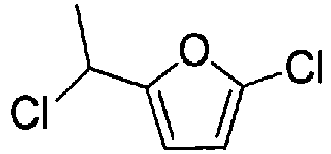
I-350 LCMS (FA): m/z = 528.4 (M+H). Int-25 
I-364 LCMS (FA): m/z = 528.4 (M+H). Int-25 
I-277 LCMS (FA): m/z = 494.4 (M+H). Int-24 
I-189 LCMS (FA): m/z = 530.3 (M+H). Int-19 
I-9 LCMS (FA): m/z = 530.1 (M+H). Int-6 
I-359 LCMS (FA): m/z = 530.1 (M+H). Int-6 
I-237 LCMS (FA): m/z = 530.4 (M+H). Int-36 
I-195 LCMS (FA): m/z = 452.5 (M+H). 
I-188 LCMS (FA): m/z = 521.4 (M+H). 
I-216 LCMS (FA): m/z = 521.4 (M+H). Int-35 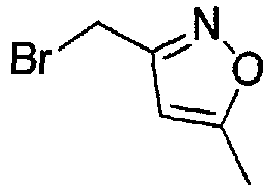
I-297 LCMS (FA): m/z = 495.3 (M+H). 
I-208 LCMS (FA): m/z = 495.4 (M+H). Int-40 
I-75 LCMS (FA): m/z = 510.5 (M+H). Int-50 
I-257 LCMS (FA): m/z = 564.1 (M+H). Int-16 
I-87 LCMS (FA): m/z = 530.1 (M+H). Int-26 
I-114 LCMS (FA): m/z = 548.1 (M+H). Int-31 
I-250 LCMS (FA): m/z = 512.2 (M+H). Florjancic, A.S. et al. US Application Publication 2010/0093814 -

- (4-{[(1R,2R,3R,4R)-2-Fluoro-3-hydroxy-4-(hydroxymethyl)cyclopentyl]amino}pyrimidin-5-yl)(1H-pyrrol-3-yl)methanone (0.16 g, 0.50 mmol) was dissolved in DMF (7 mL). To this solution was added cesium carbonate (0.49 g, 1.5 mmol) and 2-(bromomethyl)-6-chloro-pyridine (0.15 g, 0.75 mmol) and the reaction was stirred at rt for 2 h. The reaction was then quenched by addition of water and the mixture extracted with EtOAc (3x). The combined organic layers were washed with brine, dried over MgSO4, filtered, and concentrated. The residue was purified on silica gel to give {1-[(6-chloropyridin-2-yl)methyl]-1H-pyrrol-3-yl}(4-{[(1R,2R,3R,4R)-2-fluoro-3-hydroxy-4-(hydroxymethyl)cyclopentyl]amino}pyrimidin-5-yl)methanone (0.18 g, 78%). LCMS (FA): m/z = 446.0 (M+H).
- To a solution of {1-[(6-chloropyridin-2-yl)methyl]-1H-pyrrol-3-yl}(4-{[(1R,2R,3R,4R)-2-fluoro-3-hydroxy-4-(hydroxymethyl)cyclopentyl]amino}pyrimidin-5-yl)methanone (0.18 g, 0.39 mmol) in DMF (1.5mL) was added imidazole (0.11 g, 1.6 mmol) followed by tert-butyldimethylsilyl chloride (0.18 g, 1.2 mmol) at rt, and the mixture was stirred for 24 h. The reaction was then quenched by addition of water and extracted with EtOAc (3x). The combined organic layers were washed with brine, dried over MgSO4, filtered, and concentrated. The residue was purified on silica gel to give (4-{[(1R,2R,3R,4R)-3-{[tert-butyl(dimethyl)silyl]oxy}-4-({[tert-butyl(dimethyl)silyl]oxy}methyl)-2-fluorocyclopentyl] amino}pyrimidin-5-yl){1-[(6-chloropyridin-2-yl)methyl]-1H-pyrrol-3-yl}methanone (0.23 g, 89%). LCMS (FA): m/z = 674.1 (M+H).
- To a solution of (4-{[(1R,2R,3R,4R)-3-{[tert-butyl(dimethyl)silyl]oxy}-4-({[tert-butyl(dimethyl)silyl]oxy}methyl)-2-fluorocyclopentyl]amino}pyrimidin-5-yl){1-[(6-chloropyridin-2-yl)methyl]-1H-pyrrol-3-yllmethanone (0.23 g, 0.34 mmol) in EtOH (12 mL) was added 1% HCl in EtOH (10 mL, 1.2 mmol) at rt. The reaction vessel was sealed and placed in a refrigerator (4°C) for 13 h. The reaction was quenched by addition of a saturated aq. solution of NaHCO3. To the residue was added water which was extracted with EtOAc (4x). The combined organic layers were dried over MgSO4, filtered, and concentrated. The residue was purified on silica gel to give (4-{[(1R,2R,3R,4R)-3-{[tert-butyl(dimethyl)silyl]oxy}-2-fluoro-4-(hydroxymethyl)cyclopentyl]amino}pyrimidin-5-yl){1-[(6-chloropyridin-2-yl)methyl]-1H-pyrrol-3-yl}methanone (0.15 g, 78%). LCMS (FA): m/z= 560.1 (M+H).
- To a solution of (4-{[(1R,2R,3R,4R)-3-{[tert-butyl(dimethyl)silyl]oxy}-2-fluoro-4-(hydroxymethyl)cyclopentyl]amino}pyrimidin-5-yl){1-[(6-chtoropyridin-2-yl)methyl]-1H-pyrrol-3-yl}methanone (0.15 g, 0.26 mmol) and TEA (0.11 mL, 0.79 mmol) in DMF (5 mL) was added chlorosulfonamide (61 mg, 0.53 mmol) at rt, and the mixture was stirred for 4 h. The reaction was quenched by addition of a saturated solution of NaHCO3 and diluted with water. The mixture was extracted with EtOAc (4x). The combined organic layers were dried over MgSO4, filtered, and concentrated. The crude sulfamate intermediate was dissolved in THF (7 mL) and HC1 (4.0 M in water; 3 mL, 12 mmol) was added to the solution. The reaction was stirred for 3h at rt. The reaction was quenched by the addition of a saturated solution of NaHCO3 and extracted with EtOAc (4x). The combined organic layers were dried over MgSO4, filtered, and concentrated. The residue was purified by prep HPLC to afford [(1R,2R,3R,4R)-4-{[5-({1-[(6-chloropyridin-2-yl)methyl]-1H-pyrrol-3-yl}carbonyl)pyrimidin-4-yl]amino}-3-fluoro-2-hydroxycyclopentyl]methyl sulfamate (0.067 g, 49%).1HNMR(DMSO) δ 8.78 (s, 1H), 8.72 (d, J= 7.6 Hz, 1H), 8.66 (s, 1H), 7.87 (t, J= 7.8 Hz, 1H), 7.71 (t, J= 1.8 Hz, 1H), 7.49 (s, 2H), 7.46 (d, J= 7.9 Hz, 1H), 7.12 (d, J= 7.6 Hz, 1H), 7.04 (dd, J = 2.8,2.0 Hz, 1H), 6.59 (dd, J = 2.9, 1.8 Hz, 1H), 5.54 (d, J= 5.1 Hz, 1H), 5.33 (s, 2H), 4.92 - 4.66 (m, 2H), 4.11 (dd, J = 9.7, 6.0 Hz, 1H), 4.02 (dd, J = 9.7, 6.9 Hz, 1H), 3.92 (dt, J = 9.4, 5.0 Hz, 1H), 2.39 - 2.27 (m, 1H), 2.22 - 2.11 (m, 1H), 1.46 (dd, J = 22.8, 11.2 Hz, 1H); LCMS (FA): m/z = 524.9 (M+H).
- The compounds listed in the table below were prepared by an analogous method to that described above starting from the listedstarting materials used in step 1. I-304 and 1-357 were made as a diastereomeric mixture (furylic methyl) and then separated via HPLC (chiral column). Absolute configuration of the undefined stereocenter is unknown.
Starting material Compound No. LCMS Data 
I-304 LCMS (FA): m/z = 562.5 (M+H). Int-59 
I-357 LCMS (FA): m/z = 562.5 (M+H). Int-59 
I-5 LCMS (FA): m/z = 496.4 (M+H). Int-42 
I-236 LCMS (FA): m/z = 482.4 (M+H). Int-57 
I-26 LCMS (FA): m/z = 494.4 (M+H). Int-55 -

- To a RBF was added methyl 1H-pyrrole-3-carboxylate (2.1 g, 17 mmol) and DCM (80 mL). The resulting reaction mixture was stirred at 0 °C and tert-butyl hypochlorite (1.9 mL, 17 mmol) in DCM (30 mL) was added dropwise. After addition was complete, the mixture was stirred at 0 °C for 20 min, then warmed to rt and stirred 2 h. A saturated solution of NaHCO3 was then added and the phases separated. The organic layer was separated and concentrated. The crude residue was purified on silica gel to give methyl 5-chloro-1H-pyrrole-3-carboxylate (1.75 g, 65%). 1H NMR (CDCl3) δ 7.32 (dd, J = 3.0, 1.8 Hz, 1H), 6.50 (dd, J = 2.7, 1.8 Hz, 1H), 3.83 (s, 3H). Also isolated was methyl 2,5-dichloro-1H-pyrrole-3-carboxylate (0.41 g, 12%). LCMS (AA): m/z = 194.0 (M+H).
-

- To a RBF was added methyl 5-chloro-1H-pyrrole-3-carboxylate (0.42 g, 2.6 mmol), benzene, 1-(bromomethyl)-3-chloro- (0.69 mL, 5.3 mmol), cesium carbonate (4.3 g, 13 mmol), and THF (58 mL). The resulting reaction mixture was stirred at rt for 24 h. The mixture was filtered through celite and the filtrate was concentrated. The crude residue was purified on silica gel to provide methyl 5-chloro-1-(3-chlorobenzyl)-1H-pyrrole-3-carboxylate (0.68 g, 91%). LCMS (AA): m/z = 284.1 (M+H).
- To a RBF was added methyl 5-chloro-1-(3-chlorobenzyl)-1H-pyrrole-3-carboxylate (0.68 g, 2.4 mmol), THF (21 mL), and lithium tetrahydroborate (0.78 g, 36 mmol). The resulting reaction mixture was heated at reflux for 3 days. The reaction was then allowed to cool to rt and MeOH (5 mL) was added to quench the reaction. The mixture was then concentrated and water was added. The mixture was extracted with DCM (2x) and the combined extracts were dried over MgSO4, filtered, and concentrated to give [5-chloro-1-(3-chlorobenzyl)-1H-pyrrol-3-yl]methanol (0.57 g, 93%). LCMS (AA): = 256.1 (M+H).
- To a RBF was added [5-chloro-1-(3-chlorobenzyl)-1H-pyrrol-3-yl]methanol (0.57 g, 2.2 mmol), DCM (24 mL), and Dess-Martin periodinane (1.9 g, 4.5 mmol). The resulting reaction mixture was stirred at rt for 3 h. The mixture was then filtered through celite and the filtrate was concentrated. The crude residue was purified on silica gel to give 5-chloro-1-(3-chlorobenzyl)-1H-pyrrole-3-carbaldehyde (0.28 g, 50%). LCMS (AA): m/z = 254.1 (M+H).
- Into a flame dried RBF with stirbar was added 4-chloro-5-iodopyrimidine (0.29 g, 1.2 mmol) dissolved in THF (4.2 mL). The flask was purged with argon and cooled to -78°C. To this solution was added dropwise n-butyllithium (2.5 M in hexane; 1.0 mL, 2.5 mmol) at -78 °C and the mixture was stirred for 10 min. To this mixture was added 5-chloro-1-(3-chlorobenzyl)-1H-pyrrole-3-carbaldehyde (0.28 g, 1.1 mmol) dissolved in THF (0.8 mL) dropwise. The reaction was stirred at -78 °C for 2 h. The reaction was quenched with a solution of acetic acid (0.2 mL) in THF (15 mL) at -78°C. After warming to rt, water was added to the mixture and then it was extracted with EtOAc (3x). The combined organic layers were then washed with water and brine, dried over Na2SO4, filtered and concentrated. The crude product was purified on silica gel to [5-chloro-1-(3-chlorobenzyl)-1H-pyrrol-3-yl](4-chloropyrimidin-5-yl)methanol (0.25 g, 62%). LCMS (AA): m/z = 368.0 (M+H).
- To a RBF was added [5-chloro-1-(3-chlorobenzyl)-1H-pyrrol-3-yl](4-chloropyrimidin-5-yl)methanol (0.25 g, 0.68 mmol), DCM (4.4 mL), and Dess-Martin periodinane (0.35 g, 0.8 mmol). The resulting reaction mixture was stirred at rt for 3 h. The mixture was filtered through celite and the filtrate was concentrated. The crude residue was purified on silica gel to afford [5-chloro-1-(3-chlorobenzyl)-1H-pyrrol-3-yl](4-chloropyrimidin-5-yl)methanone (0.22 g, 88%). LCMS (AA): m/z = 365.9 (M+H).
- The compounds listed in the table below were prepared using an analogous method to that described above starting from the listed starting materials:
Starting material Starting material Compound Name / No. LCMS Data 

{5-Chloro-1-[(4-methylphenyl)sulfonyl]-1H-pyrrol-3-yl}(4-chloropyrimidin-5-yl)methanone/Int-101 LCMS(FA): m/z = 396.1 (M+H). Int-98 

[1-(3-Bromobenzyl)-2,5-dichloro-1H-pyrrol-3-yl] (4-chloropyrimidin-5-yl)methanone / Int-102 - Int-99 

(4-Chloropyrimidin-5-yl){5-methyl-1-[(4-methylphenyl) sulfonyl]-1H-pyrrol-3-yl}methanone / Int-103 LCMS (FA): m/z = 376.3 (M+H). Menear, K.A. WO 2009093032 

(4-Chloropyrimidin-5-yl){4-methyl-1-[(4-methylphenyl) sulfonyl]-1H-pyrrol-3-yl}methanone / Int-104 LCMS (FA): m/z = 376.3 (M+H). -

- [5-Chloro-1-(3-chlorobenzyl)-1H-pyrrol-3-yl](4-chloropyrimidin-5-yl)methanone (0.22 g, 0.60 mmol) and (1R,2R,3R,5R)-3-amino-2-fluoro-5-(hydroxymethyl)cyclopentanol hydrochloride (0.13 g, 0.72 mmol) were weighed into a reaction vessel. To this mixture was added 2-propanol (2.5 mL) and DIEA (0.37 mL, 2.1 mmol). The resulting mixture was allowed to stir at rt for 18 h. The reaction was then concentrated. The crude product was dissolved in DMF (25 mL). To this solution was added imidazole (0.33 g, 4.8 mmol) followed by tert-butyldimethylsilyl chloride (0.54 g, 3.6 mmol) at rt, and the mixture was stirred for 20 h. The reaction was then filtered to remove solids and the filtrate was concentrated. The residue was purified on silica gel to give (4-{[(1R,2R,3R,4R)-3-{[tert-butyl(dimethyl)silyl]oxy}-4-({[tert-butyl(dimethyl)silyl]oxy}methyl)-2-fluorocyclopentyl]amino}pyrimidin-5-yl)[5-chloro-1-(3-chlorobenzyl)-1H-pyrrol-3-yl]methanone (0.24 g, 56%).
- To a solution of (4-{[(1R,2R,3R,4R)-3-{[tert-butyl(dimethyl)silyl]oxy}-4-({[tert-butyl(dimethyl)silyl]oxy}methyl)-2-fluorocyclopentyl]amino}pyrimidin-5-yl)[5-chloro-1-(3-chlorobenzyl)-1H-pyrrol-3-yl]methanone (0.24 g, 0.34 mmol) in EtOH (22 mL) was added 1% HCl in EtOH (11.2 mL, 1.4 mmol) at rt. The reaction vessel was sealed and allowed to stand in a freezer (-20°C) for 40 h. The reaction was quenched by addition of a saturated aq. solution of NaHCO3. To the residue was added water which was extracted with EtOAc (4x). The combined organic layers were dried over MgSO4, filtered, and concentrated. The residue was dried on high vacuum to give (4-{[(1R,2R,3R,4R)-3-{[tert-butyl(dimethyl)silyl]oxy}-2-fluoro-4-(hydroxymethyl)cyclopentyl]amino}pyrimidin-5-yl)[S-chloro-1-(3-chlorobenzyl)-1H-pyrrol-3-yl]methanone (0.19 g, 94%). LCMS (FA): m/z = 593.0 (M+H).
- To a solution of (4-{[(1R,2R,3R,4R)-3-{[tert-butyl(dimethyl)silyl]oxy}-2-fluoro-4-(hydroxymethyl)cyclopentyl]amino}pyrimidin-5-yl)[5-chloro-1-(3-chlorobenzyl)-1H-pyrrol-3-yl]methanone (0.19 g, 0.32 mmol) and TEA (0.13 mL, 0.96 mmol) in DMF (4 mL) was added chlorosulfonamide (74 mg, 0.64 mmol) at rt, and the mixture was stirred for 1 h. The reaction was quenched by addition of a saturated solution of NaHCO3 and diluted with water. The mixture was extracted with EtOAc (4x). The combined organic layers were dried over MgSO4, filtered, and concentrated. The crude sulfamate intermediate was dissolved in THF (1.4 mL). Water (1.0 mL) and concentrated HCl(0.42 mL, 5.1 mmol) were added to the solution. The reaction was stirred for 4 h at rt. The reaction was quenched by the addition of a saturated solution of NaHCO3 and extracted with DCM (3x). The combined organic layers were dried over MgSO4, filtered, and concentrated. The residue was purified by prep HPLC to afford {(1R,2R,3R,4R)-4-[(5-{[2-chloro-1-(3-chlorobenzyl)-1H-pyrrol-3-yl]carbonyl}pyrimidin-4-yl)amino]-3-fluoro-2-hydroxycyclopentyl}methyl sulfamate (61 mg, 34%). 1H NMR (DMSO) δ 8.81 (s, 1H), 8.73 (d, J= 7.6 Hz, 1H), 8.69 (s, 1H), 7.92 (d, J= 2.1 Hz, 1H), 7.47 - 7.35 (m, 2H), 7.32 (d, J = 1.8 Hz, 1H), 7.21 - 7.06 (m, 1H), 6.67 (d, J = 2.1 Hz, 1H), 5.30 (s, 2H), 4.96 - 4.62 (m, 2H), 4.17 - 4.08 (m, 1H), 4.07 - 3.99 (m, 1H), 3.98 - 3.87 (m, 1H), 2.40 - 2.26 (m, 1H), 2.25 - 2.10 (m, 1H), 1.55 - 1.39 (m, 1H). LCMS (FA): m/z = 558.2 (M+H).
- The compounds listed in the table below were prepared using a similar method to that described above starting from the listed starting materials:
Starting material Compound No. LCMS Data 
I-105 LCMS (FA): m/z = 638.0 (M+H). Int-102 
I-147 LCMS (FA): m/z = 524.4 (M+H). Int-93 -

- To a RBF was added {5-chloro-1-[(4-methylphenyl)sulfonyl]-1H-pyrrol-3-yl}(4-chloropyrimidin-5-yl)methanone (2.25 g, 5.7 mmol), (1R,2R,3R,SR)-3-amino-2-fluoro-5-(hydroxymethyl)cyclopentanol hydrochloride (1.26 g, 6.8 mmol), isopropyl alcohol (40 mL), and DIEA (3.5 mL). The resulting reaction mixture was stirred at rt for 15 h. The mixture was then concentrated. The crude product was dissolved in EtOH (30 ml) and sodium hydroxide (0.86 g, 21 mmol) was added. The resulting reaction mixture was stirred at rt for 70 h. The mixture was then concentrated and DCM (60 mL), imidazole (2.9 g, 42 mmol), and tert-butyldimethylsilyl chloride (5.6 g, 37 mmol) were added. The subsequent mixture was then stirred 16 h at rt. The mixture was filtered and the filtrate was concentrated. The crude residue was purified on silica gel to give (4-{[(1R,2R,3R,4R)-3-{[tert-butyl(dimethyt)silyl]oxy}-4-({[tert-butyl(dimethyl)silyl]oxy} methyl)-2-fluorocyclopentyl]amino}pyrimidin-5-yl)(5-chloro-1H-pyrrol-3-yl)methanone (2.0 g, 64%). LCMS (AA): m/z = 583.2 (M+H).
- To a solution of (4-{[(1R,2R,3R,4R)-3-{[tert-butyl(dimethyl)silyl]oxy}-4-({[tert-butyl(dimethyl)silyl]oxy} methyl)-2-fluorocyclopentyl]amino}pyrimidin-5-yl)(5-chloro-1H-pyrrol-3-yl)methanone (1.4 g, 2.4 mmol) in EtOH (40 mL) was added 1% HCl in EtOH (350 mL, 42 mmol) at rt. The reaction vessel was sealed and allowed to stand in a freezer (-20°C) for 40 h. The reaction was quenched by addition of a saturated aq. solution of NaHCO3 and then the mixture concentrated. To the residue was added water which was then extracted with DCM 3x). The combined organic layers were dried over MgSO4, filtered, and concentrated. The residue was purified on silica gel to give (4-{[(1R,2R,3R,4R)-3-{[tert-butyl(dimethyl)silyl]oxy}-2-fluoro-4-(hydroxymethyl)cyclopentyl]amino}pyrimidin-5-yl)(5-chloro-1H-pyrrol-3-yl)methanone (0.53 g, 47%). LCMS (AA): m/z = 469.1 (M+H).
- To a RBF was added (4-{[(1R,2R,3R,4R)-3-{[tert-butyl(dimethyl)silyl]oxy}-2-fluoro-4-(hydroxymethyl)cyclopentyl]amino}pyrimidin-5-yl)(5-chloro-1H-pyrrol-3-yl)methanone (0.26 g, 0.55 mmol), 3-bromobenzyl bromide (0.25 g, 1.0 mmol), cesium carbonate (0.9 g, 2.8 mmol), and THF (12 mL). The resulting reaction mixture was stirred at rt for 4 h. The mixture was filtered through celite and the filtrate was concentrated. The crude residue was purified on silica gel to afford [1-(3-bromobenzyl)-5-chloro-1H-pyrrol-3-yl](4-{[(1R,2R,3R,4R)-3-{[tert-butyl(dimethyl)silyl]oxy}-2-fluoro-4-(hydroxymethyl)cyclopentyl]amino}pyrimidin-5-yl)methanone (0.34 g, 96%). LCMS (AA): m/z = 639.2 (M+H).
- To a solution of [1-(3-bromobenzyl)-5-chloro-1H-pyrrol-3-yl](4-{[(1R,2R,3R,4R)-3-{[tert-butyl(dimethyl)silyl]oxy}-2-fluoro-4-(hydroxymethyl)cyclopentyl]amino}pyrimidin-5-yl)methanone (0.26 mg, 0.55 mmol) and TEA (0.2 mL, 1.6 mmol) in DMF (4 mL) was added chlorosulfonamide (0.12 mg, 1.1 mmol) at rt, and the mixture was stirred for 1 h. The reaction mixture was then concentrated. The crude sulfamate intermediate was dissolved in THF (2.3 mL). Water (1.7 mL) and conc. HCl (0.7 mL, 8.4 mmol) were added to the solution. The reaction was stirred for 4h at rt. It was then quenched by the addition of a saturated solution of NaHCO3 and extracted with DCM (3x). The combined organic layers were dried over MgSO4, filtered, and concentrated. The residue was purified on silica gel to afford {(1R,2R,3R,4R)-4-[(5-{[1-(3-bromobenzyl)-5-chloro-1H-pyrrol-3-yl]carbonyl}pyrimidin-4-yl)amino]-3-fluoro-2-hydroxycyclopentyl}methyl sulfamate (0.28 g, 87%).1H NMR (DMSO) δ 8.81 (s, 1H), 8.72 (t, J = 7.3 Hz, 1H), 8.69 (s, 1H), 7.96 (s, 1H), 7.92 (d, J= 2.1 Hz, 1H), 7.60 - 7.43 (m, 4H), 7.34 (t, J = 7.8 Hz, 1H), 7.21 (dd, J= 17.6, 5.8 Hz, 1H), 6.67 (d, J= 2.1 Hz, 1H), 5.55 (d, J= 5.1 Hz, 1H), 5.29 (s, 2H), 4.95 - 4.61 (m, 2H), 4.17 - 4.08 (m, 1H), 4.07 - 4.00 (m, 1H), 3.99 - 3.87 (m, 1H), 2.40 - 2.27 (m, 1H), 2.26 - 2.08 (m, 1H), 1.56 -1.38 (m, 1H). LCMS (AA): m/z = 602.2 (M+H).
- The compounds listed in the table below were prepared using a similar method to that described above starting from the listed starting materials used in step 3. The following alternative conditions could be employed in the described reaction steps. Step 3: K2CO3 instead of Cs2CO3; DMF instead of THF. Step 4: aq. TFA instead of aq. HCl.:
Starting material Compound No. LCMS Data 
I-320 LCMS (FA): m/z = 620.0 (M+H). 
I-148 LCMS (FA): m/z = 583.0 (M+H). 
I-36 LCMS (FA): m/z = 582.0 (M+H). 
I-184 LCMS (FA): m/z = 592.1 (M+H). 
I-310 LCMS (FA): m/z = 649.9 (M+H). 
I-254 LCMS (FA): m/z = 549.9 (M+H). Int-23 -

- A solution of 1H-pyrrole-3-carbaldehyde (0.63 g, 6.6 mmol) in THF (15 mL) was cooled to - 78°C. N-Bromosuccinimide (1.2 g, 6.7 mmol) and pyridine (∼1 drop) were added, and the mixture was stirred at the same temperature for 5 min. The mixture was then warmed to 0 °C and stirred for 2 h. The mixture was subsequently cooled to -78 °C and additional N-bromosuccinimide (0.9 g, 5.0 mmol) was added. This mixture was stirred for 10 min at -78 °C then warmed to 0 °C and stirred for 2 h. Water was added to the reaction mixture, and the mixture was extracted with EtOAc. The extract was washed with saturated aqueous NaHCO3 and water, dried over MgSO4, filtered and concentrated under reduced pressure. The residue was then purified on silica gel to give 5-bromo-1H-pyrrole-3-carbaldehyde (0.51 g, 44%). 1HNMR(MeOD) δ 9.59 (s, 1H), 7.57 (d, J = 1.8 Hz, 1H), 6.56 (d, J = 1.7 Hz, 1H).
- To a reaction vessel was added 5-bromo-1H-pyrrole-3-carbaldehyde (0.47 g, 2.7 mmol), vinylboronic acid pinacol ester (1.0 mL, 5.4 mmol), tetrakis(triphenylphosphine)palladium(0) (0.62 g, 0.54 mmol), cesium carbonate (3.5 g, 10.8 mmol), 1,4-dioxane (25 mL), and water (2.1 mL). The mixture was sealed and heated at 145 °C for 60 min in a microwave reactor. The reaction mixture was filtered and the filtrate concentrated. The crude residue was purified on silica gel to provide 5-vinyl-1H-pyrrole-3-carbaldehyde (0.32g, 98%).1HNMR (CDCl3) δ 9.80 (d, J = 8.1 Hz, 1H), 7.41 (dd, J = 3.1, 1.6 Hz, 1H), 6.66 (s, 1H), 6.57 (dd, J = 17.8, 11.2 Hz, 1H), 5.44 (d, J = 17.8 Hz, 1H), 5.19 (d, J = 11.3 Hz, 1H).
- To a RBF was added 5-vinyl-1H-pyrrole-3-carbaldehyde (0.55 g, 4.5 mmol), EtOH (15.0 mL, 257 mmol), and palladium on carbon (10% on carbon; 0.12 g). The resulting suspension was stirred at rt for 4 h under an atmosphere of hydrogen. The mixture was filtered through celite and the filtrate was concentrated to give 5-ethyl-1H-pyrrole-3-carbaldehyde (0.50 g, 89%).
-
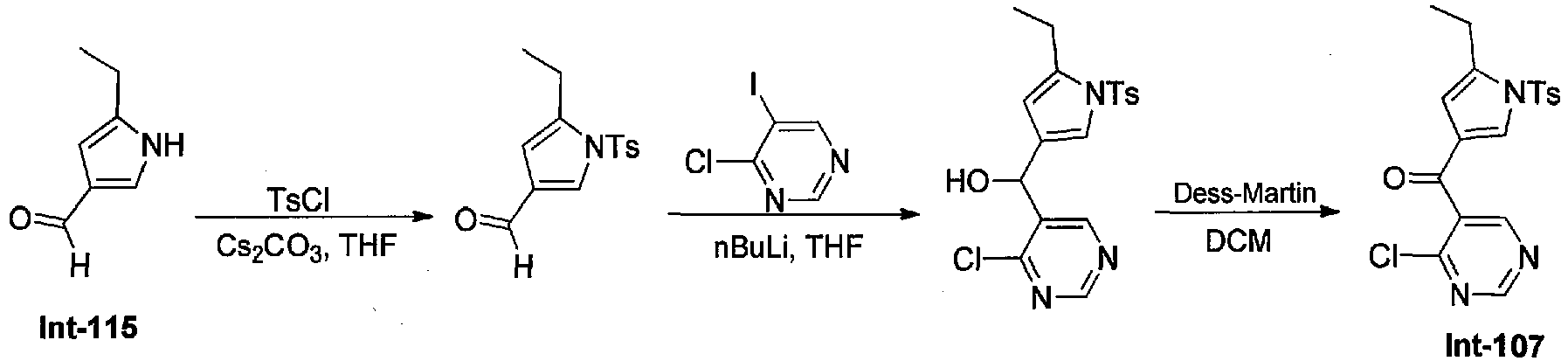
- To a RBF was added p-toluenesulfonyl chloride (0.77 g, 4.1 mmol), 5-ethyl-1H-pyrrole-3-carbaldehyde (0.50 g, 4.1 mmol), cesium carbonate (4.6 g, 14 mmol), and THF (8.8 mL). The resulting reaction mixture was stirred at rt for 16 h. The mixture was then filtered and the filtrate diluted with EtOAc, washed with water and concentrated. The crude residue was purified on silica gel to provide 5-ethyl-1-[(4-methylphenyl)sulfonyl]-1H-pyrrole-3-carbaldehyde (0.10 g, 9%). 1HNMR (CDCl3) δ 9.83 - 9.76 (m, 1H), 7.96 (d, J= 1.9 Hz, 1H), 7.75 - 7.70 (m, 2H), 7.35 (dd, J= 8.6, 0.6 Hz, 2H), 6.42 (d, J= 1.5 Hz, 1H), 2.65 (qd, J= 7.4, 1.2 Hz, 2H), 2.43 (s, 3H), 1.16 (t, J= 7.4 Hz, 3H).
- Into a flame dried RBF with stirbar was added 4-chloro-5-iodopyrimidine (0.095 g, 0.4 mmol) dissolved in THF (10 mL). The flask was purged with argon and cooled to -78 °C. To this solution was added dropwise n-butyllithium (2.5 M in hexane; 0.33 mL, 0.83 mmol) at -78 °C and the mixture was stirred for 5 min. To this mixture was added 5-ethyl-1-[(4-methylphenyl)sulfonyl]-1H-pyrrole-3-carbaldehyde (0.10 g, 0.36 mmol) dissolved in THF (1.4 mL) dropwise. The reaction was stirred at -78 °C for 2 h. The reaction was quenched with a solution of acetic acid (0.06 mL) in THF (15 mL) then allowed to warm to rt. The mixture was diluted with water and then extracted with EtOAc (3x). The combined organic layers were then washed with water and brine, dried over Na2SO4, filtered and concentrated. The crude product was purified on silica gel to give (4-chloropyrimidin-5-yl){5-ethyl-1-[(4-methylphenyl)sulfonyl]-1H-pyrrol-3-yl}methanol (0.090 g, 64%). LCMS (AA): m/z = 391.9 (M+H).
- To a RBF was added (4-chloropyrimidin-5-yl){5-ethyl-1-[(4-methylphenyl)sulfonyl]-1H-pyrrol-3-yl}methanol (0.090 g, 0.23 mmol), DCM (5.9 mL), and Dess-Martin periodinane (0.10 g, 0.24 mmol). The resulting reaction mixture was stirred at rt for 2 h. The mixture was filtered through celite and the filtrate was concentrated. The crude residue was purified on silica gel to provide (4-chloropyrimidin-5-yl){5-ethyl-1-[(4-methylphenyl)sulfonyl]-1H-pyrrol-3-yl}methanone (0.076 g, 85%). LCMS (AA): m/z = 389.9 (M+H).
- The compound listed in the table below was prepared using an analogous method to that described above starting from the listed starting material in step 1:
Starting material Compound No. or Name LCMS Data 
{5-Bromo-1-[(4-methylphenyl)sulfonyl]-1H-pyrrol-3-yl} (4-chloropyrimidin-5-yl)methanone / Int-108 LCMS (FA): m/z = 442.2 (M+H). Int-106 -

- (4-Chloropyrimidin-5-yl){5-ethyl-1-[(4-methylphenyl)sulfonyl]-1H-pyrrol-3-yl}methanone (0.076 g, 0.19 mmol) and (1R,2R,3R,5R)-3-amino-2-fluoro-5-(hydroxymethyl)cyclopentanol hydrochloride (0.0398 g, 0.214 mmol) were weighed into a 20 mL reaction vessel. To this mixture was added 2-propanol (2 mL) and DIEA (0.13 mL, 0.72 mmol). The resulting mixture was sealed and the vessel allowed to stir at rt for 18 h. The reaction was then concentrated and the crude product was purified on silica gel to afford {5-ethyl-1-[(4-methylphenyl)sulfonyl]-1H-pyrrol-3-yl}(4-{[(1R,2R,3R,4R)-2-fluoro-3-hydroxy-4-(hydroxymethyl)cyclopentyl]amino}pyrimidin-5-yl)methanone (0.095 g, 97%). LCMS (AA): m/z = 503.3 (M+H).
- Into a RBF was added {5-ethyl-1-[(4-methylphenyl)sulfonyl]-1H-pyrrol-3-yl}(4-{[(1R,2R,3R,4R)-2-fluoro-3-hydroxy-4-(hydroxymethyl)cyclopentyl]amino}pyrimidin-5-yl)methanone (0.095 g, 0.19 mmol) dissolved in methanol (3 mL). Potassium carbonate (0.13 g, 0.95 mmol) was added and the mixture was stirred at rt for 3 h. The mixture was then concentrated and the resulting crude detosylated pyrrole [LCMS (AA): m/z = 349.0 (M+H).] was dissolved in THF (25 mL). 3-bromobenzyl bromide (0.057 g, 0.23 mmol) was added and the mixture was stirred at rt for 18 h. The reaction mixture was then concentrated and water and EtOAc were added. The organic layer was separated, dried over MgSO4, filtered and concentrated. The crude product was purified on silica gel to afford 1-(3-bromobenzyl)-5-ethyl-1H-pyrrol-3-yl](4-{[(1R,2R,3R,4R)-2-fluoro-3-hydroxy-4-(hydroxymethyl)cyclopentyl]amino}pyrimidin-5-yl)methanone (0.038 g, 39%). LCMS (AA): m/z = 517.2 (M+H).
- 1-(3-Bromobenzyl)-5-ethyl-1H-pyrrol-3-yl](4-{[(1R,2R,3R,4R)-2-fluoro-3-hydroxy-4-(hydroxymethyl)cyclopentyl]amino}pyrimidin-5-yl)methanone (0.038 g, 0.073 mmol) was dissolved in NMP (0.7 mL) and acetonitrile (0.3 mL). To this solution was added in one portion PPTS (18 mg, 0.07 mmol) followed by the addition of (4-aza-1-azoniabicyclo[2.2.2]oct-1-ylsulfonyl)(tert-butoxycarbonyl)azanide - 1,4-diazabicyclo[2.2.2]octane (1:1) hydrochloride (F) (0.065 g, 0.15 mmol). Upon reaction completion, water (3 mL) and conc. HCl (2 mL, 24 mmol) were added at 0 °C. The mixture was then allowed to stir at rt for 18 h. The reaction was quenched by the addition of a saturated solution of NaHCO3 in water. After diluting the mixture with water it was extracted with EtOAc (4x). The combined organic layers were dried over MgSO4, filtered, and concentrated. The crude product was purified by prep HPLC to give {(1R,2R,3R,4R)-4-[(5-{[1-(3-bromobenzyl)-5-ethyl-1H-pyrrol-3-yl]carbonyl}pyrimidin-4-yl)amino]-3-fluoro-2-hydroxycyclopentyl}methyl sulfamate (9 mg, 20%). 1H NMR (MeOD) δ 8.78 (s, 1H), 8.60 (s, 1H), 7.51 - 7.43 (m, 2H), 7.33 - 7.24 (m, 2H), 7.12 - 7.03 (m, 1H), 6.45 (d, J = 10.6 Hz, 1H), 5.23 (s, 2H), 4.89 (m, 2H), 4.30 - 4.05 (m, 3H), 2.49 (dd, J = 15.4, 7.0 Hz, 2H), 2.38 - 2.24 (m, 1H), 1.71 - 1.33 (m, 2H), 1.22 (t, J = 7.5 Hz, 3H). LCMS (AA): = 596.4 (M+H).
- The compounds listed in the table below were prepared using an analogous method to that described above starting from the listed starting materials:
Starting material Compound No. or Name LCMS Data 
I-149 LCMS (FA): m/z = 582.4 (M+H). Int-104 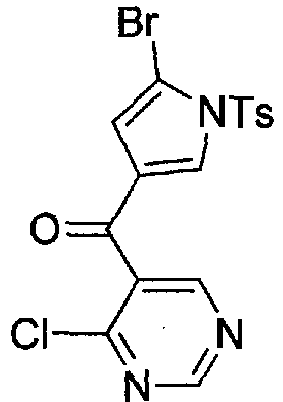
I-272 LCMS (FA): m/z = 648.1 (M+H). Int-108 
I-71 LCMS (FA): m/z = 582.3 (M+H). Int-103 -

- To a RBF was added 1H-pyrrole-3-carbaldehyde (0.96 g, 10 mmol), 1-chloromethyl-4-fluoro-1,4-diazoniabicyclo[2.2.2]octane bis(tetrafluoroborate) (12.5 g, 35 mmol), and EtOAc (80 mL). The resulting reaction mixture was stirred at 65 °C for 18 h. Additional 1-chloromethyl-4-fluoro-1,4-diazoniabicyclo[2.2.2]octane bis(tetrafluoroborate) (9.6 g, 27 mmol) was added and the mixture was stirred at 65 °C for an additional 24 h. The mixture was then filtered through celite and the filtrate was washed with water. The organic layer was separated and concentrated. The crude product was then purified on silica gel to give 5-fluoro-1H-pyrrole-3-carbaldehyde (0.19 g, 17%). 1H NMR (DMSO) δ 12.37 (s, 1H), 9.61 - 9.54 (m, 1H), 7.34 (dt, J= 3.0, 2.1 Hz, 1H), 5.86 (dt, J= 4.2, 2.2 Hz, 1H).
- To a RBF was added 5-fluoro-1H-pyrrole-3-carbaldehyde (0.19 g, 1.7 mmol), 3-bromobenzyl bromide (0.85 g, 3.4 mmol), cesium carbonate (1.7 g, 5.1 mmol), and THF (26 mL). The resulting reaction mixture was stirred at rt for 4 h. The mixture was then filtered through celite and the filtrate concentrated. The crude product was then purified on silica gel to afford 1-(3-bromobenzyl)-5-fluoro-1H-pyrrole-3-carbaldehyde (0.38 g, 79%). LCMS (AA): m/z = 282.2 (M+H).
- Into a flame dried RBF with stirbar was added 4-chloro-5-iodopyrimidine (0.19 g, 0.78 mmol) dissolved in THF (20 mL). The flask was purged with argon and cooled to -78 °C. To this solution was added dropwise n-butyllithium (2.5 M in hexane; 0.65 mL, 1.6 mmol) at -78 °C and the mixture was stirred for 5 min. To this mixture was added 1-(3-bromobenzyl)-5-fluoro-1H-pyrrole-3-carbaldehyde (0.20 g, 0.71 mmol) dissolved in THF (2.7 mL) dropwise. The reaction was stirred at -78 °C for 5 min followed by quenching with a solution of acetic acid (0.12 mL) in THF (15 mL). It was then allowed to warm to rt and the mixture was diluted with water and then extracted with EtOAc (3x). The combined organic layers were then washed with water and brine, dried over Na2SO4, filtered and concentrated. The crude product was purified on silica gel to make [1-(3-bromobenzyl)-5-fluoro-1H-pyrrol-3-yl](4-chloropyrimidin-5-yl)methanol (0.21 g, 75%). LCMS (AA): m/z = 398.2 (M+H).
- To a RBF was added [1-(3-bromobenzyl)-5-fluoro-1H-pyrrol-3-yl](4-chloropyrimidin-5-yl)methanol (0.21 g, 0.53 mmol), DCM (3.5 mL) and Dess-Martin periodinane (0.24 g, 0.55 mmol). The resulting reaction mixture was stirred at rt for 3 h then filtered through celite and concentrated. The residue was purified on silica gel to afford [1-(3-bromobenzyl)-5-fluoro-1H-pyrrol-3-yl](4-chloropyrimidin-5-yl)methanone. (0.18 g, 86%). LCMS (AA): m/z = 396.2 (M+H).
- [1-(3-Bromobenzyl)-5-fluoro-1H-pyrrol-3-yl](4-chloropyrimidin-5-yl)methanone (0.18 g, 0.46 mmol) and (1R,2R,3R,SR)-3-amino-2-fluoro-5-(hydroxymethyl)cyclopentanol hydrochloride (0.0931 g, 0.502 mmol) were weighed into a 20 mL reaction vessel. To this mixture was added 2-propanol (3.2 mL) and DIEA (0.28 mL, 1.6 mmol). The resulting mixture was stirred at rt for 18 h. The reaction was then concentrated and the crude product was purified on silica gel to afford [1-(2-bromobenzyl)-5-fluoro-1H-pyrrol-3-yl](4-{[(1R,2R,3R,4R)-2-fluoro-3-hydroxy-4-(hydroxymethyl)cyclopentyl]amino}pyrimidin-5-yl)methanone (0.17 g, 73%). LCMS (AA): m/z = 509.2 (M+H).
- [1-(2-Bromobenzyl)-5-fluoro-1H-pyrrol-3-yl](4-{[(1R,2R,3R,4R)-2-fluoro-3-hydroxy-4-(hydroxymethyl)cyclopentyl]amino}pyrimidin-5-yl)methanone (0.17 g, 0.34 mmol) was dissolved in NMP (3 mL) and acetonitrile (1.5 mL). To this solution was added in one portion PPTS (84 mg, 0.34 mmol) followed by the addition of (4-aza-1-azoniabicyclo[2.2.2]oct-1-ylsulfonyl)(tert-butoxycarbonyl)azanide - 1,4-diazabicyclo[2.2.2]octane (1:1) hydrochloride (F) (0.37 g, 0.84 mmol). After stirring 2 h at rt water (3 mL) and conc. HCl (2 mL, 24 mmol) were added and the reaction was stirred for 18 h at rt. The reaction was quenched by the addition of a saturated solution of NaHCO3 in water. After diluting the mixture with water it was extracted with EtOAc (4x). The combined organic layers were dried over MgSO4, filtered, and concentrated. The crude product was purified by prep HPLC to give {(1R,2R,3R,4R)-4-[(5-{[1-(3-bromobenzyl)-5-fluoro-1H-pyrrol-3-yl]carbonyl}pyrimidin-4-yl)amino]-3-fluoro-2-hydroxycyclopentyl}methyl sulfamate (40 mg, 20%). 1H NMR (DMSO) δ 8.80 (s, 1H), 8.68 (s, 1H), 8.64 (d, J= 7.6 Hz, 1H), 7.59 - 7.47 (m, 3H), 7.39 - 7.31 (m, 1H), 7.26 (d, J = 7.7 Hz, 1H), 6.16 - 6.07 (m, 1H), 5.21 (s, 2H), 4.91 - 4.63 (m, 2H), 4.17 - 4.07 (m, 1H), 4.06 - 3.99 (m, 1H), 3.98 - 3.85 (m, 1H), 2.38-2.26 (m, 1H), 2.25 - 2.10 (m, 1H), 1.56 - 1.33 (m, 1H). LCMS (AA): m/z = 586.2 (M+H).
-

- Lithium aluminum hydride (1.0 M in THF; 3.2 mL, 3.2 mmol) was added to an ice-bath cooled solution of ethyl 1-benzyl-5-(trifluoromethyl)-1H-pyrrole-3-carboxytate (for synthesis see: Padwa, et al. J. Org. Chem. 1982, 786.) in ether (30 mL). The resulting solution was stirred at 0 °C for 45 min. The reaction was then quenched with water (∼3 mL) at 0 °C. Na2SO4 dodecahydrate (∼5g) was added along with ∼30 mL EtOAc and the mixture allowed to warm to rt and stirred overnight. The mixture was filtered and the solid washed with EtOAc. The filtrate was then concentrated and the crude product was dissolved in DCM (37 mL). Dess-Martin periodinane (2.66 g, 6.3 mmol) was added to this solution and the resulting suspension was allowed to stir at rt for 1 h. The reaction was concentrated and the crude material purified on silica gel to yield 1-benzyl-5-(trifluoromethyl)-1H-pyrrole-3-carbaldehyde (288 mg, 36%). LCMS (FA): m/z = 255 (M+H).
- Into a flame dried RBF with stirbar under argon was added 4-chloro-5-iodopyrimidine (242 mg, 1.0 mmol) and it was dissolved in THF (7 mL). The flask cooled to -78 °C. To this solution was added dropwise n-butyllithium (2.5 M in hexane; 0.80 mL, 2.0 mmol) at -78 °C and the mixture was stirred for 30 min. To this mixture was added 1-benzyl-5-(trifluoromethyl)-1H-pyrrole-3-carbaldehyde (0.28 g, 1.1 mmol) dissolved in THF (3.5 mL) dropwise. The reaction was stirred at -78 °C for 30 min. The reaction was quenched with a saturated solution of NH4Cl and then extracted with EtOAc (3x). The combined organic layers were then washed with water and brine, dried over Na2SO4, filtered and concentrated. The crude product was purified on silica gel to give [1-benzyl-5-(trifluoromethyl)-1H-pyrrol-3-yl](4-chloropyrimidin-5-yl)methanol (330 mg, 89%). LCMS (FA): m/z = 368 (M+H).
- To a solution of [1-benzyl-5-(trifluoromethyl)-1H-pyrrol-3-yl](4-chloropyrimidin-5-yl)methanol (0.30 g, 0.82 mmol) in DCM (10 mL) was added manganese(IV) oxide (0.85 g, 9.8 mmol). The suspension was stirred for 24 h at rt. The reaction was then filtered through a celite pad and the residual solid was washed with DCM several times. The filtrate was then concentrated in vacuo and the residue was purified on silica gel to afford [1-benzyl-5-(trifluoromethyl)-1H-pyrrol-3-yl](4-chloropyrimidin-5-yl)methanone (290 mg, 92%). LCMS (FA): m/z = 366 (M+H).
- [1-Benzyl-5-(trifluoromethyl)-1H-pyrrol-3-yl](4-chloropyrimidin-5-yl)methanone (290 mg, 0.86 mmol) and (1R,2R,3R,SR)-3-amino-2-fluoro-5-(hydroxymethyl)cyclopentanol hydrochloride (0.18 g, 0.95 mmol) were weighed into a 20 mL reaction vessel. To this mixture was added 1-propanol (9.5 mL) and DIEA (0.41 mL, 2.4 mmol). The resulting mixture was sealed and the vessel allowed to stir while heating at 50 °C for 16 h. The reaction was then cooled to rt and the reaction was concentrated. The crude product was purified on silica gel to afford [1-benzyl-5-(trifluoromethyl)-1H-pyrrol-3-yl](4-{[(1R,2R,3R,4R)-2-fluoro-3-hydroxy-4-(hydroxymethyl)cyclopentyl]amino}pyrimidin-5-yl)methanone (0.34 g, 83%) LCMS (FA): m/z = 479 (M+H).
- [1-Benzyl-5-(trifluoromethyl)-1H-pyrrol-3-yl](4-{[(1R,2R,3R,4R)-2-fluoro-3-hydroxy-4-(hydroxymethyl)cyclopentyl]amino}pyrimidin-5-yl)methanone (0.15 g, 0.31 mmol) was dissolved in NMP (1.5 mL) and acetonitrile (0.77 mL). To this solution was added in one portion PPTS (79 mg, 0.31 mmol) followed by the addition of (4-aza-1-azoniabicyclo[2.2.2]oct-1-ylsulfonyl)(tert-butoxycarbonyl)azanide-1,4-diazabicyclo[2.2.2]octane (1:1) hydrochloride (F) (0.28 g, 0.63 mmol). After 1 h, additional (4-aza-1-azoniabicyclo[2.2.2]oct-1-ylsulfonyl)(tert-butoxycarbonyl)azanide-1,4-diazabicyclo[2.2.2]octane (1:1) hydrochloride (F) (50 mg, 0.12 mmol) was added and continued to stir at rt an additional 2 h. Upon reaction completion, the rxn was quenched by the addition of water. The mixture was extracted with EtOAc (3x). The combined organic layers were dried over MgSO4, filtered and concentrated. The crude Boc-protected sulfamate intermediate was then dissolved in acetonitrile (1.5 mL) at rt. Concentrated HCl (0.74 mL, 8.8 mmol) was added at 0 °C. The mixture was then allowed to stir at rt for 18 h. The reaction was quenched by the addition of a saturated solution of NaHCO3 in water. After diluting the mixture with water it was extracted with EtOAc (4x). The combined organic layers were dried over MgSO4, filtered, and concentrated. The crude product was purified by prep HPLC to give {(1R,2R,3R,4R)-4-[(5-{[1-benzyl-5-(trifluoromethyl)-1H-pyrrol-3-yl]carbonyt}pyrimidin-4-yl)amino]-3-fluoro-2-hydroxycyclopentyl}methyl sulfamate (98 mg, 55%). 1H NMR (DMSO) δ 8.84 (s, 1H), 8.80 (d, J = 7.6 Hz, 1H), 8.70 (s, 1H), 8.06 (d, J= 1.9 Hz, 1H), 7.51 (s, 2H), 7.42 - 7.24 (m, 3H), 7.21 - 7.10 (m, 3H), 5.57 (s, 1H), 5.39 (s, 2H), 4.94 - 4.63 (m, 2H), 4.12 (dd, J = 9.8, 6.0 Hz, 1H), 4.03 (dd, J= 9.7, 6.9 Hz, 1H), 3.94 (dd, J= 21.9, 4.3 Hz, 1H), 2.40 - 2.27 (m, 1H), 2.24 - 2.12 (m, 1H), 1.55 -1.42 (m, 1H); LCMS (FA): m/z = 558.4 (M+H).
-

- Into a flame dried RBF with stirbar was added n-butyllithium (2.5 M in hexane; 2.9 mL, 7.3 mmol) and THF (35 mL). The reaction flask was cooled to -78 °C. A solution of 3-bromo-4-fluoropyridine (1.17 g, 6.6 mmol) in THF (5 mL) was then added dropwise and the resulting mixture allowed to stir for 1 h at -78 °C. To this mixture was added 1-[(4-methylphenyl)sulfonyl]-1H-pyrrole-3-carbaldehyde (1.65 g, 6.6 mmol) dissolved in THF (4 mL) dropwise. The reaction was stirred at -78 °C for 1 h and then allowed to warm to rt. The reaction was quenched with a saturated solution of water and then extracted with EtOAc (3x). The combined organic layers were then washed with water and brine, dried over Na2SO4, filtered and concentrated. The crude product was purified on silica gel to give (4-fluoropyridin-3-yl){1-[(4-methylphenyl)sulfonyl]-1H-pyrrol-3-yl}methanol (1.9 g, 84%). LCMS (FA): m/z = 347.2 (M+H).
- To a solution of (4-fluoropyridin-3-yl){1-[(4-methylphenyl)sulfonyl]-1H-pyrrol-3-yl}methanol (1.9 g, 5.6 mmol) in DCM (60 mL) was added manganese(IV) oxide (4.8 g, 56 mmol). The suspension was stirred for 20 h at rt. The reaction was then filtered through a celite pad and the residual solid was washed with DCM several times. The filtrate was then concentrated in vacuo and the residue was purified on silica gel to afford (4-fluoropyridin-3-yl){1-[(4-methylphenyl)sulfonyl]-1H-pyrrol-3-yl}methanone (1.28 g, 67%). LCMS (FA): m/z = 345.2 (M+H).
- (4-Fluoropyridin-3-yl){1-[(4-methylphenyl)sulfonyl]-1H-pyrrol-3-yl}methanone (1.12 g, 3.3 mmol) and (1R,2R,3R,5R)-3-amino-2-fluoro-5-(hydroxymethyl)cyclopentanol•HCl (0.66 g, 3.6 mmol) were weighed into a reaction vessel. To this mixture was added 2-propanol (30 mL) and DIEA (1.7 mL, 9.8 mmol). The resulting mixture was stirred at 95 °C for 90 min. The reaction was then concentrated. The crude product was purified on silica gel to afford (4-{[(1R,2R,3R,4R)-2-fluoro-3-hydroxy-4-(hydroxymethyl)cyclopentyl]amino}pyridin-3-yl){1-[(4-methylphenyl)sulfonyl]-1H-pyrrol-3-yl}methanone (0.66 g, 43%). LCMS (FA): m/z = 474.3 (M+H).
- (4-{[(1R,2R,3R,4R)-2-Fluoro-3-hydroxy-4-(hydroxymethyl)cyclopentyl]amino}pyridin-3-yl){1-[(4-methylphenyl)sulfonyl]-1H-pyrrol-3-yl}methanone (0.45 g, 0.95 mmol) and sodium hydroxide (0.15 g, 3.8 mmol) were dissolved in methanol (10.4 mL) and the mixture was stirred at rt for 4 h. The reaction mixture was concentrated and the crude product was dissolved in DMF (12 mL). To this solution was added imidazole (0.46 g, 6.8 mmol) followed by tert-butyldimethylsilyl chloride (0.67 g, 6.8 mmol) at rt, and the mixture was stirred for 20 h. The reaction was then quenched by addition of water and extracted with EtOAc (3x). The combined organic layers were washed with brine, dried over MgSO4, filtered, and concentrated. The residue was purified on silica gel to give (4-{[(1R,2R,3R,4R)-3-{[tert-butyl(dimethyl)silyl]oxy}-4-({[tert-butyl(dimethyl)silyl]oxy}methyl)-2-fluorocyclopentyl]amino}pyridin-3-yl)(1H-pyrrol-3-yl)methanone (0.17 g, 33%). LCMS (FA): m/z = 548.2 (M+H).
- (4-{[(1R,2R,3R,4R)-3-{[tert-Butyl(dimethyl)silyl]oxy}-4-({[tert-butyl(dimethyl)silyl]oxy}methyl)-2-fluorocyclopentyl]amino}pyridin-3-yl)(1H-pyrrol-3-yl)methanone (0.093 g, 0.17 mmol) was dissolved in DMF (3.8 mL). To this solution was added cesium carbonate (0.14 g, 0.42 mmol), and DMAP (0.052 g, 0.42 mmol). 3-(Trifluoromethoxy)benzyl bromide (0.055 mL, 0.34 mmol) was then added slowly as a solution in DMF (0.5 mL). After stirring for 18 h at rt, additional 3-(trifluoromethoxy)benzyl bromide (0.040 mL, 0.26 mmol) was added and the reaction was stirred at rt for 4 h. The reaction was then quenched by addition of water. This mixture was then extracted with EtOAc (3x). The combined organic layers were dried over MgSO4, filtered and concentrated. The residue was purified on silica gel to give (4-{[(1R,2R,3R,4R)-3-{[tert-butyl(dimethyl)silyl]oxy}-4-({[tert-butyl(dimethyl)silyl]oxy} methyl)-2-fluorocyclopentyl]amino}pyridin-3-yl){1-[3-(trifluoromethoxy)benzyl]-1H-pyrrol-3-yl}methanone (81 mg, 66%). LCMS (FA): m/z = 722.3 (M+H).
- To a solution of (4-{[(1R,2R,3R,4R)-3-{[tert-butyl(dimethyl)silyl]oxy}-4-({[tert-butyl(dimethyl)silyl]oxy}methyl)-2-fluorocyclopentyl]amino}pyridin-3-yl){1-[3-(trifluoromethoxy)benzyl]-1H-pyrrol-3-yl}methanone (41 mg, 0.12 mmol) in EtOH (5.5 mL) was added 1% HCl in EtOH (2.9 mL, 0.35 mmol) at rt. The reaction vessel was sealed and allowed to stand in a refrigerator (4°C) for 18 h. The reaction was quenched by addition of a saturated aq. solution of NaHCO3. To the residue was added water which was extracted with EtOAc (4x). The combined organic layers were dried over MgSO4, filtered, and concentrated to give (4-{[(1R,2R,3R,4R)-3-{[tert-butyl(dimethyl)silyl]oxy}-2-fluoro-4-(hydroxymethyl)cyclopentyl]amino}pyridin-3-yl){1-[3-(trifluoromethoxy)benzyl]-1H-pyrrol-3-yl}methanone (72 mg, 100%). LCMS (FA): = 604.1 (M+H).
- To a solution of (4-{[(1R,2R,3R,4R)-3-{[tert-butyl(dimethyl)silyl]oxy}-2-fluoro-4-(hydroxymethyl)cyclopentyl]amino}pyridin-3-yl){1-[3-(trifluoromethoxy)benzyl]-1H-pyrrol-3-yl}methanone (0.069 g, 0.11 mmol) in DMF (1.3 mL) was added chlorosulfonamide (21 mg, 0.18 mmol) at rt, and the mixture was stirred for 2 h. HCl (3.0 M in water; 1.4 mL, 4.3 mmol) was then added to the solution and the reaction was stirred for 17 h at rt. The reaction was quenched by the addition of a saturated solution of NaHCO3 and extracted with EtOAc (3x). The combined organic layers were dried over MgSO4, filtered, and concentrated. The residue was purified by prep HPLC to afford [(1R,2R,3R,4R)-3-fluoro-2-hydroxy-4-{[3-({1-[3-(trifluoromethoxy)benzyl]-1H-pyrrol-3-yl}carbonyl)pyridin-4-yl]amino}cyclopentyl]methyl sulfamate (10 mg, 10%). 1H NMR (DMSO) δ 8.70 (s, 1H), 8.48 - 8.40 (m, 1H), 8.26 - 8.21 (m, 1H), 7.66 - 7.60 (m, 1H), 7.52 - 7.45 (m, 3H), 7.34 - 7.30 (m, 3H), 7.06 - 7.01 (m, 1H), 6.89 (d, J= 6.1 Hz, 1H), 6.57 - 6.50 (m, 1H), 5.28 (s, 2H), 4.96 - 4.70 (m, 1H), 4.16 - 4.05 (m, 1H), 4.06 - 3.97 (m, 1H), 3.96 - 3.86 (m, 1H), 2.47 - 2.30 (m, 2H), 2.23 - 2.09 (m, 1H), 1.44 - 1.29 (m, 1H); LCMS (FA): m/z= 573.3 (M+H).
- The compound listed in the table below was prepared using an analogous method to that described above starting from the listed starting material used in step 5.
Starting material Compound No. LCMS Data 
I-124 LCMS (FA): m/z = 523.3 (M+H). -

- Into a microwave vial was added 2-propyn-1-ol (0.50 g, 8.92 mmol) dissolved in toluene (10 mL). The reaction mixture was purged with argon and sealed. To the vial was added ethyl diazoacetate (1.03 mL, 9.81 mmol) via syringe. The mixture was then heated to reflux and stirred for 4 h. The reaction was transferred to a round bottom flask and concentrated to dryness. The residue was purified on silica gel to provide ethyl.5-(hydroxymethyl)-1H-pyrazole-3-carboxylate (0.77 g, 51% as a 9:1 mixture of regioisomers). LCMS (FA): m/z = 171.2 (M+H).
- To a solution of ethyl 5-(hydroxymethyl)-1H-pyrazole-3-carboxylate (0.59 g, 3.47 mmol) in DMF (12 mL) was added K2CO3 (0.72 g, 5.20 mmol) followed by 3-bromobenzyl bromide (0.95 g, 3.81 mmol) at rt, and the mixture was stirred for 3 h. The reaction was diluted with water and extracted with EtOAc (3x). The combined organic layers were washed with water, brine, dried over Na2SO4, filtered, and concentrated in vacuo. The residue was purified on silica gel to provide ethyl 1-(3-bromobenzyl)-5-(hydroxymethyl)-1H-pyrazole-3-carboxylate (0.42 g, 35%). LCMS (FA): m/z = 339.3 (M+H).
- To a solution of ethyl 1-(3-bromobenzyl)-5-(hydroxymethyl)-1H-pyrazole-3-carboxylate (0.50 g, 1.47 mmol) in DMF (10 mL) was added imidazole (0.25 g, 3.68 mmol) and DMAP (0.018 g, 0.147 mmol) followed by tert-butyldimethylsilyl chloride (0.333 g, 2.21 mmol) at rt, and the mixture was stirred for 1 day. The reaction was quenched by addition of water and extracted with EtOAc (3x). The combined organic layers were washed with water, brine, dried over MgSO4, filtered, and concentrated in vacuo. The residue was purified on silica gel to give ethyl 1-(3-bromobenzyl)-5-({[tert-butyl(dimethyl)silyl]oxy}methyl)-1H-pyrazole-3-carboxylate (0.54 g, 81%). LCMS (FA): m/z = 453.4 (M+H).
- To a solution of ethyl1-(3-bromobenzyl)-5-({[tert-butyl(dimethyl)silyl]oxy}methyl)-1H-pyrazole-3-carboxylate (0.54 g, 1.19 mmol) in THF (5 mL) cooled to 0°C was added 1.0 M of lithium tetrahydroaluminate in ether (1.55 mL, 1.55 mmol) slowly via a syringe. The mixture was then stirred at 0°C for 1 h. The reaction was quenched by the slow addition of water (0.5 mL). Solid sodium sulphate was then added and the mixture was stirred at rt for 1 h. The solid was filtered through a pad of celite and the filtrate was concentrated to dryness to provide a mixture of [1-(3-bromobenzyl)-5-({[tert-butyl(dimethyl)silyl]oxy}methyl)-1H-pyrazol-3-yl]methanol (X=Br) and [1-benzyl-5-({[tert-butyl(dimethyl)silyl]oxy}methyl)-1H-pyrazol-3-yl]methanol (X=H) (70:30 ratio). LCMS (FA): m/z = 411.3 and 333.5 (M+H).
- To a solution of [1-(3-bromobenzyl)-5-({[tert-butyl(dimethyl)silyl]oxy}methyl)-1H-pyrazol-3-yl]methanol and [1-benzyl-5-({[tert-butyl(dimethyl)silyl]oxy}methyl)-1H-pyrazol-3-yl]methanol (70:30 ratio) (0.49 g, 1.19 mmol) in DCM (10 mL) was added sodium bicarbonate (0.30 g, 3.57 mmol) followed by Dess-Martin periodinane (0.606 g, 1.43 mmol) and the mixture was stirred at rt for 1 h. The reaction was quenched by the addition of a saturated solution of sodium thiosulphate (3 mL) and extracted with DCM (3x). The combined organic layers were then washed with a saturated solution of sodium bicarbonate, brine, dried over Na2SO4, filtered, and concentrated in vacuo. The residue was purified on silica gel to provide a mixture of 1-(3-bromobenzyl)-5-({[tert-butyt(dimethyl)silyl]oxy}methyl)-1H-pyrazole-3-carbaldehyde and 1-benzyl-5-({[tert-butyl(dimethyl)silyl]oxy}methyl)-1H-pyrazole-3-carbaldehyde (70:30 ratio, 0.315 g, 65% over 2 steps). LCMS (FA): m/z = 409.4 and 331.5 (M+H).
- 4-Chloro-5-iodopyrimidine (0.22 g, 0.92 mmol) was added to a 3-necked RBF, which was equipped with additional funnel, three way stop cock, septum, and internal temperature probe. The reaction vessel was purged with argon. The content was dissolved in THF (4 mL), and the solution was cooled to -78 °C with a dry ice bath. To the solution was added dropwise n-Butyllithium (2.50 M in hexane; 0.739 mL, 1.85 mmol), and the mixture was stirred for 30 min. A solution of 1-(3-bromobenzyl)-5-({[tert-butyl(dimethyl)silyl]oxy}methyl)-1H-pyrazole-3-carbaldehyde and 1-benzyl-5-({[tert-butyl(dimethyl)silyl]oxy}methyl)-1H-pyrazole-3-carbaldehyde (0.315 g, 0.77 mmol) in THF (2 mL) was added dropwise to the mixture at -78 °C, and the reaction was stirred for 30 min at the same temperature. The reaction was quenched by addition of saturated NH4Cl (5 mL) and extracted with EtOAc (3x). The combined organic layers were dried over Na2SO4, filtered, and concentrated in vacuo. The residue was purified on silica gel to give a mixture of [1-(3-bromobenzyl)-5-({[tert-butyl(dimethyl)silyl]oxy}methyl)-1H-pyrazol-3-yl](4-chloropyrimidin-5-yl)methanol and [1-benzyl-5-({[tert-butyl(dimethyl)silyl]oxy}methyl)-1H-pyrazol-3-yl](4-chloropyrimidin-5-yl)methanol (70:30 ratio, 0.224 g, 56%). LCMS (FA): m/z = 523.5 and 445.5 (M+H).
- To a solution of [1-(3-bromobenzyl)-5-({[tert-butyl(dimethyl)silyl]oxy}methyl)-1H-pyrazol-3-yl](4-chloropyrimidin-5-yl)methanol and [1-benzyl-5-({[tert-butyl(dimethyl)silyl]oxy}methyl)-1H-pyrazol-3-yl](4-chloropyrimidin-5-yl)methanol (0.22 g, 0.42 mmol) in DCM (5 mL) was added manganese(IV) oxide (0.365 g, 4.2 mmol) and the mixture was stirred for 12 h at rt. The reaction was then filtered through a celite pad and the residual solid was washed with DCM several times. The filtrate was concentrated in vacuo to give a mixture of [1-(3-bromobenzyl)-5-({[tert-butyl(dimethyl)silyl]oxy}methyl)-1H-pyrazol-3-yl](4-chloropyrimidin-5-yl)methanone and [1-benzyl-5-({[tert-butyl(dimethyl)silyl]oxy}methyl)-1H-pyrazol-3-yl](4-chloropyrimidin-5-yl)methanone (70:30 ratio, 0.212 g, 97%). LCMS (FA): m/z = 521.1 and 443.2 (M+H).
- {(1R,2S,4R)-4-Amino-2-[(triisopropylsilyl)oxy]cyclopentyl}methanol (0.175 g, 0.609 mmol) and [1-(3-bromobenzyl)-5-({[tert-butyl(dimethyl)silyl]oxy}methyl)-1H-pyrazol-3-yl](4-chloropyrimidin-5-yl)methanone and [1-benzyl-5-({[tert-butyl(dimethyl)silyl]oxy}methyl)-1H-pyrazol-3-yl](4-chloropyrimidin-5-yl)methanone (0.212 g, 0.406 mmol) were weighed into a reaction vessel and the contents were dissolved in DMF (4 mL). To the solution was added K2CO3 (0.168 g, 1.22 mmol) at rt, and the resulting mixture was stirred for 2 h. To the residue was added water and then the mixture was extracted with EtOAc (3x). The combined organic layers were then washed with brine, dried over Na2SO4, filtered and concentrated in vacuo. The residue was purified on silica gel to give a mixture of [1-(3-bromobenzyl)-5-({[tert-butyl(dimethyl)silyl]oxy}methyl)-1H-pyrazol-3-yl][4-({(1R,3R,4S)-3-(hydroxymethyl)-4-[(triisopropylsilyl)oxy]cyclopentyl}amino)pyrimidin-5-yl]methanone and [1-benzyl-5-({[tert-butyl(dimethyl)silyl]oxy}methyl)-1H-pyrazol-3-yl][4-({(1R,3R,4S)-3-(hydroxymethyl)-4-[(triisopropylsilyl)oxy]cyclopentyl}amino)pyrimidin-5-yl]methanone (65:35 ratio, 0.273 g, 87%). LCMS (FA): m/z = 772.8 and 694.9 (M+H).
- To a solution of [1-(3-bromobenzyl)-5-({[tert-butyl(dimethyl)silyl]oxy}methyl)-1H-pyrazol-3-yl][4-({(1R,3R,4S)-3-(hydroxymethyl)-4-[(triisopropylsilyl)oxy]cyclopentyl}amino)pyrimidin-5-yl]methanone and [1-benzyl-5-({[tert-butyl(dimethyl)silyl]oxy}methyl)-1H-pyrazol-3-yl][4-({(1R,3R,4S)-3-(hydroxymethyl)-4-[(triisopropylsilyl)oxy]cyclopentyl}amino)pyrimidin-5-yl]methanone (0.273 g, 0.353 mmol) in DMF (5 mL) was added triethylamine (0.147 mL, 1.06 mmol) followed by chlorosulfonamide (0.082 g, 0.706 mmol) at rt, and the mixture was stirred for 2 h. The reaction was quenched by addition of a saturated aqueous solution of NaHCO3 (5 mL) and the resulting mixture was extracted with EtOAc (3x). The combined organic layers were dried over Na2SO4, filtered, and concentrated in vacuo. The residue was then dissolved in THF (7 mL). To this solution was added HCl (4.0 M in water; 3.5 mL, 14 mmol) at rt, and the mixture was stirred for 14 h. The reaction was quenched by the addition of saturated NaHCO3 and the mixture was extracted with EtOAc (4X). The combined organic layers were dried over Na2SO4, filtered, and concentrated in vacuo. The residue was purified by prep HPLC to give {(1R,2S,4R)-4-[(5-{[1-(3-bromobenzyl)-5-(hydroxymethyl)-1H-pyrazol-3-yl]carbonyl}pyrimidin-4-yl)amino]-2-hydroxycyclopentyl}methyl sulfamate (0.075 g, 37%); 1H NMR (DMSO) δ 9.44 (s, 1H), 9.02 (d, J= 7.4 Hz, 1H), 8.62 (s, 1H), 7.51 (d, J= 8.0 Hz, 1H), 7.48 - 7.41 (m, 3H), 7.33 (t, J = 7.8 Hz, 1H), 7.21 (d, J = 7.9 Hz, 1H), 6.84 (s, 1H), 5.56 (t, J = 4.9 Hz, 1H), 5.52 (s, 2H), 4.91 (d, J= 4.4 Hz, 1H), 4.77 - 4.66 (m, 1H), 4.56 (d, J= 3.9 Hz, 2H), 4.11 (dd, J= 9.7, 5.9 Hz, 1H), 4.02 - 3.94 (m, 2H), 2.41 - 2.31 (m, 1H), 2.18 - 2.08 (m, 1H), 2.05 - 1.96 (m, 1H), 1.84 -1.74 (m, 1H), 1.34 - 1.23 (m, 1H); LCMS (FA): m/z = 581.4 (M+H) and {(1R,2S,4R)-4-[(5-{[1-benzyl-5-(hydroxymethyl)-1H-pyrazol-3-yl]carbonyl}pyrimidin-4-yl)amino]-2-hydroxycyclopentyl}methyl sulfamate (0.036 g, 20%); 1H NMR (DMSO) δ 9.47 (s, 1H), 9.02 (d, J = 7.4 Hz, 1H), 8.62 (s, 1H), 7.44 (s, 2H), 7.39 - 7.27 (m, 3H), 7.27 - 7.20 (m, 2H), 6.83 (s, 1H), 5.50 (s, 2H), 4.91 (s, 1H), 4.72 (dq, J= 15.9, 7.9 Hz, 1H), 4.54 (s, 2H), 4.11 (dd, J= 9.8, 5.9 Hz, 1H), 4.01- 3.94 (m, 2H), 2.39 - 2.31 (m, 1H), 2.18 - 2.10 (m, 1H), 2.05 -1.96 (m, 1H), 1.83 -1.74 (m, 1H), 1.29 (dt, J = 12.9, 9.2 Hz, 1H); LCMS (FA): m/z = 503.5 (M+H).
-

- Into a 1-neck round-bottom flask was added 2-propyn-1-ol (1.50 g, 26.8 mmol) dissolved in toluene (30.0 mL). The mix was purged with argon and ethyl diazoacetate (3.10 mL, 29.4 mmol) was added via syringe. The mix was heated to reflux and stirred for 4 h. The reaction was then cooled to rt and concentrated to dryness. The residue was purified by ISCO silica gel chromatography (80g column, eluting with 50-100% EtOAc/Hex over 20 min) to give 2.46 g (54%, as 9:1 mixture of regioisomers) of the title compound. LCMS (FA): m/z = 171.2 (M+H).
- Into a flask was added ethyl 5-(hydroxymethyl)-1H-pyrazole-3-carboxylate (0.590 g, 3.47 mmol) dissolved in DMF (12.00 mL). Potassium carbonate (0.719 g, 5.20 mmol) was added followed by 3-bromobenzyl bromide (0.953 g, 3.81 mmol) at RT and the reaction was stirred for 3 h. The mixture was then diluted with water and extracted with EtOAc (3X). The combined organic layers were washed with water, brine, dried using Na2SO4, filtered and concentrated. The residue was purified by ISCO silica gel chromatography (40g column, eluting with 0-50-100% EtOAc/Hex over 20 min) to give 0.544 g (46%) of Int-116 and 0.417 g (35%) of Int-117. Int-116: 1H NMR (400 MHz, Chloroform-d) δ 7.42 - 7.34 (m, 2H), 7.19 - 7.12 (m, 2H), 6.88 (s, 1H), 5.69 (s, 2H), 4.71 (s, 2H), 4.31 (q, J= 7.1 Hz, 2H), 1.93 (s, 1H), 1.34 (t, J= 7.2 Hz, 3H). Int-117: 1H NMR (400 MHz, Chloroform-d) δ 7.42 (d, J= 8.0 Hz, 1H), 7.33 (s, 1H), 7.22 - 7.16 (m, 1H), 7.10 (d, J = 8.1 Hz, 1H), 6.79 (s, 1H), 5.49 (s, 2H), 4.56 (s, 2H), 4.42 (q, J = 7.1 Hz, 2H), 1.65 (s, 1H), 1.40 (t, J = 7.1 Hz, 3H).
-

- Into a 1-neck round-bottom flask was added ethyl 1-(3-bromobenzyl)-3-(hydroxymethyl)-1H-pyrazole-5-carboxylate (0.654 g, 1.93 mmol) dissolved in DMF (12.0 mL). 1H-Imidazole (0.328 g, 4.82 mmol) and N,N-dimethylaminopyridine (23.6 mg, 0.193 mmol) were added followed by tert-butyldimethylsilyl chloride (0.436 g, 2.89 mmol). The reaction was stirred at rt for 3 h. Water was added to the reaction mixture and extracted with EtOAc (3X). The combined organic layers were then washed with water, brine, dried using Na2SO4, filtered and concentrated. The residue was purified by ISCO silica gel chromatography (24g column, eluting with 0-50% EtOAc/Hex over 25 min) to give 0.777 g (89%) of the title compound. 1H NMR (400 MHz, Chloroform-d) δ 7.40 - 7.34 (m, 2H), 7.17 - 7.13 (m, 2H), 6.87 (s, 1H), 5.68 (s, 2H), 4.73 (s, 2H), 4.31 (q, J= 7.1 Hz, 2H), 1.34 (t, J= 7.1 Hz, 3H), 0.92 (s, 9H), 0.09 (s, 6H).
- Into a 1-neck round-bottom flask was added ethyl 1-(3-bromobenzyl)-3-({[tert-butyl(dimethyl)silyl]oxy}methyl)-1H-pyrazole-5-carboxylate (0.775 g, 1.71 mmol) dissolved in THF (10.0 mL). The solution was cooled to 0 °C and a 3.00 M solution of methylmagnesium bromide in ether (2.28 mL, 6.84 mmol) was added dropwise over 15 min. The reaction mixture was stirred at 0 °C for 1 h. The reaction was quenched with saturated NH4Cl and extracted with EtOAc (3X). The combined organic layers were then washed with water, brine, dried using Na2SO4, filtered and concentrated. The residue was purified by ISCO silica gel chromatography (24g column, eluting with 0-50% EtOAc/Hex over 25 min) to give 0.506 g (67%) of the title compound. 1H NMR (400 MHz, Chloroform-d) δ 7.39 - 7.33 (m, 1H), 7.26 - 7.24 (m, 1H), 7.18 - 7.11 (m, 1H), 7.03 (d, J= 8.2 Hz, 1H), 6.14 (s, 1H), 5.59 (s, 2H), 4.71 (s, 2H), 1.58 (s, 6H), 0.92 (s, 9H), 0.10 (s, 6H).
- To a solution of 2-[1-(3-bromobenzyl)-3-({[tert-butyl(dimethyl)silyl]oxy}methyl)-1H-pyrazol-5-yl]propan-2-ol (0.506 g, 1.15 mmol) in DMF (15.0 mL) was added tris(dimethylamino)sulfonium trimethylsilyldifluoride (0.634 g, 2.30 mmol) at rt. After stirring overnight under an atmosphere of argon the reaction mixture was poured into a saturated aqueous NaHCO3 solution and extracted with EtOAc (3X). The combined organic layers were then washed with brine, dried over MgSO4, filtered, and concentrated in vacuo to give crude 2-[1-(3-bromobenzyl)-3-(hydroxymethyl)-1H-pyrazol-5-yl]propan-2-ol. LCMS (FA): m/z = 325.3 (M+H).
- Into a 1-neck round-bottom flask was added crude 2-[1-(3-bromobenzyl)-3-(hydroxymethyl)-1H-pyrazol-5-yl]propan-2-ol (0.374 g, 1.15 mmol) dissolved in DCM (10.0 mL) and cooled to 0 °C. Sodium bicarbonate (0.290 g, 3.45 mmol) was added followed by Dess-Martin periodinane (0.585 g, 1.38 mmol). The resulting reaction mixture was stirred at 0 °C for 2 h. The reaction was then quenched by the addition of a saturated Na2S2O3 solution and extracted with DCM (3X). The combined organic layers were then washed with water, saturated NaHCO3, brine, dried using Na2SO4, filtered and concentrated to give crude 1-(3-bromobenzyl)-5-(2-hydroxypropan-2-yl)-1H-pyrazole-3-carbaldehyde. LCMS (FA): m/z = 323.3 (M+H).
- To a solution of crude 1-(3-bromobenzyl)-5-(2-hydroxypropan-2-yl)-1H-pyrazole-3-carbaldehyde (0.372 g, 1.15 mmol) in DMF (5.00 mL) was added 1H-imidazole (0.235 g, 3.45 mmol) and chlorotrimethylsilane (0.219 mL, 1.735 mmol) at rt. The reaction was stirred for 16 h. The reaction mixture was poured into a saturated aqueous NaHCO3 solution and extracted with EtOAc (3X). The combined organic layers were then washed with water, brine, dried using Na2SO4, filtered and concentrated. The residue was purified by ISCO silica gel chromatography (24g column, eluting with 0-50% EtOAc/Hex over 20 min) to give 0.30 g (66%, over 3 steps) of Int-118. 1H NMR (400 MHz, Chloroform-d) δ 9.92 (s, 1H), 7.43 - 7.38 (m, 1H), 7.22 - 7.16 (m, 2H), 7.01 - 6.95 (m, 1H), 6.64 (s, 1H), 5.71 (s, 2H), 1.61 (s, 6H), 0.04 (s, 9H).
-
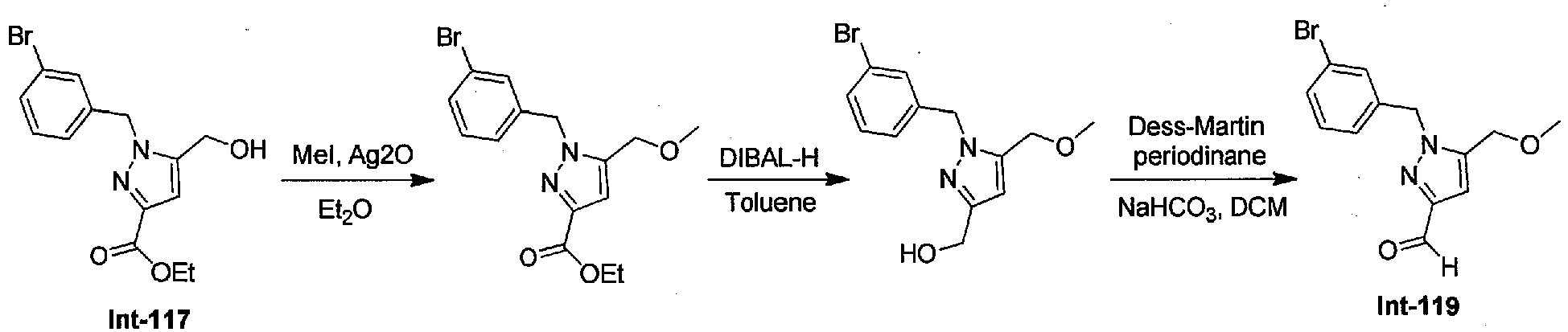
- Into a round bottom flask was added ethyl 1-(3-bromobenzyl)-5-(hydroxymethyl)-1H-pyrazole-3-carboxylate (1.13 g, 3.34 mmol) dissolved in diethyl ether (30 mL). Methyl iodide (6.50 mL, 104 mmol) was added followed by silver(I) oxide (1.94 g, 8.35 mmol). The reaction was stirred at rt for 4 days. The reaction mixture was then filtered through celite and the filtrate concentrated to dryness. The residue was purified by ISCO silica gel chromatography (40g column, eluting with 0-50% EtOAc/Hex over 20 min) to give 0.877 g (74%) of the title compound. 1H NMR (400 MHz, Chloroform-d) δ 7.41 (d, J = 7.9 Hz, 1H), 7.32 (s, 1H), 7.21 - 7.15 (m, 1H), 7.10 (d, J = 7.7 Hz, 1H), 6.80 (s, 1H), 5.45 (s, 2H), 4.42 (q, J = 7.1 Hz, 2H), 4.31 (s, 2H), 3.26 (s, 3H), 1.40 (t, J = 7.1 Hz, 3H).
- To a solution of ethyl 1-(3-bromobenzyl)-5-(methoxymethyl)-1H-pyrazole-3-carboxylate (0.877 g, 2.48 mmol) in toluene (12.0 mL) cooled to -78 °C was added dropwise a 1.00 M solution of diisobutylaluminum hydride in toluene (5.96 mL, 5.96 mmol) over 15 min. The reaction mixture was stirred at -78 °C for 2 h. To the reaction mixture was added saturated aqueous Rochelle's salt and extracted with EtOAc (3X). The combined organic layers were then washed with water, brine, dried using Na2SO4, filtered and concentrated to give crude [1-(3-bromobenzyl)-5-(methoxymethyl)-1H-pyrazol-3-yl]methanol. LCMS (FA): m/z = 309.0 (M+H).
- Into a 1-neck round-bottom flask was added crude [1-(3-bromobenzyl)-5-(methoxymethyl)-1H-pyrazol-3-yl]methanol (0.772 g, 2.48 mmol) dissolved in DCM (20.0 mL) and cooled to 0 °C. Sodium bicarbonate (0.625 g, 7.44 mmol) was added followed by Dess-Martin periodinane (1.26 g, 2.98 mmol). The resulting reaction mixture was stirred at 0 °C for 2 h. The reaction was quenched by the addition of a saturated Na2S2O3 solution and extracted with DCM (3x). The combined organic layers were washed with water, saturated NaHCO3, brine, dried using Na2SO4, filtered and concentrated. The residue was purified by ISCO silica gel chromatography (24g column, eluting with 0-30% EtOAc/Hex over 25 min) to give 0.578 g (75%, over 2 steps) of Int-119. 1H NMR (400 MHz, Chloroform-d) δ 9.97 (s, 1H), 7.45 (d, J = 8.0 Hz, 1H), 7.36 (s, 1H), 7.25 - 7.18 (m, 1H), 7.13 (d, J = 7.7 Hz, 1H), 6.78 (s, 1H), 5.43 (s, 2H), 4.37 (s, 2H), 3.30 (s, 3H).
-

- Into a 1-neck round-bottom flask was added ethyl 1-(3-bromobenzyl)-3-(hydroxymethyl)-1H-pyrazole-5-carboxylate (0.654 g, 1.93 mmol) dissolved in DMF (12.0 mL). 1H-Imidazole (0.33 g, 4.82 mmol) and N,N-dimethylaminopyridine (23.6 mg, 0.193 mmol) were added followed by tertbutyldimethylsilyl chloride (0.436 g, 2.89 mmol). The reaction was then stirred at rt for 3 h. Water was added to the reaction mixture and extracted with EtOAc (3X). The combined organic layers were washed with water, brine, dried using Na2SO4, filtered and concentrated. The residue was purified by ISCO silica gel chromatography (24g column, eluting with 0-50% EtOAc/Hex over 25 min) to give 0.777 g (89%) of the title compound. 1H NMR (400 MHz, Chloroform-d) δ 7.40 - 7.34 (m, 2H), 7.17 - 7.13 (m, 2H), 6.87 (s, 1H), 5.68 (s, 2H), 4.73 (s, 2H), 4.31 (q, J = 7.1 Hz, 2H), 1.34 (t, J = 7.1 Hz, 3H), 0.92 (s, 9H), 0.09 (s, 6H).
- To a solution of ethyl 1-(3-bromobenzyl)-3-({[tert-butyl(dimethyl)silyl]oxy}methyl)-1H-pyrazole-5-carboxylate (1.92 g, 4.23 mmol) in toluene (20.0 mL) cooled to -78 °C was added dropwise a 1.00 M solution of diisobutylaluminum hydride in toluene (8.47 mL, 8.47 mmol) over 15 min. The mixture was stirred at -78 °C for 2 h. To the reaction mixture was added saturated aqueous Rochelle's salt and extracted with EtOAc (3X). The combined organic layers were washed with water, brine, dried using Na2SO4, filtered and concentrated. The residue was purified by ISCO silica gel chromatography (40g column, eluting with 0-20-50% EtOAc/Hex over 20 mins) to give 1.405 g (80%) of the title compound. LCMS (FA): m/z = 411.5 (M+H).
- Into a 1-neck round-bottom flask was added [1-(3-bromobenzyl)-3-({[tert-butyl(dimethyl)silyl]oxy}methyl)-1H-pyrazol-5-yl]methanol (1.40 g, 3.40 mmol) dissolved in DCM (30.0 mL) and cooled to 0 °C. Sodium bicarbonate (0.858 g, 10.21 mmol) was added followed by Dess-Martin periodinane (1.73 g, 4.08 mmol). The resulting reaction mixture was stirred at 0 °C for 2 h. The reaction was quenched by the addition of a saturated Na2S2O3 solution and extracted with DCM (3X). The combined organic layers were then washed with water, saturated NaHCO3, brine, dried using Na2SO4, filtered and concentrated. The residue was purified by ISCO silica gel chromatography (40g column, eluting with 0-20% EtOAc/Hex over 25 min) to give 1.08 g (77%) of the title compound. 1H NMR (400 MHz, Chloroform-d) δ 9.81 (s, 1H), 7.42 - 7.35 (m, 2H), 7.22 - 7.12 (m, 2H), 6.94 (s, 1H), 5.64 (s, 2H), 4.76 (s, 2H), 0.92 (s, 9H), 0.10 (s, 6H).
- Into a 1-neck round-bottom flask was added 1-(3-bromobenzyl)-3-({[tert-butyl(dimethyl)silyl]oxy}methyl)-1H-pyrazole-5-carbaldehyde (0.52 g, 1.27 mmol) dissolved in THF (8.00 mL). The solution was cooled to 0 °C and a 3.00 M solution of methylmagnesium bromide in diethylether (1.69 mL, 5.08 mmol) was added dropwise over 5 min. The reaction was stirred at 0 °C for 2 h. The reaction was quenched with saturated NH4Cl and extracted with EtOAc (3X). The combined organic layers were washed with water, brine, dried using Na2SO4, filtered and concentrated. The residue was purified by ISCO silica gel chromatography (24g column, eluting with 0-50% EtOAc/Hex over 25 min) to give 0.498 g (92%) of the title compound. LCMS (FA): m/z = 425.5 (M+H).
- Into a round bottom flask was added 1-[1-(3-bromobenzyl)-3-({[tert-butyl(dimethyl)silyl]oxy}methyl)-1H-pyrazol-5-yl]ethanol (0.498 g, 1.17 mmol) dissolved in ether (10 mL). Methyl iodide (2.50 mL, 40.2 mmol) was added followed by silver(I) oxide (0.678 g, 2.93 mmol) and the mixture was stirred at rt for 4 days. The reaction mixture was filtered through celite and the filtrate concentrated to dryness. The residue was purified by ISCO silica gel chromatography (24g column, eluting with 0-50% EtOAc/Hex over 25 min) to give 0.322 g (63%) of the title compound. 1H NMR (400 MHz, Chloroform-d) δ 7.38 (d, J = 7.9 Hz, 1H), 7.29 - 7.26 (m, 1H), 7.19 - 7.13 (m, 1H), 7.04 (d, J = 8.1 Hz, 1H), 6.25 (s, 1H), 5.33 (s, 2H), 4.73 (s, 2H), 4.41 (q, J = 6.5 Hz, 1H), 3.14 (s, 3H), 1.41 (d, J = 6.6 Hz, 3H), 0.92 (s, 9H), 0.09 (s, 6H).
- Into a 1-neck round-bottom flask was added 1-(3-bromobenzyl)-3-({[tert-butyl(dimethyl)silyl]oxy}methyl)-5-(1-methoxyethyl)-1H-pyrazole (0.322 g, 0.733 mmol) dissolved in THF (10.0 mL). To the solution was added tetrabutylammonium fluoride hydrate (0.307 g, 1.10 mmol) at rt and the reaction was stirred for 1 h. The reaction was quenched with a saturated NaHCO3 solution and extracted with EtOAc (3X). The combined organic layers were washed with water, brine, dried using Na2SO4, filtered and concentrated to give crude [1-(3-bromobenzyl)-5-(1-methoxyethyl)-1H-pyrazol-3-yl]methanol. LCMS (FA): m/z = 327.1 (M+H).
- Into a 1-neck round-bottom flask was added crude [1-(3-bromobenzyl)-5-(1-methoxyethyl)-1H-pyrazol-3-yl]methanol (0.238 g, 0.733 mmol) dissolved in DCM (8.00 mL) and cooled to 0 °C. Sodium bicarbonate (0.185 g, 2.20 mmol) was added followed by Dess-Martin periodinane (0.373 g, 0.880 mmol). The resulting reaction mixture was then stirred at 0 °C for 1 h. The reaction was quenched by the addition of a saturated Na2S2O3 solution and extracted with DCM (3X). The combined organic layers were washed with water, saturated NaHCO3, brine, dried using Na2SO4, filtered and concentrated. The residue was purified by ISCO silica gel chromatogaphy (24g column, eluting with 0-30-50% EtOAc/Hex over 25 min) to give 0.143 g (60%, over 2 steps) of Int-120. 1H NMR (400 MHz, Chloroform-d) δ 9.97 (s, 1H), 7.44 (d, J = 8.1 Hz, 1H), 7.34 (s, 1H), 7.24 - 7.18 (m, 1H), 7.10 (d, J = 7.8 Hz, 1H), 6.77 (s, 1H), 5.47 (s, 2H), 4.46 (q, J = 6.6 Hz, 1H), 3.17 (s, 3H), 1.45 (d, J = 6.6 Hz, 3H).
-

- Into a 1-neck round-bottom flask was added 4-chloro-5-iodopyrimidine (0.219 g, 0.911 mmol) dissolved in THF (4.0 mL), purged with argon and cooled to -78 °C with a dry-ice bath. To this solution was added dropwise a 2.50 M solution of n-butyllithium in hexane (0.728 mL, 1.82 mmol) at -78 °C and the mixture was stirred for 30 min. To this mixture was added 1-(3-bromobenzyl)-5-{2-[(trimethylsilyl)oxy]propan-2-yl}-1H-pyrazole-3-carbaldehyde (0.30 g, 0.759 mmol) dissolved in THF (2.0 mL) dropwise. The reaction was stirred at -78 °C for 1 h. The reaction was quenched with saturated NH4Cl and extracted with EtOAc (3X). The combined organic layers were washed with water, brine, dried using Na2SO4, filtered and concentrated. The residue was purified by ISCO silica gel chromatography (24g column, eluting with 0-30-50% EtOAc/Hex over 25 min) to give 0.217 g (56%) of the title compound. LCMS (FA): m/z = 509.5 (M+H).
- To a solution of [1-(3-bromobenzyl)-5-{2-[(trimethylsilyl)oxy]propan-2-yl}-1H-pyrazol-3-yl](4-chloropyrimidin-5-yl)methanol (0.217 g, 0.426 mmol) in DCM (5.00 mL) was added manganese(IV) oxide (0.370 g, 4.26 mmol). The mixture was stirred at rt for 24 h. The reaction was filtered through a celite pad and the residual solid was washed with DCM several times. The filtrate was concentrated to give 0.192 g (89%) of crude [1-(3-bromobenzyl)-5-{2-[(trimethylsilyl)oxy]propan-2-yl}-1H-pyrazol-3-yl](4-chloropyrimidin-5-yl)methanone. LCMS (FA): m/z = 507.1 (M+H).
- Into a round bottom flask was added{(1R,2S,4R)-4-amino-2-[(triisopropylsilyl)oxy]cyclopentyl}methanol (0.163 g, 0.567 mmol) and crude [1-(3-bromobenzyl)-5-{2-[(trimethylsilyl)oxy]propan-2-yl}-1H-pyrazol-3-yl](4-chloropyrimidin-5-yl)methanone (0.192 g, 0.378 mmol). The contents were dissolved in DMF (4.00 mL) and potassium carbonate (0.157 g, 1.13 mmol) was added to the reaction vessel and resulting mixture was stirred at rt for 2 h. The reaction was diluted by addition of water and extracted with EtOAc (3X). The combined organic layers were dried over Na2SO4, filtered, and concentrated in vacuo. The residue was purified by ISCO silica gel chromatography (24g column, eluting with 0-30% EtOAc/Hex over 25 min) to give 0.238 g (83%) of the title compound. 1H NMR (400 MHz, Chloroform-d) δ 9.62 (s, 1H), 9.43 (s, 1H), 8.62 (s, 1H), 7.39 (d, J = 8.1 Hz, 1H), 7.23 - 7.14 (m, 2H), 7.03 - 6.96 (m, 1H), 6.72 (s, 1H), 5.71 (s, 2H), 4.89 - 4.77 (m, 1H), 4.37 - 4.29 (m, 1H), 3.75 - 3.66 (m, 2H), 2.57 - 2.45 (m, 1H), 2.26 - 2.15 (m, 2H), 1.93 - 1.83 (m, 1H), 1.74 - 1.68 (m, 1H), 1.63 (s, 6H), 1.40 - 1.30 (m, 1H), 1.07 (s, 21H), 0.05 (s, 9H).
- To a solution of [1-(3-bromobenzyl)-5-{2-[(trimethylsilyl)oxy]propan-2-yl}-1H-pyrazol-3-yl][4-({(1R,3R,4S)-3-(hydroxymethyl)-4-[(triisopropylsilyl)oxy]cyclopentyl}amino)pyrimidin-5-yl]methanone (0.238 g, 0.314 mmol) in DMF (4.50 mL) and triethylamine (0.131 mL, 0.941 mmol) was added chlorosulfonamide (72.47 mg, 0.627 mmol) at rt and the mixture was stirred for 2 h. The reaction was quenched with saturated NaHCO3 and extracted with EtOAc (3X). The combined organic layers were washed with water, brine, dried using Na2SO4, filtered and concentrated to give crude {(1R,2S,4R)-4-[(5-{[1-(3-bromobenzyl)-5-{2-[(trimethylsilyl)oxy]propan-2-yl}-1H-pyrazol-3-yl]carbonyl}pyrimidin-4-yl)amino]-2-[(triisopropylsilyl)oxy]cyclopentyl}methyl sulfamate. LCMS (FA): m/z = 837.9 (M+H).
- To a solution of crude {(1R,2S,4R)-4-[(5-{[1-(3-bromobenzyl)-5-{2-[(trimethylsilyl)oxy]propan-2-yl}-1H-pyrazol-3-yl]carbonyl}pyrimidin-4-yl)amino]-2-[(triisopropylsilyl)oxy]cyclopentyl}methyl sulfamate (0.263 g, 0.314 mmol) in THF (6.00 mL) was added a 4.0 M solution of hydrochloric acid in water (3.00 mL, 12.0 mmol) at rt and the mixture was stirred for 24 h. The reaction was quenched by addition of saturated NaHCO3 and extracted with EtOAc (4X). The combined organic layers were dried over Na2SO4, filtered, and concentrated in vacuo. The residue was purified by ISCO silica gel chromatography (24g column, eluting with 0-10-20% MeOH/DCM over 20 min) to give 0.142 g (74%, over 2 steps) of product. 1H NMR (400 MHz, DMSO-d 6) δ 9.37 (s, 1H), 9.00 (d, J = 7.3 Hz, 1H), 8.60 (s, 1H), 7.51 - 7.38 (m, 4H), 7.31 (t, J = 7.9 Hz, 1H), 7.15 (d, J = 7.7 Hz, 1H), 6.74 (s, 1H), 5.78 (s, 2H), 5.67 (s, 1H), 4.97 - 4.88 (m, 1H), 4.76 - 4.63 (m, 1H), 4.10 (dd, J = 9.7, 5.9 Hz, 1H), 4.01-3.93 (m, 2H), 2.41 - 2.31 (m, 1H), 2.17 - 2.08 (m, 1H), 2.04 - 1.95 (m, 1H), 1.82 - 1.72 (m, 1H), 1.51 (s, 6H), 1.27 (dt, J = 12.9, 9.1 Hz, 1H); LCMS: (FA) M+1 610.2.
- The compounds listed in the table below were prepared using a similar method to that described above starting from the listed starting aldehyde. I-369a and I-369b were made as a diasteromeric mixture (I-369) and then separated via HPLC (chiral chromatography).
Starting aldehyde Compound No. LCMS Data 
I-368 LCMS (FA): m/z = 595.6 (M+H). Int-119 
I-369 LCMS (FA): m/z = 609.5 (M+H). Int-120 
I-369a LCMS (FA): m/z = 609.5 (M+H). Int-120 
I-369b LCMS (FA): m/z = 609.5 (M+H). Int-120 -

- To a solution of (6aR,8R,9R,9aR)-8-[(2,4-dinitrophenyl)amino]-2,2,4,4-tetraisopropylhexahydrocyclopenta[f][1,3,5,2,4]trioxadisilocin-9-ol (G) (1.00 g, 1.80 mmol;) (for synthesis see: Biggadike, K. et al. J. Chem. Soc. Perkin Trans. 1988, 3, 549-554; Borthwick, A.D. et al. J. Med. Chem. 1990, 33, 179-186) in DCM (10.00 mL) was added triethylamine (0.263 mL, 1.89 mmol) and N,N-dimethylaminopyridine (0.231 g, 1.89 mmol). The reaction mixture was cooled (ice water bath) and a solution of methanesulfonyl chloride (216 mg, 1.89 mmol) in DCM (1.0 mL) was added dropwise. The reaction was allowed to warm to rt and was complete after 4 h. Water was added and the mixture was extracted with DCM (3X). The combined organics were dried with anhydrous magnesium sulfate, filtered, and evaporated. The residue was purified by ISCO silica gel chromatography (40g column, eluting with 10-40% EtOAc/Hex over 20 min) to give 1.12 g (98%) of the title compound. LCMS (FA): m/z = 632.2 (M-H).
- To a solution of (6aR,8R,9R,9aR)-8-[(2,4-dinitrophenyl)amino]-2,2,4,4-tetraisopropylhexahydrocyclopenta[f][1,3,5,2,4]trioxadisilocin-9-yl methanesulfonate (1.00 g, 1.58 mmol) in DMF (5.0 mL) was added 15-crown-5 (157 uL, 0.789 mmol) followed by sodium azide (0.513 g, 7.89 mmol) and the reaction was heated to 90 °C for 6 h. The reaction was allowed to cool to rt, diluted with water and extracted with EtOAc (3X). The combined organics were dried with anhydrous magnesium sulfate, filtered, and evaporated. The residue was purified by ISCO silica gel chromatography (24g column, eluting with 10-25% EtOAc/Hex over 20 min) to give 0.38 g (41%) of product. LCMS (FA): m/z = 579.2 (M-H)
- To a solution of (6aR,8R,9S,9aR)-9-azido-N-(2,4-dinitrophenyl)-2,2,4,4-tetraisopropylhexahydrocyclopenta[f][1,3,5,2,4]trioxadisilocin-8-amine (275.0 mg, 0.474 mmol) in THF (4.4 mL) was added triphenylphosphine (149 mg, 0.568 mmol) and the reaction stirred for 1 h. Added water (0.82 mL, 46 mmol) and heated the reaction to 60 °C for 4 h. The reaction was allowed to cool to rt and di-tert-butyldicarbonate (258 mg, 1.18 mmol) was added. The resulting mixture was stirred at rt for 3 days. The reaction mixture was concentrated to dryness and the residue was purified by ISCO silica gel chromatography (24g column, eluting with 5-25% EtOAc/Hex over 20 min) to give 0.290 g (94%) of the title compound. LCMS (FA): m/z = 653.4 (M-H).
- To a solution of tert-butyl {(6aR,8R,9S,9aR)-8-[(2,4-dinitrophenyl)amino]-2,2,4,4-tetraisopropylhexahydrocyclopenta[f][1,3,5,2,4]trioxadisilocin-9-yl}carbamate (280 mg, 0.43 mmol) in THF (10 mL) was added tetra-n-butylammonium fluoride (224 mg, 0.855 mmol). The reaction was stirred at rt for 2 h. The reaction was quenched with water and extracted with EtOAc (3x). The combined organic layers were dried, filtered, and concentrated. The residue was purified by ISCO silica gel chromatography (24g column, eluting with 0-10% MeOH/DCM over 20 min) to give 0.170 g (96%) of the title compound. LCMS (FA): m/z = 411.2 (M-H).
- Amberlite resin (hydroxide form) was freshly prepared by mixing with large excess of IN sodium hydroxide for 5 min, decanting and washing the resin with water until neutral, followed by washing with acetone. To a solution oftert-butyl [(1S,2R,3R,5R)-5-[(2,4-dinitrophenyl)amino]-2-hydroxy-3-(hydroxymethyl)cyclopentyl]carbamate (75 mg, 0.18 mmol) in acetone (5.0 mL) was added amberlite resin hydroxide form (2.0 g). The reaction was agitated overnight. The reaction was filtered to remove resin, washed resin with acetone and evaporated filtrate to dryness. The crude residue was dissolved in EtOAc and partitioned with 0.05N HCl. The organic layer removed color. Re-extracted organic layer with 0.1N HCl and lyophilized aqueous layer. The residue was purified by reverse phase prep HPLC to give 0.011 g (24%) of Int-121. 1H NMR (400 MHz, Methanol-d 4) δ 8.54 (s, 2H), 4.01 - 3.94 (m, 1H), 3.86 - 3.78 (m, 1H), 3.63 - 3.53 (m, 2H), 3.53 - 3.42 (m, 1H), 2.37 - 2.24 (m, 1H), 2.18 - 2.07 (m, 1H), 1.47 (s, 9H), 1.47 - 1.36 (m, 1H).
-

- [1-(3-bromobenzyl)-1H-pyrazol-3-yl](4-chloropyrimidin-5-yl)methanone (184.0 mg, 0.487 mmol) and tert-butyl [(1S,2R,3R,5R)-5-amino-2-hydroxy-3-(hydroxymethyl)cyclopentyl]carbamate (Int-121) (100.0 mg, 0.406 mmol) were weighed into a sealed tube. To this mixture was added n-propanol (4.0 mL) and N,N-diisopropylethylamine (0.177 mL, 1.02 mmol). The resulting mixture was stirred in a sealed vessel at 60 °C for 3 days. The reaction was cooled to rt and the reaction was concentrated in vacuo. The reaction mixture was taken up in EtOAc, washed with 0.1N HCl, brine, and concentrated. The residue was purified by ISCO silica gel chromatography (24g column, eluting with 40-75-100% EtOAc/Hex over 20 min) to give 0.108 g (45%) of the title compound. LCMS (FA): m/z = 589.1 (M+H).
- Preparation of a 0.50 M solution of tert-butyl(dimethyl)silyl(chlorosulfonyl)carbamate: To a solution of chlorosulfonyl isocyanate (0.500 mL, 5.74 mmol) in acetonitrile (11.50 mL) at 0 °C was added tert-butyldimethylsilanol (0.940 mL, 5.97 mmol). The addition was dropwise while maintaining the temperature below 10 °C. Upon completion of the addition the reaction was stirred at 0 °C for 30 min and the solution was ready for use as a 0.50 M solution. To a suspension of tert-butyl [(1S,2R,3R,5R)-5-[(5-{[1-(3-bromobenzyl)-1H-pyrazol-3-yl]carbonyl}pyrimidin-4-yl)amino]-2-hydroxy-3-(hydroxymethyl)cyclopentyl]carbamate (80.0 mg, 0.136 mmol) in acetonitrile (8.0 mL) and pyridine (13.77 uL, 0.170 mmol) cooled in an ice water bath was added a 0.50 M solution of tert-butyl(dimethyl)silyl(chlorosulfonyl)carbamate (0.34 mL, 0.170 mmol). After stirring for 10 min, the reaction was allowed to warm up to rt. Starting material still remained, thus the reaction was again placed in an ice water bath and an additional 0.50 M solution of tert-butyl(dimethyl)silyl(chlorosulfonyl)carbamate (0.34 mL, 0.170 mmol) was added. The reaction was allowed to warm to rt slowly. The reaction was quenched with a saturated NaHCO3 solution and extracted into EtOAc (3X). The combined organics were washed with brine and concentrated. The residue was purified by ISCO silica gel chromatography (12g column, eluting with 0-5% MeOH/DCM over 10 min) to give 20 mg of impure product. This material was then purified via reverse phase prep HPLC to give 10 mg (11%) of the title compound. LCMS (FA): m/z = 666.1 (M+H).
- To water (1.0 mL) was added a 12.0 M solution of hydrochloric acid in water (0.40 mL, 4.8 mmol) and 0.4 mL of this solution was added to a stirred solution oftert-butyl {(1S,2R,3R,5R)-5-[(5-{[1-(3-bromobenzyl)-1H-pyrazol-3-yl]carbonyl}pyrimidin-4-yl)amino]-2-hydroxy-3-[(sulfamoyloxy)methyl]cyclopentyl}carbamate (5.0 mg, 0.008 mmol) in CH3CN (0.20 mL). The reaction was stirred for 1 hr. The crude reaction mixture was lyophilized and purified by reverse phase prep HPLC to give 4.80 mg (100%) of I-370 as the bis-hydrochloride salt. 1H NMR (400 MHz, Methanol-d 4) δ 9.96 (s, 1H), 8.90 (s, 1H), 7.95 (s, 1H), 7.53 - 7.42 (m, 2H), 7.35 - 7.24 (m, 2H), 7.10 (s, 1H), 5.52 (s, 2H), 5.22 - 5.09 (m, 1H), 4.33 - 4.20 (m, 2H), 3.85 - 3.70 (m, 1H), 2.61- 2.42 (m, 2H), 2.02 - 1.71 (m, 2H)); LCMS (FA): m/z = 566.4 (M+H)
- The SAE enzymatic reaction totals 50 µl and contains 50 mM HEPES Hemisodium (pH 7.5), 0.05% BSA, 5 mM MgCl2, 0.5 µM ATP, 250 µM GSH, 0.01 µM Ubc9-GST, 0.125 µM Sumo-Flag and 0.11 nM recombinant human SAE enzyme. The enzymatic reaction mixture with and without inhibitor, Is incubated at 24°C for 105 min in a 384-well plate before termination with 25 µM of Stop/Detection buffer (0.1M HEPES Hemisodium pH 7.5, 0.05% Tween20, 20 mM EDTA, 410 mM KF, 0.53 nM Europium-Cryptate labeled monoclonal anti-Flag M2 Antibody (CisBio International) and 8.125 µg/ml PHYCOLINK goat anti-GST allophycocyanin (XL-APC) antibody (Prozyme)). After incubation for 2 hours at 24°C, quantification of FRET is performed on the Pherostar™ (BMG Labtech). Percentage inhibition values at a single concentration or enzyme inhibition (IC50) values are determined from those curves. One skilled in the art will appreciate that the values generated either as percentage inhibition at a single concentration or IC50 values are subject to experimental variation.
- The cell viability assay is used to measure the effect of various compounds on cancer cell proliferation. Promega's CellTiter-Glo® Luminescent Cell Viability Assay is used to measure ATP concentration present in all metabolically active cells and the concentration declines rapidly when cells undergo necrosis or apoptosis.
- The cancer cell lines of interest are propagated in recommended growth medium (Invitrogen) containing 10% Fetal Bovine Serum (Hyclone or ATCC) and 100 I.U.Penicellin/100 µg/mL Streptomycin (Invitrogen) and kept in tissue culture incubator at 37°C with 5% CO2. On day 1, attached cells are trypsinized with 4.5 mL of 0.25% Trypsin-EDTA (Invitrogen) at 37°C for 2 minutes or until cells have detached. Suspension cells are collected and washed. Desired number of cells are cultured in 25 µL of media per well in tissue culture-treated black-walled, clear bottom 384-well plates (BD Biosciences) for 16-24 hours. The exact number of cells per well are optimized for each individual cell line. On day 2, 62.5 nL test compounds in DMSO (ranging from 10 mM to 508 uM in 10 point 3-fold dilution series) are directly added to cells in 384-well plate using Echo liquid handler (Labcyte). This results in a final concentration range of 0.0013 to 25 µM in 3-fold dilutions in the cell plates. On day 5 after 72 hour of incubation in tissue culture incubator, 25 µL CellTiter-Glo®(Promega) are added to the compound treated cell plates. The cell plates are incubated at room temperature for 15 min and then read luminescence on Pherastar plate reader (BMG). The test compound concentration versus cell viability curves are generated using percentage of survival calculated from luminescence readout relative to DMSO and media only controls. The percentage growth inhibition values at a single concentration (LD50) values are determined from the curves.
- SAE inhibitors are tested for their ability to inhibit tumor growth in standard xenograft tumor models.
- For example, HCT-116 cells (1×10⁶) in 100 µL of phosphate buffered saline are aseptically injected into the subcutaneous space in the right dorsal flank of female CD-1 nude mice (age 5-8 weeks, Charles River) using a 23-ga needle. Beginning at day 7 after inoculation, tumors are measured twice weekly using a vernier caliper. Tumor volumes are calculated using standard procedures (0.5 × length × width2). When the tumors reach a volume of approximately 200 mm3, mice are randomized by tumor volume into treatment groups and injected subcutaneously with test compound (300 µL) at various doses and schedules. All control groups receive vehicle alone. Tumor size and body weight are measured twice a week, and the study is terminated when the control tumors reach approximately 2000 mm3. Analogous procedures are followed for colon (colo205 or HCT-116 cells), AML (THP-1 or HL-60 cells), DLBCL (Ly10 or WSU-DLCL2), melanoma (A375 or A2058 cells) and lung (H460 cells) tumor models.
- As detailed above, compounds of the invention inhibit SAE. In certain embodiments, compounds of the invention inhibit SAE with the percent inhibition at the concentrations shown in the table below. In certain embodiments, compounds of the invention inhibit SAE with the IC50 values shown in the table below.
Compound Concentration (µM) Percent Inhibition IC50 (µM) I-1 0.111 98 A I-2 0.111 99 A I-3 0.111 98 A I-4 0.111 80 B I-5 0.111 89 B I-6 0.111 99 A I-7 0.111 99 A I-8 0.111 99 A I-9 0.111 91 B I-10 0.111 61 B I-11 0.111 100 A I-12 0.111 39 C I-13 0.111 100 A I-14 0.111 98 A I-15 0.111 98 A I-16 0.111 98 A I-17 0.111 99 A I-18 0.111 96 A I-19 0.111 20 C I-20 0.111 96 A I-21 0.111 99 A I-22 0.111 100 A I-23 0.111 98 A I-24 0.111 100 A I-25 0.111 93 A I-26 0.111 90 B I-27 0.111 9 C I-28 0.111 78 B I-29 0.111 94 B I-30 0.111 66 B I-31 0.111 94 A I-32 0.111 98 A I-33 0.111 98 A I-34 0.111 99 A I-35 0.111 95 A I-36 0.111 99 A I-37 0.111 42 C I-38 0.111 51 C I-39 0.111 98 A I-40 0.111 97 A I-41 0.111 94 A I-42 0.111 99 A I-43 0.111 98 A I-44 0.111 99 A I-45 0.111 93 B I-46 0.111 96 A I-47 0.111 98 A I-48 0.111 96 A I-49 0.111 93 A I-50 0.111 99 A I-51 0.111 100 A I-52 0.111 99 A I-53 0.111 79 B I-54 0.111 63 B I-55 0.111 58 B I-56 0.111 100 A I-57 0.111 98 A I-58 0.111 88 A I-59 0.111 70 B I-60 0.111 91 B I-61 0.111 99 A I-62 0.111 96 A I-63 0.111 87 B I-64 0.111 91 B I-65 0.111 99 A I-66 0.111 98 A I-67 0.111 94 A I-68 0.111 99 A I-69 0.111 39 C I-70 0.111 99 A I-71 0.111 100 A I-72 0.111 100 A I-73 0.111 94 A I-74 0.111 92 A I-75 0.111 68 B I-76 0.111 80 B I-77 0.111 51 C I-78 0.111 97 A I-79 0.111 98 A I-80 0.111 96 A I-81 0.111 98 A I-82 0.111 96 A I-83 0.111 88 B I-84 0.111 95 A I-85 0.111 98 A I-86 0.111 35 C I-87 0.111 >99 A I-88 0.111 >99 A I-89 0.111 98 A I-90 0.111 98 A I-91 0.111 98 A I-92 0.111 99 A I-93 0.111 90 A I-94 0.111 97 A I-95 0.111 99 A I-96 0.111 98 A I-97 0.111 96 A I-98 0.111 96 A I-99 0.111 >99 A I-100 0.111 98 A I-101 0.111 100 A I-102 0.111 97 A I-103 0.111 97 A I-104 0.111 100 A I-105 0.111 18 C I-106 0.111 >99 A I-107 0.111 70 B I-108 0.111 18 C I-109 0.111 76 B I-110 0.111 99 A I-111 0.111 91 A I-112 0.111 97 A I-113 0.111 81 B I-114 0.111 98 A I-115 0.111 33 C I-116 0.111 33 C I-117 0.111 98 A I-118 0.111 99 A I-119 0.111 98 A I-120 0.111 47 C I-121 0.111 94 A I-122 0.111 99 A I-123 0.111 100 A I-124 0.111 97 A I-125 0.111 99 A I-126 0.111 >99 A I-127 0.111 99 A I-128 0.111 98 A I-129 0.111 99 A I-130 0.111 98 A I-131 0.111 96 A I-132 0.111 78 B I-133 0.111 61 B I-134 0.111 98 A I-135 0.111 81 B I-136 0.111 88 B I-137 0.111 78 B I-138 0.111 99 A I-139 0.111 86 A I-140 0.111 98 A I-141 0.111 99 A I-142 0.111 99 A I-143 0.111 99 A I-144 0.111 97 A I-145 0.111 65 B I-146 0.111 99 A I-147 0.111 >99 A I-148 0.111 85 B I-149 0.111 85 B I-150 0.111 98 A I-151 0.111 54 B I-152 0.111 94 A I-153 0.111 82 B I-154 0.111 39 C I-155 0.111 97 A I-156 0.111 90 B I-157 0.111 67 B I-158 0.111 95 A I-159 0.111 96 A I-160 0.111 81 B I-161 0.111 92 A 1-162 0.111 99 A I-163 0.111 98 A I-164 0.111 >99 A I-165 0.111 98 A I-166 0.111 98 A I-167 0.111 98 A I-168 0.111 94 A I-169 0.111 97 A I-170 0.111 97 A I-171 0.111 95 A I-172 0.111 83 B I-173 0.111 71 B I-174 0.111 93 A I-175 0.111 99 A I-176 0.111 98 A I-177 0.111 99 A I-178 0.111 99 A I-179 0.111 >99 A I-180 0.111 99 A I-181 0.111 94 A I-182 0.111 96 A I-183 0.111 96 A I-184 0.111 97 A I-185 0.111 91 A I-186 0.111 >99 A I-187 0.111 99 A I-188 0.111 98 A I-189 0.111 100 A I-190 0.111 98 A I-191 0.111 92 A I-192 0.111 98 A I-193 0.111 99 A I-194 0.111 100 A I-195 0.111 90 B I-196 0.111 33 C I-197 0.111 99 A I-198 0.111 >99 A I-199 0.111 94 A I-200 0.111 98 A I-201 0.111 98 A I-202 0.111 83 B I-203 0.111 94 A I-204 0.111 99 A I-205 0.111 60 B I-206 0.111 96 A I-207 0.111 99 A I-208 0.111 95 A I-209 0.111 99 A I-210 0.111 98 A I-211 0.111 97 A I-212 0.111 95 A I-213 0.111 97 A I-214 0.111 98 A I-215 0.111 99 A I-216 0.111 97 A I-217 0.111 98 A I-218 0.111 89 B I-219 0.111 99 A I-220 0.111 57 B I-221 0.111 100 A I-222 0.111 63 B I-223 0.111 99 A I-224 0.111 99 A I-225 0.111 >99 A I-226 0.111 85 B I-227 0.111 97 A I-228 0.111 72 B I-229 0.111 88 B I-230 0.111 98 A I-231 0.111 99 A I-232 0.111 97 A I-233 0.111 98 A I-234 0.111 91 B I-235 0.111 100 A I-236 0.111 54 B I-237 0.111 85 B I-238 0.111 99 A I-239 0.111 99 A I-240 0.111 100 A I-241 0.111 98 A I-242 0.111 96 A I-243 0.111 99 A I-244 0.111 98 A I-245 0.111 100 A I-246 0.111 97 A I-247 0.111 90 A I-248 0.111 99 A I-249 0.111 97 A I-250 0.111 86 B I-251 0.111 71 B I-252 0.111 97 A I-253 0.111 91 B I-254 0.111 99 A I-255 0.111 97 A I-256 0.111 99 A I-257 0.111 98 A I-258 0.111 97 A I-259 0.111 95 A I-260 0.111 91 A I-261 0.111 97 A I-262 0.111 96 A I-263 0.111 91 A I-264 0.111 90 B I-265 0.111 95 A I-266 0.111 87 B I-267 0.111 97 A I-268 0.111 99 A I-269 0.111 96 A I-270 0.111 87 B I-271 0.111 97 A I-272 0.111 99 A I-273 0.111 98 A I-274 0.111 97 A I-275 0.111 18 C I-276 0.111 82 B I-277 0.111 99 A I-278 0.111 97 A I-279 0.111 98 A I-280 0.111 99 A I-281 0.111 25 C I-282 0.111 100 A I-283 0.111 97 A I-284 0.111 100 A I-285 0.111 99 A I-286 0.111 93 A I-287 0.111 95 A I-288 0.111 97 A I-289 0.111 98 A I-290 0.111 99 A I-291 0.111 79 B I-292 0.111 98 A I-293 0.111 38 C I-294 0.111 100 A I-295 0.111 96 A I-296 0.111 100 A I-297 0.111 97 A I-298 0.111 97 A I-299 0.111 99 A I-300 0.111 97 A I-301 0.111 97 A I-302 0.111 34 C I-303 0.111 99 A I-304 0.111 91 B I-305 0.111 32 C I-306 0.111 99 A I-307 0.111 98 A I-308 0.111 27 C I-309 0.111 100 A I-310 0.111 98 A I-311 0.111 98 A I-312 0.111 99 A I-313 0.111 95 A I-314 0.111 97 A I-315 0.111 99 A I-316 0.111 94 A I-317 0.111 96 A I-318 0.111 95 A I-319 0.111 99 A I-320 0.111 98 A I-321 0.111 89 B I-322 0.111 99 A I-323 0.111 82 B I-324 0.111 100 A I-325 0.111 99 A I-326 0.111 95 A I-327 0.111 99 A I-328 0.111 65 B I-329 0.111 93 A I-330 0.111 82 B I-331 0.111 99 A I-332 0.111 16 C I-333 0.111 99 A I-334 0.111 98 A I-335 0.111 97 A I-336 0.111 97 A I-337 0.111 98 A I-338 0.111 99 A I-339 0.111 93 A I-340 0.111 94 A I-341 0.111 98 A I-342 0.111 79 B I-343 0.111 97 A I-344 0.111 77 B I-345 0.111 54 C I-346 0.111 100 A I-347 0.111 >99 A I-348 0.111 94 A I-349 0.111 100 A I-350 0.111 96 A I-351 0.111 97 A I-352 0.111 99 A I-353 0.111 90 B I-354 0.111 79 B 1-355 0.111 99 A I-356 0.111 85 B I-357 0.111 100 A I-358 0.111 95 A 1-359 0.111 68 B I-360 0.111 99 A I-361 0.111 85 B I-362 0.111 52 B I-3 63 0.111 100 A I-364 0.111 99 A I-365 0.111 79 B I-366 0.111 92 B I-367 0.111 99 A I-368 0.111 98 A I-369 0.111 98 A I-369a 0.111 98 A I-369b 0.111 98 A I-370 0.111 78 B IC50: A) less than 10 nM; B) 10 nM - 100 nM, and C) greater than 100 nM and less than 1000 nM
Claims (17)
- A compound of formula ( I ):

wherein:stereochemical configurations depicted at asterisked positions indicate absolute stereochemistry;Y is -O-, -CH2-, -N(H)-;Ra is hydrogen, fluoro, -NH2, or -OH;Ra' is hydrogen, or fluoro; provided that when Ra is -NH2 or -OH, Ra' is hydrogen;Rc is hydrogen or C1-4 alkyl;X1 is N, C(H) or C(F);X2 is C(Rd) or N;each occurrence of Rd is independently hydrogen, halogen, cyano, C1-4 aliphatic, or C1-4 fluoroaliphatic;Rd' is hydrogen, halogen, cyano, C1-4 aliphatic, C1-4 fluoroaliphatic, or -T2-R3;T2 is a C1-C2 alkylene chain optionally substituted with 0-3 independent occurrences of R3c;R3 is -CN, -NO2, -N(R3a)2, -OR3a, -C(O)R3b, -C(O)OR3a, -C(O)N(R3a)2, or -S(O)2N(R3a)2;each occurrence of R3a is independently hydrogen or C1-4 alkyl;R3b is C1-4 alkyl;each occurrence of R3c is independently C1-4 alkyl;Re is hydrogen or C1-4 alkyl;Re' is hydrogen or C1-4 alkyl; or Re is taken together with Re' to form a 3-6 membered cycloaliphatic ring;m is 0-2;Rf is hydrogen, chloro or C1-4 alkyl;G is R1 or -L1-R1;L1 is R1 is an optionally substituted group selected from C1-6 aliphatic, 3- to 10-membered cycloaliphatic, 4- to 10-membered heterocyclyl having 1-5 heteroatoms independently selected from nitrogen, oxygen, and sulfur, 6- to 10-membered aryl, or 5- to 10-membered heteroaryl having 1-5 heteroatoms independently selected from nitrogen, oxygen, and sulfur, wherein R1 is optionally substituted with n occurrences of R2; wherein each occurrence of R2 is independently -R2a, -T1-R2d, -T1-R2a, or -V1-T1-R2d;n is 1-5;each occurrence of R2a is independently halogen, -CN, -NO2, -R2c, -N(R2b)2, -OR2b, -SR2c, -S(O)R2c,-S(O)2R2c, -C(O)R2b, -C(O)OR2b, -C(O)N(R2b)2, -S(O)2N(R2b)2, -OC(O)N(R2b)2, -N(R2e)C(O)R2b, -N(R2e)SO2R2c, -N(R2e)C(O)OR2b, -N(R2e)C(O)N(R2b)2, -N(R2e)SO2N(R2b)2, or Si(R2c)3, or an optionally substituted C1-C6aliphatic or C1-C6 haloaliphatic;each occurrence of R2b is independently hydrogen or an optionally substituted group selected from C1-C6 aliphatic, C1-C6 haloaliphatic, 3- to 10-membered cycloaliphatic, 4- to 10-membered heterocyclyl having 1-5 heteroatoms independently selected from nitrogen, oxygen, and sulfur, 6- to 10-membered aryl, or 5- to 10-membered heteroaryl having 1-5 heteroatoms independently selected from nitrogen, oxygen, and sulfur, or two occurrences of R2b, taken together with a nitrogen atom to which they are bound, form an optionally substituted 4- to -7-membered heterocyclyl ring having 0-1 additional heteroatoms selected from nitrogen, oxygen, and sulfur;each occurrence of R2c is independently an optionally substituted group selected from C1-C6 aliphatic, C1-C6 haloaliphatic, 3- to 10-membered cycloaliphatic, 4- to 10-membered heterocyclyl having 1-5 heteroatoms independently selected from nitrogen, oxygen, and sulfur, 6-to 10-membered aryl, or 5- to 10-membered heteroaryl having 1-5 heteroatoms independently selected from nitrogen, oxygen, and sulfur;each occurrence of R2d is independently hydrogen or an optionally substituted group selected from 3- to 10-membered cycloaliphatic, 4- to 10-membered heterocyclyl having 1-5 heteroatoms independently selected from nitrogen, oxygen, and sulfur, 6- to 10-membered aryl, or 5- to 10-membered heteroaryl having 1-5 heteroatoms independently selected from nitrogen, oxygen, and sulfur;each occurrence of R2e is independently hydrogen or an optionally substituted C1-6aliphatic group;each occurrence of V1 is independently -N(R2e)-, -O-, -S-, -S(O)-, -S(O)2-, -C(O)-, -C(O)O-, -C(O)N(R2e)-, -S(O)2N(R2e)-, -OC(O)N(R2e)-, -N(R2e)C(O)-, -N(R2e)SO2-, -N(R2e)C(O)O-, -N(R2e)C(O)N(R2e)-, -N(R2e)SO2N(R2e)-, -OC(O)-, or -C(O)N(R2e)-O-; andT1 is an optionally substituted C1-C6 alkylene chain wherein the alkylene chain optionally is interrupted by -N(R4)-, -O-, -S-, -S(O)-, -S(O)2-, -C(O)-, -C(O)O-, -C(O)N(R4)-, -S(O)2N(R4)-, -OC(O)N(R4)-, -N(R4)C(O)-, -N(R4)SO2-, -N(R4)C(O)O-, -N(R4)C(O)N(R4)-,-N(R4)S(O)2N(R4)-, -OC(O)-, or -C(O)N(R4)-O- or wherein T1 or a portion thereof optionally forms part of an optionally substituted 3- to -7 membered cycloaliphatic or heterocyclyl ring, wherein R4 is hydrogen or an optionally substituted C1-4 aliphatic group.
 - The compound of claim 1, wherein Y is -O-.
- The compound of claim 1 or 2, wherein X1 is N.
- The compound of claim 1, wherein:m is 1 or 2;Re is hydrogen, methyl, or ethyl; andRe' is hydrogen.
- The compound of any one of claims 1-4, represented by formula ( III ):

wherein:stereochemical configurations depicted at asterisked positions indicate absolute stereochemistry, optionally wherein the compound is represented by formulas ( IV-a )-( IV-c ):wherein:

 stereochemical configurations depicted at asterisked positions indicate absolute stereochemistry.
 - The compound of claim 5 , wherein X2 is N.
- The compound of claim 5 , wherein X2 is C(Rd).
- The compound of any of claims 4-7, wherein:(a) m is 1 or 2, optionally wherein m is 1; and/or(b) Re is hydrogen, methyl, or ethyl, optionally wherein Re is hydrogen; and
Re' is hydrogen. - The compound of any of claims 5-8, wherein:(a) each occurence of Rd is independently hydrogen, chloro, bromo, fluoro, methyl, ethyl, or trifluoromethyl, optionally wherein Rd is hydrogen; and/or(b) Rd' is hydrogen, chloro, bromo, fluoro, methyl, ethyl, or trifluoromethyl, optionally wherein Rd' is hydrogen or methyl.
- The compound of any of claims 1-9, wherein G is R1, optionally wherein R1 is 3 to 10-membered cycloaliphatic, 4- to 10-membered heterocyclyl having 1-5 heteroatoms independently selected from nitrogen, oxygen, and sulfur, 6- to 10-membered aryl, or 5- to 10-membered heteroaryl having 1-5 heteroatoms independently selected from nitrogen, oxygen, and sulfur, wherein R1 is unsubstituted or substituted with n occurrences of R2, for example wherein R1 is furanyl, thienyl, pyrrolyl, oxazolyl, thiazolyl, imidazolyl, pyrazolyl, isoxazolyl, isothiazolyl, oxadiazolyl, triazolyl, thiadiazolyl, phenyl, naphthyl, pyranyl, pyridyl, pyridazinyl, pyrimidinyl, pyrazinyl, triazinyl, indolizinyl, imidazopyridyl, indolyl, isoindolyl, indazolyl, benzimidazolyl, benzthiazolyl, benzothienyl, benzofuranyl, benzoxazolyl, benzodioxolyl, benzthiadiazolyl, 2,3-dihydrobenzofuranyl, 4H-furo[3,2-b]pyrrolyl, pyrazolopyrimidinyl, purinyl, quinolyl, isoquinolyl, tetrahydroquinolinyl, tetrahydronaphthyridinyl, tetrahydroisoquinolinyl, cinnolinyl, phthalazinyl, quinazolinyl, quinoxalinyl, naphthyridinyl, pteridinyl, tetrahydrofuranyl, tetrahydropyranyl, dihydropyranyl, tetrahydrothienyl, indanyl, tetrahydroindazolyl, pyrrolidinyl, pyrrolidonyl, piperidinyl, pyrrolinyl, decahydroquinolinyl, oxazolidinyl, piperazinyl, dioxanyl, diazepinyl, oxazepinyl, thiazepinyl, morpholinyl, thiomorpholinyl, quinuclidinyl, phenanthridinyl, tetrahydronaphthyl, oxodihydropyridyl, indolinyl, benzodioxanyl, chromanyl, oxetanyl, cyclopropyl, cyclobutyl, cyclopentyl, cyclohexyl, cycloheptyl, cyclooctyl, cyclopentenyl, cyclohexenyl, cycloheptenyl, cyclooctenyl, bicycloheptanyl, azabicyclooctanyl, oxabicyclooctanyl, bicyclononyl, bicyclooctanyl, or adamantyl, wherein R1 is unsubstituted or substituted with n occurrences of R2, preferably wherein R1 is furanyl, thienyl, phenyl, naphthyl, pyridyl, benzothienyl, benzofuranyl, cyclohexyl, or cyclohexenyl, wherein R1 is unsubstituted or substituted with n occurrences of R2.
- The compound of claim 10, wherein R1 is optionally substituted with 1-3 occurrences of R2, wherein each occurrence of R2 is independently -R2a or T1-R2a, optionally wherein:each occurrence of R2 is independently halogen, -R2c, -N(R2b)2, -OR2b, -SR2c, C1-6 aliphatic or C1-6 fluoroaliphatic; andeach occurrence of R2b is independently C1-6 aliphatic or C1-6 fluoroaliphatic,optionally wherein R1 is optionally substituted with 1-2 occurrences of R2, wherein each occurrence of R2 is independently chloro, bromo, fluoro, iodo, methyl, ethyl, propyl, tert-butyl, methoxy, ethoxy, isopropoxy, tert-butoxy, difluoromethyl, trifluoromethyl, difluoromethoxy, trifluoromethoxy, trifluoromethylthio, dimethylamino, diethylamino, ethyne, cyclopropyl, or phenyl, or wherein each occurrence of R2 is independently chloro, bromo, fluoro, iodo, methyl, ethyl, difluoromethoxy, trifluoromethoxy, ethyne, cyclopropyl, or phenyl.
- The compound of claim 10 or 11, wherein R1 is:


- The compound of claim 1, wherein the compound is:[(1R,2R,3S,4R)-4-{[5-({1-[(3-bromophenyl)sulfonyl]-1H-pyrazol-3-yl}carbonyl)pyrimidin-4-yl]amino}-2,3-dihydroxycyclopentyl]methyl sulfamate;{(1S,2S,4R)-4-[(5-{[1-(3-bromobenzyl)-1H-pyrazol-3-yl]carbonyl}pyrimidin-4-yl)amino]-2-hydroxycyclopentyl}methyl sulfamate;[(1R,2S,4R)-2-hydroxy-4-({5-[(1-{[6-(trifluoromethyl)pyridin-2-yl]methyl}-1H-pyrazol-3-yl)carbonyl]pyrimidin-4-yl}amino)cyclopentyl]methyl sulfamate;[(1R,2R,3S,4R)-2,3-dihydroxy-4-{[5-({1-[2-(3-methyl-1H-pyrazol-1-yl)ethyl]-1H-pyrazol-3-yl}carbonyl)pyrimidin-4-yl]amino}cyclopentyl]methyl sulfamate;{(1R,2R,3R,4R)-4-[(5-{[1-(3,6-dihydro-2H-pyran-4-ylmethyl)-1H-pyrrol-3-yl]carbonyl}pyrimidin-4-yl)amino]-3-fluoro-2-hydroxycyclopentyl}methyl sulfamate;{(1S,2S,4R)-4-[(5-{[1-(3-bromobenzyl)-5-methyl-1H-pyrazol-3-yl]carbonyl}pyrimidin-4-yl)amino]-2-hydroxycyclopentyl}methyl sulfamate;[(1R,2R,3R,4R)-3-fluoro-2-hydroxy-4-{[5-({1-[3-(trifluoromethyl)benzyl]-1H-pyrrol-3-yl}carbonyl)pyrimidin-4-yl]amino}cyclopentyl]methyl sulfamate;[(1R,2R,3R,4R)-4-{[5-({1-[(6-chloropyridin-2-yl)methyl]-1H-pyrrol-3-yl}carbonyl)pyrimidin-4-yl]amino}-3-fluoro-2-hydroxycyclopentyl]methyl sulfamate;[(1R,2R,3R,4R)-3-fluoro-2-hydroxy-4-{[5-({1-[(1R,2R)-(2-phenylcyclopropyl)methyl]-1H-pyrrol-3-yl}carbonyl)pyrimidin-4-yl]amino}cyclopentyl]methyl sulfamate;[(1R,2R,3R,4R)-3-fluoro-2-hydroxy-4-{[5-({1-[(1S,2S)-(2-phenylcyclopropyl)methyl]-1H-pyrrol-3-yl}carbonyl)pyrimidin-4-yl]amino}cyclopentyl]methyl sulfamate;[(1R,2S,4R)-4-{[5-({1-[(1R)-1-(3-ethynylphenyl)ethyl]-1H-pyrazol-3-yl}carbonyl)pyrimidin-4-yl]amino}-2-hydroxycyclopentyl]methylsulfamate;[(1R,2S,4R)-4-{[5-({1-[(1S)-1-(3-ethynylphenyl)ethyl]-1H-pyrazol-3-yl}carbonyl)pyrimidin-4-yl]amino}-2-hydroxycyclopentyl]methylsulfamate;{(1R,2S,4R)-4-[(5-{[1-(3-bromobenzyl)-1H-pyrazol-3-yl]carbonyl}pyrimidin-4-yl)amino]-2-hydroxycyclopentyl}methyl sulfamate;[(1R,2S,4R)-2-hydroxy-4-{[5-({1-[4-(tetrahydro-2H-pyran-4-yl)but-2-yn-1-yl]-1H-pyrazol-3-yl}carbonyl)pyrimidin-4-yl]amino}cyclopentyl]methyl sulfamate;{(1R,2R,3R,4R)-3-fluoro-2-hydroxy-4-[(5-{[1-(3-iodobenzyl)-1H-pyrrol-3-yl]carbonyl}pyrimidin-4-yl)amino]cyclopentyl}methyl sulfamate;{(1R,2S,4R)-4-[(5-{[1-(4-fluoro-3-methylbenzyl)-1H-pyrazol-3-yl]carbonyl}pyrimidin-4-yl)amino]-2-hydroxycyclopentyl}methyl sulfamate;{(1R,2R,3R,4R)-4-[(5-{[1-(3-bromobenzyl)-1H-pyrazol-3-yl]carbonyl}pyrimidin-4-yl)amino]-3-fluoro-2-hydroxycyclopentyl}methyl sulfamate;{(1R,2S,4R)-2-hydroxy-4-[(5-{[1-(2,3,6-trifluorobenzyl)-1H-pyrazol-3-yl]carbonyl}pyrimidin-4-yl)amino]cyclopentyl}methyl sulfamate;{(1R,2S,4R)-4-[(5-{[1-(1-benzofuran-2-ylmethyl)-1H-pyrazol-3-yl]carbonyl}pyrimidin-4-yl)amino]-2-hydroxycyclopentyl}methyl sulfamate;[(1R,2S,4R)-2-hydroxy-4-{[3-({1-[3-(trifluoromethoxy)benzyl]-1H-pyrazol-3-yl}carbonyl)pyridin-4-yl]amino}cyclopentyl]methyl sulfamate;[(1R,2R,3R,4R)-3-fluoro-2-hydroxy-4-{[5-({1-[2-oxo-2-(pyrrolidin-1-yl)ethyl]-1H-pyrazol-3-yl}carbonyl)pyrimidin-4-yl]amino}cyclopentyl]methyl sulfamate;[(1R,2S,4R)-2-hydroxy-4-{[5-({1-[3-(trifluoromethoxy)benzyl]-1H-pyrazol-3-yl}carbonyl)pyrimidin-4-yl]amino}cyclopentyl]methyl sulfamate;[(1R,2S,4R)-4-{[5-({1-[4-fluoro-3-(trifluoromethyl)benzyl]-1H-pyrrol-3-yl}carbonyl)pyrimidin-4-yl]amino}-2-hydroxycyclopentyl]methyl sulfamate;{(1R,2S,4R)-4-[(5-{[1-(2-fluoro-3-methylbenzyl)-1H-pyrazol-3-yl]carbonyl}pyrimidin-4-yl)amino]-2-hydroxycyclopentyl}methyl sulfamate;[(1R,2R,3R,4R)-3-fluoro-2-hydroxy-4-{[5-({1-[3-(trifluoromethoxy)benzyl]-1H-pyrazol-3-yl}carbonyl)pyrimidin-4-yl]amino}cyclopentyl]methyl sulfamate;[(1R,2R,3R,4R)-4-{[5-({1-[(5-bromo-2-furyl)methyl]-1H-pyrrol-3-yl}carbonyl)pyrimidin-4-yl]amino}-3-fluoro-2-hydroxycyclopentyl]methyl sulfamate;{(1R,2R,3S,4R)-4-[(5-{[1-(3-cyanobenzyl)-1H-pyrazol-3-yl]carbonyl}pyrimidin-4-yl)amino]-2,3-dihydroxycyclopentyl}methyl sulfamate;{(1R,2R,3R,4R)-4-[(5-{[1-(4,4-dimethylpent-2-yn-1-yl)-1H-pyrrol-3-yl]carbonyl}pyrimidin-4-yl)amino]-3-fluoro-2-hydroxycyclopentyl}methyl sulfamate;[(1R,2S,4R)-2-hydroxy-4-{[5-({1-[3-(4-hydroxytetrahydro-2H-pyran-4-yl)prop-2-yn-1-yl]-1H-pyrazol-3-yl}carbonyl)pyrimidin-4-yl]amino}cyclopentyl]methyl sulfamate;{(1R,2R,3S,4R)-4-[(5-{[1-(2-ethoxyethyl)-1H-pyrazol-3-yl]carbonyl}pyrimidin-4-yl)amino]-2,3-dihydroxycyclopentyl}methyl sulfamate;[(1R,2S,4R)-4-{[5-({1-[(5-bromopyridin-3-yl)methyl]-1H-pyrazol-3-yl}carbonyl)pyrimidin-4-yl]amino}-2-hydroxycyclopentyl]methylsulfamate;{(1R,2R,3S,4R)-4-[(5-{[1-(cyclopropylmethyl)-1H-pyrazol-3-yl]carbonyl}pyrimidin-4-yl)amino]-2,3-dihydroxycyclopentyl}methyl sulfamate;[(1R,2R,3S,4R)-4-({5-[(1-benzyl-5-methyl-1H-pyrazol-3-yl)carbonyl]pyrimidin-4-yl}amino)-2,3-dihydroxycyclopentyl]methyl sulfamate;{(1R,2S,4R)-4-[(5-{[1-(2-fluoro-5-methylbenzyl)-1H-pyrazol-3-yl]carbonyl}pyrimidin-4-yl)amino]-2-hydroxycyclopentyl}methyl sulfamate;[(1R,2R,3S,4R)-2,3-dihydroxy-4-{[5-({1-[2-(1H-indol-3-yl)ethyl]-1H-pyrazol-3-yl}carbonyl)pyrimidin-4-yl]amino}cyclopentyl]methyl sulfamate;[(1R,2R,3S,4R)-4-{[5-({1-[4-chloro-3-(trifluoromethyl)benzyl]-1H-pyrazol-3-yl}carbonyl)pyrimidin-4-yl]amino}-2,3-dihydroxycyclopentyl]methyl sulfamate;{(1R,2S,4R)-4-[(5-{[1-(2,5-difluorobenzyl)-1H-pyrazol-3-yl]carbonyl}pyrimidin-4-yl)amino]-2-hydroxycyclopentyl}methyl sulfamate;[(1R,2R,3R,4R)-4-({5-[(5-chloro-1-{[5-(trifluoromethyl)-2-furyl]methyl}-1H-pyrrol-3-yl)carbonyl]pyrimidin-4-yl}amino)-3-fluoro-2-hydroxycyclopentyl]methyl sulfamate;[(1R,2S,4R)-2-hydroxy-4-{[5-({1-[2-(methylsulfanyl)ethyl]-1H-pyrazol-3-yl}carbonyl)pyrimidin-4-yl]amino}cyclopentyl]methyl sulfamate;2-{(1R,2S,4R)-4-[(5-{[1-(3-bromobenzyl)-1H-pyrazol-3-yl]carbonyl}pyrimidin-4-yl)amino]-2-hydroxycyclopentyl}ethanesulfonamide[(1R,2S,4R)-2-hydroxy-4-{[5-({1-[2-(trifluoromethoxy)benzyl]-1H-pyrazol-3-yl}carbonyl)pyrimidin-4-yl]amino}cyclopentyl]methyl sulfamate;{(1R,2R,3S,4R)-4-[(5-{[1-(3-chlorobenzyl)-1H-pyrazol-3-yl]carbonyl}pyrimidin-4-yl)amino]-2,3-dihydroxycyclopentyl}methyl sulfamate;[(1R,2R,3R,4R)-3-fluoro-2-hydroxy-4-({5-[(1-{[5-(methoxymethyl)-2-furyl]methyl}-1H-pyrrol-3-yl)carbonyl]pyrimidin-4-yl}amino)cyclopentyl]methyl sulfamate;{(1R,2R,3R,4R)-3-fluoro-2-hydroxy-4-[(5-{[1-(3-iodobenzyl)-1H-pyrazol-3-yl]carbonyl}pyrimidin-4-yl)amino]cyclopentyl}methyl sulfamate;{(1R,2S,4R)-4-[(5-{[1-(3-bromo-4-chlorobenzyl)-1H-pyrrol-3-yl]carbonyl}pyrimidin-4-yl)amino]-2-hydroxycyclopentyl}methyl sulfamate;{(1R,2R,3R,4R)-4-[(5-{[1-(3-bromobenzyl)-5-fluoro-1H-pyrrol-3-yl]carbonyl}pyrimidin-4-yl)amino]-3-fluoro-2-hydroxycyclopentyl}methyl sulfamate;[(1R,2S,4R)-2-hydroxy-4-({5-[(1-{[1-methyl-3-(trifluoromethyl)-1H-pyrazol-5-yl]methyl}-1H-pyrrol-3-yl)carbonyl]pyrimidin-4-yl}amino)cyclopentyl]methyl sulfamate;[(1R,2R,3S,4R)-4-{[5-({1-[3-fluoro-4-(trifluoromethyl)benzyl]-1H-pyrazol-3-yl}carbonyl)pyrimidin-4-yl]amino}-2,3-dihydroxycyclopentyl]methyl sulfamate;{(1R,2S,4R)-4-[(5-{[1-(4-chlorobenzyl)-1H-pyrazol-3-yl]carbonyl}pyrimidin-4-yl)amino]-2-hydroxycyclopentyl}methyl sulfamate;{(1R,2S,4R)-2-hydroxy-4-[(5-{[1-(2-naphthylmethyl)-1H-pyrazol-3-yl]carbonyl}pyrimidin-4-yl)amino]cyclopentyl}methyl sulfamate;[(1R,2R,3R,4R)-4-{[5-({1-[(3-chloro-1-benzothiophen-2-yl)methyl]-1H-pyrrol-3-yl}carbonyl)pyrimidin-4-yl]amino}-3-fluoro-2-hydroxycyclopentyl]methyl sulfamate;[(1R,2S,4R)-4-{[5-({1-[2-chloro-5-(trifluoromethyl)benzyl]-1H-pyrazol-3-yl}carbonyl)pyrimidin-4-yl]amino}-2-hydroxycyclopentyl]methyl sulfamate;[(1R,2R,3S,4R)-2,3-dihydroxy-4-{[5-({1-[(4-methylpyridin-2-yl)methyl]-1H-pyrazol-3-yl}carbonyl)pyrimidin-4-yl]amino}cyclopentyl]methyl sulfamate;{(1R,2S,4R)-4-[(3-{[1-(3-chlorobenzyl)-1H-pyrazol-3-yl]carbonyl}pyridin-4-yl)amino]-2-hydroxycyclopentyl}methyl sulfamate;[(1R,2S,4R)-2-hydroxy-4-({5-[(1-{[2-(trifluoromethyl)pyridin-4-yl]methyl}-1H-pyrazol-3-yl)carbonyl]pyrimidin-4-yl}amino)cyclopentyl]methyl sulfamate;{(1R,2S,4R)-4-[(6-chloro-5-{[1-(3-chlorobenzyl)-1H-pyrazol-3-yl]carbonyl}pyrimidin-4-yl)amino]-2-hydroxycyclopentyl}methyl sulfamate;[(1R,2S,4R)-2-hydroxy-4-{[5-({1-[((1S,2S)-2-methylcyclopropyl)methyl]-1H-pyrazol-3-yl}carbonyl)pyrimidin-4-yl]amino}cyclopentyl]methyl sulfamate; [(1R,2S,4R)-2-hydroxy-4-{[5-({1-[((1R,2R)-2-methylcyclopropyl)methyl]-1H-pyrazol-3-yl}carbonyl)pyrimidin-4-yl]amino}cyclopentyl]methyl sulfamate;[(1R,2R,3S,4R)-4-({3-[(1-benzyl-1H-pyrazol-3-yl)carbonyl]pyridin-4-yl}amino)-2,3-dihydroxycyclopentyl]methyl sulfamate;{(1R,2R,3R,4R)-3-fluoro-4-[(5-{[1-(4-fluoro-3-methoxybenzyl)-1H-pyrrol-3-yl]carbonyl}pyrimidin-4-yl)amino]-2-hydroxycyclopentyl}methyl sulfamate;{(1R,2S,4R)-4-[(5-{[1-(3,4-dichlorobenzyl)-1H-pyrazol-3-yl]carbonyl}pyrimidin-4-yl)amino]-2-hydroxycyclopentyl}methyl sulfamate;{(1R,2S,4R)-4-[(5-{[1-(4-cyclopentylbut-2-yn-1-yl)-1H-pyrazol-3-yl]carbonyl}pyrimidin-4-yl)amino]-2-hydroxycyclopentyl}methyl sulfamate;[(1R,2S,4R)-2-hydroxy-4-{[5-({1-[3-(2-hydroxypropan-2-yl)benzyl]-1H-pyrazol-3-yl}carbonyl)pyrimidin-4-yl]amino}cyclopentyl]methyl sulfamate;{(1R,2R,3R,4R)-4-[(5-{[5-chloro-1-(3-chlorobenzyl)-1H-pyrrol-3-yl]carbonyl}pyrimidin-4-yl)amino]-3-fluoro-2-hydroxycyclopentyl}methyl sulfamate;{(1R,2S,4R)-4-[(5-{[1-(2,4-difluorobenzyl)-1H-pyrazol-3-yl]carbonyl}pyrimidin-4-yl)amino]-2-hydroxycyclopentyl}methyl sulfamate;[(1R,2S,4R)-2-hydroxy-4-{[5-({1-[(2-methoxypyridin-3-yl)methyl]-1H-pyrazol-3-yl}carbonyl)pyrimidin-4-yl]amino}cyclopentyl]methyl sulfamate;{(1R,2S,4R)-4-[(5-{[1-(3-tert-butylbenzyl)-1H-pyrazol-3-yl]carbonyl}pyrimidin-4-yl)amino]-2-hydroxycyclopentyl}methyl sulfamate;[(1R,2S,4R)-4-{[5-({1-[(1S)-1-(6-bromopyridin-2-yl)ethyl]-1H-pyrazol-3-yl}carbonyl)pyrimidin-4-yl]amino}-2-hydroxycyclopentyl]methyl sulfamate;[(1R,2S,4R)-4-{[5-({1-[(1R)-1-(6-bromopyridin-2-yl)ethyl]-1H-pyrazol-3-yl}carbonyl)pyrimidin-4-yl]amino}-2-hydroxycyclopentyl]methyl sulfamate;[(1R,2S,4R)-4-({5-[(1-benzyl-5-methyl-1H-pyrazol-3-yl)carbonyl]pyrimidin-4-yl}amino)-2-hydroxycyclopentyl]methyl sulfamate;[(1R,2R,3S,4R)-4-({5-[(1-{3-[(chloroacetyl)amino]benzyl}-1H-pyrazol-3-yl)carbonyl]pyrimidin-4-yl}amino)-2,3-dihydroxycyclopentyl]methyl sulfamate;{(1R,2S,4R)-2-hydroxy-4-[(5-{[1-(3-iodobenzyl)-1H-pyrrol-3-yl]carbonyl}pyrimidin-4-yl)amino]cyclopentyl}methyl sulfamate;[(1R,2S,4R)-4-{[5-({1-[2,4-bis(trifluoromethyl)benzyl]-1H-pyrazol-3-yl}carbonyl)pyrimidin-4-yl]amino}-2-hydroxycyclopentyl]methylsulfamate;[(1R,2R,3S,4R)-4-{[5-({1-[(4-chloropyridin-2-yl)methyl]-1H-pyrazol-3-yl}carbonyl)pyrimidin-4-yl]amino}-2,3-dihydroxycyclopentyl]methyl sulfamate;{(1R,2R,3R,4R)-4-[(5-{[1-(3-bromobenzyl)-5-methyl-1H-pyrrol-3-yl]carbonyl}pyrimidin-4-yl)amino]-3-fluoro-2-hydroxycyclopentyl}methyl sulfamate;{(1R,2S,4R)-4-[(5-{[1-(3-bromo-4-fluorobenzyl)-1H-pyrazol-3-yl]carbonyl}pyrimidin-4-yl)amino]-2-hydroxycyclopentyl}methyl sulfamate;[(1R,2S,4R)-2-hydroxy-4-({5-[(1-{[2-(trifluoromethyl)-1,3-thiazol-5-yl]methyl}-1H-pyrrol-3-yl)carbonyl]pyrimidin-4-yl}amino)cyclopentyl]methyl sulfamate;[(1R,2R,3S,4R)-2,3-dihydroxy-4-{[5-({1-[3-((R)-vinylsulfinyl)benzyl]-1H-pyrazol-3-yl}carbonyl)pyrimidin-4-yl]amino}cyclopentyl]methyl sulfamate;[(1R,2R,3S,4R)-2,3-dihydroxy-4-{[5-({1-[3-((S)-vinylsulfinyl)benzyl]-1H-pyrazol-3-yl}carbonyl)pyrimidin-4-yl]amino}cyclopentyl]methyl sulfamate;{(1R,2R,3R,4R)-3-fluoro-2-hydroxy-4-[(5-{[1-(4-methoxy-4-methylpent-2-yn-1-yl)-1H-pyrrol-3-yl]carbonyl}pyrimidin-4-yl)amino]cyclopentyl}methyl sulfamate;{(1R,2S,4R)-2-hydroxy-4-[(5-{[1-(2-phenylpropan-2-yl)-1H-pyrrol-3-yl]carbonyl}pyrimidin-4-yl)amino]cyclopentyl}methyl sulfamate;[(1R,2S,4R)-4-({5-[(1-{[(2R)-5,5-dimethyltetrahydrofuran-2-yl]methyl}-1H-pyrazol-3-yl)carbonyl]pyrimidin-4-yl}amino)-2-hydroxycyclopentyl]methyl sulfamate;[(1R,2S,4R)-4-({5-[(1-{[(2S)-5,5-dimethyltetrahydrofuran-2-yl]methyl}-1H-pyrazol-3-yl)carbonyl]pyrimidin-4-yl}amino)-2-hydroxycyclopentyl]methyl sulfamate;{(1R,2S,4R)-4-[(3-{[1-(3,4-dichlorobenzyl)-1H-pyrazol-3-yl]carbonyl}pyridin-4-yl)amino]-2-hydroxycyclopentyl}methyl sulfamate;[(1R,2S,4R)-4-{[5-({1-[(1S)-1-(5-chloro-2-furyl)ethyl]-1H-pyrazol-3-yl}carbonyl)pyrimidin-4-yl]amino}-2-hydroxycyclopentyl]methylsulfamate;[(1R,2S,4R)-4-{[5-({1-[(1R)-1-(5-chloro-2-furyl)ethyl]-1H-pyrazol-3-yl}carbonyl)pyrimidin-4-yl]amino}-2-hydroxycyclopentyl]methylsulfamate;[(1R,2S,4R)-2-hydroxy-4-{[5-({1-[(1-methyl-2-oxo-1,2-dihydropyridin-3-yl)methyl]-1H-pyrazol-3-yl}carbonyl)pyrimidin-4-yl]amino}cyclopentyl]methyl sulfamate;{(1R,2R,3S,4R)-4-[(3-{[1-(3-chlorobenzyl)-1H-pyrazol-3-yl]carbonyl}pyridin-4-yl)amino]-2,3-dihydroxycyclopentyl}methyl sulfamate;{(1R,2R,3S,4R)-4-[(5-{[1-(cyclohexylmethyl)-1H-pyrazol-3-yl]carbonyl}pyrimidin-4-yl)amino]-2,3-dihydroxycyclopentyl}methyl sulfamate;[(1R,2S,4R)-2-hydroxy-4-{[3-({1-[3-(trifluoromethoxy)benzyl]-1H-pyrrol-3-yl}carbonyl)pyridin-4-yl]amino}cyclopentyl]methyl sulfamate;[(1R,2S,4R)-2-hydroxy-4-{[5-({1-[3-(prop-1-yn-1-yl)benzyl]-1H-pyrazol-3-yl}carbonyl)pyrimidin-4-yl]amino}cyclopentyl]methyl sulfamate;{(1R,2S,4R)-4-[(5-{[1-(3-ethynylbenzyl)-1H-pyrazol-3-yl]carbonyl}pyrimidin-4-yl)amino]-2-hydroxycyclopentyl}methyl sulfamate;{(1R,2S,4R)-2-hydroxy-4-[(5-{[1-(2S)-(pent-3-yn-2-yl)-1H-pyrazol-3-yl]carbonyl}pyrimidin-4-yl)amino]cyclopentyl}methyl sulfamate;{(1R,2S,4R)-2-hydroxy-4-[(5-{[1-(2R)-(pent-3-yn-2-yl)-1H-pyrazol-3-yl]carbonyl}pyrimidin-4-yl)amino]cyclopentyl}methyl sulfamate;[(1R,2R,3R,4R)-4-({5-[(1-{[5-(difluoromethyl)-2-furyl]methyl}-1H-pyrrol-3-yl)carbonyl]pyrimidin-4-yl}amino)-3-fluoro-2-hydroxycyclopentyl]methyl sulfamate;{(1R,2R,3S,4R)-2,3-dihydroxy-4-[(5-{[1-(2,4,6-trifluorobenzyl)-1H-pyrazol-3-yl]carbonyl}pyrimidin-4-yl)amino]cyclopentyl}methyl sulfamate;{(1R,2R,3S,4R)-4-[(5-{[1-(3-chloro-4-fluorobenzyl)-1H-pyrazol-3-yl]carbonyl}pyrimidin-4-yl)amino]-2,3-dihydroxycyclopentyl}methyl sulfamate;{(1R,2S,4R)-4-[(5-{[1-(3-bromobenzyl)-5-(hydroxymethyl)-1H-pyrazol-3-yl]carbonyl}pyrimidin-4-yl)amino]-2-hydroxycyclopentyl}methyl sulfamate;{(1R,2R,3S,4R)-4-[(5-{[1-(2,5-difluorobenzyl)-1H-pyrazol-3-yl]carbonyl}pyrimidin-4-yl)amino]-2,3-dihydroxycyclopentyl}methyl sulfamate;{(1R,2R,3R,4R)-4-[(5-{[1-(3-bromo-4-fluorobenzyl)-1H-pyrazol-3-yl]carbonyl}pyrimidin-4-yl)amino]-3-fluoro-2-hydroxycyclopentyl}methyl sulfamate;{(1R,2S,4R)-4-[(5-{[1-(cyclohexylmethyl)-1H-pyrazol-3-yl]carbonyl}pyrimidin-4-yl)amino]-2-hydroxycyclopentyl}methyl sulfamate;{(1R,2R,3R,4R)-4-[(5-{[1-benzyl-5-(trifluoromethyl)-1H-pyrrol-3-yl]carbonyl}pyrimidin-4-yl)amino]-3-fluoro-2-hydroxycyclopentyl}methyl sulfamate;[(1R,2S,4R)-4-{[5-({1-[(6-chloropyridin-2-yl)methyl]-1H-pyrazol-3-yl}carbonyl)pyrimidin-4-yl]amino}-2-hydroxycyclopentyl]methyl sulfamate;[(1R,2R,3S,4R)-4-{[5-({1-[2-(3-bromophenyl)-2-oxoethyl]-1H-pyrazol-3-yl}carbonyl)pyrimidin-4-yl]amino}-2,3-dihydroxycyclopentyl]methyl sulfamate;{(1R,2S,4R)-4-[(3-{[1-(3-chloro-4-fluorobenzyl)-1H-pyrazol-3-yl]carbonyl}pyridin-4-yl)amino]-2-hydroxycyclopentyl}methyl sulfamate;[(1R,2R,3S,4R)-2,3-dihydroxy-4-{[5-({1-[2-(trifluoromethoxy)benzyl]-1H-pyrazol-3-yl}carbonyl)pyrimidin-4-yl]amino}cyclopentyl]methyl sulfamate;[(1R,2S,4R)-4-{[5-({1-[(6-chloropyridin-2-yl)methyl]-5-methyl-1H-pyrazol-3-yl}carbonyl)pyrimidin-4-yl]amino}-2-hydroxycyclopentyl]methyl sulfamate;[(1R,2R,3S,4R)-4-{[5-({1-[4-chloro-3-(trifluoromethoxy)benzyl]-1H-pyrazol-3-yl}carbonyl)pyrimidin-4-yl]amino}-2,3-dihydroxycyclopentyl]methyl sulfamate;[(1R,2S,4R)-4-{[5-({1-[(5-chloro-2-furyl)methyl]-5-methyl-1H-pyrazol-3-yl}carbonyl)pyrimidin-4-yl]amino}-2-hydroxycyclopentyl]methyl sulfamate;[(1R,2R,3R,4R)-3-fluoro-2-hydroxy-4-{[5-({1-[3-(trifluoromethyl)benzyl]-1H-pyrazol-3-yl}carbonyl)pyrimidin-4-yl]amino}cyclopentyl]methyl sulfamate;{(1R,2R,3S,4R)-2,3-dihydroxy-4-[(5-{[1-(2-naphthylmethyl)-1H-pyrazol-3-yl]carbonyl}pyrimidin-4-yl)amino]cyclopentyl}methyl sulfamate;{(1R,2S,4R)-4-[(5-{[1-(2-chloro-5-iodobenzyl)-1H-pyrazol-3-yl]carbonyl}pyrimidin-4-yl)amino]-2-hydroxycyclopentyl}methyl sulfamate;{(1R,2R,3R,4R)-4-[(5-{[1-(3-bromobenzyl)-2,5-dichloro-1H-pyrrol-3-yl]carbonyl}pyrimidin-4-yl)amino]-3-fluoro-2-hydroxycyclopentyl}methyl sulfamate;{(1R,2R,3S,4R)-4-[(5-{[1-(4-fluorobenzyl)-1H-pyrazol-3-yl]carbonyl}pyrimidin-4-yl)amino]-2,3-dihydroxycyclopentyl}methyl sulfamate;[(1R,2S,4R)-4-{[5-({1-[(2E)-but-2-en-1-yl]-1H-pyrazol-3-yl}carbonyl)pyrimidin-4-yl]amino}-2-hydroxycyclopentyl]methyl sulfamate;{(1R,2S,4R)-4-[(5-{[1-(cyanomethyl)-1H-pyrazol-3-yl]carbonyl}pyrimidin-4-yl)amino]-2-hydroxycyclopentyl}methyl sulfamate;[(1R,2S,4R)-2-hydroxy-4-({5-[(1-{[6-(2-hydroxypropan-2-yl)pyridin-2-yl]methyl}-1H-pyrazol-3-yl)carbonyl]pyrimidin-4-yl}amino)cyclopentyl]methyl sulfamate;{(1R,2R,3R,4R)-4-[(5-{[1-(1-benzofuran-2-ylmethyl)-1H-pyrrol-3-yl]carbonyl}pyrimidin-4-yl)amino]-3-fluoro-2-hydroxycyclopentyl}methyl sulfamate;{(1R,2S,4R)-4-[(5-{[1-(3-bromobenzyl)-4-chloro-1H-pyrazol-3-yl]carbonyl}pyrimidin-4-yl)amino]-2-hydroxycyclopentyl}methyl sulfamate;{(1R,2R,3S,4R)-4-[(5-{[1-(4-chloro-3-fluorobenzyl)-1H-pyrazol-3-yl]carbonyl}pyrimidin-4-yl)amino]-2,3-dihydroxycyclopentyl}methyl sulfamate;{(1R,2S,4R)-4-[(5-{[1-(4,4-dimethylpent-2-yn-1-yl)-1H-pyrazol-3-yl]carbonyl}pyrimidin-4-yl)amino]-2-hydroxycyclopentyl}methyl sulfamate;[(1R,2R,3R,4R)-3-fluoro-2-hydroxy-4-({5-[(1-{[4-(trifluoromethyl)-2-furyl]methyl}-1H-pyrrol-3-yl)carbonyl]pyrimidin-4-yl}amino)cyclopentyl]methyl sulfamate;{(1R,2S,4R)-2-hydroxy-4-[(5-{[1-(pent-3-yn-1-yl)-1H-pyrazol-3-yl]carbonyl}pyrimidin-4-yl)amino]cyclopentyl}methyl sulfamate;[(1R,2R,3R,4R)-4-({5-[(1-{3-[acryloyl(methyl)amino]benzyl}-1H-pyrazol-3-yl)carbonyl]pyrimidin-4-yl}amino)-3-fluoro-2-hydroxycyclopentyl]methyl sulfamate;[(1R,2S,4R)-4-{[5-({1-[3-(difluoromethoxy)benzyl]-1H-pyrazol-3-yl}carbonyl)pyrimidin-4-yl]amino}-2-hydroxycyclopentyl]methyl sulfamate;[(1R,2R,3S,4R)-2,3-dihydroxy-4-{[5-({1-[2-(1-naphthyl)ethyl]-1H-pyrazol-3-yl}carbonyl)pyrimidin-4-yl]amino}cyclopentyl]methyl sulfamate;[(1R,2R,3S,4R)-2,3-dihydroxy-4-{[5-({1-[3-(trifluoromethyl)benzyl]-1H-pyrazol-3-yl}carbonyl)pyrimidin-4-yl]amino}cyclopentyl]methyl sulfamate;[(1R,2S,4R)-2-hydroxy-4-({5-[(1-{[6-(3-hydroxyoxetan-3-yl)pyridin-2-yl]methyl}-1H-pyrazol-3-yl)carbonyl]pyrimidin-4-yl}amino)cyclopentyl]methyl sulfamate;[(1R,2R,3S,4R)-4-{[5-({1-[4-fluoro-2-(trifluoromethyl)benzyl]-1H-pyrazol-3-yl}carbonyl)pyrimidin-4-yl]amino}-2,3-dihydroxycyclopentyl]methyl sulfamate;{(1R,2R,3R,4R)-4-[(5-{[1-(3-chloro-4-fluorobenzyl)-1H-pyrazol-3-yl]carbonyl}pyrimidin-4-yl)amino]-3-fluoro-2-hydroxycyclopentyl}methyl sulfamate;{(1R,2R,3S,4R)-4-[(5-{[1-(3-fluorobenzyl)-1H-pyrazol-3-yl]carbonyl}pyrimidin-4-yl)amino]-2,3-dihydroxycyclopentyl}methyl sulfamate;{(1R,2R,3R,4R)-4-[(3-{[1-(3-chlorobenzyl)-1H-pyrrol-3-yl]carbonyl}pyridin-4-yl)amino]-3-fluoro-2-hydroxycyclopentyl}methyl sulfamate;{(1R,2R,3S,4R)-2,3-dihydroxy-4-[(5-{[1-(2-oxo-2-phenylethyl)-1H-pyrazol-3-yl]carbonyl}pyrimidin-4-yl)amino]cyclopentyl}methyl sulfamate;[(1R,2R,3S,4R)-4-({5-[(1-{4-chloro-3-[(trifluoromethyl)sulfanyl]benzyl}-1H-pyrazol-3-yl)carbonyl]pyrimidin-4-yl}amino)-2,3-dihydroxycyclopentyl]methyl sulfamate;{(1R,2R,3R,4R)-4-[(5-{[1-(3-bromo-4-chlorobenzyl)-1H-pyrazol-3-yl]carbonyl}pyrimidin-4-yl)amino]-3-fluoro-2-hydroxycyclopentyl}methyl sulfamate;{(1R,2S,4R)-2-hydroxy-4-[(5-{[1-(3-methylbenzyl)-1H-pyrazol-3-yl]carbonyl}pyrimidin-4-yl)amino]cyclopentyl}methyl sulfamate;[(1R,2S,4R)-2-hydroxy-4-{[5-({1-[3-(trifluoromethyl)benzyl]-1H-pyrrol-3-yl}carbonyl)pyrimidin-4-yl]amino}cyclopentyl]methyl sulfamate;[(1R,2R,3S,4R)-2,3-dihydroxy-4-({5-[(1-{[5-(trifluoromethyl)-2-furyl]methyl}-1H-pyrazol-3-yl)carbonyl]pyrimidin-4-yl}amino)cyclopentyl]methyl sulfamate;[(1R,2R,3R,4R)-3-fluoro-2-hydroxy-4-{[5-({1-[3-(trifluoromethoxy)benzyl]-1H-pyrrol-3-yl}carbonyl)pyrimidin-4-yl]amino}cyclopentyl]methyl sulfamate;[(1R,2R,3R,4R)-3-fluoro-2-hydroxy-4-{[3-({1-[3-(trifluoromethoxy)benzyl]-1H-pyrrol-3-yl}carbonyl)pyridin-4-yl]amino}cyclopentyl]methyl sulfamate;[(1R,2S,4R)-4-{[5-({1-[(1S)-1-(3-chlorophenyl)ethyl]-1H-pyrazol-3-yl}carbonyl)pyrimidin-4-yl]amino}-2-hydroxycyclopentyl]methyl sulfamate;[(1R,2S,4R)-4-{[5-({1-[(1R)-1-(3-chlorophenyl)ethyl]-1H-pyrazol-3-yl}carbonyl)pyrimidin-4-yl]amino}-2-hydroxycyclopentyl]methyl sulfamate;[(1R,2R,3S,4R)-4-{[5-({1-[4-fluoro-3-(trifluoromethoxy)benzyl]-1H-pyrazol-3-yl}carbonyl)pyrimidin-4-yl]amino}-2,3-dihydroxycyclopentyl]methyl sulfamate;[(1R,2R,3R,4R)-4-({5-[(1-benzyl-1H-pyrazol-3-yl)carbonyl]pyrimidin-4-yl}amino)-2,3-dihydroxycyclopentyl]methyl sulfamate;N-({(1R,2R,3S,4R)-4-[(5-{[1-(3-chlorobenzyl)-1H-pyrazol-3-yl]carbonyl}pyrimidin-4-yl)amino]-2,3-dihydroxycyclopentyl}methyl)sulfuric diamide[(1R,2S,4R)-2-hydroxy-4-{[5-({1-[3-(trimethylsilyl)benzyl]-1H-pyrazol-3-yl}carbonyl)pyrimidin-4-yl]amino}cyclopentyl]methyl sulfamate;[(1R,2R,3S,4R)-2,3-dihydroxy-4-({5-[(5-methyl-1-{[5-(trifluoromethyl)-2-furyl]methyl}-1H-pyrazol-3-yl)carbonyl]pyrimidin-4-yl}amino)cyclopentyl]methyl sulfamate;[(1R,2R,3S,4R)-4-({5-[(1-benzyl-4-chloro-1H-pyrazol-3-yl)carbonyl]pyrimidin-4-yl}amino)-2,3-dihydroxycyclopentyl]methyl sulfamate;[(1R,2S,4R)-2-hydroxy-4-{[5-({1-[3-(trifluoromethyl)benzyl]-1H-pyrazol-3-yl}carbonyl)pyrimidin-4-yl]amino}cyclopentyl]methyl sulfamate;{(1R,2R,3R,4R)-4-[(5-{[1-(3-chloro-4-fluorobenzyl)-1H-pyrrol-3-yl]carbonyl}pyrimidin-4-yl)amino]-3-fluoro-2-hydroxycyclopentyl}methyl sulfamate;[(1R,2R,3S,4R)-4-({5-[(1-benzyl-1H-pyrazol-3-yl)carbonyl]pyrimidin-4-yl}amino)-2,3-dihydroxycyclopentyl]methyl sulfamate;{(1R,2R,3R,4R)-4-[(5-{[1-(3-bromo-4-fluorobenzyl)-1H-pyrrol-3-yl]carbonyl}pyrimidin-4-yl)amino]-3-fluoro-2-hydroxycyclopentyl}methyl sulfamate;{(1R,2S,4R)-2-hydroxy-4-[(5-{[1-(imidazo[1,2-a]pyridin-6-ylmethyl)-1H-pyrazol-3-yl]carbonyl}pyrimidin-4-yl)amino]cyclopentyl}methyl sulfamate;{(1R,2S,4R)-4-[(5-{[1-(5,6-dihydro-2H-pyran-3-ylmethyl)-1H-pyrazol-3-yl]carbonyl}pyrimidin-4-yl)amino]-2-hydroxycyclopentyl}methyl sulfamate;{(1R,2R,3S,4R)-4-[(5-{[1-(4-chloro-2-fluorobenzyl)-1H-pyrazol-3-yl]carbonyl}pyrimidin-4-yl)amino]-2,3-dihydroxycyclopentyl}methyl sulfamate;{(1R,2R,3R,4R)-4-[(5-{[1-(3-chlorobenzyl)-1H-pyrrol-3-yl]carbonyl}pyrimidin-4-yl)amino]-3-fluoro-2-hydroxycyclopentyl}methyl sulfamate;[(1R,2R,3R,4R)-4-({5-[(5-chloro-1-{[5-(trifluoromethyl)isoxazol-3-yl]methyl}-1H-pyrrol-3-yl)carbonyl]pyrimidin-4-yl}amino)-3-fluoro-2-hydroxycyclopentyl]methyl sulfamate;{(1R,2R,3R,4R)-4-[(5-{[1-(3-bromobenzyl)-4-methyl-1H-pyrrol-3-yl]carbonyl}pyrimidin-4-yl)amino]-3-fluoro-2-hydroxycyclopentyl}methyl sulfamate;{(1R,2R,3S,4R)-2,3-dihydroxy-4-[(5-{[1-(pyridin-2-ylmethyl)-1H-pyrazol-3-yl]carbonyl}pyrimidin-4-yl)amino]cyclopentyl}methyl sulfamate;{(1R,2S,4R)-2-hydroxy-4-[(5-{[1-(4-methoxy-4-methylpent-2-yn-1-yl)-1H-pyrazol-3-yl]carbonyl}pyrimidin-4-yl)amino]cyclopentyl}methyl sulfamate;[(1R,2S,4R)-4-{[5-({1-[4-chloro-3-(trifluoromethoxy)benzyl]-1H-pyrazol-3-yl}carbonyl)pyrimidin-4-yl]amino}-2-hydroxycyclopentyl]methyl sulfamate;{(1R,2S,4R)-2-hydroxy-4-[(5-{[1-(5-methylhex-2-yn-1-yl)-1H-pyrazol-3-yl]carbonyl}pyrimidin-4-yl)amino]cyclopentyl}methyl sulfamate;{(1R,2S,4R)-2-hydroxy-4-[(5-{[1-(4-hydroxy-4-methylpent-2-yn-1-yl)-1H-pyrazol-3-yl]carbonyl}pyrimidin-4-yl)amino]cyclopentyl}methyl sulfamate;[(1R,2R,3S,4R)-4-{[5-({1-[3,5-bis(trifluoromethyl)benzyl]-1H-pyrazol-3-yl} carbonyl)pyrimidin-4-yl]amino}-2,3-dihydroxycyclopentyl]methyl sulfamate;[(1R,2R,3R,4R)-4-{[5-({1-[4-chloro-3-(trifluoromethyl)benzyl]-1H-pyrazol-3-yl}carbonyl)pyrimidin-4-yl]amino}-3-fluoro-2-hydroxycyclopentyl]methyl sulfamate;{(1R,2S,4R)-4-[(5-{[1-(3-bromobenzyl)-1H-pyrazol-3-yl]carbonyl}pyrimidin-4-yl)(methyl)amino]-2-hydroxycyclopentyl}methyl sulfamate;[(1R,2S,4R)-4-({5-[(1-benzyl-1H-pyrazol-3-yl)carbonyl]pyrimidin-4-yl}amino)-2-hydroxycyclopentyl]methyl sulfamate;{(1R,2R,3S,4R)-4-[(5-{[1-(3,4-dichlorobenzyl)-1H-pyrazol-3-yl]carbonyl}pyrimidin-4-yl)amino]-2,3-dihydroxycyclopentyl}methyl sulfamate;{(1R,2R,3S,4R)-2,3-dihydroxy-4-[(5-{[1-(pyridin-4-ylmethyl)-1H-pyrazol-3-yl]carbonyl}pyrimidin-4-yl)amino]cyclopentyl}methyl sulfamate;{(1R,2S,4R)-4-[(5-{[1-(4-fluorobenzyl)-1H-pyrazol-3-yl]carbonyl}pyrimidin-4-yl)amino]-2-hydroxycyclopentyl}methyl sulfamate;[(1R,2S,4R)-2-hydroxy-4-{[5-({1-[(4-methylpyridin-2-yl)methyl]-1H-pyrazol-3-yl}carbonyl)pyrimidin-4-yl]amino}cyclopentyl]methyl sulfamate;[(1R,2S,4R)-2-hydroxy-4-({5-[(1-{[5-(trifluoromethyl)-2-furyl]methyl}-1H-pyrazol-3-yl)carbonyl]pyrimidin-4-yl}amino)cyclopentyl]methyl sulfamate;{(1R,2S,4R)-4-[(5-{[1-(3-ethynylbenzyl)-5-methyl-1H-pyrazol-3-yl]carbonyl}pyrimidin-4-yl)amino]-2-hydroxycyclopentyl}methyl sulfamate;{(1R,2S,4R)-4-[(5-{[1-(3-fluorobenzyl)-1H-pyrazol-3-yl]carbonyl}pyrimidin-4-yl)amino]-2-hydroxycyclopentyl}methyl sulfamate;{(1R,2S,4R)-4-[(5-{[1-(3-ethynyl-4-fluorobenzyl)-1H-pyrazol-3-yl]carbonyl}pyrimidin-4-yl)amino]-2-hydroxycyclopentyl}methyl sulfamate;[(1R,2R,3S,4R)-2,3-dihydroxy-4-{[5-({1-[4-(trifluoromethyl)benzyl]-1H-pyrazol-3-yl}carbonyl)pyrimidin-4-yl]amino}cyclopentyl]methyl sulfamate;[(1R,2S,4R)-4-{[5-({1-[3,5-bis(trifluoromethyl)benzyl]-1H-pyrrol-3-yl}carbonyl)pyrimidin-4-yl]amino}-2-hydroxycyclopentyl]methyl sulfamate;[(1R,2R,3S,4R)-2,3-dihydroxy-4-{[5-({1-[(5-methylisoxazol-3-yl)methyl]-1H-pyrazol-3-yl}carbonyl)pyrimidin-4-yl]amino}cyclopentyl]methyl sulfamate;{(1R,2S,4R)-4-[(5-{[1-(3-chlorobenzyl)-5-(trifluoromethyl)-1H-pyrazol-3-yl]carbonyl}pyrimidin-4-yl)amino]-2-hydroxycyclopentyl}methyl sulfamate;[(1R,2S,4R)-2-hydroxy-4-{[5-({1-[4-(trifluoromethyl)benzyl]-1H-pyrazol-3-yl}carbonyl)pyrimidin-4-yl]amino}cyclopentyl]methyl sulfamate;[(1R,2S,4R)-4-{[5-({1-[(1R)-1-(3-chlorophenyl)ethyl]-5-methyl-1H-pyrazol-3-yl}carbonyl)pyrimidin-4-yl]amino}-2-hydroxycyclopentyl]methyl sulfamate;[(1R,2S,4R)-4-{[5-({1-[(1S)-1-(3-chlorophenyl)ethyl]-5-methyl-1H-pyrazol-3-yl}carbonyl)pyrimidin-4-yl]amino}-2-hydroxycyclopentyl]methyl sulfamate;[(1R,2R,3S,4R)-2,3-dihydroxy-4-({5-[(1-isobutyl-1H-pyrazol-3-yl)carbonyl]pyrimidin-4-yl}amino)cyclopentyl]methyl sulfamate;[(1R,2S,4R)-4-{[3-({1-[4-chloro-3-(trifluoromethyl)benzyl]-1H-pyrazol-3-yl}carbonyl)pyridin-4-yl]amino}-2-hydroxycyclopentyl]methyl sulfamate;[(1R,2R,3R,4R)-4-{[5-({1-[(1S)-1-(3-bromophenyl)propyl]-1H-pyrrol-3-yl}carbonyl)pyrimidin-4-yl]amino}-3-fluoro-2-hydroxycyclopentyl]methyl sulfamate;[(1R,2R,3R,4R)-4-{[5-({1-[(1R)-1-(3-bromophenyl)propyl]-1H-pyrrol-3-yl}carbonyl)pyrimidin-4-yl]amino}-3-fluoro-2-hydroxycyclopentyl]methyl sulfamate;{(1R,2R,3R,4R)-4-[(5-{[1-(3-chlorobenzyl)-1H-pyrazol-3-yl]carbonyl}pyrimidin-4-yl)amino]-3-fluoro-2-hydroxycyclopentyl}methyl sulfamate;{(1R,2R,3R,4R)-4-[(5-{[1-(3-bromo-2-fluorobenzyl)-1H-pyrazol-3-yl]carbonyl}pyrimidin-4-yl)amino]-3-fluoro-2-hydroxycyclopentyl}methyl sulfamate;{(1R,2R,3R,4R)-3-fluoro-4-[(5-{[1-(4-fluoro-3-iodobenzyl)-1H-pyrazol-3-yl]carbonyl}pyrimidin-4-yl)amino]-2-hydroxycyclopentyl}methyl sulfamate;{(1R,2S,4R)-4-[(5-{[1-(3-bromo-4-chlorobenzyl)-1H-pyrazol-3-yl]carbonyl}pyrimidin-4-yl)amino]-2-hydroxycyclopentyl}methyl sulfamate;[(1R,2S,4R)-4-{[5-({1-[(5-chloro-2-furyl)methyl]-1H-pyrazol-3-yl}carbonyl)pyrimidin-4-yl]amino}-2-hydroxycyclopentyl]methyl sulfamate;[(1R,2R,3R,4R)-4-{[5-({1-[2-chloro-5-(trifluoromethyl)benzyl]-1H-pyrazol-3-yl}carbonyl)pyrimidin-4-yl]amino}-3-fluoro-2-hydroxycyclopentyl]methyl sulfamate;[(1R,2R,3S,4R)-2,3-dihydroxy-4-{[5-({1-[2-(trifluoromethyl)benzyl]-1H-pyrazol-3-yl}carbonyl)pyrimidin-4-yl]amino}cyclopentyl]methyl sulfamate;[(1R,2S,4R)-2-hydroxy-4-({5-[(1-{[5-(trifluoromethyl)-2-thienyl]methyl}-1H-pyrazol-3-yl)carbonyl]pyrimidin-4-yl}amino)cyclopentyl]methyl sulfamate;[(1R,2R,3R,4R)-4-{[5-({5-chloro-1-[3-(trifluoromethyl)benzyl]-1H-pyrrol-3-yl}carbonyl)pyrimidin-4-yl]amino}-3-fluoro-2-hydroxycyclopentyl]methyl sulfamate;{(1R,2S,4R)-4-[(5-{[1-(2-chloro-4-fluorobenzyl)-1H-pyrazol-3-yl]carbonyl}pyrimidin-4-yl)amino]-2-hydroxycyclopentyl}methyl sulfamate;{(1R,2R,3R,4R)-4-[(5-{[1-(3-bromobenzyl)-5-methyl-1H-pyrazol-3-yl]carbonyl}pyrimidin-4-yl)amino]-3-fluoro-2-hydroxycyclopentyl}methyl sulfamate;{(1R,2R,3R,4R)-4-[(5-{[1-(3-bromobenzyl)-5-ethyl-1H-pyrrol-3-yl]carbonyl}pyrimidin-4-yl)amino]-3-fluoro-2-hydroxycyclopentyl}methyl sulfamate;[(1R,2R,3R,4R)-3-fluoro-2-hydroxy-4-{[5-({1-[(6-methoxypyridin-2-yl)methyl]-1H-pyrrol-3-yl}carbonyl)pyrimidin-4-yl]amino}cyclopentyl]methyl sulfamate;[(1R,2R,3R,4R)-4-{[5-({1-[(5-chloro-2-thienyl)methyl]-1H-pyrrol-3-yl}carbonyl)pyrimidin-4-yl]amino}-3-fluoro-2-hydroxycyclopentyl]methyl sulfamate;{(1R,2R,3S,4R)-4-[(5-{[1-(3,4-difluorobenzyl)-1H-pyrazol-3-yl]carbonyl}pyrimidin-4-yl)amino]-2,3-dihydroxycyclopentyl}methyl sulfamate;{(1R,2S,4R)-4-[(5-{[1-(4-chloro-2-fluorobenzyl)-1H-pyrazol-3-yl]carbonyl}pyrimidin-4-yl)amino]-2-hydroxycyclopentyl}methyl sulfamate;[(1R,2R,3R,4R)-4-{[5-({1-[(1S)-1-(3-bromophenyl)ethyl]-1H-pyrrol-3-yl}carbonyl)pyrimidin-4-yl]amino}-3-fluoro-2-hydroxycyclopentyl]methyl sulfamate;[(1R,2R,3R,4R)-4-{[5-({1-[(1R)-1-(3-bromophenyl)ethyl]-1H-pyrrol-3-yl}carbonyl)pyrimidin-4-yl]amino}-3-fluoro-2-hydroxycyclopentyl]methyl sulfamate;{(1R,2R,3S,4R)-4-[(5-{[1-(2-chlorobenzyl)-1H-pyrazol-3-yl]carbonyl}pyrimidin-4-yl)amino]-2,3-dihydroxycyclopentyl}methyl sulfamate;{(1R,2R,3S,4R)-4-[(5-{[1-(2-chloro-4-fluorobenzyl)-1H-pyrazol-3-yl]carbonyl}pyrimidin-4-yl)amino]-2,3-dihydroxycyclopentyl}methyl sulfamate;{(1R,2R,3R,4R)-4-[(5-{[1-(but-2-yn-1-yl)-1H-pyrrol-3-yl]carbonyl}pyrimidin-4-yl)amino]-3-fluoro-2-hydroxycyclopentyl}methyl sulfamate;{(1R,2S,4R)-2-hydroxy-4-[(5-{[1-(phenylethynyl)-1H-pyrrol-3-yl]carbonyl}pyrimidin-4-yl)amino]cyclopentyl}methyl sulfamate;[(1R,2R,3R,4R)-3-fluoro-2-hydroxy-4-({5-[(5-methyl-1-{[5-(trifluoromethyl)-2-furyl]methyl}-1H-pyrazol-3-yl)carbonyl]pyrimidin-4-yl}amino)cyclopentyl]methyl sulfamate;{(1R,2R,3S,4R)-4-[(5-{[1-(3-fluoro-4-methylbenzyl)-1H-pyrazol-3-yl]carbonyl}pyrimidin-4-yl)amino]-2,3-dihydroxycyclopentyl}methyl sulfamate;[(1R,2S,4R)-4-{[5-({1-[3-(2-furyl)prop-2-yn-1-yl]-1H-pyrazol-3-yl}carbonyl)pyrimidin-4-yl]amino}-2-hydroxycyclopentyl]methyl sulfamate;[(1R,2S,4R)-2-hydroxy-4-{[5-({1-[(Z)-2-phenylvinyl]-1H-pyrrol-3-yl}carbonyl)pyrimidin-4-yl]amino}cyclopentyl]methyl sulfamate;{(1R,2S,4R)-4-[(3-{[1-(3-chlorobenzyl)-1H-pyrrol-3-yl]carbonyl}pyridin-4-yl)amino]-2-hydroxycyclopentyl}methyl sulfamate;{(1R,2S,4R)-2-hydroxy-4-[(5-{[1-(pentafluorobenzyl)-1H-pyrazol-3-yl]carbonyl}pyrimidin-4-yl)amino]cyclopentyl}methyl sulfamate;[(1R,2R,4R)-4-({5-[(1-benzyl-1H-pyrazol-3-yl)carbonyl]pyrimidin-4-yl}amino)-3,3-difluoro-2-hydroxycyclopentyl]methyl sulfamate;{(1R,2R,3S,4R)-4-[(5-{[1-(3-bromo-4-chlorobenzyl)-1H-pyrazol-3-yl]carbonyl}pyrimidin-4-yl)amino]-2,3-dihydroxycyclopentyl}methyl sulfamate;[(1R,2S,4R)-2-hydroxy-4-({5-[(1-phenyl-1H-pyrazol-3-yl)carbonyl]pyrimidin-4-yl}amino)cyclopentyl]methyl sulfamate;{(1R,2S,4R)-4-[(5-{[1-(2-chlorobenzyl)-1H-pyrazol-3-yl]carbonyl}pyrimidin-4-yl)amino]-2-hydroxycyclopentyl}methyl sulfamate;{(1R,2R,3R,4R)-4-[(5-{[1-(5-bromo-2-chlorobenzyl)-1H-pyrazol-3-yl]carbonyl}pyrimidin-4-yl)amino]-3-fluoro-2-hydroxycyclopentyl}methyl sulfamate;[(1R,2R,3R,4R)-3-fluoro-2-hydroxy-4-{[5-({1-[(3-methylisoxazol-5-yl)methyl]-1H-pyrrol-3-yl}carbonyl)pyrimidin-4-yl]amino}cyclopentyl]methyl sulfamate;[(1R,2R,3R,4R)-3-fluoro-2-hydroxy-4-({5-[(1-{[5-(trifluoromethyl)-2-furyl]methyl}-1H-pyrrol-3-yl)carbonyl]pyrimidin-4-yl}amino)cyclopentyl]methyl sulfamate;{(1R,2S,4R)-4-[(5-{[1-(3-fluoro-4-methylbenzyl)-1H-pyrazol-3-yl]carbonyl}pyrimidin-4-yl)amino]-2-hydroxycyclopentyl}methyl sulfamate;[(1R,2S,4R)-4-{[5-({1-[4-fluoro-3-(trifluoromethoxy)benzyl]-1H-pyrrol-3-yl}carbonyl)pyrimidin-4-yl]amino}-2-hydroxycyclopentyl]methyl sulfamate;{(1R,2S,4R)-4-[(5-{[1-(3,4-difluorobenzyl)-1H-pyrazol-3-yl]carbonyl}pyrimidin-4-yl)amino]-2-hydroxycyclopentyl}methyl sulfamate;[(1R,2S,4R)-4-{[5-({1-[3-fluoro-5-(trifluoromethyl)benzyl]-1H-pyrrol-3-yl}carbonyl)pyrimidin-4-yl]amino}-2-hydroxycyclopentyl]methyl sulfamate;{(1R,2S,4R)-2-hydroxy-4-[(5-{[1-(imidazo[1,2-a]pyridin-2-ylmethyl)-1H-pyrazol-3-yl]carbonyl}pyrimidin-4-yl)amino]cyclopentyl}methyl sulfamate;{(1R,2S,4R)-4-[(5-{[1-(3-chlorobenzyl)-1H-pyrazol-3-yl]carbonyl}pyrimidin-4-yl)amino]-2-hydroxycyclopentyl}methyl sulfamate;[(1R,2R,3R,4R)-3-fluoro-2-hydroxy-4-{[5-({1-[(1-methyl-2-oxo-1,2-dihydropyridin-3-yl)methyl]-1H-pyrrol-3-yl}carbonyl)pyrimidin-4-yl]amino}cyclopentyl]methyl sulfamate;[(1R,2R,3S,4R)-4-({5-[(1-benzyl-1H-pyrrol-3-yl)carbonyl]pyrimidin-4-yl}amino)-2,3-dihydroxycyclopentyl]methyl sulfamate;[(1R,2R,3R,4R)-4-{[5-({1-[4-chloro-3-(trifluoromethoxy)benzyl]-1H-pyrazol-3-yl}carbonyl)pyrimidin-4-yl]amino}-3-fluoro-2-hydroxycyclopentyl]methyl sulfamate;{(1R,2S,4R)-4-[(5-{[1-(2,3-difluorobenzyl)-1H-pyrazol-3-yl]carbonyl}pyrimidin-4-yl)amino]-2-hydroxycyclopentyl}methyl sulfamate;[(1R,2R,3S,4R)-2,3-dihydroxy-4-({5-[(1-isopropyl-1H-pyrazol-3-yl)carbonyl]pyrimidin-4-yl}amino)cyclopentyl]methyl sulfamate;{(1R,2R,3S,4R)-2,3-dihydroxy-4-[(5-{[1-(3-iodobenzyl)-1H-pyrazol-3-yl]carbonyl}pyrimidin-4-yl)amino]cyclopentyl}methyl sulfamate;{(1R,2R,3R,4R)-3-fluoro-2-hydroxy-4-[(5-{[1-(tetrahydro-2H-pyran-4-ylmethyl)-1H-pyrrol-3-yl]carbonyl}pyrimidin-4-yl)amino]cyclopentyl}methyl sulfamate;{(1R,2S,4R)-4-[(3-{[1-(3-bromobenzyl)-1H-pyrazol-3-yl]carbonyl}pyridin-4-yl)amino]-2-hydroxycyclopentyl}methyl sulfamate;[(1R,2R,3R,4R)-4-{[5-({1-[3-(difluoromethoxy)benzyl]-1H-pyrrol-3-yl}carbonyl)pyrimidin-4-yl]amino}-3-fluoro-2-hydroxycyclopentyl]methyl sulfamate;{(1R,2R,3S,4R)-2,3-dihydroxy-4-[(5-{[1-(2,3,6-trifluorobenzyl)-1H-pyrazol-3-yl]carbonyl}pyrimidin-4-yl)amino]cyclopentyl}methyl sulfamate;[(1R,2S,4R)-2-hydroxy-4-{[5-({1-[2-(trifluoromethyl)benzyl]-1H-pyrazol-3-yl}carbonyl)pyrimidin-4-yl]amino}cyclopentyl]methyl sulfamate;[(1R,2R,3S,4R)-4-({5-[(1-benzyl-1H-pyrazol-3-yl)carbonyl]pyrimidin-4-yl}amino)-3-fluoro-2-hydroxycyclopentyl]methyl sulfamate;{(1R,2S,4R)-4-[(5-{[1-(but-2-yn-1-yl)-1H-pyrazol-3-yl]carbonyl}pyrimidin-4-yl)amino]-2-hydroxycyclopentyl}methyl sulfamate;[(1R,2R,3S,4R)-4-{[5-({1-[3-(4-fluorophenoxy)benzyl]-1H-pyrazol-3-yl}carbonyl)pyrimidin-4-yl]amino}-2,3-dihydroxycyclopentyl]methyl sulfamate;[(1R,2R,3S,4R)-4-{[5-({1-[2-fluoro-5-(trifluoromethyl)benzyl]-1H-pyrazol-3-yl}carbonyl)pyrimidin-4-yl]amino}-2,3-dihydroxycyclopentyl]methyl sulfamate;[(1R,2R,3R,4R)-3-fluoro-4-{[5-({1-[(5-fluoro-2-furyl)methyl]-1H-pyrrol-3-yl}carbonyl)pyrimidin-4-yl]amino}-2-hydroxycyclopentyl]methyl sulfamate;[(1R,2S,4R)-4-{[5-({1-[(3-chloro-2-thienyl)methyl]-1H-pyrazol-3-yl}carbonyl)pyrimidin-4-yl]amino}-2-hydroxycyclopentyl]methyl sulfamate;{(1R,2S,4R)-4-[(3-{[1-(3,4-dichlorobenzyl)-1H-pyrrol-3-yl]carbonyl}pyridin-4-yl)amino]-2-hydroxycyclopentyl}methyl sulfamate;{(1R,2S,4R)-2-hydroxy-4-[(5-{[1-(pent-2-yn-1-yl)-1H-pyrazol-3-yl]carbonyl}pyrimidin-4-yl)amino]cyclopentyl}methyl sulfamate;[(1R,2S,4R)-4-({5-[(1-{[5-(difluoromethyl)-2-furyl]methyl}-1H-pyrazol-3-yl)carbonyl]pyrimidin-4-yl}amino)-2-hydroxycyclopentyl]methyl sulfamate;{(1R,2R,3R,4R)-3-fluoro-2-hydroxy-4-[(5-{[1-(4-methoxybut-2-yn-1-yl)-1H-pyrrol-3-yl]carbonyl}pyrimidin-4-yl)amino]cyclopentyl}methyl sulfamate;{(1R,2R,3R,4R)-3-fluoro-2-hydroxy-4-[(5-{[1-(imidazo[1,2-a]pyridin-5-ylmethyl)-1H-pyrrol-3-yl]carbonyl}pyrimidin-4-yl)amino]cyclopentyl}methyl sulfamate;[(1R,2S,4R)-4-{[5-({1-[(6-bromopyridin-2-yl)methyl]-5-methyl-1H-pyrazol-3-yl}carbonyl)pyrimidin-4-yl]amino}-2-hydroxycyclopentyl]methyl sulfamate;{(1R,2S,4R)-4-[(5-{[1-(5-bromo-2-chlorobenzyl)-1H-pyrazol-3-yl]carbonyl}pyrimidin-4-yl)amino]-2-hydroxycyclopentyl}methyl sulfamate;{(1R,2R,3S,4R)-4-[(5-{[1-(3-bromobenzyl)-1H-pyrazol-3-yl]carbonyl}pyrimidin-4-yl)amino]-2,3-dihydroxycyclopentyl}methyl sulfamate;{(1R,2S,4R)-4-[(5-{[1-(1-benzothiophen-2-ylmethyl)-1H-pyrazol-3-yl]carbonyl}pyrimidin-4-yl)amino]-2-hydroxycyclopentyl}methyl sulfamate;{(1R,2R,3R,4R)-4-[(3-{[1-(3-chlorobenzyl)-1H-pyrazol-3-yl]carbonyl}pyridin-4-yl)amino]-3-fluoro-2-hydroxycyclopentyl}methyl sulfamate;[(1R,2R,3R,4R)-4-{[5-({1-[2-(3-bromophenyl)ethyl]-1H-pyrrol-3-yl}carbonyl)pyrimidin-4-yl]amino}-3-fluoro-2-hydroxycyclopentyl]methyl sulfamate;{(1R,2R,3R,4R)-4-[(5-{[1-(3-bromobenzyl)-5-chloro-1H-pyrrol-3-yl]carbonyl}pyrimidin-4-yl)amino]-3-fluoro-2-hydroxycyclopentyl}methyl sulfamate;{(1R,2S,4R)-4-[(5-{[1-(4-fluoro-3-iodobenzyl)-1H-pyrazol-3-yl]carbonyl}pyrimidin-4-yl)amino]-2-hydroxycyclopentyl}methyl sulfamate;[(1R,2S,4R)-4-{[3-({1-[3-(difluoromethoxy)benzyl]-1H-pyrazol-3-yl}carbonyl)pyridin-4-yl]amino}-2-hydroxycyclopentyl]methylsulfamate;{(1R,2R,3S,4R)-2,3-dihydroxy-4-[(5-{[1-(pyridin-3-ylmethyl)-1H-pyrazol-3-yl]carbonyl}pyrimidin-4-yl)amino]cyclopentyl}methyl sulfamate;{(1R,2S,4R)-2-hydroxy-4-[(5-{[5-methyl-1-(3-methylbenzyl)-1H-pyrazol-3-yl]carbonyl}pyrimidin-4-yl)amino]cyclopentyl}methyl sulfamate;{(1R,2R,3S,4R)-4-[(5-{[1-(2-cyanobenzyl)-1H-pyrazol-3-yl]carbonyl}pyrimidin-4-yl)amino]-2,3-dihydroxycyclopentyl}methyl sulfamate;[(1R,2R,3R,4R)-4-({5-[(1-{[(2R)-5,5-dimethyltetrahydrofuran-2-yl]methyl}-1H-pyrrol-3-yl)carbonyl]pyrimidin-4-yl}amino)-3-fluoro-2-hydroxycyclopentyl]methyl sulfamate;[(1R,2R,3R,4R)-4-({5-[(1-{[(2S)-5,5-dimethyltetrahydrofuran-2-yl]methyl}-1H-pyrrol-3-yl)carbonyl]pyrimidin-4-yl}amino)-3-fluoro-2-hydroxycyclopentyl]methyl sulfamate;[(1R,2S,4R)-2-hydroxy-4-{[5-({1-[3-(morpholin-4-yl)benzyl]-1H-pyrazol-3-yl}carbonyl)pyrimidin-4-yl]amino}cyclopentyl]methyl sulfamate;{(1R,2S,4R)-4-[(5-{[1-(cyclohex-1-en-1-ylmethyl)-1H-pyrazol-3-yl]carbonyl}pyrimidin-4-yl)amino]-2-hydroxycyclopentyl}methyl sulfamate;{(1R,2S,4R)-4-[(5-{[1-(2-cyanobenzyl)-1H-pyrazol-3-yl]carbonyl}pyrimidin-4-yl)amino]-2-hydroxycyclopentyl}methyl sulfamate;[(1R,2R,3R,4R)-4-{[5-({5-chloro-1-[(5-chloro-2-furyl)methyl]-1H-pyrrol-3-yl}carbonyl)pyrimidin-4-yl]amino}-3-fluoro-2-hydroxycyclopentyl]methyl sulfamate;[(1R,2S,4R)-4-{[5-({1-[(3-bromophenyl)sulfonyl]-1H-pyrrol-3-yl}carbonyl)pyrimidin-4-yl]amino}-2-hydroxycyclopentyl]methyl sulfamate;[(1R,2R,3S,4R)-4-{[5-({1-[3-(difluoromethoxy)benzyl]-1H-pyrazol-3-yl}carbonyl)pyrimidin-4-yl]amino}-2,3-dihydroxycyclopentyl]methyl sulfamate;[(1R,2R,3R,4R)-3-fluoro-2-hydroxy-4-({5-[(1-{[5-(trifluoromethyl)-2-thienyl]methyl}-1H-pyrrol-3-yl)carbonyl]pyrimidin-4-yl}amino)cyclopentyl]methyl sulfamate;[(1R,2R,3S,4R)-4-{[5-({1-[3-fluoro-5-(trifluoromethyl)benzyl]-1H-pyrazol-3-yl}carbonyl)pyrimidin-4-yl]amino}-2,3-dihydroxycyclopentyl]methyl sulfamate;[(1R,2R,3S,4R)-2,3-dihydroxy-4-({5-[(1-{4-[(trifluoromethyl)sulfanyl]benzyl}-1H-pyrazol-3-yl)carbonyl]pyrimidin-4-yl}amino)cyclopentyl]methyl sulfamate;{(1R,2S,4R)-4-[(5-{[1-(3,5-difluorobenzyl)-1H-pyrazol-3-yl]carbonyl}pyrimidin-4-yl)amino]-2-hydroxycyclopentyl}methyl sulfamate;[(1R,2S,4R)-4-{[5-({1-[2,5-bis(trifluoromethyl)benzyl]-1H-pyrazol-3-yl}carbonyl)pyrimidin-4-yl]amino}-2-hydroxycyclopentyl]methyl sulfamate;[(1R,2S,4R)-2-hydroxy-4-{[3-({1-[3-(trifluoromethyl)benzyl]-1H-pyrazol-3-yl}carbonyl)pyridin-4-yl]amino}cyclopentyl]methyl sulfamate;[(1R,2S,4R)-4-{[3-({1-[4-fluoro-3-(trifluoromethyl)benzyl]-1H-pyrazol-3-yl}carbonyl)pyridin-4-yl]amino}-2-hydroxycyclopentyl]methyl sulfamate;[(1R,2S,4R)-4-{[5-({1-[1-(3-chlorophenyl)cyclopropyl]-1H-pyrrol-3-yl}carbonyl)pyrimidin-4-yl]amino}-2-hydroxycyclopentyl]methyl sulfamate;[(1R,2R,3S,4R)-2,3-dihydroxy-4-{[5-({1-[4-(trifluoromethoxy)benzyl]-1H-pyrazol-3-yl}carbonyl)pyrimidin-4-yl]amino}cyclopentyl]methyl sulfamate;[(1R,2R,3S,4R)-4-{[5-({1-[2,4-bis(trifluoromethyl)benzyl]-1H-pyrazol-3-yl}carbonyl)pyrimidin-4-yl]amino}-2,3-dihydroxycyclopentyl]methyl sulfamate;[(1R,2R,3 S,4R)-4- {[5-({1-[2,5-bis(trifluoromethyl)benzyl]-1H-pyrazol-3-yl}carbonyl)pyrimidin-4-yl]amino}-2,3-dihydroxycyclopentyl]methyl sulfamate;[(1R,2R,3S,4R)-4-{[5-({1-[2-chloro-5-(trifluoromethyl)benzyl]-1H-pyrazol-3-yl}carbonyl)pyrimidin-4-yl]amino}-2,3-dihydroxycyclopentyl]methyl sulfamate;{(1R,2R,3S,4R)-4-[(5-{[1-(3,5-difluorobenzyl)-1H-pyrazol-3-yl]carbonyl}pyrimidin-4-yl)amino]-2,3-dihydroxycyclopentyl}methyl sulfamate;[(1R,2S,4R)-2-hydroxy-4-{[5-({1-[3-(3-hydroxyoxetan-3-yl)benzyl]-1H-pyrazol-3-yl}carbonyl)pyrimidin-4-yl]amino}cyclopentyl]methyl sulfamate;[(1R,2S,4R)-2-hydroxy-4-{[5-({1-[3-(trifluoromethoxy)benzyl]-1H-pyrrol-3-yl}carbonyl)pyrimidin-4-yl]amino}cyclopentyl]methyl sulfamate;{(1R,2R,3R,4R)-4-[(5-{[5-bromo-1-(3-bromobenzyl)-1H-pyrrol-3-yl]carbonyl}pyrimidin-4-yl)amino]-3-fluoro-2-hydroxycyclopentyl}methyl sulfamate;[(1R,2R,3S,4R)-4-{[5-({1-[(4-fluoro-1-naphthyl)methyl]-1H-pyrazol-3-yl}carbonyl)pyrimidin-4-yl]amino}-2,3-dihydroxycyclopentyl]methyl sulfamate;[(1R,2S,4R)-2-hydroxy-4-({5-[(1-{[5-(trifluoromethyl)-2-furyl]methyl}-1H-pyrrol-3-yl)carbonyl]pyrimidin-4-yl}amino)cyclopentyl]methyl sulfamate;[(1R,2S,4R)-2-hydroxy-4-{[5-({1-[3-(3-hydroxyoxetan-3-yl)prop-2-yn-1-yl]-1H-pyrazol-3-yl}carbonyl)pyrimidin-4-yl]amino}cyclopentyl]methyl sulfamate;[(1R,2S,4R)-2-hydroxy-4-{[5-({1-[4-(trifluoromethoxy)benzyl]-1H-pyrazol-3-yl}carbonyl)pyrimidin-4-yl]amino}cyclopentyl]methyl sulfamate;[(1R,2R,3R,4R)-3-fluoro-2-hydroxy-4-{[5-({1-[(5-methyl-2-furyl)methyl]-1H-pyrrol-3-yl}carbonyl)pyrimidin-4-yl]amino}cyclopentyl]methyl sulfamate;{(1R,2R,3S,4R)-4-[(5-{[1-(biphenyl-3-ylmethyl)-1H-pyrazol-3-yl]carbonyl}pyrimidin-4-yl)amino]-2,3-dihydroxycyclopentyl}methyl sulfamate;{(1R,2S,4R)-4-[(5-{[1-(3-bromo-4-fluorobenzyl)-1H-pyrrol-3-yl]carbonyl}pyrimidin-4-yl)amino]-2-hydroxycyclopentyl}methyl sulfamate;[(1R,2S,4R)-4-{[5-({1-[(5-chloro-2-thienyl)methyl]-1H-pyrazol-3-yl}carbonyl)pyrimidin-4-yl]amino}-2-hydroxycyclopentyl]methylsulfamate;[(1R,2S,4R)-2-hydroxy-4-{[5-({1-[(methylsulfanyl)methyl]-1H-pyrazol-3-yl}carbonyl)pyrimidin-4-yl]amino}cyclopentyl]methyl sulfamate;{(1R,2S,4R)-4-[(5-{[1-(3-bromo-2-fluorobenzyl)-1H-pyrazol-3-yl]carbonyl}pyrimidin-4-yl)amino]-2-hydroxycyclopentyl}methyl sulfamate;[(1R,2R,3S,4R)-4-{[5-({1-[2-(3-chlorophenyl)-2-oxoethyl]-1H-pyrazol-3-yl}carbonyl)pyrimidin-4-yl]amino}-2,3-dihydroxycyclopentyl]methyl sulfamate;[(1R,2R,3S,4R)-4-{[5-({1-[(6-bromopyridin-2-yl)methyl]-1H-pyrazol-3-yl}carbonyl)pyrimidin-4-yl]amino}-2,3-dihydroxycyclopentyl]methyl sulfamate;[(1R,2R,3S,4R)-4-{[5-({1-[(5-chloro-1-benzothiophen-3-yl)methyl]-1H-pyrazol-3-yl}carbonyl)pyrimidin-4-yl]amino}-2,3-dihydroxycyclopentyl]methyl sulfamate;{(1R,2S,4R)-2-hydroxy-4-[(5-{[1-(2,4,6-trifluorobenzyl)-1H-pyrazol-3-yl]carbonyl}pyrimidin-4-yl)amino]cyclopentyl}methyl sulfamate;{(1R,2S,4R)-4-[(5-{[1-(3-cyclopropylprop-2-yn-1-yl)-1H-pyrazol-3-yl]carbonyl}pyrimidin-4-yl)amino]-2-hydroxycyclopentyl}methyl sulfamate;[(1R,2S,4R)-4-{[5-({1-[4-chloro-3-(trifluoromethyl)benzyl]-1H-pyrazol-3-yl}carbonyl)pyrimidin-4-yl]amino}-2-hydroxycyclopentyl]methyl sulfamate;{(1R,2S,4R)-4-[(5-{[1-(2,5-dichlorobenzyl)-1H-pyrazol-3-yl]carbonyl}pyrimidin-4-yl)amino]-2-hydroxycyclopentyl}methyl sulfamate;{(1R,2R,3S,4R)-4-[(5-{[1-(3-bromo-4-fluorobenzyl)-1H-pyrazol-3-yl]carbonyl}pyrimidin-4-yl)amino]-2,3-dihydroxycyclopentyl}methyl sulfamate;[(1R,2S,4R)-4-({5-[(1-allyl-1H-pyrrol-3-yl)carbonyl]pyrimidin-4-yl}amino)-2-hydroxycyclopentyl]methyl sulfamate;{(1R,2S,4R)-2-hydroxy-4-[(5-{[1-(3-iodobenzyl)-1H-pyrazol-3-yl]carbonyl}pyrimidin-4-yl)amino]cyclopentyl}methyl sulfamate;[(1R,2S,4R)-2-hydroxy-4-{[5-({1-[(2R)-tetrahydrofuran-2-ylmethyl]-1H-pyrazol-3-yl}carbonyl)pyrimidin-4-yl]amino}cyclopentyl]methyl sulfamate;[(1R,2S,4R)-2-hydroxy-4-{[5-({1-[(2S)-tetrahydrofuran-2-ylmethyl]-1H-pyrazol-3-yl}carbonyl)pyrimidin-4-yl]amino}cyclopentyl]methyl sulfamate;{(1R,2R,3R,4R)-3-fluoro-2-hydroxy-4-[(5-{[1-(3-iodobenzyl)-5-methyl-1H-pyrazol-3-yl]carbonyl}pyrimidin-4-yl)amino]cyclopentyl}methyl sulfamate;[(1R,2S,4R)-2-hydroxy-4-{[5-({1-[(6-methoxypyridin-2-yl)methyl]-1H-pyrazol-3-yl}carbonyl)pyrimidin-4-yl]amino}cyclopentyl]methyl sulfamate;[(1R,2R,3R,4R)-4-{[5-({1-[(5-chloro-2-furyl)methyl]-1H-pyrrol-3-yl}carbonyl)pyrimidin-4-yl]amino}-3-fluoro-2-hydroxycyclopentyl]methyl sulfamate;[(1R,2R,3R,4R)-3-fluoro-2-hydroxy-4-{[5-({1-[(5-methylisoxazol-3-yl)methyl]-1H-pyrrol-3-yl}carbonyl)pyrimidin-4-yl]amino}cyclopentyl]methyl sulfamate;[(1R,2S,4R)-2-hydroxy-4-{[5-({1-[(6-methylpyridin-2-yl)methyl]-1H-pyrazol-3-yl}carbonyl)pyrimidin-4-yl]amino}cyclopentyl]methyl sulfamate;[(1R,2S,4R)-4-{[5-({1-[(5-bromopyridin-3-yl)methyl]-1H-pyrrol-3-yl}carbonyl)pyrimidin-4-yl]amino}-2-hydroxycyclopentyl]methyl sulfamate;[(1R,2S,4R)-4-({5-[(1-benzyl-1H-pyrrol-3-yl)carbonyl]pyrimidin-4-yl}amino)-2-hydroxycyclopentyl]methyl sulfamate;{(1R,2S,4R)-4-[(5-{[1-(3-cyclopropyl-4-fluorobenzyl)-1H-pyrazol-3-yl]carbonyl}pyrimidin-4-yl)amino]-2-hydroxycyclopentyl}methyl sulfamate;[(1R,2S,4R)-4-{[5-({1-[(1R)-cyclohex-2-en-1-yl]-1H-pyrazol-3-yl}carbonyl)pyrimidin-4-yl]amino}-2-hydroxycyclopentyl]methyl sulfamate;[(1R,2S,4R)-4-{[5-({1-[(1S)-cyclohex-2-en-1-yl]-1H-pyrazol-3-yl}carbonyl)pyrimidin-4-yl]amino}-2-hydroxycyclopentyl]methyl sulfamate;[(1R,2R,3R,4R)-4-{[5-({1-[3-(difluoromethoxy)benzyl]-1H-pyrazol-3-yl}carbonyl)pyrimidin-4-yl]amino}-3-fluoro-2-hydroxycyclopentyl]methyl sulfamate;[(1R,2R,3R,4R)-3-fluoro-2-hydroxy-4-({5-[(1-{(1S)-1-[5-(trifluoromethyl)-2-furyl]ethyl}-1H-pyrrol-3-yl)carbonyl]pyrimidin-4-yl}amino)cyclopentyl]methyl sulfamate;[(1R,2R,3R,4R)-3-fluoro-2-hydroxy-4-({5-[(1-{(1R)-1-[5-(trifluoromethyl)-2-furyl]ethyl}-1H-pyrrol-3-yl)carbonyl]pyrimidin-4-yl}amino)cyclopentyl]methyl sulfamate;{(1R,2S,4R)-2-hydroxy-4-[(5-{[1-(2-methoxyethyl)-1H-pyrazol-3-yl]carbonyl}pyrimidin-4-yl)amino]cyclopentyl}methyl sulfamate;[(1R,2S,4R)-2-hydroxy-4-({5-[(1-{[1-methyl-5-(trifluoromethyl)-1H-pyrazol-3-yl]methyl}-1H-pyrrol-3-yl)carbonyl]pyrimidin-4-yl}amino)cyclopentyl]methyl sulfamate;{(1R,2R,3R,4R)-4-[(5-{[1-(2,5-dichlorobenzyl)-1H-pyrazol-3-yl]carbonyl}pyrimidin-4-yl)amino]-3-fluoro-2-hydroxycyclopentyl}methyl sulfamate;[(1R,2S,4R)-2-hydroxy-4-{[5-({1-[3-(1-methyl-1H-pyrazol-4-yl)prop-2-yn-1-yl]-1H-pyrazol-3-yl}carbonyl)pyrimidin-4-yl]amino}cyclopentyl]methyl sulfamate;{(1R,2S,4R)-4-[(5-{[1-(3-bromobenzyl)-5-methyl-1H-pyrazol-3-yl]carbonyl}pyrimidin-4-yl)amino]-2-hydroxycyclopentyl}methyl sulfamate;{(1R,2R,3R,4R)-4-[(5-{[5-chloro-1-(3-iodobenzyl)-1H-pyrrol-3-yl]carbonyl}pyrimidin-4-yl)amino]-3-fluoro-2-hydroxycyclopentyl}methyl sulfamate;{(1R,2R,3R,4R)-4-[(5-{[1-(3,4-dichlorobenzyl)-1H-pyrazol-3-yl]carbonyl}pyrimidin-4-yl)amino]-3-fluoro-2-hydroxycyclopentyl}methyl sulfamate;{(1R,2R,3R,4R)-4-[(5-{[1-(3-bromobenzyl)-1H-pyrrol-3-yl]carbonyl}pyrimidin-4-yl)amino]-3-fluoro-2-hydroxycyclopentyl}methyl sulfamate;[(1R,2R,3S,4R)-4-{[5-({1-[3-(acryloylamino)benzyl]-1H-pyrazol-3-yl}carbonyl)pyrimidin-4-yl]amino}-2,3-dihydroxycyclopentyl]methyl sulfamate;{(1R,2R,3S,4R)-2,3-dihydroxy-4-[(5-{[1-(2,4,5-trifluorobenzyl)-1H-pyrazol-3-yl]carbonyl}pyrimidin-4-yl)amino]cyclopentyl}methyl sulfamate;[(1R,2S,4R)-4-{[5-({1-[(1S)-1-(3-bromophenyl)ethyl]-1H-pyrazol-3-yl}carbonyl)pyrimidin-4-yl]amino}-2-hydroxycyclopentyl]methyl sulfamate;[(1R,2S,4R)-4-{[5-({1-[(1R)-1-(3-bromophenyl)ethyl]-1H-pyrazol-3-yl}carbonyl)pyrimidin-4-yl]amino}-2-hydroxycyclopentyl]methyl sulfamate;{(1R,2R,3R,4R)-4-[(5-{[1-(3-chlorobenzyl)-5-(trifluoromethyl)-1H-pyrazol-3-yl]carbonyl}pyrimidin-4-yl)amino]-3-fluoro-2-hydroxycyclopentyl}methyl sulfamate;[(1R,2R,3R,4R)-4-({5-[(1-benzyl-1H-pyrazol-3-yl)carbonyl]pyrimidin-4-yl}amino)-3-fluoro-2-hydroxycyclopentyl]methyl sulfamate;{(1R,2R,3S,4R)-2,3-dihydroxy-4-[(5-{[1-(pentafluorobenzyl)-1H-pyrazol-3-yl]carbonyl}pyrimidin-4-yl)amino]cyclopentyl}methyl sulfamate;{(1S,2S,4R)-4-[(5-{[1-(3-bromobenzyl)-1H-pyrrol-3-yl]carbonyl}pyrimidin-4-yl)amino]-2-hydroxycyclopentyl}methyl sulfamate;{(1R,2R,3R,4R)-4-[(5-{[1-(3-bromo-4-fluorobenzyl)-5-chloro-1H-pyrrol-3-yl]carbonyl}pyrimidin-4-yl)amino]-3-fluoro-2-hydroxycyclopentyl}methyl sulfamate;[(1R,2R,3S,4R)-2,3-dihydroxy-4-{[5-({1-[3-(vinylsulfonyl)benzyl]-1H-pyrazol-3-yl}carbonyl)pyrimidin-4-yl]amino}cyclopentyl]methyl sulfamate;{(1R,2R,3R,4R)-4-[(5-{[1-(1-benzothiophen-2-ylmethyl)-1H-pyrrol-3-yl]carbonyl}pyrimidin-4-yl)amino]-3-fluoro-2-hydroxycyclopentyl}methyl sulfamate;{(1R,2R,3S,4R)-4-[(5-{[1-((1R)-2,3-dihydro-1H-inden-1-yl)-1H-pyrazol-3-yl]carbonyl}pyrimidin-4-yl)amino]-2,3-dihydroxycyclopentyl}methyl sulfamate;{(1R,2R,3S,4R)-4-[(5-{[1-((1S)-2,3-dihydro-1H-inden-1-yl)-1H-pyrazol-3-yl]carbonyl}pyrimidin-4-yl)amino]-2,3-dihydroxycyclopentyl}methyl sulfamate;[(1R,2R,3S,4R)-4-{[5-({1-[(4-bromopyridin-2-yl)methyl]-1H-pyrazol-3-yl}carbonyl)pyrimidin-4-yl]amino}-2,3-dihydroxycyclopentyl]methyl sulfamate;{(1R,2R,3S,4R)-2,3-dihydroxy-4-[(5-{[1-(3-methoxybenzyl)-1H-pyrazol-3-yl]carbonyl}pyrimidin-4-yl)amino]cyclopentyl}methyl sulfamate;{(1R,2R,3S,4R)-2,3-dihydroxy-4-[(5-{[1-(3,4,5-trifluorobenzyl)-1H-pyrazol-3-yl]carbonyl}pyrimidin-4-yl)amino]cyclopentyl}methyl sulfamate;{(1R,2R,3S,4R)-4-[(5-{[1-(2,3-difluorobenzyl)-1H-pyrazol-3-yl]carbonyl}pyrimidin-4-yl)amino]-2,3-dihydroxycyclopentyl}methyl sulfamate;[(1R,2S,4R)-4-{[5-({1-[4-fluoro-2-(trifluoromethyl)benzyl]-1H-pyrazol-3-yl}carbonyl)pyrimidin-4-yl]amino}-2-hydroxycyclopentyl]methyl sulfamate;{(1R,2S,4R)-2-hydroxy-4-[(5-{[1-(2,4,5-trifluorobenzyl)-1H-pyrazol-3-yl]carbonyl}pyrimidin-4-yl)amino]cyclopentyl}methyl sulfamate;{(1R,2S,4R)-2-hydroxy-4-[(5-{[1-(prop-2-yn-1-yl)-1H-pyrrol-3-yl]carbonyl}pyrimidin-4-yl)amino]cyclopentyl}methyl sulfamate;{(1R,2R,3R,4R)-4-[(5-{[1-(3,4-dichlorobenzyl)-1H-pyrrol-3-yl]carbonyl}pyrimidin-4-yl)amino]-3-fluoro-2-hydroxycyclopentyl}methyl sulfamate;[(1R,2S,4R)-2-hydroxy-4-{[5-({1-[(3R)-tetrahydrofuran-3-ylmethyl]-1H-pyrazol-3-yl}carbonyl)pyrimidin-4-yl]amino}cyclopentyl]methyl sulfamate;[(1R,2S,4R)-2-hydroxy-4-{[5-({1-[(3S)-tetrahydrofuran-3-ylmethyl]-1H-pyrazol-3-yl}carbonyl)pyrimidin-4-yl]amino}cyclopentyl]methyl sulfamate;{(1R,2S,4R)-4-[(5-{[1-(3-bromobenzyl)-1H-pyrrol-3-yl]carbonyl}pyrimidin-4-yl)amino]-2-hydroxycyclopentyl}methyl sulfamate;{(1R,2R,3S,4R)-4-[(5-{[1-(3-chloro-5-fluorobenzyl)-1H-pyrazol-3-yl]carbonyl}pyrimidin-4-yl)amino]-2,3-dihydroxycyclopentyl}methyl sulfamate;{(1R,2S,4R)-4-[(5-{[1-benzyl-5-(hydroxymethyl)-1H-pyrazol-3-yl]carbonyl}pyrimidin-4-yl)amino]-2-hydroxycyclopentyl}methyl sulfamate;{(1R,2R,3S,4R)-4-[(5-{[1-(2,4-difluorobenzyl)-1H-pyrazol-3-yl]carbonyl}pyrimidin-4-yl)amino]-2,3-dihydroxycyclopentyl}methyl sulfamate;{(1R,2R,3R,4R)-4-[(5-{[1-(3-bromo-4-chlorobenzyl)-1H-pyrrol-3-yl]carbonyl}pyrimidin-4-yl)amino]-3-fluoro-2-hydroxycyclopentyl}methyl sulfamate;{(1R,2R,3S,4R)-4-[(5-{[1-(2-fluorobenzyl)-1H-pyrazol-3-yl]carbonyl}pyrimidin-4-yl)amino]-2,3-dihydroxycyclopentyl}methyl sulfamate;[(1R,2S,4R)-2-hydroxy-4-{[5-({1-[(1S,2S)-(2-phenylcyclopropyl)methyl]-1H-pyrrol-3-yl}carbonyl)pyrimidin-4-yl]amino}cyclopentyl]methyl sulfamate;[(1R,2S,4R)-2-hydroxy-4-{[5-({1-[(1R,2R)-(2-phenylcyclopropyl)methyl]-1H-pyrrol-3-yl}carbonyl)pyrimidin-4-yl]amino}cyclopentyl]methyl sulfamate;{(1R,2S,4R)-4-[(5-{[1-(but-2-yn-1-yl)-1H-pyrrol-3-yl]carbonyl}pyrimidin-4-yl)amino]-2-hydroxycyclopentyl}methyl sulfamate;[(1R,2S,4R)-4-{[5-({1-[(5-chloro-1-benzothiophen-3-yl)methyl]-1H-pyrrol-3-yl}carbonyl)pyrimidin-4-yl]amino}-2-hydroxycyclopentyl]methyl sulfamate;[(1S,2S,4R)-4-({5-[(1-benzyl-1H-pyrazol-3-yl)carbonyl]pyrimidin-4-yl}amino)-2-hydroxycyclopentyl]methyl sulfamate;[(1R,2R,3S,4R)-4-{[5-({1-[4-fluoro-3-(trifluoromethyl)benzyl]-1H-pyrazol-3-yl}carbonyl)pyrimidin-4-yl]amino}-2,3-dihydroxycyclopentyl]methyl sulfamate;{(1R,2S,4R)-2-hydroxy-4-[(5-{[1-(3-methylbut-2-en-1-yl)-1H-pyrazol-3-yl]carbonyl}pyrimidin-4-yl)amino]cyclopentyl}methyl sulfamate;[(1R,2R,3S,4R)-2,3-dihydroxy-4-({5-[(1-methyl-1H-pyrazol-3-yl)carbonyl]pyrimidin-4-yl}amino)cyclopentyl]methyl sulfamate;{(1R,2S,4R)-4-[(5-{[1-(5-bromo-2-fluorobenzyl)-1H-pyrazol-3-yl]carbonyl}pyrimidin-4-yl)amino]-2-hydroxycyclopentyl}methyl sulfamate;{(1R,2S,4R)-2-hydroxy-4-[(5-{[1-(3-iodobenzyl)-5-methyl-1H-pyrazol-3-yl]carbonyl}pyrimidin-4-yl)amino]cyclopentyl}methyl sulfamate;[(1R,2S,4R)-2-hydroxy-4-{[5-({1-[(5-methylisoxazol-3-yl)methyl]-1H-pyrazol-3-yl}carbonyl)pyrimidin-4-yl]amino}cyclopentyl]methyl sulfamate;[(1R,2R,3S,4R)-2,3-dihydroxy-4-{[5-({1-[3-(trifluoromethoxy)benzyl]-1H-pyrazol-3-yl}carbonyl)pyrimidin-4-yl]amino}cyclopentyl]methyl sulfamate;[(1R,2R,3R,4R)-4-{[5-({1-[(1S)-1-(5-chloro-2-furyl)ethyl]-1H-pyrrol-3-yl}carbonyl)pyrimidin-4-yl]amino}-3-fluoro-2-hydroxycyclopentyl]methyl sulfamate;[(1R,2R,3R,4R)-4-{[5-({1-[(1R)-1-(5-chloro-2-furyl)ethyl]-1H-pyrrol-3-yl}carbonyl)pyrimidin-4-yl]amino}-3-fluoro-2-hydroxycyclopentyl]methyl sulfamate;{(1R,2R,3 S,4R)-2,3-dihydroxy-4-[(5-{[1-((1S)-1-phenylethyl)-1H-pyrazol-3-yl]carbonyl}pyrimidin-4-yl)amino]cyclopentyl}methyl sulfamate;{(1R,2R,3S,4R)-2,3-dihydroxy-4-[(5-{[1-((1R)-1-phenylethyl)-1H-pyrazol-3-yl]carbonyl}pyrimidin-4-yl)amino]cyclopentyl}methyl sulfamate;[(1R,2S,4R)-4-{[5-({1-[(6-bromopyridin-2-yl)methyl]-1H-pyrazol-3-yl}carbonyl)pyrimidin-4-yl]amino}-2-hydroxycyclopentyl]methyl sulfamate;{(1R,2R,3S,4R)-4-[(5-{[1-((1R)-2,3-dihydro-1H-inden-1-yl)-1H-pyrazol-3-yl]carbonyl}pyrimidin-4-yl)amino]-2,3-dihydroxycyclopentyl}methyl sulfamate;{(1R,2R,3S,4R)-4-[(5-{[1-((1S)-2,3-dihydro-1H-inden-1-yl)-1H-pyrazol-3-yl]carbonyl}pyrimidin-4-yl)amino]-2,3-dihydroxycyclopentyl}methyl sulfamate;[(1R,2S,4R)-4-{[5-({1-[(1S)-1-(5-chloro-2-furyl)ethyl]-1H-pyrazol-3-yl}carbonyl)pyrimidin-4-yl]amino}-2-hydroxycyclopentyl]methyl sulfamate;[(1R,2S,4R)-4-{[5-({1-[(1R)-1-(5-chloro-2-furyl)ethyl]-1H-pyrazol-3-yl}carbonyl)pyrimidin-4-yl]amino}-2-hydroxycyclopentyl]methyl sulfamate;[(1R,2S,4R)-4-{[5-({1-[(1S)-1-(3-ethynylphenyl)ethyl]-1H-pyrazol-3-yl}carbonyl)pyrimidin-4-yl]amino}-2-hydroxycyclopentyl]methyl sulfamate;[(1R,2S,4R)-4-{[5-({1-[(1R)-1-(3-ethynylphenyl)ethyl]-1H-pyrazol-3-yl}carbonyl)pyrimidin-4-yl]amino}-2-hydroxycyclopentyl]methyl sulfamate;[(1R,2R,3R,4R)-4-{[5-({1-[(1S)-1-(3-bromophenyl)propyl]-1H-pyrrol-3-yl}carbonyl)pyrimidin-4-yl]amino}-3-fluoro-2-hydroxycyclopentyl]methyl sulfamate;[(1R,2R,3R,4R)-4-{[5-({1-[(1R)-1-(3-bromophenyl)propyl]-1H-pyrrol-3-yl}carbonyl)pyrimidin-4-yl]amino}-3-fluoro-2-hydroxycyclopentyl]methyl sulfamate;[(1R,2R,3R,4R)-3-fluoro-2-hydroxy-4-({5-[(1-{(1S)-1-[5-(trifluoromethyl)-2-furyl]ethyl}-1H-pyrrol-3-yl)carbonyl]pyrimidin-4-yl}amino)cyclopentyl]methyl sulfamate;[(1R,2R,3R,4R)-3-fluoro-2-hydroxy-4-({5-[(1-{(1R)-1-[5-(trifluoromethyl)-2-furyl]ethyl}-1H-pyrrol-3-yl)carbonyl]pyrimidin-4-yl}amino)cyclopentyl]methyl sulfamate;[(1R,2S,4R)-4-{[5-({1-[(1S)-1-(3-bromophenyl)ethyl]-1H-pyrazol-3-yl}carbonyl)pyrimidin-4-yl]amino}-2-hydroxycyclopentyl]methyl sulfamate;[(1R,2S,4R)-4-{[5-({1-[(1R)-1-(3-bromophenyl)ethyl]-1H-pyrazol-3-yl}carbonyl)pyrimidin-4-yl]amino}-2-hydroxycyclopentyl]methyl sulfamate;[(1R,2R,3R,4R)-3-fluoro-2-hydroxy-4-{[5-({1-[(1R,2R)-(2-phenylcyclopropyl)methyl]-1H-pyrrol-3-yl}carbonyl)pyrimidin-4-yl]amino}cyclopentyl]methyl sulfamate;[(1R,2R,3R,4R)-3-fluoro-2-hydroxy-4-{[5-({1-[(1S,2S)-(2-phenylcyclopropyl)methyl]-1H-pyrrol-3-yl}carbonyl)pyrimidin-4-yl]amino}cyclopentyl]methyl sulfamate;[(1R,2S,4R)-4-{[5-({1-[(1S)-1-(3-chlorophenyl)ethyl]-1H-pyrazol-3-yl}carbonyl)pyrimidin-4-yl]amino}-2-hydroxycyclopentyl]methyl sulfamate;[(1R,2S,4R)-4-{[5-({1-[(1R)-1-(3-chlorophenyl)ethyl]-1H-pyrazol-3-yl}carbonyl)pyrimidin-4-yl]amino}-2-hydroxycyclopentyl]methyl sulfamate;{(1R,2R,3S,4R)-2,3-dihydroxy-4-[(5-{[1-((1S)-1-phenylethyl)-1H-pyrazol-3-yl]carbonyl}pyrimidin-4-yl)amino]cyclopentyl}methyl sulfamate;{(1R,2R,3S,4R)-2,3-dihydroxy-4-[(5-{[1-((1R)-1-phenylethyl)-1H-pyrazol-3-yl]carbonyl}pyrimidin-4-yl)amino]cyclopentyl}methyl sulfamate;{(1R,2S,4R)-2-hydroxy-4-[(5-{[(1S)-1-(pent-3-yn-2-yl)-1H-pyrazol-3-yl]carbonyl}pyrimidin-4-yl)amino]cyclopentyl}methyl sulfamate;{(1R,2S,4R)-2-hydroxy-4-[(5-{[(1R)-1-(pent-3-yn-2-yl)-1H-pyrazol-3-yl]carbonyl}pyrimidin-4-yl)amino]cyclopentyl}methyl sulfamate;[(1R,2R,3R,4R)-4-{[5-({1-[(1S)-1-(3-bromophenyl)ethyl]-1H-pyrrol-3-yl}carbonyl)pyrimidin-4-yl]amino}-3-fluoro-2-hydroxycyclopentyl]methyl sulfamate;[(1R,2R,3R,4R)-4-{[5-({1-[(1R)-1-(3-bromophenyl)ethyl]-1H-pyrrol-3-yl}carbonyl)pyrimidin-4-yl]amino}-3-fluoro-2-hydroxycyclopentyl]methyl sulfamate;[(1R,2R,3R,4R)-4-{[5-({1-[(1S)-1-(5-chloro-2-furyl)ethyl]-1H-pyrrol-3-yl}carbonyl)pyrimidin-4-yl]amino}-3-fluoro-2-hydroxycyclopentyl]methyl sulfamate;[(1R,2R,3R,4R)-4-{[5-({1-[(1R)-1-(5-chloro-2-furyl)ethyl]-1H-pyrrol-3-yl}carbonyl)pyrimidin-4-yl]amino}-3-fluoro-2-hydroxycyclopentyl]methyl sulfamate;[(1R,2S,4R)-4-{[5-({1-[(1S)-1-(3-chlorophenyl)ethyl]-5-methyl-1H-pyrazol-3-yl}carbonyl)pyrimidin-4-yl]amino}-2-hydroxycyclopentyl]methyl sulfamate;[(1R,2S,4R)-4-{[5-({1-[(1R)-1-(3-chlorophenyl)ethyl]-5-methyl-1H-pyrazol-3-yl}carbonyl)pyrimidin-4-yl]amino}-2-hydroxycyclopentyl]methyl sulfamate;[(1R,2S,4R)-4-{[5-({1-[(1S)-1-(6-bromopyridin-2-yl)ethyl]-1H-pyrazol-3-yl}carbonyl)pyrimidin-4-yl]amino}-2-hydroxycyclopentyl]methyl sulfamate;[(1R,2S,4R)-4-{[5-({1-[(1R)-1-(6-bromopyridin-2-yl)ethyl]-1H-pyrazol-3-yl}carbonyl)pyrimidin-4-yl]amino}-2-hydroxycyclopentyl]methyl sulfamate;{(1R,2S,4R)-4-[(5-{[1-(3-bromobenzyl)-5-(2-hydroxypropan-2-yl)-1H-pyrazol-3-yl]carbonyl}pyrimidin-4-yl)amino]-2-hydroxycyclopentyl}methyl sulfamate;{(1R,2S,4R)-4-[(5-{[1-(3-bromobenzyl)-5-(methoxymethyl)-1H-pyrazol-3-yl]carbonyl}pyrimidin-4-yl)amino]-2-hydroxycyclopentyl}methyl sulfamate;[(1R,2S,4R)-4-{[5-({1-(3-bromobenzyl)-5-[(1S)-1-methoxyethyl]-1H-pyrazol-3-yl}carbonyl)pyrimidin-4-yl]amino}-2-hydroxycyclopentyl]methyl sulfamate;[(1R,2S,4R)-4-{[5-({1-(3-bromobenzyl)-5-[(1R)-1-methoxyethyl]-1H-pyrazol-3-yl}carbonyl)pyrimidin-4-yl]amino}-2-hydroxycyclopentyl]methyl sulfamate;{(1R,2R,3S,4R)-3-amino-4-[(5-{[1-(3-bromobenzyl)-1H-pyrazol-3-yl]carbonyl}pyrimidin-4-yl)amino]-2-hydroxycyclopentyl}methyl sulfamate;or a pharmaceutically acceptable salt thereof.
- The compound of claim 1, wherein the compound is:(1R,2S,4R)-4-[(5-{[1-(3-bromobenzyl)-1H-pyrazol-3-yl]carbonyl}pyrimidin-4-yl)amino]-2-hydroxycyclopentyl}methyl sulfamate of formula I-11;
 [(1R,2S,4R)-2-hydroxy-4-{[5-({1-[3-(trifluoromethoxy)benzyl]-1H-pyrazol-3-yl}carbonyl)pyrimidin-4-yl]amino}cyclopentyl]methyl sulfamate of formula I-20;
 {(1R,2S,4R)-4-[(5-{[1-(4-chlorobenzyl)-1H-pyrazol-3-yl]carbonyl}pyrimidin-4-yl)amino]-2-hydroxycyclopentyl}methyl sulfamate of formula I-47;
 {(1R,2S,4R)-4-[(3-{[1-(3-chlorobenzyl)-1H-pyrazol-3-yl]carbonyl}pyridin-4-yl)amino]-2-hydroxycyclopentyl}methyl sulfamate of formula I-52;
 {(1R,2S,4R)-4-[(5-{[1-(3-ethynylbenzyl)-1H-pyrazol-3-yl]carbonyl}pyrimidin-4-yl)amino]-2-hydroxycyclopentyl}methyl sulfamate of formula I-85;
 {(1R,2S,4R)-4-[(5-{[1-(cyclohexylmethyl)-1H-pyrazol-3-yl]carbonyl}pyrimidin-4-yl)amino]-2-hydroxycyclopentyl}methyl sulfamate of formula I-93;
 [(1R,2S,4R)-4-{[5-({1-[(6-chloropyridin-2-yl)methyl]-1H-pyrazol-3-yl}carbonyl)pyrimidin-4-yl]amino}-2-hydroxycyclopentyl]methyl sulfamate of formula I-95;
 {(1R,2S,4R)-2-hydroxy-4-[(5-{[1-(3-methylbenzyl)-1H-pyrazol-3-yl]carbonyl}pyrimidin-4-yl)amino]cyclopentyl}methyl sulfamate of formula I-128;
 [(1R,2S,4R)-2-hydroxy-4-{[5-({1-[3-(trifluoromethyl)benzyl]-1H-pyrazol-3-yl} carbonyl)pyrimidin-4-yl]amino}cyclopentyl]methyl sulfamate of formula I-140;
 [(1R,2R,3S,4R)-4-({5-[(1-benzyl-1H-pyrazol-3-yl)carbonyl]pyrimidin-4-yl}amino)-2,3-dihydroxycyclopentyl]methyl sulfamate of formula I-142;
 [(1R,2S,4R)-4-({5-[(1-benzyl-1H-pyrazol-3-yl)carbonyl]pyrimidin-4-yl}amino)-2-hydroxycyclopentyl]methyl sulfamate of formula I-158;
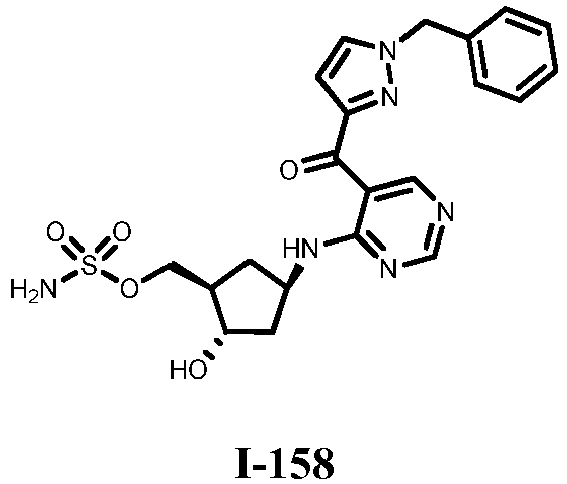 {(1R,2S,4R)-4-[(5-{[1-(3-fluorobenzyl)-1H-pyrazol-3-yl]carbonyl}pyrimidin-4-yl)amino]-2-hydroxycyclopentyl}methyl sulfamate of formula I-165;
 [(1R,2S,4R)-4-{[5-({1-[(5-chloro-2-furyl)methyl]-1H-pyrazol-3-yl}carbonyl)pyrimidin-4-yl]amino}-2-hydroxycyclopentyl]methyl sulfamate of formula I-180;
 [(1R,2R,4R)-4-({5-[(1-benzyl-1H-pyrazol-3-yl)carbonyl]pyrimidin-4-yl}amino)-3,3-difluoro-2-hydroxycyclopentyl]methyl sulfamate of formula I-203;
 {(1R,2S,4R)-4-[(5-{[1-(2-chlorobenzyl)-1H-pyrazol-3-yl]carbonyl}pyrimidin-4-yl)amino]-2-hydroxycyclopentyl}methyl sulfamate of formula I-206;
 {(1R,2S,4R)-4-[(5-{[1-(3-chlorobenzyl)-1H-pyrazol-3-yl]carbonyl}pyrimidin-4-yl)amino]-2-hydroxycyclopentyl}methyl sulfamate of formula I-215;
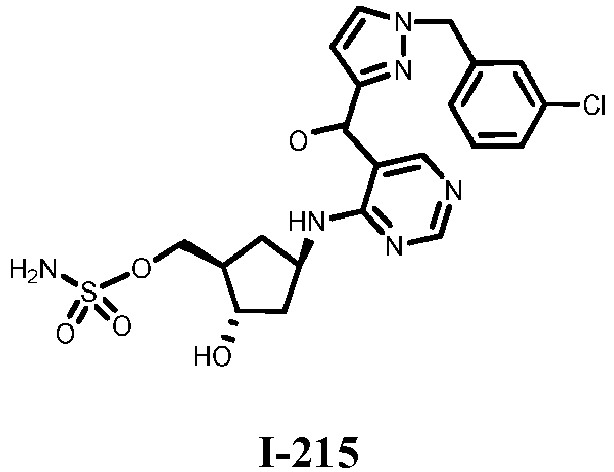 [(1R,2R,3S,4R)-4-({5-[(1-benzyl-1H-pyrrol-3-yl)carbonyl]pyrimidin-4-yl}amino)-2,3-dihydroxycyclopentyl]methyl sulfamate of formula I-217;
 [(1R,2R,3S,4R)-4-({5-[(1-benzyl-1H-pyrazol-3-yl)carbonyl]pyrimidin-4-yl}amino)-3-fluoro-2-hydroxycyclopentyl]methyl sulfamate of formula I-227;
 {(1R,2S,4R)-4-[(5-{[1-(3-cyclopropylprop-2-yn-1-yl)-1H-pyrazol-3-yl]carbonyl}pyrimidin-4-yl)amino]-2-hydroxycyclopentyl}methyl sulfamate of formula I-287;
 [(1R,2S,4R)-4-({5-[(1-benzyl-1H-pyrrol-3-yl)carbonyl]pyrimidin-4-yl}amino)-2-hydroxycyclopentyl]methyl sulfamate of formula I-300;
 [(1R,2R,3R,4R)-4-({5-[(1-benzyl-1H-pyrazol-3-yl)carbonyl]pyrimidin-4-yl}amino)-3-fluoro-2-hydroxycyclopentyl]methyl sulfamate of formula I-317;
 {(1R,2S,4R)-4-[(5-{[1-(3-bromobenzyl)-1H-pyrrol-3-yl]carbonyl}pyrimidin-4-yl)amino]-2-hydroxycyclopentyl}methyl sulfamate of formula I-333;
 [(1R,2S,4R)-4-{[5-({1-[(6-bromopyridin-2-yl)methyl]-1H-pyrazol-3-yl}carbonyl)pyrimidin-4-yl]amino}-2-hydroxycyclopentyl]methyl sulfamate of formula I-352;or a pharmaceutically acceptable salt thereof.
- A pharmaceutical composition comprising the compound of any of claims 1-14 or a pharmaceutically acceptable salt thereof and a pharmaceutically acceptable carrier.
- A compound of any of claims 1-14 or a pharmaceutically acceptable salt thereof, or a pharmaceutical composition of claim 15, for use in treating cancer.
- The compound, or a pharmaceutically acceptable salt thereof, or the pharmaceutical composition for use of claim 16, wherein the cancer is lung cancer, ovarian cancer, colorectal cancer, breast cancer, non-Hodgkin's lymphoma, B-cell lymphoma, or T-cell lymphoma.
Applications Claiming Priority (2)
| Application Number | Priority Date | Filing Date | Title |
|---|---|---|---|
| US201361842097P | 2013-07-02 | 2013-07-02 | |
| PCT/US2014/045129 WO2015002994A2 (en) | 2013-07-02 | 2014-07-01 | Heteroaryl compounds useful as inhibitors of sumo activating enzyme |
Publications (3)
| Publication Number | Publication Date |
|---|---|
| EP3016934A2 EP3016934A2 (en) | 2016-05-11 |
| EP3016934A4 EP3016934A4 (en) | 2016-12-14 |
| EP3016934B1 true EP3016934B1 (en) | 2018-01-10 |
Family
ID=52144279
Family Applications (1)
| Application Number | Title | Priority Date | Filing Date |
|---|---|---|---|
| EP14819587.8A Active EP3016934B1 (en) | 2013-07-02 | 2014-07-01 | Heteroaryl compounds useful as inhibitors of sumo activating enzyme |
Country Status (8)
| Country | Link |
|---|---|
| US (1) | US9695154B2 (en) |
| EP (1) | EP3016934B1 (en) |
| JP (1) | JP6378759B2 (en) |
| CN (1) | CN105492429A (en) |
| BR (1) | BR112015032902A8 (en) |
| CA (1) | CA2916468C (en) |
| EA (1) | EA032577B1 (en) |
| WO (1) | WO2015002994A2 (en) |
Families Citing this family (19)
| Publication number | Priority date | Publication date | Assignee | Title |
|---|---|---|---|---|
| US8008307B2 (en) | 2006-08-08 | 2011-08-30 | Millennium Pharmaceuticals, Inc. | Heteroaryl compounds useful as inhibitors of E1 activating enzymes |
| US9290500B2 (en) | 2012-02-17 | 2016-03-22 | Millennium Pharmaceuticals, Inc. | Pyrazolopyrimidinyl inhibitors of ubiquitin-activating enzyme |
| WO2014022744A1 (en) | 2012-08-03 | 2014-02-06 | Millennium Pharmaceuticals, Inc. | INDOLE-SUBSTITUTED PYRROLOPYRIMIDINYL INHIBITORS OF Uba6 |
| WO2015002994A2 (en) | 2013-07-02 | 2015-01-08 | Millennium Pharmaceuticals, Inc. | Heteroaryl compounds useful as inhibitors of sumo activating enzyme |
| HUE045748T2 (en) * | 2014-07-01 | 2020-01-28 | Millennium Pharm Inc | Heteroaryl compounds useful as inhibitors of sumo activating enzyme |
| KR101927375B1 (en) | 2016-04-20 | 2018-12-11 | 한국화학연구원 | Novel heterocyclic compound, preparation method thereof, and pharmaceutical composition for use in preventing or treating cancer containing the same as an active ingredient |
| CN105670066A (en) * | 2016-04-22 | 2016-06-15 | 宁波硫华聚合物有限公司 | Rubber accelerator, activator and magnesium oxide masterbatches and preparation method therefor |
| CN107586315B (en) * | 2016-07-08 | 2020-03-31 | 成都海创药业有限公司 | Chimeric molecule |
| US10875834B2 (en) | 2016-07-22 | 2020-12-29 | Virginia Commonwealth University | Prodrug and protected forms of 5-hydroxymethylfurfuranal (5-HMF) and its derivatives |
| US12097199B2 (en) | 2018-07-09 | 2024-09-24 | Takeda Pharmaceutical Company Limited | Administration of SUMO-activating enzyme inhibitor and anti-CD20 antibodies |
| WO2020023846A1 (en) * | 2018-07-27 | 2020-01-30 | Arcus Biosciences, Inc. | Pyridone a2r antagonists |
| WO2020028525A1 (en) * | 2018-07-31 | 2020-02-06 | City Of Hope | Sumo inhibitor compounds and uses thereof |
| WO2020176772A1 (en) | 2019-02-27 | 2020-09-03 | Millennium Pharmaceuticals, Inc. | Administration of sumo-activating enzyme inhibitor and checkpoint inhibitors |
| US20250042850A1 (en) * | 2021-01-25 | 2025-02-06 | Athos Therapeutics, Inc. | Pharmaceutical compounds and methods of making and using the same |
| WO2023073645A1 (en) | 2021-10-29 | 2023-05-04 | Takeda Pharmaceutical Company Limited | Therapy comprising anti-cd19 antibody and sumo-activating enzyme inhibitor |
| AU2023348878A1 (en) * | 2022-09-30 | 2025-04-03 | Wigen Biomedicine Technology (shanghai) Co., Ltd. | Compound as inhibitor for sumo activating enzyme |
| WO2024097736A1 (en) * | 2022-11-02 | 2024-05-10 | Arcus Biosciences, Inc. | Processes for preparing azolopyrimidine compounds |
| WO2024099438A1 (en) * | 2022-11-11 | 2024-05-16 | 微境生物医药科技(上海)有限公司 | Compounds as sumo activating enzyme inhibitors |
| CN116640068A (en) * | 2023-05-26 | 2023-08-25 | 康化(上海)新药研发有限公司 | A kind of synthetic method of (3-cyclopropyl-2-yn-1-yl) glycine benzyl ester |
Family Cites Families (45)
| Publication number | Priority date | Publication date | Assignee | Title |
|---|---|---|---|---|
| US5194446A (en) | 1989-06-12 | 1993-03-16 | A. H. Robins Company, Incorporated | Compounds having one or more aminosulfaonyloxy radicals useful as pharmaceuticals |
| WO1997005132A1 (en) | 1995-07-28 | 1997-02-13 | Cubist Pharmaceuticals, Inc. | Aminoacyl adenylate mimics as novel antimicrobial and antiparasitic agents |
| WO2003073989A2 (en) | 2002-02-28 | 2003-09-12 | Biota, Inc. | Nucleoside 5'-monophosphate mimics and their prodrugs |
| AU2003261237A1 (en) | 2002-07-24 | 2004-02-09 | Ptc Therapeutics, Inc. | Use of nucleoside compounds for nonsense suppression and the treatment of genetic diseases |
| US7291603B2 (en) | 2002-07-24 | 2007-11-06 | Ptc Therapeutics, Inc. | Nucleoside compounds and their use for treating cancer and diseases associated with somatic mutations |
| CN1310918C (en) | 2002-09-04 | 2007-04-18 | 先灵公司 | Novel pyrazolopyrimidines as cyclin dependent kinase inhibitors |
| US7196092B2 (en) | 2002-09-04 | 2007-03-27 | Schering Corporation | N-heteroaryl pyrazolopyrimidines as cyclin dependent kinase inhibitors |
| US7563798B2 (en) | 2002-09-04 | 2009-07-21 | Schering Corporation | Substituted pyrazolo[1,5-a]pyrimidines as protein kinase inhibitors |
| CA2497544C (en) | 2002-09-04 | 2010-11-02 | Schering Corporation | Pyrazolo[1,5-a]pyrimidines compounds as cyclin dependent kinase inhibitors |
| AU2003291024A1 (en) | 2002-11-13 | 2004-06-03 | Rigel Pharmaceuticals, Inc. | Rhodanine derivatives and pharmaceutical compositions containing them |
| US20070179161A1 (en) | 2003-03-31 | 2007-08-02 | Vernalis (Cambridge) Limited. | Pyrazolopyrimidine compounds and their use in medicine |
| JP2005008581A (en) | 2003-06-20 | 2005-01-13 | Kissei Pharmaceut Co Ltd | Novel pyrazolo [1,5-a] pyrimidine derivatives, pharmaceutical compositions containing the same, and uses thereof |
| WO2005037845A1 (en) | 2003-10-17 | 2005-04-28 | Rigel Pharmaceuticals, Inc. | Benzothiazole and thiazole[5,5-b] pyridine compositions and their use as ubiquitin ligase inhibitors |
| US20070105890A1 (en) | 2003-11-26 | 2007-05-10 | Dainippon Sumitomo Pharma Co., Ltd | Novel condensed imidazole derivative |
| WO2006002284A1 (en) | 2004-06-22 | 2006-01-05 | Rigel Pharmaceuticals, Inc. | Ubiquitin ligase inhibitors |
| JP5048520B2 (en) | 2005-02-04 | 2012-10-17 | ミレニアム ファーマシューティカルズ, インコーポレイテッド | Inhibitor of E1 activating enzyme |
| US7642266B2 (en) | 2005-10-06 | 2010-01-05 | Schering Corporation | Substituted pyrazolo[1,5-a]pyrimidines as protein kinase inhibitors |
| SG169369A1 (en) | 2006-02-02 | 2011-03-30 | Millennium Pharm Inc | Inhibitors of e1 activating enzymes |
| US8008307B2 (en) | 2006-08-08 | 2011-08-30 | Millennium Pharmaceuticals, Inc. | Heteroaryl compounds useful as inhibitors of E1 activating enzymes |
| ATE485276T1 (en) * | 2006-08-08 | 2010-11-15 | Millennium Pharm Inc | HETEROARYL COMPOUNDS AS INHIBITORS OF E1-ACTIVATE ENZYMES |
| CA2934114A1 (en) | 2007-06-12 | 2008-12-18 | Achaogen, Inc. | Antibacterial agents |
| WO2009082691A1 (en) | 2007-12-21 | 2009-07-02 | Board Of Regents, University Of Texas System | Dihydroorotate dehydrogenase inhibitors with selective anti-malarial activity |
| TW201020245A (en) | 2008-08-20 | 2010-06-01 | Schering Corp | Ethynyl-substituted pyridine and pyrimidine derivatives and their use in treating viral infections |
| CA2734486A1 (en) | 2008-08-20 | 2010-02-25 | Southern Research Institute | Substituted pyridine and pyrimidine derivatives and their use in treating viral infections |
| WO2010022126A1 (en) | 2008-08-20 | 2010-02-25 | Schering Corporation | Azo-substituted pyridine and pyrimidine derivatives and their use in treating viral infections |
| ES2439009T3 (en) | 2008-08-20 | 2014-01-21 | Merck Sharp & Dohme Corp. | Pyridine and pyrimidine derivatives substituted with ethenyl and their use in the treatment of viral infections |
| EP2342616A2 (en) | 2008-09-23 | 2011-07-13 | Alnylam Pharmaceuticals Inc. | Chemical modifications of monomers and oligonucleotides with cycloaddition |
| WO2010086040A1 (en) | 2009-01-29 | 2010-08-05 | Biomarin Iga, Ltd. | Pyrazolo-pyrimidines for treatment of duchenne muscular dystrophy |
| WO2010088518A2 (en) | 2009-01-31 | 2010-08-05 | Kalypsys, Inc. | Heterocyclic modulators of gpr119 for treatment of disease |
| UA108986C2 (en) | 2009-05-14 | 2015-07-10 | Мілленніум Фармасьютікалз, Інк. | Hydrochloride crystalline form ((1s,2s,4r)-4-{4-[(1s)-2,3-dihydro-1h-inden-1-ilamino]-7h-pirolo[2,3-d]pyrimidin-7il}-2-hydroxycyclopentil)methyl-sulphamate(configurations) |
| NZ598262A (en) | 2009-08-17 | 2014-05-30 | Sloan Kettering Inst Cancer | Heat shock protein binding compounds, compositions, and methods for making and using same |
| WO2011100131A2 (en) | 2010-01-28 | 2011-08-18 | Alnylam Pharmacuticals, Inc. | Monomers and oligonucleotides comprising cycloaddition adduct(s) |
| US9433621B2 (en) | 2010-02-18 | 2016-09-06 | Merck Sharp & Dohme Corp. | Substituted pyridine and pyrimidine derivatives and their use in treating viral infections |
| KR101939704B1 (en) | 2010-03-01 | 2019-01-17 | 지티엑스, 인코포레이티드 | Compounds for treatment of cancer |
| KR101764952B1 (en) | 2010-07-29 | 2017-08-03 | 리겔 파마슈티칼스, 인크. | Ampk-activating heterocyclic compounds and methods for using the same |
| US20120077814A1 (en) | 2010-09-10 | 2012-03-29 | Zhong Wang | Sulfonamide, sulfamate, and sulfamothioate derivatives |
| SG11201400102WA (en) * | 2011-08-24 | 2014-03-28 | Millennium Pharm Inc | Inhibitors of nedd8-activating enzyme |
| WO2013052814A2 (en) * | 2011-10-07 | 2013-04-11 | Millennium Pharmaceuticals, Inc. | E1 enzyme mutants and uses thereof |
| US9221809B2 (en) | 2011-10-31 | 2015-12-29 | Merck Sharp & Dohme Corp. | Aminopyrimidinones as interleukin receptor-associated kinase inhibitors |
| US9290500B2 (en) | 2012-02-17 | 2016-03-22 | Millennium Pharmaceuticals, Inc. | Pyrazolopyrimidinyl inhibitors of ubiquitin-activating enzyme |
| US20150057243A1 (en) | 2012-04-02 | 2015-02-26 | Northern University | Compositions and Methods for the Inhibition of Methyltransferases |
| WO2015002994A2 (en) | 2013-07-02 | 2015-01-08 | Millennium Pharmaceuticals, Inc. | Heteroaryl compounds useful as inhibitors of sumo activating enzyme |
| US20150087673A1 (en) | 2013-09-26 | 2015-03-26 | Rigel Pharmaceuticals, Inc. | Methods for using and biomarkers for ampk-activating compounds |
| KR20160063366A (en) | 2013-10-21 | 2016-06-03 | 메르크 파텐트 게엠베하 | Heteroaryl compounds as btk inhibitorsand uses thereof |
| WO2015110999A1 (en) | 2014-01-24 | 2015-07-30 | Piramal Enterprises Limited | Ezh2 inhibitors and uses thereof |
-
2014
- 2014-07-01 WO PCT/US2014/045129 patent/WO2015002994A2/en not_active Ceased
- 2014-07-01 EA EA201690129A patent/EA032577B1/en not_active IP Right Cessation
- 2014-07-01 CA CA2916468A patent/CA2916468C/en not_active Expired - Fee Related
- 2014-07-01 JP JP2016524326A patent/JP6378759B2/en not_active Expired - Fee Related
- 2014-07-01 BR BR112015032902A patent/BR112015032902A8/en not_active Application Discontinuation
- 2014-07-01 EP EP14819587.8A patent/EP3016934B1/en active Active
- 2014-07-01 US US14/901,809 patent/US9695154B2/en active Active
- 2014-07-01 CN CN201480046426.9A patent/CN105492429A/en active Pending
Non-Patent Citations (1)
| Title |
|---|
| None * |
Also Published As
| Publication number | Publication date |
|---|---|
| CA2916468A1 (en) | 2015-01-08 |
| US20160355504A1 (en) | 2016-12-08 |
| EP3016934A2 (en) | 2016-05-11 |
| WO2015002994A2 (en) | 2015-01-08 |
| EA032577B1 (en) | 2019-06-28 |
| JP2016523925A (en) | 2016-08-12 |
| JP6378759B2 (en) | 2018-08-22 |
| CA2916468C (en) | 2019-07-23 |
| CN105492429A (en) | 2016-04-13 |
| BR112015032902A8 (en) | 2019-12-24 |
| EP3016934A4 (en) | 2016-12-14 |
| US9695154B2 (en) | 2017-07-04 |
| EA201690129A1 (en) | 2016-06-30 |
| WO2015002994A3 (en) | 2015-05-28 |
Similar Documents
| Publication | Publication Date | Title |
|---|---|---|
| US20230293522A1 (en) | Heteroaryl compounds useful as inhibitors of sumo activating enzyme | |
| US9695154B2 (en) | Heteroaryl inhibitors of sumo activating enzyme | |
| US11572356B2 (en) | Biaryl inhibitors of Bruton's tyrosine kinase | |
| JP6845897B2 (en) | Tetrahydroquinoline composition as a BET bromodomain inhibitor | |
| US11999716B2 (en) | WDR5 inhibitors and modulators | |
| EP4267574B1 (en) | 6-heteroaryloxy benzimidazoles and azabenzimidazoles as jak2 inhibitors | |
| US10844044B2 (en) | WDR5 inhibitors and modulators | |
| US20090143353A1 (en) | Antifungal bicyclic hetero ring compounds | |
| US20250388605A1 (en) | Heterobifunctional compounds and methods of treating disease | |
| US20260078131A1 (en) | Pyrrolo-pyridazine inhibitors of jak2 | |
| HK40058075A (en) | Intermediates and processes for the preparation of biaryl compounds | |
| WO2025096956A1 (en) | Dcn-1 modulating compounds and methods of use thereof | |
| HK40041129A (en) | Tetrahydroquinoline derivatives for use as bet inhibitors | |
| HK1228786A1 (en) | Tetrahydroquinoline compositions as bet bromodomain inhibitors | |
| HK1228786B (en) | Tetrahydroquinoline compositions as bet bromodomain inhibitors |
Legal Events
| Date | Code | Title | Description |
|---|---|---|---|
| PUAI | Public reference made under article 153(3) epc to a published international application that has entered the european phase |
Free format text: ORIGINAL CODE: 0009012 |
|
| 17P | Request for examination filed |
Effective date: 20160119 |
|
| AK | Designated contracting states |
Kind code of ref document: A2 Designated state(s): AL AT BE BG CH CY CZ DE DK EE ES FI FR GB GR HR HU IE IS IT LI LT LU LV MC MK MT NL NO PL PT RO RS SE SI SK SM TR |
|
| AX | Request for extension of the european patent |
Extension state: BA ME |
|
| RIN1 | Information on inventor provided before grant (corrected) |
Inventor name: MCINTYRE, CHARLES Inventor name: DUFFEY, MATTHEW, O. Inventor name: ITO, MITSUHIRO Inventor name: XU, HE Inventor name: MIZUTANI, HIROTAKE Inventor name: ENGLAND, DYLAN, B. Inventor name: LANGSTON, STEVEN, P. Inventor name: HU, ZHIGEN |
|
| A4 | Supplementary search report drawn up and despatched |
Effective date: 20161110 |
|
| RIC1 | Information provided on ipc code assigned before grant |
Ipc: C07D 239/48 20060101AFI20161104BHEP |
|
| GRAP | Despatch of communication of intention to grant a patent |
Free format text: ORIGINAL CODE: EPIDOSNIGR1 |
|
| INTG | Intention to grant announced |
Effective date: 20170810 |
|
| GRAS | Grant fee paid |
Free format text: ORIGINAL CODE: EPIDOSNIGR3 |
|
| GRAA | (expected) grant |
Free format text: ORIGINAL CODE: 0009210 |
|
| AK | Designated contracting states |
Kind code of ref document: B1 Designated state(s): AL AT BE BG CH CY CZ DE DK EE ES FI FR GB GR HR HU IE IS IT LI LT LU LV MC MK MT NL NO PL PT RO RS SE SI SK SM TR |
|
| AX | Request for extension of the european patent |
Extension state: BA ME |
|
| REG | Reference to a national code |
Ref country code: CH Ref legal event code: EP Ref country code: AT Ref legal event code: REF Ref document number: 962249 Country of ref document: AT Kind code of ref document: T Effective date: 20180115 |
|
| REG | Reference to a national code |
Ref country code: IE Ref legal event code: FG4D |
|
| REG | Reference to a national code |
Ref country code: DE Ref legal event code: R096 Ref document number: 602014019750 Country of ref document: DE |
|
| REG | Reference to a national code |
Ref country code: NL Ref legal event code: MP Effective date: 20180110 |
|
| REG | Reference to a national code |
Ref country code: AT Ref legal event code: MK05 Ref document number: 962249 Country of ref document: AT Kind code of ref document: T Effective date: 20180110 |
|
| PG25 | Lapsed in a contracting state [announced via postgrant information from national office to epo] |
Ref country code: NL Free format text: LAPSE BECAUSE OF FAILURE TO SUBMIT A TRANSLATION OF THE DESCRIPTION OR TO PAY THE FEE WITHIN THE PRESCRIBED TIME-LIMIT Effective date: 20180110 |
|
| REG | Reference to a national code |
Ref country code: FR Ref legal event code: PLFP Year of fee payment: 5 |
|
| PG25 | Lapsed in a contracting state [announced via postgrant information from national office to epo] |
Ref country code: FI Free format text: LAPSE BECAUSE OF FAILURE TO SUBMIT A TRANSLATION OF THE DESCRIPTION OR TO PAY THE FEE WITHIN THE PRESCRIBED TIME-LIMIT Effective date: 20180110 Ref country code: CY Free format text: LAPSE BECAUSE OF FAILURE TO SUBMIT A TRANSLATION OF THE DESCRIPTION OR TO PAY THE FEE WITHIN THE PRESCRIBED TIME-LIMIT Effective date: 20180110 Ref country code: LT Free format text: LAPSE BECAUSE OF FAILURE TO SUBMIT A TRANSLATION OF THE DESCRIPTION OR TO PAY THE FEE WITHIN THE PRESCRIBED TIME-LIMIT Effective date: 20180110 Ref country code: ES Free format text: LAPSE BECAUSE OF FAILURE TO SUBMIT A TRANSLATION OF THE DESCRIPTION OR TO PAY THE FEE WITHIN THE PRESCRIBED TIME-LIMIT Effective date: 20180110 Ref country code: HR Free format text: LAPSE BECAUSE OF FAILURE TO SUBMIT A TRANSLATION OF THE DESCRIPTION OR TO PAY THE FEE WITHIN THE PRESCRIBED TIME-LIMIT Effective date: 20180110 Ref country code: NO Free format text: LAPSE BECAUSE OF FAILURE TO SUBMIT A TRANSLATION OF THE DESCRIPTION OR TO PAY THE FEE WITHIN THE PRESCRIBED TIME-LIMIT Effective date: 20180410 |
|
| PG25 | Lapsed in a contracting state [announced via postgrant information from national office to epo] |
Ref country code: GR Free format text: LAPSE BECAUSE OF FAILURE TO SUBMIT A TRANSLATION OF THE DESCRIPTION OR TO PAY THE FEE WITHIN THE PRESCRIBED TIME-LIMIT Effective date: 20180411 Ref country code: BG Free format text: LAPSE BECAUSE OF FAILURE TO SUBMIT A TRANSLATION OF THE DESCRIPTION OR TO PAY THE FEE WITHIN THE PRESCRIBED TIME-LIMIT Effective date: 20180410 Ref country code: RS Free format text: LAPSE BECAUSE OF FAILURE TO SUBMIT A TRANSLATION OF THE DESCRIPTION OR TO PAY THE FEE WITHIN THE PRESCRIBED TIME-LIMIT Effective date: 20180110 Ref country code: AT Free format text: LAPSE BECAUSE OF FAILURE TO SUBMIT A TRANSLATION OF THE DESCRIPTION OR TO PAY THE FEE WITHIN THE PRESCRIBED TIME-LIMIT Effective date: 20180110 Ref country code: IS Free format text: LAPSE BECAUSE OF FAILURE TO SUBMIT A TRANSLATION OF THE DESCRIPTION OR TO PAY THE FEE WITHIN THE PRESCRIBED TIME-LIMIT Effective date: 20180510 Ref country code: PL Free format text: LAPSE BECAUSE OF FAILURE TO SUBMIT A TRANSLATION OF THE DESCRIPTION OR TO PAY THE FEE WITHIN THE PRESCRIBED TIME-LIMIT Effective date: 20180110 Ref country code: SE Free format text: LAPSE BECAUSE OF FAILURE TO SUBMIT A TRANSLATION OF THE DESCRIPTION OR TO PAY THE FEE WITHIN THE PRESCRIBED TIME-LIMIT Effective date: 20180110 Ref country code: LV Free format text: LAPSE BECAUSE OF FAILURE TO SUBMIT A TRANSLATION OF THE DESCRIPTION OR TO PAY THE FEE WITHIN THE PRESCRIBED TIME-LIMIT Effective date: 20180110 |
|
| REG | Reference to a national code |
Ref country code: DE Ref legal event code: R097 Ref document number: 602014019750 Country of ref document: DE |
|
| PG25 | Lapsed in a contracting state [announced via postgrant information from national office to epo] |
Ref country code: EE Free format text: LAPSE BECAUSE OF FAILURE TO SUBMIT A TRANSLATION OF THE DESCRIPTION OR TO PAY THE FEE WITHIN THE PRESCRIBED TIME-LIMIT Effective date: 20180110 Ref country code: IT Free format text: LAPSE BECAUSE OF FAILURE TO SUBMIT A TRANSLATION OF THE DESCRIPTION OR TO PAY THE FEE WITHIN THE PRESCRIBED TIME-LIMIT Effective date: 20180110 Ref country code: RO Free format text: LAPSE BECAUSE OF FAILURE TO SUBMIT A TRANSLATION OF THE DESCRIPTION OR TO PAY THE FEE WITHIN THE PRESCRIBED TIME-LIMIT Effective date: 20180110 Ref country code: AL Free format text: LAPSE BECAUSE OF FAILURE TO SUBMIT A TRANSLATION OF THE DESCRIPTION OR TO PAY THE FEE WITHIN THE PRESCRIBED TIME-LIMIT Effective date: 20180110 |
|
| PLBE | No opposition filed within time limit |
Free format text: ORIGINAL CODE: 0009261 |
|
| STAA | Information on the status of an ep patent application or granted ep patent |
Free format text: STATUS: NO OPPOSITION FILED WITHIN TIME LIMIT |
|
| PG25 | Lapsed in a contracting state [announced via postgrant information from national office to epo] |
Ref country code: CZ Free format text: LAPSE BECAUSE OF FAILURE TO SUBMIT A TRANSLATION OF THE DESCRIPTION OR TO PAY THE FEE WITHIN THE PRESCRIBED TIME-LIMIT Effective date: 20180110 Ref country code: SK Free format text: LAPSE BECAUSE OF FAILURE TO SUBMIT A TRANSLATION OF THE DESCRIPTION OR TO PAY THE FEE WITHIN THE PRESCRIBED TIME-LIMIT Effective date: 20180110 Ref country code: SM Free format text: LAPSE BECAUSE OF FAILURE TO SUBMIT A TRANSLATION OF THE DESCRIPTION OR TO PAY THE FEE WITHIN THE PRESCRIBED TIME-LIMIT Effective date: 20180110 Ref country code: DK Free format text: LAPSE BECAUSE OF FAILURE TO SUBMIT A TRANSLATION OF THE DESCRIPTION OR TO PAY THE FEE WITHIN THE PRESCRIBED TIME-LIMIT Effective date: 20180110 |
|
| 26N | No opposition filed |
Effective date: 20181011 |
|
| PG25 | Lapsed in a contracting state [announced via postgrant information from national office to epo] |
Ref country code: SI Free format text: LAPSE BECAUSE OF FAILURE TO SUBMIT A TRANSLATION OF THE DESCRIPTION OR TO PAY THE FEE WITHIN THE PRESCRIBED TIME-LIMIT Effective date: 20180110 |
|
| PG25 | Lapsed in a contracting state [announced via postgrant information from national office to epo] |
Ref country code: LU Free format text: LAPSE BECAUSE OF NON-PAYMENT OF DUE FEES Effective date: 20180701 Ref country code: MC Free format text: LAPSE BECAUSE OF FAILURE TO SUBMIT A TRANSLATION OF THE DESCRIPTION OR TO PAY THE FEE WITHIN THE PRESCRIBED TIME-LIMIT Effective date: 20180110 |
|
| REG | Reference to a national code |
Ref country code: BE Ref legal event code: MM Effective date: 20180731 |
|
| REG | Reference to a national code |
Ref country code: IE Ref legal event code: MM4A |
|
| PG25 | Lapsed in a contracting state [announced via postgrant information from national office to epo] |
Ref country code: IE Free format text: LAPSE BECAUSE OF NON-PAYMENT OF DUE FEES Effective date: 20180701 |
|
| PG25 | Lapsed in a contracting state [announced via postgrant information from national office to epo] |
Ref country code: BE Free format text: LAPSE BECAUSE OF NON-PAYMENT OF DUE FEES Effective date: 20180731 |
|
| PGFP | Annual fee paid to national office [announced via postgrant information from national office to epo] |
Ref country code: FR Payment date: 20190725 Year of fee payment: 6 Ref country code: DE Payment date: 20190729 Year of fee payment: 6 |
|
| PGFP | Annual fee paid to national office [announced via postgrant information from national office to epo] |
Ref country code: GB Payment date: 20190729 Year of fee payment: 6 |
|
| PG25 | Lapsed in a contracting state [announced via postgrant information from national office to epo] |
Ref country code: MT Free format text: LAPSE BECAUSE OF NON-PAYMENT OF DUE FEES Effective date: 20180701 |
|
| PGFP | Annual fee paid to national office [announced via postgrant information from national office to epo] |
Ref country code: CH Payment date: 20190801 Year of fee payment: 6 |
|
| PG25 | Lapsed in a contracting state [announced via postgrant information from national office to epo] |
Ref country code: TR Free format text: LAPSE BECAUSE OF FAILURE TO SUBMIT A TRANSLATION OF THE DESCRIPTION OR TO PAY THE FEE WITHIN THE PRESCRIBED TIME-LIMIT Effective date: 20180110 |
|
| PG25 | Lapsed in a contracting state [announced via postgrant information from national office to epo] |
Ref country code: PT Free format text: LAPSE BECAUSE OF FAILURE TO SUBMIT A TRANSLATION OF THE DESCRIPTION OR TO PAY THE FEE WITHIN THE PRESCRIBED TIME-LIMIT Effective date: 20180110 |
|
| PG25 | Lapsed in a contracting state [announced via postgrant information from national office to epo] |
Ref country code: HU Free format text: LAPSE BECAUSE OF FAILURE TO SUBMIT A TRANSLATION OF THE DESCRIPTION OR TO PAY THE FEE WITHIN THE PRESCRIBED TIME-LIMIT; INVALID AB INITIO Effective date: 20140701 Ref country code: MK Free format text: LAPSE BECAUSE OF NON-PAYMENT OF DUE FEES Effective date: 20180110 |
|
| REG | Reference to a national code |
Ref country code: DE Ref legal event code: R119 Ref document number: 602014019750 Country of ref document: DE |
|
| REG | Reference to a national code |
Ref country code: CH Ref legal event code: PL |
|
| GBPC | Gb: european patent ceased through non-payment of renewal fee |
Effective date: 20200701 |
|
| PG25 | Lapsed in a contracting state [announced via postgrant information from national office to epo] |
Ref country code: GB Free format text: LAPSE BECAUSE OF NON-PAYMENT OF DUE FEES Effective date: 20200701 Ref country code: CH Free format text: LAPSE BECAUSE OF NON-PAYMENT OF DUE FEES Effective date: 20200731 Ref country code: LI Free format text: LAPSE BECAUSE OF NON-PAYMENT OF DUE FEES Effective date: 20200731 Ref country code: FR Free format text: LAPSE BECAUSE OF NON-PAYMENT OF DUE FEES Effective date: 20200731 |
|
| PG25 | Lapsed in a contracting state [announced via postgrant information from national office to epo] |
Ref country code: DE Free format text: LAPSE BECAUSE OF NON-PAYMENT OF DUE FEES Effective date: 20210202 |