EP3016639B1 - Verfahren zur herstellung injizierbarer calciumpolyphosphatgele - Google Patents
Verfahren zur herstellung injizierbarer calciumpolyphosphatgele Download PDFInfo
- Publication number
- EP3016639B1 EP3016639B1 EP14820397.9A EP14820397A EP3016639B1 EP 3016639 B1 EP3016639 B1 EP 3016639B1 EP 14820397 A EP14820397 A EP 14820397A EP 3016639 B1 EP3016639 B1 EP 3016639B1
- Authority
- EP
- European Patent Office
- Prior art keywords
- gel
- cpp
- calcium polyphosphate
- amorphous
- crystalline
- Prior art date
- Legal status (The legal status is an assumption and is not a legal conclusion. Google has not performed a legal analysis and makes no representation as to the accuracy of the status listed.)
- Active
Links
Images



Classifications
-
- A—HUMAN NECESSITIES
- A61—MEDICAL OR VETERINARY SCIENCE; HYGIENE
- A61L—METHODS OR APPARATUS FOR STERILISING MATERIALS OR OBJECTS IN GENERAL; DISINFECTION, STERILISATION OR DEODORISATION OF AIR; CHEMICAL ASPECTS OF BANDAGES, DRESSINGS, ABSORBENT PADS OR SURGICAL ARTICLES; MATERIALS FOR BANDAGES, DRESSINGS, ABSORBENT PADS OR SURGICAL ARTICLES
- A61L27/00—Materials for grafts or prostheses or for coating grafts or prostheses
- A61L27/02—Inorganic materials
- A61L27/12—Phosphorus-containing materials, e.g. apatite
-
- A—HUMAN NECESSITIES
- A61—MEDICAL OR VETERINARY SCIENCE; HYGIENE
- A61K—PREPARATIONS FOR MEDICAL, DENTAL OR TOILETRY PURPOSES
- A61K9/00—Medicinal preparations characterised by special physical form
- A61K9/14—Particulate form, e.g. powders, Processes for size reducing of pure drugs or the resulting products, Pure drug nanoparticles
- A61K9/16—Agglomerates; Granulates; Microbeadlets ; Microspheres; Pellets; Solid products obtained by spray drying, spray freeze drying, spray congealing,(multiple) emulsion solvent evaporation or extraction
- A61K9/1605—Excipients; Inactive ingredients
- A61K9/1629—Organic macromolecular compounds
- A61K9/1652—Polysaccharides, e.g. alginate, cellulose derivatives; Cyclodextrin
-
- A—HUMAN NECESSITIES
- A61—MEDICAL OR VETERINARY SCIENCE; HYGIENE
- A61K—PREPARATIONS FOR MEDICAL, DENTAL OR TOILETRY PURPOSES
- A61K9/00—Medicinal preparations characterised by special physical form
- A61K9/48—Preparations in capsules, e.g. of gelatin, of chocolate
- A61K9/50—Microcapsules having a gas, liquid or semi-solid filling; Solid microparticles or pellets surrounded by a distinct coating layer, e.g. coated microspheres, coated drug crystals
- A61K9/5073—Microcapsules having a gas, liquid or semi-solid filling; Solid microparticles or pellets surrounded by a distinct coating layer, e.g. coated microspheres, coated drug crystals having two or more different coatings optionally including drug-containing subcoatings
-
- A—HUMAN NECESSITIES
- A61—MEDICAL OR VETERINARY SCIENCE; HYGIENE
- A61L—METHODS OR APPARATUS FOR STERILISING MATERIALS OR OBJECTS IN GENERAL; DISINFECTION, STERILISATION OR DEODORISATION OF AIR; CHEMICAL ASPECTS OF BANDAGES, DRESSINGS, ABSORBENT PADS OR SURGICAL ARTICLES; MATERIALS FOR BANDAGES, DRESSINGS, ABSORBENT PADS OR SURGICAL ARTICLES
- A61L27/00—Materials for grafts or prostheses or for coating grafts or prostheses
- A61L27/50—Materials characterised by their function or physical properties, e.g. injectable or lubricating compositions, shape-memory materials, surface modified materials
- A61L27/52—Hydrogels or hydrocolloids
-
- A—HUMAN NECESSITIES
- A61—MEDICAL OR VETERINARY SCIENCE; HYGIENE
- A61L—METHODS OR APPARATUS FOR STERILISING MATERIALS OR OBJECTS IN GENERAL; DISINFECTION, STERILISATION OR DEODORISATION OF AIR; CHEMICAL ASPECTS OF BANDAGES, DRESSINGS, ABSORBENT PADS OR SURGICAL ARTICLES; MATERIALS FOR BANDAGES, DRESSINGS, ABSORBENT PADS OR SURGICAL ARTICLES
- A61L27/00—Materials for grafts or prostheses or for coating grafts or prostheses
- A61L27/50—Materials characterised by their function or physical properties, e.g. injectable or lubricating compositions, shape-memory materials, surface modified materials
- A61L27/54—Biologically active materials, e.g. therapeutic substances
-
- A—HUMAN NECESSITIES
- A61—MEDICAL OR VETERINARY SCIENCE; HYGIENE
- A61L—METHODS OR APPARATUS FOR STERILISING MATERIALS OR OBJECTS IN GENERAL; DISINFECTION, STERILISATION OR DEODORISATION OF AIR; CHEMICAL ASPECTS OF BANDAGES, DRESSINGS, ABSORBENT PADS OR SURGICAL ARTICLES; MATERIALS FOR BANDAGES, DRESSINGS, ABSORBENT PADS OR SURGICAL ARTICLES
- A61L2400/00—Materials characterised by their function or physical properties
- A61L2400/06—Flowable or injectable implant compositions
-
- A—HUMAN NECESSITIES
- A61—MEDICAL OR VETERINARY SCIENCE; HYGIENE
- A61L—METHODS OR APPARATUS FOR STERILISING MATERIALS OR OBJECTS IN GENERAL; DISINFECTION, STERILISATION OR DEODORISATION OF AIR; CHEMICAL ASPECTS OF BANDAGES, DRESSINGS, ABSORBENT PADS OR SURGICAL ARTICLES; MATERIALS FOR BANDAGES, DRESSINGS, ABSORBENT PADS OR SURGICAL ARTICLES
- A61L2430/00—Materials or treatment for tissue regeneration
- A61L2430/02—Materials or treatment for tissue regeneration for reconstruction of bones; weight-bearing implants
-
- A—HUMAN NECESSITIES
- A61—MEDICAL OR VETERINARY SCIENCE; HYGIENE
- A61L—METHODS OR APPARATUS FOR STERILISING MATERIALS OR OBJECTS IN GENERAL; DISINFECTION, STERILISATION OR DEODORISATION OF AIR; CHEMICAL ASPECTS OF BANDAGES, DRESSINGS, ABSORBENT PADS OR SURGICAL ARTICLES; MATERIALS FOR BANDAGES, DRESSINGS, ABSORBENT PADS OR SURGICAL ARTICLES
- A61L2430/00—Materials or treatment for tissue regeneration
- A61L2430/34—Materials or treatment for tissue regeneration for soft tissue reconstruction
Definitions
- the present invention relates to the preparation of amorphous calcium polyphosphate (CPP). More specifically, the present invention relates to calcium polyphosphate in a gel form.
- the gel can be used in an injectable, shapable, highly viscous, bone graft scaffold for both bone and soft tissue engineering. From TOSHIHIRO KASUGA ET AL CHEMISTRY LETTERS, CHEMICAL SOCIETY OF JAPAN, 5 August 2001 (2001-08-05), pages 820-821 , it is known that the reaction of fine-size powders of Ca(PO 3 ) 2 glass with distilled water leads to the formation of a gel.
- the present invention provides a gel for bone or soft tissue repair of a patient according to claims 1-9.
- the present invention provides a method of making an injectable material for bone or soft tissue repair of a patient according to claims 10-12.
- This invention is generally directed to methods for preparing an injectable inorganic ceramic gel composed of amorphous calcium polyphosphate (CPP) powder ceramics.
- CPP calcium polyphosphate
- the method includes a defined sintering schedule to prepare amorphous CPP frits. Before sintering, different ions and minor elements can be incorporated into the amorphous frits.
- This method also includes preparation of injectable CPP gels by dissolving CPP powders of various sizes and shapes in solutions.
- the solutions can be sterilized water, buffered solutions with or without different salts at a variety of concentrations, different ionic strengths, and ranges of different pH values.
- An amorphous CPP powder with a fine particle size such that the powder is completely soluble in water represents an inventive first step in the manufacture of CPP gels to be utilized for therapeutic purposes.
- the term "about,” means “approximately but not necessarily equal to,” and when used in the context of a numerical value or range set forth means a variation of ⁇ 15%, or less, of the numerical value. For example, a value differing by ⁇ 15%, ⁇ 14%, ⁇ 10%, or ⁇ 5%, among others, would satisfy the definition of "about.”
- CPP gels can be used as a matrix for mixing different materials, including but not limited to inorganic chemicals and compounds, organic molecules, polymers, and biological molecules such as amino acids, nucleotides, nucleic acids, enzymes and other proteins, and cultured cells.
- the CPP gel used alone or mixed with other materials, can be used for bone and soft tissue engineering, such as bone defect healing, medical device surface fabrication, cartilage repair, muscle repair, tendon and ligament repair and wound healing.
- CPP gelation composites can be formulated to a desired mechanical strength and pore size range suitable for a particular application.
- one method involves methods including but not limited to sintering CPP powders, grinding frits, incorporating different biomaterials by for instance soaking, and molding. Each of these steps can be modified to influence viscoelasticity, mechanical strength, porosity, pore size, and interconnectivity of the pore network. Further, if cells are included in the gel, the velocity and pattern of cell adhesion, proliferation and differentiation can be controlled by modification of the characteristics of the gel in the preceding list.
- a CPP gel is biocompatible and can be used for biodegradable fracture fixation implants and degradable anchoring systems for temporary stabilization of bone-interfacing implants designed for fixation by bony in-growth.
- CPP gel can be used in combination with other bone ceramics and with bioactive glass, or with combinations of these types of materials.
- materials include but are not limited to hydroxyapatite, tricalcium polyphosphate, calcium sulfate, calcium carbonate, calcium chloride, and so forth.
- the formed composites can be used as a new bone-like bone graft substitute, which is of higher viscoelasticity, higher adhesion, desired pore size, good biocompatibility, highly adjustable mechanical strength and biodegradation.
- injectable bone grafts can be easily delivered to the lesion site through a regular syringe, pipet, or injection gun, which is an advantage conferred by the fact that the bone-filling gel is shapeable and flexible.
- the invention relates to a combined use of CPP gel as a targeted and local drug and stem cell delivery tool.
- Molecules or cells of interest can be soaked into the gel matrix and the complex can be introduced to a site in or on a body, resulting in the delivery of the material of interest.
- antibiotics such as those selected from the families of minoglycosides, ansamycins, carbapenems, cephalosporins, glycopeptides, lincosamides, lipopeptides, macrolides, penicillins, tetracyclines, and others; growth factors, such as angiopoietin(Ang), bone morphogenetic proteins (BMPs), erythropoietin (EPO), fibroblast growth factor (FGF), growth differentiation factor-9 (GDF9), insulin-like growth factor (IGF), nerve growth factor (NGF) and other neurotrophins, platelet-derived growth factor (PDGF), transforming growth factor alpha(TGF- ⁇ ) , transforming growth factor beta(TGF- ⁇ ), vascular endothelial growth factor (VEGF), placental growth factor (PIGF), and others; and compounds of another pharmaceutical genus.
- antibiotics such as those selected from the families of minoglycosides, ansamycins, carbapenem
- cells can be soaked into the matrix and delivered to the site of interest.
- Cell types could be any type of cell or cells from humans or animals. They can be either well-differentiated cells (from commercially-available cell lines or isolated from animal or human tissues) or stem cells found in any multicellular organism that can divide (through mitosis) and differentiate into diverse specialized cell types and can self-renew to produce more stem cells.
- the stem cells can either be embryonic stem cells or adult stem cells, which are found in various tissues.
- inorganic powder material means a powder of an inorganic or ceramic material such as for example calcium polyphosphate.
- the invention disclosed herein is made possible by the discovery of the mechanism acting during CPP gelation and the effects of amorphous CPP length and particle size on the physiochemical properties of a CPP gel. This discovery has resulted in the design of calcinations and grinding procedures that lead to the reliable formation of injectable CPP scaffolds.
- Fig. 1A illustrates the formation of an amorphous CPP gel 101 when amorphous CPP powder is thoroughly mixed in distilled water and the continuing phase of viscous CPP gel is separated from water.
- Amorphous CPP powders can be made using methods that have been described previously in detail ( Filiaggi M. J. et al., Bioceramics 11:341-344,1998 ; and Pilliar R. M. et al., Biomaterials 22:963-972, 2001 ).
- Amorphous CPP frits are produced by pre-calcining calcium phosphate monobasic monohydrate crystals (Ca[H2PO4]2:H2O) followed by a complete calcination for about 4 to 72 hours, or about 4 to about 16 hours, or about 8 to about 24 hours, or about 8 to about 12 hours, or about 9 to about 12 hours, or about 9 to about 11 hours, more preferably about 10 hours at a temperature of about 300°C to about 700°C, preferably about 400°C to about 600°C, more preferably about 475°C to about 525 °C, more preferably about 500°C.
- This process results in the formation of CPP following the reaction n Ca(H 2 PO 4 ) 2 :H 2 O ⁇ [Ca(PO 3 ) 2 ] n + 3 n H 2 O.
- the method involves forming a gel-paste structure 101 in a liquid comprising at least one of distilled water, buffer, and/or other water solutions, including soaking an amount of amorphous calcium phosphate with an amount of at least one other chemical entity such as another amorphous inorganic ceramic powder, a crystalline inorganic ceramic powder, a metal, and a polymer.
- the soaking temperature is preferably from about 25°C to about 60°C.
- the soaking temperature may be about 25°C, or it may be about 60°C.
- Bioceramics powders are well suited for this application due to the resultant biocompatible gel or ceramic.
- the sources of bioceramics powders are such materials, alone or in combination, as hydroxyapatite, octacalcium phosphate, beta-tricalciumphosphate (whitlockite), alpha-tricalcium phosphate, amorphous calcium phosphate, monocalcium phosphate monohydrate, anhydrous monocalcium phosphate, dicalciumphosphatedihydrate (brushite), anhydrous dicalcium phosphate (monetite), tetracalcium phosphate, bioglass, silica ceramics, oxide ceramics, and carbon fiber.
- Suitable metals include, but are not limited to, for instance one or more of magnesium, magnesium alloy, titanium, titanium alloy, cobalt-chromium alloy, and stainless steel.
- Organic compounds may also be added to the gel. These include but are not limited to: at least one of a carboxylate, a sulfate, a sulfonate, a phosphate, an amine, urea, an amide, an alkylene oxide diol, an alhylene oxide diamine, a carbonate, a lactone, an ethersulfone, a vinyl, a peptide, a dimethacrylate, a saccharide, a urethane, a sulfone, an ester, an ethylene, propylene, a styrene, silicone, acrylonitrile-butadienestyrene, butadiene, an isoprene, methylmethacrylate, vinylacetate, acrylonitrile, vinyl cloride, ethylene terephtalate, an olefin, a vinyl derivative, bisphenol A, bisphenol A derviatives, an oligosaccharide,
- the CPP is then melted at preferably about 1100°C to about 1300°C, preferably about 1100°C, for about 10 minutes to about 360 minutes, or for about 60 to about 180 minutes, or for about 60 minutes to about 120 minutes, or from about 90 to about 120 minutes, and quenched in deionized distilled water at room temperature to produce amorphous CPP.
- the resulting amorphous CPP frit may be ground in a planetary ball mill, such as one sold by Fritsch Planetary Micro Mill, and subsequently screened using laboratory test mesh sieves to separate out particles that are smaller than about 1 mm in diameter, preferably using a 200 mesh sieve, preferably isolating particles about 75 ⁇ m or smaller.
- powders Prior to and in between usage, powders are stored in a vacuum desiccator.
- Amorphous CPP powder with particle size less than or equal to about 75 ⁇ m can be added to distilled H 2 O preferably at a concentration of about 0.01 to about 0.5 g/mL, more preferably about 0.05 g/mL.
- the mixture is then stirred or mixed in a vortex mixer (vortexed) at about 4°C to about 90°C, or about 25°C to about 90°C, or about 60°C, or about 25°C, for about 1 hour to about 168 hours, or about 1 hour to about 24 hours, more preferably about 1.5 to about 12 hours, more preferably about 2 hours and then cooled to about room temperature (about 25°C.)
- the slurry mixture is allowed to stand for at least about 4 hours. During this time the CPP becomes collodial, and the colloid can be manipulated to the point where it can be forced through a syringe or pipet; therefore it is injectable.
- a phase separation 103 between CPP colloid 101 and water 104 after pre-gelation can be observed.
- the CPP colloid 101 undergoes gelation after injection and becomes solid 102 within about 60 minutes ( Fig. 1B .)
- a process for the formation of a composite CPP gel can involve mixing crystallized CPP powder with amorphous CPP gel (both consisting of particle size less than about 75 mm), in preferably a ratio of about 1:1 to about 1:10, most preferably about 1:2 ratio.
- This mixture of powders is added to distilled water, most preferably at a concentration of about 0.05g of powder per milliliter of water.
- the mixture is stirred most preferably at about 60°C for about 2 hours and then cooled to about room temperature.
- the resulting composite then undergoes an incubation period of about 2 to about 48 hours, preferably about 4 to about 16 hours, to permit colloidal formation.
- a range of water content and, therefore, solid powder content can be used in order to form the CPP gel depending on the desired attributes of the final product.
- the water content of the mixture is preferably about 20% to about 99% of the weight of the mixture.
- the quantity of powder is preferably about 1% to about 80% of the weight of the mixture.
- a composite CPP gel can be generally more viscous than the amorphous colloid that results from the process which utilizes only amorphous CPP as a starting material.
- the CPP composite gel is revealed to have a structure consisting of a continuous colloidal liquid phase integrated with a more or less even distribution of crystallized CPP granules 111 in suspension ( FIG. 1C .)
- the CPP composite colloid is injectable, and there is a phase separation 103 between CPP composite colloid and water after pre-gelation.
- the CPP mix depicted in FIG. 1C depicts a CPP composite gel after gelation. Its composition, by weight ratio, is 1:0.5:10 of (amorphous CPP:crystalline CPP: water).
- FIG. 1D After drying the gel at room temperature for most preferably 1 hour, the distinctive two phase appearance of a bioactive glass structure 110 with crystallized CPP particles is observed under light microscopy comprising a continuous glass phase 113 evenly integrated with crystallized CPP granules 112 ( Fig. 1D ).
- the composition depicted in FIG. 1D is shown after setting. The water has evaporated, leaving a composition comprising (amorphous CPP:crystalline CPP) of 2:1 by weight.
- Fig. 2 a graphical representation of a compression test for the two types of CPP gel described above is presented.
- pure amorphous CPP and mixed amorphous/crystalline composite suspensions were allowed to set in cylindrical casting gels measuring about 6 by about 6 mm. These samples were tested in unconfined uniaxial compression using a universal servohydraulic test machine (Instron 4302) at a speed of about 0.01 mm/sec. The maximum strain level was set to be about 0.5 mm/sec, at which strain level failure of the specimens was observed.
- the engineering compressive stress ( ⁇ ) - strain ( ⁇ ) curve was calculated from the Instron linear variable differential transformer (LVDT) and load cell measurements. Each group was measured in triplicate.
- LVDT Instron linear variable differential transformer
- the obtained Young's modulus of CPP composite gel 202 is 103.54 MPa and pure amorphous CPP gel 201 is 40.36 MPa.
- the elevation of the stiffness of CPP composite gel is likely due to the reinforcement of CPP microcrystal fillers. It is well established that Young's modulus of trabecular bone ranges from 2 MPa to 200 MPa, therefore both pure amorphous CPP and composite amorphous/crystalline gels show similar mechanical strength to natural trabecular bone.
- the compressive strength of injectable bone healing material is crucial for bone regeneration.
- the ideal bone substitute should maintain similar mechanical strength to the surrounding bone tissue, which improves osteoinduction and osteoconduction.
- Young's modulus in this range would optimize the bone regeneration process and avoid side effects, such as stress shielding. Therefore, the pure amorphous and composite amorphous/crystalline gels of this invention are well-suited to for load bearing implant applications.
- Amorphous CPP colloidal liquids form gels and have good structural integrity after casting. Gel formation indicates a potential of self-densification, which makes these materials suitable for treating orthopedic defects as bone void fillers.
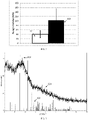
- Fig.3 shows the powder X-ray diffraction (pXRD) spectrum 301 of CPP gel after solidification.
- the amorphous structure was confirmed by a non-crystalline peak 303 at 20-30° and nonspecific crystalline peaks.
- the scan speed was set to 5°/min.
- ACP calcium phosphate
- HAp hydroxyapatite
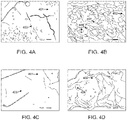
- FIG.4A-4D scanning electron micrographs (SEM) of the surface morphology of CPP pure amorphous 401 ( Fig. 4A and 4C ,) and CPP mixed amorphous/crystalline composite 402 gels ( Fig. 4B and 4D ,) after solidification.
- Fig. 4A/4C and show a smooth and amorphous surface 403 without obvious porous structures.
- the pure amorphous CPP gel has a homogenous structure.
- the CPP composite gel after gelation possesses a porous structure 404.
- CPP crystalline granules 406 can be observed in Fig. 4B/4D .
- the shrinkage limitation of crystalline CPP particles in suspension and the shrinkage capability of amorphous CPP gel in a continuous phase enable the formation of micro-scale pores 407 during gelation. The rough surface and emerged crystalline particles are readily visualized. This evidence suggests a mechanism for introducing a porous structure to the composite CPP gel.
- the porous structure of CPP gel can be tuned by adjusting for example the CPP crystal size used, the ratio of amorphous to crystalline powder employed, the geometry of the crystals, and other factors.
- the size, shape, and network structure of the pores may contribute to the gel's ability to take up, store, and release molecules, cells, or both intended for delivery to the site of injection.
- FIGs. 5-8 various rheological studies of pure amorphous and composite amorphous/crystalline CPP gels are illustrated.
- Fig. 5 shows the rheology of pure amorphous CPP (plots 501 and 502), CPP crystalline: amorphous composite in a respective ratio of 1:2 (plots 511 and 512) and CPP crystalline:amorphous composite in a respective ratio of 1:1 (plots 521 and 522) in an oscillatory stress sweep test.
- Storage modulus (G') profiles plots 501, 511, and 521) and loss modulus (G") profiles (502, 512, and 522) were generated across the linear viscoelastic region (LVR), respectively, in an oscillatory range of 0.001-10 Pa at 25°C.
- amorphous/crystalline CPP composites could occur for reasons including but not limited to: 1) strong particle-matrix interactions between molecularly-dispersed macro-crystalline particles and polyphosphate chains, which would greatly hinder the chains mobility, causing the CPP composite to behave in a solid-like manner; 2) even distribution of macro-crystalline particles carrying a charge, which would in turn attract and link adjacent polyphosphate chains, forming a 3D network structure via weak physical interactions.
- Fig. 6 the rheological behaviors of pure amorphous CPP and composite amorphous/crystalline colloids subjected to non-destructive oscillatory stress are illustrated. These tests show that pure amorphous CPP colloid displays viscous fluid properties with a higher shear loss modulus (G") than storage modulus (G'), though both at lower levels.
- G shear loss modulus
- G' storage modulus
- of pure amorphous CPP colloid (plot 601) is about 1 Pa•S, which suggests comparatively lower amounts of polyphosphate chain entanglement and weak structural interactions.
- Fig. 7 shows the rheology of pure amorphous CPP (plots 701 and 702), CPP crystalline:amorphous 1:2 composite (plots 711 and 712) and CPP crystalline:amorphous 1:1 composite (plots 721 and 722) in an oscillatory frequency sweep test.
- Storage modulus (G', plots 701/711/721) and loss modulus (G", plots 702/712/722) profiles are shown across a frequency range of 0.1-100 rad/s at 25°C, respectively.
- Incorporation of CPP crystalline fillers consistently increases the ⁇ 0, and the ⁇ 0 of CPP crystalline:amorphous 1:1 composite is substantially higher than that of pure amorphous CPP.
- Fig. 8 measures of the viscoelasticity of pure amorphous CPP gels in an oscillatory time sweep test are illustrated which reveal the setting times of pure amorphous CPP gels after injection at 25°C (plots 811 and 812) and 37°C (plots 801 and 802).
- a solvent trap was loaded in order to prevent evaporation and to ensure that rheological measurement was performed under stable conditions. The solvent trap was released after 300 seconds.
- a non-destructive oscillatory stress determined by a previous oscillatory stress test was loaded.
- a sharp increase of both G' (plots 801 and 811) and G" (plots 802 and 812) indicates the gelation and solidification of CPP gel after a short period of exposure to air. Increasing the temperature accelerates the setting of CPP gel, which is linked to water evaporation.
- the setting time at 25°C was about 700 seconds after release of the solvent trap and about 200 seconds at 37°C.
- the setting time or gelation time of injectable bone cement is critical to fill defects in and attach to native bone and provide mechanical support in a short time.
- colloidal particles interact with each other to become a 3D network structure following water evaporation.
- the fast dissolution rate of amorphous CPP gel in aqueous solution caused by disentanglement of polyphosphate chains exposes abundant binding sites for exchangeable metal ions (Ca2+, Sr2+, Mg2+, etc.) It also results in active interactions between CPP colloidal particles, accelerating the gelation process.
- To determine the setting point or critical gelation point of injectable CPP gel is crucial for the clinical application as injectable bone-healing materials.
- Fig. 9 The results of a creep recovery test for pure amorphous CPP (plot 901) and amorphous/crystalline composite CPP gels (plot 902) are illustrated in Fig. 9 .
- a specimen is subjected to a creep test under a predetermined non-destructive oscillatory stress. Recovery is tested after releasing the stress for the same amount of time as in the creep test. Strain (%) has been recorded and normalized to distinguish the differences between pure amorphous CPP and amorphous/crystalline composite gels.
- the delayed elastic response is prolonged, indicating that filling particles further interact with unfolded polyphosphate chains in the CPP structured fluid, enhancing the bonding of the network.
- the original network structure is restored to an integrity of about 40%.
- a graph shows a typical result of a steady state flow test performed within a shear rate range from 0.0001 to 100 per second to reveal the pseudoplastic property of a pure amorphous CPP colloid. Viscosity is indicated by plot 1001 and shear stress is indicated by plot 1002.
- the steady state flow measurement shows a typical shear thinning behavior with a first Newtonian plateau, a Power's law region, and a second Newtonian plateau, which is different from conventional ceramics suspension with constant viscosity during static shearing. In the first Newtonian region, the disentanglement of polyphosphate chain follows the increase of shear rate.
- micro computed tomography (CT) data shows a rat femur defect 1101 ( Fig. 11A ) following the ex vivo injection of 20 ml pure amorphous CPP gel 1102.
- CT images were taken right after injection and 4 hours after injection.
- Three-dimensional (3D) images were reconstructed for the immediate injection ( Fig. 11B ) and 4 hours after injection ( Fig. 11C ).
- a representative section in Z-stack ( Fig. 11D ) is displayed to show the adhesion of CPP pure amorphous gel to bone tissue.
- Analogous images for amorphous/crystalline composite gels 1202 in rat femur defect 1201 are shown in Fig. 12A-D .
- CPP complex gel shows less shrinkage than pure amorphous CPP gel, which is in part due to the incorporation of the crystalline CPP fillers.
- CPP gel therefore can function as a fast-setting, injectable bone-healing material.
- CPP gel can be used in weight-bearing or non-weight-bearing applications.
- the composite may convert to another compound. For instance, after about 1 hour to about 8 weeks after injection and setting, the composite may gradually convert to dicalcium phosphate anhydrate (DCPA) or dicalcium phosphate dihydrate (DCPD).
- DCPA dicalcium phosphate anhydrate
- DCPD dicalcium phosphate dihydrate
- Fig. 13 shows the calcein release pattern from pure amorphous CPP gel (plot 1302) and crystalline:amorphous composite (plot 1301) CPP gel.
- the design of bone healing materials with multiple functionalities includes but not limited to bactericidal activity, drug loading capability, delivery of cells to the wound) has many possible uses. However, controlling drug release from implants in a sustainable manner has presented a challenge.
- drug molecules can be assembled into the CPP gel network by physical interactions during colloidal formation and gelation.
- One example of small molecule release in illustrated in Fig. 13 .
- calcein a water soluble fluorescent dye with green-yellow color
- Calcein is known to chelate free calcium ions (Ca2+) and has a maximum absorbance at wavelength of 560 nm.
- the quantification of calcein release suggests a release pattern for other drug molecules of small molecular weight.
- Cylindrical gel specimens with calcein incorporated were prepared by the method described above and were placed into distilled H2O. The supernatant was serially measured until the OD reached a plateau. Calcein release from pure amorphous CPP gel is complete after about 30 hours. However, in the case of the composite release is more gradual and extends to about 150 hours, displaying a zero-order release pattern through the initial 120 hours.
- the surface of CPP microcrystal fillers in an amorphous CPP network might provide binding sites for calcein and therefore be largely responsible for extending the release of calcein.
- Composite CPP gel then, possesses a drug-loading capability can be tuned by modifying the preparation parameters (including but not limited to ratio of amorphous to crystalline powder, pore size, pore network, and so forth.)
- the calcein-release experiments provide a basis for use of materials generated by this process in clinical applications. These include but are not limited to orthopedic or dental healing or tissue repair; and tissue engineering of at least bone, muscle, cartilage, ligament, or tendon. Further, compositions of this kind can be used in controlling drug release.
- the drug could include genetic material such as DNAs or RNAs, a small molecule compound, or a protein. These gels can also be useful in cell therapy including microsphere or microcapsule applications, molecular imaging, treating inflammation, and cancer therapy.
Landscapes
- Health & Medical Sciences (AREA)
- Chemical & Material Sciences (AREA)
- Medicinal Chemistry (AREA)
- Life Sciences & Earth Sciences (AREA)
- General Health & Medical Sciences (AREA)
- Veterinary Medicine (AREA)
- Public Health (AREA)
- Epidemiology (AREA)
- Animal Behavior & Ethology (AREA)
- Transplantation (AREA)
- Dermatology (AREA)
- Oral & Maxillofacial Surgery (AREA)
- Engineering & Computer Science (AREA)
- Bioinformatics & Cheminformatics (AREA)
- Pharmacology & Pharmacy (AREA)
- Dispersion Chemistry (AREA)
- Inorganic Chemistry (AREA)
- Biomedical Technology (AREA)
- Molecular Biology (AREA)
- Materials For Medical Uses (AREA)
Claims (12)
- Gel zur Knochen- oder Weichteilreparatur eines Patienten, erhältlich mit einem Verfahren, umfassend:Herstellen einer amorphen Calciumpolyphosphat-Zusammensetzung aus einem anorganischen Keramikmaterial durch ein Kalzinierungsverfahren, wobei das Kalzinierungsverfahren eine Kalzinierungstemperatur und eine Kalzinierungszeit aufweist, wobei vorzugsweise die Kalzinierungstemperatur etwa 300°C bis etwa 700°C beträgt und die Kalzinierungszeit etwa 4 bis etwa 72 Stunden beträgt;Schmelzen der amorphen Calciumpolyphosphat-Zusammensetzung bei einer Schmelzschritttemperatur für eine Schmelzschrittzeit, wobei vorzugsweise die Schmelzschritttemperatur etwa 1.100°C bis etwa 1.300°C beträgt und die Schmelzschrittzeit etwa 10 Minuten bis etwa 360 Minuten beträgt;Bearbeiten der amorphen Calciumpolyphosphat-Zusammensetzung auf eine Teilchengröße von etwa 1 Nanometer bis etwa 75 Mikrometer; undZugeben der Teilchen zu destilliertem Wasser bei einer Konzentration von etwa 0,01 bis 0,5 g/ml, um ein injizierbares Kolloid herzustellen, das nach Injektion eine Gelierung durchläuft.
- Gel nach Anspruch 1, wobei das Verfahren weiter die Schritte der Bildung einer Gel-Pasten-Struktur in einer Flüssigkeit, die wenigstens eines von destilliertem Wasser, Puffer und/oder anderen Wasserlösungen umfasst, und Einweichen einer Menge an amorphem Calciumpolyphosphat bei einer Einweichtemperatur für eine Einweichzeit mit einer zweiten Substanz umfasst, die ausgewählt ist aus wenigstens einem von einem weiteren amorphen anorganischen Keramikpulver, einem kristallinen anorganischen Keramikpulver, einem Metall und einem Polymer, um ein Verbundcalciumpolyphosphatgel zu bilden.
- Gel nach Anspruch 2, wobei die zweite Substanz ein kristallines Calciumpolyphosphat ist, wobei vorzugsweise das Verhältnis von kristallinem Calciumpolyphosphat zu amorphem Calciumpolyphosphat etwa 1:1 bis etwa 1:10 beträgt, bevorzugter etwa 1:2.
- Gel nach Anspruch 3, wobei das Gel ein Gewichtsverhältnis von amorphem Calciumpolyphosphat: kristallinem Calciumpolyphosphat: Wasser von 1:0,5:10 aufweist.
- Gel nach Anspruch 3 oder Anspruch 4, wobei das Gel nach der Gelierung eine poröse Struktur besitzt.
- Gel nach einem der Ansprüche 3 - 5, wobei, nach etwa 1 Stunde bis etwa 8 Wochen nach Injektion und Aushärten, der Verbundwerkstoff sich allmählich in Dicalciumphosphat-Anhydrat (DCPA) oder Dicalciumdiphosphat-Dihydrat (DCPD) umwandelt.
- Gel nach einem der Ansprüche 1 - 6 zur Verwendung in einem Verfahren zum Auffüllen eines Knochendefektes in einem lasttragenden oder nicht-lasttragenden Bereich.
- Gel nach einem der Ansprüche 1 - 6 zur Verwendung in einer klinischen Anwendung, umfassend orthopädische oder Zahnheilung oder Gewebereparatur; Gewebeveränderung von wenigstens Knochen, Muskel, Knorpel, Band oder Sehne; Kontrolle von Arzneistofffreisetzung, wobei der Arzneistoff wenigstens genetisches Material, eine kleine Verbindung oder ein Protein umfasst; Zelltherapie einschließlich Mikrokügelchen- oder Mikrokapselanwendungen; molekulare Bildgebung; Behandlung von Entzündungen; oder Krebstherapie.
- Gel nach Anspruch 1, wobei das Gel wasserlöslich ist.
- Verfahren zur Herstellung eines injizierbaren Materials für Knochen- oder Weichteilreparatur eines Patienten, wobei das Verfahren umfasst:Kalzinieren eines anorganischen Materials, um eine amorphe Calciumpolyphosphat-Zusammensetzung bei einer Kalzinierungstemperatur für eine Kalzinierungszeit herzustellen, wobei vorzugsweise die Kalzinierungstemperatur etwa 300°C bis etwa 700°C beträgt und die Kalzinierungszeit etwa 4 bis etwa 72 Stunden beträgt;Schmelzen der amorphen Calciumpolyphosphat-Zusammensetzung bei einer Schmelzschritttemperatur für eine Schmelzschrittzeit, wobei vorzugsweise die Schmelzschritttemperatur etwa 1.100°C bis etwa 1.300°C beträgt und die Schmelzschrittzeit etwa 10 Minuten bis etwa 360 Minuten beträgt;Bearbeiten der amorphen Calciumphosphat-Zusammensetzung zu einer Teilchengröße von etwa 1 Nanometer bis etwa 75 Mikrometer;Zugeben der Teilchen zu destilliertem Wasser bei einer Konzentration von etwa 0,01 bis 0,5 g/ml, um ein injizierbares Kolloid herzustellen, das nach Injektion eine Gelierung durchläuft.
- Verfahren nach Anspruch 10, das weiter die Schritte umfasst:Bilden einer Gel-Pasten-Struktur in einer Flüssigkeit, wobei die Flüssigkeit destilliertes Wasser, Puffer und andere wässrige Lösungen umfasst,Einweichen einer Menge an amorphem Calciumpolyphosphat bei einer Einweichtemperatur für eine Einweichzeit mit einer zweiten Substanz, die ausgewählt ist aus wenigstens einem von: einem zweiten amorphen anorganischen Keramikpulver; einem kristallinen anorganischen Keramikpulver; einem Metall; einer organischen Verbindung; und einem Polymer, um ein Verbundcalciumphosphatgel zu bilden.
- Verfahren nach Anspruch 11, wobei die zweite Substanz kristallines Calciumpolyphosphat ist, wobei vorzugsweise das Verhältnis von kristallinem Calciumpolyphosphat zu amorphem Calciumpolyphosphat etwa 1:1 bis etwa 1:10 beträgt, bevorzugter etwa 1:2.
Applications Claiming Priority (2)
| Application Number | Priority Date | Filing Date | Title |
|---|---|---|---|
| US201361842737P | 2013-07-03 | 2013-07-03 | |
| PCT/US2014/045423 WO2015003140A1 (en) | 2013-07-03 | 2014-07-03 | Method of making water soluble injectable calcium polyphosphate gels |
Publications (3)
| Publication Number | Publication Date |
|---|---|
| EP3016639A1 EP3016639A1 (de) | 2016-05-11 |
| EP3016639A4 EP3016639A4 (de) | 2017-03-01 |
| EP3016639B1 true EP3016639B1 (de) | 2022-12-21 |
Family
ID=52144214
Family Applications (1)
| Application Number | Title | Priority Date | Filing Date |
|---|---|---|---|
| EP14820397.9A Active EP3016639B1 (de) | 2013-07-03 | 2014-07-03 | Verfahren zur herstellung injizierbarer calciumpolyphosphatgele |
Country Status (3)
| Country | Link |
|---|---|
| US (1) | US10052406B2 (de) |
| EP (1) | EP3016639B1 (de) |
| WO (1) | WO2015003140A1 (de) |
Families Citing this family (7)
| Publication number | Priority date | Publication date | Assignee | Title |
|---|---|---|---|---|
| EP2875072B1 (de) * | 2012-07-17 | 2017-03-15 | Dow Global Technologies LLC | Zubereitung enthaltend ein organisches flüssiges lösungsmittel und einen niedrig viskosen celluloseether |
| GB2539490A (en) * | 2015-06-19 | 2016-12-21 | Ernst Ludwig Georg Muller Werner | Method for the preparation of teeth coatings having morphogenetic activity |
| EP3256177B1 (de) | 2015-02-09 | 2021-04-14 | Wayne State University | Verfahren zur herstellung von injizierbarem zement |
| CN106344214A (zh) * | 2016-08-29 | 2017-01-25 | 中国人民解放军第三军医大学第三附属医院 | 采用动物骨骼去有机化3d打印制备可植入骨移植物的方法 |
| CN109529109B (zh) * | 2018-10-25 | 2021-01-05 | 江西理工大学 | 一种超长结构金属离子掺杂羟基磷灰石纤维材料的制备方法 |
| CN112876113B (zh) * | 2021-04-19 | 2022-03-04 | 西南交通大学 | 一种聚磷酸钙无机凝胶的制备方法 |
| CN117379366B (zh) * | 2023-12-12 | 2024-02-09 | 旭和(天津)医药科技有限公司 | 一种能量传递神经修复水凝胶的用途和制备方法 |
Family Cites Families (5)
| Publication number | Priority date | Publication date | Assignee | Title |
|---|---|---|---|---|
| US20040043501A1 (en) | 1997-05-02 | 2004-03-04 | Baker Hughes Incorporated | Monitoring of downhole parameters and chemical injection utilizing fiber optics |
| WO2004007399A2 (en) * | 2002-07-12 | 2004-01-22 | Pilliar Robert M | Method of manufacture of porous inorganic structures and infiltration with organic polymers |
| TWI274591B (en) * | 2005-11-07 | 2007-03-01 | Univ Tsinghua | Composite scaffold for remedying articular cartilage tissue and preparation thereof |
| US20070178309A1 (en) | 2006-02-01 | 2007-08-02 | Sidney Omelon | Polyphosphate ceramic and method of making same |
| WO2011137292A2 (en) | 2010-04-30 | 2011-11-03 | University Of Maryland, Baltimore | Injectable, load-bearing cell/microbead/calcium phosphate bone paste for bone tissue engineering |
-
2014
- 2014-07-03 WO PCT/US2014/045423 patent/WO2015003140A1/en not_active Ceased
- 2014-07-03 EP EP14820397.9A patent/EP3016639B1/de active Active
- 2014-07-03 US US14/900,835 patent/US10052406B2/en active Active
Also Published As
| Publication number | Publication date |
|---|---|
| US10052406B2 (en) | 2018-08-21 |
| EP3016639A1 (de) | 2016-05-11 |
| US20160354513A1 (en) | 2016-12-08 |
| EP3016639A4 (de) | 2017-03-01 |
| WO2015003140A1 (en) | 2015-01-08 |
Similar Documents
| Publication | Publication Date | Title |
|---|---|---|
| US10052406B2 (en) | Method of making water soluble injectable calcium polyphosphate gels | |
| Cui et al. | The nanocomposite scaffold of poly (lactide-co-glycolide) and hydroxyapatite surface-grafted with L-lactic acid oligomer for bone repair | |
| Zhang et al. | A simple and effective approach to prepare injectable macroporous calcium phosphate cement for bone repair: Syringe-foaming using a viscous hydrophilic polymeric solution | |
| Mondal et al. | Natural origin hydroxyapatite scaffold as potential bone tissue engineering substitute | |
| Zou et al. | Preparation and characterization of porous β-tricalcium phosphate/collagen composites with an integrated structure | |
| US9925299B2 (en) | Silk-based fabrication techniques to prepare high strength calcium phosphate ceramic scaffolds | |
| Roohani-Esfahani et al. | The influence hydroxyapatite nanoparticle shape and size on the properties of biphasic calcium phosphate scaffolds coated with hydroxyapatite–PCL composites | |
| Qi et al. | Improved injectability and in vitro degradation of a calcium phosphate cement containing poly (lactide-co-glycolide) microspheres | |
| Hasan et al. | In vitro and in vivo evaluation of bioglass microspheres incorporated brushite cement for bone regeneration | |
| EP2059269B1 (de) | Phasen- und sedimentationsstabile, plastisch verformbare zubereitung mit intrinsischer porenbildung, bspw. zum auffüllen von knochendefekten bzw. zur verwendung als knochenersatzmaterial, und verfahren zu deren herstellung | |
| EP2296720B1 (de) | Osteoinduktive nanokomposite | |
| Alves Cardoso et al. | Gelation and biocompatibility of injectable Alginate–Calcium phosphate gels for bone regeneration | |
| Habraken et al. | Introduction of enzymatically degradable poly (trimethylene carbonate) microspheres into an injectable calcium phosphate cement | |
| EP2334346B1 (de) | Kompositmaterialien aus einer mit silikat und calciumphosphatphasen mineralisierten kollagenmatrix, verfahren zu deren herstellung und deren verwendung | |
| Nezafati et al. | In vitro bioactivity and cytocompatablity of an injectable calcium phosphate cement/silanated gelatin microsphere composite bone cement | |
| DK2403547T3 (en) | MANUFACTURING FORMABLE BONE COMPENSATION | |
| WO2008128347A1 (en) | Premixed biological hydraulic cement paste composition and using the same | |
| Lima et al. | Injectable bone substitute based on chitosan with polyethylene glycol polymeric solution and biphasic calcium phosphate microspheres | |
| Estrada et al. | Evaluation of in vitro bioactivity of 45S5 bioactive glass/poly lactic acid scaffolds produced by 3D printing | |
| Jiang et al. | Preparation and characterization of a novel composite containing carboxymethyl cellulose used for bone repair | |
| Wu et al. | Effects of magnesium silicate on the mechanical properties, biocompatibility, bioactivity, degradability, and osteogenesis of poly (butylene succinate)-based composite scaffolds for bone repair | |
| Wei et al. | Preparation and characterization of a nano apatite/polyamide6 bioactive composite | |
| Zhu et al. | An injectable hydroxyapatite/poly (lactide-co-glycolide) composite reinforced by micro/nano-hybrid poly (glycolide) fibers for bone repair | |
| US10632227B2 (en) | Method of making injectable cements | |
| Bjørnøy et al. | Controlled mineralisation and recrystallisation of brushite within alginate hydrogels |
Legal Events
| Date | Code | Title | Description |
|---|---|---|---|
| PUAI | Public reference made under article 153(3) epc to a published international application that has entered the european phase |
Free format text: ORIGINAL CODE: 0009012 |
|
| 17P | Request for examination filed |
Effective date: 20160113 |
|
| AK | Designated contracting states |
Kind code of ref document: A1 Designated state(s): AL AT BE BG CH CY CZ DE DK EE ES FI FR GB GR HR HU IE IS IT LI LT LU LV MC MK MT NL NO PL PT RO RS SE SI SK SM TR |
|
| AX | Request for extension of the european patent |
Extension state: BA ME |
|
| DAX | Request for extension of the european patent (deleted) | ||
| A4 | Supplementary search report drawn up and despatched |
Effective date: 20170131 |
|
| RIC1 | Information provided on ipc code assigned before grant |
Ipc: A61K 9/16 20060101AFI20170125BHEP |
|
| STAA | Information on the status of an ep patent application or granted ep patent |
Free format text: STATUS: EXAMINATION IS IN PROGRESS |
|
| 17Q | First examination report despatched |
Effective date: 20191217 |
|
| GRAP | Despatch of communication of intention to grant a patent |
Free format text: ORIGINAL CODE: EPIDOSNIGR1 |
|
| STAA | Information on the status of an ep patent application or granted ep patent |
Free format text: STATUS: GRANT OF PATENT IS INTENDED |
|
| INTG | Intention to grant announced |
Effective date: 20220825 |
|
| GRAS | Grant fee paid |
Free format text: ORIGINAL CODE: EPIDOSNIGR3 |
|
| GRAA | (expected) grant |
Free format text: ORIGINAL CODE: 0009210 |
|
| STAA | Information on the status of an ep patent application or granted ep patent |
Free format text: STATUS: THE PATENT HAS BEEN GRANTED |
|
| AK | Designated contracting states |
Kind code of ref document: B1 Designated state(s): AL AT BE BG CH CY CZ DE DK EE ES FI FR GB GR HR HU IE IS IT LI LT LU LV MC MK MT NL NO PL PT RO RS SE SI SK SM TR |
|
| REG | Reference to a national code |
Ref country code: GB Ref legal event code: FG4D |
|
| REG | Reference to a national code |
Ref country code: DE Ref legal event code: R096 Ref document number: 602014085881 Country of ref document: DE |
|
| REG | Reference to a national code |
Ref country code: CH Ref legal event code: EP |
|
| REG | Reference to a national code |
Ref country code: AT Ref legal event code: REF Ref document number: 1538629 Country of ref document: AT Kind code of ref document: T Effective date: 20230115 |
|
| REG | Reference to a national code |
Ref country code: IE Ref legal event code: FG4D |
|
| REG | Reference to a national code |
Ref country code: LT Ref legal event code: MG9D |
|
| REG | Reference to a national code |
Ref country code: NL Ref legal event code: MP Effective date: 20221221 |
|
| PG25 | Lapsed in a contracting state [announced via postgrant information from national office to epo] |
Ref country code: SE Free format text: LAPSE BECAUSE OF FAILURE TO SUBMIT A TRANSLATION OF THE DESCRIPTION OR TO PAY THE FEE WITHIN THE PRESCRIBED TIME-LIMIT Effective date: 20221221 Ref country code: NO Free format text: LAPSE BECAUSE OF FAILURE TO SUBMIT A TRANSLATION OF THE DESCRIPTION OR TO PAY THE FEE WITHIN THE PRESCRIBED TIME-LIMIT Effective date: 20230321 Ref country code: LT Free format text: LAPSE BECAUSE OF FAILURE TO SUBMIT A TRANSLATION OF THE DESCRIPTION OR TO PAY THE FEE WITHIN THE PRESCRIBED TIME-LIMIT Effective date: 20221221 Ref country code: FI Free format text: LAPSE BECAUSE OF FAILURE TO SUBMIT A TRANSLATION OF THE DESCRIPTION OR TO PAY THE FEE WITHIN THE PRESCRIBED TIME-LIMIT Effective date: 20221221 |
|
| REG | Reference to a national code |
Ref country code: AT Ref legal event code: MK05 Ref document number: 1538629 Country of ref document: AT Kind code of ref document: T Effective date: 20221221 |
|
| PG25 | Lapsed in a contracting state [announced via postgrant information from national office to epo] |
Ref country code: RS Free format text: LAPSE BECAUSE OF FAILURE TO SUBMIT A TRANSLATION OF THE DESCRIPTION OR TO PAY THE FEE WITHIN THE PRESCRIBED TIME-LIMIT Effective date: 20221221 Ref country code: LV Free format text: LAPSE BECAUSE OF FAILURE TO SUBMIT A TRANSLATION OF THE DESCRIPTION OR TO PAY THE FEE WITHIN THE PRESCRIBED TIME-LIMIT Effective date: 20221221 Ref country code: HR Free format text: LAPSE BECAUSE OF FAILURE TO SUBMIT A TRANSLATION OF THE DESCRIPTION OR TO PAY THE FEE WITHIN THE PRESCRIBED TIME-LIMIT Effective date: 20221221 Ref country code: GR Free format text: LAPSE BECAUSE OF FAILURE TO SUBMIT A TRANSLATION OF THE DESCRIPTION OR TO PAY THE FEE WITHIN THE PRESCRIBED TIME-LIMIT Effective date: 20230322 |
|
| PG25 | Lapsed in a contracting state [announced via postgrant information from national office to epo] |
Ref country code: NL Free format text: LAPSE BECAUSE OF FAILURE TO SUBMIT A TRANSLATION OF THE DESCRIPTION OR TO PAY THE FEE WITHIN THE PRESCRIBED TIME-LIMIT Effective date: 20221221 |
|
| PG25 | Lapsed in a contracting state [announced via postgrant information from national office to epo] |
Ref country code: SM Free format text: LAPSE BECAUSE OF FAILURE TO SUBMIT A TRANSLATION OF THE DESCRIPTION OR TO PAY THE FEE WITHIN THE PRESCRIBED TIME-LIMIT Effective date: 20221221 Ref country code: RO Free format text: LAPSE BECAUSE OF FAILURE TO SUBMIT A TRANSLATION OF THE DESCRIPTION OR TO PAY THE FEE WITHIN THE PRESCRIBED TIME-LIMIT Effective date: 20221221 Ref country code: PT Free format text: LAPSE BECAUSE OF FAILURE TO SUBMIT A TRANSLATION OF THE DESCRIPTION OR TO PAY THE FEE WITHIN THE PRESCRIBED TIME-LIMIT Effective date: 20230421 Ref country code: ES Free format text: LAPSE BECAUSE OF FAILURE TO SUBMIT A TRANSLATION OF THE DESCRIPTION OR TO PAY THE FEE WITHIN THE PRESCRIBED TIME-LIMIT Effective date: 20221221 Ref country code: EE Free format text: LAPSE BECAUSE OF FAILURE TO SUBMIT A TRANSLATION OF THE DESCRIPTION OR TO PAY THE FEE WITHIN THE PRESCRIBED TIME-LIMIT Effective date: 20221221 Ref country code: CZ Free format text: LAPSE BECAUSE OF FAILURE TO SUBMIT A TRANSLATION OF THE DESCRIPTION OR TO PAY THE FEE WITHIN THE PRESCRIBED TIME-LIMIT Effective date: 20221221 Ref country code: AT Free format text: LAPSE BECAUSE OF FAILURE TO SUBMIT A TRANSLATION OF THE DESCRIPTION OR TO PAY THE FEE WITHIN THE PRESCRIBED TIME-LIMIT Effective date: 20221221 |
|
| PG25 | Lapsed in a contracting state [announced via postgrant information from national office to epo] |
Ref country code: SK Free format text: LAPSE BECAUSE OF FAILURE TO SUBMIT A TRANSLATION OF THE DESCRIPTION OR TO PAY THE FEE WITHIN THE PRESCRIBED TIME-LIMIT Effective date: 20221221 Ref country code: PL Free format text: LAPSE BECAUSE OF FAILURE TO SUBMIT A TRANSLATION OF THE DESCRIPTION OR TO PAY THE FEE WITHIN THE PRESCRIBED TIME-LIMIT Effective date: 20221221 Ref country code: IS Free format text: LAPSE BECAUSE OF FAILURE TO SUBMIT A TRANSLATION OF THE DESCRIPTION OR TO PAY THE FEE WITHIN THE PRESCRIBED TIME-LIMIT Effective date: 20230421 Ref country code: AL Free format text: LAPSE BECAUSE OF FAILURE TO SUBMIT A TRANSLATION OF THE DESCRIPTION OR TO PAY THE FEE WITHIN THE PRESCRIBED TIME-LIMIT Effective date: 20221221 |
|
| REG | Reference to a national code |
Ref country code: DE Ref legal event code: R097 Ref document number: 602014085881 Country of ref document: DE |
|
| PLBE | No opposition filed within time limit |
Free format text: ORIGINAL CODE: 0009261 |
|
| STAA | Information on the status of an ep patent application or granted ep patent |
Free format text: STATUS: NO OPPOSITION FILED WITHIN TIME LIMIT |
|
| PG25 | Lapsed in a contracting state [announced via postgrant information from national office to epo] |
Ref country code: DK Free format text: LAPSE BECAUSE OF FAILURE TO SUBMIT A TRANSLATION OF THE DESCRIPTION OR TO PAY THE FEE WITHIN THE PRESCRIBED TIME-LIMIT Effective date: 20221221 |
|
| PGFP | Annual fee paid to national office [announced via postgrant information from national office to epo] |
Ref country code: IT Payment date: 20230720 Year of fee payment: 10 Ref country code: GB Payment date: 20230727 Year of fee payment: 10 |
|
| 26N | No opposition filed |
Effective date: 20230922 |
|
| PGFP | Annual fee paid to national office [announced via postgrant information from national office to epo] |
Ref country code: FR Payment date: 20230725 Year of fee payment: 10 Ref country code: DE Payment date: 20230727 Year of fee payment: 10 |
|
| PG25 | Lapsed in a contracting state [announced via postgrant information from national office to epo] |
Ref country code: SI Free format text: LAPSE BECAUSE OF FAILURE TO SUBMIT A TRANSLATION OF THE DESCRIPTION OR TO PAY THE FEE WITHIN THE PRESCRIBED TIME-LIMIT Effective date: 20221221 |
|
| PGFP | Annual fee paid to national office [announced via postgrant information from national office to epo] |
Ref country code: CH Payment date: 20231129 Year of fee payment: 10 |
|
| PG25 | Lapsed in a contracting state [announced via postgrant information from national office to epo] |
Ref country code: MC Free format text: LAPSE BECAUSE OF FAILURE TO SUBMIT A TRANSLATION OF THE DESCRIPTION OR TO PAY THE FEE WITHIN THE PRESCRIBED TIME-LIMIT Effective date: 20221221 |
|
| PG25 | Lapsed in a contracting state [announced via postgrant information from national office to epo] |
Ref country code: MC Free format text: LAPSE BECAUSE OF FAILURE TO SUBMIT A TRANSLATION OF THE DESCRIPTION OR TO PAY THE FEE WITHIN THE PRESCRIBED TIME-LIMIT Effective date: 20221221 |
|
| REG | Reference to a national code |
Ref country code: BE Ref legal event code: MM Effective date: 20230731 |
|
| PG25 | Lapsed in a contracting state [announced via postgrant information from national office to epo] |
Ref country code: LU Free format text: LAPSE BECAUSE OF NON-PAYMENT OF DUE FEES Effective date: 20230703 |
|
| PG25 | Lapsed in a contracting state [announced via postgrant information from national office to epo] |
Ref country code: LU Free format text: LAPSE BECAUSE OF NON-PAYMENT OF DUE FEES Effective date: 20230703 |
|
| REG | Reference to a national code |
Ref country code: IE Ref legal event code: MM4A |
|
| PG25 | Lapsed in a contracting state [announced via postgrant information from national office to epo] |
Ref country code: BE Free format text: LAPSE BECAUSE OF NON-PAYMENT OF DUE FEES Effective date: 20230731 |
|
| PG25 | Lapsed in a contracting state [announced via postgrant information from national office to epo] |
Ref country code: IE Free format text: LAPSE BECAUSE OF NON-PAYMENT OF DUE FEES Effective date: 20230703 |
|
| PG25 | Lapsed in a contracting state [announced via postgrant information from national office to epo] |
Ref country code: IE Free format text: LAPSE BECAUSE OF NON-PAYMENT OF DUE FEES Effective date: 20230703 |
|
| PG25 | Lapsed in a contracting state [announced via postgrant information from national office to epo] |
Ref country code: BG Free format text: LAPSE BECAUSE OF FAILURE TO SUBMIT A TRANSLATION OF THE DESCRIPTION OR TO PAY THE FEE WITHIN THE PRESCRIBED TIME-LIMIT Effective date: 20221221 |
|
| PG25 | Lapsed in a contracting state [announced via postgrant information from national office to epo] |
Ref country code: BG Free format text: LAPSE BECAUSE OF FAILURE TO SUBMIT A TRANSLATION OF THE DESCRIPTION OR TO PAY THE FEE WITHIN THE PRESCRIBED TIME-LIMIT Effective date: 20221221 |
|
| REG | Reference to a national code |
Ref country code: DE Ref legal event code: R119 Ref document number: 602014085881 Country of ref document: DE |
|
| REG | Reference to a national code |
Ref country code: CH Ref legal event code: PL |
|
| GBPC | Gb: european patent ceased through non-payment of renewal fee |
Effective date: 20240703 |
|
| PG25 | Lapsed in a contracting state [announced via postgrant information from national office to epo] |
Ref country code: DE Free format text: LAPSE BECAUSE OF NON-PAYMENT OF DUE FEES Effective date: 20250201 |
|
| PG25 | Lapsed in a contracting state [announced via postgrant information from national office to epo] |
Ref country code: CH Free format text: LAPSE BECAUSE OF NON-PAYMENT OF DUE FEES Effective date: 20240731 |
|
| PG25 | Lapsed in a contracting state [announced via postgrant information from national office to epo] |
Ref country code: FR Free format text: LAPSE BECAUSE OF NON-PAYMENT OF DUE FEES Effective date: 20240731 |
|
| PG25 | Lapsed in a contracting state [announced via postgrant information from national office to epo] |
Ref country code: GB Free format text: LAPSE BECAUSE OF NON-PAYMENT OF DUE FEES Effective date: 20240703 |
|
| PG25 | Lapsed in a contracting state [announced via postgrant information from national office to epo] |
Ref country code: IT Free format text: LAPSE BECAUSE OF NON-PAYMENT OF DUE FEES Effective date: 20240703 |
|
| PG25 | Lapsed in a contracting state [announced via postgrant information from national office to epo] |
Ref country code: CY Free format text: LAPSE BECAUSE OF FAILURE TO SUBMIT A TRANSLATION OF THE DESCRIPTION OR TO PAY THE FEE WITHIN THE PRESCRIBED TIME-LIMIT; INVALID AB INITIO Effective date: 20140703 |
|
| PG25 | Lapsed in a contracting state [announced via postgrant information from national office to epo] |
Ref country code: HU Free format text: LAPSE BECAUSE OF FAILURE TO SUBMIT A TRANSLATION OF THE DESCRIPTION OR TO PAY THE FEE WITHIN THE PRESCRIBED TIME-LIMIT; INVALID AB INITIO Effective date: 20140703 |
|
| PG25 | Lapsed in a contracting state [announced via postgrant information from national office to epo] |
Ref country code: TR Free format text: LAPSE BECAUSE OF FAILURE TO SUBMIT A TRANSLATION OF THE DESCRIPTION OR TO PAY THE FEE WITHIN THE PRESCRIBED TIME-LIMIT Effective date: 20221221 |