EP3015978A1 - Gesture-based conversation processing method, apparatus, and terminal device - Google Patents
Gesture-based conversation processing method, apparatus, and terminal device Download PDFInfo
- Publication number
- EP3015978A1 EP3015978A1 EP14818499.7A EP14818499A EP3015978A1 EP 3015978 A1 EP3015978 A1 EP 3015978A1 EP 14818499 A EP14818499 A EP 14818499A EP 3015978 A1 EP3015978 A1 EP 3015978A1
- Authority
- EP
- European Patent Office
- Prior art keywords
- gesture operation
- session
- finger
- determining
- identified
- Prior art date
- Legal status (The legal status is an assumption and is not a legal conclusion. Google has not performed a legal analysis and makes no representation as to the accuracy of the status listed.)
- Withdrawn
Links
Images








Classifications
-
- G—PHYSICS
- G06—COMPUTING OR CALCULATING; COUNTING
- G06F—ELECTRIC DIGITAL DATA PROCESSING
- G06F9/00—Arrangements for program control, e.g. control units
- G06F9/06—Arrangements for program control, e.g. control units using stored programs, i.e. using an internal store of processing equipment to receive or retain programs
- G06F9/44—Arrangements for executing specific programs
- G06F9/4401—Bootstrapping
- G06F9/4403—Processor initialisation
-
- G—PHYSICS
- G06—COMPUTING OR CALCULATING; COUNTING
- G06F—ELECTRIC DIGITAL DATA PROCESSING
- G06F3/00—Input arrangements for transferring data to be processed into a form capable of being handled by the computer; Output arrangements for transferring data from processing unit to output unit, e.g. interface arrangements
- G06F3/01—Input arrangements or combined input and output arrangements for interaction between user and computer
- G06F3/048—Interaction techniques based on graphical user interfaces [GUI]
-
- G—PHYSICS
- G06—COMPUTING OR CALCULATING; COUNTING
- G06F—ELECTRIC DIGITAL DATA PROCESSING
- G06F3/00—Input arrangements for transferring data to be processed into a form capable of being handled by the computer; Output arrangements for transferring data from processing unit to output unit, e.g. interface arrangements
- G06F3/01—Input arrangements or combined input and output arrangements for interaction between user and computer
- G06F3/048—Interaction techniques based on graphical user interfaces [GUI]
- G06F3/0484—Interaction techniques based on graphical user interfaces [GUI] for the control of specific functions or operations, e.g. selecting or manipulating an object, an image or a displayed text element, setting a parameter value or selecting a range
-
- G—PHYSICS
- G06—COMPUTING OR CALCULATING; COUNTING
- G06F—ELECTRIC DIGITAL DATA PROCESSING
- G06F3/00—Input arrangements for transferring data to be processed into a form capable of being handled by the computer; Output arrangements for transferring data from processing unit to output unit, e.g. interface arrangements
- G06F3/01—Input arrangements or combined input and output arrangements for interaction between user and computer
- G06F3/048—Interaction techniques based on graphical user interfaces [GUI]
- G06F3/0484—Interaction techniques based on graphical user interfaces [GUI] for the control of specific functions or operations, e.g. selecting or manipulating an object, an image or a displayed text element, setting a parameter value or selecting a range
- G06F3/04847—Interaction techniques to control parameter settings, e.g. interaction with sliders or dials
-
- G—PHYSICS
- G06—COMPUTING OR CALCULATING; COUNTING
- G06F—ELECTRIC DIGITAL DATA PROCESSING
- G06F3/00—Input arrangements for transferring data to be processed into a form capable of being handled by the computer; Output arrangements for transferring data from processing unit to output unit, e.g. interface arrangements
- G06F3/01—Input arrangements or combined input and output arrangements for interaction between user and computer
- G06F3/048—Interaction techniques based on graphical user interfaces [GUI]
- G06F3/0487—Interaction techniques based on graphical user interfaces [GUI] using specific features provided by the input device, e.g. functions controlled by the rotation of a mouse with dual sensing arrangements, or of the nature of the input device, e.g. tap gestures based on pressure sensed by a digitiser
- G06F3/0488—Interaction techniques based on graphical user interfaces [GUI] using specific features provided by the input device, e.g. functions controlled by the rotation of a mouse with dual sensing arrangements, or of the nature of the input device, e.g. tap gestures based on pressure sensed by a digitiser using a touch-screen or digitiser, e.g. input of commands through traced gestures
- G06F3/04883—Interaction techniques based on graphical user interfaces [GUI] using specific features provided by the input device, e.g. functions controlled by the rotation of a mouse with dual sensing arrangements, or of the nature of the input device, e.g. tap gestures based on pressure sensed by a digitiser using a touch-screen or digitiser, e.g. input of commands through traced gestures for inputting data by handwriting, e.g. gesture or text
-
- G—PHYSICS
- G06—COMPUTING OR CALCULATING; COUNTING
- G06F—ELECTRIC DIGITAL DATA PROCESSING
- G06F9/00—Arrangements for program control, e.g. control units
- G06F9/06—Arrangements for program control, e.g. control units using stored programs, i.e. using an internal store of processing equipment to receive or retain programs
- G06F9/44—Arrangements for executing specific programs
- G06F9/4401—Bootstrapping
- G06F9/4416—Network booting; Remote initial program loading [RIPL]
-
- G—PHYSICS
- G06—COMPUTING OR CALCULATING; COUNTING
- G06F—ELECTRIC DIGITAL DATA PROCESSING
- G06F9/00—Arrangements for program control, e.g. control units
- G06F9/06—Arrangements for program control, e.g. control units using stored programs, i.e. using an internal store of processing equipment to receive or retain programs
- G06F9/44—Arrangements for executing specific programs
- G06F9/448—Execution paradigms, e.g. implementations of programming paradigms
- G06F9/4482—Procedural
- G06F9/4484—Executing subprograms
-
- H—ELECTRICITY
- H04—ELECTRIC COMMUNICATION TECHNIQUE
- H04L—TRANSMISSION OF DIGITAL INFORMATION, e.g. TELEGRAPHIC COMMUNICATION
- H04L12/00—Data switching networks
- H04L12/02—Details
- H04L12/16—Arrangements for providing special services to substations
- H04L12/18—Arrangements for providing special services to substations for broadcast or conference, e.g. multicast
- H04L12/1813—Arrangements for providing special services to substations for broadcast or conference, e.g. multicast for computer conferences, e.g. chat rooms
- H04L12/1822—Conducting the conference, e.g. admission, detection, selection or grouping of participants, correlating users to one or more conference sessions, prioritising transmission
-
- H—ELECTRICITY
- H04—ELECTRIC COMMUNICATION TECHNIQUE
- H04L—TRANSMISSION OF DIGITAL INFORMATION, e.g. TELEGRAPHIC COMMUNICATION
- H04L51/00—User-to-user messaging in packet-switching networks, transmitted according to store-and-forward or real-time protocols, e.g. e-mail
- H04L51/04—Real-time or near real-time messaging, e.g. instant messaging [IM]
Definitions
- the present invention relates to the field of communication technology, and particularly to a method, a device and a terminal apparatus for processing a session based on a gesture.
- Instant chat refers to a contact mode in which people can discuss some topics of common interest with other similar players in a network by certain software.
- instant chat tools When instant chat tools are used, a user may communicate with friends in manners of text, audio and video. In general, conversions with each friend are within individual sessions, thus uniqueness, target accuracy and conversation privacy of the conversations can be guaranteed.
- a user joins in a session group if any friend in the same group speaks, the user at the local terminal may receive his/her speech, such that a session group may facilitate to improve social activity of users.
- embodiments of the present invention provide a method, a device and a terminal apparatus for processing a session based on a gesture operation.
- a method for processing a session based on a gesture operation includes:
- the gesture operation includes a single-finger sliding leftward, a single-finger sliding rightward, a multi-finger sliding leftward, a multi-finger sliding rightward, a single-finger sliding upward, a single-finger sliding downward, a multi-finger sliding upward, a multi-finger sliding downward, a single-finger clicking, a multi-finger clicking, a single-finger pressing and/or a multi-finger pressing.
- the method further includes:
- the method further includes determining validity of the gesture operation.
- the step of determining the validity of the gesture operation includes:
- the step of determining the validity of the gesture operation includes:
- the step of determining the validity of the gesture operation includes:
- the step of performing the corresponding processing on the session in the current session interface according to the identified gesture operation includes:
- the step of performing the corresponding processing on the session in the current session interface according to the identified gesture operation includes:
- a device for processing a session based on a gesture operation includes:
- the device further includes a determining module configured to determine validity of the gesture operation.
- the processing module updates a state of the session as read; or when the gesture operation identified by the identifying module is to mark the session as to be deleted, the processing module deletes the session from the current session interface; or when the gesture operation identified by the identifying module is to mark the session as to be forwarded, the processing module pops up a forwarding page of the session; or when the gesture operation identified by the identifying module is to mark the session as to be placed at top, the processing module places the session at top of the current session interface and displays it.
- the processing module moves the session in its own area leftward, rightward, upward or downward, and displays the secondary option in the area that the session passed; wherein the secondary option includes an operation option with respect to the session, an operation option with respect to the current interface in which the session is located or an operation option with respect to an application software to which the session belongs.
- a terminal apparatus including a storage and one or more programs, wherein the one or more programs are stored in the storage and are configured to be executed by one or more processors, the one or more programs including instructions for performing operations of:
- the device and the terminal apparatus for processing a session based on a gesture operation provided by the embodiments of the present invention a gesture operation in a current session interface is monitored, and a corresponding processing is performed to the session in the current session interface according to the identified gesture operation. Therefore, operations can be performed to a session in a current session interface without entering into the operating interface of the session, which shortens the procedure for processing the session, saves processing time, and achieves more convenience for user operations.
- Fig.1 is an illustrative flowchart of a method for processing a session based on a gesture operation according to an embodiment of the present invention.
- the method includes:
- the gesture operation includes a single-finger sliding leftward, a single-finger sliding rightward, a multi-finger sliding leftward, a multi-finger sliding rightward, a single-finger sliding upward, a single-finger sliding downward, a multi-finger sliding upward, a multi-finger sliding downward, a single-finger clicking, a multi-finger clicking, a single-finger pressing and/or a multi-finger pressing.
- the gesture operations cited hereby are only a portion of gesture operations that may be used in the embodiments of the present invention, other gesture operations capable of processing a session may also be used, for example, any gesture that may be sensed by a sensor without touching a touch screen.
- the method further includes presetting a standard gesture operation and a processing corresponding to the standard gesture operation; the step of identifying the gesture operation includes comparing a monitored gesture operation with the preset standard gesture operation; if the monitored gesture operation and the preset standard gesture operation match, determining that the gesture operation is identified; and if the monitored gesture operation and the preset standard gesture operation do not match, determining that the gesture operation is not identified.
- the preset standard gesture operation is a single-finger sliding, and the processing corresponding to the single-finger sliding is to put a session in a read state. So, when a gesture operation occurring on a current session interface is monitored being the single-finger sliding, it can be determined that the gesture operation is a gesture operation that can be identified.
- the method further includes: determining validity of the gesture operation.
- validity of the identified gesture operation may be determined.
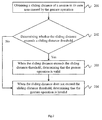
- the step of determining validity of the gesture operation includes:
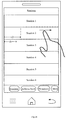
- Fig.3a shows a sliding distance a1 of a session in its own area slid by a gesture operation which is less than a sliding distance threshold A, the gesture operation of the single-finger sliding rightward is thus determined to be invalid, and the gesture operation belongs to an error operation.
- Fig.3b shows a sliding distance a2 of a session in its own area slid by a gesture operation which is not less than the sliding distance threshold A, the gesture operation of the single-finger sliding rightward is thus determined to be valid, and the gesture operation belongs to a normal operation.
- the step of determining validity of the gesture operation includes:
- the step of determining validity of the gesture operation includes:
- a process shown in Fig.6 may be adopted:
- a depth value generated by a pressing gesture operation is b1 which is less than a depth threshold B
- the gesture operation of the single-finger pressing downward is determined to be invalid, and the gesture operation belongs to an error operation.
- a depth value generated by a pressing of a gesture operation is b2 which is not less than the depth threshold B
- the gesture operation of the single-finger pressing downward is determined to be valid, and the gesture operation belongs to a normal operation.
- Principles of determining the validity of a single-finger pressing or a multi-finger pressing in other directions are the same as that of the single-finger pressing downward, so verbosity is omitted here.
- the step of performing a corresponding processing on a session in a current session interface according an the identified gesture operation includes: when the identified gesture operation is to mark the session as read, updating a state of the session as read; or when the identified gesture operation is to mark the session as to be deleted, deleting the session from the current session interface; or when the identified gesture operation is to mark the session as to be forwarded, popping up a forwarding page of the session.
- Processing manners cited herein are only a portion of processing manners that may be used in the embodiments of the present invention, other processing manners may also be used, for example, a position of the session may be moved.
- a session 2 having unread messages on a current session interface there is a session 2 having unread messages on a current session interface, and the session 2 has eleven unread messages.
- a gesture operation with respect to the session having the unread massages is monitored and identified, if a result of a processing corresponding to the gesture operation (such as a single-finger sliding rightward) is to mark the session as "read", as shown in Fig.8b , while sliding the session rightward with a single-finger, word "read” may be displayed as a cue in an area that the session has moved through.
- other means may be used as a cue, such as text, picture and/or animation may also be used as user prompt.
- a springback effect can be displayed after the session returns back to its original position.
- prompt information that marks the number of the unread messages disappears, and while the prompt information disappears, a form of sliding the prompt information leftward to make it disappear may be used, or a gradual variation disappearing manner may also be used.
- sessions (session 2, session 4 and session 6) having unread messages are on a current session interface.
- a processing corresponding to the gesture operation such as a single-finger downward sliding
- the current session interface is moved downward as a whole.
- the sessions having unread messages are placed at the top of the display, and user prompt indicating that the unread sessions are placed at top in a current state may also be displayed.
- the single-finger downward sliding may be otherwise defined as placing a certain one or more sessions at top of the display.
- another gesture operation such as a two-fingers downward sliding, is defined as selecting a session and placing it at the top.
- the step of performing a corresponding processing on a session in a current session interface according to an identified gesture includes: when the identified gesture operation is to open a secondary option, moving the session in its own area leftward, rightward, upward or downward, and displaying the secondary option in the area that the session passed; wherein the secondary option includes an operation option with respect to the session, an operation option with respect to the current interface in which the session is located or an operation option with respect to an application software to which the session belongs.
- a gesture operation when a session is moved leftward by a gesture operation, one or more of secondary options such as “forward”, “delete”, “move”, “search”, “create a new session”, “press to speak”, “press to start video” are displayed in the area that the session passed.
- Another gesture operation may also be used to return the session back to its original position, for example, after a single-finger clicks the session, the session is moved back to its original position and covers the secondary options.
- a gesture operation in a current session interface is monitored, and a corresponding processing is performed to the session in the current session interface according to the identified gesture operation. Therefore, operations can be performed to a session in a current session interface without entering into the operating interface of the session, which shortens the procedure for processing the session, saves processing time, and achieves more convenience for user operations.
- Fig.11 is a flowchart of a method for processing a session based on a gesture operation according to an embodiment of the present invention. Taking a single-finger sliding rightward to change a mark of the session as an example, the method includes:
- a gesture operation in a current session interface is monitored, and a corresponding processing is performed to the session in the current session interface according to the identified gesture operation.
- Operations can be performed to a session in a current session interface without entering into an operating interface of the session, which shortens the procedure for processing the session, saves processing time, and achieves more convenience for user operations.
- Fig.12 is a flowchart of a method for processing a session based on a gesture operation according to an embodiment of the present invention. Taking a single-finger pressing downward to display a secondary option as an example, the method includes:
- a gesture operation in a current session interface is monitored, and a corresponding processing is performed to the session in the current session interface according to the identified gesture operation. Therefore, operations can be performed to a session in a current session interface without entering into the operating interface of the session, which shortens the procedure for processing the session, saves processing time, and achieves more convenience for user operations.
- Fig.14 is a flowchart of a method for processing a session based on a gesture operation according to an embodiment of the present invention. Taking a gesture operation of two-fingers sliding downward to place an unread session at top as an example, the method includes:
- a gesture operation in a current session interface is monitored, and a corresponding processing is performed to the session in the current session interface according to the identified gesture operation. Therefore, operations can be performed to a session in a current session interface without entering into the operating interface of the session, which shortens the procedure for processing the session, saves processing time, and achieves more convenience for user operations.
- Fig.15 is a functional block diagram of a device for processing a session based on a gesture operation according to an embodiment of the present invention.
- the device includes:
- the device further includes a determining module 1504 configured to determine validity of a gesture operation.
- the processing module 1503 when the gesture operation identified by the identifying module 1502 is to mark the session as read, the processing module 1503 updates a state of the session as read; or when the gesture operation identified by the identifying module 1502 is to mark the session as to be deleted, the processing module 1503 deletes the session from the current session interface; or when the gesture operation identified by the identifying module 1502 is to mark the session as to be forwarded, the processing module 1503 pops up a forwarding page of the session; or when the gesture operation identified by the identifying module 1502 is to mark the session as to be placed at top, the processing module 1503 places the session at top of the current session interface and displays it.
- the processing module 1503 moves the session in its own area leftward, rightward, upward or downward, and displays the secondary option in the area that the session passed; wherein the secondary option includes an operation option with respect to the session, an operation option with respect to the current interface in which the session is located or an operation option with respect to an application software to which the session belongs.
- the device for processing a session based on a gesture operation realizes the above functions
- the division of the above function modules are described only for illustration, and in actual applications, the above functions may be allocated and implemented by different function modules as needed. That is, the internal structure of the apparatus may be divided into different function modules, to realize all or a part of the above-described functions.
- the device for processing a session based on a gesture operation and the method for processing a session based on a gesture operation provided by the above embodiments belong to the same inventive concept, and their specific implementing processes may be found in the embodiments of the method, so verbosity is omitted here.
- the program may be stored in a computer readable storage medium, and the storage medium may be a read only memory, a magnetic disk or an optical disk, etc.
- FIG. 16 is an illustrative block diagram of a terminal apparatus according to an embodiment of the present invention.
- the terminal apparatus may be used to implement the method for processing a session based on a gesture operation according to the above embodiments.
- the terminal may be a telephone, a tablet computer (pad), a piece of wearable mobile equipment (such as a smart watch) or the like.
- a telephone a telephone, a tablet computer (pad), a piece of wearable mobile equipment (such as a smart watch) or the like.
- a tablet computer pad
- a piece of wearable mobile equipment such as a smart watch
- the communication unit 110 may be used to receive or send signals in reception and sending of information or during a call, and the communication unit 110 may be a network communication apparatus such as an RF (Radio Frequency) circuit, a router, a modulator-demodulator. Particularly, when the communication unit 110 is a RF circuit, after downlink information is received from a base station, the downlink information is processed by one or more processor 180; in addition, uplink data is sent to the base station.
- RF Radio Frequency
- the RF circuit as the communication unit includes an antenna, at least one amplifier, a tuner, one or more oscillators, a subscriber identity module (SIM) card, a transceiver, a coupler, a LNA (Low Noise Amplifier) and a duplexer, etc., but it is not limited thereto.
- the communication unit 110 may also communicate with a network and other apparatuses by wireless communication.
- the wireless communication may use any communication standard or protocol including GSM (Global System of Mobile communication), GPRS (General Packet Radio Service), CDMA (Code Division Multiple Access), WCDMA (Wideband Code Division Multiple Access), LTE (Long Term Evolution), E-mail, SMS (Short Messaging Service) or the like, but it is not limited thereto.
- the storage 120 may be used to store software programs and modules, and the processor 180 executes various kinds of function applications and data processings by operating the software programs and modules stored in the storage 120.
- the storage 120 may mainly include a program storing area and a data storing area, wherein the program storing area may store an operating system, at least one application program required for functions such as a sound playing function, an image playing function or the like; the data storing area may store data such as audio data and a telephone book, etc., created in accordance with the use of the terminal apparatus 700. Furthermore, the storage 120 may include a high speed random access memory or a nonvolatile memory, or for example, at least one magnetic disk storage device, a flash memory device or other nonvolatile solid-state memory devices. Correspondingly, the storage 120 may also include a storage controller, to provide the processor 180 and the input unit 130 with an access to the storage 120.
- the input unit 130 may be used to receive figures or character information that are input, and generate signal input of a keyboard, a mouse, an operating stick, an optical device or a trackball related to user settings and function control.
- the input unit 130 may include a touch-sensitive surface 131 and other input apparatuses 132.
- the touch-sensitive surface 131 which is also referred to as a touch display screen or a touch panel, may collect touch operations from a user thereon or nearby (for example, operations on the touch-sensitive surface 131 or nearby the touch-sensitive surface 131 by a user using any appropriate object or accessory such as a finger, or a touch pen, etc.), and may drive a corresponding connecting device according to a preset program.
- the touch-sensitive surface 131 may include two portions of a touch detection device and a touch controller.
- the touch detection device detects touch orientations of a user, and detects signals brought up by touch operations, then transmits the signals to the touch controller;
- the touch controller receives touch information from the touch detection device, and converts the touch information into coordinates of touch points to be sent to the processor 180, and the touch controller receives commands sent from the processor 180 and execute the commands.
- the touch-sensitive surface 131 may be realized by using various types of manners such as resistance-type, capacitance-type, infrared ray and surface acoustic wave.
- the input unit 130 may also include other input apparatuses 132.
- the other input apparatuses 132 may include one or more of a physical keyboard, a function key (such as a volume control key, or a switching key, etc.), a trackball, a mouse and an operating stick, but it is not limited thereto.
- a function key such as a volume control key, or a switching key, etc.
- a trackball such as a mouse and an operating stick, but it is not limited thereto.
- the display unit 140 may be used to display information input by a user or information supplied to the user and various kinds of graphical user interfaces of the terminal apparatus 700, and these graphical user interfaces may consist of graph, text, icon, video or any combination thereof.
- the display unit 140 may include a display panel 141, and alternatively, the display panel 141 may be configured by using LCD (Liquid Crystal Display), OLED (Organic Light-Emitting Diode) or the like.
- the touch-sensitive surface 131 may cover the display panel 141, and after the touch-sensitive surface 131 detects touch operations thereon or nearby, the touch-sensitive surface 131 transmits the touch operations to the processor 180 to determine types of touch events, subsequently, the processor 180 provides a corresponding visual output on the display panel 141 according to the types of the touch events.
- the touch-sensitive surface 131 and the display panel 141 realize input and output functions as two separate parts, in certain embodiments, the touch-sensitive surface 131 and the display panel 141 may be integrated to realize the input and output functions.
- the terminal apparatus 700 may also include at least one kind of sensor 150 such as a light sensor, a motion sensor and other sensors.
- the light sensor may include an ambient light sensor and a proximity sensor, wherein the ambient light sensor may adjust luminance of the display panel 141 according to luminance of ambient light, the proximity sensor may turn off the display panel 141 and/or its backlight when the terminal apparatus 700 moves to an ear.
- a gravity acceleration sensor may detect values of accelerations in respective directions (usually, three-axis), and may detect a value and a direction of gravity when being static, and may be used in applications for identifying a phone pose (such as switching between horizontal and vertical screens, related games, magnetometer pose calibration), related functions of vibration identification (such as a pedometer, a knock), etc.; the terminal apparatus 700 may also be configured with other sensors such a gyroscope, a barometer, a hygrometer, a thermometer, an infrared sensor, etc., so verbosity is omitted here.
- the audio circuit 160, a speaker 161 and a microphone 162 may provide an audio interface between a user and the terminal apparatus 700.
- the audio circuit 160 may convert received audio data into electrical signals and transmit the electrical signals to the speaker 161, then the speaker 161 converts the electrical signals into sound signals to be output; on the other hand, the microphone 162 converts collected sound signals into electrical signals, the audio circuit 160 receives the electrical signals and converts the electrical signals into audio data, the audio data is output to the processor 180 to be processed, then the audio data is sent to another terminal apparatus through the RF circuit 110, or the audio data is output to the storage 120 to be further processed.
- the audio circuit 160 may include an earplug jack, to provide communication between a peripheral headset and the terminal apparatus 700.
- the terminal apparatus may be configured with a wireless communication unit 170, the wireless communication unit 170 may be a WiFi module.
- WiFi belonging to a short-distance wireless transmission technology, through which the terminal apparatus 700 may assistant a user to receive and send emails, browse webpage and access streaming media, provides the user with wireless broadband Internet access.
- Fig.5 shows the wireless communication unit 170, it shall be understood that the terminal apparatus 700 does not have to include the wireless communication unit 170, and the wireless communication unit 170 can be completely omitted as needed within a scope that does not change the nature of the present invention.
- the processor 180 is a control center of the terminal apparatus 700, couples to respective parts of an entire telephone by using various kinds of interfaces and circuits, and executes various kinds of functions of the terminal apparatus 700 and processes data by operating or executing software programs and/or modules stored in the storage 120 and calling data stored in the storage 120, thereby to monitor the entire telephone.
- the processor 180 may include one or more processing cores; preferably, the processor 180 may integrate an application processor and a modulation-demodulation processor, wherein the application processor mainly processes an operating system, a user interface and an application program, and the modulation-demodulation processor mainly processes wireless communication. It may be understood that the modulation-demodulation processor may not be integrated into the processor 180.
- the terminal apparatus 700 also includes the power supply 190 (such as a battery) that supplies power to the respective parts, preferably, the power supply may be logically coupled with the processor 180 by a power supply management system, thereby realizing functions such as management of charging, discharging and power consumption by the power supply management system.
- the power supply 190 may also include any component such as one or more DC or AC power supplies, recharging systems, power supply failure detection circuits, power supply converters or inverters, power supply state indicators.
- the terminal apparatus 700 may also include a camera, or a Bluetooth module, etc., so verbosity is omitted here.
- a display unit of the terminal apparatus is a touch screen display
- the terminal apparatus further includes a storage, and one or more programs, wherein the one or more programs are stored in the storage and are configured to be executed by the one or more processors, and the one or more programs include instructions for performing operations of:
- the storage further includes an instruction for performing an operation of: presetting a standard gesture operation and a processing corresponding to the standard gesture operation; and the step of identifying the gesture operation includes: comparing the monitored gesture operation with the preset standard gesture operation; if the monitored gesture operation and the preset standard gesture operation match, determining that the gesture operation is identified; and if the monitored gesture operation and the preset standard gesture operation do not match, determining that the gesture operation is not identified.
- the storage further includes instructions for performing operations of: after the identifying the gesture operation, the operations further include determining validity of the gesture operation.
- the storage further includes instructions for performing operations of: when the gesture operation is a single-finger sliding leftward, a single-finger sliding rightward, a multi-finger sliding leftward, a multi-finger sliding rightward, a single-finger sliding upward, a single-finger sliding downward, a multi-finger sliding upward or a multi-finger sliding downward, the step of determining the validity of the gesture operation includes:
- the storage further includes instructions for performing operations of: when the gesture operation is a single-finger clicking or a multi-finger clicking, the step of determining the validity of the gesture operation includes:
- the storage further includes instructions for performing operations of: when the gesture operation is a single-finger pressing or a multi-finger pressing, the step of determining the validity of the gesture operation includes:
- the storage further includes instructions for performing operations of: the step of performing the corresponding processing on the session in the current session interface according to the identified gesture operation includes:
- the storage further includes instructions for performing operations of: the step of performing the corresponding processing on the session in the current session interface according to the identified gesture operation includes:
- a gesture operation in a current session interface is monitored, and a corresponding processing is performed to the session in the current session interface according to the identified gesture operation. Therefore, operations can be performed to a session in a current session interface without entering into the operating interface of the session, which shortens the procedure for processing the session, saves processing time, and achieves more convenience for user operations.
Landscapes
- Engineering & Computer Science (AREA)
- Theoretical Computer Science (AREA)
- General Engineering & Computer Science (AREA)
- Software Systems (AREA)
- Physics & Mathematics (AREA)
- General Physics & Mathematics (AREA)
- Human Computer Interaction (AREA)
- Computer Networks & Wireless Communication (AREA)
- Signal Processing (AREA)
- Computer Security & Cryptography (AREA)
- Multimedia (AREA)
- User Interface Of Digital Computer (AREA)
- Image Analysis (AREA)
Abstract
Description
- The present application is based upon and claims priority to Chinese Patent Application No.
201310253279.X filed on June 24, 2013 - The present invention relates to the field of communication technology, and particularly to a method, a device and a terminal apparatus for processing a session based on a gesture.
- With the development of technology, people's requirements to display Internet products and even software products become higher and higher. Nowadays, contact modes of people have gradually come out of conventional modes such as telephones, short messages, etc., whereas network social software are used more and more, and the widely used contact mode is instant chat.
- Instant chat refers to a contact mode in which people can discuss some topics of common interest with other similar players in a network by certain software. When instant chat tools are used, a user may communicate with friends in manners of text, audio and video. In general, conversions with each friend are within individual sessions, thus uniqueness, target accuracy and conversation privacy of the conversations can be guaranteed. When a user joins in a session group, if any friend in the same group speaks, the user at the local terminal may receive his/her speech, such that a session group may facilitate to improve social activity of users.
- However, when a session is operated, a user must enter into the session to perform operations of reading, deleting, forwarding or the like. When a user chats with several friends at the same time, it is required to switch session pages frequently. At present, such processings to the sessions result in that procedures for processing the sessions are long, efficiency thereof is low, and that it is not convenient for user operations.
- In order to solve the problems of the Background, embodiments of the present invention provide a method, a device and a terminal apparatus for processing a session based on a gesture operation.
- According to a first aspect of the embodiments of the present invention, a method for processing a session based on a gesture operation is provided, and the method includes:
- monitoring a gesture operation in a current session interface;
- when a gesture operation in any session in the current session interface is monitored, identifying the gesture operation; and
- performing a corresponding processing on the session in the current session interface according to the identified gesture operation.
- Preferably, the gesture operation includes a single-finger sliding leftward, a single-finger sliding rightward, a multi-finger sliding leftward, a multi-finger sliding rightward, a single-finger sliding upward, a single-finger sliding downward, a multi-finger sliding upward, a multi-finger sliding downward, a single-finger clicking, a multi-finger clicking, a single-finger pressing and/or a multi-finger pressing.
- Preferably, the method further includes:
- presetting a standard gesture operation and a processing corresponding to the standard gesture operation; and
- the step of identifying the gesture operation includes:
- comparing the monitored gesture operation and the preset standard gesture operation;
- if the monitored gesture operation and the preset standard gesture operation match, determining that the gesture operation is identified; and
- if the monitored gesture operation and the preset standard gesture operation do not match, determining that the gesture operation is not identified.
- Preferably, after the step of identifying the gesture operation, the method further includes determining validity of the gesture operation.
- Preferably, when the gesture operation is a single-finger sliding leftward, a single-finger sliding rightward, a multi-finger sliding leftward, a multi-finger sliding rightward, a single-finger sliding upward, a single-finger sliding downward, a multi-finger sliding upward, or a multi-finger sliding downward, the step of determining the validity of the gesture operation includes:
- obtaining a sliding distance of the session in its own area caused by the gesture operation;
- determining whether the sliding distance exceeds a sliding distance threshold;
- if the sliding distance exceeds the sliding distance threshold, determining that the gesture operation is valid; and
- if the sliding distance does not exceed the sliding distance threshold, determining that the gesture operation is invalid.
- Preferably, when the gesture operation is a single-finger clicking or a multi-finger clicking, the step of determining the validity of the gesture operation includes:
- obtaining a click number of times within a predetermined time of the gesture operation;
- determining whether the click number of times of the gesture operation exceeds a click number of times threshold;
- if the click number of times exceeds the click number of times threshold, determining that the gesture operation is invalid; and
- if the click number of times does not exceed the click number of times threshold, determining that the gesture operation is valid.
- Preferably, when the gesture operation is a single-finger pressing or a multi-finger pressing, the step of determining the validity of the gesture operation includes:
- obtaining a voltage value generated by the gesture operation; determining whether the voltage value generated by the gesture operation exceeds a voltage threshold; if the voltage value exceeds the voltage threshold, determining that the gesture operation is valid; and if the voltage value does not exceed the voltage threshold, determining that the gesture operation is invalid; or
- when a display screen for displaying the current session interface is a flexible screen, obtaining a depth value generated by a pressing gesture operation in a pressing direction; determining whether the depth value generated by the pressing gesture operation exceeds a depth threshold, if the depth value exceeds the depth threshold, determining that the gesture operation is valid, and if the depth value does not exceed the depth threshold, determining that the gesture operation is invalid.
- Preferably, the step of performing the corresponding processing on the session in the current session interface according to the identified gesture operation includes:
- when the identified gesture operation is to mark the session as read, updating a state of the session as read; or
- when the identified gesture operation is to mark the session as to be deleted, deleting the session from the current session interface; or
- when the identified gesture operation is to mark the session as to be forwarded, popping up a forwarding page of the session; or
- when the identified gesture operation is to mark the session as to be placed at top, placing the session at top of the current session interface and displaying it.
- Preferably, the step of performing the corresponding processing on the session in the current session interface according to the identified gesture operation includes:
- when the identified gesture operation is to open a secondary option, moving the session in its own area leftward, rightward, upward or downward, and displaying the secondary option in the area that the session passed;
- wherein the secondary option includes an operation option with respect to the session, an operation option with respect to the current interface in which the session is located or an operation option with respect to an application software to which the session belongs.
- According to a second aspect of the embodiments of the present invention, a device for processing a session based on a gesture operation is provided, and the device includes:
- a monitoring module configured to monitor the gesture operation in a current session interface;
- an identifying module configured to, when a gesture operation in any session in the current session interface is monitored, identify the gesture operation; and
- a processing module configured to perform a corresponding processing on the session in the current session interface according to the identified gesture operation.
- Preferably, the device further includes a determining module configured to determine validity of the gesture operation.
- Preferably, when the gesture operation identified by the identifying module is to mark the session as read, the processing module updates a state of the session as read; or
when the gesture operation identified by the identifying module is to mark the session as to be deleted, the processing module deletes the session from the current session interface; or
when the gesture operation identified by the identifying module is to mark the session as to be forwarded, the processing module pops up a forwarding page of the session; or
when the gesture operation identified by the identifying module is to mark the session as to be placed at top, the processing module places the session at top of the current session interface and displays it. - Preferably, when the gesture operation identified by the identifying module is to open a secondary option, the processing module moves the session in its own area leftward, rightward, upward or downward, and displays the secondary option in the area that the session passed;
wherein the secondary option includes an operation option with respect to the session, an operation option with respect to the current interface in which the session is located or an operation option with respect to an application software to which the session belongs. - According to a third aspect of the embodiments of the present invention, a terminal apparatus is provided, the terminal apparatus including a storage and one or more programs, wherein the one or more programs are stored in the storage and are configured to be executed by one or more processors, the one or more programs including instructions for performing operations of:
- monitoring a gesture operation in a current session interface;
- when a gesture operation in any session in the current session interface is monitored, identifying the gesture operation; and
- performing a corresponding processing on the session in the current session interface according to the identified gesture operation.
- In the method, the device and the terminal apparatus for processing a session based on a gesture operation provided by the embodiments of the present invention, a gesture operation in a current session interface is monitored, and a corresponding processing is performed to the session in the current session interface according to the identified gesture operation. Therefore, operations can be performed to a session in a current session interface without entering into the operating interface of the session, which shortens the procedure for processing the session, saves processing time, and achieves more convenience for user operations.
- Other features and advantages of the present invention will be explained in the following description, and part of which will become obvious from the description, or may be understood by carrying out the present invention. Purposes and other advantages of the present invention may be achieved and obtained by structures particularly pointed out in the written description, claims and the accompanying drawings.
- The accompanying drawings, which hereby are incorporated in and constitute a part of this specification, illustrate embodiments that conform to the present invention, and together with the specification serve to explain the principles of the present invention.
-
FIG. 1 is an illustrative flowchart of a method for processing a session based on a gesture operation according to an embodiment of the present invention; -
FIG. 2 is an illustrative flowchart of a procedure for determining validity of a sliding gesture according to an embodiment of the present invention; -
FIG. 3a is an illustrative diagram of a state of an invalid sliding gesture according to an embodiment of the present invention; -
FIG. 3b is an illustrative diagram of a state of a valid sliding gesture according to an embodiment of the present invention; -
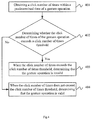
FIG. 4 is an illustrative flowchart of a procedure for determining validity of a clicking gesture according to another embodiment of the present invention; -
FIG. 5 is an illustrative flowchart of a procedure for determining validity of a pressing gesture according to another embodiment of the present invention; -
FIG. 6 is an illustrative flowchart of a procedure for determining validity of a pressing gesture according to another embodiment of the present invention; -
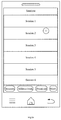
FIG. 7 is an illustrative diagram of a state of a pressing gesture according to an embodiment of the present invention; -
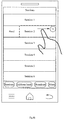
FIGS. 8a-8c are illustrative diagrams of sliding rightward to mark a read state according to an embodiment of the present invention; -
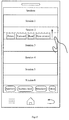
FIGS. 9a-9c are illustrative diagrams of placing a session having an unread message at top according to an embodiment of the present invention; -
FIG. 10 is an illustrative diagram of sliding a session leftward to display a secondary option according to an embodiment of the present invention; -
FIG. 11 is an illustrative flowchart of a method for processing a session based on a gesture operation according to an embodiment of the present invention, wherein a single-finger sliding rightward to change a mark of the session is described as an example; -
FIG. 12 is an illustrative flowchart of a method for processing a session based on a gesture operation according to an embodiment of the present invention, wherein a single-finger pressing downward to display a secondary option is described as an example; -
FIG. 13 is an illustrative diagram of sliding upward on a session to display a secondary option according to an embodiment of the present invention; -
FIG. 14 is an illustrative flowchart of a method for processing a session based on a gesture operation according to an embodiment of the present invention, wherein a gesture operation of two-fingers sliding downward to place an unread session at top is described as an example; -
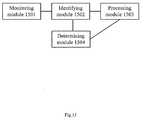
FIG. 15 is an illustrative functional block diagram of a device for processing a session based on a gesture option according to an embodiment of the present invention; and -
FIG. 16 is an illustrative block diagram of a terminal apparatus according to an embodiment of the present invention. - Hereinafter, embodiments consistent with the invention will be described with reference to the drawings. Wherever possible, the same reference numbers will be used throughout the drawings to refer to the same or like parts.
-
Fig.1 is an illustrative flowchart of a method for processing a session based on a gesture operation according to an embodiment of the present invention. With reference toFig.1 , the method includes: - in
step 101, monitoring a gesture operation in a current session interface; - in
step 102, when a gesture operation in any session in the current session interface is monitored, identifying the gesture operation; and - in
step 103, performing a corresponding processing on the session in the current session interface according to the identified gesture operation. - In an embodiment, the gesture operation includes a single-finger sliding leftward, a single-finger sliding rightward, a multi-finger sliding leftward, a multi-finger sliding rightward, a single-finger sliding upward, a single-finger sliding downward, a multi-finger sliding upward, a multi-finger sliding downward, a single-finger clicking, a multi-finger clicking, a single-finger pressing and/or a multi-finger pressing. The gesture operations cited hereby are only a portion of gesture operations that may be used in the embodiments of the present invention, other gesture operations capable of processing a session may also be used, for example, any gesture that may be sensed by a sensor without touching a touch screen.
- In an embodiment, i.e., in another embodiment of the present invention, the method further includes presetting a standard gesture operation and a processing corresponding to the standard gesture operation;
the step of identifying the gesture operation includes comparing a monitored gesture operation with the preset standard gesture operation; if the monitored gesture operation and the preset standard gesture operation match, determining that the gesture operation is identified; and if the monitored gesture operation and the preset standard gesture operation do not match, determining that the gesture operation is not identified. For example, the preset standard gesture operation is a single-finger sliding, and the processing corresponding to the single-finger sliding is to put a session in a read state. So, when a gesture operation occurring on a current session interface is monitored being the single-finger sliding, it can be determined that the gesture operation is a gesture operation that can be identified. - In another embodiment of the present invention, after identifying a gesture operation, the method further includes: determining validity of the gesture operation.
- In order to provide accuracy of a gesture operation and avoid an error operation, validity of the identified gesture operation may be determined.
- In another embodiment of the present invention, when a gesture operation is a single-finger sliding leftward, a single-finger sliding rightward, a multi-finger sliding leftward, a multi-finger sliding rightward, a single-finger sliding upward, a single-finger sliding downward, a multi-finger sliding upward, or a multi-finger sliding downward, as shown in
Fig.2 , the step of determining validity of the gesture operation includes: - in step 201, obtaining a sliding distance of a session in its own area caused by the gesture operation;
- in
step 202, determining whether the sliding distance exceeds a sliding distance threshold; if the sliding distance exceeds the sliding distance threshold, performingstep 203; and if the sliding distance does not exceed the sliding distance threshold, performingstep 204; - in
step 203, when the sliding distance exceeds the sliding distance threshold, determining that the gesture operation is valid; and - in
step 204, when the sliding distance does not exceed the sliding distance threshold, determining that the gesture operation is invalid. - Taking a single-finger sliding rightward as an example,
Fig.3a shows a sliding distance a1 of a session in its own area slid by a gesture operation which is less than a sliding distance threshold A, the gesture operation of the single-finger sliding rightward is thus determined to be invalid, and the gesture operation belongs to an error operation.Fig.3b shows a sliding distance a2 of a session in its own area slid by a gesture operation which is not less than the sliding distance threshold A, the gesture operation of the single-finger sliding rightward is thus determined to be valid, and the gesture operation belongs to a normal operation. Principles of determining the validity of a single-finger sliding leftward, a multi-finger sliding leftward, a multi-finger sliding rightward, a single-finger sliding upward, a single-finger sliding downward, a multi-finger sliding upward or a multi-finger sliding downward are the same as that of the single-finger sliding rightward, so verbosity is omitted here. - In another embodiment of the present invention, when a gesture operation is a single-finger clicking or a multi-finger clicking, as shown in
Fig.4 , the step of determining validity of the gesture operation includes: - in
step 401, obtaining a click number of times within a predetermined time of the gesture operation; - in
step 402, determining whether the click number of times of the gesture operation exceeds a click number of times threshold; if the click number of times of the gesture operation exceeds the click number of times threshold, performingstep 403; and if the click number of times of the gesture operation does not exceed the click number of times threshold, performingstep 404; - in
step 403, when the click number of times exceeds the click number of times threshold, determining that the gesture operation is invalid; and - in
step 404, when the click number of times does not exceed the click number of times threshold, determining that the gesture operation is valid. - Thus, by determining the click number of times, a normal operation and an error operation can be accurately distinguished.
- In another embodiment of the present invention, when a gesture operation is a single-finger pressing or a multi-finger pressing, as shown in
Fig.5 , the step of determining validity of the gesture operation includes: - in
step 501, obtaining a voltage value generated by the gesture operation; - in
step 502, determining whether the voltage value generated by the gesture operation exceeds a voltage threshold; if the voltage value generated by the gesture operation exceeds the voltage threshold, performingstep 503; and if the voltage value generated by the gesture operation does not exceed the voltage threshold, performingstep 504; - in
step 503, when the voltage value exceeds the voltage threshold, determining that the gesture operation is valid; and - in
step 504, when the voltage value does not exceed the voltage threshold, determining that the gesture operation is invalid. - When a finger of a person presses a touch screen, a voltage value in a circuit coupled with the touch screen varies, and by determining the value of the voltage, a normal operation and an error operation can be accurately distinguished.
- Or in another embodiment of the present invention, when a display screen for displaying a current session interface is a flexible screen, a process shown in
Fig.6 may be adopted: - in
step 601, obtaining a depth value generated by a pressing gesture operation in a pressing direction; - in
step 602, determining whether the depth value generated by the pressing gesture operation exceeds a depth threshold; if the depth value generated by the pressing gesture operation exceeds the depth threshold, performingstep 603; and if the depth value generated by the pressing gesture operation does not exceed the depth threshold, performingstep 604; - in
step 603, when the depth value exceeds the depth threshold, determining that the gesture operation is valid; and - in
step 604, when the depth value does not exceed the depth threshold, determining that the gesture operation is invalid. - Taking a single-finger pressing downward as an example, as shown in
Fig.7 , if a depth value generated by a pressing gesture operation is b1 which is less than a depth threshold B, then the gesture operation of the single-finger pressing downward is determined to be invalid, and the gesture operation belongs to an error operation. When a depth value generated by a pressing of a gesture operation is b2 which is not less than the depth threshold B, the gesture operation of the single-finger pressing downward is determined to be valid, and the gesture operation belongs to a normal operation. Principles of determining the validity of a single-finger pressing or a multi-finger pressing in other directions are the same as that of the single-finger pressing downward, so verbosity is omitted here. - In one embodiment, the step of performing a corresponding processing on a session in a current session interface according an the identified gesture operation includes: when the identified gesture operation is to mark the session as read, updating a state of the session as read; or when the identified gesture operation is to mark the session as to be deleted, deleting the session from the current session interface; or when the identified gesture operation is to mark the session as to be forwarded, popping up a forwarding page of the session. Processing manners cited herein are only a portion of processing manners that may be used in the embodiments of the present invention, other processing manners may also be used, for example, a position of the session may be moved.
- For example, in another embodiment of the present invention, as shown in
Fig.8a , there is asession 2 having unread messages on a current session interface, and thesession 2 has eleven unread messages. After a gesture operation with respect to the session having the unread massages is monitored and identified, if a result of a processing corresponding to the gesture operation (such as a single-finger sliding rightward) is to mark the session as "read", as shown inFig.8b , while sliding the session rightward with a single-finger, word "read" may be displayed as a cue in an area that the session has moved through. In some embodiments, other means may be used as a cue, such as text, picture and/or animation may also be used as user prompt. As shown inFig.8c , after the single-finger sliding rightward is ended, the session returns back to its original position, and a springback effect can be displayed after the session returns back to its original position. Then prompt information that marks the number of the unread messages disappears, and while the prompt information disappears, a form of sliding the prompt information leftward to make it disappear may be used, or a gradual variation disappearing manner may also be used. - For example, in another embodiment of the present invention, shown in
Fig.9a , sessions (session 2,session 4 and session 6) having unread messages are on a current session interface. After a gesture operation with respect to the sessions having the unread messages is monitored and identified, if a processing corresponding to the gesture operation (such as a single-finger downward sliding) is to place the unread sessions at the top of the display, as shown inFig.9b , while the sessions are slid downward by a single-finger, the current session interface is moved downward as a whole. As shown inFig.9c , after the single-finger downward sliding ends, the sessions having unread messages are placed at the top of the display, and user prompt indicating that the unread sessions are placed at top in a current state may also be displayed. In some embodiments, the single-finger downward sliding may be otherwise defined as placing a certain one or more sessions at top of the display. In other embodiments, another gesture operation, such as a two-fingers downward sliding, is defined as selecting a session and placing it at the top. - In another embodiment of the present invention, the step of performing a corresponding processing on a session in a current session interface according to an identified gesture includes: when the identified gesture operation is to open a secondary option, moving the session in its own area leftward, rightward, upward or downward, and displaying the secondary option in the area that the session passed; wherein the secondary option includes an operation option with respect to the session, an operation option with respect to the current interface in which the session is located or an operation option with respect to an application software to which the session belongs.
- As shown in
Fig.10 , when a session is moved leftward by a gesture operation, one or more of secondary options such as "forward", "delete", "move", "search", "create a new session", "press to speak", "press to start video" are displayed in the area that the session passed. Another gesture operation may also be used to return the session back to its original position, for example, after a single-finger clicks the session, the session is moved back to its original position and covers the secondary options. - All of the above alternative technical solutions may be combined in any form to form alternative embodiments of the present invention, so verbosity is omitted here.
- Therefore, in the method for processing a session based on a gesture operation provided by the embodiments of the present invention, a gesture operation in a current session interface is monitored, and a corresponding processing is performed to the session in the current session interface according to the identified gesture operation. Therefore, operations can be performed to a session in a current session interface without entering into the operating interface of the session, which shortens the procedure for processing the session, saves processing time, and achieves more convenience for user operations.
-
Fig.11 is a flowchart of a method for processing a session based on a gesture operation according to an embodiment of the present invention. Taking a single-finger sliding rightward to change a mark of the session as an example, the method includes: - in
step 1101, monitoring a gesture operation in a current session interface; - in
step 1102, when a gesture operation of any session in the current session interface is monitored, comparing the monitored gesture operation with a preset standard gesture operation; when the monitored gesture operation and the preset standard gesture operation match, determining that the single-finger sliding rightward is identified, and performingstep 1103; and if the monitored gesture operation and the preset standard gesture operation do not match, determining that the gesture operation is not identified, and performingstep 1101; - in
step 1103, obtaining a sliding distance corresponding to the sliding of the session rightward in its own area; - in
step 1104, determining whether the sliding distance exceeds a sliding distance threshold; when the sliding distance exceeds the sliding distance threshold, determining that the gesture operation is valid, and performingstep 1105; and when the sliding distance does not exceed the sliding distance threshold, determining that the gesture operation is invalid, and performingstep 1101. Effects ofstep 1104 are shown inFigs.3a and3b ; - in
step 1105, displaying a prompt text in the area that the session passed, and informing effect of the operation. Effect picture of this step may be referred to inFig.8b ; - in
step 1106, updating a state of the session as read. Effect picture of this step may be referred to inFig.8c . - Therefore, in the method for processing a session based on a gesture operation according to the embodiments of the present invention, a gesture operation in a current session interface is monitored, and a corresponding processing is performed to the session in the current session interface according to the identified gesture operation. Operations can be performed to a session in a current session interface without entering into an operating interface of the session, which shortens the procedure for processing the session, saves processing time, and achieves more convenience for user operations.
-
Fig.12 is a flowchart of a method for processing a session based on a gesture operation according to an embodiment of the present invention. Taking a single-finger pressing downward to display a secondary option as an example, the method includes: - in
step 1201, monitoring a gesture operation in a current session interface; - in
step 1202, when a gesture operation of any session in the current session interface is monitored, comparing the monitored gesture operation and a preset standard gesture operation; when the monitored gesture operation and the preset standard gesture operation match, determining that the a single-finger pressing downward is identified, and performingstep 1203; and when the monitored gesture operation and the preset standard gesture operation do not match, determining that the gesture operation is not identified, and performing thestep 1201; - in
step 1203, obtaining a depth value generated by a single-finger pressing downward; - in
step 1204, determining whether the depth value exceeds a depth threshold; when the depth value exceeds the depth threshold, determining that the gesture operation is valid, and performingstep 1205; and when the depth value does not exceed the depth threshold, determining that the gesture operation is invalid, and performing thestep 1201. Effect picture of this step may be referred to inFig.7 ; - in
step 1205, moving the session upward, and displaying a secondary option in the area that the session passed; and as shown inFig.13 , the session may be continuously moved upward in its own area, even moved to the top of its own position. In some embodiments, the secondary option may also be displayed using effects such as reversal or gradient. - In step 1206, performing a corresponding operation according to a user's selection of the secondary option. For example, after the secondary option "delete" is selected, the session is deleted from the current session interface.
- Therefore, in the method for processing a session based on a gesture operation according to the embodiments of the present invention, a gesture operation in a current session interface is monitored, and a corresponding processing is performed to the session in the current session interface according to the identified gesture operation. Therefore, operations can be performed to a session in a current session interface without entering into the operating interface of the session, which shortens the procedure for processing the session, saves processing time, and achieves more convenience for user operations.
-
Fig.14 is a flowchart of a method for processing a session based on a gesture operation according to an embodiment of the present invention. Taking a gesture operation of two-fingers sliding downward to place an unread session at top as an example, the method includes: - in
step 1401, monitoring a gesture operation in a current session interface; - in
step 1402, when a gesture operation of any session in the current session interface is monitored, comparing the monitored gesture operation with a preset standard gesture operation; when the monitored gesture operation and the preset standard gesture operation match, determining that the two-fingers sliding downward is identified, and continuing to perform step 1403; and when the monitored gesture operation and the preset standard gesture operation do not match, determining that the gesture operation is not identified, and performing thestep 1401; - in step 1403, obtaining a sliding distance caused by a sliding gesture operation in the current session interface;
- in
step 1404, determining whether the sliding distance exceeds a sliding distance threshold; when the sliding distance exceeds the sliding distance threshold, determining that the gesture operation is valid, and performingstep 1405; and when the sliding distance does not exceed the sliding distance threshold, determining that the gesture operation is invalid, and performing thestep 1401; and - in
step 1405, placing the unread session at top, and displaying it. When there are a plurality of unread sessions, display sequences of the unread sessions may be arranged in accordance with reception time of the sessions or numbers of unread messages in the sessions. In some embodiments, only a session at an initial position of the gesture operations is placed and displayed at the top. - Therefore, in the method for processing a session based on a gesture operation according to the embodiments of the present invention, a gesture operation in a current session interface is monitored, and a corresponding processing is performed to the session in the current session interface according to the identified gesture operation. Therefore, operations can be performed to a session in a current session interface without entering into the operating interface of the session, which shortens the procedure for processing the session, saves processing time, and achieves more convenience for user operations.
-
Fig.15 is a functional block diagram of a device for processing a session based on a gesture operation according to an embodiment of the present invention. With reference toFig.15 , the device includes: - a
monitoring module 1501 configured to monitor a gesture operation in a current session interface; - an identifying
module 1502 configured to identify the gesture operation when a gesture operation of any session in the current session interface is monitored; and - a
processing module 1503 configured to perform a corresponding processing on the session in the current session interface according to the identified gesture operation. - In an embodiment, the device further includes a determining
module 1504 configured to determine validity of a gesture operation. - In an embodiment, when the gesture operation identified by the identifying
module 1502 is to mark the session as read, theprocessing module 1503 updates a state of the session as read; or
when the gesture operation identified by the identifyingmodule 1502 is to mark the session as to be deleted, theprocessing module 1503 deletes the session from the current session interface; or
when the gesture operation identified by the identifyingmodule 1502 is to mark the session as to be forwarded, theprocessing module 1503 pops up a forwarding page of the session; or
when the gesture operation identified by the identifyingmodule 1502 is to mark the session as to be placed at top, theprocessing module 1503 places the session at top of the current session interface and displays it. - In an embodiment, when a gesture operation identified by the identifying
module 1502 is to open a secondary option, theprocessing module 1503 moves the session in its own area leftward, rightward, upward or downward, and displays the secondary option in the area that the session passed; wherein the secondary option includes an operation option with respect to the session, an operation option with respect to the current interface in which the session is located or an operation option with respect to an application software to which the session belongs. - It is to be explained that when the device for processing a session based on a gesture operation provided by the above embodiments realize the above functions, the division of the above function modules are described only for illustration, and in actual applications, the above functions may be allocated and implemented by different function modules as needed. That is, the internal structure of the apparatus may be divided into different function modules, to realize all or a part of the above-described functions. In addition, the device for processing a session based on a gesture operation and the method for processing a session based on a gesture operation provided by the above embodiments belong to the same inventive concept, and their specific implementing processes may be found in the embodiments of the method, so verbosity is omitted here.
- Those skilled in the art could understand that the whole or a part of the steps in the above embodiments may be achieved by hardware, or may be achieved by a program instructing the relevant hardware. The program may be stored in a computer readable storage medium, and the storage medium may be a read only memory, a magnetic disk or an optical disk, etc.
-
FIG. 16 is an illustrative block diagram of a terminal apparatus according to an embodiment of the present invention. With reference toFig.16 , the terminal apparatus may be used to implement the method for processing a session based on a gesture operation according to the above embodiments. The terminal may be a telephone, a tablet computer (pad), a piece of wearable mobile equipment (such as a smart watch) or the like. Preferably: - a
terminal apparatus 700 may include acommunication unit 110, astorage 120 comprising one or more computer readable storage mediums, aninput unit 130, adisplay unit 140, asensor 150, anaudio circuit 160, a WiFi (wireless fidelity)module 170, aprocessor 180 comprising one or more processing cores and apower supply 190 or the like. Those skilled in the art could understand that the structure of a terminal apparatus shown inFig.16 does not limit the terminal apparatus, and the terminal apparatus may include more or less parts than those ofFig.16 , or may combine certain parts, or may have different arrangements of parts. - The
communication unit 110 may be used to receive or send signals in reception and sending of information or during a call, and thecommunication unit 110 may be a network communication apparatus such as an RF (Radio Frequency) circuit, a router, a modulator-demodulator. Particularly, when thecommunication unit 110 is a RF circuit, after downlink information is received from a base station, the downlink information is processed by one ormore processor 180; in addition, uplink data is sent to the base station. Generally, the RF circuit as the communication unit includes an antenna, at least one amplifier, a tuner, one or more oscillators, a subscriber identity module (SIM) card, a transceiver, a coupler, a LNA (Low Noise Amplifier) and a duplexer, etc., but it is not limited thereto. Furthermore, thecommunication unit 110 may also communicate with a network and other apparatuses by wireless communication. The wireless communication may use any communication standard or protocol including GSM (Global System of Mobile communication), GPRS (General Packet Radio Service), CDMA (Code Division Multiple Access), WCDMA (Wideband Code Division Multiple Access), LTE (Long Term Evolution), E-mail, SMS (Short Messaging Service) or the like, but it is not limited thereto. Thestorage 120 may be used to store software programs and modules, and theprocessor 180 executes various kinds of function applications and data processings by operating the software programs and modules stored in thestorage 120. Thestorage 120 may mainly include a program storing area and a data storing area, wherein the program storing area may store an operating system, at least one application program required for functions such as a sound playing function, an image playing function or the like; the data storing area may store data such as audio data and a telephone book, etc., created in accordance with the use of theterminal apparatus 700. Furthermore, thestorage 120 may include a high speed random access memory or a nonvolatile memory, or for example, at least one magnetic disk storage device, a flash memory device or other nonvolatile solid-state memory devices. Correspondingly, thestorage 120 may also include a storage controller, to provide theprocessor 180 and theinput unit 130 with an access to thestorage 120. - The
input unit 130 may be used to receive figures or character information that are input, and generate signal input of a keyboard, a mouse, an operating stick, an optical device or a trackball related to user settings and function control. Preferably, theinput unit 130 may include a touch-sensitive surface 131 and other input apparatuses 132. The touch-sensitive surface 131 which is also referred to as a touch display screen or a touch panel, may collect touch operations from a user thereon or nearby (for example, operations on the touch-sensitive surface 131 or nearby the touch-sensitive surface 131 by a user using any appropriate object or accessory such as a finger, or a touch pen, etc.), and may drive a corresponding connecting device according to a preset program. Alternatively, the touch-sensitive surface 131 may include two portions of a touch detection device and a touch controller. The touch detection device detects touch orientations of a user, and detects signals brought up by touch operations, then transmits the signals to the touch controller; the touch controller receives touch information from the touch detection device, and converts the touch information into coordinates of touch points to be sent to theprocessor 180, and the touch controller receives commands sent from theprocessor 180 and execute the commands. Furthermore, the touch-sensitive surface 131 may be realized by using various types of manners such as resistance-type, capacitance-type, infrared ray and surface acoustic wave. In addition to the touch-sensitive surface 131, theinput unit 130 may also include other input apparatuses 132. Preferably, theother input apparatuses 132 may include one or more of a physical keyboard, a function key (such as a volume control key, or a switching key, etc.), a trackball, a mouse and an operating stick, but it is not limited thereto. - The
display unit 140 may be used to display information input by a user or information supplied to the user and various kinds of graphical user interfaces of theterminal apparatus 700, and these graphical user interfaces may consist of graph, text, icon, video or any combination thereof. Thedisplay unit 140 may include adisplay panel 141, and alternatively, thedisplay panel 141 may be configured by using LCD (Liquid Crystal Display), OLED (Organic Light-Emitting Diode) or the like. Further, the touch-sensitive surface 131 may cover thedisplay panel 141, and after the touch-sensitive surface 131 detects touch operations thereon or nearby, the touch-sensitive surface 131 transmits the touch operations to theprocessor 180 to determine types of touch events, subsequently, theprocessor 180 provides a corresponding visual output on thedisplay panel 141 according to the types of the touch events. InFig.5 , although the touch-sensitive surface 131 and thedisplay panel 141 realize input and output functions as two separate parts, in certain embodiments, the touch-sensitive surface 131 and thedisplay panel 141 may be integrated to realize the input and output functions. - The
terminal apparatus 700 may also include at least one kind ofsensor 150 such as a light sensor, a motion sensor and other sensors. Preferably, the light sensor may include an ambient light sensor and a proximity sensor, wherein the ambient light sensor may adjust luminance of thedisplay panel 141 according to luminance of ambient light, the proximity sensor may turn off thedisplay panel 141 and/or its backlight when theterminal apparatus 700 moves to an ear. As one of motion sensors, a gravity acceleration sensor may detect values of accelerations in respective directions (usually, three-axis), and may detect a value and a direction of gravity when being static, and may be used in applications for identifying a phone pose (such as switching between horizontal and vertical screens, related games, magnetometer pose calibration), related functions of vibration identification (such as a pedometer, a knock), etc.; theterminal apparatus 700 may also be configured with other sensors such a gyroscope, a barometer, a hygrometer, a thermometer, an infrared sensor, etc., so verbosity is omitted here. - The
audio circuit 160, aspeaker 161 and amicrophone 162 may provide an audio interface between a user and theterminal apparatus 700. Theaudio circuit 160 may convert received audio data into electrical signals and transmit the electrical signals to thespeaker 161, then thespeaker 161 converts the electrical signals into sound signals to be output; on the other hand, themicrophone 162 converts collected sound signals into electrical signals, theaudio circuit 160 receives the electrical signals and converts the electrical signals into audio data, the audio data is output to theprocessor 180 to be processed, then the audio data is sent to another terminal apparatus through theRF circuit 110, or the audio data is output to thestorage 120 to be further processed. Theaudio circuit 160 may include an earplug jack, to provide communication between a peripheral headset and theterminal apparatus 700. - In order to realize wireless communication, the terminal apparatus may be configured with a
wireless communication unit 170, thewireless communication unit 170 may be a WiFi module. WiFi belonging to a short-distance wireless transmission technology, through which theterminal apparatus 700 may assistant a user to receive and send emails, browse webpage and access streaming media, provides the user with wireless broadband Internet access. AlthoughFig.5 shows thewireless communication unit 170, it shall be understood that theterminal apparatus 700 does not have to include thewireless communication unit 170, and thewireless communication unit 170 can be completely omitted as needed within a scope that does not change the nature of the present invention. - The
processor 180 is a control center of theterminal apparatus 700, couples to respective parts of an entire telephone by using various kinds of interfaces and circuits, and executes various kinds of functions of theterminal apparatus 700 and processes data by operating or executing software programs and/or modules stored in thestorage 120 and calling data stored in thestorage 120, thereby to monitor the entire telephone. Alternatively, theprocessor 180 may include one or more processing cores; preferably, theprocessor 180 may integrate an application processor and a modulation-demodulation processor, wherein the application processor mainly processes an operating system, a user interface and an application program, and the modulation-demodulation processor mainly processes wireless communication. It may be understood that the modulation-demodulation processor may not be integrated into theprocessor 180. - The
terminal apparatus 700 also includes the power supply 190 (such as a battery) that supplies power to the respective parts, preferably, the power supply may be logically coupled with theprocessor 180 by a power supply management system, thereby realizing functions such as management of charging, discharging and power consumption by the power supply management system. Thepower supply 190 may also include any component such as one or more DC or AC power supplies, recharging systems, power supply failure detection circuits, power supply converters or inverters, power supply state indicators. - Although not shown, the
terminal apparatus 700 may also include a camera, or a Bluetooth module, etc., so verbosity is omitted here. Specifically, in the present embodiment, a display unit of the terminal apparatus is a touch screen display, and the terminal apparatus further includes a storage, and one or more programs, wherein the one or more programs are stored in the storage and are configured to be executed by the one or more processors, and the one or more programs include instructions for performing operations of: - monitoring a gesture operation in a current session interface;
- identifying the gesture operation, when a gesture operation of any session in the current session interface is monitored; and
- performing a corresponding processing on the session in the current session interface according to the identified gesture operation.
- In an embodiment, the storage further includes an instruction for performing an operation of: presetting a standard gesture operation and a processing corresponding to the standard gesture operation; and
the step of identifying the gesture operation includes: comparing the monitored gesture operation with the preset standard gesture operation; if the monitored gesture operation and the preset standard gesture operation match, determining that the gesture operation is identified; and if the monitored gesture operation and the preset standard gesture operation do not match, determining that the gesture operation is not identified. - In an embodiment, the storage further includes instructions for performing operations of: after the identifying the gesture operation, the operations further include determining validity of the gesture operation.
- In an embodiment, the storage further includes instructions for performing operations of: when the gesture operation is a single-finger sliding leftward, a single-finger sliding rightward, a multi-finger sliding leftward, a multi-finger sliding rightward, a single-finger sliding upward, a single-finger sliding downward, a multi-finger sliding upward or a multi-finger sliding downward, the step of determining the validity of the gesture operation includes:
- obtaining a sliding distance of the session in its own area caused by the gesture operation;
- determining whether the sliding distance exceeds a sliding distance threshold;
- if the sliding distance exceeds the sliding distance threshold, determining that the gesture operation is valid; and
- if the sliding distance does not exceed the sliding distance threshold, determining that the gesture operation is invalid.
- In an embodiment, the storage further includes instructions for performing operations of: when the gesture operation is a single-finger clicking or a multi-finger clicking, the step of determining the validity of the gesture operation includes:
- obtaining a click number of times within a predetermined time of the gesture operation;
- determining whether the click number of times of the gesture operation exceeds a click number of times threshold;
- if the click number of times exceeds the click number of times threshold, determining that the gesture operation is invalid; and
- if the click number of times does not exceed the click number of times threshold, determining that the gesture operation is valid.
- In an embodiment, the storage further includes instructions for performing operations of: when the gesture operation is a single-finger pressing or a multi-finger pressing, the step of determining the validity of the gesture operation includes:
- obtaining a voltage value generated by the gesture operation; determining whether the voltage value generated by the gesture operation exceeds a voltage threshold; if the voltage value exceeds the voltage threshold, determining that the gesture operation is valid; and if the voltage value does not exceed the voltage threshold, determining that the gesture operation is invalid; or
- when a display screen for displaying the current session interface is a flexible screen, obtaining a depth value generated by a pressing gesture operation in a pressing direction; determining whether the depth value generated by the pressing gesture operation exceeds a depth threshold; if the depth value exceeds the depth threshold, determining that the gesture operation is valid; and if the depth value does not exceed the depth threshold, determining that the gesture operation is invalid.
- In an embodiment, the storage further includes instructions for performing operations of: the step of performing the corresponding processing on the session in the current session interface according to the identified gesture operation includes:
- when the identified gesture operation is to mark the session as read, updating a state of the session as read; or
- when the identified gesture operation is to mark the session as to be deleted, deleting the session from the current session interface; or
- when the identified gesture operation is to mark the session as to be forwarded, popping up a forwarding page of the session; and
- when the identified gesture operation is to mark the session as to be placed at top, placing the session at top of the current session interface and displaying it.
- In an embodiment, the storage further includes instructions for performing operations of: the step of performing the corresponding processing on the session in the current session interface according to the identified gesture operation includes:
- when the identified gesture operation is to open a secondary option, moving the session in its own area leftward, rightward, upward or downward, and displaying the secondary option in the area that the session passed;
- wherein the secondary option includes an operation option with respect to the session, an operation option with respect to the current interface in which the session is located or an operation option with respect to an application software to which the session belongs.
- Therefore, in the method, the device and the apparatus for processing a session based on a gesture operation provided by the embodiments of the present invention, a gesture operation in a current session interface is monitored, and a corresponding processing is performed to the session in the current session interface according to the identified gesture operation. Therefore, operations can be performed to a session in a current session interface without entering into the operating interface of the session, which shortens the procedure for processing the session, saves processing time, and achieves more convenience for user operations.
- The above contents are only the embodiments of the present invention, which are not used to limit the present invention. Any changes, equal substitution and modifications, etc., within the spirit and principle of the present invention should be included in the protection scope of the present invention.
Claims (14)
- A method for processing a session based on a gesture operation, characterized in that the method comprises:monitoring a gesture operation in a current session interface;when a gesture operation in any session in the current session interface is monitored, identifying the gesture operation; andperforming a corresponding processing on the session in the current session interface according to the identified gesture operation.
- The method according to claim 1, characterized in that the gesture operation includes a single-finger sliding leftward, a single-finger sliding rightward, a multi-finger sliding leftward, a multi-finger sliding rightward, a single-finger sliding upward, a single-finger sliding downward, a multi-finger sliding upward, a multi-finger sliding downward, a single-finger clicking, a multi-finger clicking, a single-finger pressing and/or a multi-finger pressing.
- The method according to claim 1, characterized in that the method further comprises:presetting a standard gesture operation and a processing corresponding to the standard gesture operation; andthe step of identifying the gesture operation including:comparing the monitored gesture operation with the preset standard gesture operation;if the monitored gesture operation and the preset standard gesture operation match, determining that the gesture operation is identified; andif the monitored gesture operation and the preset standard gesture operation do not match, determining that the gesture operation is not identified.
- The method according to any one of claims 1 to 3, characterized in that after the step of identifying the gesture operation, the method further comprises:determining validity of the gesture operation.
- The method according to claim 4, characterized in that when the gesture operation is a single-finger sliding leftward, a single-finger sliding rightward, a multi-finger sliding leftward, a multi-finger sliding rightward, a single-finger sliding upward, a single-finger sliding downward, a multi-finger sliding upward or a multi-finger sliding downward, the step of determining the validity of the gesture operation comprises:obtaining a sliding distance of the session in an own area of the session caused by the gesture operation;determining whether the sliding distance exceeds a sliding distance threshold;if the sliding distance exceeds the sliding distance threshold, determining that the gesture operation is valid; andif the sliding distance does not exceed the sliding distance threshold, determining that the gesture operation is invalid.
- The method according to claim 4, characterized in that when the gesture operation is a single-finger clicking or a multi-finger clicking, the step of determining the validity of the gesture operation comprises:obtaining a click number of times within a predetermined time of the gesture operation;determining whether the click number of times of the gesture operation exceeds a click number of times threshold;if the click number of times exceeds the click number of times threshold, determining that the gesture operation is invalid; andif the click number of times does not exceed the click number of times threshold, determining that the gesture operation is valid.
- The method according to claim 4, characterized in that when the gesture operation is a single-finger pressing or a multi-finger pressing, the step of determining the validity of the gesture operation comprises:obtaining a voltage value generated by the gesture operation; determining whether the voltage value generated by the gesture operation exceeds a voltage threshold; if the voltage value exceeds the voltage threshold, determining that the gesture operation is valid; and if the voltage value does not exceed the voltage threshold, determining that the gesture operation is invalid; orwhen a display screen for displaying the current session interface is a flexible screen, obtaining a depth value generated by a pressing gesture operation in a pressing direction; determining whether the depth value generated by the pressing gesture operation exceeds a depth threshold; if the depth value exceeds the depth threshold, determining that the gesture operation is valid; and if the depth value does not exceed the depth threshold, determining that the gesture operation is invalid.
- The method according to claim 1, characterized in that the step of performing the corresponding processing on the session in the current session interface according to the identified gesture operation comprises:when the identified gesture operation is to mark the session as read, updating a state of the session as read; orwhen the identified gesture operation is to mark the session as to be deleted, deleting the session from the current session interface; orwhen the identified gesture operation is to mark the session to be forwarded, popping up a forwarding page of the session; orwhen the identified gesture operation is to mark the session as to be placed at top, placing the session at top of the current session interface and displaying the session.
- The method according to claim 1, characterized in that the step of performing the corresponding processing on the session in the current session interface according to the identified gesture operation comprises:when the identified gesture operation is to open a secondary option, moving the session in the own area of the session leftward, rightward, upward or downward, and displaying the secondary option in an area that the session passed;wherein the secondary option includes an operation option with respect to the session, an operation option with respect to the current interface in which the session is located or an operation option with respect to an application software to which the session belongs.
- A device for processing a session based on a gesture operation, characterized in that the device comprises:a monitoring module configured to monitor the gesture operation in a current session interface;an identifying module configured to, when a gesture operation in any session in the current session interface is monitored, identify the gesture operation; anda processing module configured to perform a corresponding processing in the current session interface according to the identified gesture operation.
- The device according to claim 10, characterized in that the device further comprises:a determining module configured to determine validity of the gesture operation.
- The device according to claim 10, characterized in that when the gesture operation identified by the identifying module is to mark the session as read, the processing module updates a state of the session as read; or
when the gesture operation identified by the identifying module is to mark the session as to be deleted, the processing module deletes the session from the current session interface; or
when the gesture operation identified by the identifying module is to mark the session as to be forwarded, the processing module pops up a forwarding page of the session; or
when the gesture operation identified by the identifying module is to mark the session as to be placed at top, the processing module places the session at top of the current session interface and displays the session. - The device according to claim 10, characterized in that when the gesture operation identified by the identifying module is to open a secondary option, the processing module moves the session in an own area of the session leftward, rightward, upward or downward, and displays the secondary option in an area that the session passed;
wherein the secondary option includes an operation option with respect to the session, an operation option with respect to the current interface in which the session is located or an operation option with respect to an application software to which the session belongs. - A terminal apparatus, characterized in that the terminal apparatus comprises a storage and one or more programs, wherein the one or more programs are stored in the storage and are configured to be executed by one or more processors, the one or more programs compress instructions for performing operations of:monitoring a gesture operation in a current session interface;when a gesture operation in any session in the current session interface is monitored, identifying the gesture operation; andperforming a corresponding processing on the session in the current session interface according to the identified gesture operation.
Applications Claiming Priority (2)
| Application Number | Priority Date | Filing Date | Title |
|---|---|---|---|
| CN201310253279.XA CN103309673B (en) | 2013-06-24 | 2013-06-24 | A kind of conversation processing method based on gesture, device |
| PCT/CN2014/072327 WO2014206101A1 (en) | 2013-06-24 | 2014-02-20 | Gesture-based conversation processing method, apparatus, and terminal device |
Publications (2)
| Publication Number | Publication Date |
|---|---|
| EP3015978A1 true EP3015978A1 (en) | 2016-05-04 |
| EP3015978A4 EP3015978A4 (en) | 2016-12-07 |
Family
ID=49134934
Family Applications (1)
| Application Number | Title | Priority Date | Filing Date |
|---|---|---|---|
| EP14818499.7A Withdrawn EP3015978A4 (en) | 2013-06-24 | 2014-02-20 | METHOD, APPARATUS AND TERMINAL DEVICE FOR CONVERSATION PROCESSING BASED ON GESTURES |
Country Status (10)
| Country | Link |
|---|---|
| US (1) | US20140380198A1 (en) |
| EP (1) | EP3015978A4 (en) |
| JP (1) | JP6130926B2 (en) |
| KR (1) | KR20150079829A (en) |
| CN (1) | CN103309673B (en) |
| BR (1) | BR112015016187A2 (en) |
| IN (1) | IN2015DN04199A (en) |
| MX (1) | MX350847B (en) |
| RU (1) | RU2621012C2 (en) |
| WO (1) | WO2014206101A1 (en) |
Cited By (1)
| Publication number | Priority date | Publication date | Assignee | Title |
|---|---|---|---|---|
| US12047526B2 (en) | 2017-11-14 | 2024-07-23 | Fujifilm Business Innovation Corp. | Information processing apparatus, method and non-transitory computer readable medium |
Families Citing this family (30)
| Publication number | Priority date | Publication date | Assignee | Title |
|---|---|---|---|---|
| CN103309673B (en) * | 2013-06-24 | 2017-03-01 | 小米科技有限责任公司 | A kind of conversation processing method based on gesture, device |
| CN103530550B (en) * | 2013-09-23 | 2016-08-24 | 北京奇虎科技有限公司 | File/applied program processing method on communication terminal and device |
| US20150121250A1 (en) * | 2013-10-31 | 2015-04-30 | Avaya Inc. | PROVIDING INTELLIGENT MANAGEMENT FOR WEB REAL-TIME COMMUNICATIONS (WebRTC) INTERACTIVE FLOWS, AND RELATED METHODS, SYSTEMS, AND COMPUTER-READABLE MEDIA |
| KR101549867B1 (en) * | 2013-12-16 | 2015-09-03 | 엘지전자 주식회사 | Mobile terminal and method for controlling the same |
| CN105511597B (en) * | 2014-09-25 | 2019-07-05 | 腾讯科技(深圳)有限公司 | A kind of page control method and device based on browser |
| CN104268245B (en) * | 2014-09-29 | 2018-05-22 | 小米科技有限责任公司 | Approaches to IM and device |
| CN105630299A (en) * | 2014-10-30 | 2016-06-01 | 阿里巴巴集团控股有限公司 | Management method and apparatus for functions in information list of mobile terminal and mobile terminal |
| CN105788228A (en) * | 2014-12-23 | 2016-07-20 | 中兴通讯股份有限公司 | Method and system of wearable device control terminal, the terminal and wearable device |
| US20160283052A1 (en) * | 2015-03-25 | 2016-09-29 | Line Corporation | Method, system and recording medium for sorting objects in a messenger platform |
| CN106155526B (en) * | 2015-04-28 | 2020-05-26 | 阿里巴巴集团控股有限公司 | Information marking method and device |
| CN105117038B (en) * | 2015-07-28 | 2017-05-17 | 广东欧珀移动通信有限公司 | Control method of smart watch and smart watch |
| CN105224071B (en) * | 2015-08-26 | 2018-12-11 | 广东欧珀移动通信有限公司 | A kind of method of data interaction, equipment and system |
| CN105279687A (en) * | 2015-10-20 | 2016-01-27 | 陈宏堃 | On-line shopping method, client, server and system |
| CN105487798B (en) * | 2015-11-26 | 2019-08-16 | 小米科技有限责任公司 | The method and device that messaging application is operated on touch screen terminal |
| CN105700788B (en) * | 2016-01-11 | 2020-08-18 | Oppo广东移动通信有限公司 | Interface control method and mobile terminal |
| CN105549892B (en) * | 2016-01-18 | 2020-03-06 | Oppo广东移动通信有限公司 | A method and device for displaying augmented reality information |
| CN105912244A (en) * | 2016-04-05 | 2016-08-31 | 广东欧珀移动通信有限公司 | A method and terminal for changing display screen background |
| CN107518756B (en) * | 2016-06-21 | 2022-03-01 | 佛山市顺德区美的电热电器制造有限公司 | Control method and device of cooking appliance |
| CN106227407A (en) * | 2016-07-18 | 2016-12-14 | 鼎泰生物科技(海南)有限公司 | A kind of multi-user management method based on blood glucose meter and device |
| CN108900407B (en) * | 2017-05-11 | 2020-08-11 | 腾讯科技(深圳)有限公司 | Session record management method, device and storage medium |
| CN108958854B (en) * | 2017-05-18 | 2020-11-10 | 腾讯科技(深圳)有限公司 | Window display method and device and terminal |
| CN108965101B (en) * | 2017-05-26 | 2020-10-13 | 腾讯科技(深圳)有限公司 | Session message processing method, device, storage medium and computer equipment |
| CN107682254A (en) * | 2017-11-08 | 2018-02-09 | 林碧琴 | It is a kind of quickly to show the method for having confirmed that member |
| CN107911281A (en) * | 2017-11-11 | 2018-04-13 | 林碧琴 | It is a kind of conveniently to know the method for receiving group message sequence |
| JP7127273B2 (en) * | 2017-11-14 | 2022-08-30 | 富士フイルムビジネスイノベーション株式会社 | Information processing device and program |
| GB2576359B (en) * | 2018-08-16 | 2023-07-12 | Displaylink Uk Ltd | Controlling display of images |
| CN113938456B (en) * | 2018-12-29 | 2023-07-14 | 天津字节跳动科技有限公司 | Method and device for processing session messages on top |
| CN110012165B (en) * | 2019-03-29 | 2021-05-18 | 上海掌门科技有限公司 | A method, device, and readable medium for presenting a session list page |
| CN110928465A (en) * | 2019-11-29 | 2020-03-27 | 维沃移动通信有限公司 | Information processing method and electronic equipment |
| CN112558853B (en) * | 2020-12-04 | 2023-03-17 | 广州博冠信息科技有限公司 | Session message processing method and device, electronic device and storage medium |
Family Cites Families (48)
| Publication number | Priority date | Publication date | Assignee | Title |
|---|---|---|---|---|
| JPH0612493A (en) * | 1992-06-25 | 1994-01-21 | Hitachi Ltd | Gesture recognition method and user interface method |
| JP2955149B2 (en) * | 1993-05-11 | 1999-10-04 | グンゼ株式会社 | Touch panel coordinate detection device |
| US7730401B2 (en) * | 2001-05-16 | 2010-06-01 | Synaptics Incorporated | Touch screen with user interface enhancement |
| US7283983B2 (en) * | 2003-01-09 | 2007-10-16 | Evolution Robotics, Inc. | Computer and vision-based augmented interaction in the use of printed media |
| JP4728019B2 (en) * | 2005-03-11 | 2011-07-20 | キヤノン電子株式会社 | Button control apparatus and method, and program |
| US20070057912A1 (en) * | 2005-09-14 | 2007-03-15 | Romriell Joseph N | Method and system for controlling an interface of a device through motion gestures |
| US8269727B2 (en) * | 2007-01-03 | 2012-09-18 | Apple Inc. | Irregular input identification |
| US8519963B2 (en) * | 2007-01-07 | 2013-08-27 | Apple Inc. | Portable multifunction device, method, and graphical user interface for interpreting a finger gesture on a touch screen display |
| US7770136B2 (en) * | 2007-01-24 | 2010-08-03 | Microsoft Corporation | Gesture recognition interactive feedback |
| US9569088B2 (en) * | 2007-09-04 | 2017-02-14 | Lg Electronics Inc. | Scrolling method of mobile terminal |
| KR101397080B1 (en) * | 2007-10-05 | 2014-05-21 | 엘지전자 주식회사 | Portable terminal having multi-function executing capability and executing method thereof |
| RU2412463C2 (en) * | 2008-04-08 | 2011-02-20 | ЭлДжи ЭЛЕКТРОНИКС ИНК. | Mobile communication terminal and menu navigation method for said terminal |
| KR101461954B1 (en) * | 2008-05-08 | 2014-11-14 | 엘지전자 주식회사 | Terminal and its control method |
| EP2288981B1 (en) * | 2008-06-10 | 2015-09-30 | Nokia Technologies Oy | Touch button false activation suppression |
| EP2579143B1 (en) * | 2008-12-01 | 2019-09-18 | BlackBerry Limited | Portable electronic device and method of controlling same |
| US8615581B2 (en) * | 2008-12-19 | 2013-12-24 | Openpeak Inc. | System for managing devices and method of operation of same |
| KR101565768B1 (en) * | 2008-12-23 | 2015-11-06 | 삼성전자주식회사 | Apparatus and method for unlocking a locking mode of portable terminal |
| US9046924B2 (en) * | 2009-03-04 | 2015-06-02 | Pelmorex Canada Inc. | Gesture based interaction with traffic data |
| KR101640463B1 (en) * | 2009-05-19 | 2016-07-18 | 삼성전자 주식회사 | Operation Method And Apparatus For Portable Device |
| KR101646922B1 (en) * | 2009-05-19 | 2016-08-23 | 삼성전자 주식회사 | Operation Method of associated with a communication function And Portable Device supporting the same |
| US8072437B2 (en) * | 2009-08-26 | 2011-12-06 | Global Oled Technology Llc | Flexible multitouch electroluminescent display |
| KR101684704B1 (en) * | 2010-02-12 | 2016-12-20 | 삼성전자주식회사 | Providing apparatus and method menu execution in portable terminal |
| US20110216015A1 (en) * | 2010-03-05 | 2011-09-08 | Mckesson Financial Holdings Limited | Apparatus and method for directing operation of a software application via a touch-sensitive surface divided into regions associated with respective functions |
| CN102339152A (en) * | 2010-07-20 | 2012-02-01 | 上海闻泰电子科技有限公司 | Mobile terminal with ClearPad function and realization method thereof |
| US20120030566A1 (en) * | 2010-07-28 | 2012-02-02 | Victor B Michael | System with touch-based selection of data items |
| US8645872B2 (en) * | 2010-11-30 | 2014-02-04 | Verizon Patent And Licensing Inc. | User interfaces for facilitating merging and splitting of communication sessions |
| CN102419650A (en) * | 2011-05-06 | 2012-04-18 | 北京汇冠新技术股份有限公司 | Multi-point touch control realization method and system |
| US8666406B2 (en) * | 2011-05-12 | 2014-03-04 | Qualcomm Incorporated | Gesture-based commands for a group communication session on a wireless communications device |
| US20140055400A1 (en) * | 2011-05-23 | 2014-02-27 | Haworth, Inc. | Digital workspace ergonomics apparatuses, methods and systems |
| EP4344163A3 (en) * | 2011-06-05 | 2024-04-24 | Apple Inc. | Systems and methods for displaying notifications received from multiple applications |
| JP5829982B2 (en) * | 2011-06-28 | 2015-12-09 | 京セラ株式会社 | Electronic device, notification control method, and control program |
| JP2013016116A (en) * | 2011-07-06 | 2013-01-24 | Sony Corp | Information processing apparatus, image display apparatus, and information processing method |
| JP5693408B2 (en) * | 2011-07-19 | 2015-04-01 | シャープ株式会社 | Operating device |
| JP5633906B2 (en) * | 2011-09-08 | 2014-12-03 | Kddi株式会社 | Electronic book display device and program capable of turning pages by pressing on screen |
| US9880640B2 (en) * | 2011-10-06 | 2018-01-30 | Amazon Technologies, Inc. | Multi-dimensional interface |
| US20130159939A1 (en) * | 2011-10-12 | 2013-06-20 | Qualcomm Incorporated | Authenticated gesture recognition |
| US20130185650A1 (en) * | 2012-01-17 | 2013-07-18 | Howard A. Gutowitz | Apparatus for message triage |
| CN102662598A (en) * | 2012-04-25 | 2012-09-12 | 深圳市中兴移动通信有限公司 | Session checking method and session checking device based on gesture sliding and intelligent touch screen terminal |
| EP2850510A2 (en) * | 2012-05-18 | 2015-03-25 | Apple Inc. | Device, method, and graphical user interface for manipulating user interfaces based on fingerprint sensor inputs |
| US9619037B2 (en) * | 2012-07-25 | 2017-04-11 | Facebook, Inc. | Custom gestures |
| CN202798884U (en) * | 2012-07-31 | 2013-03-13 | 北京播思软件技术有限公司 | Mobile terminal having gesture-based phone control function |
| US9129048B2 (en) * | 2012-09-06 | 2015-09-08 | General Electric Company | Systems and methods for an ultrasound workflow |
| CN102915202A (en) * | 2012-09-25 | 2013-02-06 | 广东欧珀移动通信有限公司 | Touch control method and system for a touch device |
| CN102981756A (en) * | 2012-11-01 | 2013-03-20 | 山东大学 | Touch screen mobile terminal fast application switch method |
| US9755995B2 (en) * | 2012-11-20 | 2017-09-05 | Dropbox, Inc. | System and method for applying gesture input to digital content |
| US20140282273A1 (en) * | 2013-03-15 | 2014-09-18 | Glen J. Anderson | System and method for assigning voice and gesture command areas |
| CN103309673B (en) * | 2013-06-24 | 2017-03-01 | 小米科技有限责任公司 | A kind of conversation processing method based on gesture, device |
| US20160062473A1 (en) * | 2014-08-29 | 2016-03-03 | Hand Held Products, Inc. | Gesture-controlled computer system |
-
2013
- 2013-06-24 CN CN201310253279.XA patent/CN103309673B/en active Active
-
2014
- 2014-02-20 MX MX2015007250A patent/MX350847B/en active IP Right Grant
- 2014-02-20 IN IN4199DEN2015 patent/IN2015DN04199A/en unknown
- 2014-02-20 EP EP14818499.7A patent/EP3015978A4/en not_active Withdrawn
- 2014-02-20 WO PCT/CN2014/072327 patent/WO2014206101A1/en not_active Ceased
- 2014-02-20 KR KR1020157013841A patent/KR20150079829A/en not_active Ceased
- 2014-02-20 BR BR112015016187A patent/BR112015016187A2/en not_active IP Right Cessation
- 2014-02-20 RU RU2015120739A patent/RU2621012C2/en active
- 2014-02-20 JP JP2015543301A patent/JP6130926B2/en active Active
- 2014-06-03 US US14/294,673 patent/US20140380198A1/en not_active Abandoned
Cited By (2)
| Publication number | Priority date | Publication date | Assignee | Title |
|---|---|---|---|---|
| US12047526B2 (en) | 2017-11-14 | 2024-07-23 | Fujifilm Business Innovation Corp. | Information processing apparatus, method and non-transitory computer readable medium |
| US12348664B2 (en) | 2017-11-14 | 2025-07-01 | Fujifilm Business Innovation Corp. | Information processing apparatus, method and non-transitory computer readable medium |
Also Published As
| Publication number | Publication date |
|---|---|
| CN103309673B (en) | 2017-03-01 |
| BR112015016187A2 (en) | 2017-07-11 |
| KR20150079829A (en) | 2015-07-08 |
| US20140380198A1 (en) | 2014-12-25 |
| RU2621012C2 (en) | 2017-05-30 |
| WO2014206101A1 (en) | 2014-12-31 |
| JP2015535626A (en) | 2015-12-14 |
| IN2015DN04199A (en) | 2015-10-16 |
| RU2015120739A (en) | 2017-03-27 |
| CN103309673A (en) | 2013-09-18 |
| EP3015978A4 (en) | 2016-12-07 |
| MX2015007250A (en) | 2015-08-12 |
| MX350847B (en) | 2017-09-21 |
| JP6130926B2 (en) | 2017-05-17 |
Similar Documents
| Publication | Publication Date | Title |
|---|---|---|
| EP3015978A1 (en) | Gesture-based conversation processing method, apparatus, and terminal device | |
| US10691328B2 (en) | Method and apparatus for switching the display state between messaging records and contacts information | |
| US9794206B2 (en) | Method and apparatus for managing the display of messages of a group chat | |
| CN104298491B (en) | Message treatment method and device | |
| CN106506321B (en) | Group message processing method and terminal device | |
| US20170318061A1 (en) | Method, device, and system for managing information recommendation | |
| CN107193664B (en) | Message display method and device and mobile terminal | |
| CN103941982A (en) | Method for sharing interface processing and terminal | |
| CN106293375B (en) | Scene switching method and device | |
| US10320730B2 (en) | Method and device for displaying message | |
| CN103813127A (en) | Video call method, terminal and system | |
| CN104915091A (en) | Method and device for displaying status bar prompt message | |
| CN103294442A (en) | Method, device and terminal unit for playing prompt tones | |
| TW201541337A (en) | Method, device and system for displaying messages in mobile terminal | |
| US11290591B2 (en) | Dialing method and mobile terminal | |
| CN106332023A (en) | Unread information display method and device, and mobile terminal | |
| CN110908586B (en) | Keyboard display method, device and terminal equipment | |
| CN108536498A (en) | Electronic device, the control method of chat interface and Related product | |
| CN107105087B (en) | Message playing method and device and computer equipment | |
| CN105955568B (en) | A kind of method and apparatus for adding application program | |
| CN103336665A (en) | Display method, display device and terminal equipment | |
| CN111966271B (en) | Screen panorama screenshot method, device, terminal device and storage medium | |
| CN104468958B (en) | A kind of method and user equipment that control incoming call is mute | |
| CN106020679A (en) | Input control method and terminal | |
| CN107273030A (en) | Input method, device, computer readable storage medium and mobile terminal |
Legal Events
| Date | Code | Title | Description |
|---|---|---|---|
| PUAI | Public reference made under article 153(3) epc to a published international application that has entered the european phase |
Free format text: ORIGINAL CODE: 0009012 |
|
| 17P | Request for examination filed |
Effective date: 20160122 |
|
| AK | Designated contracting states |
Kind code of ref document: A1 Designated state(s): AL AT BE BG CH CY CZ DE DK EE ES FI FR GB GR HR HU IE IS IT LI LT LU LV MC MK MT NL NO PL PT RO RS SE SI SK SM TR |
|
| AX | Request for extension of the european patent |
Extension state: BA ME |
|
| DAX | Request for extension of the european patent (deleted) | ||
| A4 | Supplementary search report drawn up and despatched |
Effective date: 20161107 |
|
| RIC1 | Information provided on ipc code assigned before grant |
Ipc: G06F 9/44 20060101AFI20161031BHEP |
|
| 17Q | First examination report despatched |
Effective date: 20180226 |
|
| STAA | Information on the status of an ep patent application or granted ep patent |
Free format text: STATUS: THE APPLICATION IS DEEMED TO BE WITHDRAWN |
|
| 18D | Application deemed to be withdrawn |
Effective date: 20180710 |