EP3015428A1 - Silicon carbide powder - Google Patents
Silicon carbide powder Download PDFInfo
- Publication number
- EP3015428A1 EP3015428A1 EP14817205.9A EP14817205A EP3015428A1 EP 3015428 A1 EP3015428 A1 EP 3015428A1 EP 14817205 A EP14817205 A EP 14817205A EP 3015428 A1 EP3015428 A1 EP 3015428A1
- Authority
- EP
- European Patent Office
- Prior art keywords
- weight
- catalyst
- silicon
- carbide powder
- carbon
- Prior art date
- Legal status (The legal status is an assumption and is not a legal conclusion. Google has not performed a legal analysis and makes no representation as to the accuracy of the status listed.)
- Granted
Links
Images


Classifications
-
- C—CHEMISTRY; METALLURGY
- C01—INORGANIC CHEMISTRY
- C01B—NON-METALLIC ELEMENTS; COMPOUNDS THEREOF; METALLOIDS OR COMPOUNDS THEREOF NOT COVERED BY SUBCLASS C01C
- C01B32/00—Carbon; Compounds thereof
- C01B32/90—Carbides
- C01B32/914—Carbides of single elements
- C01B32/956—Silicon carbide
-
- C—CHEMISTRY; METALLURGY
- C01—INORGANIC CHEMISTRY
- C01B—NON-METALLIC ELEMENTS; COMPOUNDS THEREOF; METALLOIDS OR COMPOUNDS THEREOF NOT COVERED BY SUBCLASS C01C
- C01B32/00—Carbon; Compounds thereof
- C01B32/90—Carbides
- C01B32/914—Carbides of single elements
- C01B32/956—Silicon carbide
- C01B32/963—Preparation from compounds containing silicon
- C01B32/977—Preparation from organic compounds containing silicon
Definitions
- the carbon source is preferably selected from coal tar pitch having a high residual carbon ratio; phenolic resins, furan resins, epoxy resins, and phenoxy resins; monosaccharides such as glucose; oligosaccharides such as sucrose; and polysaccharides such as cellulose and starch.
- the catalyst is preferably a compound composed only of carbon atoms, hydrogen atoms, and oxygen atoms. Since the catalyst is composed only of carbon atoms, hydrogen atoms, and oxygen atoms, such a catalyst does not contain sulfur, unlike toluenesulfonic acid (C 7 H 8 O 3 S), which is a commonly-used catalyst in conventional techniques. Thus, no hazardous sulfur compound is generated in the firing step.
- maleic acid (1.75) is almost comparable to the pKa value of toluenesulfonic acid (1.4), and maleic acid has enough acidity.
- maleic acid contains both unsaturated bonds and carboxyl groups in the molecule, maleic acid has an affinity with a hydrophobic portion and a hydrophilic portion and is likely to be homogenously mixed with the methyl silicate and the carbon source.
- maleic acid is preferably used as the catalyst.
- the ratio between carbon contained in the mixture of the carbon source, the methyl silicate, and the catalyst and silicon contained in the mixture is not particularly limited, but is preferably 2.3 or more but 2.9 or less.
- the C/Si of the mixture is adjusted by the amounts of the methyl silicate, the carbon source, and the catalyst.
- the C/Si of the mixture can be defined by elemental analysis of a carbide intermediate obtained by carbonizing the mixture.
- the weight percentage of the carbon source for example, a phenolic resin
- the weight percentage of the silicon source for example, methyl silicate
- the weight percentage of the catalyst for example, maleic acid
- the methyl silicate, the carbon source, and the catalyst are mixed together in the mixing step S10. Specifically, it is preferable that the methyl silicate and the carbon source are mixed by thoroughly stirring the two and then the catalyst be added thereto.
- the mixture of the methyl silicate, the carbon source, and the catalyst is solidified.
- the mixture is preferably solidified into a gel form.
- the mixture may be heated. Further, the mixture may be carbonized by heating the solid mixture at a temperature of 800°C to 1000°C for 30 to 120 minutes in a non-oxidizing atmosphere such as nitrogen or argon. Note that such heating is performed in a temperature range lower than that in the firing step S20, and should be considered as a pretreatment.
- the firing step S20 is a step of heating the mixture of the methyl silicate, the carbon source, and the catalyst in a non-oxidizing atmosphere to thereby form a silicon carbide powder.
- non-oxidizing atmosphere means an atmosphere with no oxidizing gas present.
- the non-oxidizing atmosphere may be an inert atmosphere (nitrogen, a noble gas such as helium or argon, or the like), or may be a vacuum atmosphere.
- the silicon carbide powder obtained in the firing step S20 contains carbon
- the silicon carbide powder may be decarbonized by heating in an air atmosphere furnace.
- the heating temperature for the silicon carbide powder in the decarbonization treatment is for example 700°C.
- Fig. 2 as to the amount of free carbon, when the amount of free carbon was less than 0.100, it was determined that a significant effect ( ⁇ ) was obtained; when the amount of free carbon was 0.100 or more but less than 0.300, it was determined that an effect ( ⁇ ) was obtained. Moreover, as to the yield of the silicon carbide powder, when the yield is more than 15%, it was determined that a significant effect ( ⁇ ) was obtained; when the yield was more than 14% but not more than 15%, it was determined that an effect ( ⁇ ) was obtained.
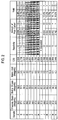
- Fig. 3 shows a coordinate space constituted of three axes representing silicon source content, carbon source content, and catalyst content, in which each sample is plotted.
- the weight percentage of the carbon source (here, a phenolic resin) was 34.5 weight % or more but 38 weight % or less
- the weight percentage of the silicon source (here, methyl silicate) was 57 weight % or more but 61 weight % or less
- the weight percentage of the catalyst (here, maleic acid) was 3 weight % or more but 8 weight % or less. It was verified that the samples A to C exhibited sufficient reactivity and significant effects regarding the amount of free carbon and the yield of the silicon carbide powder.
- the weight percentage of the silicon source (here, methyl silicate) was 57 weight % or more but 61 weight % or less.
- the weight percentage of the carbon source (here, a phenolic resin) was 33 weight % or more but less than 34.5 weight %
- the weight percentage of the catalyst (here, maleic acid) was less than 10 weight % but more than 8 weight %. It was verified that the sample F exhibited sufficient reactivity and a significant effect regarding the amount of free carbon.
- the yield of the silicon carbide powder it was verified that although a significant effect was not obtained, some effect was obtained.
- the weight percentage of the carbon source (here, a phenolic resin) was 34.5 weight % or more but 38 weight % or less, and the weight percentage of the catalyst (here, maleic acid) was 3 weight % or more but 8 weight % or less.
- the weight percentage of the silicon source (here, methyl silicate) was 55 weight % or more but less than 57 weight %. It was verified that the sample G exhibited sufficient reactivity and a significant effect regarding the yield of the silicon carbide powder. On the other hand, regarding the amount of free carbon, it was verified that although a significant effect was not obtained, some effect was obtained.
- the weight percentage of the silicon source (here, methyl silicate) was 57 weight % or more but 61 weight % or less, and the weight percentage of the catalyst (here, maleic acid) was 3 weight % or more but 8 weight % or less.
- the weight percentage of the carbon source (here, a phenolic resin) was 39 weight % or less but more than 38 weight %. It was verified that the sample H exhibited sufficient reactivity and a significant effect regarding the yield of the silicon carbide powder. On the other hand, regarding the amount of free carbon, it was verified that although a significant effect was not obtained, some effect was obtained.
- the weight percentage of the catalyst (here, maleic acid) was less than 3 weight %. It was verified that since the content of the catalyst (here, maleic acid) was too low, the sample I did not exhibit sufficient reactivity, and carbon and silicon were separated.
- the weight percentage of the silicon source (here, methyl silicate) was more than 62 weight %. It was verified that since the content of the silicon source (here, methyl silicate) was too high, the sample J did not exhibit a sufficient effect regarding the yield of the silicon carbide powder.
- the weight percentage of the catalyst (here, maleic acid) was more than 10 weight %. It was verified that since the content of the catalyst (here, maleic acid) was too high, the sample L did not exhibit a sufficient effect regarding the yield of the silicon carbide powder.
- the weight percentage of the silicon source (here, methyl silicate) was less than 55 weight %. It was verified that since the content of the silicon source (here, methyl silicate) was too low, the amount of free carbon was increased in the sample M.
- the weight percentage of the carbon source (here, a phenolic resin) was more than 39 weight %. It was verified that since the content of the carbon source (here, a phenolic resin) was too high, the amount of free carbon was increased in the sample N.
- the embodiment is not limited thereto.
- the carbon source may be other substances than the phenolic resin.
Landscapes
- Chemical & Material Sciences (AREA)
- Organic Chemistry (AREA)
- Inorganic Chemistry (AREA)
- Health & Medical Sciences (AREA)
- General Health & Medical Sciences (AREA)
- Carbon And Carbon Compounds (AREA)
- Catalysts (AREA)
Abstract
Description
- The present invention relates to a silicon carbide powder.
- Heretofore, there has been proposed a method for producing a high purity silicon carbide powder by mixing a silicon source (specifically, ethyl silicate), which is liquid at ordinary temperature, a carbon source (specifically, a phenolic resin), which is liquid at ordinary temperature, and a catalyst (specifically, maleic acid) capable of dissolving the carbon source. Specifically, a silicon carbide powder is produced by heating a mixture containing the silicon source, the carbon source, and the catalyst (for example, Patent Literature 1).
- In the case of using maleic acid as the catalyst, the content of sulfur contained in the silicon carbide powder is low in comparison with a case of using toluenesulfonic acid as the catalyst. Thus, the use of maleic acid as the catalyst enables the production of a silicon carbide powder suitable in the field of semiconductor where sulfur serves as an impurity.
- Additionally, there has also been proposed a technique of heating a mixture containing a silicon source, a carbon source, and a catalyst in two stages in order to produce a silicon carbide powder having an average particle diameter of 100 to 200 µm. Moreover, it is also known that when a ratio between carbon contained in the carbon source and silicon contained in the silicon source (hereinafter, C/Si) is more than 2.0 but less than 2.5, the amount of free carbon can be reduced (for example, Patent Literature 2).
-
- Patent Literature 1: Japanese Patent Application Publication No. Hei
10-120411 - Patent Literature 2: Japanese Patent Application Publication No.
2009-173501 - As a result of intensive studies, the present inventors have found out optimal ranges of three parameters of silicon source content, carbon source content, and catalyst content in a mixture of a silicon source, a carbon source, and a catalyst, from three viewpoints of the reactivity between carbon and silicon, the amount of free carbon (FC), and the yield of a silicon carbide powder.
- Accordingly, the present invention has been made to meet the above-described demand. An object of the present invention is to provide a silicon carbide powder capable of exhibiting favorable results from the viewpoints of the reactivity between carbon and silicon, the amount of free carbon (FC), and the yield of the silicon carbide powder.
- A silicon carbide powder according to a first feature is characterized in that, in a mixture containing a silicon source, a carbon source, and a catalyst, the silicon source is methyl silicate, and when the mixture is represented by 100 weight %, a weight percentage of the carbon source is 33 weight % or more but 39 weight % or less, a weight percentage of the silicon source is 55 weight % or more but 62 weight % or less, and a weight percentage of the catalyst is 3 weight % or more but 10 weight % or less.
- In the first feature, the weight percentage of the carbon source is 34.5 weight % or more but 38 weight % or less, when the mixture is represented by 100 weight %.
- In the first feature, the weight percentage of the silicon source is 57 weight % or more but 61 weight % or less, when the mixture is represented by 100 weight %.
- In the first feature, the weight percentage of the catalyst is 3 weight % or more but 8 weight % or less, when the mixture is represented by 100 weight %.
- The present invention makes it possible to provide a silicon carbide powder capable of exhibiting favorable results from the viewpoints of the reactivity between carbon and silicon, the amount of free carbon (FC), and the yield of the silicon carbide powder.
-
-
Fig. 1 is a flowchart for illustrating a method for producing a silicon carbide powder according to a first embodiment. -
Fig. 2 is a table showing the experimental result. -
Fig. 3 is a table showing the experimental result. - Hereinafter, a silicon carbide powder according to an embodiment of the present invention will be described with reference to the drawings. Note that, in the following description of the drawings, same or similar reference signs denote same or similar elements and portions.
- In addition, it should be noted that the drawings are schematic and ratios of dimensions and the like are different from actual ones. Therefore, specific dimensions and the like should be determined in consideration of the following description. Moreover, the drawings also include portions having different dimensional relationships and ratios from each other in some cases.
- In the silicon carbide powder according to the embodiment, in a mixture composed of a silicon source, a carbon source, and a catalyst, the silicon source is methyl silicate. When the mixture is represented by 100 weight %, a weight percentage of the carbon source is 33 weight % or more but 39 weight % or less, a weight percentage of the silicon source is 55 weight % or more but 62 weight % or less, and a weight percentage of the catalyst is 3 weight % or more but 10 weight % or less.
- In the embodiment, since three parameters of silicon source content, carbon source content, and catalyst content are optimized in the mixture of the silicon source, the carbon source, and the catalyst, a silicon carbide powder is obtained which is favorable from the viewpoints of the reactivity between carbon and silicon, the amount of free carbon, and the yield of the silicon carbide powder.
- A method for producing a silicon carbide powder according to a first embodiment will be described.
Fig. 1 is a flowchart for illustrating the method for producing the silicon carbide powder according to the first embodiment. As shown inFig. 1 , the method for producing the silicon carbide powder according to the first embodiment has a mixing step S10 and a firing step S20. - The mixing step S10 is a step of mixing a silicon source, which is liquid at ordinary temperature, a carbon source, which is liquid at ordinary temperature, and a catalyst (polymerization catalyst or crosslinking catalyst) capable of dissolving the carbon source to thereby form a mixture containing the silicon source, the carbon source, and the catalyst.
- An example of the silicon source includes methyl silicate (i.e., tetramethoxysilane). As the silicon source, a monomer of methyl silicate may be used, or a polymer of methyl silicate (for example, a low-molecular-weight polymer (oligomer) of methyl silicate) may be used. Here, the term oligomer means a polymer having a polymerization degree of approximately 2 to 15.
- As the methyl silicate, it is preferable to use methyl silicate which has a purity determined according to the application of the silicon carbide powder. In a case where high purity methyl silicate is used, the initial impurity content of the methyl silicate is preferably 20 ppm or less, further preferably 5 ppm or less.
- The carbon source is preferably selected from coal tar pitch having a high residual carbon ratio; phenolic resins, furan resins, epoxy resins, and phenoxy resins; monosaccharides such as glucose; oligosaccharides such as sucrose; and polysaccharides such as cellulose and starch.
- In order to homogeneously mix the carbon source with the methyl silicate, the carbon source is liquid at ordinary temperature. Specifically, the carbon source may be a substance dissolved in a solvent, or may be a thermoplastic or heat-soluble substance which softens or liquefies by heating. As the carbon source, it is preferable to use a compound composed only of hydrogen atoms and carbon atoms, from the viewpoint of residual carbon ratio, thermal polymerization, or thermal crosslinking. Specifcally, the carbon source is preferably selected from phenolic resins, polyvinyl alcohols, and polyvinyl acetates.
- The catalyst (polymerization catalyst or crosslinking catalyst) is preferably selected from, for example, saturated carboxylic acids, unsaturated carboxylic acids, dicarboxylic acids, and aromatic carboxylic acids. The catalyst is particularly preferably selected from saturated aliphatic dicarboxylic acids, unsaturated aliphatic carboxylic acids, and derivatives thereof. Specifically, the catalyst is preferably selected from maleic acid (pKa=1.75), acrylic acid (pKa=4.26), oxalic acid (pKa1=1.04, pKa2=3.82), itaconic acid (pKa1=3.85, pKa2=5.45), malonic acid (pKa1=2.62, pKa2=5.28), and succinic acid (pKa1=4.00, pKa2=5.24). From the viewpoint of solubility in water, the catalyst is preferably selected from maleic acid and derivatives thereof.
- Examples of the maleic acid derivatives include maleic anhydride, and the like. Note that examples of the aromatic carboxylic acids include salicylic acid (pKa=2.81), phenoxyacetic acid (pKa=2.99), and phthalic acid (pKa=2.75).
- The catalyst is preferably a compound composed only of carbon atoms, hydrogen atoms, and oxygen atoms. Since the catalyst is composed only of carbon atoms, hydrogen atoms, and oxygen atoms, such a catalyst does not contain sulfur, unlike toluenesulfonic acid (C7H8O3S), which is a commonly-used catalyst in conventional techniques. Thus, no hazardous sulfur compound is generated in the firing step.
- The catalyst preferably has a favorable homogeneity so that the catalyst can react and homogenously dissolve with at least the carbon source. From the viewpoint of reactivity improvement, the catalyst is preferably a compound containing a carboxyl group. Herein, the term "favorable homogeneity" means that the catalyst homogenously diffuses into the carbon source at a molecular level by mixing the carbon source with the catalyst.
- (1) The pKa value of maleic acid (1.75) is almost comparable to the pKa value of toluenesulfonic acid (1.4), and maleic acid has enough acidity. (2) Since maleic acid contains both unsaturated bonds and carboxyl groups in the molecule, maleic acid has an affinity with a hydrophobic portion and a hydrophilic portion and is likely to be homogenously mixed with the methyl silicate and the carbon source. (3) Since a strong exothermic reaction is not induced, the hardening reaction moderately takes place, and it is easy to control the reaction rate by the amount of the catalyst added. From these viewpoints, maleic acid is preferably used as the catalyst.
- In the first embodiment, the ratio between carbon contained in the mixture of the carbon source, the methyl silicate, and the catalyst and silicon contained in the mixture (hereinafter, C/Si) is not particularly limited, but is preferably 2.3 or more but 2.9 or less. The C/Si of the mixture is adjusted by the amounts of the methyl silicate, the carbon source, and the catalyst. The C/Si of the mixture can be defined by elemental analysis of a carbide intermediate obtained by carbonizing the mixture.
- In the first embodiment, when the mixture of the methyl silicate, the carbon source, and the catalyst is represented by 100 weight %, the weight percentage of the carbon source (for example, a phenolic resin) is 33 weight % or more but 39 weight % or less, the weight percentage of the silicon source (herein, methyl silicate) is 55 weight % or more but 62 weight % or less, and the weight percentage of the catalyst (for example, maleic acid) is 3 weight % or more but 10 weight % or less.
- Herein, when the mixture is represented by 100 weight %, the weight percentage of the carbon source (for example, a phenolic resin) is preferably 34.5 weight % or more but 38 weight % or less. The weight percentage of the silicon source (herein, methyl silicate) is preferably 57 weight % or more but 61 weight % or less. The weight percentage of the catalyst (for example, maleic acid) is preferably 3 weight % or more but 8 weight % or less.
- The catalyst may be mixed with the methyl silicate and the carbon source, while being dissolved in a solvent containing no impurity. The catalyst may be used in a saturated state in a solvent such as water or acetone (i.e., as a saturated solution).
- Herein, since the methyl silicate, the carbon source, and the catalyst are allowed to react homogenously with each other in the firing step, it is important to homogeneously mix the methyl silicate, the carbon source, and the catalyst. A surfactant may be added as appropriate to the mixture according to the degree of homogeneity of the mixture. As the surfactant, it is possible to use SPAN 20, TWEEN 20 (product name, manufactured by Kanto Chemical Co., Inc.), or the like. The amount of the surfactant added is preferably 5 to 10 weight %, when the mixture is represented by 100 weight %.
- In the first embodiment, the methyl silicate, the carbon source, and the catalyst are mixed together in the mixing step S10. Specifically, it is preferable that the methyl silicate and the carbon source are mixed by thoroughly stirring the two and then the catalyst be added thereto. The mixture of the methyl silicate, the carbon source, and the catalyst is solidified. The mixture is preferably solidified into a gel form.
- Moreover, after the catalyst is added to the methyl silicate and the carbon source, the mixture may be heated. Further, the mixture may be carbonized by heating the solid mixture at a temperature of 800°C to 1000°C for 30 to 120 minutes in a non-oxidizing atmosphere such as nitrogen or argon. Note that such heating is performed in a temperature range lower than that in the firing step S20, and should be considered as a pretreatment.
- The firing step S20 is a step of heating the mixture of the methyl silicate, the carbon source, and the catalyst in a non-oxidizing atmosphere to thereby form a silicon carbide powder.
- The mixture formed in the mixing step S10 is heated, for example, in an argon atmosphere at 1350°C to 2000°C for approximately 30 minutes to 3 hours, and thereby a silicon carbide powder is obtained.
- The term non-oxidizing atmosphere means an atmosphere with no oxidizing gas present. For example, the non-oxidizing atmosphere may be an inert atmosphere (nitrogen, a noble gas such as helium or argon, or the like), or may be a vacuum atmosphere.
- Note that, in the firing step S20, carbon contained in the mixture serves as a reducing agent, and a reaction of "SiO2+C→SiC" takes place.
- In a case where the silicon carbide powder obtained in the firing step S20 contains carbon, the silicon carbide powder may be decarbonized by heating in an air atmosphere furnace. The heating temperature for the silicon carbide powder in the decarbonization treatment is for example 700°C.
- In the first embodiment, the three parameters of silicon source content, carbon source content, and catalyst content are optimized in the mixture of the silicon source, the carbon source, and the catalyst. Thus, a silicon carbide powder is obtained which is favorable from the viewpoints of the reactivity between carbon and silicon, the amount of free carbon, and the yield of the silicon carbide powder.
- Hereinafter, the evaluation result will be described. Specifically, as shown in
Fig. 2 , samples A to N were prepared and evaluated for the reactivity between carbon and silicon, the amount of free carbon, and the yield of the silicon carbide powder. More specifically, the samples are different from one another in the three parameters of silicon source content, carbon source content, and catalyst content as shown inFig. 2 . - In
Fig. 2 , as to the amount of free carbon, when the amount of free carbon was less than 0.100, it was determined that a significant effect (○) was obtained; when the amount of free carbon was 0.100 or more but less than 0.300, it was determined that an effect (Δ) was obtained. Moreover, as to the yield of the silicon carbide powder, when the yield is more than 15%, it was determined that a significant effect (○) was obtained; when the yield was more than 14% but not more than 15%, it was determined that an effect (Δ) was obtained. - Further,
Fig. 3 shows a coordinate space constituted of three axes representing silicon source content, carbon source content, and catalyst content, in which each sample is plotted. - As shown in
Figs. 2 and3 , in the samples A to C, the weight percentage of the carbon source (here, a phenolic resin) was 34.5 weight % or more but 38 weight % or less, the weight percentage of the silicon source (here, methyl silicate) was 57 weight % or more but 61 weight % or less, and the weight percentage of the catalyst (here, maleic acid) was 3 weight % or more but 8 weight % or less. It was verified that the samples A to C exhibited sufficient reactivity and significant effects regarding the amount of free carbon and the yield of the silicon carbide powder. - In the samples D and E, the weight percentage of the silicon source (here, methyl silicate) was 57 weight % or more but 62 weight % or less, and the weight percentage of the catalyst (here, maleic acid) was 3 weight % or more but 8 weight % or less. On the other hand, the weight percentage of the carbon source (here, a phenolic resin) was 33 weight % or more but less than 34.5 weight %. It was verified that the samples D and E exhibited sufficient reactivity and a significant effect regarding the amount of free carbon. On the other hand, regarding the yield of the silicon carbide powder, it was verified that although a significant effect was not obtained, some effect was obtained.
- In the sample F, the weight percentage of the silicon source (here, methyl silicate) was 57 weight % or more but 61 weight % or less. On the other hand, the weight percentage of the carbon source (here, a phenolic resin) was 33 weight % or more but less than 34.5 weight %, and the weight percentage of the catalyst (here, maleic acid) was less than 10 weight % but more than 8 weight %. It was verified that the sample F exhibited sufficient reactivity and a significant effect regarding the amount of free carbon. On the other hand, regarding the yield of the silicon carbide powder, it was verified that although a significant effect was not obtained, some effect was obtained.
- In the sample G, the weight percentage of the carbon source (here, a phenolic resin) was 34.5 weight % or more but 38 weight % or less, and the weight percentage of the catalyst (here, maleic acid) was 3 weight % or more but 8 weight % or less. On the other hand, the weight percentage of the silicon source (here, methyl silicate) was 55 weight % or more but less than 57 weight %. It was verified that the sample G exhibited sufficient reactivity and a significant effect regarding the yield of the silicon carbide powder. On the other hand, regarding the amount of free carbon, it was verified that although a significant effect was not obtained, some effect was obtained.
- In the sample H, the weight percentage of the silicon source (here, methyl silicate) was 57 weight % or more but 61 weight % or less, and the weight percentage of the catalyst (here, maleic acid) was 3 weight % or more but 8 weight % or less. On the other hand, the weight percentage of the carbon source (here, a phenolic resin) was 39 weight % or less but more than 38 weight %. It was verified that the sample H exhibited sufficient reactivity and a significant effect regarding the yield of the silicon carbide powder. On the other hand, regarding the amount of free carbon, it was verified that although a significant effect was not obtained, some effect was obtained.
- In the sample I, the weight percentage of the catalyst (here, maleic acid) was less than 3 weight %. It was verified that since the content of the catalyst (here, maleic acid) was too low, the sample I did not exhibit sufficient reactivity, and carbon and silicon were separated.
- In the sample J, the weight percentage of the silicon source (here, methyl silicate) was more than 62 weight %. It was verified that since the content of the silicon source (here, methyl silicate) was too high, the sample J did not exhibit a sufficient effect regarding the yield of the silicon carbide powder.
- In the sample K, the weight percentage of the carbon source (here, a phenolic resin) was less than 33 weight %. It was verified that since the content of the carbon source (here, a phenolic resin) was too low, the sample K did not exhibit a sufficient effect regarding the yield of the silicon carbide powder.
- In the sample L, the weight percentage of the catalyst (here, maleic acid) was more than 10 weight %. It was verified that since the content of the catalyst (here, maleic acid) was too high, the sample L did not exhibit a sufficient effect regarding the yield of the silicon carbide powder.
- In the sample M, the weight percentage of the silicon source (here, methyl silicate) was less than 55 weight %. It was verified that since the content of the silicon source (here, methyl silicate) was too low, the amount of free carbon was increased in the sample M.
- In the sample N, the weight percentage of the carbon source (here, a phenolic resin) was more than 39 weight %. It was verified that since the content of the carbon source (here, a phenolic resin) was too high, the amount of free carbon was increased in the sample N.
- The present invention has been described by use of the above-described embodiment. However, it should not be understood that the description and drawings which constitute part of this disclosure limit the present invention. From this disclosure, various alternative embodiments, examples, and operation techniques will be easily found by those skilled in the art.
- In the embodiment, the description has been given mainly of the case where a phenolic resin is used as the carbon source. However, the embodiment is not limited thereto. As described above, the carbon source may be other substances than the phenolic resin.
- In the embodiment, the description has been given mainly of the case where maleic acid is used as the catalyst. However, the embodiment is not limited thereto. As described above, the catalyst may be other substances than maleic acid.
- The present invention makes it possible to provide a silicon carbide powder capable of exhibiting favorable results from the viewpoints of the reactivity between carbon and silicon, the amount of free carbon (FC), and the yield of the silicon carbide powder.
Claims (4)
- A silicon carbide powder wherein
in a mixture containing a silicon source, a carbon source, and a catalyst, the silicon source is methyl silicate, and
when the mixture is represented by 100 weight %,a weight percentage of the carbon source is 33 weight % or more but 39 weight % or less,a weight percentage of the silicon source is 55 weight % or more but 62 weight % or less, anda weight percentage of the catalyst is 3 weight % or more but 10 weight % or less. - The silicon carbide powder according to claim 1, wherein the weight percentage of the carbon source is 34.5 weight % or more but 38 weight % or less, when the mixture is represented by 100 weight %.
- The silicon carbide powder according to claim 1, wherein the weight percentage of the silicon source is 57 weight % or more but 61 weight % or less, when the mixture is represented by 100 weight %.
- The silicon carbide powder according to claim 1, wherein the weight percentage of the catalyst is 3 weight % or more but 8 weight % or less, when the mixture is represented by 100 weight %.
Applications Claiming Priority (2)
| Application Number | Priority Date | Filing Date | Title |
|---|---|---|---|
| JP2013133948 | 2013-06-26 | ||
| PCT/JP2014/066405 WO2014208461A1 (en) | 2013-06-26 | 2014-06-20 | Silicon carbide powder |
Publications (3)
| Publication Number | Publication Date |
|---|---|
| EP3015428A4 EP3015428A4 (en) | 2016-05-04 |
| EP3015428A1 true EP3015428A1 (en) | 2016-05-04 |
| EP3015428B1 EP3015428B1 (en) | 2017-10-18 |
Family
ID=52141801
Family Applications (1)
| Application Number | Title | Priority Date | Filing Date |
|---|---|---|---|
| EP14817205.9A Not-in-force EP3015428B1 (en) | 2013-06-26 | 2014-06-20 | Silicon carbide powder |
Country Status (6)
| Country | Link |
|---|---|
| US (1) | US20160137512A1 (en) |
| EP (1) | EP3015428B1 (en) |
| JP (1) | JPWO2014208461A1 (en) |
| CN (1) | CN105324331A (en) |
| TW (1) | TWI519472B (en) |
| WO (1) | WO2014208461A1 (en) |
Families Citing this family (4)
| Publication number | Priority date | Publication date | Assignee | Title |
|---|---|---|---|---|
| US11685662B2 (en) * | 2020-06-17 | 2023-06-27 | Touchstone Research Laboratory, Ltd. | Coal based silicon carbide foam |
| US11685661B2 (en) * | 2020-06-17 | 2023-06-27 | Touchstone Research Laboratory, Ltd. | Carbon foam based silicon carbide |
| CN113896200B (en) * | 2021-11-26 | 2022-11-22 | 连云港市沃鑫高新材料有限公司 | Production process of silicon carbide micro powder |
| CN118125824A (en) * | 2024-03-01 | 2024-06-04 | 浙江芯科半导体有限公司 | A preparation process of silicon carbide micropowder for pressureless sintering silicon carbide products |
Family Cites Families (7)
| Publication number | Priority date | Publication date | Assignee | Title |
|---|---|---|---|---|
| US3271109A (en) * | 1963-04-11 | 1966-09-06 | Pittsburgh Plate Glass Co | Pigmentary silicon carbide |
| US6251353B1 (en) * | 1996-08-26 | 2001-06-26 | Bridgestone Corporation | Production method of silicon carbide particles |
| JP4234800B2 (en) | 1996-08-26 | 2009-03-04 | 株式会社ブリヂストン | Method for producing silicon carbide powder |
| JP2000351614A (en) * | 1999-06-10 | 2000-12-19 | Bridgestone Corp | Silicon carbide powder and its production |
| JP4589491B2 (en) * | 1999-08-24 | 2010-12-01 | 株式会社ブリヂストン | Silicon carbide powder, method for producing green body, and method for producing silicon carbide sintered body |
| JP4700835B2 (en) * | 2001-05-01 | 2011-06-15 | 株式会社ブリヂストン | Silicon carbide powder, method for producing the same, and silicon carbide sintered body |
| JP2009173501A (en) | 2008-01-28 | 2009-08-06 | Bridgestone Corp | Method of manufacturing high purity silicon carbide powder for silicon carbide single crystal manufacture and silicon carbide single crystal |
-
2014
- 2014-06-20 EP EP14817205.9A patent/EP3015428B1/en not_active Not-in-force
- 2014-06-20 US US14/900,742 patent/US20160137512A1/en not_active Abandoned
- 2014-06-20 JP JP2015524024A patent/JPWO2014208461A1/en active Pending
- 2014-06-20 CN CN201480035420.1A patent/CN105324331A/en active Pending
- 2014-06-20 WO PCT/JP2014/066405 patent/WO2014208461A1/en not_active Ceased
- 2014-06-24 TW TW103121647A patent/TWI519472B/en not_active IP Right Cessation
Also Published As
| Publication number | Publication date |
|---|---|
| JPWO2014208461A1 (en) | 2017-02-23 |
| TW201500278A (en) | 2015-01-01 |
| TWI519472B (en) | 2016-02-01 |
| US20160137512A1 (en) | 2016-05-19 |
| EP3015428A4 (en) | 2016-05-04 |
| CN105324331A (en) | 2016-02-10 |
| WO2014208461A1 (en) | 2014-12-31 |
| EP3015428B1 (en) | 2017-10-18 |
Similar Documents
| Publication | Publication Date | Title |
|---|---|---|
| US9630854B2 (en) | Silicon carbide powder | |
| EP3015428A1 (en) | Silicon carbide powder | |
| CN107868278B (en) | A kind of carbon nanomaterial modifier and the preparation method of carbon nanomaterial modified asphalt | |
| CN102020877A (en) | Rear-earth surface-modified hollow glass microsphere and preparation method thereof | |
| US5318761A (en) | Process for preparing silicon carbide powder for use in semiconductor equipment | |
| US6251353B1 (en) | Production method of silicon carbide particles | |
| CN114957675A (en) | Boron modified polycarbosilane powder and preparation method thereof | |
| KR102319929B1 (en) | Fumed silica treated with silicone oil, and its manufacturing method and application | |
| JP4234800B2 (en) | Method for producing silicon carbide powder | |
| CN108395253B (en) | Preparation method of silicon-boron-nitrogen-carbon-beryllium ceramic fiber | |
| CN107699175A (en) | A kind of preparation method of the new casting glue based on biomass material | |
| JP2013216550A (en) | Method for manufacturing silicon carbide sintered body, and silicon carbide sintered body | |
| KR20250043193A (en) | Binder for refractory material, refractory material comprising the same and preparation method thereof | |
| KR102186700B1 (en) | Hydrophobic aluminium hydroxide and method of manufacturing the same | |
| CN113174158A (en) | Modified epoxy phosphonate accelerant for coating and preparation method and application thereof | |
| CN118388165B (en) | An additive for improving carbon fixation and activity of steel slag-based carbonized cementitious material and a method of using the additive | |
| CN1284877C (en) | Prepn of ternary Tb-Dy-Fe alloy | |
| CN114164371A (en) | Activating agent for preparing vanadium-nitrogen alloy and preparation method thereof | |
| CN119972067A (en) | Catalyst, preparation method and application thereof, and method for preparing methyl methacrylate | |
| JPH05294604A (en) | Production of carbon filler | |
| JPH1129309A (en) | Hexagonal boron nitride powder | |
| JP2011225389A (en) | Method for producing silicon carbide sintered compact | |
| CN117820647A (en) | A method for preparing titanium-containing polycarbosilane precursor | |
| JPS5950006A (en) | Manufacture of alpha-type silicon nitride powder | |
| JPH0532409A (en) | Production of boron-dissolved silicon carbide powder |
Legal Events
| Date | Code | Title | Description |
|---|---|---|---|
| PUAI | Public reference made under article 153(3) epc to a published international application that has entered the european phase |
Free format text: ORIGINAL CODE: 0009012 |
|
| 17P | Request for examination filed |
Effective date: 20151231 |
|
| A4 | Supplementary search report drawn up and despatched |
Effective date: 20160219 |
|
| AK | Designated contracting states |
Kind code of ref document: A1 Designated state(s): AL AT BE BG CH CY CZ DE DK EE ES FI FR GB GR HR HU IE IS IT LI LT LU LV MC MK MT NL NO PL PT RO RS SE SI SK SM TR |
|
| AX | Request for extension of the european patent |
Extension state: BA ME |
|
| DAX | Request for extension of the european patent (deleted) | ||
| 17Q | First examination report despatched |
Effective date: 20161208 |
|
| REG | Reference to a national code |
Ref country code: DE Ref legal event code: R079 Ref document number: 602014016117 Country of ref document: DE Free format text: PREVIOUS MAIN CLASS: C01B0031360000 Ipc: C01B0032956000 |
|
| RIC1 | Information provided on ipc code assigned before grant |
Ipc: C01B 32/956 20170101AFI20170322BHEP |
|
| GRAP | Despatch of communication of intention to grant a patent |
Free format text: ORIGINAL CODE: EPIDOSNIGR1 |
|
| INTG | Intention to grant announced |
Effective date: 20170509 |
|
| GRAS | Grant fee paid |
Free format text: ORIGINAL CODE: EPIDOSNIGR3 |
|
| GRAA | (expected) grant |
Free format text: ORIGINAL CODE: 0009210 |
|
| AK | Designated contracting states |
Kind code of ref document: B1 Designated state(s): AL AT BE BG CH CY CZ DE DK EE ES FI FR GB GR HR HU IE IS IT LI LT LU LV MC MK MT NL NO PL PT RO RS SE SI SK SM TR |
|
| REG | Reference to a national code |
Ref country code: GB Ref legal event code: FG4D |
|
| REG | Reference to a national code |
Ref country code: CH Ref legal event code: EP |
|
| REG | Reference to a national code |
Ref country code: AT Ref legal event code: REF Ref document number: 937764 Country of ref document: AT Kind code of ref document: T Effective date: 20171115 Ref country code: IE Ref legal event code: FG4D |
|
| REG | Reference to a national code |
Ref country code: DE Ref legal event code: R096 Ref document number: 602014016117 Country of ref document: DE |
|
| REG | Reference to a national code |
Ref country code: NL Ref legal event code: MP Effective date: 20171018 |
|
| REG | Reference to a national code |
Ref country code: LT Ref legal event code: MG4D |
|
| REG | Reference to a national code |
Ref country code: AT Ref legal event code: MK05 Ref document number: 937764 Country of ref document: AT Kind code of ref document: T Effective date: 20171018 |
|
| PG25 | Lapsed in a contracting state [announced via postgrant information from national office to epo] |
Ref country code: NL Free format text: LAPSE BECAUSE OF FAILURE TO SUBMIT A TRANSLATION OF THE DESCRIPTION OR TO PAY THE FEE WITHIN THE PRESCRIBED TIME-LIMIT Effective date: 20171018 |
|
| PG25 | Lapsed in a contracting state [announced via postgrant information from national office to epo] |
Ref country code: SE Free format text: LAPSE BECAUSE OF FAILURE TO SUBMIT A TRANSLATION OF THE DESCRIPTION OR TO PAY THE FEE WITHIN THE PRESCRIBED TIME-LIMIT Effective date: 20171018 Ref country code: LT Free format text: LAPSE BECAUSE OF FAILURE TO SUBMIT A TRANSLATION OF THE DESCRIPTION OR TO PAY THE FEE WITHIN THE PRESCRIBED TIME-LIMIT Effective date: 20171018 Ref country code: FI Free format text: LAPSE BECAUSE OF FAILURE TO SUBMIT A TRANSLATION OF THE DESCRIPTION OR TO PAY THE FEE WITHIN THE PRESCRIBED TIME-LIMIT Effective date: 20171018 Ref country code: ES Free format text: LAPSE BECAUSE OF FAILURE TO SUBMIT A TRANSLATION OF THE DESCRIPTION OR TO PAY THE FEE WITHIN THE PRESCRIBED TIME-LIMIT Effective date: 20171018 Ref country code: NO Free format text: LAPSE BECAUSE OF FAILURE TO SUBMIT A TRANSLATION OF THE DESCRIPTION OR TO PAY THE FEE WITHIN THE PRESCRIBED TIME-LIMIT Effective date: 20180118 |
|
| PG25 | Lapsed in a contracting state [announced via postgrant information from national office to epo] |
Ref country code: GR Free format text: LAPSE BECAUSE OF FAILURE TO SUBMIT A TRANSLATION OF THE DESCRIPTION OR TO PAY THE FEE WITHIN THE PRESCRIBED TIME-LIMIT Effective date: 20180119 Ref country code: AT Free format text: LAPSE BECAUSE OF FAILURE TO SUBMIT A TRANSLATION OF THE DESCRIPTION OR TO PAY THE FEE WITHIN THE PRESCRIBED TIME-LIMIT Effective date: 20171018 Ref country code: HR Free format text: LAPSE BECAUSE OF FAILURE TO SUBMIT A TRANSLATION OF THE DESCRIPTION OR TO PAY THE FEE WITHIN THE PRESCRIBED TIME-LIMIT Effective date: 20171018 Ref country code: RS Free format text: LAPSE BECAUSE OF FAILURE TO SUBMIT A TRANSLATION OF THE DESCRIPTION OR TO PAY THE FEE WITHIN THE PRESCRIBED TIME-LIMIT Effective date: 20171018 Ref country code: LV Free format text: LAPSE BECAUSE OF FAILURE TO SUBMIT A TRANSLATION OF THE DESCRIPTION OR TO PAY THE FEE WITHIN THE PRESCRIBED TIME-LIMIT Effective date: 20171018 Ref country code: IS Free format text: LAPSE BECAUSE OF FAILURE TO SUBMIT A TRANSLATION OF THE DESCRIPTION OR TO PAY THE FEE WITHIN THE PRESCRIBED TIME-LIMIT Effective date: 20180218 Ref country code: BG Free format text: LAPSE BECAUSE OF FAILURE TO SUBMIT A TRANSLATION OF THE DESCRIPTION OR TO PAY THE FEE WITHIN THE PRESCRIBED TIME-LIMIT Effective date: 20180118 |
|
| REG | Reference to a national code |
Ref country code: FR Ref legal event code: PLFP Year of fee payment: 5 |
|
| REG | Reference to a national code |
Ref country code: DE Ref legal event code: R097 Ref document number: 602014016117 Country of ref document: DE |
|
| PG25 | Lapsed in a contracting state [announced via postgrant information from national office to epo] |
Ref country code: CZ Free format text: LAPSE BECAUSE OF FAILURE TO SUBMIT A TRANSLATION OF THE DESCRIPTION OR TO PAY THE FEE WITHIN THE PRESCRIBED TIME-LIMIT Effective date: 20171018 Ref country code: EE Free format text: LAPSE BECAUSE OF FAILURE TO SUBMIT A TRANSLATION OF THE DESCRIPTION OR TO PAY THE FEE WITHIN THE PRESCRIBED TIME-LIMIT Effective date: 20171018 Ref country code: SK Free format text: LAPSE BECAUSE OF FAILURE TO SUBMIT A TRANSLATION OF THE DESCRIPTION OR TO PAY THE FEE WITHIN THE PRESCRIBED TIME-LIMIT Effective date: 20171018 Ref country code: DK Free format text: LAPSE BECAUSE OF FAILURE TO SUBMIT A TRANSLATION OF THE DESCRIPTION OR TO PAY THE FEE WITHIN THE PRESCRIBED TIME-LIMIT Effective date: 20171018 |
|
| PGFP | Annual fee paid to national office [announced via postgrant information from national office to epo] |
Ref country code: DE Payment date: 20180625 Year of fee payment: 5 |
|
| PLBE | No opposition filed within time limit |
Free format text: ORIGINAL CODE: 0009261 |
|
| STAA | Information on the status of an ep patent application or granted ep patent |
Free format text: STATUS: NO OPPOSITION FILED WITHIN TIME LIMIT |
|
| PG25 | Lapsed in a contracting state [announced via postgrant information from national office to epo] |
Ref country code: IT Free format text: LAPSE BECAUSE OF FAILURE TO SUBMIT A TRANSLATION OF THE DESCRIPTION OR TO PAY THE FEE WITHIN THE PRESCRIBED TIME-LIMIT Effective date: 20171018 Ref country code: RO Free format text: LAPSE BECAUSE OF FAILURE TO SUBMIT A TRANSLATION OF THE DESCRIPTION OR TO PAY THE FEE WITHIN THE PRESCRIBED TIME-LIMIT Effective date: 20171018 Ref country code: PL Free format text: LAPSE BECAUSE OF FAILURE TO SUBMIT A TRANSLATION OF THE DESCRIPTION OR TO PAY THE FEE WITHIN THE PRESCRIBED TIME-LIMIT Effective date: 20171018 Ref country code: SM Free format text: LAPSE BECAUSE OF FAILURE TO SUBMIT A TRANSLATION OF THE DESCRIPTION OR TO PAY THE FEE WITHIN THE PRESCRIBED TIME-LIMIT Effective date: 20171018 |
|
| PGFP | Annual fee paid to national office [announced via postgrant information from national office to epo] |
Ref country code: FR Payment date: 20180620 Year of fee payment: 5 |
|
| 26N | No opposition filed |
Effective date: 20180719 |
|
| PGFP | Annual fee paid to national office [announced via postgrant information from national office to epo] |
Ref country code: GB Payment date: 20180620 Year of fee payment: 5 |
|
| PG25 | Lapsed in a contracting state [announced via postgrant information from national office to epo] |
Ref country code: SI Free format text: LAPSE BECAUSE OF FAILURE TO SUBMIT A TRANSLATION OF THE DESCRIPTION OR TO PAY THE FEE WITHIN THE PRESCRIBED TIME-LIMIT Effective date: 20171018 |
|
| REG | Reference to a national code |
Ref country code: CH Ref legal event code: PL |
|
| REG | Reference to a national code |
Ref country code: BE Ref legal event code: MM Effective date: 20180630 |
|
| REG | Reference to a national code |
Ref country code: IE Ref legal event code: MM4A |
|
| PG25 | Lapsed in a contracting state [announced via postgrant information from national office to epo] |
Ref country code: LU Free format text: LAPSE BECAUSE OF NON-PAYMENT OF DUE FEES Effective date: 20180620 Ref country code: MC Free format text: LAPSE BECAUSE OF FAILURE TO SUBMIT A TRANSLATION OF THE DESCRIPTION OR TO PAY THE FEE WITHIN THE PRESCRIBED TIME-LIMIT Effective date: 20171018 |
|
| PG25 | Lapsed in a contracting state [announced via postgrant information from national office to epo] |
Ref country code: LI Free format text: LAPSE BECAUSE OF NON-PAYMENT OF DUE FEES Effective date: 20180630 Ref country code: CH Free format text: LAPSE BECAUSE OF NON-PAYMENT OF DUE FEES Effective date: 20180630 Ref country code: IE Free format text: LAPSE BECAUSE OF NON-PAYMENT OF DUE FEES Effective date: 20180620 |
|
| PG25 | Lapsed in a contracting state [announced via postgrant information from national office to epo] |
Ref country code: BE Free format text: LAPSE BECAUSE OF NON-PAYMENT OF DUE FEES Effective date: 20180630 |
|
| REG | Reference to a national code |
Ref country code: DE Ref legal event code: R119 Ref document number: 602014016117 Country of ref document: DE |
|
| PG25 | Lapsed in a contracting state [announced via postgrant information from national office to epo] |
Ref country code: MT Free format text: LAPSE BECAUSE OF NON-PAYMENT OF DUE FEES Effective date: 20180620 |
|
| GBPC | Gb: european patent ceased through non-payment of renewal fee |
Effective date: 20190620 |
|
| PG25 | Lapsed in a contracting state [announced via postgrant information from national office to epo] |
Ref country code: TR Free format text: LAPSE BECAUSE OF FAILURE TO SUBMIT A TRANSLATION OF THE DESCRIPTION OR TO PAY THE FEE WITHIN THE PRESCRIBED TIME-LIMIT Effective date: 20171018 |
|
| PG25 | Lapsed in a contracting state [announced via postgrant information from national office to epo] |
Ref country code: DE Free format text: LAPSE BECAUSE OF NON-PAYMENT OF DUE FEES Effective date: 20200101 Ref country code: GB Free format text: LAPSE BECAUSE OF NON-PAYMENT OF DUE FEES Effective date: 20190620 |
|
| PG25 | Lapsed in a contracting state [announced via postgrant information from national office to epo] |
Ref country code: PT Free format text: LAPSE BECAUSE OF FAILURE TO SUBMIT A TRANSLATION OF THE DESCRIPTION OR TO PAY THE FEE WITHIN THE PRESCRIBED TIME-LIMIT Effective date: 20171018 |
|
| PG25 | Lapsed in a contracting state [announced via postgrant information from national office to epo] |
Ref country code: HU Free format text: LAPSE BECAUSE OF FAILURE TO SUBMIT A TRANSLATION OF THE DESCRIPTION OR TO PAY THE FEE WITHIN THE PRESCRIBED TIME-LIMIT; INVALID AB INITIO Effective date: 20140620 Ref country code: MK Free format text: LAPSE BECAUSE OF NON-PAYMENT OF DUE FEES Effective date: 20171018 Ref country code: CY Free format text: LAPSE BECAUSE OF FAILURE TO SUBMIT A TRANSLATION OF THE DESCRIPTION OR TO PAY THE FEE WITHIN THE PRESCRIBED TIME-LIMIT Effective date: 20171018 Ref country code: FR Free format text: LAPSE BECAUSE OF NON-PAYMENT OF DUE FEES Effective date: 20190630 |
|
| PG25 | Lapsed in a contracting state [announced via postgrant information from national office to epo] |
Ref country code: AL Free format text: LAPSE BECAUSE OF FAILURE TO SUBMIT A TRANSLATION OF THE DESCRIPTION OR TO PAY THE FEE WITHIN THE PRESCRIBED TIME-LIMIT Effective date: 20171018 |