EP3011040B1 - Method for storing gaseous hydrogen via enzymatic production of methanoate (formate) - Google Patents
Method for storing gaseous hydrogen via enzymatic production of methanoate (formate) Download PDFInfo
- Publication number
- EP3011040B1 EP3011040B1 EP14738408.5A EP14738408A EP3011040B1 EP 3011040 B1 EP3011040 B1 EP 3011040B1 EP 14738408 A EP14738408 A EP 14738408A EP 3011040 B1 EP3011040 B1 EP 3011040B1
- Authority
- EP
- European Patent Office
- Prior art keywords
- formate
- hdcr
- hydrogen
- dehydrogenase
- protein
- Prior art date
- Legal status (The legal status is an assumption and is not a legal conclusion. Google has not performed a legal analysis and makes no representation as to the accuracy of the status listed.)
- Active
Links
Images


Classifications
-
- C—CHEMISTRY; METALLURGY
- C12—BIOCHEMISTRY; BEER; SPIRITS; WINE; VINEGAR; MICROBIOLOGY; ENZYMOLOGY; MUTATION OR GENETIC ENGINEERING
- C12P—FERMENTATION OR ENZYME-USING PROCESSES TO SYNTHESISE A DESIRED CHEMICAL COMPOUND OR COMPOSITION OR TO SEPARATE OPTICAL ISOMERS FROM A RACEMIC MIXTURE
- C12P7/00—Preparation of oxygen-containing organic compounds
- C12P7/62—Carboxylic acid esters
-
- B—PERFORMING OPERATIONS; TRANSPORTING
- B01—PHYSICAL OR CHEMICAL PROCESSES OR APPARATUS IN GENERAL
- B01D—SEPARATION
- B01D53/00—Separation of gases or vapours; Recovering vapours of volatile solvents from gases; Chemical or biological purification of waste gases, e.g. engine exhaust gases, smoke, fumes, flue gases, aerosols
- B01D53/34—Chemical or biological purification of waste gases
- B01D53/46—Removing components of defined structure
- B01D53/62—Carbon oxides
-
- C—CHEMISTRY; METALLURGY
- C12—BIOCHEMISTRY; BEER; SPIRITS; WINE; VINEGAR; MICROBIOLOGY; ENZYMOLOGY; MUTATION OR GENETIC ENGINEERING
- C12P—FERMENTATION OR ENZYME-USING PROCESSES TO SYNTHESISE A DESIRED CHEMICAL COMPOUND OR COMPOSITION OR TO SEPARATE OPTICAL ISOMERS FROM A RACEMIC MIXTURE
- C12P7/00—Preparation of oxygen-containing organic compounds
- C12P7/40—Preparation of oxygen-containing organic compounds containing a carboxyl group including Peroxycarboxylic acids
-
- B—PERFORMING OPERATIONS; TRANSPORTING
- B01—PHYSICAL OR CHEMICAL PROCESSES OR APPARATUS IN GENERAL
- B01D—SEPARATION
- B01D2251/00—Reactants
- B01D2251/95—Specific microorganisms
-
- B—PERFORMING OPERATIONS; TRANSPORTING
- B01—PHYSICAL OR CHEMICAL PROCESSES OR APPARATUS IN GENERAL
- B01D—SEPARATION
- B01D2257/00—Components to be removed
- B01D2257/50—Carbon oxides
- B01D2257/502—Carbon monoxide
Definitions
- the present invention relates to a method for storing gaseous hydrogen according to the appended set of claims.
- the HDCR hydrogen dependent carbon dioxide reductase
- the HDCR and/or its complex is preferably derived from Acetobacterium woodii.
- Boddien et al. (in: CO2-"Neutral” Hydrogen Storage Based on Bicarbonates and Formates. Angewandte Chemie International Edition, 2011 50: 6411-6414 ) describe a ruthenium catalyst generated in situ that facilitates the selective hydrogenation of bicarbonates and carbonates, as well as CO 2 and base, to give formates and also the selective dehydrogenation of formates back to bicarbonates. The two reactions can be coupled, leading to a reversible hydrogen-storage system.
- KR 2004/0009875 describes an electrochemical preparation method of formic acid using carbon dioxide, thereby simultaneously carrying out reduction of carbon dioxide and conversion of carbon dioxide into useful organic matters.
- the method comprises electrochemical reduction of carbon dioxide using formic acid dehydrogenase or formic acid dehydrogenase-producing anaerobic bacteria and an electron carrier in which reversible oxidation/reduction is occurred at electric potential of -400 to -600 mV, wherein the concentration of the electron carrier is 5 to 15 mM;
- the anaerobic bacteria are selected from Clostridium thermoaceticum, Clostridium thermoauthotrophicum, Acetobacterium woodii, Acetogenium kivui, Clostridium aceticum, Clostridium ljungdahlii, Eubacterium limosum or a mixture thereof;
- the electron carrier is selected from methylviologen, N,N,-diethyl-4,4-bipyridyl, N,N-d
- WO 2011/087380 describes methods for improving the efficiency of carbon capture in microbial fermentation of a gaseous substrate comprising CO and/or H 2 ; said method comprising applying an electrical potential across the fermentation. It further relates to improving the efficiency of carbon capture in the microbial fermentation of gaseous substrate comprising CO and/or H 2 to produce alcohol(s) and/or acid (s).
- Catalytic processes may be used to convert gases consisting primarily of CO and/or CO and hydrogen (H 2 ) into a variety of fuels and chemicals. Microorganisms may also be used to convert these gases into fuels and chemicals. These biological processes, although generally slower than chemical reactions, have several advantages over catalytic processes, including higher specificity, higher yields, lower energy costs and greater resistance to poisoning.
- Schuchmann et al. (A bacterial electron-bifurcating hydrogenase. Journal of Biological Chemistry, 2012, Sep 7; 287(37):31165-71 ) describe a multimeric [FeFe]-hydrogenase from A. woodii containing four subunits (HydABCD) catalyzing hydrogen-based ferredoxin reduction.
- the multimeric hydrogenase of A. woodii is a soluble energy-converting hydrogenase that uses electron bifurcation to drive the endergonic ferredoxin reduction by coupling it to the exergonic NAD + reduction.
- Schiel-Bengelsdorf and Dürre in:Pathway engineering and synthetic biology using acetogens, FEBS Letters, 2012, 586, 15, 2191 ) describe acetogenic anaerobic bacteria that synthesize acetyl-CoA from CO 2 or CO. Their autotrophic mode of metabolism offers the biotechnological chance to combine use of abundantly available substrates with reduction of greenhouse gases.
- Several companies have already established pilot and demonstration plants for converting waste gases into ethanol, an important biofuel and a natural product of many acetogens.
- Recombinant DNA approaches now opened the door to construct acetogens, synthesizing important industrial bulk chemicals and biofuels such as acetone and butanol.
- novel microbial production platforms are available that no longer compete with nutritional feedstocks.
- WO 2011/028137 describes a bioreactor system for fermentation of a gaseous substrate comprising CO and optionally H 2 , or CO 2 and H2, to one or more products, including acid(s) and/or alcohol(s).
- US 7,803,589 describes an Escherichia coli microorganism, comprising a genetic modification, wherein said genetic modification comprises transformation of said microorganism with exogenous bacterial nucleic acid molecules encoding the proteins cobalamide corrinoid/iron-sulfur protein, methyltransferase, carbon monoxide dehydrogenase, acetyl-CoA synthase, acetyl-CoA synthase disulfide reductase and hydrogenase, whereby expression of said proteins increases the efficiency of producing acetyl-CoA from CO 2 , CO or H 2 , or a combination thereof.
- Poehlein et al. (An ancient pathway combining carbon dioxide fixation with the generation and utilization of a sodium ion gradient for ATP synthesis. PLoS One. 2012;7(3): e33439. doi:10.1371/journal.pone.0033439 ) describes that the synthesis of acetate from carbon dioxide and molecular hydrogen is considered to be the first carbon assimilation pathway on earth. It combines carbon dioxide fixation into acetyl-CoA with the production of ATP via an energized cell membrane. How the pathway is coupled with the net synthesis of ATP has been an enigma. The anaerobic, acetogenic bacterium Acetobacterium woodii uses an ancient version of this pathway without cytochromes and quinones.
- Hull et al. "Reversible hydrogen storage using CO2 and a proton-switchable iridium catalyst in aqueous media under mild temperatures and pressures", Nature Chemistry, (2012), vol. 4, pages 383 - 388 , disclose a system wherein the switch of pH through addition of acid regenerates stored H 2 .
- the object of the present invention is solved by providing a method for storing gaseous hydrogen, comprising the steps of producing methanoate (formate) through contacting gaseous hydrogen with carbon dioxide in the presence of a hydrogen dependent carbon dioxide reductase (HDCR) which catalyzes the direct conversion of H 2 and CO 2 into HCOOH, and thereby storing of said gaseous hydrogen, wherein said HDCR is part of an enzyme complex with a formate dehydrogenase accessory protein, an electron transfer protein, and a subunit harboring the active site characteristic of an [FeFe]-hydrogenase.
- a method for storing gaseous hydrogen comprising the steps of producing methanoate (formate) through contacting gaseous hydrogen with carbon dioxide in the presence of a hydrogen dependent carbon dioxide reductase (HDCR) which catalyzes the direct conversion of H 2 and CO 2 into HCOOH, and thereby storing of said gaseous hydrogen, wherein said HDCR is part of an enzyme complex with a format
- the present invention is based on the surprising finding that the HDCR and a respective enzyme complex has been found to convert gaseous H 2 + CO 2 directly into formate in the reaction H 2 + CO 2 ⁇ HCOOH.
- the present biological system functions at between about 20°C to about 40°C and normal pressure.
- the method furthermore has a high conversion rate, compared with known chemical catalysts. Also, preferably no additional energy has to be provided.
- the CO 2 can be provided in the method both in gaseous and/or solid from.
- HDCR is selected from a bacterial enzyme, such as, for example FdhF1 (Acc. No. YP_005268500, SEQ ID No.1) or FdhF2 (Acc. No. YP_005268502, SEQ ID No.2) of Acetobacterium woodii.
- FdhF1 Acc. No. YP_005268500, SEQ ID No.1
- FdhF2 Acc. No. YP_005268502, SEQ ID No.2
- formate dehydrogenase enzymes that are at least 65% identical to the FdhF1 and/or FdhF2 enzyme, more preferably at least 70%, even more preferred at least 80%, and most preferred at least 90% identical to the FdhF1 and/or FdhF2 enzyme on the amino acid level.
- Preferred examples are selected from the formate dehydrogenase-H of Clostridium difficile 630 (Acc. No. YP_001089834.2), the formate dehydrogenase h of Clostridium difficile CD196 (Acc. No. YP_003216147.1), the formate dehydrogenase of Clostridium sp. DL-VIII (Acc. No. WP_009172363.1), the formate dehydrogenase of Clostridium arbusti (Acc. No. WP_010238540.1), the formate dehydrogenase of Clostridium ragsdalei (Acc. No.
- said HDCR is part of an enzyme complex with a formate dehydrogenase accessory protein, such as, for example, FdhD of Acetobacterium woodii, an electron transfer protein, such as, for example, HycB1 or HycB2 of Acetobacterium woodii, and a subunit harboring the active site characteristic of an [FeFe]-hydrogenase, such as, for example, HydA2 of Acetobacterium woodii.
- a formate dehydrogenase accessory protein such as, for example, FdhD of Acetobacterium woodii
- an electron transfer protein such as, for example, HycB1 or HycB2 of Acetobacterium woodii
- a subunit harboring the active site characteristic of an [FeFe]-hydrogenase such as, for example, HydA2 of Acetobacterium woodii.
- formate dehydrogenase accessory proteins and/or electron transfer proteins and/or [FeFe]-hydrogenase proteins that are at least 65% identical to the HydA2, FdhD, HycB1 and/or HycB2 enzyme, more preferably at least 70%, even more preferred at least 80%, and most preferred at least 90% identical to the HydA2, FdhD, HycB1 and/or HycB2 enzyme on the amino acid level, and show an electron transfer activity, formate dehydrogenase accessory protein activity, or [FeFe]-hydrogenase activity.
- these proteins shall be understood as "homo logs" of the proteins of Acetobacterium woodii as described herein.
- the HDCR is part of the enzyme complex comprising FdhF1/2, HycB1/2/3, and HydA2.
- FdhF reduces CO 2 to formate
- the electrons are provided by HydA2, the subunit of the H 2 -oxidation.
- the HDCR is a protein complex composed of the subunits FdhF1/FdhF2, HycB1/HycB2, HydA2 and HycB3.
- the HDCR is selected from one of the complexes comprising FdhF1, HycB1, HydA2 and HycB3, or the complex comprising FdhF2, HycB2, HydA2 and HycB3
- a method according to the present invention wherein said method further comprises an inhibition of the cellular metabolism to further metabolize formate, such as an Na depletion, for example using sodium ionophores.
- formate such as an Na depletion
- the formate as produced can no longer react further, and is advantageously produced as the final product.
- all substances can be used that are known to the person of skill, and examples are selected from all ATPase inhibitors, such as DCCD (dicyclohexylcarbodiimide), heavy metals such as silver ions, copper ions, etc., all decoupling agents of the membrane potential, such as protonophores such as TCS (3,3',4',5-tetrachlorosalicylanilide), K-ionophores, such as valinomycine, propyl iodide as inhibitor of cobalt dependent reactions, phosphate starvation, which slows down ATP-synthesis, and tensides or substances that destroy the integrity of the membrane of the cell.
- DCCD diclohexylcarbodiimide
- heavy metals such as silver ions, copper ions, etc.
- decoupling agents of the membrane potential such as protonophores such as TCS (3,3',4',5-tetrachlorosalicylanilide), K-ionophores,
- Depletion can be achieved by using sodium-free buffers and/or media, and/or by using sodium-ionophores, such as, for example, Monensin, Gramicidin A, or the commercially available ETH 2120 (N,N,N',N'-Tetracyclohexyl-1,2-phenylenedioxydiacetamide, SelectophoreTM.
- sodium-ionophores such as, for example, Monensin, Gramicidin A, or the commercially available ETH 2120 (N,N,N',N'-Tetracyclohexyl-1,2-phenylenedioxydiacetamide, SelectophoreTM.
- the present invention thus is based on the surprising finding that the inhibition of the cellular metabolism to further metabolize formate, such as by Na depletion (for example using sodium ionophores) can be advantageously used to produce formate.
- the Na depletion leads to an accumulation of formate based on the effective blocking of the production of downstream products from the formate.
- the present invention thus further relates to a method for producing methanoate (formate) comprising contacting carbon dioxide in the presence of a hydrogen dependent carbon dioxide reductase (HDCR), as defined in the claims, under conditions that inhibit the cellular metabolism to further metabolize formate, such as, for example, under Na depletion, at an electric potential of -300 to -600 mV (e.g. using electrodes) and/or in the presence of an electron carrier.
- HDCR hydrogen dependent carbon dioxide reductase
- the concentration of the electron carrier can be from 5 to 15 mM, and the electron carrier can be selected from methylviologen, N,N,-diethyl-4,4-bipyridyl, N,N-diisopropylyl-4,4-bipyridyl, 4,4-bipyridyl or a mixture thereof.
- said HDCR is selected from a bacterial enzyme, such as, for example FdhF1 or FdhF2 of Acetobacterium woodii. More preferably the HDCR is a protein complex composed of at least one of the subunits FdhF1/FdhF2, HycB1/HycB2, HydA2 and HycB3.
- the HDCR is selected from one of the complexes comprising FdhF1, HycB1, HydA2 and HycB3, or the complex comprising FdhF2, HycB2, HydA2 and HycB3. Further preferably, said method is performed under standard ambient temperature and pressure, or at between about 20°C to about 40°C and normal pressure. Other preferred embodiments of this method are analogous as described herein for the first aspect of the present invention.
- Yet another aspect of the present invention relates to a method according to the present invention, further comprising the step of converting carbon monoxide into carbon dioxide using a CO dehydrogenase, for example a bacterial CO dehydrogenase, such as AcsA of Acetobacterium woodii, and a ferredoxin.
- CO dehydrogenase enzymes that are at least 65% identical to the AcsA enzyme, more preferably at least 70%, even more preferred at least 80%, and most preferred at least 90% identical to the AcsA enzyme on the amino acid level, and show a CO dehydrogenase activity. All these proteins shall be understood as "homologs" of the proteins of Acetobacterium woodii as described herein.
- the enzyme hydrogen dependent carbon dioxide reductase can also use carbon monoxide (via ferredoxin) as electron donor for the CO 2 -reduction to formate.
- this aspect of the invention also can be performed under the conditions and using the complex and enzymes as described above for the "direct" CO 2 -use.
- this aspect of the method of the invention can be used to remove CO from gaseous phases, and thus can constitute a method for decontaminating CO-contaminated (or polluted) gases.
- Yet another aspect of the present invention thus relates to a method for decontaminating CO-contaminated or polluted gases, comprising performing a method according to the invention as above, and defined in claims 5-7, using said CO-contaminated or polluted gas as a substrate.
- said CO-contaminated or polluted gas is synthesis gas.
- both purified (or partially purified) enzyme(s) as well as bacterial cells can be used.
- methods according to the present invention can be performed in vitro, in vivo and/or in culture, for example in imidazole buffer (see below).
- a method according to the present invention which is performed in a bioreactor in a continuous operation or in batches.
- Respective methods and devices are known to the person of skill (and described for example in Demler and Weuster-Botz; Reaction engineering analysis of hydrogenotrophic production of acetic acid by Acetobacterium woodii. Biotechnology and Bioengineering, 2011 Feb; 108(2):470-4 ).
- Yet another aspect of the present invention thus relates to a use of a recombinant bacterial organism comprising a genetic modification in a method according to the invention, wherein said genetic modification comprises transformation of said microorganism with exogenous bacterial nucleic acid molecules encoding for at least one protein selected from the proteins FdhF1, FdhF2, FdhD, HycB1, HycB2, HydA2, and HycB3, whereby expression of said proteins increases the efficiency of said recombinant bacterial organism in producing format from CO 2 , and/or CO and H 2 , in a method according to any of claims 1 to 9.
- nucleic acids encode at least one of the HDCR subunits FdhF1/FdhF2, HycB1/HycB2, HydA2 and HycB3. Most preferably the nucleic acids encode the proteins FdhF1, HycB1, HydA2 and HycB3, or the proteins FdhF2, HycB2, HydA2 and HycB3. Further preferred is a method according to the present invention, further comprising the (recombinant) expression of the genes of hydrogenase maturation as well as for a cofactor biosynthesis of the formate-dehydrogenase (e.g. described in Kuchenreuther JM, Grady-Smith CS, Bingham AS, George SJ, Cramer SP, et al. (2010) High-Yield Expression of Heterologous [FeFe] Hydrogenases in Escherichia coli. PLoS ONE 5(11): e15491 . doi:10.1371/journal.pone.0015491).
- HDCR hydrogen dependent carbon dioxide reductase
- said HDCR is part of an enzyme complex with a formate dehydrogenase accessory protein, an electron transfer protein, and a subunit harboring the active site characteristic of an [FeFe]-hydrogenase; for example a bacterial enzyme, such as, for example FdhF1 or FdhF2 of Acetobacterium woodii or homologs thereof in a method according to the present invention as described herein.
- HDCR is part of an enzyme complex, for example with a formate dehydrogenase accessory protein, such as, for example, FdhD of Acetobacterium woodii, an electron transfer protein, such as, for example, HycB1 or HycB2 of Acetobacterium woodii, and a subunit harboring the active site characteristic of an [FeFe]-hydrogenase, such as, for example, HydA2 of Acetobacterium woodii, or homologs thereof.
- a formate dehydrogenase accessory protein such as, for example, FdhD of Acetobacterium woodii
- an electron transfer protein such as, for example, HycB1 or HycB2 of Acetobacterium woodii
- subunit harboring the active site characteristic of an [FeFe]-hydrogenase such as, for example, HydA2 of Acetobacterium woodii, or homologs thereof.
- said complex further comprises a CO dehydrogenase, such as, for example a bacterial CO dehydrogenase, such as, for example AcsA of Acetobacterium woodii, and a ferredoxin, or homologs thereof.
- a CO dehydrogenase such as, for example a bacterial CO dehydrogenase, such as, for example AcsA of Acetobacterium woodii, and a ferredoxin, or homologs thereof.
- the HDCR is a protein complex composed of at least one of the subunits FdhF1/FdhF2, HycB1/HycB2, HydA2 and HycB3.
- the HDCR is selected from one of the complexes comprising FdhF1, HycB1, HydA2 and HycB3, or the complex comprising FdhF2, HycB2, HydA2 and HycB3.
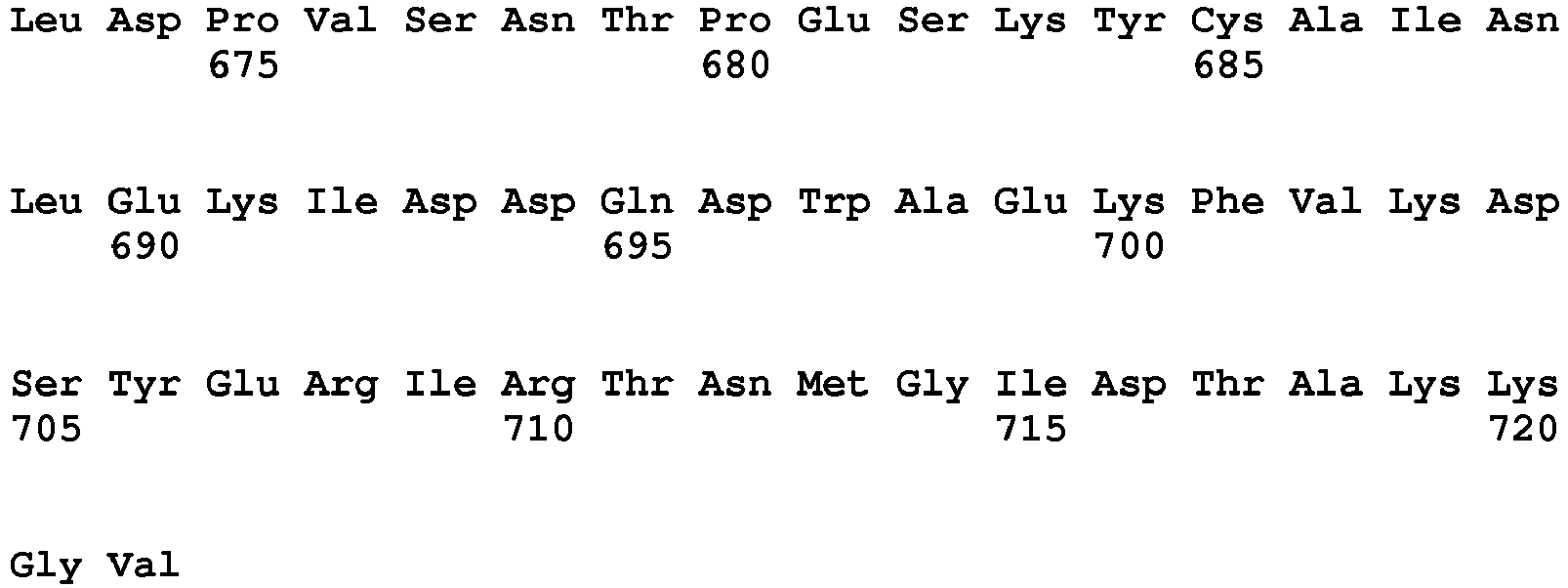
- Sequence ID Nos. 1 to 8 show the amino acid sequences of the enzymes FdhF1, HycB1, FdhF2, HycB2, FdhD, HycB3, HydA2, and AcsA of A. woodii, respectively.
- HCDR A For the purification of HCDR A. woodii (DSM 1030) was grown at 30°C under anaerobic conditions in 20-1-liter flasks using 20 mM fructose to an OD 600 of ⁇ 2.5. All buffers used for preparation of cell extracts and purification contained 2 mM DTE and 4 ⁇ M resazurin. All purification steps were performed under strictly anaerobic conditions at room temperature in an anaerobic chamber filled with 100% N 2 and 2-5% H 2 . The cell free extract was prepared as described previously ( Schuchmann et al., Journal of Biological Chemistry, 2012 Sep 7; 287(37):31165-71 ).
- Membranes were removed by centrifugation at 130000 g for 40 minutes. Part of the supernatant containing the cytoplasmic fraction with approximately 1600 mg protein was used for the further purification. Ammonium sulfate (0.4 M) was added to the cytoplasmic fraction. Half of this sample was loaded onto a Phenyl-Sepharose high performance column (1.6 cm x 10 cm) equilibrated with buffer A (25 mM Tris/HCl, 20 mM MgSO 4 , 0.4 M (NH 4 ) 2 SO 4 , 20% glycerol, pH 7.5).
- buffer A 25 mM Tris/HCl, 20 mM MgSO 4 , 0.4 M (NH 4 ) 2 SO 4 , 20% glycerol, pH 7.5).
- Methylviologen-dependent formate dehydrogenase activity elutet around 0.33 M (NH 4 ) 2 SO 4 in a linear gradient of 120 ml from 0.4 M to 0 M (NH 4 ) 2 SO 4 .
- This step was repeated with the second half of the sample in a separate run to gain more protein since otherwise large amounts of the activity eluted in the flowthrough.
- the pooled fractions of both runs were diluted to a conductivity of below 10 mS/cm with buffer C (25 mM Tris/HCl, 20 mM MgSO 4 , 20% glycerol, pH 7.5) and applied to a Q-Sepharose high performance column (2.6 cm x 5 cm) equilibrated with buffer C.
- Protein was eluted with a linear gradient of 160 ml from 150 mM to 500 mM NaCl. Formate dehydrogenase eluted at around 360 mM NaCl. Pooled fractions were concentrated using ultrafiltration in 100-kDa VIASPIN tubes and applied to a Superose 6 10/300 GL prepacked column equilibrated with buffer C and eluted at a flow rate of 0.5 ml/min. Formate dehydrogenase activity eluted as a single peak. Pooled fractions were stored at 4°C.
- HCDR activity was performed at 30°C with in buffer 1 (100 mM HEPES/NaOH, 2 mM DTE, pH 7.0) in 1.8 ml anaerobic cuvettes sealed by rubber stoppers, containing 1 ml buffer and a gas phase of 0.8 x 10 5 Pa H 2 and 0.2 x 10 5 CO 2 .
- Production of formate was measured using Formate dehydrogenase of Candida boidinii with 2 mM NAD in the assay and production of NADH was followed.
- ferredoxin As electron carrier, ferredoxin was purified from Clostridium pasteurianum. For reduction of ferredoxin, CO dehydrogenase of A. woodii was purified and in these experiments the gas phase of the cuvettes was changed to 100 % CO (1.1 x 10 5 Pa).
- the inventors used cell suspensions of A. woodii for the conversion of H 2 and CO 2 to formate.
- the energy metabolism of A. woodii is strictly sodium ion dependent, and the ATP synthase uses Na + as the coupling ion.
- the ionophore ETH2120 used the ionophore ETH2120 in this study, it is possible to switch off the energy metabolism specifically.
- woodii encodes for a carboanhydrase that allows the rapid interconversion of CO 2 and HCO 3 - .
- Figure 2 shows the production of formate from initially 300 mM KHCO 3 (with 1 x 10 5 Pa H 2 ) compared to CO 2 as substrate. Finally up to 184 ⁇ 5 mM formate were produced with KHCO 3 .
Landscapes
- Chemical & Material Sciences (AREA)
- Organic Chemistry (AREA)
- Engineering & Computer Science (AREA)
- Life Sciences & Earth Sciences (AREA)
- Zoology (AREA)
- Wood Science & Technology (AREA)
- Health & Medical Sciences (AREA)
- Chemical Kinetics & Catalysis (AREA)
- General Chemical & Material Sciences (AREA)
- Genetics & Genomics (AREA)
- Biotechnology (AREA)
- Biochemistry (AREA)
- Bioinformatics & Cheminformatics (AREA)
- General Engineering & Computer Science (AREA)
- General Health & Medical Sciences (AREA)
- Microbiology (AREA)
- Biomedical Technology (AREA)
- Environmental & Geological Engineering (AREA)
- Analytical Chemistry (AREA)
- Oil, Petroleum & Natural Gas (AREA)
- Preparation Of Compounds By Using Micro-Organisms (AREA)
- Enzymes And Modification Thereof (AREA)
- Apparatus Associated With Microorganisms And Enzymes (AREA)
Description
- The present invention relates to a method for storing gaseous hydrogen according to the appended set of claims. The HDCR (hydrogen dependent carbon dioxide reductase) and/or its complex is preferably derived from Acetobacterium woodii.
- One promising alternative to fossil fuels is hydrogen. Through its reaction with oxygen, hydrogen releases energy explosively in heat engines or quietly in fuel cells to produce water as its only byproduct. Hydrogen is abundant and generously distributed throughout the world without regard for national boundaries. Storing hydrogen in a high-energy-density form that flexibly links its production and eventual use is a key element of the hydrogen economy.
- Boddien et al. (in: CO2-"Neutral" Hydrogen Storage Based on Bicarbonates and Formates. Angewandte Chemie International Edition, 2011 50: 6411-6414) describe a ruthenium catalyst generated in situ that facilitates the selective hydrogenation of bicarbonates and carbonates, as well as CO2 and base, to give formates and also the selective dehydrogenation of formates back to bicarbonates. The two reactions can be coupled, leading to a reversible hydrogen-storage system.
-
KR 2004/0009875 -
WO 2011/087380 describes methods for improving the efficiency of carbon capture in microbial fermentation of a gaseous substrate comprising CO and/or H2; said method comprising applying an electrical potential across the fermentation. It further relates to improving the efficiency of carbon capture in the microbial fermentation of gaseous substrate comprising CO and/or H2 to produce alcohol(s) and/or acid (s). - Catalytic processes may be used to convert gases consisting primarily of CO and/or CO and hydrogen (H2) into a variety of fuels and chemicals. Microorganisms may also be used to convert these gases into fuels and chemicals. These biological processes, although generally slower than chemical reactions, have several advantages over catalytic processes, including higher specificity, higher yields, lower energy costs and greater resistance to poisoning.
- The ability of microorganisms to grow on CO as a sole carbon source was first discovered in 1903. This was later determined to be a property of organisms that use the acetyl coenzyme A (acetyl CoA) biochemical pathway of autotrophic growth (also known as the Wood-Ljungdahl pathway and the carbon monoxide dehydrogenase / acetyl CoA synthase (CODH/ACS) pathway). A large number of anaerobic organisms including carboxydotrophic, photosynthetic, methanogenic and acetogenic organisms have been shown to metabolize CO to various end products, namely CO2, H2, methane, n-butanol, acetate and ethanol. While using CO as the sole carbon source, all such organisms produce at least two of these end products. The Wood-Ljungdahl pathway of anaerobic CO2 fixation with hydrogen as reductant is considered a candidate for the first life-sustaining pathway on earth because it combines carbon dioxide fixation with the synthesis of ATP via a chemiosmotic mechanism.
- Schuchmann et al. (A bacterial electron-bifurcating hydrogenase. Journal of Biological Chemistry, 2012, Sep 7; 287(37):31165-71) describe a multimeric [FeFe]-hydrogenase from A. woodii containing four subunits (HydABCD) catalyzing hydrogen-based ferredoxin reduction. Apparently, the multimeric hydrogenase of A. woodii is a soluble energy-converting hydrogenase that uses electron bifurcation to drive the endergonic ferredoxin reduction by coupling it to the exergonic NAD+ reduction.
- Schiel-Bengelsdorf and Dürre (in:Pathway engineering and synthetic biology using acetogens, FEBS Letters, 2012, 586, 15, 2191) describe acetogenic anaerobic bacteria that synthesize acetyl-CoA from CO2 or CO. Their autotrophic mode of metabolism offers the biotechnological chance to combine use of abundantly available substrates with reduction of greenhouse gases. Several companies have already established pilot and demonstration plants for converting waste gases into ethanol, an important biofuel and a natural product of many acetogens. Recombinant DNA approaches now opened the door to construct acetogens, synthesizing important industrial bulk chemicals and biofuels such as acetone and butanol. Thus, novel microbial production platforms are available that no longer compete with nutritional feedstocks.
-
WO 2011/028137 describes a bioreactor system for fermentation of a gaseous substrate comprising CO and optionally H2, or CO2 and H2, to one or more products, including acid(s) and/or alcohol(s). -
US 7,803,589 describes an Escherichia coli microorganism, comprising a genetic modification, wherein said genetic modification comprises transformation of said microorganism with exogenous bacterial nucleic acid molecules encoding the proteins cobalamide corrinoid/iron-sulfur protein, methyltransferase, carbon monoxide dehydrogenase, acetyl-CoA synthase, acetyl-CoA synthase disulfide reductase and hydrogenase, whereby expression of said proteins increases the efficiency of producing acetyl-CoA from CO2, CO or H2, or a combination thereof. - Poehlein et al. (An ancient pathway combining carbon dioxide fixation with the generation and utilization of a sodium ion gradient for ATP synthesis. PLoS One. 2012;7(3): e33439. doi:10.1371/journal.pone.0033439) describes that the synthesis of acetate from carbon dioxide and molecular hydrogen is considered to be the first carbon assimilation pathway on earth. It combines carbon dioxide fixation into acetyl-CoA with the production of ATP via an energized cell membrane. How the pathway is coupled with the net synthesis of ATP has been an enigma. The anaerobic, acetogenic bacterium Acetobacterium woodii uses an ancient version of this pathway without cytochromes and quinones. It generates a sodium ion potential across the cell membrane by the sodium-motive ferredoxin:NAD oxidoreductase (Rnf). The genome sequence of A. woodii solves the enigma: it uncovers Rnf as the only ion-motive enzyme coupled to the pathway and unravels a metabolism designed to produce reduced ferredoxin and overcome energetic barriers by virtue of electron-bifurcating, soluble enzymes.
- Hull et al., "Reversible hydrogen storage using CO2 and a proton-switchable iridium catalyst in aqueous media under mild temperatures and pressures", Nature Chemistry, (2012), vol. 4, pages 383 - 388, disclose a system wherein the switch of pH through addition of acid regenerates stored H2.
- Peters et al, "Transient production of formate during chemolithotrophic growth of anaerobic microorganisms on hydrogen", Current Microbiology, (1999) and STRAUB, "Fermentative Acetatproduktion durch Homoacetat-Gärung bzw. Acetacetatbildung", Dissertation, Germany, (2012) disclose transient production of formate by Acetobacterium woodii.
- As mentioned above, hydrogen is one of the most discussed future energy sources. Methods for producing hydrogen are well known, but storage and transport of the gas is an unsolved problem. It is therefore an object of the present invention, to provide new and effective methods in order to provide for new ways to store hydrogen, in particular directly from the gaseous phase.
- According to a first aspect thereof, the object of the present invention is solved by providing a method for storing gaseous hydrogen, comprising the steps of producing methanoate (formate) through contacting gaseous hydrogen with carbon dioxide in the presence of a hydrogen dependent carbon dioxide reductase (HDCR) which catalyzes the direct conversion of H2 and CO2 into HCOOH, and thereby storing of said gaseous hydrogen, wherein said HDCR is part of an enzyme complex with a formate dehydrogenase accessory protein, an electron transfer protein, and a subunit harboring the active site characteristic of an [FeFe]-hydrogenase.
- The present invention is based on the surprising finding that the HDCR and a respective enzyme complex has been found to convert gaseous H2 + CO2 directly into formate in the reaction H2 + CO2 → HCOOH. The present biological system functions at between about 20°C to about 40°C and normal pressure. The method furthermore has a high conversion rate, compared with known chemical catalysts. Also, preferably no additional energy has to be provided.
- Since the reaction takes place closely to the thermodynamic equilibrium, in the reverse reaction, hydrogen can be readily released from the formate.
- In contrast to the H2 to be converted, the CO2 can be provided in the method both in gaseous and/or solid from. Preferred is a method of the present invention, wherein the CO2 is provided in the form of hydrogen carbonate (HCO3-) (see also
Figure 3 ). - Preferred is a method of the present invention, wherein the method does not involve electrochemical reduction, in particular of carbon dioxide. No electric energy has to be provided, and in particular no means for providing an electrical potential to a bioreactor as involved.
- Preferred is a method of the present invention, wherein said HDCR is selected from a bacterial enzyme, such as, for example FdhF1 (Acc. No. YP_005268500, SEQ ID No.1) or FdhF2 (Acc. No. YP_005268502, SEQ ID No.2) of Acetobacterium woodii. Also preferred are formate dehydrogenase enzymes that are at least 65% identical to the FdhF1 and/or FdhF2 enzyme, more preferably at least 70%, even more preferred at least 80%, and most preferred at least 90% identical to the FdhF1 and/or FdhF2 enzyme on the amino acid level. Preferred examples are selected from the formate dehydrogenase-H of Clostridium difficile 630 (Acc. No. YP_001089834.2), the formate dehydrogenase h of Clostridium difficile CD196 (Acc. No. YP_003216147.1), the formate dehydrogenase of Clostridium sp. DL-VIII (Acc. No. WP_009172363.1), the formate dehydrogenase of Clostridium arbusti (Acc. No. WP_010238540.1), the formate dehydrogenase of Clostridium ragsdalei (Acc. No. gb|AEI90724.1), the formate dehydrogenase H of Paenibacillus polymyxa E681 (Acc. No. YP_003871035.1), the formate dehydrogenase-H of Clostridium difficile 630 (Acc. No. YP_001089834.2), the formate dehydrogenase h of Clostridium difficile CD196 (Acc. No. YP_003216147.1), the formate dehydrogenase H of Treponema primitia ZAS-2 (Acc. No. ADJ19611.1), the formate dehydrogenase H of Clostridium carboxidivorans P7 (Acc. No. ADO12080.1), and the formate dehydrogenase I of Clostridium ragsdalei (Acc. No. gb|AEI90722.1), and mixtures thereof. All these proteins shall be understood as "homologs" of the proteins of Acetobacterium woodii as described herein.
- In the method according to the present invention, said HDCR is part of an enzyme complex with a formate dehydrogenase accessory protein, such as, for example, FdhD of Acetobacterium woodii, an electron transfer protein, such as, for example, HycB1 or HycB2 of Acetobacterium woodii, and a subunit harboring the active site characteristic of an [FeFe]-hydrogenase, such as, for example, HydA2 of Acetobacterium woodii. Also preferred are formate dehydrogenase accessory proteins and/or electron transfer proteins and/or [FeFe]-hydrogenase proteins, that are at least 65% identical to the HydA2, FdhD, HycB1 and/or HycB2 enzyme, more preferably at least 70%, even more preferred at least 80%, and most preferred at least 90% identical to the HydA2, FdhD, HycB1 and/or HycB2 enzyme on the amino acid level, and show an electron transfer activity, formate dehydrogenase accessory protein activity, or [FeFe]-hydrogenase activity. Also these proteins shall be understood as "homo logs" of the proteins of Acetobacterium woodii as described herein.
- Particularly preferred is a method according to the present invention, wherein said HDCR is part of the enzyme complex comprising FdhF1/2, HycB1/2/3, and HydA2. Thereby, FdhF reduces CO2 to formate, the electrons are provided by HydA2, the subunit of the H2-oxidation. More preferably the HDCR is a protein complex composed of the subunits FdhF1/FdhF2, HycB1/HycB2, HydA2 and HycB3. Most preferably the HDCR is selected from one of the complexes comprising FdhF1, HycB1, HydA2 and HycB3, or the complex comprising FdhF2, HycB2, HydA2 and HycB3
- Further preferred is a method according to the present invention, wherein said method further comprises an inhibition of the cellular metabolism to further metabolize formate, such as an Na depletion, for example using sodium ionophores. When the metabolism of the cell is inhibited (and/or impaired), the formate as produced can no longer react further, and is advantageously produced as the final product. For the inhibition of the energy metabolism, all substances can be used that are known to the person of skill, and examples are selected from all ATPase inhibitors, such as DCCD (dicyclohexylcarbodiimide), heavy metals such as silver ions, copper ions, etc., all decoupling agents of the membrane potential, such as protonophores such as TCS (3,3',4',5-tetrachlorosalicylanilide), K-ionophores, such as valinomycine, propyl iodide as inhibitor of cobalt dependent reactions, phosphate starvation, which slows down ATP-synthesis, and tensides or substances that destroy the integrity of the membrane of the cell. It is important, that an enzyme and/or step of the energy metabolism is blocked, since this leads to an accumulation of the intermediate product. Since the HDCR is independent from the energy metabolism and does not require external electron carriers or energy, the process of formate formation can continue. This phenomenon can of course be applied both to reactions in whole cells, as well as in in vitro-reactions. The inventors have furthermore surprisingly found that the synthesis of acetyl-CoA can be stopped at formate, if Na is depleted. The system (for example bacteria) then nearly exclusively produces formate, which is used for hydrogen storage. Depletion can be achieved by using sodium-free buffers and/or media, and/or by using sodium-ionophores, such as, for example, Monensin, Gramicidin A, or the commercially available ETH 2120 (N,N,N',N'-Tetracyclohexyl-1,2-phenylenedioxydiacetamide, Selectophore™.
- In another aspect of the present invention the present invention thus is based on the surprising finding that the inhibition of the cellular metabolism to further metabolize formate, such as by Na depletion (for example using sodium ionophores) can be advantageously used to produce formate. In this embodiment, the Na depletion leads to an accumulation of formate based on the effective blocking of the production of downstream products from the formate. The present invention thus further relates to a method for producing methanoate (formate) comprising contacting carbon dioxide in the presence of a hydrogen dependent carbon dioxide reductase (HDCR), as defined in the claims, under conditions that inhibit the cellular metabolism to further metabolize formate, such as, for example, under Na depletion, at an electric potential of -300 to -600 mV (e.g. using electrodes) and/or in the presence of an electron carrier. The concentration of the electron carrier can be from 5 to 15 mM, and the electron carrier can be selected from methylviologen, N,N,-diethyl-4,4-bipyridyl, N,N-diisopropylyl-4,4-bipyridyl, 4,4-bipyridyl or a mixture thereof. Preferably, said HDCR is selected from a bacterial enzyme, such as, for example FdhF1 or FdhF2 of Acetobacterium woodii. More preferably the HDCR is a protein complex composed of at least one of the subunits FdhF1/FdhF2, HycB1/HycB2, HydA2 and HycB3. Most preferably the HDCR is selected from one of the complexes comprising FdhF1, HycB1, HydA2 and HycB3, or the complex comprising FdhF2, HycB2, HydA2 and HycB3. Further preferably, said method is performed under standard ambient temperature and pressure, or at between about 20°C to about 40°C and normal pressure. Other preferred embodiments of this method are analogous as described herein for the first aspect of the present invention.
- Yet another aspect of the present invention then relates to a method according to the present invention, further comprising the step of converting carbon monoxide into carbon dioxide using a CO dehydrogenase, for example a bacterial CO dehydrogenase, such as AcsA of Acetobacterium woodii, and a ferredoxin. Also preferred are CO dehydrogenase enzymes that are at least 65% identical to the AcsA enzyme, more preferably at least 70%, even more preferred at least 80%, and most preferred at least 90% identical to the AcsA enzyme on the amino acid level, and show a CO dehydrogenase activity. All these proteins shall be understood as "homologs" of the proteins of Acetobacterium woodii as described herein.
- In this aspect of the present invention, it was furthermore surprisingly found that the enzyme hydrogen dependent carbon dioxide reductase (HDCR) can also use carbon monoxide (via ferredoxin) as electron donor for the CO2-reduction to formate. Thus, this enables the advantageous use of synthesis gas (for example as feed-stock) for the method. Of course, this aspect of the invention also can be performed under the conditions and using the complex and enzymes as described above for the "direct" CO2-use. Furthermore, this aspect of the method of the invention can be used to remove CO from gaseous phases, and thus can constitute a method for decontaminating CO-contaminated (or polluted) gases.
- Yet another aspect of the present invention thus relates to a method for decontaminating CO-contaminated or polluted gases, comprising performing a method according to the invention as above, and defined in claims 5-7, using said CO-contaminated or polluted gas as a substrate. Preferably, said CO-contaminated or polluted gas is synthesis gas.
- In the methods according to the present invention, both purified (or partially purified) enzyme(s) as well as bacterial cells can be used. Thus, methods according to the present invention can be performed in vitro, in vivo and/or in culture, for example in imidazole buffer (see below).
- Most preferred is a method according to the present invention, which is performed in a bioreactor in a continuous operation or in batches. Respective methods and devices are known to the person of skill (and described for example in Demler and Weuster-Botz; Reaction engineering analysis of hydrogenotrophic production of acetic acid by Acetobacterium woodii. Biotechnology and Bioengineering, 2011 Feb; 108(2):470-4). Yet another aspect of the present invention thus relates to a use of a recombinant bacterial organism comprising a genetic modification in a method according to the invention, wherein said genetic modification comprises transformation of said microorganism with exogenous bacterial nucleic acid molecules encoding for at least one protein selected from the proteins FdhF1, FdhF2, FdhD, HycB1, HycB2, HydA2, and HycB3, whereby expression of said proteins increases the efficiency of said recombinant bacterial organism in producing format from CO2, and/or CO and H2, in a method according to any of
claims 1 to 9. More preferably the nucleic acids encode at least one of the HDCR subunits FdhF1/FdhF2, HycB1/HycB2, HydA2 and HycB3. Most preferably the nucleic acids encode the proteins FdhF1, HycB1, HydA2 and HycB3, or the proteins FdhF2, HycB2, HydA2 and HycB3. Further preferred is a method according to the present invention, further comprising the (recombinant) expression of the genes of hydrogenase maturation as well as for a cofactor biosynthesis of the formate-dehydrogenase (e.g. described in Kuchenreuther JM, Grady-Smith CS, Bingham AS, George SJ, Cramer SP, et al. (2010) High-Yield Expression of Heterologous [FeFe] Hydrogenases in Escherichia coli. PLoS ONE 5(11): e15491. doi:10.1371/journal.pone.0015491). - Yet another aspect of the present invention relates to the use of a hydrogen dependent carbon dioxide reductase (HDCR), wherein said HDCR is part of an enzyme complex with a formate dehydrogenase accessory protein, an electron transfer protein, and a subunit harboring the active site characteristic of an [FeFe]-hydrogenase; for example a bacterial enzyme, such as, for example FdhF1 or FdhF2 of Acetobacterium woodii or homologs thereof in a method according to the present invention as described herein. Preferred is a use, wherein said HDCR is part of an enzyme complex, for example with a formate dehydrogenase accessory protein, such as, for example, FdhD of Acetobacterium woodii, an electron transfer protein, such as, for example, HycB1 or HycB2 of Acetobacterium woodii, and a subunit harboring the active site characteristic of an [FeFe]-hydrogenase, such as, for example, HydA2 of Acetobacterium woodii, or homologs thereof. Further preferred is a use according to the present invention, wherein said complex further comprises a CO dehydrogenase, such as, for example a bacterial CO dehydrogenase, such as, for example AcsA of Acetobacterium woodii, and a ferredoxin, or homologs thereof. More preferably the HDCR is a protein complex composed of at least one of the subunits FdhF1/FdhF2, HycB1/HycB2, HydA2 and HycB3. Most preferably the HDCR is selected from one of the complexes comprising FdhF1, HycB1, HydA2 and HycB3, or the complex comprising FdhF2, HycB2, HydA2 and HycB3.
-
-
Figure 1 shows the productions of formate using whole cell catalysis. Cell suspensions of A. woodii (1 mg/ml) were incubated using a gas phase of 0.8 x 10⁵ Pa H2 and 0.2 x 10⁵ Pa CO2 (A). Adding the Na+ ionophore ETH2120 (30 µM) gives rise to the production of up to 8 mM formate and the production of acetate stopped (B). -
Figure 2 shows the production of formate using HCO3- or CO2 as substrate. Cell suspensions of A. woodii (1 mg/ml) were incubated using a gas phase of 0.8 x 10⁵ Pa H2 and 0.2 x 10⁵ Pa CO2 or 1 x 10⁵ Pa H2 with 300 mM KHCO3. -
Figure 3 shows the relationship of final formate concentration to initial HCO3 -. Cell suspensions of A. woodii (1 mg/ml) were incubated with increasing amounts of initial HCO3 - and a gas phase of 1 x 10⁵ Pa H2. - Sequence ID NOs. 1 to 8 show the amino acid sequences of the enzymes FdhF1, HycB1, FdhF2, HycB2, FdhD, HycB3, HydA2, and AcsA of A. woodii, respectively.
- For the purification of HCDR A. woodii (DSM 1030) was grown at 30°C under anaerobic conditions in 20-1-liter flasks using 20 mM fructose to an OD600 of ∼2.5. All buffers used for preparation of cell extracts and purification contained 2 mM DTE and 4 µM resazurin. All purification steps were performed under strictly anaerobic conditions at room temperature in an anaerobic chamber filled with 100% N2 and 2-5% H2. The cell free extract was prepared as described previously (Schuchmann et al., Journal of Biological Chemistry, 2012 Sep 7; 287(37):31165-71).
- Membranes were removed by centrifugation at 130000 g for 40 minutes. Part of the supernatant containing the cytoplasmic fraction with approximately 1600 mg protein was used for the further purification. Ammonium sulfate (0.4 M) was added to the cytoplasmic fraction. Half of this sample was loaded onto a Phenyl-Sepharose high performance column (1.6 cm x 10 cm) equilibrated with buffer A (25 mM Tris/HCl, 20 mM MgSO4, 0.4 M (NH4)2SO4, 20% glycerol, pH 7.5). Methylviologen-dependent formate dehydrogenase activity elutet around 0.33 M (NH4)2SO4 in a linear gradient of 120 ml from 0.4 M to 0 M (NH4)2SO4. This step was repeated with the second half of the sample in a separate run to gain more protein since otherwise large amounts of the activity eluted in the flowthrough. The pooled fractions of both runs were diluted to a conductivity of below 10 mS/cm with buffer C (25 mM Tris/HCl, 20 mM MgSO4, 20% glycerol, pH 7.5) and applied to a Q-Sepharose high performance column (2.6 cm x 5 cm) equilibrated with buffer C. Protein was eluted with a linear gradient of 160 ml from 150 mM to 500 mM NaCl. Formate dehydrogenase eluted at around 360 mM NaCl. Pooled fractions were concentrated using ultrafiltration in 100-kDa VIASPIN tubes and applied to a Superose 6 10/300 GL prepacked column equilibrated with buffer C and eluted at a flow rate of 0.5 ml/min. Formate dehydrogenase activity eluted as a single peak. Pooled fractions were stored at 4°C.
- Measurements of HCDR activity were performed at 30°C with in buffer 1 (100 mM HEPES/NaOH, 2 mM DTE, pH 7.0) in 1.8 ml anaerobic cuvettes sealed by rubber stoppers, containing 1 ml buffer and a gas phase of 0.8 x 10⁵ Pa H2 and 0.2 x 10⁵ CO2. Production of formate was measured using Formate dehydrogenase of Candida boidinii with 2 mM NAD in the assay and production of NADH was followed.
- For measurements with ferredoxin as electron carrier, ferredoxin was purified from Clostridium pasteurianum. For reduction of ferredoxin, CO dehydrogenase of A. woodii was purified and in these experiments the gas phase of the cuvettes was changed to 100 % CO (1.1 x 10⁵ Pa).
- For experiments with whole cells, the inventors used cell suspensions of A. woodii for the conversion of H2 and CO2 to formate. The energy metabolism of A. woodii is strictly sodium ion dependent, and the ATP synthase uses Na+ as the coupling ion. Thus, by omitting sodium ions in the buffer or by adding sodium ionophores (the inventors used the ionophore ETH2120 in this study), it is possible to switch off the energy metabolism specifically. Cells suspended in imidazole buffer (50 mM imidazole, 20 mM MgSO4, 20 mM KCl, 4 mM DTE, pH 7.0) containing 20 mM NaCl converted H2 + CO2 to acetate, and only small amounts of formate were produced from a gas phase of 0.8 x 10⁵ Pa H2 and 0.2 x 10⁵ CO2. By adding ETH2120 (30 µM), acetate production ceased almost completely and formate was produced with an initial rate of 2 µmol/min x mg cell protein (
Figure 1 ). In agreement with the results obtained from the purified enzyme, formate production was also observed when hydrogen was absent and the electron donor was CO but with lower rates compared to hydrogen as electron donor. - The results in
Figure 1 demonstrate that a maximal amount of around 8 mM of formate was produced in this experiment. The inventors next tested, if the final formate concentration is proportional to the initial gas pressure. From 0.5 to 2 x 10⁵ Pa H2 + CO2 the final formate concentration did not increase. Since the inventors observed a pH drop during the experiment, the inventors examined if the lower pH is the limiting factor. Increasing the buffer concentration from 50 to 200 mM resulted in a final formate concentration of around 14 ± 3 mM. If CO2 was exchanged with KHCO3 the effect was even more dramatic. By using the base HCO3 - the overall process is almost pH neutral compared to the production of formic acid from CO2. The genome of A. woodii encodes for a carboanhydrase that allows the rapid interconversion of CO2 and HCO3 -.Figure 2 shows the production of formate from initially 300 mM KHCO3 (with 1 x 10⁵ Pa H2) compared to CO2 as substrate. Finally up to 184 ± 5 mM formate were produced with KHCO3. - The relationship of the final formate concentration to the initial concentration of HCO3 - is shown in
Figure 3 . Up to 300 mM HCO3 -, the final formate concentration increases with increasing substrate concentration. Furthermore the final formate concentration fits well to the theoretic thermodynamic limit of the reaction underlining the independence of the carboxylation of CO2/HCO3 - from other cellular processes. At 1 x 10⁵ Pa H2, the thermodynamic equilibrium is approximately [HCO3 -] = [HCOOH], so equimolar concentrations of substrate and product. At concentrations of HCO3 - above 300 mM, this relationship does not exist anymore and the final amount of formate produced ceased around 300 mM. -
- <110> Johann Wolfgang Goethe-Universität
- <120> Method for storing gaseous hydrogen through producing methanoate (formate)
- <130> U30507WO
- <150>
EP 13172411.4
<151> 2013-06-18 - <160> 8
- <170> PatentIn version 3.5
- <210> 1
<211> 724
<212> PRT
<213> Acetobacterium woodii - <400> 1


- <210> 2
<211> 177
<212> PRT
<213> Acetobacterium woodii - <400> 2


- <210> 3
<211> 722
<212> PRT
<213> Acetobacterium woodii - <220>
<221> Xaa is Selenocystein
<222> (139)..(139)
<223> Selenocystein - <400> 3


- <210> 4
<211> 176
<212> PRT
<213> Acetobacterium woodii - <400> 4


- <210> 5
<211> 260
<212> PRT
<213> Acetobacterium woodii - <400> 5


- <210> 6
<211> 186
<212> PRT
<213> Acetobacterium woodii - <400> 6


- <210> 7
<211> 459
<212> PRT
<213> Acetobacterium woodii - <400> 7


- <210> 8
<211> 632
<212> PRT
<213> Acetobacterium woodii - <400> 8


Claims (13)
- A method for storing gaseous hydrogen, comprising the steps of producing methanoate (formate) through contacting gaseous hydrogen with carbon dioxide in the presence of a hydrogen dependent carbon dioxide reductase (HDCR) which catalyzes the direct conversion of H2 and CO2 into HCOOH, and thereby storing of said gaseous hydrogen, wherein said HDCR is part of an enzyme complex with a formate dehydrogenase accessory protein, an electron transfer protein, and a subunit harboring the active site characteristic of an [FeFe]-hydrogenase.
- The method according to claim 1, wherein said HDCR is selected from a bacterial enzyme.
- The method according to claim 2, wherein said HDCR is selected from FdhF1 or FdhF2 of Acetobacterium woodii.
- The method according to any of claims 1 to 3, wherein said method is performed at between 20°C to 40°C and at normal pressure.
- The method according to any of claims 1 to 4, wherein said method further comprises an inhibition of the cellular metabolism to further metabolize formate.
- The method according to any of claims 1 to 5, further comprising the step of converting carbon monoxide into carbon dioxide using a CO dehydrogenase and a ferredoxin.
- The method according to any of claims 1 to 6, further comprising the release of hydrogen from the methanoate as produced.
- A method for decontaminating CO-contaminated or polluted gases, comprising performing a method according to any of claims 5 to 7 using said CO-contaminated or polluted gas as a substrate.
- The method according to claim 8, wherein said CO-contaminated or polluted gas is synthesis gas.
- Use of a recombinant bacterial organism comprising a genetic modification in a method according to any one of claims 1 to 9, wherein said genetic modification comprises transformation of said microorganism with exogenous bacterial nucleic acid molecules encoding for at least one protein selected from the proteins FdhF1, FdhF2, FdhD, HycB1, HycB2, HydA2, and HycB3, whereby expression of said proteins increases the efficiency of producing format from CO2, and/or CO and H2.
- The use according to claim 10, wherein said genetic modification further comprises transformation of said microorganism with exogenous bacterial nucleic acid molecules encoding for AcsA of Acetobacterium woodii, whereby expression of said protein increases the efficiency of said recombinant bacterial organism in producing formate from CO2, and/or CO and H2.
- Use of a hydrogen dependent carbon dioxide reductase (HDCR) in a method according to any of claims 1 to 9, wherein said HDCR is part of an enzyme complex with a formate dehydrogenase accessory protein, an electron transfer protein, and a subunit harboring the active site characteristic of an [FeFe]-hydrogenase.
- The use according to claim 12, wherein said complex further comprises a CO dehydrogenase.
Priority Applications (1)
| Application Number | Priority Date | Filing Date | Title |
|---|---|---|---|
| EP14738408.5A EP3011040B1 (en) | 2013-06-18 | 2014-06-18 | Method for storing gaseous hydrogen via enzymatic production of methanoate (formate) |
Applications Claiming Priority (3)
| Application Number | Priority Date | Filing Date | Title |
|---|---|---|---|
| EP13172411.4A EP2816119A1 (en) | 2013-06-18 | 2013-06-18 | Method for storing gaseous hydrogen through producing methanoate (formate) |
| EP14738408.5A EP3011040B1 (en) | 2013-06-18 | 2014-06-18 | Method for storing gaseous hydrogen via enzymatic production of methanoate (formate) |
| PCT/EP2014/062892 WO2014202695A1 (en) | 2013-06-18 | 2014-06-18 | Method for storing gaseous hydrogen through producing methanoate (formate) |
Publications (2)
| Publication Number | Publication Date |
|---|---|
| EP3011040A1 EP3011040A1 (en) | 2016-04-27 |
| EP3011040B1 true EP3011040B1 (en) | 2019-02-13 |
Family
ID=48628345
Family Applications (2)
| Application Number | Title | Priority Date | Filing Date |
|---|---|---|---|
| EP13172411.4A Withdrawn EP2816119A1 (en) | 2013-06-18 | 2013-06-18 | Method for storing gaseous hydrogen through producing methanoate (formate) |
| EP14738408.5A Active EP3011040B1 (en) | 2013-06-18 | 2014-06-18 | Method for storing gaseous hydrogen via enzymatic production of methanoate (formate) |
Family Applications Before (1)
| Application Number | Title | Priority Date | Filing Date |
|---|---|---|---|
| EP13172411.4A Withdrawn EP2816119A1 (en) | 2013-06-18 | 2013-06-18 | Method for storing gaseous hydrogen through producing methanoate (formate) |
Country Status (5)
| Country | Link |
|---|---|
| US (2) | US10036045B2 (en) |
| EP (2) | EP2816119A1 (en) |
| CN (2) | CN105264081A (en) |
| ES (1) | ES2723349T3 (en) |
| WO (1) | WO2014202695A1 (en) |
Families Citing this family (3)
| Publication number | Priority date | Publication date | Assignee | Title |
|---|---|---|---|---|
| CN108603178A (en) * | 2016-01-06 | 2018-09-28 | 株式会社西化学 | CO hydrases and the method for generating formic acid using it |
| US11773416B2 (en) | 2018-08-08 | 2023-10-03 | Jupeng Bio, Inc. | Carbon dioxide bioconversion process |
| CN110093362B (en) * | 2019-03-18 | 2022-05-24 | 北京工业大学 | Functional gene vector pET32a-fdhD for high-efficiency auxiliary hydrogen production and construction thereof |
Family Cites Families (5)
| Publication number | Priority date | Publication date | Assignee | Title |
|---|---|---|---|---|
| KR100468049B1 (en) | 2002-07-26 | 2005-01-24 | 학교법인 서강대학교 | Formic Acid Synthesis by Electrochemical Reduction of Carbon Dioxide |
| CN107090424A (en) | 2008-01-22 | 2017-08-25 | 基因组股份公司 | Utilize the method and organism of synthesis gas or other gaseous carbon sources and methanol |
| WO2011028137A1 (en) | 2009-09-06 | 2011-03-10 | Lanzatech New Zealand Limited | Improved fermentation of gaseous substrates |
| PL3070170T3 (en) | 2010-01-14 | 2019-02-28 | Lanzatech New Zealand Limited | Fermentation of co2 by using an electrical potential |
| KR20160018568A (en) * | 2013-06-05 | 2016-02-17 | 란자테크 뉴질랜드 리미티드 | Recombinant microorganisms exhibiting increased flux through a fermentation pathway |
-
2013
- 2013-06-18 EP EP13172411.4A patent/EP2816119A1/en not_active Withdrawn
-
2014
- 2014-06-18 CN CN201480031501.4A patent/CN105264081A/en active Pending
- 2014-06-18 ES ES14738408T patent/ES2723349T3/en active Active
- 2014-06-18 WO PCT/EP2014/062892 patent/WO2014202695A1/en not_active Ceased
- 2014-06-18 EP EP14738408.5A patent/EP3011040B1/en active Active
- 2014-06-18 US US14/890,301 patent/US10036045B2/en active Active
- 2014-06-18 CN CN202410233162.3A patent/CN118006698A/en active Pending
-
2018
- 2018-06-26 US US16/018,736 patent/US10717997B2/en active Active
Non-Patent Citations (1)
| Title |
|---|
| TYURIN ET AL: "Selective methanol or formate production during continuous CO2 fermentation by the acetogen biocatalysts engineered via integration of synthetic pathways using Tn7-tool", WORLD JOURNAL OF MICROBIOLOGY AND BIOTECHNOLOGY, vol. 29, March 2013 (2013-03-01), pages 1611 - 1623, XP002715895 * |
Also Published As
| Publication number | Publication date |
|---|---|
| CN105264081A (en) | 2016-01-20 |
| CN118006698A (en) | 2024-05-10 |
| WO2014202695A1 (en) | 2014-12-24 |
| US10036045B2 (en) | 2018-07-31 |
| EP3011040A1 (en) | 2016-04-27 |
| US10717997B2 (en) | 2020-07-21 |
| US20160102325A1 (en) | 2016-04-14 |
| US20180320207A1 (en) | 2018-11-08 |
| EP2816119A1 (en) | 2014-12-24 |
| ES2723349T3 (en) | 2019-08-26 |
Similar Documents
| Publication | Publication Date | Title |
|---|---|---|
| Katsyv et al. | Overcoming energetic barriers in acetogenic C1 conversion | |
| Wiechmann et al. | It does not always take two to tango:“Syntrophy” via hydrogen cycling in one bacterial cell | |
| Moon et al. | Formate metabolism in the acetogenic bacterium Acetobacterium woodii | |
| Lee et al. | Engineering acetogenic bacteria for efficient one-carbon utilization | |
| Hawkins et al. | Biological conversion of carbon dioxide and hydrogen into liquid fuels and industrial chemicals | |
| Dürre et al. | C1-carbon sources for chemical and fuel production by microbial gas fermentation | |
| Kanai et al. | Continuous hydrogen production by the hyperthermophilic archaeon, Thermococcus kodakaraensis KOD1 | |
| Bertsch et al. | CO metabolism in the acetogen Acetobacterium woodii | |
| Diender et al. | Pathways and bioenergetics of anaerobic carbon monoxide fermentation | |
| Mock et al. | Evidence for a hexaheteromeric methylenetetrahydrofolate reductase in Moorella thermoacetica | |
| Jeong et al. | Energy conservation model based on genomic and experimental analyses of a carbon monoxide-utilizing, butyrate-forming acetogen, Eubacterium limosum KIST612 | |
| Basen et al. | “Hot” acetogenesis | |
| Dürre | Butanol formation from gaseous substrates | |
| Rydzak et al. | Growth phase-dependant enzyme profile of pyruvate catabolism and end-product formation in Clostridium thermocellum ATCC 27405 | |
| AU2011205873B2 (en) | Alcohol production process | |
| Dietrich et al. | Biochemistry of methanol‐dependent acetogenesis in Eubacterium callanderi KIST612 | |
| Schwarz et al. | Revealing formate production from carbon monoxide in wild type and mutants of Rnf‐and Ech‐containing acetogens, Acetobacterium woodii and Thermoanaerobacter kivui | |
| Schut et al. | Heterologous production of an energy-conserving carbon monoxide dehydrogenase complex in the hyperthermophile Pyrococcus furiosus | |
| Humphreys et al. | Establishing Butyribacterium methylotrophicum as a platform organism for the production of biocommodities from liquid C1 metabolites | |
| Schwarz et al. | Acetogenic conversion of H2 and CO2 into formic acid and vice versa in a fed-batch-operated stirred-tank bioreactor | |
| Bährle et al. | Current status of carbon monoxide dehydrogenases (CODH) and their potential for electrochemical applications | |
| Winiarska et al. | Tungsten enzyme using hydrogen as an electron donor to reduce carboxylic acids and NAD+ | |
| Mariën et al. | Steerable isobutyric and butyric acid production from CO2 and H2 by Clostridium luticellarii | |
| ES2909579T3 (en) | Arginine as sole nitrogen source for C1-fixing microorganisms | |
| US20100041121A1 (en) | Metabolically engineered organisms for the production of hydrogen and hydrogenase |
Legal Events
| Date | Code | Title | Description |
|---|---|---|---|
| PUAI | Public reference made under article 153(3) epc to a published international application that has entered the european phase |
Free format text: ORIGINAL CODE: 0009012 |
|
| 17P | Request for examination filed |
Effective date: 20151106 |
|
| AK | Designated contracting states |
Kind code of ref document: A1 Designated state(s): AL AT BE BG CH CY CZ DE DK EE ES FI FR GB GR HR HU IE IS IT LI LT LU LV MC MK MT NL NO PL PT RO RS SE SI SK SM TR |
|
| AX | Request for extension of the european patent |
Extension state: BA ME |
|
| DAX | Request for extension of the european patent (deleted) | ||
| 17Q | First examination report despatched |
Effective date: 20160920 |
|
| STAA | Information on the status of an ep patent application or granted ep patent |
Free format text: STATUS: EXAMINATION IS IN PROGRESS |
|
| GRAP | Despatch of communication of intention to grant a patent |
Free format text: ORIGINAL CODE: EPIDOSNIGR1 |
|
| STAA | Information on the status of an ep patent application or granted ep patent |
Free format text: STATUS: GRANT OF PATENT IS INTENDED |
|
| RIC1 | Information provided on ipc code assigned before grant |
Ipc: C12P 7/40 20060101AFI20180719BHEP Ipc: B01D 53/62 20060101ALI20180719BHEP |
|
| INTG | Intention to grant announced |
Effective date: 20180813 |
|
| GRAS | Grant fee paid |
Free format text: ORIGINAL CODE: EPIDOSNIGR3 |
|
| GRAA | (expected) grant |
Free format text: ORIGINAL CODE: 0009210 |
|
| STAA | Information on the status of an ep patent application or granted ep patent |
Free format text: STATUS: THE PATENT HAS BEEN GRANTED |
|
| AK | Designated contracting states |
Kind code of ref document: B1 Designated state(s): AL AT BE BG CH CY CZ DE DK EE ES FI FR GB GR HR HU IE IS IT LI LT LU LV MC MK MT NL NO PL PT RO RS SE SI SK SM TR |
|
| RAP1 | Party data changed (applicant data changed or rights of an application transferred) |
Owner name: JOHANN WOLFGANG GOETHE-UNIVERSITAET FRANKFURT AM M |
|
| REG | Reference to a national code |
Ref country code: GB Ref legal event code: FG4D |
|
| REG | Reference to a national code |
Ref country code: CH Ref legal event code: EP Ref country code: AT Ref legal event code: REF Ref document number: 1096256 Country of ref document: AT Kind code of ref document: T Effective date: 20190215 |
|
| REG | Reference to a national code |
Ref country code: IE Ref legal event code: FG4D |
|
| REG | Reference to a national code |
Ref country code: DE Ref legal event code: R096 Ref document number: 602014040991 Country of ref document: DE |
|
| REG | Reference to a national code |
Ref country code: NL Ref legal event code: FP |
|
| REG | Reference to a national code |
Ref country code: LT Ref legal event code: MG4D |
|
| PG25 | Lapsed in a contracting state [announced via postgrant information from national office to epo] |
Ref country code: FI Free format text: LAPSE BECAUSE OF FAILURE TO SUBMIT A TRANSLATION OF THE DESCRIPTION OR TO PAY THE FEE WITHIN THE PRESCRIBED TIME-LIMIT Effective date: 20190213 Ref country code: PT Free format text: LAPSE BECAUSE OF FAILURE TO SUBMIT A TRANSLATION OF THE DESCRIPTION OR TO PAY THE FEE WITHIN THE PRESCRIBED TIME-LIMIT Effective date: 20190613 Ref country code: NO Free format text: LAPSE BECAUSE OF FAILURE TO SUBMIT A TRANSLATION OF THE DESCRIPTION OR TO PAY THE FEE WITHIN THE PRESCRIBED TIME-LIMIT Effective date: 20190513 Ref country code: SE Free format text: LAPSE BECAUSE OF FAILURE TO SUBMIT A TRANSLATION OF THE DESCRIPTION OR TO PAY THE FEE WITHIN THE PRESCRIBED TIME-LIMIT Effective date: 20190213 Ref country code: LT Free format text: LAPSE BECAUSE OF FAILURE TO SUBMIT A TRANSLATION OF THE DESCRIPTION OR TO PAY THE FEE WITHIN THE PRESCRIBED TIME-LIMIT Effective date: 20190213 |
|
| REG | Reference to a national code |
Ref country code: ES Ref legal event code: FG2A Ref document number: 2723349 Country of ref document: ES Kind code of ref document: T3 Effective date: 20190826 |
|
| PG25 | Lapsed in a contracting state [announced via postgrant information from national office to epo] |
Ref country code: HR Free format text: LAPSE BECAUSE OF FAILURE TO SUBMIT A TRANSLATION OF THE DESCRIPTION OR TO PAY THE FEE WITHIN THE PRESCRIBED TIME-LIMIT Effective date: 20190213 Ref country code: RS Free format text: LAPSE BECAUSE OF FAILURE TO SUBMIT A TRANSLATION OF THE DESCRIPTION OR TO PAY THE FEE WITHIN THE PRESCRIBED TIME-LIMIT Effective date: 20190213 Ref country code: IS Free format text: LAPSE BECAUSE OF FAILURE TO SUBMIT A TRANSLATION OF THE DESCRIPTION OR TO PAY THE FEE WITHIN THE PRESCRIBED TIME-LIMIT Effective date: 20190613 Ref country code: BG Free format text: LAPSE BECAUSE OF FAILURE TO SUBMIT A TRANSLATION OF THE DESCRIPTION OR TO PAY THE FEE WITHIN THE PRESCRIBED TIME-LIMIT Effective date: 20190513 Ref country code: GR Free format text: LAPSE BECAUSE OF FAILURE TO SUBMIT A TRANSLATION OF THE DESCRIPTION OR TO PAY THE FEE WITHIN THE PRESCRIBED TIME-LIMIT Effective date: 20190514 Ref country code: LV Free format text: LAPSE BECAUSE OF FAILURE TO SUBMIT A TRANSLATION OF THE DESCRIPTION OR TO PAY THE FEE WITHIN THE PRESCRIBED TIME-LIMIT Effective date: 20190213 |
|
| REG | Reference to a national code |
Ref country code: AT Ref legal event code: MK05 Ref document number: 1096256 Country of ref document: AT Kind code of ref document: T Effective date: 20190213 |
|
| PG25 | Lapsed in a contracting state [announced via postgrant information from national office to epo] |
Ref country code: EE Free format text: LAPSE BECAUSE OF FAILURE TO SUBMIT A TRANSLATION OF THE DESCRIPTION OR TO PAY THE FEE WITHIN THE PRESCRIBED TIME-LIMIT Effective date: 20190213 Ref country code: DK Free format text: LAPSE BECAUSE OF FAILURE TO SUBMIT A TRANSLATION OF THE DESCRIPTION OR TO PAY THE FEE WITHIN THE PRESCRIBED TIME-LIMIT Effective date: 20190213 Ref country code: CZ Free format text: LAPSE BECAUSE OF FAILURE TO SUBMIT A TRANSLATION OF THE DESCRIPTION OR TO PAY THE FEE WITHIN THE PRESCRIBED TIME-LIMIT Effective date: 20190213 Ref country code: AL Free format text: LAPSE BECAUSE OF FAILURE TO SUBMIT A TRANSLATION OF THE DESCRIPTION OR TO PAY THE FEE WITHIN THE PRESCRIBED TIME-LIMIT Effective date: 20190213 Ref country code: RO Free format text: LAPSE BECAUSE OF FAILURE TO SUBMIT A TRANSLATION OF THE DESCRIPTION OR TO PAY THE FEE WITHIN THE PRESCRIBED TIME-LIMIT Effective date: 20190213 Ref country code: SK Free format text: LAPSE BECAUSE OF FAILURE TO SUBMIT A TRANSLATION OF THE DESCRIPTION OR TO PAY THE FEE WITHIN THE PRESCRIBED TIME-LIMIT Effective date: 20190213 |
|
| REG | Reference to a national code |
Ref country code: DE Ref legal event code: R097 Ref document number: 602014040991 Country of ref document: DE |
|
| PG25 | Lapsed in a contracting state [announced via postgrant information from national office to epo] |
Ref country code: SM Free format text: LAPSE BECAUSE OF FAILURE TO SUBMIT A TRANSLATION OF THE DESCRIPTION OR TO PAY THE FEE WITHIN THE PRESCRIBED TIME-LIMIT Effective date: 20190213 Ref country code: PL Free format text: LAPSE BECAUSE OF FAILURE TO SUBMIT A TRANSLATION OF THE DESCRIPTION OR TO PAY THE FEE WITHIN THE PRESCRIBED TIME-LIMIT Effective date: 20190213 |
|
| PLBE | No opposition filed within time limit |
Free format text: ORIGINAL CODE: 0009261 |
|
| STAA | Information on the status of an ep patent application or granted ep patent |
Free format text: STATUS: NO OPPOSITION FILED WITHIN TIME LIMIT |
|
| PG25 | Lapsed in a contracting state [announced via postgrant information from national office to epo] |
Ref country code: AT Free format text: LAPSE BECAUSE OF FAILURE TO SUBMIT A TRANSLATION OF THE DESCRIPTION OR TO PAY THE FEE WITHIN THE PRESCRIBED TIME-LIMIT Effective date: 20190213 |
|
| 26N | No opposition filed |
Effective date: 20191114 |
|
| PG25 | Lapsed in a contracting state [announced via postgrant information from national office to epo] |
Ref country code: MC Free format text: LAPSE BECAUSE OF FAILURE TO SUBMIT A TRANSLATION OF THE DESCRIPTION OR TO PAY THE FEE WITHIN THE PRESCRIBED TIME-LIMIT Effective date: 20190213 |
|
| REG | Reference to a national code |
Ref country code: CH Ref legal event code: PL |
|
| PG25 | Lapsed in a contracting state [announced via postgrant information from national office to epo] |
Ref country code: SI Free format text: LAPSE BECAUSE OF FAILURE TO SUBMIT A TRANSLATION OF THE DESCRIPTION OR TO PAY THE FEE WITHIN THE PRESCRIBED TIME-LIMIT Effective date: 20190213 |
|
| PG25 | Lapsed in a contracting state [announced via postgrant information from national office to epo] |
Ref country code: TR Free format text: LAPSE BECAUSE OF FAILURE TO SUBMIT A TRANSLATION OF THE DESCRIPTION OR TO PAY THE FEE WITHIN THE PRESCRIBED TIME-LIMIT Effective date: 20190213 |
|
| PG25 | Lapsed in a contracting state [announced via postgrant information from national office to epo] |
Ref country code: IE Free format text: LAPSE BECAUSE OF NON-PAYMENT OF DUE FEES Effective date: 20190618 |
|
| PG25 | Lapsed in a contracting state [announced via postgrant information from national office to epo] |
Ref country code: CH Free format text: LAPSE BECAUSE OF NON-PAYMENT OF DUE FEES Effective date: 20190630 Ref country code: LU Free format text: LAPSE BECAUSE OF NON-PAYMENT OF DUE FEES Effective date: 20190618 Ref country code: LI Free format text: LAPSE BECAUSE OF NON-PAYMENT OF DUE FEES Effective date: 20190630 |
|
| PG25 | Lapsed in a contracting state [announced via postgrant information from national office to epo] |
Ref country code: CY Free format text: LAPSE BECAUSE OF FAILURE TO SUBMIT A TRANSLATION OF THE DESCRIPTION OR TO PAY THE FEE WITHIN THE PRESCRIBED TIME-LIMIT Effective date: 20190213 |
|
| PG25 | Lapsed in a contracting state [announced via postgrant information from national office to epo] |
Ref country code: HU Free format text: LAPSE BECAUSE OF FAILURE TO SUBMIT A TRANSLATION OF THE DESCRIPTION OR TO PAY THE FEE WITHIN THE PRESCRIBED TIME-LIMIT; INVALID AB INITIO Effective date: 20140618 Ref country code: MT Free format text: LAPSE BECAUSE OF FAILURE TO SUBMIT A TRANSLATION OF THE DESCRIPTION OR TO PAY THE FEE WITHIN THE PRESCRIBED TIME-LIMIT Effective date: 20190213 |
|
| PG25 | Lapsed in a contracting state [announced via postgrant information from national office to epo] |
Ref country code: MK Free format text: LAPSE BECAUSE OF FAILURE TO SUBMIT A TRANSLATION OF THE DESCRIPTION OR TO PAY THE FEE WITHIN THE PRESCRIBED TIME-LIMIT Effective date: 20190213 |
|
| REG | Reference to a national code |
Ref country code: DE Ref legal event code: R082 Ref document number: 602014040991 Country of ref document: DE Representative=s name: SKM-IP SCHMID KRAUSS KUTTENKEULER MALESCHA SCH, DE |
|
| PGFP | Annual fee paid to national office [announced via postgrant information from national office to epo] |
Ref country code: DE Payment date: 20250610 Year of fee payment: 12 |
|
| PGFP | Annual fee paid to national office [announced via postgrant information from national office to epo] |
Ref country code: GB Payment date: 20250620 Year of fee payment: 12 |
|
| PGFP | Annual fee paid to national office [announced via postgrant information from national office to epo] |
Ref country code: NL Payment date: 20250618 Year of fee payment: 12 Ref country code: BE Payment date: 20250617 Year of fee payment: 12 |
|
| PGFP | Annual fee paid to national office [announced via postgrant information from national office to epo] |
Ref country code: FR Payment date: 20250626 Year of fee payment: 12 |
|
| PGFP | Annual fee paid to national office [announced via postgrant information from national office to epo] |
Ref country code: ES Payment date: 20250718 Year of fee payment: 12 |
|
| PGFP | Annual fee paid to national office [announced via postgrant information from national office to epo] |
Ref country code: IT Payment date: 20250630 Year of fee payment: 12 |