EP3005657B1 - Full file repair using schedule description fragment in embms - Google Patents
Full file repair using schedule description fragment in embms Download PDFInfo
- Publication number
- EP3005657B1 EP3005657B1 EP14733872.7A EP14733872A EP3005657B1 EP 3005657 B1 EP3005657 B1 EP 3005657B1 EP 14733872 A EP14733872 A EP 14733872A EP 3005657 B1 EP3005657 B1 EP 3005657B1
- Authority
- EP
- European Patent Office
- Prior art keywords
- file
- interest
- schedule
- session
- broadcast
- Prior art date
- Legal status (The legal status is an assumption and is not a legal conclusion. Google has not performed a legal analysis and makes no representation as to the accuracy of the status listed.)
- Active
Links
Images









Classifications
-
- G—PHYSICS
- G06—COMPUTING OR CALCULATING; COUNTING
- G06F—ELECTRIC DIGITAL DATA PROCESSING
- G06F16/00—Information retrieval; Database structures therefor; File system structures therefor
- G06F16/20—Information retrieval; Database structures therefor; File system structures therefor of structured data, e.g. relational data
- G06F16/23—Updating
- G06F16/2365—Ensuring data consistency and integrity
-
- H—ELECTRICITY
- H04—ELECTRIC COMMUNICATION TECHNIQUE
- H04L—TRANSMISSION OF DIGITAL INFORMATION, e.g. TELEGRAPHIC COMMUNICATION
- H04L67/00—Network arrangements or protocols for supporting network services or applications
- H04L67/01—Protocols
- H04L67/06—Protocols specially adapted for file transfer, e.g. file transfer protocol [FTP]
-
- H—ELECTRICITY
- H04—ELECTRIC COMMUNICATION TECHNIQUE
- H04L—TRANSMISSION OF DIGITAL INFORMATION, e.g. TELEGRAPHIC COMMUNICATION
- H04L12/00—Data switching networks
- H04L12/02—Details
- H04L12/16—Arrangements for providing special services to substations
- H04L12/18—Arrangements for providing special services to substations for broadcast or conference, e.g. multicast
- H04L12/1859—Arrangements for providing special services to substations for broadcast or conference, e.g. multicast adapted to provide push services, e.g. data channels
-
- H—ELECTRICITY
- H04—ELECTRIC COMMUNICATION TECHNIQUE
- H04L—TRANSMISSION OF DIGITAL INFORMATION, e.g. TELEGRAPHIC COMMUNICATION
- H04L12/00—Data switching networks
- H04L12/02—Details
- H04L12/16—Arrangements for providing special services to substations
- H04L12/18—Arrangements for providing special services to substations for broadcast or conference, e.g. multicast
- H04L12/1863—Arrangements for providing special services to substations for broadcast or conference, e.g. multicast comprising mechanisms for improved reliability, e.g. status reports
- H04L12/1868—Measures taken after transmission, e.g. acknowledgments
-
- H—ELECTRICITY
- H04—ELECTRIC COMMUNICATION TECHNIQUE
- H04L—TRANSMISSION OF DIGITAL INFORMATION, e.g. TELEGRAPHIC COMMUNICATION
- H04L12/00—Data switching networks
- H04L12/02—Details
- H04L12/16—Arrangements for providing special services to substations
- H04L12/18—Arrangements for providing special services to substations for broadcast or conference, e.g. multicast
- H04L12/189—Arrangements for providing special services to substations for broadcast or conference, e.g. multicast in combination with wireless systems
-
- H—ELECTRICITY
- H04—ELECTRIC COMMUNICATION TECHNIQUE
- H04L—TRANSMISSION OF DIGITAL INFORMATION, e.g. TELEGRAPHIC COMMUNICATION
- H04L67/00—Network arrangements or protocols for supporting network services or applications
- H04L67/50—Network services
- H04L67/60—Scheduling or organising the servicing of application requests, e.g. requests for application data transmissions using the analysis and optimisation of the required network resources
- H04L67/62—Establishing a time schedule for servicing the requests
-
- H—ELECTRICITY
- H04—ELECTRIC COMMUNICATION TECHNIQUE
- H04W—WIRELESS COMMUNICATION NETWORKS
- H04W4/00—Services specially adapted for wireless communication networks; Facilities therefor
- H04W4/06—Selective distribution of broadcast services, e.g. multimedia broadcast multicast service [MBMS]; Services to user groups; One-way selective calling services
-
- H—ELECTRICITY
- H04—ELECTRIC COMMUNICATION TECHNIQUE
- H04L—TRANSMISSION OF DIGITAL INFORMATION, e.g. TELEGRAPHIC COMMUNICATION
- H04L5/00—Arrangements affording multiple use of the transmission path
- H04L5/003—Arrangements for allocating sub-channels of the transmission path
- H04L5/0053—Allocation of signalling, i.e. of overhead other than pilot signals
Definitions
- the present disclosure relates generally to communication systems, and more particularly, to full file repair (e.g., download of an entire file) using a schedule description fragment for a file delivered via eMBMS.
- full file repair e.g., download of an entire file
- schedule description fragment for a file delivered via eMBMS.
- Wireless communication systems are widely deployed to provide various telecommunication services such as telephony, video, data, messaging, and broadcasts.
- Typical wireless communication systems may employ multiple-access technologies capable of supporting communication with multiple users by sharing available system resources (e.g., bandwidth, transmit power).
- multiple-access technologies include code division multiple access (CDMA) systems, time division multiple access (TDMA) systems, frequency division multiple access (FDMA) systems, orthogonal frequency division multiple access (OFDMA) systems, single-carrier frequency division multiple access (SC-FDMA) systems, and time division synchronous code division multiple access (TD-SCDMA) systems.
- CDMA code division multiple access
- TDMA time division multiple access
- FDMA frequency division multiple access
- OFDMA orthogonal frequency division multiple access
- SC-FDMA single-carrier frequency division multiple access
- TD-SCDMA time division synchronous code division multiple access
- LTE Long Term Evolution
- UMTS Universal Mobile Telecommunications System
- 3GPP Third Generation Partnership Project
- UMTS Universal Mobile Telecommunications System
- DL downlink
- UL uplink
- MIMO multiple-input multiple-output
- 3GPP TS 26.346, XP050692369 discloses a set of media codecs, formats and transport/application protocols to enable the deployment of MBMS user services either over the MBMS bearer service or other UMTS Bearer Services within the 3GPP system.
- the invention relates to a method of wireless communication of a user equipment, an apparatus for wireless communication and a computer program product as set forth in the claims
- a method, a computer program product, and an apparatus are provided.
- the apparatus determines that a file of interest is transmitted within a service, determines a failure to download the file of interest, and triggers a repair procedure of the file of interest at a time corresponding to an end of a file delivery event.
- the time is derived from one or more information elements included in a broadcast schedule description.
- the file delivery event includes a file broadcast, the information element includes a file schedule element included in a broadcast schedule description, and the time corresponds to the end of the file broadcast, as provided by the end attribute of the file schedule element.
- the file delivery event includes a session broadcast, the information element includes a session schedule element included in a broadcast schedule description, and the time corresponds to the end of the session broadcast, as provided by the stop attribute of the session schedule element.
- processors include microprocessors, microcontrollers, digital signal processors (DSPs), field programmable gate arrays (FPGAs), programmable logic devices (PLDs), state machines, gated logic, discrete hardware circuits, and other suitable hardware configured to perform the various functionality described throughout this disclosure.
- DSPs digital signal processors
- FPGAs field programmable gate arrays
- PLDs programmable logic devices
- state machines gated logic, discrete hardware circuits, and other suitable hardware configured to perform the various functionality described throughout this disclosure.
- One or more processors in the processing system may execute software.
- Software shall be construed broadly to mean instructions, instruction sets, code, code segments, program code, programs, subprograms, software modules, applications, software applications, software packages, routines, subroutines, objects, executables, threads of execution, procedures, functions, etc., whether referred to as software, firmware, middleware, microcode, hardware description language, or otherwise.
- the functions described may be implemented in hardware, software, firmware, or any combination thereof. If implemented in software, the functions may be stored on or encoded as one or more instructions or code on a computer-readable medium.
- Computer-readable media includes computer storage media. Storage media may be any available media that can be accessed by a computer.
- such computer-readable media can comprise a random-access memory (RAM), a read-only memory (ROM), an electrically erasable programmable ROM (EEPROM), compact disk ROM (CD-ROM) or other optical disk storage, magnetic disk storage or other magnetic storage devices, or any other medium that can be used to carry or store desired program code in the form of instructions or data structures and that can be accessed by a computer.
- Disk and disc includes CD, laser disc, optical disc, digital versatile disc (DVD), and floppy disk where disks usually reproduce data magnetically, while discs reproduce data optically with lasers. Combinations of the above should also be included within the scope of computer-readable media.
- FIG. 1 is a diagram illustrating an LTE network architecture 100.
- the LTE network architecture 100 may be referred to as an Evolved Packet System (EPS) 100.
- the EPS 100 may include one or more user equipment (UE) 102, an Evolved UMTS Terrestrial Radio Access Network (E-UTRAN) 104, an Evolved Packet Core (EPC) 110, a Home Subscriber Server (HSS) 120, and an Operator's Internet Protocol (IP) Services 122.
- the EPS can interconnect with other access networks, but for simplicity those entities/interfaces are not shown.
- the EPS provides packet-switched services, however, as those skilled in the art will readily appreciate, the various concepts presented throughout this disclosure may be extended to networks providing circuit-switched services.
- the E-UTRAN includes the evolved Node B (eNB) 106 and other eNBs 108.
- the eNB 106 provides user and control planes protocol terminations toward the UE 102.
- the eNB 106 may be connected to the other eNBs 108 via a backhaul (e.g., an X2 interface).
- the eNB 106 may also be referred to as a base station, a Node B, an access point, a base transceiver station, a radio base station, a radio transceiver, a transceiver function, a basic service set (BSS), an extended service set (ESS), or some other suitable terminology.
- the eNB 106 provides an access point to the EPC 110 for a UE 102.
- Examples of UEs 102 include a cellular phone, a smart phone, a session initiation protocol (SIP) phone, a laptop, a personal digital assistant (PDA), a satellite radio, a global positioning system, a multimedia device, a video device, a digital audio player (e.g., MP3 player), a camera, a game console, a tablet, or any other similar functioning device.
- SIP session initiation protocol
- PDA personal digital assistant
- satellite radio a global positioning system
- multimedia device e.g., a digital audio player (e.g., MP3 player), a camera, a game console, a tablet, or any other similar functioning device.
- MP3 player digital audio player
- the UE 102 may also be referred to by those skilled in the art as a mobile station, a subscriber station, a mobile unit, a subscriber unit, a wireless unit, a remote unit, a mobile device, a wireless device, a wireless communications device, a remote device, a mobile subscriber station, an access terminal, a mobile terminal, a wireless terminal, a remote terminal, a handset, a user agent, a mobile client, a client, or some other suitable terminology.
- the eNB 106 is connected to the EPC 110.
- the EPC 110 may include a Mobility Management Entity (MME) 112, other MMEs 114, a Serving Gateway 116, a Multimedia Broadcast Multicast Service (MBMS) Gateway 124, a Broadcast Multicast Service Center (BM-SC) 126, and a Packet Data Network (PDN) Gateway 118.
- MME Mobility Management Entity
- MBMS Multimedia Broadcast Multicast Service
- BM-SC Broadcast Multicast Service Center
- PDN Packet Data Network
- the MME 112 is the control node that processes the signaling between the UE 102 and the EPC 110.
- the MME 112 provides bearer and connection management. All user IP packets may be transferred through the Serving Gateway 116, which itself is connected to the PDN Gateway 118.
- the PDN Gateway 118 provides UE IP address allocation as well as other functions.
- the PDN Gateway 118 is connected to the Operator's IP Services 122.
- the Operator's IP Services 122 may include the Internet, an intranet, an IP Multimedia Subsystem (IMS), and a PS Streaming Service (PSS).
- the BM-SC 126 may provide functions for MBMS user service provisioning and delivery.
- the BM-SC 126 may serve as an entry point for content provider MBMS transmission, may be used to authorize and initiate MBMS Bearer Services within a PLMN, and may be used to schedule and deliver MBMS transmissions.
- the MBMS Gateway 124 may be used to distribute MBMS traffic to the eNBs (e.g., 106, 108) belonging to a Multicast Broadcast Single Frequency Network (MBSFN) area broadcasting a particular service, and may be responsible for session management (start/stop) and for collecting eMBMS related charging information.
- MMSFN Multicast Broadcast Single Frequency Network
- FIG. 2 is a diagram illustrating an example of an access network 200 in an LTE network architecture.
- the access network 200 is divided into a number of cellular regions (cells) 202.
- One or more lower power class eNBs 208 may have cellular regions 210 that overlap with one or more of the cells 202.
- the lower power class eNB 208 may be a femto cell (e.g., home eNB (HeNB)), pico cell, micro cell, or remote radio head (RRH).
- HeNB home eNB
- RRH remote radio head
- the macro eNBs 204 are each assigned to a respective cell 202 and are configured to provide an access point to the EPC 110 for all the UEs 206 in the cells 202.
- the eNBs 204 are responsible for all radio related functions including radio bearer control, admission control, mobility control, scheduling, security, and connectivity to the serving gateway 116.
- An eNB may support one or multiple (e.g., three) cells (also referred to as a sector).
- the term "cell” can refer to the smallest coverage area of an eNB and/or an eNB subsystem serving a particular coverage area depending upon the context in which the term is used. Further, the terms "eNB,” “base station,” and “cell” may be used interchangeably herein.
- the modulation and multiple access scheme employed by the access network 200 may vary depending on the particular telecommunications standard being deployed.
- OFDM is used on the DL
- SC-FDMA is used on the UL to support both frequency division duplex (FDD) and time division duplex (TDD).
- FDD frequency division duplex
- TDD time division duplex
- FDD frequency division duplex
- TDD time division duplex
- EV-DO Evolution-Data Optimized
- UMB Ultra Mobile Broadband
- EV-DO and UMB are air interface standards promulgated by the 3rd Generation Partnership Project 2 (3GPP2) as part of the CDMA2000 family of standards and employs CDMA to provide broadband Internet access to mobile stations. These concepts may also be extended to Universal Terrestrial Radio Access (UTRA) employing Wideband-CDMA (W-CDMA) and other variants of CDMA, such as TD-SCDMA; Global System for Mobile Communications (GSM) employing TDMA; and Evolved UTRA (E-UTRA), IEEE 802.11 (Wi-Fi), IEEE 802.16 (WiMAX), IEEE 802.20, and Flash-OFDM employing OFDMA.
- UTRA, E-UTRA, UMTS, LTE and GSM are described in documents from the 3GPP organization.
- CDMA2000 and UMB are described in documents from the 3GPP2 organization. The actual wireless communication standard and the multiple access technology employed will depend on the specific application and the overall design constraints imposed on the system.
- the eNBs 204 may have multiple antennas supporting MIMO technology.
- MIMO technology enables the eNBs 204 to exploit the spatial domain to support spatial multiplexing, beamforming, and transmit diversity.
- Spatial multiplexing may be used to transmit different streams of data simultaneously on the same frequency.
- the data streams may be transmitted to a single UE 206 to increase the data rate or to multiple UEs 206 to increase the overall system capacity. This is achieved by spatially precoding each data stream (i.e., applying a scaling of an amplitude and a phase) and then transmitting each spatially precoded stream through multiple transmit antennas on the DL.
- the spatially precoded data streams arrive at the UE(s) 206 with different spatial signatures, which enables each of the UE(s) 206 to recover the one or more data streams destined for that UE 206.
- each UE 206 transmits a spatially precoded data stream, which enables the eNB 204 to identify the source of each spatially precoded data stream.
- Beamforming may be used to focus the transmission energy in one or more directions. This may be achieved by spatially precoding the data for transmission through multiple antennas. To achieve good coverage at the edges of the cell, a single stream beamforming transmission may be used in combination with transmit diversity.
- OFDM is a spread-spectrum technique that modulates data over a number of subcarriers within an OFDM symbol.
- the subcarriers are spaced apart at precise frequencies. The spacing provides "orthogonality" that enables a receiver to recover the data from the subcarriers.
- a guard interval e.g., cyclic prefix
- the UL may use SC-FDMA in the form of a DFT-spread OFDM signal to compensate for high peak-to-average power ratio (PAPR).
- PAPR peak-to-average power ratio
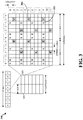
- FIG. 3 is a diagram 300 illustrating an example of a DL frame structure in LTE.
- a frame (10 ms) may be divided into 10 equally sized subframes. Each subframe may include two consecutive time slots.
- a resource grid may be used to represent two time slots, each time slot including a resource block.
- the resource grid is divided into multiple resource elements.
- a resource block contains 12 consecutive subcarriers in the frequency domain and, for a normal cyclic prefix in each OFDM symbol, 7 consecutive OFDM symbols in the time domain, or 84 resource elements.
- For an extended cyclic prefix a resource block contains 6 consecutive OFDM symbols in the time domain and has 72 resource elements.
- Some of the resource elements, indicated as R 302, 304, include DL reference signals (DL-RS).
- DL-RS DL reference signals
- the DL-RS include Cell-specific RS (CRS) (also sometimes called common RS) 302 and UE-specific RS (UE-RS) 304.
- UE-RS 304 is transmitted only on the resource blocks upon which the corresponding physical DL shared channel (PDSCH) is mapped.
- PDSCH physical DL shared channel
- the number of bits carried by each resource element depends on the modulation scheme. Thus, the more resource blocks that a UE receives and the higher the modulation scheme, the higher the data rate for the UE.
- FIG. 4 is a diagram 400 illustrating an example of an UL frame structure in LTE.
- the available resource blocks for the UL may be partitioned into a data section and a control section.
- the control section may be formed at the two edges of the system bandwidth and may have a configurable size.
- the resource blocks in the control section may be assigned to UEs for transmission of control information.
- the data section may include all resource blocks not included in the control section.
- the UL frame structure results in the data section including contiguous subcarriers, which may allow a single UE to be assigned all of the contiguous subcarriers in the data section.
- a UE may be assigned resource blocks 410a, 410b in the control section to transmit control information to an eNB.
- the UE may also be assigned resource blocks 420a, 420b in the data section to transmit data to the eNB.
- the UE may transmit control information in a physical UL control channel (PUCCH) on the assigned resource blocks in the control section.
- the UE may transmit only data or both data and control information in a physical UL shared channel (PUSCH) on the assigned resource blocks in the data section.
- a UL transmission may span both slots of a subframe and may hop across frequency.
- a set of resource blocks may be used to perform initial system access and achieve UL synchronization in a physical random access channel (PRACH) 430.
- the PRACH 430 carries a random sequence and cannot carry any UL data/signaling.
- Each random access preamble occupies a bandwidth corresponding to six consecutive resource blocks.
- the starting frequency is specified by the network. That is, the transmission of the random access preamble is restricted to certain time and frequency resources. There is no frequency hopping for the PRACH.
- the PRACH attempt is carried in a single subframe (1 ms) or in a sequence of few contiguous subframes and a UE can make only a single PRACH attempt per frame (10 ms).
- FIG. 5 is a diagram 500 illustrating an example of a radio protocol architecture for the user and control planes in LTE.
- the radio protocol architecture for the UE and the eNB is shown with three layers: Layer 1, Layer 2, and Layer 3.
- Layer 1 (L1 layer) is the lowest layer and implements various physical layer signal processing functions.
- the L1 layer will be referred to herein as the physical layer 506.
- Layer 2 (L2 layer) 508 is above the physical layer 506 and is responsible for the link between the UE and eNB over the physical layer 506.
- the L2 layer 508 includes a media access control (MAC) sublayer 510, a radio link control (RLC) sublayer 512, and a packet data convergence protocol (PDCP) 514 sublayer, which are terminated at the eNB on the network side.
- MAC media access control
- RLC radio link control
- PDCP packet data convergence protocol
- the UE may have several upper layers above the L2 layer 508 including a network layer (e.g., IP layer) that is terminated at the PDN gateway 118 on the network side, and an application layer that is terminated at the other end of the connection (e.g., far end UE, server, etc.).
- IP layer e.g., IP layer
- the PDCP sublayer 514 provides multiplexing between different radio bearers and logical channels.
- the PDCP sublayer 514 also provides header compression for upper layer data packets to reduce radio transmission overhead, security by ciphering the data packets, and handover support for UEs between eNBs.
- the RLC sublayer 512 provides segmentation and reassembly of upper layer data packets, retransmission of lost data packets, and reordering of data packets to compensate for out-of-order reception due to hybrid automatic repeat request (HARQ).
- HARQ hybrid automatic repeat request
- the MAC sublayer 510 provides multiplexing between logical and transport channels.
- the MAC sublayer 510 is also responsible for allocating the various radio resources (e.g., resource blocks) in one cell among the UEs.
- the MAC sublayer 510 is also responsible for HARQ operations.
- the radio protocol architecture for the UE and eNB is substantially the same for the physical layer 506 and the L2 layer 508 with the exception that there is no header compression function for the control plane.
- the control plane also includes a radio resource control (RRC) sublayer 516 in Layer 3 (L3 layer).
- RRC sublayer 516 is responsible for obtaining radio resources (e.g., radio bearers) and for configuring the lower layers using RRC signaling between the eNB and the UE.
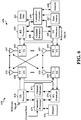
- FIG. 6 is a block diagram of an eNB 610 in communication with a UE 650 in an access network.
- upper layer packets from the core network are provided to a controller/processor 675.
- the controller/processor 675 implements the functionality of the L2 layer.
- the controller/processor 675 provides header compression, ciphering, packet segmentation and reordering, multiplexing between logical and transport channels, and radio resource allocations to the UE 650 based on various priority metrics.
- the controller/processor 675 is also responsible for HARQ operations, retransmission of lost packets, and signaling to the UE 650.
- the transmit (TX) processor 616 implements various signal processing functions for the L1 layer (i.e., physical layer).
- the signal processing functions include coding and interleaving to facilitate forward error correction (FEC) at the UE 650 and mapping to signal constellations based on various modulation schemes (e.g., binary phase-shift keying (BPSK), quadrature phase-shift keying (QPSK), M-phase-shift keying (M-PSK), M-quadrature amplitude modulation (M-QAM)).
- FEC forward error correction
- BPSK binary phase-shift keying
- QPSK quadrature phase-shift keying
- M-PSK M-phase-shift keying
- M-QAM M-quadrature amplitude modulation
- Each stream is then mapped to an OFDM subcarrier, multiplexed with a reference signal (e.g., pilot) in the time and/or frequency domain, and then combined together using an Inverse Fast Fourier Transform (IFFT) to produce a physical channel carrying a time domain OFDM symbol stream.
- the OFDM stream is spatially precoded to produce multiple spatial streams.
- Channel estimates from a channel estimator 674 may be used to determine the coding and modulation scheme, as well as for spatial processing.
- the channel estimate may be derived from a reference signal and/or channel condition feedback transmitted by the UE 650.
- Each spatial stream may then be provided to a different antenna 620 via a separate transmitter 618TX.
- Each transmitter 618TX may modulate an RF carrier with a respective spatial stream for transmission.
- each receiver 654RX receives a signal through its respective antenna 652.
- Each receiver 654RX recovers information modulated onto an RF carrier and provides the information to the receive (RX) processor 656.
- the RX processor 656 implements various signal processing functions of the L1 layer.
- the RX processor 656 may perform spatial processing on the information to recover any spatial streams destined for the UE 650. If multiple spatial streams are destined for the UE 650, they may be combined by the RX processor 656 into a single OFDM symbol stream.
- the RX processor 656 then converts the OFDM symbol stream from the time-domain to the frequency domain using a Fast Fourier Transform (FFT).
- FFT Fast Fourier Transform
- the symbols on each subcarrier, and the reference signal, are recovered and demodulated by determining the most likely signal constellation points transmitted by the eNB 610. These soft decisions may be based on channel estimates computed by the channel estimator 658. The soft decisions are then decoded and deinterleaved to recover the data and control signals that were originally transmitted by the eNB 610 on the physical channel. The data and control signals are then provided to the controller/processor 659.
- the controller/processor 659 implements the L2 layer.
- the controller/processor can be associated with a memory 660 that stores program codes and data.
- the memory 660 may be referred to as a computer-readable medium.
- the controller/processor 659 provides demultiplexing between transport and logical channels, packet reassembly, deciphering, header decompression, control signal processing to recover upper layer packets from the core network.
- the upper layer packets are then provided to a data sink 662, which represents all the protocol layers above the L2 layer.
- Various control signals may also be provided to the data sink 662 for L3 processing.
- the controller/processor 659 is also responsible for error detection using an acknowledgement (ACK) and/or negative acknowledgement (NACK) protocol to support HARQ operations.
- ACK acknowledgement
- NACK negative acknowledgement
- a data source 667 is used to provide upper layer packets to the controller/processor 659.
- the data source 667 represents all protocol layers above the L2 layer.
- the controller/processor 659 implements the L2 layer for the user plane and the control plane by providing header compression, ciphering, packet segmentation and reordering, and multiplexing between logical and transport channels based on radio resource allocations by the eNB 610.
- the controller/processor 659 is also responsible for HARQ operations, retransmission of lost packets, and signaling to the eNB 610.
- Channel estimates derived by a channel estimator 658 from a reference signal or feedback transmitted by the eNB 610 may be used by the TX processor 668 to select the appropriate coding and modulation schemes, and to facilitate spatial processing.
- the spatial streams generated by the TX processor 668 may be provided to different antenna 652 via separate transmitters 654TX. Each transmitter 654TX may modulate an RF carrier with a respective spatial stream for transmission.
- the UL transmission is processed at the eNB 610 in a manner similar to that described in connection with the receiver function at the UE 650.
- Each receiver 618RX receives a signal through its respective antenna 620.
- Each receiver 618RX recovers information modulated onto an RF carrier and provides the information to a RX processor 670.
- the RX processor 670 may implement the L1 layer.
- the controller/processor 675 implements the L2 layer.
- the controller/processor 675 can be associated with a memory 676 that stores program codes and data.
- the memory 676 may be referred to as a computer-readable medium.
- the control/processor 675 provides demultiplexing between transport and logical channels, packet reassembly, deciphering, header decompression, control signal processing to recover upper layer packets from the UE 650.
- Upper layer packets from the controller/processor 675 may be provided to the core network.
- the controller/processor 675 is also responsible for error detection using an ACK and/or NACK protocol to support HARQ operations.
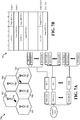
- FIG. 7A is a diagram 750 illustrating an example of an evolved MBMS (eMBMS) channel configuration in an MBSFN.
- the eNBs 752 in cells 752' may form a first MBSFN area and the eNBs 754 in cells 754' may form a second MBSFN area.
- the eNBs 752, 754 may each be associated with other MBSFN areas, for example, up to a total of eight MBSFN areas.
- a cell within an MBSFN area may be designated a reserved cell. Reserved cells do not provide multicast/broadcast content, but are time-synchronized to the cells 752', 754' and have restricted power on MBSFN resources in order to limit interference to the MBSFN areas.
- Each eNB in an MBSFN area synchronously transmits the same eMBMS control information and data.
- Each area may support broadcast, multicast, and unicast services.
- a unicast service is a service intended for a specific user, e.g., a voice call.
- a multicast service is a service that may be received by a group of users, e.g., a subscription video service.
- a broadcast service is a service that may be received by all users, e.g., a news broadcast.
- the first MBSFN area may support a first eMBMS broadcast service, such as by providing a particular news broadcast to UE 770.
- the second MBSFN area may support a second eMBMS broadcast service, such as by providing a different news broadcast to UE 760.
- Each MBSFN area supports a plurality of physical multicast channels (PMCH) (e.g., 15 PMCHs).
- PMCH corresponds to a multicast channel (MCH).
- MCH multicast channel
- Each MCH can multiplex a plurality (e.g., 29) of multicast logical channels.
- Each MBSFN area may have one multicast control channel (MCCH).
- MCCH multicast control channel
- one MCH may multiplex one MCCH and a plurality of multicast traffic channels (MTCHs) and the remaining MCHs may multiplex a plurality of MTCHs.
- MTCHs multicast traffic channels
- a UE can camp on an LTE cell to discover the availability of eMBMS service access and a corresponding access stratum configuration.
- the UE may acquire a system information block (SIB) 13 (SIB13).
- SIB13 system information block 13
- the UE may acquire an MBSFN Area Configuration message on an MCCH.
- the UE may acquire an MCH scheduling information (MSI) MAC control element.
- MSI MCH scheduling information
- the SIB13 indicates (1) an MBSFN area identifier of each MBSFN area supported by the cell; (2) information for acquiring the MCCH such as an MCCH repetition period (e.g., 32, 64, ..., 256 frames), an MCCH offset (e.g., 0, 1, ..., 10 frames), an MCCH modification period (e.g., 512, 1024 frames), a signaling modulation and coding scheme (MCS), subframe allocation information indicating which subframes of the radio frame as indicated by repetition period and offset can transmit MCCH; and (3) an MCCH change notification configuration.
- MCS modulation and coding scheme
- the MBSFN Area Configuration message indicates both (1) a temporary mobile group identity (TMGI) and an optional session identifier of each MTCH identified by a logical channel identifier within the PMCH, (2) allocated resources (i.e., radio frames and subframes) for transmitting each PMCH of the MBSFN area and the allocation period (e.g., 4, 8, ..., 256 frames) of the allocated resources for all the PMCHs in the area, and (3) an MCH scheduling period (MSP) (e.g., 8, 16, 32, ..., or 1024 radio frames) over which the MSI MAC control element is transmitted.
- TMGI temporary mobile group identity
- MSP MCH scheduling period
- FIG. 7B is a diagram 790 illustrating the format of an MSI MAC control element.
- the MSI MAC control element may be sent once each MSP.
- the MSI MAC control element may be sent in the first subframe of each scheduling period of the PMCH.
- the MSI MAC control element can indicate the stop frame and subframe of each MTCH within the PMCH. There may be one MSI per PMCH per MBSFN area.
- FIG. 8 is an illustration 800 of a portion of a schedule for session and file broadcasts over an eMBMS broadcast.
- the schedule includes a number of individual session schedules 802 having one-minute durations.
- one or more files 804 may be broadcast in accordance with a file schedule 806.
- Information related to the session schedule 802 and the file schedule 806 may be included in a service announcement broadcast by an eMBMS server.
- Information included in the file schedule 806 may specify specific blocks of time within the sessions, during which specific files 804 will be broadcast.
- a UE may have a previously downloaded a version of a file 804 that is periodically updated, or may be a subscriber to a service that periodically broadcasts files.
- a UE may have a particular version of a file, e.g., application, operating system, etc., that is periodically updated by the developer of the file, or the UE may subscribe to a news service that broadcasts files of news stories periodically, e.g., every hour.
- an updated version of a file (or new files) may initially be broadcast in the eMBMS service area in accordance with information provided in a service announcement received by the UE prior to broadcast of the file.
- the service announcement may include a schedule description fragment, which typically includes information corresponding to a session schedule 802 and a file schedule 806.
- the service announcement may also be received by the UE over a unicast transmission.
- a file scheduled to be broadcast may be a "file of interest" to a UE.
- an application on the UE may express interest in receiving files that meet certain criteria on an eMBMS service.
- a typical criterion is a file name or files in a directory; examples could be all files in the weather folder of a news service.
- UE may or may not have a version of the file which may or may not be the latest version of the file.
- the UE may fall out of service or out of coverage of the eMBMS broadcast and thus not receive the file of interest.
- Out of coverage relates to cases where the UE moves to an area that is outside of the broadcast area of the eMBMS broadcast.
- Out of service relates to cases where the UE is in a location, e.g., a fringe area of cell or pocket of cell, where the UE cannot reliably receive the broadcast signal, e.g., because the signal strength is too low. That is, the signal may be too weak for the UE to decode the incoming transmission.
- the UE does not receive the file of interest and may not receive any partial data at all for the file. Furthermore, the UE may not receive the file delivery table (FDT) instance associated with the file, which lists a set of files, possible signature of the files (in the form of a MD5 hash in the case of FDT), and the corresponding transport options.
- FDT file delivery table
- a UE may implement a full file repair.
- Full file repair relates to a full download of the file of interest from a file repair server.
- File repair in eMBMS is currently triggered by the expiry time of a FDT instance within the file delivery over unidirectional transport (FLUTE) protocol.
- FLUTE unidirectional transport
- the existing file repair approach requires the device to access the eMBMS bearer carrying the eMBMS server and download an FDT before being able to initiate file repair.
- the FDT is not available at the UE. Accordingly, current full file repair techniques are not applicable for recovering files for which no FDT is received.
- the UE may be aware of sessions and file schedules without necessarily accessing the service and consequently without obtaining the FDT. Described below are techniques applicable to the above three scenarios (and other similar scenarios) that allow a UE to implement a full file repair of a file of interest from a file repair server in cases where the UE is unable to receive the file of interest and the FDT instance for the file, over the broadcast channel during the scheduled delivery of the file.
- the UE may obtain the associated delivery procedure description fragment and/or the schedule description fragment for a file of interest.
- the UE may obtain these by the UE through an eMBMS service announcement while the UE is in eMBMS coverage, or through a unicast transmission to the UE.
- the UE may receive the service announcement while in eMBMS service coverage, prior to falling out of coverage or out of service and "missing" the broadcast of the file of interest.
- the UE may receive the service announcement after the broadcast of the file of interest.
- “Missing a broadcast” refers to an instance where a UE is unable to receive the transmission of a file of interest through an eMBMS service whereby no FDT is received for the file as exemplified in the discussed scenarios.
- FIG. 9 is a graphical illustration 900 of the XML schema of a schedule description fragment 902.
- the schedule description fragment 902 may be included in a service announcement received by the UE. Based on information included in the schedule description fragment 902, the UE is able to determine if the UE missed a file of interest.
- the schedule description fragment 902 includes a session schedule element 904 for the session in which the file of interest is broadcast, and may include a file schedule element 906 for the file of interest. If a file schedule 906 is present, the file schedule may include file version information.
- the file schedule 906 may have a message digest 5 (MD5) 908 of the file, which identifies the version of the file.
- MD5 message digest 5
- the UE may monitor the schedule description fragment 902 for file identification information corresponding to a file of interest.
- the session schedule element 904 may provide the broadcast schedule of the file of interest.
- the file schedule 906 may include a MD5 908 for the file of interest that identifies the version of the file of interest scheduled for download. Based on this information, the UE compares the version of the file of interest that it currently has, to the version scheduled for download to determine if the UE missed a file of interest and should implement a full file repair.
- the schedule description fragment 902 may not include information sufficient to determine if a file of interest was missed.
- a file schedule 906 may not include a MD5, or the file schedule 906 itself may not be included in the session description 902.
- the UE may determine whether a file of interest was missed and if missed, trigger a full file repair based on information included in a schedule description fragment (e.g.
- file identification information included in a session schedule and file version information included in a file schedule based on information included in, or obtained through, a schedule description fragment (e.g., a file identification included directly in a session schedule and location information that directs the UE to file version information), based on queries for additional file information, or based on requests for the file of interest from symbol-based repair servers and conventional HTTP servers.
- a schedule description fragment e.g., a file identification included directly in a session schedule and location information that directs the UE to file version information
- queries for additional file information based on requests for the file of interest from symbol-based repair servers and conventional HTTP servers.
- a UE may trigger a full file repair based solely on information included in a schedule description metadata fragment 902.
- the schedule description fragment 902 may include a session schedule element 904, a file schedule element 906 including a MD5 908, and retransmission schedules.
- the schedule description fragment 902 may be used to determine one or both of the end of a session and the end of a file transmission. Reception reporting may also report failure if a file is not downloaded at the end of the scheduled transmission in the schedule description.
- the schedule description fragment 902 describes the transmission of sessions and files.
- the schedule description fragment 902 may include a session schedule element ( sessionSchedule ) 904 and a file schedule element ( fileSchedule ) 906.
- the file schedule element 906 allows the UE to determine if a file of interest is transmitted.
- the MD5 908 within the file schedule element 906 allows the UE to determine if a new version of a file of interest is transmitted or scheduled to be transmitted in case the UE had already downloaded the file of interest previously.
- a UE may implement full file repair using information in the schedule description fragment 902 as follows: First, the UE determines that a file included in the file schedule 906 is a file of interest. For example, while within eMBMS coverage, the UE may receive a service announcement that includes broadcast information, e.g., a session schedule 904 and a file schedule 906, for one or more files. Based on the broadcast information, the UE determines if one of the files to be broadcast is a file of interest. The UE may make this determination by checking for a new file or updated MD5 908 for a uniform resource identifier (URI) 910 of interest in the file schedule 906.
- URI uniform resource identifier
- the UE tries to access the corresponding eMBMS bearer to initiate download of the file of interest. If the UE is out of service or out of coverage of the eMBMS or the frequency on which the file is broadcast via eMBMS is inaccessible to the UE, then the UE is unable to download the file of interest.
- the UE may trigger full file repair at file schedule end or session schedule end. For example, the UE may start full file repair when the end of the file transmission time is reached. The end of the file transmission time may be included in the end attribute 812 of the file schedule element 806. Alternatively, the UE may start full file repair at the end of the session containing the file of interest. Accordingly, the UE may trigger file recovery at file schedule end or session schedule end, even when the FDT instance is not received.
- the UE determines that a file of interest is transmitted within a service based on the file schedule information.
- the UE requires file information to include a file schedule and optionally a session schedule as well.
- the UE processes the file information to determine if any files identified in the file information correspond to a file of interest. For example, if the file information identifies a file in the weather director of a news service and an application has already requested the reception of such files, then the UE would identify such files as files of interest.
- the UE determines a failure to download the file of interest.
- the UE having knowledge of the broadcast schedule of the file of interest, may attempt to establish an eMBMS bearer by which to receive the file. If establishment of the bearer fails or if multiple such attempts fails for part or for the total duration of the broadcast of the file according to the schedule description, then the UE would determine a failure to download the file of interest.
- the UE may determine a failure to download a file of interest, subsequent to the scheduled broadcast, by comparing the version of the file currently on the UE with the version of the file of interest broadcast during the session as announced in the schedule description. If the versions do not match, then the UE may conclude there was a failure to download the file of interest.
- the UE may trigger a repair procedure of the file of interest at a time corresponding to an end of a file delivery event. To this end, the UE establishes a connection with the file repair server where the file of interest is located and requests the file. The UE may receive the file from the file repair server through a unicast transmission.
- the file delivery event includes a file broadcast
- the information element includes a file schedule element 906 included in a broadcast schedule description 902
- the time of the repair trigger corresponds to the end of the file broadcast, as provided by the end attribute 912 of the file schedule element 906.
- a UE obtains a broadcast schedule description 902 including a file schedule 906 for a file of interest, and triggers a full file repair procedure of the file of interest at a time based on an end attribute 912 included in the file schedule.
- the file delivery event includes a session broadcast
- the information element includes a session schedule element 904 included in a broadcast schedule description 902
- the time of the repair trigger corresponds to the end of the session broadcast, as provided by the stop attribute 914 of the session schedule element 904.
- a UE obtains a broadcast schedule description 902 including a session schedule 904 for a file of interest, and triggers a full file repair procedure of the file of interest at a time based on a stop attribute 914 included in the session schedule.
- a file schedule may not be included in a schedule description fragment 902.
- the number of files to be broadcast during a session may be too numerous to include in a file schedule.
- the UE may determine from application preferences that a file of interest may be broadcast during an upcoming session.
- the UE activates the bearer carrying the service at the beginning of the session, receives all file transmissions of files of interest during the session and deactivates the bearer at the end of the session.
- a UE may obtain file information based on FDT information included in a session schedule element 904, and trigger a full file repair of a file broadcast during the session if the UE determines the one or more files is a file of interest.
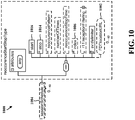
- file information is provided by an FDT location URI 1002 included in a session schedule element 1004.
- the FDT location URI 1002 may be available at broadcast start (as indicated by the start attribute 1016), at broadcast end (as indicated by the stop attribute 1014), or at broadcast end plus an offset time. The latter availability option is preferred since this is when the file repair files are available on the file repair server in the current standard operating protocols.
- the FDT location URI may include information that describes all of the files transmitted during the broadcast session.
- the FDT location URI 1002 can be a template parameterized by sessionIndex 1006.
- the FDT location URI 1002 may include file information that is categorized by session number.
- a URI may be http ⁇ provider.com ⁇ filedeliveryservice ⁇ FDT1, for session 1, http ⁇ provider.com ⁇ filedeliveryservice ⁇ FDT2, for session 2, http ⁇ provider.com ⁇ filedeliveryservice ⁇ FDT3, for session 3, etc.
- a UE may implement full file repair based on a FDT when a file schedule is not available as follows: First, the UE determines applications are interested in files on a broadcast service with session schedule announced in a service announcement. For example, based on information included in a service announcement, the UE may determine that a file of interest may be broadcast on a corresponding eMBMS bearer.
- the UE tries to access the eMBMS bearer to initiate file download. If the UE is out of service due to a weak eMBMS signal, or the UE is out of coverage of the eMBMS broadcast, or the UE is unable to switch to the frequency on which the service is broadcast, or the UE cannot receive the eMBMS broadcast for any other reason (radio resource issues, too many bearers active, etc) then the UE is unable to download the file of interest. In this case, the UE queries for the FDT information, e.g., the FDTlocationURI attribute 1002, of the session schedule 1004 to determine whether a file of interest was broadcast during the session.
- the FDT information e.g., the FDTlocationURI attribute 1002
- the UE may have to wait until the end of the broadcast session plus an offset time, where the session end is provided by the stop attribute 1014 of the session schedule 1004.
- the UE determines the files in the session and their MD5s, if specified. For example the UE may review the files listed as URIs and each file's corresponding MD5 version to determine if any of the files are new or if any of the file correspond to newer versions of files present on the UE. If a file of interest is found (a new file or a newer version of a file), the UE triggers a full file repair for the file of interest. The full file repair may be triggered at the end of the broadcast session. The end of the broadcast session may be determined based on information included in the session schedule.
- the UE determines that a file of interest is transmitted within a service.
- the UE may obtain file broadcast information, e.g., a service announcement, including a schedule description fragment having a session schedule with location information of where a FDT is located, and process this information by accessing the FDT and determining if any files identified in the file broadcast information correspond to a file of interest that is listed in the FDT.
- file broadcast information e.g., a service announcement
- the UE may determine that a file of interest may be broadcast during the session.
- the UE may determine if a file of interest was actually broadcast during the session.
- the UE determines that a file of interest is transmitted within a service based at least in part on information included in a FDT obtained through an FDT locator 1002 included in a schedule description of a session.
- the FDT locator 1002 may be in a session schedule 1004 element of a schedule description fragment.
- a UE obtains a broadcast schedule description including a session schedule 1004 for a file of interest and retrieves a FDT for the file of interest based on a FDT URI 1002 included in the session schedule.
- the UE determines a failure to download the file of interest. To this end, as described above, the UE determines that it cannot access the eMBMS bearer to initiate a download and then queries for FDT information.
- the UE may trigger a repair procedure of the file of interest at a time corresponding to an end of a file delivery event.
- the UE establishes a connection with the file repair server where the file of interest is located and requests the file.
- the UE may receive the file from the file repair server through a unicast transmission.
- the UE triggers a repair procedure of the file of interest at a time based on a stop attribute 1014 included in the session schedule 1004.
- a UE may obtain file information from a session schedule element 904, and trigger full file repair of a file of interest.
- this procedure there is no change to the session schedule element 1104.
- the UE on failing to access a session and on being unable to get any FDT describing the files broadcast in the session, retrieves a more up to date schedule description that also includes the file schedule of files available through the file repair server.
- the UE may query the eMBMS server for broadcast file information by querying for the latest version of the schedule description fragment 902 for the session during which the file of interest is being broadcast.
- the broadcast file information may be included in a file schedule 906 that is included in the latest version of the schedule description fragment 902.
- the scheduled description fragment 902 may be received by the UE through a unicast transmission.
- the UE may query for a schedule description of a session identified by a service identifier included in a universal service description (USD) or by a session index 1106 included in a session schedule 1104.
- USD universal service description
- the UE may use a unicast channel to get the latest version of the schedule description fragment 902 which provides a file schedule 906 if file repair is enabled as per the Associated Delivery Procedure fragment.
- the schedule description fragment is identified by a URI in the service announcement, and in one embodiment, this file URI could be used to retrieve an updated version of the schedule description fragment from the file repair server.
- a UE may implement full file repair based on schedule description when a file schedule is not initially available as follows: First, the UE determines capture is active on a broadcast service with a session schedule announced in a service announcement. For example, based on information included in the service announcement, the UE may determine that a file of interest may be broadcast on a corresponding eMBMS bearer.
- the UE tries to access the eMBMS bearer to initiate file download. If the UE is out of service due to a weak eMBMS signal, or the UE is out of coverage of the eMBMS broadcast, or the UE is unable to switch to the frequency on which the service is broadcast, or the UE cannot receive the eMBMS broadcast for any other reason (radio resource issues, too many bearers active, etc) then the UE is unable to download the file of interest and a potential failure to download the files is established. In this case, the UE queries for an updated schedule description 902 of the session including a file schedule 906 if file repair is available.
- the UE determines the files in the session and their MD5s, if specified. For example the UE may review the files listed in a file schedule 906 and the corresponding versions as provided by the MD5s to determine if any of the files correspond to newer versions of files present on the UE. If a file of interest is found, the UE may trigger a full file repair for the file of interest. The repair may be triggered at the end of the session/file schedule, as provided by the latest updated schedule description fragment 902.
- the UE determines that a file of interest is transmitted or will be transmitted by a service.
- the UE may obtain file broadcast information, e.g., through reception of a service announcement including a session schedule having file information, and by querying for an updated session schedule 904 having a file schedule with file version information.
- the UE processes file information to determine if any files identified in the broadcast information correspond to a file of interest.
- the UE may determine that a file of interest may be broadcast during the session.
- the UE may determine if a file of interest was broadcast during the session. Accordingly, the UE determines that a file of interest is transmitted by a service based on information included in an updated schedule description, which may be obtained via a unicast transmission.
- the UE determines a failure to download the file of interest. To this end, as described above, the UE determines that it cannot access the eMBMS bearer to initiate a download and then queries for an updated schedule description.
- the UE may trigger a repair procedure of the file of interest at a time corresponding to an end of a file delivery event. To this end, the UE establishes a connection with the file repair server where the file of interest is located and requests the file. The UE receives the file from the file repair server through a unicast transmission.
- a UE may trigger full file repair of a file of interest based on session index information 916 included in a session schedule element 904 of a schedule description fragment 902.
- a session index 916 that uniquely identifies a session may be used to identify retransmissions in the schedule description 902.
- the session index 916 can be used to identify repeated sessions in the schedule description.
- the session index 916 is associated with content. If the current session carries the same files as a previous session then the same index is used to broadcast the session.
- the UE behavior for full file repair based on session index 916 when file schedule is not available is as follows: First, the UE determines capture is active on service with session schedule announced in service announcement. For example, the UE may determine that a file of interest is being broadcast on a corresponding eMBMS bearer.
- the UE determines that the current session index 916 matches a previous session index for which all files of interest were received successfully, the UE does not initiate any download on the repeated session. If the UE determines that the current session index 916 does not match a previous session index for which all the files of interest were received successfully, the UE initiates full file repair on the repeated session.
- the UE determines that a file of interest is transmitted within a service.
- the UE determines that a file of interest is transmitted within a service based on a comparison between an index associated with files broadcast during a previous session and an index associated with files broadcast during a current session. If the indexes do not match, the UE may conclude there is a file of interest.
- the UE determines a failure to download the file of interest. This may be done as described for previous techniques.
- the UE may then trigger a repair procedure of the file of interest at a time corresponding to an end of a file delivery event. This too may be done as described for previous techniques.
- a UE may trigger full file repair upon determining a file of interest based on an implicit FDT location. Because the schedule description fragment 902 does not provide a MD5 908 for a file URI in the file schedule element 906, the UE is unable to determine the version of the file corresponding to the URI and is thus unable to determine if the corresponding file is a file of interest.
- a UE may implement full file repair based on an implicit FDT as follows: First, the UE determines that a file included in the file schedule 906 is a file of interest. For example, the UE may determine the URI 910 identified in the file schedule 906 is a file of interest based on having previously downloaded the file.
- the UE tries to access the corresponding eMBMS bearer to initiate download of the file of interest. If the UE is out of service or out of coverage of the eMBMS or the frequency on which the file is broadcast via eMBMS is inaccessible to the UE, then the UE is unable to download the file of interest.
- the URI 910 included in the file schedule 906 includes FDT information that may include the MD5 of the file of interest.
- the FDT location may be implicit based on the file URI, e.g., same directory of the URI but file name is "FDT.”
- the UE downloads the FDT that contains the MD5 of the file of interest. Then, the UE may trigger file repair at file schedule end or session schedule end.
- the UE may start the associated delivery procedure when the end of the file transmission time is reached.
- the end of the file transmission time may be included in the end attribute 912 of the file schedule element 906.
- the UE may start the associated delivery procedure at the end of a session.
- the end of the session time may be determined based on the stop attribute 814 of the session schedule element 804.
- the UE determines that a file of interest is transmitted within a service.
- the UE determines that a file of interest is transmitted within a service based at least in part on information included in a FDT obtained through an FDT locator implicitly determined from the locator of the file of interest. For example, the UE may determine the URI 910 identified in the file schedule 906 is a file of interest based on having previously downloaded the file.
- the UE determines a failure to download the file of interest. This may be done as described for previous techniques.
- the UE then triggers a repair procedure of the file of interest at a time corresponding to an end of a file delivery event. This too may be done as described for previous techniques.
- a UE may trigger file repair upon determining a file of interest based on a query.
- file version information e.g. no MD5
- a UE may trigger file repair upon determining a file of interest based on a query.
- the UE does not have MD5 information, it is unable to determine the version of files scheduled for download, and is thus unable to determine if any of the files schedule for broadcast are files of interest.
- the UE is provided with a query procedure that allows the UE to inquire about the latest MD5 of a file on the file repair server.
- a UE may implement full file repair based on a query as follows: First, the UE determines that a file included in the file schedule 906 may be a file of interest. For example, the UE may compare its files with the files listed in the file schedule to determine if any files in the file schedule were previously downloaded by the UE. Any previously downloaded file would be considered a possible file of interest.
- the UE tries to access the corresponding eMBMS bearer to initiate download of the file of interest. If the UE is out of coverage or the frequency on which the file is broadcast via eMBMS is inaccessible to the UE, then the UE is unable to download the file of interest. In this case, the UE requests the latest MD5 information on a possible file of interest included in the file schedule 906, from a file repair server. If the file version information provided by the latest MD5 information does not match the version of the file currently on the UE, the UE concludes the file is a file of interest. Then, the UE may trigger file repair at file schedule end or session schedule end. For example, the UE may start the associated delivery procedure when the end of the file transmission time is reached.
- the end of the file transmission time may be included in the end attribute 912 of the file schedule element 906.
- the UE may start the associated delivery procedure at the end of a session.
- the end of the session time may be determined based on the stop attribute 814 of the session schedule element 904.
- the UE determines that a file of interest is transmitted within a service.
- the UE determines that a file of interest is transmitted within a service based at least in part on information received by querying for a latest MD5 file.
- the UE determines a failure to download the file of interest. This may be done as described for previous techniques.
- the UE then triggers a repair procedure of the file of interest at a time corresponding to an end of a file delivery event. This too may be done as described for previous techniques.
- a UE may trigger file repair upon determining a file of interest based on a conditional get procedure.
- the UE does not have MD5 information, the UE is unable to determine the version of files scheduled for download, and is thus unable to determine if any of the files schedule for broadcast are files of interest.
- Web servers allow conditional gets based on tags of files ("etags"). The conditional get is directed to the latest version of the file and the etag of the file is the file's MD5 signature.
- a UE may implement full file repair based on a conditional get as follows: First, the UE determines that a file included in the file schedule 906 is a file of interest and that the file was previously downloaded by the UE. For example, the UE may compare its files with the files listed in the file schedule 906 to determine if any files in the file schedule were previously downloaded by the UE. Any previously downloaded file would be considered a possible file of interest.
- the UE tries to access the corresponding bearer to initiate download of the file of interest. If the UE is out of coverage or the frequency on which the file is broadcast via eMBMS is inaccessible to the UE, then the UE is unable to download the file of interest. Then, the UE may trigger file repair at file schedule end or session schedule end. For example, the UE may start the associated delivery procedure when the end of the file transmission time is reached. The end of the file transmission time may be included in the end attribute 812 of the file schedule element 806. Alternatively, the UE may start the associated delivery procedure at the end of a session. The end of the session time may be determined based on the stop attribute 814 of the session schedule element 804.
- the UE does a conditional get and requests the file only if the etag of the file on the server is different than the MD5 of the current version of the file on the UE.
- the etag of the file on the conventional HTTP file repair server be set to the MD5 of the file version currently being served by the http server.
- the UE determines that a file of interest is transmitted within a service.
- the UE determines that a file of interest is transmitted within a service based on a comparison of an identifier, e.g., MD5 signature, of the latest version of the file with a previously download version of the file.
- the UE determines a failure to download the file of interest. This may be done as described for previous techniques.
- the UE may then triggers a repair procedure of the file of interest at a time corresponding to an end of a file delivery event. This too may be done as described for previous techniques.
- a FDT may include: "Alternate-Content-Location-1" and “Alternate-Content-Location-2" elements that provide the references to a file repair server resource via the "xs:anyURI” value. At least one "Alternate-Content-Location-1" element is present in the FDT if byte-range based file repair is to be supported by the network.
- the "Base-URL-1" and “Base-URL-2” elements when present, provide base URLs against which to resolve a relative reference included in any "Alternate-Content-Location-1" or “Alternate-Content-Location-2” element, respectively.
- the "Availability-Time” attribute when present, provides a method to inform the UE of an absolute time according to the UTC time standard until which the UE can expect that, if reachable and functioning, the file repair server will return the requested repair data.
- FDT retrieval may be used as described above with respect to file repair based on FDT, to obtain conventional HTTP server locations as outlined in FDT.
- similar support is added in the session schedule 1204 to support conventional HTTP servers as shown in FIG. 12 . This enhancement works best with the above-described full file repair based on query and full file repair based on conditional get.
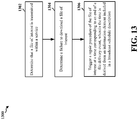
- FIG. 13 is a flow chart 1300 of a method of wireless communication.
- the method may be performed by a UE.
- the UE determines that a file of interest is transmitted within a service. Such a determination by the UE may be based on information included in, or obtained through, a schedule description fragment.
- the UE may determine that a file of interest is transmitted within a service based at least in part on information included in a FDT obtained through an FDT locator included in a schedule description of a session.
- the UE may determine that a file of interest is transmitted within a service based at least in part on information included in a FDT obtained through an FDT locator implicitly determined from the locator of the file of interest.
- the UE may determine that a file of interest is transmitted within a service based at least in part on information included in an updated schedule description.
- the updated schedule description may be obtained through unicast.
- the UE may determine that a file of interest is transmitted within a service based at least in part on information included in a schedule description of a session of interest.
- the information element may be a FDT locator and the UE may determine that a file of interest is transmitted within a service based at least in part on information in the FDT.
- the UE may determine that a file of interest is transmitted within a service based at least in part on information received by querying for a latest MD5 file.
- the UE may determine that a file of interest is transmitted within a service based on a comparison of an identifier of the latest version of the file with a previously download version of the file.
- the identifier may be an MD5 signature.
- the UE may determine that a file of interest is transmitted within a service based on a comparison between an index associated with files broadcast during a previous session and an index associated with files broadcast during a current session.
- the UE determines a failure to download the file of interest.
- the UE determines there was a failure to download a file of interest, by checking to see if the UE received the file of interest at the end of the broadcast session.
- the UE is aware of the end of the broadcast session based at least in part on information included in a session schedule element, and the version identification of the file of interest based at least in part on information included in the file schedule (e.g., MD5) or obtained through the file schedule (e.g., through a FDTlocationURI).
- the UE compares the version of the file currently in the UE with the version of the file of interest broadcast during the session. If the versions do not match, then the UE may conclude there was a failure to download a file of interest.
- the UE triggers a repair of the file of interest at a time corresponding to an end of a file delivery event, wherein the time is derived from an information element included in the schedule description.
- the file delivery event comprises a file broadcast
- the information element comprises a file schedule element
- the time of the repair trigger corresponds to the end of the file broadcast.
- the file delivery event comprises a session broadcast
- the information element comprises a session schedule element
- the time of the repair trigger corresponds to the end of the session broadcast.
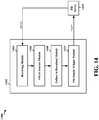
- FIG. 14 is a conceptual data flow diagram 1400 illustrating the data flow between different modules/means/components in an exemplary apparatus 1402.
- the apparatus may be a UE.
- the apparatus 1402 includes a receiving module 1404 that receives file information (e.g., schedule description, session schedule, file schedule) from a server corresponding to files transmitted within a service, a file-of-interest module 1406 that determines that a file of interest is transmitted within a service, a failure-to-download 1408 that determines a failure to download the file of interest, and a file repair trigger module 1410 that triggers a repair of the file of interest at a time corresponding to an end of a file delivery event, wherein the time is derived from an information element included in the schedule description.
- file information e.g., schedule description, session schedule, file schedule
- a file-of-interest module 1406 that determines that a file of interest is transmitted within a service
- a failure-to-download 1408 that determines a
- the apparatus may include additional modules that perform each of the steps of the algorithm in the aforementioned flow charts of FIG. 13 .
- each step in the aforementioned flow charts of FIG. 13 may be performed by a module and the apparatus may include one or more of those modules.
- the modules may be one or more hardware components specifically configured to carry out the stated processes/algorithm, implemented by a processor configured to perform the stated processes/algorithm, stored within a computer-readable medium for implementation by a processor, or some combination thereof.
- FIG. 15 is a diagram 1500 illustrating an example of a hardware implementation for an apparatus 1402' employing a processing system 1514.
- the processing system 1514 may be implemented with a bus architecture, represented generally by the bus 1524.
- the bus 1524 may include any number of interconnecting buses and bridges depending on the specific application of the processing system 1514 and the overall design constraints.
- the bus 1524 links together various circuits including one or more processors and/or hardware modules, represented by the processor 1504, the modules 1404, 1406, 1408, 1410 and the computer-readable medium 1506.
- the bus 1524 may also link various other circuits such as timing sources, peripherals, voltage regulators, and power management circuits, which are well known in the art, and therefore, will not be described any further.
- the processing system 1514 may be coupled to a transceiver 1510.
- the transceiver 1510 is coupled to one or more antennas 1520.
- the transceiver 1510 provides a means for communicating with various other apparatus over a transmission medium.
- the transceiver 1510 receives a signal from the one or more antennas 1520, extracts information from the received signal, and provides the extracted information to the processing system 1514.
- the transceiver 1510 receives information from the processing system 1514, and based on the received information, generates a signal to be applied to the one or more antennas 1520.
- the processing system 1514 includes a processor 1504 coupled to a computer-readable medium 1506.
- the processor 1504 is responsible for general processing, including the execution of software stored on the computer-readable medium 1506.
- the software when executed by the processor 1504, causes the processing system 1514 to perform the various functions described supra for any particular apparatus.
- the computer-readable medium 1506 may also be used for storing data that is manipulated by the processor 1504 when executing software.
- the processing system further includes at least one of the modules 1404, 1406, 1408 and 1410.
- the modules may be software modules running in the processor 1504, resident/stored in the computer readable medium 1506, one or more hardware modules coupled to the processor 1504, or some combination thereof.
- the processing system 1514 may be a component of the UE 650 and may include the memory 660 and/or at least one of the TX processor 668, the RX processor 656, and the controller/processor 659.
- the apparatus 1402/1402' for wireless communication includes means for determining that a file of interest is transmitted within a service, means for determining a failure to download the file of interest; and means for triggering a repair of the file of interest at a time corresponding to an end of a file delivery event, wherein the time is derived from one or more information elements included in the schedule description.
- the aforementioned means may be one or more of the aforementioned modules of the apparatus 1402 and/or the processing system 1514 of the apparatus 1402' configured to perform the functions recited by the aforementioned means.
- the processing system 1514 may include the TX Processor 668, the RX Processor 656, and the controller/processor 659.
- the aforementioned means may be the TX Processor 668, the RX Processor 656, and the controller/processor 659 configured to perform the functions recited by the aforementioned means.
- Combinations such as "at least one of A, B, or C,” “at least one of A, B, and C,” and “A, B, C, or any combination thereof' include any combination of A, B, and/or C, and may include multiples of A, multiples of B, or multiples of C.
- combinations such as “at least one of A, B, or C,” “at least one of A, B, and C,” and “A, B, C, or any combination thereof' may be A only, B only, C only, A and B, A and C, B and C, or A and B and C, where any such combinations may contain one or more member or members of A, B, or C.
Landscapes
- Engineering & Computer Science (AREA)
- Computer Networks & Wireless Communication (AREA)
- Signal Processing (AREA)
- Theoretical Computer Science (AREA)
- Multimedia (AREA)
- Computer Security & Cryptography (AREA)
- Physics & Mathematics (AREA)
- General Engineering & Computer Science (AREA)
- General Physics & Mathematics (AREA)
- Databases & Information Systems (AREA)
- Data Mining & Analysis (AREA)
- Mobile Radio Communication Systems (AREA)
- Two-Way Televisions, Distribution Of Moving Picture Or The Like (AREA)
Applications Claiming Priority (3)
| Application Number | Priority Date | Filing Date | Title |
|---|---|---|---|
| US201361829202P | 2013-05-30 | 2013-05-30 | |
| US14/289,544 US10127263B2 (en) | 2013-05-30 | 2014-05-28 | Full file repair using schedule description fragment in eMBMS |
| PCT/US2014/040010 WO2014194082A1 (en) | 2013-05-30 | 2014-05-29 | Full file repair using schedule description fragment in embms |
Publications (2)
| Publication Number | Publication Date |
|---|---|
| EP3005657A1 EP3005657A1 (en) | 2016-04-13 |
| EP3005657B1 true EP3005657B1 (en) | 2020-07-01 |
Family
ID=51986309
Family Applications (1)
| Application Number | Title | Priority Date | Filing Date |
|---|---|---|---|
| EP14733872.7A Active EP3005657B1 (en) | 2013-05-30 | 2014-05-29 | Full file repair using schedule description fragment in embms |
Country Status (8)
| Country | Link |
|---|---|
| US (1) | US10127263B2 (enExample) |
| EP (1) | EP3005657B1 (enExample) |
| JP (1) | JP2016526346A (enExample) |
| KR (1) | KR20160016909A (enExample) |
| CN (1) | CN105247840B (enExample) |
| ES (1) | ES2820728T3 (enExample) |
| TW (1) | TW201503747A (enExample) |
| WO (1) | WO2014194082A1 (enExample) |
Families Citing this family (11)
| Publication number | Priority date | Publication date | Assignee | Title |
|---|---|---|---|---|
| DE102013219543A1 (de) * | 2013-09-27 | 2015-04-02 | Siemens Aktiengesellschaft | Kommunikationsgerät und Verfahren zur Kommunikation zwischen einem Kommunikationsgerät und einer zentralen Einrichtung |
| US9668238B1 (en) * | 2014-10-02 | 2017-05-30 | Sprint Spectrum L.P. | Multicast file delivery |
| US10528530B2 (en) * | 2015-04-08 | 2020-01-07 | Microsoft Technology Licensing, Llc | File repair of file stored across multiple data stores |
| TWI806453B (zh) * | 2016-05-20 | 2023-06-21 | 美商內數位專利控股公司 | 支援多播傳輸之方法、裝置、系統及程序 |
| US10599634B2 (en) * | 2016-06-19 | 2020-03-24 | Qualcomm Incorporated | Signaling which version information to use on byte-range file repair |
| CN108235230B (zh) * | 2016-12-16 | 2020-07-28 | 普天信息技术有限公司 | 一种组通信系统中mbms服务区的动态管理方法及服务器 |
| CN107122212A (zh) * | 2017-04-28 | 2017-09-01 | 环球智达科技(北京)有限公司 | 固件加密方法 |
| CN107122668A (zh) * | 2017-04-28 | 2017-09-01 | 环球智达科技(北京)有限公司 | 固件加密方法 |
| CN108476385B (zh) * | 2017-05-12 | 2021-11-02 | 北京小米移动软件有限公司 | 用于接收和发送系统消息的方法、装置、用户设备及基站 |
| CN107967157B (zh) * | 2017-08-17 | 2021-06-01 | 青岛海信移动通信技术股份有限公司 | 一种生成ota中间包过程中的数据处理方法及装置 |
| CN108768865B (zh) * | 2018-05-24 | 2020-11-03 | 西安电子科技大学 | 支持多播业务的时间触发业务调度表生成方法 |
Family Cites Families (16)
| Publication number | Priority date | Publication date | Assignee | Title |
|---|---|---|---|---|
| EP1224568A4 (en) * | 1999-09-24 | 2006-11-08 | Sun Microsystems Inc | MECHANISM TO DISCLOSE SESSION INFORMATION WHICH HAS A VARIETY OF PROCESSES TO ENABLE |
| JP2002232478A (ja) | 2000-11-06 | 2002-08-16 | Matsushita Electric Ind Co Ltd | 送信装置、受信装置及び放送データ配信方法 |
| FI20041267A0 (fi) | 2004-09-29 | 2004-09-29 | Nokia Corp | Tiedottaminen solukkotietoverkossa |
| RU2007136300A (ru) | 2005-04-02 | 2009-04-10 | Самсунг Электроникс Ко., Лтд. (KR) | Способ и устройство распространения файлов в системе мобильного широковещания |
| EP1901525A1 (en) | 2006-09-15 | 2008-03-19 | THOMSON Licensing | File repair method for a content distribution system |
| US7885235B2 (en) * | 2006-09-26 | 2011-02-08 | Mitsubishi Electric Corporation | Data communication method and mobile communication system |
| RU2009127603A (ru) | 2007-01-09 | 2011-02-20 | Нокиа Корпорейшн (Fi) | Способ поддержки контроля версий файлов при исправлении файлов в mbms |
| CA2674996C (en) | 2007-01-10 | 2015-05-12 | Nokia Corporation | System and method for implementing mbms handover during download delivery |
| WO2011006513A2 (en) * | 2009-07-13 | 2011-01-20 | Eyad Aii Mohammad Al Qalqili | Method and system for advertising on the mobile main screen by cbs technology |
| CN102036170B (zh) * | 2009-09-29 | 2012-04-04 | 华为技术有限公司 | 处理子帧的方法和设备 |
| JP2011254410A (ja) | 2010-06-04 | 2011-12-15 | Ntt Docomo Inc | 放送コンテンツ送信装置及び放送コンテンツ受信装置 |
| WO2013131237A1 (en) * | 2012-03-05 | 2013-09-12 | Xingyunrongchuang (Beijing) Information Technology Company Limited | System and method for detecting and preventing attacks against a server in a computer network |
| WO2013171192A1 (en) * | 2012-05-14 | 2013-11-21 | Telefonaktiebolaget L M Ericsson (Publ) | Providing broadcast service in broadcast service reserved cells |
| EP3119022B1 (en) * | 2012-07-09 | 2018-06-13 | Telefonaktiebolaget LM Ericsson (publ) | Method and arrangement for distributing information during broadcast delivery |
| KR101955723B1 (ko) * | 2012-08-22 | 2019-03-07 | 한국전자통신연구원 | 증강 방송 서비스 제공 장치 및 방법 |
| EP2912795A1 (en) * | 2012-10-26 | 2015-09-02 | Telefonaktiebolaget LM Ericsson (Publ) | METHODS AND ARRANGEMENT FOR HANDLING FILE REPAIR DURING MBMS OR eMBMS DELIVERY |
-
2014
- 2014-05-28 US US14/289,544 patent/US10127263B2/en active Active
- 2014-05-29 JP JP2016516816A patent/JP2016526346A/ja active Pending
- 2014-05-29 WO PCT/US2014/040010 patent/WO2014194082A1/en not_active Ceased
- 2014-05-29 ES ES14733872T patent/ES2820728T3/es active Active
- 2014-05-29 CN CN201480030135.0A patent/CN105247840B/zh active Active
- 2014-05-29 EP EP14733872.7A patent/EP3005657B1/en active Active
- 2014-05-29 KR KR1020157036740A patent/KR20160016909A/ko not_active Withdrawn
- 2014-05-30 TW TW103119097A patent/TW201503747A/zh unknown
Non-Patent Citations (2)
| Title |
|---|
| "3rd Generation Partnership Project; Technical Specification Group Services and System Aspects; Multimedia Broadcast/Multicast Service (MBMS); Protocols and codecs (Release 10)", 3GPP STANDARD; 3GPP TS 26.346, 3RD GENERATION PARTNERSHIP PROJECT (3GPP), MOBILE COMPETENCE CENTRE ; 650, ROUTE DES LUCIOLES ; F-06921 SOPHIA-ANTIPOLIS CEDEX ; FRANCE, vol. SA WG4, no. V10.7.0, 5 March 2013 (2013-03-05), pages 1 - 156, XP050692369 * |
| PAILA NOKIA R WALSH NOKIA/TUT M LUBY QUALCOMM TECHNOLOGIES T ET AL: "FLUTE - File Delivery over Unidirectional Transport; rfc6726.txt", FLUTE - FILE DELIVERY OVER UNIDIRECTIONAL TRANSPORT; RFC6726.TXT, INTERNET ENGINEERING TASK FORCE, IETF; STANDARD, INTERNET SOCIETY (ISOC) 4, RUE DES FALAISES CH- 1205 GENEVA, SWITZERLAND, 6 November 2012 (2012-11-06), pages 1 - 46, XP015086468 * |
Also Published As
| Publication number | Publication date |
|---|---|
| JP2016526346A (ja) | 2016-09-01 |
| US10127263B2 (en) | 2018-11-13 |
| US20140358866A1 (en) | 2014-12-04 |
| EP3005657A1 (en) | 2016-04-13 |
| KR20160016909A (ko) | 2016-02-15 |
| CN105247840B (zh) | 2019-06-04 |
| TW201503747A (zh) | 2015-01-16 |
| ES2820728T3 (es) | 2021-04-22 |
| WO2014194082A1 (en) | 2014-12-04 |
| CN105247840A (zh) | 2016-01-13 |
Similar Documents
| Publication | Publication Date | Title |
|---|---|---|
| US10127263B2 (en) | Full file repair using schedule description fragment in eMBMS | |
| EP2805533B1 (en) | Reception report aggregation | |
| US9590814B2 (en) | Method and apparatus for transport of dynamic adaptive streaming over HTTP (DASH) initialization segment description fragments as user service description fragments | |
| US9854409B2 (en) | Using push notifications to trigger an announcing UE to update location info in LTE direct | |
| US20130294318A1 (en) | Efficient update of tmgi list in lte embms | |
| AU2015342365B2 (en) | EMBMS session suspend/stop notification | |
| US20150172066A1 (en) | Practical implementation aspects of unicast fetch for http streaming over embms | |
| US9532185B2 (en) | Achieving fast EMBMS channel switching and adding in LTE | |
| US9369976B2 (en) | Supporting coordinated universal time in LTE | |
| US20160174195A1 (en) | Embms audio packets protection in dual-sim dual-standby or srlte mobile device | |
| US9641986B2 (en) | Prioritization of concurrent inter-frequency/inter-RAT measurement and eMBMS service reception | |
| EP3278531B1 (en) | Techniques for http live streaming over embms | |
| US20180225324A1 (en) | Providing Retry Schedules For File Repair Over Broadcast Networks | |
| EP3123754B1 (en) | Reporting the reception of an mbms service |
Legal Events
| Date | Code | Title | Description |
|---|---|---|---|
| PUAI | Public reference made under article 153(3) epc to a published international application that has entered the european phase |
Free format text: ORIGINAL CODE: 0009012 |
|
| 17P | Request for examination filed |
Effective date: 20151019 |
|
| AK | Designated contracting states |
Kind code of ref document: A1 Designated state(s): AL AT BE BG CH CY CZ DE DK EE ES FI FR GB GR HR HU IE IS IT LI LT LU LV MC MK MT NL NO PL PT RO RS SE SI SK SM TR |
|
| AX | Request for extension of the european patent |
Extension state: BA ME |
|
| DAX | Request for extension of the european patent (deleted) | ||
| STAA | Information on the status of an ep patent application or granted ep patent |
Free format text: STATUS: EXAMINATION IS IN PROGRESS |
|
| 17Q | First examination report despatched |
Effective date: 20181114 |
|
| REG | Reference to a national code |
Ref country code: DE Ref legal event code: R079 Ref document number: 602014067231 Country of ref document: DE Free format text: PREVIOUS MAIN CLASS: H04L0029080000 Ipc: H04L0029060000 |
|
| GRAP | Despatch of communication of intention to grant a patent |
Free format text: ORIGINAL CODE: EPIDOSNIGR1 |
|
| STAA | Information on the status of an ep patent application or granted ep patent |
Free format text: STATUS: GRANT OF PATENT IS INTENDED |
|
| RIC1 | Information provided on ipc code assigned before grant |
Ipc: G06F 16/23 20190101ALI20191213BHEP Ipc: H04L 12/18 20060101ALI20191213BHEP Ipc: H04L 5/00 20060101ALI20191213BHEP Ipc: H04W 4/06 20090101ALI20191213BHEP Ipc: H04L 29/06 20060101AFI20191213BHEP |
|
| INTG | Intention to grant announced |
Effective date: 20200122 |
|
| GRAS | Grant fee paid |
Free format text: ORIGINAL CODE: EPIDOSNIGR3 |
|
| GRAA | (expected) grant |
Free format text: ORIGINAL CODE: 0009210 |
|
| STAA | Information on the status of an ep patent application or granted ep patent |
Free format text: STATUS: THE PATENT HAS BEEN GRANTED |
|
| AK | Designated contracting states |
Kind code of ref document: B1 Designated state(s): AL AT BE BG CH CY CZ DE DK EE ES FI FR GB GR HR HU IE IS IT LI LT LU LV MC MK MT NL NO PL PT RO RS SE SI SK SM TR |
|
| REG | Reference to a national code |
Ref country code: CH Ref legal event code: EP Ref country code: AT Ref legal event code: REF Ref document number: 1287229 Country of ref document: AT Kind code of ref document: T Effective date: 20200715 |
|
| REG | Reference to a national code |
Ref country code: IE Ref legal event code: FG4D |
|
| REG | Reference to a national code |
Ref country code: DE Ref legal event code: R096 Ref document number: 602014067231 Country of ref document: DE |
|
| REG | Reference to a national code |
Ref country code: NL Ref legal event code: FP |
|
| REG | Reference to a national code |
Ref country code: CH Ref legal event code: NV Representative=s name: MAUCHER JENKINS PATENTANWAELTE AND RECHTSANWAE, DE |
|
| REG | Reference to a national code |
Ref country code: SE Ref legal event code: TRGR |
|
| REG | Reference to a national code |
Ref country code: LT Ref legal event code: MG4D |
|
| PG25 | Lapsed in a contracting state [announced via postgrant information from national office to epo] |
Ref country code: BG Free format text: LAPSE BECAUSE OF FAILURE TO SUBMIT A TRANSLATION OF THE DESCRIPTION OR TO PAY THE FEE WITHIN THE PRESCRIBED TIME-LIMIT Effective date: 20201001 |
|
| REG | Reference to a national code |
Ref country code: AT Ref legal event code: MK05 Ref document number: 1287229 Country of ref document: AT Kind code of ref document: T Effective date: 20200701 |
|
| PG25 | Lapsed in a contracting state [announced via postgrant information from national office to epo] |
Ref country code: FI Free format text: LAPSE BECAUSE OF FAILURE TO SUBMIT A TRANSLATION OF THE DESCRIPTION OR TO PAY THE FEE WITHIN THE PRESCRIBED TIME-LIMIT Effective date: 20200701 Ref country code: NO Free format text: LAPSE BECAUSE OF FAILURE TO SUBMIT A TRANSLATION OF THE DESCRIPTION OR TO PAY THE FEE WITHIN THE PRESCRIBED TIME-LIMIT Effective date: 20201001 Ref country code: GR Free format text: LAPSE BECAUSE OF FAILURE TO SUBMIT A TRANSLATION OF THE DESCRIPTION OR TO PAY THE FEE WITHIN THE PRESCRIBED TIME-LIMIT Effective date: 20201002 Ref country code: HR Free format text: LAPSE BECAUSE OF FAILURE TO SUBMIT A TRANSLATION OF THE DESCRIPTION OR TO PAY THE FEE WITHIN THE PRESCRIBED TIME-LIMIT Effective date: 20200701 Ref country code: AT Free format text: LAPSE BECAUSE OF FAILURE TO SUBMIT A TRANSLATION OF THE DESCRIPTION OR TO PAY THE FEE WITHIN THE PRESCRIBED TIME-LIMIT Effective date: 20200701 Ref country code: LT Free format text: LAPSE BECAUSE OF FAILURE TO SUBMIT A TRANSLATION OF THE DESCRIPTION OR TO PAY THE FEE WITHIN THE PRESCRIBED TIME-LIMIT Effective date: 20200701 Ref country code: CZ Free format text: LAPSE BECAUSE OF FAILURE TO SUBMIT A TRANSLATION OF THE DESCRIPTION OR TO PAY THE FEE WITHIN THE PRESCRIBED TIME-LIMIT Effective date: 20200701 Ref country code: PT Free format text: LAPSE BECAUSE OF FAILURE TO SUBMIT A TRANSLATION OF THE DESCRIPTION OR TO PAY THE FEE WITHIN THE PRESCRIBED TIME-LIMIT Effective date: 20201102 |
|
| PG25 | Lapsed in a contracting state [announced via postgrant information from national office to epo] |
Ref country code: PL Free format text: LAPSE BECAUSE OF FAILURE TO SUBMIT A TRANSLATION OF THE DESCRIPTION OR TO PAY THE FEE WITHIN THE PRESCRIBED TIME-LIMIT Effective date: 20200701 Ref country code: LV Free format text: LAPSE BECAUSE OF FAILURE TO SUBMIT A TRANSLATION OF THE DESCRIPTION OR TO PAY THE FEE WITHIN THE PRESCRIBED TIME-LIMIT Effective date: 20200701 Ref country code: RS Free format text: LAPSE BECAUSE OF FAILURE TO SUBMIT A TRANSLATION OF THE DESCRIPTION OR TO PAY THE FEE WITHIN THE PRESCRIBED TIME-LIMIT Effective date: 20200701 Ref country code: IS Free format text: LAPSE BECAUSE OF FAILURE TO SUBMIT A TRANSLATION OF THE DESCRIPTION OR TO PAY THE FEE WITHIN THE PRESCRIBED TIME-LIMIT Effective date: 20201101 |
|
| REG | Reference to a national code |
Ref country code: DE Ref legal event code: R097 Ref document number: 602014067231 Country of ref document: DE |
|
| REG | Reference to a national code |
Ref country code: ES Ref legal event code: FG2A Ref document number: 2820728 Country of ref document: ES Kind code of ref document: T3 Effective date: 20210422 |
|
| PG25 | Lapsed in a contracting state [announced via postgrant information from national office to epo] |
Ref country code: RO Free format text: LAPSE BECAUSE OF FAILURE TO SUBMIT A TRANSLATION OF THE DESCRIPTION OR TO PAY THE FEE WITHIN THE PRESCRIBED TIME-LIMIT Effective date: 20200701 Ref country code: SM Free format text: LAPSE BECAUSE OF FAILURE TO SUBMIT A TRANSLATION OF THE DESCRIPTION OR TO PAY THE FEE WITHIN THE PRESCRIBED TIME-LIMIT Effective date: 20200701 Ref country code: EE Free format text: LAPSE BECAUSE OF FAILURE TO SUBMIT A TRANSLATION OF THE DESCRIPTION OR TO PAY THE FEE WITHIN THE PRESCRIBED TIME-LIMIT Effective date: 20200701 Ref country code: DK Free format text: LAPSE BECAUSE OF FAILURE TO SUBMIT A TRANSLATION OF THE DESCRIPTION OR TO PAY THE FEE WITHIN THE PRESCRIBED TIME-LIMIT Effective date: 20200701 |
|
| PLBE | No opposition filed within time limit |
Free format text: ORIGINAL CODE: 0009261 |
|
| STAA | Information on the status of an ep patent application or granted ep patent |
Free format text: STATUS: NO OPPOSITION FILED WITHIN TIME LIMIT |
|
| PG25 | Lapsed in a contracting state [announced via postgrant information from national office to epo] |
Ref country code: AL Free format text: LAPSE BECAUSE OF FAILURE TO SUBMIT A TRANSLATION OF THE DESCRIPTION OR TO PAY THE FEE WITHIN THE PRESCRIBED TIME-LIMIT Effective date: 20200701 |
|
| 26N | No opposition filed |
Effective date: 20210406 |
|
| PG25 | Lapsed in a contracting state [announced via postgrant information from national office to epo] |
Ref country code: SK Free format text: LAPSE BECAUSE OF FAILURE TO SUBMIT A TRANSLATION OF THE DESCRIPTION OR TO PAY THE FEE WITHIN THE PRESCRIBED TIME-LIMIT Effective date: 20200701 |
|
| PG25 | Lapsed in a contracting state [announced via postgrant information from national office to epo] |
Ref country code: SI Free format text: LAPSE BECAUSE OF FAILURE TO SUBMIT A TRANSLATION OF THE DESCRIPTION OR TO PAY THE FEE WITHIN THE PRESCRIBED TIME-LIMIT Effective date: 20200701 |
|
| REG | Reference to a national code |
Ref country code: DE Ref legal event code: R079 Ref document number: 602014067231 Country of ref document: DE Free format text: PREVIOUS MAIN CLASS: H04L0029060000 Ipc: H04L0065000000 |
|
| PG25 | Lapsed in a contracting state [announced via postgrant information from national office to epo] |
Ref country code: MC Free format text: LAPSE BECAUSE OF FAILURE TO SUBMIT A TRANSLATION OF THE DESCRIPTION OR TO PAY THE FEE WITHIN THE PRESCRIBED TIME-LIMIT Effective date: 20200701 Ref country code: LU Free format text: LAPSE BECAUSE OF NON-PAYMENT OF DUE FEES Effective date: 20210529 |
|
| REG | Reference to a national code |
Ref country code: BE Ref legal event code: MM Effective date: 20210531 |
|
| PG25 | Lapsed in a contracting state [announced via postgrant information from national office to epo] |
Ref country code: IE Free format text: LAPSE BECAUSE OF NON-PAYMENT OF DUE FEES Effective date: 20210529 |
|
| PG25 | Lapsed in a contracting state [announced via postgrant information from national office to epo] |
Ref country code: BE Free format text: LAPSE BECAUSE OF NON-PAYMENT OF DUE FEES Effective date: 20210531 |
|
| PG25 | Lapsed in a contracting state [announced via postgrant information from national office to epo] |
Ref country code: HU Free format text: LAPSE BECAUSE OF FAILURE TO SUBMIT A TRANSLATION OF THE DESCRIPTION OR TO PAY THE FEE WITHIN THE PRESCRIBED TIME-LIMIT; INVALID AB INITIO Effective date: 20140529 |
|
| PG25 | Lapsed in a contracting state [announced via postgrant information from national office to epo] |
Ref country code: CY Free format text: LAPSE BECAUSE OF FAILURE TO SUBMIT A TRANSLATION OF THE DESCRIPTION OR TO PAY THE FEE WITHIN THE PRESCRIBED TIME-LIMIT Effective date: 20200701 |
|
| PG25 | Lapsed in a contracting state [announced via postgrant information from national office to epo] |
Ref country code: MK Free format text: LAPSE BECAUSE OF FAILURE TO SUBMIT A TRANSLATION OF THE DESCRIPTION OR TO PAY THE FEE WITHIN THE PRESCRIBED TIME-LIMIT Effective date: 20200701 |
|
| PG25 | Lapsed in a contracting state [announced via postgrant information from national office to epo] |
Ref country code: MT Free format text: LAPSE BECAUSE OF FAILURE TO SUBMIT A TRANSLATION OF THE DESCRIPTION OR TO PAY THE FEE WITHIN THE PRESCRIBED TIME-LIMIT Effective date: 20200701 |
|
| PG25 | Lapsed in a contracting state [announced via postgrant information from national office to epo] |
Ref country code: TR Free format text: LAPSE BECAUSE OF FAILURE TO SUBMIT A TRANSLATION OF THE DESCRIPTION OR TO PAY THE FEE WITHIN THE PRESCRIBED TIME-LIMIT Effective date: 20200701 |
|
| PGFP | Annual fee paid to national office [announced via postgrant information from national office to epo] |
Ref country code: GB Payment date: 20260320 Year of fee payment: 13 |
|
| PGFP | Annual fee paid to national office [announced via postgrant information from national office to epo] |
Ref country code: NL Payment date: 20260413 Year of fee payment: 13 |
|
| REG | Reference to a national code |
Ref country code: CH Ref legal event code: U11 Free format text: ST27 STATUS EVENT CODE: U-0-0-U10-U11 (AS PROVIDED BY THE NATIONAL OFFICE) Effective date: 20260601 |
|
| PGFP | Annual fee paid to national office [announced via postgrant information from national office to epo] |
Ref country code: ES Payment date: 20260602 Year of fee payment: 13 |
|
| PGFP | Annual fee paid to national office [announced via postgrant information from national office to epo] |
Ref country code: IT Payment date: 20260511 Year of fee payment: 13 |
|
| PGFP | Annual fee paid to national office [announced via postgrant information from national office to epo] |
Ref country code: DE Payment date: 20260414 Year of fee payment: 13 |
|
| PGFP | Annual fee paid to national office [announced via postgrant information from national office to epo] |
Ref country code: SE Payment date: 20260508 Year of fee payment: 13 |
|
| PGFP | Annual fee paid to national office [announced via postgrant information from national office to epo] |
Ref country code: CH Payment date: 20260601 Year of fee payment: 13 |
|
| PGFP | Annual fee paid to national office [announced via postgrant information from national office to epo] |
Ref country code: FR Payment date: 20260409 Year of fee payment: 13 |