EP3003370B1 - Antibody locker for the inactivation of protein drug - Google Patents
Antibody locker for the inactivation of protein drug Download PDFInfo
- Publication number
- EP3003370B1 EP3003370B1 EP14803825.0A EP14803825A EP3003370B1 EP 3003370 B1 EP3003370 B1 EP 3003370B1 EP 14803825 A EP14803825 A EP 14803825A EP 3003370 B1 EP3003370 B1 EP 3003370B1
- Authority
- EP
- European Patent Office
- Prior art keywords
- antibody
- acid sequence
- hinge
- nucleic acid
- seq
- Prior art date
- Legal status (The legal status is an assumption and is not a legal conclusion. Google has not performed a legal analysis and makes no representation as to the accuracy of the status listed.)
- Active
Links
Images


Classifications
-
- A—HUMAN NECESSITIES
- A61—MEDICAL OR VETERINARY SCIENCE; HYGIENE
- A61K—PREPARATIONS FOR MEDICAL, DENTAL OR TOILETRY PURPOSES
- A61K39/00—Medicinal preparations containing antigens or antibodies
- A61K39/395—Antibodies; Immunoglobulins; Immune serum, e.g. antilymphocytic serum
- A61K39/39533—Antibodies; Immunoglobulins; Immune serum, e.g. antilymphocytic serum against materials from animals
- A61K39/39558—Antibodies; Immunoglobulins; Immune serum, e.g. antilymphocytic serum against materials from animals against tumor tissues, cells, antigens
-
- A—HUMAN NECESSITIES
- A61—MEDICAL OR VETERINARY SCIENCE; HYGIENE
- A61P—SPECIFIC THERAPEUTIC ACTIVITY OF CHEMICAL COMPOUNDS OR MEDICINAL PREPARATIONS
- A61P35/00—Antineoplastic agents
-
- A—HUMAN NECESSITIES
- A61—MEDICAL OR VETERINARY SCIENCE; HYGIENE
- A61P—SPECIFIC THERAPEUTIC ACTIVITY OF CHEMICAL COMPOUNDS OR MEDICINAL PREPARATIONS
- A61P37/00—Drugs for immunological or allergic disorders
-
- A—HUMAN NECESSITIES
- A61—MEDICAL OR VETERINARY SCIENCE; HYGIENE
- A61P—SPECIFIC THERAPEUTIC ACTIVITY OF CHEMICAL COMPOUNDS OR MEDICINAL PREPARATIONS
- A61P37/00—Drugs for immunological or allergic disorders
- A61P37/02—Immunomodulators
- A61P37/06—Immunosuppressants, e.g. drugs for graft rejection
-
- C—CHEMISTRY; METALLURGY
- C07—ORGANIC CHEMISTRY
- C07K—PEPTIDES
- C07K16/00—Immunoglobulins [IG], e.g. monoclonal or polyclonal antibodies
- C07K16/18—Immunoglobulins [IG], e.g. monoclonal or polyclonal antibodies against material from animals or humans
- C07K16/24—Immunoglobulins [IG], e.g. monoclonal or polyclonal antibodies against material from animals or humans against cytokines, lymphokines or interferons
- C07K16/241—Tumor Necrosis Factors
-
- C—CHEMISTRY; METALLURGY
- C07—ORGANIC CHEMISTRY
- C07K—PEPTIDES
- C07K16/00—Immunoglobulins [IG], e.g. monoclonal or polyclonal antibodies
- C07K16/18—Immunoglobulins [IG], e.g. monoclonal or polyclonal antibodies against material from animals or humans
- C07K16/24—Immunoglobulins [IG], e.g. monoclonal or polyclonal antibodies against material from animals or humans against cytokines, lymphokines or interferons
- C07K16/244—Interleukins [IL]
-
- C—CHEMISTRY; METALLURGY
- C07—ORGANIC CHEMISTRY
- C07K—PEPTIDES
- C07K16/00—Immunoglobulins [IG], e.g. monoclonal or polyclonal antibodies
- C07K16/18—Immunoglobulins [IG], e.g. monoclonal or polyclonal antibodies against material from animals or humans
- C07K16/24—Immunoglobulins [IG], e.g. monoclonal or polyclonal antibodies against material from animals or humans against cytokines, lymphokines or interferons
- C07K16/244—Interleukins [IL]
- C07K16/245—IL-1
-
- C—CHEMISTRY; METALLURGY
- C07—ORGANIC CHEMISTRY
- C07K—PEPTIDES
- C07K16/00—Immunoglobulins [IG], e.g. monoclonal or polyclonal antibodies
- C07K16/18—Immunoglobulins [IG], e.g. monoclonal or polyclonal antibodies against material from animals or humans
- C07K16/28—Immunoglobulins [IG], e.g. monoclonal or polyclonal antibodies against material from animals or humans against receptors, cell surface antigens or cell surface determinants
- C07K16/2803—Immunoglobulins [IG], e.g. monoclonal or polyclonal antibodies against material from animals or humans against receptors, cell surface antigens or cell surface determinants against the immunoglobulin superfamily
- C07K16/2818—Immunoglobulins [IG], e.g. monoclonal or polyclonal antibodies against material from animals or humans against receptors, cell surface antigens or cell surface determinants against the immunoglobulin superfamily against CD28 or CD152
-
- C—CHEMISTRY; METALLURGY
- C07—ORGANIC CHEMISTRY
- C07K—PEPTIDES
- C07K16/00—Immunoglobulins [IG], e.g. monoclonal or polyclonal antibodies
- C07K16/18—Immunoglobulins [IG], e.g. monoclonal or polyclonal antibodies against material from animals or humans
- C07K16/28—Immunoglobulins [IG], e.g. monoclonal or polyclonal antibodies against material from animals or humans against receptors, cell surface antigens or cell surface determinants
- C07K16/2863—Immunoglobulins [IG], e.g. monoclonal or polyclonal antibodies against material from animals or humans against receptors, cell surface antigens or cell surface determinants against receptors for growth factors, growth regulators
-
- C—CHEMISTRY; METALLURGY
- C07—ORGANIC CHEMISTRY
- C07K—PEPTIDES
- C07K16/00—Immunoglobulins [IG], e.g. monoclonal or polyclonal antibodies
- C07K16/18—Immunoglobulins [IG], e.g. monoclonal or polyclonal antibodies against material from animals or humans
- C07K16/28—Immunoglobulins [IG], e.g. monoclonal or polyclonal antibodies against material from animals or humans against receptors, cell surface antigens or cell surface determinants
- C07K16/2866—Immunoglobulins [IG], e.g. monoclonal or polyclonal antibodies against material from animals or humans against receptors, cell surface antigens or cell surface determinants against receptors for cytokines, lymphokines, interferons
-
- C—CHEMISTRY; METALLURGY
- C07—ORGANIC CHEMISTRY
- C07K—PEPTIDES
- C07K16/00—Immunoglobulins [IG], e.g. monoclonal or polyclonal antibodies
- C07K16/18—Immunoglobulins [IG], e.g. monoclonal or polyclonal antibodies against material from animals or humans
- C07K16/28—Immunoglobulins [IG], e.g. monoclonal or polyclonal antibodies against material from animals or humans against receptors, cell surface antigens or cell surface determinants
- C07K16/2869—Immunoglobulins [IG], e.g. monoclonal or polyclonal antibodies against material from animals or humans against receptors, cell surface antigens or cell surface determinants against hormone receptors
-
- C—CHEMISTRY; METALLURGY
- C07—ORGANIC CHEMISTRY
- C07K—PEPTIDES
- C07K16/00—Immunoglobulins [IG], e.g. monoclonal or polyclonal antibodies
- C07K16/18—Immunoglobulins [IG], e.g. monoclonal or polyclonal antibodies against material from animals or humans
- C07K16/28—Immunoglobulins [IG], e.g. monoclonal or polyclonal antibodies against material from animals or humans against receptors, cell surface antigens or cell surface determinants
- C07K16/2875—Immunoglobulins [IG], e.g. monoclonal or polyclonal antibodies against material from animals or humans against receptors, cell surface antigens or cell surface determinants against the NGF/TNF superfamily, e.g. CD70, CD95L, CD153, CD154
-
- C—CHEMISTRY; METALLURGY
- C07—ORGANIC CHEMISTRY
- C07K—PEPTIDES
- C07K16/00—Immunoglobulins [IG], e.g. monoclonal or polyclonal antibodies
- C07K16/18—Immunoglobulins [IG], e.g. monoclonal or polyclonal antibodies against material from animals or humans
- C07K16/32—Immunoglobulins [IG], e.g. monoclonal or polyclonal antibodies against material from animals or humans against translation products of oncogenes
-
- A—HUMAN NECESSITIES
- A61—MEDICAL OR VETERINARY SCIENCE; HYGIENE
- A61K—PREPARATIONS FOR MEDICAL, DENTAL OR TOILETRY PURPOSES
- A61K39/00—Medicinal preparations containing antigens or antibodies
- A61K2039/505—Medicinal preparations containing antigens or antibodies comprising antibodies
-
- C—CHEMISTRY; METALLURGY
- C07—ORGANIC CHEMISTRY
- C07K—PEPTIDES
- C07K2317/00—Immunoglobulins specific features
- C07K2317/50—Immunoglobulins specific features characterized by immunoglobulin fragments
- C07K2317/52—Constant or Fc region; Isotype
- C07K2317/53—Hinge
-
- C—CHEMISTRY; METALLURGY
- C07—ORGANIC CHEMISTRY
- C07K—PEPTIDES
- C07K2317/00—Immunoglobulins specific features
- C07K2317/70—Immunoglobulins specific features characterized by effect upon binding to a cell or to an antigen
- C07K2317/76—Antagonist effect on antigen, e.g. neutralization or inhibition of binding
Definitions
- the present disclosure relates generally to antibody-based molecules useful as therapeutics for treating various medical conditions. More particularly, the disclosed invention relates to hinge antibodies that are selectively activated in a target cell or tissue so as to treat the medical conditions therein.
- Antibody-based therapeutic agents including monoclonal antibodies, are emerging as one of the major classes of drugs effective in the treatment of various diseases.
- U.S. Patent No. 8,399,219 and U.S. Patent Application Publication No. 2010/0189651 disclose protease activatable antibodies that are modified by a peptide mask or masking moiety.
- the phage display technique is used to screen peptides or moieties capable of inhibiting/reducing the binding of the functional antibody to its binding target.
- the masking moieties obtained by such methods could not be universally applied to all antibodies for they are identified based on their inhibitory ability toward a specific target. Therefore, it is necessary in their approach to develop a masking moiety for each antibody-based therapeutic agent, which is time consuming, expensive, and complicated. Additionally, the introduction of masking moieties runs the risk of inducing unnecessary immuno response to the subject.
- the masking ligand since the masking ligand has a high affinity toward the therapeutic antibody, there might be certain masking ligands attached to the antibody after the cleavage of the cleavable polypeptide cleavable linker. These residual masking ligands may hinder the therapeutic action of the antibody.
- WO 2009/024846 discusses two peptide masking strategies.
- the masking peptide binds directly to a binding region, such as the variable region of an antibody, to be masked.
- a binding region such as the variable region of an antibody
- the second strategy uses the masking peptide to form a constrained cysteine loop bridging the binding region of the antibody.
- the constrained cysteine loop enclosing the binding region is a highly unnatural structure and likely to be immunogenic.
- the constrained peptide resulted in only a modest increase in antibody binding on peptide cleavage of about 2.6-fold.
- the generality of the cysteine constrained loop strategy beyond the exemplified VEGF binding domain is not demonstrated.
- the present disclosure is directed to a hinge antibody as defined in claim 1.
- This antibody-based therapeutic agent is capable of being selectively activated in a target cell or tissue to treat a condition in the target cell or tissue.
- the hinge antibody comprises a functional antibody, two inhibitory domains, and four cleavable linkers.
- the functional antibody is capable of treating the condition in an activated state and comprises two light chains and two heavy chains.
- Each of the two inhibitory domains consists of two peptide arms interconnected by disulfide bonds.
- Each inhibitory domain consists of two peptide arms that are interconnected by disulfide bonds.
- Each of the four cleavable linkers comprises a peptide substrate cleavable by an enzyme that is specifically or highly expressed in the target cell or tissue.
- Each cleavable linker connects one of the two peptide arms of the two inhibitory domains to the N-terminals of one of the two light chains and two heavy chains of the functional antibody.
- Each of the two inhibitory domains is a hinge domain of an immunoglobulin A (IgA), an immunoglobulin D or an immunoglobulin G (IgG), or a fragment of the hinge domain of IgA, IgD or IgG.
- the inhibitory domain may comprise any of fowling sequences, SEQ ID Nos. 10, 11, 12 and 13 of IgG, 14 and 15 of IgA, and 54 and 55 of IgD.
- the functional antibody is an anti-TNF-a antibody, anti-RANKL antibody, anti-CTLA-4 antibody, anti-HER2 antibody, anti-EGFR antibody, anti-VEGF antibody, anti-VEGFR2) antibody, anti-IL6R antibody, anti-IL12/23 antibody, anti-CD3 antibody, anti-CD11a antibody, anti-CD20 antibody, anti-CD25 antibody, anti-CD30 antibody, anti-CD33 antibody or anti-CD52 antibody.
- the amino acid sequence of the light chain of the functional antibody is any of the amino acid sequences of SEQ ID Nos. 1, 2, 3, 4, 5, 6, 7, 8 and 9; while the amino acid sequence of the heavy chain of the functional antibody is any of the amino acid sequences of SEQ ID Nos. 58, 59, 60, 61, 62, 63, 64, 65 and 66.
- the peptide substrate is cleavable by any of the following enzyme: a matrix metalloproteinase (MMP), a cathepsin (CTS), a caspase (CASP), or a disintegrin and metalloproteinase (ADAM).
- MMP matrix metalloproteinase
- CTS cathepsin
- CASP caspase
- ADAM disintegrin and metalloproteinase
- the enzyme is MMP-2 or MMP-9 and each cleavable linker comprises the amino acid sequence of SEQ ID No. 16.
- the functional antibody is an anti-TNF-a antibody, which has a light chain having the amino acid sequence of SEQ ID No.1 and a heavy chain having the amino acid sequence of SEQ ID No. 58, each of the cleavable linkers comprises the amino acid sequence of SEQ ID No. 16; and each of the inhibitory domain comprises the amino acid sequence of SEQ ID No.10.
- the present disclosure is directed to an expression system as defined in claim 7.
- the expression system for producing an antibody capable of being selectively activated in a target cell or tissue to treat a condition therein comprises a first nucleic acid sequence and a second nucleic acid sequence.
- the first nucleic acid sequence comprising, from 5' to 3', a first inhibitory domain-encoding region, a first cleavable linker-encoding region and a light chain-encoding region.
- the first inhibitory domain-encoding region encodes a first peptide arm of an inhibitory domain of any of the above-described hinge antibodies.
- the first cleavable linker-encoding region encodes a cleavable linker of the above-mentioned hinge antibody, and the cleavable linker is a peptide substrate cleavable by an enzyme that is specifically or highly expressed in the target cell or tissue.
- the light chain-encoding region encodes a light chain of a functional antibody of the above-mentioned hinge antibody, in which the functional antibody is capable of treating the condition in an activated state.
- the second nucleic acid sequence comprising, from 5' to 3', a second inhibitory domain inhibitory domain-encoding region, a second cleavable linker-encoding region and a heavy chain-encoding region.
- the second inhibitory domain-encoding region encodes a second peptide arm of the inhibitory domain of the hinge antibody.
- the second cleavable linker-encoding region encodes the cleavable linker of the hinge antibody.
- the heavy chain-encoding region encodes a heavy chain of the functional antibody of the hinge antibody.
- the first and second nucleic acid sequences can be constructed in a single expression vector.
- the expression system may further comprise a connecting nucleic acid sequence that connects the first nucleic acid sequence and the second nucleic acid sequence.
- the connecting nucleic acid sequence include a sequence encoding a Furin-2A polypeptide or an internal ribosome entry site (IRES) sequence.
- the expression system may further optionally comprise a regulatory sequence operably linked to the first nucleic acid sequence and the second nucleic acid sequence, so as to regulate the translation of the first nucleic acid sequence, the second nucleic acid sequence, and, optionally, the connecting nucleic acid sequence in a host cell.
- the expression system may comprise at least two separate regulatory sequences operably linked to the first and the second nucleic acid sequences, respectively, to allow the individual regulation of the expression of the first and second nucleic acid sequences.
- the first and second nucleic acid sequences may be constructed in two separate expression vectors. For instance, the first nucleic acid sequence, together with an operably-linked first regulatory sequence is constructed in a first expression vector, while the second nucleic acid sequence, along with an operably-linked second regulatory sequence is constructed in a second expression vector.
- the first and second expression vectors may then be delivered into and expressed in a same host cell or different host cells.
- the inhibitory domain is a hinge domain of an immunoglobulin A (IgA), an immunoglobulin D or an immunoglobulin G (IgG), or a fragment of the hinge domain of IgA, IgD or IgG.
- IgA immunoglobulin A
- IgG immunoglobulin G
- the expression system encodes any of the above-mentioned hinge antibodies.
- the nucleic acid sequence of the construct can be any of SEQ ID Nos. 17, 18, 19, 20, 21, 22, 23, 24, 25, 26, 27, 28, 29, 30, 31, 32, 33, 34, 35, 36, 37, 38, 39, 40, 41, 42, 43, 44, 45, 46, 47, 48, 49 and 50.
- the first nucleic acid sequence is any of SEQ ID Nos. 67, 69, 71, 73, 75, and 77; whereas the second nucleic acid sequence is any of SEQ ID Nos. 68, 70, 72, 74, 76 and 78.
- the present disclosure is directed to a recombinant vector suitable for use in manufacturing the hinge antibodies according to the above aspect/embodiments of the present disclosure.
- the recombinant vector comprises the synthetic nucleic acid molecule according to the above-mentioned aspect/embodiments of the present disclosure, and one or more regulatory sequences operatively linked to the synthetic nucleic acid molecule, so that the vector, under suitable conditions and in an appropriate host cell, is capable of expressing the hinge antibody according to the above-mentioned aspect/embodiments of the present disclosure.
- the present disclosure is directed to a method for treating a subject; in particular, a subject with cancer or an autoimmune disease.
- the method comprises administering to the subject a therapeutically effective amount of the hinge antibodies according to the above aspect/embodiments of the present disclosure.
- the hinge antibody may be administered orally, subcutaneously, intravenously, intrathecally or intramuscularly to the subject.
- antibody-based therapeutic agent is intended to mean a therapeutic agent that inhibits the pharmacological actions of endogenous human proteins or pathogens. Said “therapeutic agent,” when present in a therapeutically effective amount, produces a desired therapeutic effect on a subject.
- antibody-based therapeutic agents encompass antibodies and fusion proteins that are highly specific for binding to and neutralizing their intended target molecules.
- antibody as used herein includes full-length antibodies and any antigen binding fragment or single chains thereof.
- the basic functional unit of each antibody is an immunoglobulin monomer which is a Y-shaped molecule consisting of two heavy chains and two light chains interconnected by disulfide bonds.
- a "functional antibody” encompasses a full-length antibody or one or more fragments of the antibody that maintain the specific binding ability thereof; example of such functional fragments including Fab (antigen-binding fragment), Fv (variable fragment), and F(ab') 2 , Fab', scFv (single chain fragment variable), and the like.
- An antibody may be monoclonal or polyclonal and may be of human or non-human origin or a chimeric protein.
- a “cleavable linker” is a peptide substrate cleavable by an enzyme.
- the cleaveable linker upon being cleaved by the enzyme, allows for activation of the present hinge antibody.
- the cleaveable linker is selected so that activation occurs at the desired site of action, which can be a site in or near the target cells (e.g., carcinoma cells) or tissues.
- the cleaveable linker is a peptide substrate specific for an enzyme that is specifically or highly expressed in the site of action, such that the cleavage rate of the cleavable linker in the target site is greater than that in sites other than the target site.
- ligand means any molecule that specifically binds or reactively associates or complexes with a receptor, substrate, antigenic determinant, or other binding site on a target cell or tissue.
- ligands include antibodies and fragments thereof (e.g., a monoclonal antibody or fragment thereof), enzymes (e.g., fibrinolytic enzymes), biologic response modifiers (e.g., interleukins, interferons, erythropeoitin, or colony stimulating factors), peptide hormones, and antigen-binding fragments thereof.
- nucleic acid designates single- or double-stranded RNA, mRNA, and DNA including cDNA and genomic DNA. Unless otherwise indicated, a particular nucleic acid sequence also implicitly encompasses conservatively modified variants thereof (e.g., degenerate codon substitutions) and complementary sequences, as well as the sequence explicitly indicated. Also, the left-hand end of single-stranded polynucleotide sequences is the 5' end; the left-hand direction of double-stranded polynucleotide sequences is referred to as the 5' direction, unless specified otherwise.
- polypeptide refers to a polymer of amino acid residues. These terms also encompass the term “antibody.”
- amino acid refers to naturally occurring and synthetic amino acids, as well as amino acid analogs and amino acid mimetics that function in a manner similar to the naturally occurring amino acids.
- the left-hand direction is the amino (N)-terminal direction and the right-hand direction is the carboxyl (C)-terminal direction, in accordance with standard usage and convention.
- nucleic acid or amino acid means a nucleic acid or amino acid sequence that is not found in nature. It is intended that synthetic sequences designed by the method be included in the invention in any form, e.g., paper or computer readable, and physically created nucleic acids or polypeptides. Physically created nucleic acids and polypeptides of the invention are part of the invention, whether derived directly from the designed sequence, or copies of such sequences (e.g., made by PCR, plasmid replication, chemical synthesis, and the like).
- synthetic nucleic acid can include, for example, nucleic acid sequences derived or designed from wholly artificial amino acid sequences, or nucleic acid sequences with single or multiple nucleotide changes as compared to the naturally occurring sequence, those created by random or directed mutagenesis, chemical synthesis, DNA shuffling methods, DNA reassembly methods, or by any means known to one of skill in the art. Such alterations can be done without changing the amino acid sequence encoded by the nucleic acid sequence, or can modify the amino acid sequence to leave a desired function of the encoded protein unaltered or enhanced.
- the term "vector” refers to composition of matter (e.g., phage, plasmid, viral vectors as well as artificial chromosomes, such as bacterial or yeast artificial chromosomes) used to transmit genetic material into a host cell.
- a vector may be composed of either DNA or RNA.
- the vector may be introduced into a host cell by various techniques well known in the art.
- the regulatory sequence of a vector is a nucleic acid sequence required for expression of a target gene product operably linked thereto.
- operatively linked as used herein means that the regulatory nucleic acid and the nucleic acid of interest are linked so that the expression of the said nucleic acid of interest can be governed by the said regulatory nucleic acid, i.e.
- the regulatory nucleic acid sequence shall be functionally linked to the said nucleic acid sequence to be expressed. Accordingly, the regulatory nucleic acid sequence and, the nucleic acid sequence to be expressed may be physically linked to each other, e.g., by inserting the regulatory nucleic acid sequence at the 5'end of the nucleic acid sequence to be expressed. Alternatively, the regulatory nucleic acid sequence and the nucleic acid to be expressed may be merely in physical proximity so that the regulatory nucleic acid sequence is capable of governing the expression of at least one nucleic acid sequence of interest.
- the regulatory nucleic acid sequence and the nucleic acid to be expressed are, preferably, separated by not more than 500 bp, 300 bp, 100 bp, 80 bp, 60 bp, 40 bp, 20 bp, 10 bp or 5 bp.
- treating refers to the application or administration of the present hinge antibody to a subject, who has a medical condition, a symptom of the condition, a disease or disorder secondary to the condition, or a predisposition toward the condition, with the purpose to partially or completely alleviate, ameliorate, relieve, delay onset of, inhibit progression of, reduce severity of, and/or reduce incidence of one or more symptoms or features of a particular disease, disorder, and/or condition.
- a “treatment” includes not just the improvement of symptoms or decrease of markers of the disease, but also a cessation or slowing of progress or worsening of a symptom that would be expected in absence of treatment.
- Beneficial or desired clinical results include, but are not limited to, alleviation of one or more symptom(s), diminishment of extent of disease, stabilized (i.e., not worsening) state of disease, delay or slowing of disease progression, amelioration or palliation of the disease state, and remission (whether partial or total), whether detectable or undetectable.
- an effective amount refers to the quantity of a component which is sufficient to yield a desired therapeutic response.
- a therapeutically effective amount is also one in which any toxic or detrimental effects of the compound or composition are outweighed by the therapeutically beneficial effects.
- the specific effective or sufficient amount will vary with such factors as the particular condition being treated, the physical condition of the patient (e.g., the patient's body mass, age, or gender), the type of mammal or animal being treated, the duration of the treatment, the nature of concurrent therapy (if any), and the specific formulations employed and the structure of the compounds or its derivatives. Effective amount may be expressed, for example, in grams, milligrams or micrograms or as milligrams per kilogram of body weight (mg/kg).
- subject refers to a mammal including the human species that is treatable with the hinge antibody and/or methods of the present invention.
- subject is intended to refer to both the male and female gender unless one gender is specifically indicated.
- the present invention is directed to hinge antibodies that are selectively activatable in a target cell or tissue.
- Methods and composition of matters e.g., nucleic acid sequences and vectors
- FIG. 1 is a schematic diagram illustrating the general structure of the hinge antibody 100 according to certain embodiments of the present invention
- Figure 2 is a schematic diagram illustrating the design scheme and action mechanism of the hinge antibody 100.
- the hinge antibody 100 comprises a functional antibody 110, two inhibitory domains 120, and four cleavable linkers 130 connecting the inhibitory domains 120 to the functional antibody 110.
- the binding ability of said hinge antibody 100 toward its target ligand (L) is substantially inhibited (inactivated).
- the hinge antibody 100 is administered to a subject and reaches the target site, an enzyme (E) that is specifically or highly expressed in the target site would cleave the hinge antibody 100 at the cleavable linkers 130. This enzymatic cleavage of the hinge antibody 100 removes the inhibitory domains 120 from the hinge antibody 100 and results in a functional antibody 110 with the binding affinity to the ligand (L). Therefore, the therapeutic effect of the functional antibody 110 can be restored at the disease site.
- E enzyme that is specifically or highly expressed in the target site
- the functional antibody 110 is a full-length antibody or comprises one or more functional fragment of an antibody for treating a condition in an activated state.
- the functional antibody 110 comprises two light chains 112 and two heavy chains 114 connected by disulfide bonds.
- the two heavy chains 114 are connected by one or more disulfide bonds (116) in a hinge region.
- the functional antibody 110 is therapeutic antibody for treating one or more conditions in a subject.
- the functional antibody 110 could be the full-length therapeutic antibody, or a functional fragment thereof.
- Non-limiting examples of the functional antibody 110 include: anti-tumor necrosis factor-alpha (anti-TNF-a) antibody (e.g., infliximab, adalimumab, certolizumab pegol and golimumab), anti-receptor activator of NF ⁇ b ligand (anti-RANKL) antibody (e.g., denosumab), anti-cytotoxic T lymphocyte-associated antigen-4 (anti-CTLA-4) antibody (e.g., tremelimumab and ipilimumab), anti-human epidermal growth factor receptor (anti-HER2) antibody (e.g., pertuzumab, trastuzumab and trastuzumab emtansine), anti-epidermal growth factor receptor (anti-EGFR) antibody (e
- Diseases or medical conditions treatable by one or more of the above-mentioned therapeutic antibodies include, but are not limited to, advanced melanoma (e.g., by ipilimumab), bone loss (e.g., by denosumab), breast cancer (e.g., by trastuzumab, trastuzumab emtansine, pertuzumab or ramucirumab), chronic lymphocytic leukemia (e.g., by obinutuzumab or ofatumumab), colorectal cancer (e.g., by panitumumab, cetuximab or bevacizumab), Crohn disease (e.g., by infliximab or certolizumab pegol), gastric or gastroesophageal junction adenocarcinoma (e.g., by ramucirumab), head and neck cancer (e.g., by zalutumumab), hepato
- the functional antibody 110 is an anti-TNF-a antibody having the amino acid sequence of SEQ ID No. 1 (i.e., infliximab light chain) and the amino acid sequence of SEQ ID No. 58 (i.e., infliximab heavy chain), an anti-EGFR antibody having the amino acid sequence of SEQ ID No. 2 (i.e., panitumumab light chain) and the amino acid sequence of SEQ ID No. 59 (i.e., panitumumab heavy chain), an anti-HER2 antibody having the amino acid sequence of SEQ ID No. 3 (i.e., trastuzumab light chain) and the amino acid sequence of SEQ ID No.
- SEQ ID No. 1 i.e., infliximab light chain
- SEQ ID No. 58 i.e., infliximab heavy chain
- an anti-EGFR antibody having the amino acid sequence of SEQ ID No. 2 (i.e., panitumumab light chain) and
- an anti-TNF-a antibody having the amino acid sequence of SEQ ID No. 4 i.e., adalimumab light chain
- the amino acid sequence of SEQ ID No. 61 i.e., adalimumab heavy chain
- an anti-RANKL antibody having the amino acid sequence of SEQ ID No. 5 i.e., denosumab light chain
- the amino acid sequence of SEQ ID No. 62 i.e., denosumab heavy chain
- an anti-CTLA-4 antibody having the amino acid sequence of SEQ ID No. 6 i.e., ipilimumab light chain
- an anti-CTLA-4 antibody having the amino acid sequence of SEQ ID No. 7 (i.e., tremelimumab (a.k.a., ticilimumab) light chain) and the amino acid sequence of SEQ ID No. tremelimumab (i.e., tremelimumab heavy chain), an anti-CD11 a antibody of SEQ ID No. 8 (i.e., efalizumab light chain) and the amino acid sequence of SEQ ID No. 65 (i.e., efalizumab heavy chain), or an anti-IL12/23 antibody of SEQ ID No. 9 (i.e., ustekinumab light chain) and the amino acid sequence of SEQ ID No. 66 (i.e., ustekinumab heavy chain).
- each inhibitory domain 120 consists of two peptide arms 122.
- the two peptides arms 122 are interconnected by disulfide bonds 124.
- the inhibitory domain 120 is, or comprises a portion of, a hinge domain of an immunoglobulin; such as immunoglobulin A (IgA), immunoglobulin D (IgD), or immunoglobulin G (IgG).
- the IgA is IgA1 (SEQ ID No. 14) or IgA2 (SEQ ID No. 15
- the IgG is IgG1 (SEQ ID No. 10), IgG2 (SEQ ID No. 11), IgG3 (SEQ ID No. 12) or IgG4 (SEQ ID No. 13);
- the IgD is IgD1 (SEQ ID No. 54) or IgD2 (SEQ ID No. 55).
- the hinge structures of the inhibitory domains 120 upon being attached to the functional antibody 110, sterically mask the ligand-binding site of the functional antibody 110. Hence, the hinge antibody 100, in the uncleaved state, exhibits little, if any, interaction with the intended ligand.
- the binding ability of the functional antibody 110 toward its ligand is reduced by at least about 70%, 71%, 72%, 73%, 74%, 75%, 76%, 77%, 78%, 79%, 80%, 81%, 82%, 83%, 84, 85%, 86%, 87%, 88%, 89%, 90%, 91%, 92%, 93%, 94%, 95%, 96%, 97%, 98%, 99% and even 100.
- the functional antibody 110 when the functional antibody 110 is coupled to the inhibitory domain 120 and in the presence of its intended ligand, there is no binding or substantially no binding of the functional antibody 110 to its ligand, or no more than 0.001%, 0.02%, 0.1%, 1%, 2%, 3%, 4%, 5%, 6%, 7%, 8%, 9%, 10%, 11%, 12%, 13%, 14%, 15%, 16%, 17%, 18%, 19%, 20%, 21%, 22%, 23%, 24%, 25%, 26%, 27%, 28%, 29%, or 30% binding of the functional antibody 110 to its ligand, as compared to the binding of the functional antibody 110 not coupled to the inhibitory domain 120.
- inhibitory domain 120 lies in its versatile applicability. As could be appreciated, the inhibitory domain 120 is not designed based on its specific interaction with the functional antibody 110 and/or the intended ligand of the functional antibody 110, and hence, the inhibitory activity is not dependent on the functional antibody 110. Also, most therapeutic antibodies share common and similar backbones, facilitating the attachment of the inhibitory domain 120 thereto.
- the present inhibitory domain 120 is also advantageous in that it is derived from the hinge region of the immunoglobulin. Hence, unlike the exogenous masking ligands in the prior art, the present inhibitory domain 120 will not elicit unwanted immuno response in the subject.
- the inhibitory domain 120 is attached to the functional antibody through the cleavable linker 130.
- each of the four cleavable linkers 130 connects one of the two peptide arms 122 of the two inhibitory domains 120 to the N-terminals one of the two light chains 112 and two heavy chains 114 of the functional antibody 110.
- the cleavable linker 130 comprises a peptide substrate cleavable by an enzyme that is specifically or highly expressed in the target cell or tissue (such as lesion site of the subject) such that the hinge antibody 100 is activatable in the target cell or tissue.
- the attachment of the inhibitory domains 120 with the functional antibody 110 results in the inhibition of the binding of the functional antibody 110 toward its intended ligand.
- the enzyme digests the cleavable linker 130, the inhibitory domains 120 detach from the hinge antibody 100, thereby restoring the binding ability of the functional antibody 110.
- the peptide substrate is cleavable by any of the following enzyme: a matrix metalloproteinase (e.g., MMP-1, MMP-2, MMP-3, MMP-7, MMP-8, MMP-9, MMP-13 and MMP-14), a cathepsin (e.g., CTS A, CTS B, CTS D, CTS E and CTS K), a caspase (e.g., CASP-1, CASP-2, CASP-3, CASP-4, CASP-5, CASP-6, CASP-7, CASP-7, CASP-9, CASP-10, CASP-11, CASP-12, CASP-13 and CASP-14), or a disintegrin and metalloproteinase (e.g., ADAM-10, ADAM-12, ADAM-17, ADAM-TS and ADAM-TS5).
- a matrix metalloproteinase e.g., MMP-1, MMP-2, MMP-3, MMP-7, MMP-8, MMP-9, MMP-13
- MMPs Matrix metalloproteinases
- MMPs are a family of zinc-dependent endopeptidases that degrade matrix proteins.
- MMPs include collagenases, gelatinases, matrilysins, enamelysins, metalloelastases, stromelysins and other structural protein and receptor lysins.
- MMPs involve in the breakdown of extracellular matrix in normal physiological processes, such as embryonic development and reproduction, as well as in disease processes, such as arthritis and metastasis.
- MMP-2 also known as gelatinase A or 72 kDa type IV collagenase
- MMP-9 also known as gelatinase B or 92 kDa type IV collagenase
- these proteins are highly expressed in the inflammatory site than in other cells/tissues of the subject.
- increased expression of MMP-2 or MMP-9 is also positively associated with tumor progression including invasion, metastasis, growth and angiogenesis. Therefore, a peptide substrate for these proteins is suitable for use as the cleavable linker 130 such that the hinge antibody 100 is activatable in the inflammatory site or cancerous site.
- the present hinge antibody 100 is operable to treat the disease with an improved selectivity of site of action.
- each cleavable linker 130 comprises the amino acid sequence of Gly-Pro-Leu-Gly-Val-Arg (GPLGVR; SEQ ID No. 16) which is a peptide substrate for MMP-2 or MMP-9.
- peptide substrates for MMP-2/MMP-9 include: Pro-Leu-Gly-Met-Trp-Ser-Arg (PLGMWSR; SEQ ID No. 51), Pro-Leu-Gly-Leu-Trp-Ala-(d)-Arg (PLGLWA-(d)-R; SEQ ID No. 52), and Pro-Gln-Gly-Ile-Ala-Gly-Gln-(d)-Arg (PQGIAGQ-(d)-R; SEQ ID No. 53).
- the hinge antibody 100 exhibits a first binding affinity to a ligand of interest when in an uncleaved or non-activated state, and a second binding affinity to the same ligand when in a cleaved or activated state, wherein the second binding affinity is greater than the first binding affinity.
- the binding affinity of the activated functional antibody 110 towards its intended ligand can be at least 2, 3, 4, 5, 10, 15, 20, 25, 30, 35, 35, 40, 45, 50, 60, 70, 80, 90, 100, 150, 200, 250, 300, 350, 400, 450, 500, 600, 700, 800, 900 or even 1,000 times greater than the binding affinity of the uncleaved hinge antibody 100 towards the same ligand.
- the cleavable linker 130 is selected based on its specificity to an enzyme that is highly expressed in the target site, it is appreciated that the activation of the hinge antibody 100 will mostly take place in the target site. This high selectivity of the site of action, in conjunction with the eminent inhibitory activity in the uncleaved state, substantially avoids off-target action of the functional antibody 110.
- the present disclosure is further advantageous in that the detached inhibitory domain 120 does not interfere with the binding between the activated functional antibody 110 and the intended ligand of the functional antibody 110. Accordingly, the binding affinity of the functional antibody 110 is substantially restored, once the hinge antibody 100 is activated through the cleavage of the cleavable linker 130.
- the hinge antibody 100 contacts the enzyme (e.g., MMP-2) that is highly expressed in the target site for a specified time, there is at least 70%, 71%, 72%, 73%, 74%, 75%, 76%, 77%, 78%, 79%, 80%, 81%, 82%, 83%, 84, 85%, 86%, 87%, 88%, 89%, 90%, 91%, 92%, 93%, 94%, 95%, 96%, 97%, 98%, 99% or 100% binding of the activated functional antibody 110 to its intended ligand, as compared with the binding of the functional antibody 110 not coupled to the inhibitory domain 120.
- the enzyme e.g., MMP-2
- the functional antibody 110 is an anti-TNF-a antibody and comprises the amino acid sequence of SEQ ID No. 1
- each of the cleavable linkers 130 comprises the amino acid sequence of SEQ ID No. 14
- each of the inhibitory domains 120 comprises the amino acid sequence of SEQ ID No. 8.
- the hinge antibody according to embodiments of the present disclosure can be synthetically generated or can be recombinantly expressed and purified.
- the hinge antibody can be synthesized by commonly used methods such as t-BOC or FMOC protection of alpha-amino groups. Both methods involve stepwise syntheses whereby a single amino acid is added at each step starting from the C terminus of the peptide.
- Hinge antibodies of the invention can also be synthesized by the well-known solid phase peptide synthesis methods.
- vector constructs or nucleic acid molecules encoding for the present hinge antibody is provided.
- Various vector constructs which are capable of expression in prokaryotic or eukaryotic cells are known in the art.
- Expression vector constructs are generally selected so as to be compatible with the host cell in which they are to be used.
- the vector encodes the light and heavy chain of the functional antibody, the inhibitory domain and the cleavable linkers.
- Figure 3 is a diagram of an exemplary nucleic acid molecule 200 according to certain embodiments of the present disclosure.
- the nucleic acid molecule 200 could be translated, and the expressed polynucleotide(s) is/are then modified and/or assembled into the present hinge antibody, e.g., the hinge antibody 100 illustrated above.
- Figure 3 is a schematic diagram illustrating a nucleic acid molecule encoding a hinge antibody according to certain embodiments of the present disclosure; e.g., the hinge antibody 100 illustrated above.
- the synthetic nucleic acid molecule 200 comprises a first nucleic acid sequence 210, a second nucleic acid sequence 220 and a connecting nucleic acid sequence 230.
- the first nucleic acid sequence 210 comprises from 5' to 3', a first inhibitory domain-encoding region 212, a first cleavable linker-encoding region 214 and a light chain-encoding region 216.
- the first inhibitory domain-encoding region 212 encodes a first peptide arm (such as one peptide arm 122 illustrated in Figure 1 ) of an inhibitory domain (such as the inhibitory domain 120 of Figure 1 ) of the present hinge antibody.
- the inhibitory domain can be a hinge domain of IgA, IgD, or IgG, or a fragment of the hinge domain of IgA, IgD or IgG.
- the first cleavable linker-encoding region 214 encodes a peptide substrate (e.g., the cleavable linker 130 of Figure 1 ) cleavable by an enzyme that is specifically or highly expressed in the target cell or tissue.
- the light chain-encoding region 216 encodes a light chain (e.g., light chain 102 of Figure 1 ) of a functional antibody capable of treating the condition in an activated state.
- the second nucleic acid sequence 220 comprises, from 5' to 3', a second inhibitory domain-encoding region 222, a second cleavable linker-encoding region 224 and a heavy chain-encoding region 226.
- the second inhibitory domain-encoding region 222 encodes a peptide second arm (such as another peptide arm 122 of Figure 1 ) of the inhibitory domain (e.g., the inhibitory domain 120 of Figure 1 ).
- the second cleavable linker-encoding region 224 encodes the same peptide substrate (e.g., the cleavable linker 130 illustrated in Figure 1 ).
- the heavy chain-encoding region 226 encodes a heavy chain (such as, heavy chain 104) of the functional antibody.
- the connecting nucleic acid sequence 230 is used to connect the first nucleic acid sequence 210 and the second nucleic acid sequence 220 to form the single nucleic acid molecule 200.
- the first nucleic acid sequence 210 and the second nucleic acid sequence 220 are combined in a single opening reading frame, and the translated product, upon secretion, is modified to generate the assembled hinge antibody.
- a Furin-2A-encoding sequence 230 is provided between the first and the second nucleic acids 210 and 220.
- an IRES sequence (not shown) can be used to join the first nucleic acid sequence 210 and the second nucleic acid sequence 220 such that these two nucleic acid sequences are separately translated into two polypeptides.
- the synthetic nucleic acid molecule 200 comprises a nucleotide sequence encoding for any of the above-mentioned hinge antibodies and equivalents thereof.
- the synthetic nucleic acid molecule may have a nucleotide sequence of any of SEQ ID Nos. 17-50.
- the first and second nucleic acid sequences are constructed in two separate vectors, in which the first nucleic acid sequence is any of SEQ ID Nos. 67, 69, 71, 73, 75, and 77, whereas the second nucleic acid sequence is any of SEQ ID Nos. 68, 70, 72, 74, 76 and 78.
- SEQ ID No.56 is an exemplary sequence of the nucleic acid molecule encoding the IgD1 hinge domains having the sequence of SEQ ID No. 54; while SEQ ID No.57 is an exemplary sequence of the nucleic acid molecule encoding the IgD2 hinge domains having the sequence of SEQ ID No. 55.
- Vectors for expressing the above synthetic nucleic acid molecule 200 are generally constructed by joining the synthetic nucleic acid molecules 200 with one or more regulatory sequences such that the transcription and/or the translation of the synthetic nucleic acid molecule 200 are under the control of the regulatory sequence(s).
- the regulatory sequences include promoters, enhancers, terminators, operators, repressors, and inducers.
- Expression vector constructs generally also provide a transcriptional and translational initiation region as may be needed or desired, which may be inducible or constitutive, where the coding region is operably linked under the transcriptional control of the transcriptional initiation region, and a transcriptional and translational termination region. These control regions may be native to the species from which the nucleic acid is obtained, or may be derived from exogenous sources.
- Expression vector constructs can also include a selectable marker operative in the host to facilitate, for example, growth of host cells containing the construct of interest. Such selectable marker genes can provide a phenotypic trait for selection of transformed host cells such as dihydrofolate reductase or neomycin resistance for eukaryotic cell culture.
- the expression vector may comprise one regulatory sequence operably linked to the first nucleic acid sequence and the second nucleic acid sequence.
- the expression vector may have at least two regulatory sequences operably linked to the first nucleic acid sequence and the second nucleic acid sequence, respectively.
- the first nucleic acid and the second nucleic are not constructed in a single vector; rather, they are provided in two separate vectors each having its own transcriptional and translational initiation region, selectable marker, and/or regulatory sequence.
- the hinge antibody of the present invention is useful for the treatment of disease(s) or medical condition(s) which is/are treatable by the functional antibody of the hinge antibody.
- Diseases or medical conditions treatable by antibody-based therapy are mostly cancer or autoimmune diseases.
- the present hinge antibody or a pharmaceutical composition comprising the same is administered to the subject in a therapeutically effective amount. Accordingly, the pharmaceutical composition and treating method also fall within the scope of the present invention.
- said pharmaceutical composition further comprises a pharmaceutically-acceptable carrier.
- pharmaceutically-acceptable carrier means a pharmaceutically acceptable material, composition or vehicle, such as a liquid or solid filler, diluent, excipient, solvent or encapsulating material, involved in carrying or transporting the active agents (e.g., the hinge antibody) from one organ, or portion of the body, to another organ, or portion of the body.
- the carrier must be "acceptable” in the sense of being compatible with the other ingredients of the formulation, and is selected to minimize any degradation of the active agent and to minimize any adverse side effects in the subject.
- the pharmaceutical composition may further comprises one or more pharmaceutically-acceptable additives, including binders, flavorings, buffering agents, thickening agents, coloring agents, anti-oxidants, diluents, stabilizers, buffers, emulsifiers, dispersing agents, suspending agents, antiseptics and the like.
- pharmaceutically-acceptable additives including binders, flavorings, buffering agents, thickening agents, coloring agents, anti-oxidants, diluents, stabilizers, buffers, emulsifiers, dispersing agents, suspending agents, antiseptics and the like.
- compositions of the present invention may be administered subcutaneous, intravenous, intrathecal or intramuscular injection.
- Injectables for administration can be prepared in sterile aqueous or non-aqueous solutions, suspensions, and emulsions.
- non-aqueous solvents include, but are not limited to, propylene glycol, polyethylene glycol, vegetable oils such as olive oil, and injectable organic esters such as ethyl oleate.
- aqueous carriers include water, alcoholic/aqueous solutions, emulsions or suspensions, including saline and buffered media.
- Common parenteral vehicles include sodium chloride solution, Ringer's dextrose, dextrose and sodium chloride, lactated Ringer's, or fixed oils; whereas intravenous vehicles often include fluid and nutrient replenishers, electrolyte replenishers (such as those based on Ringer's dextrose), and the like.
- the present hinge antibody is cleaved and activated in the lesion site and remains uncleaved and inactive in other regions of the body
- the present treating method is advantageous in that it reduced, or even eliminates, the risks of systemic side effect resulted from off-target action. Also, the present treating method improves the efficacy of the existing therapeutic antibodies.
- the human embryonic kidney cell line expressing SV40 T antigen (293T), human breast cancer cell line (SKBr3), human colorectal carcinoma cell line (SW480), Huh 7 were purchased from American Type Culture Collection.
- the cells were cultured in Dulbecco's Modified Eagle's Medium (DMEM; Sigma-Aldrich) supplemented with 10% Cosmic calf serum(CCS; Sigma-Aldrich), 1% (10,000 ⁇ /ml) penicillin, and 1% (10,000 ⁇ /ml) streptomycin (Invitrogen) at 37°C in a humidified atmosphere of 5% CO 2 .
- DMEM Dulbecco's Modified Eagle's Medium
- CCS Cosmic calf serum
- streptomycin Invitrogen
- Phoenix amphitropic retroviral packaging cells were cultured in DMEM/Nutrient F-12 Ham (DMEM/F12) medium supplemented with 10 % fetal bovine serum (FBS; Sigma-Aldrich), 1% (10,000 ⁇ /ml) penicillin, and 1% (10,000 ⁇ /ml) streptomycin at 37°C in a humidified atmosphere of 5% CO 2 .
- DMEM/F12 DMEM/Nutrient F-12 Ham
- FBS fetal bovine serum
- 1% (10,000 ⁇ /ml) penicillin 1%
- streptomycin streptomycin at 37°C in a humidified atmosphere of 5% CO 2 .
- 293T cells and Phoenix cells were treated with 1X Versene (EDTA) solution for 3 to 5 minutes, whereas SKBr3, SW480 and Huh7 cells are treated with trypsin for 3 to 5 minutes. Cells were then sub-cultured in different concentrations as required by the experimentation need.
- EDTA 1X Versen
- TransIT®-LT1 Transfection Reagent was purchased from Mirus Bio LLC. Opti-MEM and EDTA were purchased from Invitrogen. Bovine serum albumin (BSA) and Type IV MMP2 (Gelatinase A) were purchased from Sigma-Aldrich. HRP-Goat- ⁇ human-IgG Fc ⁇ antibody and FITC-Goat- ⁇ human-IgGAM Fc ⁇ were purchased from Jackson.
- a Furin-2A peptide-encoding nucleic acid construct was used to join the light chain-encoding sequence and heavy chain-encoding sequence in a single plasmid. Then, polymerase chain reaction (PCR) was performed to introduce NheI, HindIII and SfiI to the N-terminal of the light chain, XhoI to the C-terminal of the light chain, BgIII to the N-terminal of the heavy chain, and ClaI and AscI to the C-terminal of the heavy chain.
- PCR polymerase chain reaction
- nucleic acid constructs encoding IgG1 hinge/MMP2/infliximab. Same protocol was applied to the construction of nucleic acid constructs encoding other antibodies or hinge/MMP2/antibodies, such as IgG1 hinge/MMP2/ipilimumab (SEQ ID No. 17), IgG2 hinge/MMP2/ipilimumab (SEQ ID No. 18), IgG3 hinge/MMP2/ipilimumab (SEQ ID No.
- IgG4 hinge/MMP2/ipilimumab SEQ ID No. 20
- IgA1 hinge/MMP2/ipilimumab SEQ ID No. 21
- IgA2 hinge/MMP2/ipilimumab SEQ ID No. 22
- IgG1 hinge/MMP2/tremelimumab SEQ ID No. 23
- IgG2 hinge/MMP2/tremelimumab SEQ ID No. 24
- IgG3 hinge/MMP2/tremelimumab SEQ ID No. 25
- IgG4 hinge/MMP2/tremelimumab SEQ ID No. 26
- IgA1 hinge/MMP2/tremelimumab SEQ ID No.
- IgA2 hinge/MMP2/tremelimumab SEQ ID No. 28
- IgG1 hinge/MMP2/adalimumab SEQ ID No. 29
- IgG2 hinge/MMP2/adalimumab SEQ ID No. 30
- IgG3 hinge/MMP2/adalimumab SEQ ID No. 31
- IgG4 hinge/MMP2/adalimumab SEQ ID No. 32
- IgA1 hinge/MMP2/adalimumab SEQ ID No. 33
- IgA2 hinge/MMP2/adalimumab SEQ ID No. 34
- IgG1 hinge/MMP2/panitumumab SEQ ID No.
- IgG1 hinge/MMP2/denosumab SEQ ID No. 36
- IgG2 hinge/MMP2/denosumab SEQ ID No. 37
- IgG3 hinge/MMP2/denosumab SEQ ID No. 38
- IgG4 hinge/MMP2/denosumab SEQ ID No. 39
- IgA1 hinge/MMP2/denosumab SEQ ID No. 40
- IgA2 hinge/MMP2/denosumab SEQ ID No. 41
- IgG1 hinge/MMP2/efalizumab SEQ ID No. 42
- IgG2 hinge/MMP2/infliximab SEQ ID No.
- IgG3 hinge/MMP2/infliximab SEQ ID No. 45
- IgG4 hinge/MMP2/infliximab SEQ ID No. 46
- IgA1 hinge/MMP2/infliximab SEQ ID No. 47
- IgA2 hinge/MMP2/infliximab SEQ ID No. 48
- IgG1 hinge/MMP2/ustekinumab SEQ ID No. 49
- IgG1 hinge/MMP2/trastuzumab SEQ ID No. 50.
- infliximab and hinge/MMP2/infliximab were then respectively introduced into the pLKO AS3w.puro plasmids containing extended viral packaging signal ( ⁇ +), puromycin-resistant gene (Puror) and ampicillin-resistant gene (Ampr) to produce expression vectors (infliximab-pLKO plasmid and hinge/MMP2/infliximab-pLKO plasmid). Plasmids for expressing other nucleic acid constructs were prepared with the same protocol.
- Phoenix cells were treated with Versene, and detached cells (1.5x10 6 cells/well) were seed in a 6-well CellBind plate. After incubation in the incubator at 37°C for 24 hours, the original cell culture liquid was removed and replenished with half-volume of DMEM supplemented with 10% FBS culture liquid.
- the refrigerated supernatant was rewarmed at room temperature, and filtered into a protein centrifugal filter tube and then centrifuged with 3500 rpm at 4°C until the volume reduced to 1.5 ml.
- the condensate was aliquoted and stored at -80°C until use.
- 293T cells were seed in a 6-well plate by 4x10 4 /well. The next day, cells were transfected at 10-20% confluence. The original medium was first removed, and the infection medium (1ml of growth medium (DMEM + 10% CCS + 1% P/S) +150 ⁇ l virus liquid + 8 ⁇ g/ml polybrene) was added along the wall. After shaking for 24 hours, the medium was removed and replenished with a new growth medium and transfected 293T cells were screed by puromycene (3-5 ⁇ g/ml). The growth medium was refreshed every 2 days with the puromycene screening for 2 weeks. The cells were then harvested and subject to Western blotting to detect whether the cells stably expresses the hinge/MMP2/infliximab. 293T cells stably expressing infliximab was prepared by the same protocol.
- Transfected 293T cells were seed in a culture plate (15 cm) and cultured with DMEM supplemented with 10% CCS and 1% penicillin-streptomycin until about 80-90% confluence. The original growth medium was removed and the plate was washed with 10 ml PBS to remove the serum. The cells were then cultured with 15ml serum-free DMEM medium for two days, and the supernatant was collected and centrifuged with 3500 rpm at 4°C for 10 minutes. The supernatant was then collected and stored at -80°C until use.
- Hinge/MMP2/infliximab (5 ⁇ g in 36 ⁇ l of PBS) was reacted with MMP2 (0.8 ⁇ g in 4 ⁇ l of DMEM, final concentration 20 ⁇ g/ml) on ice for 0, 1, 5, 10, 30, or 60 minutes.
- Anti-TNF- ⁇ antibody (infliximab) was used as control.
- the reaction mixture was then added into a reducing dye and boiled at 100°C for 10 minutes to terminate the activity of MMP2. The cleavage of MMP2 substrate was confirmed by 10 % SDS-PAGE and Western blotting.
- reducing dye was added into the collected cells and supernatant in a 6:1 (v/v) ratio and boiled at 100°C for 10 minutes. Then, proteins were separated by 10% SDS-PAGE, and transferred to a nitrocellulose paper, which was blocked with 5% skim milk at 4°C overnight.
- HRP-Goat anti-human IgG Fc ⁇ antibody (0.4 ⁇ g/ml in 5% skim milk) was used to identify the antibody.
- hinge/MMP2/antibodies were determined by antigen-based ELISA or cell-based ELIA.
- TNF- ⁇ (0.3 ⁇ g/ml) was diluted in a coating buffer (100mM Na 2 CO 3 , Ph 8.0) and coated onto ELISA (Nunc-Maxisorp) by incubated at 37°C for 2 hours.
- a coating buffer 100mM Na 2 CO 3 , Ph 8.0
- ELISA Immunc-Maxisorp
- the 96 well plate was coated with 50 ⁇ l/well of RANKL (0.3 ⁇ g/ml) in coating buffer (100 mM Na 2 CO 3 , pH 8.0) for 2 hours at 37 °C.
- hinge/MMP2/Ipilimumab or hinge/MMP2/tremelimumab were coated with 50 ⁇ l/well of CTLA4 (0.3 ⁇ g/ml) in coating buffer (100 mM Na 2 CO 3 , pH 8.0) for 2 hours at 37 °C.
- hinge/MMP2/anti-EGFR antibody and hinge/MMP2/anti-HER2 antibody were determined by cell-based ELISA. Briefly, EGFR-positive SW480 cells or HER2-positive SKBr3 cells were seed on a 96-well plate by 10 5 cells/well using 200 ⁇ l of growth medium (DMEM + 10 % CCS + 1 % P/S), and incubated at 37°C overnight.
- DMEM + 10 % CCS + 1 % P/S 200 ⁇ l of growth medium
- the plate was washed with 0.05% PBST (200 ⁇ l/well) once and PBS (200 ⁇ l/well once) (or washed with DMEM (200 ⁇ l/well) once in the case of cell-based ELIA), and the liquid in the wells was removed.
- the MMP2-treated hinge/MMP2/antibody 50 ⁇ l/well was then added in duplicate (or triplicate in the case of cell-based ELIA) and reacted for 2 hours at room temperature.
- the sampled was pipetted from the well and the plate was washed with 0.05% PBST (200 ⁇ l/well) trice and PBS (200 ⁇ l/well) once (or washed with DMEM (200 ⁇ l/well) trice in the case of cell-based ELIA) to remove free antibodies.
- PBST 200 ⁇ l/well
- PBS 200 ⁇ l/well
- DMEM 200 ⁇ l/well
- 1 ⁇ g/ml of HRP-goat anti-human IgG Fc ⁇ antibody in 2 % skim milk in PBS (or in DMEM + 2 % CCS in the case of cell-based ELIA) was distributed to 96-well plate by 50 ⁇ l/well and reacted for 1 hour at room temperature.
- the plate was washes with 0.05% PBST (or DMEM in the case of cell-based ELIA) (200 ⁇ l/well) trice and PBS (200 ⁇ l/well) once.
- PBST or DMEM in the case of cell-based ELIA
- Activity of the MMP2-treated hinge/MMP2/antibody was determined by oxidation of 2,2'-azino-bis(3-ethylbenzthiazoline-6-sulfonic acid) (ABTS) as a substrate.
- ABTS 2,2'-azino-bis(3-ethylbenzthiazoline-6-sulfonic acid)
- Huh 7 cells were treated with Trypsin (0.05%), and detached cells (7x10 4 cells/well) were seed in a 24-well CellBind plate. After incubation in the incubator at 37°C for 24 hours, the original cell culture liquid was removed and replenished with DMEM supplemented with 10% FBS culture liquid.
- NF-kB-Luc reporter plasmid 0.5 ⁇ g NF-kB-Luc reporter plasmid was added into a reaction solution containing 1.5 ⁇ L TransIT®-LT1 Transfection Reagent in 30 ⁇ L serum-free DMEM. The mixture was slowly added into the 24-well plate and shook in the incubator at 37°C for 24 hours.
- cells were treated with either of : (1) medium (as the negative control); (2) 20 ng TNF- ⁇ (as the positive control); (3) 20 ng TNF- ⁇ and 100 mg/ml infliximab; (4) 20 ng TNF- ⁇ , 100 mg/ml infliximab and 20 mg/ml MMP2; (5) 20 ng TNF- ⁇ and 100 mg/ml IgG1 hinge/MMP2/infliximab; and (6) 20 ng TNF- ⁇ , 100 mg/ml IgG1 hinge/MMP2/infliximab and 20 mg/ml MMP2. Twenty four hours after the treatment, Steady-Glo and PBS were added into the 96 well, and luciferase reader was used to detect the luciferase activity.
- the IgG1 hinge domain consists of two peptide interconnected by disulfide bonds, and the complimentarity determining region (CDR) of the light chain and heavy chain of infliximab is blocked by the swinging inhibitory domain derived from the IgG1 hinge domain.
- CDR complimentarity determining region
- IgG1 Hinge/MMP2/nfliximab or infliximab were treated with MMP2 (20 ⁇ g/ml) as described in Example 1.6.
- MMP2 (20 ⁇ g/ml)
- the result of Western blot analysis demonstrates that the molecular weight of infliximab (about 53.5 kDa) is constant before and after the MMP2 treatment.
- the molecular weight of IgG1 hinge/MMP2/infliximab is about 55 kDa
- the intensity of the band of 55 kDa product gradually reduces while the intensity of the band of about 53.5 kDa increases with time. This result indicates that the inhibitory domain of the present hinge antibody can be removed from the functional antibody domain by the MMP2 treatment.
- Antigen-binding activities of the purified hinge/MMP2/infliximab before and after MMP2 treatment were measured by ELISA, and results are summarized in Figure 7 .
- the binding capacity of the anti-TNF- ⁇ antibody to TNF- ⁇ was set to 100%, and relative percent of hinge/MMP2/infliximab was calculated accordingly.
- ELISA results indicate that the binding capacity of the hinge/MMP2/infliximab to TNF- ⁇ is about 0.5% before being treated with MMP2, confirming that the attachment of the inhibitory domain substantially inhibits the binding capability of the functional anti-TNF- ⁇ domain by 99.5%.
- the data also reveal the MMP2 treatment of one hour is sufficient to activate the hinge/MMP2/infliximab for the binding capacity thereof is revived to about 110%. Two hours after the MMP2 treatment, the binding capacity of the activated hinge/MMP2/infliximab is further elevated to about 120%, as compared with Infliximab.
- Example 1.8 was performed to understand whether the IgG1 hinge/MMP2/infliximab is still capable of neutralizing the TNF- ⁇ signal after the MMP2 treatment.
- Results, as summarized in Figure 8 indicate that the conventional infliximab, whether with (group 4) or without (group 3) the MMP2 treatment, can effectively block the TNF- ⁇ signal, as compared with the positive control (group 2).
- the IgG1 hinge/MMP2/infliximab without the MMP2 treatment (group 5) cannot substantially neutralize the TNF- ⁇ signal
- the MMP2-treated IgG1 hinge/MMP2/infliximab (group 6) effectively reduces the TNF- ⁇ signal.
- the antigen-binding activity of the inactivated IgG1 hinge/MMP2/trastuzumab is about 27%, indicating that about 73% of the binding capability of the functional anti-HER2 domain is inhibited by the attached inhibitory domain.
- the IgG1 hinge/MMP2/trastuzumab antibodies are substantially activated and the binding capability is restored to about 97%.
- the antigen-binding activity of the inactivated IgG1 hinge/MMP2/panitumumab before MMP2 treatment is about 11%, indicating that about 89% of the binding capability of the functional anti-EGFR domain is inhibited by the attached inhibitory domain.
- Substantial activation of the IgG1 hinge/MMP2/panitumumab is achieved at around 2 hours after the MMP2 treatment, evidenced by the antigen binding capability of about 90%.
- various IgG1 hinge/MMP2/antibodies exhibit about 73% to 99.5% inhibition to the binding between the hinge antibodies and their respective ligands, and the binding affinity can be restored to about 100% after the MMP2 treatment.
- hinge domains from different immunoglobulins were attached to the functional antibodies as described above. All of the hinge domains are capable of substantially inhibiting the binding of the hinge antibody to its intended ligand when the hinge antibody is not activated.
- the antigen-binding capabilities of IgG1, IgG2, IgG3, IgG4, IgA1, IgA2 hinge/MMP2/anti-TNF- ⁇ antibody before MMP2 treatment are 0.5%, 6%, 1%, 31.5%, 2.5% and 23.5%, respectively ( Figure 10 ).
- the binding abilities of these activated antibodies are restored to 100% ( Figure 10 ).
- inhibitory domain proposed by the present invention can block about 73 to 99.5% binding affinity of the functional antibody domain, and the binding affinity of the hinge antibody could be revived to about 90 to 100% by the MMP2 treatment, suggesting that the design scheme of the present hinge antibody could be applied to any clinically-available antibodies.
- Panitumumab (an anti- ⁇ EGFR antibody) has been used in the treatment of EGFR-expressing colorectal cancer.
- a hinge/MMP2/panitumumab (hereinafter, the hinge- ⁇ EGFR antibody) was prepared and the in vivo localization and activation were examined using colon tumor-bearing mice.
- Anti- ⁇ EGFR antibody panitumumab
- the hinge- ⁇ EGFR antibody were prepared in accordance with the protocols set forth in Example 1, above.
- the anti- ⁇ EGFR antibody and hinge- ⁇ EGFR antibody were then conjugated with a commercially available cyanine dye, IR820 (purchased from Sigma 543365).
- HCT116 EGFR + /MMP + .
- the HCT116 (EGFR + /MMP + ) colon tumor-bearing mice were i.v. injected with 5 mg/kg of IR820-anti- ⁇ EGFR antibody or the IR820-hinge- ⁇ EGFR antibody with PBS or MMP inhibitor (5 mg/kg of 1.10-phenanthroline monohydrate purchased from Sigma).
- the optical imaging was carried out 48 hours after the injection by imaging the mice with an IVIS Spectrum/CT imaging system (Caliper Life Sciences, PE) at excitation and emission wavelengths of 710 and 820 nm, respectively. During the imaging procedure, mice were kept under gaseous anesthesia (5% isoflurane) at 37°C. Representative images are provided in Figure 11 .
- the optical imaging provides a quantitative measure of the 3-dimensional distribution of a fluorescent-signal administered to a live subject noninvasively.
- the hinge- ⁇ EGFR antibody once reached the tumor site would be activated under the action of the MMP2 protease, and then the activated functional antibody could bind with the EGFR-positive tumor cells.
- the activated hinge- ⁇ EGFR antibody (the third image from the left), like the anti-aEGFR antibody (the first image from the left), was selectively localized to the tumor site. Further, judging by the color recorded in the images, the accumulation level of the activated hinge- ⁇ EGFR antibody at the tumor site was equivalent to that of the anti- ⁇ EGFR antibody at the tumor site.
- Anti-TNF ⁇ antibody such as adalimumab
- adalimumab has been used to treat several conditions where the suppression of the immune response is desired.
- the efficacy of IgG1 hinge/MMP2/adalimumab (hereinafter, the hinge-TNF ⁇ antibody) for treating collagen-induced arthritis (CIA) was investigated.
- CIA is a chronic autoimmune model of human rheumatoid arthritis and is widely used for dissecting molecular and cellular mediators of rheumatoid arthritis.
- Anti-TNF ⁇ antibody (adalimumab) and the hinge-TNF ⁇ antibody were prepared in accordance with the protocols set forth in Example 1, above.
- mice Male DBA/1 mice (8 to 10 weeks old) were immunized by intradermal injection at the base of the tail with 100 ⁇ g of bovine type II collagen (Chondrex, Inc., Redmond, WA, USA) emulsified with equal volumes of Freund's complete adjuvant (Chondrex, Inc., Redmond, WA, USA). The procedure was repeated three weeks after the first immunization. Mice were inspected every 2 to 3 days and each mouse that exhibited erythema and/or paw swelling in one or more limbs was assigned to treatment study. At the onset of arthritis, mice were given an i.p.
- the hinge antibodies of the above embodiments and working examples are derived from monoclonal antibodies, the present disclosure is not limited thereto. Rather, the design scheme provided by the present application is applicable to other antibody-based therapeutics.
- the inhibitory domain proposed in this disclosure can be attached to the N-termini of a bispecific antibody (e.g., catumaxomab) in a way similar to those discussed herein.
- a bispecific antibody e.g., catumaxomab
- Other antibody-based therapeutics suitable for use in the present invention include, but are not limited to, bispecific diabody, trispecific Fab 3 antibodies, bivalent minibodies, triabody, tetrabody, scFv fragments, Fab fragments, and Bis-scFv fragments.
Landscapes
- Health & Medical Sciences (AREA)
- Chemical & Material Sciences (AREA)
- Organic Chemistry (AREA)
- Immunology (AREA)
- Medicinal Chemistry (AREA)
- Life Sciences & Earth Sciences (AREA)
- General Health & Medical Sciences (AREA)
- Proteomics, Peptides & Aminoacids (AREA)
- Molecular Biology (AREA)
- Genetics & Genomics (AREA)
- Biophysics (AREA)
- Biochemistry (AREA)
- Engineering & Computer Science (AREA)
- Public Health (AREA)
- Bioinformatics & Cheminformatics (AREA)
- Veterinary Medicine (AREA)
- Pharmacology & Pharmacy (AREA)
- Animal Behavior & Ethology (AREA)
- Oncology (AREA)
- Biomedical Technology (AREA)
- General Chemical & Material Sciences (AREA)
- Chemical Kinetics & Catalysis (AREA)
- Nuclear Medicine, Radiotherapy & Molecular Imaging (AREA)
- Microbiology (AREA)
- Mycology (AREA)
- Epidemiology (AREA)
- Endocrinology (AREA)
- Neurology (AREA)
- Transplantation (AREA)
- Peptides Or Proteins (AREA)
- Medicines Containing Antibodies Or Antigens For Use As Internal Diagnostic Agents (AREA)
- Medicinal Preparation (AREA)
Description
- The present disclosure relates generally to antibody-based molecules useful as therapeutics for treating various medical conditions. More particularly, the disclosed invention relates to hinge antibodies that are selectively activated in a target cell or tissue so as to treat the medical conditions therein.
- Antibody-based therapeutic agents, including monoclonal antibodies, are emerging as one of the major classes of drugs effective in the treatment of various diseases. Of the top 10 drugs by global sales in 2012, five are therapeutic antibodies, including, HUMIRA™, REMICADE™, RITUXAN™, HERCEPTIN™, and AVASTIN™. Said five drugs grossed about $45 billion around the globe, approximating 60% of the global antibody-based therapeutic agent market in that year. The global market is expected to grow continuously as existing products expand their approved usage and new entrants launch into the marketplace.
- Although the field continues to advance, many challenges remain in order to bring more efficacious and affordable antibody-based candidates to the market. One problem associated with current antibody-based therapeutic agents is the poor selectivity of site of action. Monoclonal antibodies and soluble fusion proteins are specific for binding to and neutralizing their intended target molecules (such as antigens and cell surface receptors). However, most target molecules are not specific to the disease site; rather, they may be present in cells or tissues other than the disease site. Accordingly, the therapeutic agent may act in these non-disease normal cells or tissues. This off-target action may result in unwanted side effects. Consequently, developing highly targeted antibody-based therapeutic agents is desirable.
- One possible scheme of avoiding off-target action and increasing selectivity is to provide a pro-antibody activatable in the target site. For example,
U.S. Patent No. 8,399,219 andU.S. Patent Application Publication No. 2010/0189651 disclose protease activatable antibodies that are modified by a peptide mask or masking moiety. In these documents, the phage display technique is used to screen peptides or moieties capable of inhibiting/reducing the binding of the functional antibody to its binding target. However, the masking moieties obtained by such methods could not be universally applied to all antibodies for they are identified based on their inhibitory ability toward a specific target. Therefore, it is necessary in their approach to develop a masking moiety for each antibody-based therapeutic agent, which is time consuming, expensive, and complicated. Additionally, the introduction of masking moieties runs the risk of inducing unnecessary immuno response to the subject. - A similar approach is described in
U.S. Patent Application Publication No. 2010/0189727 , which proposed a masking ligand non-covalently bound to an antigen binding site of an antibody so as to inactivate the antibody. In particular, the masking ligand comprises two copies of the epitope of the antigen to which the antibody specifically binds and a cleavable polypeptide cleavable linker joined to each copy of the epitope. Similar to the phage display technique described above, the masking ligand also needs to be specifically designed with respect to each antibody, and hence the development of such inactivated antibody is also time-consuming and with high cost. Further, since the masking ligand has a high affinity toward the therapeutic antibody, there might be certain masking ligands attached to the antibody after the cleavage of the cleavable polypeptide cleavable linker. These residual masking ligands may hinder the therapeutic action of the antibody. -
WO 2009/024846 discusses two peptide masking strategies. In a first strategy the masking peptide binds directly to a binding region, such as the variable region of an antibody, to be masked. Such a strategy requires a different peptide with a different binding specificity for each target binding region to be masked. The second strategy uses the masking peptide to form a constrained cysteine loop bridging the binding region of the antibody. The constrained cysteine loop enclosing the binding region is a highly unnatural structure and likely to be immunogenic. The constrained peptide resulted in only a modest increase in antibody binding on peptide cleavage of about 2.6-fold. The generality of the cysteine constrained loop strategy beyond the exemplified VEGF binding domain is not demonstrated. - In view of the foregoing, there exists a need in the art for providing next generation therapeutics that are carefully designed and engineered to possess features such as improved selectivity of site of action as well as enhanced efficacy. Further, such design and engineering schemes shall be applicable to a wide variety of antibody-based therapeutic agents, and would not incur unwanted immuno response.
- The following presents a simplified summary of the disclosure in order to provide a basic understanding to the reader. This summary is not an extensive overview of the disclosure and it does not identify key/critical elements of the present invention or delineate the scope of the present invention, which is defined in the claims. Its sole purpose is to present some concepts disclosed herein in a simplified form as a prelude to the more detailed description that is presented later.
- In one aspect, the present disclosure is directed to a hinge antibody as defined in
claim 1. This antibody-based therapeutic agent is capable of being selectively activated in a target cell or tissue to treat a condition in the target cell or tissue. - According to various embodiments of the present disclosure, the hinge antibody comprises a functional antibody, two inhibitory domains, and four cleavable linkers. The functional antibody is capable of treating the condition in an activated state and comprises two light chains and two heavy chains. Each of the two inhibitory domains consists of two peptide arms interconnected by disulfide bonds. Each inhibitory domain consists of two peptide arms that are interconnected by disulfide bonds. Each of the four cleavable linkers comprises a peptide substrate cleavable by an enzyme that is specifically or highly expressed in the target cell or tissue. Each cleavable linker connects one of the two peptide arms of the two inhibitory domains to the N-terminals of one of the two light chains and two heavy chains of the functional antibody.
- Each of the two inhibitory domains is a hinge domain of an immunoglobulin A (IgA), an immunoglobulin D or an immunoglobulin G (IgG), or a fragment of the hinge domain of IgA, IgD or IgG. For example, the inhibitory domain may comprise any of fowling sequences, SEQ ID Nos. 10, 11, 12 and 13 of IgG, 14 and 15 of IgA, and 54 and 55 of IgD.
- In optional embodiments, the functional antibody is an anti-TNF-a antibody, anti-RANKL antibody, anti-CTLA-4 antibody, anti-HER2 antibody, anti-EGFR antibody, anti-VEGF antibody, anti-VEGFR2) antibody, anti-IL6R antibody, anti-IL12/23 antibody, anti-CD3 antibody, anti-CD11a antibody, anti-CD20 antibody, anti-CD25 antibody, anti-CD30 antibody, anti-CD33 antibody or anti-CD52 antibody. For example, the amino acid sequence of the light chain of the functional antibody is any of the amino acid sequences of SEQ ID Nos. 1, 2, 3, 4, 5, 6, 7, 8 and 9; while the amino acid sequence of the heavy chain of the functional antibody is any of the amino acid sequences of SEQ ID Nos. 58, 59, 60, 61, 62, 63, 64, 65 and 66.
- In certain embodiments, the peptide substrate is cleavable by any of the following enzyme: a matrix metalloproteinase (MMP), a cathepsin (CTS), a caspase (CASP), or a disintegrin and metalloproteinase (ADAM). For example, according to some embodiments, the enzyme is MMP-2 or MMP-9 and each cleavable linker comprises the amino acid sequence of SEQ ID No. 16.
- According to some embodiments of the present disclosure, the functional antibody is an anti-TNF-a antibody, which has a light chain having the amino acid sequence of SEQ ID No.1 and a heavy chain having the amino acid sequence of SEQ ID No. 58, each of the cleavable linkers comprises the amino acid sequence of SEQ ID No. 16; and each of the inhibitory domain comprises the amino acid sequence of SEQ ID No.10.
- In another aspect, the present disclosure is directed to an expression system as defined in claim 7.
- According to various embodiments of the present disclosure, the expression system for producing an antibody capable of being selectively activated in a target cell or tissue to treat a condition therein, comprises a first nucleic acid sequence and a second nucleic acid sequence. The first nucleic acid sequence, comprising, from 5' to 3', a first inhibitory domain-encoding region, a first cleavable linker-encoding region and a light chain-encoding region. The first inhibitory domain-encoding region encodes a first peptide arm of an inhibitory domain of any of the above-described hinge antibodies. The first cleavable linker-encoding region encodes a cleavable linker of the above-mentioned hinge antibody, and the cleavable linker is a peptide substrate cleavable by an enzyme that is specifically or highly expressed in the target cell or tissue. The light chain-encoding region encodes a light chain of a functional antibody of the above-mentioned hinge antibody, in which the functional antibody is capable of treating the condition in an activated state. The second nucleic acid sequence, comprising, from 5' to 3', a second inhibitory domain inhibitory domain-encoding region, a second cleavable linker-encoding region and a heavy chain-encoding region. The second inhibitory domain-encoding region encodes a second peptide arm of the inhibitory domain of the hinge antibody. The second cleavable linker-encoding region encodes the cleavable linker of the hinge antibody. The heavy chain-encoding region encodes a heavy chain of the functional antibody of the hinge antibody.
- In some optional embodiments of the present disclosure, the first and second nucleic acid sequences can be constructed in a single expression vector. For example, the expression system may further comprise a connecting nucleic acid sequence that connects the first nucleic acid sequence and the second nucleic acid sequence. Non-limiting examples of the connecting nucleic acid sequence include a sequence encoding a Furin-2A polypeptide or an internal ribosome entry site (IRES) sequence.
- In the case where the first and second nucleic acid sequences are constructed in a single expression vector, the expression system may further optionally comprise a regulatory sequence operably linked to the first nucleic acid sequence and the second nucleic acid sequence, so as to regulate the translation of the first nucleic acid sequence, the second nucleic acid sequence, and, optionally, the connecting nucleic acid sequence in a host cell. Alternatively, the expression system may comprise at least two separate regulatory sequences operably linked to the first and the second nucleic acid sequences, respectively, to allow the individual regulation of the expression of the first and second nucleic acid sequences.
- In some other embodiments, the first and second nucleic acid sequences may be constructed in two separate expression vectors. For instance, the first nucleic acid sequence, together with an operably-linked first regulatory sequence is constructed in a first expression vector, while the second nucleic acid sequence, along with an operably-linked second regulatory sequence is constructed in a second expression vector. The first and second expression vectors may then be delivered into and expressed in a same host cell or different host cells.
- The inhibitory domain is a hinge domain of an immunoglobulin A (IgA), an immunoglobulin D or an immunoglobulin G (IgG), or a fragment of the hinge domain of IgA, IgD or IgG.
- According to various embodiments of the present disclosure, the expression system encodes any of the above-mentioned hinge antibodies. For example, when the expression system is embodied by a single construct, the nucleic acid sequence of the construct can be any of SEQ ID Nos. 17, 18, 19, 20, 21, 22, 23, 24, 25, 26, 27, 28, 29, 30, 31, 32, 33, 34, 35, 36, 37, 38, 39, 40, 41, 42, 43, 44, 45, 46, 47, 48, 49 and 50. In the case where expression system is embodied as a two-vector (or two-plasmid) system, the first nucleic acid sequence is any of SEQ ID Nos. 67, 69, 71, 73, 75, and 77; whereas the second nucleic acid sequence is any of SEQ ID Nos. 68, 70, 72, 74, 76 and 78.
- In yet another aspect, the present disclosure is directed to a recombinant vector suitable for use in manufacturing the hinge antibodies according to the above aspect/embodiments of the present disclosure.
- According to certain embodiments of the present disclosure, the recombinant vector comprises the synthetic nucleic acid molecule according to the above-mentioned aspect/embodiments of the present disclosure, and one or more regulatory sequences operatively linked to the synthetic nucleic acid molecule, so that the vector, under suitable conditions and in an appropriate host cell, is capable of expressing the hinge antibody according to the above-mentioned aspect/embodiments of the present disclosure.
- In still another aspect, the present disclosure is directed to a method for treating a subject; in particular, a subject with cancer or an autoimmune disease.
- According to some embodiments of the disclosure, the method comprises administering to the subject a therapeutically effective amount of the hinge antibodies according to the above aspect/embodiments of the present disclosure. For example, the hinge antibody may be administered orally, subcutaneously, intravenously, intrathecally or intramuscularly to the subject.
- Many of the attendant features and advantages of the present disclosure will becomes better understood with reference to the following detailed description considered in connection with the accompanying drawings.
- The present description will be better understood from the following detailed description read in light of the accompanying drawings, where:
-
Figure 1 is a schematic diagram illustrating the structure of a hinge antibody according to certain embodiments of the present disclosure; -
Figure 2 is a schematic diagram illustrating the design scheme of the hinge antibody according to embodiments of the present disclosure; -
Figure 3 is a schematic diagram illustrating a nucleic acid molecule encoding a hinge antibody according to certain embodiments of the present disclosure; -
Figure 4 is a schematic diagram illustrating the overall structure of a hinge antibody according to one embodiment of the present disclosure; -
Figure 5 is a photograph of an SDS PAGE gel according to one working example of the present disclosure; -
Figure 6 is a photograph of two SDS PAGE gels according to one working example of the present disclosure; -
Figure 7 is a bar graph illustrating the binding capacity of various antibodies according to one working example of the present disclosure; -
Figure 8 is a bar graph illustrating the TNF-α signal according to one working example of the present disclosure; -
Figure 9 is a bar graph illustrating the binding capacity of various antibodies according to another working example of the present disclosure; -
Figure 10 is a bar graph illustrating the binding capacity of various antibodies according to yet another working example of the present disclosure; -
Figure 11 provides photographs illustrating the in vivo localization and activation of hinge-αEGFR antibody at the tumor site of mice, according to one Example of the present disclosure; and -
Figure 12 is line graph indicating the in vivo anti-inflammatory effects of hinge-TNFa antibody against collagen-induced arthritis. - In accordance with common practice, the various described features/elements are not drawn to scale but instead are drawn to best illustrate specific features/elements relevant to the present invention. Also, like reference numerals and designations in the various drawings are used to indicate like elements/parts.
- The detailed description provided below in connection with the appended drawings is intended as a description of the present examples and is not intended to represent the only forms in which the present example may be constructed or utilized. The description sets forth the functions of the example and the sequence of steps for constructing and operating the example. However, the same or equivalent functions and sequences may be accomplished by different examples.
- For convenience, certain terms employed in the specification, examples and appended claims are collected here. Unless defined otherwise, all technical and scientific terms used herein have the same meaning as commonly understood by one of the ordinary skill in the art to which this invention belongs.
- Unless otherwise defined herein, scientific and technical terminologies employed in the present disclosure shall have the meanings that are commonly understood and used by one of ordinary skill in the art. Unless otherwise required by context, it will be understood that singular terms shall include plural forms of the same and plural terms shall include the singular. Specifically, as used herein and in the claims, the singular forms "a" and "an" include the plural reference unless the context clearly indicates otherwise. Also, as used herein and in the claims, the terms "at least one" and "one or more" have the same meaning and include one, two, three, or more.
- Notwithstanding that the numerical ranges and parameters setting forth the broad scope of the invention are approximations, the numerical values set forth in the specific examples are reported as precisely as possible. Any numerical value, however, inherently contains certain errors necessarily resulting from the standard deviation found in the respective testing measurements. Also, as used herein, the term "about" generally means within 10%, 5%, 1%, or 0.5% of a given value or range. Alternatively, the term "about" means within an acceptable standard error of the mean when considered by one of ordinary skill in the art.
- The term "antibody-based therapeutic agent" is intended to mean a therapeutic agent that inhibits the pharmacological actions of endogenous human proteins or pathogens. Said "therapeutic agent," when present in a therapeutically effective amount, produces a desired therapeutic effect on a subject. For the purpose of the present disclosure, antibody-based therapeutic agents encompass antibodies and fusion proteins that are highly specific for binding to and neutralizing their intended target molecules.
- The term "antibody" as used herein includes full-length antibodies and any antigen binding fragment or single chains thereof. The basic functional unit of each antibody is an immunoglobulin monomer which is a Y-shaped molecule consisting of two heavy chains and two light chains interconnected by disulfide bonds. A "functional antibody" encompasses a full-length antibody or one or more fragments of the antibody that maintain the specific binding ability thereof; example of such functional fragments including Fab (antigen-binding fragment), Fv (variable fragment), and F(ab')2, Fab', scFv (single chain fragment variable), and the like. An antibody may be monoclonal or polyclonal and may be of human or non-human origin or a chimeric protein.
- Here, a "cleavable linker" is a peptide substrate cleavable by an enzyme. Operatively, the cleaveable linker, upon being cleaved by the enzyme, allows for activation of the present hinge antibody. Preferably, the cleaveable linker is selected so that activation occurs at the desired site of action, which can be a site in or near the target cells (e.g., carcinoma cells) or tissues. For example, the cleaveable linker is a peptide substrate specific for an enzyme that is specifically or highly expressed in the site of action, such that the cleavage rate of the cleavable linker in the target site is greater than that in sites other than the target site.
- The term "ligand" means any molecule that specifically binds or reactively associates or complexes with a receptor, substrate, antigenic determinant, or other binding site on a target cell or tissue. Examples of ligands include antibodies and fragments thereof (e.g., a monoclonal antibody or fragment thereof), enzymes (e.g., fibrinolytic enzymes), biologic response modifiers (e.g., interleukins, interferons, erythropeoitin, or colony stimulating factors), peptide hormones, and antigen-binding fragments thereof.
- As used herein, the term "nucleic acid" designates single- or double-stranded RNA, mRNA, and DNA including cDNA and genomic DNA. Unless otherwise indicated, a particular nucleic acid sequence also implicitly encompasses conservatively modified variants thereof (e.g., degenerate codon substitutions) and complementary sequences, as well as the sequence explicitly indicated. Also, the left-hand end of single-stranded polynucleotide sequences is the 5' end; the left-hand direction of double-stranded polynucleotide sequences is referred to as the 5' direction, unless specified otherwise.
- The terms "polypeptide," "peptide" and "protein" are used interchangeably herein to refer to a polymer of amino acid residues. These terms also encompass the term "antibody." The term "amino acid" refers to naturally occurring and synthetic amino acids, as well as amino acid analogs and amino acid mimetics that function in a manner similar to the naturally occurring amino acids. In the polypeptide notation used herein, the left-hand direction is the amino (N)-terminal direction and the right-hand direction is the carboxyl (C)-terminal direction, in accordance with standard usage and convention.
- Throughout the present disclosure, the term "synthetic" nucleic acid or amino acid means a nucleic acid or amino acid sequence that is not found in nature. It is intended that synthetic sequences designed by the method be included in the invention in any form, e.g., paper or computer readable, and physically created nucleic acids or polypeptides. Physically created nucleic acids and polypeptides of the invention are part of the invention, whether derived directly from the designed sequence, or copies of such sequences (e.g., made by PCR, plasmid replication, chemical synthesis, and the like). The term "synthetic nucleic acid" can include, for example, nucleic acid sequences derived or designed from wholly artificial amino acid sequences, or nucleic acid sequences with single or multiple nucleotide changes as compared to the naturally occurring sequence, those created by random or directed mutagenesis, chemical synthesis, DNA shuffling methods, DNA reassembly methods, or by any means known to one of skill in the art. Such alterations can be done without changing the amino acid sequence encoded by the nucleic acid sequence, or can modify the amino acid sequence to leave a desired function of the encoded protein unaltered or enhanced.
- As used herein, the term "vector" refers to composition of matter (e.g., phage, plasmid, viral vectors as well as artificial chromosomes, such as bacterial or yeast artificial chromosomes) used to transmit genetic material into a host cell. A vector may be composed of either DNA or RNA. The vector may be introduced into a host cell by various techniques well known in the art. The regulatory sequence of a vector is a nucleic acid sequence required for expression of a target gene product operably linked thereto. The term "operatively linked" as used herein means that the regulatory nucleic acid and the nucleic acid of interest are linked so that the expression of the said nucleic acid of interest can be governed by the said regulatory nucleic acid, i.e. the regulatory nucleic acid sequence shall be functionally linked to the said nucleic acid sequence to be expressed. Accordingly, the regulatory nucleic acid sequence and, the nucleic acid sequence to be expressed may be physically linked to each other, e.g., by inserting the regulatory nucleic acid sequence at the 5'end of the nucleic acid sequence to be expressed. Alternatively, the regulatory nucleic acid sequence and the nucleic acid to be expressed may be merely in physical proximity so that the regulatory nucleic acid sequence is capable of governing the expression of at least one nucleic acid sequence of interest. The regulatory nucleic acid sequence and the nucleic acid to be expressed are, preferably, separated by not more than 500 bp, 300 bp, 100 bp, 80 bp, 60 bp, 40 bp, 20 bp, 10 bp or 5 bp.
- The term "treating" as used herein refers to the application or administration of the present hinge antibody to a subject, who has a medical condition, a symptom of the condition, a disease or disorder secondary to the condition, or a predisposition toward the condition, with the purpose to partially or completely alleviate, ameliorate, relieve, delay onset of, inhibit progression of, reduce severity of, and/or reduce incidence of one or more symptoms or features of a particular disease, disorder, and/or condition. Generally, a "treatment" includes not just the improvement of symptoms or decrease of markers of the disease, but also a cessation or slowing of progress or worsening of a symptom that would be expected in absence of treatment. Beneficial or desired clinical results include, but are not limited to, alleviation of one or more symptom(s), diminishment of extent of disease, stabilized (i.e., not worsening) state of disease, delay or slowing of disease progression, amelioration or palliation of the disease state, and remission (whether partial or total), whether detectable or undetectable.
- The term "effective amount" as used herein refers to the quantity of a component which is sufficient to yield a desired therapeutic response. A therapeutically effective amount is also one in which any toxic or detrimental effects of the compound or composition are outweighed by the therapeutically beneficial effects. The specific effective or sufficient amount will vary with such factors as the particular condition being treated, the physical condition of the patient (e.g., the patient's body mass, age, or gender), the type of mammal or animal being treated, the duration of the treatment, the nature of concurrent therapy (if any), and the specific formulations employed and the structure of the compounds or its derivatives. Effective amount may be expressed, for example, in grams, milligrams or micrograms or as milligrams per kilogram of body weight (mg/kg).
- The term "subject" refers to a mammal including the human species that is treatable with the hinge antibody and/or methods of the present invention. The term "subject" is intended to refer to both the male and female gender unless one gender is specifically indicated.
- The present invention is directed to hinge antibodies that are selectively activatable in a target cell or tissue. Methods and composition of matters (e.g., nucleic acid sequences and vectors) for preparing the present hinge antibodies, the pharmaceutical compositions comprising the hinge antibodies, as well treating methods using the same, also fall within the scope of the present disclosure.
-
Figure 1 is a schematic diagram illustrating the general structure of thehinge antibody 100 according to certain embodiments of the present invention, andFigure 2 is a schematic diagram illustrating the design scheme and action mechanism of thehinge antibody 100. As illustrated inFigure 1 , thehinge antibody 100 comprises afunctional antibody 110, twoinhibitory domains 120, and fourcleavable linkers 130 connecting theinhibitory domains 120 to thefunctional antibody 110. Referring toFigure 2 , in the original, uncleaved form, the binding ability of saidhinge antibody 100 toward its target ligand (L) is substantially inhibited (inactivated). Once thehinge antibody 100 is administered to a subject and reaches the target site, an enzyme (E) that is specifically or highly expressed in the target site would cleave thehinge antibody 100 at thecleavable linkers 130. This enzymatic cleavage of thehinge antibody 100 removes theinhibitory domains 120 from thehinge antibody 100 and results in afunctional antibody 110 with the binding affinity to the ligand (L). Therefore, the therapeutic effect of thefunctional antibody 110 can be restored at the disease site. - Referring back to
Figure 1 , thefunctional antibody 110 is a full-length antibody or comprises one or more functional fragment of an antibody for treating a condition in an activated state. In structure, thefunctional antibody 110 comprises twolight chains 112 and twoheavy chains 114 connected by disulfide bonds. In particular, the twoheavy chains 114 are connected by one or more disulfide bonds (116) in a hinge region. - Preferably, the
functional antibody 110 is therapeutic antibody for treating one or more conditions in a subject. Thefunctional antibody 110 could be the full-length therapeutic antibody, or a functional fragment thereof. Non-limiting examples of the functional antibody 110 include: anti-tumor necrosis factor-alpha (anti-TNF-a) antibody (e.g., infliximab, adalimumab, certolizumab pegol and golimumab), anti-receptor activator of NFκb ligand (anti-RANKL) antibody (e.g., denosumab), anti-cytotoxic T lymphocyte-associated antigen-4 (anti-CTLA-4) antibody (e.g., tremelimumab and ipilimumab), anti-human epidermal growth factor receptor (anti-HER2) antibody (e.g., pertuzumab, trastuzumab and trastuzumab emtansine), anti-epidermal growth factor receptor (anti-EGFR) antibody (e.g., panitumumab, cetuximab, zalutumumab and necitumumab), anti-vascular endothelial cell growth factor (anti-VEGF) antibody (e.g., bevacizumab and ranibizumab), anti-vascular endothelial cell growth factor receptor 2 (anti-VEGFR2) antibody (e.g., ramucirumab), anti-interleukin 6 receptor (anti-IL6R) antibody (e.g., Regeneron and Tocilizumab), anti-interleukin 12/23 (anti-IL12/23) antibody (e.g., ustekinumab and briakinumab), anti-cluster of differentiation 3 (anti-CD3) antibody (e.g., otelixizumab, teplizumab and muromonab-CD3), anti-CD11a antibody (e.g., efalizumab), anti-CD20 antibody (e.g., obinutuzumab, ofatumumab, tositumomab-i131, ibritumomab tiuxetan and rituximab), anti-CD25 (also known as anti-IL2R) antibody (e.g., basiliximab and daclizumab), anti-CD30 antibody (e.g., brentuximab vedotin), anti-CD33 antibody (e.g., gemtuzumab ozogamicin) and anti-CD52 antibody (e.g., alemtuzumab). It should be noted that this is not an exhaustive list of the therapeutic antibodies suitable for use as thefunctional antibody 110 described herein; rather, other antibodies having the structure described above are equally applicable to the present invention. - Diseases or medical conditions treatable by one or more of the above-mentioned therapeutic antibodies include, but are not limited to, advanced melanoma (e.g., by ipilimumab), bone loss (e.g., by denosumab), breast cancer (e.g., by trastuzumab, trastuzumab emtansine, pertuzumab or ramucirumab), chronic lymphocytic leukemia (e.g., by obinutuzumab or ofatumumab), colorectal cancer (e.g., by panitumumab, cetuximab or bevacizumab), Crohn disease (e.g., by infliximab or certolizumab pegol), gastric or gastroesophageal junction adenocarcinoma (e.g., by ramucirumab), head and neck cancer (e.g., by zalutumumab), hepatocellular carcinoma (e.g., by ramucirumab), Hodgkin lymphoma (e.g., by brentuximab vedotin), macular degeneration (e.g., by ranibizumab), metastatic melanoma (e.g., by tremelimumab), myeloid leukemia (e.g., by gemtuzumab ozogamicin or alemtuzumab), non-Hodgkin lymphoma (e.g., by ositumomab-i131, ibritumomab tiuxetan or rituximab), non-small cell lung cancer (e.g., by necitumumab), psoriasis (e.g., by efalizumab), plaque psoriasis (e.g., by ustekinumab or briakinumab), reversal or prevention of kidney transplant rejection (e.g., by muromonab-cd3, basiliximab or daclizumab), rheumatoid arthritis (e.g., by tocilizumab, golimumab or adalimumab) and type 1 diabetes mellitus (e.g., by otelixizumab or teplizumab).
- In certain embodiments, the functional antibody 110 is an anti-TNF-a antibody having the amino acid sequence of SEQ ID No. 1 (i.e., infliximab light chain) and the amino acid sequence of SEQ ID No. 58 (i.e., infliximab heavy chain), an anti-EGFR antibody having the amino acid sequence of SEQ ID No. 2 (i.e., panitumumab light chain) and the amino acid sequence of SEQ ID No. 59 (i.e., panitumumab heavy chain), an anti-HER2 antibody having the amino acid sequence of SEQ ID No. 3 (i.e., trastuzumab light chain) and the amino acid sequence of SEQ ID No. 60 (i.e., trastuzumab heavy chain), an anti-TNF-a antibody having the amino acid sequence of SEQ ID No. 4 (i.e., adalimumab light chain) and the amino acid sequence of SEQ ID No. 61 (i.e., adalimumab heavy chain), an anti-RANKL antibody having the amino acid sequence of SEQ ID No. 5 (i.e., denosumab light chain) and the amino acid sequence of SEQ ID No. 62 (i.e., denosumab heavy chain), an anti-CTLA-4 antibody having the amino acid sequence of SEQ ID No. 6 (i.e., ipilimumab light chain) and the amino acid sequence of SEQ ID No. 63 (i.e., ipilimumab heavy chain), an anti-CTLA-4 antibody having the amino acid sequence of SEQ ID No. 7 (i.e., tremelimumab (a.k.a., ticilimumab) light chain) and the amino acid sequence of SEQ ID No. tremelimumab (i.e., tremelimumab heavy chain), an anti-CD11 a antibody of SEQ ID No. 8 (i.e., efalizumab light chain) and the amino acid sequence of SEQ ID No. 65 (i.e., efalizumab heavy chain), or an anti-IL12/23 antibody of SEQ ID No. 9 (i.e., ustekinumab light chain) and the amino acid sequence of SEQ ID No. 66 (i.e., ustekinumab heavy chain).
- As illustrated in
Figure 1 , eachinhibitory domain 120 consists of twopeptide arms 122. The twopeptides arms 122 are interconnected bydisulfide bonds 124. Theinhibitory domain 120 is, or comprises a portion of, a hinge domain of an immunoglobulin; such as immunoglobulin A (IgA), immunoglobulin D (IgD), or immunoglobulin G (IgG). According to various embodiments of the present disclosure, the IgA is IgA1 (SEQ ID No. 14) or IgA2 (SEQ ID No. 15), the IgG is IgG1 (SEQ ID No. 10), IgG2 (SEQ ID No. 11), IgG3 (SEQ ID No. 12) or IgG4 (SEQ ID No. 13); whereas the IgD is IgD1 (SEQ ID No. 54) or IgD2 (SEQ ID No. 55). - The hinge structures of the
inhibitory domains 120, upon being attached to thefunctional antibody 110, sterically mask the ligand-binding site of thefunctional antibody 110. Hence, thehinge antibody 100, in the uncleaved state, exhibits little, if any, interaction with the intended ligand. According to working examples provided herein, in the uncleaved state, the binding ability of thefunctional antibody 110 toward its ligand is reduced by at least about 70%, 71%, 72%, 73%, 74%, 75%, 76%, 77%, 78%, 79%, 80%, 81%, 82%, 83%, 84, 85%, 86%, 87%, 88%, 89%, 90%, 91%, 92%, 93%, 94%, 95%, 96%, 97%, 98%, 99% and even 100. - According to various embodiments of the present disclosure, when the
functional antibody 110 is coupled to theinhibitory domain 120 and in the presence of its intended ligand, there is no binding or substantially no binding of thefunctional antibody 110 to its ligand, or no more than 0.001%, 0.02%, 0.1%, 1%, 2%, 3%, 4%, 5%, 6%, 7%, 8%, 9%, 10%, 11%, 12%, 13%, 14%, 15%, 16%, 17%, 18%, 19%, 20%, 21%, 22%, 23%, 24%, 25%, 26%, 27%, 28%, 29%, or 30% binding of thefunctional antibody 110 to its ligand, as compared to the binding of thefunctional antibody 110 not coupled to theinhibitory domain 120. - Another advantageous of the present
inhibitory domain 120 lies in its versatile applicability. As could be appreciated, theinhibitory domain 120 is not designed based on its specific interaction with thefunctional antibody 110 and/or the intended ligand of thefunctional antibody 110, and hence, the inhibitory activity is not dependent on thefunctional antibody 110. Also, most therapeutic antibodies share common and similar backbones, facilitating the attachment of theinhibitory domain 120 thereto. - In addition to the desirable inhibitory activity and versatile applicability, the present
inhibitory domain 120 is also advantageous in that it is derived from the hinge region of the immunoglobulin. Hence, unlike the exogenous masking ligands in the prior art, the presentinhibitory domain 120 will not elicit unwanted immuno response in the subject. - The
inhibitory domain 120 is attached to the functional antibody through thecleavable linker 130. Specifically, each of the fourcleavable linkers 130 connects one of the twopeptide arms 122 of the twoinhibitory domains 120 to the N-terminals one of the twolight chains 112 and twoheavy chains 114 of thefunctional antibody 110. Thecleavable linker 130 comprises a peptide substrate cleavable by an enzyme that is specifically or highly expressed in the target cell or tissue (such as lesion site of the subject) such that thehinge antibody 100 is activatable in the target cell or tissue. - As discussed above, the attachment of the
inhibitory domains 120 with thefunctional antibody 110 results in the inhibition of the binding of thefunctional antibody 110 toward its intended ligand. However, once the enzyme digests thecleavable linker 130, theinhibitory domains 120 detach from thehinge antibody 100, thereby restoring the binding ability of thefunctional antibody 110. - In certain embodiments, the peptide substrate is cleavable by any of the following enzyme: a matrix metalloproteinase (e.g., MMP-1, MMP-2, MMP-3, MMP-7, MMP-8, MMP-9, MMP-13 and MMP-14), a cathepsin (e.g., CTS A, CTS B, CTS D, CTS E and CTS K), a caspase (e.g., CASP-1, CASP-2, CASP-3, CASP-4, CASP-5, CASP-6, CASP-7, CASP-7, CASP-9, CASP-10, CASP-11, CASP-12, CASP-13 and CASP-14), or a disintegrin and metalloproteinase (e.g., ADAM-10, ADAM-12, ADAM-17, ADAM-TS and ADAM-TS5).
- Matrix metalloproteinases (MMPs) are a family of zinc-dependent endopeptidases that degrade matrix proteins. MMPs include collagenases, gelatinases, matrilysins, enamelysins, metalloelastases, stromelysins and other structural protein and receptor lysins. MMPs involve in the breakdown of extracellular matrix in normal physiological processes, such as embryonic development and reproduction, as well as in disease processes, such as arthritis and metastasis.
- For example, both MMP-2 (also known as gelatinase A or 72 kDa type IV collagenase) and MMP-9 (also known as gelatinase B or 92 kDa type IV collagenase) play a role in the inflammatory response. Accordingly, these proteins are highly expressed in the inflammatory site than in other cells/tissues of the subject. Also, increased expression of MMP-2 or MMP-9 is also positively associated with tumor progression including invasion, metastasis, growth and angiogenesis. Therefore, a peptide substrate for these proteins is suitable for use as the
cleavable linker 130 such that thehinge antibody 100 is activatable in the inflammatory site or cancerous site. Further, since the expression level of the MMP-2/MMP-9 in the in cells/tissues other than the lesion site is relatively low, the activation of thepresent hinge antibody 100 in these cells/tissues is rare, as compared with that in the lesion site. Accordingly, thepresent hinge antibody 100 is operable to treat the disease with an improved selectivity of site of action. - According to some embodiments, each
cleavable linker 130 comprises the amino acid sequence of Gly-Pro-Leu-Gly-Val-Arg (GPLGVR; SEQ ID No. 16) which is a peptide substrate for MMP-2 or MMP-9. Non-limiting examples of peptide substrates for MMP-2/MMP-9 include: Pro-Leu-Gly-Met-Trp-Ser-Arg (PLGMWSR; SEQ ID No. 51), Pro-Leu-Gly-Leu-Trp-Ala-(d)-Arg (PLGLWA-(d)-R; SEQ ID No. 52), and Pro-Gln-Gly-Ile-Ala-Gly-Gln-(d)-Arg (PQGIAGQ-(d)-R; SEQ ID No. 53). - By activatable it is meant that the
hinge antibody 100 exhibits a first binding affinity to a ligand of interest when in an uncleaved or non-activated state, and a second binding affinity to the same ligand when in a cleaved or activated state, wherein the second binding affinity is greater than the first binding affinity. For example, the binding affinity of the activatedfunctional antibody 110 towards its intended ligand can be at least 2, 3, 4, 5, 10, 15, 20, 25, 30, 35, 35, 40, 45, 50, 60, 70, 80, 90, 100, 150, 200, 250, 300, 350, 400, 450, 500, 600, 700, 800, 900 or even 1,000 times greater than the binding affinity of theuncleaved hinge antibody 100 towards the same ligand. - Since the
cleavable linker 130 is selected based on its specificity to an enzyme that is highly expressed in the target site, it is appreciated that the activation of thehinge antibody 100 will mostly take place in the target site. This high selectivity of the site of action, in conjunction with the eminent inhibitory activity in the uncleaved state, substantially avoids off-target action of thefunctional antibody 110. - The present disclosure is further advantageous in that the detached
inhibitory domain 120 does not interfere with the binding between the activatedfunctional antibody 110 and the intended ligand of thefunctional antibody 110. Accordingly, the binding affinity of thefunctional antibody 110 is substantially restored, once thehinge antibody 100 is activated through the cleavage of thecleavable linker 130. For example, after thehinge antibody 100 contacts the enzyme (e.g., MMP-2) that is highly expressed in the target site for a specified time, there is at least 70%, 71%, 72%, 73%, 74%, 75%, 76%, 77%, 78%, 79%, 80%, 81%, 82%, 83%, 84, 85%, 86%, 87%, 88%, 89%, 90%, 91%, 92%, 93%, 94%, 95%, 96%, 97%, 98%, 99% or 100% binding of the activatedfunctional antibody 110 to its intended ligand, as compared with the binding of thefunctional antibody 110 not coupled to theinhibitory domain 120. - In certain embodiments of the present disclosure, the
functional antibody 110 is an anti-TNF-a antibody and comprises the amino acid sequence of SEQ ID No. 1, each of thecleavable linkers 130 comprises the amino acid sequence of SEQ ID No. 14; and each of theinhibitory domains 120 comprises the amino acid sequence of SEQ ID No. 8. - The hinge antibody according to embodiments of the present disclosure can be synthetically generated or can be recombinantly expressed and purified.
- For example, the hinge antibody can be synthesized by commonly used methods such as t-BOC or FMOC protection of alpha-amino groups. Both methods involve stepwise syntheses whereby a single amino acid is added at each step starting from the C terminus of the peptide. Hinge antibodies of the invention can also be synthesized by the well-known solid phase peptide synthesis methods.
- For the recombinant production of the hinge antibody, vector constructs or nucleic acid molecules encoding for the present hinge antibody is provided. Various vector constructs which are capable of expression in prokaryotic or eukaryotic cells are known in the art. Expression vector constructs are generally selected so as to be compatible with the host cell in which they are to be used. In certain embodiments, the vector encodes the light and heavy chain of the functional antibody, the inhibitory domain and the cleavable linkers.
-
Figure 3 is a diagram of an exemplary nucleic acid molecule 200 according to certain embodiments of the present disclosure. In suitable conditions, the nucleic acid molecule 200 could be translated, and the expressed polynucleotide(s) is/are then modified and/or assembled into the present hinge antibody, e.g., thehinge antibody 100 illustrated above.Figure 3 is a schematic diagram illustrating a nucleic acid molecule encoding a hinge antibody according to certain embodiments of the present disclosure; e.g., thehinge antibody 100 illustrated above. - In certain embodiments, the synthetic nucleic acid molecule 200 comprises a first
nucleic acid sequence 210, a secondnucleic acid sequence 220 and a connectingnucleic acid sequence 230. The firstnucleic acid sequence 210 comprises from 5' to 3', a first inhibitory domain-encoding region 212, a first cleavable linker-encoding region 214 and a light chain-encoding region 216. The first inhibitory domain-encoding region 212 encodes a first peptide arm (such as onepeptide arm 122 illustrated inFigure 1 ) of an inhibitory domain (such as theinhibitory domain 120 ofFigure 1 ) of the present hinge antibody. In certain embodiments, the inhibitory domain can be a hinge domain of IgA, IgD, or IgG, or a fragment of the hinge domain of IgA, IgD or IgG. The first cleavable linker-encoding region 214 encodes a peptide substrate (e.g., thecleavable linker 130 ofFigure 1 ) cleavable by an enzyme that is specifically or highly expressed in the target cell or tissue. The light chain-encoding region 216 encodes a light chain (e.g., light chain 102 ofFigure 1 ) of a functional antibody capable of treating the condition in an activated state. The secondnucleic acid sequence 220 comprises, from 5' to 3', a second inhibitory domain-encoding region 222, a second cleavable linker-encoding region 224 and a heavy chain-encoding region 226. The second inhibitory domain-encoding region 222 encodes a peptide second arm (such as anotherpeptide arm 122 ofFigure 1 ) of the inhibitory domain (e.g., theinhibitory domain 120 ofFigure 1 ). The second cleavable linker-encoding region 224 encodes the same peptide substrate (e.g., thecleavable linker 130 illustrated inFigure 1 ). The heavy chain-encoding region 226 encodes a heavy chain (such as, heavy chain 104) of the functional antibody. - The connecting
nucleic acid sequence 230 is used to connect the firstnucleic acid sequence 210 and the secondnucleic acid sequence 220 to form the single nucleic acid molecule 200. - In optional embodiments, the first
nucleic acid sequence 210 and the secondnucleic acid sequence 220 are combined in a single opening reading frame, and the translated product, upon secretion, is modified to generate the assembled hinge antibody. For example, as illustrated inFigure 3 , a Furin-2A-encoding sequence 230 is provided between the first and the secondnucleic acids nucleic acid sequence 210 and the secondnucleic acid sequence 220 such that these two nucleic acid sequences are separately translated into two polypeptides. - According to various embodiments of the present disclosure, the synthetic nucleic acid molecule 200 comprises a nucleotide sequence encoding for any of the above-mentioned hinge antibodies and equivalents thereof. For example, the synthetic nucleic acid molecule may have a nucleotide sequence of any of SEQ ID Nos. 17-50. According to other embodiments of the present disclosure, the first and second nucleic acid sequences are constructed in two separate vectors, in which the first nucleic acid sequence is any of SEQ ID Nos. 67, 69, 71, 73, 75, and 77, whereas the second nucleic acid sequence is any of SEQ ID Nos. 68, 70, 72, 74, 76 and 78.
- Also, SEQ ID No.56 is an exemplary sequence of the nucleic acid molecule encoding the IgD1 hinge domains having the sequence of SEQ ID No. 54; while SEQ ID No.57 is an exemplary sequence of the nucleic acid molecule encoding the IgD2 hinge domains having the sequence of SEQ ID No. 55.
- Vectors for expressing the above synthetic nucleic acid molecule 200 are generally constructed by joining the synthetic nucleic acid molecules 200 with one or more regulatory sequences such that the transcription and/or the translation of the synthetic nucleic acid molecule 200 are under the control of the regulatory sequence(s). Non-limiting examples of the regulatory sequences include promoters, enhancers, terminators, operators, repressors, and inducers.
- Expression vector constructs generally also provide a transcriptional and translational initiation region as may be needed or desired, which may be inducible or constitutive, where the coding region is operably linked under the transcriptional control of the transcriptional initiation region, and a transcriptional and translational termination region. These control regions may be native to the species from which the nucleic acid is obtained, or may be derived from exogenous sources. Expression vector constructs, can also include a selectable marker operative in the host to facilitate, for example, growth of host cells containing the construct of interest. Such selectable marker genes can provide a phenotypic trait for selection of transformed host cells such as dihydrofolate reductase or neomycin resistance for eukaryotic cell culture.
- As could be appreciated, when the first
nucleic acid sequence 210 and the secondnucleic acid sequence 220 are constructed in a single reading frame, the expression vector may comprise one regulatory sequence operably linked to the first nucleic acid sequence and the second nucleic acid sequence. On the other hand, when the firstnucleic acid sequence 210 and the secondnucleic acid sequence 220 are arranged in different reading frames, the expression vector may have at least two regulatory sequences operably linked to the first nucleic acid sequence and the second nucleic acid sequence, respectively. - In other embodiments, the first nucleic acid and the second nucleic are not constructed in a single vector; rather, they are provided in two separate vectors each having its own transcriptional and translational initiation region, selectable marker, and/or regulatory sequence.
- The hinge antibody of the present invention is useful for the treatment of disease(s) or medical condition(s) which is/are treatable by the functional antibody of the hinge antibody. Diseases or medical conditions treatable by antibody-based therapy are mostly cancer or autoimmune diseases.
- To treat a subject suffering from such diseases, the present hinge antibody or a pharmaceutical composition comprising the same is administered to the subject in a therapeutically effective amount. Accordingly, the pharmaceutical composition and treating method also fall within the scope of the present invention.
- In addition to the hinge antibody, said pharmaceutical composition further comprises a pharmaceutically-acceptable carrier. The phrase "pharmaceutically-acceptable carrier" as used herein means a pharmaceutically acceptable material, composition or vehicle, such as a liquid or solid filler, diluent, excipient, solvent or encapsulating material, involved in carrying or transporting the active agents (e.g., the hinge antibody) from one organ, or portion of the body, to another organ, or portion of the body. The carrier must be "acceptable" in the sense of being compatible with the other ingredients of the formulation, and is selected to minimize any degradation of the active agent and to minimize any adverse side effects in the subject. The pharmaceutical composition may further comprises one or more pharmaceutically-acceptable additives, including binders, flavorings, buffering agents, thickening agents, coloring agents, anti-oxidants, diluents, stabilizers, buffers, emulsifiers, dispersing agents, suspending agents, antiseptics and the like.
- The choice of a pharmaceutically-acceptable carrier to be used in conjunction with the present hinge antibody peptide is basically determined by the way the composition is to be administered. The pharmaceutical composition of the present invention may be administered subcutaneous, intravenous, intrathecal or intramuscular injection.
- Injectables for administration can be prepared in sterile aqueous or non-aqueous solutions, suspensions, and emulsions. Examples of non-aqueous solvents include, but are not limited to, propylene glycol, polyethylene glycol, vegetable oils such as olive oil, and injectable organic esters such as ethyl oleate. Illustrative examples of aqueous carriers include water, alcoholic/aqueous solutions, emulsions or suspensions, including saline and buffered media. Common parenteral vehicles include sodium chloride solution, Ringer's dextrose, dextrose and sodium chloride, lactated Ringer's, or fixed oils; whereas intravenous vehicles often include fluid and nutrient replenishers, electrolyte replenishers (such as those based on Ringer's dextrose), and the like.
- As could be appreciated, since the present hinge antibody is cleaved and activated in the lesion site and remains uncleaved and inactive in other regions of the body, the present treating method is advantageous in that it reduced, or even eliminates, the risks of systemic side effect resulted from off-target action. Also, the present treating method improves the efficacy of the existing therapeutic antibodies.
- The following Examples are provided to elucidate certain aspects of the present invention and to aid those of skilled in the art in practicing this invention. These Examples are in no way to be considered to limit the scope of the invention in any manner. Without further elaboration, it is believed that one skilled in the art can, based on the description herein, utilize the present invention to its fullest extent.
- The human embryonic kidney cell line expressing SV40 T antigen (293T), human breast cancer cell line (SKBr3), human colorectal carcinoma cell line (SW480), Huh 7 were purchased from American Type Culture Collection. The cells were cultured in Dulbecco's Modified Eagle's Medium (DMEM; Sigma-Aldrich) supplemented with 10% Cosmic calf serum(CCS; Sigma-Aldrich), 1% (10,000 µ/ml) penicillin, and 1% (10,000 µ/ml) streptomycin (Invitrogen) at 37°C in a humidified atmosphere of 5% CO2. Phoenix amphitropic retroviral packaging cells (Source) were cultured in DMEM/Nutrient F-12 Ham (DMEM/F12) medium supplemented with 10 % fetal bovine serum (FBS; Sigma-Aldrich), 1% (10,000 µ/ml) penicillin, and 1% (10,000 µ/ml) streptomycin at 37°C in a humidified atmosphere of 5% CO2. For passage purpose, 293T cells and Phoenix cells were treated with 1X Versene (EDTA) solution for 3 to 5 minutes, whereas SKBr3, SW480 and Huh7 cells are treated with trypsin for 3 to 5 minutes. Cells were then sub-cultured in different concentrations as required by the experimentation need.
- TransIT®-LT1 Transfection Reagent was purchased from Mirus Bio LLC. Opti-MEM and EDTA were purchased from Invitrogen. Bovine serum albumin (BSA) and Type IV MMP2 (Gelatinase A) were purchased from Sigma-Aldrich. HRP-Goat-α human-IgG Fcγ antibody and FITC-Goat-α human-IgGAM Fcγ were purchased from Jackson.
- To construct the nucleic acid construct encoding the anti-TNF-α antibody, infliximab, a Furin-2A peptide-encoding nucleic acid construct was used to join the light chain-encoding sequence and heavy chain-encoding sequence in a single plasmid. Then, polymerase chain reaction (PCR) was performed to introduce NheI, HindIII and SfiI to the N-terminal of the light chain, XhoI to the C-terminal of the light chain, BgIII to the N-terminal of the heavy chain, and ClaI and AscI to the C-terminal of the heavy chain. Next, the IgG1 hinge-encoding and MMP2 substrate-encoding sequences were introduced to the upstream of the light and heavy chain-encoding sequences to produce a nucleic acid construct (SEQ ID No. 43) encoding IgG1 hinge/MMP2/infliximab. Same protocol was applied to the construction of nucleic acid constructs encoding other antibodies or hinge/MMP2/antibodies, such as IgG1 hinge/MMP2/ipilimumab (SEQ ID No. 17), IgG2 hinge/MMP2/ipilimumab (SEQ ID No. 18), IgG3 hinge/MMP2/ipilimumab (SEQ ID No. 19), IgG4 hinge/MMP2/ipilimumab (SEQ ID No. 20), IgA1 hinge/MMP2/ipilimumab (SEQ ID No. 21), IgA2 hinge/MMP2/ipilimumab (SEQ ID No. 22), IgG1 hinge/MMP2/tremelimumab (SEQ ID No. 23), IgG2 hinge/MMP2/tremelimumab (SEQ ID No. 24), IgG3 hinge/MMP2/tremelimumab (SEQ ID No. 25), IgG4 hinge/MMP2/tremelimumab (SEQ ID No. 26), IgA1 hinge/MMP2/tremelimumab (SEQ ID No. 27), IgA2 hinge/MMP2/tremelimumab (SEQ ID No. 28), IgG1 hinge/MMP2/adalimumab (SEQ ID No. 29), IgG2 hinge/MMP2/adalimumab (SEQ ID No. 30), IgG3 hinge/MMP2/adalimumab (SEQ ID No. 31), IgG4 hinge/MMP2/adalimumab (SEQ ID No. 32), IgA1 hinge/MMP2/adalimumab (SEQ ID No. 33), IgA2 hinge/MMP2/adalimumab (SEQ ID No. 34), IgG1 hinge/MMP2/panitumumab (SEQ ID No. 35), IgG1 hinge/MMP2/denosumab (SEQ ID No. 36), IgG2 hinge/MMP2/denosumab (SEQ ID No. 37), IgG3 hinge/MMP2/denosumab (SEQ ID No. 38), IgG4 hinge/MMP2/denosumab (SEQ ID No. 39), IgA1 hinge/MMP2/denosumab (SEQ ID No. 40), IgA2 hinge/MMP2/denosumab (SEQ ID No. 41), IgG1 hinge/MMP2/efalizumab (SEQ ID No. 42), IgG2 hinge/MMP2/infliximab (SEQ ID No. 44), IgG3 hinge/MMP2/infliximab (SEQ ID No. 45), IgG4 hinge/MMP2/infliximab (SEQ ID No. 46), IgA1 hinge/MMP2/infliximab (SEQ ID No. 47), IgA2 hinge/MMP2/infliximab (SEQ ID No. 48), IgG1 hinge/MMP2/ustekinumab (SEQ ID No. 49), and IgG1 hinge/MMP2/trastuzumab (SEQ ID No. 50).
- The constructs encoding infliximab and hinge/MMP2/infliximab were then respectively introduced into the pLKO AS3w.puro plasmids containing extended viral packaging signal (ψ+), puromycin-resistant gene (Puror) and ampicillin-resistant gene (Ampr) to produce expression vectors (infliximab-pLKO plasmid and hinge/MMP2/infliximab-pLKO plasmid). Plasmids for expressing other nucleic acid constructs were prepared with the same protocol.
- Phoenix cells were treated with Versene, and detached cells (1.5x10⁶ cells/well) were seed in a 6-well CellBind plate. After incubation in the incubator at 37°C for 24 hours, the original cell culture liquid was removed and replenished with half-volume of DMEM supplemented with 10% FBS culture liquid.
- 1.25 µg hinge/MMP2/infliximab-pLKO plasmid (in 125 µL Opti-MEM plus 1.125 µg pCMV-ΔR8.91 plasmid and 0.125 µg pMD.G plasmid) was slowly added into a reaction solution containing 7.5 µL TransIT® reagent in 125 µL Opti-MEM. The mixture was left stand for 30 minutes and then slowly added into the 6-well plate and shook in the incubator at 37°C for 16 hours before the addition of half-volume fresh medium (DMEM/F12 + 10%FBS + 1% BSA +1x p/s). In the next 3 days, 2 ml of supernatant was collected every 24 hours and replenished with 2 ml of fresh medium. The collected supernatant was centrifuged with 1250 rpm for 5 minutes, and the supernatant was stored at 4°C in the refrigerator.
- For virus condensation, the refrigerated supernatant was rewarmed at room temperature, and filtered into a protein centrifugal filter tube and then centrifuged with 3500 rpm at 4°C until the volume reduced to 1.5 ml. The condensate was aliquoted and stored at -80°C until use.
- To transfect 293T cells, 293T cells were seed in a 6-well plate by 4x10⁴/well. The next day, cells were transfected at 10-20% confluence. The original medium was first removed, and the infection medium (1ml of growth medium (DMEM + 10% CCS + 1% P/S) +150 µl virus liquid + 8 µg/ml polybrene) was added along the wall. After shaking for 24 hours, the medium was removed and replenished with a new growth medium and transfected 293T cells were screed by puromycene (3-5 µg/ml). The growth medium was refreshed every 2 days with the puromycene screening for 2 weeks. The cells were then harvested and subject to Western blotting to detect whether the cells stably expresses the hinge/MMP2/infliximab. 293T cells stably expressing infliximab was prepared by the same protocol.
- Transfected 293T cells were seed in a culture plate (15 cm) and cultured with DMEM supplemented with 10% CCS and 1% penicillin-streptomycin until about 80-90% confluence. The original growth medium was removed and the plate was washed with 10 ml PBS to remove the serum. The cells were then cultured with 15ml serum-free DMEM medium for two days, and the supernatant was collected and centrifuged with 3500 rpm at 4°C for 10 minutes. The supernatant was then collected and stored at -80°C until use.
- For purification, 135 ml of the frozen supernatant was rewarmed using a 37°C water bath. The supernatant was then condensed by 30 folds using a protein centrifugal filter tube. The antibodies were purified using the Protein A sepharose purification system, and the bounded antibodies were eluted with 0.1 M glycine elute buffer (pH 3.0). The pH value of the eluate was adjusted to 7.4 using 1M Tris-base (pH 8.0) and 6N HCL. The samples were then collected to a dialysis membrane (Regenerated cellulose tubular membrane T4, MWCO :12000-14000, CelluSep) and dialyzed twice with 1X PBS (pH 7.4) for 1 to 2 hours. The product was confirmed by 10% SDS-PAGE separation followed by dyeing with Comassie Brilliant Blue for 10 minutes.
- Hinge/MMP2/infliximab (5 µg in 36 µl of PBS) was reacted with MMP2 (0.8 µg in 4 µl of DMEM,
final concentration 20 µg/ml) on ice for 0, 1, 5, 10, 30, or 60 minutes. Anti-TNF-α antibody (infliximab) was used as control. The reaction mixture was then added into a reducing dye and boiled at 100°C for 10 minutes to terminate the activity of MMP2. The cleavage of MMP2 substrate was confirmed by 10 % SDS-PAGE and Western blotting. - For Western blot analysis, reducing dye was added into the collected cells and supernatant in a 6:1 (v/v) ratio and boiled at 100°C for 10 minutes. Then, proteins were separated by 10% SDS-PAGE, and transferred to a nitrocellulose paper, which was blocked with 5% skim milk at 4°C overnight. HRP-Goat anti-human IgG Fcγ antibody (0.4 µg/ml in 5% skim milk) was used to identify the antibody.
- The activities of hinge/MMP2/antibodies were determined by antigen-based ELISA or cell-based ELIA.
- To determine the activity of hinge/MMP2/infliximab or hinge/MMP2/adalimumab, TNF-α (0.3 µg/ml) was diluted in a coating buffer (100mM Na2CO3, Ph 8.0) and coated onto ELISA (Nunc-Maxisorp) by incubated at 37°C for 2 hours. As to hinge/MMP2/denosumab, the 96 well plate was coated with 50 µl/well of RANKL (0.3 µg/ml) in coating buffer (100 mM Na2CO3, pH 8.0) for 2 hours at 37 °C. To determine the activity of hinge/MMP2/Ipilimumab or hinge/MMP2/tremelimumab, the 96 well plate were coated with 50 µl/well of CTLA4 (0.3 µg/ml) in coating buffer (100 mM Na2CO3, pH 8.0) for 2 hours at 37 °C.
- For blocking, 200 µl of 5% skim milk was added into each well of a 96-well plate and stored at 4°C refrigerator overnight.
- The activities of hinge/MMP2/anti-EGFR antibody and hinge/MMP2/anti-HER2 antibody were determined by cell-based ELISA. Briefly, EGFR-positive SW480 cells or HER2-positive SKBr3 cells were seed on a 96-well plate by 105 cells/well using 200 µl of growth medium (DMEM + 10 % CCS + 1 % P/S), and incubated at 37°C overnight.
- 20 µL of ice-cold MMP2 enzyme (200 µg/ml in serum free DMEM) was diluted by 10-fold and was reacted with 180 µL of transfected 293T cells supernatant on ice for 0, 1, 10, 30, 60 or 90 minutes before the reaction was terminated by addition of 20 µl of CCS.
- Next day, after removing the original culture liquid from the blocked 96-well plate, the plate was washed with 0.05% PBST (200 µl/well) once and PBS (200 µl/well once) (or washed with DMEM (200 µl/well) once in the case of cell-based ELIA), and the liquid in the wells was removed. The MMP2-treated hinge/MMP2/antibody (50 µl/well) was then added in duplicate (or triplicate in the case of cell-based ELIA) and reacted for 2 hours at room temperature. After the reaction, the sampled was pipetted from the well and the plate was washed with 0.05% PBST (200 µl/well) trice and PBS (200 µl/well) once (or washed with DMEM (200 µl/well) trice in the case of cell-based ELIA) to remove free antibodies. Next, 1 µg/ml of HRP-goat anti-human IgG Fcγ antibody in 2 % skim milk in PBS (or in DMEM + 2 % CCS in the case of cell-based ELIA) was distributed to 96-well plate by 50 µl/well and reacted for 1 hour at room temperature. After pipetting the HRP-goat anti-human IgG Fcγ antibody from the well, the plate was washes with 0.05% PBST (or DMEM in the case of cell-based ELIA) (200 µl/well) trice and PBS (200 µl/well) once.
- Activity of the MMP2-treated hinge/MMP2/antibody was determined by oxidation of 2,2'-azino-bis(3-ethylbenzthiazoline-6-sulfonic acid) (ABTS) as a substrate. The reaction mixture containing ABTS and 30% H2O2 (ABTS: H2O2=3000 : 1) was added to the plate by 150 µl/well. Oxidation of ABTS was followed by an absorbance increase at 405 nm. The enzyme activity was evaluated by the absorbance intensity. The activity of other antibodies was determined with the same protocol.
- Huh 7 cells were treated with Trypsin (0.05%), and detached cells (7x10⁴ cells/well) were seed in a 24-well CellBind plate. After incubation in the incubator at 37°C for 24 hours, the original cell culture liquid was removed and replenished with DMEM supplemented with 10% FBS culture liquid.
- 0.5 µg NF-kB-Luc reporter plasmid was added into a reaction solution containing 1.5 µL TransIT®-LT1 Transfection Reagent in 30 µL serum-free DMEM. The mixture was slowly added into the 24-well plate and shook in the incubator at 37°C for 24 hours.
- Twenty four hours after transfection, cells were treated with either of : (1) medium (as the negative control); (2) 20 ng TNF-α (as the positive control); (3) 20 ng TNF-α and 100 mg/ml infliximab; (4) 20 ng TNF-α, 100 mg/ml infliximab and 20 mg/ml MMP2; (5) 20 ng TNF-α and 100 mg/ml IgG1 hinge/MMP2/infliximab; and (6) 20 ng TNF-α, 100 mg/ml IgG1 hinge/MMP2/infliximab and 20 mg/ml MMP2. Twenty four hours after the treatment, Steady-Glo and PBS were added into the 96 well, and luciferase reader was used to detect the luciferase activity.
- All animals used in working examples of the present disclosure were housed in an animal room under temperature control (24-25°C) and 12:12 light-dark cycle. Standard laboratory chow and tap water were available ad libitum. The experiments procedures were approved by the Kaohsiung Medical University Review Board (Kaohsiung City, Taiwan, R.O.C.) and were performed in compliance with national animal welfare regulations.
- The three-dimensional structure of the Hinge/MMP2/infliximab was generated via computer simulation. Referring to
Figure 4 , the IgG1 hinge domain consists of two peptide interconnected by disulfide bonds, and the complimentarity determining region (CDR) of the light chain and heavy chain of infliximab is blocked by the swinging inhibitory domain derived from the IgG1 hinge domain. - Purification was carried out as described in Example 1.5, above, and the purified products were confirmed by SDS PAGE (
Figure 5 ). The purified product is confirmed to be 55 kDa IgG1 hinge/MMP2/infliximab heavy chain (left), the size of which is similar to infliximab (middle). The purity of the products fromLane 4 is about 85%. - IgG1 Hinge/MMP2/nfliximab or infliximab (anti-TNF-a antibody) were treated with MMP2 (20 µg/ml) as described in Example 1.6.The result of Western blot analysis, as provided in
Figure 6 , demonstrates that the molecular weight of infliximab (about 53.5 kDa) is constant before and after the MMP2 treatment. On the other hand, before the MMP2 treatment, the molecular weight of IgG1 hinge/MMP2/infliximab is about 55 kDa, whereas after the MMP2 treatment, the intensity of the band of 55 kDa product gradually reduces while the intensity of the band of about 53.5 kDa increases with time. This result indicates that the inhibitory domain of the present hinge antibody can be removed from the functional antibody domain by the MMP2 treatment. - Antigen-binding activities of the purified hinge/MMP2/infliximab before and after MMP2 treatment (Example 1.6) were measured by ELISA, and results are summarized in
Figure 7 . In this analysis, the binding capacity of the anti-TNF-α antibody to TNF-α was set to 100%, and relative percent of hinge/MMP2/infliximab was calculated accordingly. - ELISA results indicate that the binding capacity of the hinge/MMP2/infliximab to TNF-α is about 0.5% before being treated with MMP2, confirming that the attachment of the inhibitory domain substantially inhibits the binding capability of the functional anti-TNF-α domain by 99.5%. The data also reveal the MMP2 treatment of one hour is sufficient to activate the hinge/MMP2/infliximab for the binding capacity thereof is revived to about 110%. Two hours after the MMP2 treatment, the binding capacity of the activated hinge/MMP2/infliximab is further elevated to about 120%, as compared with Infliximab.
- Example 1.8 was performed to understand whether the IgG1 hinge/MMP2/infliximab is still capable of neutralizing the TNF-α signal after the MMP2 treatment. Results, as summarized in
Figure 8 indicate that the conventional infliximab, whether with (group 4) or without (group 3) the MMP2 treatment, can effectively block the TNF-α signal, as compared with the positive control (group 2). In contrast, the IgG1 hinge/MMP2/infliximab without the MMP2 treatment (group 5) cannot substantially neutralize the TNF-α signal, whereas the MMP2-treated IgG1 hinge/MMP2/infliximab (group 6) effectively reduces the TNF-α signal. These results demonstrate that the inhibitory domain proposed by the present invention is effective in blocking the binding between the functional antibody domain and the intended ligand of the functional antibody. Moreover, this experiment also establishes that the functionality of the functional domain of the present hinge antibody could be restored by the MMP2 treatment. - The antigen-binding capacities of various hinge/MMP2/anti-HER2 antibodies before and after MMP2 treatment are summarized in
Figure 9, Figure 10 and Table 1.Table 1 Antibody (INN) Hinge domain Inhibition (%) Anti-TNF-α (Infliximab) IgG1 99.5 IgG2 94 IgG3 99 IgG4 68.5 IgA1 97.5 IgA2 76.5 Anti-EGFR(Panitumumab) IgG1 89 Anti-HER2(Trastuzumab) IgG1 73 Anti-TNF-α (Adalimumab) IgG1 90 IgG2 90 IgG3 90 IgG4 90 IgA1 90 IgA2 90 Anti-RANK-L (Denosumab) IgG1 98 IgG2 98 IgG3 98 IgG4 98 IgA1 98 IgA2 98 Anti-CTLA-4 (Ipilimumab) IgG1 95 Anti-CTLA-4 (Tremelimumab) IgG1 87 Anti-IL (Canakinumab) 1β IgG1 97 INN, International nonproprietary name. - Referring to both
Figure 9 and Table 1, before the MMP2 treatment, the antigen-binding activity of the inactivated IgG1 hinge/MMP2/trastuzumab is about 27%, indicating that about 73% of the binding capability of the functional anti-HER2 domain is inhibited by the attached inhibitory domain. About 1.5 hours after MMP2 treatment, the IgG1 hinge/MMP2/trastuzumab antibodies are substantially activated and the binding capability is restored to about 97%. - The antigen-binding activity of the inactivated IgG1 hinge/MMP2/panitumumab before MMP2 treatment is about 11%, indicating that about 89% of the binding capability of the functional anti-EGFR domain is inhibited by the attached inhibitory domain. Substantial activation of the IgG1 hinge/MMP2/panitumumab is achieved at around 2 hours after the MMP2 treatment, evidenced by the antigen binding capability of about 90%.
- In sum, various IgG1 hinge/MMP2/antibodies exhibit about 73% to 99.5% inhibition to the binding between the hinge antibodies and their respective ligands, and the binding affinity can be restored to about 100% after the MMP2 treatment.
- To understand the effect of the hinge domain on the inhibitory effect of the hinge antibody, hinge domains from different immunoglobulins (e.g.,
IgG 1,IgG 2,IgG 3,IgG 4, IgA1 and IgA2) were attached to the functional antibodies as described above. All of the hinge domains are capable of substantially inhibiting the binding of the hinge antibody to its intended ligand when the hinge antibody is not activated. In particular, the antigen-binding capabilities of IgG1, IgG2, IgG3, IgG4, IgA1, IgA2 hinge/MMP2/anti-TNF-α antibody before MMP2 treatment are 0.5%, 6%, 1%, 31.5%, 2.5% and 23.5%, respectively (Figure 10 ). Also, after activation with MMP2, the binding abilities of these activated antibodies are restored to 100% (Figure 10 ). - These results indicate that the inhibitory domain proposed by the present invention can block about 73 to 99.5% binding affinity of the functional antibody domain, and the binding affinity of the hinge antibody could be revived to about 90 to 100% by the MMP2 treatment, suggesting that the design scheme of the present hinge antibody could be applied to any clinically-available antibodies.
- Panitumumab (an anti-αEGFR antibody) has been used in the treatment of EGFR-expressing colorectal cancer. In this example, a hinge/MMP2/panitumumab (hereinafter, the hinge-αEGFR antibody) was prepared and the in vivo localization and activation were examined using colon tumor-bearing mice.
- Anti-αEGFR antibody (panitumumab) and the hinge-αEGFR antibody were prepared in accordance with the protocols set forth in Example 1, above. The anti-αEGFR antibody and hinge-αEGFR antibody were then conjugated with a commercially available cyanine dye, IR820 (purchased from Sigma 543365).
- Nude mice with an average body weight of 20 grams were transplanted with human colon cancer cells, HCT116 (EGFR+/MMP+. The HCT116 (EGFR+/MMP+) colon tumor-bearing mice were i.v. injected with 5 mg/kg of IR820-anti-αEGFR antibody or the IR820-hinge-αEGFR antibody with PBS or MMP inhibitor (5 mg/kg of 1.10-phenanthroline monohydrate purchased from Sigma). The optical imaging was carried out 48 hours after the injection by imaging the mice with an IVIS Spectrum/CT imaging system (Caliper Life Sciences, PE) at excitation and emission wavelengths of 710 and 820 nm, respectively. During the imaging procedure, mice were kept under gaseous anesthesia (5% isoflurane) at 37°C. Representative images are provided in
Figure 11 . - The optical imaging provides a quantitative measure of the 3-dimensional distribution of a fluorescent-signal administered to a live subject noninvasively. In theory, the hinge-αEGFR antibody, once reached the tumor site would be activated under the action of the MMP2 protease, and then the activated functional antibody could bind with the EGFR-positive tumor cells.
- As can be seen in
Figure 11 , the activated hinge-αEGFR antibody (the third image from the left), like the anti-aEGFR antibody (the first image from the left), was selectively localized to the tumor site. Further, judging by the color recorded in the images, the accumulation level of the activated hinge-αEGFR antibody at the tumor site was equivalent to that of the anti-αEGFR antibody at the tumor site. - Moreover, by comparing the two sets of images respectively treated with anti-αEGFR antibody and hinge-αEGFR antibody in
Figure 11 , it is noted that in the presence of MMP inhibitor, less hinge-αEGFR antibody was activated and bound to the EGFR-positive tumor cells. These data indicated that the activation of the hinge-αEGFR antibody was inhibited by MMP inhibitor. Also, this result confirmed that the activation of the hinge/MMP2 antibody according to embodiments of the present disclosure is accomplished by the action of the cleavage enzyme (such as the MMP2). - Anti-TNFα antibody, such as adalimumab, has been used to treat several conditions where the suppression of the immune response is desired. In this example, the efficacy of IgG1 hinge/MMP2/adalimumab (hereinafter, the hinge-TNFα antibody) for treating collagen-induced arthritis (CIA) was investigated. CIA is a chronic autoimmune model of human rheumatoid arthritis and is widely used for dissecting molecular and cellular mediators of rheumatoid arthritis.
- Anti-TNFα antibody (adalimumab) and the hinge-TNFα antibody were prepared in accordance with the protocols set forth in Example 1, above.
- Animal model of collagen-induced arthritis was established as follows. Male DBA/1 mice (8 to 10 weeks old) were immunized by intradermal injection at the base of the tail with 100 µg of bovine type II collagen (Chondrex, Inc., Redmond, WA, USA) emulsified with equal volumes of Freund's complete adjuvant (Chondrex, Inc., Redmond, WA, USA). The procedure was repeated three weeks after the first immunization. Mice were inspected every 2 to 3 days and each mouse that exhibited erythema and/or paw swelling in one or more limbs was assigned to treatment study. At the onset of arthritis, mice were given an i.p. injection of PBS, anti-TNFα antibody or hinge-TNFa antibody (100 µg/mice). The inflammation of the 4 paws was graded from 0 to 4 as follows: 0 = no swelling and focal redness; 1 = swelling of finger joints; 2= slight swelling of ankle or wrist joints; 3 = severe inflammation of the entire paw; and 4 = deformity or ankylosis. Each paw was graded and the 4 scores were totaled, and hence the maximum possible inflammation score per mouse was 16. The results are summarized in
Figure 12 . - The data in
Figure 12 indicated that the inflammation scores of mice treated with anti-TNFα antibody (adalimumab) and the hinge-TNFα antibody were significantly lowered than those treated with PBS. Moreover, the inflammation scores of mice treated with the present hinge-TNFα antibody were lower than the scores of those treated with the commercially-available anti-TNFα antibody. Therefore, these data evidenced that the present hinge-TNFα antibody can be used to treat rheumatoid arthritis. - It should be noted that, although the hinge antibodies of the above embodiments and working examples are derived from monoclonal antibodies, the present disclosure is not limited thereto. Rather, the design scheme provided by the present application is applicable to other antibody-based therapeutics. For example, the inhibitory domain proposed in this disclosure can be attached to the N-termini of a bispecific antibody (e.g., catumaxomab) in a way similar to those discussed herein. Other antibody-based therapeutics suitable for use in the present invention include, but are not limited to, bispecific diabody, trispecific Fab3 antibodies, bivalent minibodies, triabody, tetrabody, scFv fragments, Fab fragments, and Bis-scFv fragments.
- It will be understood that the above description of embodiments is given by way of example only and that various modifications may be made by those with ordinary skill in the art. The above specification, examples and data provide a complete description of the structure and use of exemplary embodiments of the invention. Although various embodiments of the invention have been described above with a certain degree of particularity, or with reference to one or more individual embodiments, those with ordinary skill in the art could make numerous alterations to the disclosed embodiments without departing from the scope of this invention as defined in the claims.
-
- <110> DCB-USA LLC Kaohsiung Medical University
- <120> ANTIBODY LOCKER FOR THE INACTIVATION OF PROTEIN DRUG
- <130> P2757-1-PCT
- <150>
PCT/US61/827,763
<151> 2013-05-28 - <160> 78
- <170> BiSSAP 1.3
- <210> 1
<211> 214
<212> PRT
<213> Artificial Sequence - <220>
<223> infliximab light chain - <400> 1

- <210> 2
<211> 221
<212> PRT
<213> Artificial Sequence - <220>
<223> Panitumumab light chain - <400> 2

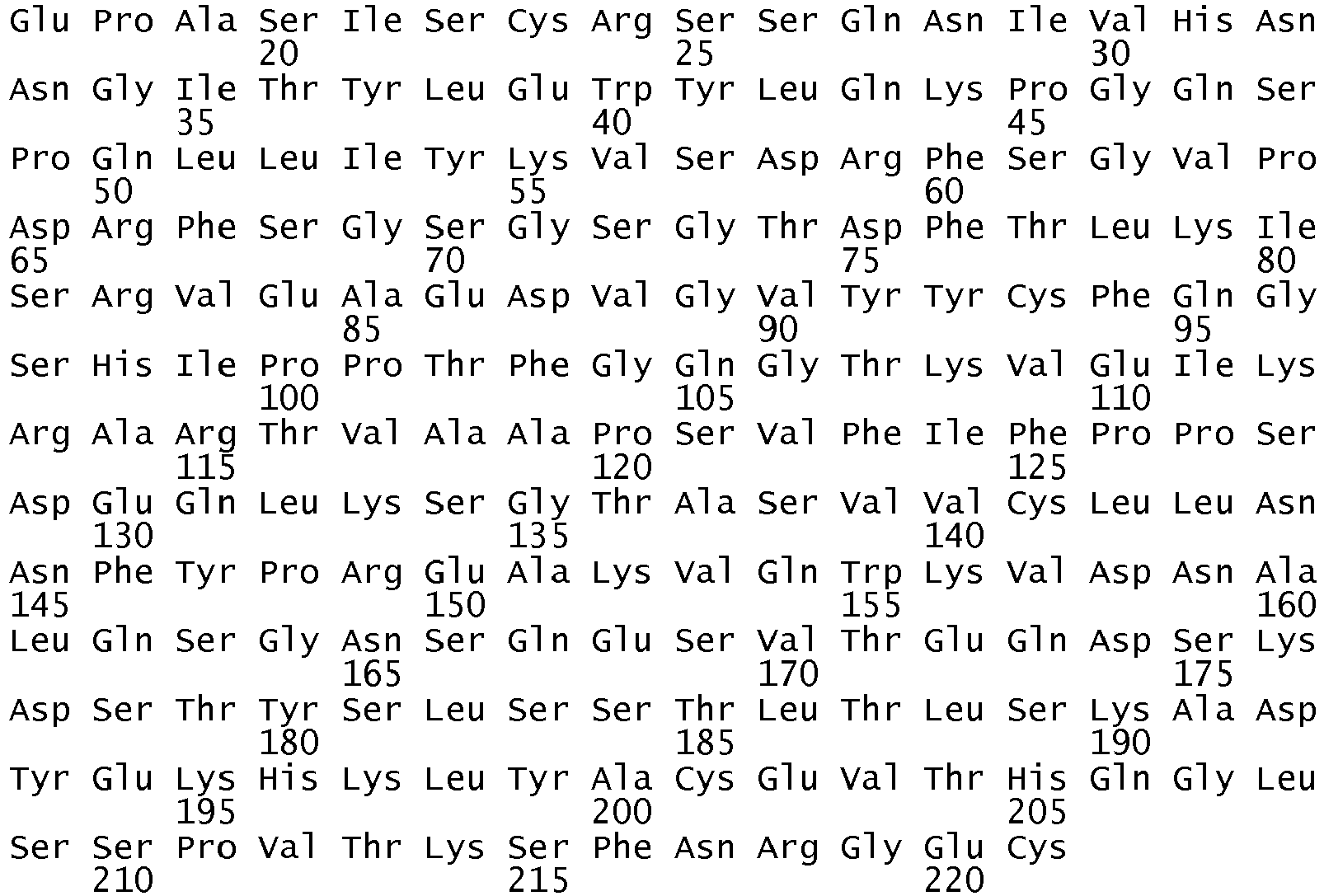
- <210> 3
<211> 215
<212> PRT
<213> Artificial Sequence - <220>
<223> Trastuzumab light chain - <400> 3

- <210> 4
<211> 215
<212> PRT
<213> Artificial Sequence - <220>
<223> adalimumab light chain - <400> 4

- <210> 5
<211> 215
<212> PRT
<213> Artificial Sequence - <220>
<223> DENOSUMAB LIGHT CHAIN - <400> 5


- <210> 6
<211> 215
<212> PRT
<213> Artificial Sequence - <220>
<223> Ipilimumab light chain - <400> 6

- <210> 7
<211> 214
<212> PRT
<213> Artificial Sequence - <220>
<223> tremelimumab light chain - <400> 7


- <210> 8
<211> 219
<212> PRT
<213> Artificial Sequence - <220>
<223> efalizumab light chain - <400> 8

- <210> 9
<211> 216
<212> PRT
<213> Artificial Sequence - <220>
<223> ustekinumab light chain - <400> 9

- <210> 10
<211> 15
<212> PRT
<213> Artificial Sequence - <220>
<223> IgG1 hinge - <400> 10

- <210> 11
<211> 12
<212> PRT
<213> Artificial Sequence - <220>
<223> IgG2 hinge - <400> 11

- <210> 12
<211> 62
<212> PRT
<213> Artificial Sequence - <220>
<223> IgG3 hinge - <400> 12

- <210> 13
<211> 12
<212> PRT
<213> Artificial Sequence - <220>
<223> IgG4 hinge - <400> 13

- <210> 14
<211> 23
<212> PRT
<213> Artificial Sequence - <220>
<223> IgA1 hinge - <400> 14

- <210> 15
<211> 10
<212> PRT
<213> Artificial Sequence - <220>
<223> IgA2 hinge - <400> 15

- <210> 16
<211> 6
<212> PRT
<213> Artificial Sequence - <220>
<223> MMP2 substrate - <400> 16

- <210> 17
<211> 2445
<212> DNA
<213> Artificial Sequence - <220>
<223> IgG1 Hinge Ipilimumab - <400> 17


- <210> 18
<211> 2427
<212> DNA
<213> Artificial Sequence - <220>
<223> IgG2 Hinge Ipilimumab - <400> 18


- <210> 19
<211> 2727
<212> DNA
<213> Artificial Sequence - <220>
<223> IgG3 Hinge Ipilimumab - <400> 19


- <210> 20
<211> 2427
<212> DNA
<213> Artificial Sequence - <220>
<223> IgG4 Hinge Ipilimumab - <400> 20


- <210> 21
<211> 2469
<212> DNA
<213> Artificial Sequence - <220>
<223> IgA1 Hinge Ipilimumab - <400> 21


- <210> 22
<211> 2415
<212> DNA
<213> Artificial Sequence - <220>
<223> IgA2 Hinge Ipilimumab - <400> 22


- <210> 23
<211> 2451
<212> DNA
<213> Artificial Sequence - <220>
<223> IgG1 Hinge Ticilimumab - <400> 23


- <210> 24
<211> 2433
<212> DNA
<213> Artificial Sequence - <220>
<223> IgG2 Hinge Ticilimumab - <400> 24


- <210> 25
<211> 2733
<212> DNA
<213> Artificial Sequence - <220>
<223> IgG3 Hinge Ticilimumab - <400> 25


- <210> 26
<211> 2433
<212> DNA
<213> Artificial Sequence - <220>
<223> IgG4 Hinge Ticilimumab - <400> 26


- <210> 27
<211> 2475
<212> DNA
<213> Artificial Sequence - <220>
<223> IgA1 Hinge Ticilimumab - <400> 27


- <210> 28
<211> 2421
<212> DNA
<213> Artificial Sequence - <220>
<223> IgA2 Hinge Ticilimumab - <400> 28


- <210> 29
<211> 2451
<212> DNA
<213> Artificial Sequence - <220>
<223> IgG1 Hinge Humira - <400> 29


- <210> 30
<211> 2433
<212> DNA
<213> Artificial Sequence - <220>
<223> IgG2 Hinge Humira - <400> 30


- <210> 31
<211> 2732
<212> DNA
<213> Artificial Sequence - <220>
<223> IgG3 Hinge Humira - <400> 31


- <210> 32
<211> 2433
<212> DNA
<213> Artificial Sequence - <220>
<223> IgG4 Hinge Humira - <400> 32
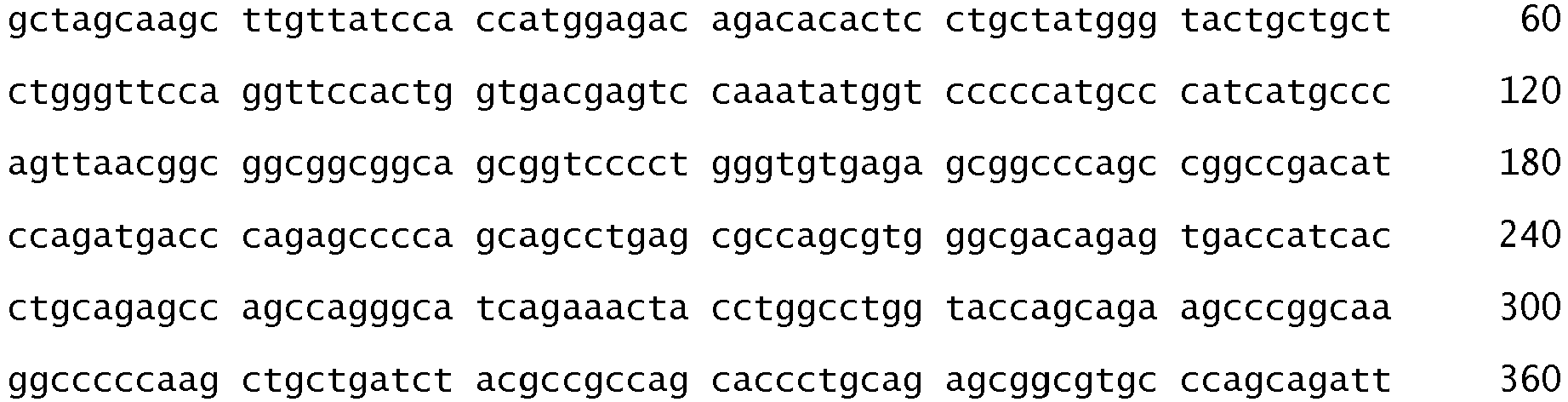


- <210> 33
<211> 2475
<212> DNA
<213> Artificial Sequence - <220>
<223> IgA1 Hinge Humira - <400> 33


- <210> 34
<211> 2420
<212> DNA
<213> Artificial Sequence - <220>
<223> IgA2 Hinge Humira - <400> 34


- <210> 35
<211> 2465
<212> DNA
<213> Artificial Sequence - <220>
<223> IgG1 Hinge Panitumumab - <400> 35


- <210> 36
<211> 2439
<212> DNA
<213> Artificial Sequence - <220>
<223> IgG1 Hinge Prolia - <400> 36
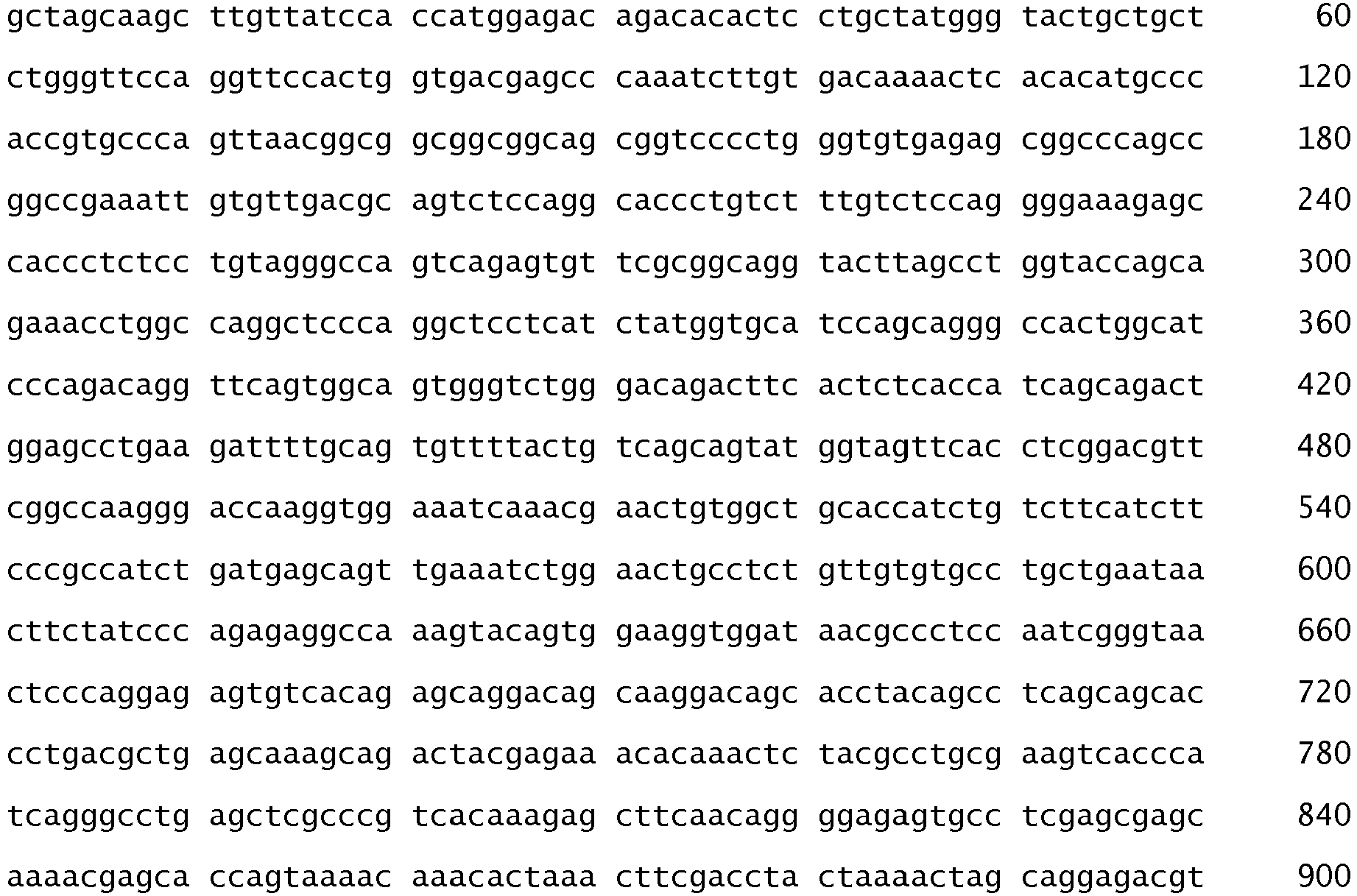

- <210> 37
<211> 2421
<212> DNA
<213> Artificial Sequence - <220>
<223> IgG2 Hinge Prolia - <400> 37


- <210> 38
<211> 2759
<212> DNA
<213> Artificial Sequence - <220>
<223> IgG3 Hinge Prolia - <400> 38


- <210> 39
<211> 2421
<212> DNA
<213> Artificial Sequence - <220>
<223> IgG4 Hinge Prolia - <400> 39

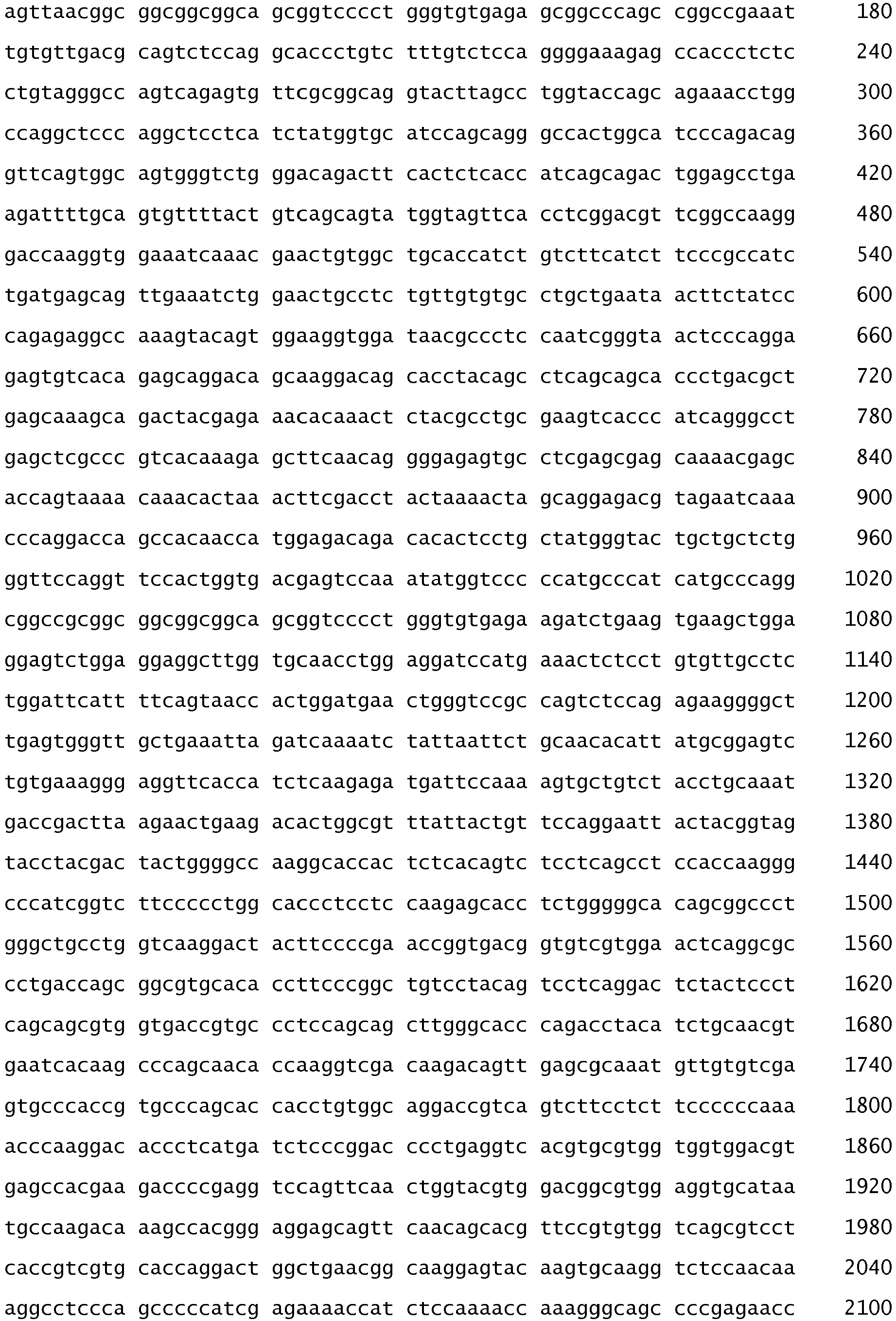

- <210> 40
<211> 2463
<212> DNA
<213> Artificial Sequence - <220>
<223> IgA1 Hinge Prolia - <400> 40


- <210> 41
<211> 2409
<212> DNA
<213> Artificial Sequence - <220>
<223> IgA2 Hinge Prolia - <400> 41
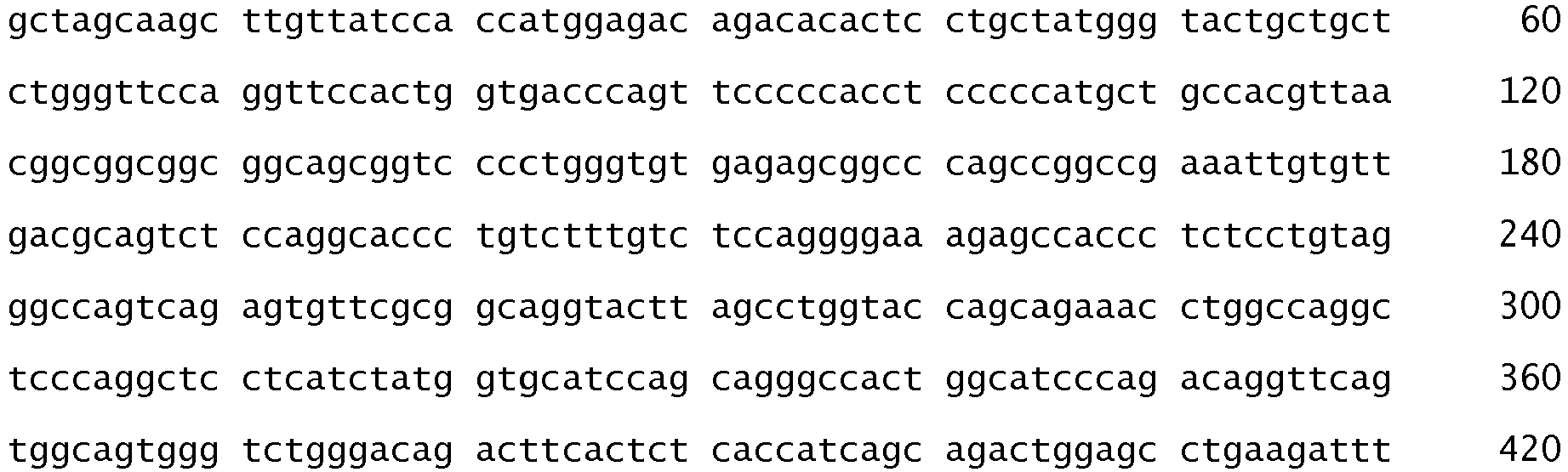


- <210> 42
<211> 2419
<212> DNA
<213> Artificial Sequence - <220>
<223> IgG1 Hinge Raptiva - <400> 42


- <210> 43
<211> 2448
<212> DNA
<213> Artificial Sequence - <220>
<223> IgG1 Hinge Remicade - <400> 43


- <210> 44
<211> 2430
<212> DNA
<213> Artificial Sequence - <220>
<223> IgG2 Hinge Remicade - <400> 44


- <210> 45
<211> 3048
<212> DNA
<213> Artificial Sequence - <220>
<223> IgG3 Hinge Remicade - <400> 45


- <210> 46
<211> 2430
<212> DNA
<213> Artificial Sequence - <220>
<223> IgG4 Hinge Remicade - <400> 46


- <210> 47
<211> 2421
<212> DNA
<213> Artificial Sequence - <220>
<223> IgA1 Hinge Remicade - <400> 47


- <210> 48
<211> 2418
<212> DNA
<213> Artificial Sequence - <220>
<223> IgA2 Hinge Remicade - <400> 48


- <210> 49
<211> 2413
<212> DNA
<213> Artificial Sequence - <220>
<223> IgG1 Hinge Stelara - <400> 49


- <210> 50
<211> 2459
<212> DNA
<213> Artificial Sequence - <220>
<223> IgG1 Hinge Trastuzumab - <400> 50



- <210> 51
<211> 7
<212> PRT
<213> Artificial Sequence - <220>
<223> MMP2 substrate - <400> 51

- <210> 52
<211> 7
<212> PRT
<213> Artificial Sequence - <220>
<223> MMP2 substrate - <400> 52

- <210> 53
<211> 8
<212> PRT
<213> Artificial Sequence - <220>
<223> MMP2 substrate - <400> 53

- <210> 54
<211> 35
<212> PRT
<213> Artificial Sequence - <220>
<223> IgD1 Hinge - <400> 54

- <210> 55
<211> 25
<212> PRT
<213> Artificial Sequence - <220>
<223> IgD2 Hinge - <400> 55

- <210> 56
<211> 105
<212> DNA
<213> Artificial Sequence - <220>
<223> IgD1 Hinge - <400> 56

- <210> 57
<211> 75
<212> DNA
<213> Artificial Sequence - <220>
<223> IgD2 Hinge - <400> 57

- <210> 58
<211> 450
<212> PRT
<213> Artificial Sequence - <220>
<223> infliximab heavy chain - <400> 58


- <210> 59
<211> 385
<212> PRT
<213> Artificial Sequence - <220>
<223> Panitumumab heavy chain - <400> 59


- <210> 60
<211> 439
<212> PRT
<213> Artificial Sequence - <220>
<223> Trastuzumab heavy chain - <400> 60


- <210> 61
<211> 451
<212> PRT
<213> Artificial Sequence - <220>
<223> adalimumab heavy chain - <400> 61


- <210> 62
<211> 448
<212> PRT
<213> Artificial Sequence - <220>
<223> denosumab heavy chain - <400> 62


- <210> 63
<211> 448
<212> PRT
<213> Artificial Sequence - <220>
<223> Ipilimumab heavy chain - <400> 63


- <210> 64
<211> 451
<212> PRT
<213> Artificial Sequence - <220>
<223> tremelimumab heavy chain - <400> 64


- <210> 65
<211> 451
<212> PRT
<213> Artificial Sequence - <220>
<223> efalizumab heavy chain - <400> 65


- <210> 66
<211> 449
<212> PRT
<213> Artificial Sequence - <220>
<223> ustekinumab heavy chain - <400> 66


- <210> 67
<211> 744
<212> DNA
<213> Artificial Sequence - <220>
<223> IgG1 Hinge+ Ipilimumab light chain - <400> 67


- <210> 68
<211> 1440
<212> DNA
<213> Artificial Sequence - <220>
<223> IgG1 Hinge+ Ipilimumab heavy chain - <400> 68


- <210> 69
<211> 735
<212> DNA
<213> Artificial Sequence - <220>
<223> IgG2 Hinge+ Ipilimumab light chain - <400> 69

- <210> 70
<211> 1431
<212> DNA
<213> Artificial Sequence - <220>
<223> IgG2 Hinge+ Ipilimumab heavy chain - <400> 70


- <210> 71
<211> 885
<212> DNA
<213> Artificial Sequence - <220>
<223> IgG3 Hinge+ Ipilimumab light chain - <400> 71


- <210> 72
<211> 1581
<212> DNA
<213> Artificial Sequence - <220>
<223> IgG3 Hinge+ Ipilimumab heavy chain - <400> 72


- <210> 73
<211> 735
<212> DNA
<213> Artificial Sequence - <220>
<223> IgG4 Hinge+ Ipilimumab light chain - <400> 73

- <210> 74
<211> 1431
<212> DNA
<213> Artificial Sequence - <220>
<223> IgG4 Hinge+ Ipilimumab heavy chain - <400> 74

- <210> 75
<211> 768
<212> DNA
<213> Artificial Sequence - <220>
<223> IgA1 Hinge+ Ipilimumab light chain - <400> 75


- <210> 76
<211> 768
<212> DNA
<213> Artificial Sequence - <220>
<223> IgA1 Hinge+ Ipilimumab heavy chain - <400> 76

- <210> 77
<211> 729
<212> DNA
<213> Artificial Sequence - <220>
<223> IgA2 Hinge+ Ipilimumab light chain - <400> 77

- <210> 78
<211> 729
<212> DNA
<213> Artificial Sequence - <220>
<223> IgA2 Hinge+ Ipilimumab heavy chain - <400> 78

Claims (14)
- An antibody capable of being selectively activated in a target cell or tissue to treat a condition therein, comprising:a functional antibody capable of treating the condition in an activated state, comprising two light chains and two heavy chains;two inhibitory domains, wherein each inhibitory domain is a hinge domain of an immunoglobulin A (IgA), immunoglobulin D (IgD) or an immunoglobulin G (IgG), or a fragment of the hinge domain of IgA, IgD or IgG, and wherein each inhibitory domain consists of two peptide arms interconnected by disulfide bonds;
andfour cleavable linkers,wherein each cleavable linker comprises a peptide substrate cleavable by an enzyme that is specifically or highly expressed in the target cell or tissue, andwherein each cleavable linker separately connects one of the two peptide arms of each of the two inhibitory domains to each of the N-terminals of one of the two light chains and two heavy chains of the functional antibody. - The antibody of claim 1, wherein the light chain of the functional antibody has any of the amino acid sequences of SEQ ID Nos. 1, 2, 3, 4, 5, 6, 7, 8 or 9, and the heavy chain of the functional antibody has any of the amino acid sequences of SEQ ID Nos. 58, 59, 60, 61, 62, 63, 64, 65 and 66.
- The antibody of claim 1, wherein the IgA is IgA1 or IgA2, and the IgG is IgG1, IgG2, IgG3 or IgG4.
- The antibody of claim 3, wherein each of the inhibitory domains comprises any of the amino acid sequences of SEQ ID Nos. 10, 11, 12, 13, 14, 15, 54 or 55.
- The antibody of claim 1, wherein the enzyme is MMP-2 or MMP-9 and each cleavable linker comprises the amino acid sequence of SEQ ID No. 16.
- The antibody of claim 1, wherein,
the functional antibody is an anti-TNF-α antibody, wherein the light chain thereof comprises the amino acid sequence of SEQ ID No. 1, and the heavy chain thereof comprises the amino acid sequence of SEQ ID No. 58;
each of the cleavable linkers comprises the amino acid sequence of SEQ ID No. 16; and
each of the inhibitory domains comprises the amino acid sequence of SEQ ID No. 10. - An expression system for producing an antibody capable of being selectively activated in a target cell or tissue to treat a condition therein, comprising,
a first nucleic acid sequence, comprising, from 5' to 3',
a first inhibitory domain-encoding region encoding a first peptide arm of an inhibitory domain of the antibody capable of being selectively activated, wherein the inhibitory domain is a hinge domain of an immunoglobulin A (IgA), immunoglobulin D (IgD) or an immunoglobulin G (IgG), or a fragment of the hinge domain of IgA, IgD or IgG,
a first cleavable linker-encoding region encoding a cleavable linker of the antibody capable of being selectively activated, wherein the cleavable linker is a peptide substrate cleavable by an enzyme that is specifically or highly expressed in the target cell or tissue, and
a light chain-encoding region encoding a light chain of the functional antibody capable of being selectively activated, wherein the functional antibody is capable of treating the condition in an activated state; and
a second nucleic acid sequence, comprising, from 5' to 3',
a second inhibitory domain-encoding region encoding a second peptide arm of the inhibitory domain of the antibody capable of being selectively activated, wherein the inhibitory domain is a hinge domain of an immunoglobulin A (IgA), immunoglobulin D (IgD) or an immunoglobulin G (IgG), or a fragment of the hinge domain of IgA, IgD or IgG,
a second cleavable linker-encoding region encoding a second cleavable linker of the antibody capable of being selectively activated, wherein the cleavable linker is a peptide substrate cleavable by an enzyme that is specifically or highly expressed in the target cell or tissue, and
a heavy chain-encoding region encoding a heavy chain of the functional antibody capable of being selectively activated; wherein
the encoded first and second peptide arms constituting the inhibitory domains of the antibody are such that when expressed as part of the antibody they are interconnected by disulfide bonds in the antibody capable of being selectively activated. - The expression system of claim 7, further comprising a connecting nucleic acid sequence connecting the first nucleic acid sequence and the second nucleic acid sequence, wherein the connecting nucleic acid sequence is a Furin-2A-encodung sequence or an internal ribosome entry site (IRES) sequence.
- The expression system of claim 8, further comprising a regulatory sequence operably linked to the first nucleic acid sequence and the second nucleic acid sequence to express the first nucleic acid sequence, the second nucleic acid sequence and the connecting nucleic acid sequence or further comprising,
a first regulatory sequence operably linked to the first nucleic acid sequence to express the first nucleic acid sequence; and
second regulatory sequence operably linked to the second nucleic acid sequence to express the second nucleic acid sequence, or wherein,
the first nucleic acid sequence and first regulatory sequence are constructed in a first expression vector; and
the second nucleic acid sequence and second regulatory sequence are constructed in a second expression vector or wherein the first nucleic acid sequence, the first regulatory sequence, the second nucleic acid sequence, and the second regulatory sequence are constructed in a single expression vector. - The antibody of claim 1 or expression system of claim 7, wherein the functional antibody is selected from the group consisting of, anti-TNF-α antibody, anti-RANKL antibody, anti-CTLA-4 antibody, anti-HER2 antibody, anti-EGFR antibody, anti-VEGF antibody, anti-VEGFR2) antibody, anti-IL6R antibody, anti-IL12/23 antibody, anti-CD3 antibody, anti-CD11a antibody, anti-CD20 antibody, anti-CD25 antibody, anti-CD30 antibody, anti-CD33 antibody and anti-CD52 antibody.
- The expression system of claim 7, wherein the IgA is IgA1 or IgA2, and the IgG is IgG1, IgG2, IgG3 or IgG4.
- The antibody of claim 1 or expression system of claim 7, wherein the peptide substrate is cleavable by any of the following enzyme: a matrix metalloproteinase (MMP), a cathepsin (CTS), a caspase (CASP), or a disintegrin and metalloproteinase (ADAM).
- The expression system of claim 7, wherein the expression system has a nucleotide sequence that is any of SEQ ID Nos. 17 to 50.
- The antibody of any one of claims 1 to 6, 10 or 12 or the expression system of any one of claims 7-9, 11 or 13 for use in treating the condition, wherein the condition is cancer or an autoimmune disease.
Applications Claiming Priority (2)
| Application Number | Priority Date | Filing Date | Title |
|---|---|---|---|
| US201361827763P | 2013-05-28 | 2013-05-28 | |
| PCT/US2014/039821 WO2014193973A2 (en) | 2013-05-28 | 2014-05-28 | Antibody locker for the inactivation of protein drug |
Publications (3)
| Publication Number | Publication Date |
|---|---|
| EP3003370A2 EP3003370A2 (en) | 2016-04-13 |
| EP3003370A4 EP3003370A4 (en) | 2017-01-25 |
| EP3003370B1 true EP3003370B1 (en) | 2020-01-22 |
Family
ID=51989521
Family Applications (1)
| Application Number | Title | Priority Date | Filing Date |
|---|---|---|---|
| EP14803825.0A Active EP3003370B1 (en) | 2013-05-28 | 2014-05-28 | Antibody locker for the inactivation of protein drug |
Country Status (14)
| Country | Link |
|---|---|
| US (1) | US10633453B2 (en) |
| EP (1) | EP3003370B1 (en) |
| JP (1) | JP6545666B2 (en) |
| KR (1) | KR102182485B1 (en) |
| CN (1) | CN105377297B (en) |
| AU (1) | AU2014274215B2 (en) |
| CA (1) | CA2913051C (en) |
| EA (1) | EA035322B1 (en) |
| IL (1) | IL242772B (en) |
| MX (1) | MX2015016329A (en) |
| SG (2) | SG10201710727UA (en) |
| TW (1) | TWI582111B (en) |
| WO (1) | WO2014193973A2 (en) |
| ZA (1) | ZA201508673B (en) |
Families Citing this family (50)
| Publication number | Priority date | Publication date | Assignee | Title |
|---|---|---|---|---|
| MX2015016329A (en) | 2013-05-28 | 2016-07-20 | Dcb Usa Llc | Antibody locker for the inactivation of protein drug. |
| KR102488220B1 (en) | 2013-09-25 | 2023-01-12 | 싸이톰스 테라퓨틱스, 인크. | Matrix metalloproteinase substrates and other cleavable moieties and methods of use thereof |
| MX379030B (en) | 2013-12-17 | 2025-03-10 | Genentech Inc | Anti-cd3 antibodies and methods of use |
| KR102466591B1 (en) | 2014-01-31 | 2022-11-14 | 싸이톰스 테라퓨틱스, 인크. | Matriptase and u-plasminogen activator substrates and other cleavable moieties and methods of use thereof |
| MA40579A (en) | 2014-09-12 | 2016-03-17 | Genentech Inc | ANTI-CLL-1 ANTIBODIES AND IMMUNOCONJUGATES |
| MA41374A (en) * | 2015-01-20 | 2017-11-28 | Cytomx Therapeutics Inc | MATRIX METALLOPROTEASE CLIVABLE AND SERINE PROTEASE CLIVABLE SUBSTRATES AND METHODS OF USE THEREOF |
| WO2016144564A2 (en) | 2015-02-25 | 2016-09-15 | Memorial Sloan-Kettering Cancer Center | Use of inactivated nonreplicating modified vaccinia virus ankara (mva)as monoimmunotherapy or in combination with immune checkpoint blocking agents for solid tumors |
| CN107847534B (en) | 2015-04-17 | 2022-10-04 | 纪念斯隆凯特琳癌症中心 | Use of MVA or MVA delta E3L as an immunotherapeutic agent against solid tumors |
| HK1250997A1 (en) * | 2015-05-01 | 2019-01-18 | 基因泰克公司 | Masked anti-cd3 antibodies and methods of use |
| MX383614B (en) | 2015-05-21 | 2025-03-14 | Harpoon Therapeutics Inc | TRISPECIFIC BINDING PROTEINS AND METHODS OF USE. |
| CN107847568B (en) | 2015-06-16 | 2022-12-20 | 豪夫迈·罗氏有限公司 | anti-CLL-1 antibodies and methods of use |
| IL319047A (en) | 2015-08-28 | 2025-04-01 | Amunix Operating Inc | Chimeric polypeptide assembly and methods of making and using the same |
| EP4310503A3 (en) | 2015-12-30 | 2024-03-20 | Momenta Pharmaceuticals, Inc. | Methods related to biologics |
| US10512662B2 (en) | 2016-02-25 | 2019-12-24 | Memorial Sloan Kettering Cancer Center | Replication competent attenuated vaccinia viruses with deletion of thymidine kinase with and without the expression of human Flt3L or GM-CSF for cancer immunotherapy |
| US10736962B2 (en) | 2016-02-25 | 2020-08-11 | Memorial Sloan Kettering Cancer Center | Recombinant MVA or MVADELE3L expressing human FLT3L and use thereof as immuno-therapeutic agents against solid tumors |
| WO2017165306A1 (en) * | 2016-03-20 | 2017-09-28 | Middle Tennessee State University | ASSAY FOR HIGH-THROUGHPUT lDENTIFICATION OF THERAPEUTIC COMPOUNDS |
| US11542332B2 (en) | 2016-03-26 | 2023-01-03 | Bioatla, Inc. | Anti-CTLA4 antibodies, antibody fragments, their immunoconjugates and uses thereof |
| SG11201809699XA (en) * | 2016-05-18 | 2018-12-28 | Voyager Therapeutics Inc | Modulatory polynucleotides |
| US10100106B2 (en) | 2016-05-20 | 2018-10-16 | Harpoon Therapeutics, Inc. | Single domain serum albumin binding protein |
| CN107446016A (en) * | 2016-05-30 | 2017-12-08 | 上海交通大学 | A kind of cell-penetrating peptide of Stearate Modified and its preparation and application |
| EP3464602A4 (en) * | 2016-06-06 | 2020-02-26 | Asclepiumm Taiwan Co., Ltd. | FUSION PROTEINS TO ANTIBODIES FOR ADMINISTRATION OF MEDICINES |
| BR112019008223A2 (en) * | 2016-11-03 | 2019-07-16 | Bristol-Myers Squibb Company | activatable anti-ctla-4 antibodies and uses thereof |
| KR20190074300A (en) | 2016-11-15 | 2019-06-27 | 제넨테크, 인크. | Dosage for treatment with anti-CD20 / anti-CD3 bispecific antibodies |
| KR20190089034A (en) | 2016-12-09 | 2019-07-29 | 시애틀 지네틱스, 인크. | Antibodies shielded by coiled coils |
| TW201834685A (en) * | 2016-12-29 | 2018-10-01 | 財團法人生物技術開發中心 | Klk6-mediated cns-specific antibody prodrug activation |
| US11242509B2 (en) | 2017-05-12 | 2022-02-08 | Memorial Sloan Kettering Cancer Center | Vaccinia virus mutants useful for cancer immunotherapy |
| US11939385B2 (en) * | 2017-05-16 | 2024-03-26 | ALX Oncology Inc. | Activatable antibodies and methods of use thereof |
| IL315737A (en) | 2017-10-13 | 2024-11-01 | Harpoon Therapeutics Inc | B cell maturation antigen binding proteins |
| SI3694529T1 (en) | 2017-10-13 | 2024-10-30 | Harpoon Therapeutics, Inc. | Trispecific proteins and methods of use |
| TWI831759B (en) | 2017-12-01 | 2024-02-11 | 美商思進公司 | Cd47 antibodies and uses thereof for treating cancer |
| AR115360A1 (en) | 2018-02-08 | 2021-01-13 | Genentech Inc | ANTIGEN BINDING MOLECULES AND METHODS OF USE |
| KR102245552B1 (en) * | 2018-02-28 | 2021-04-29 | 부산대학교 산학협력단 | Nanodrug Composites, preparation method therof, and use for the same |
| KR20200131863A (en) * | 2018-03-13 | 2020-11-24 | 메모리얼 슬로안 케터링 캔서 센터 | Oncolytic vaccinia virus expressing immune checkpoint blockade for cancer immunotherapy |
| JP7571010B2 (en) | 2018-09-06 | 2024-10-22 | モメンタ ファーマシューティカルズ インコーポレイテッド | Methods for continuous cell culture |
| MX2021003013A (en) | 2018-09-15 | 2021-08-11 | Memorial Sloan Kettering Cancer Center | Recombinant poxviruses for cancer immunotherapy. |
| US12195544B2 (en) | 2018-09-21 | 2025-01-14 | Harpoon Therapeutics, Inc. | EGFR binding proteins and methods of use |
| EP3856771A4 (en) | 2018-09-25 | 2022-06-29 | Harpoon Therapeutics, Inc. | Dll3 binding proteins and methods of use |
| SG11202105476XA (en) | 2018-12-06 | 2021-06-29 | Cytomx Therapeutics Inc | Matrix metalloprotease-cleavable and serine or cysteine protease-cleavable substrates and methods of use thereof |
| AU2019419372B2 (en) | 2018-12-31 | 2026-03-26 | Momenta Pharmaceuticals, Inc. | Methods of producing ustekinumab |
| WO2020247574A1 (en) | 2019-06-05 | 2020-12-10 | Seattle Genetics, Inc. | Methods of purifying masked antibodies |
| WO2020247572A1 (en) | 2019-06-05 | 2020-12-10 | Seattle Genetics, Inc. | Masked antibody formulations |
| TWI874719B (en) | 2020-11-04 | 2025-03-01 | 美商建南德克公司 | Dosing for treatment with anti-cd20/anti-cd3 bispecific antibodies |
| KR20230095113A (en) | 2020-11-04 | 2023-06-28 | 제넨테크, 인크. | Dosing for Treatment with Anti-CD20/Anti-CD3 Bispecific Antibodies and Anti-CD79B Antibody Drug Conjugates |
| AU2021374590A1 (en) | 2020-11-04 | 2023-06-01 | Genentech, Inc. | Subcutaneous dosing of anti-cd20/anti-cd3 bispecific antibodies |
| KR20240007171A (en) | 2021-05-14 | 2024-01-16 | 제넨테크, 인크. | Methods for treating CD20 positive proliferative disorders using mosunetuzumab and polatuzumab vedotin |
| TW202317623A (en) | 2021-06-14 | 2023-05-01 | 美商再生元醫藥公司 | Il2-based therapeutics and methods of use thereof |
| WO2023288236A1 (en) | 2021-07-14 | 2023-01-19 | Seagen Inc. | Antibody masking domains |
| WO2023049825A1 (en) | 2021-09-24 | 2023-03-30 | Seagen Inc. | Improved antibody masking domains |
| WO2023064945A2 (en) * | 2021-10-15 | 2023-04-20 | Harpoon Therapeutics, Inc. | Conditional activation of immunoglobulin molecules |
| US20250136717A1 (en) | 2022-05-16 | 2025-05-01 | Byondis B.V. | Novel masked antibodies |
Family Cites Families (39)
| Publication number | Priority date | Publication date | Assignee | Title |
|---|---|---|---|---|
| US5932448A (en) | 1991-11-29 | 1999-08-03 | Protein Design Labs., Inc. | Bispecific antibody heterodimers |
| GB9322156D0 (en) | 1993-10-27 | 1993-12-15 | Univ Newcastel Upon Tyne | Activation of molecules |
| JP4212111B2 (en) | 1995-05-03 | 2009-01-21 | バイオエンハンスメンツ リミテッド | Bispecific antibodies whose binding ability is reversibly inhibited by photocleavable molecules |
| US20040014652A1 (en) | 2000-06-01 | 2004-01-22 | Andre Trouet | Tumor activated prodrug compounds and methods of making and using the same |
| US7238505B2 (en) | 2000-10-04 | 2007-07-03 | Ahram Biosystems Inc. | Immobilized DNA polymerase |
| US7524502B2 (en) * | 2001-11-12 | 2009-04-28 | Merck Patent Gmbh | Modified anti-TNF alpha antibody |
| WO2003068934A2 (en) | 2002-02-14 | 2003-08-21 | Rutter William J | Chimeric molecules for cleavage in a treated host |
| US20040109855A1 (en) | 2002-07-23 | 2004-06-10 | Herman Waldmann | Therapeutic antibodies with reduced side effect |
| BRPI0411103B1 (en) | 2003-06-09 | 2019-01-15 | A Mcintyre John | method, and method of obtaining and isolating an autoantibody from an antibody-containing biological fluid or an antibody-containing biological fluid extract |
| GB0404187D0 (en) | 2004-02-25 | 2004-03-31 | Biotransformations Ltd | Binding agents |
| MX2007004374A (en) * | 2004-10-12 | 2008-01-29 | Amprotein Corp | Chimeric protein. |
| US7612181B2 (en) | 2005-08-19 | 2009-11-03 | Abbott Laboratories | Dual variable domain immunoglobulin and uses thereof |
| GB0605702D0 (en) | 2006-03-21 | 2006-05-03 | Biotransformations Ltd | Materials and methods for immune cell stimulation |
| AT503902B1 (en) * | 2006-07-05 | 2008-06-15 | F Star Biotech Forsch & Entw | METHOD FOR MANIPULATING IMMUNE LOBULINS |
| ES2628395T3 (en) | 2007-08-15 | 2017-08-02 | Bayer Pharma Aktiengesellschaft | Protease Regulated Antibody |
| GB0716160D0 (en) | 2007-08-17 | 2007-09-26 | Biotransformations Ltd | Materials and methods for treating cancers which express folate receptors |
| US20090304719A1 (en) * | 2007-08-22 | 2009-12-10 | Patrick Daugherty | Activatable binding polypeptides and methods of identification and use thereof |
| JP5448397B2 (en) * | 2007-09-07 | 2014-03-19 | キヤノン株式会社 | Substrate probe, detection method of enzyme activity by multiple nuclear magnetic resonance method, and imaging method of enzyme activity |
| US20100189727A1 (en) | 2008-12-08 | 2010-07-29 | Tegopharm Corporation | Masking Ligands For Reversible Inhibition Of Multivalent Compounds |
| WO2010081173A2 (en) * | 2009-01-12 | 2010-07-15 | Cytomx Therapeutics, Llc | Modified antibody compositions, methods of making and using thereof |
| US8399219B2 (en) * | 2009-02-23 | 2013-03-19 | Cytomx Therapeutics, Inc. | Protease activatable interferon alpha proprotein |
| MX2012003396A (en) | 2009-09-16 | 2012-04-10 | Genentech Inc | Coiled coil and/or tether containing protein complexes and uses thereof. |
| CA2796633C (en) * | 2010-04-23 | 2020-10-27 | Genentech, Inc. | Production of heteromultimeric proteins |
| RU2013110875A (en) | 2010-08-24 | 2014-09-27 | Ф.Хоффманн-Ля Рош Аг | SPECIFIC ANTIBODIES CONTAINING DISSULPHIDE-STABILIZED Fv Fragment |
| RU2013110876A (en) | 2010-08-24 | 2014-09-27 | Рош Гликарт Аг | ACTIVATED SPECIFIC ANTIBODIES |
| CN103501815B (en) | 2010-10-08 | 2016-09-28 | 希望之城公司 | Monoclonal antibody framework combination interface, interposition delivery system and using method thereof for interposition |
| PE20141212A1 (en) * | 2011-06-22 | 2014-09-19 | Hoffmann La Roche | ELIMINATION OF TARGET CELLS BY VIRUS SPECIFIC CYTOTOXIC T CELLS USING COMPLEXES INCLUDING CLASS 1 MHC |
| GB201203442D0 (en) | 2012-02-28 | 2012-04-11 | Univ Birmingham | Immunotherapeutic molecules and uses |
| SG11201406129QA (en) | 2012-03-30 | 2014-10-30 | Bayer Healthcare Llc | Protease-regulated antibodies |
| CN110078827A (en) | 2012-04-27 | 2019-08-02 | 西托姆克斯治疗公司 | In conjunction with its application method of the activable antibody of EGF-R ELISA |
| SG11201408554QA (en) | 2012-06-22 | 2015-02-27 | Cytomx Therapeutics Inc | Anti-jagged 1/jagged 2 cross-reactive antibodies, activatable anti-jagged antibodies and methods of use thereof |
| US9856314B2 (en) | 2012-06-22 | 2018-01-02 | Cytomx Therapeutics, Inc. | Activatable antibodies having non-binding steric moieties and methods of using the same |
| US9487590B2 (en) | 2012-09-25 | 2016-11-08 | Cytomx Therapeutics, Inc. | Activatable antibodies that bind interleukin-6 receptor and methods of use thereof |
| CA2906095A1 (en) | 2013-03-15 | 2014-09-18 | Bayer Healthcare Llc | Pro-drug antibodies against tissue factor pathway inhibitor |
| MX2015016329A (en) | 2013-05-28 | 2016-07-20 | Dcb Usa Llc | Antibody locker for the inactivation of protein drug. |
| JP6693872B2 (en) | 2013-07-25 | 2020-05-13 | シトムクス セラピューティクス,インコーポレイティド | Multispecific antibodies, multispecific activatable antibodies, and methods of use thereof |
| KR102488220B1 (en) | 2013-09-25 | 2023-01-12 | 싸이톰스 테라퓨틱스, 인크. | Matrix metalloproteinase substrates and other cleavable moieties and methods of use thereof |
| US9540440B2 (en) | 2013-10-30 | 2017-01-10 | Cytomx Therapeutics, Inc. | Activatable antibodies that bind epidermal growth factor receptor and methods of use thereof |
| DE102014201538A1 (en) | 2014-01-29 | 2015-07-30 | Robert Bosch Gmbh | A method for driving a parking lot management system for at least one parking lot and parking lot management system for at least one parking lot |
-
2014
- 2014-05-28 MX MX2015016329A patent/MX2015016329A/en active IP Right Grant
- 2014-05-28 CN CN201480031238.9A patent/CN105377297B/en active Active
- 2014-05-28 TW TW103118542A patent/TWI582111B/en active
- 2014-05-28 AU AU2014274215A patent/AU2014274215B2/en active Active
- 2014-05-28 WO PCT/US2014/039821 patent/WO2014193973A2/en not_active Ceased
- 2014-05-28 SG SG10201710727UA patent/SG10201710727UA/en unknown
- 2014-05-28 EP EP14803825.0A patent/EP3003370B1/en active Active
- 2014-05-28 SG SG11201509595PA patent/SG11201509595PA/en unknown
- 2014-05-28 JP JP2016516786A patent/JP6545666B2/en active Active
- 2014-05-28 CA CA2913051A patent/CA2913051C/en active Active
- 2014-05-28 EA EA201592049A patent/EA035322B1/en not_active IP Right Cessation
- 2014-05-28 KR KR1020157036785A patent/KR102182485B1/en active Active
- 2014-05-28 US US14/893,509 patent/US10633453B2/en active Active
-
2015
- 2015-11-25 IL IL242772A patent/IL242772B/en active IP Right Grant
- 2015-11-25 ZA ZA2015/08673A patent/ZA201508673B/en unknown
Non-Patent Citations (1)
| Title |
|---|
| None * |
Also Published As
| Publication number | Publication date |
|---|---|
| KR20160032041A (en) | 2016-03-23 |
| WO2014193973A2 (en) | 2014-12-04 |
| EA035322B1 (en) | 2020-05-28 |
| SG10201710727UA (en) | 2018-02-27 |
| WO2014193973A3 (en) | 2015-02-19 |
| ZA201508673B (en) | 2017-05-31 |
| IL242772B (en) | 2020-04-30 |
| AU2014274215B2 (en) | 2019-02-28 |
| CA2913051C (en) | 2023-09-05 |
| CN105377297A (en) | 2016-03-02 |
| MX2015016329A (en) | 2016-07-20 |
| CN105377297B (en) | 2019-09-17 |
| TWI582111B (en) | 2017-05-11 |
| SG11201509595PA (en) | 2015-12-30 |
| AU2014274215A1 (en) | 2015-12-03 |
| EA201592049A1 (en) | 2016-04-29 |
| JP2016520614A (en) | 2016-07-14 |
| US10633453B2 (en) | 2020-04-28 |
| EP3003370A4 (en) | 2017-01-25 |
| TW201520230A (en) | 2015-06-01 |
| JP6545666B2 (en) | 2019-07-17 |
| CA2913051A1 (en) | 2014-12-04 |
| EP3003370A2 (en) | 2016-04-13 |
| US20160185875A1 (en) | 2016-06-30 |
| HK1221426A1 (en) | 2017-06-02 |
| KR102182485B1 (en) | 2020-11-25 |
Similar Documents
| Publication | Publication Date | Title |
|---|---|---|
| US10633453B2 (en) | Antibody locker for the inactivation of protein drug | |
| US20210054077A1 (en) | Cd3 antigen binding fragments and compositions comprising same | |
| CN114026122B (en) | Multifunctional molecules that bind to T cell-associated cancer cells and their uses | |
| JP6140796B2 (en) | Compositions and methods for inhibiting PDGFRβ and VEGF-A | |
| EP2915819B1 (en) | Antibody and antibody composition production method | |
| US11529425B2 (en) | Immunoconjugates comprising signal regulatory protein alpha | |
| JP7586399B2 (en) | Humanized antibodies against PSMA | |
| CN116323671A (en) | Multi-targeting bispecific antigen-binding molecules with increased selectivity | |
| TW201940518A (en) | Bispecific antibody construct directed to MUC17 and CD3 | |
| IL310865A (en) | Anti-edb antibodies and antibody-drug conjugates | |
| CN116829183A (en) | Methods of treating cancer by administering therapeutic doses of bispecific T cell engaging molecules | |
| JP2022513228A (en) | Anti-periostin antibody and its use | |
| JP7633259B2 (en) | TGF-βRII binding protein | |
| KR102654035B1 (en) | Doppel-Inhibiting Agents | |
| HK1221426B (en) | Antibody locker for the inactivation of protein drug | |
| US9464136B2 (en) | Antibody-based constructs directed against tyrosine kinase receptors | |
| RU2751249C1 (en) | Monoclonal antibody that specifically binds to csf-1r | |
| KR102207221B1 (en) | Methods of inhibiting pathological angiogenesis with doppel-targeting molecules | |
| CN121263445A (en) | Monoclonal antibodies or antigen-binding fragments thereof that specifically bind to AXL and uses thereof | |
| CN114316046A (en) | Stable antibody composition |
Legal Events
| Date | Code | Title | Description |
|---|---|---|---|
| PUAI | Public reference made under article 153(3) epc to a published international application that has entered the european phase |
Free format text: ORIGINAL CODE: 0009012 |
|
| 17P | Request for examination filed |
Effective date: 20151210 |
|
| AK | Designated contracting states |
Kind code of ref document: A2 Designated state(s): AL AT BE BG CH CY CZ DE DK EE ES FI FR GB GR HR HU IE IS IT LI LT LU LV MC MK MT NL NO PL PT RO RS SE SI SK SM TR |
|
| AX | Request for extension of the european patent |
Extension state: BA ME |
|
| A4 | Supplementary search report drawn up and despatched |
Effective date: 20161223 |
|
| RIC1 | Information provided on ipc code assigned before grant |
Ipc: A61K 39/395 20060101AFI20161219BHEP Ipc: C12P 21/08 20060101ALI20161219BHEP Ipc: A61K 39/00 20060101ALI20161219BHEP |
|
| REG | Reference to a national code |
Ref country code: HK Ref legal event code: DE Ref document number: 1221426 Country of ref document: HK |
|
| STAA | Information on the status of an ep patent application or granted ep patent |
Free format text: STATUS: EXAMINATION IS IN PROGRESS |
|
| 17Q | First examination report despatched |
Effective date: 20170925 |
|
| GRAP | Despatch of communication of intention to grant a patent |
Free format text: ORIGINAL CODE: EPIDOSNIGR1 |
|
| STAA | Information on the status of an ep patent application or granted ep patent |
Free format text: STATUS: GRANT OF PATENT IS INTENDED |
|
| INTG | Intention to grant announced |
Effective date: 20191018 |
|
| GRAS | Grant fee paid |
Free format text: ORIGINAL CODE: EPIDOSNIGR3 |
|
| GRAA | (expected) grant |
Free format text: ORIGINAL CODE: 0009210 |
|
| STAA | Information on the status of an ep patent application or granted ep patent |
Free format text: STATUS: THE PATENT HAS BEEN GRANTED |
|
| AK | Designated contracting states |
Kind code of ref document: B1 Designated state(s): AL AT BE BG CH CY CZ DE DK EE ES FI FR GB GR HR HU IE IS IT LI LT LU LV MC MK MT NL NO PL PT RO RS SE SI SK SM TR |
|
| AX | Request for extension of the european patent |
Extension state: BA ME |
|
| REG | Reference to a national code |
Ref country code: GB Ref legal event code: FG4D |
|
| REG | Reference to a national code |
Ref country code: CH Ref legal event code: EP |
|
| REG | Reference to a national code |
Ref country code: AT Ref legal event code: REF Ref document number: 1226507 Country of ref document: AT Kind code of ref document: T Effective date: 20200215 |
|
| REG | Reference to a national code |
Ref country code: IE Ref legal event code: FG4D |
|
| REG | Reference to a national code |
Ref country code: DE Ref legal event code: R096 Ref document number: 602014060397 Country of ref document: DE |
|
| REG | Reference to a national code |
Ref country code: CH Ref legal event code: NV Representative=s name: MICHELI AND CIE SA, CH |
|
| REG | Reference to a national code |
Ref country code: NL Ref legal event code: MP Effective date: 20200122 |
|
| REG | Reference to a national code |
Ref country code: LT Ref legal event code: MG4D |
|
| PG25 | Lapsed in a contracting state [announced via postgrant information from national office to epo] |
Ref country code: NL Free format text: LAPSE BECAUSE OF FAILURE TO SUBMIT A TRANSLATION OF THE DESCRIPTION OR TO PAY THE FEE WITHIN THE PRESCRIBED TIME-LIMIT Effective date: 20200122 Ref country code: PT Free format text: LAPSE BECAUSE OF FAILURE TO SUBMIT A TRANSLATION OF THE DESCRIPTION OR TO PAY THE FEE WITHIN THE PRESCRIBED TIME-LIMIT Effective date: 20200614 Ref country code: NO Free format text: LAPSE BECAUSE OF FAILURE TO SUBMIT A TRANSLATION OF THE DESCRIPTION OR TO PAY THE FEE WITHIN THE PRESCRIBED TIME-LIMIT Effective date: 20200422 Ref country code: FI Free format text: LAPSE BECAUSE OF FAILURE TO SUBMIT A TRANSLATION OF THE DESCRIPTION OR TO PAY THE FEE WITHIN THE PRESCRIBED TIME-LIMIT Effective date: 20200122 Ref country code: RS Free format text: LAPSE BECAUSE OF FAILURE TO SUBMIT A TRANSLATION OF THE DESCRIPTION OR TO PAY THE FEE WITHIN THE PRESCRIBED TIME-LIMIT Effective date: 20200122 |
|
| PG25 | Lapsed in a contracting state [announced via postgrant information from national office to epo] |
Ref country code: SE Free format text: LAPSE BECAUSE OF FAILURE TO SUBMIT A TRANSLATION OF THE DESCRIPTION OR TO PAY THE FEE WITHIN THE PRESCRIBED TIME-LIMIT Effective date: 20200122 Ref country code: LV Free format text: LAPSE BECAUSE OF FAILURE TO SUBMIT A TRANSLATION OF THE DESCRIPTION OR TO PAY THE FEE WITHIN THE PRESCRIBED TIME-LIMIT Effective date: 20200122 Ref country code: HR Free format text: LAPSE BECAUSE OF FAILURE TO SUBMIT A TRANSLATION OF THE DESCRIPTION OR TO PAY THE FEE WITHIN THE PRESCRIBED TIME-LIMIT Effective date: 20200122 Ref country code: BG Free format text: LAPSE BECAUSE OF FAILURE TO SUBMIT A TRANSLATION OF THE DESCRIPTION OR TO PAY THE FEE WITHIN THE PRESCRIBED TIME-LIMIT Effective date: 20200422 Ref country code: IS Free format text: LAPSE BECAUSE OF FAILURE TO SUBMIT A TRANSLATION OF THE DESCRIPTION OR TO PAY THE FEE WITHIN THE PRESCRIBED TIME-LIMIT Effective date: 20200522 Ref country code: GR Free format text: LAPSE BECAUSE OF FAILURE TO SUBMIT A TRANSLATION OF THE DESCRIPTION OR TO PAY THE FEE WITHIN THE PRESCRIBED TIME-LIMIT Effective date: 20200423 |
|
| REG | Reference to a national code |
Ref country code: DE Ref legal event code: R097 Ref document number: 602014060397 Country of ref document: DE |
|
| PG25 | Lapsed in a contracting state [announced via postgrant information from national office to epo] |
Ref country code: RO Free format text: LAPSE BECAUSE OF FAILURE TO SUBMIT A TRANSLATION OF THE DESCRIPTION OR TO PAY THE FEE WITHIN THE PRESCRIBED TIME-LIMIT Effective date: 20200122 Ref country code: SK Free format text: LAPSE BECAUSE OF FAILURE TO SUBMIT A TRANSLATION OF THE DESCRIPTION OR TO PAY THE FEE WITHIN THE PRESCRIBED TIME-LIMIT Effective date: 20200122 Ref country code: DK Free format text: LAPSE BECAUSE OF FAILURE TO SUBMIT A TRANSLATION OF THE DESCRIPTION OR TO PAY THE FEE WITHIN THE PRESCRIBED TIME-LIMIT Effective date: 20200122 Ref country code: ES Free format text: LAPSE BECAUSE OF FAILURE TO SUBMIT A TRANSLATION OF THE DESCRIPTION OR TO PAY THE FEE WITHIN THE PRESCRIBED TIME-LIMIT Effective date: 20200122 Ref country code: EE Free format text: LAPSE BECAUSE OF FAILURE TO SUBMIT A TRANSLATION OF THE DESCRIPTION OR TO PAY THE FEE WITHIN THE PRESCRIBED TIME-LIMIT Effective date: 20200122 Ref country code: LT Free format text: LAPSE BECAUSE OF FAILURE TO SUBMIT A TRANSLATION OF THE DESCRIPTION OR TO PAY THE FEE WITHIN THE PRESCRIBED TIME-LIMIT Effective date: 20200122 Ref country code: SM Free format text: LAPSE BECAUSE OF FAILURE TO SUBMIT A TRANSLATION OF THE DESCRIPTION OR TO PAY THE FEE WITHIN THE PRESCRIBED TIME-LIMIT Effective date: 20200122 Ref country code: CZ Free format text: LAPSE BECAUSE OF FAILURE TO SUBMIT A TRANSLATION OF THE DESCRIPTION OR TO PAY THE FEE WITHIN THE PRESCRIBED TIME-LIMIT Effective date: 20200122 |
|
| REG | Reference to a national code |
Ref country code: AT Ref legal event code: MK05 Ref document number: 1226507 Country of ref document: AT Kind code of ref document: T Effective date: 20200122 |
|
| PLBE | No opposition filed within time limit |
Free format text: ORIGINAL CODE: 0009261 |
|
| STAA | Information on the status of an ep patent application or granted ep patent |
Free format text: STATUS: NO OPPOSITION FILED WITHIN TIME LIMIT |
|
| 26N | No opposition filed |
Effective date: 20201023 |
|
| PG25 | Lapsed in a contracting state [announced via postgrant information from national office to epo] |
Ref country code: AT Free format text: LAPSE BECAUSE OF FAILURE TO SUBMIT A TRANSLATION OF THE DESCRIPTION OR TO PAY THE FEE WITHIN THE PRESCRIBED TIME-LIMIT Effective date: 20200122 Ref country code: MC Free format text: LAPSE BECAUSE OF FAILURE TO SUBMIT A TRANSLATION OF THE DESCRIPTION OR TO PAY THE FEE WITHIN THE PRESCRIBED TIME-LIMIT Effective date: 20200122 Ref country code: IT Free format text: LAPSE BECAUSE OF FAILURE TO SUBMIT A TRANSLATION OF THE DESCRIPTION OR TO PAY THE FEE WITHIN THE PRESCRIBED TIME-LIMIT Effective date: 20200122 |
|
| PG25 | Lapsed in a contracting state [announced via postgrant information from national office to epo] |
Ref country code: SI Free format text: LAPSE BECAUSE OF FAILURE TO SUBMIT A TRANSLATION OF THE DESCRIPTION OR TO PAY THE FEE WITHIN THE PRESCRIBED TIME-LIMIT Effective date: 20200122 Ref country code: PL Free format text: LAPSE BECAUSE OF FAILURE TO SUBMIT A TRANSLATION OF THE DESCRIPTION OR TO PAY THE FEE WITHIN THE PRESCRIBED TIME-LIMIT Effective date: 20200122 |
|
| REG | Reference to a national code |
Ref country code: BE Ref legal event code: MM Effective date: 20200531 |
|
| PG25 | Lapsed in a contracting state [announced via postgrant information from national office to epo] |
Ref country code: LU Free format text: LAPSE BECAUSE OF NON-PAYMENT OF DUE FEES Effective date: 20200528 |
|
| PG25 | Lapsed in a contracting state [announced via postgrant information from national office to epo] |
Ref country code: IE Free format text: LAPSE BECAUSE OF NON-PAYMENT OF DUE FEES Effective date: 20200528 |
|
| PG25 | Lapsed in a contracting state [announced via postgrant information from national office to epo] |
Ref country code: BE Free format text: LAPSE BECAUSE OF NON-PAYMENT OF DUE FEES Effective date: 20200531 |
|
| PG25 | Lapsed in a contracting state [announced via postgrant information from national office to epo] |
Ref country code: TR Free format text: LAPSE BECAUSE OF FAILURE TO SUBMIT A TRANSLATION OF THE DESCRIPTION OR TO PAY THE FEE WITHIN THE PRESCRIBED TIME-LIMIT Effective date: 20200122 Ref country code: MT Free format text: LAPSE BECAUSE OF FAILURE TO SUBMIT A TRANSLATION OF THE DESCRIPTION OR TO PAY THE FEE WITHIN THE PRESCRIBED TIME-LIMIT Effective date: 20200122 Ref country code: CY Free format text: LAPSE BECAUSE OF FAILURE TO SUBMIT A TRANSLATION OF THE DESCRIPTION OR TO PAY THE FEE WITHIN THE PRESCRIBED TIME-LIMIT Effective date: 20200122 |
|
| PG25 | Lapsed in a contracting state [announced via postgrant information from national office to epo] |
Ref country code: MK Free format text: LAPSE BECAUSE OF FAILURE TO SUBMIT A TRANSLATION OF THE DESCRIPTION OR TO PAY THE FEE WITHIN THE PRESCRIBED TIME-LIMIT Effective date: 20200122 Ref country code: AL Free format text: LAPSE BECAUSE OF FAILURE TO SUBMIT A TRANSLATION OF THE DESCRIPTION OR TO PAY THE FEE WITHIN THE PRESCRIBED TIME-LIMIT Effective date: 20200122 |
|
| P01 | Opt-out of the competence of the unified patent court (upc) registered |
Effective date: 20230526 |
|
| PGFP | Annual fee paid to national office [announced via postgrant information from national office to epo] |
Ref country code: DE Payment date: 20250529 Year of fee payment: 12 |
|
| PGFP | Annual fee paid to national office [announced via postgrant information from national office to epo] |
Ref country code: FR Payment date: 20250526 Year of fee payment: 12 |
|
| PGFP | Annual fee paid to national office [announced via postgrant information from national office to epo] |
Ref country code: CH Payment date: 20250601 Year of fee payment: 12 |
|
| PGFP | Annual fee paid to national office [announced via postgrant information from national office to epo] |
Ref country code: GB Payment date: 20260327 Year of fee payment: 13 |