EP3002326A1 - Fractionation of frankincense resin using supercritical carbon dioxide - Google Patents
Fractionation of frankincense resin using supercritical carbon dioxide Download PDFInfo
- Publication number
- EP3002326A1 EP3002326A1 EP14187216.8A EP14187216A EP3002326A1 EP 3002326 A1 EP3002326 A1 EP 3002326A1 EP 14187216 A EP14187216 A EP 14187216A EP 3002326 A1 EP3002326 A1 EP 3002326A1
- Authority
- EP
- European Patent Office
- Prior art keywords
- ranging
- carbon dioxide
- pressure
- temperature
- flow rate
- Prior art date
- Legal status (The legal status is an assumption and is not a legal conclusion. Google has not performed a legal analysis and makes no representation as to the accuracy of the status listed.)
- Withdrawn
Links
- CURLTUGMZLYLDI-UHFFFAOYSA-N Carbon dioxide Chemical compound O=C=O CURLTUGMZLYLDI-UHFFFAOYSA-N 0.000 title claims abstract description 83
- 229910002092 carbon dioxide Inorganic materials 0.000 title claims abstract description 51
- 239000001569 carbon dioxide Substances 0.000 title claims abstract description 33
- 241000717739 Boswellia sacra Species 0.000 title claims abstract description 26
- 239000011347 resin Substances 0.000 title claims abstract description 26
- 229920005989 resin Polymers 0.000 title claims abstract description 26
- 235000003717 Boswellia sacra Nutrition 0.000 title claims abstract description 24
- 235000012035 Boswellia serrata Nutrition 0.000 title claims abstract description 21
- 239000004863 Frankincense Substances 0.000 title claims abstract description 21
- 238000005194 fractionation Methods 0.000 title description 5
- 238000000034 method Methods 0.000 claims abstract description 24
- SSBZLMMXFQMHDP-REDNKFHQSA-N (1r,2s,5e,9e,12s)-1,5,9-trimethyl-12-propan-2-yl-15-oxabicyclo[10.2.1]pentadeca-5,9-dien-2-ol Chemical class O1[C@]2(C)CC[C@@]1(C(C)C)C/C=C(C)/CC/C=C(C)/CC[C@@H]2O SSBZLMMXFQMHDP-REDNKFHQSA-N 0.000 claims abstract description 20
- 239000000463 material Substances 0.000 claims abstract description 20
- 239000006184 cosolvent Substances 0.000 claims abstract description 19
- 239000000341 volatile oil Substances 0.000 claims abstract description 18
- 239000007788 liquid Substances 0.000 claims abstract description 15
- 238000000926 separation method Methods 0.000 claims abstract description 13
- ZJTDDBZRNWYHKQ-UHFFFAOYSA-N incensole Natural products CC(C)C12CC=C(/C)CCC=C(/C)CCCC(O)C(C)(C1)O2 ZJTDDBZRNWYHKQ-UHFFFAOYSA-N 0.000 claims abstract description 11
- NBGQZFQREPIKMG-UHFFFAOYSA-N 3beta-hydroxy-beta-boswellic acid Natural products C1CC(O)C(C)(C(O)=O)C2CCC3(C)C4(C)CCC5(C)CCC(C)C(C)C5C4=CCC3C21C NBGQZFQREPIKMG-UHFFFAOYSA-N 0.000 claims abstract description 10
- NBGQZFQREPIKMG-PONOSELZSA-N Boswellic acid Chemical compound C1C[C@@H](O)[C@](C)(C(O)=O)[C@@H]2CC[C@@]3(C)[C@]4(C)CC[C@@]5(C)CC[C@@H](C)[C@H](C)[C@H]5C4=CC[C@@H]3[C@]21C NBGQZFQREPIKMG-PONOSELZSA-N 0.000 claims abstract description 10
- 239000002253 acid Substances 0.000 claims abstract description 6
- 150000007513 acids Chemical class 0.000 claims abstract description 6
- 238000004821 distillation Methods 0.000 claims abstract description 5
- 238000000227 grinding Methods 0.000 claims abstract description 5
- 238000001704 evaporation Methods 0.000 claims abstract description 3
- 230000008020 evaporation Effects 0.000 claims abstract description 3
- 238000000605 extraction Methods 0.000 claims description 15
- 240000007551 Boswellia serrata Species 0.000 claims description 10
- 241001033453 Boswellia neglecta Species 0.000 claims description 4
- GNFTZDOKVXKIBK-UHFFFAOYSA-N 3-(2-methoxyethoxy)benzohydrazide Chemical compound COCCOC1=CC=CC(C(=O)NN)=C1 GNFTZDOKVXKIBK-UHFFFAOYSA-N 0.000 claims description 3
- 244000067622 Berberis buxifolia Species 0.000 claims description 2
- 241001407366 Berberis holstii Species 0.000 claims description 2
- 241000259168 Betula occidentalis Species 0.000 claims description 2
- 241000657147 Blepharis boranensis Species 0.000 claims description 2
- 241000401912 Boswellia ameero Species 0.000 claims description 2
- 241000401910 Boswellia elongata Species 0.000 claims description 2
- 241001033456 Boswellia frereana Species 0.000 claims description 2
- 241001608541 Boswellia hildebrandtii Species 0.000 claims description 2
- 241000401905 Boswellia nana Species 0.000 claims description 2
- 241000401902 Boswellia ogadensis Species 0.000 claims description 2
- 241000401900 Boswellia ovalifoliolata Species 0.000 claims description 2
- 241000877494 Boswellia papyrifera Species 0.000 claims description 2
- 241000401898 Boswellia pirottae Species 0.000 claims description 2
- 241000401818 Boswellia popoviana Species 0.000 claims description 2
- 241000401815 Boswellia rivae Species 0.000 claims description 2
- 241001243748 Boswellia socotrana Species 0.000 claims description 2
- 241000425937 Buddleja bullata Species 0.000 claims description 2
- 241000425932 Buddleja globosa Species 0.000 claims description 2
- 241000426094 Buddleja madagascariensis Species 0.000 claims description 2
- 241000079239 Pluchea dioscoridis Species 0.000 claims description 2
- 238000002347 injection Methods 0.000 claims description 2
- 239000007924 injection Substances 0.000 claims description 2
- 238000004949 mass spectrometry Methods 0.000 claims description 2
- LFQSCWFLJHTTHZ-UHFFFAOYSA-N Ethanol Chemical compound CCO LFQSCWFLJHTTHZ-UHFFFAOYSA-N 0.000 description 13
- 150000001875 compounds Chemical class 0.000 description 6
- 239000002904 solvent Substances 0.000 description 6
- 235000018062 Boswellia Nutrition 0.000 description 4
- 241000196324 Embryophyta Species 0.000 description 3
- 239000003921 oil Substances 0.000 description 3
- 230000014759 maintenance of location Effects 0.000 description 2
- 239000000203 mixture Substances 0.000 description 2
- 238000000638 solvent extraction Methods 0.000 description 2
- 240000000513 Santalum album Species 0.000 description 1
- 235000008632 Santalum album Nutrition 0.000 description 1
- 239000000061 acid fraction Substances 0.000 description 1
- 238000004458 analytical method Methods 0.000 description 1
- 230000000845 anti-microbial effect Effects 0.000 description 1
- 125000003118 aryl group Chemical group 0.000 description 1
- 229910052799 carbon Inorganic materials 0.000 description 1
- 230000015556 catabolic process Effects 0.000 description 1
- 238000004587 chromatography analysis Methods 0.000 description 1
- 230000003247 decreasing effect Effects 0.000 description 1
- 238000006731 degradation reaction Methods 0.000 description 1
- 230000001419 dependent effect Effects 0.000 description 1
- 239000002031 ethanolic fraction Substances 0.000 description 1
- 238000000855 fermentation Methods 0.000 description 1
- 230000004151 fermentation Effects 0.000 description 1
- 239000000796 flavoring agent Substances 0.000 description 1
- 235000019634 flavors Nutrition 0.000 description 1
- 229930195733 hydrocarbon Natural products 0.000 description 1
- 230000004968 inflammatory condition Effects 0.000 description 1
- 239000004615 ingredient Substances 0.000 description 1
- 230000002045 lasting effect Effects 0.000 description 1
- 238000001819 mass spectrum Methods 0.000 description 1
- 230000007721 medicinal effect Effects 0.000 description 1
- 229930003658 monoterpene Natural products 0.000 description 1
- 150000002773 monoterpene derivatives Chemical class 0.000 description 1
- 231100000252 nontoxic Toxicity 0.000 description 1
- 230000003000 nontoxic effect Effects 0.000 description 1
- 238000010993 response surface methodology Methods 0.000 description 1
- 229930004725 sesquiterpene Natural products 0.000 description 1
- -1 sesquiterpene hydrocarbons Chemical class 0.000 description 1
- 239000007787 solid Substances 0.000 description 1
- 235000015096 spirit Nutrition 0.000 description 1
- 239000000126 substance Substances 0.000 description 1
- 238000003815 supercritical carbon dioxide extraction Methods 0.000 description 1
- XLYOFNOQVPJJNP-UHFFFAOYSA-N water Substances O XLYOFNOQVPJJNP-UHFFFAOYSA-N 0.000 description 1
- 230000029663 wound healing Effects 0.000 description 1
Images


Classifications
-
- C—CHEMISTRY; METALLURGY
- C11—ANIMAL OR VEGETABLE OILS, FATS, FATTY SUBSTANCES OR WAXES; FATTY ACIDS THEREFROM; DETERGENTS; CANDLES
- C11B—PRODUCING, e.g. BY PRESSING RAW MATERIALS OR BY EXTRACTION FROM WASTE MATERIALS, REFINING OR PRESERVING FATS, FATTY SUBSTANCES, e.g. LANOLIN, FATTY OILS OR WAXES; ESSENTIAL OILS; PERFUMES
- C11B9/00—Essential oils; Perfumes
- C11B9/02—Recovery or refining of essential oils from raw materials
- C11B9/025—Recovery by solvent extraction
-
- B—PERFORMING OPERATIONS; TRANSPORTING
- B01—PHYSICAL OR CHEMICAL PROCESSES OR APPARATUS IN GENERAL
- B01D—SEPARATION
- B01D11/00—Solvent extraction
- B01D11/02—Solvent extraction of solids
- B01D11/0203—Solvent extraction of solids with a supercritical fluid
-
- B—PERFORMING OPERATIONS; TRANSPORTING
- B01—PHYSICAL OR CHEMICAL PROCESSES OR APPARATUS IN GENERAL
- B01D—SEPARATION
- B01D11/00—Solvent extraction
- B01D11/02—Solvent extraction of solids
- B01D11/028—Flow sheets
- B01D11/0284—Multistage extraction
-
- C—CHEMISTRY; METALLURGY
- C11—ANIMAL OR VEGETABLE OILS, FATS, FATTY SUBSTANCES OR WAXES; FATTY ACIDS THEREFROM; DETERGENTS; CANDLES
- C11B—PRODUCING, e.g. BY PRESSING RAW MATERIALS OR BY EXTRACTION FROM WASTE MATERIALS, REFINING OR PRESERVING FATS, FATTY SUBSTANCES, e.g. LANOLIN, FATTY OILS OR WAXES; ESSENTIAL OILS; PERFUMES
- C11B9/00—Essential oils; Perfumes
- C11B9/0042—Essential oils; Perfumes compounds containing condensed hydrocarbon rings
Definitions
- This invention discloses a method for extracting successively several compounds from frankincense resin.
- Boswellia resins were obtained from Asli Maydi Exports and liquid CO 2 was obtained from BOC.
- the ethanol used was fermentation grade absolute ethanol obtained from Fisher.
- the automated back pressure regulator (ABPR) was set to 400 bar and the extractor temperature was increased to 50°C. Once temperature was reached, CO 2 was turned on at a flow rate of 10g/minut and once the pressure had been reached the separator was adjusted to 15 bar back pressure and samples were collected every 15 minute, until the 15 min fraction weight was below 0.5g.
- the incensole is a viscous liquid so the separator temperature was increased to 45°C to allow it to be drained without retention in the separator.
- the CO 2 pump was switched off, the back pressure was released and the separator was washed out with industrial methylated spirits (IMS) to ensure no incensole was left that would contaminate the next fraction. Once dry, the trap and separator were reassembled.
- IMS industrial methylated spirits
Landscapes
- Chemical & Material Sciences (AREA)
- Chemical Kinetics & Catalysis (AREA)
- Life Sciences & Earth Sciences (AREA)
- Engineering & Computer Science (AREA)
- Oil, Petroleum & Natural Gas (AREA)
- Wood Science & Technology (AREA)
- Organic Chemistry (AREA)
- Extraction Or Liquid Replacement (AREA)
- Medicines Containing Plant Substances (AREA)
- Organic Low-Molecular-Weight Compounds And Preparation Thereof (AREA)
Abstract
This invention discloses a method for extracting successively essential oil, incensole derivatives and boswellic acids from frankincense resin. The method comprises the steps of:
a) grinding the frankincense resin;
b) separating a first fraction of essential oil with liquid carbon dioxide at a first temperature ranging between 0 °C and 30 °C and a first pressure ranging between 40 bars and 73.8 bars and a first flow rate ranging between 10g and 400g/kg ground material/min until no further essential oil can be recovered or the extract yield falls below 0.1 % of starting mass per hour;
c) retrieving essential oil from the separator;
d) separating a second fraction of incensole derivatives with supercritical carbon dioxide at a second temperature ranging between 31 °C and 100°C and a second pressure of at least 72.8 bars and a second flow rate ranging between 10g and 400g/kg ground material/min until no further incensole or its derivatives can be recovered or the extract yield falls below 0.1 % of starting mass per hour;
e) retrieving incensole derivatives from the separator;
f) optionally, continuing the separation process with supercritical carbon dioxide at other sets of increasing temperature and/or pressure until further desired fractions are separated;
g) separating a further fraction of boswellic acid with supercritical carbon dioxide at a temperature of at least 31 °C and a pressure of at least 72.8 bars and a flow rate ranging between 10g and 400g/kg ground material/min using a co-solvent at a level ranging between 0.05 vol% and 50.0 vol% of the C02flow rate until complete separation of boswellic acids is achieved or it is determined that no further materials can be extracted or the extract yield falls below 0.1 % of starting mass per hour;
h) retrieving boswellic acid from the separator and removing the co-solvent by evaporation or distillation;
i) optionally, continuing the separation process with supercritical carbon dioxide at another set of temperature and pressure and co-solvent until all desired fractions are separated;
j) retrieving the remaining unseparated residues.
a) grinding the frankincense resin;
b) separating a first fraction of essential oil with liquid carbon dioxide at a first temperature ranging between 0 °C and 30 °C and a first pressure ranging between 40 bars and 73.8 bars and a first flow rate ranging between 10g and 400g/kg ground material/min until no further essential oil can be recovered or the extract yield falls below 0.1 % of starting mass per hour;
c) retrieving essential oil from the separator;
d) separating a second fraction of incensole derivatives with supercritical carbon dioxide at a second temperature ranging between 31 °C and 100°C and a second pressure of at least 72.8 bars and a second flow rate ranging between 10g and 400g/kg ground material/min until no further incensole or its derivatives can be recovered or the extract yield falls below 0.1 % of starting mass per hour;
e) retrieving incensole derivatives from the separator;
f) optionally, continuing the separation process with supercritical carbon dioxide at other sets of increasing temperature and/or pressure until further desired fractions are separated;
g) separating a further fraction of boswellic acid with supercritical carbon dioxide at a temperature of at least 31 °C and a pressure of at least 72.8 bars and a flow rate ranging between 10g and 400g/kg ground material/min using a co-solvent at a level ranging between 0.05 vol% and 50.0 vol% of the C02flow rate until complete separation of boswellic acids is achieved or it is determined that no further materials can be extracted or the extract yield falls below 0.1 % of starting mass per hour;
h) retrieving boswellic acid from the separator and removing the co-solvent by evaporation or distillation;
i) optionally, continuing the separation process with supercritical carbon dioxide at another set of temperature and pressure and co-solvent until all desired fractions are separated;
j) retrieving the remaining unseparated residues.
Description
- This invention discloses a method for extracting successively several compounds from frankincense resin.
- Frankincense is an aromatic resin obtained from trees of the genus Boswellia. It has been used in religious and cultural ceremonies for centuries. In addition, it has several well established and documented medical properties such as, for example, in the treatment of inflammatory conditions, in cancerous conditions. It also accelerates wound healing and has antimicrobial activity.
- Frankincense contains 3 to 8 wt% of volatile oil, 60 to 70 wt% of resin, 27 to 35 wt% of gum and some other ingredients. In recent years, several methods have been developed in order to extract the active components from the resin.
- Conventional processes include distillation such as disclosed for example by Dekebo et al. (Dekebo, Aman, Medihn Zewdu, and Ermias Dagne. (1999). Bulletin of the Chemical Society of Ethiopia 13.1. 93-96) and , solvent extraction such as disclosed for example by Büchele et al. (Büchele, B., Zugmaier, W., & Simmet, T. (2003). Journal of Chromatography B, 791 (1), 21-30), but such methods may require the additional step of separating the extractant in the case of solvent extraction, or may suffer from the disadvantage of thermal degradation in the case of distillation.
- In order to overcome these disadvantages, extraction methods have been developed using both liquid and supercritical carbon dioxide. Carbon dioxide is safe, non-toxic, non-combustible, inexpensive and its critical temperature and pressure are respectively 31.06°C and 7.3825 MPa, thus reasonably low. In addition, many compounds are readily soluble in both liquid and supercritical carbon dioxide.
- In a recent publication, Marongiu et al. (Marongiu B., Piras A., Porcedda S., Tuveri E., in Flavour Fragr. J. 2006, 21, 718-724) have disclosed the extraction of Santalum album and Boswellia carterii Birdw. volatile oil using supercritical carbon dioxide. They have compared the efficiency of their method with that of traditional hydrodistillation extraction and shown the far better efficiency of supercritical carbon dioxide.
- In another publication by Zhou et al. (Zhou J., Ma X., Qiu B., Chen J., Bian L., Pan L., in J. Sep. Sci., 2013, 36, 383-390) the authors have used response surface methodology to optimise temperature, pressure and time parameters in the supercritical carbon dioxide extraction of frankincense.
- There is however room for progress and improvement in the efficient extraction of other compounds from frankincense resin.
- It is an object of the present invention to sequentially separate several compounds from frankincense resin.
- It is also an objective of the present invention to fractionate frankincense resin using a strictly 'green' process.
- It is another objective of the present invention to use carbon dioxide both as liquid and as supercritical carbon dioxide as solvent in the fractionation of frankincense resin.
- It is yet another objective of the present invention to use carbon dioxide both as liquid and as supercritical carbon dioxide together with a co-solvent as solvent in the fractionation of frankincense resin.
- It is a further objective of the present invention to produce essential oil, incensole derivatives and boswellic acid from frankincense resin using a 'green' method.
- The foregoing objectives have been realised as described in the independent claims. Preferred embodiments are described in the dependent claims.
- Brief description of figures.
-
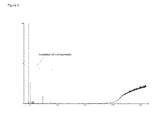
Figure 1 represents a typical gas chromatogram of a whole extract from Boswellia carteri with the main components indicated -
Figure 2 represents the gas chromatogram of the essential oil fraction -
Figure 3 represents the gas chromatogram of the incensole fraction -
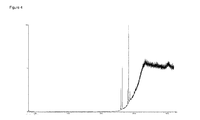
Figure 4 represents the gas chromatogram of the boswellic acid fraction - Accordingly, the present invention discloses a method for sequentially extracting essential oil, incensole derivatives and boswellic acid from frankincense resin, said method comprising the steps of:
- a) grinding the frankincense resin;
- b) separating a first fraction of essential oil with liquid carbon dioxide at a first temperature ranging between 0 °C and 30 °C and a first pressure ranging between 40 bars and 73.8 bars and a first flow rate ranging between 10g and 400g/kg ground material/min until no further essential oil can be recovered or the extract yield falls below 0.1 % of starting mass per hour;
- c) retrieving essential oil from the separator;
- d) separating a second fraction of incensole with supercritical carbon dioxide at a second temperature ranging between 31 °C and 100°C and a second pressure of at least 72.8 bars and a second flow rate ranging between 10g and 400g/kg ground material/min until no further incensole or its derivatives can be recovered or the extract yield falls below 0.1 % of starting mass per hour;
- e) retrieving incensole derivatives from the separator;
- f) optionally, continuing the separation process with supercritical carbon dioxide at other sets of increasing temperature and/or pressure until further desired fractions are separated;
- g) separating a further fraction of boswellic acid with supercritical carbon dioxide at a temperature of at least 31 °C and a pressure of at least 72.8 bars and a flow rate ranging between 10g and 400g/kg ground material/min using a co-solvent at a level ranging between 0.05 vol% and 50.0 vol% of the CO2 flow rate until complete separation of boswellic acids is achieved or it is determined that no further materials can be extracted or the extract yield falls below 0.1 % of starting mass per hour;
- h) retrieving boswellic acid from the separator and removing the co-solvent by evaporation or distillation;
- i) optionally, continuing the separation process with supercritical carbon dioxide at another set of temperature and pressure and co-solvent until all desired fractions are separated;
- j) retrieving the remaining unseparated residues.
- In step g), it is determined that no further material can be extracted by collecting and analysing the co-solvent using direct injection into liquid chromatography-mass spectroscopy (LC-MS), said process taking about 2 minutes. The extraction is ended when the extract yield falls below 0.1 % of starting mass per hour.
- The starting frankincense resin material is obtained from any Boswellia species, including but not exclusively, B. ameero, B. boranensis, B. bricchettii, B. bullata, B.carteri, B. chariensis, B. dalzielii, B. dioscoridis, B. elegans, B. elongata, B. frereana, B. globosa, B. hildebrandtii, B. holstii, B. madagascariensis, B. microphylla, B. multifoliolata, B. nana, B. neglecta, B. occidentalis, B. ogadensis, B. ovalifoliolata, B. papyrifera, B. pirottae, B. popoviana, B. rivae, B. sacra, B. serrata and B. socotrana.
- The grinding process is carried out by using any suitable mill, preferably with a 3-5 mm screen.
- The liquid carbon dioxide used in the first separation is used at a temperature ranging between 0 and 30 °C, preferably between 5 and 20 °C , at a pressure ranging between 50 and 73 bars, preferably between 60 and 70 bars with a flow rate ranging between 10g and 400g/kg ground material/min , preferably between 50 and 100 g/kg ground material/min and a period of time ranging between 5 minutes and 300 minutes preferably between 30 and 120 minutes.
- For the subsequent separations using carbon dioxide, the temperature and pressure are selected to separate the desired compounds, using increasingly polar conditions.
- Above the supercritical point, the temperature and pressure are selected and adjusted to fractionate the desired range of molecules. In the present method, the temperature is preferably selected between 30 and 50 °C, the pressure between 200 and 500 bars and the flow rate between 50 and 100 g/kg ground material/min.
- The supercritical carbon dioxide can further include a percentage of co-solvent, preferably ethanol. This leads to distinctly different separation products. The percentage of added co-solvent ranges between 0.05 vol% and 50.0 vol% of the CO2 flow rate, preferably between 5 and 15vol% of the CO2 flow rate.
- Another advantage of using supercritical carbon dioxide as fractionation and extraction solvent is that it can be easily removed because of its 'zero' surface tension, thereby producing solvent-free products.
- The 'green' solvents are selected from water, ethanol and carbon dioxide.
- The present invention also discloses the products obtained by the method of the present invention. Because the present products have been obtained without solvents they do not suffer from the disadvantage of containing traces of solvents.
- Boswellia resins were obtained from Asli Maydi Exports and liquid CO2 was obtained from BOC. The ethanol used was fermentation grade absolute ethanol obtained from Fisher.
- Extraction trials were carried out on a Thar SFC-1000 extraction rig using a 100ml extractor. Subsequent trials were made using a 2 x 16 litre extractor manufactured by Separex SA to obtain larger samples of the fractions.
- Extraction was carried out as follows: the chillers were set at a temperature of 0°C for the CO2 pump and at a temperature of +5°C for the cold trap. Approximately 60g of the milled Boswellia resin was loaded into the 100ml extractor and firmly pressed down. The cylinder inlet pressure was set to 50-52 bar using manual back pressure regulator (BPR) on CO2 inlet line, the inline heater and extractor heater were switched on and the separator was heated to 35°C
- The first extraction was carried out with liquid CO2 at 10 °C and 65bar with a flow rate of 10g/min. Once pressure had been reached, the separator was adjusted to 15 bar back pressure and samples were collected every 15 minute, until the 15 min fraction weight was below 0.1 g. When the last sample was collected, the cold trap was drained.
- In the subsequent extraction using Supercritical CO2, the automated back pressure regulator (ABPR) was set to 400 bar and the extractor temperature was increased to 50°C. Once temperature was reached, CO2 was turned on at a flow rate of 10g/minut and once the pressure had been reached the separator was adjusted to 15 bar back pressure and samples were collected every 15 minute, until the 15 min fraction weight was below 0.5g. The incensole is a viscous liquid so the separator temperature was increased to 45°C to allow it to be drained without retention in the separator. When complete, the CO2 pump was switched off, the back pressure was released and the separator was washed out with industrial methylated spirits (IMS) to ensure no incensole was left that would contaminate the next fraction. Once dry, the trap and separator were reassembled.
- The next extraction was carried out with supercritical CO2 with ethanol as co-solvent. The co-solvent pump was primed, the valve was then slowly opened to allow pressure to equilibrate with scCO2 flow. ABPR setting was slowly reduced to 300 bar and the extractor temperature decreased to 40°C. Once temperature and pressure had been reached, CO2 flow was turned on at a flow rate of 9g/minute and once pressure had been reached, the separator was adjusted to 15 bar back pressure and the co-solvent pump was opened at a flow rate of 1 g/minute ethanol corresponding to 10 vol%. The samples were collected every hour for 3 hours but the separator and trap were drained every 30 minutes into the same flask. After 3 hours the co-solvent pump was turned off but the CO2 pump was run for another 30 minutes adding this to the last fraction.
- At the end of the operation the plant was thoroughly cleaned as follows: the plant was depressurised and all heaters turned off. The contents of extractor were emptied into a plastic beaker and the extractor was cleaned with a vacuum cleaner. The extractor, pipework, and separator were cleaned with IMS, and allowed to dry. The plant was then reassembled.
- Identification of the compounds was based on calculated Kovats retention index, comparison with library mass spectra (NIST and Adams) and comparison with standard components. The use of a VF-5 (equivalent to DB-5 or HP-5) column allowed more accurate correlation with the extensive Adams database
- The trial was carried out with Boswellia carteri resin. 60 g of resin was loaded into the extractor and sequentially extracted as described above.
Figure 1 shows the composition of this resin and the proportions of the fractions present. -
Figure 2 shows the chromatogram of this fraction indicating the main components are mono and sesquiterpene hydrocarbons. The yield of this fraction was 2.79g from 60g resin (4.65%). The oil was characteristic of frankincense but with a richer and longer lasting aroma compared to distilled oil. - The supercritical CO2 fraction is almost entirely composed of incensole and the chromatogram of this fraction is shown in
figure 3 . This fraction is a clear and very viscous oil almost devoid of any characteristic frankincense aroma confirming the complete separation from the essential oil fraction obtained by liquid CO2 extraction. The yield of this fraction was 11.4g from 60g resin (18.99%). - The supercritical CO2 fraction with 10% ethanol added was distinctly different. The fraction is an odourless semi-solid amber resin composed of a complex mixture of boswellic acids characteristic of Boswellia carteri.
Figure 4 shows the chromatogram of this fraction and demonstrates that it is almost devoid of incensole indicating a clear fractionation from the incensole. The yield of this fraction was 29.07g (48.45%). - Analysis of the residue showed that the removal of the essential oil, incensole and boswellic acids was complete. The weight was 16.5g giving a 99.6% mass balance.
Claims (7)
1. A method for sequentially extracting essential oil, incensole derivatives and boswellic acid from frankincense resin, said method comprising the steps of:
a) grinding the frankincense resin;
b) separating a first fraction of essential oil with liquid carbon dioxide at a first temperature ranging between 0 °C and 30 °C and a first pressure ranging between 40 bars and 73.8 bars and a first flow rate ranging between 10g and 400g/kg ground material/min until no further essential oil can be recovered or the extract yield falls below 0.1 % of starting mass per hour;
c) retrieving essential oil from the separator;
d) separating a second fraction of incensole derivatives with supercritical carbon dioxide at a second temperature ranging between 31 °C and 100°C and a second pressure of at least 72.8 bars and a second flow rate ranging between 10g and 400g/kg ground material/min until no further incensole or its derivatives can be recovered or the extract yield falls below 0.1 % of starting mass per hour;
e) retrieving incensole derivatives from the separator;
f) optionally, continuing the separation process with supercritical carbon dioxide at other sets of increasing temperature and/or pressure until further desired fractions are separated;
g) separating a further fraction of boswellic acid with supercritical carbon dioxide at a temperature of at least 31 °C and a pressure of at least 72.8 bars and a flow rate ranging between 10g and 400g/kg ground material/min using a co-solvent at a level ranging between 0.05 vol% and 50.0 vol% of the CO2 flow rate until complete separation of boswellic acids is achieved or it is determined that no further materials can be extracted or the extract yield falls below 0.1 % of starting mass per hour;
h) retrieving boswellic acid from the separator and removing the co-solvent by evaporation or distillation;
i) optionally, continuing the separation process with supercritical carbon dioxide at another set of temperature and pressure and co-solvent until all desired fractions are separated;
j) retrieving the remaining unseparated residues.
2. The method of claim 1 wherein the starting frankincense material is obtained from Boswellia species selected from B. ameero, B. boranensis, B. bricchettii, B. bullata, B.carteri, B. chariensis, B. dalzielii, B. dioscoridis, B. elegans, B. elongata, B. frereana, B. globosa, B. hildebrandtii, B. holstii, B. madagascariensis, B. microphylla, B. multifoliolata, B. nana, B. neglecta, B. occidentalis, B. ogadensis, B. ovalifoliolata, B. papyrifera, B. pirottae, B. popoviana, B. rivae, B. sacra, B. serrata and B. socotrana.
3. The method of claim 1 or claim 2 wherein the grinding process is carried out with a screen ranging between 3 and 5 mm.
4. The method of any one of the preceding claims wherein during extraction step g), the co-solvent is collected and analysed by direct injection into liquid chromatography-mass spectroscopy until the extract yield falls below 0.1 % of starting mass per hour.
4. The method of any one of the preceding claims wherein in step b), the temperature ranges between 5 and 20 °C, the pressure ranges between 60 and 70 bars and the flow rate ranges between 50 and 100 g/kg ground material/min.
5. The method of any one of the preceding claims wherein in step d), the temperature ranges 30 and 50 °C, the pressure ranges between 100 and 400 bars and the flow rate ranges between 50 and 100 g/kg ground material/min.
6. The method of any one of the preceding claims wherein in step g) the co-solvent is added at a level ranging between 5 and 15 vol% of the C02 flow rate.
Priority Applications (5)
| Application Number | Priority Date | Filing Date | Title |
|---|---|---|---|
| EP14187216.8A EP3002326A1 (en) | 2014-09-30 | 2014-09-30 | Fractionation of frankincense resin using supercritical carbon dioxide |
| ES15771578.0T ES2673609T3 (en) | 2014-09-30 | 2015-09-28 | Fractionation of frankincense resin using supercritical carbon dioxide |
| PCT/EP2015/072296 WO2016050712A1 (en) | 2014-09-30 | 2015-09-28 | Fractionation of frankincense resin using supercritical carbon dioxide |
| EP15771578.0A EP3201299B1 (en) | 2014-09-30 | 2015-09-28 | Fractionation of frankincense resin using supercritical carbon dioxide |
| US15/513,381 US10113136B2 (en) | 2014-09-30 | 2015-09-28 | Fractionation of frankincense resin using supercritical carbon dioxide |
Applications Claiming Priority (1)
| Application Number | Priority Date | Filing Date | Title |
|---|---|---|---|
| EP14187216.8A EP3002326A1 (en) | 2014-09-30 | 2014-09-30 | Fractionation of frankincense resin using supercritical carbon dioxide |
Publications (1)
| Publication Number | Publication Date |
|---|---|
| EP3002326A1 true EP3002326A1 (en) | 2016-04-06 |
Family
ID=51626461
Family Applications (2)
| Application Number | Title | Priority Date | Filing Date |
|---|---|---|---|
| EP14187216.8A Withdrawn EP3002326A1 (en) | 2014-09-30 | 2014-09-30 | Fractionation of frankincense resin using supercritical carbon dioxide |
| EP15771578.0A Not-in-force EP3201299B1 (en) | 2014-09-30 | 2015-09-28 | Fractionation of frankincense resin using supercritical carbon dioxide |
Family Applications After (1)
| Application Number | Title | Priority Date | Filing Date |
|---|---|---|---|
| EP15771578.0A Not-in-force EP3201299B1 (en) | 2014-09-30 | 2015-09-28 | Fractionation of frankincense resin using supercritical carbon dioxide |
Country Status (4)
| Country | Link |
|---|---|
| US (1) | US10113136B2 (en) |
| EP (2) | EP3002326A1 (en) |
| ES (1) | ES2673609T3 (en) |
| WO (1) | WO2016050712A1 (en) |
Cited By (1)
| Publication number | Priority date | Publication date | Assignee | Title |
|---|---|---|---|---|
| EP3733195A1 (en) * | 2019-05-02 | 2020-11-04 | Dhofar University | Boswellic acid extraction |
Families Citing this family (1)
| Publication number | Priority date | Publication date | Assignee | Title |
|---|---|---|---|---|
| CN114040809A (en) * | 2019-06-20 | 2022-02-11 | 绿尚格林技术研究解决方案公司 | Method for extracting raw materials to produce phytochemical-rich preparations |
Citations (2)
| Publication number | Priority date | Publication date | Assignee | Title |
|---|---|---|---|---|
| GB2119399A (en) * | 1982-05-06 | 1983-11-16 | Hop Dev Ltd | Extraction of plant material by using carbon dioxide |
| WO2002074886A1 (en) * | 2001-03-20 | 2002-09-26 | Naturol Limited | Refining of crude extracts and mixtures |
-
2014
- 2014-09-30 EP EP14187216.8A patent/EP3002326A1/en not_active Withdrawn
-
2015
- 2015-09-28 EP EP15771578.0A patent/EP3201299B1/en not_active Not-in-force
- 2015-09-28 ES ES15771578.0T patent/ES2673609T3/en active Active
- 2015-09-28 WO PCT/EP2015/072296 patent/WO2016050712A1/en not_active Ceased
- 2015-09-28 US US15/513,381 patent/US10113136B2/en not_active Expired - Fee Related
Patent Citations (2)
| Publication number | Priority date | Publication date | Assignee | Title |
|---|---|---|---|---|
| GB2119399A (en) * | 1982-05-06 | 1983-11-16 | Hop Dev Ltd | Extraction of plant material by using carbon dioxide |
| WO2002074886A1 (en) * | 2001-03-20 | 2002-09-26 | Naturol Limited | Refining of crude extracts and mixtures |
Non-Patent Citations (5)
| Title |
|---|
| BRUNO MARONGIU ET AL: "Extraction ofSantalum album andBoswellia carterii Birdw. volatile oil by supercritical carbon dioxide: influence of some process parameters", FLAVOUR AND FRAGRANCE JOURNAL, vol. 21, no. 4, 1 July 2006 (2006-07-01), pages 718 - 724, XP055176954, ISSN: 0882-5734, DOI: 10.1002/ffj.1718 * |
| BÜCHELE, B.; ZUGMAIER, W.; SIMMET, T., JOURNAL OF CHROMATOGRAPHY B, vol. 791, no. 1, 2003, pages 21 - 30 |
| DEKEBO; AMAN; MEDIHN ZEWDU; ERMIAS DAGNE, BULLETIN OF THE CHEMICAL SOCIETY OF ETHIOPIA, vol. 13.1, 1999, pages 93 - 96 |
| MARONGIU B.; PIRAS A.; PORCEDDA S.; TUVERI E., FLAVOUR FRAGR. J., vol. 21, 2006, pages 718 - 724 |
| ZHOU J.; MA X.; QIU B.; CHEN J.; BIAN L.; PAN L., J. SEP. SCI., vol. 36, 2013, pages 383 - 390 |
Cited By (1)
| Publication number | Priority date | Publication date | Assignee | Title |
|---|---|---|---|---|
| EP3733195A1 (en) * | 2019-05-02 | 2020-11-04 | Dhofar University | Boswellic acid extraction |
Also Published As
| Publication number | Publication date |
|---|---|
| US20180230400A1 (en) | 2018-08-16 |
| EP3201299B1 (en) | 2018-05-16 |
| ES2673609T3 (en) | 2018-06-25 |
| US10113136B2 (en) | 2018-10-30 |
| WO2016050712A1 (en) | 2016-04-07 |
| EP3201299A1 (en) | 2017-08-09 |
Similar Documents
| Publication | Publication Date | Title |
|---|---|---|
| US10428040B2 (en) | Processes for the isolation of a cannabinoid extract and product from Cannabis plant material | |
| Zhao et al. | Supercritical CO2 extraction of Eucalyptus leaves oil and comparison with Soxhlet extraction and hydro-distillation methods | |
| Stratakos et al. | Methods for extracting essential oils | |
| RU2566902C2 (en) | Methods for extracting and isolating constituents of cellulose material | |
| AU2014344173B2 (en) | Fractionation of hop oils using liquid and supercritical carbon dioxide | |
| EP3201299B1 (en) | Fractionation of frankincense resin using supercritical carbon dioxide | |
| Kulazynski et al. | Supercritical fluid extraction of vegetable materials | |
| EP3201300B1 (en) | Process for the fractionation of essential oils | |
| Osetskyi et al. | Low-temperature extraction of lipid fractions from vegetable raw materials using liquefied freons | |
| Rout et al. | Comparison of extraction methods of Mimusops elengi L. flowers | |
| CN110935191A (en) | A kind of extraction and purification method of industrial hemp wax | |
| WO2024213468A1 (en) | Method for preparing a perfume ingredient | |
| Wartini et al. | Chemical composition of essential oil of cendana frangipani flower (Plumeria alba) with Re-extraction using ethanol solvents | |
| TWI570104B (en) | Preparation, Separation and Purification of Artepillin C Active Ingredients in Propolis | |
| RU2796495C2 (en) | Extraction of cannabinoids, flavonoids and terpenes from cannabis | |
| Yadav et al. | Extraction and characterization study of aniseed oil | |
| US5641489A (en) | Extracting maltol and water from naturally occurring plant material containing maltol and water | |
| Nautiyal | Subcritical carbon dioxide and conventional extraction techniques of Sandalwood oil: an industry project | |
| Simandi et al. | Supercritical fluid extraction of essential oils from Mentha piperita and Lavandula intermedia | |
| RU2247731C2 (en) | Method for isolating pectin from sunflower heads | |
| CN114302720A (en) | Extraction of cannabinoids, flavonoids and terpenes from cannabis sativa | |
| RU2248363C2 (en) | Method of recovering pectin from sunflower anthodia | |
| RU2248364C2 (en) | Method of recovering pectin from sunflower anthodia | |
| RU2248361C2 (en) | Method of recovering pectin from sunflower anthodia | |
| Shukri et al. | Effect of essential oil extraction in term of time and mass from hibiscus Rosa-Sinensis |
Legal Events
| Date | Code | Title | Description |
|---|---|---|---|
| PUAI | Public reference made under article 153(3) epc to a published international application that has entered the european phase |
Free format text: ORIGINAL CODE: 0009012 |
|
| AK | Designated contracting states |
Kind code of ref document: A1 Designated state(s): AL AT BE BG CH CY CZ DE DK EE ES FI FR GB GR HR HU IE IS IT LI LT LU LV MC MK MT NL NO PL PT RO RS SE SI SK SM TR |
|
| AX | Request for extension of the european patent |
Extension state: BA ME |
|
| STAA | Information on the status of an ep patent application or granted ep patent |
Free format text: STATUS: THE APPLICATION IS DEEMED TO BE WITHDRAWN |
|
| 18D | Application deemed to be withdrawn |
Effective date: 20161007 |