EP3000819B1 - Method for producing galactose constituting a raw material for producing tagatose from whey permeate liquid or whey permeate powder - Google Patents
Method for producing galactose constituting a raw material for producing tagatose from whey permeate liquid or whey permeate powder Download PDFInfo
- Publication number
- EP3000819B1 EP3000819B1 EP13882627.6A EP13882627A EP3000819B1 EP 3000819 B1 EP3000819 B1 EP 3000819B1 EP 13882627 A EP13882627 A EP 13882627A EP 3000819 B1 EP3000819 B1 EP 3000819B1
- Authority
- EP
- European Patent Office
- Prior art keywords
- whey permeate
- activated carbon
- producing
- solution
- tagatose
- Prior art date
- Legal status (The legal status is an assumption and is not a legal conclusion. Google has not performed a legal analysis and makes no representation as to the accuracy of the status listed.)
- Revoked
Links
Images



Classifications
-
- C—CHEMISTRY; METALLURGY
- C07—ORGANIC CHEMISTRY
- C07H—SUGARS; DERIVATIVES THEREOF; NUCLEOSIDES; NUCLEOTIDES; NUCLEIC ACIDS
- C07H3/00—Compounds containing only hydrogen atoms and saccharide radicals having only carbon, hydrogen, and oxygen atoms
- C07H3/02—Monosaccharides
-
- B—PERFORMING OPERATIONS; TRANSPORTING
- B01—PHYSICAL OR CHEMICAL PROCESSES OR APPARATUS IN GENERAL
- B01D—SEPARATION
- B01D61/00—Processes of separation using semi-permeable membranes, e.g. dialysis, osmosis or ultrafiltration; Apparatus, accessories or auxiliary operations specially adapted therefor
- B01D61/42—Electrodialysis; Electro-osmosis ; Electro-ultrafiltration; Membrane capacitive deionization
- B01D61/422—Electrodialysis
-
- C—CHEMISTRY; METALLURGY
- C07—ORGANIC CHEMISTRY
- C07H—SUGARS; DERIVATIVES THEREOF; NUCLEOSIDES; NUCLEOTIDES; NUCLEIC ACIDS
- C07H1/00—Processes for the preparation of sugar derivatives
- C07H1/06—Separation; Purification
- C07H1/08—Separation; Purification from natural products
-
- C—CHEMISTRY; METALLURGY
- C12—BIOCHEMISTRY; BEER; SPIRITS; WINE; VINEGAR; MICROBIOLOGY; ENZYMOLOGY; MUTATION OR GENETIC ENGINEERING
- C12P—FERMENTATION OR ENZYME-USING PROCESSES TO SYNTHESISE A DESIRED CHEMICAL COMPOUND OR COMPOSITION OR TO SEPARATE OPTICAL ISOMERS FROM A RACEMIC MIXTURE
- C12P19/00—Preparation of compounds containing saccharide radicals
- C12P19/02—Monosaccharides
Definitions
- the present invention relates to a method for producing D-galactose for use in production of D-tagatose from liquid whey permeate or dried whey permeate (hereinafter referred to as "DWP"). More particularly, the present invention relates to a method for mass production of D-galactose from inexpensive raw materials by removing impurities such as protein, ash (including salts), other non-sugar insoluble materials, and the like from dried whey permeate or liquid whey permeate occurring in the process of producing whey protein isolates from whey. The present invention also relates to a method for mass production of D-tagatose from D-galactose obtained by the present invention.
- DWP dried whey permeate
- D-tagatose is an ideal low-calorie sweetener as an alternative sugar that can satisfy such consumer demand.
- D-tagatose has about 90% the sweetness of sucrose, thus being substantially identical thereto, but has 30% the calories of sucrose.
- D-tagatose a stereoisomer of D-galactose
- has low metabolic speed and absorption rate in the body and thus can be used as a low-calorie sweetener without side effects (see: JECFA Sixty-third meeting, Geneva, 8-17 June 2004 - Food Additives ).
- D-tagatose Only 20% of D-tagatose is absorbed in the small intestine and the remaining 80% thereof is moved to the large intestine where intestinal microbes live and selectively accelerates the production of lactobacillus, thereby producing short chain fatty acids.
- D-tagatose has a prebiotic characteristic of producing butyrate, which is known to help prevent colon cancer, in large quantities (up to 50% of the total short chain fatty acids).
- D-tagatose is a natural sugar having a low-calorie value of 1.5 kcal/g and has attained GRAS (Generally Recognized As Safe) status under the U.S. Food and Drug Administration (FDA), thereby allowing use as a functional sweetener in foods, beverages, health foods, diet additives, and the like.
- GRAS Generally Recognized As Safe
- D-tagatose is not often found in nature and is a rare sugar present only in trace amounts in dairy products and some plants. In order to use D-tagatose as a low-calorie and functional sweetener, it is essential to develop a method for mass production of D-tagatose from inexpensive raw materials.
- U.S. Patent Nos. 5,002,612 and 5,078,796 disclose a method for producing D-tagatose by hydrolyzing lactose or lactose-containing materials by adding lactase to a mixture of D-galactose and D-glucose, removing optional D-glucose from the mixture, and then chemically isomerizing D-galactose into D-tagatose.
- D-galactose an essential intermediate in the enzymatic production of D-tagatose is D-galactose.
- supply of D-galactose developed up to now is restricted to hydrolysis of lactose
- lactose prices vary due to unpredictable factors, such as amount of raw milk produced according to weather, demand for powder milk, changes in lactose consumption in third world countries, and the like, and exhibit a unique price pattern of repeating fall and rise in price.
- Such price fluctuations in the raw milk market make stable supply of raw materials for producing D-tagatose difficult.
- D-galactose from inexpensive whey permeate or dried whey permeate occurring in the process of producing whey protein isolates and to use D-galactose to produce D-tagatose. Therefore, stable supply of raw materials and price stabilization of D-tagatose can be ensured, thereby creating considerable added value.
- D-galactose which is a raw material for the production of D-tagatose through enzymatic processes, depends on lactose.
- unstable supply of lactose and high price of lactose directly affect production cost of D-tagatose.
- more stable supply of inexpensive raw materials i.e., lactose and D-galactose, is a prerequisite for mass production of D-tagatose.
- a solution of dried whey permeate or a liquid whey permeate is subjected to physical and chemical pretreatment, such as pH adjustment, heat treatment, and the like, to remove non-sugar insoluble materials by inducing solidification without changing sugar content or forming by-products.
- physical and chemical pretreatment such as pH adjustment, heat treatment, and the like
- activated carbon treatment is used instead of a conventional adsorption method or ion chromatography entailing relatively high cost.
- the solution of dried whey permeate or the liquid whey permeate from which solid precipitates and proteins are removed is subjected to electrodialysis to remove salts, ash or both of salts and ash contained the dissolved solution.
- the method according to the present invention can minimize contamination of a membrane employed in electrodialysis while improving desalting efficiency through pretreatment of removing the solid precipitates and proteins.
- the present invention provides an effect of overcoming dependency on the provision of purified lactose and/or crystalline lactose, which are used as raw materials for D-tagatose in the art, and can directly or indirectly reduce costs for producing D-tagatose by providing a method for effectively and economically removing protein, ash (including salts), and other solid precipitates, excluding lactose in whey permeate or dried whey permeate, which is a by-product in production of whey protein isolates.
- the present invention also provides a technology capable of economically utilizing whey permeate or dried whey permeate produced as by-products in production of whey protein isolates, industrial use of which is not relatively high.
- the present invention relates to a method for producing D-galactose from a solution of dried whey permeate or a liquid whey permeate, which includes:
- the method for producing D-galactose according to the present invention uses, as raw materials, both liquid whey permeate and dried whey permeate produced as by-products in production of whey protein isolates.
- liquid whey permeate the process of removing solid precipitates, in particular non-sugar materials, may be performed without separate treatment.
- dried whey permeate as raw materials, whey permeate may be dissolved in water as a solvent to prepare a solution of dried whey permeate, and solid precipitates, in particular non-sugar materials, are removed from the solution.
- whey protein isolates means whey proteins separated and collected by passing whey as a raw material through filter membranes.
- liquid whey permeate means permeates occurring as by-products during the process of producing "whey protein isolates".
- dried whey permeate means dried whey permeate obtained by concentrating and drying liquid whey permeate.
- the process of removing solid precipitates, in particular non-sugar materials is performed by forming the solid precipitates from the solution of dried whey permeate or the liquid whey permeate through heat treatment at 40°C to 90°C, adjusting the dissolved solution to a pH of 3 to 9, or by both treatments, and then separating the solid precipitates by a typical method such as centrifugation and the like.
- the procedures of heat treatment at 40 to 90°C and adjustment to a pH of 3 to 9 provide effects of removing solid components without affecting the content and quality of D-galactose, which is a final product, by precipitating solid components in the solution of dried whey permeate or the liquid whey permeate without causing changes in sugar content in the solution of dried whey permeate or the liquid whey permeate and forming by-products.
- heat treatment is carried out at a temperature of 50°C to 80°C, and pH adjustment is carried out to a pH of 4 to 8.
- the precipitation of solid and insoluble materials without precipitating lactose accelerates with increasing heat treatment temperature. Further, the precipitation of the solid and insoluble materials accelerates with increasing pH. Thus, as heat treatment temperature and pH increase, the precipitation of solid and insoluble materials may be accelerated, thereby remarkably increasing solid precipitates.
- the process of removing solid precipitates is performed by increasing the heat treatment temperature to 60°C to 80°C and adjusting the dissolved solution to a pH of 5 to 8.
- the process of removing proteins has an advantage in that proteins can be removed using activated carbon without using preadsorption or ion chromatography entailing high cost.
- the process of removing proteins through activated carbon treatment may include: treating the dissolved solution of dried whey permeate or the liquid whey permeate, from which the solid precipitates have been removed, with activated carbon, and reacting the resultant at 20°C to 90°C for 10 minutes to 9 hours.
- the activated carbon is preferably activated carbon powder, for example, activated carbons A to F, without being limited thereto.
- activated carbon A is DARCOKB-B produced by Norit Inc.
- activated carbon B is NORITCGSP produced by Norit Inc.
- activated carbon C is NORITCASP produced by Norit Inc.
- activated carbon D is NORITCA1 produced by Norit Inc.
- activated carbon E is A51 produced by Norit Inc.
- activated carbon F is Norit SX plus produced by Norit Inc. More preferably, activated carbon A or B is useful in terms of protein removal efficiency.
- the activated carbon treatment is preferably performed at 50°C to 80°C for about 3 to 8 hours, more preferably at 55°C to 75°C for about 4 to 7 hours.
- Protein removal efficiency can be accelerated with increasing treatment time and temperature.
- the protein removal method using the activated carbon in the present invention results in further decolorization.
- the method for producing D-galactose according to the present invention further includes removing ash, salts or both from the solution of dried whey permeate or the liquid whey permeate from which proteins are removed.
- the removal of ash, salts or both may be performed by electrodialysis.
- the solid precipitates and proteins are removed prior to the electrodialysis, contamination of an electrodialysis membrane can be minimized, thereby prolonging the lifespan of the electrodialysis membrane while improving salt removal efficiency.
- the method according to the present invention further includes adding lactase to the solution of dried permeate or the liquid whey permeate
- the process of adding lactase is performed after the solid precipitate removal and before the protein removal.
- lactase any known enzymes may be employed without limitation.
- lactase may include Maxilact LX 5000, Maxilact LG 5000 produced by DSM Inc.
- the enzyme can be added at a concentration of 0.01 w/v% to 5 w/v%.
- the hydrolysis may be performed using a fermenter at 35°C to 39°C.
- the method according to the present invention may further include ion purification, concentration and chromatography separation procedures after the salt and/or ash removal. Specifically, in order to separate, purify and harvest D-galactose using SMB (Simulated Moving Bed) chromatography, ion purification and concentration may be performed. Prior to SMB chromatography separation and purification, cation and anion purification chromatography typically used in ion removal, or a concentration process conventionally used in the art may be performed. Another embodiment of the present invention relates to a method for producing D-tagatose including isomerizing D-galactose produced by the aforementioned method to obtain D-tagatose.
- SMB Simulated Moving Bed
- Example 1 Component analysis of dried whey permeate (DWP)
- the contents and kinds of impurities in a raw material were identified by component analysis of dried whey permeate, which is a by-product in the production of whey protein isolates from whey. Analysis results of the components in the dried whey permeate are shown in Table 1.
- the dried whey permeate contained lactose in an amount of greater than 80% and included proteins, fat, various kinds of inorganic salts, and heavy metals, in addition to sugar component. In order to remove the remaining components except for the sugar component, the dried whey permeate was subjected to a physical and chemical pre-treatment.
- Example 2 Pre-treatment process to remove insoluble materials in dried whey permeate (DWP)
- the lactase Maxilact LG 5000 (DSM Inc.) was used. Specimens pretreated in Example 2 and Maxilact LG 5000 at a concentration of 1% (w/v) were reacted at 38°C and 100 rpm using a reactor. In order to measure the hydrolysis rate of lactose, samples were taken 0, 10, 24, 31, 48 and 58 hours after the enzymatic hydrolysis began.
- DWP was suspended and dissolved in water at a concentration of 20% (w/v), and the resulting solution was titrated with NaOH to pH 6.8. After heat treatment at about 70°C for 30 minutes, the supernatant harvested by centrifugation was treated with six types of activated carbon powder (2g of activated carbon powder/20% DWP solution L). After reacting at room temperature and 50°C for a predetermined period of time, the resulting material was subjected to centrifugation to harvest a supernatant. The resulting supernatant was quantitatively analyzed to determine the protein content change. The results are shown in Fig. 3 .
- DWP was suspended and dissolved in water at a concentration of 20% (w/v), and the solution was titrated with NaOH to pH 6.8. After heat treatment at about 70°C for 30 minutes, the supernatant harvested by centrifugation was treated with two types of activated carbon powders A and B (2g of activated carbon powder/20% DWP solution L) and reacted at 40°C to 70°C for 0 to 6 hours. The reacted solution was centrifuged to collect a supernatant, which was subjected to quantitative analysis as to protein content change and qualitative analysis as to chromaticity ( Figs. 4 and 5 ).
- the lactose hydrolyzed solution prepared through the protein removal process of Example 4 was purified through a desalting electrodialysis device.
- a desalting electrodialysis device In order to assess the economic feasibility of the desalting electrodialysis process such as desalting rate of ions (salt) and loss rate of organic materials (sugar), the energy consumption amount, contamination and the like were examined.
- the electrodialysis device used in this example was a 3-compartment type. Detailed descriptions of the electrodialysis device and operation conditions are shown in Table 4. TABLE 4 ITEMS Details Equipment Micro Acilyzer S3 Total efficient membrane area 0.55 dm 2 /cell Cartridge AC-220-550 Electrode Ti/Pt (Anode) SUS316L(Cathode) Operation voltage 9V-12V Operation temperature 23° C-32° C Sample liquid 500 ml Electrode liquid 5% Na 2 SO 4
- CMX CMX, AMX, Astom Corporation, Japan
- CMX CMX, AMX, Astom Corporation, Japan
- Table 5 TABLE 5 ITEMS Cation exchange membrane (CMX)
- Anion exchange membrane (AMX) Sorts Strong acidic cation permeable Strong alkaline anion permeable Characteristic High mechanical strength (Na-form) High mechanical strength (Cl-form) Electric resistance( ⁇ ) 1.8 ⁇ 3.8 2.0 ⁇ 3.5 Burat strength ⁇ 0.40 ⁇ 0.30 Thickness (mm) 0.14 ⁇ 0.20 0.12 ⁇ 0.15
- the electrodialysis was continuously performed without any chemical washing under batch operation conditions, in which power supply to a stack of the electrodialysis device was cut off when the conductivity of raw water dropped below a target value, while measuring the conductivity of the electrodialysis device in real time [see Table 6 (water quality data for raw water and treated water), Fig. 6 ].
- Table 7 shows the continuous operation of electrodialysis for hydrolyzed lactose solution, from which proteins were removed, without chemical washing.
- Ion removal rate 100 ⁇ electric conductivity value of raw water / electric conductivity value of treated water ⁇ 100
Landscapes
- Chemical & Material Sciences (AREA)
- Organic Chemistry (AREA)
- Engineering & Computer Science (AREA)
- Health & Medical Sciences (AREA)
- Life Sciences & Earth Sciences (AREA)
- Biochemistry (AREA)
- Biotechnology (AREA)
- General Health & Medical Sciences (AREA)
- Genetics & Genomics (AREA)
- Molecular Biology (AREA)
- Water Supply & Treatment (AREA)
- Chemical Kinetics & Catalysis (AREA)
- Wood Science & Technology (AREA)
- Zoology (AREA)
- Urology & Nephrology (AREA)
- General Chemical & Material Sciences (AREA)
- Microbiology (AREA)
- Bioinformatics & Cheminformatics (AREA)
- General Engineering & Computer Science (AREA)
- Dairy Products (AREA)
- Peptides Or Proteins (AREA)
- Polysaccharides And Polysaccharide Derivatives (AREA)
- Separation Using Semi-Permeable Membranes (AREA)
Description
- The present invention relates to a method for producing D-galactose for use in production of D-tagatose from liquid whey permeate or dried whey permeate (hereinafter referred to as "DWP"). More particularly, the present invention relates to a method for mass production of D-galactose from inexpensive raw materials by removing impurities such as protein, ash (including salts), other non-sugar insoluble materials, and the like from dried whey permeate or liquid whey permeate occurring in the process of producing whey protein isolates from whey. The present invention also relates to a method for mass production of D-tagatose from D-galactose obtained by the present invention.
- There has been an explosion in demand for low-calorie and functional sweeteners capable of preventing excessive caloric intake, obesity and tooth decay owing to sugar consumption. D-tagatose is an ideal low-calorie sweetener as an alternative sugar that can satisfy such consumer demand. D-tagatose has about 90% the sweetness of sucrose, thus being substantially identical thereto, but has 30% the calories of sucrose.
- Further, it is known that D-tagatose, a stereoisomer of D-galactose, has low metabolic speed and absorption rate in the body, and thus can be used as a low-calorie sweetener without side effects (see: JECFA Sixty-third meeting, Geneva, 8-17 June 2004 - Food Additives).
- Only 20% of D-tagatose is absorbed in the small intestine and the remaining 80% thereof is moved to the large intestine where intestinal microbes live and selectively accelerates the production of lactobacillus, thereby producing short chain fatty acids. Particularly, D-tagatose has a prebiotic characteristic of producing butyrate, which is known to help prevent colon cancer, in large quantities (up to 50% of the total short chain fatty acids). Further, D-tagatose is a natural sugar having a low-calorie value of 1.5 kcal/g and has attained GRAS (Generally Recognized As Safe) status under the U.S. Food and Drug Administration (FDA), thereby allowing use as a functional sweetener in foods, beverages, health foods, diet additives, and the like.
- However, D-tagatose is not often found in nature and is a rare sugar present only in trace amounts in dairy products and some plants. In order to use D-tagatose as a low-calorie and functional sweetener, it is essential to develop a method for mass production of D-tagatose from inexpensive raw materials.
-
U.S. Patent Nos. 5,002,612 and5,078,796 disclose a method for producing D-tagatose by hydrolyzing lactose or lactose-containing materials by adding lactase to a mixture of D-galactose and D-glucose, removing optional D-glucose from the mixture, and then chemically isomerizing D-galactose into D-tagatose. - Thus, an essential intermediate in the enzymatic production of D-tagatose is D-galactose. Currently, supply of D-galactose developed up to now is restricted to hydrolysis of lactose
- However, lactose prices vary due to unpredictable factors, such as amount of raw milk produced according to weather, demand for powder milk, changes in lactose consumption in third world countries, and the like, and exhibit a unique price pattern of repeating fall and rise in price. Such price fluctuations in the raw milk market make stable supply of raw materials for producing D-tagatose difficult.
- According to the present invention, it is possible to obtain D-galactose from inexpensive whey permeate or dried whey permeate occurring in the process of producing whey protein isolates and to use D-galactose to produce D-tagatose. Therefore, stable supply of raw materials and price stabilization of D-tagatose can be ensured, thereby creating considerable added value.
- Currently, the production of D-galactose, which is a raw material for the production of D-tagatose through enzymatic processes, depends on lactose. However, unstable supply of lactose and high price of lactose directly affect production cost of D-tagatose. Accordingly, more stable supply of inexpensive raw materials, i.e., lactose and D-galactose, is a prerequisite for mass production of D-tagatose. As a result of extensive studies to develop inexpensive materials as raw materials for producing D-tagatose, the present inventors have developed a technology capable of economically utilizing whey permeate or dried whey permeate occurring as by-products in production of whey protein isolates, industrial use of which is not relatively high.
- Since whey permeate or dried whey permeate contains proteins, ash (including salts), and other impurities, in addition to carbohydrates (lactose), there is a need for a method for economically and effectively isolating lactose from other components in order to use whey permeate or dried whey permeate as a raw material for D-tagatose production.
- In the present invention, a solution of dried whey permeate or a liquid whey permeate is subjected to physical and chemical pretreatment, such as pH adjustment, heat treatment, and the like, to remove non-sugar insoluble materials by inducing solidification without changing sugar content or forming by-products. Further, in order to achieve efficient and economic removal of proteins from the solution of dried whey permeate or the liquid whey permeate, from which the insoluble precipitates are removed, activated carbon treatment is used instead of a conventional adsorption method or ion chromatography entailing relatively high cost.
- Further, the solution of dried whey permeate or the liquid whey permeate from which solid precipitates and proteins are removed is subjected to electrodialysis to remove salts, ash or both of salts and ash contained the dissolved solution. Thus, the method according to the present invention can minimize contamination of a membrane employed in electrodialysis while improving desalting efficiency through pretreatment of removing the solid precipitates and proteins.
- The present invention provides an effect of overcoming dependency on the provision of purified lactose and/or crystalline lactose, which are used as raw materials for D-tagatose in the art, and can directly or indirectly reduce costs for producing D-tagatose by providing a method for effectively and economically removing protein, ash (including salts), and other solid precipitates, excluding lactose in whey permeate or dried whey permeate, which is a by-product in production of whey protein isolates.
- The present invention also provides a technology capable of economically utilizing whey permeate or dried whey permeate produced as by-products in production of whey protein isolates, industrial use of which is not relatively high.
-
-
Fig. 1 is a flowchart of an overall process for producing D-galactose according to one aspect of the present invention. -
Fig. 2 shows a dried weight of solidified precipitates removed by adjusting a 20% (w/v) dissolved solution of dried whey permeate (DWP) to pH 6.8, subjecting to heat treatment at 70°C for 30 minutes and then centrifugation. -
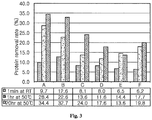
Fig. 3 shows the protein removal yields after treatment with activated carbon powders (A to F), respectively. -
Fig. 4a is a graph depicting results of protein removal yield after treatment with activated carbon A among activated carbon powders ofFig. 3 depending on temperature and time conditions, andFig. 4b is a graph depicting results of protein removal yield after treatment with activated carbon B among activated carbon powders ofFig. 3 depending on temperature and time conditions. -
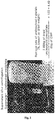
Fig. 5 is a photograph depicting the result of protein removal and decoloring upon treatment with activated carbon A among activated carbon powders ofFig. 3 . -
Fig. 6 is a graph depicting electric conductivity and current change depending on changes in electrodialysis operating time. - The present invention relates to a method for producing D-galactose from a solution of dried whey permeate or a liquid whey permeate, which includes:
- (i) obtaining liquid whey permeate produced as by-product in the production of whey protein isolates;
- (ii) removing non-sugar materials from a solution of dried whey permeate obtained by concentrating and drying the liquid whey permeate obtained in (i), or from the liquid whey permeate obtained in (i), wherein said removing step comprises forming insoluble solid precipitates from the dissolved solution of dried whey permeate or the liquid whey permeate, through heat treatment at 40°C to 90°C, and/or adjusting the dissolved solution to a pH of 3 to 9, and removing the solid precipitates;
- (iii) hydrolyzing the product obtained in (ii) using a lactase;
- (iv) removing residual proteins, using activated carbon, from the product obtained in (iii); and
- (v) removing ash, salts or both ash and salts from the product obtained in (iv).
- The method for producing D-galactose according to the present invention uses, as raw materials, both liquid whey permeate and dried whey permeate produced as by-products in production of whey protein isolates. When using liquid whey permeate, the process of removing solid precipitates, in particular non-sugar materials, may be performed without separate treatment. When using dried whey permeate as raw materials, whey permeate may be dissolved in water as a solvent to prepare a solution of dried whey permeate, and solid precipitates, in particular non-sugar materials, are removed from the solution.
- As used herein, the term "whey protein isolates" means whey proteins separated and collected by passing whey as a raw material through filter membranes.
- As used herein, the term "liquid whey permeate" means permeates occurring as by-products during the process of producing "whey protein isolates".
- As used herein, the term "dried whey permeate" means dried whey permeate obtained by concentrating and drying liquid whey permeate.
- The process of removing solid precipitates, in particular non-sugar materials, is performed by forming the solid precipitates from the solution of dried whey permeate or the liquid whey permeate through heat treatment at 40°C to 90°C, adjusting the dissolved solution to a pH of 3 to 9, or by both treatments, and then separating the solid precipitates by a typical method such as centrifugation and the like. The procedures of heat treatment at 40 to 90°C and adjustment to a pH of 3 to 9 provide effects of removing solid components without affecting the content and quality of D-galactose, which is a final product, by precipitating solid components in the solution of dried whey permeate or the liquid whey permeate without causing changes in sugar content in the solution of dried whey permeate or the liquid whey permeate and forming by-products. Preferably, heat treatment is carried out at a temperature of 50°C to 80°C, and pH adjustment is carried out to a pH of 4 to 8.
- In the present invention, the precipitation of solid and insoluble materials without precipitating lactose accelerates with increasing heat treatment temperature. Further, the precipitation of the solid and insoluble materials accelerates with increasing pH. Thus, as heat treatment temperature and pH increase, the precipitation of solid and insoluble materials may be accelerated, thereby remarkably increasing solid precipitates. In one embodiment, the process of removing solid precipitates is performed by increasing the heat treatment temperature to 60°C to 80°C and adjusting the dissolved solution to a pH of 5 to 8.
- In the method for producing D-galactose according to the invention, it is possible to remove proteins from the solution of dried whey permeate or the liquid whey permeate from which the solid precipitates are removed. The process of removing proteins has an advantage in that proteins can be removed using activated carbon without using preadsorption or ion chromatography entailing high cost.
- In the present invention, the process of removing proteins through activated carbon treatment may include: treating the dissolved solution of dried whey permeate or the liquid whey permeate, from which the solid precipitates have been removed, with activated carbon, and reacting the resultant at 20°C to 90°C for 10 minutes to 9 hours. The activated carbon is preferably activated carbon powder, for example, activated carbons A to F, without being limited thereto. In the present invention, activated carbon A is DARCOKB-B produced by Norit Inc., activated carbon B is NORITCGSP produced by Norit Inc., activated carbon C is NORITCASP produced by Norit Inc., activated carbon D is NORITCA1 produced by Norit Inc., activated carbon E is A51 produced by Norit Inc., and activated carbon F is Norit SX plus produced by Norit Inc. More preferably, activated carbon A or B is useful in terms of protein removal efficiency.
- The activated carbon treatment is preferably performed at 50°C to 80°C for about 3 to 8 hours, more preferably at 55°C to 75°C for about 4 to 7 hours.
- Protein removal efficiency can be accelerated with increasing treatment time and temperature.
- The protein removal method using the activated carbon in the present invention results in further decolorization.
- The method for producing D-galactose according to the present invention further includes removing ash, salts or both from the solution of dried whey permeate or the liquid whey permeate from which proteins are removed. The removal of ash, salts or both may be performed by electrodialysis. In the present invention, since the solid precipitates and proteins are removed prior to the electrodialysis, contamination of an electrodialysis membrane can be minimized, thereby prolonging the lifespan of the electrodialysis membrane while improving salt removal efficiency.
- The method according to the present invention further includes adding lactase to the solution of dried permeate or the liquid whey permeate The process of adding lactase is performed after the solid precipitate removal and before the protein removal.
- As the lactase, any known enzymes may be employed without limitation. Examples of lactase may include
Maxilact LX 5000,Maxilact LG 5000 produced by DSM Inc. - The enzyme can be added at a concentration of 0.01 w/v% to 5 w/v%. With the use of enzymes, the hydrolysis may be performed using a fermenter at 35°C to 39°C.
- The method according to the present invention may further include ion purification, concentration and chromatography separation procedures after the salt and/or ash removal. Specifically, in order to separate, purify and harvest D-galactose using SMB (Simulated Moving Bed) chromatography, ion purification and concentration may be performed. Prior to SMB chromatography separation and purification, cation and anion purification chromatography typically used in ion removal, or a concentration process conventionally used in the art may be performed. Another embodiment of the present invention relates to a method for producing D-tagatose including isomerizing D-galactose produced by the aforementioned method to obtain D-tagatose.
- The present invention will now be described in more detail with reference to the following examples. It should be understood that these examples are provided for illustration only and are not to be in any way construed as limiting the present invention. A description of details apparent to those skilled in the art will be omitted herein.
- The contents and kinds of impurities in a raw material were identified by component analysis of dried whey permeate, which is a by-product in the production of whey protein isolates from whey. Analysis results of the components in the dried whey permeate are shown in Table 1. The dried whey permeate contained lactose in an amount of greater than 80% and included proteins, fat, various kinds of inorganic salts, and heavy metals, in addition to sugar component. In order to remove the remaining components except for the sugar component, the dried whey permeate was subjected to a physical and chemical pre-treatment.
TABLE 1 Total components Total carbohydrate 86.9% Total protein 3.6% Total fatty acid 0.2% Moisture - Ash 9.5% Salt Calcium ion 742.99 mg/100g Magnesium ion 135.54 mg/100g Sodium ion 562.99 mg/100g Potassium ion 2231.12 mg/100g Iron 0.22 mg/100g Phosphorus 113.1 mg/100g Zinc 0.05 mg/100g Copper 0.03 mg/100g Manganese 0.01 mg/100g Selenium 36.23 ug/100g Sugar Lactose 85.1% D-galactose 1.6% [Based on % TS] - 4 g of dried whey permeate (DWP) produced by Hilmar Inc. was suspended and dissolved in 20 ml of water (-20%, w/v) to prepare a solution of dried whey permeate. The prepared solution of DWP was subjected to physical and chemical pre-treatment to induce the precipitation of insoluble solid materials without changing the sugar content in DWP and without forming by-products, thereby removing only impurities. In order to evaluate the removal rate of insoluble material precipitated in the DWP solution depending on the conditions for heat treatment and pH, the prepared solution of dried whey permeate was heat treated at 50°C to 80°C for one hour. Further, for specimens prepared by changing the pH condition, suspensions were titrated with HCl and NaOH to pH 4.0-8.0, followed by treatment at room temperature (~25°C) for 1 hour. The resulting supernatants recovered by centrifugation were analyzed for the change of pH (using a pH meter), conductivity (using a conductivity meter), Brix (using a Brix meter), lactose content (using HPLC) and protein content (using Bradford protein assay) (Table 2).
TABLE 2 Analysis Temperature (°C) - reaction for 60 minutes a pH (pH adjusted with HCl/NaOH) - reaction at room temperature for 60 minutes 50 60 70 80 4.0 5.0 6.0 7.0 8.0 pH 5.745 (5.778)b 5.712 (5.763) 5.6 (5.796) 5.449 (5.781) 3.9 5.0 6.1 7.0 7.7 Conductivity (µs/cm) 11980 (12040) 11670 (12130) 11630 (12220) 11850 (12200) 14030 12500 11720 12390 12910 Brix (%) 16.82 (16.82) 16.75 (16.49) 16.65 (16.61) 16.76 (16.76) 16.2 16.7 16.5 16.4 16.6 Lactose (g/L) 159.3 (153.1) 153.7 (156.0) 154.8 (153.3) 155.9 (155.5) 145.8 157.5 155.4 153.1 151.5 Protein (g/L) 0.230 (0.227) 0.233 (0.227) 0.229 (0.227) 0.228 (0.228) 0.217 0.232 0.238 0.237 0.239 a: pH of 20% (w/v) DWP solution is 5.7.
b: Numbers in parenthesis mean analysis results of specimens prior to heat treatment. - As shown in Table 2, with changes in the heat treatment temperature (50°C to 80°C), the reaction showed no change in lactose content, protein content, Brix, pH, and conductivity. With changes in pH from 4 to 8, the reaction did not show substantial changes in lactose content, protein content, Brix, pH and conductivity. These results indicates that the DWP solution showed no change in sugar content with changes in heat treatment temperature and pH, and neither protein denaturation nor formation of by-products occurred.
- However, it can be seen that, as the heat treatment temperature increases, the degree of precipitation of insoluble solid materials increases without precipitation of proteins and carbohydrates (lactose). Specifically, it was observed that, as the pH of a 20% (w/v) DWP solution increased, the precipitation of insoluble materials was accelerated, and the precipitation of solid materials after centrifugation remarkably increased. Considering the enzymatic hydrolysis conditions of 20% (w/v) DWP solution, the DWP solution was adjusted to pH 6.8, heat-treated at 70°C for 30 minutes, and centrifuged. As a result, about 4.5 wt% (weight of dried precipitate/weight of dried whey permeate) of the insoluble materials could be removed without changing the sugar content or forming by-products (see
Fig. 2 ). - In order to enzymatically hydrolyze lactose in the DWP solution, the lactase Maxilact LG 5000 (DSM Inc.) was used. Specimens pretreated in Example 2 and
Maxilact LG 5000 at a concentration of 1% (w/v) were reacted at 38°C and 100 rpm using a reactor. In order to measure the hydrolysis rate of lactose, samples were taken 0, 10, 24, 31, 48 and 58 hours after the enzymatic hydrolysis began. The content of D-glucose and D-galactose produced in each sample was quantitatively analyzed using HPLC (Aminex HPX-87C column, RI detector, 0.2 ml/min flow rate using H2O as a mobile phase) (Table 3).TABLE 3 Reaction condition Reaction time (h) Lactose content (g/L) D-Glucose (g/L) D-Galactose (g/L) Total sugar content (g/L) Hydrolysis rate (%) 20L DWP solution (200g DWP/L water) 0 227.5 227.5 10 28.4 97.4 78.7 204.5 77.4 24 13.1 104.6 97.8 215.5 89.0 31 10.5 106.3 102.3 219.1 91.7 48 7.4 108.1 107.5 223.1 94.8 58 6.9 109.6 109.8 226.3 96.5 - In this example, proteins and coloring materials were removed from the DWP solution through activated carbon treatment. In order to evaluate a possibility of removing proteins after treatment with various activated carbons A to F, DWP was suspended and dissolved in water at a concentration of 20% (w/v), and the resulting solution was titrated with NaOH to pH 6.8. After heat treatment at about 70°C for 30 minutes, the supernatant harvested by centrifugation was treated with six types of activated carbon powder (2g of activated carbon powder/20% DWP solution L). After reacting at room temperature and 50°C for a predetermined period of time, the resulting material was subjected to centrifugation to harvest a supernatant. The resulting supernatant was quantitatively analyzed to determine the protein content change. The results are shown in
Fig. 3 . - As demonstrated in
Fig. 3 , six types of activated carbon A to F exhibited protein removal effect. Thereamong, DARCO KB-B indicated by A and NORIT CGSP indicated by B, both produced by Norit Inc., showed better results than any other in terms of protein removal efficiency. Further, most activated carbons showed a tendency of increasing the protein removal yield with increasing reaction time at 50°C. - To optimize the protein removal and decoloring process according to temperature and time conditions after treatment with the activated carbon powders, DWP was suspended and dissolved in water at a concentration of 20% (w/v), and the solution was titrated with NaOH to pH 6.8. After heat treatment at about 70°C for 30 minutes, the supernatant harvested by centrifugation was treated with two types of activated carbon powders A and B (2g of activated carbon powder/20% DWP solution L) and reacted at 40°C to 70°C for 0 to 6 hours. The reacted solution was centrifuged to collect a supernatant, which was subjected to quantitative analysis as to protein content change and qualitative analysis as to chromaticity (
Figs. 4 and5 ). - As shown in
Fig. 4 , when the supernatant was treated with activated carbon A (2g activated carbon powder/20% DWP solution L) and reacted at 60°C to 70°C for about 6 hours, the yield in protein removal was 43% to 44%. When the supernatant was treated with activated carbon B (2g activated carbon powder/20% DWP solution L) and reacted at 60°C-70°C for about 6 hours, the yield in protein removal was 40%. Further, treatment with activated carbon A exhibited a decoloring effect, as shown inFig. 5 . - The lactose hydrolyzed solution prepared through the protein removal process of Example 4 was purified through a desalting electrodialysis device. In order to assess the economic feasibility of the desalting electrodialysis process such as desalting rate of ions (salt) and loss rate of organic materials (sugar), the energy consumption amount, contamination and the like were examined.
- The electrodialysis device used in this example was a 3-compartment type. Detailed descriptions of the electrodialysis device and operation conditions are shown in Table 4.
TABLE 4 ITEMS Details Equipment Micro Acilyzer S3 Total efficient membrane area 0.55 dm2/cell Cartridge AC-220-550 Electrode Ti/Pt (Anode) SUS316L(Cathode) Operation voltage 9V-12V Operation temperature 23° C-32° C Sample liquid 500 ml Electrode liquid 5% Na2SO4 - The ion exchange membrane used in this example was a commercially available product (CMX, AMX, Astom Corporation, Japan). The characteristics of the ion exchange membrane used in the present invention are shown in Table 5.
TABLE 5 ITEMS Cation exchange membrane (CMX) Anion exchange membrane (AMX) Sorts Strong acidic cation permeable Strong alkaline anion permeable Characteristic High mechanical strength (Na-form) High mechanical strength (Cl-form) Electric resistance(Ω) 1.8~3.8 2.0~3.5 Burat strength ≥0.40 ≥0.30 Thickness (mm) 0.14∼0.20 0.12∼0.15 - The electrodialysis was continuously performed without any chemical washing under batch operation conditions, in which power supply to a stack of the electrodialysis device was cut off when the conductivity of raw water dropped below a target value, while measuring the conductivity of the electrodialysis device in real time [see Table 6 (water quality data for raw water and treated water),
Fig. 6 ].TABLE 6 ITEMS Raw water Treated water Removal rate (%) pH 6.8 6.2 - Brix (%) 15.8 12.6 20.0 Electric conductivity (µs/cm) 15600 300 98.10 Protein content (%) 0.23 0.18 21.74 Crude fat content (%) 0.20 0.15 25.00 TABLE 7 Continuous operation [batch number] Operation voltage [V] Desalting time [min] Sugar Collect rate [%] Ion removal rate [%] Desalting rate [LMH] Energy consumption [Wh] 1 9-12 56 77 98.1 9.9 6.9 2 9-12 50 80 97.6 11.3 4.6 3 9-12 50 79 98.0 11.2 4.3 4 9-12 50 82 97.8 11.3 4.8 5 9-12 50 81 98.1 11.2 4.9 - Table 7 shows the continuous operation of electrodialysis for hydrolyzed lactose solution, from which proteins were removed, without chemical washing.

- As a result, an average desalting rate of ion was 98%, and an average collect rate of sugar was 80%.
Claims (8)
- A method for producing D-galactose from a solution of dried whey permeate or a liquid whey permeate, comprising:(i) obtaining liquid whey permeate produced as by-product in the production of whey protein isolates;(ii) removing non-sugar materials from a solution of dried whey permeate obtained by concentrating and drying the liquid whey permeate obtained in (i), or from the liquid whey permeate obtained in (i), wherein said removing step comprises forming insoluble solid precipitates from the dissolved solution of dried whey permeate or the liquid whey permeate, through heat treatment at 40°C to 90°C, and/or adjusting the dissolved solution to a pH of 3 to 9, and removing the solid precipitates;(iii) hydrolyzing the product obtained in (ii) using a lactase;(iv) removing residual proteins, using activated carbon, from the product obtained in (iii); and(v) removing ash, salts or both from the product obtained in (iv).
- The method according to claim 1, wherein removing the proteins comprises treating the dissolved solution with activated carbon and reacting the resultant at 20°C to 90°C for 10 minutes to 8 hours.
- The method according to claim 2, wherein removing the protein further comprises decoloring the resultant.
- The method according to claim 1, wherein the activated carbon is activated carbon powder.
- The method according to claim 1, wherein removing the ash, salts or both is performed by electrodialysis.
- The method according to any one of claims 1 to 5, further comprising: performing ion purification, concentration and chromatography procedures after removing the ash, salts or both.
- The method according to claim 1, wherein the hydrolysis is performed at 35°C to 39°C for 50 hours to 60 hours.
- A method for producing D-tagatose, comprising:producing D-galactose by the method of any of claims 1 to 7;isomerizing the resulting D-galactose to obtain D-tagatose.
Applications Claiming Priority (1)
| Application Number | Priority Date | Filing Date | Title |
|---|---|---|---|
| PCT/KR2013/004544 WO2014189163A1 (en) | 2013-05-23 | 2013-05-23 | Method for producing galactose constituting a raw material for producing tagatose from whey permeate liquid or whey permeate powder |
Publications (3)
| Publication Number | Publication Date |
|---|---|
| EP3000819A1 EP3000819A1 (en) | 2016-03-30 |
| EP3000819A4 EP3000819A4 (en) | 2017-01-18 |
| EP3000819B1 true EP3000819B1 (en) | 2021-09-22 |
Family
ID=51933707
Family Applications (1)
| Application Number | Title | Priority Date | Filing Date |
|---|---|---|---|
| EP13882627.6A Revoked EP3000819B1 (en) | 2013-05-23 | 2013-05-23 | Method for producing galactose constituting a raw material for producing tagatose from whey permeate liquid or whey permeate powder |
Country Status (7)
| Country | Link |
|---|---|
| US (1) | US10196415B2 (en) |
| EP (1) | EP3000819B1 (en) |
| CN (2) | CN104321331A (en) |
| AU (1) | AU2013378056B2 (en) |
| NZ (1) | NZ628831A (en) |
| UA (1) | UA116100C2 (en) |
| WO (1) | WO2014189163A1 (en) |
Citations (4)
| Publication number | Priority date | Publication date | Assignee | Title |
|---|---|---|---|---|
| US4409247A (en) | 1980-06-06 | 1983-10-11 | Corning Glass Works | Process for hydrolyzing lactose with immobilized lactose |
| EP0168127A2 (en) | 1984-04-16 | 1986-01-15 | FMC Corporation | A process and apparatus to hydrolyze lactose to glucose and galactose |
| WO1992012263A1 (en) | 1989-07-19 | 1992-07-23 | Biospherics Incorporated | Process for manufacturing tagatose |
| US6057135A (en) | 1992-01-16 | 2000-05-02 | Kraft Foods, Inc. | Process for manufacturing D-tagatose |
Family Cites Families (11)
| Publication number | Priority date | Publication date | Assignee | Title |
|---|---|---|---|---|
| US1533030A (en) * | 1917-07-26 | 1925-04-07 | Naamlooze Vennootschap Norit W | Purifying and filtering process |
| US4202909A (en) * | 1976-11-22 | 1980-05-13 | Patent Technology, Inc. | Treatment of whey |
| CA2077257C (en) | 1989-07-19 | 2002-02-19 | James R. Beadle | Process for manufacturing tagatose |
| KR19990038067A (en) | 1997-11-03 | 1999-06-05 | 조두업 | Pure natural fermented curds and foods based on fruits or vegetables |
| AUPR217700A0 (en) * | 2000-12-19 | 2001-01-25 | Food Science Australia | Methods for purification of lactose |
| US6991923B2 (en) * | 2001-07-16 | 2006-01-31 | Arla Foods Amba | Process for manufacturing of tagatose |
| ITFI20030275A1 (en) | 2003-10-29 | 2005-04-30 | Inalco Spa | PROCESS FOR GALACTOSE PREPARATION |
| CN1985624A (en) * | 2006-11-06 | 2007-06-27 | 广东省食品工业研究所 | Tagatose producing process |
| KR100964091B1 (en) * | 2008-01-28 | 2010-06-16 | 씨제이제일제당 (주) | Method for preparing tagatose using soy oligosaccharides |
| RU2409965C2 (en) * | 2009-04-23 | 2011-01-27 | Государственное образовательное учреждение высшего профессионального образования "Воронежская государственная технологическая академия" | Method for production of tagatose containing sweetener additive of milk whey |
| MX2012012873A (en) * | 2010-05-05 | 2013-02-11 | Pepsico Inc | Use of whey for the manufacture of erythritol. |
-
2013
- 2013-05-23 WO PCT/KR2013/004544 patent/WO2014189163A1/en not_active Ceased
- 2013-05-23 AU AU2013378056A patent/AU2013378056B2/en active Active
- 2013-05-23 EP EP13882627.6A patent/EP3000819B1/en not_active Revoked
- 2013-05-23 CN CN201380023775.4A patent/CN104321331A/en active Pending
- 2013-05-23 NZ NZ628831A patent/NZ628831A/en unknown
- 2013-05-23 CN CN201810328579.2A patent/CN108530495A/en active Pending
- 2013-05-23 US US14/386,771 patent/US10196415B2/en active Active
- 2013-05-23 UA UAA201409069A patent/UA116100C2/en unknown
Patent Citations (4)
| Publication number | Priority date | Publication date | Assignee | Title |
|---|---|---|---|---|
| US4409247A (en) | 1980-06-06 | 1983-10-11 | Corning Glass Works | Process for hydrolyzing lactose with immobilized lactose |
| EP0168127A2 (en) | 1984-04-16 | 1986-01-15 | FMC Corporation | A process and apparatus to hydrolyze lactose to glucose and galactose |
| WO1992012263A1 (en) | 1989-07-19 | 1992-07-23 | Biospherics Incorporated | Process for manufacturing tagatose |
| US6057135A (en) | 1992-01-16 | 2000-05-02 | Kraft Foods, Inc. | Process for manufacturing D-tagatose |
Non-Patent Citations (3)
| Title |
|---|
| "WOODHEAD PUBLISHING SERIES IN FOOD SCIENCE, TECHNOLOGY AND NUTRITION", 2009, article DURHAM, R.J.: "Chapter 5 - Modern approaches to lactose production", pages: 103 - 144, XP055756993 |
| E.J. GUY: "Purification of Sirups from Hydrolyzed Lactose in Sweet Whey Permeate", J DAIRY SCI, vol. 62, 1979, pages 384 - 391, XP001349017 |
| TAMIME A. Y.: "Dairy Powders and Concentrated Products", 1 January 2009, article "Chapter 7.4.1 Heat sensitivity of whey protein", pages: 261 - 262, XP055938894 |
Also Published As
| Publication number | Publication date |
|---|---|
| WO2014189163A1 (en) | 2014-11-27 |
| AU2013378056A1 (en) | 2014-12-11 |
| NZ628831A (en) | 2016-08-26 |
| AU2013378056B2 (en) | 2016-07-07 |
| US20160152652A1 (en) | 2016-06-02 |
| EP3000819A4 (en) | 2017-01-18 |
| CN104321331A (en) | 2015-01-28 |
| EP3000819A1 (en) | 2016-03-30 |
| CN108530495A (en) | 2018-09-14 |
| UA116100C2 (en) | 2018-02-12 |
| US10196415B2 (en) | 2019-02-05 |
Similar Documents
| Publication | Publication Date | Title |
|---|---|---|
| US11661435B2 (en) | Spray-dried, high-purity, neutral human milk oligosaccharides (HMOs) from microbial fermentation | |
| US20240026403A1 (en) | Process for the Purification of L-Fucose from a Fermentation Broth | |
| US20240199673A1 (en) | Process For Purifying Sialylated Oligosaccharides | |
| EP3006568A1 (en) | Production method for tagatose | |
| KR101368731B1 (en) | A method of manufacturing D-galactose for use of the production of D-tagatose from whey permeate or dried whey permeate | |
| EP3000819B1 (en) | Method for producing galactose constituting a raw material for producing tagatose from whey permeate liquid or whey permeate powder | |
| HK40019083A (en) | Process for purifying sialylated oligosaccharides |
Legal Events
| Date | Code | Title | Description |
|---|---|---|---|
| PUAI | Public reference made under article 153(3) epc to a published international application that has entered the european phase |
Free format text: ORIGINAL CODE: 0009012 |
|
| 17P | Request for examination filed |
Effective date: 20141028 |
|
| AK | Designated contracting states |
Kind code of ref document: A1 Designated state(s): AL AT BE BG CH CY CZ DE DK EE ES FI FR GB GR HR HU IE IS IT LI LT LU LV MC MK MT NL NO PL PT RO RS SE SI SK SM TR |
|
| AX | Request for extension of the european patent |
Extension state: BA ME |
|
| RIN1 | Information on inventor provided before grant (corrected) |
Inventor name: KIM, SEONG BO Inventor name: YANG, SUNG JAE Inventor name: KIM, TAEK BEOM Inventor name: LEE, YOUNG MI Inventor name: KIM, MIN HAE Inventor name: PARK, SEUNG WON |
|
| DAX | Request for extension of the european patent (deleted) | ||
| RIC1 | Information provided on ipc code assigned before grant |
Ipc: C07H 3/02 20060101ALI20160919BHEP Ipc: C07H 1/08 20060101AFI20160919BHEP |
|
| REG | Reference to a national code |
Ref country code: DE Ref legal event code: R079 Ref document number: 602013079404 Country of ref document: DE Free format text: PREVIOUS MAIN CLASS: C07H0003020000 Ipc: C07H0001080000 |
|
| A4 | Supplementary search report drawn up and despatched |
Effective date: 20161219 |
|
| RIC1 | Information provided on ipc code assigned before grant |
Ipc: C07H 1/08 20060101AFI20161213BHEP Ipc: C07H 3/02 20060101ALI20161213BHEP |
|
| STAA | Information on the status of an ep patent application or granted ep patent |
Free format text: STATUS: EXAMINATION IS IN PROGRESS |
|
| 17Q | First examination report despatched |
Effective date: 20190528 |
|
| GRAP | Despatch of communication of intention to grant a patent |
Free format text: ORIGINAL CODE: EPIDOSNIGR1 |
|
| STAA | Information on the status of an ep patent application or granted ep patent |
Free format text: STATUS: GRANT OF PATENT IS INTENDED |
|
| INTG | Intention to grant announced |
Effective date: 20210408 |
|
| GRAS | Grant fee paid |
Free format text: ORIGINAL CODE: EPIDOSNIGR3 |
|
| GRAA | (expected) grant |
Free format text: ORIGINAL CODE: 0009210 |
|
| STAA | Information on the status of an ep patent application or granted ep patent |
Free format text: STATUS: THE PATENT HAS BEEN GRANTED |
|
| AK | Designated contracting states |
Kind code of ref document: B1 Designated state(s): AL AT BE BG CH CY CZ DE DK EE ES FI FR GB GR HR HU IE IS IT LI LT LU LV MC MK MT NL NO PL PT RO RS SE SI SK SM TR |
|
| REG | Reference to a national code |
Ref country code: GB Ref legal event code: FG4D |
|
| REG | Reference to a national code |
Ref country code: IE Ref legal event code: FG4D |
|
| REG | Reference to a national code |
Ref country code: DE Ref legal event code: R096 Ref document number: 602013079404 Country of ref document: DE |
|
| REG | Reference to a national code |
Ref country code: CH Ref legal event code: EP Ref country code: AT Ref legal event code: REF Ref document number: 1432276 Country of ref document: AT Kind code of ref document: T Effective date: 20211015 |
|
| REG | Reference to a national code |
Ref country code: LT Ref legal event code: MG9D |
|
| REG | Reference to a national code |
Ref country code: NL Ref legal event code: MP Effective date: 20210922 |
|
| PG25 | Lapsed in a contracting state [announced via postgrant information from national office to epo] |
Ref country code: RS Free format text: LAPSE BECAUSE OF FAILURE TO SUBMIT A TRANSLATION OF THE DESCRIPTION OR TO PAY THE FEE WITHIN THE PRESCRIBED TIME-LIMIT Effective date: 20210922 Ref country code: SE Free format text: LAPSE BECAUSE OF FAILURE TO SUBMIT A TRANSLATION OF THE DESCRIPTION OR TO PAY THE FEE WITHIN THE PRESCRIBED TIME-LIMIT Effective date: 20210922 Ref country code: HR Free format text: LAPSE BECAUSE OF FAILURE TO SUBMIT A TRANSLATION OF THE DESCRIPTION OR TO PAY THE FEE WITHIN THE PRESCRIBED TIME-LIMIT Effective date: 20210922 Ref country code: NO Free format text: LAPSE BECAUSE OF FAILURE TO SUBMIT A TRANSLATION OF THE DESCRIPTION OR TO PAY THE FEE WITHIN THE PRESCRIBED TIME-LIMIT Effective date: 20211222 Ref country code: FI Free format text: LAPSE BECAUSE OF FAILURE TO SUBMIT A TRANSLATION OF THE DESCRIPTION OR TO PAY THE FEE WITHIN THE PRESCRIBED TIME-LIMIT Effective date: 20210922 Ref country code: LT Free format text: LAPSE BECAUSE OF FAILURE TO SUBMIT A TRANSLATION OF THE DESCRIPTION OR TO PAY THE FEE WITHIN THE PRESCRIBED TIME-LIMIT Effective date: 20210922 Ref country code: BG Free format text: LAPSE BECAUSE OF FAILURE TO SUBMIT A TRANSLATION OF THE DESCRIPTION OR TO PAY THE FEE WITHIN THE PRESCRIBED TIME-LIMIT Effective date: 20211222 |
|
| REG | Reference to a national code |
Ref country code: AT Ref legal event code: MK05 Ref document number: 1432276 Country of ref document: AT Kind code of ref document: T Effective date: 20210922 |
|
| PG25 | Lapsed in a contracting state [announced via postgrant information from national office to epo] |
Ref country code: LV Free format text: LAPSE BECAUSE OF FAILURE TO SUBMIT A TRANSLATION OF THE DESCRIPTION OR TO PAY THE FEE WITHIN THE PRESCRIBED TIME-LIMIT Effective date: 20210922 Ref country code: GR Free format text: LAPSE BECAUSE OF FAILURE TO SUBMIT A TRANSLATION OF THE DESCRIPTION OR TO PAY THE FEE WITHIN THE PRESCRIBED TIME-LIMIT Effective date: 20211223 |
|
| PG25 | Lapsed in a contracting state [announced via postgrant information from national office to epo] |
Ref country code: AT Free format text: LAPSE BECAUSE OF FAILURE TO SUBMIT A TRANSLATION OF THE DESCRIPTION OR TO PAY THE FEE WITHIN THE PRESCRIBED TIME-LIMIT Effective date: 20210922 |
|
| PG25 | Lapsed in a contracting state [announced via postgrant information from national office to epo] |
Ref country code: IS Free format text: LAPSE BECAUSE OF FAILURE TO SUBMIT A TRANSLATION OF THE DESCRIPTION OR TO PAY THE FEE WITHIN THE PRESCRIBED TIME-LIMIT Effective date: 20220122 Ref country code: SK Free format text: LAPSE BECAUSE OF FAILURE TO SUBMIT A TRANSLATION OF THE DESCRIPTION OR TO PAY THE FEE WITHIN THE PRESCRIBED TIME-LIMIT Effective date: 20210922 Ref country code: RO Free format text: LAPSE BECAUSE OF FAILURE TO SUBMIT A TRANSLATION OF THE DESCRIPTION OR TO PAY THE FEE WITHIN THE PRESCRIBED TIME-LIMIT Effective date: 20210922 Ref country code: PT Free format text: LAPSE BECAUSE OF FAILURE TO SUBMIT A TRANSLATION OF THE DESCRIPTION OR TO PAY THE FEE WITHIN THE PRESCRIBED TIME-LIMIT Effective date: 20220124 Ref country code: PL Free format text: LAPSE BECAUSE OF FAILURE TO SUBMIT A TRANSLATION OF THE DESCRIPTION OR TO PAY THE FEE WITHIN THE PRESCRIBED TIME-LIMIT Effective date: 20210922 Ref country code: NL Free format text: LAPSE BECAUSE OF FAILURE TO SUBMIT A TRANSLATION OF THE DESCRIPTION OR TO PAY THE FEE WITHIN THE PRESCRIBED TIME-LIMIT Effective date: 20210922 Ref country code: ES Free format text: LAPSE BECAUSE OF FAILURE TO SUBMIT A TRANSLATION OF THE DESCRIPTION OR TO PAY THE FEE WITHIN THE PRESCRIBED TIME-LIMIT Effective date: 20210922 Ref country code: EE Free format text: LAPSE BECAUSE OF FAILURE TO SUBMIT A TRANSLATION OF THE DESCRIPTION OR TO PAY THE FEE WITHIN THE PRESCRIBED TIME-LIMIT Effective date: 20210922 Ref country code: CZ Free format text: LAPSE BECAUSE OF FAILURE TO SUBMIT A TRANSLATION OF THE DESCRIPTION OR TO PAY THE FEE WITHIN THE PRESCRIBED TIME-LIMIT Effective date: 20210922 Ref country code: AL Free format text: LAPSE BECAUSE OF FAILURE TO SUBMIT A TRANSLATION OF THE DESCRIPTION OR TO PAY THE FEE WITHIN THE PRESCRIBED TIME-LIMIT Effective date: 20210922 |
|
| REG | Reference to a national code |
Ref country code: DE Ref legal event code: R026 Ref document number: 602013079404 Country of ref document: DE |
|
| PLBI | Opposition filed |
Free format text: ORIGINAL CODE: 0009260 |
|
| PLAX | Notice of opposition and request to file observation + time limit sent |
Free format text: ORIGINAL CODE: EPIDOSNOBS2 |
|
| 26 | Opposition filed |
Opponent name: N.V. NUTRICIA Effective date: 20220621 |
|
| PG25 | Lapsed in a contracting state [announced via postgrant information from national office to epo] |
Ref country code: DK Free format text: LAPSE BECAUSE OF FAILURE TO SUBMIT A TRANSLATION OF THE DESCRIPTION OR TO PAY THE FEE WITHIN THE PRESCRIBED TIME-LIMIT Effective date: 20210922 |
|
| PG25 | Lapsed in a contracting state [announced via postgrant information from national office to epo] |
Ref country code: SI Free format text: LAPSE BECAUSE OF FAILURE TO SUBMIT A TRANSLATION OF THE DESCRIPTION OR TO PAY THE FEE WITHIN THE PRESCRIBED TIME-LIMIT Effective date: 20210922 |
|
| REG | Reference to a national code |
Ref country code: DE Ref legal event code: R119 Ref document number: 602013079404 Country of ref document: DE |
|
| REG | Reference to a national code |
Ref country code: CH Ref legal event code: PL |
|
| REG | Reference to a national code |
Ref country code: BE Ref legal event code: MM Effective date: 20220531 |
|
| GBPC | Gb: european patent ceased through non-payment of renewal fee |
Effective date: 20220523 |
|
| PG25 | Lapsed in a contracting state [announced via postgrant information from national office to epo] |
Ref country code: MC Free format text: LAPSE BECAUSE OF FAILURE TO SUBMIT A TRANSLATION OF THE DESCRIPTION OR TO PAY THE FEE WITHIN THE PRESCRIBED TIME-LIMIT Effective date: 20210922 Ref country code: LU Free format text: LAPSE BECAUSE OF NON-PAYMENT OF DUE FEES Effective date: 20220523 Ref country code: LI Free format text: LAPSE BECAUSE OF NON-PAYMENT OF DUE FEES Effective date: 20220531 Ref country code: IT Free format text: LAPSE BECAUSE OF FAILURE TO SUBMIT A TRANSLATION OF THE DESCRIPTION OR TO PAY THE FEE WITHIN THE PRESCRIBED TIME-LIMIT Effective date: 20210922 Ref country code: CH Free format text: LAPSE BECAUSE OF NON-PAYMENT OF DUE FEES Effective date: 20220531 |
|
| RDAF | Communication despatched that patent is revoked |
Free format text: ORIGINAL CODE: EPIDOSNREV1 |
|
| REG | Reference to a national code |
Ref country code: DE Ref legal event code: R103 Ref document number: 602013079404 Country of ref document: DE Ref country code: DE Ref legal event code: R064 Ref document number: 602013079404 Country of ref document: DE |
|
| PG25 | Lapsed in a contracting state [announced via postgrant information from national office to epo] |
Ref country code: IE Free format text: LAPSE BECAUSE OF NON-PAYMENT OF DUE FEES Effective date: 20220523 Ref country code: FR Free format text: LAPSE BECAUSE OF NON-PAYMENT OF DUE FEES Effective date: 20220531 |
|
| PG25 | Lapsed in a contracting state [announced via postgrant information from national office to epo] |
Ref country code: GB Free format text: LAPSE BECAUSE OF NON-PAYMENT OF DUE FEES Effective date: 20220523 Ref country code: DE Free format text: LAPSE BECAUSE OF NON-PAYMENT OF DUE FEES Effective date: 20221201 Ref country code: BE Free format text: LAPSE BECAUSE OF NON-PAYMENT OF DUE FEES Effective date: 20220531 |
|
| RDAG | Patent revoked |
Free format text: ORIGINAL CODE: 0009271 |
|
| STAA | Information on the status of an ep patent application or granted ep patent |
Free format text: STATUS: PATENT REVOKED |
|
| REG | Reference to a national code |
Ref country code: CH Ref legal event code: PL |
|
| 27W | Patent revoked |
Effective date: 20230304 |
|
| PG25 | Lapsed in a contracting state [announced via postgrant information from national office to epo] |
Ref country code: MK Free format text: LAPSE BECAUSE OF FAILURE TO SUBMIT A TRANSLATION OF THE DESCRIPTION OR TO PAY THE FEE WITHIN THE PRESCRIBED TIME-LIMIT Effective date: 20210922 Ref country code: CY Free format text: LAPSE BECAUSE OF FAILURE TO SUBMIT A TRANSLATION OF THE DESCRIPTION OR TO PAY THE FEE WITHIN THE PRESCRIBED TIME-LIMIT Effective date: 20210922 |
|
| PG25 | Lapsed in a contracting state [announced via postgrant information from national office to epo] |
Ref country code: TR Free format text: LAPSE BECAUSE OF FAILURE TO SUBMIT A TRANSLATION OF THE DESCRIPTION OR TO PAY THE FEE WITHIN THE PRESCRIBED TIME-LIMIT Effective date: 20210922 Ref country code: SM Free format text: LAPSE BECAUSE OF FAILURE TO SUBMIT A TRANSLATION OF THE DESCRIPTION OR TO PAY THE FEE WITHIN THE PRESCRIBED TIME-LIMIT Effective date: 20210922 |
|
| PG25 | Lapsed in a contracting state [announced via postgrant information from national office to epo] |
Ref country code: HU Free format text: LAPSE BECAUSE OF FAILURE TO SUBMIT A TRANSLATION OF THE DESCRIPTION OR TO PAY THE FEE WITHIN THE PRESCRIBED TIME-LIMIT; INVALID AB INITIO Effective date: 20130523 |
|
| PG25 | Lapsed in a contracting state [announced via postgrant information from national office to epo] |
Ref country code: MT Free format text: LAPSE BECAUSE OF FAILURE TO SUBMIT A TRANSLATION OF THE DESCRIPTION OR TO PAY THE FEE WITHIN THE PRESCRIBED TIME-LIMIT Effective date: 20210922 |