EP2999192A1 - Network system and method for checking plausibility of a value returned by a device - Google Patents
Network system and method for checking plausibility of a value returned by a device Download PDFInfo
- Publication number
- EP2999192A1 EP2999192A1 EP14306449.1A EP14306449A EP2999192A1 EP 2999192 A1 EP2999192 A1 EP 2999192A1 EP 14306449 A EP14306449 A EP 14306449A EP 2999192 A1 EP2999192 A1 EP 2999192A1
- Authority
- EP
- European Patent Office
- Prior art keywords
- value
- current
- previous
- output value
- neighbors
- Prior art date
- Legal status (The legal status is an assumption and is not a legal conclusion. Google has not performed a legal analysis and makes no representation as to the accuracy of the status listed.)
- Withdrawn
Links
- 238000000034 method Methods 0.000 title claims abstract description 47
- 238000004891 communication Methods 0.000 claims description 6
- 238000004590 computer program Methods 0.000 claims description 6
- 238000012544 monitoring process Methods 0.000 description 5
- 239000007787 solid Substances 0.000 description 3
- 238000013459 approach Methods 0.000 description 2
- 238000012986 modification Methods 0.000 description 2
- 230000004048 modification Effects 0.000 description 2
- 230000015556 catabolic process Effects 0.000 description 1
- 238000006731 degradation reaction Methods 0.000 description 1
- BXLNWOAYQXBHCY-UHFFFAOYSA-N diphenylsilylidene(diphenyl)silane Chemical compound C1=CC=CC=C1[Si](C=1C=CC=CC=1)=[Si](C=1C=CC=CC=1)C1=CC=CC=C1 BXLNWOAYQXBHCY-UHFFFAOYSA-N 0.000 description 1
- 230000005611 electricity Effects 0.000 description 1
- 238000003780 insertion Methods 0.000 description 1
- 230000037431 insertion Effects 0.000 description 1
- 230000003993 interaction Effects 0.000 description 1
- 230000007257 malfunction Effects 0.000 description 1
- 230000003278 mimic effect Effects 0.000 description 1
- 230000000737 periodic effect Effects 0.000 description 1
- GOLXNESZZPUPJE-UHFFFAOYSA-N spiromesifen Chemical compound CC1=CC(C)=CC(C)=C1C(C(O1)=O)=C(OC(=O)CC(C)(C)C)C11CCCC1 GOLXNESZZPUPJE-UHFFFAOYSA-N 0.000 description 1
- 238000012795 verification Methods 0.000 description 1
Images



Classifications
-
- H—ELECTRICITY
- H04—ELECTRIC COMMUNICATION TECHNIQUE
- H04L—TRANSMISSION OF DIGITAL INFORMATION, e.g. TELEGRAPHIC COMMUNICATION
- H04L43/00—Arrangements for monitoring or testing data switching networks
- H04L43/06—Generation of reports
- H04L43/065—Generation of reports related to network devices
-
- H—ELECTRICITY
- H04—ELECTRIC COMMUNICATION TECHNIQUE
- H04L—TRANSMISSION OF DIGITAL INFORMATION, e.g. TELEGRAPHIC COMMUNICATION
- H04L43/00—Arrangements for monitoring or testing data switching networks
- H04L43/10—Active monitoring, e.g. heartbeat, ping or trace-route
-
- H—ELECTRICITY
- H04—ELECTRIC COMMUNICATION TECHNIQUE
- H04L—TRANSMISSION OF DIGITAL INFORMATION, e.g. TELEGRAPHIC COMMUNICATION
- H04L43/00—Arrangements for monitoring or testing data switching networks
- H04L43/16—Threshold monitoring
-
- H—ELECTRICITY
- H04—ELECTRIC COMMUNICATION TECHNIQUE
- H04L—TRANSMISSION OF DIGITAL INFORMATION, e.g. TELEGRAPHIC COMMUNICATION
- H04L67/00—Network arrangements or protocols for supporting network services or applications
- H04L67/01—Protocols
- H04L67/10—Protocols in which an application is distributed across nodes in the network
- H04L67/104—Peer-to-peer [P2P] networks
- H04L67/1087—Peer-to-peer [P2P] networks using cross-functional networking aspects
- H04L67/1093—Some peer nodes performing special functions
-
- H—ELECTRICITY
- H04—ELECTRIC COMMUNICATION TECHNIQUE
- H04L—TRANSMISSION OF DIGITAL INFORMATION, e.g. TELEGRAPHIC COMMUNICATION
- H04L67/00—Network arrangements or protocols for supporting network services or applications
- H04L67/01—Protocols
- H04L67/12—Protocols specially adapted for proprietary or special-purpose networking environments, e.g. medical networks, sensor networks, networks in vehicles or remote metering networks
- H04L67/125—Protocols specially adapted for proprietary or special-purpose networking environments, e.g. medical networks, sensor networks, networks in vehicles or remote metering networks involving control of end-device applications over a network
Definitions
- the present disclosure relates to device management in network, and particularly to a network system and a method for checking plausibility of value returned by a device in the network system.
- the autonomous devices or particular applications in the autonomous devices are monitored to ensure normal operation of a monitored service.
- the operator needs to obtain reliable information from the monitored devices so that it can identify problems that are happening, such as typically service degradation when the autonomous devices are home gateways, for instance.
- a user of such an application or a device may control the application or the device to lie about value(s) to be returned to the operator.
- a specific application or device in a peer-to-peer (P2P) network, a specific application or device returns a value to the operator to indicate that it is always operating (or up), but the specific application or device is actually sleeping (or down) for saving electricity/bandwidth for instance.
- the outcome of lying is that the specific application or device will be able to access the P2P service, despite the fact that it does not even participate to the P2P service.
- every P2P network node is supervised by some other P2P network nodes, so that it cannot lie about its real availability.
- the monitored value here, the node availability
- the PING tool must be measurable externally, and particularly with the PING tool.
- a user of the application or device may have incentive in providing false values. For example, in Waze application, a user earns credit if his GPS location is on yet-non-observed streets or roads, which gives an incentive for the user to lie about his real position.
- a method for checking plausibility of a value returned by a device comprising: computing, by the device, a first hash address in a distributed hash table based on network addressing information (such as IP address, and port of the device) and a current output value of the device; determining, by the device, a plurality of current neighbors in the distributed hash table; advertizing, by the device, the current output value of the device and a previous output value of the device to the determined plurality of current neighbors; and checking, by each of the determined plurality of current neighbors, the plausibility of the current output value of the device.
- network addressing information such as IP address, and port of the device
- a method for checking plausibility of a current output value returned by a device comprising: receiving, by a neighbor of the device at a current time instant, a current output value and a previous output value of the device; judging, by the neighbor of the device, whether a value evolution between the current output value and the previous output value of the device is greater than a predefined value evolution threshold; and determining and reporting, by the neighbor of the device, that the value evolution of the device is implausible if the value evolution is greater than the predefined value evolution threshold.
- a network system comprising a plurality of monitored devices. For each of the monitored devices, the monitored device computes a first hash address in a distributed hash table based on network addressing information and a current output value of the monitored device; determines a predefined number of current neighboring monitored devices of the monitored device in the plurality of monitored devices in the distributed hash table; advertizes the current output value and a previous output value of the monitored device to the predefined number of current neighboring monitored devices; and for each of the predefined number of current neighboring monitored devices of the monitor device, the current neighboring monitored device checks the plausibility of the current output value returned by the monitored device.
- a computer program product downloadable from a communication network and/or recorded on a medium readable by computer and/or executable by a processor, comprising program code instructions for implementing steps of any one of the above methods.
- a checking device for checking plausibility of a value returned by a device, wherein the checking device is a neighbor of the device at a current time instant, it comprises a receiving module for receiving a current output value and a previous output value of the device; and a processor for judging whether a value evolution between the current output value and the previous output value of the device is greater than a predefined value evolution threshold; and determining and reporting that the value evolution of the device is implausible if the value evolution is greater than the predefined value evolution threshold
- a non-transitory computer-readable medium comprising a computer program product recorded thereon and capable of being run by a processor, including program code instructions for implementing steps of any one of the above methods.
- attacks over the returned value by an attacking device may make resources of the attacking device being exhausted, and the randomness of the device position in the distributed hash table ensured by the use of the secure hash function (e.g. SHA, MD5) is leveraged for ensuring that the attacking device (lying device) cannot collude with others liars in order to get a correct assessment for a false value.
- the secure hash function e.g. SHA, MD5
- the distributed hash table allows each device in a P2P network to connect to a small number of other devices and allows messages to be routed from one device to other devices in the P2P network.
- each network node i.e. application or device
- each network node hashes network addressing information to get its position in the distributed hash table.
- the network addressing information may comprise IP address, or a combination of IP address and port number, or a combination of device ID, IP address and port number, or the like.
- the port number may be a UDP port number.
- the device X For an initial insertion of the device X in the DHT, the device X has to contact a central server. An unlike token is given by that central server controlled by the network operator to the device X newly joining the network for the first time. This token is an assessment by the central sever that the initial value claimed by the device X is plausible (for an initial one) and that the device X is indeed new in the system (by checking from hardware characteristics (a unique identifier for instance) of the device X).
- this token has to be given by the new joined device X to its new neighbors in the DHT, declaring that the device X is new to the network and that the proof is this given token. Those neighbors can then directly contact the central server with that token to verify whether the device X is indeed joining the network for the first time. The token is valid if the device X is indeed joining the network for the first time, otherwise the token is invalid or has been already used and thus the device X is lying.
- the claimed initial value is accepted by the neighbors. That is, in case of valid token, the neighbors accept the claimed initial value of the device X without making other additional verification.
- the device X lies that it just jointed the network and thus had no previous neighbors and values.
- Fig.1 is a schematic flowchart of a method for checking plausibility of a value returned by a device in a network according to embodiments of the present disclosure.
- each of these network nodes returns at least one output value to the operator to indicate state of the network node, but at least part of the at least one output value of the network node cannot be measured or monitored externally by other network nodes in the network.
- the device instead of hashing network addressing information of the device h( ⁇ network addressing information>), the device (Device 1) computes a first hash address in a distributed hash table (DHT) based on network addressing information of the device and a current output value of the device, i.e. h( ⁇ network addressing information, output value>).
- DHT distributed hash table
- the singular form of the output value in the present disclosure may comprise the corresponding plural form. That is, the output value of the device may be a single monitored output value or may be a combination of a plurality of monitored output values.
- Time is discretized in the embodiments of the present disclosure.
- the distributed hash table (DHT) is updated in each device and is represented by a round.
- a device X has a position defined by h( ⁇ IP, Port, Value of X>) and the device Y has a position defined by h( ⁇ IP, Port, Value of Y>).
- the device determines a plurality of current neighbors of the device (Neighbors of Device 1) in the distributed hash table.
- the randomness of the device position in the DHT is ensured by the use of the secure hash function (e.g. SHA, MD5) on the network addressing information and the output value of the device, that is, the randomness of the neighbors is ensured, so that it can be ensured that a lying node cannot collude with other liars in order to get a correct assessment for a false value.
- the secure hash function e.g. SHA, MD5
- the device advertizes the current output value and a previous output value of the device to the determined plurality of current neighbors (Neighbors of Device 1).
- the determined plurality of current neighbors (Neighbors of Device 1) check the plausibility of the current output value returned by the device (Device 1).
- Fig.3A-Fig.3D are schematic views of steps of the method for checking the plausibility of the current output value returned by the device in the network according to the embodiments of the present disclosure.
- the device X has an output value (Value1)
- the position of the device X in DHT at the time instant t1 is defined by the hash function h( ⁇ IP, Port, Value1 of X>).
- the position of the device X in DHT at the time instant t1 is represented by a black solid circle.
- the device X has an output value (Value2)
- the position of the device X in DHT at the time instant t2 is defined by the hash function h( ⁇ IP, Port, Value2 of X>).
- the position of device X in DHT at the time instant t1 is represented by a dash circle
- the position of device X in DHT at the time instant t2 is represented by a black solid circle
- the movement from the position at the time instant t1 to the position at the time instant t2 is shown by a dash curve.
- the device X when the device X experiences a value change from Value1 to Value2 between the time instant t1 and the time instant t2, its location (position) in the DHT thus changes, as it must stay at the h( ⁇ IP, Port, Value of X>) address (position) in the DHT. This device X then changes its position accordingly.
- IP IP address
- Port number Port
- the device X When the device X computes its new position in the DHT at the time instant t2, the device X determines its immediate neighbors in the DHT at the time instant t2.
- the device X may determine its immediate O(logN) neighbors in the DHT at the time instant t2.
- the device X determine its immediate O(log(10000)) neighbors, which can be as small as few units to very few tens of neighbors, as shown in Fig.2C .
- O(logN) is an indicating value which need to be fixed once when such protocol is deployed. For example, O(logN) could be 5*logN in practice.
- the device X After determining the O(logN) immediate neighbors in the DHT, the device X informs the O(logN) immediate neighbors of its current output value Value2 at the time instant t2 and its previous output value Value1 at the time instant t1.
- the O(logN) immediate neighbors check the plausibility of the current output value returned by of the device X based on the current output value Value2 and the previous output value Value 1 of the device X.
- a new parameter i.e. output value
- the new parameter not only may be a single parameter, but also may be a combination of more than one parameters. That is, the output value may be at least one output value of the device X.
- the position (location) of the device X in the DHT is also changed.
- the neighbors of the device X may also be changed, and it is not possible for a lying node to collude with the changed neighbors in order to get a correct assessment for a false value.
- Fig.4 is a schematic flowchart of a method for checking plausibility of a current output value returned by a device performed by a neighbor of the device according to the embodiments of the present disclosure.
- the neighbor of the device X receives the current output value Value2 at the time instant t2 and the previous output value Value1 at the time instant t1 of the device X.
- the neighbor of the device X computes a value evolution between the current output value Value2 at the time instant t2 and the previous output value Value1 at the time instant t1 of the device X.
- the neighbor of the device X judges whether the value evolution is greater than a predefined value evolution threshold.
- the neighbor of the device X can determine that the device X lies about its output value at step S440. That is, the device X exhibits an implausible value evolution.
- the neighbor of the device X determines that the device X lies about its output value, it can also report to an operator that the device X lies about the output value at the step S440.
- the method for checking the plausibility of the current output value of the device X performed by the neighbor of the device X as shown in Fig.4 relies on the plausibility of value evolution between the current time instant t2 and the previous time instant t1.
- a gateway reports a value of 4, then it is trivial to see that the reported value is a lie.
- a GPS-enabled tracked device reports a position evolution that is not realistic (too fast physically), then the reported position evolution is probably a lie.
- the collaborative navigation application if a user claims that its position is at 100km from its previous location returned few minutes ago, then it is obvious that this new returned GPS value is false, and that the devices tries to hack the application for gaining rewards.
- Fig.5A shows an implausible evolution of the monitored value in the value range.
- a plausible value evolution between the previous output value at the previous time instant t1 and the current output value at the current time instant t2 should be less than the predefined value evolution threshold.
- a most probable plausible value evolution sequence i.e. valid sequence of movement coming from a real problem or legitimate movement of a device is shown in Fig.5B .
- the method shown in Fig.4 ensures that attacks over the returned value by an attacking device make resources of the attacking device (lying device) being exhausted. But the method shown in Fig.4 cannot guarantee that the (multi-hop and sequential) sequence shown in Fig.5B is not generated by an attacking device (lying device).
- Fig.6 is another schematic flowchart of the method for checking the plausibility of the current output value of the device performed by the neighbor of the device according to the embodiments of the present disclosure.
- the neighbor of the device X receives the network addressing information and previous values of previous neighbors of the device X at the previous time instant t1 from the device X.
- the neighbor of the device X contacts each of the previous neighbors according to the position of the previous neighbor of the device X in the DHT.
- the position of the previous neighbor of the device X may correspond to h( ⁇ IP-pre-neighbor, Port-pre-neighbor, Value-pre-neighbor>), where IP-pre-neighbor and Port-pre-neighbor represent the network addressing information of one previous neighbor at the previous time instant t1, and Value-pre-neighbor represents the previous output value of the previous neighbor at the previous time instant t1.
- the neighbor of the device X at the current time instant t2 identifies the O(logN) neighbors of the previous position of the device X in the DHT at the previous time instant t1, since the neighbor of the device X at the current time instant t2 now knows the network addressing information and the previous output value of the previous neighbor of the device X at the time instant t1 and thus can recompute h( ⁇ IP-pre-neighbor, Port-pre-neighbor, Value-pre-neighbor>) of each of the previous neighbors of the device X at the current time instant t1.
- the device X when the device X has a value change, the device X not only sends the network addressing information of its previous neighbors at the previous time instant t1, but also sends the previous output values of its previous neighbors at the previous time instant t1 to the its current neighbor at the current time instant t2. So the current neighbor of the device X at the current time instant t2 can compute h( ⁇ IP-pre-neighbor, Port-pre-neighbor, Value-pre-neighbor>), to check whether the previous neighbor corresponding to the network addressing information (IP-pre-neighbor and Port-pre-neighbor) is actually still at such computed location (position), and then interrogate the previous neighbor, to know if the claimed new value of X at t1 is correct.
- the neighbor of the device X receives acknowledge from the contacted previous neighbors.
- the neighbor of the device may count acknowledges received from the previous neighbors of the device X at the previous time instant t1.
- the neighbor of the device X judges whether number of positive acknowledges received from the previous neighbors reaches a predefined acknowledge threshold, that depends on the dynamics of the system (old neighbors may have also moved from their old position), and a bound on the number of possible colluders in the system
- the neighbor of the device X can determine that the device X lies about its previous neighbors at step S650. When the neighbor of the device X determines that the device X lies about the previous neighbors of the device X, it also reports to an operator that the device X is not available at the step S650.
- the predefined acknowledge threshold may ensure a majority of positive answers from the contacted previous neighbors, or may be majority minus epsilon ( ⁇ ) with ⁇ being set depending on the churn of devices in the network as devices may disappear or disconnect in the network, or move due to a change in their current output value.
- the devices in the network can watch or monitor each other in a scalable fashion, at each move or evolution step, a device X has to inform its current immediate O(logN) (or any other quantity that ensures the scalability of the method) neighbors in the DHT of its output value at the previous time instant t1, and has to perform network querying on its previous neighbors at the previous time instant t1 in the DHT. Since we cannot trust a device directly, the current neighbors of the device X at the current time instant t2 must contact the previous neighbors of the device X at the previous time instant t1 to ask if they indeed know that the value announced by the device X is correct.
- O(logN) or any other quantity that ensures the scalability of the method
- the hash function used by the DHT guarantees the position randomness of each single device in the overlay, and thus the randomness of the neighbors of the device that watch/monitor the device.
- a periodic proof of the position of the device X may be required. For example, in the case of GPS tracking, it may be necessary for the device X to prove that the device X knows its neighbor's Wifi signals. The trustability of the device X would decrease slowly at each round, and be reset to fully trusted each time when the device X provides a proof of its position.
- the current neighbors of the device X may use evidences of the previous position signed by the previous neighbors, instead of contacting the previous neighbors directly.
- the checking may be probabilistic.
- the above described method checkpoints values of applications/devices regularly to assess the plausibility of their evolution.
- the applications/devices are self-evaluated in a distributed fashion, this prevents the operator for having to compute many metric evolution for each device on a central point like the cloud, where computation is billed, and then costly as massive.
- the above described method is generic, and can be used in a wide variety of contexts, where one or multiple values are sent by devices or applications, in order for an operator or management point to derive information about the evolution of those values (monitoring, tracing, logging). Particularly, if one can observe that a lying device is discarded from a network without performing point-to-point network communication with the central operator when the lying device sends a false value, then there is a great chance that the above described method is implemented in those devices.
- a network system comprising a plurality of monitored devices.
- the monitored device For each of the monitored devices, the monitored device computes a first hash address in a distributed hash table based on network addressing information and a current output value of the monitored device; determines a predefined number of current neighboring monitored devices of the monitored device in the plurality of monitored devices in the distributed hash table; advertizes the current output value and a previous output value of the monitored device to the predefined number of current neighboring monitored devices.
- the current neighboring monitored device checks the availability of the monitored device.
- each of the predefined number of current neighboring monitored devices may judge whether a value evolution between the advertized current output value and the advertized previous output value is greater than a predefined value evolution threshold; and determines and reports that the monitored device is not available if the value evolution is greater than a predefined value evolution threshold.
- the monitored device further advertizes the first hash address and the network addressing information of the monitored device to the predefined number of current neighboring monitored devices.
- Each of the predefined number of current neighboring monitored devices further computes a second hash address in the distributed hash table based on the network addressing information and the current output value of the monitored device; and determines and reports that the monitored device is not available if the second hash address differs from the first hash address.
- the monitored device further advertizes network addressing information of previous neighboring monitored devices to the predefined number of current neighbor monitored devices.
- Each of the predefined number of current neighboring monitored device contacts with each of the previous neighboring monitored devices; judges whether number of positive acknowledges received from the previous neighboring monitored devices reaches a predefined acknowledge threshold; and determines and reports that the device is not available if the number of positive acknowledges received from the previous neighboring monitored devices fails to reach the predefined acknowledge threshold.
- the number of the plurality of the monitored devices in the network system is N
- the predefined number of the neighboring monitored device is O(logN).
- a computer program product downloadable from a communication network and/or recorded on a medium readable by computer and/or executable by a processor, comprising program code instructions for implementing the steps of the method described with reference to any one of Fig.1 , Fig.4 and Fig.6 .
- a non-transitory computer-readable medium comprising a computer program product recorded thereon and capable of being run by a processor, including program code instructions for implementing the steps of the method described with reference to any one of Fig.1 , Fig.4 and Fig.6 .It should be appreciated that the above embodiments are only for illustrating the principle of the present disclosure, and in no way limit the scope of the present disclosure. It will be obvious that those skilled in the art may make modifications, variations and equivalences to the above embodiments without departing from the scope of the present disclosure as defined by the following claims. Such variations and modifications are intended to be included within the scope of the present disclosure.
Landscapes
- Engineering & Computer Science (AREA)
- Computer Networks & Wireless Communication (AREA)
- Signal Processing (AREA)
- Health & Medical Sciences (AREA)
- General Health & Medical Sciences (AREA)
- Computing Systems (AREA)
- Cardiology (AREA)
- Medical Informatics (AREA)
- Data Exchanges In Wide-Area Networks (AREA)
- Mobile Radio Communication Systems (AREA)
- Computer And Data Communications (AREA)
- Telephonic Communication Services (AREA)
Abstract
A network system and a method for checking plausibility of value returned by a device in the network system are provided. The network system comprises a plurality of devices. The method for checking plausibility of value returned by a device comprises: computing, by the device, a first hash address in a distributed hash table based on network addressing information and a current output value of the device; determining, by the device, a plurality of current neighbors in the distributed hash table; advertizing, by the device, the current output value of the device and a previous output value of the device to the determined plurality of current neighbors; and checking, by each of the determined plurality of current neighbors, the plausibility of value returned by the device.
Description
- The present disclosure relates to device management in network, and particularly to a network system and a method for checking plausibility of value returned by a device in the network system.
- In a network, there are commonly a large set of autonomous devices, the autonomous devices or particular applications in the autonomous devices are monitored to ensure normal operation of a monitored service. In such a monitoring context, the operator needs to obtain reliable information from the monitored devices so that it can identify problems that are happening, such as typically service degradation when the autonomous devices are home gateways, for instance.
- However, some particular monitored applications or devices cannot be trusted. For example, in order for gratification to be rewarded, a user of such an application or a device may control the application or the device to lie about value(s) to be returned to the operator.
- For example, in a peer-to-peer (P2P) network, a specific application or device returns a value to the operator to indicate that it is always operating (or up), but the specific application or device is actually sleeping (or down) for saving electricity/bandwidth for instance. The outcome of lying is that the specific application or device will be able to access the P2P service, despite the fact that it does not even participate to the P2P service.
- In order to recognize whether a specific application or a specific device lies about the value(s) returned to the operator, a monitoring approach is proposed in a paper "AVMON: Optimal and Scalable Discovery of Consistent Availability Monitoring Overlays for Distributed network systems (IEEE TPDS 2009)" for avoiding that applications in a P2P network lie about their actual availability. In the paper, for a specific P2P network node (i.e. application or device) in a P2P network, a subset of P2P network nodes (i.e. P2P applications or devices) are firstly randomly selected, and then asked to monitor the actual and measurable (by using PING) availability of the specific P2P network node. In other words, every P2P network node is supervised by some other P2P network nodes, so that it cannot lie about its real availability. In such monitoring approach, the monitored value (here, the node availability) must be measurable externally, and particularly with the PING tool.
- Nevertheless, there is a broad range of values to be monitored that cannot be measured externally. This is for instance the case in collaborative navigation applications like Waze, where an installed Waze application on a smartphone frequently provides GPS position of the user. This is also the case for QoS (or QoE) in home gateways, as this QoS is resulting from the complex interaction of many parameters within the gateway (jitter, packet loss, software configuration, etc), and thus could not be assessed by the operator externally by observing each gateway from the outside.
- In order to maximize some gain in a specific application or device, a user of the application or device may have incentive in providing false values. For example, in Waze application, a user earns credit if his GPS location is on yet-non-observed streets or roads, which gives an incentive for the user to lie about his real position.
- Therefore, it is necessary to assess whether the values that are not measurable externally but returned by the specific applications or devices are indeed correct (or called valid), otherwise the operator is forced to trust the device or application returning the value, which may cause malfunction of the overall service.
- According to one aspect of embodiments of the present disclosure, there is provided a method for checking plausibility of a value returned by a device, comprising: computing, by the device, a first hash address in a distributed hash table based on network addressing information (such as IP address, and port of the device) and a current output value of the device; determining, by the device, a plurality of current neighbors in the distributed hash table; advertizing, by the device, the current output value of the device and a previous output value of the device to the determined plurality of current neighbors; and checking, by each of the determined plurality of current neighbors, the plausibility of the current output value of the device.
- According to another aspect of the embodiments of the present disclosure, there is provided a method for checking plausibility of a current output value returned by a device, comprising: receiving, by a neighbor of the device at a current time instant, a current output value and a previous output value of the device; judging, by the neighbor of the device, whether a value evolution between the current output value and the previous output value of the device is greater than a predefined value evolution threshold; and determining and reporting, by the neighbor of the device, that the value evolution of the device is implausible if the value evolution is greater than the predefined value evolution threshold.
- According to another aspect of the embodiments of the present disclosure, there is provided a network system, comprising a plurality of monitored devices. For each of the monitored devices, the monitored device computes a first hash address in a distributed hash table based on network addressing information and a current output value of the monitored device; determines a predefined number of current neighboring monitored devices of the monitored device in the plurality of monitored devices in the distributed hash table; advertizes the current output value and a previous output value of the monitored device to the predefined number of current neighboring monitored devices; and for each of the predefined number of current neighboring monitored devices of the monitor device, the current neighboring monitored device checks the plausibility of the current output value returned by the monitored device.
- According to another aspect of the embodiments of the present disclosure, there is further provided a computer program product downloadable from a communication network and/or recorded on a medium readable by computer and/or executable by a processor, comprising program code instructions for implementing steps of any one of the above methods.
- According to another aspect of the embodiments of the present disclosure, there is further provided a checking device for checking plausibility of a value returned by a device, wherein the checking device is a neighbor of the device at a current time instant, it comprises a receiving module for receiving a current output value and a previous output value of the device; and a processor for judging whether a value evolution between the current output value and the previous output value of the device is greater than a predefined value evolution threshold; and determining and reporting that the value evolution of the device is implausible if the value evolution is greater than the predefined value evolution threshold
- According to another aspect of the embodiments of the present disclosure, there is further provided a non-transitory computer-readable medium comprising a computer program product recorded thereon and capable of being run by a processor, including program code instructions for implementing steps of any one of the above methods.
- According to the embodiments of the present disclosure, attacks over the returned value by an attacking device (lying device) may make resources of the attacking device being exhausted, and the randomness of the device position in the distributed hash table ensured by the use of the secure hash function (e.g. SHA, MD5) is leveraged for ensuring that the attacking device (lying device) cannot collude with others liars in order to get a correct assessment for a false value.
- In order to more clearly describe the technical solutions of the embodiments of the present disclosure or the prior art, drawings necessary for describing the embodiments of the present disclosure or the prior art are simply introduced as follows. It should be obvious for those skilled in the art that the drawings described as follows only illustrate some embodiments of the present disclosure and other drawings can be obtained according to these drawings without paying any inventive efforts.
-
Fig.1 is a schematic flowchart of a method for checking plausibility of a value returned by a device in a network according to embodiments of the present disclosure; -
Fig.2 is a schematic view of a distributed hash table according to the embodiments of the present disclosure; -
Fig.3A-Fig.3D are schematic views of steps of the method for checking the plausibility of the value returned by the device in the network according to the embodiments of the present disclosure; -
Fig.4 is a schematic flowchart of a method for checking plausibility of a value returned by a device performed by a neighbor of the device according to the embodiments of the present disclosure; -
Fig.5A is a schematic view of an implausible movement of a lying device according to the embodiments of the present disclosure; -
Fig.5B is a schematic view of a valid sequence of movement of a device according to the embodiments of the present disclosure; and -
Fig.6 is another schematic flowchart of a method for checking plausibility of a value returned by a device performed by a neighbor of the device according to the embodiments of the present disclosure. - To illustrate the technical solutions of embodiments of the present disclosure clearly and fully, hereinafter, detailed descriptions will be made to the embodiments of the present disclosure in connection with the accompanying drawings. Obviously, the embodiments as described are only a part of the embodiments of the present disclosure, and are not all the embodiments of the present disclosure. All the other embodiments which are obtained by those skilled in the art based on the embodiments of the present disclosure without paying any inventive labor fall into the protection of the present disclosure.
- In the present disclosure, we use as a communication layer the well-known concept of a distributed hash table. In a paper "Chord: a scalable P2P lookup service for Internet applications", the distributed hash table is introduced, it allows each device in a P2P network to connect to a small number of other devices and allows messages to be routed from one device to other devices in the P2P network. Commonly, each network node (i.e. application or device) in the P2P network hashes network addressing information to get its position in the distributed hash table. The network addressing information may comprise IP address, or a combination of IP address and port number, or a combination of device ID, IP address and port number, or the like. In addition, the port number may be a UDP port number.
- Before particularly describing the method for checking plausibility of a value returned by a device in a network according to the embodiments of the present application, a specific protocol performed in the case where a device X joins the network as a new node for the first time will be described, in particular, the device X tries through the Chord protocol to be inserted in the routing tables of the DHT through a JOIN command.
- For an initial insertion of the device X in the DHT, the device X has to contact a central server. An unforgettable token is given by that central server controlled by the network operator to the device X newly joining the network for the first time. This token is an assessment by the central sever that the initial value claimed by the device X is plausible (for an initial one) and that the device X is indeed new in the system (by checking from hardware characteristics (a unique identifier for instance) of the device X).
- Then, this token has to be given by the new joined device X to its new neighbors in the DHT, declaring that the device X is new to the network and that the proof is this given token. Those neighbors can then directly contact the central server with that token to verify whether the device X is indeed joining the network for the first time. The token is valid if the device X is indeed joining the network for the first time, otherwise the token is invalid or has been already used and thus the device X is lying.
- In case of a valid token, the claimed initial value is accepted by the neighbors. That is, in case of valid token, the neighbors accept the claimed initial value of the device X without making other additional verification.
- With the aid of the token given by the central server, it can be effectively avoided that the device X lies that it just jointed the network and thus had no previous neighbors and values.
-
Fig.1 is a schematic flowchart of a method for checking plausibility of a value returned by a device in a network according to embodiments of the present disclosure. - In the network, there are a plurality of network nodes (i.e. applications or devices), each of these network nodes returns at least one output value to the operator to indicate state of the network node, but at least part of the at least one output value of the network node cannot be measured or monitored externally by other network nodes in the network.
- At first, at step S110, instead of hashing network addressing information of the device h(<network addressing information>), the device (Device 1) computes a first hash address in a distributed hash table (DHT) based on network addressing information of the device and a current output value of the device, i.e. h(<network addressing information, output value>).
- The singular form of the output value in the present disclosure may comprise the corresponding plural form. That is, the output value of the device may be a single monitored output value or may be a combination of a plurality of monitored output values.
- Time is discretized in the embodiments of the present disclosure. At each discretized time instant, the distributed hash table (DHT) is updated in each device and is represented by a round.
- As shown in
Fig.2 , at a specific time instant (or called time point), a device X has a position defined by h(<IP, Port, Value of X>) and the device Y has a position defined by h(<IP, Port, Value of Y>). - At step S120, the device (Device 1) determines a plurality of current neighbors of the device (Neighbors of Device 1) in the distributed hash table.
- According to the embodiments of the present disclosure, the randomness of the device position in the DHT is ensured by the use of the secure hash function (e.g. SHA, MD5) on the network addressing information and the output value of the device, that is, the randomness of the neighbors is ensured, so that it can be ensured that a lying node cannot collude with other liars in order to get a correct assessment for a false value.
- At step S130, the device advertizes the current output value and a previous output value of the device to the determined plurality of current neighbors (Neighbors of Device 1).
- At step S140, the determined plurality of current neighbors (Neighbors of Device 1) check the plausibility of the current output value returned by the device (Device 1).
- Next, the operations of the method for checking plausibility of the current output value returned by the device according to the embodiments of the present disclosure will be described in detail.
-
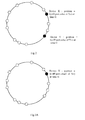
Fig.3A-Fig.3D are schematic views of steps of the method for checking the plausibility of the current output value returned by the device in the network according to the embodiments of the present disclosure. - At a time instant t1, the device X has an output value (Value1), the position of the device X in DHT at the time instant t1 is defined by the hash function h(<IP, Port, Value1 of X>). In
Fig.3A , the position of the device X in DHT at the time instant t1 is represented by a black solid circle. - At another time instant t2 immediately next to the time instant t1, the device X has an output value (Value2), the position of the device X in DHT at the time instant t2 is defined by the hash function h(<IP, Port, Value2 of X>). In
Fig.3B , the position of device X in DHT at the time instant t1 is represented by a dash circle, the position of device X in DHT at the time instant t2 is represented by a black solid circle, and the movement from the position at the time instant t1 to the position at the time instant t2 is shown by a dash curve. - That is, when the device X experiences a value change from Value1 to Value2 between the time instant t1 and the time instant t2, its location (position) in the DHT thus changes, as it must stay at the h(<IP, Port, Value of X>) address (position) in the DHT. This device X then changes its position accordingly.
- It should be clear that the position of device X in DHT at the time instant t1 represented by the dash circle does not exist actually in the round of the time instant t2 shown in
Fig.3B , the dash circle is shown just for comparison with the position of the device X at the time instant t2 represented by the black solid circle. Similarly, the dash circle does not exist actually in the round of the time instant t2 shown inFig.3C andFig.3D . - Although the network addressing information is represented by IP address (IP) and Port number (Port) in
Fig.2, Fig.3A andFig.3B , the embodiments of the present disclosure are not so limited. - When the device X computes its new position in the DHT at the time instant t2, the device X determines its immediate neighbors in the DHT at the time instant t2.
- Here, for a network comprising N nodes (i.e. devices), the device X may determine its immediate O(logN) neighbors in the DHT at the time instant t2. As an example, when N=10000, the device X determine its immediate O(log(10000)) neighbors, which can be as small as few units to very few tens of neighbors, as shown in
Fig.2C . Actually, O(logN) is an indicating value which need to be fixed once when such protocol is deployed. For example, O(logN) could be 5*logN in practice. - After determining the O(logN) immediate neighbors in the DHT, the device X informs the O(logN) immediate neighbors of its current output value Value2 at the time instant t2 and its previous output value Value1 at the time instant t1.
- Then, the O(logN) immediate neighbors check the plausibility of the current output value returned by of the device X based on the current output value Value2 and the previous
output value Value 1 of the device X. - As described above, instead a hash address is computed based on the network addressing information in the existing DHT method, a new parameter (i.e. output value) is introduced in the secure hash function. Here, the new parameter not only may be a single parameter, but also may be a combination of more than one parameters. That is, the output value may be at least one output value of the device X.
- In such a manner, when the output value of the device X is changed with time, the position (location) of the device X in the DHT is also changed. As a result, the neighbors of the device X may also be changed, and it is not possible for a lying node to collude with the changed neighbors in order to get a correct assessment for a false value.
- Now, taking any one neighbor of the device X as an example, the operations of the neighbors of the device X will be described with reference to
Figs.4-6 . -
Fig.4 is a schematic flowchart of a method for checking plausibility of a current output value returned by a device performed by a neighbor of the device according to the embodiments of the present disclosure. - At step S410, the neighbor of the device X receives the current output value Value2 at the time instant t2 and the previous output value Value1 at the time instant t1 of the device X.
- At step S420, the neighbor of the device X computes a value evolution between the current output value Value2 at the time instant t2 and the previous output value Value1 at the time instant t1 of the device X.
- At step S430, the neighbor of the device X judges whether the value evolution is greater than a predefined value evolution threshold.
- If it is judged that the value evolution between the current output value Value2 at the time instant t2 and the previous output value Value1 at the time instant t1 of the device X is greater than the predefined value evolution threshold, the neighbor of the device X can determine that the device X lies about its output value at step S440. That is, the device X exhibits an implausible value evolution.
- When the neighbor of the device X determines that the device X lies about its output value, it can also report to an operator that the device X lies about the output value at the step S440.
- The method for checking the plausibility of the current output value of the device X performed by the neighbor of the device X as shown in
Fig.4 relies on the plausibility of value evolution between the current time instant t2 and the previous time instant t1. - For instance, if the operator of a park of gateways knows from the hardware/software implementation of a given service (e.g. VoIP) that the MOS (mean opinion score) cannot drop by more than 3 units (in the [1, ..., 5] range) by less than 1 minute, if a gateway reports a value of 4, then it is trivial to see that the reported value is a lie. Similarly, if a GPS-enabled tracked device reports a position evolution that is not realistic (too fast physically), then the reported position evolution is probably a lie. Considering the collaborative navigation application, if a user claims that its position is at 100km from its previous location returned few minutes ago, then it is obvious that this new returned GPS value is false, and that the devices tries to hack the application for gaining rewards.
- If the value evolution from the previous time instant t1 to the current time instant t2 has exceeded the predefined value evolution threshold, for example, the value evolution of the above gateway has exceeded the predefined value evolution threshold 3 in 1 minute, or the value evolution of the above GPS-enable tracked device has exceeded a predefined value evolution threshold 10km in 1 minute, such value evolution is called as implausible evolution of the monitored value.
Fig.5A shows an implausible evolution of the monitored value in the value range. - Different from the implausible value evolution, a plausible value evolution between the previous output value at the previous time instant t1 and the current output value at the current time instant t2 should be less than the predefined value evolution threshold. A most probable plausible value evolution sequence (i.e. valid sequence of movement) coming from a real problem or legitimate movement of a device is shown in
Fig.5B . - When the method for checking the plausibility of the current output value of the device X performed by the neighbor of the device X shown in
Fig.4 judges that the value evolution is an implausible evolution of the monitored value, it can be determined that the monitored device lies about the monitored value. On the contrary, when the method for checking the plausibility of the current output value of the device X performed by the neighbor of the device X shown inFig.3 judges that the value evolution is a plausible evolution of the monitored value, we cannot determine that the monitored device does not lie about the monitored value. - Therefore, the method shown in
Fig.4 ensures that attacks over the returned value by an attacking device make resources of the attacking device (lying device) being exhausted. But the method shown inFig.4 cannot guarantee that the (multi-hop and sequential) sequence shown inFig.5B is not generated by an attacking device (lying device). - Actually, forcing an attacker (an attacking device or a lying device) to mimic such a sequence of value evolutions (from the initial value at the time instant t1 to the target value at the time instant tk) in the value space is intended to exhaust the resource (time, computation, for instance) of the attacker, such that the probability of such attacks is highly reduced.
- In this simple and non-intrusive (thus more general) model, we do not control the devices, but we can make the probability of attack low with such a method by making the value evolution less than in a predefined value evolution threshold.
-
Fig.6 is another schematic flowchart of the method for checking the plausibility of the current output value of the device performed by the neighbor of the device according to the embodiments of the present disclosure. - At step S610, the neighbor of the device X receives the network addressing information and previous values of previous neighbors of the device X at the previous time instant t1 from the device X.
- At step S620, the neighbor of the device X contacts each of the previous neighbors according to the position of the previous neighbor of the device X in the DHT. For example, the position of the previous neighbor of the device X may correspond to h(<IP-pre-neighbor, Port-pre-neighbor, Value-pre-neighbor>), where IP-pre-neighbor and Port-pre-neighbor represent the network addressing information of one previous neighbor at the previous time instant t1, and Value-pre-neighbor represents the previous output value of the previous neighbor at the previous time instant t1. That is to say, the neighbor of the device X at the current time instant t2 identifies the O(logN) neighbors of the previous position of the device X in the DHT at the previous time instant t1, since the neighbor of the device X at the current time instant t2 now knows the network addressing information and the previous output value of the previous neighbor of the device X at the time instant t1 and thus can recompute h(<IP-pre-neighbor, Port-pre-neighbor, Value-pre-neighbor>) of each of the previous neighbors of the device X at the current time instant t1.
- In other words, when the device X has a value change, the device X not only sends the network addressing information of its previous neighbors at the previous time instant t1, but also sends the previous output values of its previous neighbors at the previous time instant t1 to the its current neighbor at the current time instant t2. So the current neighbor of the device X at the current time instant t2 can compute h(<IP-pre-neighbor, Port-pre-neighbor, Value-pre-neighbor>), to check whether the previous neighbor corresponding to the network addressing information (IP-pre-neighbor and Port-pre-neighbor) is actually still at such computed location (position), and then interrogate the previous neighbor, to know if the claimed new value of X at t1 is correct. This is simply checked by assessing if the position of X at t1 was correct (i.e. X was indeed a neighbor of those neighboring nodes at t1). The fact that those previous neighbors are at the same location prevent colluding nodes, since a node that claims a new value and then gets a new address in the DHT cannot give its new neighbors a fake list (of actually colluding) nodes that would confirm its lie. The protocol thus conserves the invariant of nodes not being able to forge their position in the DHT, and then no being able to forge their values as well.
- At step S630, the neighbor of the device X receives acknowledge from the contacted previous neighbors. At the same time, the neighbor of the device may count acknowledges received from the previous neighbors of the device X at the previous time instant t1.
- At step S640, the neighbor of the device X judges whether number of positive acknowledges received from the previous neighbors reaches a predefined acknowledge threshold, that depends on the dynamics of the system (old neighbors may have also moved from their old position), and a bound on the number of possible colluders in the system
- If it is determined that the number of the positive acknowledges received from the previous neighbors does not reach the predefined acknowledge threshold, the neighbor of the device X can determine that the device X lies about its previous neighbors at step S650. When the neighbor of the device X determines that the device X lies about the previous neighbors of the device X, it also reports to an operator that the device X is not available at the step S650.
- Here, the predefined acknowledge threshold may ensure a majority of positive answers from the contacted previous neighbors, or may be majority minus epsilon (ε) with ε being set depending on the churn of devices in the network as devices may disappear or disconnect in the network, or move due to a change in their current output value.
- In this method, the devices in the network can watch or monitor each other in a scalable fashion, at each move or evolution step, a device X has to inform its current immediate O(logN) (or any other quantity that ensures the scalability of the method) neighbors in the DHT of its output value at the previous time instant t1, and has to perform network querying on its previous neighbors at the previous time instant t1 in the DHT. Since we cannot trust a device directly, the current neighbors of the device X at the current time instant t2 must contact the previous neighbors of the device X at the previous time instant t1 to ask if they indeed know that the value announced by the device X is correct.
- In the above described method, the hash function used by the DHT guarantees the position randomness of each single device in the overlay, and thus the randomness of the neighbors of the device that watch/monitor the device.
- In the above described method, all devices in the network that are monitored collaborate to assess value evolution, even in the presence of lying nodes (devices). The above described method is distributed over the set of monitored devices, and is then cheap for the operator. An equivalent operation could be made centrally in a cloud like environment, but may be very costly for running such a resilient service.
- Additionally, in other embodiments of the present disclosure, a periodic proof of the position of the device X may be required. For example, in the case of GPS tracking, it may be necessary for the device X to prove that the device X knows its neighbor's Wifi signals. The trustability of the device X would decrease slowly at each round, and be reset to fully trusted each time when the device X provides a proof of its position.
- Additionally, in other embodiments of the present disclosure, the current neighbors of the device X may use evidences of the previous position signed by the previous neighbors, instead of contacting the previous neighbors directly.
- Additionally, in order to save some communication, the checking may be probabilistic.
- Furthermore, the above described method is based on a simple non-intrusive software protocol, which suffices to forbid lying devices without the need for introducing specialized hardware or more complex cryptographic protocols.
- The above described method checkpoints values of applications/devices regularly to assess the plausibility of their evolution. In this checkpointing, the applications/devices are self-evaluated in a distributed fashion, this prevents the operator for having to compute many metric evolution for each device on a central point like the cloud, where computation is billed, and then costly as massive.
- To sum up, the above described method is generic, and can be used in a wide variety of contexts, where one or multiple values are sent by devices or applications, in order for an operator or management point to derive information about the evolution of those values (monitoring, tracing, logging). Particularly, if one can observe that a lying device is discarded from a network without performing point-to-point network communication with the central operator when the lying device sends a false value, then there is a great chance that the above described method is implemented in those devices.
- Furthermore, according to the embodiments of the present disclosure, there is further provided a network system comprising a plurality of monitored devices.
- For each of the monitored devices, the monitored device computes a first hash address in a distributed hash table based on network addressing information and a current output value of the monitored device; determines a predefined number of current neighboring monitored devices of the monitored device in the plurality of monitored devices in the distributed hash table; advertizes the current output value and a previous output value of the monitored device to the predefined number of current neighboring monitored devices.
- For each of the predefined number of current neighboring monitored devices of the monitor device, the current neighboring monitored device checks the availability of the monitored device.
- Optionally, each of the predefined number of current neighboring monitored devices may judge whether a value evolution between the advertized current output value and the advertized previous output value is greater than a predefined value evolution threshold; and determines and reports that the monitored device is not available if the value evolution is greater than a predefined value evolution threshold.
- Optionally, the monitored device further advertizes the first hash address and the network addressing information of the monitored device to the predefined number of current neighboring monitored devices. Each of the predefined number of current neighboring monitored devices further computes a second hash address in the distributed hash table based on the network addressing information and the current output value of the monitored device; and determines and reports that the monitored device is not available if the second hash address differs from the first hash address.
- Optionally, the monitored device further advertizes network addressing information of previous neighboring monitored devices to the predefined number of current neighbor monitored devices. Each of the predefined number of current neighboring monitored device contacts with each of the previous neighboring monitored devices; judges whether number of positive acknowledges received from the previous neighboring monitored devices reaches a predefined acknowledge threshold; and determines and reports that the device is not available if the number of positive acknowledges received from the previous neighboring monitored devices fails to reach the predefined acknowledge threshold.
- Particularly, the number of the plurality of the monitored devices in the network system is N, and the predefined number of the neighboring monitored device is O(logN).
- Furthermore, according to the embodiments of the present disclosure, there is further provided a computer program product downloadable from a communication network and/or recorded on a medium readable by computer and/or executable by a processor, comprising program code instructions for implementing the steps of the method described with reference to any one of
Fig.1 ,Fig.4 andFig.6 .
Furthermore, according to the embodiments of the present disclosure, there is further provided a non-transitory computer-readable medium comprising a computer program product recorded thereon and capable of being run by a processor, including program code instructions for implementing the steps of the method described with reference to any one ofFig.1 ,Fig.4 andFig.6 .It should be appreciated that the above embodiments are only for illustrating the principle of the present disclosure, and in no way limit the scope of the present disclosure. It will be obvious that those skilled in the art may make modifications, variations and equivalences to the above embodiments without departing from the scope of the present disclosure as defined by the following claims. Such variations and modifications are intended to be included within the scope of the present disclosure.
Claims (16)
- A method for checking plausibility of a value returned by a device, characterized by:computing, by the device, a first hash address in a distributed hash table based on network addressing information and a current output value of the device (S110);determining, by the device, a plurality of current neighbors in the distributed hash table (S120);advertizing, by the device, the current output value of the device and a previous output value of the device to the determined plurality of current neighbors (S130); andchecking, by each of the determined plurality of current neighbors, the plausibility of the current output value of the device (S140).
- Method according to claim 1, wherein said checking by each of the determined plurality of current neighbors the plausibility of the current output value of the device comprises:judging, by each of the determined plurality of current neighbors, whether a value evolution between the advertized current output value and the advertized previous output value is greater than a predefined value evolution threshold (S430); anddetermining and reporting, by each of the determined plurality of current neighbors, that the value evolution of the device is implausible if the value evolution is greater than a predefined value evolution threshold (S440).
- Method according to claim 1, further comprising:advertizing, by the device, network addressing information of previous neighbors of the device to the determined plurality of current neighbors;wherein said checking by each of the determined plurality of current neighbors the plausibility of the current output value of the device further comprises:contacting, by each of the determined plurality of current neighbors, with each of the previous neighbors;judging, by each of the determined plurality of current neighbors, whether number of positive acknowledges received from the previous neighbor device reaches a predefined acknowledge threshold; anddetermining and reporting, by each of the determined plurality of current neighbors, that the device lies if the number of positive acknowledges received from the previous neighbor device fails to reach the predefined acknowledge threshold.
- Method according to claim 1, wherein the network addressing information comprises IP address, or comprises the IP address and port number, or comprises Device ID, the IP address and the port number.
- Method according to any one of claims 1-4, wherein the device and the neighbor of the device are GPS devices, the current output value of the device is a GPS position value at a current time instant, and the previous output value of the device is a GPS position value at a previous time instant; or
the device and the neighbor of the device are home gateways, the current output value of the device is a mean opinion score at a current time instant, and the previous output value of the device is a mean opinion score at a previous time instant. - Method for checking plausibility of a value returned by a device, characterized by comprising:receiving, by a neighbor of the device at a current time instant, a current output value and a previous output value of the device (S410);judging, by the neighbor of the device, whether a value evolution between the current output value and the previous output value of the device is greater than a predefined value evolution threshold (S430); anddetermining and reporting, by the neighbor of the device, that the value evolution of the device is implausible if the value evolution is greater than the predefined value evolution threshold (S440).
- Method according to claim 6, further comprising:receiving, by the neighbor of the device, network addressing information and previous output values of previous neighbors of the device at a previous time instant from the device (S610);contacting, by the neighbor of the device, with each of the previous neighbors (S620);receiving, by the neighbor of the device, acknowledges from the previous neighbors (S630);judging, by the neighbor of the device, whether number of acknowledges received from the previous neighbors reaches a predefined acknowledge threshold (S640); anddetermining and reporting, by the neighbor of the device, that the device lies if the number of positive acknowledges received from the previous neighbors fails to reach the predefined acknowledge threshold (S650).
- Method according to claim 6, wherein the network addressing information comprises IP address, or comprises the IP address and port number, or comprises Device ID, the IP address and the port number.
- Method according to any one of claims 6-8, wherein the device and the neighbor of the device are GPS devices, the current output value of the device is a GPS position value at a current time instant, and the previous output value of the device is a GPS position value at a previous time instant; or
the device and the neighbor of the device are home gateways, the current output value of the device is a mean opinion score at a current time instant, and the previous output value of the device is a mean opinion score at a previous time instant. - A network system, comprising a plurality of monitored devices, characterized in that,
for each of the monitored devices, the monitored device computes a first hash address in a distributed hash table based on network addressing information and a current output value of the monitored device; determines a predefined number of current neighboring monitored devices of the monitored device in the plurality of monitored devices in the distributed hash table; advertizes the current output value and a previous output value of the monitored device to the predefined number of current neighboring monitored devices;
for each of the predefined number of current neighboring monitored devices of the monitor device, the current neighboring monitored device checks the plausibility of the current output value of the monitored device. - Network system according to claim 10, wherein
the current neighboring monitored device judges whether a value evolution between the advertized current output value and the advertized previous output value is greater than a predefined value evolution threshold; and determines and reports that the value evolution of the device is implausible if the value evolution is greater than a predefined value evolution threshold. - Network system according to claim 10, wherein
the monitored device further advertizes network addressing information and previous output values of previous neighboring monitored devices to the predefined number of current neighbor monitored devices; and
each of the predefined number of current neighboring monitored device contacts with each of the previous neighboring monitored devices; judges whether number of positive acknowledges received from the previous neighboring monitored devices reaches a predefined acknowledge threshold; and determines and reports that the device lies if the number of positive acknowledges received from the previous neighboring monitored devices fails to reach the predefined acknowledge threshold. - Network system according to any one of claim 10-12, wherein number of the plurality of the monitored devices is N, and the predefined number of the neighboring monitored device is O(logN).
- Checking device for checking plausibility of a value returned by a device, characterized in that the checking device is a neighbor of the device at a current time instant, comprising
a receiving module for receiving a current output value and a previous output value of the device; and
a processor for judging whether a value evolution between the current output value and the previous output value of the device is greater than a predefined value evolution threshold; and determining and reporting that the value evolution of the device is implausible if the value evolution is greater than the predefined value evolution threshold. - Computer program product downloadable from a communication network and/or recorded on a medium readable by computer and/or executable by a processor, characterized by comprising program code instructions for implementing the steps of a method according to at least one of claims 1 to 9.
- Non-transitory computer-readable medium characterized by comprising a computer program product recorded thereon and capable of being run by a processor, including program code instructions for implementing the steps of a method according to at least one of claims 1 to 9.
Priority Applications (7)
| Application Number | Priority Date | Filing Date | Title |
|---|---|---|---|
| EP14306449.1A EP2999192A1 (en) | 2014-09-19 | 2014-09-19 | Network system and method for checking plausibility of a value returned by a device |
| CN201580050331.9A CN106797395A (en) | 2014-09-19 | 2015-09-17 | The network system and method for the truthlikeness of the value that equipment is returned in verification network system |
| JP2017515236A JP2017531939A (en) | 2014-09-19 | 2015-09-17 | Network system and method for checking the plausibility of values returned by devices in a network system |
| US15/512,569 US20170288992A1 (en) | 2014-09-19 | 2015-09-17 | Network system and method for checking plausibility of value returned by device therein |
| PCT/EP2015/071286 WO2016042058A1 (en) | 2014-09-19 | 2015-09-17 | Network system and method for checking plausibility of value returned by device therein |
| KR1020177007330A KR20170060005A (en) | 2014-09-19 | 2015-09-17 | Network system and method for checking plausibility of value returned by device therein |
| EP15763611.9A EP3195569B1 (en) | 2014-09-19 | 2015-09-17 | Network system and method for checking plausibility of value returned by device therein |
Applications Claiming Priority (1)
| Application Number | Priority Date | Filing Date | Title |
|---|---|---|---|
| EP14306449.1A EP2999192A1 (en) | 2014-09-19 | 2014-09-19 | Network system and method for checking plausibility of a value returned by a device |
Publications (1)
| Publication Number | Publication Date |
|---|---|
| EP2999192A1 true EP2999192A1 (en) | 2016-03-23 |
Family
ID=51662017
Family Applications (2)
| Application Number | Title | Priority Date | Filing Date |
|---|---|---|---|
| EP14306449.1A Withdrawn EP2999192A1 (en) | 2014-09-19 | 2014-09-19 | Network system and method for checking plausibility of a value returned by a device |
| EP15763611.9A Not-in-force EP3195569B1 (en) | 2014-09-19 | 2015-09-17 | Network system and method for checking plausibility of value returned by device therein |
Family Applications After (1)
| Application Number | Title | Priority Date | Filing Date |
|---|---|---|---|
| EP15763611.9A Not-in-force EP3195569B1 (en) | 2014-09-19 | 2015-09-17 | Network system and method for checking plausibility of value returned by device therein |
Country Status (6)
| Country | Link |
|---|---|
| US (1) | US20170288992A1 (en) |
| EP (2) | EP2999192A1 (en) |
| JP (1) | JP2017531939A (en) |
| KR (1) | KR20170060005A (en) |
| CN (1) | CN106797395A (en) |
| WO (1) | WO2016042058A1 (en) |
Citations (1)
| Publication number | Priority date | Publication date | Assignee | Title |
|---|---|---|---|---|
| WO2009093215A1 (en) * | 2008-01-25 | 2009-07-30 | Nokia Corporation | Method, apparatus, and computer program product for providing device monitoring in a network |
Family Cites Families (2)
| Publication number | Priority date | Publication date | Assignee | Title |
|---|---|---|---|---|
| DE10347381B4 (en) * | 2003-10-08 | 2019-05-09 | Volkswagen Ag | Method and device for the error-protected transmission of user data |
| CN103929428B (en) * | 2014-04-24 | 2017-10-10 | 吴刚 | A kind of method for realizing vehicle electronics information system communication safety |
-
2014
- 2014-09-19 EP EP14306449.1A patent/EP2999192A1/en not_active Withdrawn
-
2015
- 2015-09-17 KR KR1020177007330A patent/KR20170060005A/en not_active Withdrawn
- 2015-09-17 JP JP2017515236A patent/JP2017531939A/en not_active Withdrawn
- 2015-09-17 EP EP15763611.9A patent/EP3195569B1/en not_active Not-in-force
- 2015-09-17 WO PCT/EP2015/071286 patent/WO2016042058A1/en not_active Ceased
- 2015-09-17 US US15/512,569 patent/US20170288992A1/en not_active Abandoned
- 2015-09-17 CN CN201580050331.9A patent/CN106797395A/en not_active Withdrawn
Patent Citations (1)
| Publication number | Priority date | Publication date | Assignee | Title |
|---|---|---|---|---|
| WO2009093215A1 (en) * | 2008-01-25 | 2009-07-30 | Nokia Corporation | Method, apparatus, and computer program product for providing device monitoring in a network |
Non-Patent Citations (2)
| Title |
|---|
| BINZENHBFER A ET AL: "A Scalable Algorithm to Monitor Chord-based P2P Systems at Runtime", PROCEEDINGS. 20TH INTERNATIONAL PARALLEL AND DISTRIBUTED PROCESSING SYMPOSIUM (IEEE CAT. NO.06TH8860), IEEE PISCATAWAY, NJ, USA, 25 April 2006 (2006-04-25), pages 1 - 8, XP010920660, ISBN: 978-1-4244-0054-6, DOI: 10.1109/IPDPS.2006.1639710 * |
| RAMSES MORALES ET AL: "AVMON: Optimal and Scalable Discovery of Consistent Availability Monitoring Overlays for Distributed Systems", DISTRIBUTED COMPUTING SYSTEMS, 2007. ICDCS '07. 27TH INTERNATIONAL CON FERENCE ON, IEEE, PI, 1 June 2007 (2007-06-01), pages 55 - 55, XP031114037, ISBN: 978-0-7695-2837-3 * |
Also Published As
| Publication number | Publication date |
|---|---|
| CN106797395A (en) | 2017-05-31 |
| US20170288992A1 (en) | 2017-10-05 |
| JP2017531939A (en) | 2017-10-26 |
| KR20170060005A (en) | 2017-05-31 |
| EP3195569A1 (en) | 2017-07-26 |
| WO2016042058A1 (en) | 2016-03-24 |
| EP3195569B1 (en) | 2018-11-07 |
Similar Documents
| Publication | Publication Date | Title |
|---|---|---|
| KR101140475B1 (en) | Peer chosen as tester for detecting misbehaving peer in structured peer-to-peer networks | |
| EP2769570B1 (en) | Mobile risk assessment | |
| Kang et al. | Hybrid routing for Man-in-the-Middle (MITM) attack detection in IoT networks | |
| CN104506392B (en) | A kind of delay machine detection method and equipment | |
| KR102041717B1 (en) | Methdo for calculating turst parameter between nodes in wireless network, method and apparatus for establishment of routing path using turst parameter | |
| Ferraz et al. | An accurate and precise malicious node exclusion mechanism for ad hoc networks | |
| RU2735235C1 (en) | Blockchain monitoring | |
| CN118677800B (en) | Mechanism for intelligent and comprehensive monitoring system using peer agents in network | |
| Guerraoui et al. | Lifting: lightweight freerider-tracking in gossip | |
| JP2014217062A (en) | Link failure diagnosis device and method | |
| Ray et al. | A novel energy-efficient scheme for RPL attacker identification in IoT networks using discrete event modeling | |
| Price et al. | Still alive: Extending keep-alive intervals in P2P overlay networks | |
| EP3195569B1 (en) | Network system and method for checking plausibility of value returned by device therein | |
| KR101207219B1 (en) | Method for protecting DDS network overload | |
| US9419877B2 (en) | Call processing time measurement device, call processing time measurement method, and program for call processing time measurement | |
| JP4542580B2 (en) | Route hijack detection method, route monitoring device, route hijack detection system, and route hijack detection program | |
| CN108616423B (en) | Offline device monitoring method and device | |
| Dragan et al. | Leader election in opportunistic networks | |
| US11153769B2 (en) | Network fault discovery | |
| CN113938844A (en) | Network connection monitoring method, system, computer device and storage medium | |
| Pecori et al. | A Balanced Trust‐Based Method to Counter Sybil and Spartacus Attacks in Chord | |
| CN116962399A (en) | A management method, device and electronic equipment for computing power nodes | |
| Yoon | AccountNet: Accountable Data Propagation Using Verifiable Peer Shuffling | |
| CN115914076B (en) | Network topology updating method and device, electronic equipment and storage medium | |
| Cavalcante et al. | Securing IPv6 wireless networks against malicious router advertisements |
Legal Events
| Date | Code | Title | Description |
|---|---|---|---|
| PUAI | Public reference made under article 153(3) epc to a published international application that has entered the european phase |
Free format text: ORIGINAL CODE: 0009012 |
|
| AK | Designated contracting states |
Kind code of ref document: A1 Designated state(s): AL AT BE BG CH CY CZ DE DK EE ES FI FR GB GR HR HU IE IS IT LI LT LU LV MC MK MT NL NO PL PT RO RS SE SI SK SM TR |
|
| AX | Request for extension of the european patent |
Extension state: BA ME |
|
| STAA | Information on the status of an ep patent application or granted ep patent |
Free format text: STATUS: THE APPLICATION IS DEEMED TO BE WITHDRAWN |
|
| 18D | Application deemed to be withdrawn |
Effective date: 20160924 |