EP2997382B1 - Alkylchinolone als biomarker von pseudomonas-aeruginosa-infektionen und verwendungen davon - Google Patents
Alkylchinolone als biomarker von pseudomonas-aeruginosa-infektionen und verwendungen davon Download PDFInfo
- Publication number
- EP2997382B1 EP2997382B1 EP14737297.3A EP14737297A EP2997382B1 EP 2997382 B1 EP2997382 B1 EP 2997382B1 EP 14737297 A EP14737297 A EP 14737297A EP 2997382 B1 EP2997382 B1 EP 2997382B1
- Authority
- EP
- European Patent Office
- Prior art keywords
- group
- formula
- aeruginosa
- compounds
- infection
- Prior art date
- Legal status (The legal status is an assumption and is not a legal conclusion. Google has not performed a legal analysis and makes no representation as to the accuracy of the status listed.)
- Active
Links
- 0 CC(C(Nc1ccccc11)=O)(*1=O)O Chemical compound CC(C(Nc1ccccc11)=O)(*1=O)O 0.000 description 2
Images








Classifications
-
- G—PHYSICS
- G01—MEASURING; TESTING
- G01N—INVESTIGATING OR ANALYSING MATERIALS BY DETERMINING THEIR CHEMICAL OR PHYSICAL PROPERTIES
- G01N33/00—Investigating or analysing materials by specific methods not covered by groups G01N1/00 - G01N31/00
- G01N33/48—Biological material, e.g. blood, urine; Haemocytometers
- G01N33/50—Chemical analysis of biological material, e.g. blood, urine; Testing involving biospecific ligand binding methods; Immunological testing
- G01N33/53—Immunoassay; Biospecific binding assay; Materials therefor
- G01N33/569—Immunoassay; Biospecific binding assay; Materials therefor for microorganisms, e.g. protozoa, bacteria, viruses
- G01N33/56911—Bacteria
-
- C—CHEMISTRY; METALLURGY
- C12—BIOCHEMISTRY; BEER; SPIRITS; WINE; VINEGAR; MICROBIOLOGY; ENZYMOLOGY; MUTATION OR GENETIC ENGINEERING
- C12Q—MEASURING OR TESTING PROCESSES INVOLVING ENZYMES, NUCLEIC ACIDS OR MICROORGANISMS; COMPOSITIONS OR TEST PAPERS THEREFOR; PROCESSES OF PREPARING SUCH COMPOSITIONS; CONDITION-RESPONSIVE CONTROL IN MICROBIOLOGICAL OR ENZYMOLOGICAL PROCESSES
- C12Q1/00—Measuring or testing processes involving enzymes, nucleic acids or microorganisms; Compositions therefor; Processes of preparing such compositions
- C12Q1/02—Measuring or testing processes involving enzymes, nucleic acids or microorganisms; Compositions therefor; Processes of preparing such compositions involving viable microorganisms
- C12Q1/04—Determining presence or kind of microorganism; Use of selective media for testing antibiotics or bacteriocides; Compositions containing a chemical indicator therefor
-
- C—CHEMISTRY; METALLURGY
- C07—ORGANIC CHEMISTRY
- C07D—HETEROCYCLIC COMPOUNDS
- C07D215/00—Heterocyclic compounds containing quinoline or hydrogenated quinoline ring systems
- C07D215/02—Heterocyclic compounds containing quinoline or hydrogenated quinoline ring systems having no bond between the ring nitrogen atom and a non-ring member or having only hydrogen atoms or carbon atoms directly attached to the ring nitrogen atom
- C07D215/16—Heterocyclic compounds containing quinoline or hydrogenated quinoline ring systems having no bond between the ring nitrogen atom and a non-ring member or having only hydrogen atoms or carbon atoms directly attached to the ring nitrogen atom with hetero atoms or with carbon atoms having three bonds to hetero atoms with at the most one bond to halogen, e.g. ester or nitrile radicals, directly attached to ring carbon atoms
- C07D215/20—Oxygen atoms
- C07D215/22—Oxygen atoms attached in position 2 or 4
-
- C—CHEMISTRY; METALLURGY
- C07—ORGANIC CHEMISTRY
- C07D—HETEROCYCLIC COMPOUNDS
- C07D215/00—Heterocyclic compounds containing quinoline or hydrogenated quinoline ring systems
- C07D215/02—Heterocyclic compounds containing quinoline or hydrogenated quinoline ring systems having no bond between the ring nitrogen atom and a non-ring member or having only hydrogen atoms or carbon atoms directly attached to the ring nitrogen atom
- C07D215/16—Heterocyclic compounds containing quinoline or hydrogenated quinoline ring systems having no bond between the ring nitrogen atom and a non-ring member or having only hydrogen atoms or carbon atoms directly attached to the ring nitrogen atom with hetero atoms or with carbon atoms having three bonds to hetero atoms with at the most one bond to halogen, e.g. ester or nitrile radicals, directly attached to ring carbon atoms
- C07D215/20—Oxygen atoms
- C07D215/24—Oxygen atoms attached in position 8
-
- C—CHEMISTRY; METALLURGY
- C07—ORGANIC CHEMISTRY
- C07D—HETEROCYCLIC COMPOUNDS
- C07D215/00—Heterocyclic compounds containing quinoline or hydrogenated quinoline ring systems
- C07D215/02—Heterocyclic compounds containing quinoline or hydrogenated quinoline ring systems having no bond between the ring nitrogen atom and a non-ring member or having only hydrogen atoms or carbon atoms directly attached to the ring nitrogen atom
- C07D215/16—Heterocyclic compounds containing quinoline or hydrogenated quinoline ring systems having no bond between the ring nitrogen atom and a non-ring member or having only hydrogen atoms or carbon atoms directly attached to the ring nitrogen atom with hetero atoms or with carbon atoms having three bonds to hetero atoms with at the most one bond to halogen, e.g. ester or nitrile radicals, directly attached to ring carbon atoms
- C07D215/20—Oxygen atoms
- C07D215/24—Oxygen atoms attached in position 8
- C07D215/26—Alcohols; Ethers thereof
-
- C—CHEMISTRY; METALLURGY
- C07—ORGANIC CHEMISTRY
- C07H—SUGARS; DERIVATIVES THEREOF; NUCLEOSIDES; NUCLEOTIDES; NUCLEIC ACIDS
- C07H17/00—Compounds containing heterocyclic radicals directly attached to hetero atoms of saccharide radicals
- C07H17/02—Heterocyclic radicals containing only nitrogen as ring hetero atoms
-
- C—CHEMISTRY; METALLURGY
- C07—ORGANIC CHEMISTRY
- C07K—PEPTIDES
- C07K16/00—Immunoglobulins [IG], e.g. monoclonal or polyclonal antibodies
- C07K16/12—Immunoglobulins [IG], e.g. monoclonal or polyclonal antibodies against material from bacteria
- C07K16/1203—Gram-negative bacteria
- C07K16/1214—Pseudomonadaceae (F)
-
- G—PHYSICS
- G01—MEASURING; TESTING
- G01N—INVESTIGATING OR ANALYSING MATERIALS BY DETERMINING THEIR CHEMICAL OR PHYSICAL PROPERTIES
- G01N33/00—Investigating or analysing materials by specific methods not covered by groups G01N1/00 - G01N31/00
- G01N33/48—Biological material, e.g. blood, urine; Haemocytometers
- G01N33/50—Chemical analysis of biological material, e.g. blood, urine; Testing involving biospecific ligand binding methods; Immunological testing
- G01N33/84—Chemical analysis of biological material, e.g. blood, urine; Testing involving biospecific ligand binding methods; Immunological testing involving inorganic compounds or pH
-
- G—PHYSICS
- G01—MEASURING; TESTING
- G01N—INVESTIGATING OR ANALYSING MATERIALS BY DETERMINING THEIR CHEMICAL OR PHYSICAL PROPERTIES
- G01N2333/00—Assays involving biological materials from specific organisms or of a specific nature
- G01N2333/195—Assays involving biological materials from specific organisms or of a specific nature from bacteria
- G01N2333/21—Assays involving biological materials from specific organisms or of a specific nature from bacteria from Pseudomonadaceae (F)
-
- G—PHYSICS
- G01—MEASURING; TESTING
- G01N—INVESTIGATING OR ANALYSING MATERIALS BY DETERMINING THEIR CHEMICAL OR PHYSICAL PROPERTIES
- G01N2469/00—Immunoassays for the detection of microorganisms
- G01N2469/10—Detection of antigens from microorganism in sample from host
Definitions
- the present invention relates to novel biomarkers for determining the Pseudomonas aeruginosa or related organism infection status of a subject, and to uses of the novel biomarkers.
- Pseudomonas aeruginosa is an opportunistic gram negative bacterium able to infect susceptible individuals with airways diseases such as cystic fibrosis, bronchiectasis and COPD although it can also infect other body parts including wounds and also catheters and prosthetic replacements.
- P. aeruginosa may also be an important pathogen with regard to other widespread respiratory diseases such as chronic obstructive pulmonary disease (COPD), with P. aeruginosa being implicated in exacerbations in up to 31% of patients with COPD growing P. aeruginosa in their sputum and P. aeruginosa acquisition being associated with acute exacerbations of disease.
- COPD chronic obstructive pulmonary disease
- the invention provides a method of determining the P. aeruginosa or related species infection status of a subject comprising:
- R may be a saturated chain selected from the group comprising: n-C 5 H 11 , n-C 6 H 13 , n-C 7 H 15 , n-C 8 H 17 , n-C 9 H 19 , n-C 10 H 21 , n-C 11 H 23 , n-C 12 H 25 and n-C 13 H 27 ; or R may be an unsaturated chain selected from the group comprising: n-C 5 H 9 , n-C 6 H 11 , n-C 7 H 13 , n-C 8 H 15 , n-C 9 H 17 , n-C 10 H 19 , n-C 11 H 21 , n-C 12 H 23 and n-C 13 H 25 .
- R may be a saturated chain selected from the group comprising: n-C 5 H 11 , n-C 6 H 13 , n-C 7 H 15 , n-C 8 H 17 , n-C 9 H 19 , n-C 10 H 21 , n-C 11 H 23 and n-C 13 H 27 ; or R may be an unsaturated chain selected from the group comprising: n-C 5 H 9 , n-C 6 H 11 , n-C 7 H 13 , n-C 8 H 15 , n-C 9 H 17 , n-C 10 H 19 , n-C 11 H 21 , n-C 12 H 23 and n-C 13 H 25 .
- R may be a saturated chain selected from the group comprising: n-C 5 H 11 , n-C 6 H 13 , n-C 7 H 15 , n-C 8 H 17 , n-C 9 H 19 , n-C 10 H 21 , n-C 11 H 23 , n-C 12 H 25 and n-C 13 H 27 ; or R may be an unsaturated chain selected from the group comprising: n-C 5 H 9 , n-C 6 H 11 , n-C 7 H 13 , n-C 8 H 15 , n-C 9 H 17 , n-C 10 H 19 , n-C 11 H 21 , n-C 12 H 23 and n-C 13 H 25 .
- Formula III and Formula IV R may be a saturated chain selected from the group comprising: n-C 7 H 15 , n-C 8 H 17 , n-C 9 H 19 and n-C 11 H 23 .
- R may be a saturated chain selected from the group comprising: n-C 5 H 11 , n-C 6 H 13 , n-C 7 H 15 , n-C 8 H 17 , n-C 9 H 19 , n-C 10 H 21 , n-C 11 H 23 , n-C 12 H 25 and n-C 13 H 27 ; or R may be an unsaturated chain selected from the group comprising: n-C 5 H 9 , n-C 6 H 11 , n-C 7 H 13 , n-C 8 H 15 , n-C 9 H 17 , n-C 10 H 19 , n-C 11 H 21 , n-C 12 H 23 and n-C 13 H 25 .
- R may be a saturated chain selected from the group comprising n-C 5 H 11 , n-C 6 H 13 , n-C 7 H 15 , n-C 8 H 17 , n-C 9 H 19 , n-C 10 H 21 and n-C 11 H 23 ; or R may be an unsaturated chain selected from the group comprising: n-C 7 H 13 , n-C 8 H 15 , n-C 9 H 17 , n-C 10 H 19 , n-C 11 H 21 , and n-C 12 H 23 .
- R may be a saturated chain selected from the group comprising: n-C 5 H 11 , n-C 6 H 13 , n-C 7 H 15 , n-C 8 H 17 , n-C 9 H 19 , n-C 10 H 21 , n-C 11 H 23 , n-C 12 H 25 and n-C 13 H 27 ; or R may be an unsaturated chain selected from the group comprising: n-C 5 H 9 , n-C 6 H 11 , n-C 7 H 13 , n-C 8 H 15 , n-C 9 H 17 , n-C 10 H 19 , n-C 11 H 21 , n-C 12 H 23 and n-C 13 H 25 .
- R may be a saturated chain selected from the group comprising n-C 5 H 11 , n-C 6 H 13 , n-C 7 H 15 , n-C 8 H 17 , n-C 9 H 19 and n-C 11 H 23 ; or R may be an unsaturated chain selected from the group comprising: n-C 5 H 9 , n-C 7 H 13 and n-C 9 H 17 .
- the double bond may be between ⁇ and ⁇ carbons of the chain, and may be in a cis- or trans- configuration.
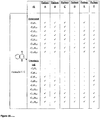
- the one or more alkyl quinolones in the method of the invention are selected from group comprising compounds of Formula I or Formula II wherein the R group is n-C 7 H 15 , n-C 9 H 19 , or n-C 11 H 23 ; compounds of Formula III and Formula IV wherein the R group is n-C7H 15 , n-C 9 H 19 , or n-C 11 H 23 ; and compounds of Formula V or Formula VI wherein the R group is n-C 7 H 15 or n-C 9 H 19 .
- the one or more alkyl quinolones in the method of the invention are selected from group comprising compounds of compounds of Formula I wherein the R group is n-C 7 H 15 , n-C 9 H 19 , or n-C 11 H 23 ; Formula III wherein the R group is n-C 7 H 15 , n-C 9 H 19 , or n-C 11 H 23 ; and compounds of Formula V wherein the R group is n-C 7 H 15 or n-C 9 H 19 .
- the one or more alkyl quinolones are selected from the group comprising compounds of Formula I, II, III, IV, V and VI wherein the R group is n-C 7 H 15 .
- the one or more alkyl quinolones are selected from the group comprising compounds of Formula I, III and V wherein the R group is n-C 7 H 15 .
- Alkyl quinolones can undergo intramolecular rearrangements to give tautomeric forms of the same compound, for example Formula I and Formula II are two tautomeric forms of the same compound, Formula III and Formula IV are two tautomeric forms of the same compound, Formula V and Formula VI are two tautomeric forms of the same compound, Formula VII and Formula VIII are two tautomeric forms of the same compound, and Formula IX, Formula X and Formula X1 are three tautomeric forms of the same compound.
- the predominance of one tautomeric form over the other is thought to be largely determined by the pH. At physiological pH, the compounds of Formula I, III, V, VII and X are the predominant forms (as indicated by the arrows).
- Reference herein to metabolites of the alkyl quinolones is intended to encompass all metabolites of the alkyl quinolones that arise due to degradation and/or modification of the compounds in a subject.
- the compounds are often modified and/or degraded in order to facilitate excretion.
- Metabolites of a compound of Formula I are depicted below as Formulae Ib to Ih.
- the compound of Formula I depicted as Formula 1a may also be referred to as HHQ - 2-heptyl-4(1 H )-quinolone.
- n-C 7 H 15 could be substituted with any other suggested R group and corresponding metabolites may form.
- comparable metabolites would form if the starting compound was of Formula II (a tautomeric form of the compound of Formula I depicted in the figure as Formula 1aa).
- Metabolites of a compound of Formula III are depicted below as Formulae IIIb - IIIf.
- the compound of Formula IIIa depicted may also be referred to as C7-PQS - 2-heptyl-3-hydroxy-4(1H)-quinolone.
- n-C 7 H 15 could be substituted with any other suggested R group and corresponding metabolites may form.
- comparable metabolites would form if the starting compound was of Formula IV (a tautomeric form of the compound of Formula III).
- Metabolites of a compounds of Formula V referred to in the scheme below as Formula Va in which the R group is n-C 7 H 15 , are depicted below as Formulae Vb - Vi.
- the compound of Formula Va depicted is HQNO - 2-heptyl-4-hydroxyquinoline N-oxide.
- n-C 7 H 15 could be substituted with any other suggested R group and corresponding metabolites may form.
- comparable metabolites would form if the starting compound was of Formula VI (a tautomeric form of the compound of Formula V).
- Compounds of Formula VII, VIII, IX and X may form metabolites similar to those formed for compounds I, II, III, IV, V and VI, due to the similar molecular structure and positioning of functional groups. Such metabolites would be easily predicted and identified by the skilled person.
- Species related to P. aeruginosa include closely phylogenetically related bacteria such as Burkholderia spp. Closely related Burkholderia spp may include the Burkholderia cenocepacia complex, which are also major causes of respiratory infections in cystic fibrosis and Burkholderia pseudomallei, the causative agent of the tropical disease meliodosis.
- Infection status includes any distinguishable manifestation of infection by P. aeruginosa or a related species.
- infection status includes, without limitation, the presence or absence of infection, the level of infection, the progression of an infection, and the effectiveness or response of a subject to a particular treatment for infection.
- the method of the invention is able to diagnose infection at levels below that which would be needed to detect infection by standard microbiological techniques.
- the method of the invention may, for example, be used for one or more of the following; to diagnose whether or not a subject has P. aeruginosa, or related species, infection; to quantify the infectious load of an infection by P. aeruginosa , or a related species, in a subject; to advise on the prognosis for a subject with P. aeruginosa , or a related species, infection including the onset of an exacerbation; and to monitor effectiveness or response of a subject to a particular treatment for infection by P. aeruginosa , or a related species.
- the sample is blood, or urine.
- a sample of blood may be whole blood, blood plasma or blood serum.
- the level of one or more alkyl quinolones or metabolites thereof produced by P. aeruginosa or a related species in a sample may be determined by any suitable method. Such methods include mass spectrometry, immunoassays and biosensors.
- the biosensor may be a genetically engineered bacterium which responds to a specific molecule by, for example, changing colour or emitting light or fluorescence.
- the method of the invention does not include the step of obtaining the sample.
- the method of the invention is carried out in vitro.
- the subject may be a mammal, and is preferably a human, but may alternatively be a monkey, ape, cat, dog, cow, horse, rabbit or rodent.
- Negative control incubations were performed without the NADPH generating system or by using heat denatured (60 oC for 5 min) microsomal suspension. Enzymatic activity was quenched by the addition of 3 volumes of ice-cold MeOH. Centrifugation (5 min at 13000 r.p.m.) was conducted to sediment precipitated protein. The clarified supernatant was removed and diluted to a total volume of 10 ml prior to analysis by mass spectrometry.
- Thermo Exactive mass spectrometer Hemel Hempstead, U.K.
- Instrument control, data collection and analysis were conducted using Xcalibur software (version 2.1.0).
- the chromatographic separation was achieved using a Phenomenex (Macclesfield, U.K.) Gemini C18 reversed-phase column (3.0 ⁇ m, 100 x 3.0 mm) with an appropriate guard column, maintained at 50 oC, using a mobile phase flow rate set at 450 ⁇ l/min.
- Mobile phases consisted of aqueous 0.1 % (v/v) formic acid (A) and 0.1 % (v/v) formic acid in MeOH (B).
- the binary gradient began initially at 10 % B and ran isocratically for the first 1 min before increasing linearly to 99 % B over 9 min. After a further 5 min at this composition, the gradient was returned to 10 % B over the next 1 min and allowed to re-equilibrate for 4 min (total run time of 20 min per sample).
- Sample temperature was maintained at 4 oC in the auto-sampler prior to analysis.
- the mass spectrometer was operated in positive ionization mode with a heated electrospray ionization (HESI) probe.
- the electrospray settings were: spray voltage: 4kV, capillary temperature: 350 °C, sheath gas: 40, auxiliary gas: 25, sweep gas: 5 and heater temperature: 350 °C.
- MRM Multiple reaction monitoring
- MS 2 analysis of metabolites were conducted on a 4000 QTRAP hybrid triple-quadrupole linear ion trap mass spectrometer (Applied Biosystem, Foster City, USA) equipped with a Turbo-Ion source and a Shimadzu series 10AD VP LC system (Shimadzu, Columbia, USA).
- Analyst software version 1.4.1 was used for instrument control, data acquisition and processing.
- Source parameters were set as: curtain gas: 20.0, ion source potential: 5000 V, temperature: 450 °C, nebulizer gas: 20.0, and auxiliary gas: 15.0.
- Analysis was conducted either as a MRM only method or with MRM used as a survey scan to trigger the acquisition of enhanced product ions in an information dependant acquisition (MRM-IDA-EPI). Chromatographic conditions used were as previously described.
- SPE was applied to prepare both urine and plasma samples.
- SPE cartridges Waters Oasis hydrophilic-lipophilic balanced (HLB) reversed phase sorbent extraction cartridges, 60 mg
- HLB Hydrophilic-lipophilic balanced
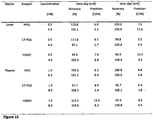
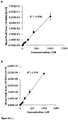
- Blank samples (1.0 ml of urine and 0.5 ml of plasma) from healthy (non-CF) volunteer donors, spiked with 10 ⁇ l of IS solution (1.0 ⁇ mol/L PQS-d4 in methanol), were further spiked with 50 ⁇ l of an AQ mix prepared at a range of concentrations (0, 5, 15, 30, 60 and 100 nM), giving an overall calibration range of 0-5 nM and 0-10 nM for urine and plasma respectively.
- QC standards were prepared similarly, spiking blank samples with 50 ⁇ l of the AQ mix at 10 and 80 nM producing plasma QC samples of 1 and 8 nM, or 0.5 and 4 nM for urine.
- Extracts of sputum samples for LC-MS/MS analysis were prepared by solvent extraction. Up to 1.0 mL of 50% (v/v) sputum suspension was spiked with 10 ⁇ L of an internal standard (1.0 ⁇ mol/L PQS-d4 in methanol), and extracted in triplicate with 0.5 mL volumes of 0.01% (v/v) acetic acid in ethyl acetate. After the addition of acidified solvent the samples were vortex-mixed for approximately 1 min and centrifuged (3 min at 12,000 g) with the analytes of interest partitioning into the organic phase. The combined organic extracts were dried under vacuum.
- an internal standard 1.0 ⁇ mol/L PQS-d4 in methanol
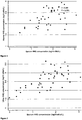
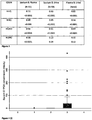
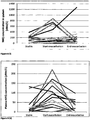
- alkyl quinolones and metabolites thereof can be detected in vivo in blood and urine from cystic fibrosis patients with P. aeruginosa infection, but not in biological fluids from CF patients without previous infection with this bacterium or negative healthy controls. This provides evidence that alkyl quinolones and metabolites thereof are biomarkers for P. aeruginosa infection.
- alkyl quinolones and metabolites thereof in blood and urine from CF patients correlate with quantitative load of P. aeruginosa in the lung, as measured by traditional microbiological culture techniques.
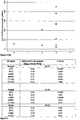
- alkyl quinolones and metabolites thereof can be used as biomarkers for monitoring efficacy of clinical treatment interventions.
- Alkyl quinolones and metabolites thereof can also be detected in vivo from patients with CF with 'early' or 'intermittent' P. aeruginosa infection, who are not currently chronically infected with this bacterium.
- alkyl quinolones and metabolites thereof can be used to facilitate the early detection of P. aeruginosa infection, potentially permitting more timely eradication therapy.
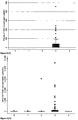
- alkyl quinolones and metabolites thereof are elevated in blood and urine samples at the start of a pulmonary exacerbation and that they decrease following the administration of systemic anti-pseudomonal antibiotics in CF patients with chronic P. aeruginosa infection.
- alkyl quinolones and metabolites thereof are systemic markers of the virulence of the bacteria, which correlate with the clinical status in the host.
Landscapes
- Chemical & Material Sciences (AREA)
- Organic Chemistry (AREA)
- Health & Medical Sciences (AREA)
- Life Sciences & Earth Sciences (AREA)
- Engineering & Computer Science (AREA)
- Molecular Biology (AREA)
- Immunology (AREA)
- Biochemistry (AREA)
- General Health & Medical Sciences (AREA)
- Biotechnology (AREA)
- Urology & Nephrology (AREA)
- Biomedical Technology (AREA)
- Hematology (AREA)
- Genetics & Genomics (AREA)
- Proteomics, Peptides & Aminoacids (AREA)
- Physics & Mathematics (AREA)
- Microbiology (AREA)
- Analytical Chemistry (AREA)
- Medicinal Chemistry (AREA)
- Wood Science & Technology (AREA)
- Zoology (AREA)
- Cell Biology (AREA)
- Biophysics (AREA)
- Pathology (AREA)
- General Physics & Mathematics (AREA)
- Food Science & Technology (AREA)
- Toxicology (AREA)
- Inorganic Chemistry (AREA)
- Bioinformatics & Cheminformatics (AREA)
- General Engineering & Computer Science (AREA)
- Tropical Medicine & Parasitology (AREA)
- Virology (AREA)
- Investigating Or Analysing Biological Materials (AREA)
- Pharmaceuticals Containing Other Organic And Inorganic Compounds (AREA)
- Other Investigation Or Analysis Of Materials By Electrical Means (AREA)
Claims (9)
- Verfahren zum Ermitteln des Infektionsstatus eines Subjekts mit P. aeruginosa oder verwandter Gattungen, umfassend:(a) Vorsehen einer Blut- oder Harnprobe, die vom Subjekt erhalten wird;(b) Ermitteln des Wertes eines oder mehrerer Alkylchinolone oder Metaboliten davon, die durch P. aeruginosa oder eine verwandte Gattung produziert werden, in der Probe;wobei eine mit P. aeruginosa verwandte Gattung Burkholderia spp. ist.
- Verfahren nach Anspruch 1 zur Verwendung bei einer Diagnose einer Infektion bei Werten unter jenen, die zum Nachweisen einer Infektion durch mikrobiologische Standardtechniken erforderlich wären.
- Verfahren nach Anspruch 1, zur Verwendung in einem oder mehreren der folgenden:
Diagnose, ob ein Subjekt eine Infektion mit P. aeruginosa oder verwandten Gattungen hat; Quantifizieren der Infektionsbelastung einer Infektion durch P. aeruginosa oder eine verwandte Gattung in einem Subjekt; Beratung bezüglich der Prognose für ein Subjekt mit einer Infektion mit P. aeruginosa oder einer verwandten Gattung, einschließlich des Beginns einer Verschlimmerung; und Überwachen der Wirksamkeit einer Reaktion eines Subjekts auf eine bestimmte Behandlung der Infektion mit P. aeruginosa oder einer verwandten Gattung. - Verfahren nach einem vorangehenden Anspruch, wobei der Wert eines oder mehrerer Alkylchinolone oder Metaboliten davon, die durch P. aeruginosa oder eine verwandte Gattung produziert werden, in der Probe durch Massenspektrometrie, Immunoassays oder unter Verwendung eines Biosensors ermittelt wird.
- Verfahren nach einem der Ansprüche 1 bis 4, wobei das eine oder die mehreren Alkylchinolone ausgewählt sind aus der Gruppe umfassend Verbindungen von Formel I bis Formel XI:


- Verfahren nach Anspruch 5, wobei ein oder mehrere Alkylchinolone ausgewählt sind aus der Gruppe umfassend Verbindungen von Formel I oder Formel II, wobei die R-Gruppe eine gesättigte Kette ist, ausgewählt aus der Gruppe umfassend: n-C5H11, n-C6H13, n-C7H15, n-C8H17, n-C9H19, n-C10H21, n-C11H23 und n-C13H27, oder die R-Gruppe eine ungesättigte Kette ist, ausgewählt aus der Gruppe umfassend: n-C5H9, n-C6H11, n-C7H13, n-C8H15, n-C9H17, n-C10H19, n-C11H21, n-C12H23 und n-C13H25; und/oder Verbindungen von Formel III und Formel IV, wobei die R-Gruppe eine gesättigte Kette ist, ausgewählt aus der Gruppe umfassend: n-C7H15, n-C8H17, n-C9H19 und n-C11H23; und/oder Verbindungen von Formel V und Formel VI, wobei die R-Gruppe eine gesättigte Kette ist, ausgewählt aus der Gruppe umfassend: n-C5H11, n-C6H13, n-C7H15, n-C8H17, n-C9H19, n-C10H21 und n-C11H23, oder die R-Gruppe eine ungesättigte Kette ist, ausgewählt aus der Gruppe umfassend: n-C7H13, n-C8H15, n-C9H17, n-C10H10, n-CnH21 und n-C12H23; und/oder Verbindungen von Formel VII und Formel VIII, wobei die R-Gruppe eine gesättigte Kette ist, ausgewählt aus der Gruppe umfassend: n-C5H11, n-C6H13, n-C7H15, n-C8H17, n-C9H19 und n-C11H23, oder die R-Gruppe eine ungesättigte Kette ist, ausgewählt aus der Gruppe umfassend: n-C5H9, n-C7H13 und n-C9H17.
- Verfahren nach Anspruch 5, wobei ein oder mehrere Alkylchinolone ausgewählt sind aus der Gruppe umfassend Verbindungen von Formel I oder Formel II, wobei die R-Gruppe n-C7H15, n-C9H19 oder n-C11H23 ist; Verbindungen von Formel III und Formel IV, wobei die R-Gruppe n-C7H15, n-C9H19 oder n-C11H23 ist; und Verbindungen von Formel V und Formel VI, wobei die R-Gruppe n-C7H15 oder n-C9H19 ist.
- Verfahren nach einem der Ansprüche 1 bis 4, wobei der eine oder die mehreren Metaboliten eines Alkylchinolons ausgewählt sind aus der Gruppe umfassend:die Verbindungen von Formeln Ib bis Ih, wobei n-C7H15 mit einer anderen geeigneten R-Gruppe substituiert sein kann, um entsprechende Metaboliten zu bilden, und die Ausgangsverbindung alternativ eine Verbindung von Formel II sein kann
 die Verbindungen von Formeln IIIb bis IIIf, wobei n-C7H15 mit einer anderen geeigneten R-Gruppe substituiert sein kann, um entsprechende Metaboliten zu bilden, und die Ausgangsverbindung alternativ eine Verbindung von Formel IV sein kann:
 die Verbindungen von Formeln Vb bis Vi, wobei n-C7H15 mit einer anderen geeigneten R-Gruppe substituiert sein kann, um entsprechende Metaboliten zu bilden, und die Ausgangsverbindung alternativ eine Verbindung von Formel VI sein kann:
 Und Verbindungen, die von Verbindungen von Formeln VII, VIII, IX und X abgeleitet sind, die ähnlich jenen sind, die unter Bezugnahme auf Formeln I bis VI beschrieben sind.
 - Verfahren nach einem der Ansprüche 1 bis 4, wobei das eine oder die mehreren Alkylchinolone ausgewählt sind aus der Gruppe umfassend HHQ, C7-PQS, C9PQS, NHQ, NQNO und HQNO.
Applications Claiming Priority (2)
| Application Number | Priority Date | Filing Date | Title |
|---|---|---|---|
| GBGB1308639.2A GB201308639D0 (en) | 2013-05-14 | 2013-05-14 | Biomarkers and uses of thereof |
| PCT/GB2014/051458 WO2014184535A1 (en) | 2013-05-14 | 2014-05-13 | Alkyl quinolones as biomarkers of pseudomonas aeruginosa infection and uses thereof |
Publications (2)
| Publication Number | Publication Date |
|---|---|
| EP2997382A1 EP2997382A1 (de) | 2016-03-23 |
| EP2997382B1 true EP2997382B1 (de) | 2018-07-11 |
Family
ID=48672293
Family Applications (1)
| Application Number | Title | Priority Date | Filing Date |
|---|---|---|---|
| EP14737297.3A Active EP2997382B1 (de) | 2013-05-14 | 2014-05-13 | Alkylchinolone als biomarker von pseudomonas-aeruginosa-infektionen und verwendungen davon |
Country Status (4)
| Country | Link |
|---|---|
| US (1) | US10139406B2 (de) |
| EP (1) | EP2997382B1 (de) |
| GB (1) | GB201308639D0 (de) |
| WO (1) | WO2014184535A1 (de) |
Families Citing this family (1)
| Publication number | Priority date | Publication date | Assignee | Title |
|---|---|---|---|---|
| WO2021198064A1 (en) * | 2020-03-31 | 2021-10-07 | Consejo Superior De Investigaciones Científicas | In vitro method for detection of infections caused by pseudomonas aeruginosa |
Family Cites Families (1)
| Publication number | Priority date | Publication date | Assignee | Title |
|---|---|---|---|---|
| US20040002130A1 (en) * | 2002-06-27 | 2004-01-01 | Pesci Everett C. | Disruption of PQS synthesis using precursor analogs |
-
2013
- 2013-05-14 GB GBGB1308639.2A patent/GB201308639D0/en not_active Ceased
-
2014
- 2014-05-13 US US14/891,242 patent/US10139406B2/en active Active
- 2014-05-13 WO PCT/GB2014/051458 patent/WO2014184535A1/en not_active Ceased
- 2014-05-13 EP EP14737297.3A patent/EP2997382B1/de active Active
Non-Patent Citations (1)
| Title |
|---|
| None * |
Also Published As
| Publication number | Publication date |
|---|---|
| EP2997382A1 (de) | 2016-03-23 |
| US20160131648A1 (en) | 2016-05-12 |
| WO2014184535A1 (en) | 2014-11-20 |
| GB201308639D0 (en) | 2013-06-19 |
| US10139406B2 (en) | 2018-11-27 |
Similar Documents
| Publication | Publication Date | Title |
|---|---|---|
| Mellors et al. | Identification of Mycobacterium tuberculosis using volatile biomarkers in culture and exhaled breath | |
| Young et al. | In vivo biosynthesis of terpene nucleosides provides unique chemical markers of Mycobacterium tuberculosis infection | |
| Le Gall et al. | Proposal of a quantitative PCR-based protocol for an optimal Pseudomonas aeruginosa detection in patients with cystic fibrosis | |
| Bruin et al. | Identification of Haemophilus influenzae and Haemophilus haemolyticus by matrix-assisted laser desorption ionization-time of flight mass spectrometry | |
| CN113430204B (zh) | 一种特异性检测环丙沙星的裂开型核酸适配体及其应用 | |
| CN112410472B (zh) | 检测肺炎支原体、肺炎衣原体及腺病毒的引物探针组合及检测试剂盒 | |
| Lau et al. | Metabolomic profiling of Burkholderia pseudomallei using UHPLC-ESI-Q-TOF-MS reveals specific biomarkers including 4-methyl-5-thiazoleethanol and unique thiamine degradation pathway | |
| Biendo et al. | Value of Xpert MRSA/SA blood culture assay on the Gene Xpert® Dx System for rapid detection of Staphylococcus aureus and coagulase-negative staphylococci in patients with staphylococcal bacteremia | |
| US10408836B2 (en) | Methods of detecting influenza virus | |
| CA2998873A1 (en) | Methods and compositions for detecting mycotoxins | |
| Hintzen et al. | Volatile organic compounds in headspace characterize isolated bacterial strains independent of growth medium or antibiotic sensitivity | |
| EP2758069B1 (de) | Verfahren zur vorhersage des vorhandenseins von entzündungen oder itaconsäure, irg1 und/oder des proteins irg1 im körper eines patienten und pharmazeutische zusammensetzung zur behandlung oder prävention von entzündungen | |
| US12306175B2 (en) | Biomarkers for detection and treatment assessment of infectious diseases and disorders | |
| EP2997382B1 (de) | Alkylchinolone als biomarker von pseudomonas-aeruginosa-infektionen und verwendungen davon | |
| Seo et al. | Onsite detection of airborne antibiotic-resistant bacteria via Cas9 nickase-triggered amplification reactions | |
| US11634717B2 (en) | DNA aptamer specifically binding to TB7.7, and use thereof | |
| Kawamoto et al. | Performance evaluation of the MALDI Biotyper Selective Testing of Antibiotic Resistance–β-Lactamase (MBT STAR-BL) assay for the detection of IMP metallo-β-lactamase activity in Enterobacteriaceae | |
| US11619633B2 (en) | DNA aptamer specifically binding to ESAT6, and use thereof | |
| Shrestha et al. | Human tear metabolites associated with nucleoside-signalling pathways in bacterial keratitis | |
| Hawkinson et al. | Delayed RSV diagnosis in a stem cell transplant population due to mutations that result in negative polymerase chain reaction | |
| Lin et al. | Clinical efficacy of metagenomic next-generation sequencing for pathogen detection in septic patients based on blood samples in intensive care units | |
| Wahyono et al. | Nasopharyngeal carriage rates and serotype distribution of Streptococcus pneumoniae among school children with acute otitis media in Central Java, Indonesia | |
| CN111537629B (zh) | 用于检测活动性肺结核的粪便中脂质及其检测系统 | |
| US20180052161A1 (en) | Biomarkers for malaria diagnosis | |
| Orosz | When it rains it pours: An increased prevalence of intestinal carriage of vancomycin-resistant Enterococcus faecium related to higher use of oral vancomycin in a tertiary care Hungarian clinical centre during the years of the COVID-19 pandemic |
Legal Events
| Date | Code | Title | Description |
|---|---|---|---|
| PUAI | Public reference made under article 153(3) epc to a published international application that has entered the european phase |
Free format text: ORIGINAL CODE: 0009012 |
|
| 17P | Request for examination filed |
Effective date: 20151130 |
|
| AK | Designated contracting states |
Kind code of ref document: A1 Designated state(s): AL AT BE BG CH CY CZ DE DK EE ES FI FR GB GR HR HU IE IS IT LI LT LU LV MC MK MT NL NO PL PT RO RS SE SI SK SM TR |
|
| AX | Request for extension of the european patent |
Extension state: BA ME |
|
| DAX | Request for extension of the european patent (deleted) | ||
| STAA | Information on the status of an ep patent application or granted ep patent |
Free format text: STATUS: EXAMINATION IS IN PROGRESS |
|
| 17Q | First examination report despatched |
Effective date: 20170316 |
|
| GRAP | Despatch of communication of intention to grant a patent |
Free format text: ORIGINAL CODE: EPIDOSNIGR1 |
|
| STAA | Information on the status of an ep patent application or granted ep patent |
Free format text: STATUS: GRANT OF PATENT IS INTENDED |
|
| INTG | Intention to grant announced |
Effective date: 20171213 |
|
| GRAS | Grant fee paid |
Free format text: ORIGINAL CODE: EPIDOSNIGR3 |
|
| GRAA | (expected) grant |
Free format text: ORIGINAL CODE: 0009210 |
|
| STAA | Information on the status of an ep patent application or granted ep patent |
Free format text: STATUS: THE PATENT HAS BEEN GRANTED |
|
| AK | Designated contracting states |
Kind code of ref document: B1 Designated state(s): AL AT BE BG CH CY CZ DE DK EE ES FI FR GB GR HR HU IE IS IT LI LT LU LV MC MK MT NL NO PL PT RO RS SE SI SK SM TR |
|
| REG | Reference to a national code |
Ref country code: GB Ref legal event code: FG4D |
|
| REG | Reference to a national code |
Ref country code: CH Ref legal event code: EP |
|
| REG | Reference to a national code |
Ref country code: AT Ref legal event code: REF Ref document number: 1017436 Country of ref document: AT Kind code of ref document: T Effective date: 20180715 |
|
| REG | Reference to a national code |
Ref country code: IE Ref legal event code: FG4D |
|
| REG | Reference to a national code |
Ref country code: DE Ref legal event code: R096 Ref document number: 602014028305 Country of ref document: DE |
|
| REG | Reference to a national code |
Ref country code: NL Ref legal event code: MP Effective date: 20180711 |
|
| REG | Reference to a national code |
Ref country code: LT Ref legal event code: MG4D |
|
| REG | Reference to a national code |
Ref country code: AT Ref legal event code: MK05 Ref document number: 1017436 Country of ref document: AT Kind code of ref document: T Effective date: 20180711 |
|
| PG25 | Lapsed in a contracting state [announced via postgrant information from national office to epo] |
Ref country code: NL Free format text: LAPSE BECAUSE OF FAILURE TO SUBMIT A TRANSLATION OF THE DESCRIPTION OR TO PAY THE FEE WITHIN THE PRESCRIBED TIME-LIMIT Effective date: 20180711 |
|
| PG25 | Lapsed in a contracting state [announced via postgrant information from national office to epo] |
Ref country code: AT Free format text: LAPSE BECAUSE OF FAILURE TO SUBMIT A TRANSLATION OF THE DESCRIPTION OR TO PAY THE FEE WITHIN THE PRESCRIBED TIME-LIMIT Effective date: 20180711 Ref country code: SE Free format text: LAPSE BECAUSE OF FAILURE TO SUBMIT A TRANSLATION OF THE DESCRIPTION OR TO PAY THE FEE WITHIN THE PRESCRIBED TIME-LIMIT Effective date: 20180711 Ref country code: IS Free format text: LAPSE BECAUSE OF FAILURE TO SUBMIT A TRANSLATION OF THE DESCRIPTION OR TO PAY THE FEE WITHIN THE PRESCRIBED TIME-LIMIT Effective date: 20181111 Ref country code: NO Free format text: LAPSE BECAUSE OF FAILURE TO SUBMIT A TRANSLATION OF THE DESCRIPTION OR TO PAY THE FEE WITHIN THE PRESCRIBED TIME-LIMIT Effective date: 20181011 Ref country code: RS Free format text: LAPSE BECAUSE OF FAILURE TO SUBMIT A TRANSLATION OF THE DESCRIPTION OR TO PAY THE FEE WITHIN THE PRESCRIBED TIME-LIMIT Effective date: 20180711 Ref country code: GR Free format text: LAPSE BECAUSE OF FAILURE TO SUBMIT A TRANSLATION OF THE DESCRIPTION OR TO PAY THE FEE WITHIN THE PRESCRIBED TIME-LIMIT Effective date: 20181012 Ref country code: FI Free format text: LAPSE BECAUSE OF FAILURE TO SUBMIT A TRANSLATION OF THE DESCRIPTION OR TO PAY THE FEE WITHIN THE PRESCRIBED TIME-LIMIT Effective date: 20180711 Ref country code: PL Free format text: LAPSE BECAUSE OF FAILURE TO SUBMIT A TRANSLATION OF THE DESCRIPTION OR TO PAY THE FEE WITHIN THE PRESCRIBED TIME-LIMIT Effective date: 20180711 Ref country code: BG Free format text: LAPSE BECAUSE OF FAILURE TO SUBMIT A TRANSLATION OF THE DESCRIPTION OR TO PAY THE FEE WITHIN THE PRESCRIBED TIME-LIMIT Effective date: 20181011 Ref country code: LT Free format text: LAPSE BECAUSE OF FAILURE TO SUBMIT A TRANSLATION OF THE DESCRIPTION OR TO PAY THE FEE WITHIN THE PRESCRIBED TIME-LIMIT Effective date: 20180711 |
|
| PG25 | Lapsed in a contracting state [announced via postgrant information from national office to epo] |
Ref country code: AL Free format text: LAPSE BECAUSE OF FAILURE TO SUBMIT A TRANSLATION OF THE DESCRIPTION OR TO PAY THE FEE WITHIN THE PRESCRIBED TIME-LIMIT Effective date: 20180711 Ref country code: ES Free format text: LAPSE BECAUSE OF FAILURE TO SUBMIT A TRANSLATION OF THE DESCRIPTION OR TO PAY THE FEE WITHIN THE PRESCRIBED TIME-LIMIT Effective date: 20180711 Ref country code: LV Free format text: LAPSE BECAUSE OF FAILURE TO SUBMIT A TRANSLATION OF THE DESCRIPTION OR TO PAY THE FEE WITHIN THE PRESCRIBED TIME-LIMIT Effective date: 20180711 Ref country code: HR Free format text: LAPSE BECAUSE OF FAILURE TO SUBMIT A TRANSLATION OF THE DESCRIPTION OR TO PAY THE FEE WITHIN THE PRESCRIBED TIME-LIMIT Effective date: 20180711 |
|
| REG | Reference to a national code |
Ref country code: DE Ref legal event code: R097 Ref document number: 602014028305 Country of ref document: DE |
|
| PG25 | Lapsed in a contracting state [announced via postgrant information from national office to epo] |
Ref country code: EE Free format text: LAPSE BECAUSE OF FAILURE TO SUBMIT A TRANSLATION OF THE DESCRIPTION OR TO PAY THE FEE WITHIN THE PRESCRIBED TIME-LIMIT Effective date: 20180711 Ref country code: CZ Free format text: LAPSE BECAUSE OF FAILURE TO SUBMIT A TRANSLATION OF THE DESCRIPTION OR TO PAY THE FEE WITHIN THE PRESCRIBED TIME-LIMIT Effective date: 20180711 Ref country code: RO Free format text: LAPSE BECAUSE OF FAILURE TO SUBMIT A TRANSLATION OF THE DESCRIPTION OR TO PAY THE FEE WITHIN THE PRESCRIBED TIME-LIMIT Effective date: 20180711 Ref country code: IT Free format text: LAPSE BECAUSE OF FAILURE TO SUBMIT A TRANSLATION OF THE DESCRIPTION OR TO PAY THE FEE WITHIN THE PRESCRIBED TIME-LIMIT Effective date: 20180711 |
|
| PLBE | No opposition filed within time limit |
Free format text: ORIGINAL CODE: 0009261 |
|
| STAA | Information on the status of an ep patent application or granted ep patent |
Free format text: STATUS: NO OPPOSITION FILED WITHIN TIME LIMIT |
|
| PG25 | Lapsed in a contracting state [announced via postgrant information from national office to epo] |
Ref country code: SK Free format text: LAPSE BECAUSE OF FAILURE TO SUBMIT A TRANSLATION OF THE DESCRIPTION OR TO PAY THE FEE WITHIN THE PRESCRIBED TIME-LIMIT Effective date: 20180711 Ref country code: SM Free format text: LAPSE BECAUSE OF FAILURE TO SUBMIT A TRANSLATION OF THE DESCRIPTION OR TO PAY THE FEE WITHIN THE PRESCRIBED TIME-LIMIT Effective date: 20180711 Ref country code: DK Free format text: LAPSE BECAUSE OF FAILURE TO SUBMIT A TRANSLATION OF THE DESCRIPTION OR TO PAY THE FEE WITHIN THE PRESCRIBED TIME-LIMIT Effective date: 20180711 |
|
| 26N | No opposition filed |
Effective date: 20190412 |
|
| PG25 | Lapsed in a contracting state [announced via postgrant information from national office to epo] |
Ref country code: SI Free format text: LAPSE BECAUSE OF FAILURE TO SUBMIT A TRANSLATION OF THE DESCRIPTION OR TO PAY THE FEE WITHIN THE PRESCRIBED TIME-LIMIT Effective date: 20180711 |
|
| REG | Reference to a national code |
Ref country code: CH Ref legal event code: PL |
|
| PG25 | Lapsed in a contracting state [announced via postgrant information from national office to epo] |
Ref country code: MC Free format text: LAPSE BECAUSE OF FAILURE TO SUBMIT A TRANSLATION OF THE DESCRIPTION OR TO PAY THE FEE WITHIN THE PRESCRIBED TIME-LIMIT Effective date: 20180711 Ref country code: LI Free format text: LAPSE BECAUSE OF NON-PAYMENT OF DUE FEES Effective date: 20190531 Ref country code: CH Free format text: LAPSE BECAUSE OF NON-PAYMENT OF DUE FEES Effective date: 20190531 |
|
| REG | Reference to a national code |
Ref country code: BE Ref legal event code: MM Effective date: 20190531 |
|
| PG25 | Lapsed in a contracting state [announced via postgrant information from national office to epo] |
Ref country code: LU Free format text: LAPSE BECAUSE OF NON-PAYMENT OF DUE FEES Effective date: 20190513 |
|
| PG25 | Lapsed in a contracting state [announced via postgrant information from national office to epo] |
Ref country code: TR Free format text: LAPSE BECAUSE OF FAILURE TO SUBMIT A TRANSLATION OF THE DESCRIPTION OR TO PAY THE FEE WITHIN THE PRESCRIBED TIME-LIMIT Effective date: 20180711 |
|
| PG25 | Lapsed in a contracting state [announced via postgrant information from national office to epo] |
Ref country code: IE Free format text: LAPSE BECAUSE OF NON-PAYMENT OF DUE FEES Effective date: 20190513 |
|
| PG25 | Lapsed in a contracting state [announced via postgrant information from national office to epo] |
Ref country code: BE Free format text: LAPSE BECAUSE OF NON-PAYMENT OF DUE FEES Effective date: 20190531 |
|
| PG25 | Lapsed in a contracting state [announced via postgrant information from national office to epo] |
Ref country code: PT Free format text: LAPSE BECAUSE OF FAILURE TO SUBMIT A TRANSLATION OF THE DESCRIPTION OR TO PAY THE FEE WITHIN THE PRESCRIBED TIME-LIMIT Effective date: 20181111 |
|
| PG25 | Lapsed in a contracting state [announced via postgrant information from national office to epo] |
Ref country code: CY Free format text: LAPSE BECAUSE OF FAILURE TO SUBMIT A TRANSLATION OF THE DESCRIPTION OR TO PAY THE FEE WITHIN THE PRESCRIBED TIME-LIMIT Effective date: 20180711 |
|
| PG25 | Lapsed in a contracting state [announced via postgrant information from national office to epo] |
Ref country code: MT Free format text: LAPSE BECAUSE OF FAILURE TO SUBMIT A TRANSLATION OF THE DESCRIPTION OR TO PAY THE FEE WITHIN THE PRESCRIBED TIME-LIMIT Effective date: 20180711 Ref country code: HU Free format text: LAPSE BECAUSE OF FAILURE TO SUBMIT A TRANSLATION OF THE DESCRIPTION OR TO PAY THE FEE WITHIN THE PRESCRIBED TIME-LIMIT; INVALID AB INITIO Effective date: 20140513 |
|
| PG25 | Lapsed in a contracting state [announced via postgrant information from national office to epo] |
Ref country code: MK Free format text: LAPSE BECAUSE OF FAILURE TO SUBMIT A TRANSLATION OF THE DESCRIPTION OR TO PAY THE FEE WITHIN THE PRESCRIBED TIME-LIMIT Effective date: 20180711 |
|
| P01 | Opt-out of the competence of the unified patent court (upc) registered |
Effective date: 20230530 |
|
| PGFP | Annual fee paid to national office [announced via postgrant information from national office to epo] |
Ref country code: DE Payment date: 20250528 Year of fee payment: 12 |
|
| PGFP | Annual fee paid to national office [announced via postgrant information from national office to epo] |
Ref country code: GB Payment date: 20250513 Year of fee payment: 12 |
|
| PGFP | Annual fee paid to national office [announced via postgrant information from national office to epo] |
Ref country code: FR Payment date: 20250526 Year of fee payment: 12 |