EP2994535B1 - Production of myxopyronin and of its derivatives - Google Patents
Production of myxopyronin and of its derivatives Download PDFInfo
- Publication number
- EP2994535B1 EP2994535B1 EP14725669.7A EP14725669A EP2994535B1 EP 2994535 B1 EP2994535 B1 EP 2994535B1 EP 14725669 A EP14725669 A EP 14725669A EP 2994535 B1 EP2994535 B1 EP 2994535B1
- Authority
- EP
- European Patent Office
- Prior art keywords
- seq
- module
- amino acids
- enzyme
- artificial sequence
- Prior art date
- Legal status (The legal status is an assumption and is not a legal conclusion. Google has not performed a legal analysis and makes no representation as to the accuracy of the status listed.)
- Active
Links
- 0 **N*C**I*C(*)=O Chemical compound **N*C**I*C(*)=O 0.000 description 7
- BIIBLKKCVLFDSP-QZUPYRSWSA-N C/C(/C(CC(SCCNC(C)=O)=O)=O)=C\C=C\c1ccccc1 Chemical compound C/C(/C(CC(SCCNC(C)=O)=O)=O)=C\C=C\c1ccccc1 BIIBLKKCVLFDSP-QZUPYRSWSA-N 0.000 description 1
- JFSFLNMXIKASST-HRLWBZPXSA-N CC(C)(O1)OC(/C(/C)=C/C=C/c2cccc(Br)c2)=CC1=O Chemical compound CC(C)(O1)OC(/C(/C)=C/C=C/c2cccc(Br)c2)=CC1=O JFSFLNMXIKASST-HRLWBZPXSA-N 0.000 description 1
- HOHUYGIKZAIILF-UHFFFAOYSA-N CC(C)(OC(C1=C(CCCCCNC(OC)=O)O)=O)OC1=O Chemical compound CC(C)(OC(C1=C(CCCCCNC(OC)=O)O)=O)OC1=O HOHUYGIKZAIILF-UHFFFAOYSA-N 0.000 description 1
- NKOOQWNVOIDVLF-UHFFFAOYSA-N CC(NCCSC(CC(CCCCCNC(OC)=O)=O)=O)=O Chemical compound CC(NCCSC(CC(CCCCCNC(OC)=O)=O)=O)=O NKOOQWNVOIDVLF-UHFFFAOYSA-N 0.000 description 1
- QHCJOEIKKLEMRY-BQYQJAHWSA-N CCC/C=C(\C)/C(O)=C(C(OC(C)(C)O1)=O)C1=O Chemical compound CCC/C=C(\C)/C(O)=C(C(OC(C)(C)O1)=O)C1=O QHCJOEIKKLEMRY-BQYQJAHWSA-N 0.000 description 1
- ZXWCLHTVPXKPCQ-HRCSPUOPSA-N CCC/C=C/C=C(\C)/C(SCCNC(C)=O)=O Chemical compound CCC/C=C/C=C(\C)/C(SCCNC(C)=O)=O ZXWCLHTVPXKPCQ-HRCSPUOPSA-N 0.000 description 1
- FHAYDILUIHHYDE-UHFFFAOYSA-N CCCC(CC(SCCNC(C)=O)=O)=O Chemical compound CCCC(CC(SCCNC(C)=O)=O)=O FHAYDILUIHHYDE-UHFFFAOYSA-N 0.000 description 1
- UCPHDHPRWRSRPR-NJHPPEEMSA-N CCCC/C=C/C=C(\C)/C(CC(SCCNC(C)=O)=O)=O Chemical compound CCCC/C=C/C=C(\C)/C(CC(SCCNC(C)=O)=O)=O UCPHDHPRWRSRPR-NJHPPEEMSA-N 0.000 description 1
- QICJGJJHIQBWJR-DUXPYHPUSA-N O=C/C=C/c1cc(Br)ccc1 Chemical compound O=C/C=C/c1cc(Br)ccc1 QICJGJJHIQBWJR-DUXPYHPUSA-N 0.000 description 1
- DCHPWNOJPJRSEA-DUXPYHPUSA-N Oc1cccc(/C=C/C=O)c1 Chemical compound Oc1cccc(/C=C/C=O)c1 DCHPWNOJPJRSEA-DUXPYHPUSA-N 0.000 description 1
- RMVRSNDYEFQCLF-UHFFFAOYSA-N Sc1ccccc1 Chemical compound Sc1ccccc1 RMVRSNDYEFQCLF-UHFFFAOYSA-N 0.000 description 1
Images











Classifications
-
- C—CHEMISTRY; METALLURGY
- C12—BIOCHEMISTRY; BEER; SPIRITS; WINE; VINEGAR; MICROBIOLOGY; ENZYMOLOGY; MUTATION OR GENETIC ENGINEERING
- C12N—MICROORGANISMS OR ENZYMES; COMPOSITIONS THEREOF; PROPAGATING, PRESERVING, OR MAINTAINING MICROORGANISMS; MUTATION OR GENETIC ENGINEERING; CULTURE MEDIA
- C12N9/00—Enzymes; Proenzymes; Compositions thereof; Processes for preparing, activating, inhibiting, separating or purifying enzymes
- C12N9/10—Transferases (2.)
-
- C—CHEMISTRY; METALLURGY
- C12—BIOCHEMISTRY; BEER; SPIRITS; WINE; VINEGAR; MICROBIOLOGY; ENZYMOLOGY; MUTATION OR GENETIC ENGINEERING
- C12N—MICROORGANISMS OR ENZYMES; COMPOSITIONS THEREOF; PROPAGATING, PRESERVING, OR MAINTAINING MICROORGANISMS; MUTATION OR GENETIC ENGINEERING; CULTURE MEDIA
- C12N15/00—Mutation or genetic engineering; DNA or RNA concerning genetic engineering, vectors, e.g. plasmids, or their isolation, preparation or purification; Use of hosts therefor
- C12N15/09—Recombinant DNA-technology
- C12N15/11—DNA or RNA fragments; Modified forms thereof; Non-coding nucleic acids having a biological activity
- C12N15/52—Genes encoding for enzymes or proenzymes
-
- C—CHEMISTRY; METALLURGY
- C12—BIOCHEMISTRY; BEER; SPIRITS; WINE; VINEGAR; MICROBIOLOGY; ENZYMOLOGY; MUTATION OR GENETIC ENGINEERING
- C12N—MICROORGANISMS OR ENZYMES; COMPOSITIONS THEREOF; PROPAGATING, PRESERVING, OR MAINTAINING MICROORGANISMS; MUTATION OR GENETIC ENGINEERING; CULTURE MEDIA
- C12N9/00—Enzymes; Proenzymes; Compositions thereof; Processes for preparing, activating, inhibiting, separating or purifying enzymes
- C12N9/0004—Oxidoreductases (1.)
-
- C—CHEMISTRY; METALLURGY
- C12—BIOCHEMISTRY; BEER; SPIRITS; WINE; VINEGAR; MICROBIOLOGY; ENZYMOLOGY; MUTATION OR GENETIC ENGINEERING
- C12P—FERMENTATION OR ENZYME-USING PROCESSES TO SYNTHESISE A DESIRED CHEMICAL COMPOUND OR COMPOSITION OR TO SEPARATE OPTICAL ISOMERS FROM A RACEMIC MIXTURE
- C12P17/00—Preparation of heterocyclic carbon compounds with only O, N, S, Se or Te as ring hetero atoms
- C12P17/02—Oxygen as only ring hetero atoms
- C12P17/06—Oxygen as only ring hetero atoms containing a six-membered hetero ring, e.g. fluorescein
Definitions
- the present invention relates to a process for the production of the myxobacterial compound myxopyronin and of derivatives of myxopyronin, e.g. for the production of a pharmaceutical composition containing myxopyronin and/or its derivative. Further, the invention relates to the derivatives obtainable by the production process, especially for use of the derivative in a medical treatment, e.g. in the medical treatment of a bacterial infection.
- the production process uses enzymes from the natural myxopyronin synthetic pathway for producing derivatives of myxopyronin and uses the enzymes constituting the entire myxopyronin synthetic pathway for producing myxopyronin.
- the production process uses the enzymes expressed in a microorganism, which can be the source organism of the genes encoding the enzymes, or uses the enzymes expressed in a heterologous host microorganism, e.g. a bacterium or fungus, including a yeast.
- a microorganism e.g. a bacterium or fungus, including a yeast.
- the genes encoding the enzymes are contained in the microorganism.
- the production process can use the enzymes in a cell-free medium, e.g. following disruption and/or isolation of the enzymes from a microorganism expressing the enzymes, optionally with immobilization of the enzymes to a carrier, and/or preferably with addition of at least one precursor compound to myxopyronin or its derivative.
- Erol et al., ChemBioChem 2010, 11, 1253-1265 describe the genes of the putative corallopyronin A biosynthetic gene cluster from Corallococcus coralloides and feeding experiments using 13 C- and 15 N-labelled acetate, sodium bicarbonate, methyl-methionine, and glycine to deduce the natural synthetic pathway for corallopyronin A from NMR analyses.
- Irschik et al., J. Antibiot. 1983 describe that Myxococcus fulvus produces myxopyronin.
- Myxopyronin can be described as two half molecules, also termed Western chain and Eastern chain, which are fused in a pyrone ring moiety :
- the invention achieves the object by the features of the claims.
- the invention provides a process for producing myxopyronin and derivatives of myxopyronin by providing synthetic pathway enzymes in a microorganism or in vitro, e.g. extracellularly, for instance following expression of the enzymes in a microorganism and separating the enzymes from the microorganism.
- Myxopyronin and derivatives of myxopyronin produced according to the invention are compounds in which a first chain, also called Western chain, and a second chain, also called Eastern chain, are condensed forming a pyrone ring.
- the embodiments of the invention can be combined with one another.
- the synthetic pathway enzymes can be produced by expression from at least one expression cassette comprising the nucleic acid sequences encoding the enzymes in a microorganism, wherein one or more coding sequences can be contained in one expression cassette, e.g. each coding sequence can be contained in a separate expression cassette or at least two coding sequences can be contained in one expression cassette.
- These enzymes are MxnA-MxnB-MxnC-MxnD-MxnE-MxnF-MxnG-MxnH-MxnI-MxnJ-MxnK-MxnL-MxnM, which in the process preferably are encoded in 5' to 3' by genes mxnA-mxnB-mxnC-mxnD-mxnE-mxnF-mxnG-mxnH-mxnI-mxnJ-mxnK-mxnL-mxnM.
- Enzymes MxnA, MxnI and MxnJ preferably additionally MxnH, catalyze the synthesis of the Eastern chain molecule portion, and enzymes MxnA and MxnK, preferably additionally MxnC-MxnD-MxnE-MxnF-MxnG, catalyze the biosynthetic pathway for synthesis of the Western chain molecule portion.
- the enzyme MxnA is provided, e.g. to catalyse loading of the carrier protein module of MxnI and/or of the carrier protein module of MxnK and/or of the carrier protein module of MxnJ.
- the enzymes are described herein as comprising as their portions modules or consisting of modules as their portions.
- the modules comprise as their portions catalytic domains containing catalytic centers.
- Nucleic acid sequences are given in 5'-3', amino acid sequences are given from N-terminus to C-terminus.
- the Eastern chain molecule portion and the Western chain molecule portion are both enzyme-linked, e.g. to a carrier protein domain, via a sulfur atom (S), and are condensed at their respective S-linked termini, resulting in a pyrone ring, which condensation reaction is catalyzed by the enzyme MxnB.
- the Eastern chain molecule portion and/or the Western chain molecule portion can be activated by being linked to the sulfur atom of an auxiliary group, and the enzyme MxnB can be present in a cell-free medium, e.g. as an isolated protein, to catalyze the condensation reaction to the pyrone ring.
- the enzymes MxnA-MxnB-MxnC-MxnD-MxnE-MxnF-MxnG-MxnH-MxnI-MxnJ-MxnK-MxnL-MxnM which constitute the natural synthetic pathway can be expressed in a heterologous host microorganism.
- At least one enzyme thereof can be inactivated, e.g. mutated to obtain disfunctionality, or deleted, for producing myxopyronin or a derivative thereof.
- enzyme MxnL and/or MxnM and/or MxnC-MxnG can be inactivated and the active enzymes can consist of MxnA-MxnB-MxnC-MxnD-MxnE-MxnF-MxnG-MxnH-MxnI-MxnJ-MxnK-MxnM, MxnA-MxnB-MxnC-MxnD-MxnE-MxnF-MxnG-MxnH-MxnI-MxnJ-MxnK-MxnL, MxnA-MxnB- MxnH-MxnI-MxnJ-MxnK-MxnM, MxnA-MxnB- MxnH-Mxn
- At least one catalytic center of at least one of MxnK and MxnI-MxnJ can be inactivated, which catalytic center preferably is a ketosynthase (KS), ketoreductase (KR), dehydrogenase (DH), methyltransferase (MT), hydroxymethylglutaryl-CoA synthase (HMG-CoA), enoyl-CoA hydratase/isomerase (ECH).
- KS ketosynthase
- KR ketoreductase
- DH dehydrogenase
- MT methyltransferase
- HMG-CoA hydroxymethylglutaryl-CoA synthase
- EH enoyl-CoA hydratase/isomerase
- the enzymes can be expressed in an original myxopyronin producer strain which e.g. has been genetically manipulated, e.g. using homologous recombination, for inactivation of at least one enzyme or catalytic center, e.g. when providing the enzymes by homologous expression.
- the process comprises cultivating a microorganism expressing the enzymes and isolating the myxopyronin or its derivative from the cultivation medium and/or from the microorganism.
- the invention provides a process for producing myxopyronin or a process for producing at least one derivative of myxopyronin by cultivating a microorganism expressing at least partially modified enzymes, which are modified e.g. by inactivation and/or change of activity of at least one enzyme of the enzymes MxnA-MxnB-MxnC-MxnD-MxnE-MxnF-MxnG-MxnH-MxnI-MxnJ-MxnK-MxnL-MxnM and/or of at least one domain of one of these enzymes and/or of at least one catalytic center of one of these domains.
- Inactivation can be by at least partial deletion and/or exchange, e.g. of at least one amino acid or by complete deletion of an enzyme, domain or catalytic center.
- Insertion or exchange of at least one catalytic center, domain, module or enzyme can be by insertion or replacement of at least one additional catalytic center, domain or enzyme into the synthetic pathway enzymes comprising or consisting of MxnA-MxnB-MxnC-MxnD-MxnE-MxnF-MxnG-MxnH-MxnI-MxnJ-MxnK-MxnL-MxnM or a portion of these, which catalytic center, domain, module or enzyme is selected from MxnA-MxnB-MxnC-MxnD-MxnE-MxnF-MxnG-MxnH-MxnI-MxnJ-MxnK-MxnL-MxnM, resulting e.g.
- homologous catalytic center, domain, module or enzyme in at least one additional or exchanged homologous catalytic center, domain, module or enzyme, and/or which catalytic center, domain, module or enzyme is selected from enzymes CorJ, CorK, CorL, Orfl, CorM, CorL, CorM, CorN and CorO and their catalytic centers, domains and modules, respectively.
- changes to the amino acid sequence are preferably made by changes to the nucleic acid sequence encoding the amino acid sequence of the enzyme, domain or catalytic center, respectively.
- the amino acid sequences of the enzymes are given in Table 1.
- Table 1 Enzymes and functions origin Myxococcus (amino acids) origin Corallococcus (amino acids) function [Catalytic domains] MxnA (798) SEQ ID NO: 1 CorA (763) SEQ ID NO: 15 Acyltransferase - Enoylreductase [AT-ER] MxnB (335) SEQ ID NO: 2 CorB (335) SEQ ID NO: 16 Ketosynthase [KS] MxnC (83) SEQ ID NO: 3 CorC (83) SEQ ID NO: 17 Acyl carrier protein [CP] MxnD (423) SEQ ID NO: 4 CorD (423) SEQ ID NO: 18 Ketosynthase [KS] MxnE (410) SEQ
- Catalytic domains are: PM, phosphomutase; CP, carrier protein; KS, ketosynthase; A, adenylation; DH, dehydratase; KR, ketoreductase; AT, acyltransferase; MT, methyl transferase; ER, enoyl reductase; KS, ketosynthase.
- a "*" denotes inactivity of the domain.
- the indicated enzyme from Corallococcus can be used. Reference to a Myxococcus gene therefore includes reference to the Corallococcus gene indicated in the same row of table 1.
- the C-terminal elongation module of MxnJ is included in the domain 6E of MxnJ.
- Modules of enzymes enzyme inactivated modules sequence (amino acids (aa) of enzyme sequence) to be deleted or mutated for inactivation inactivation results in MxnK : 1W-2W aa 1 to 2531, preferably aa 1 to 2467 of SEQ ID NO: 11 MxnK consisting of modules 3W to 5W (aa 2532 to 6023, preferably aa 2468 to 6023 of SEQ ID NO: 11) MxnK : 1W-3W aa 1 to 3348, preferably aa 1 to 3272 of SEQ ID NO: 11 MxnK consisting of modules 4W to 5W (aa 3349 to 6023, preferably aa 3273 to 6023 of SEQ ID NO: 11) MxnK : 1W-4W aa 1 to 5251, preferably a
- a precursor compound for the Western chain also termed Western chain precursor
- a precursor compound for the Eastern chain also termed Eastern chain precursor
- a precursor compound for the Eastern chain is added to a microorganism expressing the synthetic pathway enzymes of the first and/or second embodiment, in which at least one catalytic domain is inactivated in the synthetic pathway enzymes MxnK and/or MxnI-MxnJ, wherein the inactivated catalytic domain preferably is a catalytic domain the inactivation of which in the absence of precursor results in a stop of synthesis by the enzyme when expressed in a microorganism.
- a preferred inactivated catalytic domain is selected from a carrier protein (CP) and a ketoreductase (KR).
- CP carrier protein
- KR ketoreductase
- a portion of the entire set of synthetic enzymes is provided in a microorganism, which portion catalyzes the condensation of the pyrone ring, the portion e.g. comprising or consisting of enzymes MxnB, optionally of MxnA-MxnB, and a Western chain precursor is provided and at least a portion of MxnK for binding the Western chain precursor and catalyzing the conversion of the Western chain precursor to a converted Western chain precursor and MxnB, optionally MxnH and/or MxnA, and further optionally additionally MxnC-MxnD-MxnE-MxnF-MxnG.
- This embodiment allows the production of compounds in which the converted Western chain precursor is condensed to the natural Eastern chain molecule portion. Additionally or alternatively, an Eastern chain precursor is provided and a portion of MxnI-MxnJ is provided for binding the Eastern chain precursor and catalyzing the conversion of the Eastern chain precursor to a converted Eastern chain precursor, which is condensed to the converted Western chain precursor or to the Western molecule portion.
- the following enzymes are provided by genetic manipulation in a microorganism with the genes encoding the enzymes and expression of the enzymes, in combination with providing a Western chain precursor.
- the enzymes which are provided can e.g.
- MxnA-MxnB MxnI-MxnJ, preferably MxnH, and MxnK in which at least one catalytic domain is inactivated, the inactivation resulting in the interruption of the synthetic pathway of MxnK, e.g. MxnK optionally consisting of modules 3W-5W, modules 4W-5W or module 5W of MxnK, and further optionally additionally MxnC-D-E-F-G.
- modules 1W-2W amino acids No. 1 to 2531, preferably amino acids No. 1 to 2467 in SEQ ID NO: 11
- MxnK can consist of modules 3W to 5W, respectively.
- the moduleslW to 3W (amino acids No. 1 to 3348, preferably amino acids No. 1 to 3272 in SEQ ID NO: 11) can be functionally absent, e.g.
- modules 1W to 4W (amino acids No. 1 to 5251, preferably amino acids No. 1 to 5203 in SEQ ID NO: 11) can be functionally absent, e.g. be deleted or inactivated, or the portion of enzyme MxnK can consist of module 5W (amino acids No.5252 to 6023, preferably amino acids No. 5204 to 6023 in SEQ ID NO: 11), respectively.
- functionally absent modules can e.g. be modules in which the amino acids forming at least one of its catalytic domains are mutated or deleted.
- the Western chain precursor When providing a Western chain precursor, preferably a portion of enzyme MxnK is present and the Western chain precursor can have a structure that becomes bound to a domain of MxnK, preferably to the carrier protein (CP), e.g. the Western chain precursor preferably has a structure comprising a keto-group linked to a sulfur atom of an auxiliary group.
- the structure of the Western chain precursor mimics a biosynthetic intermediate.
- the auxiliary group can e.g. be comprise or consist of a ⁇ -keto- N -acetylcysteamine group (SNAC) or a thiophenol group, the sulfur atom of which is bound to the C of the keto-group.
- the Western chain precursor can have the following structure: R W -CH 2 -CH 2 -CH 2 -C(O)-X.
- R can e.g.
- the process can optionally be in the absence of MxnH and include the provision of a methylated precursor compound.
- the process can comprise the provision of enzymes comprising or consisting of MxnI and MxnJ, preferably additionally MxnA, for synthesis of the Eastern chain molecule portion and the provision of at least a part of the enzymes for synthesis of the Western chain molecule portion, optionally with provision of a Western chain precursor and of enzyme MxnB.
- the methylated precursor compound can e.g.
- a portion of the entire set of synthetic enzymes is provided, e.g. in a microorganism, which portion of the entire set of synthetic enzymes catalyzes the condensation of the pyrone ring.
- the portion can comprise or consist of MxnB, preferably MxnA-MxnB.
- an Eastern chain precursor is provided, and at least a portion of MxnI-MxnJ is provided, which portion catalyzes the conversion of an added Eastern chain precursor to a converted Eastern chain precursor and MxnA, optionally MxnA-MxnB, preferably MxnK, and optionally MxnC- MxnD-MxnE-MxnF-MxnG are provided.
- the enzymes which are provided can e.g. comprise or consist of MxnA-MxnB, and in a first variant modules 1E-6E of MxnI-MxnJ, in a second variant modules 2E-6E of MxnI-MxnJ, in a third variant modules 4E to 6E or MxnI-MxnJ, or in a fourth variant module 6E of MxnJ.
- a Western chain precursor when at least one catalytic domain or a module of MxnK is inactivated as described above, further optionally in combination with MxnC-MxnD-MxnE-MxnF-MxnG.
- MxnI-MxnJ consisting of modules 1E-6E can be provided, e.g. by inactivating or deleting at least the loading domain (LM, amino acids No. 1 to 530, preferably amino acids No. 1 to 466, in SEQ ID NO: 9 (MxnI)), in a second variant, MxnI-MxnJ consisting of modules 2E-6E can be provided by inactivating at least module 1E (amino acids No. 1 to 1781, preferably amino acids No. 1 to 1759, in SEQ ID NO: 9 (MxnI)), in a third variant, MxnJ consisting of modules 4E-6E can be provided by inactivating at least module 3E, e.g.
- MxnI by deleting or inactivating MxnI (SEQ ID NO: 9), and optionally amino acids No. 1 to 405, preferably No. 1 to 450, of SEQ ID NO: 10, optionally MxnI (SEQ ID NO: 9), and further optionally the part of MxnJ comprised of amino acids No. 1 to 405, in SEQ ID NO: 10)
- MxnI-MxnJ consisting of modules 5E and 6E can be provided, e.g. by inactivating at least module 4E.
- MxnI (SEQ ID NO: 9) can be functionally absent, e.g.
- module 4E being functionally absent, optionally part of MxnJ, e.g. amino acids No. 1 to 3052, preferably complete MxnI and the part of MxnJ comprised of amino acids No. 1 to 3006 in SEQ ID NO :10 can be functionally absent, e.g. deleted or inactivated.
- an enzyme comprising or consisting of module 6E (amino acids No. 3007 to 3849, preferably amino acids No. 3053 to 3849 in SEQ ID NO: 10) of MxnJ is provided for binding the Eastern chain precursor, optionally in combination with providing MxnA.
- the Eastern chain precursor can have the structure R E -O-C(O)-X.
- the Eastern chain precursor can have the following structure: R E -O-C(O)-NH-CH 2 -C(O)-X.
- R E can e.g. be any alkyl, aryl or aromatic hydrocarbon, each optionally containing a heteroatom, or R E can be H.
- X is an auxiliary group having a sulfur atom that is bound to the carbon atom.
- the set of synthetic enzymes can be provided by genetic manipulation in an original myxopyronin producer microorganism by inactivating or deleting the genes encoding synthetic enzymes, modules or domains thereof which are in excess of the genes encoding the portion of the natural set of enzymes used in the process. Accordingly, the portion of the natural set of enzymes used in the process of the invention forms synthetic enzymes.
- the natural steps for the synthesis of the Western chain molecule portion can be replaced by providing a Western chain precursor and preferably at least a part of the enzymes catalysing the synthesis of the Western chain molecule portion, e.g. a part of the modules or domains of MxnK.
- the precursor is not necessarily bound to the synthetic enzyme, but the precursor can have an auxiliary group, preferably bound via a sulfur atom of the auxiliary group, e.g.
- the precursor can be bound to the sulfur atom of a thioalkyl or a thioaryl which may be substituted further by heteroatoms, e.g. by an amine group, an alkyl amine, an alkyl amide, e.g. to the sulfur atom of an N -2-thioalkyl carbon acid amide, wherein the carbon chain of the alkyl and of the acid moiety can be a linear or branched C1 to C6 group, especially N -2-thioethylacetamide.
- a thioaryl the precursor can be bound to the sulfur atom of a thiophenol group.
- the natural steps for the synthesis of the Eastern chain molecule portion e.g. the provision of the enzymes catalysing the Eastern chain molecule portion is replaced by providing an Eastern chain precursor and preferably an enzyme comprising or consisting of module 6E of MxnI-MxnJ, modules 4E-6E of MxnI-MxnJ, modules2E-6E of MxnI-MxnJ, or modules1E-6E of MxnI-MxnJ.
- the Western chain molecule portion and the Eastern chain molecule portion, respectively, are synthesized by the host microorganism, whereas the Western chain precursor and the Eastern chain precursor, respectively, are compounds which are added to the culture of the microorganism.
- Western chain precursor and Eastern chain precursor can be produced synthetically.
- R1 can be R W for the Western chain precursor and R E for the Eastern chain precursor, respectively.
- the precursor can have the following structure wherein X is the auxiliary group, e.g.
- MxnC-MxnM, or CorC-ORF1, respectively, including the intermediate enzymes given in Table 1 or modules or domains thereof can be absent or be inactivated in this embodiment.
- the process includes provision of enzyme MxnL, MxnM or MxnM-MxnL.
- at least a portion of enzymes MxnK and MxnJ are absent or inactive, preventing synthesis of Western chain molecule portion and of the Eastern chain molecule portion, and enzymes MxnC-MxnG and/or MxnH can optionally be present or absent.
- the process can comprise the provision of a Western chain precursor and the provision of enzyme MxnB, preferably of MxnA-MxnB, and of enzymes MxnI-MxnJ, optionally in addition MxnL and/or MxnM in order to provide the synthetic pathway enzymes for synthesis of the Eastern chain molecule portion in the host microorganism.
- MxnB preferably of MxnA-MxnB
- MxnI-MxnJ optionally in addition MxnL and/or MxnM
- CorB can be provided, and in the alternative to MxnA-MxnB, CorA-CorB can be provided, in the alternative to MxnI-MxnJ, CorI-CorJ can be provided, in the alternative to MxnL and/or MxnM, ORF1 can be provided.
- enzyme MxnK is absent or inactive, preventing synthesis of Western chain molecule portion
- enzymes MxnC-MxnG and/or MxnH can optionally be provided or absent.
- the Eastern chain precursor can be a methylcarbonate, preferably activated by binding to the S of an auxiliary group. In the presence of enzyme MxnH, the Eastern chain precursor is methylated by MxnH.
- the process can comprise the provision of a Eastern chain precursor and the provision of enzymes MxnA-MxnB, alternatively CorA-CorB, preferably in combination with a C-terminal elongation module of MxnJ, e.g. module 6E of MxnJ, alternatively a C-terminal elongation module of CorJ, and of enzyme MxnK, optionally in addition MxnL and/or MxnM, alternatively CorK-CorL, optionally with ORF1, for synthesis of the Western chain molecule portion in the host microorganism.
- enzymes MxnA-MxnB, alternatively CorA-CorB preferably in combination with a C-terminal elongation module of MxnJ, e.g. module 6E of MxnJ, alternatively a C-terminal elongation module of CorJ
- MxnK optionally in addition MxnL and/or MxnM, alternatively CorK-CorL, optionally with ORF1,
- enzymes MxnI-MxnJ are absent or inactive, preventing synthesis of Eastern chain molecule portion, preferably an enzyme comprising or consisting of module 6E of MxnJ is provided, and enzymes MxnC-MxnG and/or MxnH can optionally be provided or absent.
- R2 can e.g. be a branched or linear alkyl chain, optionally having one or two double bonds, and/ or further optionally bound to an aryl, e.g. to a phenyl ring, which is optionally substituted with a hydroxyl or amine group.
- R2 preferably is a C1 to C24, e.g. C1 to C12, each branched or linear alkyl or aryl, optionally containing one or two double bonds, preferably a C4 linear chain, optionally carrying a terminal amine or amide group, e.g a methoxy amide group.
- the Western chain precursor and/or the Eastern chain precursor can have the following structure : wherein only the sulfur atom (S) of the auxiliary group X is shown.
- the process can provide a part of or all of the enzymes which catalyse the synthesis of the Eastern chain molecule portion, and providing a precursor for the Western chain only.
- the Eastern chain of the product corresponds to the natural Eastern chain of myxopyronin and the Western chain corresponds to the Western chain precursor which is bound to the auxiliary molecule.
- the process can provide a portion of or all of the enzymes which catalyse the synthesis of the Western chain molecule portion, and providing a precursor for the Eastern chain only.
- the Western chain of the product is produced by the microorganism and corresponds e.g. to the natural Western chain of myxopyronin, e.g. when enzymes MxnA-MxnK are provided or to a derivative of the natural Western chain, e.g. when MxnC-MxnG and/or MxnH are functionally absent from the microorganism, and the Eastern chain corresponds to that of the Eastern chain precursor which is bound to the auxiliary molecule with the pyrone ring produced by MxnB.
- the process provides the complete synthetic pathway enzymes constituting the natural biosynthetic pathway of myxopyronin synthesis, from which optionally genes are inactivated, e.g. genes encoding MxnC-MxnG and/or MxnH and/or MxnL and/or MxnM are deleted, resulting e.g. in an alteration of the product synthesized.
- the pathway enzymes are expressed in a microorganism, and myxopyronin is synthesized entirely by the microorganism. Accordingly, in this embodiment, the process excludes the provision of specific precursor compounds.
- a process for production of myxopyronin can comprise expression of MxnA-MxnK, with expression of MxnL-MxnM an option at least in Myxococcus ( M. fulvus Mx f50), as deletion of MxnL-MxnM did not prevent synthesis of myxopyronin in M. fulvus.
- a process for production of myxopyronin using synthesis of the Western chain molecule portion by expression of MxnK but without expression of MxnC-MxnG results in myxopyronin derivatives having no methyl group on C21 of the Western chain.
- production of myxopyronin using biosynthesis of the Eastern chain molecule portion by expression of MxnI-MxnJ, and/or using biosynthesis of the Western chain molecule portion by expression of at least a portion of MxnK, optionally in the presence or absence of MxnC-MxnG, can optionally be without expression of MxnH, preferably in the presence of MxnH with addition of the precursor in the form of a carbon acid monoalkyl ester, wherein the carbon acid contains a C1 to C12 linear or branched alkyl linked to the acid group, and wherein the alkyl e.g. is a linear or branched C1 to C12, preferably a carbon acid monomethyl ester.
- the carbon acid monoalkyl ester in this embodiment is integrated into the Eastern chain.
- the enzyme or enzymes catalyzing the synthesis can be provided by expression from a nucleic acid sequence encoding the enzyme and enzymes, resp, wherein the nucleic acid sequence is contained in at least one expression cassette.
- the nucleic acid sequence can encode the enzyme or enzymes by the codon usage of the host microorganism.
- bacteria are preferred, most preferably Gram-negative bacteria, e.g. Pseudomonas spp, Myxococcus spp.
- the enzymes can be provided in vivo by the microorganism or can be provided in vitro, e.g. produced and obtained by the microorganism, e.g. extracted or isolated from the microorganism.
- incubating the microorganism can comprise cultivating the microorganism in cultivating medium under agitation and/or aeration.
- FIG. 1 the genes encoding the enzymes for myxopyronin synthesis in Myxococcus are arranged adjacent one another.
- * denotes catalytic domains which may not entirely have the catalytic function indicated due to diversions, e.g. from known catalytic domains.
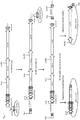
- Figure 2 A schematically shows the catalytic domains of the enzymes encoded by the respective genes participating in myxopyronin synthesis. From analysis, MxnI is assumed to provide an N-terminal phosphomutase (PM) domain which could be involved in the activation of sodium biscarbonate as a starter unit by phosphoryl group transfer to enable subsequent attachment to the CP domain of the loading module.
- PM N-terminal phosphomutase
- Synthesis of the Eastern chain molecule portion comprises elongation of the starter unit with glycine and of three malonyl-CoA extender units by a mixed polyketide synthetase/nonribosomal peptide megasynthetase consisting of two subunits (enzymes MxnI and MxnJ) and harbouring a total of six elongation modules (1E-6E) in addition to the loading module (PM-CP) indicated at the N-terminus of module 1E of MxnI.
- MxnI-MxnJ are PKS/NPRS (polyketide synthetase/non-ribosomal peptide synthase) comprising one loading module and six extension modules.
- Module 1E catalyses glycine incorporation, which is then elongated by module 2E (KS-DH-KR-CP) with malonyl-CoA.
- Module 3E represents a split module (KS from MxnI and DH*-CP from MxnJ), which is not assumed to incorporate an extender unit, but wherein the dehydrogenase domain DH might catalyse the shift of a double bond from ⁇ , ⁇ position to ⁇ , ⁇ position.
- Module 4E (KS-DH-KR-MT-CP) incorporates another malonyl-CoA extender unit, which gets methylated by the MT domain.
- KS*-CP ketosynthase domain of module 5E
- KS-CP*-CP A third malonyl-CoA extender unit is incorporated by module 6E (KS-CP*-CP), in which one of the tandem-CP domains is assumed to be inactive, to generate the final eastern chain intermediate with a ⁇ -carbonyl functionality, which is essential for the chain condensation for pyrone ring formation.
- MxnM might have an editing/proofreading activity to remove aberrant acyl units from blocked MxnI/MxnJ modules, and optionally also from blocked MxnK modules.
- the Western chain molecule portion is catalysed by MxnK. It is assumed that initiation is with acetyl-CoA for myxopyronin A or with propionyl-CoA for myxopyronin B, which is directly loaded onto the N-terminal KS domain of module 1W; a typical loading module was not found. After elongation with the first malonyl-CoA unit by module 1W (KS-DH-KR-CP), the resulting ⁇ -keto compound is completely reduced by internal DH-KR activities plus the trans -ER activity of MxnA.
- module 2W is inactive and accordingly module 2W is not involved in chain elongation.
- modules 3W, 4W, 5W are assumed to catalyse incorporation of three additional malonyl-CoA extender units to yield the Western chain molecule portion.
- the chain elongation by module 3W includes ⁇ -branching to introduce a methyl group in ⁇ -position, catalysed by MxnC-MxnG.
- Chain elongation on module 4W includes a complete reduction of the reduction of the ⁇ -carbonyl functionality by internal DH-KR activities plus the trans-ER activity from MxnA.
- MxnM might have an editing/proofreading activity to remove aberrant acyl units from blocked MxnK modules, and also from blocked MxnI/MxnJ modules.
- Fig. 2 C shows the condensation of the enzyme-bound Western chain molecule portion and the enzyme-bound Eastern chain molecule portion to the pyrone ring that is substituted with the R W and R E as provided by the natural biosynthetic enzymes.
- genes encoding synthetic pathway enzymes for synthesis of myxopyronin were isolated from Myxococcus fulvus Mxf50 genomic DNA and subcloned to generate expression constructs that were transferred into host microorganisms, preferably a heterologous host, e.g. by electroporation.
- host microorganisms preferably a heterologous host, e.g. by electroporation.
- suicide plasmids were constructed as described below.
- the Tn5 promoter was amplified by PCR using primers mxn33/ mxn41 with pCRII-TOPO vector as a template to obtain fragment 1.
- a 1191 bp fragment of mxnA was amplified from M. fulvus Mxf50 genomic DNA by PCR using primers mxn42/mxn30 to obtain fragment 2.
- Fragment 1 and fragment 2 were linked together using overlap PCR with primers mxn33/mxn30. The joined fragments were then subcloned into pJET1.2 vector to obtain plasmid pTn5-mxnA/pJET.
- a minimal linear cloning vector p15A-Tet was obtained by PCR using primers mxn52/mxn53 with pACYC184 as a template.
- pTn5-mxnA/pJET plasmid was hydrolyzed with PacI/EcoRV and ligated to the PacI/PvuII hydrolyzed cloning vector p15A-Tet to generate pHSU-mxn16.
- a 1491 bp fragment right after the 3'-end of the myxopyronin A gene cluster was amplified from M. fulvus Mxf50 genomic DNA using primers mxn64/mxn65.
- the amplified fragment was cloned into pCRII-TOPO vector to create pHSU-mxn19.
- a 1380 bp fragment of mxnJ was amplified from M. fulvus Mxf50 genomic DNA using primers mxn124 and mxn125.
- a zeocin resistance cassette was amplified from pCDNA-Zeo as the template using primers mxn128/mxn129 and it was subcloned to a minimal linear cloning vector p15A-Tet obtained by PCR using primers mxn126/mxn127 with pACYC184 as a template to obtain p15A-Tet-Zeo plasmid.
- pHSU-mxn16 was transformed into M. fulvus Mx f50 to obtain mutant Mx f50::pHSU-mxn16.
- a set of different PCRs using the primer combinations mxn60/p15A-Tet1 and mxn61/p15A-Tet2 was carried out to verify the correct integration of the inactivation plasmid.
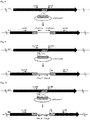
- the next single crossover was performed by transforming pHSU-mxn19 into Mx f50::pHSU-mxn16 to obtain Mx f50::pHSU-mxn16::pHSU-mxn19 as depicted in Fig. 3 .
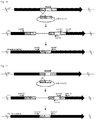
- mutant was confirmed by PCR using the primer combinations mxn94/pTOPO-out and mxn95/pTOPO-in. Further confirmation of this mutant was also performed by Southern Blot analysis. Second, pHSU-mxn32 was transformed into M. fulvus Mxf50 to obtain mutant Mx f50::pHSU-mxn32 as depicted in Fig. 4 . For genotypic analysis of the single cross-over, a set of different PCRs using the primer combinations mxn136/p15A-Tet2 and p15A-Tet3/mxn137 was carried out to verify the correct integration of the inactivation plasmid.
- genomic DNA of mutant Mx f50::pHSU-mxn16::pHSU-mxn19 was hydrolyzed with EcoRV and subsequently re-ligated to generate pHSU-mxn26 ( Fig. 3 ). Independently, it was also hydrolyzed with PacI/PvuI and subsequently re-ligated to generate pHSU-mxn27 ( Fig. 3 ).
- the genomic DNA of mutant Mx f50::pHSU-mxn32 was hydrolyzed with PvuI and then re-ligated to generate pHSU-mxn35 ( Fig. 4 ).
- pHSU-mxn35 was hydrolyzed with AflIIIPacI to replace the zeocin cassette with the amplified ampicillin cassette hydrolyzed with the same set of restriction enzymes to generate pHSU-mxn40 ( Fig. 4 ).
- the cloning method for the generation of an expression construct harbouring the complete pathway is shown in Fig. 5 .
- the Western chain biosynthesis pathway was completed by integration of the 18.5 kb AvrII fragment from pHSU-mxn40 into pHSU-mxn27 via Red/ET recombination.
- Another round of Red/ET recombineering was performed to exchange the 6.2 kb 3' end of mxnI in pHSU-mxn26 with a chloramphenicol resistance (CmR) cassette to generate pHSU-mxn31.
- CmR chloramphenicol resistance
- pHSU-mxn31 and pHSU-mxn41 were then hydrolyzed with SpeI/PacI to ligate the mxnK-M fragment into pHSU-mxn41 to generate pHSU-mxn42.
- a kanamycin resistance cassette was amplified from pCRII-TOPO vector as a template using primers mxn144/mxn145. The amplified cassette was then subcloned into pJET1.2 vector to obtain pHSU-mxn37.
- pHSU-mxn37 and pHSU-mxn42 were hydrolyzed with PacI to ligate the kanamycin resistance cassette into pHSU-mxn42 to generate pHSU-mxn43.
- the expression construct pHSU-mxn43 described above and shown in Fig. 5 was transformed into the expression host M. xanthus DK1622 ⁇ mchA-tet by the following procedure : M. xanthus DK1622 ⁇ mchA-tet was grown in baffle flasks with CTT medium supplemented with 6.25 ⁇ g/ml oxytetracycline at 30 °C until an OD600 between 0.6-0.9 was reached. Cells were then harvested from 2-4 ml culture (1-2 x 10 9 cells/ml) by centrifugation at 12.500 rpm for 1 min at room temperature.
- plasmid DNA was mixed with the cell suspension, and electroporation was carried out under the following conditions: 25 ⁇ F, 400 ⁇ , 650 V using 0.1 cm electroporation cuvettes and a GenePulser XCell device (Bio-Rad). 1 ml CTT medium was directly added to the cell suspension immediately after electroporation and the cells were transferred into a 2 ml centrifuge tube.
- a multiplasmid approach could be used for construction of expression constructs harbouring parts of the synthetic pathway enzymes.
- the cloning method for the generation of two compatible expression constructs harbouring two portions of the pathway is schematically depicted in Fig. 6 .
- a suitable selection marker exemplified by the zeocin resistance gene, zeoR, was ligated into pHSU-mxn41 using AflII/PacI restriction sites to generate the expression construct pHSU-mxn44.
- construct pHSU-mxn31 was modified by Red/ET recombination to insert a suitable promotor upstream of mxnK together with another selection marker, exemplified here by the apramycin resistance cassette (ApraR), which was flanked by two unique restriction sites (R1 and R2) to generate plasmid pHSU-mxn45.
- ApraR apramycin resistance cassette
- the plasmid was further modified by ligation of a suitable homology region via the restriction sites R1/R2 to yield the second expression plasmid pHSU-mxn46.
- the expression constructs pHSU-mxn44 and pHSU-mxn46 described above were transformed consecutively into M. xanthus DK1622 ⁇ mchA-tet according to the following procedure M. xanthus DK1622 ⁇ mchA-tet was grown in baffle flasks with CTT medium supplemented with 6.25 ⁇ g/ml oxytetracycline at 30 °C until an OD600 between 0.6-0.9 was reached. Cells were then harvested from 2-4 ml culture (1-2 x 10 9 cells/ml) by centrifugation at 12.500 rpm for 1 min at room temperature.
- plasmid DNA was mixed with the cell suspension, and electroporation was carried out under the following conditions: 25 ⁇ F, 400 ⁇ , 650 V using 0.1 cm electroporation cuvettes and a GenePulser XCell device (Bio-Rad). 1 ml CTT medium was directly added to the cell suspension immediately after electroporation and the cells were transferred into a 2 ml centrifuge tube.
- M. xanthus DK1622 ⁇ mchA-tet:: pHSU-mxn43 and M. xanthus DK1622 ⁇ mchA-tet:: pHSU-mxn44/pHSU-mxn46 were cultivated in CTT medium at 30 °C, e.g. in 300 ml baffle flasks with 50 ml medium for 2 days at 105 rpm. Following centrifugation, supernatant was extracted twice with an equal volume ethyl acetate, from the extract the ethyl acetate was evaporated, the residue was dissolved in 1 ml methanol to give the extract.
- HPLC-MS High Performance Liquid Chromatography-Mass Spectrometry
- HPLC-MS Thermo Ultimate 3000 RSLC, coupled to a Bruker Daltonics Amazon electrospray ionization (ESI)-MS ion trap instrument
- ESI Amazon electrospray ionization
- Compounds were separated on a Waters Acquity BEH C18 column (50 x 2.1 mm; 1.7 ⁇ m particle diameter) at a flow rate of 600 ⁇ l min -1 and 45 °C by a linear gradient with (A) H 2 O + 0.1 % formic acid (FA) to (B) acetonitrile (ACN) + 0.1 % FA at a flow rate of 600 ⁇ l min -1 and 45 °C.
- ACN acetonitrile
- the gradient was initiated by a 0.33 min isocratic step at 5 % B, followed by an increase to 95 % B in 9 min to end up with a 1 min flush step at 95 % B before re-equilibration with initial conditions.
- Detection was carried out by both diode array (DAD) and ESI-MS.
- DAD diode array
- ESI-MS ESI-MS.
- measurements were performed on a Dionex Ultimate 3000 RSLC system using a Waters BEH C18 column (50 x 2.1 mm, 1.7 ⁇ m dp) by injecting 5 ⁇ l of the methanolic extract. Separation was achieved by the same gradient as above with 0.33 min isocratic step at 5 % B. UV and MS detection were performed simultaneously.
- Example 1 Deletion of nucleic acid sequences in Myxococcus for inactivation of synthetic pathway genes
- M. fulvus Mx f50 which was shown in Example 1 to contain the genes encoding the entire synthetic pathway enzymes, was grown in baffle flask with CY medium (0.3 % casitone, 0.1 % yeast extract, 0.1 % CaCl 2 x 2 H 2 O) supplemented with 5 x 10 -4 ⁇ g/L vitamin B12 at 30 °C until an OD600 between 0.6-0.9 was reached.
- Cells were then harvested from 2-4 ml culture (1-2 x 10 9 cells/ml) by centrifugation at 12500 rpm for 1 min at room temperature. After two washing steps with 1 ml H 2 O at room temperature, cells were resuspended in 65 ⁇ l H 2 O. Plasmid DNA (1-2 ⁇ g) was mixed with the cell suspension, and electroporation was carried out under the following conditions: 25 ⁇ F, 400 ⁇ , 650 V using 0.1 cm electroporation cuvettes and a GenePulser XCell device (Bio-Rad). 1 ml CY medium was directly added to the cell suspension immediately after electroporation and the cells were transferred into a 2 ml centrifuge tube.
- the cells were mixed with 2 ml CY soft agar (CY medium with 0.7 % agar) and plated on CY agar plates (CY medium with 1.7 % agar) supplemented with 50 ⁇ g ml -1 kanamycin or 6.25 ⁇ g ml -1 oxytetracycline. The plates were incubated at 30 °C for 7-10 days until colonies became visible.
- markerless double cross-over mutants For the construction of markerless double cross-over mutants the following procedure was used: After verification of the single cross-over mutants (kanamycin-resistant mutants) by PCR, because integration via two different homology regions was possible, a selected single cross-over mutant was grown in CY medium in the absence of antibiotic. After 3-4 days 1 ml of the well-grown culture was transferred into 50 ml fresh medium to start another cultivation cycle at 30 °C for 3-4 days. This procedure was repeated three times to increase the possibility for a second cross-over event, which would result in the loss of the inactivating plasmid.
- a counter-selection system based on the sacB gene was used. For this, different dilutions of the cell population were plated on CY agar supplemented with 6 % sucrose for counter-selection. After 7-10 days, first colonies became visible, which were then grown in CY medium to isolate genomic DNA for genotypic verification and to extract the cultures for analysis for production of myxopyronin.
- insertional mutagenesis of its coding gene mxnI was employed, using knock-out plasmid pHSU-mxn13, which was constructed by amplification of a 1474 bp fragment for homologous recombination from M. fulvus Mx f50 genomic DNA by PCR using the primers mxn50 (SEQ ID NO: 29) and mxn51 (SEQ ID NO: 30) containing BamHI and EcoRV restriction sites. The resulting fragment was cloned into pCRII-TOPO vector to generate pHSU-mxn13. The plasmid was transformed into M. fulvus Mx f50 by electroporation.
- a set of different PCR experiments using the primer combinations mxn58 (SEQ ID NO: 31)/pTOPO-in (SEQ ID NO: 32) and mxn59 (SEQ ID NO: 33)/pTOPO-out (SEQ ID NO: 34) was carried out to verify the correct integration of the inactivation plasmid.
- the cloning method is schematically depicted in Fig. 8 .
- the resultant microorganism contained the synthetic pathway enzymes of MxnA-MxnB-MxnC-MxnD-MxnE-MxnF-MxnG-MxnH-MxnJ-MxnK-MxnL-MxnM.
- insertional mutagenesis of its coding gene mxnJ was employed, using knock-out plasmid pHSU-mxn30, which was constructed by amplification of a 1439 bp fragment for homologous recombination was amplified from M. fulvus Mx f50 genomic DNA by PCR using the primers mxn120 (SEQ ID NO: 35) and mxn121 (SEQ ID NO: 36).
- the Tn5 promoter was amplified from the pCRII-TOPO vector backbone using the primers mxn33 (SEQ ID NO: 37) and mxn34 (SEQ ID NO: 38).
- both PCR products were fused by overlapping PCR using the primers mxn33 and mxn121.
- the resulting product (Tn5 -mxnJ homologous fragment) was hydrolyzed by Eco RV and Bam HI and ligated into the pSupKan vector hydrolyzed by the same enzymes to generate pHSU-mxn30.
- the plasmid was transformed into M. fulvus Mx f50 by electroporation.
- a set of different PCRs using the primer combinations mxn130 (SEQ ID NO: 39) /pSubB (SEQ ID NO: 40) and mxn131 (SEQ ID NO: 41) /pSupE (SEQ ID NO: 42) was carried out to verify the correct integration of the inactivation plasmid.
- the cloning method is schematically depicted in Fig. 9 .
- the resultant microorganism contained the synthetic pathway enzymes of MxnA-MxnB-MxnC-MxnD-MxnE-MxnF-MxnG-MxnH-MxnI- MxnK-MxnL-MxnM.
- insertional mutagenesis of its coding gene mxnK was employed, using knock-out plasmid pHSU-mxn12, which was constructed by amplification of a 1448 bp fragment for homologous recombination from M. fulvus Mx f50 genomic DNA by PCR using the primers mxn35 (SEQ ID NO: 43) and mxn36 (SEQ ID NO: 44).
- the Tn5 promoter was amplified from the pCRII-TOPO vector backbone using the primers mxn33 and mxn34.
- the resultant microorganism contained the synthetic pathway enzymes of MxnA-MxnB-MxnC-MxnD-MxnE-MxnF-MxnG-MxnH-MxnI-MxnJ-MxnL-MxnM.
- an enzyme was inactivated by inactivating the gene encoding it by in-frame deletion. This is shown on the example of mxnK.
- a gene inactivation plasmid harbouring two fragments was constructed. The fragments are 1001 bp and 1262 bp in size and homologous to the upstream and downstream area of the chromosomal target region. These fragments were amplified from M. fulvus Mx f50 genomic DNA by PCR using the primers mxn54 (SEQ ID NO: 45)/mxn55 (SEQ ID NO: 46) and mxn56 (SEQ ID NO: 47)/mxn57 (SEQ ID NO: 48).
- a set of different PCRs using the primer combinations mxn68 (SEQ ID NO: 49)/mxn69 (SEQ ID NO: 50), mxn70 (SEQ ID NO: 51)/mxn72 (SEQ ID NO: 52) and mxn73 (SEQ ID NO: 53)/mxn71 (SEQ ID NO: 54) was carried out to verify for correct integration of the inactivation plasmid.
- PCRs using the primers mxn68/mxn71 were carried out. Further confirmation of the deletion mutant was obtained by Southern Blot analysis. This cloning procedure is schematically shown in Fig.
- the resultant microorganism contained the synthetic pathway enzymes of MxnA-MxnB-MxnC-MxnD-MxnE-MxnF-MxnG-MxnH-MxnI-MxnJ-MxnL-MxnM.
- Inactivation of of MxnH could be obtained by in frame deletion of its coding gene mxnH .
- PCRs using the primers mxn110/mxn111, mxn112/mxn107 and mxn110/mxn149 were carried out as schematically depicted in Fig. 12 .
- the resultant microorganism contained the synthetic pathway enzymes of MxnA-MxnB-MxnC-MxnD-MxnE-MxnF-MxnG-MxnI-MxnJ-MxnK-MxnL-MxnM.
- Inactivation of MxnC-MxnH could be obtained by in frame deletion of its coding genes mxnC-mxnH .
- a gene inactivation plasmid harbouring two fragments, which are 1016 bp and 1237 bp in size and homologous to the upstream and downstream area of the chromosomal target region, was constructed. These fragments were amplified from M. fulvus Mx f50 genomic DNA by PCR using the primers mxn85/mxn119 and mxn83/mxn84.
- PCRs using the primers mxn102/mxn104, mxn106/mxn107 and mxn102/mxn149 were carried out.
- the cloning method is schematically depticted in Fig.13 .
- the resultant microorganism contained the synthetic pathway enzymes of MxnA-MxnB-MxnI-MxnJ-MxnK-MxnL-MxnM.
- Inactivation of MxnC-MxnG could be obtained by in frame deletion of its coding genes mxnC - mxnG .
- a gene inactivation plasmid harbouring two fragments, which are 1016 bp and 1250 bp in size and homologous to the upstream and downstream area of the chromosomal target region, was constructed. These fragments were amplified from M. fulvus Mx f50 genomic DNA by PCR using the primers mxn85/mxn119 and mxn87/mxn88.
- PCRs using the primers mxn102/mxn104, mxn105/mxn103 and mxn102/mxn150 were carried out.
- the cloning method is schematically depicted in Fig.14 .
- the resultant microorganism contained the synthetic pathway enzymes of MxnA-MxnB-MxnH-MxnI-MxnJ-MxnK-MxnL-MxnM.
- the gradient was initiated by a 0.5 min isocratic step at 5 % B, followed by an increase to 95 % B in 9 min to end up with a 1 min flush step at 95 % B before re-equilibration with initial conditions.
- Detection was by both diode array and ESI-MS.
- measurements were performed on a Dionex Ultimate 3000 RSLC system using a Waters BEH C18, 50 x 2.1 mm, 1.7 ⁇ m dp column by injection of 2 ⁇ l methanolic sample.
- Separation was achieved by a linear gradient with (A) H 2 O + 0.1 % FA to (B) ACN + 0.1 % FA at a flow rate of 600 ⁇ l/min and 45 °C.
- the gradient was initiated by a 0.33 min isocratic step at 5 % B, followed by an increase to 95 % B in 9 min to end up with a 1 min flush step at 95 % B before re-equilibration with initial conditions.
- UV and MS detection were performed simultaneously.
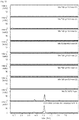
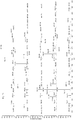
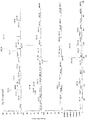
- results from HPLC-MS are shown in Fig. 15 .
- myxopyronin could be detected, but in extracts of the gene inactivation mutant strains obtained e.g. by insertional inactivation of mxnI (Mx f50::pHSU-mxn13), inactivation of mxnJ (Mx f50::pHSU-mxn30), inactivation of mxnK (Mx f50::pHSU-mxn12), inactivation by in frame deletion of mxnK (Mx f50::pHSU-mxn18), inactivation of mxnH by in frame deletion (Mx f50::pHSU-mxn23), inactivation of mxnC-mxnH by in frame deletion (Mx f50::pHSU-mxn22) no myxopyronin was found.
- Example 2 Deletion of nucleic acid sequences in Myxococcus for inactivation of synthetic pathway enzymes
- Example 2 For inactivation of enzymes, the Myxococcus producer M. fulvus Mx f50 of Example 2 was used, alternatively the M. xanthus DK1622 ⁇ mchA-tet::pHSU-mxn43 expression strain of Example 1 was used.
- Inactivation of mxnL could be obtained by in frame deletion.
- a gene inactivation plasmid harbouring two fragments, which are 1232 bp and 1109 bp in size and homologous to the upstream and downstream area of the chromosomal target region, was constructed. These fragments were amplified from M. fulvus Mx f50 genomic DNA by PCR using the primers mxn113/mxn1 14 and mxn115/mxn1 16.
- the resultant microorganism contained the synthetic pathway enzymes of MxnA-MxnB-MxnC-MxnD-MxnE-MxnF-MxnG-MxnH-MxnI-MxnJ-MxnK-MxnM.
- Inactivation of MxnM could be obtained by in frame deletion.
- a gene inactivation plasmid harbouring two fragments, which are 1110 bp and 1199 bp in size and homologous to the upstream and downstream area of the chromosomal target region, was constructed. These fragments were amplified from M. fulvus Mx f50 genomic DNA by PCR using the primers mxn132/mxn133 and mxn134/mxn135.
- PCRs using the primers mxn140/mxn141, mxn142/mxn143 and mxn140/mxn143 were carried out.
- the cloning process is schematically depicted in Figure 17 .
- the resultant microorganism contained the synthetic pathway enzymes of MxnA-MxnB-MxnC-MxnD-MxnE-MxnF-MxnG-MxnH-MxnI-MxnJ-MxnK-MxnL.
- Extracts from supernatants of cultures of these microorganisms were produced and analysed on samples taken during the cultivation as described in Example 2.
- the results measured for myxopyronin A during the cultivation are shown in Fig. 18 a) for the wild-type M. fulvus Mx f50 (WT), in Fig. 18 b) for the microorganism containing the synthetic pathway enzymes of MxnA-MxnB-MxnC-MxnD-MxnE-MxnF-MxnG-MxnH-MxnJ-MxnJ-MxnK-MxnM ( ⁇ mxnL), and in Fig.
- Example3 Inactivation of catalytic centers of domains of synthetic pathway genes
- single or multiple catalytic centers of domains can be inactivated in enzymes, preferably by mutating the coding sequence of amino acids defining the catalytic center, e.g. catalytically active amino acids.
- the preferred amino acids to be changed for inactivation of a catalytic center, e.g. deleted or exchanged for a catalytically inactive amino acid, e.g. for Leucine, Isoleucine, Alanine, or Valine, are given in Table 3 below in bold face, which amino acids participate in the catalytic activity.
- Table 3 amino acids of catalytic centers enzyme - catalytic center - domain amino acids keto synthase (KS) MxnI-KS-1E SEAV D AA C ASSLVAL H (SEQ ID NO: 136)-----V E A H GTGT (SEQ ID NO: 137 ) ----- IGH AE (SEQ ID NO: 138) , amino acids No. 694-885 of SEQ ID NO: 9 MxnI-KS-2E SEAV D TA C S SS LVA IH (SEQ ID NO: 139)-----I ETH GTGT(SEQ ID NO: 140)-----I GH LE ( SEQ ID NO: 141) , amino acids No.
- ketoreductase (KR) amino acids MxnI-KR-2E T G GA GA L G (SEQ ID NO: 208)-----HAAGQRQ D Q (SEQ ID NO: 209)-----FS S LVALTGNVGQTD YA FA N A (SEQ ID NO: 210) , amino acids No. 2903-3050 of SEQ ID NO: 9 MxnJ-KR-4E V G GT GG I G (SEQ ID NO: 211)-----HSALVLQ D A (SEQ ID NO: 212)----FS S AVGIAGGAGQSN YA AA S R (SEQ ID NO: 213) , amino acids No.
- SEQ ID NO: 26 carrier protein (CP) amino acids MxnI-CP-L GGAHFD S ISL (SEQ ID NO: 238) , amino acids No. 424-433 of SEQ ID NO: 9 MxnI-CP-1E G---FT S VTL (SEQ ID NO: 239) , amino acids No. 1720-1726 of SEQ ID NO: 9 MxnI-CP-2E G---YD S ISF (SEQ ID NO: 240) , amino acids No. 3192-3198 of SEQ ID NO: 9 MxnJ-CP-3E G---LT S LSL (SEQ ID NO: 241) , amino acids No.
- SEQ ID NO: 26 dehydratase (DH) amino acids MxnI-DH-2E L RD H VIG G KKLL P (SEQ ID NO: 269) , amino acids No. 2402-2414 of SEQ ID NO: 9 MxnJ-DH-3E L RD H TVF G QRVLL (SEQ ID NO: 270) , amino acids No. 53-65 of SEQ ID NO: 9 MxnJ-DH-4E L RD H VVGSRGVL P (SEQ ID NO: 271) , amino acids No. 1091-1103 of SEQ ID NO: 10 MxnK-DH-1W I RD H VVG G NRLI P (SEQ ID NO: 272) , amino acids No.
- SEQ ID NO: 26 methyltransferase (MT) amino acids MxnJ-MT-4E V E V G A G (SEQ ID NO: 281) , amino acids No. 1982-1987 of SEQ ID NO: 10 MxnK-MT-4W L E V G A G (SEQ ID NO: 282) , amino acids No. 4914-4919 of SEQ ID NO: 11 CorJ-MT-4E V E V G A G (SEQ ID NO: 283) , amino acids No. 1962-1967 of SEQ ID NO: 24 CorL-MT-6W L E V G A G (SEQ ID NO: 284) , amino acids No. 3865-3870 of SEQ ID NO: 26
- the amino acids sections given as amino acid Nos. of the amino acid sequence of an enzyme comprises or defines the respective enzyme section containing the domain.
- the amino acid alignment for catalytic centers shows the importance of conserved amino acids, which are printed in bold. Accordingly, mutation of the coding sequence to change, e.g. elemination at least one of these amino acids, preferably two or three of these conserved amino acids or all of the amino acids given for a catalytic center, can be used for inactivation of the respective domain, preferably of the module indicated.
- Example 7 Examples for cloning methods for inactivating one specific catalytic center are given in Example 7 below for the domain CP of modules 1W and 4W, respectively.
- At least one ketoreductase (KR) catalytic center is inactivated.
- KR ketoreductase
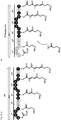
- Fig. 19 schematically shows the effect of inactivation of the KR domain of module 2E results in the production of a myxopyronin derivative.
- the inactivation of the KR domain of module 2E results in the ⁇ -ketoester intermediate not being reduced to the hydroxy ester intermediate, and accordingly the ⁇ -ketoester group occurs in the side chain to the pyrone ring.
- a myxopyronin derivative for production of a myxopyronin derivative, at least one catalytic center of a dehydrogenase (DH) catalytic domain is inactivated.
- DH dehydrogenase
- FIG. 20 schematically shows the effect of inactivation of the DH domain of module 2E results in the production of a myxopyronin derivative.
- the inactivation of the DH domain of module 2E results in the hydroxyester intermediate not being dehydrated, and accordingly the ⁇ -hydroxyl group occurs in the side chain to the pyrone ring.
- the catalytic center of at least one methyltransferase (MT) domain is inactivated.
- Fig. 21 schematically shows the effect of inactivation of the MT domain of module 4E results in the production of a the effect of inactivation of the MT domain of module 4E results in the production of a myxopyronin derivative.
- the inactivation of an MT domain, e.g. of module 4W results in the absence of a methyl group in the side chain to the pyrone ring, in this case in the absence of the methyl group bound to the ⁇ -carbon.
- MxnB catalyses the condensation of precursors to form the pyrone ring moiety having the chains of the precursors.
- the peptides were expressed from separate expression cassettes: For expression of MxnB, the coding nucleic acid sequence mxnB was amplified from M. fulvus Mx f50 genomic DNA by PCR using primers mxn9 and mxn10. The PCR products were cloned into into pJET1.2 blunt (Thermo Fisher Scientific) vector resulting in pJET-MxnB and sequenced.
- the resultant pJET-HSU-mxn5 was digested with Nde I and Hind III and the DNA fragment harboring the MxnB encoding region was cloned into the Nde I and Hind III site of pColdI resulting in pColdI-HSU-mxn5, encoding MxnB with an N-terminal hexahistidine tag.
- CP-6E CP domain of module 6E
- the coding sequence for CP-6E was amplified from M. fulvus Mx f50 genomic DNA by PCR using the primers mxn214 and mxn215.
- the PCR products were cloned into into pJET1.2 blunt (Thermo Fisher Scientific) vector resulting in pJET-CP-6E and sequenced.
- pJET-HSU-mxn59 was digested with Nde I and Hind III, and the DNA fragment harboring CP-6E encoding region was cloned into the Nde I and Hind III site of pColdI, resulting in pColdI-HSU-mxn59 with an N-terminal hexahistidine tag.
- a chaperone was co-expressed using pGro7 to obtain pColdI-pGro7-mxn59.
- pColdI-HSU-mxn59 was co-expressed with pSUMtaA to obtain pColdI-pSUMtaHSU-mxn64.
- CP-5W CP domain of module 5W
- the coding sequence for CP-5W was amplified from M. fulvus Mx f50 genomic DNA by PCR using the primers mxn230 and mxn231.
- the PCR products were cloned into into pJET1.2 blunt (Thermo Fisher Scientific) vector resulting in pJET-MxnB and sequenced using the primers pJET1.2For/pJET1.2Rev, respectively.
- pJET-HSU-mxn63 was digested with Nde I and Hind III and the DNA fragment harboring CP-5W encoding region was cloned into the Nde I and Hind III site of pColdI resulting in pColdI-HSU-mxn63 with an N-terminal hexahistidine tag. Furthermore, pColdI-HSU-mxn63 was co-expressed with pSUMtaA to obtain pColdI-pSUMtaHSU-mxn65.
- MxnB the catalytic center of the CP domain of module 6E of MxnJ (CP-6E) and the catalytic center of the CP domain of module 5W of MxnK (CP-5W) were each separately produced by heterologous expression.
- the expression was induced by addition of isopropyl- ⁇ -d-thiogalactopyranoside (IPTG, 0.15 mM) and cultivation was continued at 16°C for 20 h.
- IPTG isopropyl- ⁇ -d-thiogalactopyranoside
- the cells were harvested by centrifugation (8,000 rpm ; 20 min) and resuspended in lysis buffer (40 mM Tris-HCl buffer pH 7.5 containing glycerol 10%, 300 mM NaCl and 10 mM imidazole). Cells were lyzed by sonication and a cell-free extract was prepared by removing cell debris by centrifugation at 8,000 rpm for 10 min at 4°C. The cell-free extract was purified by using Ni-NTA Superflow resin (Qiagen), washed with buffer containing imidazole (20 mm), and eluted by imidazole (200 mm) in the same buffer.
- lysis buffer 40 mM Tris-HCl buffer pH 7.5 containing glycerol 10%, 300 mM NaCl and 10 mM imidazole.
- the elution buffer was exchanged with buffer (40 mm Tris-HCl buffer pH 7.5 containing glycerol 10%, 300 mM NaCl) using ultrafiltration (Amicon, Milipore). Protein concentrations were estimated by the Bradford assay (Bio-Rad) with bovine serum albumin as a standard. The purified proteins were flash frozen in liquid nitrogen and stored at -80°C.
- a mixture (total of 100 ⁇ L) containing 100 ⁇ M CP-6E or CP-5W, 30 ⁇ M MxnB, 1 mM JHS274 and 1 mM JHS486 was prepared and incubated at 37°C for 8 h.
- the reaction mixtures were extracted with ethyl acetate and the organic layer was evaporated.
- the residue was dissolved in 100 ⁇ l methanol and a 5 ⁇ l aliquot of the extract was analyzed by residue was dissolved in 100 ⁇ l methanol and a 5 ⁇ l aliquot of the extract was analyzed by HPLC/MS as described in Example 2. Results from HPLC-MS are shown in Fig.
- Example 5 Production of myxopyronin derivatives using enzymes with MxnK inactivated and Western chain precursor feeding
- the block mutant resulting from inactivation of MxnK by markerless mutagenesis of mxnK ( M.fulvus Mx f50 ⁇ pHSU-mxn18, containing pHSU-mxn18 described in Example 2), has been found not to produce myxopyronin A.
- a pre-culture of M . fulvus Mx f50ApHSU-mxn18 was grown in CY medium at 30 °C until an OD 600 between 0.3 to 0.6.
- the pre-culture was used to inoculate 20 mL CY medium (7.2 x 10 6 cells/mL). Cultivation was carried out for further 12-24 hours before feeding precursor acting as a substrate mimic.
- N -acetyl-cysteamine (SNAC)-esters that were used as a Western chain precursor each were fed to the different cultures to a final concentration of 100 ⁇ M. They were further cultivated for another 48 h before the cells were harvested.
- myxopyronin derivatives can be produced by expression of the synthetic enzymes, wherein MxnK is inactivated, e.g. the enzymes provided consist of MxnA, MxnI, MxnJ, MxnK, and optionally comprising MxnL and MxnM, e.g. by expression in a microorganism, in combination with adding a Western chain precursor.
- MxnK could be inactivated at one of its catalytic domains, e.g. at a CP domain, in combination with feeding a Western chain precursor.
- the remaining portion of MxnK converts the Western chain precursor to a converted Western chain precursor which is then condensed to the Eastern chain by MxnB, resulting in a myxopyronin derivative having a Western chain originating from the converted Western chain precursor.
- Example 6 Production of myxopyronin derivatives using enzymes with one catalytic center of MxnK inactivated and Western chain precursor feeding
- a CP (carrier protein) catalytic domain was inactivated in different modules of MxnK.
- MxnK could be partially inactivated, e.g. by inactivating the CP catalytic domain of module 1W of MxnK.
- a point mutation was induced in its coding sequence mxnK using a gene inactivation plasmid harbouring 2445 bp fragment. The fragment was amplified from pHSU-mxn43 plasmid of Example 1 by overlap PCR using the primers mxn169/mxn170 and mxn171/mxn172.
- MxnK could be partially inactivated at catalytic domain CP of its module 4W by point mutation.
- a gene inactivation plasmid harbouring a 2486 bp fragment was constructed. The fragment was amplified from pHSU-mxn43 plasmid by overlap PCR using the primers mxn174/mxn175 and mxn176/mxn177. After hydrolysis of the fragment with PvuI and NotI, it was ligated into pSWU41 hydrolyzed with PvuI and NotI to generate pHSU-mxn49.
- a set of different PCRs using the primer combinations mxn191/mxn70 and pSWU41-F/mxn193 was carried out to verify the correct integration of the inactivation plasmid.
- PCR using primer combination mxn195/mxn206 was performed and the amplified product was sequenced.
- the cloning method is schematically shown in Fig. 25 .
- a block mutant of at least one carrier protein (CP) catalytic domain of MxnK inactivated was cultivated with feeding a Western chain precursor.
- the Western chain precursor can be converted by catalytic centers arranged C-terminally to the inactivated catalytic center.
- enzymes in which at least one catalytic domain is inactivated can be termed Mutasynthon.
- Example 7 Production of myxopyronin derivatives using enzymes with one catalytic center of MxnI-MxnJ inactivated and Eastern chain precursor feeding
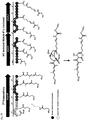
- Fig. 27 schematically shows in a) the wild-type (wt) synthesis of the Eastern chain molecule portion, in b) MxnI-MxnJ having an inactivated CP domain in the N-terminal load module and the binding of the fed Eastern chain precursor by the CP domain of module 1E and its subsequent conversion by the following modules of MxnI-MxnJ, in c) MxnI-MxnJ having an inactivated CP domain in module 1E and the binding of the fed Eastern chain precursor by the CP domain of module 2E and its subsequent conversion by the following catalytic centers of MxnI-MxnJ, in d) MxnI-MxnJ having an inactivated CP domain in module 3E and the binding of the fed Eastern chain precursor by the CP domain of module 4E and its subsequent conversion by the following modules of MxnI-MxnJ, and in e) MxnI-MxnJ having an inactivated CP domain in the module 4E and the binding of the
- a pre-culture of M . fulvus Mx f50::pHSU-mxn30 was grown in CY medium at 30 °C until an OD 600 between 0.3-0.6.
- the pre-culture was used to inoculate 20 mL CY medium (7.2 x 10 6 cells/mL). Cultivation was carried out for further 12-24 hours before feeding the substrate mimics.
- N -acetyl-cysteamine (SNAC)-esters mimicking Eastern chain to the cultures to the final 100 ⁇ M. They were further grown for another 48 hours before the cells were harvested. Analysis of the crude extract was performed by HPLC/MS.
- Example 8 Production of myxopyronin derivatives using enzymes with one CP catalytic center of MxnK inactivated and Western chain precursor feeding and one catalytic center of MxnI-MxnJ inactivated
- M. fulvus Mx f50 ::pHSU-mxn48 wherein the CP catalytic domain of module 1W of MxnK is inactivated, is used in combination with inactivation of at least one catalytic domain of MxnI-MxnJ.
- the inactivation of at least one catalytic domain of MxnI-MxnJ is exemplified by the inactivation of the MT catalytic domain in module 4E of MxnJ.
- Example 9 Production of myxopyronin derivatives using enzymes with one catalytic center of MxnK inactivated and one CP catalytic center of MxnI-MxnJ inactivated with Eastern chain precursor feeding
- M. fulvus Mx f50 in which the MT catalytic domain of module 4W of MxnK is inactivated is described in combination with inactivation of the CP catalytic domain of module 1E of MxnI-MxnJ, with feeding of an Eastern chain precursor during cultivation.
- the synthetic pathway of the resultant myxopyronin derivative is schematically depicted in Fig.
- Example 10 Production of myxopyronin derivatives using enzymes, wherein at least one catalytic center or domain or enzyme of MxnI-MxnJ-MxnK is exchanged for at least one catalytic center or domain or enzyme of CorI-CorJ-CorK-CorL
- an apramycin resistance cassette was amplified by PCR using primers mxn200/mxn201 with pKC1132 vector as the template.
- the fragment Z ( ⁇ 13 kb) in cosmid BA5 was exchanged with the apramycin resistance cassette (ApraR) via Red/ET recombineering to generate pHSU-mxn51.
- another apramycin resistance cassette amplified by PCR using primers mxn202/mxn203 with pKC1132 vector as the template.
- the fragment Y in cosmid AM24 was then exchanged with the apramycin resistance cassette (ApraR) via Red/ET recombineering to generate pHSU-mxn52.
- Red/ET recombineering was performed to exchange fragment X in cosmid AM24 with a chloroamphenicol resistance (CmR) cassette to generate pHSU-mxn53.
- CmR chloroamphenicol resistance
- the next round of Red/ET recombination was then performed to integrate corK* fragment from pHSU-mxn53 into pHSU-mxn51 to generate pHSU-mxn54.
- Both pHSU-mxn41 and pHSU-mxn54 were then hydrolyzed with SpeI/PacI to ligate the corK-O fragment into pHSU-mxn41 to generate pHSU-mxn55.
- pHSU-mxn37 and pHSU-mxn42 are to be hydrolyzed with PacI to ligate the kanamycin resistance cassette into pHSU-mxn55 to generate pHSU-mxn56.
- the expression construct pHSU-mxn56 described above shown in Figure 8 can then be transformed into an expression host, e.g. M. xanthus DK1622 ⁇ mchA-tet by electroporation as described above.
- Precursor compounds could be synthesized by the following methods:
- acylmeldrums acid (20.0 mmol) was dissolved in toluene (25 mL) and acetone (2.0 mL). The solution was heated at reflux for 2 h. The solvents were removed under reduced pressure and the crude material was purified by flash chromatography (SiO 2 , n- hexane/EtOAc) or vacuum distillation.
- the title compound was prepared from IM-4 according to the general procedure shown for IM-7 and used in the next step without further purification.
Landscapes
- Health & Medical Sciences (AREA)
- Life Sciences & Earth Sciences (AREA)
- Chemical & Material Sciences (AREA)
- Genetics & Genomics (AREA)
- Engineering & Computer Science (AREA)
- Organic Chemistry (AREA)
- Zoology (AREA)
- Wood Science & Technology (AREA)
- Bioinformatics & Cheminformatics (AREA)
- Biomedical Technology (AREA)
- Biotechnology (AREA)
- General Engineering & Computer Science (AREA)
- Microbiology (AREA)
- Biochemistry (AREA)
- General Health & Medical Sciences (AREA)
- Molecular Biology (AREA)
- Medicinal Chemistry (AREA)
- Plant Pathology (AREA)
- Biophysics (AREA)
- Physics & Mathematics (AREA)
- Chemical Kinetics & Catalysis (AREA)
- General Chemical & Material Sciences (AREA)
- Enzymes And Modification Thereof (AREA)
- Preparation Of Compounds By Using Micro-Organisms (AREA)
Description
- The present invention relates to a process for the production of the myxobacterial compound myxopyronin and of derivatives of myxopyronin, e.g. for the production of a pharmaceutical composition containing myxopyronin and/or its derivative. Further, the invention relates to the derivatives obtainable by the production process, especially for use of the derivative in a medical treatment, e.g. in the medical treatment of a bacterial infection. The production process uses enzymes from the natural myxopyronin synthetic pathway for producing derivatives of myxopyronin and uses the enzymes constituting the entire myxopyronin synthetic pathway for producing myxopyronin. The production process uses the enzymes expressed in a microorganism, which can be the source organism of the genes encoding the enzymes, or uses the enzymes expressed in a heterologous host microorganism, e.g. a bacterium or fungus, including a yeast. For expression of the enzymes in a microorganism, the genes encoding the enzymes are contained in the microorganism. In addition to or in the alternative to expression of the enzymes in a microorganism, the production process can use the enzymes in a cell-free medium, e.g. following disruption and/or isolation of the enzymes from a microorganism expressing the enzymes, optionally with immobilization of the enzymes to a carrier, and/or preferably with addition of at least one precursor compound to myxopyronin or its derivative.
- Erol et al., ChemBioChem 2010, 11, 1253-1265 describe the genes of the putative corallopyronin A biosynthetic gene cluster from Corallococcus coralloides and feeding experiments using 13C- and 15N-labelled acetate, sodium bicarbonate, methyl-methionine, and glycine to deduce the natural synthetic pathway for corallopyronin A from NMR analyses. Irschik et al., J. Antibiot. 1983 describe that Myxococcus fulvus produces myxopyronin. Myxopyronin can be described as two half molecules, also termed Western chain and Eastern chain, which are fused in a pyrone ring moiety :

- Kohl et al., Liebigs Ann. Chem. 1983 describe the isolation and structure elucidation of myxopyronin A and B from Myxococcus fulvus Mx f50.
- Kohl et al., Liebigs Ann. Chem. 1984 describe the biosynthetic origin of myxopyronin A based on feeding experiments with 13C- and 15N-labeled precursors and analysis of the labelling pattern by NMR spectroscopy.
- Sucipto et al., ChemBioChem 2013, describes the production of myxopyronin and the involved genes.
- It is an object of the invention to provide an alternative process for the production of myxopypronin and of its derivatives, and preferably to provide new derivatives of myxopyronin and a process for their production.
- The invention achieves the object by the features of the claims. Generally, the invention provides a process for producing myxopyronin and derivatives of myxopyronin by providing synthetic pathway enzymes in a microorganism or in vitro, e.g. extracellularly, for instance following expression of the enzymes in a microorganism and separating the enzymes from the microorganism. Myxopyronin and derivatives of myxopyronin produced according to the invention are compounds in which a first chain, also called Western chain, and a second chain, also called Eastern chain, are condensed forming a pyrone ring. Generally, the embodiments of the invention can be combined with one another. The synthetic pathway enzymes can be produced by expression from at least one expression cassette comprising the nucleic acid sequences encoding the enzymes in a microorganism, wherein one or more coding sequences can be contained in one expression cassette, e.g. each coding sequence can be contained in a separate expression cassette or at least two coding sequences can be contained in one expression cassette.
- In detail, there is described a process for producing myxopyronin by the enzymes constituting the synthetic pathway, wherein preferably these enzymes are expressed in a microorganism which is genetically manipulated to contain genes encoding the enzymes, wherein the microorganism preferably is a heterologous host microorganism, or by providing the enzymes in a cell-free medium. These enzymes are MxnA-MxnB-MxnC-MxnD-MxnE-MxnF-MxnG-MxnH-MxnI-MxnJ-MxnK-MxnL-MxnM, which in the process preferably are encoded in 5' to 3' by genes mxnA-mxnB-mxnC-mxnD-mxnE-mxnF-mxnG-mxnH-mxnI-mxnJ-mxnK-mxnL-mxnM. Enzymes MxnA, MxnI and MxnJ, preferably additionally MxnH, catalyze the synthesis of the Eastern chain molecule portion, and enzymes MxnA and MxnK, preferably additionally MxnC-MxnD-MxnE-MxnF-MxnG, catalyze the biosynthetic pathway for synthesis of the Western chain molecule portion. Preferably, the enzyme MxnA is provided, e.g. to catalyse loading of the carrier protein module of MxnI and/or of the carrier protein module of MxnK and/or of the carrier protein module of MxnJ.
- Generally, the enzymes are described herein as comprising as their portions modules or consisting of modules as their portions. The modules comprise as their portions catalytic domains containing catalytic centers. Nucleic acid sequences are given in 5'-3', amino acid sequences are given from N-terminus to C-terminus.
- For the condensation reaction, the Eastern chain molecule portion and the Western chain molecule portion are both enzyme-linked, e.g. to a carrier protein domain, via a sulfur atom (S), and are condensed at their respective S-linked termini, resulting in a pyrone ring, which condensation reaction is catalyzed by the enzyme MxnB. In the alternative, the Eastern chain molecule portion and/or the Western chain molecule portion can be activated by being linked to the sulfur atom of an auxiliary group, and the enzyme MxnB can be present in a cell-free medium, e.g. as an isolated protein, to catalyze the condensation reaction to the pyrone ring.
- The enzymes MxnA-MxnB-MxnC-MxnD-MxnE-MxnF-MxnG-MxnH-MxnI-MxnJ-MxnK-MxnL-MxnM which constitute the natural synthetic pathway can be expressed in a heterologous host microorganism.
- In the invention, at least one enzyme thereof can be inactivated, e.g. mutated to obtain disfunctionality, or deleted, for producing myxopyronin or a derivative thereof. For example, enzyme MxnL and/or MxnM and/or MxnC-MxnG can be inactivated and the active enzymes can consist of
MxnA-MxnB-MxnC-MxnD-MxnE-MxnF-MxnG-MxnH-MxnI-MxnJ-MxnK-MxnM,
MxnA-MxnB-MxnC-MxnD-MxnE-MxnF-MxnG-MxnH-MxnI-MxnJ-MxnK-MxnL,
MxnA-MxnB- MxnH-MxnI-MxnJ-MxnK-MxnL-MxnM,
MxnA-MxnB -MxnH-MxnI-MxnJ-MxnK-MxnM,
MxnA-MxnB -MxnH-MxnI-MxnJ-MxnK-MxnL or
MxnA-MxnB-MxnC-MxnD-MxnE-MxnF-MxnG-MxnH-MxnI-MxnJ-MxnK. - Alternatively or additionally to the inactivation of enzyme MxnL and/or MxnM and/or MxnC-MxnG, at least one catalytic center of at least one of MxnK and MxnI-MxnJ can be inactivated, which catalytic center preferably is a ketosynthase (KS), ketoreductase (KR), dehydrogenase (DH), methyltransferase (MT), hydroxymethylglutaryl-CoA synthase (HMG-CoA), enoyl-CoA hydratase/isomerase (ECH).
- In case of inactivation of at least one catalytic activity of the synthetic pathway enzymes, the enzymes can be expressed in an original myxopyronin producer strain which e.g. has been genetically manipulated, e.g. using homologous recombination, for inactivation of at least one enzyme or catalytic center, e.g. when providing the enzymes by homologous expression. In the first embodiment, the process comprises cultivating a microorganism expressing the enzymes and isolating the myxopyronin or its derivative from the cultivation medium and/or from the microorganism.
- In a first embodiment, the invention provides a process for producing myxopyronin or a process for producing at least one derivative of myxopyronin by cultivating a microorganism expressing at least partially modified enzymes, which are modified e.g. by inactivation and/or change of activity of at least one enzyme of the enzymes MxnA-MxnB-MxnC-MxnD-MxnE-MxnF-MxnG-MxnH-MxnI-MxnJ-MxnK-MxnL-MxnM and/or of at least one domain of one of these enzymes and/or of at least one catalytic center of one of these domains. Inactivation can be by at least partial deletion and/or exchange, e.g. of at least one amino acid or by complete deletion of an enzyme, domain or catalytic center.
- Insertion or exchange of at least one catalytic center, domain, module or enzyme can be by insertion or replacement of at least one additional catalytic center, domain or enzyme into the synthetic pathway enzymes comprising or consisting of MxnA-MxnB-MxnC-MxnD-MxnE-MxnF-MxnG-MxnH-MxnI-MxnJ-MxnK-MxnL-MxnM or a portion of these, which catalytic center, domain, module or enzyme is selected from MxnA-MxnB-MxnC-MxnD-MxnE-MxnF-MxnG-MxnH-MxnI-MxnJ-MxnK-MxnL-MxnM, resulting e.g. in at least one additional or exchanged homologous catalytic center, domain, module or enzyme, and/or which catalytic center, domain, module or enzyme is selected from enzymes CorJ, CorK, CorL, Orfl, CorM, CorL, CorM, CorN and CorO and their catalytic centers, domains and modules, respectively.
- Generally, changes to the amino acid sequence are preferably made by changes to the nucleic acid sequence encoding the amino acid sequence of the enzyme, domain or catalytic center, respectively. The amino acid sequences of the enzymes are given in Table 1.
Table 1: Enzymes and functions origin Myxococcus (amino acids) origin Corallococcus (amino acids) function [Catalytic domains] MxnA (798) SEQ ID NO: 1 CorA (763) SEQ ID NO: 15 Acyltransferase - Enoylreductase [AT-ER] MxnB (335) SEQ ID NO: 2 CorB (335) SEQ ID NO: 16 Ketosynthase [KS] MxnC (83) SEQ ID NO: 3 CorC (83) SEQ ID NO: 17 Acyl carrier protein [CP] MxnD (423) SEQ ID NO: 4 CorD (423) SEQ ID NO: 18 Ketosynthase [KS] MxnE (410) SEQ ID NO: 5 CorE (410) SEQ ID NO: 19 Hydroxymethylglutaryl-CoA (HMG-CoA) synthase MxnF (253) SEQ ID NO: 6 CorF (261) SEQ ID NO: 20 Enoyl-CoA hydratase/isomerase [ECH] MxnG (254) SEQ ID NO: 7 CorG (254) SEQ ID NO: 21 Enoyl-CoA hydratase/isomerase [ECH] MxnH (286) SEQ ID NO: 8 CorH (286) SEQ ID NO: 22 Carboxyl-methyltransferase [MT] MxnI (3906) SEQ ID NO: 9 CorI (3883) SEQ ID NO: 23 Hybrid polyketide synthase (PKS, trans-AT type), nonribosomal peptide synthetase (NRPS) [PM-CP-KS-A-CP-KS-DH-KR-CP-KS] MxnJ (3862) SEQ ID NO: 10 CorJ (3817) SEQ ID NO: 24 Polyketide synthase (PKS, trans-AT type) [DH-CP-KS-DH-KR-MT-CP-KS-CP-KS-CP*-CP] MxnK (6045) SEQ ID NO: 11 CorK (4068) SEQ ID NO: 25 Polyketide synthase (PKS, trans-AT type) [KS-DH-KR-CP-KS-CP-KS-CP-KS-DH-KR-MT-CP-KS-CP*-CP] CorL (4981) SEQ ID NO: 26 MxnL (582) SEQ ID NO: 12 ORF1 (573) SEQ ID NO: 27 Hypothetical protein (SorT) MxnM (326) SEQ ID NO: 13 ./. Acyltransferase (AT) ./. CorM (240) SEQ ID NO: 28 Thioesterase ./. CorN (724) SEQ ID NO: 29 enoyl-CoA-hydratase ./. CorO (449) SEQ ID NO: 30 cytochrome P450 - Catalytic domains are: PM, phosphomutase; CP, carrier protein; KS, ketosynthase; A, adenylation; DH, dehydratase; KR, ketoreductase; AT, acyltransferase; MT, methyl transferase; ER, enoyl reductase; KS, ketosynthase. A "*" denotes inactivity of the domain. In the alternative to enzymes from Myxococcus, the indicated enzyme from Corallococcus can be used. Reference to a Myxococcus gene therefore includes reference to the Corallococcus gene indicated in the same row of table 1.
- The C-terminal elongation module of MxnJ is included in the
domain 6E of MxnJ. - The entire set of synthetic pathway enzymes of Myxococcus is encoded by SEQ ID NO: 14. The amino acid sequences of functional domains are given in Table 2.
Table 2 : Modules of enzymes enzyme : inactivated modules sequence (amino acids (aa) of enzyme sequence) to be deleted or mutated for inactivation inactivation results in MxnK : 1W-2W aa 1 to 2531, preferably aa 1 to 2467 of SEQ ID NO: 11 MxnK consisting of modules 3W to 5W (aa 2532 to 6023, preferably aa 2468 to 6023 of SEQ ID NO: 11)MxnK : 1W-3W aa 1 to 3348, preferably aa 1 to 3272 of SEQ ID NO: 11 MxnK consisting of modules 4W to 5W (aa 3349 to 6023, preferably aa 3273 to 6023 of SEQ ID NO: 11)MxnK : 1W-4W aa 1 to 5251, preferably aa 1 to 5203 of SEQ ID NO: 11 MxnK consisting of modules 5W (aa 5252 to 6023, preferably aa 5204 to 6023 of SEQ ID NO: 11)MxnI : LM (loading module) aa 1 to 530, preferably aa 1 to 466 of SEQ ID NO: 9 MxnI consisting of modules 1E to 6E (aa 533 to 3717, preferably aa 467 to 3717 of SEQ ID NO:9 and aa 25 to 3849 of SEQ ID NO : 10)MxnI : 1E aa 1 to 1781, preferably aa 1 to 1759 of SEQ ID NO: 9 MxnI consisting of modules 2E to 6E (aa 1786 to 3717, preferably aa 1760 to 3717 of SEQ ID NO:9 and aa 25 to 3849 of SEQ ID NO : 10)MxnJ : 3E aa 1 to 405, preferably aa 1 to 450 of SEQ ID NO: 10, optionally additionally SEQ ID NO: 9 MxnI-MxnJ consisting of modules 4E to 6E (aa 25 to 3849 of SEQ ID NO : 10) (MxnI inactivated)MxnJ : 4E aa 451 to 2276 of SEQ ID NO: 10 MxnJ consisting of modules 5E to 6E (aa 2325 to 3849 preferably aa 2277 to 3849 of SEQ ID NO : 10)MxnJ : 5E aa 2325 to 3006 of SEQ ID NO: 10 MxnJ consisting of modules 6E, preferably consisting of aa 3007 to 3849, more preferably aa 3053 to 3849 of SEQ ID NO: 10 - In a second embodiment, a precursor compound for the Western chain, also termed Western chain precursor, and/or a precursor compound for the Eastern chain, also termed Eastern chain precursor, is added to a microorganism expressing the synthetic pathway enzymes of the first and/or second embodiment, in which at least one catalytic domain is inactivated in the synthetic pathway enzymes MxnK and/or MxnI-MxnJ, wherein the inactivated catalytic domain preferably is a catalytic domain the inactivation of which in the absence of precursor results in a stop of synthesis by the enzyme when expressed in a microorganism. For the third embodiment, a preferred inactivated catalytic domain is selected from a carrier protein (CP) and a ketoreductase (KR). The respective amino acid sequence of catalytic domains for MxnK and MxnI-MxnJ are given in Table 3 below.
- In the second embodiment, a portion of the entire set of synthetic enzymes is provided in a microorganism, which portion catalyzes the condensation of the pyrone ring, the portion e.g. comprising or consisting of enzymes MxnB, optionally of MxnA-MxnB, and a Western chain precursor is provided and at least a portion of MxnK for binding the Western chain precursor and catalyzing the conversion of the Western chain precursor to a converted Western chain precursor and MxnB, optionally MxnH and/or MxnA, and further optionally additionally MxnC-MxnD-MxnE-MxnF-MxnG. This embodiment allows the production of compounds in which the converted Western chain precursor is condensed to the natural Eastern chain molecule portion. Additionally or alternatively, an Eastern chain precursor is provided and a portion of MxnI-MxnJ is provided for binding the Eastern chain precursor and catalyzing the conversion of the Eastern chain precursor to a converted Eastern chain precursor, which is condensed to the converted Western chain precursor or to the Western molecule portion. When adding a Western chain precursor, the following enzymes are provided by genetic manipulation in a microorganism with the genes encoding the enzymes and expression of the enzymes, in combination with providing a Western chain precursor. The enzymes which are provided can e.g. comprise or consist of: MxnA-MxnB, MxnI-MxnJ, preferably MxnH, and MxnK in which at least one catalytic domain is inactivated, the inactivation resulting in the interruption of the synthetic pathway of MxnK, e.g. MxnK optionally consisting of
modules 3W-5W,modules 4W-5W ormodule 5W of MxnK, and further optionally additionally MxnC-D-E-F-G. - In the second embodiment, in a first variant, in the wild-type enzyme MxnK (SEQ ID NO: 1) which consists of
modules 1 W-5W, at least one module can be functionally absent, e.g. be deleted or inactivated,modules 1W-2W (amino acids No. 1 to 2531, preferably amino acids No. 1 to 2467 in SEQ ID NO: 11) can be absent or MxnK can consist ofmodules 3W to 5W, respectively. In a second variant, the moduleslW to 3W (amino acids No. 1 to 3348, preferably amino acids No. 1 to 3272 in SEQ ID NO: 11) can be functionally absent, e.g. be deleted or inactivated, or the portion of enzyme MxnK can consist ofmodules 4W to 5W, respectively. In a third variant, themodules 1W to 4W (amino acids No. 1 to 5251, preferably amino acids No. 1 to 5203 in SEQ ID NO: 11) can be functionally absent, e.g. be deleted or inactivated, or the portion of enzyme MxnK can consist ofmodule 5W (amino acids No.5252 to 6023, preferably amino acids No. 5204 to 6023 in SEQ ID NO: 11), respectively. In variants, functionally absent modules can e.g. be modules in which the amino acids forming at least one of its catalytic domains are mutated or deleted. - When providing a Western chain precursor, preferably a portion of enzyme MxnK is present and the Western chain precursor can have a structure that becomes bound to a domain of MxnK, preferably to the carrier protein (CP), e.g. the Western chain precursor preferably has a structure comprising a keto-group linked to a sulfur atom of an auxiliary group. Preferably, the structure of the Western chain precursor mimics a biosynthetic intermediate. The auxiliary group can e.g. be comprise or consist of a β-keto-N-acetylcysteamine group (SNAC) or a thiophenol group, the sulfur atom of which is bound to the C of the keto-group.
- Especially in the first variant, especially for incorporation by
domain 3W, the Western chain precursor can have the following structure: RW-CH2-CH2-CH2-C(O)-X. Especially in the second variant, especially for incorporation bydomain 4W, the Western chain precursor can have the following structure: RW-CH2-CH2-C(CH3)=CH2-C(O)-X. Especially in the third variant, the Western chain precursor can have the following structure: RW-CH2-CH2-C(CH3)=CH-CH=C(CH3)-C(O)-X. In each variant, R can e.g. be any alkyl, aryl or aromatic hydrocarbon, each optionally containing a heteroatom, or R can be H. X is an auxiliary group having a sulfur atom that is bound to the carbon atom. Further examples of the Western chain precursor are given below, wherein each of X1-X10 and RW can independently be any heteroatom, any methine group (=CH or -CH-R with R e.g. be an alkyl, aryl or alcohol group), a methylene group, a carbonyl group. - Examples for Western chain precursor:

- Generally, in embodiments comprising the synthesis of the natural Eastern chain molecule portion, the process can optionally be in the absence of MxnH and include the provision of a methylated precursor compound. In this embodiment, the process can comprise the provision of enzymes comprising or consisting of MxnI and MxnJ, preferably additionally MxnA, for synthesis of the Eastern chain molecule portion and the provision of at least a part of the enzymes for synthesis of the Western chain molecule portion, optionally with provision of a Western chain precursor and of enzyme MxnB. The methylated precursor compound can e.g. be selected from the following compounds: A methylcarbonate (R1-O-C(O)-OCH3), especially an alkyl or aryl methylcarbonate (R1 is an alkyl or aryl), e.g. C1 to C12, especially C6, alternatively R1-S-C(O)-OCH3.
- In the second embodiment, a portion of the entire set of synthetic enzymes is provided, e.g. in a microorganism, which portion of the entire set of synthetic enzymes catalyzes the condensation of the pyrone ring. The portion can comprise or consist of MxnB, preferably MxnA-MxnB. In this embodiment, an Eastern chain precursor is provided, and at least a portion of MxnI-MxnJ is provided, which portion catalyzes the conversion of an added Eastern chain precursor to a converted Eastern chain precursor and MxnA, optionally MxnA-MxnB, preferably MxnK, and optionally MxnC- MxnD-MxnE-MxnF-MxnG are provided. This allows the production of compounds, in which the converted Eastern chain precursor is condensed to the natural Western chain molecule portion or to a converted Western chain precursor.
- The enzymes which are provided can e.g. comprise or consist of MxnA-MxnB, and in a
first variant modules 1E-6E of MxnI-MxnJ, in asecond variant modules 2E-6E of MxnI-MxnJ, in athird variant modules 4E to 6E or MxnI-MxnJ, or in afourth variant module 6E of MxnJ. In combination with providing a Western chain precursor when at least one catalytic domain or a module of MxnK is inactivated as described above, further optionally in combination with MxnC-MxnD-MxnE-MxnF-MxnG. - In a first variant, MxnI-MxnJ consisting of
modules 1E-6E can be provided, e.g. by inactivating or deleting at least the loading domain (LM, amino acids No. 1 to 530, preferably amino acids No. 1 to 466, in SEQ ID NO: 9 (MxnI)), in a second variant, MxnI-MxnJ consisting ofmodules 2E-6E can be provided by inactivating atleast module 1E (amino acids No. 1 to 1781, preferably amino acids No. 1 to 1759, in SEQ ID NO: 9 (MxnI)), in a third variant, MxnJ consisting ofmodules 4E-6E can be provided by inactivating atleast module 3E, e.g. by deleting or inactivating MxnI (SEQ ID NO: 9), and optionally amino acids No. 1 to 405, preferably No. 1 to 450, of SEQ ID NO: 10, optionally MxnI (SEQ ID NO: 9), and further optionally the part of MxnJ comprised of amino acids No. 1 to 405, in SEQ ID NO: 10) can be functionally absent, e.g. deleted or inactivated, in a fourth variant, MxnI-MxnJ consisting ofmodules least module 4E. In the third and fourth variant, MxnI (SEQ ID NO: 9) can be functionally absent, e.g. mutated, especially deleted, resulting in the loading domain tomodule 4E being functionally absent, optionally part of MxnJ, e.g. amino acids No. 1 to 3052, preferably complete MxnI and the part of MxnJ comprised of amino acids No. 1 to 3006 in SEQ ID NO :10 can be functionally absent, e.g. deleted or inactivated. Preferably, an enzyme comprising or consisting ofmodule 6E (amino acids No. 3007 to 3849, preferably amino acids No. 3053 to 3849 in SEQ ID NO: 10) of MxnJ is provided for binding the Eastern chain precursor, optionally in combination with providing MxnA. - In the third embodiment, the Eastern chain precursor can have the structure RE-O-C(O)-X. Especially in the second variant, for incorporation by
module 2E, the Eastern chain precursor can have the following structure: RE-O-C(O)-NH-CH2-C(O)-X. Especially in the third variant, for incorporation bymodule 4E, the Eastern chain precursor can have the following structure: RE-O-C(O)-NH-CH=CH-CH2-C(O)-X. Especially in the fourth variant, for incorporation bymodule 6E, the Eastern chain precursor can have the following structure: RE-O-C(O)-NH-CH=CH-CH2-CH2-CH(CH3)-C(O)-X. In each variant, RE can e.g. be any alkyl, aryl or aromatic hydrocarbon, each optionally containing a heteroatom, or RE can be H. X is an auxiliary group having a sulfur atom that is bound to the carbon atom. - In the first and second embodiments, the set of synthetic enzymes can be provided by genetic manipulation in an original myxopyronin producer microorganism by inactivating or deleting the genes encoding synthetic enzymes, modules or domains thereof which are in excess of the genes encoding the portion of the natural set of enzymes used in the process. Accordingly, the portion of the natural set of enzymes used in the process of the invention forms synthetic enzymes.
- Accordingly, in the first embodiment of the process for producing a myxopyronin or a derivative, the natural steps for the synthesis of the Western chain molecule portion, e.g. the provision of the enzymes catalysing the Western chain molecule portion, can be replaced by providing a Western chain precursor and preferably at least a part of the enzymes catalysing the synthesis of the Western chain molecule portion, e.g. a part of the modules or domains of MxnK. In this embodiment, the precursor is not necessarily bound to the synthetic enzyme, but the precursor can have an auxiliary group, preferably bound via a sulfur atom of the auxiliary group, e.g. the precursor can be bound to the sulfur atom of a thioalkyl or a thioaryl which may be substituted further by heteroatoms, e.g. by an amine group, an alkyl amine, an alkyl amide, e.g. to the sulfur atom of an N-2-thioalkyl carbon acid amide, wherein the carbon chain of the alkyl and of the acid moiety can be a linear or branched C1 to C6 group, especially N-2-thioethylacetamide. As an example for a thioaryl, the precursor can be bound to the sulfur atom of a thiophenol group.
- In the second embodiment of the process for producing a myxopyronin or a derivative, the natural steps for the synthesis of the Eastern chain molecule portion, e.g. the provision of the enzymes catalysing the Eastern chain molecule portion is replaced by providing an Eastern chain precursor and preferably an enzyme comprising or consisting of
module 6E of MxnI-MxnJ,modules 4E-6E of MxnI-MxnJ, modules2E-6E of MxnI-MxnJ, or modules1E-6E of MxnI-MxnJ. - For the purposes of this invention, the Western chain molecule portion and the Eastern chain molecule portion, respectively, are synthesized by the host microorganism, whereas the Western chain precursor and the Eastern chain precursor, respectively, are compounds which are added to the culture of the microorganism. Western chain precursor and Eastern chain precursor can be produced synthetically.
- The precursor preferably contains or consists of R1-(C=O)-CH2-(C=O)- which is bound to the S of the auxiliary group X, wherein preferably the R1 is R2(CH3)C- or R2(CH3CH2)C-, with R2 e.g. selected from a C1 to C12 branched or linear alkyl or aryl or aromatic compound, e.g containing one or two double bonds, preferably two conjugated double bonds, and optionally further substituted with an aryl or a heteroatom containing group, e.g. a phenyl, hydroxyphenyl, hydroxyl or amine group, preferably at the terminus. R1 can be RW for the Western chain precursor and RE for the Eastern chain precursor, respectively. Generally, the precursor can have the following structure


- In embodiments in which both a Western chain precursor and an Eastern chain precursor are provided, the process comprises the provision of the enzyme MxnB or CorB, optionally of MxnA-MxnB or CorA-CorB, as it was found that MxnB is sufficient for catalyzing the condensation of both precursors to the pyrone ring moiety carrying the substituents to the (C=O)-CH2-(CO) group of each of the Western chain and of the Eastern chain precursor, preferably of
module 6E of MxnJ, especially for binding the Eastern chain precursor to the enzyme, and preferably for introducing an intermediate group into the Eastern chain precursor (elongation step introducing the group -CH2-CH2-), respectively. - Accordingly, MxnC-MxnM, or CorC-ORF1, respectively, including the intermediate enzymes given in Table 1 or modules or domains thereof can be absent or be inactivated in this embodiment. Preferably, in addition to provision of enzyme MxnB, preferably of MxnA-MxnB, the process includes provision of enzyme MxnL, MxnM or MxnM-MxnL. In this embodiment, at least a portion of enzymes MxnK and MxnJ are absent or inactive, preventing synthesis of Western chain molecule portion and of the Eastern chain molecule portion, and enzymes MxnC-MxnG and/or MxnH can optionally be present or absent. Addition of a Western chain precursor and of an Eastern chain precursor results in production of myxopyronin derivatives. Schematically, this embodiment in which both MxnK and MxnI are inactivated, can be represented by

- In embodiments for producing a myxopyronin or a myxopyronin derivative having e.g. the natural Eastern chain or an Eastern chain derived from an Eastern chain precursor, the process can comprise the provision of a Western chain precursor and the provision of enzyme MxnB, preferably of MxnA-MxnB, and of enzymes MxnI-MxnJ, optionally in addition MxnL and/or MxnM in order to provide the synthetic pathway enzymes for synthesis of the Eastern chain molecule portion in the host microorganism. In the alternative to MxnB, CorB can be provided, and in the alternative to MxnA-MxnB, CorA-CorB can be provided, in the alternative to MxnI-MxnJ, CorI-CorJ can be provided, in the alternative to MxnL and/or MxnM, ORF1 can be provided. In this embodiment, enzyme MxnK is absent or inactive, preventing synthesis of Western chain molecule portion, and enzymes MxnC-MxnG and/or MxnH can optionally be provided or absent. Optionally, the Eastern chain precursor can be a methylcarbonate, preferably activated by binding to the S of an auxiliary group. In the presence of enzyme MxnH, the Eastern chain precursor is methylated by MxnH.
- Schematically, this embodiment can be represented by

- In embodiments for producing a myxopyronin or a derivative myxopyronin having e.g. the natural Western chain or a Western chain derived from a Western chain precursor, the process can comprise the provision of a Eastern chain precursor and the provision of enzymes MxnA-MxnB, alternatively CorA-CorB, preferably in combination with a C-terminal elongation module of MxnJ,
e.g. module 6E of MxnJ, alternatively a C-terminal elongation module of CorJ, and of enzyme MxnK, optionally in addition MxnL and/or MxnM, alternatively CorK-CorL, optionally with ORF1, for synthesis of the Western chain molecule portion in the host microorganism. In this embodiment, enzymes MxnI-MxnJ are absent or inactive, preventing synthesis of Eastern chain molecule portion, preferably an enzyme comprising or consisting ofmodule 6E of MxnJ is provided, and enzymes MxnC-MxnG and/or MxnH can optionally be provided or absent. - Schematically, this embodiment can be represented by

- For the Western chain precursor, R2 can e.g. be a branched or linear alkyl chain, optionally having one or two double bonds, and/ or further optionally bound to an aryl, e.g. to a phenyl ring, which is optionally substituted with a hydroxyl or amine group.
- For the Eastern chain precursor, R2 preferably is a C1 to C24, e.g. C1 to C12, each branched or linear alkyl or aryl, optionally containing one or two double bonds, preferably a C4 linear chain, optionally carrying a terminal amine or amide group, e.g a methoxy amide group.
- Preferably, the Western chain precursor and/or the Eastern chain precursor can have the following structure :

- The process can provide a part of or all of the enzymes which catalyse the synthesis of the Eastern chain molecule portion, and providing a precursor for the Western chain only. In this embodiment, the Eastern chain of the product corresponds to the natural Eastern chain of myxopyronin and the Western chain corresponds to the Western chain precursor which is bound to the auxiliary molecule.
- Alternatively or additionally, the process can provide a portion of or all of the enzymes which catalyse the synthesis of the Western chain molecule portion, and providing a precursor for the Eastern chain only. In this embodiment, the Western chain of the product is produced by the microorganism and corresponds e.g. to the natural Western chain of myxopyronin, e.g. when enzymes MxnA-MxnK are provided or to a derivative of the natural Western chain, e.g. when MxnC-MxnG and/or MxnH are functionally absent from the microorganism, and the Eastern chain corresponds to that of the Eastern chain precursor which is bound to the auxiliary molecule with the pyrone ring produced by MxnB.
- In a specific embodiment, the process provides the complete synthetic pathway enzymes constituting the natural biosynthetic pathway of myxopyronin synthesis, from which optionally genes are inactivated, e.g. genes encoding MxnC-MxnG and/or MxnH and/or MxnL and/or MxnM are deleted, resulting e.g. in an alteration of the product synthesized. In this embodiment, the pathway enzymes are expressed in a microorganism, and myxopyronin is synthesized entirely by the microorganism. Accordingly, in this embodiment, the process excludes the provision of specific precursor compounds.
- From analyses of production of myxopyronin or derivatives from M. fulvus in which specific genes had been inactivated, it is found that production of myxopyronin occured when all enzymes MxnA-MxnB-MxnC-MxnD-MxnE-MxnF-MxnG-MxnH-MxnI-MxnJ-MxnK-MxnL-MxM were present.
- When enzymes were inactivated, the following effects on myxopyronin production were found:
- that inactivation of MxnC- MxnD-MxnE-MxnF-MxnG with active MxnA-MxnB and MxnH-MxnI-MxnJ-MxnM-MxnL-MxnM resulted in production of the derivatve of myxopyronin 21 -desmethyl-myxopyronin A,

- that inactivation of MxnH only resulted in no production,
- that inactivation of MxnC-MxnG and inactivation of MxnH resulted in no production,
- that inactivation of MxnA only resulted in no production of myxopyronin,
- that inactivation of MxnB only resulted in no production of myxopyronin,
- that inactivation of MxnL only resulted in production of myxopyronin A and B,
- that inactivation of MxnM only resulted in production of myxopyronin A and B,
- inactivation of MxnI only, i.e. active MxnA-MxnH and MxnJ-MxnM with addition of Eastern chain presursor containing RE resulted in production of

- that inactivation of both MxnK and MxnI only resulted in no production of myxopyronin, and
- that inactivation of MxnK and MxnJ resulted in no production of myxopyronin.
- When feeding a Western and/or Eastern chain precursor, the following production was found for inactivated enzymes, wherein the enzymes are denoted by their respective coding sequences and precursors are indicated, with products for each row given in the right hand column. In the following table enzymes connected by a hyphen (-) denote the indicated enzymes including the intermediate enzymes


- These results show that a process for production of myxopyronin can comprise expression of MxnA-MxnK, with expression of MxnL-MxnM an option at least in Myxococcus (M. fulvus Mx f50), as deletion of MxnL-MxnM did not prevent synthesis of myxopyronin in M. fulvus.
- A process for production of myxopyronin using synthesis of the Western chain molecule portion by expression of MxnK but without expression of MxnC-MxnG results in myxopyronin derivatives having no methyl group on C21 of the Western chain. Optionally, production of myxopyronin using biosynthesis of the Eastern chain molecule portion by expression of MxnI-MxnJ, and/or using biosynthesis of the Western chain molecule portion by expression of at least a portion of MxnK, optionally in the presence or absence of MxnC-MxnG, can optionally be without expression of MxnH, preferably in the presence of MxnH with addition of the precursor in the form of a carbon acid monoalkyl ester, wherein the carbon acid contains a C1 to C12 linear or branched alkyl linked to the acid group, and wherein the alkyl e.g. is a linear or branched C1 to C12, preferably a carbon acid monomethyl ester. The carbon acid monoalkyl ester in this embodiment is integrated into the Eastern chain.
- Generally, the enzyme or enzymes catalyzing the synthesis can be provided by expression from a nucleic acid sequence encoding the enzyme and enzymes, resp, wherein the nucleic acid sequence is contained in at least one expression cassette. The nucleic acid sequence can encode the enzyme or enzymes by the codon usage of the host microorganism. As a host microorganism, bacteria are preferred, most preferably Gram-negative bacteria, e.g. Pseudomonas spp, Myxococcus spp. Generally in the process, the enzymes can be provided in vivo by the microorganism or can be provided in vitro, e.g. produced and obtained by the microorganism, e.g. extracted or isolated from the microorganism.
- Generally, incubating the microorganism can comprise cultivating the microorganism in cultivating medium under agitation and/or aeration.
- The invention is now described in greater detail by way of examples with reference to the figures, which show in
-
Figure 1 a scheme of the natural arrangement of synthetic genes in Myxococcus fulvus Mx f50 (mxnA to mxnM), -
Figure 2 in A) a scheme of the natural synthesis of the Eastern molecule portion, at B) a scheme of the natural synthesis of the Western molecule portion and at C) a scheme of the mechanism of the condensation of the molecule portions to the pyrone ring, -
Figures 3 and4 schemes for subcloning of pathway enzymes, -
Figure 5 a scheme for cloning of an expression construct for expressing the synthetic pathway enzymes from one expression cassette, -
Figure 6 a scheme for cloning coding sequences of enzymes in separate expression cassettes, -
Figure 7 HPLC-MS results of extracts of non-producer Myxococcus xanthus DK 1622 ΔmchA::tet, of transformant M. xanthus DK1622 ΔmchA-tet:: pHSU-mxn43 (M. xanthus DK1622 ΔmchA-tet::myxopyronin A), and of Myxococcus fulvus Mx f50 wild-type (WT), -
Figure 8 a scheme for cloning for inactivating enzyme MxnI, -
Figure 9 a scheme for cloning for inactivating enzyme MxnJ, -
Figure 10 a scheme for cloning for inactivating enzyme MxnK, -
Figure 11 a scheme for cloning for inactivating enzyme MxnK, -
Figure 12 a scheme for cloning for inactivating enzyme MxnH, -
Figure 13 a scheme for cloning for inactivating enzymes MxnC-MxnD-MxnE-MxnG-MxnH, -
Figure 14 a scheme for cloning for inactivating enzyme MxnC-MxnD-MxnE-MxnG, -
Figure 15 HPLC-MS results of extracts of cultures from microorganisms in which at least one enzyme of the myxopyronin A synthetic pathway enzymes is inactivated, -
Figure 16 a scheme for cloning for inactivating enzyme MxnL, -
Figure 17 a scheme for cloning for inactivating enzyme MxnM, -
Figure 18 analytical results for myxopyronin A production during cultivation of a) Myxococcus fulvus Mx f50, b) Myxococcus fulvus Mx f50 having MxnL inactivated, c) Myxococcus fulvus Mx f50 having MxnM inactivated (ΔmxnM), -
Figure 19 a scheme of the effect of inactivation (X) of the KR ofmodule 2E (KR-2E) on synthesis, -
Figure 20 a scheme of the effect of inactivation (X) of the DH ofmodule 2E on synthesis, -
Figure 21 a scheme of the effect of inactivation (X) of the MT ofmodule 4E on synthesis, -
Figure 22 HPLC-MS analytical results for in vitro synthesis using Western chain and Eastern chain precursors, -
Figure 23 MS2 spectra of product in culture supernatant extracts, -
Figure 24 a cloning scheme for inactivation of the nucleic acid sequence encoding catalytic domain CP ofmodule 1W of enzyme MxnK, -
Figure 25 a cloning scheme for inactivation of the nucleic acid sequence encoding catalytic domain CP ofmodule 4W of enzyme MxnK, -
Figure 26 a scheme in a) of the wild-type synthesis of the Western molecule portion by MxnK, in b) the conversion of an added Western chain precursor by MxnK having catalytic domain CP ofmodule 1W inactivated, in c) the conversion of an added Western chain precursor by MxnK having catalytic domain CP ofmodule 3W inactivated, in d) the conversion of an added Western chain precursor by MxnK having catalytic domain CP ofmodule 4W inactivated, dark circles indicating active domains, white circles indicating inactive domains, -
Figure 27 a scheme in a) of the wild-type synthesis of the Eastern molecule portion by MxnI-MxnJ, in b) the conversion of an added Eastern chain precursor by MxnI-MxnJ having catalytic domain CP of the load module (load) inactivated, in c) the conversion of an added Eastern chain precursor by MxnI-MxnJ having catalytic domain CP ofmodule 1E inactivated, in d) the conversion of an added Eastern chain precursor by MxnI-MxnJ having catalytic domain CP ofmodule 3E inactivated, in e) the conversion of an added Eastern chain precursor by MxnI-MxnJ having catalytic domain CP ofmodule 4E inactivated, dark circles indicating active domains, white circles indicating inactive domains, -
Figure 28 schematically shows the conversion of an added Western chain precursor by MxnK having catalytic domain CP of themodule 2W inactivated and the synthesis of the Eastern molecule portion by MxnI-MxnJ having the catalytic domain MT ofmodule 4E inactivated, followed by condensation of the altered Eastern molecule portion with the converted Western chain precursor by MxnB, dark circles indicating active domains, white circles indicating inactive domains, and -
Figure 29 schematically shows the synthesis of the Western molecule portion by MxnK having catalytic domain MT of themodule 4W inactivated and the conversion of an added Eastern chain precursor by MxnI-MxnJ having the catalytic domain CP ofmodule 1E inactivated, followed by condensation of the altered Western molecule portion with the converted Eastern chain precursor by MxnB, dark circles indicating active domains, white circles indicating inactive domains. - Generally, in the Figures depicting enzyme encoding genes or enzymes, wherein e.g. modules, domains or catalytic centers are indicated, in combination with the synthesis of myxopyronin or of a derivative, the sequence of catalytic steps is from left to right, corresponding to the direction from the N-terminus to the C-terminus of proteins indicated.
- As shown in
Figure 1 , the genes encoding the enzymes for myxopyronin synthesis in Myxococcus are arranged adjacent one another. In the figures, * denotes catalytic domains which may not entirely have the catalytic function indicated due to diversions, e.g. from known catalytic domains.Figure 2 A) schematically shows the catalytic domains of the enzymes encoded by the respective genes participating in myxopyronin synthesis. From analysis, MxnI is assumed to provide an N-terminal phosphomutase (PM) domain which could be involved in the activation of sodium biscarbonate as a starter unit by phosphoryl group transfer to enable subsequent attachment to the CP domain of the loading module. Synthesis of the Eastern chain molecule portion comprises elongation of the starter unit with glycine and of three malonyl-CoA extender units by a mixed polyketide synthetase/nonribosomal peptide megasynthetase consisting of two subunits (enzymes MxnI and MxnJ) and harbouring a total of six elongation modules (1E-6E) in addition to the loading module (PM-CP) indicated at the N-terminus ofmodule 1E of MxnI. MxnI-MxnJ are PKS/NPRS (polyketide synthetase/non-ribosomal peptide synthase) comprising one loading module and six extension modules.Module 1E (KS-A-CP) catalyses glycine incorporation, which is then elongated bymodule 2E (KS-DH-KR-CP) with malonyl-CoA.Module 3E represents a split module (KS from MxnI and DH*-CP from MxnJ), which is not assumed to incorporate an extender unit, but wherein the dehydrogenase domain DH might catalyse the shift of a double bond from α, β position to β, γ position.Module 4E (KS-DH-KR-MT-CP) incorporates another malonyl-CoA extender unit, which gets methylated by the MT domain. Complete reduction of the β-carbonyl functionality is assumed to be catalysed by internal DH-KR activities plus the ER activity from MxnA, which is provided in trans. The ketosynthase domain ofmodule 5E (KS*-CP) possibly does not catalyse chain elongation, so that no extender unit can be incorporated from this module. A third malonyl-CoA extender unit is incorporated bymodule 6E (KS-CP*-CP), in which one of the tandem-CP domains is assumed to be inactive, to generate the final eastern chain intermediate with a β-carbonyl functionality, which is essential for the chain condensation for pyrone ring formation. For all three elongation steps with malonyl-CoA (bymodules - As shown in
Fig. 2 B) , the Western chain molecule portion is catalysed by MxnK. It is assumed that initiation is with acetyl-CoA for myxopyronin A or with propionyl-CoA for myxopyronin B, which is directly loaded onto the N-terminal KS domain ofmodule 1W; a typical loading module was not found. After elongation with the first malonyl-CoA unit bymodule 1W (KS-DH-KR-CP), the resulting β-keto compound is completely reduced by internal DH-KR activities plus the trans-ER activity of MxnA. From analysis, it is assumed that the domain KS* ofmodule 2W, KS*-CP, is inactive and accordinglymodule 2W is not involved in chain elongation.Subsequent modules module 3W includes β-branching to introduce a methyl group in β-position, catalysed by MxnC-MxnG. Chain elongation onmodule 4W includes a complete reduction of the reduction of the β-carbonyl functionality by internal DH-KR activities plus the trans-ER activity from MxnA. Similar to eastern chain biosynthesis, the trans-AT activity from MxnA is required for all four elongation steps with malonyl-CoA bymodules -
Fig. 2 C) shows the condensation of the enzyme-bound Western chain molecule portion and the enzyme-bound Eastern chain molecule portion to the pyrone ring that is substituted with the RW and RE as provided by the natural biosynthetic enzymes. - The following nucleic acid sequences were used as primers:
Name Sequence (5'→3') restriction sites underlined Restriction sites mxn9 GTCAGACATATGAACAACAGCGGT (SEQ ID NO: 31) NdeI mxn10 CGTCGTAAGCTTTCAGTAGGTGAAAACCA (SEQ ID NO: 32) HindIII mxn214 GATACGCATATGGTCCCCTTCGAGTCGAGC (SEQ ID NO: 33) NdeI mxn215 TCTATGAAGCTTTCATGGCTTCGCTCCCGC (SEQ ID NO: 34) HindIII mxn230 CTGAGGCATATGCGTGCGTTCGAGTCG (SEQ ID NO: 35) NdeI mxn231 TCTATGAAGCTTTCAGGCACACCACTCATT (SEQ ID NO: 36) HindIII mxn30 
PacI, SspI, NdeI, NheI mxn33 CAGGTAGATATCTGGACAGCAAGCGAACC (SEQ ID NO: 38) EcoRV mxn34 ATCCTGTCTCTTGATCAGAT (SEQ ID NO: 39) mxn35 
mxn36 CATGTCGGATCCTCACCATCGTCCACAGCTTCG (SEQ ID NO: 41) BamHI mxn41 AATCTGTACCTCCTTATCCTGTCTCTTGATCAGAT (SEQ ID NO: 42) mxn42 
mxn48 ACGTCGACGAGTACTGGC (SEQ ID NO: 44) mxn49 AATGCCTTCGGAGCCTCG (SEQ ID NO: 45) mxn50 CATGTAGATATCGAACGGCTC CGGTACATC (SEQ ID NO: 46) EcoRV mxn51 TGTCTAGGATCCACAGCCGCTCCAGGATTC (SEQ ID NO: 47) BamHI mxn52 GATACACAGCTGTCCCTCCTGTTCAGCTAC (SEQ ID NO: 48) PvuI mxn53 ATCTTAATTAAGGACGCGATGGATATGTT (SEQ ID NO: 49) PacI mxn54 GCGTTGATGGATCCACAGCA (SEQ ID NO: 50) BamHI mxn55 TGTATCGCGGCCGCTCAGTGCCGCTGAACCCGAAC (SEQ ID NO: 51) NotI mxn56 GATACAGCGGCCGCCTTTCCGAGTCCAGCAGC (SEQ ID NO: 52) NotI mxn57 GTATCGAGCTCATCTGCTGTCCTCTGCCT (SEQ ID NO: 53) SacI mxn58 GTACGTGCCGTTGGAT (SEQ ID NO: 54) mxn59 GAGGGGTACTTGAAGAGC (SEQ ID NO: 55) mxn60 TGCCATGAGCAGACAGTTA (SEQ ID NO: 56) mxn64 GCTGAGACGGTCTTCCTC (SEQ ID NO: 57) mxn65 
PacI, SspI, NdeI, NheI mxn68 CAACATCTCGCCGAGTGA (SEQ ID NO: 59) mxn69 ATACGACTCACTATAGGGCG (SEQ ID NO: 60) mxn70 CTTGCGCCCTGAGTGCTT (SEQ ID NO: 61) mxn71 AACACCTCACGGTCCGAC (SEQ ID NO: 62) mxn72 CCCATCGTCCACAGCTTC (SEQ ID NO: 63) mxn73 GCACTACAAGCGGCTCTG (SEQ ID NO: 64) mxn83 GAGCGGCCGCCTCGAGATGAAGGTGGAT (SEQ ID NO: 65) NotI mxn84 ATGACTAGTCTCCTCGCTCTCGAAGTC (SEQ ID NO: 66) SpeI mxn85 GACACGATCGCAACAGCGGTTCTTTCTCTTTG (SEQ ID NO: 67) PvuI mxn87 CAAGGCGGCCGCCGGGTGATCGCAGGTGAG (SEQ ID NO: 68) NotI mxn88 TCTGGGATCCTTCGACCTCGGACAGCAG (SEQ ID NO: 69) BamHI mxn94 TCACGGCGAAGCACATCC (SEQ ID NO: 70) mxn95 AGGAGGCAGGGTCCGAAT (SEQ ID NO: 71) mxn98 GACTCAGCTCGTTTGGCG (SEQ ID NO: 72) mxn99 TAACCCAGGCGCAGAATC (SEQ ID NO: 73) mxn100 AGGATGCGCGTCAAGAGT (SEQ ID NO: 74) mxn101 GATACGAAGAAGCGCGAG (SEQ ID NO: 75) mxn102 CGTCATTCATCCTTGCTCG (SEQ ID NO: 76) mxn103 TCCAGGCCTCGTAGTTCC (SEQ ID NO: 77) mxn104 TTTCCTCACGTCTCATGG (SEQ ID NO: 78) mxn105 TGTCGCTGTTGAAGGCAC (SEQ ID NO: 79) mxn106 TTCTCATCGCGGACTACG (SEQ ID NO: 80) mxn107 GAGAGAGATTGACGCGAC (SEQ ID NO: 81) mxn110 GATTCTCTGGGGGCTCCT (SEQ ID NO: 82) mxn111 CAATCACAAACGCAGTCC (SEQ ID NO: 83) mxn112 TTCTCATCGCGGACTACG (SEQ ID NO: 84) mxn113 GATACGATCGCCTGGAGGAATACGTCGG (SEQ ID NO: 85) PvuI mxn114 GTCGCGGCCGCCTTTCGTCATGGTGGCTCC (SEQ ID NO: 86) NotI mxn115 GATACGCGGCCGCTTGAAGGGACTGGGCAAG (SEQ ID NO: 87) NotI mxn116 TTGCGGATCCACAATCTATCGCGGGTCG (SEQ ID NO: 88) BamHI mxn117 GACACGATCGGCATGCATGAGGCCTACA (SEQ ID NO: 89) PvuI mxn118 AATCGCGGCCGCGCATCAGGATTCCCCAAGG (SEQ ID NO: 90) NotI mxn119 TCTGGCGGCCGCGCATTGCTCGCGGCTCAGT (SEQ ID NO: 91) NotI mxn120 AGATCTGATCAAGAGACAGGATGAGTTCATCGCCTTG GAG (SEQ ID NO: 92) mxn121 CATGTCGGATCCTCATCGCTCTTCACGTACACG (SEQ ID NO: 93) BamHI mxn124 CAATACGATCGCTGGACTGGTGAAG (SEQ ID NO: 94) PvuI mxn125 
AflII, SpeI mxn126 GATACACCTAGGTCCCTCCTGTTCAGCTAC (SEQ ID NO: 95) AvrII mxn127 TCAGGTCCTAGGGGACGCGATGGATATGTT (SEQ ID NO: 96) AvrII mxn128 
AvrII, PvuI, AflII mxn129 
AvrII mxn132 GATACACGATCGCGAGCAGGAGGGGTATGT (SEQ ID NO: 99) PvuI mxn133 TCTATGGAGCTCCATTCCGAAGAACTGGGA (SEQ ID NO: 100) SacI mxn134 GATACAGAGCTCTTCCTCAATCACCACGGT (SEQ ID NO: 101) SacI mxn135 TCTATGGGATCCTGACTGACGACGATGAGC (SEQ ID NO: 102) BamHI mxn136 AACATCGGCCACCTGGAG (SEQ ID NO: 103) mxn137 AGGACCCAGGCTTCTCGT (SEQ ID NO: 104) mxn140 ACATGTTGGAAGCCGACG (SEQ ID NO: 105) mxn141 GCTCAGCGTGAAGAGGCT (SEQ ID NO: 106) mxn142 ACCGTGGAACAGCTCAGG (SEQ ID NO: 107) mxn143 CGAGATCCAGCACACCAT (SEQ ID NO: 108) mxn144 GATACATTAATTAACCGGAATTGCCAGCTG (SEQ ID NO: 109) PacI mxn145 CTGTTAATTAATCAGAAGAACTCGTCAAGAAG (SEQ ID NO: 110) PacI mxn147 TATGTCCTTAAGATAATTCGGCTGCAGGGG (SEQ ID NO: 111) AflII mxn148 TATCTTAATTAATTACCAATGCTTAATCAGTG (SEQ ID NO: 112) PacI mxn149 GCTTCGCGTGGAGGTCAT (SEQ ID NO: 113) mxn169 GATACACGATCGCACGAGTTCCGAGTCCTC (SEQ ID NO: 114) PvuI mxn170 CTGCAGGATGAGGGCGTC (SEQ ID NO: 115) mxn171 TCGACGCCCTCATCCTGCAGGAGTTGATGGCGGAGCTG (SEQ ID NO: 116) mxn172 TCTATGGCGGCCGCGAGCGCGACCTTGATGAC (SEQ ID NO: 117) NotI mxn174 GATACACGATCGGACACACACCGGAAGCTG (SEQ ID NO: 118) PvuI mxn175 ATTCACCAGCGCGTCGAC (SEQ ID NO: 119) mxn176 CGGCGTCGACGCGCTGGTGAATCTGAGAATCGTCC (SEQ ID NO: 120) mxn177 TCTATGGAGCTCTTGAGCTGCAGGATGACC (SEQ ID NO: 121) NotI mxn185 TCGCTCATCCTGCAGGA (SEQ ID NO: 122) mxn187 CGAGTCGAGTCCCATGG (SEQ ID NO: 123) mxn189 CAACAGCTTCCTCGACG (SEQ ID NO: 124) mxn193 GGAGTCGACGCCGAAC (SEQ ID NO: 125) mxn195 TCGGACTGATGAAGGGGT (SEQ ID NO: 126) mxn206 GAAGGCCTCCACGTTCTC (SEQ ID NO: 127) p15A-Tet1 GGAGAACTGTGAATGCGC (SEQ ID NO: 128) p15A-Tet-2 ACTCCGCTAGCGCTGATG (SEQ ID NO: 129) p15A-Tet-3 GAGAACTGTGAATGCGCA (SEQ ID NO: 130) pTOPO-in CCTCTAGATGCATGCTCGAG (SEQ ID NO: 131) pTOPO-out TTGGTACCGAGCTCGGATCC (SEQ ID NO: 132) pSup_B GCTCATGAGCCCGAAGTG (SEQ ID NO: 133) pSup_E CGCTCATCGTCATCCTCG (SEQ ID NO: 134) pSWU41-F GTGCAAAAAAGCGGTTAG (SEQ ID NO: 135) - For heterologous expression, genes encoding synthetic pathway enzymes for synthesis of myxopyronin were isolated from Myxococcus fulvus Mxf50 genomic DNA and subcloned to generate expression constructs that were transferred into host microorganisms, preferably a heterologous host, e.g. by electroporation. For integration of the expression constructs into the genome of the host microorganism, suicide plasmids were constructed as described below.
- In detail, three different suicide plasmids were constructed for integration at different sites of the myxopyronin pathway region: (1) The Tn5 promoter was amplified by PCR using primers mxn33/ mxn41 with pCRII-TOPO vector as a template to obtain fragment 1. A 1191 bp fragment of mxnA was amplified from M. fulvus Mxf50 genomic DNA by PCR using primers mxn42/mxn30 to obtain
fragment 2. Fragment 1 andfragment 2 were linked together using overlap PCR with primers mxn33/mxn30. The joined fragments were then subcloned into pJET1.2 vector to obtain plasmid pTn5-mxnA/pJET. In parallel, a minimal linear cloning vector p15A-Tet was obtained by PCR using primers mxn52/mxn53 with pACYC184 as a template. pTn5-mxnA/pJET plasmid was hydrolyzed with PacI/EcoRV and ligated to the PacI/PvuII hydrolyzed cloning vector p15A-Tet to generate pHSU-mxn16. (2) A 1491 bp fragment right after the 3'-end of the myxopyronin A gene cluster was amplified from M. fulvus Mxf50 genomic DNA using primers mxn64/mxn65. The amplified fragment was cloned into pCRII-TOPO vector to create pHSU-mxn19. (3) A 1380 bp fragment of mxnJ was amplified from M. fulvus Mxf50 genomic DNA using primers mxn124 and mxn125. A zeocin resistance cassette was amplified from pCDNA-Zeo as the template using primers mxn128/mxn129 and it was subcloned to a minimal linear cloning vector p15A-Tet obtained by PCR using primers mxn126/mxn127 with pACYC184 as a template to obtain p15A-Tet-Zeo plasmid. The 1380 bp fragment of mxnJ was then hydrolyzed with PvuI and subsequently cloned to p15A-Tet-Zeo hydrolyzed with the same restriction enzyme to create pHSU-mxn32. - First, pHSU-mxn16 was transformed into M. fulvus Mx f50 to obtain mutant Mx f50::pHSU-mxn16. For genotypic analysis of the single cross-over, a set of different PCRs using the primer combinations mxn60/p15A-Tet1 and mxn61/p15A-Tet2 was carried out to verify the correct integration of the inactivation plasmid. Subsequently, the next single crossover was performed by transforming pHSU-mxn19 into Mx f50::pHSU-mxn16 to obtain Mx f50::pHSU-mxn16::pHSU-mxn19 as depicted in
Fig. 3 . The mutant was confirmed by PCR using the primer combinations mxn94/pTOPO-out and mxn95/pTOPO-in. Further confirmation of this mutant was also performed by Southern Blot analysis. Second, pHSU-mxn32 was transformed into M. fulvus Mxf50 to obtain mutant Mx f50::pHSU-mxn32 as depicted inFig. 4 . For genotypic analysis of the single cross-over, a set of different PCRs using the primer combinations mxn136/p15A-Tet2 and p15A-Tet3/mxn137 was carried out to verify the correct integration of the inactivation plasmid. - The recovery of pathway fragments was performed as follows: genomic DNA of mutant Mx f50::pHSU-mxn16::pHSU-mxn19 was hydrolyzed with EcoRV and subsequently re-ligated to generate pHSU-mxn26 (
Fig. 3 ). Independently, it was also hydrolyzed with PacI/PvuI and subsequently re-ligated to generate pHSU-mxn27 (Fig. 3 ). The genomic DNA of mutant Mx f50::pHSU-mxn32 was hydrolyzed with PvuI and then re-ligated to generate pHSU-mxn35 (Fig. 4 ). An ampicillin cassette was amplified by PCR using primers mxn147/mxn148 with pJET1.2 vector as the template. pHSU-mxn35 was hydrolyzed with AflIIIPacI to replace the zeocin cassette with the amplified ampicillin cassette hydrolyzed with the same set of restriction enzymes to generate pHSU-mxn40 (Fig. 4 ). - The cloning method for the generation of an expression construct harbouring the complete pathway is shown in
Fig. 5 . First, the Western chain biosynthesis pathway was completed by integration of the 18.5 kb AvrII fragment from pHSU-mxn40 into pHSU-mxn27 via Red/ET recombination. Another round of Red/ET recombineering was performed to exchange the 6.2 kb 3' end of mxnI in pHSU-mxn26 with a chloramphenicol resistance (CmR) cassette to generate pHSU-mxn31. Both, pHSU-mxn31 and pHSU-mxn41, were then hydrolyzed with SpeI/PacI to ligate the mxnK-M fragment into pHSU-mxn41 to generate pHSU-mxn42. A kanamycin resistance cassette was amplified from pCRII-TOPO vector as a template using primers mxn144/mxn145. The amplified cassette was then subcloned into pJET1.2 vector to obtain pHSU-mxn37. Both, pHSU-mxn37 and pHSU-mxn42 were hydrolyzed with PacI to ligate the kanamycin resistance cassette into pHSU-mxn42 to generate pHSU-mxn43. - For heterologous expression, the expression construct pHSU-mxn43 described above and shown in
Fig. 5 was transformed into the expression host M. xanthus DK1622 ΔmchA-tet by the following procedure : M. xanthus DK1622 ΔmchA-tet was grown in baffle flasks with CTT medium supplemented with 6.25 µg/ml oxytetracycline at 30 °C until an OD600 between 0.6-0.9 was reached. Cells were then harvested from 2-4 ml culture (1-2x 10⁹ cells/ml) by centrifugation at 12.500 rpm for 1 min at room temperature. After two washing steps with 1 ml H2O at room temperature, cells were resuspended in 65 µl H2O. 1-2 µg plasmid DNA was mixed with the cell suspension, and electroporation was carried out under the following conditions: 25 µF, 400 Ω, 650 V using 0.1 cm electroporation cuvettes and a GenePulser XCell device (Bio-Rad). 1 ml CTT medium was directly added to the cell suspension immediately after electroporation and the cells were transferred into a 2 ml centrifuge tube. After 5 h cultivation at 30 °C and 850 rpm on a thermomixer, the cells were mixed with 2 ml CY soft agar (CTT medium with 0.7 % agar) and plated on CTT agar plates (CTT medium with 1.5 % agar) supplemented with 50 µg/ml kanamycin. The plates were incubated at 30 °C for 7-10 days until colonies became visible. Selection was performed onto CTT agar plates containing 50 µg/ml kanamycin to isolate M. xanthus DK1622 ΔmchA-tet:: pHSU-mxn43 expression strain. - Alternatively, for construction of expression constructs harbouring parts of the synthetic pathway enzymes, a multiplasmid approach could be used. The cloning method for the generation of two compatible expression constructs harbouring two portions of the pathway is schematically depicted in
Fig. 6 . First, a suitable selection marker, exemplified by the zeocin resistance gene, zeoR, was ligated into pHSU-mxn41 using AflII/PacI restriction sites to generate the expression construct pHSU-mxn44. In parallel, construct pHSU-mxn31 was modified by Red/ET recombination to insert a suitable promotor upstream of mxnK together with another selection marker, exemplified here by the apramycin resistance cassette (ApraR), which was flanked by two unique restriction sites (R1 and R2) to generate plasmid pHSU-mxn45. The plasmid was further modified by ligation of a suitable homology region via the restriction sites R1/R2 to yield the second expression plasmid pHSU-mxn46. - For the multiplasmid method, the expression constructs pHSU-mxn44 and pHSU-mxn46 described above were transformed consecutively into M. xanthus DK1622 ΔmchA-tet according to the following procedure M. xanthus DK1622 ΔmchA-tet was grown in baffle flasks with CTT medium supplemented with 6.25 µg/ml oxytetracycline at 30 °C until an OD600 between 0.6-0.9 was reached. Cells were then harvested from 2-4 ml culture (1-2
x 109 cells/ml) by centrifugation at 12.500 rpm for 1 min at room temperature. After two washing steps with 1 ml H2O at room temperature, cells were resuspended in 65 µl H2O. 1-2 µg plasmid DNA was mixed with the cell suspension, and electroporation was carried out under the following conditions: 25 µF, 400 Ω, 650 V using 0.1 cm electroporation cuvettes and a GenePulser XCell device (Bio-Rad). 1 ml CTT medium was directly added to the cell suspension immediately after electroporation and the cells were transferred into a 2 ml centrifuge tube. After 5 h cultivation at 30 °C and 850 rpm on a thermomixer, the cells were mixed with 2 ml CY soft agar (CTT medium with 0.7 % agar) and plated on CTT agar plates (CTT medium with 1.5 % agar) supplemented with 50 µg ml-1 kanamycin. The plates were incubated at 30 °C for 7-10 days until colonies became visible. - Selection was performed on CTT agar plates amended with 12.5 µg/ml zeocin for pHSU-mxn44 or 50 µg/ml kanamycin for pHSU-mxn46. Then, the respective second expression construct was transformed into the mutants to generate M. xanthus DK1622 ΔmchA-tet:: pHSU-mxn44/pHSU-mxn46 expression strains.
- For heterologous production of myxopyronin, M. xanthus DK1622 ΔmchA-tet:: pHSU-mxn43 and M. xanthus DK1622 ΔmchA-tet:: pHSU-mxn44/pHSU-mxn46 were cultivated in CTT medium at 30 °C, e.g. in 300 ml baffle flasks with 50 ml medium for 2 days at 105 rpm. Following centrifugation, supernatant was extracted twice with an equal volume ethyl acetate, from the extract the ethyl acetate was evaporated, the residue was dissolved in 1 ml methanol to give the extract. A 5 µl aliquot of the extract was analyzed by HPLC-MS (Thermo Ultimate 3000 RSLC, coupled to a Bruker Daltonics Amazon ESI-MS ion trap instrument) operating in positive ionization mode. Compounds were separated on Waters Acquity BEH C18 (50 x 2.1 mm; 1.7 µm particle diameter; flow rate 600 µl/min and 45 °C) with a mobile phase of water/acetonitrile each containing 0.1 % formic acid, using a gradient from 5 % - 95 % acetonitrile over 9 min. Detection was by both diode array and ESI-MS. High Performance Liquid Chromatography-Mass Spectrometry (HPLC-MS) (Thermo Ultimate 3000 RSLC, coupled to a Bruker Daltonics Amazon electrospray ionization (ESI)-MS ion trap instrument) was used operating in positive ionization mode. Compounds were separated on a Waters Acquity BEH C18 column (50 x 2.1 mm; 1.7 µm particle diameter) at a flow rate of 600 µl min-1 and 45 °C by a linear gradient with (A) H2O + 0.1 % formic acid (FA) to (B) acetonitrile (ACN) + 0.1 % FA at a flow rate of 600 µl min-1 and 45 °C. The gradient was initiated by a 0.33 min isocratic step at 5 % B, followed by an increase to 95 % B in 9 min to end up with a 1 min flush step at 95 % B before re-equilibration with initial conditions. Detection was carried out by both diode array (DAD) and ESI-MS. For high resolution mass spectrometry analysis, measurements were performed on a Dionex Ultimate 3000 RSLC system using a Waters BEH C18 column (50 x 2.1 mm, 1.7 µm dp) by injecting 5 µl of the methanolic extract. Separation was achieved by the same gradient as above with 0.33 min isocratic step at 5 % B. UV and MS detection were performed simultaneously. Coupling the HPLC to the MS was supported by an Advion Triversa Nanomate nano-ESI system attached to a Thermo Fisher Orbitrap. Mass spectra were acquired in centroid mode ranging from 200-2000 m/z at a resolution of R = 30000.
- For comparison, the natural producer strain Myxococcus fulvus Mx f50 (wild-type, wt) and the non-transformed Myxococcus xanthus DK1622 ΔmchA-tet were cultivated and extracted in parallel. The results shown in
Fig. 7 make it clear that non-transformed M. xanthus DK1622 ΔmchA-tet does not produce myxopyronin and that the transformant M. xanthus DK1622 ΔmchA-tet:: pHSU-mxn43 which harbours genes mxnA-mxnM (M. xanthus DK1622 ΔmchA-tet::myxopyronin A) produces myxopyronin A like the Myxococcus fulvus Mx f50 wild-type. - For introduction of nucleic acid sequences into Myxococcus or for deletion of nucleic acid sequences from Myxococcus, the following markerless procedure was preferably used: M. fulvus Mx f50, which was shown in Example 1 to contain the genes encoding the entire synthetic pathway enzymes, was grown in baffle flask with CY medium (0.3 % casitone, 0.1 % yeast extract, 0.1 % CaCl2 x 2 H2O) supplemented with 5 x 10⁻⁴ µg/L vitamin B12 at 30 °C until an OD600 between 0.6-0.9 was reached. Cells were then harvested from 2-4 ml culture (1-2
x 109 cells/ml) by centrifugation at 12500 rpm for 1 min at room temperature. After two washing steps with 1 ml H2O at room temperature, cells were resuspended in 65 µl H2O. Plasmid DNA (1-2 µg) was mixed with the cell suspension, and electroporation was carried out under the following conditions: 25 µF, 400 Ω, 650 V using 0.1 cm electroporation cuvettes and a GenePulser XCell device (Bio-Rad). 1 ml CY medium was directly added to the cell suspension immediately after electroporation and the cells were transferred into a 2 ml centrifuge tube. After 6-8 h cultivation at 30 °C and 800 rpm on a thermomixer, the cells were mixed with 2 ml CY soft agar (CY medium with 0.7 % agar) and plated on CY agar plates (CY medium with 1.7 % agar) supplemented with 50 µg ml-1 kanamycin or 6.25 µg ml-1 oxytetracycline. The plates were incubated at 30 °C for 7-10 days until colonies became visible. - For the construction of markerless double cross-over mutants the following procedure was used: After verification of the single cross-over mutants (kanamycin-resistant mutants) by PCR, because integration via two different homology regions was possible, a selected single cross-over mutant was grown in CY medium in the absence of antibiotic. After 3-4 days 1 ml of the well-grown culture was transferred into 50 ml fresh medium to start another cultivation cycle at 30 °C for 3-4 days. This procedure was repeated three times to increase the possibility for a second cross-over event, which would result in the loss of the inactivating plasmid. Depending on the region of homology used for the second cross-over, this can yield either the wild-type genotype (revertant) or the expected mutant strain, in which the targeted region is being deleted (double cross-over mutant). To select for clones, in which this second cross-over reaction took place, a counter-selection system based on the sacB gene was used. For this, different dilutions of the cell population were plated on CY agar supplemented with 6 % sucrose for counter-selection. After 7-10 days, first colonies became visible, which were then grown in CY medium to isolate genomic DNA for genotypic verification and to extract the cultures for analysis for production of myxopyronin.
- For inactivation of MxnI, insertional mutagenesis of its coding gene mxnI was employed, using knock-out plasmid pHSU-mxn13, which was constructed by amplification of a 1474 bp fragment for homologous recombination from M. fulvus Mx f50 genomic DNA by PCR using the primers mxn50 (SEQ ID NO: 29) and mxn51 (SEQ ID NO: 30) containing BamHI and EcoRV restriction sites. The resulting fragment was cloned into pCRII-TOPO vector to generate pHSU-mxn13. The plasmid was transformed into M. fulvus Mx f50 by electroporation. For genotypic analysis, a set of different PCR experiments using the primer combinations mxn58 (SEQ ID NO: 31)/pTOPO-in (SEQ ID NO: 32) and mxn59 (SEQ ID NO: 33)/pTOPO-out (SEQ ID NO: 34) was carried out to verify the correct integration of the inactivation plasmid. The cloning method is schematically depicted in
Fig. 8 . The resultant microorganism contained the synthetic pathway enzymes of MxnA-MxnB-MxnC-MxnD-MxnE-MxnF-MxnG-MxnH-MxnJ-MxnK-MxnL-MxnM. - For inactivation of MxnJ, insertional mutagenesis of its coding gene mxnJ was employed, using knock-out plasmid pHSU-mxn30, which was constructed by amplification of a 1439 bp fragment for homologous recombination was amplified from M. fulvus Mx f50 genomic DNA by PCR using the primers mxn120 (SEQ ID NO: 35) and mxn121 (SEQ ID NO: 36). In another PCR, the Tn5 promoter was amplified from the pCRII-TOPO vector backbone using the primers mxn33 (SEQ ID NO: 37) and mxn34 (SEQ ID NO: 38). After gel purification, both PCR products were fused by overlapping PCR using the primers mxn33 and mxn121. The resulting product (Tn5-mxnJ homologous fragment) was hydrolyzed by EcoRV and BamHI and ligated into the pSupKan vector hydrolyzed by the same enzymes to generate pHSU-mxn30. The plasmid was transformed into M. fulvus Mx f50 by electroporation. For genotypic analysis, a set of different PCRs using the primer combinations mxn130 (SEQ ID NO: 39) /pSubB (SEQ ID NO: 40) and mxn131 (SEQ ID NO: 41) /pSupE (SEQ ID NO: 42) was carried out to verify the correct integration of the inactivation plasmid. The cloning method is schematically depicted in
Fig. 9 . The resultant microorganism contained the synthetic pathway enzymes of MxnA-MxnB-MxnC-MxnD-MxnE-MxnF-MxnG-MxnH-MxnI- MxnK-MxnL-MxnM. - For inactivation of MxnK, insertional mutagenesis of its coding gene mxnK was employed, using knock-out plasmid pHSU-mxn12, which was constructed by amplification of a 1448 bp fragment for homologous recombination from M. fulvus Mx f50 genomic DNA by PCR using the primers mxn35 (SEQ ID NO: 43) and mxn36 (SEQ ID NO: 44). In another PCR, the Tn5 promoter was amplified from the pCRII-TOPO vector backbone using the primers mxn33 and mxn34. After gel purification, both PCR products were fused by overlapping PCR using the primers mxn33 and mxn36. The resulting product (Tn5-mxnK homologous fragment) was hydrolyzed by EcoRV and BamHI and ligated into the pSupKan vector hydrolyzed by the same enzymes to generate pHSU-mxn12. For genotypic analysis, a set of different PCRs using the primer combinations mxn48/pSubB and mxn49/pSupE was carried out to verify the correct integration of the inactivation plasmid. This procedure is schematically shown in
Fig. 10 , indicating the position of the primers on the wild-type (WT) genome prior to the integration by cross-over, and following the integration in the mutant genome (Mut.). The resultant microorganism contained the synthetic pathway enzymes of MxnA-MxnB-MxnC-MxnD-MxnE-MxnF-MxnG-MxnH-MxnI-MxnJ-MxnL-MxnM. - In the alternative, an enzyme was inactivated by inactivating the gene encoding it by in-frame deletion. This is shown on the example of mxnK. To disrupt mxnK by in-frame deletion, a gene inactivation plasmid harbouring two fragments was constructed. The fragments are 1001 bp and 1262 bp in size and homologous to the upstream and downstream area of the chromosomal target region. These fragments were amplified from M. fulvus Mx f50 genomic DNA by PCR using the primers mxn54 (SEQ ID NO: 45)/mxn55 (SEQ ID NO: 46) and mxn56 (SEQ ID NO: 47)/mxn57 (SEQ ID NO: 48). After hydrolysis of the upstream fragment (mxn54/mxn55 product) by BamHI and NotI, and of the downstream fragment (mxn56/57 product) by NotI and SacI, the fragments were ligated into pSWU41 previously hydrolyzed by BamHI and SacI to generate pHSU-mxn18. For genotypic analysis of the single cross-over, a set of different PCRs using the primer combinations mxn68 (SEQ ID NO: 49)/mxn69 (SEQ ID NO: 50), mxn70 (SEQ ID NO: 51)/mxn72 (SEQ ID NO: 52) and mxn73 (SEQ ID NO: 53)/mxn71 (SEQ ID NO: 54) was carried out to verify for correct integration of the inactivation plasmid. For genotypic analysis of the putative double cross-over mutants PCRs using the primers mxn68/mxn71 were carried out. Further confirmation of the deletion mutant was obtained by Southern Blot analysis. This cloning procedure is schematically shown in
Fig. 11 , indicating the position of the primers in the wild-type (WT) genome, in the genome mutated by the integration of pHSU-mxn18 (Mut.), and in the genome following the double cross-over (Double cross Mut.). The resultant microorganism contained the synthetic pathway enzymes of MxnA-MxnB-MxnC-MxnD-MxnE-MxnF-MxnG-MxnH-MxnI-MxnJ-MxnL-MxnM. - Inactivation of of MxnH could be obtained by in frame deletion of its coding gene mxnH. In detail, a gene inactivation plasmid harbouring two fragments, which are 1121 bp and 1250 bp in size and homologous to the upstream and downstream area of the chromosomal target region, was constructed. These fragments were amplified from M. fulvus Mx f50 genomic DNA by PCR using the primers mxn117/mxn118 and mxn83/mxn84. After hydrolysis of the upstream fragment (mxn117/mxn118 product) with PvuI and NotI, and the downstream fragment (mxn83/84 product) with NotI and SpeI, the fragments were ligated into pSWU41 hydrolyzed with PvuI and SpeI to generate plasmid pHSU-mxn23. For genotypic analysis of the single cross-over, a set of different PCRs using the primer combinations mxn110/mxn111 and mxn112/mxn107 was carried out to verify the correct integration of the inactivation plasmid. For genotypic analysis of the putative double cross-over mutants, PCRs using the primers mxn110/mxn111, mxn112/mxn107 and mxn110/mxn149 were carried out as schematically depicted in
Fig. 12 . The resultant microorganism contained the synthetic pathway enzymes of MxnA-MxnB-MxnC-MxnD-MxnE-MxnF-MxnG-MxnI-MxnJ-MxnK-MxnL-MxnM. - Inactivation of MxnC-MxnH could be obtained by in frame deletion of its coding genes mxnC-mxnH. In detail, for such a disruption of genes mxnCDEFGH by in-frame deletion, a gene inactivation plasmid harbouring two fragments, which are 1016 bp and 1237 bp in size and homologous to the upstream and downstream area of the chromosomal target region, was constructed. These fragments were amplified from M. fulvus Mx f50 genomic DNA by PCR using the primers mxn85/mxn119 and mxn83/mxn84. After hydrolysis of the upstream fragment (mxn85/mxn119 product) with PvuI and NotI, and the downstream fragment (mxn83/84 product) with NotI and SpeI, the fragments were ligated into pSWU41 hydrolyzed with PvuI and SpeI to generate pHSU-mxn22. For genotypic analysis of the single cross-over, a set of different PCRs using the primer combinations mxn102/mxn104 and mxn106/mxn107 was carried out to verify the correct integration of the inactivation plasmid. For genotypic analysis of the putative double cross-over mutants, PCRs using the primers mxn102/mxn104, mxn106/mxn107 and mxn102/mxn149 were carried out. The cloning method is schematically depticted in
Fig.13 . The resultant microorganism contained the synthetic pathway enzymes of MxnA-MxnB-MxnI-MxnJ-MxnK-MxnL-MxnM. - Inactivation of MxnC-MxnG could be obtained by in frame deletion of its coding genes mxnC - mxnG. In detail, for such a disruption of mxnCDEFG by in-frame deletion, a gene inactivation plasmid harbouring two fragments, which are 1016 bp and 1250 bp in size and homologous to the upstream and downstream area of the chromosomal target region, was constructed. These fragments were amplified from M. fulvus Mx f50 genomic DNA by PCR using the primers mxn85/mxn119 and mxn87/mxn88. After hydrolysis of the upstream fragment (mxn85/mxn119 product) with PvuI and NotI, and the downstream fragment (mxn87/88 product) with NotI and BamHI, the fragments were ligated into pSWU41 hydrolyzed with PvuI and BamHI to generate pHSU-mxn21. For genotypic analysis of the single cross-over, a set of different PCRs using the primer combinations mxn102/mxn104 and mxn105/mxn103 was carried out to verify the correct integration of the inactivation plasmid. For genotypic analysis of the putative double cross-over mutants, PCRs using the primers mxn102/mxn104, mxn105/mxn103 and mxn102/mxn150 were carried out. The cloning method is schematically depicted in
Fig.14 . The resultant microorganism contained the synthetic pathway enzymes of MxnA-MxnB-MxnH-MxnI-MxnJ-MxnK-MxnL-MxnM. - Production of myxopyronin was analysed from cultivation broth. Well-grown pre-cultures (OD600 = 0.7-1.0) of M. fulvus Mx f50 or of mutants were used to inoculate production cultures in 300 ml baffled flask containing 50 ml CY medium (1 % inoculum). After cultivation for 2 days at 30 °C and 105 rpm, the cultures were harvested by centrifugation. Myxopyronin is almost exclusively present in the supernatant, which was extracted twice with an equal volume of ethyl acetate. After evaporation of the organic phase, the residue was dissolved in 1 ml methanol. A 5 µl aliquot of the extract was analyzed by HPLC-MS (Thermo Ultimate 3000 RSLC, coupled to a Bruker Daltonics Amazon ESI-MS ion trap detector) operating in positive ionization mode. Compounds were separated on a Waters Acquity BEH C18 column (50 x 2.1 mm; 1.7 µm particle diameter) at a flow rate of 600 µl/min and 45 °C by a linear gradient with (A) H2O + 0.1 % FA (formic acid) to (B) ACN (aceto nitrile) + 0.1 % FA at a flow rate of 600 µl/min and 45 °C. The gradient was initiated by a 0.5 min isocratic step at 5 % B, followed by an increase to 95 % B in 9 min to end up with a 1 min flush step at 95 % B before re-equilibration with initial conditions. Detection was by both diode array and ESI-MS. For high resolution mass spectrometry, measurements were performed on a Dionex Ultimate 3000 RSLC system using a Waters BEH C18, 50 x 2.1 mm, 1.7 µm dp column by injection of 2 µl methanolic sample. Separation was achieved by a linear gradient with (A) H2O + 0.1 % FA to (B) ACN + 0.1 % FA at a flow rate of 600 µl/min and 45 °C. The gradient was initiated by a 0.33 min isocratic step at 5 % B, followed by an increase to 95 % B in 9 min to end up with a 1 min flush step at 95 % B before re-equilibration with initial conditions. UV and MS detection were performed simultaneously. Coupling the HPLC to the MS was supported by an Advion Triversa Nanomate nano-ESI system attached to a Thermo Fisher Orbitrap. Mass spectra were acquired in centroid mode ranging from 200 - 2000 m/z at a resolution of R = 30000.
- Results from HPLC-MS are shown in
Fig. 15 . In the wild-type producer strain (Mx f50 Wild Type), myxopyronin could be detected, but in extracts of the gene inactivation mutant strains obtained e.g. by insertional inactivation of mxnI (Mx f50::pHSU-mxn13), inactivation of mxnJ (Mx f50::pHSU-mxn30), inactivation of mxnK (Mx f50::pHSU-mxn12), inactivation by in frame deletion of mxnK (Mx f50::pHSU-mxn18), inactivation of mxnH by in frame deletion (Mx f50::pHSU-mxn23), inactivation of mxnC-mxnH by in frame deletion (Mx f50::pHSU-mxn22) no myxopyronin was found. For inactivation of mxnC-mxnG by in frame deletion (Mx f50::pHSU-mxn21), the myxopyronin derivative 21-desmethyl-myxopyronin A was found. This shows that the biosynthesis of native myxopyrin is interrupted by the inactivation of enzymes MxnI, MxnK, MxnC-MxnH of the biosynthetic pathway, whereas inactivation of MxnC-MxnG results in production of the 21-desmethyl derivative of myxopyronin A. - For inactivation of enzymes, the Myxococcus producer M. fulvus Mx f50 of Example 2 was used, alternatively the M. xanthus DK1622 ΔmchA-tet::pHSU-mxn43 expression strain of Example 1 was used.
- Inactivation of mxnL could be obtained by in frame deletion. In detail, a gene inactivation plasmid harbouring two fragments, which are 1232 bp and 1109 bp in size and homologous to the upstream and downstream area of the chromosomal target region, was constructed. These fragments were amplified from M. fulvus Mx f50 genomic DNA by PCR using the primers mxn113/mxn1 14 and mxn115/mxn1 16. After hydrolysis of the upstream fragment (
mxn1 13/mxn1 14 product) with PvuI and NotI, and the downstream fragment (mxn115/116 product) with NotI and BamHI, the fragments were ligated into pSWU41 hydrolyzed with PvuI and BamHI to generate pHSU-mxn20. For genotypic analysis of the single cross-over, a set of different PCRs using the primer combinations mxn98/mxn100 and mxn101/mxn99 was carried out to verify the correct integration of the inactivation plasmid. The cloning process is schematically depicted inFig. 16 . Confirmation of the deletion mutant was obtained by Southern Blot analysis. The resultant microorganism contained the synthetic pathway enzymes of MxnA-MxnB-MxnC-MxnD-MxnE-MxnF-MxnG-MxnH-MxnI-MxnJ-MxnK-MxnM. - Inactivation of MxnM could be obtained by in frame deletion. In detail, a gene inactivation plasmid harbouring two fragments, which are 1110 bp and 1199 bp in size and homologous to the upstream and downstream area of the chromosomal target region, was constructed. These fragments were amplified from M. fulvus Mx f50 genomic DNA by PCR using the primers mxn132/mxn133 and mxn134/mxn135. After hydrolysis of the upstream fragment (mxn132/mxn133 product) with PvuI and SacI, and the downstream fragment (mxn134/135 product) with SacI and BamHI, the fragments were ligated into pSWU41 hydrolyzed with PvuI and BamHI to generate pHSU-mxn34. For genotypic analysis of the single cross-over, a set of different PCRs using the primer combinations mxn140/mxn141 and mxn142/mxn143 was carried out to verify the correct integration of the inactivation plasmid. For genotypic analysis of the putative double cross-over mutants, PCRs using the primers mxn140/mxn141, mxn142/mxn143 and mxn140/mxn143 were carried out. The cloning process is schematically depicted in
Figure 17 . The resultant microorganism contained the synthetic pathway enzymes of MxnA-MxnB-MxnC-MxnD-MxnE-MxnF-MxnG-MxnH-MxnI-MxnJ-MxnK-MxnL. - Extracts from supernatants of cultures of these microorganisms were produced and analysed on samples taken during the cultivation as described in Example 2. The results measured for myxopyronin A during the cultivation are shown in
Fig. 18 a) for the wild-type M. fulvus Mx f50 (WT), inFig. 18 b) for the microorganism containing the synthetic pathway enzymes of MxnA-MxnB-MxnC-MxnD-MxnE-MxnF-MxnG-MxnH-MxnJ-MxnJ-MxnK-MxnM (ΔmxnL), and inFig. 18 c) for the microorganism containing the synthetic pathway enzymes of MxnA-MxnB-MxnC-MxnD-MxnE-MxnF-MxnG-MxnH-MxnI-MxnJ-MxnK-MxnL, with the gene mxnM encoding MxnM being deleted (ΔmxnM). These results show that these synthetic pathway enzymes suffice for synthesis of myxopyronin or its derivatives. - Using the cloning methods described herein, preferably the double cross-over method using an inactivating nucleic acid construct, single or multiple catalytic centers of domains can be inactivated in enzymes, preferably by mutating the coding sequence of amino acids defining the catalytic center, e.g. catalytically active amino acids. The preferred amino acids to be changed for inactivation of a catalytic center, e.g. deleted or exchanged for a catalytically inactive amino acid, e.g. for Leucine, Isoleucine, Alanine, or Valine, are given in Table 3 below in bold face, which amino acids participate in the catalytic activity.
Table 3: amino acids of catalytic centers enzyme - catalytic center - domain amino acids keto synthase (KS) MxnI-KS-1E SEAVDAACASSLVALH (SEQ ID NO: 136)-----VEAHGTGT (SEQ ID NO: 137)-----IGHAE (SEQ ID NO: 138) , amino acids No. 694-885 of SEQ ID NO: 9 MxnI-KS-2E SEAVDTACSSSLVAIH (SEQ ID NO: 139)-----IETHGTGT(SEQ ID NO: 140)-----IGHLE (SEQ ID NO: 141) , amino acids No. 1945-2135 of SEQ ID NO: 9 MxnI-KS-3E SEPVDTLCSSSLVAIH (SEQ ID NO: 142)-----IEAHGTGT (SEQ ID NO: 143)-----VGHLE (SEQ ID NO: 144) , amino acids No. 3442-3633 of SEQ ID NO: 10 MxnJ-KS-4E SEAIDTACSSSLVAIH (SEQ ID NO: 145)-—IEAHGTGT (SEQ ID NO: 146)-----IGHLE (SEQ ID NO: 147) , amino acids No. 605-795 of SEQ ID NO: 10 MxnJ-KS-5E SFAVDSACSASLTAIH (SEQ ID NO: 148)-----VECAAAGS (SEQ ID NO: 149)-----VGHLE (SEQ ID NO: 150) , amino acids No. 2476-2660 of SEQ ID NO: 10 MxnJ-KS-6E SEPVDTACSSSLIAVQ (SEQ ID NO: 151)-----IEAHGTGT (SEQ ID NO: 152)-----IGHLE (SEQ ID NO: 153) , amino acids No. 3208-3399 of SEQ ID NO: 10 MxnK-KS-1W SFTIDAACASSLVALH (SEQ ID NO: 154)-----VEAHGTGT (SEQ ID NO: 155)-----IGHLE (SEQ ID NO: 156) , amino acids No. 180-364 of SEQ ID NO: 11 MxnK-KS-2W SLAVDTACSSSLAAIH (SEQ ID NO: 157)-----VECQATGT (SEQ ID NO: 158)-----IGHLE (SEQ ID NO: 159) , amino acids No. 1926-2110 of SEQ ID NO: 11 MxnK-KS-3W SEPCDTACSSSLIAIH (SEQ ID NO: 160)-----IEAHGSGT (SEQ ID NO: 161)-----IGHLE (SEQ ID NO: 162) , amino acids No. 2684-2875 of SEQ ID NO: 11 MxnK-KS-4W AMQVDTACSSSLVAVH (SEQ ID NO: 163)-----VEAHGTGT (SEQ ID NO: 164)-----IGHTS (SEQ ID NO: 165) , amino acids No. 3504-3688 of SEQ ID NO: 11 MxnK-KS-5W SLMVDTACSSSLTALH (SEQ ID NO: 166)-----VEAHGTGT (SEQ ID NO: 167)-----IGHLE (SEQ ID NO: 168) , amino acids No. 5409-5593 of SEQ ID NO: 11 CorI-KS-1E SEAVDAACASSLVALH (SEQ ID NO: 169)-----VEAHGTGT (SEQ ID NO: 170)-----IGHAE (SEQ ID NO: 171) , amino acids No. 688-880 of SEQ ID NO: 23 CorI-KS-2E SEAVDTACSSSLVAIH (SEQ ID NO: 172)-----IETHGTGT (SEQ ID NO: 173)-----IGHLE (SEQ ID NO: 174) , amino acids No. 1925-2115 of SEQ ID NO: 23 CorI-KS-3E SEPVDTLCSSSLVAIH (SEQ ID NO: 175)-----IEAHGTGT (SEQ ID NO: 176)-----VGHLE (SEQ ID NO: 177) , amino acids No. 3416-3607 of SEQ ID NO: 23 CorJ-KS-4E SEAIDTACSSSLVAIH (SEQ ID NO: 178)-----VEAHGTGT (SEQ ID NO: 179)-----IGHLE (SEQ ID NO: 180) , amino acids No. 586-776 of SEQ ID NO: 24 CorJ-KS-5E SFAVDSACSASLTAIH (SEQ ID NO: 181)-----VECAAAGS (SEQ ID NO: 182)-----VGHLE (SEQ ID NO: 183) , amino acids No. 2448-2632 of SEQ ID NO: 24 CorJ-KS-6E SEPVDTACSSSLVAVR (SEQ ID NO: 184)-----IETHGTGT (SEQ ID NO: 185)-----IGHLE (SEQ ID NO: 186) , amino acids No. 3172-3363 of SEQ ID NO: 24 CorK-KS-1W SFTIDAACASSLVALH (SEQ ID NO: 187)-----VEAHGTGT (SEQ ID NO: 188)-----IGHLE (SEQ ID NO: 189) , amino acids No. 171-355 of SEQ ID NO: 25 CorK-KS-2W SLAVDTACSSSLVSIH (SEQ ID NO: 190)-----VECHGTGT (SEQ ID NO: 191)-----IGHLE (SEQ ID NO: 192) , amino acids No. 1898-2082 of SEQ ID NO: 25 CorK-KS-3W SEPVDTACSSSLVAVQ (SEQ ID NO: 193)-----IEAHGTGT (SEQ ID NO: 194)-----AGHLE (SEQ ID NO: 195) , amino acids No. 3362-3550 of SEQ ID NO: 25 CorL-KS-4W ALTLDTACSSSLTALS (SEQ ID NO: 196)-----VEAHGTGT (SEQ ID NO: 197)-----IGHTT (SEQ ID NO: 198) , amino acids No. 449-633 of SEQ ID NO: 26 CorL-KS-5W SEPCNTACSSSLIAIH (SEQ ID NO: 199)-----IEAHGSGT (SEQ ID NO: 200)-----TGHLE (SEQ ID NO: 201) , amino acids No. 1678-1869 of SEQ ID NO: 26 CorL-KS-6W AMQLDTACSSSLVAMH (SEQ ID NO: 202)-----VEAHGTGT (SEQ ID NO: 203)-----IGHTS (SEQ ID NO: 204) , amino acids No. 2484-2668 of SEQ ID NO: 26 CorL-KS-7W SLTVDTACSSSLTALH (SEQ ID NO: 205)-----VEAHGTGT (SEQ ID NO: 206)-----IGHLE (SEQ ID NO: 207) , amino acids No. 4355-4539 of SEQ ID NO: 26 ketoreductase (KR) amino acids MxnI-KR-2E TGGAGALG (SEQ ID NO: 208)-----HAAGQRQDQ (SEQ ID NO: 209)-----FSSLVALTGNVGQTDYAFANA (SEQ ID NO: 210) , amino acids No. 2903-3050 of SEQ ID NO: 9 MxnJ-KR-4E VGGTGGIG (SEQ ID NO: 211)-----HSALVLQDA (SEQ ID NO: 212)----FSSAVGIAGGAGQSNYAAASR (SEQ ID NO: 213) , amino acids No. 1568-1715 of SEQ ID NO: 10 MxnK-KR-1W VGGGGGLG (SEQ ID NO: 214)-----HLGGVLSDK (SEQ ID NO: 215)-----FSSIVSLLGNVGQADYAAGNS (SEQ ID NO: 216) , amino acids No. 1418-1560 of SEQ ID NO: 11 MxnK-KR-4W VGGLGGLG (SEQ ID NO: 217)-----HSAIVLKDA (SEQ ID NO: 218)----FSSAESFICEAGQSNYAAASR (SEQ ID NO: 219) , amino acids No. 4470-4617 of SEQ ID NO: 11 CorI-KR-2E TGGAGALG (SEQ ID NO: 220)-----HAAGERRDA (SEQ ID NO: 221)-----FSSLVARTGNVGQTDYAFANA (SEQ ID NO: 222) , amino acids No. 2874-3021 of SEQ ID NO: 23 CorJ-KR-4E VGGLGGIG (SEQ ID NO: 223)-----HSALVLQDA (SEQ ID NO: 224)----FSSAVGISGGAGQSHYAAASR (SEQ ID NO: 225) , amino acids No. 1548-1695 of SEQ ID NO: 24 CorK-KR-1W VGGGGGIG (SEQ ID NO: 226)-----HLGGVLSDR (SEQ ID NO: 227)----FSSIVALTGNVGQADYAAGNS (SEQ ID NO: 228) , amino acids No. 1401-1543 of SEQ ID NO: 25 CorK-KR-2W TGGAGGLG (SEQ ID NO: 229)-----HGAGVRRDA (SEQ ID NO: 230)-----FSSVSAVLGNTGQGDYAYANA (SEQ ID NO: 231) , amino acids No. 2826-2972 of SEQ ID NO: 25 CorL-KR-4W TGGVGALG (SEQ ID NO: 232)-----HAAGN-LRS (SEQ ID NO: 233)----CSSVSSVLGNAGQGDYAYANA (SEQ ID NO: 234) , amino acids No. 1139-1285 of SEQ ID NO: 26 CorL-KR-6W VGGLGGIG (SEQ ID NO: 235)-----HSAIVLKDA (SEQ ID NO: 236)---FSSAESFSCDAGQSNYAAASR (SEQ ID NO: 237) , amino acids No. 3427-3574 of SEQ ID NO: 26 carrier protein (CP) amino acids MxnI-CP-L GGAHFDSISL (SEQ ID NO: 238) , amino acids No. 424-433 of SEQ ID NO: 9 MxnI-CP-1E G---FTSVTL (SEQ ID NO: 239) , amino acids No. 1720-1726 of SEQ ID NO: 9 MxnI-CP-2E G---YDSISF (SEQ ID NO: 240) , amino acids No. 3192-3198 of SEQ ID NO: 9 MxnJ-CP-3E G---LTSLSL (SEQ ID NO: 241) , amino acids No. 366-372 of SEQ ID NO: 9 MxnJ-CP-4E G---VDSLIG (SEQ ID NO: 242) , amino acids No. 2238-2244 of SEQ ID NO: 10 MxnJ-CP-5E G---LDSIRV (SEQ ID NO: 243) , amino acids No. 2967-2973 of SEQ ID NO: 10 MxnJ-CP-6E G---LDSIMT (SEQ ID NO: 244) , amino acids No. 3810-3816 of SEQ ID NO: 10 MxnJ-CP*-6E G---FDQLAL (SEQ ID NO: 245) , amino acids No. 3566-3572 of SEQ ID NO: 10 MxnK-CP-1W G---LDSLIL (SEQ ID NO: 246) , amino acids No. 1683-1689 of SEQ ID NO: 11 MxnK-CP-2W G---FDSITF (SEQ ID NO: 247) , amino acids No. 2429-2435 of SEQ ID NO: 11 MxnK-CP-3W G---LDSILA (SEQ ID NO: 248) , amino acids No. 3234-3240 of SEQ ID NO: 11 MxnK-CP-4W G---VDSLVN (SEQ ID NO: 249) , amino acids No. 5165-5171 of SEQ ID NO: 11 MxnK-CP*-5W G---VDHLDM (SEQ ID NO: 250) , amino acids No. 5894-5900 of SEQ ID NO: 11 MxnK-CP-5W G---LDSINV (SEQ ID NO: 251) , amino acids No. 5984-5990 of SEQ ID NO: 11 CorI-CP-L SGAHFDSISL (SEQ ID NO: 252) , amino acids No. 416-425 of SEQ ID NO: 23 CorI-CP-1E G---FNSVTL (SEQ ID NO: 253) , amino acids No. 1706-1712 of SEQ ID NO: 23 CorI-CP-2E G---YDSISF (SEQ ID NO: 254) , amino acids No. 3166-3172 of SEQ ID NO: 23 CorJ-CP-3E G---LSSVAL (SEQ ID NO: 255) , amino acids No. 350-356 of SEQ ID NO: 24 CorJ-CP-4E G---VDSLLG (SEQ ID NO: 256) , amino acids No. 2206-2212 of SEQ ID NO: 24 CorJ-CP-5E G---LDSMRV (SEQ ID NO: 257) amino acids No. 2935-2941 of SEQ ID NO: 24 CorJ-CP*-6E G---FGPHAL (SEQ ID NO: 258) , amino acids No. 3530-3536 of SEQ ID NO: 24 CorJ-CP-6E G---LDSIMT (SEQ ID NO: 259) , amino acids No.3765-3771 of SEQ ID NO: 24 CorK-CP-1W G---LDSLIL (SEQ ID NO: 260) , amino acids No. 1663-1669 of SEQ ID NO: 25 CorK-CP-2W G---FDSITF (SEQ ID NO: 261) , amino acids No. 3109-3115 of SEQ ID NO: 25 CorK-CP*-3W G---LDPVLA (SEQ ID NO: , amino acids No. 3900-3906 of SEQ ID NO: 25 CorK-CP-3W G---LDSVLG (SEQ ID NO: 263) , amino acids No. 3995-4000 of SEQ ID NO: 25 CorL-CP-4W G---FDSIIL (SEQ ID NO: 264) , amino acids No. 1443-1449 of SEQ ID NO: 26 CorL-CP-5W G---LDSILA (SEQ ID NO: 265) , amino acids No. 2208-2214 of SEQ ID NO: 26 CorL-CP-6W G---VDSLVN (SEQ ID NO: 266) , amino acids No. 4116-4122 of SEQ ID NO: 26 CorL-CP*-7W G---VDHFDM (SEQ ID NO: 267) , amino acids No. 4826-4832 of SEQ ID NO: 26 CorL-CP-7W G---LDSINV (SEQ ID NO: 268) , amino acids No. 4920-4926 of SEQ ID NO: 26 dehydratase (DH) amino acids MxnI-DH-2E LRDHVIGGKKLLP (SEQ ID NO: 269) , amino acids No. 2402-2414 of SEQ ID NO: 9 MxnJ-DH-3E LRDHTVFGQRVLL (SEQ ID NO: 270) , amino acids No. 53-65 of SEQ ID NO: 9 MxnJ-DH-4E LRDHVVGSRGVLP (SEQ ID NO: 271) , amino acids No. 1091-1103 of SEQ ID NO: 10 MxnK-DH-1W IRDHVVGGNRLIP (SEQ ID NO: 272) , amino acids No. 955-967 of SEQ ID NO: 11 MxnK-DH-4W VSQHQVHGRPVFP (SEQ ID NO: 273) , amino acids No. 3980-3992 of SEQ ID NO: 11 CorI-DH-2E LRDHEIGGKRILP (SEQ ID NO: 274) , amino acids No. 2380-2392 of SEQ ID NO: 23 CorJ-DH-3E LRDHTVLGQRVLL (SEQ ID NO: 275) , amino acids No. 44-56 of SEQ ID NO: 24 CorJ-DH-4E LRDHVVGSHGVLP (SEQ ID NO: 276) , amino acids No. 1073-1085 of SEQ ID NO: 24 CorK-DH-1W LRDHVVGGHRLIP (SEQ ID NO: 277) , amino acids No. 942-954 of SEQ ID NO: 25 CorK-DH-2W LADHVLHGEPTLP (SEQ ID NO: 278) , amino acids No. 2319-2331 of SEQ ID NO: 25 CorL-DH-4W LNAHEVFGRPLFP (SEQ ID NO: 279) , amino acids No. 19-31 of SEQ ID NO: 26 CorL-DH-6W VTQHQVHGQPVMP (SEQ ID NO: 280) , amino acids No. 2949-2961 of SEQ ID NO: 26 methyltransferase (MT) amino acids MxnJ-MT-4E VEVGAG (SEQ ID NO: 281) , amino acids No. 1982-1987 of SEQ ID NO: 10 MxnK-MT-4W LEVGAG (SEQ ID NO: 282) , amino acids No. 4914-4919 of SEQ ID NO: 11 CorJ-MT-4E VEVGAG (SEQ ID NO: 283) , amino acids No. 1962-1967 of SEQ ID NO: 24 CorL-MT-6W LEVGAG (SEQ ID NO: 284) , amino acids No. 3865-3870 of SEQ ID NO: 26 - In Table 3, --- denotes gaps inserted into the amino acid sequences for better alignment of similar amino acids during computer-assisted analysis. For KS and KR alignments, the gaps inserted comprise more than 3 amino acids. In Table 3, the amino acids sections given as amino acid Nos. of the amino acid sequence of an enzyme comprises or defines the respective enzyme section containing the domain. The amino acid alignment for catalytic centers shows the importance of conserved amino acids, which are printed in bold. Accordingly, mutation of the coding sequence to change, e.g. elemination at least one of these amino acids, preferably two or three of these conserved amino acids or all of the amino acids given for a catalytic center, can be used for inactivation of the respective domain, preferably of the module indicated.
- Examples for cloning methods for inactivating one specific catalytic center are given in Example 7 below for the domain CP of
modules - Preferably, for production of a myxopyronin derivative, at least one ketoreductase (KR) catalytic center is inactivated. As an example
Fig. 19 schematically shows the effect of inactivation of the KR domain ofmodule 2E results in the production of a myxopyronin derivative. The inactivation of the KR domain ofmodule 2E results in the β-ketoester intermediate not being reduced to the hydroxy ester intermediate, and accordingly the β-ketoester group occurs in the side chain to the pyrone ring. - Preferably, for production of a myxopyronin derivative, at least one catalytic center of a dehydrogenase (DH) catalytic domain is inactivated. As an example
Fig. 20 schematically shows the effect of inactivation of the DH domain ofmodule 2E results in the production of a myxopyronin derivative. The inactivation of the DH domain ofmodule 2E results in the hydroxyester intermediate not being dehydrated, and accordingly the β-hydroxyl group occurs in the side chain to the pyrone ring. - Preferably, for production of a myxopyronin derivative, the catalytic center of at least one methyltransferase (MT) domain is inactivated. As an example
Fig. 21 schematically shows the effect of inactivation of the MT domain ofmodule 4E results in the production of a the effect of inactivation of the MT domain ofmodule 4E results in the production of a myxopyronin derivative. The inactivation of an MT domain, e.g. ofmodule 4W results in the absence of a methyl group in the side chain to the pyrone ring, in this case in the absence of the methyl group bound to the α-carbon. - Production of myxopyronin or a derivative was catalysed in vitro by MxnB in combination with the catalytic center of domain CP of
module 6E of MxnJ (CP-6E) or with the catalytic center CP ofdomain 5W of MxnK (CP-5W) from precursors JHS486 and JHS274. This shows that MxnB catalyses the condensation of precursors to form the pyrone ring moiety having the chains of the precursors. In presence of the catalytic center of the CP domain ofmodule 6E of MxnJ and in presence of the catalytic center of the CP o domain ofmodule 5W of MxnK, respectively, the transfer of the diketo moiety of each precursor to MxnB forming the pyrone ring occurs, indicating that derivatives of myxopyronin can be produced by these peptides from precursors which are activated, e.g. activated by carrying an auxiliary group, e.g. like the SNAC group, linked to the diketo group. - The peptides were expressed from separate expression cassettes: For expression of MxnB, the coding nucleic acid sequence mxnB was amplified from M. fulvus Mx f50 genomic DNA by PCR using primers mxn9 and mxn10. The PCR products were cloned into into pJET1.2 blunt (Thermo Fisher Scientific) vector resulting in pJET-MxnB and sequenced. The resultant pJET-HSU-mxn5 was digested with NdeI and HindIII and the DNA fragment harboring the MxnB encoding region was cloned into the NdeI and HindIII site of pColdI resulting in pColdI-HSU-mxn5, encoding MxnB with an N-terminal hexahistidine tag.
- The coding sequence for CP-6E (CP domain of
module 6E) was amplified from M. fulvus Mx f50 genomic DNA by PCR using the primers mxn214 and mxn215. The PCR products were cloned into into pJET1.2 blunt (Thermo Fisher Scientific) vector resulting in pJET-CP-6E and sequenced. pJET-HSU-mxn59 was digested with NdeI and HindIII, and the DNA fragment harboring CP-6E encoding region was cloned into the NdeI and HindIII site of pColdI, resulting in pColdI-HSU-mxn59 with an N-terminal hexahistidine tag. To obtain soluble CP-6E, a chaperone was co-expressed using pGro7 to obtain pColdI-pGro7-mxn59. Independently, pColdI-HSU-mxn59 was co-expressed with pSUMtaA to obtain pColdI-pSUMtaHSU-mxn64. - The coding sequence for CP-5W (CP domain of
module 5W) was amplified from M. fulvus Mx f50 genomic DNA by PCR using the primers mxn230 and mxn231. The PCR products were cloned into into pJET1.2 blunt (Thermo Fisher Scientific) vector resulting in pJET-MxnB and sequenced using the primers pJET1.2For/pJET1.2Rev, respectively. pJET-HSU-mxn63 was digested with NdeI and HindIII and the DNA fragment harboring CP-5W encoding region was cloned into the NdeI and HindIII site of pColdI resulting in pColdI-HSU-mxn63 with an N-terminal hexahistidine tag. Furthermore, pColdI-HSU-mxn63 was co-expressed with pSUMtaA to obtain pColdI-pSUMtaHSU-mxn65. - MxnB, the catalytic center of the CP domain of
module 6E of MxnJ (CP-6E) and the catalytic center of the CP domain ofmodule 5W of MxnK (CP-5W) were each separately produced by heterologous expression. The respective expression plasmids pHSU-mxn5, pHSU-mxn57, pHSU-mxn59, and pHSU-mxn63, were introduced into Escherichia coli BL21(DE3) in separate transformations. The E. coli BL21(DE3) carrying the expression plasmids were cultured in LB medium containing 100 µg/mL of ampicillin (for pColdI expression) or modified LB medium containing 100 µg/mL of ampicillin, 25 µg/mL of chloroamphenicol and 2 mg/mL 1-arabinose (for pColdI-pGro7 expression) at 37°C until OD600 = 0.5 to 0.6. The expression was induced by addition of isopropyl-β-d-thiogalactopyranoside (IPTG, 0.15 mM) and cultivation was continued at 16°C for 20 h. The cells were harvested by centrifugation (8,000 rpm ; 20 min) and resuspended in lysis buffer (40 mM Tris-HCl buffer pH 7.5 containingglycerol 10%, 300 mM NaCl and 10 mM imidazole). Cells were lyzed by sonication and a cell-free extract was prepared by removing cell debris by centrifugation at 8,000 rpm for 10 min at 4°C. The cell-free extract was purified by using Ni-NTA Superflow resin (Qiagen), washed with buffer containing imidazole (20 mm), and eluted by imidazole (200 mm) in the same buffer. The elution buffer was exchanged with buffer (40 mm Tris-HCl buffer pH 7.5 containingglycerol 10%, 300 mM NaCl) using ultrafiltration (Amicon, Milipore). Protein concentrations were estimated by the Bradford assay (Bio-Rad) with bovine serum albumin as a standard. The purified proteins were flash frozen in liquid nitrogen and stored at -80°C. - For the reaction a mixture (total of 100 µL) containing 100 µM CP-6E or CP-5W, 30 µM MxnB, 1 mM JHS274 and 1 mM JHS486 was prepared and incubated at 37°C for 8 h. The reaction mixtures were extracted with ethyl acetate and the organic layer was evaporated. The residue was dissolved in 100 µl methanol and a 5 µl aliquot of the extract was analyzed by residue was dissolved in 100 µl methanol and a 5 µl aliquot of the extract was analyzed by HPLC/MS as described in Example 2. Results from HPLC-MS are shown in
Fig. 22 , indicating that the precursors in the presence of MxnB only are condensed to a pyrone ring, and that in the presence of MxnB and domain CP ofmodule 6E and/or domain CP ofmodule 5W, the precursors are condensed to a pyrone ring (structural formula inset) carrying the side chain linked to SNAC in JHS486 as the Western chain and carrying the side chain linked to SNAC in JHS274 as the Eastern chain. - The block mutant resulting from inactivation of MxnK by markerless mutagenesis of mxnK (M.fulvus Mx f50 ΔpHSU-mxn18, containing pHSU-mxn18 described in Example 2), has been found not to produce myxopyronin A. For the mutasynthesis experiments, a pre-culture of M. fulvus Mx f50ApHSU-mxn18 was grown in CY medium at 30 °C until an OD600 between 0.3 to 0.6. The pre-culture was used to inoculate 20 mL CY medium (7.2 x 10⁶ cells/mL). Cultivation was carried out for further 12-24 hours before feeding precursor acting as a substrate mimic. N-acetyl-cysteamine (SNAC)-esters that were used as a Western chain precursor each were fed to the different cultures to a final concentration of 100 µM. They were further cultivated for another 48 h before the cells were harvested.
- The precursors and the respective myxopyronin derivatives found are given in Table 4 below. MS2 spectra of product in culture supernatant extracts are shown in
Fig. 23 . Analysis of the crude extract was performed by HPLC/MS as described above. Measurement by high-resolution mass spectrometry confirmed the incorporation of the chains of the precursors by showing the same manner of fragmentation pattern.Table 4: The following Western precursor compounds were added to separate cultures each, and the following myxopyronin derivatives were identified due to their fragmentation losses in HPLC-MS: Western chain precursor added (name) product (m/z) Fragmentation due to losses of H2O (m/z = 18) CH3OH (m/z = 32) H2N-CO2CH3, CO2 (m/z = 119) (comparative: wild-type M. fulvus) myxopyronin A (418.22) 400.07 386.12 299.19 Feeding to Myxococcus fulvus Mx f50 ΔpHSU-mxn18 (ΔmxnK) 

386.20 372.18 285.18 (mgr41) (404.18) 

422.19 408.18 321.18 (mgr171) (440.20) 

420.18 406.16 319.17 (JHS206) (438.18) 

436.18 422.43 335.16 (JHS226) (454.18) 

434.20 420.18 333.18 (JHS246) (452.20) 

402.19 388.17 345.1 (JHS266) (420.20) 

420.18 406.16 319.17 (JHS289) (438.18) 

388.21 374.20 331.19 (JHS291) (406.22) 
myxopyronin A (418.22) 400.07 386.12 299.19 (JHS486) Feeding to Myxococcus fulvus Mx f50 ΔpHSU-mxn48 (ΔmxnK-CP-1 W) 
myxopyronin A (418.22) 400.07 386.12 299.19 (JHS401) 

434.2 420.18 333.18 (JHS417) (452.2) Feeding to Myxococcus fulvus Mx f50 ΔpHSU-mxn49 (ΔmxnK-CP-4 W) 

386.20 372.18 285.18 (JHS282) (404.18) 

420.18 406.16 319.17 (JHS283) (438.18) 
myxopyronin A (418.22) 400.07 386.12 299.19 (JHS415) - These results show that myxopyronin derivatives can be produced by expression of the synthetic enzymes, wherein MxnK is inactivated, e.g. the enzymes provided consist of MxnA, MxnI, MxnJ, MxnK, and optionally comprising MxnL and MxnM, e.g. by expression in a microorganism, in combination with adding a Western chain precursor.
- For production of myxopyronin derivatives, MxnK could be inactivated at one of its catalytic domains, e.g. at a CP domain, in combination with feeding a Western chain precursor. In this embodiment, the remaining portion of MxnK converts the Western chain precursor to a converted Western chain precursor which is then condensed to the Eastern chain by MxnB, resulting in a myxopyronin derivative having a Western chain originating from the converted Western chain precursor.
- As an example for inactivation of one catalytic center, a CP (carrier protein) catalytic domain was inactivated in different modules of MxnK. MxnK could be partially inactivated, e.g. by inactivating the CP catalytic domain of
module 1W of MxnK. For inactivating this catalytic domain of MxnK, a point mutation was induced in its coding sequence mxnK using a gene inactivation plasmid harbouring 2445 bp fragment. The fragment was amplified from pHSU-mxn43 plasmid of Example 1 by overlap PCR using the primers mxn169/mxn170 and mxn171/mxn172. After hydrolysis of the fragment with PvuI and NotI, it was ligated into pSWU41 hydrolyzed with PvuI and NotI to generate pHSU-mxn48. For genotypic analysis of the single cross-over, a set of different PCRs using the primer combinations mxn185/mxn70 and pSWU41-F/mxn187 was carried out to verify the correct integration of the inactivation plasmid. For genotypic analysis of the double cross-over, a PCR using primer combination mxn189/mxn205 was performed and the amplified product was sequenced. The cloning method is schematically shown inFig. 24 . - MxnK could be partially inactivated at catalytic domain CP of its
module 4W by point mutation. For inactivating mxnK at domain CP ofmodule 4W, a gene inactivation plasmid harbouring a 2486 bp fragment was constructed. The fragment was amplified from pHSU-mxn43 plasmid by overlap PCR using the primers mxn174/mxn175 and mxn176/mxn177. After hydrolysis of the fragment with PvuI and NotI, it was ligated into pSWU41 hydrolyzed with PvuI and NotI to generate pHSU-mxn49. For genotypic analysis of the single cross-over, a set of different PCRs using the primer combinations mxn191/mxn70 and pSWU41-F/mxn193 was carried out to verify the correct integration of the inactivation plasmid. For genotypic analysis of the double cross-over, PCR using primer combination mxn195/mxn206 was performed and the amplified product was sequenced. The cloning method is schematically shown inFig. 25 . - For production of myxopyronin derivatives, a block mutant of at least one carrier protein (CP) catalytic domain of MxnK inactivated was cultivated with feeding a Western chain precursor. The Western chain precursor can be converted by catalytic centers arranged C-terminally to the inactivated catalytic center. As examples,
Fig. 26 in a) schematically shows the wild-type synthesis of the Western chain molecule portion, in b) MxnK with the CP domain ofmodule 1W inactivated with feeding of a Western chain precursor that is bound to the CP domain ofmodule 3W and is subsequently converted bymodules 3W to 5W before being condensed into the pyrone ring, in c) MxnK with the CP domain ofmodule 3W inactivated with feeding of a Western chain precursor that is bound to the CP domain ofmodule 4W and is subsequently converted bymodules 4W to 5W before being condensed into the pyrone ring, and in d) MxnK with the CP domain ofmodule 4W inactivated with feeding of a Western chain precursor that is bound to the CP domain ofmodule 5W and is subsequently converted bymodule 5W before being condensed into the pyrone ring. Generally, especially inFigures 26 - 28 , enzymes in which at least one catalytic domain is inactivated can be termed Mutasynthon. - As shown above, inactivation of MxnJ in M. fulvus Mx f50 ::pHSU-mxn30 abolishes production of myxopyronin A. As an example for inactivation of one catalytic domain, a CP (carrier protein) catalytic domain was inactivated in different modules of MxnI-MxnJ.
-
Fig. 27 schematically shows in a) the wild-type (wt) synthesis of the Eastern chain molecule portion, in b) MxnI-MxnJ having an inactivated CP domain in the N-terminal load module and the binding of the fed Eastern chain precursor by the CP domain ofmodule 1E and its subsequent conversion by the following modules of MxnI-MxnJ, in c) MxnI-MxnJ having an inactivated CP domain inmodule 1E and the binding of the fed Eastern chain precursor by the CP domain ofmodule 2E and its subsequent conversion by the following catalytic centers of MxnI-MxnJ, in d) MxnI-MxnJ having an inactivated CP domain inmodule 3E and the binding of the fed Eastern chain precursor by the CP domain ofmodule 4E and its subsequent conversion by the following modules of MxnI-MxnJ, and in e) MxnI-MxnJ having an inactivated CP domain in themodule 4E and the binding of the fed Eastern chain precursor by the CP domain ofmodule 6E and its subsequent condensation to the pyrone ring, i.e. its condensation without further conversion. In the alternative to inactivation of the CP domain inmodule 4E, the CP domain inmodule 5E can be inactivated. - For production, a pre-culture of M. fulvus Mx f50::pHSU-mxn30 was grown in CY medium at 30 °C until an OD600 between 0.3-0.6. The pre-culture was used to inoculate 20 mL CY medium (7.2 x 10⁶ cells/mL). Cultivation was carried out for further 12-24 hours before feeding the substrate mimics. N-acetyl-cysteamine (SNAC)-esters mimicking Eastern chain to the cultures to the final 100 µM. They were further grown for another 48 hours before the cells were harvested. Analysis of the crude extract was performed by HPLC/MS.
- As an example for the combination of the second and third embodiments, M. fulvus Mx f50 ::pHSU-mxn48, wherein the CP catalytic domain of
module 1W of MxnK is inactivated, is used in combination with inactivation of at least one catalytic domain of MxnI-MxnJ. The inactivation of at least one catalytic domain of MxnI-MxnJ is exemplified by the inactivation of the MT catalytic domain inmodule 4E of MxnJ.Fig. 28 schematically shows the synthesis of the Western chain starting from the Western chain precursor that is bound by the CP catalytic domain ofmodule 3 W and subsequently converted by the following catalytic domains ofmodules 4W-5W, whereas the synthesis of the Eastern chain molecule portion is altered by the lack of the activity of the MT domain inmodule 4E. The condensation of the converted Western chain precursor to the altered Eastern chain molecule portion is catalysed by MxnB. - As an example for the combination of the second and third embodiments, M. fulvus Mx f50, in which the MT catalytic domain of
module 4W of MxnK is inactivated is described in combination with inactivation of the CP catalytic domain ofmodule 1E of MxnI-MxnJ, with feeding of an Eastern chain precursor during cultivation. The synthetic pathway of the resultant myxopyronin derivative is schematically depicted inFig. 29 , wherein the Western chain molecule portion is altered due to the absence of the activity of the methyl transferase and wherein the Eastern chain precursor is bound by CP catalytic domain ofmodule 2E and is subsequently converted by the following modules of MxnI-MxnJ, followed by the condensation to the pyrone ring as catalysed by MxnB. - Heterologous production of corallopyronins in Myxococcus xanthus DK1622 The cloning method for the generation of an expression construct harbouring the "hybrid" pathway is illustrated in
Figure 8 . The eastern chain biosynthesis pathway is pHSU-mxn41 (consisting of mxnA-mxnJ) from myxopyronin pathway and the western part including tailoring genes (corK-corO) generated from a corallopyronin cosmid library AM24 and BA5. - First, an apramycin resistance cassette was amplified by PCR using primers mxn200/mxn201 with pKC1132 vector as the template. The fragment Z (∼13 kb) in cosmid BA5 was exchanged with the apramycin resistance cassette (ApraR) via Red/ET recombineering to generate pHSU-mxn51. In parallel, another apramycin resistance cassette amplified by PCR using primers mxn202/mxn203 with pKC1132 vector as the template. The fragment Y in cosmid AM24 was then exchanged with the apramycin resistance cassette (ApraR) via Red/ET recombineering to generate pHSU-mxn52. Another round of Red/ET recombineering was performed to exchange fragment X in cosmid AM24 with a chloroamphenicol resistance (CmR) cassette to generate pHSU-mxn53. The next round of Red/ET recombination was then performed to integrate corK* fragment from pHSU-mxn53 into pHSU-mxn51 to generate pHSU-mxn54. Both pHSU-mxn41 and pHSU-mxn54 were then hydrolyzed with SpeI/PacI to ligate the corK-O fragment into pHSU-mxn41 to generate pHSU-mxn55.
- Subsequently, both pHSU-mxn37 and pHSU-mxn42 are to be hydrolyzed with PacI to ligate the kanamycin resistance cassette into pHSU-mxn55 to generate pHSU-mxn56. The expression construct pHSU-mxn56 described above shown in
Figure 8 can then be transformed into an expression host, e.g. M. xanthus DK1622 ΔmchA-tet by electroporation as described above. -


- The following precursors are preferred:
Lab-Code Formula MAGR169 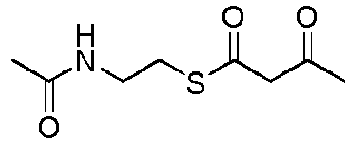
MAGR170/ JHS201 
JHS493 
JHS210 
MAGR41 / MAGR168/ 
JHS486 
MAGR42 
MAGR171 
JHS206 
JHS226 
JHS247B 
JHS266 
JHS291 
JHS246 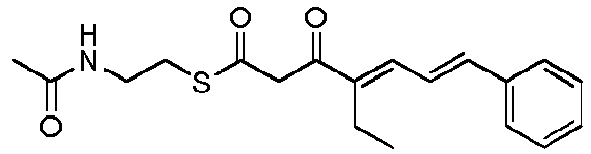
JHS274 
JHS287 
JHS285 
JHS328 
JHS282 
JHS283 
JHS401 
JHS410 
JHS415 
JHS417 
JHS427 
JHS289 
- Precursor compounds could be synthesized by the following methods:
- To a solution of meldrums acid (10.8 g, 75.0 mmol) and pyridine (12.0 g, 0.15 mol) in anhydrous dichloromethane (50 mL) at 0 °C was added dropwise a solution of the appropriate acyl chloride (80.0 mmol) in anhydrous dichloromethane (20 mL). The resulting orange mixture was stirred for 1 h at 0 °C and then for 1 h at room temperature. The reaction mixture was diluted with dichloromethane (50 mL) and washed with aqueous 2M HCl (3 x 50 mL), brine (2 x 50 mL), dried (MgSO4) and concentrated under reduced pressure. The crude material was filtered over a short pad of SiO2 eluting with n-hexane/ EtOAc 2:1.
- The appropriate acylmeldrums acid (20.0 mmol) was dissolved in toluene (25 mL) and acetone (2.0 mL). The solution was heated at reflux for 2 h. The solvents were removed under reduced pressure and the crude material was purified by flash chromatography (SiO2, n-hexane/EtOAc) or vacuum distillation.
- General Procedure for synthesis of dioxinon phosphonates: General procedure C: To a solution of diisopropylamine (7.18 mL, 51.1 mmol) in THF (30 mL) was added dropwise a solution of n-BuLi (2.5M in n-hexane, 20.5 mL, 51.1 mmol) at 0 °C. After stirring for 30 minutes, the reaction mixture was cooled to -78 °C and the appropriate 2,2-dimethyl-4H-1,3-dioxin-4-one (36.5 mmol) was added over 5 min. After 40 min chlorodiethylphosphite (7.62 mL, 53.0 mmol) was added and the cooling bath was removed. When the mixture reached room temperature, it was diluted with Et2O (200 mL), washed with half-saturated brine (100 mL), dried (MgSO4) and concentrated in vacuo. The resulting yellow oil was dissolved in CH2Cl2 (60 mL) and aqueous H2O2 (30%, 13 mL) was carefully added at 0 °C. The solution was stirred for 1 h and diluted with EtOAc (200 mL). After separation, the organic layer was washed with brine (2 x 100 mL), dried (MgSO4) and concentrated in vacuo. The crude material was purified by flash chromatography (SiO2, EtOAc).
- To a solution of diisopropylamine (1.04 mL, 7.13 mmol) in THF (20 mL) was added a solution of n-BuLi (2.5M in n-hexane, 2.85 mL, 7.13 mmol) at 0 °C. After stirring for 30 min, the reaction mixture was cooled to -78 °C. A solution of the appropriate phosphonate (6.84 mmol) in THF (10 mL) was added to the reaction mixture, and the resulting mixture was warmed to 0 °C and stirred for 15 min. After cooling to -78 °C, HMPA (2.10 mL, 12.1 mmol) was added and stirring was continued for 30 min. A solution of the appropriate aldehyde (6.84 mmol) in THF (10 mL) was added slowly. The reaction mixture was allowed to warm slowly to 0 °C and stirred for 1 h. After diluting with EtOAc (80 mL), the mixture was washed with saturated aqueous NH4Cl (3 x 40 mL) and brine (50 mL). The organic layer was dried (MgSO4) and concentrated. The crude material was purified by flash chromatography (SiO2, n-hexane/EtOAc).
- A degassed solution of the appropriate dioxinone (0.95 mmol), N-acetylcysteamine (SNAC-H, 0.15 g, 1.25 mmol) in toluene (6 mL) was refluxed for 16 h under a nitrogen atmosphere. After cooling to room temperature the solvent was evaporated under reduced pressure and the crude product was purified by flash column chromatography (SiO2, n-hexane/EtOAc= 1:1 → EtOAc) to afford the desired SNAC ester.
- A solution of the appropriate acid (10.6 mmol) and DCC (2.19 g, 10.6 mmol) in anhydrous CH2Cl2 (20 mL) was stirred for 30 min at 0°C. A white solid precipitated. DMAP (1.94 g, 15.9 mmol) and meldrums acid (1.52 g, 10.6 mmol) were subsequently added. The cooling bath was removed and the reaction mixture was stirred for 2 h at room temperature. The insoluble urea was filtered off and the filter-cake was washed with ice-cold CH2Cl2 (10 mL). The combined filtrates were washed with 1M HCl (2 x 50 mL), H2O (2 x 50 mL) and brine (75 mL), dried (MgSO4) and concentrated. To remove last residues of urea, the crude material was filtered over cotton.
- A degassed solution of the appropriate acylmeldrums acid (0.80 mmol), N-acetylcysteamine (SNAC-H, 0.12 g, 1.00 mmol) in toluene (6 mL) was refluxed for 16 h under a nitrogen atmosphere. After cooling to room temperature the solvent was evaporated under reduced pressure and the crude product was purified by flash column chromatography (SiO2, n-hexane/EtOAc = 1:1 → EtOAc) to afford the desired β-keto-SNAC ester.
- A solution of the appropriate acid (1.06 mmol) and DCC (0.41 g, 1.06 mmol) in anhydrous CH2Cl2 (5 mL) was stirred for 30 min at 0°C. A white solid precipitated. DMAP (0.37 g, 1.59 mmol) and SNAC-H (0.24 g, 1.06 mmol) were subsequently added. The cooling bath was removed and the reaction mixture was stirred for 2 h at room temperature. The insoluble urea was filtered off and the filter-cake was washed with ice-cold CH2Cl2 (10 mL). The combined filtrates were evaporated in vacuo and the crude product was purified by flash column chromatography (SiO2, n-hexane/EtOAc= 1:1 → EtOAc) to afford the desired SNAC ester.
- A degassed solution of the dioxinone (0.92 mmol), thiophenol (0.13 g, 1.16 mmol) in toluene (6 mL) was refluxed for 16 h under a nitrogen atmosphere. After cooling to room temperature the solvent was evaporated under reduced pressure and the crude product was purified by flash column chromatography (SiO2, n-hexane/EtOAc = 12:1 → 8:1) to afford the desired thioester.
-

- The title compound was prepared from 3-hydroxybenzaldehyde according to the following procedure:
- A mixture of 3-hydroxybenzaldehyde (5.00 g, 41.0 mmol) and vinyl acetate (4.15 mL, 45.1 mmol) in acetonitrile (15 mL) was added at room temperature to a suspension of potassium carbonate (6.80 g, 49.2 mmol) in acetonitrile (50 mL) and water (0.2 mL). The reaction mixture was refluxed for 40 h and cooled to room temperature. The reaction mixture was diluted with water (50 mL) and EtOAc (50 mL). The aqueous layer was separated and extracted with EtOAc (2 x 50 mL). The combined organic layers were dried (MgSO4) and concentrated in vacuo to dryness. The residue was purified by flash column chromatography (SiO2, n-hexane/EtOAc 8:1 → 2:1) to afford the title compound.
- Yield: 25%, orange solid. 1H NMR (DMSO-d6): δ = 9.68 (br. s, 1H), 9.65 (d, J = 7.7 Hz, 1H), 7.65 (d, J = 15.8 Hz, 1H), 7.27 (t, J = 8.0 Hz, 1H), 7.17 (d, J = 8.0 Hz, 1H), 7.08 (t, J = 2.4 Hz, 1H), 6.89 (ddd, J = 8.0, 2.4, 1.0 Hz, 1H), 6.73 (dd, J = 15.8, 7.7 Hz, 1H) ppm. 13C NMR (DMSO-d6): δ = 194.4, 157.8, 153.5, 135.3, 130.1, 128.3, 119.6, 118.4, 115.0 ppm.
-

- The title compound was prepared from IM-1 according to the following procedure:
- Imidazole (0.86 g, 12.7 mmol) was added to a solution of IM-1 (0.76 g, 5.13 mmol) and tert-butyldimethylchlorosilane (0.92 g, 6.10 mmol) in anhydrous N,N-dimethylformamide (10 mL). The mixture was stirred for 3 h, diluted with 5% aqueous NaHCO3 (50 mL), and extracted with EtOAc (4 x 50 mL). The combined organic layers were washed with brine (100 mL), dried (MgSO4), and evaporated in vacuo to yield the title compound.
- Yield: 82%, yellow oil. 1H NMR (DMSO-d6): δ = 9.66 (d, J = 7.7 Hz, 1H), 7.71 (d, J = 15.9 Hz, 1H), 7.34-7.38 (m, 2H), 7.19-7.22 (m, 1H), 6.94-6.99 (m, 1H), 6.84 (dd, J = 15.9, 7.7 Hz, 1H), 0.96 (s, 9H), 0.21 (s, 6H) ppm. 13C NMR (DMSO-d6): δ = 194.3, 155.5, 152.9, 135.6, 130.2, 128.7, 122.7, 121.9, 119.8, 25.5, 17.9, -4.6 ppm.
-

- The title compound was prepared from 3-bromobenzaldehyde according to the following procedure:
- A solution of 3-bromobenzaldehyde (5.00 g, 27.0 mmol) in H2O (6 mL) was filled into a 100 mL three-necked round bottom flask equipped with an thermometer. Solid NaOH (54.0 mg, 1.35 mmol) was added and dissolved. A solution of vinylacetate (0.41 g, 10.4 mmol) in H2O (1 mL) was added dropwise. The temperature was kept at 25 °C and NaOH (270 mg, 0.68 mmol) in H2O (1 mL) was added via a syringe. Afterwards another vinylacetate (0.41 g, 10.4 mmol) in H2O (1 mL) and the reaction mixture was stirred over night at room temperature. The reaction was neutralized with acetic acid, diluted with 50 mL H2O and extracted with Et2O (2 x 100 mL). The organic layers were combined, washed with brine (100 mL), dried (MgSO4), and evaporated in vacuo. The residue was purified by flash chromatography (SiO2, n-hexane/EtOAc = 20:1 → 15:1).
- Yield: 12%, yellow oil. 1H NMR (CDCl3): δ = 9.72 (d, J = 7.5 Hz, 1H), 7.71 (s, 1H), 7.57 (d, J = 7.7 Hz, 1H), 7.50 (d, J = 7.7 Hz, 1H), 7.40 (d, J = 15.9 Hz, 1H), 7.32 (t, J = 7.7 Hz, 1H), 6.70 (dd, J = 15.9, 7.5 Hz, 1H) ppm. 13C NMR (CDCl3): δ = 193.2, 150.6, 136.1, 134.0, 131.2, 130.6, 129.7, 126.9, 123.2 ppm.
-

- The title compound was prepared according to the following procedure:
- 4-pentynoyc acid (3.00 g, 30.6 mmol) was dissolved in anhydrous THF (90 mL) and cooled to 0 °C. Triethylamine (4.69 mL, 33.6 mL) and methylchloroformate (2.60 mL, 33.6 mmol) were subsequently added and the reaction was stirred at 0 °C for 20 min. The occurring white precipitate was filtered off, afterwards under a nitrogen atmosphere and the filtrate was added to a solution of NaBH4 (1.85 g, 49.9 mmol) in water (60 mL) at 0 °C. The resulting mixture was stirred for 1 h at 0 °C and afterwards for 2 h at room temperature. The reaction was carefully quenched with 1M HC1 (20 mL) until bubbling ceased. The mixture was extracted with EtOAc (3 x 100 mL). The combined organic layers were washed with saturated NaHCO3 solution (100 mL) and brine (100 mL), dried (MgSO4) and concentrated in vacuo to yield the title compound.
- Yield: 39%, colorless liquid. 1H NMR (CDCl3): δ = 3.75 (t, J = 6.4 Hz, 2H), 2.31 (dt, J = 7.0, 2.7 Hz, 2H), 1.97 (t, J = 2.7 Hz, 1H), 1.85 (s, 1H), 1.77 (quin, J = 6.4 Hz, 2H) ppm. 13C NMR (CDCl3): δ = 83.8, 68.7, 61.4, 31.0, 14.9 ppm.
-

- The title compound was prepared from IM-4 according to the general procedure shown for IM-7 and used in the next step without further purification.
-

- The title compound was prepared according to the following procedure:
- To a suspension of potassium hydride (1.32 g, 33.0 mmol) in THF (40 mL) 1,4-butanediol (3.00 g, 33.3 mmol) was added at room temperature and stirred for 45 min. A voluminous white precipitate formed. To the reaction mixture was added tert-butyldimethylsilyl chloride (4.97 g, 33.0 mmol) and stirring was continued for 45 min. The mixture was diluted with Et2O (200 mL), washed with aqueous K2CO3 (10%, 50 mL) and brine (2 x 100 mL), dried (MgSO4) and concentrated in vacuo.
- Yield: 99%, colorless oil. 1H NMR (CDCl3): δ = 3.63-3.69 (m, 4H), 2.51 (t, J = 5.6 Hz, 1H), 1.62-1.69 (m, 4H), 0.91 (s, 9H), 0.08 (s, 6H) ppm.13C NMR (CDCl3): δ = 63.3, 62.7, 30.2, 29.8, 25.9, 18.3, -5.4 ppm.
-

- The title compound was prepared from IM-6 according to the following procedure:
- To a stirred suspension of PCC (10.6 g, 49.2 mmol) and NaOAc (0.49 g, 9.84 mmol) in CH2Cl2 (100 mL) a solution of the alcohol IM-6 (6.70 g, 32.8 mmol) in CH2Cl2 (100 mL) was added. After 7 h the reaction mixture was diluted with Et2O (100 mL) and the mixture was filtered over short pad of celite. The solvents were evaporated in vacuo and the residue was purified by flash chromatography (SiO2, n-hexane/EtOAc = 20:1 → 10:1).
- Yield: 30%, colorless oil. 1H NMR (CDCl3): δ = 9.79 (t, J = 1.7 Hz, 1H), 3.65 (t, J = 6.0 Hz, 2H), 2.51 (dt, J = 7.1, 1.7 Hz, 2H), 1.86 (quin, J = 6.5 Hz, 2H), 0.89 (s, 9H), 0.05 (s, 6H) ppm. 13C NMR (CDCl3): δ = 202.6, 62.1, 40.8, 25.9, 25.5, 18.3, -5.4.
-

- The title compound was prepared from IM-7 according to the following procedure:
- To a solution formylmethylenetriphenylphosphorane (3.01 g, 9.90 mmol) in benzene (80 mL), a solution of the aldehyde IM-7 (2.00 g, 9.90 mmol) in benzene (15 mL) was added and the mixture was heated at reflux for 24 h. After removal of the solvent, the crude material was purified by flash chromatography (SiO2, n-hexane/EtOAc = 12:1 → 10:1).
- Yield: 58%, light yellow oil. 1H NMR (CDCl3): δ = 9.46 (d, J = 7.9 Hz, 1H), 6.84 (dd, J = 15.7, 6.8 Hz, 1H), 6.08 (ddt, J = 15.7, 7.9, 1.5 Hz, 1H), 3.61 (t, J = 6.1 Hz, 2H), 2.34-2.41 (m, 2H), 1.63-1.72 (m, 2H), 0.84 (s, 9H), 0.00 (s, 6H) ppm. 13C NMR (CDCl3): δ = 194.0, 158.6, 133.0, 62.0, 30.9, 29.3, 25.9, 18.3, 15.4 ppm.
-

- The title compound was prepared from 3-hydroxybenzoic acid according to the following procedure:
- Imidazole (1.36 g, 20.0 mmol) was added to a solution of 3-hydroxybenzoic acid (1.00 g, 7.24 mmol) and tert-butyldimethylchlorosilane (1.31 g, 8.69 mmol) in anhydrous N,N-dimethylformamide (15 mL). The mixture was stirred for 3 h at room temperature and then diluted with acetone (50 mL). The solvents were evaporated in vacuo and the residue was dissolved in EtOAc (50 mL). The organic layer was washed with H2O (2 x 40 mL) and brine (30 mL), dried (MgSO4), and evaporated in vacuo to yield the title compound.
- Yield: 38%, colorless crystals. 1H NMR (CDCl3) δ 7.73 (td, J = 8.0, 1.1 Hz, 1H), 7.58 (t, J = 2.5 Hz, 1H), 7.34 (t, J = 8.0 Hz, 1H), 7.10 (ddd, J = 8.0, 2.5, 1.1 Hz, 1H), 1.01 (s, 9H), 0.24 (s, 6H) ppm. 13C NMR (CDCl3) 171.7, 155.8, 130.7, 129.5, 125.7, 123.2, 121.5, 25.6, 18.2, -4.5 ppm.
-

- The title compound was prepared from IM-9 according to the general procedure H:
Yield 51%, white solid. 1H NMR (CDCl3) δ = 7.57 (d, J = 7.7 Hz, 1H), 7.39-7.44 (m, 1H), 7.32 (t, J = 7.70 Hz, 1H), 7.03-7.12 (m, 1H), 5.92 (br. s., 1H), 3.50-3.60 (m, 1H), 3.23 (t, J = 6.38 Hz, 1H), 1.98 (s, 3H), 1.01 (s, 9H), 0.23 (s, 6H) ppm. 13C NMR (CDCl3) δ = 191.6, 169.9, 155.6, 137.6, 129.3, 125.1, 119.9, 118.1, 76.8, 76.6, 76.2, 39.3, 28.2, 25.2, 22.8, -4.9 ppm. -

- The title compound was prepared from acetyl chloride according to the general procedure A:
Yield: 83%, yellow solid. 1H NMR (CDCl3): δ = 15.12 (s, 1H), 2.68 (s, 3H), 1.74 (s, 6H) ppm. 13C NMR (CDCl3): δ = 194.6, 170.2, 160.4, 104.9, 91.8, 26.8, 23.5 ppm. -

- The title compound was prepared from IM-11 according to the general procedure B:
Yield: 85%, yellow oil. 1H NMR (CDCl3): δ = 5.19 (s, 1H), 1.94 (s, 3H), 1.64 (s, 6H) ppm. 13C NMR (CDCl3): δ = 168.6, 161.1, 106.2, 93.7, 24.9, 19.8 ppm. -

- The title compound was prepared from IM-12 according to the general procedure C:
Yield: 62%, yellow resin. 1H NMR (CDCl3) δ = 5.39 (d, J = 3.6 Hz, 1H), 4.08-4.24 (m, 4H), 2.80 (d, J = 22.1 Hz, 2H), 1.71 (s, 6H), 1.35 (t, J = 7.1 Hz, 6H) ppm.13C NMR (75 MHz, CDCl3): δ = 163.0 (d, J = 9.7 Hz), 160.5, 107.1, 96.2 (d, J = 8.2 Hz), 62.6 (d, J = 6.7 Hz), 32.4 (d, J = 137.1 Hz), 24.9, 16.3(d, J = 6.0 Hz) ppm. -

- The title compound was prepared from IM-13 according to the general procedure D:
Yield: 42%. 1H NMR (CDCl3): δ = 6.92 (dd, J = 15.2, 9.9 Hz, 1H), 5.98-6.14 (m, 2H), 5.90 (d, J = 15.2 Hz, 1H), 5.21 (s, 1H), 2.16 (q, J = 7.2 Hz, 2H), 1.72 (s, 6H), 1.46 (sxt, J = 7.4 Hz, 2H), 0.95 (t, J = 7.4 Hz, 3H) ppm.13C NMR (CDCl3): δ = 163.5, 161.7, 143.4, 138.5, 128.9, 120.6, 105.9, 93.6, 34.8, 24.8, 21.8, 13.4 ppm. -

- The title compound was prepared from propionyl chloride according to the general procedure A:
Yield: 93%, orange crystals. 1H NMR (CDCl3): δ = 15.35 (br. s, 1H), 3.10 (q, J = 7.4 Hz, 2H), 1.72 (s, 6H), 1.25 (t, J = 7.4 Hz, 3H) ppm.13C NMR (CDCl3): δ = 198.9, 170.2, 160.2, 104.8, 90.9, 29.4, 26.7, 9.6 ppm. -

- The title compound was prepared from IM-15 according to the general procedure B:
Yield: 80%, yellow oil. 1H NMR (CDCl3): δ = 5.22 (t, J = 1.0 Hz, 1H), 2.24 (dq, J = 7.6, 1.0 Hz, 2H), 1.67 (s, 6H), 1.12 (t, J = 7.6 Hz, 3H) ppm. 13C NMR (CDCl3): δ = 173.1, 161.5, 106.2, 92.2, 26.7, 24.9, 9.9 ppm. -

- The title compound was prepared from IM-16 according to the general procedure C:
Yield: 75%. Light yellow oil. 1H NMR (CDCl3): δ = 5.37 (d, J = 3.5 Hz, 1H), 4.08-4.18 (m, 4H), 2.77 (dq, J = 23.9, 7.3 Hz, 1H), 1.69 (s, 6H), 1.30-1.45 (m, 9H) ppm.13C NMR (CDCl3): δ = 168.1 (d, J = 8.2 Hz), 160.8 (d, J = 2.2 Hz), 106.8, 94.9 (d, J = 6.7 Hz), 62.1 (dd, J = 6.7, 4.5 Hz), 36.9 (d, J = 137.1 Hz), 24.8 (d, J = 70.8 Hz), 16.4 (d, J = 6.0 Hz), 12.1 (d, J = 6.0 Hz) ppm. -

- The title compound was prepared from IM-17 according to the general procedure D:
Yield: 53 %, colorless oil. 1H NMR (CDCl3) δ = 6.40 (dt, J = 7.2, 1.1 Hz, 1H), 5.43 (s, 1H), 2.39-2.50 (m, 2H), 2.29-2.37 (m, 2H), 1.95-2.00 (m, 1H), 1.81 (s, 3H), 1.70 (s, 6H) ppm. 13C NMR (CDCl3) δ = 165.3, 162.2, 134.9, 128.5, 106.0, 91.8, 83.0, 69.1, 27.6, 24.9, 17.9, 12.3 ppm. -

The title compound was prepared from IM-17 according to the general procedure D: - Yield: 42%. 1H NMR (CDCl3): δ = 6.85 (d, J = 11.3 Hz, 1H), 6.36 (dd, J = 14.8, 11.3 Hz, 1H), 6.07 (dt, J = 14.8, 7.5 Hz, 1H), 5.42 (s, 1H), 2.15-2.20 (m, 2H), 1.86 (s, 3H) 1.68 (s, 6H) 1.39-1.48 (m, 2H), 0.90 (t, J = 7.4 Hz, 1H) ppm.
- 13C NMR (CDCl3): δ = 165.7, 162.2, 143.3, 134.3, 125.9, 124.4, 105.8, 91.6, 35.3, 24.9, 22.1, 13.6, 12.1 ppm.
-

- The title compound was prepared from IM-17 according to the general procedure D:
Yield: 60 %, yellow oil. 1H NMR (CDCl3) δ = 7.09 (d, J = 11.8 Hz, 1H), 6.14 (dd, J = 11.8, 1.2 Hz, 1H), 5.41 (s, 1H), 2.12 (t, J = 7.5 Hz, 2H), 1.85 (s, 3H), 1.83 (s, 3H), 1.68 (s, 6H), 1.47 (sxt, J = 7.4 Hz, 2H), 0.87 (t, J = 7.4 Hz, 3H) ppm. 13C NMR (CDCl3) δ = 166.0, 162.3, 148.5, 130.0, 124.0, 120.6, 105.7, 91.2, 42.7, 24.8, 20.9, 17.0, 13.6, 11.9 ppm. -

- The title compound was prepared from IM-17 according to the general procedure D:
Yield: 19 %, yellow resin. 2E,4E/2Z,4E = 14:1, 1H NMR (CDCl3) 2E,4E only: δ = 6.83 (d, J = 11.1 Hz, 1H), 6.36 (dd, J = 14.8, 11.3 Hz, 1H), 6.10 (dt, J = 14.8, 7.4 Hz, 1H), 5.46 (s, 1H), 2.16-2.27 (m, 2H), 1.89 (s, 3H), 1.72 (s, 6H) 1.39-1.46 (m, 2H), 1.32-1.39 (m, 2H), 0.92 (t, J = 7.3 Hz, 1H) ppm. 13C NMR (CDCl3): δ = 165.8, 162.4, 143.7, 134.3, 125.9, 124.6, 105.9, 91.8, 33.1, 31.1, 25.0, 22.2, 13.9, 12.2 ppm. -

- The title compound was prepared from IM-17 according to the general procedure D:
Yield: 13%, colorless resin. E-isomer only. 1H NMR (CDCl3): δ = 7.12-7.32 (m, 5H), 6.44 (t, J = 7.5 Hz, 1H), 5.40 (s, 1H), 2.76 (t, J = 7.6 Hz, 2H), 2.48-2.56 (m, 2H), 1.73 (s, 3H), 1.70 (s, 6H) ppm. 13C NMR (CDCl3): δ = 165.6, 162.4, 141.0, 136.5, 128.4, 128.3, 127.8, 126.2, 106.0, 91.5, 35.0, 30.6, 24.9, 12.1 ppm. -
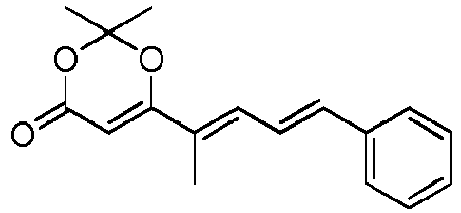
- The title compound was prepared from IM-17 according to the general procedure D:
Yield: 50%, yellow oil. 1H NMR (CDCl3): δ = 7.48-7.51 (m, 2H), 7.30-7.40 (m, 4H), 7.14 (dd, J = 14.1, 11.3 Hz, 1H), 7.06 (d, J = 11.3 Hz, 1H), 6.90 (d, J = 14.1 Hz, 1H), 5.54 (s, 1H) 2.02 (s, 3H), 1.75 (s, 6H) ppm.13C NMR (CDCl3): δ = 165.3, 162.2, 139.2, 136.6, 134.0, 128.8, 127.0, 127.0, 123.7, 106.0, 92.3, 25.0, 12.5 ppm. -

- The title compound was prepared from IM-17 according to the general procedure D:
Yield: 50%, yellow solid. 1H NMR (CDCl3) δ = 7.61 (t, J = 1.6 Hz, 1H), 7.34-7.44 (m, 2H), 7.22 (t, J = 7.8 Hz, 1H), 7.10 (dd, J = 14.3, 11.4 Hz, 1H), 7.02 (d, J = 11.4 Hz, 1H), 6.78 (d, J = 14.3 Hz, 1H), 5.54 (s, 1H), 2.02 (s, 3H), 1.74 (s, 6H) ppm.13C NMR (CDCl3): δ = 165.0, 162.0, 138.7, 137.2, 133.3, 131.4, 130.2, 129.5, 128.0, 125.7, 125.0, 122.9, 106.0, 92.6, 25.0, 12.5 ppm. -

- The title compound was prepared from IM-17 using IM-2 according to the general procedure D:
Yield: 16%, yellow oil. 1H NMR (CDCl3): δ = 7.22 (dd, J = 7.8, 7.8 Hz, 1H), 7.02-7.12 (m, 3 H), 6.93 (dd, J = 1.9, 1.8 Hz, 1H), 6.75-6.88 (m, 2H), 5.53 (s, 1H), 2.02 (s, 3H), 1.75 (s, 6H), 1.01 (s, 9H), 0.23 (s, 6H) ppm. 13C NMR (CDCl3): δ = 165.3, 162.3, 156.1, 139.2, 138.1, 134.0, 129.7, 127.0, 123.9, 120.6, 120.2, 118.6, 106.0, 92.3, 25.7, 25.1, 18.2, 12.6, 4.4 ppm. -

- The title compound was prepared from IM-25 according to the general procedure E:
Yield: 53%, yellow oil. 1H NMR (CDCl3): δ = 7.11-7.30 (m, 2H), 6.96-7.11 (m, 2H), 6.70-6.96 (m, 3H), 6.11 (br. s, 1H), 4.01 (s, 2H), 3.35-3.51 (m, 2H), 3.08 (q, J = 6.1 Hz, 2H), 1.97 (s, 3H), 1.93 (s, 3H), 0.96 (s, 9H), 0.18 (s, 6H) ppm. 13C NMR (CDCl3): δ = 193.1, 193.0, 170.3, 156.0, 141.3, 137.5, 135.5, 129.8, 128.1, 124.0, 121.1, 120.5, 118.8, 52.8, 39.2, 29.2, 25.6, 23.1, 18.2, 11.8, -4.4 ppm. -

- The title compound was prepared from IM-17 using IM-8 according to the general procedure D:
Yield: 29%, yellow oil. 1H NMR (CDCl3): δ = 6.83 (d, J = 11.2 Hz, 1H), 6.39 (ddd, J = 14.9, 11.2, 1.0 Hz, 1H), 6.09 (td, J = 14.9, 7.2 Hz, 1H), 5.44 (s, 1H), 3.61 (t, J = 6.2 Hz, 2H), 2.26 (q, J = 7.2 Hz, 2H), 1.87 (s, 3H), 1.71 (s, 6H), 1.58-1.67 (m, 2H), 0.89 (s, 9H), 0.04 (s, 6H). 13C NMR (CDCl3): δ = 165.4, 162.3, 143.0, 137.8, 134.2, 126.1, 124.7, 105.9, 91.8, 62.4, 32.0, 29.3, 25.9, 25.0, 18.3, 12.2, -5.3ppm. -

- The title compound was prepared from IM-17 according to the general procedure D:
Yield: 37%, colorless oil. 1H NMR (CDCl3): δ = 6.41 (t, J = 7.4 Hz, 1H), 5.40 (s, 1H), 2.20 (q, J = 7.4 Hz, 2H), 1.79 (s, 3H), 1.70 (s, 6H), 1.40-1.49 (m, 2H), 1.27-1.36 (m, 4H), 0.90 (t, J = 6.9 Hz. 3H) ppm. 13C NMR (CDCl3): δ = 165.8, 162.5, 138.1, 126.9, 105.9, 91.2, 31.6, 28.7, 28.5, 24.9, 22.4, 13.9, 12.1 ppm. -

- The title compound was prepared from butyryl chloride according to the general procedure A: Yield: 92%, yellow oil. 1H NMR (CDCl3): δ = 15.30 (s, 1H), 3.05 (t, J = 7.5 Hz, 2H), 1.73 (s, 6H), 1.72 (sxt, J = 7.5 Hz, 2H), 1.03 (t, J = 7.5 Hz, 3H) ppm. 13C NMR (CDCl3): δ = 198.0, 170.5, 160.2, 104.7, 91.3, 37.4, 26.8, 19.6, 13.8 ppm.
-
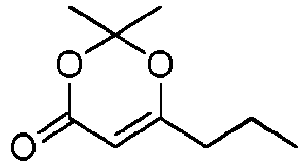
- The title compound was prepared from IM-29 according to the general procedure B:
Yield: 82%, yellow oil. 1H NMR (CDCl3): δ = 5.22 (s, 1H), 2.18 (t, J = 7.5 Hz, 2H), 1.66 (s, 6H), 1.57 (sxt, J = 7.5 Hz, 2H), 0.95 (t, J = 7.5 Hz, 3H) ppm. 13C NMR (CDCl3): δ = 171.9, 161.4, 106.2, 93.1, 35.4, 24.9, 19.1, 13.4 ppm. -
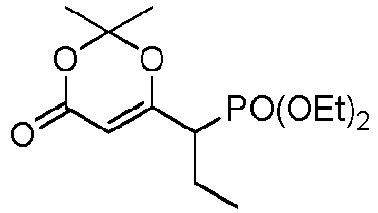
- The title compound was prepared from IM-30 according to the general procedure C:
Yield: 45%, light yellow oil. 1H NMR (acetone-d6): δ = 5.46 (d, J = 3.4 Hz, 1H), 4.08-4.23 (m, 4H), 2.83 (ddd, J = 22.9, 10.8, 4.3 Hz, 1H), 1.77-2.01 (m, 2H), 1.69 (s, 6H), 1.26-1.34 (m, 6H), 1.00 (t, J = 7.4 Hz, 3H) ppm.13C NMR (acetone-d6): δ = 167.5 (d, J = 8.2 Hz), 160.6 (d, J = 2.2 Hz), 107.6, 97.1 (d, J = 8.2 Hz), 63.7 (d, J = 6.7 Hz), 45.7 (d, J = 136.4 Hz), 25.3 (d, J = 7.5 Hz), 21.0 (d, J = 3.7 Hz), 16.8 (d, J = 6.0 Hz), 12.7 (d, J = 15.7 Hz) ppm. -

- The title compound was prepared from IM-31 according to the general procedure D:
Yield: 25%, yellow solid. 1H NMR (CDCl3) 3E,5E-isomer only: δ = 7.41 (m, 2H), 7.19-7.32 (m, 3H), 7.03 (dd, J = 14.8, 11.3 Hz, 1H), 6.92 (d, J = 11.3 Hz, 1H), 6.82 (d, J = 14.8 Hz, 1H), 5.50 (s, 1H), 2.41 (q, J = 7.6 Hz, 2H), 1.67 (s, 6H), 1.06 (t, J = 7.6 Hz, 3H) ppm. 13C NMR (CDCl3): δ=164.6, 162.4, 139.5, 136.6, 133.7, 133.5, 128.8, 127.0, 123.4, 106.0, 92.0, 25.0, 20.1, 14.4 ppm. -
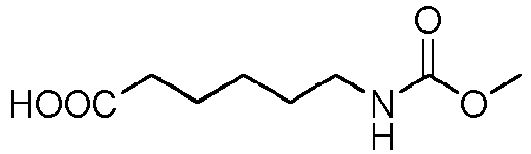
- The title compound was prepared according to the following procedure:
- To a stirred solution of γ-amino butyric acid (5.79 g, 56.1 mmol) and KOH (3.21 g, 57.2 mmol) in H2O (20 mL) were added portionwise, alternately methylchlorofomate (4.82 mL, 62.3 mmol) and a solution of KOH (57.6 mmol) in H2O (5 mL). After 2 h the reaction mixture was basified by adding a solution of KOH (4.50 g, 80.2 mmol) in H2O (10 mL). The solution was washed with CH2Cl2 (2 x 75 mL). The aqueous layer was acidified with 30% H2SO4 causing the precipitation of a white solid. The mixture was extracted with CH2Cl2 (4 x 200 mL) and dried (MgSO4). The solvent was evaporated in vacuo.
- Yield: 88%, colorless oil. 1H NMR (CDCl3): δ = 10.33 (br. s, 1H), 5.88 (br. s, 0.30H, NH), 4.81 (br. s, 0.70H, NH), 3.66 (s, 3H), 3.08-3.20 (m, 2H), 2.35 (t, J = 7.4 Hz, 2H), 1.60-1.70 (m, 2H), 1.47-1.56 (m, 2H), 1.31-1.41 (m, 2H) ppm. 13C NMR (CDCl3): δ = 178.9, 157.1, 52.0, 40.8, 33.8, 29.6, 26.0, 24.2 ppm.
-

- The title compound was prepared from IM-33 according to the general procedure F:
Yield: 99 %, orange oil. 1H NMR (CDCl3): δ = 15.31 (br. s, 1H), 4.70 (br. s, 1H), 3.66 (s, 3H), 3.12-3.25 (m, 2H), 3.07 (t, J = 7.6 Hz, 2H), 1.30-1.75 (m, 6H), 1.73 (s, 6H) ppm. 13C NMR (CDCl3): δ = 197.8, 171.1, 157.1, 104.8, 91.3, 60.3, 52.0, 40.7, 29.6, 26.8, 26.3, 14.2 ppm. -

- The title compound was prepared from 2-methyl-4-pentenoic acid according to the general procedure F:
Yield: 48 %, orange oil. Keto/enol = 1:6 1H NMR (CDCl3): δ = 15.49 (br. s, 1H), 5.77 (m, 1H), 5.01-5.14 (m, 2H), 4.11-4.23 (m, 1H), 2.43-2.53 (m, 1H), 2.22-2.31 (m, 1H), 1.74 (s, 6H), 1.24 (d, J = 6.8 Hz, 3H) ppm. 13C NMR (CDCl3): δ = 200.9, 170.7, 160.1, 135.0, 117.3, 104.7, 91.2, 38.1, 37.6, 26.6, 17.0 ppm. -

- The title compound was prepared according to the following procedure:
- The unsaturated ester IM-39 (1.20 g, 6.60 mmol) was dissolved in EtOH (50 mL). After addition of Pd/C (5%, 6 mg) the mixture was hydrogenated in a Parr apparatus at 3 bar H2 for 24 h. The catalyst was filtered off and the filter cake was washed with EtOAc (30 mL). The combined filtrates were concentrated in vacuo. The residue was dissolved in CH2Cl2 (50 mL) and filtered over a short pad of SiO2 eluting with CH2Cl2. The solvent was removed in vacuo.
- Yield: 73%, colorless liquid. 1H NMR (CDCl3): δ = 4.13 (q, J = 7.1 Hz, 2H), 2.42 (tq, J = 6.9, 6.5 Hz, 1H), 1.59-1.71 (m, 1H), 1.33-1.46 (m, 1H), 1.22-1.33 (m, 8H), 1.26 (t, J = 7.1 Hz, 3H), 1.14 (d, J = 6.9 Hz, 3H), 0.88 (t, J = 6.7 Hz, 3H) ppm. 13C NMR (CDCl3): δ = 177.0, 60.0, 39.6, 33.8, 31.7, 29.2, 27.2, 22.6, 17.1, 14.3, 14.0 ppm.
-

- The title compound was prepared according to the following procedure:
- To a solution of the ester IM-36 (0.90 g, 4.80 mmol) in MeOH (25 mL) was added a solution of NaOH (0.97 g, 24.2 mmol) in H2O (8 mL). The resulting mixture was heated at reflux for 16 h. After cooling to room temperature the MeOH was evaporated in vacuo. The aqueous layer was cooled to 0 °C and acidified to
pH 2 by addition of HC1 (2M). The mixture was extracted with EtOAc (3 x 40 mL). The combined organic layers were dried (MgSO4) and concentrated under reduced pressure - Yield: 92%, white solid. 1H NMR (CDCl3): δ = 10.97 (br. s, 1H), 2.45 (tq, J = 7.1, 6.9 Hz, 1H), 1.64-1.75 (m, 1H), 1.69 (quin, J = 7.1, 1H), 1.25-1.37 (m, 8H), 1.18 (d, J = 6.9 Hz, 3H), 0.89 (t, J = 6.7 Hz, 3H) ppm. 13C NMR (CDCl3): δ = 183.5, 39.4, 33.5, 31.7, 29.2, 27.1, 22.6, 16.8, 14.0 ppm.
-

- The title compound was prepared from IM-37 according to the general procedure F:
Yield: 64 %, orange oil. Keto/enol = 1:3. 1H NMR (CDCl3): δ = 15.46 (br. s, 1H), 4.03 (sxt, J = 6.8 Hz, 1H), 1.72 (s, 6H), 1.17-1.50 (m, 10H), 1.20 (d, J = 6.8 Hz, 3H), 0.85 (t, J = 6.8 Hz, 3H) ppm. 13C NMR (CDCl3): δ = 202.1, 170.8, 160.1, 104.6, 91.0, 37.9, 34.0, 31.6, 29.2, 27.2, 26.8, 22.5, 17.4, 14.0 ppm. -

- The title compound was prepared according to the following procedure:
- (1-Ethoxycarbonylmethyl)triphenylphosphonium bromide (8.86 g, 20.0 mmol) and K2CO3 (4.00 g, 28.9 mmoL) were dissolved in a mixture of CH2Cl2 (60 mL) and H2O (50 mL). After the dropwise addition of E-2-hexen-1-al (1.50 g, 15.0 mmol) the reaction mixture was heated at reflux overnight. The organic layer was washed with H2O (2 x 50 mL), dried (MgSO4) and concentrated in vacuo. The residue was purified by flash chromatography (SiO2, n-hexane/EtOAc = 10:1).
- Yield: 87%, light yellow oil. 2E,4E/2Z,4E = 20:1. 1H NMR (CDCl3) 2E,4E-isomer only: δ = 7.17 (d, J = 11.2 Hz, 1H), 6.35 (tq, J = 15.0, 11.2, 1.4 Hz, 1H), 6.07 (dt, J = 15.0, 7.5 Hz, 1H), 4.21 (q, J = 7.1 Hz, 2H), 2.17 (q, J = 7.3 Hz, 2H), 1.93 (s, 3H), 1.47 (sxt, J = 7.3 Hz, 2H), 1.31 (t, J = 7.1 Hz, 3H), 0.93 (t, J = 7.3 Hz, 3H) ppm. 13C NMR (CDCl3): δ = 168.7, 142.9, 138.6, 126.1, 125.1, 60.4, 35.3, 22.2, 14.3, 13.7, 12.5 ppm.
-

- The title compound was prepared from IM-39 according to the following procedure:
- To a solution of the ester IM-39 (1.30 g, 7.10 mmol) in MeOH (30 mL) was added a solution ofNaOH (1.32 g, 33.1 mmol) in H2O (10 mL). The resulting mixture was heated at reflux for 16 h. After cooling to room temperature the MeOH was evaporated in vacuo. The aqueous layer was cooled to 0 °C and acidified to
pH 2 by addition of HCl (2M). The mixture was extracted with EtOAc (3 x 50 mL). The combined organic layers were dried (MgSO4) and concentrated under reduced pressure. - Yield. 91%; yellow solid. 2E,4E/2Z,4E = 20:1. 1H NMR (CDCl3) 2E,4E-isomer only: δ = 11.36 (br. s, 1H), 7.30 (d, J = 11.3 Hz, 1H), 6.38 (dd, J = 15.1, 11.3 Hz, 1H), 6.15 (dt, J = 15.1, 7.5 Hz, 1H), 2.12-2.28 (m, 2H), 1.94 (s, 3H), 1.41-1.52 (m, 2H), 0.94 (t, J = 7.4 Hz, 3H) ppm. 13C NMR (CDCl3): δ = 174.3, 144.5, 141.1, 126.1, 124.1, 35.4, 22.1, 13.7, 12.1 ppm.
-
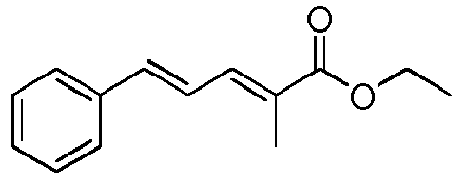
- The title compound was prepared according to the following procedure:
- (1-Ethoxycarbonylmethyl)triphenylphosphonium bromide (8.86 g, 20.0 mmol) and K2CO3 (4.00 g, 28.9 mmoL) were dissolved in a mixture of CH2Cl2 (60 mL) and H2O (50 mL). After the dropwise addition of E-cinnamaldehyde (1.98 g, 15.0 mmol) the reaction mixture was heated at reflux overnight. The organic layer was washed with H2O (2 x 50 mL), dried (MgSO4) and concentrated in vacuo. The residue was purified by flash chromatography (SiO2, n-hexane/EtOAc = 10:1).
- Yield: 93%, light yellow oil. 2E,4E/2Z,4E = 11:1. 1H NMR (CDCl3) 2E,4E-isomer only: δ = 7.41 (m, 2H), 7.20-7.32 (m, 3H), 7.20 (d, J = 11.3 Hz, 1H), □□□□ (dd, J = 15.5, 11.3 Hz, 1H), 6.80 (d, J = 15.5 Hz, 1H), 4.15 (q, J = 7.1 Hz, 2H), 1.98 (s, 3H), 1.26 (t, J = 7.1 Hz, 3H) ppm. 13C NMR (CDCl3): δ = 168.4, 138.9, 138.1, 136.6, 128.7, 128.6, 127.5, 127.0, 124.0, 60.6, 14.3, 12.9 ppm.
-

- The title compound was prepared from IM-41 according to the following procedure:
- To a solution of the ester IM-41 (3.00 g, 14.8 mmol) in MeOH (80 mL) was added a solution ofNaOH (2.77 g, 69.3 mmol) in H2O (20 mL). The resulting mixture was heated at reflux for 16 h. After cooling to room temperature the MeOH was evaporated in vacuo. The aqueous layer was cooled to 0 °C and acidified to
pH 2 by addition of HC1 (2M). The mixture was extracted with EtOAc (3 x 100 mL). The combined organic layers were dried (MgSO4) and concentrated under reduced pressure. - Yield: 97%, white solid. 2E,4E/2Z,4E = 11:1. 1H NMR (CDCl3) 2E,4E-isomer only: δ = 11.27 (br. s, 1H), 7.40-7.44 (m, 3H), 7.23-7.32 (m, 2H), 7.22 (d, J = 11.2 Hz, 1H), □□□□ (dd, J = 15.4, 11.2 Hz, 1H), 6.85 (d, J = 15.4 Hz, 1H), 1.99 (s, 3H) ppm. 13C NMR (CDCl3): δ = 173.9, 140.6, 140.2, 136.4, 128.9, 128.8, 127.2, 126.4, 123.7, 12.5 ppm.
-

- The title compound was prepared according to the following procedure:
- To a solution ofNaH (1.46 g, 60.9 mmol) in THF (250 mL) was added dropwise a solution of triethyl phosphonoacetate (13.0 g, 58.1 mmol) in THF (50 mL) at 0 °C. The resulting mixture was allowed to warm to room temperature and stirred for 30 minutes. A solution of 2-pentanone (5.00 g, 58.1 mmol) in THF (50 mL) was slowly added and the reaction was heated to 80 °C overnight. The reaction was quenched by addition of a saturated NH4Cl solution (200 mL). The resulting mixture was extracted with Et2O (3 x 100 mL). The combined organic layers were washed with H2O (100 mL) and brine (100 mL) and dried over MgSO4. The solvents were evaporated in vacuo to afford a yellow liquid. The crude material was purified by flash column chromatography (SiO2, n-hexane/EtOAc = 20:1) to afford the title compound as a colorless liquid.
- Yield: 88%, colorless liquid. E/Z = 3.2:1, 1H NMR (CDCl3) E-isomer only: δ = 5.66 (q, J = 1.2 Hz, 1H), 4.14 (q, J = 7.1 Hz, 2H), 2.15 (d, J = 1.3 Hz, 3H), 2.08-2.14 (m, 2H), 1.51 (sxt, J = 7.4, 2H), 1.28 (t, J = 7.1 Hz, 3H), 0.91 (t, J = 7.4 Hz, 3H) ppm. 13C NMR (CDCl3): δ = 166.9, 159.9, 115.6, 59.4, 42.9, 20.5, 18.6, 14.3, 13.6 ppm.
-
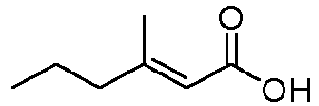
- The title compound was prepared from IM-43 according to the following procedure:
- To a solution of the ester IM-43 (2.60 g, 16.6 mmol) in MeOH (80 mL) was added a solution ofNaOH (3.30 g, 83.2 mmol) in H2O (20 mL). The resulting mixture was heated at reflux for 2 h. After cooling to room temperature the MeOH was evaporated in vacuo. The aqueous layer was cooled to 0 °C and acidified to
pH 2 by addition of HCl (2M). The mixture was extracted with EtOAc (3 x 100 mL). The combined organic layers were dried (MgSO4) and concentrated under reduced. - Yield: 97%, white solid. 1H NMR (CDCl3): δ = 11.75 (br. s, 1H), 5.70 (s, 1H), 2.17 (d, J = 1.3 Hz, 3H), 2.12-2.20 (m, 2H), 1.53 (sxt, J = 7.4 Hz, 2H), 0.89-0.96 (m, 3H), 0.92 (t, J = 7.4 Hz, 3H) ppm. 13C NMR (CDCl3): δ = 172.1, 163.5, 115.0, 43.2, 20.5, 19.0, 13.6 ppm.
-

- The title compound was prepared from IM-43 according to the following procedure:
- A suspension of LiAlH4 in anhydrous Et2O was cooled to 0 °C. AlCl3 was added and the resulting mixture was stirred for 15 minutes. A solution of IM-43 (5.00 g, 32.0 mmol) in Et2O (15 mL) was added and stirring was continued for 1.5 h at 0 °C. Quenching with an aqueous solution of NaOH (5% m/m, 20 mL) lead to precipitation of aluminium hydroxides. The reaction mixture was filtered over a short bed of MgSO4 which was rinsed with Et2O (50 mL). Removal of the solvent in vacuo afforded the title compound as a colorless liquid.
- Yield: 44%, colorless oil. E/Z = 4:1, 1H NMR (CDCl3) E-isomer only: δ = 5.41 (tq, J = 6.9, 1.3 Hz, 1H), 4.07-4.20 (m, 2H), 2.00 (t, J = 7.5 Hz, 2H), 1.66 (d, J = 1.3 Hz, 3H) 1.39-1.51 (m, 2H) 0.89 (t, J = 7.4 Hz, 3H) ppm. 13C NMR (CDCl3): δ = 139.9, 123.3, 59.4, 41.6, 20.7, 16.1, 13.7 ppm.
-

- The title compound was prepared from IM-45 according to the following procedure:
- To a stirred suspension of PCC (4.28 g, 19.9 mmol) and NaOAc (200 mg, 3.98 mmol) in CH2Cl2 (100 mL) a solution of the alcohol IM-45 (1.60 g, 14.0 mmol) in CH2Cl2 (100 mL) was added. After 7 h the reaction mixture was diluted with Et2O (100 mL) and the mixture was filtered over short pad of celite. The solvents were evaporated in vacuo and the residue was purified by flash chromatography (SiO2, n-hexane/EtOAc = 20:1 → 10:1).
- Yield: 46%, colorless oil. E/Z = 2:1, 1H NMR (CDCl3) E-isomer only: δ = 9.99 (d, J = 8.0 Hz, 1H), 5.87 (dq, J = 8.0, 1.2 Hz, 1H), 2.19 (t, J = 7.4 Hz, 2H), 2.15 (d, J = 1.2 Hz, 3H), 1.54 (q, J = 7.4 Hz, 2H), 0.93 (t, J = 7.4 Hz, 3H) ppm. 13C NMR (CDCl3): δ = 191.3, 164.1, 127.4, 42.6, 20.3, 17.4, 13.6 ppm.
-

- The title compound was prepared from IM-46 according to the following procedure:
- To a suspension ofNaH (0.16 g, 6.55 mmol) in THF (30 mL) was added dropwise a solution of triethyl phosphonoacetate (1.49 g, 6.24 mmol) in THF (5 mL) at 0 °C. The resulting mixture was allowed to warm to room temperature and stirred for 30 minutes. IM-46 (0.70 g, 6.24 mmol), dissolved in THF (5 mL) was slowly added and the reaction was stirred at room temperature over night. The reaction was quenched by addition of a saturated NH4Cl solution (50 mL). The resulting mixture was extracted with Et2O (3 x 30 mL). The combined organic layers were washed once with H2O (30 mL) and brine (30 mL) and dried over MgSO4. The solvents were evaporated in vacuo to afford a yellow liquid. The residue was purified by flash column chromatography (SiO2, n-hexane/EtOAc = 20:1) to afford the title compound as a colorless oil.
- Yield: 57%, colorless oil. Mixture of regioisomers, approx: 2E,4E = 53%, 2E,4Z = 26%, 2Z,4E = 13%, 2Z,4Z = 7%; 1H NMR (CDCl3): 2E,4E and 2E,4Z isomers only: δ = □□58-□□67 (m, 1H), 6.17-6.21 (m, 0.35H), 6.16 (dq, J = 11.8, 1.3 Hz, 0.65H), 4.22 (q, J = 7.1 Hz, 2H), 2.28 (t, J = 7.5 Hz, 0.70H), 2.14 (t, J = 7.5 Hz, 1.30H), 1.85-1.95 (m, 6H), 1.43-1.57 (m, 2H), 1.31 (t, J = 7.1 Hz, 3H), 0.86-0.98 (m, 3H) ppm. 13C NMR (CDCl3) mixture of regioisomers: δ = 169.1, 169.0, 148.5, 148.3, 148.1, 134.4, 134.1, 124.6, 124.4, 121.5, 120.7, 60.4, 42.8, 39.6, 34.6, 33.1, 31.9, 30.3, 29.7, 24.7, 21.5, 21.0, 20.8, 20.6, 20.5, 17.1, 14.3, 14.2, 14.1, 14.1, 13.9, 13.7, 12.4, 12.3 ppm.
-

- The title compound was prepared from IM-47 according to the following procedure:
- To a solution of the ester IM-47 (0.70 g, 3.57 mmol) in MeOH (15 mL) was added a solution of NaOH (0.70 g, 17.5 mmol) in H2O (5 mL). The resulting mixture was heated at reflux for 2 h. After cooling to room temperature the MeOH was evaporated in vacuo. The aqueous layer was cooled to 0 °C and acidified to
pH 2 by addition of HCl* (2M). The mixture was extracted with EtOAc (3 x 100 mL). The combined organic layers were dried (MgSO4) and concentrated under reduced pressure. - Yield: 83 %, yellow oil. Mixture of regioisomers, approx: 2E,4E = 53%, 2E,4Z = 26%, 2Z,4E = 13%, 2Z,4Z = 7%; 1H NMR (CDCl3) 2E,4E and 2E,4Z isomers only: δ = □□44-□□51 (m, 1H), 6.12-6.18 (m, 0.35H), 6.12 (dq, J = 11.9, 1.2 Hz, 0.65H), 4.22 (q, J = 7.1 Hz, 2H), 2.30 (t, J = 7.5 Hz, 0.70H), 2.17 (t, J = 7.5 Hz, 1.30H), 1.85-1.95 (m, 6H), 1.44-1.59 (m, 2H), 0.86-1.03 (m, 3H) ppm. 13C NMR (CDCl3) mixture of regioisomers: δ = 174.6, 174.5, 173.8, 152.3, 150.2, 149.9, 136.8, 136.5, 124.7, 123.5, 123.4, 121.6, 120.8, 42.8, 39.6, 34.7, 33.2, 24.8, 21.6, 21.0, 20.6, 20.5, 20.5, 17.2, 13.9, 13.7, 12.0, 11.9 ppm.
-

- The title compound was prepared from IM-11 according to the general procedure G:
Yield 43 %. Keto/enol = 3:1 1H NMR (CDCl3): δ = 12.56 (s, 0.25H, enol C=COH), 6.12 (s, 1H, NH), 5.45 (s, 0.25H, enol CO=CH), 3.70 (s, 1.50H, keto COCH2CO), 3.41-3.47 (m, 2H, CH2N), 3.04-3.10 (m, 2H, CH2S), 2.25 (s, 2.25H, keto COCH3), 1.93-1.96 (m, 3.75H, enol COHCH3 + NHCOCH3) ppm.13C NMR (CDCl3): δ = 199.8, 194.2, 192.2, 174.0, 170.5, 170.3, 99.8, 58.0, 39.8, 39.1, 30.4, 29.1, 27.7, 23.1, 23.1, 21.0 ppm. -

- The title compound was prepared from IM-29 according to the general procedure G:
Yield 41 %. Keto/enol = 3:1 1H NMR (CDCl3): δ = 12.60 (s, 0.25H, enol C=COH), 5.94 (s, 1H, NH), 5.47 (s, 0.25H, enol CO=CH), 3.70 (s, 1.50H, keto COCH2CO), 3.44-3.52 (m, 2H, CH2N), 3.07-3.13 (m, 2H, CH2S), 2.53 (t, J = 7.2 Hz, 1.50H, keto COCH2), 2.17 (t, J = 7.5 Hz, 0.50H, enol COHCH2), 1.99 (s, 3H, COCH3), 1.58-1.70 (m, 2H, CH2CH3), 0.92-0.99 (m, 3H, CH2CH3) ppm. 13C NMR (CDCl3): δ = 202.1, 194.3, 192.4, 177.4, 170.4, 170.3, 99.2, 57.2, 45.3, 39.9, 39.2, 36.8, 35.8, 29.2, 27.8, 23.2, 23.1, 19.6, 19.5, 16.9, 13.6, 13.5 ppm. -
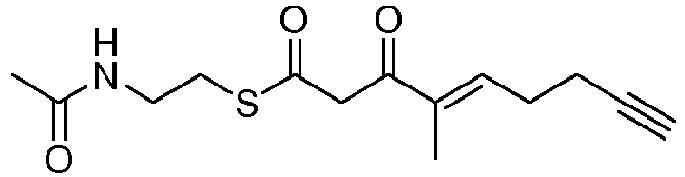
- The title compound was prepared from IM-18 according to the general procedure G:
Yield 50 %. Keto/enol = 3:1. 1H NMR (CDCl3) keto only: δ = 6.62-6.72 (m, 1H), 6.08 (br. s, 1H), 3.98 (s, 2H), 3.47 (t, J = 6.2 Hz, 2H), 3.10 (q, J = 6.2 Hz, 2H), 2.28-2.57 (m, 4H), 2.01 (t, J = 2.6 Hz, 1H), 1.97 (s, 3H), 1.82 (s, 3H) ppm. 13C NMR (CDCl3): δ = 193.3, 193.1, 170.5, 143.0, 138.1, 82.6, 69.5, 52.6, 39.2, 29.2, 28.1, 23.2, 17.6, 11.5 ppm. -

- The title compound was prepared from IM-14 according to the general procedure E:
Yield 50 %. Orange powder. Keto/enol = 1:2 1H NMR (acetone-d6) 4E,6E-enol only: δ = 12.46 (s, 1H), 7.36 (br. s, 1H), 7.13 (dd, J = 15.2, 10.7, 1H), 6.27-6.35 (m, 1H), 6.11-6.20 (m, 1H), 5.94 (d, J = 15.2 Hz, 1H), 5.65 (s, 1H), 3.37 (q, J = 6.6 Hz, 2H), 3.08 (t, J = 6.6 Hz, 2H), 2.12-2.22 (m, 2H), 1.87 (s, 3H), 1.41-1.51 (m, 2H), 0.92 (t, J = 7.5 Hz, 3H) ppm. 13C NMR (acetone-d6): δ = 195.1, 192.3, 168.5, 143.8, 140.5, 130.5, 123.6, 101.3, 39.9, 35.8, 28.8, 22.9, 22.8, 14.0 ppm. - (4E,6E)-(S)-2-Acetamidoethyl-4-methyl-3-oxodeca-4,6-dienethioate (5) (MAGR41 / MAGR168)

- The title compound was from IM-19 prepared according to the general procedure E:
Yield 25 %. Keto/enol = 4:1 4E,6E/4Z,6E = 8:1. 1H NMR (DMSO-d6) 4E,6E-isomer keto only: δ = 8.03 (br. s, 1H), 7.21 (d, J = 11.0 Hz, 1H), 6.48-6.54 (m, 1H), 6.30 (dt, J = 15.1, 7.5 Hz, 1H), 4.15 (s, 2H), 3.17 (m, 2H), 2.92 (t, J = 6.9 Hz, 2H), 2.14-2.22 (m, 2H), 1.77-1.79 (m, 6H), 1.40-1.48 (m, 2H), 0.90 (t, J = 7.5 Hz, 3H) ppm. 13C NMR (DMSO-d6): δ = 193.8, 193.0, 169.4, 145.6, 141.9, 132.9, 126.8, 52.4, 38.1, 34.8, 28.5, 22.5, 21.6, 13.6, 11.3 ppm. -

- The title compound was from IM-20 prepared according to the general procedure E:
Yield 65 %. Keto/enol = 4:1, 4E,6E/4Z,6E = 2:1. 1H NMR (acetone-d6) 4E,6E-isomer keto only: δ = 7.49 (dd, J = 11.5, 1.2 Hz, 1H), 7.29 (br. s, 1H), 6.27-6.37 (m, 1H), 4.12 (s, 2H), 3.32 (q, J = 6.8 Hz, 2H), 3.02 (t, J = 6.8 Hz, 2H), 2.15-2.25 (m, 2H), 1.95 (s, 3H), 1.85 (s, 3H), 1.84 (s, 3H), 1.53 (sxt, J = 7.4 Hz, 2H), 0.91 (t, J = 7.4 Hz, 3H) ppm. 13C NMR (acetone-d6) δ 194.0, 193.5, 170.2, 151.7, 138.2, 133.9, 122.1, 53.9, 43.5, 39.6, 29.8, 22.9, 21.7, 17.5, 14.1, 11.4 ppm. -

- The title compound was prepared from IM-21 according to the general procedure E:
Yield 27 %. Keto/enol = 5.6:1, 4E,6E/4Z,6E = 15:1, 1H NMR (DMSO-d6) 4E,6E-isomer only: δ = 12.80 (s, 0.15H, enol C=COH), 8.07 (br. s, 0.15H enol NH), 8.03 (br. s, 0.85H keto NH), 7.22(d, J = 11.0 Hz, 0.85H, keto CH=CMe), 7.05 (d, J = 11.9 Hz, 0.15H, enol CH=CMe), 6.48-6.54 (m, 1H, CH=CH), 6.30 (dt, J = 15.1, 7.6 Hz, 0.85H, keto CHCH2), 6.16 (dt, J = 14.8, 7.5 Hz, 0.15H, enol CHCH2), 5.87 (s, 0.15H, enol CO=CH), 4.15 (s, 1.70H, keto COCH2), 3.19-3.25 (m, 0.30H, enol CH2N), 3.11-3.19 (m, 1.70H, keto CH2N), 3.00 (t, J = 7.0 Hz, 0.30H, enol CH2S), 2.92 (t, J = 6.9 Hz, 1.70H, keto CH2S), 2.18-2.25 (m, 2H, C=CCH2), 1.78-1.79 (m, 6H, C=CCH3 and COCH3), 1.28-1.44 (m, 4H, CH2CH2), 0.90 (t, J = 7.6 Hz, 3H, CH2CH3) ppm. 13C NMR (DMSO-d6): 4E,6E-isomer keto only: δ = 193.7, 192.9, 169.2, 145.7, 141.8, 132.8, 126.6, 52.4, 38.1, 32.4, 30.4, 28.4, 22.5, 21.7, 13.7, 11.2 ppm. -

- The title compound was prepared from IM-22 according to the general procedure E:
Yield 62 %. Keto/enol = 3:1, 1H NMR (acetone-d6): δ = 12.84 (s, 0.25H, enol C=COH), 7.47 (br. s, 1H, NH), 7.21-7.32 (m, 4H, Ar-H), 7.16-7.21 (m, 1H, Ar-H), 6.85 (t, J = 7.2 Hz, 0.75H, keto CMe=CH), 6.67 (t, J = 7.4 Hz, 0.25H, enol CMe=CH), 5.73 (s, 0.25H, CO=CH), 4.04 (s, 1.50H, keto COCH2), 3.31-3.42 (m, 2H, CH2N), 3.08 (t, J = 6.8 Hz, 0.50H, keto CH2S), 3.02 (t, J = 6.9 Hz, 1.50H, enol CH2S), 2.75-2.84 (m, 2 H, CH2Ph), 2.53-2.65 (m, 2H, CH2CH=C), 1.90 (s, 0.75H, enol COCH3), 1.90 (s, 2.25H, keto COCH3), 1.73 (s, 0.75H, enol C=CCH3), 1.67 (s, 2.25H, keto C=CCH3) ppm. 13C NMR (acetone-d6): keto only: δ = 194.1, 193.4, 171.2, 145.7, 145.6, 142.2, 138.0, 129.4, 129.3, 127.0, 53.4, 39.7, 35.1, 32.0, 22.9, 11.3 ppm. -

- The title compound was prepared from IM-23 according to the general procedure E:
Yield 60 %, yellow solid. Keto/enol = 2:1, 1H NMR (acetone-d6): δ = 12.82 (s, 0.35H, enol C=COH), 7.99 (br. s, 1H, NH), 7.60-7.66 (m, 2H), 7.26-7.52 (m, 5H), 7.13 (d, J = 14.7 Hz, 0.65H, keto CMe=CH), 6.99 (d, J = 13.9 Hz, 0.35H, enol CMe=CH), 5.88 (s, 0.35H, enol CO=CH), 4.19 (s, 1.30H, keto COCH2), 3.37-3.47 (m, 2H, CH2N), 3.13 (t, J = 6.8 Hz, 0.70H, keto CH2S), 3.06 (t, J = 6.7 Hz, 1.30H, enol CH2S), 1.98-1.99 (m, 6H, COCH3, C=CCH3) ppm.13C NMR (acetone-d6): δ = 194.4, 194.2, 173.3, 173.2, 142.6, 142.1, 139.8, 137.9, 137.5, 136.3, 135.8, 130.0, 129.8, 129.7, 129.5, 128.4, 128.1, 125.3, 125.3, 98.4, 53.3, 40.4, 39.9, 29.3, 28.3, 22.7, 20.9, 12.6, 11.9 ppm. -

- The title compound was prepared from IM-24 according to the general procedure E:
Yield 40 %, yellow solid. Keto/enol = 2:1, 1H NMR (CDCl3) keto only: δ = 7.22 (t, J = 7.9 Hz, 1H), 7.07-7.15 (m, 1H), 6.89 (d, J = 14.8 Hz, 1H), 6.07 (br. s, 1H), 4.05 (s, 1H), 3.48 (quin, J = 6.6 Hz, 2H), 3.11 (t, J = 6.6 Hz, 2H), 2.02 (d, J = 1.0 Hz, 3H), 1.97 (s, 3H) ppm.13C NMR (CDCl3): δ = 193.1, 193.0, 170.4, 140.5, 139.4, 138.9, 136.4, 130.2, 129.9, 126.0, 125.7, 125.2, 123.0, 52.9, 39.2, 29.2, 23.1, 11.9 ppm. -

- The title compound was prepared from IM-26 according to the following procedure:
- To a solution of IM-26 (0.08 g, 0.17 mmol) in THF (1.50 mL) was added a solution of nBu4NF (1.0 M THF solution, 0.21 mL, 0.21 mmol) at 0 °C. After stirring for 6 h at room temperature, the reaction was stopped by adding saturated aqueous NH4Cl (10 mL). The crude products were extracted with EtOAc (3 x 10 mL), and the combined organic layers were washed with brine, dried (MgSO4), and concentrated in vacuo. The residue was purified by flash column chromatography (SiO2, n-hexane/EtOAc = 1:1 → EtOAc) to afford the title compound.
- Yield 92%, yellow solid. 1H NMR (DMSO-d6) keto only: δ = 9.51 (s, 1H), 8.03 (t, J = 5.30 Hz, 1H), 7.13-7.44 (m, 3H), 6.86-7.13 (m, 3H), 6.68-6.80 (m, 1H), 4.20 (s, 2H), 3.18 (q, J = 6.70 Hz, 2H), 2.94 (t, J = 6.70 Hz, 2H), 1.92 (s, 3H), 1.79 (s, 3H) ppm.13C NMR (DMSO-d6): δ = 193.5, 192.9, 169.3, 157.7, 141.6, 141.2, 137.4, 134.8, 129.8, 124.4, 118.5, 116.4, 113.9, 52.5, 38.1, 28.5, 22.5, 11.5 ppm.
-

- The title compound was prepared from IM-27 according to the general procedure E:
Yield 99 %. Keto/enol = 3:1 1H NMR (acetone-d6): δ = 12.86 (s, 0.25H, enol C=COH), 7.40-7.60 (m, 1H, NH), 7.22 (d, J = 10.7 Hz, 0.75H, keto CH=CMe), 7.11 (d, J = 11.3 Hz, 0.25H, enol CH=CMe), 6.84 (m, 0.25H), 6.48-6.61 (m, 0.75H, CH=CH), 6.32 (dt, J = 15.0, 7.3 Hz, 0.75H, keto CHCH2), 6.13 (dt, J = 14.8, 7.2 Hz, 0.25H, enol CHCH2), 5.81 (s, 0.25H, enol CO=CH), 4.09 (s, 1.50H, keto COCH2), 3.66-3.71 (m, 2H, CH2O), 3.32-3.43 (m, 2H, CH2N), 3.00-3.12 (m, 2H, CH2S), 1.91-1.60 (m, 8H), 0.90 (s, 9H), 0.06 (s, 6H) ppm. 13C NMR (acetone-d6): δ = 194.2, 193.6, 171.3, 171.0, 146.0, 142.5, 134.4, 127.7, 62.9, 60.6, 53.4, 39.7, 32.9, 32.8, 32.4, 26.4, 22.8, 20.9, 18.9, 14.6, 11.6, -5.1 ppm. -
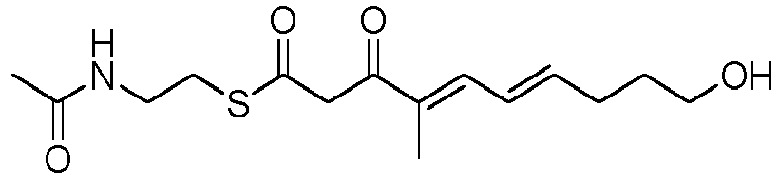
- The title compound was prepared from 12 according to the following procedure:
- To a solution of 12 (0.17 g, 0.40 mmol) in THF (4.0 mL) was added a solution of nBu4NF (1.0M THF solution, 1.0 mL, 1.00 mmol) at 0 °C. After stirring for 6 h at room temperature, the reaction was stopped by adding saturated aqueous NH4Cl (30 mL). The crude products were extracted with EtOAc (3 x 30 mL), and the combined organic layers were washed with brine, dried (MgSO4), and concentrated in vacuo. The residue was purified by flash column chromatography (SiO2, n-hexane/EtOAc = 1:1 → EtOAc) to afford the title compound.
-
Yield 96 %, yellow oil. Keto/enol = 3:1.1H NMR (acetone-d6): δ = 12.75 (s, 0.25H, enol C=COH), 7.92-8.01 (m, 1H, NH), 7.22 (d, J = 10.7 Hz, 0.75H, keto CH=CMe), 7.05 (d, J= 11.3 Hz, 0.25H, enol CH=CMe), 6.46-6.60 (m, 1H, CH=CH), 6.32 (dt, J = 15.0, 7.3 Hz, 0.75H, keto CHCH2), 6.13 (dt, J = 14.8, 7.2 Hz, 0.25H, enol CHCH2), 5.77 (s, 0.25H, enol CO=CH), 4.09 (s, 1.50H, keto COCH2), 3.57 (t, J = 6.5 Hz, 2H, CH2OH), 3.30-3.42 (m, 2H, CH2N), 3.08 (t, J = 6.8 Hz, 0.50H, enol CH2S), 3.01 (t, J = 6.7 Hz, 1.50H, ketoCH2S), 2.21-2.31 (m, 2H, C=CCH2), 1.95 (s, 0.75H, enol COCH3), 1.94 (s, 2.25H, keto COCH3), 1.84 (s, 0.75H, enol C=CCH3), 1.79 (s, 2.25H, keto C=CCH3), 1.60-1.69 (m, 2H, CH2CH2OH) ppm. 13C NMR (acetone-d6): δ = 194.7, 194.4, 173.5, 173.4, 146.6, 143.7, 143.1, 136.1, 134.2, 127.5, 127.3, 62.1, 53.1, 40.4, 40.3, 39.9, 38.6, 32.8, 32.5, 30.7, 28.1, 22.7, 12.3, 11.6 ppm. -

- The title compound was prepared from IM-28 according to the general procedure E:
Yield 66%, yellow oil. Keto/enol = 3:1 1H NMR (acetone-d6) 4E,6E-isomer keto only: δ = 7.35 (br. s, 1H, NH), 6.81 (t, J = 7.3 Hz, 1H), 4.06 (s, 2H), 3.30-3.41 (m, 2H), 3.01 (t, J = 6.7 Hz, 2H), 2.21-2.34 (m, 2H), 2.53-2.65 (m, 2H), 1.87 (s, 3H), 1.75 (s, 3H), 1.42-1.55 (m, 2H), 1.30-1.37 (m, 4H), 0.89 (t, J = 7.0 Hz. 3H) ppm. 1H NMR (acetone-d6): δ = 194.1, 193.4, 170.6, 146.9, 137.5, 53.5, 39.6, 32.3, 29.8, 29.6, 28.9, 23.2, 22.9, 14.3, 11.4 ppm. -

- The title compound was prepared from IM-32 according to the general procedure E:
Yield 88 %, yellow resin. Keto/enol = 2:1, 4E,6E/4Z,6E = 10:1. 1H NMR (acetone-d6) 4E,6E-isomer only: δ = 12.99 (br. s, 0.35H, enol C=COH), 7.58-7.69 (m, 2H), 7.24-7.57 (m, 6H), 7.08-7.18 (m, 0.65H). 7.00 (d, J = 14.5 Hz, 0.35H), 5.95 (s, 0.35H, enol CO=CH), 4.19 (s, 1.30H, keto COCH2), 3.33-3.45 (m, 2H, CH2N), 3.12 (t, J = 6.8 Hz, 0.70H, enol CH2S), 3.05 (t, J = 6.7 Hz, 1.30H, keto CH2S), 2.56 (q, J = 7.5 Hz, 0.70H, enol CH2CH3), 2.55 (q, J = 7.5 Hz, 1.30H, keto CH2CH3), 1.92 (s, 1.05H, enol COCH3), 1.90 (s, 1.95H, keto COCH3), 1.11 (s, 1.05H, enol CH2CH3), 1.00 (s, 1.95H, keto CH2CH3) ppm.13C NMR (acetone-d6): δ = 193.6, 193.5, 171.0, 142.7, 142.1, 142.0, 140.1, 137.9, 135.4, 130.0, 129.8, 129.7, 129.6, 128.4, 128.1, 125.0, 124.9, 98.2, 53.6, 40.0, 39.7, 29.6, 28.8, 22.9, 20.3, 19.8, 15.2, 14.7 ppm. -

- The title compound was prepared from IM-34 according to the general procedure G:
Yield 56 %, white solid. Keto/enol = 5:1 1H NMR (CDCl3) keto only: δ = 6.25 (br. s, 1H), 4.90 (br. s, 1H, NHCOOCH3), 3.62 (s, 2H), 3.58 (s, 3H), 3.37 (q, J = 6.2 Hz, 2H), 3.09 (q, J = 6.4 Hz, 2H), 3.02 (t, J = 6.4 Hz, 2H), 2.48 (t, J = 7.2 Hz, 2H), 1.91 (s, 3H), 1.38-1.59 (m, 4H), 1.19-1.30 (m, 2H) ppm. 13C NMR (CDCl3): δ = 202.0, 192.2, 170.6, 157.2, 99.3, 57.3, 52.0, 43.1, 39.1, 29.7, 29.2, 25.9, 23.1, 22.8 ppm. -

- The title compound was prepared from IM-35 according to the general procedure G:
Yield 49%, yellow oil. Keto/enol = 2.3:1, 1H NMR (acetone-d6) keto only: δ = 7.63 (br. s, 1H), 5.69-5.83 (m, 1H), 5.00-5.10 (m, 2H), 3.89 (s, 2H), 3.32-3.41 (m, 2H), 3.04 (t, J = 6.7 Hz, 2H), 2.78 (sxt, J = 7.0, 1H), 2.31-2.42 (m, 1H), 2.05-2.22 (m, 1H), 1.91 (s, 3H), 1.08 (d, J= 7.0 Hz, 3H) ppm. 13C NMR (acetone-d6): δ = 205.7, 192.8, 171.3, 136.5, 117.3, 56.4, 46.8, 39.7, 37.3, 29.5, 22.9, 15.8 ppm. -

- The title compound was prepared from IM-38 according to the general procedure G:
Yield 75%, yellow resin. Keto/enol = 3:1 1H NMR (acetone-d6) keto only: δ = 7.60 (br. s, 1H), 3.87 (s, 2H), 3.35 (quin, J = 6.8 Hz, 2H), 3.05 (q, J = 6.8 Hz, 2H), 2.70 (quin, J = 6.8 Hz, 1H), 1.91 (s, 3H), 1.25-1.39 (m, 10H), 1.07 (d, J = 6.8 Hz, 3H), 0.87 (t, J = 6.8 Hz, 3H)ppm. 13C NMR (acetone-d6): δ = 206.0, 193.0, 172.3, 56.2, 47.3, 39.8, 33.2, 32.4, 30.0, 29.3, 27.7, 23.3, 22.8, 16.1, 14.4 ppm. -

- The title compound was prepared from IM-40 according to the general procedure H:
Yield 30%, yellow oil. 1H NMR (acetone-d6): δ = 7.69 (br. s, 1H), 7.16 (d, J = 10.9 Hz, 1H), 6.46 (d, J = 15.1, 10.9 Hz, 1H), 6.24 (d, J = 15.1, 7.2 Hz, 1H), 3.31-3.39 (m, 2H), 3.05 (t, J = 6.8 Hz, 2H), 2.18-2.24 (m, 2H), 1.94 (s, 3H), 1.93 (s, 3H), 1.44-1.52 (m, 2H), 0.92 (t, J = 7.4 Hz, 3H) ppm.13C NMR (acetone-d6): δ = 193.0, 171.3, 145.6, 138.4, 133.5, 126.7, 40.0, 36.0, 28.9, 22.9, 22.8, 14.0, 12.7 ppm. -

- The title compound was prepared from IM-42 according to the general procedure H:
Yield 43%, yellow oil. 2E,4E/2Z,4E = 14:1, 1H NMR (acetone-d6) 4E,6E-isomer only: δ = 7.74 (t, J = 5.1 Hz, 1H), 7.60-7.63 (m, 2H), 7.28-7.40 (m, 4H), 7.28 (dd, J = 14.6, 11.0 Hz, 1H), 7.05 (d, J = 14.6 Hz, 1H), 3.38-3.44 (m, 2H), 3.11 (t, J = 6.7 Hz, 2H), 2.08 (s, 3H) ppm.13C NMR (acetone-d6): δ =192.9, 170.9, 141.5, 138.2, 137.6, 135.7, 129.9, 129.7, 128.3, 124.6, 39.9, 29.2, 22.9, 13.0 ppm. -

- The title compound was prepared from butyryl chloride according to the general procedure H:
Yield 81%, yellow oil. 1H NMR (acetone-d6) δ = 7.36 (br. s, 1H), 3.28-3.34 (m, 2H), 2.98 (t, J = 6.9 Hz, 2H), 2.55 (t, J = 7.4 Hz, 2H), 1.87 (s, 3H), 1.59-1.70 (m, 2 H), 0.92 (t, J = 7.4 Hz, 3H) ppm. 13C NMR (acetone-d6) δ = 199.1, 170.6, 46.4, 39.8, 29.0, 22.9, 19.8, 13.7 ppm. -
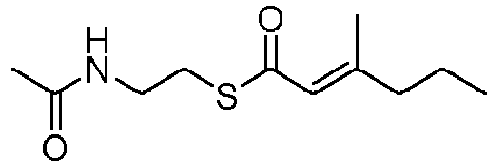
- The title compound was prepared from IM-44 according to the general procedure H:
Yield 66%, light yellow oil. E/Z = 3:1, 1H NMR (acetone-d6): E-isomer only: δ = 7.29 (br. s, 1H), 6.01 (q, J = 1.2 Hz, 1H), 3.30-3.35 (m, 2H), 3.01 (t, J = 6.9 Hz, 2 H), 2.13-2.17 (m, 2H), 2.13 (d, J = 1.2 Hz, 3H), 1.87 (s, 3H), 1.48-1.57 (m, 2H), 0.91 (t, J = 7.6 Hz, 3H) ppm. 13C NMR (acetone-d6) δ = 189.0, 170.3, 158.5, 123.4, 43.2, 40.0, 29.1, 22.9, 21.4, 19.7, 14.0 ppm. -

- The title compound was prepared from IM-48 according to the general procedure H:
Yield 43%, yellow oil. Mixture of regioisomers, approx: 2E,4E = 53%, 2E,4Z = 26%, 2Z,4E = 13%, 2Z,4Z = 7%; 1H NMR (acetone-d6) 2E,4E and 2E,4Z-isomers only: δ = □□58-□□67 (m, 2H, C=CH + NH), 6.25-6.29 (m, 0.35H, C=CH), 6.22 (dq, J = 11.5, 1.3 Hz, 0.65H, C=CH), 3.29-3.37 (m, 2H, CH2), 3.01-3.06 (m, 2H), 2.30 (t, J= 7.5 Hz, 0.70H, CH2C=C), 2.18 (t, J = 7.5 Hz, 1.30H, CH2C=C), 1.85-1.95 (m, 9H, CH3C=C + CH3CO), 1.45-1.57 (m, 2H, CH2CH3), 0.84-0.94 (m, 3H, CH2CH3) ppm. 13C NMR (acetone-d6) mixture of regioisomers: δ = 192.9, 192.9, 170.4, 151.1, 150.9, 147.5, 144.5, 134.0, 133.8, 133.2, 133.0, 122.1, 121.3, 43.3, 40.2, 39.9, 39.7, 35.3, 33.9, 29.1, 24.9, 22.9, 22.3, 21.7, 21.3, 21.2, 21.0, 20.9, 17.4, 14.5, 14.2, 14.0, 12.6, 12.5 ppm. -

- The title compound was prepared from benzoic acid according to the general procedure H:
Yield 75%, white resin. 1H NMR (acetone-d6) δ = 7.92-8.00 (m, 2H), 7.67 (tt, J = 7.4, 1.3 Hz, 1H), 7.54 (tt, J = 7.4, 1.3, 2H), 7.38 (br. s, 1H), 3.36-3.50 (m, 2H), 3.20 (t, J = 6.9 Hz, 2H), 1.88 (s, 3H) ppm. 13C NMR (acetone-d6) δ = 191.8, 170.3, 138.0, 134.6, 129.8, 127.9, 39.7, 22.9 ppm. -

- The title compound was prepared from 3-hydroxybezoic acid according to the general procedure H:
Yield 62%, white solid. 1H NMR (acetone-d6): δ = 9.15 (br. s, 1H), 7.54 (br. s, 1H), 7.40-7.46 (m, 2H), 7.29-7.39 (m, 1H), 7.07-7.17 (m, 1H), 3.38-3.50 (m, 2H), 3.19 (t, J = 6.7 Hz, 2H), 1.92 (s, 3H) ppm. 13C NMR (acetone-d6) δ = 191.6, 171.0, 158.9, 139.3, 130.9, 121.7, 119.1, 114.4, 39.8, 29.4, 22.9 ppm. -

- The title compound was prepared from IM-23 according to the general procedure I:
Yield 84%, yellow solid. Keto/enol = 1.2:1, 1H NMR (acetone-d6): δ = 12.78 (s, 0.45H, enol C=COH), 7.67-7.61 (m, 2H), 7.61-7.67 (m, 10H), 7.12 (d, J = 14.1 Hz, 0.55H, keto CMe=CH), 7.02 (d, J = 13.6 Hz, 0.45H, enol CMe=CH), 5.94 (s, 0.45H, enol CO=CH), 4.26 (s, 1.10H, keto COCH2), 2.04 (s, 1.65H, keto C=CCH3), 2.01 (s, 1.35H, enol C=CCH3) ppm. 13C NMR (acetone-d6): δ = 194.0, 193.8, 191.7, 171.6, 142.2, 141.8, 140.2, 137.9, 137.5, 136.4, 136.3, 135.9, 135.4, 130.5, 130.2, 130.2, 130.0, 129.8, 129.7, 129.6, 129.5, 128.8, 128.4, 128.2, 125.4, 125.2, 97.4, 53.0, 12.6, 11.9 ppm -
- <110> Helmholtz-Zentrum für Infektionsforschung GmbH
Universität des Saarlandes - <120> Production of Myxopyronin and of its derivatives
- <130> G1030PCT
- <150>
EP13167392
<151> 2013-05-10 - <160> 285
- <170> BiSSAP 1.2
- <210> 1
<211> 798
<212> PRT
<213> Myxococcus fulvus - <220>
<221> CHAIN
<222> 1..798
<223> MxnA - <400> 1


- <210> 2
<211> 335
<212> PRT
<213> Myxococcus fulvus - <220>
<221> CHAIN
<222> 1..335
<223> MxnB - <400> 2

- <210> 3
<211> 83
<212> PRT
<213> Myxococcus fulvus - <220>
<221> CHAIN
<222> 1..82
<223> MxnC - <400> 3

- <210> 4
<211> 423
<212> PRT
<213> Myxococcus fulvus - <220>
<221> CHAIN
<222> 1..423
<223> MxnD - <400> 4
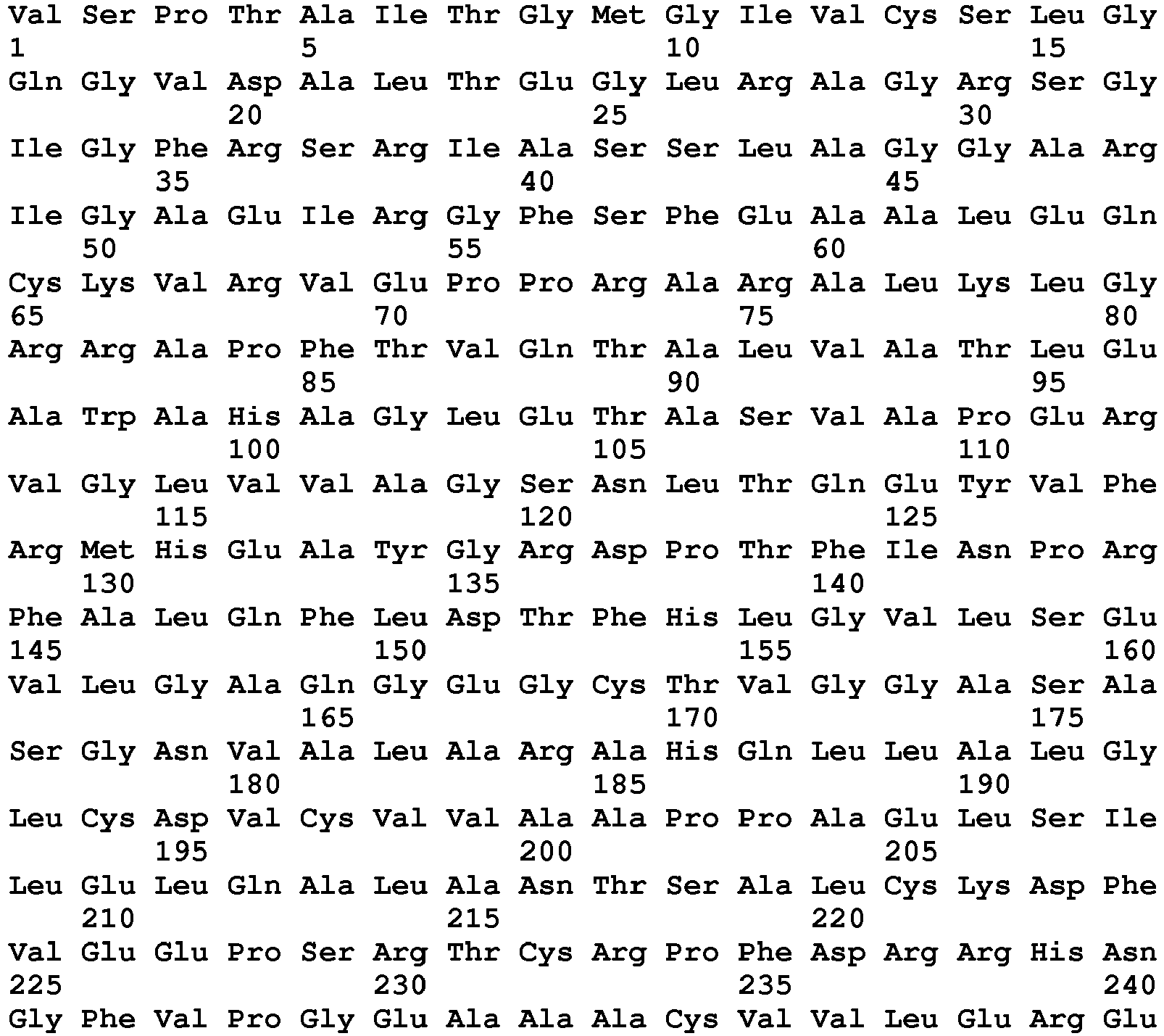

- <210> 5
<211> 410
<212> PRT
<213> Myxococcus fulvus - <220>
<221> CHAIN
<222> 1..410
<223> MxnE - <400> 5


- <210> 6
<211> 253
<212> PRT
<213> Myxococcus fulvus - <220>
<221> CHAIN
<222> 1..253
<223> MxnF - <400> 6


- <210> 7
<211> 254
<212> PRT
<213> Myxococcus fulvus - <220>
<221> CHAIN
<222> 1..254
<223> MxnG - <400> 7

- <210> 8
<211> 286
<212> PRT
<213> Myxococcus fulvus - <220>
<221> CHAIN
<222> 1..286
<223> MxnH - <400> 8

- <210> 9
<211> 3906
<212> PRT
<213> Myxococcus fulvus - <220>
<223> mxnI - <220>
<221> CHAIN
<222> 1..3906
<223> MxnI - <220>
<221> CHAIN
<222> 1..530
<223> MxnI: LM - <220>
<221> CHAIN
<222> 1..466
<223> MxnI: LM - <220>
<221> CHAIN
<222> 1..1781
<223> MxnI: 1E - <220>
<221> CHAIN
<222> 1..1759
<223> MxnI: 1E - <220>
<221> CHAIN
<222> 694..885
<223> MxnI-KS-lE - <220>
<221> CHAIN
<222> 1945..2135
<223> MxnI-KS-2E - <220>
<221> CHAIN
<222> 2903..3050
<223> MxnI-KR-2E - <220>
<221> CHAIN
<222> 424..433
<223> MxnI-CP-L - <220>
<221> CHAIN
<222> 1720..1726
<223> MxnI-CP-lE - <220>
<221> CHAIN
<222> 3192..3198
<223> MxnI-CP-2E - <220>
<221> CHAIN
<222> 366..372
<223> MxnJ-CP-3E - <220>
<221> CHAIN
<222> 533..3717
<223> part of MxnI: 1E-6E - <220>
<221> CHAIN
<222> 467..3717
<223> part of MxnI: 1E-6E - <220>
<221> CHAIN
<222> 1786..3717
<223> part of MxnI: 2E-6E - <220>
<221> CHAIN
<222> 1760..3717
<223> part of MxnI: 2E-6E - <220>
<221> CHAIN
<222> 2402..2414
<223> MxnI-DH-2E - <220>
<221> CHAIN
<222> 53..65
<223> MxnJ-DH-3E - <220>
<221> CHAIN
<222> 1091..1103
<223> MxnJ-DH-4E - <400> 9


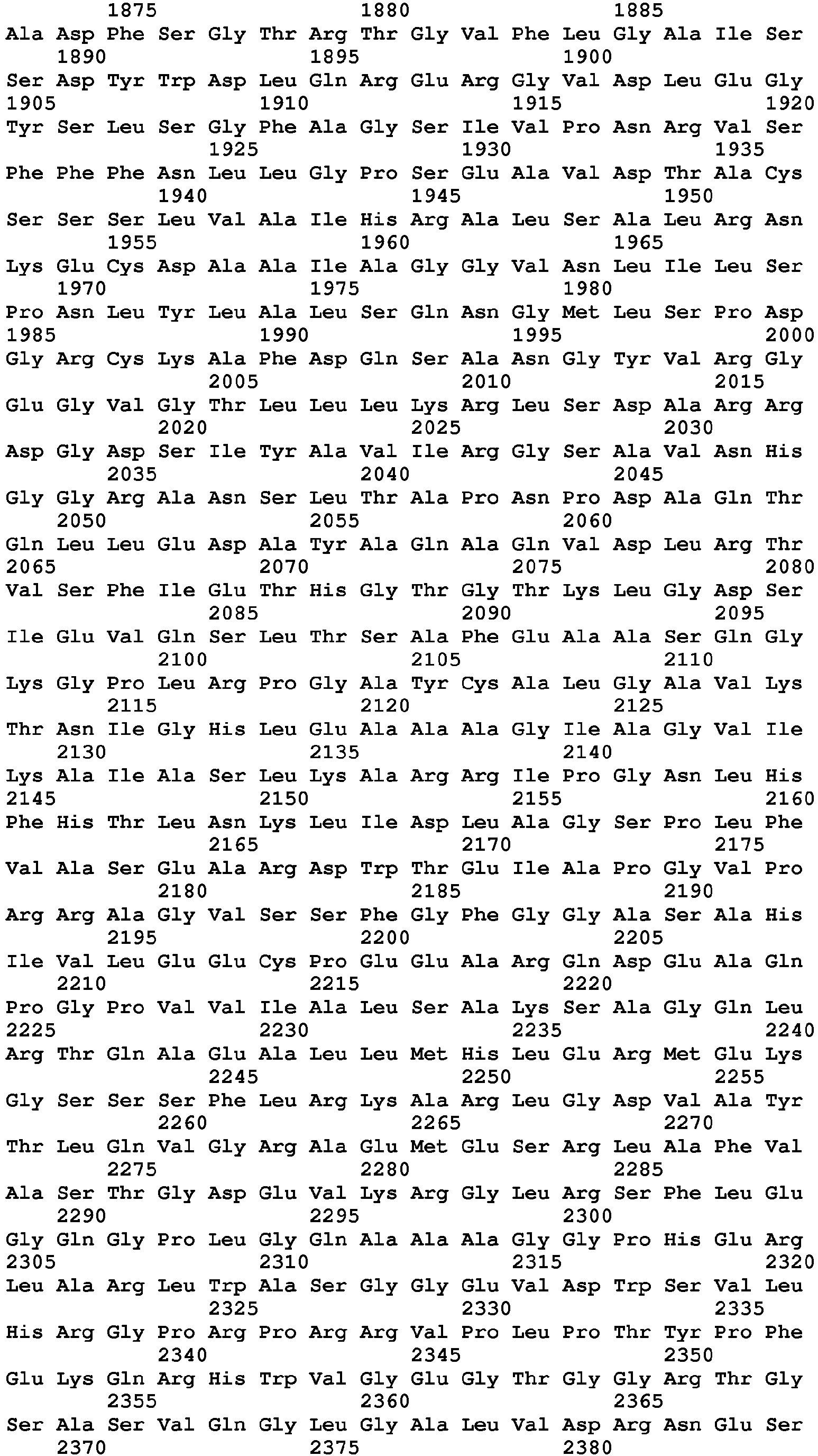


- <210> 10
<211> 3862
<212> PRT
<213> Myxococcus fulvus - <220>
<223> MxnJ - <220>
<221> CHAIN
<222> 1..3862
<223> MxnJ - <220>
<221> CHAIN
<222> 25..3849
<223> part of MxnI: 1E-6E MxnI-MxnJ: 4E to 6E - <220>
<221> CHAIN
<222> 25..3849
<223> part of MxnI: 2E-6E - <220>
<221> CHAIN
<222> 1..405
<223> MxnJ: 3E - <220>
<221> CHAIN
<222> 451..2276
<223> MxnJ: 4E - <220>
<221> CHAIN
<222> 2325..3849
<223> MxnJ: 5E to 6E - <220>
<221> CHAIN
<222> 2277..3849
<223> MxnJ: 5E to 6E - <220>
<221> CHAIN
<222> 2325..3006
<223> MxnJ: 5E - <220>
<221> CHAIN
<222> 3007..3849
<223> MxnJ: 6E - <220>
<221> CHAIN
<222> 3053..3849
<223> MxnJ: 6E - <220>
<221> CHAIN
<222> 1..450
<223> Mxn: 3E - <220>
<221> CHAIN
<222> 1..3052
<223> MxnJ: 1E to 5E - <220>
<221> CHAIN
<222> 1..3006
<223> MxnJ: 1E to 5E - <220>
<221> CHAIN
<222> 2238..2244
<223> MxnJ-CP-4E - <220>
<221> CHAIN
<222> 2967..2973
<223> MxnJ-CP-5E - <220>
<221> CHAIN
<222> 3810..3816
<223> MxnJ-CP-6E - <220>
<221> CHAIN
<222> 3566..3572
<223> MxnJ-CP*-6E - <220>
<221> CHAIN
<222> 1982..1987
<223> MxnJ-MT-4E - <400> 10


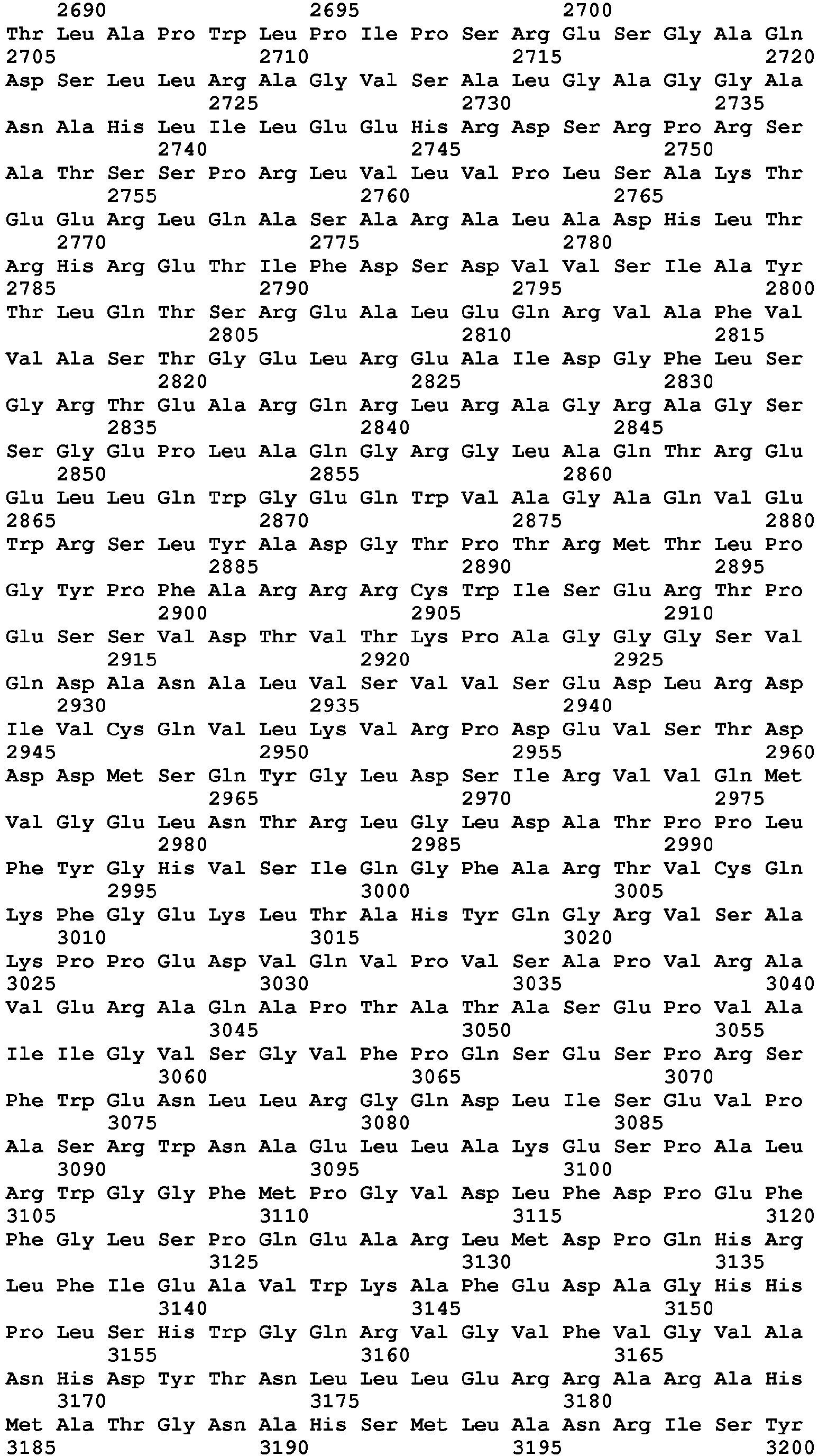


- <210> 11
<211> 6045
<212> PRT
<213> Myxococcus fulvus - <220>
<223> MxnK - <220>
<221> CHAIN
<222> 1..2531
<223> MxnK: 1W-2W - <220>
<221> CHAIN
<222> 1..2467
<223> MxnK: 1W-2W - <220>
<221> CHAIN
<222> 2532..6023
<223> MxnK: 3W-5W - <220>
<221> CHAIN
<222> 2468..6023
<223> MxnK: 3W-5W - <220>
<221> CHAIN
<222> 1..3348
<223> MxnK: 1W-3W - <220>
<221> CHAIN
<222> 1..3272
<223> MxnK: 1W-3W - <220>
<221> CHAIN
<222> 3349..6023
<223> MxnK: 4W-5W - <220>
<221> CHAIN
<222> 3273..6023
<223> MxnK: 4W-5W - <220>
<221> CHAIN
<222> 1..5203
<223> MxnK: 1W-4W - <220>
<221> CHAIN
<222> 1..5251
<223> MxnK: 1W-4W - <220>
<221> CHAIN
<222> 5252..6023
<223> MxnK: 5W - <220>
<221> CHAIN
<222> 5204..6023
<223> MxnK: 5W - <220>
<221> CHAIN
<222> 1683..1689
<223> MxnK-CP-1W - <220>
<221> CHAIN
<222> 2429..2435
<223> MxnK-CP-2W - <220>
<221> CHAIN
<222> 3234..3240
<223> MxnK-CP-3W - <220>
<221> CHAIN
<222> 5165..5171
<223> MxnK-CP-4W - <220>
<221> CHAIN
<222> 5894..5900
<223> MxnK-CP*-5W - <220>
<221> CHAIN
<222> 5984..5990
<223> MxnK-CP-5W - <220>
<221> CHAIN
<222> 955..967
<223> MxnK-DH-1W - <220>
<221> CHAIN
<222> 3980..3992
<223> MxnK-DH-4W - <220>
<221> CHAIN
<222> 4914..4919
<223> MxnK-MT-4W - <400> 11
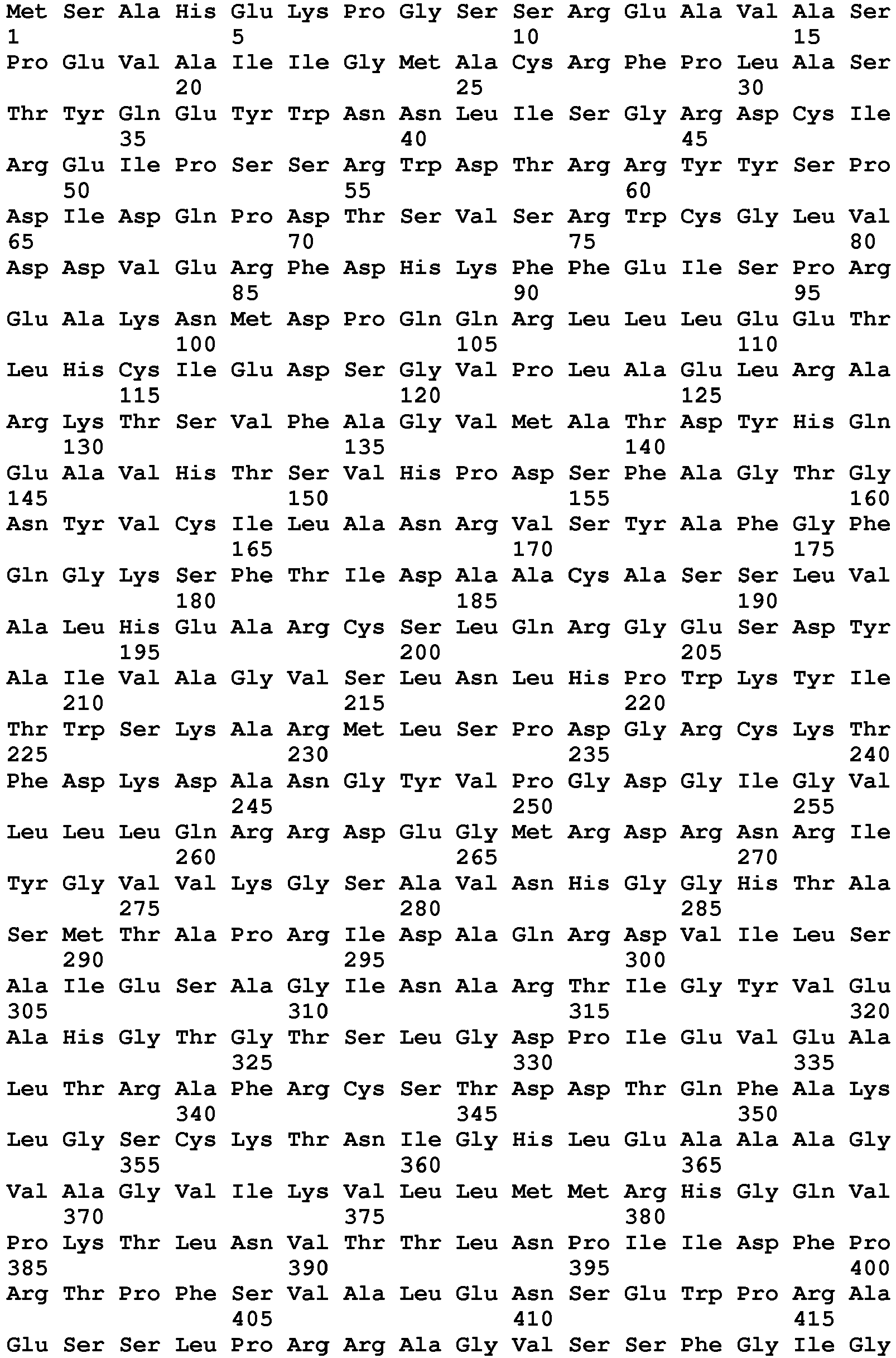

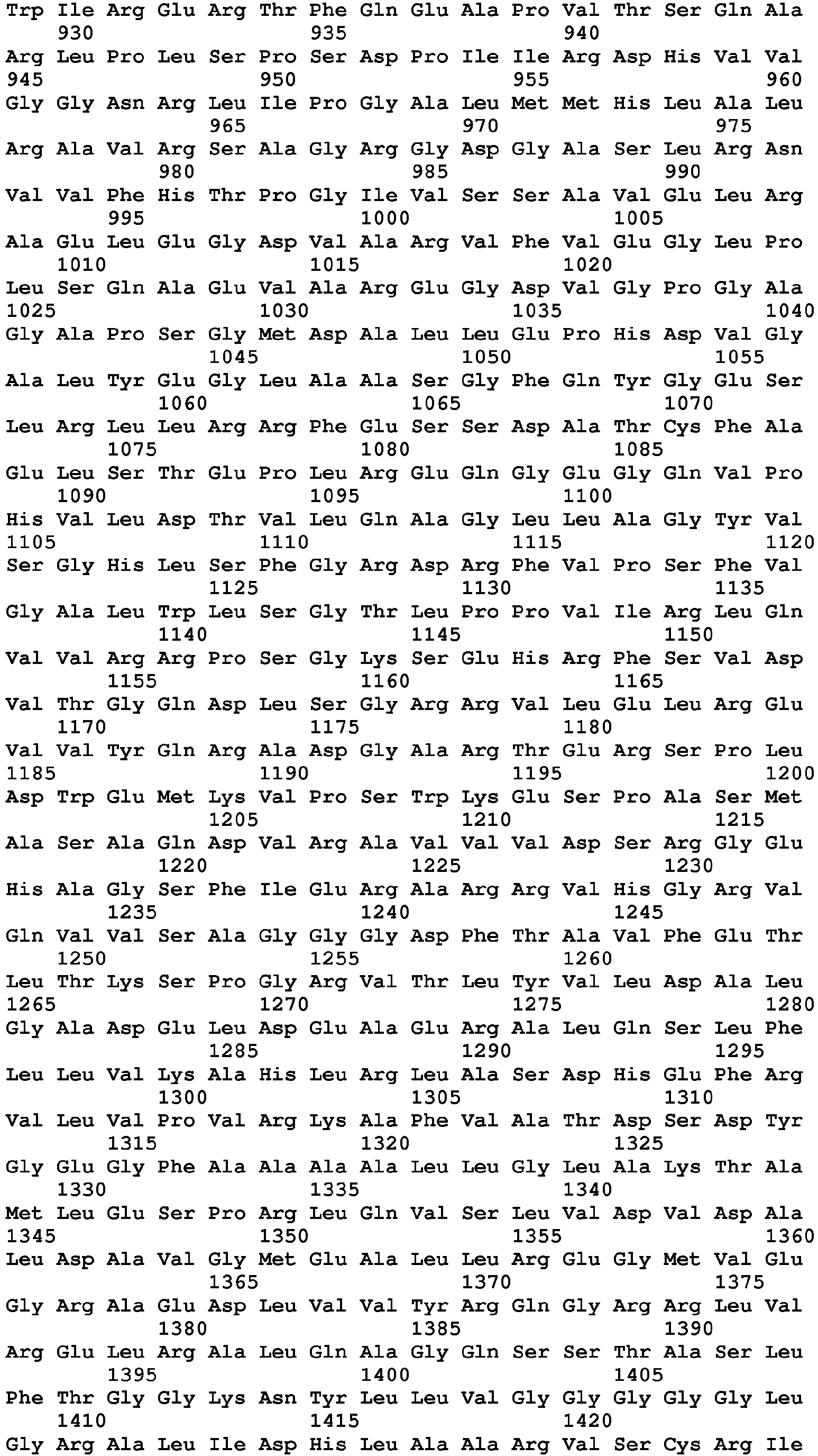


- <210> 12
<211> 582
<212> PRT
<213> Myxococcus fulvus - <220>
<221> CHAIN
<222> 1..582
<223> MxnL - <400> 12
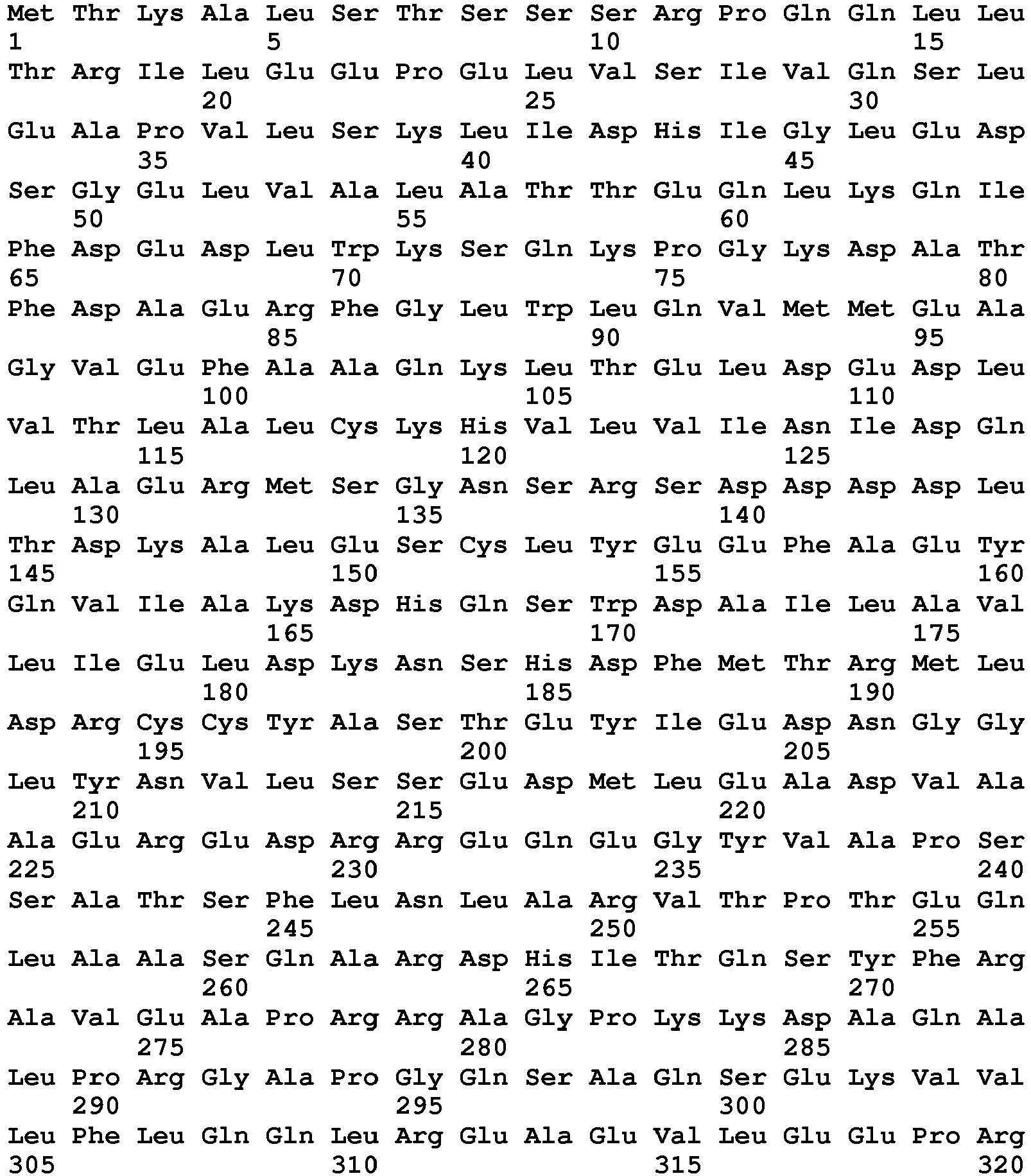
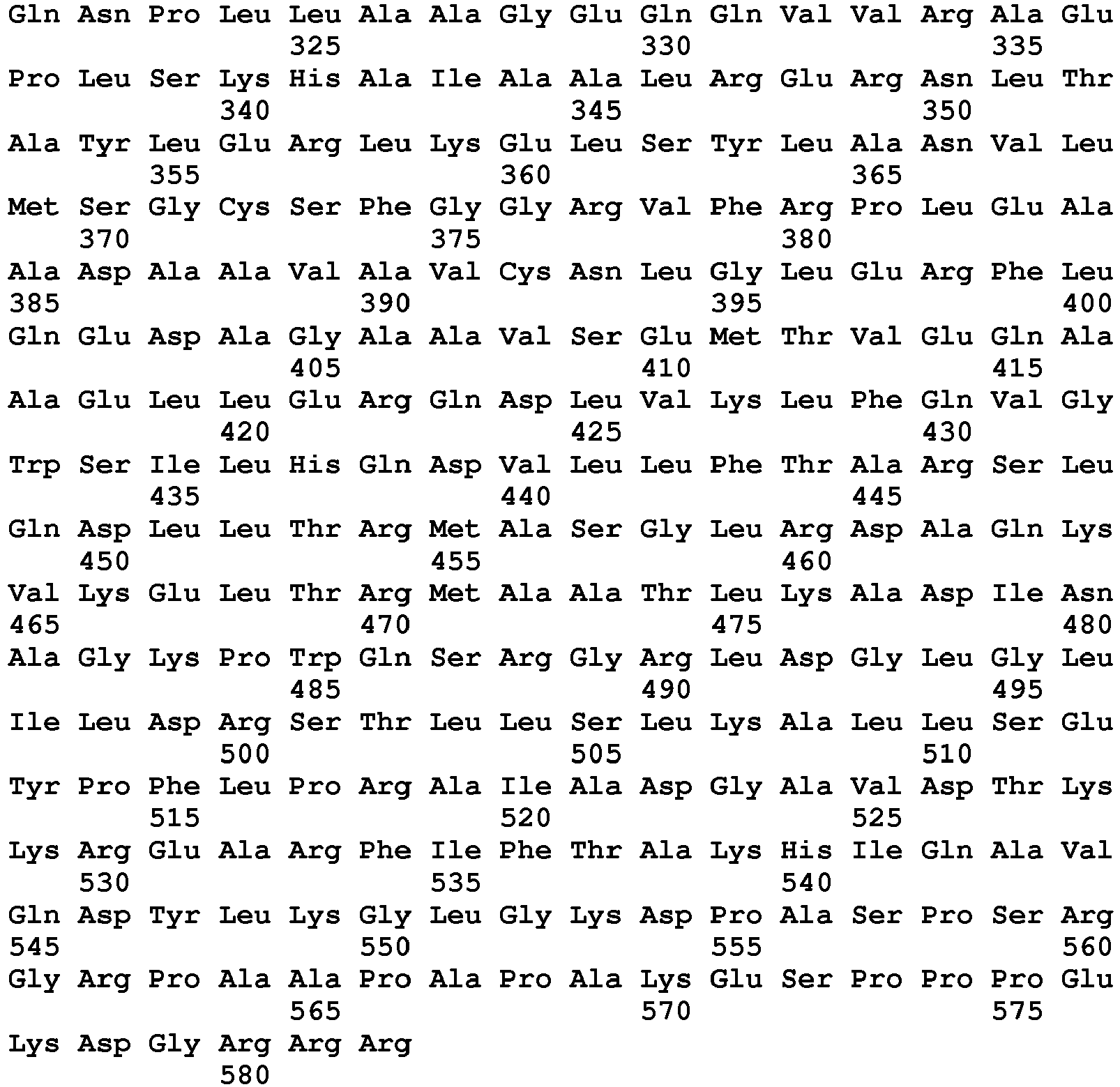
- <210> 13
<211> 326
<212> PRT
<213> Myxococcus fulvus - <220>
<221> CHAIN
<222> 1..326
<223> MxnM - <400> 13


- <210> 14
<211> 53391
<212> DNA
<213> Myxococcus fulvus - <220>
<221> source
<222> 1..53391
<223> /mol_type="unassigned DNA" /organism="Myxococcus fulvus" - <220>
<221> gene
<222> 1..53391
<223> /gene="Myxopyronin gene cluster" - <220>
<221> gene
<222> 281..2677
<223> /gene="mxnA" - <220>
<221> gene
<222> 2709..3716
<223> /gene="mxnB" - <220>
<221> gene
<222> 3736..3987
<223> /gene="mxnC" - <220>
<221> gene
<222> 4002..5273
<223> /gene="mxnD" - <220>
<221> gene
<222> 5276..6508
<223> /gene="mxnE" - <220>
<221> gene
<222> 6510..7271
<223> /gene="mxnF" - <220>
<221> gene
<222> 7268..8032
<223> /gene="mxnG" - <220>
<221> gene
<222> 8067..8927
<223> /gene="mxnH" - <220>
<221> gene
<222> 8924..20644
<223> /gene="mxnI" - <220>
<221> gene
<222> 20641..32229
<223> /gene="mxnJ" - <220>
<221> gene
<222> 32226..50363
<223> /gene="mxnK" - <220>
<221> gene
<222> 50461..52209
<223> /gene="mxnL" - <220>
<221> gene
<222> 52206..53186
<223> /gene="mxnM" - <400> 14






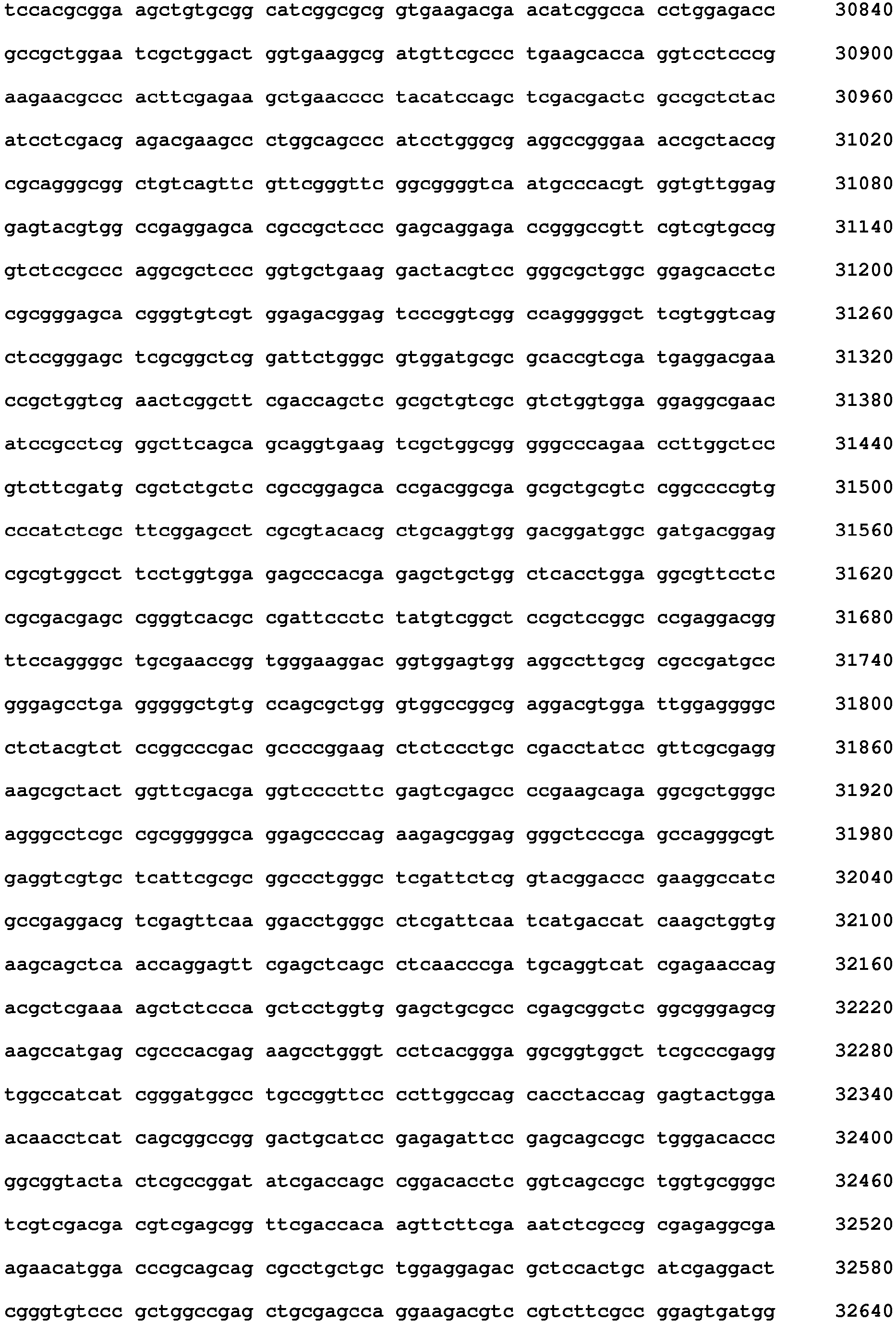


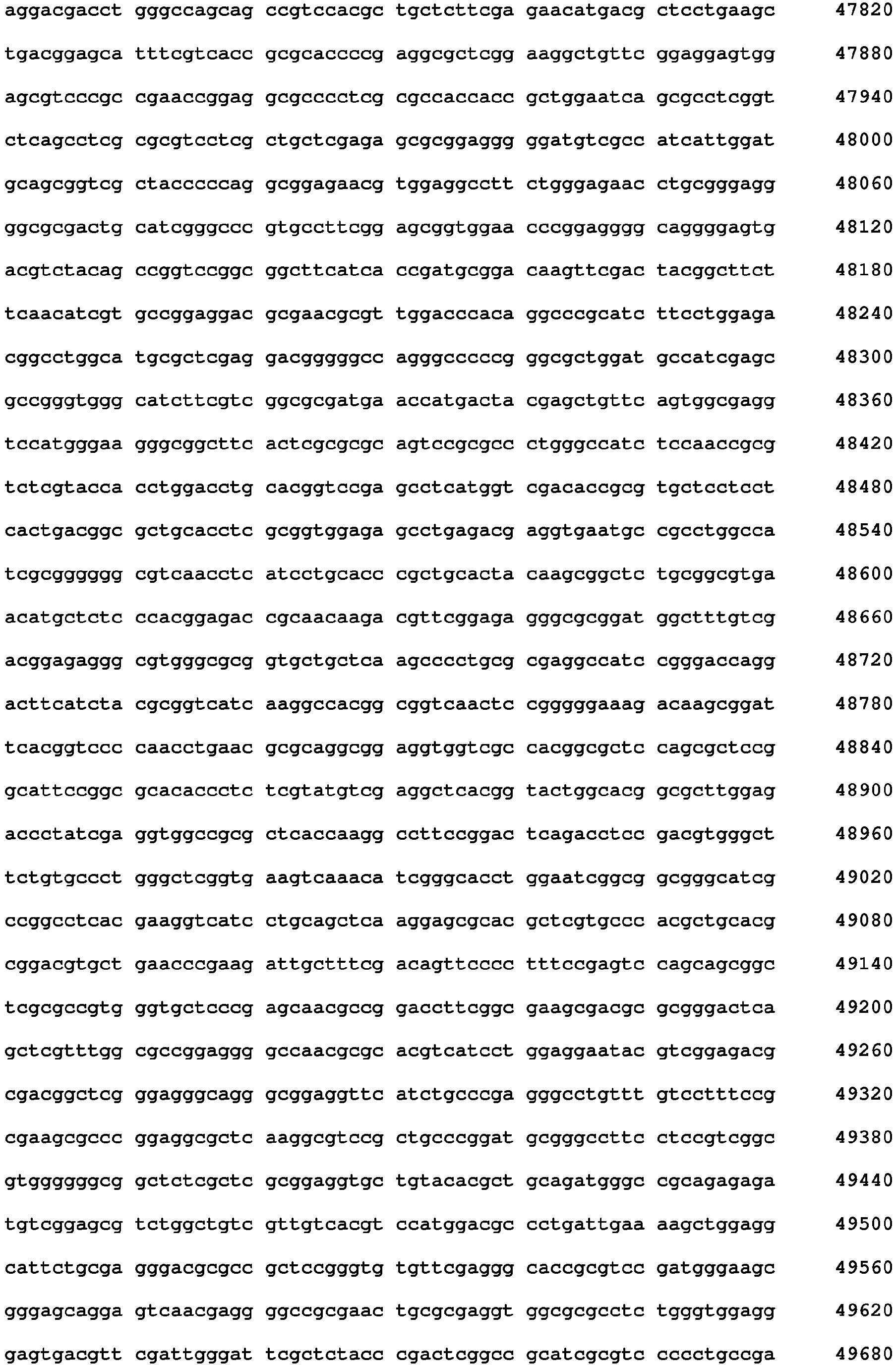


- <210> 15
<211> 763
<212> PRT
<213> Corallococcus coralloides - <220>
<221> CHAIN
<222> 1..763
<223> CorA - <400> 15


- <210> 16
<211> 335
<212> PRT
<213> Corallococcus coralloides - <220>
<221> CHAIN
<222> 1..335
<223> CorB - <400> 16


- <210> 17
<211> 83
<212> PRT
<213> Corallococcus coralloides - <220>
<221> CHAIN
<222> 1..83
<223> CorC - <400> 17

- <210> 18
<211> 423
<212> PRT
<213> Corallococcus coralloides - <220>
<221> CHAIN
<222> 1..423
<223> CorD - <400> 18


- <210> 19
<211> 410
<212> PRT
<213> Corallococcus coralloides - <220>
<221> CHAIN
<222> 1..410
<223> CorE - <400> 19


- <210> 20
<211> 261
<212> PRT
<213> Corallococcus coralloides - <220>
<221> CHAIN
<222> 1..261
<223> CorF - <400> 20

- <210> 21
<211> 254
<212> PRT
<213> Corallococcus coralloides - <220>
<221> CHAIN
<222> 1..254
<223> CorG - <400> 21

- <210> 22
<211> 286
<212> PRT
<213> Corallococcus coralloides - <220>
<221> CHAIN
<222> 1..286
<223> CorH - <400> 22


- <210> 23
<211> 3883
<212> PRT
<213> Corallococcus coralloides - <220>
<221> CHAIN
<222> 1..3883
<223> CorI - <220>
<221> CHAIN
<222> 416..425
<223> CorI-CP-L - <220>
<221> CHAIN
<222> 1706..1712
<223> CorI-CP-1E - <220>
<221> CHAIN
<222> 3166..3172
<223> CorI-CP-2E - <220>
<221> CHAIN
<222> 2380..2392
<223> CorI-DH-2E - <400> 23


- <210> 24
<211> 3817
<212> PRT
<213> Corallococcus coralloides - <220>
<221> CHAIN
<222> 1..3817
<223> CorJ - <220>
<221> CHAIN
<222> 350..356
<223> CorJ-CP-3E - <220>
<221> CHAIN
<222> 2206..2212
<223> CorJ-CP-4E - <220>
<221> CHAIN
<222> 2935..2941
<223> CorJ-CP-5E - <220>
<221> CHAIN
<222> 3530..3536
<223> CorJ-CP*-6E - <220>
<221> CHAIN
<222> 3765..3771
<223> CorJ-CP-6E - <220>
<221> CHAIN
<222> 44..56
<223> CorJ-DH-3E - <220>
<221> CHAIN
<222> 1073..1085
<223> CorJ-DH-4E - <220>
<221> CHAIN
<222> 1962..1967
<223> CorJ-MT-4E - <400> 24


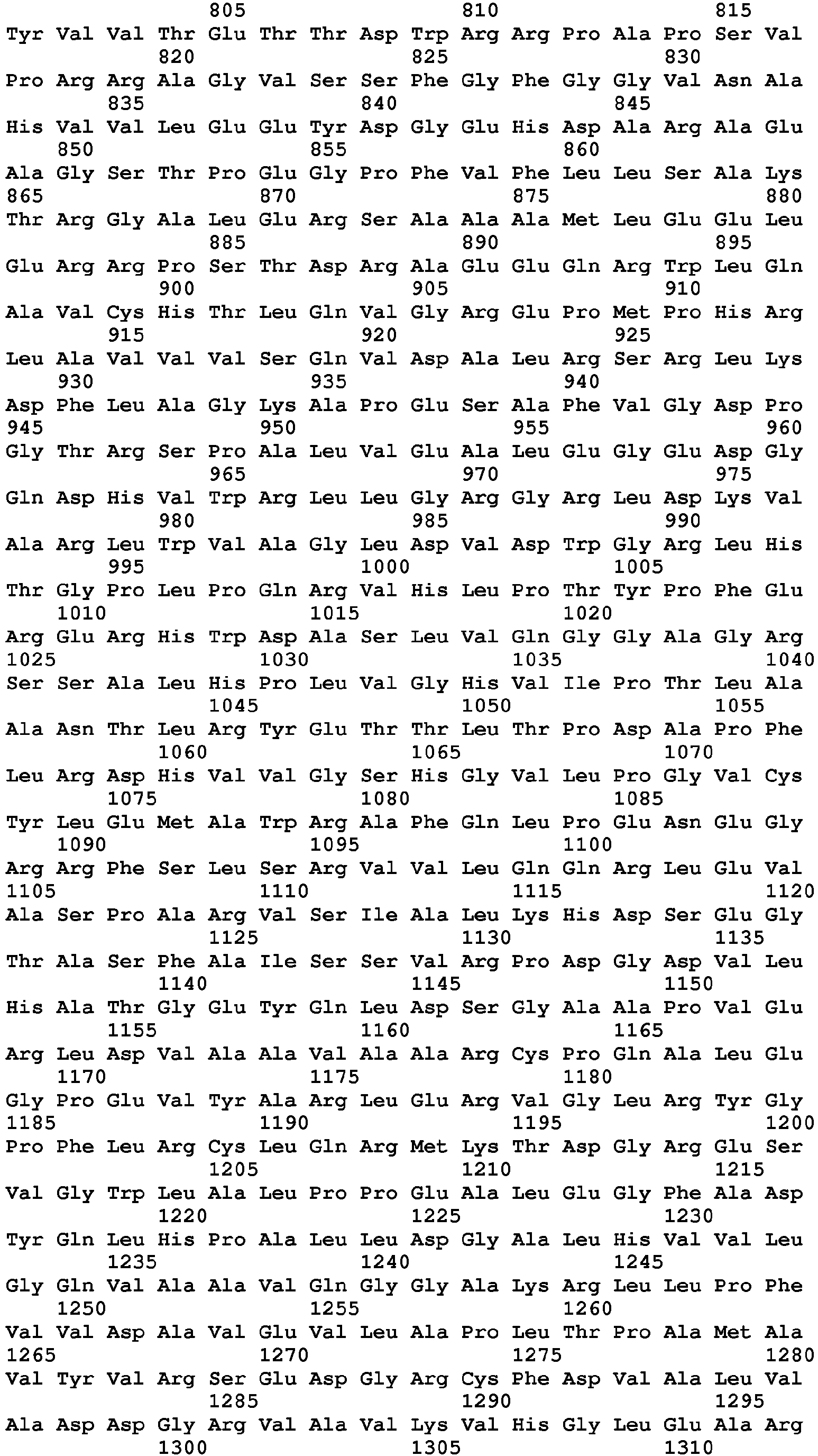


- <210> 25
<211> 4068
<212> PRT
<213> Corallococcus coralloides - <220>
<221> CHAIN
<222> 1..4068
<223> CorK - <220>
<221> CHAIN
<222> 1663..1669
<223> CorK-CP-1W - <220>
<221> CHAIN
<222> 3109..3115
<223> CorK-CP-2W - <220>
<221> CHAIN
<222> 3900..3906
<223> CorK-CP*-3W - <220>
<221> CHAIN
<222> 3995..4000
<223> CorK-CP-3W - <220>
<221> CHAIN
<222> 942..954
<223> CorK-DH-lW - <220>
<221> CHAIN
<222> 2319..2331
<223> CorK-DH-2W - <400> 25
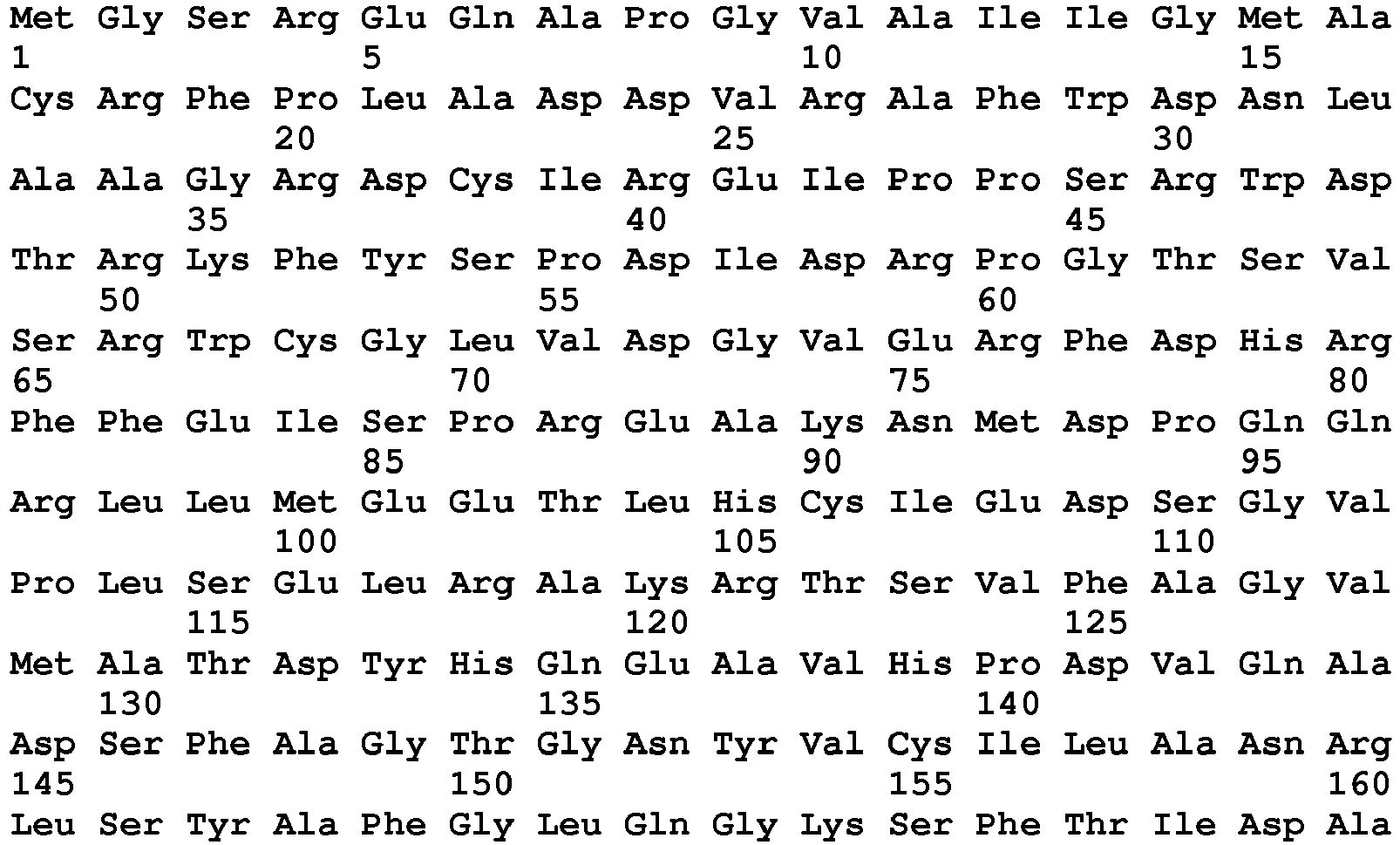


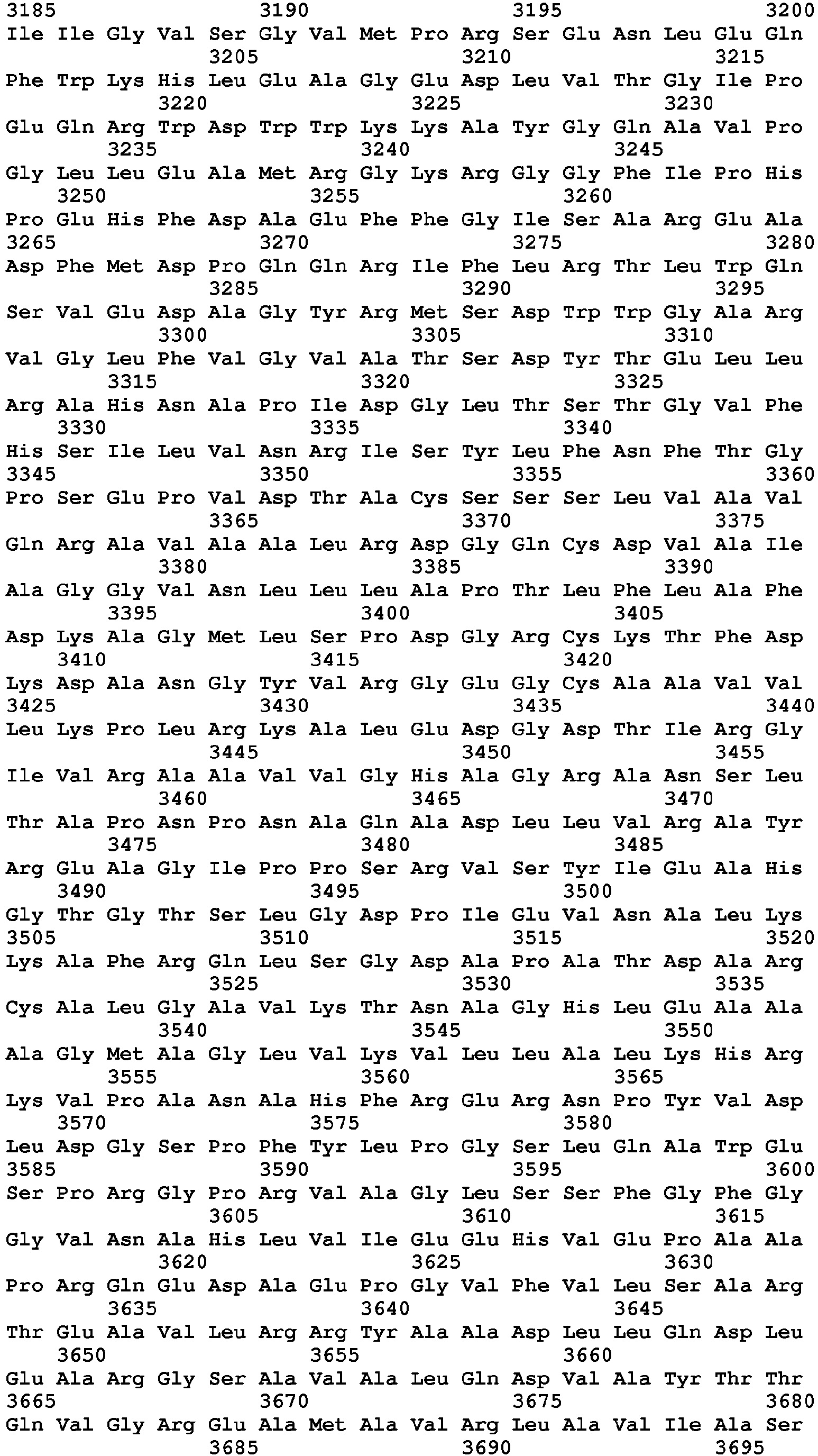

- <210> 26
<211> 4981
<212> PRT
<213> Corallococcus coralloides - <220>
<223> CorL - <220>
<221> CHAIN
<222> 1443..1449
<223> CorL-CP-4W - <220>
<221> CHAIN
<222> 2208..2214
<223> CorL-CP-5W - <220>
<221> CHAIN
<222> 4116..4122
<223> CorL-CP-6W - <220>
<221> CHAIN
<222> 4826..4832
<223> CorL-CP*-7W - <220>
<221> CHAIN
<222> 4920..4926
<223> CorL-CP-7W - <220>
<221> CHAIN
<222> 19..31
<223> CorL-DH-4W - <220>
<221> CHAIN
<222> 2949..2961
<223> CorL-DH-6W - <220>
<221> CHAIN
<222> 3865..3870
<223> CorL-MT-6W - <400> 26


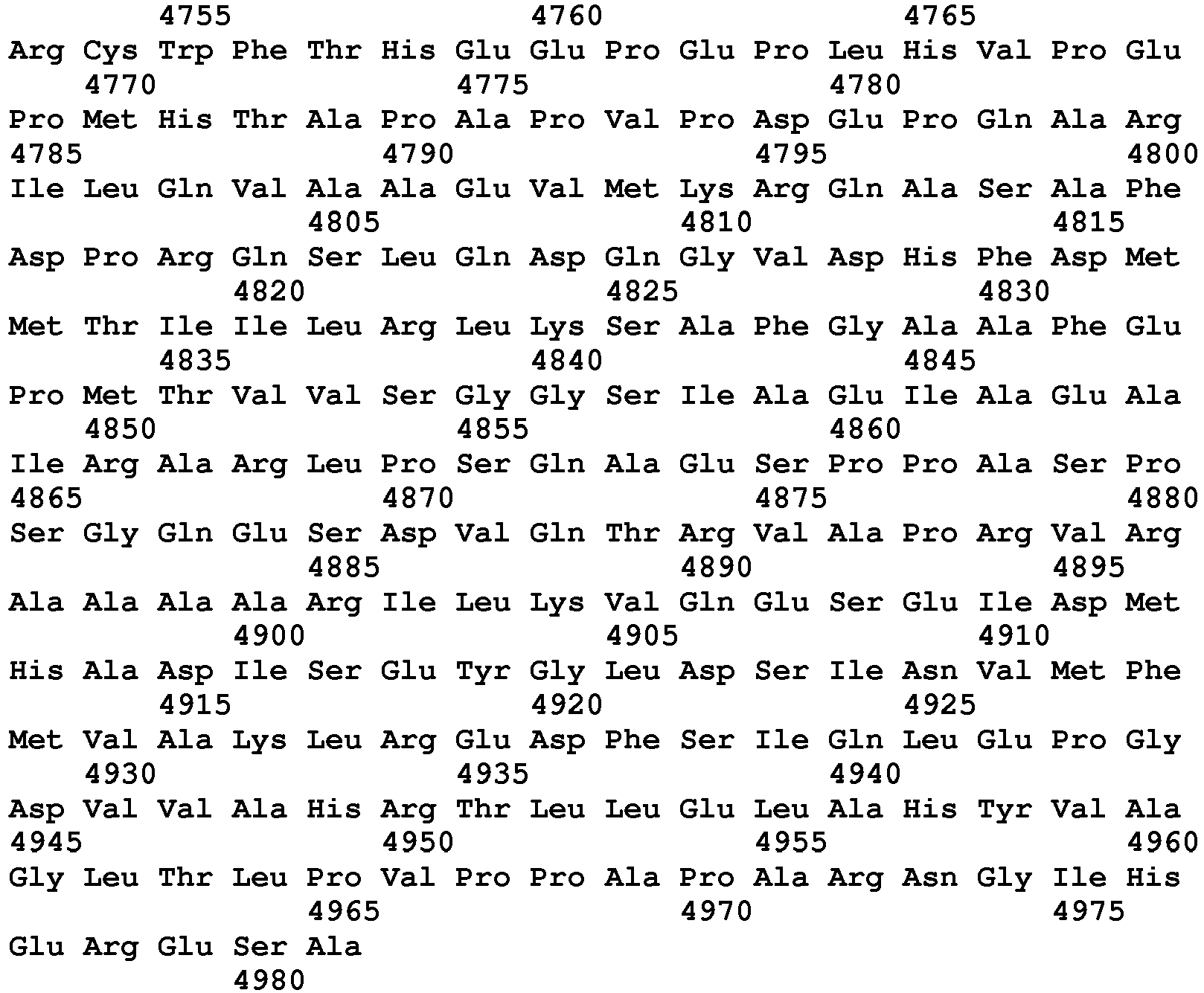
- <210> 27
<211> 573
<212> PRT
<213> Corallococcus coralloides - <220>
<223> Orf1 - <400> 27

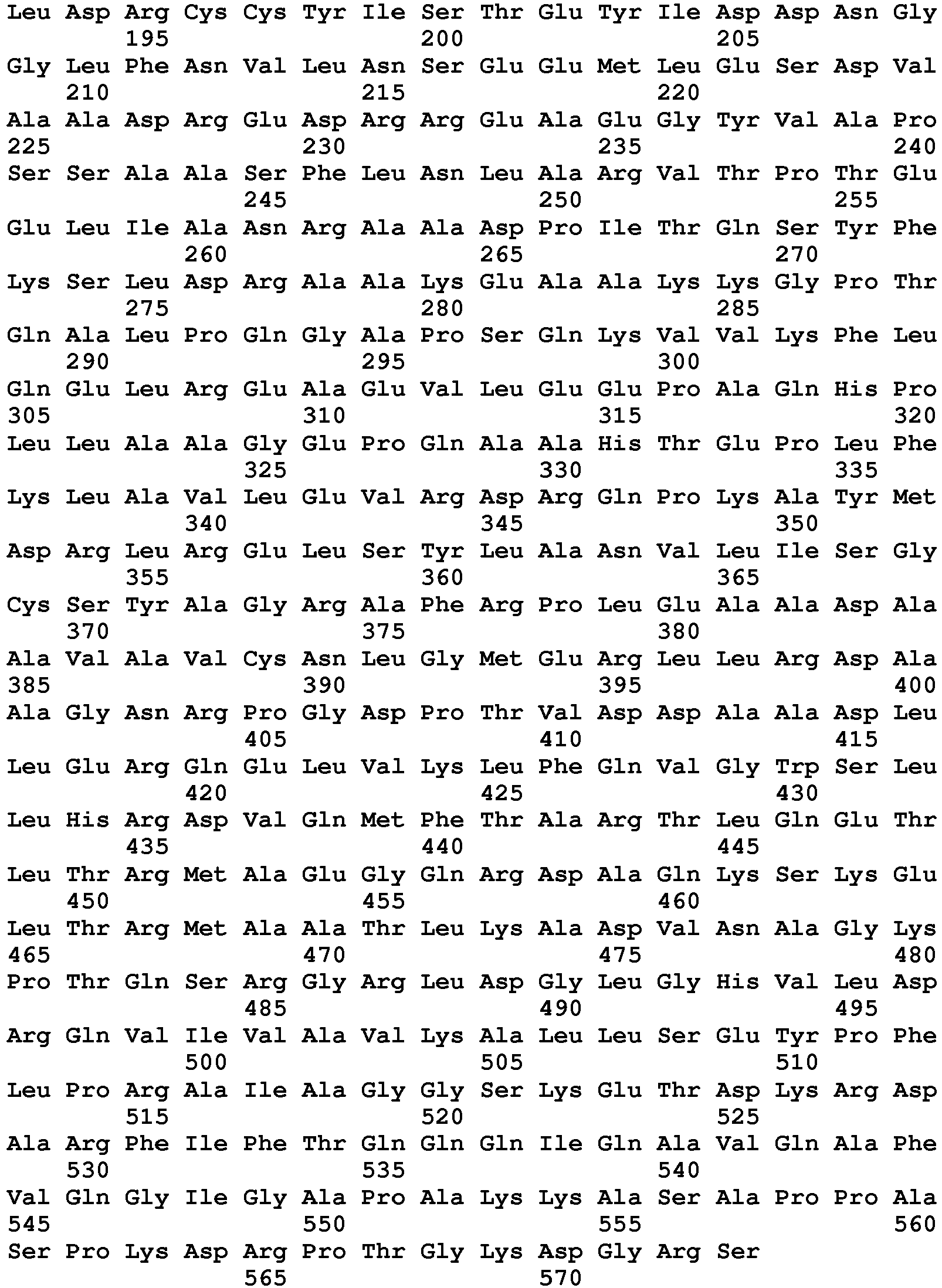
- <210> 28
<211> 240
<212> PRT
<213> Corallococcus coralloides - <220>
<223> CorM - <400> 28


- <210> 29
<211> 724
<212> PRT
<213> Corallococcus coralloides - <220>
<223> CorN - <400> 29

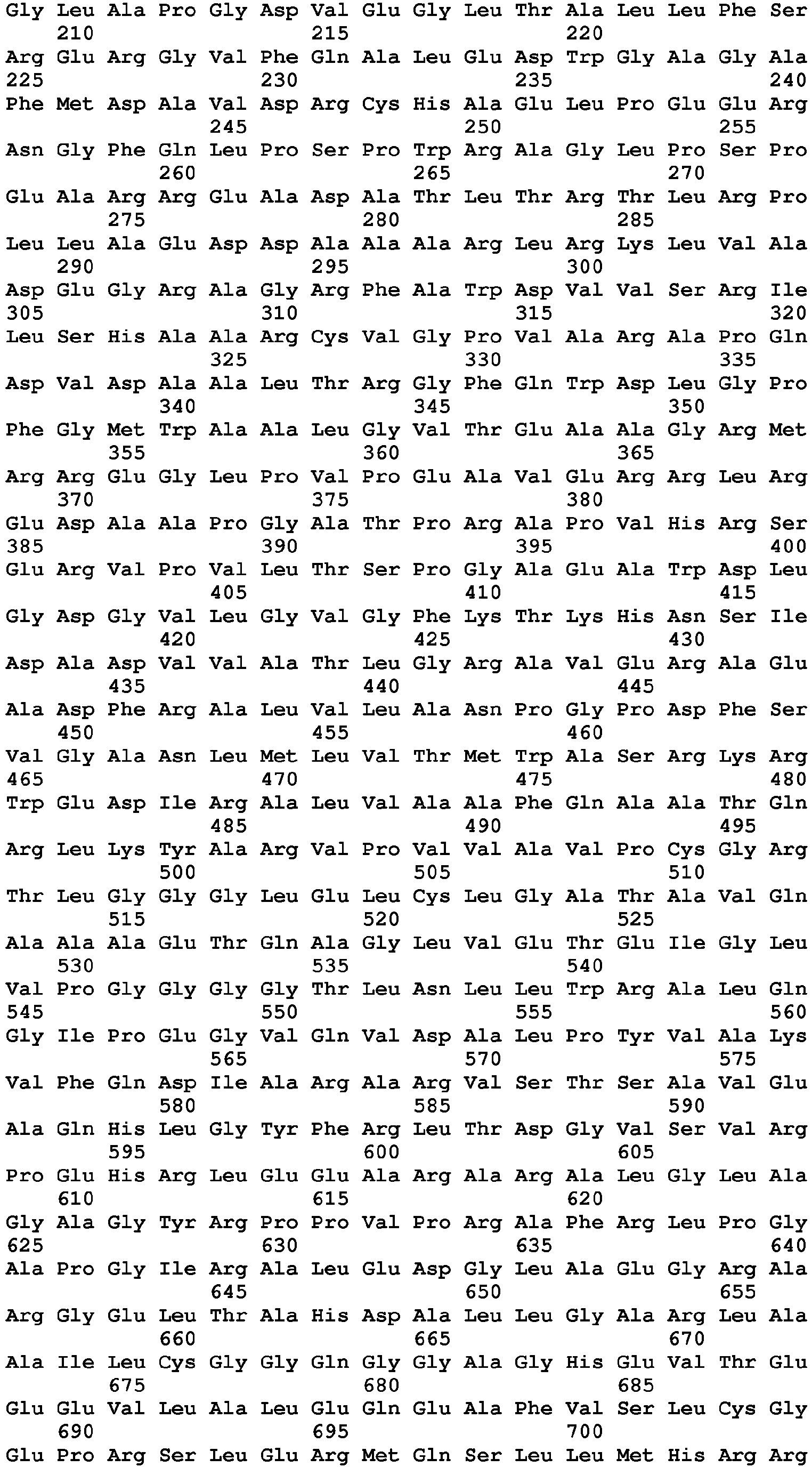

- <210> 30
<211> 449
<212> PRT
<213> Corallococcus coralloides - <220>
<223> CorO - <400> 30


- <210> 31
<211> 24
<212> DNA
<213> Artificial Sequence - <220>
<221> source
<222> 1..24
<223> /mol_type="unassigned DNA" /note= "mxn9" /organism="Artificial Sequence" - <400> 31
gtcagacata tgaacaacag cggt 24 - <210> 32
<211> 29
<212> DNA
<213> Artificial Sequence - <220>
<221> source
<222> 1..29
<223> /mol_type="unassigned DNA" /note="primer mxn10" /organism="Artificial Sequence" - <400> 32
cgtcgtaagc tttcagtagg tgaaaacca 29 - <210> 33
<211> 30
<212> DNA
<213> Artificial Sequence - <220>
<221> source
<222> 1..30
<223> /mol_type="unassigned DNA" /note="primer mxn214" /organism="Artificial Sequence" - <400> 33
gatacgcata tggtcccctt cgagtcgagc 30 - <210> 34
<211> 30
<212> DNA
<213> Artificial Sequence - <220>
<221> source
<222> 1..30
<223> /mol_type="unassigned DNA" /note="primer mxn215" /organism="Artificial Sequence" - <400> 34
tctatgaagc tttcatggct tcgctcccgc 30 - <210> 35
<211> 27
<212> DNA
<213> Artificial Sequence - <220>
<221> source
<222> 1..27
<223> /mol_type="unassigned DNA" /note="primer mxn230" /organism="Artificial Sequence" - <400> 35
ctgaggcata tgcgtgcgtt cgagtcg 27 - <210> 36
<211> 30
<212> DNA
<213> Artificial Sequence - <220>
<221> source
<222> 1..30
<223> /mol_type="unassigned DNA" /note="primer mxn231" /organism="Artificial Sequence" - <400> 36
tctatgaagc tttcaggcac accactcatt 30 - <210> 37
<211> 45
<212> DNA
<213> Artificial Sequence - <220>
<221> source
<222> 1..45
<223> /mol_type="unassigned DNA" /note="primer mxn30" /organism="Artificial Sequence" - <400> 37
tgcttaatta atattcatat ggctagcgag ctcctggatg gcctt 45 - <210> 38
<211> 29
<212> DNA
<213> Artificial Sequence - <220>
<221> source
<222> 1..29
<223> /mol_type="unassigned DNA" /note="primer mxn33" /organism="Artificial Sequence" - <400> 38
caggtagata tctggacagc aagcgaacc 29 - <210> 39
<211> 20
<212> DNA
<213> Artificial Sequence - <220>
<221> source
<222> 1..20
<223> /mol_type="unassigned DNA" /note="primer mxn34" /organism="Artificial Sequence" - <400> 39
atcctgtctc ttgatcagat 20 - <210> 40
<211> 40
<212> DNA
<213> Artificial Sequence - <220>
<221> source
<222> 1..40
<223> /mol_type="unassigned DNA" /note="primer mxn35" /organism="Artificial Sequence" - <400> 40
agatctgatc aagagacagg atttcctgga gacgtcgtgg 40 - <210> 41
<211> 33
<212> DNA
<213> Artificial Sequence - <220>
<221> source
<222> 1..33
<223> /mol_type="unassigned DNA" /note="primer mxn36" /organism="Artificial Sequence" - <400> 41
catgtcggat cctcaccatc gtccacagct tcg 33 - <210> 42
<211> 35
<212> DNA
<213> Artificial Sequence - <220>
<221> source
<222> 1..35
<223> /mol_type="unassigned DNA" /note="primer mxn41" /organism="Artificial Sequence" - <400> 42
aatctgtacc tccttatcct gtctcttgat cagat 35 - <210> 43
<211> 57
<212> DNA
<213> Artificial Sequence - <220>
<221> source
<222> 1..57
<223> /mol_type="unassigned DNA" /note="primer mxn42" /organism="Artificial Sequence" - <400> 43
caagatctga tcaagagaca ggataaggag gtacagatta tgactttcac cgtcgtt 57 - <210> 44
<211> 18
<212> DNA
<213> Artificial Sequence - <220>
<221> source
<222> 1..18
<223> /mol_type="unassigned DNA" /note="primer mxn48" /organism="Artificial Sequence" - <400> 44
acgtcgacga gtactggc 18 - <210> 45
<211> 18
<212> DNA
<213> Artificial Sequence - <220>
<221> source
<222> 1..18
<223> /mol_type="unassigned DNA" /note="primer mxn49" /organism="Artificial Sequence" - <400> 45
aatgccttcg gagcctcg 18 - <210> 46
<211> 30
<212> DNA
<213> Artificial Sequence - <220>
<221> source
<222> 1..30
<223> /mol_type="unassigned DNA" /note="primer mxn50" /organism="Artificial Sequence" - <400> 46
catgtagata tcgaacggct ccggtacatc 30 - <210> 47
<211> 30
<212> DNA
<213> Artificial Sequence - <220>
<221> source
<222> 1..30
<223> /mol_type="unassigned DNA" /note="primer mxn51" /organism="Artificial Sequence" - <400> 47
tgtctaggat ccacagccgc tccaggattc 30 - <210> 48
<211> 30
<212> DNA
<213> Artificial Sequence - <220>
<221> source
<222> 1..30
<223> /mol_type="unassigned DNA" /note="primer mxn52" /organism="Artificial Sequence" - <400> 48
gatacacagc tgtccctcct gttcagctac 30 - <210> 49
<211> 29
<212> DNA
<213> Artificial Sequence - <220>
<221> source
<222> 1..29
<223> /mol_type="unassigned DNA" /note="primer mxn53" /organism="Artificial Sequence" - <400> 49
atcttaatta aggacgcgat ggatatgtt 29 - <210> 50
<211> 20
<212> DNA
<213> Artificial Sequence - <220>
<221> source
<222> 1..20
<223> /mol_type="unassigned DNA" /note="primer mxn54" /organism="Artificial Sequence" - <400> 50
gcgttgatgg atccacagca 20 - <210> 51
<211> 35
<212> DNA
<213> Artificial Sequence - <220>
<221> source
<222> 1..35
<223> /mol_type="unassigned DNA" /note="primer mxn55" /organism="Artificial Sequence" - <400> 51
tgtatcgcgg ccgctcagtg ccgctgaacc cgaac 35 - <210> 52
<211> 32
<212> DNA
<213> Artificial Sequence - <220>
<221> source
<222> 1..32
<223> /mol_type="unassigned DNA" /note="primer mxn56" /organism="Artificial Sequence" - <400> 52
gatacagcgg ccgcctttcc gagtccagca gc 32 - <210> 53
<211> 29
<212> DNA
<213> Artificial Sequence - <220>
<221> source
<222> 1..29
<223> /mol_type="unassigned DNA" /note="primer mxn57" /organism="Artificial Sequence" - <400> 53
gtatcgagct catctgctgt cctctgcct 29 - <210> 54
<211> 16
<212> DNA
<213> Artificial Sequence - <220>
<221> source
<222> 1..16
<223> /mol_type="unassigned DNA" /note="primer mxn58" /organism="Artificial Sequence" - <400> 54
gtacgtgccg ttggat 16 - <210> 55
<211> 18
<212> DNA
<213> Artificial Sequence - <220>
<221> source
<222> 1..18
<223> /mol_type="unassigned DNA" /note="primer mxn59" /organism="Artificial Sequence" - <400> 55
gaggggtact tgaagagc 18 - <210> 56
<211> 19
<212> DNA
<213> Artificial Sequence - <220>
<221> source
<222> 1..19
<223> /mol_type="unassigned DNA" /note="primer mxn60" /organism="Artificial Sequence" - <400> 56
tgccatgagc agacagtta 19 - <210> 57
<211> 18
<212> DNA
<213> Artificial Sequence - <220>
<221> source
<222> 1..18
<223> /mol_type="unassigned DNA" /note="primer mxn64" /organism="Artificial Sequence" - <400> 57
gctgagacgg tcttcctc 18 - <210> 58
<211> 45
<212> DNA
<213> Artificial Sequence - <220>
<221> source
<222> 1..45
<223> /mol_type="unassigned DNA" /note="primer mxn65" /organism="Artificial Sequence" - <400> 58
tgcttaatta atattcatat ggctagcacg cgattcactg tctca 45 - <210> 59
<211> 18
<212> DNA
<213> Artificial Sequence - <220>
<221> source
<222> 1..18
<223> /mol_type="unassigned DNA" /note="primer mxn 68" /organism="Artificial Sequence" - <400> 59
caacatctcg ccgagtga 18 - <210> 60
<211> 20
<212> DNA
<213> Artificial Sequence - <220>
<221> source
<222> 1..20
<223> /mol_type="unassigned DNA" /note="primer mxn69" /organism="Artificial Sequence" - <400> 60
atacgactca ctatagggcg 20 - <210> 61
<211> 18
<212> DNA
<213> Artificial Sequence - <220>
<221> source
<222> 1..18
<223> /mol_type="unassigned DNA" /note="primer mxn70" /organism="Artificial Sequence" - <400> 61
cttgcgccct gagtgctt 18 - <210> 62
<211> 18
<212> DNA
<213> Artificial Sequence - <220>
<221> source
<222> 1..18
<223> /mol_type="unassigned DNA" /note="primer mxn71" /organism="Artificial Sequence" - <400> 62
aacacctcac ggtccgac 18 - <210> 63
<211> 18
<212> DNA
<213> Artificial Sequence - <220>
<221> source
<222> 1..18
<223> /mol_type="unassigned DNA" /note="primer mxn72" /organism="Artificial Sequence" - <400> 63
cccatcgtcc acagcttc 18 - <210> 64
<211> 18
<212> DNA
<213> Artificial Sequence - <220>
<221> source
<222> 1..18
<223> /mol_type="unassigned DNA" /note="primer mxn73" /organism="Artificial Sequence" - <400> 64
gcactacaag cggctctg 18 - <210> 65
<211> 28
<212> DNA
<213> Artificial Sequence - <220>
<221> source
<222> 1..28
<223> /mol_type="unassigned DNA" /note="primer mxn83" /organism="Artificial Sequence" - <400> 65
gagcggccgc ctcgagatga aggtggat 28 - <210> 66
<211> 27
<212> DNA
<213> Artificial Sequence - <220>
<221> source
<222> 1..27
<223> /mol_type="unassigned DNA" /note="primer mxn84" /organism="Artificial Sequence" - <400> 66
atgactagtc tcctcgctct cgaagtc 27 - <210> 67
<211> 32
<212> DNA
<213> Artificial Sequence - <220>
<221> source
<222> 1..32
<223> /mol_type="unassigned DNA" /note="primer mxn85" /organism="Artificial Sequence" - <400> 67
gacacgatcg caacagcggt tctttctctt tg 32 - <210> 68
<211> 30
<212> DNA
<213> Artificial Sequence - <220>
<221> source
<222> 1..30
<223> /mol_type="unassigned DNA" /note="primer mxn87" /organism="Artificial Sequence" - <400> 68
caaggcggcc gccgggtgat cgcaggtgag 30 - <210> 69
<211> 28
<212> DNA
<213> Artificial Sequence - <220>
<221> source
<222> 1..28
<223> /mol_type="unassigned DNA" /note="primer mxn88" /organism="Artificial Sequence" - <400> 69
tctgggatcc ttcgacctcg gacagcag 28 - <210> 70
<211> 18
<212> DNA
<213> Artificial Sequence - <220>
<221> source
<222> 1..18
<223> /mol_type="unassigned DNA" /note="primer mxn94" /organism="Artificial Sequence" - <400> 70
tcacggcgaa gcacatcc 18 - <210> 71
<211> 18
<212> DNA
<213> Artificial Sequence - <220>
<221> source
<222> 1..18
<223> /mol_type="unassigned DNA" /note="primer mxn95" /organism="Artificial Sequence" - <400> 71
aggaggcagg gtccgaat 18 - <210> 72
<211> 18
<212> DNA
<213> Artificial Sequence - <220>
<221> source
<222> 1..18
<223> /mol_type="unassigned DNA" /note="primer mxn98" /organism="Artificial Sequence" - <400> 72
gactcagctc gtttggcg 18 - <210> 73
<211> 18
<212> DNA
<213> Artificial Sequence - <220>
<221> source
<222> 1..18
<223> /mol_type="unassigned DNA" /note="primer mxn99" /organism="Artificial Sequence" - <400> 73
taacccaggc gcagaatc 18 - <210> 74
<211> 18
<212> DNA
<213> Artificial Sequence - <220>
<221> source
<222> 1..18
<223> /mol_type="unassigned DNA" /note="primer mxn100" /organism="Artificial Sequence" - <400> 74
aggatgcgcg tcaagagt 18 - <210> 75
<211> 18
<212> DNA
<213> Artificial Sequence - <220>
<221> source
<222> 1..18
<223> /mol_type="unassigned DNA" /note="primer mxn101" /organism="Artificial Sequence" - <400> 75
gatacgaaga agcgcgag 18 - <210> 76
<211> 19
<212> DNA
<213> Artificial Sequence - <220>
<221> source
<222> 1..19
<223> /mol_type="unassigned DNA" /note="primer mxn102" /organism="Artificial Sequence" - <400> 76
cgtcattcat ccttgctcg 19 - <210> 77
<211> 18
<212> DNA
<213> Artificial Sequence - <220>
<221> source
<222> 1..18
<223> /mol_type="unassigned DNA" /note="primer mxn103" /organism="Artificial Sequence" - <400> 77
tccaggcctc gtagttcc 18 - <210> 78
<211> 18
<212> DNA
<213> Artificial Sequence - <220>
<221> source
<222> 1..18
<223> /mol_type="unassigned DNA" /note="primer mxn104" /organism="Artificial Sequence" - <400> 78
tttcctcacg tctcatgg 18 - <210> 79
<211> 18
<212> DNA
<213> Artificial Sequence - <220>
<221> source
<222> 1..18
<223> /mol_type="unassigned DNA" /note="primer mxn105" /organism="Artificial Sequence" - <400> 79
tgtcgctgtt gaaggcac 18 - <210> 80
<211> 18
<212> DNA
<213> Artificial Sequence - <220>
<221> source
<222> 1..18
<223> /mol_type="unassigned DNA" /note="primer mxn106" /organism="Artificial Sequence" - <400> 80
ttctcatcgc ggactacg 18 - <210> 81
<211> 18
<212> DNA
<213> Artificial Sequence - <220>
<221> source
<222> 1..18
<223> /mol_type="unassigned DNA" /note="primer mxn107" /organism="Artificial Sequence" - <400> 81
gagagagatt gacgcgac 18 - <210> 82
<211> 18
<212> DNA
<213> Artificial Sequence - <220>
<221> source
<222> 1..18
<223> /mol_type="unassigned DNA" /note="primer mxn110" /organism="Artificial Sequence" - <400> 82
gattctctgg gggctcct 18 - <210> 83
<211> 18
<212> DNA
<213> Artificial Sequence - <220>
<221> source
<222> 1..18
<223> /mol_type="unassigned DNA" /note="primer mxn111" /organism="Artificial Sequence" - <400> 83
caatcacaaa cgcagtcc 18 - <210> 84
<211> 18
<212> DNA
<213> Artificial Sequence - <220>
<221> source
<222> 1..18
<223> /mol_type="unassigned DNA" /note="primer mxn112" /organism="Artificial Sequence" - <400> 84
ttctcatcgc ggactacg 18 - <210> 85
<211> 28
<212> DNA
<213> Artificial Sequence - <220>
<221> source
<222> 1..28
<223> /mol_type="unassigned DNA" /note="primer mxn113" /organism="Artificial Sequence" - <400> 85
gatacgatcg cctggaggaa tacgtcgg 28 - <210> 86
<211> 30
<212> DNA
<213> Artificial Sequence - <220>
<221> source
<222> 1..30
<223> /mol_type="unassigned DNA" /note="primer mxn114" /organism="Artificial Sequence" - <400> 86
gtcgcggccg cctttcgtca tggtggctcc 30 - <210> 87
<211> 31
<212> DNA
<213> Artificial Sequence - <220>
<221> source
<222> 1..31
<223> /mol_type="unassigned DNA" /note="primer mxn115" /organism="Artificial Sequence" - <400> 87
gatacgcggc cgcttgaagg gactgggcaa g 31 - <210> 88
<211> 28
<212> DNA
<213> Artificial Sequence - <220>
<221> source
<222> 1..28
<223> /mol_type="unassigned DNA" /note="primer mxn116" /organism="Artificial Sequence" - <400> 88
ttgcggatcc acaatctatc gcgggtcg 28 - <210> 89
<211> 28
<212> DNA
<213> Artificial Sequence - <220>
<221> source
<222> 1..28
<223> /mol_type="unassigned DNA" /note="primer mxn117" /organism="Artificial Sequence" - <400> 89
gacacgatcg gcatgcatga ggcctaca 28 - <210> 90
<211> 31
<212> DNA
<213> Artificial Sequence - <220>
<221> source
<222> 1..31
<223> /mol_type="unassigned DNA" /note="primer mxn118" /organism="Artificial Sequence" - <400> 90
aatcgcggcc gcgcatcagg attccccaag g 31 - <210> 91
<211> 31
<212> DNA
<213> Artificial Sequence - <220>
<221> source
<222> 1..31
<223> /mol_type="unassigned DNA" /note="primer mxn119" /organism="Artificial Sequence" - <400> 91
tctggcggcc gcgcattgct cgcggctcag t 31 - <210> 92
<211> 40
<212> DNA
<213> Artificial Sequence - <220>
<221> source
<222> 1..40
<223> /mol_type="unassigned DNA" /note="primer mxn120" /organism="Artificial Sequence" - <400> 92
agatctgatc aagagacagg atgagttcat cgccttggag 40 - <210> 93
<211> 33
<212> DNA
<213> Artificial Sequence - <220>
<221> source
<222> 1..33
<223> /mol_type="unassigned DNA" /note="primer mxn121" /organism="Artificial Sequence" - <400> 93
catgtcggat cctcatcgct cttcacgtac acg 33 - <210> 94
<211> 25
<212> DNA
<213> Artificial Sequence - <220>
<221> source
<222> 1..25
<223> /mol_type="unassigned DNA" /note="primer mxn124" /organism="Artificial Sequence" - <400> 94
caatacgatc gctggactgg tgaag 25 - <210> 95
<211> 30
<212> DNA
<213> Artificial Sequence - <220>
<221> source
<222> 1..30
<223> /mol_type="unassigned DNA" /note="primer mxn126" /organism="Artificial Sequence" - <400> 95
gatacaccta ggtccctcct gttcagctac 30 - <210> 96
<211> 30
<212> DNA
<213> Artificial Sequence - <220>
<221> source
<222> 1..30
<223> /mol_type="unassigned DNA" /note="primer mxn 127" /organism="Artificial Sequence" - <400> 96
tcaggtccta ggggacgcga tggatatgtt 30 - <210> 97
<211> 88
<212> DNA
<213> Artificial Sequence - <220>
<221> source
<222> 1..88
<223> /mol_type="unassigned DNA" /note="primer mxn128" /organism="Artificial Sequence" - <400> 97

- <210> 98
<211> 78
<212> DNA
<213> Artificial Sequence - <220>
<221> source
<222> 1..78
<223> /mol_type="unassigned DNA" /note="primer mxn129" /organism="Artificial Sequence" - <400> 98

- <210> 99
<211> 30
<212> DNA
<213> Artificial Sequence - <220>
<221> source
<222> 1..30
<223> /mol_type="unassigned DNA" /note="primer mxn132" /organism="Artificial Sequence" - <400> 99
gatacacgat cgcgagcagg aggggtatgt 30 - <210> 100
<211> 30
<212> DNA
<213> Artificial Sequence - <220>
<221> source
<222> 1..30
<223> /mol_type="unassigned DNA" /note="primer mxn133" /organism="Artificial Sequence" - <400> 100
tctatggagc tccattccga agaactggga 30 - <210> 101
<211> 30
<212> DNA
<213> Artificial Sequence - <220>
<221> source
<222> 1..30
<223> /mol_type="unassigned DNA" /note="primer mxn134" /organism="Artificial Sequence" - <400> 101
gatacagagc tcttcctcaa tcaccacggt 30 - <210> 102
<211> 30
<212> DNA
<213> Artificial Sequence - <220>
<221> source
<222> 1..30
<223> /mol_type="unassigned DNA" /note="primer mxn135" /organism="Artificial Sequence" - <400> 102
tctatgggat cctgactgac gacgatgagc 30 - <210> 103
<211> 18
<212> DNA
<213> Artificial Sequence - <220>
<221> source
<222> 1..18
<223> /mol_type="unassigned DNA" /note="primer mxn136" /organism="Artificial Sequence" - <400> 103
aacatcggcc acctggag 18 - <210> 104
<211> 18
<212> DNA
<213> Artificial Sequence - <220>
<221> source
<222> 1..18
<223> /mol_type="unassigned DNA" /note="primer mxn137" /organism="Artificial Sequence" - <400> 104
aggacccagg cttctcgt 18 - <210> 105
<211> 18
<212> DNA
<213> Artificial Sequence - <220>
<221> source
<222> 1..18
<223> /mol_type="unassigned DNA" /note="primer mxn140" /organism="Artificial Sequence" - <400> 105
acatgttgga agccgacg 18 - <210> 106
<211> 18
<212> DNA
<213> Artificial Sequence - <220>
<221> source
<222> 1..18
<223> /mol_type="unassigned DNA" /note="primer mxn141" /organism="Artificial Sequence" - <400> 106
gctcagcgtg aagaggct 18 - <210> 107
<211> 18
<212> DNA
<213> Artificial Sequence - <220>
<221> source
<222> 1..18
<223> /mol_type="unassigned DNA" /note="primer mxn142" /organism="Artificial Sequence" - <400> 107
accgtggaac agctcagg 18 - <210> 108
<211> 18
<212> DNA
<213> Artificial Sequence - <220>
<221> source
<222> 1..18
<223> /mol_type="unassigned DNA" /note="primer mxn143" /organism="Artificial Sequence" - <400> 108
cgagatccag cacaccat 18 - <210> 109
<211> 30
<212> DNA
<213> Artificial Sequence - <220>
<221> source
<222> 1..30
<223> /mol_type="unassigned DNA" /note="primer mxn144" /organism="Artificial Sequence" - <400> 109
gatacattaa ttaaccggaa ttgccagctg 30 - <210> 110
<211> 32
<212> DNA
<213> Artificial Sequence - <220>
<221> source
<222> 1..32
<223> /mol_type="unassigned DNA" /note="primer mxn145" /organism="Artificial Sequence" - <400> 110
ctgttaatta atcagaagaa ctcgtcaaga ag 32 - <210> 111
<211> 30
<212> DNA
<213> Artificial Sequence - <220>
<221> source
<222> 1..30
<223> /mol_type="unassigned DNA" /note="primer mxn147" /organism="Artificial Sequence" - <400> 111
tatgtcctta agataattcg gctgcagggg 30 - <210> 112
<211> 32
<212> DNA
<213> Artificial Sequence - <220>
<221> source
<222> 1..32
<223> /mol_type="unassigned DNA" /note="primer mxn148" /organism="Artificial Sequence" - <400> 112
tatcttaatt aattaccaat gcttaatcag tg 32 - <210> 113
<211> 18
<212> DNA
<213> Artificial Sequence - <220>
<221> source
<222> 1..18
<223> /mol_type="unassigned DNA" /note="primer mxn149" /organism="Artificial Sequence" - <400> 113
gcttcgcgtg gaggtcat 18 - <210> 114
<211> 30
<212> DNA
<213> Artificial Sequence - <220>
<221> source
<222> 1..30
<223> /mol_type="unassigned DNA" /note="primer mxn169" /organism="Artificial Sequence" - <400> 114
gatacacgat cgcacgagtt ccgagtcctc 30 - <210> 115
<211> 18
<212> DNA
<213> Artificial Sequence - <220>
<221> source
<222> 1..18
<223> /mol_type="unassigned DNA" /note="primer mxn170" /organism="Artificial Sequence" - <400> 115
ctgcaggatg agggcgtc 18 - <210> 116
<211> 38
<212> DNA
<213> Artificial Sequence - <220>
<221> source
<222> 1..38
<223> /mol_type="unassigned DNA" /note="primer mxn171" /organism="Artificial Sequence" - <400> 116
tcgacgccct catcctgcag gagttgatgg cggagctg 38 - <210> 117
<211> 32
<212> DNA
<213> Artificial Sequence - <220>
<221> source
<222> 1..32
<223> /mol_type="unassigned DNA" /note="primer mxn172" /organism="Artificial Sequence" - <400> 117
tctatggcgg ccgcgagcgc gaccttgatg ac 32 - <210> 118
<211> 30
<212> DNA
<213> Artificial Sequence - <220>
<221> source
<222> 1..30
<223> /mol_type="unassigned DNA" /note="primer mxn174" /organism="Artificial Sequence" - <400> 118
gatacacgat cggacacaca ccggaagctg 30 - <210> 119
<211> 18
<212> DNA
<213> Artificial Sequence - <220>
<221> source
<222> 1..18
<223> /mol_type="unassigned DNA" /note="primer mxn175" /organism="Artificial Sequence" - <400> 119
attcaccagc gcgtcgac 18 - <210> 120
<211> 35
<212> DNA
<213> Artificial Sequence - <220>
<221> source
<222> 1..35
<223> /mol_type="unassigned DNA" /note="primer mxn176" /organism="Artificial Sequence" - <400> 120
cggcgtcgac gcgctggtga atctgagaat cgtcc 35 - <210> 121
<211> 30
<212> DNA
<213> Artificial Sequence - <220>
<221> source
<222> 1..30
<223> /mol_type="unassigned DNA" /note="primer mxn177" /organism="Artificial Sequence" - <400> 121
tctatggagc tcttgagctg caggatgacc 30 - <210> 122
<211> 17
<212> DNA
<213> Artificial Sequence - <220>
<221> source
<222> 1..17
<223> /mol_type="unassigned DNA" /note="primer mxn185" /organism="Artificial Sequence" - <400> 122
tcgctcatcc tgcagga 17 - <210> 123
<211> 17
<212> DNA
<213> Artificial Sequence - <220>
<221> source
<222> 1..17
<223> /mol_type="unassigned DNA" /note="primer mxn187" /organism="Artificial Sequence" - <400> 123
cgagtcgagt cccatgg 17 - <210> 124
<211> 17
<212> DNA
<213> Artificial Sequence - <220>
<221> source
<222> 1..17
<223> /mol_type="unassigned DNA" /note="primer mxn189" /organism="Artificial Sequence" - <400> 124
caacagcttc ctcgacg 17 - <210> 125
<211> 16
<212> DNA
<213> Artificial Sequence - <220>
<221> source
<222> 1..16
<223> /mol_type="unassigned DNA" /note="primer mxn193" /organism="Artificial Sequence" - <400> 125
ggagtcgacg ccgaac 16 - <210> 126
<211> 18
<212> DNA
<213> Artificial Sequence - <220>
<221> source
<222> 1..18
<223> /mol_type="unassigned DNA" /note="primer mxn195" /organism="Artificial Sequence" - <400> 126
tcggactgat gaaggggt 18 - <210> 127
<211> 18
<212> DNA
<213> Artificial Sequence - <220>
<221> source
<222> 1..18
<223> /mol_type="unassigned DNA" /note="primer mxn206" /organism="Artificial Sequence" - <400> 127
gaaggcctcc acgttctc 18 - <210> 128
<211> 18
<212> DNA
<213> Artificial Sequence - <220>
<221> source
<222> 1..18
<223> /mol_type="unassigned DNA" /note="primer p15A-Tet1" /organism="Artificial Sequence" - <400> 128
ggagaactgt gaatgcgc 18 - <210> 129
<211> 18
<212> DNA
<213> Artificial Sequence - <220>
<221> source
<222> 1..18
<223> /mol_type="unassigned DNA" /note="primer p15A-Tet2" /organism="Artificial Sequence" - <400> 129
actccgctag cgctgatg 18 - <210> 130
<211> 18
<212> DNA
<213> Artificial Sequence - <220>
<221> source
<222> 1..18
<223> /mol_type="unassigned DNA" /note="primer p15A-Tet-3" /organism="Artificial Sequence" - <400> 130
gagaactgtg aatgcgca 18 - <210> 131
<211> 20
<212> DNA
<213> Artificial Sequence - <220>
<221> source
<222> 1..20
<223> /mol_type="unassigned DNA" /note="primer pTOPO-in" /organism="Artificial Sequence" - <400> 131
cctctagatg catgctcgag 20 - <210> 132
<211> 20
<212> DNA
<213> Artificial Sequence - <220>
<221> source
<222> 1..20
<223> /mol_type="unassigned DNA" /note="primer pTOPO-out" /organism="Artificial Sequence" - <400> 132
ttggtaccga gctcggatcc 20 - <210> 133
<211> 18
<212> DNA
<213> Artificial Sequence - <220>
<221> source
<222> 1..18
<223> /mol_type="unassigned DNA" /note="primer pSup_B" /organism="Artificial Sequence" - <400> 133
gctcatgagc ccgaagtg 18 - <210> 134
<211> 18
<212> DNA
<213> Artificial Sequence - <220>
<221> source
<222> 1..18
<223> /mol_type="unassigned DNA" /note="primer pSup_E" /organism="Artificial Sequence" - <400> 134
cgctcatcgt catcctcg 18 - <210> 135
<211> 18
<212> DNA
<213> Artificial Sequence - <220>
<221> source
<222> 1..18
<223> /mol_type="unassigned DNA" /note="primer pSWU41-F" /organism="Artificial Sequence" - <400> 135
gtgcaaaaaa gcggttag 18 - <210> 136
<211> 16
<212> PRT
<213> Artificial Sequence - <220>
<223> section of catalytic centre - <400> 136

- <210> 137
<211> 8
<212> PRT
<213> Artificial Sequence - <220>
<223> section of catalytic centre - <400> 137

- <210> 138
<211> 5
<212> PRT
<213> Artificial Sequence - <220>
<223> section of catalytic centre - <400> 138

- <210> 139
<211> 16
<212> PRT
<213> Artificial Sequence - <220>
<223> section of catalytic centre - <400> 139

- <210> 140
<211> 8
<212> PRT
<213> Artificial Sequence - <220>
<223> section of catalytic centre - <400> 140

- <210> 141
<211> 5
<212> PRT
<213> Artificial Sequence - <220>
<223> section of catalytic centre - <400> 141

- <210> 142
<211> 16
<212> PRT
<213> Artificial Sequence - <220>
<223> section of catalytic centre - <400> 142

- <210> 143
<211> 8
<212> PRT
<213> Artificial Sequence - <220>
<223> section of catalytic centre - <400> 143

- <210> 144
<211> 5
<212> PRT
<213> Artificial Sequence - <220>
<223> section of catalytic centre - <400> 144

- <210> 145
<211> 16
<212> PRT
<213> Artificial Sequence - <220>
<223> section of catalytic centre - <400> 145

- <210> 146
<211> 8
<212> PRT
<213> Artificial Sequence - <220>
<223> section of catalytic centre - <400> 146

- <210> 147
<211> 5
<212> PRT
<213> Artificial Sequence - <220>
<223> section of catalytic centre - <400> 147

- <210> 148
<211> 16
<212> PRT
<213> Artificial Sequence - <220>
<223> section of catalytic centre - <400> 148

- <210> 149
<211> 8
<212> PRT
<213> Artificial Sequence - <220>
<223> section of catalytic centre - <400> 149

- <210> 150
<211> 5
<212> PRT
<213> Artificial Sequence - <220>
<223> section of catalytic centre - <400> 150

- <210> 151
<211> 16
<212> PRT
<213> Artificial Sequence - <220>
<223> section of catalytic centre - <400> 151

- <210> 152
<211> 8
<212> PRT
<213> Artificial Sequence - <220>
<223> section of catalytic centre - <400> 152

- <210> 153
<211> 5
<212> PRT
<213> Artificial Sequence - <220>
<223> section of catalytic centre - <400> 153

- <210> 154
<211> 16
<212> PRT
<213> Artificial Sequence - <220>
<223> section of catalytic centre - <400> 154

- <210> 155
<211> 8
<212> PRT
<213> Artificial Sequence - <220>
<223> section of catalytic centre - <400> 155

- <210> 156
<211> 5
<212> PRT
<213> Artificial Sequence - <220>
<223> section of catalytic centre - <400> 156

- <210> 157
<211> 16
<212> PRT
<213> Artificial Sequence - <220>
<223> section of catalytic centre - <400> 157

- <210> 158
<211> 8
<212> PRT
<213> Artificial Sequence - <220>
<223> section of catalytic centre - <400> 158

- <210> 159
<211> 5
<212> PRT
<213> Artificial Sequence - <220>
<223> section of catalytic centre - <400> 159

- <210> 160
<211> 16
<212> PRT
<213> Artificial Sequence - <220>
<223> section of catalytic centre - <400> 160

- <210> 161
<211> 8
<212> PRT
<213> Artificial Sequence - <220>
<223> section of catalytic centre - <400> 161

- <210> 162
<211> 5
<212> PRT
<213> Artificial Sequence - <220>
<223> section of catalytic centre - <400> 162

- <210> 163
<211> 16
<212> PRT
<213> Artificial Sequence - <220>
<223> section of catalytic centre - <400> 163

- <210> 164
<211> 8
<212> PRT
<213> Artificial Sequence - <220>
<223> section of catalytic centre - <400> 164

- <210> 165
<211> 5
<212> PRT
<213> Artificial Sequence - <220>
<223> section of catalytic centre - <400> 165

- <210> 166
<211> 16
<212> PRT
<213> Artificial Sequence - <220>
<223> section of catalytic centre - <400> 166

- <210> 167
<211> 8
<212> PRT
<213> Artificial Sequence - <220>
<223> section of catalytic centre - <400> 167

- <210> 168
<211> 5
<212> PRT
<213> Artificial Sequence - <220>
<223> section of catalytic centre - <400> 168

- <210> 169
<211> 16
<212> PRT
<213> Artificial Sequence - <220>
<223> section of catalytic centre - <400> 169

- <210> 170
<211> 8
<212> PRT
<213> Artificial Sequence - <220>
<223> section of catalytic centre - <400> 170

- <210> 171
<211> 5
<212> PRT
<213> Artificial Sequence - <220>
<223> section of catalytic centre - <400> 171

- <210> 172
<211> 16
<212> PRT
<213> Artificial Sequence - <220>
<223> section of catalytic centre - <400> 172

- <210> 173
<211> 8
<212> PRT
<213> Artificial Sequence - <220>
<223> section of catalytic centre - <400> 173

- <210> 174
<211> 5
<212> PRT
<213> Artificial Sequence - <220>
<223> section of catalytic centre - <400> 174

- <210> 175
<211> 16
<212> PRT
<213> Artificial Sequence - <220>
<223> section of catalytic centre - <400> 175

- <210> 176
<211> 8
<212> PRT
<213> Artificial Sequence - <220>
<223> section of catalytic centre - <400> 176

- <210> 177
<211> 5
<212> PRT
<213> Artificial Sequence - <220>
<223> section of catalytic centre - <400> 177

- <210> 178
<211> 16
<212> PRT
<213> Artificial Sequence - <220>
<223> section of catalytic centre - <400> 178

- <210> 179
<211> 8
<212> PRT
<213> Artificial Sequence - <220>
<223> section of catalytic centre - <400> 179

- <210> 180
<211> 5
<212> PRT
<213> Artificial Sequence - <220>
<223> section of catalytic centre - <400> 180

- <210> 181
<211> 16
<212> PRT
<213> Artificial Sequence - <220>
<223> section of catalytic centre - <400> 181

- <210> 182
<211> 8
<212> PRT
<213> Artificial Sequence - <220>
<223> section of catalytic centre - <400> 182

- <210> 183
<211> 5
<212> PRT
<213> Artificial Sequence - <220>
<223> section of catalytic centre - <400> 183

- <210> 184
<211> 16
<212> PRT
<213> Artificial Sequence - <220>
<223> section of catalytic centre - <400> 184

- <210> 185
<211> 8
<212> PRT
<213> Artificial Sequence - <220>
<223> section of catalytic centre - <400> 185

- <210> 186
<211> 5
<212> PRT
<213> Artificial Sequence - <220>
<223> section of catalytic centre - <400> 186

- <210> 187
<211> 16
<212> PRT
<213> Artificial Sequence - <220>
<223> section of catalytic centre - <400> 187

- <210> 188
<211> 8
<212> PRT
<213> Artificial Sequence - <220>
<223> section of catalytic centre - <400> 188

- <210> 189
<211> 5
<212> PRT
<213> Artificial Sequence - <220>
<223> section of catalytic centre - <400> 189

- <210> 190
<211> 16
<212> PRT
<213> Artificial Sequence - <220>
<223> section of catalytic centre - <400> 190

- <210> 191
<211> 8
<212> PRT
<213> Artificial Sequence - <220>
<223> section of catalytic centre - <400> 191

- <210> 192
<211> 5
<212> PRT
<213> Artificial Sequence - <220>
<223> section of catalytic centre - <400> 192

- <210> 193
<211> 16
<212> PRT
<213> Artificial Sequence - <220>
<223> section of catalytic centre - <400> 193

- <210> 194
<211> 8
<212> PRT
<213> Artificial Sequence - <220>
<223> section of catalytic centre - <400> 194

- <210> 195
<211> 5
<212> PRT
<213> Artificial Sequence - <220>
<223> section of catalytic centre - <400> 195

- <210> 196
<211> 16
<212> PRT
<213> Artificial Sequence - <220>
<223> section of catalytic centre - <400> 196

- <210> 197
<211> 8
<212> PRT
<213> Artificial Sequence - <220>
<223> section of catalytic centre - <400> 197

- <210> 198
<211> 5
<212> PRT
<213> Artificial Sequence - <220>
<223> section of catalytic centre - <400> 198

- <210> 199
<211> 16
<212> PRT
<213> Artificial Sequence - <220>
<223> section of catalytic centre - <400> 199

- <210> 200
<211> 8
<212> PRT
<213> Artificial Sequence - <220>
<223> section of catalytic centre - <400> 200

- <210> 201
<211> 5
<212> PRT
<213> Artificial Sequence - <220>
<223> section of catalytic centre - <400> 201

- <210> 202
<211> 16
<212> PRT
<213> Artificial Sequence - <220>
<223> section of catalytic centre - <400> 202

- <210> 203
<211> 8
<212> PRT
<213> Artificial Sequence - <220>
<223> section of catalytic centre - <400> 203

- <210> 204
<211> 5
<212> PRT
<213> Artificial Sequence - <220>
<223> section of catalytic centre - <400> 204

- <210> 205
<211> 16
<212> PRT
<213> Artificial Sequence - <220>
<223> section of catalytic centre - <400> 205

- <210> 206
<211> 8
<212> PRT
<213> Artificial Sequence - <220>
<223> section of catalytic centre - <400> 206

- <210> 207
<211> 5
<212> PRT
<213> Artificial Sequence - <220>
<223> section of catalytic centre - <400> 207

- <210> 208
<211> 8
<212> PRT
<213> Artificial Sequence - <220>
<223> section of catalytic centre - <400> 208

- <210> 209
<211> 9
<212> PRT
<213> Artificial Sequence - <220>
<223> section of catalytic centre - <400> 209

- <210> 210
<211> 21
<212> PRT
<213> Artificial Sequence - <220>
<223> section of catalytic centre - <400> 210

- <210> 211
<211> 8
<212> PRT
<213> Artificial Sequence - <220>
<223> section of catalytic centre - <400> 211

- <210> 212
<211> 9
<212> PRT
<213> Artificial Sequence - <220>
<223> section of catalytic centre - <400> 212

- <210> 213
<211> 21
<212> PRT
<213> Artificial Sequence - <220>
<223> section of catalytic centre - <400> 213

- <210> 214
<211> 8
<212> PRT
<213> Artificial Sequence - <220>
<223> section of catalytic centre - <400> 214

- <210> 215
<211> 9
<212> PRT
<213> Artificial Sequence - <220>
<223> section of catalytic centre - <400> 215

- <210> 216
<211> 21
<212> PRT
<213> Artificial Sequence - <220>
<223> section of catalytic centre - <400> 216

- <210> 217
<211> 8
<212> PRT
<213> Artificial Sequence - <220>
<223> section of catalytic centre - <400> 217

- <210> 218
<211> 9
<212> PRT
<213> Artificial Sequence - <220>
<223> section of catalytic centre - <400> 218

- <210> 219
<211> 21
<212> PRT
<213> Artificial Sequence - <220>
<223> section of catalytic centre - <400> 219

- <210> 220
<211> 8
<212> PRT
<213> Artificial Sequence - <220>
<223> section of catalytic centre - <400> 220

- <210> 221
<211> 9
<212> PRT
<213> Artificial Sequence - <220>
<223> section of catalytic centre - <400> 221

- <210> 222
<211> 21
<212> PRT
<213> Artificial Sequence - <220>
<223> section of catalytic centre - <400> 222

- <210> 223
<211> 8
<212> PRT
<213> Artificial Sequence - <220>
<223> section of catalytic centre - <400> 223

- <210> 224
<211> 9
<212> PRT
<213> Artificial Sequence - <220>
<223> section of catalytic centre - <400> 224

- <210> 225
<211> 21
<212> PRT
<213> Artificial Sequence - <220>
<223> section of catalytic centre - <400> 225

- <210> 226
<211> 8
<212> PRT
<213> Artificial Sequence - <220>
<223> section of catalytic centre - <400> 226

- <210> 227
<211> 9
<212> PRT
<213> Artificial Sequence - <220>
<223> section of catalytic centre - <400> 227

- <210> 228
<211> 21
<212> PRT
<213> Artificial Sequence - <220>
<223> section of catalytic centre - <400> 228

- <210> 229
<211> 8
<212> PRT
<213> Artificial Sequence - <220>
<223> section of catalytic centre - <400> 229

- <210> 230
<211> 9
<212> PRT
<213> Artificial Sequence - <220>
<223> section of catalytic centre - <400> 230

- <210> 231
<211> 21
<212> PRT
<213> Artificial Sequence - <220>
<223> section of catalytic centre - <400> 231

- <210> 232
<211> 8
<212> PRT
<213> Artificial Sequence - <220>
<223> section of catalytic centre - <400> 232

- <210> 233
<211> 5
<212> PRT
<213> Artificial Sequence - <220>
<223> section of catalytic centre - <400> 233

- <210> 234
<211> 21
<212> PRT
<213> Artificial Sequence - <220>
<223> section of catalytic centre - <400> 234

- <210> 235
<211> 8
<212> PRT
<213> Artificial Sequence - <220>
<223> section of catalytic centre - <400> 235

- <210> 236
<211> 9
<212> PRT
<213> Artificial Sequence - <220>
<223> section of catalytic centre - <400> 236

- <210> 237
<211> 21
<212> PRT
<213> Artificial Sequence - <220>
<223> section of catalytic centre - <400> 237

- <210> 238
<211> 10
<212> PRT
<213> Artificial Sequence - <220>
<223> section of catalytic centre - <400> 238

- <210> 239
<211> 6
<212> PRT
<213> Artificial Sequence - <220>
<223> section of catalytic centre - <400> 239

- <210> 240
<211> 6
<212> PRT
<213> Artificial Sequence - <220>
<223> section of catalytic centre - <400> 240

- <210> 241
<211> 6
<212> PRT
<213> Artificial Sequence - <220>
<223> section of catalytic centre - <400> 241

- <210> 242
<211> 6
<212> PRT
<213> Artificial Sequence - <220>
<223> section of catalytic centre - <400> 242

- <210> 243
<211> 6
<212> PRT
<213> Artificial Sequence - <220>
<223> section of catalytic centre - <400> 243

- <210> 244
<211> 6
<212> PRT
<213> Artificial Sequence - <220>
<223> section of catalytic centre - <400> 244

- <210> 245
<211> 6
<212> PRT
<213> Artificial Sequence - <220>
<223> section of catalytic centre - <400> 245

- <210> 246
<211> 6
<212> PRT
<213> Artificial Sequence - <220>
<223> section of catalytic centre - <400> 246

- <210> 247
<211> 6
<212> PRT
<213> Artificial Sequence - <220>
<223> section of catalytic centre - <400> 247

- <210> 248
<211> 6
<212> PRT
<213> Artificial Sequence - <220>
<223> section of catalytic centre - <400> 248

- <210> 249
<211> 6
<212> PRT
<213> Artificial Sequence - <220>
<223> section of catalytic centre - <400> 249

- <210> 250
<211> 6
<212> PRT
<213> Artificial Sequence - <220>
<223> section of catalytic centre - <400> 250

- <210> 251
<211> 6
<212> PRT
<213> Artificial Sequence - <220>
<223> section of catalytic centre - <400> 251

- <210> 252
<211> 10
<212> PRT
<213> Artificial Sequence - <220>
<223> section of catalytic centre - <400> 252

- <210> 253
<211> 6
<212> PRT
<213> Artificial Sequence - <220>
<223> section of catalytic centre - <400> 253

- <210> 254
<211> 6
<212> PRT
<213> Artificial Sequence - <220>
<223> section of catalytic centre - <400> 254

- <210> 255
<211> 6
<212> PRT
<213> Artificial Sequence - <220>
<223> section of catalytic centre - <400> 255

- <210> 256
<211> 6
<212> PRT
<213> Artificial Sequence - <220>
<223> section of catalytic centre - <400> 256

- <210> 257
<211> 6
<212> PRT
<213> Artificial Sequence - <220>
<223> section of catalytic centre - <400> 257

- <210> 258
<211> 6
<212> PRT
<213> Artificial Sequence - <220>
<223> section of catalytic centre - <400> 258

- <210> 259
<211> 6
<212> PRT
<213> Artificial Sequence - <220>
<223> section of catalytic centre - <400> 259

- <210> 260
<211> 6
<212> PRT
<213> Artificial Sequence - <220>
<223> section of catalytic centre - <400> 260

- <210> 261
<211> 6
<212> PRT
<213> Artificial Sequence - <220>
<223> section of catalytic centre - <400> 261

- <210> 262
<211> 6
<212> PRT
<213> Artificial Sequence - <220>
<223> section of catalytic centre - <400> 262

- <210> 263
<211> 6
<212> PRT
<213> Artificial Sequence - <220>
<223> section of catalytic centre - <400> 263

- <210> 264
<211> 6
<212> PRT
<213> Artificial Sequence - <220>
<223> section of catalytic centre - <400> 264

- <210> 265
<211> 6
<212> PRT
<213> Artificial Sequence - <220>
<223> section of catalytic centre - <400> 265

- <210> 266
<211> 6
<212> PRT
<213> Artificial Sequence - <220>
<223> section of catalytic centre - <400> 266

- <210> 267
<211> 6
<212> PRT
<213> Artificial Sequence - <220>
<223> section of catalytic centre - <400> 267

- <210> 268
<211> 6
<212> PRT
<213> Artificial Sequence - <220>
<223> section of catalytic centre - <400> 268

- <210> 269
<211> 13
<212> PRT
<213> Artificial Sequence - <220>
<223> section of catalytic centre - <400> 269

- <210> 270
<211> 13
<212> PRT
<213> Artificial Sequence - <220>
<223> section of catalytic centre - <400> 270

- <210> 271
<211> 13
<212> PRT
<213> Artificial Sequence - <220>
<223> section of catalytic centre - <400> 271

- <210> 272
<211> 13
<212> PRT
<213> Artificial Sequence - <220>
<223> section of catalytic centre - <400> 272

- <210> 273
<211> 13
<212> PRT
<213> Artificial Sequence - <220>
<223> section of catalytic centre - <400> 273

- <210> 274
<211> 13
<212> PRT
<213> Artificial Sequence - <220>
<223> section of catalytic centre - <400> 274

- <210> 275
<211> 13
<212> PRT
<213> Artificial Sequence - <220>
<223> section of catalytic centre - <400> 275

- <210> 276
<211> 13
<212> PRT
<213> Artificial Sequence - <220>
<223> section of catalytic centre - <400> 276

- <210> 277
<211> 13
<212> PRT
<213> Artificial Sequence - <220>
<223> section of catalytic centre - <400> 277

- <210> 278
<211> 13
<212> PRT
<213> Artificial Sequence - <220>
<223> section of catalytic centre - <400> 278

- <210> 279
<211> 13
<212> PRT
<213> Artificial Sequence - <220>
<223> section of catalytic centre - <400> 279

- <210> 280
<211> 13
<212> PRT
<213> Artificial Sequence - <220>
<223> section of catalytic centre - <400> 280

- <210> 281
<211> 6
<212> PRT
<213> Artificial Sequence - <220>
<223> section of catalytic centre - <400> 281

- <210> 282
<211> 6
<212> PRT
<213> Artificial Sequence - <220>
<223> section of catalytic centre - <400> 282

- <210> 283
<211> 6
<212> PRT
<213> Artificial Sequence - <220>
<223> section of catalytic centre - <400> 283

- <210> 284
<211> 6
<212> PRT
<213> Artificial Sequence - <220>
<223> section of catalytic centre - <400> 284

- <210> 285
<211> 41
<212> DNA
<213> Artificial Sequence - <220>
<221> source
<222> 1..41
<223> /mol_type="unassigned DNA" /note="primer mxn125" /organism="Artificial Sequence" - <400> 285
tgctacttaa gttatcaact agtcatggct tcgctcccgc c 41
Claims (16)
- Process for producing a compound having a first chain (Western chain) and a second chain (Eastern chain) which are condensed forming a pyrone ring by providing in a microorganism synthetic pathway enzymes catalysing the synthesis of the compound, wherein the microorganism is genetically manipulated to comprise genes encoding synthetic pathway enzymes comprising the enzymes MxnA (SEQ ID NO: 1), MxnB (SEQ ID NO: 2), MxnC (SEQ ID NO: 3), MxnD (SEQ ID NO: 4), MxnE (SEQ ID NO: 5), MxnF (SEQ ID NO: 6), MxnG (SEQ ID NO: 7), MxnH (SEQ ID NO: 8), MxnI (SEQ ID NO: 9), MxnJ (SEQ ID NO: 10) and MxnK (SEQ ID NO: 11), incubating the microorganism and separating the compound from the microorganism,
characterized in that
at least one catalytic domain of an enzyme is absent or inactivated which domain is selected from the group consisting ofa) the ketosynthase (KS) of module 1E of MxnI comprising amino acids No. 694-885 of SEQ ID NO: 9,b) the ketosynthase (KS) of module 2E of MxnI comprising amino acids No. 1945-2135 of SEQ ID NO: 9,c) the ketosynthase (KS) of module 3E of MxnI comprising amino acids No. 3442-3633 of SEQ ID NO: 10,d) the ketosynthase (KS) of module 4E of MxnJ comprising amino acids No. 605-795 of SEQ ID NO: 10,e) the ketosynthase (KS) of module 5E of MxnJ comprising amino acids No. 2476-2660 of SEQ ID NO: 10,f) the ketosynthase (KS) of module 6E of MxnJ comprising amino acids No. 3208-3399 of SEQ ID NO: 10,g) the ketosynthase (KS) of module 1W of MxnK comprising amino acids No. 180-364 of SEQ ID NO: 11,h) the ketosynthase (KS) of module 2W of MxnK comprising amino acids No. 1926-2110 of SEQ ID NO: 11,i) the ketosynthase (KS)of module 3W of MxnK comprising amino acids No. 2684-2875 of SEQ ID NO: 11,j) the ketosynthase (KS) of module 4W of MxnK comprising amino acids No. 3504-3688 of SEQ ID NO: 11,k) the ketosynthase (KS) module 5W of MxnK comprising amino acids No. 5409-5593 of SEQ ID NO: 11,l) the ketoreductase (KR) of module 2E of MxnI comprising amino acids No. 2903-3050 of SEQ ID NO: 9,m) the ketoreductase (KR) of module 4E of MxnJ comprising amino acids No. 1568-1715 of SEQ ID NO: 10,n) the ketoreductase (KR) of module 1W of MxnK comprising amino acids No. 1418-1560 of SEQ ID NO: 11,o) the ketoreductase (KR) of module 4W of MxnK comprising amino acids No. 4470-4617 of SEQ ID NO: 11,p) the carrier protein (CP) of module L of MxnI comprising amino acids No. 424-433 of SEQ ID NO:9,q) the carrier protein (CP) of module 1E of MxnI comprising amino acids No. 1720-1726 of SEQ ID NO: 9,r) the carrier protein (CP) of module 2E of MxnI comprising amino acids No. 3192-3198 of SEQ ID NO: 9,s) the carrier protein (CP) of module 3E of MxnJ comprising amino acids No. 366-372 of SEQ ID NO: 9,t) the carrier protein (CP) of module 4E of MxnJ comprising amino acids No. 2238-2244 of SEQ ID NO: 10,u) the carrier protein (CP) of module 5E of MxnJ comprising amino acids No. 2967-2973 of SEQ ID NO: 10,v) the carrier protein (CP) of module 6E of MxnJ comprising amino acids No. 3810-3816 of SEQ ID NO: 10,w) the carrier protein (CP*) of module 6E of MxnJ comprising amino acids No. 3566-3572 of SEQ ID NO: 12,x) the carrier protein (CP) of module 1W of MxnK, comprising amino acids No. 1683-1689 of SEQ ID NO: 11y) the carrier protein (CP) of module 2W of MxnK comprising amino acids No. 2429-2435 of SEQ ID NO: 11,z) the carrier protein (CP) of module 3W of MxnK comprising amino acids No. 3234-3240 of SEQ ID NO: 11,aa) the carrier protein (CP) of module 4W of MxnK comprising amino acids No. 5165-5171 of SEQ ID NO: 11,bb) the carrier protein (CP*) of module 5W of MxnK comprising amino acids No. 5894-5900 of SEQ ID NO: 11,cc) the carrier protein (CP) of module 5W of MxnK comprising amino acids No. 5984-5990 of SEQ ID NO: 11,dd) the dehydratase (DH) of module 2E of MxnI comprising amino acids No. 2402-2414 of SEQ ID NO: 9,ee) the dehydratase (DH) of module 3E of MxnJ comprising amino acids No. 53-65 of SEQ ID NO: 9,ff) the dehydratase (DH) of module 4E of MxnJ comprising amino acids No. 1091-1103 of SEQ ID NO: 10,gg) the dehydratase (DH) of module 1W of MxnK comprising amino acids No. 955-967 of SEQ ID NO: 11,hh) the dehydratase (DH) of module 4W of MxnK comprising amino acids No. 3980-3992 of SEQ ID NO: 11,ii) the methyltransferase (MT) of module 4E of MxnJ comprising amino acids No. 1982-1987 of SEQ ID NO: 10,jj) the methyltransferase (MT) of module 4W of MxnK comprising amino acids No. 4914-4919 of SEQ ID NO: 11,
wherein in embodiments in which at least one catalytic domain is inactivated in the synthetic pathway enzymes MxnK and/or MxnI-MxnJ, wherein the inactivated catalytic domain is a catalytic domain the inactivation of which in the absence of precursor results in a stop of synthesis by the enzyme when expressed in a microorganism, a Western chain precursor, and/or an Eastern chain precursor is added to a microorganism expressing the synthetic pathway enzymes, or wherein in embodiments in which the inactivation is by exchange of at least one catalytic center, domain, module or enzyme, the exchange is by insertion of at least one catalytic center, domain, module or enzyme selected from the enzymes CorJ (SEQ ID NO: 25), CorK (SEQ ID NO: 26), CorL (SEQ ID NO: 27), Orfl (SEQ ID NO: 27), CorM (SEQ ID NO: 28), CorM (SEQ ID NO: 28), CorN (SEQ ID NO: 29) and CorO (SEQ ID NO: 30) and their catalytic centers, domains and modules, or enzyme MxnI (SEQ ID NO: 9) is replaced by enzyme CorI (SEQ ID NO: 24). - Process according to claim 1, characterized in that at least one of enzyme MxnA (SEQ ID NO: 1) is replaced by enzyme CorA (SEQ ID NO: 16), enzyme MxnB (SEQ ID NO: 2) is replaced by enzyme CorB (SEQ ID NO: 17), enzyme MxnC (SEQ ID NO: 3) is replaced by enzyme CorC (SEQ ID NO: 18), enzyme MxnD (SEQ ID NO: 4) is replaced by enzyme CorD (SEQ ID NO: 19), enzyme MxnE (SEQ ID NO: 5) is replaced by enzyme CorE (SEQ ID NO: 20), enzyme MxnF (SEQ ID NO: 6) is replaced by enzyme CorF (SEQ ID NO: 21), enzyme MxnG (SEQ ID NO: 7) is replaced by enzyme CorG (SEQ ID NO: 22), enzyme MxnH (SEQ ID NO: 8) is replaced by enzyme CorH (SEQ ID NO: 23), enzyme MxnJ (SEQ ID NO: 10) is replaced by enzyme CorJ (SEQ ID NO: 25), enzyme MxnK (SEQ ID NO: 11) is replaced by enzymes CorK (SEQ ID NO: 26) and CorL (SEQ ID NO: 27).
- Process according to claim 2, characterized in that at least one catalytic domain of an enzyme is absent or inactivated, which domain is selected from the group consisting ofa) the ketosynthase (KS) of module 1E of CorI comprising amino acids No. 688-880 of SEQ ID NO: 23,b) the ketosynthase (KS) of module 2E of CorI comprising amino acids No. 1925-2115 of SEQ ID NO: 23,c) the ketosynthase (KS) of module 3E of CorI comprising amino acids No. 3416-3607 of SEQ ID NO: 23,d) the ketosynthase (KS) of module 4E of CorJ comprising amino acids No. 586-776 of SEQ ID NO: 24,e) the ketosynthase (KS) of module 5E of CorJ comprising amino acids No. 2448-2632 of SEQ ID NO: 24,f) the ketosynthase (KS) of module 6E of CorJ comprising amino acids No. 3172-3363 of SEQ ID NO: 24,g) the ketosynthase (KS) of module 1W of CorK comprising amino acids No. 171-355 of SEQ ID NO: 25,h) the ketosynthase (KS) of module 2W of CorK comprising amino acids No. 1898-2082 of SEQ ID NO: 25,i) the ketosynthase (KS) of module 3W of CorK comprising amino acids No. 3362-3550 of SEQ ID NO: 25,j) the ketosynthase (KS) of module 4W of CorL comprising amino acids No. 449-633 of SEQ ID NO: 26,k) the ketosynthase (KS) of module 5W of CorL comprising amino acids No. 1678-1869 of SEQ ID NO: 26,l) the ketosynthase (KS) of module 6W of CorL comprising amino acids No. 2484-2668 of SEQ ID NO: 26,m) the ketosynthase (KS) of module 7W of CorL comprising amino acids No. 4355-4539 of SEQ ID NO: 26,n) the ketoreductase (KR) of module 2E of CorI comprising amino acids No. 2874-3021 of SEQ ID NO: 23,o) the ketoreductase (KR) of module 4E of CorJ comprising amino acids No. 1548-1695 of SEQ ID NO: 24,p) the ketoreductase (KR) of module 1W of CorK comprising amino acids No. 1401-1543 of SEQ ID NO: 25,q) the ketoreductase (KR) of module 2W of CorK, comprising amino acids No. 2826-2972 of SEQ ID NO: 25,r) the ketoreductase (KR) of module 4W of CorL comprising amino acids No. 1139-1285 of SEQ ID NO: 26,s) the ketoreductase (KR) of module 6W of CorL comprising amino acids No. 3427-3574 of SEQ ID NO: 26,t) the carrier protein (CP) of module L of CorI comprising amino acids No. 416-425 of SEQ ID NO: 23,u) the carrier protein (CP) of module 1E of CorI comprising amino acids No. 1706-1712 of SEQ ID NO: 23,v) the carrier protein (CP) of module 2E of CorI comprising amino acids No. 3166-3172 of SEQ ID NO: 23,w) the carrier protein (CP) of module 3E of CorJ comprising amino acids No. 350-356 of SEQ ID NO: 24,x) the carrier protein (CP) of module 4E of CorJ comprising amino acids No. 2206-2212 of SEQ ID NO: 24,y) the carrier protein (CP) of module 5E of CorJ comprising amino acids No. 2935-2941 of SEQ ID NO: 24,z) the carrier protein (CP) of module 6E* of CorJ comprising amino acids No. 3530-3536 of SEQ ID NO: 24,aa) the carrier protein (CP) of module 6E of CorJ comprising amino acids No. 3765-3771 of SEQ ID NO: 24,bb) the carrier protein (CP) of module 1W of CorK comprising amino acids No. 1663-1669 of SEQ ID NO: 25,cc) the carrier protein (CP) of module 2W of CorK comprising amino acids No. 3109-3115 of SEQ ID NO: 25,dd) the carrier protein (CP) of module 3W* of CorK comprising amino acids No. 3900-3906 of SEQ ID NO: 25,ee) the carrier protein (CP) of module 3W of CorK comprising amino acids No. 3994-4090 of SEQ ID NO: 25,ff) the carrier protein (CP) of module 4W of CorL comprising amino acids No. 1443-1449 of SEQ ID NO: 25,gg) the carrier protein (CP) of module 5W of CorL comprising amino acids No. 2208-2214 of SEQ ID NO: 26,hh) the carrier protein (CP) of module 6W of CorL comprising amino acids No. 4116-4122 of SEQ ID NO: 26,ii) the carrier protein (CP) of module 7W* of CorL comprising amino acids No. 4826-4832 of SEQ ID NO: 26,jj) the carrier protein (CP) of module 7W of CorL comprising amino acids No. 4920-4926 of SEQ ID NO:26,kk) the dehydratase (DH) of module 2E of CorI comprising amino acids No. 2380-2392 of SEQ ID NO: 23,ll) the dehydratase (DH) of module 3E of CorJ comprising amino acids No. 44-56 of SEQ ID NO: 24,mm) the dehydratase (DH) of module 4E of CorJ comprising amino acids No. 1073-1085 of SEQ ID NO: 24,nn) the dehydratase (DH) of module 1W of CorK comprising amino acids No. 942-954 of SEQ ID NO: 25,oo) the dehydratase (DH) of module 2W of CorK comprising amino acids No. 2319-2331 of SEQ ID NO: 25,pp) the dehydratase (DH) of module 4W of CorL comprising amino acids No. 19-31 of SEQ ID NO: 26,qq) the dehydratase (DH) of module 6W of CorL comprising amino acids No. 2949-2961 of SEQ ID NO: 26,rr) the methyltransferase (MT) of module 4E of CorJ comprising amino acids No. 1962-1967 of SEQ ID NO: 24,ss) the methyltransferase (MT) of module 6W of CorL comprising amino acids No. 3865-3870 of SEQ ID NO: 26.
- Process according to one of the preceding claims, characterized in that in enzyme MxnK (SEQ ID NO: 11) the module 1W is inactivated and by adding a Western chain precursor having the structure or

- Process according to one of the preceding claims, characterized in that in enzyme MxnK (SEQ ID NO: 11) the module 2W is inactivated and by adding a Western chain precursor having the structure or

- Process according to one of the preceding claims, characterized in that in enzyme MxnK (SEQ ID NO: 11) the module 3W is inactivated and by adding a Western chain precursor having the structure or

- Process according to one of the preceding claims, characterized in that in enzyme MxnK (SEQ ID NO: 11) the module 4W is inactivated and by adding a Western chain precursor having the structure or

- Process according to one of claims 5 to 7, characterized by the Western chain precursor having a structure selected from RW-CH2-CH2-CH2-C(O)-X, RW-CH2-CH2-C(CH3)=CH2-C(O)-X, RW-CH2-CH2-C(CH3)=CH-CH=C(CH3)-C(O)-X.
- Process according to one of the preceding claims, characterized in that in enzyme MxnI (SEQ ID NO: 9) the load loading module (LM) comprising amino acids 1 to 466 of SEQ ID NO: 9 is inactivated and by adding an Eastern chain precursor having the structure

- Process according to one of the preceding claims, characterized in that in enzyme MxnI (SEQ ID NO: 9) the module 1E is inactivated and by adding an Eastern chain precursor having the structure

- Process according to one of the preceding claims, characterized in that in enzyme MxnI (SEQ ID NO: 9) the loading module and module 3E comprising amino acids 1 to 1759 of SEQ ID NO: 9 are inactivated and by adding an Eastern chain precursor having the structure

- Process according to one of the preceding claims, characterized in that the enzyme MxnI (SEQ ID NO: 9) and the module 3E, comprising amino acids No. 1 to 405 of SEQ ID NO: 10 are functionally absent and by adding an Eastern chain precursor having the structure

- Process according to one of claims 5 to 12, wherein the precursor is selected from





- Process according to one of the preceding claims, characterized in that the enzyme MxnI the module 4E comprising amino acids No. 1 to 3052 of SEQ ID NO: 9 is inactivated and by adding an Eastern chain precursor having the structure

- Process according to one of the preceding claims, characterized in that the enzyme MxnI (SEQ ID NO: 9) is functionally absent and that the enzyme MxnJ consists of module 6E consisting of amino acids No. 3007 to 3849 of SEQ ID NO: 10.
- Process according to one of the preceding claims, characterized in that the enzymes, which at least comprise MxnB are separated from the microoganism and the compound is produced by the enzymes in a cell-free reaction.
Priority Applications (1)
| Application Number | Priority Date | Filing Date | Title |
|---|---|---|---|
| EP14725669.7A EP2994535B1 (en) | 2013-05-10 | 2014-05-12 | Production of myxopyronin and of its derivatives |
Applications Claiming Priority (3)
| Application Number | Priority Date | Filing Date | Title |
|---|---|---|---|
| EP13167392 | 2013-05-10 | ||
| PCT/EP2014/059677 WO2014181000A1 (en) | 2013-05-10 | 2014-05-12 | Production of myxopyronin and of its derivatives |
| EP14725669.7A EP2994535B1 (en) | 2013-05-10 | 2014-05-12 | Production of myxopyronin and of its derivatives |
Publications (2)
| Publication Number | Publication Date |
|---|---|
| EP2994535A1 EP2994535A1 (en) | 2016-03-16 |
| EP2994535B1 true EP2994535B1 (en) | 2018-12-05 |
Family
ID=48325491
Family Applications (1)
| Application Number | Title | Priority Date | Filing Date |
|---|---|---|---|
| EP14725669.7A Active EP2994535B1 (en) | 2013-05-10 | 2014-05-12 | Production of myxopyronin and of its derivatives |
Country Status (4)
| Country | Link |
|---|---|
| EP (1) | EP2994535B1 (en) |
| ES (1) | ES2713437T3 (en) |
| HU (1) | HUE041663T2 (en) |
| WO (1) | WO2014181000A1 (en) |
-
2014
- 2014-05-12 ES ES14725669T patent/ES2713437T3/en active Active
- 2014-05-12 HU HUE14725669A patent/HUE041663T2/en unknown
- 2014-05-12 WO PCT/EP2014/059677 patent/WO2014181000A1/en not_active Ceased
- 2014-05-12 EP EP14725669.7A patent/EP2994535B1/en active Active
Non-Patent Citations (1)
| Title |
|---|
| None * |
Also Published As
| Publication number | Publication date |
|---|---|
| ES2713437T3 (en) | 2019-05-21 |
| HUE041663T2 (en) | 2019-05-28 |
| WO2014181000A1 (en) | 2014-11-13 |
| EP2994535A1 (en) | 2016-03-16 |
Similar Documents
| Publication | Publication Date | Title |
|---|---|---|
| AU2020200157B2 (en) | Recombinant production of steviol glycosides | |
| Shen et al. | The Streptomyces glaucescens tcmKL polyketide synthase and tcmN polyketide cyclase genes govern the size and shape of aromatic polyketides | |
| RU2720094C2 (en) | Method for recovery and purification of ambroxide | |
| JPH09505983A (en) | Recombinant production of new polyketides | |
| JP4599357B2 (en) | DNA encoding a polypeptide involved in the biosynthesis of pladienolide | |
| KR20010111577A (en) | Synthesis of 1,2,3,4-tetrahydroxybenzenes and 1,2,3-trihydroxybenzenes using myo-inositol-1-phosphate synthase and myo-inositol 2-dehydrogenase | |
| EP2048231B1 (en) | Plasmid, transformant, and method for production of 3-carboxymuconolactone | |
| JPH1156372A (en) | Method for producing ubiquinone-10 | |
| CN104427870B (en) | UK-2 biosynthetic genes and methods of using same to increase UK-2 productivity | |
| KR102079003B1 (en) | Tetrahydrodaidzein reductase with improved activity, and application thereof for synthesis of equol derivatives | |
| CN110791466B (en) | Recombinant bacterium for synthesizing butanetriol oleate as well as construction method and application thereof | |
| ES2713437T3 (en) | Production of mixopyronin and its derivatives | |
| US9394553B2 (en) | Biosynthetic gene cluster for chejuenolide of marine microorganism Hahella chejuensis | |
| US7670827B2 (en) | Strain belonging to the genus Streptomyces and being capable of producing nemadictin and process for producing nemadictin using the strain | |
| US20070111293A1 (en) | Genes from a gene cluster | |
| JP2003533166A (en) | Construction of production strains for the production of substituted phenols by genes specifically inactivating the catabolism of eugenol and ferulic acid | |
| US9217169B2 (en) | Synthetic pathway enzymes for the production of argyrins | |
| US7416870B2 (en) | Methods of directing C-O bond formation utilizing a type II polyketide synthase system | |
| Schneider et al. | A Fatty Acid α-Ketol, a Product of the Plant Lipoxygenase Pathway, Is Oxidized to 3 (Z)-Dodecendioic Acid by a Bacterial Monooxygenase | |
| KR20240041434A (en) | Method for production of polyketides in yeast | |
| CN121950552A (en) | An engineered yeast strain for synthesizing acetal phospholipids, its construction method, and its applications. | |
| Wang | Understanding, engineering and chemical modification of pyrichalasin H biosynthesis from Magnaporthe grisea NI980 | |
| CN120536392A (en) | Scopolamine 4β-hydroxylase and its application | |
| IL299113A (en) | Method for producing olivetolic acid in an amoebozoa host species | |
| Cohen | Insights into the assembly of anthraquinone-fused enediynes through biosynthetic investigations of dynemicin A. |
Legal Events
| Date | Code | Title | Description |
|---|---|---|---|
| PUAI | Public reference made under article 153(3) epc to a published international application that has entered the european phase |
Free format text: ORIGINAL CODE: 0009012 |
|
| 17P | Request for examination filed |
Effective date: 20151106 |
|
| AK | Designated contracting states |
Kind code of ref document: A1 Designated state(s): AL AT BE BG CH CY CZ DE DK EE ES FI FR GB GR HR HU IE IS IT LI LT LU LV MC MK MT NL NO PL PT RO RS SE SI SK SM TR |
|
| AX | Request for extension of the european patent |
Extension state: BA ME |
|
| DAX | Request for extension of the european patent (deleted) | ||
| STAA | Information on the status of an ep patent application or granted ep patent |
Free format text: STATUS: EXAMINATION IS IN PROGRESS |
|
| 17Q | First examination report despatched |
Effective date: 20170413 |
|
| REG | Reference to a national code |
Ref country code: DE Ref legal event code: R079 Ref document number: 602014037392 Country of ref document: DE Free format text: PREVIOUS MAIN CLASS: C12P0017060000 Ipc: C12N0015520000 |
|
| RIC1 | Information provided on ipc code assigned before grant |
Ipc: C12N 15/52 20060101AFI20180702BHEP Ipc: C12N 9/10 20060101ALI20180702BHEP Ipc: C12N 9/02 20060101ALI20180702BHEP Ipc: C12P 17/06 20060101ALI20180702BHEP |
|
| GRAP | Despatch of communication of intention to grant a patent |
Free format text: ORIGINAL CODE: EPIDOSNIGR1 |
|
| STAA | Information on the status of an ep patent application or granted ep patent |
Free format text: STATUS: GRANT OF PATENT IS INTENDED |
|
| INTG | Intention to grant announced |
Effective date: 20180814 |
|
| GRAS | Grant fee paid |
Free format text: ORIGINAL CODE: EPIDOSNIGR3 |
|
| GRAA | (expected) grant |
Free format text: ORIGINAL CODE: 0009210 |
|
| STAA | Information on the status of an ep patent application or granted ep patent |
Free format text: STATUS: THE PATENT HAS BEEN GRANTED |
|
| AK | Designated contracting states |
Kind code of ref document: B1 Designated state(s): AL AT BE BG CH CY CZ DE DK EE ES FI FR GB GR HR HU IE IS IT LI LT LU LV MC MK MT NL NO PL PT RO RS SE SI SK SM TR |
|
| REG | Reference to a national code |
Ref country code: GB Ref legal event code: FG4D |
|
| REG | Reference to a national code |
Ref country code: CH Ref legal event code: EP |
|
| REG | Reference to a national code |
Ref country code: AT Ref legal event code: REF Ref document number: 1073093 Country of ref document: AT Kind code of ref document: T Effective date: 20181215 |
|
| REG | Reference to a national code |
Ref country code: IE Ref legal event code: FG4D |
|
| REG | Reference to a national code |
Ref country code: DE Ref legal event code: R096 Ref document number: 602014037392 Country of ref document: DE |
|
| REG | Reference to a national code |
Ref country code: CH Ref legal event code: NV Representative=s name: DENNEMEYER AG, CH |
|
| REG | Reference to a national code |
Ref country code: NL Ref legal event code: FP |
|
| REG | Reference to a national code |
Ref country code: AT Ref legal event code: MK05 Ref document number: 1073093 Country of ref document: AT Kind code of ref document: T Effective date: 20181205 |
|
| REG | Reference to a national code |
Ref country code: LT Ref legal event code: MG4D |
|
| PG25 | Lapsed in a contracting state [announced via postgrant information from national office to epo] |
Ref country code: LV Free format text: LAPSE BECAUSE OF FAILURE TO SUBMIT A TRANSLATION OF THE DESCRIPTION OR TO PAY THE FEE WITHIN THE PRESCRIBED TIME-LIMIT Effective date: 20181205 Ref country code: AT Free format text: LAPSE BECAUSE OF FAILURE TO SUBMIT A TRANSLATION OF THE DESCRIPTION OR TO PAY THE FEE WITHIN THE PRESCRIBED TIME-LIMIT Effective date: 20181205 Ref country code: FI Free format text: LAPSE BECAUSE OF FAILURE TO SUBMIT A TRANSLATION OF THE DESCRIPTION OR TO PAY THE FEE WITHIN THE PRESCRIBED TIME-LIMIT Effective date: 20181205 Ref country code: HR Free format text: LAPSE BECAUSE OF FAILURE TO SUBMIT A TRANSLATION OF THE DESCRIPTION OR TO PAY THE FEE WITHIN THE PRESCRIBED TIME-LIMIT Effective date: 20181205 Ref country code: NO Free format text: LAPSE BECAUSE OF FAILURE TO SUBMIT A TRANSLATION OF THE DESCRIPTION OR TO PAY THE FEE WITHIN THE PRESCRIBED TIME-LIMIT Effective date: 20190305 Ref country code: BG Free format text: LAPSE BECAUSE OF FAILURE TO SUBMIT A TRANSLATION OF THE DESCRIPTION OR TO PAY THE FEE WITHIN THE PRESCRIBED TIME-LIMIT Effective date: 20190305 Ref country code: LT Free format text: LAPSE BECAUSE OF FAILURE TO SUBMIT A TRANSLATION OF THE DESCRIPTION OR TO PAY THE FEE WITHIN THE PRESCRIBED TIME-LIMIT Effective date: 20181205 |
|
| REG | Reference to a national code |
Ref country code: ES Ref legal event code: FG2A Ref document number: 2713437 Country of ref document: ES Kind code of ref document: T3 Effective date: 20190521 |
|
| REG | Reference to a national code |
Ref country code: HU Ref legal event code: AG4A Ref document number: E041663 Country of ref document: HU |
|
| PG25 | Lapsed in a contracting state [announced via postgrant information from national office to epo] |
Ref country code: RS Free format text: LAPSE BECAUSE OF FAILURE TO SUBMIT A TRANSLATION OF THE DESCRIPTION OR TO PAY THE FEE WITHIN THE PRESCRIBED TIME-LIMIT Effective date: 20181205 Ref country code: GR Free format text: LAPSE BECAUSE OF FAILURE TO SUBMIT A TRANSLATION OF THE DESCRIPTION OR TO PAY THE FEE WITHIN THE PRESCRIBED TIME-LIMIT Effective date: 20190306 Ref country code: SE Free format text: LAPSE BECAUSE OF FAILURE TO SUBMIT A TRANSLATION OF THE DESCRIPTION OR TO PAY THE FEE WITHIN THE PRESCRIBED TIME-LIMIT Effective date: 20181205 Ref country code: AL Free format text: LAPSE BECAUSE OF FAILURE TO SUBMIT A TRANSLATION OF THE DESCRIPTION OR TO PAY THE FEE WITHIN THE PRESCRIBED TIME-LIMIT Effective date: 20181205 |
|
| PG25 | Lapsed in a contracting state [announced via postgrant information from national office to epo] |
Ref country code: PT Free format text: LAPSE BECAUSE OF FAILURE TO SUBMIT A TRANSLATION OF THE DESCRIPTION OR TO PAY THE FEE WITHIN THE PRESCRIBED TIME-LIMIT Effective date: 20190405 Ref country code: PL Free format text: LAPSE BECAUSE OF FAILURE TO SUBMIT A TRANSLATION OF THE DESCRIPTION OR TO PAY THE FEE WITHIN THE PRESCRIBED TIME-LIMIT Effective date: 20181205 Ref country code: CZ Free format text: LAPSE BECAUSE OF FAILURE TO SUBMIT A TRANSLATION OF THE DESCRIPTION OR TO PAY THE FEE WITHIN THE PRESCRIBED TIME-LIMIT Effective date: 20181205 |
|
| PG25 | Lapsed in a contracting state [announced via postgrant information from national office to epo] |
Ref country code: RO Free format text: LAPSE BECAUSE OF FAILURE TO SUBMIT A TRANSLATION OF THE DESCRIPTION OR TO PAY THE FEE WITHIN THE PRESCRIBED TIME-LIMIT Effective date: 20181205 Ref country code: IS Free format text: LAPSE BECAUSE OF FAILURE TO SUBMIT A TRANSLATION OF THE DESCRIPTION OR TO PAY THE FEE WITHIN THE PRESCRIBED TIME-LIMIT Effective date: 20190405 Ref country code: SK Free format text: LAPSE BECAUSE OF FAILURE TO SUBMIT A TRANSLATION OF THE DESCRIPTION OR TO PAY THE FEE WITHIN THE PRESCRIBED TIME-LIMIT Effective date: 20181205 Ref country code: EE Free format text: LAPSE BECAUSE OF FAILURE TO SUBMIT A TRANSLATION OF THE DESCRIPTION OR TO PAY THE FEE WITHIN THE PRESCRIBED TIME-LIMIT Effective date: 20181205 Ref country code: SM Free format text: LAPSE BECAUSE OF FAILURE TO SUBMIT A TRANSLATION OF THE DESCRIPTION OR TO PAY THE FEE WITHIN THE PRESCRIBED TIME-LIMIT Effective date: 20181205 |
|
| REG | Reference to a national code |
Ref country code: DE Ref legal event code: R097 Ref document number: 602014037392 Country of ref document: DE |
|
| PLBE | No opposition filed within time limit |
Free format text: ORIGINAL CODE: 0009261 |
|
| STAA | Information on the status of an ep patent application or granted ep patent |
Free format text: STATUS: NO OPPOSITION FILED WITHIN TIME LIMIT |
|
| PG25 | Lapsed in a contracting state [announced via postgrant information from national office to epo] |
Ref country code: SI Free format text: LAPSE BECAUSE OF FAILURE TO SUBMIT A TRANSLATION OF THE DESCRIPTION OR TO PAY THE FEE WITHIN THE PRESCRIBED TIME-LIMIT Effective date: 20181205 Ref country code: DK Free format text: LAPSE BECAUSE OF FAILURE TO SUBMIT A TRANSLATION OF THE DESCRIPTION OR TO PAY THE FEE WITHIN THE PRESCRIBED TIME-LIMIT Effective date: 20181205 |
|
| 26N | No opposition filed |
Effective date: 20190906 |
|
| PG25 | Lapsed in a contracting state [announced via postgrant information from national office to epo] |
Ref country code: MC Free format text: LAPSE BECAUSE OF FAILURE TO SUBMIT A TRANSLATION OF THE DESCRIPTION OR TO PAY THE FEE WITHIN THE PRESCRIBED TIME-LIMIT Effective date: 20181205 |
|
| REG | Reference to a national code |
Ref country code: BE Ref legal event code: MM Effective date: 20190531 |
|
| PG25 | Lapsed in a contracting state [announced via postgrant information from national office to epo] |
Ref country code: LU Free format text: LAPSE BECAUSE OF NON-PAYMENT OF DUE FEES Effective date: 20190512 |
|
| PG25 | Lapsed in a contracting state [announced via postgrant information from national office to epo] |
Ref country code: TR Free format text: LAPSE BECAUSE OF FAILURE TO SUBMIT A TRANSLATION OF THE DESCRIPTION OR TO PAY THE FEE WITHIN THE PRESCRIBED TIME-LIMIT Effective date: 20181205 |
|
| PG25 | Lapsed in a contracting state [announced via postgrant information from national office to epo] |
Ref country code: IE Free format text: LAPSE BECAUSE OF NON-PAYMENT OF DUE FEES Effective date: 20190512 |
|
| PG25 | Lapsed in a contracting state [announced via postgrant information from national office to epo] |
Ref country code: BE Free format text: LAPSE BECAUSE OF NON-PAYMENT OF DUE FEES Effective date: 20190531 |
|
| PG25 | Lapsed in a contracting state [announced via postgrant information from national office to epo] |
Ref country code: CY Free format text: LAPSE BECAUSE OF FAILURE TO SUBMIT A TRANSLATION OF THE DESCRIPTION OR TO PAY THE FEE WITHIN THE PRESCRIBED TIME-LIMIT Effective date: 20181205 |
|
| PG25 | Lapsed in a contracting state [announced via postgrant information from national office to epo] |
Ref country code: MT Free format text: LAPSE BECAUSE OF FAILURE TO SUBMIT A TRANSLATION OF THE DESCRIPTION OR TO PAY THE FEE WITHIN THE PRESCRIBED TIME-LIMIT Effective date: 20181205 |
|
| PG25 | Lapsed in a contracting state [announced via postgrant information from national office to epo] |
Ref country code: MK Free format text: LAPSE BECAUSE OF FAILURE TO SUBMIT A TRANSLATION OF THE DESCRIPTION OR TO PAY THE FEE WITHIN THE PRESCRIBED TIME-LIMIT Effective date: 20181205 |
|
| PGFP | Annual fee paid to national office [announced via postgrant information from national office to epo] |
Ref country code: NL Payment date: 20250522 Year of fee payment: 12 |
|
| PGFP | Annual fee paid to national office [announced via postgrant information from national office to epo] |
Ref country code: DE Payment date: 20250506 Year of fee payment: 12 |
|
| PGFP | Annual fee paid to national office [announced via postgrant information from national office to epo] |
Ref country code: ES Payment date: 20250616 Year of fee payment: 12 |
|
| PGFP | Annual fee paid to national office [announced via postgrant information from national office to epo] |
Ref country code: IT Payment date: 20250529 Year of fee payment: 12 |
|
| PGFP | Annual fee paid to national office [announced via postgrant information from national office to epo] |
Ref country code: HU Payment date: 20250606 Year of fee payment: 12 Ref country code: FR Payment date: 20250528 Year of fee payment: 12 |
|
| PGFP | Annual fee paid to national office [announced via postgrant information from national office to epo] |
Ref country code: CH Payment date: 20250620 Year of fee payment: 12 |
|
| PGFP | Annual fee paid to national office [announced via postgrant information from national office to epo] |
Ref country code: GB Payment date: 20260324 Year of fee payment: 13 |