EP2991321A1 - Communication system, communication device, vehicle and communication method - Google Patents
Communication system, communication device, vehicle and communication method Download PDFInfo
- Publication number
- EP2991321A1 EP2991321A1 EP15182258.2A EP15182258A EP2991321A1 EP 2991321 A1 EP2991321 A1 EP 2991321A1 EP 15182258 A EP15182258 A EP 15182258A EP 2991321 A1 EP2991321 A1 EP 2991321A1
- Authority
- EP
- European Patent Office
- Prior art keywords
- communication
- communication devices
- address
- server
- communication device
- Prior art date
- Legal status (The legal status is an assumption and is not a legal conclusion. Google has not performed a legal analysis and makes no representation as to the accuracy of the status listed.)
- Granted
Links
Images


Classifications
-
- H—ELECTRICITY
- H04—ELECTRIC COMMUNICATION TECHNIQUE
- H04L—TRANSMISSION OF DIGITAL INFORMATION, e.g. TELEGRAPHIC COMMUNICATION
- H04L63/00—Network architectures or network communication protocols for network security
- H04L63/06—Network architectures or network communication protocols for network security for supporting key management in a packet data network
- H04L63/062—Network architectures or network communication protocols for network security for supporting key management in a packet data network for key distribution, e.g. centrally by trusted party
-
- H—ELECTRICITY
- H04—ELECTRIC COMMUNICATION TECHNIQUE
- H04L—TRANSMISSION OF DIGITAL INFORMATION, e.g. TELEGRAPHIC COMMUNICATION
- H04L61/00—Network arrangements, protocols or services for addressing or naming
- H04L61/50—Address allocation
- H04L61/5007—Internet protocol [IP] addresses
-
- H—ELECTRICITY
- H04—ELECTRIC COMMUNICATION TECHNIQUE
- H04B—TRANSMISSION
- H04B1/00—Details of transmission systems, not covered by a single one of groups H04B3/00 - H04B13/00; Details of transmission systems not characterised by the medium used for transmission
- H04B1/38—Transceivers, i.e. devices in which transmitter and receiver form a structural unit and in which at least one part is used for functions of transmitting and receiving
- H04B1/3822—Transceivers, i.e. devices in which transmitter and receiver form a structural unit and in which at least one part is used for functions of transmitting and receiving specially adapted for use in vehicles
-
- H—ELECTRICITY
- H04—ELECTRIC COMMUNICATION TECHNIQUE
- H04B—TRANSMISSION
- H04B1/00—Details of transmission systems, not covered by a single one of groups H04B3/00 - H04B13/00; Details of transmission systems not characterised by the medium used for transmission
- H04B1/38—Transceivers, i.e. devices in which transmitter and receiver form a structural unit and in which at least one part is used for functions of transmitting and receiving
- H04B1/3827—Portable transceivers
-
- H—ELECTRICITY
- H04—ELECTRIC COMMUNICATION TECHNIQUE
- H04L—TRANSMISSION OF DIGITAL INFORMATION, e.g. TELEGRAPHIC COMMUNICATION
- H04L61/00—Network arrangements, protocols or services for addressing or naming
- H04L61/50—Address allocation
- H04L61/5092—Address allocation by self-assignment, e.g. picking addresses at random and testing if they are already in use
-
- H—ELECTRICITY
- H04—ELECTRIC COMMUNICATION TECHNIQUE
- H04L—TRANSMISSION OF DIGITAL INFORMATION, e.g. TELEGRAPHIC COMMUNICATION
- H04L63/00—Network architectures or network communication protocols for network security
- H04L63/08—Network architectures or network communication protocols for network security for authentication of entities
- H04L63/0869—Network architectures or network communication protocols for network security for authentication of entities for achieving mutual authentication
-
- H—ELECTRICITY
- H04—ELECTRIC COMMUNICATION TECHNIQUE
- H04L—TRANSMISSION OF DIGITAL INFORMATION, e.g. TELEGRAPHIC COMMUNICATION
- H04L63/00—Network architectures or network communication protocols for network security
- H04L63/08—Network architectures or network communication protocols for network security for authentication of entities
- H04L63/0892—Network architectures or network communication protocols for network security for authentication of entities by using authentication-authorization-accounting [AAA] servers or protocols
-
- H—ELECTRICITY
- H04—ELECTRIC COMMUNICATION TECHNIQUE
- H04L—TRANSMISSION OF DIGITAL INFORMATION, e.g. TELEGRAPHIC COMMUNICATION
- H04L63/00—Network architectures or network communication protocols for network security
- H04L63/10—Network architectures or network communication protocols for network security for controlling access to devices or network resources
- H04L63/107—Network architectures or network communication protocols for network security for controlling access to devices or network resources wherein the security policies are location-dependent, e.g. entities privileges depend on current location or allowing specific operations only from locally connected terminals
-
- H—ELECTRICITY
- H04—ELECTRIC COMMUNICATION TECHNIQUE
- H04L—TRANSMISSION OF DIGITAL INFORMATION, e.g. TELEGRAPHIC COMMUNICATION
- H04L9/00—Cryptographic mechanisms or cryptographic arrangements for secret or secure communications; Network security protocols
- H04L9/08—Key distribution or management, e.g. generation, sharing or updating, of cryptographic keys or passwords
- H04L9/0861—Generation of secret information including derivation or calculation of cryptographic keys or passwords
- H04L9/0869—Generation of secret information including derivation or calculation of cryptographic keys or passwords involving random numbers or seeds
-
- H—ELECTRICITY
- H04—ELECTRIC COMMUNICATION TECHNIQUE
- H04W—WIRELESS COMMUNICATION NETWORKS
- H04W12/00—Security arrangements; Authentication; Protecting privacy or anonymity
- H04W12/06—Authentication
- H04W12/069—Authentication using certificates or pre-shared keys
-
- H—ELECTRICITY
- H04—ELECTRIC COMMUNICATION TECHNIQUE
- H04W—WIRELESS COMMUNICATION NETWORKS
- H04W4/00—Services specially adapted for wireless communication networks; Facilities therefor
- H04W4/02—Services making use of location information
- H04W4/025—Services making use of location information using location based information parameters
-
- G—PHYSICS
- G08—SIGNALLING
- G08G—TRAFFIC CONTROL SYSTEMS
- G08G1/00—Traffic control systems for road vehicles
- G08G1/09—Arrangements for giving variable traffic instructions
- G08G1/0962—Arrangements for giving variable traffic instructions having an indicator mounted inside the vehicle, e.g. giving voice messages
- G08G1/0967—Systems involving transmission of highway information, e.g. weather, speed limits
- G08G1/096766—Systems involving transmission of highway information, e.g. weather, speed limits where the system is characterised by the origin of the information transmission
- G08G1/096783—Systems involving transmission of highway information, e.g. weather, speed limits where the system is characterised by the origin of the information transmission where the origin of the information is a roadside individual element
-
- G—PHYSICS
- G08—SIGNALLING
- G08G—TRAFFIC CONTROL SYSTEMS
- G08G1/00—Traffic control systems for road vehicles
- G08G1/09—Arrangements for giving variable traffic instructions
- G08G1/0962—Arrangements for giving variable traffic instructions having an indicator mounted inside the vehicle, e.g. giving voice messages
- G08G1/0967—Systems involving transmission of highway information, e.g. weather, speed limits
- G08G1/096766—Systems involving transmission of highway information, e.g. weather, speed limits where the system is characterised by the origin of the information transmission
- G08G1/096791—Systems involving transmission of highway information, e.g. weather, speed limits where the system is characterised by the origin of the information transmission where the origin of the information is another vehicle
-
- G—PHYSICS
- G08—SIGNALLING
- G08G—TRAFFIC CONTROL SYSTEMS
- G08G1/00—Traffic control systems for road vehicles
- G08G1/16—Anti-collision systems
- G08G1/161—Decentralised systems, e.g. inter-vehicle communication
- G08G1/162—Decentralised systems, e.g. inter-vehicle communication event-triggered
-
- H—ELECTRICITY
- H04—ELECTRIC COMMUNICATION TECHNIQUE
- H04L—TRANSMISSION OF DIGITAL INFORMATION, e.g. TELEGRAPHIC COMMUNICATION
- H04L2101/00—Indexing scheme associated with group H04L61/00
- H04L2101/60—Types of network addresses
- H04L2101/604—Address structures or formats
-
- H—ELECTRICITY
- H04—ELECTRIC COMMUNICATION TECHNIQUE
- H04L—TRANSMISSION OF DIGITAL INFORMATION, e.g. TELEGRAPHIC COMMUNICATION
- H04L2101/00—Indexing scheme associated with group H04L61/00
- H04L2101/60—Types of network addresses
- H04L2101/668—Internet protocol [IP] address subnets
-
- H—ELECTRICITY
- H04—ELECTRIC COMMUNICATION TECHNIQUE
- H04L—TRANSMISSION OF DIGITAL INFORMATION, e.g. TELEGRAPHIC COMMUNICATION
- H04L61/00—Network arrangements, protocols or services for addressing or naming
- H04L61/50—Address allocation
- H04L61/5053—Lease time; Renewal aspects
-
- H—ELECTRICITY
- H04—ELECTRIC COMMUNICATION TECHNIQUE
- H04L—TRANSMISSION OF DIGITAL INFORMATION, e.g. TELEGRAPHIC COMMUNICATION
- H04L67/00—Network arrangements or protocols for supporting network services or applications
- H04L67/01—Protocols
- H04L67/12—Protocols specially adapted for proprietary or special-purpose networking environments, e.g. medical networks, sensor networks, networks in vehicles or remote metering networks
Definitions
- the present invention relates to a communication system, a communication device, a vehicle and a communication method and, in particualr, relates to the communication system, the communication device, the vehicle and the communication method that are favorably utilized in an on-vehicle communication machine (or an on-vehicle communication equipment), a vehicle that loads the on-vehicle communication machine (or the on-vehicle communication equipment) thereon, a roadside communication machine (or a roadside communication equipment) and so forth that configure an intelligent transport system (ITS).
- an on-vehicle communication machine or an on-vehicle communication equipment
- a vehicle that loads the on-vehicle communication machine (or the on-vehicle communication equipment) thereon a roadside communication machine (or a roadside communication equipment) and so forth that configure an intelligent transport system (ITS).
- ITS intelligent transport system
- Japanese Unexamined Patent Application Publication No. 2011-229184 there is disclosed a communication system that a network connection service that a host device and a management computer give a dynamic IP (Internet Protocol) address to a communication module provides. It is possible to make it difficult to directly access to a computer that is present on an internal network from the outside by converting the IP address depending on whether it is used on the internal network or an external network.
- IP Internet Protocol
- Japanese Unexamined Patent Publication No. 2002-176444 there is disclosed a position-information-based communication address allocation method by which it is possible to specify an area of an information transmission source by giving locality to a communication address.
- an information processing device sets installation position information of the IP address and an IP address management server generates the IP address that information indicating the area such as a zip code, a telephone number and so forth is included in a predetermined number of bits on the basis of the installation position information and gives the IP address so generated to the information processing device.
- MCU Micro Controller Unit
- LSI Large Scale Integrated circuit
- Japanese Unexamined Patent Publication No. 2011-229184 is based on the assumption that the internal network is protected by site security. When it is tried to apply this technology to the vehicle network, it induces such a situation that many and unspecific entities that mutually perform vehicle-to-vehicle and road-to-vehicle communications are present on the internal network that is protected by site security and it was found that authentication using the IP address becomes substantially difficult. The reason lies in the fact that the IP addresses that the entities that would possibly participate in the network possess spread out to all IP addresses and thus sorting using the IP address becomes difficult.
- a communication system as follows.
- the communication system that a plurality of communication devices are coupled together such that mutual communication is possible over a network.
- the communication system is configured as follows. Communication of the plurality of communication devices with a server is possible under a secure environment, and when authentication is to be given from the server under the secure environment, random seeds of the same value and individual identifiers are issued from the server to the plurality of communication devices.
- Each of the plurality of communication devices generates an IP address that includes a pseudorandom number generated by using a value generated from area information that the communication device itself possesses and the issued random seed as a seed and the individual identifier that has been issued to the communication device itself.
- the plurality of communication devices establish communication between the communication devices that include the pseudorandom numbers that are mutually the same in their IP addresses.
- One typical embodiment disclosed in the present application pertains to a communication system 1 that a plurality of communication devices 10, 11 to 15 are coupled together such that mutual communication is possible over a network 4 and each of the plurality of communication devices is coupled with a server 2 such that communication with the server 2 is possible.
- the communication system 1 is configured as follows.
- the server 2 When the server 2 has been requested authentication from the plurality of communication devices 10, 11 to 15 under a secure environment 3 and has authenticated the plurality of communication devices 10, 11 to 15, the server 2 issues random seeds 33 of the same value and individual identifiers 32 to the plurality of communication devices 10, 11 to 15.
- Each of the plurality of communication devices 10, 11 to 15 includes its own area information 34 and includes an IP address 30 that includes a pseudorandom number 31 that has been generated by using the area information 34 and the issued random seed 33 as seeds and the identifier 32 that has been issued to the communication device itself.
- the plurality of communication devices 10, 11 to 15 establish communication between the communication devices that include the pseudorandom numbers 31 that are mutually the same in their IP addresses 30.
- each of the plurality of communication devices 10, 11 to 15 also includes time information 35 and the pseudorandom number 31 is generated by using a value that has been generated with an irreversible compressibility function 41 on the basis of the area information 34, the time information 35 and the random seed 33 as a seed.
- each of the plurality of communication devices 10, 11 to 15 includes a GPS reception unit 23 and the GPS reception unit 23 generates the area information 34 and the time information 35.
- the server 2 periodically reissues random seeds 33 of values that are different from those of the already issued random seeds and are the same as one another to the plurality of communication devices 10, 11 to 15.
- Each of the plurality of communication devise 10, 11 to 15 updates the IP address 30 on the basis of the reissued random seed 33.
- the plurality of communication devices include communication devices 11-1 and 11-2 to be loaded on vehicles and the communication device 12 to be loaded on a roadside machine.
- ITS intelligent transport system
- the plurality of communication devices include the communication device 13 to be loaded on portable electronic equipment that a pedestrian carries with him/her and/or the communication device 14 to be loaded on a bicycle.
- ITS intelligent transport system
- Another typical embodiment disclosed in the present application pertains to each of the communication devices 10, 11 to 15 that communication with the server 2 is possible and communication with other communication devices 10, 11 to 15 is possible over the network 4.
- Each of the communication devices 10, 11 to 15 is configured as follows.
- Each of the communication devices 10, 11 to 15 includes the IP address 30 that includes the pseudorandom number 31 that has been generated by using the value generated with the irreversible compressibility function 41 on the basis of the area information 34 and the random seed 33 that has been issued from the server 2 under the secure environment 3, andauthenticates another communication device that includes the IP address 30 that includes the same pseudorandom number as its own IP address 30 as a communication object.
- each communication device further includes the time information 35 and the pseudorandom number 31 is generated by using the value generated with the irreversible compressibility function 41 on the basis of the area information 34, the time information 35 and the random seed 33 as the seed.
- the communication device includes the GPS reception unit 23 and the GPS reception unit 23 generates the area information 34 and the time information 35.
- the random seed 33 is periodically reissued from the server 2 and each communication device updates its own IP address 30 on the basis of the reissued random seed 33.
- each communication device is formed on a single semiconductor substrate.
- the communication device described in any one of the items 7 to 10 is loaded on the vehicle.
- FIG. 1 Another typical embodiment disclosed in the present application pertains to a communication method in the communication system 1 that the plurality of communication devices 10, 11 to 15 are coupled together such that mutual communication is possible over the network 4 and each of the plurality of communication devices 10, 11 to 15 is coupled with the server 2 such that communication with the server 2 is possible.
- the communication method is configured by including respective steps as follows.
- the communication method includes the first step (S8 and S9) that when the server 2 has been requested authentication under the secure environment 3 from the plurality of communication devices 10, 11 to 15 and has authenticated the plurality of communication devices 10, 11 to 15, the server 2 issues the random seeds 33 of the same value and the individual identifiers 32 to the plurality of communication devices 10, 11 to 15, the second step (S10 and S11) that each of the plurality of communication devices 10, 11 to 15 includes its own area information 34 and generates the IP address 30 that includes the pseudorandom number 31 generated by using the area information 34 and the issued random seed 33 as the seeds and the identifier 32 issued to the communication device itself, and the third step (S12 to S17) that the plurality of communication devices 10, 11 to 15 establish communication between the communication devices that include the pseudorandom numbers 31 that are mutually the same in their IP addresses 30.
- each of the plurality of communication devices 10, 11 to 15 further includes the time information 35, and in the second step, the pseudorandom number 31 is generated by using the value generated with the irreversible compressibility function 41 on the basis of the area information 34, the time information 35 and the random seed 33 as the seed.
- each of the plurality of communication devices 10, 11 to 15 includes the GPS reception unit 23 and the GPS reception unit 23 generates the area information 34 and the time information 35.
- the server 2 periodically reissues new random seeds 33 of values that are different from those of the already issued random seeds and are the same as one another to the plurality of communication devices 10, 11 to 15.
- Each of the plurality of communication device 10, 11 to 15 updates its own IP address 30 on the basis of the reissued random seed 33.
- the plurality of communication devices include the communication devices 11-1 and 11-2 to be loaded on the vehicles and the communication device 12 to be loaded on the roadside machine.
- ITS intelligent transport system
- the plurality of communication devices include the communication device 13 to be loaded on the portable electronic equipment that the pedestrian carries with him/her and/or the communication device 14 to be loaded on the bicycle.
- ITS intelligent transport system
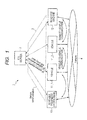
- FIG. 1 is a block diagram illustrating one configuration example of the communication system 1 according to an embodiment 1.
- the plurality of communication devices 11-1, 11-2, 12 and 13 that participate in a network service are coupled together such that mutual communication is possible over the network 4.
- Each of the plurality of communication devices 11-1, 11-2, 12 and 13 is coupled with the ITS server 2 via the secure communication path (the secure environment) 3.
- the communication system 1 embodies a case where the communication system 1 has been applied to the intelligent transport system (ITS), 11-1 and 11-2 each denotes the communication device to be loaded on the vehicle and correspond to an on-vehicle communication machine (or an on-vehicle communication equipment), 12 denotes the communication device to be loaded on the roadside machine and correspond to a roadside communication machine (or a roadside communication equipment), and 13 denotes the communication device to be loaded on the portable electronic equipment that the pedestrian or another person carries with him/her.
- ITS intelligent transport system
- 11-1 and 11-2 each denotes the communication device to be loaded on the vehicle and correspond to an on-vehicle communication machine (or an on-vehicle communication equipment)
- 12 denotes the communication device to be loaded on the roadside machine and correspond to a roadside communication machine (or a roadside communication equipment)
- 13 denotes the communication device to be loaded on the portable electronic equipment that the pedestrian or another person carries with him/her.
- the secure communication path 3 may be any of a mobile phone network such as, for example, a 3G network and so forth, a public wireless LAN network and a secure communication network that the ITS server 2 is coupled to the same network 4, communication is established on the network 4 via a roadside machine 12 and the safety is maintained by using a certificate and so forth.
- the plurality of communication devices 11-1, 11-2, 12 and 13 perform vehicle-to-vehicle and road-to-vehicle communications by using the IP addresses 30 that have been allocated from the ITS server 2.
- 10 is used when indicating the communication device in general and 11 to 15 and so forth are used when distinguishing the communication devices from one another depending on the individual device on which the communication device concerned is to be loaded.
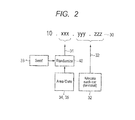
- FIG. 2 is an explanatory diagram illustrating one generation example of an IP address (IPv4) used in the communication system 1.
- IPv4 IP address
- the address of the class A that is the largest in the number of addresses to be allocated in private addresses of the IPv4 type is given by way of example, an address of another class may be adopted.
- the address of another class it is possible to implement use of the address of another class, for example, by devising so as to fix each 8-bit value per area.
- the first 8 bits are fixed as a network address and 8 bits in 24 bits of a host address are fixed as the peculiar address 31 (the pseudorandom number) so as to indicate information generated from the area information 34 and the date-time (the time information) 35.
- Low-order 16 bits are fixed as the individual address (the identifier) 32 to be allocated to the vehicle, the roadside machine and so forth.
- the ITS server 2 is requested authentication from the plurality of communication devices 11-1, 11-2, 12 and 13 via the secure communication path 3 ("IP address request" in FIG. 1 ).
- the ITS server 2 issues the random seeds (key seeds) 33 and the individual identifiers 32 to the communication devices concerned ("IP address response" in FIG. 1 ).
- the random seed 33 is a seed for generating the later described pseudorandom number 31 and the random seeds 33 of the same value are issued to the communication devices that configure the same vehicle-to-vehicle and road-to-vehicle communication network.
- the random seeds 33 of the same value are used to generate the peculiar addresses 31 of the same value as described later.
- the "peculiar" addresses means addresses of the values that are the same as one another in the same network over which the vehicle-to-vehicle and road-to-vehicle communications are permitted and are different from the value of the address used in another network over which communication is not permitted.
- the peculiar address 31 is generated by a randomize circuit 40 on the basis of the issued random seed 33, the area information 34 and the date-time (the time information) 35. In a case where the same random seed 33, the same area 34 and the same time 35 are obtained, the peculiar addresses 31 have the values that are the same as one another.
- the individual identifier 32 is the individual address 32 to which the value that is made individually different from other values been allocated in order to distinguish the plurality of communication devices that participate in the vehicle-to-vehicle and road-to-vehicle communication network from one another.
- FIG. 3 is an explanatory diagram illustrating one generation example of the peculiar address 31.
- the area information 34, the time information 35 and the random seed 33 are compressed as one piece of information with the irreversible compressibility function 41.
- any order causes no disadvantage as long as the order is shared among the entities that enter the system and, likewise, use of respective pieces of information in a mixed-up state causes no disadvantage.
- the irreversible compressibility function 41 is configured by using, for example, a HASH function though not particularly limited.
- a pseudorandom number generation circuit 42 generates the random number by using the value generated with the irreversible compressibility function 41 as the seed. The random number so generated is used as the peculiar address 31. It is desirable to share also the irreversible compressibility function and a randomization method among the entities that enter the system.
- the area information 34, the time information 35 and the random seed 33 are shared among the entities (the communication devices), it will become possible to share the address information 31 that is made peculiar commonly in the same system such as the same network and so forth over which the vehicle-to-vehicle and road-to-vehicle communications are permitted when pieces of the area information 34 mutually match and also pieces of the time information 35 mutually match in a state where the random seed 33 is shared among the entities (the communication devices). Accordingly, it becomes possible to confirm whether the entities are the authentic entities (the authentic communication devices) by confirming the peculiar portion (address) 31 in each IP address 30 and it becomes possible to implement a high-speed and light-weighted firewall system.
- the communication system according to the present embodiment is configured such that, in the many and unspecific entities, the entity that is present together with the entity concerned itself in the same area at the same time has the peculiar address 31 of the same value as the peculiar address 31 that the entity concerned itself has. Therefore, it is possible to light-weight the authentication by performing the IP address filtering targeting on that peculiar address 31 and, as a result, it is possible to attain rapidity that does not impair the real time property.
- FIG. 4 is a block diagram illustrating one configuration example of the communication device 11 to be loaded on a vehicle 20.
- the vehicle 20 includes an antenna 21 and a control unit 24 to which a radio frequency module (RF module) 22, a GPS receiver 23 and a secure unit 25 are coupled as the communication device 11.
- RF module radio frequency module
- the RF module 22 receives information sent from other communication devices (another vehicle 11, the roadside machine 12 and so forth) and the ITS server 2 and sends the received information to the control unit 24.
- a process of demodulating a RF (radio frequency) signal may be performed in any of the RF module 22 and the control unit 24. It is also possible to perform this process in another unit as a matter of course.
- the GPS receiver 23 sends the time information 35 and the position (area) information 34 to the control unit 24 on the basis of information acquired from a satellite. In this occasion, the information acquired from the satellite may be decoded in the GPS receiver 23 and/or may be decoded by the control unit 24.
- the secure unit 25 includes a function of generating the random number used to generate the IP address 30, a function of calculating the irreversible compressibility function 41 and a pseudorandom generation function. Although the secure unit 25 may function in the control unit 24, the secure unit 25 is illustrated as a separate unit for the convenience of description in the example in FIG. 4 . It is possible to implement the constitutional elements 22 to 25 as a single device and/or in the form that some of them are combined together when these elements 22 to 25 have the same function.
- the value of the peculiar address 31 in the IP address 30 is preferable to configure the value of the peculiar address 31 in the IP address 30 so as to be regularly and/or periodically changed.
- Regular and/or periodic change of the peculiar address 31 serves as a countermeasure against a so-called spoofing attack that an attacker illegally acquires the authentic IP address by tapping the authentic communication and so forth and performs communication by using the illegally acquired IP address.
- the frequency at which the address is changed it is desirable to change the address at time intervals of about five seconds when estimating from the time taken for attacking. It goes without saying that the higher the frequency is, the more the security is improved when it is allowed to increase the load on the system.
- FIG. 5 is an explanatory diagram illustrating one example of periodic updating of the peculiar address 31.
- "Area/Date portion” that is the peculiar address 31 and the individual address (identifier) 32 that is the allocated address are indicated at certain time intervals.
- the area information 34 is indicated as “area1”
- the time information 35 is indicated as “t1”
- the random number 33 issued from the ITS server 2 is indicated as “seed”.
- a pseudorandom number "rand(HASH)(area1,t1,seed))” is generated by using a value "HASH (area1, t1, seed) " obtained by performing irreversible compression on the area information 34, the time information 35 and the random number 33 with the HASH function as the seed and is set as the peculiar address 31.
- the individual address 31 allocated from the ITS server 2 is "189.076".
- the time information 35 is changed to "t2” and the value of the peculiar address 31 is changed to "rand(HASH(area1,t2,seed))" accordingly, the individual address 32 is still “189.076” with no change.
- the time information 35 is changed to "tx” and the value of the peculiar address 31 is changed to "rand (HASH (area1, tx, seed)) " accordingly, the address 32 is still “189.076" with no change.
- FIG. 6 is an explanatory diagram illustrating one example of resistance to spoofing in the communication system 1.
- Communication among the ITS server 2, vehicles 15-1 and 15-2 that are the authentic communication devices and a communication device 16 that is the attacker is schematically illustrated on the assumption that the time passes downward in the drawing.
- the authentic vehicles 15-1 and 15-2 are authenticated by the ITS server 2 as respectively illustrated by dashed arrows and generate and hold their IP addresses 30.
- the IP address 30 of the authentic vehicle 15-1 at the time t1 is "10. rand (..., t1, ...) .189. 076" and the authentic vehicles 15-1 and 15-2 perform vehicle-to-vehicle communication by using this IP address 30.
- the attacker 16 taps the vehicle-to-vehicle communication and illegally acquires the IP address 30 "10. rand (..., t1, ...) .189.076".
- the attacker 16 spoofs as the authentic vehicle 15-1 at the later time t2 by using the illegally acquired IP address 30 "10. rand (... , t1, ), 189.076" and tries to perform the vehicle-to-vehicle communication with the vehicle 15-2. This is spoofed vehicle-to-vehicle communication.
- the IP address 30 of the vehicle 15-1 has already been changed to "10. rand (..., t2 , . 189.076".
- FIG. 6 illustrates an example that the time information 35 is given from the ITS server 2 to the vehicle concerned, as described with reference to FIG. 4 , each of the vehicles 15-1 and 15-2 may regenerate the peculiar address 31 on the basis of the time information 35 given from the GPS receiver 23 that the vehicle 20 itself includes and then may update the IP address 30.
- the vehicle 15-2 may authenticate the communication device that has the same peculiar address as the vehicle 15-2 itself and may communicate with that communication device. Since in the spoofed vehicle-to-vehicle communication using the IP address 30 "10. rand (... , t1, . 189.076" that has been illegally acquired at the older time, the value of the portion corresponding to the peculiar address 31 is different from that in the newly acquired IP address 30, the spoofed communication is excluded as unauthorized access.
- IP address changing period depending on the system. It goes without saying that the shorter the changing period is, the more the security is improved. However, the higher the IP address changing frequency is, the more the load on the system is increased. When actually making use of the system, it is desirable to set the changing period of the IP address 30 to about one second to about ten seconds. On the other hand, when the operation of the vehicles is considered, address changing in starting the engine and so forth may be adopted.
- FIG. 7 is a flow chart illustrating one example of a flow of generating a local IP address.
- a replacement method for information pertaining to generation of the address 31 to be made peculiar is schematically illustrated on the assumption that time passes downward in the drawing.
- the value to be used as the pseudorandom seed for generating the peculiar address 31 is generated in advance (S1).
- communication devices 10-1 and 10-2 such as the vehicles and so forth are powered on as occasion calls (S2 and S3).
- the ITS server 2 operates 24 hours a day in many cases and hence at least there is no such a situation that the ITS server 2 is started in linkage with power-on of the vehicles. Therefore, the value to be used as the pseudorandom seed is generated in advance.
- the communication devices 10-1 and 10-2 such as, for example, the vehicles (the roadside machines) and so forth and the ITS server 2 perform authentication of each of the communication devices 10-1 and 10-2 from both of the ITS server 2 side and the communication device side or from the ITS server 2 side, by a general authentication method using the certificate and so forth (S4 and S5) .
- Safety communication is performed by using session keys and so forth to be exchanged in authentication.
- "IP Address Request" S6 and S7 is performed under the secure communication environment 3 that has been established by this authentication. Since the vehicles 10-1 and 10-2 are authenticated vehicles, the ITS server 2 immediately sends "IP Address Response" to the vehicles 10-1 and 10-2 (S8 and S9).
- FIG. 8 is an explanatory diagram illustrating one configuration example of a communication packet used in "IP Address Response" (S8 and S9).
- This message includes header information 36, the random seed portion 33 and the individual address portion 32 that has been allocated to each communication device.
- the header information 36 is a header that is defined by a communication protocol under the secure communication environment 3. Since it is possible to adopt various well-known communication protocols under the secure communication environment 3 as mentioned above, detailed description thereof is omitted.
- Each of the vehicles 10-1 and 10-2 extracts a pseudorandom seed portion from the received IP address response (S8 and S9) and generates the peculiar address portion 31 (S10 and S11). In addition, each vehicle combines the remaining IP address portion 32 that has been allocated from the ITS server 2 with the peculiar address portion 31 to generate its own local IP address 30.
- the vehicle 10-1 When performing the vehicle-to-vehicle or road-to-vehicle communication is to be performed, the vehicle 10-1 generates a message that includes the local IP address 30 (S12) and sends the generated message to the mate side 10-2 (S13).
- the message may be sent by specifying the mate and/or may be sent to a plurality of mates by broadcasting. In the example in FIG. 7 , the message is sent by broadcasting (S13).
- the vehicle or roadside machine 10-2 that has received the message performs verification of the IP address 30 (S14) and confirms whether the peculiar address 31 in the message matches the peculiar address 31 that the vehicle or roadside machine 10-2 itself generates.
- the vehicle or roadside machine 10-2 regards the mate as the authentic mate, performs processing of the message portion (S15) and responds to the message as necessary (S17).
- the vehicle or roadside machine (the communication device) 10-2 decides that the message is illegal and discards the message (S16).
- the message has been decided to be illegal a notification that the message is illegal may be made to the mate from which the message has been sent, in place of discard of the message (S16).
- FIG. 9 is an explanatory diagram illustrating one example of an operation of IP address filtering.
- an address 31-Tx to be made peculiar is extracted from the IP address 30 of the source that is appended to the received message and whether the address 31-Tx matches a peculiar address 31-Rx that the communication device 10-2 itself generates is confirmed.
- the packet that is to be transmitted in "Broadcasting" (S13) illustrated in FIG. 7 is illustrated.
- the packet is configured by a header 37, the IP address 30 of the source, a message 38 and parity 39.
- the IP address 30 of the source includes the peculiar address 31-Tx.
- the communication device 10-2 that has received the packet extracts the peculiar address 31-Tx from the packet and compares the peculiar address 31-Tx with the peculiar address 31-Rx that the communication device 10-2 itself generates.
- the process may be immediately shifted to dishonest act processing (S15), before deciding to be illegal, a method of performing verification by comparing the address 31-Tx with each of peculiar addresses that haven been generated by delaying and advancing the time, and discarding the message when the addresses still do not mutually match may be adopted, considering out-of-synchronization of times. That is, a peculiar address 31-Rx (-1) is generated by putting the value of the time back to the value obtained before the latest updating and is compared with the received peculiar address 31-Tx (S18).
- a peculiar address 31-Rx (+1) is generated by increasing the value of the time to the next updated value and is compared with the received peculiar address 31-Tx (S19).
- the process is shifted to the dishonest act processing (S15). It becomes possible to safely share the seed portion 31 to be made peculiar in the IP address 30 by following such procedures even in a case where out-of-synchronization of times occurs between the communication devices.
- FIG. 10 is a schematic diagram illustrating one application example of the communication system 1 to the intelligent transport system (ITS).
- the vehicle 11 and the roadside machine 12 have been mainly described as the communication device 10 and the vehicle-to-vehicle and road-to-vehicle communications have been mainly described as the communication between the communication devices, the communication device 10 may be further included in various forms and the communication between the communication devices may be also further included in various forms even just limited to the intelligent transport system (ITS).
- ITS intelligent transport system
- various vehicles such as, for example, normally running vehicles 11-1 to 11-3, vehicles 11-4 to 11-9 that have gotten caught in traffic, a broken-down vehicle 11-10, an emergency vehicle 11-11 and so forth are included, and as the roadside machines, a signal 12-1, a traffic sign 12-2, a traffic condition monitor 12-3 and so forth are included.
- portable equipment 13-1 such as, for example, a smartphone and so forth that the pedestrian carries with him/her, portable equipment 13-2 that is attached to a bicycle or is carried by a driver, a weather monitor 14-1 that collects and notifies weather information, a traffic control support device 14-2 that transmits information on road works and so forth may be included.
- the ITS server 2 may be also configured to directly participate in the same network 4 and/or may be installed as one kind of the roadside machine to be used as a base station for authentication.
- an IPv6-type IP address may be configured similarly to the IPv4-type IP address.
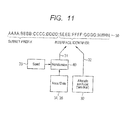
- FIG. 11 is an explanatory diagram illustrating one generation example of the IP address (IPv6) in the communication system.
- IPv6 IP address is configured by eight blocks in units of 16 bits and it is possible to use an optional value for a 64-bit interface identifier as defined in RFC4193.
- the peculiar address 31 and the individual address 32 are allocated as in the case in FIG. 2 . That is, the peculiar address 31 is generated from the issued random seed 33, the area information 34 and the date-time information 35 by the randomize circuit 40, and each value that is made individually different from other values is allocated to each individual address 32 in order to distinguish the plurality of communication devices that participate in the vehicle-to-vehicle and road-to-vehicle communication network from one another.
- the degree of freedom of bits is high, it is also possible to change the positions of bits into which the peculiar address 31 is to be put and it is also possible to change a length of bits to be made peculiar.
- the longer the length of peculiar bits becomes the more the number of objects to which the individual addresses 32 are allocated is reduced, it is unavoidable to take care. It is desirable to set the length of bits to be allocated as the individual address 32 to about 16 or more bits.
- ITS intelligent transport system
Landscapes
- Engineering & Computer Science (AREA)
- Computer Networks & Wireless Communication (AREA)
- Signal Processing (AREA)
- Computer Security & Cryptography (AREA)
- Computing Systems (AREA)
- General Engineering & Computer Science (AREA)
- Computer Hardware Design (AREA)
- Business, Economics & Management (AREA)
- Accounting & Taxation (AREA)
- Medical Informatics (AREA)
- General Health & Medical Sciences (AREA)
- Health & Medical Sciences (AREA)
- Mobile Radio Communication Systems (AREA)
- Traffic Control Systems (AREA)
- Small-Scale Networks (AREA)
Abstract
Description
- The disclosure of Japanese Patent Application No.
2014-173790 filed on August 28, 2014 - The present invention relates to a communication system, a communication device, a vehicle and a communication method and, in particualr, relates to the communication system, the communication device, the vehicle and the communication method that are favorably utilized in an on-vehicle communication machine (or an on-vehicle communication equipment), a vehicle that loads the on-vehicle communication machine (or the on-vehicle communication equipment) thereon, a roadside communication machine (or a roadside communication equipment) and so forth that configure an intelligent transport system (ITS).
- As a network of vehicles evolves, it becomes unavoidable to connect each vehicle with the outside over a network. Various applications of the network of vehicles are examined and a range of applications of the network of vehicles covers various fields. Therefore, it becomes an important task to prevent illegal access at a gateway that serves as an inlet into a communication path. Therefore, the security of a level that is as high as that of a firewall system and so forth of the type that is performed in a personal computer (PC), related-art IT (Information Technology) system and so forth over Internet is demanded.
- In Japanese Unexamined Patent Application Publication No.
2011-229184 - In Japanese Unexamined Patent Publication No.
2002-176444 - As a result of examination that the inventors and others of the present invention have made on the technologies disclosed in Japanese Unexamined Patent Publication Nos.
2011-229184 2002-176444 - It was found that it is difficult to implement the security function of the same level as that of the PC by using a function of MCU (Micro Controller Unit) that is loaded on the vehicle and the roadside machine that are terminals of the vehicle network. That is, in a vehicle-to-vehicle and/or road-to-vehicle communication system in the motorized society, resource and machine power of an LSI (Large Scale Integrated circuit) that performs communication processing have limitations, and it was found that it is difficult to introduce the firewall system of the type that is performed in the related-art IT system for the purpose of ensuring security. In addition, since the real time property is asked for in regard to fatal and important applications such as, for example, a brake, a steering and so forth, a communication error and a method of using considerably heavy (complicated and time-consuming) calculations may lead to occurrence of a fatal traffic accident.
- The technology described in Japanese Unexamined Patent Publication No.
2011-229184 - According to the technology described in Japanese Unexamined Patent Publication No.
2002-176444 - As described above, in order to ensure the security in network communication between the vehicles, provision of a high-speed and light-weighted authentication system that does not impair the real time property becomes unavoidable.
- Although ways of eliminating such disadvantages as mentioned above will be described in the following, other subjects and novel features will become apparent from description of the present specification and the appended drawings.
- According to one embodiment, there is provided a communication system as follows.
- That is, according to one embodiment, there is provided the communication system that a plurality of communication devices are coupled together such that mutual communication is possible over a network. The communication system is configured as follows. Communication of the plurality of communication devices with a server is possible under a secure environment, and when authentication is to be given from the server under the secure environment, random seeds of the same value and individual identifiers are issued from the server to the plurality of communication devices. Each of the plurality of communication devices generates an IP address that includes a pseudorandom number generated by using a value generated from area information that the communication device itself possesses and the issued random seed as a seed and the individual identifier that has been issued to the communication device itself. The plurality of communication devices establish communication between the communication devices that include the pseudorandom numbers that are mutually the same in their IP addresses.
- Advantageous effects obtained by the one embodiment will be briefly described as follows.
- That is, even on a network that many and unspecific entities (communication devices) are present, it becomes possible to perform IP address filtering and it is possible to provide the high-speed and light-weighted authentication system that does not impair the real time property.
-
-
FIG. 1 is a block diagram illustrating one configuration example of a communication system. -
FIG. 2 is an explanatory diagram illustrating one generation example of an IP address (IPv4) in the communication system. -
FIG. 3 is an explanatory diagram illustrating one generation example of a peculiar address. -
FIG. 4 is an explanatory diagram illustrating one configuration example of a communication device to be loaded on a vehicle. -
FIG. 5 is an explanatory diagram illustrating one example of periodic updating of the peculiar address. -
FIG. 6 is an explanatory diagram illustrating one example of resistance to spoofing. -
FIG. 7 is a flow chart illustrating one example of a flow of generating a local IP address. -
FIGS. 8 is an explanatory diagram illustrating one configuration example of a communication packet for IP address response. -
FIGS. 9 is an explanatory diagram illustrating one example of an operation of IP address filtering. -
FIG. 10 is a schematic diagram illustrating one application example of the communication system to the intelligent transport system (ITS). -
FIG. 11 is an explanatory diagram illustrating one generation example of an IP address (IPv6) in the communication system. - First, typical embodiments disclosed in the present application will be briefly described. In brief description on the typical embodiments, a reference numeral referred to in the drawings by being put into parentheses simply illustrates the one included in the concept of a constitutional element to which the reference numerals has been assigned.
- One typical embodiment disclosed in the present application pertains to a
communication system 1 that a plurality ofcommunication devices network 4 and each of the plurality of communication devices is coupled with aserver 2 such that communication with theserver 2 is possible. Thecommunication system 1 is configured as follows. - When the
server 2 has been requested authentication from the plurality ofcommunication devices secure environment 3 and has authenticated the plurality ofcommunication devices server 2 issuesrandom seeds 33 of the same value andindividual identifiers 32 to the plurality ofcommunication devices communication devices own area information 34 and includes anIP address 30 that includes apseudorandom number 31 that has been generated by using thearea information 34 and the issuedrandom seed 33 as seeds and theidentifier 32 that has been issued to the communication device itself. The plurality ofcommunication devices pseudorandom numbers 31 that are mutually the same in theirIP addresses 30. - Thereby, it becomes possible to perform filtering of the IP address even on a network that many and unspecific entities (the communication devices) are present and it is possible to provide the high-speed and light-weighted authentication system that does not impair the real time property.
- In the
item 1, each of the plurality ofcommunication devices time information 35 and thepseudorandom number 31 is generated by using a value that has been generated with anirreversible compressibility function 41 on the basis of thearea information 34, thetime information 35 and therandom seed 33 as a seed. - Thereby, it is possible to perform more accurate and flexible IP address filtering and it is possible to provide the high-speed and light-weighted authentication system that does not impair the real time property.
- In the
item 2, each of the plurality ofcommunication devices GPS reception unit 23 and theGPS reception unit 23 generates thearea information 34 and thetime information 35. - Thereby, it is possible to share the
accurate area information 34 andtime information 35 among the plurality ofcommunication devices - In any one of the
items 1 to 3, theserver 2 periodically reissuesrandom seeds 33 of values that are different from those of the already issued random seeds and are the same as one another to the plurality ofcommunication devices IP address 30 on the basis of the reissuedrandom seed 33. - Thereby, it is possible to enhance the security to spoofing.
- In any one of the
items 1 to 4, the plurality of communication devices include communication devices 11-1 and 11-2 to be loaded on vehicles and thecommunication device 12 to be loaded on a roadside machine. - Thereby, it is possible to implement the intelligent transport system (ITS) that includes the high-speed and light-weighted authentication system that does not impair the real time property.
- In the
item 5, the plurality of communication devices include thecommunication device 13 to be loaded on portable electronic equipment that a pedestrian carries with him/her and/or thecommunication device 14 to be loaded on a bicycle. - Thereby, it is possible to implement the intelligent transport system (ITS) in which the pedestrian and the bicycle participate.
- Another typical embodiment disclosed in the present application pertains to each of the
communication devices server 2 is possible and communication withother communication devices network 4. Each of thecommunication devices - Each of the
communication devices IP address 30 that includes thepseudorandom number 31 that has been generated by using the value generated with theirreversible compressibility function 41 on the basis of thearea information 34 and therandom seed 33 that has been issued from theserver 2 under thesecure environment 3, andauthenticates another communication device that includes theIP address 30 that includes the same pseudorandom number as itsown IP address 30 as a communication object. - Thereby, it becomes possible to perform IP address filtering even on the network that many and unspecific entities (the communication devices) are present, and it is possible to provide the communication device that includes the high-speed and light-weighted authentication system that does impair the real time property.
- In the
item 7, each communication device further includes thetime information 35 and thepseudorandom number 31 is generated by using the value generated with theirreversible compressibility function 41 on the basis of thearea information 34, thetime information 35 and therandom seed 33 as the seed. - Thereby, it is possible to perform more accurate and flexible IP address filtering.
- In the item 8, the communication device includes the
GPS reception unit 23 and theGPS reception unit 23 generates thearea information 34 and thetime information 35. - Thereby, it is possible to share the
accurate area information 34 andtime information 35 among the plurality ofcommunication devices - In any one of the
items 7 to 9, therandom seed 33 is periodically reissued from theserver 2 and each communication device updates itsown IP address 30 on the basis of the reissuedrandom seed 33. - Thereby, it is possible to enhance the security to spoofing.
- In any one of the
items 7 to 10, each communication device is formed on a single semiconductor substrate. - Thereby, it is possible to implement the LSI having a high-speed and light-weighted authentication function that does not impair the real time property.
- The communication device described in any one of the
items 7 to 10 is loaded on the vehicle. - Further another typical embodiment disclosed in the present application pertains to a communication method in the
communication system 1 that the plurality ofcommunication devices network 4 and each of the plurality ofcommunication devices server 2 such that communication with theserver 2 is possible. The communication method is configured by including respective steps as follows. - The communication method includes the first step (S8 and S9) that when the
server 2 has been requested authentication under thesecure environment 3 from the plurality ofcommunication devices communication devices server 2 issues therandom seeds 33 of the same value and theindividual identifiers 32 to the plurality ofcommunication devices communication devices own area information 34 and generates theIP address 30 that includes thepseudorandom number 31 generated by using thearea information 34 and the issuedrandom seed 33 as the seeds and theidentifier 32 issued to the communication device itself, and the third step (S12 to S17) that the plurality ofcommunication devices pseudorandom numbers 31 that are mutually the same in their IP addresses 30. - Thereby, it becomes possible to perform IP address filtering even on the network that many and unspecific entities (the communication devices) are present, and it is possible to provide the high-speed and light-weighted authentication system that does not impair the real time property.
- In the
item 13, each of the plurality ofcommunication devices time information 35, and in the second step, thepseudorandom number 31 is generated by using the value generated with theirreversible compressibility function 41 on the basis of thearea information 34, thetime information 35 and therandom seed 33 as the seed. - Thereby, it is possible to perform more accurate and flexible IP address filtering and it is possible to provide the high-speed and light-weighted authentication system that does not impair the real time property.
- In the
item 14, each of the plurality ofcommunication devices GPS reception unit 23 and theGPS reception unit 23 generates thearea information 34 and thetime information 35. - Thereby, it is possible to share the
accurate area information 34 andtime information 35 among the plurality ofcommunication devices - In any one of the
items 13 to 15, theserver 2 periodically reissues newrandom seeds 33 of values that are different from those of the already issued random seeds and are the same as one another to the plurality ofcommunication devices communication device own IP address 30 on the basis of the reissuedrandom seed 33. - Thereby, it is possible to enhance the security to spoofing.
- In any one of the
items 13 to 16, the plurality of communication devices include the communication devices 11-1 and 11-2 to be loaded on the vehicles and thecommunication device 12 to be loaded on the roadside machine. - Thereby, it is possible to implement the intelligent transport system (ITS) that includes the high-speed and light-weighted authentication system that does not impair the real time property.
- In the item 17, the plurality of communication devices include the
communication device 13 to be loaded on the portable electronic equipment that the pedestrian carries with him/her and/or thecommunication device 14 to be loaded on the bicycle. - Thereby, it is possible to implement the intelligent transport system (ITS) in which the pedestrian and the bicycle participate.
- Preferred embodiments of the present invention will be described in more detail.
-
FIG. 1 is a block diagram illustrating one configuration example of thecommunication system 1 according to anembodiment 1. The plurality of communication devices 11-1, 11-2, 12 and 13 that participate in a network service are coupled together such that mutual communication is possible over thenetwork 4. Each of the plurality of communication devices 11-1, 11-2, 12 and 13 is coupled with the ITSserver 2 via the secure communication path (the secure environment) 3. Thecommunication system 1 illustrated inFIG. 1 embodies a case where thecommunication system 1 has been applied to the intelligent transport system (ITS), 11-1 and 11-2 each denotes the communication device to be loaded on the vehicle and correspond to an on-vehicle communication machine (or an on-vehicle communication equipment), 12 denotes the communication device to be loaded on the roadside machine and correspond to a roadside communication machine (or a roadside communication equipment), and 13 denotes the communication device to be loaded on the portable electronic equipment that the pedestrian or another person carries with him/her. There is no limitation on the number of the communication devices that participate in the network service and the kind of the device to which the communication device is to be loaded. Thesecure communication path 3 may be any of a mobile phone network such as, for example, a 3G network and so forth, a public wireless LAN network and a secure communication network that the ITSserver 2 is coupled to thesame network 4, communication is established on thenetwork 4 via aroadside machine 12 and the safety is maintained by using a certificate and so forth. The plurality of communication devices 11-1, 11-2, 12 and 13 perform vehicle-to-vehicle and road-to-vehicle communications by using the IP addresses 30 that have been allocated from the ITSserver 2. Incidentally, in the specification, 10 is used when indicating the communication device in general and 11 to 15 and so forth are used when distinguishing the communication devices from one another depending on the individual device on which the communication device concerned is to be loaded. -
FIG. 2 is an explanatory diagram illustrating one generation example of an IP address (IPv4) used in thecommunication system 1. Although the address of the class A that is the largest in the number of addresses to be allocated in private addresses of the IPv4 type is given by way of example, an address of another class may be adopted. In a case where the address of another class is to be used, it is possible to implement use of the address of another class, for example, by devising so as to fix each 8-bit value per area. The first 8 bits are fixed as a network address and 8 bits in 24 bits of a host address are fixed as the peculiar address 31 (the pseudorandom number) so as to indicate information generated from thearea information 34 and the date-time (the time information) 35. Low-order 16 bits are fixed as the individual address (the identifier) 32 to be allocated to the vehicle, the roadside machine and so forth. - The ITS
server 2 is requested authentication from the plurality of communication devices 11-1, 11-2, 12 and 13 via the secure communication path 3 ("IP address request" inFIG. 1 ). When the ITSserver 2 has authenticated the communication devices 11-1, 11-2, 12 and 13 as authentic communication devices, the ITSserver 2 issues the random seeds (key seeds) 33 and theindividual identifiers 32 to the communication devices concerned ("IP address response" inFIG. 1 ). Therandom seed 33 is a seed for generating the later describedpseudorandom number 31 and therandom seeds 33 of the same value are issued to the communication devices that configure the same vehicle-to-vehicle and road-to-vehicle communication network. Therandom seeds 33 of the same value are used to generate thepeculiar addresses 31 of the same value as described later. Here, the "peculiar" addresses means addresses of the values that are the same as one another in the same network over which the vehicle-to-vehicle and road-to-vehicle communications are permitted and are different from the value of the address used in another network over which communication is not permitted. Thepeculiar address 31 is generated by arandomize circuit 40 on the basis of the issuedrandom seed 33, thearea information 34 and the date-time (the time information) 35. In a case where the samerandom seed 33, thesame area 34 and thesame time 35 are obtained, thepeculiar addresses 31 have the values that are the same as one another. On the other hand, theindividual identifier 32 is theindividual address 32 to which the value that is made individually different from other values been allocated in order to distinguish the plurality of communication devices that participate in the vehicle-to-vehicle and road-to-vehicle communication network from one another. -
FIG. 3 is an explanatory diagram illustrating one generation example of thepeculiar address 31. In order to generate thepeculiar address 31, thearea information 34, thetime information 35 and therandom seed 33 are compressed as one piece of information with theirreversible compressibility function 41. In this occasion, as for the order of thearea information 34, thetime information 35 and therandom seed 33 to be compressed, any order causes no disadvantage as long as the order is shared among the entities that enter the system and, likewise, use of respective pieces of information in a mixed-up state causes no disadvantage. Theirreversible compressibility function 41 is configured by using, for example, a HASH function though not particularly limited. A pseudorandomnumber generation circuit 42 generates the random number by using the value generated with theirreversible compressibility function 41 as the seed. The random number so generated is used as thepeculiar address 31. It is desirable to share also the irreversible compressibility function and a randomization method among the entities that enter the system. - If the
area information 34, thetime information 35 and therandom seed 33 are shared among the entities (the communication devices), it will become possible to share theaddress information 31 that is made peculiar commonly in the same system such as the same network and so forth over which the vehicle-to-vehicle and road-to-vehicle communications are permitted when pieces of thearea information 34 mutually match and also pieces of thetime information 35 mutually match in a state where therandom seed 33 is shared among the entities (the communication devices). Accordingly, it becomes possible to confirm whether the entities are the authentic entities (the authentic communication devices) by confirming the peculiar portion (address) 31 in eachIP address 30 and it becomes possible to implement a high-speed and light-weighted firewall system. - Thereby, it becomes possible to perform IP address filtering even on the network that many and unspecific entities (the communication devices) are present and it is possible to provide the high-speed and light-weighted authentication system that does not impair the real time property. On the ITS network, there exist many and unspecific entities to be authenticated to participate in the network when the entities happen to be present in the area concerned at the time concerned. The reason lies in the fact that, for example, when a certain auto manufacturer provides the network service to the users of the vehicles manufactured by that auto manufacturer, all vehicles that the auto manufacturer ships are authenticated as the authentic entities. In the vehicle-to-vehicle communication, in reality, it is considerably difficult to execute authentication that collation with a list that includes all of the entities is performed. The communication system according to the present embodiment is configured such that, in the many and unspecific entities, the entity that is present together with the entity concerned itself in the same area at the same time has the
peculiar address 31 of the same value as thepeculiar address 31 that the entity concerned itself has. Therefore, it is possible to light-weight the authentication by performing the IP address filtering targeting on thatpeculiar address 31 and, as a result, it is possible to attain rapidity that does not impair the real time property. -
FIG. 4 is a block diagram illustrating one configuration example of thecommunication device 11 to be loaded on avehicle 20. Thevehicle 20 includes anantenna 21 and acontrol unit 24 to which a radio frequency module (RF module) 22, aGPS receiver 23 and asecure unit 25 are coupled as thecommunication device 11. - The
RF module 22 receives information sent from other communication devices (anothervehicle 11, theroadside machine 12 and so forth) and the ITSserver 2 and sends the received information to thecontrol unit 24. A process of demodulating a RF (radio frequency) signal may be performed in any of theRF module 22 and thecontrol unit 24. It is also possible to perform this process in another unit as a matter of course. TheGPS receiver 23 sends thetime information 35 and the position (area)information 34 to thecontrol unit 24 on the basis of information acquired from a satellite. In this occasion, the information acquired from the satellite may be decoded in theGPS receiver 23 and/or may be decoded by thecontrol unit 24. Although an example that the GPS function is utilized in acquisition of thetime information 35 is illustrated, thetime information 35 may be acquired over thenetwork 4. Thesecure unit 25 includes a function of generating the random number used to generate theIP address 30, a function of calculating theirreversible compressibility function 41 and a pseudorandom generation function. Although thesecure unit 25 may function in thecontrol unit 24, thesecure unit 25 is illustrated as a separate unit for the convenience of description in the example inFIG. 4 . It is possible to implement theconstitutional elements 22 to 25 as a single device and/or in the form that some of them are combined together when theseelements 22 to 25 have the same function. - It is preferable to configure the value of the
peculiar address 31 in theIP address 30 so as to be regularly and/or periodically changed. Regular and/or periodic change of thepeculiar address 31 serves as a countermeasure against a so-called spoofing attack that an attacker illegally acquires the authentic IP address by tapping the authentic communication and so forth and performs communication by using the illegally acquired IP address. In regard to the frequency at which the address is changed, it is desirable to change the address at time intervals of about five seconds when estimating from the time taken for attacking. It goes without saying that the higher the frequency is, the more the security is improved when it is allowed to increase the load on the system. -
FIG. 5 is an explanatory diagram illustrating one example of periodic updating of thepeculiar address 31. "Area/Date portion" that is thepeculiar address 31 and the individual address (identifier) 32 that is the allocated address are indicated at certain time intervals. At a time t1, thearea information 34 is indicated as "area1", thetime information 35 is indicated as "t1" and therandom number 33 issued from the ITSserver 2 is indicated as "seed". A pseudorandom number "rand(HASH)(area1,t1,seed))" is generated by using a value "HASH (area1, t1, seed) " obtained by performing irreversible compression on thearea information 34, thetime information 35 and therandom number 33 with the HASH function as the seed and is set as thepeculiar address 31. At this time, theindividual address 31 allocated from the ITSserver 2 is "189.076". At a time t2, although thetime information 35 is changed to "t2" and the value of thepeculiar address 31 is changed to "rand(HASH(area1,t2,seed))" accordingly, theindividual address 32 is still "189.076" with no change. Then, at a time tx, although thetime information 35 is changed to "tx" and the value of thepeculiar address 31 is changed to "rand (HASH (area1, tx, seed)) " accordingly, theaddress 32 is still "189.076" with no change. -
FIG. 6 is an explanatory diagram illustrating one example of resistance to spoofing in thecommunication system 1. Communication among the ITSserver 2, vehicles 15-1 and 15-2 that are the authentic communication devices and acommunication device 16 that is the attacker is schematically illustrated on the assumption that the time passes downward in the drawing. The authentic vehicles 15-1 and 15-2 are authenticated by the ITSserver 2 as respectively illustrated by dashed arrows and generate and hold their IP addresses 30. TheIP address 30 of the authentic vehicle 15-1 at the time t1 is "10. rand (..., t1, ...) .189. 076" and the authentic vehicles 15-1 and 15-2 perform vehicle-to-vehicle communication by using thisIP address 30. Theattacker 16 taps the vehicle-to-vehicle communication and illegally acquires theIP address 30 "10. rand (..., t1, ...) .189.076". Theattacker 16 spoofs as the authentic vehicle 15-1 at the later time t2 by using the illegally acquiredIP address 30 "10. rand (... , t1, ...). 189.076" and tries to perform the vehicle-to-vehicle communication with the vehicle 15-2. This is spoofed vehicle-to-vehicle communication. However, at that point of time, theIP address 30 of the vehicle 15-1 has already been changed to "10. rand (..., t2 , ...). 189.076". The dashed arrows directed from the ITSserver 2 respectively to the authentic vehicles 15-1 and 15-2 are illustrated inFIG. 6 . AlthoughFIG. 6 illustrates an example that thetime information 35 is given from the ITSserver 2 to the vehicle concerned, as described with reference toFIG. 4 , each of the vehicles 15-1 and 15-2 may regenerate thepeculiar address 31 on the basis of thetime information 35 given from theGPS receiver 23 that thevehicle 20 itself includes and then may update theIP address 30. Since also in theIP address 30 of the vehicle 15-2 that is the authentic mate in the vehicle-to-vehicle communication, the portion corresponding to thepeculiar address 31 is changed to the same value "rand(...,t2,...), the vehicle 15-2 may authenticate the communication device that has the same peculiar address as the vehicle 15-2 itself and may communicate with that communication device. Since in the spoofed vehicle-to-vehicle communication using theIP address 30 "10. rand (... , t1, ...). 189.076" that has been illegally acquired at the older time, the value of the portion corresponding to thepeculiar address 31 is different from that in the newly acquiredIP address 30, the spoofed communication is excluded as unauthorized access. As described above, it becomes possible to prevent spoofing that the attacker taps the IP address and spoofs as the authentic mate. It is possible to optionally set the IP address changing period depending on the system. It goes without saying that the shorter the changing period is, the more the security is improved. However, the higher the IP address changing frequency is, the more the load on the system is increased. When actually making use of the system, it is desirable to set the changing period of theIP address 30 to about one second to about ten seconds. On the other hand, when the operation of the vehicles is considered, address changing in starting the engine and so forth may be adopted. -
FIG. 7 is a flow chart illustrating one example of a flow of generating a local IP address. A replacement method for information pertaining to generation of theaddress 31 to be made peculiar is schematically illustrated on the assumption that time passes downward in the drawing. In the ITSserver 2, the value to be used as the pseudorandom seed for generating thepeculiar address 31 is generated in advance (S1). Then, communication devices 10-1 and 10-2 such as the vehicles and so forth are powered on as occasion calls (S2 and S3). The ITSserver 2 operates 24 hours a day in many cases and hence at least there is no such a situation that the ITSserver 2 is started in linkage with power-on of the vehicles. Therefore, the value to be used as the pseudorandom seed is generated in advance. Although, as a matter of course, a state where the communication devices 10-1 and 10-2 such as, for example, the vehicles and so forth are powered on and put on standby while provision of the service is being interrupted due to system maintenance and so forth is also conceivable, it is possible to operate the system with no disadvantage by starting the service after the random seed has been prepared even in such a case. In the present embodiment, description will be made not using the above-mentioned peculiar case but using a case where the communication devices 10-1 and 10-2 such as the vehicles and so forth are powered on when the ITSserver 2 performs normal operation. - After the communication devices have been powered on (S2 and S3), the communication devices 10-1 and 10-2 such as, for example, the vehicles (the roadside machines) and so forth and the ITS
server 2 perform authentication of each of the communication devices 10-1 and 10-2 from both of the ITSserver 2 side and the communication device side or from the ITSserver 2 side, by a general authentication method using the certificate and so forth (S4 and S5) . Safety communication is performed by using session keys and so forth to be exchanged in authentication. On the vehicle 10-1 and 10-2 sides, "IP Address Request" (S6 and S7) is performed under thesecure communication environment 3 that has been established by this authentication. Since the vehicles 10-1 and 10-2 are authenticated vehicles, the ITSserver 2 immediately sends "IP Address Response" to the vehicles 10-1 and 10-2 (S8 and S9). -
FIG. 8 is an explanatory diagram illustrating one configuration example of a communication packet used in "IP Address Response" (S8 and S9). This message includesheader information 36, therandom seed portion 33 and theindividual address portion 32 that has been allocated to each communication device. Theheader information 36 is a header that is defined by a communication protocol under thesecure communication environment 3. Since it is possible to adopt various well-known communication protocols under thesecure communication environment 3 as mentioned above, detailed description thereof is omitted. - Description will be made by returning to
FIG. 7 . - Each of the vehicles 10-1 and 10-2 extracts a pseudorandom seed portion from the received IP address response (S8 and S9) and generates the peculiar address portion 31 (S10 and S11). In addition, each vehicle combines the remaining
IP address portion 32 that has been allocated from the ITSserver 2 with thepeculiar address portion 31 to generate its ownlocal IP address 30. - When performing the vehicle-to-vehicle or road-to-vehicle communication is to be performed, the vehicle 10-1 generates a message that includes the local IP address 30 (S12) and sends the generated message to the mate side 10-2 (S13). In this occasion, the message may be sent by specifying the mate and/or may be sent to a plurality of mates by broadcasting. In the example in
FIG. 7 , the message is sent by broadcasting (S13). The vehicle or roadside machine 10-2 that has received the message performs verification of the IP address 30 (S14) and confirms whether thepeculiar address 31 in the message matches thepeculiar address 31 that the vehicle or roadside machine 10-2 itself generates. In a case where theaddresses 31 mutually match, the vehicle or roadside machine 10-2 regards the mate as the authentic mate, performs processing of the message portion (S15) and responds to the message as necessary (S17). In a case where theaddresses 31 do not mutually match, the vehicle or roadside machine (the communication device) 10-2 decides that the message is illegal and discards the message (S16). In a case where the message has been decided to be illegal, a notification that the message is illegal may be made to the mate from which the message has been sent, in place of discard of the message (S16). In addition, it is also effective for the vehicle that has received the illegal message to inform the ITSserver 2 and so forth of reception of the illegal message. Thereby, the security of the system is more improved. -
FIG. 9 is an explanatory diagram illustrating one example of an operation of IP address filtering. In verification of the IP address (S14) inFIG. 7 , an address 31-Tx to be made peculiar is extracted from theIP address 30 of the source that is appended to the received message and whether the address 31-Tx matches a peculiar address 31-Rx that the communication device 10-2 itself generates is confirmed. - At the top of
FIG. 9 , the packet that is to be transmitted in "Broadcasting" (S13) illustrated inFIG. 7 is illustrated. The packet is configured by aheader 37, theIP address 30 of the source, amessage 38 andparity 39. TheIP address 30 of the source includes the peculiar address 31-Tx. The communication device 10-2 that has received the packet extracts the peculiar address 31-Tx from the packet and compares the peculiar address 31-Tx with the peculiar address 31-Rx that the communication device 10-2 itself generates. Although in a case where these addresses do not mutually match, the process may be immediately shifted to dishonest act processing (S15), before deciding to be illegal, a method of performing verification by comparing the address 31-Tx with each of peculiar addresses that haven been generated by delaying and advancing the time, and discarding the message when the addresses still do not mutually match may be adopted, considering out-of-synchronization of times. That is, a peculiar address 31-Rx (-1) is generated by putting the value of the time back to the value obtained before the latest updating and is compared with the received peculiar address 31-Tx (S18). Further, a peculiar address 31-Rx (+1) is generated by increasing the value of the time to the next updated value and is compared with the received peculiar address 31-Tx (S19). When the addresses do not mutually match in both cases, the process is shifted to the dishonest act processing (S15). It becomes possible to safely share theseed portion 31 to be made peculiar in theIP address 30 by following such procedures even in a case where out-of-synchronization of times occurs between the communication devices. -
FIG. 10 is a schematic diagram illustrating one application example of thecommunication system 1 to the intelligent transport system (ITS). Although, in the above-mentioned embodiment, thevehicle 11 and theroadside machine 12 have been mainly described as thecommunication device 10 and the vehicle-to-vehicle and road-to-vehicle communications have been mainly described as the communication between the communication devices, thecommunication device 10 may be further included in various forms and the communication between the communication devices may be also further included in various forms even just limited to the intelligent transport system (ITS). - As the
communication device 10, various vehicles such as, for example, normally running vehicles 11-1 to 11-3, vehicles 11-4 to 11-9 that have gotten caught in traffic, a broken-down vehicle 11-10, an emergency vehicle 11-11 and so forth are included, and as the roadside machines, a signal 12-1, a traffic sign 12-2, a traffic condition monitor 12-3 and so forth are included. As thecommunication device 10, portable equipment 13-1 such as, for example, a smartphone and so forth that the pedestrian carries with him/her, portable equipment 13-2 that is attached to a bicycle or is carried by a driver, a weather monitor 14-1 that collects and notifies weather information, a traffic control support device 14-2 that transmits information on road works and so forth may be included. These communication devices mutually perform communication in optional forms in addition to the vehicle-to-vehicle and road-to-vehicle communications. The ITSserver 2 may be also configured to directly participate in thesame network 4 and/or may be installed as one kind of the roadside machine to be used as a base station for authentication. - Although in the
embodiment 1, a case where the IP address is of the IPv4 type has been described, an IPv6-type IP address may be configured similarly to the IPv4-type IP address. -
FIG. 11 is an explanatory diagram illustrating one generation example of the IP address (IPv6) in the communication system. The IPv6 IP address is configured by eight blocks in units of 16 bits and it is possible to use an optional value for a 64-bit interface identifier as defined in RFC4193. In the 64-bit interface identifier, thepeculiar address 31 and theindividual address 32 are allocated as in the case inFIG. 2 . That is, thepeculiar address 31 is generated from the issuedrandom seed 33, thearea information 34 and the date-time information 35 by therandomize circuit 40, and each value that is made individually different from other values is allocated to eachindividual address 32 in order to distinguish the plurality of communication devices that participate in the vehicle-to-vehicle and road-to-vehicle communication network from one another. In the IPv6 address, since the degree of freedom of bits is high, it is also possible to change the positions of bits into which thepeculiar address 31 is to be put and it is also possible to change a length of bits to be made peculiar. However, since the longer the length of peculiar bits becomes, the more the number of objects to which the individual addresses 32 are allocated is reduced, it is unavoidable to take care. It is desirable to set the length of bits to be allocated as theindividual address 32 to about 16 or more bits. - Although, in the foregoing, the invention made by the inventors and others of the present invention has been specifically described on the basis of the preferred embodiments, it goes without saying that the present invention is not limited to the aforementioned embodiments and may be modified in a variety of ways within the scope not deviating from the gist of the present invention.
- It is possible to modify the
communication system 1 according to the embodiment of the present invention in various forms for a communication system configured to provide some communication devices that are limited by the area information in many and unspecific communication devices with the network service in the area concerned, not limited to the intelligent transport system (ITS) that includes the vehicles and the roadside machines. For example, in preparation for a situation that many and unspecific smartphones that establish accounts with a mobile phone company are used as communication equipment and the users enter a shopping mall, carrying the smartphones with them, it is possible to modify and apply the system to the network service that is provided in the shopping mall concerned.
Claims (15)
- A communication system that a plurality of communication devices are coupled together such that mutual communication is possible over a network and each of the communication devices is coupled with a server such that communication with the server is possible,
wherein the server is requested authentication from the communication devices under a secure environment and issues random seeds of the same value and individual identifiers to the communication devices when the server has authenticated the communication devices,
wherein each of the communication devices includes its own area information and includes an IP address that includes a pseudorandom number that has been generated by using the area information and the issued random seed as seeds and the identifier that has been issued to the communication device itself, and
wherein the communication devices establish communication between the communication devices that include the pseudorandom numbers that are mutually the same in their IP addresses. - The communication system according to Claim 1,
wherein each of the communication devices further includes time information and the pseudorandom number is generated by using a value that has been generated with an irreversible compressibility function on the basis of the area information, the time information and the random seed as the seed. - The communication system according to Claim 2,
wherein each of the communication devices includes a GPS reception unit and the GPS reception unit generates the area information and the time information. - The communication system according to claim 1,
wherein the server periodically reissues random seeds of values that are different from the values of the already issued random seeds and are the same as one another to the communication devices and each of the communication devices updates the IP address on the basis of the reissued random seed. - The communication system according to Claim 1,
wherein the communication devices include a communication device to be loaded on a vehicle and a communication device to be loaded on a roadside machine. - The communication system according to claim 5,
wherein the communication devices include a communication device to be loaded on portable electronic equipment that a pedestrian carries with him/her and/or a communication device to be loaded on a bicycle. - A communication device that communicates with a server and communicates with other communication devices over a network, comprising:an IP address that includes a pseudorandom number that has been generated by using a value generated with an irreversible compressibility function on the basis of area information and a random seed that has been issued from the server under a secure environment as a seed,wherein the communication device authenticates another communication device that includes an IP address including the same pseudorandom number as its IP address as a communication object.
- The communication device according to Claim 7, further comprising:time information,wherein the pseudorandom number is generated by using a value generated with the irreversible compressibility function on the basis of the area information, the time information and the random seed as the seed.
- The communication device according to Claim 8, further comprising:a GPS reception unit,wherein the GPS reception unit generates the area information and the time information.
- The communication device according to Claim 7,
wherein the random seed is periodically reissued from the server and the IP address is updated on the basis of the reissued random seed. - The communication device according to Claim 7,
wherein the communication device is formed on a single semiconductor substrate. - A vehicle that loads the communication device according to Claim 7 thereon.
- A communication method in a communication system that a plurality of communication devices are coupled together such that mutual communication is possible over a network and each of the communication devices is coupled with a server such that communication with the server is possible, comprising:the first step that when the server has been requested authentication from the communication devices under a secure environment and authenticated the communication devices, the server issues pseudo seeds of the same value and individual identifies to the communication devices;the second step that each of the communication devices includes its own area information and generates an IP address that includes a pseudorandom number generated by using the area information and the issued random seed as seeds and the identifier that has been issued to the communication device itself; andthe third step that the communication devices establish communication between the communication devices that include the pseudorandom numbers that are mutually the same in their IP addresses.
- The communication method according to Claim 13,
wherein each of the communication devices further includes time information and, in the second step, the pseudorandom number is generated by using a value generated with an irreversible compressibility function on the basis of the area information, the time information and the random seed as a seed. - The communication method according to Claim 13 or 14, further comprising the features as defined in one of claims 3 to 6.
Applications Claiming Priority (1)
| Application Number | Priority Date | Filing Date | Title |
|---|---|---|---|
| JP2014173790A JP6348019B2 (en) | 2014-08-28 | 2014-08-28 | COMMUNICATION SYSTEM, COMMUNICATION DEVICE, AUTOMOBILE, AND COMMUNICATION METHOD |
Publications (2)
| Publication Number | Publication Date |
|---|---|
| EP2991321A1 true EP2991321A1 (en) | 2016-03-02 |
| EP2991321B1 EP2991321B1 (en) | 2017-03-29 |
Family
ID=54012034
Family Applications (1)
| Application Number | Title | Priority Date | Filing Date |
|---|---|---|---|
| EP15182258.2A Not-in-force EP2991321B1 (en) | 2014-08-28 | 2015-08-25 | Communication system, communication device, vehicle and communication method |
Country Status (5)
| Country | Link |
|---|---|
| US (1) | US10374796B2 (en) |
| EP (1) | EP2991321B1 (en) |
| JP (1) | JP6348019B2 (en) |
| KR (1) | KR20160026729A (en) |
| CN (1) | CN105391681B (en) |
Cited By (2)
| Publication number | Priority date | Publication date | Assignee | Title |
|---|---|---|---|---|
| CN106169955A (en) * | 2016-09-29 | 2016-11-30 | 广州供电局有限公司 | The safety certifying method of distribution network terminal wireless maintenance and system |
| CN109194758A (en) * | 2018-09-13 | 2019-01-11 | 江西江铃集团新能源汽车有限公司 | Electric car remote authentication control method and system |
Families Citing this family (10)
| Publication number | Priority date | Publication date | Assignee | Title |
|---|---|---|---|---|
| EP3485660A4 (en) * | 2016-07-18 | 2020-03-18 | Geofrenzy, Inc. | SYSTEMS AND METHODS FOR DEFINING AND IMPLEMENTING RULES FOR THREE-DIMENSIONAL GEOFENCES |
| JP6381608B2 (en) * | 2016-11-07 | 2018-08-29 | 三菱電機株式会社 | Wireless communication apparatus and wireless communication method |
| CN106788727B (en) * | 2017-01-06 | 2019-09-06 | 京东方科技集团股份有限公司 | Vehicle visible light transmitting system and receiving system and communication network |
| CN106953944A (en) * | 2017-05-25 | 2017-07-14 | 深圳市伊特利网络科技有限公司 | The maintaining method and system of IP address in network link |
| US10652742B2 (en) * | 2017-11-20 | 2020-05-12 | Valeo Comfort And Driving Assistance | Hybrid authentication of vehicle devices and/or mobile user devices |
| WO2019113844A1 (en) * | 2017-12-13 | 2019-06-20 | 深圳市汇顶科技股份有限公司 | Method for generating random number, chip, and electronic device |
| US10917765B2 (en) * | 2018-07-27 | 2021-02-09 | Ford Global Technologies, Llc | Cellular to V2X certification and authorization |
| US10412080B1 (en) | 2019-01-16 | 2019-09-10 | Capital One Services, Llc | Authenticating a user device via a monitoring device |
| US11373527B2 (en) * | 2019-03-25 | 2022-06-28 | Micron Technology, Inc. | Driver assistance for non-autonomous vehicle in an autonomous environment |
| US11212280B1 (en) * | 2019-08-02 | 2021-12-28 | Lenovo (Singapore) Pte. Ltd. | Authenticating use of an application |
Citations (3)
| Publication number | Priority date | Publication date | Assignee | Title |
|---|---|---|---|---|
| JP2000156682A (en) * | 1998-09-16 | 2000-06-06 | Mitsubishi Materials Corp | Wireless communication device, wireless communication method, and recording medium therefor |
| JP2002176444A (en) | 2000-12-08 | 2002-06-21 | Seiko Epson Corp | Communication address allocation method based on location information and information communication method using the same |
| JP2011229184A (en) | 2005-03-25 | 2011-11-10 | Sanden Corp | Communication system |
Family Cites Families (51)
| Publication number | Priority date | Publication date | Assignee | Title |
|---|---|---|---|---|
| US6101499A (en) * | 1998-04-08 | 2000-08-08 | Microsoft Corporation | Method and computer program product for automatically generating an internet protocol (IP) address |
| EP0987860A3 (en) | 1998-09-16 | 2004-01-14 | Mitsubishi Materials Corporation | Radio server system |
| DE69929627T2 (en) * | 1998-11-02 | 2006-09-14 | Airbiquity Inc., Bainbridge Island | GEO-ROOM ADDRESSING TO THE INTERNET PROTOCOL |
| GB2367986B (en) * | 2001-03-16 | 2002-10-09 | Ericsson Telefon Ab L M | Address mechanisms in internet protocol |
| FI20011075A0 (en) * | 2001-05-22 | 2001-05-22 | Keijo Laehetkangas | Utilization of geographic information on Internet addresses |
| CN100511324C (en) * | 2001-08-10 | 2009-07-08 | 爱信Aw株式会社 | Navigation system |
| JP2007232727A (en) * | 2001-08-10 | 2007-09-13 | Aisin Aw Co Ltd | Navigation system |
| US7058718B2 (en) * | 2002-01-15 | 2006-06-06 | International Business Machines Corporation | Blended SYN cookies |
| US7647384B2 (en) * | 2002-11-07 | 2010-01-12 | Hewlett-Packard Development Company, L.P. | Method and system for managing fragmented information packets in a computer network |
| US7418505B2 (en) * | 2003-05-26 | 2008-08-26 | Ewha University Industry Collaboration Foundation | IP address lookup using either a hashing table or multiple hash functions |
| US7916739B2 (en) * | 2003-06-24 | 2011-03-29 | Ntt Docomo, Inc. | Location privacy for internet protocol networks using cryptographically protected prefixes |
| US7509495B2 (en) * | 2003-07-10 | 2009-03-24 | Cinnober Financial Technology, Ab | Authentication protocol |
| CN100373820C (en) * | 2003-10-08 | 2008-03-05 | 松下电器产业株式会社 | Road-to-vehicle communication system and roadside and mobile devices used therein |
| JP4879479B2 (en) * | 2003-12-18 | 2012-02-22 | Kddi株式会社 | Method of determining received packet having IP address based on position information, apparatus and program |
| US20050175201A1 (en) * | 2004-02-06 | 2005-08-11 | Herman Barry S. | Secure key reset using encryption |
| US20050262218A1 (en) * | 2004-04-30 | 2005-11-24 | Cox Gabriel C | System and method for DHCP-based assignment of IP addresses to servers based on geographic identifiers |
| US8423758B2 (en) * | 2004-05-10 | 2013-04-16 | Tara Chand Singhal | Method and apparatus for packet source validation architecture system for enhanced internet security |
| KR100663412B1 (en) * | 2004-06-07 | 2007-01-02 | 삼성전자주식회사 | How to Set Internet Protocol Address Using Undercarriage Number |
| WO2006076349A2 (en) * | 2005-01-11 | 2006-07-20 | Telcordia Technologies, Inc. | Method to establish and organize an ad-hoc wireless peer to peer network |
| KR100640486B1 (en) * | 2005-03-03 | 2006-10-31 | 삼성전자주식회사 | IP address allocation method in mobile communication system |
| JP4846398B2 (en) | 2005-03-25 | 2011-12-28 | サンデン株式会社 | Communications system |
| US8019802B2 (en) * | 2005-08-24 | 2011-09-13 | Qualcomm Incorporated | Cryptographically secure pseudo-random number generator |
| JP4791835B2 (en) * | 2006-01-27 | 2011-10-12 | 株式会社リコー | Network equipment |
| DE602006002242D1 (en) * | 2006-02-15 | 2008-09-25 | Jaycrypto Ltd | Method and device for generating initial values for a random number generator |
| US7433325B1 (en) * | 2006-05-09 | 2008-10-07 | Cisco Technology, Inc. | NAT and proxy device detection |
| US7929535B2 (en) * | 2006-07-07 | 2011-04-19 | Qualcomm Incorporated | Geolocation-based addressing method for IPv6 addresses |
| US8477771B2 (en) * | 2007-03-01 | 2013-07-02 | Meraki Networks, Inc. | System and method for remote monitoring and control of network devices |
| FR2917259B1 (en) * | 2007-06-08 | 2009-08-21 | Alcatel Lucent Sas | USE OF A PREFIXED HASH TREE (PHT) FOR LOCATION OF SERVICES WITHIN A POST-TO-POST COMMUNICATION NETWORK |
| JP2009055243A (en) * | 2007-08-24 | 2009-03-12 | Sharp Corp | Multi-function printer |
| CN101163010B (en) * | 2007-11-14 | 2010-12-08 | 华为软件技术有限公司 | Authentication method and related equipment for request message |
| KR101451651B1 (en) * | 2008-01-31 | 2014-10-21 | 삼성전자 주식회사 | Apparatus and method for providing information service using location information |
| US8226467B2 (en) * | 2008-11-12 | 2012-07-24 | Igt | Gaming system and method enabling player participation in selection of seed for random number generator |
| CN101848085B (en) * | 2009-03-25 | 2013-12-18 | 华为技术有限公司 | Communication system, verification device, and verification and signature method for message identity |
| EP2271044B1 (en) * | 2009-07-02 | 2016-05-11 | Deutsche Telekom AG | Anonymous transactions in computer networks |
| US20110022916A1 (en) * | 2009-07-24 | 2011-01-27 | Prasanna Desai | Method and system for saving power for packet re-transmission in an encrypted bluetooth low power link layer connection |
| US8553646B2 (en) * | 2009-08-10 | 2013-10-08 | At&T Intellectual Property I, L.P. | Employing physical location geo-spatial co-ordinate of communication device as part of internet protocol |
| CN102036242B (en) * | 2009-09-29 | 2014-11-05 | 中兴通讯股份有限公司 | Access authentication method and system in mobile communication network |
| US9641606B2 (en) * | 2010-06-22 | 2017-05-02 | Blackberry Limited | Peer to peer secure synchronization between handheld devices |
| JP2012037940A (en) * | 2010-08-03 | 2012-02-23 | Toshiba Corp | Inter-vehicle communication system, on-vehicle device, and inter-vehicle communication method and program |
| CN102959996B (en) * | 2010-10-27 | 2015-07-22 | 株式会社Ntt都科摩 | Number of terminal estimation device and number of terminal estimation method |
| EP2672434A1 (en) * | 2011-01-31 | 2013-12-11 | Ntt Docomo, Inc. | Unique-terminal-count estimation device and unique-terminal-count estimation method |
| CN103166990B (en) * | 2011-12-13 | 2016-04-27 | 中国电信股份有限公司 | P2P peer to peer connection method for building up and system |
| US8837720B2 (en) * | 2012-03-16 | 2014-09-16 | Paul de Roulet | Cryptographically secure pseudorandom number generator |
| US8925059B2 (en) * | 2012-06-08 | 2014-12-30 | Lockheed Martin Corporation | Dynamic trust connection |
| FR2993425B1 (en) * | 2012-07-13 | 2014-07-18 | Commissariat Energie Atomique | DEVICE AND METHOD FOR GENERATING INTERNET PROTOCOL (IP) ADDRESS FROM VEHICLE IDENTIFICATION NUMBER (VIN) |
| US10423973B2 (en) * | 2013-01-04 | 2019-09-24 | PlaceIQ, Inc. | Analyzing consumer behavior based on location visitation |
| US9767698B2 (en) * | 2013-03-15 | 2017-09-19 | GM Global Technology Operations LLC | Methods and systems for facilitating stops for vehicles en route to a common destination |
| US20150256506A1 (en) * | 2014-03-06 | 2015-09-10 | Honda Motor Co., Ltd. | Method and electronic device for performing message exchange |
| US9490419B2 (en) * | 2014-07-21 | 2016-11-08 | Cisco Technology, Inc. | DHCPv6 address autoconfiguration for source-routed networks |
| US10115277B2 (en) * | 2014-07-29 | 2018-10-30 | GeoFrenzy, Inc. | Systems and methods for geofence security |
| EP2983381B1 (en) * | 2014-08-06 | 2017-03-08 | Telefonaktiebolaget LM Ericsson (publ) | Privacy protection gateway for vehicles |
-
2014
- 2014-08-28 JP JP2014173790A patent/JP6348019B2/en not_active Expired - Fee Related
-
2015
- 2015-08-25 EP EP15182258.2A patent/EP2991321B1/en not_active Not-in-force
- 2015-08-25 KR KR1020150119576A patent/KR20160026729A/en not_active Withdrawn
- 2015-08-26 US US14/836,787 patent/US10374796B2/en active Active
- 2015-08-28 CN CN201510540870.2A patent/CN105391681B/en active Active
Patent Citations (3)
| Publication number | Priority date | Publication date | Assignee | Title |
|---|---|---|---|---|
| JP2000156682A (en) * | 1998-09-16 | 2000-06-06 | Mitsubishi Materials Corp | Wireless communication device, wireless communication method, and recording medium therefor |
| JP2002176444A (en) | 2000-12-08 | 2002-06-21 | Seiko Epson Corp | Communication address allocation method based on location information and information communication method using the same |
| JP2011229184A (en) | 2005-03-25 | 2011-11-10 | Sanden Corp | Communication system |
Cited By (3)
| Publication number | Priority date | Publication date | Assignee | Title |
|---|---|---|---|---|
| CN106169955A (en) * | 2016-09-29 | 2016-11-30 | 广州供电局有限公司 | The safety certifying method of distribution network terminal wireless maintenance and system |
| CN106169955B (en) * | 2016-09-29 | 2019-04-19 | 广州供电局有限公司 | Security authentication method and system for wireless maintenance of distribution network terminals |
| CN109194758A (en) * | 2018-09-13 | 2019-01-11 | 江西江铃集团新能源汽车有限公司 | Electric car remote authentication control method and system |
Also Published As
| Publication number | Publication date |
|---|---|
| EP2991321B1 (en) | 2017-03-29 |
| US10374796B2 (en) | 2019-08-06 |
| CN105391681A (en) | 2016-03-09 |
| CN105391681B (en) | 2020-05-26 |
| US20160065367A1 (en) | 2016-03-03 |
| JP2016048516A (en) | 2016-04-07 |
| JP6348019B2 (en) | 2018-06-27 |
| KR20160026729A (en) | 2016-03-09 |
Similar Documents
| Publication | Publication Date | Title |
|---|---|---|
| EP2991321B1 (en) | Communication system, communication device, vehicle and communication method | |
| EP2405622B1 (en) | Device communication | |
| Han et al. | Automotive cybersecurity for in-vehicle communication | |
| CN110678770B (en) | Location information verification | |
| US10397782B2 (en) | Wireless access authentication | |
| US8769285B2 (en) | Methods and apparatus for deriving, communicating and/or verifying ownership of expressions | |
| CN110073681B (en) | Method, apparatus and computer readable medium for internet of things device | |
| CN105827676B (en) | A system, method and device for acquiring user portrait information | |
| KR20190038550A (en) | Communication Flow during Identification and Identification Inspection | |
| CN102215474A (en) | Method and device for carrying out authentication on communication equipment | |
| CN105119939A (en) | Access method and device, providing method, device and system of wireless network | |
| US20140082728A1 (en) | Dongle device for wireless intrusion prevention | |
| CN113055882B (en) | Efficient authentication method and device for unmanned aerial vehicle network, computer equipment and storage medium | |
| CN117240486A (en) | Authentication method and communication device | |
| US11588622B2 (en) | Securing outside-vehicle communication using IBC | |
| CN102143492A (en) | VPN connection establishment method, mobile terminal, server | |
| CN106465109A (en) | Cellular Authentication | |
| CN107005913B (en) | Verification method, user equipment and the adjacent service functional entity of adjacent service communication | |
| CN113051621B (en) | Secure communication method, device and system | |
| CN111107550A (en) | Dual-channel access registration method and device for 5G terminal equipment and storage medium | |
| CN106878032B (en) | Authentication method and device | |
| CN112087758A (en) | Detection system and method for identifying pseudo base station based on terminal position information | |
| KR101041408B1 (en) | Vehicle Registration Authentication Method and Vehicle Registration Authentication System in Ubiquitous Traffic Sensor Network | |
| KR101593435B1 (en) | Method for updating software of vehicle | |
| JP2018074498A (en) | Radio communication apparatus, method for processing packet, and computer program |
Legal Events
| Date | Code | Title | Description |
|---|---|---|---|
| PUAI | Public reference made under article 153(3) epc to a published international application that has entered the european phase |
Free format text: ORIGINAL CODE: 0009012 |
|
| AK | Designated contracting states |
Kind code of ref document: A1 Designated state(s): AL AT BE BG CH CY CZ DE DK EE ES FI FR GB GR HR HU IE IS IT LI LT LU LV MC MK MT NL NO PL PT RO RS SE SI SK SM TR |
|
| AX | Request for extension of the european patent |
Extension state: BA ME |
|
| GRAP | Despatch of communication of intention to grant a patent |
Free format text: ORIGINAL CODE: EPIDOSNIGR1 |
|
| 17P | Request for examination filed |
Effective date: 20160902 |
|
| RBV | Designated contracting states (corrected) |
Designated state(s): AL AT BE BG CH CY CZ DE DK EE ES FI FR GB GR HR HU IE IS IT LI LT LU LV MC MK MT NL NO PL PT RO RS SE SI SK SM TR |
|
| INTG | Intention to grant announced |
Effective date: 20161011 |
|
| GRAS | Grant fee paid |
Free format text: ORIGINAL CODE: EPIDOSNIGR3 |
|
| GRAA | (expected) grant |
Free format text: ORIGINAL CODE: 0009210 |
|
| AK | Designated contracting states |
Kind code of ref document: B1 Designated state(s): AL AT BE BG CH CY CZ DE DK EE ES FI FR GB GR HR HU IE IS IT LI LT LU LV MC MK MT NL NO PL PT RO RS SE SI SK SM TR |
|
| REG | Reference to a national code |
Ref country code: GB Ref legal event code: FG4D |
|
| REG | Reference to a national code |
Ref country code: CH Ref legal event code: EP |
|
| REG | Reference to a national code |
Ref country code: AT Ref legal event code: REF Ref document number: 880727 Country of ref document: AT Kind code of ref document: T Effective date: 20170415 |
|
| REG | Reference to a national code |
Ref country code: IE Ref legal event code: FG4D |
|
| REG | Reference to a national code |
Ref country code: DE Ref legal event code: R096 Ref document number: 602015002010 Country of ref document: DE |
|
| PG25 | Lapsed in a contracting state [announced via postgrant information from national office to epo] |
Ref country code: LT Free format text: LAPSE BECAUSE OF FAILURE TO SUBMIT A TRANSLATION OF THE DESCRIPTION OR TO PAY THE FEE WITHIN THE PRESCRIBED TIME-LIMIT Effective date: 20170329 Ref country code: HR Free format text: LAPSE BECAUSE OF FAILURE TO SUBMIT A TRANSLATION OF THE DESCRIPTION OR TO PAY THE FEE WITHIN THE PRESCRIBED TIME-LIMIT Effective date: 20170329 Ref country code: NO Free format text: LAPSE BECAUSE OF FAILURE TO SUBMIT A TRANSLATION OF THE DESCRIPTION OR TO PAY THE FEE WITHIN THE PRESCRIBED TIME-LIMIT Effective date: 20170629 Ref country code: GR Free format text: LAPSE BECAUSE OF FAILURE TO SUBMIT A TRANSLATION OF THE DESCRIPTION OR TO PAY THE FEE WITHIN THE PRESCRIBED TIME-LIMIT Effective date: 20170630 Ref country code: FI Free format text: LAPSE BECAUSE OF FAILURE TO SUBMIT A TRANSLATION OF THE DESCRIPTION OR TO PAY THE FEE WITHIN THE PRESCRIBED TIME-LIMIT Effective date: 20170329 |
|
| REG | Reference to a national code |
Ref country code: NL Ref legal event code: MP Effective date: 20170329 |
|
| REG | Reference to a national code |
Ref country code: AT Ref legal event code: MK05 Ref document number: 880727 Country of ref document: AT Kind code of ref document: T Effective date: 20170329 |
|
| PG25 | Lapsed in a contracting state [announced via postgrant information from national office to epo] |
Ref country code: RS Free format text: LAPSE BECAUSE OF FAILURE TO SUBMIT A TRANSLATION OF THE DESCRIPTION OR TO PAY THE FEE WITHIN THE PRESCRIBED TIME-LIMIT Effective date: 20170329 Ref country code: BG Free format text: LAPSE BECAUSE OF FAILURE TO SUBMIT A TRANSLATION OF THE DESCRIPTION OR TO PAY THE FEE WITHIN THE PRESCRIBED TIME-LIMIT Effective date: 20170629 Ref country code: SE Free format text: LAPSE BECAUSE OF FAILURE TO SUBMIT A TRANSLATION OF THE DESCRIPTION OR TO PAY THE FEE WITHIN THE PRESCRIBED TIME-LIMIT Effective date: 20170329 Ref country code: LV Free format text: LAPSE BECAUSE OF FAILURE TO SUBMIT A TRANSLATION OF THE DESCRIPTION OR TO PAY THE FEE WITHIN THE PRESCRIBED TIME-LIMIT Effective date: 20170329 |
|
| PG25 | Lapsed in a contracting state [announced via postgrant information from national office to epo] |
Ref country code: NL Free format text: LAPSE BECAUSE OF FAILURE TO SUBMIT A TRANSLATION OF THE DESCRIPTION OR TO PAY THE FEE WITHIN THE PRESCRIBED TIME-LIMIT Effective date: 20170329 |
|
| PG25 | Lapsed in a contracting state [announced via postgrant information from national office to epo] |
Ref country code: AT Free format text: LAPSE BECAUSE OF FAILURE TO SUBMIT A TRANSLATION OF THE DESCRIPTION OR TO PAY THE FEE WITHIN THE PRESCRIBED TIME-LIMIT Effective date: 20170329 Ref country code: RO Free format text: LAPSE BECAUSE OF FAILURE TO SUBMIT A TRANSLATION OF THE DESCRIPTION OR TO PAY THE FEE WITHIN THE PRESCRIBED TIME-LIMIT Effective date: 20170329 Ref country code: CZ Free format text: LAPSE BECAUSE OF FAILURE TO SUBMIT A TRANSLATION OF THE DESCRIPTION OR TO PAY THE FEE WITHIN THE PRESCRIBED TIME-LIMIT Effective date: 20170329 Ref country code: IT Free format text: LAPSE BECAUSE OF FAILURE TO SUBMIT A TRANSLATION OF THE DESCRIPTION OR TO PAY THE FEE WITHIN THE PRESCRIBED TIME-LIMIT Effective date: 20170329 Ref country code: SK Free format text: LAPSE BECAUSE OF FAILURE TO SUBMIT A TRANSLATION OF THE DESCRIPTION OR TO PAY THE FEE WITHIN THE PRESCRIBED TIME-LIMIT Effective date: 20170329 Ref country code: EE Free format text: LAPSE BECAUSE OF FAILURE TO SUBMIT A TRANSLATION OF THE DESCRIPTION OR TO PAY THE FEE WITHIN THE PRESCRIBED TIME-LIMIT Effective date: 20170329 Ref country code: ES Free format text: LAPSE BECAUSE OF FAILURE TO SUBMIT A TRANSLATION OF THE DESCRIPTION OR TO PAY THE FEE WITHIN THE PRESCRIBED TIME-LIMIT Effective date: 20170329 |
|
| PG25 | Lapsed in a contracting state [announced via postgrant information from national office to epo] |
Ref country code: IS Free format text: LAPSE BECAUSE OF FAILURE TO SUBMIT A TRANSLATION OF THE DESCRIPTION OR TO PAY THE FEE WITHIN THE PRESCRIBED TIME-LIMIT Effective date: 20170729 Ref country code: SM Free format text: LAPSE BECAUSE OF FAILURE TO SUBMIT A TRANSLATION OF THE DESCRIPTION OR TO PAY THE FEE WITHIN THE PRESCRIBED TIME-LIMIT Effective date: 20170329 Ref country code: PL Free format text: LAPSE BECAUSE OF FAILURE TO SUBMIT A TRANSLATION OF THE DESCRIPTION OR TO PAY THE FEE WITHIN THE PRESCRIBED TIME-LIMIT Effective date: 20170329 |
|
| REG | Reference to a national code |
Ref country code: DE Ref legal event code: R097 Ref document number: 602015002010 Country of ref document: DE |
|
| PG25 | Lapsed in a contracting state [announced via postgrant information from national office to epo] |
Ref country code: DK Free format text: LAPSE BECAUSE OF FAILURE TO SUBMIT A TRANSLATION OF THE DESCRIPTION OR TO PAY THE FEE WITHIN THE PRESCRIBED TIME-LIMIT Effective date: 20170329 |
|
| PLBE | No opposition filed within time limit |
Free format text: ORIGINAL CODE: 0009261 |
|
| STAA | Information on the status of an ep patent application or granted ep patent |
Free format text: STATUS: NO OPPOSITION FILED WITHIN TIME LIMIT |
|
| 26N | No opposition filed |
Effective date: 20180103 |
|
| PG25 | Lapsed in a contracting state [announced via postgrant information from national office to epo] |
Ref country code: MC Free format text: LAPSE BECAUSE OF FAILURE TO SUBMIT A TRANSLATION OF THE DESCRIPTION OR TO PAY THE FEE WITHIN THE PRESCRIBED TIME-LIMIT Effective date: 20170329 |
|
| REG | Reference to a national code |
Ref country code: BE Ref legal event code: MM Effective date: 20170831 |
|
| REG | Reference to a national code |
Ref country code: FR Ref legal event code: ST Effective date: 20180430 |
|
| REG | Reference to a national code |
Ref country code: IE Ref legal event code: MM4A |
|
| PG25 | Lapsed in a contracting state [announced via postgrant information from national office to epo] |
Ref country code: SI Free format text: LAPSE BECAUSE OF FAILURE TO SUBMIT A TRANSLATION OF THE DESCRIPTION OR TO PAY THE FEE WITHIN THE PRESCRIBED TIME-LIMIT Effective date: 20170329 |
|
| PG25 | Lapsed in a contracting state [announced via postgrant information from national office to epo] |
Ref country code: LU Free format text: LAPSE BECAUSE OF NON-PAYMENT OF DUE FEES Effective date: 20170825 |
|
| PG25 | Lapsed in a contracting state [announced via postgrant information from national office to epo] |
Ref country code: IE Free format text: LAPSE BECAUSE OF NON-PAYMENT OF DUE FEES Effective date: 20170825 |
|
| PG25 | Lapsed in a contracting state [announced via postgrant information from national office to epo] |
Ref country code: BE Free format text: LAPSE BECAUSE OF NON-PAYMENT OF DUE FEES Effective date: 20170831 Ref country code: FR Free format text: LAPSE BECAUSE OF NON-PAYMENT OF DUE FEES Effective date: 20170831 |
|
| PG25 | Lapsed in a contracting state [announced via postgrant information from national office to epo] |
Ref country code: MT Free format text: LAPSE BECAUSE OF NON-PAYMENT OF DUE FEES Effective date: 20170825 |
|
| REG | Reference to a national code |
Ref country code: CH Ref legal event code: PL |
|
| PG25 | Lapsed in a contracting state [announced via postgrant information from national office to epo] |
Ref country code: CH Free format text: LAPSE BECAUSE OF NON-PAYMENT OF DUE FEES Effective date: 20180831 Ref country code: LI Free format text: LAPSE BECAUSE OF NON-PAYMENT OF DUE FEES Effective date: 20180831 |
|
| PG25 | Lapsed in a contracting state [announced via postgrant information from national office to epo] |
Ref country code: HU Free format text: LAPSE BECAUSE OF FAILURE TO SUBMIT A TRANSLATION OF THE DESCRIPTION OR TO PAY THE FEE WITHIN THE PRESCRIBED TIME-LIMIT; INVALID AB INITIO Effective date: 20150825 |
|
| PG25 | Lapsed in a contracting state [announced via postgrant information from national office to epo] |
Ref country code: CY Free format text: LAPSE BECAUSE OF FAILURE TO SUBMIT A TRANSLATION OF THE DESCRIPTION OR TO PAY THE FEE WITHIN THE PRESCRIBED TIME-LIMIT Effective date: 20170329 |
|
| PG25 | Lapsed in a contracting state [announced via postgrant information from national office to epo] |
Ref country code: MK Free format text: LAPSE BECAUSE OF FAILURE TO SUBMIT A TRANSLATION OF THE DESCRIPTION OR TO PAY THE FEE WITHIN THE PRESCRIBED TIME-LIMIT Effective date: 20170329 |
|
| PG25 | Lapsed in a contracting state [announced via postgrant information from national office to epo] |
Ref country code: TR Free format text: LAPSE BECAUSE OF FAILURE TO SUBMIT A TRANSLATION OF THE DESCRIPTION OR TO PAY THE FEE WITHIN THE PRESCRIBED TIME-LIMIT Effective date: 20170329 |
|
| GBPC | Gb: european patent ceased through non-payment of renewal fee |
Effective date: 20190825 |
|
| PG25 | Lapsed in a contracting state [announced via postgrant information from national office to epo] |
Ref country code: PT Free format text: LAPSE BECAUSE OF FAILURE TO SUBMIT A TRANSLATION OF THE DESCRIPTION OR TO PAY THE FEE WITHIN THE PRESCRIBED TIME-LIMIT Effective date: 20170329 |
|
| PG25 | Lapsed in a contracting state [announced via postgrant information from national office to epo] |
Ref country code: AL Free format text: LAPSE BECAUSE OF FAILURE TO SUBMIT A TRANSLATION OF THE DESCRIPTION OR TO PAY THE FEE WITHIN THE PRESCRIBED TIME-LIMIT Effective date: 20170329 |
|
| PG25 | Lapsed in a contracting state [announced via postgrant information from national office to epo] |
Ref country code: GB Free format text: LAPSE BECAUSE OF NON-PAYMENT OF DUE FEES Effective date: 20190825 |
|
| REG | Reference to a national code |
Ref country code: DE Ref legal event code: R079 Ref document number: 602015002010 Country of ref document: DE Free format text: PREVIOUS MAIN CLASS: H04L0029120000 Ipc: H04L0067286900 |
|
| PGFP | Annual fee paid to national office [announced via postgrant information from national office to epo] |
Ref country code: DE Payment date: 20240828 Year of fee payment: 10 |
|
| REG | Reference to a national code |
Ref country code: DE Ref legal event code: R119 Ref document number: 602015002010 Country of ref document: DE |