EP2990485A1 - Fd chain gene or l chain gene each capable of increasing secretion amount of fab-type antibody - Google Patents
Fd chain gene or l chain gene each capable of increasing secretion amount of fab-type antibody Download PDFInfo
- Publication number
- EP2990485A1 EP2990485A1 EP14788127.0A EP14788127A EP2990485A1 EP 2990485 A1 EP2990485 A1 EP 2990485A1 EP 14788127 A EP14788127 A EP 14788127A EP 2990485 A1 EP2990485 A1 EP 2990485A1
- Authority
- EP
- European Patent Office
- Prior art keywords
- amino acid
- fab
- antibody
- chain
- nucleotide sequence
- Prior art date
- Legal status (The legal status is an assumption and is not a legal conclusion. Google has not performed a legal analysis and makes no representation as to the accuracy of the status listed.)
- Granted
Links
Classifications
-
- C—CHEMISTRY; METALLURGY
- C07—ORGANIC CHEMISTRY
- C07K—PEPTIDES
- C07K16/00—Immunoglobulins [IG], e.g. monoclonal or polyclonal antibodies
- C07K16/18—Immunoglobulins [IG], e.g. monoclonal or polyclonal antibodies against material from animals or humans
- C07K16/24—Immunoglobulins [IG], e.g. monoclonal or polyclonal antibodies against material from animals or humans against cytokines, lymphokines or interferons
- C07K16/241—Tumor Necrosis Factors
-
- A—HUMAN NECESSITIES
- A61—MEDICAL OR VETERINARY SCIENCE; HYGIENE
- A61K—PREPARATIONS FOR MEDICAL, DENTAL OR TOILETRY PURPOSES
- A61K47/00—Medicinal preparations characterised by the non-active ingredients used, e.g. carriers or inert additives; Targeting or modifying agents chemically bound to the active ingredient
- A61K47/50—Medicinal preparations characterised by the non-active ingredients used, e.g. carriers or inert additives; Targeting or modifying agents chemically bound to the active ingredient the non-active ingredient being chemically bound to the active ingredient, e.g. polymer-drug conjugates
- A61K47/51—Medicinal preparations characterised by the non-active ingredients used, e.g. carriers or inert additives; Targeting or modifying agents chemically bound to the active ingredient the non-active ingredient being chemically bound to the active ingredient, e.g. polymer-drug conjugates the non-active ingredient being a modifying agent
- A61K47/68—Medicinal preparations characterised by the non-active ingredients used, e.g. carriers or inert additives; Targeting or modifying agents chemically bound to the active ingredient the non-active ingredient being chemically bound to the active ingredient, e.g. polymer-drug conjugates the non-active ingredient being a modifying agent the modifying agent being an antibody, an immunoglobulin or a fragment thereof, e.g. an Fc-fragment
- A61K47/6835—Medicinal preparations characterised by the non-active ingredients used, e.g. carriers or inert additives; Targeting or modifying agents chemically bound to the active ingredient the non-active ingredient being chemically bound to the active ingredient, e.g. polymer-drug conjugates the non-active ingredient being a modifying agent the modifying agent being an antibody, an immunoglobulin or a fragment thereof, e.g. an Fc-fragment the modifying agent being an antibody or an immunoglobulin bearing at least one antigen-binding site
- A61K47/6845—Medicinal preparations characterised by the non-active ingredients used, e.g. carriers or inert additives; Targeting or modifying agents chemically bound to the active ingredient the non-active ingredient being chemically bound to the active ingredient, e.g. polymer-drug conjugates the non-active ingredient being a modifying agent the modifying agent being an antibody, an immunoglobulin or a fragment thereof, e.g. an Fc-fragment the modifying agent being an antibody or an immunoglobulin bearing at least one antigen-binding site the antibody targeting a cytokine, e.g. growth factors, VEGF, TNF, a lymphokine or an interferon
-
- C—CHEMISTRY; METALLURGY
- C07—ORGANIC CHEMISTRY
- C07K—PEPTIDES
- C07K16/00—Immunoglobulins [IG], e.g. monoclonal or polyclonal antibodies
-
- C—CHEMISTRY; METALLURGY
- C12—BIOCHEMISTRY; BEER; SPIRITS; WINE; VINEGAR; MICROBIOLOGY; ENZYMOLOGY; MUTATION OR GENETIC ENGINEERING
- C12N—MICROORGANISMS OR ENZYMES; COMPOSITIONS THEREOF; PROPAGATING, PRESERVING, OR MAINTAINING MICROORGANISMS; MUTATION OR GENETIC ENGINEERING; CULTURE MEDIA
- C12N15/00—Mutation or genetic engineering; DNA or RNA concerning genetic engineering, vectors, e.g. plasmids, or their isolation, preparation or purification; Use of hosts therefor
- C12N15/09—Recombinant DNA-technology
- C12N15/63—Introduction of foreign genetic material using vectors; Vectors; Use of hosts therefor; Regulation of expression
- C12N15/79—Vectors or expression systems specially adapted for eukaryotic hosts
- C12N15/80—Vectors or expression systems specially adapted for eukaryotic hosts for fungi
- C12N15/81—Vectors or expression systems specially adapted for eukaryotic hosts for fungi for yeasts
- C12N15/815—Vectors or expression systems specially adapted for eukaryotic hosts for fungi for yeasts for yeasts other than Saccharomyces
-
- C—CHEMISTRY; METALLURGY
- C12—BIOCHEMISTRY; BEER; SPIRITS; WINE; VINEGAR; MICROBIOLOGY; ENZYMOLOGY; MUTATION OR GENETIC ENGINEERING
- C12P—FERMENTATION OR ENZYME-USING PROCESSES TO SYNTHESISE A DESIRED CHEMICAL COMPOUND OR COMPOSITION OR TO SEPARATE OPTICAL ISOMERS FROM A RACEMIC MIXTURE
- C12P21/00—Preparation of peptides or proteins
- C12P21/02—Preparation of peptides or proteins having a known sequence of two or more amino acids, e.g. glutathione
-
- C—CHEMISTRY; METALLURGY
- C07—ORGANIC CHEMISTRY
- C07K—PEPTIDES
- C07K2317/00—Immunoglobulins specific features
- C07K2317/10—Immunoglobulins specific features characterized by their source of isolation or production
- C07K2317/14—Specific host cells or culture conditions, e.g. components, pH or temperature
-
- C—CHEMISTRY; METALLURGY
- C07—ORGANIC CHEMISTRY
- C07K—PEPTIDES
- C07K2317/00—Immunoglobulins specific features
- C07K2317/50—Immunoglobulins specific features characterized by immunoglobulin fragments
- C07K2317/55—Fab or Fab'
-
- C—CHEMISTRY; METALLURGY
- C07—ORGANIC CHEMISTRY
- C07K—PEPTIDES
- C07K2317/00—Immunoglobulins specific features
- C07K2317/70—Immunoglobulins specific features characterized by effect upon binding to a cell or to an antigen
- C07K2317/76—Antagonist effect on antigen, e.g. neutralization or inhibition of binding
-
- C—CHEMISTRY; METALLURGY
- C07—ORGANIC CHEMISTRY
- C07K—PEPTIDES
- C07K2319/00—Fusion polypeptide
- C07K2319/01—Fusion polypeptide containing a localisation/targetting motif
-
- C—CHEMISTRY; METALLURGY
- C12—BIOCHEMISTRY; BEER; SPIRITS; WINE; VINEGAR; MICROBIOLOGY; ENZYMOLOGY; MUTATION OR GENETIC ENGINEERING
- C12N—MICROORGANISMS OR ENZYMES; COMPOSITIONS THEREOF; PROPAGATING, PRESERVING, OR MAINTAINING MICROORGANISMS; MUTATION OR GENETIC ENGINEERING; CULTURE MEDIA
- C12N15/00—Mutation or genetic engineering; DNA or RNA concerning genetic engineering, vectors, e.g. plasmids, or their isolation, preparation or purification; Use of hosts therefor
- C12N15/09—Recombinant DNA-technology
- C12N15/63—Introduction of foreign genetic material using vectors; Vectors; Use of hosts therefor; Regulation of expression
Definitions
- the present invention relates to a gene comprising a nucleotide sequence encoding an amino acid or an amino acid sequence capable of increasing the secretion amount of a Fab-type antibody at the 3'-terminus of a nucleotide sequence encoding the amino acid sequence of the Fd chain or L chain of an antibody.
- the present invention also relates to a recombinant vector comprising the aforementioned gene, a transformant having the aforementioned recombinant vector, a method for producing a Fab-type antibody using the aforementioned transformant, and a Fab-type antibody having an amino acid or an amino acid sequence capable of increasing the secretion amount of the Fab-type antibody at the C-terminus of the amino acid sequence of the Fd chain and/or L chain of an antibody.
- a host suitable for the expression of the protein is used.
- the host used to produce proteins include: animal cells such as CHO cells; insects such as silkworm and insect cells; animals such as chicken or bovine; and microorganisms such as Escherichia coli or yeast.
- yeast enables a large-scale high-density culture using an inexpensive medium, and it is able to produce proteins at low costs.
- a secretory signal peptide or the like it is possible to carry out secretory production of proteins into a culture solution, and thus, it becomes easy to purity the proteins.
- low-molecular-weight antibodies such as scFv and a Fab-type antibody that are next-generation protein pharmaceutical products have attracted attention.
- a low-molecular-weight antibody is allowed to express in yeast used as a host, there is a problem regarding low productivity of the antibody, and there is also a fear that a carbon source may have an influence on the product.
- Non Patent Literature 1 methanol-assimilating yeast, such as yeast of the genus Komagataella, yeast of the genus Ogataea, and yeast of the genus Candida, is used as a host for avoiding the influence of such a carbon source on the product.
- a method for producing a Fab-type antibody which comprises disposing a nucleotide sequence encoding the Fab-type antibody downstream of a promoter such as methanol oxidase or alcohol oxidase that has an activity several times higher than a common promoter, has been reported (Non Patent Literature 1).
- Non Patent Literature 1 Biotechnology and Bioengineering, Vol. 94, 353-361, 2006
- nucleotide sequence encoding 1 to 10 amino acid residues is ligated to the 3'-terminus of a nucleotide sequence encoding the amino acid sequence of an Fd chain or an L chain, and this ligate is then allowed to express in yeast, so that the productivity of a Fab-type antibody can be improved, thereby completing the present invention.
- the present invention provides the following invention.
- the productivity of the Fab-type antibody can be improved. According to the present invention, there is no fear that endoplasmic reticulum stress should be given to a cell mass, since it is not necessary to use a promoter having a higher activity than usual in the present invention.
- yeast that can be used in a high-density culture can be used as a host in the method for producing a Fab-type antibody according to the present invention, the production cost of antibodies can be reduced.
- the present invention is useful for the development of antibody drugs.
- the Fd chain of an antibody in the present invention means a portion obtained by eliminating a hinge portion and an Fc region from the H chain of an IgG antibody, wherein the portion ranges from the N-terminus of the H chain to a cysteine residue binding to the cysteine at the C-terminus of an L chain via an S-S bond.
- the nucleotide sequence encoding the amino acid sequence of an Fd chain or an L chain in the present invention is not particularly limited, as long as it is a DNA fragment encoding the amino acid sequence of an Fd chain or an L chain.
- the type of an antibody, from which the Fd chain or L chain used in the present invention is derived is not particularly limited.
- examples of such an antibody include a human antibody, a humanized antibody, a mouse antibody, a dog antibody, a cat antibody, a horse antibody, a bovine antibody, a swine antibody, a chicken antibody, and a chimeric antibody formed by fusing these antibodies.
- the antigen to which the aforementioned antibody as an origin of the Fd chain or L chain used in the present invention binds, is not particularly limited, either.
- Preferred examples of the antigen include antigens known as targets of drug discovery, such as CD20, HER2, IL2R, CD33, CD52, EGFR, VEGF, CD3, CD25, TNF ⁇ , CD11, IgE, CD2, ⁇ 4 integrin, CD80, CD86, IL6R, C5a, GPIIb/IIIa, RSVF Protein, VEGF-A and GM-CSF.
- nucleotide sequence encoding the amino acid sequence of an Fd chain is a nucleotide sequence shown in SEQ ID NO: 16 or SEQ ID NO: 60.
- the L chain gene in the present invention may be a gene, in which a Fab-type antibody is produced when the L chain gene is allowed to express together with the Fd chain gene. It is a nucleotide sequence encoding the amino acid sequence of the L chain of an IgG antibody.
- a specific example of the L chain gene is a nucleotide sequence shown in SEQ ID NO: 17 or SEQ ID NO: 59.
- the gene of the present invention comprises a nucleotide sequence encoding an amino acid or an amino acid sequence capable of increasing the secretion amount of a Fab-type antibody at the 3'-terminus of a nucleotide sequence encoding the amino acid sequence of the Fd chain or L chain of an antibody.
- the amino acid or the amino acid sequence capable of increasing the secretion amount of a Fab-type antibody is not particularly limited, as long as it exhibits an action to increase the secretion amount of a Fab-type antibody.
- the number of amino acids is not particularly limited, either.
- the number of amino acids is preferably 1 to 30, and more preferably 1 to 10 or 1 to 5.
- a specific example of the amino acid or the amino acid sequence capable of increasing the secretion amount of a Fab-type antibody is any one of Asp, Gly, Ala, Val, Leu, Ile, Cys, Met, Ser, Thr, Tyr, Phe, Trp, Pro, Glu, Asn, Gln, Lys, Arg, His, Asp-Lys, Asp-Lys-Thr, Asp-Lys-Thr-His (SEQ ID NO: 1), Asp-Lys-Thr-His-Thr (SEQ ID NO: 2), Asp-Lys-Thr-His-Thr-Asp-Lys-Thr-His-Thr (SEQ ID NO: 69), and Gly-Gly-Gly-Gly-Ser-Met-Val-Ser-Lys-Gly-Glu-Glu-Leu-Phe-Thr-Gly-Val-Val-Pro-Ile -Leu-Val-Glu-Leu-Asp-Gly-As
- amino acids or amino acid sequences may be selected from the above-described amino acids or amino acid sequences, and they may be used in combination.
- the gene comprises a nucleotide sequence encoding a histidine tag consisting of a multiple number (e.g., approximately 6 to 10) of His at the 3'-terminus of a nucleotide sequence encoding the amino acid sequence of the Fd chain or L chain of an antibody, is excluded from the present invention.
- the gene comprises a nucleotide sequence encoding Asp-Lys-Thr-His-Thr (SEQ ID NO: 2), Asp-Lys-Thr-His-Leu (SEQ ID NO: 72) or Asp-Lys-Thr-His-Thr-Cys-Ala-Ala(SEQ ID NO: 73) at the 3'-terminus of a nucleotide sequence encoding the amino acid sequence of the Fd chain or L chain of an antibody, is also excluded from the present invention.
- nucleotide sequence encoding an amino acid or an amino acid sequence capable of increasing the secretion amount of a Fab-type antibody consists of a combination of nucleotide sequences each encoding individual amino acid codons.
- Each amino acid codon can be arbitrarily selected from codons that can be used in a host for expressing an Fd chain gene or an L chain gene.
- the amino acid codon is gac; in the case of Asp-Lys, it is gacaag; in the case of Asp-Lys-Thr, it is gacaagacc; and in the case of Asp-Lys-Thr-His (SEQ ID NO: 1), it is gacaagacccac (SEQ ID NO: 3).
- Asp-Lys-Thr-His-Thr (SEQ ID NO: 2), it is the nucleotide sequence of gacaagacccacacc (SEQ ID NO: 4); in the case of Asp-Lys-Thr-His-Thr-Asp-Lys-Thr-His-Thr (SEQ ID NO: 69), it is gacaagacccacaccgacaagacccacacc (SEQ ID NO: 70); and in the case of Gly-Gly-Gly-Gly-Gly-Ser-Met-Val-Ser-Lys-Gly-Glu-Glu-Leu-Phe-Thr-Gly-Val-Val-Pro-Ile -Leu-Val-Glu-Leu-Asp-Gly-Asp-Val-Asn-Gly (SEQ ID NO: 74), it is ggaggtggcggatccatggtgagcaagggcgaggagctgttcaccggggtggggtgg
- the aforementioned Asp, Gly, Ala, Val, Leu, Ile, Cys, Met, Ser, Thr, Tyr, Phe, Trp, Pro, Glu, Asn, Gln, Lys, Arg and His indicate an aspartic acid residue, a glycine residue, an alanine residue, a valine residue, a leucine residue, an isoleucine residue, a cysteine residue, a methionine residue, a serine residue, a threonine residue, a tyrosine residue, a phenylalanine residue, a tryptophan residue, a proline residue, a glutamic acid residue, an asparagine residue, a glutamine residue, a lysine residue, an arginine residue and a histidine residue, respectively.
- T representing a nucleotide indicates thymine
- A indicates adenine
- G indicates guanine
- C indicates cytosine.
- the gene may comprise any one of gac, gacaag, gacaagacc, gacaagacccac (SEQ ID NO: 3) and gacaagacccacacc (SEQ ID NO: 4) at the 3'-terminus of a nucleotide sequence encoding a protein having the amino acid sequence of the Fd chain as mentioned above, and may further comprise a nucleotide sequence consisting of taa, tga and tag as termination codons at the 3'-terminus thereof.
- SEQ ID NO: 5 is a gene, in which the nucleotide sequence gac and the nucleotide sequence of the termination codon taa are ligated to the 3'-terminus of the nucleotide sequence shown in SEQ ID NO: 16.
- SEQ ID NO: 6 is a gene, in which the nucleotide sequence gacaag and the nucleotide sequence of the termination codon taa are ligated to the 3'-terminus of the nucleotide sequence shown in SEQ ID NO: 16.
- SEQ ID NO: 7 is a gene, in which the nucleotide sequence gacaagacc and the nucleotide sequence of the termination codon taa are ligated to the 3'-terminus of the nucleotide sequence shown in SEQ ID NO: 16.
- SEQ ID NO: 8 is a gene, in which the nucleotide sequence gacaagacccac (SEQ ID NO: 3) and the nucleotide sequence of the termination codon taa are ligated to the 3'-terminus of the nucleotide sequence shown in SEQ ID NO: 16.
- SEQ ID NO: 9 is a gene, in which the nucleotide sequence gacaagacccacacc (SEQ ID NO: 4) and the nucleotide sequence of the termination codon taa are ligated to the 3'-terminus of the nucleotide sequence shown in SEQ ID NO: 16.
- the recombinant vector in the present invention means a nucleic acid molecule having the function of allowing the above-described Fd chain gene to express in the transformed host cell.
- the recombinant vector may have a homologous region for incorporation, a selection marker gene such as an auxotrophic complementary gene or a drug resistance gene, an autonomously replicating sequence, and the like, in addition to an expression cassette.
- the vector after completion of the transformation of a host with a vector, the vector may be in a state in which it is incorporated into the chromosome of the transformant, or in a state in which it is present in the form of an autonomously replicating vector.
- an autonomously replicating vector include a YEp vector, a YRp vector, and a YCp vector.
- examples of the available vector include pPICHOLI, pHIP, pHRP, and pHARS. However, the examples are not particularly limited thereto.
- the "expression cassette" according to the present invention is composed of a promoter and a protein gene of interest to be expressed.
- the expression cassette may also comprise a terminator gene, and for example, it can be constructed by using a plasmid such as pUC19, or can also be produced by a PCR method.
- the homologous region for incorporation in the present invention means a region where the recombinant vector of the present invention is incorporated into the chromosome of the transformed host cell by homologous recombination. As this region, a portion of the chromosome of the host cell can be arbitrarily utilized. Otherwise, an auxotrophic complementary gene, or a promoter, a terminator or the like in the expression cassette can also be utilized.
- the auxotrophic complementary gene in the present invention is not particularly limited, as long as it is a gene that complements the amino acid or nucleic acid auxotrophy of the host cell.
- Specific examples of such an auxotrophic complementary gene include a URA3 gene, a LEU2 gene, an ADE1 gene, and a HIS4 gene.
- these genes can be selected by the recovery of the phenotypes of prototrophic strains.
- the selection marker gene according in the present invention is not particularly limited, as long as it is a gene that imparts to a host cell, drug resistance that is not possessed by the host cell.
- a selection marker gene include a G418 resistance gene, a zeocin resistance gene, and a hygromycin resistance gene. These genes can be selected based on resistance on a medium containing G418, zeocin and hygromycin, respectively.
- the auxotrophic selection marker used upon production of a yeast host cannot be used herein, if the selection marker is not destroyed. In this case, the selection marker may be recovered, and a method known to a person skilled in the art can be applied herein.
- the autonomously replicating sequence in the present invention means a sequence that acts as a replication origin for the recombinant vector of the present invention in a host cell and enables autonomous replication.
- the recombinant vector of the present invention means a recombinant vector comprising the Fd chain gene or L chain gene of the present invention described in the present description.
- the recombinant vector preferably comprises both the Fd chain gene and the L chain gene.
- Specific examples of the recombinant vector of the present invention include:
- Preferred examples of the alignment of individual constituents comprised in the recombinant vector of the present invention from the 5'-terminal side to the 3'-terminal side are as follows:
- the first promoter may be identical to or different from the second promoter.
- the first and second promoters are preferably MOX promoters or GAP promoters of Hansenula polymorpha (preferably, Hansenula polymorpha as a host).
- the first signal sequence may be identical to or different from the second signal sequence.
- the first and second signal sequences are preferably Mating Factor ⁇ (MF ⁇ ) prepro signals of Saccharomyces cerevisiae.
- the first terminator sequence may be identical to or different from the second terminator sequence.
- the first and second terminator sequences are preferably the terminator sequences of the MOX gene of Hansenula polymorpha.
- the host in the present invention is not particularly limited, as long as the recombinant vector comprising the Fd chain gene and/or L chain gene of the present invention can be introduced therein and as a result, the host can produce a Fab-type antibody.
- Preferred examples of such a host include yeast, molds, animal cells, transgenic animals, Escherichia coli, and a cell-free protein synthesis system. Among these, yeast is preferable, methanol-assimilating yeast is more preferable, and methanol-assimilating yeast belonging to the genus Ogataea or the genus Komagataella is even more preferable.
- methanol-assimilating yeast species belonging to the genus Ogataea Ogataea polymorpha and Ogataea minuta are preferable, and among the methanol-assimilating yeast species belonging to genus Komagataella, Komagataella pastoris is preferable.
- the transformant in the present invention means a host, into which the recombinant vector of the present invention has been introduced.
- the transformant of the present invention can be selectively obtained using, as an indicator, a phenotype obtained with an auxotrophic complementary gene or a drug resistance gene comprised in a recombinant vector.
- the Fab-type antibody is obtained by culturing the above-described transformant and then recovering the produced Fab-type antibody.
- An example of the production method is a secretion method comprising culturing the above-described transformant and then accumulating the produced Fab-type antibody in the culture supernatant thereof.
- secretory production is used in the present invention to mean that a transformant is subjected to liquid culture and a Fab-type antibody is then allowed to accumulate not only in a cell mass, but also in a culture supernatant.
- Such secretory production is carried out by allowing the Fd chain and/or L chain of a Fab-type antibody to express as a protein fused with a secretory signal. Fusion with a secretory signal can be carried out, for example, by introducing a nucleotide sequence encoding a signal sequence into the 5'-terminus of a nucleotide sequence encoding the Fd chain and/or L chain of a Fab-type antibody.
- the nucleotide sequence encoding a signal sequence according to the present invention is not particularly limited, as long as it encodes a signal sequence that may allow a host cell to secrete and express the Fab-type antibody.
- Examples of such a nucleotide sequence include nucleotide sequences encoding the signal sequences of the Mating Factor ⁇ (MF ⁇ ) of Saccharomyces cerevisiae, acid phosphatase (PHO1) of Ogataea polymorpha or Komagataella pastoris, invertase (SUC2) of Saccharomyces cerevisiae, PLB1 of Saccharomyces cerevisiae, bovine serum albumin (BSA), human serum albumin (HSA), and immunoglobulin.
- MF ⁇ Mating Factor ⁇
- PHO1 acid phosphatase
- Komagataella pastoris invertase
- SUC2 invertase
- BSA bovine serum albumin
- HSA human serum album
- the medium used for the transformant according to the present invention is not particularly limited, and any type of medium can be used, as long as it is a medium containing a nutrient source generally assimilated by host cells.
- a nutrient source generally assimilated by host cells.
- the nutrient source that can be used herein include sugars such as glucose, sucrose or maltose, organic acids such as lactic acid, acetic acid, citric acid or propionic acid, alcohols such as methanol, ethanol or glycerol, hydrocarbons such as paraffin, oils and fats such as soybean oil or rapeseed oil, carbon sources such as a mixture of the aforementioned substances, nitrogen sources such as ammonium sulfate, ammonium phosphate, urea, yeast extract, meat extract, peptone or corn steep liquor, other nutrient sources such as inorganic salts or vitamins.
- a common medium prepared by appropriately mixing and/or blending these substances can be used herein. It is particularly preferable to use glycerol or methanol as a carbon source.
- any one of batch culture, continuous culture and domed culture can be applied.
- the culture can be carried out under ordinary conditions, and for example, the culture can be carried out by aerobically culturing cells at pH 2.5 to 10.0 in a temperature range of 10°C to 48°C for 10 hours to 10 days.
- the secretory production amount of the Fab-type antibody in the obtained culture supernatant is preferably 2.0 mg/mL or more (more preferably, 2.5 mg/mL or more).
- the transformant regarding which, when the transformant is cultured to produce a Fab-type antibody, the secretory production amount of the Fab-type antibody in the obtained culture supernatant is preferably 2.0 mg/mL or more (more preferably, 2.5 mg/mL or more), means a transformant, regarding which, the concentration of a Fab-type antibody is 2.0 mg/L or more (or 2.5 mg/mL or more), when an expression vector comprising the Fab-type antibody gene described in Example 1 is used, yeast is transformed with the expression vector by the method described in Example 2, the obtained transformant is then cultured by the methods described in Examples 3 and 4, and the secretory production amount of the Fab-type antibody in the thus obtained culture supernatant is then analyzed.
- the method of recovering the Fab-type antibody of the present invention comprises a step of preparing a culture supernatant from a culture solution by centrifugation or the like, or a step of isolating a Fab-type antibody from the culture supernatant and purifying it by any given method.
- the Fab-type antibody can be isolated and purified from the culture supernatant by appropriately combining known protein purification methods with one another and using the thus combined methods.
- a transformant is cultured in a suitable medium, a cell mass is then removed from the culture supernatant by centrifugation of the culture solution or by a filtration treatment, and the thus obtained culture supernatant is subjected to a method such as salting-out (ammonium sulfate precipitation, sodium phosphate precipitation, etc.), solvent precipitation (a protein fraction precipitation method using acetone, ethanol or the like), dialysis, gel filtration chromatography, ion exchange chromatography, hydrophobic chromatography, affinity chromatography, reverse phase chromatography or ultrafiltration, so that a Fab-type antibody can be recovered from the culture supernatant.
- a method such as salting-out (ammonium sulfate precipitation, sodium phosphate precipitation, etc.), solvent precipitation (a protein fraction precipitation method using acetone, ethanol or the like), dialysis, gel filtration chromatography, ion exchange chromatography, hydrophobic chromatography, affinity chromatography
- the recovered Fab-type antibody can also be used, after a modification for causing a pharmacological change such as PEGylation, or a modification for adding the functions of enzyme, isotope or the like, has been added to the antibody.
- various types of formulation treatments may also be used.
- the plasmids obtained in the following Examples have been amplified, using the transformant that had been obtained by treating Escherichia coli DH5 ⁇ competent cells (manufactured by TAKARA BIO INC.) under the conditions described in the instruction manual included therewith.
- a MOX promoter (SEQ ID NO: 18), a MOX terminator (SEQ ID NO: 19), and a LEU2 gene (SEQ ID NO: 20), which were to be used in construction of an expression vector for expression of an antibody, were prepared by PCR using the genomic DNA of the Hansenula polymorpha 8V strain as a template.
- a Mating Factor ⁇ prepro signal (MF ⁇ , SEQ ID NO: 21) was prepared by PCR using the genomic DNA of the Saccharomyces cerevisiae S288c strain as a template.
- An antibody gene was prepared by PCR, using, as templates, an L chain (SEQ ID NO: 22) and an H chain (SEQ ID NO: 23) that had been chemically synthesized based on the published sequence information of a completely humanized anti-TNF- ⁇ antibody (adalimumab; HUMIRA (registered trademark)) (Japanese Patent Laid-Open No. 2009-082033 A ).
- a gene fragment (SEQ ID NO: 24) having the site HindIII-NotI-BamHI-SpeI-BglII-XbaI-EcoRI was totally synthesized, and this gene fragment was then inserted into the HindIII-EcoRI site of pUC19 to prepare pUC-1.
- a gene fragment having HindIII sites at both ends of a LEU2 gene was prepared by PCR using primers 1 and 2 (SEQ ID NOS: 25 and 26), and after completion of the HindIII treatment, the gene fragment was inserted into the HindIII site of pUC-1 (pUC-LEU2).
- a gene fragment having BmHI sites at both ends of a MOX promoter was prepared by PCR using primers 3 and 4 (SEQ ID NOS: 27 and 28), and after completion of the BamHI treatment, the gene fragment was inserted into the BamHI site of pUC-LEU2 (pUC-LEU2-Pm).
- a gene fragment having SpeI site at the 5'-ternimal side of MF ⁇ and having BglII site at the 3'-terminal side thereof was prepared by PCR using primers 5 and 6 (SEQ ID NOS: 29 and 30), and after completion of the SpeI and BglII treatments, the gene fragment was inserted into the SpeI-BglII site of pUC-LEU2-Pm (pUC-LEU2-PmMf).
- a gene fragment having XbaI sites at both ends of a MOX terminator was prepared by PCR using primers 7 and 8 (SEQ ID NOS: 31 and 32), and after completion of the XbaI treatment, the gene fragment was inserted into the XbaI site of pUC-LEU2-PmMf (pUC-LEU2-PmMfTm).
- a gene fragment having BglII sites at both ends of an L chain was prepared by PCR using primers 9 and 10 (SEQ ID NOS: 33 and 34). This gene fragment was treated with BglII, and was then inserted into the BglII site of pUC-LEU2-PmMfTm to construct pUC-LEU2-PmMfLTm.
- a gene fragment having BglII sites at both ends of an Fd chain was prepared by PCR using primers 11 and 12 (SEQ ID NOS: 35 and 36). This gene fragment was treated with BglII, and was then inserted into the BglII site of pUC-LEU2-PmMfTm to construct pUC-LEU2-PmMfFTm.
- a gene fragment having EcoRI sites at both ends of a gene fragment, to which a MOX promoter, MF ⁇ , an L chain, and some of a MOX terminator were ligated was prepared by PCR using primers 13 and 14 (SEQ ID NOS: 37 and 38). This gene fragment was treated with EcoRI, and was then inserted into the EcoRI site of pUC-LEU2-PmMfFTm, so as to construct pUC-LEU2-PmMfFTm-PmMfLtm.
- This expression vector is designed such that the L chain and Fd chain of a Fab-type antibody are each allowed to express under the control of different MOX promoters.
- the Fab-type antibody expression vector constructed in Comparative Example 1 was cleaved with the EcoRV site in the MOX terminator, so as to linearize it. This fragment was subject to the method described in Example 3, so as to transform Ogataea polymorpha.
- a culture supernatant of the Fab-type antibody expression vector-introduced strain obtained in Comparative Example 2 was prepared in the same manner as the method described in Example 4.
- the secretory production amount of a Fab-type antibody in the culture supernatant obtained in Comparative Example 3 was analyzed by a sandwich ELISA (Enzyme-Linked Immunosorbent Assay) method, as with Example 5.
- the Fd chain genes (SEQ ID NOS: 5 to 9) of the present invention were each prepared by PCR using the above described pUC-LEU2-PmMfFTm as a template.
- An Fd chain gene fragment with which a nucleotide sequence encoding Asp was fused was obtained by PCR using primer 15 (SEQ ID NO: 10) and primer 16 (SEQ ID NO: 11); an Fd chain gene fragment, with which a nucleotide sequence encoding Asp-Lys was fused, was obtained by PCR using primer 15 and primer 17 (SEQ ID NO: 12); an Fd chain gene fragment, with which a nucleotide sequence encoding Asp-Lys-Thr was fused, was obtained by PCR using primer 1 and primer 18 (SEQ ID NO: 13); an Fd chain gene fragment, with which a nucleotide sequence encoding Asp-Lys-Thr-His (SEQ ID NO: 1) was fused, was obtained by PCR using primer 15 and primer 19 (SEQ ID NO: 14); and an Fd chain gene fragment, with which a nucleotide sequence encoding Asp-Lys-Thr-His-Thr (SEQ ID NO: 2) was
- the obtained gene fragments were each treated with BglII, and the treated gene fragments were each inserted into the BglII site of the pUC-LEU2-PmMfTm described in Example 1, so as to construct plasmids each comprising an Fd chain gene containing a nucleotide sequence encoding any one of Asp, Asp-Lys, Asp-Lys-Thr, Asp-Lys-Thr-His (SEQ ID NO: 1) and Asp-Lys-Thr-His-Thr (SEQ ID NO: 2).
- pUC-LEU2-PmMfLTm a gene fragment having EcoRI sites at both ends of a gene fragment, to which a MOX promoter, MF ⁇ , an L chain, and some of a MOX terminator were ligated, was prepared by PCR using primers 13 and 14 (SEQ ID NOS: 37 and 38).
- This gene fragment was treated with EcoRI, and was then inserted into the EcoRI site of each plasmid comprising an Fd chain gene containing a nucleotide sequence encoding any one of the aforementioned Asp, Asp-Lys, Asp-Lys-Thr, Asp-Lys-Thr-His (SEQ ID NO: 1) and Asp-Lys-Thr-His-Thr (SEQ ID NO: 2), so as to construct Fab-type antibody expression vectors each comprising an Fd chain gene containing a nucleotide sequence encoding any one of Asp, Asp-Lys, Asp-Lys-Thr, Asp-Lys-Thr-His (SEQ ID NO: 1) and Asp-Lys-Thr-His-Thr (SEQ ID NO: 2).
- Ogataea polymorpha BY4329 (derived from NCYC495, leu1-1) was inoculated into 3 ml of YPD medium (1% yeast extract bacto (Difco), 2% tryptone bacto (manufactured by Difco), and 2% glucose), and the obtained mixture was then subjected to a shaking culture at 37°C overnight to obtain a preculture solution.
- 500 ⁇ l of the obtained preculture solution was inoculated into 50 ml of YPD medium, and the obtained mixture was then subjected to a shaking culture at 30°C, so as to result in OD600 of 1 to 1.5. Thereafter, cells were harvested (3000 ⁇ g, 10 min, 20°C). The cell mass was suspended in 10 ml of 50 mM potassium phosphate buffer (containing 25 mM DTT, pH 7.5), and the suspension was then incubated at 37°C for 15 minutes.
- 50 mM potassium phosphate buffer containing 25 mM DTT, pH 7.5
- the cell mass was re-suspended in 50 ml of ice-cooled STM buffer (270 mM sucrose, 10 mM Tris-HCl, 1 mM magnesium chloride, pH 7.5). After the harvest of the cells (3000 ⁇ g, 10 min, 4°C), the cell mass was re-suspended in 25 ml of the ice-cooled STM buffer. After the harvest of the cells (3000 ⁇ g, 10 min, 4°C), the cell mass was suspended in 250 ⁇ l of the ice-cooled STM buffer, and this solution was used as a competent cell solution.
- STM buffer 270 mM sucrose, 10 mM Tris-HCl, 1 mM magnesium chloride, pH 7.5.
- this competent cell solution 60 ⁇ l was mixed with 3 ⁇ l of each linear plasmids solution (the amount of DNA: 0.5 to 1 ⁇ g), and the obtained mixture was then transferred into a cuvette for electroporation (disposable cuvette electrodes; distance between electrodes: 2 mm; manufactured by BM Equipment Co., Ltd.), followed by performing electroporation under conditions of 7.5 kV/cm, 10 ⁇ F. and 900 ⁇ . Thereafter, the cell mass was suspended in 1 ml of YPD medium, and the suspension was then left at rest at 37°C for 1 hour.
- the cells were harvested (3000 ⁇ g, 5 min, room temperature), the cell mass was then washed with 1 ml of normal saline, and the cells were harvested again (3000 ⁇ g, 5 min, room temperature).
- the cell mass was suspended in an appropriate amount of normal saline, and the suspension was then applied onto an SD medium agar plate (0.67% yeast nitrogen base (manufactured by Difco), 1% glucose).
- SD medium agar plate 0.67% yeast nitrogen base (manufactured by Difco), 1% glucose.
- Strains growing in a static culture at 30°C for 3 days were selected, and various types of Fab-type antibody expressing strains were obtained.
- a culture supernatant was prepared as follows. Specifically, various types of Fab-type antibody expressing strains obtained in Example 3 were each inoculated in 2 ml of BMGMY medium (1% yeast extract bacto, 2% peptone, 1.34% yeast nitrogen base, 0.4mg/l biotin, 100mM potassium phosphate (pH 6.0), 1% glycerol, and 1% methanol), the obtained mixture was then subjected to a shaking culture at 30°C for 72 hours, and the obtained culture was then centrifuged (15,000 rpm, 1 min, 4°C) to prepare a culture supernatant.
- BMGMY medium 1% yeast extract bacto, 2% peptone, 1.34% yeast nitrogen base, 0.4mg/l biotin, 100mM potassium phosphate (pH 6.0), 1% glycerol, and 1% methanol
- the secretory production amount of a Fab-type antibody in the culture supernatant was analyzed by a sandwich ELISA (Enzyme-Linked Immunosorbent Assay).
- PBST PBS (manufactured by TAKARA BIO INC.) + 0.1% Tween 20) three times, and a serially diluted standard Fab-type antibody (Anti-Human IgGFab; manufactured by Rockland) and a diluted solution of the culture supernatant were added in an amount of 50 ⁇ l/well to the well. Thereafter, the reaction was carried out at room temperature for 1 hour. The solution in the well was discarded, and the well was then washed with PBST twice.
- PBST PBS (manufactured by TAKARA BIO INC.) + 0.1% Tween 20)
- Anti-Human IgG (Fab SPECIFIC) PEROXIDASE CONJUGATE Antibody developed in Goat Affinity Isolated Antibody (manufactured by SIGMA), which had been 8,000 times diluted with PBSTIB (PBST + 2% Immunoblock) solution, was added in an amount of 50 ⁇ l/well to the well, and it was then reacted at room temperature for1 hour. Thereafter, the solution in the well was discarded, and the well was then washed with PBST four times.
- the obtained fragments were each treated with BglII, and thereafter, they were each inserted into the BglII site of the pUC-LEU2-PmMfTm described in Example 1, so as to construct plasmids each comprising an Fd chain gene containing a nucleotide sequence encoding any one of Gly, Ala, Val, Leu, Ile, Cys, Met, Ser, Thr, Tyr, Phe, Trp, Pro, Glu, Asn, Gln, Lys, Arg and His.
- pUC-LEU2-PmMfLTm a gene fragment having EcoRI sites at both ends of a gene fragment, to which a MOX promoter, MF ⁇ , an L chain, and some of a MOX terminator were ligated, was fused, was prepared by PCR using primers 13 and 14 (SEQ ID NOS: 37 and 38).
- This gene fragment was treated with EcoRI, and was then inserted into the EcoRI site of each plasmid comprising an Fd chain gene containing a nucleotide sequence encoding any one of the aforementioned Gly, Ala, Val, Leu, Ile, Cys, Met, Ser, Thr, Tyr, Phe, Trp, Pro, Glu, Asn, Gln, Lys, Arg and His, so as to construct Fab-type antibody expression vectors each comprising an Fd chain gene containing a nucleotide sequence encoding any one of Gly, Ala, Val, Leu, Ile, Cys, Met, Ser, Thr, Tyr, Phe, Trp, Pro, Glu, Asn, Gln, Lys, Arg and His.
- L chain gene fragment with which a nucleotide sequence encoding Asp was fused, was obtained by performing PCR using primer 9 and primer 40 (SEQ ID NO: 58). This fragment was treated with BglII, and it was then inserted into the BglII site of the pUC-LEU2-PmMfTm described in Example 1, so as to construct a vector comprising the L chain gene containing the nucleotide sequence encoding Asp.
- a gene fragment having EcoRI sites at both ends of a gene fragment, to which a MOX promoter, MF ⁇ , an L chain containing a nucleotide sequence encoding Asp, and some of a MOX terminator were ligated was prepared by PCR using primers 13 and 14 (SEQ ID NOS: 37 and 38).
- This gene fragment was treated with EcoRI, and was then inserted into the EcoRI site of the pUC-LEU2-PmMfFTm described in Example 2, so as to construct various Fab-type antibody expression vectors comprising an L chain gene containing a nucleotide sequence encoding Asp.
- the secretory production amount of a Fab-type antibody in the culture supernatant obtained in Example 9 was analyzed by the method described in Example 4.
- the Fab-type antibody in the culture supernatant was quantified using a calibration curve of standard protein.
- the results are shown in Table 2.
- Table 2 it became clear that the production amount of the Fab-type antibody, with the Fd chain of which any one of Gly, Ala, Val, Leu, Ile, Cys, Met, Ser, Thr, Tyr, Phe, Trp, Pro, Glu, Asn, Gln, Lys, Arg and His was fused, and the production amount of the Fab-type antibody, with the L chain of which Asp is fused, are approximately 4 to 6 times higher than that of an unfused Fab-type antibody.
- a Remicade-derived Fab-type antibody gene was prepared by chemically synthesizing an L chain (SEQ ID NO: 59) and an Fd chain (SEQ ID NO: 60) based on the published sequence information of Remicade (Infliximab; Remicade (registered trademark)), and then performing PCR using the synthesized L and Fd chains as templates.
- a gene fragment having BglII sites at both ends of a Remicade-derived L chain was prepared by PCR using primers 41 and 42 (SEQ ID NOS: 61 and 62). This gene fragment was treated with BglII, and was then inserted into the BglII site of the pUC-LEU2-PmMfTm described in Example 1 to construct pUC-LEU2-PmMfrLTm.
- a gene fragment having BglII sites at both ends of a Remicade-derived Fd chain was prepared by PCR using primers 43 and 44 (SEQ ID NOS: 63 and 64).
- This gene fragment was treated with BglII, and was then inserted into the BglII site of the pUC-LEU2-PmMfTm to construct pUC-LEU2-PmMfrFTm.
- pUC-LEU2-PmMfrLTm as a template, a gene fragment having EcoRI sites at both ends of a gene fragment, to which a MOX promoter, MF ⁇ , a Remicade-derived L chain, and some of a MOX terminator were ligated, was prepared by PCR using primers 13 and 14 (SEQ ID NOS: 37 and 38).
- This gene fragment was treated with EcoRI, and was then inserted into the EcoRI site of pUC-LEU2-PmMfrFTm, so as to construct pUC-LEU2-PmMfrFTm-PmMfrLtm.
- This expression vector is designed such that the L chain and Fd chain of a Remicade-derived Fab-type antibody are each allowed to express under the control of different MOX promoters.
- the Remicade-derived Fab-type antibody expression vector constructed in Comparative Example 5 was cleaved with the EcoRV site in the MOX terminator, so as to linearize it. This fragment was used to transform Ogataea polymorpha according to the method described in Example 3.
- a culture supernatant of the Remicade-derived Fab-type antibody expression vector-introduced strain obtained in Comparative Example 6 was prepared in the same manner as the method described in Example 13.
- a gene fragment having EcoRI sites at both ends of a gene fragment, to which a MOX promoter, MF ⁇ , a Remicade-derived L chain, and some of a MOX terminator were ligated was prepared by PCR using primers 13 and 14 (SEQ ID NOS: 37 and 38).
- This gene fragment was treated with EcoRI, and was then inserted into the EcoRI site of the aforementioned vector comprising a Remicade-derived Fd chain gene containing a nucleotide sequence encoding Asp, so as to construct a recombinant vector expressing a Remicade-derived Fab-type antibody comprising a Remicade-derived Fd chain gene containing a nucleotide sequence encoding Asp.
- the recombinant vector expressing a Remicade-derived Fab-type antibody constructed in Example 11 was cleaved with the EcoRV site in the MOX terminator, so as to linearize it. This fragment was used to transform Ogataea polymorpha according to the method described in Example 2, so as to obtain a Remicade-derived Fab-type antibody-expressing strain.
- a culture supernatant was prepared as follows. That is to say, the Remicade-derived Fab-type antibody-expressing strain obtained in Example 12 was inoculated into 2 ml of BMGMY medium (1% yeast extract bacto, 2% peptone, 1.34% yeast nitrogen base, 0.4mg/l biotin, 100 mM potassium phosphate (pH6.0), 1% glycerol, and 1% methanol), and the obtained mixture was then subjected to a shaking culture at 30°C for 60 hours. Thereafter, 20 mg of methanol was added to the culture, and the obtained mixture was further subjected to a shaking culture at 30°C for 24 hours. Thereafter, the culture was subjected to centrifugation (15,000 rpm, 1 min, 4°C) to prepare a culture supernatant.
- BMGMY medium 1% yeast extract bacto, 2% peptone, 1.34% yeast nitrogen base, 0.4mg/l biotin, 100 mM potassium phosphate (pH
- the secretory production amount of a Remicade-derived Fab-type antibody in the culture supernatant obtained in Example 13 was analyzed by the method described in Example 4.
- the Remicade-derived Fab-type antibody in the culture supernatant was quantified using a calibration curve of standard protein. The results are shown in Table 3. As shown in Table 3, it became clear that the production amount of a Remicade-derived Fab-type antibody, with the Fd chain of which Asp was fused, was approximately 5 times higher than that of an unfused Remicade-derived Fab-type antibody, and that fusion of Asp was effective, regardless of the type of a Fab-type antibody. [Table 3] fusion peptide TOD600 Fab (mg/L) none(control) 55.3 0.006 Asp 56.7 0.032
- the pUC-LEU2-PmMfLTm-PmMfFtm described in Example 2 was treated with HindIII, and a vector fragment comprising a Fab-type antibody gene was then purified from agarose gel. Thereafter, the G418 resistance gene described in Example 15 was inserted into the HindIII site of this vector fragment to construct pUC-G418-PmMfLTm-PmMfFtm.
- the wild-type Pichia yeast strain Y-11430 was transformed with the vector constructed in Comparative Example 9. The method described in Example 16 was applied herein.
- a culture supernatant of the Fab-type antibody expression vector-introduced Pichia strain obtained in Comparative Example 10 was prepared in the same manner as the method described in Example 4.
- a G418 resistance gene (SEQ ID NO: 66) designed to express under the control of the GAP promoter of the Ogataea polymorpha yeast was totally synthesized, and it was then used as a template for PCR.
- a gene fragment having HindIII sites at both ends of this G418 resistance gene was prepared by PCR using primers 46 and 47 (SEQ ID NO: 67 and 68), and it was then treated with HindIII.
- the Fab-type antibody expression vectors each comprising an Fd chain gene containing a nucleotide sequence encoding Asp described in Example 2 were each treated with HindIII, and vector fragment comprising a Fab-type antibody gene was purified from agarose gel.
- each Fab-type antibody expression vector comprising an Fd chain gene containing a nucleotide sequence encoding Asp, in which the G418 resistance gene was used as a selection marker.
- the wild-type Pichia yeast strain Y-11430 was transformed with each Fab-type antibody expression vector comprising an Fd chain gene containing a nucleotide sequence encoding Asp constructed in Example 15, in which the G418 resistance gene was used as a selection marker. Transformation was carried out by the same method as that described in Example 3, with the exception that Pichia yeast was used instead of Hansenula yeast.
- the cell mass was applied onto a G418-containing SD medium agar plate (0.17% bacto yeast nitrogen base w/o amino acids and ammonium sulfate (manufactured by Difco), 0.1 % sodium glutamate, 1% glucose, and 0.25g/L G418), and it was then subjected to a static culture at 30°C for 3 days, so that a strain growing in the static culture was selected, thereby obtaining a Fab-type antibody-expressing strain.
- G418-containing SD medium agar plate 0.17% bacto yeast nitrogen base w/o amino acids and ammonium sulfate (manufactured by Difco), 0.1 % sodium glutamate, 1% glucose, and 0.25g/L G418)
- a culture supernatant of the Pichia yeast Fab-type antibody expression vector-introduced strain obtained in Example 16 was prepared in the same manner as the method described in Example 4.
- the secretory production amount of a Fab-type antibody in the culture supernatant obtained in Example 17 was analyzed by a sandwich ELISA (Enzyme-Linked Immunosorbent Assay) method in the same manner as that of Example 5.
- An Fd chain gene fragment with which a nucleotide sequence encoding Asp-Lys-Thr-His-Thr-Asp-Lys-Thr-His-Thr was fused, was obtained by performing PCR using primer 15 and primer 48 (SEQ ID NO: 71), and also using, as a template, the Fab-type antibody expression vector comprising an Fd chain gene containing a nucleotide sequence encoding Asp-Lys-Thr-His-Thr, as prepared in Example 2.
- This fragment was treated with BglII, and was then inserted into the BglII site of the pUC-LEU2-PmMfTm described in Example 1, so as to construct a plasmid comprising an Fd chain gene containing a nucleotide sequence encoding Asp-Lys-Thr-His-Thr-Asp-Lys-Thr-His-Thr.
- pUC-LEU2-PmMfLTm as a template, a gene fragment having EcoRI sites at both ends of a gene fragment, to which a MOX promoter, MF ⁇ , an L chain, and some of a MOX terminator were ligated, was prepared by PCR using primers 13 and 14.
- This gene fragment was treated with EcoRI, and was then inserted into the EcoRI site of a plasmid comprising an Fd chain gene containing a nucleotide sequence encoding Asp-Lys-Thr-His-Thr-Asp-Lys-Thr-His-Thr, so as to construct a Fab-type antibody expression vector comprising an Fd chain gene containing a nucleotide sequence encoding Asp-Lys-Thr-His-Thr-Asp-Lys-Thr-His-Thr.
- the recombinant vector expressing a Fab-type antibody constructed in Example 19 was cleaved with the EcoRV site in the MOX terminator, so as to linearize it. This fragment was used to transform Ogataea polymorpha according to the method described in Example 2, so as to obtain a Fab-type antibody-expressing strain.
- Example 20 A culture supernatant of the Fab-type antibody-expressing strain obtained in Example 20 was prepared in the same manner as that of Example 3.
- the secretory production amount of a Fab-type antibody in the culture supernatant obtained in Example 21 was analyzed by the method described in Example 4.
- the Fab-type antibody in the culture supernatant was quantified using a calibration curve of standard protein. The results are shown in Table 5. As shown in Table 5, the production amount of the Fab-type antibody, with the Fd chain of which a peptide consisting of 10 residues was fused, was approximately 5 times higher than that of an unfused Fab-type antibody. [Table 5] fusion peptide TOD600 Fab (mg/L) none(control) 40.5 0.55 Asp-Lys-Thr-His-Thr-Asp-Lys-Thr-His-Thr 38.8 2.64
- An Fd chain gene fragment with which a nucleotide sequence encoding the peptide of SEQ ID NO: 74 was used, was obtained by performing PCR using primer 49 (SEQ ID NO: 76) and primer 50 (SEQ ID NO: 77), and also using, as a template, pEGFP-F (manufactured by Clontech) or the like.
- This fragment was treated with BglII and BamHI, and was then inserted into the BglII site of the pUC-LEU2-PmMfTm described in Example 1, so as to obtain a plasmid comprising a portion of the nucleotide sequence encoding the peptide of SEQ ID NO: 74.
- PCR was carried out using primer 15 and primer 51 (SEQ ID NO: 78) to obtain an Fd chain gene fragment.
- This fragment was treated with BglII and BamHI, and was then inserted into the BglII site of the aforementioned plasmid comprising a portion of the nucleotide sequence encoding the peptide of SEQ ID NO: 74, so as to construct a vector comprising a Fd chain gene, with which the nucleotide sequence encoding the peptide of SEQ ID NO: 74 was used.
- a gene fragment having EcoRI sites at both ends of a gene fragment, to which a MOX promoter, MF ⁇ , an L chain, and some of a MOX terminator were ligated was prepared by PCR using primers 13 and 14. This gene fragment was treated with EcoRI, and was then inserted into the EcoRI site of a vector comprising an Fd chain gene, with which the nucleotide sequence encoding the peptide of SEQ ID NO: 74 was fused, so as to construct a Fab-type antibody expression vector comprising the Fd chain gene containing the nucleotide sequence encoding the peptide of SEQ ID NO: 74.
- the recombinant vector expressing a Fab-type antibody constructed in Example 23 was cleaved with the EcoRV site in the MOX terminator, so as to linearize it. This fragment was used to transform Ogataea polymorpha according to the method described in Example 2, so as to obtain a Fab-type antibody-expressing strain.
- Example 24 A culture supernatant of the Fab-type antibody-expressing strain obtained in Example 24 was prepared in the same manner as that of Example 3.
- the secretory production amount of a Fab-type antibody in the culture supernatant obtained in Example 25 was analyzed by the method described in Example 4.
- the Fab-type antibody in the culture supernatant was quantified using a calibration curve of standard protein. The results are shown in Table 6. As shown in Table 6, it became clear that the production amount of the Fab-type antibody, with the Fd chain of which a peptide consisting of 30 residues was fused, was approximately 4 times higher than that of an unfused Fab-type antibody.
Landscapes
- Health & Medical Sciences (AREA)
- Chemical & Material Sciences (AREA)
- Life Sciences & Earth Sciences (AREA)
- Organic Chemistry (AREA)
- Genetics & Genomics (AREA)
- Engineering & Computer Science (AREA)
- General Health & Medical Sciences (AREA)
- Biochemistry (AREA)
- Molecular Biology (AREA)
- Bioinformatics & Cheminformatics (AREA)
- Wood Science & Technology (AREA)
- Zoology (AREA)
- Immunology (AREA)
- Medicinal Chemistry (AREA)
- Proteomics, Peptides & Aminoacids (AREA)
- Biophysics (AREA)
- Biotechnology (AREA)
- General Engineering & Computer Science (AREA)
- Microbiology (AREA)
- Mycology (AREA)
- Biomedical Technology (AREA)
- Epidemiology (AREA)
- Pharmacology & Pharmacy (AREA)
- Animal Behavior & Ethology (AREA)
- Public Health (AREA)
- Veterinary Medicine (AREA)
- Chemical Kinetics & Catalysis (AREA)
- General Chemical & Material Sciences (AREA)
- Physics & Mathematics (AREA)
- Plant Pathology (AREA)
- Preparation Of Compounds By Using Micro-Organisms (AREA)
- Micro-Organisms Or Cultivation Processes Thereof (AREA)
Abstract
Description
- The present invention relates to a gene comprising a nucleotide sequence encoding an amino acid or an amino acid sequence capable of increasing the secretion amount of a Fab-type antibody at the 3'-terminus of a nucleotide sequence encoding the amino acid sequence of the Fd chain or L chain of an antibody. The present invention also relates to a recombinant vector comprising the aforementioned gene, a transformant having the aforementioned recombinant vector, a method for producing a Fab-type antibody using the aforementioned transformant, and a Fab-type antibody having an amino acid or an amino acid sequence capable of increasing the secretion amount of the Fab-type antibody at the C-terminus of the amino acid sequence of the Fd chain and/or L chain of an antibody.
- In order to produce a protein using genetic recombination technology, a host suitable for the expression of the protein is used. Examples of the host used to produce proteins include: animal cells such as CHO cells; insects such as silkworm and insect cells; animals such as chicken or bovine; and microorganisms such as Escherichia coli or yeast. Among these, yeast enables a large-scale high-density culture using an inexpensive medium, and it is able to produce proteins at low costs. Moreover, if a secretory signal peptide or the like is used, it is possible to carry out secretory production of proteins into a culture solution, and thus, it becomes easy to purity the proteins. As proteins produced using the aforementioned host, low-molecular-weight antibodies such as scFv and a Fab-type antibody that are next-generation protein pharmaceutical products have attracted attention. However, when such a low-molecular-weight antibody is allowed to express in yeast used as a host, there is a problem regarding low productivity of the antibody, and there is also a fear that a carbon source may have an influence on the product.
- It has been reported that, as a means for solving the aforementioned problems, methanol-assimilating yeast, such as yeast of the genus Komagataella, yeast of the genus Ogataea, and yeast of the genus Candida, is used as a host for avoiding the influence of such a carbon source on the product. Moreover, in order to improve the productivity of proteins, a method for producing a Fab-type antibody, which comprises disposing a nucleotide sequence encoding the Fab-type antibody downstream of a promoter such as methanol oxidase or alcohol oxidase that has an activity several times higher than a common promoter, has been reported (Non Patent Literature 1). However, when a protein having a higher-order structure, such as a Fab-type antibody, is allowed to express using a strong promoter as described above, there is a problem that Fab-type antibodies whose conformations are not correctly folded are accumulated in the endoplasmic reticulum, and stress called "endoplasmic reticulum stress" is given to a cell mass.
- As stated above, in order to produce, at low costs, a low-molecular-weight antibody such as a Fab-type antibody using yeast as a host, a method of using a promoter having a higher activity than usual has been known, but this method may cause endoplasmic reticulum stress. Accordingly, such a method of using a promoter having a higher activity than usual cannot be considered to be efficient from the viewpoint of high productivity, and thus, the problem has not yet been solved.
- Non Patent Literature 1: Biotechnology and Bioengineering, Vol. 94, 353-361, 2006
- It is an object of the present invention to provide a method for producing a low-molecular-weight antibody such as a Fab-type antibody, using yeast as a host, wherein the method is able to produce the low-molecular-weight antibody with high productivity. Specifically, it is the object of the present invention to provide a method capable of producing a low-molecular-weight antibody such as a Fab-type antibody with high productivity, using yeast as a host and without using a promoter having a high activity.
- As a result of intensive studies directed towards achieving the aforementioned object, the present inventors have found that a nucleotide sequence encoding 1 to 10 amino acid residues is ligated to the 3'-terminus of a nucleotide sequence encoding the amino acid sequence of an Fd chain or an L chain, and this ligate is then allowed to express in yeast, so that the productivity of a Fab-type antibody can be improved, thereby completing the present invention.
- Thus, the present invention provides the following invention.
- (1) A gene comprising a nucleotide sequence encoding an amino acid or an amino acid sequence capable of increasing a secretion amount of Fab-type antibody at 3'-terminus of a nucleotide sequence encoding an amino acid sequence of Fd chain or L chain of an antibody.
- (2) The gene according to (1), wherein the amino acid or the amino acid sequence capable of increasing the secretion amount of Fab-type antibody consists of 1 to 30 amino acids.
- (3) The gene according to (1) or (2), wherein the amino acid or the amino acid sequence capable of increasing the secretion amount of a Fab-type antibody is any one of Asp, Gly, Ala, Val, Leu, Ile, Cys, Met, Ser, Thr, Tyr, Phe, Trp, Pro, Glu, Asn, Gln, Lys, Arg, His, Asp-Lys, Asp-Lys-Thr, Asp-Lys-Thr-His, Asp-Lys-Thr-His-Thr-Asp-Lys-Thr-His-Thr, and Gly-Gly-Gly-Gly-Ser-Met-Val-Ser-Lys-Gly-Glu-Glu-Leu-Phe-Thr-Gly-Val-Val-Pro-Ile -Leu-Val-Glu-Leu-Asp-Gly-Asp-Val-Asn-Gly.
- (4) A recombinant vector comprising the gene according to any of (1) to (3).
- (5) The recombinant vector according to (4), which is any of the following (a) to (c):
- (a) a recombinant vector, which comprises an Fd chain gene comprising a nucleotide sequence encoding an amino acid or an amino acid sequence capable of increasing the secretion amount of a Fab-type antibody at the 3'-terminus of a nucleotide sequence encoding the amino acid sequence of the Fd chain of an antibody, and an L chain gene of an antibody;
- (b) a recombinant vector, which comprises an L chain gene comprising a nucleotide sequence encoding an amino acid or an amino acid sequence capable of increasing the secretion amount of a Fab-type antibody at the 3'-terminus of a nucleotide sequence encoding the amino acid sequence of the L chain of an antibody, and a Fd chain gene of an antibody; and
- (c) a recombinant vector, which comprises an Fd chain gene comprising a nucleotide sequence encoding an amino acid or an amino acid sequence capable of increasing the secretion amount of a Fab-type antibody at the 3'-terminus of a nucleotide sequence encoding the amino acid sequence of the Fd chain of an antibody, and an L chain gene comprising a nucleotide sequence encoding an amino acid or an amino acid sequence capable of increasing the secretion amount of a Fab-type antibody at the 3'-terminus of a nucleotide sequence encoding the amino acid sequence of the L chain of an antibody.
- (6) A combination of recombinant vectors, which is any of the following (A) to (C):
- (A) a combination of a recombinant vector comprising an Fd chain gene comprising a nucleotide sequence encoding an amino acid or an amino acid sequence capable of increasing the secretion amount of a Fab-type antibody at the 3'-terminus of a nucleotide sequence encoding the amino acid sequence of the Fd chain of an antibody, and a recombinant vector comprising the L chain gene of an antibody;
- (B) a combination of a recombinant vector comprising an L chain gene comprising a nucleotide sequence encoding an amino acid or an amino acid sequence capable of increasing the secretion amount of a Fab-type antibody at the 3'-terminus of a nucleotide sequence encoding the amino acid sequence of the L chain of an antibody, and a recombinant vector comprising the Fd chain gene of an antibody; and
- (C) a combination of a recombinant vector comprising an Fd chain gene comprising a nucleotide sequence encoding an amino acid or an amino acid sequence capable of increasing the secretion amount of a Fab-type antibody at the 3'-terminus of a nucleotide sequence encoding the amino acid sequence of the Fd chain of an antibody, and a recombinant vector comprising an L chain gene comprising a nucleotide sequence encoding an amino acid or an amino acid sequence capable of increasing the secretion amount of a Fab-type antibody at the 3'-terminus of a nucleotide sequence encoding the amino acid sequence of the L chain of an antibody.
- (7) A transformant obtained by transforming a host with the recombinant vector according to (4) or (5), or with the combination of recombinant vectors according to (6).
- (8) The transformant according to (7), wherein the host is yeast.
- (9) The transformant according to (7) or (8), wherein the yeast is yeast of the genus Ogataea or the genus Komagataella.
- (10) The transformant according to (9), wherein the yeast of the genus Ogataea or the genus Komagataella is Ogataea polymorpha or Komagataella pastoris.
- (11) The transformant according to any of (7) to (10), wherein when the transformant is cultured to produce a Fab-type antibody, the secretory production amount of a Fab-type antibody in a culture supernatant is 2.0 mg/mL or more.
- (12) A method for producing a Fab-type antibody, which comprises a step of culturing the transformant according to any of (7) to (11) and then recovering a Fab-type antibody.
- (13) A Fab-type antibody having an amino acid or an amino acid sequence capable of increasing the secretion amount of the Fab-type antibody at the C-terminus of the amino acid sequence of the Fd chain and/or L chain of an antibody.
- (14) The Fab-type antibody according to (13), wherein the amino acid or the amino acid sequence capable of increasing the secretion amount of the Fab-type antibody consist of 1 to 10 amino acids.
- (15) The Fab-type antibody according to (13) or (14), wherein the amino acid or the amino acid sequence capable of increasing the secretion amount of the Fab-type antibody is any one of Asp, Gly, Ala, Val, Leu, Ile, Cys, Met, Ser, Thr, Tyr, Phe, Trp, Pro, Glu, Asn, Gln, Lys, Arg, His, Asp-Lys, Asp-Lys-Thr, Asp-Lys-Thr-His, Asp-Lys-Thr-His-Thr-Asp-Lys-Thr-His-Thr, and Gly-Gly-Gly-Gly-Ser-Met-Val-Ser-Lys-Gly-Glu-Glu-Leu-Phe-Thr-Gly-Val-Val-Pro-Ile -Leu-Val-Glu-Leu-Asp-Gly-Asp-Val-Asn-Gly.
- According to the present invention, only by ligating a nucleotide sequence encoding an amino acid or an amino acid sequence capable of increasing the secretion amount of a Fab-type antibody to the 3'-terminus of a nucleotide sequence encoding the amino acid sequence of the Fd chain or L chain of an antibody, the productivity of the Fab-type antibody can be improved. According to the present invention, there is no fear that endoplasmic reticulum stress should be given to a cell mass, since it is not necessary to use a promoter having a higher activity than usual in the present invention. In addition, since yeast that can be used in a high-density culture can be used as a host in the method for producing a Fab-type antibody according to the present invention, the production cost of antibodies can be reduced. The present invention is useful for the development of antibody drugs.
- Hereinafter, the embodiments of the present invention will be described more in detail.
- The Fd chain of an antibody in the present invention means a portion obtained by eliminating a hinge portion and an Fc region from the H chain of an IgG antibody, wherein the portion ranges from the N-terminus of the H chain to a cysteine residue binding to the cysteine at the C-terminus of an L chain via an S-S bond.
- The nucleotide sequence encoding the amino acid sequence of an Fd chain or an L chain in the present invention is not particularly limited, as long as it is a DNA fragment encoding the amino acid sequence of an Fd chain or an L chain.
- The type of an antibody, from which the Fd chain or L chain used in the present invention is derived, is not particularly limited. Examples of such an antibody include a human antibody, a humanized antibody, a mouse antibody, a dog antibody, a cat antibody, a horse antibody, a bovine antibody, a swine antibody, a chicken antibody, and a chimeric antibody formed by fusing these antibodies.
- The antigen, to which the aforementioned antibody as an origin of the Fd chain or L chain used in the present invention binds, is not particularly limited, either. Preferred examples of the antigen include antigens known as targets of drug discovery, such as CD20, HER2, IL2R, CD33, CD52, EGFR, VEGF, CD3, CD25, TNFα, CD11, IgE, CD2, α4 integrin, CD80, CD86, IL6R, C5a, GPIIb/IIIa, RSVF Protein, VEGF-A and GM-CSF.
- A specific example of the nucleotide sequence encoding the amino acid sequence of an Fd chain is a nucleotide sequence shown in SEQ ID NO: 16 or SEQ ID NO: 60.
- The L chain gene in the present invention may be a gene, in which a Fab-type antibody is produced when the L chain gene is allowed to express together with the Fd chain gene. It is a nucleotide sequence encoding the amino acid sequence of the L chain of an IgG antibody. A specific example of the L chain gene is a nucleotide sequence shown in SEQ ID NO: 17 or SEQ ID NO: 59.
- The gene of the present invention comprises a nucleotide sequence encoding an amino acid or an amino acid sequence capable of increasing the secretion amount of a Fab-type antibody at the 3'-terminus of a nucleotide sequence encoding the amino acid sequence of the Fd chain or L chain of an antibody.
- The amino acid or the amino acid sequence capable of increasing the secretion amount of a Fab-type antibody is not particularly limited, as long as it exhibits an action to increase the secretion amount of a Fab-type antibody. The number of amino acids is not particularly limited, either. The number of amino acids is preferably 1 to 30, and more preferably 1 to 10 or 1 to 5.
- A specific example of the amino acid or the amino acid sequence capable of increasing the secretion amount of a Fab-type antibody is any one of Asp, Gly, Ala, Val, Leu, Ile, Cys, Met, Ser, Thr, Tyr, Phe, Trp, Pro, Glu, Asn, Gln, Lys, Arg, His, Asp-Lys, Asp-Lys-Thr, Asp-Lys-Thr-His (SEQ ID NO: 1), Asp-Lys-Thr-His-Thr (SEQ ID NO: 2), Asp-Lys-Thr-His-Thr-Asp-Lys-Thr-His-Thr (SEQ ID NO: 69), and Gly-Gly-Gly-Gly-Ser-Met-Val-Ser-Lys-Gly-Glu-Glu-Leu-Phe-Thr-Gly-Val-Val-Pro-Ile -Leu-Val-Glu-Leu-Asp-Gly-Asp-Val-Asn-Gly (SEQ ID NO: 74). In addition, several amino acids or amino acid sequences may be selected from the above-described amino acids or amino acid sequences, and they may be used in combination. However, an aspect, in which the gene comprises a nucleotide sequence encoding a histidine tag consisting of a multiple number (e.g., approximately 6 to 10) of His at the 3'-terminus of a nucleotide sequence encoding the amino acid sequence of the Fd chain or L chain of an antibody, is excluded from the present invention. Likewise, an embodiment in which the gene comprises a nucleotide sequence encoding Asp-Lys-Thr-His-Thr (SEQ ID NO: 2), Asp-Lys-Thr-His-Leu (SEQ ID NO: 72) or Asp-Lys-Thr-His-Thr-Cys-Ala-Ala(SEQ ID NO: 73) at the 3'-terminus of a nucleotide sequence encoding the amino acid sequence of the Fd chain or L chain of an antibody, is also excluded from the present invention.
- The above-described nucleotide sequence encoding an amino acid or an amino acid sequence capable of increasing the secretion amount of a Fab-type antibody consists of a combination of nucleotide sequences each encoding individual amino acid codons. Each amino acid codon can be arbitrarily selected from codons that can be used in a host for expressing an Fd chain gene or an L chain gene. Specifically, in the case of Asp, the amino acid codon is gac; in the case of Asp-Lys, it is gacaag; in the case of Asp-Lys-Thr, it is gacaagacc; and in the case of Asp-Lys-Thr-His (SEQ ID NO: 1), it is gacaagacccac (SEQ ID NO: 3). Moreover, in the case of Asp-Lys-Thr-His-Thr (SEQ ID NO: 2), it is the nucleotide sequence of gacaagacccacacc (SEQ ID NO: 4); in the case of Asp-Lys-Thr-His-Thr-Asp-Lys-Thr-His-Thr (SEQ ID NO: 69), it is gacaagacccacaccgacaagacccacacc (SEQ ID NO: 70); and in the case of Gly-Gly-Gly-Gly-Ser-Met-Val-Ser-Lys-Gly-Glu-Glu-Leu-Phe-Thr-Gly-Val-Val-Pro-Ile -Leu-Val-Glu-Leu-Asp-Gly-Asp-Val-Asn-Gly (SEQ ID NO: 74), it is ggaggtggcggatccatggtgagcaagggcgaggagctgttcaccggggtggtgcccatcctggtcgagctggacggcg acgtaaacggc (SEQ ID NO: 75). However, the examples are not limited thereto.
- The aforementioned Asp, Gly, Ala, Val, Leu, Ile, Cys, Met, Ser, Thr, Tyr, Phe, Trp, Pro, Glu, Asn, Gln, Lys, Arg and His indicate an aspartic acid residue, a glycine residue, an alanine residue, a valine residue, a leucine residue, an isoleucine residue, a cysteine residue, a methionine residue, a serine residue, a threonine residue, a tyrosine residue, a phenylalanine residue, a tryptophan residue, a proline residue, a glutamic acid residue, an asparagine residue, a glutamine residue, a lysine residue, an arginine residue and a histidine residue, respectively. In addition, T representing a nucleotide indicates thymine, A indicates adenine, G indicates guanine, and C indicates cytosine.
- The gene may comprise any one of gac, gacaag, gacaagacc, gacaagacccac (SEQ ID NO: 3) and gacaagacccacacc (SEQ ID NO: 4) at the 3'-terminus of a nucleotide sequence encoding a protein having the amino acid sequence of the Fd chain as mentioned above, and may further comprise a nucleotide sequence consisting of taa, tga and tag as termination codons at the 3'-terminus thereof.
- SEQ ID NO: 5 is a gene, in which the nucleotide sequence gac and the nucleotide sequence of the termination codon taa are ligated to the 3'-terminus of the nucleotide sequence shown in SEQ ID NO: 16.
- SEQ ID NO: 6 is a gene, in which the nucleotide sequence gacaag and the nucleotide sequence of the termination codon taa are ligated to the 3'-terminus of the nucleotide sequence shown in SEQ ID NO: 16.
- SEQ ID NO: 7 is a gene, in which the nucleotide sequence gacaagacc and the nucleotide sequence of the termination codon taa are ligated to the 3'-terminus of the nucleotide sequence shown in SEQ ID NO: 16.
- SEQ ID NO: 8 is a gene, in which the nucleotide sequence gacaagacccac (SEQ ID NO: 3) and the nucleotide sequence of the termination codon taa are ligated to the 3'-terminus of the nucleotide sequence shown in SEQ ID NO: 16.
- SEQ ID NO: 9 is a gene, in which the nucleotide sequence gacaagacccacacc (SEQ ID NO: 4) and the nucleotide sequence of the termination codon taa are ligated to the 3'-terminus of the nucleotide sequence shown in SEQ ID NO: 16.
- The recombinant vector in the present invention means a nucleic acid molecule having the function of allowing the above-described Fd chain gene to express in the transformed host cell. The recombinant vector may have a homologous region for incorporation, a selection marker gene such as an auxotrophic complementary gene or a drug resistance gene, an autonomously replicating sequence, and the like, in addition to an expression cassette.
- In the present invention, after completion of the transformation of a host with a vector, the vector may be in a state in which it is incorporated into the chromosome of the transformant, or in a state in which it is present in the form of an autonomously replicating vector. Examples of such an autonomously replicating vector include a YEp vector, a YRp vector, and a YCp vector. In the case of the genus Komagataella, examples of the available vector include pPICHOLI, pHIP, pHRP, and pHARS. However, the examples are not particularly limited thereto.
- The "expression cassette" according to the present invention is composed of a promoter and a protein gene of interest to be expressed. The expression cassette may also comprise a terminator gene, and for example, it can be constructed by using a plasmid such as pUC19, or can also be produced by a PCR method.
- The homologous region for incorporation in the present invention means a region where the recombinant vector of the present invention is incorporated into the chromosome of the transformed host cell by homologous recombination. As this region, a portion of the chromosome of the host cell can be arbitrarily utilized. Otherwise, an auxotrophic complementary gene, or a promoter, a terminator or the like in the expression cassette can also be utilized.
- The auxotrophic complementary gene in the present invention is not particularly limited, as long as it is a gene that complements the amino acid or nucleic acid auxotrophy of the host cell. Specific examples of such an auxotrophic complementary gene include a URA3 gene, a LEU2 gene, an ADE1 gene, and a HIS4 gene. In each of uracil, leucine, adenine and histidine auxotrophic strains, these genes can be selected by the recovery of the phenotypes of prototrophic strains.
- The selection marker gene according in the present invention, such as a drug resistance gene, is not particularly limited, as long as it is a gene that imparts to a host cell, drug resistance that is not possessed by the host cell. Specific examples of such a selection marker gene include a G418 resistance gene, a zeocin resistance gene, and a hygromycin resistance gene. These genes can be selected based on resistance on a medium containing G418, zeocin and hygromycin, respectively. The auxotrophic selection marker used upon production of a yeast host cannot be used herein, if the selection marker is not destroyed. In this case, the selection marker may be recovered, and a method known to a person skilled in the art can be applied herein.
- The autonomously replicating sequence in the present invention means a sequence that acts as a replication origin for the recombinant vector of the present invention in a host cell and enables autonomous replication.
- The recombinant vector of the present invention means a recombinant vector comprising the Fd chain gene or L chain gene of the present invention described in the present description. The recombinant vector preferably comprises both the Fd chain gene and the L chain gene. Specific examples of the recombinant vector of the present invention include:
- (a) a recombinant vector, which comprises an Fd chain gene comprising a nucleotide sequence encoding an amino acid or an amino acid sequence capable of increasing the secretion amount of a Fab-type antibody at the 3'-terminus of a nucleotide sequence encoding the amino acid sequence of the Fd chain of an antibody, and an L chain gene of an antibody;
- (b) a recombinant vector, which comprises an L chain gene comprising a nucleotide sequence encoding an amino acid or an amino acid sequence capable of increasing the secretion amount of a Fab-type antibody at the 3'-terminus of a nucleotide sequence encoding the amino acid sequence of the L chain of an antibody, and a Fd chain gene of an antibody; and
- (c) a recombinant vector, which comprises an Fd chain gene comprising a nucleotide sequence encoding an amino acid or an amino acid sequence capable of increasing the secretion amount of a Fab-type antibody at the 3'-terminus of a nucleotide sequence encoding the amino acid sequence of the Fd chain of an antibody, and an L chain gene comprising a nucleotide sequence encoding an amino acid or an amino acid sequence capable of increasing the secretion amount of a Fab-type antibody at the 3'-terminus of a nucleotide sequence encoding the amino acid sequence of the L chain of an antibody.
- Preferred examples of the alignment of individual constituents comprised in the recombinant vector of the present invention from the 5'-terminal side to the 3'-terminal side are as follows:
- (1) first promoter sequence - first signal sequence - L chain gene - second promoter sequence - second signal sequence - Fd chain gene - terminator sequence;
- (2) first promoter sequence - first signal sequence - Fd chain gene - second promoter sequence - second signal sequence - L chain gene - terminator sequence; and
- (3) a combination of an expression vector comprising (first promoter sequence - first signal sequence - L chain gene - first terminator sequence), with an expression vector comprising (second promoter sequence - second signal sequence - Fd chain gene - second terminator sequence).
- In (1) to (3) above, the first promoter may be identical to or different from the second promoter. The first and second promoters are preferably MOX promoters or GAP promoters of Hansenula polymorpha (preferably, Hansenula polymorpha as a host).
- In (1) to (3) above, the first signal sequence may be identical to or different from the second signal sequence. The first and second signal sequences are preferably Mating Factor α (MFα) prepro signals of Saccharomyces cerevisiae.
- In (3) above, the first terminator sequence may be identical to or different from the second terminator sequence. The first and second terminator sequences are preferably the terminator sequences of the MOX gene of Hansenula polymorpha.
- The host in the present invention is not particularly limited, as long as the recombinant vector comprising the Fd chain gene and/or L chain gene of the present invention can be introduced therein and as a result, the host can produce a Fab-type antibody. Preferred examples of such a host include yeast, molds, animal cells, transgenic animals, Escherichia coli, and a cell-free protein synthesis system. Among these, yeast is preferable, methanol-assimilating yeast is more preferable, and methanol-assimilating yeast belonging to the genus Ogataea or the genus Komagataella is even more preferable. Among the methanol-assimilating yeast species belonging to the genus Ogataea, Ogataea polymorpha and Ogataea minuta are preferable, and among the methanol-assimilating yeast species belonging to genus Komagataella, Komagataella pastoris is preferable.
- The transformant in the present invention means a host, into which the recombinant vector of the present invention has been introduced. The transformant of the present invention can be selectively obtained using, as an indicator, a phenotype obtained with an auxotrophic complementary gene or a drug resistance gene comprised in a recombinant vector.
- As a method for producing the Fab-type antibody of the present invention, the Fab-type antibody is obtained by culturing the above-described transformant and then recovering the produced Fab-type antibody. An example of the production method is a secretion method comprising culturing the above-described transformant and then accumulating the produced Fab-type antibody in the culture supernatant thereof.
- The term "secretory production" is used in the present invention to mean that a transformant is subjected to liquid culture and a Fab-type antibody is then allowed to accumulate not only in a cell mass, but also in a culture supernatant. Such secretory production is carried out by allowing the Fd chain and/or L chain of a Fab-type antibody to express as a protein fused with a secretory signal. Fusion with a secretory signal can be carried out, for example, by introducing a nucleotide sequence encoding a signal sequence into the 5'-terminus of a nucleotide sequence encoding the Fd chain and/or L chain of a Fab-type antibody.
- The nucleotide sequence encoding a signal sequence according to the present invention is not particularly limited, as long as it encodes a signal sequence that may allow a host cell to secrete and express the Fab-type antibody. Examples of such a nucleotide sequence include nucleotide sequences encoding the signal sequences of the Mating Factor α (MFα) of Saccharomyces cerevisiae, acid phosphatase (PHO1) of Ogataea polymorpha or Komagataella pastoris, invertase (SUC2) of Saccharomyces cerevisiae, PLB1 of Saccharomyces cerevisiae, bovine serum albumin (BSA), human serum albumin (HSA), and immunoglobulin.
- The medium used for the transformant according to the present invention is not particularly limited, and any type of medium can be used, as long as it is a medium containing a nutrient source generally assimilated by host cells. Examples of the nutrient source that can be used herein include sugars such as glucose, sucrose or maltose, organic acids such as lactic acid, acetic acid, citric acid or propionic acid, alcohols such as methanol, ethanol or glycerol, hydrocarbons such as paraffin, oils and fats such as soybean oil or rapeseed oil, carbon sources such as a mixture of the aforementioned substances, nitrogen sources such as ammonium sulfate, ammonium phosphate, urea, yeast extract, meat extract, peptone or corn steep liquor, other nutrient sources such as inorganic salts or vitamins. A common medium prepared by appropriately mixing and/or blending these substances can be used herein. It is particularly preferable to use glycerol or methanol as a carbon source. Moreover, as a culture method, any one of batch culture, continuous culture and domed culture can be applied.
- In general, the culture can be carried out under ordinary conditions, and for example, the culture can be carried out by aerobically culturing cells at pH 2.5 to 10.0 in a temperature range of 10°C to 48°C for 10 hours to 10 days.
- With regard to the transformant of the present invention, when the transformant is cultured to produce a Fab-type antibody, the secretory production amount of the Fab-type antibody in the obtained culture supernatant is preferably 2.0 mg/mL or more (more preferably, 2.5 mg/mL or more). The transformant, regarding which, when the transformant is cultured to produce a Fab-type antibody, the secretory production amount of the Fab-type antibody in the obtained culture supernatant is preferably 2.0 mg/mL or more (more preferably, 2.5 mg/mL or more), means a transformant, regarding which, the concentration of a Fab-type antibody is 2.0 mg/L or more (or 2.5 mg/mL or more), when an expression vector comprising the Fab-type antibody gene described in Example 1 is used, yeast is transformed with the expression vector by the method described in Example 2, the obtained transformant is then cultured by the methods described in Examples 3 and 4, and the secretory production amount of the Fab-type antibody in the thus obtained culture supernatant is then analyzed.
- In the case of secretory production, the method of recovering the Fab-type antibody of the present invention comprises a step of preparing a culture supernatant from a culture solution by centrifugation or the like, or a step of isolating a Fab-type antibody from the culture supernatant and purifying it by any given method. The Fab-type antibody can be isolated and purified from the culture supernatant by appropriately combining known protein purification methods with one another and using the thus combined methods. For instance, a transformant is cultured in a suitable medium, a cell mass is then removed from the culture supernatant by centrifugation of the culture solution or by a filtration treatment, and the thus obtained culture supernatant is subjected to a method such as salting-out (ammonium sulfate precipitation, sodium phosphate precipitation, etc.), solvent precipitation (a protein fraction precipitation method using acetone, ethanol or the like), dialysis, gel filtration chromatography, ion exchange chromatography, hydrophobic chromatography, affinity chromatography, reverse phase chromatography or ultrafiltration, so that a Fab-type antibody can be recovered from the culture supernatant. The thus recovered Fab-type antibody can be directly used. However, the recovered Fab-type antibody can also be used, after a modification for causing a pharmacological change such as PEGylation, or a modification for adding the functions of enzyme, isotope or the like, has been added to the antibody. In addition, various types of formulation treatments may also be used.
- The present invention will be more specifically described in the following examples. However, these examples are not intended to limit the scope of the present invention. It is to be noted that detailed operation methods regarding the recombination DNA techniques used in the following Examples are described in the following publications: Molecular Cloning 2nd Edition (Cold Spring Harbor Laboratory Press,1989), Current Protocols in Molecular Biology (Greene Publishing Associates and Wiley-Interscience), and Current Protocols in Molecular Biology (Greene Publishing Associates and Wiley-Interscience).
- Moreover, the plasmids obtained in the following Examples have been amplified, using the transformant that had been obtained by treating Escherichia coli DH5α competent cells (manufactured by TAKARA BIO INC.) under the conditions described in the instruction manual included therewith.
- Using Prime STAR HS DNA Polymerase (manufactured by TAKARA BIO INC.), PCR was carried out under the reaction conditions described in the manual included therewith.
- A MOX promoter (SEQ ID NO: 18), a MOX terminator (SEQ ID NO: 19), and a LEU2 gene (SEQ ID NO: 20), which were to be used in construction of an expression vector for expression of an antibody, were prepared by PCR using the genomic DNA of the Hansenula polymorpha 8V strain as a template. A Mating Factor α prepro signal (MFα, SEQ ID NO: 21) was prepared by PCR using the genomic DNA of the Saccharomyces cerevisiae S288c strain as a template. An antibody gene was prepared by PCR, using, as templates, an L chain (SEQ ID NO: 22) and an H chain (SEQ ID NO: 23) that had been chemically synthesized based on the published sequence information of a completely humanized anti-TNF-α antibody (adalimumab; HUMIRA (registered trademark)) (Japanese Patent Laid-Open No.
2009-082033 A - A gene fragment (SEQ ID NO: 24) having the site HindIII-NotI-BamHI-SpeI-BglII-XbaI-EcoRI was totally synthesized, and this gene fragment was then inserted into the HindIII-EcoRI site of pUC19 to prepare pUC-1. A gene fragment having HindIII sites at both ends of a LEU2 gene was prepared by PCR using primers 1 and 2 (SEQ ID NOS: 25 and 26), and after completion of the HindIII treatment, the gene fragment was inserted into the HindIII site of pUC-1 (pUC-LEU2). Subsequently, a gene fragment having BmHI sites at both ends of a MOX promoter was prepared by PCR using primers 3 and 4 (SEQ ID NOS: 27 and 28), and after completion of the BamHI treatment, the gene fragment was inserted into the BamHI site of pUC-LEU2 (pUC-LEU2-Pm). A gene fragment having SpeI site at the 5'-ternimal side of MFα and having BglII site at the 3'-terminal side thereof was prepared by PCR using primers 5 and 6 (SEQ ID NOS: 29 and 30), and after completion of the SpeI and BglII treatments, the gene fragment was inserted into the SpeI-BglII site of pUC-LEU2-Pm (pUC-LEU2-PmMf). A gene fragment having XbaI sites at both ends of a MOX terminator was prepared by PCR using primers 7 and 8 (SEQ ID NOS: 31 and 32), and after completion of the XbaI treatment, the gene fragment was inserted into the XbaI site of pUC-LEU2-PmMf (pUC-LEU2-PmMfTm).
- (Comparative Example 1) Construction of recombinant vector expressing Fab-type antibody
- A gene fragment having BglII sites at both ends of an L chain was prepared by PCR using primers 9 and 10 (SEQ ID NOS: 33 and 34). This gene fragment was treated with BglII, and was then inserted into the BglII site of pUC-LEU2-PmMfTm to construct pUC-LEU2-PmMfLTm. A gene fragment having BglII sites at both ends of an Fd chain was prepared by PCR using primers 11 and 12 (SEQ ID NOS: 35 and 36). This gene fragment was treated with BglII, and was then inserted into the BglII site of pUC-LEU2-PmMfTm to construct pUC-LEU2-PmMfFTm. Using the pUC-LEU2-PmMfLTm as a template, a gene fragment having EcoRI sites at both ends of a gene fragment, to which a MOX promoter, MFα, an L chain, and some of a MOX terminator were ligated, was prepared by PCR using primers 13 and 14 (SEQ ID NOS: 37 and 38). This gene fragment was treated with EcoRI, and was then inserted into the EcoRI site of pUC-LEU2-PmMfFTm, so as to construct pUC-LEU2-PmMfFTm-PmMfLtm. This expression vector is designed such that the L chain and Fd chain of a Fab-type antibody are each allowed to express under the control of different MOX promoters.
- The Fab-type antibody expression vector constructed in Comparative Example 1 was cleaved with the EcoRV site in the MOX terminator, so as to linearize it. This fragment was subject to the method described in Example 3, so as to transform Ogataea polymorpha.
- (Comparative Example 3) Culture of transformant and preparation of culture supernatant
- A culture supernatant of the Fab-type antibody expression vector-introduced strain obtained in Comparative Example 2 was prepared in the same manner as the method described in Example 4.
- The secretory production amount of a Fab-type antibody in the culture supernatant obtained in Comparative Example 3 was analyzed by a sandwich ELISA (Enzyme-Linked Immunosorbent Assay) method, as with Example 5.
- The Fd chain genes (SEQ ID NOS: 5 to 9) of the present invention were each prepared by PCR using the above described pUC-LEU2-PmMfFTm as a template.
- A fragment wherein a nucleotide sequences encoding an Fd chain, a nucleotide sequence encoding any one of the amino acid sequences Asp, Asp-Lys, Asp-Lys-Thr, Asp-Lys-Thr-His and Asp-Lys-Thr-His-Thr, and a nucleotide sequence encoding a termination codon were fused, was prepared by PCR.
- An Fd chain gene fragment with which a nucleotide sequence encoding Asp was fused, was obtained by PCR using primer 15 (SEQ ID NO: 10) and primer 16 (SEQ ID NO: 11); an Fd chain gene fragment, with which a nucleotide sequence encoding Asp-Lys was fused, was obtained by PCR using primer 15 and primer 17 (SEQ ID NO: 12); an Fd chain gene fragment, with which a nucleotide sequence encoding Asp-Lys-Thr was fused, was obtained by PCR using primer 1 and primer 18 (SEQ ID NO: 13); an Fd chain gene fragment, with which a nucleotide sequence encoding Asp-Lys-Thr-His (SEQ ID NO: 1) was fused, was obtained by PCR using primer 15 and primer 19 (SEQ ID NO: 14); and an Fd chain gene fragment, with which a nucleotide sequence encoding Asp-Lys-Thr-His-Thr (SEQ ID NO: 2) was fused, was obtained by PCR using primer 15 and primer 20 (SEQ ID NO: 15). The obtained gene fragments were each treated with BglII, and the treated gene fragments were each inserted into the BglII site of the pUC-LEU2-PmMfTm described in Example 1, so as to construct plasmids each comprising an Fd chain gene containing a nucleotide sequence encoding any one of Asp, Asp-Lys, Asp-Lys-Thr, Asp-Lys-Thr-His (SEQ ID NO: 1) and Asp-Lys-Thr-His-Thr (SEQ ID NO: 2). Using pUC-LEU2-PmMfLTm as a template, a gene fragment having EcoRI sites at both ends of a gene fragment, to which a MOX promoter, MFα, an L chain, and some of a MOX terminator were ligated, was prepared by PCR using primers 13 and 14 (SEQ ID NOS: 37 and 38). This gene fragment was treated with EcoRI, and was then inserted into the EcoRI site of each plasmid comprising an Fd chain gene containing a nucleotide sequence encoding any one of the aforementioned Asp, Asp-Lys, Asp-Lys-Thr, Asp-Lys-Thr-His (SEQ ID NO: 1) and Asp-Lys-Thr-His-Thr (SEQ ID NO: 2), so as to construct Fab-type antibody expression vectors each comprising an Fd chain gene containing a nucleotide sequence encoding any one of Asp, Asp-Lys, Asp-Lys-Thr, Asp-Lys-Thr-His (SEQ ID NO: 1) and Asp-Lys-Thr-His-Thr (SEQ ID NO: 2).
- Various types of recombinant vectors each expressing a Fab-type antibody constructed in Example 2 were cleaved with the EcoRV site in the MOX terminator, so as to linearize them. Using these fragments, Ogataea polymorpha was transformed. Specifically, Ogataea polymorpha BY4329 (derived from NCYC495, leu1-1) was inoculated into 3 ml of YPD medium (1% yeast extract bacto (Difco), 2% tryptone bacto (manufactured by Difco), and 2% glucose), and the obtained mixture was then subjected to a shaking culture at 37°C overnight to obtain a preculture solution. 500 µl of the obtained preculture solution was inoculated into 50 ml of YPD medium, and the obtained mixture was then subjected to a shaking culture at 30°C, so as to result in OD600 of 1 to 1.5. Thereafter, cells were harvested (3000 × g, 10 min, 20°C). The cell mass was suspended in 10 ml of 50 mM potassium phosphate buffer (containing 25 mM DTT, pH 7.5), and the suspension was then incubated at 37°C for 15 minutes. After the harvest of the cells (3000 × g, 10 min, 4°C), the cell mass was re-suspended in 50 ml of ice-cooled STM buffer (270 mM sucrose, 10 mM Tris-HCl, 1 mM magnesium chloride, pH 7.5). After the harvest of the cells (3000 × g, 10 min, 4°C), the cell mass was re-suspended in 25 ml of the ice-cooled STM buffer. After the harvest of the cells (3000 × g, 10 min, 4°C), the cell mass was suspended in 250 µl of the ice-cooled STM buffer, and this solution was used as a competent cell solution. 60 µl of this competent cell solution was mixed with 3 µl of each linear plasmids solution (the amount of DNA: 0.5 to 1 µg), and the obtained mixture was then transferred into a cuvette for electroporation (disposable cuvette electrodes; distance between electrodes: 2 mm; manufactured by BM Equipment Co., Ltd.), followed by performing electroporation under conditions of 7.5 kV/cm, 10 µF. and 900 Ω. Thereafter, the cell mass was suspended in 1 ml of YPD medium, and the suspension was then left at rest at 37°C for 1 hour. The cells were harvested (3000 × g, 5 min, room temperature), the cell mass was then washed with 1 ml of normal saline, and the cells were harvested again (3000 × g, 5 min, room temperature). The cell mass was suspended in an appropriate amount of normal saline, and the suspension was then applied onto an SD medium agar plate (0.67% yeast nitrogen base (manufactured by Difco), 1% glucose). Strains growing in a static culture at 30°C for 3 days were selected, and various types of Fab-type antibody expressing strains were obtained.
- A culture supernatant was prepared as follows. Specifically, various types of Fab-type antibody expressing strains obtained in Example 3 were each inoculated in 2 ml of BMGMY medium (1% yeast extract bacto, 2% peptone, 1.34% yeast nitrogen base, 0.4mg/l biotin, 100mM potassium phosphate (pH 6.0), 1% glycerol, and 1% methanol), the obtained mixture was then subjected to a shaking culture at 30°C for 72 hours, and the obtained culture was then centrifuged (15,000 rpm, 1 min, 4°C) to prepare a culture supernatant.
- The secretory production amount of a Fab-type antibody in the culture supernatant was analyzed by a sandwich ELISA (Enzyme-Linked Immunosorbent Assay).
- For the sandwich ELISA, Anti IgG (Fd), Human (Sheep) (manufactured by The Binding Site Group) that had been 2,500 times diluted with a fixing buffer (0.1M sodium carbonate buffer, pH 9.6) was added in an amount of 50 µl/well to an ELISA plate (MaxiSorp; manufactured by NUNC), and it was then incubated at 4°C overnight. After completion of the incubation, the solution in the well was discarded, and 5-fold diluted Immunoblock (manufactured by Dainippon Pharma Co., Ltd.) was then added in an amount of 250 µl/well to the well. It was left at rest at room temperature for 1 hour, so that it was blocked. Each well was washed with PBST (PBS (manufactured by TAKARA BIO INC.) + 0.1% Tween 20) three times, and a serially diluted standard Fab-type antibody (Anti-Human IgGFab; manufactured by Rockland) and a diluted solution of the culture supernatant were added in an amount of 50 µl/well to the well. Thereafter, the reaction was carried out at room temperature for 1 hour. The solution in the well was discarded, and the well was then washed with PBST twice. After that, Anti-Human IgG (Fab SPECIFIC) PEROXIDASE CONJUGATE Antibody developed in Goat Affinity Isolated Antibody (manufactured by SIGMA), which had been 8,000 times diluted with PBSTIB (PBST + 2% Immunoblock) solution, was added in an amount of 50 µl/well to the well, and it was then reacted at room temperature for1 hour. Thereafter, the solution in the well was discarded, and the well was then washed with PBST four times. TMB 1-Component Microwell Peroxidase Substrate, SureBlue (manufactured by KPL) was added in an amount of 100 µl/well to the well, and it was then left at rest at room temperature for 20 minutes. Thereafter, TMB Stop Solution (manufactured by KPL) was added in an amount of 100 µl/well to the well to terminate the reaction, and the absorbance at 450 nm was then measured using Microplate Reader (BenchMark Plus; manufactured by Bio-Rad). The Fab-type antibody in the culture supernatant was quantified using a calibration curve of standard protein. The results are shown in Table 1. As shown in Table 1, it became clear that the production amount of the Fab-type antibody that was fused with any one of Asp, Asp-Lys, Asp-Lys-Thr, Asp-Lys-Thr-His and Asp-Lys-Thr-His-Thr was approximately 5 times higher than that of an unfused Fab-type antibody.
[Table 1] fusion peptide TOD600 Fab (mg/L) none(control) 40.5 0.55 Asp 39.7 2.83 Asp-Lys 40.8 2.77 Asp-Lys-Thr 40.8 2.90 Asp-Lys-Thr-His 40.5 2.70 Asp-Lys-Thr-His-Thr 41.7 2.67 - A fragment, with which a nucleotide sequence encoding an Fd chain, a nucleotide sequence encoding any one of the amino acids Gly, Ala, Val, Leu, Ile, Cys, Met, Ser, Thr, Tyr, Phe, Trp, Pro, Glu, Asn, Gln, Lys, Arg and His, and a nucleotide sequence encoding a termination codon were fused, was prepared by PCR.
- An Fd chain gene fragment, with which a nucleotide sequence encoding Gly was fused, was prepared by PCR using primer 15 and primer 21 (SEQ ID NO: 39); an Fd chain gene fragment, with which a nucleotide sequence encoding Ala was fused, was prepared by PCR using primer 15 and primer 22 (SEQ ID NO: 40); an Fd chain gene fragment, with which a nucleotide sequence encoding Val was fused, was prepared by PCR using primer 15 and primer 23 (SEQ ID NO: 41); an Fd chain gene fragment, with which a nucleotide sequence encoding Leu was fused, was prepared by PCR using primer 15 and primer 24 (SEQ ID NO: 42); an Fd chain gene fragment, with which a nucleotide sequence encoding Ile was fused, was prepared by PCR using primer 15 and primer 25 (SEQ ID NO: 43); an Fd chain gene fragment, with which a nucleotide sequence encoding Cys was fused, was prepared by PCR using primer 15 and primer 26 (SEQ ID NO: 44); an Fd chain gene fragment, with which a nucleotide sequence encoding Met was fused, was prepared by PCR using primer 15 and primer 27 (SEQ ID NO: 45); an Fd chain gene fragment, with which a nucleotide sequence encoding Ser was fused, was prepared by PCR using primer 15 and primer 28 (SEQ ID NO: 46); an Fd chain gene fragment, with which a nucleotide sequence encoding Thr was fused, was prepared by PCR using primer 15 and primer 29 (SEQ ID NO: 47); an Fd chain gene fragment, with which a nucleotide sequence encoding Tyr was fused, was prepared by PCR using primer 15 and primer 30 (SEQ ID NO: 48); an Fd chain gene fragment, with which a nucleotide sequence encoding Phe was fused, was prepared by PCR using primer 15 and primer 31 (SEQ ID NO: 49); an Fd chain gene fragment, with which a nucleotide sequence encoding Trp was fused, was prepared by PCR using primer 15 and primer 32 (SEQ ID NO: 50); an Fd chain gene fragment, with which a nucleotide sequence encoding Pro was fused, was prepared by PCR using primer 15 and primer 33 (SEQ ID NO: 51); an Fd chain gene fragment, with which a nucleotide sequence encoding Glu was fused, was prepared by PCR using primer 15 and primer 34 (SEQ ID NO: 52); an Fd chain gene fragment, with which a nucleotide sequence encoding Asn was fused, was prepared by PCR using primer 15 and primer 35 (SEQ ID NO: 53); an Fd chain gene fragment, with which a nucleotide sequence encoding Gln was fused, was prepared by PCR using primer 15 and primer 36 (SEQ ID NO: 54); an Fd chain gene fragment, with which a nucleotide sequence encoding Lys was fused, was prepared by PCR using primer 15 and primer 37 (SEQ ID NO: 55); an Fd chain gene fragment, with which a nucleotide sequence encoding Arg was fused, was prepared by PCR using primer 15 and primer 38 (SEQ ID NO: 56); and an Fd chain gene fragment, with which a nucleotide sequence encoding His was fused, was prepared by PCR using primer 15 and primer 39 (SEQ ID NO: 57). The obtained fragments were each treated with BglII, and thereafter, they were each inserted into the BglII site of the pUC-LEU2-PmMfTm described in Example 1, so as to construct plasmids each comprising an Fd chain gene containing a nucleotide sequence encoding any one of Gly, Ala, Val, Leu, Ile, Cys, Met, Ser, Thr, Tyr, Phe, Trp, Pro, Glu, Asn, Gln, Lys, Arg and His. Using pUC-LEU2-PmMfLTm as a template, a gene fragment having EcoRI sites at both ends of a gene fragment, to which a MOX promoter, MFα, an L chain, and some of a MOX terminator were ligated, was fused, was prepared by PCR using primers 13 and 14 (SEQ ID NOS: 37 and 38). This gene fragment was treated with EcoRI, and was then inserted into the EcoRI site of each plasmid comprising an Fd chain gene containing a nucleotide sequence encoding any one of the aforementioned Gly, Ala, Val, Leu, Ile, Cys, Met, Ser, Thr, Tyr, Phe, Trp, Pro, Glu, Asn, Gln, Lys, Arg and His, so as to construct Fab-type antibody expression vectors each comprising an Fd chain gene containing a nucleotide sequence encoding any one of Gly, Ala, Val, Leu, Ile, Cys, Met, Ser, Thr, Tyr, Phe, Trp, Pro, Glu, Asn, Gln, Lys, Arg and His.
- A fragment, with which a nucleotide sequence encoding an L chain, a nucleotide sequence encoding the amino acid Asp, and a nucleotide sequence encoding a termination codon were fused, was prepared by PCR.
- An L chain gene fragment, with which a nucleotide sequence encoding Asp was fused, was obtained by performing PCR using primer 9 and primer 40 (SEQ ID NO: 58). This fragment was treated with BglII, and it was then inserted into the BglII site of the pUC-LEU2-PmMfTm described in Example 1, so as to construct a vector comprising the L chain gene containing the nucleotide sequence encoding Asp. Using this vector as a template, a gene fragment having EcoRI sites at both ends of a gene fragment, to which a MOX promoter, MFα, an L chain containing a nucleotide sequence encoding Asp, and some of a MOX terminator were ligated, was prepared by PCR using primers 13 and 14 (SEQ ID NOS: 37 and 38). This gene fragment was treated with EcoRI, and was then inserted into the EcoRI site of the pUC-LEU2-PmMfFTm described in Example 2, so as to construct various Fab-type antibody expression vectors comprising an L chain gene containing a nucleotide sequence encoding Asp.
- Various types of recombinant vectors each expressing a Fab-type antibody, which were constructed in Examples 6 and 7, were cleaved with the EcoRV site in the MOX terminator, so as to linearize them. These fragments were used to transform Ogataea polymorpha according to the method described in Example 2, so as to obtain various types of Fab-type antibody-expressing strains.
- Culture supernatants were prepared from various types of Fab-type antibody-expressing strains obtained in Example 8 in the same manner as that of Example 3.
- The secretory production amount of a Fab-type antibody in the culture supernatant obtained in Example 9 was analyzed by the method described in Example 4.
- The Fab-type antibody in the culture supernatant was quantified using a calibration curve of standard protein. The results are shown in Table 2. As shown in Table 2, it became clear that the production amount of the Fab-type antibody, with the Fd chain of which any one of Gly, Ala, Val, Leu, Ile, Cys, Met, Ser, Thr, Tyr, Phe, Trp, Pro, Glu, Asn, Gln, Lys, Arg and His was fused, and the production amount of the Fab-type antibody, with the L chain of which Asp is fused, are approximately 4 to 6 times higher than that of an unfused Fab-type antibody.
[Table 2] fusion amino acid mononer TOD600 Fab (mg/L) none(control) - 40.5 0.55 Gly Fd 42.3 2.30 Ala Fd 40.8 2.14 Val Fd 41.8 2.03 Leu Fd 41.1 2.18 Ile Fd 40.9 2.22 Cys Fd 41.6 2.09 Met Fd 40.6 2.20 Ser Fd 41.3 2.17 Thr Fd 42.2 2.23 Tyr Fd 40.4 2.47 Phe Fd 41.6 2.86 Trp Fd 42.3 3.19 Pro Fd 42.0 2.44 Glu Fd 40.6 2.35 Asn Fd 40.9 2.48 Gln Fd 40.9 2.45 Lys Fd 40.4 2.49 Arg Fd 40.4 2.49 His Fd 40.2 2.60 Asp L 41.5 2.83 - A Remicade-derived Fab-type antibody gene was prepared by chemically synthesizing an L chain (SEQ ID NO: 59) and an Fd chain (SEQ ID NO: 60) based on the published sequence information of Remicade (Infliximab; Remicade (registered trademark)), and then performing PCR using the synthesized L and Fd chains as templates.
- A gene fragment having BglII sites at both ends of a Remicade-derived L chain was prepared by PCR using primers 41 and 42 (SEQ ID NOS: 61 and 62). This gene fragment was treated with BglII, and was then inserted into the BglII site of the pUC-LEU2-PmMfTm described in Example 1 to construct pUC-LEU2-PmMfrLTm. A gene fragment having BglII sites at both ends of a Remicade-derived Fd chain was prepared by PCR using primers 43 and 44 (SEQ ID NOS: 63 and 64). This gene fragment was treated with BglII, and was then inserted into the BglII site of the pUC-LEU2-PmMfTm to construct pUC-LEU2-PmMfrFTm. Using pUC-LEU2-PmMfrLTm as a template, a gene fragment having EcoRI sites at both ends of a gene fragment, to which a MOX promoter, MFα, a Remicade-derived L chain, and some of a MOX terminator were ligated, was prepared by PCR using primers 13 and 14 (SEQ ID NOS: 37 and 38). This gene fragment was treated with EcoRI, and was then inserted into the EcoRI site of pUC-LEU2-PmMfrFTm, so as to construct pUC-LEU2-PmMfrFTm-PmMfrLtm. This expression vector is designed such that the L chain and Fd chain of a Remicade-derived Fab-type antibody are each allowed to express under the control of different MOX promoters.
- The Remicade-derived Fab-type antibody expression vector constructed in Comparative Example 5 was cleaved with the EcoRV site in the MOX terminator, so as to linearize it. This fragment was used to transform Ogataea polymorpha according to the method described in Example 3.
- A culture supernatant of the Remicade-derived Fab-type antibody expression vector-introduced strain obtained in Comparative Example 6 was prepared in the same manner as the method described in Example 13.
- The secretory production amount of a Fab-type antibody in the culture supernatant obtained in Comparative Example 7 was analyzed by a sandwich ELISA (Enzyme-Linked Immunosorbent Assay) method in the same manner as that of Example 5. The results are shown in Table 3.
- A Remicade-derived Fd chain gene fragment, with which a nucleotide sequence encoding Asp was fused, was obtained by PCR using primer 43 and primer 45 (SEQ ID NO: 65). This gene fragment was treated with BglII, and was then inserted into the BglII site of the pUC-LEU2-PmMfTm described in Example 1, so as to construct a vector comprising a Remicade-derived Fd chain gene containing a nucleotide sequence encoding Asp. Using the pUC-LEU2-PmMfrLTm described in Comparative Example 2 as a template, a gene fragment having EcoRI sites at both ends of a gene fragment, to which a MOX promoter, MFα, a Remicade-derived L chain, and some of a MOX terminator were ligated, was prepared by PCR using primers 13 and 14 (SEQ ID NOS: 37 and 38). This gene fragment was treated with EcoRI, and was then inserted into the EcoRI site of the aforementioned vector comprising a Remicade-derived Fd chain gene containing a nucleotide sequence encoding Asp, so as to construct a recombinant vector expressing a Remicade-derived Fab-type antibody comprising a Remicade-derived Fd chain gene containing a nucleotide sequence encoding Asp.
- The recombinant vector expressing a Remicade-derived Fab-type antibody constructed in Example 11 was cleaved with the EcoRV site in the MOX terminator, so as to linearize it. This fragment was used to transform Ogataea polymorpha according to the method described in Example 2, so as to obtain a Remicade-derived Fab-type antibody-expressing strain.
- A culture supernatant was prepared as follows. That is to say, the Remicade-derived Fab-type antibody-expressing strain obtained in Example 12 was inoculated into 2 ml of BMGMY medium (1% yeast extract bacto, 2% peptone, 1.34% yeast nitrogen base, 0.4mg/l biotin, 100 mM potassium phosphate (pH6.0), 1% glycerol, and 1% methanol), and the obtained mixture was then subjected to a shaking culture at 30°C for 60 hours. Thereafter, 20 mg of methanol was added to the culture, and the obtained mixture was further subjected to a shaking culture at 30°C for 24 hours. Thereafter, the culture was subjected to centrifugation (15,000 rpm, 1 min, 4°C) to prepare a culture supernatant.
- The secretory production amount of a Remicade-derived Fab-type antibody in the culture supernatant obtained in Example 13 was analyzed by the method described in Example 4.
- The Remicade-derived Fab-type antibody in the culture supernatant was quantified using a calibration curve of standard protein. The results are shown in Table 3. As shown in Table 3, it became clear that the production amount of a Remicade-derived Fab-type antibody, with the Fd chain of which Asp was fused, was approximately 5 times higher than that of an unfused Remicade-derived Fab-type antibody, and that fusion of Asp was effective, regardless of the type of a Fab-type antibody.
[Table 3] fusion peptide TOD600 Fab (mg/L) none(control) 55.3 0.006 Asp 56.7 0.032 - The pUC-LEU2-PmMfLTm-PmMfFtm described in Example 2 was treated with HindIII, and a vector fragment comprising a Fab-type antibody gene was then purified from agarose gel. Thereafter, the G418 resistance gene described in Example 15 was inserted into the HindIII site of this vector fragment to construct pUC-G418-PmMfLTm-PmMfFtm.
- The wild-type Pichia yeast strain Y-11430 was transformed with the vector constructed in Comparative Example 9. The method described in Example 16 was applied herein.
- A culture supernatant of the Fab-type antibody expression vector-introduced Pichia strain obtained in Comparative Example 10 was prepared in the same manner as the method described in Example 4.
- The secretory production amount of a Fab-type antibody in the culture supernatant obtained in Comparative Example 11 was analyzed by a sandwich ELISA (Enzyme-Linked Immunosorbent Assay) method in the same manner as that of Example 5. The results are shown in Table 4.
- A G418 resistance gene (SEQ ID NO: 66) designed to express under the control of the GAP promoter of the Ogataea polymorpha yeast was totally synthesized, and it was then used as a template for PCR. A gene fragment having HindIII sites at both ends of this G418 resistance gene was prepared by PCR using primers 46 and 47 (SEQ ID NO: 67 and 68), and it was then treated with HindIII. The Fab-type antibody expression vectors each comprising an Fd chain gene containing a nucleotide sequence encoding Asp described in Example 2 were each treated with HindIII, and vector fragment comprising a Fab-type antibody gene was purified from agarose gel. Thereafter, the aforementioned G418 resistance gene was inserted into the HindIII site of this vector fragment, so as to construct each Fab-type antibody expression vector comprising an Fd chain gene containing a nucleotide sequence encoding Asp, in which the G418 resistance gene was used as a selection marker.
- The wild-type Pichia yeast strain Y-11430 was transformed with each Fab-type antibody expression vector comprising an Fd chain gene containing a nucleotide sequence encoding Asp constructed in Example 15, in which the G418 resistance gene was used as a selection marker. Transformation was carried out by the same method as that described in Example 3, with the exception that Pichia yeast was used instead of Hansenula yeast.
- After completion of the transformation, the cell mass was applied onto a G418-containing SD medium agar plate (0.17% bacto yeast nitrogen base w/o amino acids and ammonium sulfate (manufactured by Difco), 0.1 % sodium glutamate, 1% glucose, and 0.25g/L G418), and it was then subjected to a static culture at 30°C for 3 days, so that a strain growing in the static culture was selected, thereby obtaining a Fab-type antibody-expressing strain.
- A culture supernatant of the Pichia yeast Fab-type antibody expression vector-introduced strain obtained in Example 16 was prepared in the same manner as the method described in Example 4.
- The secretory production amount of a Fab-type antibody in the culture supernatant obtained in Example 17 was analyzed by a sandwich ELISA (Enzyme-Linked Immunosorbent Assay) method in the same manner as that of Example 5.
- The Fab-type antibody in the culture supernatant was quantified using a calibration curve of standard protein. The results are shown in Table 4. As shown in Table 4, it became clear that the production amount of the Fab-type antibody, with the Fd strain of which Asp was fused, was approximately 2 times higher than that of an unfused Fab-type antibody, and that fusion of Asp was effective for a plurality of yeast species.
[Table 4] fusion peptide TOD600 Fab (mg/L) none(control) 64.8 3.3 Asp 62.6 6.4 - A fragment, with which a nucleotide sequence encoding an Fd chain, a nucleotide sequence (SEQ ID NO: 70) encoding a peptide consisting of Asp-Lys-Thr-His-Thr-Asp-Lys-Thr-His-Thr (SEQ ID NO: 69), and a nucleotide sequence encoding a termination codon were fused, was prepared by PCR. An Fd chain gene fragment, with which a nucleotide sequence encoding Asp-Lys-Thr-His-Thr-Asp-Lys-Thr-His-Thr was fused, was obtained by performing PCR using primer 15 and primer 48 (SEQ ID NO: 71), and also using, as a template, the Fab-type antibody expression vector comprising an Fd chain gene containing a nucleotide sequence encoding Asp-Lys-Thr-His-Thr, as prepared in Example 2. This fragment was treated with BglII, and was then inserted into the BglII site of the pUC-LEU2-PmMfTm described in Example 1, so as to construct a plasmid comprising an Fd chain gene containing a nucleotide sequence encoding Asp-Lys-Thr-His-Thr-Asp-Lys-Thr-His-Thr. Using pUC-LEU2-PmMfLTm as a template, a gene fragment having EcoRI sites at both ends of a gene fragment, to which a MOX promoter, MFα, an L chain, and some of a MOX terminator were ligated, was prepared by PCR using primers 13 and 14. This gene fragment was treated with EcoRI, and was then inserted into the EcoRI site of a plasmid comprising an Fd chain gene containing a nucleotide sequence encoding Asp-Lys-Thr-His-Thr-Asp-Lys-Thr-His-Thr, so as to construct a Fab-type antibody expression vector comprising an Fd chain gene containing a nucleotide sequence encoding Asp-Lys-Thr-His-Thr-Asp-Lys-Thr-His-Thr.
- The recombinant vector expressing a Fab-type antibody constructed in Example 19 was cleaved with the EcoRV site in the MOX terminator, so as to linearize it. This fragment was used to transform Ogataea polymorpha according to the method described in Example 2, so as to obtain a Fab-type antibody-expressing strain.
- A culture supernatant of the Fab-type antibody-expressing strain obtained in Example 20 was prepared in the same manner as that of Example 3.
- The secretory production amount of a Fab-type antibody in the culture supernatant obtained in Example 21 was analyzed by the method described in Example 4.
- The Fab-type antibody in the culture supernatant was quantified using a calibration curve of standard protein. The results are shown in Table 5. As shown in Table 5, the production amount of the Fab-type antibody, with the Fd chain of which a peptide consisting of 10 residues was fused, was approximately 5 times higher than that of an unfused Fab-type antibody.
[Table 5] fusion peptide TOD600 Fab (mg/L) none(control) 40.5 0.55 Asp-Lys-Thr-His-Thr-Asp-Lys-Thr-His-Thr 38.8 2.64 - A fragment, with which a nucleotide sequence encoding an Fd chain, a nucleotide sequence (SEQ ID NO: 75) encoding a peptide consisting of 30 residues (SEQ ID NO: 74), and a nucleotide sequence encoding a termination codon were fused, was prepared by PCR.
- An Fd chain gene fragment, with which a nucleotide sequence encoding the peptide of SEQ ID NO: 74 was used, was obtained by performing PCR using primer 49 (SEQ ID NO: 76) and primer 50 (SEQ ID NO: 77), and also using, as a template, pEGFP-F (manufactured by Clontech) or the like. This fragment was treated with BglII and BamHI, and was then inserted into the BglII site of the pUC-LEU2-PmMfTm described in Example 1, so as to obtain a plasmid comprising a portion of the nucleotide sequence encoding the peptide of SEQ ID NO: 74. Subsequently, PCR was carried out using primer 15 and primer 51 (SEQ ID NO: 78) to obtain an Fd chain gene fragment. This fragment was treated with BglII and BamHI, and was then inserted into the BglII site of the aforementioned plasmid comprising a portion of the nucleotide sequence encoding the peptide of SEQ ID NO: 74, so as to construct a vector comprising a Fd chain gene, with which the nucleotide sequence encoding the peptide of SEQ ID NO: 74 was used. Using pUC-LEU2-PmMfLTm as a template, a gene fragment having EcoRI sites at both ends of a gene fragment, to which a MOX promoter, MFα, an L chain, and some of a MOX terminator were ligated, was prepared by PCR using primers 13 and 14. This gene fragment was treated with EcoRI, and was then inserted into the EcoRI site of a vector comprising an Fd chain gene, with which the nucleotide sequence encoding the peptide of SEQ ID NO: 74 was fused, so as to construct a Fab-type antibody expression vector comprising the Fd chain gene containing the nucleotide sequence encoding the peptide of SEQ ID NO: 74.
- The recombinant vector expressing a Fab-type antibody constructed in Example 23 was cleaved with the EcoRV site in the MOX terminator, so as to linearize it. This fragment was used to transform Ogataea polymorpha according to the method described in Example 2, so as to obtain a Fab-type antibody-expressing strain.
- A culture supernatant of the Fab-type antibody-expressing strain obtained in Example 24 was prepared in the same manner as that of Example 3.
- The secretory production amount of a Fab-type antibody in the culture supernatant obtained in Example 25 was analyzed by the method described in Example 4.
- The Fab-type antibody in the culture supernatant was quantified using a calibration curve of standard protein. The results are shown in Table 6. As shown in Table 6, it became clear that the production amount of the Fab-type antibody, with the Fd chain of which a peptide consisting of 30 residues was fused, was approximately 4 times higher than that of an unfused Fab-type antibody.
[Table 6] fusion peptide TOD600 Fab (mg/L) none(control) 40.5 0.55 Gly-Gly-Gly-Gly-Ser-Met-Val-Ser-Lys-Gly-Glu-Glu-Leu-Phe-Thr-Gly-Val-Val-Pro-Ile-Leu-Val-Glu-Leu-Asp-Glv-Asp-Val-Asn-Gly 40.4 2.09 


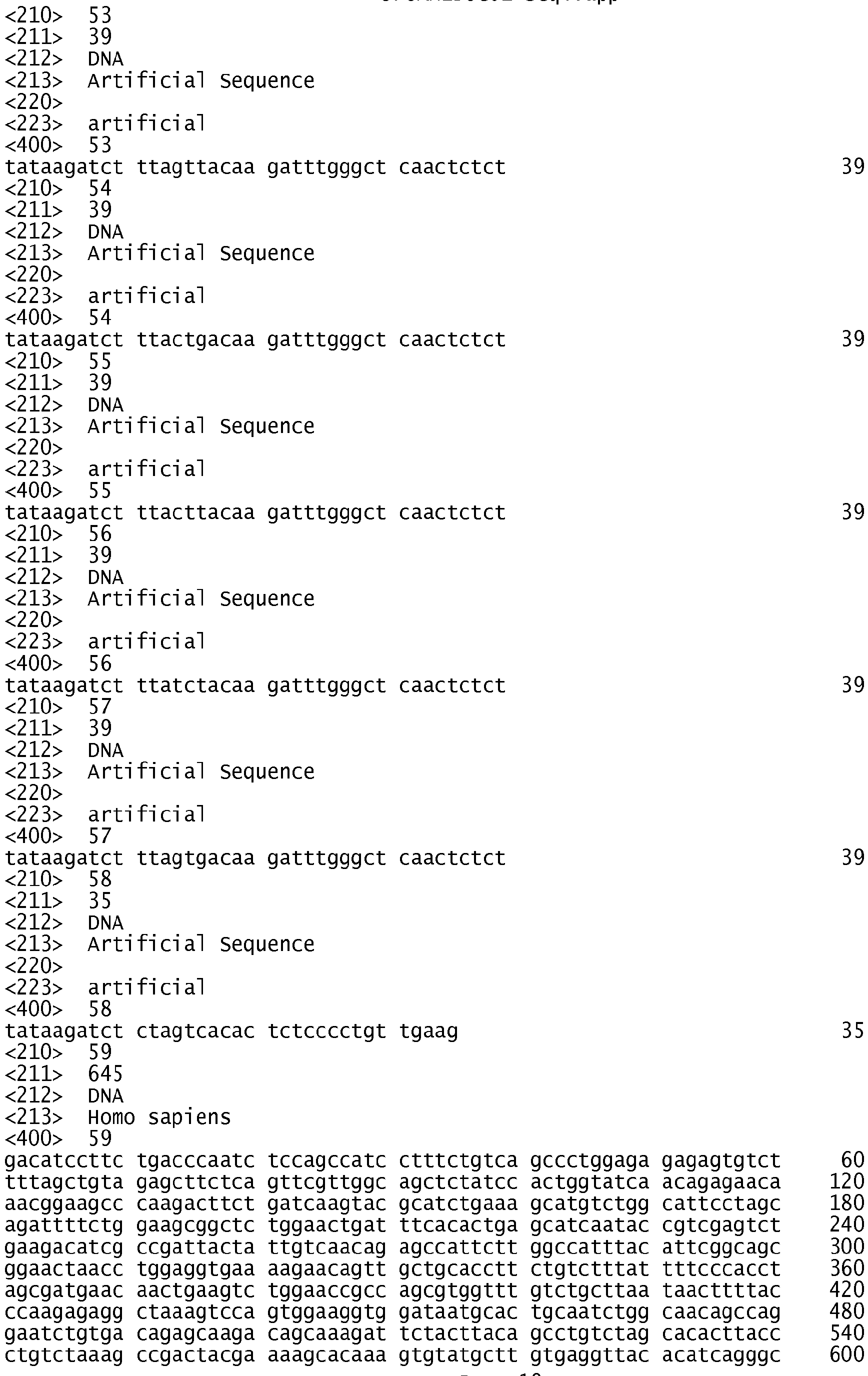


Claims (15)
- A gene comprising a nucleotide sequence encoding an amino acid or an amino acid sequence capable of increasing a secretion amount of Fab-type antibody at 3'-terminus of a nucleotide sequence encoding an amino acid sequence of Fd chain or L chain of an antibody.
- The gene according to claim 1, wherein the amino acid or the amino acid sequence capable of increasing the secretion amount of Fab-type antibody consists of 1 to 30 amino acids.
- The gene according to claim 1 or 2, wherein the amino acid or the amino acid sequence capable of increasing the secretion amount of a Fab-type antibody is any one of Asp, Gly, Ala, Val, Leu, Ile, Cys, Met, Ser, Thr, Tyr, Phe, Trp, Pro, Glu, Asn, Gln, Lys, Arg, His, Asp-Lys, Asp-Lys-Thr, Asp-Lys-Thr-His, Asp-Lys-Thr-His-Thr-Asp-Lys-Thr-His-Thr, and Gly-Gly-Gly-Gly-Ser-Met-Val-Ser-Lys-Gly-Glu-Glu-Leu-Phe-Thr-Gly-Val-Val-Pro-Ile -Leu-Val-Glu-Leu-Asp-Gly-Asp-Val-Asn-Gly.
- A recombinant vector comprising the gene according to any one of claims 1 to 3.
- The recombinant vector according to claim 4, which is any one of the following (a) to (c):(a) a recombinant vector, which comprises an Fd chain gene comprising a nucleotide sequence encoding an amino acid or an amino acid sequence capable of increasing the secretion amount of a Fab-type antibody at the 3'-terminus of a nucleotide sequence encoding the amino acid sequence of the Fd chain of an antibody, and an L chain gene of an antibody;(b) a recombinant vector, which comprises an L chain gene comprising a nucleotide sequence encoding an amino acid or an amino acid sequence capable of increasing the secretion amount of a Fab-type antibody at the 3'-terminus of a nucleotide sequence encoding the amino acid sequence of the L chain of an antibody, and a Fd chain gene of an antibody; and(c) a recombinant vector, which comprises an Fd chain gene comprising a nucleotide sequence encoding an amino acid or an amino acid sequence capable of increasing the secretion amount of a Fab-type antibody at the 3'-terminus of a nucleotide sequence encoding the amino acid sequence of the Fd chain of an antibody, and an L chain gene comprising a nucleotide sequence encoding an amino acid or an amino acid sequence capable of increasing the secretion amount of a Fab-type antibody at the 3'-terminus of a nucleotide sequence encoding the amino acid sequence of the L chain of an antibody.
- A combination of recombinant vectors, which is any one of the following (A) to (C):(A) a combination of a recombinant vector comprising an Fd chain gene comprising a nucleotide sequence encoding an amino acid or an amino acid sequence capable of increasing the secretion amount of a Fab-type antibody at the 3'-terminus of a nucleotide sequence encoding the amino acid sequence of the Fd chain of an antibody, and a recombinant vector comprising the L chain gene of an antibody;(B) a combination of a recombinant vector comprising an L chain gene comprising a nucleotide sequence encoding an amino acid or an amino acid sequence capable of increasing the secretion amount of a Fab-type antibody at the 3'-terminus of a nucleotide sequence encoding the amino acid sequence of the L chain of an antibody, and a recombinant vector comprising the Fd chain gene of an antibody; and(C) a combination of a recombinant vector comprising an Fd chain gene comprising a nucleotide sequence encoding an amino acid or an amino acid sequence capable of increasing the secretion amount of a Fab-type antibody at the 3'-terminus of a nucleotide sequence encoding the amino acid sequence of the Fd chain of an antibody, and a recombinant vector comprising an L chain gene comprising a nucleotide sequence encoding an amino acid or an amino acid sequence capable of increasing the secretion amount of a Fab-type antibody at the 3'-terminus of a nucleotide sequence encoding the amino acid sequence of the L chain of an antibody.
- A transformant obtained by transforming a host with the recombinant vector according to claim 4 or 5, or with the combination of recombinant vectors according to claim 6.
- The transformant according to claim 7, wherein the host is yeast.
- The transformant according to claim 7 or 8, wherein the yeast is yeast of the genus Ogataea or the genus Komagataella.
- The transformant according to claim 9, wherein the yeast of the genus Ogataea or the genus Komagataella is Ogataea polymorpha or Komagataella pastoris.
- The transformant according to any one of claims 7 to 10, wherein when the transformant is cultured to produce a Fab-type antibody, the secretory production amount of a Fab-type antibody in a culture supernatant is 2.0 mg/mL or more.
- A method for producing a Fab-type antibody, which comprises a step of culturing the transformant according to any one of claims 7 to 11 and then recovering a Fab-type antibody.
- A Fab-type antibody having an amino acid or an amino acid sequence capable of increasing the secretion amount of the Fab-type antibody at the C-terminus of the amino acid sequence of the Fd chain and/or L chain of an antibody.
- The Fab-type antibody according to claim 13, wherein the amino acid or the amino acid sequence capable of increasing the secretion amount of the Fab-type antibody consist of 1 to 10 amino acids.
- The Fab-type antibody according to claim 13 or 14, wherein the amino acid or the amino acid sequence capable of increasing the secretion amount of the Fab-type antibody is any one of Asp, Gly, Ala, Val, Leu, Ile, Cys, Met, Ser, Thr, Tyr, Phe, Trp, Pro, Glu, Asn, Gln, Lys, Arg, His, Asp-Lys, Asp-Lys-Thr, Asp-Lys-Thr-His, Asp-Lys-Thr-His-Thr-Asp-Lys-Thr-His-Thr, and Gly-Gly-Gly-Gly-Ser-Met-Val-Ser-Lys-Gly-Glu-Glu-Leu-Phe-Thr-Gly-Val-Val-Pro-Ile -Leu-Val-Glu-Leu-Asp-Gly-Asp-Val-Asn-Gly.
Applications Claiming Priority (3)
| Application Number | Priority Date | Filing Date | Title |
|---|---|---|---|
| JP2013092862 | 2013-04-25 | ||
| JP2013221703 | 2013-10-25 | ||
| PCT/JP2014/060941 WO2014175164A1 (en) | 2013-04-25 | 2014-04-17 | Fd chain gene or l chain gene each capable of increasing secretion amount of fab-type antibody |
Publications (3)
| Publication Number | Publication Date |
|---|---|
| EP2990485A1 true EP2990485A1 (en) | 2016-03-02 |
| EP2990485A4 EP2990485A4 (en) | 2017-01-11 |
| EP2990485B1 EP2990485B1 (en) | 2019-09-11 |
Family
ID=51791742
Family Applications (1)
| Application Number | Title | Priority Date | Filing Date |
|---|---|---|---|
| EP14788127.0A Active EP2990485B1 (en) | 2013-04-25 | 2014-04-17 | Fd chain gene or l chain gene each capable of increasing secretion amount of fab-type antibody |
Country Status (4)
| Country | Link |
|---|---|
| US (1) | US10570197B2 (en) |
| EP (1) | EP2990485B1 (en) |
| JP (1) | JP6465794B2 (en) |
| WO (1) | WO2014175164A1 (en) |
Cited By (4)
| Publication number | Priority date | Publication date | Assignee | Title |
|---|---|---|---|---|
| WO2017120359A1 (en) * | 2016-01-06 | 2017-07-13 | Oncobiologics, Inc. | Reduction of high molecular weight species, acidic charge species, and fragments in a monoclonal antibody composition |
| US10376582B2 (en) | 2013-10-16 | 2019-08-13 | Outlook Therapeutics, Inc. | Buffer formulations for enhanced antibody stability |
| US10696735B2 (en) | 2015-01-21 | 2020-06-30 | Outlook Therapeutics, Inc. | Modulation of charge variants in a monoclonal antibody composition |
| US11285210B2 (en) | 2016-02-03 | 2022-03-29 | Outlook Therapeutics, Inc. | Buffer formulations for enhanced antibody stability |
Family Cites Families (12)
| Publication number | Priority date | Publication date | Assignee | Title |
|---|---|---|---|---|
| GB8611832D0 (en) * | 1986-05-15 | 1986-06-25 | Holland I B | Polypeptide |
| CA1341235C (en) * | 1987-07-24 | 2001-05-22 | Randy R. Robinson | Modular assembly of antibody genes, antibodies prepared thereby and use |
| EP0404003A3 (en) * | 1989-06-19 | 1991-10-16 | Xoma Corporation | Chimeric mouse-human km10 antibody with specificity to a human tumor cell antigen |
| WO1992022324A1 (en) | 1991-06-14 | 1992-12-23 | Xoma Corporation | Microbially-produced antibody fragments and their conjugates |
| JP2006320220A (en) * | 2005-05-17 | 2006-11-30 | Kaneka Corp | Dna sequence used for production of protein a fusion polypeptide, recombinant expression vector, transformant, and method for producing the fusion polypeptide |
| WO2007035283A1 (en) | 2005-09-15 | 2007-03-29 | Wyeth | Protein floculation using salts |
| JP2007215471A (en) * | 2006-02-16 | 2007-08-30 | Kao Corp | Fusion protein having cellulase partial sequence |
| JP2009082033A (en) | 2007-09-28 | 2009-04-23 | Kaneka Corp | Method for producing completely human antibody |
| WO2010124018A1 (en) * | 2009-04-21 | 2010-10-28 | Amgen Inc. | FRAGMENTATION RESISTANT IgG1 Fc-CONJUGATES |
| EP2489724A4 (en) * | 2009-10-16 | 2013-05-01 | Kaneka Corp | Hansenula polymorpha capable of producing antibody, process for production of antibody utilizing same, and antibody produced from same |
| WO2012102171A1 (en) * | 2011-01-27 | 2012-08-02 | 株式会社カネカ | Yeast for transformation and process for producing protein |
| JP2013055935A (en) * | 2011-08-17 | 2013-03-28 | Noguchi Institute | Method for producing protein |
-
2014
- 2014-04-17 JP JP2015513720A patent/JP6465794B2/en not_active Expired - Fee Related
- 2014-04-17 EP EP14788127.0A patent/EP2990485B1/en active Active
- 2014-04-17 WO PCT/JP2014/060941 patent/WO2014175164A1/en not_active Ceased
-
2015
- 2015-10-23 US US14/921,497 patent/US10570197B2/en active Active
Cited By (4)
| Publication number | Priority date | Publication date | Assignee | Title |
|---|---|---|---|---|
| US10376582B2 (en) | 2013-10-16 | 2019-08-13 | Outlook Therapeutics, Inc. | Buffer formulations for enhanced antibody stability |
| US10696735B2 (en) | 2015-01-21 | 2020-06-30 | Outlook Therapeutics, Inc. | Modulation of charge variants in a monoclonal antibody composition |
| WO2017120359A1 (en) * | 2016-01-06 | 2017-07-13 | Oncobiologics, Inc. | Reduction of high molecular weight species, acidic charge species, and fragments in a monoclonal antibody composition |
| US11285210B2 (en) | 2016-02-03 | 2022-03-29 | Outlook Therapeutics, Inc. | Buffer formulations for enhanced antibody stability |
Also Published As
| Publication number | Publication date |
|---|---|
| US10570197B2 (en) | 2020-02-25 |
| EP2990485B1 (en) | 2019-09-11 |
| JP6465794B2 (en) | 2019-02-06 |
| US20160122428A1 (en) | 2016-05-05 |
| JPWO2014175164A1 (en) | 2017-02-23 |
| WO2014175164A1 (en) | 2014-10-30 |
| EP2990485A4 (en) | 2017-01-11 |
Similar Documents
| Publication | Publication Date | Title |
|---|---|---|
| JP7849405B2 (en) | Method for generating a single variable domain of immunoglobulin | |
| JP6556625B2 (en) | Expression sequence | |
| AU2019294515B2 (en) | Means and methods for increased protein expression by use of transcription factors | |
| CN114395584B (en) | Expression | |
| EP2684948B1 (en) | Method for producing antibodies or antibody fragments using yeast having knocked out vps gene | |
| JP2014525247A (en) | Multi-copy method for producing multi-subunit proteins such as antibodies in high concentrations and purity in transformed microorganisms such as Pichia pastoris | |
| EP2990485B1 (en) | Fd chain gene or l chain gene each capable of increasing secretion amount of fab-type antibody | |
| EP2489724A1 (en) | Hansenula polymorpha capable of producing antibody, process for production of antibody utilizing same, and antibody produced from same | |
| EP3438259A1 (en) | Methanol-utilizing enzyme-derived novel protein and method for producing intended protein using same | |
| EP3015548B1 (en) | Novel polypeptide, and use thereof | |
| EP3015549B1 (en) | Novel polypeptide, and use thereof |
Legal Events
| Date | Code | Title | Description |
|---|---|---|---|
| PUAI | Public reference made under article 153(3) epc to a published international application that has entered the european phase |
Free format text: ORIGINAL CODE: 0009012 |
|
| 17P | Request for examination filed |
Effective date: 20151124 |
|
| AK | Designated contracting states |
Kind code of ref document: A1 Designated state(s): AL AT BE BG CH CY CZ DE DK EE ES FI FR GB GR HR HU IE IS IT LI LT LU LV MC MK MT NL NO PL PT RO RS SE SI SK SM TR |
|
| AX | Request for extension of the european patent |
Extension state: BA ME |
|
| DAX | Request for extension of the european patent (deleted) | ||
| A4 | Supplementary search report drawn up and despatched |
Effective date: 20161212 |
|
| RIC1 | Information provided on ipc code assigned before grant |
Ipc: C12N 1/19 20060101ALI20161206BHEP Ipc: C12P 21/08 20060101ALI20161206BHEP Ipc: C12N 15/09 20060101AFI20161206BHEP |
|
| STAA | Information on the status of an ep patent application or granted ep patent |
Free format text: STATUS: EXAMINATION IS IN PROGRESS |
|
| 17Q | First examination report despatched |
Effective date: 20171221 |
|
| GRAP | Despatch of communication of intention to grant a patent |
Free format text: ORIGINAL CODE: EPIDOSNIGR1 |
|
| STAA | Information on the status of an ep patent application or granted ep patent |
Free format text: STATUS: GRANT OF PATENT IS INTENDED |
|
| INTG | Intention to grant announced |
Effective date: 20190417 |
|
| GRAS | Grant fee paid |
Free format text: ORIGINAL CODE: EPIDOSNIGR3 |
|
| GRAA | (expected) grant |
Free format text: ORIGINAL CODE: 0009210 |
|
| STAA | Information on the status of an ep patent application or granted ep patent |
Free format text: STATUS: THE PATENT HAS BEEN GRANTED |
|
| AK | Designated contracting states |
Kind code of ref document: B1 Designated state(s): AL AT BE BG CH CY CZ DE DK EE ES FI FR GB GR HR HU IE IS IT LI LT LU LV MC MK MT NL NO PL PT RO RS SE SI SK SM TR |
|
| REG | Reference to a national code |
Ref country code: GB Ref legal event code: FG4D |
|
| REG | Reference to a national code |
Ref country code: CH Ref legal event code: EP |
|
| REG | Reference to a national code |
Ref country code: AT Ref legal event code: REF Ref document number: 1178480 Country of ref document: AT Kind code of ref document: T Effective date: 20190915 |
|
| REG | Reference to a national code |
Ref country code: DE Ref legal event code: R096 Ref document number: 602014053510 Country of ref document: DE Ref country code: IE Ref legal event code: FG4D |
|
| REG | Reference to a national code |
Ref country code: NL Ref legal event code: FP |
|
| REG | Reference to a national code |
Ref country code: LT Ref legal event code: MG4D |
|
| PG25 | Lapsed in a contracting state [announced via postgrant information from national office to epo] |
Ref country code: SE Free format text: LAPSE BECAUSE OF FAILURE TO SUBMIT A TRANSLATION OF THE DESCRIPTION OR TO PAY THE FEE WITHIN THE PRESCRIBED TIME-LIMIT Effective date: 20190911 Ref country code: NO Free format text: LAPSE BECAUSE OF FAILURE TO SUBMIT A TRANSLATION OF THE DESCRIPTION OR TO PAY THE FEE WITHIN THE PRESCRIBED TIME-LIMIT Effective date: 20191211 Ref country code: HR Free format text: LAPSE BECAUSE OF FAILURE TO SUBMIT A TRANSLATION OF THE DESCRIPTION OR TO PAY THE FEE WITHIN THE PRESCRIBED TIME-LIMIT Effective date: 20190911 Ref country code: BG Free format text: LAPSE BECAUSE OF FAILURE TO SUBMIT A TRANSLATION OF THE DESCRIPTION OR TO PAY THE FEE WITHIN THE PRESCRIBED TIME-LIMIT Effective date: 20191211 Ref country code: LT Free format text: LAPSE BECAUSE OF FAILURE TO SUBMIT A TRANSLATION OF THE DESCRIPTION OR TO PAY THE FEE WITHIN THE PRESCRIBED TIME-LIMIT Effective date: 20190911 Ref country code: FI Free format text: LAPSE BECAUSE OF FAILURE TO SUBMIT A TRANSLATION OF THE DESCRIPTION OR TO PAY THE FEE WITHIN THE PRESCRIBED TIME-LIMIT Effective date: 20190911 |
|
| PG25 | Lapsed in a contracting state [announced via postgrant information from national office to epo] |
Ref country code: LV Free format text: LAPSE BECAUSE OF FAILURE TO SUBMIT A TRANSLATION OF THE DESCRIPTION OR TO PAY THE FEE WITHIN THE PRESCRIBED TIME-LIMIT Effective date: 20190911 Ref country code: GR Free format text: LAPSE BECAUSE OF FAILURE TO SUBMIT A TRANSLATION OF THE DESCRIPTION OR TO PAY THE FEE WITHIN THE PRESCRIBED TIME-LIMIT Effective date: 20191212 Ref country code: RS Free format text: LAPSE BECAUSE OF FAILURE TO SUBMIT A TRANSLATION OF THE DESCRIPTION OR TO PAY THE FEE WITHIN THE PRESCRIBED TIME-LIMIT Effective date: 20190911 Ref country code: ES Free format text: LAPSE BECAUSE OF FAILURE TO SUBMIT A TRANSLATION OF THE DESCRIPTION OR TO PAY THE FEE WITHIN THE PRESCRIBED TIME-LIMIT Effective date: 20190911 Ref country code: AL Free format text: LAPSE BECAUSE OF FAILURE TO SUBMIT A TRANSLATION OF THE DESCRIPTION OR TO PAY THE FEE WITHIN THE PRESCRIBED TIME-LIMIT Effective date: 20190911 |
|
| REG | Reference to a national code |
Ref country code: CH Ref legal event code: NV Representative=s name: VALIPAT S.A. C/O BOVARD SA NEUCHATEL, CH |
|
| PG25 | Lapsed in a contracting state [announced via postgrant information from national office to epo] |
Ref country code: EE Free format text: LAPSE BECAUSE OF FAILURE TO SUBMIT A TRANSLATION OF THE DESCRIPTION OR TO PAY THE FEE WITHIN THE PRESCRIBED TIME-LIMIT Effective date: 20190911 Ref country code: IT Free format text: LAPSE BECAUSE OF FAILURE TO SUBMIT A TRANSLATION OF THE DESCRIPTION OR TO PAY THE FEE WITHIN THE PRESCRIBED TIME-LIMIT Effective date: 20190911 Ref country code: RO Free format text: LAPSE BECAUSE OF FAILURE TO SUBMIT A TRANSLATION OF THE DESCRIPTION OR TO PAY THE FEE WITHIN THE PRESCRIBED TIME-LIMIT Effective date: 20190911 Ref country code: PL Free format text: LAPSE BECAUSE OF FAILURE TO SUBMIT A TRANSLATION OF THE DESCRIPTION OR TO PAY THE FEE WITHIN THE PRESCRIBED TIME-LIMIT Effective date: 20190911 Ref country code: PT Free format text: LAPSE BECAUSE OF FAILURE TO SUBMIT A TRANSLATION OF THE DESCRIPTION OR TO PAY THE FEE WITHIN THE PRESCRIBED TIME-LIMIT Effective date: 20200113 |
|
| PG25 | Lapsed in a contracting state [announced via postgrant information from national office to epo] |
Ref country code: SK Free format text: LAPSE BECAUSE OF FAILURE TO SUBMIT A TRANSLATION OF THE DESCRIPTION OR TO PAY THE FEE WITHIN THE PRESCRIBED TIME-LIMIT Effective date: 20190911 Ref country code: IS Free format text: LAPSE BECAUSE OF FAILURE TO SUBMIT A TRANSLATION OF THE DESCRIPTION OR TO PAY THE FEE WITHIN THE PRESCRIBED TIME-LIMIT Effective date: 20200224 Ref country code: CZ Free format text: LAPSE BECAUSE OF FAILURE TO SUBMIT A TRANSLATION OF THE DESCRIPTION OR TO PAY THE FEE WITHIN THE PRESCRIBED TIME-LIMIT Effective date: 20190911 Ref country code: SM Free format text: LAPSE BECAUSE OF FAILURE TO SUBMIT A TRANSLATION OF THE DESCRIPTION OR TO PAY THE FEE WITHIN THE PRESCRIBED TIME-LIMIT Effective date: 20190911 |
|
| REG | Reference to a national code |
Ref country code: DE Ref legal event code: R097 Ref document number: 602014053510 Country of ref document: DE |
|
| PLBE | No opposition filed within time limit |
Free format text: ORIGINAL CODE: 0009261 |
|
| STAA | Information on the status of an ep patent application or granted ep patent |
Free format text: STATUS: NO OPPOSITION FILED WITHIN TIME LIMIT |
|
| PG2D | Information on lapse in contracting state deleted |
Ref country code: IS |
|
| PG25 | Lapsed in a contracting state [announced via postgrant information from national office to epo] |
Ref country code: DK Free format text: LAPSE BECAUSE OF FAILURE TO SUBMIT A TRANSLATION OF THE DESCRIPTION OR TO PAY THE FEE WITHIN THE PRESCRIBED TIME-LIMIT Effective date: 20190911 Ref country code: IS Free format text: LAPSE BECAUSE OF FAILURE TO SUBMIT A TRANSLATION OF THE DESCRIPTION OR TO PAY THE FEE WITHIN THE PRESCRIBED TIME-LIMIT Effective date: 20200112 |
|
| 26N | No opposition filed |
Effective date: 20200615 |
|
| PG25 | Lapsed in a contracting state [announced via postgrant information from national office to epo] |
Ref country code: SI Free format text: LAPSE BECAUSE OF FAILURE TO SUBMIT A TRANSLATION OF THE DESCRIPTION OR TO PAY THE FEE WITHIN THE PRESCRIBED TIME-LIMIT Effective date: 20190911 |
|
| PG25 | Lapsed in a contracting state [announced via postgrant information from national office to epo] |
Ref country code: MC Free format text: LAPSE BECAUSE OF FAILURE TO SUBMIT A TRANSLATION OF THE DESCRIPTION OR TO PAY THE FEE WITHIN THE PRESCRIBED TIME-LIMIT Effective date: 20190911 |
|
| PG25 | Lapsed in a contracting state [announced via postgrant information from national office to epo] |
Ref country code: LU Free format text: LAPSE BECAUSE OF NON-PAYMENT OF DUE FEES Effective date: 20200417 |
|
| REG | Reference to a national code |
Ref country code: AT Ref legal event code: UEP Ref document number: 1178480 Country of ref document: AT Kind code of ref document: T Effective date: 20190911 |
|
| PG25 | Lapsed in a contracting state [announced via postgrant information from national office to epo] |
Ref country code: IE Free format text: LAPSE BECAUSE OF NON-PAYMENT OF DUE FEES Effective date: 20200417 |
|
| PG25 | Lapsed in a contracting state [announced via postgrant information from national office to epo] |
Ref country code: TR Free format text: LAPSE BECAUSE OF FAILURE TO SUBMIT A TRANSLATION OF THE DESCRIPTION OR TO PAY THE FEE WITHIN THE PRESCRIBED TIME-LIMIT Effective date: 20190911 Ref country code: MT Free format text: LAPSE BECAUSE OF FAILURE TO SUBMIT A TRANSLATION OF THE DESCRIPTION OR TO PAY THE FEE WITHIN THE PRESCRIBED TIME-LIMIT Effective date: 20190911 Ref country code: CY Free format text: LAPSE BECAUSE OF FAILURE TO SUBMIT A TRANSLATION OF THE DESCRIPTION OR TO PAY THE FEE WITHIN THE PRESCRIBED TIME-LIMIT Effective date: 20190911 |
|
| PG25 | Lapsed in a contracting state [announced via postgrant information from national office to epo] |
Ref country code: MK Free format text: LAPSE BECAUSE OF FAILURE TO SUBMIT A TRANSLATION OF THE DESCRIPTION OR TO PAY THE FEE WITHIN THE PRESCRIBED TIME-LIMIT Effective date: 20190911 |
|
| PGFP | Annual fee paid to national office [announced via postgrant information from national office to epo] |
Ref country code: FR Payment date: 20230309 Year of fee payment: 10 |
|
| PGFP | Annual fee paid to national office [announced via postgrant information from national office to epo] |
Ref country code: GB Payment date: 20230302 Year of fee payment: 10 |
|
| P01 | Opt-out of the competence of the unified patent court (upc) registered |
Effective date: 20230522 |
|
| PGFP | Annual fee paid to national office [announced via postgrant information from national office to epo] |
Ref country code: NL Payment date: 20230314 Year of fee payment: 10 |
|
| PGFP | Annual fee paid to national office [announced via postgrant information from national office to epo] |
Ref country code: AT Payment date: 20230327 Year of fee payment: 10 |
|
| REG | Reference to a national code |
Ref country code: NL Ref legal event code: MM Effective date: 20240501 |
|
| REG | Reference to a national code |
Ref country code: AT Ref legal event code: MM01 Ref document number: 1178480 Country of ref document: AT Kind code of ref document: T Effective date: 20240417 |
|
| GBPC | Gb: european patent ceased through non-payment of renewal fee |
Effective date: 20240417 |
|
| PG25 | Lapsed in a contracting state [announced via postgrant information from national office to epo] |
Ref country code: NL Free format text: LAPSE BECAUSE OF NON-PAYMENT OF DUE FEES Effective date: 20240501 |
|
| PG25 | Lapsed in a contracting state [announced via postgrant information from national office to epo] |
Ref country code: GB Free format text: LAPSE BECAUSE OF NON-PAYMENT OF DUE FEES Effective date: 20240417 |
|
| PG25 | Lapsed in a contracting state [announced via postgrant information from national office to epo] |
Ref country code: FR Free format text: LAPSE BECAUSE OF NON-PAYMENT OF DUE FEES Effective date: 20240430 |
|
| PG25 | Lapsed in a contracting state [announced via postgrant information from national office to epo] |
Ref country code: AT Free format text: LAPSE BECAUSE OF NON-PAYMENT OF DUE FEES Effective date: 20240417 |
|
| PG25 | Lapsed in a contracting state [announced via postgrant information from national office to epo] |
Ref country code: NL Free format text: LAPSE BECAUSE OF NON-PAYMENT OF DUE FEES Effective date: 20240501 Ref country code: GB Free format text: LAPSE BECAUSE OF NON-PAYMENT OF DUE FEES Effective date: 20240417 Ref country code: FR Free format text: LAPSE BECAUSE OF NON-PAYMENT OF DUE FEES Effective date: 20240430 Ref country code: AT Free format text: LAPSE BECAUSE OF NON-PAYMENT OF DUE FEES Effective date: 20240417 |
|
| PGFP | Annual fee paid to national office [announced via postgrant information from national office to epo] |
Ref country code: DE Payment date: 20250305 Year of fee payment: 12 |
|
| PGFP | Annual fee paid to national office [announced via postgrant information from national office to epo] |
Ref country code: CH Payment date: 20250501 Year of fee payment: 12 |
|
| PGFP | Annual fee paid to national office [announced via postgrant information from national office to epo] |
Ref country code: BE Payment date: 20260317 Year of fee payment: 13 |
|
| REG | Reference to a national code |
Ref country code: CH Ref legal event code: U11 Free format text: ST27 STATUS EVENT CODE: U-0-0-U10-U11 (AS PROVIDED BY THE NATIONAL OFFICE) Effective date: 20260501 |