EP2989612B1 - Suivi visuel d'objet - Google Patents
Suivi visuel d'objet Download PDFInfo
- Publication number
- EP2989612B1 EP2989612B1 EP14719329.6A EP14719329A EP2989612B1 EP 2989612 B1 EP2989612 B1 EP 2989612B1 EP 14719329 A EP14719329 A EP 14719329A EP 2989612 B1 EP2989612 B1 EP 2989612B1
- Authority
- EP
- European Patent Office
- Prior art keywords
- event
- points
- cluster
- belongs
- determined
- Prior art date
- Legal status (The legal status is an assumption and is not a legal conclusion. Google has not performed a legal analysis and makes no representation as to the accuracy of the status listed.)
- Active
Links
Images

Classifications
-
- G—PHYSICS
- G06—COMPUTING OR CALCULATING; COUNTING
- G06T—IMAGE DATA PROCESSING OR GENERATION, IN GENERAL
- G06T7/00—Image analysis
- G06T7/20—Analysis of motion
- G06T7/254—Analysis of motion involving subtraction of images
-
- G—PHYSICS
- G06—COMPUTING OR CALCULATING; COUNTING
- G06F—ELECTRIC DIGITAL DATA PROCESSING
- G06F18/00—Pattern recognition
- G06F18/20—Analysing
- G06F18/23—Clustering techniques
-
- G—PHYSICS
- G06—COMPUTING OR CALCULATING; COUNTING
- G06T—IMAGE DATA PROCESSING OR GENERATION, IN GENERAL
- G06T7/00—Image analysis
- G06T7/20—Analysis of motion
-
- G—PHYSICS
- G06—COMPUTING OR CALCULATING; COUNTING
- G06T—IMAGE DATA PROCESSING OR GENERATION, IN GENERAL
- G06T7/00—Image analysis
- G06T7/20—Analysis of motion
- G06T7/277—Analysis of motion involving stochastic approaches, e.g. using Kalman filters
-
- G—PHYSICS
- G06—COMPUTING OR CALCULATING; COUNTING
- G06T—IMAGE DATA PROCESSING OR GENERATION, IN GENERAL
- G06T7/00—Image analysis
- G06T7/70—Determining position or orientation of objects or cameras
- G06T7/77—Determining position or orientation of objects or cameras using statistical methods
-
- G—PHYSICS
- G06—COMPUTING OR CALCULATING; COUNTING
- G06T—IMAGE DATA PROCESSING OR GENERATION, IN GENERAL
- G06T2200/00—Indexing scheme for image data processing or generation, in general
- G06T2200/28—Indexing scheme for image data processing or generation, in general involving image processing hardware
-
- G—PHYSICS
- G06—COMPUTING OR CALCULATING; COUNTING
- G06T—IMAGE DATA PROCESSING OR GENERATION, IN GENERAL
- G06T2207/00—Indexing scheme for image analysis or image enhancement
- G06T2207/30—Subject of image; Context of image processing
- G06T2207/30108—Industrial image inspection
Definitions
- the present invention relates to visual object tracking, and more particularly to high speed real-time object tracking.
- Object tracking finds applications in many fields, such as video surveillance, traffic monitoring, motion analysis, augmented reality, robotics, and human-machine interfaces.
- High-speed real-time object tracking typically at a frequency greater than 1kHz, applies more particularly to micro-robotics, to the study of the behavior of microorganisms, or to the field of haptics. .
- processing should be very simple and often implemented in hardware rather than software.
- CAVIAR a 45k neuron, 5M synapse, 12G Connects / s AER hardware sensory-processing-learning-actuating system for high-speed visual object recognition and tracking
- de Serrano-Gotarredona et al. IEEE Transactions on Neural Networks, vol . 20, n ° 9, September 1, 2009
- the position of an object is updated by determining an error derived from a probability distribution.
- the invention does not require any minimization or event accumulation procedure.
- the process is purely event-based.
- the invention makes it possible to detect and track an object in an unstructured scene.
- the invention makes it possible to simultaneously follow several moving objects in the same scene.
- the follow-up remains very fast because the chosen shape functions are updated in an event-driven manner and independently of each other.
- the invention can be applied in two dimensions or in three dimensions.
- the set of spatio-temporal events is provided by an asynchronous sensor.
- This type of sensor provides data in the form of events, eliminating information redundancy, reducing latency and with high temporal dynamics, compared to conventional sensors.
- the determination of whether or not an event belongs to the cloud of points comprises the comparison of the probability determined for the event considered with a predetermined threshold.
- the calculations to be performed are simple and provide a result quickly.
- the size and the orientation of the at least one object are calculated by modeling the object by an ellipse and by calculating its half axes and its orientation.
- the calculations are simple, fast and provide an accurate result.
- the method further comprises determining the speed of the at least one object.
- the steps of receiving, determining, updating and calculating are carried out iteratively.
- the method further comprises the step of displaying data representative of the position, size and orientation of the at least one object calculated as a function of the updated information.
- the device has advantages similar to those presented above.
- the steps of the method according to the invention are implemented by computer program instructions.
- the invention is also aimed at a computer program on an information medium, this program being capable of being implemented in a computer, this program comprising instructions adapted to the implementation of the steps of a process as described above.
- This program can use any programming language, and be in the form of source code, object code, or intermediate code between source code and object code, such as in a partially compiled form, or in any other. desirable shape.
- the invention also relates to an information medium readable by a computer, and comprising computer program instructions adapted to the implementation of the steps of a method as described above.
- the information medium can be any entity or device capable of storing the program.
- the medium may comprise a storage means, such as a ROM, for example a CD ROM or a microelectronic circuit ROM, or else a magnetic recording means, for example a floppy disk or a hard disk.
- the information medium can be a transmissible medium such as an electrical or optical signal, which can be routed via a cable. electrical or optical, by radio or by other means.
- the program according to the invention can in particular be downloaded from an Internet type network.
- the information medium can be an integrated circuit in which the program is incorporated, the circuit being adapted to execute or to be used in the execution of the method according to the invention.
- the method for visually tracking at least one object comprises steps E1 to E6.
- Step E1 is the reception of data representing a set of spatio-temporal events.
- an asynchronous sensor This type of sensor makes it possible to acquire information relating to at least one physical quantity, such as light, electric field, magnetic field for example.
- the asynchronous sensor provides data in the form of events, eliminating information redundancy, reducing latency and with high temporal dynamics, compared to conventional sensors.
- An asynchronous sensor provides a signal that is not time sampled at a predefined clock rate, such as the frame clock in a conventional video signal.
- An asynchronous sensor provides an address-event representation (AER) of a scene to be viewed.
- AER address-event representation
- Each pixel corresponds to an event-based signal sequence depending on the variations in light intensity corresponding to that pixel.
- the event-based asynchronous signal sequence for a pixel includes a sequence of positive or negative pulses positioned over time as a function of variations of at least one physical quantity such as light relating to the pixel.
- the senor detects a logarithmic change in intensity greater than a threshold with respect to the intensity linked to the previous event.
- a +1 or -1 event is generated, depending on whether the logarithmic intensity is increasing or decreasing.
- the events can be delivered at a very fine temporal resolution, for example 1 ⁇ s.
- a time is associated with each event.
- an event is mathematically represented by e (x, t), where x is a coordinate vector representing the location of the event in a spatial frame of reference and t represents the instant of the event.
- the value e (x, t) is +1 or -1, as discussed above.
- the data representing at least one object are initialized thanks to a mesh of the focal plane by a set of Gaussian trackers.
- the point cloud of an object of index i can be modeled by a two-dimensional Gaussian distribution whose mean ⁇ i (t) indicates the position of the object in a coordinate system and the covariance matrix ⁇ i (t) is relative to its size and its position.
- the next step E2 is the determination of the probability that an event of the game received in step E1 belongs to a cloud of points representing an object, for each event of the game received.
- the position of the object is the position of the center of an ellipse modeling this object.
- the vector x [ x 1 , x 2 ] T is the position at time t of the event considered in the same two-dimensional frame of reference and
- the probability p i (x) is calculated for all the events produced at this instant, and for all the objects. There are therefore as many probabilities p i (x) calculated at a given instant t as there are object-event pairs at this instant.
- step E3 is the determination of whether or not an event belongs to the cloud of points as a function of the determined probability, for each event for which a probability p i (x) has been calculated in the preceding step.
- the probability p i (x) is compared with a predetermined threshold S which depends on the lighting.
- the threshold S is a probability which is for example 2.5%.
- the probability p i (x) is less than the threshold S, then the event e (x, t) does not belong to the object considered.
- the event e (x, t) belongs to the object considered. If several probabilities calculated for the event e (x, t) are greater than the threshold S, then the event e (x, t) belongs to the object for which the probability is the greatest.
- the next step E4 is the updating of the information associated with the point cloud of at least one object, when it has been determined in the previous step that at least one event belongs to the point cloud considered.
- ⁇ i is the difference in covariance calculated from the current position ⁇ i (t) of the point cloud and the position of the event e (x, t) which was determined in step E3 as belonging to the point cloud.
- ⁇ i x 1 - ⁇ i 1 t 2 x 1 - ⁇ i 1 t ⁇ x 2 - ⁇ i 2 t x 1 - ⁇ i 1 t .
- the speed of the point cloud considered is also determined and updated. This is the speed in the image plane in pixels per second.
- the next step E5 is the calculation of the size and the orientation of the at least one object according to the updated information. This calculation is performed for all the objects for which the information has been updated in step E4.
- the object is modeled by an ellipse.
- the half axes a and b and the orientation ⁇ of the ellipse are determined as a function of the covariance matrix ⁇ i (t) calculated in step E4.
- ⁇ max 1 2 . ⁇ 1 2 + ⁇ 2 2 + ⁇ 1 2 - ⁇ 2 2 2 + 4 . ⁇ 12 2
- ⁇ min 1 2 . ⁇ 1 2 + ⁇ 2 2 - ⁇ 1 2 - ⁇ 2 2 2 + 4 . ⁇ 12 2
- the next step E6 is a display of the object or objects whose position, size and orientation have been determined, on a display screen. If the processing of the preceding steps is carried out on the data which has been modified between the instants (t-1) and t, the display is preferably a display of all the objects, even those which have not been modified by the previous treatments.
- Step E6 is optional.
- object tracking has been discussed for a two-dimensional system. However, it is possible to perform object tracking according to the invention in three dimensions.
- a calibration makes it possible to link a modification of the size of the Gaussian to the size of the object. Knowing the size of the object being tracked, we then deduce its depth, that is to say if it moves away or if it approaches the sensor, from the variation of the Gaussian parameters.
- All of the exposed processing operations are carried out iteratively, so that the position, size and orientation of an object are calculated and updated as soon as the asynchronous sensor provides data representing a set of spatio-temporal events affecting this object.
- the events are supplied by the asynchronous sensor at a very fine temporal resolution, for example 1 ⁇ s.
- the frequency of the treatments described above is therefore greater than 1 kHz.
- the figure 4 represents a particular embodiment of a device for visual tracking of at least one object, according to the invention.
- the device for visually tracking at least one object has the general structure of a computer. It includes in particular a processor 100 executing a computer program implementing the method according to the invention, a memory 101, an input interface 102 and an output interface 103.
- bus 105 These different elements are conventionally connected by a bus 105.
- the input interface 102 is connected to an asynchronous sensor 90 and is intended to receive the data representing a set of spatio-temporal events.
- the processor 100 executes the processing operations described above. These processing operations are carried out in the form of computer program code instructions which are stored by the memory 101 before being executed by the processor 100.
- the memory 101 also stores the information of the point clouds processed according to the invention.
- the output interface 103 is connected to a display screen 104 to display the object.
- any type of probability density can be used instead of the Gaussian in the context of the invention.
- Gaussian any type of probability density
- Potential applications of the invention are optical tweezers, microassembly, microrobotics, and small scale force remote operation.
- fields such as mobile, aerial or humanoid robotics are potential applications as well as particle filtering.
Landscapes
- Engineering & Computer Science (AREA)
- Physics & Mathematics (AREA)
- Theoretical Computer Science (AREA)
- Computer Vision & Pattern Recognition (AREA)
- General Physics & Mathematics (AREA)
- Multimedia (AREA)
- Life Sciences & Earth Sciences (AREA)
- Bioinformatics & Cheminformatics (AREA)
- Bioinformatics & Computational Biology (AREA)
- Evolutionary Biology (AREA)
- Data Mining & Analysis (AREA)
- Probability & Statistics with Applications (AREA)
- Artificial Intelligence (AREA)
- General Engineering & Computer Science (AREA)
- Evolutionary Computation (AREA)
- Image Analysis (AREA)
Description
- La présente invention concerne le suivi visuel d'objet, et plus particulièrement le suivi d'objet en temps réel à haute vitesse.
- Le suivi d'objet trouve des applications dans de nombreux domaines, tels que la vidéosurveillance, la surveillance de trafic, l'analyse de mouvement, la réalité augmentée, la robotique et les interfaces homme-machine.
- Le suivi d'objet en temps réel à haute vitesse, typiquement à une fréquence supérieure à 1kHz, s'applique plus particulièrement à la micro-robotique, à l'étude du comportement de micro-organismes, ou encore au domaine de l'haptique.
- L'acquisition de données à partir d'une caméra conventionnelle peut être très rapide, de l'ordre de plusieurs dizaines de kilohertz, mais la répétition d'informations similaires dans des images successives limite la vitesse de traitement de ces informations. Il faut donc limiter la quantité d'informations traitées. Cela se traduit en pratique par des limitations telles que le sous-échantillonnage de l'image ou la réduction du champ de l'image.
- En outre, le traitement doit être très simple et souvent implémenté de manière matérielle plutôt que logicielle.
- Le document « Spatiotemporal multiple persons tracking using dynamic vision sensor » de Piatkowska, Belbachir et Gelautz, Computer vision and pattern recognition workshops, 2012 IEEE Computer society conférence on, IEEE, expose un suivi de personne qui utilise une représentation adresse-événement. La méthode exposée accumule les évènements et met à jour les données toutes les 10 ms. Elle n'est donc pas suffisamment rapide pour fournir des résultats satisfaisants.
- Le document intitulé « Temporal patern-based active marker identification and tracking using a dynamic vision sensor » de Matthias Hofstetter, 31 janvier 2012, divulgue un système d'identification et de suivi d'objet qui utilise un capteur de vision dynamique (dynamic vision sensor, DVS) dans lequel les données sont accumulées et stockées en mémoire.
- Le document intitulé « CAVIAR : a 45k neuron, 5M synapse, 12G Connects/s AER hardware sensory-processing-learning-actuating system for high-speed visual object récognition and tracking », de Serrano-Gotarredona et al., IEEE Transactions on Neural Networks, vol. 20, n°9, 1er septembre 2009, concerne le suivi d'objet à haute vitesse et utilise une représentation adresse-événement asynchrone. La position d'un objet est mise à jour en déterminant une erreur dérivée d'une distribution de probabilité.
- L'invention vise à résoudre les problèmes de la technique antérieure en fournissant un procédé de suivi visuel d'au moins un objet représenté par un nuage de points auxquels sont associées des informations, caractérisé en ce qu'il comporte les étapes de :
- réception de données représentant un jeu d'événements spatio-temporels,
- détermination de la probabilité qu'un événement du jeu appartienne au nuage de points représentant l'au moins un objet, pour chaque événement du jeu reçu,
- détermination du fait qu'un événement appartient ou non au nuage de points en fonction de la probabilité déterminée pour l'évènement considéré, pour chaque événement du jeu reçu,
- mise à jour des informations associées au nuage de point de l'au moins un objet, pour chaque événement pour lequel il a été déterminé à l'étape précédente qu'il appartient au nuage de points,
- calcul de la position, de la taille et de l'orientation de l'au moins un objet en fonction des informations mises à jour.
- Grâce à l'invention, un suivi visuel d'objet à grande vitesse et sans réduction du champ, c'est-à-dire sur l'intégralité du champ, est possible. Le suivi d'objet est robuste.
- L'invention ne nécessite aucune procédure de minimisation ni d'accumulation d'événements. Le procédé est purement basé événement.
- L'invention permet de détecter et suivre un objet dans une scène non structurée.
- L'invention permet de suivre simultanément plusieurs objets en mouvement dans une même scène. Dans ce cas, le suivi demeure très rapide car les fonctions de formes choisies sont remises à jour de façon événementielle et de façon indépendante les unes des autres.
- L'invention s'applique en deux dimensions ou en trois dimensions.
- Selon une caractéristique préférée, le jeu d'évènements spatio-temporels est fourni par un capteur asynchrone. Ce type de capteur fournit des données sous la forme d'évènements, en supprimant la redondance d'information, en réduisant le temps de latence et avec une dynamique temporelle élevée, par rapport aux capteurs conventionnels.
- Selon une caractéristique préférée, la détermination du fait qu'un évènement appartient ou non au nuage de points comporte la comparaison de la probabilité déterminée pour l'évènement considéré avec un seuil prédéterminé.
- Les calculs à effectuer sont simples et fournissent un résultat rapidement.
- Selon une caractéristique préférée, la taille et l'orientation de l'au moins un objet sont calculées en modélisant l'objet par une ellipse et en calculant ses demis axes et son orientation. Là aussi, les calculs sont simples, rapides et fournissent un résultat précis.
- Selon une caractéristique préférée, le procédé comporte en outre la détermination de la vitesse de l'au moins un objet.
- Selon une caractéristique préférée, les étapes de réception, détermination, mise à jour et calcul sont effectuées de manière itérative.
- Selon une caractéristique préférée, le procédé comporte en outre l'étape d'affichage de données représentatives de la position, de la taille et de l'orientation de l'au moins un objet calculées en fonction des informations mises à jour.
- L'invention concerne aussi un dispositif de suivi visuel d'au moins un objet représenté par un nuage de points auxquels sont associées des informations, caractérisé en ce qu'il comporte :
- des moyens de réception de données représentant un jeu d'événements spatio-temporels,
- des moyens de détermination de la probabilité qu'un évènement du jeu appartienne au nuage de points représentant l'au moins un objet, pour chaque évènement du jeu reçu par les moyens de réception,
- des moyens de détermination du fait qu'un évènement appartient ou non au nuage de points en fonction de la probabilité déterminée pour l'évènement considéré, pour chaque évènement du jeu reçu par les moyens de réception,
- des moyens de mise à jour des informations associées au nuage de point de l'au moins un objet, pour chaque évènement pour lequel il a été déterminé il appartient au nuage de points,
- des moyens de calcul de la position, de la taille et de l'orientation de l'au moins un objet en fonction des informations mises à jour.
- Le dispositif présente des avantages analogues à ceux précédemment présentés.
- Dans un mode particulier de réalisation, les étapes du procédé selon l'invention sont mises en œuvre par des instructions de programme d'ordinateur.
- En conséquence, l'invention vise aussi un programme d'ordinateur sur un support d'informations, ce programme étant susceptible d'être mis en œuvre dans un ordinateur, ce programme comportant des instructions adaptées à la mise en œuvre des étapes d'un procédé tel que décrit ci-dessus.
- Ce programme peut utiliser n'importe quel langage de programmation, et être sous la forme de code source, code objet, ou de code intermédiaire entre code source et code objet, tel que dans une forme partiellement compilée, ou dans n'importe quelle autre forme souhaitable.
- L'invention vise aussi un support d'informations lisible par un ordinateur, et comportant des instructions de programme d'ordinateur adaptées à la mise en œuvre des étapes d'un procédé tel que décrit ci-dessus.
- Le support d'informations peut être n'importe quelle entité ou dispositif capable de stocker le programme. Par exemple, le support peut comporter un moyen de stockage, tel qu'une ROM, par exemple un CD ROM ou une ROM de circuit microélectronique, ou encore un moyen d'enregistrement magnétique, par exemple une disquette ou un disque dur.
- D'autre part, le support d'informations peut être un support transmissible tel qu'un signal électrique ou optique, qui peut être acheminé via un câble électrique ou optique, par radio ou par d'autres moyens. Le programme selon l'invention peut être en particulier téléchargé sur un réseau de type Internet.
- Alternativement, le support d'informations peut être un circuit intégré dans lequel le programme est incorporé, le circuit étant adapté pour exécuter ou pour être utilisé dans l'exécution du procédé selon l'invention.
- D'autres caractéristiques et avantages apparaîtront à la lecture de la description suivante d'un mode de réalisation préféré donné à titre d'exemple non limitatif, décrit en référence aux figures dans lesquelles :
- La
figure 1 représente un procédé de suivi visuel d'au moins un objet selon la présente invention, - La
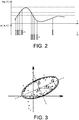
figure 2 représente un signal fourni par un capteur asynchrone utilisé dans la présente invention, - La
figure 3 représente la modélisation d'un objet selon la présente invention, et - La
figure 4 représente un dispositif de suivi visuel d'au moins un objet selon la présente invention. - Selon un mode de réalisation préféré représenté à la
figure 1 , le procédé de suivi visuel d'au moins un objet comporte des étapes E1 à E6. - L'étape E1 est la réception de données représentant un jeu d'événements spatio-temporels.
- Ces données sont fournies par un capteur asynchrone. Ce type de capteur permet d'acquérir des informations relatives à au moins une grandeur physique, telle que lumière, champ électrique, champ magnétique par exemple. Le capteur asynchrone fournit des données sous la forme d'évènements, en supprimant la redondance d'information, en réduisant le temps de latence et avec une dynamique temporelle élevée, par rapport aux capteurs conventionnels.
- Un capteur asynchrone fournit un signal qui n'est pas échantillonné dans le temps selon une fréquence d'horloge prédéfinie, comme l'horloge des trames dans un signal vidéo classique. Un capteur asynchrone fournit une représentation adresse-évènement (AER, d'après l'anglais Address-Event Representation) d'une scène à visualiser. A chaque pixel correspond une séquence de signal basé sur évènement dépendant des variations d'intensité lumineuse correspondant à ce pixel. Par exemple, la séquence de signal asynchrone basé sur évènement pour un pixel comporte une séquence d'impulsions positives ou négatives positionnées dans le temps en fonction des variations d'au moins une grandeur physique comme la lumière concernant le pixel.
- Comme illustré à la
figure 2 , pour chaque pixel considéré indépendamment, le capteur détecte un changement d'intensité logarithmique supérieur à un seuil par rapport à l'intensité liée à l'évènement précédent. Lorsqu'un tel changement est détecté, un évènement +1 ou -1 est généré, selon que l'intensité logarithmique augmente ou diminue. - Puisque le capteur est asynchrone, les évènements peuvent être fournis à une résolution temporelle très fine, par exemple 1 µs.
- Un temps est associé à chaque événement. Ainsi, un évènement est mathématiquement représenté par e(x,t), où x est un vecteur de coordonnées représentant la localisation de l'évènement dans un repère spatial et t représente l'instant de l'évènement.
- La valeur e(x,t) vaut +1 ou -1, comme exposée plus haut.
- On suppose que l'on dispose de données représentant au moins un objet. Ces données sont sous la forme d'un nuage de points, où chaque point est un évènement tel que précédemment défini.
- Il est à noter que les données représentant au moins un objet sont initialisées grâce à un maillage du plan focal par un ensemble de trackeurs gaussiens.
- Comme il sera détaillé dans la suite, le nuage de points d'un objet d'indice i peut être modélisé par une distribution gaussienne bidimensionnelle dont la moyenne µi(t) indique la position de l'objet dans un repère et la matrice de covariance Σi(t) est relative à sa taille et à sa position.
- L'étape suivante E2 est la détermination de la probabilité qu'un évènement du jeu reçu à l'étape E1 appartienne à un nuage de points représentant un objet, pour chaque évènement du jeu reçu.
- On considère le ième objet, associé au ième nuage de points, dont la moyenne µi(t) = [µ i1,µ i2] T est un vecteur qui représente la position de l'objet à l'instant t dans un repère donné à deux dimensions, l'indice 1 étant affecté à l'axe des abscisses et l'indice 2 étant affecté à l'axe des ordonnées. La position de l'objet est la position du centre d'une ellipse modélisant cet objet.
- La matrice de covariance Σi(t) du ième nuage de points vaut :

- La probabilité qu'un évènement e(x,t) du jeu appartienne au ième nuage de points vaut :

- Dans cette expression, le vecteur x = [x 1,x 2] T est la position à l'instant t de l'évènement considéré dans le même repère bidimensionnel et |∑ i (t)| est le déterminant de la matrice de covariance.
- A un instant t donné auquel un ou des évènements e(x,t) sont produits par le capteur asynchrone, la probabilité pi(x) est calculée pour tous les évènements produits à cet instant, et pour tous les objets. Il y a donc autant de probabilités pi(x) calculées à un instant donné t que de couples objet-évènement à cet instant.
- L'étape suivante E3 est la détermination du fait qu'un évènement appartient ou non au nuage de points en fonction de la probabilité déterminée, pour chaque évènement pour lequel une probabilité pi(x) a été calculée à l'étape précédente.
- Pour cela, la probabilité pi(x) est comparée à un seuil prédéterminé S qui dépend de l'éclairage. Le seuil S est une probabilité qui vaut par exemple 2,5%.
- Si la probabilité pi(x) est inférieure au seuil S, alors l'évènement e(x,t) n'appartient pas à l'objet considéré.
- Si la probabilité pi(x) est supérieure au seuil S, alors l'évènement e(x,t) appartient à l'objet considéré. Si plusieurs probabilités calculées pour l'évènement e(x,t) sont supérieures au seuil S, alors l'évènement e(x,t) appartient à l'objet pour lequel la probabilité est la plus grande.
- L'étape suivante E4 est la mise à jour des informations associées au nuage de points de l'au moins un objet, lorsqu'il a été déterminé à l'étape précédente qu'au moins un évènement appartient au nuage de points considéré.
- On considère des gains, ou coefficients de pondération, α1, α2 et α3. A l'instant t, pour un objet donné, la position µi(t) de l'objet est mise à jour en fonction de la position à l'instant (t-1) de cet objet et de l'évènement e(x,t) qui a été déterminé à l'étape E3 comme appartenant au nuage de points représentant cet objet:

- La matrice de covariante Σi(t) du nuage de points à l'instant considéré t est mise à jour en fonction de la matrice de covariante Σi(t-1) à l'instant (t-1) :

- Dans cette formule, ΔΣi est la différence de covariance calculée à partir de la position courante µi(t) du nuage de points et de la position de l'évènement e(x,t) qui a été déterminé à l'étape E3 comme appartenant au nuage de points.

- Selon une variante de réalisation, la vitesse du nuage de point considéré est en outre déterminée et mise à jour. Il s'agit de la vitesse dans le plan image en pixel par seconde.
- A l'instant t, le vecteur vitesse vi(t) = [v i1(t), v i2(t)] T est déterminé selon la formule :

- Ces calculs de détermination de position, matrice de covariance et éventuellement vitesse de nuage de point sont répétés pour tous les évènements qui ont été déterminés comme appartenant au nuage de points à l'étape E3. Ils sont également répétés pour chaque nuage de points pour lequel il a été déterminé qu'un évènement lui appartient à l'étape E3.
- L'étape suivante E5 est le calcul de la taille et de l'orientation de l'au moins un objet en fonction des informations mises à jour. Ce calcul est effectué pour tous les objets pour lesquels les informations ont été mises à jour à l'étape E4.
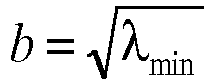
- L'objet est modélisé par une ellipse. Les demis axes a et b et l'orientation α de l'ellipse sont déterminées en fonction de la matrice de covariance Σi(t) calculée à l'étape E4.
- On détermine tout d'abord deux grandeurs λmax et λmin de la manière suivante :


- Les demis axes a et b et l'orientation α de l'ellipse sont ensuite calculée selon les formules :


- L'étape suivante E6 est un affichage de l'objet ou des objets dont la position, la taille et l'orientation ont été déterminées, sur un écran d'affichage. Si les traitements des étapes précédentes sont effectués sur les données qui ont été modifiées entre les instants (t-1) et t, l'affichage est de préférence un affichage de tous les objets, même ceux qui n'ont pas été modifiés par les traitements précédents.
- L'étape E6 est facultative.
- Il est à noter que le suivi d'objet a été exposé pour un système à deux dimensions. Cependant, il est possible d'effectuer le suivi d'objet selon l'invention en trois dimensions.
- Pour cela, une calibration permet de lier une modification de la taille de la gaussienne à la taille de l'objet. Connaissant la taille de l'objet suivi, on déduit ensuite sa profondeur, c'est-à-dire s'il s'éloigne ou s'il s'approche du capteur, à partir de la variation des paramètres de la gaussienne.
- L'ensemble des traitements exposés est réalisé de manière itérative, de sorte que la position, la taille et l'orientation d'un objet sont calculées et actualisées dès que le capteur asynchrone fournit des données représentant un jeu d'événements spatio-temporels affectant cet objet.
- Comme on l'a vu, les évènements sont fournis par le capteur asynchrone à une résolution temporelle très fine, par exemple 1 µs. La fréquence des traitements exposés plus haut est donc supérieure à 1 kHz.
- La
figure 4 représente un mode de réalisation particulier de dispositif de suivi visuel d'au moins un objet, selon l'invention. - Le dispositif de suivi visuel d'au moins un objet représenté par un nuage de points auxquels sont associées des informations comporte :
- des moyens de réception de données représentant un jeu d'événements spatio-temporels,
- des moyens de détermination de la probabilité qu'un évènement du jeu appartienne au nuage de points représentant l'au moins un objet, pour chaque évènement du jeu reçu par les moyens de réception,
- des moyens de détermination du fait qu'un évènement appartient ou non au nuage de points en fonction de la probabilité déterminée pour l'évènement considéré,
- des moyens de mise à jour des informations associées au nuage de point de l'au moins un objet, lorsqu'il a été déterminé qu'au moins un évènement appartient au nuage de points,
- des moyens de calcul de la position, de la taille et de l'orientation de l'au moins un objet en fonction des informations mises à jour.
- Le dispositif de suivi visuel d'au moins un objet a la structure générale d'un ordinateur. Il comporte notamment un processeur 100 exécutant un programme d'ordinateur mettant en œuvre le procédé selon l'invention, une mémoire 101, une interface d'entrée 102 et une interface de sortie 103.
- Ces différents éléments sont classiquement reliés par un bus 105.
- L'interface d'entrée 102 est reliée à un capteur asynchrone 90 et est destinée à recevoir les données représentant un jeu d'événements spatio-temporels.
- Le processeur 100 exécute les traitements précédemment exposés. Ces traitements sont réalisés sous la forme d'instructions de code du programme d'ordinateur qui sont mémorisées par la mémoire 101 avant d'être exécutées par le processeur 100.
- La mémoire 101 mémorise également les informations des nuages de points traités selon l'invention.
- L'interface de sortie 103 est reliée à un écran d'affichage 104 pour afficher l'objet.
- Il est à noter que tout type de densité de probabilité peut être utilisé à la place de la gaussienne dans le cadre de l'invention. Par exemple, on peut envisager des distributions aléatoires et toute somme de gaussienne et de dérivée de gaussienne non limitée dans l'ordre de la puissance et de la dérivée en tenant compte de toutes les orientations possibles.
- Les applications potentielles de l'invention sont les pinces optiques, le microassemblage , la microrobotique et la téléopération avec force aux petites échelles. De même, des domaines comme la robotique mobile, aérienne ou humanoïde sont des applications potentielles ainsi que le filtrage particulaire.
Claims (10)
- Procédé de suivi visuel d'au moins un objet représenté par un nuage de points auxquels sont associées des informations, comportant les étapes de :- réception (E1) de données représentant un jeu d'évènements spatio-temporels,- détermination (E2) de la probabilité qu'un évènement du jeu appartienne au nuage de points représentant l'au moins un objet, pour chaque évènement du jeu reçu,- détermination (E3) du fait qu'un évènement appartient ou non au nuage de points en fonction de la probabilité déterminée pour l'évènement considéré, pour chaque évènement du jeu reçu,- mise à jour (E4) des informations associées au nuage de points de l'au moins un objet, pour chaque évènement pour lequel il a été déterminé à l'étape précédente qu'il appartient au nuage de points, caractérisé en ce quel'étape de mise à jour comporte la mise à jour de la position de l'au moins un objet en fonction de la position à l' instant précédent de l'au moins un objet et de l'évènement déterminé à l'étape précédente comme appartenant au nuage de points représentant l'au moins un objet, et en ce qu'il comporte en outre l'étape de- calcul (E5) de la taille et de l'orientation de l'au moins un objet en fonction des informations mises à jour.
- Procédé de suivi visuel d'au moins un objet selon la revendication 1, caractérisé en ce que le jeu d'évènements spatio-temporels est fourni par un capteur asynchrone (90).
- Procédé de suivi visuel d'au moins un objet selon la revendication 1 ou 2, caractérisé en ce que la détermination (E3) du fait qu'un évènement appartient ou non au nuage de points comporte la comparaison de la probabilité déterminée pour l'évènement considéré avec un seuil prédéterminé.
- Procédé de suivi visuel d'au moins un objet selon l'une quelconque des revendications 1 à 3, caractérisé en ce que la taille et l'orientation de l'au moins un objet sont calculées (E5) en modélisant l'objet par une ellipse et en calculant ses demis axes et son orientation.
- Procédé de suivi visuel d'au moins un objet selon l'une quelconque des revendications 1 à 4, caractérisé en ce qu'il comporte en outre la détermination de la vitesse de l'au moins un objet.
- Procédé de suivi visuel d'au moins un objet selon l'une quelconque des revendications 1 à 5, caractérisé en ce que les étapes de réception, détermination, mise à jour et calcul sont effectuées de manière itérative.
- Procédé de suivi visuel d'au moins un objet selon l'une quelconque des revendications 1 à 6, caractérisé en ce qu'il comporte en outre l'étape d'affichage (E6) de données représentatives de la position, de la taille et de l'orientation de l'au moins un objet calculées en fonction des informations mises à jour.
- Dispositif de suivi visuel d'au moins un objet représenté par un nuage de points auxquels sont associées des informations, comportant :- des moyens de réception de données représentant un jeu d'événements spatio-temporels,- des moyens de détermination de la probabilité qu'un évènement du jeu appartienne au nuage de points représentant l'au moins un objet, pour chaque évènement du jeu reçu par les moyens de réception,- des moyens de détermination du fait qu'un évènement appartient ou non au nuage de points en fonction de la probabilité déterminée pour l'évènement considéré, pour chaque évènement du jeu reçu par les moyens de réception,- des moyens de mise à jour des informations associées au nuage de points de l'au moins un objet, pour chaque évènement pour lequel il a été déterminé qu'il appartient au nuage de points, caractérisé en ce que les moyens de mise à jour sont adaptés à mettre à jour la position de l'au moins un objet en fonction de la position à l' instant précédent de l'au moins un objet et de l'évènement déterminé comme appartenant au nuage de points représentant l'au moins un objet, et en ce qu'il comporte en outre- des moyens de calcul de la taille et de l'orientation de l'au moins un objet en fonction des informations mises à jour.
- Programme d'ordinateur comportant des instructions pour l'exécution des étapes du procédé selon l'une quelconque des revendications 1 à 7 lorsque ledit programme est exécuté par un ordinateur.
- Support d'enregistrement lisible par un ordinateur sur lequel est enregistré un programme d'ordinateur comprenant des instructions pour l'exécution des étapes du procédé selon l'une quelconque des revendications 1 à 7.
Applications Claiming Priority (2)
| Application Number | Priority Date | Filing Date | Title |
|---|---|---|---|
| FR1353838A FR3005188A1 (fr) | 2013-04-26 | 2013-04-26 | Suivi visuel d'objet |
| PCT/EP2014/058423 WO2014174061A1 (fr) | 2013-04-26 | 2014-04-25 | Suivi visuel d'objet |
Publications (2)
| Publication Number | Publication Date |
|---|---|
| EP2989612A1 EP2989612A1 (fr) | 2016-03-02 |
| EP2989612B1 true EP2989612B1 (fr) | 2020-11-18 |
Family
ID=48906322
Family Applications (1)
| Application Number | Title | Priority Date | Filing Date |
|---|---|---|---|
| EP14719329.6A Active EP2989612B1 (fr) | 2013-04-26 | 2014-04-25 | Suivi visuel d'objet |
Country Status (6)
| Country | Link |
|---|---|
| US (2) | US9886768B2 (fr) |
| EP (1) | EP2989612B1 (fr) |
| JP (1) | JP6448005B2 (fr) |
| ES (1) | ES2851374T3 (fr) |
| FR (1) | FR3005188A1 (fr) |
| WO (1) | WO2014174061A1 (fr) |
Families Citing this family (7)
| Publication number | Priority date | Publication date | Assignee | Title |
|---|---|---|---|---|
| FR3020699A1 (fr) * | 2014-04-30 | 2015-11-06 | Centre Nat Rech Scient | Procede de suivi de forme dans une scene observee par un capteur asynchrone de lumiere |
| US10812778B1 (en) * | 2015-11-09 | 2020-10-20 | Cognex Corporation | System and method for calibrating one or more 3D sensors mounted on a moving manipulator |
| US10757394B1 (en) | 2015-11-09 | 2020-08-25 | Cognex Corporation | System and method for calibrating a plurality of 3D sensors with respect to a motion conveyance |
| US11562502B2 (en) | 2015-11-09 | 2023-01-24 | Cognex Corporation | System and method for calibrating a plurality of 3D sensors with respect to a motion conveyance |
| CN112003813A (zh) * | 2019-05-27 | 2020-11-27 | 中国信息通信研究院 | 一种工业控制系统威胁态势感知方法 |
| JP7618429B2 (ja) * | 2020-12-03 | 2025-01-21 | キヤノン株式会社 | 情報処理装置、情報処理方法およびプログラム |
| CN122205240B (zh) * | 2026-05-14 | 2026-08-11 | 中国科学院合肥物质科学研究院 | 一种闪现目标实时识别跟踪方法及装置 |
Family Cites Families (11)
| Publication number | Priority date | Publication date | Assignee | Title |
|---|---|---|---|---|
| US6766035B1 (en) * | 2000-05-03 | 2004-07-20 | Koninklijke Philips Electronics N.V. | Method and apparatus for adaptive position determination video conferencing and other applications |
| US7054850B2 (en) * | 2000-06-16 | 2006-05-30 | Canon Kabushiki Kaisha | Apparatus and method for detecting or recognizing pattern by employing a plurality of feature detecting elements |
| US7711149B2 (en) * | 2003-05-06 | 2010-05-04 | Primordial, Inc | Indicating positions of and directions to battlefield entities in a soldier's head-mounted display |
| JP4682820B2 (ja) * | 2005-11-25 | 2011-05-11 | ソニー株式会社 | オブジェクト追跡装置及びオブジェクト追跡方法、並びにプログラム |
| JP4686663B2 (ja) * | 2006-07-10 | 2011-05-25 | 国立大学法人京都大学 | 歩行者トラッキング方法及び歩行者トラッキング装置 |
| US8188733B2 (en) * | 2006-09-19 | 2012-05-29 | Fraunhofer-Gesellschaft Zur Foerderung Der Angewandten Forschung E.V. | Arrangement and method for recognizing and classifying preferably hidden objects in object and/or human traffic |
| US20080232688A1 (en) * | 2007-03-20 | 2008-09-25 | Senior Andrew W | Event detection in visual surveillance systems |
| JP5180733B2 (ja) * | 2008-08-19 | 2013-04-10 | セコム株式会社 | 移動物体追跡装置 |
| US8358834B2 (en) * | 2009-08-18 | 2013-01-22 | Behavioral Recognition Systems | Background model for complex and dynamic scenes |
| US8218818B2 (en) * | 2009-09-01 | 2012-07-10 | Behavioral Recognition Systems, Inc. | Foreground object tracking |
| GB2474536B (en) * | 2009-10-13 | 2011-11-02 | Pointgrab Ltd | Computer vision gesture based control of a device |
-
2013
- 2013-04-26 FR FR1353838A patent/FR3005188A1/fr not_active Withdrawn
-
2014
- 2014-04-25 ES ES14719329T patent/ES2851374T3/es active Active
- 2014-04-25 JP JP2016509481A patent/JP6448005B2/ja active Active
- 2014-04-25 US US14/786,577 patent/US9886768B2/en active Active
- 2014-04-25 EP EP14719329.6A patent/EP2989612B1/fr active Active
- 2014-04-25 WO PCT/EP2014/058423 patent/WO2014174061A1/fr not_active Ceased
-
2017
- 2017-12-22 US US15/852,204 patent/US10275893B2/en active Active
Non-Patent Citations (2)
| Title |
|---|
| DELBRUCK TOBI ET AL: "ROBOTIC GOALIE WITH 3 MS REACTION TIME AT 4% CPU LOAD USING EVENT-BASED DYNAMIC VISION SENSOR", vol. 7, no. 223, 1 November 2013 (2013-11-01), pages 1 - 7, XP003035694, ISSN: 1662-4548, Retrieved from the Internet <URL:http://journal.frontiersin.org/article/10.3389/fnins.2013.00223/abstract> [retrieved on 20131121], DOI: 10.3389/FNINS.2013.00223 * |
| M. LITZENBERGER ET AL: "Embedded Vision System for Real-Time Object Tracking using an Asynchronous Transient Vision Sensor", 2006 IEEE 12TH DIGITAL SIGNAL PROCESSING WORKSHOP & 4TH IEEE SIGNAL PROCESSING EDUCATION WORKSHOP, 27 September 2006 (2006-09-27), pages 173 - 178, XP055605945, DOI: 10.1109/DSPWS.2006.265448 * |
Also Published As
| Publication number | Publication date |
|---|---|
| US20160086344A1 (en) | 2016-03-24 |
| US10275893B2 (en) | 2019-04-30 |
| US9886768B2 (en) | 2018-02-06 |
| WO2014174061A1 (fr) | 2014-10-30 |
| JP2016518664A (ja) | 2016-06-23 |
| FR3005188A1 (fr) | 2014-10-31 |
| US20180122085A1 (en) | 2018-05-03 |
| ES2851374T3 (es) | 2021-09-06 |
| JP6448005B2 (ja) | 2019-01-09 |
| EP2989612A1 (fr) | 2016-03-02 |
Similar Documents
| Publication | Publication Date | Title |
|---|---|---|
| WO2014174061A1 (fr) | Suivi visuel d'objet | |
| US11995878B2 (en) | Method of processing information from an event-based sensor | |
| EP4033399B1 (fr) | Dispositif informatique et procédé pour l'estimation de la densité d'une foule | |
| EP3271869B1 (fr) | Procédé de traitement d'un signal asynchrone | |
| EP3744084A1 (fr) | Procédé et appareil de traitement d'un signal provenant d'un capteur basé sur un événement | |
| US11539895B1 (en) | Systems, methods, and media for motion adaptive imaging using single-photon image sensor data | |
| EP3272119B1 (fr) | Procédé et dispositif de reconstruction 3d d'une scene | |
| EP2930659B1 (fr) | Procédé de détection de points d'intérêt dans une image numérique | |
| CN120031878A (zh) | 一种多模态融合技术的输送皮带异常检测方法和系统 | |
| KR20240137447A (ko) | 온라인 깊이 스케일 이전을 사용하여 단일 이미지에서의 절대 깊이 추정 | |
| EP3836014B1 (fr) | Procédé de suivi d'un élément, dispositif électronique et produit programme d'ordinateur associés | |
| EP3070643B1 (fr) | Procédé et système de reconnaissance d'objets par analyse de signaux d'image numérique d'une scène | |
| EP4468176A1 (fr) | Classification d'éléments de données à l'aide de valeurs de similarité régularisées | |
| FR2919407A1 (fr) | Procede, dispositif et systeme pour la fusion d'informations provenant de plusieurs capteurs. | |
| Salvatore et al. | Dynamic vision-based satellite detection: A time-based encoding approach with spiking neural networks | |
| CN115984670B (zh) | 模型训练和障碍物距离确定方法、装置、电子设备和介质 | |
| EP1792278A1 (fr) | Procede de detection et de pistage de cibles ponctuelles, dans un systeme de surveillance optronique | |
| EP2943935B1 (fr) | Estimation de mouvement d'une image | |
| EP3360055B1 (fr) | Procede d'optimisation de decomposition d'un signal asynchrone | |
| WO2008104208A1 (fr) | Procede pour identifier despoints symboliques sur une image d'un visage d'une personne | |
| Narayanan et al. | Visible property enhancement techniques of IoT cameras using machine learning techniques | |
| EP3274914A1 (fr) | Procédé de dénombrement d'objets dans une zone spatiale prédéterminée | |
| EP4465242A1 (fr) | Un procede d'estimation d'au moins une dimension d'un objet represente par un nuage de points | |
| EP4332914A1 (fr) | Procede et dispositif de detection d'objets materiels dans un espace environnant un robot autonome | |
| FR3149408A1 (fr) | Procédé et dispositif de traitement d'événement à faible latence |
Legal Events
| Date | Code | Title | Description |
|---|---|---|---|
| TPAC | Observations filed by third parties |
Free format text: ORIGINAL CODE: EPIDOSNTIPA |
|
| PUAI | Public reference made under article 153(3) epc to a published international application that has entered the european phase |
Free format text: ORIGINAL CODE: 0009012 |
|
| 17P | Request for examination filed |
Effective date: 20151027 |
|
| AK | Designated contracting states |
Kind code of ref document: A1 Designated state(s): AL AT BE BG CH CY CZ DE DK EE ES FI FR GB GR HR HU IE IS IT LI LT LU LV MC MK MT NL NO PL PT RO RS SE SI SK SM TR |
|
| AX | Request for extension of the european patent |
Extension state: BA ME |
|
| DAX | Request for extension of the european patent (deleted) | ||
| RAP1 | Party data changed (applicant data changed or rights of an application transferred) |
Owner name: UNIVERSITE PIERRE ET MARIE CURIE (PARIS 6) Owner name: CENTRE NATIONAL DE LA RECHERCHE SCIENTIFIQUE CNRS |
|
| RAP1 | Party data changed (applicant data changed or rights of an application transferred) |
Owner name: UNIVERSITE PIERRE ET MARIE CURIE (PARIS 6) Owner name: CENTRE NATIONAL DE LA RECHERCHE SCIENTIFIQUE |
|
| STAA | Information on the status of an ep patent application or granted ep patent |
Free format text: STATUS: EXAMINATION IS IN PROGRESS |
|
| 17Q | First examination report despatched |
Effective date: 20180327 |
|
| RAP1 | Party data changed (applicant data changed or rights of an application transferred) |
Owner name: SORBONNE UNIVERSITE Owner name: CENTRE NATIONAL DE LA RECHERCHE SCIENTIFIQUE |
|
| REG | Reference to a national code |
Ref country code: DE Ref legal event code: R079 Ref document number: 602014072446 Country of ref document: DE Free format text: PREVIOUS MAIN CLASS: G06T0007200000 Ipc: G06T0007770000 |
|
| GRAP | Despatch of communication of intention to grant a patent |
Free format text: ORIGINAL CODE: EPIDOSNIGR1 |
|
| STAA | Information on the status of an ep patent application or granted ep patent |
Free format text: STATUS: GRANT OF PATENT IS INTENDED |
|
| RIC1 | Information provided on ipc code assigned before grant |
Ipc: G06T 7/277 20170101ALI20200520BHEP Ipc: G06T 7/77 20170101AFI20200520BHEP Ipc: G06T 7/254 20170101ALI20200520BHEP |
|
| INTG | Intention to grant announced |
Effective date: 20200612 |
|
| GRAS | Grant fee paid |
Free format text: ORIGINAL CODE: EPIDOSNIGR3 |
|
| GRAA | (expected) grant |
Free format text: ORIGINAL CODE: 0009210 |
|
| STAA | Information on the status of an ep patent application or granted ep patent |
Free format text: STATUS: THE PATENT HAS BEEN GRANTED |
|
| AK | Designated contracting states |
Kind code of ref document: B1 Designated state(s): AL AT BE BG CH CY CZ DE DK EE ES FI FR GB GR HR HU IE IS IT LI LT LU LV MC MK MT NL NO PL PT RO RS SE SI SK SM TR |
|
| REG | Reference to a national code |
Ref country code: GB Ref legal event code: FG4D Free format text: NOT ENGLISH |
|
| REG | Reference to a national code |
Ref country code: CH Ref legal event code: EP |
|
| REG | Reference to a national code |
Ref country code: IE Ref legal event code: FG4D Free format text: LANGUAGE OF EP DOCUMENT: FRENCH |
|
| REG | Reference to a national code |
Ref country code: DE Ref legal event code: R096 Ref document number: 602014072446 Country of ref document: DE |
|
| REG | Reference to a national code |
Ref country code: AT Ref legal event code: REF Ref document number: 1336599 Country of ref document: AT Kind code of ref document: T Effective date: 20201215 |
|
| REG | Reference to a national code |
Ref country code: NL Ref legal event code: FP |
|
| REG | Reference to a national code |
Ref country code: AT Ref legal event code: MK05 Ref document number: 1336599 Country of ref document: AT Kind code of ref document: T Effective date: 20201118 |
|
| PG25 | Lapsed in a contracting state [announced via postgrant information from national office to epo] |
Ref country code: GR Free format text: LAPSE BECAUSE OF FAILURE TO SUBMIT A TRANSLATION OF THE DESCRIPTION OR TO PAY THE FEE WITHIN THE PRESCRIBED TIME-LIMIT Effective date: 20210219 Ref country code: FI Free format text: LAPSE BECAUSE OF FAILURE TO SUBMIT A TRANSLATION OF THE DESCRIPTION OR TO PAY THE FEE WITHIN THE PRESCRIBED TIME-LIMIT Effective date: 20201118 Ref country code: RS Free format text: LAPSE BECAUSE OF FAILURE TO SUBMIT A TRANSLATION OF THE DESCRIPTION OR TO PAY THE FEE WITHIN THE PRESCRIBED TIME-LIMIT Effective date: 20201118 Ref country code: PT Free format text: LAPSE BECAUSE OF FAILURE TO SUBMIT A TRANSLATION OF THE DESCRIPTION OR TO PAY THE FEE WITHIN THE PRESCRIBED TIME-LIMIT Effective date: 20210318 Ref country code: NO Free format text: LAPSE BECAUSE OF FAILURE TO SUBMIT A TRANSLATION OF THE DESCRIPTION OR TO PAY THE FEE WITHIN THE PRESCRIBED TIME-LIMIT Effective date: 20210218 |
|
| PG25 | Lapsed in a contracting state [announced via postgrant information from national office to epo] |
Ref country code: AT Free format text: LAPSE BECAUSE OF FAILURE TO SUBMIT A TRANSLATION OF THE DESCRIPTION OR TO PAY THE FEE WITHIN THE PRESCRIBED TIME-LIMIT Effective date: 20201118 Ref country code: BG Free format text: LAPSE BECAUSE OF FAILURE TO SUBMIT A TRANSLATION OF THE DESCRIPTION OR TO PAY THE FEE WITHIN THE PRESCRIBED TIME-LIMIT Effective date: 20210218 Ref country code: LV Free format text: LAPSE BECAUSE OF FAILURE TO SUBMIT A TRANSLATION OF THE DESCRIPTION OR TO PAY THE FEE WITHIN THE PRESCRIBED TIME-LIMIT Effective date: 20201118 Ref country code: IS Free format text: LAPSE BECAUSE OF FAILURE TO SUBMIT A TRANSLATION OF THE DESCRIPTION OR TO PAY THE FEE WITHIN THE PRESCRIBED TIME-LIMIT Effective date: 20210318 Ref country code: SE Free format text: LAPSE BECAUSE OF FAILURE TO SUBMIT A TRANSLATION OF THE DESCRIPTION OR TO PAY THE FEE WITHIN THE PRESCRIBED TIME-LIMIT Effective date: 20201118 Ref country code: PL Free format text: LAPSE BECAUSE OF FAILURE TO SUBMIT A TRANSLATION OF THE DESCRIPTION OR TO PAY THE FEE WITHIN THE PRESCRIBED TIME-LIMIT Effective date: 20201118 |
|
| REG | Reference to a national code |
Ref country code: LT Ref legal event code: MG9D |
|
| PG25 | Lapsed in a contracting state [announced via postgrant information from national office to epo] |
Ref country code: HR Free format text: LAPSE BECAUSE OF FAILURE TO SUBMIT A TRANSLATION OF THE DESCRIPTION OR TO PAY THE FEE WITHIN THE PRESCRIBED TIME-LIMIT Effective date: 20201118 |
|
| PG25 | Lapsed in a contracting state [announced via postgrant information from national office to epo] |
Ref country code: LT Free format text: LAPSE BECAUSE OF FAILURE TO SUBMIT A TRANSLATION OF THE DESCRIPTION OR TO PAY THE FEE WITHIN THE PRESCRIBED TIME-LIMIT Effective date: 20201118 Ref country code: SK Free format text: LAPSE BECAUSE OF FAILURE TO SUBMIT A TRANSLATION OF THE DESCRIPTION OR TO PAY THE FEE WITHIN THE PRESCRIBED TIME-LIMIT Effective date: 20201118 Ref country code: RO Free format text: LAPSE BECAUSE OF FAILURE TO SUBMIT A TRANSLATION OF THE DESCRIPTION OR TO PAY THE FEE WITHIN THE PRESCRIBED TIME-LIMIT Effective date: 20201118 Ref country code: CZ Free format text: LAPSE BECAUSE OF FAILURE TO SUBMIT A TRANSLATION OF THE DESCRIPTION OR TO PAY THE FEE WITHIN THE PRESCRIBED TIME-LIMIT Effective date: 20201118 Ref country code: EE Free format text: LAPSE BECAUSE OF FAILURE TO SUBMIT A TRANSLATION OF THE DESCRIPTION OR TO PAY THE FEE WITHIN THE PRESCRIBED TIME-LIMIT Effective date: 20201118 Ref country code: SM Free format text: LAPSE BECAUSE OF FAILURE TO SUBMIT A TRANSLATION OF THE DESCRIPTION OR TO PAY THE FEE WITHIN THE PRESCRIBED TIME-LIMIT Effective date: 20201118 |
|
| REG | Reference to a national code |
Ref country code: DE Ref legal event code: R097 Ref document number: 602014072446 Country of ref document: DE |
|
| PG25 | Lapsed in a contracting state [announced via postgrant information from national office to epo] |
Ref country code: DK Free format text: LAPSE BECAUSE OF FAILURE TO SUBMIT A TRANSLATION OF THE DESCRIPTION OR TO PAY THE FEE WITHIN THE PRESCRIBED TIME-LIMIT Effective date: 20201118 |
|
| REG | Reference to a national code |
Ref country code: ES Ref legal event code: FG2A Ref document number: 2851374 Country of ref document: ES Kind code of ref document: T3 Effective date: 20210906 |
|
| PLBE | No opposition filed within time limit |
Free format text: ORIGINAL CODE: 0009261 |
|
| STAA | Information on the status of an ep patent application or granted ep patent |
Free format text: STATUS: NO OPPOSITION FILED WITHIN TIME LIMIT |
|
| 26N | No opposition filed |
Effective date: 20210819 |
|
| PG25 | Lapsed in a contracting state [announced via postgrant information from national office to epo] |
Ref country code: IT Free format text: LAPSE BECAUSE OF FAILURE TO SUBMIT A TRANSLATION OF THE DESCRIPTION OR TO PAY THE FEE WITHIN THE PRESCRIBED TIME-LIMIT Effective date: 20201118 Ref country code: AL Free format text: LAPSE BECAUSE OF FAILURE TO SUBMIT A TRANSLATION OF THE DESCRIPTION OR TO PAY THE FEE WITHIN THE PRESCRIBED TIME-LIMIT Effective date: 20201118 |
|
| PG25 | Lapsed in a contracting state [announced via postgrant information from national office to epo] |
Ref country code: MC Free format text: LAPSE BECAUSE OF FAILURE TO SUBMIT A TRANSLATION OF THE DESCRIPTION OR TO PAY THE FEE WITHIN THE PRESCRIBED TIME-LIMIT Effective date: 20201118 Ref country code: SI Free format text: LAPSE BECAUSE OF FAILURE TO SUBMIT A TRANSLATION OF THE DESCRIPTION OR TO PAY THE FEE WITHIN THE PRESCRIBED TIME-LIMIT Effective date: 20201118 |
|
| PG25 | Lapsed in a contracting state [announced via postgrant information from national office to epo] |
Ref country code: LU Free format text: LAPSE BECAUSE OF NON-PAYMENT OF DUE FEES Effective date: 20210425 |
|
| PG25 | Lapsed in a contracting state [announced via postgrant information from national office to epo] |
Ref country code: LI Free format text: LAPSE BECAUSE OF NON-PAYMENT OF DUE FEES Effective date: 20210430 Ref country code: CH Free format text: LAPSE BECAUSE OF NON-PAYMENT OF DUE FEES Effective date: 20210430 |
|
| PG25 | Lapsed in a contracting state [announced via postgrant information from national office to epo] |
Ref country code: IE Free format text: LAPSE BECAUSE OF NON-PAYMENT OF DUE FEES Effective date: 20210425 |
|
| PG25 | Lapsed in a contracting state [announced via postgrant information from national office to epo] |
Ref country code: IS Free format text: LAPSE BECAUSE OF FAILURE TO SUBMIT A TRANSLATION OF THE DESCRIPTION OR TO PAY THE FEE WITHIN THE PRESCRIBED TIME-LIMIT Effective date: 20210318 |
|
| PG25 | Lapsed in a contracting state [announced via postgrant information from national office to epo] |
Ref country code: HU Free format text: LAPSE BECAUSE OF FAILURE TO SUBMIT A TRANSLATION OF THE DESCRIPTION OR TO PAY THE FEE WITHIN THE PRESCRIBED TIME-LIMIT; INVALID AB INITIO Effective date: 20140425 |
|
| PG25 | Lapsed in a contracting state [announced via postgrant information from national office to epo] |
Ref country code: CY Free format text: LAPSE BECAUSE OF FAILURE TO SUBMIT A TRANSLATION OF THE DESCRIPTION OR TO PAY THE FEE WITHIN THE PRESCRIBED TIME-LIMIT Effective date: 20201118 |
|
| PG25 | Lapsed in a contracting state [announced via postgrant information from national office to epo] |
Ref country code: MK Free format text: LAPSE BECAUSE OF FAILURE TO SUBMIT A TRANSLATION OF THE DESCRIPTION OR TO PAY THE FEE WITHIN THE PRESCRIBED TIME-LIMIT Effective date: 20201118 |
|
| PG25 | Lapsed in a contracting state [announced via postgrant information from national office to epo] |
Ref country code: MT Free format text: LAPSE BECAUSE OF FAILURE TO SUBMIT A TRANSLATION OF THE DESCRIPTION OR TO PAY THE FEE WITHIN THE PRESCRIBED TIME-LIMIT Effective date: 20201118 |
|
| PG25 | Lapsed in a contracting state [announced via postgrant information from national office to epo] |
Ref country code: TR Free format text: LAPSE BECAUSE OF FAILURE TO SUBMIT A TRANSLATION OF THE DESCRIPTION OR TO PAY THE FEE WITHIN THE PRESCRIBED TIME-LIMIT Effective date: 20201118 |
|
| PGFP | Annual fee paid to national office [announced via postgrant information from national office to epo] |
Ref country code: NL Payment date: 20260428 Year of fee payment: 13 |
|
| PGFP | Annual fee paid to national office [announced via postgrant information from national office to epo] |
Ref country code: ES Payment date: 20260603 Year of fee payment: 13 |
|
| PGFP | Annual fee paid to national office [announced via postgrant information from national office to epo] |
Ref country code: GB Payment date: 20260430 Year of fee payment: 13 |
|
| PGFP | Annual fee paid to national office [announced via postgrant information from national office to epo] |
Ref country code: DE Payment date: 20260526 Year of fee payment: 13 |
|
| PGFP | Annual fee paid to national office [announced via postgrant information from national office to epo] |
Ref country code: BE Payment date: 20260428 Year of fee payment: 13 |
|
| PGFP | Annual fee paid to national office [announced via postgrant information from national office to epo] |
Ref country code: FR Payment date: 20260430 Year of fee payment: 13 |