EP2989554B1 - Cloudcomputersystem und -verfahren auf basis verteilter unterhaltungselektronikvorrichtungen - Google Patents
Cloudcomputersystem und -verfahren auf basis verteilter unterhaltungselektronikvorrichtungen Download PDFInfo
- Publication number
- EP2989554B1 EP2989554B1 EP14788926.5A EP14788926A EP2989554B1 EP 2989554 B1 EP2989554 B1 EP 2989554B1 EP 14788926 A EP14788926 A EP 14788926A EP 2989554 B1 EP2989554 B1 EP 2989554B1
- Authority
- EP
- European Patent Office
- Prior art keywords
- subscriber
- task
- content delivery
- delivery service
- systems
- Prior art date
- Legal status (The legal status is an assumption and is not a legal conclusion. Google has not performed a legal analysis and makes no representation as to the accuracy of the status listed.)
- Active
Links
Images





Classifications
-
- H—ELECTRICITY
- H04—ELECTRIC COMMUNICATION TECHNIQUE
- H04N—PICTORIAL COMMUNICATION, e.g. TELEVISION
- H04N21/00—Selective content distribution, e.g. interactive television or video on demand [VOD]
- H04N21/60—Network structure or processes for video distribution between server and client or between remote clients; Control signalling between clients, server and network components; Transmission of management data between server and client, e.g. sending from server to client commands for recording incoming content stream; Communication details between server and client
- H04N21/61—Network physical structure; Signal processing
- H04N21/6156—Network physical structure; Signal processing specially adapted to the upstream path of the transmission network
- H04N21/6175—Network physical structure; Signal processing specially adapted to the upstream path of the transmission network involving transmission via Internet
-
- G—PHYSICS
- G06—COMPUTING OR CALCULATING; COUNTING
- G06F—ELECTRIC DIGITAL DATA PROCESSING
- G06F15/00—Digital computers in general; Data processing equipment in general
- G06F15/16—Combinations of two or more digital computers each having at least an arithmetic unit, a program unit and a register, e.g. for a simultaneous processing of several programs
- G06F15/163—Interprocessor communication
- G06F15/173—Interprocessor communication using an interconnection network, e.g. matrix, shuffle, pyramid, star, snowflake
-
- H—ELECTRICITY
- H04—ELECTRIC COMMUNICATION TECHNIQUE
- H04N—PICTORIAL COMMUNICATION, e.g. TELEVISION
- H04N21/00—Selective content distribution, e.g. interactive television or video on demand [VOD]
- H04N21/20—Servers specifically adapted for the distribution of content, e.g. VOD servers; Operations thereof
- H04N21/23—Processing of content or additional data; Elementary server operations; Server middleware
- H04N21/235—Processing of additional data, e.g. scrambling of additional data or processing content descriptors
-
- H—ELECTRICITY
- H04—ELECTRIC COMMUNICATION TECHNIQUE
- H04N—PICTORIAL COMMUNICATION, e.g. TELEVISION
- H04N21/00—Selective content distribution, e.g. interactive television or video on demand [VOD]
- H04N21/20—Servers specifically adapted for the distribution of content, e.g. VOD servers; Operations thereof
- H04N21/27—Server based end-user applications
- H04N21/274—Storing end-user multimedia data in response to end-user request, e.g. network recorder
- H04N21/2743—Video hosting of uploaded data from client
-
- H—ELECTRICITY
- H04—ELECTRIC COMMUNICATION TECHNIQUE
- H04N—PICTORIAL COMMUNICATION, e.g. TELEVISION
- H04N21/00—Selective content distribution, e.g. interactive television or video on demand [VOD]
- H04N21/40—Client devices specifically adapted for the reception of or interaction with content, e.g. set-top-box [STB]; Operations thereof
- H04N21/43—Processing of content or additional data, e.g. demultiplexing additional data from a digital video stream; Elementary client operations, e.g. monitoring of home network or synchronising decoder's clock; Client middleware
- H04N21/442—Monitoring of processes or resources, e.g. detecting the failure of a recording device, monitoring the downstream bandwidth, the number of times a movie has been viewed, the storage space available from the internal hard disk
- H04N21/44204—Monitoring of content usage, e.g. the number of times a movie has been viewed, copied or the amount which has been watched
-
- H—ELECTRICITY
- H04—ELECTRIC COMMUNICATION TECHNIQUE
- H04N—PICTORIAL COMMUNICATION, e.g. TELEVISION
- H04N21/00—Selective content distribution, e.g. interactive television or video on demand [VOD]
- H04N21/40—Client devices specifically adapted for the reception of or interaction with content, e.g. set-top-box [STB]; Operations thereof
- H04N21/43—Processing of content or additional data, e.g. demultiplexing additional data from a digital video stream; Elementary client operations, e.g. monitoring of home network or synchronising decoder's clock; Client middleware
- H04N21/442—Monitoring of processes or resources, e.g. detecting the failure of a recording device, monitoring the downstream bandwidth, the number of times a movie has been viewed, the storage space available from the internal hard disk
- H04N21/44231—Monitoring of peripheral device or external card, e.g. to detect processing problems in a handheld device or the failure of an external recording device
-
- H—ELECTRICITY
- H04—ELECTRIC COMMUNICATION TECHNIQUE
- H04N—PICTORIAL COMMUNICATION, e.g. TELEVISION
- H04N21/00—Selective content distribution, e.g. interactive television or video on demand [VOD]
- H04N21/40—Client devices specifically adapted for the reception of or interaction with content, e.g. set-top-box [STB]; Operations thereof
- H04N21/47—End-user applications
- H04N21/472—End-user interface for requesting content, additional data or services; End-user interface for interacting with content, e.g. for content reservation or setting reminders, for requesting event notification, for manipulating displayed content
-
- H—ELECTRICITY
- H04—ELECTRIC COMMUNICATION TECHNIQUE
- H04N—PICTORIAL COMMUNICATION, e.g. TELEVISION
- H04N21/00—Selective content distribution, e.g. interactive television or video on demand [VOD]
- H04N21/60—Network structure or processes for video distribution between server and client or between remote clients; Control signalling between clients, server and network components; Transmission of management data between server and client, e.g. sending from server to client commands for recording incoming content stream; Communication details between server and client
- H04N21/63—Control signaling related to video distribution between client, server and network components; Network processes for video distribution between server and clients or between remote clients, e.g. transmitting basic layer and enhancement layers over different transmission paths, setting up a peer-to-peer communication via Internet between remote STB's; Communication protocols; Addressing
- H04N21/632—Control signaling related to video distribution between client, server and network components; Network processes for video distribution between server and clients or between remote clients, e.g. transmitting basic layer and enhancement layers over different transmission paths, setting up a peer-to-peer communication via Internet between remote STB's; Communication protocols; Addressing using a connection between clients on a wide area network, e.g. setting up a peer-to-peer communication via Internet for retrieving video segments from the hard-disk of other client devices
-
- H—ELECTRICITY
- H04—ELECTRIC COMMUNICATION TECHNIQUE
- H04N—PICTORIAL COMMUNICATION, e.g. TELEVISION
- H04N21/00—Selective content distribution, e.g. interactive television or video on demand [VOD]
- H04N21/60—Network structure or processes for video distribution between server and client or between remote clients; Control signalling between clients, server and network components; Transmission of management data between server and client, e.g. sending from server to client commands for recording incoming content stream; Communication details between server and client
- H04N21/63—Control signaling related to video distribution between client, server and network components; Network processes for video distribution between server and clients or between remote clients, e.g. transmitting basic layer and enhancement layers over different transmission paths, setting up a peer-to-peer communication via Internet between remote STB's; Communication protocols; Addressing
- H04N21/643—Communication protocols
- H04N21/64322—IP
-
- H—ELECTRICITY
- H04—ELECTRIC COMMUNICATION TECHNIQUE
- H04L—TRANSMISSION OF DIGITAL INFORMATION, e.g. TELEGRAPHIC COMMUNICATION
- H04L67/00—Network arrangements or protocols for supporting network services or applications
- H04L67/01—Protocols
- H04L67/10—Protocols in which an application is distributed across nodes in the network
Definitions
- the invention relates generally to cloud-based processing and storage of data, and more particularly to a method and system for providing cloud-based processing and storage of data using consumer electronic devices that are connected via a wide area network.
- Cloud-based processing and storage of data has been available for several years.
- Cloud-based systems such as for instance Amazon® Web Services (AWS)
- AWS Amazon® Web Services
- the computing and storage services are billed to the client based on usage, which has given rise to the concept of "Elastic Computing.”
- Elastic Computing is the ability of a cloud service provider to provision flexible computing power when and wherever required. The elasticity of these resources can be in terms of processing power, storage, bandwidth, etc.
- Current systems, of which AWS is typical are based on data centers that are distributed throughout the world, grouped into distinct regions for providing services therein.
- AWS is located in eight geographical regions including Northern Virginia (US East), Northern California (US West), Oregon (US West), S ⁇ o Palo (Brazil), Ireland, Singapore, Tokyo and Sydney.
- Each region has multiple "Availability Zones,” which are distinct data centers providing AWS services. Availability Zones are isolated from each other to prevent outages from spreading between Zones.
- TVGrid A Grid Architecture to use the idle resources on a Digital TV network
- a TV station runs a scheduler that uses unused bandwidth in the digital TV broadcast channel to send tasks to digital TV receivers, which may run them using their unused capacity. Task's outputs are later sent back to the TV station through a return channel (a broadband Internet connection, for example).
- a return channel a broadband Internet connection, for example.
- the algorithm produces an estimation of the value of ⁇ by calculating an integral and makes PPU-SPU empirical distribution of tasks on a smaller number of intervals. After determining the optimum loading between cores 18 x PPU (PowerPC Unit) and 54 x SPU (Synergetic Processor Unit), the integral calculation algorithm goes to a larger number of intervals.
- US 2010/125529 A1 discloses systems and methods for renting a peripheral storage entity (e.g. a DVD) to a remote client.
- One disclosed method comprises to transceive negotiation signals between a remote first client (the user) and a service provider, via a network link.
- the service provider agrees to rent a peripheral storage entity to the first client, and sends digital content from the peripheral storage entity via the network link to the remote first client.
- the peripheral storage entity may be located with the service provider or with a remote second client.
- Systems and methods are also provided from the perspective of remote clients that are either receiving or supplying peripheral storage entity content.
- US 2013/018999 A1 discloses a method comprises receiving a request for a distributed service, the distributed service offered by a service provider via a data communications network having service delivery locations reachable via a prescribed physical topology; identifying the service delivery locations within a prescribed logical topology overlying the prescribed physical topology, the prescribed logical topology segregating the distributed service from other network traffic on the prescribed physical topology; and identifying one or more of the service delivery locations optimized for providing the distributed service to at least one service consumption location in the prescribed logical topology according to a prescribed service level agreement with the service provider.
- US 2003/046396 A1 discloses a resource usage accounting to be implemented in information management environments using resource utilization values.
- the resource usage accounting may be employed, for example, to make possible run-time enforcement of system operations on one or more subsystems or processing engines of an information management system, such as a content delivery system, for example, to advantageously provide intelligent admission control in a distributed environment.
- resource usage accounting is implemented to make possible the management of system resources on a per subsystem or processing engine basis, for example, based on at least two types of resource utilization indicative information: firstly resource usage that has been tracked internally throughout the life span of the overload and policy finite state machine module; and secondly resource status messages received directly or indirectly from one or more subsystems or processing engines.
- a method comprising: registering a plurality of subscribers to a content delivery service; for each registered subscriber providing at a location associated therewith a subscriber system, each of the subscriber systems coupled to a Wide Area Network (WAN) and comprising at least one of a processing resource and a non-volatile storage resource; delivering content to a first subscriber system via the WAN and in response to a content delivery request received from a first subscriber, thereby consuming a portion of the at least one of the processing resource and the non-volatile storage resource of the first subscriber system; receiving a task that is other than in accordance with the content delivery service; providing the task to the first subscriber system, the first subscriber system having an available portion of the at least one of the processing resource and the non-volatile storage resource that is sufficient to execute the task; executing the task on the first subscriber system; and logging an activity record for the execution of the task based on an amount of the available portion of the at least
- WAN Wide Area Network
- a system comprising: a Wide Area Network (WAN); a plurality of subscriber systems coupled to the WAN, each subscriber system associated with a subscriber to a content delivery service and each subscriber system having an amount of an available resource that varies over time, the plurality of subscriber systems including a first subscriber system associated with a first subscriber, the first subscriber system supporting requesting by the first subscriber for delivery of content to the first subscriber system via the content delivery service; a client system coupled to the WAN for making a request for one of processing and data storage within the available resources of the plurality of subscriber systems and outside of resources of the client system, and a resource allocator for: receiving from the client system the request for one of processing and data storage; providing a task to the first subscriber system to be performed thereby, using a portion of the available resource thereof, the task based on the request that is received from the client system; coordinating delivery of a result of performing the task from the first subscriber system
- a method comprising: providing a plurality of subscriber systems coupled via a Wide Area Network (WAN) and comprising a first subscriber system, the first subscriber system comprising processing and non-volatile storage and being suitably programmed for providing a subscriber service to a first subscriber; disposing the first system in an unsecured location, the unsecured location associated with the first subscriber; providing the subscriber service to the first subscriber; providing a task to the first subscriber system via the WAN; executing the task on the first subscriber system; and, logging an activity record for the execution of the task based on an amount of at least one of the processing and the non-volatile storage consumed on the first subscriber system during execution of the task.
- WAN Wide Area Network
- a method comprising: registering a plurality of subscribers to a content delivery service; for each registered subscriber providing at a location associated therewith a subscriber system, each subscriber system coupled to a Wide Area Network (WAN) and comprising at least one of a processing resource and a non-volatile storage resource; delivering content to each subscriber system in accordance with the content delivery service, comprising providing data relating to the content delivery service to each subscriber system via the WAN and according to a first security protocol; providing a task to at least one of the subscriber systems, comprising: determining at least one subscriber system having a sufficient amount of the at least one of the processing resource and the non-volatile storage resource available to execute the task; and delivering task data to the at least one subscriber system, comprising providing the task data via the WAN and according to a second security protocol; and logging an activity record for the execution of the task based on an amount of the available portion of the at least one of the processing resource
- a method comprising: registering a plurality of subscribers to a content delivery service; for each registered subscriber providing at a location associated therewith a subscriber system, each subscriber system coupled to a Wide Area Network (WAN) and comprising at least one of a processing resource and a non-volatile storage resource for providing the subscriber service to the subscriber, the subscriber service for being performed in a dedicated fashion by the at least one of a processing resource and a non-volatile storage resource; delivering content to each subscriber system in accordance with the content delivery service, comprising providing data relating to the content delivery service to each subscriber system via the WAN and according to a first security protocol and providing the subscriber service to each subscriber by an associated subscriber system; providing a task to at least one of the subscriber systems, comprising: determining at least one subscriber system having a sufficient amount of the at least one of the processing resource and the non-volatile storage resource available to execute the task; and delivering task
- FIG. 1 shown is a simplified diagram of a prior art cloud computing system.
- the system that is depicted in Fig. 1 is typical of known cloud computing systems, such as for instance the Amazon® Web Services (AWS) system.
- a first data center 100 and a second data center 102 are coupled to a Wide Area Network (WAN) 104, such as for instance the Internet.
- a first user system (Client-1) 106 and a second user system (Client_2) 108 are also coupled to the WAN 104.
- WAN Wide Area Network
- Client_1 first user system
- Client_2 second user system
- various known components of the WAN 104 and of the communication systems through which the data centers 100 and 102 and the user systems 106 and 108 connect to the WAN are not shown in Fig. 1 .
- various systems that are necessary for the operation of the data centers 100 and 102 such as for instance cooling systems, power distribution systems, etc., are not shown in Fig. 1 .
- Each data center 100 and 102 includes a plurality of servers 110 and 112, respectively.
- the servers 110 are on a Local Area Network (LAN) at data center 100 and the servers 112 are on a Local Area Network (LAN) at data center 102.
- each data center 100 and 102 includes mass storage devices, represented generally at 114 and 116, respectively.
- the servers 110 and mass storage 114 are maintained and serviced using not shown cooling and power distribution systems, personnel, etc. located at data center 100, whilst the servers 112 and mass storage 116 are maintained and serviced using not shown cooling and power distribution systems, personnel, etc. located at data center 102.
- data center 100 and data center 102 are located within a same region, and that a task provided from Client_1 or from Client_2 may be handled by either the data center 100 or the data center 102.
- the data centers and/or the user systems are located within different regions.
- Client_1 provides a task via WAN 104 to a cloud-computing provider.
- the cloud-computing provider is implemented on a not illustrated server coupled to the WAN 104, or on the servers of one or both of data centers 100 and 102.
- the task is routed to an appropriate data center to be executed. For instance, the task is directed to data center 100 and appropriate processing and/or storage resources are allocated within data center 100 for executing the task.
- Client_1 is billed for execution of the task based on processing and/or storage resources consumed.
- the task is routed to data center 102.
- Client_2 provides a task, which is routed to either data center 100 or data center 102.
- providing data center 100 and data center 102 within the same region increases the cloud-computing provider's flexibility to route tasks from the same user, or from multiple users, based on the amount of resources that are required to execute the task and the amount of resources that are currently available at any given data center. Further, if there is a service interruption at one of the data centers 100 or 102 then the cloud-computing provider may direct tasks to the other one of the data centers 100 or 102. Unfortunately, it is very costly to establish and operate multiple dedicated data centers, and even with such redundancy it is not possible to eliminate service interruptions entirely.
- FIG. 2 shown is a simplified diagram of a cloud computing system in accordance with an embodiment of the invention.
- Each one of a plurality of subscribers to a content delivery service is provided with a consumer electronic device 200, which is disposed at a location associated with the subscriber.
- some locations are provided with a plurality of consumer electronic devices 200, for instance to support different content delivery services or to support plural subscribers located at a same location.
- Each of the consumer electronic devices 200 is connected to Wide Area Network (WAN) 204, via a known data communication technology, such as for instance an asymmetric digital subscriber line.
- a first user system (Client_1) 206 and a second user system (Client_2) 208 are also coupled to the WAN 204.
- WAN Wide Area Network
- a first user system (Client_1) 206 and a second user system (Client_2) 208 are also coupled to the WAN 204.
- the content delivery service is an Internet Protocol TV (IPTV) service
- IPTV Internet Protocol TV
- the consumer electronic device 200 is a set-top box (STB) that is installed in each subscriber's home 202 for receiving media content via WAN 204, the media content for being displayed to the respective subscriber via a television or other similar device.
- the consumer electronic devices 300 and 304 are any type of pass-through box associated with a service that provides for instance cable television signals, satellite television signals, over the air television signals, etc., to the subscribers.
- a STB typically is an embedded PC with a processor and memory capable of decoding MPEG-2 or MPEG-4 encoded video, or video that is encoded using other codecs e.g., H.264 or H.265 etc., and simultaneously capable of dealing with the processor overhead relating to enforced encryption, etc.
- the duty of presenting the program guide and acting on input events from a user are small compared to the STB primary duties, i.e., digital signal processing.
- the consumer electronic device 200 supports other content delivery services, such as for instance full web browser HTML and HTML5 service, either in addition to or instead of supporting the IPTV service.
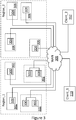
- FIG. 3 shown is a simplified diagram of a cloud computing system in accordance with another embodiment of the invention.
- the system of Fig. 3 is similar to the system of Fig. 2 , but each of the consumer electronic devices 300 and 304 is assigned to one of two different regions, Region_1 or Region_2.
- devices 300 are disposed within locations 302 that are grouped together to form Region_1
- devices 304 are disposed within locations 306 that are grouped together to form Region_2.
- the locations 302 are not necessarily all co-located within a defined geographical area, and similarly the locations 306 are not necessarily all co-located within a defined geographical area.
- the definition of different regions may be logical rather than geographic in nature.
- the devices 300 or 304 within a same region to be located within a relatively small geographical area, such as for instance within a same city or within a same state/province/country. Assigning the devices 300 and 304 to different regions supports geo-diversity/control, political diversity/control, and even seismic diversity etc. resulting in stronger disaster recovery capabilities.
- geo-diversity and/or political diversity control supports the storage and/or processing of data in a way that can ensure compliance with export restrictions or other similar limitations on the movement of data, such as for instance preventing sensitive research data from being stored or processed using resources that are located within black-listed countries, etc.
- a first user system (Client_1) 310 and a second user system (Client_2) 312 are also coupled to the WAN 308.
- Client_1 is in Region_1 and that Client_2 is in Region_1.
- Client_1 and Client_2 are both in either Region_1 or Region_2, or Client_1 is in Region_2 and Client_2 is in Region_1.
- various known components of the WAN 308 and of the communication systems through which the consumer electronic devices 300 and 304 and the user systems 310 and 312 connect to the WAN are not shown in Fig. 3 .
- the content delivery service is an Internet Protocol TV (IPTV) service
- IPTV Internet Protocol TV
- the consumer electronic devices 300 and 304 are set-top boxes similar to the one that is described with reference to Fig. 2 .
- the consumer electronic devices 300 and 304 are any type of pass-through box associated with a service that provides for instance cable television signals, satellite television signals, over the air television signals, etc., to the subscribers.
- the consumer electronic devices 300 and/or 304 support other content delivery services, such as for instance full web browser HTML and HTML5 service, either in addition to or instead of supporting the IPTV service.
- Fig. 4 is a simplified block diagram showing various components of the consumer electronic device 200, 300, 304, e.g., an Internet Protocol TV (IPTV) set top box (STB) for a subscription-based IPTV content delivery service.
- IPTV Internet Protocol TV
- STB includes a digital media processor 400 for processing data packets that are transmitted over a WAN and received at input interface 402.
- the digital media processor 400 comprises one or more processors for extracting data packets and for processing the resulting transport stream.
- the digital media processor 400 optionally is dedicated, i.e. a field programmable gate array (FPGA), central processing unit (CPU), graphics processor unit (GPU), hard codecs, etc.
- FPGA field programmable gate array
- CPU central processing unit
- GPU graphics processor unit
- hard codecs etc.
- Processing the transport stream includes functions such as decoding, error correction, descrambling, and extracting of a specific program stream as selected by a user.
- the program stream is then divided into its elementary streams (video, audio and control), which are supplied to a compositor 404 to create a signal to be sent to a television or other similar device.
- the STB further includes storage 406, such as for instance a hard disk drive (HDD) or a solid-state memory or flash memory device.
- the capacity of storage 406 optionally is in the terabyte (TB) range or higher.
- Storage 406 supports personal video recorder (PVR) functionality, and/or stores the firmware and other software that is required to operate the STB.
- PVR personal video recorder
- the STB includes a sensor 408, e.g., an Infrared sensor, for receiving control signals from a user remote control device having a complementary transmitter.
- a sensor 408 e.g., an Infrared sensor
- auxiliary processing and/or storage components unrelated to the subscription-based content delivery service are provided within the STB.
- the STB includes a finite amount of processing resources within the digital media processor 400 (and the optional auxiliary processing component if present), as well as a finite amount of storage resources within storage 406 (and the optional auxiliary storage component if present). More of the processing resources and/or storage resources are used during certain periods of time, such as for instance when the subscriber to the content delivery service is watching a program, than during other periods of time, such as for instance when at the subscriber is not watching a program. Depending on the resources that are provided within the STB, and the nature of the program that is being watched, some of the processing resources and/or storage resources may remain unused or available, even when the subscriber is watching a program.
- the processing resources and storage resources of the STB are underutilized.
- the systems that are shown in Fig. 2 and Fig. 3 allow tasks to be performed for other users unrelated to the subscriber, such as for instance Client_1 or Client_2, using the underutilized STB processing resources and/or storage resources.
- FIG. 3 is a STB similar to the one that is shown in Fig. 4 .
- different STB models may be provided to different subscribers, such as for instance during the roll-out of new models or when different models are offered to subscribers at different costs, etc. Since the processing and storage characteristics of the different models are known, the instantaneous amount of unused processing resources and/or storage resources for any STB may be determined based on knowledge of the program requested by a subscriber associated with that STB.
- a cloud-computing provider i.e. a broker of cloud-computing resources, coordinates the delivery of tasks from Client_1 and/or from Client_2 to one or more of the consumer electronic devices 200.
- the cloud-computing provider is also the provider of the content delivery service.
- the cloud-computing provider is also the provider of Internet service to the subscriber.
- the cloud-computing provider (broker), the provider of the content delivery service and the Internet service provider are separate entities.
- the cloud-computing provider maintains a not illustrated server system that is connected to WAN 204, or alternatively the cloud-computing provider maintains a virtual server system that is itself distributed across the consumer electronic devices 200.
- the cloud-computing provider tracks the processing resources and/or storage resources that are available on each of the consumer electronic devices, which are always connected to the WAN and in communication with the cloud-computing provider.
- the cloud-computing provider determines one or more of the consumer electronic devices 200 having sufficient available processing resources and/or storage resources to execute the task, and subsequently provides the task to the one or more of the consumer electronic devices 200 for execution thereon.
- each of the one or more consumer electronic devices 200 optionally performs only a portion of the task.
- the cloud-computing provider returns a result to the task provider Client_1 or Client_2, and creates a billing/activity tracking record, which optionally includes providing an invoice to the task provider based on the amount of resources of the one or more of the consumer electronic devices 200 consumed during execution of the task.
- executing of a task occurs during a period of time that overlaps with, or that is in parallel with, delivery of content to the one or more of the consumer electronic devices 200.
- the primary function of the STB e.g., during delivery of content to the subscriber associated with the STB, then performing the primary function has priority over performing the task.
- executing of a task occurs only during "idle time" when content is not being delivered to the one or more of the consumer electronic devices 200.
- some tasks may be performed using the resources of only a single consumer electronic device 200, or using the resources of a plurality of consumer electronic devices 200 cooperatively. For instance, storage of a small amount of user data or certain processing tasks may be performed using the resources of only a single consumer electronic device 200. On the other hand, storage of large amounts of data, storage of data according to a RAID process, or processing intensive tasks may require the resources of a plurality of consumer electronic devices 200. As such, it is not a requirement that any single STB is capable of performing an entire processing or storage task by itself.
- Fig. 2 Other optional features of the system that is shown in Fig. 2 include using different security protocols to transmit and/or store data relating to the content delivery service and user data relating to a provided task. For instance, data relating to television programming is transmitted to consumer electronic devices 200 via WAN 204 and stored on consumer electronic devices 200 in accordance with a first security protocol that is suitable in an IPTV ecosystem. User data, which is not associated with the content delivery service to which the subscribers subscribe, is transmitted to consumer electronic devices 200 via WAN 204 and stored on consumer electronic devices 200 in accordance with a second security protocol that is suitable in a cloud-computing ecosystem. The subscribers are unable to access the user data, and in fact the subscribers preferably are not even aware that a task is being executed at any given time.
- the cloud-computing provider transmits a network bundle including an operating system, an environment, an application to be executed and data to be processed.
- a network bundle including all of the above-noted components, it is possible to execute different tasks on the consumer electronic devices 200 at different time.
- providing network bundles for each task consumes an undesirably large amount of network bandwidth.
- the operating system, environment and network platform are installed on the consumer electronic devices 200 and only the necessary application and data is provided each time a task is to be performed. Such batch processing reduces the network bandwidth problem but limits the types of tasks that can be performed using the consumer electronic devices 200.
- the cloud-computing provider or broker coordinates flow of data including receipt of the task from a requestor (e.g., Client_1 or Client_2), delivery of the task to one or more consumer electronic devices 200 for execution thereon, receipt of a result of executing the task, and providing the result back to the requestor.
- the flow of data is direct between the one or more consumer electronic devices 200 and the requestor (Client_1 or Client_2).
- the cloud-computing provider monitors and logs cloud service operations and invoices the requestor based on the resources that are consumed during executing of the task.
- tasks are performed for the requestor using processing and/or storage resources that are outside of the processing and/or storage resources of the requestor. That is to say, the tasks are performed for the requestor using the processing and/or storage resources associated with one or more subscribers to the content delivery service.
- the invoicing, by the cloud-computing provider is to other than the subscribers to the content delivery service.
- the system that is shown in Fig. 2 provides considerable flexibility in the provisioning of cloud-based computing services, and supports a broker-mediated cloud-computing environment.
- the nature of a processing task may be taken into account when providing the task to the devices 200.
- a highly parallelized process may be provided to any of the available devices 200 without regard to the processing speed thereof, and a highly serialized process may be provided to the available devices 200 that offer the fastest processing speed.
- the nature of a storage task may also dictate whether data is stored entirely within one device 200, or within a plurality of devices 200 using a RAID process or another similar process.
- the locations 202 may be distributed across different countries and even across different continents.
- the nature of the storage task may dictate that the data cannot be stored within devices 200 that are located within certain specified countries or regions. Similarly, certain processing tasks may place restrictions on the countries in which the devices 200 can be located.
- Cloud-computing services that are provided using the system of Fig. 2 can be implemented in a highly elastic fashion, since tasks may be distributed across a large number of devices 200. As the number of subscribers to the content delivery service grows, so too does the number of available devices 200. In order to incent new subscribers to join the service, and thereby increase the available processing resources and storage resources, the content delivery service provider optionally provides the devices 200 to subscribers without charge. The cost of the devices 200 is recovered over time as the available processing resources and/or available storage resources are used to perform tasks for other clients. Once the initial cost of installing the devices 200 has been recovered, the ongoing cost of implementing the system of Fig. 2 is small. In particular, each subscriber pays for the electricity that is required to power the device 200 even when tasks are being performed for other clients.
- the devices 200 do not require cooling systems or other infrastructure that are required in traditional data centers.
- the system that is shown in Fig. 2 has a low cost of ownership and is highly scalable and elastic.
- a portion of the invoiced amount is credited back to the subscribers as payment for making the resources of their device 200 available for performing other tasks.
- the service and/or equipment is offered at a reduced price based on anticipated revenues.
- the system that is shown in Fig. 3 similarly provides considerable flexibility in the provisioning of cloud-based computing services, within each of a plurality of distinct regions.
- the system that is shown in Fig. 3 also provides redundancy by supporting storage of the same data in different regions for being accessed by clients within the same region. Further, network efficiency is improved since tasks that are received from a client in one region are routed to devices 300 or 304 within the same region.
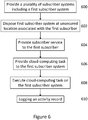
- a plurality of subscribers is registered to a content delivery service.
- the content delivery service optionally is one or more of an IPTV service and an Internet service.
- Registering optionally includes signing each of the subscribers to a fixed-term contract or to a month-to-month contract.
- the content delivery service provides a subscriber system at a location that is associated with the subscriber. For instance, the subscriber system is provided at the subscriber's residence and is coupled to a Wide Area Network (WAN), such as for instance via an asymmetric digital subscriber line.
- WAN Wide Area Network
- the provided subscriber system comprises at least one of a processing resource and a non-volatile storage resource for use in providing the content delivery service.
- content is delivered to a first subscriber system via the WAN.
- the content is delivered in response to a content delivery request received from a first subscriber, such as for instance selection of a program from a program guide using a remote control device or navigating to a specified web page using a browser.
- the delivery of the content, and processing of the delivered content for being displayed via a television or other similar device consumes a portion of the at least one of the processing resource and the non-volatile storage resource of the first subscriber system.
- the content delivery service provider is also a cloud-computing provider or a cloud-computing broker.
- the content delivery service provider is also an Internet service provider.
- the cloud-computing provider broker
- the content deliver service provider and the Internet service provider are separate entities.
- a cloud-computing task is received, the task being other than in accordance with the content delivery service and other than originating from any subscribers of the plurality of subscribers.
- the task originates from Client_1 or Client_2 in Fig. 2 or 3 .
- the task is received from a subscriber for execution other than by the subscriber's system.
- the task is provided to the first subscriber system.
- Providing the task to the first subscriber system includes making a determination that the first subscriber system has an available portion of the at least one of the processing resource and the non-volatile storage resource that is sufficient to execute the task.
- the task is provided to the first subscriber during a period of time in which content is not being delivered by the content delivery service - idle time.
- the task is provided to the first subscriber during a period of time in which content is being delivered by the content delivery service. In this latter case, a significant portion of the at least one of the processing resource and the non-volatile storage resource is being consumed to deliver the content, but unused resources are still available to be used for other tasks.
- the task is executed on the first subscriber system, using the unused at least one of the processing resource and the non-volatile storage resource thereof.
- an activity record is logged.
- logging an activity record includes invoicing for execution of the task based on an amount of the available or unused portion of the at least one of the processing resource and the non-volatile storage resource consumed during execution of the task.
- the invoicing is to other than the first subscriber, e.g., to Client_1 or Client_2 in Fig. 2 or 3 .
- a plurality of subscriber systems is provided, including a first subscriber system, the subscriber systems being coupled via a Wide Area Network (WAN).
- the first subscriber system comprises processing and non-volatile storage and is suitably programmed for providing a subscriber service to a first subscriber.
- the first system is disposed in an unsecured location, the unsecured location associated with the first subscriber. For instance, the first subscriber system is disposed in the first subscriber's residence.
- the term unsecured implies that no special measures are provided to provide security to the subscriber system in addition to the pre-existing door locks and/or alarm systems that already exist at the location associated with the first subscriber.
- the subscriber service is provided to the first subscriber, e.g., requested content available via the subscriber service is provided to the first subscriber.
- the requested content is delivered in response to a content delivery request received from the first subscriber, such as for instance by selection of a program from a program guide using a remote control device.
- a cloud-computing task is provided to the first subscriber system via the WAN.
- the cloud-computing task comprises, for instance, at least one of processing and storage of user data, the user data unrelated to the subscriber service.
- the cloud-computing task is executed on the first subscriber system, using an amount of at least one of the processing and non-volatile storage thereof.
- an activity record is logged.
- logging an activity record includes invoicing for execution of the task based on the amount of at least one of the processing and the non-volatile storage consumed on the first subscriber system during execution of the task.
- the invoicing is to other than the first subscriber, e.g., to Client_1 or Client_2 in Fig. 2 or 3 .
- all processing tasks are obfuscated to maintain security of the overall process even when executed in unsecure locations. For example, data to be stored is encrypted to ensure that access to the physical media does not provide access to the data, or only a portions of the entire algorithm is executed on the first subscriber system, etc.
- a plurality of subscribers is registered to a content delivery service. Registering optionally includes signing each of the subscribers to a fixed-term contract or to a month-to-month contract.
- the content delivery service provides a subscriber system at a location that is associated with the subscriber. For instance, the subscriber system is provided at the subscriber's residence and is coupled to a Wide Area Network (WAN), such as for instance via an asymmetric digital subscriber line.
- WAN Wide Area Network
- the provided subscriber system comprises at least one of a processing resource and a non-volatile storage resource for use in providing the content delivery service.
- content is delivered to each subscriber system in accordance with the content delivery service.
- delivering content comprises providing data relating to the content delivery service to each subscriber system via the WAN and according to a first security protocol.
- the content delivery service provider is also a cloud-computing provider or a cloud-computing broker.
- the content delivery service provider is also an Internet service provider.
- the cloud-computing provider broker
- the content deliver service provider and the Internet service provider are separate entities.
- a cloud-computing task is provided to at least one of the subscriber systems.
- the step of providing the cloud-computing task comprises determining at least one subscriber system having a sufficient amount of the at least one of the processing resource and the non-volatile storage resource available to execute the cloud-computing task.
- Cloud-computing task data are then provided to the at least one subscriber system via the WAN and according to a second security protocol.
- an activity record is logged.
- logging an activity record includes invoicing for execution of the cloud-computing task based on an amount of the available portion of the at least one of the processing resource and the non-volatile storage resource that is consumed during execution of the cloud computing task.
- the invoicing is to other than a subscriber associated with the at least one of the subscriber systems, e.g., to Client_1 or Client_2 in Fig. 2 or 3 .
- the various consumer electronic devices cooperate to form virtual data centers, which are distributed geographically within known regions.
- virtual data centers which are distributed geographically within known regions.
- Various specific applications may be envisioned for such virtual data centers.
- the distributed data centers may be used for applications including distributed rendering, distributed analytics processing, testing and development running parallel instances, etc.
- the virtual data centers may be used for the distributed back-up of virtual or real storage area networks (SANs) within real data centers.
- SANs virtual or real storage area networks
- Distributed back-up of a virtual SAN provides additional redundancy, and may be used for disaster recovery purposes, etc.
- data that is provided for distributed storage on the consumer electronic devices may also be cached at a control center. For instance, as data enters through the service portal an image of the data is captured and stored on a server.
- the data that is stored on a server may be used when a data-retrieval request is received, such that the data can be provided to the requestor without the delay that is associated with reassembling the data from the distributed storage.
- the data that is stored on the server may be substantially permanently stored, such as for instance as part of a premium subscription service, or the data that is stored on the server may be stored until it "ages" and is removed. For instance, the data may be removed from the server after a predetermined period of time has passed without receiving a request for the retrieval of that data.
- hypervisors may be layered on top of the virtual data centers to create different compatibilities.
- Eucalyptus may be layered on top of the virtual data centers to emulate Amazon Web Services in the virtual data center.
- excess processing and/or storage resources on the consumer electronic devices 200, 300, 304 may be used to accelerate in software and thereby enhance native codecs on the devices to extend their life and capabilities.
- the devices 200, 300, 304 are set-top boxes with hard-wired codecs for 1080p television programming.
- Software codecs may be used to extend the 1080p codecs to provide 4K Ultra HD capabilities. Such a process is transparent to the subscriber.
- the consumer electronic devices 200, 300, 304 are located within a relatively small geographic area, such as for instance a neighborhood or a Multi-Dwelling Unit (MDU) such as for instance a hospital, a hotel, a condominium building, a rental apartment building, a retirement home or an extended care facility.
- MDU Multi-Dwelling Unit
- an operational point of presence (OP-POP) may be located within the IP network serving the devices.
- a centrally located server may be provided within the basement of a hotel (or other MDU) and be accessible to the devices that are provided within each guest room of that hotel.
- a cloud-computing provider may provide updates to the OP-POP via a wide area network (WAN) and then the updates may be provided to each of the devices via a local area network (LAN).
- WAN wide area network
- LAN local area network
- Such an arrangement avoids the need to establish separate streams between the cloud-computing provider and each device via the WAN, thereby reducing data traffic on the WAN.
- data-intensive content such as for instance 4K Ultra HD television programming may be provided to the OP-POP via the WAN and then subsequently distributed via the LAN to the various devices within the hotel (or other MDU).
Landscapes
- Engineering & Computer Science (AREA)
- Multimedia (AREA)
- Signal Processing (AREA)
- Databases & Information Systems (AREA)
- Computer Networks & Wireless Communication (AREA)
- Human Computer Interaction (AREA)
- Theoretical Computer Science (AREA)
- Physics & Mathematics (AREA)
- Computer Hardware Design (AREA)
- Automation & Control Theory (AREA)
- Mathematical Physics (AREA)
- General Physics & Mathematics (AREA)
- General Engineering & Computer Science (AREA)
- Software Systems (AREA)
- Information Transfer Between Computers (AREA)
Claims (13)
- System, das Folgendes umfasst:ein Weitverkehrsnetz (WAN) (204, 308);mehrere Teilnehmersysteme (200, 300, 304), die an das WAN (204, 308) gekoppelt sind, wobei jedes Teilnehmersystem (200, 300, 304) einem unterschiedlichen Teilnehmer eines Dienstes zur Bereitstellung von Inhalten zugeordnet ist und jedes Teilnehmersystem (200, 300, 304) eine Menge verfügbarer Betriebsmittel (400, 406), die im Zeitablauf variiert, besitzt und jedes der mehreren Teilnehmersysteme (200, 300, 304) ein Anfordern durch einen entsprechenden Teilnehmer einer Bereitstellung von Inhalt dafür mittels des Dienstes zur Bereitstellung von Inhalten unterstützt;ein Server-System eines Cloud-Computing-Anbieters, das einen oder mehrere Server umfasst;ein Client-System (206, 208, 310, 312), das an das WAN (204, 308) gekoppelt ist und konfiguriert ist, eine Anforderung an das Server-System eines Cloud-Computing-Anbieters zur Verarbeitung und/oder zur Datenspeicherung in den verfügbaren Betriebsmitteln (400, 406) der mehreren Teilnehmersysteme (200, 300, 304) und außerhalb von Betriebsmitteln des Client-Systems (206, 208, 310, 312) vorzunehmen, undeinen Betriebsmittelzuweiser des Server-Systems eines Cloud-Computing-Anbieters, wobei der Betriebsmittelzuweiser konfiguriert ist, Folgendes zu koordinieren:Empfangen vom Client-System (206, 208, 310, 312) der Anforderung zur Verarbeitung und/oder Datenspeicherung;Bestimmen einer Untermenge der mehreren Teilnehmersysteme (200, 300, 304), die insgesamt eine ausreichende Menge der verfügbaren Betriebsmittel (400, 406) besitzt, um die Anforderung zur Verarbeitung und/oder zur Datenspeicherung zu erfüllen;Liefern mittels des WAN (204, 308) einer Aufgabe zu Teilnehmersystemen (200, 300, 304) in der bestimmten Untermenge der mehreren Teilnehmersysteme (200, 300, 304), die von ihnen unter Verwendung eines Teils ihres verfügbaren Betriebsmittels (400, 406) durchgeführt werden soll, wobei die Aufgabe die Anforderung, die vom Client-System (206, 208, 310, 312) empfangen wird, als Grundlage verwendet;Liefern eines Ergebnisses des Durchführens der Aufgabe von jedem Teilnehmersystem (200, 300, 304) in der bestimmten Untermenge der mehreren Teilnehmersysteme (200, 300, 304) zum Client-System (206, 208, 310, 312); undProtokollieren eines Anteils des verfügbaren Betriebsmittels (400, 406), der in den Teilnehmersystemen (200, 300, 304) in der bestimmten Untermenge der mehreren Teilnehmersysteme (200, 300, 304) während des Durchführens der Aufgabe verbraucht wird, wobeidas Server-System eines Cloud-Computing-Anbieters eine Betrachtungsaktivität für jeden Teilnehmer über einen Zeitraum von Tagen oder Wochen überwacht und jedem Teilnehmer tägliche Zeiträume von Betrachtungsinaktivität zuordnet, die Zeitblöcken entsprechen, während derer der Teilnehmer das Teilnehmersystem (200, 300, 304) nicht verwendet, um auf Programme mittels des Dienstes zur Bereitstellung von Inhalten zuzugreifen, und die Verarbeitungsbetriebsmittel (400) und die Speicherbetriebsmittel (406) des Teilnehmersystems (200, 300, 304) deshalb nicht voll ausgelastet sind, und dadurch, dassder Schritt des Bestimmens durch den Betriebsmittelzuweiser der Untermenge der mehreren Teilnehmersysteme (200, 300, 304), die insgesamt eine ausreichende Menge der verfügbaren Betriebsmittel (400, 406) besitzt, die zugeordneten Zeiträume von Inaktivität derart als Grundlage verwendet, dass die Aufgabe für die Untermenge der mehreren Teilnehmersysteme (200, 300, 304) während der Zeitblöcke bereitgestellt wird.
- System nach Anspruch 1, wobei der Betriebsmittelzuweiser dem Client-System (206, 208, 310, 312) das Durchführen der Aufgabe auf der Grundlage des protokollierten Anteils des verfügbaren Betriebsmittels (400, 406), der verbraucht wird, in Rechnung stellt.
- System nach Anspruch 2, wobei der Dienst zur Bereitstellung von Inhalten ein Internet-Protokoll-TV-Dienst (IPTV-Dienst) ist und jedes Teilnehmersystem (200, 300, 304) der mehreren Teilnehmersysteme (200, 300, 304) eine IPTV-Set-Top-Box (STB) ist.
- System nach Anspruch 2, wobei der Dienst zur Bereitstellung von Inhalten ein Internet-Browser-HTML-Dienst oder ein Internet-Browser-HTML5-Dienst ist.
- Verfahren, das Folgendes umfasst:Bereitstellen mehrerer Teilnehmersysteme (200, 300, 304), die mittels eines Weitverkehrsnetzes (WAN) (204, 308) gekoppelt sind, wobei jedes Teilnehmersystem (200, 300, 304) einem unterschiedlichen Teilnehmer eines Dienstes zur Bereitstellung von Inhalten zugeordnet ist und jedes Teilnehmersystem ein Verarbeiten und einen nichtflüchtigen Speicher umfasst und geeignet programmiert ist, für einen entsprechenden Teilnehmer den Dienst zur Bereitstellung von Inhalten bereitzustellen;Anordnen jedes Teilnehmersystems (200, 300, 304) an einem unterschiedlichen ungesicherten Standort, wobei jeder unterschiedliche ungesicherte Standort (202, 302, 306) einem unterschiedlichen entsprechenden Teilnehmer des Dienstes zur Bereitstellung von Inhalten zugeordnet ist;Bereitstellen des Dienstes zur Bereitstellung von Inhalten für die entsprechenden Teilnehmer; undDurchführen durch einen Betriebsmittelzuweiser eines Server-Systems eines Cloud-Computing-Anbieters der folgenden Schritte:Empfangen von einem Client-System (206, 208, 310, 312), das an das WAN (204, 308) gekoppelt ist, einer Anforderung zur Verarbeitung und/oder Datenspeicherung in verfügbaren Betriebsmitteln (400, 406) der mehreren Teilnehmersysteme (200, 300, 304) und außerhalb von Betriebsmitteln des Client-Systems (206, 208, 310, 312);Bestimmen einer Untermenge der mehreren Teilnehmersysteme (200, 300, 304), die insgesamt eine ausreichende Menge der verfügbaren Betriebsmittel (400, 406) besitzt, um die Anforderung zur Verarbeitung und/oder zur Datenspeicherung zu erfüllen;Liefern mittels des WAN (204, 308) einer Aufgabe zu Teilnehmersystemen (200, 300, 304) in der bestimmten Untermenge der mehreren Teilnehmersysteme (200, 300, 304) undProtokollieren eines Anteils des Verarbeitens (400) und/oder des nichtflüchtigen Speichers (406), der in jedem Teilnehmersystem (200, 300, 304) in der bestimmten Untermenge der mehreren Teilnehmersysteme (200, 300, 304) während der Ausführung der Aufgabe verbraucht wird, wobeidie Aufgabe ein Speichern von Anwenderdaten außer Daten, die dem Dienst zur Bereitstellung von Inhalten zugeordnet sind, und außer Daten, die dem Teilnehmer, der dem bestimmten mindestens einen der mehreren Teilnehmersysteme (200, 300, 304) zugeordnet ist, zugeordnet sind, umfasst und/oderdie Aufgabe ein Verarbeiten von Anwenderdaten außer Daten, die dem Dienst zur Bereitstellung von Inhalten zugeordnet sind, umfasst, wobeidas Server-System eines Cloud-Computing-Anbieters eine Betrachtungsaktivität für jeden Teilnehmer über einen Zeitraum von Tagen oder Wochen überwacht und auf jeden Teilnehmer tägliche Zeiträume von Betrachtungsinaktivität zuordnet, die Zeitblöcken entsprechen, während derer der Teilnehmer das Teilnehmersystem (200, 300, 304) nicht verwendet, um auf Programme mittels des Dienstes zur Bereitstellung von Inhalten zuzugreifen, und die Verarbeitungsbetriebsmittel (400) und die Speicherbetriebsmittel (406) des Teilnehmersystems (200, 300, 304) deshalb nicht voll ausgelastet sind, und dadurch, dassder Schritt des Bestimmens durch den Betriebsmittelzuweiser der Untermenge der mehreren Teilnehmersysteme (200, 300, 304), die insgesamt eine ausreichende Menge der verfügbaren Betriebsmittel (400, 406) besitzt, die zugeordneten Zeiträume von Inaktivität derart als Grundlage verwendet, dass die Aufgabe der Untermenge der mehreren Teilnehmersysteme (200, 300, 304) während der Zeitblöcke geliefert wird.
- Verfahren nach Anspruch 5, wobei das Protokollieren ein Stellen von Rechnungen an andere als irgendwelche Teilnehmer des Dienstes zur Bereitstellung von Inhalten umfasst.
- Verfahren nach Anspruch 5, wobei das Server-System eines Cloud-Computing-Anbieters auch der Anbieter des Dienstes zur Bereitstellung von Inhalten ist.
- Verfahren nach Anspruch 5, wobei der Dienst zur Bereitstellung von Inhalten ein Internet-Protokoll-TV-Dienst (IPTV-Dienst) ist und jedes der mehreren Teilnehmersysteme (200, 300, 304) eine Set-Top-Box (STB) ist.
- Verfahren nach Anspruch 5, wobei das Bereitstellen des Dienstes zur Bereitstellung von Inhalten für die entsprechenden Teilnehmer während eines ersten Zeitraums durchgeführt wird und das Ausführen der Aufgabe in der bestimmten Untermenge der mehreren Teilnehmersysteme (200, 300, 304) während eines zweiten Zeitraums, der mit dem ersten Zeitraum mindestens teilweise überlappt, durchgeführt wird.
- Verfahren nach Anspruch 5, wobei das Bereitstellen des Dienstes zur Bereitstellung von Inhalten zu den entsprechenden Teilnehmern während eines ersten Zeitraums durchgeführt wird und das Ausführen der Aufgabe in der bestimmten Untermenge der mehreren Teilnehmersysteme (200, 300, 304) während eines zweiten Zeitraums, der nicht mit dem ersten Zeitraum überlappt, durchgeführt wird.
- Verfahren nach Anspruch 5, das ein Speichern mindestens eines Teils der Anwenderdaten im nichtflüchtigen Speicher (406) der bestimmten Untermenge der mehreren Teilnehmersysteme (200, 300, 304) umfasst.
- Verfahren nach Anspruch 11, wobei Daten, die dem Dienst zur Bereitstellung von Inhalten zugeordnet sind, im nichtflüchtigen Speicher (406) der bestimmten Untermenge der mehreren Teilnehmersysteme (200, 300, 304) gemäß einem ersten Sicherheitsprotokoll gespeichert sind und der mindestens eine Teil der Anwenderdaten im nichtflüchtigen Speicher (406) der bestimmten Untermenge der mehreren Teilnehmersysteme (200, 300, 304) gemäß einem zweiten Sicherheitsprotokoll gespeichert ist.
- Verfahren nach Anspruch 5, wobei ein Teil der Anwenderdaten im nichtflüchtigen Speicher (406) von mindestens zwei Teilnehmersystemen (200, 300, 304) der bestimmten Untermenge der mehreren Teilnehmersysteme (200, 300, 304) gespeichert ist.
Applications Claiming Priority (2)
| Application Number | Priority Date | Filing Date | Title |
|---|---|---|---|
| US201361816211P | 2013-04-26 | 2013-04-26 | |
| PCT/US2014/035261 WO2014176406A1 (en) | 2013-04-26 | 2014-04-24 | Cloud computer system and method based on distributed consumer electronic devices |
Publications (3)
| Publication Number | Publication Date |
|---|---|
| EP2989554A1 EP2989554A1 (de) | 2016-03-02 |
| EP2989554A4 EP2989554A4 (de) | 2017-02-15 |
| EP2989554B1 true EP2989554B1 (de) | 2020-02-05 |
Family
ID=51790483
Family Applications (1)
| Application Number | Title | Priority Date | Filing Date |
|---|---|---|---|
| EP14788926.5A Active EP2989554B1 (de) | 2013-04-26 | 2014-04-24 | Cloudcomputersystem und -verfahren auf basis verteilter unterhaltungselektronikvorrichtungen |
Country Status (4)
| Country | Link |
|---|---|
| US (2) | US9451322B2 (de) |
| EP (1) | EP2989554B1 (de) |
| CA (1) | CA2909765C (de) |
| WO (1) | WO2014176406A1 (de) |
Families Citing this family (4)
| Publication number | Priority date | Publication date | Assignee | Title |
|---|---|---|---|---|
| CA2917763C (en) | 2013-07-10 | 2021-01-12 | LeoNovus USA | Cloud computing system and method utilizing unused resources of non-dedicated devices |
| US9930391B1 (en) * | 2014-09-11 | 2018-03-27 | Harmonic, Inc. | Network personal video recorder utilizing personal digital storage |
| US10673976B2 (en) * | 2016-03-07 | 2020-06-02 | Intertrust Technologies Corporation | Connected device processing systems and methods |
| US10917458B2 (en) * | 2018-11-12 | 2021-02-09 | Pivotal Software, Inc. | Message broker configuration |
Family Cites Families (35)
| Publication number | Priority date | Publication date | Assignee | Title |
|---|---|---|---|---|
| US8117644B2 (en) * | 2000-01-07 | 2012-02-14 | Pennar Software Corporation | Method and system for online document collaboration |
| US20030046396A1 (en) | 2000-03-03 | 2003-03-06 | Richter Roger K. | Systems and methods for managing resource utilization in information management environments |
| US20010039497A1 (en) * | 2000-03-30 | 2001-11-08 | Hubbard Edward A. | System and method for monitizing network connected user bases utilizing distributed processing systems |
| US6574716B2 (en) | 2001-05-30 | 2003-06-03 | Hewlett-Packard Development Company, L.P. | Unifying data storage in a distributed network |
| CA2408766A1 (en) | 2001-10-17 | 2003-04-17 | Telecommunications Research Laboratory | Content delivery network bypass system |
| US20050050135A1 (en) * | 2003-08-25 | 2005-03-03 | Josef Hallermeier | Handheld digital multimedia workstation and method |
| US20110016214A1 (en) * | 2009-07-15 | 2011-01-20 | Cluster Resources, Inc. | System and method of brokering cloud computing resources |
| US7636767B2 (en) | 2005-11-29 | 2009-12-22 | Cisco Technology, Inc. | Method and apparatus for reducing network traffic over low bandwidth links |
| US7693270B2 (en) * | 2005-12-15 | 2010-04-06 | Alcatel-Lucent Usa Inc. | Method and network for providing service blending to a subscriber |
| US8014308B2 (en) * | 2006-09-28 | 2011-09-06 | Microsoft Corporation | Hardware architecture for cloud services |
| US9076148B2 (en) | 2006-12-22 | 2015-07-07 | Yahoo! Inc. | Dynamic pricing models for digital content |
| US7873809B2 (en) | 2007-03-29 | 2011-01-18 | Hitachi, Ltd. | Method and apparatus for de-duplication after mirror operation |
| US20080310408A1 (en) | 2007-06-13 | 2008-12-18 | Phil Thompson | Internet Protocol Television |
| US8904414B2 (en) * | 2007-06-26 | 2014-12-02 | At&T Intellectual Property I, L.P. | System and method of delivering video content |
| US9076144B2 (en) * | 2008-03-18 | 2015-07-07 | At&T Intellectual Property I, Lp | Method and system for providing set-top box remote access functions in a browser extension based on advertising metadata |
| US20110119724A1 (en) * | 2008-07-07 | 2011-05-19 | Telefonaktiebolaget Lm Ericsson (Publ) | Proxy Functionality |
| US20100058381A1 (en) | 2008-09-04 | 2010-03-04 | At&T Labs, Inc. | Methods and Apparatus for Dynamic Construction of Personalized Content |
| US20100125529A1 (en) * | 2008-11-19 | 2010-05-20 | Venkatesh Srinivasan | Remote Rental of Digital Content Peripheral Storage Entities |
| WO2010099513A2 (en) * | 2009-02-27 | 2010-09-02 | Coach Wei | Adaptive network with automatic scaling |
| US20110145875A1 (en) | 2009-12-11 | 2011-06-16 | Electronics And Telecommunications Research Institute | Mobile set-top box and method for providing internet protocol television service using the same |
| KR20110083176A (ko) | 2010-01-13 | 2011-07-20 | 삼성전자주식회사 | 클라우드 자원을 다수의 디바이스 자원과 결합하여 제공하는 자원분배장치 및 방법 |
| US8356359B2 (en) * | 2010-04-19 | 2013-01-15 | Ericsson Television, Inc. | Licensing rights for media content that follows a subscriber |
| US8799413B2 (en) * | 2010-05-03 | 2014-08-05 | Panzura, Inc. | Distributing data for a distributed filesystem across multiple cloud storage systems |
| WO2012042509A1 (en) * | 2010-10-01 | 2012-04-05 | Peter Chacko | A distributed virtual storage cloud architecture and a method thereof |
| WO2012051539A2 (en) | 2010-10-14 | 2012-04-19 | Cyandia, Inc. | Methods, apparatus, and systems for presenting television programming and related information |
| US20120151077A1 (en) * | 2010-12-08 | 2012-06-14 | Paul Finster | Systems And Methods For Distributed Authentication Of Video Services |
| AU2011201674B1 (en) | 2011-04-14 | 2012-07-19 | Limelight Networks, Inc. | Advanced embed code |
| US8769531B2 (en) | 2011-05-25 | 2014-07-01 | International Business Machines Corporation | Optimizing the configuration of virtual machine instances in a networked computing environment |
| US9071954B2 (en) | 2011-05-31 | 2015-06-30 | Alcatel Lucent | Wireless optimized content delivery network |
| US8892708B2 (en) | 2011-07-11 | 2014-11-18 | Cisco Technology, Inc. | Placement of service delivery locations of a distributed computing service based on logical topology |
| US8954568B2 (en) | 2011-07-21 | 2015-02-10 | Yahoo! Inc. | Method and system for building an elastic cloud web server farm |
| WO2013052601A1 (en) | 2011-10-04 | 2013-04-11 | Chegg, Inc. | Electronic content management and delivery platform |
| US8745681B2 (en) | 2011-10-19 | 2014-06-03 | Verizon Patent And Licensing Inc. | Set top box resource allocation for executing a widget |
| US9317395B2 (en) | 2011-11-14 | 2016-04-19 | Microsoft Technology Licensing, Llc | Usage reporting from a cloud-hosted, distributed system |
| CA2917763C (en) | 2013-07-10 | 2021-01-12 | LeoNovus USA | Cloud computing system and method utilizing unused resources of non-dedicated devices |
-
2014
- 2014-04-24 WO PCT/US2014/035261 patent/WO2014176406A1/en not_active Ceased
- 2014-04-24 EP EP14788926.5A patent/EP2989554B1/de active Active
- 2014-04-24 US US14/260,688 patent/US9451322B2/en active Active
- 2014-04-24 CA CA2909765A patent/CA2909765C/en active Active
-
2016
- 2016-09-16 US US15/267,866 patent/US10212483B2/en active Active
Non-Patent Citations (1)
| Title |
|---|
| None * |
Also Published As
| Publication number | Publication date |
|---|---|
| CA2909765A1 (en) | 2014-10-30 |
| WO2014176406A1 (en) | 2014-10-30 |
| US20140325545A1 (en) | 2014-10-30 |
| US20170006350A1 (en) | 2017-01-05 |
| EP2989554A4 (de) | 2017-02-15 |
| EP2989554A1 (de) | 2016-03-02 |
| US9451322B2 (en) | 2016-09-20 |
| CA2909765C (en) | 2021-07-13 |
| US10212483B2 (en) | 2019-02-19 |
Similar Documents
| Publication | Publication Date | Title |
|---|---|---|
| US11637872B2 (en) | Systems and methods for allocating and managing resources in an internet of things environment using location based focus of attention | |
| EP3020206B1 (de) | Cloud-computing-system und verfahren zur verwendung ungenutzter ressourcen von nichtdedizierten vorrichtungen | |
| US8843618B2 (en) | Cloud service information overlay | |
| Okay et al. | A fog computing based smart grid model | |
| EP3350957B1 (de) | Entropie-teilung in einem grossen verteilten system | |
| US8893208B2 (en) | Method and system for federated over-the-top content delivery | |
| US10601698B2 (en) | Techniques for managing telemetry data for content delivery and/or data transfer networks | |
| EP4143990A2 (de) | Edge-computing in satellitenkonnektivitätsumgebungen | |
| US10212483B2 (en) | Cloud computing system and method based on distributed consumer electronic devices | |
| CN104427398A (zh) | 一种智能电网交互电视播控平台 | |
| Ledakis et al. | Adaptive edge and fog computing paradigm for wide area video and audio surveillance | |
| US20240080250A1 (en) | Intelligent wireless broadband network and content delivery management | |
| CN115514981A (zh) | 一种视频流调度系统及相关产品 | |
| US10728585B2 (en) | System and method for distributed video storage across enterprises | |
| US12265597B2 (en) | Digital rights management system resource manager | |
| WO2010058215A1 (en) | Method and system for content handling | |
| WO2016202203A1 (zh) | 设备连接方法、装置和智能电视系统 | |
| CN104320627A (zh) | 一种医院病房视频监视的方法以及相关应用服务系统 | |
| Sandar et al. | Cloud-based video monitoring framework: An approach based on software-defined networking for addressing scalability problems | |
| KR101358689B1 (ko) | Cdn 솔루션을 제공하기 위한 iptv 셋톱박스 장치와 서버, 그를 이용한 cdn 솔루션 제공 방법 및 시스템 | |
| US20240340470A1 (en) | System and method for optimizing the distribution of available media production resources | |
| KR20160117967A (ko) | 분산 데이터 수집 방법 및 시스템 | |
| KR101286973B1 (ko) | D-catv기반 멀티-셋톱박스 가상화를 통한 스마트 콘텐츠 전송 및 저장 처리 방법 및 스마트 셋톱박스 | |
| Akpinar | Utilizing Edge in IOT and Video Streaming Applications To Reduce Bottlenecks in Internet Traffic | |
| Mal | Near Real-Time Push Middleware |
Legal Events
| Date | Code | Title | Description |
|---|---|---|---|
| PUAI | Public reference made under article 153(3) epc to a published international application that has entered the european phase |
Free format text: ORIGINAL CODE: 0009012 |
|
| 17P | Request for examination filed |
Effective date: 20151102 |
|
| AK | Designated contracting states |
Kind code of ref document: A1 Designated state(s): AL AT BE BG CH CY CZ DE DK EE ES FI FR GB GR HR HU IE IS IT LI LT LU LV MC MK MT NL NO PL PT RO RS SE SI SK SM TR |
|
| AX | Request for extension of the european patent |
Extension state: BA ME |
|
| DAX | Request for extension of the european patent (deleted) | ||
| A4 | Supplementary search report drawn up and despatched |
Effective date: 20170117 |
|
| RIC1 | Information provided on ipc code assigned before grant |
Ipc: H04N 21/2743 20110101ALI20170111BHEP Ipc: H04N 21/63 20110101ALI20170111BHEP Ipc: H04N 21/61 20110101ALI20170111BHEP Ipc: H04N 21/643 20110101ALI20170111BHEP Ipc: H04N 21/472 20110101ALI20170111BHEP Ipc: G06F 15/173 20060101AFI20170111BHEP |
|
| STAA | Information on the status of an ep patent application or granted ep patent |
Free format text: STATUS: EXAMINATION IS IN PROGRESS |
|
| 17Q | First examination report despatched |
Effective date: 20171221 |
|
| GRAP | Despatch of communication of intention to grant a patent |
Free format text: ORIGINAL CODE: EPIDOSNIGR1 |
|
| STAA | Information on the status of an ep patent application or granted ep patent |
Free format text: STATUS: GRANT OF PATENT IS INTENDED |
|
| INTG | Intention to grant announced |
Effective date: 20190904 |
|
| GRAS | Grant fee paid |
Free format text: ORIGINAL CODE: EPIDOSNIGR3 |
|
| GRAA | (expected) grant |
Free format text: ORIGINAL CODE: 0009210 |
|
| STAA | Information on the status of an ep patent application or granted ep patent |
Free format text: STATUS: THE PATENT HAS BEEN GRANTED |
|
| AK | Designated contracting states |
Kind code of ref document: B1 Designated state(s): AL AT BE BG CH CY CZ DE DK EE ES FI FR GB GR HR HU IE IS IT LI LT LU LV MC MK MT NL NO PL PT RO RS SE SI SK SM TR |
|
| REG | Reference to a national code |
Ref country code: GB Ref legal event code: FG4D |
|
| REG | Reference to a national code |
Ref country code: AT Ref legal event code: REF Ref document number: 1230380 Country of ref document: AT Kind code of ref document: T Effective date: 20200215 |
|
| REG | Reference to a national code |
Ref country code: DE Ref legal event code: R096 Ref document number: 602014060619 Country of ref document: DE |
|
| REG | Reference to a national code |
Ref country code: IE Ref legal event code: FG4D |
|
| REG | Reference to a national code |
Ref country code: CH Ref legal event code: PK Free format text: BERICHTIGUNGEN |
|
| REG | Reference to a national code |
Ref country code: CH Ref legal event code: EP |
|
| RAP2 | Party data changed (patent owner data changed or rights of a patent transferred) |
Owner name: LEONOVUS INC. |
|
| RIN2 | Information on inventor provided after grant (corrected) |
Inventor name: O'HAGAN, SEAN Inventor name: NOBLE, DEREK Inventor name: WILLIS, DANIEL Inventor name: CAMPBELL, GORDON Inventor name: MASTER, PAUL |
|
| REG | Reference to a national code |
Ref country code: NL Ref legal event code: MP Effective date: 20200205 |
|
| PG25 | Lapsed in a contracting state [announced via postgrant information from national office to epo] |
Ref country code: PT Free format text: LAPSE BECAUSE OF FAILURE TO SUBMIT A TRANSLATION OF THE DESCRIPTION OR TO PAY THE FEE WITHIN THE PRESCRIBED TIME-LIMIT Effective date: 20200628 Ref country code: NO Free format text: LAPSE BECAUSE OF FAILURE TO SUBMIT A TRANSLATION OF THE DESCRIPTION OR TO PAY THE FEE WITHIN THE PRESCRIBED TIME-LIMIT Effective date: 20200505 Ref country code: FI Free format text: LAPSE BECAUSE OF FAILURE TO SUBMIT A TRANSLATION OF THE DESCRIPTION OR TO PAY THE FEE WITHIN THE PRESCRIBED TIME-LIMIT Effective date: 20200205 Ref country code: RS Free format text: LAPSE BECAUSE OF FAILURE TO SUBMIT A TRANSLATION OF THE DESCRIPTION OR TO PAY THE FEE WITHIN THE PRESCRIBED TIME-LIMIT Effective date: 20200205 |
|
| REG | Reference to a national code |
Ref country code: LT Ref legal event code: MG4D |
|
| PG25 | Lapsed in a contracting state [announced via postgrant information from national office to epo] |
Ref country code: HR Free format text: LAPSE BECAUSE OF FAILURE TO SUBMIT A TRANSLATION OF THE DESCRIPTION OR TO PAY THE FEE WITHIN THE PRESCRIBED TIME-LIMIT Effective date: 20200205 Ref country code: GR Free format text: LAPSE BECAUSE OF FAILURE TO SUBMIT A TRANSLATION OF THE DESCRIPTION OR TO PAY THE FEE WITHIN THE PRESCRIBED TIME-LIMIT Effective date: 20200506 Ref country code: BG Free format text: LAPSE BECAUSE OF FAILURE TO SUBMIT A TRANSLATION OF THE DESCRIPTION OR TO PAY THE FEE WITHIN THE PRESCRIBED TIME-LIMIT Effective date: 20200505 Ref country code: LV Free format text: LAPSE BECAUSE OF FAILURE TO SUBMIT A TRANSLATION OF THE DESCRIPTION OR TO PAY THE FEE WITHIN THE PRESCRIBED TIME-LIMIT Effective date: 20200205 Ref country code: SE Free format text: LAPSE BECAUSE OF FAILURE TO SUBMIT A TRANSLATION OF THE DESCRIPTION OR TO PAY THE FEE WITHIN THE PRESCRIBED TIME-LIMIT Effective date: 20200205 |
|
| REG | Reference to a national code |
Ref country code: DE Ref legal event code: R082 Ref document number: 602014060619 Country of ref document: DE Representative=s name: LORENZ SEIDLER GOSSEL RECHTSANWAELTE PATENTANW, DE Ref country code: DE Ref legal event code: R081 Ref document number: 602014060619 Country of ref document: DE Owner name: LEONOVUS INC., OTTAWA, CA Free format text: FORMER OWNER: LEONOVUS USA, SUNNYVALE, CA, US |
|
| PG25 | Lapsed in a contracting state [announced via postgrant information from national office to epo] |
Ref country code: NL Free format text: LAPSE BECAUSE OF FAILURE TO SUBMIT A TRANSLATION OF THE DESCRIPTION OR TO PAY THE FEE WITHIN THE PRESCRIBED TIME-LIMIT Effective date: 20200205 |
|
| PG25 | Lapsed in a contracting state [announced via postgrant information from national office to epo] |
Ref country code: CZ Free format text: LAPSE BECAUSE OF FAILURE TO SUBMIT A TRANSLATION OF THE DESCRIPTION OR TO PAY THE FEE WITHIN THE PRESCRIBED TIME-LIMIT Effective date: 20200205 Ref country code: ES Free format text: LAPSE BECAUSE OF FAILURE TO SUBMIT A TRANSLATION OF THE DESCRIPTION OR TO PAY THE FEE WITHIN THE PRESCRIBED TIME-LIMIT Effective date: 20200205 Ref country code: LT Free format text: LAPSE BECAUSE OF FAILURE TO SUBMIT A TRANSLATION OF THE DESCRIPTION OR TO PAY THE FEE WITHIN THE PRESCRIBED TIME-LIMIT Effective date: 20200205 Ref country code: EE Free format text: LAPSE BECAUSE OF FAILURE TO SUBMIT A TRANSLATION OF THE DESCRIPTION OR TO PAY THE FEE WITHIN THE PRESCRIBED TIME-LIMIT Effective date: 20200205 Ref country code: DK Free format text: LAPSE BECAUSE OF FAILURE TO SUBMIT A TRANSLATION OF THE DESCRIPTION OR TO PAY THE FEE WITHIN THE PRESCRIBED TIME-LIMIT Effective date: 20200205 Ref country code: SM Free format text: LAPSE BECAUSE OF FAILURE TO SUBMIT A TRANSLATION OF THE DESCRIPTION OR TO PAY THE FEE WITHIN THE PRESCRIBED TIME-LIMIT Effective date: 20200205 Ref country code: SK Free format text: LAPSE BECAUSE OF FAILURE TO SUBMIT A TRANSLATION OF THE DESCRIPTION OR TO PAY THE FEE WITHIN THE PRESCRIBED TIME-LIMIT Effective date: 20200205 Ref country code: RO Free format text: LAPSE BECAUSE OF FAILURE TO SUBMIT A TRANSLATION OF THE DESCRIPTION OR TO PAY THE FEE WITHIN THE PRESCRIBED TIME-LIMIT Effective date: 20200205 |
|
| REG | Reference to a national code |
Ref country code: DE Ref legal event code: R097 Ref document number: 602014060619 Country of ref document: DE |
|
| REG | Reference to a national code |
Ref country code: GB Ref legal event code: 732E Free format text: REGISTERED BETWEEN 20201015 AND 20201021 |
|
| REG | Reference to a national code |
Ref country code: AT Ref legal event code: MK05 Ref document number: 1230380 Country of ref document: AT Kind code of ref document: T Effective date: 20200205 |
|
| PG25 | Lapsed in a contracting state [announced via postgrant information from national office to epo] |
Ref country code: MC Free format text: LAPSE BECAUSE OF FAILURE TO SUBMIT A TRANSLATION OF THE DESCRIPTION OR TO PAY THE FEE WITHIN THE PRESCRIBED TIME-LIMIT Effective date: 20200205 |
|
| PLBE | No opposition filed within time limit |
Free format text: ORIGINAL CODE: 0009261 |
|
| STAA | Information on the status of an ep patent application or granted ep patent |
Free format text: STATUS: NO OPPOSITION FILED WITHIN TIME LIMIT |
|
| 26N | No opposition filed |
Effective date: 20201106 |
|
| REG | Reference to a national code |
Ref country code: BE Ref legal event code: PD Owner name: LEONOVUS INC.; CA Free format text: DETAILS ASSIGNMENT: CHANGE OF OWNER(S), CESSION; FORMER OWNER NAME: LEONOVUS USA Effective date: 20201106 |
|
| PG25 | Lapsed in a contracting state [announced via postgrant information from national office to epo] |
Ref country code: LU Free format text: LAPSE BECAUSE OF NON-PAYMENT OF DUE FEES Effective date: 20200424 Ref country code: IT Free format text: LAPSE BECAUSE OF FAILURE TO SUBMIT A TRANSLATION OF THE DESCRIPTION OR TO PAY THE FEE WITHIN THE PRESCRIBED TIME-LIMIT Effective date: 20200205 Ref country code: AT Free format text: LAPSE BECAUSE OF FAILURE TO SUBMIT A TRANSLATION OF THE DESCRIPTION OR TO PAY THE FEE WITHIN THE PRESCRIBED TIME-LIMIT Effective date: 20200205 |
|
| PG25 | Lapsed in a contracting state [announced via postgrant information from national office to epo] |
Ref country code: PL Free format text: LAPSE BECAUSE OF FAILURE TO SUBMIT A TRANSLATION OF THE DESCRIPTION OR TO PAY THE FEE WITHIN THE PRESCRIBED TIME-LIMIT Effective date: 20200205 Ref country code: SI Free format text: LAPSE BECAUSE OF FAILURE TO SUBMIT A TRANSLATION OF THE DESCRIPTION OR TO PAY THE FEE WITHIN THE PRESCRIBED TIME-LIMIT Effective date: 20200205 |
|
| PG25 | Lapsed in a contracting state [announced via postgrant information from national office to epo] |
Ref country code: TR Free format text: LAPSE BECAUSE OF FAILURE TO SUBMIT A TRANSLATION OF THE DESCRIPTION OR TO PAY THE FEE WITHIN THE PRESCRIBED TIME-LIMIT Effective date: 20200205 Ref country code: CY Free format text: LAPSE BECAUSE OF FAILURE TO SUBMIT A TRANSLATION OF THE DESCRIPTION OR TO PAY THE FEE WITHIN THE PRESCRIBED TIME-LIMIT Effective date: 20200205 |
|
| PG25 | Lapsed in a contracting state [announced via postgrant information from national office to epo] |
Ref country code: MK Free format text: LAPSE BECAUSE OF FAILURE TO SUBMIT A TRANSLATION OF THE DESCRIPTION OR TO PAY THE FEE WITHIN THE PRESCRIBED TIME-LIMIT Effective date: 20200205 Ref country code: AL Free format text: LAPSE BECAUSE OF FAILURE TO SUBMIT A TRANSLATION OF THE DESCRIPTION OR TO PAY THE FEE WITHIN THE PRESCRIBED TIME-LIMIT Effective date: 20200205 |
|
| PGFP | Annual fee paid to national office [announced via postgrant information from national office to epo] |
Ref country code: CH Payment date: 20220408 Year of fee payment: 9 |
|
| PGFP | Annual fee paid to national office [announced via postgrant information from national office to epo] |
Ref country code: MT Payment date: 20220413 Year of fee payment: 9 Ref country code: IS Payment date: 20220412 Year of fee payment: 9 |
|
| REG | Reference to a national code |
Ref country code: CH Ref legal event code: PL |
|
| PGFP | Annual fee paid to national office [announced via postgrant information from national office to epo] |
Ref country code: GB Payment date: 20231020 Year of fee payment: 10 |
|
| PG25 | Lapsed in a contracting state [announced via postgrant information from national office to epo] |
Ref country code: LI Free format text: LAPSE BECAUSE OF NON-PAYMENT OF DUE FEES Effective date: 20230430 Ref country code: CH Free format text: LAPSE BECAUSE OF NON-PAYMENT OF DUE FEES Effective date: 20230430 |
|
| PGFP | Annual fee paid to national office [announced via postgrant information from national office to epo] |
Ref country code: IE Payment date: 20231024 Year of fee payment: 10 Ref country code: FR Payment date: 20231023 Year of fee payment: 10 Ref country code: DE Payment date: 20231020 Year of fee payment: 10 |
|
| PGFP | Annual fee paid to national office [announced via postgrant information from national office to epo] |
Ref country code: BE Payment date: 20231030 Year of fee payment: 10 |
|
| REG | Reference to a national code |
Ref country code: DE Ref legal event code: R119 Ref document number: 602014060619 Country of ref document: DE |
|
| GBPC | Gb: european patent ceased through non-payment of renewal fee |
Effective date: 20240424 |
|
| REG | Reference to a national code |
Ref country code: BE Ref legal event code: MM Effective date: 20240430 |
|
| PG25 | Lapsed in a contracting state [announced via postgrant information from national office to epo] |
Ref country code: DE Free format text: LAPSE BECAUSE OF NON-PAYMENT OF DUE FEES Effective date: 20241105 |
|
| PG25 | Lapsed in a contracting state [announced via postgrant information from national office to epo] |
Ref country code: BE Free format text: LAPSE BECAUSE OF NON-PAYMENT OF DUE FEES Effective date: 20240430 |
|
| PG25 | Lapsed in a contracting state [announced via postgrant information from national office to epo] |
Ref country code: GB Free format text: LAPSE BECAUSE OF NON-PAYMENT OF DUE FEES Effective date: 20240424 |
|
| PG25 | Lapsed in a contracting state [announced via postgrant information from national office to epo] |
Ref country code: FR Free format text: LAPSE BECAUSE OF NON-PAYMENT OF DUE FEES Effective date: 20240430 |
|
| PG25 | Lapsed in a contracting state [announced via postgrant information from national office to epo] |
Ref country code: GB Free format text: LAPSE BECAUSE OF NON-PAYMENT OF DUE FEES Effective date: 20240424 Ref country code: FR Free format text: LAPSE BECAUSE OF NON-PAYMENT OF DUE FEES Effective date: 20240430 Ref country code: DE Free format text: LAPSE BECAUSE OF NON-PAYMENT OF DUE FEES Effective date: 20241105 Ref country code: BE Free format text: LAPSE BECAUSE OF NON-PAYMENT OF DUE FEES Effective date: 20240430 |
|
| PG25 | Lapsed in a contracting state [announced via postgrant information from national office to epo] |
Ref country code: IE Free format text: LAPSE BECAUSE OF NON-PAYMENT OF DUE FEES Effective date: 20240424 |
|
| PG25 | Lapsed in a contracting state [announced via postgrant information from national office to epo] |
Ref country code: IS Free format text: LAPSE BECAUSE OF NON-PAYMENT OF DUE FEES Effective date: 20231106 |