EP2986036A1 - Method of accessing contact features in smartcards - Google Patents
Method of accessing contact features in smartcards Download PDFInfo
- Publication number
- EP2986036A1 EP2986036A1 EP15169319.9A EP15169319A EP2986036A1 EP 2986036 A1 EP2986036 A1 EP 2986036A1 EP 15169319 A EP15169319 A EP 15169319A EP 2986036 A1 EP2986036 A1 EP 2986036A1
- Authority
- EP
- European Patent Office
- Prior art keywords
- elementary file
- type
- body part
- elementary
- file
- Prior art date
- Legal status (The legal status is an assumption and is not a legal conclusion. Google has not performed a legal analysis and makes no representation as to the accuracy of the status listed.)
- Granted
Links
Images




Classifications
-
- H—ELECTRICITY
- H04—ELECTRIC COMMUNICATION TECHNIQUE
- H04W—WIRELESS COMMUNICATION NETWORKS
- H04W8/00—Network data management
- H04W8/18—Processing of user or subscriber data, e.g. subscribed services, user preferences or user profiles; Transfer of user or subscriber data
- H04W8/183—Processing at user equipment or user record carrier
-
- H—ELECTRICITY
- H04—ELECTRIC COMMUNICATION TECHNIQUE
- H04W—WIRELESS COMMUNICATION NETWORKS
- H04W4/00—Services specially adapted for wireless communication networks; Facilities therefor
- H04W4/50—Service provisioning or reconfiguring
-
- G—PHYSICS
- G06—COMPUTING OR CALCULATING; COUNTING
- G06F—ELECTRIC DIGITAL DATA PROCESSING
- G06F16/00—Information retrieval; Database structures therefor; File system structures therefor
- G06F16/20—Information retrieval; Database structures therefor; File system structures therefor of structured data, e.g. relational data
- G06F16/22—Indexing; Data structures therefor; Storage structures
-
- G—PHYSICS
- G06—COMPUTING OR CALCULATING; COUNTING
- G06F—ELECTRIC DIGITAL DATA PROCESSING
- G06F16/00—Information retrieval; Database structures therefor; File system structures therefor
- G06F16/20—Information retrieval; Database structures therefor; File system structures therefor of structured data, e.g. relational data
- G06F16/28—Databases characterised by their database models, e.g. relational or object models
- G06F16/284—Relational databases
- G06F16/285—Clustering or classification
Definitions
- the present invention is related to a method of accessing elementary files associated with contact features in smartcards.
- SIM Subscriber identity module
- IMSI international mobile subscriber identity
- SMS short message service
- the hardware structure of a SIM card includes a central process unit (CPU), read-only memory (ROM), random access memory (RAM), electrically erasable programmable read-only memory (EEPROM), and an input/output (I/O) circuit.
- the hierarchical logic data structure of a SIM card includes 3 types of files: elementary file (EF), dedicated file (DF) and master file (MF).
- An elementary file including a header and a body part, may adopt 3 main types of data structures for storing different types of data: transparent, linear fixed and cyclic.
- a transparent elementary file defines the data that is managed as a stream of bytes addressed by an offset coming from the start of the file.
- a linear fixed elementary file or a cyclic elementary file is the data grouped into records, which is a block of bytes with a pre-defined size. Meanwhile, the header of an elementary file marks the overall length and the number of records.
- various types of contact features such as contact name, primary phone number, secondary phone number, email or contact group
- 3GPP 3rd Generation Partnership Project
- various types of contact features such as contact name, primary phone number, secondary phone number, email or contact group
- a user equipment is configured to access the phone book reference file elementary file EF PBR of its SIM card during the booting procedure, thereby acquiring all contact features supported by the SIM card and accessing the header and body part of all relevant elementary files.
- not all contacts are stored with all types of contact features.
- the prior art method may lower the booting efficiency.
- the present invention aims at providing a method of accessing elementary files associated with contact features in smartcards.
- the claimed method of accessing contact features in a smartcard includes inserting the smartcard in a user equipment; accessing a body part of a master elementary file stored in the smartcard during a booting procedure of the user equipment; accessing a header of a Type 1 elementary file stored in the smartcard; and accessing a first record in a body part of the Type 1 elementary file only when a relevant specific record in the body part of the master elementary file corresponds to valid data.
- the present invention provides a method of accessing contact features in smartcards.
- the present method may be applied to electronic devices including, but not limited to, mobile telephones, personal digital assistants, handheld computers, tablet computers, nettop computers, or laptop computers, or other devices with similar telecommunication capabilities.
- electronic devices including, but not limited to, mobile telephones, personal digital assistants, handheld computers, tablet computers, nettop computers, or laptop computers, or other devices with similar telecommunication capabilities.
- the type of user equipment does not limit the scope of the present invention.
- the present method may be applied to user equipment inserted with various types of smartcards including, but not limited to, a SIM card for global system for mobile communications (GSM) system, a USIM card for universal mobile telecommunications system (UMTS), or a removable user identity module (R-UIM) card/code division multiple access (CDMA) user identity module (CSIM) card for CDMA systems.
- GSM global system for mobile communications
- UMTS universal mobile telecommunications system
- R-UIM removable user identity module
- CDMA code division multiple access
- CCM user identity module
- the present method may be applied to user equipment inserted with a smartcard of various sizes including, but not limited to, a standard Mini SIM card, a Micro SIM card or a Nano SIM card.
- a smartcard of various sizes including, but not limited to, a standard Mini SIM card, a Micro SIM card or a Nano SIM card.
- the size of the smartcard does not limit the scope of the present invention.
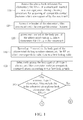
- FIGs. 1 and 2 depict a flowchart illustrating a method of accessing contact features in smartcards according to an embodiment of the present invention.
- the flowchart in FIGs. 1 and 2 includes the following steps:
- FIG. 3 is a diagram illustrating the phone book reference file elementary file EF PBR defined in the 3GPP specification TS31.102. As depicted in field 11, bytes 1 to X (X is an integer larger than 1) are used to store the tab length value (TLV) objects for indicating elementary files which are part of the phone book structure. Other fields of the phone book reference file elementary file EF PBR are defined in detail in the 3GPP specification TS 31.102.
- the user equipment may access the phone book reference file elementary file EF PBR of its smartcard during the booting procedure and acquire all compatible contact features based on the TLV objects represented by bytes 1 to X of the phone book reference file elementary file EF PBR .
- the abbreviated name and type of contact features are listed in the following table. TABLE Name Type Type 1 Type 2 Type 3 EF AAS X ELF ADEN X EF ANR X X EF EMAIL X X EF EXT1 X EF GAS X EF GRP X EF IAP X EF PBC X EF SNE X X EF UID X EF CCP1 X
- EF AAS represents an additional number Alpha string elementary file (Type 3) for storing the alpha strings associated with the user-defined naming tags for additional numbers referenced in EF ANR .
- EF ADN represents an abbreviated dialing numbers elementary file (Type 1) whose structure will be explained in detail in subsequent paragraphs.
- EF ANR represents an additional number elementary file (Type 1 or Type 2) for storing several phone numbers and/or supplementary service control strings (SSC).
- EF EMAIL represents an electronic mail elementary file (Type 1 or Type 2) for storing an e-mail address of a contact.
- EF EXT1 represents an extension1 elementary file (Type 3) for storing extension data which is greater than the 20 digit capacity of EF ADN .
- EF GAS represents a grouping information Alpha string elementary file (Type 3) for storing the alpha strings associated with the group name referenced in EF GRP .
- EF GRP represents a grouping file elementary file (Type 1) for storing the grouping information for each phone book entry in EF ADN .
- EF IAP represents an index administration phone book elementary file (Type 1) for storing the pointers which are used to link to other Type 2 elementary files.
- EF PBC represents a phone book control elementary file (Type 1) for storing control information related to each entry in EF ADN .
- EF SNE represents a second name entry elementary file (Type 1 or Type 2).
- EF UID represents a unique identifier elementary file (Type 1).
- EF CCP1 represents a capability configuration parameters 1 elementary file (Type 3).
- the first file ID in the first record indicated using constructed Tag 'A8' is called a master EF.
- Subsequent file IDs indicated using constructed Tag 'A8' correspond to a Type 1 EF.
- File IDs indicated using constructed Tag 'A9' correspond to a Type 2 EF.
- File IDs indicated using constructed Tag 'AA' correspond to a Type 3 EF.
- the abbreviated dialing numbers elementary file EF ADN is a master EF.
- a Type 1 EF and a master EF contain the same number of records, and each record in the Type 1 EF is mapped to a corresponding record in the master EF on a one-to-one basis.
- a Type 2 EF contains fewer records than a master EF, and each record in the Type 2 EF is mapped to a corresponding record in the master 1 EF by a pointer indicated in the Type 1 index administration phone book elementary file EF IAP .
- Each record in a Type 3 EF is mapped to a corresponding record in the master EF by a record identifier with a record of the phone book reference file elementary file EF PBR .
- the user equipment may access the header of the elementary files associated with the compatible contact features, thereby determining the number and the length of data which can be written into each elementary file.
- the user equipment may access each record in the body part of the abbreviated dialing numbers elementary file EF ADN in the smartcard.
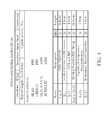
- FIG. 4 is a diagram illustrating the abbreviated dialing numbers elementary file EF ADN defined in the 3GPP specification TS 31.102. As depicted in field 12, bytes 1 to X (X is an integer larger than 1) are used to store the Alpha-tagging of the associated first to the X th dialing numbers. As depicted in field 13, bytes X+3 to X +12 are used to store up to 20 digits of the telephone number and/or SSC information.
- byte X+13 is used to store capability/configuration identification byte which identifies the number of a record in the EF CCP1 containing associated capability/configuration parameters required for the call.
- byte X+14 is used to store extension1 record identification byte which identifies the number of a record in the EF EXT1 containing an associated called party sub-address or additional data.
- Other fields of the abbreviated dialing numbers elementary file EF ADN are defined in detail in the 3GPP specification TS 31.102.
- each record in the master abbreviated dialing numbers elementary file EF ADN is mapped to a corresponding record in another Type 1 EF on a one-to-one basis.
- the i th record in the body part of the abbreviated dialing numbers elementary file EF ADN corresponds to valid data (any value other than "FF")
- the corresponding i th record in the body part of the another Type 1 EF also corresponds to valid data. Therefore, the user equipment may record the i th record in the body part of the abbreviated dialing numbers elementary file EF ADN which corresponds to valid data in the first lookup table in step 140.
- the user equipment may selectively access the body part of all Type 1 elementary files associated with the compatible contact features according to the first lookup table. More specifically, the above-mentioned selective access is based on whether corresponding entries exist in the first lookup table. For example, in the body part of the abbreviated dialing numbers elementary file EF ADN , if the i th record of corresponds to valid data but the (i+1) th record corresponds to invalid data, only an i th entry (containing the i th record in the body part of the abbreviated dialing numbers elementary file EF ADN recorded in step 140) exits in the first lookup table, while an (i+1) th entry of the first lookup table is empty. Therefore, the user equipment may access the i th record in the body part of all Type 1 elementary files associated with the compatible contact features, but does not access the (i+1) th record in the body part of all Type 1 elementary files associated with the compatible contact features.
- FIG. 5 is a diagram illustrating the index administration phone book elementary file EF IAP defined in the 3GPP specification TS31.102. As depicted in field 16, bytes 1 to X (X is an integer larger than 1) represent record numbers of the first to X th objects indicated after Tag 'A9'. Other fields of the index administration phone book elementary file EF IAP are defined in detail in the 3GPP specification TS 31.102.
- step 150 is then executed for selectively accessing the body part of the index administration phone book elementary file EF IAP . It may then be determined in step 160 that the accessed Type 1 elementary files include the index administration phone book elementary file EF IAP .
- the i th record in the body part of the index administration phone book elementary file EF IAP with any value other than "FF" corresponds to a valid pointer, which means a corresponding Type 2 elementary file needs to be mapped to the i th record in the abbreviated dialing numbers elementary file EF ADN ;
- the i th record in the body part of the index administration phone book elementary file EF IAP with a value of "FF" corresponds to an invalid pointer, which means no Type 2 elementary file needs to be mapped to the i th record in the abbreviated dialing numbers elementary file EF ADN .
- the user equipment may record each record of the index administration phone book elementary file EF IAP which corresponds to a valid pointer in the second lookup table in step 170, and then selectively access the body part of a relevant Type 2 elementary file according to the second lookup table in step 180.
- step 190 After selectively accessing the body part of a specific Type 1 elementary file according to the first lookup table, it may be determined in step 190 whether the specific Type 1 elementary file needs to be mapped to a relevant Type 3 elementary file.
- the specific Type 1 elementary file may be the Type 1 abbreviated dialing numbers elementary file EF ADN .
- the i th record in the body part of the abbreviated dialing numbers elementary file EF ADN corresponds to valid data, it may be determined whether the i th record in the body part of the abbreviated dialing numbers elementary file EF ADN needs to be mapped to a relevant specific Type 3 elementary file according to specific bytes of the valid data.
- the i th record of the abbreviated dialing numbers elementary file EF ADN which corresponds to valid data
- the i th record of the abbreviated dialing numbers elementary file EF ADN needs to be mapped to a specific record in the Type 3 capability configuration parameters 1 elementary file EF CCP1 ;
- byte X+14 extension1 record identification byte
- the i th record of the abbreviated dialing numbers elementary file EF ADN needs to be mapped to a specific record in the Type 3 extension1 elementary file EF EXT1 .
- the user equipment may record each record of the Type 1 abbreviated dialing numbers elementary file EF ADN which needs to be mapped to the specific Type 3 elementary file in the third lookup table record in step 200, and then selectively access the body part of the extension1 elementary file EF EXT1 and/or the capability configuration parameters 1 elementary file EF CCP1 according to the third lookup table in step 210.
- the specific Type 1 elementary file may be the Type 1 additional number elementary file EF ANR which may be required to be mapped to the Type 3 additional number Alpha string elementary file EF AAS . Therefore, the user equipment may record each record of the Type 1 additional number elementary file EF ANR which needs to be mapped to the Type 3 additional number Alpha string elementary file EF AAS in the third lookup table record in step 200, and then selectively access the body part of the Type 3 additional number Alpha string elementary file EF AAS according to the third lookup table in step 210.
- the specific Type 1 elementary file may be the Type 1 grouping file elementary file EF GRP which may be required to be mapped to the Type 3 grouping information Alpha string elementary file EF GAS . Therefore, the user equipment may record each record of the Type 1 grouping file elementary file EF GRP which needs to be mapped to the Type 3 grouping information Alpha string elementary file EF GAS in the third lookup table record in step 200, and then selectively access the body part of the Type 3 grouping information Alpha string elementary file EF GAS according to the third lookup table in step 210.
- the user equipment is configured to access an i th record in the body part of a Type 1 elementary file only when a corresponding i th record in the body part of the abbreviated dialing numbers elementary file EF ADN corresponds to valid data. If the i th record in the body part of the abbreviated dialing numbers elementary file EF ADN does not correspond to valid data, the user equipment does not access the i th record in the body part of a Type 1 elementary file.
- the user equipment is configured to access an i th record in the body part of a Type 2 elementary file only when a corresponding i th record in the body part of the index administration phone book elementary file EF IAP corresponds to a valid pointer. If the i th record in the body part of the index administration phone book elementary file EF IAP does not correspond to a valid pointer, the user equipment does not access the i th record in the body part of a Type 2 elementary file.
- the user equipment is configured to access an i th record in the body part of a Type 3 elementary file only when a corresponding i th record in the body part of a specific Type 1 elementary file corresponds to valid data and includes specific bytes indicative of a valid link. If the i th record in the body part of the specific Type 1 elementary file corresponds to valid data but does not include specific bytes indicative of a valid link, the user equipment does not access the i th record in the body part of a Type 3 elementary file.
- FIG. 6 is a diagram illustrating a method of accessing the body part of various types of elementary files according to an embodiment of the present invention.
- the compatible contact features of the smartcard acquired in step 100 at least includes contact number, contact email and contact group.
- the relevant elementary files includes the Type 1 abbreviated dialing numbers elementary file EF ADN , the Type 2 index administration phone book elementary file EF IAP , the Type 2 electronic mail elementary file EF EMAIL , and the Type 3 extension1 elementary file EF EXT1 .
- the body part in each of the above-mentioned elementary files includes 5 records.
- the method of accessing the body part of various types of elementary files according to steps 130, 180 and 210 is depicted on the top of FIG. 6 .
- the lookup tables recorded according to steps 140, 170 and 200 are depicted on the bottom of FIG. 6 .
- the 1 st to 4 th records of the master abbreviated dialing numbers elementary file EF ADN correspond to valid data (marked by star sign "*") and the 5 th record of the master abbreviated dialing numbers elementary file EF ADN corresponds to invalid data. Therefore, the present invention only accesses the 1 st to 4 th records in the body part of the Type 1 index administration phone book elementary file EF IAP (marked by circle "O"), but does not accesses the 5 th record in the body part of the Type 1 index administration phone book elementary file EF IAP .
- the 1 st , 3 rd and 4 th records of the Type 1 index administration phone book elementary file EF IAP correspond to valid pointers (marked by star sign "*") and the 2 nd record of the Type 1 index administration phone book elementary file EF IAP corresponds to an invalid pointer. Therefore, the present invention only accesses the 1 st , 3 rd and 4 th records in the body part of the Type 2 electronic mail elementary file EF EMAIL (marked by circle "O"), but does not accesses the 2 nd and 5 th records in the body part of the Type 2 electronic mail elementary file EF EMAIL .
- the records of the master abbreviated dialing numbers elementary file EF ADN which correspond to valid data only need to be mapped to the 2 nd record of the Type 3 extension1 elementary file EF EXT1 (marked by star sign "*"). Therefore, the present invention only accesses the 2 nd record in the body part of the Type 3 extension1 elementary file EF EXT1 (marked by circle “O"), but does not accesses the 1 st , 3 rd , 4 th and 5 th records in the body part of the Type 3 extension1 elementary file EF EXT1 .
- the prior art method would access all of the 20 records in the body parts of elementary files EF ADN , EF IAP , EF EMAIL and EF EXT1 during the booting procedure.
- the present method only needs to access the 13 records in the body parts of elementary files EF ADN , EF IAP , EF EMAIL and EF EXT1 which are actually in use, thereby improving the efficiency of the booting procedure.
- the present method selectively access the body part of various types of elementary files according to the validity and link of each record in the master abbreviated dialing numbers elementary file EF ADN . Therefore, the efficiency of the booting procedure can be improved by avoiding unnecessarily accessing the body part of unused data in other types of elementary files.
Landscapes
- Engineering & Computer Science (AREA)
- Databases & Information Systems (AREA)
- Theoretical Computer Science (AREA)
- General Engineering & Computer Science (AREA)
- Data Mining & Analysis (AREA)
- Physics & Mathematics (AREA)
- General Physics & Mathematics (AREA)
- Signal Processing (AREA)
- Computer Networks & Wireless Communication (AREA)
- Software Systems (AREA)
- Telephone Function (AREA)
- Information Retrieval, Db Structures And Fs Structures Therefor (AREA)
- Telephonic Communication Services (AREA)
Abstract
Description
- The present invention is related to a method of accessing elementary files associated with contact features in smartcards.
- Subscriber identity module (SIM) card is a smartcard that securely stores the international mobile subscriber identity (IMSI) used to identify and authenticate subscribers, short message service (SMS) data and contact information on mobile telephony devices. The hardware structure of a SIM card includes a central process unit (CPU), read-only memory (ROM), random access memory (RAM), electrically erasable programmable read-only memory (EEPROM), and an input/output (I/O) circuit. The hierarchical logic data structure of a SIM card includes 3 types of files: elementary file (EF), dedicated file (DF) and master file (MF).
- An elementary file, including a header and a body part, may adopt 3 main types of data structures for storing different types of data: transparent, linear fixed and cyclic. A transparent elementary file defines the data that is managed as a stream of bytes addressed by an offset coming from the start of the file. A linear fixed elementary file or a cyclic elementary file is the data grouped into records, which is a block of bytes with a pre-defined size. Meanwhile, the header of an elementary file marks the overall length and the number of records.
- According to the 3rd Generation Partnership Project (3GPP) specification TS 31.102, various types of contact features, such as contact name, primary phone number, secondary phone number, email or contact group, may be stored in a SIM card using different elementary files. In the prior art, a user equipment is configured to access the phone book reference file elementary file EFPBR of its SIM card during the booting procedure, thereby acquiring all contact features supported by the SIM card and accessing the header and body part of all relevant elementary files. However, not all contacts are stored with all types of contact features. Assuming that the SIM card can support 4 types of contact features (contact name, primary phone number, secondary phone number and email) but only the primary phone number is stored for a specific contact, the prior art method still accesses the header and body part of all relevant elementary files associated with contact name, primary phone number, secondary phone number and email. Therefore, the prior art method may lower the booting efficiency.
- The present invention aims at providing a method of accessing elementary files associated with contact features in smartcards.
- This is achieved by a method of accessing contact features in a smartcard according to
claim 1 and a user equipment configured to access contact features in a smartcard which is inserted in the user equipment according toclaim 12. The dependent claims pertain to corresponding further developments and improvements. - As will be seen more clearly from the detailed description following here below, the claimed method of accessing contact features in a smartcard includes inserting the smartcard in a user equipment; accessing a body part of a master elementary file stored in the smartcard during a booting procedure of the user equipment; accessing a header of a
Type 1 elementary file stored in the smartcard; and accessing a first record in a body part of theType 1 elementary file only when a relevant specific record in the body part of the master elementary file corresponds to valid data. - In the following, the invention is further illustrated by way of example, taking reference to the accompanying drawings.
-
FIGs. 1 and2 depict a flowchart illustrating a method of accessing contact features in smartcards according to an embodiment of the present invention. -
FIG. 3 is a diagram illustrating the phone book reference file elementary file EFPBR defined in the 3GPP specification. -
FIG. 4 is a diagram illustrating the abbreviated dialing numbers elementary file EFADN defined in the 3GPP specification. -
FIG. 5 is a diagram illustrating the index administration phone book elementary file EFIAP defined in the 3GPP specification. -
FIG. 6 is a diagram illustrating a method of accessing the body part of various types of elementary files according to an embodiment of the present invention. - The present invention provides a method of accessing contact features in smartcards. The present method may be applied to electronic devices including, but not limited to, mobile telephones, personal digital assistants, handheld computers, tablet computers, nettop computers, or laptop computers, or other devices with similar telecommunication capabilities. However, the type of user equipment does not limit the scope of the present invention.
- The present method may be applied to user equipment inserted with various types of smartcards including, but not limited to, a SIM card for global system for mobile communications (GSM) system, a USIM card for universal mobile telecommunications system (UMTS), or a removable user identity module (R-UIM) card/code division multiple access (CDMA) user identity module (CSIM) card for CDMA systems. However, the type of the smartcard does not limit the scope of the present invention.
- The present method may be applied to user equipment inserted with a smartcard of various sizes including, but not limited to, a standard Mini SIM card, a Micro SIM card or a Nano SIM card. However, the size of the smartcard does not limit the scope of the present invention.
-
FIGs. 1 and2 depict a flowchart illustrating a method of accessing contact features in smartcards according to an embodiment of the present invention. The flowchart inFIGs. 1 and2 includes the following steps: - Step 110:
- access the phone book reference file elementary file EFPBR of a smartcard inserted in a user equipment during a booting procedure for acquiring all compatible contact features which are supported by the smartcard; execute
step 120. - Step 120:
- access the header of the elementary files associated with the compatible contact features; execute
step 130. - Step 130:
- access each record in the body part of the abbreviated dialing numbers elementary file EFADN in the smartcard; execute
step 140. - Step 140:
- record an ith record in the body part of the abbreviated dialing numbers elementary file EFADN which corresponds to valid data in a first lookup table; execute
step 150. - Step 150:
- selectively access the body part of all
Type 1 elementary files associated with the compatible contact features according to the first lookup table; executestep 160. - Step 160:
- determine whether the accessed
Type 1 elementary files include the index administration phone book elementary file EFIAP: if yes, executestep 170; if no, executestep 190. - Step 170:
- record an ith record of the index administration phone book elementary file EFIAP which has been selectively accessed according to the first lookup table and corresponds to a valid pointer in a second lookup table; execute
step 180. - Step 180:
- selectively access the body part of a
relevant Type 2 elementary file according to the second lookup table; executestep 190. - Step 190:
- determine whether a
specific Type 1 elementary file whose body part has been accessed according to the first lookup needs to be mapped to arelevant Type 3 elementary file: if yes, executestep 200; if no, executestep 220. - Step 200:
- record an ith record of the
specific Type 1 elementary file which corresponds to valid data and is mapped to therelevant Type 3 elementary file in a third lookup table; executestep 210. - Step 210:
- access the body part of the
relevant Type 3 elementary file according to the third lookup table; executestep 220. - Step 220:
- end.
-
FIG. 3 is a diagram illustrating the phone book reference file elementary file EFPBR defined in the 3GPP specification TS31.102. As depicted in field 11,bytes 1 to X (X is an integer larger than 1) are used to store the tab length value (TLV) objects for indicating elementary files which are part of the phone book structure. Other fields of the phone book reference file elementary file EFPBR are defined in detail in the 3GPP specification TS 31.102. - In
step 110, the user equipment may access the phone book reference file elementary file EFPBR of its smartcard during the booting procedure and acquire all compatible contact features based on the TLV objects represented bybytes 1 to X of the phone book reference file elementary file EFPBR. In the embodiment of the present invention, the abbreviated name and type of contact features are listed in the following table.TABLE Name Type Type 1 Type 2Type 3EFAAS X ELFADEN X EFANR X X EFEMAIL X X EFEXT1 X EFGAS X EFGRP X EFIAP X EFPBC X EFSNE X X EFUID X EFCCP1 X - EFAAS represents an additional number Alpha string elementary file (Type 3) for storing the alpha strings associated with the user-defined naming tags for additional numbers referenced in EFANR. EFADN represents an abbreviated dialing numbers elementary file (Type 1) whose structure will be explained in detail in subsequent paragraphs. EFANR represents an additional number elementary file (
Type 1 or Type 2) for storing several phone numbers and/or supplementary service control strings (SSC). EFEMAIL represents an electronic mail elementary file (Type 1 or Type 2) for storing an e-mail address of a contact. EFEXT1 represents an extension1 elementary file (Type 3) for storing extension data which is greater than the 20 digit capacity of EFADN. EFGAS represents a grouping information Alpha string elementary file (Type 3) for storing the alpha strings associated with the group name referenced in EFGRP. EFGRP represents a grouping file elementary file (Type 1) for storing the grouping information for each phone book entry in EFADN. EFIAP represents an index administration phone book elementary file (Type 1) for storing the pointers which are used to link toother Type 2 elementary files. EFPBC represents a phone book control elementary file (Type 1) for storing control information related to each entry in EFADN. EFSNE represents a second name entry elementary file (Type 1 or Type 2). EFUID represents a unique identifier elementary file (Type 1). EFCCP1 represents acapability configuration parameters 1 elementary file (Type 3). - In the phone book reference file elementary file EFPBR, the first file ID in the first record indicated using constructed Tag 'A8' is called a master EF. Subsequent file IDs indicated using constructed Tag 'A8' correspond to a
Type 1 EF. File IDs indicated using constructed Tag 'A9' correspond to aType 2 EF. File IDs indicated using constructed Tag 'AA' correspond to aType 3 EF. According to the 3GPP specification TS31.102, the abbreviated dialing numbers elementary file EFADN is a master EF. AType 1 EF and a master EF contain the same number of records, and each record in theType 1 EF is mapped to a corresponding record in the master EF on a one-to-one basis. AType 2 EF contains fewer records than a master EF, and each record in theType 2 EF is mapped to a corresponding record in themaster 1 EF by a pointer indicated in theType 1 index administration phone book elementary file EFIAP. Each record in aType 3 EF is mapped to a corresponding record in the master EF by a record identifier with a record of the phone book reference file elementary file EFPBR. - In
step 120, the user equipment may access the header of the elementary files associated with the compatible contact features, thereby determining the number and the length of data which can be written into each elementary file. - In
step 130, the user equipment may access each record in the body part of the abbreviated dialing numbers elementary file EFADN in the smartcard.FIG. 4 is a diagram illustrating the abbreviated dialing numbers elementary file EFADN defined in the 3GPP specification TS 31.102. As depicted infield 12,bytes 1 to X (X is an integer larger than 1) are used to store the Alpha-tagging of the associated first to the Xth dialing numbers. As depicted infield 13, bytes X+3 to X +12 are used to store up to 20 digits of the telephone number and/or SSC information. As depicted infield 14, byte X+13 is used to store capability/configuration identification byte which identifies the number of a record in the EFCCP1 containing associated capability/configuration parameters required for the call. As depicted in field 15, byte X+14 is used to store extension1 record identification byte which identifies the number of a record in the EFEXT1 containing an associated called party sub-address or additional data. Other fields of the abbreviated dialing numbers elementary file EFADN are defined in detail in the 3GPP specification TS 31.102. - As previously stated, each record in the master abbreviated dialing numbers elementary file EFADN is mapped to a corresponding record in another
Type 1 EF on a one-to-one basis. When the ith record in the body part of the abbreviated dialing numbers elementary file EFADN corresponds to valid data (any value other than "FF"), the corresponding ith record in the body part of the anotherType 1 EF also corresponds to valid data. Therefore, the user equipment may record the ith record in the body part of the abbreviated dialing numbers elementary file EFADN which corresponds to valid data in the first lookup table instep 140. - In
step 150, the user equipment may selectively access the body part of allType 1 elementary files associated with the compatible contact features according to the first lookup table. More specifically, the above-mentioned selective access is based on whether corresponding entries exist in the first lookup table. For example, in the body part of the abbreviated dialing numbers elementary file EFADN, if the ith record of corresponds to valid data but the (i+1)th record corresponds to invalid data, only an ith entry (containing the ith record in the body part of the abbreviated dialing numbers elementary file EFADN recorded in step 140) exits in the first lookup table, while an (i+1)th entry of the first lookup table is empty. Therefore, the user equipment may access the ith record in the body part of allType 1 elementary files associated with the compatible contact features, but does not access the (i+1)th record in the body part of allType 1 elementary files associated with the compatible contact features. -
FIG. 5 is a diagram illustrating the index administration phone book elementary file EFIAP defined in the 3GPP specification TS31.102. As depicted in field 16,bytes 1 to X (X is an integer larger than 1) represent record numbers of the first to Xth objects indicated after Tag 'A9'. Other fields of the index administration phone book elementary file EFIAP are defined in detail in the 3GPP specification TS 31.102. - If the index administration phone book elementary file EFIAP is indicated as a compatible contact feature based on the phone book reference file elementary file EFPBR accessed in
step 110,step 150 is then executed for selectively accessing the body part of the index administration phone book elementary file EFIAP. It may then be determined instep 160 that the accessedType 1 elementary files include the index administration phone book elementary file EFIAP. According to the 3GPP specification TS31.102, the ith record in the body part of the index administration phone book elementary file EFIAP with any value other than "FF" corresponds to a valid pointer, which means acorresponding Type 2 elementary file needs to be mapped to the ith record in the abbreviated dialing numbers elementary file EFADN; the ith record in the body part of the index administration phone book elementary file EFIAP with a value of "FF" corresponds to an invalid pointer, which means noType 2 elementary file needs to be mapped to the ith record in the abbreviated dialing numbers elementary file EFADN. Therefore, the user equipment may record each record of the index administration phone book elementary file EFIAP which corresponds to a valid pointer in the second lookup table instep 170, and then selectively access the body part of arelevant Type 2 elementary file according to the second lookup table instep 180. - After selectively accessing the body part of a
specific Type 1 elementary file according to the first lookup table, it may be determined instep 190 whether thespecific Type 1 elementary file needs to be mapped to arelevant Type 3 elementary file. - In an embodiment, the
specific Type 1 elementary file may be theType 1 abbreviated dialing numbers elementary file EFADN. When the ith record in the body part of the abbreviated dialing numbers elementary file EFADN corresponds to valid data, it may be determined whether the ith record in the body part of the abbreviated dialing numbers elementary file EFADN needs to be mapped to a relevantspecific Type 3 elementary file according to specific bytes of the valid data. More specifically, in the ith record of the abbreviated dialing numbers elementary file EFADN which corresponds to valid data, when byte X+13 (capability/configuration 1 identification byte) corresponds to valid data, the ith record of the abbreviated dialing numbers elementary file EFADN needs to be mapped to a specific record in theType 3capability configuration parameters 1 elementary file EFCCP1; when byte X+14 (extension1 record identification byte) corresponds to valid data, the ith record of the abbreviated dialing numbers elementary file EFADN needs to be mapped to a specific record in theType 3 extension1 elementary file EFEXT1. Therefore, the user equipment may record each record of theType 1 abbreviated dialing numbers elementary file EFADN which needs to be mapped to thespecific Type 3 elementary file in the third lookup table record instep 200, and then selectively access the body part of the extension1 elementary file EFEXT1 and/or thecapability configuration parameters 1 elementary file EFCCP1 according to the third lookup table instep 210. - In another embodiment, the
specific Type 1 elementary file may be theType 1 additional number elementary file EFANR which may be required to be mapped to theType 3 additional number Alpha string elementary file EFAAS. Therefore, the user equipment may record each record of theType 1 additional number elementary file EFANR which needs to be mapped to theType 3 additional number Alpha string elementary file EFAAS in the third lookup table record instep 200, and then selectively access the body part of theType 3 additional number Alpha string elementary file EFAAS according to the third lookup table instep 210. - In yet another embodiment, the
specific Type 1 elementary file may be theType 1 grouping file elementary file EFGRP which may be required to be mapped to theType 3 grouping information Alpha string elementary file EFGAS. Therefore, the user equipment may record each record of theType 1 grouping file elementary file EFGRP which needs to be mapped to theType 3 grouping information Alpha string elementary file EFGAS in the third lookup table record instep 200, and then selectively access the body part of theType 3 grouping information Alpha string elementary file EFGAS according to the third lookup table instep 210. - According to the first lookup table, the user equipment is configured to access an ith record in the body part of a
Type 1 elementary file only when a corresponding ith record in the body part of the abbreviated dialing numbers elementary file EFADN corresponds to valid data. If the ith record in the body part of the abbreviated dialing numbers elementary file EFADN does not correspond to valid data, the user equipment does not access the ith record in the body part of aType 1 elementary file. - According to the second lookup table, the user equipment is configured to access an ith record in the body part of a
Type 2 elementary file only when a corresponding ith record in the body part of the index administration phone book elementary file EFIAP corresponds to a valid pointer. If the ith record in the body part of the index administration phone book elementary file EFIAP does not correspond to a valid pointer, the user equipment does not access the ith record in the body part of aType 2 elementary file. - According to the third lookup table, the user equipment is configured to access an ith record in the body part of a
Type 3 elementary file only when a corresponding ith record in the body part of aspecific Type 1 elementary file corresponds to valid data and includes specific bytes indicative of a valid link. If the ith record in the body part of thespecific Type 1 elementary file corresponds to valid data but does not include specific bytes indicative of a valid link, the user equipment does not access the ith record in the body part of aType 3 elementary file. -
FIG. 6 is a diagram illustrating a method of accessing the body part of various types of elementary files according to an embodiment of the present invention. For illustrative purpose, it is assumed that the compatible contact features of the smartcard acquired in step 100 at least includes contact number, contact email and contact group. In other words, the relevant elementary files includes theType 1 abbreviated dialing numbers elementary file EFADN, theType 2 index administration phone book elementary file EFIAP, theType 2 electronic mail elementary file EFEMAIL, and theType 3 extension1 elementary file EFEXT1. Instep 120, it is assumed that the body part in each of the above-mentioned elementary files includes 5 records. The method of accessing the body part of various types of elementary files according tosteps FIG. 6 . The lookup tables recorded according tosteps FIG. 6 . - According to the first lookup table depicted in
FIG. 6 , the 1st to 4th records of the master abbreviated dialing numbers elementary file EFADN correspond to valid data (marked by star sign "*") and the 5th record of the master abbreviated dialing numbers elementary file EFADN corresponds to invalid data. Therefore, the present invention only accesses the 1st to 4th records in the body part of theType 1 index administration phone book elementary file EFIAP (marked by circle "O"), but does not accesses the 5th record in the body part of theType 1 index administration phone book elementary file EFIAP. - According to the second lookup table depicted in
FIG. 6 , the 1st, 3rd and 4th records of theType 1 index administration phone book elementary file EFIAP correspond to valid pointers (marked by star sign "*") and the 2nd record of theType 1 index administration phone book elementary file EFIAP corresponds to an invalid pointer. Therefore, the present invention only accesses the 1st, 3rd and 4th records in the body part of theType 2 electronic mail elementary file EFEMAIL (marked by circle "O"), but does not accesses the 2nd and 5th records in the body part of theType 2 electronic mail elementary file EFEMAIL. - According to the third lookup table depicted in
FIG. 6 , the records of the master abbreviated dialing numbers elementary file EFADN which correspond to valid data only need to be mapped to the 2nd record of theType 3 extension1 elementary file EFEXT1 (marked by star sign "*"). Therefore, the present invention only accesses the 2nd record in the body part of theType 3 extension1 elementary file EFEXT1 (marked by circle "O"), but does not accesses the 1st, 3rd, 4th and 5th records in the body part of theType 3 extension1 elementary file EFEXT1. - Under the same circumstance, the prior art method would access all of the 20 records in the body parts of elementary files EFADN, EFIAP, EFEMAIL and EFEXT1 during the booting procedure. In comparison, the present method only needs to access the 13 records in the body parts of elementary files EFADN, EFIAP, EFEMAIL and EFEXT1 which are actually in use, thereby improving the efficiency of the booting procedure.
- In conclusion, the present method selectively access the body part of various types of elementary files according to the validity and link of each record in the master abbreviated dialing numbers elementary file EFADN. Therefore, the efficiency of the booting procedure can be improved by avoiding unnecessarily accessing the body part of unused data in other types of elementary files.
Claims (12)
- A method of accessing contact features in a smartcard, comprising:inserting the smartcard in a user equipment;accessing a body part of a master elementary file stored in the smartcard during a booting procedure of the user equipment; andaccessing a header of a Type 1 elementary file stored in the smartcard; the method characterized by:accessing a first record in a body part of the Type 1 elementary file only when a relevant specific record in the body part of the master elementary file corresponds to valid data.
- The method of claim 1, characterized in that the master elementary file is an abbreviated dialing numbers elementary file defined in a 3rd Generation Partnership Project (3GPP) specification TS 31.102.
- The method of any of claims 1-2, characterized in that the Type 1 elementary file is an additional number elementary file, a grouping file elementary file, an index administration phone book elementary file, a phone book control elementary file, a second name entry elementary file, or a unique identifier elementary file defined in a 3rd Generation Partnership Project (3GPP) specification TS 31.102.
- The method of any of claims 1-2, further characterized by comprising the further step of:accessing a second record in a body part of a Type 2 elementary file stored in the smartcard when the relevant first record in the body part of the Type 1 elementary file corresponds to a valid pointer.
- The method of claim 4, characterized in that:the Type 1 elementary file is an index administration phone book elementary file defined in a 3rd Generation Partnership Project (3GPP) specification TS 31.102; andthe Type 2 elementary file is an additional number elementary file, an electronic mail elementary file, or a second name entry elementary file defined in the 3GPP specification TS 31.102.
- The method of any of claims 1-5, further characterized by comprising the further step of:accessing a third record in a body part of a Type 3 elementary file stored in the smartcard when the specific record in the body part of the master elementary file corresponds to valid data and includes a specific byte indicative of a valid link.
- The method of claim 6, characterized in that the Type 3 elementary file is an additional number Alpha string elementary file, an extension1 elementary file, a grouping information Alpha string elementary file, or a capability configuration parameters 1 elementary file defined in a 3rd Generation Partnership Project (3GPP) specification TS 31.102.
- The method of any of claims 1-5, further characterized by comprising the further step of:accessing a third record in a body part of a Type 3 elementary file
stored in the smartcard when the specific record in the body part of the master elementary file includes a specific byte indicative of a valid link. - The method of claim 8, characterized in that:the Type 3 elementary file is an additional number Alpha string elementary file defined in a 3rd Generation Partnership Project (3GPP) specification TS 31.102 when the Type 1 elementary file is an additional number elementary file defined in the 3GPP specification TS 31.102; andthe Type 3 elementary file is a grouping information Alpha string elementary file defined in the 3GPP specification TS 31.102 when the Type 1 elementary file is a grouping information Alpha string elementary file defined in the 3GPP specification TS 31.102.
- The method of any of claims 1-9, further characterized by comprising the further step of:accessing a phone book reference file elementary file defined in a 3rd Generation Partnership Project (3GPP) specification TS 31.102 for acquiring one or multiple contact features supported by the smartcard, wherein the master elementary file and the Type 1 elementary file are associated with the one or multiple contact features.
- The method of claim 10, further characterized by comprising the further step of:recording all records in the body part of the master elementary file which correspond to valid data in a first lookup table;selectively accessing the body part of the Type 1 elementary file according to the first lookup table;recording all records in the body part of the master elementary file which correspond to valid pointers in a second lookup table;selectively accessing a body part of a Type 2 elementary file according to the second lookup table;recording all records in the body part of the master elementary file which correspond to valid data and include specific bytes indicative of a valid link in a third lookup table; andselectively accessing a body part of a Type 3 elementary file according to the third lookup table, wherein the Type 2 elementary file and the Type 3 elementary file are associated with the one or multiple contact features.
- A user equipment configured to access contact features in a smartcard which is inserted in the user equipment according to any of claims 1-11.
Applications Claiming Priority (1)
| Application Number | Priority Date | Filing Date | Title |
|---|---|---|---|
| TW103127522A TWI558157B (en) | 2014-08-11 | 2014-08-11 | Method of accessing contact features in smartcard |
Publications (2)
| Publication Number | Publication Date |
|---|---|
| EP2986036A1 true EP2986036A1 (en) | 2016-02-17 |
| EP2986036B1 EP2986036B1 (en) | 2018-08-08 |
Family
ID=53513938
Family Applications (1)
| Application Number | Title | Priority Date | Filing Date |
|---|---|---|---|
| EP15169319.9A Active EP2986036B1 (en) | 2014-08-11 | 2015-05-27 | Method of accessing contact features in smartcards |
Country Status (3)
| Country | Link |
|---|---|
| US (1) | US9432837B2 (en) |
| EP (1) | EP2986036B1 (en) |
| TW (1) | TWI558157B (en) |
Families Citing this family (1)
| Publication number | Priority date | Publication date | Assignee | Title |
|---|---|---|---|---|
| CN106899733B (en) * | 2017-01-09 | 2020-11-20 | 北京安云世纪科技有限公司 | Intelligent terminal and system address book phone number processing method and device |
Citations (2)
| Publication number | Priority date | Publication date | Assignee | Title |
|---|---|---|---|---|
| US20070222735A1 (en) * | 2006-02-27 | 2007-09-27 | Samsung Electronics Co., Ltd. | Method and apparatus for increasing data read speed from subscriber identity module |
| CN103369512A (en) * | 2012-03-29 | 2013-10-23 | 深圳富泰宏精密工业有限公司 | Phone book management method |
Family Cites Families (1)
| Publication number | Priority date | Publication date | Assignee | Title |
|---|---|---|---|---|
| GB2317246B (en) * | 1996-09-13 | 2001-08-08 | Orange Personal Comm Serv Ltd | Data store |
-
2014
- 2014-08-11 TW TW103127522A patent/TWI558157B/en not_active IP Right Cessation
-
2015
- 2015-05-13 US US14/710,613 patent/US9432837B2/en active Active
- 2015-05-27 EP EP15169319.9A patent/EP2986036B1/en active Active
Patent Citations (2)
| Publication number | Priority date | Publication date | Assignee | Title |
|---|---|---|---|---|
| US20070222735A1 (en) * | 2006-02-27 | 2007-09-27 | Samsung Electronics Co., Ltd. | Method and apparatus for increasing data read speed from subscriber identity module |
| CN103369512A (en) * | 2012-03-29 | 2013-10-23 | 深圳富泰宏精密工业有限公司 | Phone book management method |
Non-Patent Citations (1)
| Title |
|---|
| "3rd Generation Partnership Project; Technical Specification Group Core Network and Terminals; Characteristics of the Universal Subscriber Identity Module (USIM) application", 3GPP STANDARD; 3GPP TS 31.102, 3RD GENERATION PARTNERSHIP PROJECT (3GPP), MOBILE COMPETENCE CENTRE ; 650, ROUTE DES LUCIOLES ; F-06921 SOPHIA-ANTIPOLIS CEDEX ; FRANCE, vol. CT WG6, no. V12.4.0, 2 July 2014 (2014-07-02), pages 1 - 231, XP050774531 * |
Also Published As
| Publication number | Publication date |
|---|---|
| US9432837B2 (en) | 2016-08-30 |
| US20160044492A1 (en) | 2016-02-11 |
| TWI558157B (en) | 2016-11-11 |
| TW201607286A (en) | 2016-02-16 |
| EP2986036B1 (en) | 2018-08-08 |
Similar Documents
| Publication | Publication Date | Title |
|---|---|---|
| US8060140B2 (en) | Method and apparatus for increasing data read speed from subscriber identity module | |
| US8863240B2 (en) | Method and system for smart card migration | |
| US20100197350A1 (en) | Method and apparatus for controlling the uicc application file | |
| CN101416539A (en) | Method for adding mobile communication task to subscriber information module card and mobile communication device incorporating the method | |
| EP1662822A1 (en) | Saving time in the initialization of a mobile communication terminal | |
| CN101018374A (en) | Method for discriminating selected line information and the apparatus therefor | |
| CN102307255A (en) | Mobile phone and subscriber information storage method thereof | |
| EP2986036B1 (en) | Method of accessing contact features in smartcards | |
| US9363362B2 (en) | Method of performing network personalization on mobile devices | |
| CN102833417A (en) | Communication terminal omitting subscriber identification module | |
| EP3020217B1 (en) | Automatic detection of a network operator for a mobile network device | |
| CN100499682C (en) | Method for grouping yellow pages contact person record in user identification card | |
| CN103369512B (en) | Phone book management method | |
| WO2008026049A2 (en) | Method, server and device for indicating on the device the service provider to which the phone number of a phonebook entry belongs. | |
| CN101442585A (en) | Mobile terminal and method for accessing user card | |
| TWI539786B (en) | Method for establishing a link between contact information based on the validity of the data of the basic file of the smart card memory | |
| US9313308B2 (en) | Method of establishing links between contact information according to data validity of elementary files stored in smartcards | |
| CN105447424B (en) | Method for reading contact information in intelligent card | |
| Swenson et al. | Imaging and analysis of GSM SIM cards | |
| KR101042527B1 (en) | Subscriber information storage device and mobile communication terminal using same, and subscriber information management method thereby | |
| CN101227665A (en) | IC card system, communication terminal using the same and method of manufacturing the same | |
| CN106231591B (en) | Method for network personalization of mobile devices | |
| TW201517586A (en) | Method of managing contact information in mobile equipment according to network messages | |
| CN102387238A (en) | Mobile terminal and method for automatically deleting short messages | |
| US20150312750A1 (en) | Method of performing cell broadcast message management |
Legal Events
| Date | Code | Title | Description |
|---|---|---|---|
| PUAI | Public reference made under article 153(3) epc to a published international application that has entered the european phase |
Free format text: ORIGINAL CODE: 0009012 |
|
| AK | Designated contracting states |
Kind code of ref document: A1 Designated state(s): AL AT BE BG CH CY CZ DE DK EE ES FI FR GB GR HR HU IE IS IT LI LT LU LV MC MK MT NL NO PL PT RO RS SE SI SK SM TR |
|
| AX | Request for extension of the european patent |
Extension state: BA ME |
|
| 17P | Request for examination filed |
Effective date: 20160627 |
|
| RBV | Designated contracting states (corrected) |
Designated state(s): AL AT BE BG CH CY CZ DE DK EE ES FI FR GB GR HR HU IE IS IT LI LT LU LV MC MK MT NL NO PL PT RO RS SE SI SK SM TR |
|
| STAA | Information on the status of an ep patent application or granted ep patent |
Free format text: STATUS: EXAMINATION IS IN PROGRESS |
|
| 17Q | First examination report despatched |
Effective date: 20161021 |
|
| GRAP | Despatch of communication of intention to grant a patent |
Free format text: ORIGINAL CODE: EPIDOSNIGR1 |
|
| STAA | Information on the status of an ep patent application or granted ep patent |
Free format text: STATUS: GRANT OF PATENT IS INTENDED |
|
| INTG | Intention to grant announced |
Effective date: 20180314 |
|
| GRAS | Grant fee paid |
Free format text: ORIGINAL CODE: EPIDOSNIGR3 |
|
| GRAA | (expected) grant |
Free format text: ORIGINAL CODE: 0009210 |
|
| STAA | Information on the status of an ep patent application or granted ep patent |
Free format text: STATUS: THE PATENT HAS BEEN GRANTED |
|
| AK | Designated contracting states |
Kind code of ref document: B1 Designated state(s): AL AT BE BG CH CY CZ DE DK EE ES FI FR GB GR HR HU IE IS IT LI LT LU LV MC MK MT NL NO PL PT RO RS SE SI SK SM TR |
|
| REG | Reference to a national code |
Ref country code: GB Ref legal event code: FG4D |
|
| REG | Reference to a national code |
Ref country code: CH Ref legal event code: EP Ref country code: AT Ref legal event code: REF Ref document number: 1028459 Country of ref document: AT Kind code of ref document: T Effective date: 20180815 |
|
| REG | Reference to a national code |
Ref country code: IE Ref legal event code: FG4D |
|
| REG | Reference to a national code |
Ref country code: DE Ref legal event code: R096 Ref document number: 602015014512 Country of ref document: DE |
|
| REG | Reference to a national code |
Ref country code: NL Ref legal event code: MP Effective date: 20180808 |
|
| REG | Reference to a national code |
Ref country code: LT Ref legal event code: MG4D |
|
| REG | Reference to a national code |
Ref country code: AT Ref legal event code: MK05 Ref document number: 1028459 Country of ref document: AT Kind code of ref document: T Effective date: 20180808 |
|
| PG25 | Lapsed in a contracting state [announced via postgrant information from national office to epo] |
Ref country code: LT Free format text: LAPSE BECAUSE OF FAILURE TO SUBMIT A TRANSLATION OF THE DESCRIPTION OR TO PAY THE FEE WITHIN THE PRESCRIBED TIME-LIMIT Effective date: 20180808 Ref country code: PL Free format text: LAPSE BECAUSE OF FAILURE TO SUBMIT A TRANSLATION OF THE DESCRIPTION OR TO PAY THE FEE WITHIN THE PRESCRIBED TIME-LIMIT Effective date: 20180808 Ref country code: RS Free format text: LAPSE BECAUSE OF FAILURE TO SUBMIT A TRANSLATION OF THE DESCRIPTION OR TO PAY THE FEE WITHIN THE PRESCRIBED TIME-LIMIT Effective date: 20180808 Ref country code: AT Free format text: LAPSE BECAUSE OF FAILURE TO SUBMIT A TRANSLATION OF THE DESCRIPTION OR TO PAY THE FEE WITHIN THE PRESCRIBED TIME-LIMIT Effective date: 20180808 Ref country code: IS Free format text: LAPSE BECAUSE OF FAILURE TO SUBMIT A TRANSLATION OF THE DESCRIPTION OR TO PAY THE FEE WITHIN THE PRESCRIBED TIME-LIMIT Effective date: 20181208 Ref country code: NL Free format text: LAPSE BECAUSE OF FAILURE TO SUBMIT A TRANSLATION OF THE DESCRIPTION OR TO PAY THE FEE WITHIN THE PRESCRIBED TIME-LIMIT Effective date: 20180808 Ref country code: BG Free format text: LAPSE BECAUSE OF FAILURE TO SUBMIT A TRANSLATION OF THE DESCRIPTION OR TO PAY THE FEE WITHIN THE PRESCRIBED TIME-LIMIT Effective date: 20181108 Ref country code: NO Free format text: LAPSE BECAUSE OF FAILURE TO SUBMIT A TRANSLATION OF THE DESCRIPTION OR TO PAY THE FEE WITHIN THE PRESCRIBED TIME-LIMIT Effective date: 20181108 Ref country code: GR Free format text: LAPSE BECAUSE OF FAILURE TO SUBMIT A TRANSLATION OF THE DESCRIPTION OR TO PAY THE FEE WITHIN THE PRESCRIBED TIME-LIMIT Effective date: 20181109 Ref country code: FI Free format text: LAPSE BECAUSE OF FAILURE TO SUBMIT A TRANSLATION OF THE DESCRIPTION OR TO PAY THE FEE WITHIN THE PRESCRIBED TIME-LIMIT Effective date: 20180808 Ref country code: SE Free format text: LAPSE BECAUSE OF FAILURE TO SUBMIT A TRANSLATION OF THE DESCRIPTION OR TO PAY THE FEE WITHIN THE PRESCRIBED TIME-LIMIT Effective date: 20180808 |
|
| PG25 | Lapsed in a contracting state [announced via postgrant information from national office to epo] |
Ref country code: AL Free format text: LAPSE BECAUSE OF FAILURE TO SUBMIT A TRANSLATION OF THE DESCRIPTION OR TO PAY THE FEE WITHIN THE PRESCRIBED TIME-LIMIT Effective date: 20180808 Ref country code: LV Free format text: LAPSE BECAUSE OF FAILURE TO SUBMIT A TRANSLATION OF THE DESCRIPTION OR TO PAY THE FEE WITHIN THE PRESCRIBED TIME-LIMIT Effective date: 20180808 Ref country code: HR Free format text: LAPSE BECAUSE OF FAILURE TO SUBMIT A TRANSLATION OF THE DESCRIPTION OR TO PAY THE FEE WITHIN THE PRESCRIBED TIME-LIMIT Effective date: 20180808 |
|
| PG25 | Lapsed in a contracting state [announced via postgrant information from national office to epo] |
Ref country code: RO Free format text: LAPSE BECAUSE OF FAILURE TO SUBMIT A TRANSLATION OF THE DESCRIPTION OR TO PAY THE FEE WITHIN THE PRESCRIBED TIME-LIMIT Effective date: 20180808 Ref country code: IT Free format text: LAPSE BECAUSE OF FAILURE TO SUBMIT A TRANSLATION OF THE DESCRIPTION OR TO PAY THE FEE WITHIN THE PRESCRIBED TIME-LIMIT Effective date: 20180808 Ref country code: EE Free format text: LAPSE BECAUSE OF FAILURE TO SUBMIT A TRANSLATION OF THE DESCRIPTION OR TO PAY THE FEE WITHIN THE PRESCRIBED TIME-LIMIT Effective date: 20180808 Ref country code: ES Free format text: LAPSE BECAUSE OF FAILURE TO SUBMIT A TRANSLATION OF THE DESCRIPTION OR TO PAY THE FEE WITHIN THE PRESCRIBED TIME-LIMIT Effective date: 20180808 Ref country code: CZ Free format text: LAPSE BECAUSE OF FAILURE TO SUBMIT A TRANSLATION OF THE DESCRIPTION OR TO PAY THE FEE WITHIN THE PRESCRIBED TIME-LIMIT Effective date: 20180808 |
|
| REG | Reference to a national code |
Ref country code: DE Ref legal event code: R097 Ref document number: 602015014512 Country of ref document: DE |
|
| PG25 | Lapsed in a contracting state [announced via postgrant information from national office to epo] |
Ref country code: SM Free format text: LAPSE BECAUSE OF FAILURE TO SUBMIT A TRANSLATION OF THE DESCRIPTION OR TO PAY THE FEE WITHIN THE PRESCRIBED TIME-LIMIT Effective date: 20180808 Ref country code: DK Free format text: LAPSE BECAUSE OF FAILURE TO SUBMIT A TRANSLATION OF THE DESCRIPTION OR TO PAY THE FEE WITHIN THE PRESCRIBED TIME-LIMIT Effective date: 20180808 Ref country code: SK Free format text: LAPSE BECAUSE OF FAILURE TO SUBMIT A TRANSLATION OF THE DESCRIPTION OR TO PAY THE FEE WITHIN THE PRESCRIBED TIME-LIMIT Effective date: 20180808 |
|
| PLBE | No opposition filed within time limit |
Free format text: ORIGINAL CODE: 0009261 |
|
| STAA | Information on the status of an ep patent application or granted ep patent |
Free format text: STATUS: NO OPPOSITION FILED WITHIN TIME LIMIT |
|
| 26N | No opposition filed |
Effective date: 20190509 |
|
| PG25 | Lapsed in a contracting state [announced via postgrant information from national office to epo] |
Ref country code: SI Free format text: LAPSE BECAUSE OF FAILURE TO SUBMIT A TRANSLATION OF THE DESCRIPTION OR TO PAY THE FEE WITHIN THE PRESCRIBED TIME-LIMIT Effective date: 20180808 |
|
| REG | Reference to a national code |
Ref country code: CH Ref legal event code: PL |
|
| REG | Reference to a national code |
Ref country code: DE Ref legal event code: R082 Ref document number: 602015014512 Country of ref document: DE Representative=s name: STRAUS, ALEXANDER, DIPL.-CHEM.UNIV. DR.PHIL., DE Ref country code: DE Ref legal event code: R082 Ref document number: 602015014512 Country of ref document: DE Representative=s name: 2K PATENT- UND RECHTSANWAELTE PARTNERSCHAFT MB, DE |
|
| PG25 | Lapsed in a contracting state [announced via postgrant information from national office to epo] |
Ref country code: MC Free format text: LAPSE BECAUSE OF FAILURE TO SUBMIT A TRANSLATION OF THE DESCRIPTION OR TO PAY THE FEE WITHIN THE PRESCRIBED TIME-LIMIT Effective date: 20180808 Ref country code: CH Free format text: LAPSE BECAUSE OF NON-PAYMENT OF DUE FEES Effective date: 20190531 Ref country code: LI Free format text: LAPSE BECAUSE OF NON-PAYMENT OF DUE FEES Effective date: 20190531 |
|
| REG | Reference to a national code |
Ref country code: BE Ref legal event code: MM Effective date: 20190531 |
|
| PG25 | Lapsed in a contracting state [announced via postgrant information from national office to epo] |
Ref country code: LU Free format text: LAPSE BECAUSE OF NON-PAYMENT OF DUE FEES Effective date: 20190527 |
|
| PG25 | Lapsed in a contracting state [announced via postgrant information from national office to epo] |
Ref country code: TR Free format text: LAPSE BECAUSE OF FAILURE TO SUBMIT A TRANSLATION OF THE DESCRIPTION OR TO PAY THE FEE WITHIN THE PRESCRIBED TIME-LIMIT Effective date: 20180808 |
|
| PG25 | Lapsed in a contracting state [announced via postgrant information from national office to epo] |
Ref country code: IE Free format text: LAPSE BECAUSE OF NON-PAYMENT OF DUE FEES Effective date: 20190527 |
|
| PG25 | Lapsed in a contracting state [announced via postgrant information from national office to epo] |
Ref country code: BE Free format text: LAPSE BECAUSE OF NON-PAYMENT OF DUE FEES Effective date: 20190531 |
|
| PG25 | Lapsed in a contracting state [announced via postgrant information from national office to epo] |
Ref country code: PT Free format text: LAPSE BECAUSE OF FAILURE TO SUBMIT A TRANSLATION OF THE DESCRIPTION OR TO PAY THE FEE WITHIN THE PRESCRIBED TIME-LIMIT Effective date: 20181208 |
|
| PG25 | Lapsed in a contracting state [announced via postgrant information from national office to epo] |
Ref country code: CY Free format text: LAPSE BECAUSE OF FAILURE TO SUBMIT A TRANSLATION OF THE DESCRIPTION OR TO PAY THE FEE WITHIN THE PRESCRIBED TIME-LIMIT Effective date: 20180808 |
|
| PG25 | Lapsed in a contracting state [announced via postgrant information from national office to epo] |
Ref country code: MT Free format text: LAPSE BECAUSE OF FAILURE TO SUBMIT A TRANSLATION OF THE DESCRIPTION OR TO PAY THE FEE WITHIN THE PRESCRIBED TIME-LIMIT Effective date: 20180808 Ref country code: HU Free format text: LAPSE BECAUSE OF FAILURE TO SUBMIT A TRANSLATION OF THE DESCRIPTION OR TO PAY THE FEE WITHIN THE PRESCRIBED TIME-LIMIT; INVALID AB INITIO Effective date: 20150527 |
|
| PG25 | Lapsed in a contracting state [announced via postgrant information from national office to epo] |
Ref country code: MK Free format text: LAPSE BECAUSE OF FAILURE TO SUBMIT A TRANSLATION OF THE DESCRIPTION OR TO PAY THE FEE WITHIN THE PRESCRIBED TIME-LIMIT Effective date: 20180808 |
|
| REG | Reference to a national code |
Ref country code: FR Ref legal event code: PLFP Year of fee payment: 9 |
|
| REG | Reference to a national code |
Ref country code: DE Ref legal event code: R082 Ref document number: 602015014512 Country of ref document: DE Representative=s name: STRAUS, ALEXANDER, DIPL.-CHEM.UNIV. DR.PHIL., DE |
|
| PGFP | Annual fee paid to national office [announced via postgrant information from national office to epo] |
Ref country code: DE Payment date: 20250402 Year of fee payment: 11 |
|
| PGFP | Annual fee paid to national office [announced via postgrant information from national office to epo] |
Ref country code: GB Payment date: 20250401 Year of fee payment: 11 |
|
| PGFP | Annual fee paid to national office [announced via postgrant information from national office to epo] |
Ref country code: FR Payment date: 20250401 Year of fee payment: 11 |