EP2981625B1 - Epstein barr virus genotipic variants and uses thereof as risk predictors, biomarkers and therapeutic targets of multiple sclerosis - Google Patents
Epstein barr virus genotipic variants and uses thereof as risk predictors, biomarkers and therapeutic targets of multiple sclerosis Download PDFInfo
- Publication number
- EP2981625B1 EP2981625B1 EP14728290.9A EP14728290A EP2981625B1 EP 2981625 B1 EP2981625 B1 EP 2981625B1 EP 14728290 A EP14728290 A EP 14728290A EP 2981625 B1 EP2981625 B1 EP 2981625B1
- Authority
- EP
- European Patent Office
- Prior art keywords
- triplet
- coding
- substitution
- seq
- nucleic acid
- Prior art date
- Legal status (The legal status is an assumption and is not a legal conclusion. Google has not performed a legal analysis and makes no representation as to the accuracy of the status listed.)
- Active
Links
Images

Classifications
-
- C—CHEMISTRY; METALLURGY
- C12—BIOCHEMISTRY; BEER; SPIRITS; WINE; VINEGAR; MICROBIOLOGY; ENZYMOLOGY; MUTATION OR GENETIC ENGINEERING
- C12Q—MEASURING OR TESTING PROCESSES INVOLVING ENZYMES, NUCLEIC ACIDS OR MICROORGANISMS; COMPOSITIONS OR TEST PAPERS THEREFOR; PROCESSES OF PREPARING SUCH COMPOSITIONS; CONDITION-RESPONSIVE CONTROL IN MICROBIOLOGICAL OR ENZYMOLOGICAL PROCESSES
- C12Q1/00—Measuring or testing processes involving enzymes, nucleic acids or microorganisms; Compositions therefor; Processes of preparing such compositions
- C12Q1/70—Measuring or testing processes involving enzymes, nucleic acids or microorganisms; Compositions therefor; Processes of preparing such compositions involving virus or bacteriophage
- C12Q1/701—Specific hybridization probes
- C12Q1/705—Specific hybridization probes for herpetoviridae, e.g. herpes simplex, varicella zoster
-
- C—CHEMISTRY; METALLURGY
- C07—ORGANIC CHEMISTRY
- C07K—PEPTIDES
- C07K14/00—Peptides having more than 20 amino acids; Gastrins; Somatostatins; Melanotropins; Derivatives thereof
- C07K14/005—Peptides having more than 20 amino acids; Gastrins; Somatostatins; Melanotropins; Derivatives thereof from viruses
-
- C—CHEMISTRY; METALLURGY
- C12—BIOCHEMISTRY; BEER; SPIRITS; WINE; VINEGAR; MICROBIOLOGY; ENZYMOLOGY; MUTATION OR GENETIC ENGINEERING
- C12N—MICROORGANISMS OR ENZYMES; COMPOSITIONS THEREOF; PROPAGATING, PRESERVING, OR MAINTAINING MICROORGANISMS; MUTATION OR GENETIC ENGINEERING; CULTURE MEDIA
- C12N2710/00—MICROORGANISMS OR ENZYMES; COMPOSITIONS THEREOF; PROPAGATING, PRESERVING, OR MAINTAINING MICROORGANISMS; MUTATION OR GENETIC ENGINEERING; CULTURE MEDIA dsDNA viruses
- C12N2710/00011—Details
- C12N2710/16011—Herpesviridae
- C12N2710/16211—Lymphocryptovirus, e.g. human herpesvirus 4, Epstein-Barr Virus
- C12N2710/16222—New viral proteins or individual genes, new structural or functional aspects of known viral proteins or genes
-
- C—CHEMISTRY; METALLURGY
- C12—BIOCHEMISTRY; BEER; SPIRITS; WINE; VINEGAR; MICROBIOLOGY; ENZYMOLOGY; MUTATION OR GENETIC ENGINEERING
- C12Q—MEASURING OR TESTING PROCESSES INVOLVING ENZYMES, NUCLEIC ACIDS OR MICROORGANISMS; COMPOSITIONS OR TEST PAPERS THEREFOR; PROCESSES OF PREPARING SUCH COMPOSITIONS; CONDITION-RESPONSIVE CONTROL IN MICROBIOLOGICAL OR ENZYMOLOGICAL PROCESSES
- C12Q2600/00—Oligonucleotides characterized by their use
- C12Q2600/118—Prognosis of disease development
-
- C—CHEMISTRY; METALLURGY
- C12—BIOCHEMISTRY; BEER; SPIRITS; WINE; VINEGAR; MICROBIOLOGY; ENZYMOLOGY; MUTATION OR GENETIC ENGINEERING
- C12Q—MEASURING OR TESTING PROCESSES INVOLVING ENZYMES, NUCLEIC ACIDS OR MICROORGANISMS; COMPOSITIONS OR TEST PAPERS THEREFOR; PROCESSES OF PREPARING SUCH COMPOSITIONS; CONDITION-RESPONSIVE CONTROL IN MICROBIOLOGICAL OR ENZYMOLOGICAL PROCESSES
- C12Q2600/00—Oligonucleotides characterized by their use
- C12Q2600/156—Polymorphic or mutational markers
-
- C—CHEMISTRY; METALLURGY
- C12—BIOCHEMISTRY; BEER; SPIRITS; WINE; VINEGAR; MICROBIOLOGY; ENZYMOLOGY; MUTATION OR GENETIC ENGINEERING
- C12Q—MEASURING OR TESTING PROCESSES INVOLVING ENZYMES, NUCLEIC ACIDS OR MICROORGANISMS; COMPOSITIONS OR TEST PAPERS THEREFOR; PROCESSES OF PREPARING SUCH COMPOSITIONS; CONDITION-RESPONSIVE CONTROL IN MICROBIOLOGICAL OR ENZYMOLOGICAL PROCESSES
- C12Q2600/00—Oligonucleotides characterized by their use
- C12Q2600/172—Haplotypes
Definitions
- the present invention lies in the medical field, and in particular relates to an in vitro method for detecting the presence of genotype variants of the Epstein Barr virus (EBV), and to the use thereof as possible risk predictors, biomarkers, and therapeutic target in multiple sclerosis.
- EBV Epstein Barr virus
- MS Multiple sclerosis
- Patent application WO2008/125366 describes that the infection of the B cells by EBV leads to autoimmune diseases, including multiple sclerosis, and proposes the use of anti-EBV substances for the treatment of the autoimmune diseases.
- EBV Epstein Barr nuclear antigen 2
- EBNA2 resides one of the most variable regions of the entire virus, which allows to discriminate between the two main types of EBV (type 1 and 2).
- EBNA2 is expressed during the first phase of infection of the B cells, having a key role in the activation and in the proliferation of these cells.
- the authors have identified a connection between MS and gene variants of EBV.
- the authors have investigated the link between the variants of EBNA2 and MS in a population of continental Italy.
- the present invention is based on the identification of gene variants of the Epstein Barr virus (EBV), identified in the coding sequence of the Epstein Barr nuclear antigen 2 (EBNA2) protein, in a population of subjects affected by multiple sclerosis (MS).
- EBV virus Epstein Barr virus
- EBNA2 Epstein Barr nuclear antigen 2
- MS multiple sclerosis
- the authors have demonstrated a correlation between an EBV-associated pathology, in particular MS, and viral gene variants in the region of EBNA2, selected for being notoriously the most polymorphic region of the viral genome.
- the "profile" of the gene variants of EBNA2 may contribute to the identification of subjects who are “at risk” or pathological situations having specific diagnostic or prognostic peculiarities.
- gene variants identified by the authors can be used as a therapeutic target, even for preventative therapies.
- such variants can be used to produce anti-viral drugs or vaccines.
- Object of the present invention is a compound consisting of:
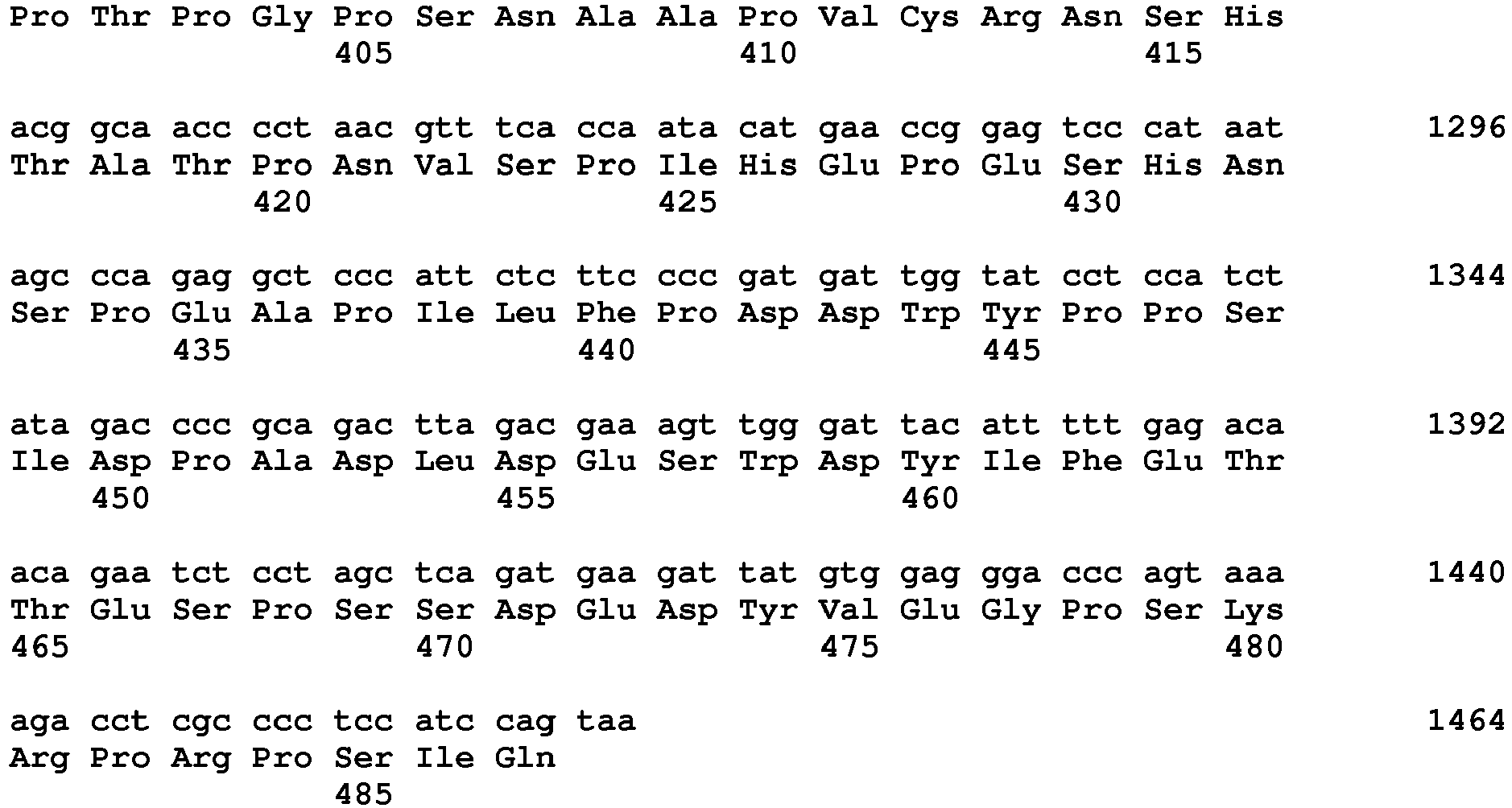
- nucleotide sequence of EBNA2-1.2 (SEQ ID NO: 1) is as follows:
- amino acid sequence of EBNA2-1.2 (SEQ ID NO: 2) is as follows:
- the protein is coded by a nucleic acid wherein said substitution of the triplet coding for at least one of the amino acids selected from the group consisting of: aa. 245 and aa. 267 of SEQ ID NO: 2 does not correspond to a silent mutation. More preferably, said protein in position aa. 245 presents an amino acid S or T and/or in position aa. 267 presents an amino acid I.
- the substitution of the triplet corresponds to at least one of the following: the substitution of the triplet CCA with the triplet TCA or ACA coding for aa. 245 of SEQ ID NO: 2, the substitution of the triplet ACC with the triplet ATC coding for aa. 267 of SEQ ID NO: 2.
- said substitution of the triplet corresponds to at least the substitution of the triplet ACC with the triplet ATC coding for aa. 267 of SEQ ID NO: 2.
- the compound according to the invention is preferably a biomarker of multiple sclerosis.
- Said substitution of the triplet preferably corresponds to at least one of the following: the substitution of the triplet CTT with the triplet CTG coding for aa. 134 of SEQ ID NO: 2, the substitution of the triplet ACC with the triplet ACT coding for aa. 236 of SEQ ID NO: 2, the substitution of the triplet CCA with the triplet TCA or ACA coding for aa. 245 of SEQ ID NO: 2, the substitution of the triplet ACC with the triplet ATC coding for aa. 267 of SEQ ID NO: 2.
- the substitution of the sequence corresponds to at least the substitution of the triplet ACC with the triplet ATC coding for aa. 267 of SEQ ID NO: 2 and/or the substitution of the triplet CTT with the triplet CTG coding for aa. 134 of SEQ ID NO: 2.
- the compound of the present invention finds industrial applicability, for example in the identification of primers and/or probes or as an antigenic compound.
- a further object of the invention is an in vitro method for predicting the risk of contracting or developing multiple sclerosis in a subject, wherein the detection of a compound consisting of:
- the presence of the nucleic acid as defined above is detected through DNA genotyping.
- the detection of the presence of the sequence coding for the nuclear antigen 2 of the sub-type 1.3 B or of the protein coded by it is an indication of low risk.
- nucleotide sequence of EBNA2-1.3B (SEQ ID NO: 4) is as follows:
- amino acid sequence of EBNA2-1.3B (SEQ ID NO: 5) is as follows:
- the presence of the nucleic acid as defined above is detected through DNA genotyping.
- a "method for screening” or the “screening” preferably includes the screening of subjects potentially at risk for multiple sclerosis.
- the subject in which the presence of the compound as defined above has been detected is then subjected to further methods for diagnosis and/or prognosis of multiple sclerosis, including, for example, magnetic resonance of the brain and of the spinal cord, and examination of the cerebrospinal fluid.
- diagnostic methods currently used are costly and invasive.
- the method according to the invention allows to carry out a first screening of subjects potentially at risk that is effective, fast and non-invasive.
- the biological sample is preferably selected from: blood cells, biological fluids, preferably serum, plasma, saliva or cerebrospinal fluid, cerebral tissue, epithelial cells.
- biological sample can also be any cell type able to be infected by the Epstein Barr virus.
- a further object of the invention is the use of a kit comprising detection means for said compound and optionally control means for working the method according to the invention.
- the detected compound is preferably a nucleic acid
- the kit further comprises means for amplifying said nucleic acid.
- the control means can be used to compare the presence of the compound as defined above with a proper control.
- the control can be obtained for example, with reference to the known standards, either from a normal subject or from a normal population.
- the detection means are, for example, at least one antibody specific for the protein, functional analogues or derivatives thereof.
- the detection of the compound as defined above may refer to the detection of the presence of one, two, three, four, five, six, etc. compounds as defined above. Any combination of the compounds is suitable for the purpose of the invention.
- an inhibitor for the Epstein Barr virus having as a specific target the compound as defined above, for use in the prevention and/or treatment of multiple sclerosis, said inhibitor preferably being a vaccine, an antibody, a siRNA or a drug with low atomic weight.
- the variants described above may comprise one of the substitutions of the triplets mentioned above, or two of the substitutions of the triplets mentioned above (for example the substitution of the triplets coding for aa. 134 and 236, aa. 134 and 245, aa. 134 and 267, aa. 236 and 245, aa. 236 and 267, aa. 245 and 267), or three of the substitutions of the triplets mentioned above (for example the substitution of the triplets coding for aa. 134, 236 and 245; for aa. 134, 236 and 267; for aa. 134, 245 and 267; for aa. 236, 245 and 267), or four of the substitutions of the triplets mentioned above (for example the substitution of the triplets coding for aa. 134, 236, 245 and 267).
- the variants of the nucleotide sequence EBNA2-1.2 are preferably characterised in that they have a nucleotide substitution from T to G in position 402 of SEQ ID No. 1 and/or a nucleotide substitution of a C with a T in position 708 of SEQ ID No. 1 and/or a nucleotide substitution of a C with an A or a T in position 733 of SEQ ID No. 1, and/or a nucleotide substitution of a C with a T in position 800 of SEQ ID No. 1.
- the variant of the amino acid sequence EBNA2-1.2 corresponding to the nucleotide sequence where the nucleotide substitution of a C with a T or with an A is present in nucleotide position 733 of SEQ ID No. 1 is characterised in that it has in position aa 245 of SEQ ID No. 2, respectively, an amino acid S or T, instead of an amino acid P.
- the variant of the amino acid sequence EBNA2-1.2 corresponding to the nucleotide sequence wherein in the nucleotide position 800 of SEQ ID No. 1, is present a nucleotide substitution of a C with a T is characterised in that it has in position aa 267 of SEQ ID No. 2 an amino acid I instead of an amino acid T.
- the expression "detection" in relation to a protein or to a nucleic acid refers, for example, to any method of observation, ascertainment, or quantification of the signals indicative of the presence of a protein in a sample or the absolute or relative quantity of said target protein in a sample.
- the methods may be combined with methods for labelling proteins or nucleic acids for providing a signal, for example: immunohistochemical staining, ELISA, cell suspension, cytology, fluorescence, radioactivity, colorimetry, gravimetry, X-ray diffraction or adsorption, magnetism, enzyme activity and the like.
- the detection of the presence of messenger RNA transcribed from the nucleic acid as defined above can be performed by means of any technique known to a person skilled in the art, for example Northern blotting or quantitative or semiquantitative RT-PCR methods using suitable oligonucleotide primers.
- DNA detection can be carried out for example through DNA genotyping.
- DNA genotyping is intended any technique which allows to detect the genotype from an organism by means of biological tests (genotype tests). These techniques include, for example: PCR, analysis of a DNA fragment, allele-specific oligonucleotide (ASO) probes, DNA sequencing and microarray.
- PBMC Peripheral blood mononuclear cells
- HLA leukocyte antigen
- a Bayes classifier 14 was used for partitioning the dataset: 50% of the data was used to train the classifier, and the remaining 50% was then used to test its predictive capability.
- the receiver operating characteristic (ROC) curve and the area under the curve (AUC) were then computed to quantify the predictive potential of EBNA2 genotyping as a marker of disease status.
- Blood samples were obtained from 91 patients affected by MS (15 undergoing immunomodulatory therapy) and 56 healthy donors (HD) selected by age, sex, ethnicity and geographic origin, comparable with the group of patients.
- the success rate of the EBNA2 genotyping was comparable between the two groups: 53/91 (58%) in the group of patients and 37/56 in the healthy subjects (66%).
- the obtained data was analysed by comparing the distribution of the viral strains between healthy or diseased women and men, observing a distribution comparable with that obtained over the entire population. The gender therefore did not appear to modify the aforementioned distribution (Table 1B).
- a Bayes classifier 14 was tested for its capability to predict the state of the disease.
- the predictive potential of the EBV genetic variants was therefore quantified and illustrated in a ROC curve ( Figure 1 ): the AUC was 0.87, a value which is more than good in accordance with broadly accepted ROC efficiency metrics 14 .
- the subjects included in this study were characterised by the HLA haplotype and by their clinical and neuroradiological characteristics at the moment of blood sampling.
- the authors have demonstrated that the state of the disease correlates with an excess of EBNA2 sub-type 1.2 and a deficiency of sub-type 1.3B, irrespective of the clinical characteristics of the patients and their HLA haplotype.
- the patients have a greater probability of being infected with viral strains presenting new genotype variants correlated to sub-type 1.2 (in particular that corresponding at amino acid position 245).
- the authors found genotypes with associations that are stronger than those reported beforehand: for a model that includes EBNA2 sub-types and new identified EBNA2 polymorphisms, the ROC analysis provides increased reliability in the prediction of the state of the MS. Aside from the predictive potential of the EBNA2 variants, the probability that they can induce functional consequences, contributing in this way to the aetiology of the disease, merits further consideration. In a virus with a low propensity to mutate, new variants have greater probability of having a certain functional impact insofar as they tend to be maintained and fixed in the viral genome.
- EBV EBV-LP, EBNA2, EBNA3A, EBNA3B and EBNA3C.
- EBNA-LP EBNA2
- EBNA3A EBNA3A
- EBNA3B EBNA3C
- EBNA3C EBNA3C
- this region is involved in interactions with cellular proteins, such as Nur77 21 and SMARCB1 22 , that have been associated respectively with MS 23 and antiviral responses.
- Table 1 Frequency of the assessed EBNA2 sub-types in peripheral blood of MS and HD divided by subjects and samples (in 10 subjects we have multiple determinations of the genotype obtained at different time points).
Landscapes
- Chemical & Material Sciences (AREA)
- Life Sciences & Earth Sciences (AREA)
- Health & Medical Sciences (AREA)
- Organic Chemistry (AREA)
- Proteomics, Peptides & Aminoacids (AREA)
- Zoology (AREA)
- Wood Science & Technology (AREA)
- Engineering & Computer Science (AREA)
- Immunology (AREA)
- Biophysics (AREA)
- Biochemistry (AREA)
- Virology (AREA)
- Genetics & Genomics (AREA)
- General Health & Medical Sciences (AREA)
- Molecular Biology (AREA)
- Analytical Chemistry (AREA)
- Physics & Mathematics (AREA)
- Biotechnology (AREA)
- Microbiology (AREA)
- Bioinformatics & Cheminformatics (AREA)
- General Engineering & Computer Science (AREA)
- Gastroenterology & Hepatology (AREA)
- Medicinal Chemistry (AREA)
- Measuring Or Testing Involving Enzymes Or Micro-Organisms (AREA)
Description
- The present invention lies in the medical field, and in particular relates to an in vitro method for detecting the presence of genotype variants of the Epstein Barr virus (EBV), and to the use thereof as possible risk predictors, biomarkers, and therapeutic target in multiple sclerosis.
- Multiple sclerosis (MS) is a demyelinating disease of the central nervous system, it belongs to the group of autoimmune diseases and has unknown aetiology, however there is evidence of an association both with genetic and environmental factors.
- Epidemiological, clinical and laboratory studies support the aetiological role of the Epstein Barr virus (EBV) in MS1. In fact, human beings are the only natural host of the virus, which may explain why MS is a pathology which manifests itself exclusively in humans.
- The studies carried out until now have shown that the onset of infectious mononucleosis and primary infection at young-adult age correlate with an increased risk of developing multiple sclerosis: in Northern Europe (in areas with a high prevalence of MS), a third of the population is infected with EBV during or after puberty, whilst in Southern Europe (areas in which the prevalence is low), subclinical infections occur in the first years of life. In addition, seroepidemiological evidence suggests an aetiological role for the virus: perspective studies have demonstrated that the increase of serum antibody titres against the virus precede the onset of multiple sclerosis. Viral proteins are a target of the antibody response detected in the cerebrospinal fluid of patients, and post-mortem studies have revealed the infection by EBV in the cerebral tissues of the affected subjects.
- Patent application
WO2008/125366 describes that the infection of the B cells by EBV leads to autoimmune diseases, including multiple sclerosis, and proposes the use of anti-EBV substances for the treatment of the autoimmune diseases. - H.-J. Wagner et al., Plasma viral load of Epstein-Barr virus and risk of multiple sclerosis", European Journal of Neurology, vol. 11, no. 12, 2004, refer to the correlation between the presence of the EBV DNA and multiple sclerosis. However, the discrepancy between global spread of the infection (more than 90% of the adult population) and the relatively limited prevalence of MS remains a large obstacle for interpreting the pathogenetic mechanisms forming the basis of the between the ubiquitous virus and the disease. The presence of genotype variants of the virus specifically associated with the pathology can contribute to the explanation of this paradox.
- Given the methodological difficulties in the study of the variants of EBV through sequencing of the whole viral genome, an approach focused on a particular gene (candidate-gene approach) is followed by various groups2-7. In the gene coding for the latent protein of the "Epstein Barr nuclear antigen 2" (EBNA2) resides one of the most variable regions of the entire virus, which allows to discriminate between the two main types of EBV (
type 1 and 2). In addition, EBNA2 is expressed during the first phase of infection of the B cells, having a key role in the activation and in the proliferation of these cells. - Five major variants of the
type 1 virus (the most widespread in the Caucasian population)8 have been identified within the sequence of EBNA29 defining the following alleles: 1.1, 1.2, 1.3A, 1.3B and 1.3E. These variants are characterised by changes with respect to the sequence of the reference prototype B95.8 (defined as allele 1.1) in the most polymorphic region (B95.8 coordinates 48.959-49.208) of the coding portion of EBNA2. Previous studies2-7, based on multiple sclerosis, have analysed other regions of the virus without revealing particular correlations between multiple sclerosis and the gene variants of EBV. - There is thus a need to provide a method for identifying subjects who are "at risk" or pathological situations having diagnostic or prognostic peculiarities, and for identifying therapeutic targets, also for preventative strategies.
- The authors have identified a connection between MS and gene variants of EBV. The authors have investigated the link between the variants of EBNA2 and MS in a population of continental Italy. The present invention is based on the identification of gene variants of the Epstein Barr virus (EBV), identified in the coding sequence of the Epstein Barr nuclear antigen 2 (EBNA2) protein, in a population of subjects affected by multiple sclerosis (MS). The peculiarity of the EBV virus genotype that characterises the subjects with MS compared to controls paired by age, sex and geographical area can be utilised as a potential biomarker (risk-predictive condition for the development of the disease, a trait that may contribute to the diagnosis and/or prognosis of MS).
- The authors have demonstrated a correlation between an EBV-associated pathology, in particular MS, and viral gene variants in the region of EBNA2, selected for being notoriously the most polymorphic region of the viral genome.
- The "profile" of the gene variants of EBNA2 may contribute to the identification of subjects who are "at risk" or pathological situations having specific diagnostic or prognostic peculiarities.
- In addition, the gene variants identified by the authors can be used as a therapeutic target, even for preventative therapies. For example, such variants can be used to produce anti-viral drugs or vaccines.
- Object of the present invention is a compound consisting of:
- a) a nucleic acid coding for the variant of the 1.2 sub-type of Epstein Barr nuclear antigen 2 (EBNA2), characterised in that it comprises at least one substitution of one nucleotide in the triplet coding for one or more amino acids selected from the group consisting of: aa. 245 and aa. 267 of SEQ ID NO: 2, or
- b) a messenger RNA transcribed from said nucleic acid, or
- c) a protein coded by a nucleic acid coding for the variant of the 1.2 sub-type of Epstein Barr nuclear antigen 2 (EBNA2), characterised in that it comprises at least one substitution of one nucleotide in the triplet coding for one or more amino acids selected from the group consisting of: aa. 245 and aa. 267 of SEQ ID NO: 2.
- The nucleotide sequence of EBNA2-1.2 (SEQ ID NO: 1) is as follows:

- The amino acid sequence of EBNA2-1.2 (SEQ ID NO: 2) is as follows:

- In a preferred embodiment the protein is coded by a nucleic acid wherein said substitution of the triplet coding for at least one of the amino acids selected from the group consisting of: aa. 245 and aa. 267 of SEQ ID NO: 2 does not correspond to a silent mutation. More preferably, said protein in position aa. 245 presents an amino acid S or T and/or in position aa. 267 presents an amino acid I.
- In a preferred aspect of the invention the substitution of the triplet corresponds to at least one of the following: the substitution of the triplet CCA with the triplet TCA or ACA coding for aa. 245 of SEQ ID NO: 2, the substitution of the triplet ACC with the triplet ATC coding for aa. 267 of SEQ ID NO: 2.
- More preferably, said substitution of the triplet corresponds to at least the substitution of the triplet ACC with the triplet ATC coding for aa. 267 of SEQ ID NO: 2. The compound according to the invention is preferably a biomarker of multiple sclerosis.
- Herein disclosed is a compound consisting of:
- a) a nucleic acid coding for a variant of the Epstein Barr nuclear antigen 2 (EBNA2), characterised in it comprises: the sequence coding for a nuclear antigen 2 of the sub-type 1.2 or variants thereof, characterised by at least one substitution of the triplet coding for one or more amino acids selected from the group consisting of: aa. 134, aa. 236, aa. 245 and aa. 267 of SEQ ID NO: 2, or
- b) a messenger RNA transcribed from said nucleic acid, or
- c) a protein coded by said nucleic acid
for use in a method for predicting the risk of contracting or developing multiple sclerosis and/or for screening and/or for the diagnosis and/or the prognosis of multiple sclerosis. Said compound is preferably a biomarker of multiple sclerosis. - Said substitution of the triplet preferably corresponds to at least one of the following:
the substitution of the triplet CTT with the triplet CTG coding for aa. 134 of SEQ ID NO: 2, the substitution of the triplet ACC with the triplet ACT coding for aa. 236 of SEQ ID NO: 2, the substitution of the triplet CCA with the triplet TCA or ACA coding for aa. 245 of SEQ ID NO: 2, the substitution of the triplet ACC with the triplet ATC coding for aa. 267 of SEQ ID NO: 2. - More preferably, the substitution of the sequence corresponds to at least the substitution of the triplet ACC with the triplet ATC coding for aa. 267 of SEQ ID NO: 2 and/or the substitution of the triplet CTT with the triplet CTG coding for aa. 134 of SEQ ID NO: 2.
- The compound of the present invention, DNA, RNA or protein, finds industrial applicability, for example in the identification of primers and/or probes or as an antigenic compound.
- A further object of the invention is an in vitro method for predicting the risk of contracting or developing multiple sclerosis in a subject, wherein the detection of a compound consisting of:
- a) a nucleic acid coding for a variant of the Epstein Barr nuclear antigen 2 (EBNA2), characterised in that it comprises:
the sequence coding for a nuclear antigen 2 of the sub-type 1.2 or variants thereof, characterised by at least one substitution of the triplet coding for one or more amino acids selected from the group consisting of: aa. 134, aa. 236, aa. 245 and aa. 267 of SEQ ID NO: 2, - b) a messenger RNA transcribed from said nucleic acid, or
- c) a protein coded by a nucleic acid coding for a variant of the Epstein Barr nuclear antigen 2 (EBNA2), characterised in that it comprises:
the sequence coding for a nuclear antigen 2 of the sub-type 1.2 or variants thereof, characterised by at least one substitution of the triplet coding for one or more amino acids selected from the group consisting of: aa. 245 and aa. 267 of SEQ ID NO: 2, - In a preferred embodiment of the method according to the present invention, the presence of the nucleic acid as defined above is detected through DNA genotyping. In a preferred aspect of the method according to the invention, the detection of the presence of the sequence coding for the nuclear antigen 2 of the sub-type 1.3 B or of the protein coded by it is an indication of low risk.
- The nucleotide sequence of EBNA2-1.3B (SEQ ID NO: 4) is as follows:

- The amino acid sequence of EBNA2-1.3B (SEQ ID NO: 5) is as follows:

- Herein described is also an in vitro method for screening and/or for the diagnosis and/or prognosis of multiple sclerosis in a subject through detection of the presence of the compound as defined above, in a biological sample isolated from the subject. In a preferred embodiment of the method according to the present invention, the presence of the nucleic acid as defined above is detected through DNA genotyping.
- In the present invention a "method for screening" or the "screening" preferably includes the screening of subjects potentially at risk for multiple sclerosis.
- In a preferred embodiment of the in vitro method according to the invention, the subject in which the presence of the compound as defined above has been detected is then subjected to further methods for diagnosis and/or prognosis of multiple sclerosis, including, for example, magnetic resonance of the brain and of the spinal cord, and examination of the cerebrospinal fluid. Such diagnostic methods currently used are costly and invasive. Thus, the method according to the invention allows to carry out a first screening of subjects potentially at risk that is effective, fast and non-invasive.
- In the methods according to the present invention, the biological sample is preferably selected from: blood cells, biological fluids, preferably serum, plasma, saliva or cerebrospinal fluid, cerebral tissue, epithelial cells. The biological sample can also be any cell type able to be infected by the Epstein Barr virus.
- A further object of the invention is the use of a kit comprising detection means for said compound and optionally control means for working the method according to the invention.
- In the kit according to the invention, the detected compound is preferably a nucleic acid, and the kit further comprises means for amplifying said nucleic acid.
- The control means can be used to compare the presence of the compound as defined above with a proper control. The control can be obtained for example, with reference to the known standards, either from a normal subject or from a normal population. If the compound is a protein, the detection means are, for example, at least one antibody specific for the protein, functional analogues or derivatives thereof.
- In the present invention, the detection of the compound as defined above may refer to the detection of the presence of one, two, three, four, five, six, etc. compounds as defined above. Any combination of the compounds is suitable for the purpose of the invention.
- Herein described is also an inhibitor for the Epstein Barr virus having as a specific target the compound as defined above, for use in the prevention and/or treatment of multiple sclerosis, said inhibitor preferably being a vaccine, an antibody, a siRNA or a drug with low atomic weight.
- The variants described above may comprise one of the substitutions of the triplets mentioned above, or two of the substitutions of the triplets mentioned above (for example the substitution of the triplets coding for aa. 134 and 236, aa. 134 and 245, aa. 134 and 267, aa. 236 and 245, aa. 236 and 267, aa. 245 and 267), or three of the substitutions of the triplets mentioned above (for example the substitution of the triplets coding for aa. 134, 236 and 245; for aa. 134, 236 and 267; for aa. 134, 245 and 267; for aa. 236, 245 and 267), or four of the substitutions of the triplets mentioned above (for example the substitution of the triplets coding for aa. 134, 236, 245 and 267).
- The variants of the nucleotide sequence EBNA2-1.2 are preferably characterised in that they have a nucleotide substitution from T to G in position 402 of SEQ ID No. 1 and/or a nucleotide substitution of a C with a T in position 708 of SEQ ID No. 1 and/or a nucleotide substitution of a C with an A or a T in position 733 of SEQ ID No. 1, and/or a nucleotide substitution of a C with a T in position 800 of SEQ ID No. 1.
- The variant of the amino acid sequence EBNA2-1.2 corresponding to the nucleotide sequence where the nucleotide substitution of a C with a T or with an A is present in nucleotide position 733 of SEQ ID No. 1 is characterised in that it has in position aa 245 of SEQ ID No. 2, respectively, an amino acid S or T, instead of an amino acid P. The variant of the amino acid sequence EBNA2-1.2 corresponding to the nucleotide sequence wherein in the nucleotide position 800 of SEQ ID No. 1, is present a nucleotide substitution of a C with a T is characterised in that it has in position aa 267 of SEQ ID No. 2 an amino acid I instead of an amino acid T.
- In the present invention, the expression "detection" in relation to a protein or to a nucleic acid (DNA or RNA) refers, for example, to any method of observation, ascertainment, or quantification of the signals indicative of the presence of a protein in a sample or the absolute or relative quantity of said target protein in a sample. The methods may be combined with methods for labelling proteins or nucleic acids for providing a signal, for example: immunohistochemical staining, ELISA, cell suspension, cytology, fluorescence, radioactivity, colorimetry, gravimetry, X-ray diffraction or adsorption, magnetism, enzyme activity and the like. In the present invention, the detection of the presence of messenger RNA transcribed from the nucleic acid as defined above can be performed by means of any technique known to a person skilled in the art, for example Northern blotting or quantitative or semiquantitative RT-PCR methods using suitable oligonucleotide primers. DNA detection can be carried out for example through DNA genotyping. For DNA genotyping is intended any technique which allows to detect the genotype from an organism by means of biological tests (genotype tests). These techniques include, for example: PCR, analysis of a DNA fragment, allele-specific oligonucleotide (ASO) probes, DNA sequencing and microarray.
- The present invention will be described in non-limiting examples with reference to the following figure:
-
Figure 1 : ROC (receiver operating characteristic) curve generated using a Bayes classification approach which takes into consideration the sex of the subject and the genotype of EBNA2 (Epstein Barr virus nuclear antigen 2). The area under the curve (AUC) is equal to 0.87; the AUC precision recall = 0.84; F measure = 0.77. - Blood samples were taken from patients with relapsing-remitting multiple sclerosis MS11 and healthy donors (HD) matched by age, sex and geographical origin. At the same time as the blood sampling, the patients underwent magnetic resonance imaging (MRI) with contrast agent (gadolinium). The Ethics Committee approved the study, and all the participating subjects gave written informed consent. Peripheral blood mononuclear cells (PBMC) were obtained by density centrifugation over Ficoll-Hypaque according to standard procedure. The cells were stained with human anti-CD19 antibodies (Miltenyi Biotec) and separated by magnetic beads in accordance with the manufacturer's recommended protocol.
- Genomic DNA was extracted from PBMCs, CD19+ B cells and cell lines (B95-8 EBV-positive cell line and BJAB EBV-negative cell line) by a commercially available kit (QIAmp DNA mini kit, Qiagen). All the samples were analysed by a "semi-nested PCR" approach using specific primers of EBNA29:
- PRIMER E2C: AGGGATGCCTGGACACAAGA (SEQ ID NO: 6)
- PRIMER E2SEQ4: GTAATGGCATAGGTGGAATG (SEQ ID NO: 7)
- PRIMER 2A.2: TTCTGGACTATCTGGATCAT (SEQ ID NO: 8)
- All PCR products were assayed by means of sequence analyses.
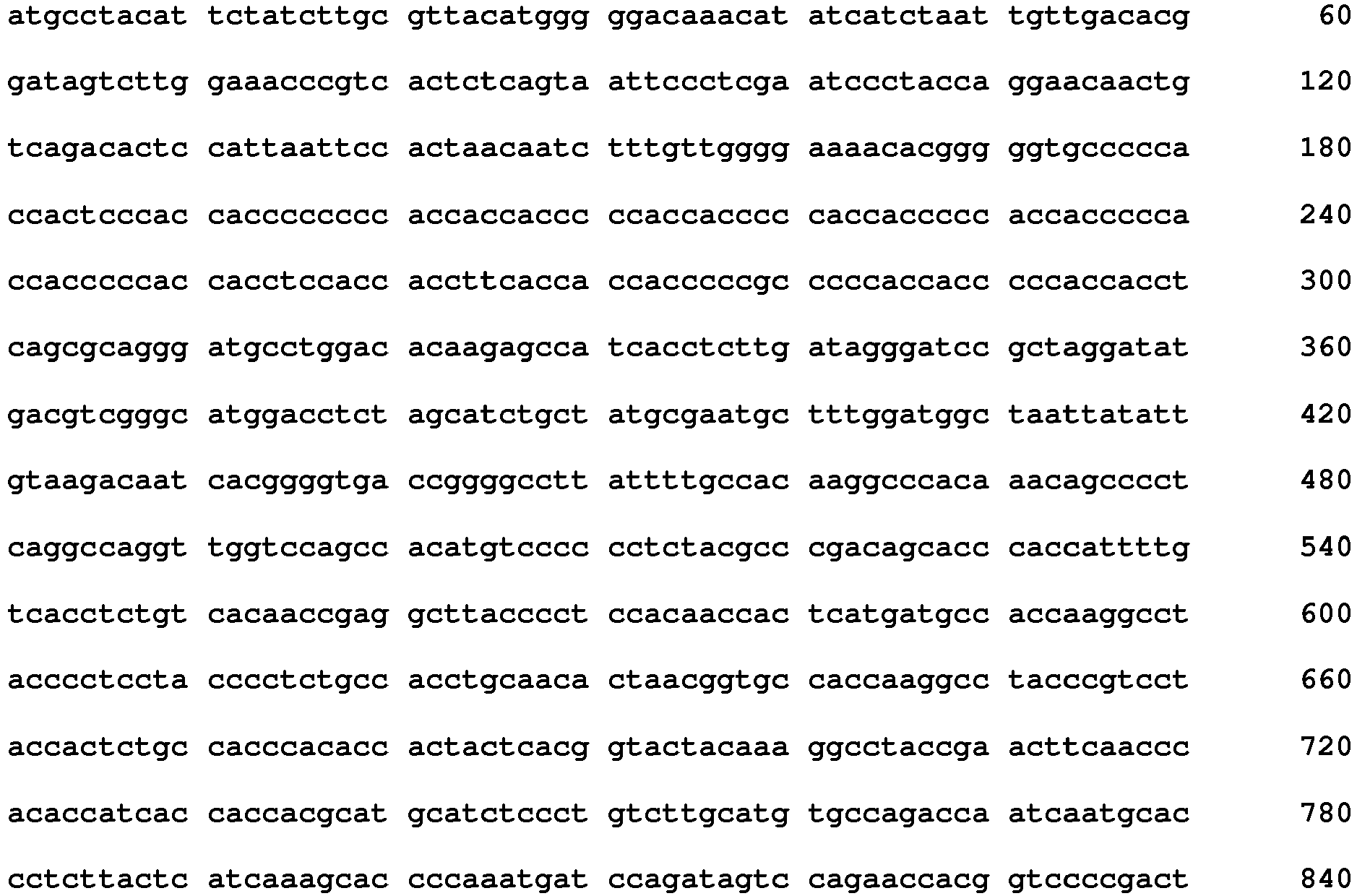
- The sequences were aligned with the multiple sequence alignment program ClustalW2 (www.ebi.ac.uk/Tools/msa/clustalw2/) and the variants were considered when there was a deviation from EBV B95.8 prototype (NCBI accession number V01555; V01555-EBNA-2 (SEQ ID NO: 3, published):

- All the participants of the study (patients and healthy subjects) were subjected to human leukocyte antigen (HLA) loci typing. The haplotypes of classes I HLA-A, HLA-B and HLA-C and of class II DRB1 were analysed by means of standard sequence specific primer polymerase chain reaction (SSP-PCR)12, using "Histo Type DNA" wells plates (BAG, Formedic diagnostici, Milan, Italy) in accordance with manufacturer's instructions.
- It was possible to detect the alleles recognised by the specific primers after amplification in a GeneAmp PCR 9700 thermocycler (Applied Biosystems, Foster City, CA U.S.A.) and gel electrophoresis on 2% agarose. Fisher's exact test (Graph Pad Prism 5) was used to compare the proportion of variants in all patients vs HD, whilst Barnard's exact test13 was used to compare only the donors infected with the sub-type 1.2.
- A Bayes classifier14 was used for partitioning the dataset: 50% of the data was used to train the classifier, and the remaining 50% was then used to test its predictive capability. The receiver operating characteristic (ROC) curve and the area under the curve (AUC) were then computed to quantify the predictive potential of EBNA2 genotyping as a marker of disease status.
- By means of "semi-nested PCR", the authors amplified a fragment of approximately 500 bp corresponding to the fragment having coordinates 48.810-49.310 located within the hypervariable region of EBNA2, which was then subjected to sequencing.
- Blood samples were obtained from 91 patients affected by MS (15 undergoing immunomodulatory therapy) and 56 healthy donors (HD) selected by age, sex, ethnicity and geographic origin, comparable with the group of patients. The success rate of the EBNA2 genotyping was comparable between the two groups: 53/91 (58%) in the group of patients and 37/56 in the healthy subjects (66%).
- Of the 53 patients with a successful genotyping, 11 were under therapy with Interferon beta, whilst the others had never been treated. The mean age was 35±10.7 in the patients and 37±9.5 in the HD; the male/female ratio was 13/40 in the patients, 11/26 in the controls. Seven patients with MS and three HD were analysed at different time points (from one to twelve months between each sampling): two patients and one HD presented infection from various strains (1.2, 1.3B, GD1) (Table 3) at different time points, whilst the majority of the donors showed stability of the EBV sub-type.
- Considering each sampling as an independent observation, a total of 107 blood samples (66 blood samples from patients with MS and 41 from HD) were analysed.
- A significant difference in the distribution of the EBV sub-types was observed between patients and controls (Table 1): the allele 1.2 was prevalent in the patients with MS (26/53 vs 6/37, p=0.0004), whereas the allele 1.3B was prevalent in the controls (26/37 vs 18/53, p=0.0012; Fisher's exact test). When the samples obtained from the same subject at different time points were added to the analyses (66 from patients with MS and 41 from HD), comparable results in the EBV sub-types and in the distribution of the variants were obtained, as well as in the potential of predicting the state of the disease (shown in Tables 1-2).
- The obtained data was analysed by comparing the distribution of the viral strains between healthy or diseased women and men, observing a distribution comparable with that obtained over the entire population. The gender therefore did not appear to modify the aforementioned distribution (Table 1B).
- Extending the observation beyond the region 48990-49170 (where the variants described in literature reside)9, new sequence variations, never observed before, were identified, in correspondence of the amino acids 134, 236, 245, 256 and 267 (Table 2; Table 3). Whilst the variation at position 256 (Asp/Asn) is present in sub-types 1.2, 1.3B and GD1, without differences between patients and controls, the other four variants resulted detectable only in the presence of the sub-type 1.2, and therefore correlated with MS (Table 2; Table 3).
- To verify the consistency of the EBNA2 genotyping data, a Bayes classifier14 was tested for its capability to predict the state of the disease. The predictive potential of the EBV genetic variants was therefore quantified and illustrated in a ROC curve (
Figure 1 ): the AUC was 0.87, a value which is more than good in accordance with broadly accepted ROC efficiency metrics14. - In general, the risk of developing the disease is higher in carriers of sub-type 1.2 (odd ratio[OR]=5) and variants thereof (in particular the divergence of amino acid 245, OR=9.4), whilst the presence of sub-type 1.3B demonstrated to be protective, OR=0.22.
- No correlation was found between EBV genetic variants and HLA haplotypes (included those known to be associated with MS)15 of the donors. No correlation was found between EBV genotypes and the clinical characteristics of the patients (MRI data, disability scales, disease duration).
- The subjects included in this study were characterised by the HLA haplotype and by their clinical and neuroradiological characteristics at the moment of blood sampling. The authors have demonstrated that the state of the disease correlates with an excess of EBNA2 sub-type 1.2 and a deficiency of sub-type 1.3B, irrespective of the clinical characteristics of the patients and their HLA haplotype. In addition, the patients have a greater probability of being infected with viral strains presenting new genotype variants correlated to sub-type 1.2 (in particular that corresponding at amino acid position 245). Previous studies on a possible link between EBV genotypes and MS have provided conflicting results: no link with EBNA6,2 EBNA1 and LMP1,3,4 EBNA2;5 "marginally different frequencies" for BRRF2 and EBNA1;6 most frequent co-infection EBNA2 of
type 1 and 2 in patients compared with the healthy subjects.7 - Differences in the geographic variants can explain, in part, the incoherencies, as has been reported for malignant EBV-correlated tumours and the different geographical distribution thereof.16
- In a region of EBNA2 not studied by the previous studies, the authors found genotypes with associations that are stronger than those reported beforehand: for a model that includes EBNA2 sub-types and new identified EBNA2 polymorphisms, the ROC analysis provides increased reliability in the prediction of the state of the MS. Aside from the predictive potential of the EBNA2 variants, the probability that they can induce functional consequences, contributing in this way to the aetiology of the disease, merits further consideration. In a virus with a low propensity to mutate, new variants have greater probability of having a certain functional impact insofar as they tend to be maintained and fixed in the viral genome.
- There are only two main types of EBV (
type 1 and 2), which seem to be identical for the majority of the genome, but demonstrate allele polymorphism in a sub-group of latent genes: EBNA-LP, EBNA2, EBNA3A, EBNA3B and EBNA3C. In particular, the two types of EBV share 64% of the nucleotide sequences and 53% of the amino acids sequences predicted of EBNA2.17 EBNA2 sequence mutations are able to influence its interaction with other host proteins.18 - The authors studied the most polymorphic region of EBNA2, where the sequence divergence between
type 1 and type 2 resides. These differences can have immunological consequences.19,20 - In addition, this region is involved in interactions with cellular proteins, such as Nur7721 and SMARCB122, that have been associated respectively with MS23 and antiviral responses.24
- These results are complementary to data showing that part of the genetic predisposition to MS can be attributable to variants in genes that interact with EBV.
Table 1: Frequency of the assessed EBNA2 sub-types in peripheral blood of MS and HD divided by subjects and samples (in 10 subjects we have multiple determinations of the genotype obtained at different time points). Type Sub-type MS (%) N=53 HD SUBJECTS (%) N=37 p-value* MS (%) N=66 SAMPLES (%) N=41 HD p-value* B95-8 1.1 0 0 / 0 0 / B95-8 1.2 26 (49) 6 (16) 0.0004 35 (53) 9 (22) 0.0022 B95-8 1.3B 18 (34) 26 (70) 0.0012 21 (32) 27 (66) 0.0007 B95-8 1.3A 5 (9) 0 n.s. 5 (7.5) 0 n.s. GD1 / 4 (8) 5 (14) n.s. 5 (7.5) 5 (12) n.s. EBNA2 = Epstein Barr nuclear antigen 2; aa = amino acid; MS = multiple sclerosis; HD = healthy donors; n.s. = not significant. Table 2: Frequency of the EBNA2 variants of new identification in peripheral blood of assessed MS and HD divided by subjects and samples (in 10 subjects we have multiple determinations of the genotype obtained at different time points). aa position B95-8 Variant MS(%) (N=53) HD SUBJECTS (%) N=37 p-value* MS(%) N=66 SAMPLES HD(%) N=41 p-value* 134 L(CTT) L(CTG) 25 (47) 6 (16) 0.0032 33 (55) 8 (19.5) 0.002 236 T(ACC) T(ACT) 23 (43) 6 (16) 0.011 32 (48.5) 9 (22) 0.0077 S(TCA) 11 (21) 1 (3) 0.0132 17 (26) 1 (2.4) 0.0012 245 P(CCA) T(ACA) 6 (11) 3 (8) n.s. 6 (9) 4 (10) n.s. 256 D(GAC) N(ACC) 10 (19) 9 (24) n.s. 12 (18) 10 (24) n.s. 267 T(ACC) I(ATC) 25 (47) 6 (16) 0.0032 34 (51) 8 (19.5) 0.0011 EBNA2 = Epstein bar nuclear antigen 2; aa = amino acid; MS = multiple sclerosis; HD = healthy donors; n.s. = not significant. 


-
- 1 Lünemann JD. Epstein-Barr virus in multiple sclerosis: a continuing conundrum. Neurology 2012;78:11-12.
- 2. Munch M, Hvas J, Christensen T, M⌀ller-Larsen A et al. A single subtype of Epstein Barr virus in members of multiple sclerosis clusters. Acta Neurol Scand. 1998;98:395-9
- 3. Lindsey JW, Patel S, Zou J. Epstein-Barr virus genotypes in multiple sclerosis. Acta Neurol Scand. 2008;117:141-4
- 4. Simon KC, Yang X, Munger KL, Ascherio A, EBNA1 and LMP1 variants in multiple sclerosis cases and controls. Acta Neurol Scand. 2011;124:53-8
- 5. Lay ML, Lucas RM, Toi C, Ratnamohan M, et al. Epstein-Barr Virus Genotypes and Strains in Central Nervous System Demyelinating Disease and Epstein-Barr Virus-Related Illnesses in Australia. Intervirology. 2012 Jan 24. [Epub ahead of print]
- 6. Brennan RM, Burrows JM, Bell MJ, Bromham L, et al. Strains of Epstein-Barr virus infecting multiple sclerosis patients. Mult Scler. 2010;16:643-51
- 7. Santòn A, Cristóbal E, Aparicio M, Royuela A et al. High frequency of co-infection by Epstein-
- 8. Yao QY, Croom-Carter DS, Tierney RJ, Habeshaw G, et al. Epidemiology of infection with Epstein-
- 9. Tierney RJ, Edwards RH, Sitki-Green D, Croom-Carter D, et al. Multiple Epstein-Barr virus strains in patients with infectious mononucleosis: comparison of ex vivo samples with in vitro isolates by use of heteroduplex tracking assays. J Infect Dis. 2006;193:287-97
- 10. Henkel T, Lind PD, Hayward SD & Peterson MG. Mediation of Epstein-Barr virus EBNA2 transactivation by recombination signal-binding protein J kappa. Science 1994;265:92-95
- 11. Polman CH, Reingold SC, Banwell B, Clanet M, et al. Diagnostic criteria for multiple sclerosis. 2010 revisions to the McDonald criteria. Ann Neurol 2011;69:292-302
- 12. Olerup O, Zetterquist H, HLA-DR typing by PCR amplification with sequence-specific primers (PCR-SSP) in 2 hours: an alternative to serological DR typing in clinical practice including donor-recipient matching in cadaveric transplantation. Tissue Antigens. 1992;39:225-35
- 13. Barnard, GA. A New Test for 2x2 Tables. Nature 1945;156:177.
- 14. Freidman N, Geiger D, Goldszmidt M. Bayesian Network Classifiers. Machine Learning 1997;29:131.
- 15. International Multiple Sclerosis Genetics Consortium; Wellcome Trust Case Control Consortium 2, Sawcer S, et al. Genetic risk and a primary role for cell-mediated immune mechanisms in multiple sclerosis. Nature. 2011;476:214
- 16. Sawada A, Croom-Carter D, Kondo O, Yasui M, et al Epstein-Barr virus latent gene sequences as geographical markers of viral origin: unique EBNA3 gene signatures identify Japanese viruses as distinct members of the Asian virus family. J Gen Virol. 2011;92:1032-43
- 17. Sample J, Young L, Martin B, Chatman T, et al. Epstein-
- 18. Ling PD, Hayward SD. Contribution of conserved amino acids in mediating the interaction between EBNA2 and CBF1/RBPJk. J Virol. 1995;69:1944-50
- 19. Klein G, Klein E, Kashuba E. Interaction of Epstein-Barr virus (EBV) with human B lymphocytes. Biochem Biophys Res Commun. 2010;396:67-73
- 20. Lucchesi W, Brady G, Dittrich-Breiholz O, Kracht M, et al. Differential gene regulation by Epstein-
- 21. Lee JM, Lee KH, Farrell CJ, Ling PD, et al. EBNA2 is required for protection of latently Epstein-Barr virus-infected B cells against specific apoptotic stimuli. J Virol. 2004;78:12694-7
- 22. Wilson BG, Roberts CW. SWI/SNF nucleosome remodellers and cancer. Nat Rev Cancer. 2011;11:481-92
- 23. Achiron A. Feldman A, Gurevich M. Characterization of the multiple sclerosis traits: nuclear receptors (NR) impaired apoptosis pathway and the role of 1-alpha 25-dihydroxyvitamin D(3). J Neurol Sci. 2011;311:9-14
- 24. Cui K, Tailor P, Liu H, Chen X, et al. The chromatin-remodeling BAF complex mediates cellular antiviral activates by promoter priming. Mol Cell Biol. 2004;24:4476-86
-
- <110> UNIVERSITA' DEGLI STUDI DI ROMA "LA SAPIENZA"
- <120> VARIANTI GENOTIPICHE DEL VIRUS DI EPSTEIN BARR E LORO USI COME PREDITTORI DI RISCHIO, BIOMARCATORI E TARGET TERAPEUTICI NELLA SCLEROSI MULTIPLA
- <130> PCT 123118
- <160> 8
- <170> PatentIn version 3.5
- <210> 1
<211> 1464
<212> DNA
<213> Human herpesvirus 4 - <220>
<221> CDS
<222> (1)..(1464) - <400> 1


- <210> 2
<211> 487
<212> PRT
<213> Human herpesvirus 4 - <400> 2


- <210> 3
<211> 1464
<212> DNA
<213> Human herpesvirus 4 - <400> 3

- <210> 4
<211> 1467
<212> DNA
<213> Human herpesvirus 4 - <220>
<221> CDS
<222> (1)..(1467) - <400> 4


- <210> 5
<211> 488
<212> PRT
<213> Human herpesvirus 4 - <400> 5


- <210> 6
<211> 20
<212> DNA
<213> Artificial Sequence - <220>
<223> PRIMER E2C - <400> 6
agggatgcct ggacacaaga 20 - <210> 7
<211> 20
<212> DNA
<213> Artificial Sequence - <220>
<223> PRIMER E2SEQ4 - <400> 7
gtaatggcat aggtggaatg 20 - <210> 8
<211> 20
<212> DNA
<213> Artificial Sequence - <220>
<223> PRIMER 2A.2 - <400> 8
ttctggacta tctggatcat 20
Claims (11)
- A compound consisting of:a) a nucleic acid coding for the variant of the 1.2 sub-type of Epstein Barr nuclear antigen 2 (EBNA2), characterised in that it comprises at least one substitution of one nucleotide in the triplet coding for one or more amino acids selected from the group consisting of: aa. 245 and aa. 267 of SEQ ID NO: 2, orb) a messenger RNA transcribed from said nucleic acid, orc) a protein coded by a nucleic acid coding for the variant of the 1.2 sub-type of Epstein Barr nuclear antigen 2 (EBNA2), characterised in that it comprises at least one substitution of one nucleotide in the triplet coding for one or more amino acids selected from the group consisting of: aa. 245 and aa. 267 of SEQ ID NO: 2.
- The compound according to claim 1, wherein the substitution of the triplet corresponds to at least one of the following: the substitution of the triplet CCA with the triplet TCA or ACA coding for aa. 245 of SEQ ID NO: 2, the substitution of the triplet ACC with the triplet ATC coding for aa. 267 of SEQ ID NO: 2.
- The compound according to claim 2, wherein the substitution of the triplet corresponds to at least the substitution of the triplet ACC with the triplet ATC coding for aa. 267 of SEQ ID NO: 2.
- The compound according to one of claims 1-3, wherein the compound is a biomarker of multiple sclerosis.
- An in vitro method for predicting the risk of contracting or developing multiple sclerosis in a subject, wherein the detection of a compound consisting of:a) a nucleic acid coding for a variant of the Epstein Barr nuclear antigen 2 (EBNA2), characterised in that it comprises:
the sequence coding for a nuclear antigen 2 of the sub-type 1.2 or variants thereof, characterised by at least one substitution of the triplet coding for one or more amino acids selected from the group consisting of: aa. 134, aa. 236, aa. 245 and aa. 267 of SEQ ID NO: 2,b) a messenger RNA transcribed from said nucleic acid, orc) a protein coded by a nucleic acid coding for a variant of the Epstein Barr nuclear antigen 2 (EBNA2), characterised in that it comprises:in a biological sample isolated from the subject, is an indication of increased risk, preferably the presence of said nucleic acid is detected through DNA genotyping.
the sequence coding for a nuclear antigen 2 of the sub-type 1.2 or variants thereof, characterised by at least one substitution of the triplet coding for one or more amino acids selected from the group consisting of: aa. 245 and aa. 267 of SEQ ID NO: 2 - The method according to claim 5, wherein the substitution of the triplet corresponds to at least one of the following: the substitution of the triplet CTT with the triplet CTG coding for aa. 134 of SEQ ID NO: 2, the substitution of the triplet ACC with the triplet ACT coding for aa. 236 of SEQ ID NO: 2, the substitution of the triplet CCA with the triplet TCA or ACA coding for aa. 245 of SEQ ID NO: 2, the substitution of the triplet ACC with the triplet ATC coding for aa. 267 of SEQ ID NO: 2.
- the method according to claim 6, wherein the substitution of the sequence corresponds to at least the substitution of the triplet ACC with the triplet ATC coding for aa. 267 of SEQ ID NO: 2 and/or the substitution of the triplet CTT with the triplet CTG coding for aa. 134 of SEQ ID NO: 2.
- The method according to claim 5, 6 or 7, wherein the detection of the presence of the sequence coding for the nuclear antigen 2 of the sub-type 1.3 B or of the protein coded by it is an indication of low risk.
- The method according to one of claims 5 to 8, wherein the biological sample is selected from: blood cells, biological fluids, preferably serum, plasma, saliva or cerebrospinal fluid, cerebral tissue, epithelial cells.
- Use of a kit, comprising detection means for the compound as defined in one of claims 1-4 and optionally control means, for working the method of any one of claims 5-9.
- The use of the kit according to claim 10, wherein the detected compound is a nucleic acid and the kit further comprises means for amplifying said nucleic acid.
Applications Claiming Priority (2)
| Application Number | Priority Date | Filing Date | Title |
|---|---|---|---|
| IT000206A ITRM20130206A1 (en) | 2013-04-05 | 2013-04-05 | GENOTYPE VERSIONS OF EPSTEIN BARR VIRUSES AND THEIR USES AS POSSIBLE RISK PREDICTORS, THERAPEUTIC BIOMARKERS AND TARGETS IN MULTIPLE SCLEROSIS |
| PCT/IB2014/060489 WO2014162304A1 (en) | 2013-04-05 | 2014-04-07 | Epstein barr virus genotipic variants and uses thereof as risk predictors, biomarkers and therapeutic targets of multiple sclerosis |
Publications (2)
| Publication Number | Publication Date |
|---|---|
| EP2981625A1 EP2981625A1 (en) | 2016-02-10 |
| EP2981625B1 true EP2981625B1 (en) | 2019-07-03 |
Family
ID=48366455
Family Applications (1)
| Application Number | Title | Priority Date | Filing Date |
|---|---|---|---|
| EP14728290.9A Active EP2981625B1 (en) | 2013-04-05 | 2014-04-07 | Epstein barr virus genotipic variants and uses thereof as risk predictors, biomarkers and therapeutic targets of multiple sclerosis |
Country Status (4)
| Country | Link |
|---|---|
| US (1) | US20160060718A1 (en) |
| EP (1) | EP2981625B1 (en) |
| IT (1) | ITRM20130206A1 (en) |
| WO (1) | WO2014162304A1 (en) |
Family Cites Families (2)
| Publication number | Priority date | Publication date | Assignee | Title |
|---|---|---|---|---|
| CA2438130A1 (en) * | 2001-02-13 | 2002-08-22 | Children's Hospital Research Foundation | Quantitative epstein barr virus pcr rapid assay |
| GB0707208D0 (en) * | 2007-04-13 | 2007-05-23 | Istituto Superiore Di Sanito | Novel disease treatments |
-
2013
- 2013-04-05 IT IT000206A patent/ITRM20130206A1/en unknown
-
2014
- 2014-04-07 WO PCT/IB2014/060489 patent/WO2014162304A1/en not_active Ceased
- 2014-04-07 US US14/782,556 patent/US20160060718A1/en not_active Abandoned
- 2014-04-07 EP EP14728290.9A patent/EP2981625B1/en active Active
Non-Patent Citations (1)
| Title |
|---|
| None * |
Also Published As
| Publication number | Publication date |
|---|---|
| WO2014162304A1 (en) | 2014-10-09 |
| US20160060718A1 (en) | 2016-03-03 |
| ITRM20130206A1 (en) | 2014-10-06 |
| EP2981625A1 (en) | 2016-02-10 |
Similar Documents
| Publication | Publication Date | Title |
|---|---|---|
| Beskow et al. | HLA class II alleles associated with infection by HPV16 in cervical cancer in situ | |
| Nonkwelo et al. | Transcription start sites downstream of the Epstein-Barr virus (EBV) Fp promoter in early-passage Burkitt lymphoma cells define a fourth promoter for expression of the EBV EBNA-1 protein | |
| Huang et al. | HLA associations in classical Hodgkin lymphoma: EBV status matters | |
| Sitki-Green et al. | Biology of Epstein-Barr virus during infectious mononucleosis | |
| Voumvourakis et al. | Human herpesvirus 6 infection as a trigger of multiple sclerosis | |
| Shirts et al. | Polymorphisms in MICB are associated with human herpes virus seropositivity and schizophrenia risk | |
| Novelli et al. | Epstein-Barr virus in cutaneous T-cell lymphomas: evaluation of the viral presence and significance in skin and peripheral blood | |
| Wan et al. | Epstein-Barr virus variation in people living with human immunodeficiency virus in southeastern China | |
| Koros et al. | HSV1 and 2 detection in the CSF of multiple sclerosis patients by real-time PCR | |
| Alvarez‐Lafuente et al. | MHC2TA rs4774C and HHV‐6A active replication in multiple sclerosis patients | |
| Ben Fredj et al. | Identification of human herpesviruses 1 to 8 in Tunisian multiple sclerosis patients and healthy blood donors | |
| Wagner et al. | Detection of Epstein–Barr virus DNA in peripheral blood of paediatric patients with Hodgkin's disease by real-time polymerase chain reaction | |
| Schlemm et al. | Fine specificity of the antibody response to Epstein-Barr nuclear antigen-2 and other Epstein-Barr virus proteins in patients with clinically isolated syndrome: A peptide microarray-based case-control study | |
| Ghaffari et al. | Molecular investigation of human cytomegalovirus and Epstein-Barr virus in glioblastoma brain tumor: a case-control study in Iran | |
| Le Voyer et al. | Impaired thymic AIRE expression underlies autoantibodies against type I IFNs in humans with inborn errors of the alternative NF-kB pathway | |
| Beskow et al. | HLA class II allele control of HPV load in carcinoma in situ of the cervix uteri | |
| Nguyen-Van et al. | Epstein-Barr virus-positive diffuse large B-cell lymphoma of the elderly expresses EBNA3A with conserved CD8+ T-cell epitopes | |
| Graninger et al. | Association between human genetic variants affecting the host NK cell response and the development of herpes simplex virus type 1 encephalitis | |
| Meijer et al. | Active Epstein–Barr virus infection after allogeneic stem cell transplantation: re‐infection or reactivation? | |
| Ohyashiki et al. | Quantification of human herpesvirus 6 in healthy volunteers and patients with lymphoproliferative disorders by PCR-ELISA | |
| US20160060718A1 (en) | Epstein barr virus genotipic variants and uses thereof as risk predictors, biomarkers and therapeutic targets in multiple sclerosis | |
| Cable et al. | Sp140L is a novel herpesvirus restriction factor | |
| Samani et al. | Alteration in CD8+ T cell subsets in enterovirus-infected patients: an alarming factor for type 1 diabetes mellitus | |
| Hassen et al. | The human leukocyte antigen class I genes in nasopharyngeal carcinoma risk | |
| D’Addario et al. | Ethnic differences in the expression of Epstein–Barr virus latent membrane protein-1 mutations in nasopharyngeal carcinoma |
Legal Events
| Date | Code | Title | Description |
|---|---|---|---|
| PUAI | Public reference made under article 153(3) epc to a published international application that has entered the european phase |
Free format text: ORIGINAL CODE: 0009012 |
|
| 17P | Request for examination filed |
Effective date: 20151102 |
|
| AK | Designated contracting states |
Kind code of ref document: A1 Designated state(s): AL AT BE BG CH CY CZ DE DK EE ES FI FR GB GR HR HU IE IS IT LI LT LU LV MC MK MT NL NO PL PT RO RS SE SI SK SM TR |
|
| AX | Request for extension of the european patent |
Extension state: BA ME |
|
| DAX | Request for extension of the european patent (deleted) | ||
| STAA | Information on the status of an ep patent application or granted ep patent |
Free format text: STATUS: EXAMINATION IS IN PROGRESS |
|
| 17Q | First examination report despatched |
Effective date: 20161201 |
|
| GRAP | Despatch of communication of intention to grant a patent |
Free format text: ORIGINAL CODE: EPIDOSNIGR1 |
|
| STAA | Information on the status of an ep patent application or granted ep patent |
Free format text: STATUS: GRANT OF PATENT IS INTENDED |
|
| INTG | Intention to grant announced |
Effective date: 20190107 |
|
| GRAS | Grant fee paid |
Free format text: ORIGINAL CODE: EPIDOSNIGR3 |
|
| GRAA | (expected) grant |
Free format text: ORIGINAL CODE: 0009210 |
|
| STAA | Information on the status of an ep patent application or granted ep patent |
Free format text: STATUS: THE PATENT HAS BEEN GRANTED |
|
| AK | Designated contracting states |
Kind code of ref document: B1 Designated state(s): AL AT BE BG CH CY CZ DE DK EE ES FI FR GB GR HR HU IE IS IT LI LT LU LV MC MK MT NL NO PL PT RO RS SE SI SK SM TR |
|
| REG | Reference to a national code |
Ref country code: GB Ref legal event code: FG4D |
|
| REG | Reference to a national code |
Ref country code: CH Ref legal event code: EP Ref country code: AT Ref legal event code: REF Ref document number: 1151053 Country of ref document: AT Kind code of ref document: T Effective date: 20190715 |
|
| REG | Reference to a national code |
Ref country code: DE Ref legal event code: R096 Ref document number: 602014049450 Country of ref document: DE |
|
| REG | Reference to a national code |
Ref country code: IE Ref legal event code: FG4D |
|
| REG | Reference to a national code |
Ref country code: NL Ref legal event code: MP Effective date: 20190703 |
|
| REG | Reference to a national code |
Ref country code: LT Ref legal event code: MG4D |
|
| REG | Reference to a national code |
Ref country code: AT Ref legal event code: MK05 Ref document number: 1151053 Country of ref document: AT Kind code of ref document: T Effective date: 20190703 |
|
| PG25 | Lapsed in a contracting state [announced via postgrant information from national office to epo] |
Ref country code: CZ Free format text: LAPSE BECAUSE OF FAILURE TO SUBMIT A TRANSLATION OF THE DESCRIPTION OR TO PAY THE FEE WITHIN THE PRESCRIBED TIME-LIMIT Effective date: 20190703 Ref country code: FI Free format text: LAPSE BECAUSE OF FAILURE TO SUBMIT A TRANSLATION OF THE DESCRIPTION OR TO PAY THE FEE WITHIN THE PRESCRIBED TIME-LIMIT Effective date: 20190703 Ref country code: PT Free format text: LAPSE BECAUSE OF FAILURE TO SUBMIT A TRANSLATION OF THE DESCRIPTION OR TO PAY THE FEE WITHIN THE PRESCRIBED TIME-LIMIT Effective date: 20191104 Ref country code: AT Free format text: LAPSE BECAUSE OF FAILURE TO SUBMIT A TRANSLATION OF THE DESCRIPTION OR TO PAY THE FEE WITHIN THE PRESCRIBED TIME-LIMIT Effective date: 20190703 Ref country code: SE Free format text: LAPSE BECAUSE OF FAILURE TO SUBMIT A TRANSLATION OF THE DESCRIPTION OR TO PAY THE FEE WITHIN THE PRESCRIBED TIME-LIMIT Effective date: 20190703 Ref country code: BG Free format text: LAPSE BECAUSE OF FAILURE TO SUBMIT A TRANSLATION OF THE DESCRIPTION OR TO PAY THE FEE WITHIN THE PRESCRIBED TIME-LIMIT Effective date: 20191003 Ref country code: NO Free format text: LAPSE BECAUSE OF FAILURE TO SUBMIT A TRANSLATION OF THE DESCRIPTION OR TO PAY THE FEE WITHIN THE PRESCRIBED TIME-LIMIT Effective date: 20191003 Ref country code: NL Free format text: LAPSE BECAUSE OF FAILURE TO SUBMIT A TRANSLATION OF THE DESCRIPTION OR TO PAY THE FEE WITHIN THE PRESCRIBED TIME-LIMIT Effective date: 20190703 Ref country code: LT Free format text: LAPSE BECAUSE OF FAILURE TO SUBMIT A TRANSLATION OF THE DESCRIPTION OR TO PAY THE FEE WITHIN THE PRESCRIBED TIME-LIMIT Effective date: 20190703 Ref country code: HR Free format text: LAPSE BECAUSE OF FAILURE TO SUBMIT A TRANSLATION OF THE DESCRIPTION OR TO PAY THE FEE WITHIN THE PRESCRIBED TIME-LIMIT Effective date: 20190703 |
|
| PG25 | Lapsed in a contracting state [announced via postgrant information from national office to epo] |
Ref country code: IS Free format text: LAPSE BECAUSE OF FAILURE TO SUBMIT A TRANSLATION OF THE DESCRIPTION OR TO PAY THE FEE WITHIN THE PRESCRIBED TIME-LIMIT Effective date: 20191103 Ref country code: RS Free format text: LAPSE BECAUSE OF FAILURE TO SUBMIT A TRANSLATION OF THE DESCRIPTION OR TO PAY THE FEE WITHIN THE PRESCRIBED TIME-LIMIT Effective date: 20190703 Ref country code: GR Free format text: LAPSE BECAUSE OF FAILURE TO SUBMIT A TRANSLATION OF THE DESCRIPTION OR TO PAY THE FEE WITHIN THE PRESCRIBED TIME-LIMIT Effective date: 20191004 Ref country code: ES Free format text: LAPSE BECAUSE OF FAILURE TO SUBMIT A TRANSLATION OF THE DESCRIPTION OR TO PAY THE FEE WITHIN THE PRESCRIBED TIME-LIMIT Effective date: 20190703 Ref country code: AL Free format text: LAPSE BECAUSE OF FAILURE TO SUBMIT A TRANSLATION OF THE DESCRIPTION OR TO PAY THE FEE WITHIN THE PRESCRIBED TIME-LIMIT Effective date: 20190703 Ref country code: LV Free format text: LAPSE BECAUSE OF FAILURE TO SUBMIT A TRANSLATION OF THE DESCRIPTION OR TO PAY THE FEE WITHIN THE PRESCRIBED TIME-LIMIT Effective date: 20190703 |
|
| PG25 | Lapsed in a contracting state [announced via postgrant information from national office to epo] |
Ref country code: TR Free format text: LAPSE BECAUSE OF FAILURE TO SUBMIT A TRANSLATION OF THE DESCRIPTION OR TO PAY THE FEE WITHIN THE PRESCRIBED TIME-LIMIT Effective date: 20190703 |
|
| PG25 | Lapsed in a contracting state [announced via postgrant information from national office to epo] |
Ref country code: PL Free format text: LAPSE BECAUSE OF FAILURE TO SUBMIT A TRANSLATION OF THE DESCRIPTION OR TO PAY THE FEE WITHIN THE PRESCRIBED TIME-LIMIT Effective date: 20190703 Ref country code: EE Free format text: LAPSE BECAUSE OF FAILURE TO SUBMIT A TRANSLATION OF THE DESCRIPTION OR TO PAY THE FEE WITHIN THE PRESCRIBED TIME-LIMIT Effective date: 20190703 Ref country code: DK Free format text: LAPSE BECAUSE OF FAILURE TO SUBMIT A TRANSLATION OF THE DESCRIPTION OR TO PAY THE FEE WITHIN THE PRESCRIBED TIME-LIMIT Effective date: 20190703 Ref country code: RO Free format text: LAPSE BECAUSE OF FAILURE TO SUBMIT A TRANSLATION OF THE DESCRIPTION OR TO PAY THE FEE WITHIN THE PRESCRIBED TIME-LIMIT Effective date: 20190703 |
|
| PG25 | Lapsed in a contracting state [announced via postgrant information from national office to epo] |
Ref country code: SK Free format text: LAPSE BECAUSE OF FAILURE TO SUBMIT A TRANSLATION OF THE DESCRIPTION OR TO PAY THE FEE WITHIN THE PRESCRIBED TIME-LIMIT Effective date: 20190703 Ref country code: IS Free format text: LAPSE BECAUSE OF FAILURE TO SUBMIT A TRANSLATION OF THE DESCRIPTION OR TO PAY THE FEE WITHIN THE PRESCRIBED TIME-LIMIT Effective date: 20200224 Ref country code: SM Free format text: LAPSE BECAUSE OF FAILURE TO SUBMIT A TRANSLATION OF THE DESCRIPTION OR TO PAY THE FEE WITHIN THE PRESCRIBED TIME-LIMIT Effective date: 20190703 |
|
| REG | Reference to a national code |
Ref country code: DE Ref legal event code: R097 Ref document number: 602014049450 Country of ref document: DE |
|
| PLBE | No opposition filed within time limit |
Free format text: ORIGINAL CODE: 0009261 |
|
| STAA | Information on the status of an ep patent application or granted ep patent |
Free format text: STATUS: NO OPPOSITION FILED WITHIN TIME LIMIT |
|
| PG2D | Information on lapse in contracting state deleted |
Ref country code: IS |
|
| 26N | No opposition filed |
Effective date: 20200603 |
|
| PG25 | Lapsed in a contracting state [announced via postgrant information from national office to epo] |
Ref country code: SI Free format text: LAPSE BECAUSE OF FAILURE TO SUBMIT A TRANSLATION OF THE DESCRIPTION OR TO PAY THE FEE WITHIN THE PRESCRIBED TIME-LIMIT Effective date: 20190703 |
|
| PG25 | Lapsed in a contracting state [announced via postgrant information from national office to epo] |
Ref country code: MC Free format text: LAPSE BECAUSE OF FAILURE TO SUBMIT A TRANSLATION OF THE DESCRIPTION OR TO PAY THE FEE WITHIN THE PRESCRIBED TIME-LIMIT Effective date: 20190703 |
|
| REG | Reference to a national code |
Ref country code: CH Ref legal event code: PL |
|
| PG25 | Lapsed in a contracting state [announced via postgrant information from national office to epo] |
Ref country code: CH Free format text: LAPSE BECAUSE OF NON-PAYMENT OF DUE FEES Effective date: 20200430 Ref country code: LU Free format text: LAPSE BECAUSE OF NON-PAYMENT OF DUE FEES Effective date: 20200407 Ref country code: LI Free format text: LAPSE BECAUSE OF NON-PAYMENT OF DUE FEES Effective date: 20200430 |
|
| REG | Reference to a national code |
Ref country code: BE Ref legal event code: MM Effective date: 20200430 |
|
| PG25 | Lapsed in a contracting state [announced via postgrant information from national office to epo] |
Ref country code: BE Free format text: LAPSE BECAUSE OF NON-PAYMENT OF DUE FEES Effective date: 20200430 |
|
| PG25 | Lapsed in a contracting state [announced via postgrant information from national office to epo] |
Ref country code: IE Free format text: LAPSE BECAUSE OF NON-PAYMENT OF DUE FEES Effective date: 20200407 |
|
| PG25 | Lapsed in a contracting state [announced via postgrant information from national office to epo] |
Ref country code: MT Free format text: LAPSE BECAUSE OF FAILURE TO SUBMIT A TRANSLATION OF THE DESCRIPTION OR TO PAY THE FEE WITHIN THE PRESCRIBED TIME-LIMIT Effective date: 20190703 Ref country code: CY Free format text: LAPSE BECAUSE OF FAILURE TO SUBMIT A TRANSLATION OF THE DESCRIPTION OR TO PAY THE FEE WITHIN THE PRESCRIBED TIME-LIMIT Effective date: 20190703 |
|
| PG25 | Lapsed in a contracting state [announced via postgrant information from national office to epo] |
Ref country code: MK Free format text: LAPSE BECAUSE OF FAILURE TO SUBMIT A TRANSLATION OF THE DESCRIPTION OR TO PAY THE FEE WITHIN THE PRESCRIBED TIME-LIMIT Effective date: 20190703 |
|
| REG | Reference to a national code |
Ref country code: DE Ref legal event code: R081 Ref document number: 602014049450 Country of ref document: DE Owner name: SALVETTI, MARCO, IT Free format text: FORMER OWNER: UNIVERSITA' DEGLI STUDI DI ROMA "LA SAPIENZA", ROMA, IT Ref country code: DE Ref legal event code: R081 Ref document number: 602014049450 Country of ref document: DE Owner name: RISTORI, GIOVANNI, IT Free format text: FORMER OWNER: UNIVERSITA' DEGLI STUDI DI ROMA "LA SAPIENZA", ROMA, IT |
|
| REG | Reference to a national code |
Ref country code: GB Ref legal event code: 732E Free format text: REGISTERED BETWEEN 20220929 AND 20221005 |
|
| REG | Reference to a national code |
Ref country code: DE Ref legal event code: R082 Ref document number: 602014049450 Country of ref document: DE Representative=s name: KRAUS & LEDERER PARTGMBB, DE |
|
| PGFP | Annual fee paid to national office [announced via postgrant information from national office to epo] |
Ref country code: DE Payment date: 20250429 Year of fee payment: 12 |
|
| PGFP | Annual fee paid to national office [announced via postgrant information from national office to epo] |
Ref country code: GB Payment date: 20250429 Year of fee payment: 12 |
|
| PGFP | Annual fee paid to national office [announced via postgrant information from national office to epo] |
Ref country code: IT Payment date: 20250428 Year of fee payment: 12 |
|
| PGFP | Annual fee paid to national office [announced via postgrant information from national office to epo] |
Ref country code: FR Payment date: 20250429 Year of fee payment: 12 |