EP2981557B1 - Glycogen-based water solubility enhancers - Google Patents
Glycogen-based water solubility enhancers Download PDFInfo
- Publication number
- EP2981557B1 EP2981557B1 EP14713507.3A EP14713507A EP2981557B1 EP 2981557 B1 EP2981557 B1 EP 2981557B1 EP 14713507 A EP14713507 A EP 14713507A EP 2981557 B1 EP2981557 B1 EP 2981557B1
- Authority
- EP
- European Patent Office
- Prior art keywords
- glycogen
- group
- carbon atoms
- complex
- carotene
- Prior art date
- Legal status (The legal status is an assumption and is not a legal conclusion. Google has not performed a legal analysis and makes no representation as to the accuracy of the status listed.)
- Active
Links
- BMVXCPBXGZKUPN-UHFFFAOYSA-N CCCCCCN Chemical compound CCCCCCN BMVXCPBXGZKUPN-UHFFFAOYSA-N 0.000 description 1
Classifications
-
- A—HUMAN NECESSITIES
- A23—FOODS OR FOODSTUFFS; TREATMENT THEREOF, NOT COVERED BY OTHER CLASSES
- A23L—FOODS, FOODSTUFFS OR NON-ALCOHOLIC BEVERAGES, NOT OTHERWISE PROVIDED FOR; PREPARATION OR TREATMENT THEREOF
- A23L33/00—Modifying nutritive qualities of foods; Dietetic products; Preparation or treatment thereof
- A23L33/10—Modifying nutritive qualities of foods; Dietetic products; Preparation or treatment thereof using additives
-
- A—HUMAN NECESSITIES
- A23—FOODS OR FOODSTUFFS; TREATMENT THEREOF, NOT COVERED BY OTHER CLASSES
- A23L—FOODS, FOODSTUFFS OR NON-ALCOHOLIC BEVERAGES, NOT OTHERWISE PROVIDED FOR; PREPARATION OR TREATMENT THEREOF
- A23L33/00—Modifying nutritive qualities of foods; Dietetic products; Preparation or treatment thereof
- A23L33/10—Modifying nutritive qualities of foods; Dietetic products; Preparation or treatment thereof using additives
- A23L33/15—Vitamins
- A23L33/155—Vitamins A or D
-
- A—HUMAN NECESSITIES
- A61—MEDICAL OR VETERINARY SCIENCE; HYGIENE
- A61K—PREPARATIONS FOR MEDICAL, DENTAL OR TOILETRY PURPOSES
- A61K31/00—Medicinal preparations containing organic active ingredients
- A61K31/01—Hydrocarbons
- A61K31/015—Hydrocarbons carbocyclic
-
- A—HUMAN NECESSITIES
- A61—MEDICAL OR VETERINARY SCIENCE; HYGIENE
- A61K—PREPARATIONS FOR MEDICAL, DENTAL OR TOILETRY PURPOSES
- A61K31/00—Medicinal preparations containing organic active ingredients
- A61K31/12—Ketones
- A61K31/122—Ketones having the oxygen directly attached to a ring, e.g. quinones, vitamin K1, anthralin
-
- A—HUMAN NECESSITIES
- A61—MEDICAL OR VETERINARY SCIENCE; HYGIENE
- A61K—PREPARATIONS FOR MEDICAL, DENTAL OR TOILETRY PURPOSES
- A61K31/00—Medicinal preparations containing organic active ingredients
- A61K31/70—Carbohydrates; Sugars; Derivatives thereof
- A61K31/715—Polysaccharides, i.e. having more than five saccharide radicals attached to each other by glycosidic linkages; Derivatives thereof, e.g. ethers, esters
-
- A—HUMAN NECESSITIES
- A61—MEDICAL OR VETERINARY SCIENCE; HYGIENE
- A61K—PREPARATIONS FOR MEDICAL, DENTAL OR TOILETRY PURPOSES
- A61K47/00—Medicinal preparations characterised by the non-active ingredients used, e.g. carriers or inert additives; Targeting or modifying agents chemically bound to the active ingredient
- A61K47/30—Macromolecular organic or inorganic compounds, e.g. inorganic polyphosphates
- A61K47/36—Polysaccharides; Derivatives thereof, e.g. gums, starch, alginate, dextrin, hyaluronic acid, chitosan, inulin, agar or pectin
-
- A—HUMAN NECESSITIES
- A61—MEDICAL OR VETERINARY SCIENCE; HYGIENE
- A61K—PREPARATIONS FOR MEDICAL, DENTAL OR TOILETRY PURPOSES
- A61K8/00—Cosmetics or similar toiletry preparations
- A61K8/18—Cosmetics or similar toiletry preparations characterised by the composition
- A61K8/30—Cosmetics or similar toiletry preparations characterised by the composition containing organic compounds
- A61K8/31—Hydrocarbons
-
- A—HUMAN NECESSITIES
- A61—MEDICAL OR VETERINARY SCIENCE; HYGIENE
- A61K—PREPARATIONS FOR MEDICAL, DENTAL OR TOILETRY PURPOSES
- A61K8/00—Cosmetics or similar toiletry preparations
- A61K8/18—Cosmetics or similar toiletry preparations characterised by the composition
- A61K8/72—Cosmetics or similar toiletry preparations characterised by the composition containing organic macromolecular compounds
- A61K8/73—Polysaccharides
-
- A—HUMAN NECESSITIES
- A61—MEDICAL OR VETERINARY SCIENCE; HYGIENE
- A61K—PREPARATIONS FOR MEDICAL, DENTAL OR TOILETRY PURPOSES
- A61K9/00—Medicinal preparations characterised by special physical form
- A61K9/20—Pills, tablets, discs, rods
- A61K9/2004—Excipients; Inactive ingredients
- A61K9/2022—Organic macromolecular compounds
- A61K9/205—Polysaccharides, e.g. alginate, gums; Cyclodextrin
-
- A—HUMAN NECESSITIES
- A61—MEDICAL OR VETERINARY SCIENCE; HYGIENE
- A61Q—SPECIFIC USE OF COSMETICS OR SIMILAR TOILETRY PREPARATIONS
- A61Q19/00—Preparations for care of the skin
-
- C—CHEMISTRY; METALLURGY
- C08—ORGANIC MACROMOLECULAR COMPOUNDS; THEIR PREPARATION OR CHEMICAL WORKING-UP; COMPOSITIONS BASED THEREON
- C08B—POLYSACCHARIDES; DERIVATIVES THEREOF
- C08B37/00—Preparation of polysaccharides not provided for in groups C08B1/00 - C08B35/00; Derivatives thereof
- C08B37/0006—Homoglycans, i.e. polysaccharides having a main chain consisting of one single sugar, e.g. colominic acid
- C08B37/0009—Homoglycans, i.e. polysaccharides having a main chain consisting of one single sugar, e.g. colominic acid alpha-D-Glucans, e.g. polydextrose, alternan, glycogen; (alpha-1,4)(alpha-1,6)-D-Glucans; (alpha-1,3)(alpha-1,4)-D-Glucans, e.g. isolichenan or nigeran; (alpha-1,4)-D-Glucans; (alpha-1,3)-D-Glucans, e.g. pseudonigeran; Derivatives thereof
-
- C—CHEMISTRY; METALLURGY
- C08—ORGANIC MACROMOLECULAR COMPOUNDS; THEIR PREPARATION OR CHEMICAL WORKING-UP; COMPOSITIONS BASED THEREON
- C08L—COMPOSITIONS OF MACROMOLECULAR COMPOUNDS
- C08L5/00—Compositions of polysaccharides or of their derivatives not provided for in groups C08L1/00 or C08L3/00
-
- A—HUMAN NECESSITIES
- A61—MEDICAL OR VETERINARY SCIENCE; HYGIENE
- A61K—PREPARATIONS FOR MEDICAL, DENTAL OR TOILETRY PURPOSES
- A61K2800/00—Properties of cosmetic compositions or active ingredients thereof or formulation aids used therein and process related aspects
- A61K2800/10—General cosmetic use
-
- A—HUMAN NECESSITIES
- A61—MEDICAL OR VETERINARY SCIENCE; HYGIENE
- A61K—PREPARATIONS FOR MEDICAL, DENTAL OR TOILETRY PURPOSES
- A61K2800/00—Properties of cosmetic compositions or active ingredients thereof or formulation aids used therein and process related aspects
- A61K2800/40—Chemical, physico-chemical or functional or structural properties of particular ingredients
- A61K2800/56—Compounds, absorbed onto or entrapped into a solid carrier, e.g. encapsulated perfumes, inclusion compounds, sustained release forms
Definitions
- the present invention relates to water solubility enhancer polymers based on glycogen, to complexes comprising the said glycogen-based polymer and at least one lipophilic compound, and to the use of the said complexes for administering lipophilic compounds.
- the present invention relates to derivatives of glycogen to be used as water solubility enhancer for lipophilic compounds, such as, for example, lipophilic drugs or lipophilic vitamins.
- a large number of drugs and vitamins is only poorly or sparingly soluble in water so that suitable application forms like drop solutions or injection solutions are being prepared using other polar additives such as, for example, propylene glycol. If the drug molecule has basic or acidic groups there exists the further possibility of increasing the water solubility by salt formation. As a rule this results in decreased efficacy or impaired chemical stability. Due to the shifted distribution equilibrium the drug may penetrate the lipophilic membrane only slowly corresponding to the concentration of the non-dissociated fraction while the ionic fraction may be subject to a rapid hydrolytic decomposition.
- aqueous solubility of a drug is one of its most important physicochemical properties.
- a low aqueous solubility can potentially limit the drug absorption from the gastrointestinal tract, leading to inadequate and variable bioavailability and gastrointestinal mucosal toxicity.
- poor solubility can make difficult to conduct pharmacological, toxicological and pharmacokinetic studies.
- the Biopharmaceutics Classification System or BCS divides drugs in four classes depending on their solubility and permeability properties. According to BCS, drugs having low solubility and high permeability belong to class II and drugs having low solubility and low permeability belong to class IV.
- Examples of drug classes are: antinfective (antiviral, antifungal, antibiotic and antiparasitic), antirheumatic, antiallergic, anticancer, antiinflammatory, antihypertensive, anticholesteremic, antiepileptic, analgesic, hypoglycemic, anorectic, antihypertensive, antiobesity, hormones and synthetic hormones.
- class II drugs are, for example, amiodarone, atorvastatin, azithromycin, carbamazepine, carvedilol, celecoxib, chlorpromazine, cisapride, ciprofloxacin, cyclosporine, danazol, dapsone, diclofenac, diflunisal, digoxin, erythromycin, flurbiprofen, glipizide, glyburide, griseofulvin, ibuprofen, indinavir, indomethacin, itraconazole, ketoconazole, lansoprazolel, lovastatin, mebendazole, naproxen, nelfinavir, ofloxacin, oxaprozin, phenazopyridine, phenytoin, piroxicam, raloxifene, repaglinide, ritonavir, saquinavir, sirolimus, spiron
- Class IV drugs are, for example, amphotericin B, chlorthalidone, chlorothiazide, colistin, ciprofloxacin, docetaxel, furosemide, hydrochlorothiazide, mebendazole, methotrexate, neomycin, paclitaxel, and the like.
- Carotenoids are used in the food industry for their nutritional and antioxidants properties. Carotenoids belong to the category of tetraterpenoids (i.e., they contain 40 carbon atoms, being built from four terpene units each containing 10 carbon atoms). Structurally, carotenoids take the form of a polyene hydrocarbon chain which is sometimes terminated by rings, and may or may not have additional oxygen atoms attached.
- ⁇ -carotene is a carotenoid of relatively high molecular weight, constituted by eight isoprene units, cyclized at each end. Numerous reports suggest that ⁇ -carotene possesses biological properties implying protection against cardiovascular disorders, arteriosclerosis, degenerative eye disease as well as pathologies correlated with the age and cancer. This hydrocarbon has a water solubility clearly below 1 mg/L. Oral administration of crystalline ⁇ -carotene does not result in effective drug levels in the blood plasma.
- carotenoids belonging to the class of (i) carotenes are ⁇ -carotene, ⁇ -carotene, ⁇ -carotene, ⁇ -carotene, lycopene, phytoene, phytofluene, and torulene.
- Carotenoids further include (ii) xanthophylls, like, astaxanthin, canthaxanthin, citranaxanthin, cryptoxanthin, diadinoxanthin, diatoxanthin, dinoxanthin, flavoxanthin, fucoxanthin, lutein, neoxanthin, rhodoxanthin, rubixanthin, violaxanthin, and zeaxanthin; (iii) apocarotenoids, like abscisic acid, apocarotenal, bixin, crocetin, lonones, peridinin; (iv) vitamin A retinoids, like retinal, retinoic acid, and retinol (vitamin A); and (v) retinoid drugs, like acitretin, adapalene, alitretinoin, bexarotene, etretinate, fenretinide, isotretinoin
- carotenoids as well as lipophilic compound structurally related with carotenoid, are not readily soluble in intestinal fluid and therefore their absorption into the body is often quite low.
- Cyclodextrins have been extensively used as pharmaceutical excipients to increase the solubility of poorly water soluble drugs through inclusion complexation.
- Cyclodextrins are cyclic oligosaccharides consisting of 6, 7 or 8 glucopyranose units, bonded by an ⁇ -1,4-linkage, with hydrophobic interiors, usually referred to as ⁇ , ⁇ or ⁇ cyclodextrins, respectively.
- cyclodextrins are able to form inclusion complexes with many drugs by taking up the drug molecule or some lipophilic moieties of the molecule, into the central cavity. No covalent bonds are formed or broken during complex formation and the drug molecules in complex are in rapid equilibrium with free molecules in the solution.
- Cyclodextrins may be used specifically to increase the water solubility for parenteral injection of the structural carotenoid analogue.
- the use of cyclodextrins to increase the absorption and bioavailability of carotenoids is disclosed, for example, in US Patent No. 7,781,572 and 7,446,101 , wherein nutritional supplements and soft gelatin capsules comprising a complex of cyclodextrin with carotenoids are disclosed.
- the Applicant has addressed the problem of developing novel solubility enhancers that can be used to increase the water solubility of lipophilic compounds, such as poorly water soluble drugs, carotenoids and compounds structurally related therewith, with the aim to improve their absorption into the gastrointestinal tract and their bioavailability, and to develop water solution for oral or injectable formulations.
- lipophilic compounds such as poorly water soluble drugs, carotenoids and compounds structurally related therewith
- glycogen can be modified so as to obtain novel glycogen-based polymers able to be used as water solubility enhancers for lipophilic compounds.
- the Applicant has also surprisingly found that the novel glycogen-based polymers increased the aqueous solubility of carotenoids of several orders of magnitude with respect to the aqueous solubility of carotenoids obtainable with natural glycogen or commercially available cyclodextrins.
- the said novel glycogen-based polymers are characterized by low cytotoxicity.
- novel glycogen-based polymers maintain the biocompatibility characteristics of the natural polymer from which they are derived.
- the present invention thus relates to novel glycogen-based polymers, in particular the present invention relates to a glycogen-based polymer comprising at least one repeating unit represented by the following formula (I) wherein
- the said lipophilic compound is a poorly water soluble drug, a carotenoid or a lipophilic compound structurally related with carotenoid.
- the present invention relates to a pharmaceutical composition
- a pharmaceutical composition comprising a complex between the glycogen-based polymers as defined above and a lipophilic compound, and at least one pharmaceutically acceptable excipient.
- the present invention relates to a nutraceutical composition
- a nutraceutical composition comprising a complex between the glycogen-based polymers as defined above and a lipophilic compound, and at least one nutraceutically acceptable excipient.
- the present invention relates to a cosmetic composition
- a cosmetic composition comprising a complex between the glycogen-based polymers as defined above and a lipophilic compound, and at least one cosmetically acceptable excipient.
- glycogen indicates, in general, a glucose homopolymer characterized by a molecular weight of at least 2.7x10 5 daltons and by a high degree of branching, in which the glucose monomers are bonded by means of ⁇ -(1,4) bonds in the linear chains, while the branches are grafted by means of ⁇ -(1,6) bonds, generally, but without limitation, every 7-11 glucose monomers, as shown in the following formula:
- glycogen-based is used to indicate that the polymer comprises the glycogen structure described above wherein one or more hydroxyl groups are derivatized to obtain the polymer according to the present invention.
- the term "derivatized” means the formation of an ether group -OR wherein R has the meaning defined in the following formula (I).
- repeating unit identifies a monomer that is present at least once in the polymer according to the present invention.
- the term "complex” indicates a product obtained by the interaction of the glycogen-based polymer according to the present invention with at least one lipophilic compound, via non-covalent interactions (for example hydrophobic, ⁇ , electrostatic, ionic or Van der Waals interactions, hydrogen bonding and the like).
- the present invention relates to a glycogen-based polymer comprising at least one repeating unit represented by the following formula (I) wherein
- the alkyl group represented by R is preferably an alkyl group having from 2 to 9 carbon atoms, even more preferably from 2 to 8 carbon atoms, and most preferably from 4 to 8 carbon atoms.
- the alkenyl group represented by R is preferably an alkenyl group having from 2 to 10 carbon atoms, more preferably from 2 to 8 carbon atoms, and most preferably from 4 to 8 carbon atoms.
- the arylalkyl group represented by R is preferably an arylalkyl group having from 8 to 16 carbon atoms, more preferably from 8 to 14 carbon atoms, and most preferably from 10 to 14 carbon atoms.
- the arylalkenyl group represented by R is preferably an arylalkenyl group having from 8 to 16 carbon atoms, more preferably from 8 to 14 carbon atoms, and most preferably from 10 to 14 carbon atoms.
- each group R which may be identical or different, is a hydrogen atom; an alkyl group having from 2 to 9 carbon atoms, or an arylalkyl group having from 8 to 16 carbon atoms.
- each group R which may be identical or different, is a hydrogen atom; an alkyl group having from 2 to 9 carbon atoms, or an arylalkyl group having from 8 to 14 carbon atoms.
- each group R which may be identical or different, is a hydrogen atom; an alkyl group having from 2 to 8 carbon atoms, or an arylalkyl group having from 10 to 14 carbon atoms.
- alkyl groups having from 1 to 12 carbon atoms include methyl, ethyl, propyl, isopropyl, n-butyl, isobutyl, sec-butyl, tert-butyl, n-pentyl, sec-pentyl, 3-pentyl, isopentyl, neopentyl, n-hexyl, sec-hexyl, neohexyl, n-heptyl, isoheptyl, sec-heptyl, n-octyl, iso-octyl, n-nonyl, iso-nonyl, and the like.
- the alkyl group represented by R has less than 6 carbon atoms, such as for example methyl, ethyl, propyl, isopropyl, n-butyl, isobutyl, sec-butyl, tert-butyl, n-pentyl, sec-pentyl, 3-pentyl, isopentyl, neopentyl.
- alkenyl groups having from 2 to 12 carbon atoms include ethenyl, propenyl, n-butenyl, isobutenyl, n-pentenyl, n-hexenyl, n-decenyl, and the like.
- arylalkyl groups having from 7 to 18 carbon atoms include benzyl, phenylethyl, phenylpropyl, phenylisopropyl, phenyl-n-butyl, phenylisobutyl, phenyl-sec-butyl, phenyl-tert-butyl, phenyl-n-pentyl, phenyl-sec-pentyl, phenyl-3-pentyl, phenylisopentyl, phenylneopentyl, phenyl-n-hexyl, phenyl-sec-hexyl, phenyl-neohexyl, phenyl-n-heptyl, phenyl-isoheptyl, phenyl-sec-heptyl, phenyl-n-octyl, phenyl-isooctyl, phenyl-iso
- arylalkenyl groups having from 8 to 18 carbon atoms include phenylethenyl, phenylpropenyl, phenyl-n-butenyl, phenylisobutenyl, phenyl-n-pentenyl, phenyl-n-hexenyl, phenyl-n-decenyl, and the like.
- one or more hydrogen atoms of the alkyl or alkenyl chain of the above described groups can be substituted by a hydroxyl group or an alkoxy group.
- one or more carbon atoms of the alkyl or alkenyl chain of the above described groups can be replaced by an oxygen atom.
- one or more hydrogen atoms of the aryl residue of the above described groups can be replaced by a halogen atom, such as a chlorine atom, a fluorine atom or a iodine atom.
- the glycogen used to prepare the glycogen-based polymers according to the present invention has a molecular weight of from about 2.7x10 5 to about 3.5x10 6 daltons.
- glycogen-based polymers according to the present invention has a molecular weight substantially similar or higher than the molecular weight of the starting glycogen, due to the substitution of part of the hydrogens of the hydroxyl group of the glucose residues with the group R as defined herein.
- glycogen-based polymers according to the present invention have the same structural backbone of the starting glycogen.
- glycogen used to prepare the glycogen-based polymers according to the present invention may be obtained according to one of the methods known in the art.
- the glycogen is prepared as described in international patent application WO 94/03502 .
- the said glycogen is obtained from the species Mytilus edulis and Mytilus galloprovincialis.
- glycogen sources include shellfish, such as oysters and Crepidula fornicata , and the glycogen-rich organs of vertebrate animals, such as liver and muscles.
- the said glycogen is substantially free of compounds containing nitrogen and reducing sugars.
- the expression "substantially free of compounds containing nitrogen and reducing sugars” indicates that the nitrogen content is less than 60 ppm, measured by means of the Kieldahl method, and the content of reducing sugars is less than 0.25%, measured by means of the method of F.D. Snell and Snell ("Colorimetric Methods of Analysis", New York, 1954, vol. III, p. 204 ).
- the glycogen used according to the present invention is PolglumytTM glycogen, produced by Aziende Chimiche Riunite Angelini Francesco A.C.R.A.F. S.p.A.
- the present invention is not directed towards novel classes of compounds with therapeutic efficacy per se. Rather, the present invention relates to the use of a glycogen-based polymer as described previously for forming a complex with at least one lipophilic compound.
- the present invention relates to a complex between a glycogen-based polymer and a lipophilic compound, in which the said glycogen-based polymer comprises at least one repeating unit (I) as described previously.
- the said lipophilic compound is a poorly water soluble drug, a carotenoid or a lipophilic compound structurally related with carotenoid.
- the said poorly water soluble drug is selected from the group consisting of (i) BCS class II and (ii) BCS class IV drugs.
- BCS Biopharmaceutics Classification System
- a drug substance is considered low soluble, and then classified in BCS class II or IV, when the highest dose strength is not soluble in less than 250 ml water over a pH range of 1 to 7.5.
- useful poorly water soluble drugs belonging to the BCS class II are amiodarone, atorvastatin, azithromycin, carbamazepine, carvedilol, celecoxib, chlorpromazine, cisapride, ciprofloxacin, cyclosporine, danazol, dapsone, diclofenac, diflunisal, digoxin, erythromycin, flurbiprofen, glipizide, glyburide, griseofulvin, ibuprofen, indinavir, indomethacin, itraconazole, ketoconazole, lansoprazolel, lovastatin, mebendazole, naproxen, nelfinavir, ofloxacin, oxaprozin, phenazopyridine, phenytoin, piroxicam, raloxifene, repaglinide, ritonavir, saquinavir, sirol
- useful poorly water soluble drugs belonging to the BCS class IV are amphotericin B, chlorthalidone, chlorothiazide, colistin, ciprofloxacin, docetaxel, furosemide, hydrochlorothiazide, mebendazole, methotrexate, neomycin, paclitaxel, and the like.
- the said carotenoid or lipophilic compound structurally related with carotenoid is selected from the group consisting of (i) carotenes, (ii) xanthophylls, (iii) apocarotenoids, (iv) Vitamin A retinoids, (v) retinoid drugs, and (vi) other lipophilic vitamins/nutritional factors.
- useful carotenoids belonging to the class of (i) carotenes are ⁇ -carotene, ⁇ -carotene, ⁇ -carotene, ⁇ -carotene, ⁇ -carotene, lycopene, phytoene, phytofluene, and torulene.
- Carotenoids further include (ii) xanthophylls, like antheraxanthin, astaxanthin, canthaxanthin, citranaxanthin, cryptoxanthin, diadinoxanthin, diatoxanthin, dinoxanthin, flavoxanthin, fucoxanthin, lutein, neoxanthin, rhodoxanthin, rubixanthin, violaxanthin, and zeaxanthin; (iii) apocarotenoids, like abscisic acid, apocarotenal, bixin, crocetin, lonones, peridinin; (iv) Vitamin A retinoids, like retinal, retinoic acid, and retinol (vitamin A); and (v) retinoid drugs, like acitretin, adapalene, alitretinoin, bexarotene, etretinate, fenretinide, is
- vitamins/nutritional factors such as other fat-soluble vitamins like the E, D and K vitamins.
- the said complex comprises an amount of the said lipophilic compound of between 0.1% and 90% by weight relative to the weight of the said glycogen-based polymer.
- the said complex comprises an amount of the said lipophilic compound of between 0.5% and 70% by weight relative to the weight of the said glycogen-based polymer.
- the said complex comprises an amount of the said lipophilic compound of between 1% and 50% by weight relative to the weight of the said glycogen-based polymer.
- the complex between a glycogen-based polymer and a lipophilic compound may advantageously be prepared as a pharmaceutical composition.
- the present invention relates to a pharmaceutical composition
- a pharmaceutical composition comprising a complex between a glycogen-based polymer and a lipophilic compound, and at least one pharmaceutically acceptable excipient, in which the said glycogen-based polymer comprises at least one repeating unit represented by the formula (I), described previously.
- the said lipophilic compound is a poorly water soluble drug, a carotenoid or a lipophilic compound structurally related with carotenoid.
- the said poorly water soluble drug is selected from the group consisting of (i) BCS class II and (ii) BCS class IV drugs, as described above.
- the said carotenoid or a lipophilic compound structurally related with carotenoid is selected from the group consisting of (i) carotenes, (ii) xanthophylls, (iii) apocarotenoids, (iv) Vitamin A retinoids, (v) retinoid drugs, and (vi) other lipophilic vitamins/nutritional factors, as described above.
- excipient means any agent known in the art that is suitable for preparing a pharmaceutical form.
- excipients that are suitable according to the present invention are: preservatives, stabilizers, surfactants, osmotic pressure-regulating salts, emulsifiers, sweeteners, flavourings, dyes and the like.
- the said pharmaceutical composition may be prepared in unit dosage form according to methods known in the art.
- the said pharmaceutical composition is for injectable use, such as for instance an aqueous solution, suspension or emulsion, or may be in the form of a powder to be reconstituted for the preparation of an aqueous solution, suspension or emulsion for intravenous, intramuscular, subcutaneous, transdermal or intraperitoneal administration.
- the said pharmaceutical composition may be, for example, in the form of a tablet, a capsule, coated tablets, granules, solutions and syrups for oral administration; medicated plasters, solutions, pastes, creams or pomades for transdermal administration; suppositories for rectal administration; a sterile solution for aerosol administration; for immediate and sustained release.
- the present invention relates to a nutraceutical composition
- a nutraceutical composition comprising a complex between the glycogen-based polymers as defined above and a lipophilic compound, and at least one nutraceutically acceptable excipient.
- the said lipophilic compound is a carotenoid or a lipophilic compound structurally related with carotenoid, as described above.
- Nutraceutical compositions e.g. foods or naturally occurring food supplements intended for human ingestion, and thought to have a beneficial effect on human health
- nutraceutical compositions may comprise a single element, or, alternatively, may comprise of complex combinations of substances resulting in a nutraceutical that provides specific benefits.
- the nutraceutical compositions may be in the form of a complete foodstuff, a food supplement, a nutritional solution for gastro-enteric administration, for example for enteric feeding administered through a naso-gastric and naso-enteric tube, a nutritional solution for parenteral administration, or a foodstuff or supplement for diabetic individuals.
- the nutraceutically acceptable excipient to be used into the nutraceutical compositions according to the present invention may improve its appearance, pleasantness and preservation, such as for example colouring agents, preservatives, antioxidants, acidity regulators, thickeners, stabilisers, emulsifiers, flavour enhancers, flavourings, humectants and sweeteners.
- the present invention relates to a cosmetic composition
- a cosmetic composition comprising a complex between the glycogen-based polymers as defined above and a lipophilic compound, and at least one cosmetically acceptable excipient.
- the said lipophilic compound is a carotenoid or a lipophilic compound structurally related with carotenoid, as described above.
- the cosmetic composition according to this invention comprises liquid or semi-solid formulations.
- liquid formulations for cosmetic use according to this invention comprise solutions, emulsions, microemulsions, lotions, foams, milks, oils, relaxants or suspensions of widely varying viscosity.
- the liquid formulations may for example be aqueous solutions, water-alcohol solutions, solutions in oil, emulsions obtained by dispersing an oily phase in an aqueous phase (oil-in-water) or vice-versa an aqueous phase in an oily phase (water-in-oil), and suspensions obtained by dispersing a dispersed phase comprising solid particles in a dispersing medium generally represented by an aqueous or oily liquid having a particular viscosity.
- the semi-solid formulations for cosmetic use according to this invention comprise creams, gels, ointments, pastes, cream-gels, sticks and waxes.
- the formulations for cosmetic use of this invention may comprise various cosmetically-acceptable additives or vehicles which are useful in the preparation of cosmetic products and known to those skilled in the art such as, for example, emulsifiers, hydrating agents, solvents, emollients, stabilisers, viscosity agents, preservatives, lubricants, sequestrating or chelating agents, fillers, fragrances, perfumes, absorbants, colouring agents and opacifiers, antioxidants, plant extracts and oils, vitamins, foaming substances, essential oils, keratin-active substances and amino acids.
- emulsifiers emulsifiers, hydrating agents, solvents, emollients, stabilisers, viscosity agents, preservatives, lubricants, sequestrating or chelating agents
- fillers fragrances, perfumes, absorbants, colouring agents and opacifiers, antioxidants, plant extracts and oils, vitamins, foaming substances, essential oils, keratin-active substances
- Polglumyt® glycogen (5 g; 30.86 mmol of glucose) was dried under vacuum at 60°C for several days to remove the physically adsorbed water. After cooling to room temperature, under nitrogen atmosphere, the polymer was dissolved in dry dimethylsulfoxide (100 mL) in a two-necked round-bottomed flask, equipped with a magnetic stirrer and a reflux condenser.
- Polglumyt® glycogen (5 g; 30.86 mmol of glucose) was dissolved in 31 mL of 1N NaOH in a two-necked round-bottomed flask, equipped with a magnetic stirrer and a reflux condenser. Once the dissolution was complete, the mixture was heated to 70°C and stirred for 2 hours.
- ⁇ -carotene 5 mg/mL was added to 1 mL of each solution A to R.
- the suspension was mixed using a laboratory shaker at room temperature for 24 hours.
- concentration (mg/mL) of solubilized ⁇ -carotene was determined by HPLC analysis.
- the sample was prepared for chromatographic analysis by filtering through a 0.45 ⁇ m MCE filter.
- the chromatographic system (Waters) consisted of a solvent delivery module (Model Alliance e2695), a variable-wavelength UV spectrophotometric detector (Model 2489) and a chromatographic data control and acquisition system (Empower). An X-BridgeTM Shield RP18 column (4.6 x 150 mm) was used. A suitable HPLC analytical method was developed for quantitating the amount of drug in solution.
- Elution was performed isocratically with acetonitrile/methylene chloride at a weight ratio of 89:11 at a flow rate of 1.5 mL/min. The absorbance was monitored at 450 nm and the injection volume was 5 ⁇ L. In these chromatographic conditions, ⁇ -carotene was eluted in about 5.5 minutes.
- ⁇ -carotene standard solutions were prepared by diluting with dimethylsulfoxide a stock solution prepared as follows: 1.145 mg of ⁇ -carotene were solubilized in 550 ⁇ L of methylene chloride and added to 18.32 mL of dimethylsulfoxide ( ⁇ -carotene final concentration was 0.0607 mg/mL). The stock solution was diluted with dimethylsulfoxide to obtain standard solutions with decreasing concentration, until to a ⁇ -carotene concentration of 9.5*10 -4 mg/mL. The calibration curve was constructed using analyte peak area ratio versus concentration of the standard solutions, subjected to chromatography under the same conditions of the samples.
- the amount of ⁇ -carotene in mg/mL was calculated by introducing the analyte peak area in the calibration curve fit-equation and multiplying the result by the dilution factor.
- Aqueous solubility (mg/mL) of ⁇ -carotene in the presence of the compounds of the present invention (samples 1 to 12) and in the presence of natural glycogen (sample 13) or cyclodextrins (samples 14 to 16) is reported in Table 5.
- Table 5 Solution Compound Solubility A 1 0,81 B 2 0,76 C 3 0,54 D 4 0,55 E 5 0,90 F 6 0,44 G 7 0,53 H 8 0,59 I 9 0,07 L 10 0,13 M 11 0,18 N 12 0,01 O 13 0,00 P 14 0,01 Q 15 0,00 R 16 0,05
- Hexyl and benzyl glycogen derivatives caused the highest increase in the solubility of ⁇ -carotene. They increased the drug aqueous solubility up to several orders of magnitude compared to cyclodextrins. The results were confirmed by the visual aspect of solutions. Mixing ⁇ -carotene with hexyl and benzyl glycogen derivatives an orange, clear solution was achieved while cyclodextrin solutions were colorless. Only a pale pink color in HP- ⁇ -cyclodextrin solution (sample 16) was observed, but the color intensity was lower than that observed with the solution of the compounds of the present invention.
- Natural glycogen did not improve the solubility of ⁇ -carotene.
- Compounds 10 and 11 caused a lower increase in the solubility of ⁇ -carotene, and compounds 9 and 12 caused the slowest increase in the solubility of ⁇ -carotene.
- the chromatographic system (Waters) consisted of a solvent delivery module (Model Alliance e2695), a variable-wavelength UV spectrophotometric detector (Model 2489) and a chromatographic data control and acquisition system (Empower). An X-BridgeTM Shield RP18 column (4.6 x 150 mm) was used. A suitable HPLC analytical method was developed for quantitating the amount of astaxanthin in solution.
- Elution was performed by gradient elution using a mixture of acetonitrile/tetrahydrofuran at a weight ratio of 70:30 in channel A and water in channel B.
- the flow rate was 1 mL/min.
- the gradient elution parameters were as follows: Time (min) % A % B Note 0:00 - 7:00 75 25 Isocratic elution 7:00 - 8:00 75 ⁇ 50 25 ⁇ 50 Gradient elution in 1 minute 8:00 - 12:00 50 50 Isocratic elution 12:00 - 13:00 50 ⁇ 75 50 ⁇ 25 Gradient elution in 1 minute 13:00 - 15:00 75 25 Isocratic elution
- astaxanthin standard solutions were prepared by diluting with dimethylsulfoxide a stock solution prepared as follows: 4 mg of astaxanthin were solubilized in 4 mL of dimethylsulfoxide. The stock solution was diluted with dimethylsulfoxide to obtain standard solutions with decreasing concentration, until to an astaxanthin concentration of 9.7*10 -4 mg/mL.
- the calibration curve was constructed using analyte peak area ratio versus concentration of the standard solutions, subjected to chromatography under the same conditions of the samples.
- the amount of astaxanthin in mg/mL was calculated by introducing the analyte peak area in the calibration curve fit-equation and multiplying the result by the dilution factor.
- Aqueous solubility (mg/mL) of astaxanthin in the presence of the compounds of the present invention (samples 1 to 12) and in the presence of natural glycogen (sample 13) or cyclodextrins (samples 14 to 16) is reported in Table 6.
- Table 6 Solution Compound Solubility A 1 0,0371 B 2 0,0504 C 3 0,0455 D 4 0,0554 E 5 0,0595 F 6 0,0712 G 7 0,0271 H 8 0,0336 I 9 0,0221 L 10 0,0331 M 11 0,0444 N 12 0,0198 O 13 0,0079 P 14 0,0012 Q 15 0,0005 R 16 0,0007
- the viscosity measurements were performed using a Bohlin Gemini 150 rotary rheometer piloted by the Bohlin R6 40.5.32 software, equipped with cone-plate geometry 2°/55 mm, thermostatically maintained with a Peltier Bohlin instrument at 25°C and performed in "controlled stress" mode in a shear stress range of from 1 to 5 Pa.
- Table 7 reports the viscosity values of the various derivatives measured at a single stress value (2.5 Pa).
Landscapes
- Health & Medical Sciences (AREA)
- Life Sciences & Earth Sciences (AREA)
- Chemical & Material Sciences (AREA)
- General Health & Medical Sciences (AREA)
- Veterinary Medicine (AREA)
- Animal Behavior & Ethology (AREA)
- Public Health (AREA)
- Medicinal Chemistry (AREA)
- Epidemiology (AREA)
- Pharmacology & Pharmacy (AREA)
- Polymers & Plastics (AREA)
- Engineering & Computer Science (AREA)
- Chemical Kinetics & Catalysis (AREA)
- Organic Chemistry (AREA)
- Molecular Biology (AREA)
- Mycology (AREA)
- Nutrition Science (AREA)
- Food Science & Technology (AREA)
- Birds (AREA)
- Inorganic Chemistry (AREA)
- Biochemistry (AREA)
- Materials Engineering (AREA)
- Dermatology (AREA)
- Medicinal Preparation (AREA)
- Pharmaceuticals Containing Other Organic And Inorganic Compounds (AREA)
- Cosmetics (AREA)
- Addition Polymer Or Copolymer, Post-Treatments, Or Chemical Modifications (AREA)
- Polysaccharides And Polysaccharide Derivatives (AREA)
- Medicines That Contain Protein Lipid Enzymes And Other Medicines (AREA)
- Acyclic And Carbocyclic Compounds In Medicinal Compositions (AREA)
- Coloring Foods And Improving Nutritive Qualities (AREA)
- Compositions Of Macromolecular Compounds (AREA)
- Jellies, Jams, And Syrups (AREA)
Description
- The present invention relates to water solubility enhancer polymers based on glycogen, to complexes comprising the said glycogen-based polymer and at least one lipophilic compound, and to the use of the said complexes for administering lipophilic compounds.
- In particular, the present invention relates to derivatives of glycogen to be used as water solubility enhancer for lipophilic compounds, such as, for example, lipophilic drugs or lipophilic vitamins.
- A large number of drugs and vitamins is only poorly or sparingly soluble in water so that suitable application forms like drop solutions or injection solutions are being prepared using other polar additives such as, for example, propylene glycol. If the drug molecule has basic or acidic groups there exists the further possibility of increasing the water solubility by salt formation. As a rule this results in decreased efficacy or impaired chemical stability. Due to the shifted distribution equilibrium the drug may penetrate the lipophilic membrane only slowly corresponding to the concentration of the non-dissociated fraction while the ionic fraction may be subject to a rapid hydrolytic decomposition.
- The aqueous solubility of a drug is one of its most important physicochemical properties. A low aqueous solubility can potentially limit the drug absorption from the gastrointestinal tract, leading to inadequate and variable bioavailability and gastrointestinal mucosal toxicity. Besides, in the early stages of a drug pharmaceutical development, poor solubility can make difficult to conduct pharmacological, toxicological and pharmacokinetic studies.
- The Biopharmaceutics Classification System or BCS divides drugs in four classes depending on their solubility and permeability properties. According to BCS, drugs having low solubility and high permeability belong to class II and drugs having low solubility and low permeability belong to class IV.
- Examples of drug classes are: antinfective (antiviral, antifungal, antibiotic and antiparasitic), antirheumatic, antiallergic, anticancer, antiinflammatory, antihypertensive, anticholesteremic, antiepileptic, analgesic, hypoglycemic, anorectic, antihypertensive, antiobesity, hormones and synthetic hormones.
- Examples of class II drugs are, for example, amiodarone, atorvastatin, azithromycin, carbamazepine, carvedilol, celecoxib, chlorpromazine, cisapride, ciprofloxacin, cyclosporine, danazol, dapsone, diclofenac, diflunisal, digoxin, erythromycin, flurbiprofen, glipizide, glyburide, griseofulvin, ibuprofen, indinavir, indomethacin, itraconazole, ketoconazole, lansoprazolel, lovastatin, mebendazole, naproxen, nelfinavir, ofloxacin, oxaprozin, phenazopyridine, phenytoin, piroxicam, raloxifene, repaglinide, ritonavir, saquinavir, sirolimus, spironolactone, tacrolimus, talinolol, tamoxifen, terfenadine, and the like.
- Examples of Class IV drugs are, for example, amphotericin B, chlorthalidone, chlorothiazide, colistin, ciprofloxacin, docetaxel, furosemide, hydrochlorothiazide, mebendazole, methotrexate, neomycin, paclitaxel, and the like.
- Recently more than 40% of new chemical entities developed in the pharmaceutical industry are lipophilic and fail to reach market due to their poor aqueous solubility. Therefore, the improvement of drug solubility remains one of most challenging aspects of drug development process especially for oral drug delivery systems. Various approaches have been developed to overcome the issues related to poor drug solubility. Among these approaches the use of solubilizers has enjoyed widespread attention and use.
- Carotenoids are used in the food industry for their nutritional and antioxidants properties. Carotenoids belong to the category of tetraterpenoids (i.e., they contain 40 carbon atoms, being built from four terpene units each containing 10 carbon atoms). Structurally, carotenoids take the form of a polyene hydrocarbon chain which is sometimes terminated by rings, and may or may not have additional oxygen atoms attached.
- β-carotene is a carotenoid of relatively high molecular weight, constituted by eight isoprene units, cyclized at each end. Numerous reports suggest that β-carotene possesses biological properties implying protection against cardiovascular disorders, arteriosclerosis, degenerative eye disease as well as pathologies correlated with the age and cancer. This hydrocarbon has a water solubility clearly below 1 mg/L. Oral administration of crystalline β-carotene does not result in effective drug levels in the blood plasma.
- Other useful carotenoids belonging to the class of (i) carotenes are α-carotene, γ-carotene, δ-carotene, ε-carotene, lycopene, phytoene, phytofluene, and torulene. Carotenoids further include (ii) xanthophylls, like, astaxanthin, canthaxanthin, citranaxanthin, cryptoxanthin, diadinoxanthin, diatoxanthin, dinoxanthin, flavoxanthin, fucoxanthin, lutein, neoxanthin, rhodoxanthin, rubixanthin, violaxanthin, and zeaxanthin; (iii) apocarotenoids, like abscisic acid, apocarotenal, bixin, crocetin, lonones, peridinin; (iv) vitamin A retinoids, like retinal, retinoic acid, and retinol (vitamin A); and (v) retinoid drugs, like acitretin, adapalene, alitretinoin, bexarotene, etretinate, fenretinide, isotretinoin, tazarotene, and tretinoin. Other lipophilic compounds structurally related with carotenoid are vitamins/nutritional factors such as other fat-soluble vitamins like the E, D and K vitamins.
- Unfortunately, carotenoids as well as lipophilic compound structurally related with carotenoid, are not readily soluble in intestinal fluid and therefore their absorption into the body is often quite low.
- Cyclodextrins have been extensively used as pharmaceutical excipients to increase the solubility of poorly water soluble drugs through inclusion complexation. Cyclodextrins are cyclic oligosaccharides consisting of 6, 7 or 8 glucopyranose units, bonded by an α-1,4-linkage, with hydrophobic interiors, usually referred to as α, β or γ cyclodextrins, respectively. In aqueous solutions, cyclodextrins are able to form inclusion complexes with many drugs by taking up the drug molecule or some lipophilic moieties of the molecule, into the central cavity. No covalent bonds are formed or broken during complex formation and the drug molecules in complex are in rapid equilibrium with free molecules in the solution.
- Cyclodextrins (e.g., β-cyclodextrin) may be used specifically to increase the water solubility for parenteral injection of the structural carotenoid analogue. The use of cyclodextrins to increase the absorption and bioavailability of carotenoids is disclosed, for example, in
US Patent No. 7,781,572 and7,446,101 , wherein nutritional supplements and soft gelatin capsules comprising a complex of cyclodextrin with carotenoids are disclosed. - In spite of previous results known in the art, compositions and methods for increasing the absorption and bioavailability of poorly water soluble drugs, carotenoids, as well as that of lipophilic compounds structurally related with carotenoids, continue to be investigated.
- The Applicant has addressed the problem of developing novel solubility enhancers that can be used to increase the water solubility of lipophilic compounds, such as poorly water soluble drugs, carotenoids and compounds structurally related therewith, with the aim to improve their absorption into the gastrointestinal tract and their bioavailability, and to develop water solution for oral or injectable formulations.
- Surprisingly, the Applicant has now found that glycogen can be modified so as to obtain novel glycogen-based polymers able to be used as water solubility enhancers for lipophilic compounds.
- The Applicant has also surprisingly found that the novel glycogen-based polymers increased the aqueous solubility of carotenoids of several orders of magnitude with respect to the aqueous solubility of carotenoids obtainable with natural glycogen or commercially available cyclodextrins.
- Advantageously, the said novel glycogen-based polymers are characterized by low cytotoxicity.
- The Applicant has found that the novel glycogen-based polymers maintain the biocompatibility characteristics of the natural polymer from which they are derived.
- The Applicant has also found that these novel glycogen-based polymers are capable of forming complexes with lipophilic compounds that have sizes and molecular weights within a wide range.
- In a first aspect, the present invention thus relates to novel glycogen-based polymers, in particular the present invention relates to a glycogen-based polymer comprising at least one repeating unit represented by the following formula (I)

- each group R, which may be identical or different, is a hydrogen atom, an alkyl group having from 1 to 9 carbon atoms, an alkenyl group having from 2 to 12 carbon atoms, an arylalkyl group having from 7 to 18 carbon atoms, or an arylalkenyl group having from 8 to 18 carbon atoms, the alkyl or alkenyl chain of said groups being optionally substituted by a hydroxyl group and/or interrupted by an oxygen atom, and the aryl residue of said groups being optionally substituted by a halogen atom, provided that at least one of said R group is different from hydrogen, and
- n is an integer greater than or equal to 1.
- In a second aspect, the present invention relates to a complex between the glycogen-based polymers as defined above and a lipophilic compound.
- According to a preferred embodiment, the said lipophilic compound is a poorly water soluble drug, a carotenoid or a lipophilic compound structurally related with carotenoid.
- In a third aspect, the present invention relates to a pharmaceutical composition comprising a complex between the glycogen-based polymers as defined above and a lipophilic compound, and at least one pharmaceutically acceptable excipient.
- In a fourth aspect, the present invention relates to a nutraceutical composition comprising a complex between the glycogen-based polymers as defined above and a lipophilic compound, and at least one nutraceutically acceptable excipient.
- In a fifth aspect, the present invention relates to a cosmetic composition comprising a complex between the glycogen-based polymers as defined above and a lipophilic compound, and at least one cosmetically acceptable excipient.
- In the present description and in the claims that follow, the term "glycogen" indicates, in general, a glucose homopolymer characterized by a molecular weight of at least 2.7x10⁵ daltons and by a high degree of branching, in which the glucose monomers are bonded by means of α-(1,4) bonds in the linear chains, while the branches are grafted by means of α-(1,6) bonds, generally, but without limitation, every 7-11 glucose monomers, as shown in the following formula:

- For the purposes of the present description and of the claims that follow, the wording "glycogen-based" is used to indicate that the polymer comprises the glycogen structure described above wherein one or more hydroxyl groups are derivatized to obtain the polymer according to the present invention.
- For the purposes of the present description, the term "derivatized" means the formation of an ether group -OR wherein R has the meaning defined in the following formula (I).
- For the purposes of the present description and of the claims that follow, the wording "repeating unit" identifies a monomer that is present at least once in the polymer according to the present invention.
- For the purposes of the present description and of the claims that follow, the term "complex" indicates a product obtained by the interaction of the glycogen-based polymer according to the present invention with at least one lipophilic compound, via non-covalent interactions (for example hydrophobic, π, electrostatic, ionic or Van der Waals interactions, hydrogen bonding and the like).
- In particular, the present invention relates to a glycogen-based polymer comprising at least one repeating unit represented by the following formula (I)

- each group R, which may be identical or different, is a hydrogen atom, an alkyl group having from 1 to 9 carbon atoms, an alkenyl group having from 2 to 12 carbon atoms, an arylalkyl group having from 7 to 18 carbon atoms, or an arylalkenyl group having from 8 to 18 carbon atoms, the alkyl or alkenyl chain of said groups being optionally substituted by a hydroxyl group and/or interrupted by an oxygen atom, and the aryl residue of said groups being optionally substituted by a halogen atom, provided that at least one of said R group is different from hydrogen, and
- n is an integer greater than or equal to 1.
- The alkyl group represented by R is preferably an alkyl group having from 2 to 9 carbon atoms, even more preferably from 2 to 8 carbon atoms, and most preferably from 4 to 8 carbon atoms.
- The alkenyl group represented by R is preferably an alkenyl group having from 2 to 10 carbon atoms, more preferably from 2 to 8 carbon atoms, and most preferably from 4 to 8 carbon atoms.
- The arylalkyl group represented by R is preferably an arylalkyl group having from 8 to 16 carbon atoms, more preferably from 8 to 14 carbon atoms, and most preferably from 10 to 14 carbon atoms.
- The arylalkenyl group represented by R is preferably an arylalkenyl group having from 8 to 16 carbon atoms, more preferably from 8 to 14 carbon atoms, and most preferably from 10 to 14 carbon atoms.
- Preferably, each group R, which may be identical or different, is a hydrogen atom; an alkyl group having from 2 to 9 carbon atoms, or an arylalkyl group having from 8 to 16 carbon atoms.
- More preferably, each group R, which may be identical or different, is a hydrogen atom; an alkyl group having from 2 to 9 carbon atoms, or an arylalkyl group having from 8 to 14 carbon atoms.
- Even more preferably, each group R, which may be identical or different, is a hydrogen atom; an alkyl group having from 2 to 8 carbon atoms, or an arylalkyl group having from 10 to 14 carbon atoms.
- Useful examples of alkyl groups having from 1 to 12 carbon atoms include methyl, ethyl, propyl, isopropyl, n-butyl, isobutyl, sec-butyl, tert-butyl, n-pentyl, sec-pentyl, 3-pentyl, isopentyl, neopentyl, n-hexyl, sec-hexyl, neohexyl, n-heptyl, isoheptyl, sec-heptyl, n-octyl, iso-octyl, n-nonyl, iso-nonyl, and the like.
- In a preferred embodiment, the alkyl group represented by R has less than 6 carbon atoms, such as for example methyl, ethyl, propyl, isopropyl, n-butyl, isobutyl, sec-butyl, tert-butyl, n-pentyl, sec-pentyl, 3-pentyl, isopentyl, neopentyl.
- Useful examples of alkenyl groups having from 2 to 12 carbon atoms include ethenyl, propenyl, n-butenyl, isobutenyl, n-pentenyl, n-hexenyl, n-decenyl, and the like.
- Useful examples of arylalkyl groups having from 7 to 18 carbon atoms include benzyl, phenylethyl, phenylpropyl, phenylisopropyl, phenyl-n-butyl, phenylisobutyl, phenyl-sec-butyl, phenyl-tert-butyl, phenyl-n-pentyl, phenyl-sec-pentyl, phenyl-3-pentyl, phenylisopentyl, phenylneopentyl, phenyl-n-hexyl, phenyl-sec-hexyl, phenyl-neohexyl, phenyl-n-heptyl, phenyl-isoheptyl, phenyl-sec-heptyl, phenyl-n-octyl, phenyl-isooctyl, phenyl-n-nonyl, phenyl-isononyl, phenyl-n-decyl, phenyl-isodecyl, phenyl-n-undecyl, phenyl-n-dodecyl, and the like.
- Useful examples of arylalkenyl groups having from 8 to 18 carbon atoms include phenylethenyl, phenylpropenyl, phenyl-n-butenyl, phenylisobutenyl, phenyl-n-pentenyl, phenyl-n-hexenyl, phenyl-n-decenyl, and the like.
- According to one embodiment of the present invention, one or more hydrogen atoms of the alkyl or alkenyl chain of the above described groups can be substituted by a hydroxyl group or an alkoxy group.
- According to another embodiment of the present invention, one or more carbon atoms of the alkyl or alkenyl chain of the above described groups can be replaced by an oxygen atom.
- According to a further embodiment of the present invention, one or more hydrogen atoms of the aryl residue of the above described groups can be replaced by a halogen atom, such as a chlorine atom, a fluorine atom or a iodine atom.
- Useful examples of groups R are represented in Table A below.
Table A *-CH2-CH3 *-CH2-CH2-CH3 *-CH2-CH2-CH2-CH3 *-CH2-CH2-CH2-CH2-CH3 

*-CH2-CH2-CH2-CH2-CH2-CH3 


*-CH2-CH2-O-CH2-CH3 *-CH2-CH2-O-CH2-CH2-O-CH2-CH3 *-CH2-CH2-CH2-OH 


X = Cl, Br, or I 
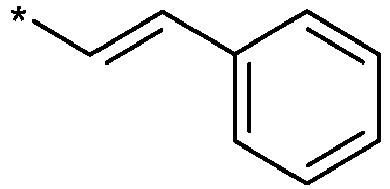

The symbol * means the link with oxygen of glycogen as showed in formula (I) - The glycogen used to prepare the glycogen-based polymers according to the present invention has a molecular weight of from about 2.7x10⁵ to about 3.5x10⁶ daltons.
- The glycogen-based polymers according to the present invention has a molecular weight substantially similar or higher than the molecular weight of the starting glycogen, due to the substitution of part of the hydrogens of the hydroxyl group of the glucose residues with the group R as defined herein.
- The glycogen-based polymers according to the present invention have the same structural backbone of the starting glycogen.
- The glycogen used to prepare the glycogen-based polymers according to the present invention may be obtained according to one of the methods known in the art.
- Preferably, the glycogen is prepared as described in international patent application
WO 94/03502 - Preferably, the said glycogen is obtained from the species Mytilus edulis and Mytilus galloprovincialis.
- Other sources of glycogen that may be used for the purposes of the present invention include shellfish, such as oysters and Crepidula fornicata, and the glycogen-rich organs of vertebrate animals, such as liver and muscles.
- Preferably, the said glycogen is substantially free of compounds containing nitrogen and reducing sugars. As used in the present description and in the claims that follow, the expression "substantially free of compounds containing nitrogen and reducing sugars" indicates that the nitrogen content is less than 60 ppm, measured by means of the Kieldahl method, and the content of reducing sugars is less than 0.25%, measured by means of the method of F.D. Snell and Snell ("Colorimetric Methods of Analysis", New York, 1954, vol. III, p. 204).
- Preferably, the glycogen used according to the present invention is also characterized by a carbon content from about 44% to about 45%, a molecular weight of about (2.5±0.1)×106 daltons measured by a viscosimetric method and an optical rotation (α)D 20 of 197±2.0 (c = 1, in water).
- More preferably, the glycogen used according to the present invention is Polglumyt™ glycogen, produced by Aziende Chimiche Riunite Angelini Francesco A.C.R.A.F. S.p.A.
- A person skilled in the art will readily understand that the present invention is not directed towards novel classes of compounds with therapeutic efficacy per se. Rather, the present invention relates to the use of a glycogen-based polymer as described previously for forming a complex with at least one lipophilic compound.
- In a second aspect, the present invention relates to a complex between a glycogen-based polymer and a lipophilic compound, in which the said glycogen-based polymer comprises at least one repeating unit (I) as described previously.
- According to a preferred embodiment, the said lipophilic compound is a poorly water soluble drug, a carotenoid or a lipophilic compound structurally related with carotenoid.
- Preferably, the said poorly water soluble drug is selected from the group consisting of (i) BCS class II and (ii) BCS class IV drugs. Under the Biopharmaceutics Classification System (BCS) Guidance, a drug substance is considered low soluble, and then classified in BCS class II or IV, when the highest dose strength is not soluble in less than 250 ml water over a pH range of 1 to 7.5.
- Advantageously, useful poorly water soluble drugs belonging to the BCS class II are amiodarone, atorvastatin, azithromycin, carbamazepine, carvedilol, celecoxib, chlorpromazine, cisapride, ciprofloxacin, cyclosporine, danazol, dapsone, diclofenac, diflunisal, digoxin, erythromycin, flurbiprofen, glipizide, glyburide, griseofulvin, ibuprofen, indinavir, indomethacin, itraconazole, ketoconazole, lansoprazolel, lovastatin, mebendazole, naproxen, nelfinavir, ofloxacin, oxaprozin, phenazopyridine, phenytoin, piroxicam, raloxifene, repaglinide, ritonavir, saquinavir, sirolimus, spironolactone, tacrolimus, talinolol, tamoxifen, terfenadine, and the like.
- Advantageously, useful poorly water soluble drugs belonging to the BCS class IV are amphotericin B, chlorthalidone, chlorothiazide, colistin, ciprofloxacin, docetaxel, furosemide, hydrochlorothiazide, mebendazole, methotrexate, neomycin, paclitaxel, and the like.
- Preferably, the said carotenoid or lipophilic compound structurally related with carotenoid is selected from the group consisting of (i) carotenes, (ii) xanthophylls, (iii) apocarotenoids, (iv) Vitamin A retinoids, (v) retinoid drugs, and (vi) other lipophilic vitamins/nutritional factors.
- Advantageously, useful carotenoids belonging to the class of (i) carotenes are α-carotene, β-carotene, γ-carotene, δ-carotene, ε-carotene, lycopene, phytoene, phytofluene, and torulene.
- Carotenoids further include (ii) xanthophylls, like antheraxanthin, astaxanthin, canthaxanthin, citranaxanthin, cryptoxanthin, diadinoxanthin, diatoxanthin, dinoxanthin, flavoxanthin, fucoxanthin, lutein, neoxanthin, rhodoxanthin, rubixanthin, violaxanthin, and zeaxanthin; (iii) apocarotenoids, like abscisic acid, apocarotenal, bixin, crocetin, lonones, peridinin; (iv) Vitamin A retinoids, like retinal, retinoic acid, and retinol (vitamin A); and (v) retinoid drugs, like acitretin, adapalene, alitretinoin, bexarotene, etretinate, fenretinide, isotretinoin, tazarotene, and tretinoin.
- Other lipophilic compounds structurally related with carotenoids are (vi) vitamins/nutritional factors such as other fat-soluble vitamins like the E, D and K vitamins.
- According to a preferred embodiment, the said complex comprises an amount of the said lipophilic compound of between 0.1% and 90% by weight relative to the weight of the said glycogen-based polymer.
- Preferably, the said complex comprises an amount of the said lipophilic compound of between 0.5% and 70% by weight relative to the weight of the said glycogen-based polymer.
- More preferably, the said complex comprises an amount of the said lipophilic compound of between 1% and 50% by weight relative to the weight of the said glycogen-based polymer.
- The complex between a glycogen-based polymer and a lipophilic compound may advantageously be prepared as a pharmaceutical composition.
- In a third aspect, the present invention relates to a pharmaceutical composition comprising a complex between a glycogen-based polymer and a lipophilic compound, and at least one pharmaceutically acceptable excipient, in which the said glycogen-based polymer comprises at least one repeating unit represented by the formula (I), described previously.
- According to a preferred embodiment, the said lipophilic compound is a poorly water soluble drug, a carotenoid or a lipophilic compound structurally related with carotenoid.
- Preferably, the said poorly water soluble drug is selected from the group consisting of (i) BCS class II and (ii) BCS class IV drugs, as described above.
- Preferably, the said carotenoid or a lipophilic compound structurally related with carotenoid is selected from the group consisting of (i) carotenes, (ii) xanthophylls, (iii) apocarotenoids, (iv) Vitamin A retinoids, (v) retinoid drugs, and (vi) other lipophilic vitamins/nutritional factors, as described above.
- The term "excipient" means any agent known in the art that is suitable for preparing a pharmaceutical form.
- Examples of excipients that are suitable according to the present invention are: preservatives, stabilizers, surfactants, osmotic pressure-regulating salts, emulsifiers, sweeteners, flavourings, dyes and the like.
- The said pharmaceutical composition may be prepared in unit dosage form according to methods known in the art.
- Preferably, the said pharmaceutical composition is for injectable use, such as for instance an aqueous solution, suspension or emulsion, or may be in the form of a powder to be reconstituted for the preparation of an aqueous solution, suspension or emulsion for intravenous, intramuscular, subcutaneous, transdermal or intraperitoneal administration.
- Alternatively, the said pharmaceutical composition may be, for example, in the form of a tablet, a capsule, coated tablets, granules, solutions and syrups for oral administration; medicated plasters, solutions, pastes, creams or pomades for transdermal administration; suppositories for rectal administration; a sterile solution for aerosol administration; for immediate and sustained release.
- In a fourth aspect, the present invention relates to a nutraceutical composition comprising a complex between the glycogen-based polymers as defined above and a lipophilic compound, and at least one nutraceutically acceptable excipient.
- According to a preferred embodiment, the said lipophilic compound is a carotenoid or a lipophilic compound structurally related with carotenoid, as described above.
- Nutraceutical compositions (e.g. foods or naturally occurring food supplements intended for human ingestion, and thought to have a beneficial effect on human health) are commonly used for their preventative and medicinal qualities.
- Such nutraceutical compositions may comprise a single element, or, alternatively, may comprise of complex combinations of substances resulting in a nutraceutical that provides specific benefits.
- The nutraceutical compositions may be in the form of a complete foodstuff, a food supplement, a nutritional solution for gastro-enteric administration, for example for enteric feeding administered through a naso-gastric and naso-enteric tube, a nutritional solution for parenteral administration, or a foodstuff or supplement for diabetic individuals.
- The nutraceutically acceptable excipient to be used into the nutraceutical compositions according to the present invention may improve its appearance, pleasantness and preservation, such as for example colouring agents, preservatives, antioxidants, acidity regulators, thickeners, stabilisers, emulsifiers, flavour enhancers, flavourings, humectants and sweeteners.
- In a fifth aspect, the present invention relates to a cosmetic composition comprising a complex between the glycogen-based polymers as defined above and a lipophilic compound, and at least one cosmetically acceptable excipient.
- According to a preferred embodiment, the said lipophilic compound is a carotenoid or a lipophilic compound structurally related with carotenoid, as described above.
- The cosmetic composition according to this invention comprises liquid or semi-solid formulations.
- The liquid formulations for cosmetic use according to this invention comprise solutions, emulsions, microemulsions, lotions, foams, milks, oils, relaxants or suspensions of widely varying viscosity.
- The liquid formulations may for example be aqueous solutions, water-alcohol solutions, solutions in oil, emulsions obtained by dispersing an oily phase in an aqueous phase (oil-in-water) or vice-versa an aqueous phase in an oily phase (water-in-oil), and suspensions obtained by dispersing a dispersed phase comprising solid particles in a dispersing medium generally represented by an aqueous or oily liquid having a particular viscosity.
- The semi-solid formulations for cosmetic use according to this invention comprise creams, gels, ointments, pastes, cream-gels, sticks and waxes.
- The formulations for cosmetic use of this invention may comprise various cosmetically-acceptable additives or vehicles which are useful in the preparation of cosmetic products and known to those skilled in the art such as, for example, emulsifiers, hydrating agents, solvents, emollients, stabilisers, viscosity agents, preservatives, lubricants, sequestrating or chelating agents, fillers, fragrances, perfumes, absorbants, colouring agents and opacifiers, antioxidants, plant extracts and oils, vitamins, foaming substances, essential oils, keratin-active substances and amino acids.
- The examples that follow are intended to illustrate the present invention without, however, limiting it in any way.
- Polglumyt® glycogen (5 g; 30.86 mmol of glucose) was dried under vacuum at 60°C for several days to remove the physically adsorbed water. After cooling to room temperature, under nitrogen atmosphere, the polymer was dissolved in dry dimethylsulfoxide (100 mL) in a two-necked round-bottomed flask, equipped with a magnetic stirrer and a reflux condenser.
- Sodium hydride (NaH) was then added and the mixture was stirred at room temperature for 1 hour. Then, the reagent (R-X) was added, and the mixture was stirred at room temperature overnight. The amounts of sodium hydride and reagents R-X, expressed as mmol, are reported in Table 1.
- The next day, 300 mL of ethanol were added and the mixture was centrifuged. The precipitate was recovered and washed twice with 100 ml of ethanol, centrifuged and the solid product was recovered. The solid obtained was dissolved in water (150 mL) and finally subjected to dialysis in regenerated cellulose tubes (cut-off 15,000) against distilled water until the conductivity was constant (equal to about 2-3 µS). The solution obtained was filtered through a 0.45 µm filter, concentrated under vacuum and finally freeze-dried. The synthetic yields are collated in Table 1.
TABLE 1 Polymer AP code mmol of NaH Reagent (RX) mmol of RX Yield % 1 AP104 46.30 1-Chlorohexane 3.09 75 2 AP105 61.73 1-Chlorohexane 6.17 75 3 AP106 84.50 1-Chlorohexane 10.80 80 4 AP107 105.73 1-Chlorohexane 15.43 65 5 AP110 105.73 1-Chlorohexane 30.86 70 6 AP111 123.46 1-Chlorohexane 46.29 75 7 AP112 46.29 Benzyl bromide 3.09 75 8 AP113 61.73 Benzyl bromide 6.17 65 - Polglumyt® glycogen (5 g; 30.86 mmol of glucose) was dissolved in 31 mL of 1N NaOH in a two-necked round-bottomed flask, equipped with a magnetic stirrer and a reflux condenser. Once the dissolution was complete, the mixture was heated to 70°C and stirred for 2 hours.
- Then, the reagent (R-X) was added, and the mixture was stirred at 70°C overnight. The amounts of reagent R-X, expressed as mmol of reagent, are reported in Table 2.
- The next day, the heating was stopped and the mixture was allowed to cool to room temperature. The crude reaction product was then poured slowly into 200 mL of acetone. Once the addition was complete, the suspension obtained was stirred for about 30 minutes. After stopping the stirring, the mixture was left to sediment until separation of the supernatant and the precipitate was recovered.
- The supernatant was discarded and the precipitate obtained was washed twice with acetone (100 mL). The solid thus obtained was filtered off, dissolved in 200 mL of distilled water, brought to neutral pH with 1N HCl solution and finally subjected to dialysis in regenerated cellulose tubes (cut-off 15,000) against distilled water until the conductivity was constant (equal to about 2-3 µS). The solution obtained was filtered through a 0.45 µm filter, concentrated under vacuum and finally freeze-dried. The synthetic yields are collated in Table 2.
TABLE 2 Polymer AP code Reagent (RX) mmol of (RX) Yield % 9 AP2 tert-Butyl glycidyl ether 30.86 70 10 AP4 Butyl glycidyl ether 30.86 75 11 AP15 1,2-Epoxy-9-decene 30.86 75 12 AP22 3-Chloro-1-propanol 30.86 70 - The following Table 3 summarizes the 1H-NMR (D2O) or IR data of the compounds 1 to 12 synthetized above.
TABLE 3 Polymer AP code R 1H-NMR (D2O) or IR data 1 AP104 
1H-NMR: δ ppm: 1.22 (CH3 -CH2), 1.64 (CH3-CH2- CH2 -CH2 ), 1.90 (-CH2- CH2-O-) 3.65-4.5 (multiplet), 5.25-5.85 (multiplet H anomeric) 2 AP105 
1H-NMR: δ ppm: 1.17 (CH3 -CH2), 1.59 (CH3-CH2- CH2- CH2 ), 1.86 (-CH2- CH2-O-) 3.65-4.5 (multiplet), 5.25-5.85 (multiplet H anomeric) 3 AP106 
1H-NMR: δ ppm: 1.22 (CH3 -CH2), 1.64 (CH3-CH2- CH2 -CH2 ), 1.91 (-CH2- CH2-O-) 3.65-4.5 (multiplet), 5.25-5.85 (multiplet H anomeric) 4 AP107 
1H-NMR: δ ppm: 1.22 (CH3 -CH2), 1.64 (CH3-CH2- CH2 -CH2 ), 1.91 (-CH2- CH2-O-) 3.65-4.5 (multiplet), 5.25-5.85 (multiplet H anomeric) 5 AP110 
1H-NMR: δ ppm: 1.21 (CH3 -CH2), 1.64 (CH3- CH2- CH2- CH2 ), 1.91 (-CH2- CH2-O-) 3.65-4.5 (multiplet), 5.25-5.85 (multiplet H anomeric) 6 AP111 
1H-NMR: δ ppm: 1.21 (CH3 -CH2), 1.63 (CH3- CH2- CH2- CH2 ), 1.91 (-CH2- CH2-O-) 3.65-4.5 (multiplet), 5.25-5.85 (multiplet H anomeric) 7 AP112 
1H-NMR: δ ppm: 3.6-4.5 (multiplet), 4.90-6.05 (multiplet H anomeric), 7.76 (H aromatic) 8 AP113 
1H-NMR: δ ppm: 3.6-4.5 (multiplet), 4.90-6.05 (multiplet H anomeric), 7.75 (H aromatic) 9 AP2 
1H-NMR: δ ppm 1.26 (CH3 ), 3.35-4.1 (multiplet), 5.25-5.85 (multiplet H anomeric) 10 AP4 
1H-NMR: δ ppm 0.91 (CH3 ), 1.41 (CH 3 -CH2 -), 1.59 (CH3-CH2-CH2 -) 3.25-4.5 (multiplet), 5.25-5.85 (multiplet H anomeric) 11 AP15 
1H-NMR: δ ppm 1.0-2.6(multiplet), 3.45-4.65 (multiplet), 5.05-6.25 (multiplet) 12 AP22 
1H-NMR: δ ppm 1.84 (-CH2-CH2 -CH2-), 3.25-4.25 (multiplet), 5.25-5.80 (multiplet H anomeric) - Twelve water solutions containing 5 mg/mL of each compound synthetized in example 1 were prepared. The suspensions were left under stirring for 24 hours. Solutions A to N were obtained.
- Similarly, four water solutions containing 5 mg/mL of the compound of the following table 4 were prepared. The suspensions were left under stirring for 24 hours. Solutions O to R were obtained.
TABLE 4 Compound Name 13 natural glycogen (Polglumyt®) 14 γ-cyclodextrin (CAVAMAX W8) 15 β-cyclodextrin (CAVAMAX W7) 16 HP-β-cyclodextrin (CAVASOL W7 HP) - An excess amount of β-carotene (5 mg/mL) was added to 1 mL of each solution A to R. The suspension was mixed using a laboratory shaker at room temperature for 24 hours. The concentration (mg/mL) of solubilized β-carotene was determined by HPLC analysis. The sample was prepared for chromatographic analysis by filtering through a 0.45 µm MCE filter.
- The chromatographic system (Waters) consisted of a solvent delivery module (Model Alliance e2695), a variable-wavelength UV spectrophotometric detector (Model 2489) and a chromatographic data control and acquisition system (Empower). An X-Bridge™ Shield RP18 column (4.6 x 150 mm) was used. A suitable HPLC analytical method was developed for quantitating the amount of drug in solution.
- Elution was performed isocratically with acetonitrile/methylene chloride at a weight ratio of 89:11 at a flow rate of 1.5 mL/min. The absorbance was monitored at 450 nm and the injection volume was 5 µL. In these chromatographic conditions, β-carotene was eluted in about 5.5 minutes.
- For the calibration curve, β-carotene standard solutions were prepared by diluting with dimethylsulfoxide a stock solution prepared as follows: 1.145 mg of β-carotene were solubilized in 550 µL of methylene chloride and added to 18.32 mL of dimethylsulfoxide (β-carotene final concentration was 0.0607 mg/mL). The stock solution was diluted with dimethylsulfoxide to obtain standard solutions with decreasing concentration, until to a β-carotene concentration of 9.5*10-4 mg/mL. The calibration curve was constructed using analyte peak area ratio versus concentration of the standard solutions, subjected to chromatography under the same conditions of the samples.
- An appropriate dilution of each sample was made with dimethylsulfoxide, such that β-carotene final concentration was within the linear portion of the standard curve, prior to injection onto the HPLC column.
- The amount of β-carotene in mg/mL was calculated by introducing the analyte peak area in the calibration curve fit-equation and multiplying the result by the dilution factor.
- Aqueous solubility (mg/mL) of β-carotene in the presence of the compounds of the present invention (samples 1 to 12) and in the presence of natural glycogen (sample 13) or cyclodextrins (samples 14 to 16) is reported in Table 5.
TABLE 5 Solution Compound Solubility A 1 0,81 B 2 0,76 C 3 0,54 D 4 0,55 E 5 0,90 F 6 0,44 G 7 0,53 H 8 0,59 I 9 0,07 L 10 0,13 M 11 0,18 N 12 0,01 O 13 0,00 P 14 0,01 Q 15 0,00 R 16 0,05 - Hexyl and benzyl glycogen derivatives (compounds 1 to 8) caused the highest increase in the solubility of β-carotene. They increased the drug aqueous solubility up to several orders of magnitude compared to cyclodextrins. The results were confirmed by the visual aspect of solutions. Mixing β-carotene with hexyl and benzyl glycogen derivatives an orange, clear solution was achieved while cyclodextrin solutions were colorless. Only a pale pink color in HP-β-cyclodextrin solution (sample 16) was observed, but the color intensity was lower than that observed with the solution of the compounds of the present invention.
- Natural glycogen did not improve the solubility of β-carotene. Compounds 10 and 11 caused a lower increase in the solubility of β-carotene, and compounds 9 and 12 caused the slowest increase in the solubility of β-carotene.
- These results demonstrated that the compounds of the present invention are able to enhance the solubility of β-carotene.
- An excess amount of astaxanthin (1 mg/mL) was added to 1 mL of each solution A to R, prepared as for example 2. The suspension was mixed using a laboratory shaker at room temperature for 24 hours. The concentration (mg/mL) of solubilized astaxanthin was determined by HPLC analysis. The sample was prepared for chromatographic analysis by filtering through a 0.45 µm MCE filter.
- The chromatographic system (Waters) consisted of a solvent delivery module (Model Alliance e2695), a variable-wavelength UV spectrophotometric detector (Model 2489) and a chromatographic data control and acquisition system (Empower). An X-Bridge™ Shield RP18 column (4.6 x 150 mm) was used. A suitable HPLC analytical method was developed for quantitating the amount of astaxanthin in solution.
- Elution was performed by gradient elution using a mixture of acetonitrile/tetrahydrofuran at a weight ratio of 70:30 in channel A and water in channel B. The flow rate was 1 mL/min. The gradient elution parameters were as follows:
Time (min) % A % B Note 0:00 - 7:00 75 25 Isocratic elution 7:00 - 8:00 75→50 25→50 Gradient elution in 1 minute 8:00 - 12:00 50 50 Isocratic elution 12:00 - 13:00 50→75 50→25 Gradient elution in 1 minute 13:00 - 15:00 75 25 Isocratic elution - The absorbance was monitored at 489 nm and the injection volume was 6 µL. In these chromatographic conditions, astaxanthin was eluted in about 4.0 minutes.
- For the calibration curve, astaxanthin standard solutions were prepared by diluting with dimethylsulfoxide a stock solution prepared as follows: 4 mg of astaxanthin were solubilized in 4 mL of dimethylsulfoxide. The stock solution was diluted with dimethylsulfoxide to obtain standard solutions with decreasing concentration, until to an astaxanthin concentration of 9.7*10-4 mg/mL. The calibration curve was constructed using analyte peak area ratio versus concentration of the standard solutions, subjected to chromatography under the same conditions of the samples.
- An appropriate dilution of each sample was made with dimethylsulfoxide, such that astaxanthin final concentration was within the linear portion of the standard curve, prior to injection onto the HPLC column.
- The amount of astaxanthin in mg/mL was calculated by introducing the analyte peak area in the calibration curve fit-equation and multiplying the result by the dilution factor.
- Aqueous solubility (mg/mL) of astaxanthin in the presence of the compounds of the present invention (samples 1 to 12) and in the presence of natural glycogen (sample 13) or cyclodextrins (samples 14 to 16) is reported in Table 6.
TABLE 6 Solution Compound Solubility A 1 0,0371 B 2 0,0504 C 3 0,0455 D 4 0,0554 E 5 0,0595 F 6 0,0712 G 7 0,0271 H 8 0,0336 I 9 0,0221 L 10 0,0331 M 11 0,0444 N 12 0,0198 O 13 0,0079 P 14 0,0012 Q 15 0,0005 R 16 0,0007 - All tested compounds increased the astaxanthin aqueous solubility up to several orders of magnitude compared to cyclodextrins. The results were confirmed by the visual aspect of solutions. Mixing astaxanthin with glycogen derivatives a red, clear solution was achieved while cyclodextrin solutions were colorless.
- Natural glycogen did not improve the solubility of astaxanthin. In this case, compounds 9 to 12 showed results comparable with those of compounds 1 to 8.
- These results demonstrated that the compounds of the present invention are able to enhance the solubility of astaxanthin.
- Twelve water solutions containing 10 mg/mL (1% w/w) of each compound synthetized in example 1 were prepared. The suspensions were left under stirring for 24 hours. Solutions A' to N' were obtained.
- The viscosity measurements were performed using a Bohlin Gemini 150 rotary rheometer piloted by the Bohlin R6 40.5.32 software, equipped with cone-plate geometry 2°/55 mm, thermostatically maintained with a Peltier Bohlin instrument at 25°C and performed in "controlled stress" mode in a shear stress range of from 1 to 5 Pa. By way of example, Table 7 reports the viscosity values of the various derivatives measured at a single stress value (2.5 Pa).
- The solutions A' to N' showed very low viscosity values, all around 1-2 mPa*s, as summarized in the following Table 7.
- Such low viscosity values of the solutions obtained with the compounds of the present invention make them ideal solubility enhancers for injectable formulations.
TABLE 7 Solution Compound Viscosity at 2.5 Pa (mPa*s) A' 1 1.90 B' 2 1.94 C' 3 1.89 D' 4 1.95 E' 5 1.96 F' 6 1.95 G' 7 2.01 H' 8 1.95 I' 9 1.93 L' 10 1.94 M' 11 1.95 N' 12 1.93 - The following tables 8 to 10 show specific examples of compositions according to the present invention.
TABLE 8 Pharmaceutical formulation Tablet Ingredient Unit Amount Beta-Carotene mg 10 Compound 1 mg 90 Microcrystalline Cellulose mg 160 Starch mg 39 Magnesium Stearate mg 1 TABLE 9 Nutraceutical formulation Powder for dissolution in about 100 mL of water Ingredient Unit Amount Beta-Carotene mg 30 Compound 1 mg 200 Maltodextrin 9 20 Dextrose 9 10 Proteins 9 10 Glutamine 9 2 Magnesium mg 25 Sodium mg 345 Potassium mg 145 Chlorides mg 130 Glucosamine mg 200 Vitamin B1 %RDA 50% Vitamin B2 %RDA 50% Vitamin B5 %RDA 50% Vitamin B6 %RDA 50% Vitamin B12 %RDA 50% Vitamin A %RDA 50% Vitamin C %RDA 200% Vitamin E %RDA 200% RDA = Recommended Dietary Allowance TABLE 10 Cosmetic formulation Cream, 100 g Ingredient Unit Amount Beta-Carotene g 0.2 Compound 1 g 1 Cetostearyl alcohol g 5 Sodium cetostearyl sulphate g 0.5 Dimethicone 350 CST g 0.5 Methyl-p-hydroxybenzoate g 0.18 Propyl-p-hydroxybenzoate g 0.02 Water g 92.6
Claims (20)
- A glycogen-based polymer comprising at least one repeating unit represented by the following formula (I)
 each group R, which may be identical or different, is a hydrogen atom, an alkyl group having from 1 to 9 carbon atoms, an alkenyl group having from 2 to 12 carbon atoms, an arylalkyl group having from 7 to 18 carbon atoms, or an arylalkenyl group having from 8 to 18 carbon atoms, the alkyl or alkenyl chain of said groups being optionally substituted by a hydroxyl group and/or interrupted by an oxygen atom, and the aryl residue of said groups being optionally substituted by a halogen atom, provided that at least one of said R group is different from hydrogen, andn is an integer greater than or equal to 1.
 - The glycogen-based polymer according to claim 1, wherein said alkyl group has from 2 to 8 carbon atoms.
- The glycogen-based polymer according to claim 1, wherein said alkenyl group has from 2 to 8 carbon atoms.
- The glycogen-based polymer according to claim 1, wherein said arylalkyl group has from 8 to 14 carbon atoms.
- The glycogen-based polymer according to claim 1, wherein said arylalkenyl group has from 8 to 14 carbon atoms.
- The glycogen-based polymer according to claim 1, wherein the glycogen used to prepare said glycogen-based polymer has a molecular weight of from about 2.7x10⁵ to about 3.5x10⁶ daltons.
- The glycogen-based polymer according to claim 1, wherein the glycogen used to prepare said glycogen-based polymer has a molecular weight of about (2.5±0.1)×106 daltons.
- A complex between the glycogen-based polymers as defined in any one of the preceding claims and a lipophilic compound.
- The complex according to claim 8, wherein said lipophilic compound is selected from the group comprising a poorly water soluble drug, a carotenoid or a lipophilic compound structurally related with carotenoid.
- The complex according to claim 9, wherein said poorly water soluble drug is selected from the group consisting of (i) BCS class II drugs and (ii) BCS class IV drugs.
- The complex according to claim 10, wherein said BCS class II drug is selected from the group consisting of amiodarone, atorvastatin, azithromycin, carbamazepine, carvedilol, celecoxib, chlorpromazine, cisapride, ciprofloxacin, cyclosporine, danazol, dapsone, diclofenac, diflunisal, digoxin, erythromycin, flurbiprofen, glipizide, glyburide, griseofulvin, ibuprofen, indinavir, indomethacin, itraconazole, ketoconazole, lansoprazolel, lovastatin, mebendazole, naproxen, nelfinavir, ofloxacin, oxaprozin, phenazopyridine, phenytoin, piroxicam, raloxifene, repaglinide, ritonavir, saquinavir, sirolimus, spironolactone, tacrolimus, talinolol, tamoxifen, and terfenadine.
- The complex according to claim 10, wherein said BCS class IV drug is selected from the group consisting of amphotericin B, chlorthalidone, chlorothiazide, colistin, ciprofloxacin, docetaxel, furosemide, hydrochlorothiazide, mebendazole, methotrexate, neomycin, and paclitaxel.
- The complex according to claim 8, wherein said lipophilic compound is selected from the group comprising (i) carotenes, (ii) xanthophylls, (iii) apocarotenoids, (iv) vitamin A retinoids, (v) retinoid drugs, and (vi) other lipophilic vitamins/nutritional factors.
- The complex according to claim 13, wherein said (i) carotenes are selected from the group comprising α-carotene, β-carotene, γ-carotene, δ-carotene, ε-carotene, lycopene, phytoene, phytofluene, and torulene
- The complex according to claim 13, wherein said (ii) xanthophylls are selected from the group comprising antheraxanthin, astaxanthin, canthaxanthin, citranaxanthin, cryptoxanthin, diadinoxanthin, diatoxanthin, dinoxanthin, flavoxanthin, fucoxanthin, lutein, neoxanthin, rhodoxanthin, rubixanthin, violaxanthin and zeaxanthin.
- A pharmaceutical composition comprising (i) a complex between the glycogen-based polymers as defined in any one of the preceding claims 1 to 7 and a lipophilic compound selected from the group comprising poorly water soluble drugs, and (ii) at least one pharmaceutically acceptable excipient.
- A nutraceutical composition comprising (i) a complex between the glycogen-based polymers as defined in any one of the preceding claims 1 to 7 and a lipophilic compound selected from the group comprising carotenoids or lipophilic compounds structurally related with carotenoids, and at least one nutraceutically acceptable excipient.
- A cosmetic composition comprising (i) a complex between the glycogen-based polymers as defined in any one of the preceding claims 1 to 7 and a lipophilic compound selected from the group comprising carotenoids or lipophilic compounds structurally related with carotenoids, and (ii) at least one cosmetically acceptable excipient.
- Use of the glycogen-based polymers as defined in any one of the preceding claims 1 to 7 for enhancing the solubility in water of lipophilic compounds.
- A complex between the glycogen-based polymers as defined in any one of the preceding claims 1 to 7 and a lipophilic compound for use as a medicament.
Priority Applications (5)
| Application Number | Priority Date | Filing Date | Title |
|---|---|---|---|
| HRP20200693TT HRP20200693T1 (en) | 2013-04-05 | 2014-03-31 | GLYCOGEN-BASED WATER SOLUBILITY AMPLIFIERS |
| RS20200457A RS60506B1 (en) | 2013-04-05 | 2014-03-31 | Glycogen-based water solubility enhancers |
| SM20200216T SMT202000216T1 (en) | 2013-04-05 | 2014-03-31 | Glycogen-based water solubility enhancers |
| PL14713507T PL2981557T3 (en) | 2013-04-05 | 2014-03-31 | Glycogen-based water solubility enhancers |
| SI201431559T SI2981557T1 (en) | 2013-04-05 | 2014-03-31 | Glycogen-based water solubility enhancers |
Applications Claiming Priority (2)
| Application Number | Priority Date | Filing Date | Title |
|---|---|---|---|
| EP13162453 | 2013-04-05 | ||
| PCT/EP2014/056451 WO2014161815A1 (en) | 2013-04-05 | 2014-03-31 | Glycogen-based water solubility enhancers |
Publications (2)
| Publication Number | Publication Date |
|---|---|
| EP2981557A1 EP2981557A1 (en) | 2016-02-10 |
| EP2981557B1 true EP2981557B1 (en) | 2020-02-05 |
Family
ID=48049850
Family Applications (1)
| Application Number | Title | Priority Date | Filing Date |
|---|---|---|---|
| EP14713507.3A Active EP2981557B1 (en) | 2013-04-05 | 2014-03-31 | Glycogen-based water solubility enhancers |
Country Status (27)
| Country | Link |
|---|---|
| US (1) | US10662259B2 (en) |
| EP (1) | EP2981557B1 (en) |
| JP (1) | JP6312801B2 (en) |
| KR (1) | KR102113707B1 (en) |
| CN (1) | CN105143274B (en) |
| AR (1) | AR095937A1 (en) |
| AU (1) | AU2014247145B2 (en) |
| BR (1) | BR112015024825A2 (en) |
| CA (1) | CA2905273A1 (en) |
| CY (1) | CY1122935T1 (en) |
| DK (1) | DK2981557T3 (en) |
| EA (1) | EA032500B1 (en) |
| ES (1) | ES2786900T3 (en) |
| GE (1) | GEP201706742B (en) |
| HR (1) | HRP20200693T1 (en) |
| HU (1) | HUE049561T2 (en) |
| IL (1) | IL241690B (en) |
| LT (1) | LT2981557T (en) |
| MX (1) | MX369778B (en) |
| PL (1) | PL2981557T3 (en) |
| PT (1) | PT2981557T (en) |
| RS (1) | RS60506B1 (en) |
| SG (2) | SG11201507932RA (en) |
| SI (1) | SI2981557T1 (en) |
| SM (1) | SMT202000216T1 (en) |
| UA (1) | UA119441C2 (en) |
| WO (1) | WO2014161815A1 (en) |
Families Citing this family (5)
| Publication number | Priority date | Publication date | Assignee | Title |
|---|---|---|---|---|
| KR102214865B1 (en) | 2013-04-26 | 2021-02-15 | 마이렉서스 바이오테크놀로지스 인코퍼레이티드 | Phytoglycogen nanoparticles and methods of manufacture thereof |
| US20160303242A1 (en) | 2013-12-09 | 2016-10-20 | Durect Corporation | Pharmaceutically Active Agent Complexes, Polymer Complexes, and Compositions and Methods Involving the Same |
| US11508407B2 (en) * | 2018-03-30 | 2022-11-22 | Sony Corporation | Magnetic recording medium having controlled dimensional characteristics |
| US20220047506A1 (en) | 2020-08-12 | 2022-02-17 | Villya LLC | Praziquantel Formulations |
| WO2024158694A1 (en) | 2023-01-23 | 2024-08-02 | Villya LLC | Compositions and methods for improving the solubility of erectile dysfunction therapeutics |
Family Cites Families (16)
| Publication number | Priority date | Publication date | Assignee | Title |
|---|---|---|---|---|
| GB1514720A (en) * | 1974-10-07 | 1978-06-21 | Secr Defence | Preparation of hydroxyethyl starch |
| US4228277A (en) * | 1979-02-12 | 1980-10-14 | Hercules Incorporated | Modified nonionic cellulose ethers |
| IT1255488B (en) | 1992-08-04 | 1995-11-06 | Angelini Francesco Ist Ricerca | GLYCOGEN POLYSACCHARIDES |
| US5607839A (en) * | 1993-07-22 | 1997-03-04 | Nippon Oil Company, Ltd. | Bacteria belonging to new genus process for production of carotenoids using same |
| US6248361B1 (en) * | 1999-02-26 | 2001-06-19 | Integ, Ltd. | Water-soluble folic acid compositions |
| PT1421120E (en) * | 2001-08-22 | 2007-08-03 | Supramol Parenteral Colloids | AMYLOPECTIN FOR USE IN METHODS FOR THE SURGICAL OR THERAPEUTIC TREATMENT OF MAMMALS OR IN DIAGNOSTIC METHODS ESPECIFICALLY FOR USE AS A PLASMA VOLUME DILATOR |
| DE10237442B4 (en) * | 2002-08-16 | 2004-08-19 | Fresenius Kabi Deutschland Gmbh | Highly branched, low substituted starch products |
| US7446101B1 (en) | 2003-12-12 | 2008-11-04 | Bioactives, Llc | Bioavailable carotenoid-cyclodextrin formulations for soft-gels and other encapsulation systems |
| WO2006040335A1 (en) * | 2004-10-15 | 2006-04-20 | Danisco A/S | A derivatized highly branched polysaccharide and a mix for production of polyurethane thereof |
| US7781572B2 (en) | 2005-10-05 | 2010-08-24 | Nse Products, Inc. | Nanosized carotenoid cyclodextrin complexes |
| US8613946B2 (en) * | 2006-12-21 | 2013-12-24 | Isp Investment Inc. | Carotenoids of enhanced bioavailability |
| US8323615B2 (en) * | 2008-08-20 | 2012-12-04 | Baxter International Inc. | Methods of processing multi-phasic dispersions |
| US9315715B2 (en) * | 2009-10-20 | 2016-04-19 | Nalco Company | Method of reducing the viscosity of hydrocarbons |
| US8901092B2 (en) * | 2010-12-29 | 2014-12-02 | Surmodics, Inc. | Functionalized polysaccharides for active agent delivery |
| RS58985B1 (en) | 2012-03-15 | 2019-08-30 | Acraf | Glycogen-based cationic polymers |
| FR2989001B1 (en) * | 2012-04-06 | 2017-07-21 | Centre Nat Rech Scient | MICROPARTICLES AND NANOPARTICLES COMPRISING HYDROPHOBIC POLYSACCHARIDES AND ALPHA-CYCLODEXTRIN |
-
2014
- 2014-03-28 AR ARP140101413A patent/AR095937A1/en active IP Right Grant
- 2014-03-31 SI SI201431559T patent/SI2981557T1/en unknown
- 2014-03-31 UA UAA201509813A patent/UA119441C2/en unknown
- 2014-03-31 HU HUE14713507A patent/HUE049561T2/en unknown
- 2014-03-31 ES ES14713507T patent/ES2786900T3/en active Active
- 2014-03-31 HR HRP20200693TT patent/HRP20200693T1/en unknown
- 2014-03-31 CA CA2905273A patent/CA2905273A1/en not_active Abandoned
- 2014-03-31 EP EP14713507.3A patent/EP2981557B1/en active Active
- 2014-03-31 US US14/780,423 patent/US10662259B2/en not_active Expired - Fee Related
- 2014-03-31 WO PCT/EP2014/056451 patent/WO2014161815A1/en not_active Ceased
- 2014-03-31 LT LTEP14713507.3T patent/LT2981557T/en unknown
- 2014-03-31 BR BR112015024825A patent/BR112015024825A2/en not_active Application Discontinuation
- 2014-03-31 PL PL14713507T patent/PL2981557T3/en unknown
- 2014-03-31 KR KR1020157030658A patent/KR102113707B1/en not_active Expired - Fee Related
- 2014-03-31 GE GEAP201413971A patent/GEP201706742B/en unknown
- 2014-03-31 MX MX2015013739A patent/MX369778B/en active IP Right Grant
- 2014-03-31 EA EA201591860A patent/EA032500B1/en not_active IP Right Cessation
- 2014-03-31 SM SM20200216T patent/SMT202000216T1/en unknown
- 2014-03-31 DK DK14713507.3T patent/DK2981557T3/en active
- 2014-03-31 SG SG11201507932RA patent/SG11201507932RA/en unknown
- 2014-03-31 AU AU2014247145A patent/AU2014247145B2/en not_active Ceased
- 2014-03-31 SG SG10201708099YA patent/SG10201708099YA/en unknown
- 2014-03-31 RS RS20200457A patent/RS60506B1/en unknown
- 2014-03-31 PT PT147135073T patent/PT2981557T/en unknown
- 2014-03-31 JP JP2016505785A patent/JP6312801B2/en active Active
- 2014-03-31 CN CN201480018127.4A patent/CN105143274B/en not_active Expired - Fee Related
-
2015
- 2015-09-17 IL IL241690A patent/IL241690B/en active IP Right Grant
-
2020
- 2020-04-30 CY CY20201100399T patent/CY1122935T1/en unknown
Non-Patent Citations (1)
| Title |
|---|
| None * |
Also Published As
Similar Documents
| Publication | Publication Date | Title |
|---|---|---|
| US10662259B2 (en) | Glycogen-based water solubility enhancers | |
| Yuan et al. | Preparation and stability of the inclusion complex of astaxanthin with hydroxypropyl-β-cyclodextrin | |
| Kfoury et al. | Effect of cyclodextrin and cosolvent on the solubility and antioxidant activity of caffeic acid | |
| Silva et al. | Strategies to improve the solubility and stability of stilbene antioxidants: A comparative study between cyclodextrins and bile acids | |
| CN104244916B (en) | Composition, skin preparations for extenal use or functional food comprising said composition | |
| JP2015519312A (en) | Highly branched α-D-glucan | |
| US20190282516A1 (en) | Carotenoid-containing composition | |
| EP2482672A1 (en) | Novel plant gum-modified food starch conjugate as emulsifying agent for fat soluble ingredients | |
| KR20160106076A (en) | Hyaluronic acid and/or salt thereof, method for producing same, and food, cosmetic, and pharmaceutical containing said hyaluronic acid and/or salt thereof | |
| CN112870160A (en) | Novel fat-soluble vitamin mixed micelle injection and preparation method thereof | |
| Uekaji et al. | Bioavailability enhancement of hydrophobic nutraceuticals using γ-cyclodextrin | |
| van Heijst et al. | Solubilization of hydrophobic astaxanthin in water by physical association with phytoglycogen nanoparticles | |
| JP6821863B1 (en) | A solid composition containing an amorphous poorly water-soluble material, and a method for producing the same. | |
| HK1215955B (en) | Glycogen-based water solubility enhancers | |
| JP6457281B2 (en) | Modified hyaluronic acid and / or salt thereof, and method for producing the same | |
| KR102581019B1 (en) | emulsion composition | |
| JP2016516857A5 (en) | ||
| EP2552234B1 (en) | Spray-dried crystalline active ingredient | |
| Jug et al. | Exploring Cyclodextrin Complexes of Lipophilic Antioxidants: Benefits and Challenges in Nutraceutical Development | |
| JP6574360B2 (en) | Determination of crocetin | |
| Zielińska-Pisklak et al. | Complexes of Fat-Soluble Vitamins with Cyclodextrins | |
| CN105517575B (en) | The emulsibility preparation of liposoluble substance | |
| EP2601221A1 (en) | Stabilizer | |
| JP2010105984A (en) | Oral administration composition | |
| JP2006315995A (en) | Water-soluble thioctic acid-containing composition and method for producing the same |
Legal Events
| Date | Code | Title | Description |
|---|---|---|---|
| PUAI | Public reference made under article 153(3) epc to a published international application that has entered the european phase |
Free format text: ORIGINAL CODE: 0009012 |
|
| 17P | Request for examination filed |
Effective date: 20151021 |
|
| AK | Designated contracting states |
Kind code of ref document: A1 Designated state(s): AL AT BE BG CH CY CZ DE DK EE ES FI FR GB GR HR HU IE IS IT LI LT LU LV MC MK MT NL NO PL PT RO RS SE SI SK SM TR |
|
| AX | Request for extension of the european patent |
Extension state: BA ME |
|
| REG | Reference to a national code |
Ref country code: HK Ref legal event code: DE Ref document number: 1215955 Country of ref document: HK |
|
| 17Q | First examination report despatched |
Effective date: 20190301 |
|
| REG | Reference to a national code |
Ref country code: DE Ref legal event code: R079 Ref document number: 602014060592 Country of ref document: DE Free format text: PREVIOUS MAIN CLASS: C08B0037000000 Ipc: C08B0037180000 |
|
| GRAP | Despatch of communication of intention to grant a patent |
Free format text: ORIGINAL CODE: EPIDOSNIGR1 |
|
| RIC1 | Information provided on ipc code assigned before grant |
Ipc: C08B 37/18 20060101AFI20190726BHEP Ipc: C08L 5/00 20060101ALI20190726BHEP Ipc: A61K 31/715 20060101ALI20190726BHEP |
|
| INTG | Intention to grant announced |
Effective date: 20190822 |
|
| GRAS | Grant fee paid |
Free format text: ORIGINAL CODE: EPIDOSNIGR3 |
|
| GRAA | (expected) grant |
Free format text: ORIGINAL CODE: 0009210 |
|
| AK | Designated contracting states |
Kind code of ref document: B1 Designated state(s): AL AT BE BG CH CY CZ DE DK EE ES FI FR GB GR HR HU IE IS IT LI LT LU LV MC MK MT NL NO PL PT RO RS SE SI SK SM TR |
|
| AX | Request for extension of the european patent |
Extension state: BA ME |
|
| REG | Reference to a national code |
Ref country code: GB Ref legal event code: FG4D |
|
| REG | Reference to a national code |
Ref country code: AT Ref legal event code: REF Ref document number: 1229834 Country of ref document: AT Kind code of ref document: T Effective date: 20200215 |
|
| REG | Reference to a national code |
Ref country code: DE Ref legal event code: R096 Ref document number: 602014060592 Country of ref document: DE |
|
| REG | Reference to a national code |
Ref country code: IE Ref legal event code: FG4D |
|
| REG | Reference to a national code |
Ref country code: CH Ref legal event code: EP |
|
| REG | Reference to a national code |
Ref country code: RO Ref legal event code: EPE |
|
| REG | Reference to a national code |
Ref country code: FI Ref legal event code: FGE |
|
| REG | Reference to a national code |
Ref country code: NL Ref legal event code: FP |
|
| REG | Reference to a national code |
Ref country code: DK Ref legal event code: T3 Effective date: 20200422 |
|
| REG | Reference to a national code |
Ref country code: HR Ref legal event code: TUEP Ref document number: P20200693T Country of ref document: HR |
|
| PGFP | Annual fee paid to national office [announced via postgrant information from national office to epo] |
Ref country code: AT Payment date: 20200409 Year of fee payment: 7 |
|
| REG | Reference to a national code |
Ref country code: PT Ref legal event code: SC4A Ref document number: 2981557 Country of ref document: PT Date of ref document: 20200504 Kind code of ref document: T Free format text: AVAILABILITY OF NATIONAL TRANSLATION Effective date: 20200423 |
|
| REG | Reference to a national code |
Ref country code: SE Ref legal event code: TRGR |
|
| REG | Reference to a national code |
Ref country code: NO Ref legal event code: T2 Effective date: 20200205 |
|
| REG | Reference to a national code |
Ref country code: GR Ref legal event code: EP Ref document number: 20200401197 Country of ref document: GR Effective date: 20200615 |
|
| REG | Reference to a national code |
Ref country code: CH Ref legal event code: NV Representative=s name: E. BLUM AND CO. AG PATENT- UND MARKENANWAELTE , CH |
|
| REG | Reference to a national code |
Ref country code: HR Ref legal event code: ODRP Ref document number: P20200693T Country of ref document: HR Payment date: 20200429 Year of fee payment: 7 |
|
| REG | Reference to a national code |
Ref country code: EE Ref legal event code: FG4A Ref document number: E019186 Country of ref document: EE Effective date: 20200420 |
|
| REG | Reference to a national code |
Ref country code: HR Ref legal event code: T1PR Ref document number: P20200693 Country of ref document: HR |
|
| PGFP | Annual fee paid to national office [announced via postgrant information from national office to epo] |
Ref country code: LU Payment date: 20200430 Year of fee payment: 7 Ref country code: ES Payment date: 20200430 Year of fee payment: 7 Ref country code: CH Payment date: 20200408 Year of fee payment: 7 Ref country code: PT Payment date: 20200424 Year of fee payment: 7 Ref country code: LT Payment date: 20200421 Year of fee payment: 7 Ref country code: TR Payment date: 20200428 Year of fee payment: 7 Ref country code: MC Payment date: 20200416 Year of fee payment: 7 Ref country code: NO Payment date: 20200504 Year of fee payment: 7 Ref country code: NL Payment date: 20200427 Year of fee payment: 7 Ref country code: EE Payment date: 20200409 Year of fee payment: 7 Ref country code: DE Payment date: 20200414 Year of fee payment: 7 Ref country code: GR Payment date: 20200508 Year of fee payment: 7 Ref country code: FI Payment date: 20200416 Year of fee payment: 7 Ref country code: CZ Payment date: 20200414 Year of fee payment: 7 Ref country code: DK Payment date: 20200422 Year of fee payment: 7 Ref country code: IE Payment date: 20200414 Year of fee payment: 7 Ref country code: RO Payment date: 20200424 Year of fee payment: 7 Ref country code: FR Payment date: 20200409 Year of fee payment: 7 |
|
| REG | Reference to a national code |
Ref country code: SK Ref legal event code: T3 Ref document number: E 34267 Country of ref document: SK |
|
| PGFP | Annual fee paid to national office [announced via postgrant information from national office to epo] |
Ref country code: RS Payment date: 20200424 Year of fee payment: 7 Ref country code: GB Payment date: 20200415 Year of fee payment: 7 Ref country code: LV Payment date: 20200408 Year of fee payment: 7 Ref country code: HR Payment date: 20200429 Year of fee payment: 7 Ref country code: IS Payment date: 20200422 Year of fee payment: 7 Ref country code: SI Payment date: 20200409 Year of fee payment: 7 Ref country code: SE Payment date: 20200416 Year of fee payment: 7 Ref country code: BG Payment date: 20200421 Year of fee payment: 7 Ref country code: BE Payment date: 20200407 Year of fee payment: 7 Ref country code: SM Payment date: 20200430 Year of fee payment: 7 |
|
| PGFP | Annual fee paid to national office [announced via postgrant information from national office to epo] |
Ref country code: MT Payment date: 20200429 Year of fee payment: 7 |
|
| REG | Reference to a national code |
Ref country code: ES Ref legal event code: FG2A Ref document number: 2786900 Country of ref document: ES Kind code of ref document: T3 Effective date: 20201014 |
|
| REG | Reference to a national code |
Ref country code: HU Ref legal event code: AG4A Ref document number: E049561 Country of ref document: HU |
|
| PGFP | Annual fee paid to national office [announced via postgrant information from national office to epo] |
Ref country code: SK Payment date: 20200414 Year of fee payment: 7 Ref country code: CY Payment date: 20200415 Year of fee payment: 7 |
|
| REG | Reference to a national code |
Ref country code: DE Ref legal event code: R097 Ref document number: 602014060592 Country of ref document: DE |
|
| REG | Reference to a national code |
Ref country code: AT Ref legal event code: UEP Ref document number: 1229834 Country of ref document: AT Kind code of ref document: T Effective date: 20200205 |
|
| PGFP | Annual fee paid to national office [announced via postgrant information from national office to epo] |
Ref country code: HU Payment date: 20200504 Year of fee payment: 7 Ref country code: PL Payment date: 20200409 Year of fee payment: 7 |
|
| PLBE | No opposition filed within time limit |
Free format text: ORIGINAL CODE: 0009261 |
|
| STAA | Information on the status of an ep patent application or granted ep patent |
Free format text: STATUS: NO OPPOSITION FILED WITHIN TIME LIMIT |
|
| PGFP | Annual fee paid to national office [announced via postgrant information from national office to epo] |
Ref country code: AL Payment date: 20200423 Year of fee payment: 7 |
|
| 26N | No opposition filed |
Effective date: 20201106 |
|
| REG | Reference to a national code |
Ref country code: DE Ref legal event code: R119 Ref document number: 602014060592 Country of ref document: DE |
|
| REG | Reference to a national code |
Ref country code: FI Ref legal event code: MAE Ref country code: HR Ref legal event code: PBON Ref document number: P20200693 Country of ref document: HR Effective date: 20210331 |
|
| REG | Reference to a national code |
Ref country code: EE Ref legal event code: MM4A Ref document number: E019186 Country of ref document: EE Effective date: 20210331 |
|
| REG | Reference to a national code |
Ref country code: NO Ref legal event code: MMEP |
|
| PG25 | Lapsed in a contracting state [announced via postgrant information from national office to epo] |
Ref country code: CZ Free format text: LAPSE BECAUSE OF NON-PAYMENT OF DUE FEES Effective date: 20210331 Ref country code: FI Free format text: LAPSE BECAUSE OF NON-PAYMENT OF DUE FEES Effective date: 20210331 Ref country code: MC Free format text: LAPSE BECAUSE OF NON-PAYMENT OF DUE FEES Effective date: 20210331 |
|
| REG | Reference to a national code |
Ref country code: CH Ref legal event code: PL |
|
| REG | Reference to a national code |
Ref country code: DK Ref legal event code: EBP Effective date: 20210331 |
|
| REG | Reference to a national code |
Ref country code: NL Ref legal event code: MM Effective date: 20210401 |
|
| REG | Reference to a national code |
Ref country code: LT Ref legal event code: MM4D Effective date: 20210331 |
|
| REG | Reference to a national code |
Ref country code: AT Ref legal event code: MM01 Ref document number: 1229834 Country of ref document: AT Kind code of ref document: T Effective date: 20210331 |
|
| GBPC | Gb: european patent ceased through non-payment of renewal fee |
Effective date: 20210331 |
|
| REG | Reference to a national code |
Ref country code: SK Ref legal event code: MM4A Ref document number: E 34267 Country of ref document: SK Effective date: 20210331 |
|
| PG25 | Lapsed in a contracting state [announced via postgrant information from national office to epo] |
Ref country code: LV Free format text: LAPSE BECAUSE OF NON-PAYMENT OF DUE FEES Effective date: 20210331 Ref country code: RO Free format text: LAPSE BECAUSE OF NON-PAYMENT OF DUE FEES Effective date: 20210331 |
|
| REG | Reference to a national code |
Ref country code: SE Ref legal event code: EUG |
|
| REG | Reference to a national code |
Ref country code: BE Ref legal event code: MM Effective date: 20210331 |
|
| PG25 | Lapsed in a contracting state [announced via postgrant information from national office to epo] |
Ref country code: PT Free format text: LAPSE BECAUSE OF NON-PAYMENT OF DUE FEES Effective date: 20211231 Ref country code: NL Free format text: LAPSE BECAUSE OF NON-PAYMENT OF DUE FEES Effective date: 20210401 Ref country code: NO Free format text: LAPSE BECAUSE OF NON-PAYMENT OF DUE FEES Effective date: 20210331 Ref country code: LT Free format text: LAPSE BECAUSE OF NON-PAYMENT OF DUE FEES Effective date: 20210331 Ref country code: LI Free format text: LAPSE BECAUSE OF NON-PAYMENT OF DUE FEES Effective date: 20210331 Ref country code: LU Free format text: LAPSE BECAUSE OF NON-PAYMENT OF DUE FEES Effective date: 20210331 Ref country code: BG Free format text: LAPSE BECAUSE OF NON-PAYMENT OF DUE FEES Effective date: 20210930 Ref country code: CH Free format text: LAPSE BECAUSE OF NON-PAYMENT OF DUE FEES Effective date: 20210331 Ref country code: AT Free format text: LAPSE BECAUSE OF NON-PAYMENT OF DUE FEES Effective date: 20210331 Ref country code: CY Free format text: LAPSE BECAUSE OF NON-PAYMENT OF DUE FEES Effective date: 20210331 Ref country code: EE Free format text: LAPSE BECAUSE OF NON-PAYMENT OF DUE FEES Effective date: 20210331 Ref country code: DE Free format text: LAPSE BECAUSE OF NON-PAYMENT OF DUE FEES Effective date: 20211001 Ref country code: SM Free format text: LAPSE BECAUSE OF NON-PAYMENT OF DUE FEES Effective date: 20211007 Ref country code: SK Free format text: LAPSE BECAUSE OF NON-PAYMENT OF DUE FEES Effective date: 20210331 Ref country code: RS Free format text: LAPSE BECAUSE OF NON-PAYMENT OF DUE FEES Effective date: 20210331 Ref country code: SE Free format text: LAPSE BECAUSE OF NON-PAYMENT OF DUE FEES Effective date: 20210401 Ref country code: IE Free format text: LAPSE BECAUSE OF NON-PAYMENT OF DUE FEES Effective date: 20210331 Ref country code: HR Free format text: LAPSE BECAUSE OF NON-PAYMENT OF DUE FEES Effective date: 20210331 Ref country code: GB Free format text: LAPSE BECAUSE OF NON-PAYMENT OF DUE FEES Effective date: 20210331 Ref country code: FR Free format text: LAPSE BECAUSE OF NON-PAYMENT OF DUE FEES Effective date: 20210331 Ref country code: HU Free format text: LAPSE BECAUSE OF NON-PAYMENT OF DUE FEES Effective date: 20210401 |
|
| REG | Reference to a national code |
Ref country code: SI Ref legal event code: KO00 Effective date: 20211126 |
|
| PG25 | Lapsed in a contracting state [announced via postgrant information from national office to epo] |
Ref country code: SI Free format text: LAPSE BECAUSE OF NON-PAYMENT OF DUE FEES Effective date: 20210401 Ref country code: GR Free format text: LAPSE BECAUSE OF NON-PAYMENT OF DUE FEES Effective date: 20211008 |
|
| PG25 | Lapsed in a contracting state [announced via postgrant information from national office to epo] |
Ref country code: DK Free format text: LAPSE BECAUSE OF NON-PAYMENT OF DUE FEES Effective date: 20210331 |
|
| PG25 | Lapsed in a contracting state [announced via postgrant information from national office to epo] |
Ref country code: MT Free format text: LAPSE BECAUSE OF NON-PAYMENT OF DUE FEES Effective date: 20210331 |
|
| REG | Reference to a national code |
Ref country code: ES Ref legal event code: FD2A Effective date: 20220701 |
|
| PG25 | Lapsed in a contracting state [announced via postgrant information from national office to epo] |
Ref country code: ES Free format text: LAPSE BECAUSE OF NON-PAYMENT OF DUE FEES Effective date: 20210401 Ref country code: BE Free format text: LAPSE BECAUSE OF NON-PAYMENT OF DUE FEES Effective date: 20210331 |
|
| PG25 | Lapsed in a contracting state [announced via postgrant information from national office to epo] |
Ref country code: PL Free format text: LAPSE BECAUSE OF NON-PAYMENT OF DUE FEES Effective date: 20210331 |
|
| PG25 | Lapsed in a contracting state [announced via postgrant information from national office to epo] |
Ref country code: IS Free format text: LAPSE BECAUSE OF NON-PAYMENT OF DUE FEES Effective date: 20211011 |
|
| PGFP | Annual fee paid to national office [announced via postgrant information from national office to epo] |
Ref country code: IT Payment date: 20260319 Year of fee payment: 13 |