EP2980078A1 - Process for the preparation of pyrazole-4-carboxamides - Google Patents
Process for the preparation of pyrazole-4-carboxamides Download PDFInfo
- Publication number
- EP2980078A1 EP2980078A1 EP14178988.3A EP14178988A EP2980078A1 EP 2980078 A1 EP2980078 A1 EP 2980078A1 EP 14178988 A EP14178988 A EP 14178988A EP 2980078 A1 EP2980078 A1 EP 2980078A1
- Authority
- EP
- European Patent Office
- Prior art keywords
- alkyl
- halogen
- group
- substituted
- alkoxy
- Prior art date
- Legal status (The legal status is an assumption and is not a legal conclusion. Google has not performed a legal analysis and makes no representation as to the accuracy of the status listed.)
- Withdrawn
Links
- 238000000034 method Methods 0.000 title claims abstract description 49
- ZVXKYWHJBYIYNI-UHFFFAOYSA-N 1h-pyrazole-4-carboxamide Chemical class NC(=O)C=1C=NNC=1 ZVXKYWHJBYIYNI-UHFFFAOYSA-N 0.000 title abstract description 5
- 239000002841 Lewis acid Substances 0.000 claims abstract description 33
- 150000007517 lewis acids Chemical class 0.000 claims abstract description 33
- 238000004519 manufacturing process Methods 0.000 claims abstract description 14
- 238000006243 chemical reaction Methods 0.000 claims abstract description 12
- 150000001412 amines Chemical class 0.000 claims abstract description 8
- -1 cyano, carboxyl Chemical group 0.000 claims description 98
- 229910052736 halogen Inorganic materials 0.000 claims description 93
- 150000002367 halogens Chemical class 0.000 claims description 93
- 125000004178 (C1-C4) alkyl group Chemical group 0.000 claims description 88
- 125000001424 substituent group Chemical group 0.000 claims description 70
- 125000000229 (C1-C4)alkoxy group Chemical group 0.000 claims description 64
- 125000004169 (C1-C6) alkyl group Chemical group 0.000 claims description 54
- 229910052739 hydrogen Inorganic materials 0.000 claims description 49
- 239000001257 hydrogen Substances 0.000 claims description 44
- 125000004765 (C1-C4) haloalkyl group Chemical group 0.000 claims description 42
- 125000004767 (C1-C4) haloalkoxy group Chemical group 0.000 claims description 40
- 125000004432 carbon atom Chemical group C* 0.000 claims description 37
- 125000000217 alkyl group Chemical group 0.000 claims description 36
- 125000002496 methyl group Chemical group [H]C([H])([H])* 0.000 claims description 33
- 150000001875 compounds Chemical class 0.000 claims description 31
- 125000000449 nitro group Chemical group [O-][N+](*)=O 0.000 claims description 30
- 125000004093 cyano group Chemical group *C#N 0.000 claims description 28
- 125000001997 phenyl group Chemical group [H]C1=C([H])C([H])=C(*)C([H])=C1[H] 0.000 claims description 25
- 125000005842 heteroatom Chemical group 0.000 claims description 24
- 125000003118 aryl group Chemical group 0.000 claims description 22
- 125000000623 heterocyclic group Chemical group 0.000 claims description 22
- 229910052760 oxygen Inorganic materials 0.000 claims description 20
- 125000004995 haloalkylthio group Chemical group 0.000 claims description 19
- UFHFLCQGNIYNRP-UHFFFAOYSA-N Hydrogen Chemical compound [H][H] UFHFLCQGNIYNRP-UHFFFAOYSA-N 0.000 claims description 18
- ZMANZCXQSJIPKH-UHFFFAOYSA-N Triethylamine Chemical compound CCN(CC)CC ZMANZCXQSJIPKH-UHFFFAOYSA-N 0.000 claims description 15
- 125000002887 hydroxy group Chemical group [H]O* 0.000 claims description 15
- VSCWAEJMTAWNJL-UHFFFAOYSA-K aluminium trichloride Chemical compound Cl[Al](Cl)Cl VSCWAEJMTAWNJL-UHFFFAOYSA-K 0.000 claims description 14
- 229910052757 nitrogen Inorganic materials 0.000 claims description 14
- IJGRMHOSHXDMSA-UHFFFAOYSA-N Atomic nitrogen Chemical compound N#N IJGRMHOSHXDMSA-UHFFFAOYSA-N 0.000 claims description 13
- 125000001931 aliphatic group Chemical group 0.000 claims description 12
- 125000001797 benzyl group Chemical group [H]C1=C([H])C([H])=C(C([H])=C1[H])C([H])([H])* 0.000 claims description 12
- 229910052710 silicon Inorganic materials 0.000 claims description 12
- XUIMIQQOPSSXEZ-UHFFFAOYSA-N Silicon Chemical group [Si] XUIMIQQOPSSXEZ-UHFFFAOYSA-N 0.000 claims description 11
- 125000004414 alkyl thio group Chemical group 0.000 claims description 11
- QVGXLLKOCUKJST-UHFFFAOYSA-N atomic oxygen Chemical group [O] QVGXLLKOCUKJST-UHFFFAOYSA-N 0.000 claims description 11
- 239000001301 oxygen Substances 0.000 claims description 11
- 125000002947 alkylene group Chemical group 0.000 claims description 10
- 125000001495 ethyl group Chemical group [H]C([H])([H])C([H])([H])* 0.000 claims description 10
- 125000004001 thioalkyl group Chemical group 0.000 claims description 10
- 125000003342 alkenyl group Chemical group 0.000 claims description 9
- 229910052796 boron Inorganic materials 0.000 claims description 9
- 230000000269 nucleophilic effect Effects 0.000 claims description 9
- 229920006395 saturated elastomer Polymers 0.000 claims description 9
- 229910052717 sulfur Chemical group 0.000 claims description 9
- 125000006656 (C2-C4) alkenyl group Chemical group 0.000 claims description 8
- 125000006552 (C3-C8) cycloalkyl group Chemical group 0.000 claims description 8
- 229910052782 aluminium Inorganic materials 0.000 claims description 8
- 229910052799 carbon Inorganic materials 0.000 claims description 8
- 150000004292 cyclic ethers Chemical class 0.000 claims description 8
- 125000002485 formyl group Chemical group [H]C(*)=O 0.000 claims description 8
- 125000005843 halogen group Chemical group 0.000 claims description 8
- NINIDFKCEFEMDL-UHFFFAOYSA-N Sulfur Chemical group [S] NINIDFKCEFEMDL-UHFFFAOYSA-N 0.000 claims description 7
- 125000000392 cycloalkenyl group Chemical group 0.000 claims description 7
- JLTRXTDYQLMHGR-UHFFFAOYSA-N trimethylaluminium Chemical compound C[Al](C)C JLTRXTDYQLMHGR-UHFFFAOYSA-N 0.000 claims description 7
- RYHBNJHYFVUHQT-UHFFFAOYSA-N 1,4-Dioxane Chemical compound C1COCCO1 RYHBNJHYFVUHQT-UHFFFAOYSA-N 0.000 claims description 6
- ZAMOUSCENKQFHK-UHFFFAOYSA-N Chlorine atom Chemical compound [Cl] ZAMOUSCENKQFHK-UHFFFAOYSA-N 0.000 claims description 6
- PXGOKWXKJXAPGV-UHFFFAOYSA-N Fluorine Chemical compound FF PXGOKWXKJXAPGV-UHFFFAOYSA-N 0.000 claims description 6
- SJRJJKPEHAURKC-UHFFFAOYSA-N N-Methylmorpholine Chemical compound CN1CCOCC1 SJRJJKPEHAURKC-UHFFFAOYSA-N 0.000 claims description 6
- 125000003710 aryl alkyl group Chemical group 0.000 claims description 6
- 125000002837 carbocyclic group Chemical group 0.000 claims description 6
- 150000001721 carbon Chemical group 0.000 claims description 6
- 239000000460 chlorine Substances 0.000 claims description 6
- 229910052801 chlorine Inorganic materials 0.000 claims description 6
- 125000003983 fluorenyl group Chemical group C1(=CC=CC=2C3=CC=CC=C3CC12)* 0.000 claims description 6
- 229910052731 fluorine Inorganic materials 0.000 claims description 6
- 239000011737 fluorine Substances 0.000 claims description 6
- 125000003392 indanyl group Chemical group C1(CCC2=CC=CC=C12)* 0.000 claims description 6
- 125000001449 isopropyl group Chemical group [H]C([H])([H])C([H])(*)C([H])([H])[H] 0.000 claims description 6
- 125000001624 naphthyl group Chemical group 0.000 claims description 6
- 125000000304 alkynyl group Chemical group 0.000 claims description 5
- 125000002915 carbonyl group Chemical group [*:2]C([*:1])=O 0.000 claims description 5
- 125000001028 difluoromethyl group Chemical group [H]C(F)(F)* 0.000 claims description 5
- 239000012442 inert solvent Substances 0.000 claims description 5
- 125000001544 thienyl group Chemical group 0.000 claims description 5
- 125000004209 (C1-C8) alkyl group Chemical group 0.000 claims description 4
- 125000006569 (C5-C6) heterocyclic group Chemical group 0.000 claims description 4
- 239000005864 Sulphur Substances 0.000 claims description 4
- 125000002777 acetyl group Chemical group [H]C([H])([H])C(*)=O 0.000 claims description 4
- 125000004453 alkoxycarbonyl group Chemical group 0.000 claims description 4
- 125000004429 atom Chemical group 0.000 claims description 4
- 125000004465 cycloalkenyloxy group Chemical group 0.000 claims description 4
- 125000000000 cycloalkoxy group Chemical group 0.000 claims description 4
- 150000008282 halocarbons Chemical class 0.000 claims description 4
- 150000002825 nitriles Chemical class 0.000 claims description 4
- 125000004400 (C1-C12) alkyl group Chemical group 0.000 claims description 3
- 125000005913 (C3-C6) cycloalkyl group Chemical group 0.000 claims description 3
- 125000001118 alkylidene group Chemical group 0.000 claims description 3
- 150000004945 aromatic hydrocarbons Chemical class 0.000 claims description 3
- 125000004775 chlorodifluoromethyl group Chemical group FC(F)(Cl)* 0.000 claims description 3
- 125000004773 chlorofluoromethyl group Chemical group [H]C(F)(Cl)* 0.000 claims description 3
- 125000001485 cycloalkadienyl group Chemical group 0.000 claims description 3
- 125000004774 dichlorofluoromethyl group Chemical group FC(Cl)(Cl)* 0.000 claims description 3
- 125000004216 fluoromethyl group Chemical group [H]C([H])(F)* 0.000 claims description 3
- QJGQUHMNIGDVPM-UHFFFAOYSA-N nitrogen group Chemical group [N] QJGQUHMNIGDVPM-UHFFFAOYSA-N 0.000 claims description 3
- 125000000876 trifluoromethoxy group Chemical group FC(F)(F)O* 0.000 claims description 3
- 125000002023 trifluoromethyl group Chemical group FC(F)(F)* 0.000 claims description 3
- 125000004191 (C1-C6) alkoxy group Chemical group 0.000 claims description 2
- 125000004737 (C1-C6) haloalkoxy group Chemical group 0.000 claims description 2
- 125000006650 (C2-C4) alkynyl group Chemical group 0.000 claims description 2
- PAMIQIKDUOTOBW-UHFFFAOYSA-N 1-methylpiperidine Chemical compound CN1CCCCC1 PAMIQIKDUOTOBW-UHFFFAOYSA-N 0.000 claims description 2
- HBAQYPYDRFILMT-UHFFFAOYSA-N 8-[3-(1-cyclopropylpyrazol-4-yl)-1H-pyrazolo[4,3-d]pyrimidin-5-yl]-3-methyl-3,8-diazabicyclo[3.2.1]octan-2-one Chemical class C1(CC1)N1N=CC(=C1)C1=NNC2=C1N=C(N=C2)N1C2C(N(CC1CC2)C)=O HBAQYPYDRFILMT-UHFFFAOYSA-N 0.000 claims description 2
- 125000003320 C2-C6 alkenyloxy group Chemical group 0.000 claims description 2
- OKTJSMMVPCPJKN-UHFFFAOYSA-N Carbon Chemical compound [C] OKTJSMMVPCPJKN-UHFFFAOYSA-N 0.000 claims description 2
- 125000004849 alkoxymethyl group Chemical group 0.000 claims description 2
- 150000001399 aluminium compounds Chemical class 0.000 claims description 2
- 229940077746 antacid containing aluminium compound Drugs 0.000 claims description 2
- 150000001602 bicycloalkyls Chemical group 0.000 claims description 2
- HPNMFZURTQLUMO-UHFFFAOYSA-N diethylamine Chemical compound CCNCC HPNMFZURTQLUMO-UHFFFAOYSA-N 0.000 claims description 2
- 125000004786 difluoromethoxy group Chemical group [H]C(F)(F)O* 0.000 claims description 2
- 125000003754 ethoxycarbonyl group Chemical group C(=O)(OCC)* 0.000 claims description 2
- 125000006125 ethylsulfonyl group Chemical group 0.000 claims description 2
- 125000005291 haloalkenyloxy group Chemical group 0.000 claims description 2
- 229930195733 hydrocarbon Natural products 0.000 claims description 2
- 150000002430 hydrocarbons Chemical class 0.000 claims description 2
- 125000004029 hydroxymethyl group Chemical group [H]OC([H])([H])* 0.000 claims description 2
- 125000001160 methoxycarbonyl group Chemical group [H]C([H])([H])OC(*)=O 0.000 claims description 2
- 239000002243 precursor Substances 0.000 claims description 2
- 239000011593 sulfur Chemical group 0.000 claims description 2
- FAQYAMRNWDIXMY-UHFFFAOYSA-N trichloroborane Chemical compound ClB(Cl)Cl FAQYAMRNWDIXMY-UHFFFAOYSA-N 0.000 claims description 2
- 125000005034 trifluormethylthio group Chemical group FC(S*)(F)F 0.000 claims description 2
- 150000002431 hydrogen Chemical group 0.000 claims 9
- 239000004411 aluminium Substances 0.000 claims 1
- 150000001639 boron compounds Chemical class 0.000 claims 1
- 150000003857 carboxamides Chemical class 0.000 abstract description 4
- XNXCINUKGNQCEZ-UHFFFAOYSA-N 3-(difluoromethyl)-1-methylpyrazole-4-carboxamide Chemical class CN1C=C(C(N)=O)C(C(F)F)=N1 XNXCINUKGNQCEZ-UHFFFAOYSA-N 0.000 abstract description 3
- 239000003905 agrochemical Substances 0.000 abstract description 2
- 239000003814 drug Substances 0.000 abstract description 2
- 239000002585 base Substances 0.000 description 22
- 125000004435 hydrogen atom Chemical group [H]* 0.000 description 17
- 239000002904 solvent Substances 0.000 description 16
- XLYOFNOQVPJJNP-UHFFFAOYSA-N water Substances O XLYOFNOQVPJJNP-UHFFFAOYSA-N 0.000 description 14
- WYURNTSHIVDZCO-UHFFFAOYSA-N Tetrahydrofuran Chemical compound C1CCOC1 WYURNTSHIVDZCO-UHFFFAOYSA-N 0.000 description 10
- XEKOWRVHYACXOJ-UHFFFAOYSA-N Ethyl acetate Chemical compound CCOC(C)=O XEKOWRVHYACXOJ-UHFFFAOYSA-N 0.000 description 9
- 125000000753 cycloalkyl group Chemical group 0.000 description 9
- 125000000524 functional group Chemical group 0.000 description 9
- XEEYBQQBJWHFJM-UHFFFAOYSA-N Iron Chemical compound [Fe] XEEYBQQBJWHFJM-UHFFFAOYSA-N 0.000 description 8
- 239000000203 mixture Substances 0.000 description 8
- 0 C*c1c(*)[o]c(*2C=C2)n1 Chemical compound C*c1c(*)[o]c(*2C=C2)n1 0.000 description 7
- XQJQCBDIXRIYRP-UHFFFAOYSA-N N-{2-[1,1'-bi(cyclopropyl)-2-yl]phenyl}-3-(difluoromethyl)-1-methyl-1pyrazole-4-carboxamide Chemical compound FC(F)C1=NN(C)C=C1C(=O)NC1=CC=CC=C1C1C(C2CC2)C1 XQJQCBDIXRIYRP-UHFFFAOYSA-N 0.000 description 7
- GQHTUMJGOHRCHB-UHFFFAOYSA-N 2,3,4,6,7,8,9,10-octahydropyrimido[1,2-a]azepine Chemical compound C1CCCCN2CCCN=C21 GQHTUMJGOHRCHB-UHFFFAOYSA-N 0.000 description 6
- ZOXJGFHDIHLPTG-UHFFFAOYSA-N Boron Chemical compound [B] ZOXJGFHDIHLPTG-UHFFFAOYSA-N 0.000 description 6
- YMWUJEATGCHHMB-UHFFFAOYSA-N Dichloromethane Chemical compound ClCCl YMWUJEATGCHHMB-UHFFFAOYSA-N 0.000 description 6
- RTZKZFJDLAIYFH-UHFFFAOYSA-N Diethyl ether Chemical compound CCOCC RTZKZFJDLAIYFH-UHFFFAOYSA-N 0.000 description 6
- YXFVVABEGXRONW-UHFFFAOYSA-N Toluene Chemical compound CC1=CC=CC=C1 YXFVVABEGXRONW-UHFFFAOYSA-N 0.000 description 6
- XAGFODPZIPBFFR-UHFFFAOYSA-N aluminium Chemical compound [Al] XAGFODPZIPBFFR-UHFFFAOYSA-N 0.000 description 6
- 125000002993 cycloalkylene group Chemical group 0.000 description 6
- ZCSHNCUQKCANBX-UHFFFAOYSA-N lithium diisopropylamide Chemical compound [Li+].CC(C)[N-]C(C)C ZCSHNCUQKCANBX-UHFFFAOYSA-N 0.000 description 6
- 239000010936 titanium Substances 0.000 description 6
- 229910052719 titanium Inorganic materials 0.000 description 6
- XTDZGXBTXBEZDN-UHFFFAOYSA-N 3-(difluoromethyl)-N-(9-isopropyl-1,2,3,4-tetrahydro-1,4-methanonaphthalen-5-yl)-1-methylpyrazole-4-carboxamide Chemical compound CC(C)C1C2CCC1C1=C2C=CC=C1NC(=O)C1=CN(C)N=C1C(F)F XTDZGXBTXBEZDN-UHFFFAOYSA-N 0.000 description 5
- 239000005834 Sedaxane Substances 0.000 description 5
- 125000002723 alicyclic group Chemical group 0.000 description 5
- 125000001072 heteroaryl group Chemical group 0.000 description 5
- YLQBMQCUIZJEEH-UHFFFAOYSA-N tetrahydrofuran Natural products C=1C=COC=1 YLQBMQCUIZJEEH-UHFFFAOYSA-N 0.000 description 5
- 229910052718 tin Inorganic materials 0.000 description 5
- XTHFKEDIFFGKHM-UHFFFAOYSA-N Dimethoxyethane Chemical compound COCCOC XTHFKEDIFFGKHM-UHFFFAOYSA-N 0.000 description 4
- PXHVJJICTQNCMI-UHFFFAOYSA-N Nickel Chemical compound [Ni] PXHVJJICTQNCMI-UHFFFAOYSA-N 0.000 description 4
- ATJFFYVFTNAWJD-UHFFFAOYSA-N Tin Chemical compound [Sn] ATJFFYVFTNAWJD-UHFFFAOYSA-N 0.000 description 4
- RTAQQCXQSZGOHL-UHFFFAOYSA-N Titanium Chemical compound [Ti] RTAQQCXQSZGOHL-UHFFFAOYSA-N 0.000 description 4
- HEDRZPFGACZZDS-MICDWDOJSA-N Trichloro(2H)methane Chemical compound [2H]C(Cl)(Cl)Cl HEDRZPFGACZZDS-MICDWDOJSA-N 0.000 description 4
- 230000015572 biosynthetic process Effects 0.000 description 4
- LDLMOOXUCMHBMZ-UHFFFAOYSA-N bixafen Chemical compound FC(F)C1=NN(C)C=C1C(=O)NC1=CC=C(F)C=C1C1=CC=C(Cl)C(Cl)=C1 LDLMOOXUCMHBMZ-UHFFFAOYSA-N 0.000 description 4
- MVPPADPHJFYWMZ-UHFFFAOYSA-N chlorobenzene Chemical compound ClC1=CC=CC=C1 MVPPADPHJFYWMZ-UHFFFAOYSA-N 0.000 description 4
- 150000002148 esters Chemical class 0.000 description 4
- 229910052742 iron Inorganic materials 0.000 description 4
- LPNYRYFBWFDTMA-UHFFFAOYSA-N potassium tert-butoxide Chemical compound [K+].CC(C)(C)[O-] LPNYRYFBWFDTMA-UHFFFAOYSA-N 0.000 description 4
- 238000003786 synthesis reaction Methods 0.000 description 4
- VXUYXOFXAQZZMF-UHFFFAOYSA-N titanium(IV) isopropoxide Chemical compound CC(C)O[Ti](OC(C)C)(OC(C)C)OC(C)C VXUYXOFXAQZZMF-UHFFFAOYSA-N 0.000 description 4
- JIAARYAFYJHUJI-UHFFFAOYSA-L zinc dichloride Chemical compound [Cl-].[Cl-].[Zn+2] JIAARYAFYJHUJI-UHFFFAOYSA-L 0.000 description 4
- WEVYAHXRMPXWCK-UHFFFAOYSA-N Acetonitrile Chemical compound CC#N WEVYAHXRMPXWCK-UHFFFAOYSA-N 0.000 description 3
- UHOVQNZJYSORNB-UHFFFAOYSA-N Benzene Chemical compound C1=CC=CC=C1 UHOVQNZJYSORNB-UHFFFAOYSA-N 0.000 description 3
- 125000004648 C2-C8 alkenyl group Chemical group 0.000 description 3
- 239000005799 Isopyrazam Substances 0.000 description 3
- ZMXDDKWLCZADIW-UHFFFAOYSA-N N,N-Dimethylformamide Chemical compound CN(C)C=O ZMXDDKWLCZADIW-UHFFFAOYSA-N 0.000 description 3
- RWRDLPDLKQPQOW-UHFFFAOYSA-N Pyrrolidine Chemical compound C1CCNC1 RWRDLPDLKQPQOW-UHFFFAOYSA-N 0.000 description 3
- 125000000484 butyl group Chemical group [H]C([*])([H])C([H])([H])C([H])([H])C([H])([H])[H] 0.000 description 3
- 125000004122 cyclic group Chemical group 0.000 description 3
- 230000007613 environmental effect Effects 0.000 description 3
- SXSGXWCSHSVPGB-UHFFFAOYSA-N fluxapyroxad Chemical compound FC(F)C1=NN(C)C=C1C(=O)NC1=CC=CC=C1C1=CC(F)=C(F)C(F)=C1 SXSGXWCSHSVPGB-UHFFFAOYSA-N 0.000 description 3
- 238000004128 high performance liquid chromatography Methods 0.000 description 3
- 239000003446 ligand Substances 0.000 description 3
- 125000000956 methoxy group Chemical group [H]C([H])([H])O* 0.000 description 3
- 125000004123 n-propyl group Chemical group [H]C([H])([H])C([H])([H])C([H])([H])* 0.000 description 3
- 229910052698 phosphorus Inorganic materials 0.000 description 3
- 239000000047 product Substances 0.000 description 3
- 239000012429 reaction media Substances 0.000 description 3
- 239000011541 reaction mixture Substances 0.000 description 3
- MFRIHAYPQRLWNB-UHFFFAOYSA-N sodium tert-butoxide Chemical compound [Na+].CC(C)(C)[O-] MFRIHAYPQRLWNB-UHFFFAOYSA-N 0.000 description 3
- 239000007787 solid Substances 0.000 description 3
- 229910052725 zinc Inorganic materials 0.000 description 3
- 239000011701 zinc Substances 0.000 description 3
- KYVBNYUBXIEUFW-UHFFFAOYSA-N 1,1,3,3-tetramethylguanidine Chemical compound CN(C)C(=N)N(C)C KYVBNYUBXIEUFW-UHFFFAOYSA-N 0.000 description 2
- UWYZHKAOTLEWKK-UHFFFAOYSA-N 1,2,3,4-tetrahydroisoquinoline Chemical compound C1=CC=C2CNCCC2=C1 UWYZHKAOTLEWKK-UHFFFAOYSA-N 0.000 description 2
- LBUJPTNKIBCYBY-UHFFFAOYSA-N 1,2,3,4-tetrahydroquinoline Chemical compound C1=CC=C2CCCNC2=C1 LBUJPTNKIBCYBY-UHFFFAOYSA-N 0.000 description 2
- SGUVLZREKBPKCE-UHFFFAOYSA-N 1,5-diazabicyclo[4.3.0]-non-5-ene Chemical compound C1CCN=C2CCCN21 SGUVLZREKBPKCE-UHFFFAOYSA-N 0.000 description 2
- WRBFUJVNYHEZAL-UHFFFAOYSA-N 2-(2-cyclopropylcyclopropyl)aniline Chemical compound NC1=CC=CC=C1C1C(C2CC2)C1 WRBFUJVNYHEZAL-UHFFFAOYSA-N 0.000 description 2
- FTIKVBVUYPQUBF-UHFFFAOYSA-N 2-(3,4,5-trifluorophenyl)aniline Chemical compound NC1=CC=CC=C1C1=CC(F)=C(F)C(F)=C1 FTIKVBVUYPQUBF-UHFFFAOYSA-N 0.000 description 2
- 239000005738 Bixafen Substances 0.000 description 2
- WKBOTKDWSSQWDR-UHFFFAOYSA-N Bromine atom Chemical compound [Br] WKBOTKDWSSQWDR-UHFFFAOYSA-N 0.000 description 2
- HEDRZPFGACZZDS-UHFFFAOYSA-N Chloroform Chemical compound ClC(Cl)Cl HEDRZPFGACZZDS-UHFFFAOYSA-N 0.000 description 2
- 239000005788 Fluxapyroxad Substances 0.000 description 2
- YNAVUWVOSKDBBP-UHFFFAOYSA-N Morpholine Chemical compound C1COCCN1 YNAVUWVOSKDBBP-UHFFFAOYSA-N 0.000 description 2
- SECXISVLQFMRJM-UHFFFAOYSA-N N-Methylpyrrolidone Chemical compound CN1CCCC1=O SECXISVLQFMRJM-UHFFFAOYSA-N 0.000 description 2
- 239000007832 Na2SO4 Substances 0.000 description 2
- XYFCBTPGUUZFHI-UHFFFAOYSA-N Phosphine Chemical compound P XYFCBTPGUUZFHI-UHFFFAOYSA-N 0.000 description 2
- NQRYJNQNLNOLGT-UHFFFAOYSA-N Piperidine Chemical compound C1CCNCC1 NQRYJNQNLNOLGT-UHFFFAOYSA-N 0.000 description 2
- VYPSYNLAJGMNEJ-UHFFFAOYSA-N Silicium dioxide Chemical compound O=[Si]=O VYPSYNLAJGMNEJ-UHFFFAOYSA-N 0.000 description 2
- PMZURENOXWZQFD-UHFFFAOYSA-L Sodium Sulfate Chemical compound [Na+].[Na+].[O-]S([O-])(=O)=O PMZURENOXWZQFD-UHFFFAOYSA-L 0.000 description 2
- 125000003545 alkoxy group Chemical group 0.000 description 2
- 238000009835 boiling Methods 0.000 description 2
- ILAHWRKJUDSMFH-UHFFFAOYSA-N boron tribromide Chemical compound BrB(Br)Br ILAHWRKJUDSMFH-UHFFFAOYSA-N 0.000 description 2
- WTEOIRVLGSZEPR-UHFFFAOYSA-N boron trifluoride Chemical compound FB(F)F WTEOIRVLGSZEPR-UHFFFAOYSA-N 0.000 description 2
- 239000012267 brine Substances 0.000 description 2
- GDTBXPJZTBHREO-UHFFFAOYSA-N bromine Substances BrBr GDTBXPJZTBHREO-UHFFFAOYSA-N 0.000 description 2
- 229910052794 bromium Inorganic materials 0.000 description 2
- 229950005499 carbon tetrachloride Drugs 0.000 description 2
- 229960001701 chloroform Drugs 0.000 description 2
- 238000004440 column chromatography Methods 0.000 description 2
- 239000012043 crude product Substances 0.000 description 2
- SBZXBUIDTXKZTM-UHFFFAOYSA-N diglyme Chemical compound COCCOCCOC SBZXBUIDTXKZTM-UHFFFAOYSA-N 0.000 description 2
- MRQQMVMIANXDKC-UHFFFAOYSA-N ethyl 3-(difluoromethyl)-1-methylpyrazole-4-carboxylate Chemical compound CCOC(=O)C1=CN(C)N=C1C(F)F MRQQMVMIANXDKC-UHFFFAOYSA-N 0.000 description 2
- 229940052308 general anesthetics halogenated hydrocarbons Drugs 0.000 description 2
- 125000004438 haloalkoxy group Chemical group 0.000 description 2
- RBTARNINKXHZNM-UHFFFAOYSA-K iron trichloride Chemical compound Cl[Fe](Cl)Cl RBTARNINKXHZNM-UHFFFAOYSA-K 0.000 description 2
- 125000000959 isobutyl group Chemical group [H]C([H])([H])C([H])(C([H])([H])[H])C([H])([H])* 0.000 description 2
- ANYSGBYRTLOUPO-UHFFFAOYSA-N lithium tetramethylpiperidide Chemical compound [Li]N1C(C)(C)CCCC1(C)C ANYSGBYRTLOUPO-UHFFFAOYSA-N 0.000 description 2
- UBJFKNSINUCEAL-UHFFFAOYSA-N lithium;2-methylpropane Chemical compound [Li+].C[C-](C)C UBJFKNSINUCEAL-UHFFFAOYSA-N 0.000 description 2
- SYSQUGFVNFXIIT-UHFFFAOYSA-N n-[4-(1,3-benzoxazol-2-yl)phenyl]-4-nitrobenzenesulfonamide Chemical class C1=CC([N+](=O)[O-])=CC=C1S(=O)(=O)NC1=CC=C(C=2OC3=CC=CC=C3N=2)C=C1 SYSQUGFVNFXIIT-UHFFFAOYSA-N 0.000 description 2
- 229910052759 nickel Inorganic materials 0.000 description 2
- 239000012038 nucleophile Substances 0.000 description 2
- 239000012044 organic layer Substances 0.000 description 2
- 150000003254 radicals Chemical class 0.000 description 2
- 239000010703 silicon Substances 0.000 description 2
- 239000011734 sodium Substances 0.000 description 2
- 229910052938 sodium sulfate Inorganic materials 0.000 description 2
- HPALAKNZSZLMCH-UHFFFAOYSA-M sodium;chloride;hydrate Chemical compound O.[Na+].[Cl-] HPALAKNZSZLMCH-UHFFFAOYSA-M 0.000 description 2
- 239000000243 solution Substances 0.000 description 2
- 238000003756 stirring Methods 0.000 description 2
- 239000000126 substance Substances 0.000 description 2
- 125000000999 tert-butyl group Chemical group [H]C([H])([H])C(*)(C([H])([H])[H])C([H])([H])[H] 0.000 description 2
- VZGDMQKNWNREIO-UHFFFAOYSA-N tetrachloromethane Chemical compound ClC(Cl)(Cl)Cl VZGDMQKNWNREIO-UHFFFAOYSA-N 0.000 description 2
- 125000003396 thiol group Chemical group [H]S* 0.000 description 2
- XJDNKRIXUMDJCW-UHFFFAOYSA-J titanium tetrachloride Chemical compound Cl[Ti](Cl)(Cl)Cl XJDNKRIXUMDJCW-UHFFFAOYSA-J 0.000 description 2
- 125000004205 trifluoroethyl group Chemical group [H]C([H])(*)C(F)(F)F 0.000 description 2
- 125000000391 vinyl group Chemical group [H]C([*])=C([H])[H] 0.000 description 2
- VNDYJBBGRKZCSX-UHFFFAOYSA-L zinc bromide Chemical compound Br[Zn]Br VNDYJBBGRKZCSX-UHFFFAOYSA-L 0.000 description 2
- 235000005074 zinc chloride Nutrition 0.000 description 2
- 239000011592 zinc chloride Substances 0.000 description 2
- 125000006079 1,1,2-trimethyl-2-propenyl group Chemical group 0.000 description 1
- 125000006059 1,1-dimethyl-2-butenyl group Chemical group 0.000 description 1
- 125000006033 1,1-dimethyl-2-propenyl group Chemical group 0.000 description 1
- 125000006060 1,1-dimethyl-3-butenyl group Chemical group 0.000 description 1
- NENLYAQPNATJSU-UHFFFAOYSA-N 1,2,3,4,4a,5,6,7,8,8a-decahydroisoquinoline Chemical compound C1NCCC2CCCCC21 NENLYAQPNATJSU-UHFFFAOYSA-N 0.000 description 1
- POTIYWUALSJREP-UHFFFAOYSA-N 1,2,3,4,4a,5,6,7,8,8a-decahydroquinoline Chemical compound N1CCCC2CCCCC21 POTIYWUALSJREP-UHFFFAOYSA-N 0.000 description 1
- 125000006061 1,2-dimethyl-1-butenyl group Chemical group 0.000 description 1
- 125000006034 1,2-dimethyl-1-propenyl group Chemical group 0.000 description 1
- 125000006062 1,2-dimethyl-2-butenyl group Chemical group 0.000 description 1
- 125000006035 1,2-dimethyl-2-propenyl group Chemical group 0.000 description 1
- 125000006063 1,2-dimethyl-3-butenyl group Chemical group 0.000 description 1
- CIISBYKBBMFLEZ-UHFFFAOYSA-N 1,2-oxazolidine Chemical compound C1CNOC1 CIISBYKBBMFLEZ-UHFFFAOYSA-N 0.000 description 1
- 125000006064 1,3-dimethyl-1-butenyl group Chemical group 0.000 description 1
- 125000006065 1,3-dimethyl-2-butenyl group Chemical group 0.000 description 1
- 125000006066 1,3-dimethyl-3-butenyl group Chemical group 0.000 description 1
- 125000006083 1-bromoethyl group Chemical group 0.000 description 1
- 125000004973 1-butenyl group Chemical group C(=CCC)* 0.000 description 1
- 125000001478 1-chloroethyl group Chemical group [H]C([H])([H])C([H])(Cl)* 0.000 description 1
- 125000006073 1-ethyl-1-butenyl group Chemical group 0.000 description 1
- 125000006080 1-ethyl-1-methyl-2-propenyl group Chemical group 0.000 description 1
- 125000006036 1-ethyl-1-propenyl group Chemical group 0.000 description 1
- 125000006074 1-ethyl-2-butenyl group Chemical group 0.000 description 1
- 125000006081 1-ethyl-2-methyl-1-propenyl group Chemical group 0.000 description 1
- 125000006082 1-ethyl-2-methyl-2-propenyl group Chemical group 0.000 description 1
- 125000006037 1-ethyl-2-propenyl group Chemical group 0.000 description 1
- 125000006075 1-ethyl-3-butenyl group Chemical group 0.000 description 1
- 125000004776 1-fluoroethyl group Chemical group [H]C([H])([H])C([H])(F)* 0.000 description 1
- 125000006039 1-hexenyl group Chemical group 0.000 description 1
- 125000006025 1-methyl-1-butenyl group Chemical group 0.000 description 1
- 125000006044 1-methyl-1-pentenyl group Chemical group 0.000 description 1
- 125000006019 1-methyl-1-propenyl group Chemical group 0.000 description 1
- 125000006028 1-methyl-2-butenyl group Chemical group 0.000 description 1
- 125000006048 1-methyl-2-pentenyl group Chemical group 0.000 description 1
- 125000006021 1-methyl-2-propenyl group Chemical group 0.000 description 1
- 125000006030 1-methyl-3-butenyl group Chemical group 0.000 description 1
- 125000006052 1-methyl-3-pentenyl group Chemical group 0.000 description 1
- 125000006055 1-methyl-4-pentenyl group Chemical group 0.000 description 1
- 125000006018 1-methyl-ethenyl group Chemical group 0.000 description 1
- 125000001637 1-naphthyl group Chemical group [H]C1=C([H])C([H])=C2C(*)=C([H])C([H])=C([H])C2=C1[H] 0.000 description 1
- 125000006023 1-pentenyl group Chemical group 0.000 description 1
- 125000006017 1-propenyl group Chemical group 0.000 description 1
- 238000005160 1H NMR spectroscopy Methods 0.000 description 1
- 125000004797 2,2,2-trichloroethoxy group Chemical group ClC(CO*)(Cl)Cl 0.000 description 1
- 125000000453 2,2,2-trichloroethyl group Chemical group [H]C([H])(*)C(Cl)(Cl)Cl 0.000 description 1
- 125000004206 2,2,2-trifluoroethyl group Chemical group [H]C([H])(*)C(F)(F)F 0.000 description 1
- 125000004781 2,2-dichloro-2-fluoroethyl group Chemical group [H]C([H])(*)C(F)(Cl)Cl 0.000 description 1
- 125000004778 2,2-difluoroethyl group Chemical group [H]C([H])(*)C([H])(F)F 0.000 description 1
- 125000006067 2,2-dimethyl-3-butenyl group Chemical group 0.000 description 1
- 125000006068 2,3-dimethyl-1-butenyl group Chemical group 0.000 description 1
- 125000006069 2,3-dimethyl-2-butenyl group Chemical group 0.000 description 1
- 125000006070 2,3-dimethyl-3-butenyl group Chemical group 0.000 description 1
- NGNBDVOYPDDBFK-UHFFFAOYSA-N 2-[2,4-di(pentan-2-yl)phenoxy]acetyl chloride Chemical compound CCCC(C)C1=CC=C(OCC(Cl)=O)C(C(C)CCC)=C1 NGNBDVOYPDDBFK-UHFFFAOYSA-N 0.000 description 1
- 125000004974 2-butenyl group Chemical group C(C=CC)* 0.000 description 1
- 125000004780 2-chloro-2,2-difluoroethyl group Chemical group [H]C([H])(*)C(F)(F)Cl 0.000 description 1
- 125000004779 2-chloro-2-fluoroethyl group Chemical group [H]C([H])(*)C([H])(F)Cl 0.000 description 1
- 125000006076 2-ethyl-1-butenyl group Chemical group 0.000 description 1
- 125000006077 2-ethyl-2-butenyl group Chemical group 0.000 description 1
- 125000006078 2-ethyl-3-butenyl group Chemical group 0.000 description 1
- 125000004777 2-fluoroethyl group Chemical group [H]C([H])(F)C([H])([H])* 0.000 description 1
- 125000006040 2-hexenyl group Chemical group 0.000 description 1
- 125000006026 2-methyl-1-butenyl group Chemical group 0.000 description 1
- 125000006045 2-methyl-1-pentenyl group Chemical group 0.000 description 1
- 125000006020 2-methyl-1-propenyl group Chemical group 0.000 description 1
- 125000006029 2-methyl-2-butenyl group Chemical group 0.000 description 1
- 125000006049 2-methyl-2-pentenyl group Chemical group 0.000 description 1
- 125000006022 2-methyl-2-propenyl group Chemical group 0.000 description 1
- 125000006031 2-methyl-3-butenyl group Chemical group 0.000 description 1
- 125000006053 2-methyl-3-pentenyl group Chemical group 0.000 description 1
- 125000006056 2-methyl-4-pentenyl group Chemical group 0.000 description 1
- 125000001622 2-naphthyl group Chemical group [H]C1=C([H])C([H])=C2C([H])=C(*)C([H])=C([H])C2=C1[H] 0.000 description 1
- 125000006024 2-pentenyl group Chemical group 0.000 description 1
- 125000003903 2-propenyl group Chemical group [H]C([*])([H])C([H])=C([H])[H] 0.000 description 1
- MGADZUXDNSDTHW-UHFFFAOYSA-N 2H-pyran Chemical compound C1OC=CC=C1 MGADZUXDNSDTHW-UHFFFAOYSA-N 0.000 description 1
- 125000004011 3 membered carbocyclic group Chemical group 0.000 description 1
- 125000006071 3,3-dimethyl-1-butenyl group Chemical group 0.000 description 1
- 125000006072 3,3-dimethyl-2-butenyl group Chemical group 0.000 description 1
- 125000004975 3-butenyl group Chemical group C(CC=C)* 0.000 description 1
- 125000006041 3-hexenyl group Chemical group 0.000 description 1
- 125000006027 3-methyl-1-butenyl group Chemical group 0.000 description 1
- 125000006046 3-methyl-1-pentenyl group Chemical group 0.000 description 1
- 125000006050 3-methyl-2-pentenyl group Chemical group 0.000 description 1
- 125000006032 3-methyl-3-butenyl group Chemical group 0.000 description 1
- 125000006054 3-methyl-3-pentenyl group Chemical group 0.000 description 1
- 125000006057 3-methyl-4-pentenyl group Chemical group 0.000 description 1
- 125000006042 4-hexenyl group Chemical group 0.000 description 1
- 125000006047 4-methyl-1-pentenyl group Chemical group 0.000 description 1
- 125000006051 4-methyl-2-pentenyl group Chemical group 0.000 description 1
- 125000003119 4-methyl-3-pentenyl group Chemical group [H]\C(=C(/C([H])([H])[H])C([H])([H])[H])C([H])([H])C([H])([H])* 0.000 description 1
- 125000006058 4-methyl-4-pentenyl group Chemical group 0.000 description 1
- 125000001054 5 membered carbocyclic group Chemical group 0.000 description 1
- 125000006043 5-hexenyl group Chemical group 0.000 description 1
- LPWPMUASMQVHBZ-UHFFFAOYSA-N 5-oxo-1,2-dihydropyrazole-3-carboxamide Chemical class NC(=O)C=1C=C(O)NN=1 LPWPMUASMQVHBZ-UHFFFAOYSA-N 0.000 description 1
- NOWKCMXCCJGMRR-UHFFFAOYSA-N Aziridine Chemical compound C1CN1 NOWKCMXCCJGMRR-UHFFFAOYSA-N 0.000 description 1
- 229910015900 BF3 Inorganic materials 0.000 description 1
- FIPWRIJSWJWJAI-UHFFFAOYSA-N Butyl carbitol 6-propylpiperonyl ether Chemical compound C1=C(CCC)C(COCCOCCOCCCC)=CC2=C1OCO2 FIPWRIJSWJWJAI-UHFFFAOYSA-N 0.000 description 1
- VEXZGXHMUGYJMC-UHFFFAOYSA-M Chloride anion Chemical compound [Cl-] VEXZGXHMUGYJMC-UHFFFAOYSA-M 0.000 description 1
- RYGMFSIKBFXOCR-UHFFFAOYSA-N Copper Chemical compound [Cu] RYGMFSIKBFXOCR-UHFFFAOYSA-N 0.000 description 1
- XDTMQSROBMDMFD-UHFFFAOYSA-N Cyclohexane Chemical compound C1CCCCC1 XDTMQSROBMDMFD-UHFFFAOYSA-N 0.000 description 1
- KRHYYFGTRYWZRS-UHFFFAOYSA-M Fluoride anion Chemical compound [F-] KRHYYFGTRYWZRS-UHFFFAOYSA-M 0.000 description 1
- 229910021577 Iron(II) chloride Inorganic materials 0.000 description 1
- 239000002879 Lewis base Substances 0.000 description 1
- BZLVMXJERCGZMT-UHFFFAOYSA-N Methyl tert-butyl ether Chemical compound COC(C)(C)C BZLVMXJERCGZMT-UHFFFAOYSA-N 0.000 description 1
- SUAKHGWARZSWIH-UHFFFAOYSA-N N,N‐diethylformamide Chemical compound CCN(CC)C=O SUAKHGWARZSWIH-UHFFFAOYSA-N 0.000 description 1
- 238000005481 NMR spectroscopy Methods 0.000 description 1
- CTQNGGLPUBDAKN-UHFFFAOYSA-N O-Xylene Chemical compound CC1=CC=CC=C1C CTQNGGLPUBDAKN-UHFFFAOYSA-N 0.000 description 1
- ATTZFSUZZUNHBP-UHFFFAOYSA-N Piperonyl sulfoxide Chemical group CCCCCCCCS(=O)C(C)CC1=CC=C2OCOC2=C1 ATTZFSUZZUNHBP-UHFFFAOYSA-N 0.000 description 1
- WTKZEGDFNFYCGP-UHFFFAOYSA-N Pyrazole Chemical compound C=1C=NNC=1 WTKZEGDFNFYCGP-UHFFFAOYSA-N 0.000 description 1
- DHXVGJBLRPWPCS-UHFFFAOYSA-N Tetrahydropyran Chemical compound C1CCOCC1 DHXVGJBLRPWPCS-UHFFFAOYSA-N 0.000 description 1
- 229910021626 Tin(II) chloride Inorganic materials 0.000 description 1
- 229910021627 Tin(IV) chloride Inorganic materials 0.000 description 1
- HCHKCACWOHOZIP-UHFFFAOYSA-N Zinc Chemical compound [Zn] HCHKCACWOHOZIP-UHFFFAOYSA-N 0.000 description 1
- FYJKEHKQUPSJDH-UHFFFAOYSA-N [dimethyl-(trimethylsilylamino)silyl]methane;potassium Chemical compound [K].C[Si](C)(C)N[Si](C)(C)C FYJKEHKQUPSJDH-UHFFFAOYSA-N 0.000 description 1
- 125000002015 acyclic group Chemical group 0.000 description 1
- 125000002252 acyl group Chemical group 0.000 description 1
- 125000006193 alkinyl group Chemical group 0.000 description 1
- 150000004703 alkoxides Chemical class 0.000 description 1
- 150000001408 amides Chemical class 0.000 description 1
- 125000003277 amino group Chemical group 0.000 description 1
- 239000008346 aqueous phase Substances 0.000 description 1
- 229910052785 arsenic Inorganic materials 0.000 description 1
- HONIICLYMWZJFZ-UHFFFAOYSA-N azetidine Chemical compound C1CNC1 HONIICLYMWZJFZ-UHFFFAOYSA-N 0.000 description 1
- 230000009286 beneficial effect Effects 0.000 description 1
- 229910001423 beryllium ion Inorganic materials 0.000 description 1
- 125000003180 beta-lactone group Chemical group 0.000 description 1
- 125000005997 bromomethyl group Chemical group 0.000 description 1
- 150000001722 carbon compounds Chemical class 0.000 description 1
- 239000011203 carbon fibre reinforced carbon Substances 0.000 description 1
- 125000005392 carboxamide group Chemical group NC(=O)* 0.000 description 1
- 125000003178 carboxy group Chemical group [H]OC(*)=O 0.000 description 1
- 150000001732 carboxylic acid derivatives Chemical class 0.000 description 1
- 239000003153 chemical reaction reagent Substances 0.000 description 1
- 125000004218 chloromethyl group Chemical group [H]C([H])(Cl)* 0.000 description 1
- 229910052802 copper Inorganic materials 0.000 description 1
- 239000010949 copper Substances 0.000 description 1
- 150000003983 crown ethers Chemical class 0.000 description 1
- 125000001995 cyclobutyl group Chemical group [H]C1([H])C([H])([H])C([H])(*)C1([H])[H] 0.000 description 1
- 125000000582 cycloheptyl group Chemical group [H]C1([H])C([H])([H])C([H])([H])C([H])([H])C([H])(*)C([H])([H])C1([H])[H] 0.000 description 1
- 125000000596 cyclohexenyl group Chemical group C1(=CCCCC1)* 0.000 description 1
- 125000000113 cyclohexyl group Chemical group [H]C1([H])C([H])([H])C([H])([H])C([H])(*)C([H])([H])C1([H])[H] 0.000 description 1
- 125000002433 cyclopentenyl group Chemical group C1(=CCCC1)* 0.000 description 1
- 125000001511 cyclopentyl group Chemical group [H]C1([H])C([H])([H])C([H])([H])C([H])(*)C1([H])[H] 0.000 description 1
- 125000001559 cyclopropyl group Chemical group [H]C1([H])C([H])([H])C1([H])* 0.000 description 1
- 125000004772 dichloromethyl group Chemical group [H]C(Cl)(Cl)* 0.000 description 1
- HHFAWKCIHAUFRX-UHFFFAOYSA-N ethoxide Chemical compound CC[O-] HHFAWKCIHAUFRX-UHFFFAOYSA-N 0.000 description 1
- 125000001301 ethoxy group Chemical group [H]C([H])([H])C([H])([H])O* 0.000 description 1
- 125000004705 ethylthio group Chemical group C(C)S* 0.000 description 1
- 125000002534 ethynyl group Chemical group [H]C#C* 0.000 description 1
- 238000001704 evaporation Methods 0.000 description 1
- 230000008020 evaporation Effects 0.000 description 1
- 229960002089 ferrous chloride Drugs 0.000 description 1
- 125000004785 fluoromethoxy group Chemical group [H]C([H])(F)O* 0.000 description 1
- 125000000457 gamma-lactone group Chemical group 0.000 description 1
- 229940083124 ganglion-blocking antiadrenergic secondary and tertiary amines Drugs 0.000 description 1
- 238000002290 gas chromatography-mass spectrometry Methods 0.000 description 1
- 150000004820 halides Chemical class 0.000 description 1
- 125000001188 haloalkyl group Chemical group 0.000 description 1
- MTNDZQHUAFNZQY-UHFFFAOYSA-N imidazoline Chemical compound C1CN=CN1 MTNDZQHUAFNZQY-UHFFFAOYSA-N 0.000 description 1
- 238000011065 in-situ storage Methods 0.000 description 1
- PNDPGZBMCMUPRI-UHFFFAOYSA-N iodine Chemical compound II PNDPGZBMCMUPRI-UHFFFAOYSA-N 0.000 description 1
- 150000002500 ions Chemical class 0.000 description 1
- NMCUIPGRVMDVDB-UHFFFAOYSA-L iron dichloride Chemical compound Cl[Fe]Cl NMCUIPGRVMDVDB-UHFFFAOYSA-L 0.000 description 1
- 125000001972 isopentyl group Chemical group [H]C([H])([H])C([H])(C([H])([H])[H])C([H])([H])C([H])([H])* 0.000 description 1
- 150000007527 lewis bases Chemical class 0.000 description 1
- 150000002642 lithium compounds Chemical class 0.000 description 1
- 125000000040 m-tolyl group Chemical group [H]C1=C([H])C(*)=C([H])C(=C1[H])C([H])([H])[H] 0.000 description 1
- 125000002816 methylsulfanyl group Chemical group [H]C([H])([H])S[*] 0.000 description 1
- 239000012452 mother liquor Substances 0.000 description 1
- VLKZOEOYAKHREP-UHFFFAOYSA-N n-Hexane Chemical class CCCCCC VLKZOEOYAKHREP-UHFFFAOYSA-N 0.000 description 1
- 125000004108 n-butyl group Chemical group [H]C([H])([H])C([H])([H])C([H])([H])C([H])([H])* 0.000 description 1
- 125000003136 n-heptyl group Chemical group [H]C([H])([H])C([H])([H])C([H])([H])C([H])([H])C([H])([H])C([H])([H])C([H])([H])* 0.000 description 1
- 125000001280 n-hexyl group Chemical group C(CCCCC)* 0.000 description 1
- 125000000740 n-pentyl group Chemical group [H]C([H])([H])C([H])([H])C([H])([H])C([H])([H])C([H])([H])* 0.000 description 1
- QMMRZOWCJAIUJA-UHFFFAOYSA-L nickel dichloride Chemical compound Cl[Ni]Cl QMMRZOWCJAIUJA-UHFFFAOYSA-L 0.000 description 1
- 125000003261 o-tolyl group Chemical group [H]C1=C([H])C(*)=C(C([H])=C1[H])C([H])([H])[H] 0.000 description 1
- 125000000962 organic group Chemical group 0.000 description 1
- 125000006340 pentafluoro ethyl group Chemical group FC(F)(F)C(F)(F)* 0.000 description 1
- 239000003444 phase transfer catalyst Substances 0.000 description 1
- 125000002467 phosphate group Chemical group [H]OP(=O)(O[H])O[*] 0.000 description 1
- UEZVMMHDMIWARA-UHFFFAOYSA-M phosphonate Chemical compound [O-]P(=O)=O UEZVMMHDMIWARA-UHFFFAOYSA-M 0.000 description 1
- 229910000073 phosphorus hydride Inorganic materials 0.000 description 1
- 229960005235 piperonyl butoxide Drugs 0.000 description 1
- 125000001844 prenyl group Chemical group [H]C([*])([H])C([H])=C(C([H])([H])[H])C([H])([H])[H] 0.000 description 1
- 150000003141 primary amines Chemical class 0.000 description 1
- IKNCGYCHMGNBCP-UHFFFAOYSA-N propan-1-olate Chemical compound CCC[O-] IKNCGYCHMGNBCP-UHFFFAOYSA-N 0.000 description 1
- FVSKHRXBFJPNKK-UHFFFAOYSA-N propionitrile Chemical compound CCC#N FVSKHRXBFJPNKK-UHFFFAOYSA-N 0.000 description 1
- 125000001436 propyl group Chemical group [H]C([*])([H])C([H])([H])C([H])([H])[H] 0.000 description 1
- DNXIASIHZYFFRO-UHFFFAOYSA-N pyrazoline Chemical compound C1CN=NC1 DNXIASIHZYFFRO-UHFFFAOYSA-N 0.000 description 1
- 230000035484 reaction time Effects 0.000 description 1
- 238000007142 ring opening reaction Methods 0.000 description 1
- 125000002914 sec-butyl group Chemical group [H]C([H])([H])C([H])([H])C([H])(*)C([H])([H])[H] 0.000 description 1
- 229910052711 selenium Inorganic materials 0.000 description 1
- 239000000377 silicon dioxide Substances 0.000 description 1
- WRIKHQLVHPKCJU-UHFFFAOYSA-N sodium bis(trimethylsilyl)amide Chemical compound C[Si](C)(C)N([Na])[Si](C)(C)C WRIKHQLVHPKCJU-UHFFFAOYSA-N 0.000 description 1
- 235000011150 stannous chloride Nutrition 0.000 description 1
- 239000007858 starting material Substances 0.000 description 1
- 125000005504 styryl group Chemical group 0.000 description 1
- 125000001273 sulfonato group Chemical group [O-]S(*)(=O)=O 0.000 description 1
- 125000001174 sulfone group Chemical group 0.000 description 1
- 125000004213 tert-butoxy group Chemical group [H]C([H])([H])C(O*)(C([H])([H])[H])C([H])([H])[H] 0.000 description 1
- PUGUQINMNYINPK-UHFFFAOYSA-N tert-butyl 4-(2-chloroacetyl)piperazine-1-carboxylate Chemical compound CC(C)(C)OC(=O)N1CCN(C(=O)CCl)CC1 PUGUQINMNYINPK-UHFFFAOYSA-N 0.000 description 1
- RAOIDOHSFRTOEL-UHFFFAOYSA-N tetrahydrothiophene Chemical compound C1CCSC1 RAOIDOHSFRTOEL-UHFFFAOYSA-N 0.000 description 1
- CBDKQYKMCICBOF-UHFFFAOYSA-N thiazoline Chemical compound C1CN=CS1 CBDKQYKMCICBOF-UHFFFAOYSA-N 0.000 description 1
- AXZWODMDQAVCJE-UHFFFAOYSA-L tin(II) chloride (anhydrous) Chemical compound [Cl-].[Cl-].[Sn+2] AXZWODMDQAVCJE-UHFFFAOYSA-L 0.000 description 1
- HPGGPRDJHPYFRM-UHFFFAOYSA-J tin(iv) chloride Chemical compound Cl[Sn](Cl)(Cl)Cl HPGGPRDJHPYFRM-UHFFFAOYSA-J 0.000 description 1
- YONPGGFAJWQGJC-UHFFFAOYSA-K titanium(iii) chloride Chemical compound Cl[Ti](Cl)Cl YONPGGFAJWQGJC-UHFFFAOYSA-K 0.000 description 1
- 229910052723 transition metal Inorganic materials 0.000 description 1
- 125000003866 trichloromethyl group Chemical group ClC(Cl)(Cl)* 0.000 description 1
- 229930195735 unsaturated hydrocarbon Natural products 0.000 description 1
- XSQUKJJJFZCRTK-UHFFFAOYSA-N urea group Chemical group NC(=O)N XSQUKJJJFZCRTK-UHFFFAOYSA-N 0.000 description 1
- JOYRKODLDBILNP-UHFFFAOYSA-N urethane group Chemical group NC(=O)OCC JOYRKODLDBILNP-UHFFFAOYSA-N 0.000 description 1
- 229920002554 vinyl polymer Polymers 0.000 description 1
- 239000008096 xylene Substances 0.000 description 1
- 125000005023 xylyl group Chemical group 0.000 description 1
- 229940102001 zinc bromide Drugs 0.000 description 1
Classifications
-
- C—CHEMISTRY; METALLURGY
- C07—ORGANIC CHEMISTRY
- C07D—HETEROCYCLIC COMPOUNDS
- C07D231/00—Heterocyclic compounds containing 1,2-diazole or hydrogenated 1,2-diazole rings
- C07D231/02—Heterocyclic compounds containing 1,2-diazole or hydrogenated 1,2-diazole rings not condensed with other rings
- C07D231/10—Heterocyclic compounds containing 1,2-diazole or hydrogenated 1,2-diazole rings not condensed with other rings having two or three double bonds between ring members or between ring members and non-ring members
- C07D231/14—Heterocyclic compounds containing 1,2-diazole or hydrogenated 1,2-diazole rings not condensed with other rings having two or three double bonds between ring members or between ring members and non-ring members with hetero atoms or with carbon atoms having three bonds to hetero atoms with at the most one bond to halogen, e.g. ester or nitrile radicals, directly attached to ring carbon atoms
Definitions
- the invention concerns a process for the manufacture of 1H-pyrazole-4-carboxamides, in particular 3-difluoromethyl-1-methyl- 1H-pyrazole-4-carboxamides, which are useful as pharmaceuticals and agrochemicals.
- 3-difluoromethyl-1-methyl- 1H-pyrazole-4-carboxamides are for instance Bixafen, Sedaxane, Isopyrazam and Fluxapyraxad.
- Bixafen having the chemical name N-(3',4'-dichloro-5-fluoro-[1,1'-biphenyl]-2-yl)-3-(difluoro- methyl)-1-methyl- lH-pyrazole-4-carboxamide (CAS Number 581809-46-3) and its manufacturing process is described in WO 03/070705 .
- Sedaxane is a mixture of isomers N-(2-[1,1'-bicyclopropyl]-2-ylphenyl)-3-(difluoromethyl)-1-methyl-1H-pyrazole-4-carboxamide (CAS Number 874967-67-6). Sedaxane and its manufacturing process are for example described in WO 2006/015865 and WO 2006/015866 .
- Isopyrazam is a mixture of isomers of 3-(difluoromethyl)-1-methyl-N-[1,2,3,4-tetrahydro-9-isopropyl-1,4-methanonaphthalen-5-yl]pyrazole-4-carboxamide (CAS Number 881685-58-1). Isopyrazam and its manufacturing process are described in WO 2004/035589 .
- Fluxapyroxad having the chemical name 3-(Difluoromethyl)-l-methyl-N-(3',4',5'-trifluorobiphenyl- 2-yl)-1H-pyrazole-4-carboxamide and its manufacturing process is described in WO 2006/087343 .
- 1H-pyrazole-4-carboxamides are generally obtained by reacting the corresponding 4-carboxylic acid pyrazole or the activated form of said carboxylic acid, for example an acid chloride, with an appropriate amine, see for example WO 03/070705 ( EP1490342 ), WO 2005/123690 , WO 2006/087343 or WO 2007/009717 .
- US5556987 describes a process for the production of 5-hydroxypyrazolecarboxamides which is catalysed with a Lewis acid such as AlCl 3 .
- the process can have environmental benefits.
- the invention consequently relates to a process for the manufacture of for the manufacture of compounds of formula (I) wherein
- R2 and R3 are as defined above, with an amine of formula (III) : QNHR4 (III) wherein Q is as defined above, in the presence of a Lewis acid.
- the Lewis acid which serves as an electron acceptor, usually comprises a typical element, such as boron, aluminum, silicon, or tin, or a transition metal element belonging to the fourth period, such as titanium, iron, nickel, copper, or zinc, as the central element.
- a typical element such as boron, aluminum, silicon, or tin
- a transition metal element belonging to the fourth period such as titanium, iron, nickel, copper, or zinc
- Aluminum as central element is preferred.
- the ligands of the Lewis acid central element may be ions of a halide such as a chloride or fluoride or ions of an alkoxide such as an ethoxide, propoxide, or butoxide.
- Alkyl groups such as methyl, ethyl, n-propyl, i-propyl and all isomeric forms of butyl; methyl is preferred.
- Lewis acids specifically AlCl 3 and AlMe 3 , are well known in the art and commercially available.
- the ligands bonded to the central element may be of one kind or may consist of a combination of two or more kinds.
- such a Lewis acid may be prepared beforehand or may be synthesized in situ through exchange reaction by a well-known method (see Kaoru Fuji and Manabu Noide, Yuki Gosei Kagaku (Organic Synthesis Chemistry), 42, 194 (1984 )).
- Lewis acid for use in this invention include boron trihalides such as boron trifluoride, boron trichloride, and boron tribromide, aluminum trihalides such as aluminum chloride and aluminum bromide, tin tetrahalides such as tin tetrachloride, tin dihalides such as tin dichloride, titanium tetrahalides such as titanium tetrachloride, titanium trihalides such as titanium trichloride, titanium alkoxides such as titanium isopropoxide, iron dihalides such as iron dichloride, iron trihalides such as iron trichloride, nickel dihalides such as nickel dichloride, and zinc halides such as zinc chloride and zinc bromide.
- boron trihalides such as boron trifluoride, boron trichloride, and boron tribromide
- aluminum trihalides such as aluminum chloride and aluminum bromide
- tin tetrahalides such
- Lewis acids are boron trihalides, aluminum trihalides, tin tetrahalides, titanium tetrahalides, titanium alkoxides, iron trihalides, and zinc halides. Further preferred of these are iron trichloride, aluminum chloride, titanium isopropoxide, titanium tetrachloride, and zinc chloride, with aluminum chloride being the most preferred, especially for the process according to the second embodiment.
- Another most preferred Lewis acid according to the present invention is AlMe 3 .
- the process is carried out in such a way that the Lewis acid is used in an amount equal to or greater than 0.25 equivalents, per mol compound of formula (II).
- this amount is equal to or greater than 0.5 equivalents, more preferably equal to or greater than 0,75 equivalents, even more preferably equal to or greater than 1 equivalents, and most preferably equal to or greater than 1,1 equivalents per mol compound of formula (II).
- the Lewis acid is used in an amount equal to or smaller than 4 equivalents, per mol compound of formula (II).
- this amount is equal to or smaller than 3 equivalents, more preferably equal to or smaller than 2.5 equivalents, even more preferably equal to or smaller than 2 equivalents, and most preferably equal to or smaller than 1.5 equivalents per mol compound of formula (II).
- the Lewis acid according to this embodiment is an aluminum or boron trialkyl compound, in particular trimethylaluminum.
- the reaction is further carried out in the presence of an additional base which is different from the compound according to formula (III).
- the process is carried out in such a way that the Lewis acid is generally used in an amount equal to or greater than 0.25 equivalents, per mol ester of formula (II).
- this amount is equal to or greater than 0.5 equivalents, more preferably equal to or greater than 1.0 equivalents, even more preferably equal to or greater than 1.5 equivalents, and most preferably equal to or greater than 3 equivalents per mol ester of formula (II).
- the Lewis acid is used in an amount equal to or smaller than 8 equivalents, per mol ester of formula (II).
- this amount is equal to or smaller than 7 equivalents, more preferably equal to or smaller than 6 equivalents, even more preferably equal to or smaller than 5 equivalents, and most preferably equal to or smaller than 4 equivalents per mol ester of formula (II).
- the additional base is generally used in an amount equal to or greater than 0.05 equivalents, per mol Lewis acid.
- this amount is equal to or greater than 0.1 equivalents, more preferably equal to or greater than 0.15 equivalents, even more preferably equal to or greater than 0.2 equivalents, and most preferably equal to or greater than 0.25 equivalents per mol Lewis acid.
- the additional base is used in an amount equal to or smaller than 2 equivalents, per mol Lewis acid.
- this amount is equal to or smaller than 1.9 equivalents, more preferably equal to or smaller than 1.8 equivalents, even more preferably equal to or smaller than 1.7 equivalents, and most preferably equal to or smaller than 1.5 equivalents per mol Lewis acid.
- the preferred Lewis acid is an aluminum or boron trihalide, in particular aluminum trichloride.
- additional base preferably intends to denote a nucleophilic base. In another aspect, the term “additional base” intends to denote a non-nucleophilic base.
- nucleophilic base denotes a base which is capable to function as a nucleophile.
- Preferred nucleophilic bases are primary, secondary and tertiary amines, such as diethylamine, triethylamine, methylpiperidine and N-methylmorpholine, wherein triethylamine is the preferred base.
- non-nucleophilic base denotes a base which is at the same time a poor nucleophile.
- non-nucleophilic bases include sterically hindered alcoholates, such as potassium tert-butoxide (KOtBu), sodium tert-butoxide (NaOtBu) ; amines such as DBU (1,8-diazabicyclo[5.4.0]undec-7-ene), DBN (1,5-Diazabicyclo[4.3.0]non-5-ene), TMG (tetramethylguanidine), TBD (triazabicyclodecene) ; lithium compounds such as lithium diisopropylamide (LDA), tert-Butyllithium (tBuLi), lithium tetramethylpiperidide (Li-TMP) ; silicium compounds such as Sodium hexamethyldisilazane (Na-HMDS), Potassium hexamethyldisilazane (K-HMDS). Aluminium compounds such trimethyl aluminium. From among those, potassium tert-butoxide, trimethyl aluminium LDA, and
- the base may be an environmental friendly base which is for example prepared via a ring opening reaction of ⁇ or ⁇ -lactones.
- controlling the amount of the Lewis acid in the reaction medium improves the efficiency of the process and the yield and purity of the desired carboxamide of formula (I).
- controlling the amount of the Lewis acid and base in the reaction medium has been found to improve the efficiency of the process and the yield and purity of the desired carboxamide of formula (I).
- additional base intends to denote a base that is not identical with the compound of formula (III).
- the compound of formula (III) is used in an excess of equal to or more than 1.2 molar equivalents, more preferably of equal to or more than 1.3, and even more preferably of equal to or more than 1.4 molar equivalents molar equivalents, with respect of the compound of formula (II), making the use of an additional base unnecessary.
- the addition of a base which is not identical with the compound of formula (III) can be advantageous even if the compound of formula (III) is used in an excess of more than 1.2 mol equivalents with respect to the amount of compund of formula (II).
- organic residue is intended to denote in particular linear or branched alkyl or alkylene groups which may contain hetero atoms, such as in particular boron, silicon, nitrogen, oxygen or sulphur atoms and halogen atoms, cycloalkyl groups, heterocycles and aromatic systems.
- the organic residue may contain double or triple bonds and functional groups.
- the organic residue comprises at least 1 carbon atom. It often comprises at least 2 carbon atoms. It preferably comprises at least 3 carbon atoms. More particularly preferably, it comprises at least 5 carbon atoms.
- the organic residue generally comprises at most 100 carbon atoms. It often comprises at most 50 carbon atoms. It preferably comprises at most 40 carbon atoms. More particularly preferably, it comprises at most 30 carbon atoms.
- R1 is typically selected from the group consisting of H, linear or branched alkyl or alkylene groups, cycloalkyl or cycloalkylene groups, heterocycles and aromatic systems, optionally containing heteroatoms, double bonds, triple bonds, functional groups and mixtures thereof.
- R1 is selected from the group consisting of H, linear or branched alkyl or alkylene groups, cycloalkyl or cycloalkylene groups, heterocycles and aromatic systems, optionally containing heteroatoms, double bonds, triple bonds, functional groups and mixtures thereof ; preferably from H, C 1 -C 8 -alkyl, C 1 -C 8 -haloalkyl C 3 -C 8 -cycloalkyl, C 1 -C 4 alkoxy-C 1 -C 4 alkyl, C 3 -C 8 cycloalkoxy-C 1 -C 4 alkyl, C 2 -C 8 alkenyl, and benzyl optionally substituted by 1, 2 or 3 substituents R Y1 independently of one another selected from C 1 -C 4 alkyl, C 1 -C 4 alkoxy and nitro ; more preferably from H, C 1 -C 4 -alkyl, C 1 -C 4 -haloalky
- R2 is usually selected from the group consisting of H, linear or branched alkyl or alkylene groups, cycloalkyl or cycloalkylene groups, heterocycles and aromatic systems, optionally containing heteroatoms, double bonds, triple bonds, functional groups and mixtures thereof.
- R2 is selected from the group consisting of H, linear or branched alkyl or alkylene groups, cycloalkyl or cycloalkylene groups, heterocycles and aromatic systems, optionally containing heteroatoms, double bonds, triple bonds, functional groups and mixtures thereof ; preferably from H, C 1 -C 4 alkyl, benzyl and phenyl, where benzyl and phenyl may be optionally substituted by 1, 2 or 3 substituents R Y2 independently of one another selected from halogen, nitrile, nitro, C 1 -C 4 -alkyl, C 1 -C 4 -haloalkyl, C 1 -C 4 -alkoxy and C 1 -C 4 -haloalkoxy ; more preferably from H and C 1 -C 4 -alkyl ; most preferably methyl.
- aliphatic intends to denote an acyclic or cyclic, saturated or unsaturated carbon compound, for example an alkyl group, cycloalkyl, alkylene, a halogenated alkyl group.
- a cyclic aliphatic, also denoted alicyclic, group has a carbocyclic ring structure which may be saturated or unsaturated, but may not be a benzenoid or other aromatic system.
- aliphatic comprises, for example, the term “alkyl group”, “cycloalkyl group”, “alkylene group” or "cycloalkylene group, or "halogenated alkyl group”.
- heteroaliphatic intends to denote an aliphatic group as defined above further comprising heteroatoms.
- a cyclic heteroaliphatic, also denoted heterocyclic, group has a carbocyclic ring structure further comprising one or more heteroatoms which may be saturated or unsaturated, but may not be an aromatic system.
- heteroaliphatic comprises, for example, the term “heterocycle”.
- aromatic typically intends to denote a carboyclic, cyclically conjugated molecular entity with a stability (due to delocalization) significantly greater than that of a hypothetical localized structure.
- heterocyclic typically intends to denote a heterocyclic, cyclically conjugated molecular entity with a stability (due to delocalization) significantly greater than that of a hypothetical localized structure.
- alkyl group is intended to denote in particular a linear or branched alkyl substituent comprising from 1 to 20 carbon atoms, preferably 1, 2, 3, 4, 5, 6, 7, 8, 9 or 10 carbon atoms.
- substituents are methyl, ethyl, n-propyl, isopropyl, n-butyl, isobutyl, tert-butyl, n-pentyl, isopentyl, n-hexyl, 2-hexyl, n-heptyl, n-octyl and benzyl.
- cycloalkyl group is intended to denote in particular a substituent comprising at least one saturated carbocycle containing 3 to 10 carbon atoms, preferably 5, 6 or 7 carbon atoms. Specific examples of such substituents are cyclopropyl, cyclobutyl, cyclopentyl, cyclohexyl and cycloheptyl.
- alkylene group or "cycloalkylene group” is intended to denote in particular the divalent radicals derived from the alkyl or cycloalkyl groups as defined above.
- the organic residue contains one or optionally more double bonds, it is often chosen from an alkenyl or cycloalkenyl group comprising from 2 to 20 carbon atoms, preferably 2, 3, 4, 5, 6, 7, 8, 9 or 10 carbon atoms.
- alkenyl or cycloalkenyl group comprising from 2 to 20 carbon atoms, preferably 2, 3, 4, 5, 6, 7, 8, 9 or 10 carbon atoms.
- Specific examples of such groups are vinyl, 1-allyl, 2-allyl, n-but-2-enyl, isobutenyl, 1,3-butadienyl, cyclopentenyl, cyclohexenyl and styryl.
- the organic residue contains one or optionally more triple bonds, it is often chosen from an alkinyl group comprising from 2 to 20 carbon atoms, preferably 2, 3, 4, 5, 6, 7, 8, 9 or 10 carbon atoms.
- alkinyl group comprising from 2 to 20 carbon atoms, preferably 2, 3, 4, 5, 6, 7, 8, 9 or 10 carbon atoms.
- Specific examples of such groups are ethinyl, 1-propinyl, 2-propinyl, n-but-2-inyl and 2-phenylethinyl.
- the organic residue contains one or optionally more aromatic systems, it is often an aryl group comprising from 6 to 24 carbon atoms, preferably from 6 to 12 carbon atoms.
- aryl group comprising from 6 to 24 carbon atoms, preferably from 6 to 12 carbon atoms.
- Specific examples of such groups are phenyl, 1-tolyl, 2-tolyl, 3-tolyl, xylyl, 1-naphthyl and 2-naphthyl.
- heterocycle is intended to denote in particular a cyclic system comprising at least one saturated or unsaturated ring made up of 3, 4, 5, 6, 7 or 8 atoms, at least one of which is a hetero atom.
- the hetero atom is often chosen from B, N, O, Si, P and S. It is more often chosen from N, O and S.
- heterocycles are aziridine, azetidine, pyrrolidine, piperidine, morpholine, 1,2,3,4-tetrahydroquinoline, 1,2,3,4-tetrahydroisoquinoline, perhydroquinoline, perhydroisoquinoline, isoxazolidine, pyrazoline, imidazoline, thiazoline, tetrahydrofuran, tetrahydrothiophene, pyran, tetrahydropyran and dioxane.
- the organic residues as defined above may be unsubstituted or substituted with functional groups.
- the term "functional group” is intended to denote in particular a substituent comprising or consisting of a hetero atom.
- the hetero atom is often chosen from B, N, O, Al, Si, P, S, Sn, As and Se and the halogens. It is more often chosen from N, O, S and P, in particular N, O and S.
- the functional group generally comprises 1, 2, 3, 4, 5 or 6 atoms.
- halogens a hydroxyl group, an alkoxy group, a mercapto group, an amino group, a nitro group, a carbonyl group, an acyl group, an optionally esterified carboxyl group, a carboxamide group, a urea group, a urethane group and the thiol derivatives of the abovementioned groups containing a carbonyl group, phosphine, phosphonate or phosphate groups, a sulphoxide group, a sulphone group and a sulphonate group.
- halogenated alkyl group is intended to denote in particular an alkyl group comprising from 1 to 20 carbon atoms and at least one halogen, preferably 1, 2, 3, 4, 5, 6, 7, 8, 9 or 10 carbon atoms and at least one halogen.
- Suitable halogenated alkyl groups are selected for example from chlorinated alkyl groups such as chloromethyl, dichloromethyl, trichloromethyl, 1-chloroethyl or 2,2,2-trichloroethyl fluorinated alkyl groups such as fluoromethyl, difluoromethyl, trifluoromethyl, 1 -fluoroethyl, 2-fluoroethyl, 2,2-difluoroethyl, 2,2,2-trifluoroethyl or pentafluoroethyl, chlorofluorinated alkyl groups such as chlorofluoromethyl, dichlorofluoromethyl, chlorodifluoromethyl, 2-chloro-2-fluoroethyl, 2-chloro-2,2-difluoroethyl or 2,2- dichloro-2-fluoroethyl, brominated alkyl groups such as bromomethyl and 1-bromoethyl.
- R1 is C 1 -C 8 -alkyl, C 1 -C 8 -haloalkyl, C 3 -C 8 -cycloalkyl, C 1 -C 4 -alkoxy-C 1 -C 4 -alkyl, C 3 -C 8 -cycloalkoxy-C 1 -C 4 -alkyl, C 2 -C 8 -alkenyl or is benzyl which is optionally substituted by 1,2 or 3 substituents R Y1 independently of one another selected from the group consisting of C 1 -C 4 -alkyl, C 1 -C 4 -alkoxy and nitro; and
- R2 is hydrogen, C 1 -C 4 -alkyl, benzyl or phenyl, where the two last-mentioned substituents may be unsubstituted or optionally substituted by 1,2 or 3 substituents R Y2 independently of one another selected from the group consisting of halogen, nitrile, nitro, C 1 -C 4 -alkyl, C 1 -C 4 -haloalkyl, C 1 -C 4 -alkoxy and C 1 -C 4 -haloalkoxy; and
- R3 is an alkyl group or a halogenated alkyl group.
- R 4 is hydrogen, C 1 -C 8 -alkyl, benzyl or phenyl.
- C 1 -C 4 -Alkyl includes, for example, methyl, ethyl, propyl, 1-methylethyl, butyl, 1-methylpropyl, 2-methylpropyl or 1,1-dimethylethyl.
- halogen denotes in each case fluorine, bromine, chlorine or iodine, especially fluorine, chlorine or bromine. This also applies, correspondingly, to halogen in combination with other meanings, such as haloalkyl or haloalkoxy.
- alkoxy is, for example, methoxy, ethoxy, propoxy, i-propoxy, n-butoxy, isobutoxy, sec-butoxy and tert-butoxy ; preferably methoxy and ethoxy.
- Haloalkoxy is, for example, fluoromethoxy, difluoromethoxy, trifluoromethoxy, 2,2,2-trifluoroethoxy, 1,1,2,2-tetrafluoroethoxy, 2-fluoroethoxy, 2-chloroethoxy, 2,2-difluoroethoxy and 2,2,2-trichloroethoxy ; preferably difluoromethoxy, 2-chloroethoxy and trifluoromethoxy.
- Alkylthio is, for example, methylthio, ethylthio, propylthio, isopropylthio, n-butylthio, isobutylthio, sec-butylthio or tert-butylthio, preferably methylthio and ethylthio.
- C 1 -C 4 -alkoxy-C 1 -C 4 -alkyl describes C 1 -C 4 -alkyl radicals where one carbon atom is attached to a C 1 -C 4 -alkoxy radical.
- Examples of these are CH 2 -OCH 3 , CH 2 -OC 2 H 5 , n-propoxymethyl, CH 2 -OCH(CH 3 ) 2 , n-butoxymethyl, (1-methylpropoxy)methyl, (2-methylpropoxy)methyl, CH 2 -OC(CH 3 ) 3 , 2-(methoxy)ethyl, 2-(ethoxy)ethyl, 2-(n-propoxy)ethyl, 2-(1-methylethoxy)ethyl, 2-(n-butoxy)ethyl, 2-(1-methylpropoxy)ethyl, 2-(2-methylpropoxy)ethyl, 2-(1,1-dimethylethoxy)ethyl, 2-(methoxy)propyl, 2-(ethoxy)propyl, 2-(n-propoxy)propyl, 2-(1-methylethoxy)propyl, 2-(n-butoxy)propyl, 2-(1-methylpropoxy)propyl, 2-(2-methylprop
- C 2 -C 8 -alkenyl describes straight-chain and branched unsaturated hydrocarbon radicals having 2 to 8 carbon atoms and at least one carbon-carbon double bond, such as, for example, ethenyl, 1-propenyl, 2-propenyl, 1-methylethenyl, 1-butenyl, 2-butenyl, 3-butenyl, 1-methyl-1-propenyl, 2-methyl-1-propenyl, 1-methyl-2-propenyl, 2-methyl-2-propenyl, 1-pentenyl, 2-pentenyl, 3-pentenyl, 4-pentenyl, 1-methyl-1-butenyl, 2-methyl-1-butenyl, 3-methyl-1-butenyl, 1-methyl-2-butenyl, 2-methyl-2-butenyl, 3-methyl-2-butenyl, 1-methyl-3-butenyl, 2-methyl-3-butenyl, 3-methyl-3-butenyl, 1,1-dimethyl-2-prop
- X is oxygen
- R1 is C 1 -C 4 -alkyl, C 1 -C 4 -haloalkyl or benzyl, in particular methyl, ethyl, trifluoroethyl, pentafluoropropyl, hexafluoro-iso-propyl,n-propyl or isopropyl
- R1 is especially ethyl
- R2 is H or C 1 -C 4 -alkyl
- R2 is especially methyl
- R3 is selected from a group consisting of fluoromethyl, difluoromethyl, trifluoromethyl, chlorofluoromethyl, dichlorofluoromethyl, and chlorodifluoromethyl
- R3 is especially difluoromethyl.
- R4 is selected from the group consisting of hydrogen and C 1 -C 4 -alkyl ; R4 is especially hydrogen ; Q is Q1 or Q37.
- Q is Q1 and R 6 is a C 3-8 cycloalkyl, C 4-8 cycloalkenyl or C 5-8 cycloalkadienyl group, which may be substituted by 1 to 3 substituents, each independently selected from halogen, C 1-4 alkyl, C 1-4 haloalkyl, C 1-4 alkoxy, C 1-4 haloalkoxy, C 1-4 thioalkyl, C 3-6 cycloalkyl, which may itself be substituted by 1 to 3 substituents, each independently selected from C 1-4 alkyl, halogen, C 1-4 alkoxy and C 1-4 haloalkoxy, and phenyl, which may itself be substituted by 1 to 5 independently selected halogen atoms ; R 6 is especially a C 3-8 cycloalkyl, which may be substituted by 1 to 3 substituents, each independently selected from halogen, C 1-4 alkyl, C 1-4 haloalkyl.
- Q is Q37 and R 13 , R 14 , R 15 and R 16 are each, independently, hydrogen, halogen, C 1-4 alkyl, C(O)CH 3 , C 1-4 haloalkyl, C 1-4 alkoxy ; in particular R 14 , R 15 and R 16 are each, independently, hydrogen, methyl, methoxy or C(O)CH 3 ; R 13 , R 14 , R 15 and R 16 are especially each, independently, hydrogen or methyl and W is a single bound ; and Y is O or (CR 19 R 20 )(CR 21 R 22 ) m1 (CR 23 R 24 ) n 1 ; preferably Y is (CR 19 R 20 )(CR 21 R 22 ) m1 (CR 23 R 24 ) n1 , more preferably Y is (CR 19 R 20 )(CR 21 R 22 ) m1 and R 19 , R 20 , R 21 , R 22 , R 23 and R 24 are each independently 1 hydrogen, halogen,
- Q is a group of formula Q39 wherein R', R 6b , R 6c and R 6d are each, independently, hydrogen or halogen, said halogen is especially chlorine or fluorine.
- Q is a group of formula Q40
- Q is a group of formula Q41
- DFMMP ethyl 1-methyl-3-difluoromethyl-pyrazole-4-carboxylate
- Amines of the formula (III) are either known, for example, from EP 1490342 , EP 0824099 , EP 1480955 (B1 ), WO 2004/035589 , WO 2007/031323 , or they can be prepared according to generally known methods.
- the process according to the present invention is comprised in a process for the manufacture of pharmaceutically active or agrochemically active compounds or their precursors. Such a process can also comprise further processes or process steps.
- the reaction is generally carried out in an inert solvent.
- suitable inert solvents include hydrocarbons such as benzene, toluene, xylene or cyclohexane; halogenated hydrocarbons such as dichloromethane, trichloromethane or tetrachloromethane ; halogenated aromatic hydrocarbons such as chlorobenzene, straight chain or cyclic ethers such as diethyl ether, ethylene glycol dimethyl ether, diethylene glycol dimethyl ether, tetrahydrofuran or dioxane, nitriles such as acetonitrile or propionitrile, amides such as N,N-dimethylformamide, diethylformamide or N-methylpyrrolidinone ; these inert solvents can be used alone or in combination as a mixture.
- the solvent is selected from the group consisting of halogenated hydrocarbons such as dichloromethane, trichloromethane or tetrachloromethane; and straight chain or cyclic ethers such as diethyl ether, ethylene glycol dimethyl ether, diethylene glycol dimethyl ether, tetrahydrofuran or dioxane.
- the solvent is different than chlorobenzene, more particularly different than a halogenated aromatic hydrocarbon.
- the reaction is preferably carried out in a straight chain or cyclic ether, in particular in a cyclic ether and particularly preferable in tetrahydrofuran (THF) or dioxane.
- THF tetrahydrofuran
- the solvent is substantially free of water.
- the term "solvent substantially free of water” denotes in particular that the content of water in the solvent is equal to or lower than 3100 mg/kg of water, preferably equal to or lower than 500 mg/kg of water, more preferably equal to or lower than 400 mg/kg of water, most preferably equal to or lower than 50 mg/kg of water.
- the solvent can be completely anhydrous.
- the solvent substantially free of water generally contains at least 5 mg/kg of water, often at least 25 mg/kg of water. Solvents which are substantially free of water allow shorter residence time and/or lower temperatures thereby leading to a more economical and environmental beneficial process.
- the solvent is used usually in an amount of from 50 to 99 by weight, preferably from 60 to 99 % by weight, more preferably from 75 to 99 % by weight of the solvent relative to the total weight of the reaction medium.
- the process according to the invention is, if appropriate, carried out in the presence of a suitable phase transfer catalyst such as for example a crown ether. This allows to increase the yield and to reduce the reaction time.
- a suitable phase transfer catalyst such as for example a crown ether. This allows to increase the yield and to reduce the reaction time.
- the solvent can be chosen on account of respective pKa of base and reagents.
- the temperature of the reaction is generally at least 0°C.
- the temperature of the reaction is often at least 15°C. Preferably, this temperature is at least 25°C.
- the temperature of the reaction is generally at most the boiling temperature of the solvent.
- the temperature of the reaction is equal to or lower than 120°C, particularly equal to or lower than 110°C, more particularly equal to or lower than 100°C, most particularly equal to or lower than 90°C, a temperature equal to or lower than 80°C being especially suitable.
- a temperature from 15 to 100°C is suitable, a temperature from 15 to 90°C is particularly preferred, a temperature from 15 to 80°C is most particularly preferred.
- DFMMP is ethyl 1-methyl-3-difluoromethyl-pyrazole-4-carboxylate.
- 2-(3,4,5-trifluorophenyl)aniline can be prepared, for example, according to US2011/301356 .
- DFMMP can, for example, be prepared according to WO2012/25469 .
- 2-(bi(cyclopropan)-2-yl)benzenamine can, for example, be prepared according to EP2014642 .
Landscapes
- Chemical & Material Sciences (AREA)
- Organic Chemistry (AREA)
- Plural Heterocyclic Compounds (AREA)
- Organic Low-Molecular-Weight Compounds And Preparation Thereof (AREA)
Abstract
The invention concerns a process for the manufacture of pyrazole-4-carboxamides, in particular, of 3-difluoromethyl-1-methyl-1 H-pyrazole-4-carboxamides which are useful as pharmaceuticals and agrochemicals.
The carboxamides are prepared from the corresponding pyzole-4-carboxylic acid esters and appropriate amine in the presence of a Lewis acid. Alternatively, the reaction is performed in the presence of a Lewis acid and a base.
Description
- The invention concerns a process for the manufacture of 1H-pyrazole-4-carboxamides, in particular 3-difluoromethyl-1-methyl- 1H-pyrazole-4-carboxamides, which are useful as pharmaceuticals and agrochemicals.
- Particular examples of 3-difluoromethyl-1-methyl- 1H-pyrazole-4-carboxamides are for instance Bixafen, Sedaxane, Isopyrazam and Fluxapyraxad.
- Bixafen having the chemical name N-(3',4'-dichloro-5-fluoro-[1,1'-biphenyl]-2-yl)-3-(difluoro- methyl)-1-methyl- lH-pyrazole-4-carboxamide (CAS Number 581809-46-3) and its manufacturing process is described in
WO 03/070705 - Sedaxane is a mixture of isomers N-(2-[1,1'-bicyclopropyl]-2-ylphenyl)-3-(difluoromethyl)-1-methyl-1H-pyrazole-4-carboxamide (CAS Number 874967-67-6). Sedaxane and its manufacturing process are for example described in
WO 2006/015865 andWO 2006/015866 . - Isopyrazam is a mixture of isomers of 3-(difluoromethyl)-1-methyl-N-[1,2,3,4-tetrahydro-9-isopropyl-1,4-methanonaphthalen-5-yl]pyrazole-4-carboxamide (CAS Number 881685-58-1). Isopyrazam and its manufacturing process are described in
WO 2004/035589 . - Fluxapyroxad having the chemical name 3-(Difluoromethyl)-l-methyl-N-(3',4',5'-trifluorobiphenyl- 2-yl)-1H-pyrazole-4-carboxamide and its manufacturing process is described in
WO 2006/087343 . - 1H-pyrazole-4-carboxamides are generally obtained by reacting the corresponding 4-carboxylic acid pyrazole or the activated form of said carboxylic acid, for example an acid chloride, with an appropriate amine, see for example
WO 03/070705 EP1490342 ),WO 2005/123690 ,WO 2006/087343 orWO 2007/009717 . -
US5556987 describes a process for the production of 5-hydroxypyrazolecarboxamides which is catalysed with a Lewis acid such as AlCl3. - It is an object of the present invention to provide a process for the synthesis of 1H-pyrazole-4-carboxamides which allows, in particular, in an economically manner for high yield, high purity, and high efficiency for the manufacture of the target product. The process can have environmental benefits.
- The invention consequently relates to a process for the manufacture of for the manufacture of compounds of formula (I)

- R2 is H or an organic residue
- R3 is H, a halogen, an aliphatic, which also comprises alicyclic, heteroaliphatic, which also comprises heterocyclic, heteroaromatic or aromatic group, in particular an alkyl group having from 1 to 12 carbon atoms, a halogenated alkyl group having from 1 to 12 carbon atoms, an aralkyl group, an aryl group
- R4 is H, a halogen, an aliphatic, which also comprises alicyclic, heteroaliphatic, which also comprises heterocyclic, heteroaromatic or aromatic group, in particular an alkyl group having from 1 to 12 carbon atoms, a halogenated alkyl group having from 1 to 12 carbon atoms, an aralkyl group, an aryl group,
- R5' and R5" are each independently selected from H, a halogen, an aliphatic, which also comprises alicyclic, heteroaliphatic, which also comprises heterocyclic, heteroaromatic or aromatic group, in particular an alkyl group having from 1 to 12 carbon atoms, a halogenated alkyl group having from 1 to 12 carbon atoms, an aralkyl group, an aryl group,
- n = 0 to 10
- X is oxygen or sulfur
- Q is an alicyclic, heterocyclic, heteroaromatic or aromatic group, in particular a group of any of formulae (Q1) to (Q38) herein below:

- wherein R6 is a hydrogen, C1-12 alkyl, C2-12 alkenyl or C2-12 alkynyl group, which may be substituted by 1 to 6 substituents, each substituent independently selected from halogen, cyano, C1-4 alkoxy, C1-4 thioalkyl, COO-C1-4 alkyl, =N-OH, =N-0-(C1-4 alkyl), C3-8 cycloalkyl, which may itself be substituted by 1 to 3 substituents, each independently selected from C1-4 alkyl, halogen, C1-4 alkoxy and C1-4 haloalkoxy, and C4-8 cycloalkenyl, which may itself be substituted by 1 to 3 substituents, each independently selected from C1-4 alkyl, halogen, C1-4 alkoxy and C1-4 haloalkoxy ;
- or R6 is a C3-8 cycloalkyl, C4-8 cycloalkenyl or C5-8 cycloalkadienyl group, which may be substituted by 1 to 3 substituents, each independently selected from halogen, C1-4 alkyl, C1-4 haloalkyl, C1-4 alkoxy, C1-4 haloalkoxy, C1-4 thioalkyl, C3-6 cycloalkyl, which may itself be substituted by 1 to 3 substituents, each independently selected from C1-4 alkyl, halogen, C1-4 alkoxy and C1-4 haloalkoxy, and phenyl, which may itself be substituted by 1 to 5 independently selected halogen atoms ;
- or R6 is a C6-12 bicycloalkyl, C6-12 bicycloalkenyl or C6-12 bicycloalkadienyl group, which may be substituted by 1 to 3 substituents, each independently selected from halogen, C1-4 alkyl and C1-4 haloalkyl ;
- or R6 is phenyl, which may be substituted by 1 to 3 substituents, each independently selected from halogen, cyano, nitro, C1-4 alkyl, C1-4 haloalkyl, C1-4 alkoxy, C1-4 alkylthio, C1-4 haloalkoxy, C1-4 haloalkylthio, C(H)=N-OH, C(H)=N-O(C1-6 alkyl), C(C1-6 alkyl)=N-OH, C(C1-6 alkyl)=N-O-(C1-6 alkyl), (Z)C≡CR, (Z)nCR28 =CR26 R27, phenyl, which may itself be substituted by 1 to 3 substituents, each independently selected from halogen, cyano, nitro, C1-4 alkyl, C1-4 haloalkyl, C1-4 alkoxy, C1-4 haloalkoxy, C1-4 haloalkylthio, C(H)=N-OH, C(H)=N-O(C1-6 alkyl), C(C1-6 alkyl)=N-OH and C(C1-6 alkyl)=N-O-(C1-6 alkyl), and thienyl, which may itself be substituted by 1 to 3 substituents, each independently selected from halogen, cyano, nitro, C1-4 alkyl, C1-4 haloalkyl, C1-4 alkoxy, C1-4 haloalkoxy, C1-4 haloalkylthio, C(H)=N-OH, C(H)=N-O(C1-6 alkyl), C(C1-6 alkyl)=N-OH and C(C1-6 alkyl)=N-O-(C1-6 alkyl) ;
- or R6 is a 5-6 membered heterocyclic ring, wherein the heterocyclic ring contains 1 to 3 heteroatoms, each heteroatom independently chosen from oxygen, sulphur and nitrogen, wherein the heterocyclic ring may be substituted 1 to 3 substituents, each independently selected from halogen, cyano, nitro, C1-4 alkyl, C1-4 haloalkyl, C1-4 alkoxy, C1-4 alkylthio, C1-4alkylthio, C1-4 haloalkoxy, C(H)=N-O-(C1-6 alkyl) and C(C1-6 alkyl)=N-O-(C1-6 alkyl), C2-5 alkenyl, C2-5 alkynyl, CHO, COOC1-C6 alkyl, CrC4 alkoxy-C1-C4 alkyl, CrC4 haloalkoxy-C1-C4 alkyl, (Z)PC≡CR, (Z)nCR28 =CR26 R27, phenyl, which may itself be substituted by 1 to 3 substituents, each independently selected from halogen, cyano, nitro, C1-4 alkyl, C1-4 haloalkyl, C1-4 alkoxy, C1-4 haloalkoxy, C1-4 haloalkylthio, C(H)=N-OH, C(H)=N-O(C1-6 alkyl), C(C1-6 alkyl)=N-OH and C(C1-6 alkyl)=N-O-(C1-6 alkyl), and thienyl, which may itself be substituted by 1 to 3 substituents, each independently selected from halogen, cyano, nitro, C1-4 alkyl, C1-4 haloalkyl, C1-4 alkoxy, C1-4 haloalkoxy, C1-4 haloalkylthio, C(H)=N-OH, C(H)=N-O(C1-6 alkyl), C(C1-6 alkyl)=N-OH and C(C1-6 alkyl)=N-O-(C1-6 alkyl), and wherein two substituents on adjacent carbon atoms of the 5-6 membered heterocyclic ring together may form a group -CR6a -CR6a =CR6a -CR6a -, wherein each R6a independently is selected from hydrogen, halogen, cyano, nitro, C1-4 alkyl, C1-4 haloalkyl, C1-4 alkoxy, C1-4 haloalkoxy, C1-4 haloalkylthio, C(H)=N-OH, C(H)=N-O(C1-6 alkyl), C(C1-6 alkyl)=N-OH and C(C1-6 alkyl)=N-O-(C1-6 alkyl) ;
- or R6 is an aliphatic saturated or unsaturated group containing 3 to 13 carbon atoms and at least one silicon atom, wherein the aliphatic group may contain 1 to 3 heteroatoms, each heteroatom independently selected from oxygen, nitrogen and sulphur, and wherein the aliphatic group may be substituted by 1 to 4 independently selected halogen atoms ;
- or R61s (CRa Rb)m-Cy-(CRc Rd)n-Y1;
- or R6 is C1-6 alkoxy, C1-6 haloalkoxy, C2-6 alkenyloxy, C2-6 haloalkenyloxy, C2-6 alkinyloxy, C3-6 cycloalkyloxy, C1-4 alkyl-C3-7 cycloalkyloxy, C5-7 cycloalkenyloxy or C1-4 alkyl-C5-7 cycloalkenyloxy ;
- Z is C1-4 alkylene ;
- p is 0 or 1;
- R25 is hydrogen, halogen, C1-4 alkyl, C1-4 haloalkyl, C1-4 alkoxy (C1-4) alkyl,
- C1-4 haloalkoxy (C1-4) alkyl or Si(C1-4 alkyl)3;
- R26 and R27 are each, independently, hydrogen, halogen, C1-4 alkyl or
- C1-4 haloalkyl;
- R25 is hydrogen, C1-4 alkyl or C1-4 haloalkyl;
- Ra, Rb, Rc and Rd are each, independently, hydrogen or a C1-4 alkyl group, which may substituted by 1 to 6 substituents, each substituent independently selected from halogen, hydroxy, cyano, carboxyl, methoxycarbonyl, ethoxycarbonyl, methoxy, ethoxy, methylsulfonyl, ethylsulfonyl, difluoromethoxy, trifluoromethoxy, trifluoromethylthio and trifluorothiomethoxy ; Cy is a carbocyclic or heterocyclic 3-7 membered ring, which may be saturated, unsaturated or aromatic and which may contain a silicon atom as a ring member, wherein (CRa Rb)m and (CRcRd)n may be bound either to the same carbon or silicon atom of Cy or to different atoms separated by 1, 2 or 3 ring members, wherein the carbocyclic or heterocyclic 3-7 membered ring may substituted by 1 to 6 substituents, each substituent independently selected from halogen, C1-4 alkyl, C2-4 alkenyl, C1-4 haloalkyl, C1-4alkoxy and halo-C1-4 alkoxy ;
- Y1 is Si(Op1Z1)(OqZ2)(O≤Z3) and provided that Cy contains a silicon atom as a ring member then Y1 may also be hydrogen ;
- Z1 and Z2 are independently methyl or ethyl;
- Z3 is a C1-4 alkyl or a C2-4 alkenyl group, which may be interrupted by one heteroatom selected from O, S and N, and wherein the C1-4 alkyl or C2-4 alkenyl group may be substituted by 1 to 3 independently selected halogen atoms ; m and n are each independently 0, 1, 2 or 3 ;
- p1, q and s are each independently 0 or 1 ;
- R7, R8, R9, R10, R11, R12 and R12a are each, independently, hydrogen, halogen, cyano, nitro, C1-4 alkyl, C1-4 haloalkyl, C1-4 alkoxy, C1-4 haloalkoxy, C1-4 thioalkyl or C1-4 thiohaloalkyl ;
- R13, R14, R15, R16 and R17 are each, independently, hydrogen, halogen, cyano, nitro, C1-4 alkyl, C(O)CH3, C1-4 haloalkyl, C1-4 alkoxy, C1-4 haloalkoxy, C1-4 thioalkyl, C1-4 thiohaloalkyl, hydroxymethyl or C1-4 alkoxymethyl ;
- W is a single or a double bond ; and
- Y is O, N(R18), S or (CR19R20)(CR21R22)m1(CR23R24)n1 ;
- R18 is hydrogen, C1-4 alkyl, formyl, C1-4 alkoxy(C1-4)alkyl, C(=O)C1-4 alkyl, which may be substituted by halogen or C1-4-alkoxy, or C(=O)O-C1-6 alkyl, which may be substituted by halogen, C1-4 alkoxy or CN ; R19, R20, R21, R22, R23 and R24 are each independently hydrogen, halogen, hydroxy, C1-4 alkoxy, C1-6 alkyl, which may be substituted by 1 to 3 substituents selected from halogen, hydroxy, =O, C1-4 alkoxy, O-C(O)-C1-4 alkyl, phenyl, naphthyl, anthracyl, fluorenyl, indanyl or a 3-7 membered carbocyclic ring (which itself may be substituted by 1 to 3 methyl groups), C1-6 alkenyl, which may be substituted by 1 to 3 substituents selected from halogen, hydroxy, =O, C1-4 alkoxy, O-C(O)-C1-4 alkyl, phenyl, naphthyl, anthracyl, fluorenyl, indanyl or a 3-7 membered carbocyclic ring (which itself may be substituted by 1 to 3 methyl groups), or a 3- 7 membered carbocyclic ring, which may contain 1 heteroatom selected from nitrogen and oxygen, and wherein the 3-7 membered carbocyclic ring may be substituted by 1 to 3 methyl groups ; or R19, R20 together with the carbon atom to which they are attached form a carbonyl-group, a 3-5 membered carbocyclic ring, which may be substituted by 1 to 3 methyl groups, C1-6 alkylidene, which may be substituted by 1 to 3 methyl groups, or C3-6 cycloalkylidene, which may be substituted by 1 to 3 methyl groups ;
- m1 is 0 or 1;
- n1 is 0 or 1;
- R13a is a C1-C4 alkyl, C2-C4 alkenyl or C2-C4 alkynyl group, which may be substituted by 1 to 6 substituents, each substituent independently selected from halogen, hydroxy, cyano, C1-4 alkoxycarbonyl, formyl, nitro, C1-C4 alkoxy, C1-C4 haloalkoxy, C1-C4 alkylthio, C1-C4 haloalkylthio, HC(OR29)=N-
- and R30R31NN=C(H)- ;
- R29, R30 and R31 independently of one another are hydrogen or C1-C4 alkyl; R13b is a C1-C6 alkyl group, which may be substituted by 1 to 6 substituents, each substituent independently selected from halogen, hydroxy, cyano, C1-4 alkoxycarbonyl, formyl, nitro, C1-C4 alkoxy, C1-C4 haloalkoxy,
- C1-C4 alkylthio, C1-C4 haloalkylthio, HC(OR32)=N- and R33R34NN=C(H)- ; R32, R33 and R24 independently of one another are hydrogen or C1-C4 alkyl; R13c is hydrogen or halogen ; and tautomers/isomers/enantiomers of these compounds
- R1 is an organic residue
- R2 and R3 are as defined above, with an amine of formula (III) :
QNHR4 (III) wherein Q is as defined above, in the presence of a Lewis acid. - It has been found, surprisingly, that when a compound of formula (II) and an amine of formula (III) are reacted in the presence of a Lewis acid, a highly efficient production of the desired carboxamide of formula (I) is obtained. The Lewis acid for use in this invention is now explained.
- The Lewis acid, which serves as an electron acceptor, usually comprises a typical element, such as boron, aluminum, silicon, or tin, or a transition metal element belonging to the fourth period, such as titanium, iron, nickel, copper, or zinc, as the central element. Aluminum as central element is preferred.
- The ligands of the Lewis acid central element may be ions of a halide such as a chloride or fluoride or ions of an alkoxide such as an ethoxide, propoxide, or butoxide. Alkyl groups, such as methyl, ethyl, n-propyl, i-propyl and all isomeric forms of butyl; methyl is preferred. Lewis acids, specifically AlCl3 and AlMe3, are well known in the art and commercially available. In the Lewis acid, the ligands bonded to the central element may be of one kind or may consist of a combination of two or more kinds. In the case of using a Lewis acid having two or more kinds of ligands, such a Lewis acid may be prepared beforehand or may be synthesized in situ through exchange reaction by a well-known method (see Kaoru Fuji and Manabu Noide, Yuki Gosei Kagaku (Organic Synthesis Chemistry), 42, 194 (1984)).
- Specific examples of the Lewis acid for use in this invention include boron trihalides such as boron trifluoride, boron trichloride, and boron tribromide, aluminum trihalides such as aluminum chloride and aluminum bromide, tin tetrahalides such as tin tetrachloride, tin dihalides such as tin dichloride, titanium tetrahalides such as titanium tetrachloride, titanium trihalides such as titanium trichloride, titanium alkoxides such as titanium isopropoxide, iron dihalides such as iron dichloride, iron trihalides such as iron trichloride, nickel dihalides such as nickel dichloride, and zinc halides such as zinc chloride and zinc bromide.
- More preferred Lewis acids are boron trihalides, aluminum trihalides, tin tetrahalides, titanium tetrahalides, titanium alkoxides, iron trihalides, and zinc halides. Further preferred of these are iron trichloride, aluminum chloride, titanium isopropoxide, titanium tetrachloride, and zinc chloride, with aluminum chloride being the most preferred, especially for the process according to the second embodiment. Another most preferred Lewis acid according to the present invention is AlMe3.
- In the first embodiment of the process according to the present invention, the process is carried out in such a way that the Lewis acid is used in an amount equal to or greater than 0.25 equivalents, per mol compound of formula (II). Preferably this amount is equal to or greater than 0.5 equivalents, more preferably equal to or greater than 0,75 equivalents, even more preferably equal to or greater than 1 equivalents, and most preferably equal to or greater than 1,1 equivalents per mol compound of formula (II). Generally, the Lewis acid is used in an amount equal to or smaller than 4 equivalents, per mol compound of formula (II). Preferably this amount is equal to or smaller than 3 equivalents, more preferably equal to or smaller than 2.5 equivalents, even more preferably equal to or smaller than 2 equivalents, and most preferably equal to or smaller than 1.5 equivalents per mol compound of formula (II). Preferably, the Lewis acid according to this embodiment is an aluminum or boron trialkyl compound, in particular trimethylaluminum.
- In a second embodiment according to the present invention, the reaction is further carried out in the presence of an additional base which is different from the compound according to formula (III). In one aspect of this embodiment, the process is carried out in such a way that the Lewis acid is generally used in an amount equal to or greater than 0.25 equivalents, per mol ester of formula (II). Preferably this amount is equal to or greater than 0.5 equivalents, more preferably equal to or greater than 1.0 equivalents, even more preferably equal to or greater than 1.5 equivalents, and most preferably equal to or greater than 3 equivalents per mol ester of formula (II). Generally, the Lewis acid is used in an amount equal to or smaller than 8 equivalents, per mol ester of formula (II). Preferably this amount is equal to or smaller than 7 equivalents, more preferably equal to or smaller than 6 equivalents, even more preferably equal to or smaller than 5 equivalents, and most preferably equal to or smaller than 4 equivalents per mol ester of formula (II). In one aspect of this embodiment, the additional base is generally used in an amount equal to or greater than 0.05 equivalents, per mol Lewis acid. Preferably this amount is equal to or greater than 0.1 equivalents, more preferably equal to or greater than 0.15 equivalents, even more preferably equal to or greater than 0.2 equivalents, and most preferably equal to or greater than 0.25 equivalents per mol Lewis acid. Generally, the additional base is used in an amount equal to or smaller than 2 equivalents, per mol Lewis acid. Preferably this amount is equal to or smaller than 1.9 equivalents, more preferably equal to or smaller than 1.8 equivalents, even more preferably equal to or smaller than 1.7 equivalents, and most preferably equal to or smaller than 1.5 equivalents per mol Lewis acid. In one aspect of the second embodiment, the preferred Lewis acid is an aluminum or boron trihalide, in particular aluminum trichloride.
- The term "additional base" preferably intends to denote a nucleophilic base. In another aspect, the term "additional base" intends to denote a non-nucleophilic base.
- For the purpose of the present invention, the term "nucleophilic base" denotes a base which is capable to function as a nucleophile. Preferred nucleophilic bases are primary, secondary and tertiary amines, such as diethylamine, triethylamine, methylpiperidine and N-methylmorpholine, wherein triethylamine is the preferred base.
- For the purpose of the present invention, the term "non-nucleophilic base" denotes a base which is at the same time a poor nucleophile.
- Examples of suitable non-nucleophilic bases include sterically hindered alcoholates, such as potassium tert-butoxide (KOtBu), sodium tert-butoxide (NaOtBu) ; amines such as DBU (1,8-diazabicyclo[5.4.0]undec-7-ene), DBN (1,5-Diazabicyclo[4.3.0]non-5-ene), TMG (tetramethylguanidine), TBD (triazabicyclodecene) ; lithium compounds such as lithium diisopropylamide (LDA), tert-Butyllithium (tBuLi), lithium tetramethylpiperidide (Li-TMP) ; silicium compounds such as Sodium hexamethyldisilazane (Na-HMDS), Potassium hexamethyldisilazane (K-HMDS). Aluminium compounds such trimethyl aluminium. From among those, potassium tert-butoxide, trimethyl aluminium LDA, and DBU are more preferred. Most preferred base is potassium tert-butoxide.
- If desired, the base may be an environmental friendly base which is for example prepared via a ring opening reaction of β or γ-lactones.
- It has been found, in the first embodiment, that controlling the amount of the Lewis acid in the reaction medium improves the efficiency of the process and the yield and purity of the desired carboxamide of formula (I). In the second embodiment, controlling the amount of the Lewis acid and base in the reaction medium has been found to improve the efficiency of the process and the yield and purity of the desired carboxamide of formula (I). According to the second embodiment, the term "additional base" intends to denote a base that is not identical with the compound of formula (III). In a third embodiment, the compound of formula (III) is used in an excess of equal to or more than 1.2 molar equivalents, more preferably of equal to or more than 1.3, and even more preferably of equal to or more than 1.4 molar equivalents molar equivalents, with respect of the compound of formula (II), making the use of an additional base unnecessary. In another aspect of the invention, the addition of a base which is not identical with the compound of formula (III) can be advantageous even if the compound of formula (III) is used in an excess of more than 1.2 mol equivalents with respect to the amount of compund of formula (II).
- The invention will be further described in more detail and the definitions and preferences described below for the compounds including starting compounds and target compounds and process conditions related to the process according to the invention equally apply to the first, second and third embodiment, indicated above and further embodiments, described below, of the process according to the invention.
- The term "organic residue" is intended to denote in particular linear or branched alkyl or alkylene groups which may contain hetero atoms, such as in particular boron, silicon, nitrogen, oxygen or sulphur atoms and halogen atoms, cycloalkyl groups, heterocycles and aromatic systems. The organic residue may contain double or triple bonds and functional groups.
- The organic residue comprises at least 1 carbon atom. It often comprises at least 2 carbon atoms. It preferably comprises at least 3 carbon atoms. More particularly preferably, it comprises at least 5 carbon atoms.
- The organic residue generally comprises at most 100 carbon atoms. It often comprises at most 50 carbon atoms. It preferably comprises at most 40 carbon atoms. More particularly preferably, it comprises at most 30 carbon atoms.
- R1 is typically selected from the group consisting of H, linear or branched alkyl or alkylene groups, cycloalkyl or cycloalkylene groups, heterocycles and aromatic systems, optionally containing heteroatoms, double bonds, triple bonds, functional groups and mixtures thereof. In a preferred aspect, R1 is selected from the group consisting of H, linear or branched alkyl or alkylene groups, cycloalkyl or cycloalkylene groups, heterocycles and aromatic systems, optionally containing heteroatoms, double bonds, triple bonds, functional groups and mixtures thereof ; preferably from H, C1-C8-alkyl, C1-C8-haloalkyl C3-C8-cycloalkyl, C1-C4 alkoxy-C1-C4 alkyl, C3-C8 cycloalkoxy-C1-C4 alkyl, C2-C8 alkenyl, and benzyl optionally substituted by 1, 2 or 3 substituents RY1 independently of one another selected from C1-C4 alkyl, C1-C4 alkoxy and nitro ; more preferably from H, C1-C4-alkyl, C1-C4-haloalkyl, and benzyl; most preferably from methyl, ethyl, trifluoroethyl, pentafluoropropyl, hexafluoro-isopropyl, n-propyl, and isopropyl ; most preferably ethyl.
- R2 is usually selected from the group consisting of H, linear or branched alkyl or alkylene groups, cycloalkyl or cycloalkylene groups, heterocycles and aromatic systems, optionally containing heteroatoms, double bonds, triple bonds, functional groups and mixtures thereof. In a preferred aspect, R2 is selected from the group consisting of H, linear or branched alkyl or alkylene groups, cycloalkyl or cycloalkylene groups, heterocycles and aromatic systems, optionally containing heteroatoms, double bonds, triple bonds, functional groups and mixtures thereof ; preferably from H, C1-C4 alkyl, benzyl and phenyl, where benzyl and phenyl may be optionally substituted by 1, 2 or 3 substituents RY2 independently of one another selected from halogen, nitrile, nitro, C1-C4-alkyl, C1-C4-haloalkyl, C1-C4-alkoxy and C1-C4-haloalkoxy ; more preferably from H and C1-C4-alkyl ; most preferably methyl.
- The term "aliphatic" intends to denote an acyclic or cyclic, saturated or unsaturated carbon compound, for example an alkyl group, cycloalkyl, alkylene, a halogenated alkyl group. A cyclic aliphatic, also denoted alicyclic, group has a carbocyclic ring structure which may be saturated or unsaturated, but may not be a benzenoid or other aromatic system. The term "aliphatic" comprises, for example, the term "alkyl group", "cycloalkyl group", "alkylene group" or "cycloalkylene group, or "halogenated alkyl group".
- The term "heteroaliphatic" intends to denote an aliphatic group as defined above further comprising heteroatoms. A cyclic heteroaliphatic, also denoted heterocyclic, group has a carbocyclic ring structure further comprising one or more heteroatoms which may be saturated or unsaturated, but may not be an aromatic system. The term "heteroaliphatic" comprises, for example, the term "heterocycle".
- The term "aromatic" typically intends to denote a carboyclic, cyclically conjugated molecular entity with a stability (due to delocalization) significantly greater than that of a hypothetical localized structure.
- The term "heteroaromatic" typically intends to denote a heterocyclic, cyclically conjugated molecular entity with a stability (due to delocalization) significantly greater than that of a hypothetical localized structure. The term "alkyl group" is intended to denote in particular a linear or branched alkyl substituent comprising from 1 to 20 carbon atoms, preferably 1, 2, 3, 4, 5, 6, 7, 8, 9 or 10 carbon atoms. Specific examples of such substituents are methyl, ethyl, n-propyl, isopropyl, n-butyl, isobutyl, tert-butyl, n-pentyl, isopentyl, n-hexyl, 2-hexyl, n-heptyl, n-octyl and benzyl.
- The term "cycloalkyl group" is intended to denote in particular a substituent comprising at least one saturated carbocycle containing 3 to 10 carbon atoms, preferably 5, 6 or 7 carbon atoms. Specific examples of such substituents are cyclopropyl, cyclobutyl, cyclopentyl, cyclohexyl and cycloheptyl.
- The term "alkylene group" or "cycloalkylene group" is intended to denote in particular the divalent radicals derived from the alkyl or cycloalkyl groups as defined above.
- When the organic residue contains one or optionally more double bonds, it is often chosen from an alkenyl or cycloalkenyl group comprising from 2 to 20 carbon atoms, preferably 2, 3, 4, 5, 6, 7, 8, 9 or 10 carbon atoms. Specific examples of such groups are vinyl, 1-allyl, 2-allyl, n-but-2-enyl, isobutenyl, 1,3-butadienyl, cyclopentenyl, cyclohexenyl and styryl.
- When the organic residue contains one or optionally more triple bonds, it is often chosen from an alkinyl group comprising from 2 to 20 carbon atoms, preferably 2, 3, 4, 5, 6, 7, 8, 9 or 10 carbon atoms. Specific examples of such groups are ethinyl, 1-propinyl, 2-propinyl, n-but-2-inyl and 2-phenylethinyl.
- When the organic residue contains one or optionally more aromatic systems, it is often an aryl group comprising from 6 to 24 carbon atoms, preferably from 6 to 12 carbon atoms. Specific examples of such groups are phenyl, 1-tolyl, 2-tolyl, 3-tolyl, xylyl, 1-naphthyl and 2-naphthyl.
- The term "heterocycle" is intended to denote in particular a cyclic system comprising at least one saturated or unsaturated ring made up of 3, 4, 5, 6, 7 or 8 atoms, at least one of which is a hetero atom. The hetero atom is often chosen from B, N, O, Si, P and S. It is more often chosen from N, O and S.
- Specific examples of such heterocycles are aziridine, azetidine, pyrrolidine, piperidine, morpholine, 1,2,3,4-tetrahydroquinoline, 1,2,3,4-tetrahydroisoquinoline, perhydroquinoline, perhydroisoquinoline, isoxazolidine, pyrazoline, imidazoline, thiazoline, tetrahydrofuran, tetrahydrothiophene, pyran, tetrahydropyran and dioxane.
- The organic residues as defined above may be unsubstituted or substituted with functional groups. The term "functional group" is intended to denote in particular a substituent comprising or consisting of a hetero atom. The hetero atom is often chosen from B, N, O, Al, Si, P, S, Sn, As and Se and the halogens. It is more often chosen from N, O, S and P, in particular N, O and S.
- The functional group generally comprises 1, 2, 3, 4, 5 or 6 atoms.
- By way of functional groups, mention may, for example, be made of halogens, a hydroxyl group, an alkoxy group, a mercapto group, an amino group, a nitro group, a carbonyl group, an acyl group, an optionally esterified carboxyl group, a carboxamide group, a urea group, a urethane group and the thiol derivatives of the abovementioned groups containing a carbonyl group, phosphine, phosphonate or phosphate groups, a sulphoxide group, a sulphone group and a sulphonate group.
- The term "halogenated alkyl group" is intended to denote in particular an alkyl group comprising from 1 to 20 carbon atoms and at least one halogen, preferably 1, 2, 3, 4, 5, 6, 7, 8, 9 or 10 carbon atoms and at least one halogen. Suitable halogenated alkyl groups are selected for example from chlorinated alkyl groups such as chloromethyl, dichloromethyl, trichloromethyl, 1-chloroethyl or 2,2,2-trichloroethyl fluorinated alkyl groups such as fluoromethyl, difluoromethyl, trifluoromethyl, 1 -fluoroethyl, 2-fluoroethyl, 2,2-difluoroethyl, 2,2,2-trifluoroethyl or pentafluoroethyl, chlorofluorinated alkyl groups such as chlorofluoromethyl, dichlorofluoromethyl, chlorodifluoromethyl, 2-chloro-2-fluoroethyl, 2-chloro-2,2-difluoroethyl or 2,2- dichloro-2-fluoroethyl, brominated alkyl groups such as bromomethyl and 1-bromoethyl.
- In a preferred embodiment of the process according to the invention, R1 is C1-C8-alkyl, C1-C8-haloalkyl, C3-C8-cycloalkyl, C1-C4-alkoxy-C1-C4-alkyl, C3-C8-cycloalkoxy-C1-C4-alkyl, C2-C8-alkenyl or is benzyl which is optionally substituted by 1,2 or 3 substituents RY1 independently of one another selected from the group consisting of C1-C4-alkyl, C1-C4-alkoxy and nitro; and
- R2 is hydrogen, C1-C4-alkyl, benzyl or phenyl, where the two last-mentioned substituents may be unsubstituted or optionally substituted by 1,2 or 3 substituents RY2 independently of one another selected from the group consisting of halogen, nitrile, nitro, C1-C4-alkyl, C1-C4-haloalkyl, C1-C4-alkoxy and C1-C4-haloalkoxy; and
- R3 is an alkyl group or a halogenated alkyl group. R4 is hydrogen, C1-C8-alkyl, benzyl or phenyl.
- The terms, used in the definition of the variables, for organic groups, such as, for example, the term "halogen", are collective terms representing the individual members of these groups of organic moieties.
- The prefix Cx-Cy denotes the number of possible carbon atoms in the case in question. C1-C4-Alkyl includes, for example, methyl, ethyl, propyl, 1-methylethyl, butyl, 1-methylpropyl, 2-methylpropyl or 1,1-dimethylethyl.
- The term "halogen" denotes in each case fluorine, bromine, chlorine or iodine, especially fluorine, chlorine or bromine. This also applies, correspondingly, to halogen in combination with other meanings, such as haloalkyl or haloalkoxy.
- The term "alkoxy" is, for example, methoxy, ethoxy, propoxy, i-propoxy, n-butoxy, isobutoxy, sec-butoxy and tert-butoxy ; preferably methoxy and ethoxy.
- Haloalkoxy is, for example, fluoromethoxy, difluoromethoxy, trifluoromethoxy, 2,2,2-trifluoroethoxy, 1,1,2,2-tetrafluoroethoxy, 2-fluoroethoxy, 2-chloroethoxy, 2,2-difluoroethoxy and 2,2,2-trichloroethoxy ; preferably difluoromethoxy, 2-chloroethoxy and trifluoromethoxy. Alkylthio is, for example, methylthio, ethylthio, propylthio, isopropylthio, n-butylthio, isobutylthio, sec-butylthio or tert-butylthio, preferably methylthio and ethylthio.
- The term "C1-C4-alkoxy-C1-C4-alkyl", as used herein, describes C1-C4-alkyl radicals where one carbon atom is attached to a C1-C4-alkoxy radical. Examples of these are CH2-OCH3, CH2-OC2H5, n-propoxymethyl, CH2-OCH(CH3)2, n-butoxymethyl, (1-methylpropoxy)methyl, (2-methylpropoxy)methyl, CH2-OC(CH3)3, 2-(methoxy)ethyl, 2-(ethoxy)ethyl, 2-(n-propoxy)ethyl, 2-(1-methylethoxy)ethyl, 2-(n-butoxy)ethyl, 2-(1-methylpropoxy)ethyl, 2-(2-methylpropoxy)ethyl, 2-(1,1-dimethylethoxy)ethyl, 2-(methoxy)propyl, 2-(ethoxy)propyl, 2-(n-propoxy)propyl, 2-(1-methylethoxy)propyl, 2-(n-butoxy)propyl, 2-(1-methylpropoxy)propyl, 2-(2-methylpropoxy)propyl, 2-(1,1-dimethylethoxy)propyl, 3-(methoxy)propyl, 3-(ethoxy)propyl, 3-(n-propoxy)propyl, 3-(1-methylethoxy)propyl, 3-(n-butoxy)propyl, 3-(1-methylpropoxy)propyl, 3-(2-methylpropoxy)propyl, 3-(1,1-dimethylethoxy)propyl, 2-(methoxy) butyl, 2-(ethoxy)butyl, 2-(n-propoxy)butyl, 2-(1-methylethoxy)butyl, 2-(n-butoxy)butyl, 2-(1-methylpropoxy)butyl, 2-(2-methylpropoxy)butyl, 2-(1,1-dimethylethoxy)butyl, 3-(methoxy)butyl, 3-(ethoxy)butyl, 3-(n-propoxy)butyl, 3-(1-methylethoxy)butyl, 3-(n-butoxy)butyl, 3-(1-methylpropoxy)butyl, 3-(2-methylpropoxy)butyl, 3-(1,1-dimethylethoxy)butyl, 4-(methoxy)butyl, 4-(ethoxy)butyl, 4-(n-propoxy)butyl, 4-(1-methylethoxy)butyl, 4-(n-butoxy)butyl, 4-(1-methylpropoxy)butyl, 4-(2-methylpropoxy) butyl, 4- 1,1-dimethylethoxy)butyl.
- The term "C2-C8-alkenyl", as used herein, describes straight-chain and branched unsaturated hydrocarbon radicals having 2 to 8 carbon atoms and at least one carbon-carbon double bond, such as, for example, ethenyl, 1-propenyl, 2-propenyl, 1-methylethenyl, 1-butenyl, 2-butenyl, 3-butenyl, 1-methyl-1-propenyl, 2-methyl-1-propenyl, 1-methyl-2-propenyl, 2-methyl-2-propenyl, 1-pentenyl, 2-pentenyl, 3-pentenyl, 4-pentenyl, 1-methyl-1-butenyl, 2-methyl-1-butenyl, 3-methyl-1-butenyl, 1-methyl-2-butenyl, 2-methyl-2-butenyl, 3-methyl-2-butenyl, 1-methyl-3-butenyl, 2-methyl-3-butenyl, 3-methyl-3-butenyl, 1,1-dimethyl-2-propenyl, 1,2-dimethyl-1-propenyl, 1,2-dimethyl-2-propenyl, 1-ethyl-1-propenyl, 1-ethyl-2-propenyl, 1-hexenyl, 2-hexenyl, 3-hexenyl, 4-hexenyl, 5-hexenyl, 1-methyl-1-pentenyl, 2-methyl-1-pentenyl, 3-methyl-1-pentenyl, 4-methyl-1-pentenyl, 1-methyl-2-pentenyl, 2-methyl-2-pentenyl, 3-methyl-2-pentenyl, 4-methyl-2-pentenyl, 1-methyl-3-pentenyl, 2-methyl-3-pentenyl, 3-methyl-3-pentenyl, 4-methyl-3-pentenyl, 1-methyl-4-pentenyl, 2-methyl-4-pentenyl, 3-methyl-4-pentenyl, 4-methyl-4-pentenyl, 1,1-dimethyl-2-butenyl, 1,1-dimethyl-3-butenyl, 1,2-dimethyl-1-butenyl, 1,2-dimethyl-2-butenyl, 1,2-dimethyl-3-butenyl, 1,3-dimethyl-1-butenyl, 1,3-dimethyl-2-butenyl, 1,3-dimethyl-3-butenyl, 2,2-dimethyl-3-butenyl, 2,3-dimethyl-1-butenyl, 2,3-dimethyl-2-butenyl, 2,3-dimethyl-3-butenyl, 3,3-dimethyl-1-butenyl, 3,3-dimethyl-2-butenyl, 1-ethyl-1-butenyl, 1-ethyl-2-butenyl, 1-ethyl-3-butenyl, 2-ethyl-1-butenyl, 2-ethyl-2-butenyl, 2-ethyl-3-butenyl, 1,1,2-trimethyl-2-propenyl, 1-ethyl-1-methyl-2-propenyl, 1-ethyl-2-methyl-1-propenyl and 1-ethyl-2-methyl-2-propenyl, 1-heptenyl, 2-heptenyl, 1-octenyl or 2-octenyl.
- In a preferred embodiment of the process according to the invention, X is oxygen, R1 is C1-C4-alkyl, C1-C4-haloalkyl or benzyl, in particular methyl, ethyl, trifluoroethyl, pentafluoropropyl, hexafluoro-iso-propyl,n-propyl or isopropyl; R1 is especially ethyl; and
R2 is H or C1-C4-alkyl ; R2 is especially methyl; R3 is selected from a group consisting of fluoromethyl, difluoromethyl, trifluoromethyl, chlorofluoromethyl, dichlorofluoromethyl, and chlorodifluoromethyl ; R3 is especially difluoromethyl. R4 is selected from the group consisting of hydrogen and C1-C4-alkyl ; R4 is especially hydrogen ; Q is Q1 or Q37. - In one embodiment, Q is Q1 and R6 is a hydrogen, C1-12 alkyl, C2-12 alkenyl or C2-12 alkynyl group, which may be substituted by 1 to 6 substituents, each substituent independently selected from halogen, cyano, C1-4 alkoxy, C1-4 thioalkyl, COO-C1-4 alkyl, =N-OH, =N-O-(C1-4 alkyl), C3-8 cycloalkyl, which may itself be substituted by 1 to 3 substituents, each independently selected from C1-4 alkyl, halogen, C1-4 alkoxy and C1-4 haloalkoxy, and C4-8 cycloalkenyl, which may itself be substituted by 1 to 3 substituents, each independently selected from C1-4 alkyl, halogen, C1-4 alkoxy and C1-4 haloalkoxy, R6 is especially a hydrogen ; R7, R8, R9 and R10 are each, independently, hydrogen, halogen, C1-4 alkyl, C1-4 haloalkyl, C1-4 alkoxy, C1-4 haloalkoxy, R7, R8, R9 and R10 are especially each, independently, hydrogen and halogen, said halogen is especially chlorine or fluorine.
- In another embodiment, Q is Q1 and R6 is phenyl, which may be substituted by 1 to 3 substituents, each independently selected from halogen, cyano, nitro, C1-4 alkyl, C1-4 haloalkyl, C1-4 alkoxy, C1-4 alkylthio, C1-4 haloalkoxy, C1-4 haloalkylthio, C(H)=N-OH, C(H)=N-O(C1-6 alkyl), C(C1-6 alkyl)=N-OH, C(C1-6 alkyl)=N-O-(C1-6 alkyl), (Z)C≡CR, (Z)nCR28 =CR26 R27, phenyl, which may itself be substituted by 1 to 3 substituents, each independently selected from halogen, cyano, nitro, C1-4 alkyl, C1-4 haloalkyl, C1-4 alkoxy, C1-4 haloalkoxy, C1-4 haloalkylthio, C(H)=N-OH, C(H)=N-O(C1-6 alkyl), C(C1-6 alkyl)=N-OH and C(C1-6 alkyl)=N-O-(C1-6 alkyl), and thienyl, which may itself be substituted by 1 to 3 substituents, each independently selected from halogen, cyano, nitro, C1-4 alkyl, C1-4 haloalkyl, C1-4 alkoxy, C1-4 haloalkoxy, C1-4 haloalkylthio, C(H)=N-OH, C(H)=N-O(C1-6 alkyl), C(C1-6 alkyl)=N-OH and C(C1-6 alkyl)=N-O-(C1-6 alkyl) ; R6 is especially phenyl, which is substituted in the para-position by halogen, wherein said phenyl may be further substituted by 1 to 2 substituents, each independently selected from halogen, C1-4 alkyl and C1-4 haloalkyl; R7, R8, R9 and R10 are especially each, independently, hydrogen and halogen, said halogen is especially chlorine or fluorine.
- In another embodiment, Q is Q1 and R6 is a C3-8 cycloalkyl, C4-8 cycloalkenyl or C5-8 cycloalkadienyl group, which may be substituted by 1 to 3 substituents, each independently selected from halogen, C1-4alkyl, C1-4 haloalkyl, C1-4 alkoxy, C1-4 haloalkoxy, C1-4 thioalkyl, C3-6 cycloalkyl, which may itself be substituted by 1 to 3 substituents, each independently selected from C1-4 alkyl, halogen, C1-4 alkoxy and C1-4 haloalkoxy, and phenyl, which may itself be substituted by 1 to 5 independently selected halogen atoms ; R6 is especially a C3-8 cycloalkyl, which may be substituted by 1 to 3 substituents, each independently selected from halogen, C1-4alkyl, C1-4 haloalkyl.
- In another embodiment, Q is Q37 and R13, R14, R15 and R16 are each, independently, hydrogen, halogen, C1-4 alkyl, C(O)CH3, C1-4 haloalkyl, C1-4 alkoxy ; in particular R14, R15 and R16 are each, independently, hydrogen, methyl, methoxy or C(O)CH3 ; R13, R14, R15 and R16 are especially each, independently, hydrogen or methyl and W is a single bound ; and Y is O or (CR19R20)(CR21R22)m1(CR23R24)n1 ; preferably Y is (CR19R20)(CR21R22)m1(CR23R24)n1, more preferably Y is (CR19R20)(CR21R22)m1 and R19, R20, R21, R22, R23 and R24 are each independently 1 hydrogen, halogen, C1-4 alkoxy, C1-6 alkyl, which may be substituted by 1 to 3 substituents selected from halogen, hydroxy, =O, C1-4 alkoxy, O-C(O)-C1-4 alkyl, phenyl, naphthyl, anthracyl, fluorenyl, indanyl or a 3-7 membered carbocyclic ring (which itself may be substituted by 1 to 3 methyl groups), C1-6 alkenyl, which may be substituted by 1 to 3 substituents selected from halogen, hydroxy, =O, C1-4 alkoxy, O-C(O)-C1-4 alkyl, phenyl, naphthyl, anthracyl, fluorenyl, indanyl or a 3-7 membered carbocyclic ring (which itself may be substituted by 1 to 3 methyl groups), or a 3- 7 membered carbocyclic ring, which may contain 1 heteroatom selected from nitrogen and oxygen, and wherein the 3-7 membered carbocyclic ring may be substituted by 1 to 3 methyl groups ; or R19, R20 together with the carbon atom to which they are attached form a carbonyl-group, a 3-5 membered carbocyclic ring, which may be substituted by 1 to 3 methyl groups, C1-6 alkylidene, which may be substituted by 1 to 3 methyl groups, or C3-6 cycloalkylidene, which may be substituted by 1 to 3 methyl groups ; especially R19 and R20 together with the carbon atom to which they are attached form a 3-membered or 5- membered carbocyclic ring ; preferably R21, R22, R23 and R24 are each independently hydrogen or CH3.
- In a first specific preferred embodiment, Q is a group of formula Q39
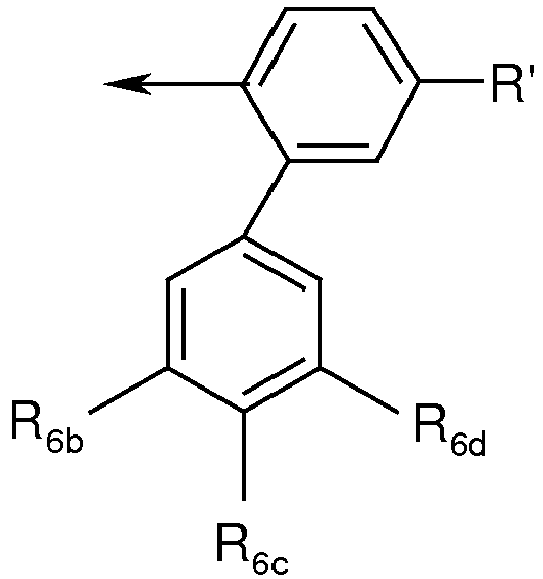
- In a second specific preferred embodiment, Q is a group of formula Q40

- In a third specific preferred embodiment, Q is a group of formula Q41

- In a particularly preferred aspect of the process of the present invention, an amine of formula (III): QNHR4 (III) wherein Q is selected from a group consisting of Q35 to Q41, is reacted with ethyl 1-methyl-3-difluoromethyl-pyrazole-4-carboxylate (DFMMP).
- Amines of the formula (III) are either known, for example, from
EP 1490342 ,EP 0824099 ,EP 1480955 (B1 ),WO 2004/035589 ,WO 2007/031323 , or they can be prepared according to generally known methods. - In one particular embodiment of the present invention, the process according to the present invention is comprised in a process for the manufacture of pharmaceutically active or agrochemically active compounds or their precursors. Such a process can also comprise further processes or process steps.
- The formation of the compound of formula (II) can be carried out, for example, analogously to the reaction described in the patent applications
EP - 10170633.1 EP - 10173899.5 - In the process according to the invention, the reaction is generally carried out in an inert solvent. Examples of suitable inert solvents include hydrocarbons such as benzene, toluene, xylene or cyclohexane; halogenated hydrocarbons such as dichloromethane, trichloromethane or tetrachloromethane ; halogenated aromatic hydrocarbons such as chlorobenzene, straight chain or cyclic ethers such as diethyl ether, ethylene glycol dimethyl ether, diethylene glycol dimethyl ether, tetrahydrofuran or dioxane, nitriles such as acetonitrile or propionitrile, amides such as N,N-dimethylformamide, diethylformamide or N-methylpyrrolidinone ; these inert solvents can be used alone or in combination as a mixture.
- In a preferred specific embodiment, the solvent is selected from the group consisting of halogenated hydrocarbons such as dichloromethane, trichloromethane or tetrachloromethane; and straight chain or cyclic ethers such as diethyl ether, ethylene glycol dimethyl ether, diethylene glycol dimethyl ether, tetrahydrofuran or dioxane. In a further specific embodiment, the solvent is different than chlorobenzene, more particularly different than a halogenated aromatic hydrocarbon.
- The reaction is preferably carried out in a straight chain or cyclic ether, in particular in a cyclic ether and particularly preferable in tetrahydrofuran (THF) or dioxane.
- Generally, an excess of the compound of formula (II) or (III) can also be employed as solvent.
- In a preferred aspect of the process of the present invention, the solvent is substantially free of water.
- For the purpose of the present invention, the term "solvent substantially free of water" denotes in particular that the content of water in the solvent is equal to or lower than 3100 mg/kg of water, preferably equal to or lower than 500 mg/kg of water, more preferably equal to or lower than 400 mg/kg of water, most preferably equal to or lower than 50 mg/kg of water. The solvent can be completely anhydrous. However, the solvent substantially free of water generally contains at least 5 mg/kg of water, often at least 25 mg/kg of water. Solvents which are substantially free of water allow shorter residence time and/or lower temperatures thereby leading to a more economical and environmental beneficial process.
- If appropriate, the solvent is used usually in an amount of from 50 to 99 by weight, preferably from 60 to 99 % by weight, more preferably from 75 to 99 % by weight of the solvent relative to the total weight of the reaction medium.
- The process according to the invention is, if appropriate, carried out in the presence of a suitable phase transfer catalyst such as for example a crown ether. This allows to increase the yield and to reduce the reaction time.
- If desired, the solvent can be chosen on account of respective pKa of base and reagents.
- In the process according to the invention, the temperature of the reaction is generally at least 0°C. The temperature of the reaction is often at least 15°C. Preferably, this temperature is at least 25°C. The temperature of the reaction is generally at most the boiling temperature of the solvent. Typically, the temperature of the reaction is equal to or lower than 120°C, particularly equal to or lower than 110°C, more particularly equal to or lower than 100°C, most particularly equal to or lower than 90°C, a temperature equal to or lower than 80°C being especially suitable. A temperature from 15 to 100°C is suitable, a temperature from 15 to 90°C is particularly preferred, a temperature from 15 to 80°C is most particularly preferred.
- Should the disclosure of any patents, patent applications, and publications which are incorporated herein by reference conflict with the description of the present application to the extent that it may render a term unclear, the present description shall take precedence.
- The following examples are intended to further explain the invention without limiting it.
- In these examples and throughout this specification the abbreviations employed are defined as follows : DFMMP is ethyl 1-methyl-3-difluoromethyl-pyrazole-4-carboxylate. 2-(3,4,5-trifluorophenyl)aniline can be prepared, for example, according to
US2011/301356 . DFMMP, can, for example, be prepared according toWO2012/25469 EP2014642 . -

- A mixture of 1.25 g (6.11 mmol, 1.0 eq) DFMMP and 1.50 g (6.73 mmol, 1.10 eq) 2-(3,4,5-trifluorophenyl)aniline was placed in a flame-dried flask without addition of solvent. With stirring, 4.58 ml (9.17 mmol, 1.5 eq) a 2 M solution of trimethyl aluminium in toluene was added rapidly at a rate which led to boiling of the reaction mixture. The reaction was kept at 90°C for 3 h. The reaction mixture was allowed to cool to room temperature over night, poured on water and extracted with 200 ml ethyl acetate. The organic layer was washed with brine, dried over Na2SO4, and the solvent was removed in vacuum, giving 2.20 g crude product as a brown solid. The solid was washed thoroughly with ethyl acetate, yielding 1.70 g pure product as a light brown solid.
- Evaporation of the mother liquor and column chromatography of the residue on silica (n-hexanes/EE 2:1) yields further 100 mg for a total of 1.80 g product (77 %).
- HPLC/MS tr: 12.6 min, [2M+Na]+ 785, [M+Na]+ 404, [M+H]+ 382; GC/MS tr: 25.26 min, [M]+ 381; 159; 1H-NMR (90 MHz, CDCl3): δ (ppm) = 8.3-7.0 (m, 5H, Ar), 6.6 (t, 1H, CF2H), 3.9 (s, 3H, CH3
-

- I To a solution of 2.93 g (14.3 mmol, 1.00 eq) DFMMP and 3.00 g (17.3 mmol, 1.20 eq) 2-(bi(cyclopropan)-2-yl)benzenamine in 20 mL dry dioxane, 10.0 ml (72.2 mmol, 5.40 eq) triethylamine was added, followed by 7.20 g (57.1 mmol, 4.00 eq) AlCl3 which was added in one portion. After stirring the reaction mixture for 1 h, it was cooled with ice and quenched with water. The aqueous phase was extracted twice with ethyl acetate, the combined organic layers were washed with water and brine, dried over Na2SO4 and the solvent removed under reduced pressure. The crude product was purified by column chromatography (MTBE) to yield (4.1 g, 85 %) Sedaxane®.
- HPLC: tr = 10.9 min + 11.4 min (trans +cis 62:38); HPLC/MS: tr = 12.7 min [M+H]+ 332; tr = 13.3 min [M+H]+ 332; NMR (500 MHz, CDCl3) δ (ppm) = 8.46 (s, br, 0.35H), 8.08 (s, br, 0.65H), 8.26 (d, 3J = 8.2 Hz, 0.35H), 8.07 (d, 3J = 8.1 Hz, 0.65H), 7.98 (d, 3J = 6.3 Hz, 1H), 7.27-7.20 (m, 1H), 7.09-7.04 (m, 2H), 7.02-6.80 (m, 1H), 3.95 (s, 1H), 3.94 (s, 2H), 1.98-1.93 (m, 0.35H), 1.66-1.62 (m, 0.65H), 1.17-1.13 (m, 0.65H), 1.07-1.02 (m, 0.35H), 0.97-0.87 (m, 1H), 0.80-077 (m, 1H), 0.71-0.67 (m, 0.65H), 0.42-0.38 (m, 1.35H), 0.30-0.25 (m. 0.35H), 0.21-0.11 (m, 1.65H), 0.07-0.01 (m, 1H).


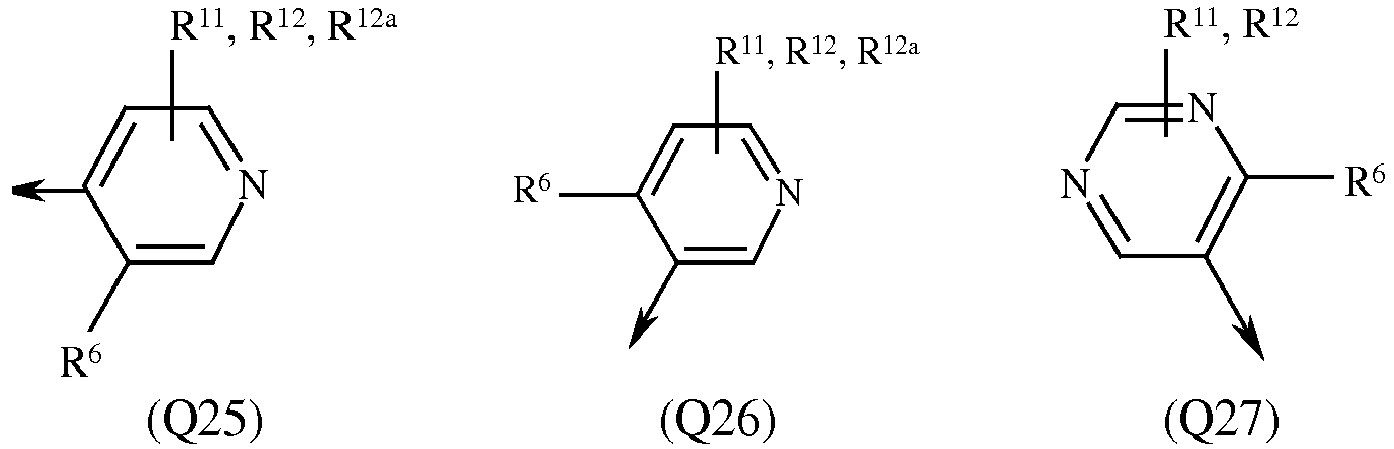


Claims (16)
- A process for the manufacture of compounds of formula (I)
 - R2 is H or an organic residue- R3 is H, an alkyl group having from 1 to 12 carbon atoms, a halogenated alkyl group having from 1 to 12 carbon atoms, an aralkyl group, an aryl group, a halogen- R4 is H, an alkyl group having from 1 to 12 carbon atoms, a halogenated alkyl group having from 1 to 12 carbon atoms, an aralkyl group, an aryl group, a halogen- R5' and R5" are each independently selected from H, an alkyl group having from 1 to 12 carbon atoms, a halogenated alkyl group having from 1 to 12 carbon atoms, an aralkyl group, an aryl group, a halogen- n = 0 to 10- X is oxygen or sulfur- Q is a group of any of formulae (Q1) to (Q38) herein below:


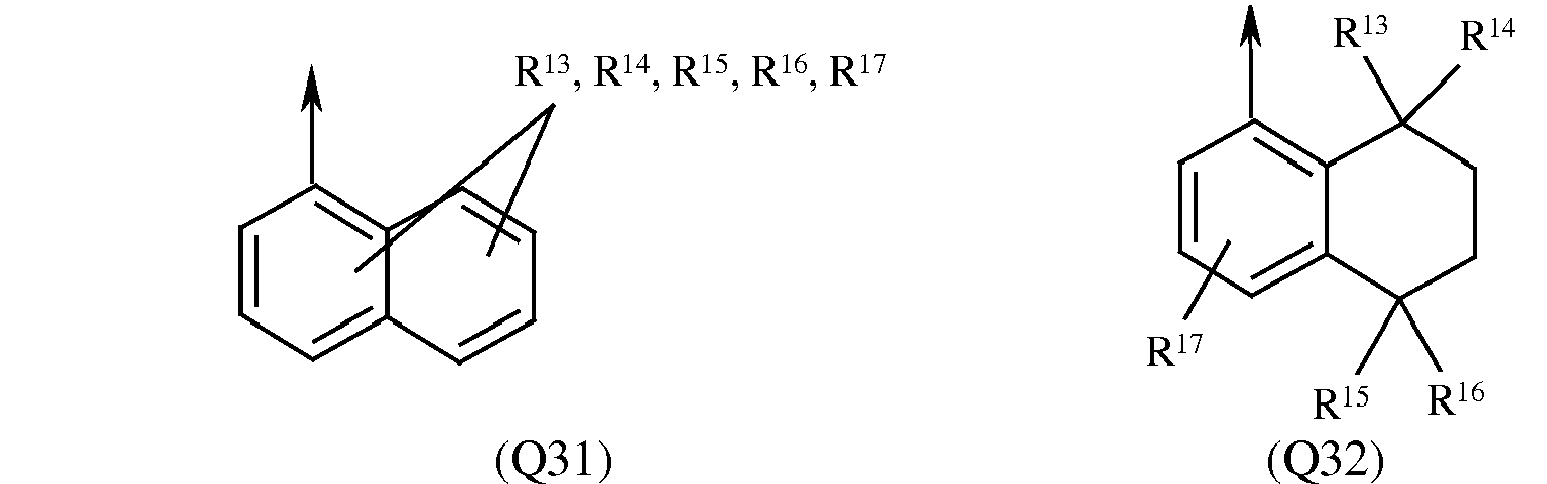

 wherein R6 is a hydrogen, C1-12 alkyl, C2-12 alkenyl or C2-12 alkynyl group, which may be substituted by 1 to 6 substituents, each substituent independently selected from halogen, cyano, C1-4 alkoxy, C1-4 thioalkyl, COO-C1-4 alkyl, =N-OH, =N-O-(C1-4 alkyl), C3-8 cycloalkyl, which may itself be substituted by 1 to 3 substituents, each independently selected from C1-4 alkyl, halogen, C1-4 alkoxy and C1-4 haloalkoxy, and C4-8 cycloalkenyl, which may itself be substituted by 1 to 3 substituents, each independently selected from C1-4 alkyl, halogen, C1-4 alkoxy and C1-4 haloalkoxy ;or R6 is a C3-8 cycloalkyl, C4-8 cycloalkenyl or C5-8 cycloalkadienyl group, which may be substituted by 1 to 3 substituents, each independently selected from halogen, C1-4 alkyl, C1-4 haloalkyl, C1-4 alkoxy, C1-4 haloalkoxy, C1-4 thioalkyl, C3-6 cycloalkyl, which may itself be substituted by 1 to 3 substituents, each independently selected from C1-4 alkyl, halogen, C1-4 alkoxy and C1-4 haloalkoxy, and phenyl, which may itself be substituted by 1 to 5 independently selected halogen atoms ;or R6 is a C6-12 bicycloalkyl, C6-12 bicycloalkenyl or C6-12 bicycloalkadienyl group, which may be substituted by 1 to 3 substituents, each independently selected from halogen, C1-4 alkyl and C1-4 haloalkyl ;or R6 is phenyl, which may be substituted by 1 to 3 substituents, each independently selected from halogen, cyano, nitro, C1-4 alkyl, C1-4 haloalkyl, C1-4 alkoxy, C1-4 alkylthio, C1-4 haloalkoxy, C1-4 haloalkylthio, C(H)=N-OH, C(H)=N-O(C1-6 alkyl), C(C1-6 alkyl)=N-OH, C(C1-6 alkyl)=N-O-(C1-6 alkyl), (Z)C≡CR, (Z)nCR28 =CR26 R27, phenyl, which may itself be substituted by 1 to 3 substituents, each independently selected from halogen, cyano, nitro, C1-4 alkyl, C1-4 haloalkyl, C1-4 alkoxy, C1-4 haloalkoxy, C1-4 haloalkylthio, C(H)=N-OH, C(H)=N-O(C1-6 alkyl), C(C1-6 alkyl)=N-OH and C(C1-6 alkyl)=N-O-(C1-6 alkyl), and thienyl, which may itself be substituted by 1 to 3 substituents, each independently selected from halogen, cyano, nitro, C1-4 alkyl, C1-4 haloalkyl, C1-4 alkoxy, C1-4 haloalkoxy, C1-4 haloalkylthio, C(H)=N-OH, C(H)=N-O(C1-6 alkyl), C(C1-6 alkyl)=N-OH and C(C1-6 alkyl)=N-O-(C1-6 alkyl) ;or R6 is a 5-6 membered heterocyclic ring, wherein the heterocyclic ring contains 1 to 3 heteroatoms, each heteroatom independently chosen from oxygen, sulphur and nitrogen, wherein the heterocyclic ring may be substituted 1 to 3 substituents, each independently selected from halogen, cyano, nitro, C1-4 alkyl, C1-4 haloalkyl, C1-4 alkoxy, C1-4 alkylthio, C1-4 alkylthio, C1-4 haloalkoxy, C(H)=N-O-(C1-6 alkyl) and C(C1-6 alkyl)=N-O-(C1-6 alkyl), C2-5 alkenyl, C2-5 alkynyl, CHO, COOC1-C6 alkyl, C1-C4 alkoxy-C1-C4 alkyl, C1-C4 haloalkoxy-C1-C4 alkyl, (Z)PC≡CR, (Z)nCR28 =CR26 R27, phenyl, which may itself be substituted by 1 to 3 substituents, each independently selected from halogen, cyano, nitro, C1-4alkyl, C1-4 haloalkyl, C1-4 alkoxy, C1-4 haloalkoxy, C1-4 haloalkylthio, C(H)=N-OH, C(H)=N-O(C1-6 alkyl), C(C1-6 alkyl)=N-OH and C(C1-6 alkyl)=N-O-(C1-6 alkyl), and thienyl, which may itself be substituted by 1 to 3 substituents, each independently selected from halogen, cyano, nitro, C1-4 alkyl, C1-4 haloalkyl, C1-4 alkoxy, C1-4 haloalkoxy, C1-4 haloalkylthio, C(H)=N-OH, C(H)=N-O(C1-6 alkyl), C(C1-6 alkyl)=N-OH and C(C1-6 alkyl)=N-O-(C1-6 alkyl), and wherein two substituents on adjacent carbon atoms of the 5-6 membered heterocyclic ring together may form a group -CR6a -CR6a =CR6a -CR6a -, wherein each R6a independently is selected from hydrogen, halogen, cyano, nitro, C1-4 alkyl, C1-4 haloalkyl, C1-4 alkoxy, C1-4 haloalkoxy, C1-4 haloalkylthio, C(H)=N-OH, C(H)=N-O(C1-6 alkyl), C(C1-6 alkyl)=N-OH and C(C1-6 alkyl)=N-O-(C1-6 alkyl) ;or R6 is an aliphatic saturated or unsaturated group containing 3 to 13 carbon atoms and at least one silicon atom, wherein the aliphatic group may contain 1 to 3 heteroatoms, each heteroatom independently selected from oxygen, nitrogen and sulphur, and wherein the aliphatic group may be substituted by 1 to 4 independently selected halogen atoms ;or R6 is (CRa Rb)m-Cy-(CRc Rd)n-Y1 ;or R6 is C1-6 alkoxy, C1-6 haloalkoxy, C2-6 alkenyloxy, C2-6 haloalkenyloxy, C2-6 alkinyloxy, C3-6 cycloalkyloxy, C1-4 alkyl-C3-7 cycloalkyloxy, C5-7 cycloalkenyloxy or C1-4 alkyl-C5-7 cycloalkenyloxy ;Z is C1-4 alkylene ;p is 0 or 1;R25 is hydrogen, halogen, C1-4 alkyl, C1-4 haloalkyl, C1-4 alkoxy(C1-4)alkyl, C1-4 haloalkoxy (C1-4) alkyl or Si(C1-4 alkyl)3 ;R26 and R27 are each, independently, hydrogen, halogen, C1-4 alkyl or C1-4 haloalkyl;R25 is hydrogen, C1-4 alkyl or C1-4 haloalkyl;Ra, Rb, Rc and Rd are each, independently, hydrogen or a C1-4 alkyl group, which may substituted by 1 to 6 substituents, each substituent independently selected from halogen, hydroxy, cyano, carboxyl, methoxycarbonyl, ethoxycarbonyl, methoxy, ethoxy, methylsulfonyl, ethylsulfonyl, difluoromethoxy, trifluoromethoxy, trifluoromethylthio and trifluorothiomethoxy ;Cy is a carbocyclic or heterocyclic 3-7 membered ring, which may be saturated, unsaturated or aromatic and which may contain a silicon atom as a ring member, wherein (CRa Rb)m and (CRcRd)n may be bound either to the same carbon or silicon atom of Cy or to different atoms separated by 1, 2 or 3 ring members, wherein the carbocyclic or heterocyclic 3-7 membered ring may substituted by 1 to 6 substituents, each substituent independently selected from halogen, C1-4 alkyl, C2-4 alkenyl, C1-4 haloalkyl, C1-4alkoxy and halo-C1-4 alkoxy ;Y1 is Si(Op1Z1)(OqZ2)(O≤Z3) and provided that Cy contains a silicon atom as a ring member then Y1 may also be hydrogen ;Z1 and Z2 are independently methyl or ethyl;Z3 is a C1-4 alkyl or a C2-4 alkenyl group, which may be interrupted by one heteroatom selected from O, S and N, and wherein the C1-4 alkyl or C2-4 alkenyl group may be substituted by 1 to 3 independently selected halogen atoms ;m and n are each independently 0, 1, 2 or 3 ;p1, q and s are each independently 0 or 1 ;R7, R8, R9, R10, R11, R12 and R12a are each, independently, hydrogen, halogen, cyano, nitro, C1-4 alkyl, C1-4 haloalkyl, C1-4 alkoxy, C1-4 haloalkoxy, C1-4 thioalkyl or C1-4 thiohaloalkyl ;R13, R14, R15, R16 and R17 are each, independently, hydrogen, halogen, cyano, nitro, C1-4 alkyl, C(O)CH3, C1-4 haloalkyl, C1-4 alkoxy, C1-4 haloalkoxy, C1-4 thioalkyl, C1-4 thiohaloalkyl, hydroxymethyl or C1-4 alkoxymethyl ;W is a single or a double bond ; andY is O, N(R18), S or (CR19R20)(CR21R22)m1(CR23R24)n1 ;R18 is hydrogen, C1-4 alkyl, formyl, C1-4 alkoxy(C1-4) alkyl, C(=O)C1-4 alkyl, which may be substituted by halogen or C1-4 alkoxy, or C(=O)O-C1-6 alkyl, which may be substituted by halogen, C1-4 alkoxy or CN ;R19, R20, R21, R22, R23 and R24 are each independently hydrogen, halogen, hydroxy, C1-4 alkoxy, C1-6 alkyl, which may be substituted by 1 to 3 substituents selected from halogen, hydroxy, =O, C1-4 alkoxy, O-C(O)-C1-4 alkyl, phenyl, naphthyl, anthracyl, fluorenyl, indanyl or a 3-7 membered carbocyclic ring (which itself may be substituted by 1 to 3 methyl groups), C1-6 alkenyl, which may be substituted by 1 to 3 substituents selected from halogen, hydroxy, =O, C1-4 alkoxy, O-C(O)-C1-4 alkyl, phenyl, naphthyl, anthracyl, fluorenyl, indanyl or a 3-7 membered carbocyclic ring (which itself may be substituted by 1 to 3 methyl groups), or a 3- 7 membered carbocyclic ring, which may contain 1 heteroatom selected from nitrogen and oxygen, and wherein the 3-7 membered carbocyclic ring may be substituted by 1 to 3 methyl groups ;or R19, R20 together with the carbon atom to which they are attached form a carbonyl-group, a 3-5 membered carbocyclic ring, which may be substituted by 1 to 3 methyl groups, C1-6 alkylidene, which may be substituted by 1 to 3 methyl groups, or C3-6 cycloalkylidene, which may be substituted by 1 to 3 methyl groups ;m1 is 0 or 1;n1 is 0 or 1;R13a is a C1-C4 alkyl, C2-C4 alkenyl or C2-C4 alkynyl group, which may be substituted by 1 to 6 substituents, each substituent independently selected from halogen, hydroxy, cyano, C1-4 alkoxycarbonyl, formyl, nitro, C1-C4 alkoxy, C1-C4 haloalkoxy, C1-C4 alkylthio, C1-C4 haloalkylthio, HC(OR29)=N- and R30R31NN=C(H)- ;R29, R30 and R31 independently of one another are hydrogen or C1-C4 alkyl; R13b is a C1-C6 alkyl group, which may be substituted by 1 to 6 substituents, each substituent independently selected from halogen, hydroxy, cyano, C1-4 alkoxycarbonyl, formyl, nitro, C1-C4 alkoxy, C1-C4 haloalkoxy, C1-C4 alkylthio, C1-C4 haloalkylthio, HC(OR32)=N- and R33R34NN=C(H)- ;R32, R33 and R24 independently of one another are hydrogen or C1-C4 alkyl;R13c is hydrogen or halogen ; and tautomers/isomers/enantiomers of these compoundswhich comprises reacting a compound of formula (II)
 - R1 is an organic residue- R2 and R3 are as defined above,with an amine of formula (III) : QNHR4 (III) wherein Q and R4 are as defined above, in the presence of a Lewis acid.
 - The process according to claim 1, wherein the process is further carried out in the presence of an additional base which is different from the compound according to formula (III).
- The process according claim 1 or 2, wherein the Lewis acid is selected from a group consisting of aluminium compounds and boron compounds, in particular aluminium halides and boron halides, more particularly aluminium trichloride and boron trichloride; and trialkylaluminum compounds and trialkylboron compounds, in particular trimethylaluminum.
- The process according to any one of claims 2 to 4, wherein the additional base is a nucleophilic base, in particular wherein the nucleophilic base is selected from the group consisting of diethylamine, triethylamine, methylpiperidine and N-methylmorpholine, wherein triethylamine is the most preferred nucleophilic base.
- The process according to claim 1 or 3, wherein the Lewis acid is present in an amount of from 0.25 to 4 molar equivalents relative to the amount of the compound of formula (II), preferably in an amount of from 0.75 to 2 molar equivalents relative to the amount of the compound of formula (II).
- The process according to anyone of claims 2 to 4, wherein the Lewis acid is present in an amount of from 0.25 to 8 molar equivalents relative to the amount of the compound of formula (II), preferably in an amount of from 1 to 6 molar equivalents relative to the amount of the compound of formula (II).
- The process according to anyone of claims 2, 3, 4 and 6, wherein the additional base is present in an amount of from 0.25 to 8 molar equivalents relative to the amount of the Lewis acid, preferably in an amount of from 1 to 6 molar equivalents relative to the amount of the Lewis acid.
- The process according to any one of claims 1 to 7, wherein the reaction is carried out in an inert solvent selected from a group consisting of hydrocarbons, halogenated hydrocarbons, halogenated aromatic hydrocarbons, straight chain or cyclic ethers, or nitriles; preferably from halogenated hydrocarbons and straight chain or cyclic ethers; more preferably from straight chain or cyclic ethers.
- The process according to claim 8, wherein the inert solvent is a cyclic ether, preferably dioxane.
- The process according to any one of claims 1 to 9, wherein R3 is an alkyl group or a halogenated alkyl group ; preferably a fluorinated alkyl group selected from the group consisting of fluoromethyl, difluoromethyl, trifluoromethyl, chlorofluoromethyl, dichlorofluoromethyl, and chlorodifluoromethyl ; more preferably difluoromethyl.
- The process according to anyone of claims 1 to 10, wherein R4 is selected from the group consisting of H, C1-C8-alkyl, benzyl and phenyl; in particular H, C1-C4-alkyl and benzyl; more particularly from H, methyl, ethyl, isopropyl and benzyl; especially H.
- The process according to any one of claims 1 to 11, wherein Q is a group of formula Q1 or Q37.
- The process according to any one of claims 1 to 11, wherein Q is a group of formula Q39

- The process according to any one of claims 1 to 11, Q is a group of formula Q40

- The process according to any one of claims 1 to 11, Q is a group of formula Q41

- A process for the manufacture of pharmaceutically active or agrochemically active compounds or their precursors, comprising at least the process according to any one of claims 1 to 15.
Priority Applications (5)
| Application Number | Priority Date | Filing Date | Title |
|---|---|---|---|
| EP14178988.3A EP2980078A1 (en) | 2014-07-29 | 2014-07-29 | Process for the preparation of pyrazole-4-carboxamides |
| EP15745446.3A EP3174857A1 (en) | 2014-07-29 | 2015-07-29 | Process for the preparation of pyrazole-4-carboxamides |
| PCT/EP2015/067367 WO2016016298A1 (en) | 2014-07-29 | 2015-07-29 | Process for the preparation of pyrazole-4-carboxamides |
| CN201580052761.4A CN106715400A (en) | 2014-07-29 | 2015-07-29 | Process for the preparation of pyrazole-4-carboxamides |
| US15/329,384 US20170217901A1 (en) | 2014-07-29 | 2015-07-29 | Process for the preparation of pyrazole-4-carboxamides |
Applications Claiming Priority (1)
| Application Number | Priority Date | Filing Date | Title |
|---|---|---|---|
| EP14178988.3A EP2980078A1 (en) | 2014-07-29 | 2014-07-29 | Process for the preparation of pyrazole-4-carboxamides |
Publications (1)
| Publication Number | Publication Date |
|---|---|
| EP2980078A1 true EP2980078A1 (en) | 2016-02-03 |
Family
ID=51225439
Family Applications (2)
| Application Number | Title | Priority Date | Filing Date |
|---|---|---|---|
| EP14178988.3A Withdrawn EP2980078A1 (en) | 2014-07-29 | 2014-07-29 | Process for the preparation of pyrazole-4-carboxamides |
| EP15745446.3A Withdrawn EP3174857A1 (en) | 2014-07-29 | 2015-07-29 | Process for the preparation of pyrazole-4-carboxamides |
Family Applications After (1)
| Application Number | Title | Priority Date | Filing Date |
|---|---|---|---|
| EP15745446.3A Withdrawn EP3174857A1 (en) | 2014-07-29 | 2015-07-29 | Process for the preparation of pyrazole-4-carboxamides |
Country Status (4)
| Country | Link |
|---|---|
| US (1) | US20170217901A1 (en) |
| EP (2) | EP2980078A1 (en) |
| CN (1) | CN106715400A (en) |
| WO (1) | WO2016016298A1 (en) |
Cited By (1)
| Publication number | Priority date | Publication date | Assignee | Title |
|---|---|---|---|---|
| WO2017194517A1 (en) * | 2016-05-10 | 2017-11-16 | Solvay Sa | Composition comprising 3-(haloalkyl or formyl)-1h-pyrazole-4-carboxylic acids or esters, its manufacture and its use for the preparation of carboxamides |
Families Citing this family (4)
| Publication number | Priority date | Publication date | Assignee | Title |
|---|---|---|---|---|
| EP3677572B1 (en) * | 2017-08-28 | 2023-06-07 | Japan Finechem Company, Inc. | Production method for pyrazole-4-carboxamide derivative |
| EP3728198A1 (en) | 2017-12-22 | 2020-10-28 | Solvay Sa | Process for the manufacture of pyrazole carboxylic derivatives and precursors thereof |
| WO2022233129A1 (en) | 2021-05-05 | 2022-11-10 | Fujian Yongjing Technology Co., Ltd | New process for the synthesis of 5-fluoro-3- (difuoromethyl) -5-fluoro-1-methyl-1h-pyrazole-4-carboxylic acid derivatives and the free acid thereof |
| CN118221588B (en) * | 2024-03-21 | 2026-01-02 | 华东理工大学 | A polymorph of fluopyram, its preparation method and application |
Citations (16)
| Publication number | Priority date | Publication date | Assignee | Title |
|---|---|---|---|---|
| US5556987A (en) | 1994-11-10 | 1996-09-17 | Fuji Photo Film Co., Ltd. | Process for producing pyrazolecarboxamide derivative |
| EP0824099A1 (en) | 1996-08-15 | 1998-02-18 | MITSUI TOATSU CHEMICALS, Inc. | Substituted carboxanilide derivative and plant disease control agent comprising same as active ingredient |
| WO2003070705A1 (en) | 2002-02-19 | 2003-08-28 | Bayer Cropscience Aktiengesellschaft | Disubstituted pyrazolyl carboxanilides |
| WO2004035589A1 (en) | 2002-10-18 | 2004-04-29 | Syngenta Participations Ag | Heterocyclocarboxamide derivatives |
| WO2005123690A1 (en) | 2004-06-18 | 2005-12-29 | Basf Aktiengesellschaft | 1-methyl-3-difluoromethyl-pyrazol-4-carbonic acid-(ortho-phenyl)-anilides, and use thereof as a fungicide |
| WO2006015866A1 (en) | 2004-08-12 | 2006-02-16 | Syngenta Participations Ag | Method for protecting useful plants or plant propagation material |
| WO2006015865A1 (en) | 2004-08-12 | 2006-02-16 | Syngenta Participations Ag | Fungicidal compositions |
| WO2006087343A1 (en) | 2005-02-16 | 2006-08-24 | Basf Aktiengesellschaft | Pyrazole carboxylic acid anilides, method for the production thereof and agents containing them for controlling pathogenic fungi |
| WO2007009717A1 (en) | 2005-07-18 | 2007-01-25 | Syngenta Participations Ag | Pyrazole-4- carboxamide derivatives as microbiocides |
| WO2007031323A1 (en) | 2005-09-16 | 2007-03-22 | Syngenta Participations Ag. | Process for the production of amides |
| EP1480955B1 (en) | 2002-03-05 | 2007-06-27 | Syngenta Participations AG | O-cyclopropyl-carboxanilides and their use as fungicides |
| EP2014642A1 (en) | 2007-07-12 | 2009-01-14 | Syngeta Participations AG | Process for the production of amines |
| US20110301356A1 (en) | 2009-02-19 | 2011-12-08 | Basf Se | Method for Producing 2-aminobiphenylene |
| WO2012025469A1 (en) | 2010-08-24 | 2012-03-01 | Solvay Sa | Improved process for the preparation of esters of 1-h-pyrazole-4-carboxylic acids |
| WO2012055864A1 (en) * | 2010-10-27 | 2012-05-03 | Solvay Sa | Process for the preparation of pyrazole-4-carboxamides |
| WO2012175511A1 (en) * | 2011-06-21 | 2012-12-27 | Bayer Intellectual Property Gmbh | Method for producing pyrazolylcarboxanilides |
Family Cites Families (1)
| Publication number | Priority date | Publication date | Assignee | Title |
|---|---|---|---|---|
| US8080161B2 (en) * | 2009-06-11 | 2011-12-20 | Baxter International Inc. | Dialysis treatment devices for removing urea |
-
2014
- 2014-07-29 EP EP14178988.3A patent/EP2980078A1/en not_active Withdrawn
-
2015
- 2015-07-29 WO PCT/EP2015/067367 patent/WO2016016298A1/en not_active Ceased
- 2015-07-29 EP EP15745446.3A patent/EP3174857A1/en not_active Withdrawn
- 2015-07-29 US US15/329,384 patent/US20170217901A1/en not_active Abandoned
- 2015-07-29 CN CN201580052761.4A patent/CN106715400A/en active Pending
Patent Citations (17)
| Publication number | Priority date | Publication date | Assignee | Title |
|---|---|---|---|---|
| US5556987A (en) | 1994-11-10 | 1996-09-17 | Fuji Photo Film Co., Ltd. | Process for producing pyrazolecarboxamide derivative |
| EP0824099A1 (en) | 1996-08-15 | 1998-02-18 | MITSUI TOATSU CHEMICALS, Inc. | Substituted carboxanilide derivative and plant disease control agent comprising same as active ingredient |
| WO2003070705A1 (en) | 2002-02-19 | 2003-08-28 | Bayer Cropscience Aktiengesellschaft | Disubstituted pyrazolyl carboxanilides |
| EP1490342A1 (en) | 2002-02-19 | 2004-12-29 | Bayer CropScience AG | Disubstituted pyrazolyl carboxanilides |
| EP1480955B1 (en) | 2002-03-05 | 2007-06-27 | Syngenta Participations AG | O-cyclopropyl-carboxanilides and their use as fungicides |
| WO2004035589A1 (en) | 2002-10-18 | 2004-04-29 | Syngenta Participations Ag | Heterocyclocarboxamide derivatives |
| WO2005123690A1 (en) | 2004-06-18 | 2005-12-29 | Basf Aktiengesellschaft | 1-methyl-3-difluoromethyl-pyrazol-4-carbonic acid-(ortho-phenyl)-anilides, and use thereof as a fungicide |
| WO2006015866A1 (en) | 2004-08-12 | 2006-02-16 | Syngenta Participations Ag | Method for protecting useful plants or plant propagation material |
| WO2006015865A1 (en) | 2004-08-12 | 2006-02-16 | Syngenta Participations Ag | Fungicidal compositions |
| WO2006087343A1 (en) | 2005-02-16 | 2006-08-24 | Basf Aktiengesellschaft | Pyrazole carboxylic acid anilides, method for the production thereof and agents containing them for controlling pathogenic fungi |
| WO2007009717A1 (en) | 2005-07-18 | 2007-01-25 | Syngenta Participations Ag | Pyrazole-4- carboxamide derivatives as microbiocides |
| WO2007031323A1 (en) | 2005-09-16 | 2007-03-22 | Syngenta Participations Ag. | Process for the production of amides |
| EP2014642A1 (en) | 2007-07-12 | 2009-01-14 | Syngeta Participations AG | Process for the production of amines |
| US20110301356A1 (en) | 2009-02-19 | 2011-12-08 | Basf Se | Method for Producing 2-aminobiphenylene |
| WO2012025469A1 (en) | 2010-08-24 | 2012-03-01 | Solvay Sa | Improved process for the preparation of esters of 1-h-pyrazole-4-carboxylic acids |
| WO2012055864A1 (en) * | 2010-10-27 | 2012-05-03 | Solvay Sa | Process for the preparation of pyrazole-4-carboxamides |
| WO2012175511A1 (en) * | 2011-06-21 | 2012-12-27 | Bayer Intellectual Property Gmbh | Method for producing pyrazolylcarboxanilides |
Cited By (2)
| Publication number | Priority date | Publication date | Assignee | Title |
|---|---|---|---|---|
| WO2017194517A1 (en) * | 2016-05-10 | 2017-11-16 | Solvay Sa | Composition comprising 3-(haloalkyl or formyl)-1h-pyrazole-4-carboxylic acids or esters, its manufacture and its use for the preparation of carboxamides |
| CN109071453A (en) * | 2016-05-10 | 2018-12-21 | 索尔维公司 | Composition comprising 3- (alkylhalide group or formoxyl) -1H- pyrazoles -4- formic acid or ester, manufacture and its purposes for being used to prepare formamide |
Also Published As
| Publication number | Publication date |
|---|---|
| CN106715400A (en) | 2017-05-24 |
| US20170217901A1 (en) | 2017-08-03 |
| WO2016016298A1 (en) | 2016-02-04 |
| EP3174857A1 (en) | 2017-06-07 |
Similar Documents
| Publication | Publication Date | Title |
|---|---|---|
| EP2632901B1 (en) | Process for the preparation of pyrazole-4-carboxamides | |
| US8981116B2 (en) | Process for the preparation of esters of 1-substituted-3-fluoroalkyl-pyrazole-4-carboxylic acids | |
| KR100953251B1 (en) | Substituted dihydro 3-halo-1H-pyrazole-5-carboxylates their preparation and use | |
| EP2980078A1 (en) | Process for the preparation of pyrazole-4-carboxamides | |
| PL216029B1 (en) | Method for preparing 3-halo-4,5-dihydro-1 i h /i -pyrazoles | |
| WO2012025469A1 (en) | Improved process for the preparation of esters of 1-h-pyrazole-4-carboxylic acids | |
| JP5052495B2 (en) | Process for producing 5-alkoxy-4-hydroxymethylpyrazole compound | |
| US10618872B2 (en) | Process for preparing 3-chloro-2-vinylphenylsulfonates | |
| TWI647215B (en) | Method for preparing 3,5-dihaloalkylpyrazole derivatives from α,α-dihalamine | |
| JP4879175B2 (en) | Method for preparing N-piperidino-1,5-diphenylpyrazole-3-carboxamide derivatives | |
| JP2017512787A (en) | Process for producing 3,5-bis (haloalkyl) pyrazole derivatives from α, α-dihaloamines and ketimines | |
| KR102233655B1 (en) | PROCESS FOR PREPARING 3,5-BIS(FLUOROALKYL)PYRAZOLE DERIVATIVES FROM α,α-DIHALOAMINES | |
| EP2671874B1 (en) | Preparation of esters of 1-substituted-3-fluoroalkyl-pyrazole-4-carboxylic acids | |
| US10407413B2 (en) | Method for preparing pyrazolecarboxylic acid derivative, and intermediate thereof | |
| KR101308227B1 (en) | Method for producing nicotinic acid derivative or salt thereof | |
| KR20210022049A (en) | Disubstituted 5(3)-pyrazole carboxylate, and process for its preparation from enolate and fluoroalkylamino reagent (FAR) reagents | |
| KR20210022048A (en) | Disubstituted 3-pyrazole carboxylate, and method for its preparation through acylation of enolate |
Legal Events
| Date | Code | Title | Description |
|---|---|---|---|
| PUAI | Public reference made under article 153(3) epc to a published international application that has entered the european phase |
Free format text: ORIGINAL CODE: 0009012 |
|
| STAA | Information on the status of an ep patent application or granted ep patent |
Free format text: STATUS: THE APPLICATION HAS BEEN WITHDRAWN |
|
| AK | Designated contracting states |
Kind code of ref document: A1 Designated state(s): AL AT BE BG CH CY CZ DE DK EE ES FI FR GB GR HR HU IE IS IT LI LT LU LV MC MK MT NL NO PL PT RO RS SE SI SK SM TR |
|
| AX | Request for extension of the european patent |
Extension state: BA ME |
|
| 18W | Application withdrawn |
Effective date: 20160112 |