EP2979092B1 - A portable device for detection of harmful substances - Google Patents
A portable device for detection of harmful substances Download PDFInfo
- Publication number
- EP2979092B1 EP2979092B1 EP14774530.1A EP14774530A EP2979092B1 EP 2979092 B1 EP2979092 B1 EP 2979092B1 EP 14774530 A EP14774530 A EP 14774530A EP 2979092 B1 EP2979092 B1 EP 2979092B1
- Authority
- EP
- European Patent Office
- Prior art keywords
- capsule
- medium
- sensor
- analysis device
- solvent
- Prior art date
- Legal status (The legal status is an assumption and is not a legal conclusion. Google has not performed a legal analysis and makes no representation as to the accuracy of the status listed.)
- Not-in-force
Links
- 238000001514 detection method Methods 0.000 title claims description 5
- 239000000126 substance Substances 0.000 title description 20
- 239000002775 capsule Substances 0.000 claims description 111
- 238000012360 testing method Methods 0.000 claims description 54
- 238000002156 mixing Methods 0.000 claims description 36
- 235000013305 food Nutrition 0.000 claims description 35
- 239000002904 solvent Substances 0.000 claims description 31
- 239000012491 analyte Substances 0.000 claims description 26
- 238000004458 analytical method Methods 0.000 claims description 19
- 238000000034 method Methods 0.000 claims description 15
- 230000007246 mechanism Effects 0.000 claims description 13
- 239000006185 dispersion Substances 0.000 claims description 9
- 238000003780 insertion Methods 0.000 claims description 6
- 230000037431 insertion Effects 0.000 claims description 6
- 238000013019 agitation Methods 0.000 claims description 5
- 239000003814 drug Substances 0.000 claims description 5
- 239000003623 enhancer Substances 0.000 claims description 2
- 239000012530 fluid Substances 0.000 claims description 2
- 230000008569 process Effects 0.000 claims description 2
- 230000003213 activating effect Effects 0.000 claims 3
- 238000004891 communication Methods 0.000 claims 1
- 239000013568 food allergen Substances 0.000 claims 1
- 230000008878 coupling Effects 0.000 description 13
- 238000010168 coupling process Methods 0.000 description 13
- 238000005859 coupling reaction Methods 0.000 description 13
- 239000000203 mixture Substances 0.000 description 12
- 239000007788 liquid Substances 0.000 description 8
- 231100000765 toxin Toxicity 0.000 description 8
- 239000003053 toxin Substances 0.000 description 8
- 108700012359 toxins Proteins 0.000 description 8
- 230000006835 compression Effects 0.000 description 7
- 238000007906 compression Methods 0.000 description 7
- 239000000758 substrate Substances 0.000 description 7
- 241001465754 Metazoa Species 0.000 description 6
- 239000002537 cosmetic Substances 0.000 description 6
- 230000004044 response Effects 0.000 description 6
- 239000013566 allergen Substances 0.000 description 5
- 239000007787 solid Substances 0.000 description 5
- HVYWMOMLDIMFJA-DPAQBDIFSA-N cholesterol Chemical compound C1C=C2C[C@@H](O)CC[C@]2(C)[C@@H]2[C@@H]1[C@@H]1CC[C@H]([C@H](C)CCCC(C)C)[C@@]1(C)CC2 HVYWMOMLDIMFJA-DPAQBDIFSA-N 0.000 description 4
- 229940079593 drug Drugs 0.000 description 4
- 238000000605 extraction Methods 0.000 description 4
- 239000006210 lotion Substances 0.000 description 4
- 239000000463 material Substances 0.000 description 4
- 230000008859 change Effects 0.000 description 3
- 238000013461 design Methods 0.000 description 3
- 238000002803 maceration Methods 0.000 description 3
- 108090000623 proteins and genes Proteins 0.000 description 3
- 102000004169 proteins and genes Human genes 0.000 description 3
- 229940088594 vitamin Drugs 0.000 description 3
- 239000011782 vitamin Substances 0.000 description 3
- 229930003231 vitamin Natural products 0.000 description 3
- 235000013343 vitamin Nutrition 0.000 description 3
- 241000894006 Bacteria Species 0.000 description 2
- 241000233866 Fungi Species 0.000 description 2
- DGAQECJNVWCQMB-PUAWFVPOSA-M Ilexoside XXIX Chemical compound C[C@@H]1CC[C@@]2(CC[C@@]3(C(=CC[C@H]4[C@]3(CC[C@@H]5[C@@]4(CC[C@@H](C5(C)C)OS(=O)(=O)[O-])C)C)[C@@H]2[C@]1(C)O)C)C(=O)O[C@H]6[C@@H]([C@H]([C@@H]([C@H](O6)CO)O)O)O.[Na+] DGAQECJNVWCQMB-PUAWFVPOSA-M 0.000 description 2
- RYYVLZVUVIJVGH-UHFFFAOYSA-N caffeine Chemical compound CN1C(=O)N(C)C(=O)C2=C1N=CN2C RYYVLZVUVIJVGH-UHFFFAOYSA-N 0.000 description 2
- 235000012000 cholesterol Nutrition 0.000 description 2
- 239000000356 contaminant Substances 0.000 description 2
- 235000019197 fats Nutrition 0.000 description 2
- 229910052500 inorganic mineral Inorganic materials 0.000 description 2
- 238000004519 manufacturing process Methods 0.000 description 2
- 239000011707 mineral Substances 0.000 description 2
- 235000010755 mineral Nutrition 0.000 description 2
- 239000000575 pesticide Substances 0.000 description 2
- 238000012545 processing Methods 0.000 description 2
- 235000018102 proteins Nutrition 0.000 description 2
- 229910052708 sodium Inorganic materials 0.000 description 2
- 239000011734 sodium Substances 0.000 description 2
- 235000015424 sodium Nutrition 0.000 description 2
- 239000011877 solvent mixture Substances 0.000 description 2
- 235000000346 sugar Nutrition 0.000 description 2
- 206010002199 Anaphylactic shock Diseases 0.000 description 1
- 108010011485 Aspartame Proteins 0.000 description 1
- 208000010201 Exanthema Diseases 0.000 description 1
- 235000010469 Glycine max Nutrition 0.000 description 1
- 241000282412 Homo Species 0.000 description 1
- 206010020751 Hypersensitivity Diseases 0.000 description 1
- LPHGQDQBBGAPDZ-UHFFFAOYSA-N Isocaffeine Natural products CN1C(=O)N(C)C(=O)C2=C1N(C)C=N2 LPHGQDQBBGAPDZ-UHFFFAOYSA-N 0.000 description 1
- COLNVLDHVKWLRT-QMMMGPOBSA-N L-phenylalanine Chemical compound OC(=O)[C@@H](N)CC1=CC=CC=C1 COLNVLDHVKWLRT-QMMMGPOBSA-N 0.000 description 1
- 240000004808 Saccharomyces cerevisiae Species 0.000 description 1
- 235000021307 Triticum Nutrition 0.000 description 1
- 241000209140 Triticum Species 0.000 description 1
- 230000007815 allergy Effects 0.000 description 1
- 208000003455 anaphylaxis Diseases 0.000 description 1
- 239000007961 artificial flavoring substance Substances 0.000 description 1
- IAOZJIPTCAWIRG-QWRGUYRKSA-N aspartame Chemical compound OC(=O)C[C@H](N)C(=O)N[C@H](C(=O)OC)CC1=CC=CC=C1 IAOZJIPTCAWIRG-QWRGUYRKSA-N 0.000 description 1
- 229960003438 aspartame Drugs 0.000 description 1
- 235000010357 aspartame Nutrition 0.000 description 1
- 239000000605 aspartame Substances 0.000 description 1
- 238000003556 assay Methods 0.000 description 1
- 235000013361 beverage Nutrition 0.000 description 1
- 229960001948 caffeine Drugs 0.000 description 1
- VJEONQKOZGKCAK-UHFFFAOYSA-N caffeine Natural products CN1C(=O)N(C)C(=O)C2=C1C=CN2C VJEONQKOZGKCAK-UHFFFAOYSA-N 0.000 description 1
- 235000013339 cereals Nutrition 0.000 description 1
- 238000006243 chemical reaction Methods 0.000 description 1
- 238000004140 cleaning Methods 0.000 description 1
- 239000003086 colorant Substances 0.000 description 1
- 230000001010 compromised effect Effects 0.000 description 1
- 239000000470 constituent Substances 0.000 description 1
- 239000006071 cream Substances 0.000 description 1
- 235000005911 diet Nutrition 0.000 description 1
- 230000000378 dietary effect Effects 0.000 description 1
- 230000009429 distress Effects 0.000 description 1
- 235000013601 eggs Nutrition 0.000 description 1
- 201000005884 exanthem Diseases 0.000 description 1
- 239000003925 fat Substances 0.000 description 1
- 239000007789 gas Substances 0.000 description 1
- -1 gaseous Substances 0.000 description 1
- 230000002496 gastric effect Effects 0.000 description 1
- 238000000227 grinding Methods 0.000 description 1
- 229910001385 heavy metal Inorganic materials 0.000 description 1
- 239000008240 homogeneous mixture Substances 0.000 description 1
- 230000013011 mating Effects 0.000 description 1
- 229910052751 metal Inorganic materials 0.000 description 1
- 239000002184 metal Substances 0.000 description 1
- 235000013336 milk Nutrition 0.000 description 1
- 239000008267 milk Substances 0.000 description 1
- 210000004080 milk Anatomy 0.000 description 1
- 230000003287 optical effect Effects 0.000 description 1
- 239000002245 particle Substances 0.000 description 1
- 244000052769 pathogen Species 0.000 description 1
- COLNVLDHVKWLRT-UHFFFAOYSA-N phenylalanine Natural products OC(=O)C(N)CC1=CC=CC=C1 COLNVLDHVKWLRT-UHFFFAOYSA-N 0.000 description 1
- 229960005190 phenylalanine Drugs 0.000 description 1
- 231100000614 poison Toxicity 0.000 description 1
- 239000002574 poison Substances 0.000 description 1
- 206010037844 rash Diseases 0.000 description 1
- 230000035945 sensitivity Effects 0.000 description 1
- 239000000344 soap Substances 0.000 description 1
- 239000011343 solid material Substances 0.000 description 1
- 239000000243 solution Substances 0.000 description 1
- 239000012453 solvate Substances 0.000 description 1
- 230000003595 spectral effect Effects 0.000 description 1
- 150000008163 sugars Chemical class 0.000 description 1
- 239000004753 textile Substances 0.000 description 1
- 230000000007 visual effect Effects 0.000 description 1
Images



Classifications
-
- G—PHYSICS
- G01—MEASURING; TESTING
- G01N—INVESTIGATING OR ANALYSING MATERIALS BY DETERMINING THEIR CHEMICAL OR PHYSICAL PROPERTIES
- G01N33/00—Investigating or analysing materials by specific methods not covered by groups G01N1/00 - G01N31/00
- G01N33/48—Biological material, e.g. blood, urine; Haemocytometers
- G01N33/50—Chemical analysis of biological material, e.g. blood, urine; Testing involving biospecific ligand binding methods; Immunological testing
- G01N33/52—Use of compounds or compositions for colorimetric, spectrophotometric or fluorometric investigation, e.g. use of reagent paper and including single- and multilayer analytical elements
- G01N33/521—Single-layer analytical elements
-
- G—PHYSICS
- G01—MEASURING; TESTING
- G01N—INVESTIGATING OR ANALYSING MATERIALS BY DETERMINING THEIR CHEMICAL OR PHYSICAL PROPERTIES
- G01N33/00—Investigating or analysing materials by specific methods not covered by groups G01N1/00 - G01N31/00
- G01N33/02—Food
-
- G—PHYSICS
- G01—MEASURING; TESTING
- G01N—INVESTIGATING OR ANALYSING MATERIALS BY DETERMINING THEIR CHEMICAL OR PHYSICAL PROPERTIES
- G01N33/00—Investigating or analysing materials by specific methods not covered by groups G01N1/00 - G01N31/00
- G01N33/48—Biological material, e.g. blood, urine; Haemocytometers
- G01N33/50—Chemical analysis of biological material, e.g. blood, urine; Testing involving biospecific ligand binding methods; Immunological testing
- G01N33/53—Immunoassay; Biospecific binding assay; Materials therefor
- G01N33/5308—Immunoassay; Biospecific binding assay; Materials therefor for analytes not provided for elsewhere, e.g. nucleic acids, uric acid, worms, mites
-
- G—PHYSICS
- G01—MEASURING; TESTING
- G01N—INVESTIGATING OR ANALYSING MATERIALS BY DETERMINING THEIR CHEMICAL OR PHYSICAL PROPERTIES
- G01N1/00—Sampling; Preparing specimens for investigation
- G01N1/28—Preparing specimens for investigation including physical details of (bio-)chemical methods covered elsewhere, e.g. G01N33/50, C12Q
- G01N1/286—Preparing specimens for investigation including physical details of (bio-)chemical methods covered elsewhere, e.g. G01N33/50, C12Q involving mechanical work, e.g. chopping, disintegrating, compacting, homogenising
- G01N2001/2866—Grinding or homogeneising
Definitions
- the present invention is directed towards a consumer assay device and, more particularly, to a device suited for immediate, portable, point-of-use testing for specified substances within foods, medicines, cosmetics, etc.
- Food, drinks, cosmetics, etc. are known to contain contaminants, toxins, allergens and other substances that may be harmful to some, or to all, consumers.
- a device that could readily provide rapid diagnostics for harmful substances would be extremely useful and make the lives of consumers easier, safer, and less stressful.
- Apparatus for retrieving and analysing samples are known from US2012/246232 , EP1034429 , US2004/132091 , US2010/210033 and US2006/292035 .
- sealable container see, e.g., US Patent No. 6,616,893
- a self-contained swab see, e.g., US Patent No. 7,098,040
- a container with multiple ports see, e.g., US Patent No. 6,180,335 .
- LFD lateral flow devices
- the device taught by Royds does not allow for the liquidized food to be moved from the mixing area to a testing area, therefore the user must administer the test to the food himself or remove the liquefied food and move it to the testing area. In either case, the user's options are compromised, and the test is necessarily less discreet and more cumbersome than might be desired.
- the concept of integrating maceration and testing facilities has long been known, and appears, for example, in US Patent No. 4,822,174, to Deibel .
- the blending device taught by Deibel is contained within a vessel that allows for continuous mixing inside the vessel with a power supply outside the vessel.
- a rotating mixing blade is driven by a horizontal shaft that couples the blades to the motor. While such devices may be suitable for larger scale mixing, a far simpler one-time-use mixing device would be desirable for the consumer needs outlined above.
- the invention resides in a method according to claim 1, a self-contained portable analysis device according to claim 8 and a capsule according to claim 11.
- a “food substrate” is a food substance or an item that comes into contact with a food substance such as a utensil, swab, textile (for example: a napkin or paper) or other similar items.
- a food substrate is one instance of a " medium” that may be analyzed .
- a " medium” is any substrate or sample that is to be tested for any of the target analytes.
- media include a food substrate, a cosmetic, a lotion or anything that comes into contact with the body of a human or animal. It may also be a consumable, as the term is defined below. Some, but not all, media come in contact with human or animal skin. Examples of media that come in contact with human or animal skin include lotions, creams, soaps, cosmetics, and the like.
- a “ capsule” is any vial, container or other such item that can hold a liquid, gaseous, or solid material.
- a “ capsule” may be disposable or reusable and may be removable from a larger testing housing or may be permanently affixed.
- a capsule means to equip with any object or resource needed to facilitate and complete testing for an analyte. This can include but is not limited to chemicals, electrical or mechanical equipment, and sensing devices. Provisioning may occur before, during, or after a test is run.
- test strip is any substrate or liquid medium or sensor that provides a detectable response to an analyte for which the device is testing.
- the "test strip” may take the form of an "actual strip,” which is to say a material that is long, narrow and flat, but also includes any other example indicated by the design of the capsule.
- An " indication" of presence of the target analyte is any detectable response of the analyte to a sensing medium. This could be in the form of a color change, fluorescence emission, infrared emission, magnetic response, electrical response, acoustic change or other type of detectable response.
- a “dispersion” refers to any mixture combining the solvent used for extracting the analyte with a sample of the sampled medium.
- a “dispersion” may include inhomogeneous mixtures, completely dissolved homogenous mixtures and any variation of the two. Unless expressly distinguished in a particular context, the words dispersion, mixture, solvate and solution are used interchangeably in the present description.
- a “valve” is any device for controlling or gating the passage of a liquid, solid, or gas.
- mixing Bringing a solvent into contact with a medium resulting in a mixture or solution may be referred to herein as "mixing.”
- a “mixer,” as the term is used herein, is any structure, such as mixing blades, grinders or the like, that may aid in the mixing of a medium and a solvent.
- Reading Interpreting the result from a sensor or test strip, whether visually, electronically, or mechanically, or by other means, may be referred to herein as "reading.”
- a “consumable,” as the term is used herein, includes a solid or a liquid that is consumed by humans or animals, such as a foods, beverages, medicines, and the like.
- Figs. 1A and IB show outside and cross sectional views of a self-contained reader/container assembly, designated generally by numeral 101.
- Reader/container assembly 101 may also be referred to herein as a "reader.”
- the scope of the present invention does not limit the shape or design of the container depicted here, and may be cylindrical, pyramidal, a hybrid of multiple 3D shapes or other shape that may contain a solid or liquid medium for mixing.
- the housing of the container may be made of plastic, metal or any other material, depending upon design or manufacturing preference and the needs of the user. Contained within the container are all the electrical and mechanical components required to mix the media with the solvent, release the mixture from its containment allowing it to be delivered to the test strip, and read the results of the test strip.
- a housing 103 of the reader 101 is composed of a housing left end cap 100, an outer sheath 105, an inner sheath 140, housing right end cap 141, and a compression button 145. These components of the housing 103 enclose electronics (circuit board(s), battery(ies), etc) 190 for the reader, a motor to drive the mixing 180, a solenoid 175 to properly align a disposable capsule 200 (shown in Fig. 4A ) so that test strip 299 (shown in Fig. 4B ) may be positioned correctly in test strip holder 235 to be read by the reader, a housing slot for the capsule 115, and the associated equipment to release the media/solvent mixture inside the capsule 200 to the test strip 299, as now described. capsule 115, and the associated equipment to release the media/solvent mixture inside the capsule 200 to the test strip 299, as now described.
- a mechanism for releasing the fluid inside the capsule may include a button 145 connected to a valve release rod 150 that opens a valve in the capsule when actuated.
- the valve release rod 150 is aligned by a bushing 160, and is returned back into starting position by a compression spring 135.
- the capsule is aligned axially by mating the bearing/capsule female coupling 261 (shown in Fig. 4B ) with the bearing/capsule male coupling 111.
- the bearing/capsule male coupling 111 is fitted into a bearing 120 which is fitted into the sliding compression mount 155.
- compression spring 125 forces the capsule to contact the motor/capsule coupling 110 on one end, and the bearing/capsule coupling 111 on the other end. This aligns and constrains the capsule axially, and allows it to rotate with the motor 180 and bearing 120.
- this agitation mechanism or another agitation mechanism involving internal blades, a grinder, a grater, vibration, etc., may be operated through a drive-shaft, gearing, electromechanical, magnetic, or other means.
- a medium 260 (shown in Fig. 4B ) is placed into capsule 200, wherein the capsule is provisioned with a solvent and a test strip configured to test for the target analyte.
- the solvent is caused, in step 303, to come into contact with the medium in the capsule.
- the capsule powered by a motor directly by the user, is agitated 305 so as to mix the solvent and medium and to enhance dispersing or dissolving, thereby creating a dispersion, in the solvent, of a portion of any target analyte present in the medium.
- a release mechanism is operated 307 in such a way as to cause medium. Any such indication may then be read 311, either by a user or automatically (i.e., by an electrical sensor in the device).
- the flowchart in Fig 2B depicts steps in the processing of medium 260 .
- the medium is sampled by an apparatus 210, built into capsule 200, wherein the capsule is provisioned with a solvent and a test strip 299 configured to test for the target analyte.
- Apparatus 210 can sample a specific and pre-defined volume or weight of the medium being tested.
- the solvent can be provisioned within a separate chamber 250 in the capsule 200, until a valve 255 is actuated to release the solvent to come in contact with the medium 260.
- Valve 255 may be actuated by a mechanical device such as a spring, lever, etc., or by an electromechanical device such as a motor, solenoid, etc., or by force applied from the user.
- Medium 260 is then agitated ( 405 ) within the capsule, with agitation driven by a motor, ultrasonic actuator, the user, etc., in order to create a dispersion of any portion of the target analyte present in the medium.
- a release mechanism can be operated ( 407 ) in such a way as to cause conduction of the dispersion through a filter ( 409 ) in order to filter out any solid particles or other material that could affect the validity or sensitivity of the test, thereby improving the detection of the test.
- the filter is disposed between the solvent and/or medium and the sensor.
- the dispersion is then conducted ( 411 ) to the test strip, so that the test strip produces an indication of presence of the target analyte if the target analyte is present in the medium. Any such indication may then be read ( 413 ) either by a user or automatically.
- This indication may then be transmitted ( 415 ) electronically, magnetically, electromagnetically, visually, mechanically, through radio-frequency, etc. to a mobile phone, tablet, computer, or other device, including devices of a 3rd party device.
- Figs. 3A and 3B are perspective outer and cross sectional views of the top end cap 141 (shown in Fig. 1B ) containing all the components required to release the valve on the capsule. Components of Figs. 3A and 3B also appear in Fig 1 .
- the release rod is inserted by the user, but, insertion may also be by any electro-mechanical means such as a solenoid, for example.
- the capsule is comprised the left capsule end cap 205, right capsule end cap 230, and capsule shell 215. Cut into the left end cap 205 is an alignment slot 201 that allows for the solenoid to engage and properly align the capsule, after mixing, for correct reading of the test strip used.
- the left end cap 205 also contains a holder for any utensil, such as a swab or spoon, which may be used to gather food and insert into the capsule and a female slot 260 for coupling with the mixing motor.
- the motor can be coupled through a compression fitting, although many types of mechanical, electrical or magnetic coupling would work.
- the left end cap 205 is a compression fitted cap that can be removed to allow food or other media to be inserted into the capsule. Once food or other media is put into the capsule the left end cap 205 is replaced onto the capsule housing 215 and the capsule is then inserted into the housing 101 at the position designated by numeral 115 in Fig. 1 .
- the right end cap 230 contains the valve door 220 (otherwise referred to herein as a "valve"), valve release rod coupling 225, and an insertion slot 240 for the release rod.
- the motor/capsule female coupling 260 is compressed into the motor/capsule male coupling port 110 (shown in Fig 1 ) so that torque can be transmitted from the motor to the capsule, which is required for mixing to begin.
- the release rod 150 (shown in Fig 1 ) is pushed into the insertion slot 240 for the release rod. This opens the valve door 220 by pushing the valve release rod coupling 225 open and allows the mixture inside the capsule to contact a sensor, of which test strip 299 is an example.
- the test strip 299 is connected to the valve and is sent outside the capsule via the test strip exit slot 245 so it can be read by the reader ( Fig 1 ). At least a portion of the sensor can be visible outside the capsule. At least a portion of the sensor can be disposed outside the capsule.
- Fig. 5 shows capsule 200 and reader 101 together and how capsule 200 is inserted into reader 101.
- the outside sheath 105 of the reader is rotated to open the holding area for the capsule 115.
- the capsule is placed directly into the capsule insertion port 185 and the sheath 105 is then rotated closed.
- the compression spring 135 (shown in Fig 1 ) compresses the capsule female motor coupling port 260 onto the male motor coupling and locks the capsule in place, at which point testing can begin.
- the apparatus described herein is used to extract samples potentially containing toxins or other analytes from specific media and to deliver any extracted toxins to an appropriate sensor.
- the sampled medium may be any medium that may be consumed or that may contact an individual or animal. Examples include foods, drinks, medicines, vitamins, cosmetics, lotions, etc., all recited without limitation, and may also include any medium that has come into contact with a consumable item.
- the toxins for which testing is performed may be anything that produces a negative response from the individual or animal such as a poison, a bacterium, a fungus, an allergen, pesticides, MSG, heavy metals, etc.
- the toxins tested for may also be anything that an individual may want to monitor intake levels of such as caffeine, phenylalanine, aspartame, artificial flavors or colors, fat, proteins, sugars, sodium, cholesterol, vitamins, minerals, etc.
- the target analyte may also be chosen from the group of pathogens including bacteria, fungus, yeast, pesticides, and other toxins.
- the target analyte may also be a dietary unit chosen from the group including fat, protein, sugar, sodium, cholesterol, vitamins, and minerals.
- the testing device consists of two main components; a container 200 that mixes the sampled medium, with an extraction solution and delivers the extraction solution to a sensor, and a housing unit that powers the mixer and reads the result of the sensor.
- the housing unit may or may need to read the result of the sensor.
- Test strip 299 is an example of such a sensor.
- This device described may advantageously allow individuals to rapidly test any consumer product that may contain a substance harmful to them.
- many foods contain allergens that cause a multitude of problems from rashes and gastric distress to anaphylactic shock. Consumers who are affected by one of these allergens currently have no rapid method to test any food they encounter so they must be extremely sure of the content of the food or avoid it completely. Devices, however, allow the consumer to test a small sample of the food very quickly to determine if it contains any harmful contaminants to them.
- the medium to be sampled may be placed into capsule 200 that contains a solvent designed to extract a specific analyte contained within the media.
- the sampled medium may be placed into the capsule directly or may be added via a tool such as a swab, spoon or other utensil.
- Capsule 200 is equipped with a sensor (of which test strip 299 is an example) that will detect the presence of the target analyte.
- the sensor may be in the form of a strip, such as a lateral flow device, or another type of sensor, now known or later invented, that displays results in a variety of forms such as color change, spectral emission, magnetic, electrical current or bias, acoustic or any other known sensing method.
- the capsule is placed into a reader housing 103 where the sampled medium and the solvent are mixed together to enhance extraction of the target analyte.
- the mixing can be caused by rotating or oscillating capsule 200 to create agitation, but It is to be understood that any other example of mixing, using apparatus such as blades, grinders, shakers, or agitators, provided by way of example, are within the scope of the present invention. Power may be supplied to the mixing by means of a motor rotating the capsule, a motor rotating the mixing agitators, ultrasonic actuation, or magnetically, all recited by way of example.
- Mixing enhancers such as ball bearings or the like, contained within the capsule, may be employed in conjunction with any of the aforesaid mixing modalities. All of the forgoing are non-exhaustive examples of mixing apparatus.
- the mixing apparatus may be adapted for operation from outside the capsule, as through a drive shaft, gearing, electro- mechanical, magnetic or other means. Power may be supplied to the mixing device by the user, as by manually turning the grinders, pushing the medium through a grinding, grating or mixing apparatus, manually shaking, or rotating the device, all recited by way of example.
- valve 220 can be used to release the mixture to the sensor, and, more particularly, to a portion of the sensor that is disposed outside of the capsule. However any number of mixture release mechanisms could be used. Valve 220 may be actuated by a mechanical actuator or an electromagnetic actuator, or both. A spring and a lever are non-exhaustive examples of mechanical actuators. A motor, a solenoid and an electromagnet are non-exhaustive examples of electromechanical actuators.
- test result may be transmitted to an external device.
- the external device may be a third-party device, and it may be a mobile phone, tablet, or computer, for example.
Landscapes
- Health & Medical Sciences (AREA)
- Life Sciences & Earth Sciences (AREA)
- Engineering & Computer Science (AREA)
- Immunology (AREA)
- Chemical & Material Sciences (AREA)
- Molecular Biology (AREA)
- Hematology (AREA)
- Urology & Nephrology (AREA)
- Biomedical Technology (AREA)
- Food Science & Technology (AREA)
- Physics & Mathematics (AREA)
- Medicinal Chemistry (AREA)
- Analytical Chemistry (AREA)
- Biochemistry (AREA)
- General Health & Medical Sciences (AREA)
- General Physics & Mathematics (AREA)
- Pathology (AREA)
- Biotechnology (AREA)
- Cell Biology (AREA)
- Microbiology (AREA)
- Tropical Medicine & Parasitology (AREA)
- Sampling And Sample Adjustment (AREA)
- Apparatus Associated With Microorganisms And Enzymes (AREA)
Description
- The present invention is directed towards a consumer assay device and, more particularly, to a device suited for immediate, portable, point-of-use testing for specified substances within foods, medicines, cosmetics, etc.
- Food, drinks, cosmetics, etc. are known to contain contaminants, toxins, allergens and other substances that may be harmful to some, or to all, consumers.
- Consumers who have a negative reaction to particular types of substances often have an extremely difficult time when dealing with products, such as restaurant food, a new type of lotion, new medicines, etc., because of the likelihood that these products might contain some substance that is harmful to them. For example, millions of children have a variety of food-related allergies to foods such as milk, eggs, soy, wheat, or other grains, or to particular proteins or other allergens, and it can be extremely difficult for them and their families to find suitable foods, especially while eating outside of the home.
- A device that could readily provide rapid diagnostics for harmful substances would be extremely useful and make the lives of consumers easier, safer, and less stressful.
- Apparatus for retrieving and analysing samples are known from
US2012/246232 ,EP1034429 ,US2004/132091 ,US2010/210033 andUS2006/292035 . Various methods exist for detection of most toxins and harmful substances that might be present in foods or other media. Examples of such methods entail testing in a sealable container (see, e.g.,US Patent No. 6,616,893 ), with a self-contained swab (see, e.g.,US Patent No. 7,098,040 ), and a container with multiple ports (see, e.g.,US Patent No. 6,180,335 ). However, most of the tests that are known in the art are, at the same time, time-consuming and often unrealistic for consumer use because they are bulky and require multiple steps. Such tests are suitable for a laboratory or food manufacturing setting, but not for household use. - Testing methods for substances of interest in food, such as those in the above paragraph, have been around for decades in the form of lateral flow devices (LFD). An example of a LFD is described in
US Patent No. 5,504,013 . LFDs can accurately detect substances of interest dissolved in a liquid and are available for a variety of substances. Application of a LFD to detect a substance of interest requires the substance to be dissolved in a liquid. Extracting the substance from food takes time and effort. The food or other test material must be ground up in some form, placed in an appropriate solvent for the substance, and enough time must pass so that the substance is extracted by the solvent. Then, the solvent must be placed in contact with the LFD so the LFD can check the liquid for the substance of interest. - An LFD cannot be placed in the presence of the solvent before the extraction has occurred because, due to the operation of the LFD, it will be rendered useless.
- The aforesaid steps and requirements make testing items such as food or cosmetics difficult unless the individual has space, time and knowledge. Providing a platform to accomplish all steps at once in an easy-to-use, portable and fast device would be of great help to millions of individuals.
- Devices to aid in the maceration (otherwise referred to herein as "blending") of solid samples, such as food, have been described in the past, however each prior art device has limitations. Examples of prior art maceration devices for consumer food testing may be found in
US Patent Nos. 7,527,765 ,7,776,266 , and8,211,715, all to Royds . Royds describes a device that can liquefy food using a reusable blending apparatus, which is not optimal for multiple repeated use in that it requires thorough cleaning between successive uses. Moreover, the Royds device requires multiple user steps to successively mix a sample in a solvent and then to detect toxins. The device taught by Royds does not allow for the liquidized food to be moved from the mixing area to a testing area, therefore the user must administer the test to the food himself or remove the liquefied food and move it to the testing area. In either case, the user's options are compromised, and the test is necessarily less discreet and more cumbersome than might be desired. - The concept of integrating maceration and testing facilities has long been known, and appears, for example, in
US Patent No. 4,822,174, to Deibel . The blending device taught by Deibel is contained within a vessel that allows for continuous mixing inside the vessel with a power supply outside the vessel. In the Deibel device, a rotating mixing blade is driven by a horizontal shaft that couples the blades to the motor. While such devices may be suitable for larger scale mixing, a far simpler one-time-use mixing device would be desirable for the consumer needs outlined above. - The invention resides in a method according to claim 1, a self-contained portable analysis device according to claim 8 and a capsule according to claim 11.
- The foregoing features will be more readily understood by reference to the following detailed description, taken with reference to the accompanying drawings, in which:
-
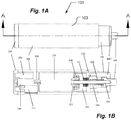
FIG. 1A is a top view of a portable analysis device in accordance with an example of the present invention, whileFIG. 1B is a cross-sectional view of salient components of the portable analysis device ofFig. 1A . -
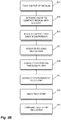
FIGS. 2A and2B are flowcharts depicting processes for consumer analysis of samples for detection of harmful constituents. -
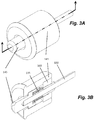
FIGS. 3A and 3B are perspective outside and cross-sectional views, respectively, of a top end cap containing components for releasing a valve in a capsule. -
FIGS. 4A and 4B are perspective outside and cross-sectional views, respectively, of a capsule used to mix and test a medium. -
FIG. 5 shows a capsule and a reader and schematically depicts insertion of the capsule into the reader. - Definitions. As used in this description and the accompanying claims, the following terms shall have the meanings indicated, unless the context otherwise requires:
- A " food substrate" is a food substance or an item that comes into contact with a food substance such as a utensil, swab, textile (for example: a napkin or paper) or other similar items. A food substrate is one instance of a " medium" that may be analyzed .
- A " medium" is any substrate or sample that is to be tested for any of the target analytes. Examples of media, as the term is used herein, include a food substrate, a cosmetic, a lotion or anything that comes into contact with the body of a human or animal. It may also be a consumable, as the term is defined below. Some, but not all, media come in contact with human or animal skin. Examples of media that come in contact with human or animal skin include lotions, creams, soaps, cosmetics, and the like.
- A " capsule" is any vial, container or other such item that can hold a liquid, gaseous, or solid material. A " capsule" may be disposable or reusable and may be removable from a larger testing housing or may be permanently affixed.
- To " provision" a capsule means to equip with any object or resource needed to facilitate and complete testing for an analyte. This can include but is not limited to chemicals, electrical or mechanical equipment, and sensing devices. Provisioning may occur before, during, or after a test is run.
- A " test strip" is any substrate or liquid medium or sensor that provides a detectable response to an analyte for which the device is testing. The " test strip" may take the form of an " actual strip," which is to say a material that is long, narrow and flat, but also includes any other example indicated by the design of the capsule.
- An " indication" of presence of the target analyte is any detectable response of the analyte to a sensing medium. This could be in the form of a color change, fluorescence emission, infrared emission, magnetic response, electrical response, acoustic change or other type of detectable response.
- A "dispersion" refers to any mixture combining the solvent used for extracting the analyte with a sample of the sampled medium. A "dispersion" may include inhomogeneous mixtures, completely dissolved homogenous mixtures and any variation of the two. Unless expressly distinguished in a particular context, the words dispersion, mixture, solvate and solution are used interchangeably in the present description.
- A "valve" is any device for controlling or gating the passage of a liquid, solid, or gas.
- Bringing a solvent into contact with a medium resulting in a mixture or solution may be referred to herein as "mixing."
- A "mixer," as the term is used herein, is any structure, such as mixing blades, grinders or the like, that may aid in the mixing of a medium and a solvent.
- Interpreting the result from a sensor or test strip, whether visually, electronically, or mechanically, or by other means, may be referred to herein as "reading."
- A "consumable," as the term is used herein, includes a solid or a liquid that is consumed by humans or animals, such as a foods, beverages, medicines, and the like.
-
Figs. 1A and IB show outside and cross sectional views of a self-contained reader/container assembly, designated generally bynumeral 101. Reader/container assembly 101 may also be referred to herein as a "reader." The scope of the present invention does not limit the shape or design of the container depicted here, and may be cylindrical, pyramidal, a hybrid of multiple 3D shapes or other shape that may contain a solid or liquid medium for mixing. The housing of the container may be made of plastic, metal or any other material, depending upon design or manufacturing preference and the needs of the user. Contained within the container are all the electrical and mechanical components required to mix the media with the solvent, release the mixture from its containment allowing it to be delivered to the test strip, and read the results of the test strip. - A
housing 103 of thereader 101 is composed of a housingleft end cap 100, anouter sheath 105, aninner sheath 140, housingright end cap 141, and acompression button 145. These components of thehousing 103 enclose electronics (circuit board(s), battery(ies), etc) 190 for the reader, a motor to drive the mixing 180, asolenoid 175 to properly align a disposable capsule 200 (shown inFig. 4A ) so that test strip 299 (shown inFig. 4B ) may be positioned correctly intest strip holder 235 to be read by the reader, a housing slot for thecapsule 115, and the associated equipment to release the media/solvent mixture inside thecapsule 200 to thetest strip 299, as now described.
capsule 115, and the associated equipment to release the media/solvent mixture inside thecapsule 200 to thetest strip 299, as now described. - A mechanism for releasing the fluid inside the capsule may include a
button 145 connected to avalve release rod 150 that opens a valve in the capsule when actuated. Thevalve release rod 150 is aligned by abushing 160, and is returned back into starting position by acompression spring 135. - Once inserted into the
reader 101, the capsule is aligned axially by mating the bearing/capsule female coupling 261 (shown inFig. 4B ) with the bearing/capsule male coupling 111. The bearing/capsule male coupling 111 is fitted into abearing 120 which is fitted into the slidingcompression mount 155. When the reader is closed,compression spring 125 forces the capsule to contact the motor/capsule coupling 110 on one end, and the bearing/capsule coupling 111 on the other end. This aligns and constrains the capsule axially, and allows it to rotate with themotor 180 andbearing 120. In an alternate example of the invention, this agitation mechanism, or another agitation mechanism involving internal blades, a grinder, a grater, vibration, etc., may be operated through a drive-shaft, gearing, electromechanical, magnetic, or other means. - The flowchart of
Fig. 2A depicts steps in the processing of a food sample, or substrate, in accordance with certain examples of the present invention. In afirst step 301, a medium 260 (shown inFig. 4B ) is placed intocapsule 200, wherein the capsule is provisioned with a solvent and a test strip configured to test for the target analyte. The solvent is caused, instep 303, to come into contact with the medium in the capsule. The capsule, powered by a motor directly by the user, is agitated 305 so as to mix the solvent and medium and to enhance dispersing or dissolving, thereby creating a dispersion, in the solvent, of a portion of any target analyte present in the medium. A release mechanism is operated 307 in such a way as to cause medium. Any such indication may then be read 311, either by a user or automatically (i.e., by an electrical sensor in the device). - The flowchart in
Fig 2B depicts steps in the processing ofmedium 260. In the first step 401, the medium is sampled by anapparatus 210, built intocapsule 200, wherein the capsule is provisioned with a solvent and atest strip 299 configured to test for the target analyte.Apparatus 210 can sample a specific and pre-defined volume or weight of the medium being tested. The solvent can be provisioned within aseparate chamber 250 in thecapsule 200, until avalve 255 is actuated to release the solvent to come in contact with the medium 260.Valve 255 may be actuated by a mechanical device such as a spring, lever, etc., or by an electromechanical device such as a motor, solenoid, etc., or by force applied from the user.Medium 260 is then agitated (405) within the capsule, with agitation driven by a motor, ultrasonic actuator, the user, etc., in order to create a dispersion of any portion of the target analyte present in the medium. A release mechanism can be operated (407) in such a way as to cause conduction of the dispersion through a filter (409) in order to filter out any solid particles or other material that could affect the validity or sensitivity of the test, thereby improving the detection of the test. The filter is disposed between the solvent and/or medium and the sensor. The dispersion is then conducted (411) to the test strip, so that the test strip produces an indication of presence of the target analyte if the target analyte is present in the medium. Any such indication may then be read (413) either by a user or automatically. This indication may then
be transmitted (415) electronically, magnetically, electromagnetically, visually, mechanically, through radio-frequency, etc. to a mobile phone, tablet, computer, or other device, including devices of a 3rd party device. -
Figs. 3A and 3B are perspective outer and cross sectional views of the top end cap 141 (shown inFig. 1B ) containing all the components required to release the valve on the capsule. Components ofFigs. 3A and 3B also appear inFig 1 . InFigs. 3A and 3B , the release rod is inserted by the user, but, insertion may also be by any electro-mechanical means such as a solenoid, for example. - Referring now to
Figs. 4A and 4B , outer and cross sectional views are shown of thecapsule 200 used to mix and test the media. The capsule is comprised the leftcapsule end cap 205, rightcapsule end cap 230, andcapsule shell 215. Cut into theleft end cap 205 is analignment slot 201 that allows for the solenoid to engage and properly align the capsule, after mixing, for correct reading of the test strip used. Theleft end cap 205 also contains a holder for any utensil, such as a swab or spoon, which may be used to gather food and insert into the capsule and afemale slot 260 for coupling with the mixing motor. The motor can be coupled through a compression fitting, although many types of mechanical, electrical or magnetic coupling would work. - The
left end cap 205 is a compression fitted cap that can be removed to allow food or other media to be inserted into the capsule. Once food or other media is put into the capsule theleft end cap 205 is replaced onto thecapsule housing 215 and the capsule is then inserted into thehousing 101 at the position designated by numeral 115 inFig. 1 . Theright end cap 230 contains the valve door 220 (otherwise referred to herein as a "valve"), valverelease rod coupling 225, and aninsertion slot 240 for the release rod. When the reader is closed, the motor/capsulefemale coupling 260 is compressed into the motor/capsule male coupling port 110 (shown inFig 1 ) so that torque can be transmitted from the motor to the capsule, which is required for mixing to begin. Once mixing is completed the release rod 150 (shown inFig 1 ) is pushed into theinsertion slot 240 for the release rod. This opens thevalve door 220 by pushing the valverelease rod coupling 225 open and allows the mixture inside the capsule to contact a sensor, of whichtest strip 299 is an example. Thetest strip 299 is connected to the valve and is sent outside the capsule via the teststrip exit slot 245 so it can be read by the reader (Fig 1 ). At least a portion of the sensor can be visible outside the capsule. At least a portion of the sensor can be disposed outside the capsule. -
Fig. 5 showscapsule 200 andreader 101 together and howcapsule 200 is inserted intoreader 101. Theoutside sheath 105 of the reader is rotated to open the holding area for thecapsule 115. The capsule is placed directly into thecapsule insertion port 185 and thesheath 105 is then rotated closed. The compression spring 135 (shown inFig 1 ) compresses the capsule femalemotor coupling port 260 onto the male motor coupling and locks the capsule in place, at which point testing can begin. - The apparatus described herein is used to extract samples potentially containing toxins or other analytes from specific media and to deliver any extracted toxins to an appropriate sensor. The sampled medium may be any medium that may be consumed or that may contact an individual or animal. Examples include foods, drinks, medicines, vitamins, cosmetics, lotions, etc., all recited without limitation, and may also include any medium that has come into contact with a consumable item. The toxins for which testing is performed may be anything that produces a negative response from the individual or animal such as a poison, a bacterium, a fungus, an allergen, pesticides, MSG, heavy metals, etc. The toxins tested for may also be anything that an individual may want to monitor intake levels of such as caffeine, phenylalanine, aspartame, artificial flavors or colors, fat, proteins, sugars, sodium, cholesterol, vitamins, minerals, etc. The target analyte may also be chosen from the group of pathogens including bacteria, fungus, yeast, pesticides, and other toxins. The target analyte may also be a dietary unit chosen from the group including fat, protein, sugar, sodium, cholesterol, vitamins, and minerals.
- The testing device consists of two main components; a
container 200 that mixes the sampled medium, with an extraction solution and delivers the extraction solution to a sensor, and a housing unit that powers the mixer and reads the result of the sensor. Depending on the specific example of the sensor, such as a visually-based sensor, the housing unit may or may need to read the result of the sensor.Test strip 299 is an example of such a sensor. - This device described may advantageously allow individuals to rapidly test any consumer product that may contain a substance harmful to them. For example, many foods contain allergens that cause a multitude of problems from rashes and gastric distress to anaphylactic shock. Consumers who are affected by one of these allergens currently have no rapid method to test any food they encounter so they must be extremely sure of the content of the food or avoid it completely. Devices, however, allow the consumer to test a small sample of the food very quickly to determine if it contains any harmful contaminants to them.
- It should be understood that, within the scope of the present invention, the medium to be sampled may be placed into
capsule 200 that contains a solvent designed to extract a specific analyte contained within the media. The sampled medium may be placed into the capsule directly or may be added via a tool such as a swab, spoon or other utensil.Capsule 200 is equipped with a sensor (of whichtest strip 299 is an example) that will detect the presence of the target analyte. The sensor may be in the form of a strip, such as a lateral flow device, or another type of sensor, now known or later invented, that displays results in a variety of forms such as color change, spectral emission, magnetic, electrical current or bias, acoustic or any other known sensing method. - Once the food substrate or other sampled medium is placed into
capsule 200, the capsule is placed into areader housing 103 where the sampled medium and the solvent are mixed together to enhance extraction of the target analyte. The mixing can be caused by rotating oroscillating capsule 200 to create agitation, but It is to be understood that any other example of mixing, using apparatus such as blades, grinders, shakers, or agitators, provided by way of example, are within the scope of the present invention. Power may be supplied to the mixing by means of a motor rotating the capsule, a motor rotating the mixing agitators, ultrasonic actuation, or magnetically, all recited by way of example. Mixing enhancers such as ball bearings or the like, contained within the capsule, may be employed in conjunction with any of the aforesaid mixing modalities. All of the forgoing are non-exhaustive examples of mixing apparatus. The mixing apparatus may be adapted for operation from outside the capsule, as through a drive shaft, gearing, electro- mechanical, magnetic or other means. Power may be supplied to the mixing device by the user, as by manually turning the grinders, pushing the medium through a grinding, grating or mixing apparatus, manually shaking, or rotating the device, all recited by way of example. - After mixing is complete,
capsule 200 releases the solvent/media mixture so the solution contacts the test being used. Avalve 220 can be used to release the mixture to the sensor, and, more particularly, to a portion of the sensor that is disposed outside of the capsule. However any number of mixture release mechanisms could be used.Valve 220 may be actuated by a mechanical actuator or an electromagnetic actuator, or both. A spring and a lever are non-exhaustive examples of mechanical actuators. A motor, a solenoid and an electromagnet are non-exhaustive examples of electromechanical actuators. - Once the mixture reaches the sensor, the sensor checks the mixture for the presence of the target analyte, and the reader determines the result of the test. If the test is positive, an indication, either through indicator lights, a visual screen, or other mechanical or optical means, displays the positive result, or similarly displays a negative result for the target analyte. A test result may be transmitted to an external device. The external device may be a third-party device, and it may be a mobile phone, tablet, or computer, for example.
Claims (14)
- A method for testing a medium (260) for the presence of a target analyte, the method comprising:• receiving (401) the medium (260) in a capsule (200), the capsule characterized by a volume, wherein receiving comprises providing the capsule with a solvent for extracting analytes from the medium and a sensor (299) configured to test the medium for the target analyte;• causing the solvent (403) to come into contact with the medium (260) in the capsule (200);• agitating the capsule (405), with a mixing apparatus of an analysis device (101) in communication with the capsule, thereby agitating the solvent and the medium (260) within the capsule and creating a dispersion in the solvent of any portion of the target analyte present in the medium;• operating (407) a release mechanism (145,150) of the analysis device (101), configured to cause conduction of the dispersion to the sensor (299) of the capsule;• reading the result of the sensor in the capsule using the analysis device; and• providing (415) an indication of presence of the target analyte upon detection of presence of the target analyte in the medium, by way of the sensor (299).
- The method according to Claim 1, wherein providing the capsule (200) comprises providing the capsule with at least a portion of the sensor (299) being outside of the volume of the capsule, and wherein providing the indication comprises detecting the presence of the target analyte at the sensor, outside of the volume of the capsule.
- The method according to claim 2 wherein operating the release mechanism (145, 150) comprises actuating a valve (220) disposed in a fluid path between the volume (260) of the capsule and a portion of the sensor (299) disposed outside of the volume of the capsule.
- The method according to Claim 1, wherein agitating the capsule comprises providing agitation of mixing enhancers within the capsule by a motor (180) of the mixing apparatus.
- The method according to Claim 1, further comprising:• providing the solvent in a separate chamber (250) within the capsule (200); and• activating a valve (220) to release the solvent to come in contact with the medium, wherein activating the valve includes actuating the valve by at least one of a mechanical actuator and an electromechanical actuator (255) of the analysis device, and wherein activating the valve includes actuating the valve at least in part by a force applied by a user.
- The method according to Claim 4, further comprising operating the mixing apparatus from outside the capsule, wherein agitating includes providing power to the mixing apparatus by an electromechanical actuator (255) of the analysis device.
- The method according to Claim 1, wherein receiving the medium comprises receiving a consumable including at least one of a food sample (301) and a medicine sample, wherein providing the indication of presence of the target analyte comprises providing indication of presence of a food allergen in the medium.
- A self-contained portable analysis device (101) comprising:• a housing (103);• a capsule insertion port disposed in the housing for releasably receiving a capsule configured to retain a medium;• a sensor holder for retaining an analysis device sensor, the sensor holder configured to enable the analysis device sensor to read the result of the sensor in the capsule;• a mixing apparatus, coupled to the housing, configured to cause mixing of the medium sample and the solvent within the capsule; and• a release mechanism (145, 150), disposed within the housing (103) and configured to be coupled to a valve (220) of a capsule, configured between the contents processed from the medium of the capsule and the capsule sensor, the release mechanism configured to cause conduction of the contents of the capsule to the capsule sensor upon operation of the release mechanism.
- The self-contained portable analysis device in accordance with Claim 8, further comprising a filter disposed in a path traversed by contents of the capsule antecedent to contact with the sensor.
- The self-contained portable analysis device in accordance with Claim 8, further comprising an electromechanical actuator (255), coupled to the housing, configured to cause mixing of the medium and a solvent, configured to extract a target analyte from the medium, within the capsule.
- A capsule (200) for use in a self-contained portable analysis device, the capsule comprising:an enclosed volume (260) for retaining a solvent and a medium sample;a cap (205) adapted to permit introduction of the medium sample into the enclosed volume by a user;a mixer, configured to cooperate with a mixer apparatus of the self-contained portable analysis device;a sensor holder for retaining a capsule sensor (299); anda valve (220) configured to be coupled to a release mechanism (145, 150) of the self-contained portable analysis device and adapted for bringing the capsule sensor in contact with contents, processed from the medium sample and the solvent, upon operation of the release mechanism of the self-contained portable analysis device, wherein the the sensor holder is further configured for allowing the result of the capsule sensor to be read by the analysis device.
- The capsule in accordance with Claim 11, further comprising a valve (220) adapted to gate contact between contents, derived from the medium sample and the solvent, of the enclosed volume and the sensor.
- The capsule in accordance with Claim 11, further comprising a metering element (210) built into at least one of the cap (205) and the capsule, the metering element adapted to permit a specific volume or weight of medium sample into the enclosed capsule volume.
- The capsule in accordance with Claim 11, wherein the capsule comprises a grinder configured to process the medium within the capsule.
Applications Claiming Priority (3)
| Application Number | Priority Date | Filing Date | Title |
|---|---|---|---|
| US201361806425P | 2013-03-29 | 2013-03-29 | |
| US201361874590P | 2013-09-06 | 2013-09-06 | |
| PCT/US2014/032006 WO2014160861A1 (en) | 2013-03-29 | 2014-03-27 | A portable device for detection of harmful substances |
Publications (3)
| Publication Number | Publication Date |
|---|---|
| EP2979092A1 EP2979092A1 (en) | 2016-02-03 |
| EP2979092A4 EP2979092A4 (en) | 2016-10-26 |
| EP2979092B1 true EP2979092B1 (en) | 2018-05-30 |
Family
ID=51621209
Family Applications (1)
| Application Number | Title | Priority Date | Filing Date |
|---|---|---|---|
| EP14774530.1A Not-in-force EP2979092B1 (en) | 2013-03-29 | 2014-03-27 | A portable device for detection of harmful substances |
Country Status (5)
| Country | Link |
|---|---|
| US (8) | US9939431B2 (en) |
| EP (1) | EP2979092B1 (en) |
| CN (2) | CN105209912B (en) |
| DK (1) | DK3123163T3 (en) |
| WO (2) | WO2014160861A1 (en) |
Families Citing this family (39)
| Publication number | Priority date | Publication date | Assignee | Title |
|---|---|---|---|---|
| US10254279B2 (en) | 2013-03-29 | 2019-04-09 | Nima Labs, Inc. | System and method for detection of target substances |
| WO2014160861A1 (en) | 2013-03-29 | 2014-10-02 | 6SensorLabs, Inc. | A portable device for detection of harmful substances |
| US10466236B2 (en) | 2013-03-29 | 2019-11-05 | Nima Labs, Inc. | System and method for detecting target substances |
| WO2015017442A2 (en) | 2013-07-29 | 2015-02-05 | A. Barnes, Llc | Food allergen detection methods and systems using molecularly imprinted polymers |
| EP3709017B1 (en) | 2014-10-03 | 2024-01-03 | Graphene-Dx, Inc. | Device for chemical analysis |
| US10782285B2 (en) | 2014-10-03 | 2020-09-22 | Rite Taste, LLC | Device and method for chemical analysis |
| CN107430108A (en) * | 2015-03-09 | 2017-12-01 | 第6感传感器实验室公司 | Method and system for detecting allergens in consumer products |
| WO2016149253A1 (en) * | 2015-03-16 | 2016-09-22 | Dots Technology Corp. | Portable allergen detection system |
| CA2983806C (en) * | 2015-04-28 | 2023-06-13 | Aterica Inc. | Portable organic molecular sensing device and related systems and methods |
| US20180188139A1 (en) * | 2015-06-22 | 2018-07-05 | Dots Technology Corp. | Improved assays and methods for allergen detection |
| DK178966B1 (en) * | 2015-09-13 | 2017-07-10 | Pro-Ino Dev Aps | Handheld apparatus for testing a sample of prepared food for allergens and/or food intolerance ingredients |
| EP3356546B1 (en) * | 2015-09-29 | 2020-07-15 | Polymer Technology Systems, Inc. | Systems for a lateral flow test strip holder |
| WO2017059103A1 (en) * | 2015-09-30 | 2017-04-06 | Nima Labs, Inc. | System and method for detecting target substances |
| US10908139B2 (en) * | 2016-03-15 | 2021-02-02 | Dots Technology Corp. | Systems and methods for allergen detection |
| EP3523037A1 (en) | 2016-10-07 | 2019-08-14 | Boehringer Ingelheim Vetmedica GmbH | Analysis system and method for testing a sample |
| CN106525528A (en) * | 2016-11-04 | 2017-03-22 | 无锡艾科瑞思产品设计与研究有限公司 | Portable feed analysis and detection device |
| CN106596220A (en) * | 2016-12-01 | 2017-04-26 | 无锡艾科瑞思产品设计与研究有限公司 | Detection device of feed ingredients |
| CA3050926A1 (en) * | 2017-02-21 | 2018-08-30 | Dots Technology Corp. | Systems for allergen detection |
| US11209416B2 (en) | 2017-07-28 | 2021-12-28 | Graphene-Dx, Inc. | Device and method for chemical analysis |
| WO2019148167A1 (en) | 2018-01-29 | 2019-08-01 | Rite Taste, LLC | Methods and devices for detection of pathogens |
| US20210311032A1 (en) * | 2018-02-21 | 2021-10-07 | Dots Technology Corp. | Systems and methods for allergen detection |
| US12055543B2 (en) | 2018-05-24 | 2024-08-06 | Graphene-Dx, Inc. | Methods and devices for detection of THC |
| CN108872496A (en) * | 2018-07-08 | 2018-11-23 | 安庆市绿谷食品有限公司 | A kind of quick-frozen food sampling Detection device |
| US20200064254A1 (en) * | 2018-08-23 | 2020-02-27 | Truvian Sciences, Inc. | Devices With Optically Readable Liquid Reservoirs |
| CN109001144A (en) * | 2018-09-12 | 2018-12-14 | 上海海洋大学 | Method based on middle infrared spectrum Rapid identification and detection tropomyosin |
| CA3114778A1 (en) | 2018-10-05 | 2020-04-09 | Dots Technology Corp. | Systems and methods for allergen detection |
| DK180133B1 (en) | 2018-11-07 | 2020-06-09 | Atline Aps | Device for automated and contamination-free sampling and analysis |
| CN109490493B (en) * | 2018-11-14 | 2021-05-11 | 云南孚尔质量检验检测有限公司 | Pesticide residue detection method |
| CN109490492B (en) * | 2018-11-14 | 2021-08-10 | 绍兴锦绣农业开发有限公司 | Pesticide check out test set |
| US20230226550A1 (en) * | 2020-06-12 | 2023-07-20 | Analog Devices, Inc. | Sample testing device |
| US11603551B2 (en) * | 2020-12-02 | 2023-03-14 | Steritec Products Mfg. Co., Inc. | Biological indicators, and systems and methods for determining efficacy of sterilization |
| US20220412935A1 (en) | 2021-06-24 | 2022-12-29 | IgGenix, Inc. | Antigen testing |
| CN115097074B (en) * | 2022-06-28 | 2024-11-22 | 清华大学深圳国际研究生院 | A simulation device and experimental method for releasing harmful substances from cosmetics |
| FR3145294A1 (en) * | 2023-01-26 | 2024-08-02 | Needemand | Extraction equipment, kit and method for sample preparation |
| US12208384B2 (en) | 2023-03-23 | 2025-01-28 | Defense Diagnostics Inc. | Analyte detection apparatus |
| US20250231092A1 (en) | 2023-03-23 | 2025-07-17 | Defense Diagnostics Inc. | Analyte detection apparatus |
| USD1069156S1 (en) | 2023-04-10 | 2025-04-01 | Becton, Dickinson And Company | Dispensing device |
| USD1116151S1 (en) | 2023-05-03 | 2026-03-03 | Truvian Sciences, Inc. | Monolayer |
| CH720863A2 (en) * | 2023-06-16 | 2024-12-30 | Asanovic Albert | Portable Instant Pathogen Detection System |
Family Cites Families (100)
| Publication number | Priority date | Publication date | Assignee | Title |
|---|---|---|---|---|
| DE2118455B1 (en) * | 1971-04-16 | 1972-09-21 | Boehringer Mannheim Gmbh | Test strips |
| FR2281982A1 (en) * | 1974-08-12 | 1976-03-12 | Api System | ANALYSIS DEVICE FOR THE RAPID SCREENING OF MICRO-ORGANISMS FROM AN ISOLATION ENVIRONMENT |
| DE2825636A1 (en) * | 1978-06-12 | 1979-12-20 | Boehringer Mannheim Gmbh | DEVICE FOR MICROBIOLOGICAL WORK |
| US4960691A (en) | 1986-09-29 | 1990-10-02 | Abbott Laboratories | Chromatographic test strip for determining ligands or receptors |
| US4822174A (en) | 1986-12-03 | 1989-04-18 | Deibel Robert H | Blending vessel for microbiological analyses |
| US5256372A (en) * | 1987-11-06 | 1993-10-26 | Idexx Corporation | Dipstick test device including a removable filter assembly |
| FR2630827B1 (en) | 1988-04-28 | 1994-06-03 | Oris Ind | APPARATUS AND METHOD FOR QUICK QUALITATIVE AND QUANTITATIVE DETERMINATION OF THE PRESENCE OF A REACTIVE LIGAND IN A FLUID |
| US5143084A (en) | 1990-05-24 | 1992-09-01 | Spacelabs, Inc. | Disposable cartridge for sampling and analyzing body fluids |
| US5415994A (en) | 1993-08-02 | 1995-05-16 | Quidel Corporation | Lateral flow medical diagnostic assay device with sample extraction means |
| DE69328180T2 (en) | 1993-11-12 | 2000-09-21 | Unilever N.V., Rotterdam | Analysis device and its application |
| EP0998676B1 (en) | 1997-07-16 | 2007-04-11 | Charm Sciences Inc. | A test device and method for detecting the presence of a residue analyte in a sample |
| US6016712A (en) * | 1997-09-18 | 2000-01-25 | Accumetrics | Device for receiving and processing a sample |
| IL135082A0 (en) * | 1997-10-06 | 2001-05-20 | Enterix Inc | Apparatus and method for analyte detection |
| WO1999046591A2 (en) | 1998-03-10 | 1999-09-16 | Strategic Diagnostics, Inc. | Integrated assay device and methods of production and use |
| US6136610A (en) | 1998-11-23 | 2000-10-24 | Praxsys Biosystems, Inc. | Method and apparatus for performing a lateral flow assay |
| US6528323B1 (en) | 1999-06-14 | 2003-03-04 | Praxsys Biosystems, Inc. | Bidirectional lateral flow test strip and method |
| US6180335B1 (en) | 1999-09-30 | 2001-01-30 | University Of New Mexico | Apparatus for detecting contamination in food products |
| US6136549A (en) | 1999-10-15 | 2000-10-24 | Feistel; Christopher C. | systems and methods for performing magnetic chromatography assays |
| AU1600901A (en) | 1999-11-12 | 2001-06-06 | Tuan Pham | Diagnostic testing kit for collection and testing of fluid samples with user configurable test strips and timer |
| US6548018B2 (en) * | 2000-03-31 | 2003-04-15 | Neogen Corporation | Apparatus for chemiluminescent assays |
| CA2429372A1 (en) | 2001-01-03 | 2002-08-29 | Heska Corporation | Detection of allergen-specific ige |
| US20140072980A1 (en) | 2001-01-16 | 2014-03-13 | Regeneron Pharmaceuticals, Inc. | Isolating cells expressing secreted proteins |
| ES2182698B1 (en) | 2001-05-14 | 2004-09-16 | Consejo Superior De Investigaciones Cientificas | PROCEDURE FOR QUANTITATIVE EXTRACTION OF GLUTEN IN FOOD PROCESSED OR NOT PROCESSED BY HEAT, AND SOLUBILIZING COMPOSITION OF GLUTEN PROTEINS OR A COMMERCIAL KIT THAT CONTAINS IT NEEDED FOR PUTTING INTO PRACTICE. |
| JP2004536303A (en) | 2001-07-18 | 2004-12-02 | ストローガン テクニカル ディストリビューション リミテッド ライアビリティ カンパニー | System and method for detecting a target substance |
| US7110585B2 (en) | 2001-08-03 | 2006-09-19 | Nanosphere, Inc. | Nanoparticle imaging system and method |
| EP1440978B1 (en) | 2001-09-05 | 2013-01-23 | Nippon Meat Packers, Inc. | Method of detecting food allergens and method of detecting food allergy-inducing foods |
| JP4513085B2 (en) | 2001-09-11 | 2010-07-28 | アイキューム インク | Sample container |
| US20030138819A1 (en) | 2001-10-26 | 2003-07-24 | Haiqing Gong | Method for detecting disease |
| US7338760B2 (en) | 2001-10-26 | 2008-03-04 | Ntu Ventures Private Limited | Sample preparation integrated chip |
| WO2003062824A1 (en) | 2002-01-23 | 2003-07-31 | Boditech Inc. | Lateral flow quantitative assay method and strip and laser-induced fluoerescence detection device therefor |
| US7238519B2 (en) | 2002-06-07 | 2007-07-03 | Cholestech Corporation | Automated immunoassay cassette, apparatus and method |
| US20040018575A1 (en) | 2002-07-29 | 2004-01-29 | Craig Rappin | Sample preparation device and method |
| US20040022687A1 (en) * | 2002-07-31 | 2004-02-05 | Thomas Wuske | Device and process for collecting and releasing saliva |
| US7267799B1 (en) | 2002-08-14 | 2007-09-11 | Detekt Biomedical, L.L.C. | Universal optical imaging and processing system |
| CA3122193C (en) | 2002-12-26 | 2025-05-06 | Meso Scale Technologies, Llc. | Assay cartridges and methods of using the same |
| US8574895B2 (en) | 2002-12-30 | 2013-11-05 | Sanofi-Aventis Deutschland Gmbh | Method and apparatus using optical techniques to measure analyte levels |
| US7560272B2 (en) * | 2003-01-04 | 2009-07-14 | Inverness Medical Switzerland Gmbh | Specimen collection and assay container |
| US7220597B2 (en) | 2003-01-30 | 2007-05-22 | Zin Benedict L | Assay test device and method of making same |
| ES2220227B1 (en) | 2003-05-30 | 2006-02-16 | INSTITUTO NACIONAL DE TECNICA AEROESPACIAL "ESTEBAN TERRADAS" | METHOD AND APPARATUS FOR THE DETECTION OF SUBSTANCES OR ANALYTICS FROM THE ANALYSIS OF ONE OR SEVERAL SAMPLES. |
| CN102401828B (en) * | 2003-09-23 | 2014-08-06 | 美艾利尔瑞士股份有限公司 | Lateral flow assay devices and methods of use |
| US7943395B2 (en) | 2003-11-21 | 2011-05-17 | Kimberly-Clark Worldwide, Inc. | Extension of the dynamic detection range of assay devices |
| US7098040B2 (en) | 2003-12-23 | 2006-08-29 | Kimberly-Clark Worldwide, Inc. | Self-contained swab-based diagnostic systems |
| US7238322B2 (en) | 2004-01-28 | 2007-07-03 | Dnt Scientific Research, Llc | Delayed and diffused flow rapid confirmatory immunological testing apparatus and method |
| WO2005078442A1 (en) | 2004-02-10 | 2005-08-25 | Dantini Daniel C | Comprehensive food allergy test |
| US20050185505A1 (en) | 2004-02-19 | 2005-08-25 | Mccurdy Brent K. | Apparatus for dissolving a solid material in a liquid |
| US8128871B2 (en) | 2005-04-22 | 2012-03-06 | Alverix, Inc. | Lateral flow assay systems and methods |
| AU2006235057A1 (en) | 2005-04-07 | 2006-10-19 | Rapid Medical Diagnostics, Inc. | Device and methods for detecting an analyte in a sample |
| DE102005020460B4 (en) * | 2005-04-29 | 2007-03-29 | Ika - Werke Gmbh & Co. Kg | Stirring or dispersing device |
| US7507374B2 (en) | 2005-06-28 | 2009-03-24 | American Bio Medica Corp. | Saliva sample testing device |
| US7766088B2 (en) | 2005-07-07 | 2010-08-03 | Baker Hughes Incorporated | System and method for actuating wellbore tools |
| US8632730B2 (en) * | 2005-11-22 | 2014-01-21 | Alverix, Inc. | Assaying test strips having different capture reagents |
| ES2433377T3 (en) | 2006-02-21 | 2013-12-10 | Nexus Dx, Inc. | Procedures and compositions for the detection of analytes |
| JP5254949B2 (en) | 2006-03-15 | 2013-08-07 | マイクロニクス, インコーポレイテッド | Integrated nucleic acid assay |
| DK2001990T3 (en) | 2006-03-24 | 2016-10-03 | Handylab Inc | Integrated microfluidic sample processing system and method for its use |
| US8758989B2 (en) | 2006-04-06 | 2014-06-24 | Kimberly-Clark Worldwide, Inc. | Enzymatic detection techniques |
| US7527765B2 (en) | 2006-04-11 | 2009-05-05 | Harrogate Holdings | Consumer food testing device |
| EP2024520B1 (en) | 2006-05-11 | 2014-03-05 | Becton, Dickinson and Company | Method of protein extraction from cells |
| ES2366709T3 (en) | 2006-07-18 | 2011-10-24 | F. Hoffmann-La Roche Ag | PORTABLE MEASUREMENT SYSTEM, OPTIMIZED SPACIALLY. |
| GB0625309D0 (en) | 2006-12-19 | 2007-01-24 | Inverness Medical Switzerland | Device |
| US9945789B2 (en) * | 2007-01-16 | 2018-04-17 | Alverix, Inc. | Multiple analyte detection systems and methods of detecting multiple analytes |
| US20080181821A1 (en) | 2007-01-29 | 2008-07-31 | Searete Llc, A Limited Liability Corporation Of The State Of Delaware | Microfluidic chips for allergen detection |
| EP1972938B1 (en) * | 2007-03-19 | 2014-05-14 | Ivoclar Vivadent | Test strip for determining the risk of caries |
| US9360398B2 (en) | 2007-09-11 | 2016-06-07 | University Of Florida Research Foundation, Inc. | Devices and methods for the collection and detection of substances |
| US8414846B2 (en) | 2007-09-11 | 2013-04-09 | University Of Florida Research Foundation, Inc. | Devices and methods for the collection and detection of substances |
| WO2009048895A2 (en) * | 2007-10-07 | 2009-04-16 | Jordan Scott | Portable device for detecting food allergens |
| US20120203831A1 (en) | 2011-02-03 | 2012-08-09 | Kent Schoen | Sponsored Stories Unit Creation from Organic Activity Stream |
| BRPI0819280A2 (en) * | 2007-11-20 | 2015-05-19 | 3M Innovative Properties Co | Sample Preparation for Environmental Sampling |
| US8005280B2 (en) | 2007-12-12 | 2011-08-23 | Jadak, Llc | Optical imaging clinical sampler |
| US7995196B1 (en) | 2008-04-23 | 2011-08-09 | Tracer Detection Technology Corp. | Authentication method and system |
| US9201068B2 (en) | 2008-09-03 | 2015-12-01 | Clarkson University | Bioelectronic tongue for food allergy detection |
| AU2009296526B2 (en) | 2008-09-24 | 2015-11-19 | First Light Diagnostics, Inc. | Method for detecting analytes |
| CN102216758B (en) | 2008-12-05 | 2013-07-17 | 红电医学科技股份有限公司 | Test strip reader with detachable firmware device |
| WO2010114912A1 (en) | 2009-03-31 | 2010-10-07 | University Of North Carolina At Greensboro | Minimally invasive assessment of ige mediated allergy |
| US20100317033A1 (en) | 2009-06-10 | 2010-12-16 | Matthew Philip Abdel | Methods and materials for detecting food containing allergens |
| US8313880B2 (en) | 2009-08-13 | 2012-11-20 | Lexmark International, Inc. | Magenta toner with binder resin of selected molecular weight composition |
| US8372358B2 (en) | 2009-08-21 | 2013-02-12 | The Regents Of The University Of California | Microfluidic system and method for using same |
| EP2302029A1 (en) * | 2009-09-29 | 2011-03-30 | Fundacion Gaiker | Portable enrichment, aliquoting, and testing device of microorganisms and toxins |
| US8527123B2 (en) | 2010-09-29 | 2013-09-03 | Ford Global Technologies, Llc | Vehicle response system and method |
| WO2012078455A1 (en) | 2010-12-06 | 2012-06-14 | Exploramed Iii, Inc. | Allergen test kit |
| US9625357B2 (en) | 2011-03-09 | 2017-04-18 | Pixcell Medical Technologies Ltd. | Disposable cartridge for preparing a sample fluid containing cells for analysis |
| US20120264232A1 (en) * | 2011-04-15 | 2012-10-18 | Aliment Health, Inc. | Antigen detection system and methods of use |
| US20140125835A1 (en) | 2011-07-22 | 2014-05-08 | Shane D. Voss | Visual Media on a Circular Buffer |
| US9715099B2 (en) | 2011-11-07 | 2017-07-25 | The Regents Of The University Of California | Maskless imaging of dense samples using multi-height lensfree microscope |
| US8211715B1 (en) | 2011-11-15 | 2012-07-03 | Harrogate Holdings, Ltd. Co. | Consumer food testing device providing remote monitoring |
| WO2013119266A1 (en) | 2012-02-06 | 2013-08-15 | The Regents Of The University Of California | Portable rapid diagnostic test reader |
| US9604213B2 (en) | 2012-02-13 | 2017-03-28 | Neumodx Molecular, Inc. | System and method for processing and detecting nucleic acids |
| CN102629689B (en) | 2012-04-13 | 2014-05-28 | 隋明奎 | Production method of lead-coated copper plate grid of lead acid storage battery and special combined mould |
| US10119968B2 (en) | 2012-06-02 | 2018-11-06 | Test Anywhere Technology | Self-contained diagnostic test with advanceable test strip |
| EP2901151B1 (en) | 2012-09-27 | 2018-05-16 | Ellume Pty Ltd. | Diagnostic devices and methods |
| US20140120563A1 (en) | 2012-10-29 | 2014-05-01 | The Regents Of The University Of California | Allergen testing platform for use with mobile electronic devices |
| US9285331B2 (en) * | 2012-10-31 | 2016-03-15 | Binergy Scientific, Inc. | Systems and methods for detecting materials in food products |
| US20140174953A1 (en) | 2012-12-21 | 2014-06-26 | Cilag Gmbh International | Hand-held test meter configured for distinguishing orientation of analytical test strip insertion |
| US20140186880A1 (en) * | 2012-12-28 | 2014-07-03 | William Lowenkamp, JR. | Salmonella and/or e. coli enzyme test and/or liquid drop test for biological substances, on non-human samples |
| US10254279B2 (en) | 2013-03-29 | 2019-04-09 | Nima Labs, Inc. | System and method for detection of target substances |
| WO2014160861A1 (en) | 2013-03-29 | 2014-10-02 | 6SensorLabs, Inc. | A portable device for detection of harmful substances |
| US20160077091A1 (en) | 2013-04-26 | 2016-03-17 | Express Diagnostics International, Inc. | Portable testing system for detecting selected drugs or compounds in noncontrolled environments |
| WO2015017442A2 (en) | 2013-07-29 | 2015-02-05 | A. Barnes, Llc | Food allergen detection methods and systems using molecularly imprinted polymers |
| DE102013217822A1 (en) | 2013-09-06 | 2015-03-12 | Robert Bosch Gmbh | Hand-held measuring device and method for detecting mold infestation indoors |
| CN106257998B (en) | 2013-12-23 | 2020-01-21 | 皇家飞利浦有限公司 | Detection device for detecting particles |
| JP2019507890A (en) | 2016-01-22 | 2019-03-22 | アフィメディックス, インコーポレイテッド | Device for detection of vitamin D metabolites |
-
2014
- 2014-03-27 WO PCT/US2014/032006 patent/WO2014160861A1/en not_active Ceased
- 2014-03-27 US US14/227,543 patent/US9939431B2/en active Active
- 2014-03-27 CN CN201480018850.2A patent/CN105209912B/en active Active
- 2014-03-27 EP EP14774530.1A patent/EP2979092B1/en not_active Not-in-force
- 2014-09-26 CN CN201480079288.4A patent/CN106415262A/en active Pending
- 2014-09-26 US US14/498,298 patent/US9939432B2/en active Active
- 2014-09-26 WO PCT/US2014/057776 patent/WO2015147911A1/en not_active Ceased
- 2014-09-26 DK DK14887682.4T patent/DK3123163T3/en active
-
2018
- 2018-03-02 US US15/910,233 patent/US10837959B2/en active Active
- 2018-03-02 US US15/910,692 patent/US20180188240A1/en not_active Abandoned
-
2020
- 2020-02-14 US US16/791,116 patent/US12044678B2/en active Active
- 2020-11-02 US US17/087,266 patent/US12061191B2/en active Active
-
2024
- 2024-07-22 US US18/780,196 patent/US20250198994A1/en active Pending
- 2024-08-09 US US18/799,832 patent/US20250189518A1/en active Pending
Non-Patent Citations (1)
| Title |
|---|
| None * |
Also Published As
| Publication number | Publication date |
|---|---|
| WO2015147911A1 (en) | 2015-10-01 |
| EP2979092A1 (en) | 2016-02-03 |
| US20250198994A1 (en) | 2025-06-19 |
| DK3123163T3 (en) | 2019-02-18 |
| US20180188239A1 (en) | 2018-07-05 |
| US20140295406A1 (en) | 2014-10-02 |
| EP2979092A4 (en) | 2016-10-26 |
| US12044678B2 (en) | 2024-07-23 |
| US20150011020A1 (en) | 2015-01-08 |
| US10837959B2 (en) | 2020-11-17 |
| US20200200738A1 (en) | 2020-06-25 |
| US9939432B2 (en) | 2018-04-10 |
| US12061191B2 (en) | 2024-08-13 |
| US9939431B2 (en) | 2018-04-10 |
| US20210072232A1 (en) | 2021-03-11 |
| WO2014160861A1 (en) | 2014-10-02 |
| CN105209912A (en) | 2015-12-30 |
| US20250189518A1 (en) | 2025-06-12 |
| CN106415262A (en) | 2017-02-15 |
| US20180188240A1 (en) | 2018-07-05 |
| CN105209912B (en) | 2018-04-17 |
| WO2014160861A4 (en) | 2014-12-18 |
Similar Documents
| Publication | Publication Date | Title |
|---|---|---|
| US20250198994A1 (en) | Portable Device for Detection of Harmful Substances | |
| US20210016269A1 (en) | Portable allergen detection system | |
| TWI802558B (en) | Systems for allergen detection | |
| CN208586306U (en) | It is used to prepare the system with analysis of biological material sample | |
| JP6927546B2 (en) | Portable Organic Molecule Detection Devices and Related Systems and Methods | |
| US9285331B2 (en) | Systems and methods for detecting materials in food products | |
| US20230364602A1 (en) | Systems and methods for allergen detection | |
| US20210311032A1 (en) | Systems and methods for allergen detection | |
| WO2012078455A1 (en) | Allergen test kit | |
| EP3123163B1 (en) | System and method for detection of target substances | |
| US20250189503A1 (en) | Methods and Apparatus to Detect Allergens Using a Lateral Flow Test | |
| CA3116160A1 (en) | Analysis and dispensing system | |
| US20200116596A1 (en) | Apparatus and method of sampling food |
Legal Events
| Date | Code | Title | Description |
|---|---|---|---|
| PUAI | Public reference made under article 153(3) epc to a published international application that has entered the european phase |
Free format text: ORIGINAL CODE: 0009012 |
|
| 17P | Request for examination filed |
Effective date: 20150911 |
|
| AK | Designated contracting states |
Kind code of ref document: A1 Designated state(s): AL AT BE BG CH CY CZ DE DK EE ES FI FR GB GR HR HU IE IS IT LI LT LU LV MC MK MT NL NO PL PT RO RS SE SI SK SM TR |
|
| AX | Request for extension of the european patent |
Extension state: BA ME |
|
| RIN1 | Information on inventor provided before grant (corrected) |
Inventor name: TALEGHANI, SHIREEN Inventor name: SUNDVOR, SCOTT Inventor name: WALTON, JOHN Inventor name: MOONEY, JACOB Inventor name: MEKLER, JEFFREY Inventor name: KIEL, JONATHAN WILLIAM |
|
| DAX | Request for extension of the european patent (deleted) | ||
| A4 | Supplementary search report drawn up and despatched |
Effective date: 20160926 |
|
| RIC1 | Information provided on ipc code assigned before grant |
Ipc: G01N 33/50 20060101AFI20160920BHEP Ipc: G01N 33/53 20060101ALI20160920BHEP Ipc: G01N 33/02 20060101ALI20160920BHEP Ipc: G01N 33/52 20060101ALI20160920BHEP |
|
| STAA | Information on the status of an ep patent application or granted ep patent |
Free format text: STATUS: EXAMINATION IS IN PROGRESS |
|
| 17Q | First examination report despatched |
Effective date: 20170320 |
|
| RAP1 | Party data changed (applicant data changed or rights of an application transferred) |
Owner name: NIMA LABS, INC. |
|
| REG | Reference to a national code |
Ref country code: DE Ref legal event code: R079 Ref document number: 602014026320 Country of ref document: DE Free format text: PREVIOUS MAIN CLASS: G01N0033500000 Ipc: G01N0033020000 |
|
| GRAP | Despatch of communication of intention to grant a patent |
Free format text: ORIGINAL CODE: EPIDOSNIGR1 |
|
| STAA | Information on the status of an ep patent application or granted ep patent |
Free format text: STATUS: GRANT OF PATENT IS INTENDED |
|
| RIC1 | Information provided on ipc code assigned before grant |
Ipc: G01N 33/53 20060101ALI20180201BHEP Ipc: G01N 1/28 20060101ALN20180201BHEP Ipc: G01N 33/52 20060101ALI20180201BHEP Ipc: G01N 33/02 20060101AFI20180201BHEP |
|
| INTG | Intention to grant announced |
Effective date: 20180214 |
|
| RAP1 | Party data changed (applicant data changed or rights of an application transferred) |
Owner name: NIMA LABS, INC. |
|
| GRAS | Grant fee paid |
Free format text: ORIGINAL CODE: EPIDOSNIGR3 |
|
| GRAA | (expected) grant |
Free format text: ORIGINAL CODE: 0009210 |
|
| STAA | Information on the status of an ep patent application or granted ep patent |
Free format text: STATUS: THE PATENT HAS BEEN GRANTED |
|
| RIN1 | Information on inventor provided before grant (corrected) |
Inventor name: WALTON, JOHN Inventor name: SUNDVOR, SCOTT Inventor name: TALEGHANI, SHIREEN Inventor name: KIEL, JONATHAN WILLIAM Inventor name: MEKLER, JEFFREY Inventor name: MOONEY, JACOB |
|
| AK | Designated contracting states |
Kind code of ref document: B1 Designated state(s): AL AT BE BG CH CY CZ DE DK EE ES FI FR GB GR HR HU IE IS IT LI LT LU LV MC MK MT NL NO PL PT RO RS SE SI SK SM TR |
|
| REG | Reference to a national code |
Ref country code: GB Ref legal event code: FG4D |
|
| REG | Reference to a national code |
Ref country code: CH Ref legal event code: EP |
|
| REG | Reference to a national code |
Ref country code: AT Ref legal event code: REF Ref document number: 1004138 Country of ref document: AT Kind code of ref document: T Effective date: 20180615 |
|
| REG | Reference to a national code |
Ref country code: IE Ref legal event code: FG4D |
|
| REG | Reference to a national code |
Ref country code: DE Ref legal event code: R096 Ref document number: 602014026320 Country of ref document: DE |
|
| REG | Reference to a national code |
Ref country code: NL Ref legal event code: MP Effective date: 20180530 |
|
| REG | Reference to a national code |
Ref country code: LT Ref legal event code: MG4D |
|
| PG25 | Lapsed in a contracting state [announced via postgrant information from national office to epo] |
Ref country code: CY Free format text: LAPSE BECAUSE OF FAILURE TO SUBMIT A TRANSLATION OF THE DESCRIPTION OR TO PAY THE FEE WITHIN THE PRESCRIBED TIME-LIMIT Effective date: 20180530 Ref country code: LT Free format text: LAPSE BECAUSE OF FAILURE TO SUBMIT A TRANSLATION OF THE DESCRIPTION OR TO PAY THE FEE WITHIN THE PRESCRIBED TIME-LIMIT Effective date: 20180530 Ref country code: NO Free format text: LAPSE BECAUSE OF FAILURE TO SUBMIT A TRANSLATION OF THE DESCRIPTION OR TO PAY THE FEE WITHIN THE PRESCRIBED TIME-LIMIT Effective date: 20180830 Ref country code: FI Free format text: LAPSE BECAUSE OF FAILURE TO SUBMIT A TRANSLATION OF THE DESCRIPTION OR TO PAY THE FEE WITHIN THE PRESCRIBED TIME-LIMIT Effective date: 20180530 Ref country code: SE Free format text: LAPSE BECAUSE OF FAILURE TO SUBMIT A TRANSLATION OF THE DESCRIPTION OR TO PAY THE FEE WITHIN THE PRESCRIBED TIME-LIMIT Effective date: 20180530 Ref country code: ES Free format text: LAPSE BECAUSE OF FAILURE TO SUBMIT A TRANSLATION OF THE DESCRIPTION OR TO PAY THE FEE WITHIN THE PRESCRIBED TIME-LIMIT Effective date: 20180530 Ref country code: BG Free format text: LAPSE BECAUSE OF FAILURE TO SUBMIT A TRANSLATION OF THE DESCRIPTION OR TO PAY THE FEE WITHIN THE PRESCRIBED TIME-LIMIT Effective date: 20180830 |
|
| PG25 | Lapsed in a contracting state [announced via postgrant information from national office to epo] |
Ref country code: RS Free format text: LAPSE BECAUSE OF FAILURE TO SUBMIT A TRANSLATION OF THE DESCRIPTION OR TO PAY THE FEE WITHIN THE PRESCRIBED TIME-LIMIT Effective date: 20180530 Ref country code: LV Free format text: LAPSE BECAUSE OF FAILURE TO SUBMIT A TRANSLATION OF THE DESCRIPTION OR TO PAY THE FEE WITHIN THE PRESCRIBED TIME-LIMIT Effective date: 20180530 Ref country code: HR Free format text: LAPSE BECAUSE OF FAILURE TO SUBMIT A TRANSLATION OF THE DESCRIPTION OR TO PAY THE FEE WITHIN THE PRESCRIBED TIME-LIMIT Effective date: 20180530 Ref country code: GR Free format text: LAPSE BECAUSE OF FAILURE TO SUBMIT A TRANSLATION OF THE DESCRIPTION OR TO PAY THE FEE WITHIN THE PRESCRIBED TIME-LIMIT Effective date: 20180831 |
|
| REG | Reference to a national code |
Ref country code: AT Ref legal event code: MK05 Ref document number: 1004138 Country of ref document: AT Kind code of ref document: T Effective date: 20180530 |
|
| PG25 | Lapsed in a contracting state [announced via postgrant information from national office to epo] |
Ref country code: NL Free format text: LAPSE BECAUSE OF FAILURE TO SUBMIT A TRANSLATION OF THE DESCRIPTION OR TO PAY THE FEE WITHIN THE PRESCRIBED TIME-LIMIT Effective date: 20180530 |
|
| PG25 | Lapsed in a contracting state [announced via postgrant information from national office to epo] |
Ref country code: AT Free format text: LAPSE BECAUSE OF FAILURE TO SUBMIT A TRANSLATION OF THE DESCRIPTION OR TO PAY THE FEE WITHIN THE PRESCRIBED TIME-LIMIT Effective date: 20180530 Ref country code: DK Free format text: LAPSE BECAUSE OF FAILURE TO SUBMIT A TRANSLATION OF THE DESCRIPTION OR TO PAY THE FEE WITHIN THE PRESCRIBED TIME-LIMIT Effective date: 20180530 Ref country code: PL Free format text: LAPSE BECAUSE OF FAILURE TO SUBMIT A TRANSLATION OF THE DESCRIPTION OR TO PAY THE FEE WITHIN THE PRESCRIBED TIME-LIMIT Effective date: 20180530 Ref country code: EE Free format text: LAPSE BECAUSE OF FAILURE TO SUBMIT A TRANSLATION OF THE DESCRIPTION OR TO PAY THE FEE WITHIN THE PRESCRIBED TIME-LIMIT Effective date: 20180530 Ref country code: SK Free format text: LAPSE BECAUSE OF FAILURE TO SUBMIT A TRANSLATION OF THE DESCRIPTION OR TO PAY THE FEE WITHIN THE PRESCRIBED TIME-LIMIT Effective date: 20180530 Ref country code: RO Free format text: LAPSE BECAUSE OF FAILURE TO SUBMIT A TRANSLATION OF THE DESCRIPTION OR TO PAY THE FEE WITHIN THE PRESCRIBED TIME-LIMIT Effective date: 20180530 Ref country code: CZ Free format text: LAPSE BECAUSE OF FAILURE TO SUBMIT A TRANSLATION OF THE DESCRIPTION OR TO PAY THE FEE WITHIN THE PRESCRIBED TIME-LIMIT Effective date: 20180530 |
|
| PG25 | Lapsed in a contracting state [announced via postgrant information from national office to epo] |
Ref country code: IT Free format text: LAPSE BECAUSE OF FAILURE TO SUBMIT A TRANSLATION OF THE DESCRIPTION OR TO PAY THE FEE WITHIN THE PRESCRIBED TIME-LIMIT Effective date: 20180530 Ref country code: SM Free format text: LAPSE BECAUSE OF FAILURE TO SUBMIT A TRANSLATION OF THE DESCRIPTION OR TO PAY THE FEE WITHIN THE PRESCRIBED TIME-LIMIT Effective date: 20180530 |
|
| REG | Reference to a national code |
Ref country code: DE Ref legal event code: R097 Ref document number: 602014026320 Country of ref document: DE |
|
| PLBE | No opposition filed within time limit |
Free format text: ORIGINAL CODE: 0009261 |
|
| STAA | Information on the status of an ep patent application or granted ep patent |
Free format text: STATUS: NO OPPOSITION FILED WITHIN TIME LIMIT |
|
| 26N | No opposition filed |
Effective date: 20190301 |
|
| PG25 | Lapsed in a contracting state [announced via postgrant information from national office to epo] |
Ref country code: SI Free format text: LAPSE BECAUSE OF FAILURE TO SUBMIT A TRANSLATION OF THE DESCRIPTION OR TO PAY THE FEE WITHIN THE PRESCRIBED TIME-LIMIT Effective date: 20180530 |
|
| REG | Reference to a national code |
Ref country code: DE Ref legal event code: R119 Ref document number: 602014026320 Country of ref document: DE |
|
| PG25 | Lapsed in a contracting state [announced via postgrant information from national office to epo] |
Ref country code: MC Free format text: LAPSE BECAUSE OF FAILURE TO SUBMIT A TRANSLATION OF THE DESCRIPTION OR TO PAY THE FEE WITHIN THE PRESCRIBED TIME-LIMIT Effective date: 20180530 |
|
| REG | Reference to a national code |
Ref country code: CH Ref legal event code: PL |
|
| GBPC | Gb: european patent ceased through non-payment of renewal fee |
Effective date: 20190327 |
|
| PG25 | Lapsed in a contracting state [announced via postgrant information from national office to epo] |
Ref country code: AL Free format text: LAPSE BECAUSE OF FAILURE TO SUBMIT A TRANSLATION OF THE DESCRIPTION OR TO PAY THE FEE WITHIN THE PRESCRIBED TIME-LIMIT Effective date: 20180530 Ref country code: LU Free format text: LAPSE BECAUSE OF NON-PAYMENT OF DUE FEES Effective date: 20190327 |
|
| REG | Reference to a national code |
Ref country code: BE Ref legal event code: MM Effective date: 20190331 |
|
| PG25 | Lapsed in a contracting state [announced via postgrant information from national office to epo] |
Ref country code: LI Free format text: LAPSE BECAUSE OF NON-PAYMENT OF DUE FEES Effective date: 20190331 Ref country code: CH Free format text: LAPSE BECAUSE OF NON-PAYMENT OF DUE FEES Effective date: 20190331 Ref country code: GB Free format text: LAPSE BECAUSE OF NON-PAYMENT OF DUE FEES Effective date: 20190327 Ref country code: IE Free format text: LAPSE BECAUSE OF NON-PAYMENT OF DUE FEES Effective date: 20190327 Ref country code: DE Free format text: LAPSE BECAUSE OF NON-PAYMENT OF DUE FEES Effective date: 20191001 |
|
| PG25 | Lapsed in a contracting state [announced via postgrant information from national office to epo] |
Ref country code: FR Free format text: LAPSE BECAUSE OF NON-PAYMENT OF DUE FEES Effective date: 20190331 Ref country code: BE Free format text: LAPSE BECAUSE OF NON-PAYMENT OF DUE FEES Effective date: 20190331 |
|
| PG25 | Lapsed in a contracting state [announced via postgrant information from national office to epo] |
Ref country code: TR Free format text: LAPSE BECAUSE OF FAILURE TO SUBMIT A TRANSLATION OF THE DESCRIPTION OR TO PAY THE FEE WITHIN THE PRESCRIBED TIME-LIMIT Effective date: 20180530 |
|
| PG25 | Lapsed in a contracting state [announced via postgrant information from national office to epo] |
Ref country code: PT Free format text: LAPSE BECAUSE OF FAILURE TO SUBMIT A TRANSLATION OF THE DESCRIPTION OR TO PAY THE FEE WITHIN THE PRESCRIBED TIME-LIMIT Effective date: 20181001 Ref country code: MT Free format text: LAPSE BECAUSE OF NON-PAYMENT OF DUE FEES Effective date: 20190327 |
|
| PG25 | Lapsed in a contracting state [announced via postgrant information from national office to epo] |
Ref country code: IS Free format text: LAPSE BECAUSE OF FAILURE TO SUBMIT A TRANSLATION OF THE DESCRIPTION OR TO PAY THE FEE WITHIN THE PRESCRIBED TIME-LIMIT Effective date: 20180930 |
|
| PG25 | Lapsed in a contracting state [announced via postgrant information from national office to epo] |
Ref country code: HU Free format text: LAPSE BECAUSE OF FAILURE TO SUBMIT A TRANSLATION OF THE DESCRIPTION OR TO PAY THE FEE WITHIN THE PRESCRIBED TIME-LIMIT; INVALID AB INITIO Effective date: 20140327 |
|
| PG25 | Lapsed in a contracting state [announced via postgrant information from national office to epo] |
Ref country code: MK Free format text: LAPSE BECAUSE OF FAILURE TO SUBMIT A TRANSLATION OF THE DESCRIPTION OR TO PAY THE FEE WITHIN THE PRESCRIBED TIME-LIMIT Effective date: 20180530 |