EP2977907A1 - Data storage device, method for storing data, and onboard control device - Google Patents
Data storage device, method for storing data, and onboard control device Download PDFInfo
- Publication number
- EP2977907A1 EP2977907A1 EP13878987.0A EP13878987A EP2977907A1 EP 2977907 A1 EP2977907 A1 EP 2977907A1 EP 13878987 A EP13878987 A EP 13878987A EP 2977907 A1 EP2977907 A1 EP 2977907A1
- Authority
- EP
- European Patent Office
- Prior art keywords
- data
- storage
- management data
- block
- storage block
- Prior art date
- Legal status (The legal status is an assumption and is not a legal conclusion. Google has not performed a legal analysis and makes no representation as to the accuracy of the status listed.)
- Granted
Links
Images




Classifications
-
- G—PHYSICS
- G06—COMPUTING OR CALCULATING; COUNTING
- G06F—ELECTRIC DIGITAL DATA PROCESSING
- G06F3/00—Input arrangements for transferring data to be processed into a form capable of being handled by the computer; Output arrangements for transferring data from processing unit to output unit, e.g. interface arrangements
- G06F3/06—Digital input from, or digital output to, record carriers, e.g. RAID, emulated record carriers or networked record carriers
- G06F3/0601—Interfaces specially adapted for storage systems
- G06F3/0628—Interfaces specially adapted for storage systems making use of a particular technique
- G06F3/0646—Horizontal data movement in storage systems, i.e. moving data in between storage devices or systems
- G06F3/0652—Erasing, e.g. deleting, data cleaning, moving of data to a wastebasket
-
- G—PHYSICS
- G06—COMPUTING OR CALCULATING; COUNTING
- G06F—ELECTRIC DIGITAL DATA PROCESSING
- G06F11/00—Error detection; Error correction; Monitoring
- G06F11/07—Responding to the occurrence of a fault, e.g. fault tolerance
- G06F11/14—Error detection or correction of the data by redundancy in operations
- G06F11/1402—Saving, restoring, recovering or retrying
- G06F11/1415—Saving, restoring, recovering or retrying at system level
- G06F11/1441—Resetting or repowering
-
- G—PHYSICS
- G06—COMPUTING OR CALCULATING; COUNTING
- G06F—ELECTRIC DIGITAL DATA PROCESSING
- G06F11/00—Error detection; Error correction; Monitoring
- G06F11/07—Responding to the occurrence of a fault, e.g. fault tolerance
- G06F11/14—Error detection or correction of the data by redundancy in operations
- G06F11/1474—Error detection or correction of the data by redundancy in operations in transactions
-
- G—PHYSICS
- G06—COMPUTING OR CALCULATING; COUNTING
- G06F—ELECTRIC DIGITAL DATA PROCESSING
- G06F3/00—Input arrangements for transferring data to be processed into a form capable of being handled by the computer; Output arrangements for transferring data from processing unit to output unit, e.g. interface arrangements
- G06F3/06—Digital input from, or digital output to, record carriers, e.g. RAID, emulated record carriers or networked record carriers
- G06F3/0601—Interfaces specially adapted for storage systems
- G06F3/0602—Interfaces specially adapted for storage systems specifically adapted to achieve a particular effect
- G06F3/0614—Improving the reliability of storage systems
- G06F3/0619—Improving the reliability of storage systems in relation to data integrity, e.g. data losses, bit errors
-
- G—PHYSICS
- G06—COMPUTING OR CALCULATING; COUNTING
- G06F—ELECTRIC DIGITAL DATA PROCESSING
- G06F3/00—Input arrangements for transferring data to be processed into a form capable of being handled by the computer; Output arrangements for transferring data from processing unit to output unit, e.g. interface arrangements
- G06F3/06—Digital input from, or digital output to, record carriers, e.g. RAID, emulated record carriers or networked record carriers
- G06F3/0601—Interfaces specially adapted for storage systems
- G06F3/0628—Interfaces specially adapted for storage systems making use of a particular technique
- G06F3/0653—Monitoring storage devices or systems
-
- G—PHYSICS
- G06—COMPUTING OR CALCULATING; COUNTING
- G06F—ELECTRIC DIGITAL DATA PROCESSING
- G06F3/00—Input arrangements for transferring data to be processed into a form capable of being handled by the computer; Output arrangements for transferring data from processing unit to output unit, e.g. interface arrangements
- G06F3/06—Digital input from, or digital output to, record carriers, e.g. RAID, emulated record carriers or networked record carriers
- G06F3/0601—Interfaces specially adapted for storage systems
- G06F3/0628—Interfaces specially adapted for storage systems making use of a particular technique
- G06F3/0655—Vertical data movement, i.e. input-output transfer; data movement between one or more hosts and one or more storage devices
- G06F3/0659—Command handling arrangements, e.g. command buffers, queues, command scheduling
-
- G—PHYSICS
- G06—COMPUTING OR CALCULATING; COUNTING
- G06F—ELECTRIC DIGITAL DATA PROCESSING
- G06F3/00—Input arrangements for transferring data to be processed into a form capable of being handled by the computer; Output arrangements for transferring data from processing unit to output unit, e.g. interface arrangements
- G06F3/06—Digital input from, or digital output to, record carriers, e.g. RAID, emulated record carriers or networked record carriers
- G06F3/0601—Interfaces specially adapted for storage systems
- G06F3/0668—Interfaces specially adapted for storage systems adopting a particular infrastructure
- G06F3/0671—In-line storage system
- G06F3/0673—Single storage device
- G06F3/0679—Non-volatile semiconductor memory device, e.g. flash memory, one time programmable memory [OTP]
Definitions
- the present invention relates to a data storage device, a method of storing data, and an on-vehicle control apparatus.
- a flash memory is divided into a plurality of storage blocks, and writing of data per storage unit (for example, per record) in the storage blocks and erasure of data per storage block are possible, but if an instantaneous power failure occurs, abnormal termination of the writing or erasure of data occurs and there is a risk that data loss may be caused.
- management information such as: "update started” and “update finished” flags storing a start and a finish of the change processing for an old storage block; an "erasure finished” flag storing that erasure has finished for a storage block to be subjected to erasure; and the like, is stored and based on the management information, updating, writing, erasure, or the like for a memory is performed (for example, see Patent Literature 1).
- Patent Literature 1 Japanese Laid-open Patent Publication No. 2011-175361
- the present invention has been made in order to solve the above described problem according to the conventional technique, and aims to provide a data storage device, a method of storing data, and an on-vehicle control apparatus, which enable more accurate determination of a storage block including the latest data after a power recovery even if an instantaneous power failure or the like occurs.
- a data storage device that performs data storage control for a memory, which has a plurality of storage blocks, for which update by overwrite of data is not possible, and for which erasure needs to be performed in units of the storage blocks when data are erased therefrom
- the data storage device includes: a memory having a plurality of storage blocks each provided with an actual data area storing therein actual data; and a memory control unit that performs control of at least one of writing and reading with respect to the memory, wherein a management data area storing therein management data for management is provided in the memory, the management data area is configured to be able to store therein writing-in-progress management data indicating that writing of actual data has started, alidity management data indicating that the writing of the actual data has been completed, and pre-erasure management data indicating that stored actual data have been brought into an erasable state, and the memory control unit determines, based on a storage state of the management data in the management data area, the storage block storing therein the latest
- a storage block including the latest data is able to be determined more accurately after a power recovery and a data storage device that is highly reliable is able to be provided.
- a data storage device a method of storing data, and an on-vehicle control apparatus according to an embodiment will be described specifically.
- a flash memory will be described as an example of a storage medium of the data storage device, and this flash memory will described as being provided in a microcomputer.
- the present invention is not to be limited by the following embodiment.
- FIG. 1 is a block diagram illustrating an outline of a microcomputer 10 including a flash memory 4, which is a data storage medium
- FIG. 2 is a block diagram illustrating an outline of the flash memory 4.
- the microcomputer 10 in this embodiment is an example of the data storage device and is assumed to be provided in an electronic control unit (ECU) that controls an engine of au automobile.
- the electronic control unit (ECU) is an example of the on-vehicle control apparatus.
- the microcomputer 10 which is the data storage device, includes a CPU 1, which is an example of a memory control unit, a RAM 2, a ROM 3, and the flash memory 4, and these are connected to one another via an internal bus 9.
- the RAM 2 has an area storing therein targeted data, and an area storing therein the same data as data stored in a management data area 81 set in a storage block 8 ( FIG. 2 ) of the flash memory 4.
- the ROM 3 stores therein flash memory control software 31 and application software 32.
- the flash memory control software 31 is firmware of the flash memory 4, and is software for performing control, such as writing and erasure of data with respect to the flash memory 4.
- the application software 32 is function control software that performs control processing of an electronic device or the like, which is installed in an automobile, and the application software 32 is, for example, software that performs control of an engine.
- the flash memory 4 is a nonvolatile memory for which additional storage of data is possible but for which update by overwrite of data is not possible, and thus is configured to, when there is no longer an unwritten area in a storage block 8 that is being written, collectively erase the original storage block 8 after writing, as necessary, partial necessary data (for example, the latest data) of data stored in the original storage block 8 into another unwritten storage block 8.
- the flash memory 4 is able to rewrite "1" to "0" per storage unit (for example, per record) smaller than a storage block unit, but is able to rewrite "0" to "1” only per block unit (a unit in which the collective erasure is performed).
- the flash memory 4 has: a storage area 6 provided with a plurality of storage blocks 8 ( FIG. 2 ); and a management unit 5 that manages and controls update operation and the like with respect to this storage area 6.
- the flash memory 4 referred to herein includes, not only a storage medium, but also a memory control function that performs control, such as simple writing and reading with respect to the storage medium, based on instructions from outside. That is, the management unit 5 may be an example of the memory control unit.
- the management unit 5 performs, according to a data write request, a data read request, a data erasure request, and the like from the CPU 1, writing of data, reading of data, erasure of data, and the like with respect to the plurality of storage blocks 8 set in the storage area 6.
- a storage block 8 to be written is to be changed when there is a write request or when there is no longer an unwritten area in the storage block 8 being written, while existing data that have been written in the past in the storage block 8 (the storage block 8 storing therein old data) that has been a target to be written but no longer has the unwritten area are left therein, partial necessary data in the existing data or new data are written into another storage block 8, and after the writing, the data in the storage block 8 (the storage block 8 storing therein the old data) that no longer has the unwritten area are erased.
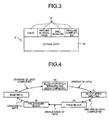
- FIG. 3 is a block diagram illustrating an outline of a storage block according to the embodiment.
- the storage block 8 is partitioned into a management data area 81 and an actual data area 82.
- the actual data area 82 stores therein, for example, automobile's driving history data stored in the RAM 2, various learning values of control data, abnormal value data detected by various sensors (diagnosis data and freeze frame data), and the like at predetermined timing.
- the management data area 81 is partitioned further into four subregions as zoned areas and the following four types of management data are caused to be stored with one-to-one correspondence with the respective subregions. That is, for the four subregions of the management data area 81 in FIG. 3 , the following data are stored from the left.
- “Actual data” referred to in (1) and (2) above means data (the above mentioned partial necessary data of the existing data, new data, or the like) to be written into a new storage block 8 (new storage block) when a storage block 8 to be written is changed. Since there may be a case where erasure processing is not performed immediately after the writing of actual data in (2) above, the pre-erasure management data may be said to be management data indicating that stored actual data have been brought into a state of being able to be subjected to erasure processing (have reached an erasure preparation stage).
- management data are written and stored in order into the four subregions instead of being overwritten.
- a storage block 8 of the latest data that are usable is able to be determined. Further, whether bad data have been generated by the instantaneous power failure is able to be determined.
- the flash memory 4 becomes highly reliable, and there is no risk that a life cycle of the storage block 8 and thus a life cycle of the flash memory 4 is shortened by erroneous overwrite or the like to the storage block 8.
- FIG. 4 is a diagram illustrating a sequential flow of data update processing according to the embodiment
- FIG. 5 is a diagram illustrating change of states of a storage block along with execution of the data update processing according to the embodiment.
- the storage block 8 repeats five statuses while storing the management data.
- the CPU 1 is able to, via the management unit 5, obtain the management data stored in the management data area 81 and determine a state of the storage block 8.
- a state of a certain storage block 8 is in a state of a block for which erasure has been completed, the block being in a state where all of data in the actual data area 82 thereof have been erased.
- that storage block 8 which is the block for which erasure has been completed, as illustrated at (a) in FIG. 5 , upon normal operation, only completion-of-erasure management data ("erasure completed") are stored in the fourth (the rightmost) subregion of the management data area 81.
- the storage block 8 which is the block for which erasure has been completed, becomes a block that is being written, by writing-in-progress management data being stored in the management data area 81 of this storage block 8 and writing of new data into the actual data area 82 thereof being started.
- writing-in-progress management data ("writing in progress") are newly stored in the second subregion of the management data area 81 thereof and the management data area 81 is brought into a state where "writing in progress" and "erasure completed" are stored therein.
- this storage block 8 When writing of the new data to the actual data area 82 is completed, as illustrated at (c) in FIG. 4 , by validity management data being stored in the management data area 81 of this storage block 8, this storage block 8 becomes a valid block. That is, as illustrated at (c) in FIG. 5 , upon normal operation, in this management data area 81 of this storage block 8, validity management data ("valid") are newly stored in the first (leftmost) subregion of the management data area 81 and the management data area 81 is brought into a state where "valid", "writing in progress”, and "erasure completed” are stored. Basically, the latest data are stored in this valid block.
- pre-erasure management data (pre-erasure) are stored in the third subregion of the management data area 81 of the storage block 8 and all of the four subregions are filled in.
- this storage block 8 In a state where the collective erasure with respect to the storage block 8 has been done but processing to bring a storage state of the storage block 8 into a state ("0xFF"), which is an initial state where all is stored with "1", has not been performed yet, as illustrated at (e) in FIG. 4 , this storage block 8 is regarded as an indefinite block. No management data are stored in the management data area 81 of this storage block 8 as illustrated at (e) in FIG. 5 , and the management data area 81 and the actual data area 82 are both in an indefinite state.
- FIG. 6 to FIG. 9 are diagrams illustrating an example of valid block determination processing according to the embodiment.
- a storage block 8 having "valid" in its management data area 81 is picked up, from the head to the end of the storage blocks 8 included in the flash memory 4, and stored as a latest data candidate.
- An area to be stored may be a storage area provided as appropriate in the flash memory 4 or may be a work area in the RAM 2.
- the storage blocks 8 having the validity management data in their management data areas 81 include a valid block, which is a storage block 8 (see (c) in FIG. 5 ) having validity management data ("valid") stored in the first (leftmost) subregion of its management data area 81 and having "valid", "writing in progress”, and "erasure completed” stored as the management data therein, this storage block 8 is able to be determined as a storage block 8 having the latest data.
- a pre-erasure block (see (d) in FIG. 5 ), which is a storage block 8 in a pre-erasure state where pre-erasure management data (“pre-erasure”) have been stored in the third subregion of the management data area 81 and all of the four subregions have been filled in, is also a storage block 8 having "valid" in the management data area 81 thereof.
- a storage block 8 (valid block) having "valid”, “writing in progress”, and “erasure completed” stored in the management data area 81 thereof and being in a status that is a valid state is determined as the storage block 8 having the latest data, but if a storage block 8 in such a state does not exist, actual data of a storage block 8 (pre-erasure block) having pre-erasure management data may be regarded as the latest data to be updated.
- a storage block 8 (valid block) in a status that is the valid state does not exist and there is nothing to be picked up as the latest data candidate even if all of the storage blocks 8 in the flash memory 4 are searched, there is a possibility that an instantaneous power failure has occurred during processing of changing the block to be written, and thus in such a case, as illustrated in FIG. 8 , instead of a new storage block 8 after the change, the new storage block 8 having a possibility that writing of actual data have not been performed normally, a storage block 8 (pre-erasure block) in a pre-erasure state where all of the four subregions of its management data area 81 have been filled in, which is the old storage block 8 before the change, may be regarded as the latest data.
- the flash memory 4 is configured such that the storage block 8 is partitioned into the management data area 81 and the actual data area 82, and the management unit 5 that performs various management operations including writing, reading, and erasure of data with respect to the storage blocks 8 is included.
- this management unit 5 causes each of: the writing-in-progress management data stored before start of writing of actual data; the validity management data stored after the writing of the actual data is completed; the pre-erasure management data stored before start of erasure processing of the storage block 8; and completion-of-erasure management data stored after the erasure processing of the storage block is completed, to be stored into the management data area 81 of the storage block 8 as the management data, and when the device is activated or when updating or reading is performed next time, the management unit 5 searches for, based on the respective management data, the storage block storing therein the latest actual data of the normal data.
- the flash memory 4 even if an instantaneous power failure or the like occurs, after a power recovery, determination of the storage block 8 having the latest data therein or the storage block 8 having bad data therein is enabled and reliability thereof is able to be increased.
- FIG. 10 is a diagram illustrating change of states of storage blocks 8 along with execution of processing performed concurrently with respect to the plurality of storage blocks 8, and a first storage block 8a storing therein old data and a second storage block 8b newly used are processed as a pair upon writing, in particular upon changing a target to be written, and by use of management data of these, depending on whether or not an improbable combination of management data exists, determination of a storage block 8 having new data therein or a storage block 8 having bad data therein is performed.
- the one stored with data already is assumed to be the first storage block 8a and the one into which new data are written is assumed to be the second storage block 8b.
- the second storage block 8b in a state immediately before start of writing, since actual data are already written in the first storage block 8a, in order from the left subregion in the management data area 81 thereof, respective management data, "valid", "writing in progress”, and "erasure completed", which is next but one thereto, are stored.
- "erasure completed” (completion-of-erasure management data) is stored in the fourth (rightmost) subregion of the management data area 81.
- validation of the second storage block 8b storing therein the new data is performed. That is, as illustrated at (e) in FIG. 10 , "valid" is stored in the first (leftmost) subregion in the management data area 81.
- respective management data in order from the left subregion, "valid", "writing in progress”, and "erasure completed", which is next but one thereto, are stored in its management data area 81.
- the old data that have been stored in the first storage block 8a are erased. That is, as illustrated at (f) in FIG. 10 , the management data area 81 and the actual data area 82 of the first storage block 8a are both in an indefinite state. On the contrary, there is no change in the second storage block 8b.
- the storage state of the first storage block 8a is brought into a state ("0xFF") where all is stored with "1", which is the initial state, and "erasure completed” is caused to be stored in the fourth (rightmost) subregion of the management data area 81 in the first storage block 8a from which the actual data have been erased. At this time also, there is no change in the second storage block 8b.
- the processing at (f) and (g) in FIG. 10 may be performed continuously after the processing of (b) to (e) in FIG. 10 , or may be performed at different timing from (b) to (e) in FIG. 10 .
- the first storage block 8a and the second storage block 8b are processed as a pair, and according to a combination of the storage states of the management data areas 81 of these storage blocks 8, in which of them data that are usable control-wise are stored is able to be determined.
- first storage block 8a and the second storage block 8b as described above are processed as a pair with respect to which of the storage blocks 8 is to be read or data of which of the storage blocks 8 need to be erased when an instantaneous power failure occurs during write processing or change processing of a target to be written.
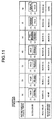
- FIG. 11 is a diagram illustrating a relation between the processing described with reference to FIG. 10 and instantaneous failure timing.
- (1 ) in the field indicating the block state represents the first storage block 8a and (2) represents the second storage block 8b.
- the latest data at that time point are stored as valid data in the first storage block 8a, and from data of the management data areas 81, the first storage block 8a is determined to be a valid block and the second storage block 8b is determined to be a block for which erasure has been performed (see (a) in FIG. 10 ). If an instantaneous power failure occurs at this time, a storage block 8 to be read after a power recovery is the first storage block 8a, which is the valid block, and in this state, there is no storage block 8 to be subjected to erasure.
- the first storage block 8a is determined to be a valid block and the second storage block 8b is determined to be a block being written (see (b) in FIG. 10 ). If an instantaneous power failure occurs at this time, the storage block 8 to be read is the first storage block 8a, which is the valid block, and the storage block 8 to be subjected to erasure is the second storage block 8b where the instantaneous failure occurred during the write processing.
- the first storage block 8a is determined to be a valid block and the second storage block 8b is determined to be a block being written (see (c) in FIG. 10 ). If an instantaneous power failure occurs at this time, the storage block 8 to be read is the first storage block 8a, which is the valid block, and the storage block 8 to be subjected to erasure is the second storage block 8b where the instantaneous failure has occurred during the write processing.
- the first storage block 8a is determined to be a pre-erasure block
- the second storage block 8b is determined to be a block being written (see (c) in FIG. 10 ). If an instantaneous power failure occurs at this time, since a valid block does not exist, the storage block 8 to be read is the first storage block 8a, which is a pre-erasure block and the storage block 8 to be subjected to erasure is the second storage block 8b where the instantaneous failure has occurred during the write processing.
- the first storage block 8a is determined to be a pre-erasure block
- the second storage block 8b is determined to be a valid block (see (e) in FIG. 10 ). If an instantaneous power failure occurs at this time, the storage block 8 to be read is the second storage block 8b, which is the valid block, and the storage block 8 to be subjected to erasure is the first storage block 8a storing therein the old data, which are no longer in use since the latest data have been stored in the second storage block 8b.
- the processing state is "erasure in progress" of erasing the old data in the first storage block 8a, as the block states, from the data in the management data areas 81, the first storage block 8a is determined to be an indefinite block, and the second storage block 8b is determined to be a valid block (see (f) in FIG. 10 ). If an instantaneous power failure occurs at this time, the storage block 8 to be read is the second storage block 8b, which is the valid block, and the storage block 8 to be subjected to erasure is the first storage block 8a where the instantaneous failure has occurred during the erasure processing.
- the first storage block 8a is determined to be a block for which erasure has been completed and the second storage block 8b is determined to be a valid block (see (g) in FIG. 10 ). If an instantaneous power failure occurs at this time, the storage block 8 to be read is the second storage block 8b, which is the valid block, but a storage block 8 to be subjected to erasure does not exist in this state.
- alternate switch-over between two storage blocks 8 may be performed, or a storage block 8 to be written may be changed according to a predetermined rule among three or more storage blocks 8.
- a method of providing a plurality of groups, each group having storage blocks 8 among which targets to be written are switched over, may be considered, for example. In that case, the order of writing may be set as appropriate.
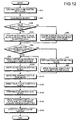
- FIG. 12 and FIG. 13 are diagrams illustrating an example of flows of the write processing and read processing.
- the first storage block 8a storing therein the old data is assumed to be a valid block and the second storage block 8b newly used is assumed to be a block to be written.
- the write processing and the read processing with respect to this flash memory 4 are described as being controlled mainly by the CPU 1, but they may be controlled mainly by the management unit 5 in the flash memory 4.
- Step S10 the area to be written as illustrated in FIG. 12
- the area to be written is determined.
- the area where the area to be written is provided is of a set value that has been determined beforehand.
- Step S20 valid block search processing is performed.
- This valid block search processing is the same as the content of the later described read processing, and thus will be described in detail in the description of FIG. 13 , which is an example of the flow of the read processing.
- Step S30 determines whether or not the valid block determination in the valid block search processing performed in Step S20 was normal (OK) (Step S30). If the valid block determination was abnormal (Step S30: No), the CPU 1 determines that a valid block is not available and according to a predetermined setting, determines a storage block 8 to be a block to be written
- Step S40 For example, of the plurality of storage blocks 8, a storage block 8 having the youngest address may be selected, or a storage block 8 with the least number of times of writing may be selected.
- Step S50 a block subsequent to the valid block is regarded as a block to be written. That is, the block to be written is, if the n-th block is the valid block, the (n+1)-th storage block 8, of the plurality of storage blocks 8.
- Step S60 it is determined whether or not erasure for the block to be written has been completed. If the erasure for the block to be written has not been completed (Step S60: No), the CPU 1 performs erasure for the block to be written. Completion-of-erasure management data are then caused to be stored in the management data area 81 of the block to be written (Step S80).
- Step S60 if the erasure for the block to be written has been completed (Step S60: Yes), the CPU 1 causes writing-in-progress management data to be stored in the management data area 81 of the block to be written (Step S90), and subsequently writes the latest data into the block to be written (Step S100).
- the CPU 1 causes pre-erasure management data to be stored in the management data area 81 of the valid block (Step S110), and causes validity management data to be stored into the management data area 81 of the block to be written (Step S120).
- the management unit erases the actual data in the valid block (Step S130) and causes the completion-of-erasure management data to be stored in the management data area 81 of the valid block for which the erasure has been completed (Step S140).
- the CPU 1 notifies a source of generation of the write command, such as the application software, that the writing has been completed (Step S150) and ends this processing.
- a configuration is adopted, in which every time write processing occurs, storage into a different storage block is performed, but, a configuration may be adopted, in which, if a volume of data needed to be stored in one write process is small with respect to a capacity of the storage block 8, until there is no longer a space in the capacity of the storage block 8 to be written, additional recording is performed into the same storage block 8, and when there is no longer a space in the capacity, the block to be written is changed to the next block.
- Step S200 the CPU 1 confirms, based on the flash memory control software 31, an area to be written, as illustrated in FIG. 13 (Step S200). This processing of confirming the area to be written is the same as the processing upon reading, and thus description thereof will be omitted.
- Step S210 After confirming (Step S200) the area to be written, the CPU 1 determines whether or not there is a valid block in the area to be written (Step S210). If there is a valid block therein (Step S210: Yes), whether or not there are two or more of the valid blocks is determined (Step S220).
- Step S210 determines whether or not there is a block being written and a pre-erasure block in the area to be written.
- Step S220 if there are two or more valid blocks (Step S220: Yes), since a valid block storing therein the latest data is unable to be determined, a substantially valid block is determined to be "none" and it is determined to be in an abnormal state (Step S240). On the contrary, if it is determined that the number of the valid blocks is not two or more (Step S220: No), it is determined to be in a normal state and data are read out from the valid block (Step S250).
- Step S230 if there are a block being written and a pre-erasure block (Step S230: Yes), the CPU 1 determines it to be in a normal state even if there is no valid block and reads data from the storage block 8, which is the pre-erasure block (Step S260). On the contrary, if a block being written and a pre-erasure block do not exist (Step S230: No), the CPU 1 determines a valid block to be "none" and determines it to be in an abnormal state (Step S270).
- Step S240 the CPU 1 notifies a source of generation of the write command, such as the application software or the like, of the normality or abnormality and ends this processing.
- a source of generation of the write command such as the application software or the like
- the flash memory 4 which has the plurality of storage blocks 8, and in which, when data in the respective storage blocks 8 are to be updated, while leaving existing data to be updated in a storage block 8 storing therein the existing data, data corresponding to the existing data are written into another storage block and the existing data are erased after ending the writing, is configured by the storage block 8 being partitioned into the management data area 81 and the actual data area 82.
- a control unit such as the CPU 1, which performs write processing and read processing with respect to the flash memory 4, respectively stores, as management data, into the management data area 81 of the storage block 8: validity management data indicating that writing of the actual data has been completed; writing-in-progress management data indicating that the actual data are being written (writing has started); pre-erasure management data indicating that erasure for the storage block has started (erasure is in progress) and the stored data have been brought into an erasable state (are invalid); and completion-of-erasure management data indicating that the erasure for the storage block has been completed, correspondingly with the partitioned four subregions.
- the management unit 5 searches, based on the respective management data, for a storage block 8 storing therein the latest actual data, upon the next writing or reading.
- a configuration is adopted, in which, when writing of the actual data is performed, the validity management data in the storage block 8 into which the latest data have been written are updated, and thus even if a configuration is adopted, in which writing is performed in irregular order with respect to the plurality of storage blocks 8, rather than a configuration as described with respect to the conventional technique, in which writing is sequentially performed with respect to plural storage blocks 8 in numerical order, after occurrence of an instantaneous power failure during data update, accurate determination of data of which storage block are the usable latest data is enabled.
- the configuration in which writing is performed in the irregular order with respect to the plural storage blocks 8 is used in: a case where the number of times of writing in each storage block 8 is actively managed and controlled (the numbers of times of writing are balanced or biased); a case where application to a system in which write requests are generated from plural tasks (a system in which plural types of latest data exist and timing of generation of the write requests differ depending on the tasks) is done; or the like.
- the data storage device was the microcomputer 10 provided in the electronic control unit (ECU), which is an example of the on-vehicle control apparatus, but the data storage device is not limited to this embodiment.
- the data storage device may be any non-volatile memory configured to collectively perform erasure for the original block after writing data into another unwritten storage block when there is no longer an unwritten area in the storage block being written.
- Any control apparatus may be installed with this data storage device.
- the management data area 81 and the actual data area 82 are each configured to be provided in the same storage block 8, the configuration is not limited to this embodiment.
- the management data area 81 may be configured to be provided in a storage block 8 different from a storage block 8 provided with the actual data area 82, or a management data area 81 storing therein data for plural actual data areas 82 may be provided altogether in one storage block 8.
Landscapes
- Engineering & Computer Science (AREA)
- Theoretical Computer Science (AREA)
- Physics & Mathematics (AREA)
- General Engineering & Computer Science (AREA)
- General Physics & Mathematics (AREA)
- Human Computer Interaction (AREA)
- Quality & Reliability (AREA)
- Computer Security & Cryptography (AREA)
- Techniques For Improving Reliability Of Storages (AREA)
- Information Retrieval, Db Structures And Fs Structures Therefor (AREA)
- Read Only Memory (AREA)
Abstract
Description
- The present invention relates to a data storage device, a method of storing data, and an on-vehicle control apparatus.
- In recent years, flash memories having high cost-performances have been widely used as nonvolatile memories.
- A flash memory is divided into a plurality of storage blocks, and writing of data per storage unit (for example, per record) in the storage blocks and erasure of data per storage block are possible, but if an instantaneous power failure occurs, abnormal termination of the writing or erasure of data occurs and there is a risk that data loss may be caused.
- Thus, in flash memories, old data are erased after new data are written. In an example of control of such a flash memory, when a storage block to be written is to be changed, as flag information indicating a state of each storage block, management information, such as: "update started" and "update finished" flags storing a start and a finish of the change processing for an old storage block; an "erasure finished" flag storing that erasure has finished for a storage block to be subjected to erasure; and the like, is stored and based on the management information, updating, writing, erasure, or the like for a memory is performed (for example, see Patent Literature 1).
- Patent Literature 1:
Japanese Laid-open Patent Publication No. 2011-175361 - However, according to the above mentioned conventional technique, depending on timing at which an instantaneous power failure occurs and a system to be applied to, such as a way of performing write processing, there is a possibility that which storage block includes data that are the usable latest data may be unable to be determined after a power recovery.
- The present invention has been made in order to solve the above described problem according to the conventional technique, and aims to provide a data storage device, a method of storing data, and an on-vehicle control apparatus, which enable more accurate determination of a storage block including the latest data after a power recovery even if an instantaneous power failure or the like occurs.
- According to an aspect of an embodiment, a data storage device that performs data storage control for a memory, which has a plurality of storage blocks, for which update by overwrite of data is not possible, and for which erasure needs to be performed in units of the storage blocks when data are erased therefrom, the data storage device includes: a memory having a plurality of storage blocks each provided with an actual data area storing therein actual data; and a memory control unit that performs control of at least one of writing and reading with respect to the memory, wherein a management data area storing therein management data for management is provided in the memory, the management data area is configured to be able to store therein writing-in-progress management data indicating that writing of actual data has started, alidity management data indicating that the writing of the actual data has been completed, and pre-erasure management data indicating that stored actual data have been brought into an erasable state, and the memory control unit determines, based on a storage state of the management data in the management data area, the storage block storing therein the latest data.
- According to the present invention, even if an instantaneous power failure or the like occurs, a storage block including the latest data is able to be determined more accurately after a power recovery and a data storage device that is highly reliable is able to be provided.
-
-
FIG. 1 is a block diagram illustrating an outline of a microcomputer including a data storage device according to an embodiment. -
FIG. 2 is a block diagram illustrating an outline of a flash memory, which is the data storage device according to the embodiment. -
FIG. 3 is a block diagram illustrating an outline of a storage block according to the embodiment. -
FIG. 4 is a diagram illustrating a sequential flow of data update processing according to the embodiment. -
FIG. 5 is a diagram illustrating change of states of a storage block along with execution of the data update processing according to the embodiment. -
FIG. 6 is a diagram illustrating an example of valid block determination processing according to the embodiment. -
FIG. 7 is a diagram illustrating an example of the valid block determination processing according to the embodiment. -
FIG. 8 is a diagram illustrating an example of the valid block determination processing according to the embodiment. -
FIG. 9 is a diagram illustrating an example of the valid block determination processing according to the embodiment. -
FIG. 10 is a diagram illustrating change of states of storage blocks along with execution of data update processing according to a modified example. -
FIG. 11 is a diagram illustrating a relation between the data update processing and instantaneous failure timing according to the modified example. -
FIG. 12 is a diagram illustrating an example of a flow of write processing according to the embodiment. -
FIG. 13 is a diagram illustrating an example of a flow of read processing according to the embodiment. - Hereinafter, with reference to the appended drawings, a data storage device, a method of storing data, and an on-vehicle control apparatus according to an embodiment will be described specifically. Further, hereinafter, a flash memory will be described as an example of a storage medium of the data storage device, and this flash memory will described as being provided in a microcomputer. However, the present invention is not to be limited by the following embodiment.
- First, the data storage device according to the embodiment will be described by use of
FIG. 1 and FIG. 2 . -
FIG. 1 is a block diagram illustrating an outline of amicrocomputer 10 including aflash memory 4, which is a data storage medium, andFIG. 2 is a block diagram illustrating an outline of theflash memory 4. - The
microcomputer 10 in this embodiment is an example of the data storage device and is assumed to be provided in an electronic control unit (ECU) that controls an engine of au automobile. The electronic control unit (ECU) is an example of the on-vehicle control apparatus. - As illustrated in
FIG. 1 , themicrocomputer 10, which is the data storage device, includes aCPU 1, which is an example of a memory control unit, aRAM 2, aROM 3, and theflash memory 4, and these are connected to one another via an internal bus 9. - The
RAM 2 has an area storing therein targeted data, and an area storing therein the same data as data stored in amanagement data area 81 set in a storage block 8 (FIG. 2 ) of theflash memory 4. Further, theROM 3 stores therein flashmemory control software 31 and application software 32. The flashmemory control software 31 is firmware of theflash memory 4, and is software for performing control, such as writing and erasure of data with respect to theflash memory 4. Furthermore, the application software 32 is function control software that performs control processing of an electronic device or the like, which is installed in an automobile, and the application software 32 is, for example, software that performs control of an engine. - The
flash memory 4 is a nonvolatile memory for which additional storage of data is possible but for which update by overwrite of data is not possible, and thus is configured to, when there is no longer an unwritten area in astorage block 8 that is being written, collectively erase theoriginal storage block 8 after writing, as necessary, partial necessary data (for example, the latest data) of data stored in theoriginal storage block 8 into anotherunwritten storage block 8. - In detail, the
flash memory 4 is able to rewrite "1" to "0" per storage unit (for example, per record) smaller than a storage block unit, but is able to rewrite "0" to "1" only per block unit (a unit in which the collective erasure is performed). - As illustrated in
FIG. 1 and FIG. 2 , theflash memory 4 has: astorage area 6 provided with a plurality of storage blocks 8 (FIG. 2 ); and amanagement unit 5 that manages and controls update operation and the like with respect to thisstorage area 6. Theflash memory 4 referred to herein includes, not only a storage medium, but also a memory control function that performs control, such as simple writing and reading with respect to the storage medium, based on instructions from outside. That is, themanagement unit 5 may be an example of the memory control unit. - In other words, the
management unit 5 performs, according to a data write request, a data read request, a data erasure request, and the like from theCPU 1, writing of data, reading of data, erasure of data, and the like with respect to the plurality ofstorage blocks 8 set in thestorage area 6. - If a
storage block 8 to be written is to be changed when there is a write request or when there is no longer an unwritten area in thestorage block 8 being written, while existing data that have been written in the past in the storage block 8 (thestorage block 8 storing therein old data) that has been a target to be written but no longer has the unwritten area are left therein, partial necessary data in the existing data or new data are written into anotherstorage block 8, and after the writing, the data in the storage block 8 (thestorage block 8 storing therein the old data) that no longer has the unwritten area are erased. - With reference to
FIG. 3 , an internal configuration of astorage block 8 included in theflash memory 4 will be described.FIG. 3 is a block diagram illustrating an outline of a storage block according to the embodiment. - As illustrated in
FIG. 3 , thestorage block 8 is partitioned into amanagement data area 81 and anactual data area 82. Theactual data area 82 stores therein, for example, automobile's driving history data stored in theRAM 2, various learning values of control data, abnormal value data detected by various sensors (diagnosis data and freeze frame data), and the like at predetermined timing. - The
management data area 81 is partitioned further into four subregions as zoned areas and the following four types of management data are caused to be stored with one-to-one correspondence with the respective subregions. That is, for the four subregions of themanagement data area 81 inFIG. 3 , the following data are stored from the left. - (1) Validity management data indicating that writing of actual data has been completed.
- (2) Writing-in-progress management data indicating that writing of actual data is in progress (writing has started).
- (3) Pre-erasure management data indicating that erasure for a storage block has started (erasure is in progress) and stored data have been brought into an erasable state.
- (4) Completion-of-erasure management data indicating that erasure for a storage block has been completed.
- "Actual data" referred to in (1) and (2) above means data (the above mentioned partial necessary data of the existing data, new data, or the like) to be written into a new storage block 8 (new storage block) when a
storage block 8 to be written is changed. Since there may be a case where erasure processing is not performed immediately after the writing of actual data in (2) above, the pre-erasure management data may be said to be management data indicating that stored actual data have been brought into a state of being able to be subjected to erasure processing (have reached an erasure preparation stage). - As described above, the management data are written and stored in order into the four subregions instead of being overwritten.
- By causing the management data to be respectively stored in the
storage block 8, even if there is an instantaneous power failure (instantaneous power interruption) during update operation or the like, for example, after a power recovery, astorage block 8 of the latest data that are usable is able to be determined. Further, whether bad data have been generated by the instantaneous power failure is able to be determined. - Therefore, the
flash memory 4 becomes highly reliable, and there is no risk that a life cycle of thestorage block 8 and thus a life cycle of theflash memory 4 is shortened by erroneous overwrite or the like to thestorage block 8. -
FIG. 4 is a diagram illustrating a sequential flow of data update processing according to the embodiment, andFIG. 5 is a diagram illustrating change of states of a storage block along with execution of the data update processing according to the embodiment. As illustrated in the figures, thestorage block 8 repeats five statuses while storing the management data. Thus, by using the flashmemory control software 31 stored in theROM 3, theCPU 1 is able to, via themanagement unit 5, obtain the management data stored in themanagement data area 81 and determine a state of thestorage block 8. - For example, as illustrated at (a) in
FIG. 4 , it is assumed that a state of acertain storage block 8 is in a state of a block for which erasure has been completed, the block being in a state where all of data in theactual data area 82 thereof have been erased. In thatstorage block 8, which is the block for which erasure has been completed, as illustrated at (a) inFIG. 5 , upon normal operation, only completion-of-erasure management data ("erasure completed") are stored in the fourth (the rightmost) subregion of themanagement data area 81. - Subsequently, as illustrated at (b) in
FIG. 4 , thestorage block 8, which is the block for which erasure has been completed, becomes a block that is being written, by writing-in-progress management data being stored in themanagement data area 81 of thisstorage block 8 and writing of new data into theactual data area 82 thereof being started. When this is done, as illustrated at (b) inFIG. 5 , upon normal operation, in thestorage block 8, writing-in-progress management data ("writing in progress") are newly stored in the second subregion of themanagement data area 81 thereof and themanagement data area 81 is brought into a state where "writing in progress" and "erasure completed" are stored therein. - When writing of the new data to the
actual data area 82 is completed, as illustrated at (c) inFIG. 4 , by validity management data being stored in themanagement data area 81 of thisstorage block 8, thisstorage block 8 becomes a valid block. That is, as illustrated at (c) inFIG. 5 , upon normal operation, in thismanagement data area 81 of thisstorage block 8, validity management data ("valid") are newly stored in the first (leftmost) subregion of themanagement data area 81 and themanagement data area 81 is brought into a state where "valid", "writing in progress", and "erasure completed" are stored. Basically, the latest data are stored in this valid block. - Thereafter, in a case where there is no longer an unwritten area in the
storage block 8 being written, or the like, processing to change the block to be written to anew storage block 8 is performed, and when the processing is done and thenew storage block 8 becomes the valid block, data stored in the old storage block 8 (old storage block) need to be invalidated (brought into an erasable state). Therefore, as illustrated at (d) inFIG. 4 , by storing pre-erasure management data in themanagement data area 81 of thisold storage block 8 and starting collective erasure with respect to this storage block 8 (themanagement data area 81 and the actual data area 82), thisstorage block 8 is turned into a pre-erasure block. - When that is done, as illustrated at (d) in
FIG. 5 , upon normal operation, a state is reached, where pre-erasure management data ("pre-erasure") are stored in the third subregion of themanagement data area 81 of thestorage block 8 and all of the four subregions are filled in. - In a state where the collective erasure with respect to the
storage block 8 has been done but processing to bring a storage state of thestorage block 8 into a state ("0xFF"), which is an initial state where all is stored with "1", has not been performed yet, as illustrated at (e) inFIG. 4 , thisstorage block 8 is regarded as an indefinite block. No management data are stored in themanagement data area 81 of thisstorage block 8 as illustrated at (e) inFIG. 5 , and themanagement data area 81 and theactual data area 82 are both in an indefinite state. - That is, data erasure processing takes a comparatively long processing time among a series of steps of data update processing and stochastically, an instantaneous power failure or the like tends to occur during the data erasure processing. In that case, in a state where the data erasure processing is executed, all of the management data, "valid", "writing in progress", "pre-erasure", and "erasure completed", are supposed to be stored in order from the left in the four subregions of the management data area 81 (see (d) in
FIG. 5 ). However, due to influence of an instantaneous power failure or the like, an indefinite state where the management data are missing may be reached, only "valid" and "pre-erasure" being stored, for example. Such a case is regarded as the indefinite state, as illustrated at (e) inFIG. 5 . - When the data erasure processing is completed and processing to bring a storage state of the
storage block 8 into the state where all has been stored with "1", which is the initial state, is completed, by storing completion-of-erasure management data in themanagement data area 81 of thisstorage block 8 from which the data have been erased, thisstorage block 8 is turned into a block for which erasure has been completed. That is, theactual data area 82 is in the state where the data have been erased and all has been stored with "1", and erasure in all of the four subregions of themanagement data area 81 are performed and the completion-of-erasure management data are newly stored into the fourth (rightmost) subregion of the management data area 81 (see (a) inFIG. 5 ). - Processing of determining a valid clock upon activation, such as a recovery from an instantaneous failure, will be described.
FIG. 6 to FIG. 9 are diagrams illustrating an example of valid block determination processing according to the embodiment. Upon activation, as illustrated inFIG. 6 , astorage block 8 having "valid" in itsmanagement data area 81 is picked up, from the head to the end of the storage blocks 8 included in theflash memory 4, and stored as a latest data candidate. An area to be stored may be a storage area provided as appropriate in theflash memory 4 or may be a work area in theRAM 2. - If the storage blocks 8 having the validity management data in their
management data areas 81 include a valid block, which is a storage block 8 (see (c) inFIG. 5 ) having validity management data ("valid") stored in the first (leftmost) subregion of itsmanagement data area 81 and having "valid", "writing in progress", and "erasure completed" stored as the management data therein, thisstorage block 8 is able to be determined as astorage block 8 having the latest data. - Further, besides the
storage block 8 having "valid", "writing in progress", and "erasure completed" stored therein like this, for example, a pre-erasure block (see (d) inFIG. 5 ), which is astorage block 8 in a pre-erasure state where pre-erasure management data ("pre-erasure") have been stored in the third subregion of themanagement data area 81 and all of the four subregions have been filled in, is also astorage block 8 having "valid" in themanagement data area 81 thereof. - Normally, as illustrated in
FIG. 7 , a storage block 8 (valid block) having "valid", "writing in progress", and "erasure completed" stored in themanagement data area 81 thereof and being in a status that is a valid state is determined as thestorage block 8 having the latest data, but if astorage block 8 in such a state does not exist, actual data of a storage block 8 (pre-erasure block) having pre-erasure management data may be regarded as the latest data to be updated. - For example, when a storage block 8 (valid block) in a status that is the valid state does not exist and there is nothing to be picked up as the latest data candidate even if all of the storage blocks 8 in the
flash memory 4 are searched, there is a possibility that an instantaneous power failure has occurred during processing of changing the block to be written, and thus in such a case, as illustrated inFIG. 8 , instead of anew storage block 8 after the change, thenew storage block 8 having a possibility that writing of actual data have not been performed normally, a storage block 8 (pre-erasure block) in a pre-erasure state where all of the four subregions of itsmanagement data area 81 have been filled in, which is theold storage block 8 before the change, may be regarded as the latest data. - Further, for example, as illustrated in
FIG. 9 , if astorage block 8 storing therein management data ("valid", "writing in progress", and "erasure completed") indicating that the status is the valid state is detected further, even though the latest data candidate (valid block) already exists (if it is determined that there are two or more valid blocks), this may be regarded as an error. A configuration to notify of an abnormal state in this case is desirably adopted. - As described above, the
flash memory 4 according to this embodiment is configured such that thestorage block 8 is partitioned into themanagement data area 81 and theactual data area 82, and themanagement unit 5 that performs various management operations including writing, reading, and erasure of data with respect to the storage blocks 8 is included. - Further, this
management unit 5 causes each of: the writing-in-progress management data stored before start of writing of actual data; the validity management data stored after the writing of the actual data is completed; the pre-erasure management data stored before start of erasure processing of thestorage block 8; and completion-of-erasure management data stored after the erasure processing of the storage block is completed, to be stored into themanagement data area 81 of thestorage block 8 as the management data, and when the device is activated or when updating or reading is performed next time, themanagement unit 5 searches for, based on the respective management data, the storage block storing therein the latest actual data of the normal data. - Therefore, by the
flash memory 4 according to this embodiment, even if an instantaneous power failure or the like occurs, after a power recovery, determination of thestorage block 8 having the latest data therein or thestorage block 8 having bad data therein is enabled and reliability thereof is able to be increased. - In the above description, basically, the change in the states by the respective processes with respect to a
certain storage block 8 has been primarily described, but processes with respect to plural storage blocks 8 are concurrently performed upon change of a target to be written.FIG. 10 is a diagram illustrating change of states ofstorage blocks 8 along with execution of processing performed concurrently with respect to the plurality ofstorage blocks 8, and afirst storage block 8a storing therein old data and asecond storage block 8b newly used are processed as a pair upon writing, in particular upon changing a target to be written, and by use of management data of these, depending on whether or not an improbable combination of management data exists, determination of astorage block 8 having new data therein or astorage block 8 having bad data therein is performed. - As illustrated at (a) to (g) in
FIG. 10 , the one stored with data already is assumed to be thefirst storage block 8a and the one into which new data are written is assumed to be thesecond storage block 8b. As illustrated at (a) inFIG. 10 , in a state immediately before start of writing, since actual data are already written in thefirst storage block 8a, in order from the left subregion in themanagement data area 81 thereof, respective management data, "valid", "writing in progress", and "erasure completed", which is next but one thereto, are stored. At this time, in thesecond storage block 8b to be written thereafter, "erasure completed" (completion-of-erasure management data) is stored in the fourth (rightmost) subregion of themanagement data area 81. - At a time point of start of writing, as illustrated at (b) in
FIG. 10 , there is no change in thefirst storage block 8a but in thesecond storage block 8b, "writing in progress" (writing-in-progress management data) is stored in the second subregion from the left in themanagement data area 81. That is, "writing in progress" in the second subregion from the left, and "erasure completed" in the rightmost subregion are stored. - During writing into the
second storage block 8b, as illustrated at (c) inFIG. 10 , there is no change in thefirst storage block 8a, but theactual data area 82 being written in thesecond storage block 8b is in an indefinite state. At this time, there is no change in themanagement data area 81 and "writing in progress" in the second subregion from the left and "erasure completed" in the rightmost subregion are still stored therein. - As illustrated at (d) in
FIG. 10 , when new data have been written into thesecond storage block 8b, the data that have been stored in thefirst storage block 8a are invalidated. That is, as illustrated in the figure, in themanagement data area 81 of thefirst storage block 8a, management data of "pre-erasure" are stored in the third subregion from the left that has been empty. In other words, the management data are stored in all of the four subregions. - Subsequently, validation of the
second storage block 8b storing therein the new data is performed. That is, as illustrated at (e) inFIG. 10 , "valid" is stored in the first (leftmost) subregion in themanagement data area 81. In thesecond storage block 8b at this time, like thefirst storage block 8a illustrated at (a) to (c) inFIG. 10 , respective management data, in order from the left subregion, "valid", "writing in progress", and "erasure completed", which is next but one thereto, are stored in itsmanagement data area 81. - Thereafter, the old data that have been stored in the
first storage block 8a are erased. That is, as illustrated at (f) inFIG. 10 , themanagement data area 81 and theactual data area 82 of thefirst storage block 8a are both in an indefinite state. On the contrary, there is no change in thesecond storage block 8b. - As illustrated at (g) in
FIG. 10 , the storage state of thefirst storage block 8a is brought into a state ("0xFF") where all is stored with "1", which is the initial state, and "erasure completed" is caused to be stored in the fourth (rightmost) subregion of themanagement data area 81 in thefirst storage block 8a from which the actual data have been erased. At this time also, there is no change in thesecond storage block 8b. - The processing at (f) and (g) in
FIG. 10 may be performed continuously after the processing of (b) to (e) inFIG. 10 , or may be performed at different timing from (b) to (e) inFIG. 10 . - As described above, upon writing, in particular, upon changing of a target to be written, the
first storage block 8a and thesecond storage block 8b are processed as a pair, and according to a combination of the storage states of themanagement data areas 81 of thesestorage blocks 8, in which of them data that are usable control-wise are stored is able to be determined. - Further, a case will be described as an example, where the
first storage block 8a and thesecond storage block 8b as described above are processed as a pair with respect to which of the storage blocks 8 is to be read or data of which of the storage blocks 8 need to be erased when an instantaneous power failure occurs during write processing or change processing of a target to be written. -
FIG. 11 is a diagram illustrating a relation between the processing described with reference toFIG. 10 and instantaneous failure timing. In thefigure, (1 ) in the field indicating the block state represents thefirst storage block 8a and (2) represents thesecond storage block 8b. - In a case that is immediately after reception of a write processing request (including a case where a request to change a target to be written is received, or a case where a storage block to be written has no empty area when writing is attempted upon reception of a write request) and where a processing state is before writing, as a block state, the latest data at that time point are stored as valid data in the
first storage block 8a, and from data of themanagement data areas 81, thefirst storage block 8a is determined to be a valid block and thesecond storage block 8b is determined to be a block for which erasure has been performed (see (a) inFIG. 10 ). If an instantaneous power failure occurs at this time, astorage block 8 to be read after a power recovery is thefirst storage block 8a, which is the valid block, and in this state, there is nostorage block 8 to be subjected to erasure. - Subsequently, when writing into the
second storage block 8b is started and the processing state becomes "writing in progress", as the block states, from the data in themanagement data areas 81, thefirst storage block 8a is determined to be a valid block and thesecond storage block 8b is determined to be a block being written (see (b) inFIG. 10 ). If an instantaneous power failure occurs at this time, thestorage block 8 to be read is thefirst storage block 8a, which is the valid block, and thestorage block 8 to be subjected to erasure is thesecond storage block 8b where the instantaneous failure occurred during the write processing. - Next, when writing of actual data into the
second storage block 8b is in progress, as the block states, from the data of themanagement data areas 81, thefirst storage block 8a is determined to be a valid block and thesecond storage block 8b is determined to be a block being written (see (c) inFIG. 10 ). If an instantaneous power failure occurs at this time, thestorage block 8 to be read is thefirst storage block 8a, which is the valid block, and thestorage block 8 to be subjected to erasure is thesecond storage block 8b where the instantaneous failure has occurred during the write processing. - Next, when the writing of the actual data into the
second storage block 8b is completed and invalidation of the old valid data (writing of "pre-erasure") is performed with respect to thefirst storage block 8a, as the block states, from the data in themanagement data areas 81, thefirst storage block 8a is determined to be a pre-erasure block, and thesecond storage block 8b is determined to be a block being written (see (c) inFIG. 10 ). If an instantaneous power failure occurs at this time, since a valid block does not exist, thestorage block 8 to be read is thefirst storage block 8a, which is a pre-erasure block and thestorage block 8 to be subjected to erasure is thesecond storage block 8b where the instantaneous failure has occurred during the write processing. - Subsequently, when validation of data to be written into the
second storage block 8b (writing of "valid") is performed, as the block states, from the data in themanagement data areas 81, thefirst storage block 8a is determined to be a pre-erasure block, and thesecond storage block 8b is determined to be a valid block (see (e) inFIG. 10 ). If an instantaneous power failure occurs at this time, thestorage block 8 to be read is thesecond storage block 8b, which is the valid block, and thestorage block 8 to be subjected to erasure is thefirst storage block 8a storing therein the old data, which are no longer in use since the latest data have been stored in thesecond storage block 8b. - Subsequently, if the processing state is "erasure in progress" of erasing the old data in the
first storage block 8a, as the block states, from the data in themanagement data areas 81, thefirst storage block 8a is determined to be an indefinite block, and thesecond storage block 8b is determined to be a valid block (see (f) inFIG. 10 ). If an instantaneous power failure occurs at this time, thestorage block 8 to be read is thesecond storage block 8b, which is the valid block, and thestorage block 8 to be subjected to erasure is thefirst storage block 8a where the instantaneous failure has occurred during the erasure processing. - When the erasure processing of the old data in the
first storage block 8a is completed, from the data in themanagement data areas 81, thefirst storage block 8a is determined to be a block for which erasure has been completed and thesecond storage block 8b is determined to be a valid block (see (g) inFIG. 10 ). If an instantaneous power failure occurs at this time, thestorage block 8 to be read is thesecond storage block 8b, which is the valid block, but astorage block 8 to be subjected to erasure does not exist in this state. - As a way of switching over the storage blocks 8 to be written, alternate switch-over between two
storage blocks 8 may be performed, or astorage block 8 to be written may be changed according to a predetermined rule among three or more storage blocks 8. Further, a method of providing a plurality of groups, each group havingstorage blocks 8 among which targets to be written are switched over, may be considered, for example. In that case, the order of writing may be set as appropriate. - By use of
FIG. 12 andFIG. 13 , write processing and read processing with respect to theflash memory 4 will be described.FIG. 12 andFIG. 13 are diagrams illustrating an example of flows of the write processing and read processing. Herein, thefirst storage block 8a storing therein the old data is assumed to be a valid block and thesecond storage block 8b newly used is assumed to be a block to be written. - In the following description, the write processing and the read processing with respect to this
flash memory 4 are described as being controlled mainly by theCPU 1, but they may be controlled mainly by themanagement unit 5 in theflash memory 4. - First, based on
FIG. 12 , the write processing will be described. When a write command is generated by processing of the application software or the like, based on the flashmemory control software 31, theCPU 1 confirms an area to be written as illustrated inFIG. 12 (Step S10). Herein, in which area in thestorage area 6 of theflash memory 4 the area to be written where the storage blocks 8 are provided is provided is determined. The area where the area to be written is provided is of a set value that has been determined beforehand. - Subsequently, valid block search processing is performed (Step S20). This valid block search processing is the same as the content of the later described read processing, and thus will be described in detail in the description of
FIG. 13 , which is an example of the flow of the read processing. - Next, the
CPU 1 determines whether or not the valid block determination in the valid block search processing performed in Step S20 was normal (OK) (Step S30). If the valid block determination was abnormal (Step S30: No), theCPU 1 determines that a valid block is not available and according to a predetermined setting, determines astorage block 8 to be a block to be written - (Step S40). Herein, for example, of the plurality of
storage blocks 8, astorage block 8 having the youngest address may be selected, or astorage block 8 with the least number of times of writing may be selected. - On the contrary, if the valid block determination was normal (Step S30: Yes), a block subsequent to the valid block is regarded as a block to be written (Step S50). That is, the block to be written is, if the n-th block is the valid block, the (n+1)-
th storage block 8, of the plurality of storage blocks 8. - Subsequently, it is determined whether or not erasure for the block to be written has been completed (Step S60). If the erasure for the block to be written has not been completed (Step S60: No), the
CPU 1 performs erasure for the block to be written. Completion-of-erasure management data are then caused to be stored in themanagement data area 81 of the block to be written (Step S80). - On the contrary, if the erasure for the block to be written has been completed (Step S60: Yes), the
CPU 1 causes writing-in-progress management data to be stored in themanagement data area 81 of the block to be written (Step S90), and subsequently writes the latest data into the block to be written (Step S100). - Next, the
CPU 1 causes pre-erasure management data to be stored in themanagement data area 81 of the valid block (Step S110), and causes validity management data to be stored into themanagement data area 81 of the block to be written (Step S120). - Thereafter, the management unit erases the actual data in the valid block (Step S130) and causes the completion-of-erasure management data to be stored in the
management data area 81 of the valid block for which the erasure has been completed (Step S140). - Finally, the
CPU 1 notifies a source of generation of the write command, such as the application software, that the writing has been completed (Step S150) and ends this processing. - In the above described example, a configuration is adopted, in which every time write processing occurs, storage into a different storage block is performed, but, a configuration may be adopted, in which, if a volume of data needed to be stored in one write process is small with respect to a capacity of the
storage block 8, until there is no longer a space in the capacity of thestorage block 8 to be written, additional recording is performed into thesame storage block 8, and when there is no longer a space in the capacity, the block to be written is changed to the next block. - Next, the read processing will be described based on
FIG. 13 . If a write command is generated by processing of the application software or the like, theCPU 1 confirms, based on the flashmemory control software 31, an area to be written, as illustrated inFIG. 13 (Step S200). This processing of confirming the area to be written is the same as the processing upon reading, and thus description thereof will be omitted. - After confirming (Step S200) the area to be written, the
CPU 1 determines whether or not there is a valid block in the area to be written (Step S210). If there is a valid block therein (Step S210: Yes), whether or not there are two or more of the valid blocks is determined (Step S220). - On the contrary, if there is no valid block in the area to be written (Step S210: No), the
CPU 1 determines whether or not there is a block being written and a pre-erasure block in the area to be written (Step S230). - Returning to Step S220, if there are two or more valid blocks (Step S220: Yes), since a valid block storing therein the latest data is unable to be determined, a substantially valid block is determined to be "none" and it is determined to be in an abnormal state (Step S240). On the contrary, if it is determined that the number of the valid blocks is not two or more (Step S220: No), it is determined to be in a normal state and data are read out from the valid block (Step S250).
- Further, at Step S230, if there are a block being written and a pre-erasure block (Step S230: Yes), the
CPU 1 determines it to be in a normal state even if there is no valid block and reads data from thestorage block 8, which is the pre-erasure block (Step S260). On the contrary, if a block being written and a pre-erasure block do not exist (Step S230: No), theCPU 1 determines a valid block to be "none" and determines it to be in an abnormal state (Step S270). - Based on respective states of Step S240, Step S250, Step S260, and Step S270, the
CPU 1 notifies a source of generation of the write command, such as the application software or the like, of the normality or abnormality and ends this processing. - The contents of the processing surrounded by a dotted line in
FIG. 13 (processing contents from Step S210 to Step S270) correspond to the valid block search processing of Step S20 inFIG. 12 . - As described above, the
flash memory 4 according to this embodiment, which has the plurality ofstorage blocks 8, and in which, when data in therespective storage blocks 8 are to be updated, while leaving existing data to be updated in astorage block 8 storing therein the existing data, data corresponding to the existing data are written into another storage block and the existing data are erased after ending the writing, is configured by thestorage block 8 being partitioned into themanagement data area 81 and theactual data area 82. - When actual data are to be updated, a control unit, such as the
CPU 1, which performs write processing and read processing with respect to theflash memory 4, respectively stores, as management data, into themanagement data area 81 of the storage block 8: validity management data indicating that writing of the actual data has been completed; writing-in-progress management data indicating that the actual data are being written (writing has started); pre-erasure management data indicating that erasure for the storage block has started (erasure is in progress) and the stored data have been brought into an erasable state (are invalid); and completion-of-erasure management data indicating that the erasure for the storage block has been completed, correspondingly with the partitioned four subregions. Themanagement unit 5 then searches, based on the respective management data, for astorage block 8 storing therein the latest actual data, upon the next writing or reading. - Therefore, even if an instantaneous power failure occurs at any timing during data updating, determination of a
storage block 8 having therein the latest data or determination of astorage block 8 having therein bad data even if the bad data are generated by the instantaneous failure is able to be easily performed after a power recovery. - Further, a configuration is adopted, in which, when writing of the actual data is performed, the validity management data in the
storage block 8 into which the latest data have been written are updated, and thus even if a configuration is adopted, in which writing is performed in irregular order with respect to the plurality ofstorage blocks 8, rather than a configuration as described with respect to the conventional technique, in which writing is sequentially performed with respect to plural storage blocks 8 in numerical order, after occurrence of an instantaneous power failure during data update, accurate determination of data of which storage block are the usable latest data is enabled. - The configuration in which writing is performed in the irregular order with respect to the plural storage blocks 8 is used in: a case where the number of times of writing in each
storage block 8 is actively managed and controlled (the numbers of times of writing are balanced or biased); a case where application to a system in which write requests are generated from plural tasks (a system in which plural types of latest data exist and timing of generation of the write requests differ depending on the tasks) is done; or the like. - Further, in this embodiment, the data storage device was the
microcomputer 10 provided in the electronic control unit (ECU), which is an example of the on-vehicle control apparatus, but the data storage device is not limited to this embodiment. For example, it may be any non-volatile memory configured to collectively perform erasure for the original block after writing data into another unwritten storage block when there is no longer an unwritten area in the storage block being written. Any control apparatus may be installed with this data storage device. - Furthermore, in this embodiment, although the
management data area 81 and theactual data area 82 are each configured to be provided in thesame storage block 8, the configuration is not limited to this embodiment. For example, themanagement data area 81 may be configured to be provided in astorage block 8 different from astorage block 8 provided with theactual data area 82, or amanagement data area 81 storing therein data for pluralactual data areas 82 may be provided altogether in onestorage block 8. - Moreover, further effects and other modified examples may be derived easily by persons skilled in the art. Accordingly, broader aspects of the present invention are not limited to the particular details and representative embodiment presented and described above. Therefore, various modifications may be made without departing from the spirit or scope of the concept of the overall invention defined by the appended claims and their equivalents.
-
- 1
- CPU
- 4
- FLASH MEMORY
- 5
- MANAGEMENT UNIT
- 6
- STORAGE AREA
- 8
- STORAGE BLOCK
- 10
- MICROCOMPUTER (DATA STORAGE DEVICE)
- 81
- MANAGEMENT DATA AREA
- 82
- ACTUAL DATA AREA
Claims (9)
- A data storage device that performs data storage control for a memory, which has a plurality of storage blocks, for which update by overwrite of data is not possible, and for which erasure needs to be performed in units of the storage blocks when data are erased therefrom, the data storage device comprising:a memory having a plurality of storage blocks each provided with an actual data area storing therein actual data; anda memory control unit that performs control of at least one of writing and reading with respect to the memory, whereina management data area storing therein management data for management is provided in the memory,the management data area is configured to be able to store therein writing-in-progress management data indicating that writing of actual data has started, validity management data indicating that the writing of the actual data has been completed, and pre-erasure management data indicating that stored actual data have been brought into an erasable state, andthe memory control unit determines, based on a storage state of the management data in the management data area, the storage block storing therein the latest data.
- The data storage device according to claim 1, wherein when storage of actual data into a new storage block that is a new one of the storage blocks is performed, the memory control unit
performs writing of actual data into the new storage block after storing writing-in-progress management data into the management data area for the new storage block, and
after the writing of the actual data is completed, stores pre-erasure management data in the management data area for an old storage block that is the storage block where storage of the actual data used to be performed, and
thereafter stores validity management data in the management data area for the new storage block. - The data storage device according to claim 2, wherein the memory control unit determines a valid block having validity management data stored and no pre-erasure management data stored in the management data area thereof to be the storage block storing therein the latest data.
- The data storage device according to claim 3, wherein when the valid block is determined to not exist, the memory control unit determines a pre-erasure block having validity management data and pre-erasure management data stored in the management data area thereof to be the storage block storing therein the latest data.
- The data storage device according to claim 3, wherein when the valid block is determined to not exist, and a pre-erasure block having validity management data and pre-erasure management data stored in the management data area thereof, and a storage block being written having writing-in-progress management data stored but no validity management data stored in the management data area thereof, are determined to both exist, the memory control unit determines that the pre-erasure block is the storage block storing therein the latest data.
- The data storage device according to any one of claims 1 to 5, wherein the memory control unit notifies of being in an abnormal state when more than one storage block having validity management data therein exists in the plurality of storage blocks.
- The data storage device according to any one of claims 1 to 5, wherein the memory control unit distinguishes, based on respective management data of a preset pair of the plurality of storage blocks, between the storage block having the latest data to be updated and a storage block having bad data left therein.
- A method of storing data into a memory, which has a plurality of storage blocks, for which update by overwrite of data is not possible, and for which erasure needs to be performed in units of the storage blocks when data are erased therefrom, wherein
a management data area storing therein management data for management is provided in a memory having a plurality of storage blocks each provided with an actual data area storing therein actual data, and the management data area is configured to be able to store therein writing-in-progress management data indicating that writing of actual data has started, validity management data indicating that the writing of the actual data has been completed, and pre-erasure management data indicating that stored actual data have been brought into an erasable state, and
when storage of actual data into a new storage block that is a new one of the storage blocks is performed, a memory control unit that performs control of at least one of writing and reading with respect to the memory
performs writing of actual data into the new storage block after storing writing-in-progress management data into the management data area of the new storage block, and
after the writing of the actual data is completed, stores pre-erasure management data in the management data area for an old storage block that is the storage block where storage of the actual data used to be performed, and
thereafter stores validity management data in the management data area of the new storage block. - An on-vehicle control apparatus, comprising the data storage device according to any one of claims 1 to 5.
Applications Claiming Priority (2)
| Application Number | Priority Date | Filing Date | Title |
|---|---|---|---|
| JP2013054879A JP5695112B2 (en) | 2013-03-18 | 2013-03-18 | Data storage device, data storage method, and in-vehicle control device |
| PCT/JP2013/083393 WO2014147906A1 (en) | 2013-03-18 | 2013-12-12 | Data storage device, method for storing data, and onboard control device |
Publications (3)
| Publication Number | Publication Date |
|---|---|
| EP2977907A1 true EP2977907A1 (en) | 2016-01-27 |
| EP2977907A4 EP2977907A4 (en) | 2016-03-30 |
| EP2977907B1 EP2977907B1 (en) | 2017-05-10 |
Family
ID=51579617
Family Applications (1)
| Application Number | Title | Priority Date | Filing Date |
|---|---|---|---|
| EP13878987.0A Active EP2977907B1 (en) | 2013-03-18 | 2013-12-12 | Data storage device, method for storing data, and onboard control device |
Country Status (5)
| Country | Link |
|---|---|
| US (1) | US9792070B2 (en) |
| EP (1) | EP2977907B1 (en) |
| JP (1) | JP5695112B2 (en) |
| CN (1) | CN105009096B (en) |
| WO (1) | WO2014147906A1 (en) |
Cited By (1)
| Publication number | Priority date | Publication date | Assignee | Title |
|---|---|---|---|---|
| CN111949209A (en) * | 2019-05-15 | 2020-11-17 | 西部数据技术公司 | Enhanced solid state drive write performance with background erase |
Families Citing this family (7)
| Publication number | Priority date | Publication date | Assignee | Title |
|---|---|---|---|---|
| JP6241373B2 (en) * | 2014-06-19 | 2017-12-06 | 株式会社デンソー | Storage device, flash memory control device, and program |
| JP6327994B2 (en) * | 2014-07-28 | 2018-05-23 | ルネサスエレクトロニクス株式会社 | Control system and semiconductor device |
| US10133486B2 (en) * | 2014-08-11 | 2018-11-20 | Seagate Technology Llc | Status indicator on a data storage device |
| US10692335B2 (en) | 2014-08-11 | 2020-06-23 | Seagate Technology Llc | Green drive with status indicator |
| JP2023011322A (en) * | 2021-07-12 | 2023-01-24 | 日産自動車株式会社 | Data storage control method and data storage control device |
| CN113672426B (en) * | 2021-08-24 | 2024-12-27 | 浙江大华技术股份有限公司 | Storage device abnormality determination method and device, storage medium, and electronic device |
| CN117632042B (en) * | 2024-01-25 | 2024-04-30 | 合肥兆芯电子有限公司 | Memory management method, memory storage device and memory control circuit unit |
Family Cites Families (17)
| Publication number | Priority date | Publication date | Assignee | Title |
|---|---|---|---|---|
| JP3271935B2 (en) * | 1997-10-15 | 2002-04-08 | 松下電工株式会社 | Control system |
| US6834331B1 (en) * | 2000-10-24 | 2004-12-21 | Starfish Software, Inc. | System and method for improving flash memory data integrity |
| US6801994B2 (en) * | 2000-12-20 | 2004-10-05 | Microsoft Corporation | Software management systems and methods for automotive computing devices |
| JP3912355B2 (en) * | 2003-10-14 | 2007-05-09 | ソニー株式会社 | Data management device, data management method, nonvolatile memory, storage device having nonvolatile memory, and data processing system |
| JP4701618B2 (en) * | 2004-02-23 | 2011-06-15 | ソニー株式会社 | Information processing apparatus, information processing method, and computer program |
| US20080250188A1 (en) * | 2004-12-22 | 2008-10-09 | Matsushita Electric Industrial Co., Ltd. | Memory Controller, Nonvolatile Storage, Nonvolatile Storage System, and Memory Control Method |
| JP4577075B2 (en) | 2005-04-22 | 2010-11-10 | 株式会社デンソー | Automotive control unit |
| US7275140B2 (en) * | 2005-05-12 | 2007-09-25 | Sandisk Il Ltd. | Flash memory management method that is resistant to data corruption by power loss |
| US7797479B2 (en) * | 2005-06-30 | 2010-09-14 | Intel Corporation | Technique to write to a non-volatile memory |
| US8006030B2 (en) * | 2006-03-13 | 2011-08-23 | Panasonic Corporation | Memory controller for identifying the last valid page/segment in a physical block of a flash memory |
| JP5137413B2 (en) | 2006-11-28 | 2013-02-06 | 株式会社日立製作所 | Semiconductor memory device |
| JP4536785B2 (en) * | 2008-02-01 | 2010-09-01 | 富士通株式会社 | Information processing apparatus, control unit for controlling data storage performed in information processing apparatus, and data storage control method |
| JP2009223435A (en) * | 2008-03-13 | 2009-10-01 | Denso Corp | Data storage method and device, and program |
| JP2011175361A (en) | 2010-02-23 | 2011-09-08 | Autonetworks Technologies Ltd | Data storage device and method |
| JP2012181577A (en) | 2011-02-28 | 2012-09-20 | Aiphone Co Ltd | File system for managing non-volatile memory |
| JP5660521B2 (en) * | 2011-06-17 | 2015-01-28 | 株式会社デンソー | Nonvolatile semiconductor memory device and memory management method |
| US9478271B2 (en) * | 2013-03-14 | 2016-10-25 | Seagate Technology Llc | Nonvolatile memory data recovery after power failure |
-
2013
- 2013-03-18 JP JP2013054879A patent/JP5695112B2/en not_active Expired - Fee Related
- 2013-12-12 CN CN201380074421.2A patent/CN105009096B/en active Active
- 2013-12-12 US US14/774,541 patent/US9792070B2/en not_active Expired - Fee Related
- 2013-12-12 WO PCT/JP2013/083393 patent/WO2014147906A1/en not_active Ceased
- 2013-12-12 EP EP13878987.0A patent/EP2977907B1/en active Active
Cited By (1)
| Publication number | Priority date | Publication date | Assignee | Title |
|---|---|---|---|---|
| CN111949209A (en) * | 2019-05-15 | 2020-11-17 | 西部数据技术公司 | Enhanced solid state drive write performance with background erase |
Also Published As
| Publication number | Publication date |
|---|---|
| CN105009096B (en) | 2017-11-14 |
| JP2014182438A (en) | 2014-09-29 |
| JP5695112B2 (en) | 2015-04-01 |
| EP2977907B1 (en) | 2017-05-10 |
| EP2977907A4 (en) | 2016-03-30 |
| WO2014147906A1 (en) | 2014-09-25 |
| US9792070B2 (en) | 2017-10-17 |
| US20160034226A1 (en) | 2016-02-04 |
| CN105009096A (en) | 2015-10-28 |
Similar Documents
| Publication | Publication Date | Title |
|---|---|---|
| EP2977907B1 (en) | Data storage device, method for storing data, and onboard control device | |
| US9710378B2 (en) | Writing an address conversion table for nonvolatile memory wear leveling | |
| US8055859B2 (en) | Apparatus and method for providing atomicity with respect to request of write operation for successive sector | |
| CN110286853B (en) | Data writing method and device and computer readable storage medium | |
| JP6447469B2 (en) | Rewriting system | |
| KR101826778B1 (en) | EEPROM Emulation Method Considering implementation of Flash Life Cycle and Performance Improvement | |
| US9786373B2 (en) | EEPROM backup method and device | |
| US20180052635A1 (en) | Electronic control apparatus and information storage method for the same | |
| JP5541194B2 (en) | Control device for reading and writing data to flash memory | |
| JP5660521B2 (en) | Nonvolatile semiconductor memory device and memory management method | |
| JP6332077B2 (en) | Data management apparatus and program | |
| CN110781031B (en) | Controller data recovery method and device, controller and automobile | |
| JP2009223435A (en) | Data storage method and device, and program | |
| JP2006085596A (en) | Information recording / reading device | |
| US20170200503A1 (en) | Storage apparatus, flash memory control apparatus, and program | |
| CN112527199A (en) | Method and device for prolonging service life of flash memory medium and electronic equipment | |
| EP2045779A1 (en) | Vehicular control apparatus and program storage medium | |
| JP6317653B2 (en) | Electronic control device for automobile and data storage method | |
| JP6119682B2 (en) | Electronic control unit | |
| CN111131051A (en) | Route issuing method and device | |
| JP6921296B2 (en) | Electronic control device | |
| CN121444061A (en) | Data recording methods and electronic control devices for control systems | |
| JP2015225565A (en) | Electronic control device | |
| CN120406822A (en) | Flash self-check method, device, equipment, storage medium and program product | |
| KR101507912B1 (en) | Memory apparatus and control method thereof |
Legal Events
| Date | Code | Title | Description |
|---|---|---|---|
| PUAI | Public reference made under article 153(3) epc to a published international application that has entered the european phase |
Free format text: ORIGINAL CODE: 0009012 |
|
| 17P | Request for examination filed |
Effective date: 20150916 |
|
| AK | Designated contracting states |
Kind code of ref document: A1 Designated state(s): AL AT BE BG CH CY CZ DE DK EE ES FI FR GB GR HR HU IE IS IT LI LT LU LV MC MK MT NL NO PL PT RO RS SE SI SK SM TR |
|
| AX | Request for extension of the european patent |
Extension state: BA ME |
|
| A4 | Supplementary search report drawn up and despatched |
Effective date: 20160302 |
|
| RIC1 | Information provided on ipc code assigned before grant |
Ipc: G06F 11/14 20060101AFI20160225BHEP Ipc: G06F 12/16 20060101ALI20160225BHEP |
|
| DAX | Request for extension of the european patent (deleted) | ||
| REG | Reference to a national code |
Ref country code: DE Ref legal event code: R079 Ref document number: 602013021124 Country of ref document: DE Free format text: PREVIOUS MAIN CLASS: G06F0012160000 Ipc: G06F0011140000 |
|
| GRAP | Despatch of communication of intention to grant a patent |
Free format text: ORIGINAL CODE: EPIDOSNIGR1 |
|
| RIC1 | Information provided on ipc code assigned before grant |
Ipc: G06F 3/06 20060101ALI20161102BHEP Ipc: G06F 11/14 20060101AFI20161102BHEP Ipc: G06F 12/16 20060101ALI20161102BHEP |
|
| INTG | Intention to grant announced |
Effective date: 20161202 |
|
| GRAS | Grant fee paid |
Free format text: ORIGINAL CODE: EPIDOSNIGR3 |
|
| GRAA | (expected) grant |
Free format text: ORIGINAL CODE: 0009210 |
|
| AK | Designated contracting states |
Kind code of ref document: B1 Designated state(s): AL AT BE BG CH CY CZ DE DK EE ES FI FR GB GR HR HU IE IS IT LI LT LU LV MC MK MT NL NO PL PT RO RS SE SI SK SM TR |
|
| REG | Reference to a national code |
Ref country code: GB Ref legal event code: FG4D |
|
| REG | Reference to a national code |
Ref country code: AT Ref legal event code: REF Ref document number: 893004 Country of ref document: AT Kind code of ref document: T Effective date: 20170515 Ref country code: CH Ref legal event code: EP |
|
| REG | Reference to a national code |
Ref country code: IE Ref legal event code: FG4D |
|
| REG | Reference to a national code |
Ref country code: DE Ref legal event code: R096 Ref document number: 602013021124 Country of ref document: DE |
|
| REG | Reference to a national code |
Ref country code: NL Ref legal event code: MP Effective date: 20170510 |
|
| REG | Reference to a national code |
Ref country code: LT Ref legal event code: MG4D |
|
| REG | Reference to a national code |
Ref country code: AT Ref legal event code: MK05 Ref document number: 893004 Country of ref document: AT Kind code of ref document: T Effective date: 20170510 |
|
| PG25 | Lapsed in a contracting state [announced via postgrant information from national office to epo] |
Ref country code: NO Free format text: LAPSE BECAUSE OF FAILURE TO SUBMIT A TRANSLATION OF THE DESCRIPTION OR TO PAY THE FEE WITHIN THE PRESCRIBED TIME-LIMIT Effective date: 20170810 Ref country code: GR Free format text: LAPSE BECAUSE OF FAILURE TO SUBMIT A TRANSLATION OF THE DESCRIPTION OR TO PAY THE FEE WITHIN THE PRESCRIBED TIME-LIMIT Effective date: 20170811 Ref country code: FI Free format text: LAPSE BECAUSE OF FAILURE TO SUBMIT A TRANSLATION OF THE DESCRIPTION OR TO PAY THE FEE WITHIN THE PRESCRIBED TIME-LIMIT Effective date: 20170510 Ref country code: HR Free format text: LAPSE BECAUSE OF FAILURE TO SUBMIT A TRANSLATION OF THE DESCRIPTION OR TO PAY THE FEE WITHIN THE PRESCRIBED TIME-LIMIT Effective date: 20170510 Ref country code: LT Free format text: LAPSE BECAUSE OF FAILURE TO SUBMIT A TRANSLATION OF THE DESCRIPTION OR TO PAY THE FEE WITHIN THE PRESCRIBED TIME-LIMIT Effective date: 20170510 Ref country code: ES Free format text: LAPSE BECAUSE OF FAILURE TO SUBMIT A TRANSLATION OF THE DESCRIPTION OR TO PAY THE FEE WITHIN THE PRESCRIBED TIME-LIMIT Effective date: 20170510 Ref country code: AT Free format text: LAPSE BECAUSE OF FAILURE TO SUBMIT A TRANSLATION OF THE DESCRIPTION OR TO PAY THE FEE WITHIN THE PRESCRIBED TIME-LIMIT Effective date: 20170510 |
|
| REG | Reference to a national code |
Ref country code: FR Ref legal event code: PLFP Year of fee payment: 5 |
|
| PG25 | Lapsed in a contracting state [announced via postgrant information from national office to epo] |
Ref country code: NL Free format text: LAPSE BECAUSE OF FAILURE TO SUBMIT A TRANSLATION OF THE DESCRIPTION OR TO PAY THE FEE WITHIN THE PRESCRIBED TIME-LIMIT Effective date: 20170510 Ref country code: BG Free format text: LAPSE BECAUSE OF FAILURE TO SUBMIT A TRANSLATION OF THE DESCRIPTION OR TO PAY THE FEE WITHIN THE PRESCRIBED TIME-LIMIT Effective date: 20170810 Ref country code: IS Free format text: LAPSE BECAUSE OF FAILURE TO SUBMIT A TRANSLATION OF THE DESCRIPTION OR TO PAY THE FEE WITHIN THE PRESCRIBED TIME-LIMIT Effective date: 20170910 Ref country code: RS Free format text: LAPSE BECAUSE OF FAILURE TO SUBMIT A TRANSLATION OF THE DESCRIPTION OR TO PAY THE FEE WITHIN THE PRESCRIBED TIME-LIMIT Effective date: 20170510 Ref country code: LV Free format text: LAPSE BECAUSE OF FAILURE TO SUBMIT A TRANSLATION OF THE DESCRIPTION OR TO PAY THE FEE WITHIN THE PRESCRIBED TIME-LIMIT Effective date: 20170510 Ref country code: PL Free format text: LAPSE BECAUSE OF FAILURE TO SUBMIT A TRANSLATION OF THE DESCRIPTION OR TO PAY THE FEE WITHIN THE PRESCRIBED TIME-LIMIT Effective date: 20170510 Ref country code: SE Free format text: LAPSE BECAUSE OF FAILURE TO SUBMIT A TRANSLATION OF THE DESCRIPTION OR TO PAY THE FEE WITHIN THE PRESCRIBED TIME-LIMIT Effective date: 20170510 |
|
| PG25 | Lapsed in a contracting state [announced via postgrant information from national office to epo] |
Ref country code: RO Free format text: LAPSE BECAUSE OF FAILURE TO SUBMIT A TRANSLATION OF THE DESCRIPTION OR TO PAY THE FEE WITHIN THE PRESCRIBED TIME-LIMIT Effective date: 20170510 Ref country code: DK Free format text: LAPSE BECAUSE OF FAILURE TO SUBMIT A TRANSLATION OF THE DESCRIPTION OR TO PAY THE FEE WITHIN THE PRESCRIBED TIME-LIMIT Effective date: 20170510 Ref country code: CZ Free format text: LAPSE BECAUSE OF FAILURE TO SUBMIT A TRANSLATION OF THE DESCRIPTION OR TO PAY THE FEE WITHIN THE PRESCRIBED TIME-LIMIT Effective date: 20170510 Ref country code: SK Free format text: LAPSE BECAUSE OF FAILURE TO SUBMIT A TRANSLATION OF THE DESCRIPTION OR TO PAY THE FEE WITHIN THE PRESCRIBED TIME-LIMIT Effective date: 20170510 Ref country code: EE Free format text: LAPSE BECAUSE OF FAILURE TO SUBMIT A TRANSLATION OF THE DESCRIPTION OR TO PAY THE FEE WITHIN THE PRESCRIBED TIME-LIMIT Effective date: 20170510 |
|
| REG | Reference to a national code |
Ref country code: DE Ref legal event code: R097 Ref document number: 602013021124 Country of ref document: DE |
|
| PG25 | Lapsed in a contracting state [announced via postgrant information from national office to epo] |
Ref country code: SM Free format text: LAPSE BECAUSE OF FAILURE TO SUBMIT A TRANSLATION OF THE DESCRIPTION OR TO PAY THE FEE WITHIN THE PRESCRIBED TIME-LIMIT Effective date: 20170510 Ref country code: IT Free format text: LAPSE BECAUSE OF FAILURE TO SUBMIT A TRANSLATION OF THE DESCRIPTION OR TO PAY THE FEE WITHIN THE PRESCRIBED TIME-LIMIT Effective date: 20170510 |
|
| PLBE | No opposition filed within time limit |
Free format text: ORIGINAL CODE: 0009261 |
|
| STAA | Information on the status of an ep patent application or granted ep patent |
Free format text: STATUS: NO OPPOSITION FILED WITHIN TIME LIMIT |
|
| 26N | No opposition filed |
Effective date: 20180213 |
|
| PG25 | Lapsed in a contracting state [announced via postgrant information from national office to epo] |
Ref country code: SI Free format text: LAPSE BECAUSE OF FAILURE TO SUBMIT A TRANSLATION OF THE DESCRIPTION OR TO PAY THE FEE WITHIN THE PRESCRIBED TIME-LIMIT Effective date: 20170510 |
|
| REG | Reference to a national code |
Ref country code: DE Ref legal event code: R082 Ref document number: 602013021124 Country of ref document: DE Representative=s name: HASELTINE LAKE KEMPNER LLP, DE Ref country code: DE Ref legal event code: R082 Ref document number: 602013021124 Country of ref document: DE Representative=s name: HL KEMPNER PATENTANWALT, RECHTSANWALT, SOLICIT, DE Ref country code: DE Ref legal event code: R082 Ref document number: 602013021124 Country of ref document: DE Representative=s name: HASELTINE LAKE LLP, DE Ref country code: DE Ref legal event code: R081 Ref document number: 602013021124 Country of ref document: DE Owner name: DENSO TEN LIMITED, KOBE-SHI, JP Free format text: FORMER OWNERS: FUJITSU TEN LTD., KOBE-SHI, HYOGO, JP; TOYOTA JIDOSHA KABUSHIKI KAISHA, TOYOTA-SHI, AICHI-KEN, JP Ref country code: DE Ref legal event code: R081 Ref document number: 602013021124 Country of ref document: DE Owner name: TOYOTA JIDOSHA KABUSHIKI KAISHA, TOYOTA-SHI, JP Free format text: FORMER OWNERS: FUJITSU TEN LTD., KOBE-SHI, HYOGO, JP; TOYOTA JIDOSHA KABUSHIKI KAISHA, TOYOTA-SHI, AICHI-KEN, JP |
|
| REG | Reference to a national code |
Ref country code: CH Ref legal event code: PL |
|
| REG | Reference to a national code |
Ref country code: DE Ref legal event code: R084 Ref document number: 602013021124 Country of ref document: DE |
|
| REG | Reference to a national code |
Ref country code: IE Ref legal event code: MM4A |
|
| PG25 | Lapsed in a contracting state [announced via postgrant information from national office to epo] |
Ref country code: LU Free format text: LAPSE BECAUSE OF NON-PAYMENT OF DUE FEES Effective date: 20171212 Ref country code: MT Free format text: LAPSE BECAUSE OF NON-PAYMENT OF DUE FEES Effective date: 20171212 |
|
| REG | Reference to a national code |
Ref country code: GB Ref legal event code: 746 Effective date: 20180911 |
|
| REG | Reference to a national code |
Ref country code: BE Ref legal event code: MM Effective date: 20171231 |
|
| PG25 | Lapsed in a contracting state [announced via postgrant information from national office to epo] |
Ref country code: IE Free format text: LAPSE BECAUSE OF NON-PAYMENT OF DUE FEES Effective date: 20171212 |
|
| PG25 | Lapsed in a contracting state [announced via postgrant information from national office to epo] |
Ref country code: BE Free format text: LAPSE BECAUSE OF NON-PAYMENT OF DUE FEES Effective date: 20171231 Ref country code: LI Free format text: LAPSE BECAUSE OF NON-PAYMENT OF DUE FEES Effective date: 20171231 Ref country code: CH Free format text: LAPSE BECAUSE OF NON-PAYMENT OF DUE FEES Effective date: 20171231 |
|
| PG25 | Lapsed in a contracting state [announced via postgrant information from national office to epo] |
Ref country code: MC Free format text: LAPSE BECAUSE OF FAILURE TO SUBMIT A TRANSLATION OF THE DESCRIPTION OR TO PAY THE FEE WITHIN THE PRESCRIBED TIME-LIMIT Effective date: 20170510 Ref country code: HU Free format text: LAPSE BECAUSE OF FAILURE TO SUBMIT A TRANSLATION OF THE DESCRIPTION OR TO PAY THE FEE WITHIN THE PRESCRIBED TIME-LIMIT; INVALID AB INITIO Effective date: 20131212 |
|
| PG25 | Lapsed in a contracting state [announced via postgrant information from national office to epo] |
Ref country code: CY Free format text: LAPSE BECAUSE OF FAILURE TO SUBMIT A TRANSLATION OF THE DESCRIPTION OR TO PAY THE FEE WITHIN THE PRESCRIBED TIME-LIMIT Effective date: 20170510 |
|
| PG25 | Lapsed in a contracting state [announced via postgrant information from national office to epo] |
Ref country code: MK Free format text: LAPSE BECAUSE OF FAILURE TO SUBMIT A TRANSLATION OF THE DESCRIPTION OR TO PAY THE FEE WITHIN THE PRESCRIBED TIME-LIMIT Effective date: 20170510 |
|
| PG25 | Lapsed in a contracting state [announced via postgrant information from national office to epo] |
Ref country code: TR Free format text: LAPSE BECAUSE OF FAILURE TO SUBMIT A TRANSLATION OF THE DESCRIPTION OR TO PAY THE FEE WITHIN THE PRESCRIBED TIME-LIMIT Effective date: 20170510 |
|
| PG25 | Lapsed in a contracting state [announced via postgrant information from national office to epo] |
Ref country code: PT Free format text: LAPSE BECAUSE OF FAILURE TO SUBMIT A TRANSLATION OF THE DESCRIPTION OR TO PAY THE FEE WITHIN THE PRESCRIBED TIME-LIMIT Effective date: 20170510 |
|
| PG25 | Lapsed in a contracting state [announced via postgrant information from national office to epo] |
Ref country code: AL Free format text: LAPSE BECAUSE OF FAILURE TO SUBMIT A TRANSLATION OF THE DESCRIPTION OR TO PAY THE FEE WITHIN THE PRESCRIBED TIME-LIMIT Effective date: 20170510 |
|
| REG | Reference to a national code |
Ref country code: DE Ref legal event code: R082 Ref document number: 602013021124 Country of ref document: DE Representative=s name: HL KEMPNER PATENTANWAELTE, SOLICITORS (ENGLAND, DE Ref country code: DE Ref legal event code: R082 Ref document number: 602013021124 Country of ref document: DE Representative=s name: HL KEMPNER PATENTANWALT, RECHTSANWALT, SOLICIT, DE Ref country code: DE Ref legal event code: R082 Ref document number: 602013021124 Country of ref document: DE Representative=s name: HL KEMPNER PARTG MBB, DE |
|
| P01 | Opt-out of the competence of the unified patent court (upc) registered |
Effective date: 20231024 |
|
| PGFP | Annual fee paid to national office [announced via postgrant information from national office to epo] |
Ref country code: DE Payment date: 20251028 Year of fee payment: 13 |
|
| PGFP | Annual fee paid to national office [announced via postgrant information from national office to epo] |
Ref country code: GB Payment date: 20251030 Year of fee payment: 13 |
|
| PGFP | Annual fee paid to national office [announced via postgrant information from national office to epo] |
Ref country code: FR Payment date: 20251117 Year of fee payment: 13 |