EP2976090B1 - Hemostatic device and method - Google Patents
Hemostatic device and method Download PDFInfo
- Publication number
- EP2976090B1 EP2976090B1 EP14770895.2A EP14770895A EP2976090B1 EP 2976090 B1 EP2976090 B1 EP 2976090B1 EP 14770895 A EP14770895 A EP 14770895A EP 2976090 B1 EP2976090 B1 EP 2976090B1
- Authority
- EP
- European Patent Office
- Prior art keywords
- tablet
- hemostatic
- powder
- skin contact
- contact surface
- Prior art date
- Legal status (The legal status is an assumption and is not a legal conclusion. Google has not performed a legal analysis and makes no representation as to the accuracy of the status listed.)
- Active
Links
Images




Classifications
-
- A—HUMAN NECESSITIES
- A61—MEDICAL OR VETERINARY SCIENCE; HYGIENE
- A61B—DIAGNOSIS; SURGERY; IDENTIFICATION
- A61B17/00—Surgical instruments, devices or methods
- A61B17/12—Surgical instruments, devices or methods for ligaturing or otherwise compressing tubular parts of the body, e.g. blood vessels or umbilical cord
- A61B17/12022—Occluding by internal devices, e.g. balloons or releasable wires
- A61B17/12131—Occluding by internal devices, e.g. balloons or releasable wires characterised by the type of occluding device
- A61B17/12159—Solid plugs; being solid before insertion
-
- A—HUMAN NECESSITIES
- A61—MEDICAL OR VETERINARY SCIENCE; HYGIENE
- A61B—DIAGNOSIS; SURGERY; IDENTIFICATION
- A61B17/00—Surgical instruments, devices or methods
- A61B17/0057—Implements for plugging an opening in the wall of a hollow or tubular organ, e.g. for sealing a vessel puncture or closing a cardiac septal defect
-
- A—HUMAN NECESSITIES
- A61—MEDICAL OR VETERINARY SCIENCE; HYGIENE
- A61B—DIAGNOSIS; SURGERY; IDENTIFICATION
- A61B17/00—Surgical instruments, devices or methods
- A61B17/12—Surgical instruments, devices or methods for ligaturing or otherwise compressing tubular parts of the body, e.g. blood vessels or umbilical cord
- A61B17/12022—Occluding by internal devices, e.g. balloons or releasable wires
- A61B17/12131—Occluding by internal devices, e.g. balloons or releasable wires characterised by the type of occluding device
- A61B17/12163—Occluding by internal devices, e.g. balloons or releasable wires characterised by the type of occluding device having a string of elements connected to each other
-
- A—HUMAN NECESSITIES
- A61—MEDICAL OR VETERINARY SCIENCE; HYGIENE
- A61L—METHODS OR APPARATUS FOR STERILISING MATERIALS OR OBJECTS IN GENERAL; DISINFECTION, STERILISATION OR DEODORISATION OF AIR; CHEMICAL ASPECTS OF BANDAGES, DRESSINGS, ABSORBENT PADS OR SURGICAL ARTICLES; MATERIALS FOR BANDAGES, DRESSINGS, ABSORBENT PADS OR SURGICAL ARTICLES
- A61L15/00—Chemical aspects of, or use of materials for, bandages, dressings or absorbent pads
- A61L15/16—Bandages, dressings or absorbent pads for physiological fluids such as urine or blood, e.g. sanitary towels, tampons
- A61L15/18—Bandages, dressings or absorbent pads for physiological fluids such as urine or blood, e.g. sanitary towels, tampons containing inorganic materials
-
- A—HUMAN NECESSITIES
- A61—MEDICAL OR VETERINARY SCIENCE; HYGIENE
- A61L—METHODS OR APPARATUS FOR STERILISING MATERIALS OR OBJECTS IN GENERAL; DISINFECTION, STERILISATION OR DEODORISATION OF AIR; CHEMICAL ASPECTS OF BANDAGES, DRESSINGS, ABSORBENT PADS OR SURGICAL ARTICLES; MATERIALS FOR BANDAGES, DRESSINGS, ABSORBENT PADS OR SURGICAL ARTICLES
- A61L15/00—Chemical aspects of, or use of materials for, bandages, dressings or absorbent pads
- A61L15/16—Bandages, dressings or absorbent pads for physiological fluids such as urine or blood, e.g. sanitary towels, tampons
- A61L15/22—Bandages, dressings or absorbent pads for physiological fluids such as urine or blood, e.g. sanitary towels, tampons containing macromolecular materials
-
- A—HUMAN NECESSITIES
- A61—MEDICAL OR VETERINARY SCIENCE; HYGIENE
- A61L—METHODS OR APPARATUS FOR STERILISING MATERIALS OR OBJECTS IN GENERAL; DISINFECTION, STERILISATION OR DEODORISATION OF AIR; CHEMICAL ASPECTS OF BANDAGES, DRESSINGS, ABSORBENT PADS OR SURGICAL ARTICLES; MATERIALS FOR BANDAGES, DRESSINGS, ABSORBENT PADS OR SURGICAL ARTICLES
- A61L15/00—Chemical aspects of, or use of materials for, bandages, dressings or absorbent pads
- A61L15/16—Bandages, dressings or absorbent pads for physiological fluids such as urine or blood, e.g. sanitary towels, tampons
- A61L15/42—Use of materials characterised by their function or physical properties
- A61L15/425—Porous materials, e.g. foams or sponges
-
- A—HUMAN NECESSITIES
- A61—MEDICAL OR VETERINARY SCIENCE; HYGIENE
- A61L—METHODS OR APPARATUS FOR STERILISING MATERIALS OR OBJECTS IN GENERAL; DISINFECTION, STERILISATION OR DEODORISATION OF AIR; CHEMICAL ASPECTS OF BANDAGES, DRESSINGS, ABSORBENT PADS OR SURGICAL ARTICLES; MATERIALS FOR BANDAGES, DRESSINGS, ABSORBENT PADS OR SURGICAL ARTICLES
- A61L15/00—Chemical aspects of, or use of materials for, bandages, dressings or absorbent pads
- A61L15/16—Bandages, dressings or absorbent pads for physiological fluids such as urine or blood, e.g. sanitary towels, tampons
- A61L15/42—Use of materials characterised by their function or physical properties
- A61L15/44—Medicaments
-
- A—HUMAN NECESSITIES
- A61—MEDICAL OR VETERINARY SCIENCE; HYGIENE
- A61L—METHODS OR APPARATUS FOR STERILISING MATERIALS OR OBJECTS IN GENERAL; DISINFECTION, STERILISATION OR DEODORISATION OF AIR; CHEMICAL ASPECTS OF BANDAGES, DRESSINGS, ABSORBENT PADS OR SURGICAL ARTICLES; MATERIALS FOR BANDAGES, DRESSINGS, ABSORBENT PADS OR SURGICAL ARTICLES
- A61L24/00—Surgical adhesives or cements; Adhesives for colostomy devices
- A61L24/001—Use of materials characterised by their function or physical properties
- A61L24/0015—Medicaments; Biocides
-
- A—HUMAN NECESSITIES
- A61—MEDICAL OR VETERINARY SCIENCE; HYGIENE
- A61L—METHODS OR APPARATUS FOR STERILISING MATERIALS OR OBJECTS IN GENERAL; DISINFECTION, STERILISATION OR DEODORISATION OF AIR; CHEMICAL ASPECTS OF BANDAGES, DRESSINGS, ABSORBENT PADS OR SURGICAL ARTICLES; MATERIALS FOR BANDAGES, DRESSINGS, ABSORBENT PADS OR SURGICAL ARTICLES
- A61L24/00—Surgical adhesives or cements; Adhesives for colostomy devices
- A61L24/02—Surgical adhesives or cements; Adhesives for colostomy devices containing inorganic materials
-
- A—HUMAN NECESSITIES
- A61—MEDICAL OR VETERINARY SCIENCE; HYGIENE
- A61L—METHODS OR APPARATUS FOR STERILISING MATERIALS OR OBJECTS IN GENERAL; DISINFECTION, STERILISATION OR DEODORISATION OF AIR; CHEMICAL ASPECTS OF BANDAGES, DRESSINGS, ABSORBENT PADS OR SURGICAL ARTICLES; MATERIALS FOR BANDAGES, DRESSINGS, ABSORBENT PADS OR SURGICAL ARTICLES
- A61L24/00—Surgical adhesives or cements; Adhesives for colostomy devices
- A61L24/04—Surgical adhesives or cements; Adhesives for colostomy devices containing macromolecular materials
- A61L24/06—Surgical adhesives or cements; Adhesives for colostomy devices containing macromolecular materials obtained by reactions only involving carbon-to-carbon unsaturated bonds
-
- A—HUMAN NECESSITIES
- A61—MEDICAL OR VETERINARY SCIENCE; HYGIENE
- A61M—DEVICES FOR INTRODUCING MEDIA INTO, OR ONTO, THE BODY; DEVICES FOR TRANSDUCING BODY MEDIA OR FOR TAKING MEDIA FROM THE BODY; DEVICES FOR PRODUCING OR ENDING SLEEP OR STUPOR
- A61M25/00—Catheters; Hollow probes
- A61M25/01—Introducing, guiding, advancing, emplacing or holding catheters
- A61M25/02—Holding devices, e.g. on the body
-
- A—HUMAN NECESSITIES
- A61—MEDICAL OR VETERINARY SCIENCE; HYGIENE
- A61M—DEVICES FOR INTRODUCING MEDIA INTO, OR ONTO, THE BODY; DEVICES FOR TRANSDUCING BODY MEDIA OR FOR TAKING MEDIA FROM THE BODY; DEVICES FOR PRODUCING OR ENDING SLEEP OR STUPOR
- A61M35/00—Devices for applying media, e.g. remedies, on the human body
-
- A—HUMAN NECESSITIES
- A61—MEDICAL OR VETERINARY SCIENCE; HYGIENE
- A61M—DEVICES FOR INTRODUCING MEDIA INTO, OR ONTO, THE BODY; DEVICES FOR TRANSDUCING BODY MEDIA OR FOR TAKING MEDIA FROM THE BODY; DEVICES FOR PRODUCING OR ENDING SLEEP OR STUPOR
- A61M35/00—Devices for applying media, e.g. remedies, on the human body
- A61M35/003—Portable hand-held applicators having means for dispensing or spreading integral media
-
- A—HUMAN NECESSITIES
- A61—MEDICAL OR VETERINARY SCIENCE; HYGIENE
- A61M—DEVICES FOR INTRODUCING MEDIA INTO, OR ONTO, THE BODY; DEVICES FOR TRANSDUCING BODY MEDIA OR FOR TAKING MEDIA FROM THE BODY; DEVICES FOR PRODUCING OR ENDING SLEEP OR STUPOR
- A61M35/00—Devices for applying media, e.g. remedies, on the human body
- A61M35/003—Portable hand-held applicators having means for dispensing or spreading integral media
- A61M35/006—Portable hand-held applicators having means for dispensing or spreading integral media using sponges, foams, absorbent pads or swabs as spreading means
-
- A—HUMAN NECESSITIES
- A61—MEDICAL OR VETERINARY SCIENCE; HYGIENE
- A61B—DIAGNOSIS; SURGERY; IDENTIFICATION
- A61B17/00—Surgical instruments, devices or methods
- A61B2017/00004—(bio)absorbable, (bio)resorbable or resorptive
-
- A—HUMAN NECESSITIES
- A61—MEDICAL OR VETERINARY SCIENCE; HYGIENE
- A61B—DIAGNOSIS; SURGERY; IDENTIFICATION
- A61B17/00—Surgical instruments, devices or methods
- A61B17/12—Surgical instruments, devices or methods for ligaturing or otherwise compressing tubular parts of the body, e.g. blood vessels or umbilical cord
- A61B2017/12004—Surgical instruments, devices or methods for ligaturing or otherwise compressing tubular parts of the body, e.g. blood vessels or umbilical cord for haemostasis, for prevention of bleeding
-
- A—HUMAN NECESSITIES
- A61—MEDICAL OR VETERINARY SCIENCE; HYGIENE
- A61B—DIAGNOSIS; SURGERY; IDENTIFICATION
- A61B17/00—Surgical instruments, devices or methods
- A61B17/12—Surgical instruments, devices or methods for ligaturing or otherwise compressing tubular parts of the body, e.g. blood vessels or umbilical cord
- A61B17/12022—Occluding by internal devices, e.g. balloons or releasable wires
- A61B2017/1205—Introduction devices
- A61B2017/12054—Details concerning the detachment of the occluding device from the introduction device
-
- A—HUMAN NECESSITIES
- A61—MEDICAL OR VETERINARY SCIENCE; HYGIENE
- A61F—FILTERS IMPLANTABLE INTO BLOOD VESSELS; PROSTHESES; DEVICES PROVIDING PATENCY TO, OR PREVENTING COLLAPSING OF, TUBULAR STRUCTURES OF THE BODY, e.g. STENTS; ORTHOPAEDIC, NURSING OR CONTRACEPTIVE DEVICES; FOMENTATION; TREATMENT OR PROTECTION OF EYES OR EARS; BANDAGES, DRESSINGS OR ABSORBENT PADS; FIRST-AID KITS
- A61F13/00—Bandages or dressings; Absorbent pads
-
- A—HUMAN NECESSITIES
- A61—MEDICAL OR VETERINARY SCIENCE; HYGIENE
- A61F—FILTERS IMPLANTABLE INTO BLOOD VESSELS; PROSTHESES; DEVICES PROVIDING PATENCY TO, OR PREVENTING COLLAPSING OF, TUBULAR STRUCTURES OF THE BODY, e.g. STENTS; ORTHOPAEDIC, NURSING OR CONTRACEPTIVE DEVICES; FOMENTATION; TREATMENT OR PROTECTION OF EYES OR EARS; BANDAGES, DRESSINGS OR ABSORBENT PADS; FIRST-AID KITS
- A61F13/00—Bandages or dressings; Absorbent pads
- A61F13/15—Absorbent pads, e.g. sanitary towels, swabs or tampons for external or internal application to the body; Supporting or fastening means therefor; Tampon applicators
- A61F13/36—Surgical swabs, e.g. for absorbency or packing body cavities during surgery
-
- A—HUMAN NECESSITIES
- A61—MEDICAL OR VETERINARY SCIENCE; HYGIENE
- A61F—FILTERS IMPLANTABLE INTO BLOOD VESSELS; PROSTHESES; DEVICES PROVIDING PATENCY TO, OR PREVENTING COLLAPSING OF, TUBULAR STRUCTURES OF THE BODY, e.g. STENTS; ORTHOPAEDIC, NURSING OR CONTRACEPTIVE DEVICES; FOMENTATION; TREATMENT OR PROTECTION OF EYES OR EARS; BANDAGES, DRESSINGS OR ABSORBENT PADS; FIRST-AID KITS
- A61F13/00—Bandages or dressings; Absorbent pads
- A61F2013/00361—Plasters
- A61F2013/00365—Plasters use
- A61F2013/00412—Plasters use for use with needles, tubes or catheters
-
- A—HUMAN NECESSITIES
- A61—MEDICAL OR VETERINARY SCIENCE; HYGIENE
- A61F—FILTERS IMPLANTABLE INTO BLOOD VESSELS; PROSTHESES; DEVICES PROVIDING PATENCY TO, OR PREVENTING COLLAPSING OF, TUBULAR STRUCTURES OF THE BODY, e.g. STENTS; ORTHOPAEDIC, NURSING OR CONTRACEPTIVE DEVICES; FOMENTATION; TREATMENT OR PROTECTION OF EYES OR EARS; BANDAGES, DRESSINGS OR ABSORBENT PADS; FIRST-AID KITS
- A61F13/00—Bandages or dressings; Absorbent pads
- A61F2013/00361—Plasters
- A61F2013/00365—Plasters use
- A61F2013/00463—Plasters use haemostatic
- A61F2013/00472—Plasters use haemostatic with chemical means
-
- A—HUMAN NECESSITIES
- A61—MEDICAL OR VETERINARY SCIENCE; HYGIENE
- A61L—METHODS OR APPARATUS FOR STERILISING MATERIALS OR OBJECTS IN GENERAL; DISINFECTION, STERILISATION OR DEODORISATION OF AIR; CHEMICAL ASPECTS OF BANDAGES, DRESSINGS, ABSORBENT PADS OR SURGICAL ARTICLES; MATERIALS FOR BANDAGES, DRESSINGS, ABSORBENT PADS OR SURGICAL ARTICLES
- A61L15/00—Chemical aspects of, or use of materials for, bandages, dressings or absorbent pads
- A61L15/16—Bandages, dressings or absorbent pads for physiological fluids such as urine or blood, e.g. sanitary towels, tampons
- A61L15/42—Use of materials characterised by their function or physical properties
- A61L15/60—Liquid-swellable gel-forming materials, e.g. super-absorbents
-
- A—HUMAN NECESSITIES
- A61—MEDICAL OR VETERINARY SCIENCE; HYGIENE
- A61L—METHODS OR APPARATUS FOR STERILISING MATERIALS OR OBJECTS IN GENERAL; DISINFECTION, STERILISATION OR DEODORISATION OF AIR; CHEMICAL ASPECTS OF BANDAGES, DRESSINGS, ABSORBENT PADS OR SURGICAL ARTICLES; MATERIALS FOR BANDAGES, DRESSINGS, ABSORBENT PADS OR SURGICAL ARTICLES
- A61L2300/00—Biologically active materials used in bandages, wound dressings, absorbent pads or medical devices
- A61L2300/10—Biologically active materials used in bandages, wound dressings, absorbent pads or medical devices containing or releasing inorganic materials
- A61L2300/102—Metals or metal compounds, e.g. salts such as bicarbonates, carbonates, oxides, zeolites, silicates
-
- A—HUMAN NECESSITIES
- A61—MEDICAL OR VETERINARY SCIENCE; HYGIENE
- A61L—METHODS OR APPARATUS FOR STERILISING MATERIALS OR OBJECTS IN GENERAL; DISINFECTION, STERILISATION OR DEODORISATION OF AIR; CHEMICAL ASPECTS OF BANDAGES, DRESSINGS, ABSORBENT PADS OR SURGICAL ARTICLES; MATERIALS FOR BANDAGES, DRESSINGS, ABSORBENT PADS OR SURGICAL ARTICLES
- A61L2300/00—Biologically active materials used in bandages, wound dressings, absorbent pads or medical devices
- A61L2300/40—Biologically active materials used in bandages, wound dressings, absorbent pads or medical devices characterised by a specific therapeutic activity or mode of action
- A61L2300/418—Agents promoting blood coagulation, blood-clotting agents, embolising agents
-
- A—HUMAN NECESSITIES
- A61—MEDICAL OR VETERINARY SCIENCE; HYGIENE
- A61L—METHODS OR APPARATUS FOR STERILISING MATERIALS OR OBJECTS IN GENERAL; DISINFECTION, STERILISATION OR DEODORISATION OF AIR; CHEMICAL ASPECTS OF BANDAGES, DRESSINGS, ABSORBENT PADS OR SURGICAL ARTICLES; MATERIALS FOR BANDAGES, DRESSINGS, ABSORBENT PADS OR SURGICAL ARTICLES
- A61L2300/00—Biologically active materials used in bandages, wound dressings, absorbent pads or medical devices
- A61L2300/60—Biologically active materials used in bandages, wound dressings, absorbent pads or medical devices characterised by a special physical form
-
- A—HUMAN NECESSITIES
- A61—MEDICAL OR VETERINARY SCIENCE; HYGIENE
- A61L—METHODS OR APPARATUS FOR STERILISING MATERIALS OR OBJECTS IN GENERAL; DISINFECTION, STERILISATION OR DEODORISATION OF AIR; CHEMICAL ASPECTS OF BANDAGES, DRESSINGS, ABSORBENT PADS OR SURGICAL ARTICLES; MATERIALS FOR BANDAGES, DRESSINGS, ABSORBENT PADS OR SURGICAL ARTICLES
- A61L2400/00—Materials characterised by their function or physical properties
- A61L2400/04—Materials for stopping bleeding
Definitions
- This invention relates generally to hemostatic products, and particularly to the surprisingly improved performance of a novel hemostatic device which includes an anhydrous salt ferrate and a cationic exchange resin when applied to a bleeding or exudating wound.
- Cook et al. in U.S. Patent No. 2,923,664 disclose a hemostatic tablet formed by the wet granulation and compression of a mixture of cellulose glycolic acid ether and its sodium salt.
- Kuntz et al. in U.S. Patent No. 3,368,911 disclose a hemostatic sponge prepared by freeze drying acid swollen collagen fibrils.
- Pawelchak et al. in U.S. Patent No. 4,292,972 disclose a lyophilized hydrocolloid foam possessing hemostatic properties.
- the prior art illustrates the hemostatic tablet or sponge but provide little comparison with the powder or granulation from which the tablet originates from.
- a solid device preferably a tablet, formed from loose hemostatic powder is very dense due to the high compressive force to prepare the tablet.
- a loose powder compressed into a solid intuitively creates a less messy product application, but the compression process results in a reduction in surface area. Therefore, the free loose hemostatic powder would be expected to be faster acting compared to the solid tablet form of this material.
- WO2008/127287 describes the formation of a solid tablet by compression of a powder composition of a cation exchange material and a salt ferrate under substantial pressure.
- the present invention provides a hemostatic device adapted to be applied directly to a bleeding wound, comprising:
- This invention is directed to a novel hemostatic device (to be marketed by Biolife, L.L.C. under the trademark STATSEAL) and said device for use in a method of arresting the flow of blood from a bleeding wound, which is prepared from a powder or powderous mixture that includes an effective amount of an insoluble cation exchange material combined with an anhydrous salt ferrate compound.
- the device as a solid tablet is applied to the wound by pressing the tablet against the wound for a time sufficient to clot the blood to arrest substantial further blood flow from the wound.
- Size enlargement or agglomeration is any process whereby small particles are gathered into larger, relatively permanent masses in which the original particles can still be identified.
- Applications include formation of useful shapes (e.g., brick and tile) and irregular pellets or balls for the industrial beneficiation of finely divided materials.
- Equipment used in pressure compaction includes piston or molding presses, tableting presses, roll-type presses, pellet mills, and screw extruders which provide for a wide variety of size-enlargement methods and applications.
- Agglomerate bonding mechanisms may be divided into five major groups: (1) solid bridges; (2) mobile liquid binding; (3) immobile liquid bridges; (4) intermolecular and electrostatic forces; (5) and mechanical interlocking. Robert H. Perry, ed. et al., (Perry's Chemical Engineers' Handbook, 6th ed., 8-60-8-61 1984 ).
- the STATSEAL hemostatic device of this disclosure prepared by pressure compaction, preferably from a powderous mixture of a potassium ferrate/strong acid cation exchange resin, provides improved delivery and control of the application onto the wound site without the messiness associated with loose powder application.
- the dense packing in, for example, a tablet in a topical application on a bleeding wound is expected to be slower acting compared to the free powder form of the same mixture in terms of the control of bleeding due to the reduction in surface area.
- the opposite was found to be true; the hemostatic tablet adhered more tenaciously to the bleeding wound than the powder and stopped bleeding faster.
- the solid hemostatic tablet can either be applied to a wound that is actively bleeding or to a site that may experience bleeding later.
- the solid hemostat may be used to also seal a site that is oozing exudative bodily fluids and create a seal in combination with blood or exudative fluids to keep the wound site dry, preventing maceration, while simultaneously preventing wound desiccation.
- the hemostatic powder composition used to form the hemostatic device of this disclosure includes an effective amount of an insoluble cation exchange material combined with an effective amount of an anhydrous salt ferrate compound.
- the hemostatic powder includes a mixture of the hydrogen form of a cation exchange resin (henceforth notated in short as hydrogen resin) and potassium ferrate.
- the hemostatic powder can be converted to a tablet by any known compression method into any size, shape, thickness and configuration.
- hemostatic powder can be incorporated into the hemostatic powder to enhance performance including: antimicrobial agent, zinc oxide, binders and excipients for aiding tablet formation, magnesium stearate, sodium carboxymethylcellulose, hydroxymethyl cellulose, polyvinylpyrrolidone, medical grade fibers for added strength, natural and synthetic gums.
- STATSEAL solid hemostatic devices are intended for use as a topical dressing for bleeding control associated with minor wounds, including control of minor external bleeding and exudates from sutures and/or surgical procedures.
- STATSEAL devices are preferably composed of two main components: one part potassium ferrate and seven parts hydrophilic polymer, by weight.
- Potassium ferrate is the oxyacid salt byproduct of the reaction between ferric acid (H 2 FeO 4 ) and potassium hydroxide (KOH).
- Potassium fusion ferrate is manufactured by the thermal combination of iron oxide (Fe 2 O 3 ) and potassium nitrate (KNO 3 ). Potassium ferrate readily decomposes in water to produce Fe 2 O 3 and KOH as follows: 2 K 2 FeO 4 + 2H 2 O ⁇ Fe 2 O 3 + 4 KOH + 1.5 O 2 (g)
- the hydrophilic polymer is a strong acid cation ion-exchange resin formed of a sulfonated copolymer of styrene and divinylbenezene (2%) in the hydrogen form.
- the polymer used in STATSEAL devices (PUROLITE C-122 (H); CAS No., 069011-20-7) is purchased fully hydrated and is simply heat-dried to less than 3% moisture in preparation for combination with the potassium ferrate.
- STATSEAL hemostatic devices achieve their principle intended action (hemostasis) by creating a physical barrier or seal to the blood flow.
- the product establishes an environment in which a natural blood clot can build and form beneath the physical seal formed by STATSEAL.
- the hemostatic effect of the device is produced by two simultaneous modes of action:
- the seal begins to form immediately.
- the polymer quickly absorbs the liquid portion of the blood stacking the blood cells beneath. As the polymer absorbs the liquid it swells. As the cells rapidly stack beneath the tablet, they form the seal. This seal stops bleeding and also prevents further absorption of liquid by the polymer in the tablet.
- the swollen wetted polymer will allow the portion of the solid hemostat that is in contact with the blood to delaminate from the remaining dry material.
- the remaining dry tablet may be either removed or held in place with a covering dressing. A small portion of the tablet material remains attached to the surface of the blood or seal. As the wound heals beneath the seal, the remaining material falls off the wound site.
- the seal is formed readily by the interaction of blood with the surface of the tablet in contact with the wound as discussed earlier.
- the quick separation between the used and unused portion of the tablet is unexpected.
- the seal remains intact to protect the wound while the tablet separation process is proceeding. This leaves a large reservoir of unreacted solid hemostatic material allowing persistent long term capacity to stanch further bleeding, and provide antimicrobial protection and eventual healing.
- the extent of the persistent long term action can be designed by the size, shape and thickness of the tablet.
- the foregoing examples of size, shape and thicknesses of the tablet and limitations related therewith are intended to be illustrative and not exclusive.
- the hemostatic device can be made to apply on all conceivable surfaces, including horizontal, vertical and angled surfaces.
- the particle size of the hemostatic powder determines, in part, the integrity of the device, particularly in the absence of a binding agent.
- the particle size range is 80 microns to 500 microns, more preferably, 150 to 300 microns. Below 80 microns, the seal is too thin and weak while above 500 microns, the seal is not uniform and too thick with weak spots.
- any form of insoluble cation exchange material can be selected as a component of the hemostatic tablet.
- the cation exchange material is a cation exchange resin that is crosslinked in the range of 0.25% to 15%.
- the hydrogen form the cation exchange resin is preferred over other cation forms.
- one embodiment of the invention is there shown generally at numeral 10 and includes a circular body 12 formed of hemostatic material, the content, physical properties of which will be described herebelow.
- the body 12 sometimes referred to as a wafer body, a disc, or a tablet, includes an elongated cannula access slot 14 formed radially inwardly from the perimeter to the center of the body 12 , terminating at a slot proximal end 16 .
- radiused slot entrance corner 18 forming the inlet end of the cannula access slot 14 are provided.
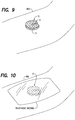
- the hemostatic device 10 is positionable in the direction of arrow A so that the catheter, needle or cannula access slot 14 slides around the catheter and is positioned against the skin of the arm at the wound site W .
- the skin contact surface 15 of the hemostatic device 10 is then pressed against the skin in the direction of arrow C in Figure 8 for a time sufficient for the hemostatic material of the device 10 to interact with blood and exudate from the wound site W , after which the catheter is removed in the direction of arrow B .
- a transparent dressing is applied thereover to protectively cover and hold the hemostatic device 10 in position over the wound site.
- an alternate embodiment of the hemostatic device is there shown at numeral 11 and includes a body segment 25 having a central cannula access hole 19 formed therethrough.
- the body segment 25 includes a segment opening 21 into which a wedge-shaped body 17 may be inserted in the direction of the arrow after the cannula has been placed through the slot access cannula access hole 19 .
- An access hole segment 23 completes the cannula access hole 19 surrounding the cannula when it is properly installed.
- FIG. 20 another embodiment of the invention is there shown at numeral 20 and includes the hemostatic device 10 of Figure 1 adhesively attached to a matingly shaped layer of rigid backing 24 which covers one surface of the body 12 .
- the proximal surface of the body 12 defines the skin contact surface 15 .
- Figure 6A which includes the previously described hemostatic device 10 formed of a body 12 , the body 12 being comprised of compressed together hemostatic material 13 as described herebelow.
- Foam backing 22 is provided and includes edges 22a which completely surround the otherwise exposed perimeter edges of body 12 , but do not cover the skin contact surface 15 .
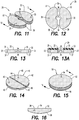
- a preferred embodiment of the invention is shown generally at numeral 30 in Figures 11 to 13 formed of hemostatic body halves 32 which are mateable together along proximal mating edges 34 .
- Centrally positioned catheter access hole halves 36 are formed into the proximal edges 34 to surround the catheter when the skin contact surfaces 35 or 37 are positioned therearound against the skin. Rounded corners 38 are provided to reduce body breakage.
- FIG. 13A another embodiment of the invention which includes the hemostatic device 30 of Figure 11 , also includes a strengthening foam backing 39 adhesively attached to one surface 35 of each of the body halves 32 , the skin contact surface 37 remaining free for skin attachment during installation.
- FIG 14 another embodiment of the hemostatic device is there shown at 40 and includes body halves 42 which are connected along fracture line 44 and held together by a groove thickness 46 of hemostatic material.
- the purpose of this embodiment 40 is to facilitate fracture of the body halves 42 along the fracture line 44 to be easily broken to accommodate better skin surface contact in an area of curved skin surfaces.
- the hemostatic device 50 formed of a body 52 having a flat skin contact surface 52 and a convex skin contact surface 56 is provided.
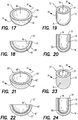
- Each of these hemostatic assemblies 60 and 70 provide a concave curvilinear skin contact surface 66 and 76 , respectively, formed of a cup or thimble-shaped hemostatic body 62 and 72 , respectively.
- a rigid or semi-rigid outer backing 64 and 74 respectively, having a smooth protective outer surface 68 and 78 , respectively, are provided.
- a particular use embodiment may be for a bleeding fingertip or toenail of a dog when trimmed too short.
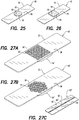
- a series of hemostatic bandages 80 , 80' , 90 , and 90' are there shown.
- Each of these hemostatic bandages include an elongated strip of flexible adhesive carrier 82 having an adhesive surface 86 thereon.
- a circular tablet-shaped body 84 formed of hemostatic material 85 and having a skin contact surface 88 is centrally positioned and adhesively attached to the adhesive carrier 82 .
- the hemostatic bandage 90 includes a rectangular-shaped body 94 formed of compressed together hemostatic material 95 as described herebelow and also having a skin contact surface 98 .
- an array 94' of thin, smaller hemostatic bodies are attached to the adhesive surface 86 , each of which are formed of hemostatic material 95' and having a skin contact surface 98' .
- This embodiment 90' provides for flexibility of the skin contact surfaces 98' over an irregularly or curve-shaped skin surface.
- the embodiment 80' in Fig. 27B includes a body array 92 of thin, small hexagonally-shaped hemostatic bodies, each of which is formed of hemostatic material 97 and having a skin contact surface 96 .
- This body array 92 provides alternative ability to conform to curved and irregular skin surfaces.
- embodiment 80" provides the adhesive carrier 82" having spaced transverse tear or cut lines 98 to easily adjust the length of the adhesive carrier 82' .
- a row of very small closely spaced hemostatic bodies 84' adhesively attached to adhesive surface 86' and extending lengthwise along the flexible adhesive carrier 82' , are alignable over an elongated wound, for example, a sutured wound.
- the individual hemostatic bodies provide great flexible adaptability over a contoured skin surface.
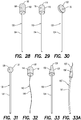
- an array of a plurality of hemostatic devices 100 , 110 , 120 , 130 , 140, 150 and 150' are there shown, each having a solid uniquely configured hemostatic body 102 , 112 , 122 , 132 , 142 , 152 and 152' providing skin contact surfaces 106 , 116 , 126 , 136 , 146 , 156 and 156' attached to an elongated handle 104 , 114 , 124 , 134 , 144 , 154 and 154' .
- Each of the configurations of the solid hemostatic bodies may be adapted to deal with bleeding wounds at various body sites.
- the flexible cord handle 144 of embodiment 140 provides an additional adaptation for replacement and withdrawal of the hemostatic body 142 , while the curved handle 154' facilitates manipulation and positioning of the contoured irregular hemostatic body 152' .
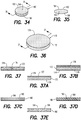
- hemostatic device 160 is there shown formed of a body 162 having outwardly extending curvilinear skin contact surfaces 164 and 166 . These surfaces 164 and 166 may be identical or may be of differing curvature to enhance versatility in the application of this embodiment 160 .
- the body 162 is formed of hemostatic material 163 as described herebelow.
- FIG. 36 and 37 another one-piece embodiment of the invention is there shown generally at numeral 170 having reinforcing fibers blended with the hemostatic material 176 prior to the body 172 being pressure formed.
- Opposing skin contact surfaces 174 are provided.
- the reinforced hemostatic material 176 of body 172 is further reinforced by a screen backing 177 adhesively attached to one of the skin contact surfaces 174 .
- the body 172 is reinforced by a thicker reinforcing foam backing 178
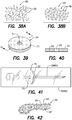
- the body 180 is formed having a mesh material blended with the hemostatic material 184 .
- a very open foam filled rigid or semi-rigid hemostatic powder 190 is utilized to form the hemostatic body 186 .
- various additives may be blended with the hemostatic material 196 to form the hemostatic body 192 having skin contact surfaces 194 .
- the additives 196 blended with the hemostatic material may be in various forms, including binding additives, lubricants and antimicrobials.
- arrays 200 and 204 of miniature solid hemostatic bodies 202 and 206 are provided which are compression formed of the powderous hydrostatic material, but, although smaller in size, nonetheless reduce the mess associated with the loose granular hydrostatic powder material.
- Hemostatic bodies 202 and 206 may be in a form and size similar to KITTY LITTER which, again, reduce the messiness associated with the powderous hemostatic material used to press form these hemostatic bodies 202 and 206 .
- a completely circular tablet-shaped hemostatic device 210 formed of an annular-shaped hemostatic body 212 is there provided.
- a central hole 214 is formed there through sized to receive the cannula of a catheter slidably inserted therethrough and which may be packaged as shown in Figure 41 ready for use.
- a plurality of small solid hemostatic irregular bodies 226 are attached to a pliable, resilient inert carrier 222 having an adhesive surface 224 to form the hemostatic assembly 220 there shown.
- This embodiment 220 facilitates applying pressure of the hemostatic bodies 226 against various irregular skin surfaces.
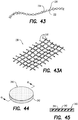
- Figure 43 shows an embodiment 230 of irregular hemostatic bodies 234 which have been strung along the length of a string or wire 232 . Then, in Figure 43A , a plurality of these hemostatic assemblies 230 may be woven together to form a hemostatic mat 236 .
- a hollow hemostatic body 242 encasing a foam insert 244 form the hemostatic assembly 240.
- the hemostatic composition for the powder is preferably 1:7 weight mixture of ferrate: hydrogen resin, although this ratio has a range of 1:3 to 1:12.
- the hydrogen resin is, preferably, the hydrogen form of the 2% crosslinked, sulfonated poly(styrene) resin.
- the hydrogen resin is available in whole insoluble beads in the range of 500 microns or can be ground into much finer fragments averaging in size from 80 microns to 200 microns.
- Device formation is based, in part, on the percent of resin fractured to whole beads.
- the crosslinked hydrogen ion exchange resin will not melt as temperature is increased nor will it cold flow with pressure. Therefore whole resin beads alone cannot be formed into a tablet with pressure.
- All or some portion of the fragments may be resin alone or may be replaced with other additives to fill the voids between the whole resin beads.
- Those additives may be one or a combination of: potassium ferrate (preferred), binders (stearates, waxes), solid lubricants, microbial agents, other amorphous solid materials (calcium carbonate), other non-spherical absorbent materials that are dissimilar in size to the resin, to increase the packing density and contact surfaces to allow a strong tablet to be formed.
- the hemostatic powder preferably of 1:7 potassium ferrate: hydrogen resin
- the hemostatic powder was made into solid bodies in tablet form using a lab press.
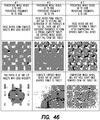
- Preliminary tablet formation testing of tablet thicknesses from about .5mm to 30mm established a minimum thickness of about 0.5mm for compressing the hemostatic powder into a solid device.
- the photos in Figure 47 indicate that at least 0.5mm thickness is needed to create a complete usable tablet.
- the material was ground to ⁇ 250 ⁇ m. However, changing the grind size may affect the minimum thickness of powder needed to create a complete tablet.
- 2.0 x10 5 kPa (29K psi) was not sufficient to form a .426mm thick tablet, but in Test #2, a fragile and unstable tablet having a thickness of 0.535mm was formed.
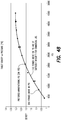
- a Tablet Density Test was used to determine the relationship of solid density (ml/g) to formation pressure (psi), from 5.5 x10 4 kPa (8K) to 3.1 x10 5 kPa (45K psi). Above 3.1 x10 5 kPa (45K psi), the density increase appears to flatten with respect to press pressure.
- the pressure of 3.1 x10 5 kPa (45K psi) is the maximum pressure rating for the 20mm round table die used for testing, to determine the amount of force needed to form a solid tablet.
- the tablet integrity was determined by measuring harness and wetting rate. In addition, manual breakage of multiple tablets was also used in selecting the appropriate tablet parameters.
- the Tablet Friability Test is based on the following FDA Guidance for tablets: Q4B Evaluation and Recommendation of Pharmacopoeial Texts for Use in the ICH Regions: Annex 9 Disc Friability General Chapter http://www.fda.gov/downloads/Drugs/GuidanceComplianceR egulatoryInformation/Guidances/UCM176888.pdf
- Friability is a determination of mass loss during a tumbling test. A tablet is dropped 100 times from a specific height and measurement is taken to determine how much mass is lost. The mean loss should be no more than 1% for tablets, per USP, unless otherwise specified by dosier.
- a modified Tablet Friability Test was designed by pouring tablets through a 50.8 mm (2") PVC tube from a beaker into a catch beaker. The height from the top of the PVC to the surface of the catch beaker was set at 150mm (based on the USP Friability Protocol). The Tablet Friability Test showed that the average loss was 2.5%. This amount of loss is acceptable because the tablet is externally/topically applied to the wound surface and, breakage is mitigated through unitized protected packaging.
- the 20mm diameter tablet and the free powder prepared from the same composition consisting of 1:7 potassium ferrate: hydrogen resin were tested for in terms of their ability to achieve adhesion to the blood surface.
- a blood seal test was employed as follows:
- the free powder created an uneven blood seal with moderate adhesion and upon scrapping, provided moderate strength in terms of the lifted seal.
- the excess portion of the unused free powder had been exposed to and deactivated in the atmosphere and has lost most of its capacity for further use.
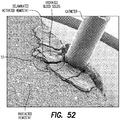
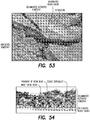
- the 20mm diameter tablet broke open into two parts, the first part revealed a thicker blood seal with excellent adhesion and strength and, the second part having a significant portion of the tablet unused and intact.
- the second portion constituting the used tablet remains as a reservoir to stop bleeding and absorption of exudates.
- the 20mm diameter tablet and the free powder prepared from the same composition consisting of 1:7 potassium ferrate: hydrogen resin were tested for hemostasis efficacy using a low pressure gravity flow system.
- the results showed that for a low pressure gravity flow system, there were no impact on hemostasis efficacy by mechanically compressing the powder versus using the powder itself.
- testing at high pneumatic pressure distinctly demonstrate that the tablet surprisingly outperforms the free powder.
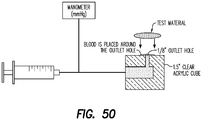
- a 60 ml syringe is filled with approximately 25 ml of blood.
- the test block formed from a 38.1 mm (1.5") clear acrylic block. Assuming the entry hole designed to fit a barbed fitting to connect to 6.35 mm (1 ⁇ 4") flexible vinyl tubing and a 3.18 mm (1/8") diameter outlet hole.
- the syringe is elevated to 30cm above the top of the test block, creating a pressure of 30cm water which equated to 20mm Hg (mercury).
- the valve was opened and the blood was allowed to surface.
- the valve was closed and the blood was spread over an area approximately 12.7 mm (0.5") from the outlet.
- the test material was placed over the blood covering the outlet hole. Contact pressure was held with a 100 gram mass for 60 seconds. After the 60 seconds the 100 gram mass was removed and the valve was opened for 30 seconds. If no blood exits the hole sealing of the hole occurred and the test sample passed the test.
- the apparatus is schematically represented in Figure 50 .
- the tablet creates a significantly stronger seal capable of stopping higher pressure bleeding than the free powder that defies expectation. This surprising finding implies that the uniform surface of the tablet enables a much greater manual pressure to be exerted on the blood than the free powder which provides a non-uniform and irreproducible force on the blood.
- the dense nature of the tablet surface in contact with the blood and the huge reservoir of the composition concentrated in the tablet enable rapid dehydration and significantly better adhesion than for the loose and low density powder.
- the much greater surface area of the loose powder would lead to the expectation that the powder would perform significantly better than the tablet where less surface is in contact with the blood.
- a test block is created from a 38.1 mm (1.5") clear acrylic block.
- the test block has an entry hole designed to fit a barbed fitting to connect to 6.35 mm (1 ⁇ 4") flexible vinyl tubing and a 3.18 mm (1/8") diameter outlet hole.
- the first step is to pull back the syringe plunger, power up the manometer and set the manometer to record the maximum value.
- the syringe plunger is compressed to pressurize the system until the blood seal fails.
- the manometer records the maximum pressure created just prior to the seal failure.
- blood is placed around the 3.18 mm (1/8") outlet hole.
- the tablet is then placed over the blood. Care is taken to ensure that the blood completely encircles the hole, and that the tablet completely covers the hole as well.
- a gloved finger is used to apply slight manual pressure to the tablet. The pressure forces the liquid blood from beneath the tablet.
- the tablet is allowed to set for ⁇ 15 seconds and then the plunger is compressed.
- the tablet was tested 15 times and all consistently reached the end point of 500mm Hg without failure of the seal. In contrast, the free powder only reached an end point of 100mm Hg demonstrating the superior and unexpected performance of the tablet.
- Comparatively loose powder reached an average hold pressure of 310mm Hg in the same test.
- a small foil disk was used to prevent the powder from filling and occluding the hold in the loose powder testing.
- the powder also required a 75g mass to maintain the seal integrity.
- the solid performed better than did the loose powder with no addition mass holding the solid in place above the simulated wound.
- a test is designed to measure the amount of oxygen generated by a mass of PRO QR powder vs. a similar mass of powder compressed into a solid tablet upon wetting.
- 3.1 x10 5 kPa (45K psi) was applied to 2-3 grams of powder in a 20mm diameter tablet die using a lab press. In manufacturing typically 2.0 x 10 5 kPa (29K psi) will be required to produce a 20mm diameter tablet.
- This test is using excessive force to further exacerbate any potential for decomposition of potassium ferrate due to mechanical compression of the powder.
- the potassium ferrate decomposed releasing oxygen As the powder or tablet is wetted, the potassium ferrate decomposed releasing oxygen.
- the test material is placed in the dry bottle in the closed system. A syringe is used to inject water into the bottle. In this test, 15ml of water was injected each time. This volume of water was accounted for in the calculations. Also the graduated cylinder was replaced with a 50ml burette for more accurate reading of the results. The starting point for the gas measurements was the displacement point created by injecting 15ml of water into the empty bottle in the closed system.
- the tablet is composed of manually compressed powder composed of a hydrophilic polymer that swells as it absorbs water and potassium ferrate. As the polymer wets and swells it causes disintegration of the tablet. This wetting rate is dependent upon the pressure at which the tablet is pressed.
- the pump is turned on.
- the disc is dropped into the tube with the water running and a stopwatch is started.
- the disc is observed and, when there is no longer any material above the screen the time recorded.
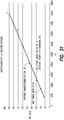
- Disintegration rate is shown to be linear with respect to press pressure for tablets between 5.5 x 10 4 kPa (8K psi) (disintegration time: 40 seconds) and 3.1 x 10 5 kPa (45K psi) (disintegration time: 180 seconds) for a 20mm diameter round tablet. Therefore, wetting or disintegration rate is a relationship of the closeness of particles and capillary action to wet the "next" layer of material and minimum preferred disintegration time of 40 seconds is achieved at 5.5 x 10 4 kPa (8K psi) formation pressure.
Landscapes
- Health & Medical Sciences (AREA)
- Life Sciences & Earth Sciences (AREA)
- Veterinary Medicine (AREA)
- Animal Behavior & Ethology (AREA)
- General Health & Medical Sciences (AREA)
- Public Health (AREA)
- Engineering & Computer Science (AREA)
- Chemical & Material Sciences (AREA)
- Surgery (AREA)
- Epidemiology (AREA)
- Hematology (AREA)
- Biomedical Technology (AREA)
- Heart & Thoracic Surgery (AREA)
- Materials Engineering (AREA)
- Anesthesiology (AREA)
- Nuclear Medicine, Radiotherapy & Molecular Imaging (AREA)
- Medical Informatics (AREA)
- Molecular Biology (AREA)
- Vascular Medicine (AREA)
- Inorganic Chemistry (AREA)
- Reproductive Health (AREA)
- Chemical Kinetics & Catalysis (AREA)
- Biophysics (AREA)
- Pulmonology (AREA)
- Dispersion Chemistry (AREA)
- Cardiology (AREA)
- Materials For Medical Uses (AREA)
- Medicinal Preparation (AREA)
- Medicinal Chemistry (AREA)
- Polymers & Plastics (AREA)
- Organic Chemistry (AREA)
Applications Claiming Priority (2)
| Application Number | Priority Date | Filing Date | Title |
|---|---|---|---|
| US13/847,057 US8961479B2 (en) | 2013-03-19 | 2013-03-19 | Hemostatic device and method |
| PCT/US2014/036313 WO2014153566A2 (en) | 2013-03-19 | 2014-05-01 | Hemostatic device and method |
Publications (3)
| Publication Number | Publication Date |
|---|---|
| EP2976090A2 EP2976090A2 (en) | 2016-01-27 |
| EP2976090A4 EP2976090A4 (en) | 2016-12-21 |
| EP2976090B1 true EP2976090B1 (en) | 2019-03-13 |
Family
ID=51581821
Family Applications (1)
| Application Number | Title | Priority Date | Filing Date |
|---|---|---|---|
| EP14770895.2A Active EP2976090B1 (en) | 2013-03-19 | 2014-05-01 | Hemostatic device and method |
Country Status (9)
| Country | Link |
|---|---|
| US (4) | US8961479B2 (enExample) |
| EP (1) | EP2976090B1 (enExample) |
| JP (1) | JP6378312B2 (enExample) |
| CN (1) | CN105246493A (enExample) |
| AU (1) | AU2014235821B2 (enExample) |
| GB (1) | GB2527261A (enExample) |
| IL (1) | IL241681B (enExample) |
| MX (1) | MX341553B (enExample) |
| WO (1) | WO2014153566A2 (enExample) |
Families Citing this family (17)
| Publication number | Priority date | Publication date | Assignee | Title |
|---|---|---|---|---|
| US10525234B2 (en) * | 2010-09-10 | 2020-01-07 | C. R. Bard, Inc. | Antimicrobial/haemostatic interface pad for placement between percutaneously placed medical device and patient skin |
| US8993831B2 (en) * | 2011-11-01 | 2015-03-31 | Arsenal Medical, Inc. | Foam and delivery system for treatment of postpartum hemorrhage |
| US8961479B2 (en) * | 2013-03-19 | 2015-02-24 | Biolife, L.L.C. | Hemostatic device and method |
| WO2016118695A1 (en) * | 2015-01-21 | 2016-07-28 | Biolife, L.L.C. | Combination hemostatic tablet or powder and radial arterial compression band with syringe assembly |
| CN114058218A (zh) | 2015-10-07 | 2022-02-18 | 罗地亚阿塞托有限公司 | 包含淀粉衍生物的涂层或者油墨组合物、其用途以及包括所述组合物的基底 |
| SG11201808475XA (en) | 2016-04-15 | 2018-10-30 | Baxalta Inc | Method and apparatus for providing a pharmacokinetic drug dosing regiment |
| IL247786B (en) * | 2016-09-12 | 2019-08-29 | Plotkin Alexander | Covers the wound with a hemostatic action and method and creates it |
| US10896749B2 (en) | 2017-01-27 | 2021-01-19 | Shire Human Genetic Therapies, Inc. | Drug monitoring tool |
| WO2019044565A1 (en) * | 2017-09-01 | 2019-03-07 | Terumo Kabushiki Kaisha | LINE COMPRESSION PATCH |
| CN107970520B (zh) * | 2017-12-29 | 2024-06-04 | 常熟市中医院(常熟市新区医院) | 创口消毒装置 |
| US11241386B2 (en) * | 2019-02-13 | 2022-02-08 | Biolife, L.L.C. | Wound sealing powder |
| CN119033431A (zh) * | 2019-04-30 | 2024-11-29 | 波士顿科学国际有限公司 | 内窥镜贴片施用器 |
| US11885735B2 (en) * | 2019-09-13 | 2024-01-30 | Ethicon, Inc. | Ex vivo and in vivo systems for evaluating hemostatic patches, sealants, adhesives on solid organs |
| US20210085336A1 (en) * | 2019-09-23 | 2021-03-25 | Rush University Medical Center | Focal Pressure Applicator to Cease Bleeding |
| CA3167098A1 (en) * | 2020-02-04 | 2021-08-12 | Kurt VADELUND | Flexible hemostatic pad |
| CN111281667B (zh) * | 2020-03-02 | 2021-06-08 | 苏州市立医院(苏州市中心体检站、苏州市公惠医院、苏州市立医院司法鉴定所、苏州市肿瘤诊疗中心) | 一种快速针管固定一字夹敷料及其置入装置 |
| CN116546945A (zh) * | 2020-08-13 | 2023-08-04 | 凯希制造无限公司 | 用于与负压伤口治疗敷料和系统一起使用的卸载附件 |
Family Cites Families (29)
| Publication number | Priority date | Publication date | Assignee | Title |
|---|---|---|---|---|
| US2923664A (en) | 1957-09-11 | 1960-02-02 | Johnson & Johnson | Hemostatic product |
| US3368911A (en) | 1965-03-25 | 1968-02-13 | Ethicon Inc | Collagen-carbonic acid surgical sponge |
| US4292972A (en) | 1980-07-09 | 1981-10-06 | E. R. Squibb & Sons, Inc. | Lyophilized hydrocolloio foam |
| US4551326A (en) | 1981-02-26 | 1985-11-05 | Thompson John A | Process for preparing alkali metal ferrates |
| US4851230A (en) | 1983-04-07 | 1989-07-25 | Bristol-Myers Company | Capsule shaped tablets |
| US4545974A (en) | 1984-03-16 | 1985-10-08 | Thompson John A | Process for producing alkali metal ferrates utilizing hematite and magnetite |
| US4606843A (en) | 1985-01-24 | 1986-08-19 | Olin Corporation | Process for producing a dried, stable mixture of alkali metal or alkaline earth metal ferrate (VI) compounds with hydroxides and carbonates |
| US5269803A (en) | 1992-04-10 | 1993-12-14 | Gtr Patent, Inc. | Hemostasis pressure pad band |
| US6228930B1 (en) | 1997-06-18 | 2001-05-08 | Nippon Shokubai Co., Ltd. | Water-absorbent resin granule-containing composition and production process for water-absorbent resin granule |
| US6521265B1 (en) | 2000-02-09 | 2003-02-18 | Biolife, L.L.C. | Method for applying a blood clotting agent |
| US6187347B1 (en) | 2000-02-09 | 2001-02-13 | Ecosafe, Llc. | Composition for arresting the flow of blood and method |
| US20020141964A1 (en) * | 2001-01-19 | 2002-10-03 | Patterson James A. | Composition for arresting the flow of blood and method |
| DE60143649D1 (de) * | 2000-04-28 | 2011-01-27 | Biolife Llc | Hämostatische wirksubstanz, methode und träger zur verabreichung einer blutgerinnenden wirksubstanz |
| US20030093114A1 (en) | 2001-11-13 | 2003-05-15 | Melvin Levinson | Method for effecting hemostasis |
| US8269058B2 (en) | 2002-06-14 | 2012-09-18 | Hemcon Medical Technologies, Inc. | Absorbable tissue dressing assemblies, systems, and methods formed from hydrophilic polymer sponge structures such as chitosan |
| JP4814523B2 (ja) * | 2002-11-01 | 2011-11-16 | サイオン カーディオバスキュラー インコーポレイテッド | 止血パッド |
| JP2004359665A (ja) * | 2003-05-30 | 2004-12-24 | Rohm & Haas Co | 生体利用性増強剤を含有する治療組成物 |
| US8119160B2 (en) | 2004-06-29 | 2012-02-21 | Ethicon, Inc. | Hemostatic compositions and devices |
| WO2007127390A2 (en) * | 2006-04-28 | 2007-11-08 | Biolife, L.L.C. | Materials and methods for wound treatment |
| WO2008127287A2 (en) * | 2006-10-11 | 2008-10-23 | Biolife, L.L.C. | Materials and methods for wound treatment |
| WO2008151041A2 (en) * | 2007-05-31 | 2008-12-11 | Biolife, Llc | Materials and methods for preparation of alkaline earth ferrates from alkaline earth oxides, peroxides, and nitrates |
| US20100129427A1 (en) | 2008-11-25 | 2010-05-27 | Biolife, L.L.C. | Hemostatic Wound Dressings |
| US20100226873A1 (en) * | 2009-03-06 | 2010-09-09 | Biolife, L.L.C. | Hemostatic Composition with Magnetite |
| US8110208B1 (en) * | 2009-03-30 | 2012-02-07 | Biolife, L.L.C. | Hemostatic compositions for arresting blood flow from an open wound or surgical site |
| US8007833B2 (en) * | 2009-09-10 | 2011-08-30 | Biolife, L.L.C. | Method of reducing infections and/or air embolisms associated with vascular access procedures |
| US20110245868A1 (en) | 2010-03-30 | 2011-10-06 | Biolife, L.L.C. | Vascular Access Wound Sealing System and Method |
| US8302323B2 (en) * | 2010-06-21 | 2012-11-06 | Confluent Surgical, Inc. | Hemostatic patch |
| WO2012007929A1 (en) | 2010-07-14 | 2012-01-19 | Hemcon Medical Technologies (Ip) Limited | A dressing device for use with a cannula or a catheter |
| US8961479B2 (en) * | 2013-03-19 | 2015-02-24 | Biolife, L.L.C. | Hemostatic device and method |
-
2013
- 2013-03-19 US US13/847,057 patent/US8961479B2/en active Active
-
2014
- 2014-05-01 AU AU2014235821A patent/AU2014235821B2/en active Active
- 2014-05-01 JP JP2016504397A patent/JP6378312B2/ja active Active
- 2014-05-01 CN CN201480011683.9A patent/CN105246493A/zh active Pending
- 2014-05-01 MX MX2015011196A patent/MX341553B/es active IP Right Grant
- 2014-05-01 WO PCT/US2014/036313 patent/WO2014153566A2/en not_active Ceased
- 2014-05-01 GB GB1518358.5A patent/GB2527261A/en not_active Withdrawn
- 2014-05-01 EP EP14770895.2A patent/EP2976090B1/en active Active
-
2015
- 2015-01-27 US US14/606,324 patent/US9039667B1/en active Active
- 2015-05-21 US US14/545,560 patent/US9585671B2/en active Active
- 2015-09-17 IL IL241681A patent/IL241681B/en unknown
-
2017
- 2017-03-02 US US15/447,712 patent/US9877728B2/en active Active
Non-Patent Citations (1)
| Title |
|---|
| None * |
Also Published As
| Publication number | Publication date |
|---|---|
| EP2976090A2 (en) | 2016-01-27 |
| US8961479B2 (en) | 2015-02-24 |
| US20150147392A1 (en) | 2015-05-28 |
| WO2014153566A3 (en) | 2014-11-13 |
| AU2014235821B2 (en) | 2019-03-07 |
| US9877728B2 (en) | 2018-01-30 |
| GB201518358D0 (en) | 2015-12-02 |
| CN105246493A (zh) | 2016-01-13 |
| JP2016523107A (ja) | 2016-08-08 |
| IL241681B (en) | 2021-08-31 |
| JP6378312B2 (ja) | 2018-08-22 |
| WO2014153566A2 (en) | 2014-09-25 |
| EP2976090A4 (en) | 2016-12-21 |
| US9039667B1 (en) | 2015-05-26 |
| GB2527261A (en) | 2015-12-16 |
| MX2015011196A (es) | 2015-11-09 |
| AU2014235821A1 (en) | 2015-10-15 |
| US20170172582A1 (en) | 2017-06-22 |
| US20150257766A1 (en) | 2015-09-17 |
| MX341553B (es) | 2016-08-24 |
| US20140330221A1 (en) | 2014-11-06 |
| US9585671B2 (en) | 2017-03-07 |
| AU2014235821A2 (en) | 2015-10-22 |
Similar Documents
| Publication | Publication Date | Title |
|---|---|---|
| EP2976090B1 (en) | Hemostatic device and method | |
| EP2427157B1 (en) | Hemorrhage control devices and methods | |
| US20180236123A1 (en) | Hemostatic Composition and Hemostatic Device (Variants) | |
| US8512743B2 (en) | Devices and methods for the delivery of molecular sieve materials for the formation of blood clots | |
| US20100158989A1 (en) | Hemostatic Agent Composition, Delivery System and Method | |
| US20070004995A1 (en) | Swab device and kit for the delivery of blood clotting materials to a wound site | |
| CN211723685U (zh) | 一种深部创伤吸液膨胀止血敷料袋 | |
| JP6527266B2 (ja) | 止血器具及び方法 | |
| UA115667C2 (uk) | Гемостатична композиція та гемостатичний засіб (варіанти) | |
| JPS6311942Y2 (enExample) | ||
| UA101868U (xx) | Гемостатична композиція |
Legal Events
| Date | Code | Title | Description |
|---|---|---|---|
| PUAI | Public reference made under article 153(3) epc to a published international application that has entered the european phase |
Free format text: ORIGINAL CODE: 0009012 |
|
| 17P | Request for examination filed |
Effective date: 20151016 |
|
| AK | Designated contracting states |
Kind code of ref document: A2 Designated state(s): AL AT BE BG CH CY CZ DE DK EE ES FI FR GB GR HR HU IE IS IT LI LT LU LV MC MK MT NL NO PL PT RO RS SE SI SK SM TR |
|
| AX | Request for extension of the european patent |
Extension state: BA ME |
|
| RIN1 | Information on inventor provided before grant (corrected) |
Inventor name: HEN, JOHN Inventor name: KEENE, TALMADGE KELLY Inventor name: TRAVI, MARK |
|
| DAX | Request for extension of the european patent (deleted) | ||
| A4 | Supplementary search report drawn up and despatched |
Effective date: 20161123 |
|
| RIC1 | Information provided on ipc code assigned before grant |
Ipc: A61L 24/00 20060101ALI20161117BHEP Ipc: A61L 24/06 20060101AFI20161117BHEP |
|
| STAA | Information on the status of an ep patent application or granted ep patent |
Free format text: STATUS: EXAMINATION IS IN PROGRESS |
|
| 17Q | First examination report despatched |
Effective date: 20180131 |
|
| REG | Reference to a national code |
Ref country code: DE Ref legal event code: R079 Ref document number: 602014042865 Country of ref document: DE Free format text: PREVIOUS MAIN CLASS: A61K0033260000 Ipc: A61L0024000000 |
|
| RIC1 | Information provided on ipc code assigned before grant |
Ipc: A61L 24/00 20060101AFI20180802BHEP Ipc: A61L 24/02 20060101ALI20180802BHEP Ipc: A61L 24/06 20060101ALI20180802BHEP Ipc: A61M 25/02 20060101ALI20180802BHEP |
|
| GRAP | Despatch of communication of intention to grant a patent |
Free format text: ORIGINAL CODE: EPIDOSNIGR1 |
|
| STAA | Information on the status of an ep patent application or granted ep patent |
Free format text: STATUS: GRANT OF PATENT IS INTENDED |
|
| INTG | Intention to grant announced |
Effective date: 20180919 |
|
| GRAS | Grant fee paid |
Free format text: ORIGINAL CODE: EPIDOSNIGR3 |
|
| GRAA | (expected) grant |
Free format text: ORIGINAL CODE: 0009210 |
|
| STAA | Information on the status of an ep patent application or granted ep patent |
Free format text: STATUS: THE PATENT HAS BEEN GRANTED |
|
| AK | Designated contracting states |
Kind code of ref document: B1 Designated state(s): AL AT BE BG CH CY CZ DE DK EE ES FI FR GB GR HR HU IE IS IT LI LT LU LV MC MK MT NL NO PL PT RO RS SE SI SK SM TR |
|
| REG | Reference to a national code |
Ref country code: GB Ref legal event code: FG4D |
|
| REG | Reference to a national code |
Ref country code: CH Ref legal event code: EP Ref country code: AT Ref legal event code: REF Ref document number: 1106801 Country of ref document: AT Kind code of ref document: T Effective date: 20190315 |
|
| REG | Reference to a national code |
Ref country code: IE Ref legal event code: FG4D |
|
| REG | Reference to a national code |
Ref country code: DE Ref legal event code: R096 Ref document number: 602014042865 Country of ref document: DE |
|
| REG | Reference to a national code |
Ref country code: NL Ref legal event code: MP Effective date: 20190313 |
|
| REG | Reference to a national code |
Ref country code: LT Ref legal event code: MG4D |
|
| PG25 | Lapsed in a contracting state [announced via postgrant information from national office to epo] |
Ref country code: SE Free format text: LAPSE BECAUSE OF FAILURE TO SUBMIT A TRANSLATION OF THE DESCRIPTION OR TO PAY THE FEE WITHIN THE PRESCRIBED TIME-LIMIT Effective date: 20190313 Ref country code: FI Free format text: LAPSE BECAUSE OF FAILURE TO SUBMIT A TRANSLATION OF THE DESCRIPTION OR TO PAY THE FEE WITHIN THE PRESCRIBED TIME-LIMIT Effective date: 20190313 Ref country code: NO Free format text: LAPSE BECAUSE OF FAILURE TO SUBMIT A TRANSLATION OF THE DESCRIPTION OR TO PAY THE FEE WITHIN THE PRESCRIBED TIME-LIMIT Effective date: 20190613 Ref country code: LT Free format text: LAPSE BECAUSE OF FAILURE TO SUBMIT A TRANSLATION OF THE DESCRIPTION OR TO PAY THE FEE WITHIN THE PRESCRIBED TIME-LIMIT Effective date: 20190313 |
|
| PG25 | Lapsed in a contracting state [announced via postgrant information from national office to epo] |
Ref country code: BG Free format text: LAPSE BECAUSE OF FAILURE TO SUBMIT A TRANSLATION OF THE DESCRIPTION OR TO PAY THE FEE WITHIN THE PRESCRIBED TIME-LIMIT Effective date: 20190613 Ref country code: GR Free format text: LAPSE BECAUSE OF FAILURE TO SUBMIT A TRANSLATION OF THE DESCRIPTION OR TO PAY THE FEE WITHIN THE PRESCRIBED TIME-LIMIT Effective date: 20190614 Ref country code: NL Free format text: LAPSE BECAUSE OF FAILURE TO SUBMIT A TRANSLATION OF THE DESCRIPTION OR TO PAY THE FEE WITHIN THE PRESCRIBED TIME-LIMIT Effective date: 20190313 Ref country code: LV Free format text: LAPSE BECAUSE OF FAILURE TO SUBMIT A TRANSLATION OF THE DESCRIPTION OR TO PAY THE FEE WITHIN THE PRESCRIBED TIME-LIMIT Effective date: 20190313 Ref country code: HR Free format text: LAPSE BECAUSE OF FAILURE TO SUBMIT A TRANSLATION OF THE DESCRIPTION OR TO PAY THE FEE WITHIN THE PRESCRIBED TIME-LIMIT Effective date: 20190313 Ref country code: RS Free format text: LAPSE BECAUSE OF FAILURE TO SUBMIT A TRANSLATION OF THE DESCRIPTION OR TO PAY THE FEE WITHIN THE PRESCRIBED TIME-LIMIT Effective date: 20190313 |
|
| REG | Reference to a national code |
Ref country code: AT Ref legal event code: MK05 Ref document number: 1106801 Country of ref document: AT Kind code of ref document: T Effective date: 20190313 |
|
| PG25 | Lapsed in a contracting state [announced via postgrant information from national office to epo] |
Ref country code: CZ Free format text: LAPSE BECAUSE OF FAILURE TO SUBMIT A TRANSLATION OF THE DESCRIPTION OR TO PAY THE FEE WITHIN THE PRESCRIBED TIME-LIMIT Effective date: 20190313 Ref country code: SK Free format text: LAPSE BECAUSE OF FAILURE TO SUBMIT A TRANSLATION OF THE DESCRIPTION OR TO PAY THE FEE WITHIN THE PRESCRIBED TIME-LIMIT Effective date: 20190313 Ref country code: RO Free format text: LAPSE BECAUSE OF FAILURE TO SUBMIT A TRANSLATION OF THE DESCRIPTION OR TO PAY THE FEE WITHIN THE PRESCRIBED TIME-LIMIT Effective date: 20190313 Ref country code: EE Free format text: LAPSE BECAUSE OF FAILURE TO SUBMIT A TRANSLATION OF THE DESCRIPTION OR TO PAY THE FEE WITHIN THE PRESCRIBED TIME-LIMIT Effective date: 20190313 Ref country code: IT Free format text: LAPSE BECAUSE OF FAILURE TO SUBMIT A TRANSLATION OF THE DESCRIPTION OR TO PAY THE FEE WITHIN THE PRESCRIBED TIME-LIMIT Effective date: 20190313 Ref country code: AL Free format text: LAPSE BECAUSE OF FAILURE TO SUBMIT A TRANSLATION OF THE DESCRIPTION OR TO PAY THE FEE WITHIN THE PRESCRIBED TIME-LIMIT Effective date: 20190313 Ref country code: PT Free format text: LAPSE BECAUSE OF FAILURE TO SUBMIT A TRANSLATION OF THE DESCRIPTION OR TO PAY THE FEE WITHIN THE PRESCRIBED TIME-LIMIT Effective date: 20190713 Ref country code: ES Free format text: LAPSE BECAUSE OF FAILURE TO SUBMIT A TRANSLATION OF THE DESCRIPTION OR TO PAY THE FEE WITHIN THE PRESCRIBED TIME-LIMIT Effective date: 20190313 |
|
| PG25 | Lapsed in a contracting state [announced via postgrant information from national office to epo] |
Ref country code: SM Free format text: LAPSE BECAUSE OF FAILURE TO SUBMIT A TRANSLATION OF THE DESCRIPTION OR TO PAY THE FEE WITHIN THE PRESCRIBED TIME-LIMIT Effective date: 20190313 Ref country code: PL Free format text: LAPSE BECAUSE OF FAILURE TO SUBMIT A TRANSLATION OF THE DESCRIPTION OR TO PAY THE FEE WITHIN THE PRESCRIBED TIME-LIMIT Effective date: 20190313 |
|
| REG | Reference to a national code |
Ref country code: DE Ref legal event code: R097 Ref document number: 602014042865 Country of ref document: DE |
|
| REG | Reference to a national code |
Ref country code: CH Ref legal event code: PL |
|
| PG25 | Lapsed in a contracting state [announced via postgrant information from national office to epo] |
Ref country code: IS Free format text: LAPSE BECAUSE OF FAILURE TO SUBMIT A TRANSLATION OF THE DESCRIPTION OR TO PAY THE FEE WITHIN THE PRESCRIBED TIME-LIMIT Effective date: 20190713 Ref country code: AT Free format text: LAPSE BECAUSE OF FAILURE TO SUBMIT A TRANSLATION OF THE DESCRIPTION OR TO PAY THE FEE WITHIN THE PRESCRIBED TIME-LIMIT Effective date: 20190313 |
|
| PLBE | No opposition filed within time limit |
Free format text: ORIGINAL CODE: 0009261 |
|
| STAA | Information on the status of an ep patent application or granted ep patent |
Free format text: STATUS: NO OPPOSITION FILED WITHIN TIME LIMIT |
|
| PG25 | Lapsed in a contracting state [announced via postgrant information from national office to epo] |
Ref country code: LI Free format text: LAPSE BECAUSE OF NON-PAYMENT OF DUE FEES Effective date: 20190531 Ref country code: DK Free format text: LAPSE BECAUSE OF FAILURE TO SUBMIT A TRANSLATION OF THE DESCRIPTION OR TO PAY THE FEE WITHIN THE PRESCRIBED TIME-LIMIT Effective date: 20190313 Ref country code: CH Free format text: LAPSE BECAUSE OF NON-PAYMENT OF DUE FEES Effective date: 20190531 Ref country code: MC Free format text: LAPSE BECAUSE OF FAILURE TO SUBMIT A TRANSLATION OF THE DESCRIPTION OR TO PAY THE FEE WITHIN THE PRESCRIBED TIME-LIMIT Effective date: 20190313 |
|
| REG | Reference to a national code |
Ref country code: BE Ref legal event code: MM Effective date: 20190531 |
|
| 26N | No opposition filed |
Effective date: 20191216 |
|
| PG25 | Lapsed in a contracting state [announced via postgrant information from national office to epo] |
Ref country code: SI Free format text: LAPSE BECAUSE OF FAILURE TO SUBMIT A TRANSLATION OF THE DESCRIPTION OR TO PAY THE FEE WITHIN THE PRESCRIBED TIME-LIMIT Effective date: 20190313 Ref country code: LU Free format text: LAPSE BECAUSE OF NON-PAYMENT OF DUE FEES Effective date: 20190501 |
|
| PG25 | Lapsed in a contracting state [announced via postgrant information from national office to epo] |
Ref country code: TR Free format text: LAPSE BECAUSE OF FAILURE TO SUBMIT A TRANSLATION OF THE DESCRIPTION OR TO PAY THE FEE WITHIN THE PRESCRIBED TIME-LIMIT Effective date: 20190313 |
|
| PG25 | Lapsed in a contracting state [announced via postgrant information from national office to epo] |
Ref country code: IE Free format text: LAPSE BECAUSE OF NON-PAYMENT OF DUE FEES Effective date: 20190501 |
|
| PG25 | Lapsed in a contracting state [announced via postgrant information from national office to epo] |
Ref country code: BE Free format text: LAPSE BECAUSE OF NON-PAYMENT OF DUE FEES Effective date: 20190531 |
|
| PG25 | Lapsed in a contracting state [announced via postgrant information from national office to epo] |
Ref country code: CY Free format text: LAPSE BECAUSE OF FAILURE TO SUBMIT A TRANSLATION OF THE DESCRIPTION OR TO PAY THE FEE WITHIN THE PRESCRIBED TIME-LIMIT Effective date: 20190313 |
|
| PG25 | Lapsed in a contracting state [announced via postgrant information from national office to epo] |
Ref country code: HU Free format text: LAPSE BECAUSE OF FAILURE TO SUBMIT A TRANSLATION OF THE DESCRIPTION OR TO PAY THE FEE WITHIN THE PRESCRIBED TIME-LIMIT; INVALID AB INITIO Effective date: 20140501 Ref country code: MT Free format text: LAPSE BECAUSE OF FAILURE TO SUBMIT A TRANSLATION OF THE DESCRIPTION OR TO PAY THE FEE WITHIN THE PRESCRIBED TIME-LIMIT Effective date: 20190313 |
|
| PG25 | Lapsed in a contracting state [announced via postgrant information from national office to epo] |
Ref country code: MK Free format text: LAPSE BECAUSE OF FAILURE TO SUBMIT A TRANSLATION OF THE DESCRIPTION OR TO PAY THE FEE WITHIN THE PRESCRIBED TIME-LIMIT Effective date: 20190313 |
|
| P01 | Opt-out of the competence of the unified patent court (upc) registered |
Effective date: 20230526 |
|
| REG | Reference to a national code |
Ref country code: DE Ref legal event code: R081 Ref document number: 602014042865 Country of ref document: DE Owner name: BIOLIFE DELAWARE L.L.C., SARASOTA, US Free format text: FORMER OWNER: BIOLIFE, L.L.C., SARASOTA, FLA., US |
|
| PGFP | Annual fee paid to national office [announced via postgrant information from national office to epo] |
Ref country code: DE Payment date: 20250529 Year of fee payment: 12 |
|
| PGFP | Annual fee paid to national office [announced via postgrant information from national office to epo] |
Ref country code: GB Payment date: 20250527 Year of fee payment: 12 |
|
| PGFP | Annual fee paid to national office [announced via postgrant information from national office to epo] |
Ref country code: FR Payment date: 20250526 Year of fee payment: 12 |